
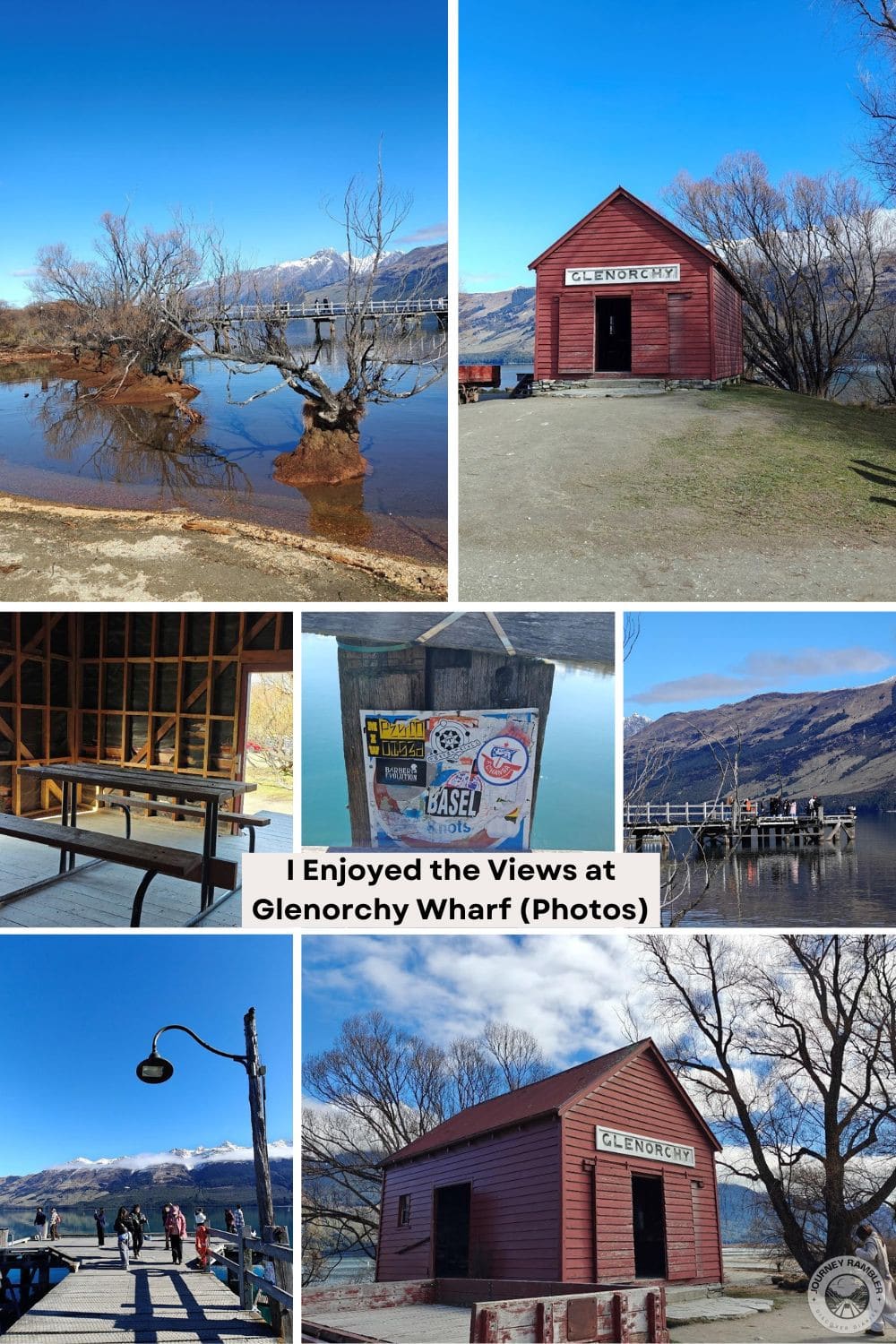
Glenorchy Wharf is one of the town’s most notable attractions and more importantly, a visit won’t cost you a penny! During my visit I got to enjoy some really picturesque views of Lake Wakatipu and the surrounding mountains (by the way, this is also near Queenstown).
Views at Glenorchy Wharf: Stunning Views of Lake Wakatipu and the Surrounding Mountains
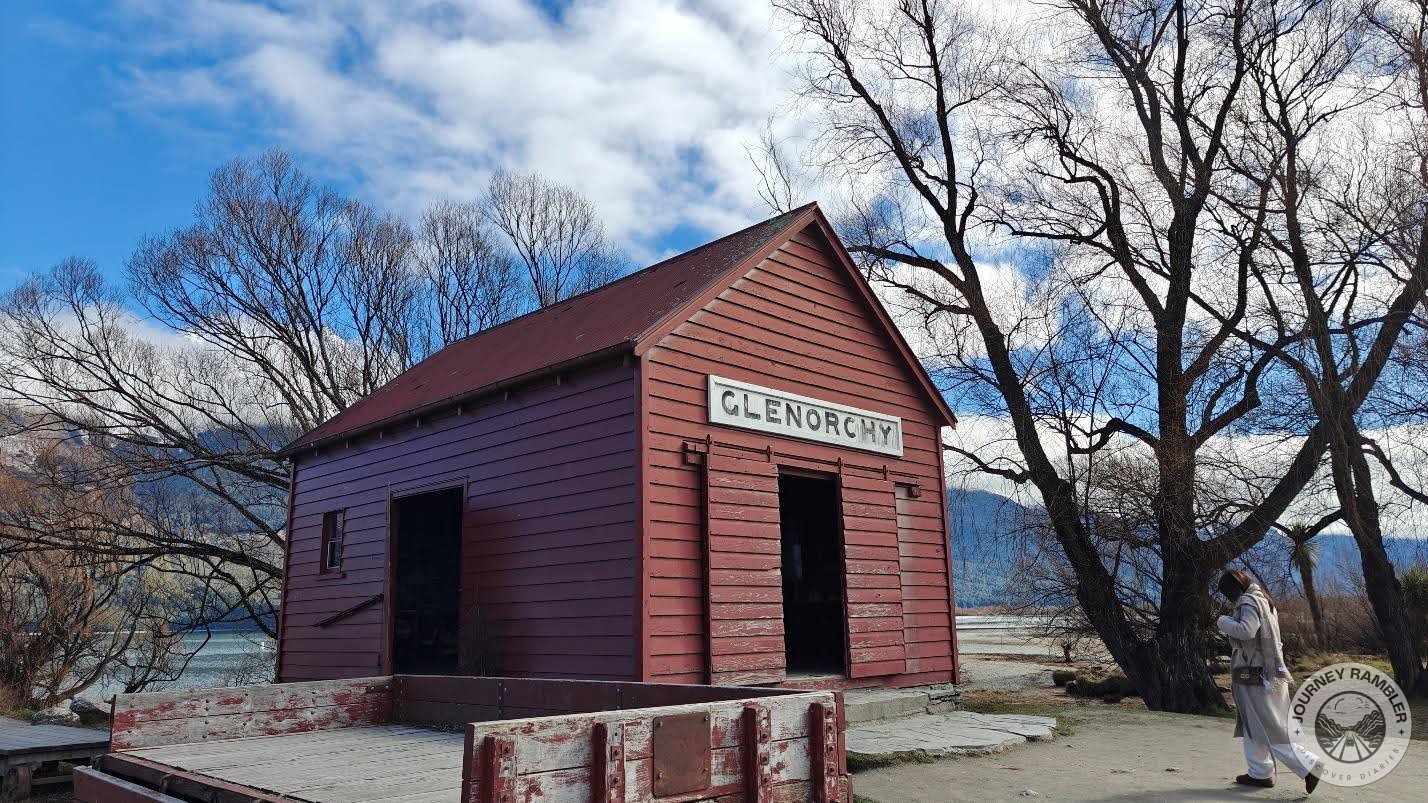
Glenorchy Wharf is located on the westernmost part of the town and is accessible via Islay Street and/or the Benmore Place road. You can park at Glenorchy Waterfront Car Park (near the Glenorchy Lagoon Scenic Walkway) but the car park accessible through Benmore Place is even closer. Once you’ve reached the Wharf, the first thing you’ll immediately notice is the famous red shed.
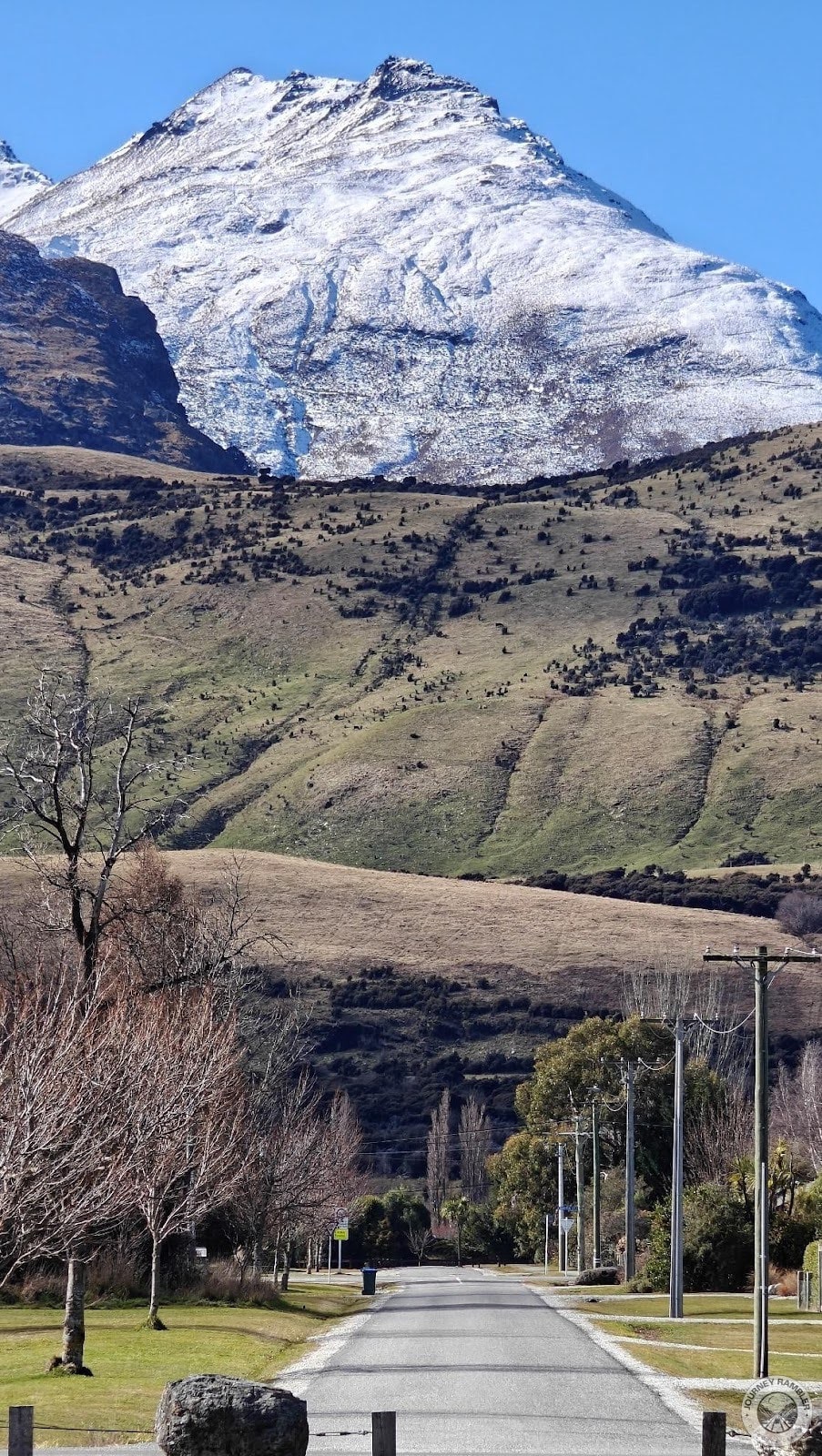
The red shed isn’t the only notable view you’ll see from here though. If you turn around, you’ll be regaled with this absolutely stunning view of Islay Street with one of the mountains in the Southern Alps in the background. I’d already heard there were awesome views here but this one actually caught me off guard because of how breathtaking it looked.

Here’s another look at the Islay Street entrance from earlier. Even from this angle and distance, the view still looks amazing. If you’re someone who enjoys taking photos then I guarantee you’ll love it here.
Queenstown Hotel Recommendations Based on My Own Stay
🔹 DoubleTree by Hilton Hotel
🔹 Holiday Inn Queenstown Airport
Expedia.com
Read: 12 Things to Do in Queenstown
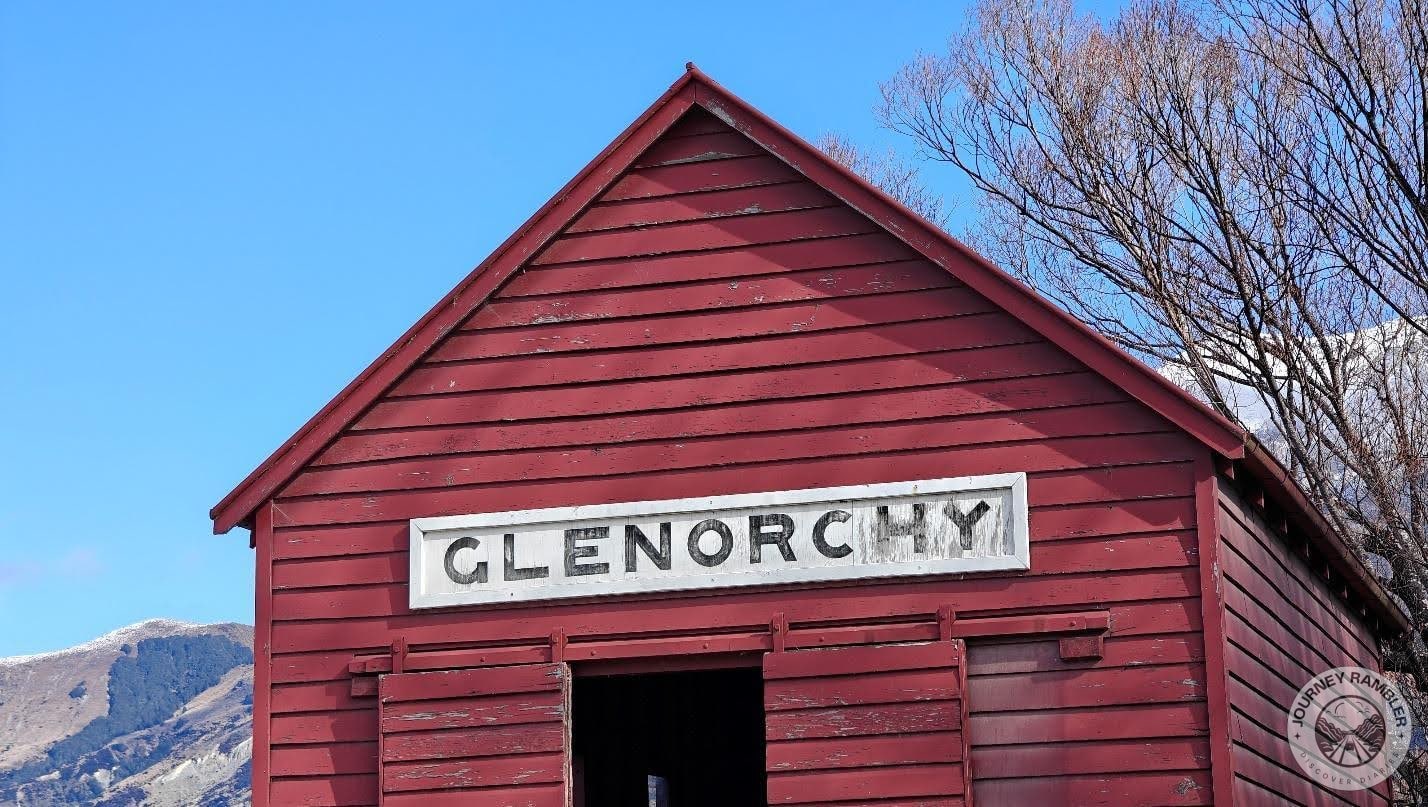
Going back to the red shed, it has a signboard with the name of the town in bold letters. Now I was intrigued as to why the shed was colored red so I went online to research about it. Turns out, the shed’s history is as interesting as the views around it.
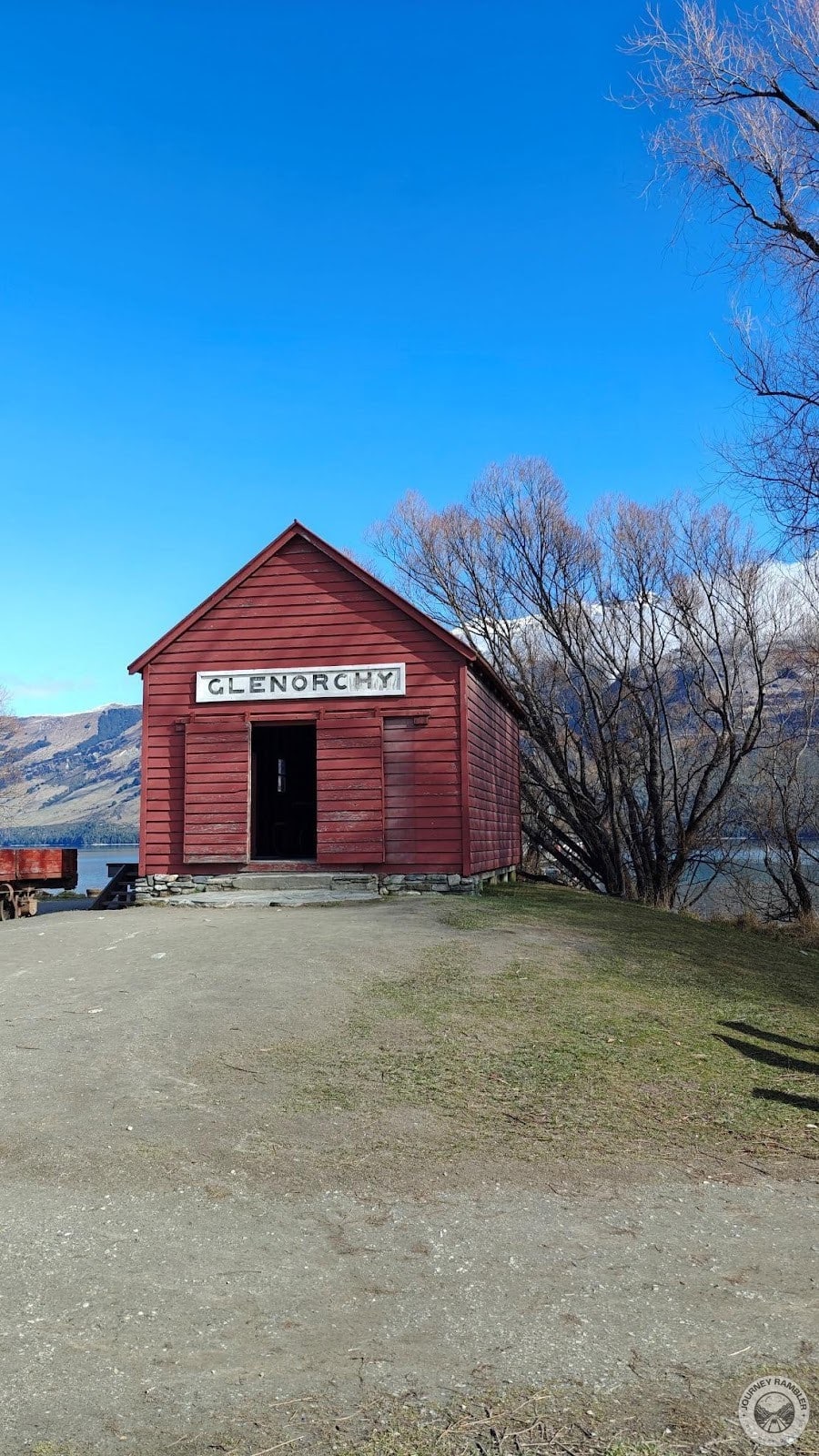
So initially, the shed was used by New Zealand Railways as its goods shed. I’m not quite sure but the sources I saw online said that it used to be a lot closer to the lake than where it is now. Moreover, the shed is a reconstruction as the old one suffered flood damage (likely due to its proximity to the lake).
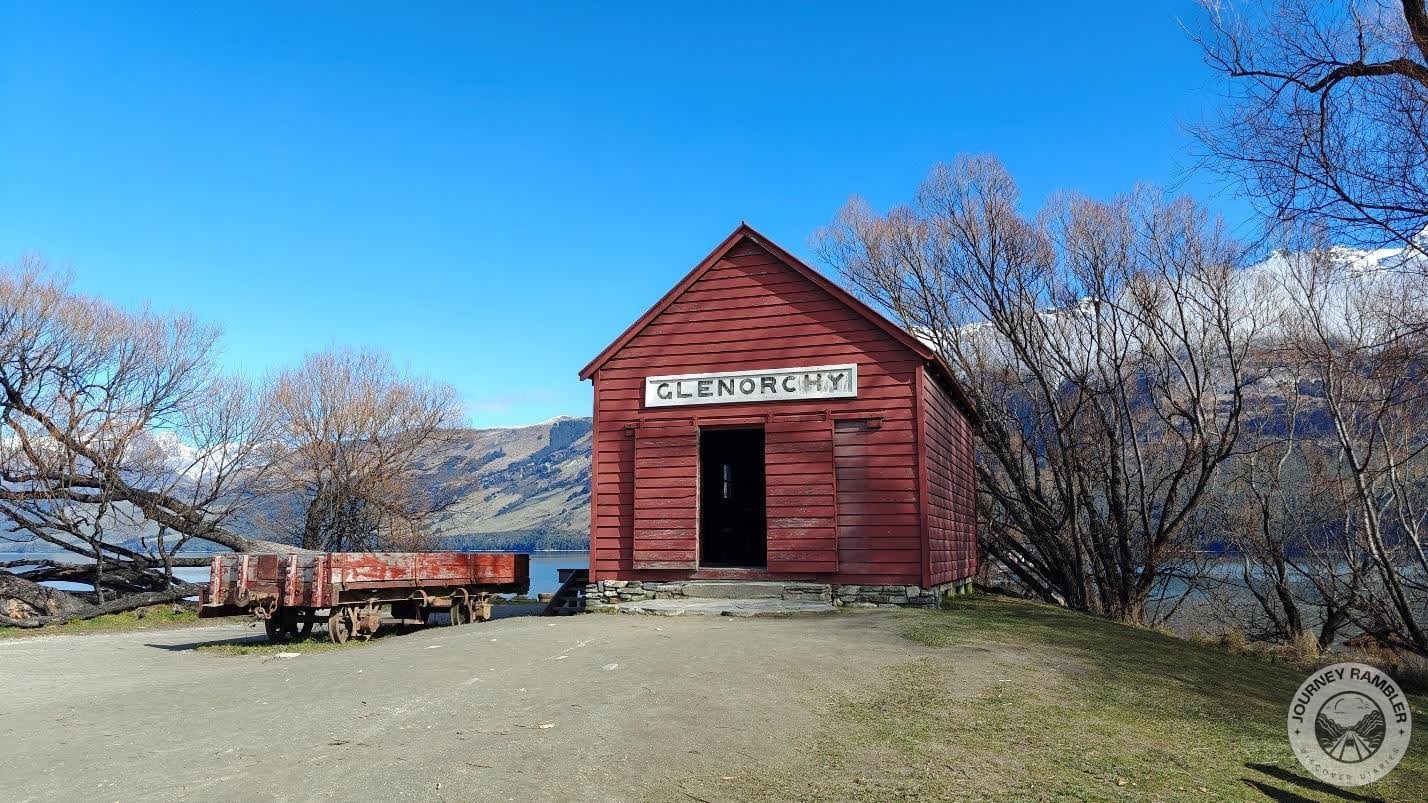
Now as for why the shed is red, it has to do with it being a New Zealand Railways building. Surprisingly the original color for this exact building wasn’t specified. When it came time to reconstruct it though, I guess they used red as historically, a lot of the railway buildings at that time it was made were in that color.

Looking around, I found this warning sign near the shed. It’s not shown in the image but the sign talks about the current under the jetty could be dangerous for swimmers. Now you’re wondering, “do lakes have currents?” Yes, the jetty is pretty close to the head of Lake Wakatipu where there’s a delta complex that comprises the Dart and Rees Rivers. Most probably, the current is from those rivers.
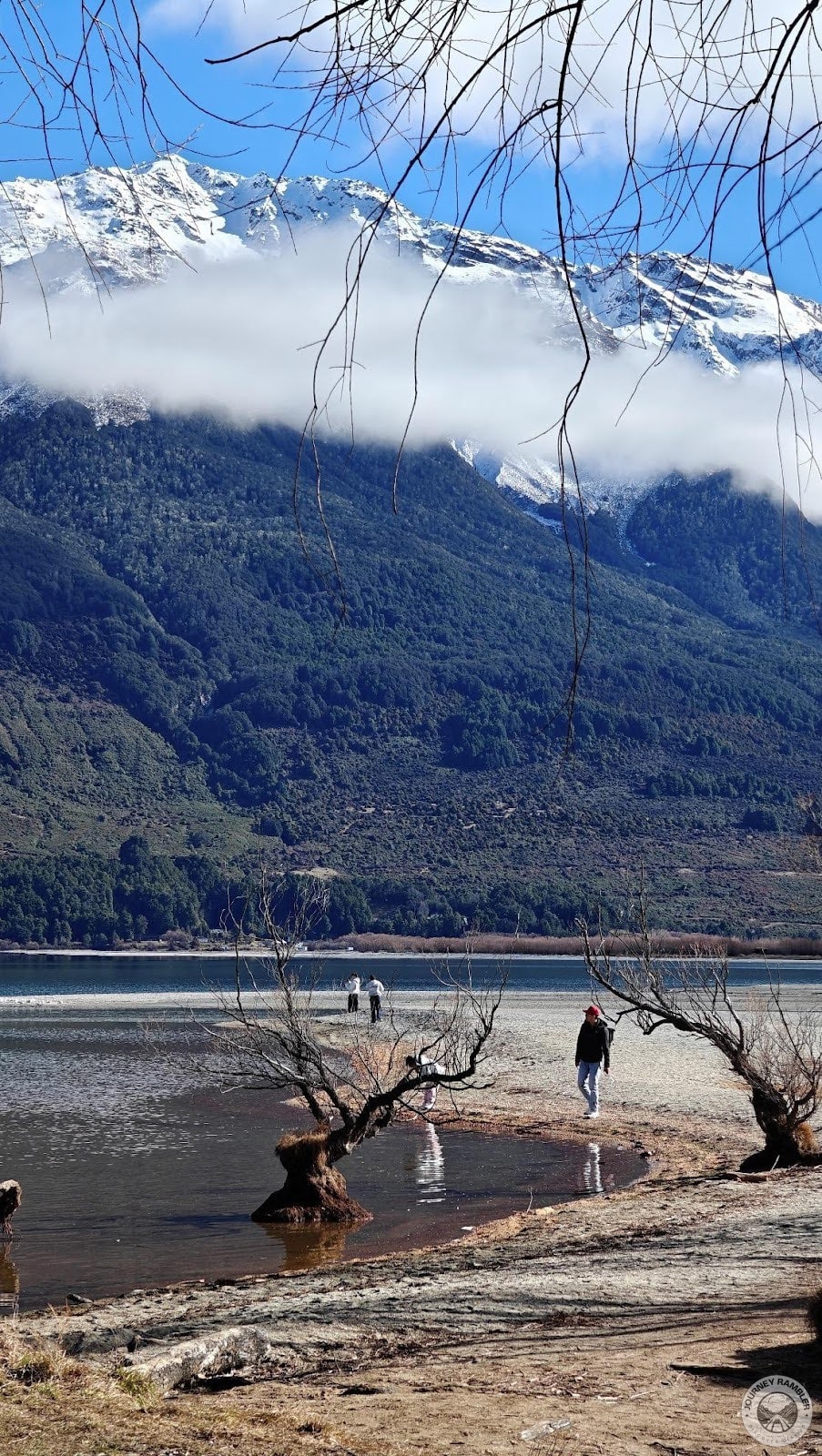
Speaking of the delta complex, you can get a glimpse of that from this image. Moreover, you also get to see The Willow Trees of Glenorchy. If you’ve read my write up on That Wanaka Tree, these are pretty similar though they’re much smaller in size.

Aside from the Willow Trees of Glenorchy, you’ll also get to see the Humboldt Mountains. Now I talked about these briefly in my writeup of Lighthorse Adventures Horse Treks as you can also see them from there. These mountains are a subrange of the Southern Alps and they look really magnificent from here.
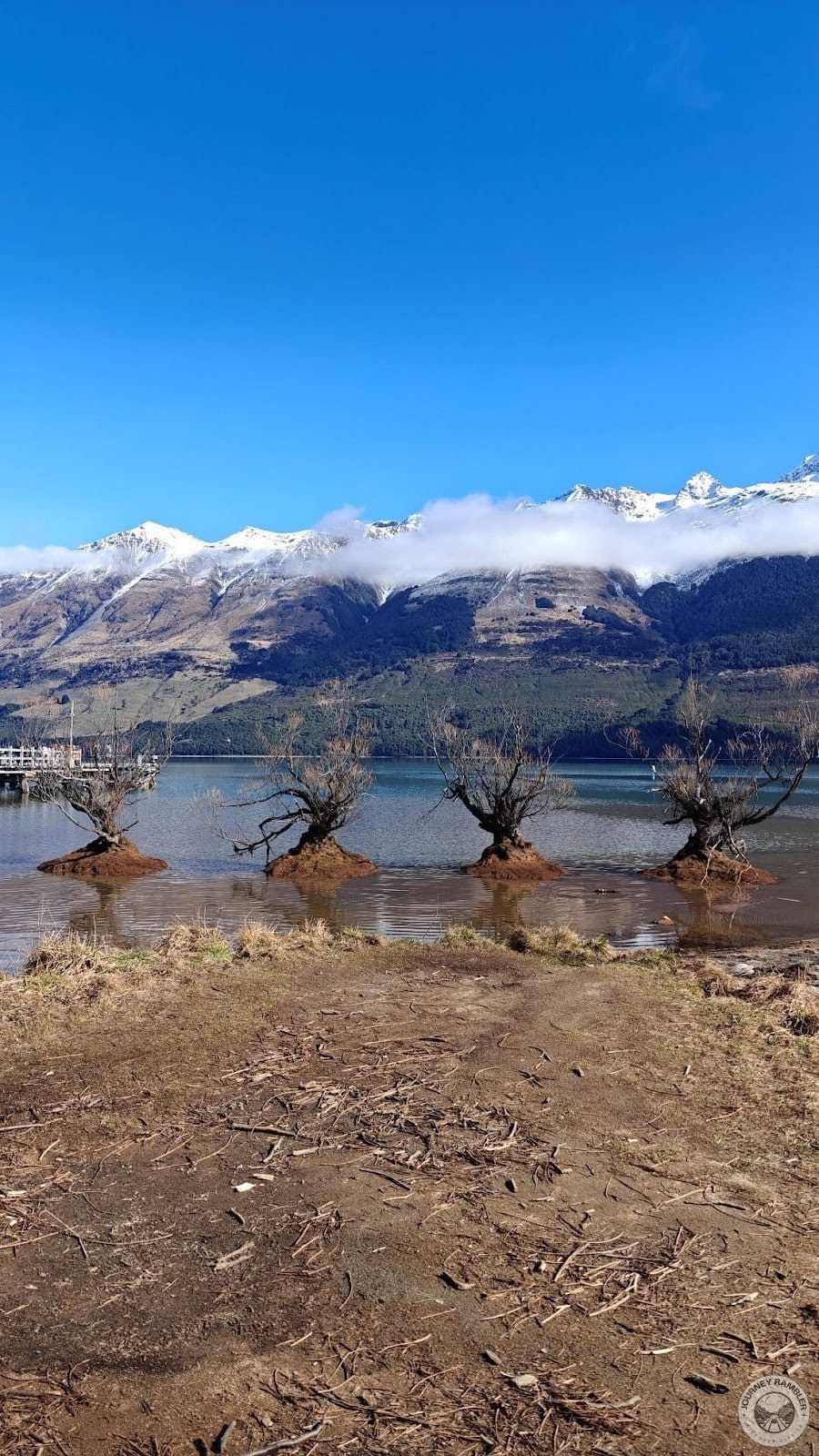
Here’s another angle that shows the Willow Trees and the rest of the Humboldt Mountains. Additionally, you’ll see parts of the jetty that I was talking about earlier from this angle. At this time of the year the water level in Lake Wakatipu is actually lower which is why I was able to get a little closer to the trees to take this picture.
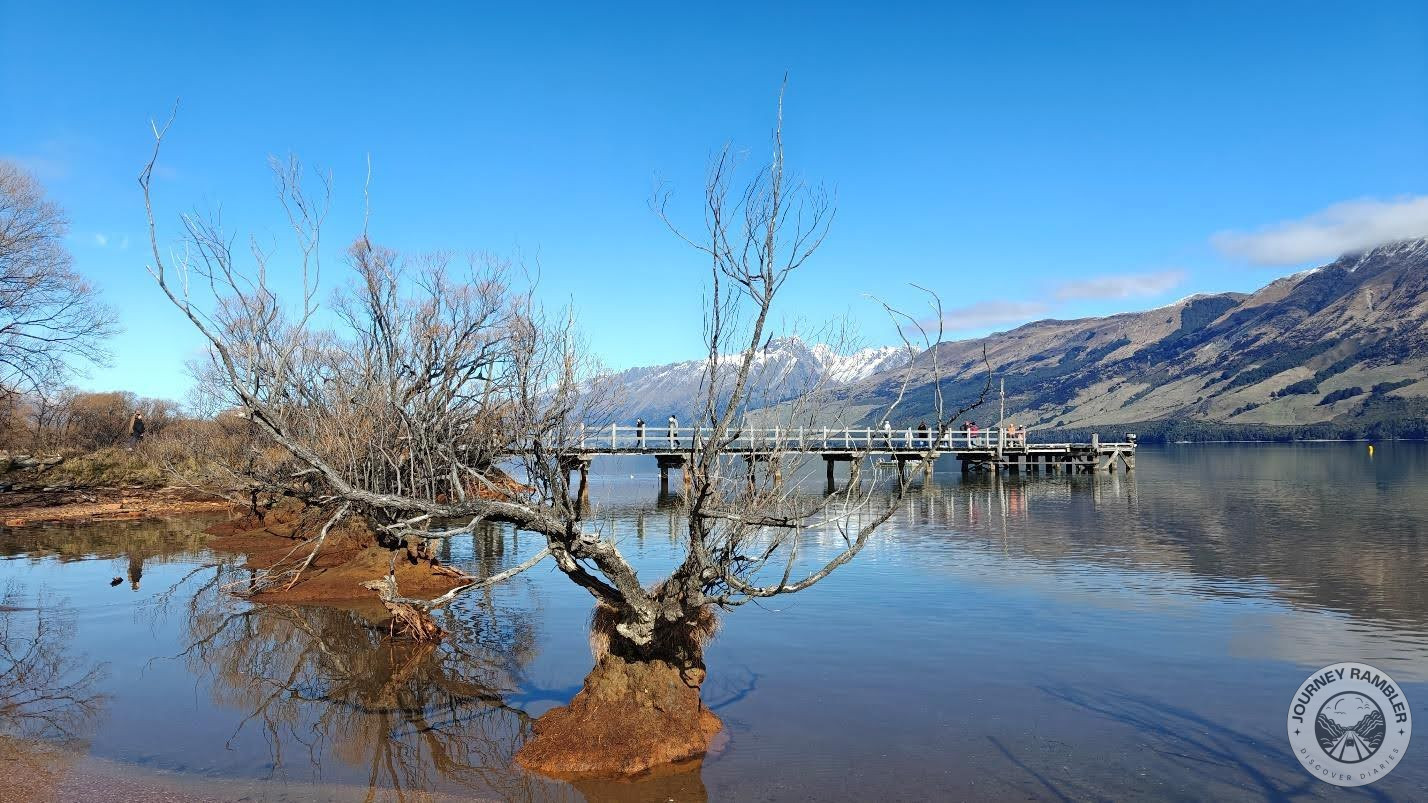
From this angle, you can clearly see the jetty in the background. Now it might seem like the water is calm in the image but it’s actually quite dangerous. Later on, I’ll explain just why this is and why it might be better to not swim here especially if you’re not that confident or good of a swimmer.
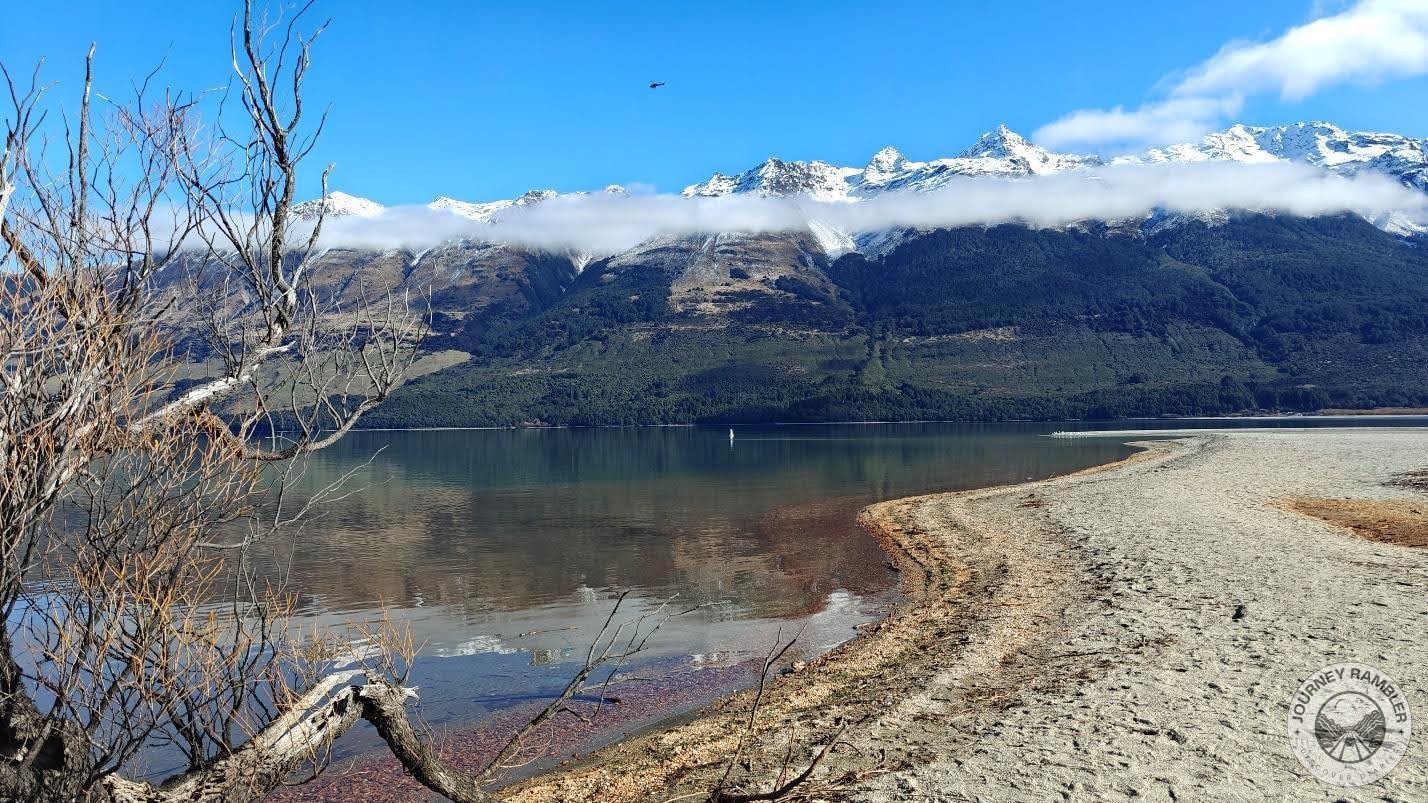
One of the things that I liked when I was here was the sight of the mountains surrounding the lake capped with snow. Since it was a relatively warm day (the sun was out) when I was there, there was also this mist/fog surrounding the snowy area of the mountains. If you read my Tasman Glacier Heli Hike experience, this phenomenon is called advection fog and it’s caused when warm air comes into contact with snow (or any cold surface).
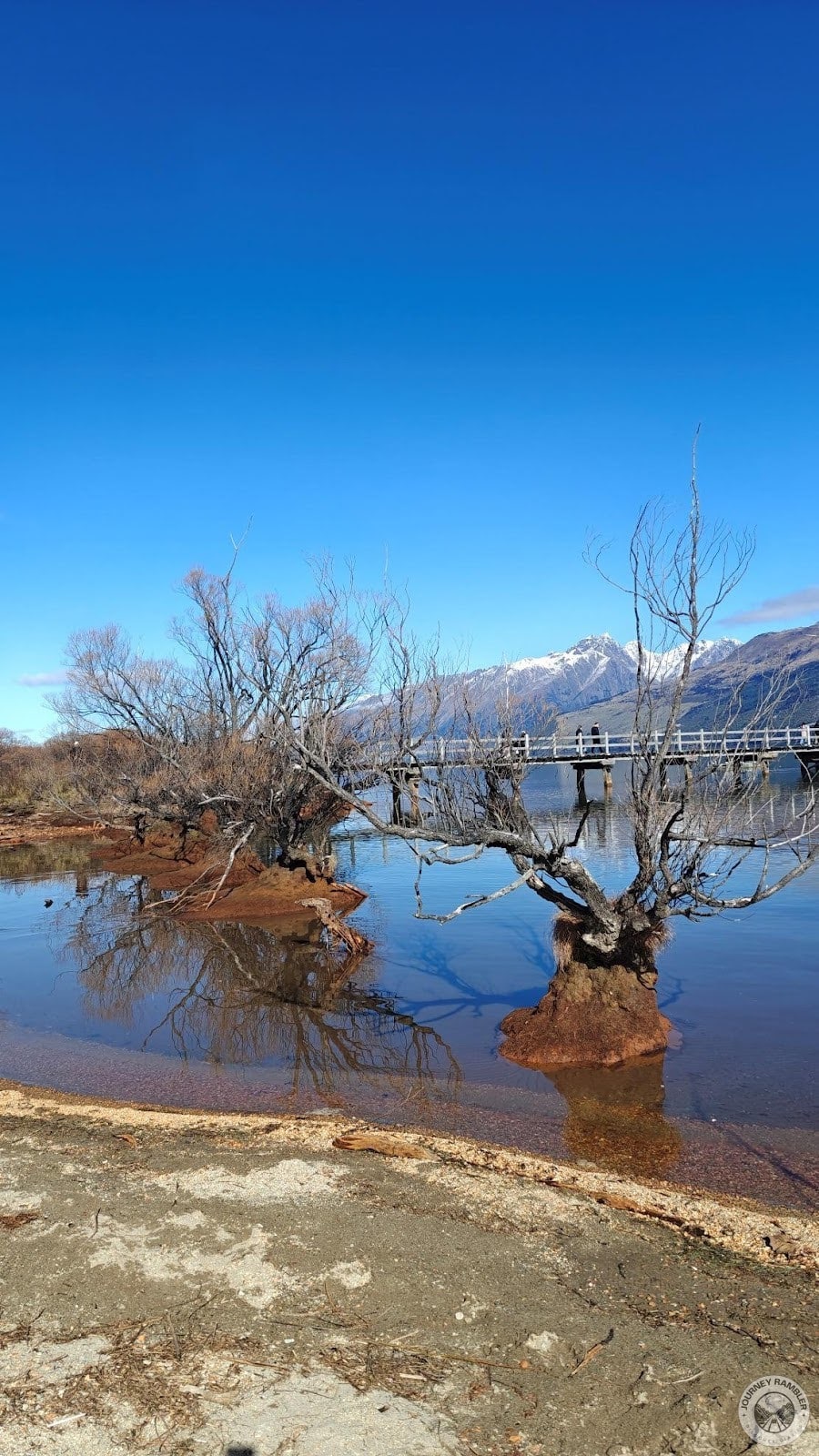
On to the willows, I tried searching online but I couldn’t seem to find any mention of these trees’ origins. I’m quite sure that they were only planted here when the islands were settled as the trees aren’t native to New Zealand.
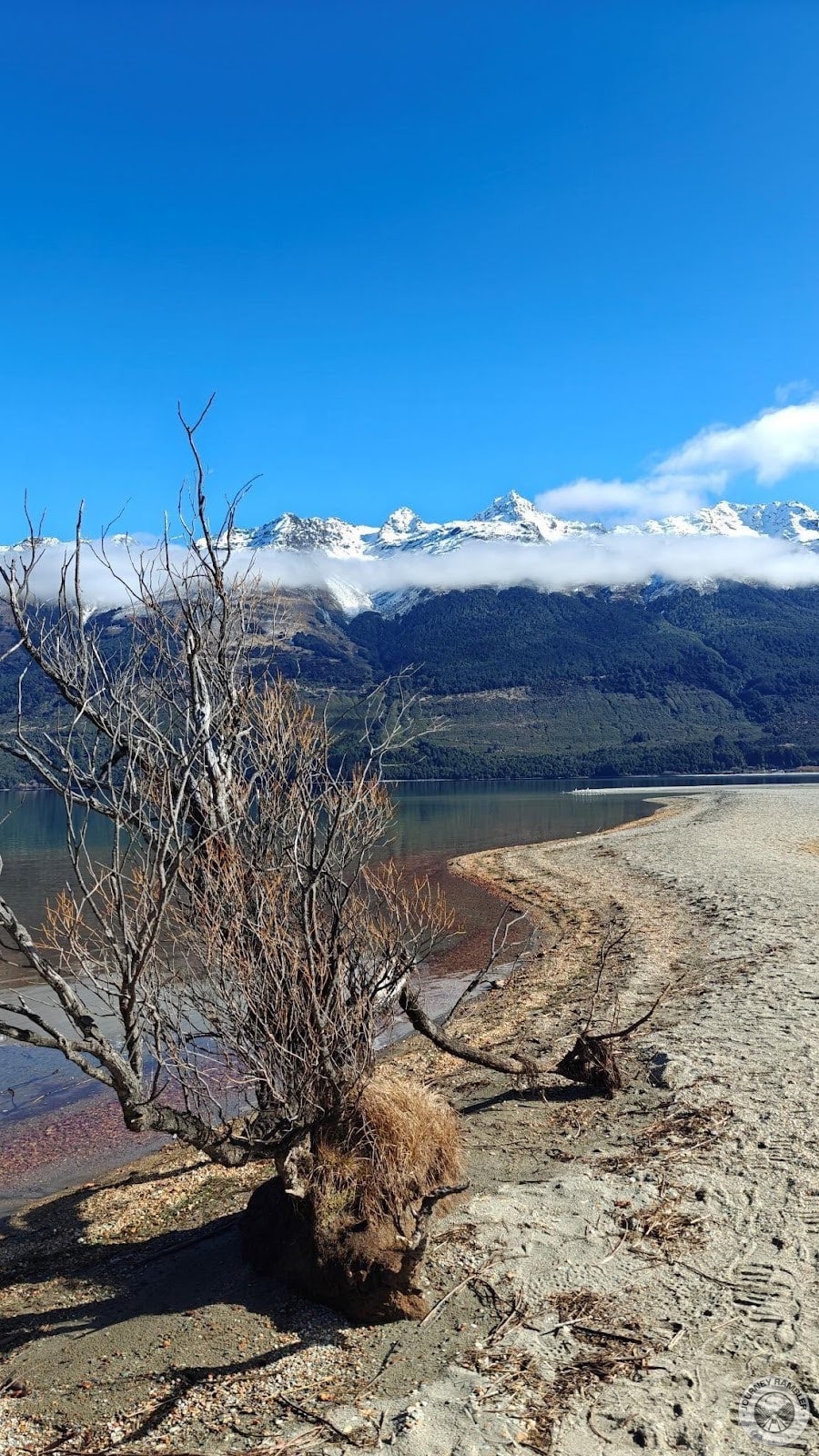
This is the view of the northern end of the lake where the Dart River flows into it. It’s not shown but to the right is where you’ll find the smaller Rees River emptying into the lake. Now I remember mentioning earlier that the level of the water in Lake Wakatipu is lower in the winter. The reason for this is that the rivers’ waters are colder and actually sink into the lake instead of mixing with the surface water. This underflow is exactly why there was a sign warning about swimming under the jetty earlier.
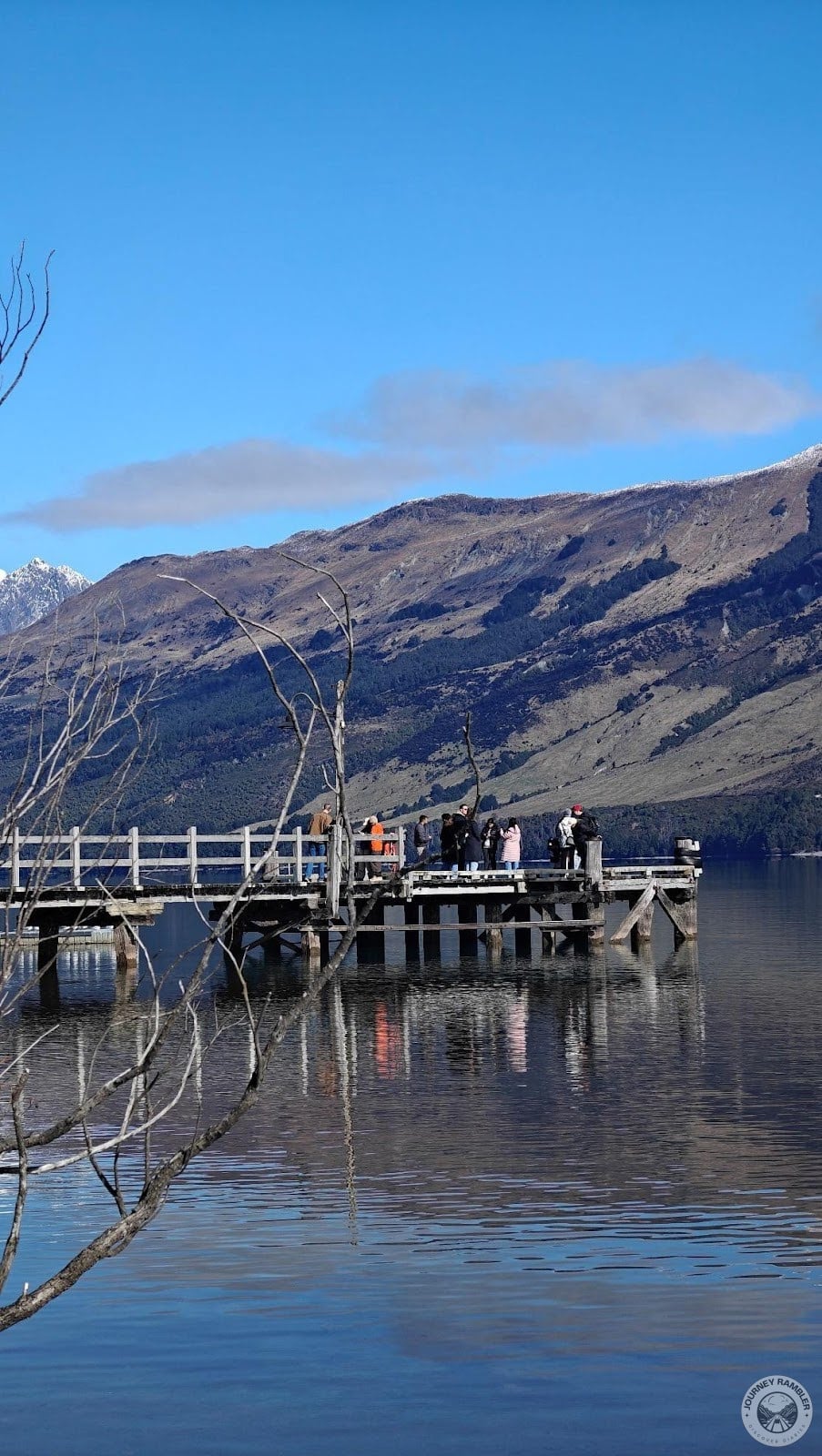
Speaking of the jetty, here’s a closer look at it. Much like the Willow Trees, it’s also got some really awesome views that you’ll get to see later on. In fact, I’d argue that the view from the jetty might even be the best in this whole area.
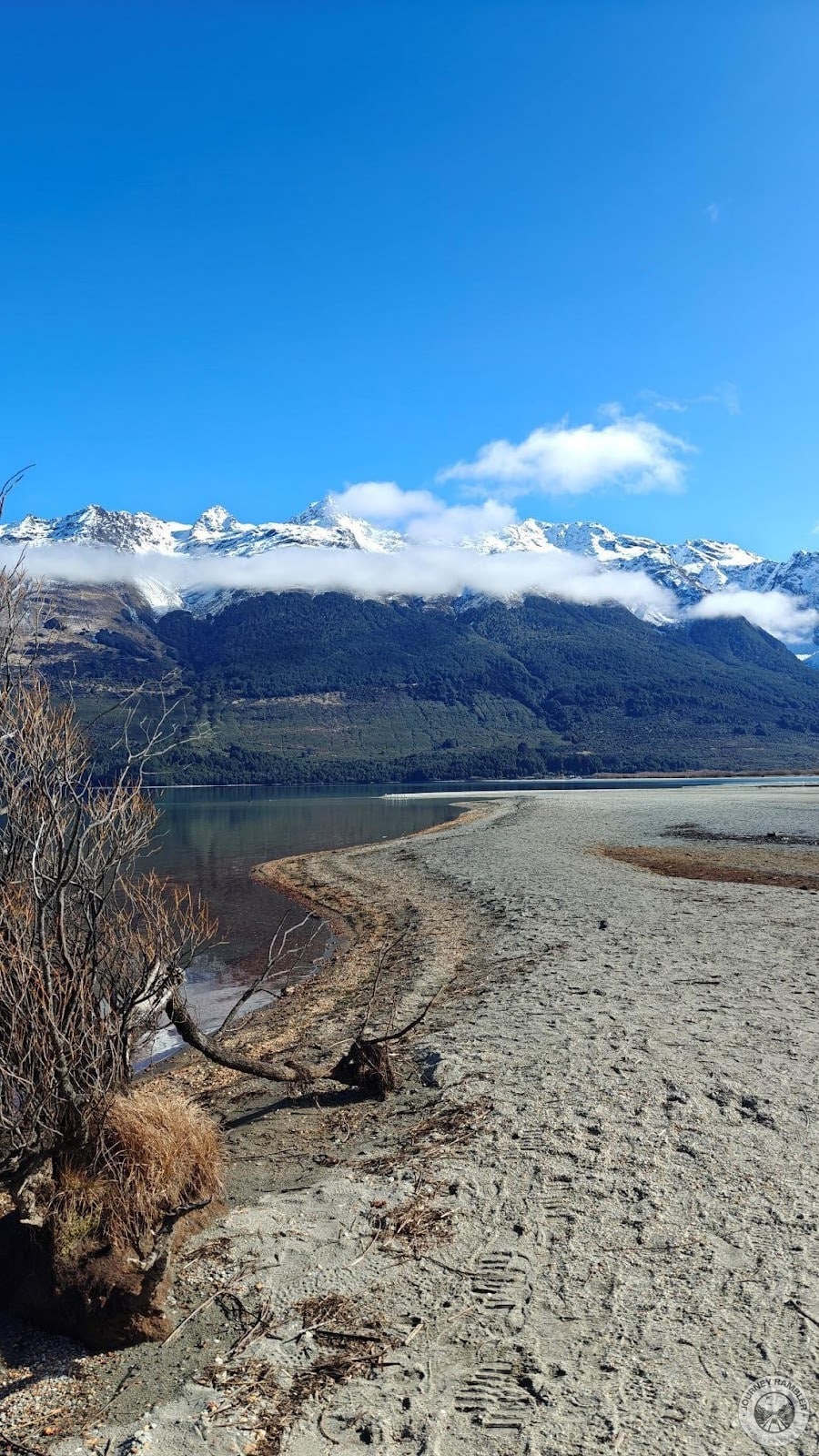
Before I head on over to the other parts of Glenorchy Wharf, here’s another snap of the Humboldt Mountains and the northern part of Lake Wakatipu. I kid you not, the vibe here was really relaxing even with the noise from the visitors milling about and taking pictures. On a side note, did you know that the Misty Mountains in the Lord of the Rings trilogy of movies was filmed here. I wonder why they chose this place?
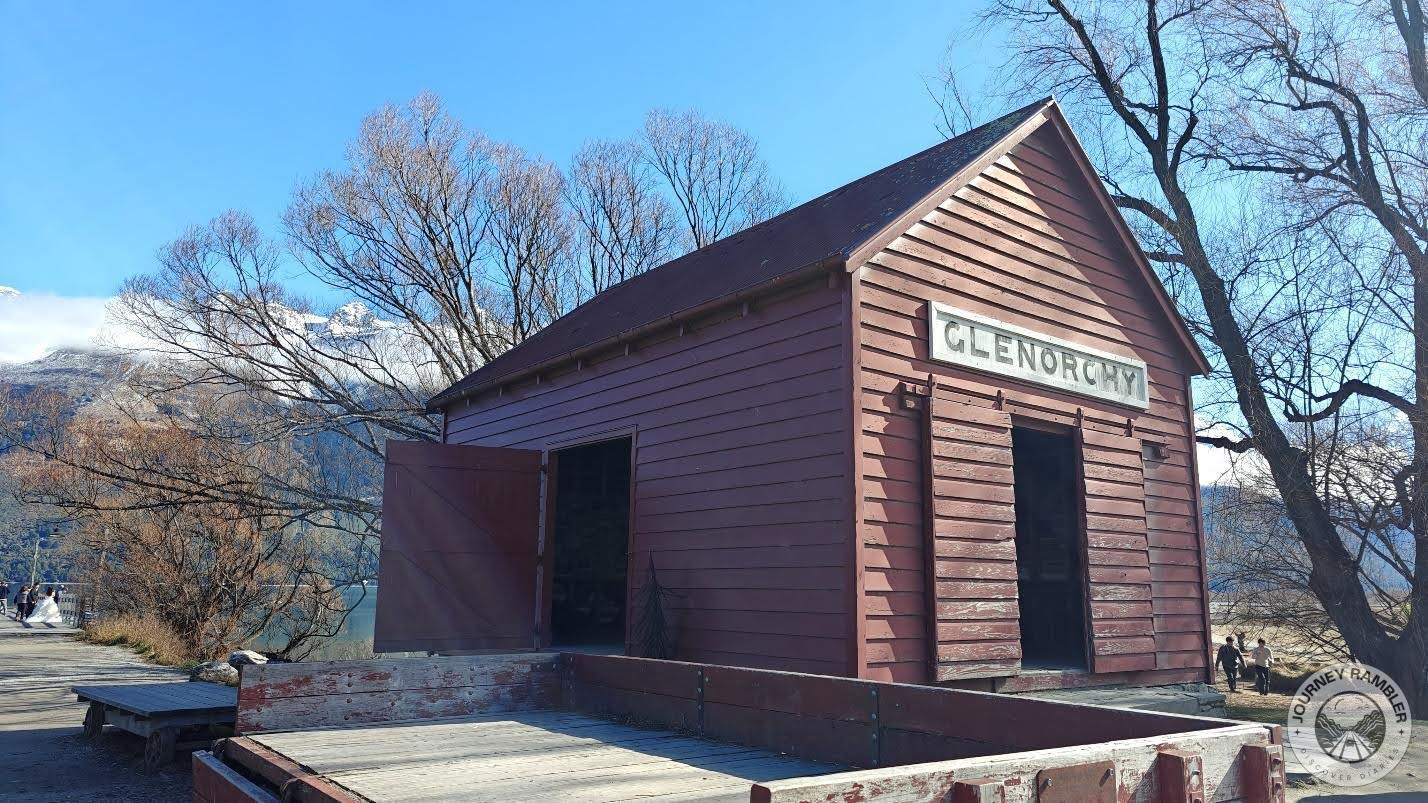
Kidding aside, I went back to the red shed to take a closer look at it prior to exploring the jetty. From the outside, there really seemed to be nothing special about this building. As with a lot of things here in New Zealand though, there’s more to the red shed than meets the eye.
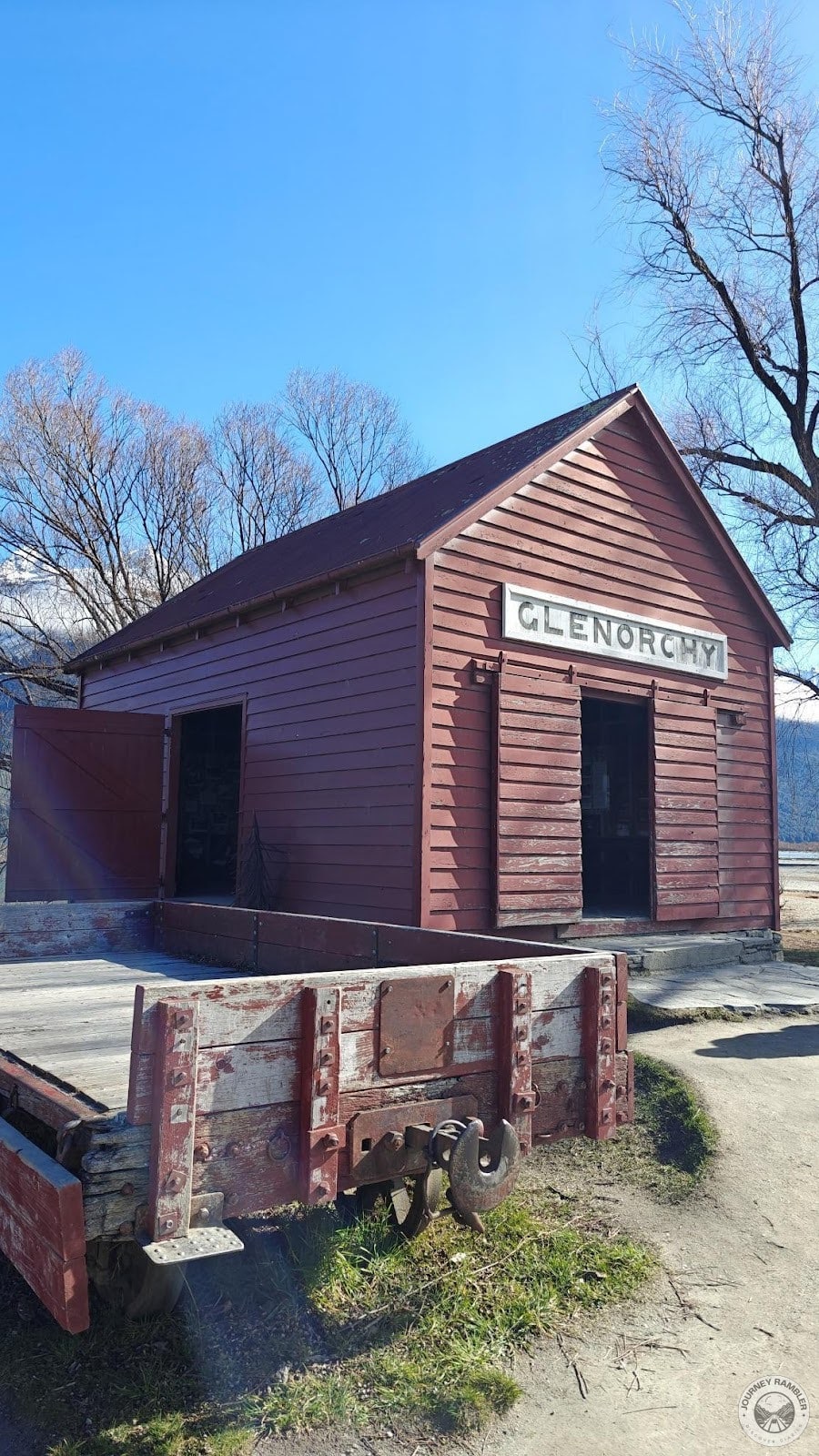
More than a restored/reconstructed heritage building and a popular photo location, the building also serves as both a resting place and an exhibit. There are chairs and a table inside where you can relax after walking around the area. Additionally, there are a number of infographics detailing the history of the wharf and the shed itself.
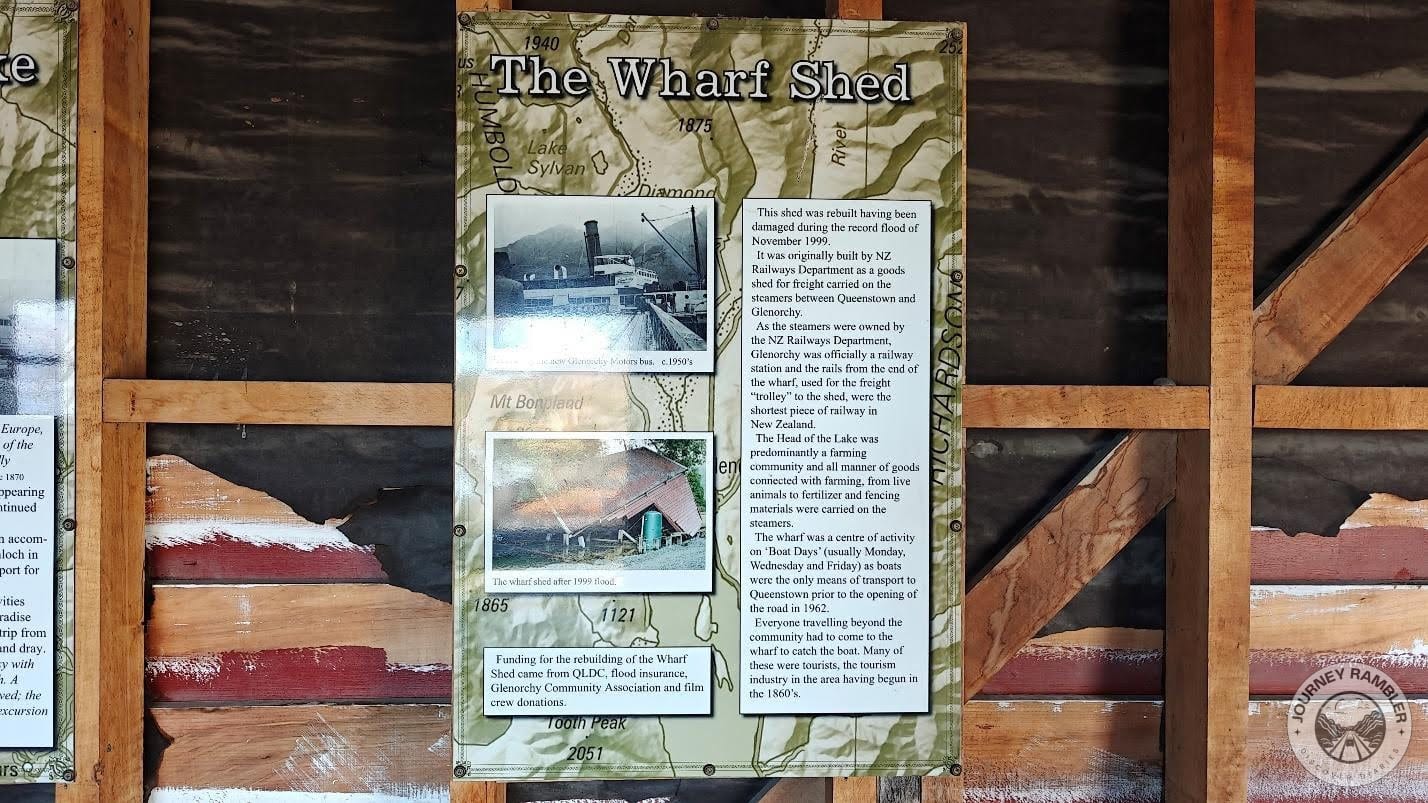
Speaking of the shed, here’s the infographic that I was talking about that discussed its history. Unfortunately, it also doesn’t have any information as to when the shed was originally made/constructed. That said, it does mention that the shed was recently renovated after it sustained damage during the record flooding in 1999.
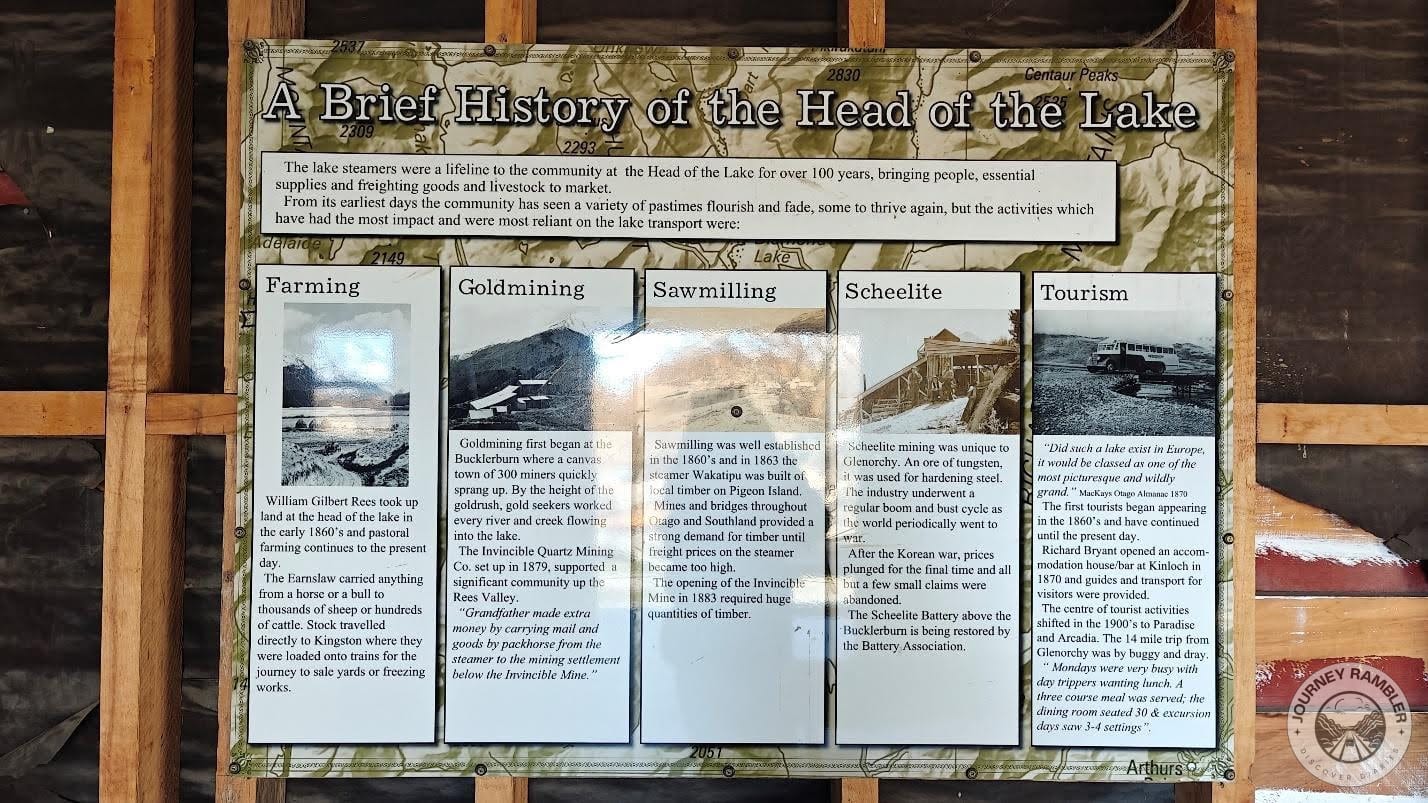
In this infographic, you start to have an idea of why there was a need for the shed in the first place. The lake and the area around it supported a multitude of industries and these necessitated a hub for trade that Glenorchy was able to provide. The red shed was then used for storing produce that ranged from wool, livestock, gold, timber, and many more.

The produce as well as tourists who visited the area all made use of Lake Steamers which then became the lifeblood of Lake Wakatipu. This infographic shows some of the steamers that plied the lake’s waters with details of their construction and demise. These actually look pretty cool though I think it would have been nice if these were also preserved.
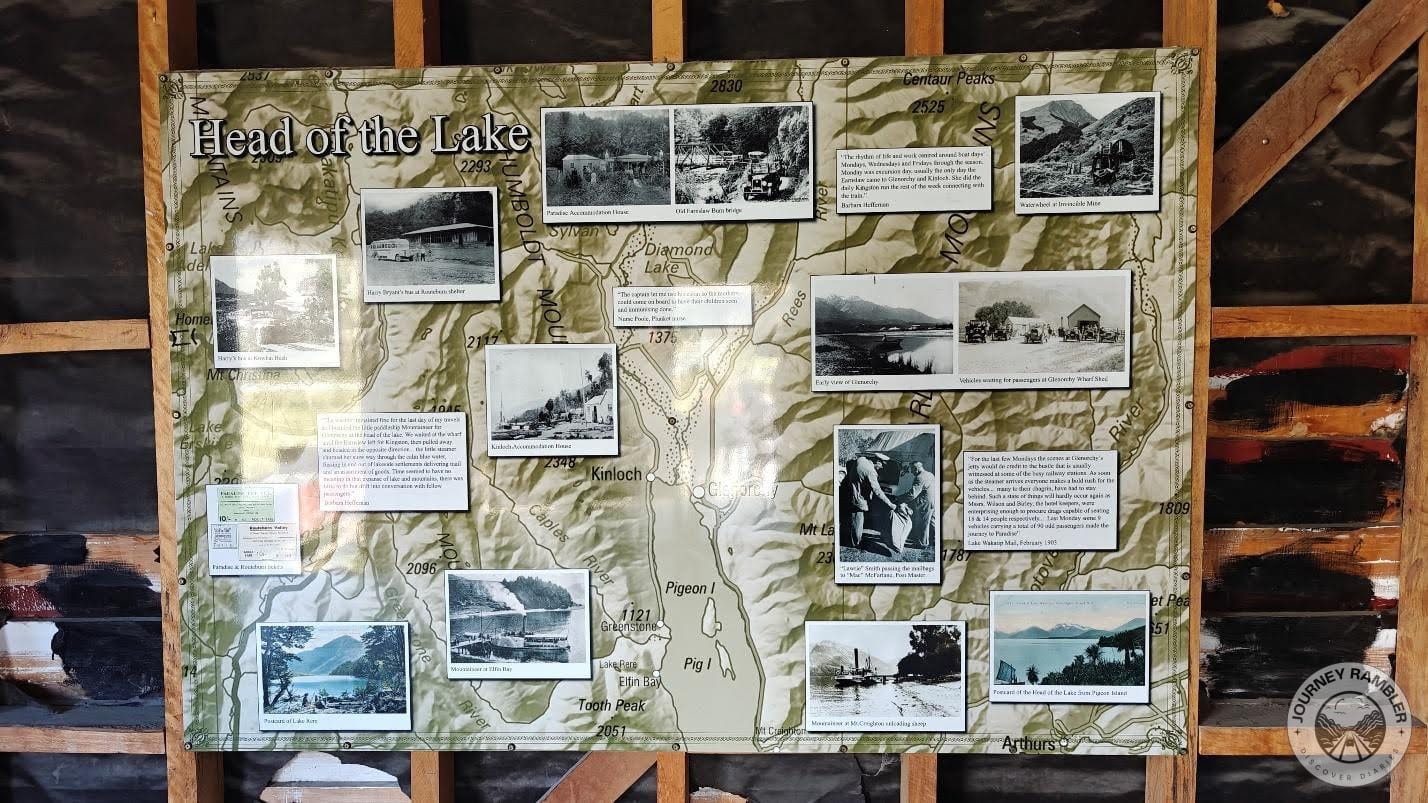
Here you’ll find vintage pictures of the northernmost part (or head) of Lake Wakatipu. The pictures are from various dates throughout the lake’s long history. It was quite eye opening to see just how busy this area of the lake seemed back then compared to how laid back it is right now.
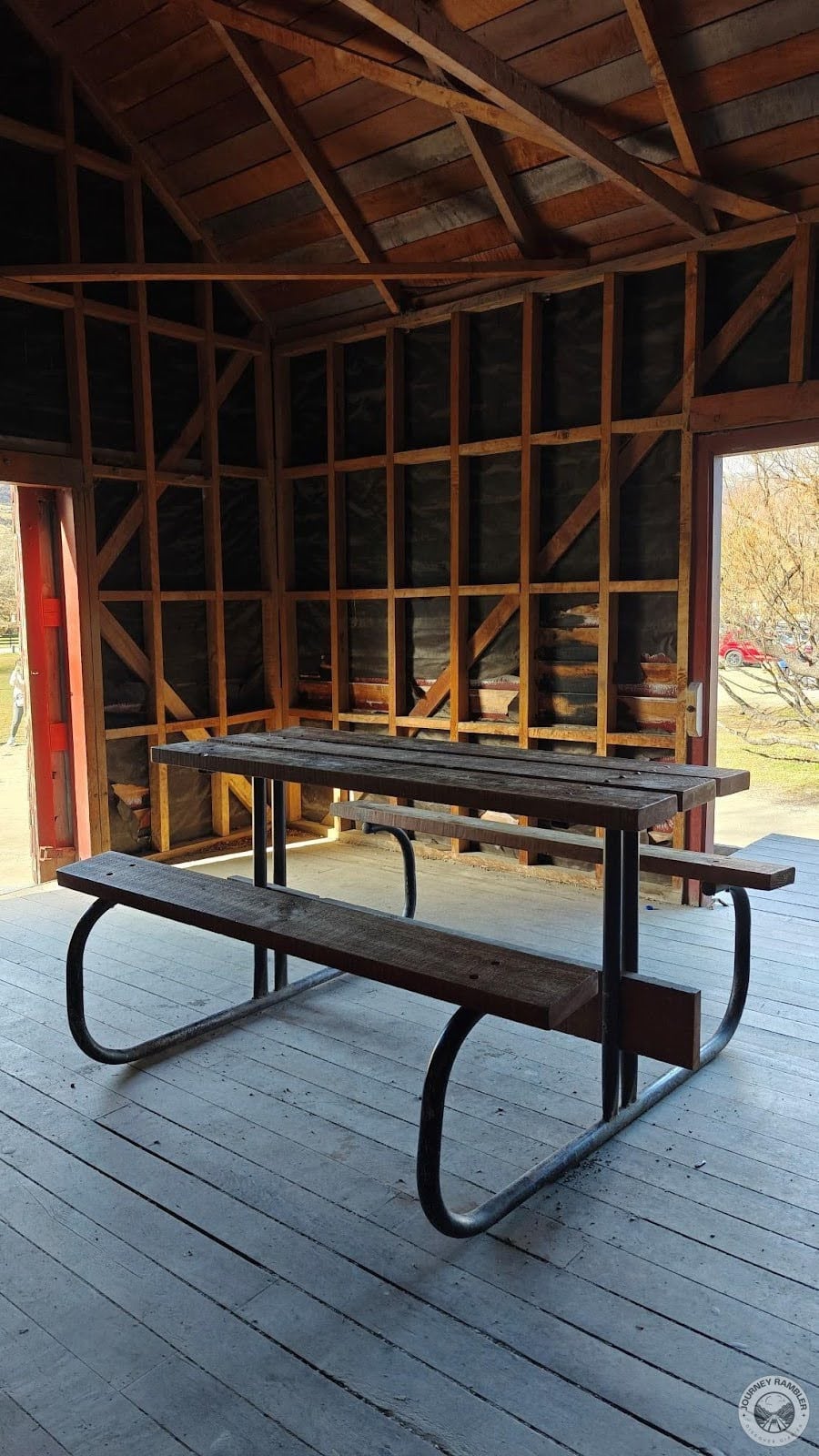
Now if you got tired walking around and taking pictures then there’s a bench here that’s perfect for relaxing. Judging by its looks, it does seem like people have used this a lot. I can’t fault them though since you also get to see some nice views from here.
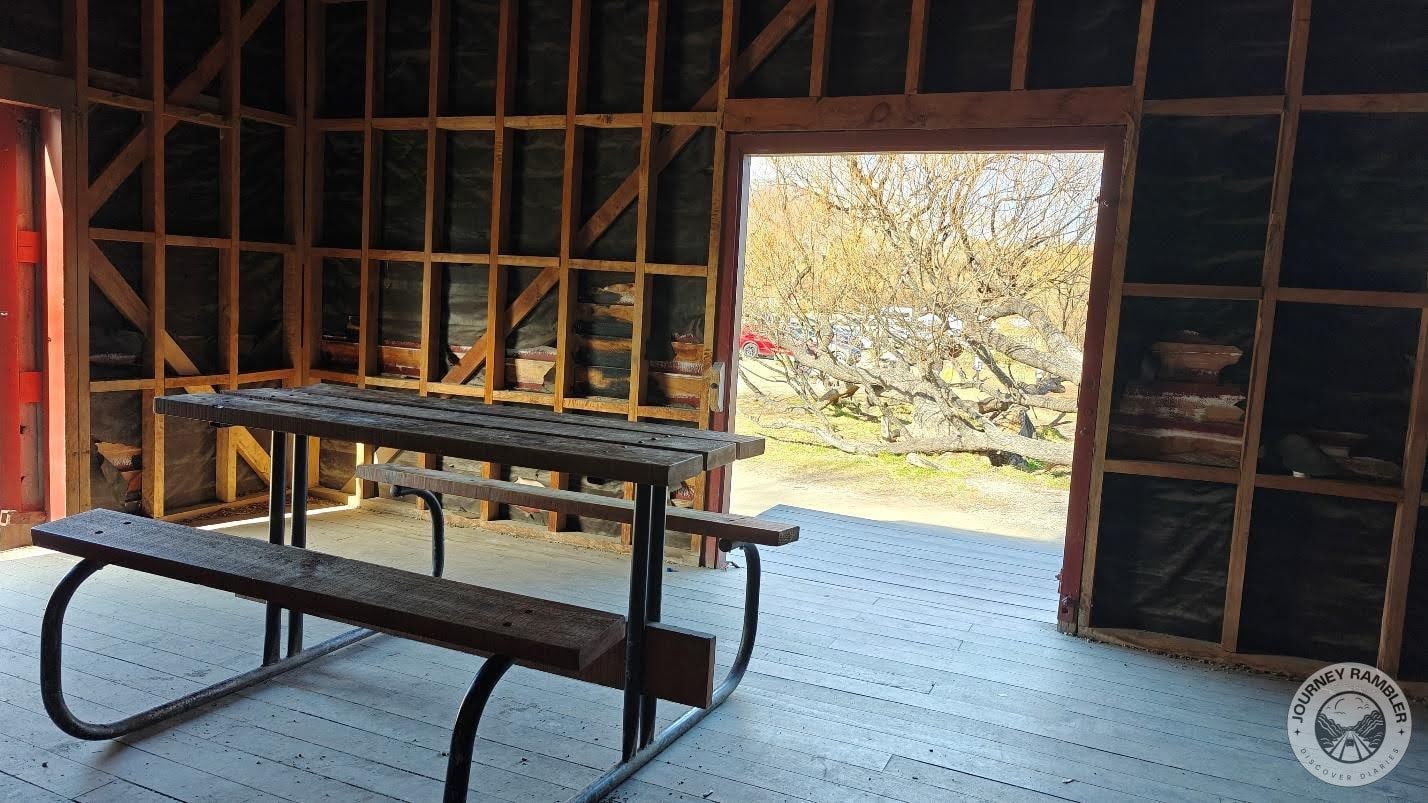
The door facing the car park accessible through Benmore Place has this really nice view of a tree that’s growing sideways. I don’t know why I wasn’t able to take more pictures of this tree but it looks really peculiar and is easily one of the more memorable sights here. As for what tree it is, I’m honestly unsure.
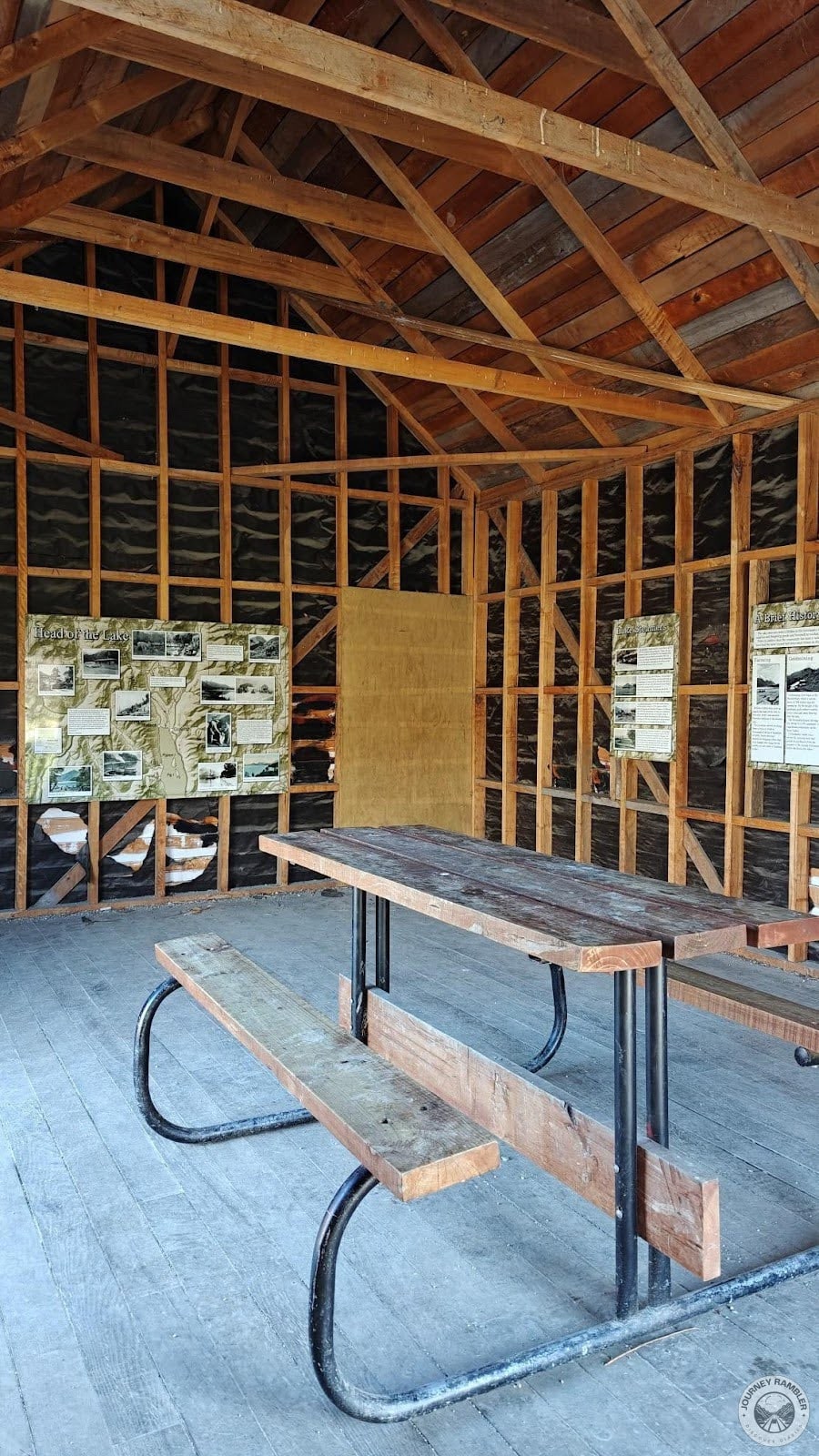
Here’s a view of the inside of the shed from the entrance facing Islay Street. While I did like the shed’s homey vibes, I couldn’t help but think it would have benefited from more chairs. Moreover, the shed would’ve probably looked much more presentable if they added drywall to the interiors.

Considering how Glenorchy Wharf is open to the public though, I don’t quite see how further renovation might be funded. Even with its current state, the shed still is able to do its job and then some. Moreover, you really don’t want to be spending a lot of time inside the shed with all the amazing views waiting for you outside.
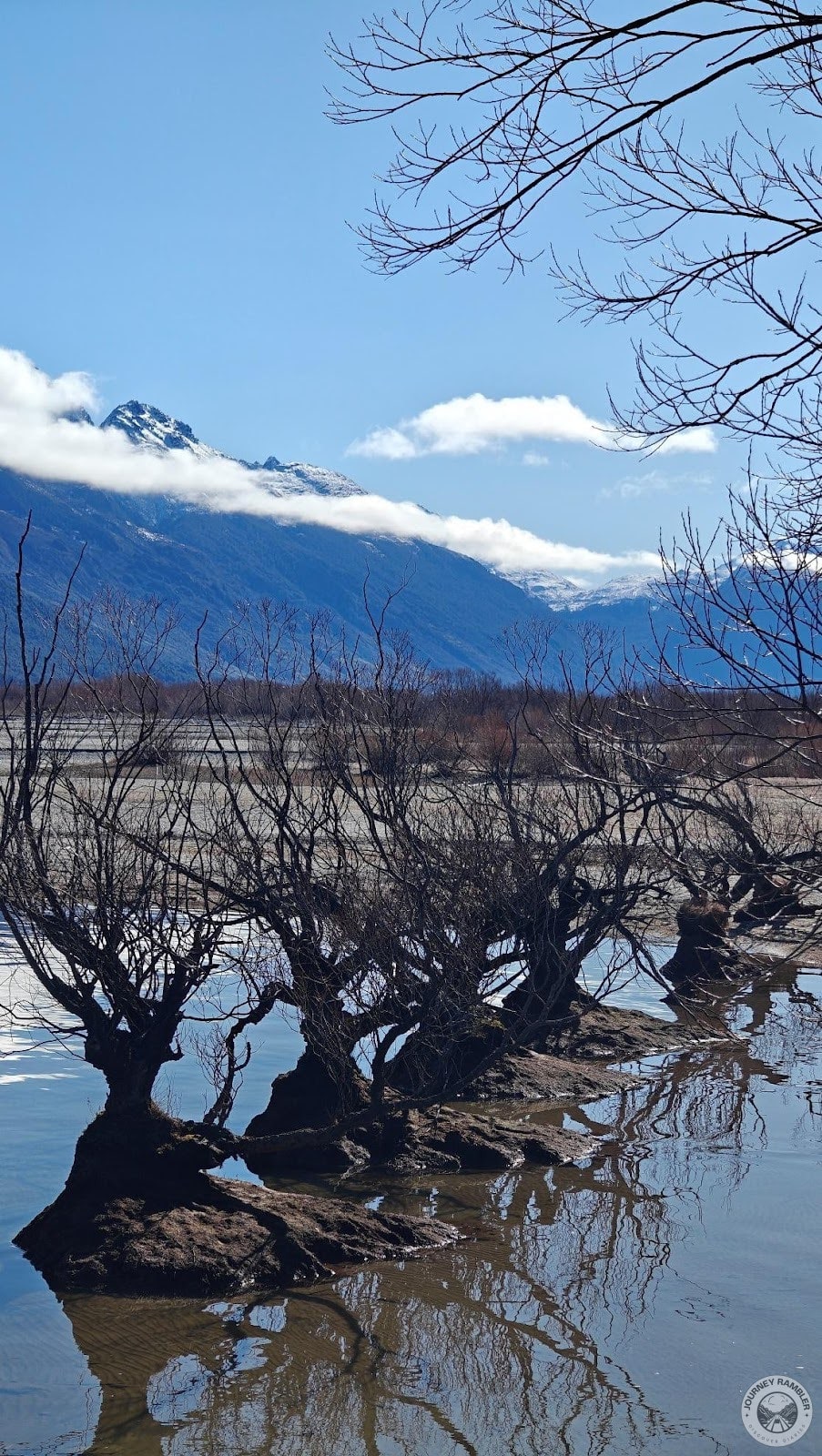
Speaking of amazing views, take a look at this stunning shot of the willow trees we saw earlier. This was taken from the jetty and it honestly might be the best photo I’ve taken of the trees. Since the lake’s water was so tranquil, you can actually see the trees’ reflections on its surface.
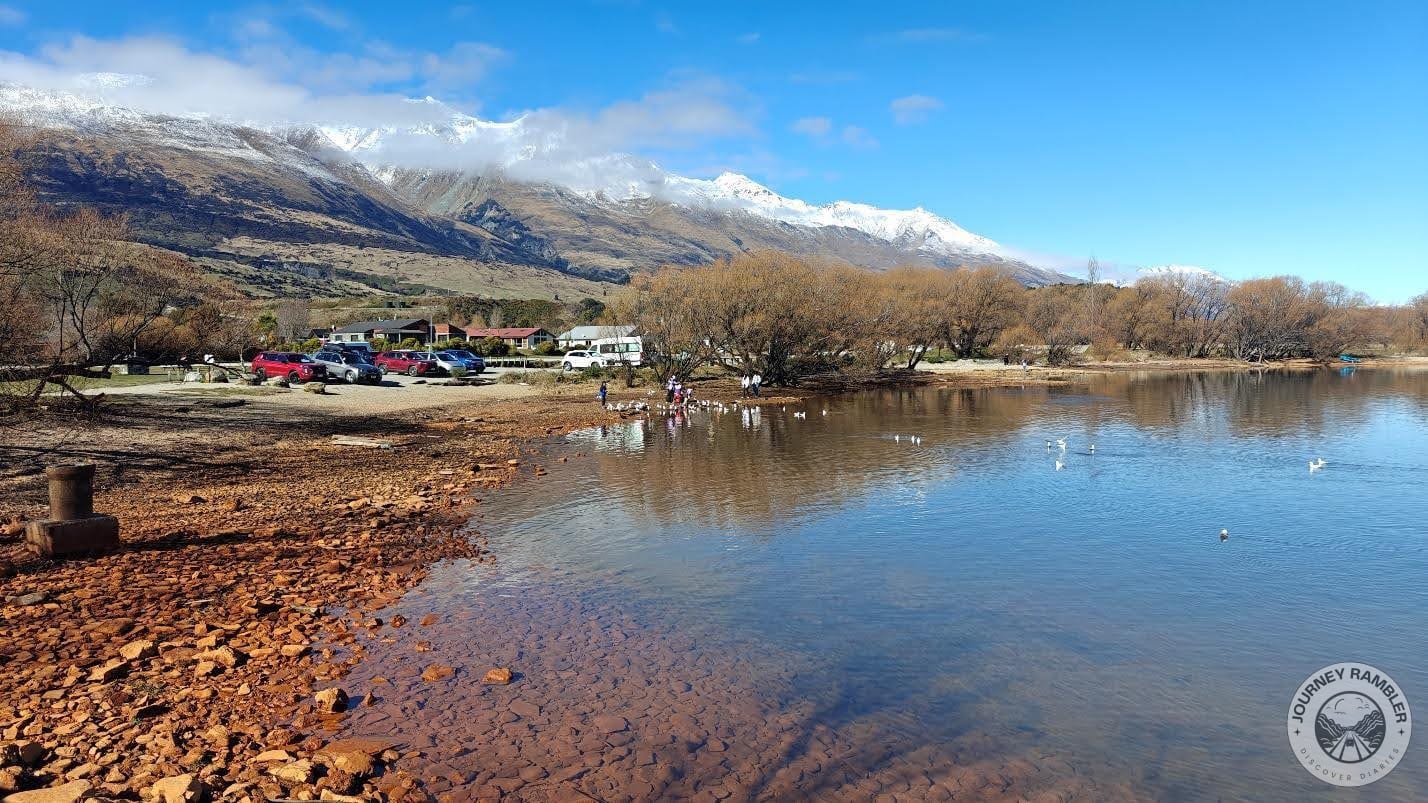
On the other side you’ll see another set of trees as well as the car park accessible from Benmore Place. You’ll also notice some of the visitors on the banks of the lake interacting with the birds congregating around them. Take note though that, like with many other places, you’re not allowed to feed the birds here.

Speaking of birds, just take a look at this cute little guy! This is a Black-billed Gull (also known as Tarapuka) and it’s a species that’s native to New Zealand. It’s a migratory bird but its movement is typically limited to New Zealand (known as altitudinal migrations). This is in contrast to the common pochards I saw in Kenrokuen Garden in Japan that typically cross several countries’ borders just to migrate.
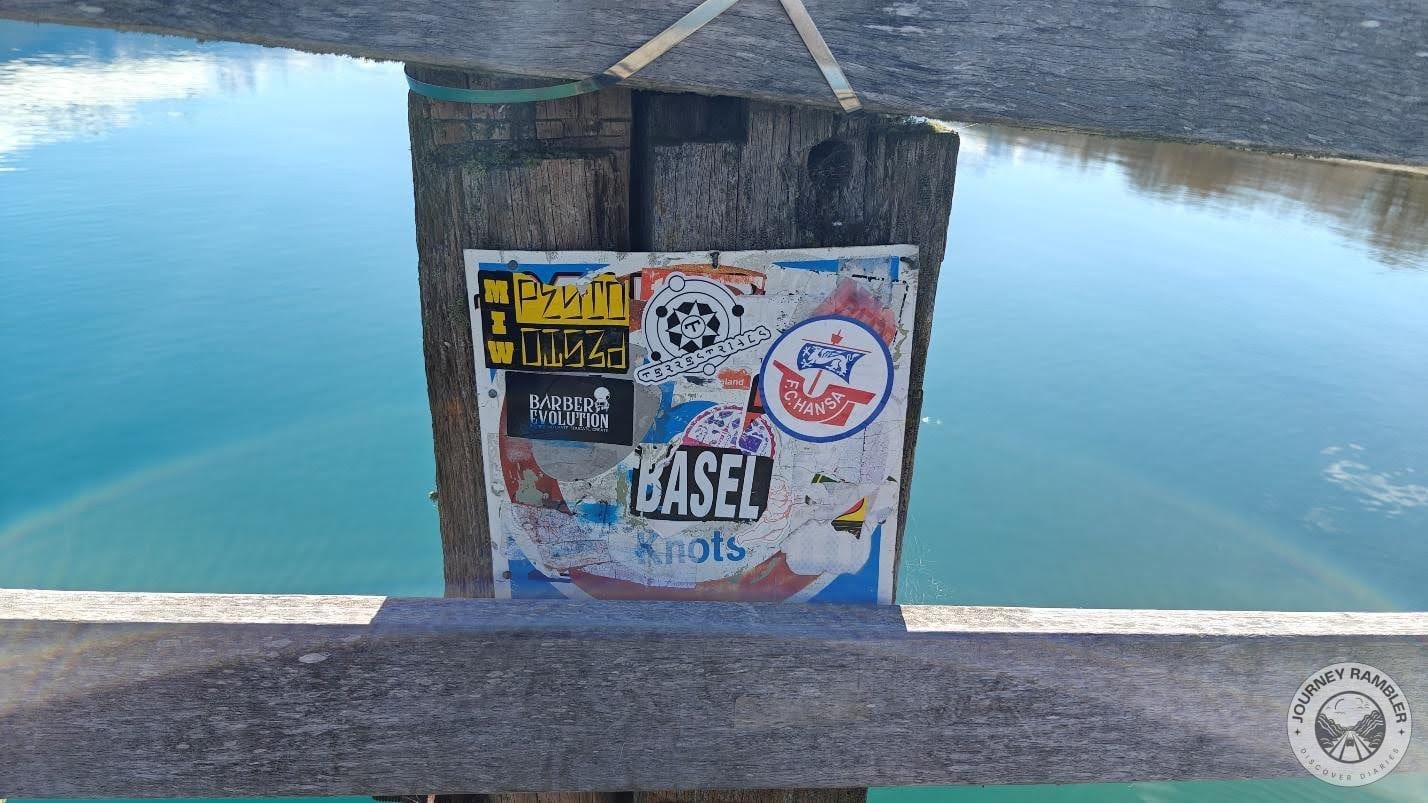
This is a post on the jetty that features some stickers likely placed there by other visitors/tourists. In the background you’ll see the lake’s placid waters. Now it’s not as clear as Lake Tekapo was when I visited but it’s equally as inviting. That said, this place has a history of fatal drownings so I would advise to not swim here if possible.
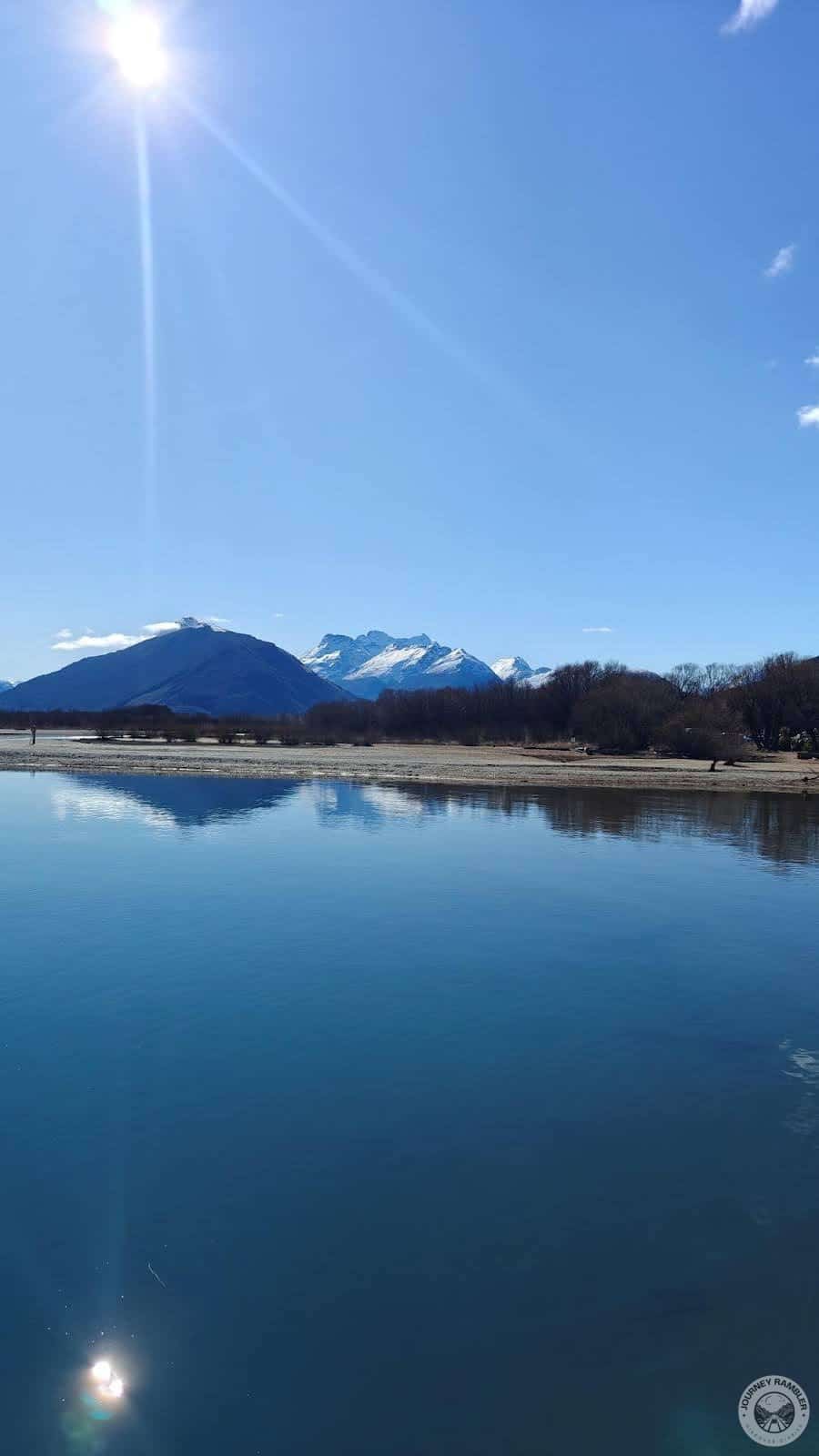
Now it might be dangerous but I honestly wouldn’t fault you if you wanted to take a dip here. There’s really just something about these waters that entices and enchants you. Anyway, from here you can see the delta where the Rees River flows into the lake.
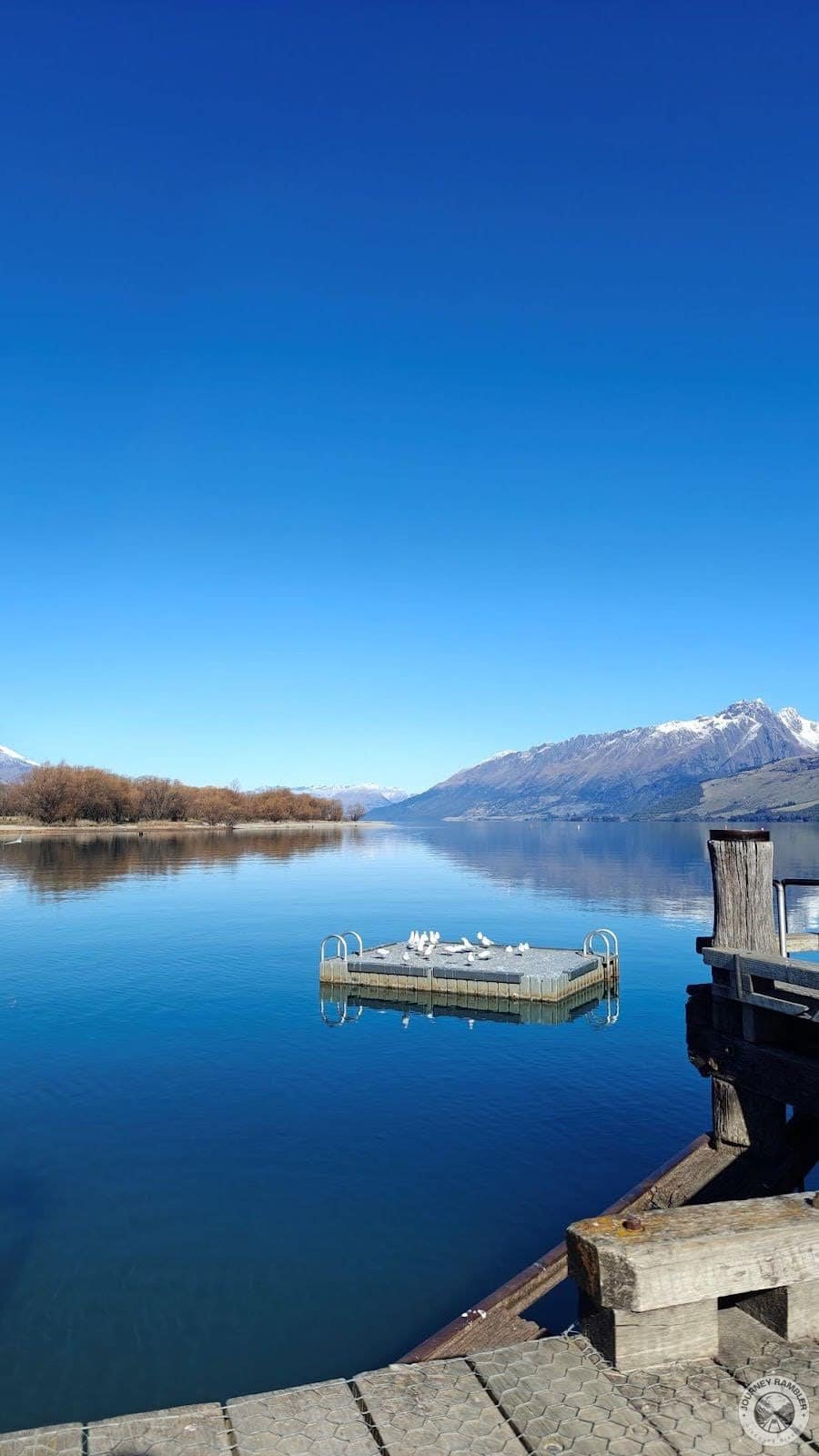
As you get to the end of the jetty, you’ll see this floating platform that’s being used by the Black-billed Gulls as some sort of meeting area. Joking aside, this floating platform is here to give swimmers an area to rest and/or sunbathe. Even with this around though, the danger of the strong undercurrent in this section of the lake is still very much present.
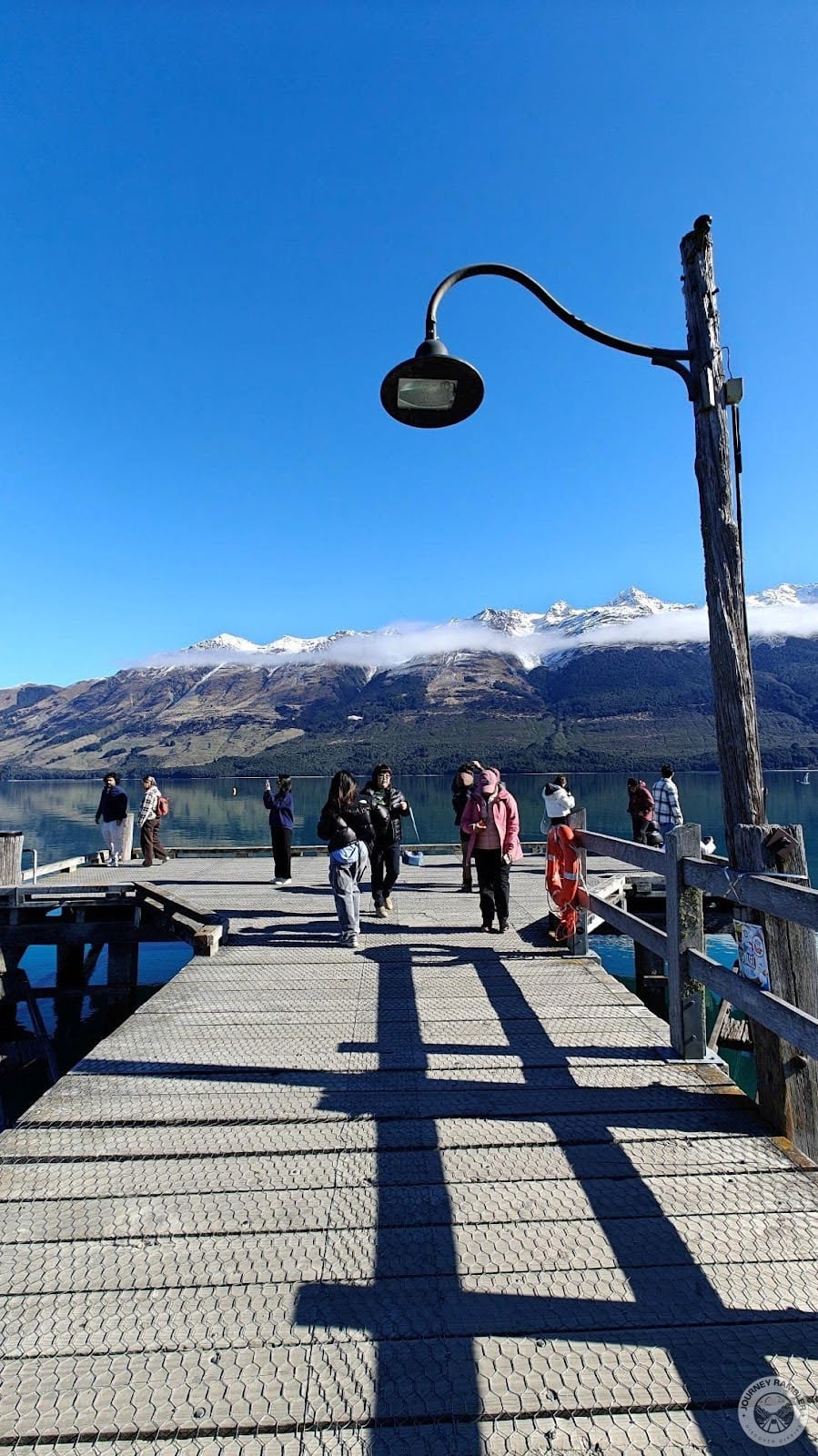
Here you can see the head/end of the jetty. You’ll notice that there’s still plenty of people here and that’s to be expected because no matter where you turn, you’re almost guaranteed a nice view. Heck, you could even look up and there’s still something that’s sure to catch your attention.
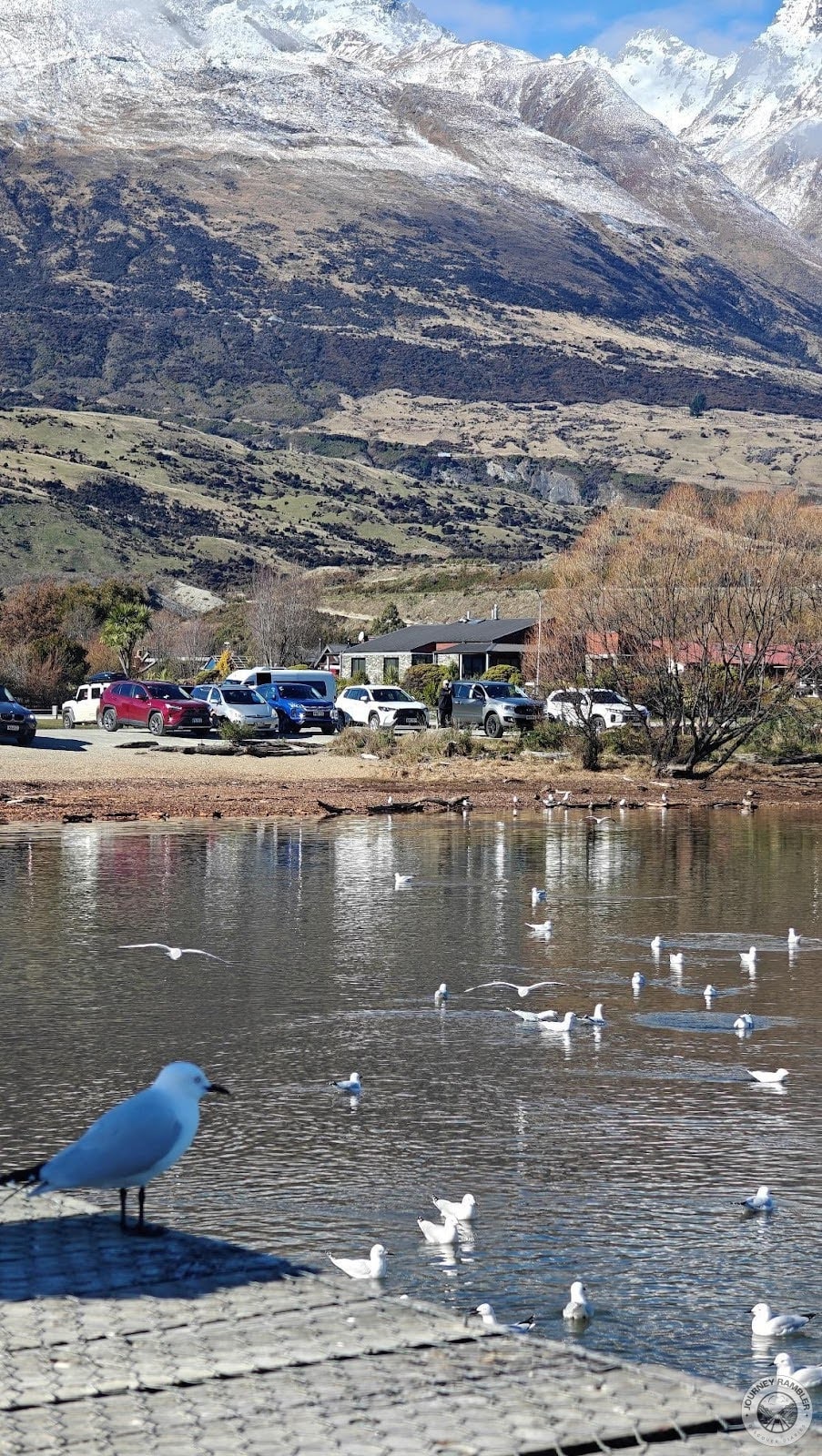
Just look at the Black-billed Gulls enjoying the waters here. One little guy was seemingly like a manager just looking over the squabble. Then in the background you’ll notice the cars that the people here (including me) rode in.
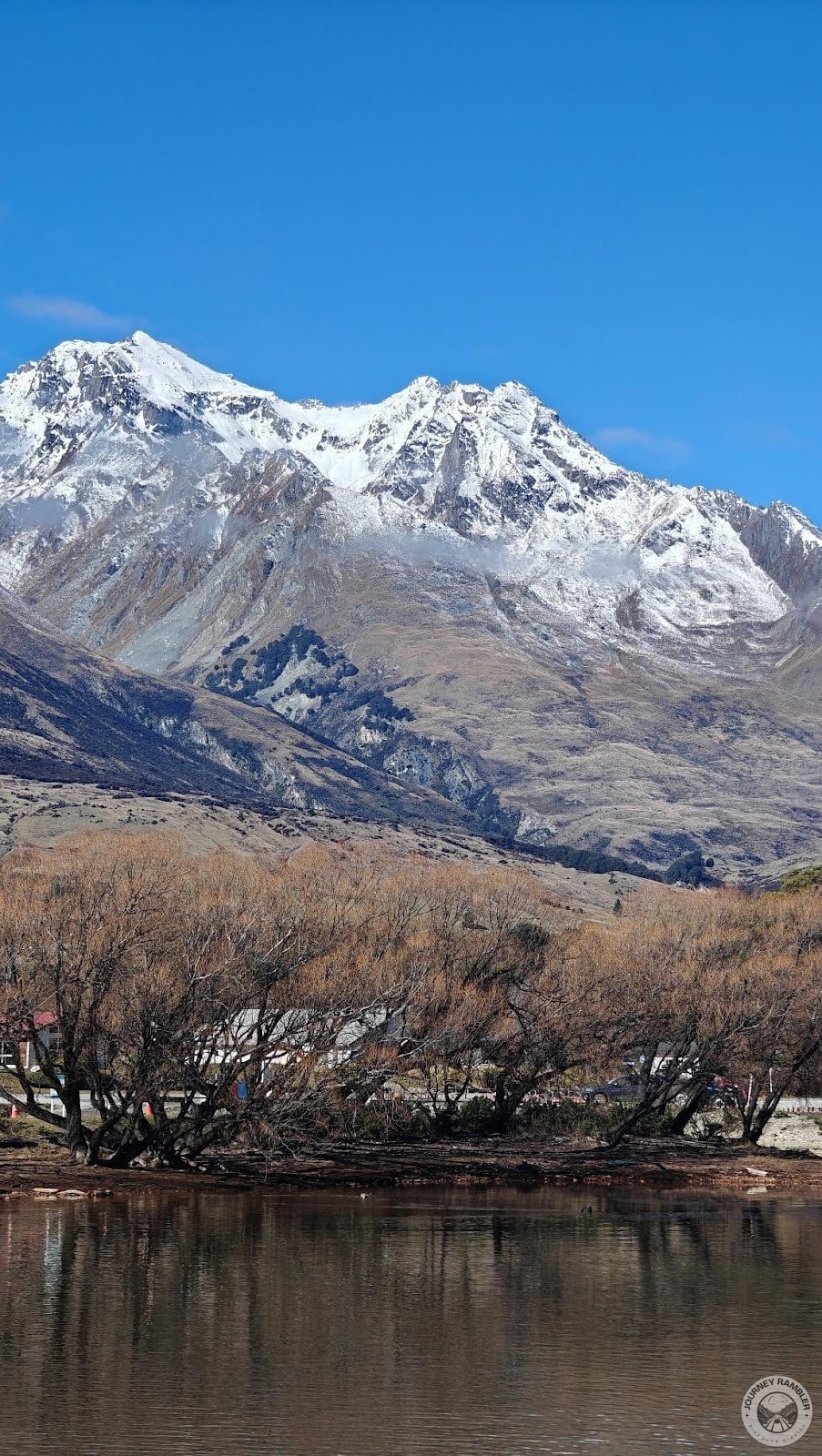
The carpark area is also near a grove of what I think are willow trees. As for the imposing mountains in the background, those are part of the Richardson Mountains. Much like the Humboldt Mountains, this is a sub-range of the Southern Alps.
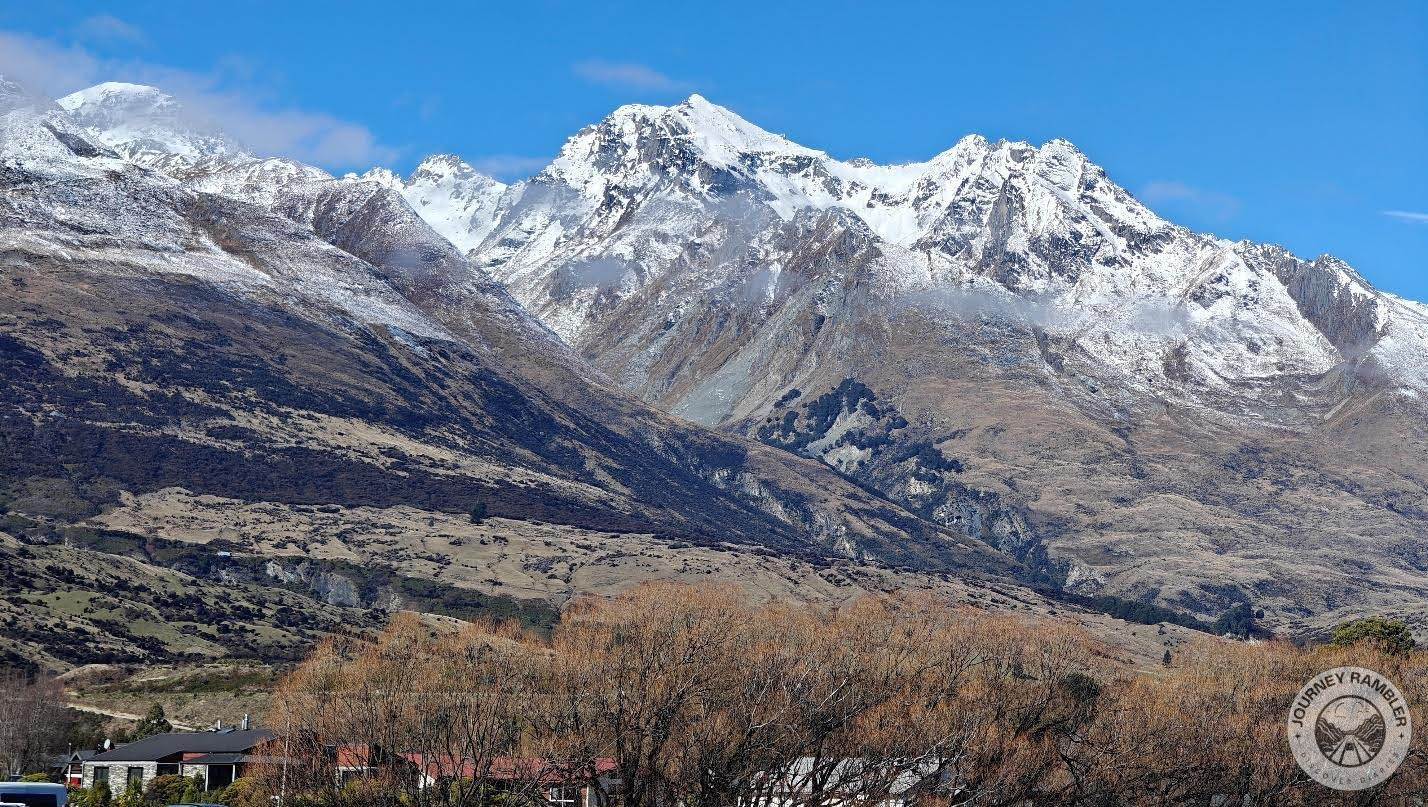
Admittedly, the Richardson Range didn’t look as dramatic as the Humboldts with the advection fog surrounding its mountains. That said, the peaks here were still every bit as majestic and imposing. Along with the Humboldts, I think these were also featured heavily as backdrops in the Lord of the Rings trilogy of films.
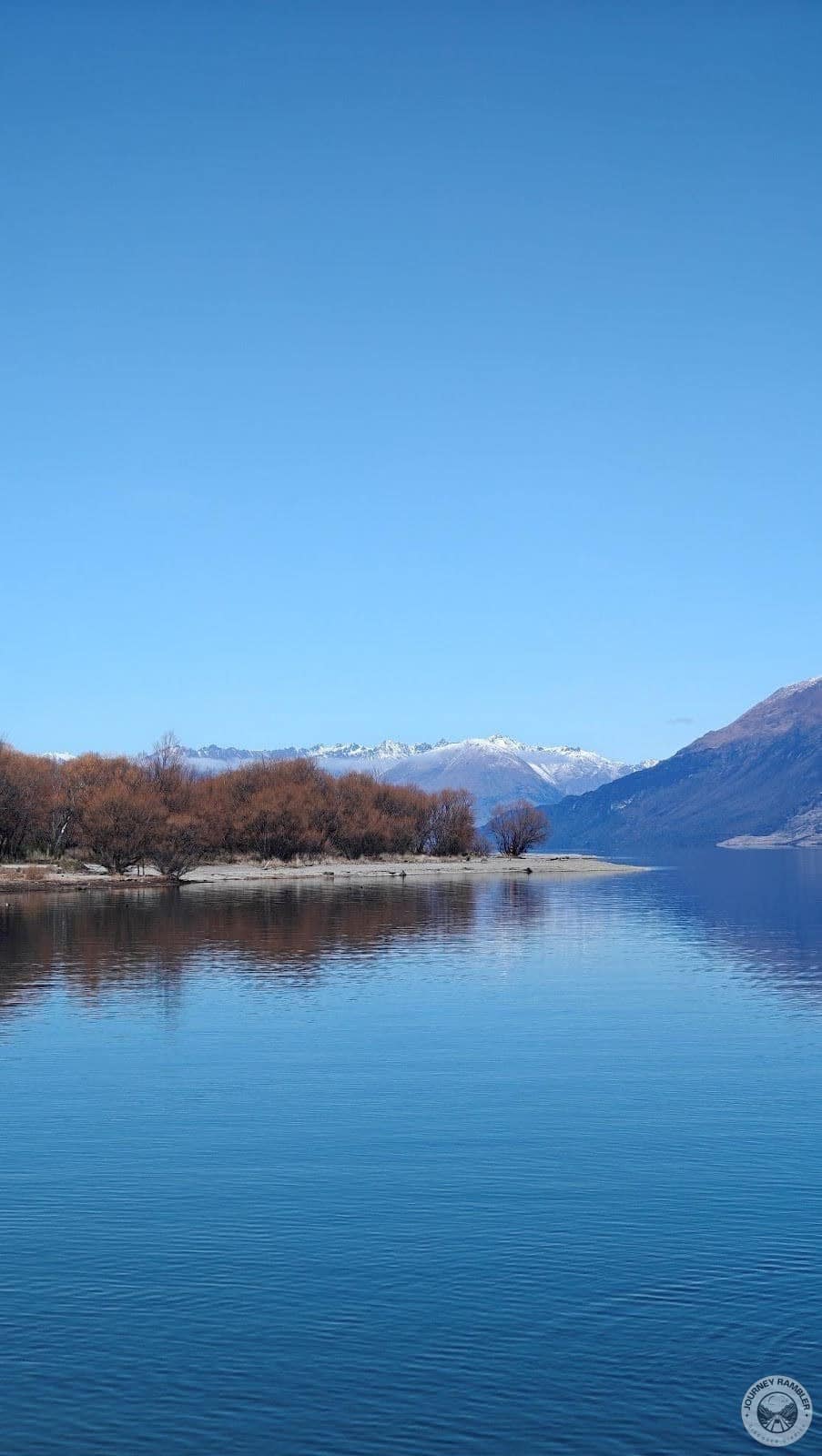
This is a portion of the southern part of Lake Wakatipu. Well, I say southern but it’s really just the view from the jetty when you look south. Lake Wakatipu is New Zealand’s longest lake and its southernmost section is actually quite a ways off from where I took this picture from.

Here’s the Black-billed gull manager from earlier. What really surprised me was just how used to human presence these birds were. They pretty much tolerated our presence and I’d even say they tried to actively seek us out. Thinking about it now, they probably got so used to people giving them food in the past that they now don’t view us as threats.

After I finished taking plenty of pictures at the jetty, I decided to slowly head back to the shed. As I was walking I couldn’t help but think just how good this place would look when the willows got their leaves back in spring and summer. I’d seen pictures of the place during those seasons online but I really want to witness it for myself.
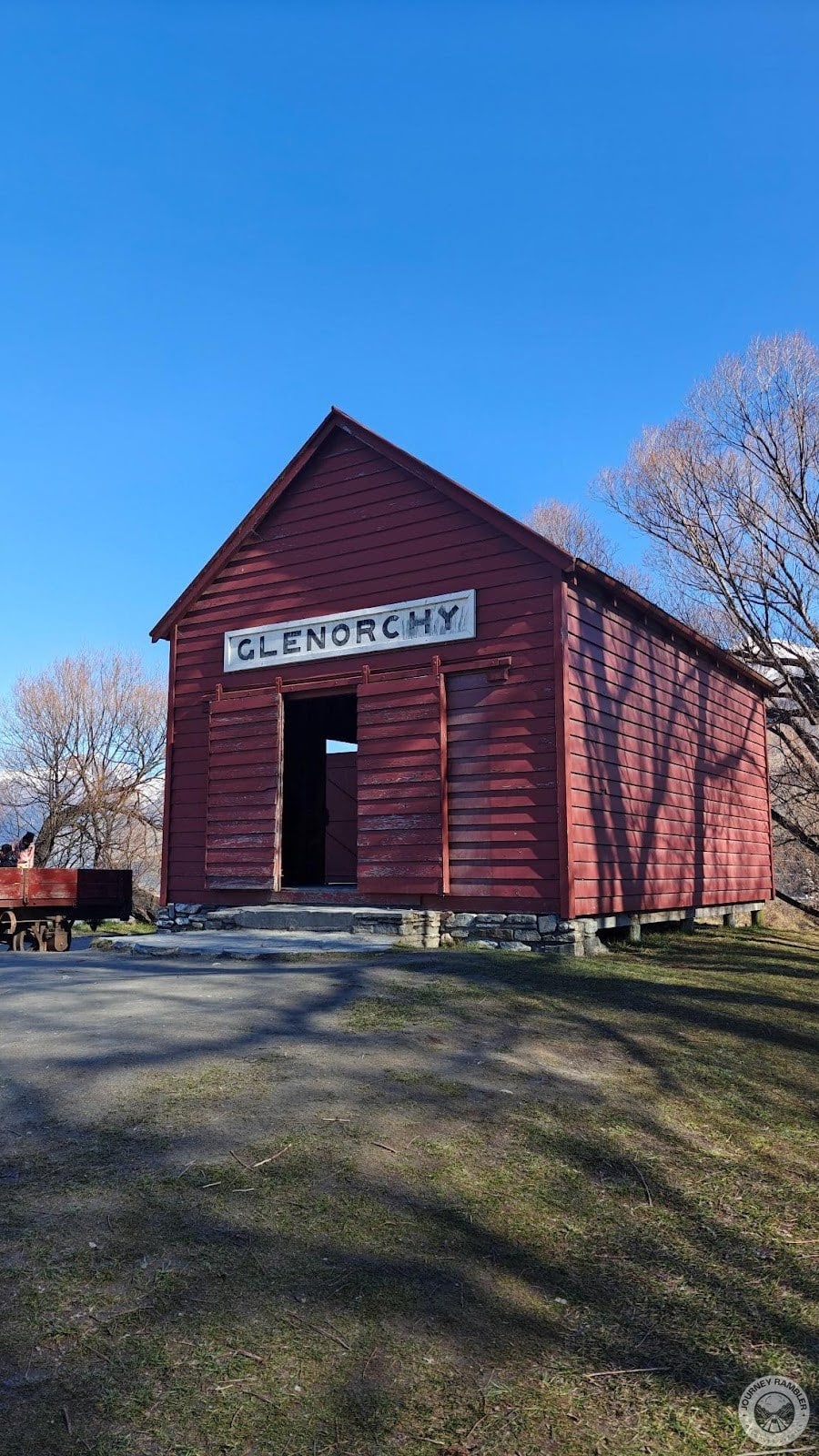
Now I’m back at the red shed and my thinking at this point was that I was genuinely impressed at what Glenorchy Wharf had to offer. For a free to access attraction, it sure puts a lot of paid experiences to shame. Not only did it have awesome views, it also featured an informative exhibit that details its historical and cultural significance.
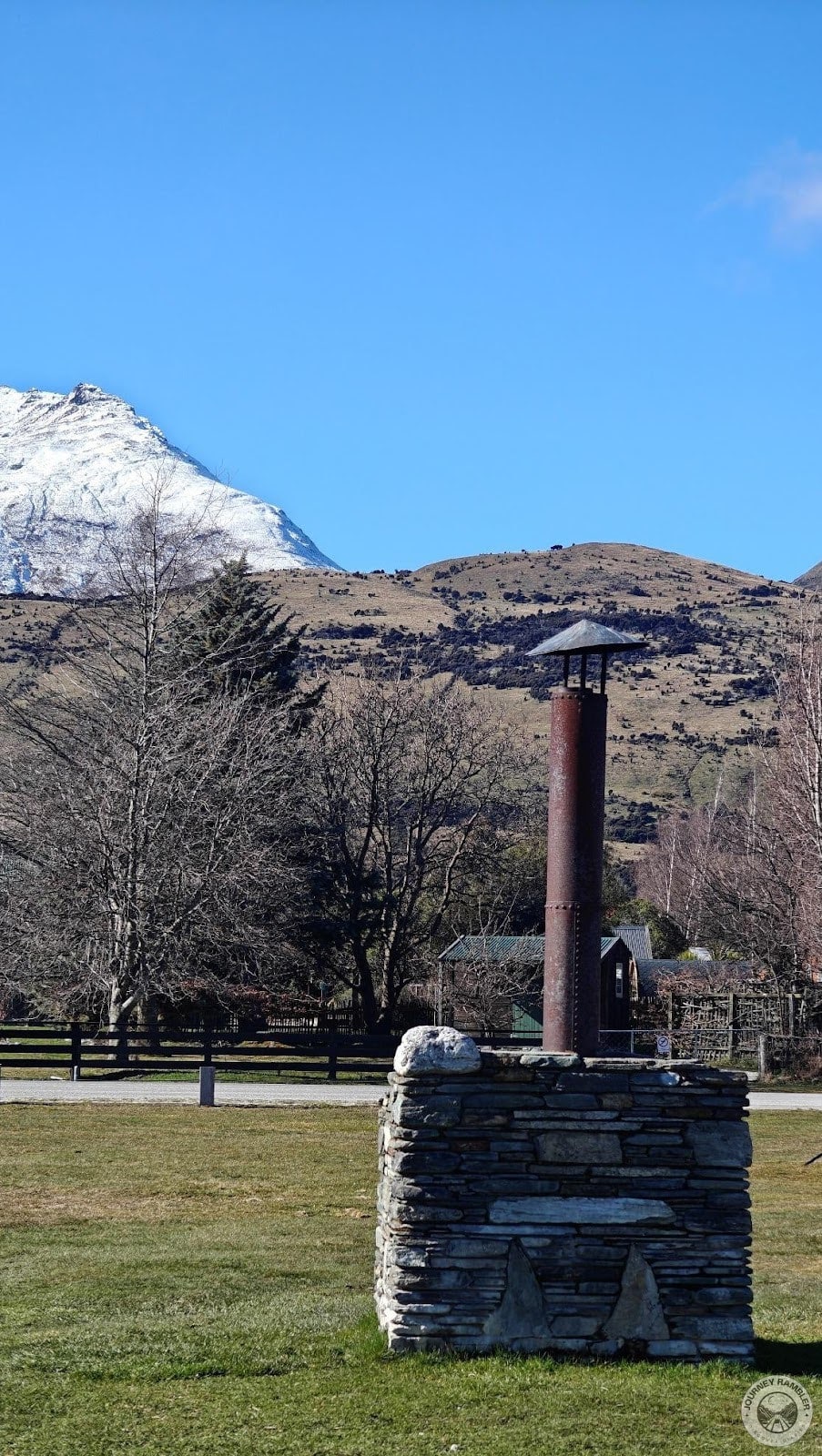
Really, if there’s one thing that I would knock my Glenorchy Wharf visit for it’s that it was too short. Maybe if I swam in the lake’s waters then it might have completed the experience? Knowing how dangerous it was though (and the fact that there was a fatal drowning here in 2023) I just couldn’t risk the swim. Still, I think this visit was more than worth it considering I spent close to nothing here.
Anyway, do you have plans to visit Glenorchy Wharf? If yes then share with us in the comments section what you plan to do when you do get there.