
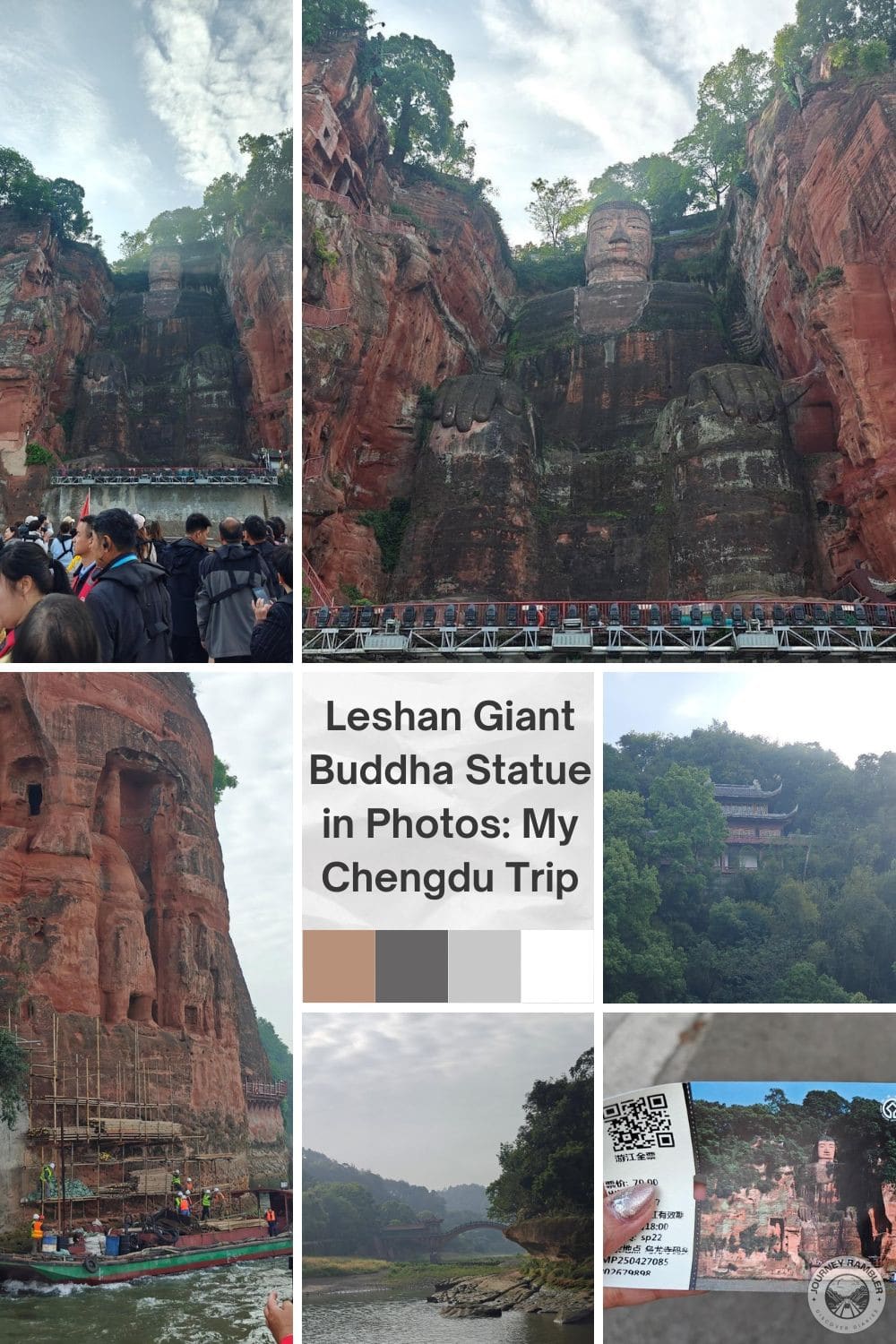
In my travels this year, Leshan’s Giant Buddha is without a doubt the largest statue that I’ve ever laid my eyes on. I came across this in Leshan and much like the city it’s in, it has a rich and storied history that I enjoyed delving into. In this write-up, I’ll be showing some of the shots I took as well as sharing my experience visiting this iconic landmark in Leshan.
Leshan Giant Buddha Statue: An Iconic Landmark in Chengdu
Travel from Chengdu to Leshan typically takes an hour or two so if you plan to visit, make sure that you leave early. Conversely, there are tour packages that already include hotel pickups (even in Chengdu) so you might want to consider those as well. Personally, I’d opt for a tour package since I think those are more convenient.

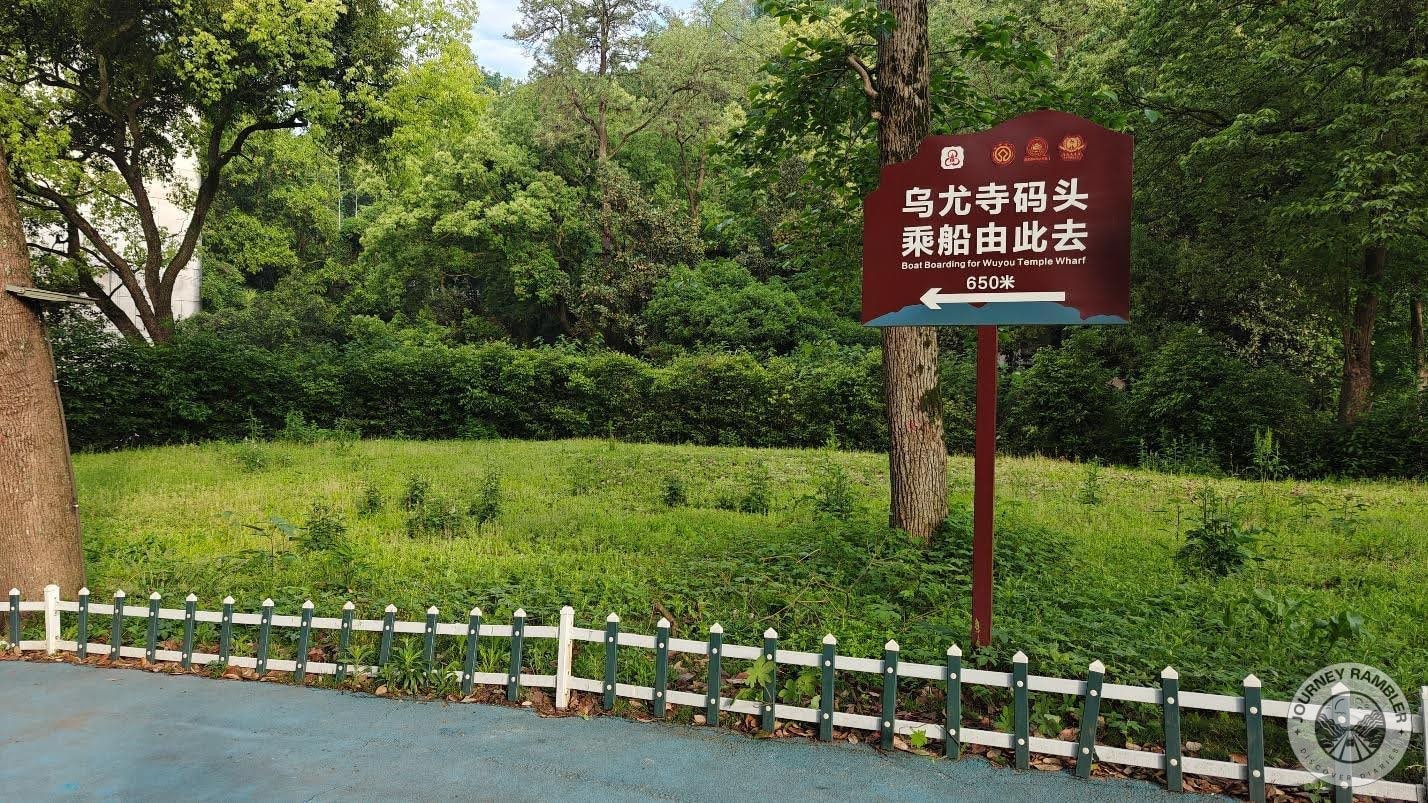
If you’re not taking a tour package, you’ll need to pay 70CNY for a ticket to a daytime sightseeing boat. There are two piers for these sightseeing tours and during my visit, only the one at Wuyuo Temple Wharf was available. Like with a lot of paid attractions here in China, you are going to need to show your passport (especially if you booked online).
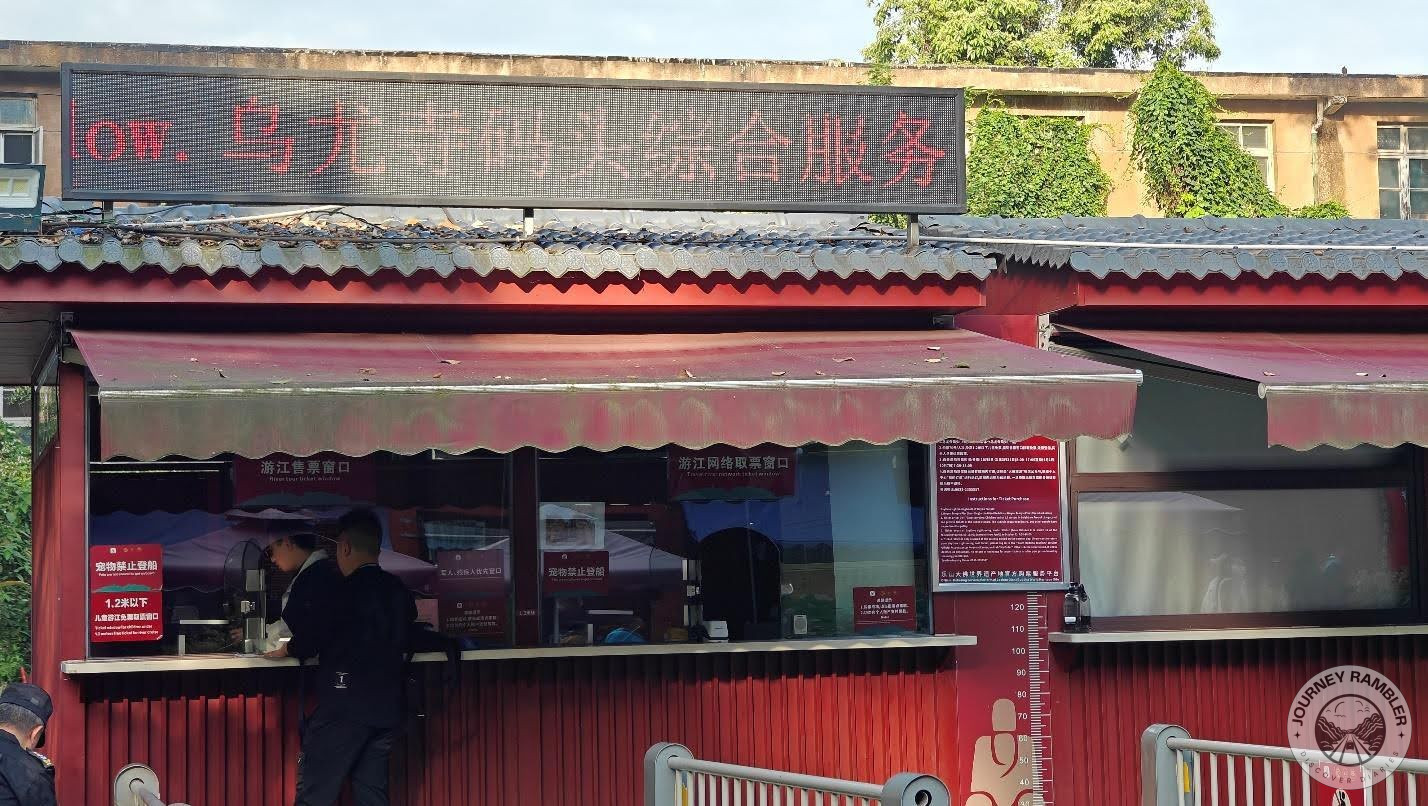
For visitors who didn’t get the tour packages, this is where you’ll be paying for the sightseeing tour. The whole payment process was relatively quick as there weren’t that many people when I got there. As mentioned earlier, just make sure that you have your passport with you.
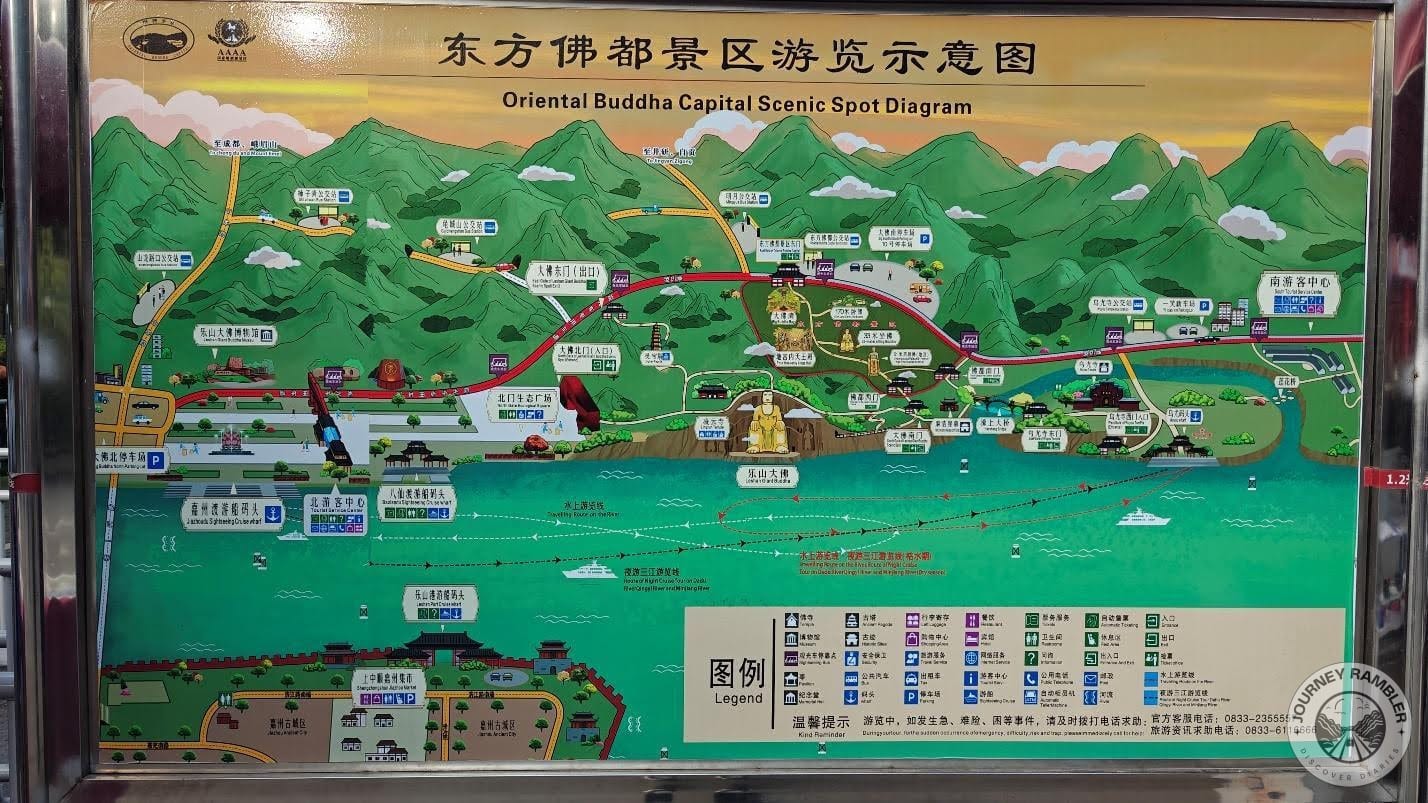
This area also has a guide map which can be quite helpful. I personally take pictures of these on my phone just in case I get lost or am not sure where to go. Anyway, the image here shows two piers with the Leshan Giant Buddha in between them. As mentioned earlier, the pier that was available for the day was Wuyou Temple Wharf which is the one on the right of this image.
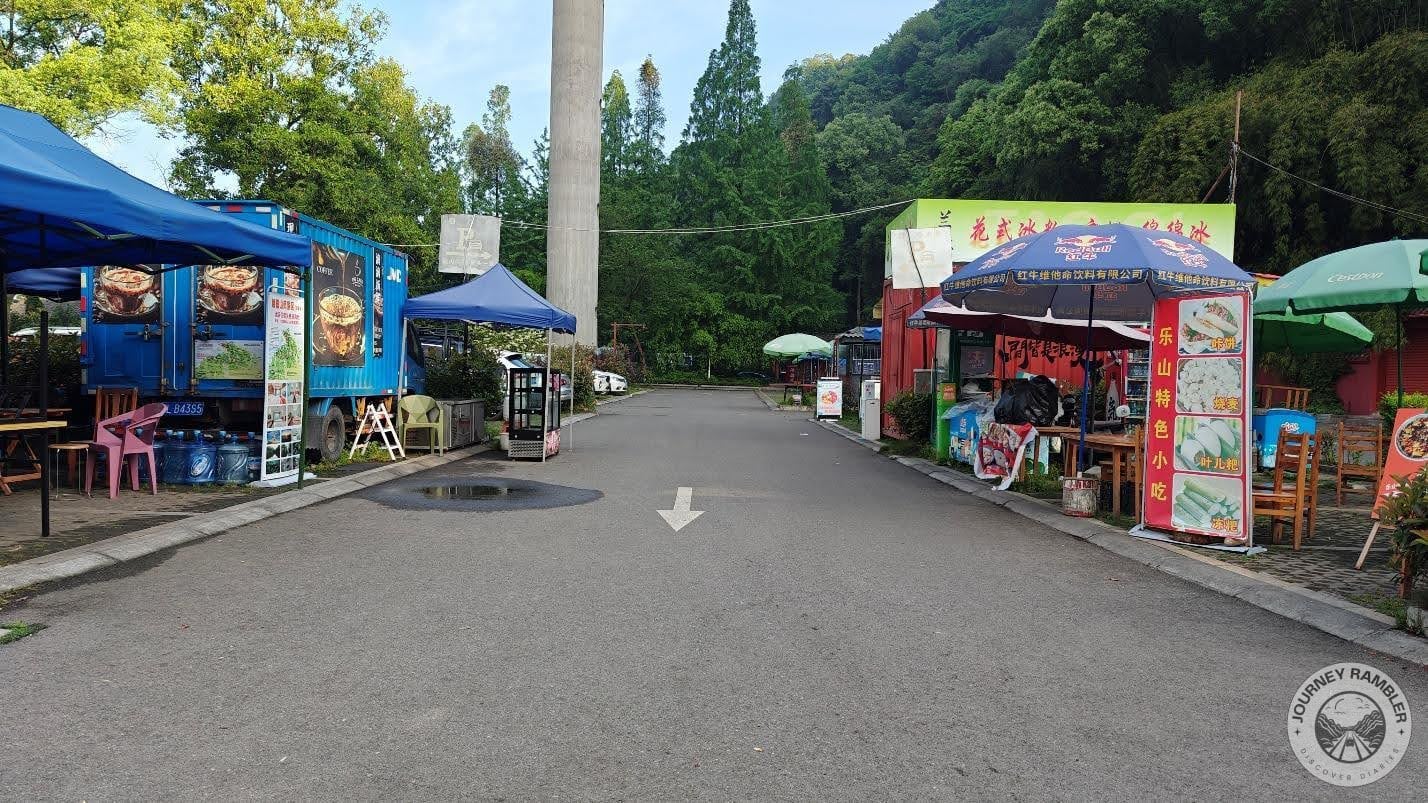
This is still in the payment booth area leading to the Wuyuo Temple Wharf. It’s the entrance to the area and you can see the car park from just behind the food stalls on the left. One thing you’ll need to know is that this area is on an island-like promontory. Crossing over isn’t that much of a problem though as there’s a bridge just close to the bus stop. Of course, with a tour package you won’t have to worry about this as your guide/operator will take care of transportation up to this point.
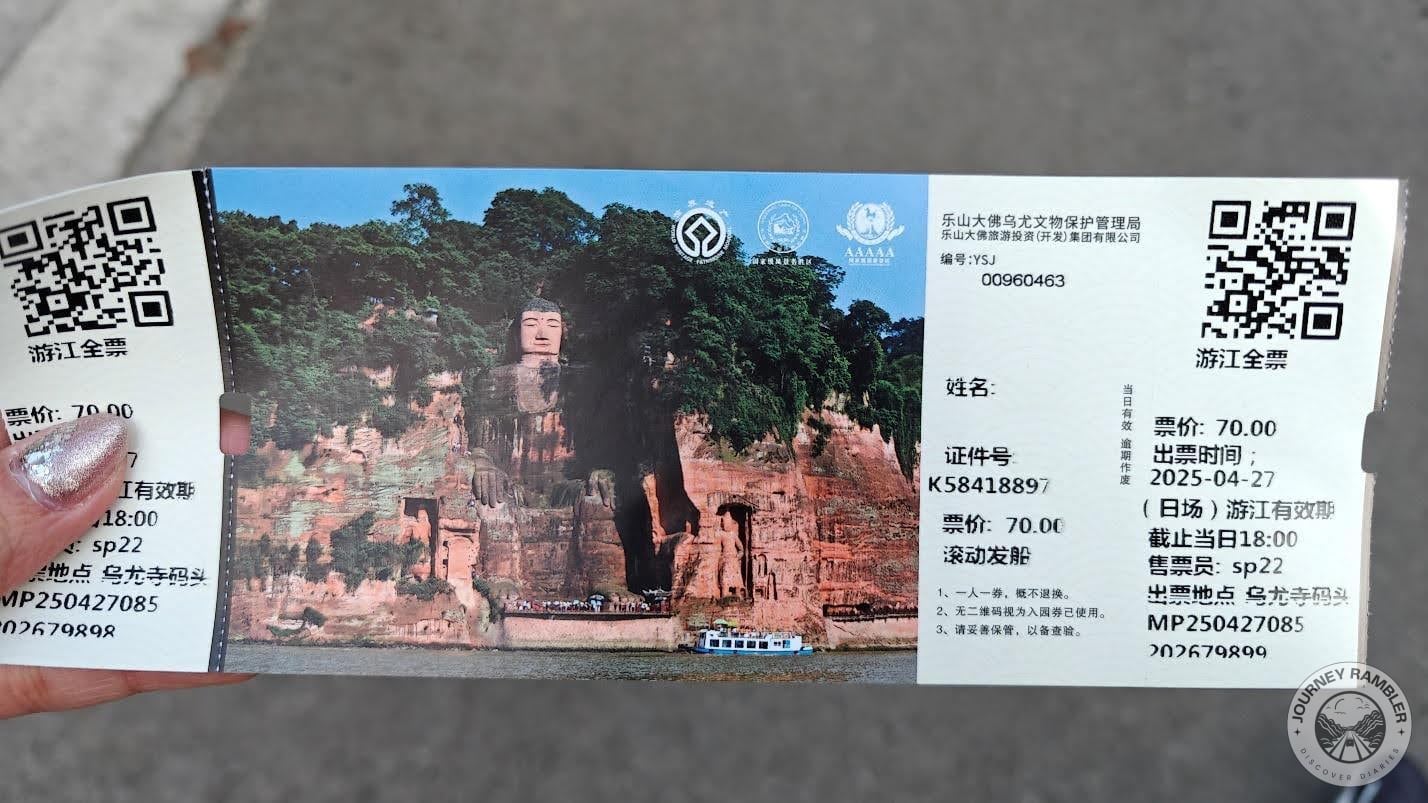
Speaking of transportation, here’s the ticket for the sightseeing tour! Of course, front and center on the ticket is an image of the Giant Buddha likely taken from one of the sightseeing boats that I’ll be boarding later. You’ll also notice the price of the ticket which, as I talked about earlier, is 70CNY.
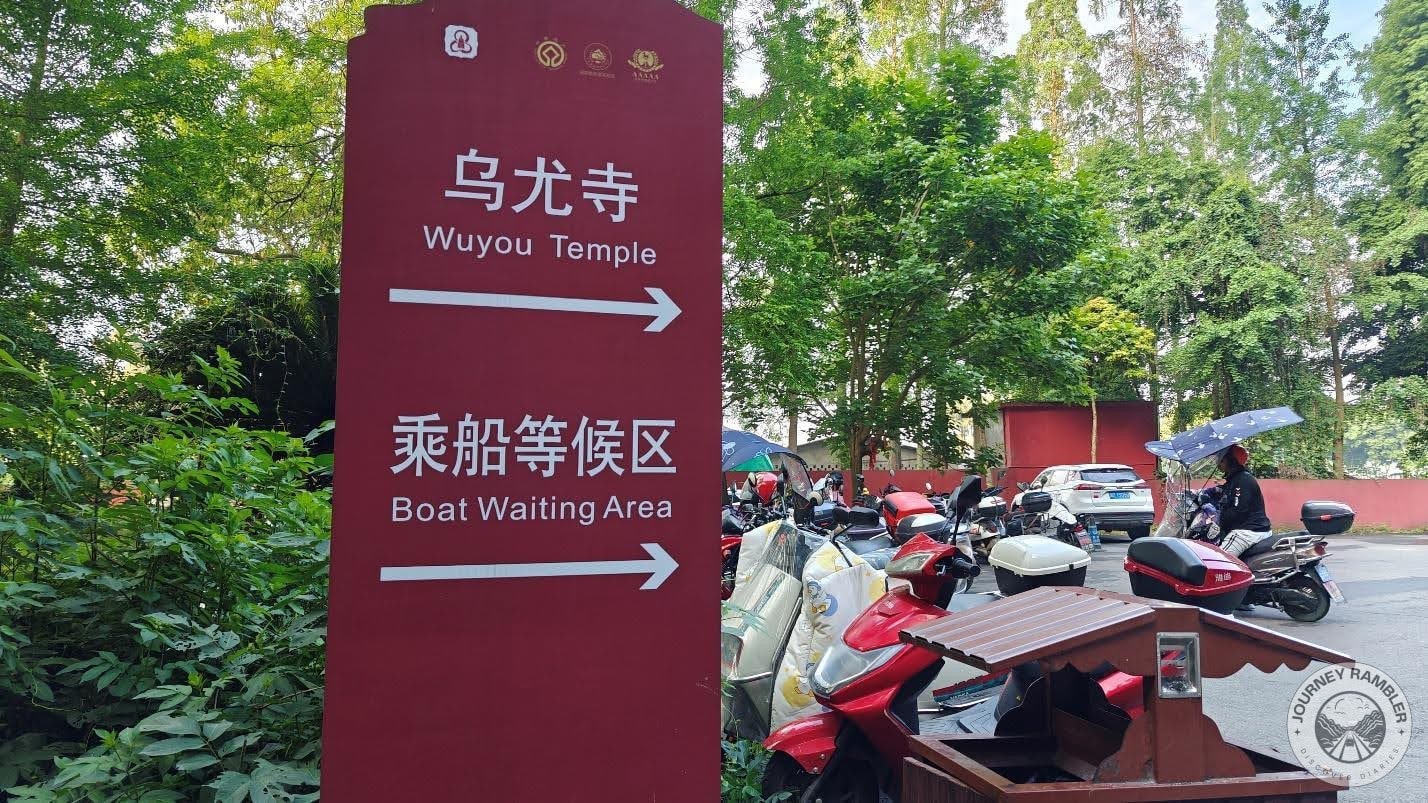
The wharf or pier was still a ways off from the area I was earlier so expect for there to be a short walk before you could get there. Thankfully there are signs pointing to the pier. What’s even better is that these signs have English translations so if you’re able to read this write-up then you’ll probably be okay there.
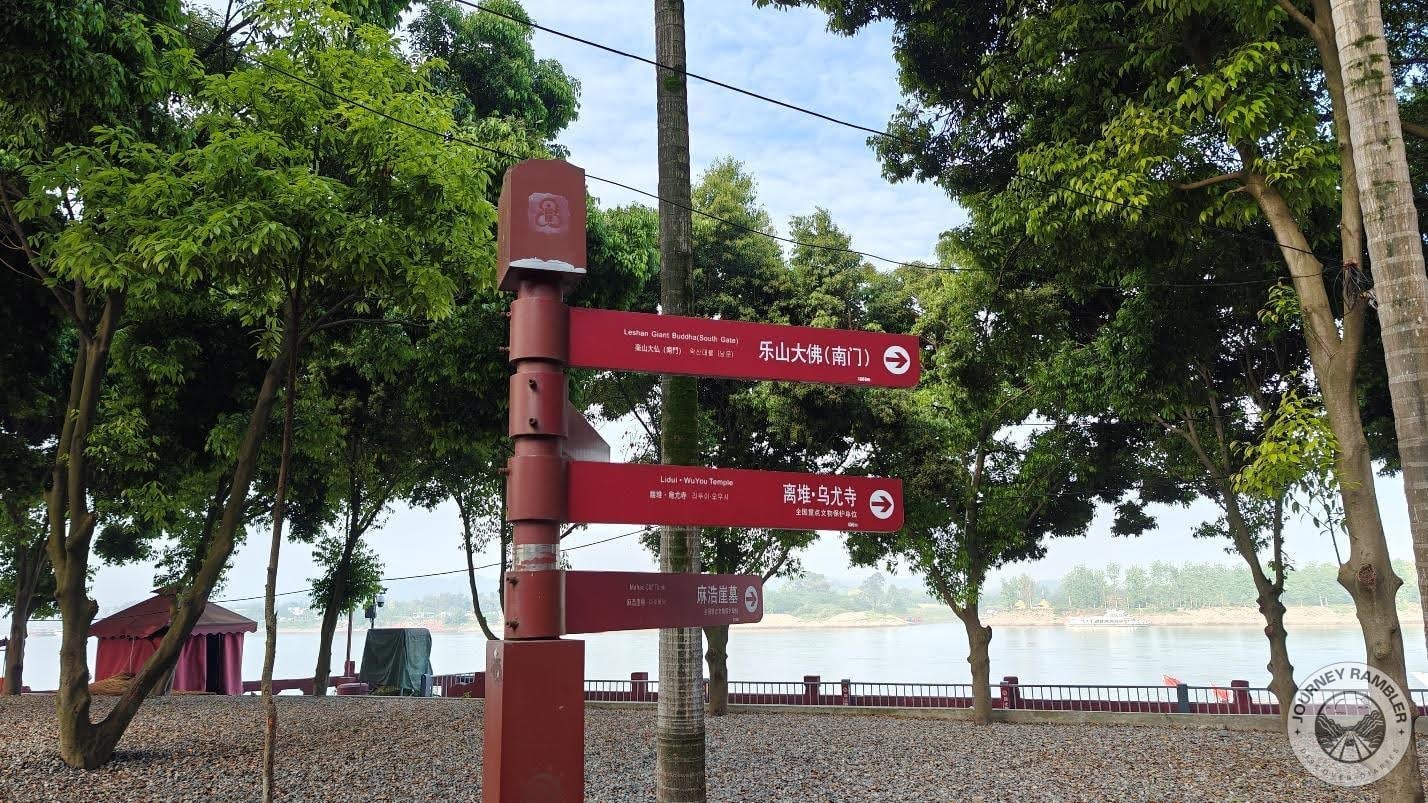
Here you have signs pointing to the general direction of the notable attractions here in the Leshan Scenic Area. The top most points to the South Gate of the Leshan Giant Buddha while below it is a sign pointing to Wuyuo Temple’s direction. As for the lowermost sign, it points to the Mahao Cliff Tombs which is another of the attractions that’s found close to the Buddha.

Here’s the line of people looking to board the boats for this sightseeing schedule. I was fortunate that there weren’t that many people during my visit even if it was a weekend. If possible though, try to avoid holidays and even weekends as it can get crowded during these days.
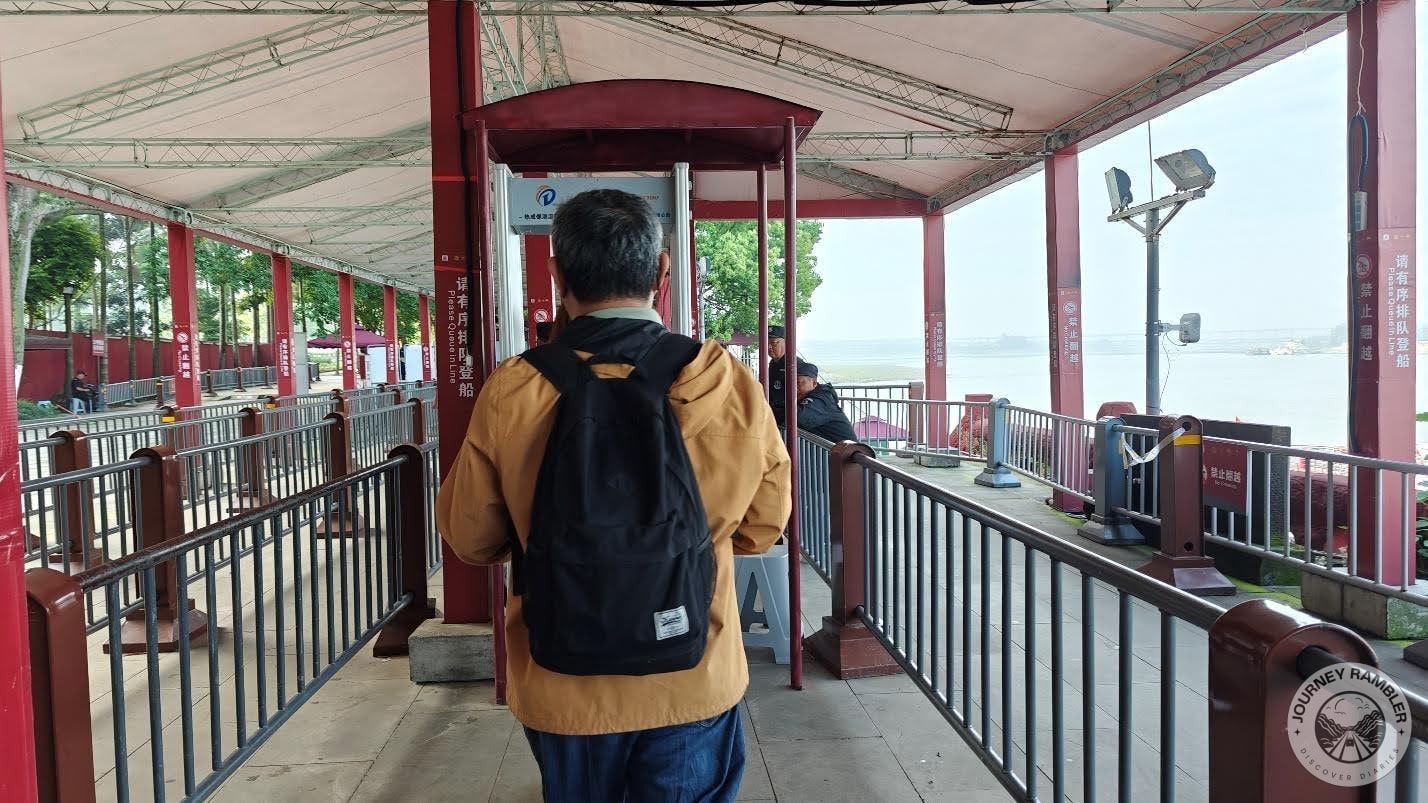
China takes security at public attractions seriously so expect these kinds of checks when you visit. Again, make sure to bring your passport as more often than not, security will want to check it. Thankfully, the whole process was relatively fast and I actually just breezed through since I already had my ticket and passport ready.
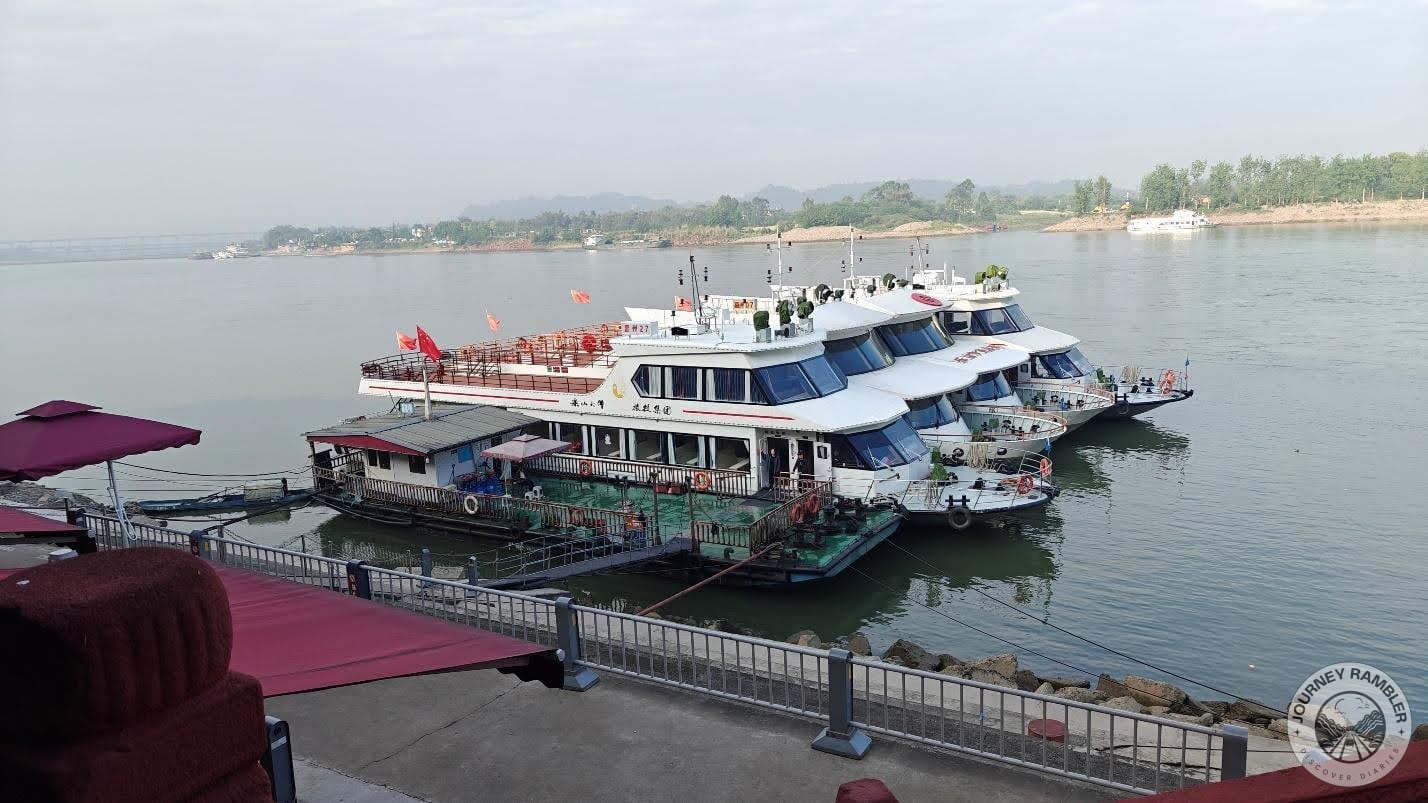
Here are the boats that are going to be taking on our group for the sightseeing tour. Now it should be noted that taking the sightseeing tour via these ferries isn’t compulsory. You can still get to the Giant Buddha area by just following the hiking path that the sign pointed to earlier.
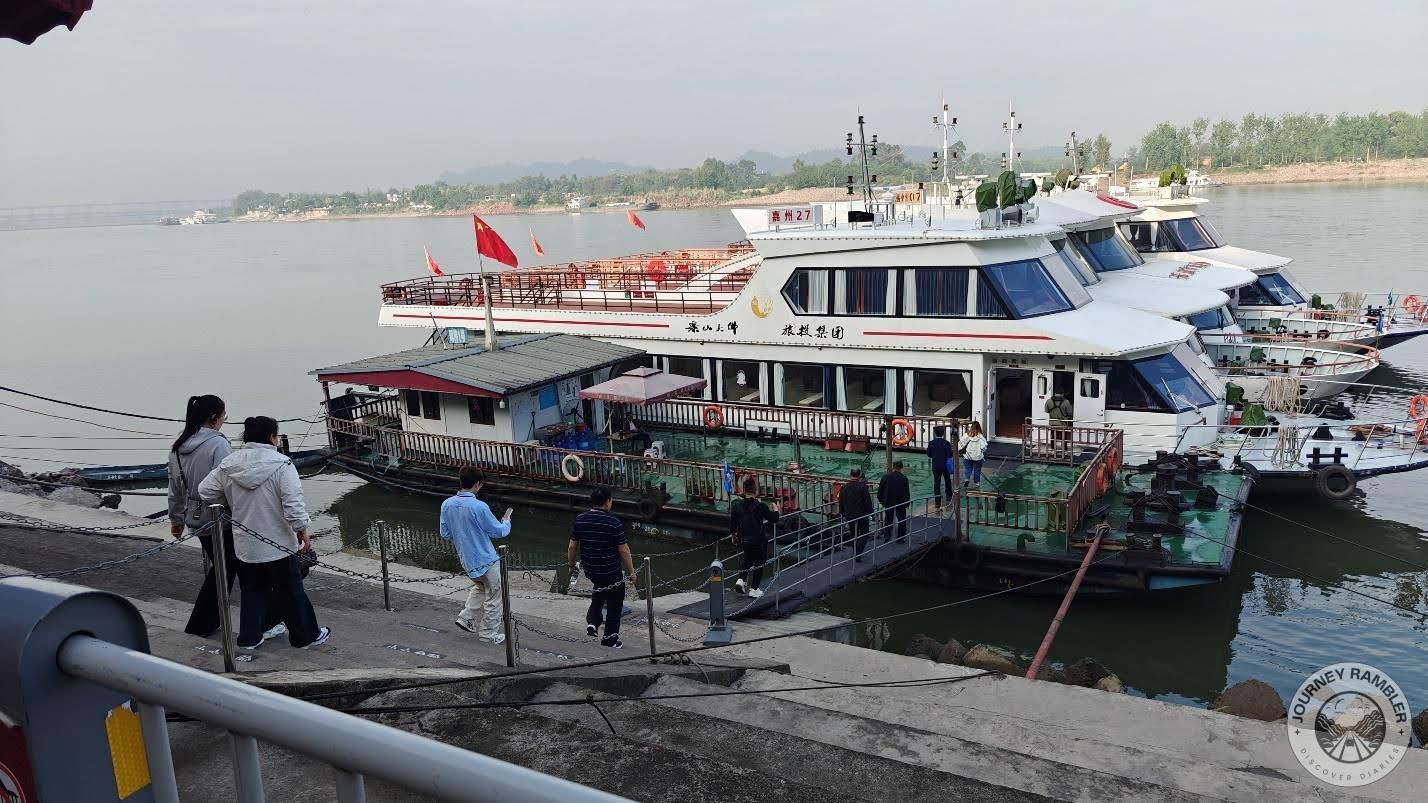
That said, a sightseeing tour via ferry probably is arguably more scenic and requires less effort. If you’re not too keen on walking then this is going to be the perfect option. With all the walking I’ve been doing during my travels, I thought that a sightseeing tour would be a great change of pace so that’s why I went for it.
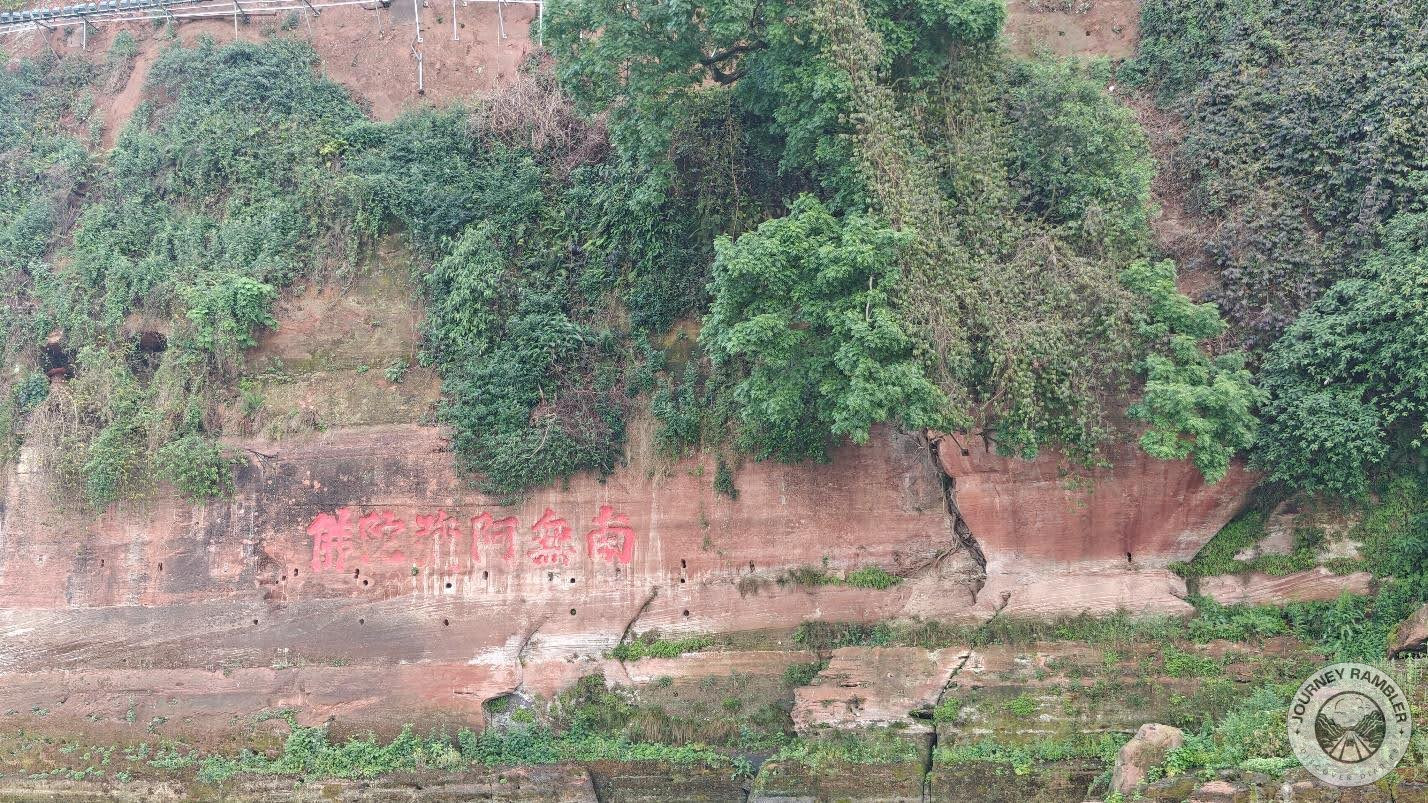
While you can enjoy scenic views if you took the hiking path, I don’t think those really compare to what you’ll see when you’re on the sightseeing ferry. Here is a portion of a cliff face with Chinese inscriptions in red. I initially thought the rock formation here was similar to the ones that I saw in Wulong. Upon closer look though, the cliff face was smoother and the rock looked very different.
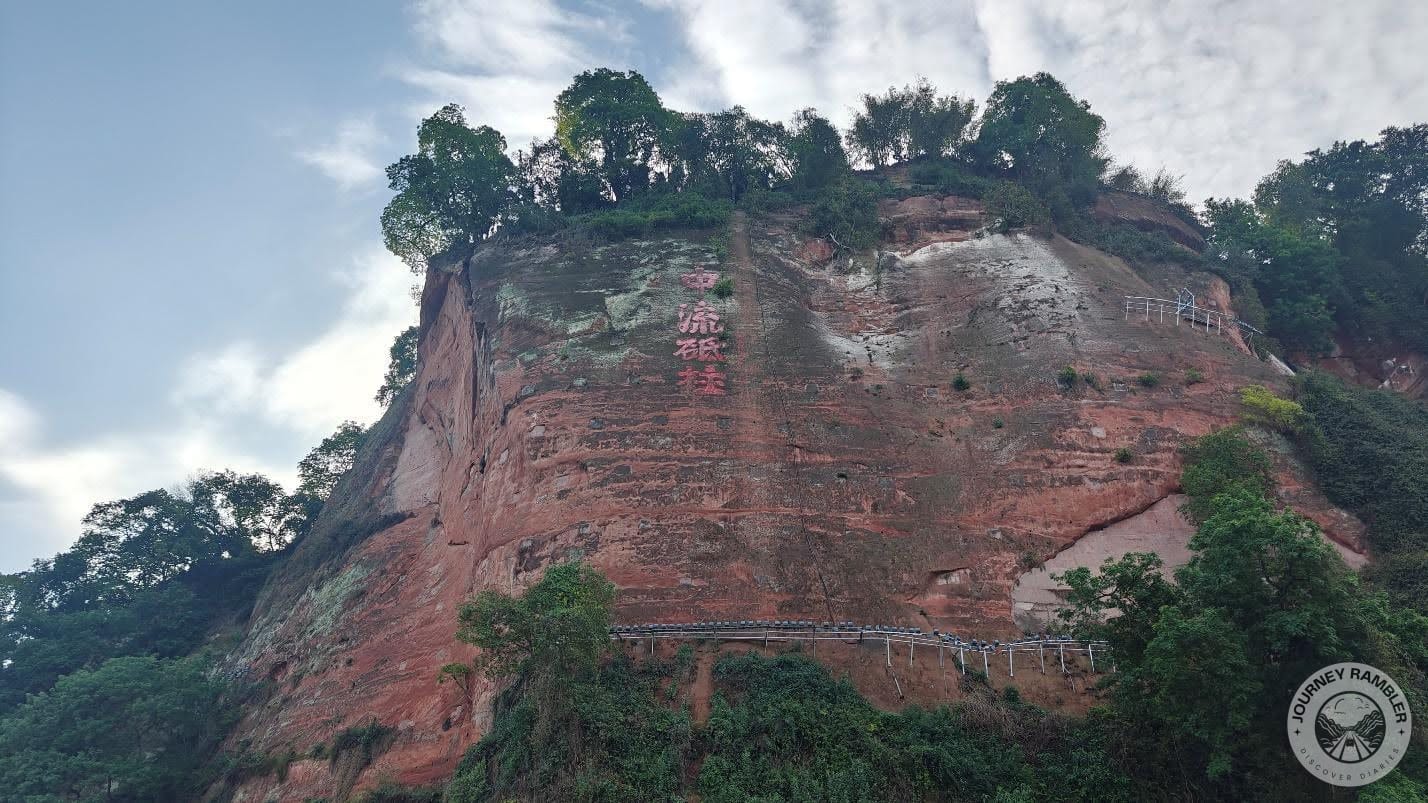
This is the entirety of the cliff face. Now I’m not quite sure what the mountain here that the cliff is on is called but behind these you’ll find Wuyou Temple. Of course, we’re still a ways off from the Buddha at this point as the ferry was still near the Wuyuo Temple Wharf.

So I did further research on the rock formation here and apparently this was called a Danxia landform. This type of landform is very similar to karsts but they differ in the type of rocks that constitute them and how these rocks form. Karsts are formed from the chemical dissolution of rocks like limestone by water. Danxia on the other hand, are formed by physical weathering (abrasion caused by wind, thermal expansion, etc…) on iron-rich (hence the red color) sandstone.
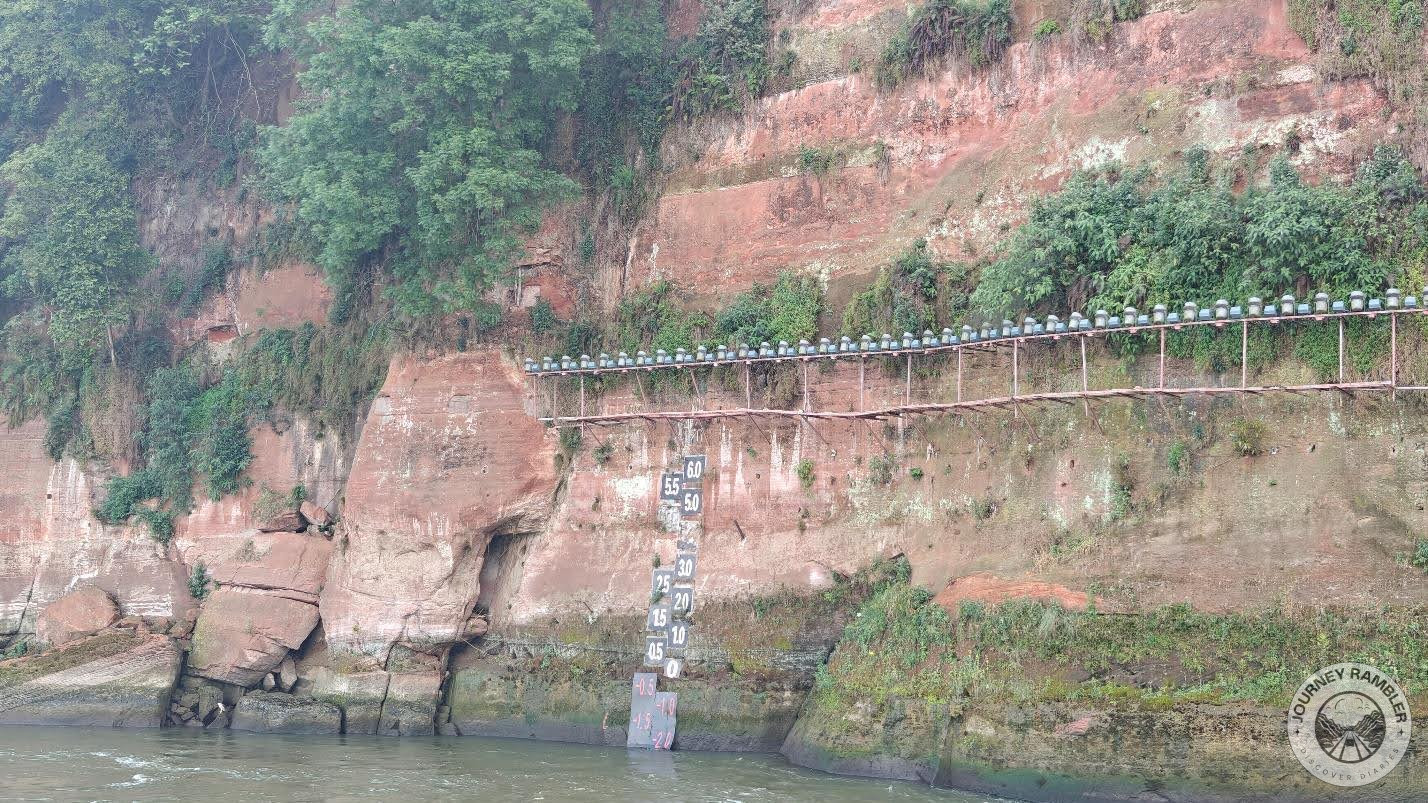
On the cliff face’s lower section, you’ll see this staff gauge measuring the level of water in the river. As you can see, the water level during my visit was rather low. In fact it was below its normal levels.
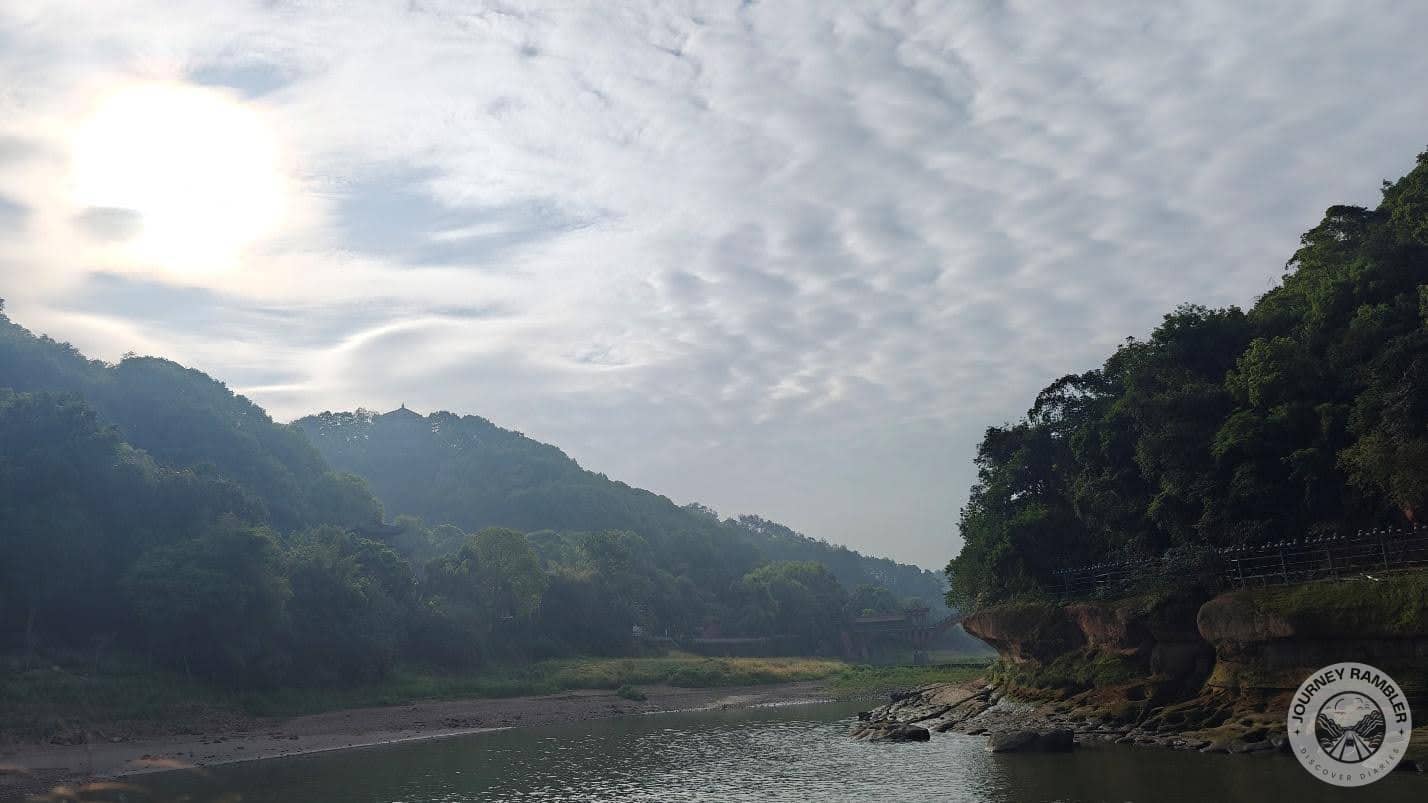
Here’s how the river looked during the sightseeing tour. This particular visit was towards the end of April so it was starting to get warm for the summer season (which starts in June). Take note though that the water level in the river wasn’t that much of an issue at least for ferries at the Wuyou Temple Wharf.
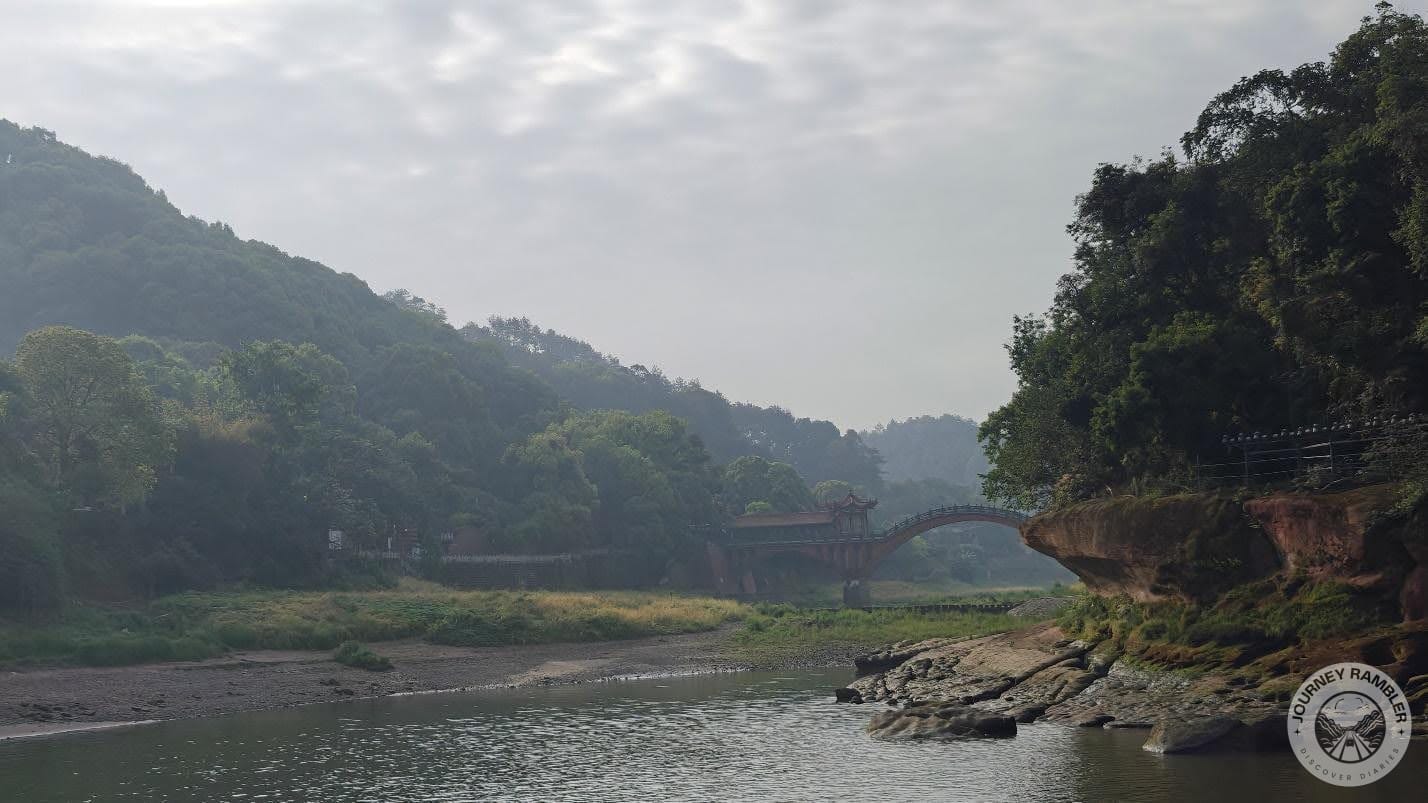
So this is said to be quite possibly one of the best looking bridges in China. Called the Haoshang Bridge, it connects the attractions in the Mt. Lingyun area to the Wuyou Temple area. Remember when I said earlier that you can take a hiking trail instead of the sightseeing tour on the ferry? Yes, the hike includes crossing over the bridge. It’s not clearly shown but after the bridge is the South Gate of the Leshun Temple area.
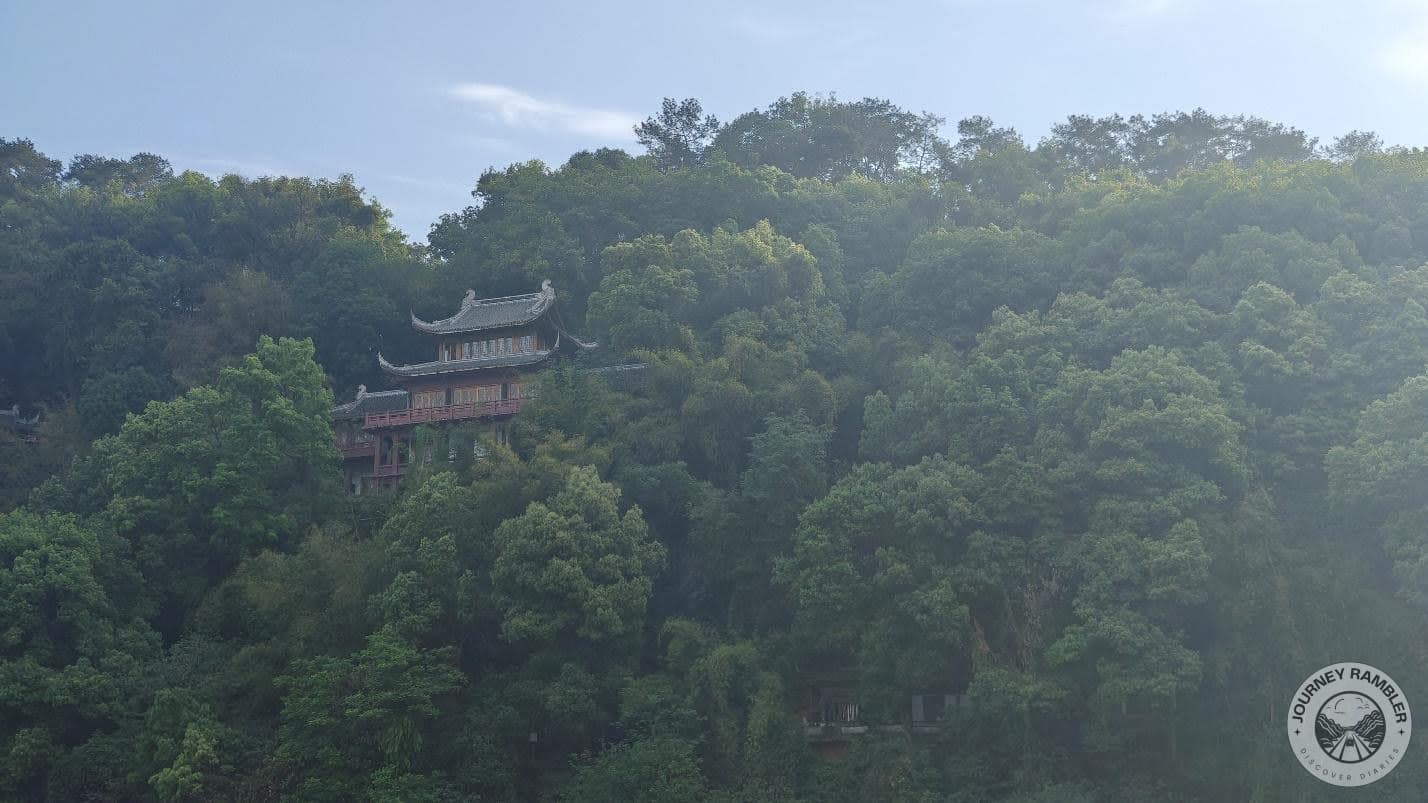
I’m not quite sure what the name of this building was. I tried to search online and most point to this being Lingyun Temple. It’s likely that these sources are wrong though and it’s probably Bijin Tower which is also part of the temple complex though it’s quite far from where the actual temple is.

According to the sources I saw online, the tower was originally made during the Song Dynasty. As time passed it got destroyed and was then rebuilt during the Ming Dynasty period. Right now, the building functions as an observation deck with some really nice views.
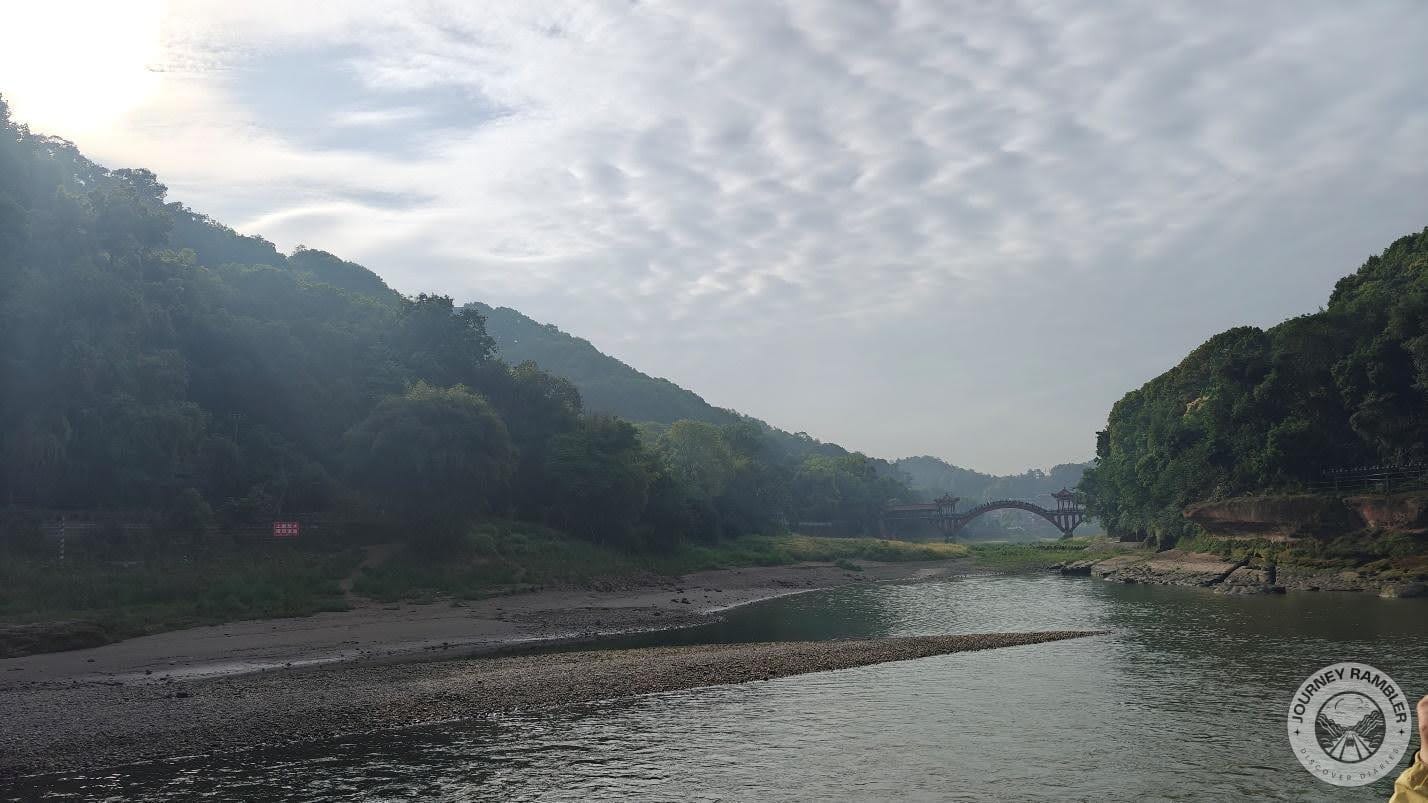
If you have a camera with some neat zoom capabilities then I suggest capturing this view of the Haoshang Bridge from here. To be honest, this image that I captured really didn’t do this scene any justice. There was just this charm to this view that was breathtaking the first time I saw it.
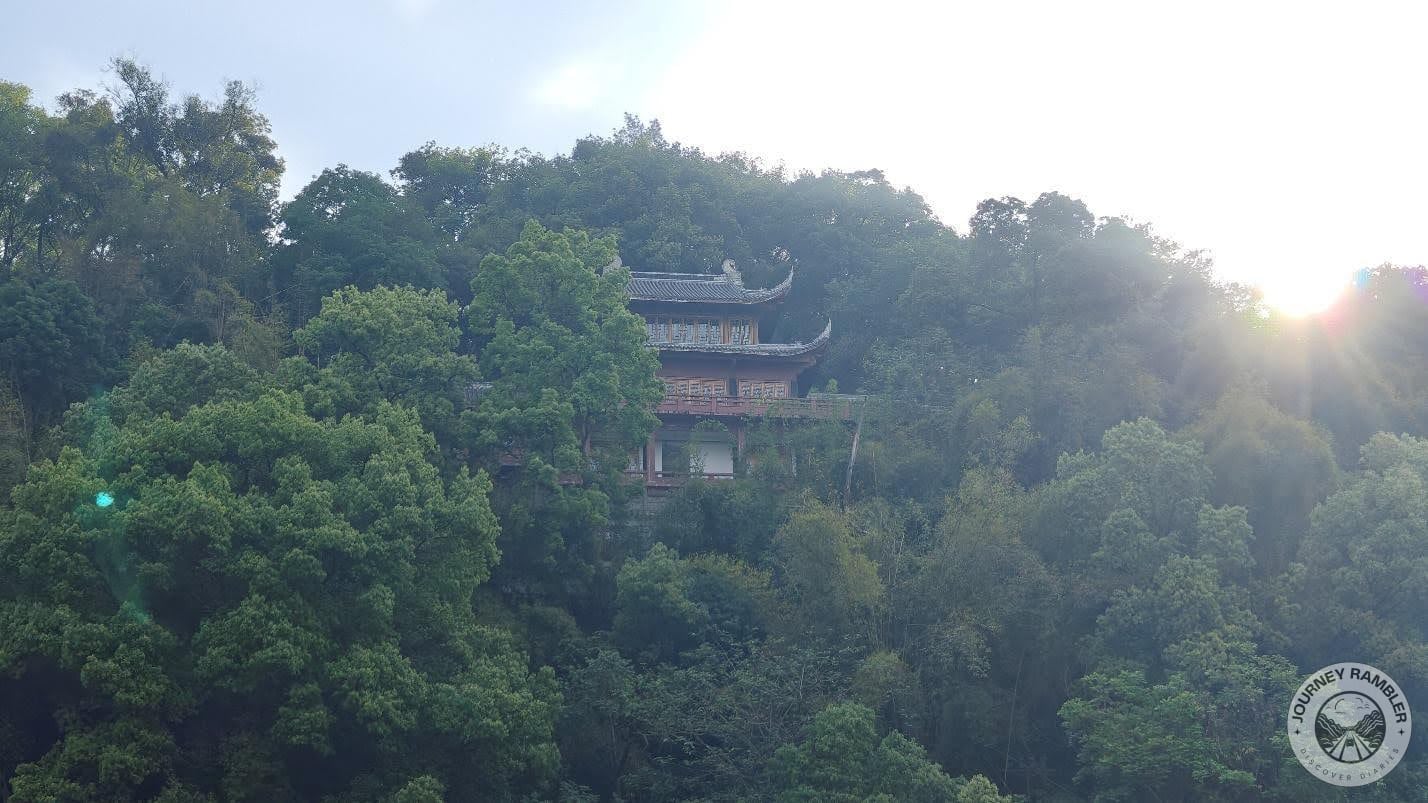
Here’s a closer look at the Bijin Tower. As you can see, the building has several balconies that are perfect for viewing the scenes here in and across the opposite bank of the river. Likely due to how most people prefer the sightseeing ferry tour though, I don’t think it’s as popular as the other attractions here.
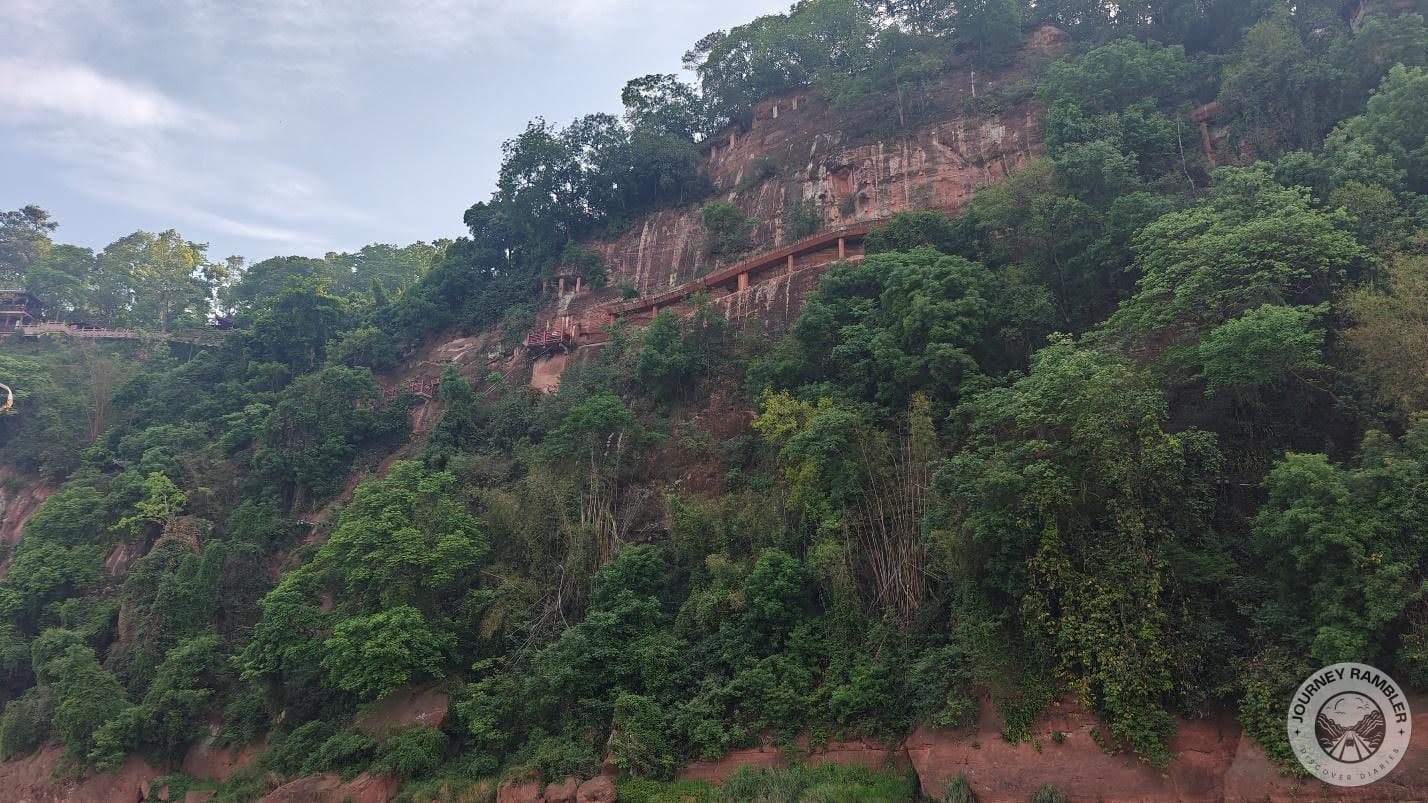
Once you see this cliffside walkway, you’ll know you’re near the Giant Buddha. From what I can tell, I think this actually leads up to the Lingyun Temple area which you can sort of see on the upper left corner of this image. If you’re wondering, yes the walkway is carved into the cliff face though I’m not sure if it’s as old as the Buddha or just fairly new.
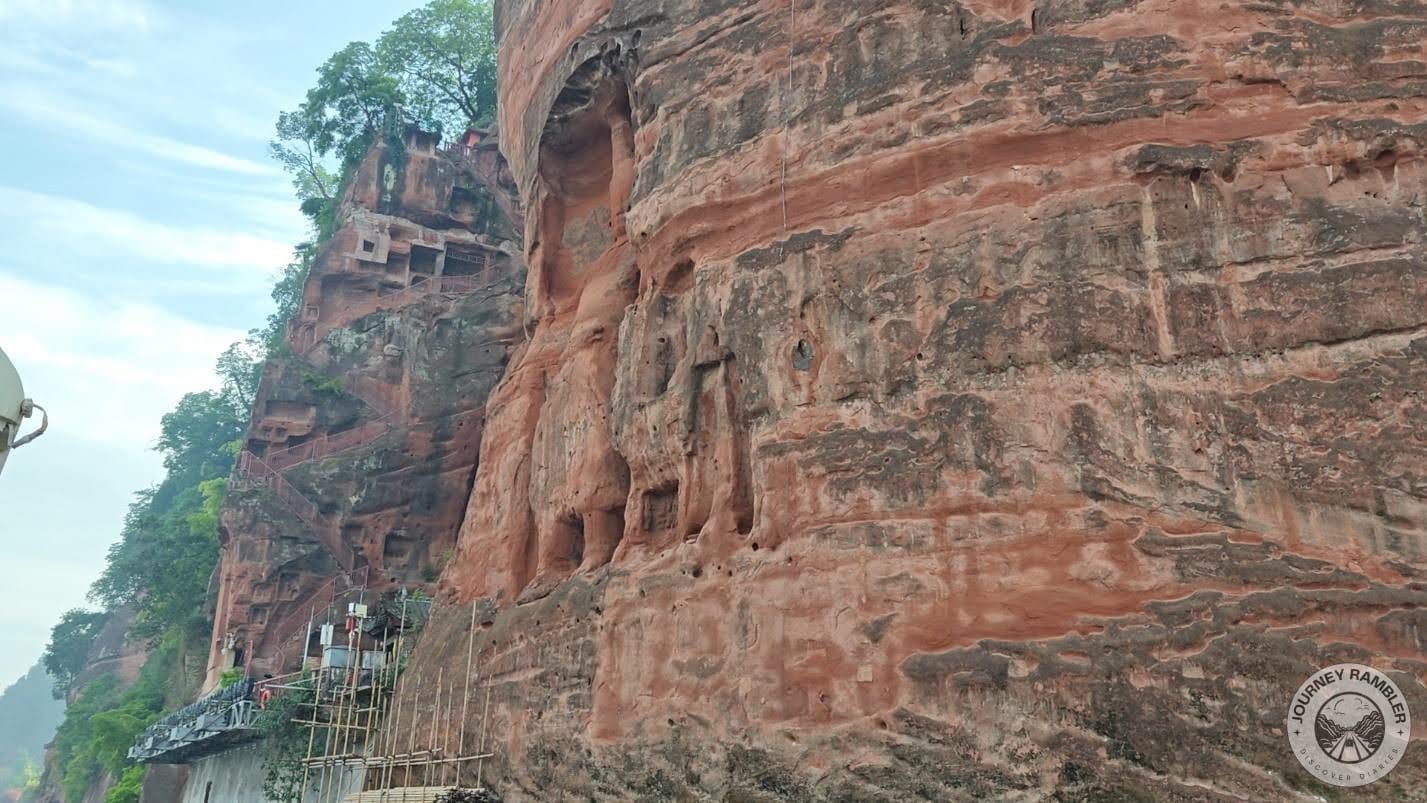
Here you can see the Nine Bends Plank Road off to the left of the image. This is a narrow trail that zigzags from the Lingyun Temple area down to the platform at the Giant Buddha’s feet. As for the foreground, the holes are man-made but at first I wasn’t entirely sure what the sculpture here was supposed to be.
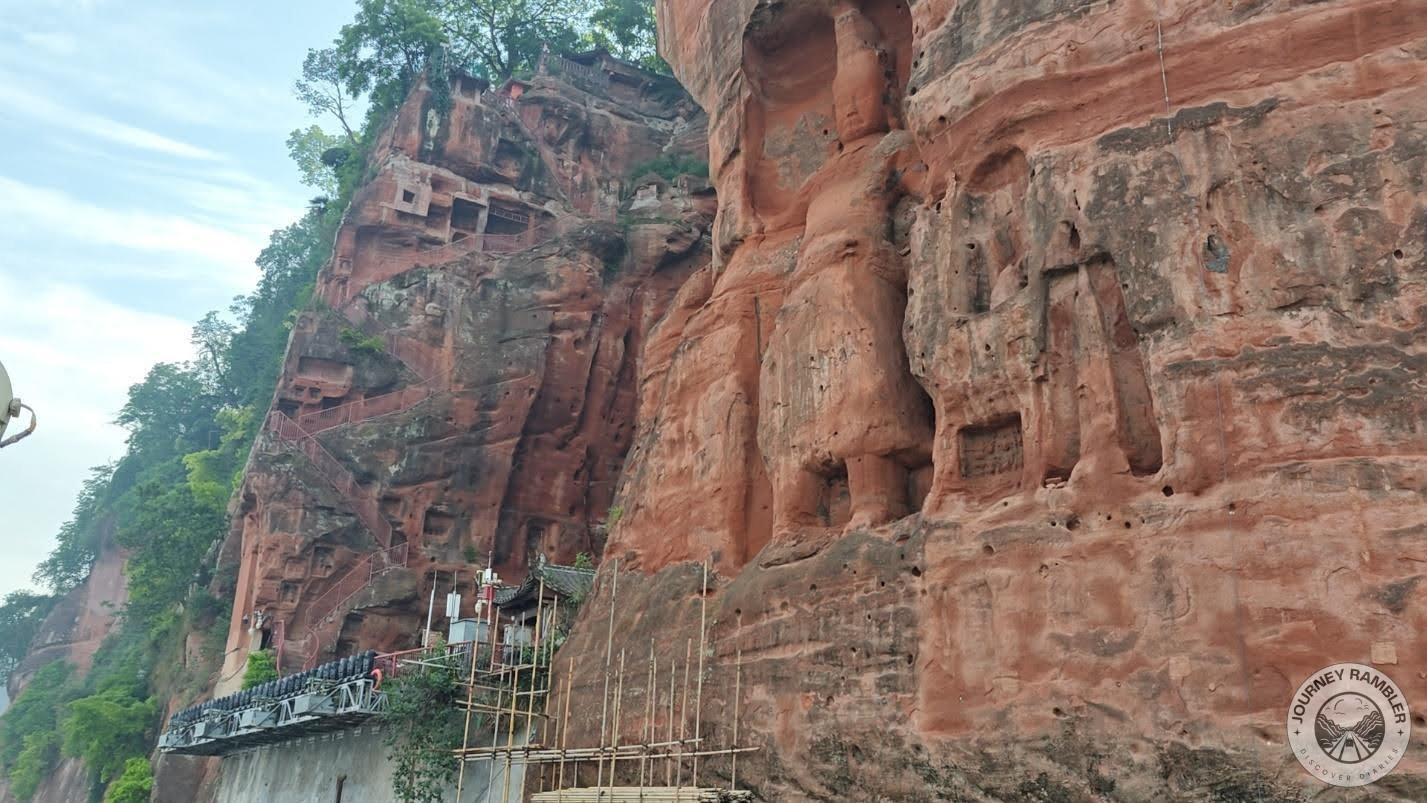
As the ferry drew closer, I then saw that the sculpture was that of a large figure. Its garments looked like it was eroded with the face being the only feature that seemed intact. Now despite its size, this isn’t the Giant Buddha statue that I’ve been talking about this whole time. Rather, I think it’s a Bodhisattva or maybe one of the other guardian deities usually seen with the Buddha.
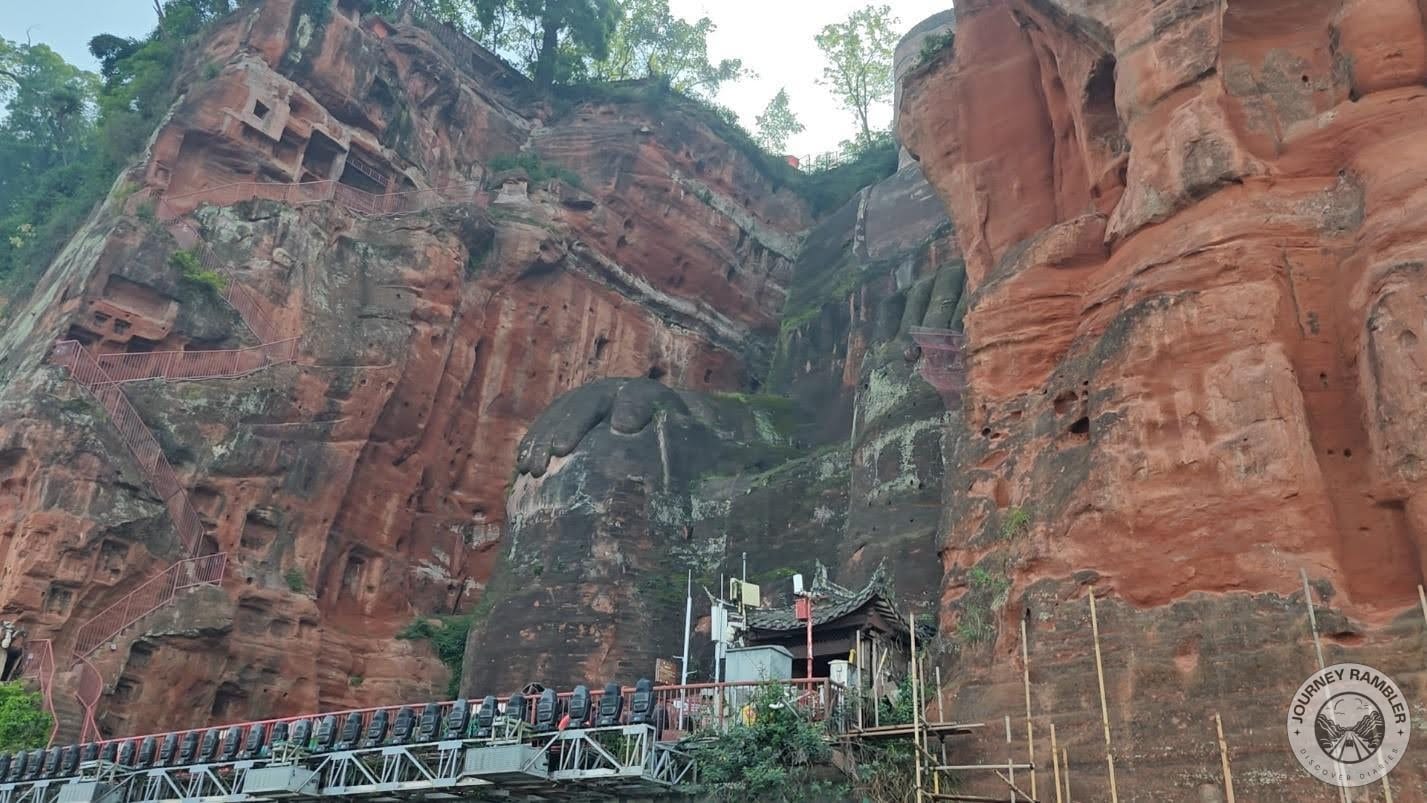
Speaking of the Buddha, you can now see a glimpse of him. Contrast him with the sculpture on the right of this image that we saw earlier and you can sort of see why he’s called the Giant Buddha. He just looks so massive even from this angle that I can sort of see why this place has become popular even for non-Buddhists.
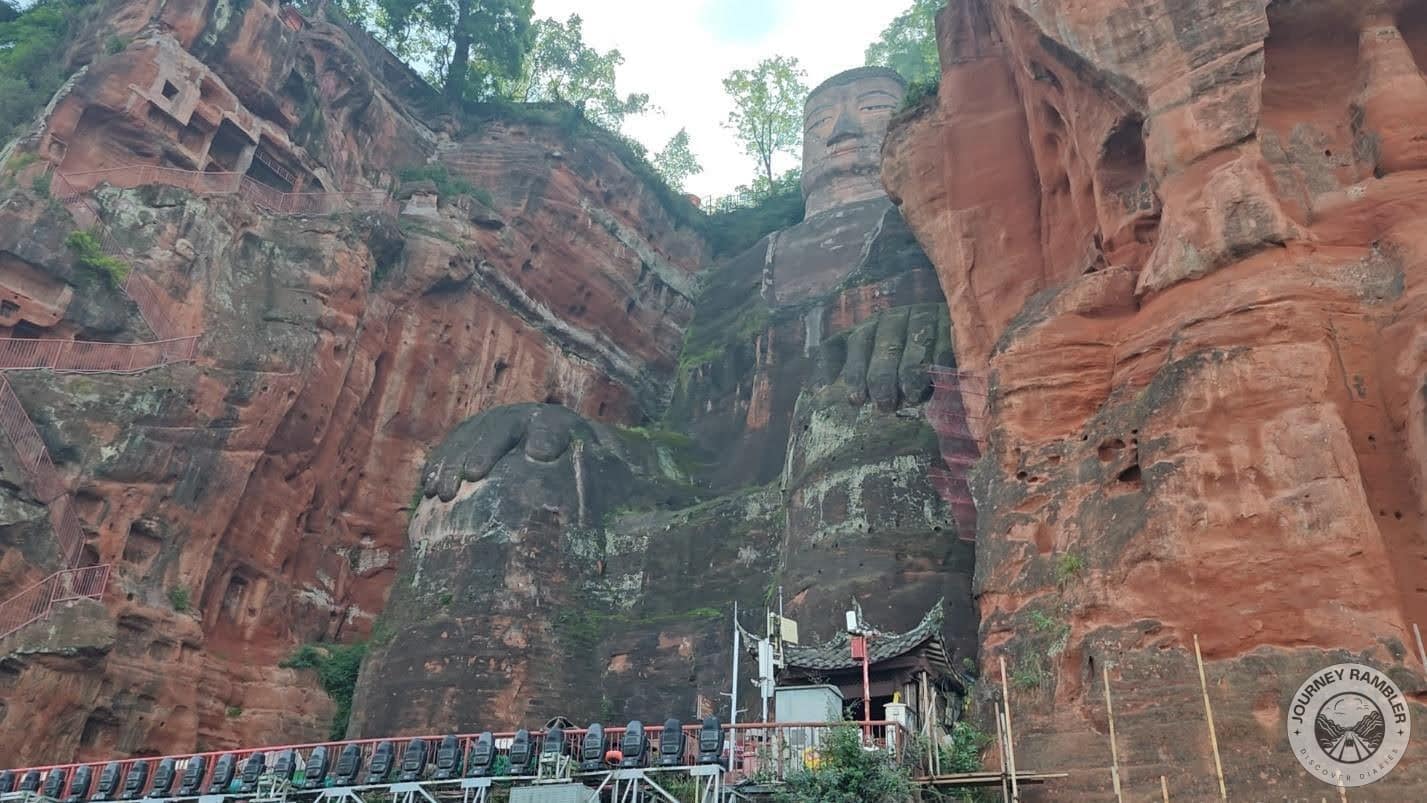
Here you can fully see the Buddha’s face. Admittedly, it’s not the best looking but considering how large this stone is, I’m impressed that they were able to sculpt even a semblance of a face. Seriously though, the sheer size of the Buddha is just impressive. Like I said earlier, this was without a doubt one of the largest sculptures that I saw in my travels this year.
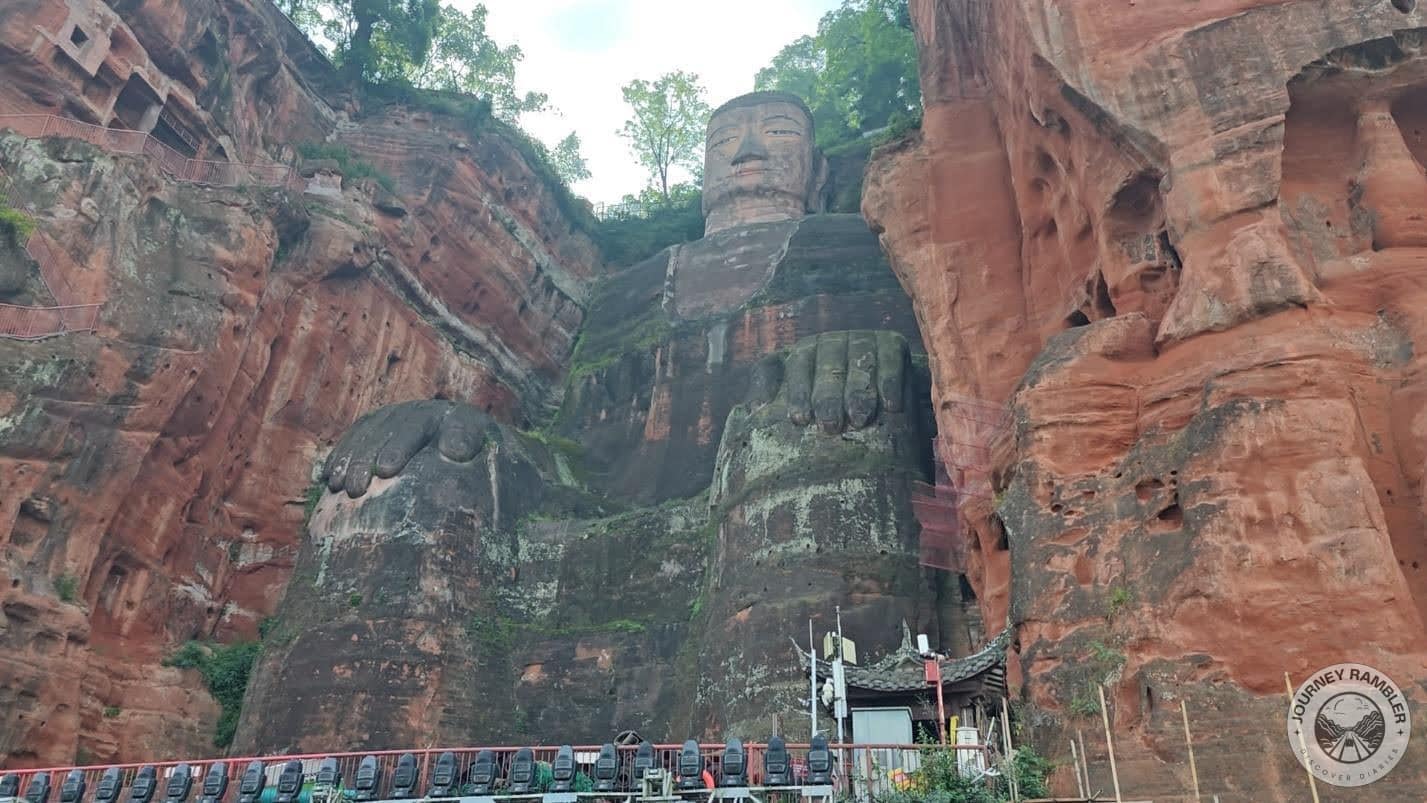
Now you’ve probably noticed how different the Buddha looks from the rest of the stone surrounding him. The explanation for this is that the discoloration is caused by acid rain and pollution likely caused by the fast-paced development in the region. Parts of the surrounding stones are the same though not as extensive as that of the Buddha’s.
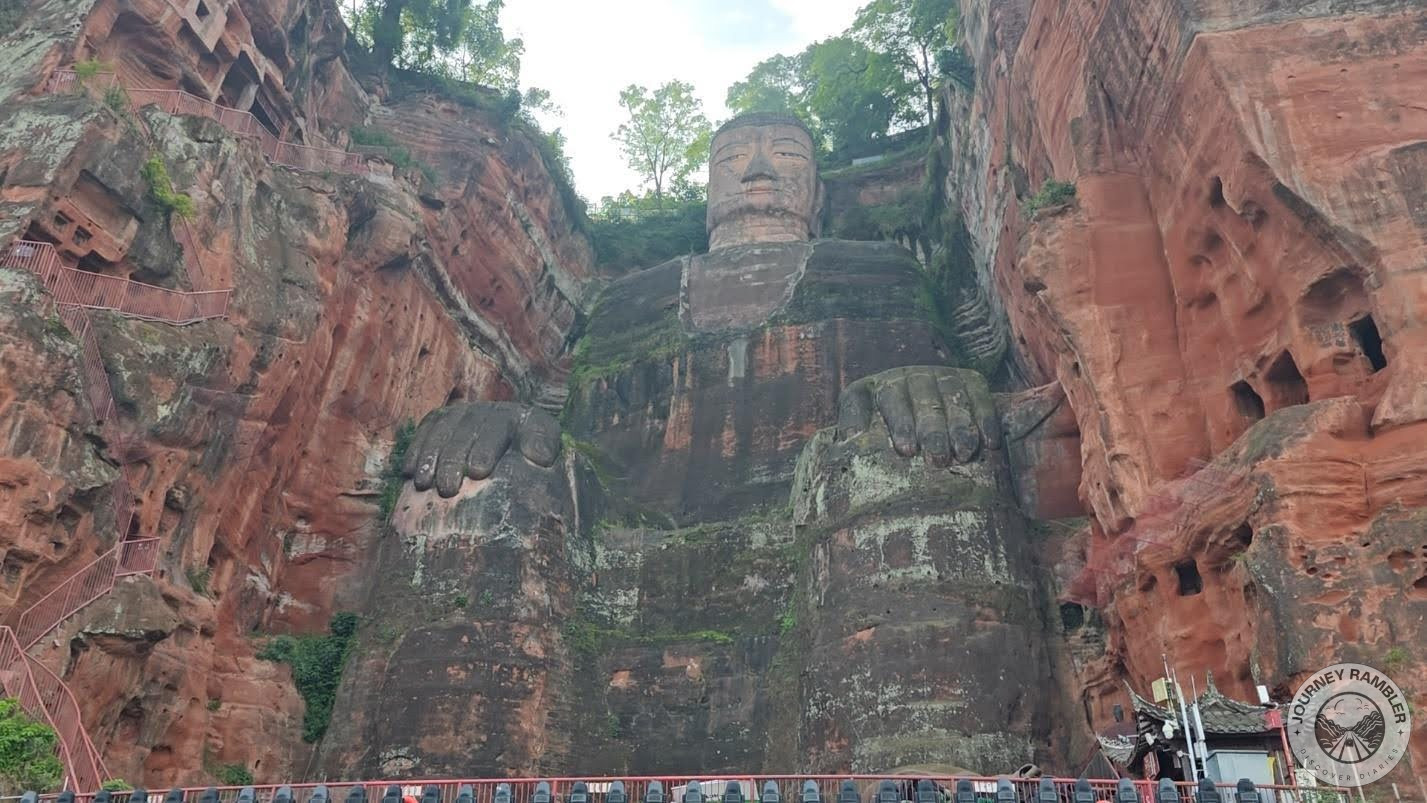
I’ve also read that some restorative work is being done on the Buddha himself but from what I’ve seen I guess this has largely been focused on his face as well as the surrounding areas (examples of these you’ll see later on). The rest of the body still has that dark surface and it looks like there are some parts with fungi and plants growing. Still, these don’t detract from the sheer size of this sculpture.
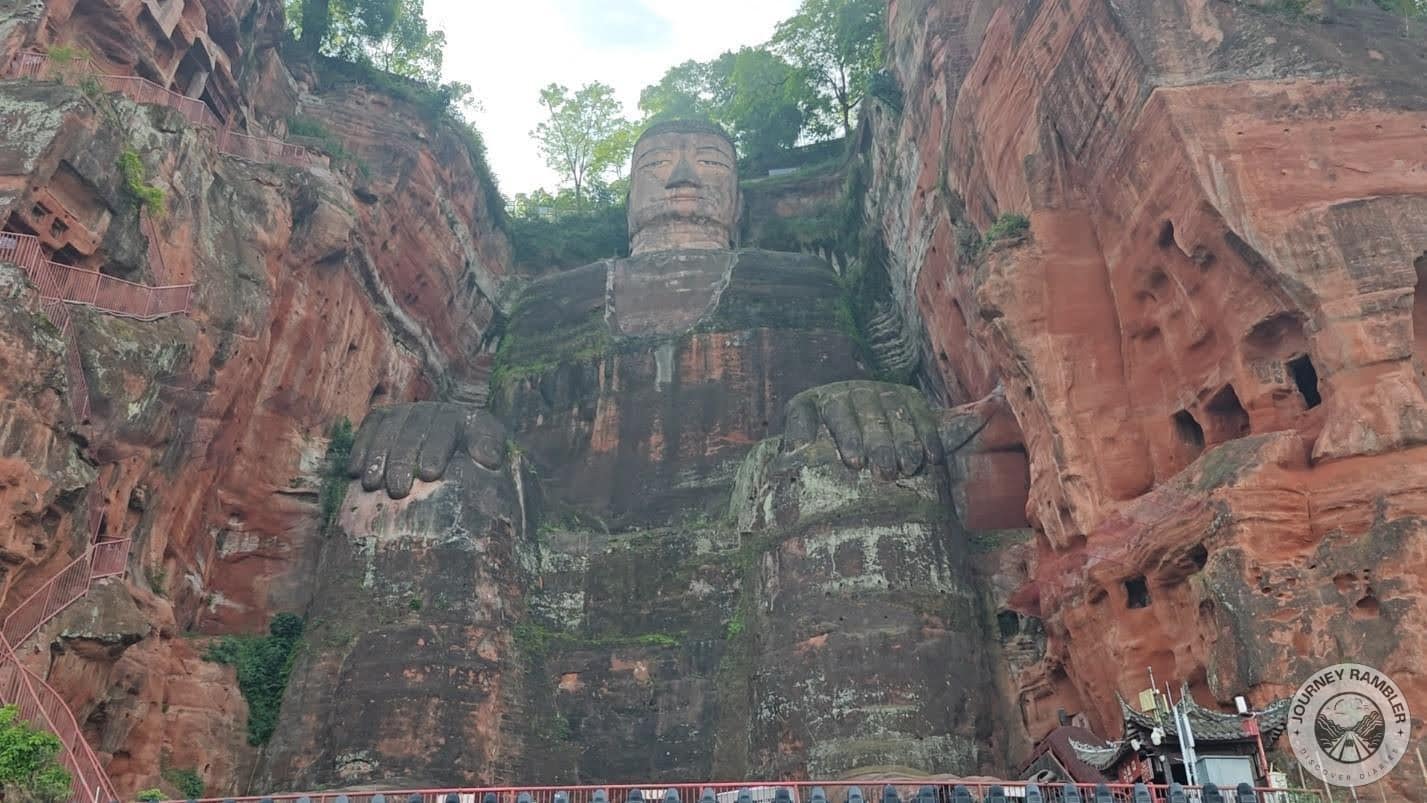
As I was marveling at the sculpture, I couldn’t help but think that there was no way this could have been built with what I guess were primitive tools (compared to today). Imagine my surprise when I looked it up and found that indeed, primitive tools were used to sculpt the Buddha into the mountain’s stone. To build something of this size and scale though needed time and it took the monks who headed the project 90 years to complete it.
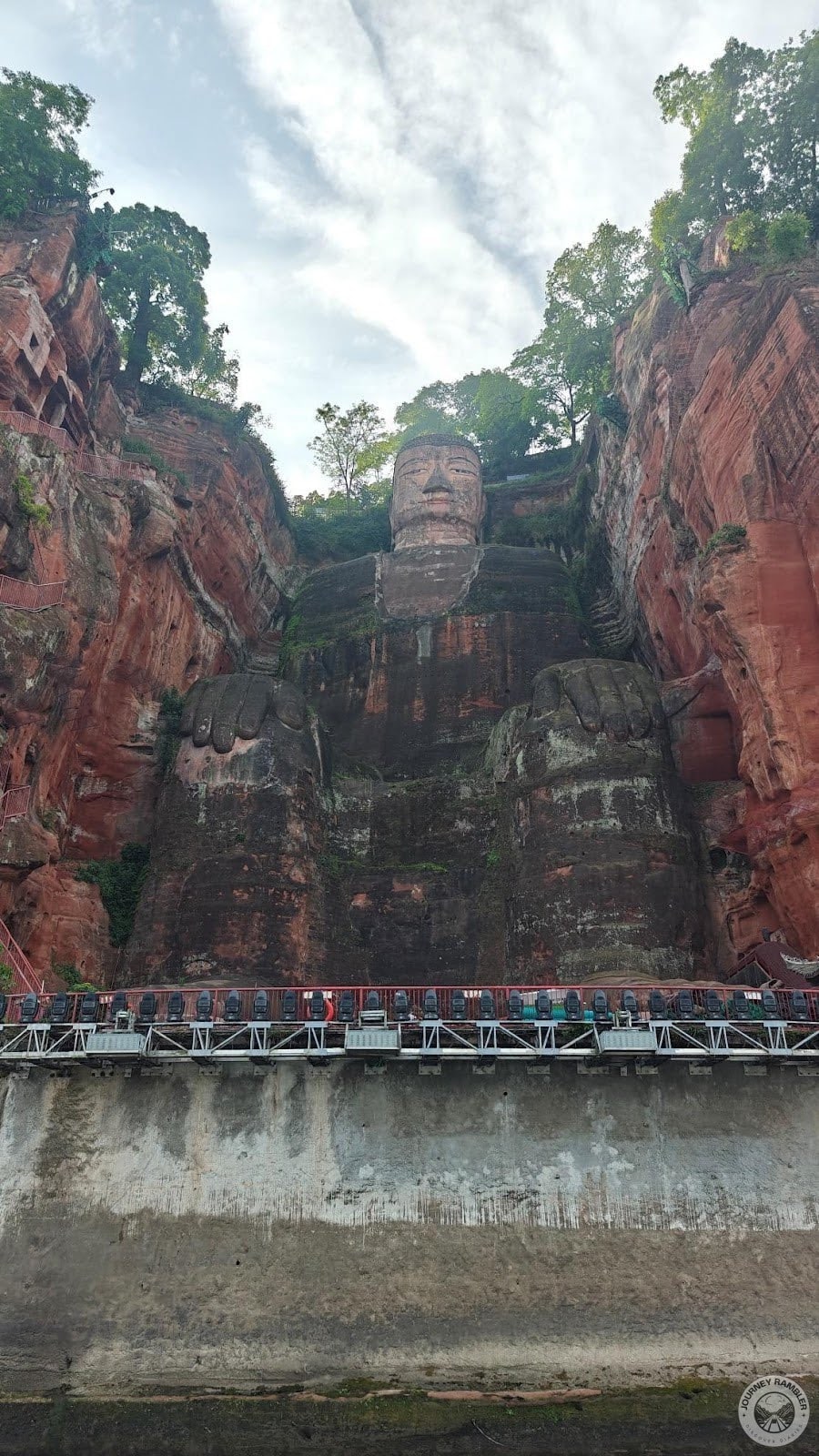
Now I also thought that this was just a vanity project by the Buddhist monks but it turns out, there was actually a really good reason for its construction. So there used to be plenty of shipwrecks here due to the turbulent waters caused by strong currents. The monk (named Haitong) who thought of this project believed that by having the Buddha looking over these waters, the incidence of shipwrecks would diminish.
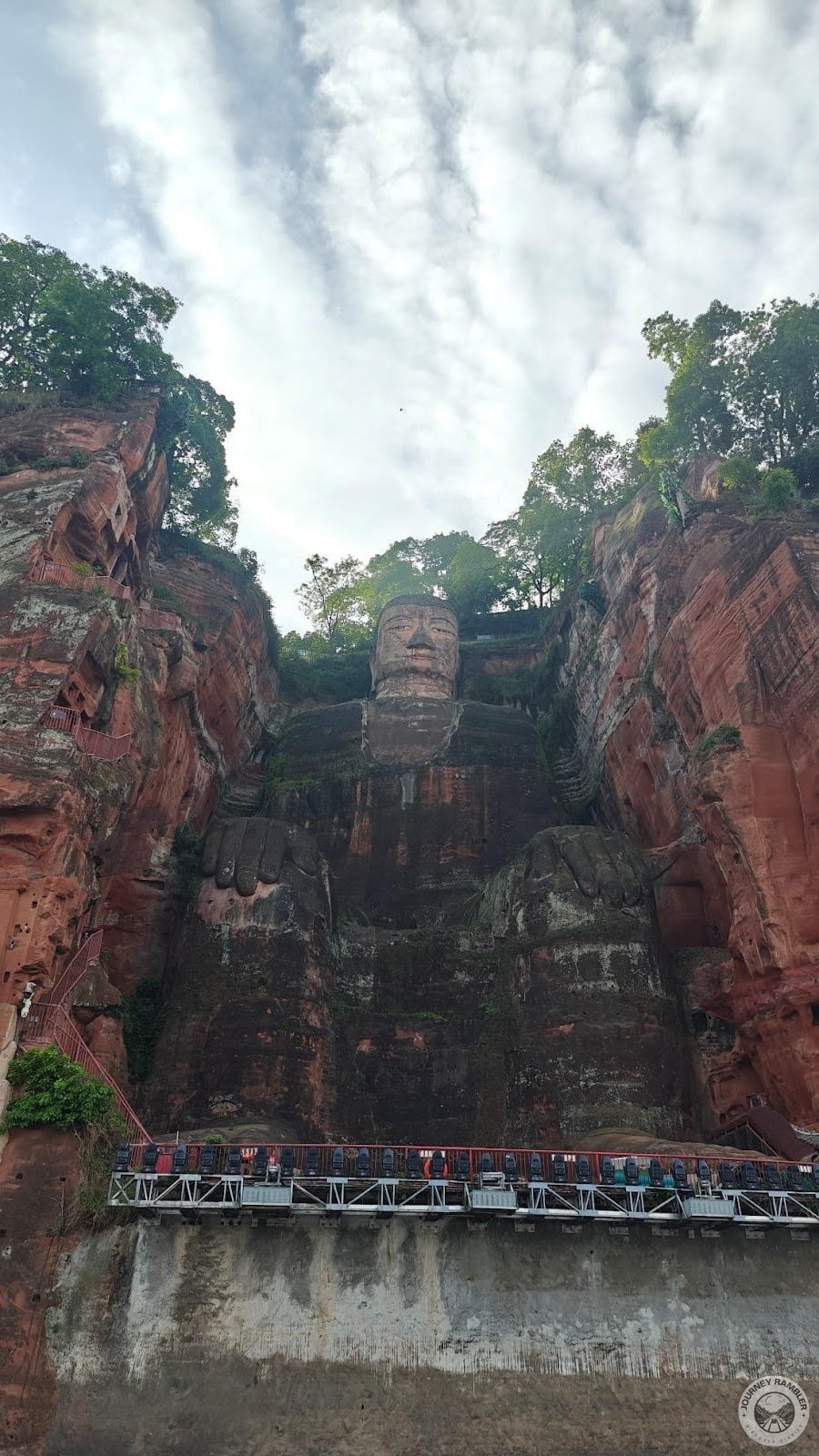
What was surprising was that the project worked though it probably was not because the Buddha was there. Rather, some of the debris that was discarded as the sculpture was being made actually fell into the waters and this somehow stabilized the turbulent flow of water. If there was a Buddhist counterpart to divine providence then I think this would be the best example of it.
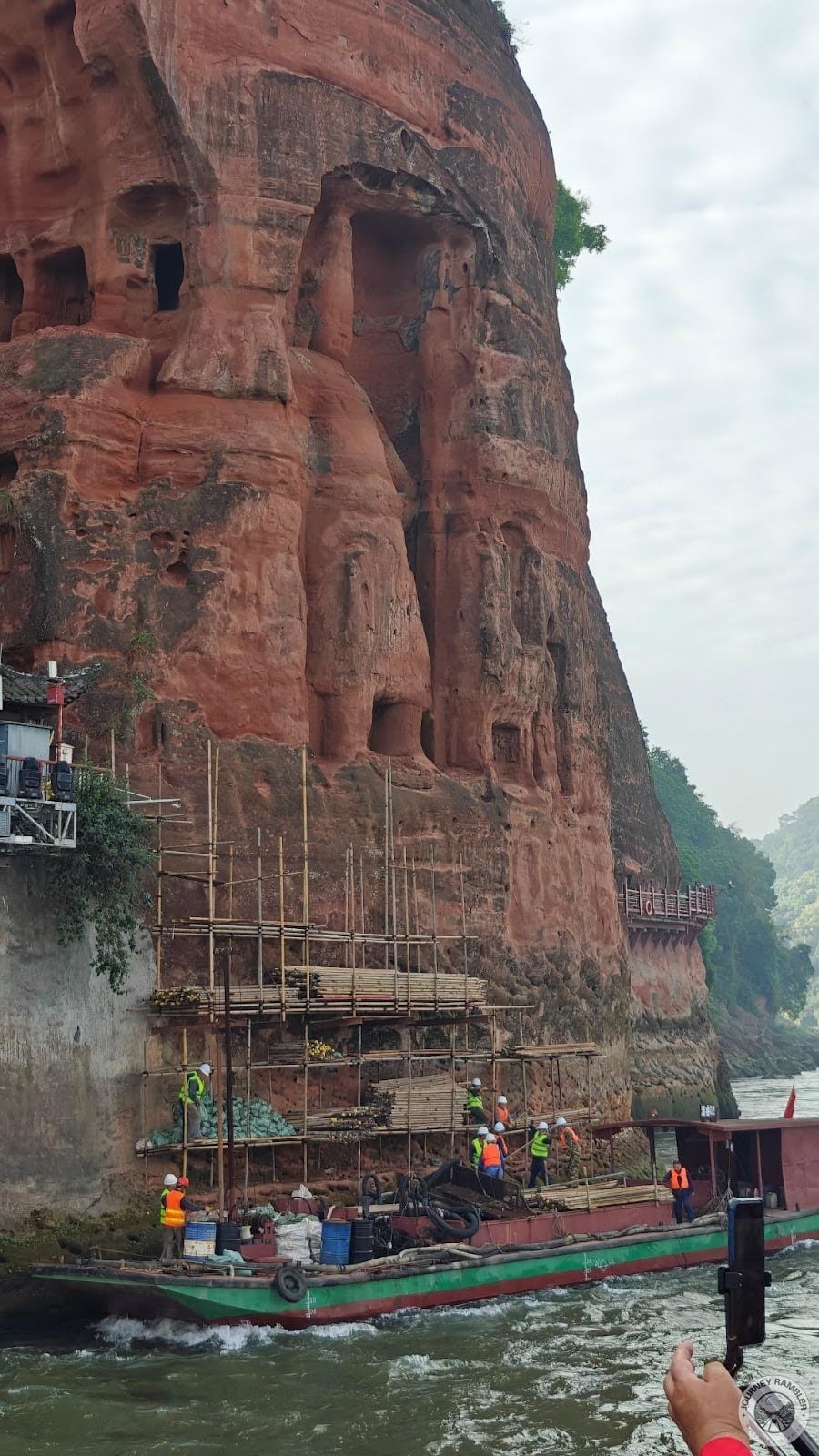
Remember when I said there was restorative work in the surrounding areas of the Giant Buddha statue. Well, here’s what that looks like. I’m not quite sure what exactly it is they’re working on but it does seem like they’re trying to remove the black crust caused by acid rain and pollution.
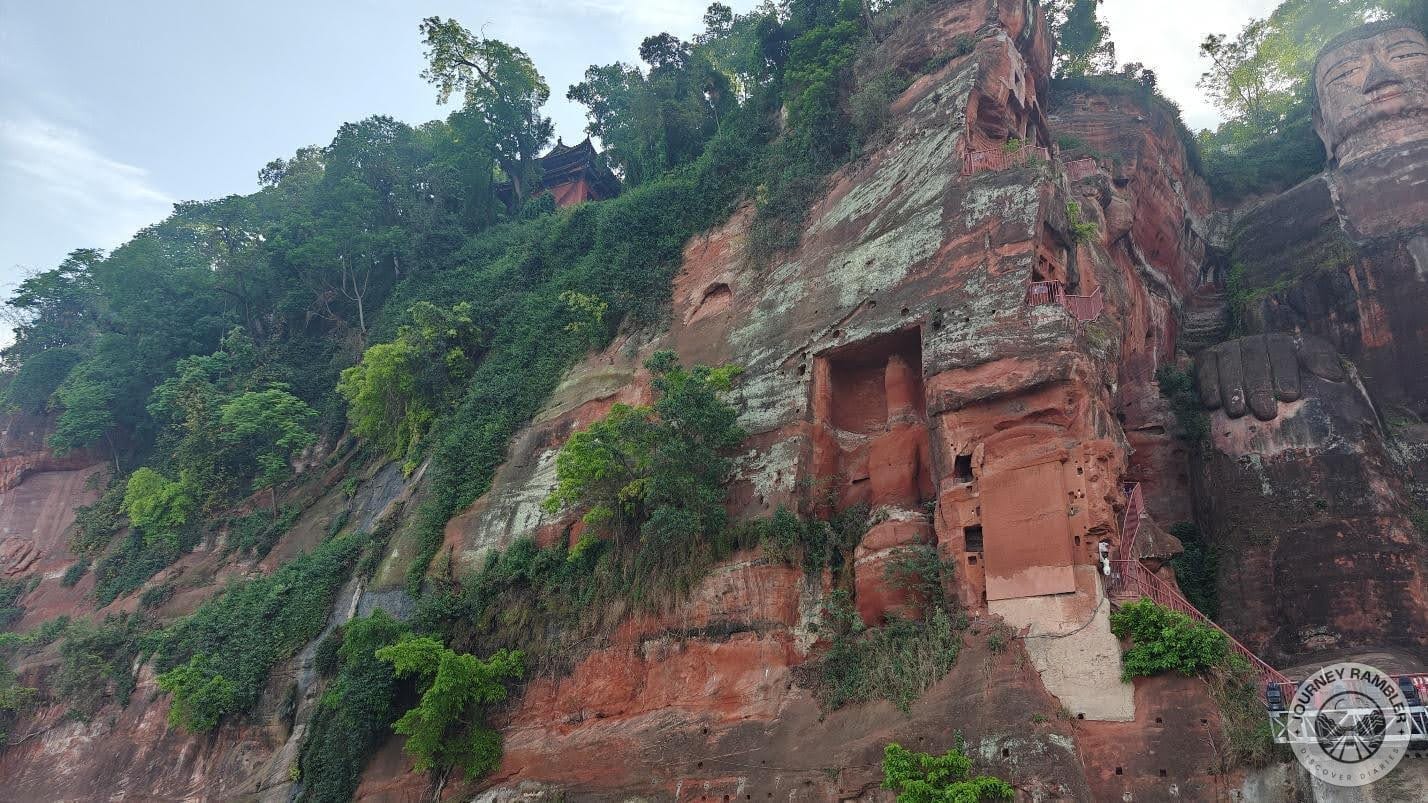
The side opposite the area where restorative work is being done also looks like it needs maintenance. Its guardian deity statue looks unrecognizable on top of starting to be overrun by plants. On a side note, you can actually see one of the buildings of the Lingyun Temple complex from here.
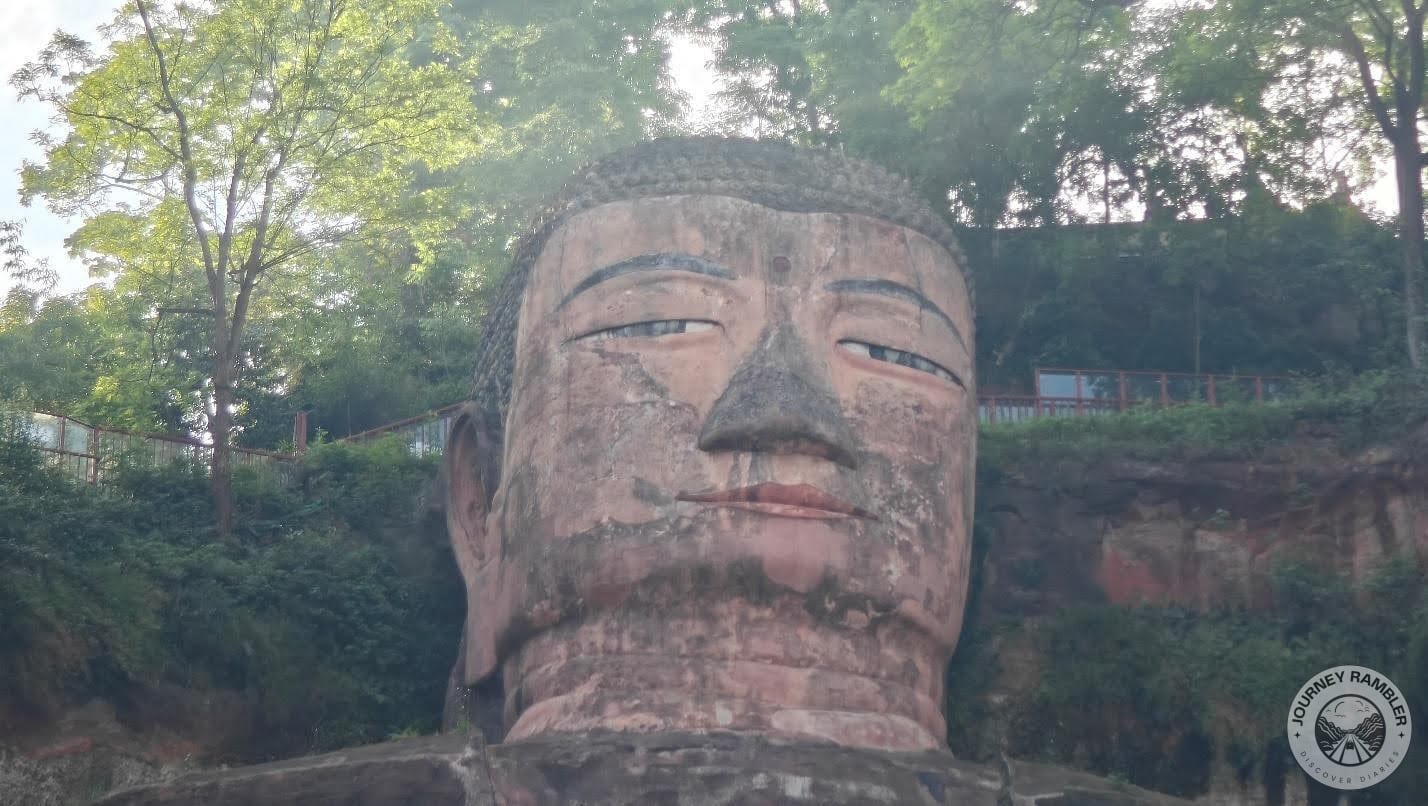
Despite the state that he’s in, the Buddha looks very unbothered. Kidding aside, the Buddha has this serene look on his face that for some reason, made me feel at ease. I doubt this had any effect on the waters below but I assume the sailors and fishermen who passed by here over the centuries also felt a similar way to me when they looked up and saw this serene expression.
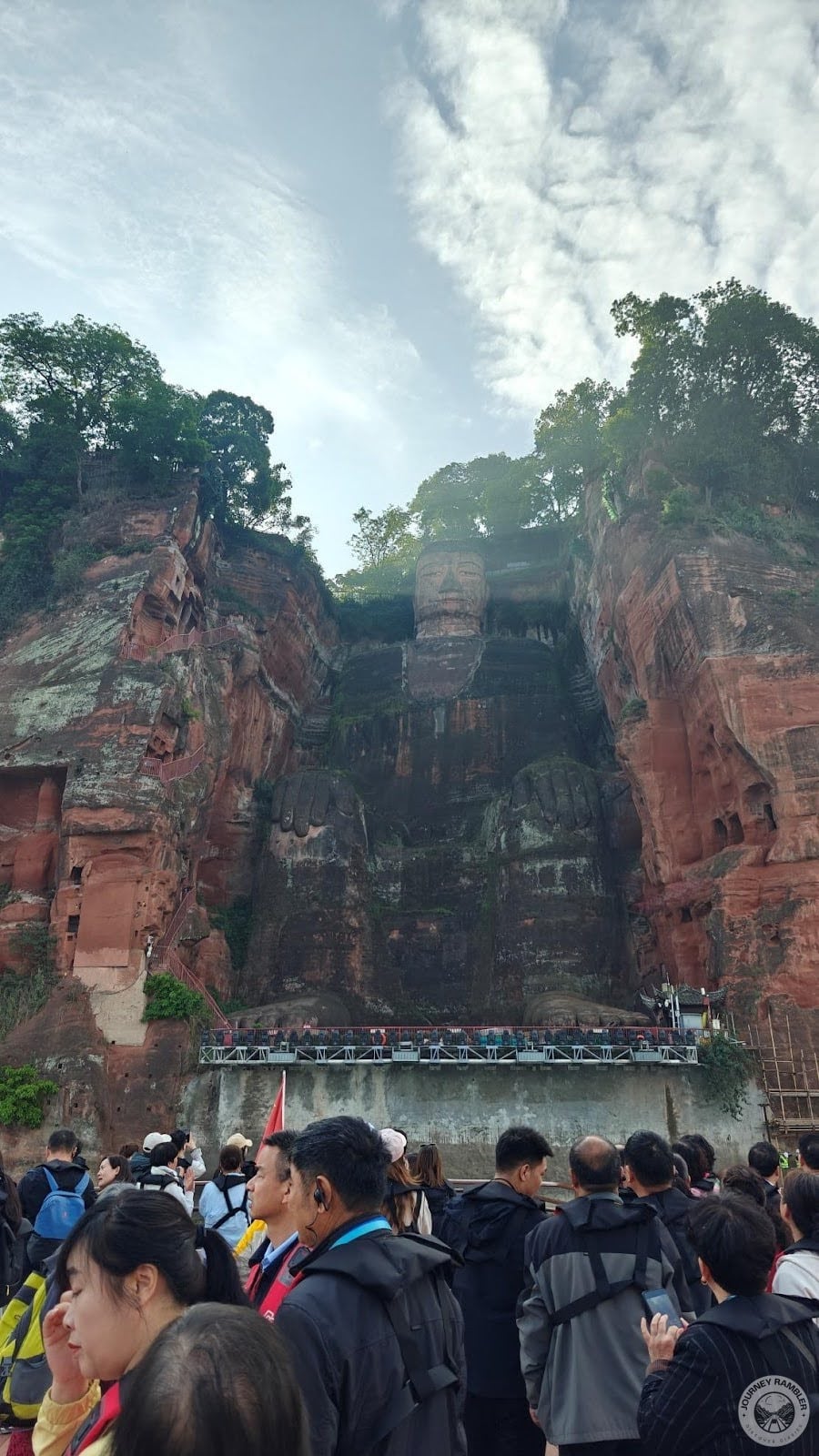
While the group I was in was fairly large, it wasn’t really rowdy or unruly. People were just content to take pictures and talk with those they came here with. The noise was mostly from a tour guide talking about specific areas and attractions over the loud speaker.
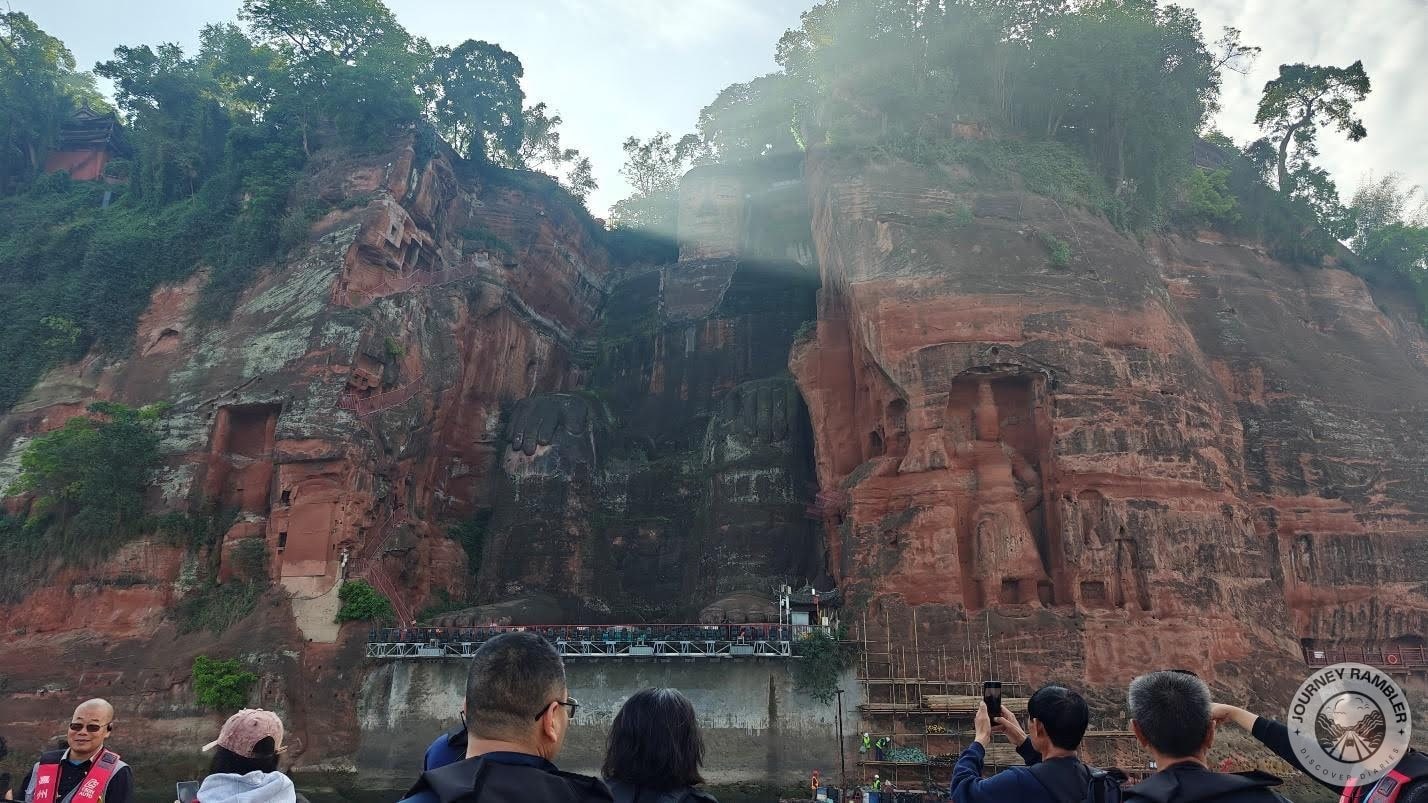
One reason why you’re going to want to come here early in the morning is so that you can see the sun illuminating the Buddha’s face. Remember the map from earlier? Its orientation actually wasn’t accurate. Instead of facing the south, the Buddha actually is supposed to face the East.

I’m not sure if Monk Haitong deliberately planned to have the Buddha face the East. His decision though looks like a stroke of genius in hindsight because of how it now gives the Buddha this sort of halo every time the sun rises. Honestly, the more I know about the Leshan Giant Buddha the more impressed I get at the ingenuity and perseverance of its builders.
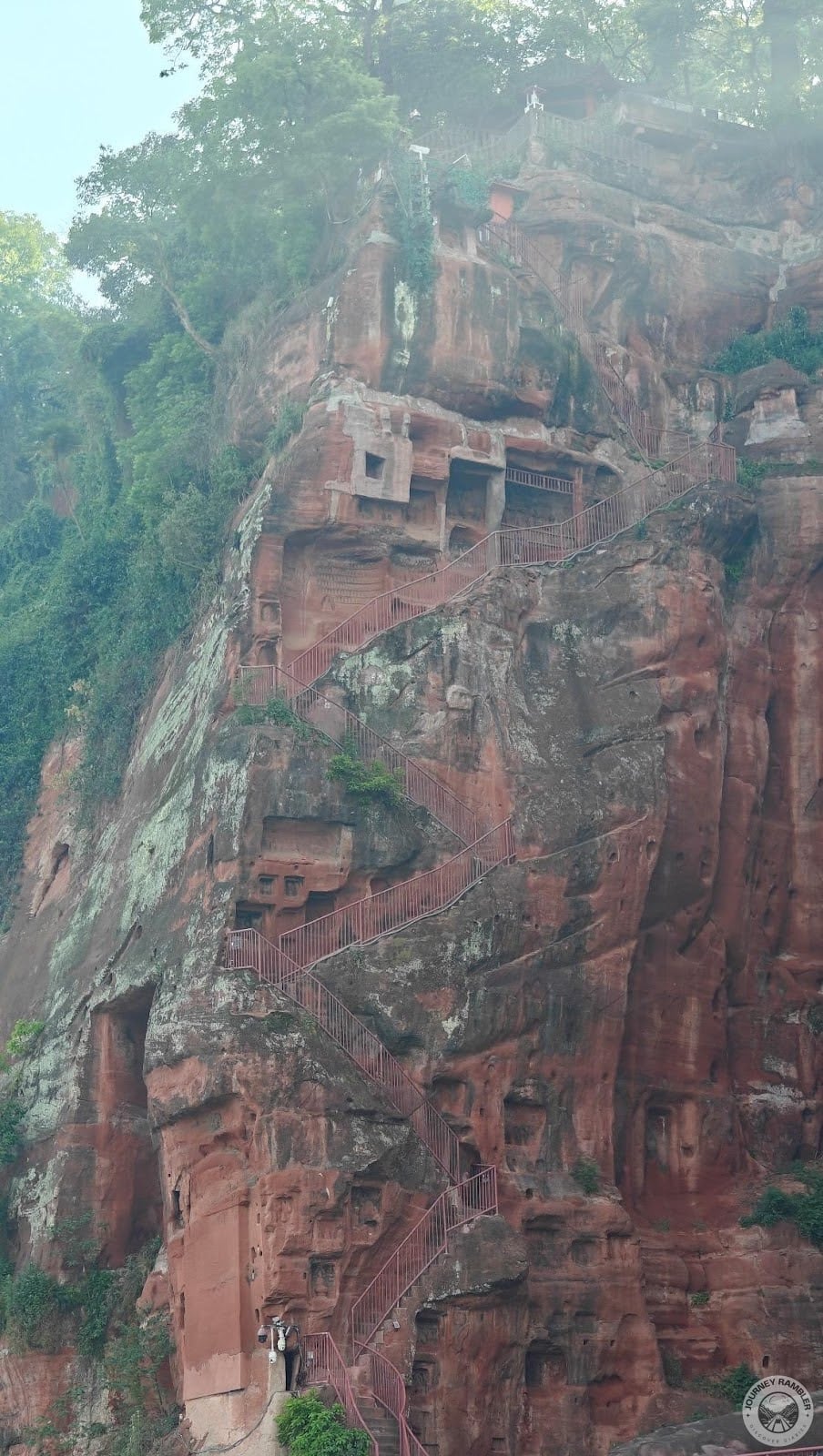
Initially, I thought the Nine Bends (Jiuqi) Plank Road was a relatively new addition to the area thanks to the steel railings. In truth though, the stairs are as old as the Giant Buddha statue itself. In total there are 217 steps here and as its name implies, you’ll have to go through 9 bends before you can get down.
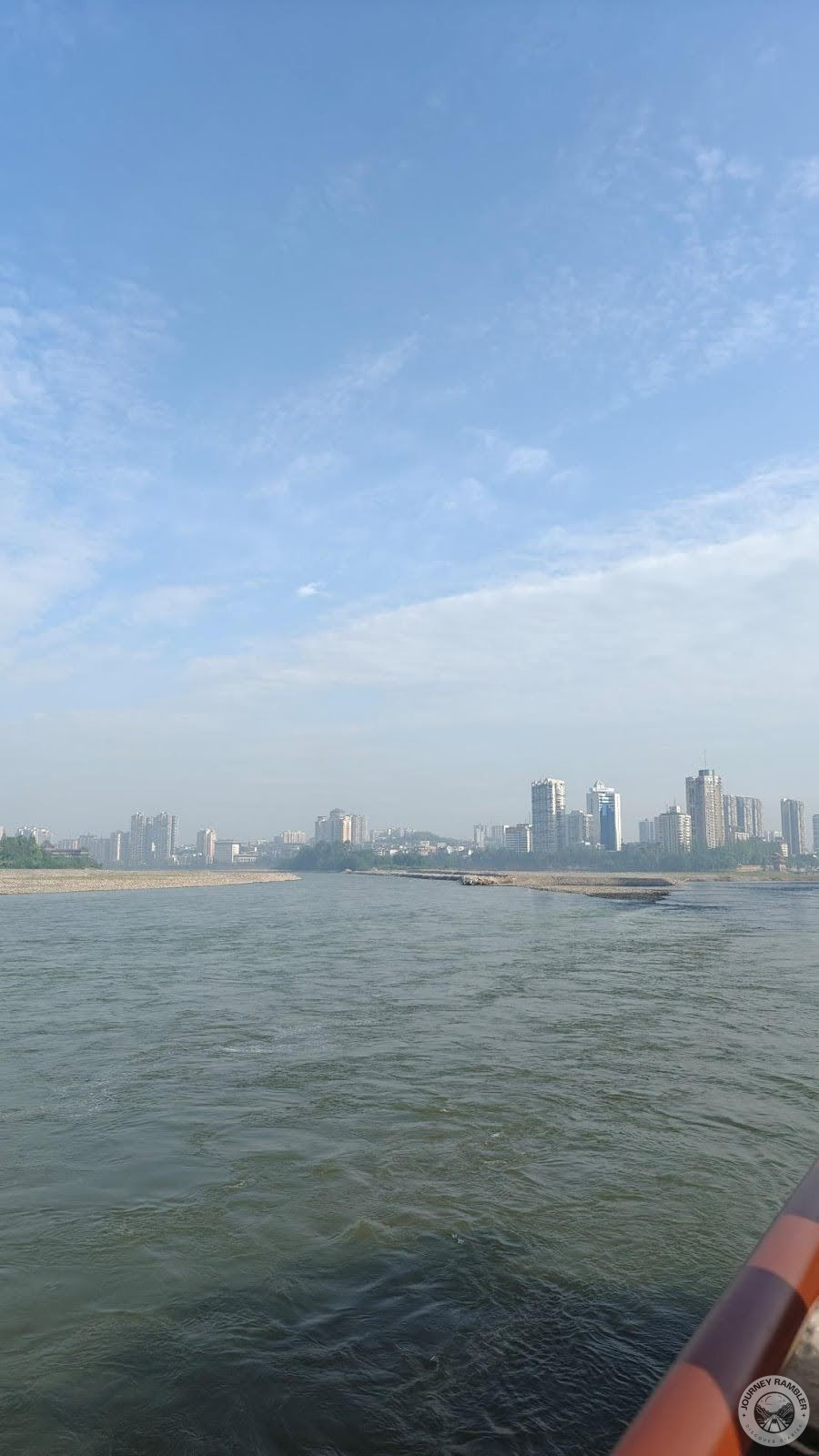
So you’re probably wondering, what’s the view if you’re facing the same way as the Buddha? Essentially, you’ll be looking at the confluence of the Min, Qingyi, and Dadu Rivers (hence the turbulent waters from the mixing of these rivers’ currents) as well as the Leshan skyline. I wasn’t able to take pictures of it from here but you can also see another UNESCO World Heritage on the opposite bank called Mount Emei.
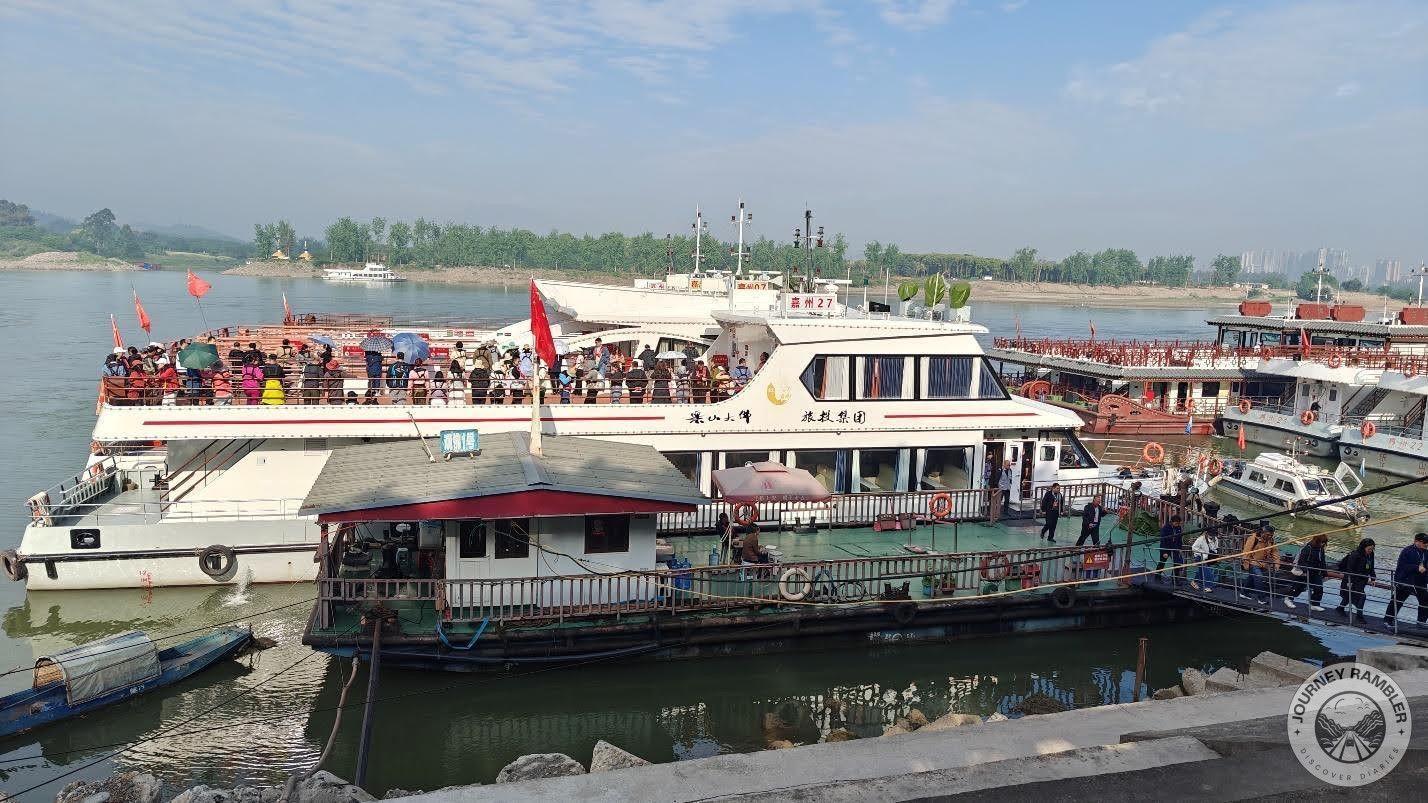
After the sightseeing tour, our ferry docked again at the Wuyou Temple Wharf which by the time I took this picture, was positively teeming with people. From here you can opt to explore the Lingyun Temple area and get a closer look at the Buddha or you could look into other attractions within Leshan.
Overall, I think visiting Leshan for the Giant Buddha was worth it. The views here were more than nice and my only real gripe was that the tour was a little short. Thankfully, there are attractions like Mount Emei that’s relatively near that I ended up going to so that I could make the most of my time here in Leshan.
Ever had the chance to visit Leshan and its Giant Buddha Statue? If yes, then don’t forget to share your experience and thoughts about this iconic Buddhist landmark with us down in the comments!