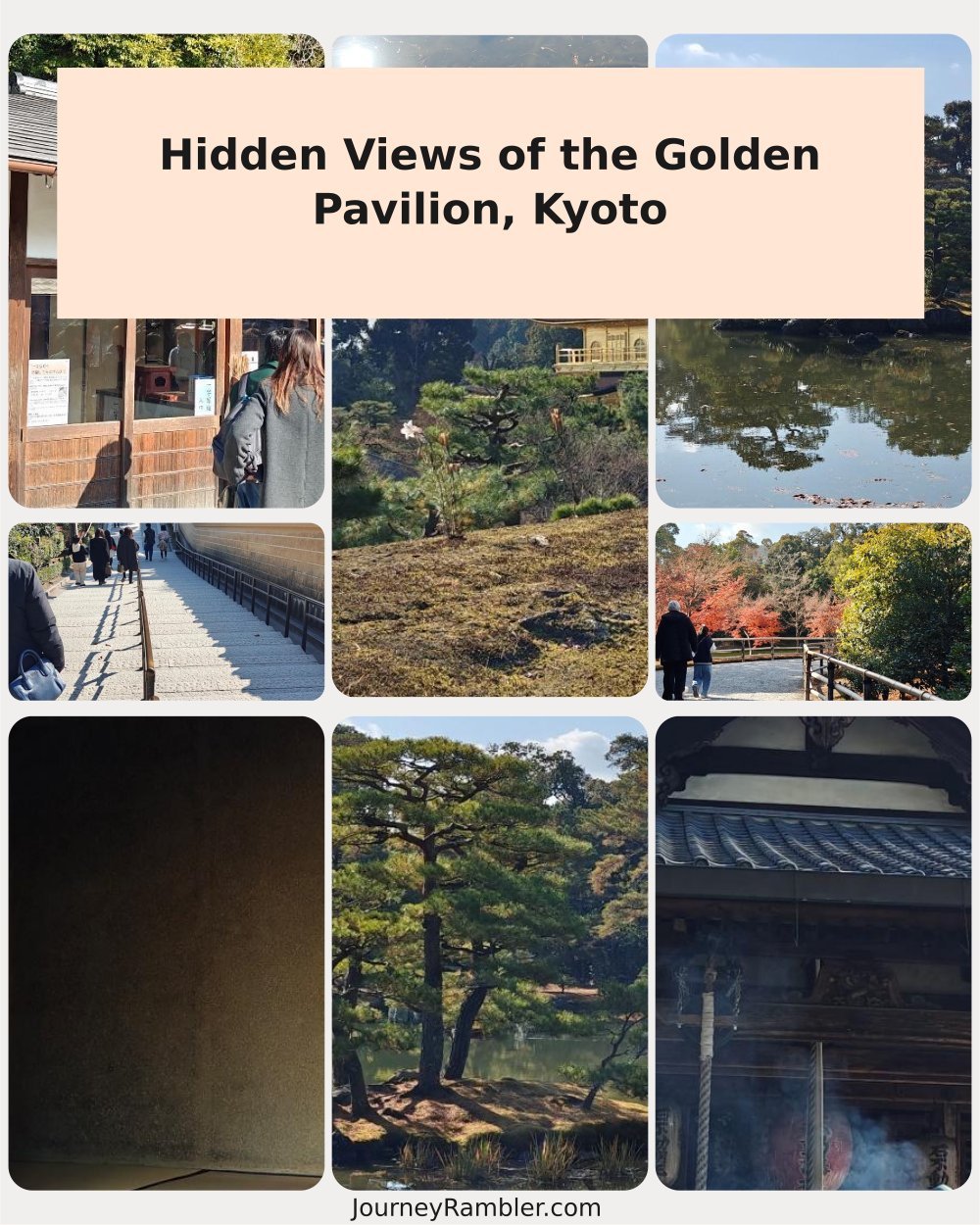
When discussing Kyoto, most people I know would usually talk about Kinkakuji Temple and its Garden and how amazing these were when they visited. I’m going to be honest, I came to this temple with really low expectations and was somehow blown away by what I saw. Today I’m going to be sharing my experience visiting to go along with the numerous photos I took.
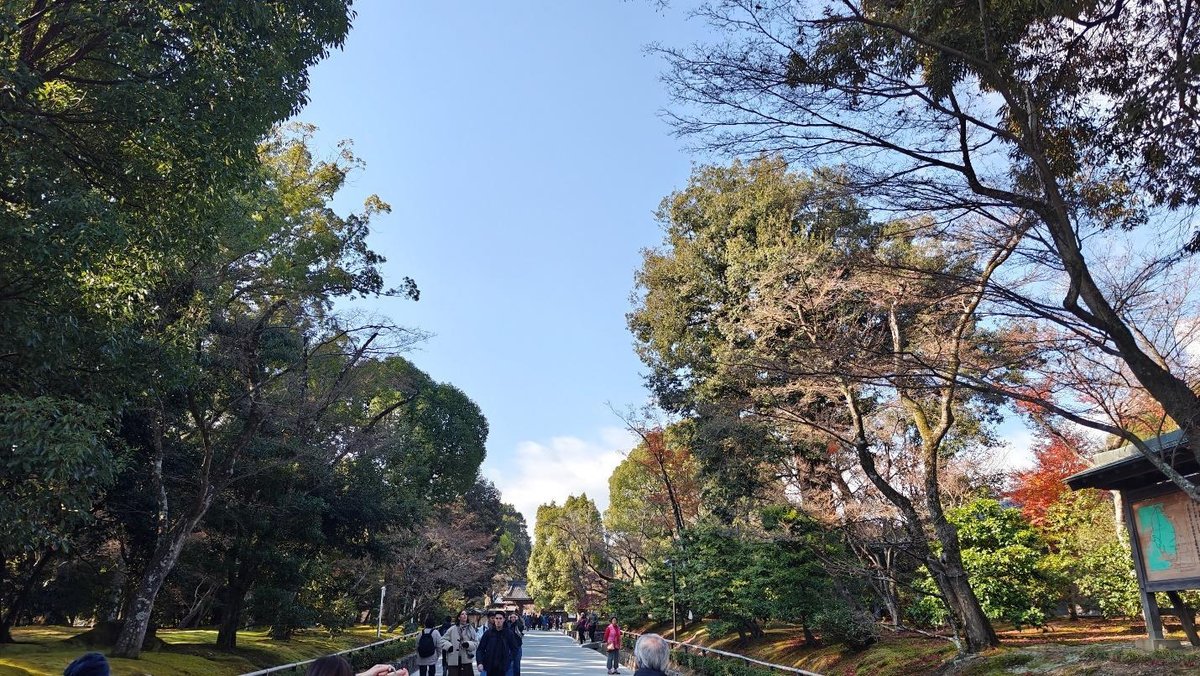
There are a number of ways to get to Kinkakuji though I think the most cost-effective would be to take the bus. That said, if you’re in a group then a taxi or rideshare would be better. This is the view that awaits you once you’ve stepped inside the entrance of the temple complex.
I kid you not, this scene kind of made me gasp a little at just how lovely it looked.
Kinkakuji in Winter: The Golden Pavilion, Gardens & Visitor Tips
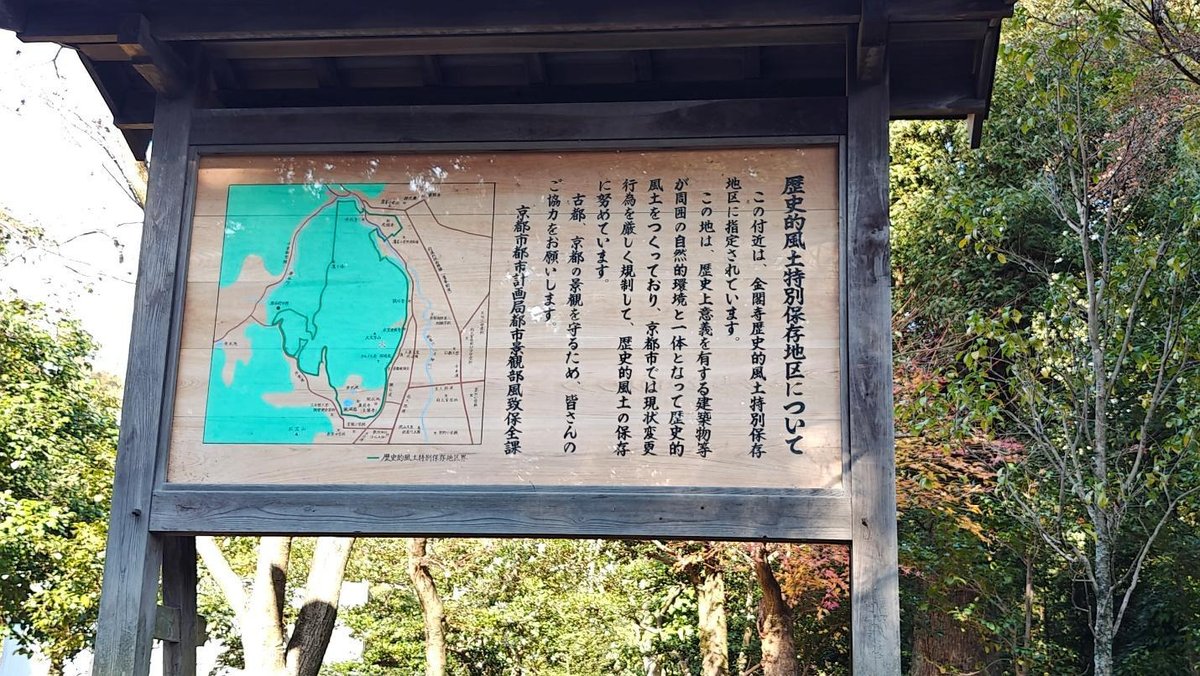
Just near the entrance and off to the right of the pathway was this sign. It’s basically a reminder for guests that Kinkaku-ji Temple is designated as a National Special Landscape or Special Historic Site. As such, the city of Kyoto has made some special restrictions and regulations to ensure the site and its buildings are preserved.
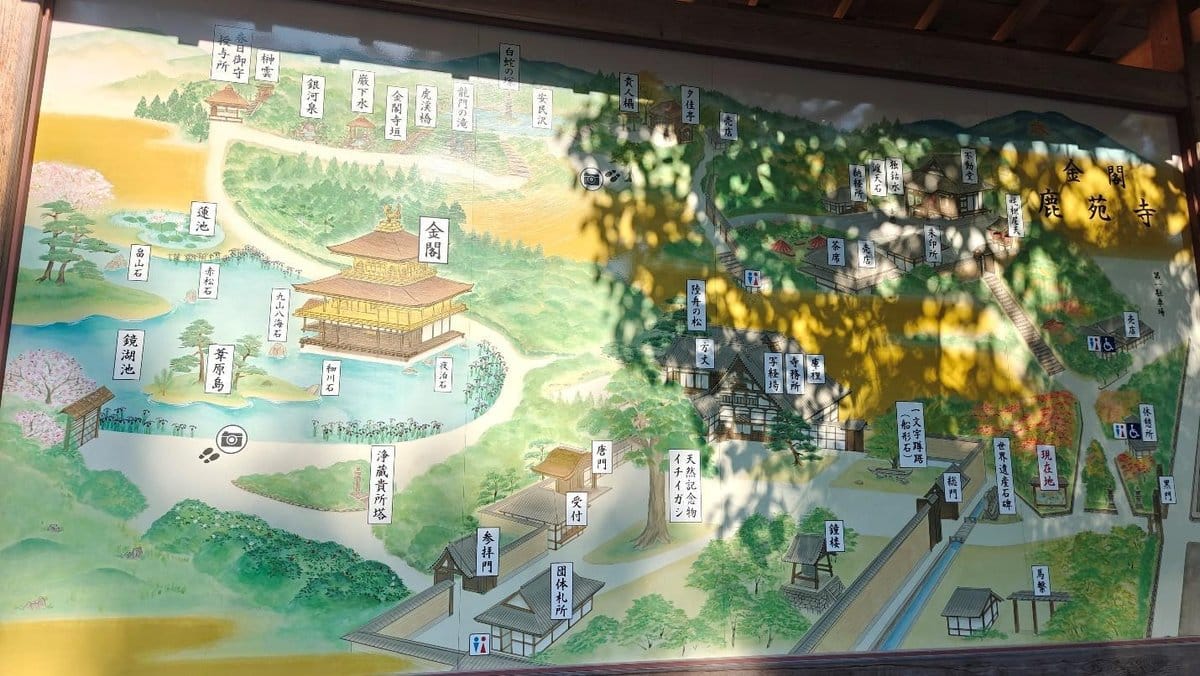
After a rather scenic walk, I then came across this guide map that can be found just outside the temple’s Main Gate. I came to Kinkakuji Temple wanting to be surprised and so I didn’t do any prior research so a picture of this map gave me a better idea of what to expect. As with my previous write-ups, I always advocate for taking shots of these guide maps just in case you or someone in your group might get lost.
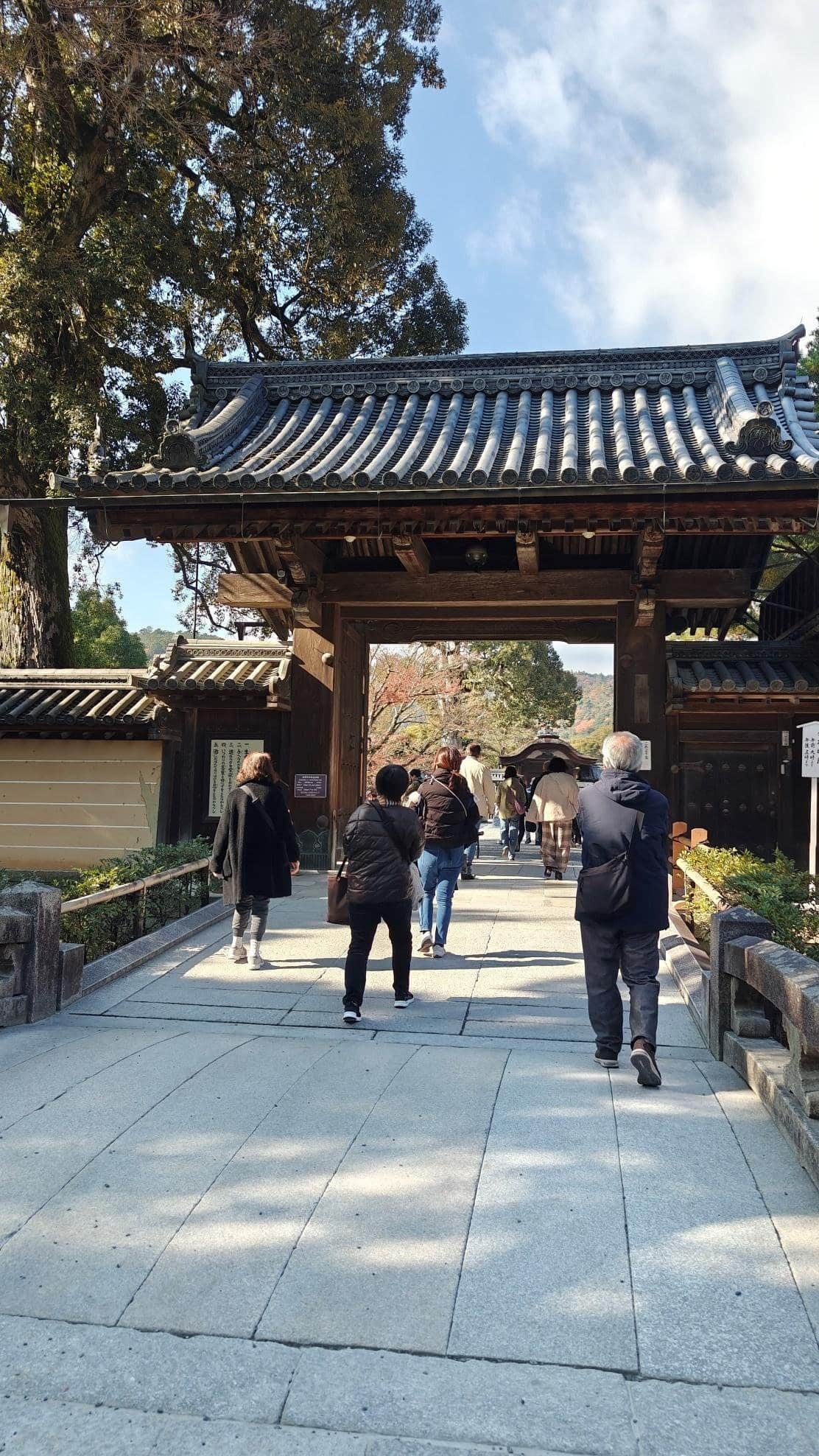
Like I said earlier, the map was only a couple of steps away from the temple’s Main Gate. It definitely wasn’t as grand as the ones I’d already visited earlier in the year but its roof and eaves still looked extremely detailed. I guess since this is a Zen Buddhist temple then the minimalist design of the gate is understandable.
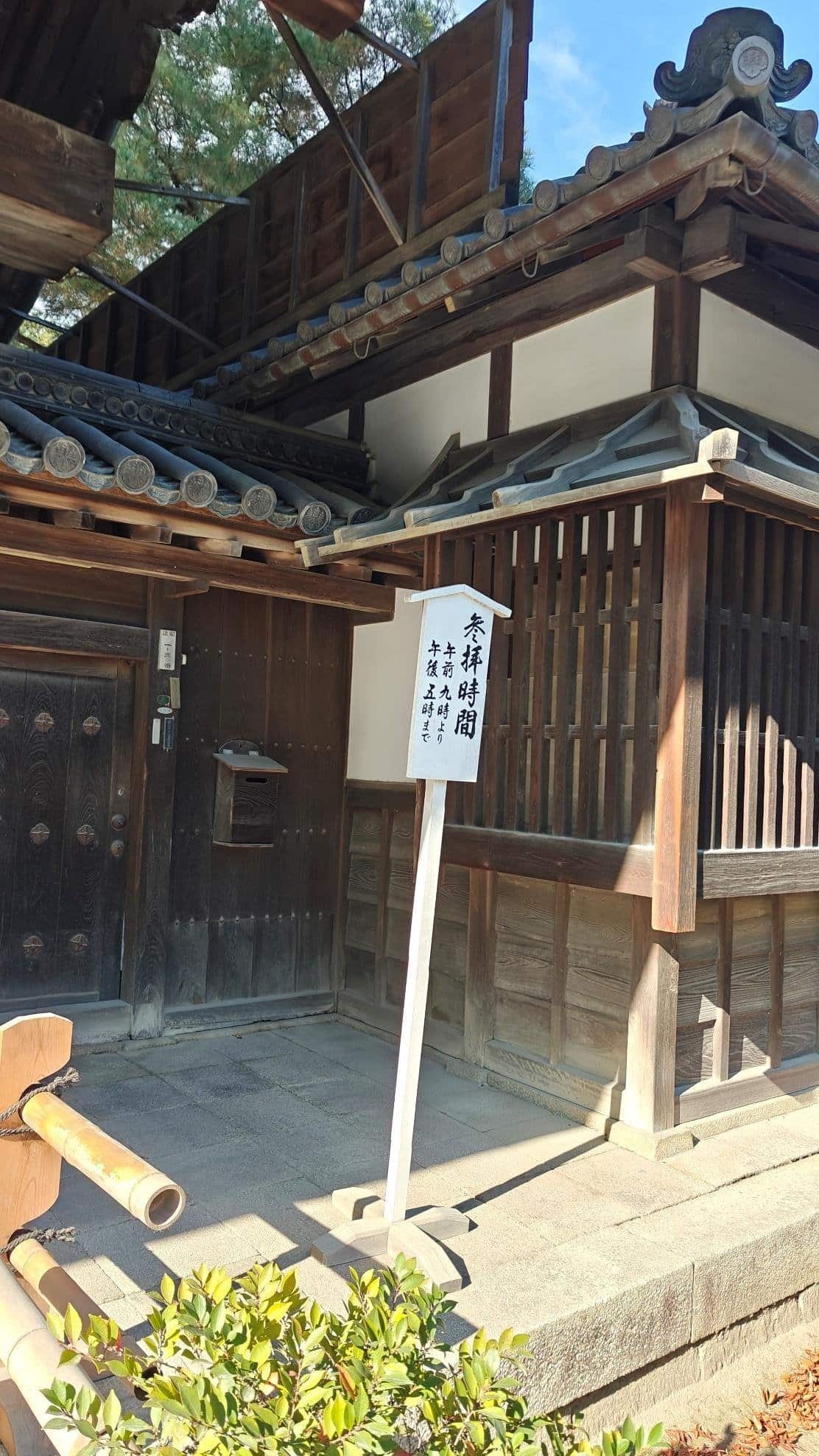
Kinkakuji Temple is open daily from 9:00AM to 5:00PM regardless of the season. What’s great about the temple’s business hours is that it applies to holidays as well. There are times though that they might close (typically for renovation) but usually they’ll announce it in advance so make sure to still check out the temple’s official website before you visit.
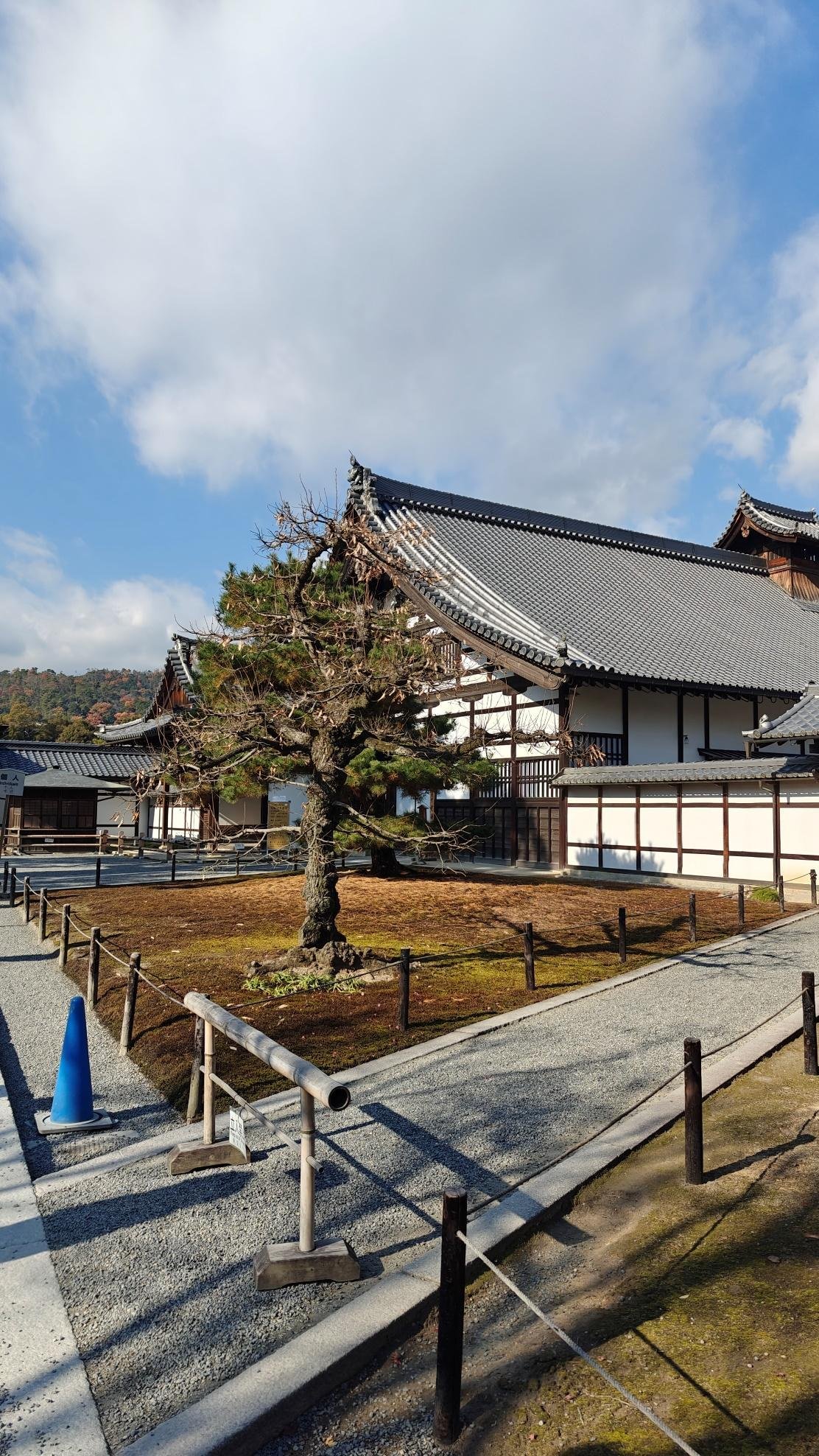
Here you’ll find the main temple building which houses the Kuri (living quarters), Jimusho (temple office), and Shakyojo (a sutra copying hall) among others. Entrance here is typically restricted to the temple’s monks/priests. It’s not seen in this image (you can see it in the next) but there’s a Chinese-style gate here called a Karamon connected to the temple via the wall.
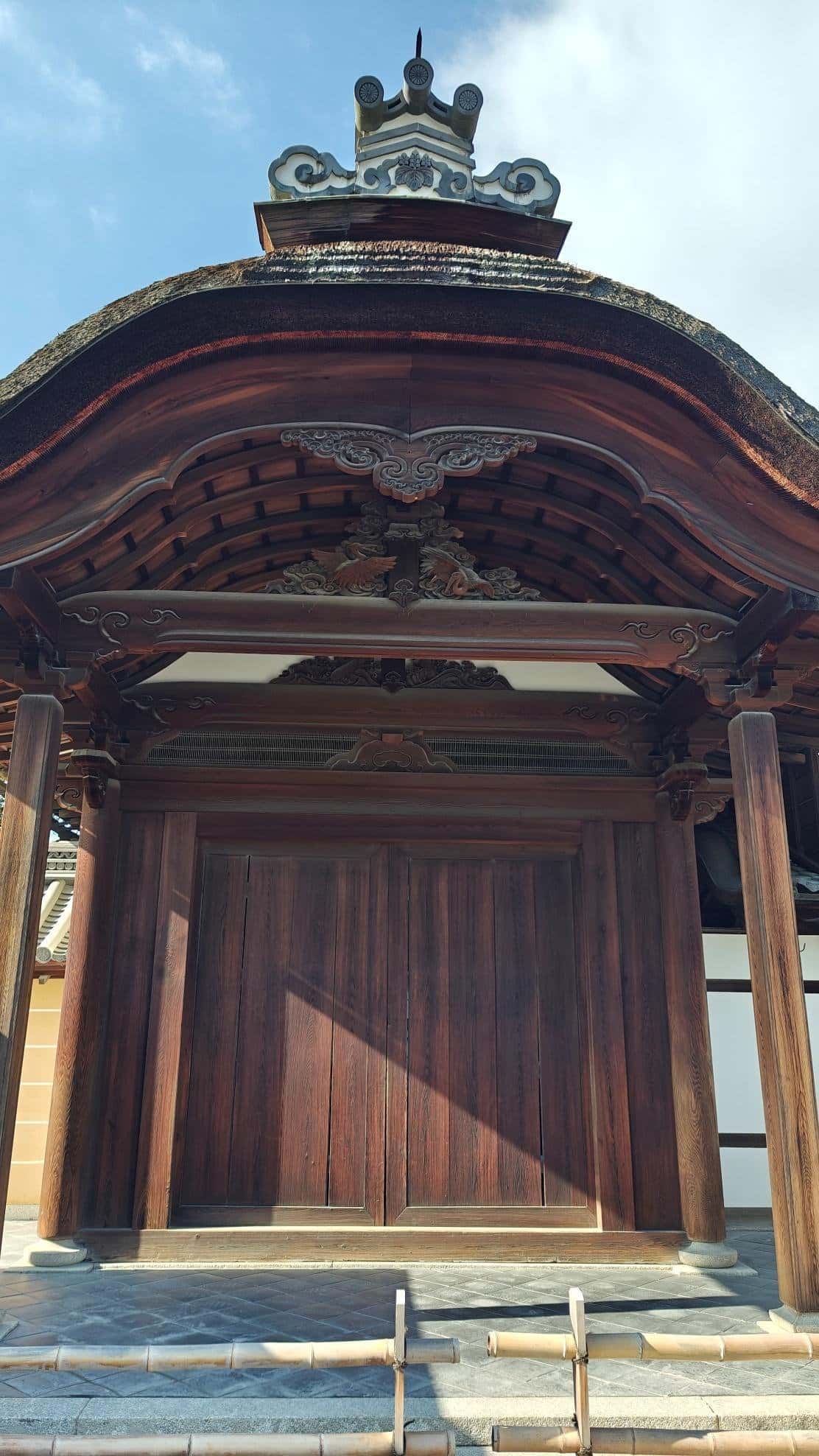
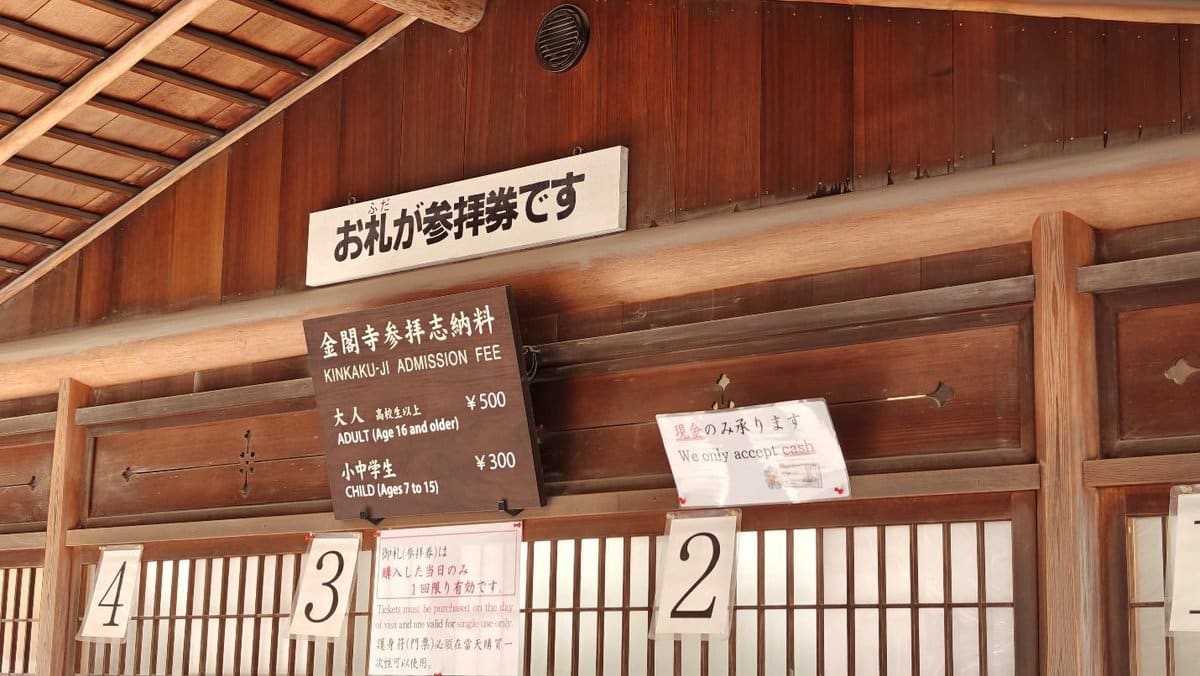
To get inside the main temple grounds, you’ll have to pay an admission fee of 500JPY (300JPY for kids 7-15) at the Ticket Office which is a small building/hut just in front of the Karamon. The rate for admission is a little more than Kamakura’s Hasedera Temple but still very affordable. Take note though that cash is the only mode of payment accepted here.
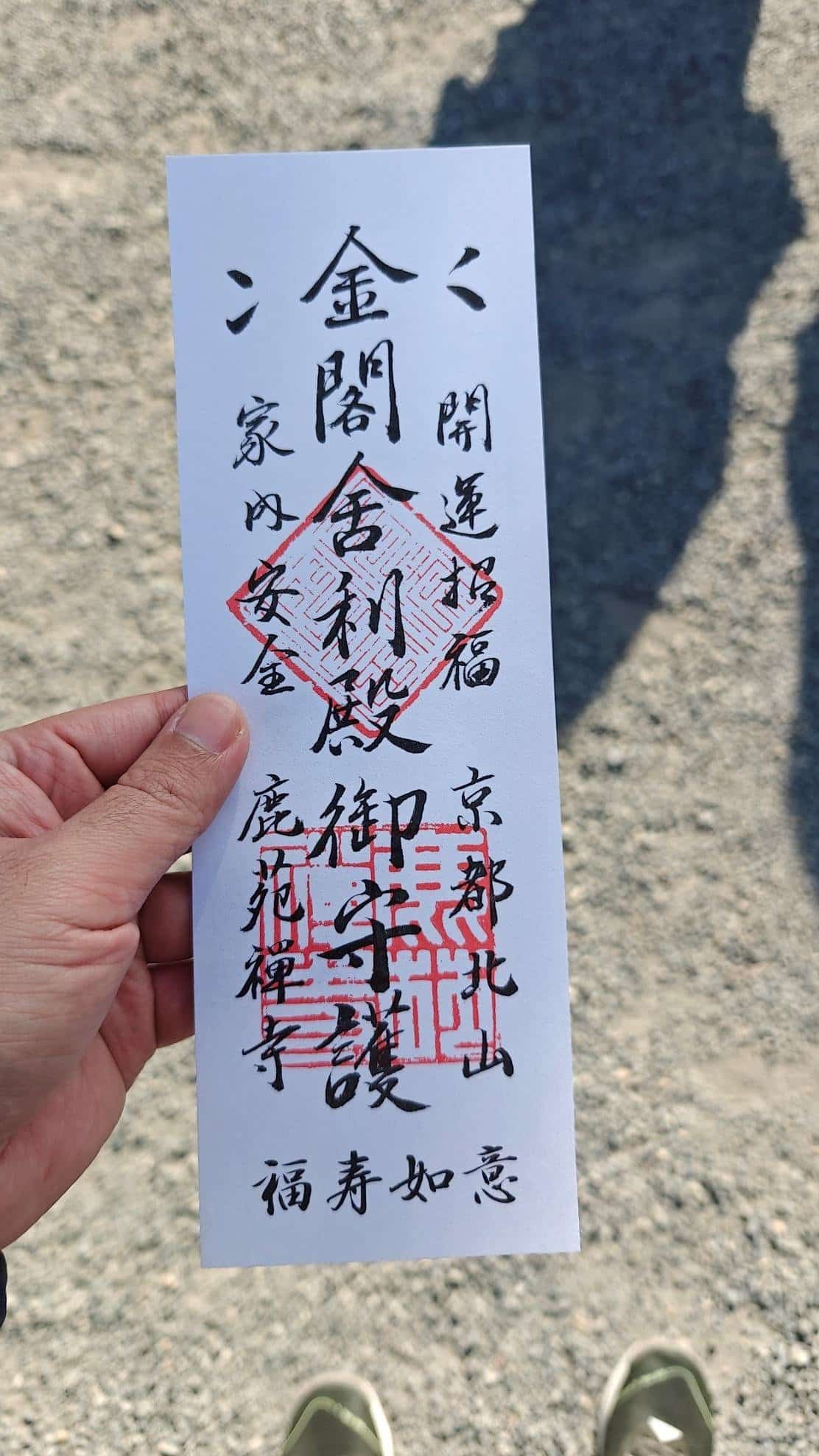
This is what your ticket is going to look like. I was actually surprised that this also serves as a good luck charm. If you’ve ever been to Ginkaku-ji then it’s very similar to the tickets they issue there as well.
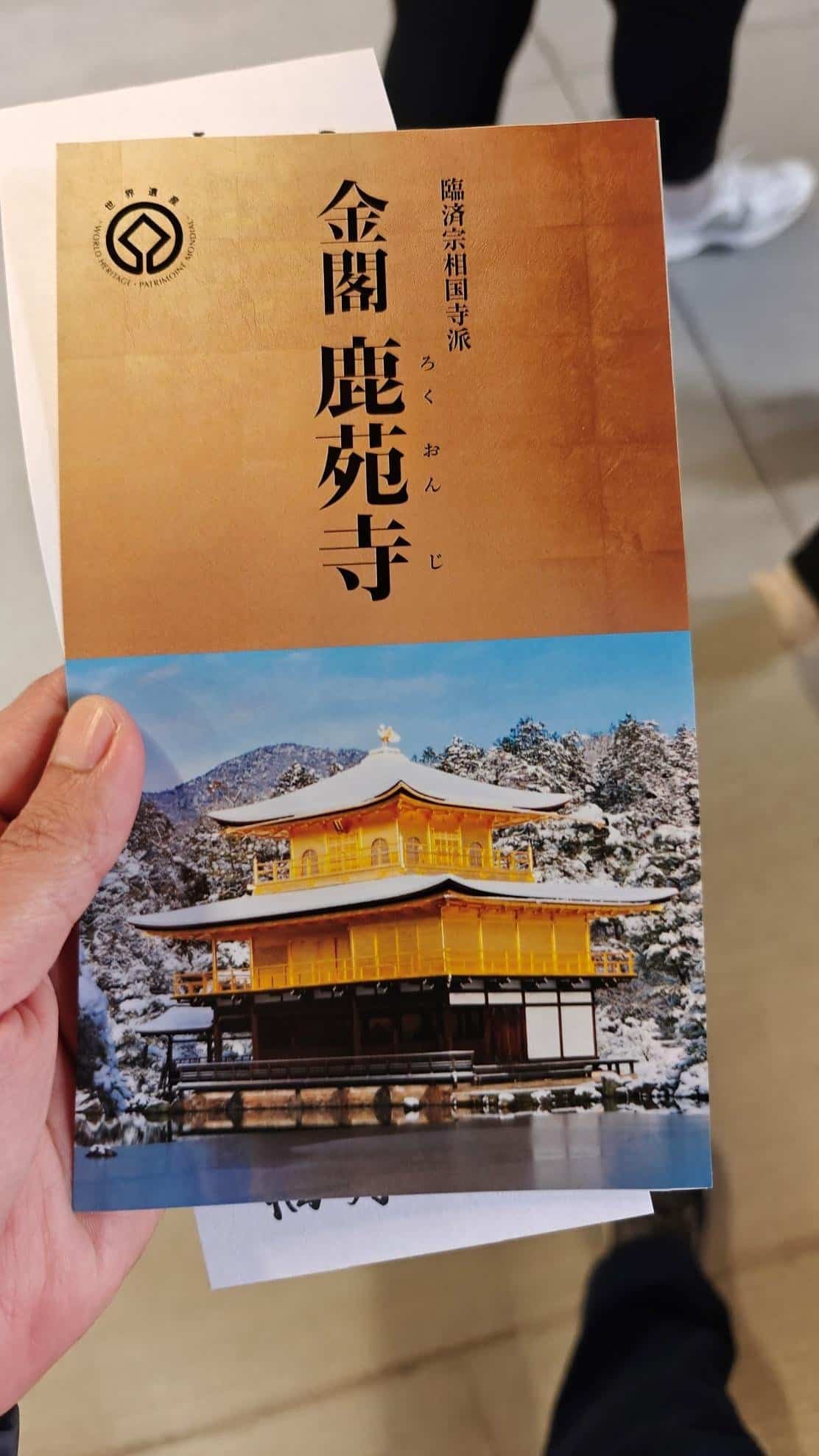
Aside from the ticket, you’ll also receive a pamphlet that features the most notable landmark here at Kinkakuji Temple. The temple complex actually took its name from this building though it isn’t the temple itself but rather its reliquary. I was actually thinking that the picture on the pamphlet was edited but as you’ll see a couple of images from now, I was thankfully wrong.
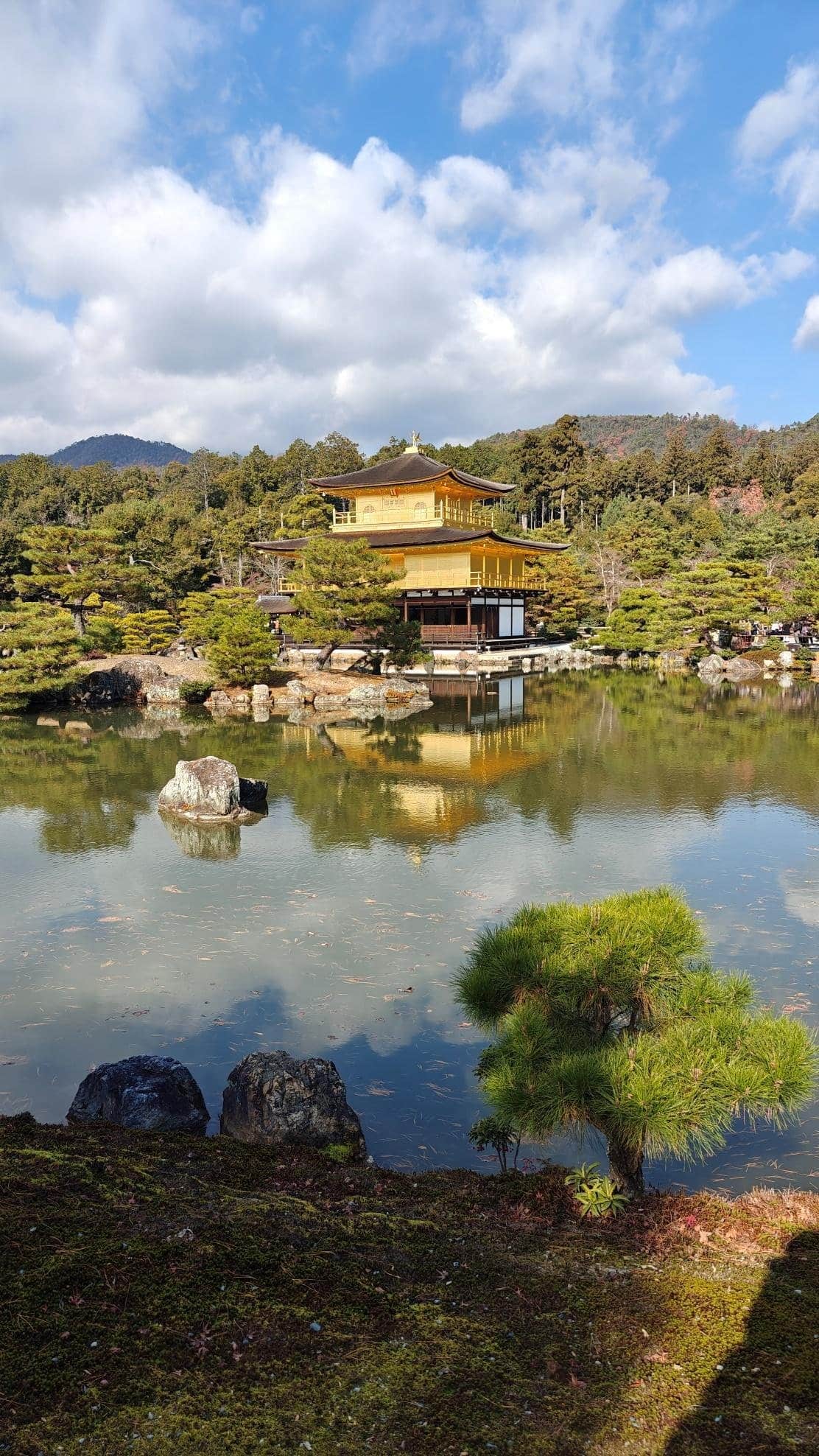
After just a short walk from the Temple’s Worship Gate which serves as the entrance to this area, you should then be able to see the Golden Pavilion. Honestly, it’s kind of hard to miss thanks to its golden exterior. I tried to look it up and apparently, the exterior of the pavilion (specifically its top two floors) is covered by real gold leaf.
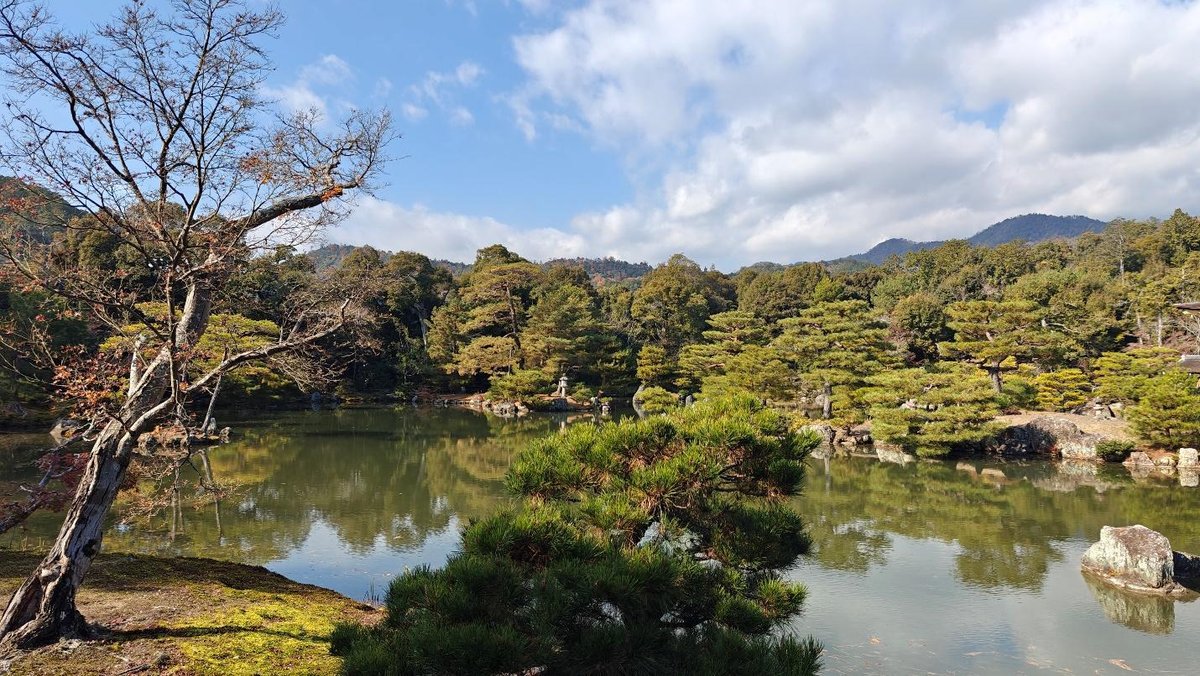
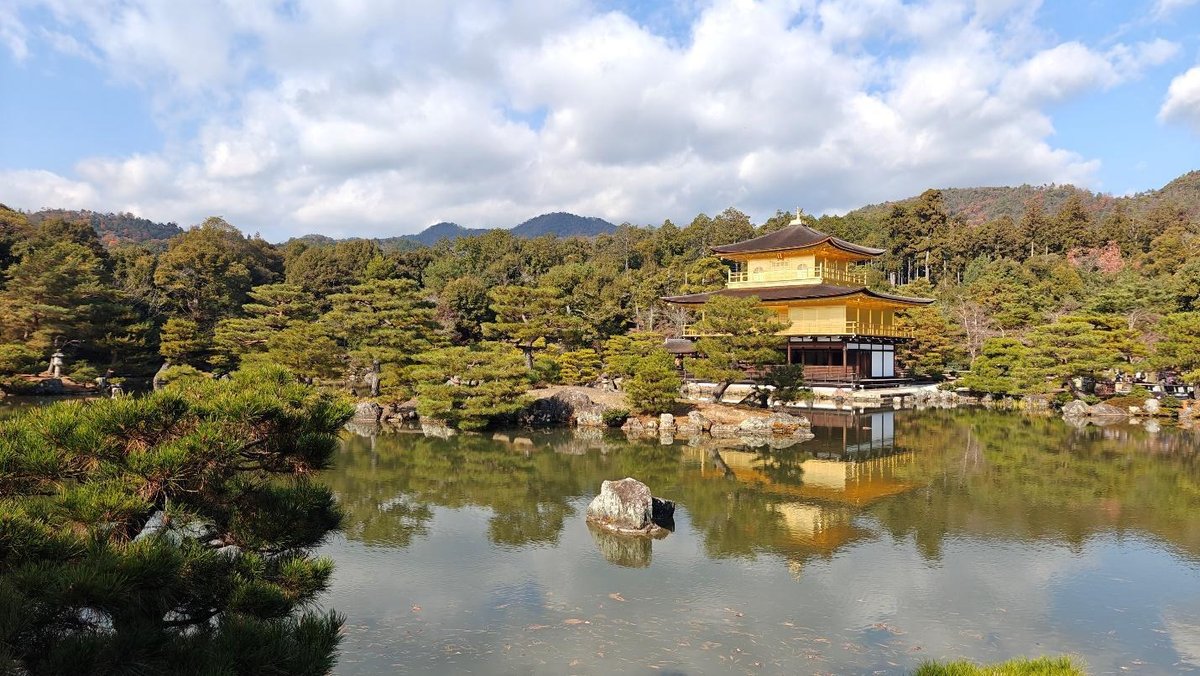
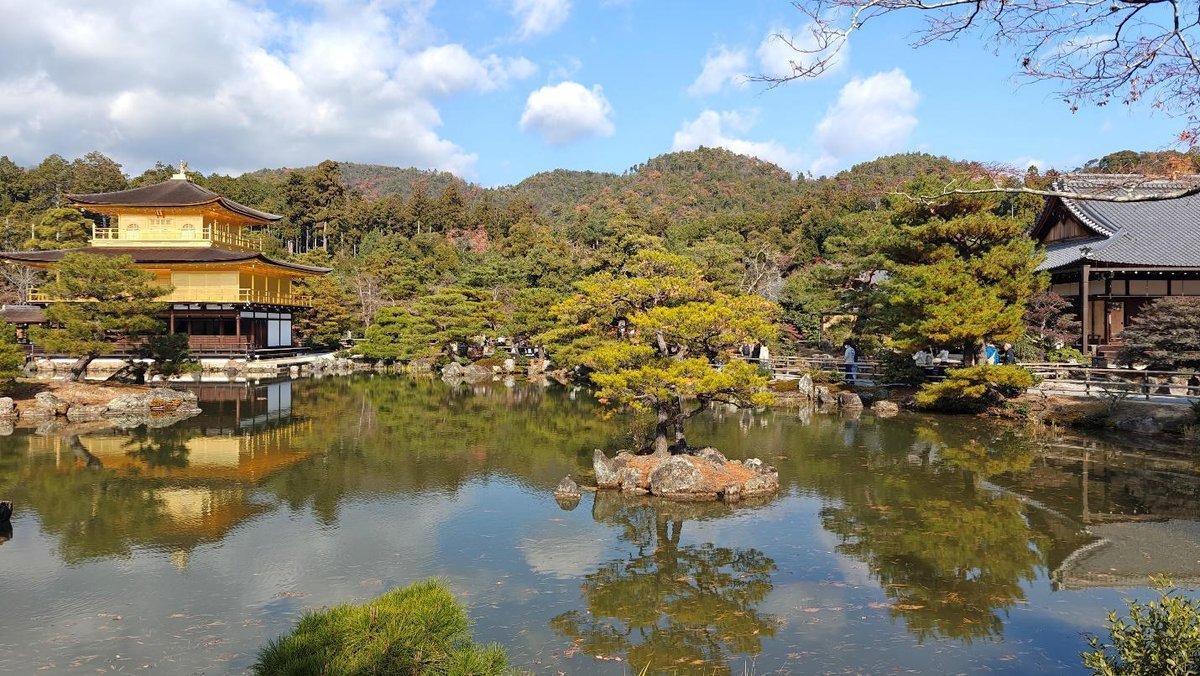
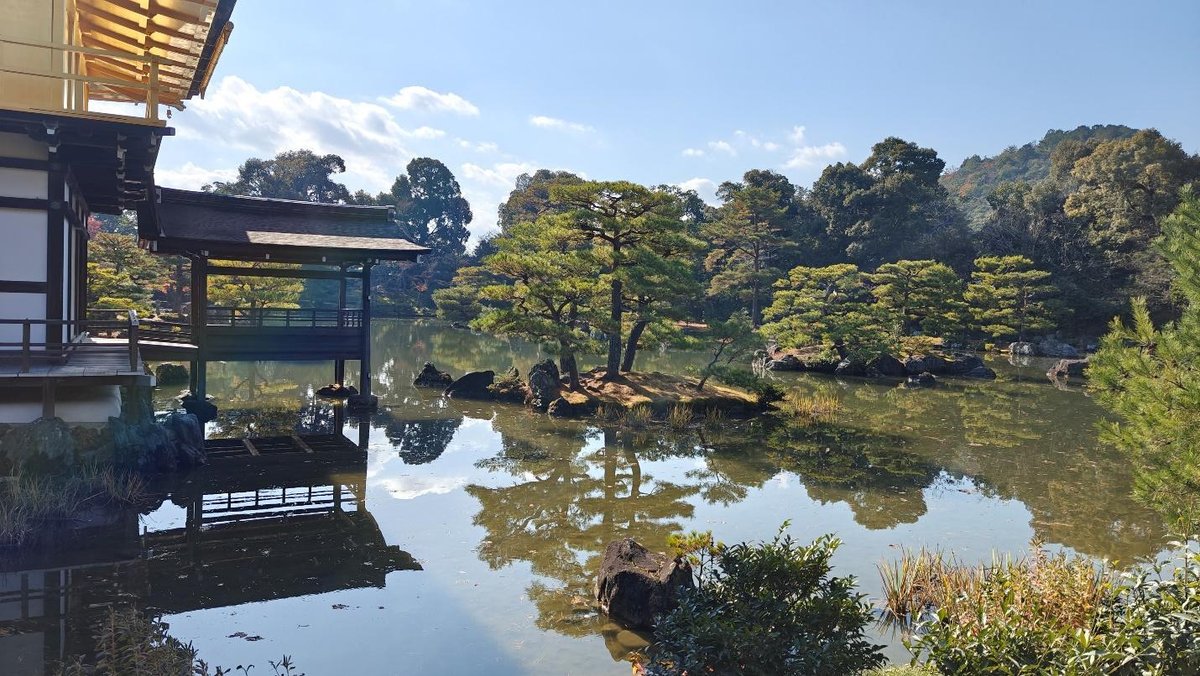
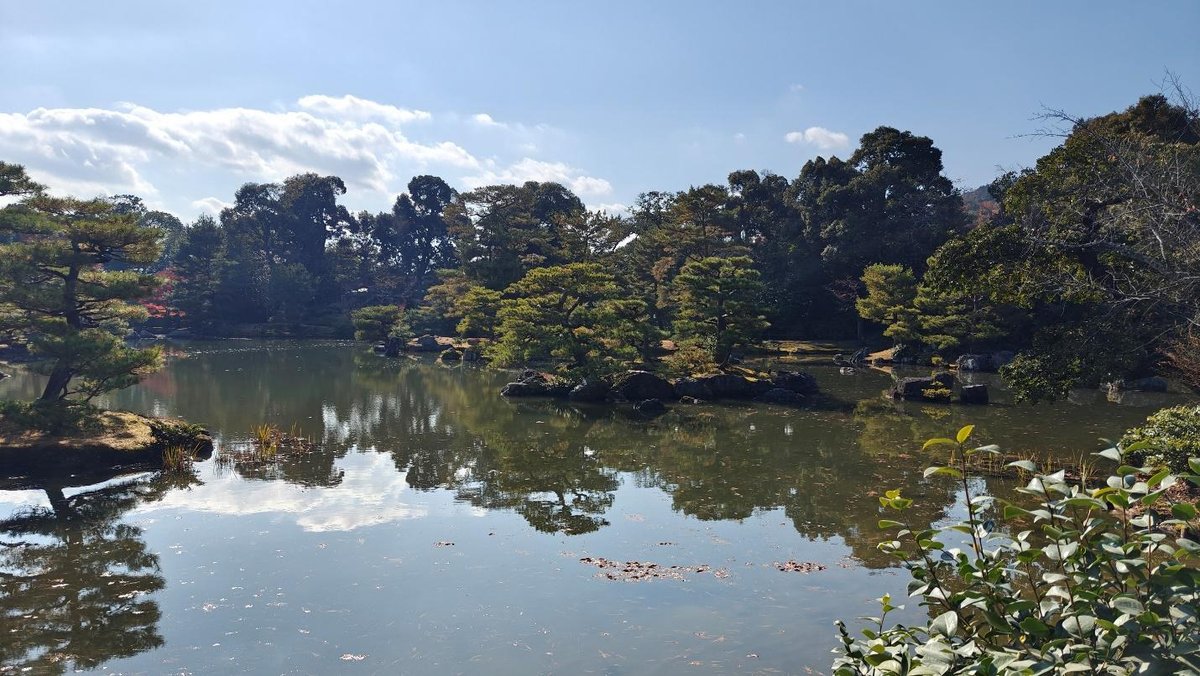
As you’ve probably noticed, the Golden Pavilion is enclosed by this large pond. It’s known as Kyoko-chi and it also features plenty of smaller islands that have Japanese black pine growing on them. Some of these small islands even have names like Tsurushima (which you can see in the middle of the image) and Kamejima.
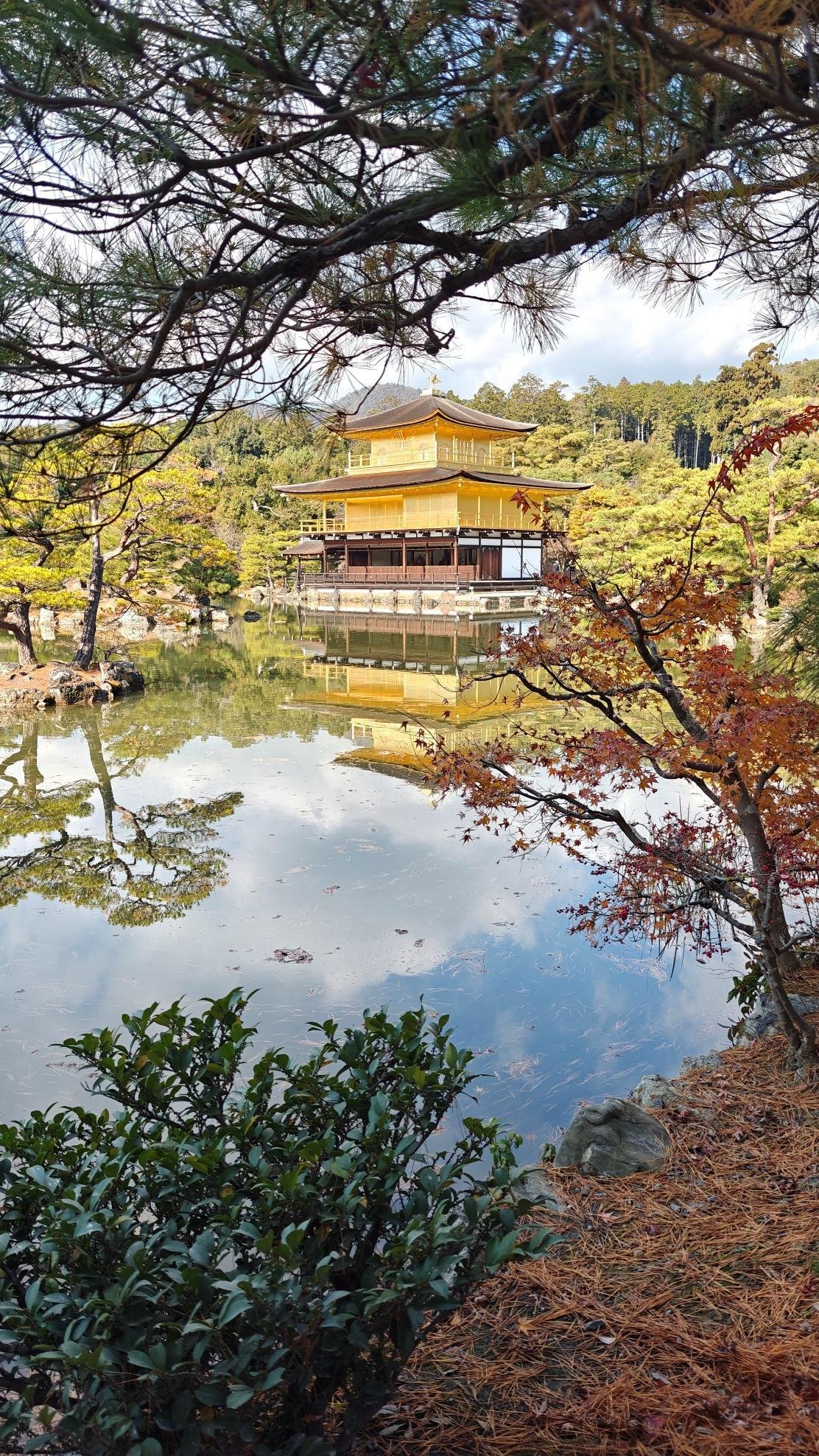
Kyoko-chi literally means mirror pond and if you look at this image you’ll understand how it got its name. Depending on the weather, you’ll get to see the waters here perfectly reflecting the sky as well as the Golden Pavilion and the pond’s islands. This was honestly quite the sight and I don’t think I’d ever seen something quite like this ever since my travels to New Zealand.
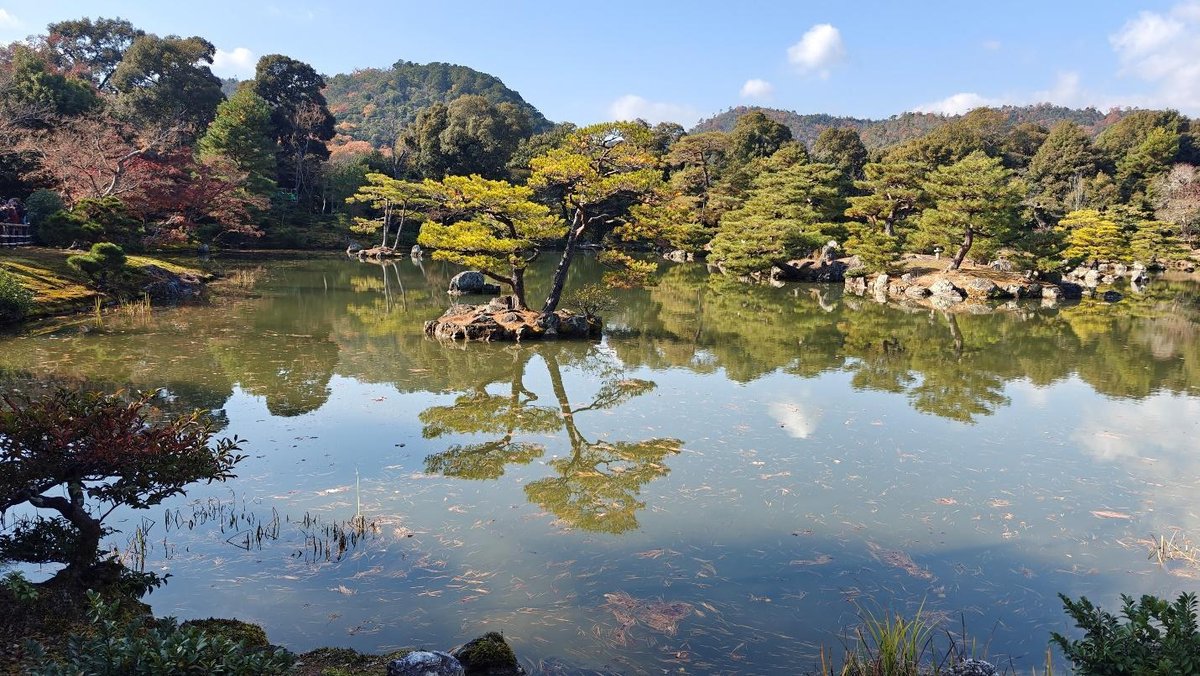
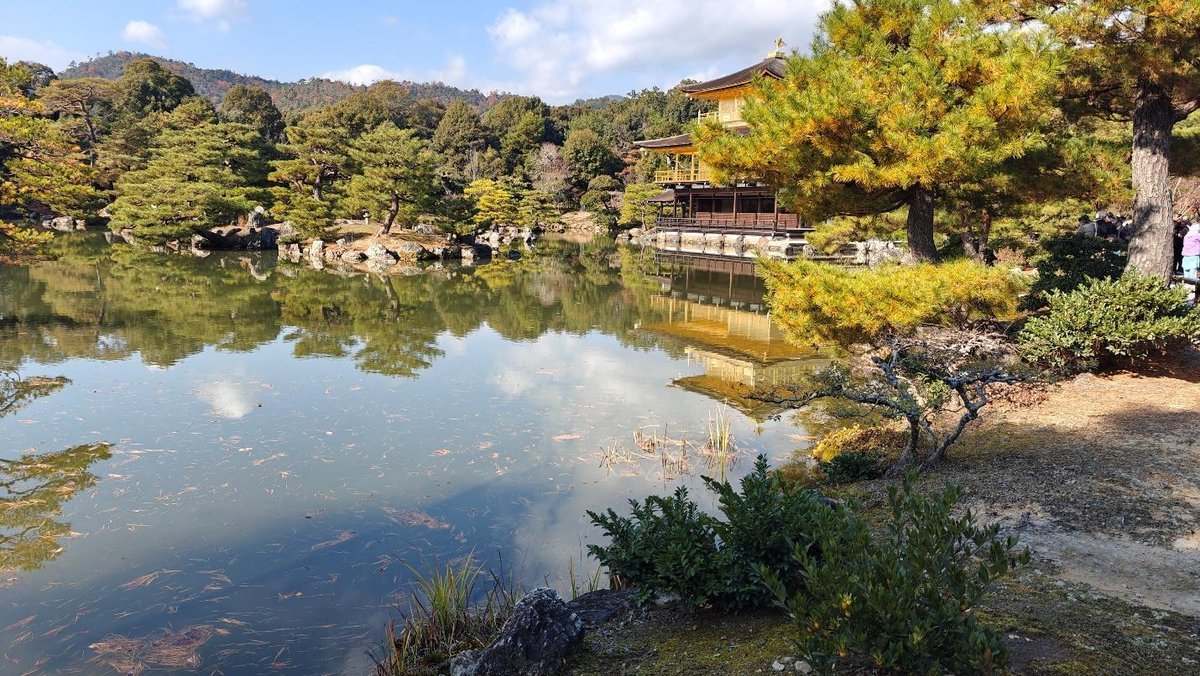
Here’s a look at the Kyoko-chi from another angle. From here you can see Kamejima which translates to Turtle Island. Much like Tsurushima, the island features Japanese black pine trees which, in my opinion, are the perfect complements to the Golden Pavilion from an aesthetic point of view.
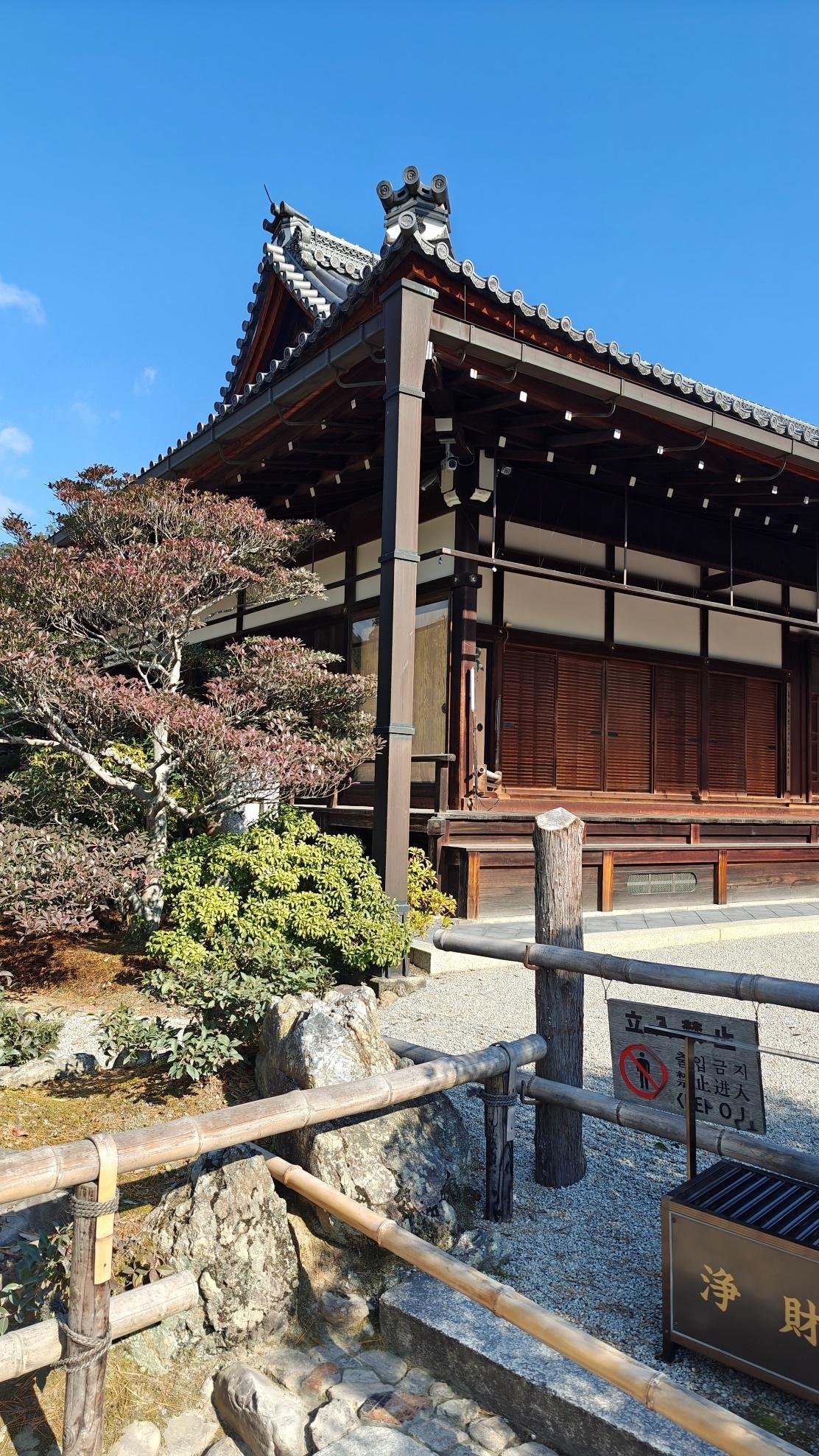
This is the Hojo or the Abbott’s Quarters of the main temple building. If you remember earlier, this is part of the same building that I took pictures of just before paying for admission. From my research, it serves as the main hall as well as a reception area for the temple complex’s visitors.
I wasn’t able to take pictures of it but further along, you’ll come across a really peculiar looking tree on this side of the path called the Rikushu-no-Matsu. It’s basically an ancient pine tree planted in the time of Shogun Akishaga Yoshimitsu that looks like a boat.
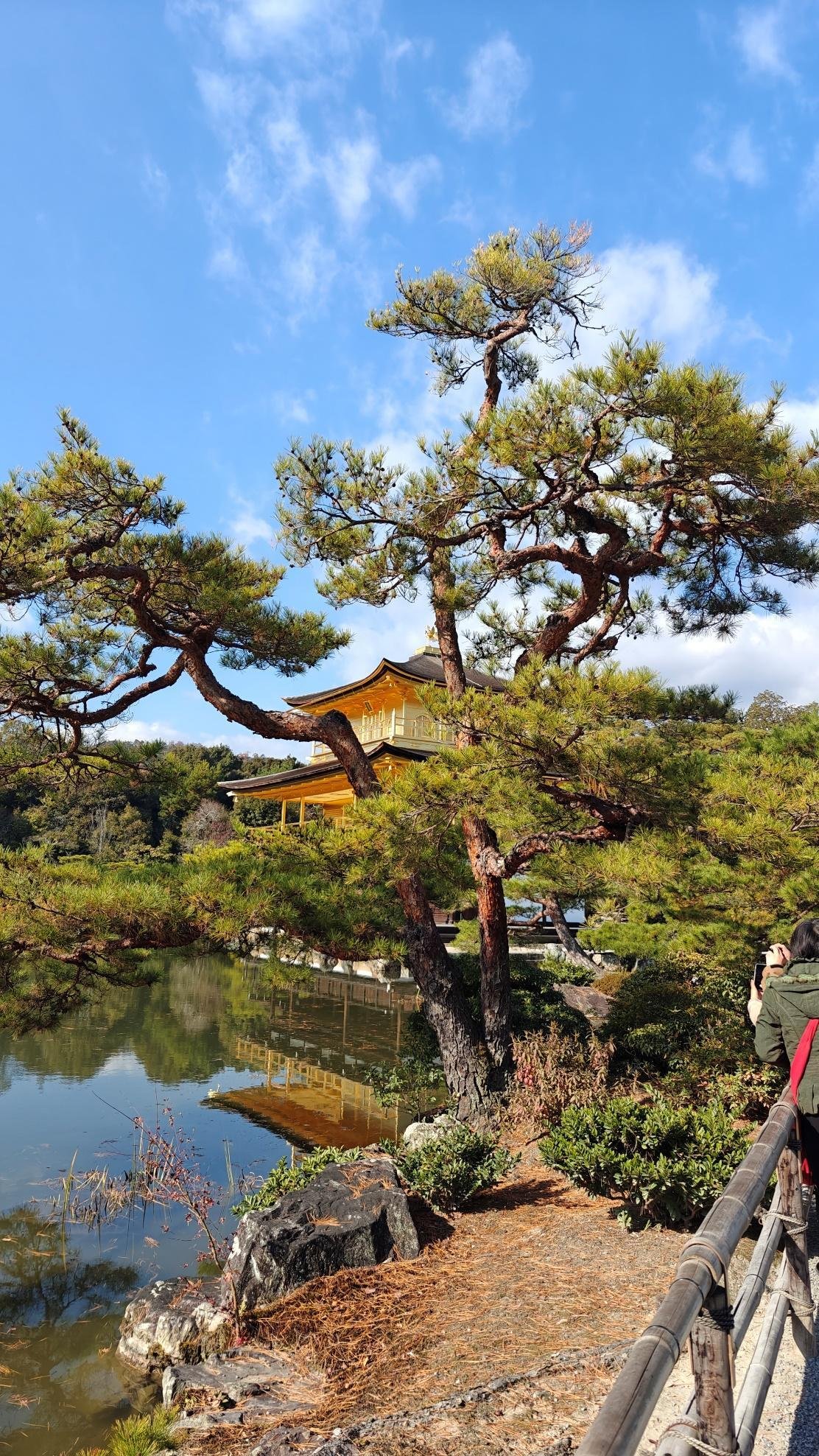
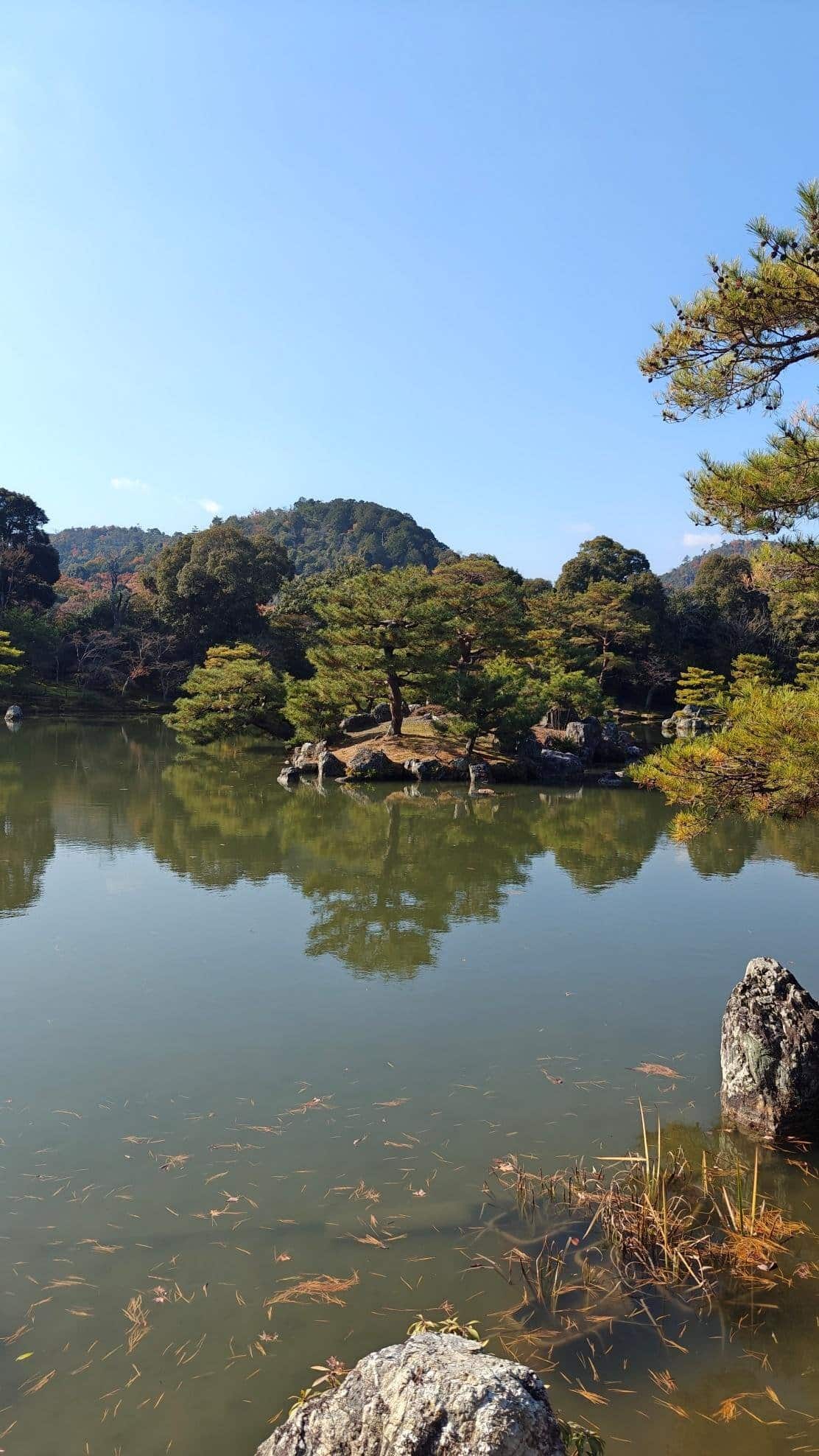
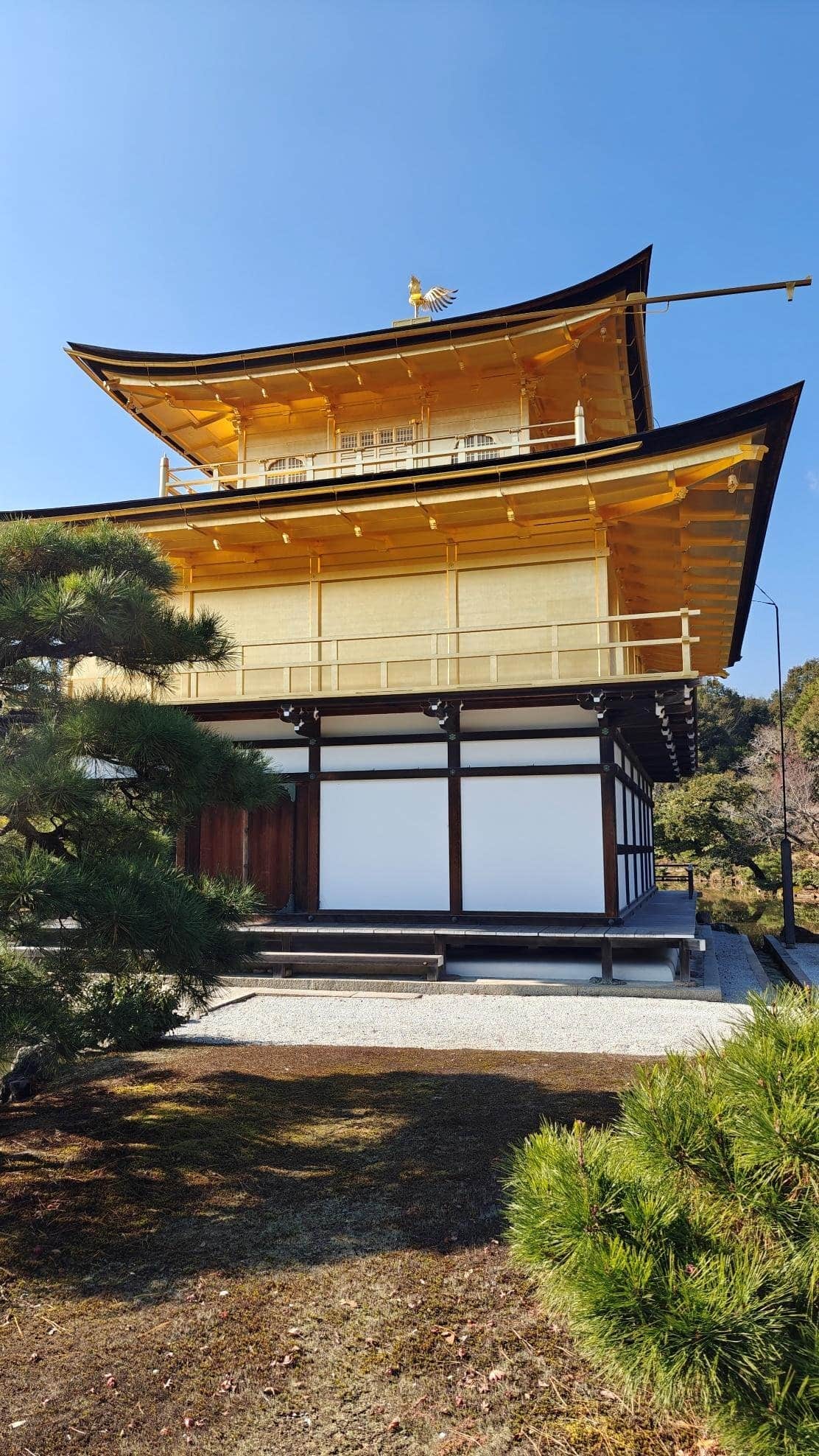
Now a big reason why I wasn’t able to take a picture of the Rikushu-no-Matsu was because I was genuinely excited to see the Golden Pavilion up close. When I arrived at its location I was genuinely impressed at what I saw. Now if you’ve been following my write-ups, you’d know that this isn’t the first time that I saw a gold-covered building this year.
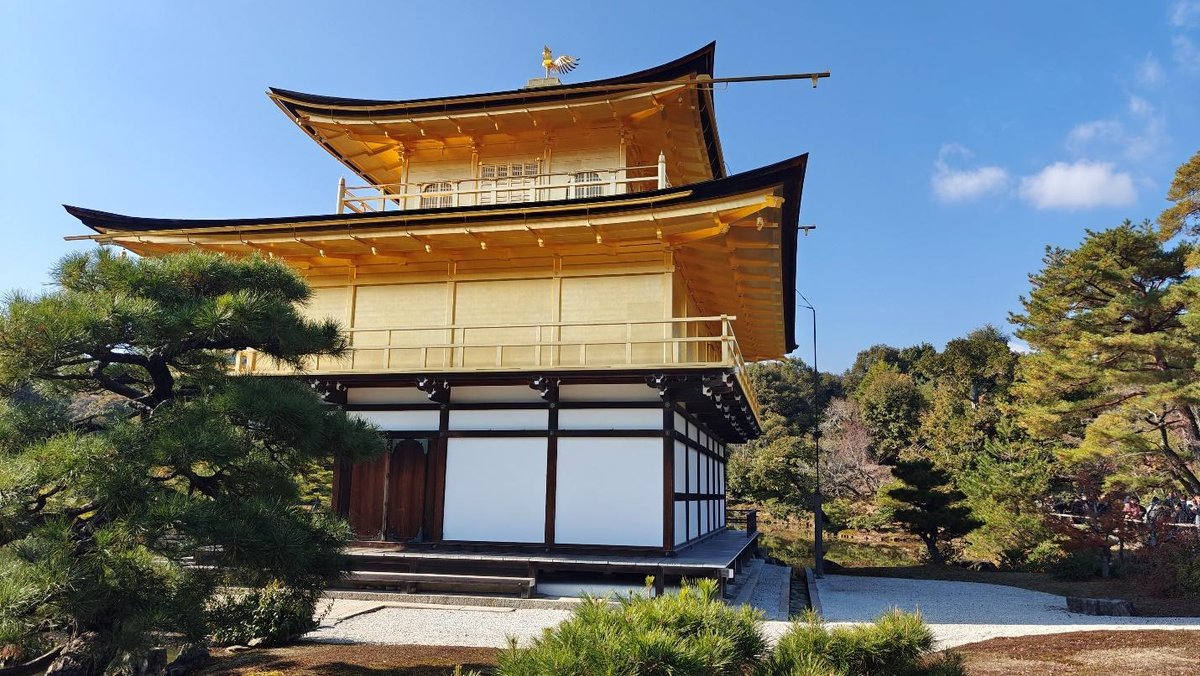
A couple of months prior to this visit to Japan, I’d gone to Chengdu and was able to climb up Mt. Emei to see its Golden Summit. That was also a Buddhist monument and it also had buildings/structures covered in gold.
What sets Kinkakuji’s Golden Pavilion apart though was just how simple it was. It doesn’t look as grand or as ostentatious but it still leaves a feeling of awe when you look at it up close or even from afar.
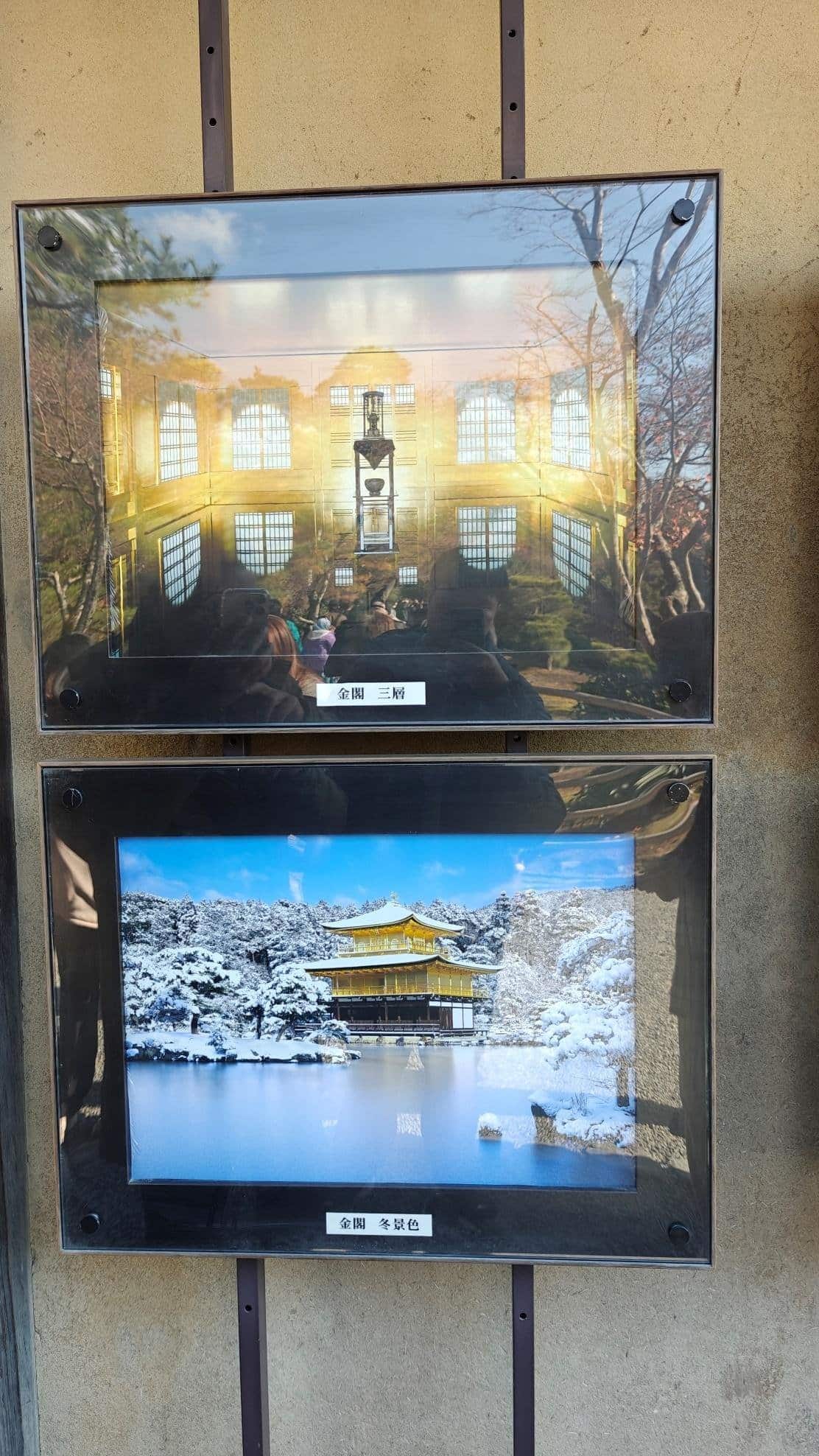
Across the path from the Golden Pavilion is a hut for amulet exchange. On its walls are featured some of the best images of the Golden Pavilion. You might recognize one of the images here as the pamphlet cover from earlier.
On top of that is an image of the third floor interior of the Golden Pavilion which apparently is also covered in gold leaf.
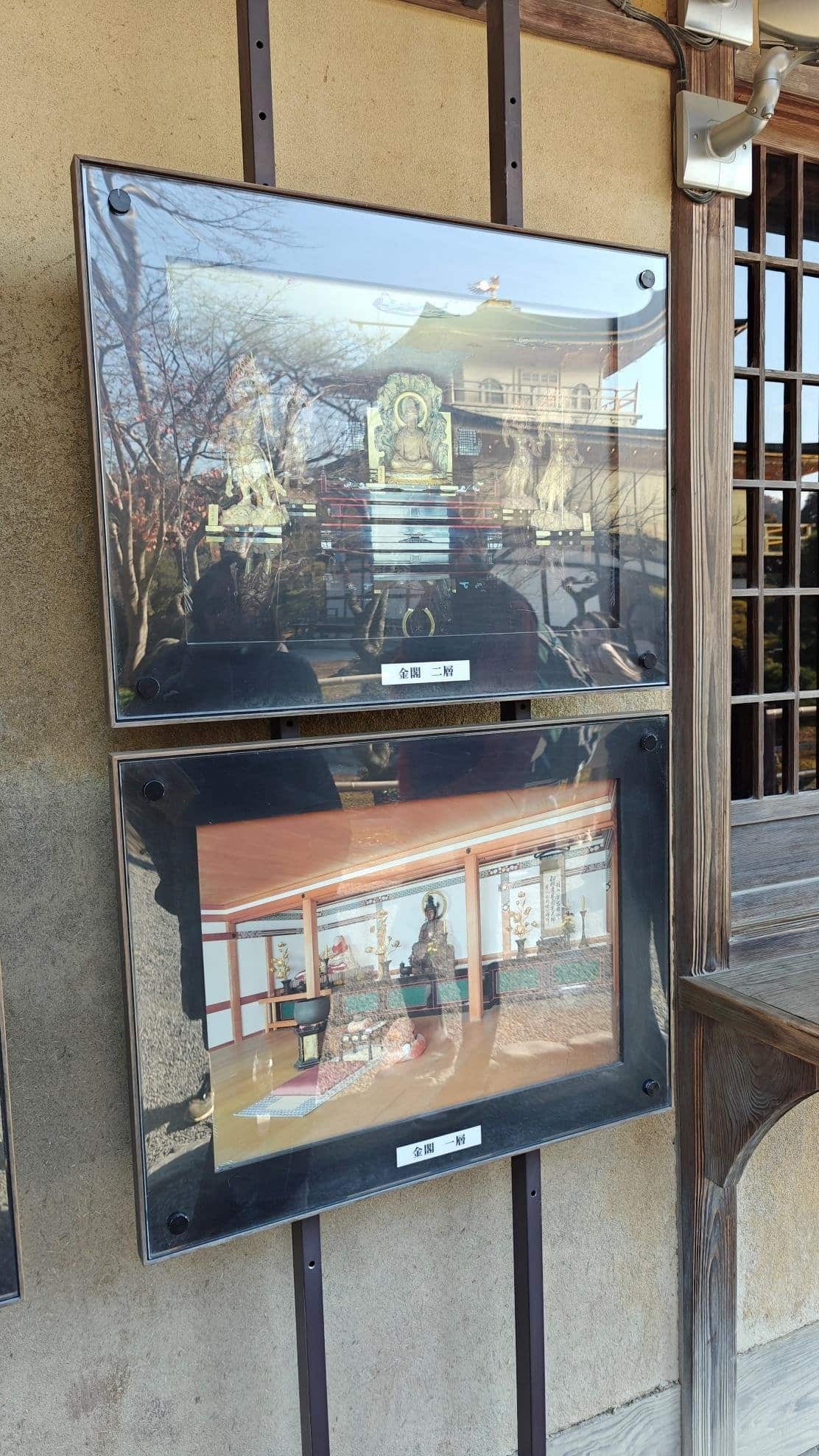
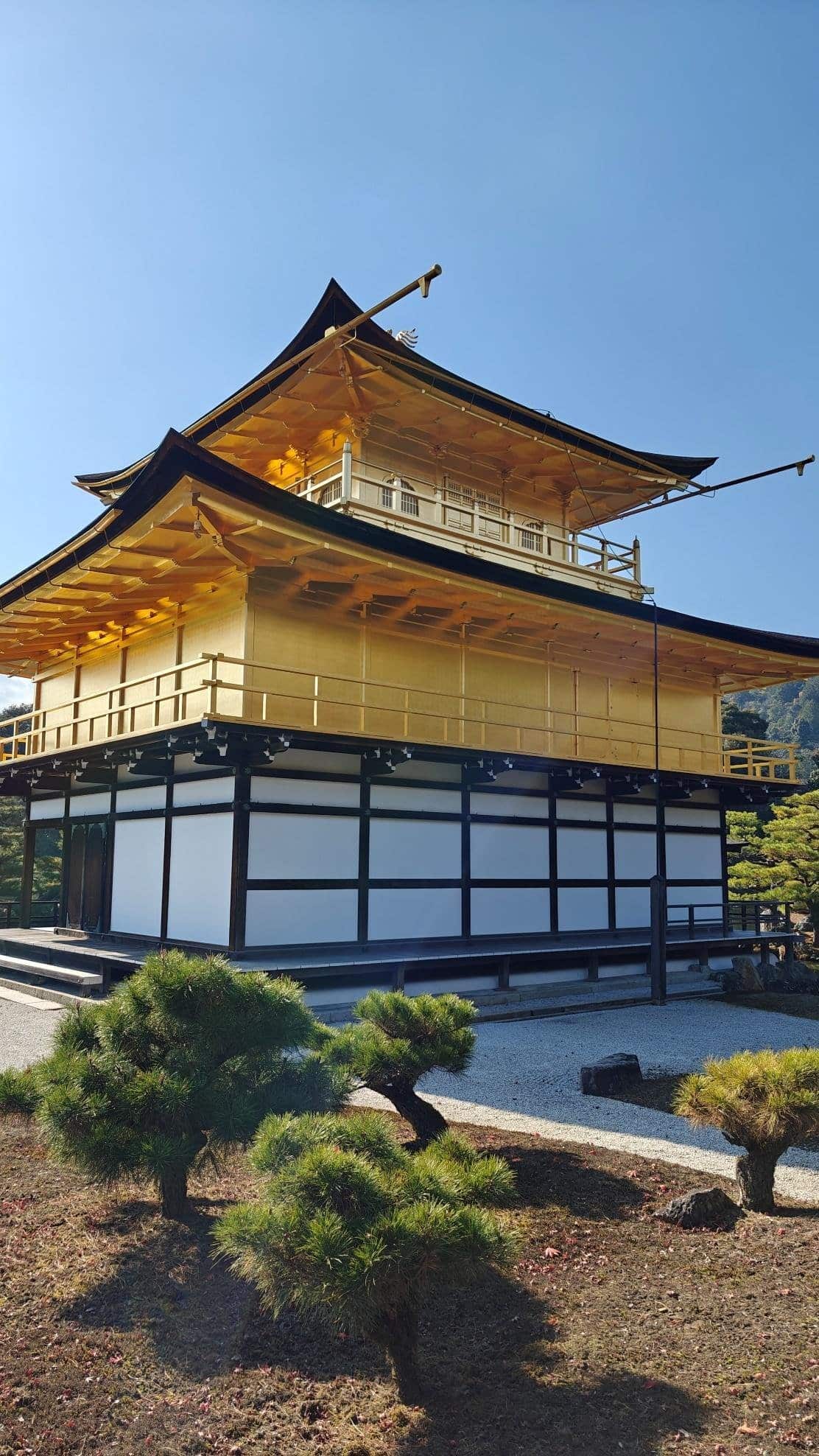
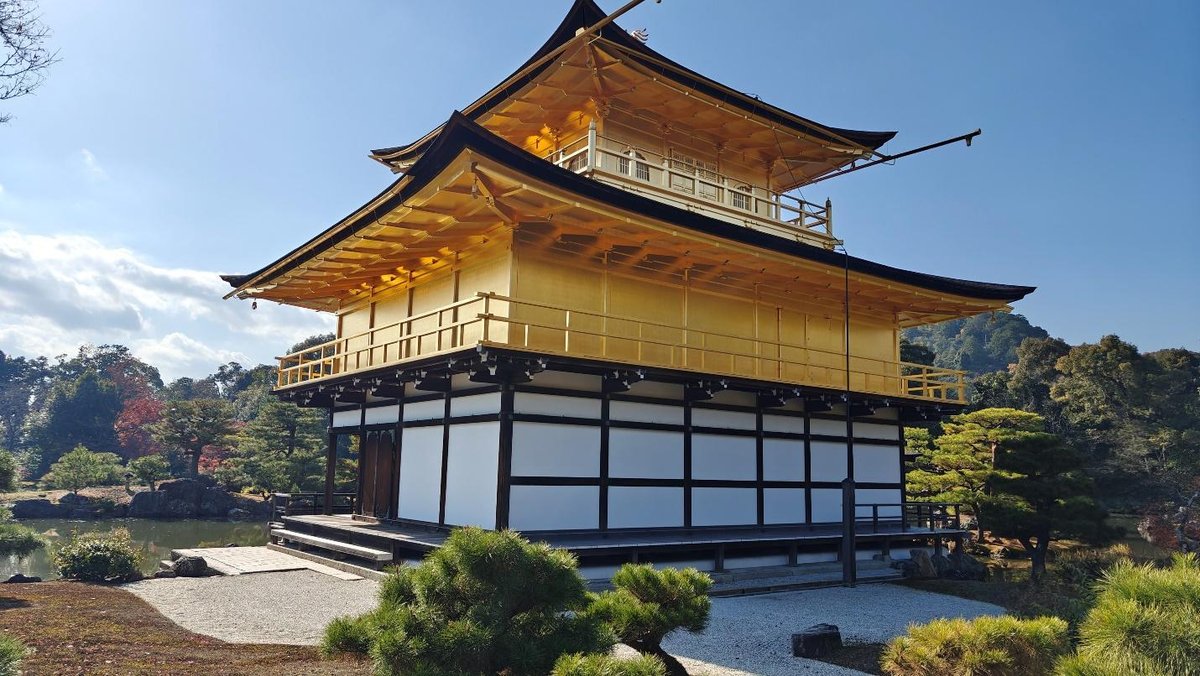
Here are some other angles of the Golden Pavilion. I took this image just a little further along the pathway just past the amulet exchange hut. Up close the building really looks impressive.
Unfortunately, visitors aren’t able to get any closer as part of the restrictions put in by the Rinzai school (the specific sect of Buddhism that manages the temple complex).
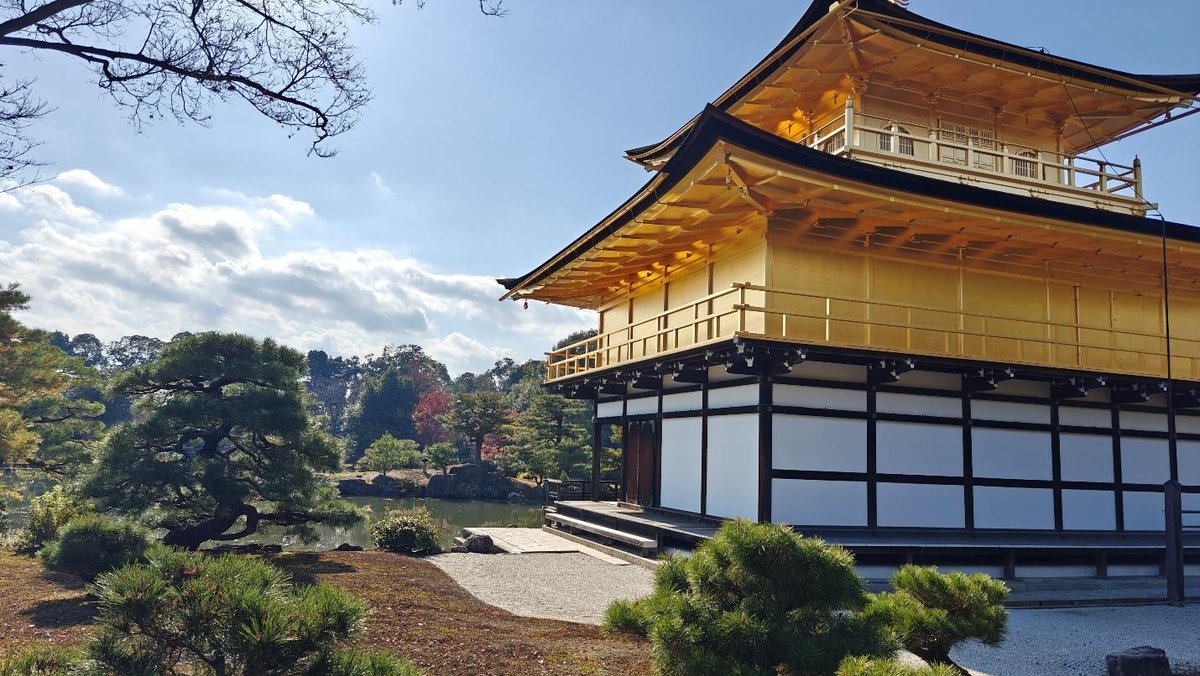
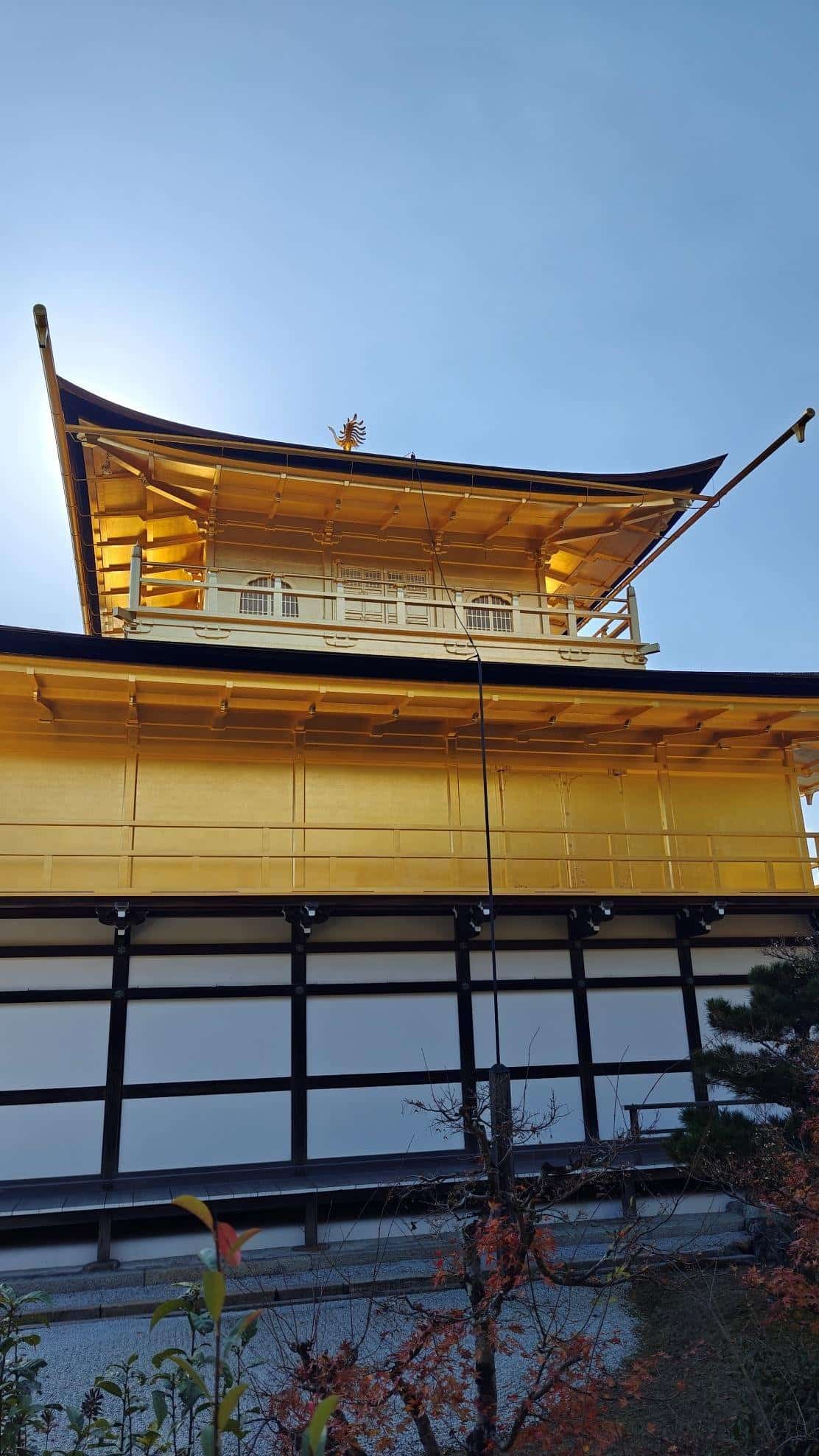
I initially thought that the Golden Pavilion has been here since the time of Ashikiga Yoshimitsu but apparently, this is already a reconstruction. Built in 1397, the structure actually survived the second World War. Unfortunately, it burned down in 1950 though it was eventually reconstructed in 1955.
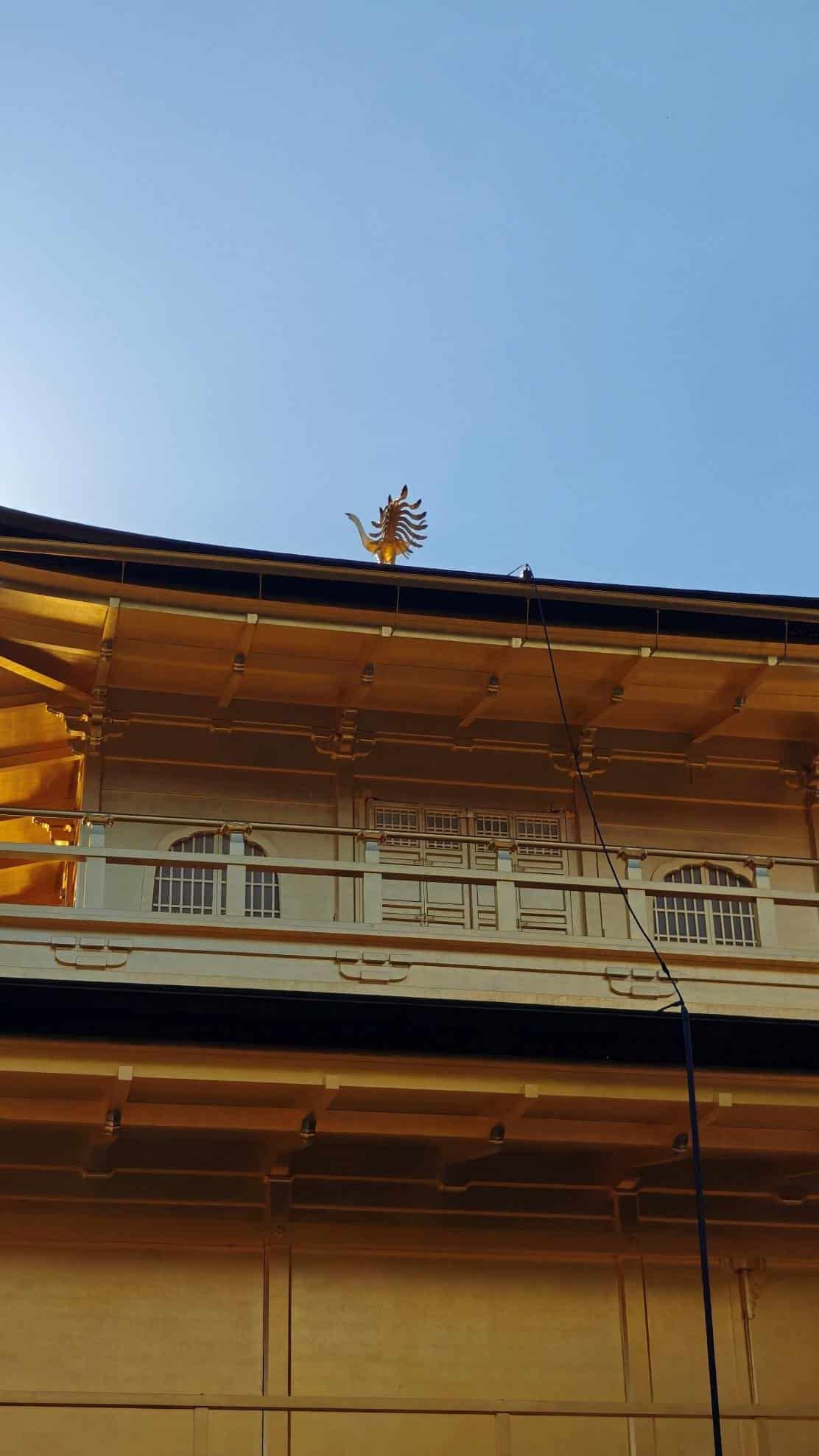
If I remember correctly, the Golden Pavilion was supposed to be Shogun Ashikaga Yoshimitsu’s retirement villa. When he died though, his son had it converted to a Zen Buddhist temple in accordance with his request. Officially, the name of the temple is Rokuonji though it’s become more known as Kinkakuji due to how popular the Golden Pavilion is.
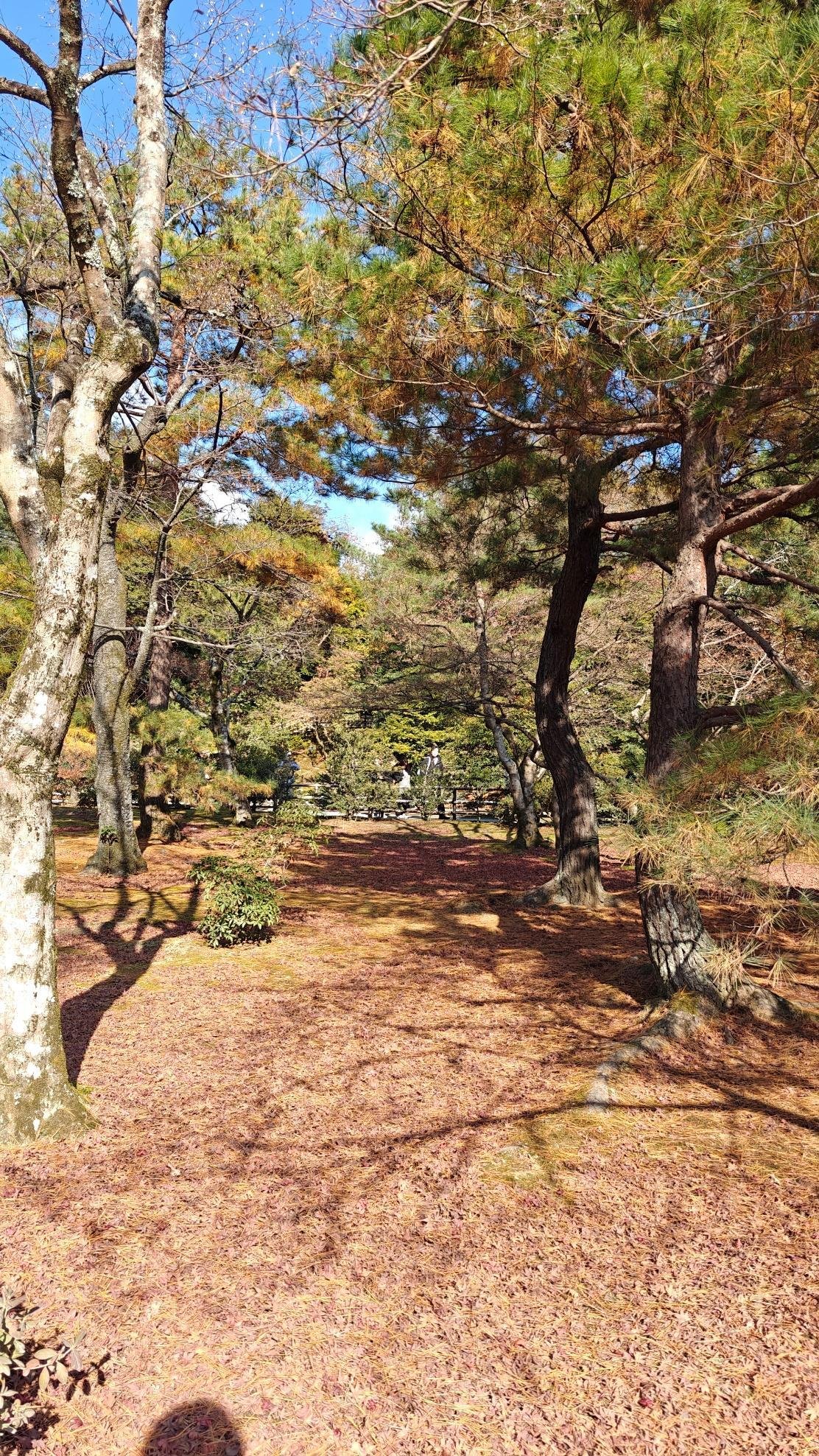
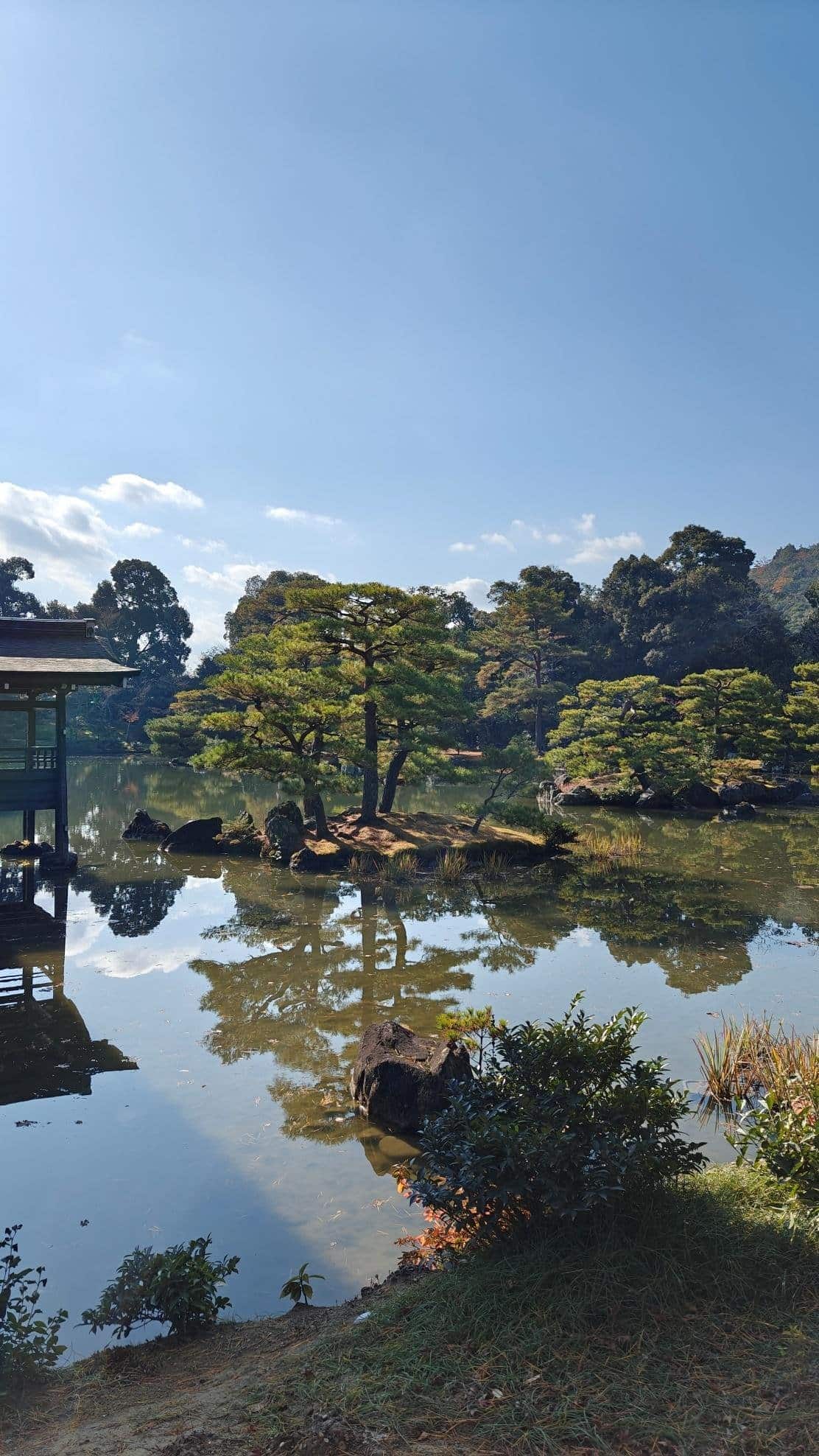
Continuing along the path, I eventually found myself north of the Golden Pavilion and the Kyoko-chi. Again, I couldn’t help but be impressed at the scenery here. The pond was just so tranquil that I kind of get why Shogun Ashikaga Yoshimitsu chose this place to build his retirement villa.
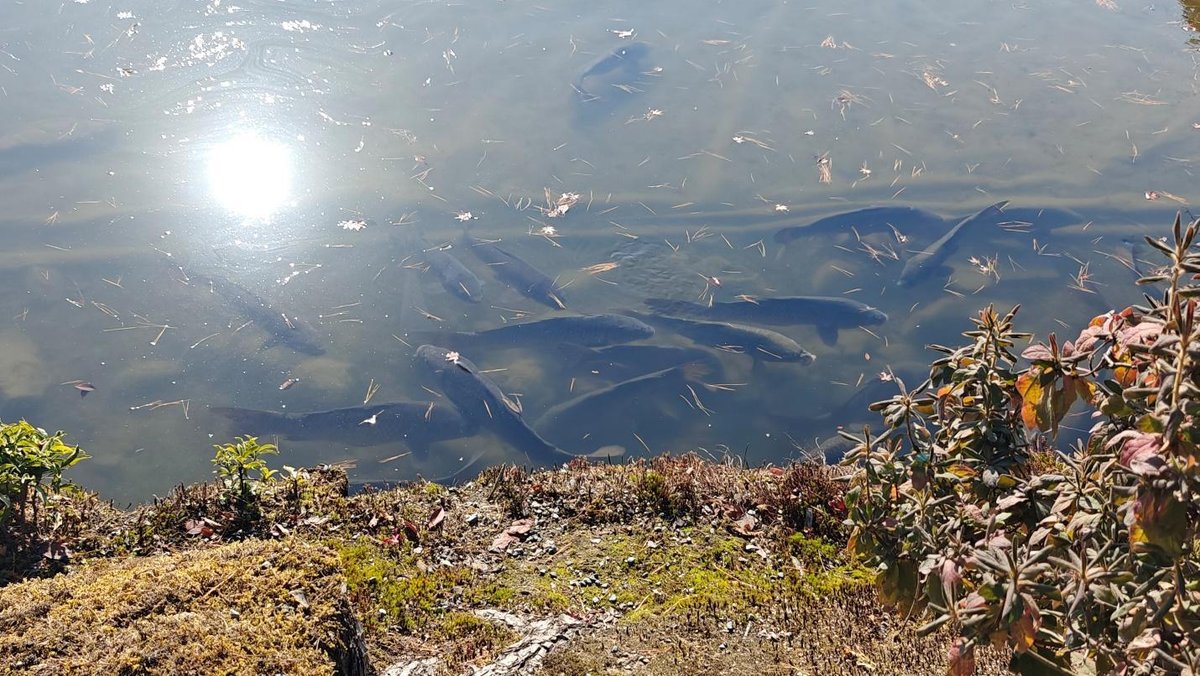
If you enjoy watching fish then the pond has plenty that are sure to pique your attention. I was only able to take pictures of the common carp but I’ve seen koi also swimming around here. From what I’ve been told, the koi varieties here include Dragon Koi, Tancho, Hikarimono, and Utsurimono.
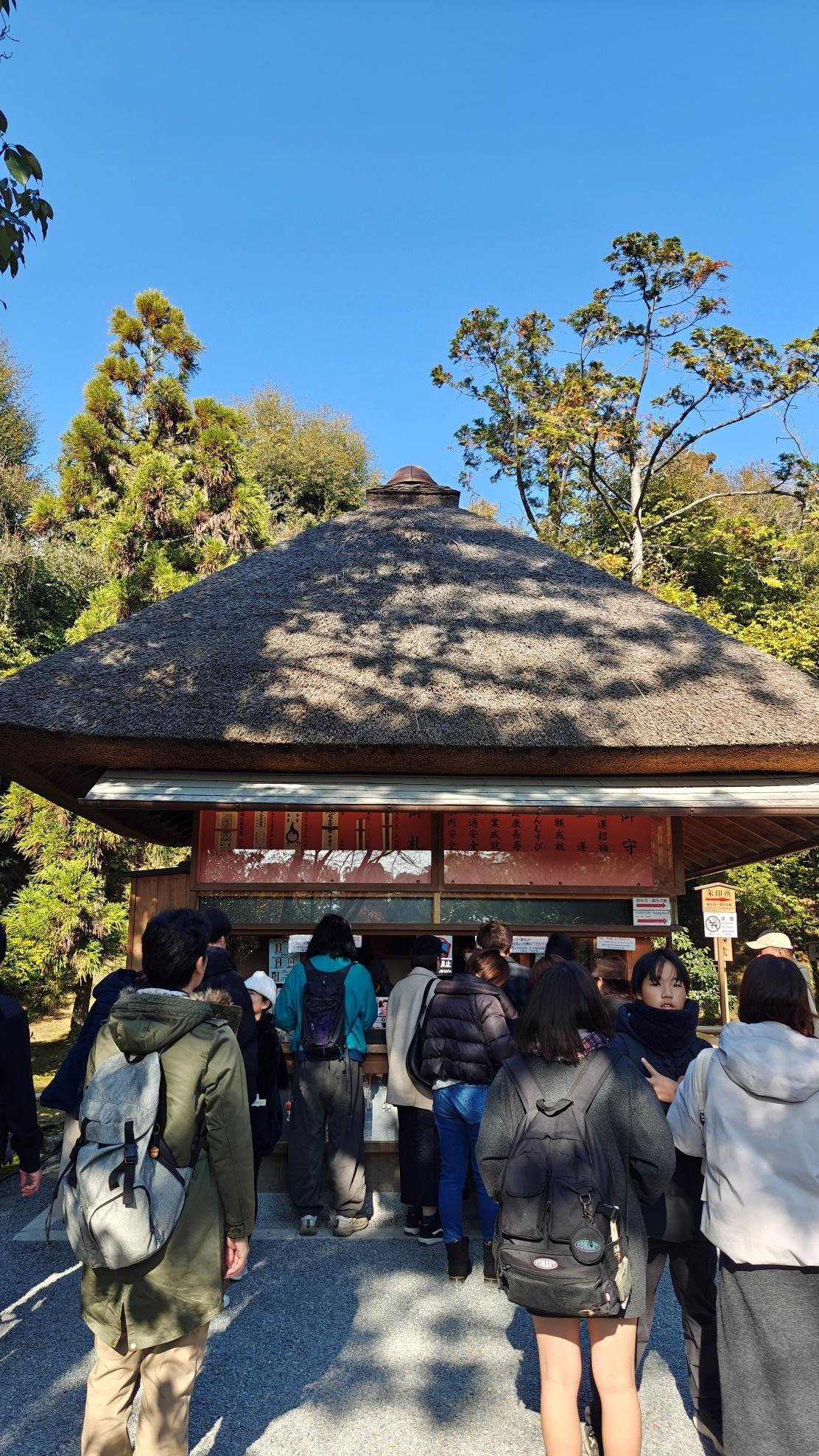
Now it should be noted that the Golden Pavilion isn’t the only notable attraction or landmark that can be found here at Kinkakuji Temple. Following the path past the Golden Pavilion, I came across another hut. This is the temple complex’s amulet shop where you can buy a variety of omamori, goshuin, and ofuda.
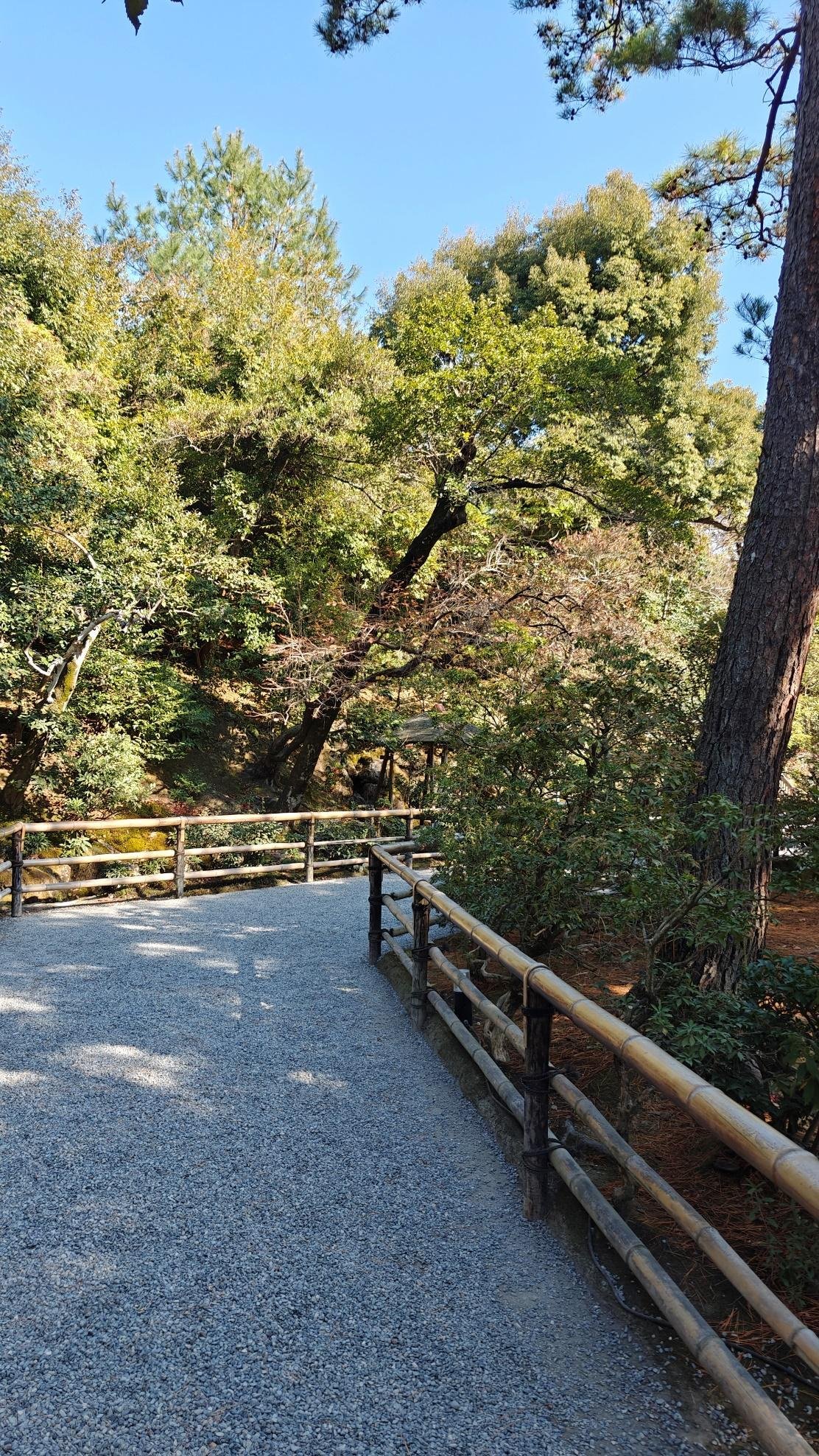
After purchasing from the amulet shop, you can then continue on this path (to your right if you’re facing the shop) to see more of the landmarks in this area. This is also a great time to just take it easy as the air here is really fresh. Now that I think about it, the quality of air in the temples and shrines in Japan that I visited were probably only second to the outdoor areas that I’d been to in New Zealand.
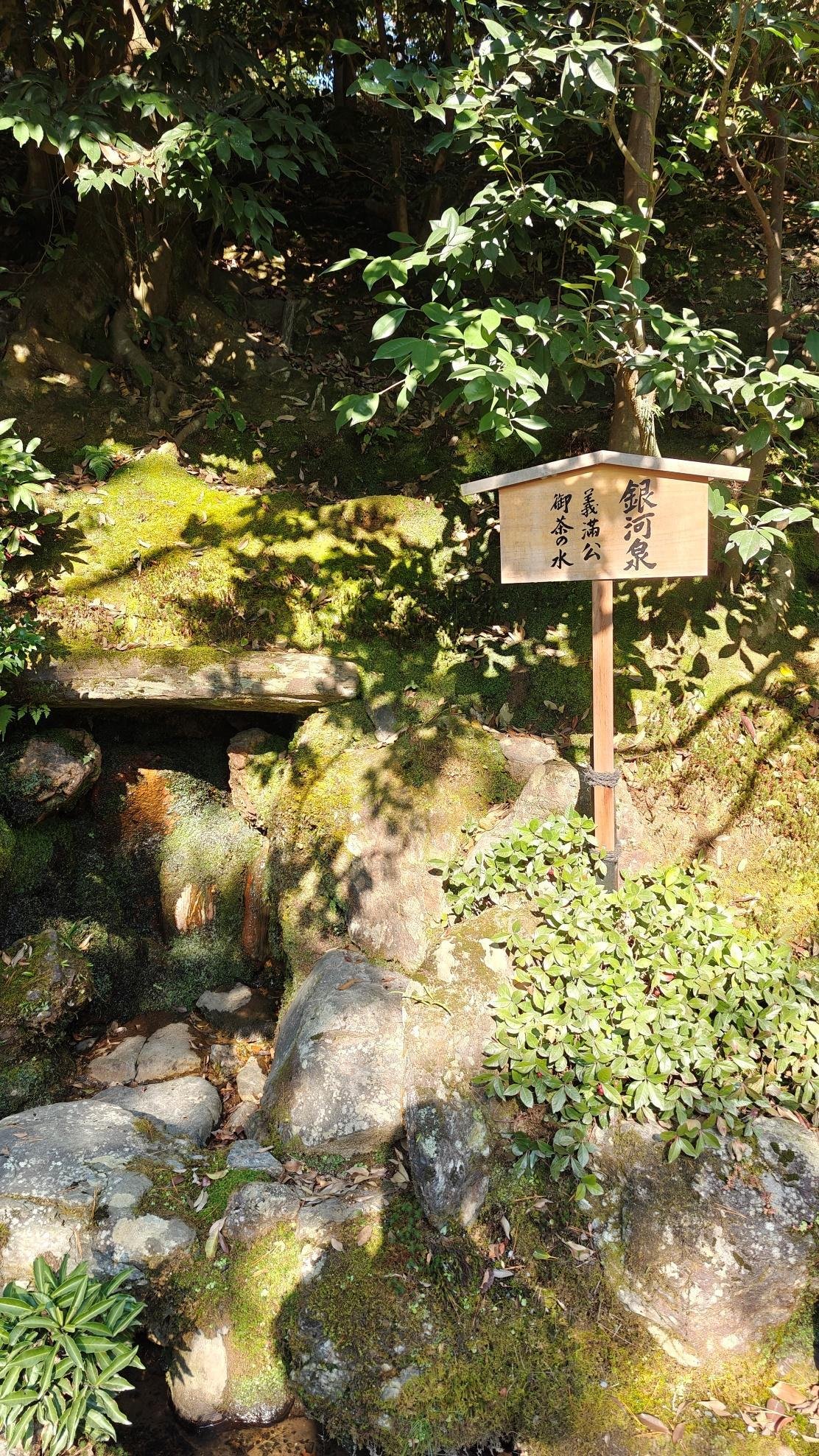
Speaking of landmarks, this is one of the first that you’ll come across. It’s called the Ginga-sen or Silver River Spring and it actually has a unique history. Apparently, the water from this spring was used by Shogun Ashikaga Yoshimitsu for his ceremonies.
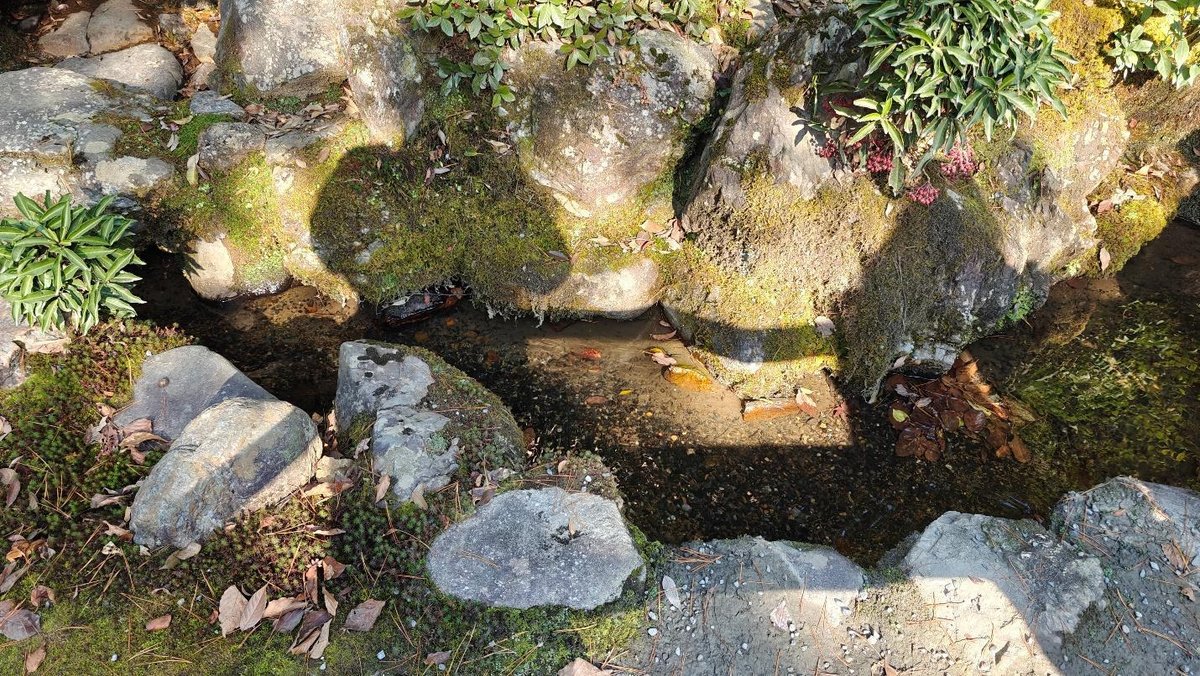
It’s been documented that once he abdicated and retired, Yoshimitsu became a patron of the tea ceremony and frequently held it in the Golden Pavilion. Other than the tea ceremony, he also was said to have been a patron of Noh theatre. As for the water here, it actually looks quite clear though visitors are understandably not allowed to go anywhere close to it.
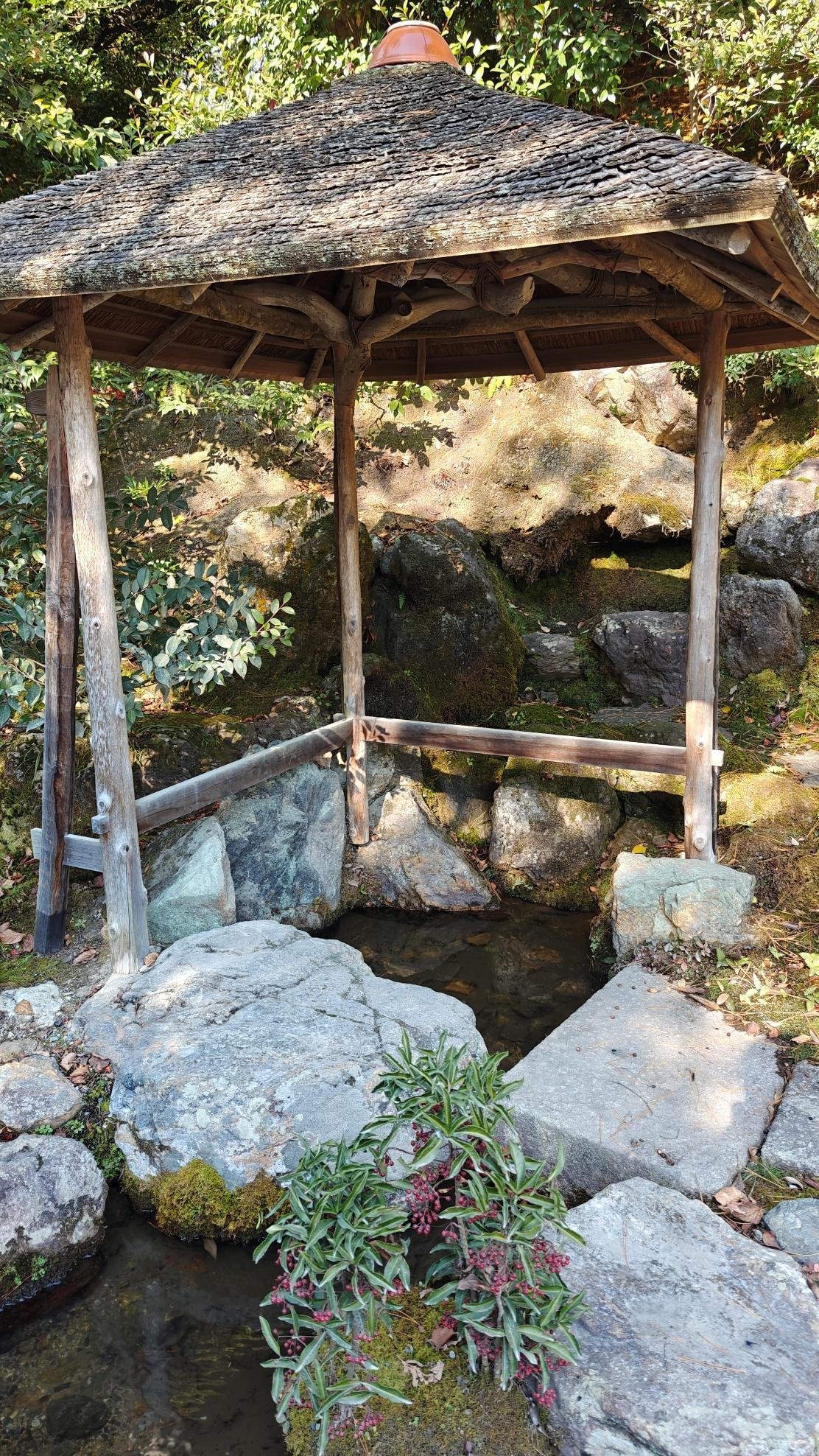
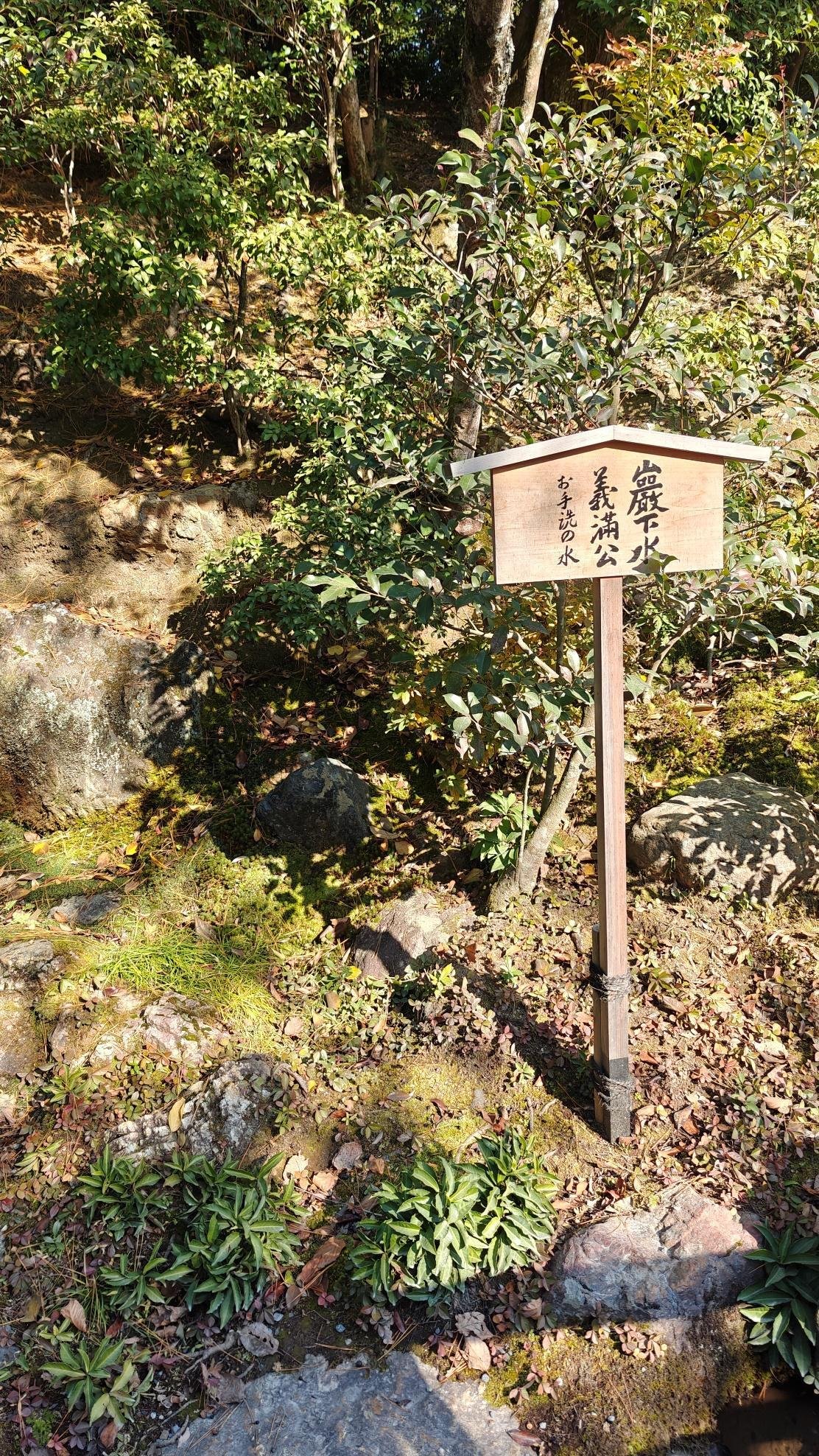
Just right next to the Ginga-sen is the Ganka-sui. It’s essentially a stream that was used by Lord Yoshimitsu for handwashing in place of a temizuya or chozuya. In the next picture you’ll see the signboard featuring the name of the landmark as well as its function.
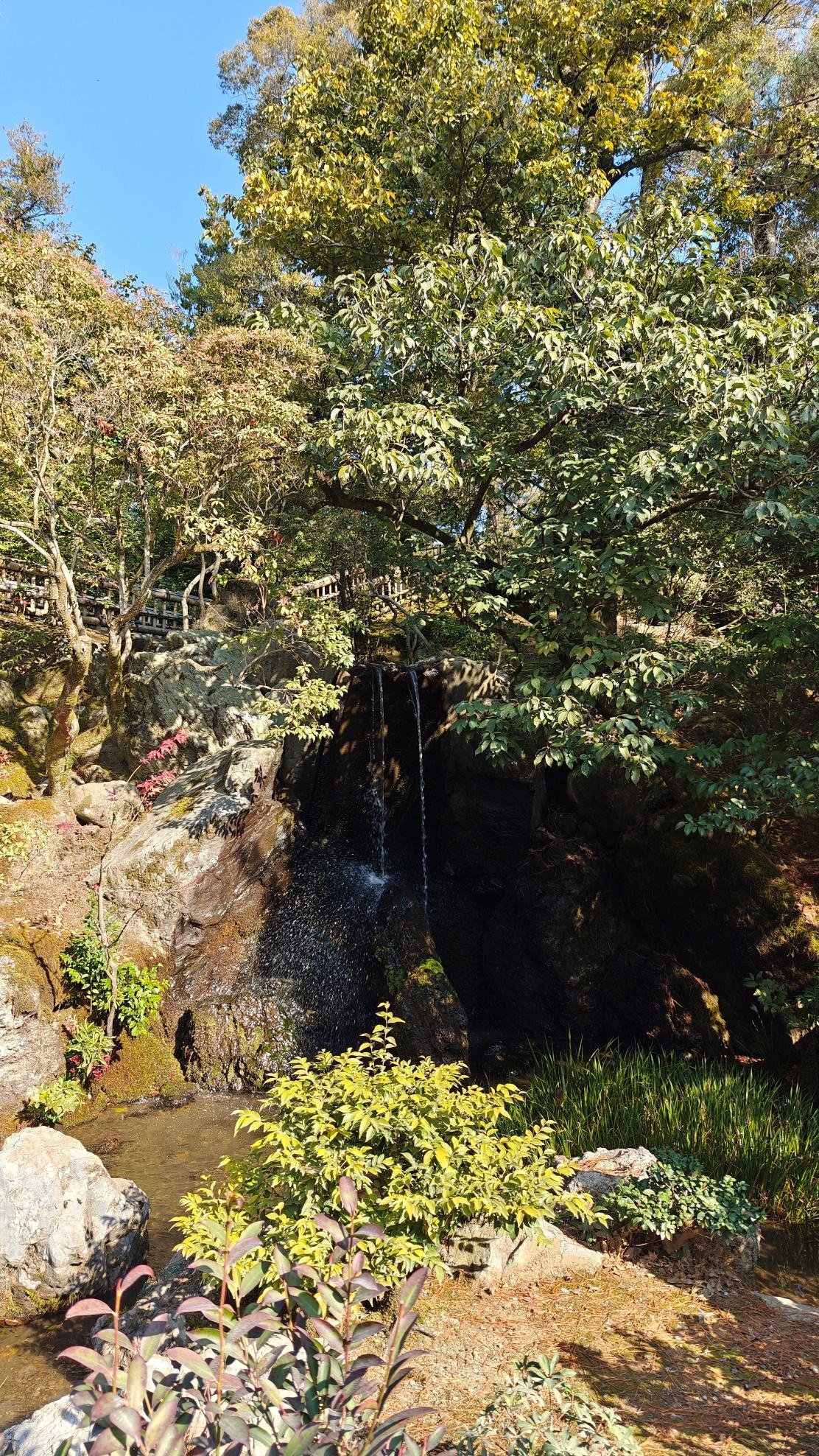
Just a couple of steps from the Ginga-sen and Ganka-sui is another of the landmarks in this specific area of the temple complex. Called Ryumon-taki, this waterfall got its name from a Chinese legend involving carp leaping up the falls to then turn into dragons. Much like the Ginga-sen, my initial thought was that the falls were man-made.
Turns out, all of these are actually naturally occurring.
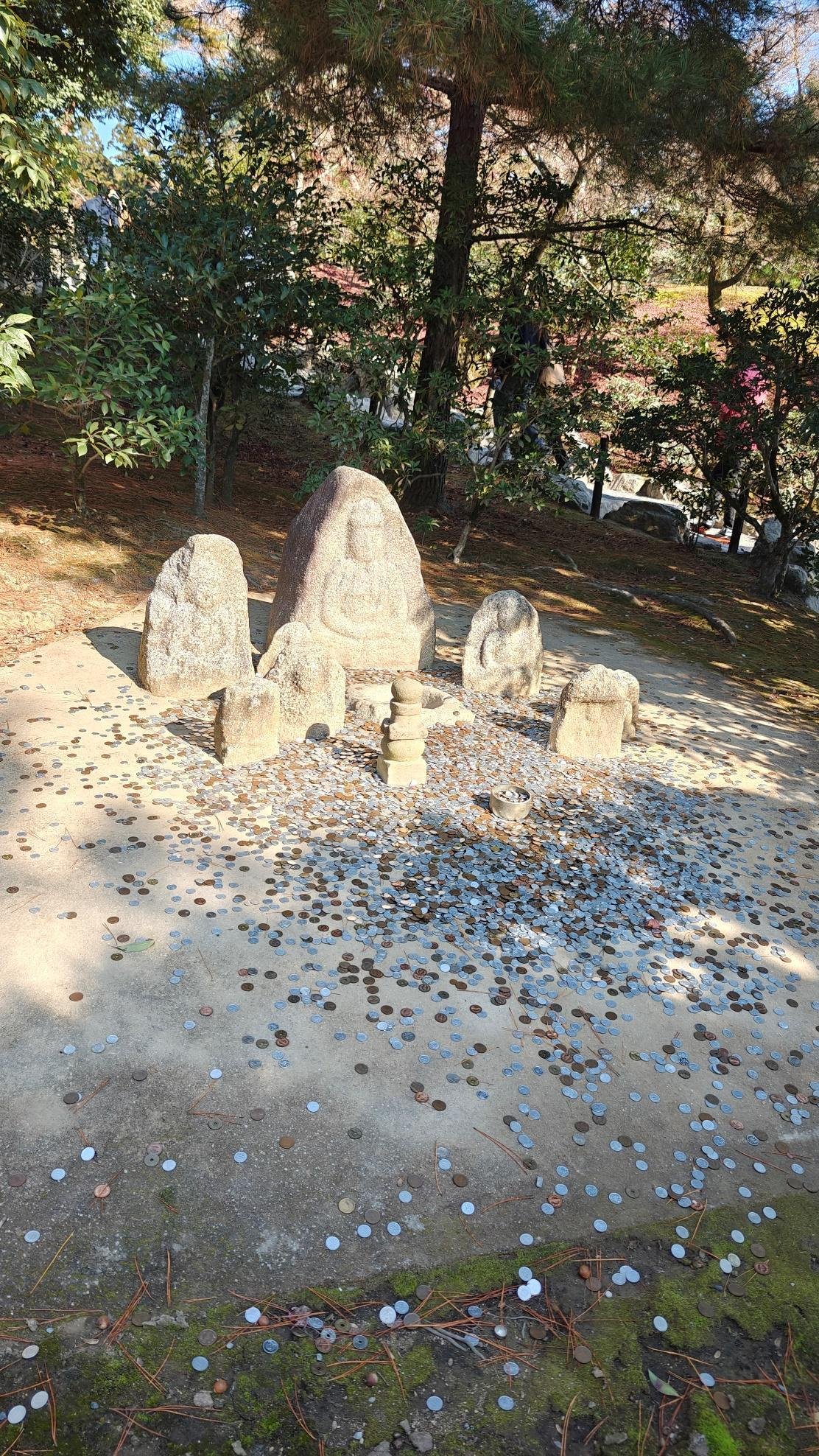
Of course, a Buddhist temple wouldn’t be complete without statues of Bodhisattvas. Now I’m not quite sure who these are supposed to be as the statues looked really weathered. That said, this seems like a popular landmark here as the ground surrounding the statues is littered with coins thrown by visitors wishing for good luck.
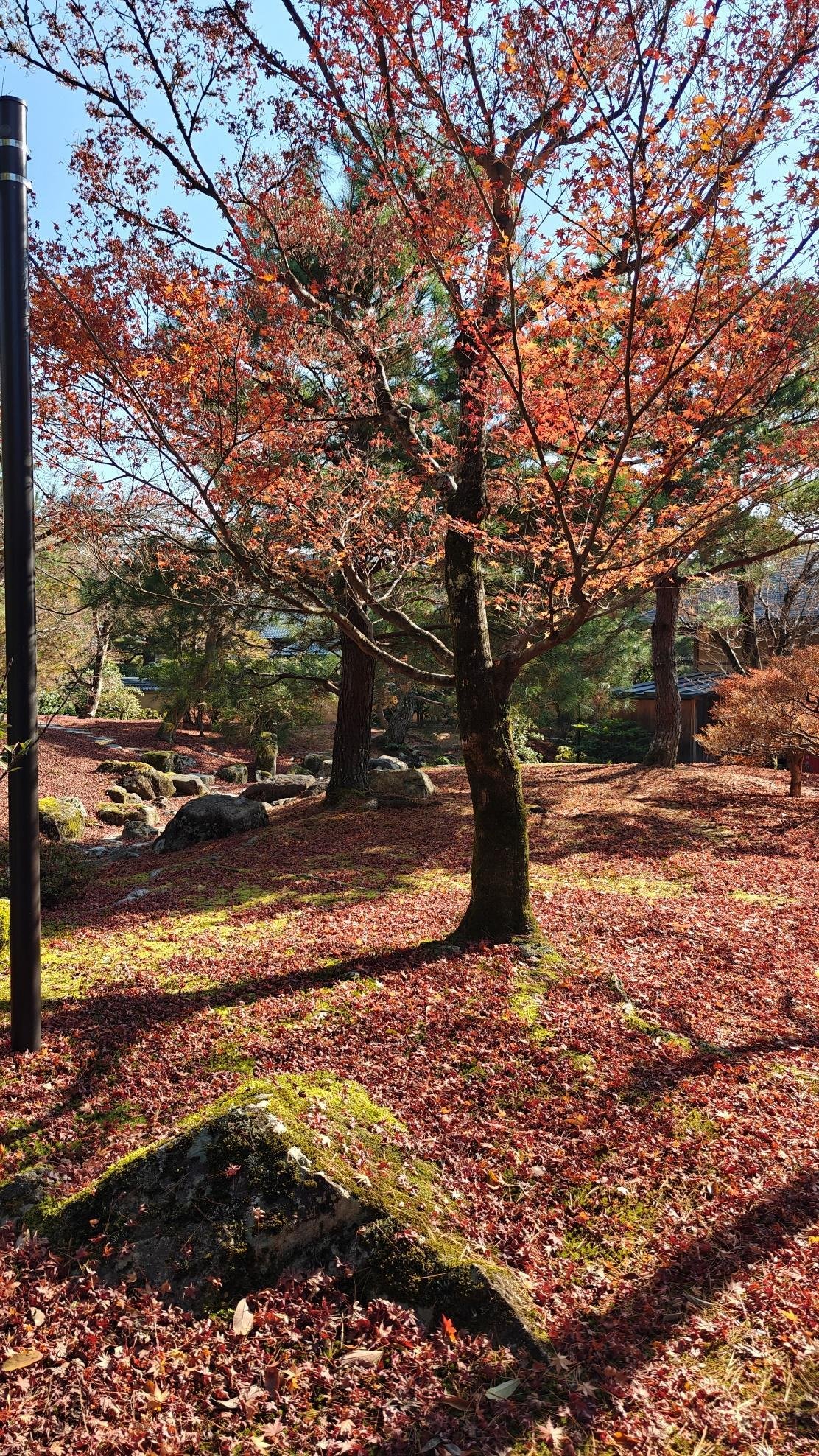
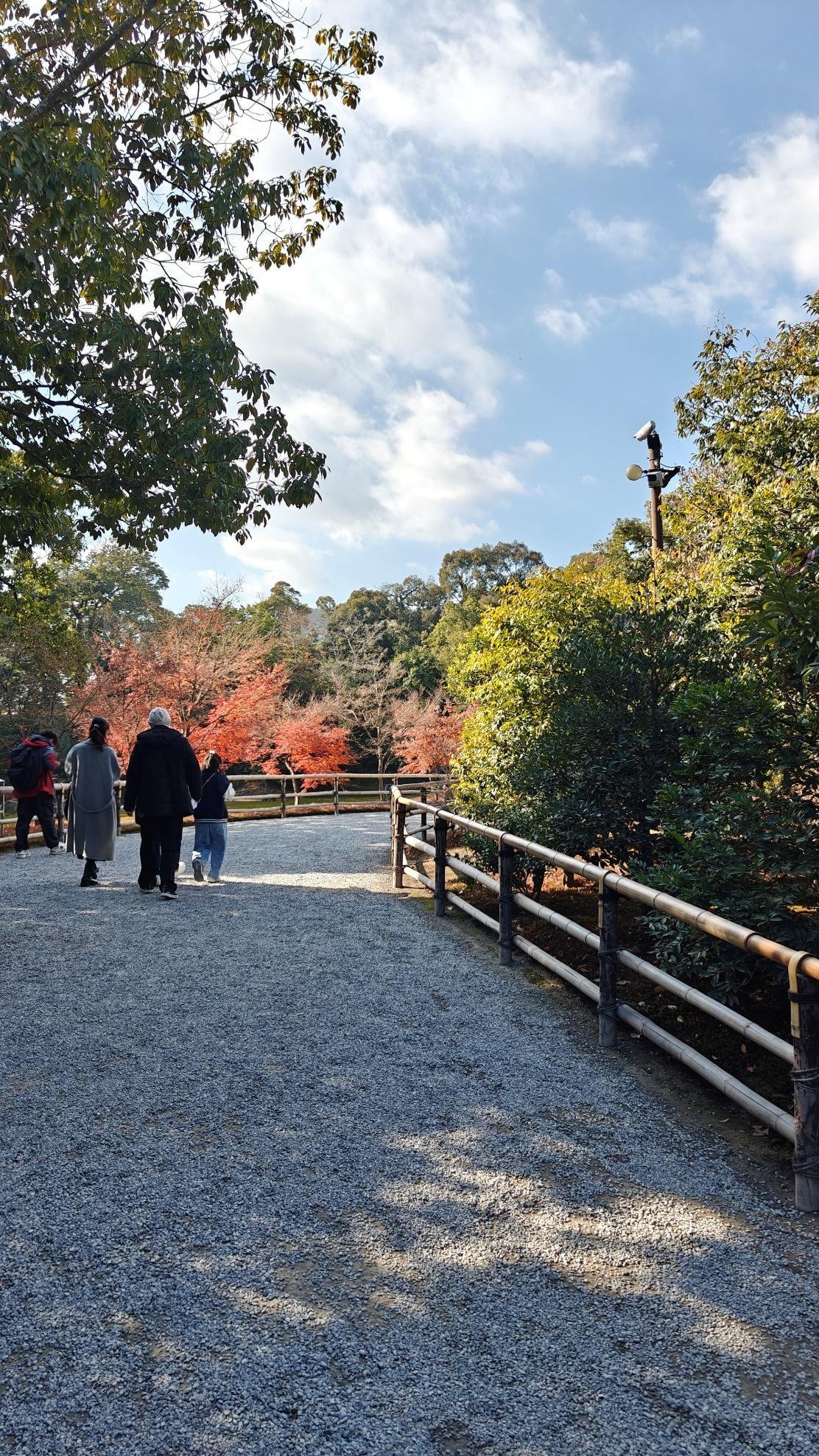
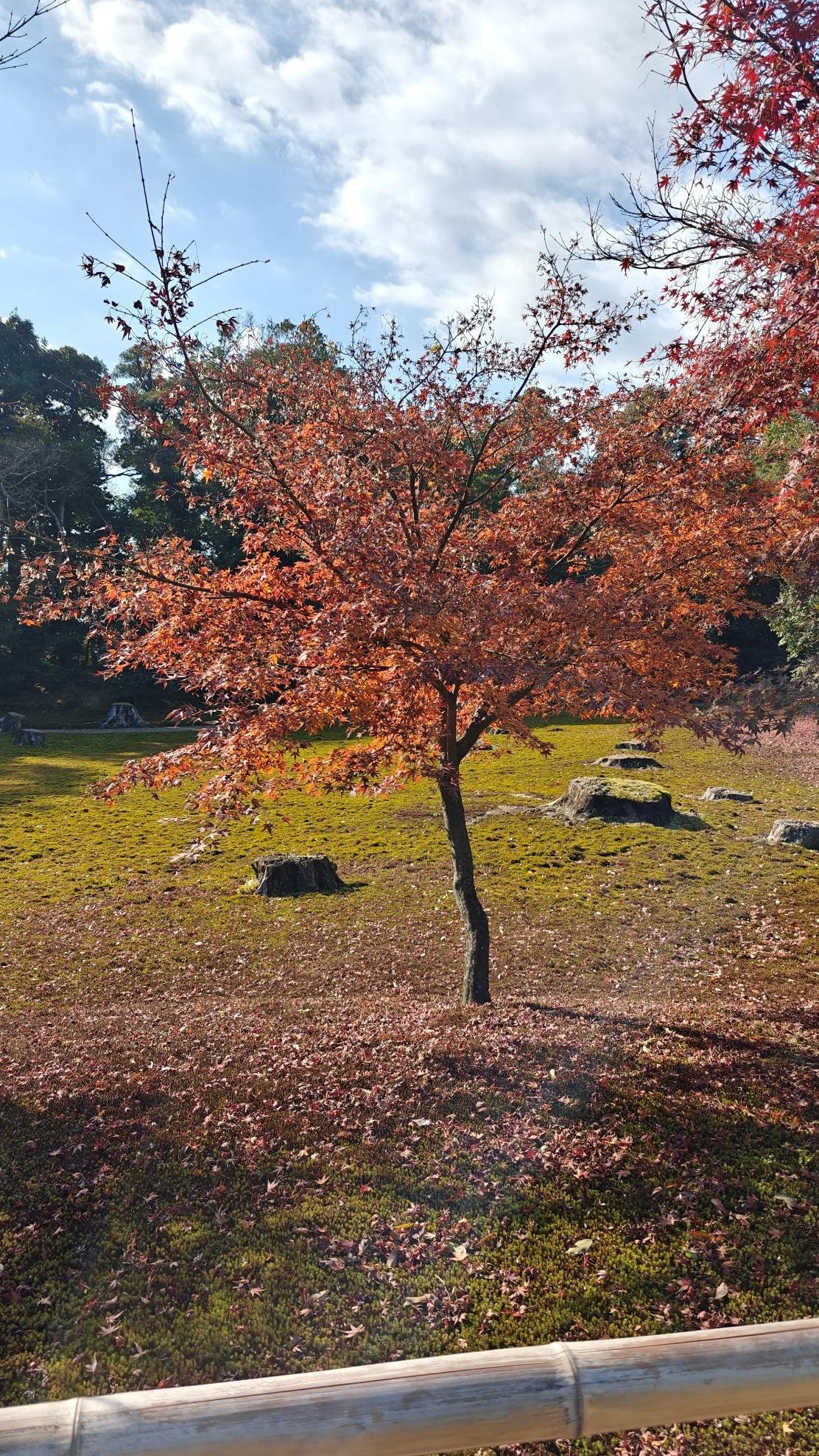
What’s great about visiting Kyoto in winter (as opposed to visiting in autumn) is that you also get to enjoy views like this without having to contend with the massive crowds. If you’re just after viewing the fall foliage then you can actually still see them at the start (first two weeks or so) of winter. Granted the colors are not as spectacular as in autumn but I’d much rather prefer coming here in winter than contending with the large number of people visiting in mid-November.
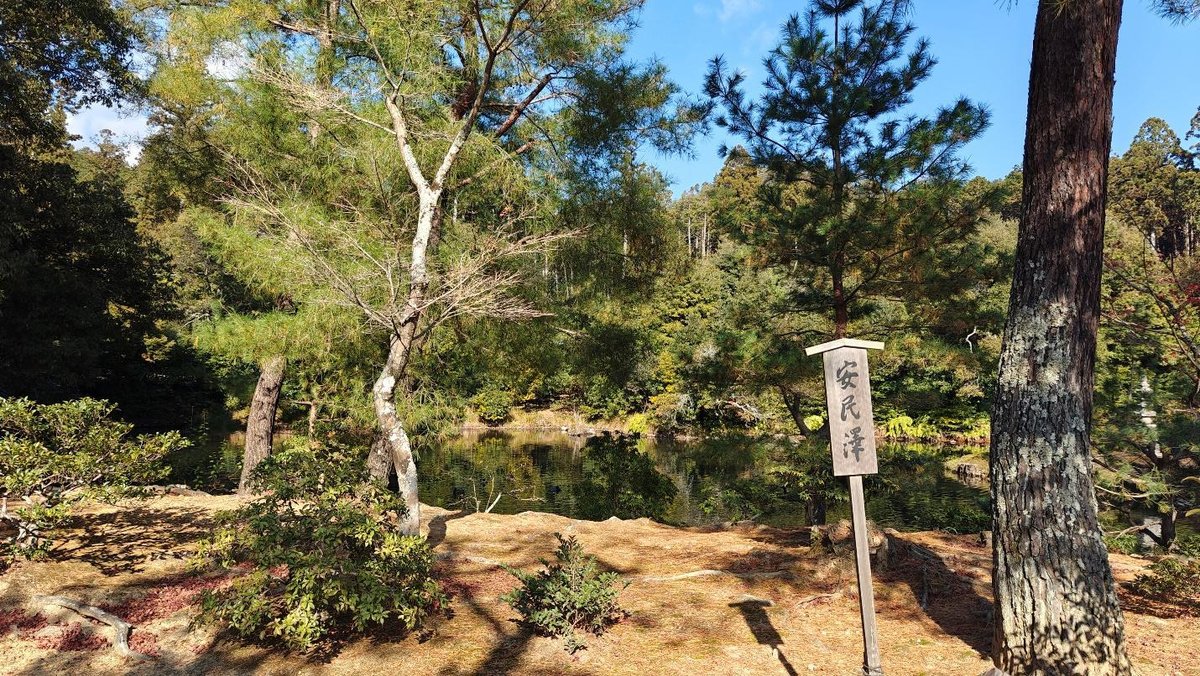
Further along the path, I came across the Anmintaku Pond area. This has the White Snake Mound pagoda and stone statue landmarks which also have a unique history tied to a mythical white snake. The pond itself is a lot smaller than the Kyoko-chi where the Golden Pavilion is.
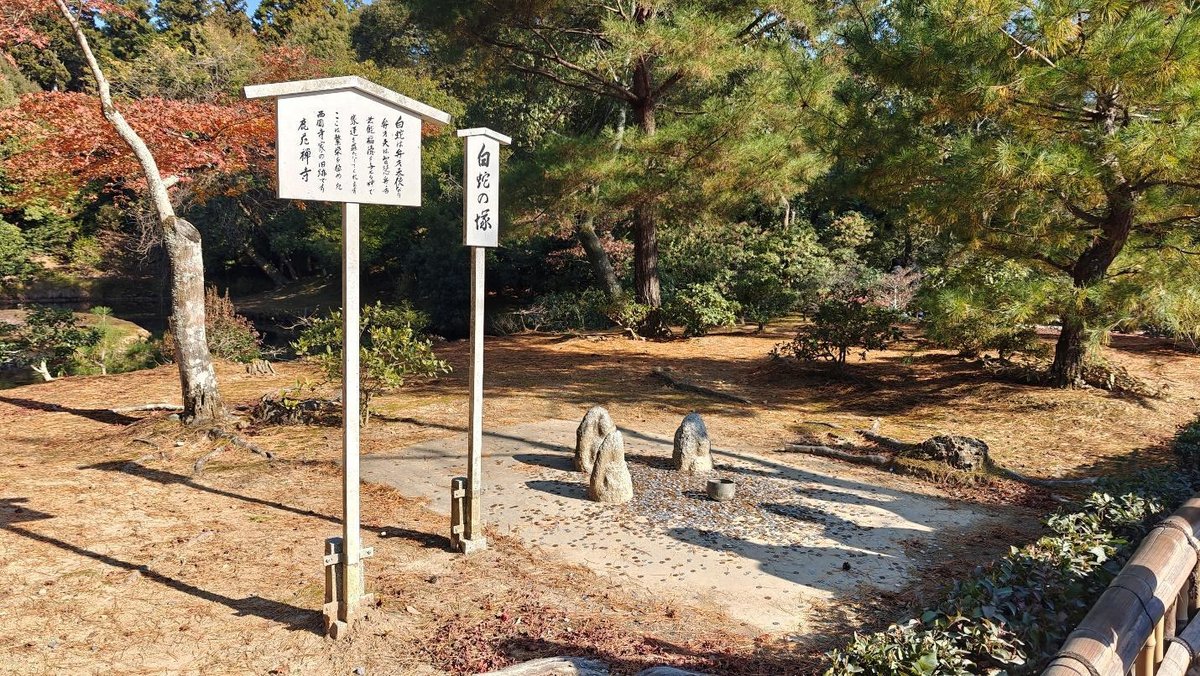
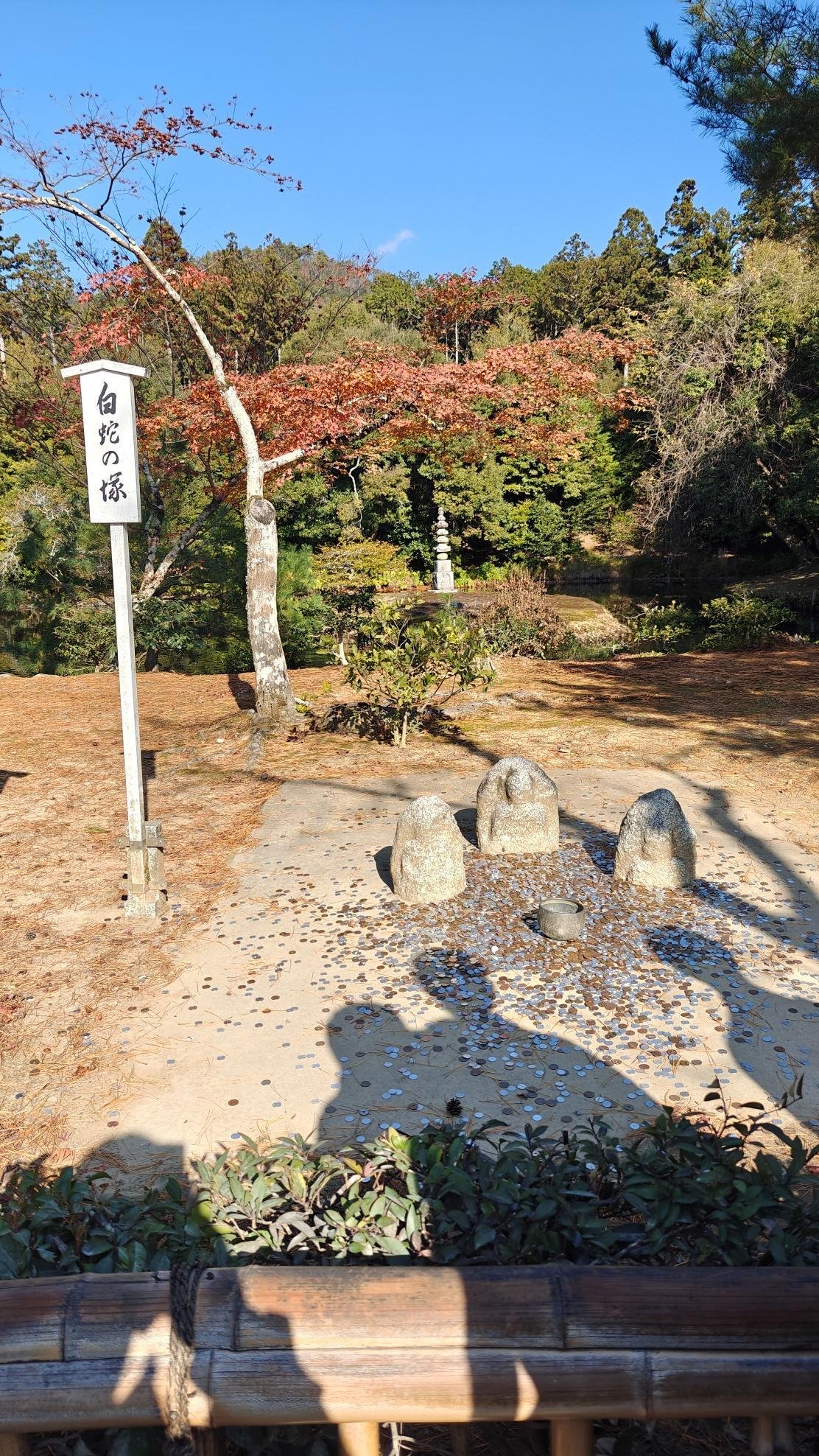
Here you can see the stone statues with the pagoda in the background. It’s not quite noticeable but the pagoda is actually on a small islet in the pond. The white snake referred to in the name is said to be a mythical creature that ensures the water in the pond doesn’t dry up even in times of drought.
Like with the other landmark from earlier, visitors often throw coins at the stone statues here for good luck.
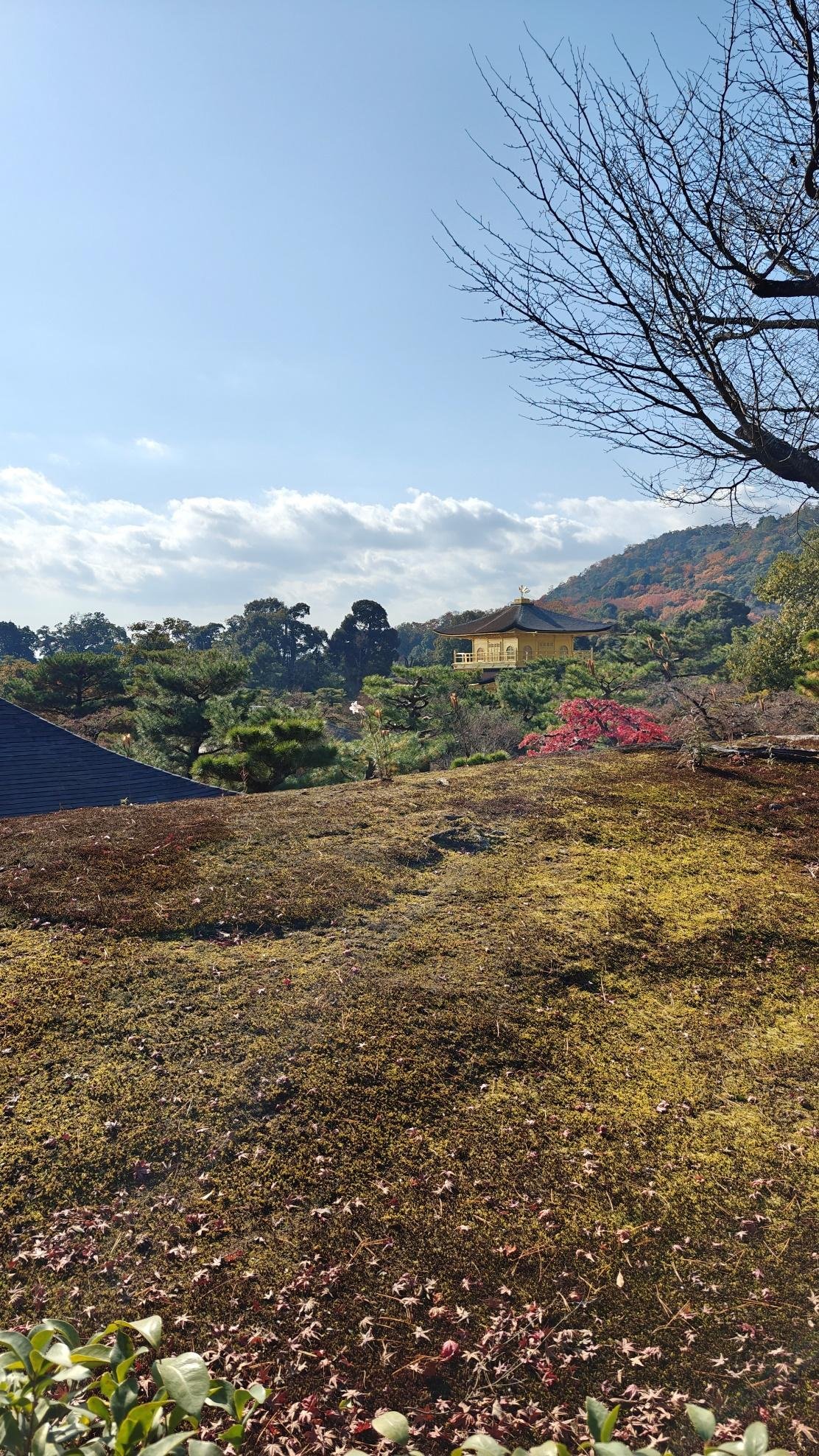
Moving past the White Snake Mound area, you’ll come across an intersection where you can view the Golden Pavilion. Even from this far and with only the third floor visible, it still looks very impressive.
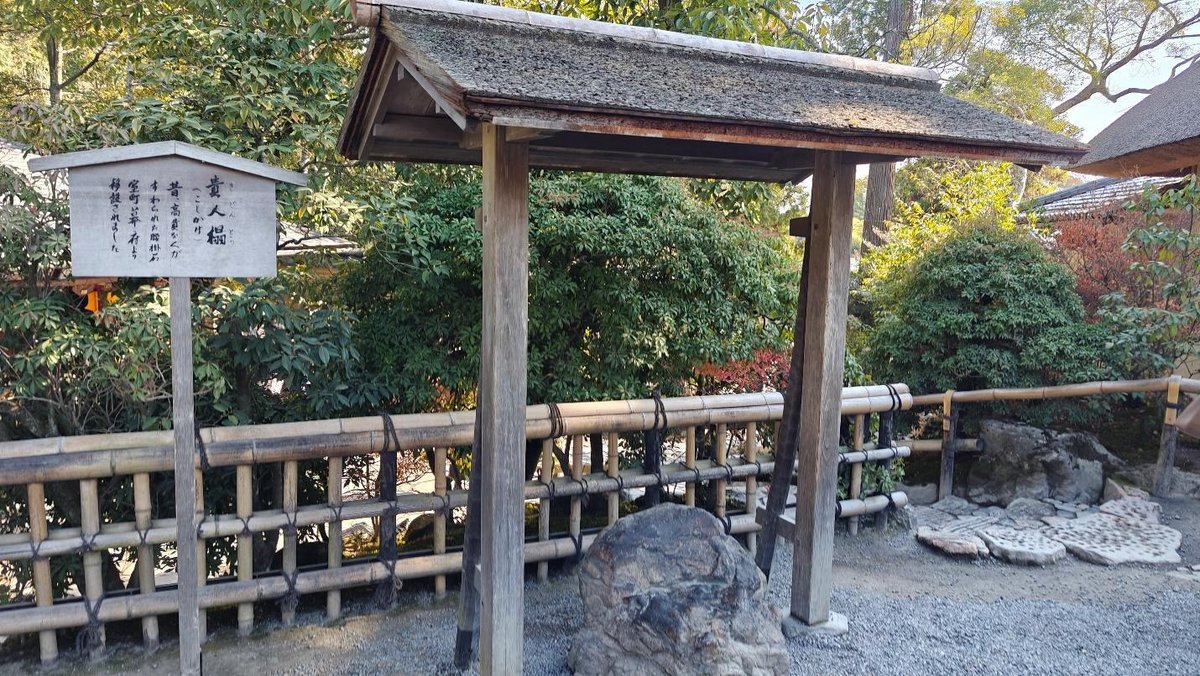
From the area with a view of the Golden Pavilion, I then moved up the northern path, climbed a set of steps, and found myself at the Sekka-tei. This is a thatched roof teahouse built for Emperor Go-Mizuno-o in the 17th century. Close to it is this landmark in the image called the Kugyo-seki or the Court Noble’s stone.
According to the sign, it’s said to have been transferred here during the Muromachi period.
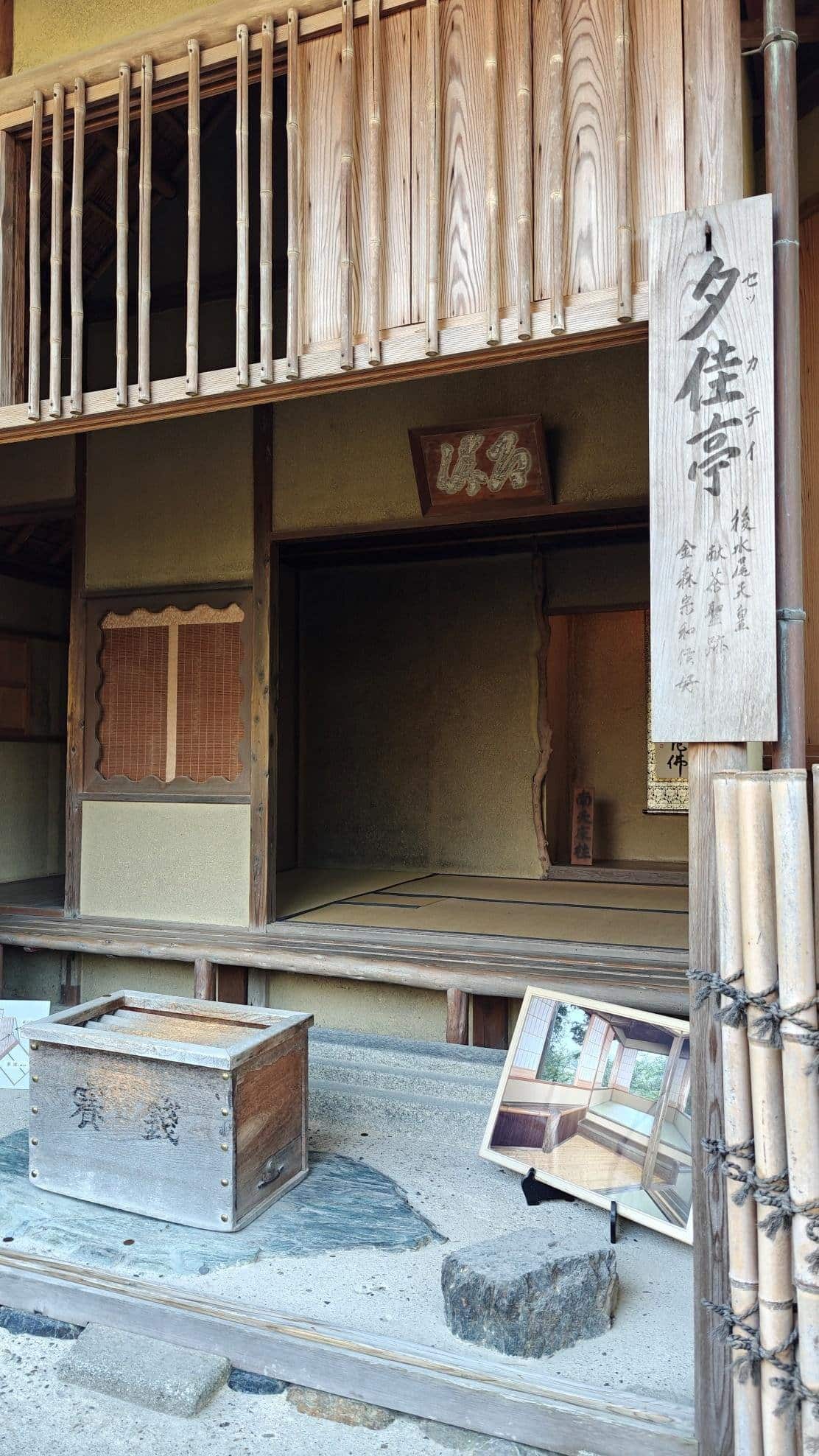
As for Sekka-tei, here’s how it looks. It is quite old though I think it’s been meticulously maintained. As with a lot of buildings its age though, visitors aren’t allowed to come close.
If you are looking to get some tea though then there’s a teahouse nearby that you can reach just by following the pathway.
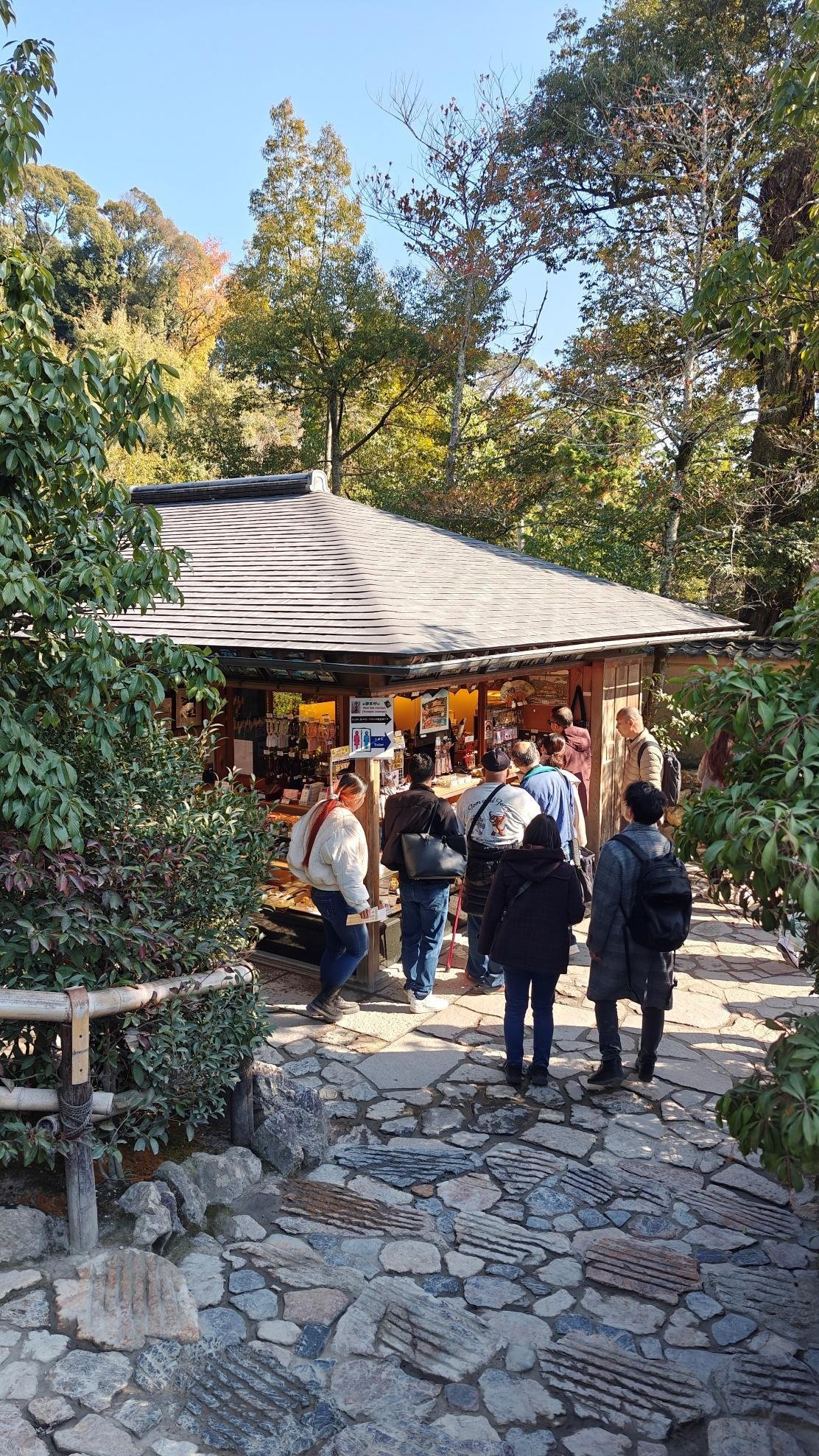
Here’s another shop selling souvenirs that you might want to check out. It’s relatively close to Sekka-tei and is on the path leading to the teahouse I was talking about in the previous image. Though there are other stalls along the path selling souvenirs, I think you might be better off getting them here.
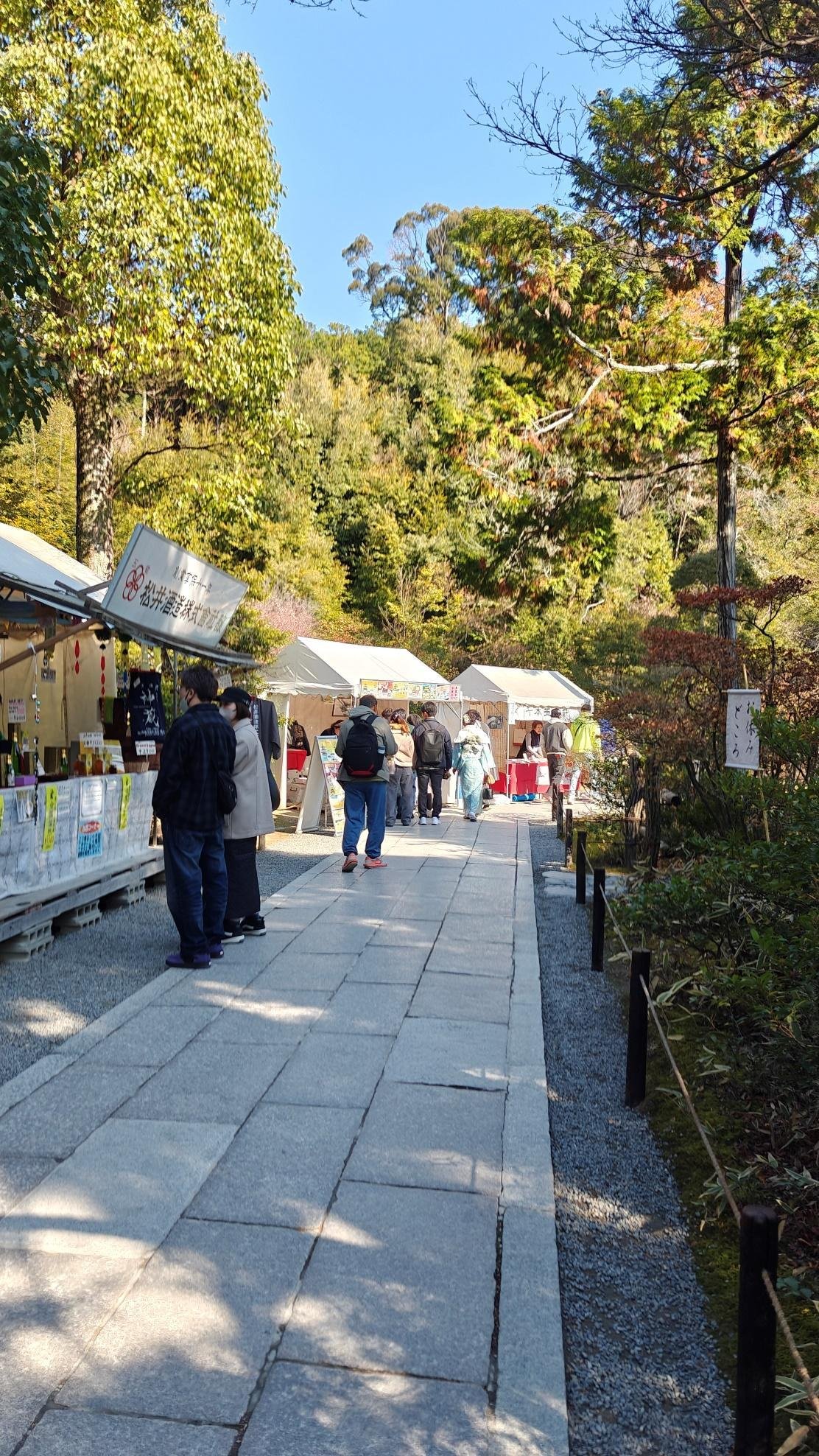
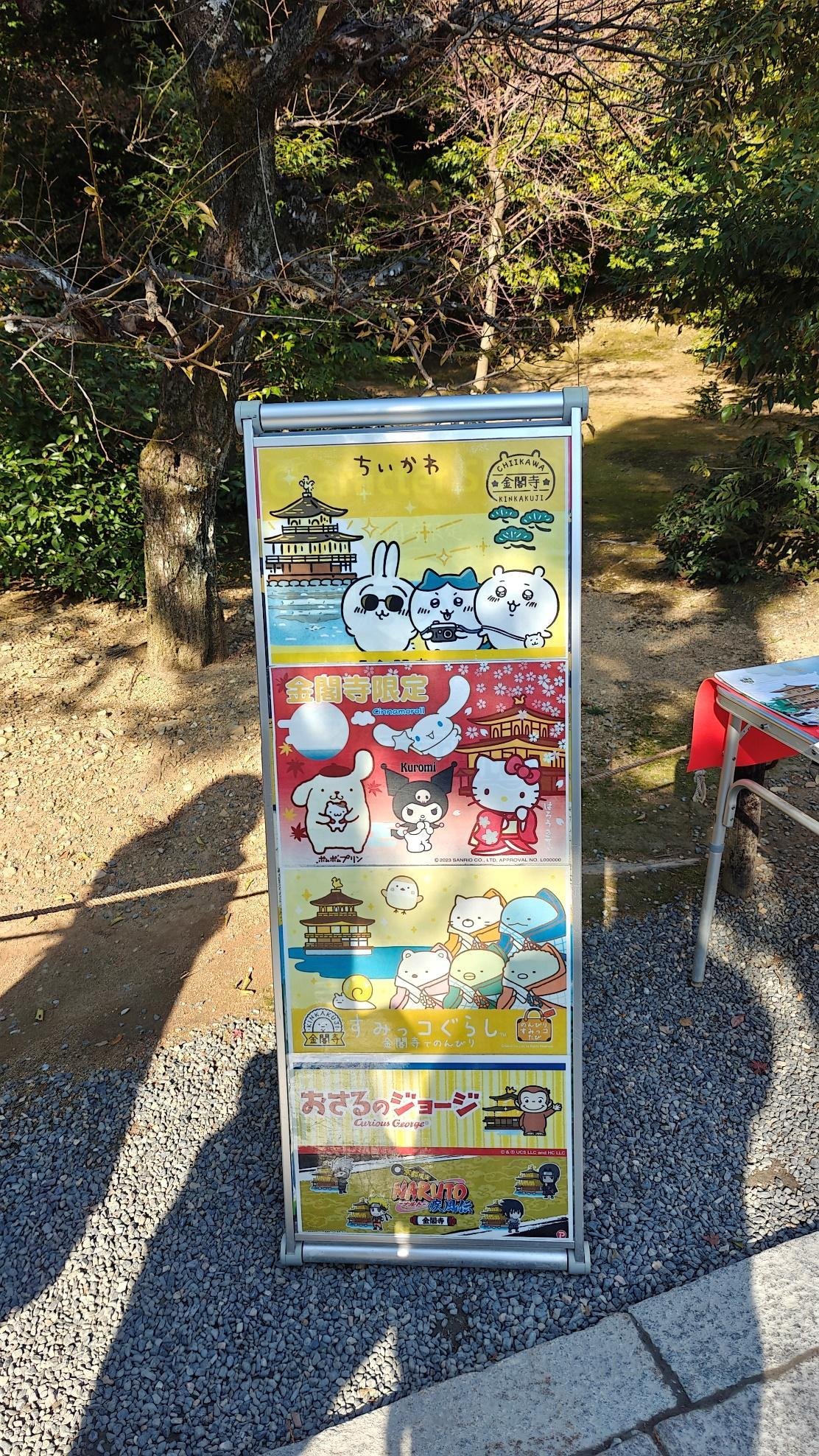
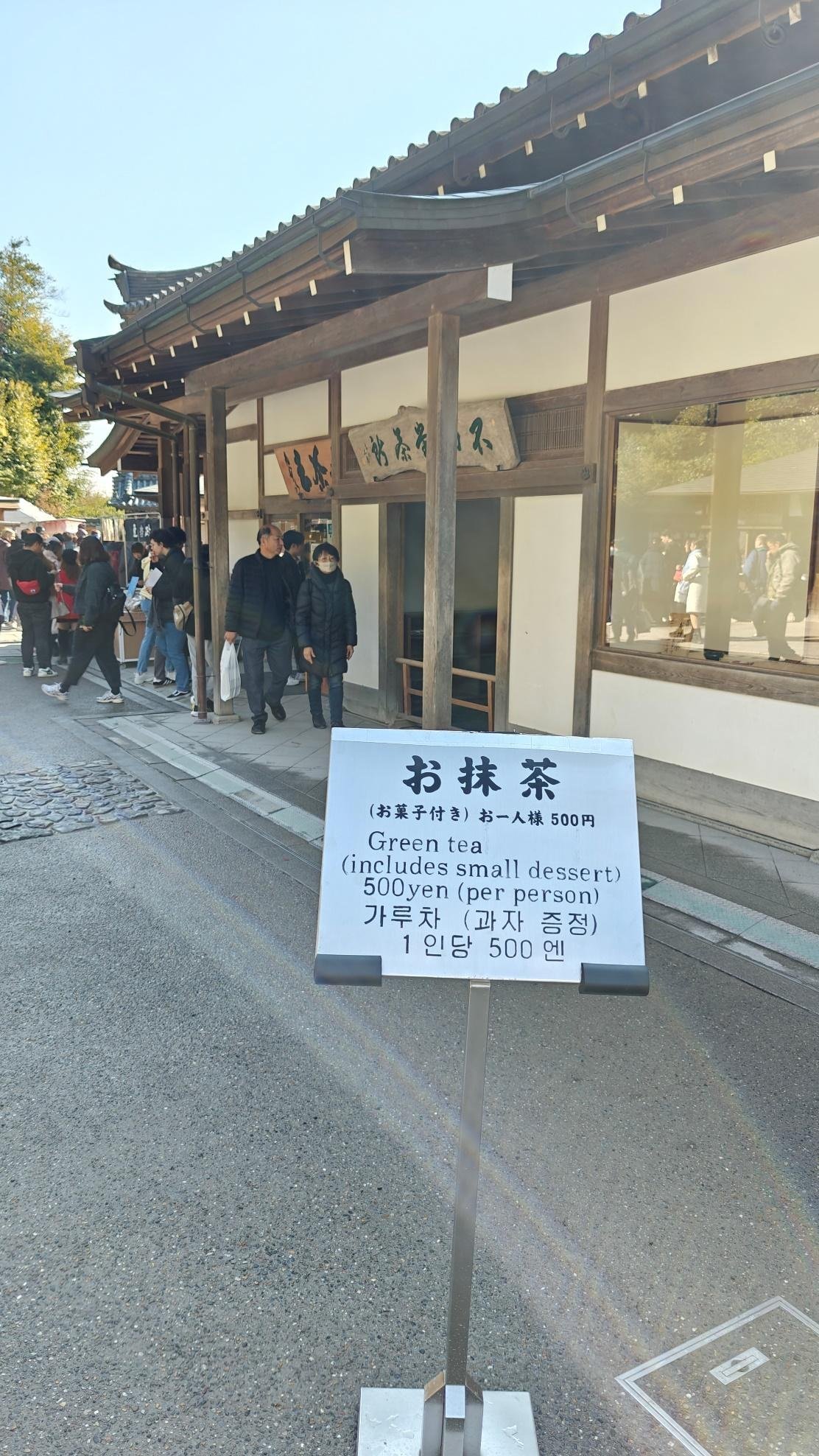
After you’re done shopping for souvenirs, you can then opt to rest and have a cup of tea at Onomiyasu Honpo. More than tea though, this store is actually more popular as a wagashi-ya (traditional Japanese sweets maker) here in Kyoto. For 500 JPY, you can enjoy one of their specialty sweets with a cup of green tea.
It’s not shown but they also have outside seating here. Additionally, the shop shares the building with another teahouse called Fudogama Cha-dokoro.
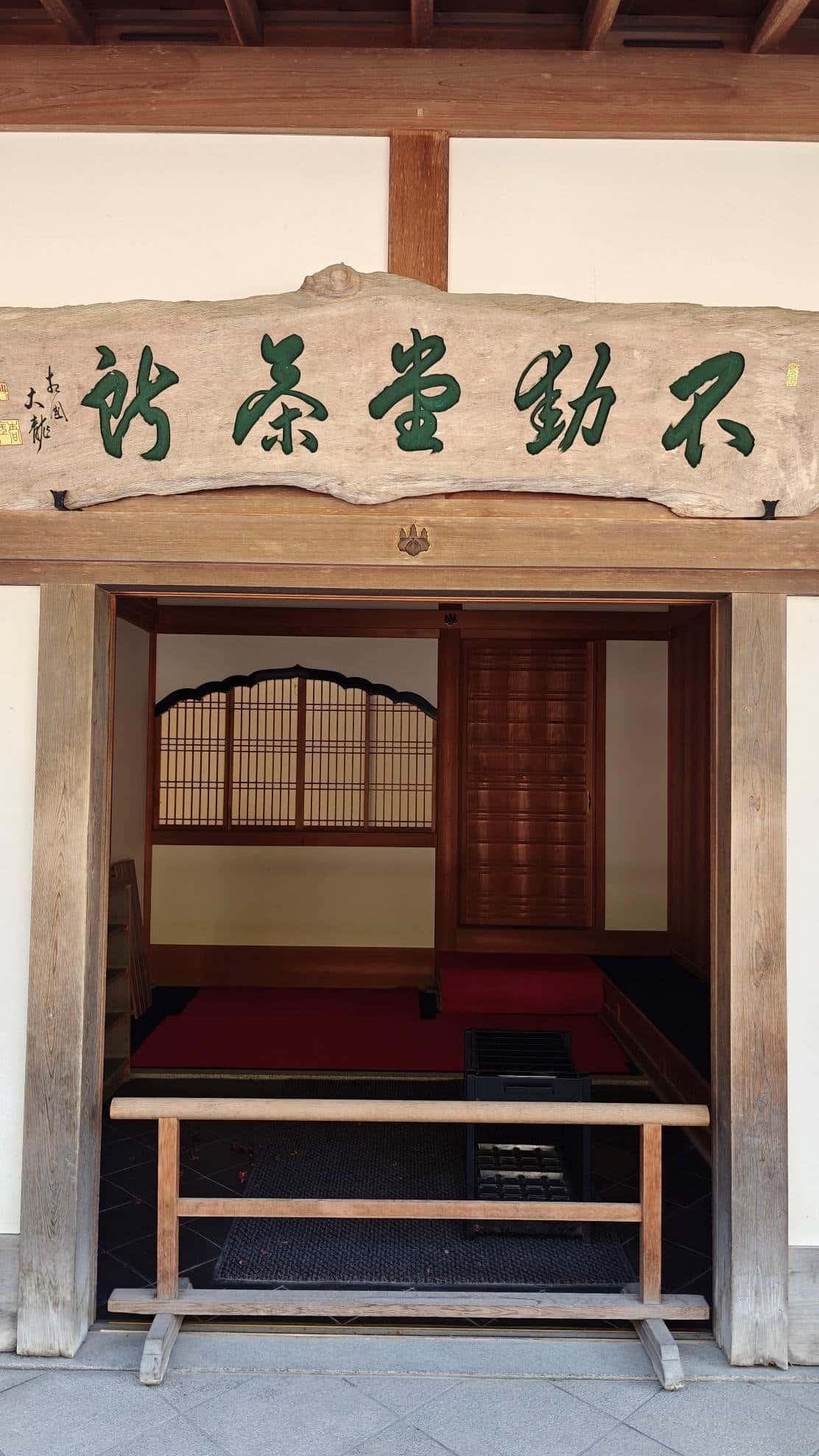
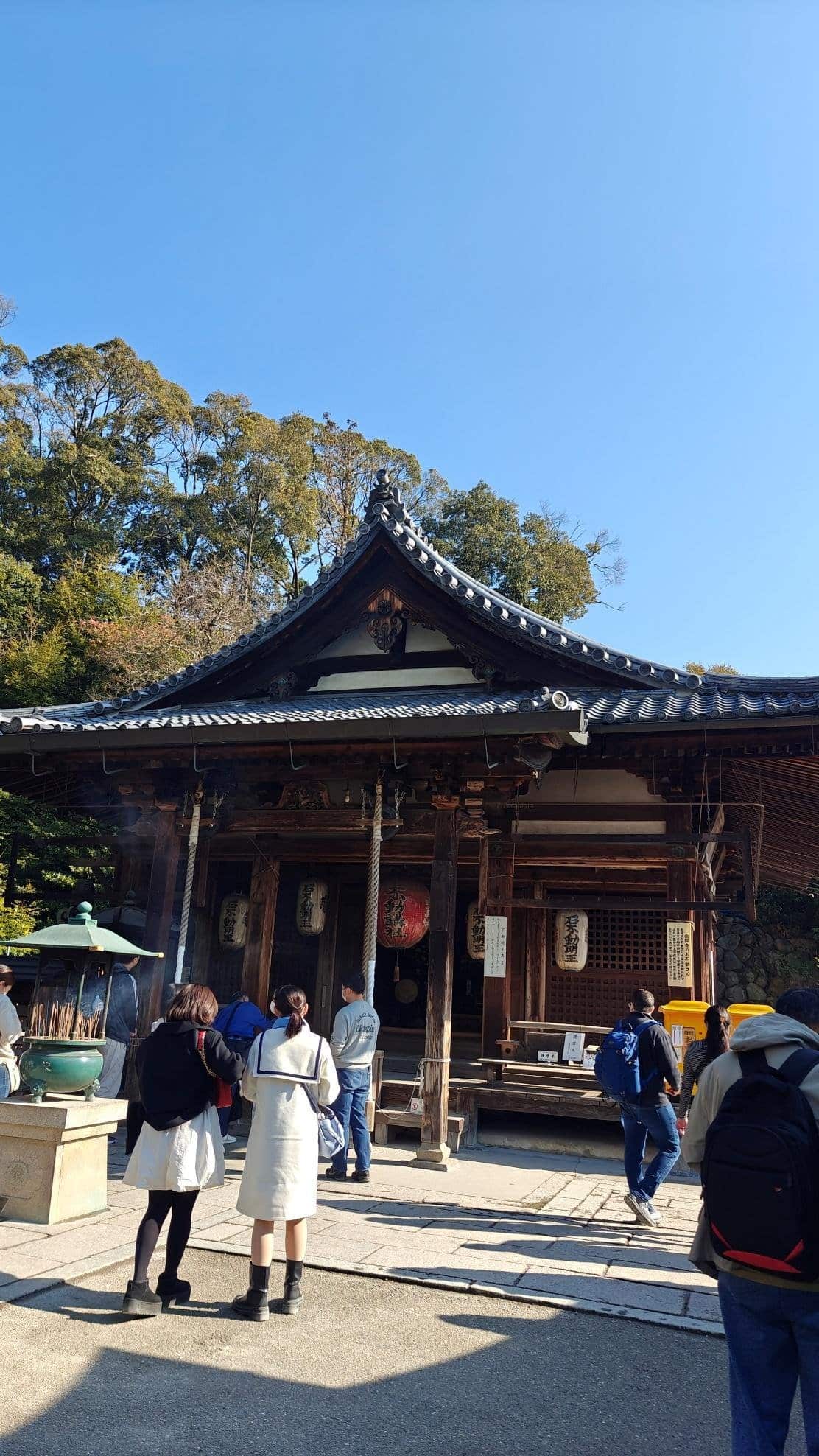
A short walk from the building where you can find Onomiyasu Honpo and Fudogama Cha-dokoro is the Fudo-do (Fudo Hall). Out of all the buildings in the temple complex, this is actually the oldest and quite possibly the most enigmatic (at least for me). It actually has a statue of the protector deity Fudo Myoo that’s said to have miraculous powers.
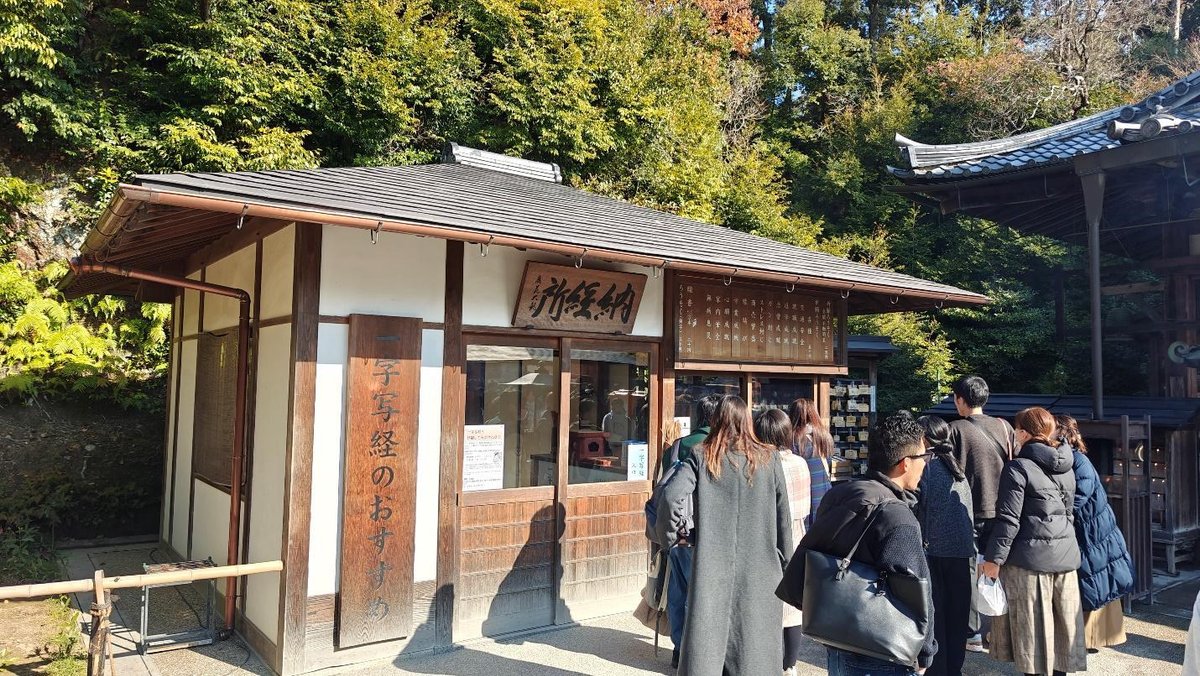
This is the sutra copying place or Shakyojo that’s next to the Fudo-do. Here visitors can donate money and then they can copy and write out a sutra. This practice is called Shakyo and it’s said to calm the mind as well as internalize what the copied sutra teaches.
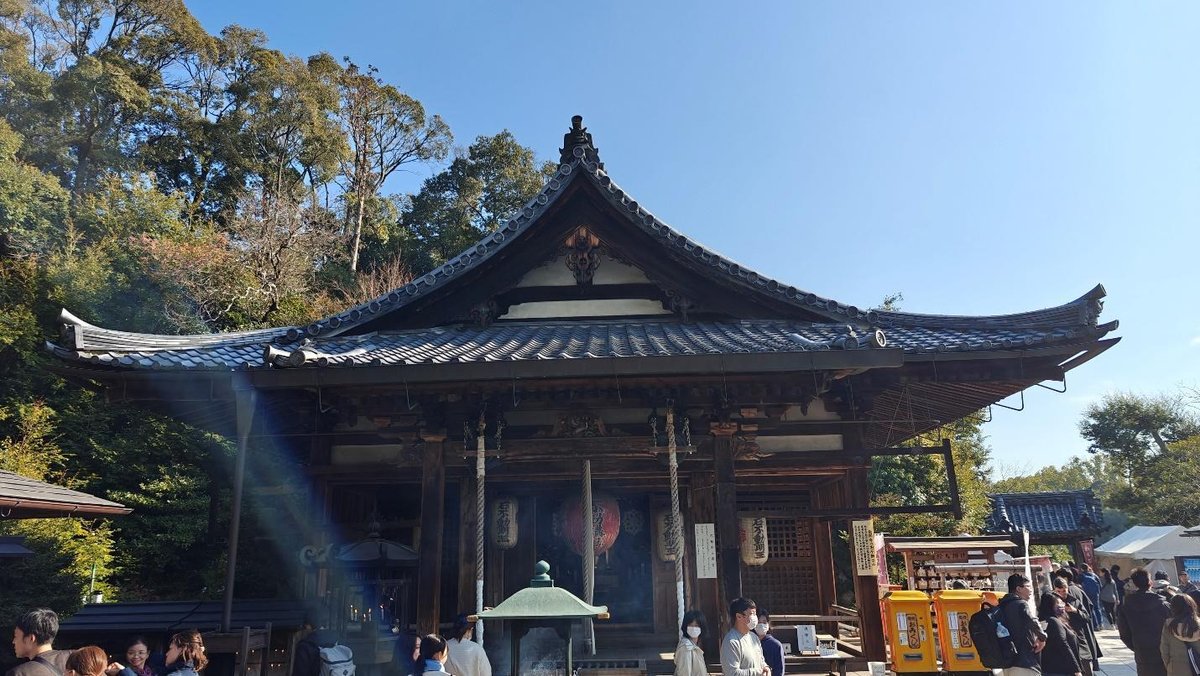
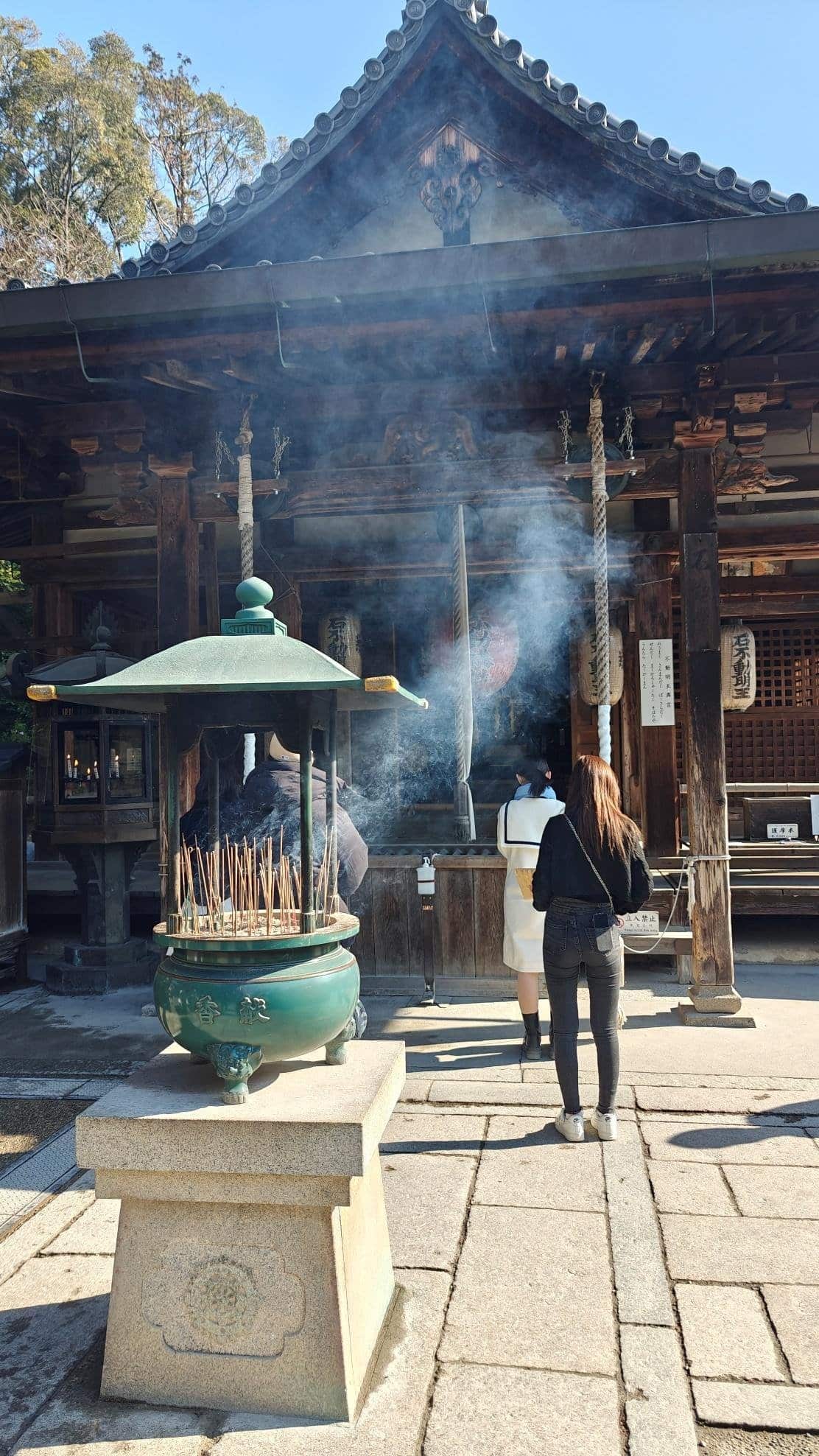
In front of the Fudo-do building is an incense burner. If you wish to burn incense then you can purchase some from the Shakyojo (which is just off to the left side).
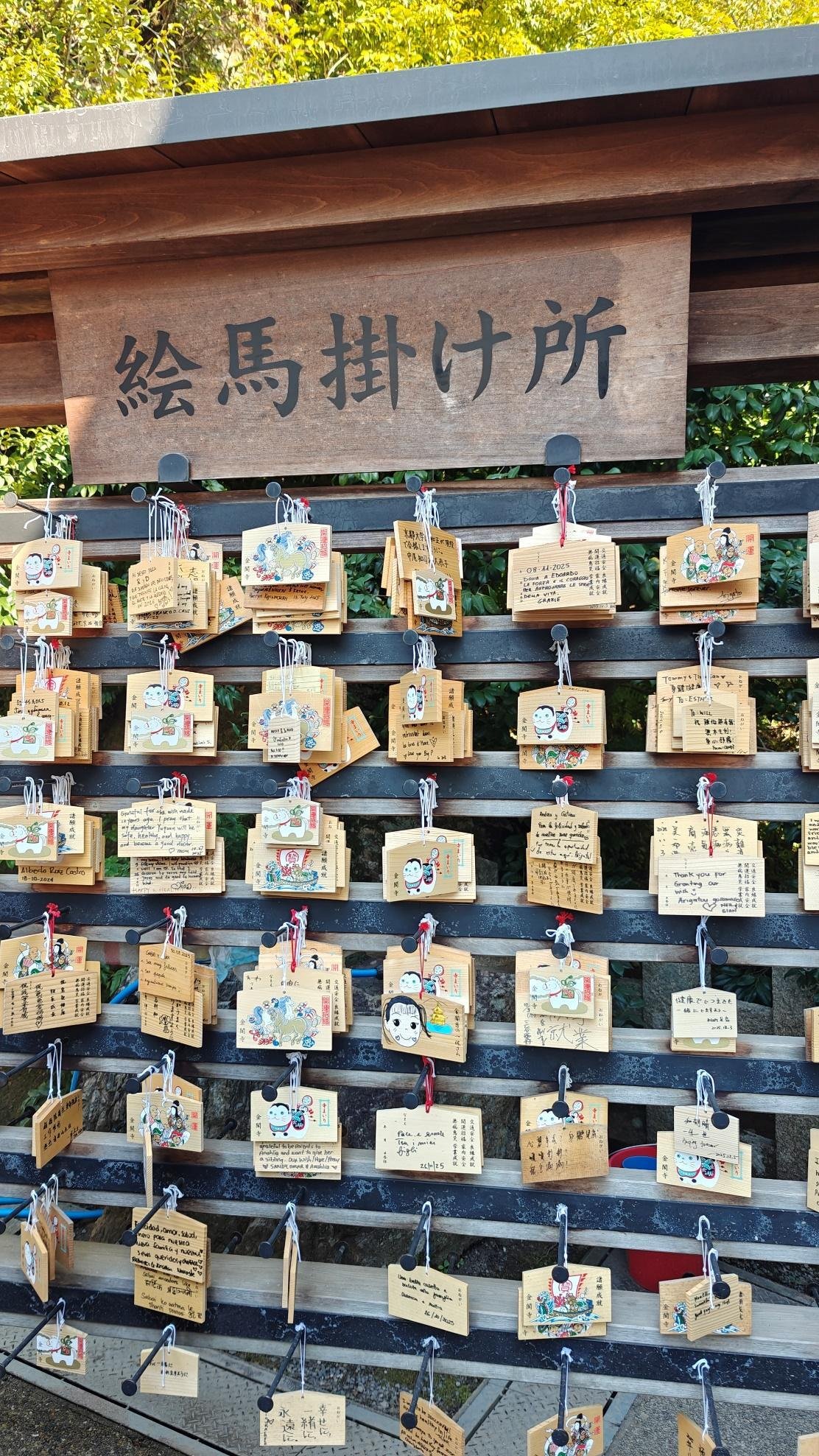
Just beside the Shakyojo is an emagake. This is a rack where you can hang ema or wishing plaques that you can purchase from the various stalls that you saw earlier. The ema here typically reflects the wishes and aspirations of the individual.
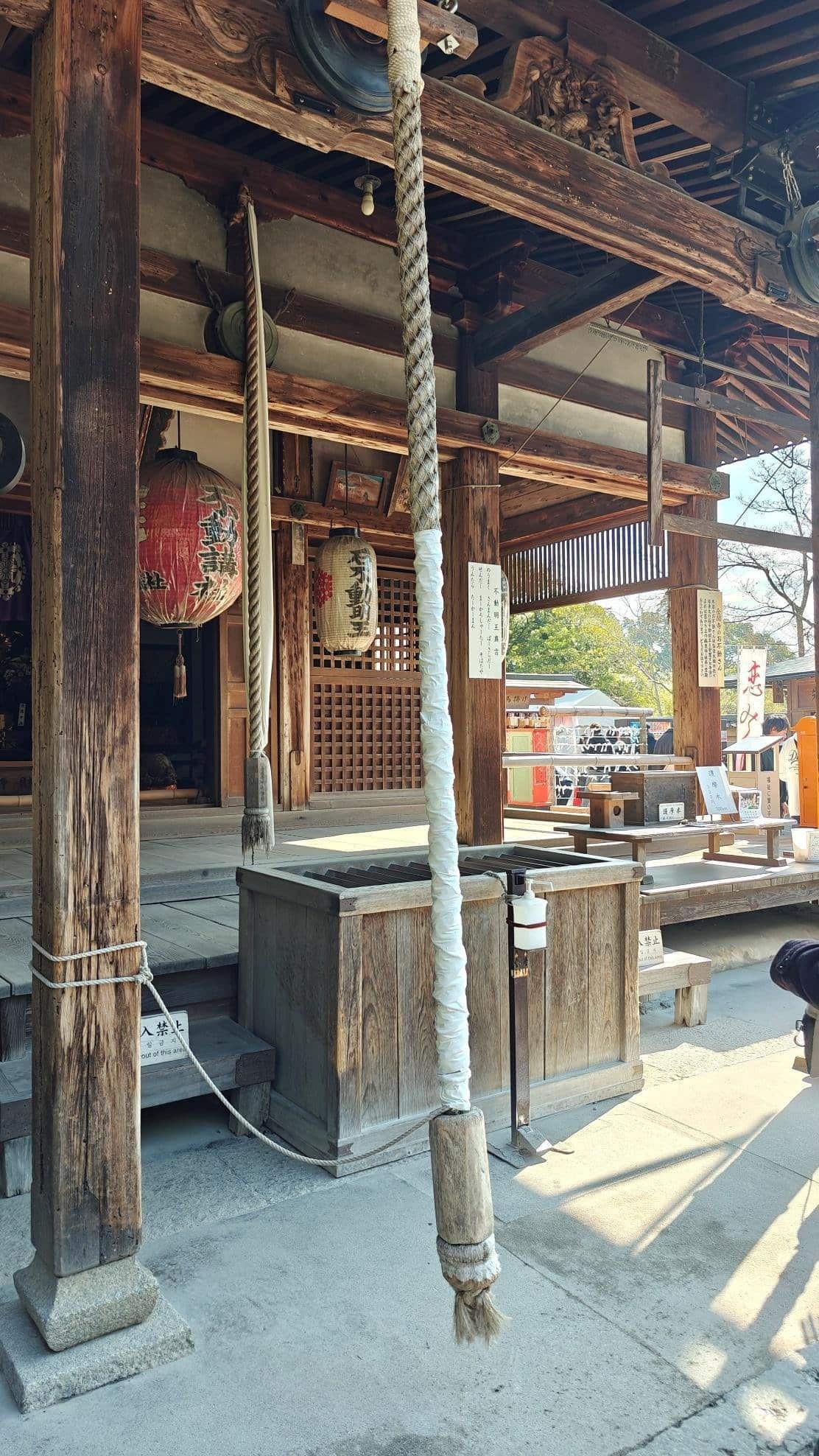
Here you’ll find the saisen bako that’s just in front of the Fudo Hall. After donating, you then pull on the rope to ring the bell. This supposedly calls the deity’s attention (in this case Fudo Myoo) and you can then start with your prayer or wishes.
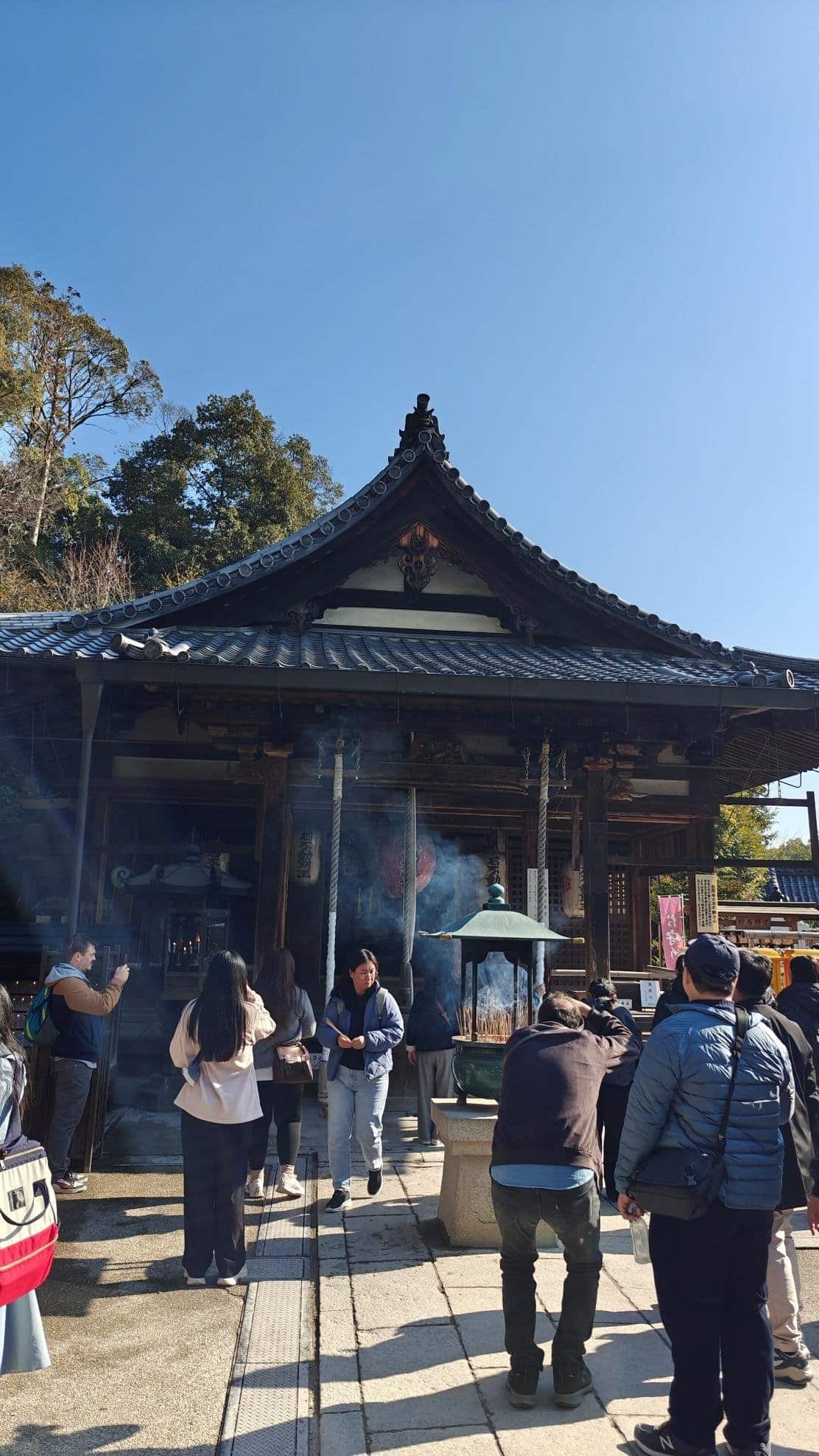
Now you’re probably thinking that there are plenty of people here but believe me, this can get even more crowded. Like I said earlier, tourism in Kyoto usually peaks around mid-November. While there is still a crowd in the first or second week of December (which was when I visited), it’s not as sizable.
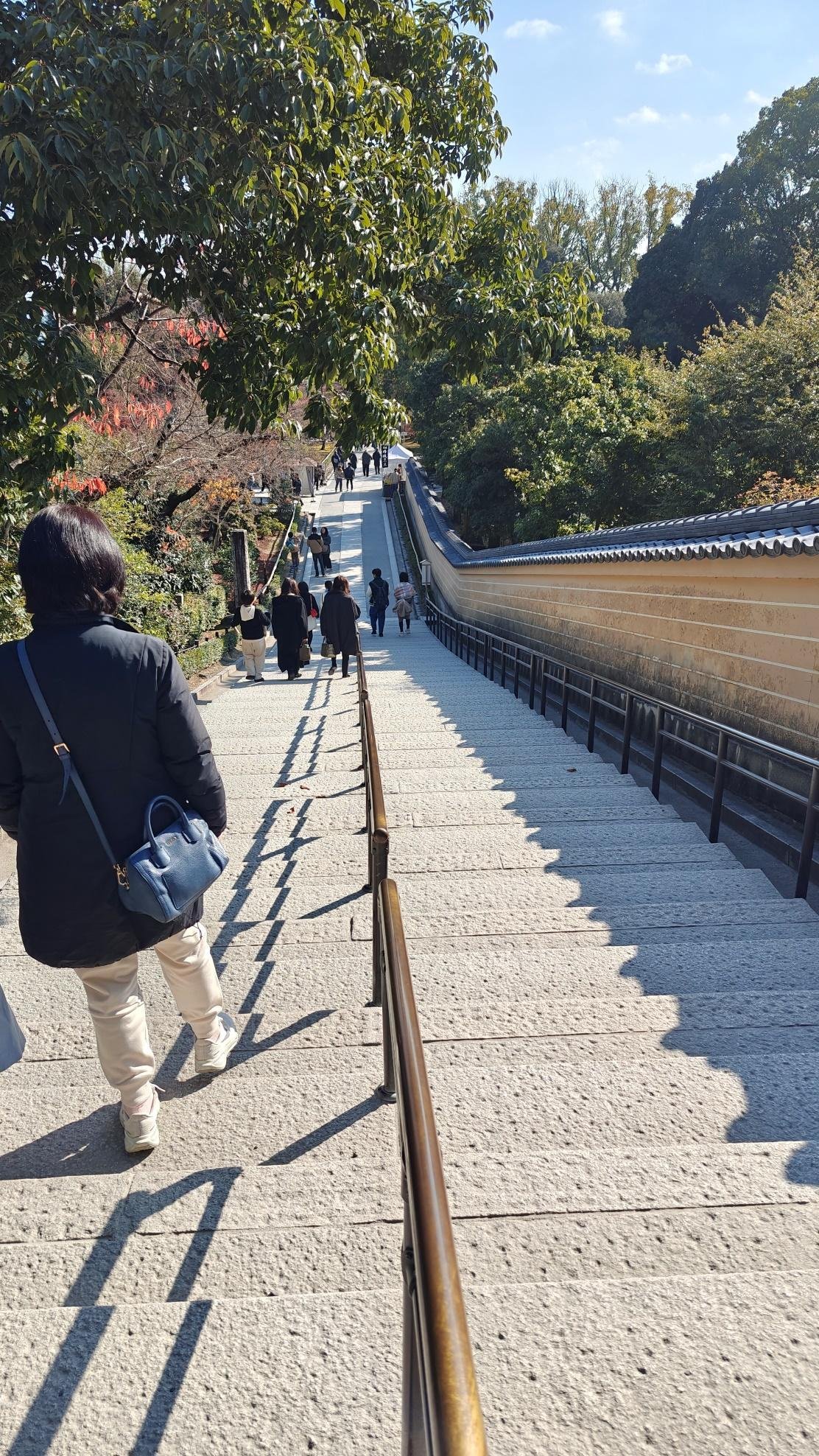
After paying your respects at Fudo-do, you can then exit through a gate and down this rather steep stairway. Since I was going down this ended up being more of a leisurely and scenic walk. If I entered the temple complex through here though then I’d probably have been complaining under my breath while going up these steps.
On a side note though, the steps were well maintained and they were adequately wide to ensure visitors don’t slip while walking down. That said, make sure to still watch where you’re walking once you do get to this point in your visit to the temple.
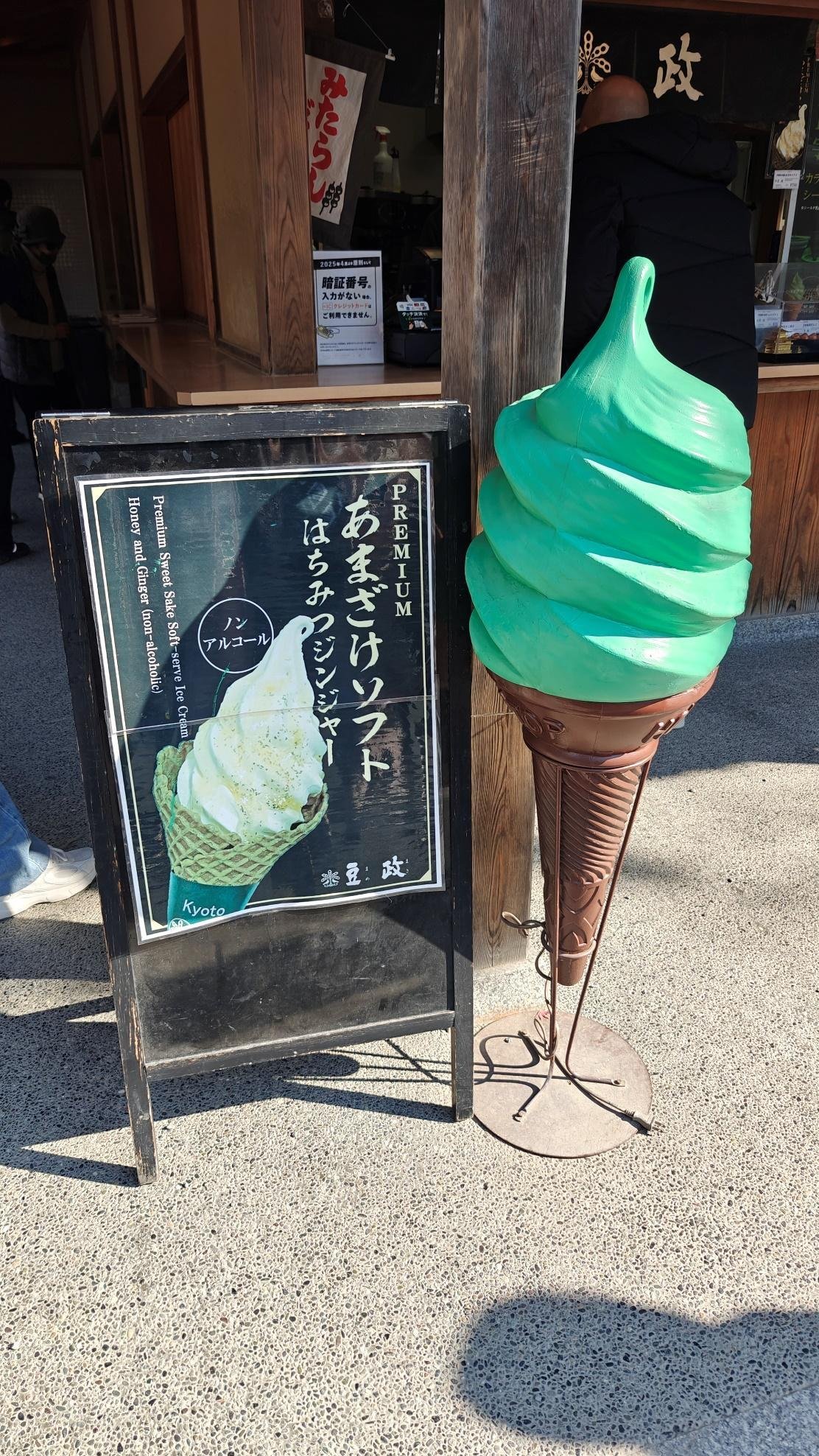
As I was going out of the temple complex, I came across this standee advertising matcha flavored sweet sake soft serve ice cream. I’d already heard of and seen matcha flavored soft serve ice cream but this is the first time that I’d come across one that also had sweet sake so I decided to check it out. The name of the shop by the way is Mamemasa and much like Onomiyasu Honpon, it’s also a popular establishment here in Kyoto.
The store is located just after the steps and on the pathway heading back to the temple’s entrance.
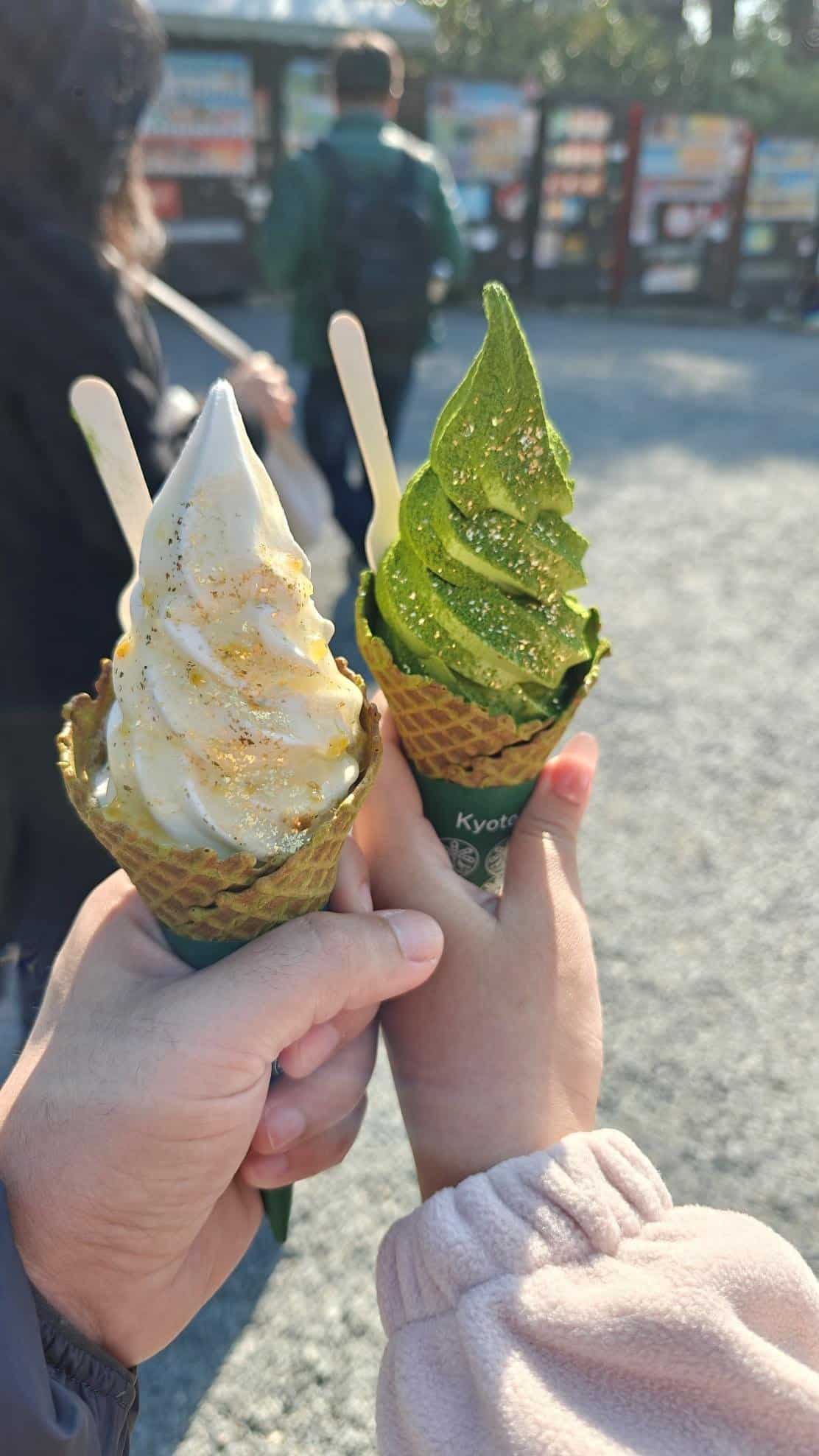
After feasting on the views in Kinkakuji Temple, it was time for my stomach to feast on Mamemasa’s soft serve ice cream. Reflecting on it now, I think Kinkakuji Temple really does deserve its reputation as an iconic temple here in Kyoto. The Golden Pavilion was one of the most impressive and memorable structures that I’d seen in (and believe me, I’d seen plenty of impressive buildings and locations) 2025.
I genuinely enjoyed the views and landmarks that I came across during this visit. And while relatively short, the walk through the temple complex itself was memorable with plenty of views that featured old buildings, gardens, and ponds. To sum it up, I can’t recommend visiting Kinkakuji Temple enough especially if you’re in Kyoto during the early winter season.
At just 500JPY, it’s also relatively cheap. Ever had the chance to visit Kinkakuji Temple in Kyoto? If yes then we’d like to hear about your thoughts and experiences!
If you’re down to share them then just head on over to the comments section!