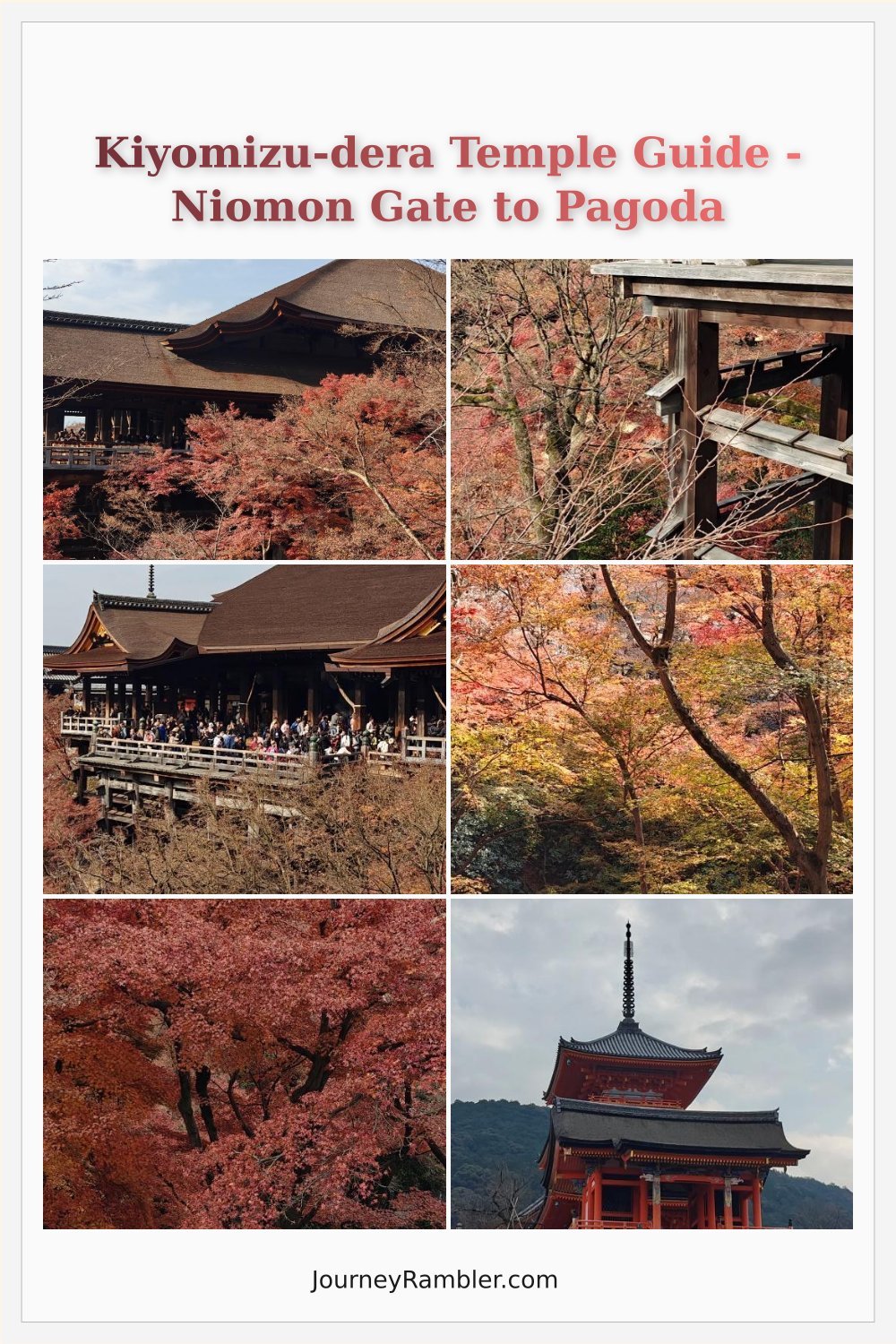
Of the numerous shrines and temples in Kyoto, I think Kiyomizu-dera is quite arguably the most scenic. Situated on top of a hillside, this Buddhist temple is also considered as one of the most popular in Kyoto.
Now, do I think that it’s worth a visit?
Unsurprisingly, yes. I was fortunate enough to have visited it during the off-peak season in early December and I was in awe of what I saw.
Due to its popularity, there are plenty of tours and tour packages for Kiyomizu-dera. A lot of these have hotel pickups as well so if you’re relatively new here those might be worth checking out or booking. That said, you can also commute here by bus (there are stops at Gojo-zaka and Kiyo-michi) or via the Keihan Railway (stops at Kiyomizu-Gojo Station which is farther).
From these stops you’ll then need to walk 10-25 minutes (depending on the stop) passing through the iconic and lively Kiyomizu-zaka which is part of the Kiyomizu-dera Monzen.
Kiyomizu-dera Highlights: Niomon Gate, Sanju-no-to, Koyasu-no-to and Spectacular Views
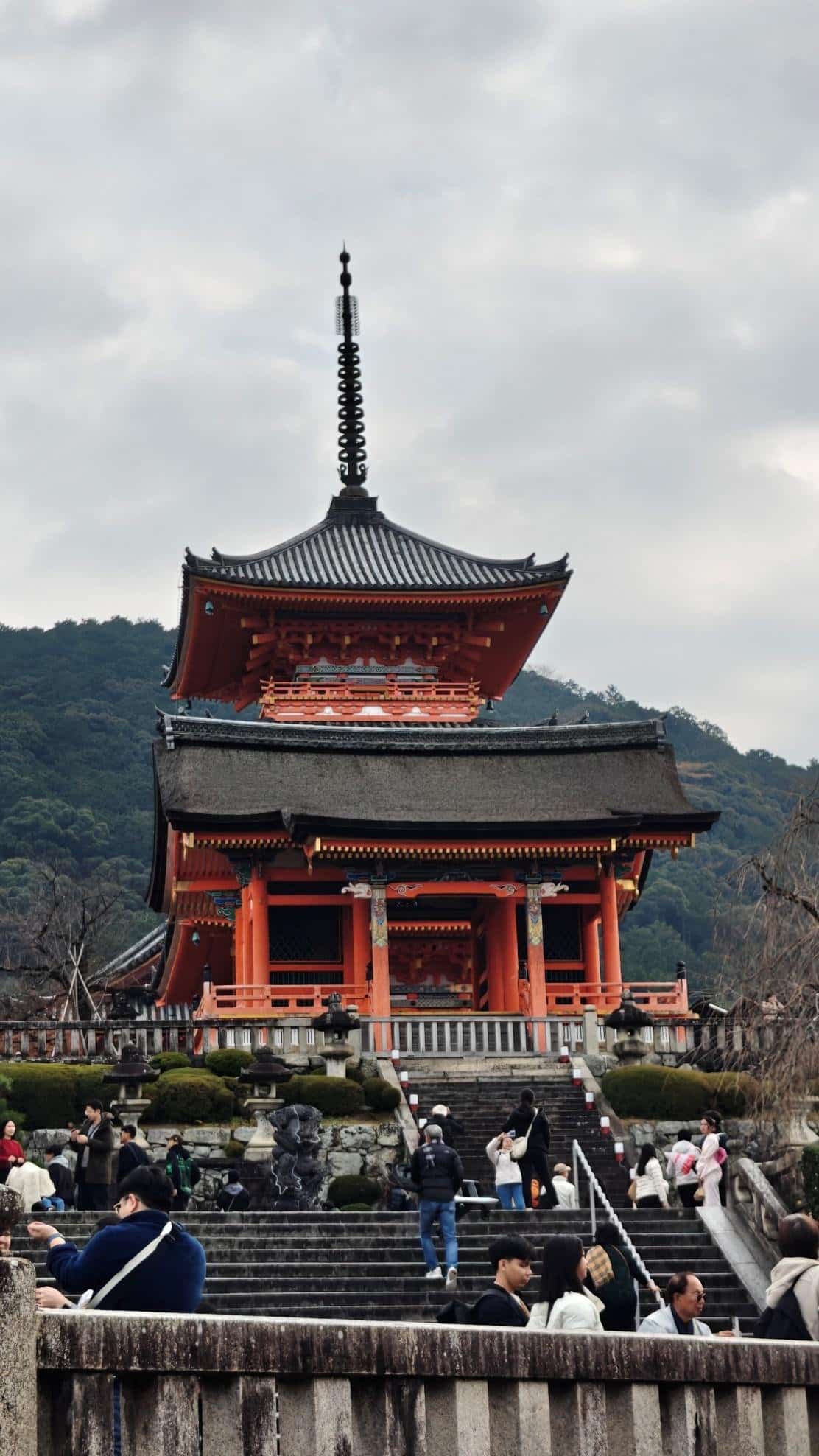
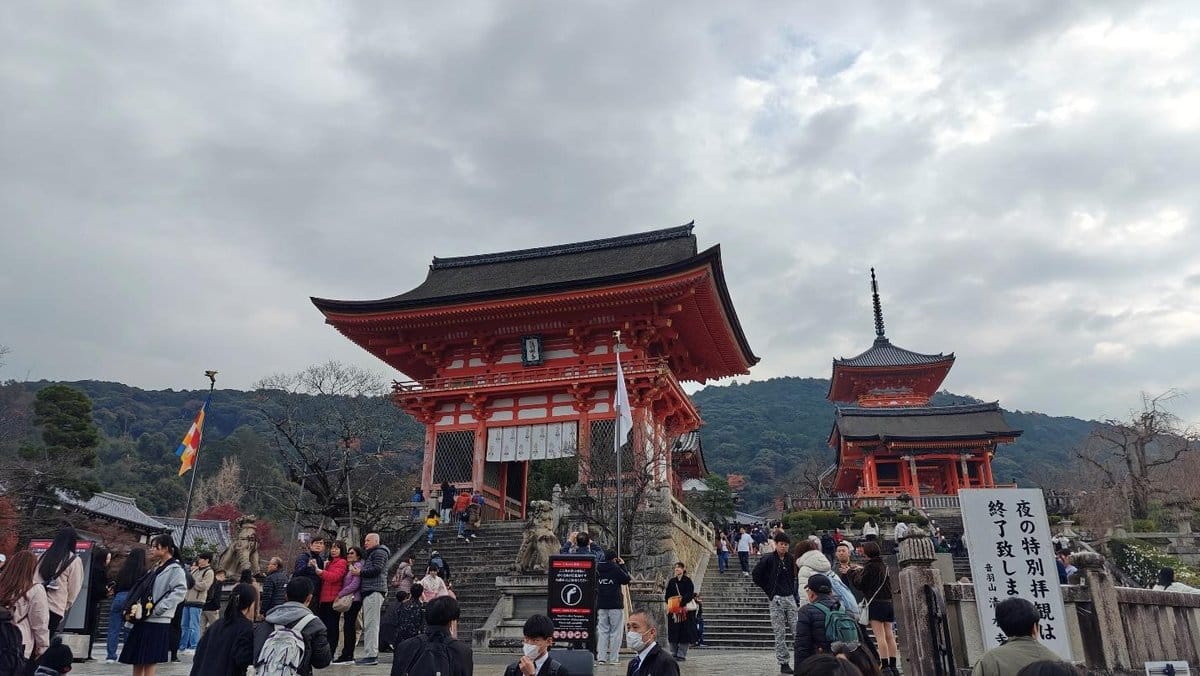
If you’re wondering, the Kiyomizu-dera Monzen or the monzen-machi is just the town or community that developed around the Kiyomizu-dera Temple complex (monzen literally means in front of the gate). I would say that it’s actually a landmark all on its own with some really nice views and establishments. Anyway, you’ll know you’re at the temple when you see the Niomon Gate (the image prior) and the Sanju-no-to in this image.
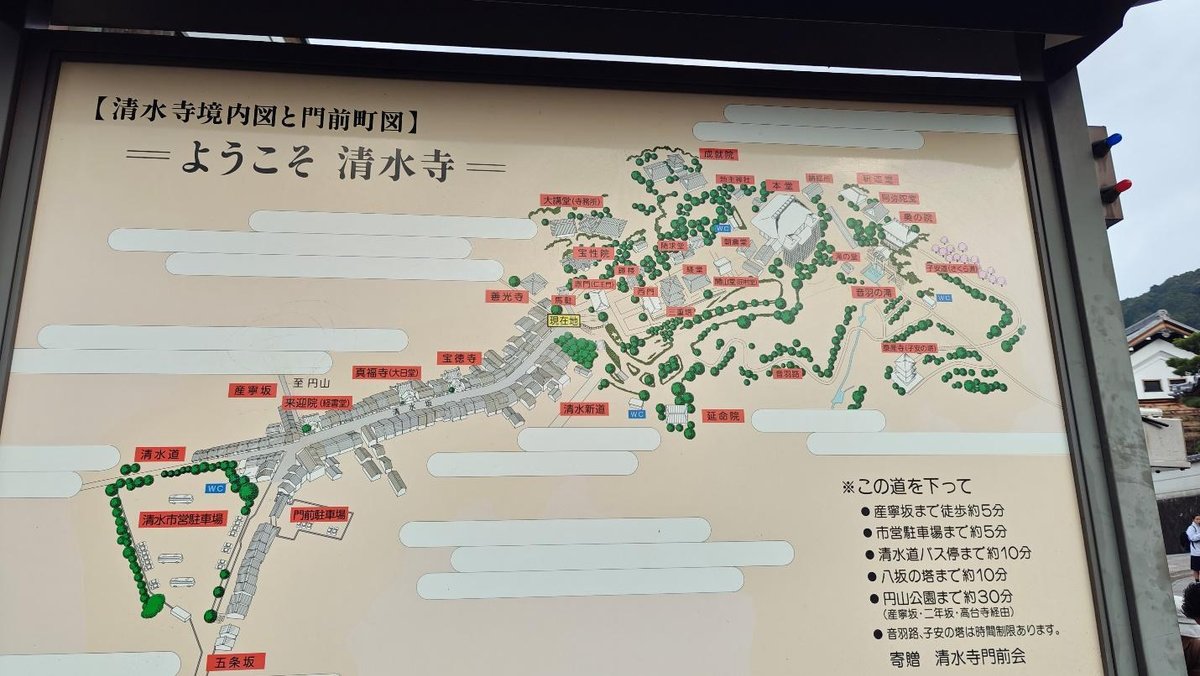
Of course, there’s always guide maps in these Japanese temples and shrines so make sure to take a picture just in case you or the people you’re with might get lost. Personally, I still take a picture or two of these for just that reason. Thankfully there are plenty of guide maps online so you could also download those instead if you’re not too keen on taking a snap of this one.
This one shows the main temple and Kiyomizu-zaka.
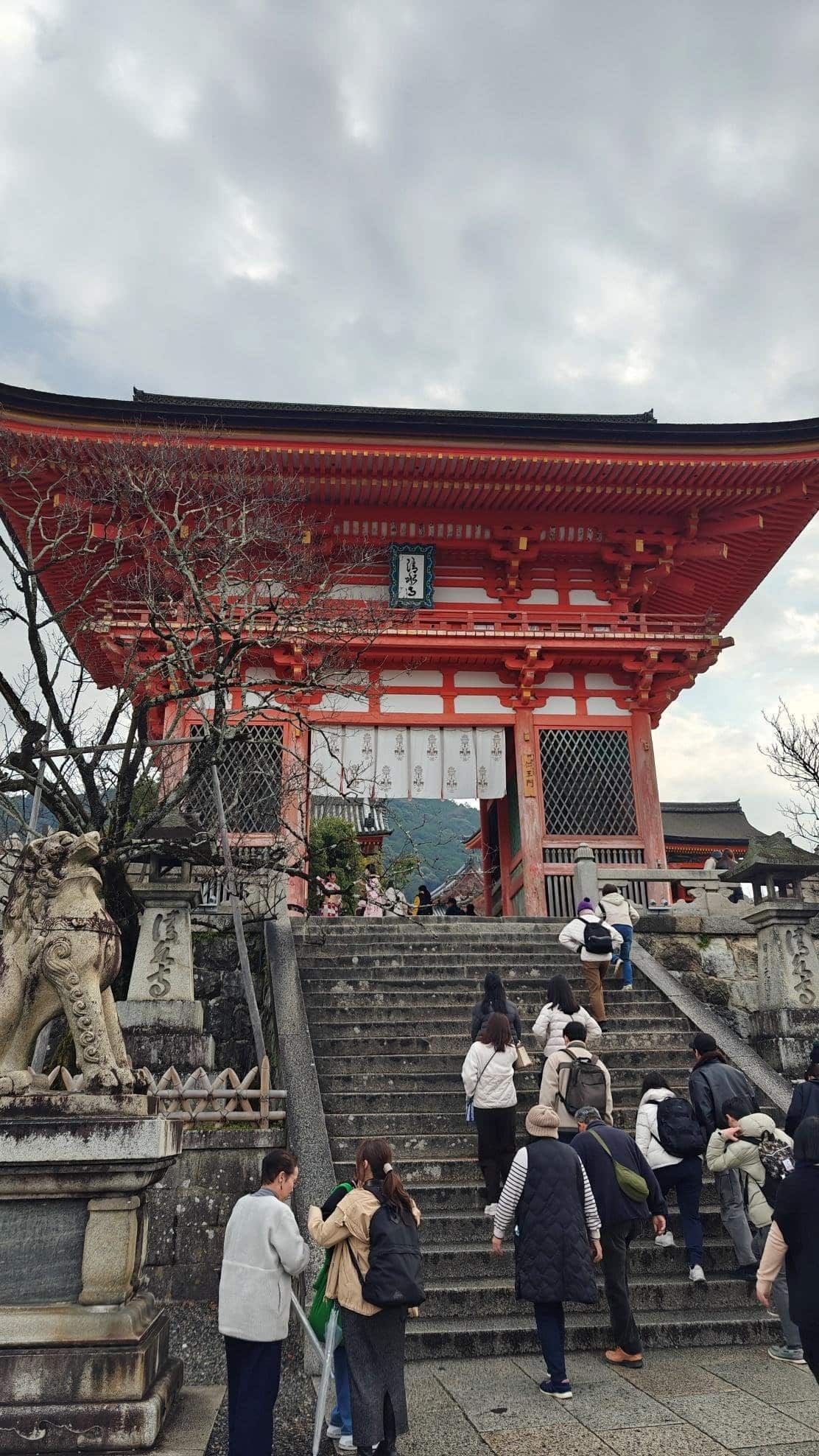
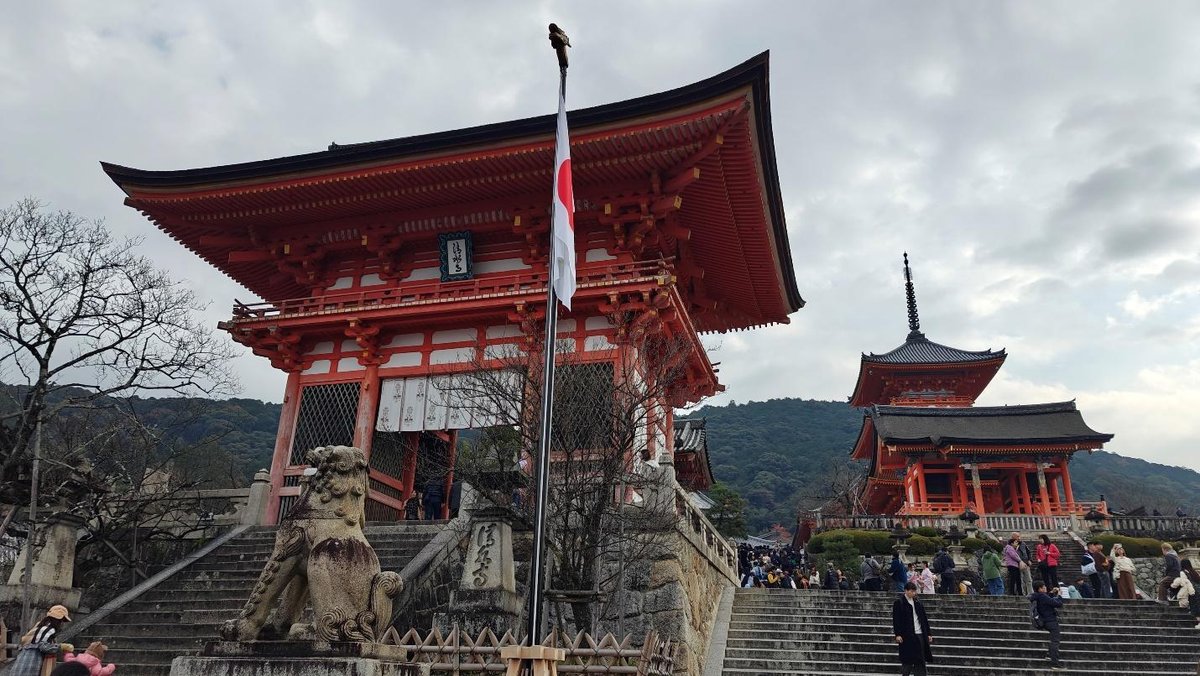
As I explained earlier, the Sanju-no-to and the Niomon Gate are the two structures that you’re going to see the moment you reach Kiyomizu-dera’s entrance. Both of these buildings are painted mainly in a vermillion color that helps preserve the wood in addition to scaring away evil spirits and disease. You’ll notice this color being used a lot not just in Buddhist temples but also in shrines as well (most notably the Fushimi Inari-taisha which I also visited during this trip).
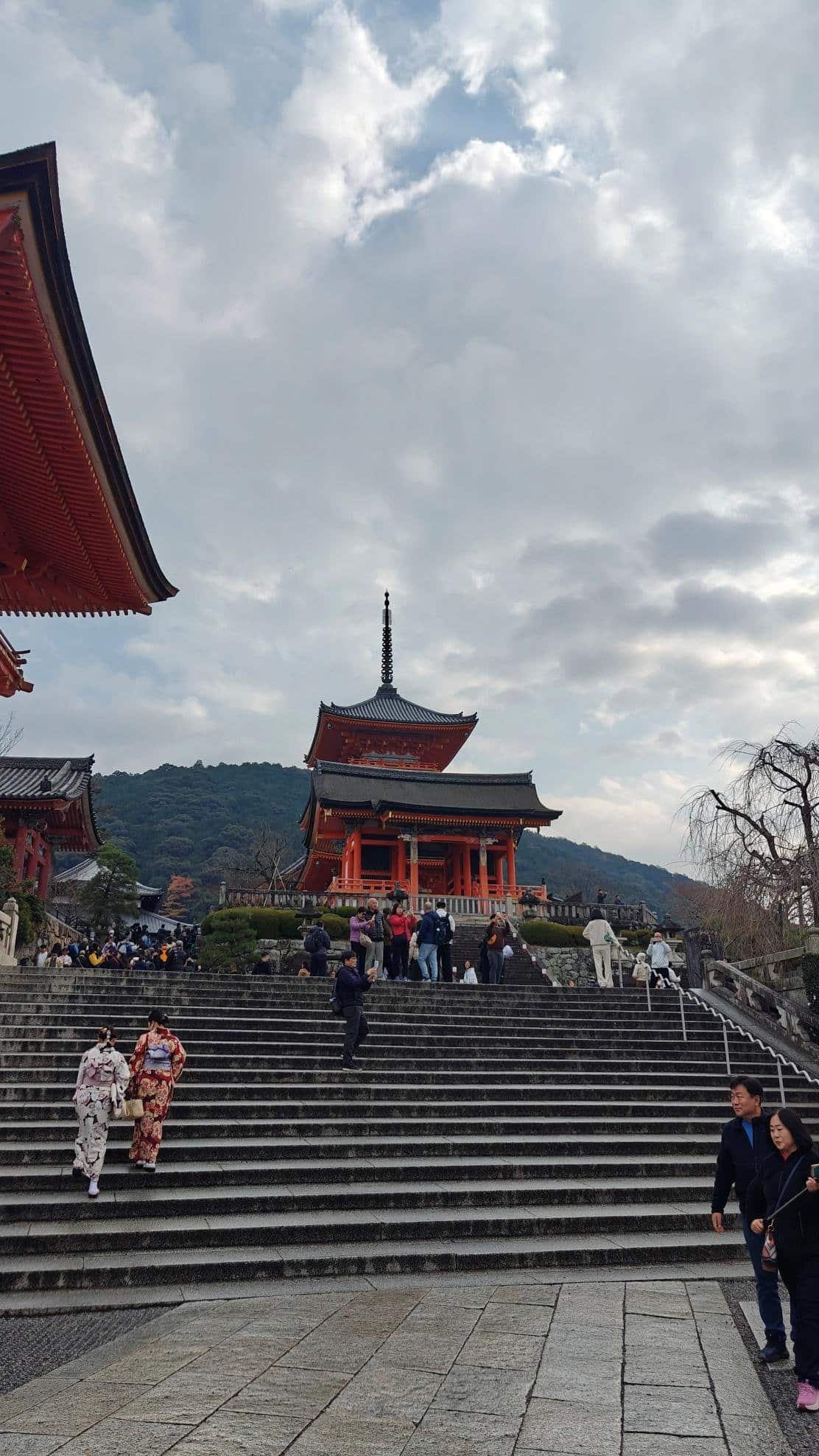
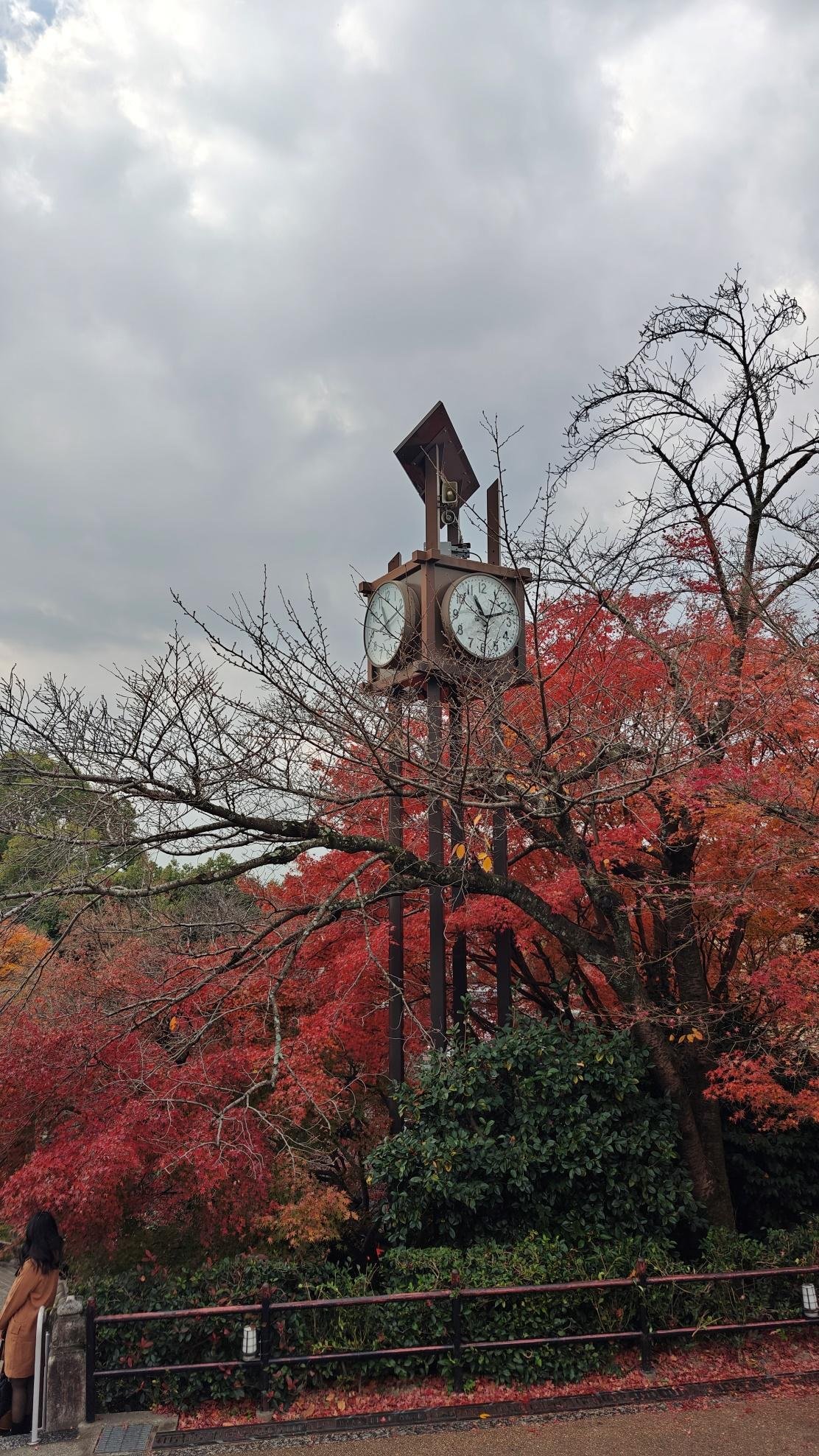
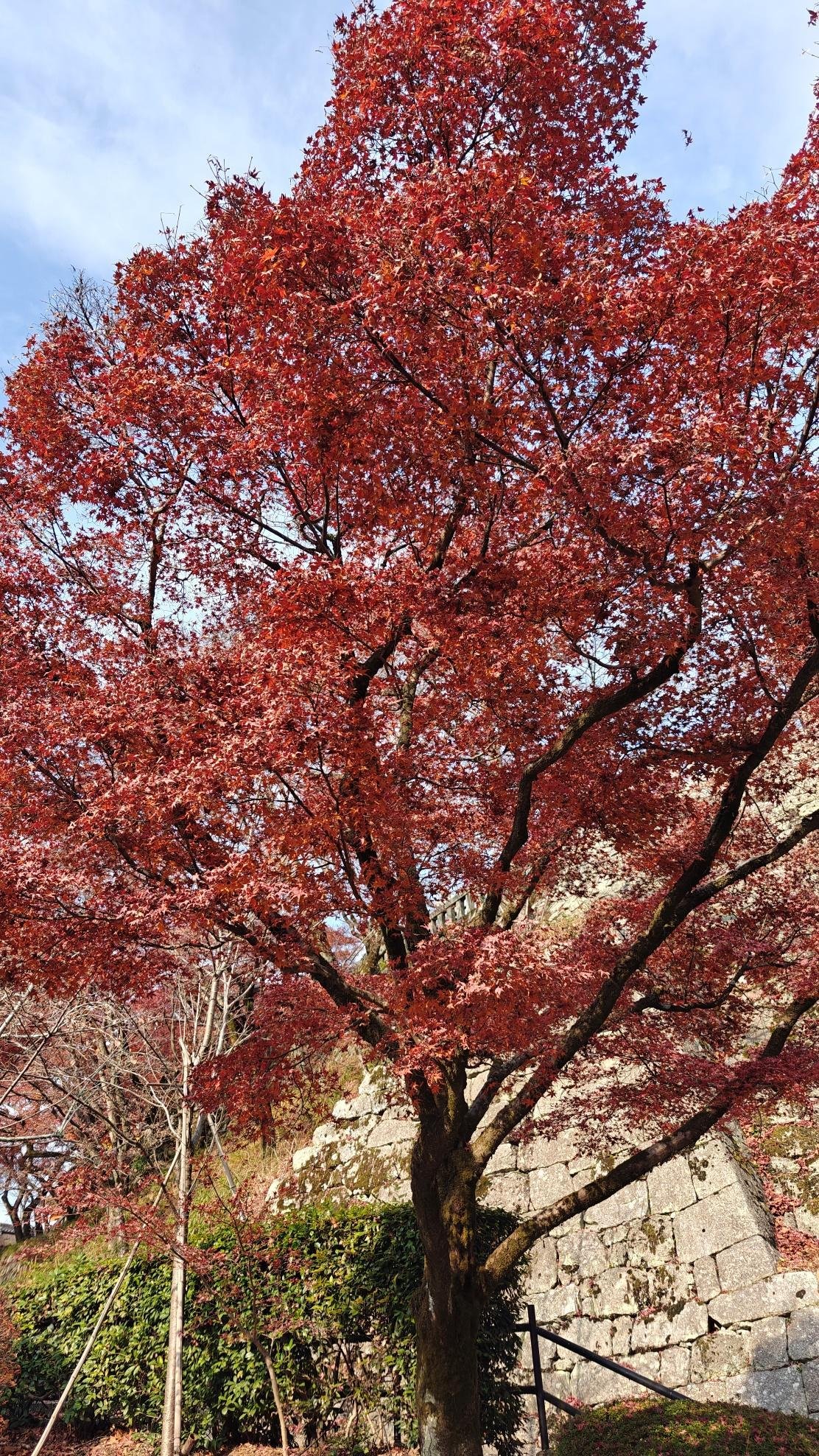
Still near the entrance and directly opposite the Sanju-no-to is this bizarre-looking clock tower. I think this is relatively new compared to the temple complex though it still very much fits the vibe of the place. Aside from the clock tower, the area also had these trees with amazing fall foliage.
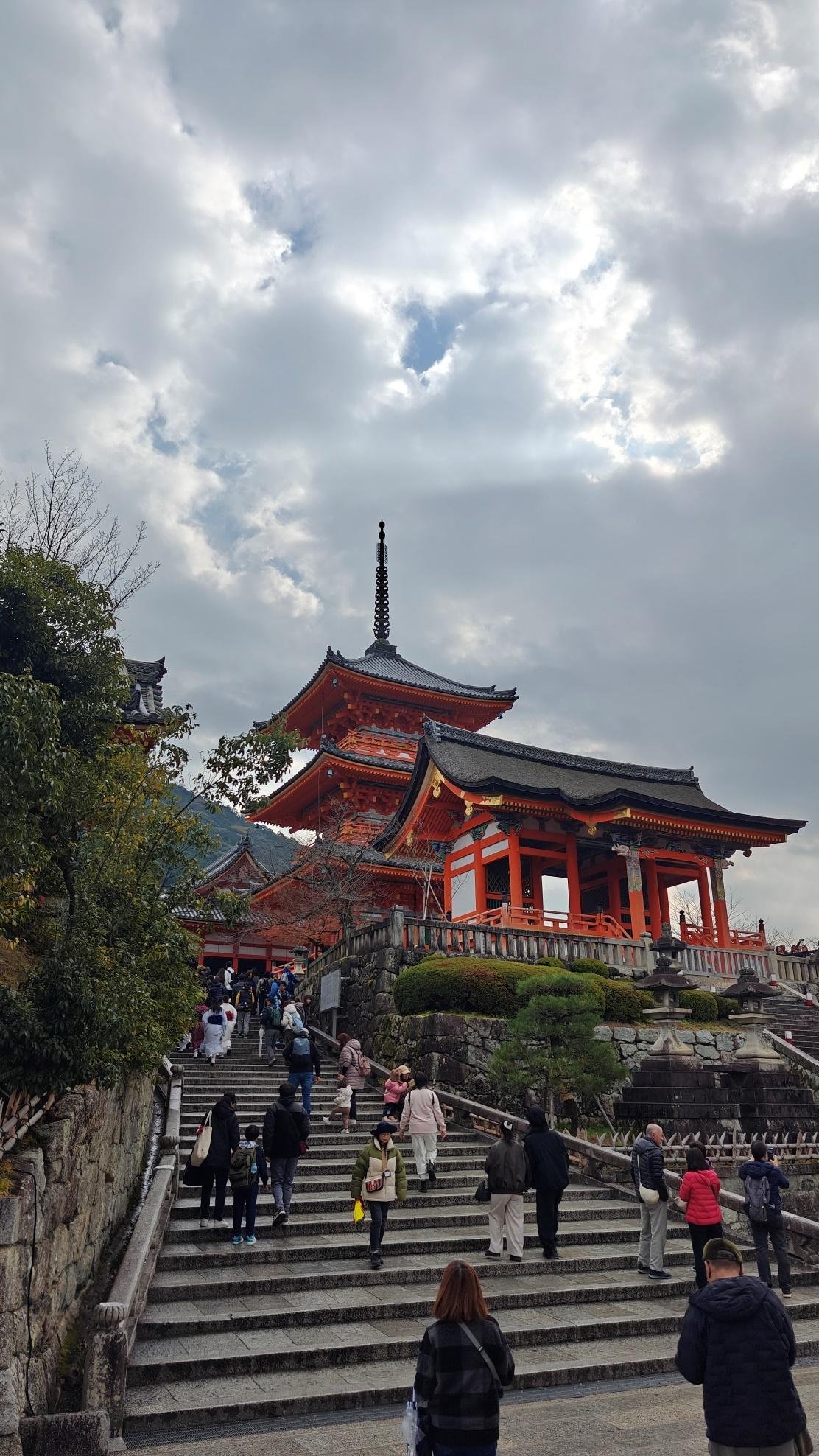
Since Kiyomizu-dera is closer to Kyoto’s city center, it naturally has a lot more visitors. That said, if you come here during the off-peak season then crowd size isn’t going to be that big of an issue. In my case, I was able to visit just after the mid-autumn tourist rush and before the New Year so it wasn’t as crowded here.
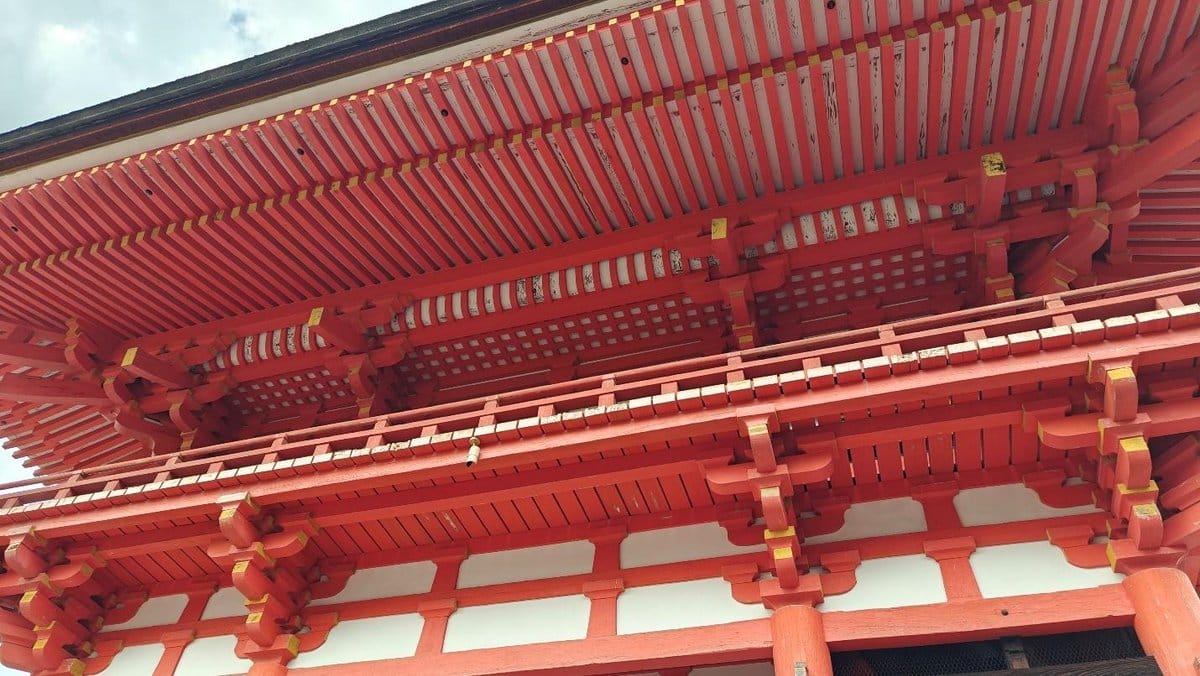
This is a close-up of the Nio-mon or Nio Gate’s detailed woodwork. I wouldn’t say that this was the most impressive Nio-mon I’ve ever seen (I think Zenkoji Temple‘s is better) but it definitely looks beautiful up close. Another thing that’s really cool about this gate is how old it is.
It’s been around since the 1600s (with some significant renovations in 2003) and is actually a reconstruction of an older structure from back when the temple was founded in the late 8th century.
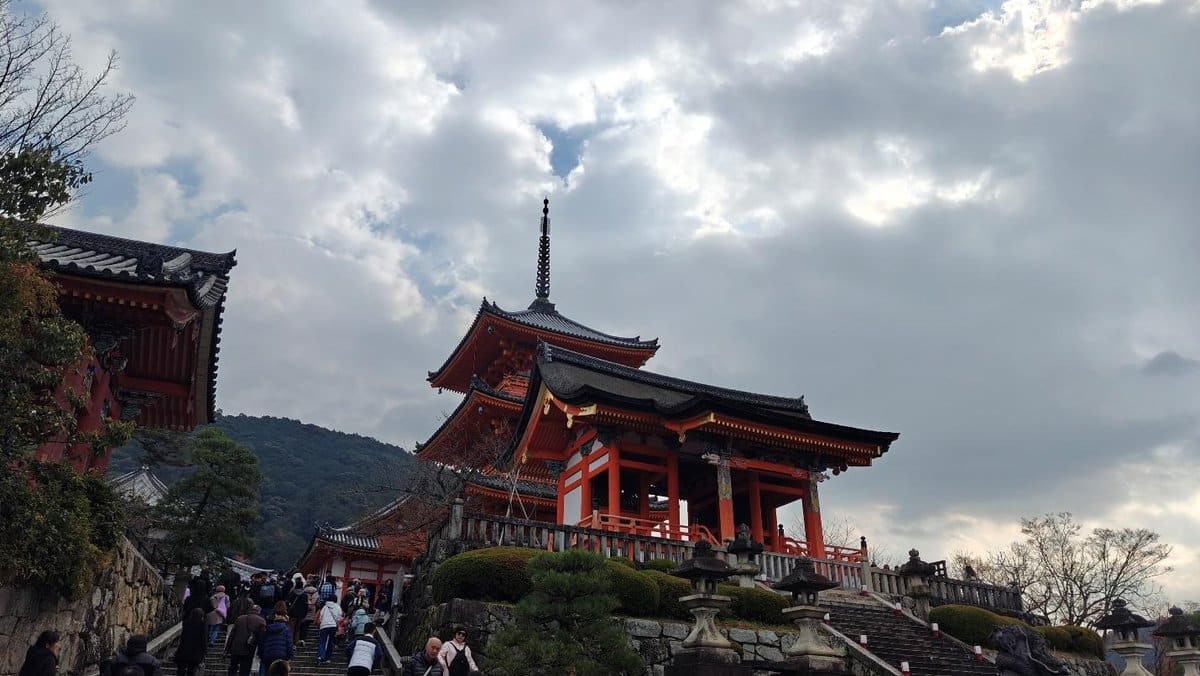
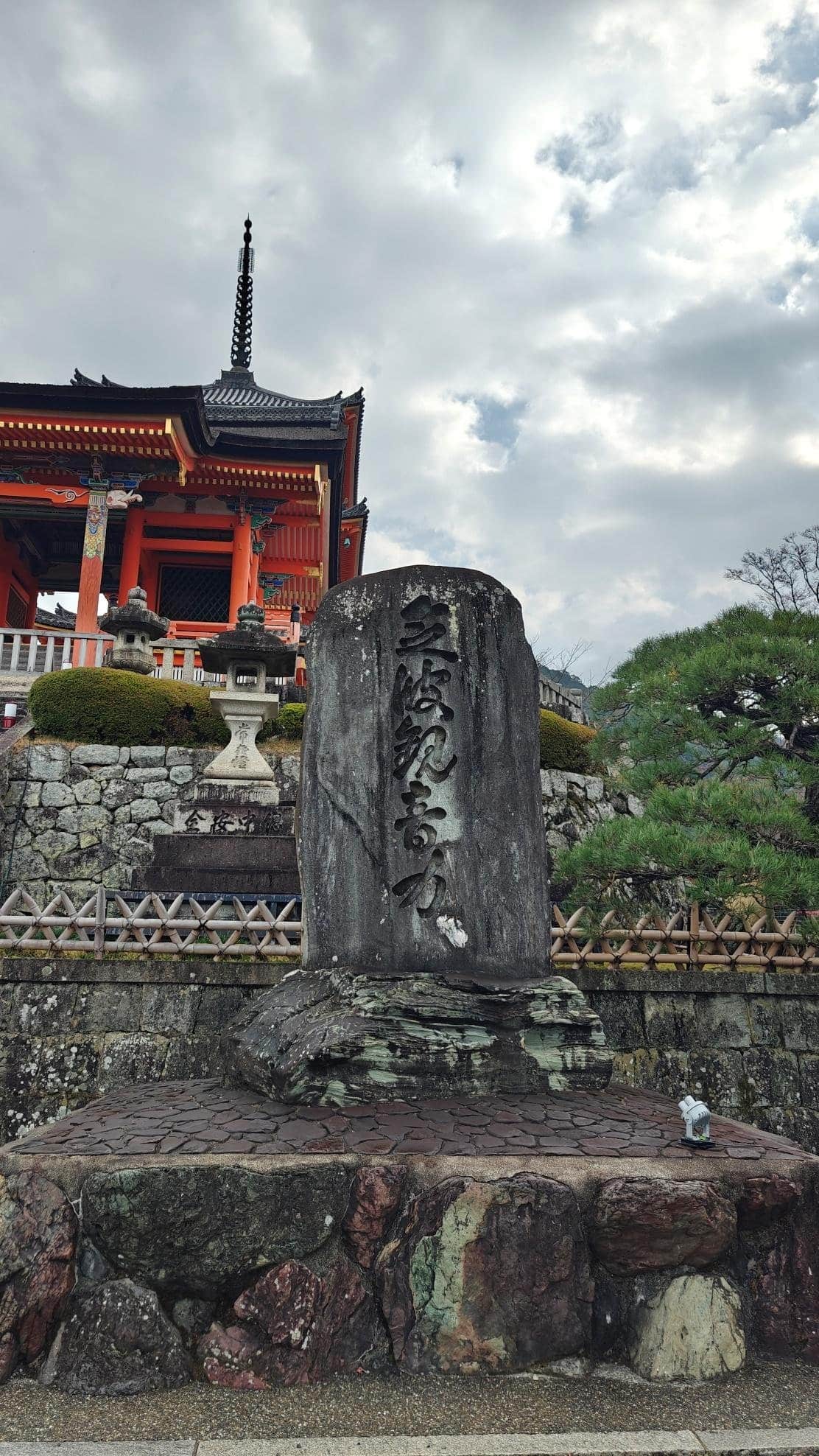
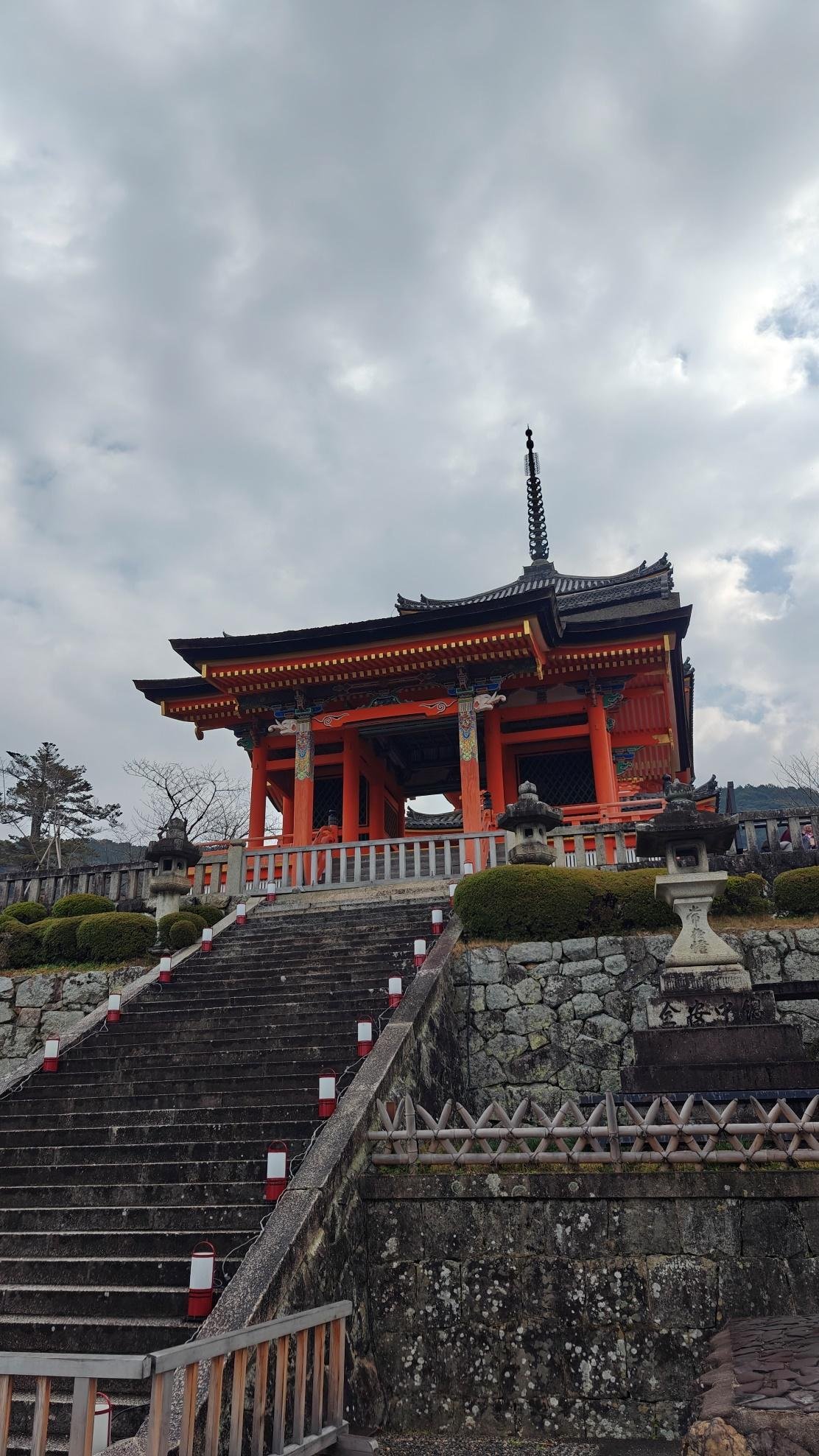
This is a closer look at the gate in front of the Sanju-no-to. Take note that this is different from the Nio-mon that you saw earlier.
The stairs here actually closed off and you won’t be able to use these to go up.
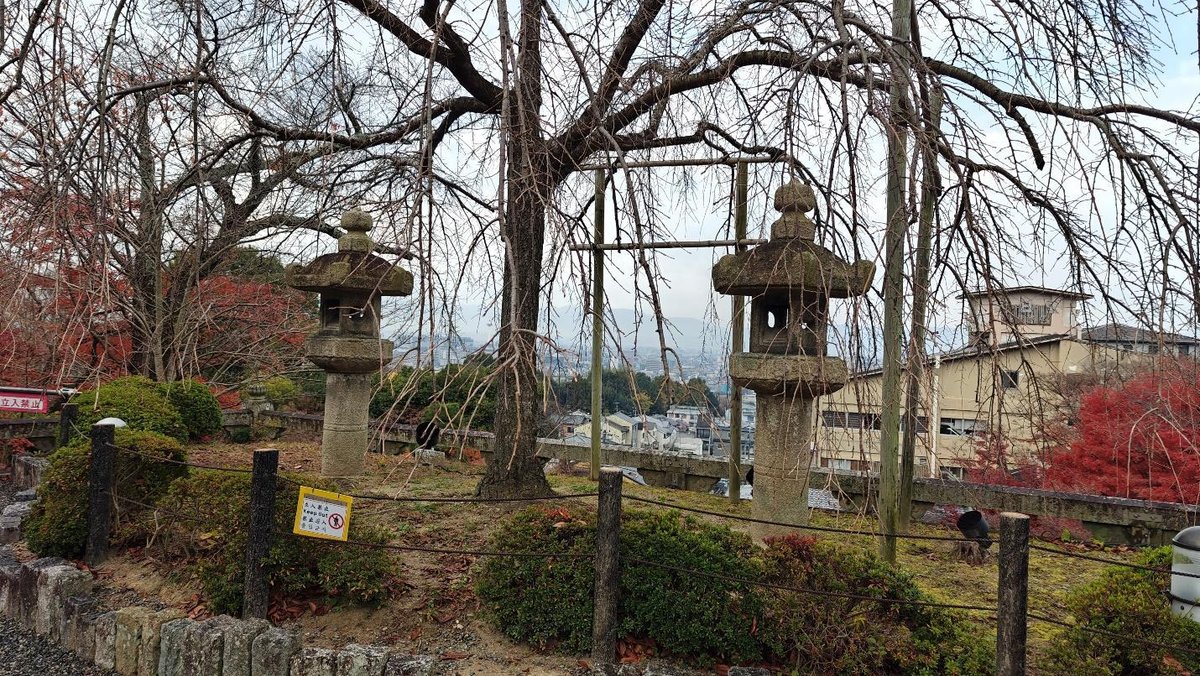
Since Kiyomizu-dera is on the hillside, you’ll naturally get to see some nice views of the city below. Take note that I’ve yet to enter the temple complex proper at this point. Once inside, there’s a viewing platform called Kiyomizu no Butai that arguably has the best overlooking views in Kyoto.
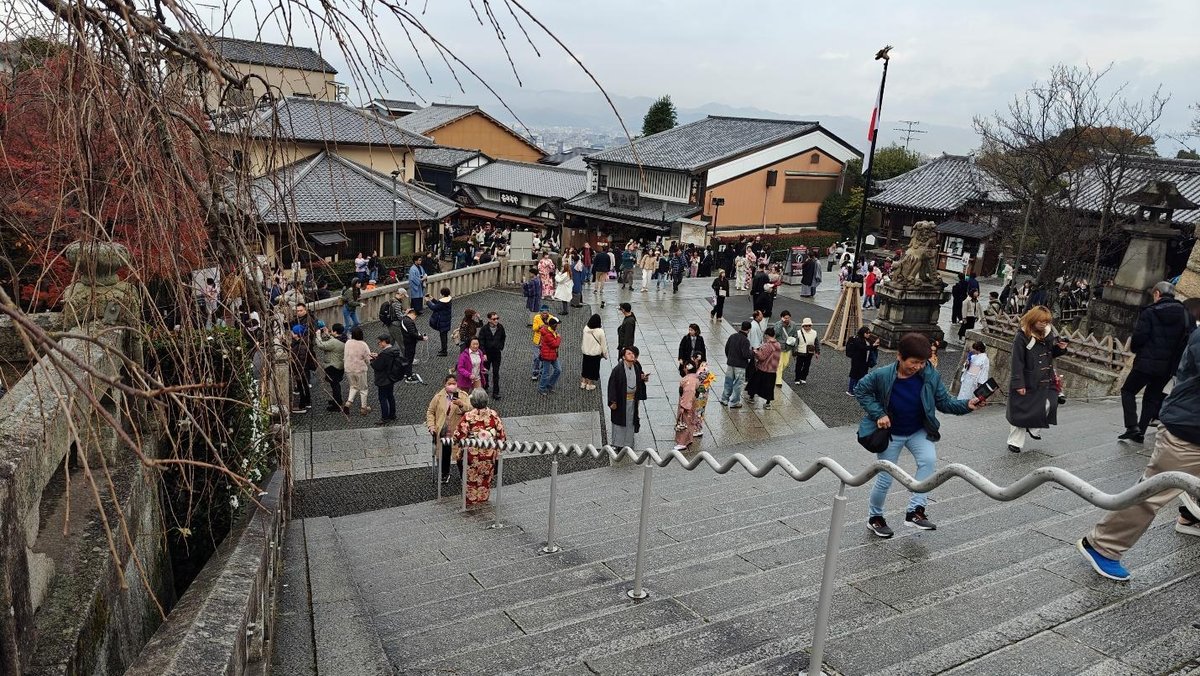
From here you can sort of see Kiyomizu-zaka and just how busy it was during my visit. As I said earlier though, the crowd here is quite tame especially when you consider I took this picture during the off-peak season. Imagine this being the New Year?
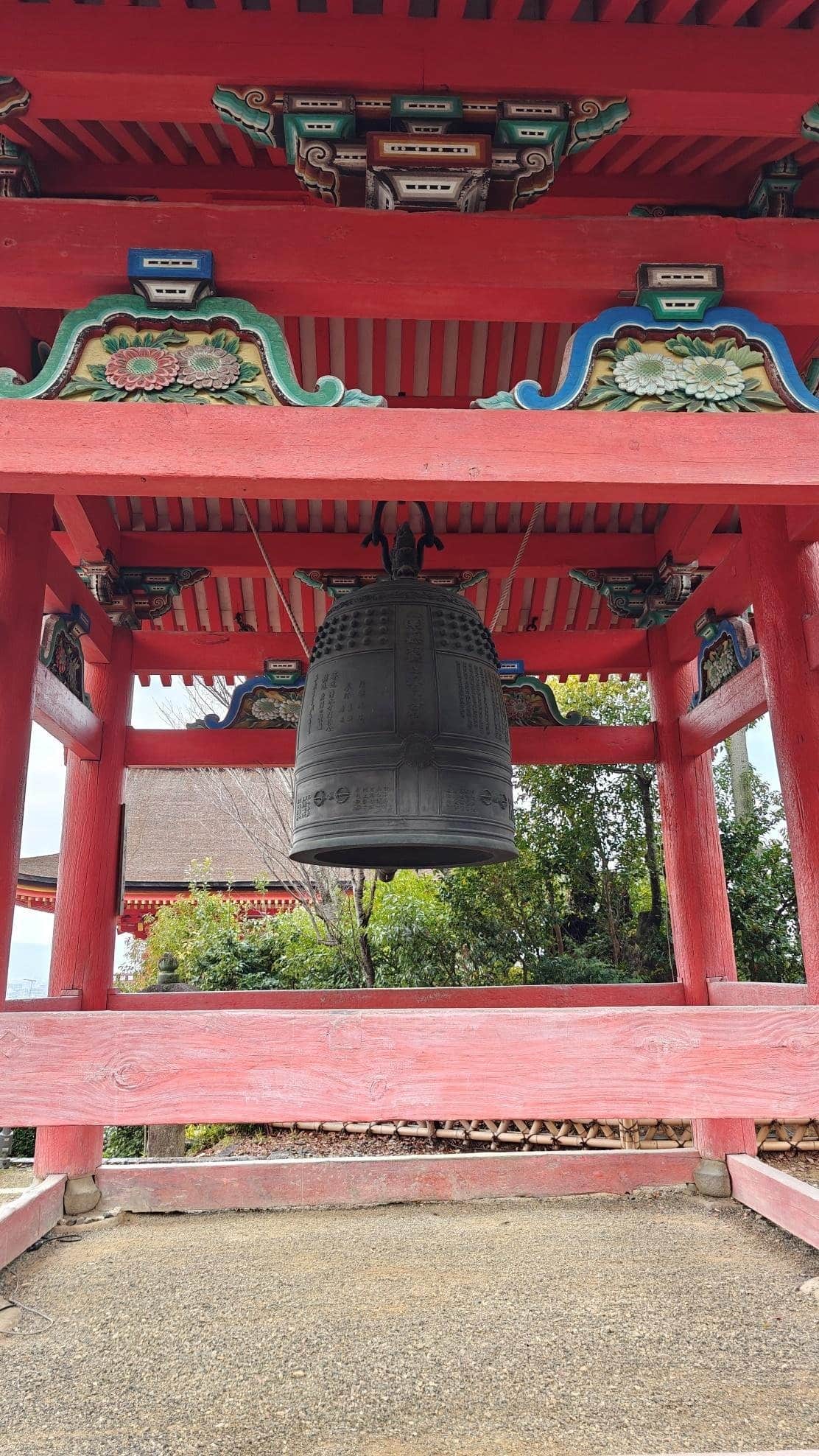
A whole set of stairs past the Nio-mon and just before reaching the level of the Sanju-no-to is the temple’s bell tower or shoro. Similar to the majority of the buildings here, visitors are not allowed to get close to the tower and the bell. It’s not shown but there’s actually some railings here that act as a barrier to ensure nobody gets close.
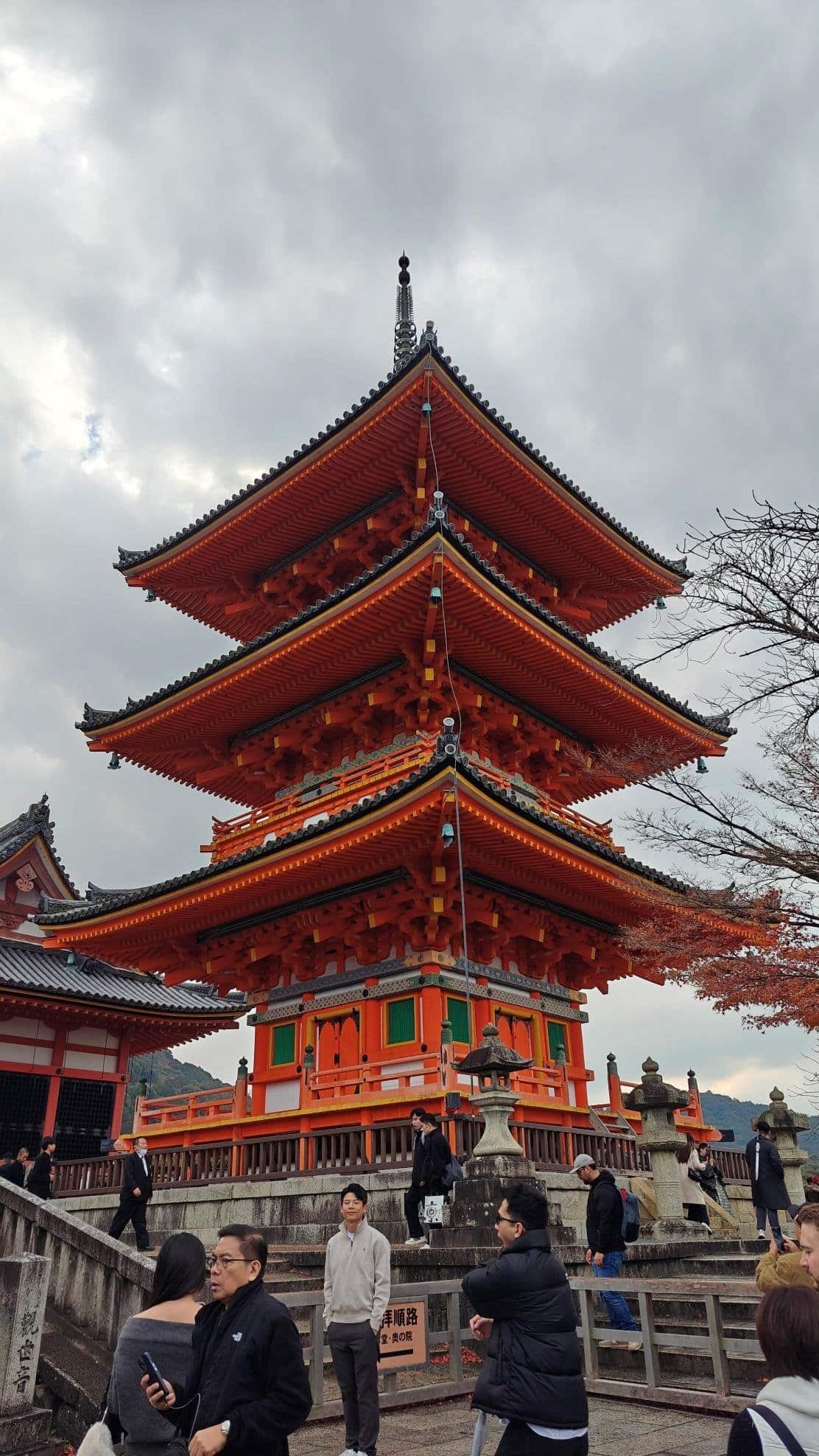
A couple of steps (across the pathway) from the shoro is the Sanju-no-to which translates to Three-Storied Pagoda. Now if you’ve been following me, you’d know that this isn’t the first Three-Storied Pagoda that I’ve come across. Back when I visited Sankeien Garden, there was a similar pagoda there that also was on top of a hill.
Of the two though, the one here at Kiyomizu-dera is much taller and larger.
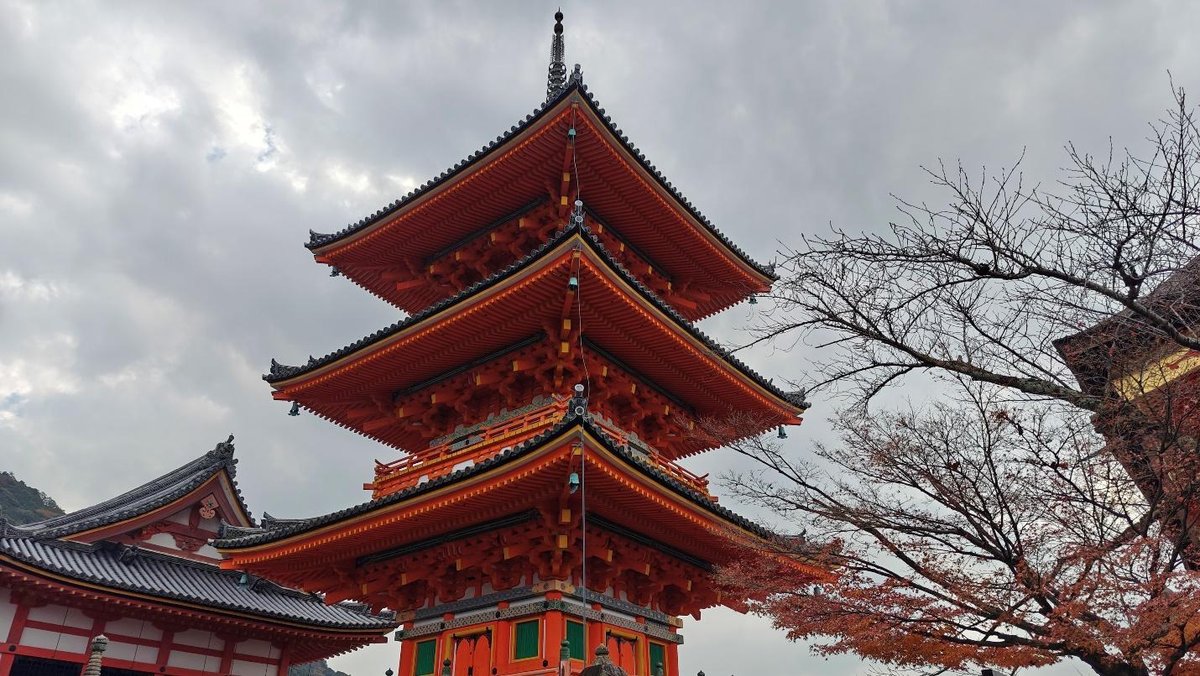
In fact, I read somewhere that the Sanju-no-to here in Kiyomizu-dera is one of the three largest in Japan. Much like the Nio-mon, the pagoda was reconstructed in the 1600s after the original burned down. Another feature that sets it apart from the three-story pagoda in Sankeien is its vermilion color which a lot of the buildings in this part of the temple complex also have.
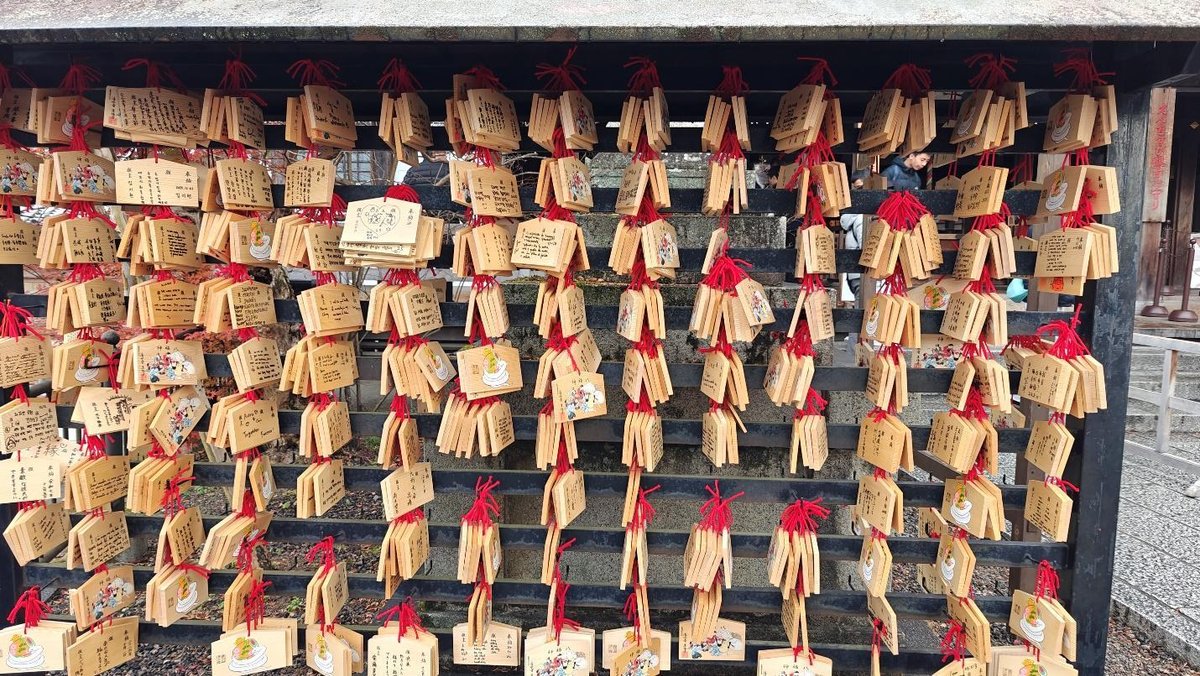
Moving along, you’ll come across this emagake which is situated just in front of the Zuigu-do. Even though I got there in the off-peak season, there were still plenty of ema hanging in this rack. I can’t imagine how full this would be leading up to and during the New Year.
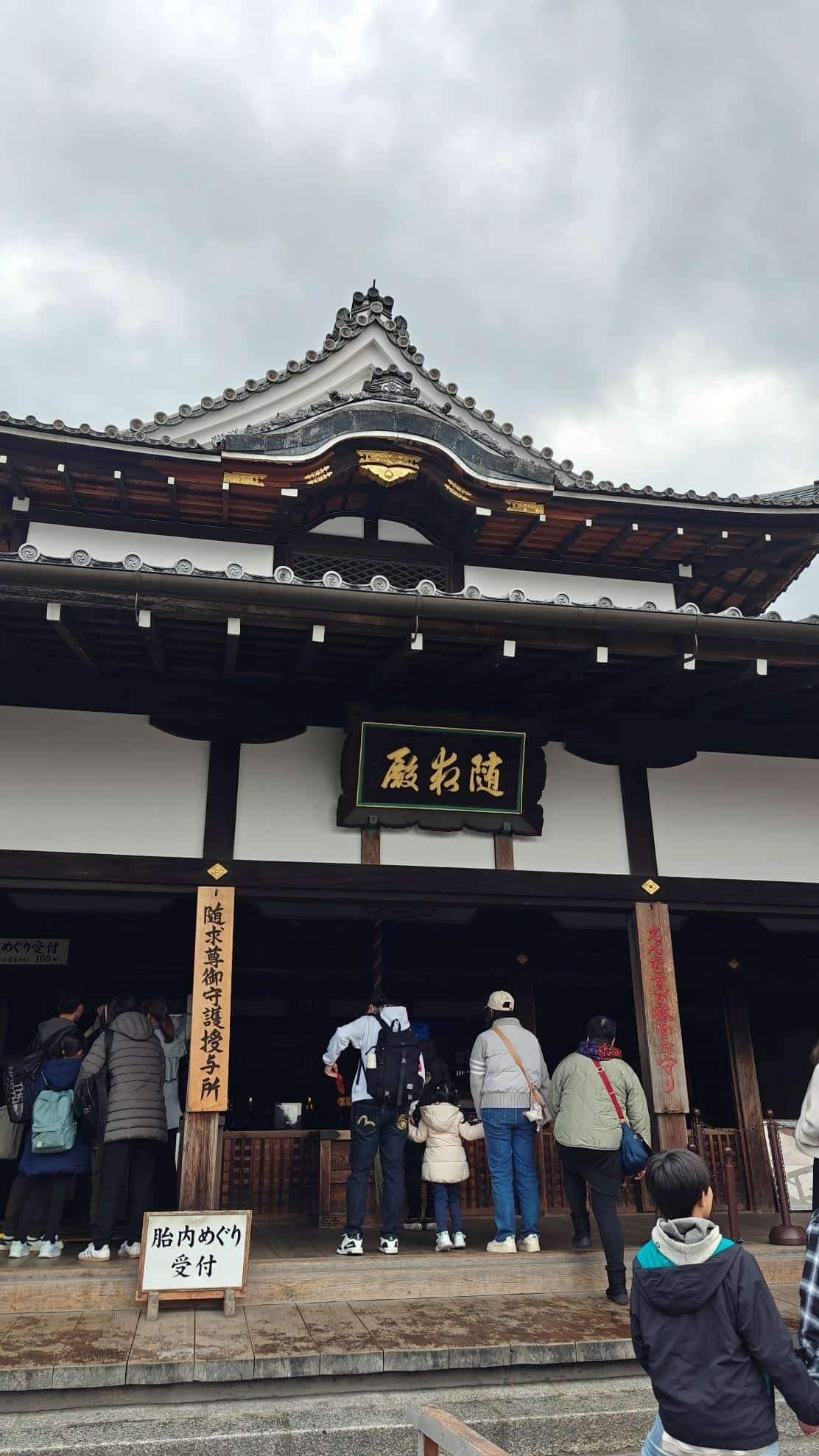
While the Sanju-no-to is arguably the most recognizable building in this area of the temple complex, I think the most important for Buddhist practitioners is the Zuigu-do. The hall is dedicated to and houses the Buddha’s mother, Daizuigu Bodhisattva. Additionally, it also offers an “experience” called Tainai Meguri or Womb Walk which is symbolic for entering a female bodhisattva’s womb that would then lead to a spiritual rebirth.
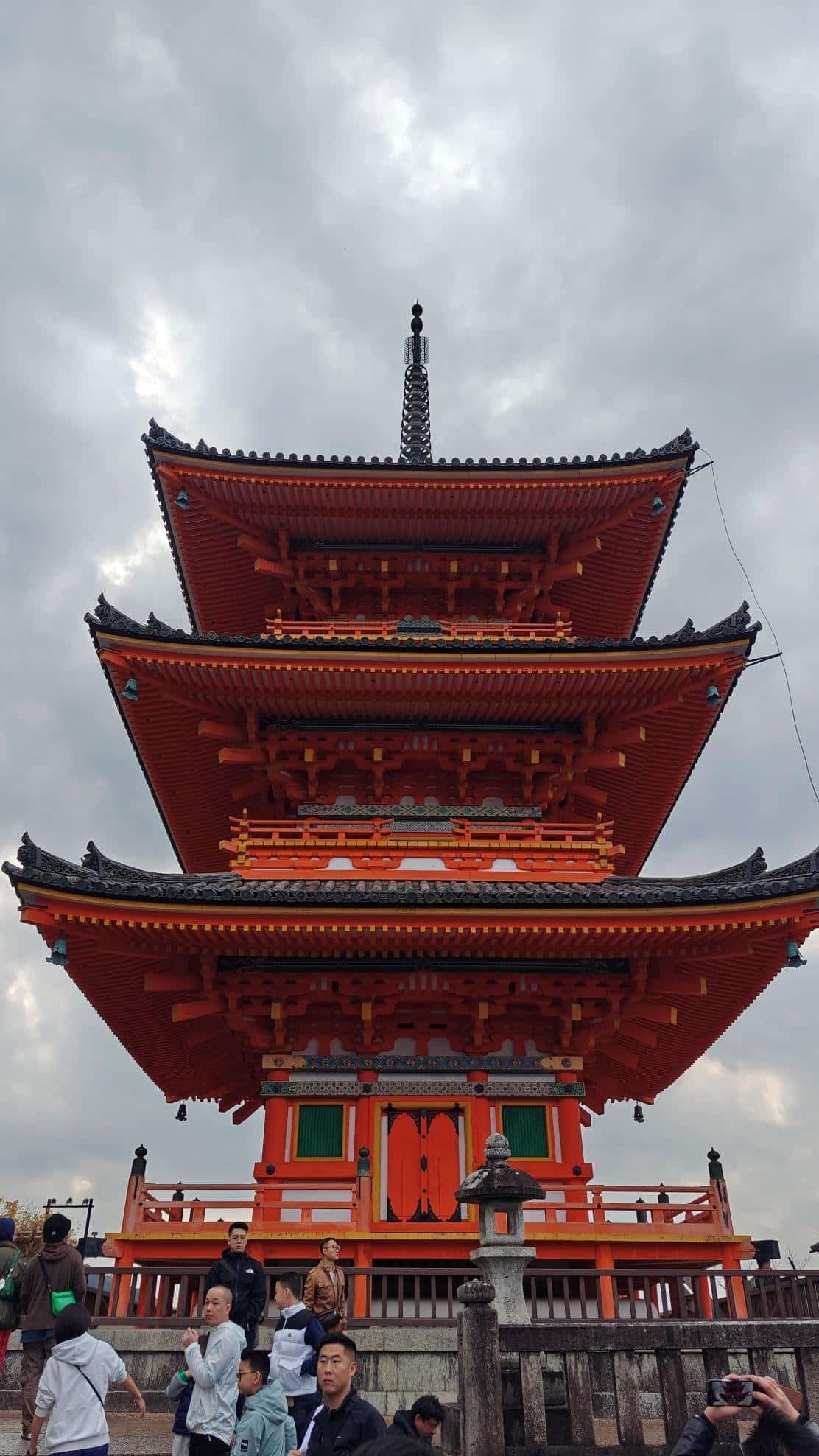
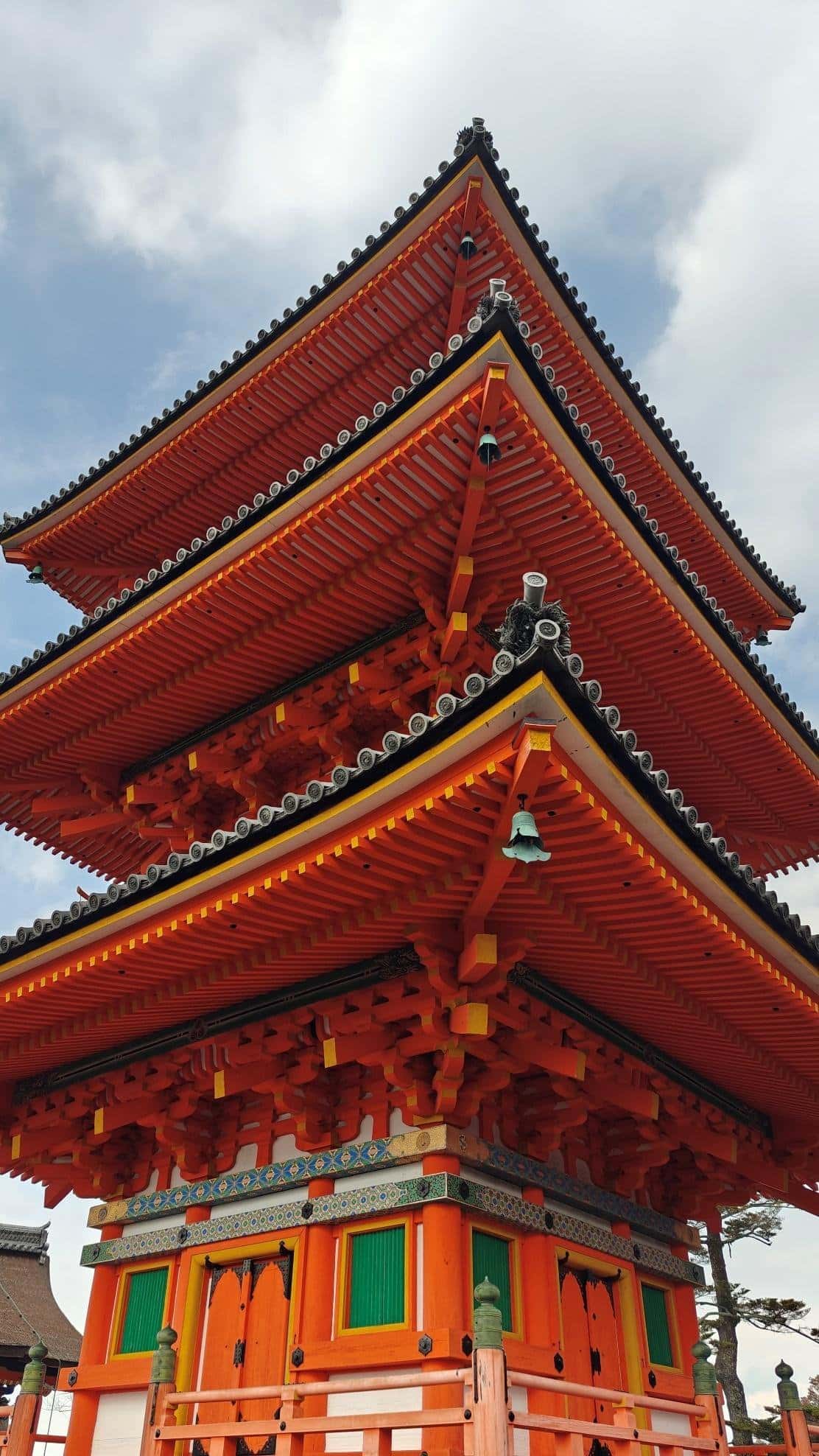
Here’s a closer look at the Sanju-no-to from another angle. You could sort of see just how large the pagoda is relative to the size of the people having their pictures taken in front of it. Up close, the pagoda looks a lot like the Nio-mon with its vermillion color and highly detailed eaves.
Also like a lot of older buildings, you’re not going to find a nail on this pagoda as it was built using Japanese nail-free carpentry (also known as kigumi) techniques.
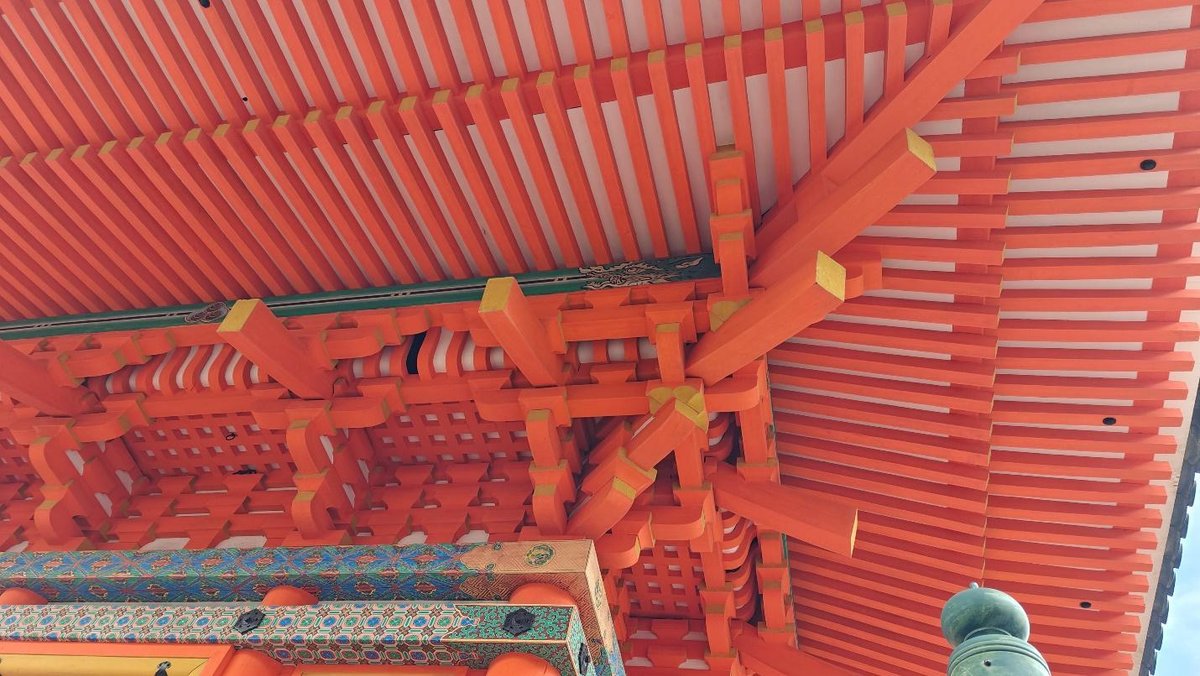
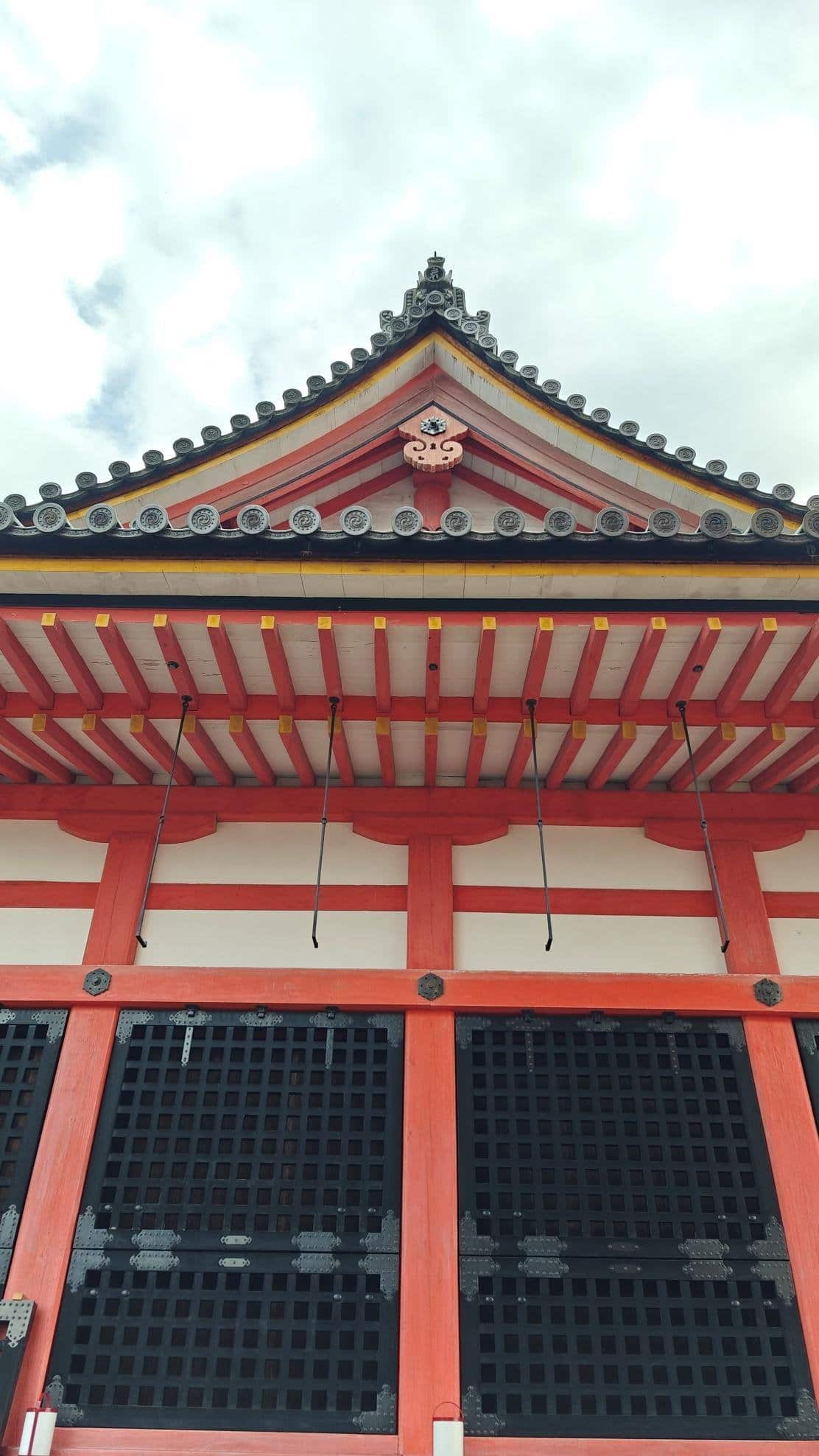
Across the path from the two previous images is another of the temple’s buildings. This one is called the Kyodo or Sutra Hall. Like the building beside it (the Zuigu-do), this hall isn’t as popular though it does feature notable Buddhist art and sculptures.
Moreover, across the path from it is a fairly scenic view of some of the trees here at the temple complex.
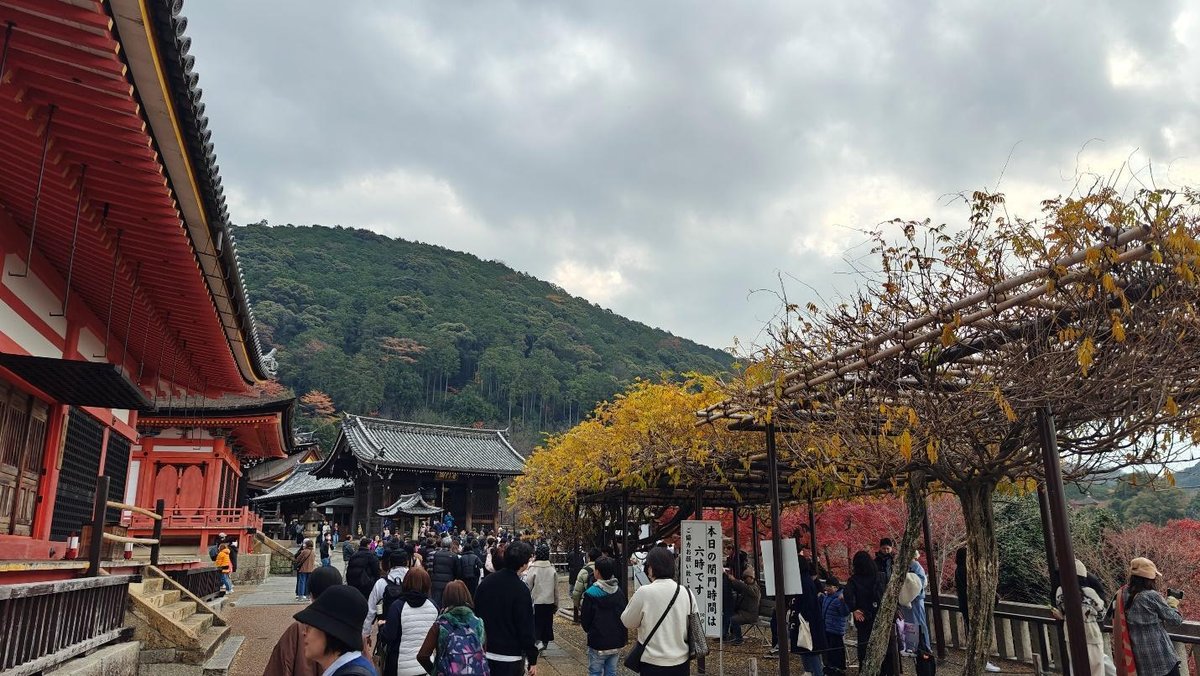
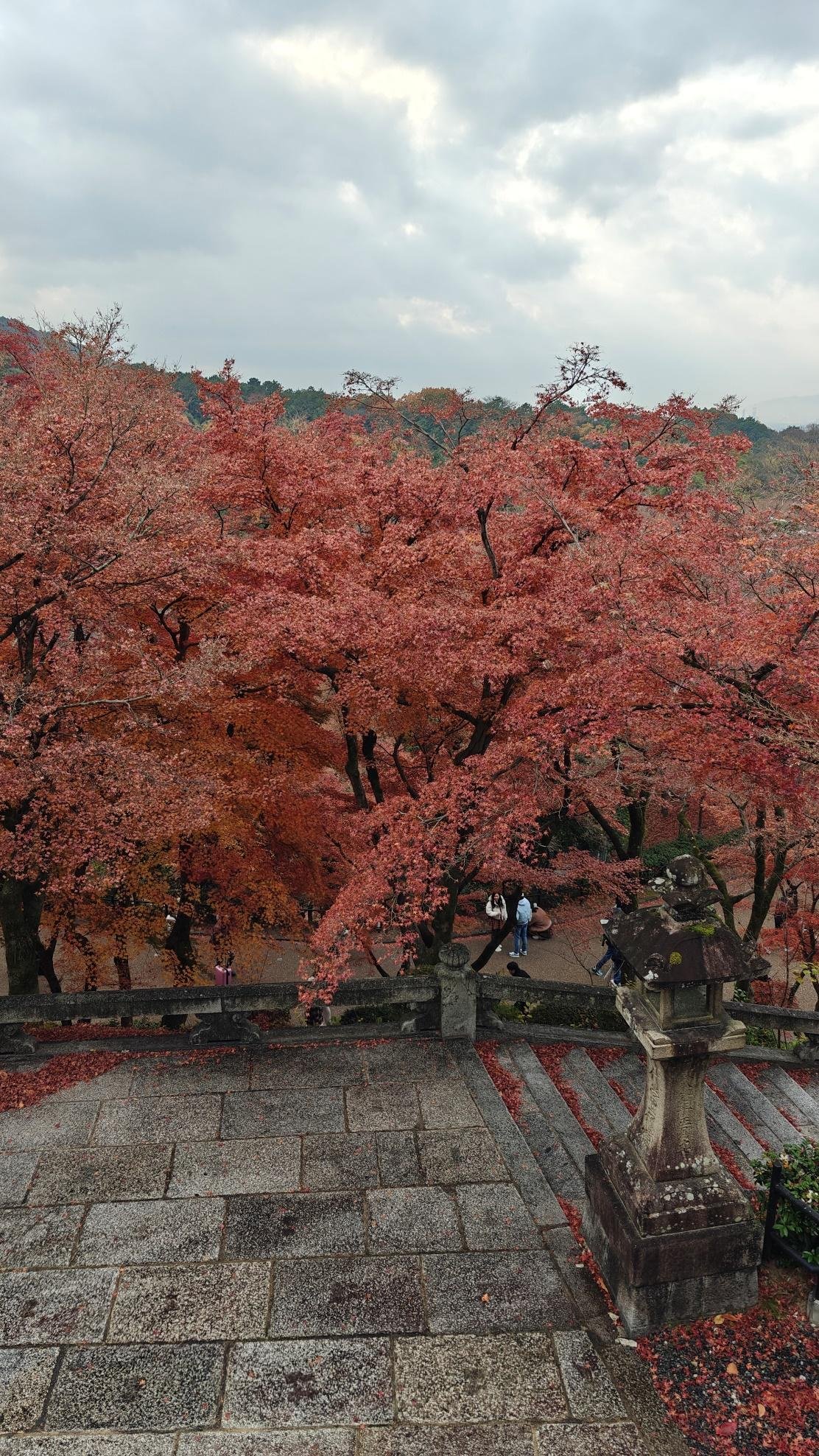
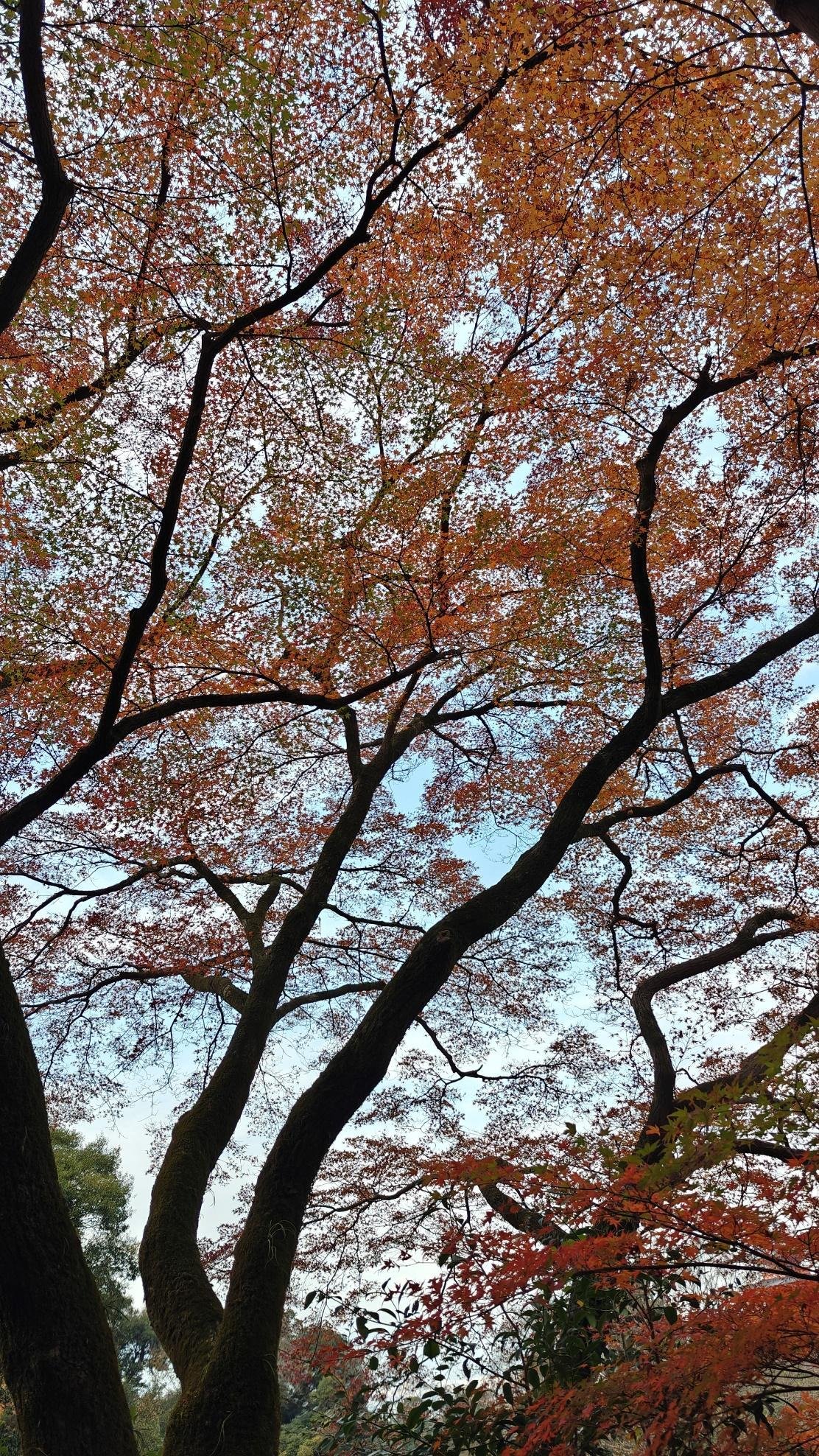
Speaking of trees, these are the ones that I was talking about earlier.
They all still had their fall foliage and they looked absolutely amazing. On a side note, the color of the foliage actually reminded me of the vermillion motif of the buildings here.
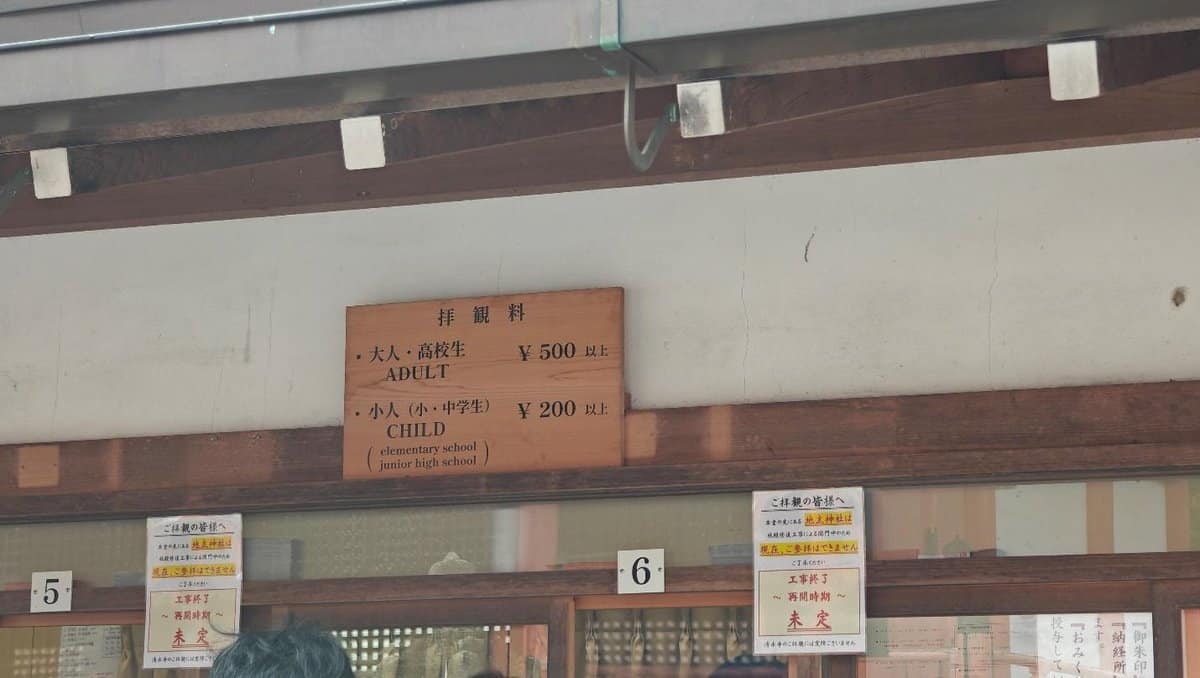
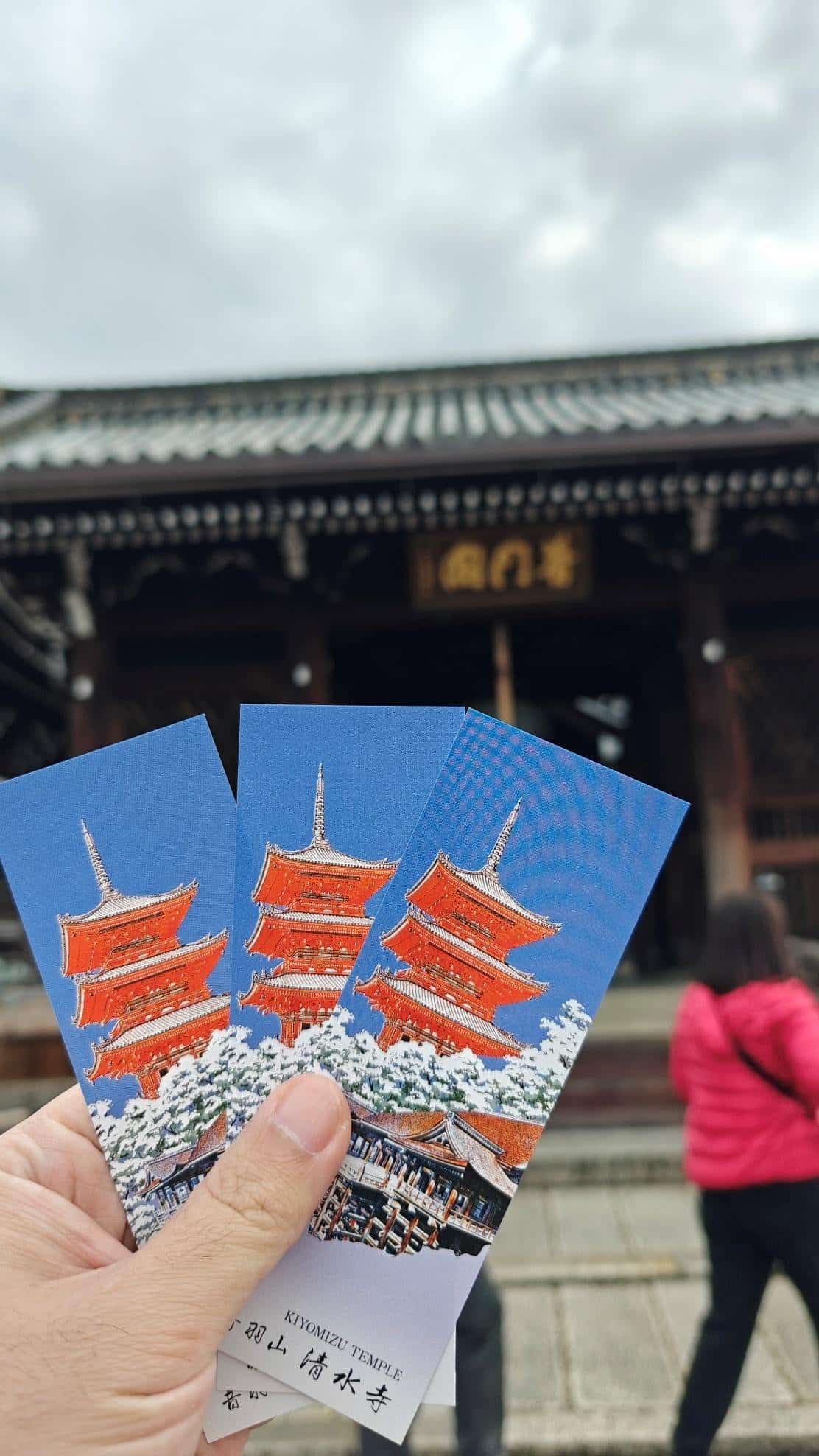
After walking past the Sutra Hall, you’ll come across the temple’s ticketing office. Before you can move past this area and get into any of the halls, you’ll need to pay 500JPY for admission. The fee is relatively affordable and is typically the going rate for other temples and shrines.
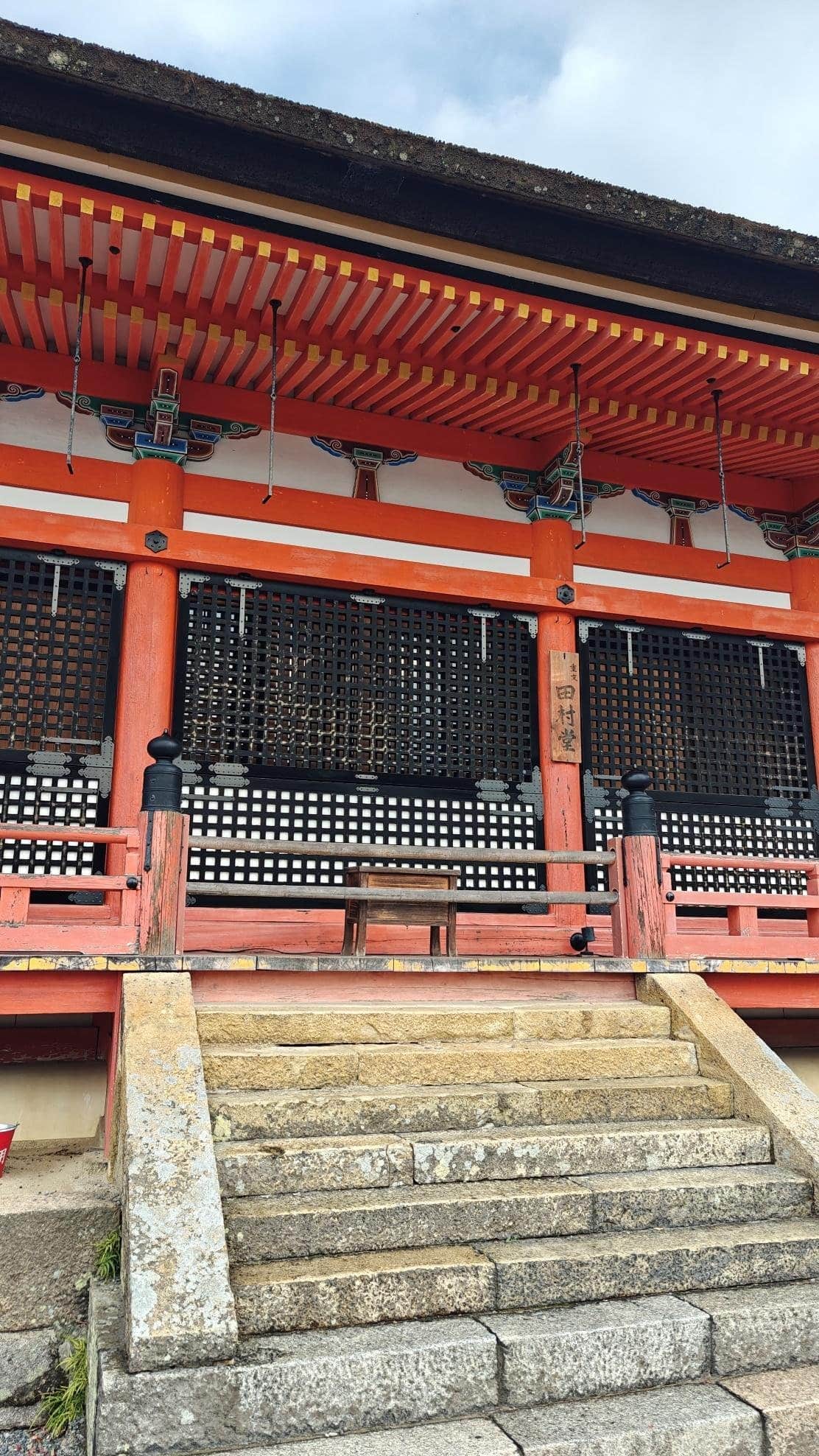
Directly facing the ticket admissions booth is the Tamura-do. Also known as Tamuramaro-do, this is one of the buildings in Kiyomizu-dera that isn’t dedicated to a deity. Rather, the hall was constructed as a memorial for the 8th-9th century shogun Sakanoue-no-Tamuramaro who was instrumental in helping establish the temple complex together with the monk Enchin/Kenshin.
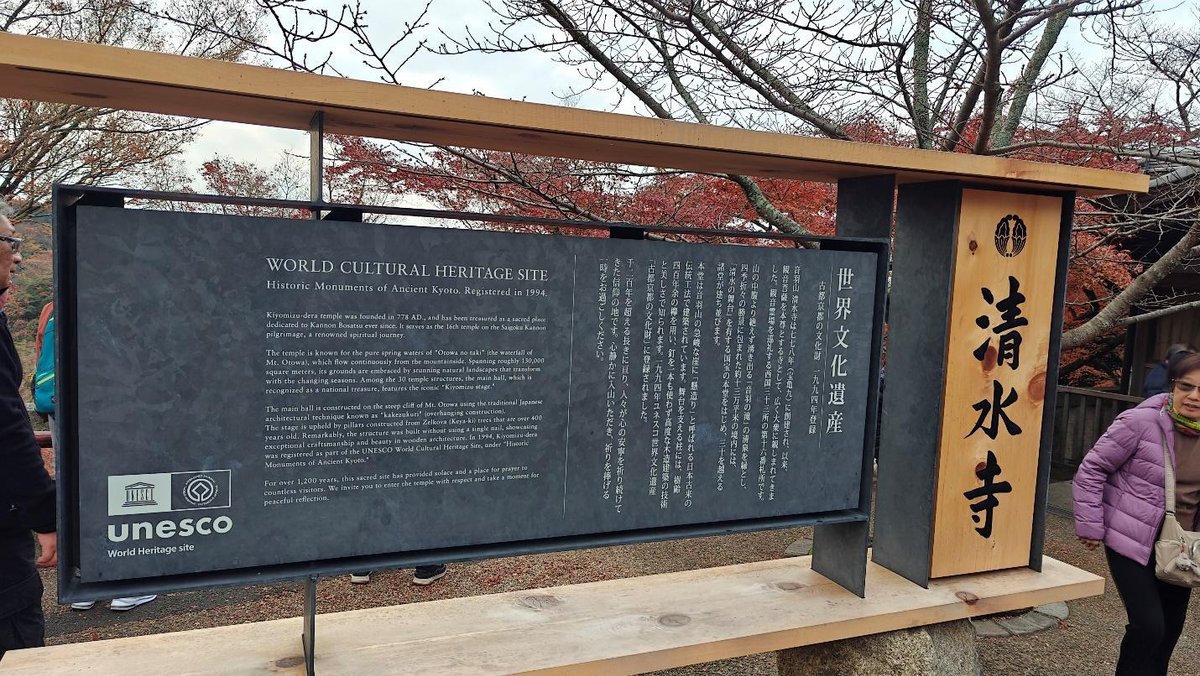
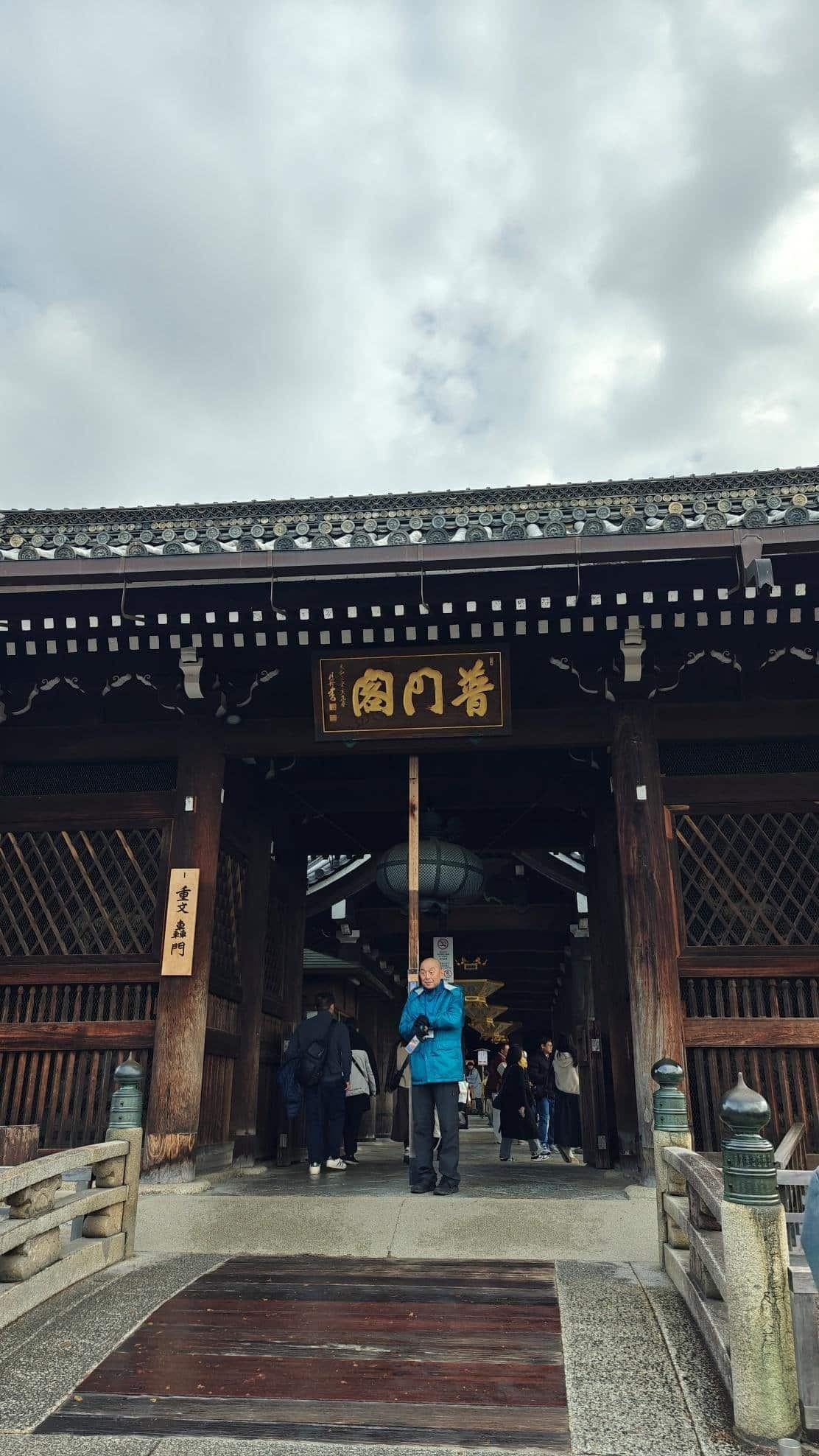
So my next stop after paying for the tickets is the Hon-do or Main Hall. To get there though, I just had to follow the path to my right (when facing the ticket admissions office) which then brought me to Todoroki-mon or Todoroki Gate. Compared to the Nio-mon, it wasn’t as flashy though if you looked closely, it actually is equally as detailed.
As you probably saw in the previous image, a staff member is standing on guard at the gate’s entrance to check for tickets. Just get yours at the ready and you should be good to go. What I really find nice about the temples and shrines here in Japan (as opposed to those in China) is that their security is much more relaxed.
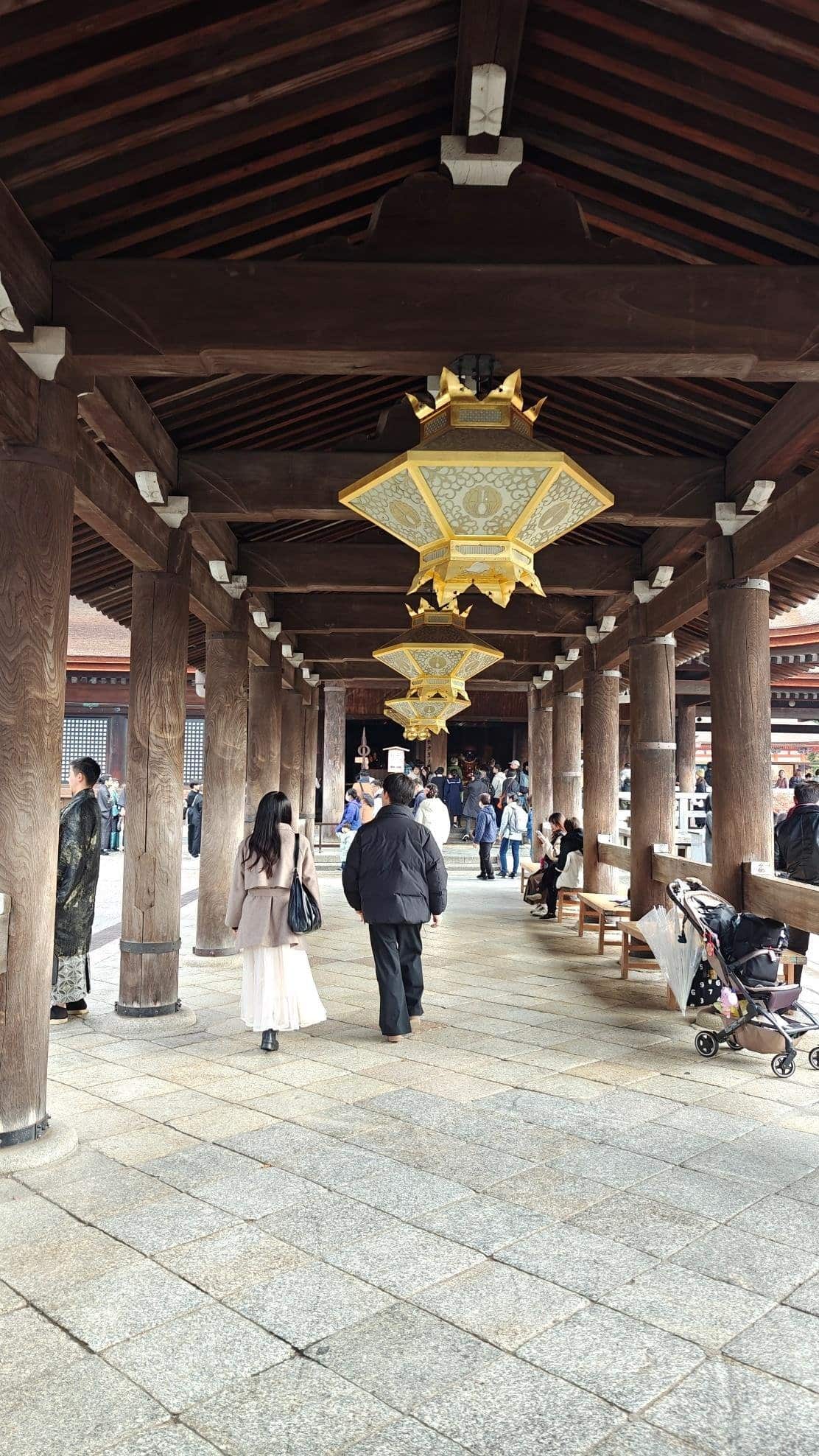
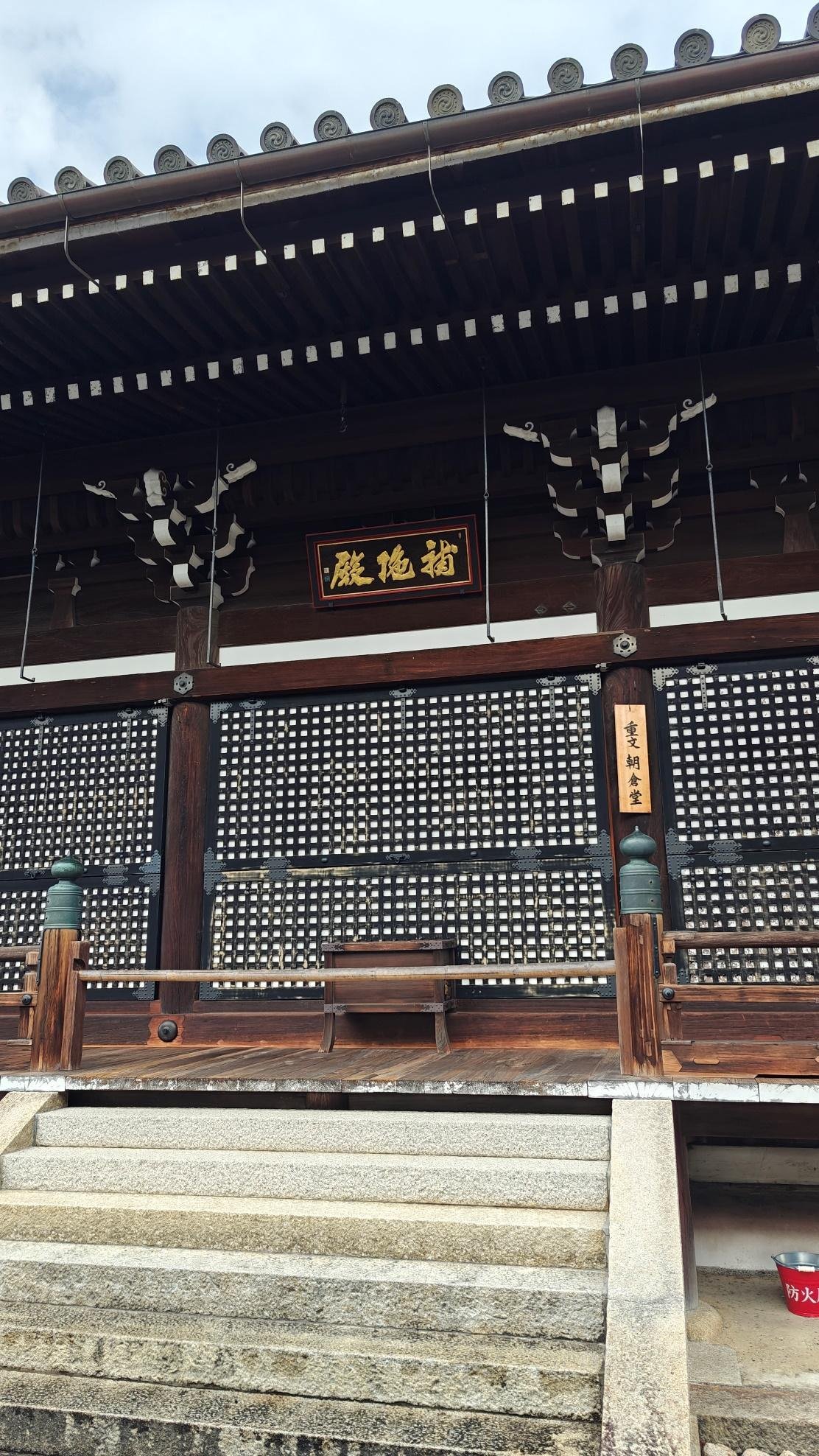
Upon entering the gate, I found myself marveling at this covered walkway called the Kairo. This serves as a connection from the gate to the Hon-do and if you looked right, you’d also get a scenic view of the garden below. To the left is the Asakura-do which is a closed-off building that I think is off-limits to visitors.
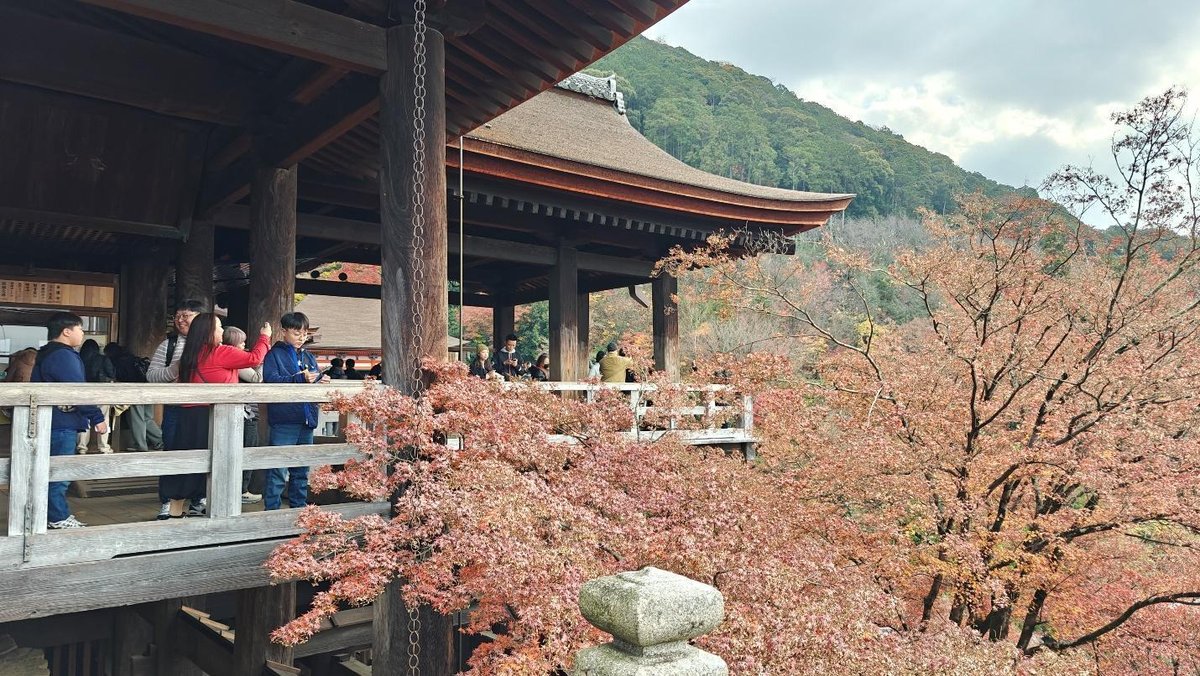
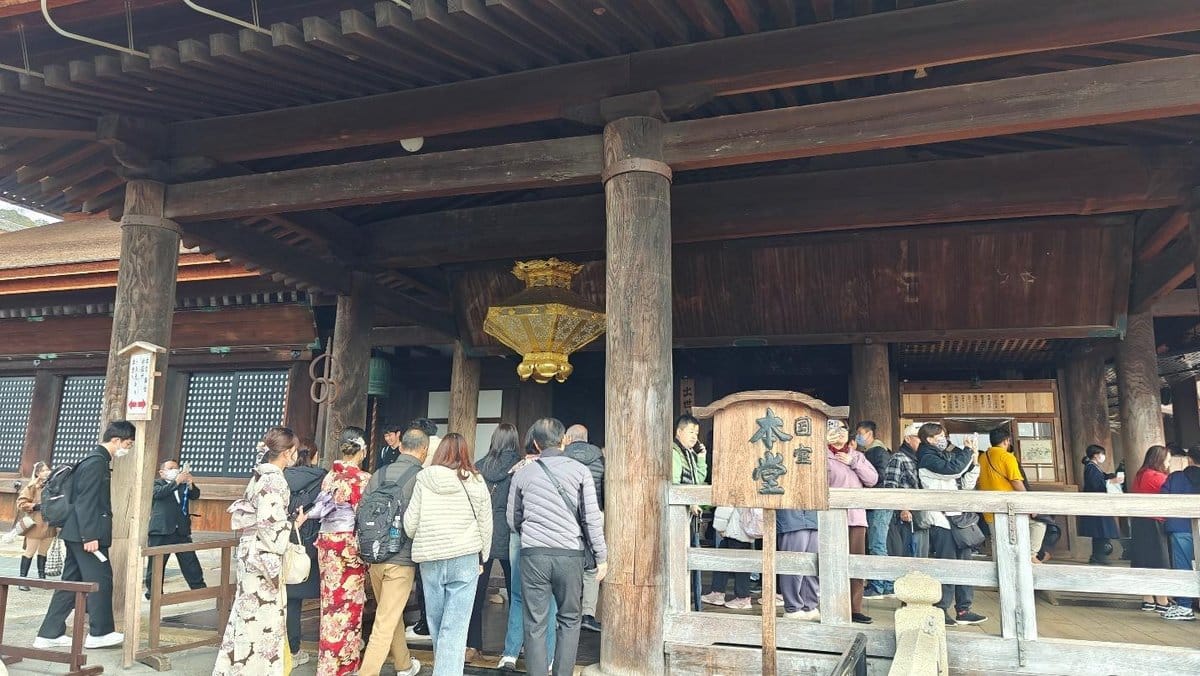
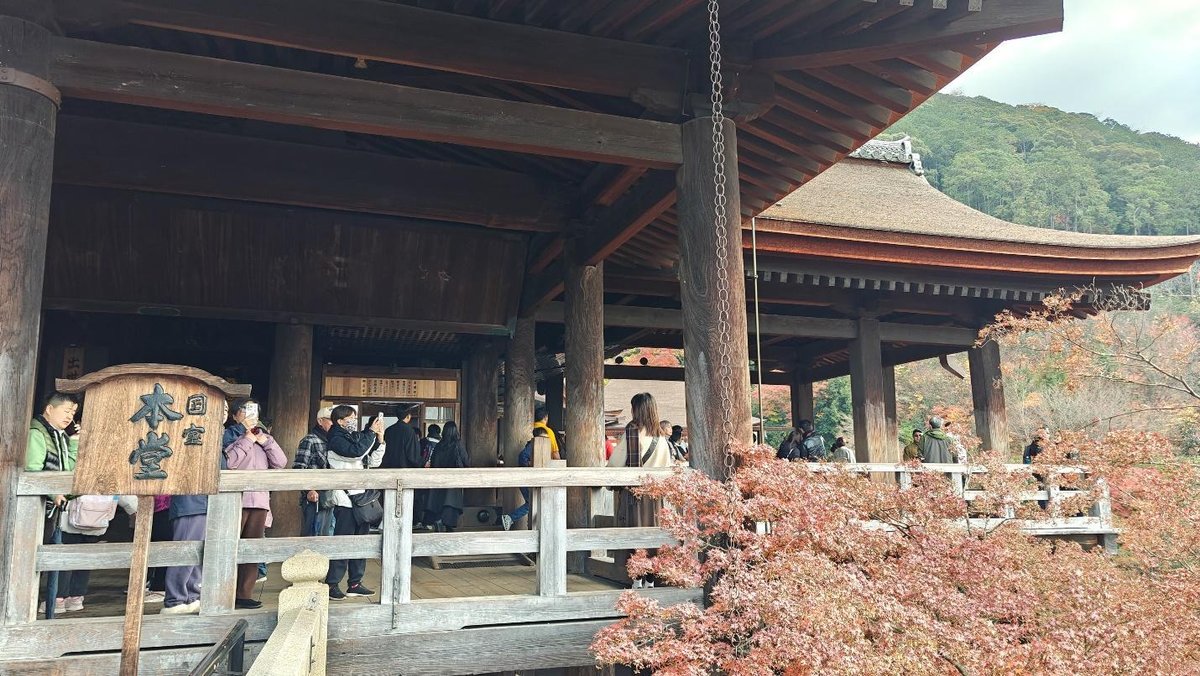
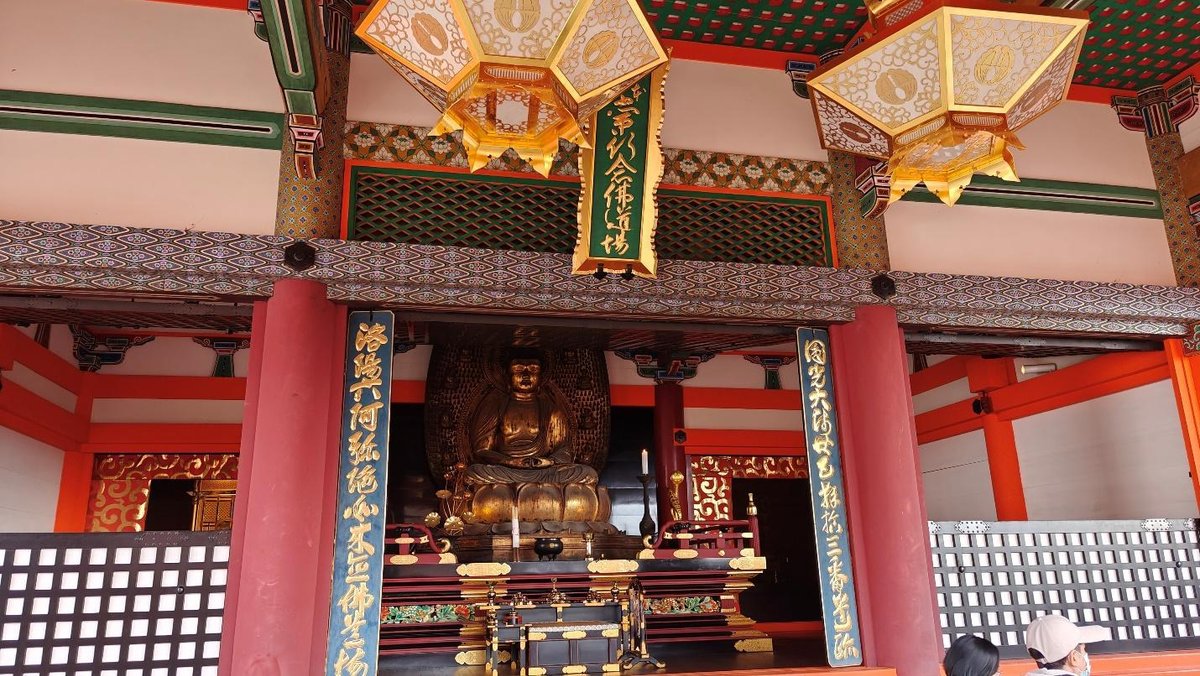
I finally reached the Hon-do and it was unsurprisingly quite busy. This is without a doubt the most iconic landmark here in Kiyomizu-dera thanks to its stage which you can glimpse parts of in this image. Now while there were plenty of people here, it was thankfully not as large as peak season crowds.
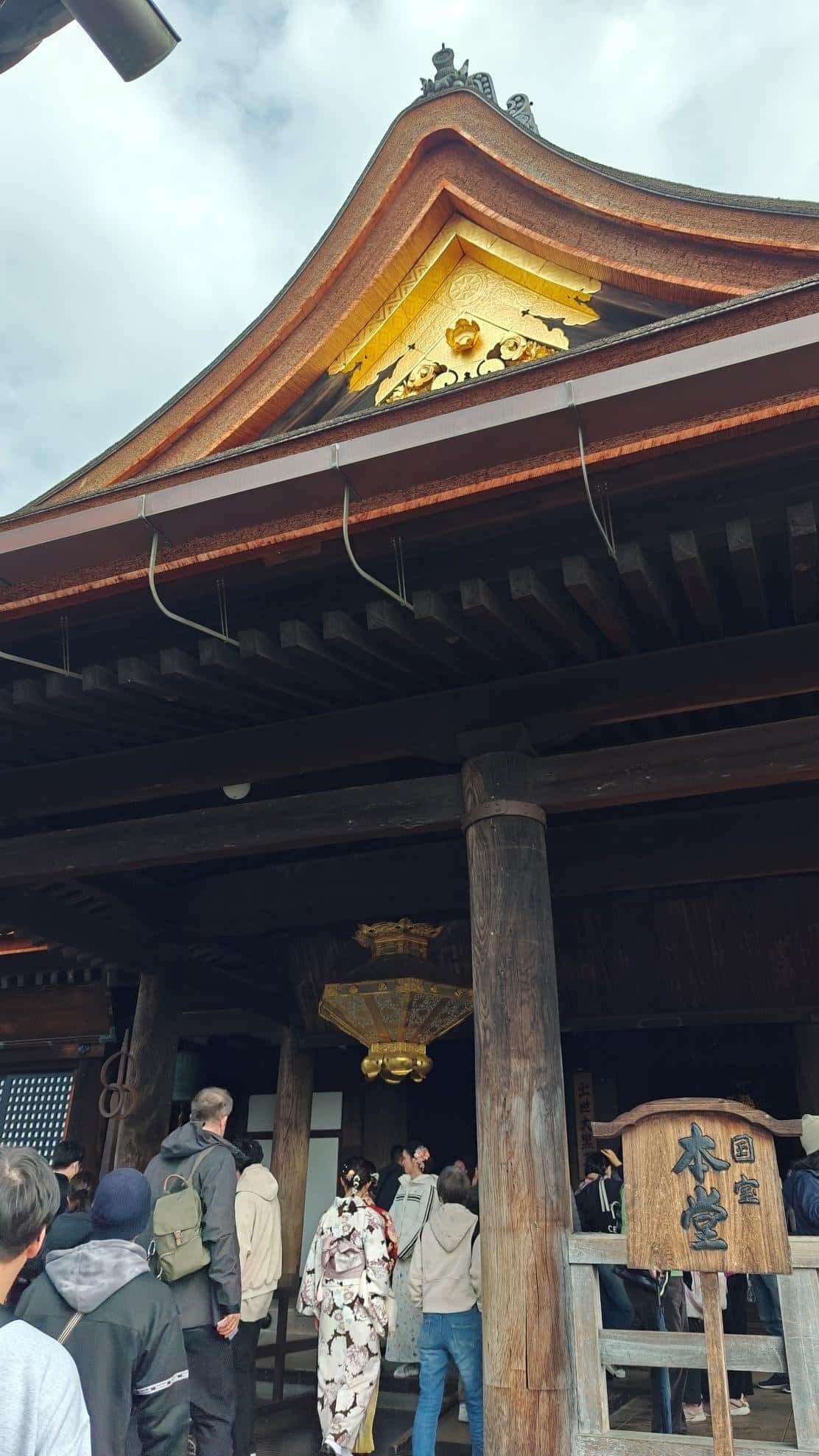
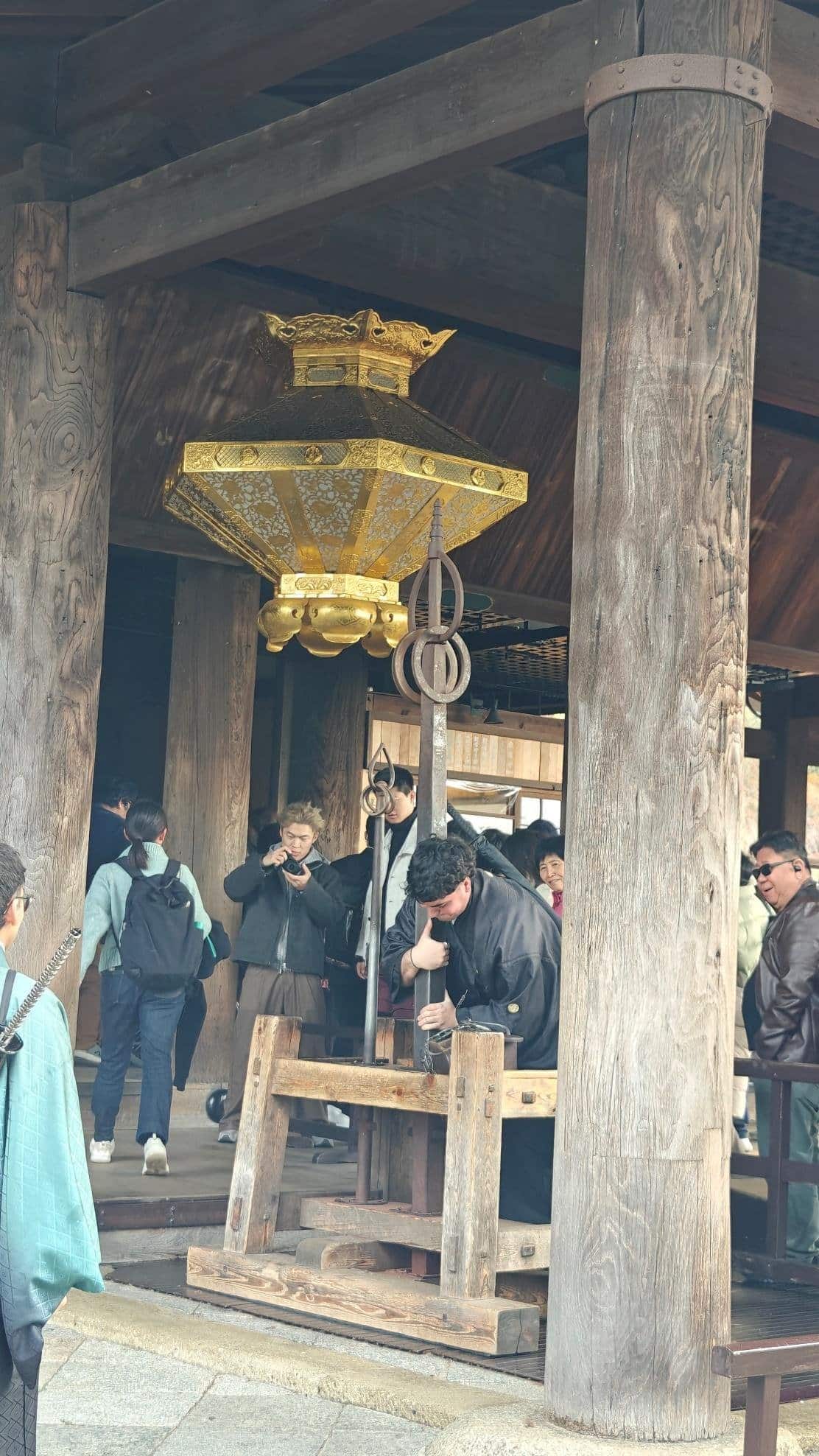
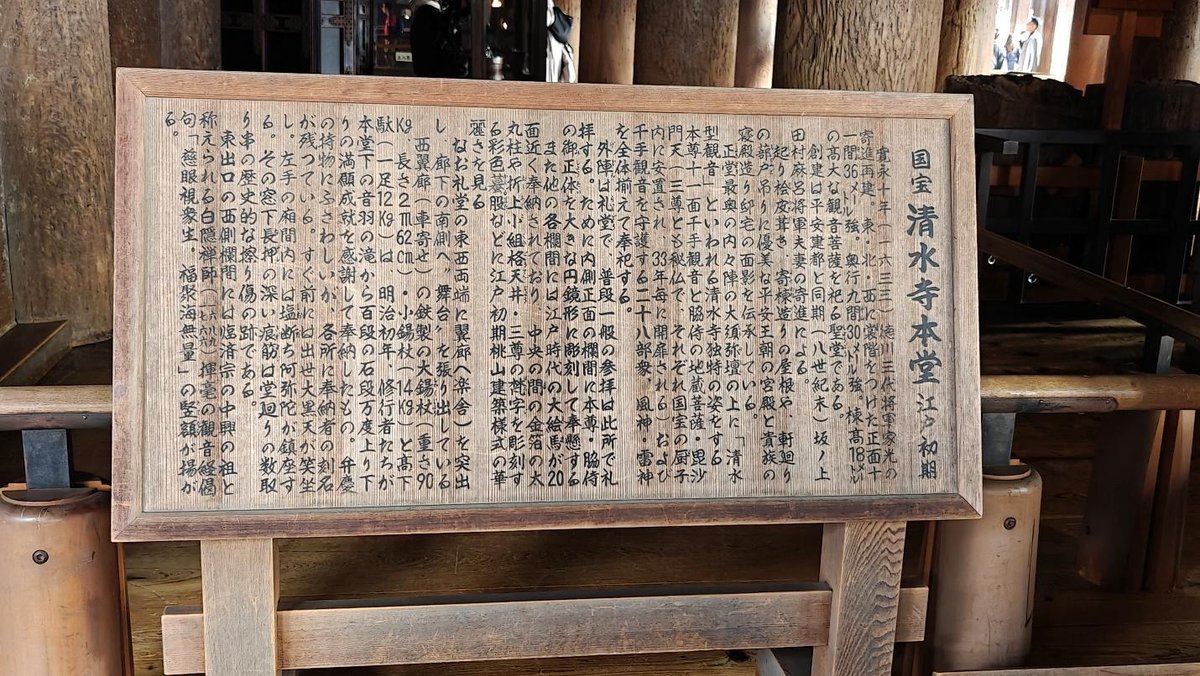
There are a lot of notable relics in the Hon-do but I think one of the most interesting was this iron staff. This is actually called a shakujo and it supposedly belongs to the legendary warrior monk Benkei who was a devout follower of Minamoto-no-Yoshitsune. Now there’s no definitive proof that these are his and people seem to have attributed these to him because of the staff’s size (as Benkei was depicted to be tall and strong).
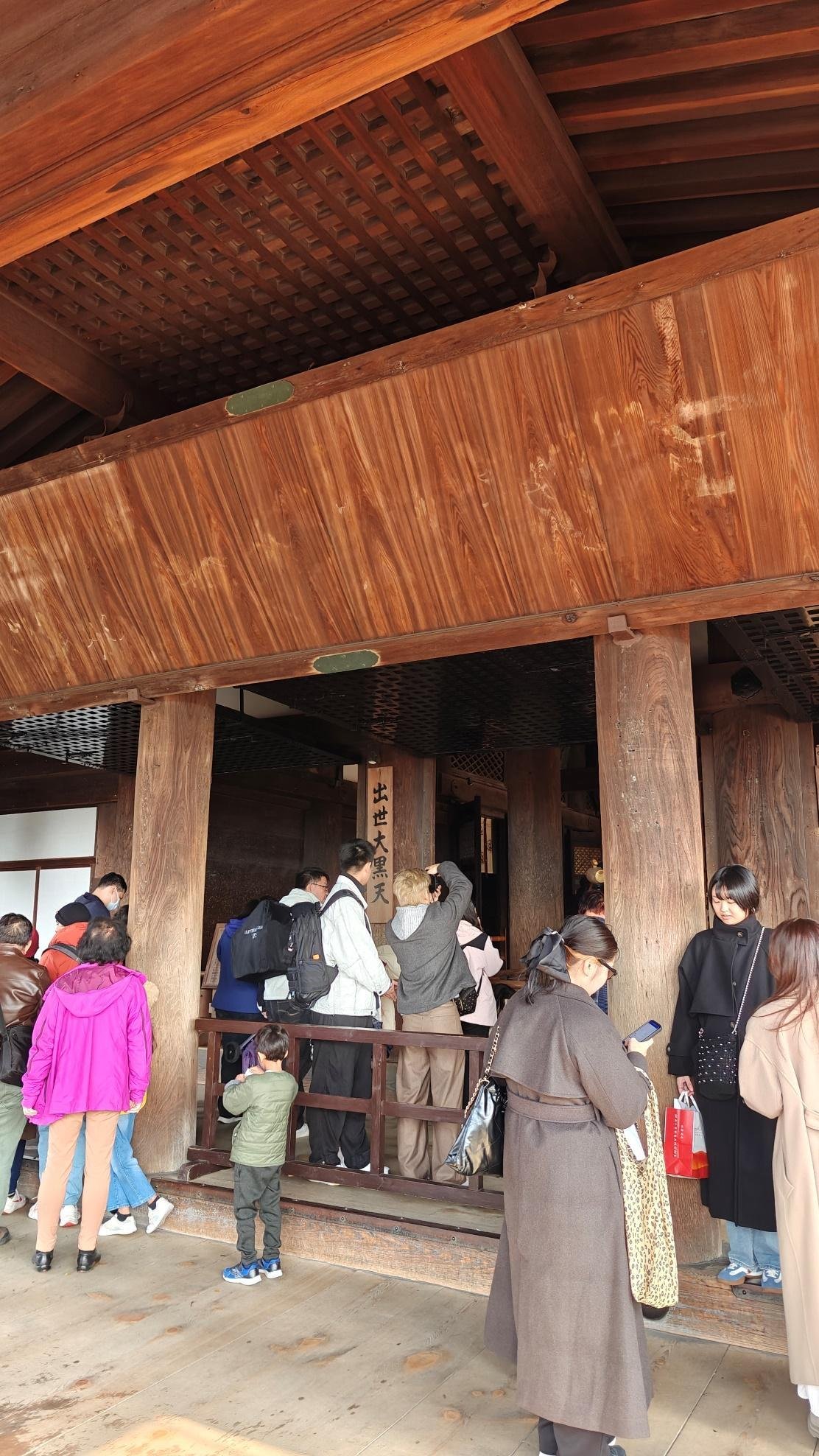
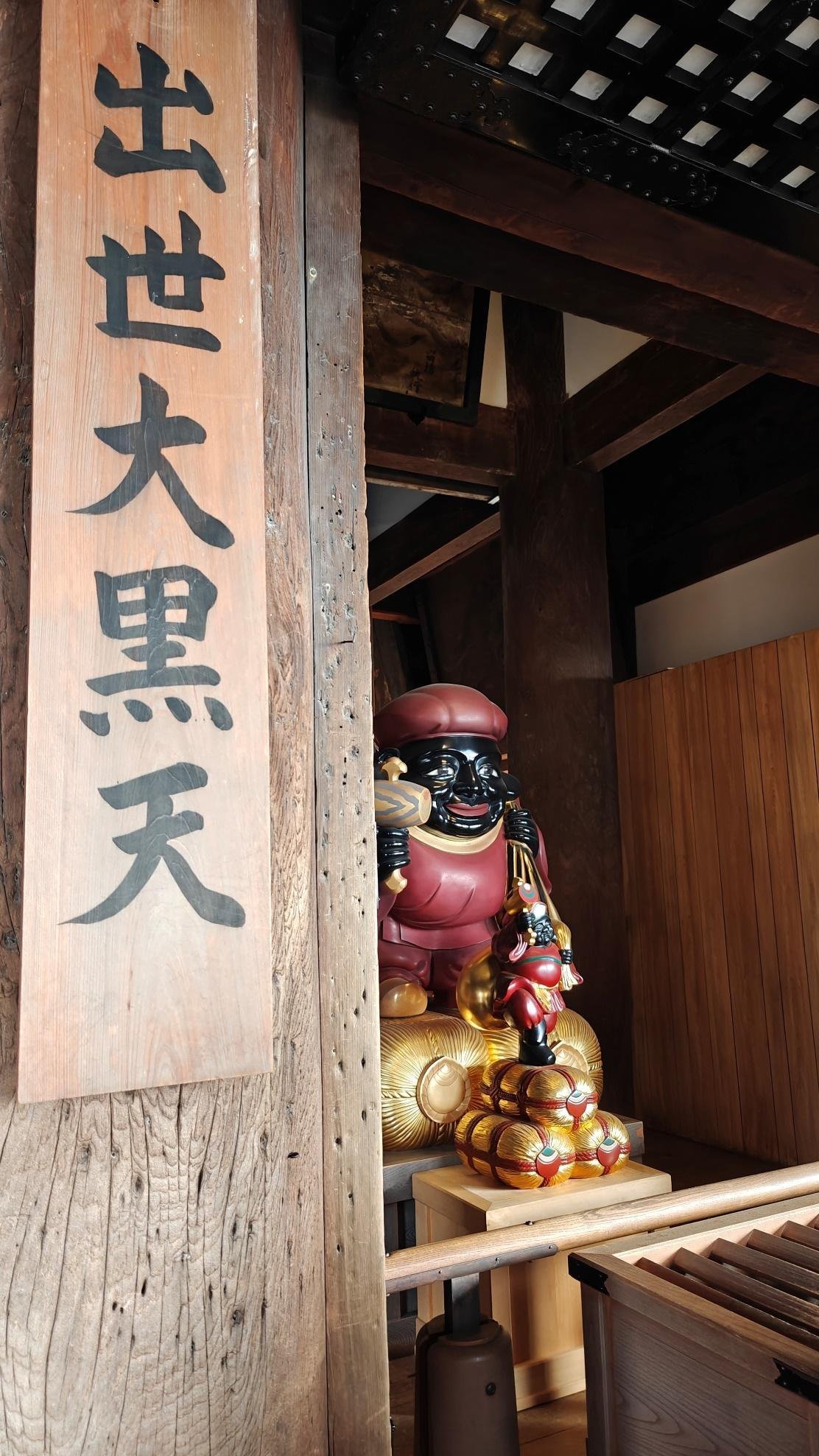
I know what you’re thinking. No, this is not blackface. Rather, it’s actually a statue of a deity named Daikokuten.
I think I’ve talked about him before but he’s actually quite interesting because of how he was originally a Hindu/Buddhist deity that got “blended” with the Japanese deity Okuninushi in a process called syncretization/syncretism when Buddhist monks introduced the religion to the country. Eventually Daikokuten became popular and he ended up being known as one of Japan’s Seven Lucky Gods.
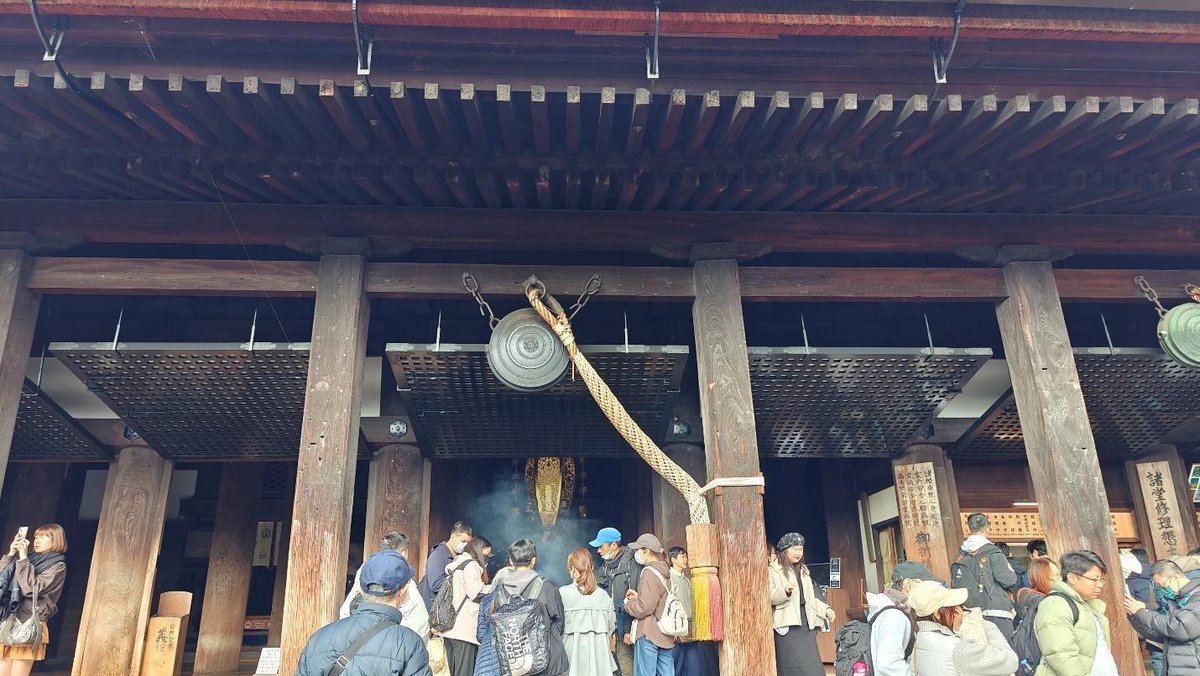
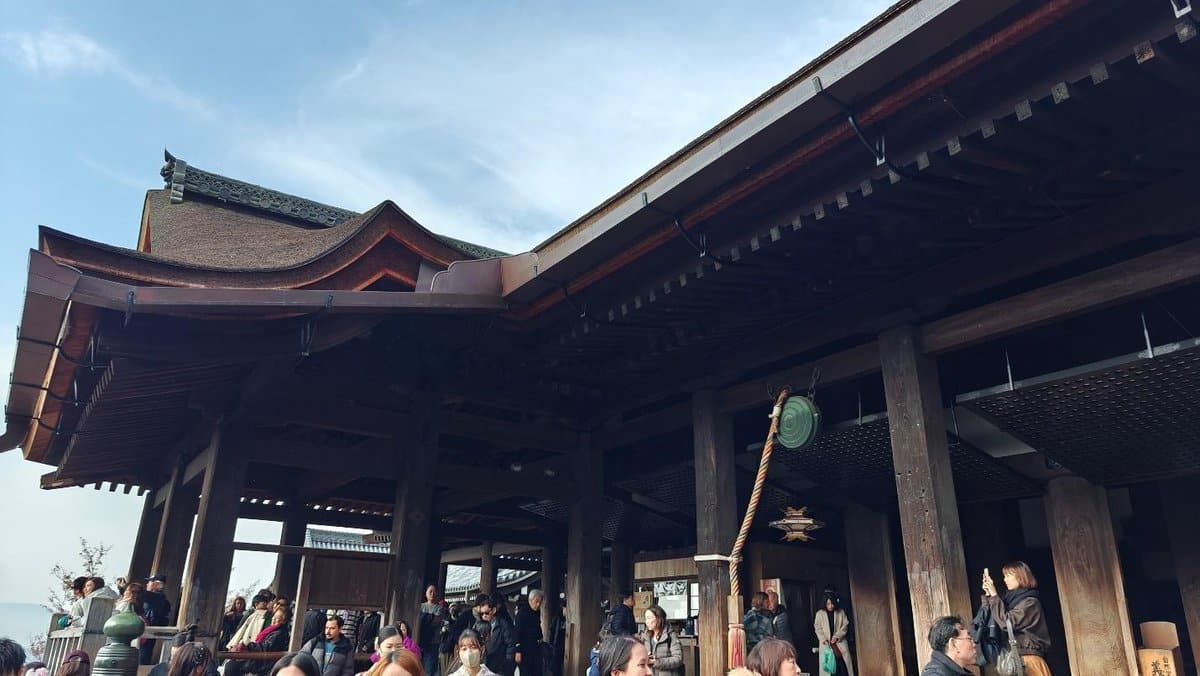
I finally reached the Kiyomizu-no-Butai and other than the views (which you’ll see in a while), there was also this area where you could offer up incense. Within the Hon-do is a statue of the Eleven-faced, Thousand-Armed Kannon Bodhisattva which is unfortunately only shown to the public on very rare occasions. The stage or platform itself is quite large and the wooden beams looked really impressive.
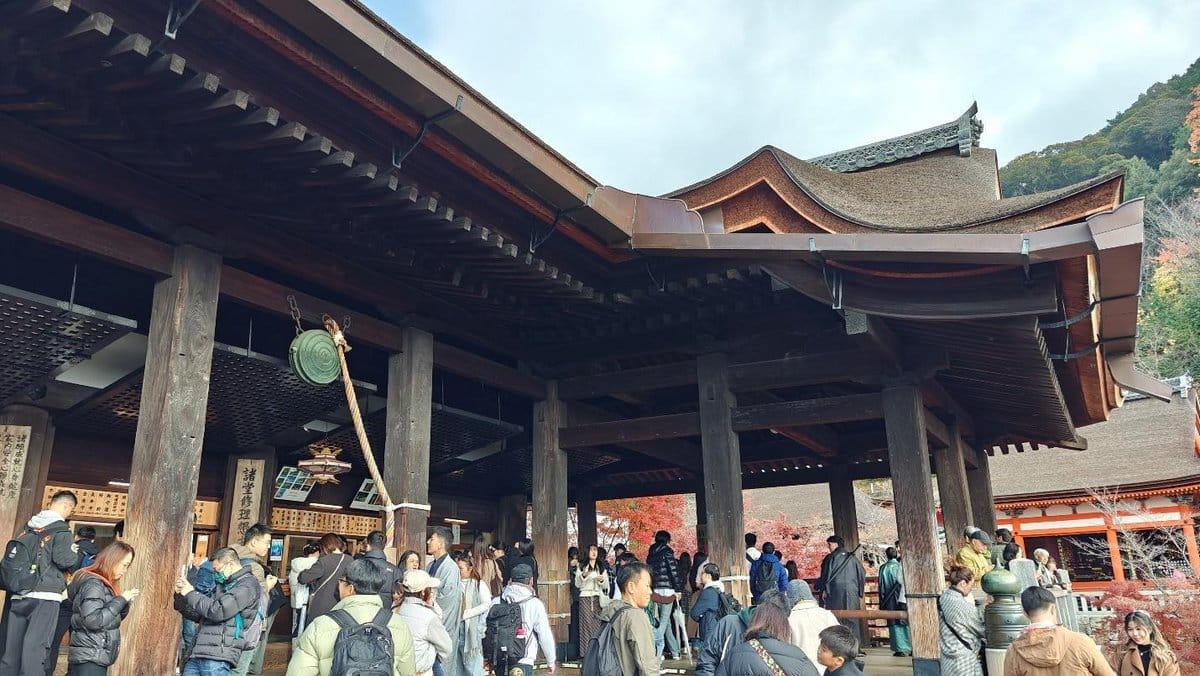
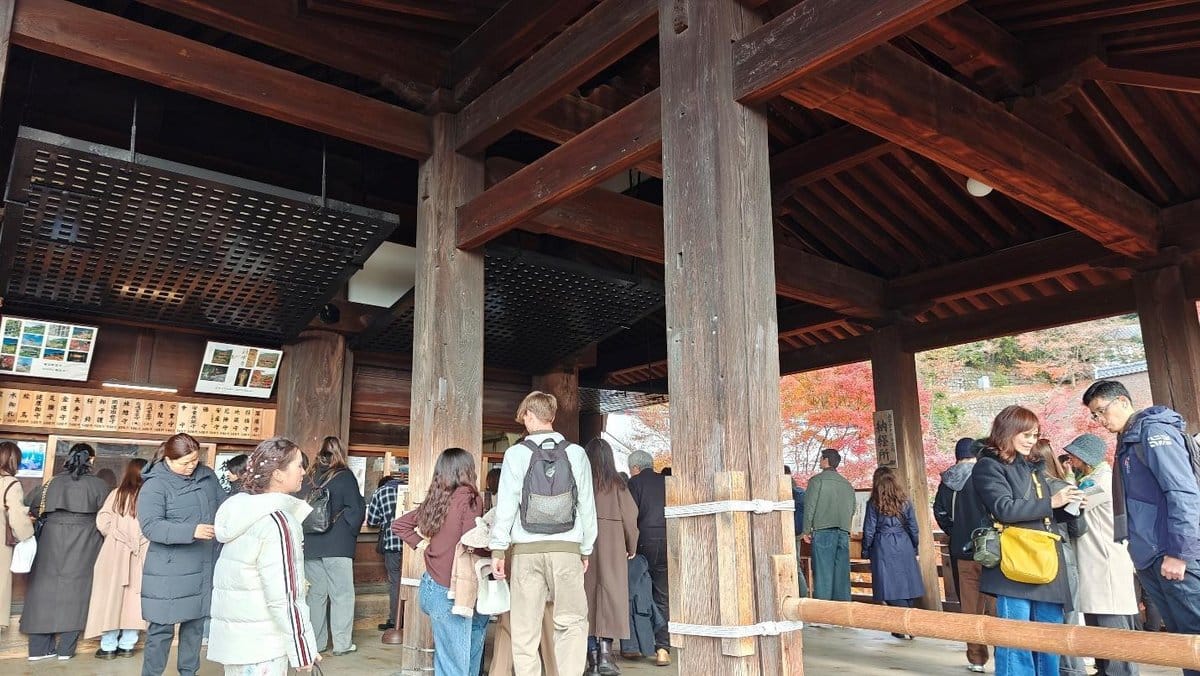
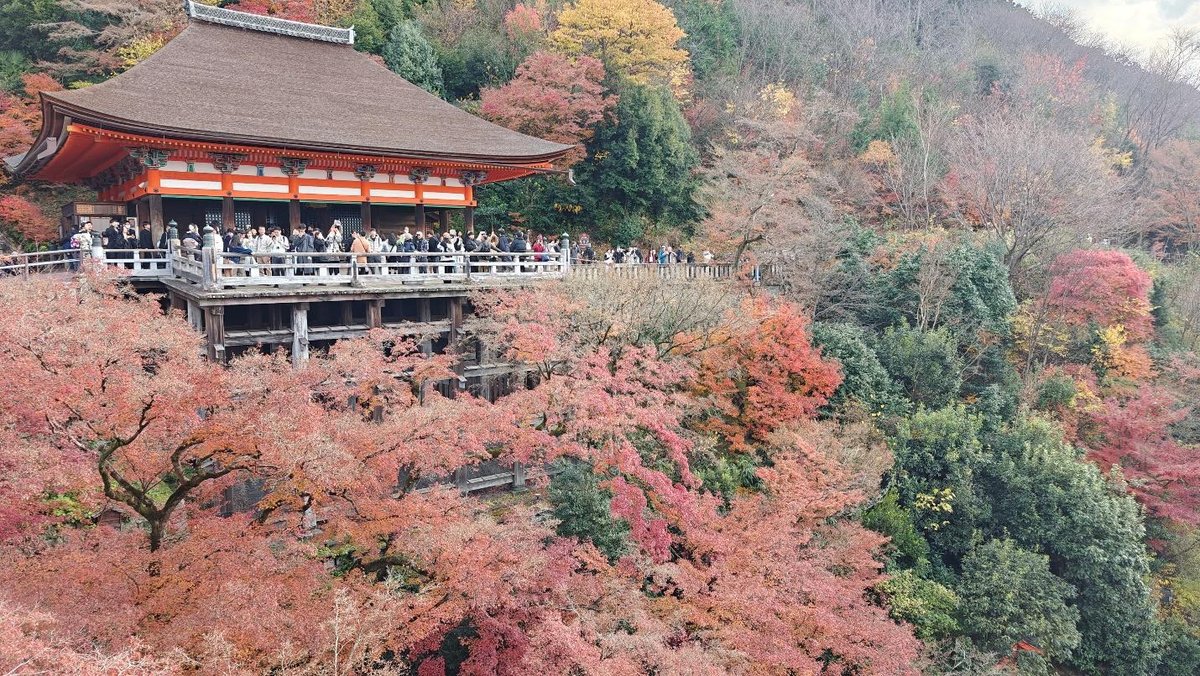
You’ve probably noticed that I’ve been talking about how nice the view is from here but not showing it. Well, here it is. Quite honestly, I found myself at a loss for words the first time I saw this.
The fall foliage here was just unreal. These scenes of nature juxtaposed with other buildings in the temple complex like the Okunoin (in the image above) and the Takinodo (the foremost building in the image below) made me feel like I was transported to the past.
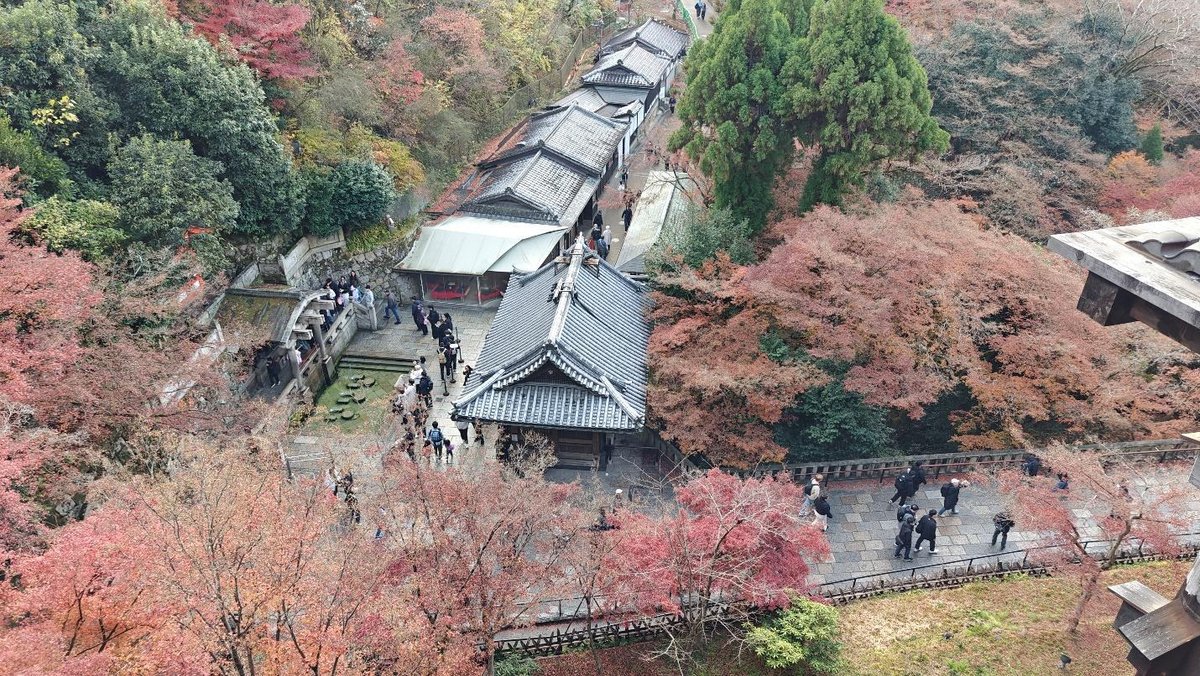
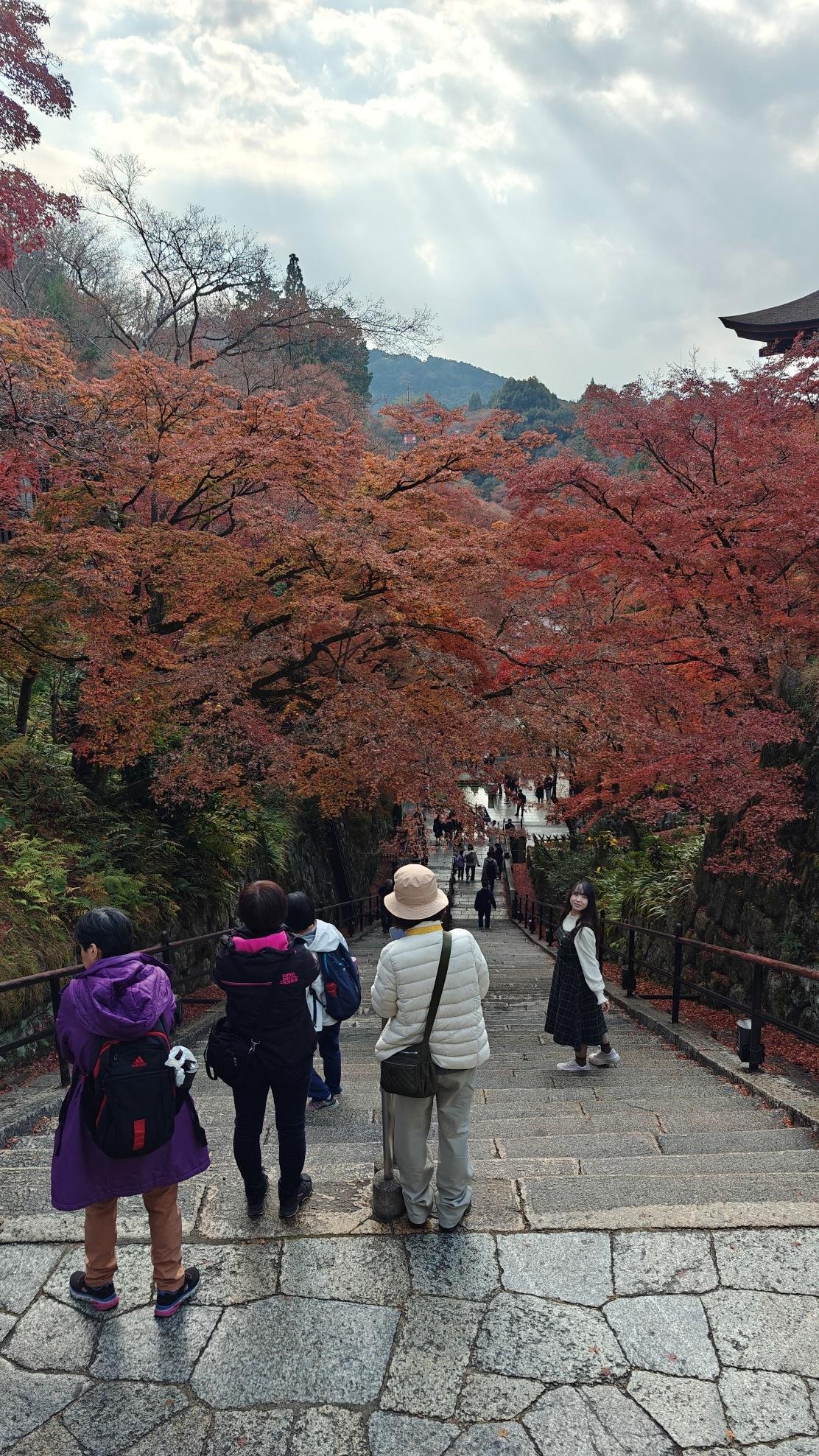
Speaking of the Takinodo and the Okunoin, both are also accessible from the Hon-do. After exiting from the eastern side of the building, you’ll come across three pathways. The first will bring you to this staircase which you can go down on to get to Takinodo and the Otowa-no-taki Falls beside it.
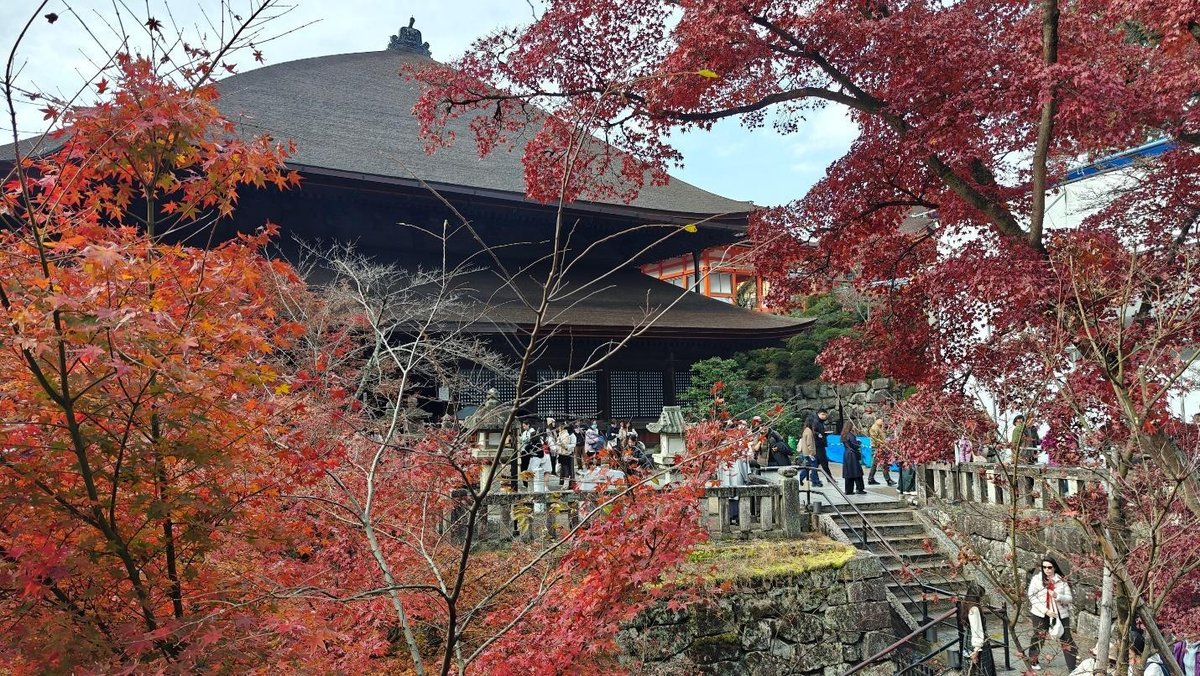
I chose the second path though which would get me to where the Okunoin was. From here you can actually see the path leading down to the area where the Takinodo is as well as the spot where I shot the previous image. There are four notable buildings here though I only managed to take pictures of two of them up close (the vermillion colored Amida-do and the Hyakutai Jizodo).
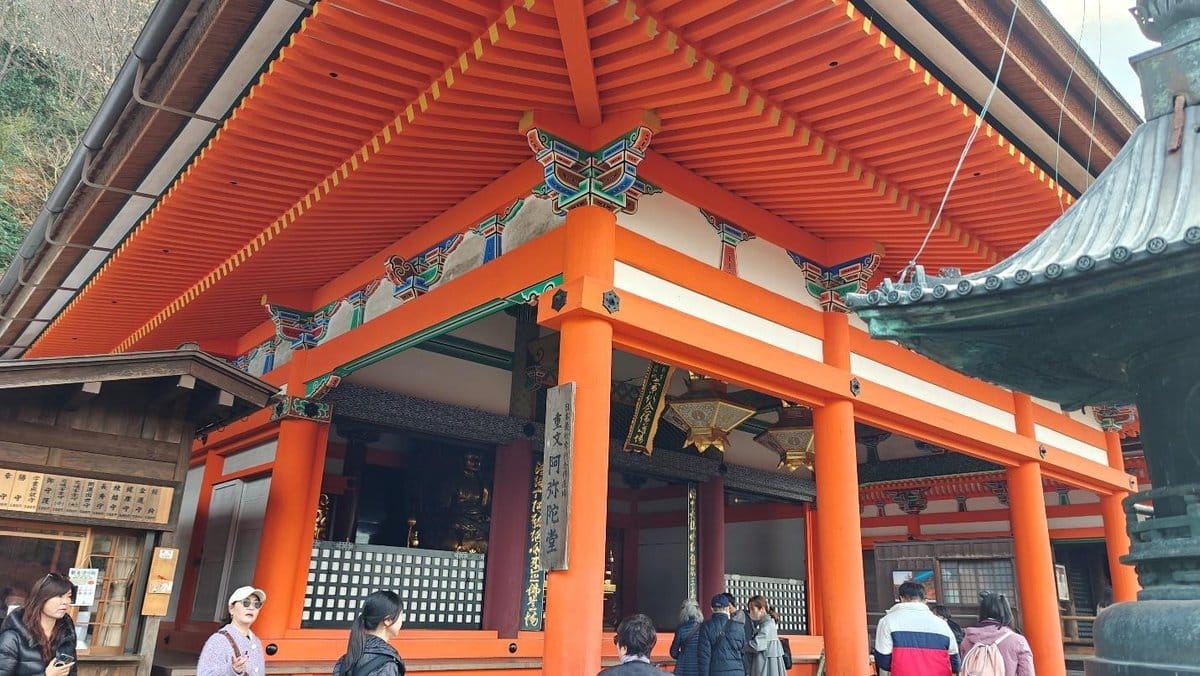
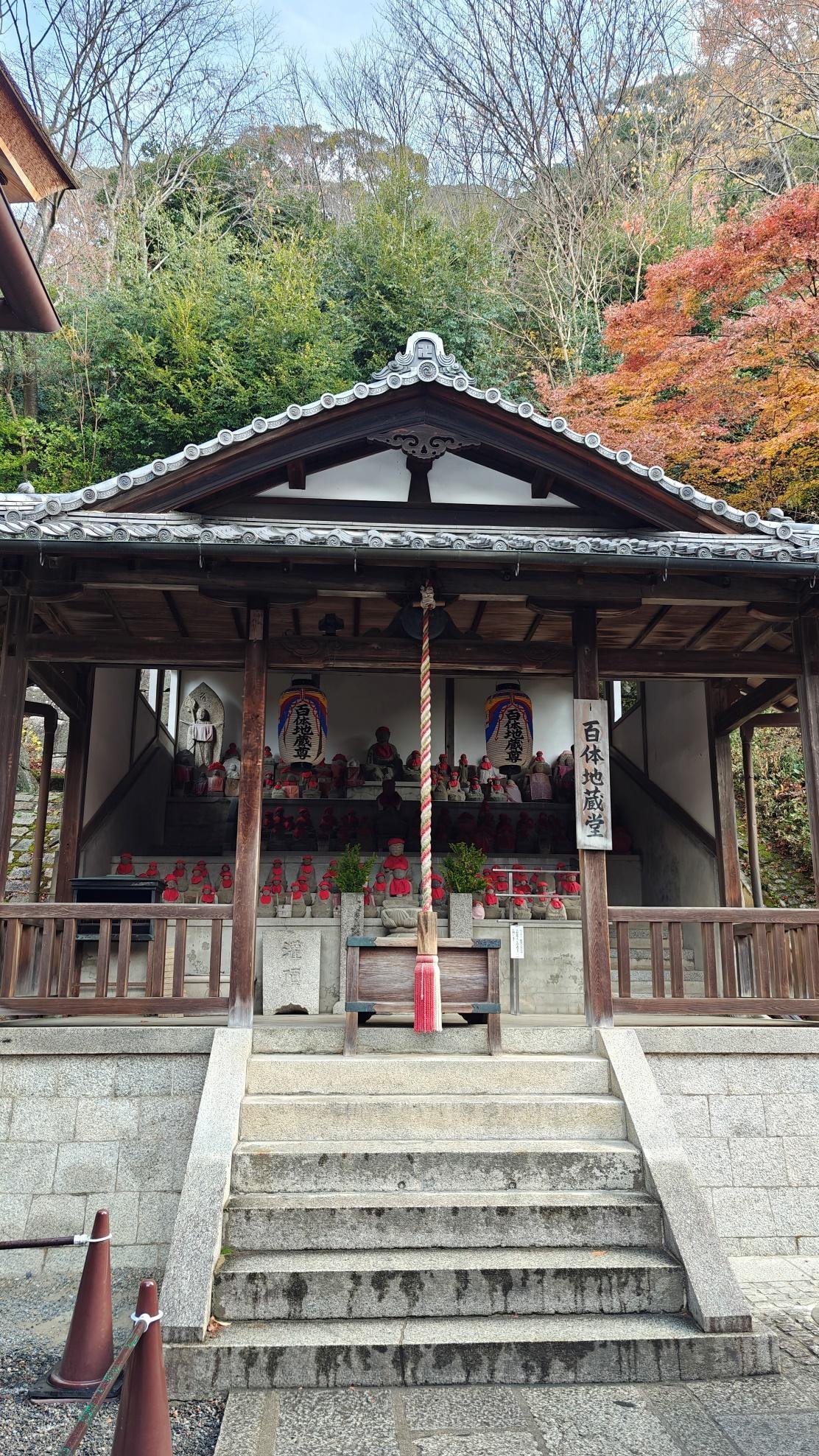
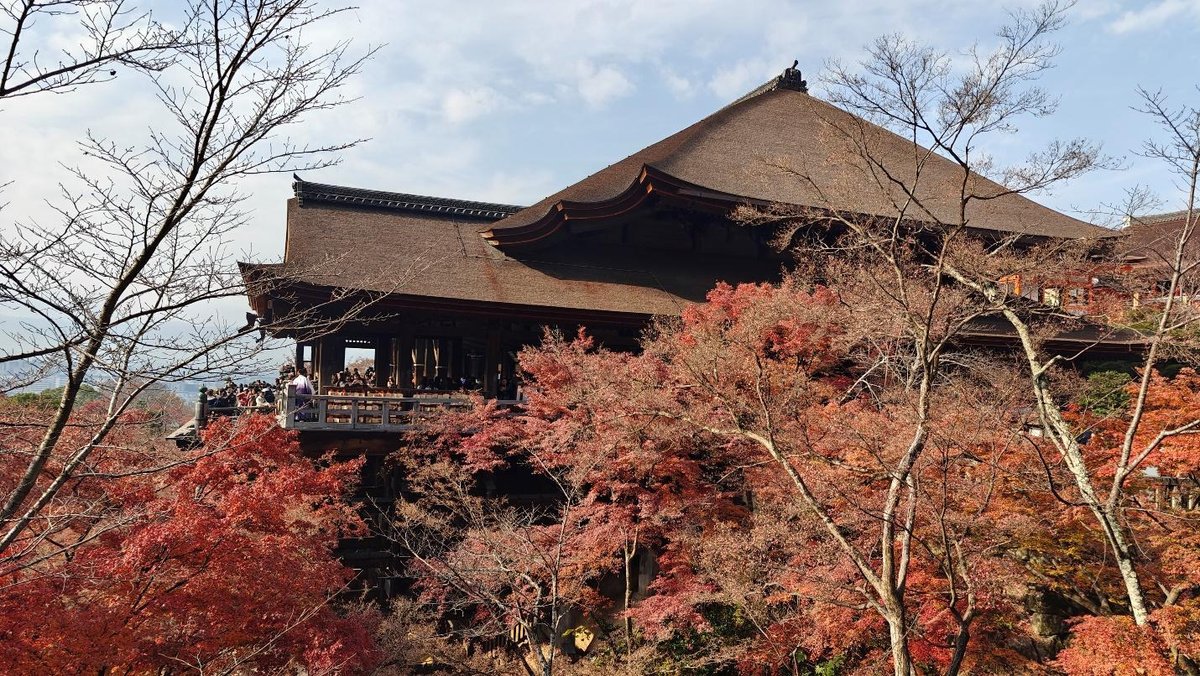
While the Okunoin has a much smaller platform than the Kiyomizu-no-Butai, I’d argue that it offers equally great views. Moreover, the area where it’s on has arguably some of the best views of the larger Hon-do’s stage itself. Depending on where you are in the Okunoin platform, you can frame the Hon-do as if it was floating on a sea of fall foliage (like what I did in the succeeding images).
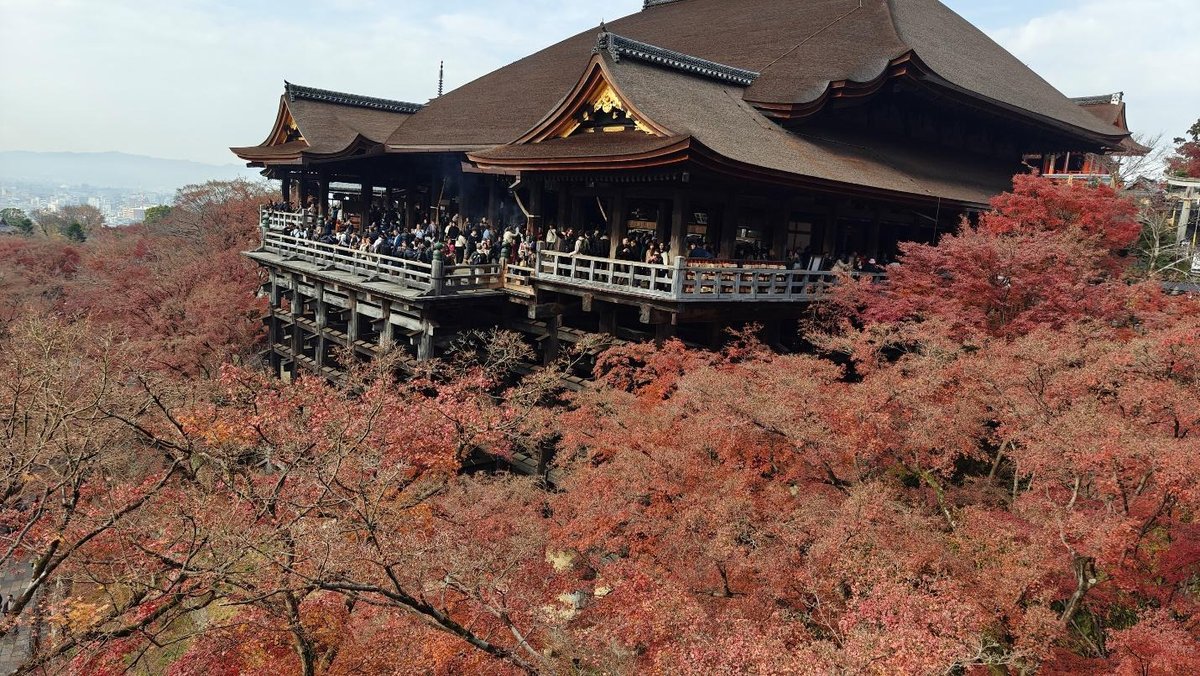
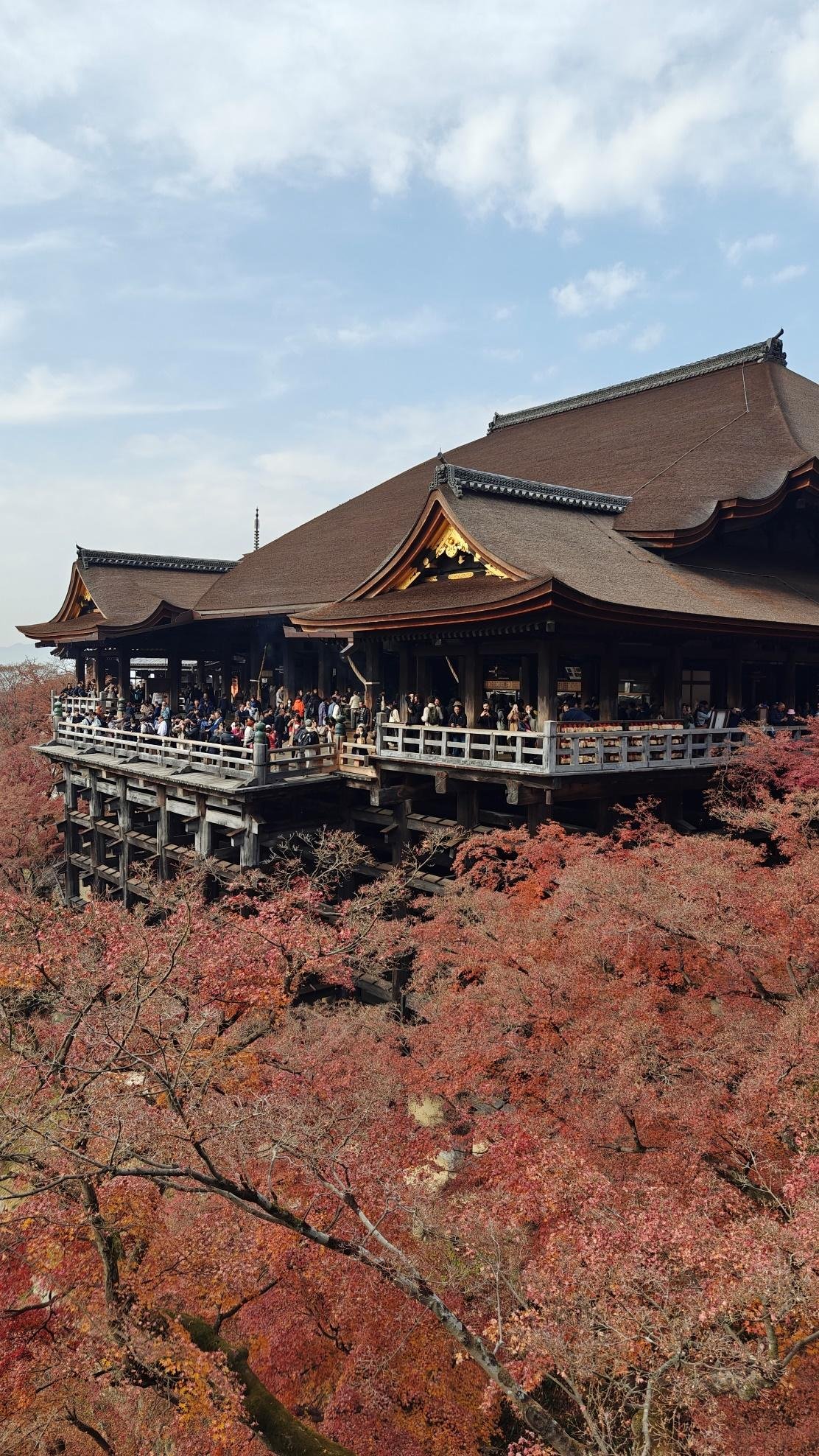
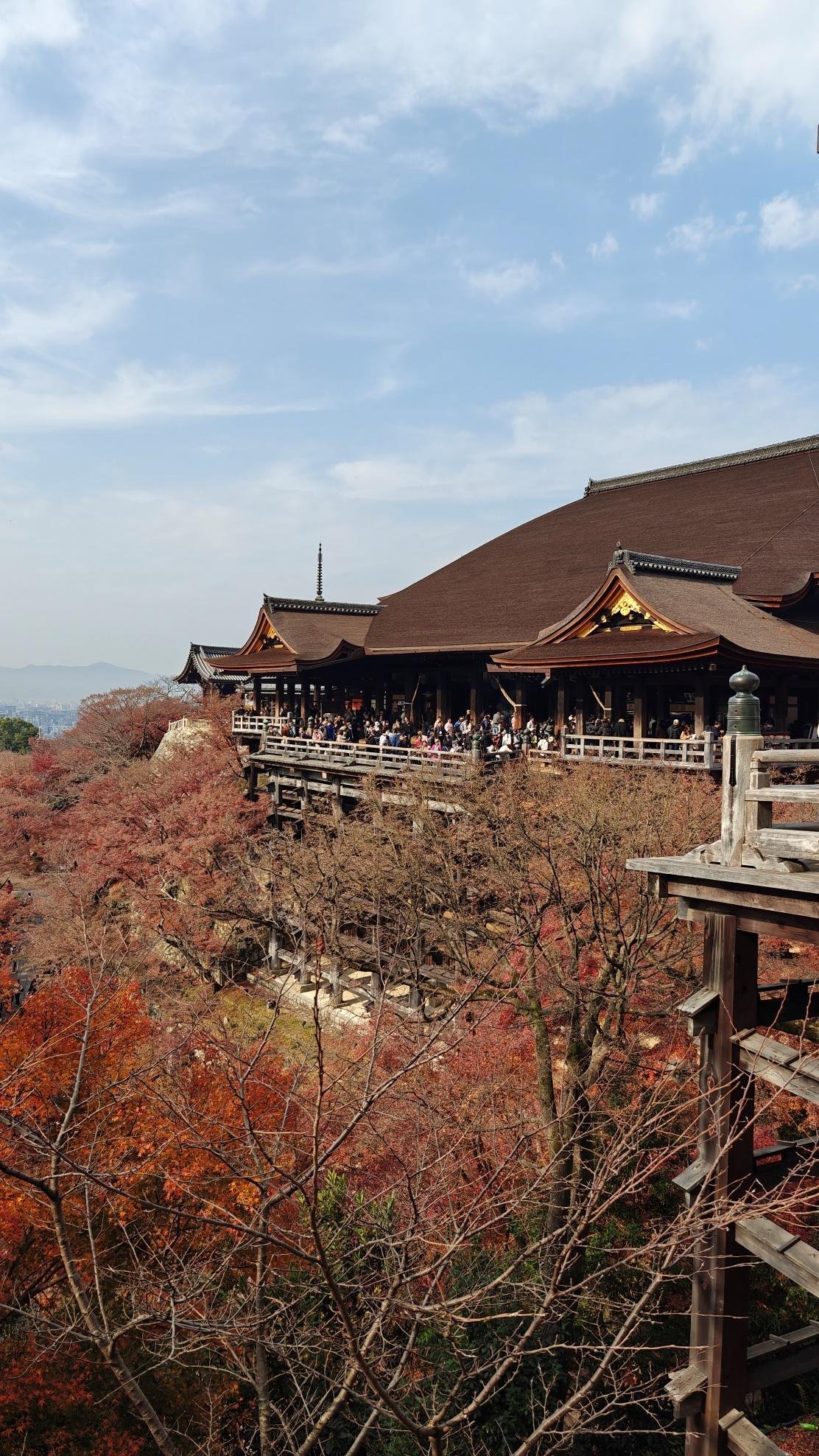
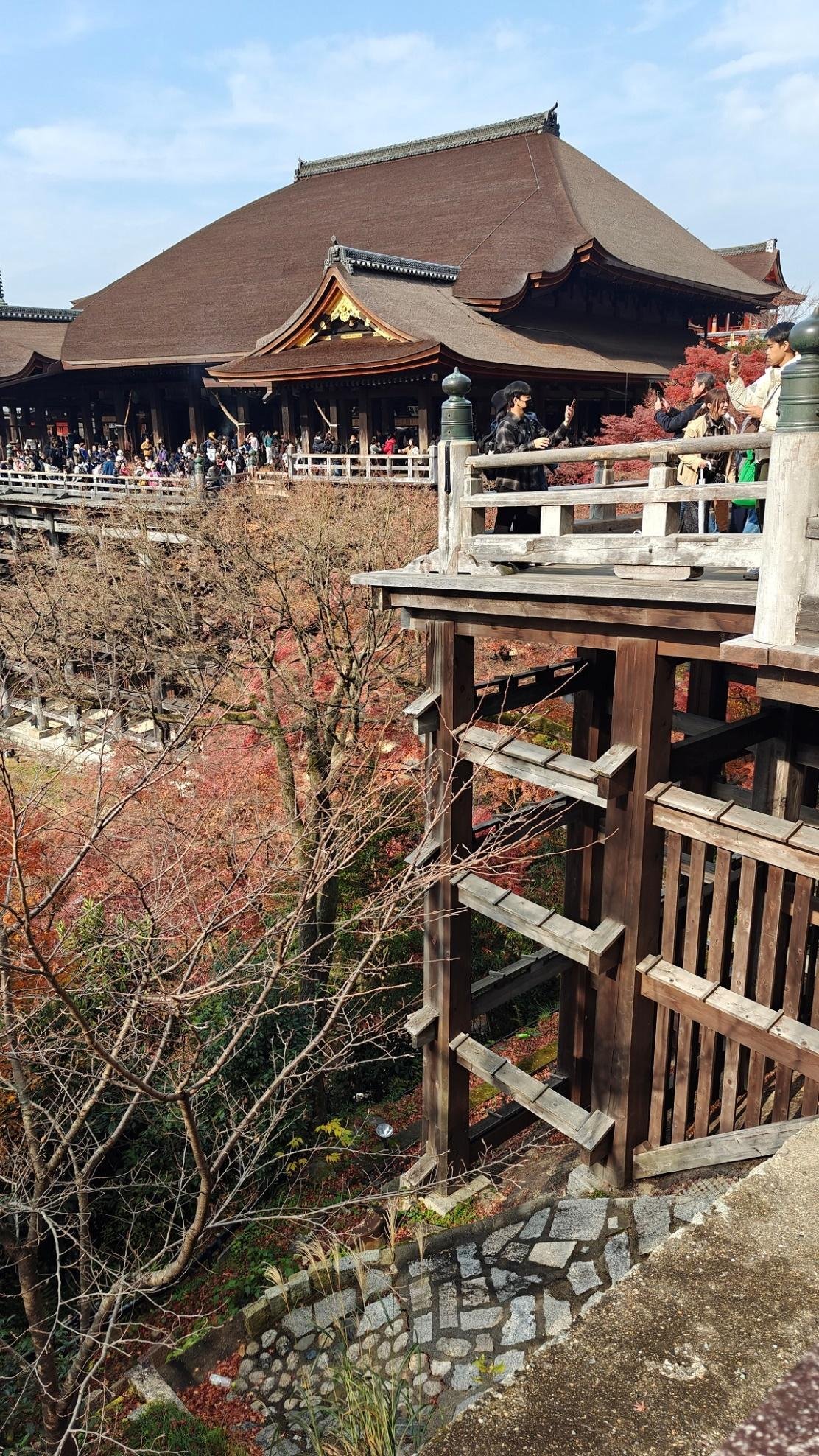
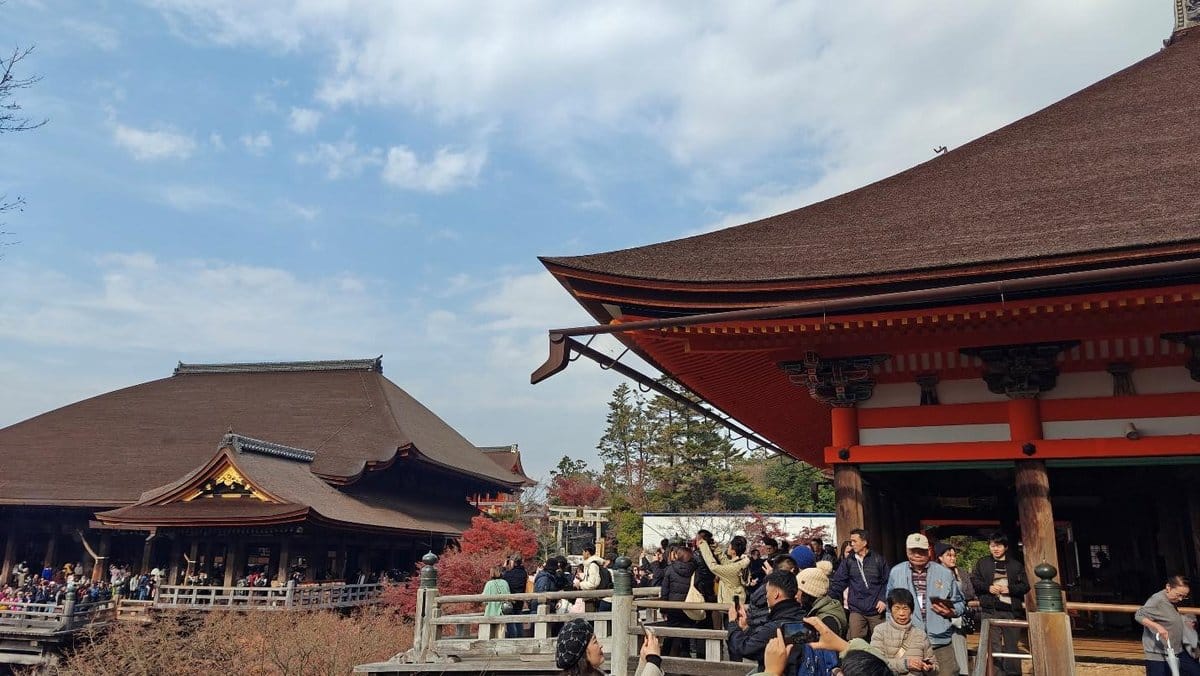
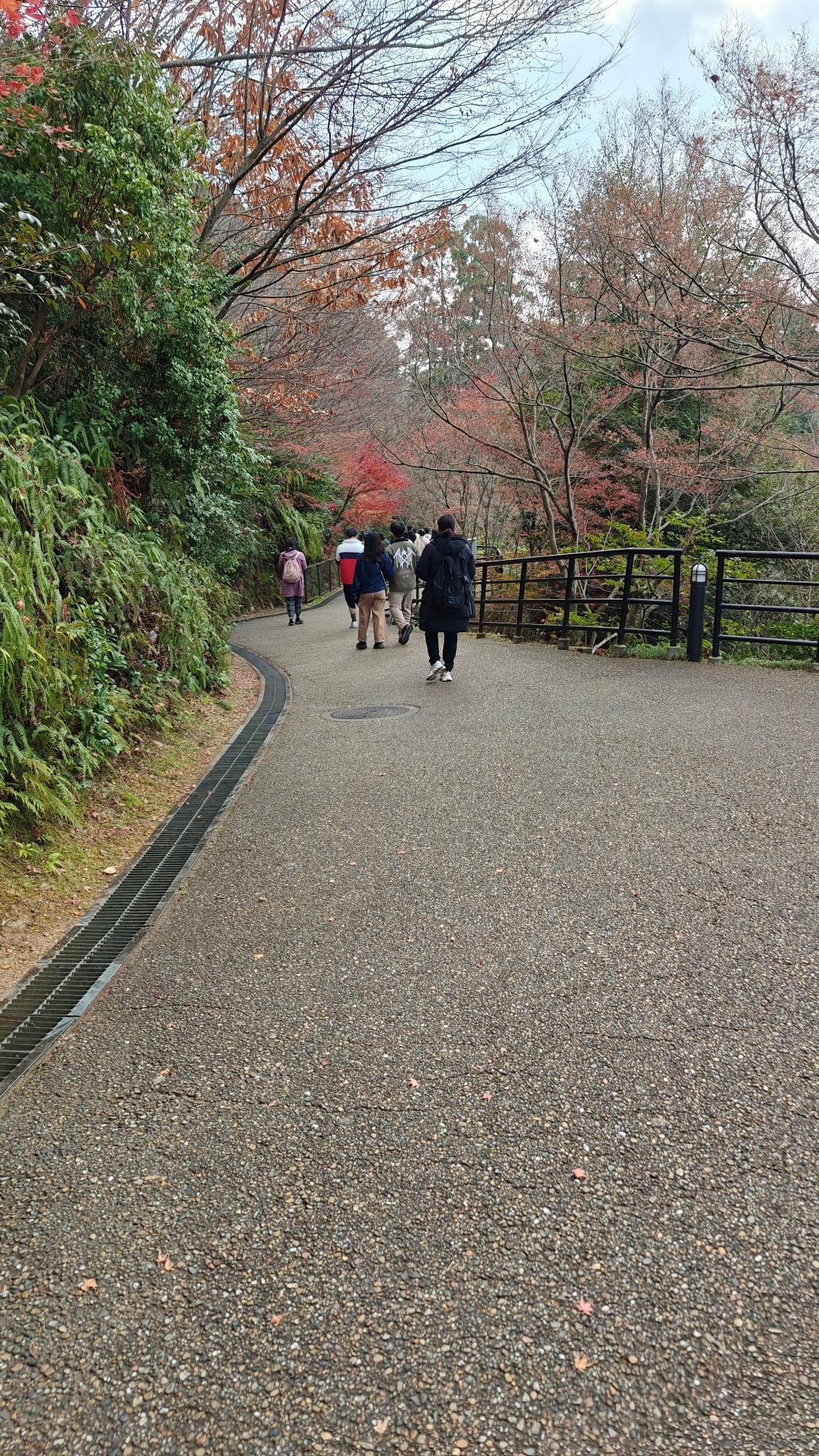
After the Okunoin, the next stop was going to be down the hill to the area where the Takinodo was. It’s important to note though that it’s going to be a long walk down. Thankfully, there’s plenty of awesome scenery here and the air is so nice that you kind of end up feeling refreshed rather than tired.
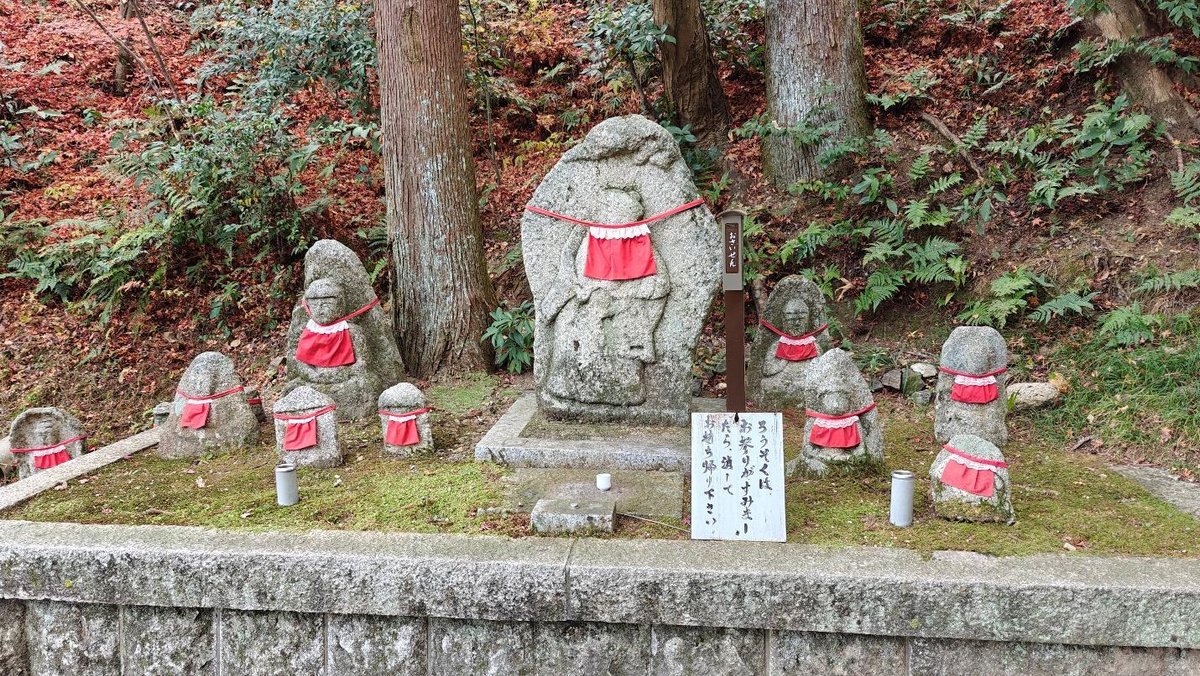
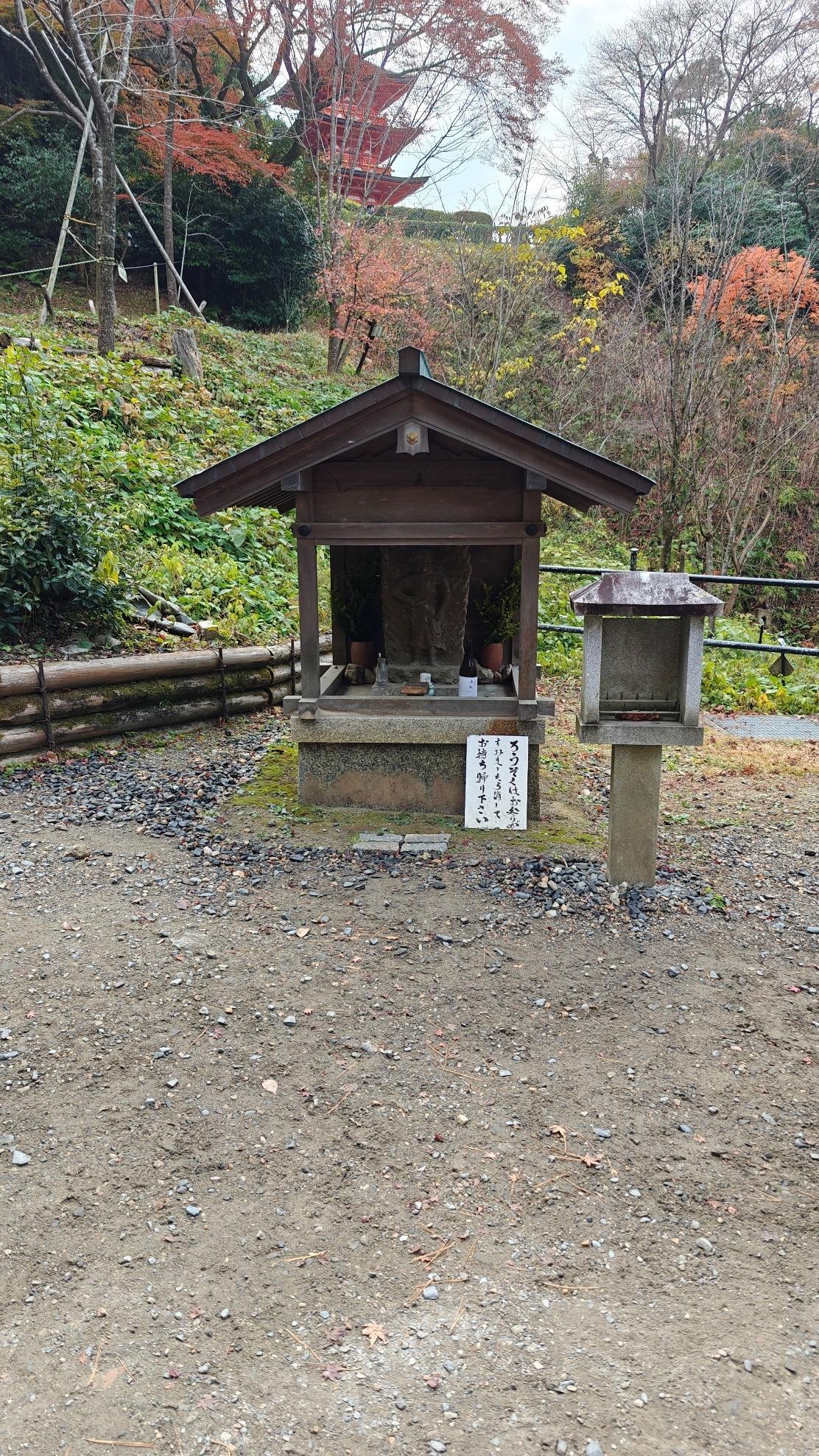
This is an altar for Jizo Bodhisattva that you’ll come across at the intersection of the path going to the Takinodo area and another landmark pagoda in this area. It’s kind of hard to not notice these thanks to the red bibs (yodarekake) placed around their throats. If I remember correctly, these are supposed to symbolize protection for travelers as well as childred.
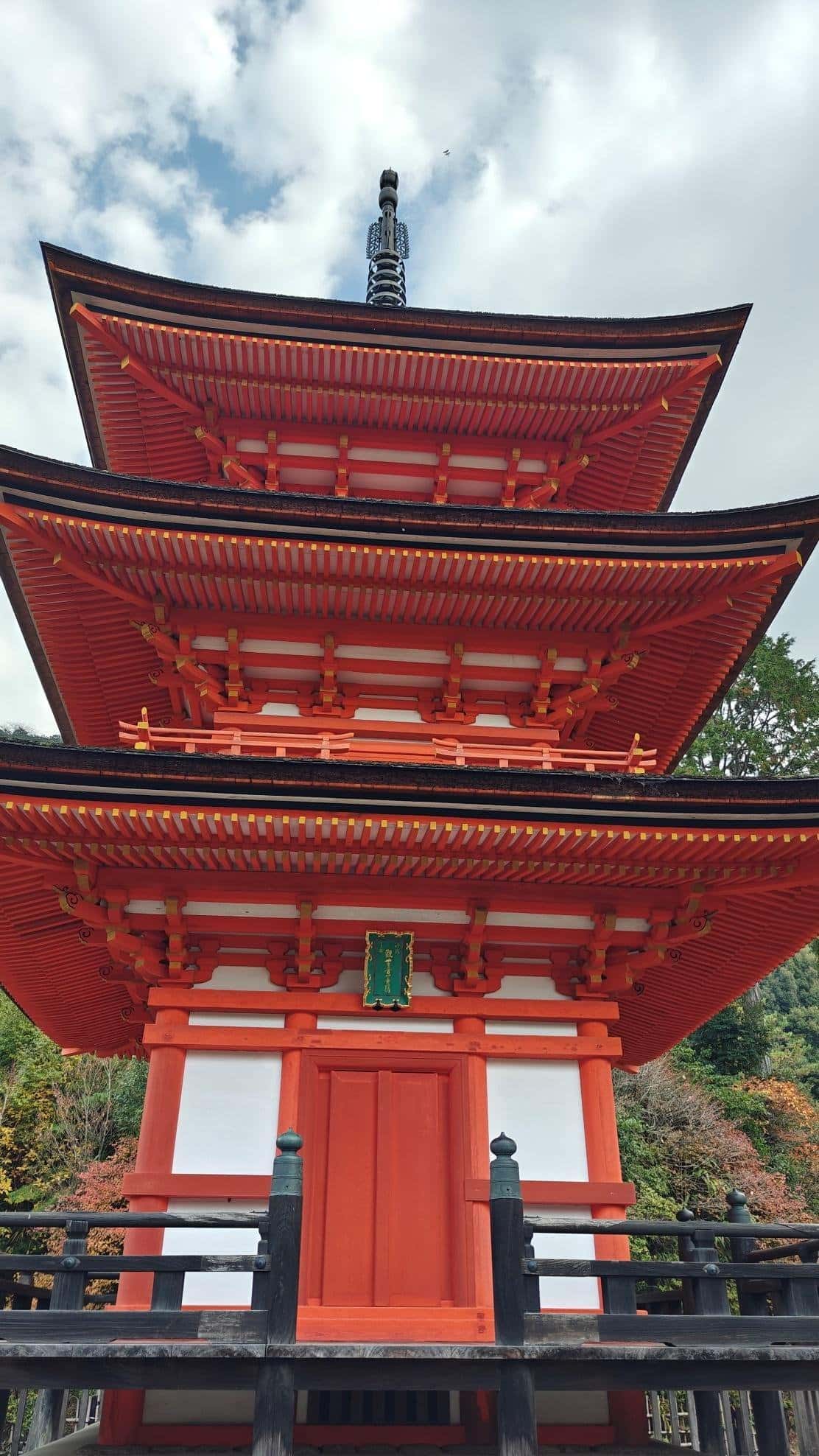
Here’s the other landmark pagoda I was talking about. Called the Koyasu-no-to, it’s much smaller than the Sanju-no-to near the entrance. To get here, you’ll just need to go up a small hill path where the Jizo statues were facing.
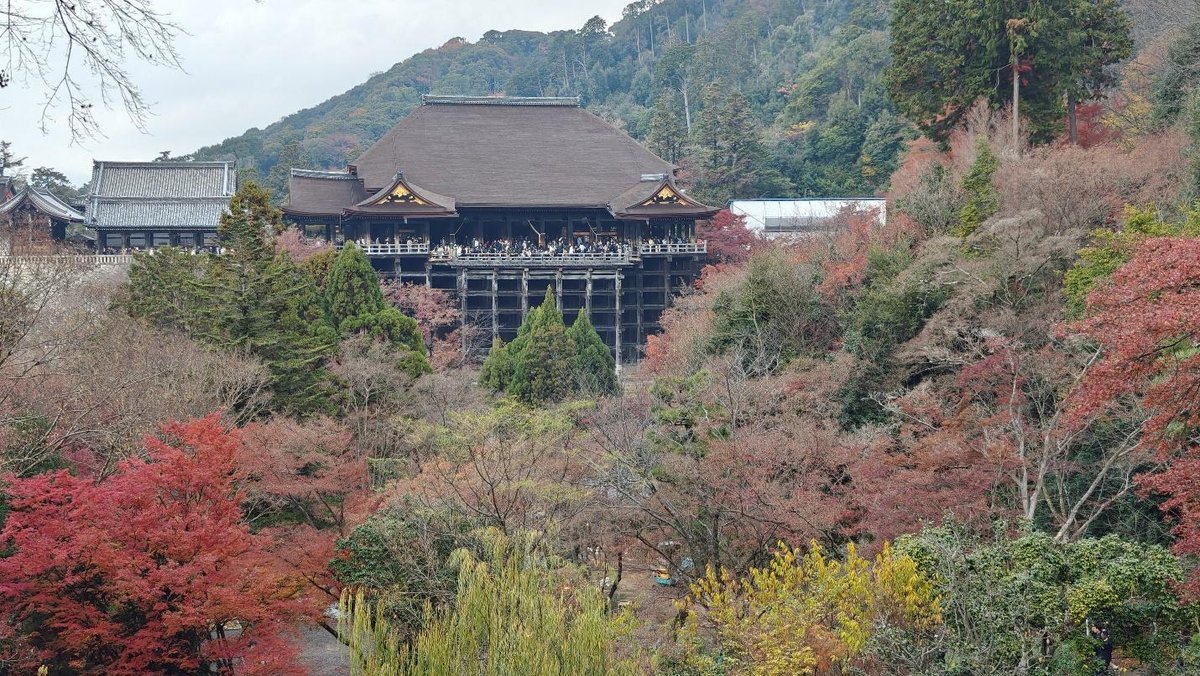
The climb up is rather short and once you reach the top you’re rewarded with a view of the Hon-do’s Stage. Near the pagoda is the smaller Taisan-ji Temple which I was quite intrigued by since there doesn’t seem to be much information about it online. I was kind of in a hurry at this point though so I wasn’t able to take that many pictures of the temple.
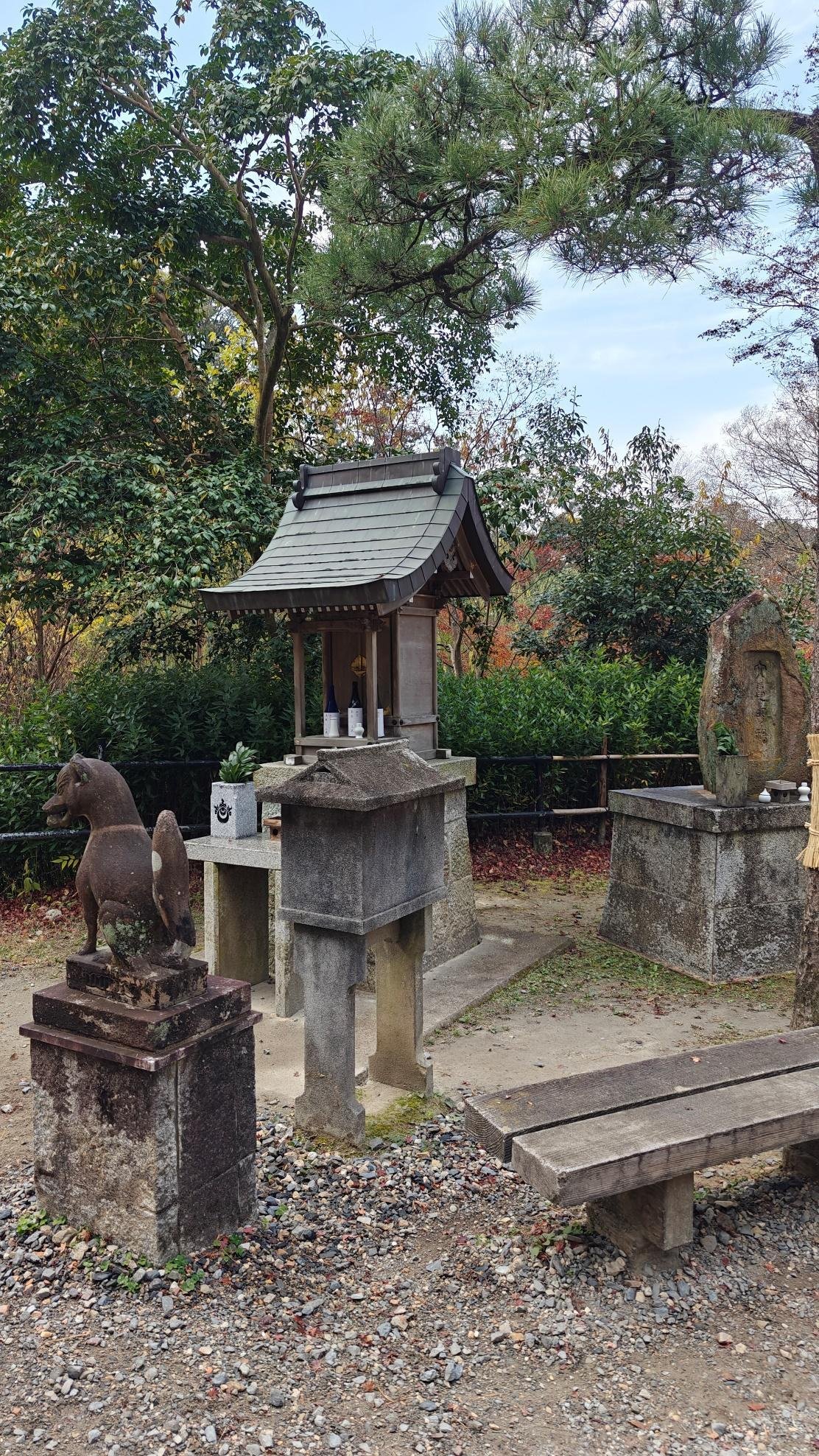
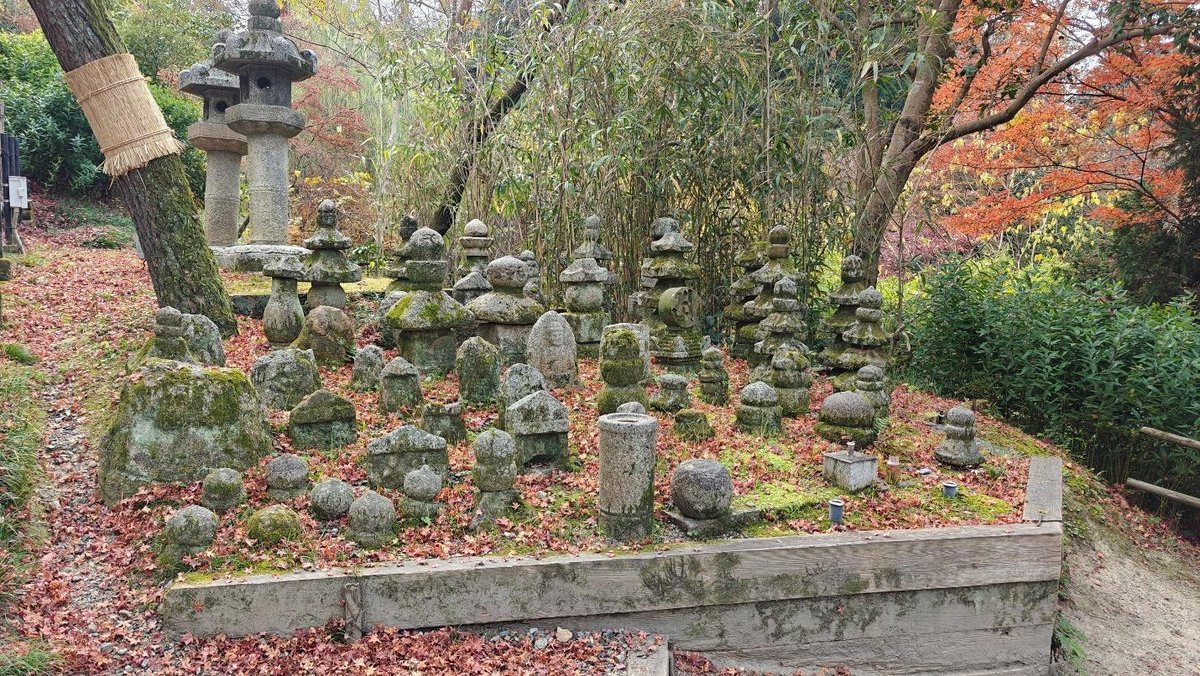
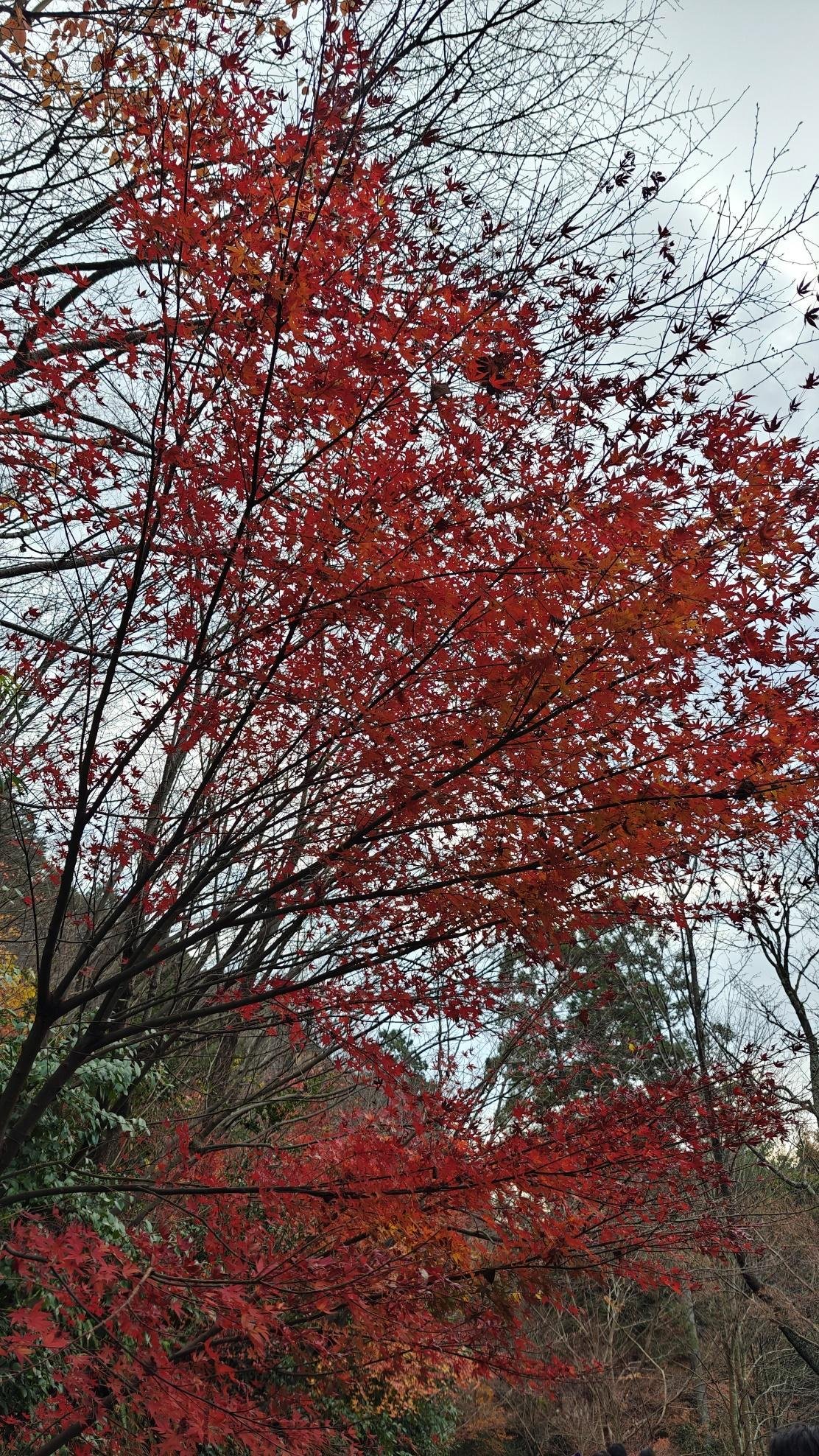
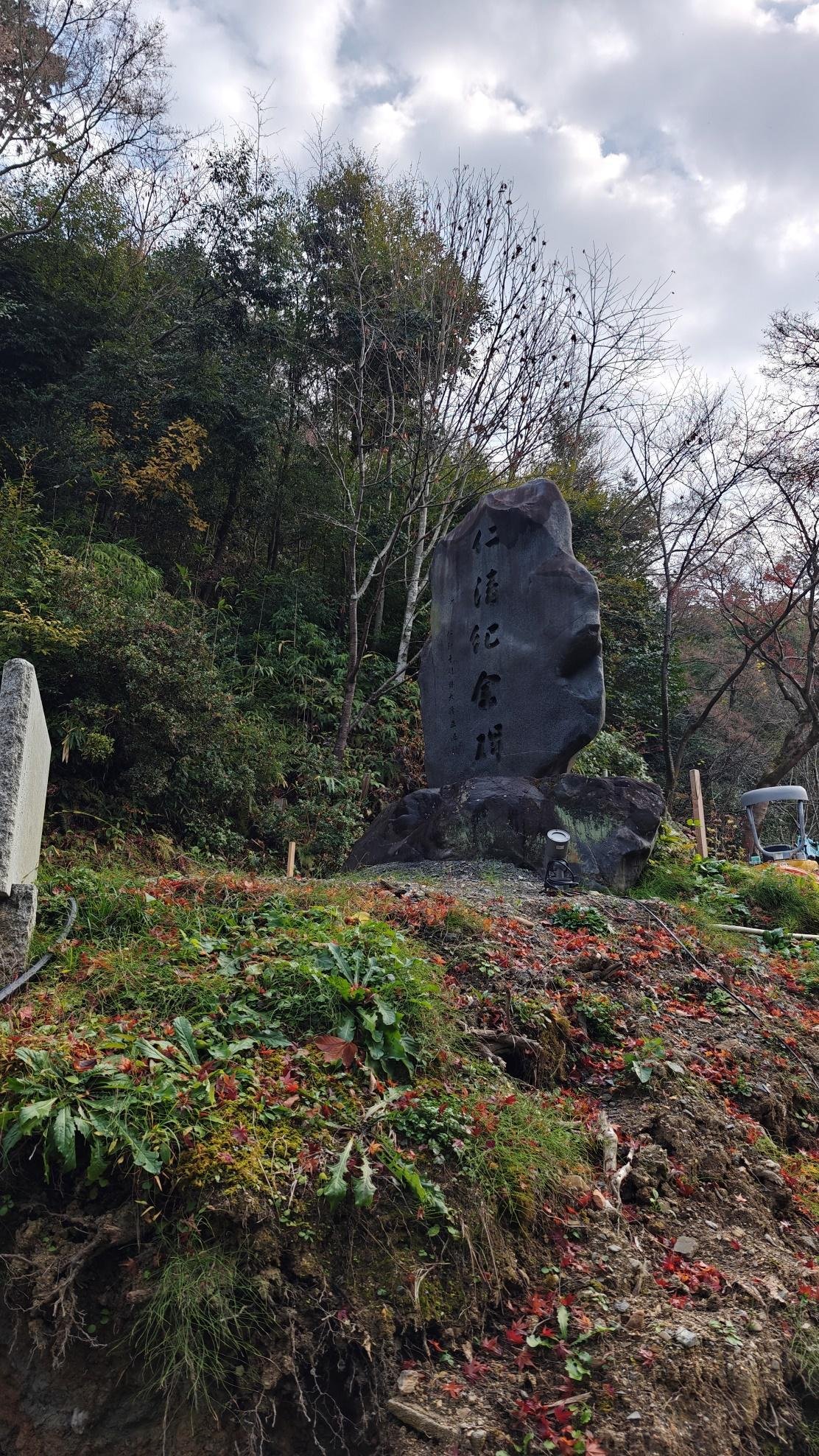
After taking in the view at Koyasu-no-to, I then went back to the path going to the Takinodo area. Along the way there were a number of monuments with the most notable being the Kenzan Memorial Stones (see image above) and the Ninsei Memorial Monument (see next image). Like Taisan-ji Temple though, I wasn’t able to find much information pertaining to these monuments.
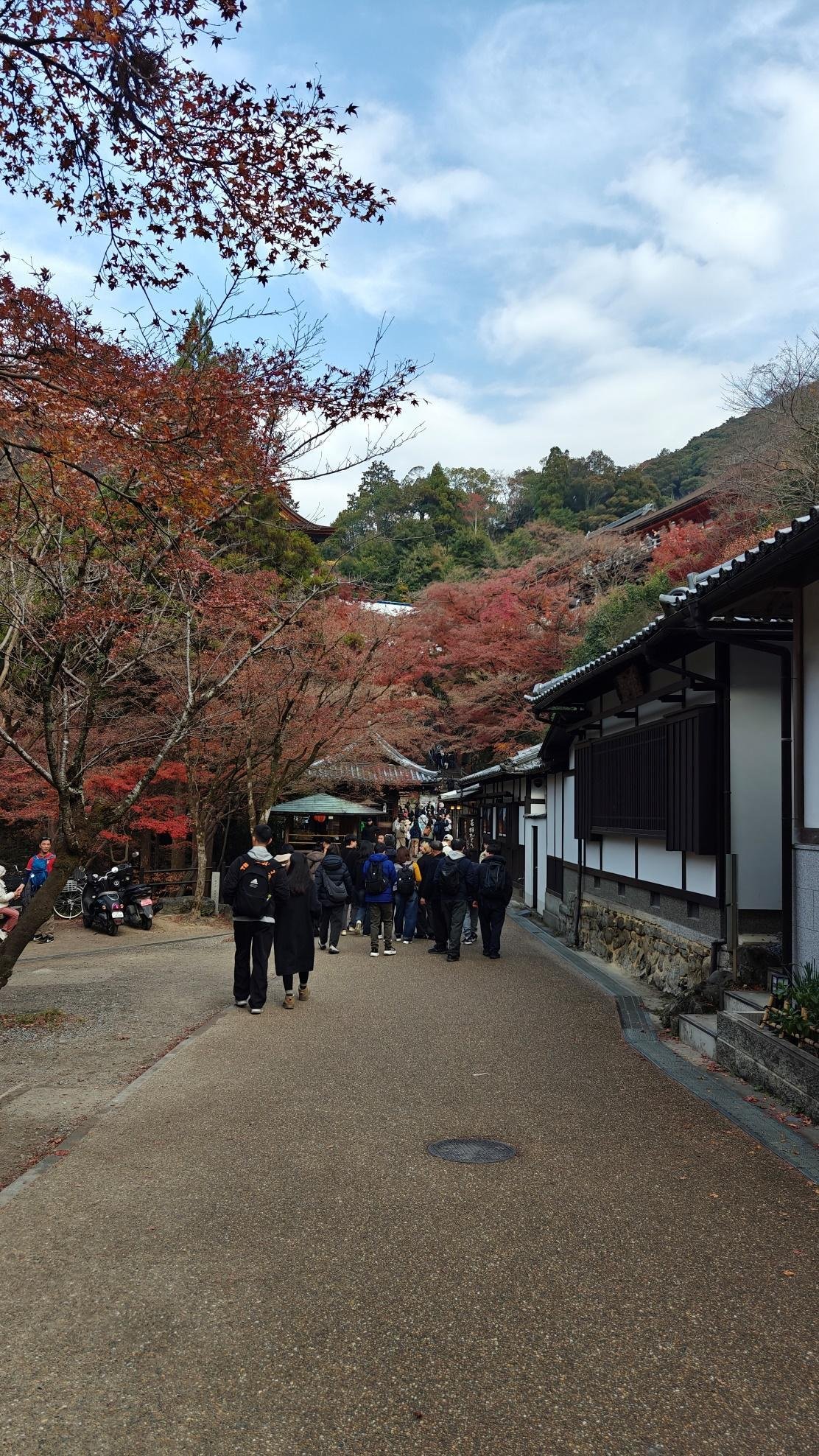
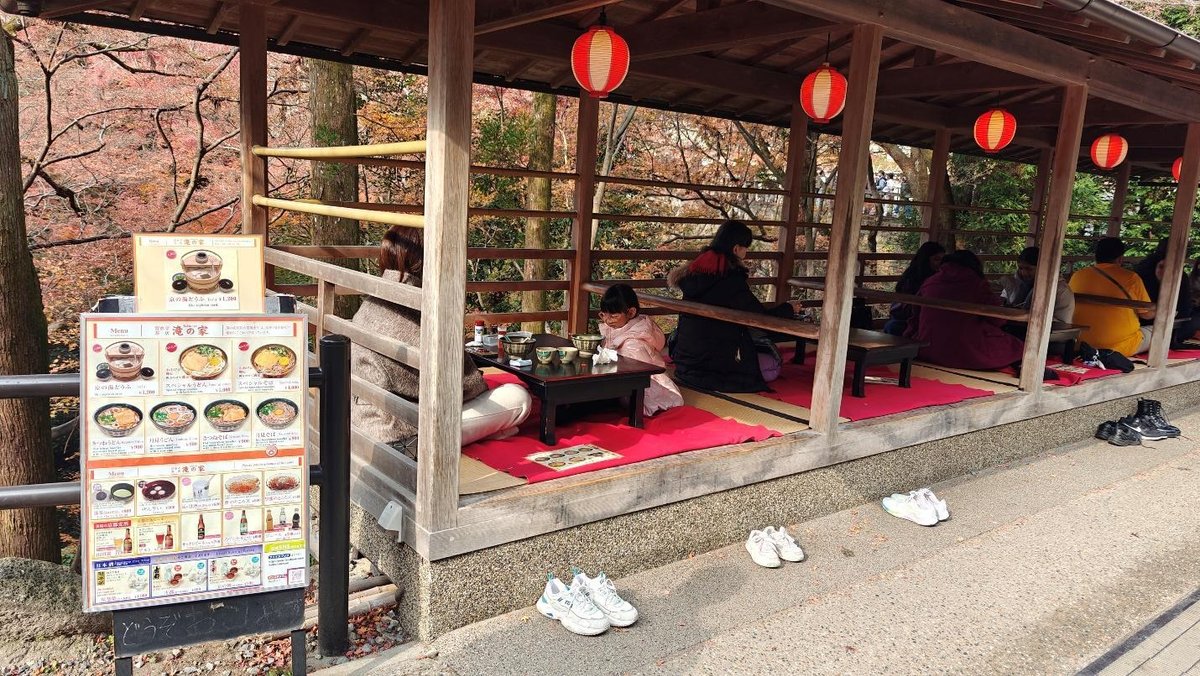
Just a short walk from the monuments were these buildings. Seeing these means that you’re near the Takinodo area. If you’re feeling famished or thirsty then this would be a great area to rest for a while as there’s actually a restaurant called Takinoya nearby.
It sells udon noodles and also has very comfortable outdoor seating if you want to enjoy the sights and sounds of the area.
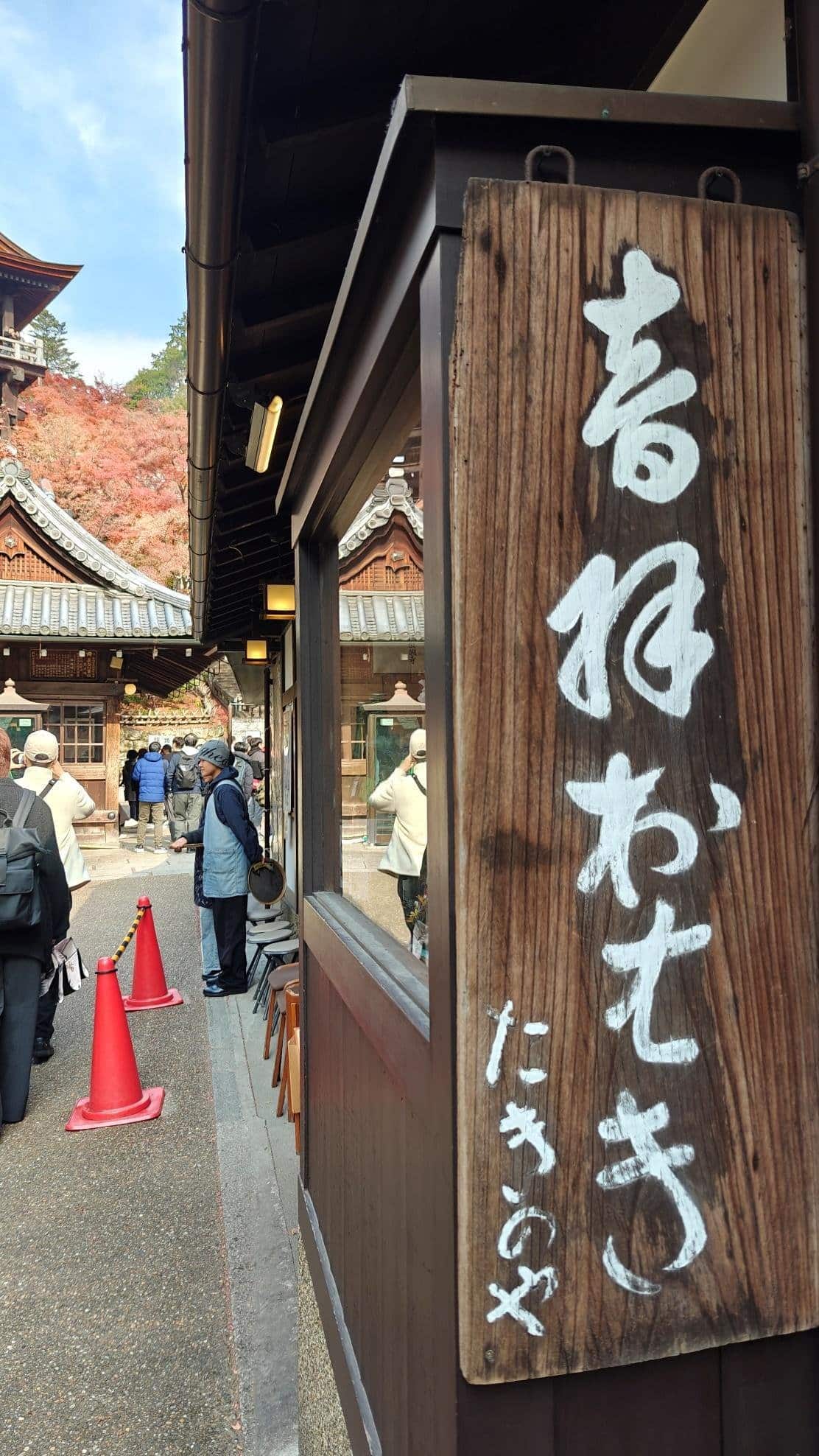
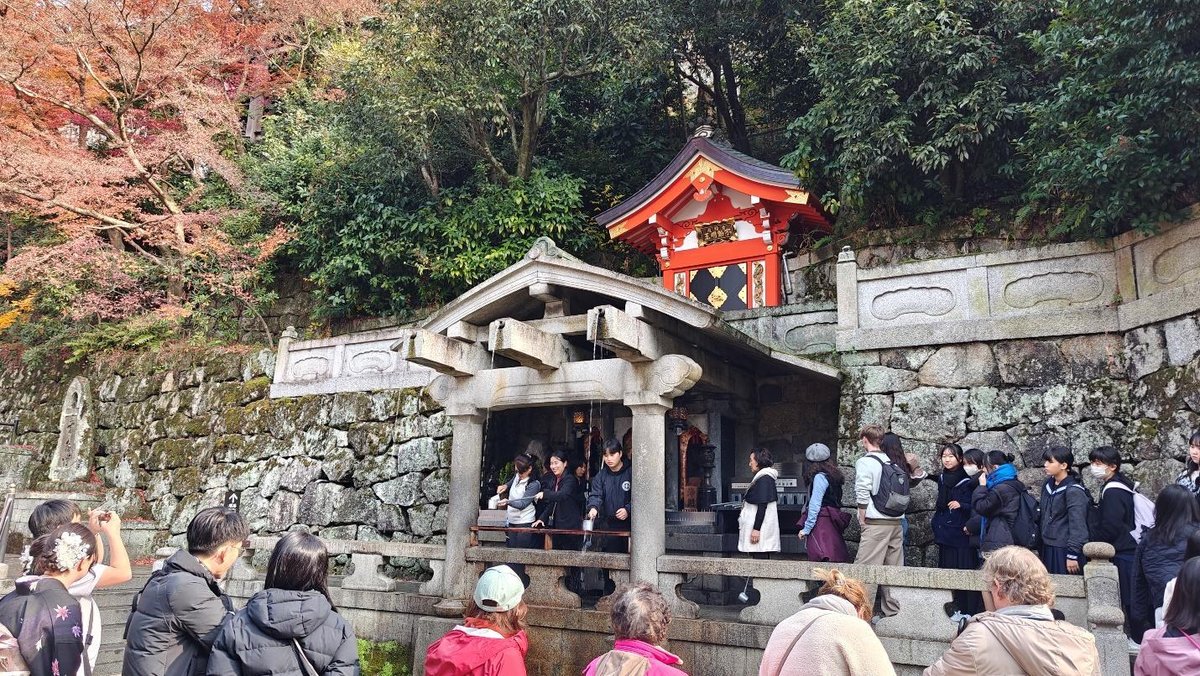
Moving past Takinoya, I then came across the Otowa-no-Taki Waterfalls. This is a sacred waterfall just beside/behind the Takinodo that’s famous for its three separate streams. While the structure here is obviously man-made, the water itself is naturally sourced from Mount Otowa via a system of pipes.
Visitors here can use ladles with long handles to catch the water from each stream and drink it if they are wishing for longevity, good luck in love, and academic success.
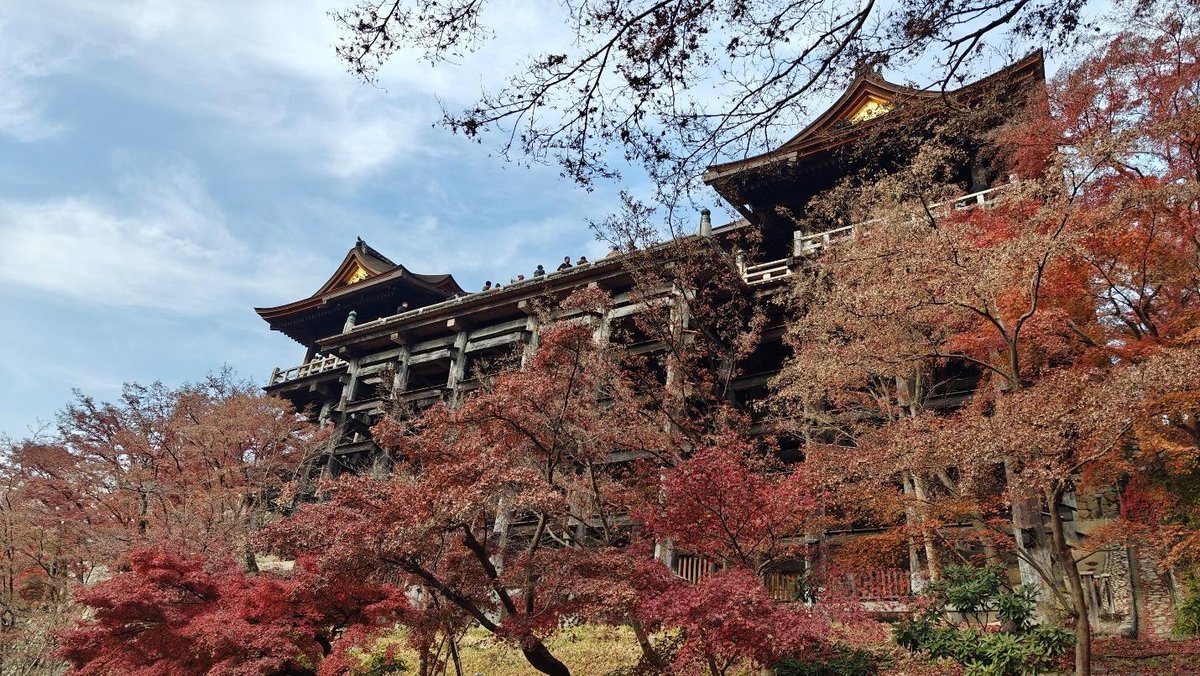
From this area, you’ll also have a good look at the beams supporting the Kiyomizu-no-Butai. Again, this sight left me impressed just because of how unreal it is to imagine a building this large not having any nails holding it together. What’s even more impressive is that the building is 390 years old!
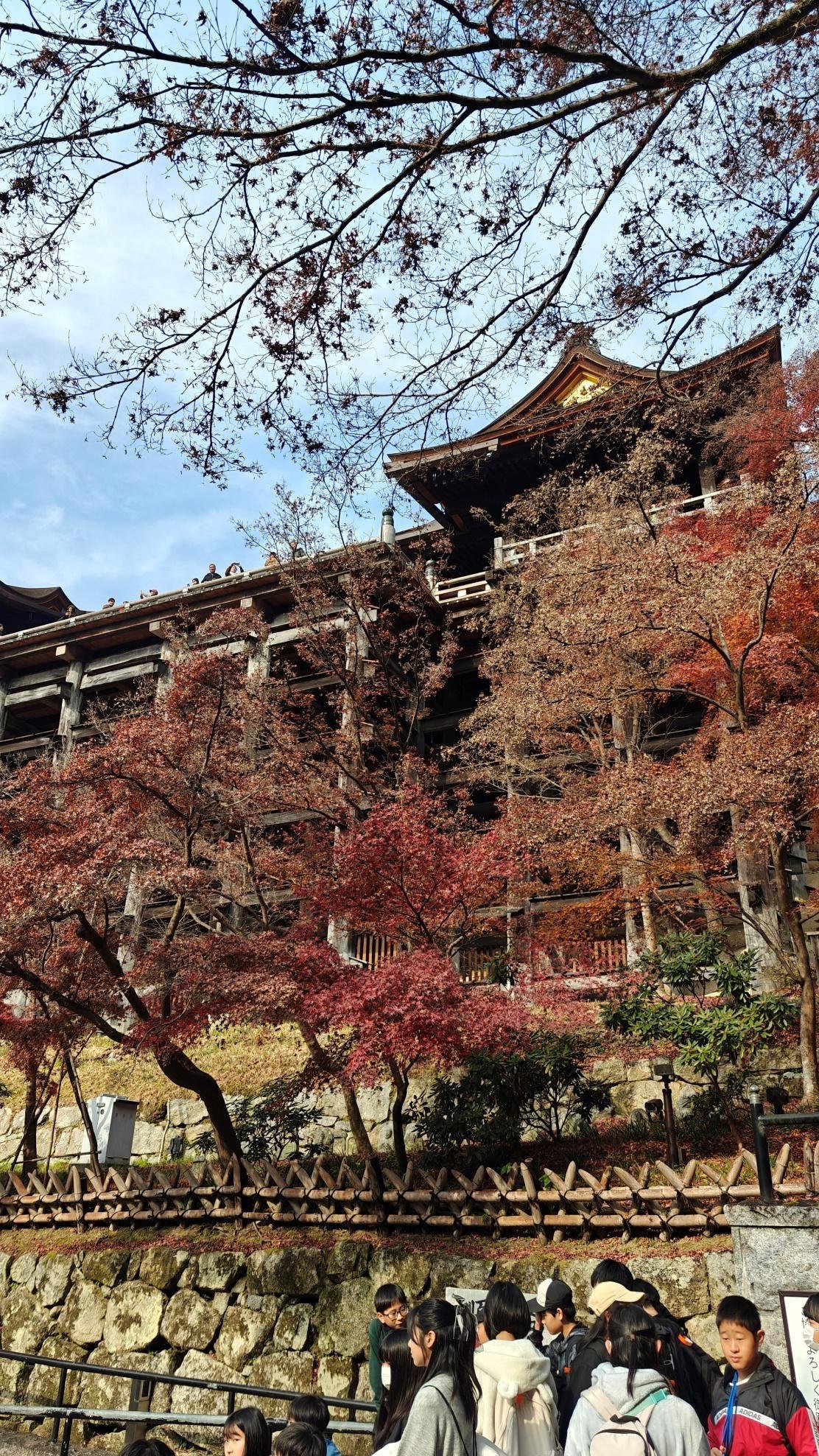
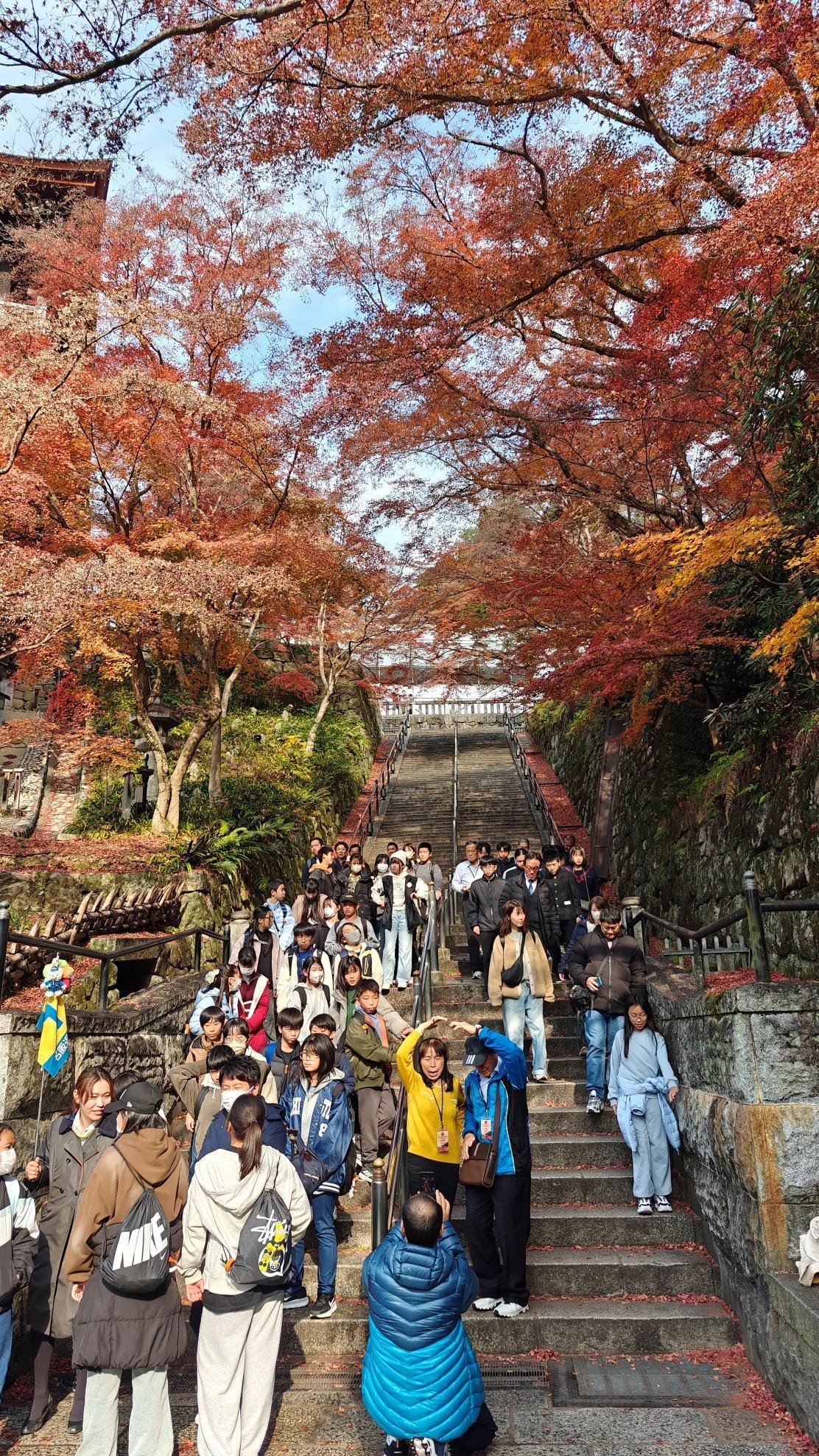
Just a short walk from the Otowa-no-taki is the stairs that I took a picture of earlier after exiting the Hon-do. This is actually a great spot for taking pictures especially with the fall foliage of the trees here. Another great time to visit here (especially if you’re after stunning and picturesque shots) would be during Spring due to the cherry blossoms.
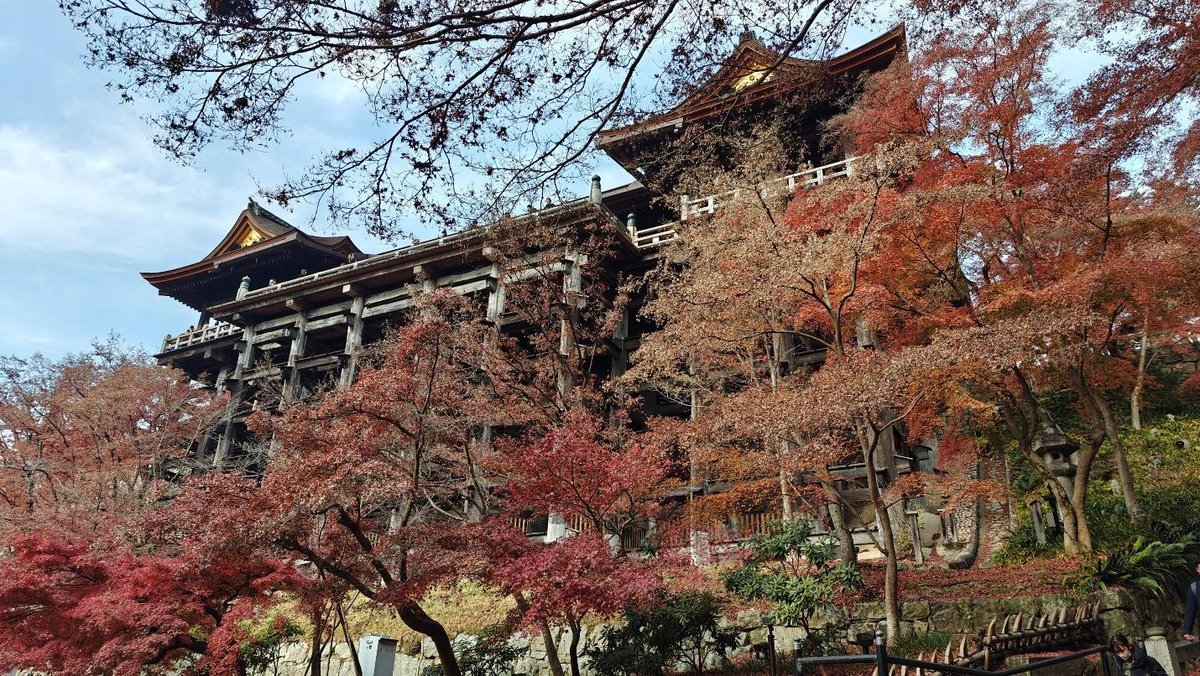
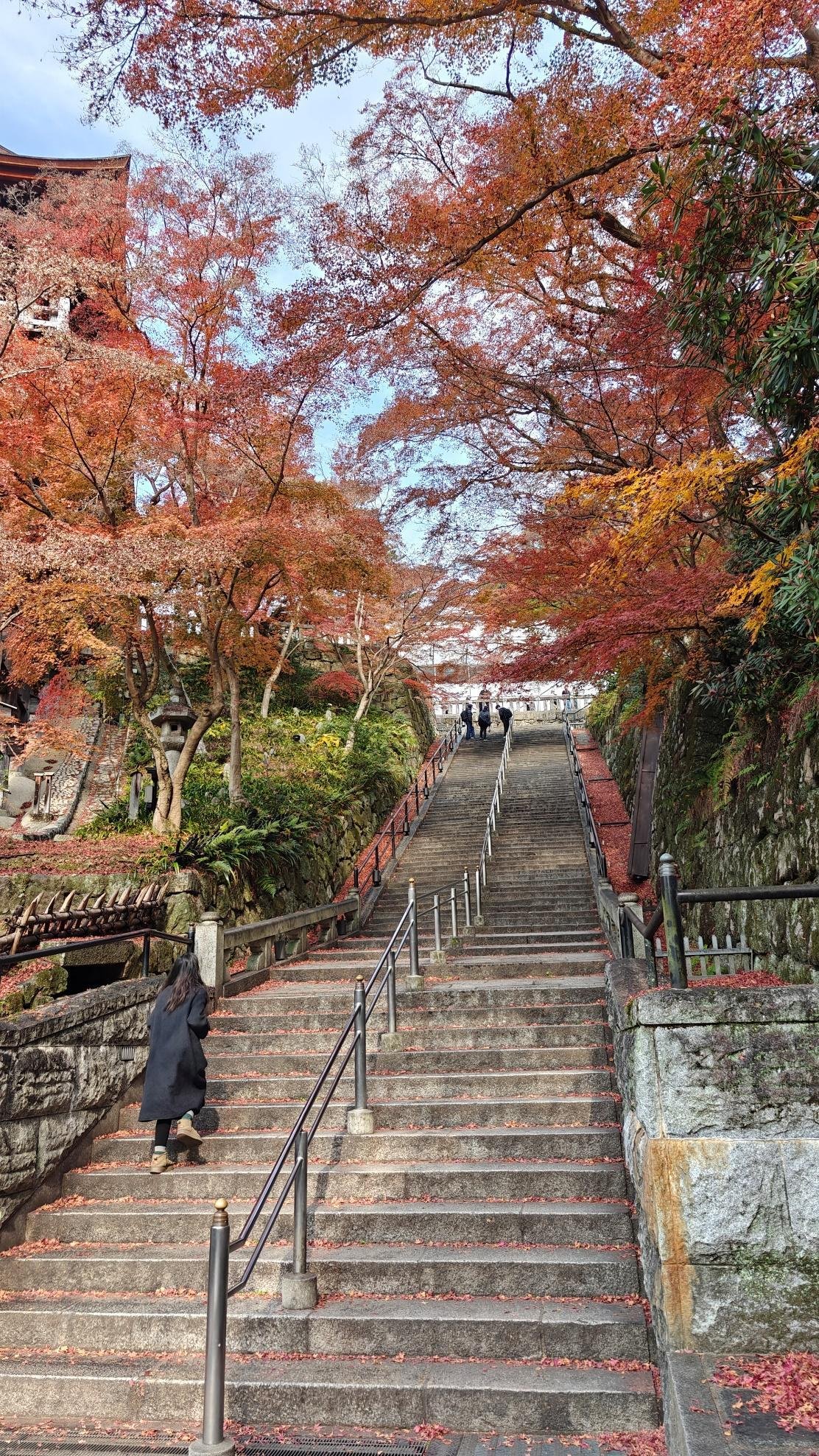
At this point, I was just about ready to leave but for some reason, I just couldn’t seem to stop taking pictures. I’ve read that Kiyomizu-dera is overrated but looking back on my experience, it actually lived up to its reputation and more. I’ve gone to temples and parks in China as well as New Zealand and while they were amazing, they lacked the personality and the surreal vibe that I’ve seen here.
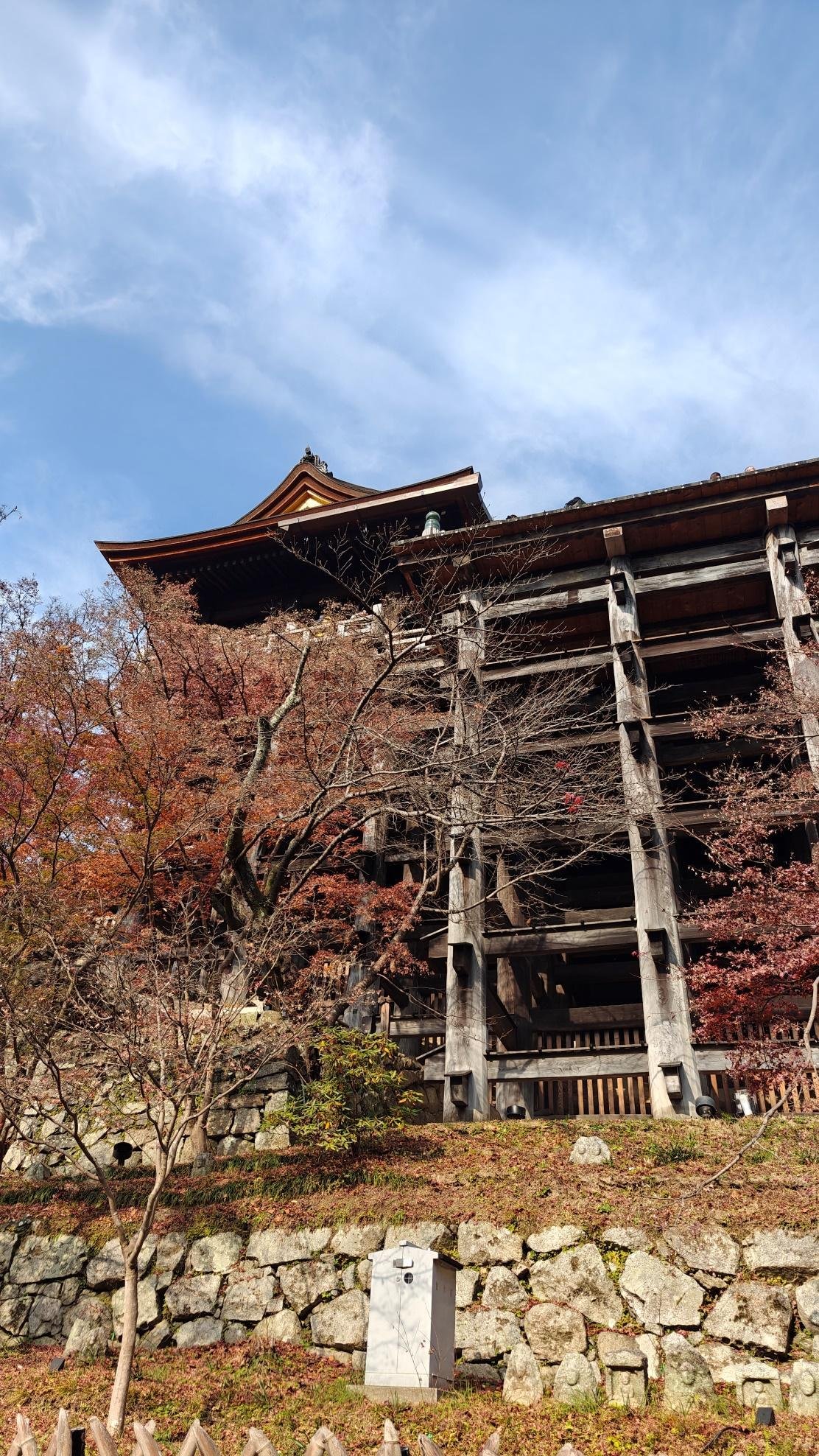
Even when I was leaving I still couldn’t help but be amazed at the views. This one is again of the beams supporting the Kiyomizu-no-Butai and in the foreground you can see more statues. Then on the opposite side of this path, you can see a mini-forest that’s lush with more trees flaunting their fall foliage for everyone to see.
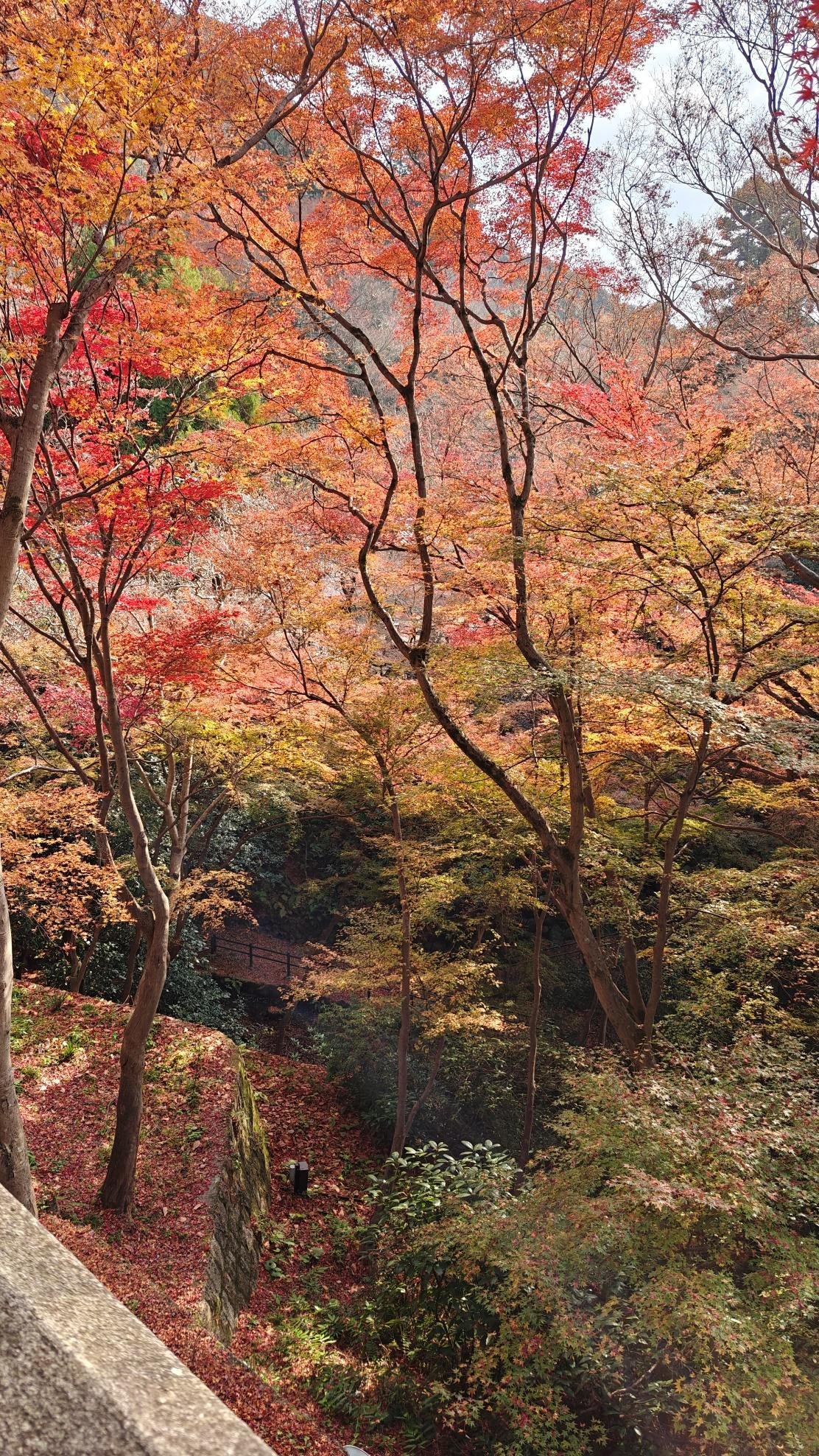
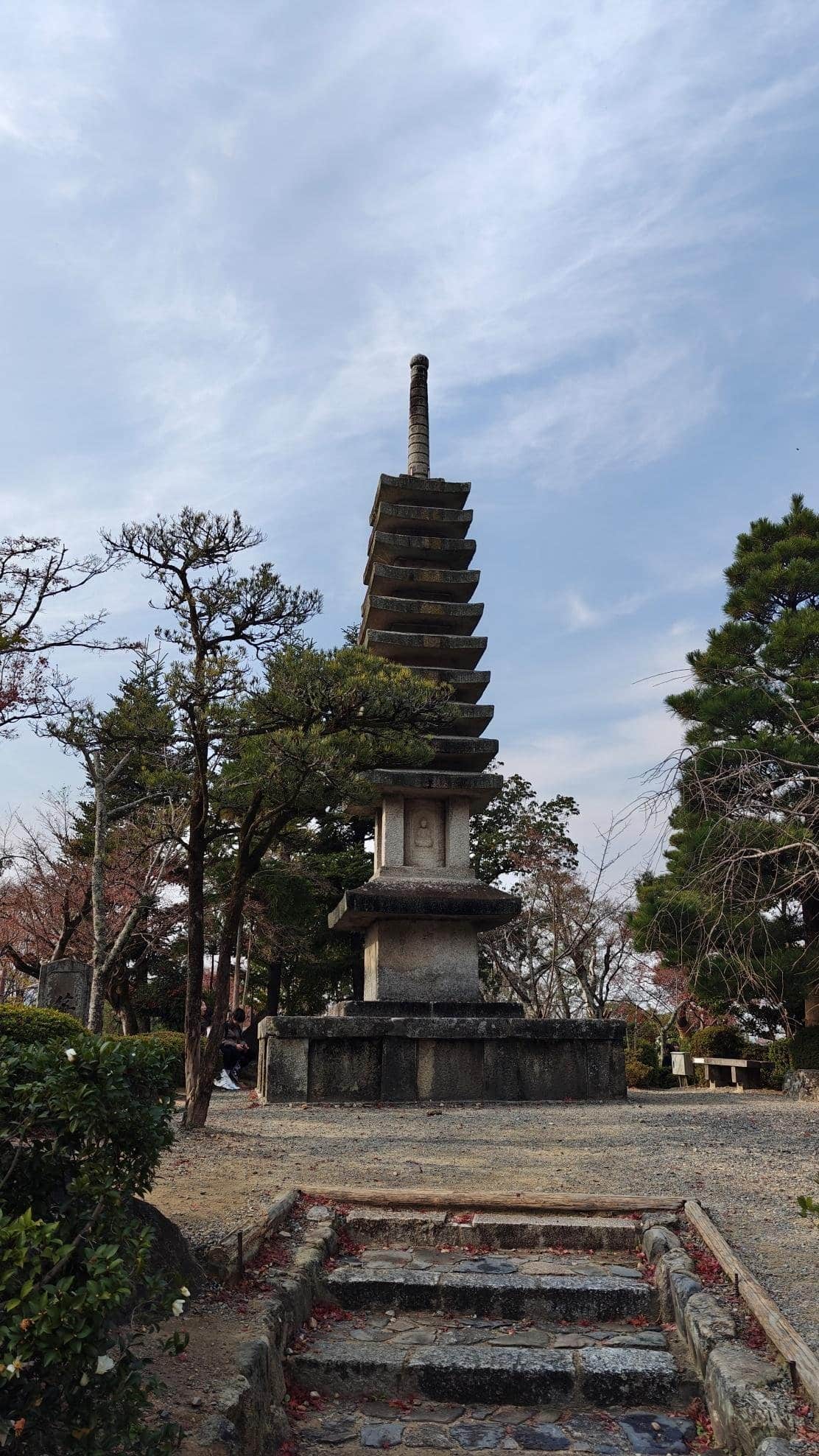
As I was nearing the exit, I came across another one of the notable pagodas here in Kiyomizu-dera. This one though isn’t made of wood like the other two. Called the Juichiju Sekito, the pagoda is actually made of stone.
Despite its name translating to Eleven-story Pagoda, it’s actually shorter than the two others that you saw earlier. Across the path from the pagoda is the temple complex’s Hojo Chi or life release pond. This is almost always a fixture of Buddhist temples and shrines so it’s not surprising that Kiyomizu-dera also has one.
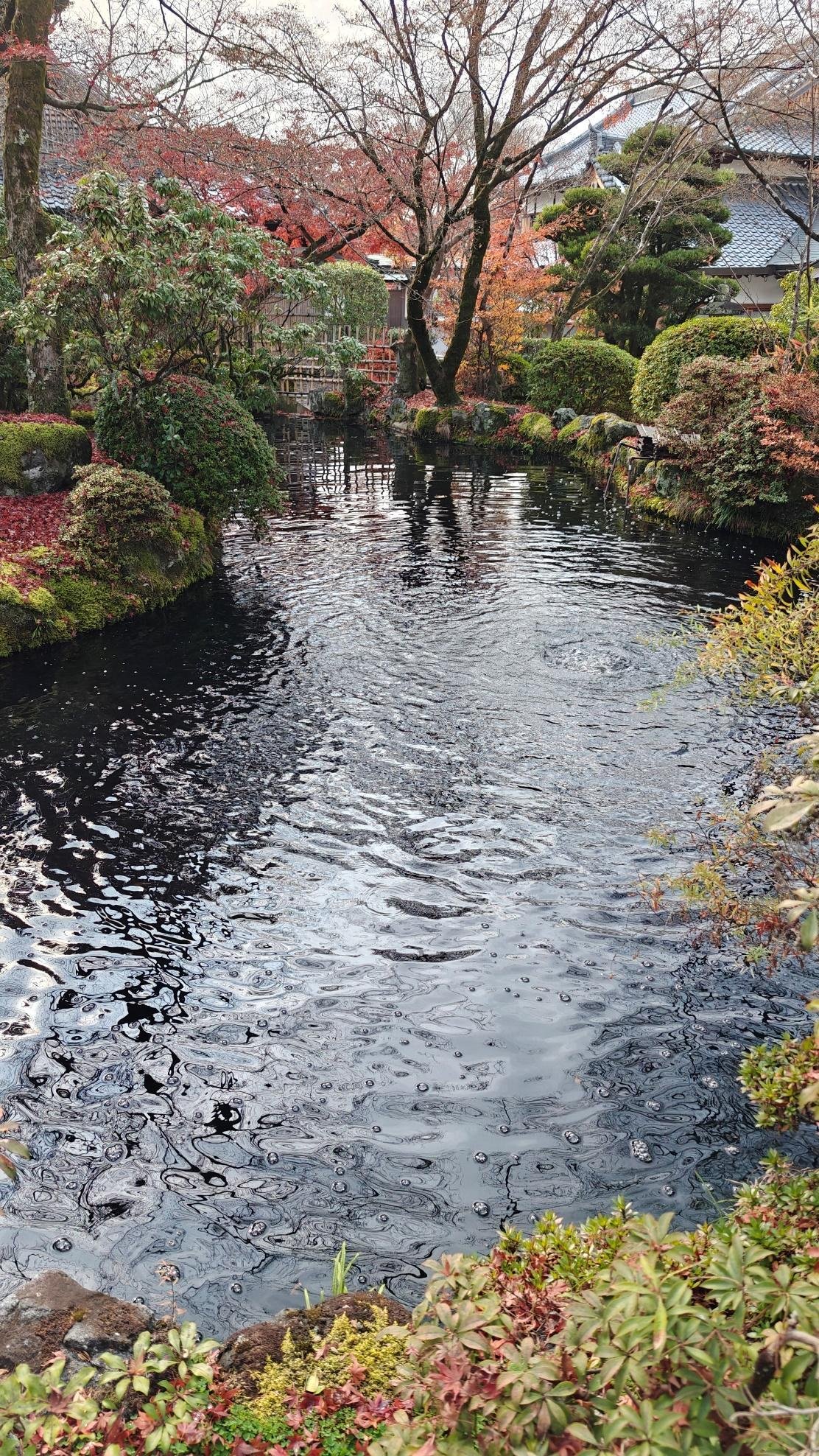
And with this image of the Hojo chi, my visit to Kiyomizu-dera ends. If you asked me for one word to sum up my experience here, it would have to be breathtaking. It’s really hard to put into words just how beautiful this place is.
The views from the Kiyomizu-no-Butai and the Okunoin were nothing short of spectacular. If you enjoy Japanese architecture then the buildings here are totally worth visiting thanks to how well preserved they are. Really, I’m running out of superlatives to describe this experience.
That said, it’s not all sunshine and rainbows as there is still the issue of crowds. I specifically made sure to visit during the off-peak season as I didn’t think I could deal with the sheer number of people who come here for fall foliage viewing in mid to late November. If you do plan to visit, you’re going to want to research when the off-peak seasons are.
Believe me, dealing with the crowds can be a literal and figurative pain in the butt. To sum it up, I would definitely recommend visiting Kiyomizu-dera. I think that it’s more than earned its reputation as a must-visit destination.What do you think about my visit to this iconic Buddhist temple in Kyoto?
If you have any tips and tricks or want to share your experiences with our readers then please make sure to share them down in the comments section!