
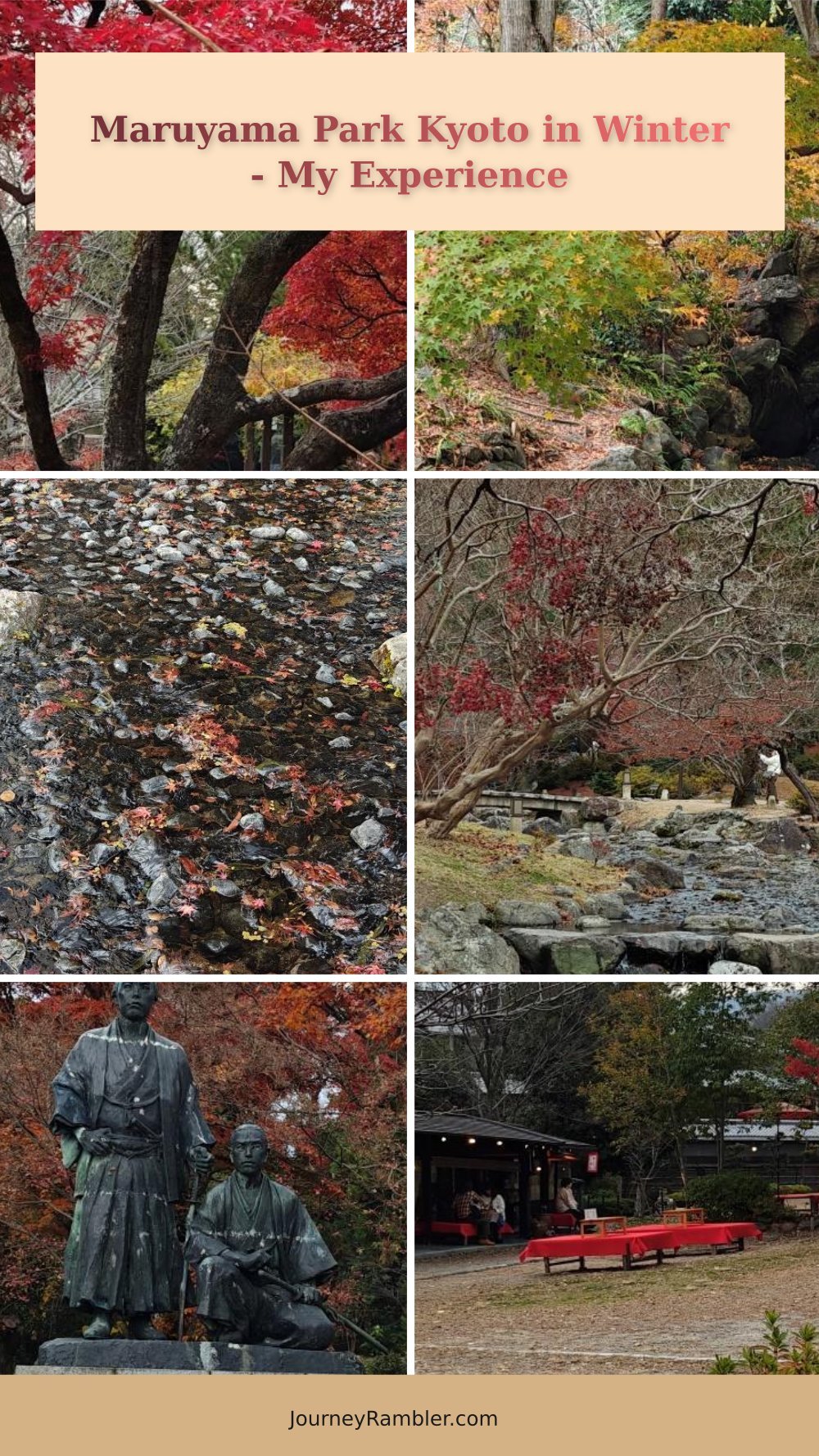
Much like Yasaka Shrine that’s adjacent to it, I think Maruyama Park is a low-key yet really nice travel destination in Kyoto. I had the chance to visit the park in the winter and was impressed by the scenery. With that said, would I recommend a visit here outside of the cherry blossom and fall foliage seasons?
If you want to know the answer then make sure to read on further! I’ll be sharing my experiences as well as a plethora of pictures that I took during my visit.
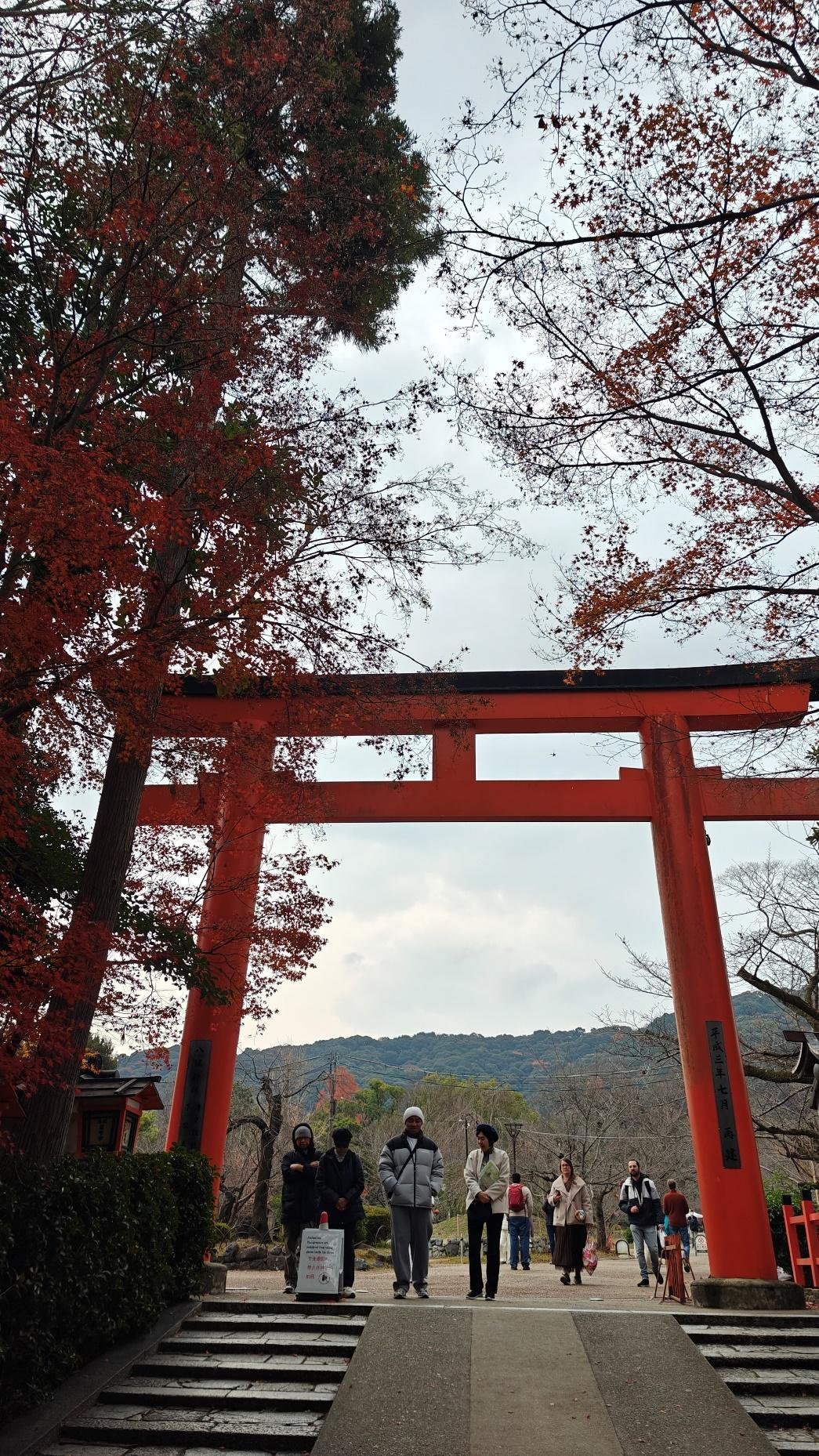
Here you’ll find one of the entrances to Maruyama Park. If you read my write-up of Yasaka Shrine then you’ll remember me talking about the Utsukushi Gozen Shrine that’s found on a pathway to the east of the Honden. Just follow that pathway past the shrine, turn right, and you should find yourself facing this torii.
Maruyama Park in Winter: But no snow yet
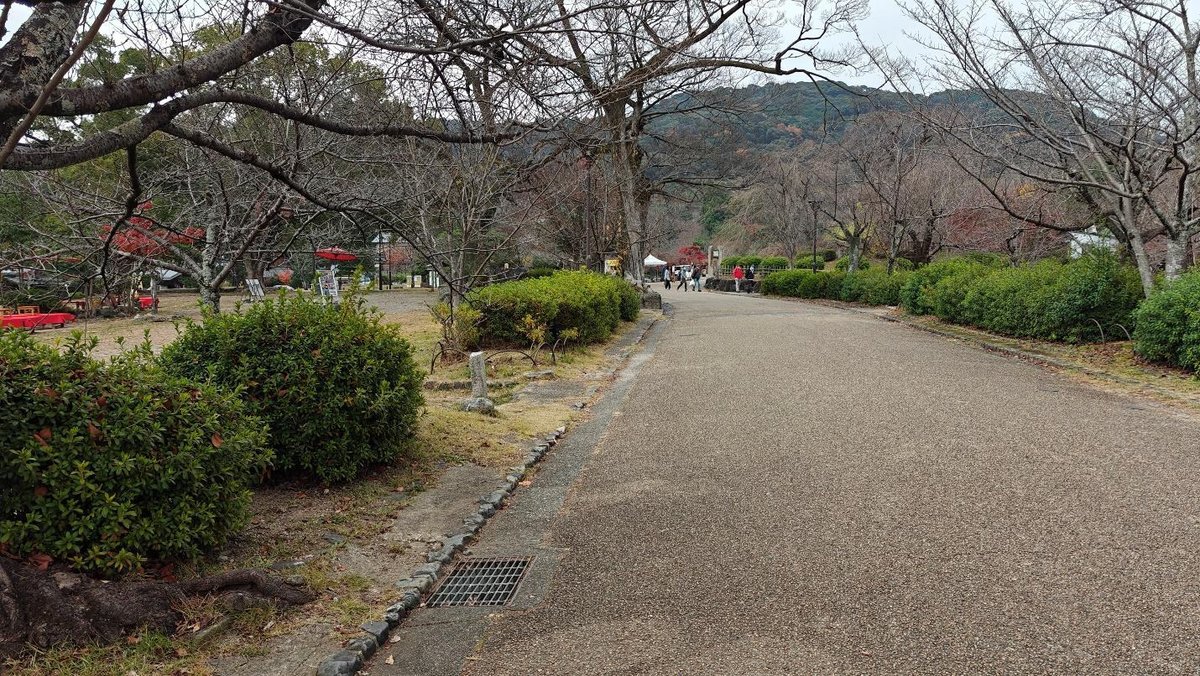
After entering the torii, you’ll initially come across two paths one leading to the north and another to the center of the park (pictured above). I ended up going to the latter route as I was really excited to see what the park had to offer. Off to the left of this image, there’s an area that has a number of food establishments that you might want to stop at if you’re feeling hungry or thirsty.
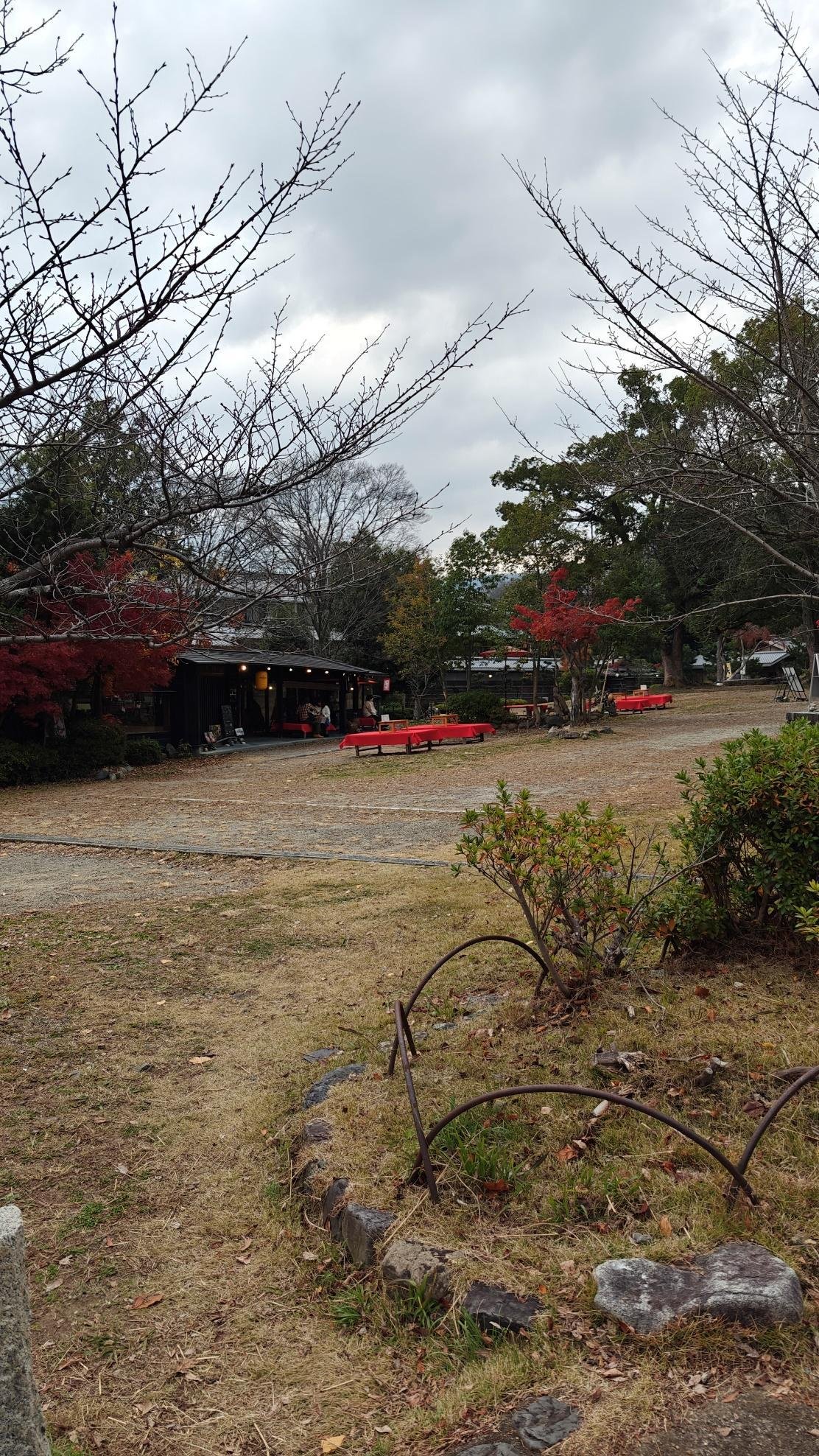
Here’s one of the establishments that I was talking about. If I remember correctly, its name is Ikkyu-An and it’s a cafe that serves a wide range of Kyoto delicacies such as dango, oden, oshiruko, temari okowa, and matcha (just to name a few). Other than traditional delicacies, I know that the cafe also has more modern snacks and flavors that you might find interesting.
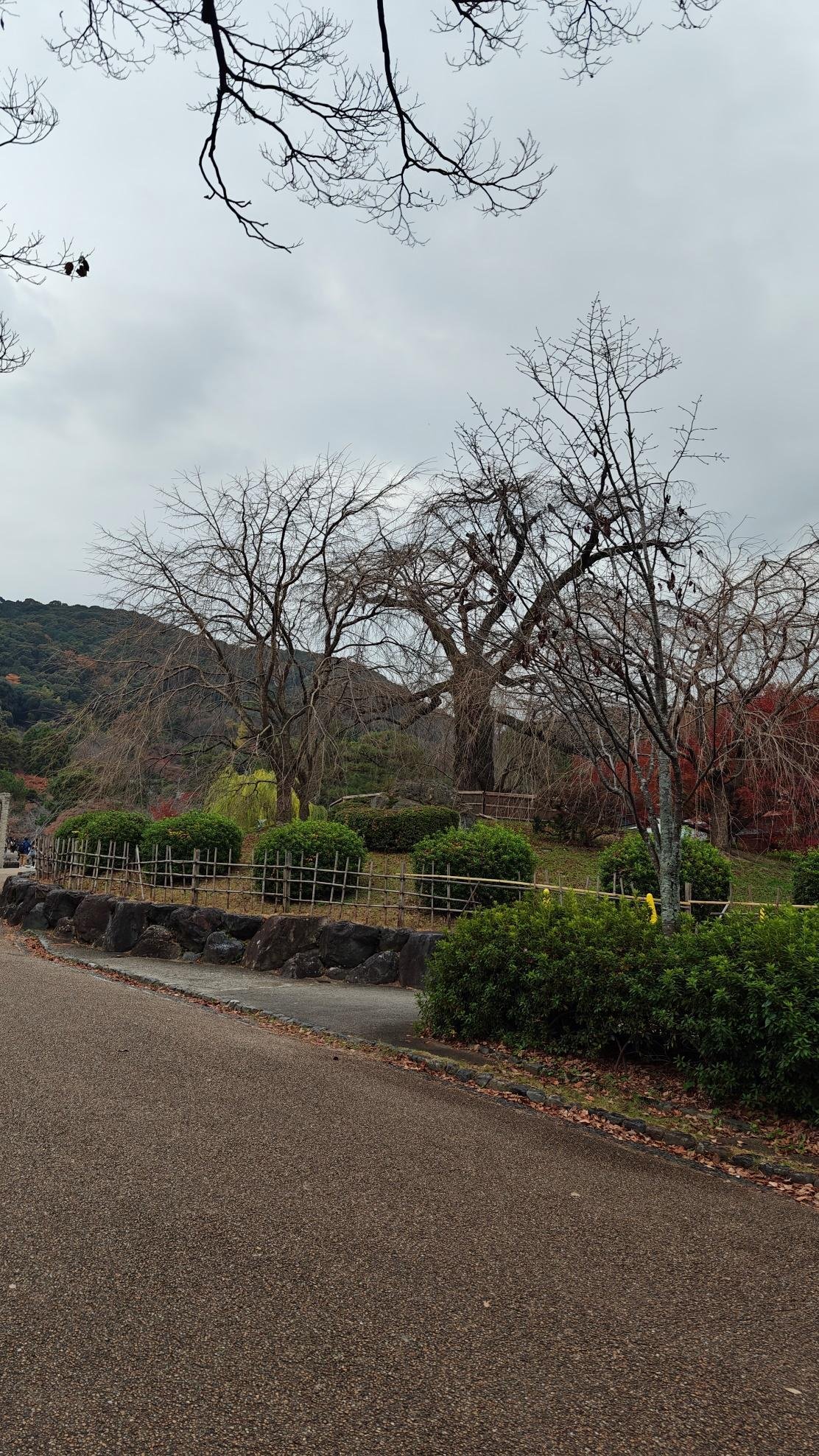
Further up the path, I saw these really eerie looking trees that reminded me of That Wanaka Tree that I saw in Lake Wanaka in Otago, New Zealand. It turns out, this is actually an equally popular tree here in Kyoto. Called the Gion Shidare-zakura or Gion Weeping Cherry, this tree is said to be the most famous cherry tree in the city especially during the spring season.
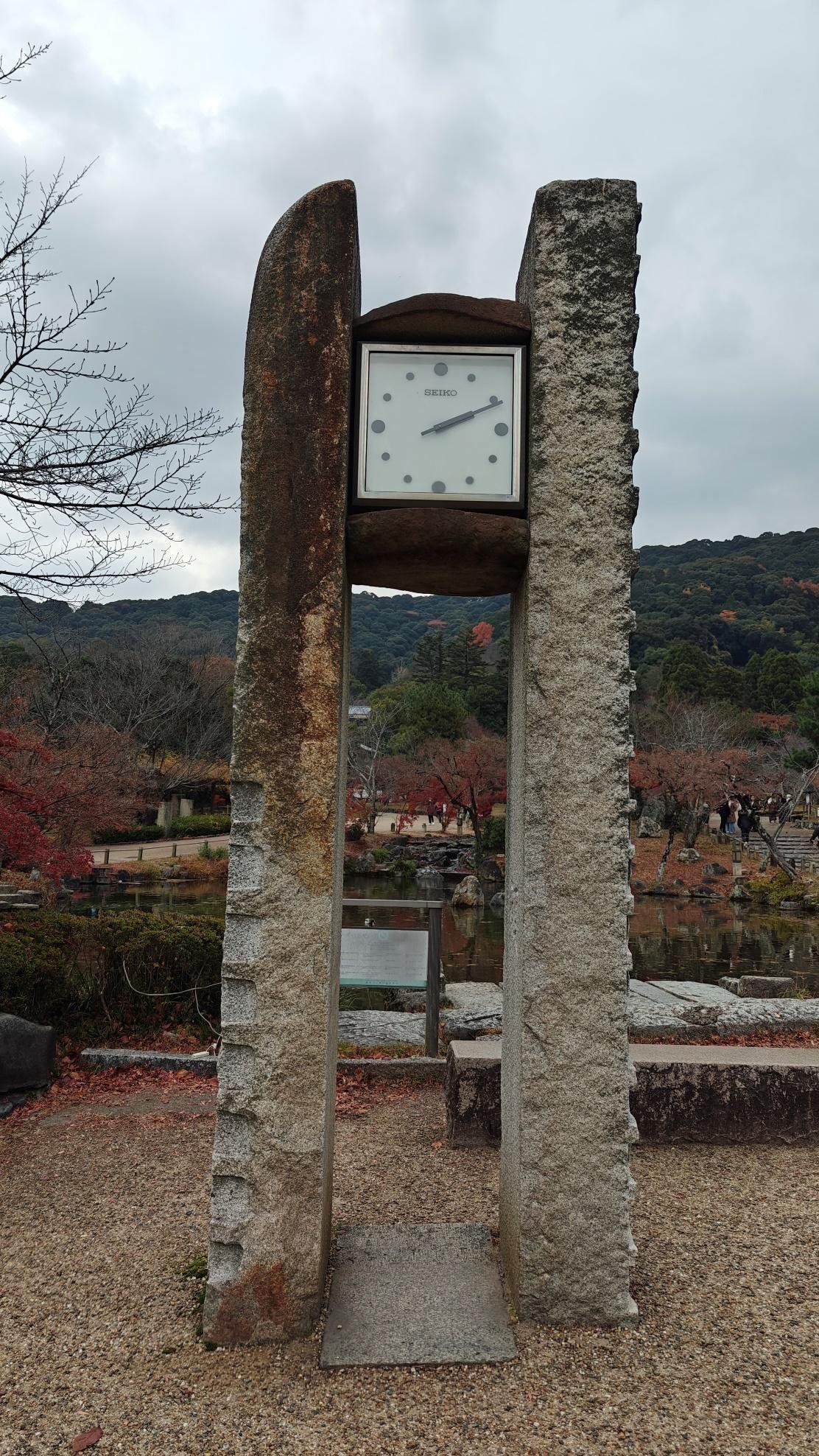
Past the Weeping Cherry and before the Gourd Pond is this clock tower that looks similar to the Warai Clock Tower near the Buden Stage at Yasaka Shrine. Come to think of it, there’s actually a path here (opposite the clock tower and behind where I’m standing when I took this picture) that you can take to get back to the exact area in Yasaka Shrine where the Warai Clock Tower is.
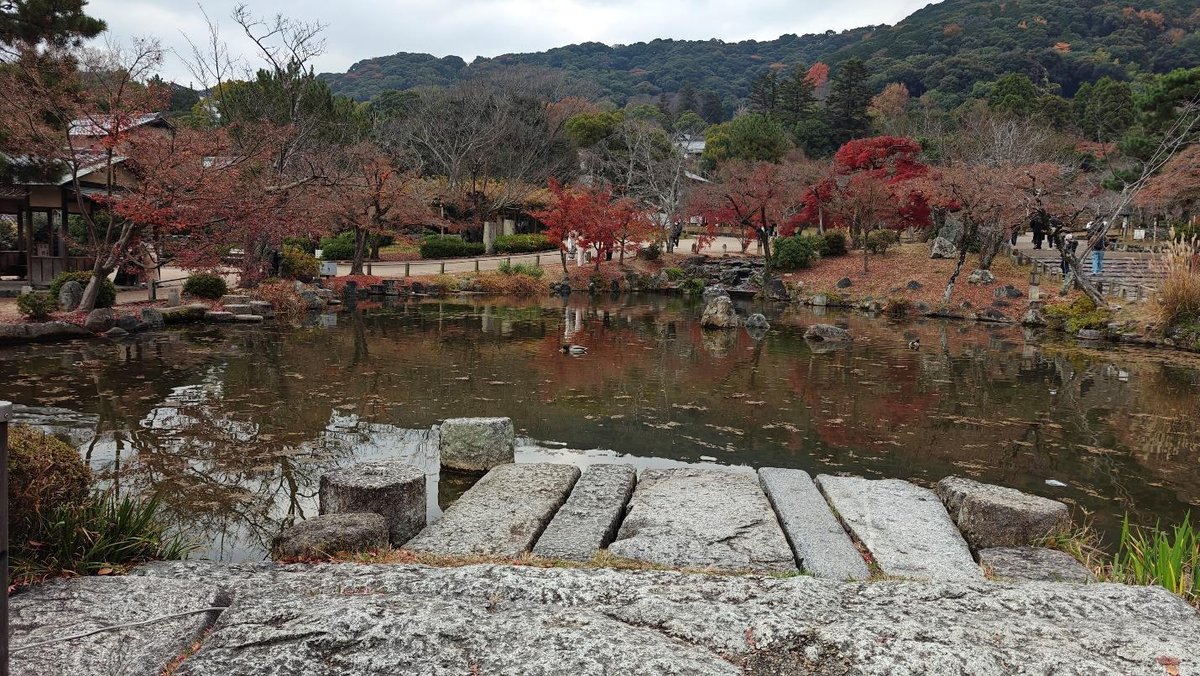
Now here’s what the Gourd Pond looks like. Since I came here during the early winter season, the fall colors still dominate the landscape. On a side note but you’ve probably noticed how there aren’t that many people here which I actually quite liked.
It was a great change of pace not having to deal with crowds like when I went to Kiyomizu-dera and Fushimi Inari Taisha.
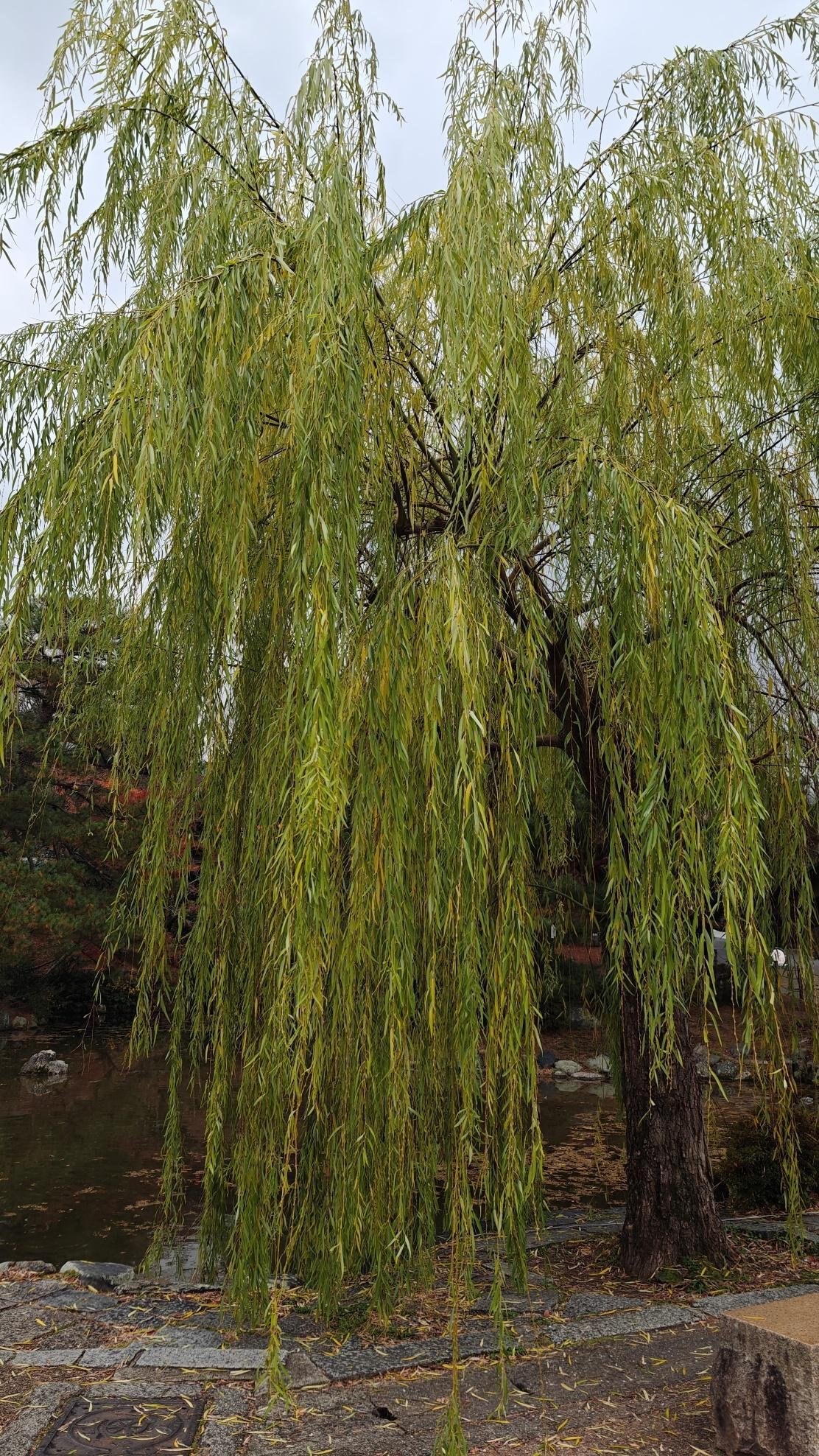
To the right of the image from earlier was quite possibly one of the few trees that still had green leaves on them. This is a weeping willow and it’s actually a deciduous tree (like a lot of the trees in the park) though it’s typically one of the last to shed its leaves. It is in the process of doing this though as you probably notice some of its leaves are turning yellow.
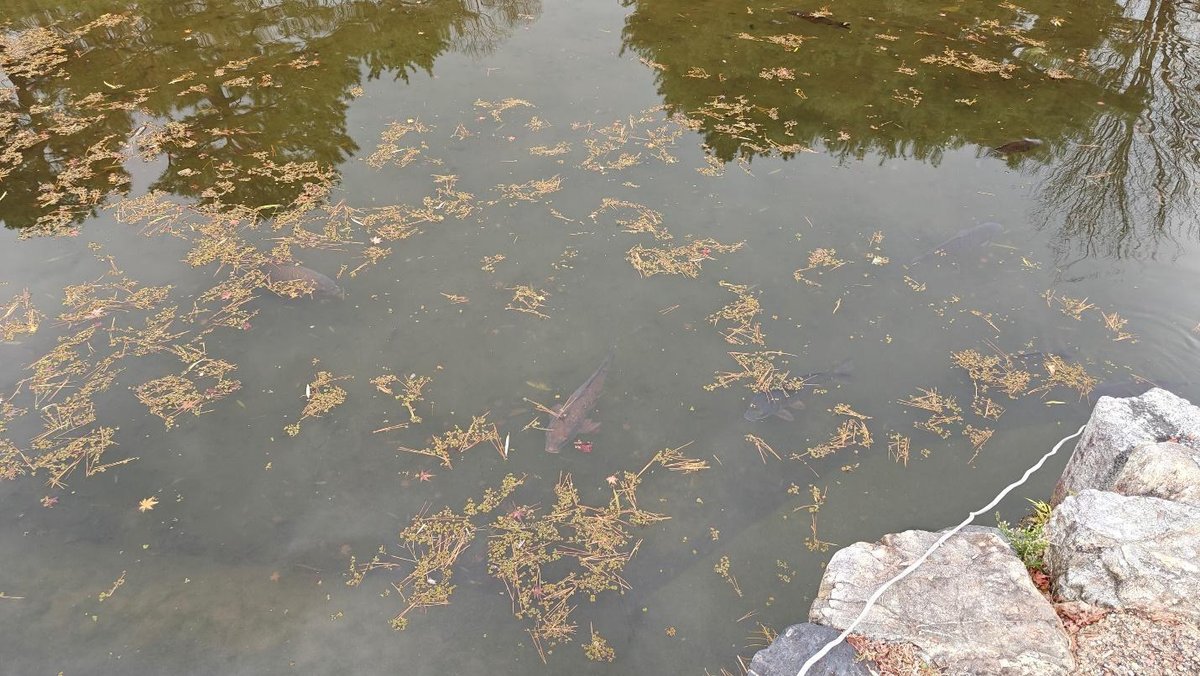
Since this was winter, the fish in the pond weren’t as active. You’ll also notice that the pond is a little murky with the water having this tea-like color to it. This is actually due to the leaves falling on it and decomposing.
Even with this though, the pond and the views/scenery around it still looks really nice.
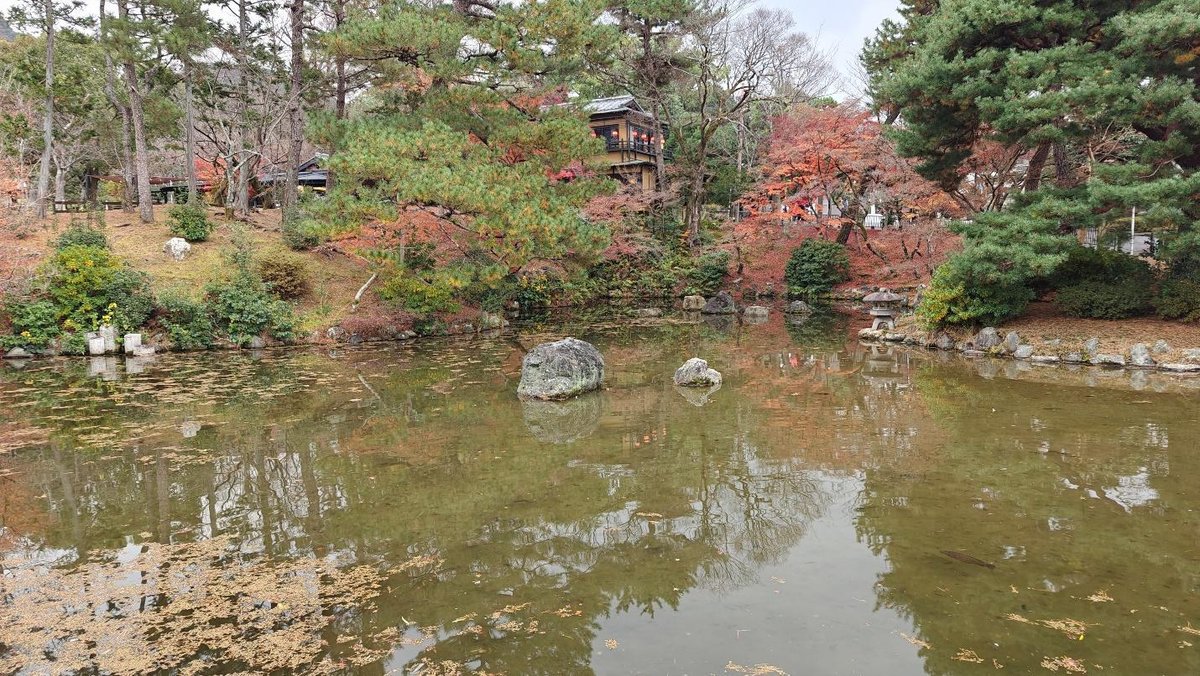
Here you’ll see the southern edge of the Gourd Pond. I’m not sure if you can see it clearly but there are actually some buildings that are slightly covered by the trees and foliage. If I remember correctly, those are restaurants serving traditional Kyoto/Kansai delicacies and cuisine.
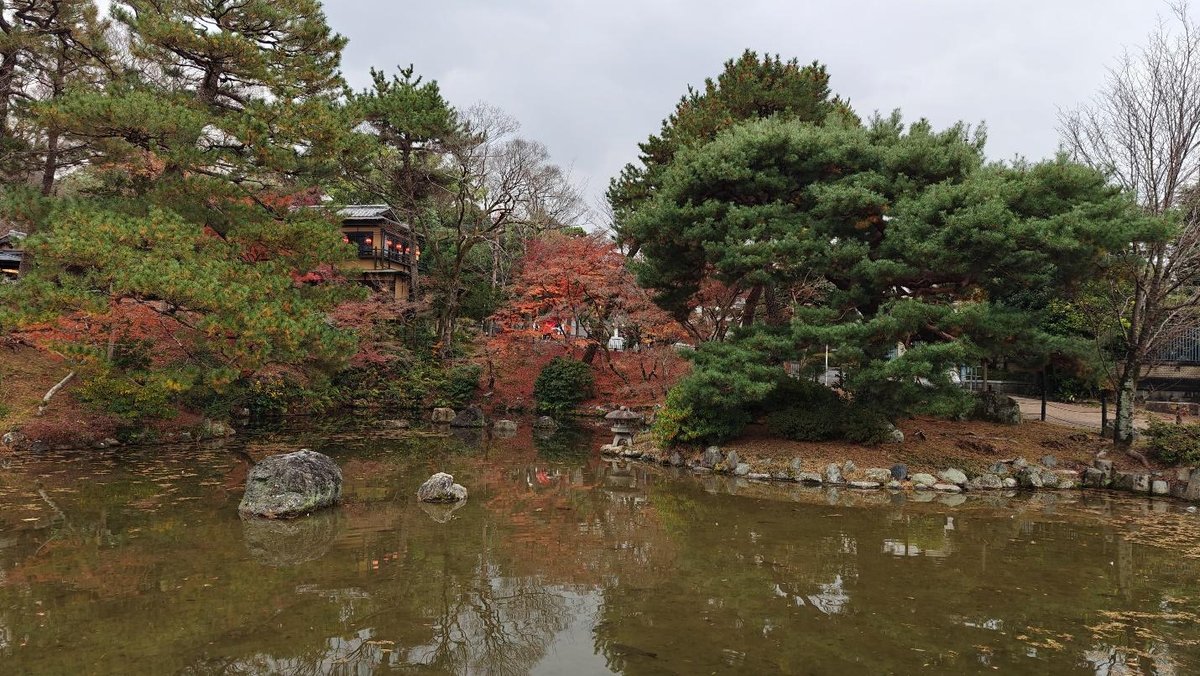
Now you’re probably wondering, why isn’t it snowing even though it’s already winter. You’ll have to remember that Kyoto is actually near the Southern part of Japan and the weather here is not as extreme as in places like Hokkaido. That combined with the fact that it was still early winter during my visit meant that there was fortunately no snow here in Maruyama Park.
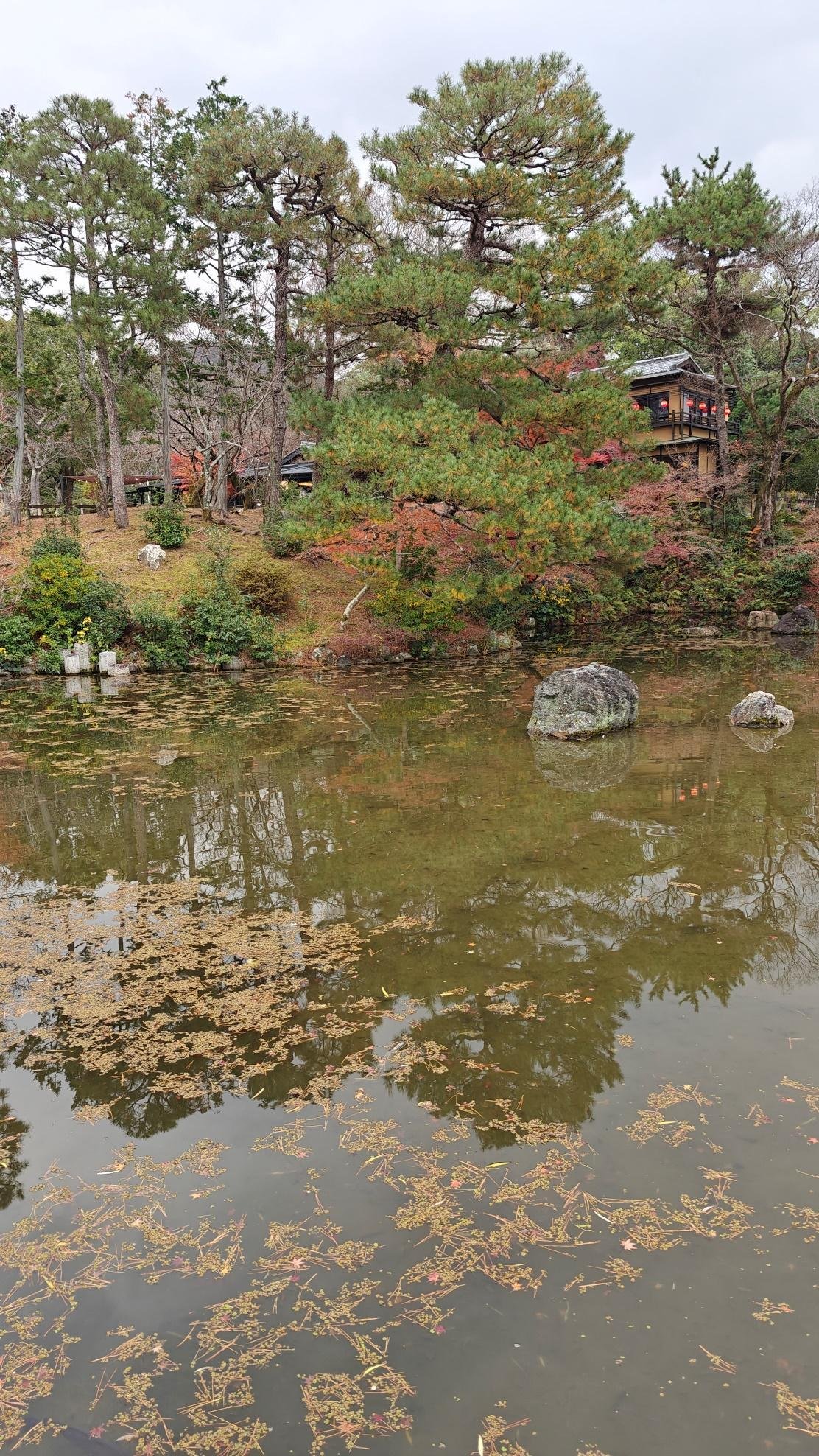
Now if you want snow then you’ll need to time your visit sometime around January up until March. Those months have the highest probability of snow. Just take note though that the snow in Kyoto doesn’t last for long and usually melts in just a day or two.
So unless you’re staying in the city for an extended period, you might not catch a snowy Maruyama Park.
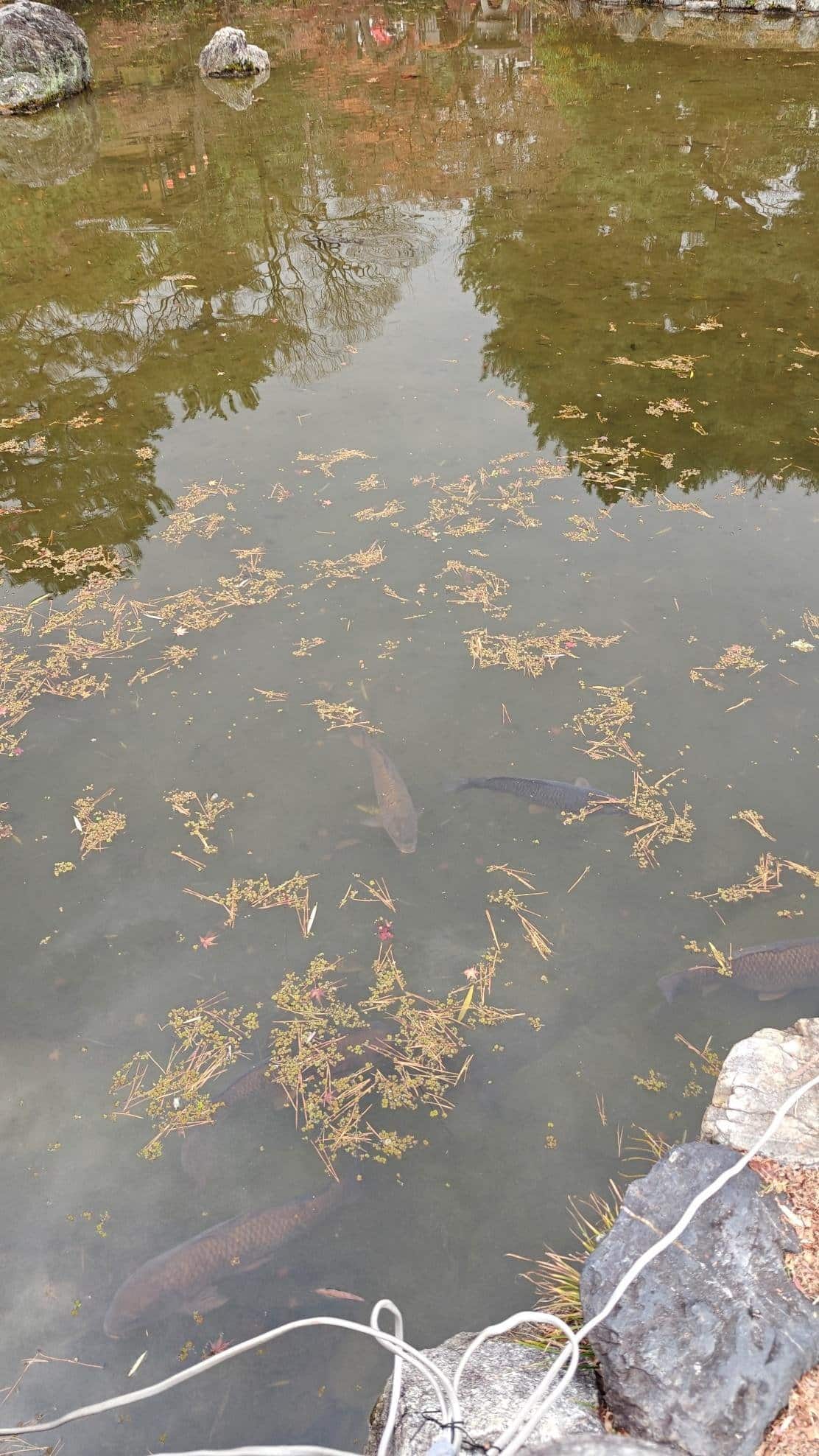
Here’s another look at the fishes in the pond. As with a lot of the ponds here in Japan that I’ve been to, the fish that you’d typically find here are koi and carp. In the next image, you’ll also see that it’s not just these fish that call the pond their home.
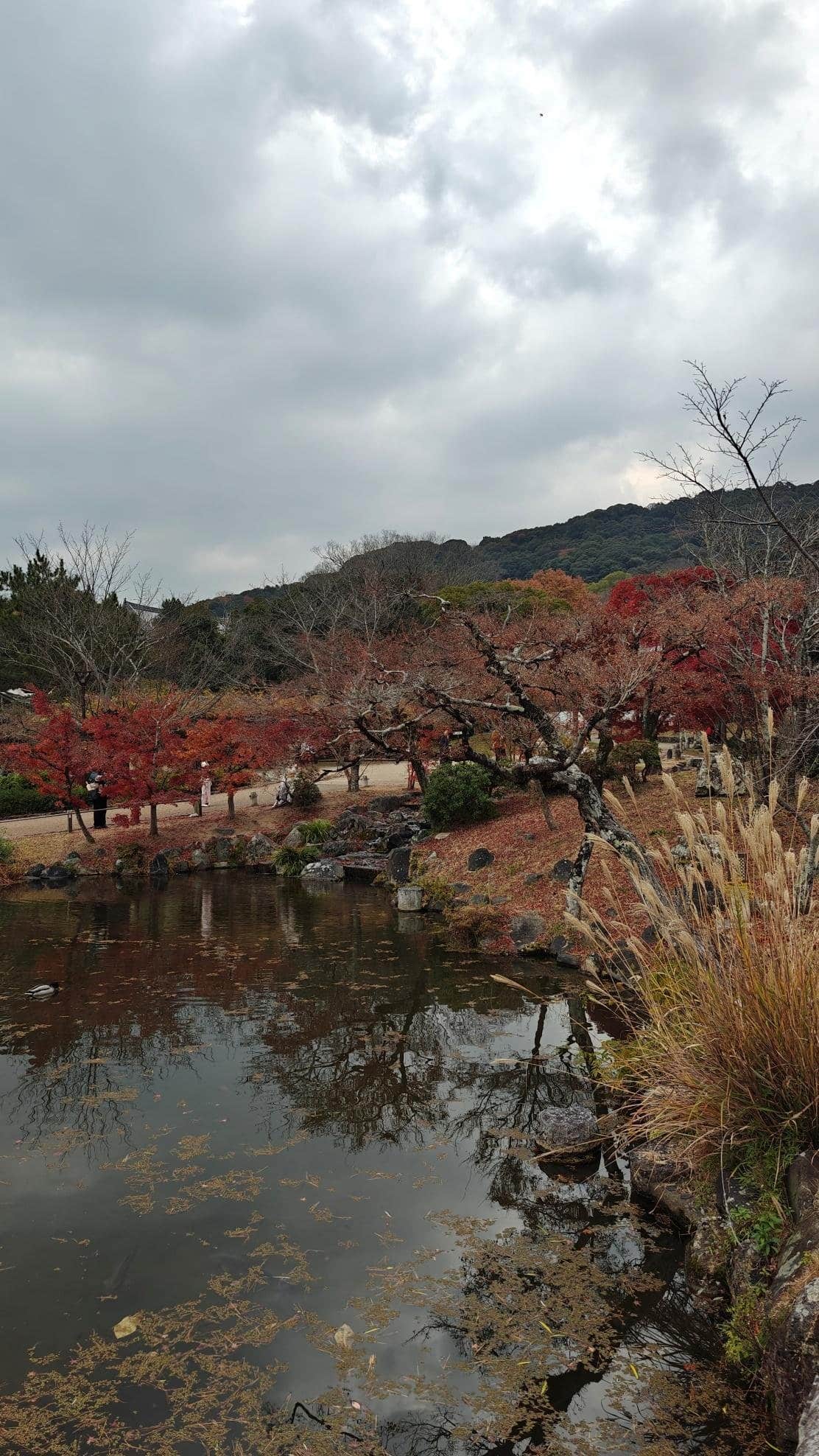
This is what the northern end of the pond looks like. You’ll also notice that there is a pair of ducks here. From what I understand, ducks typically migrate to warmer climates so I’m not sure if these two are from the north or if they call this pond their home the whole year round.
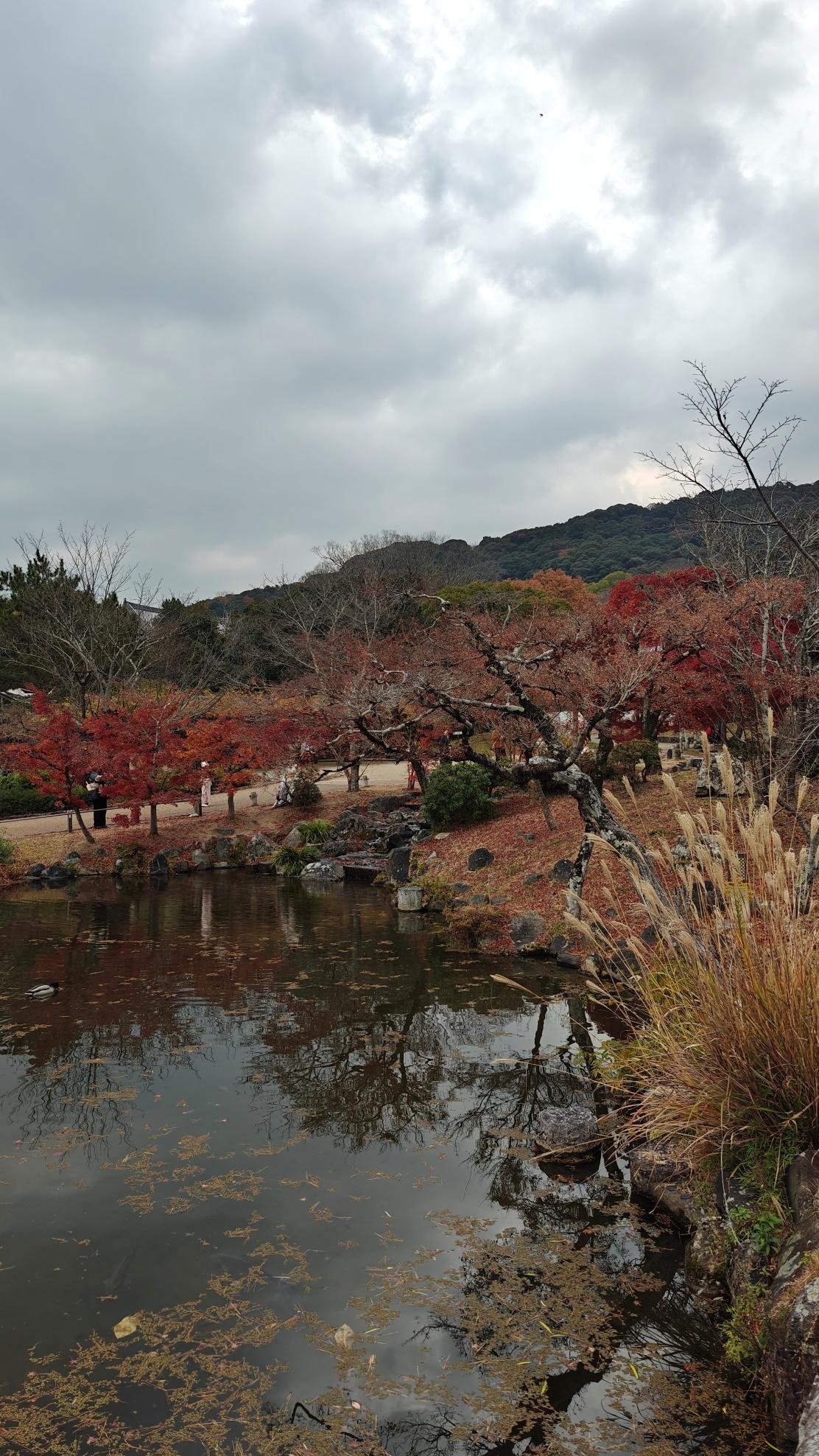
Aside from the ducks, what stood out to me here were the trees. A lot of them still had their bright red fall foliage while there were others (like the one in the foreground) that shed their leaves completely. And in case you’re wondering, the trees with red foliage (as well as the ones that don’t have leaves) are the very same cherry blossoms that attract people in droves during the spring.
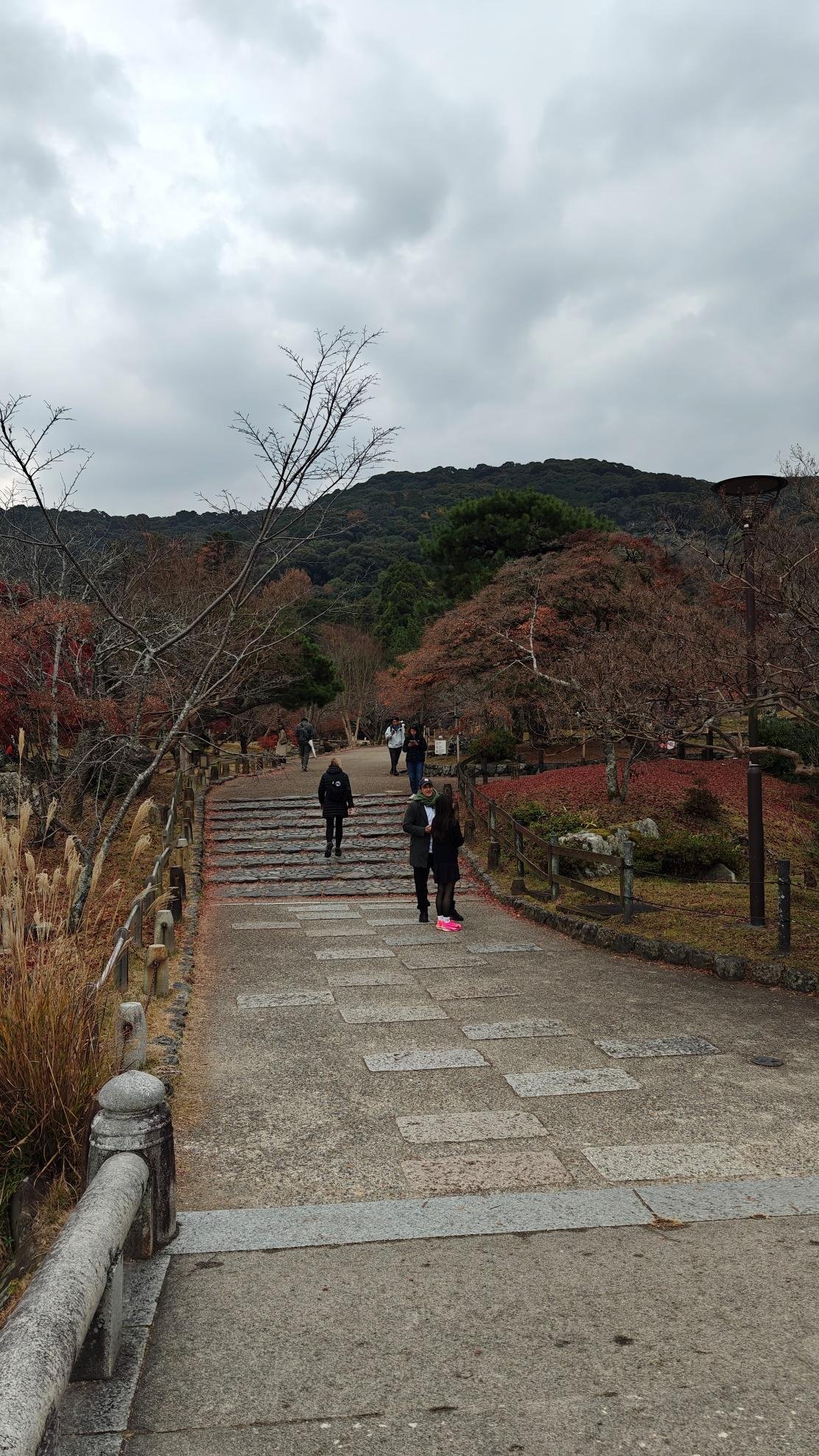
So a unique feature of the Gourd Pond is that there’s a small bridge bisecting its northern and southern end. In this image, I’m actually standing on that said bridge. As for the path shown in the image, it actually leads to the pond’s eastern end which is near another of the notable attractions in this park (which you’ll of course see in quite a bit).
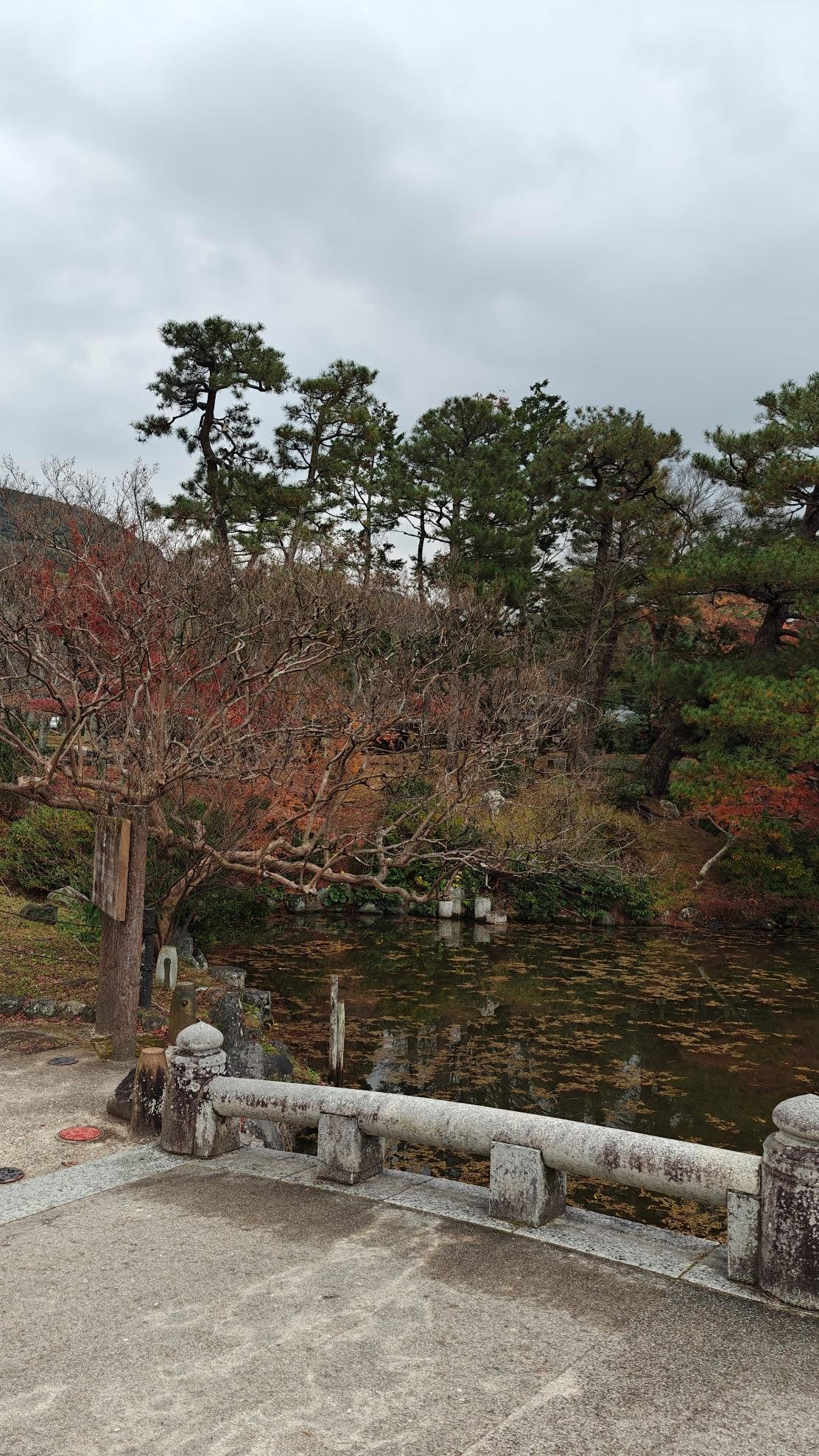
This is a view of the southern end of the pond from the bridge. Well, I guess you could only really see part of it from this angle. I will say that even if the best time to be here in Maruyama Park is in spring, it’s still very scenic even in winter without any snow.
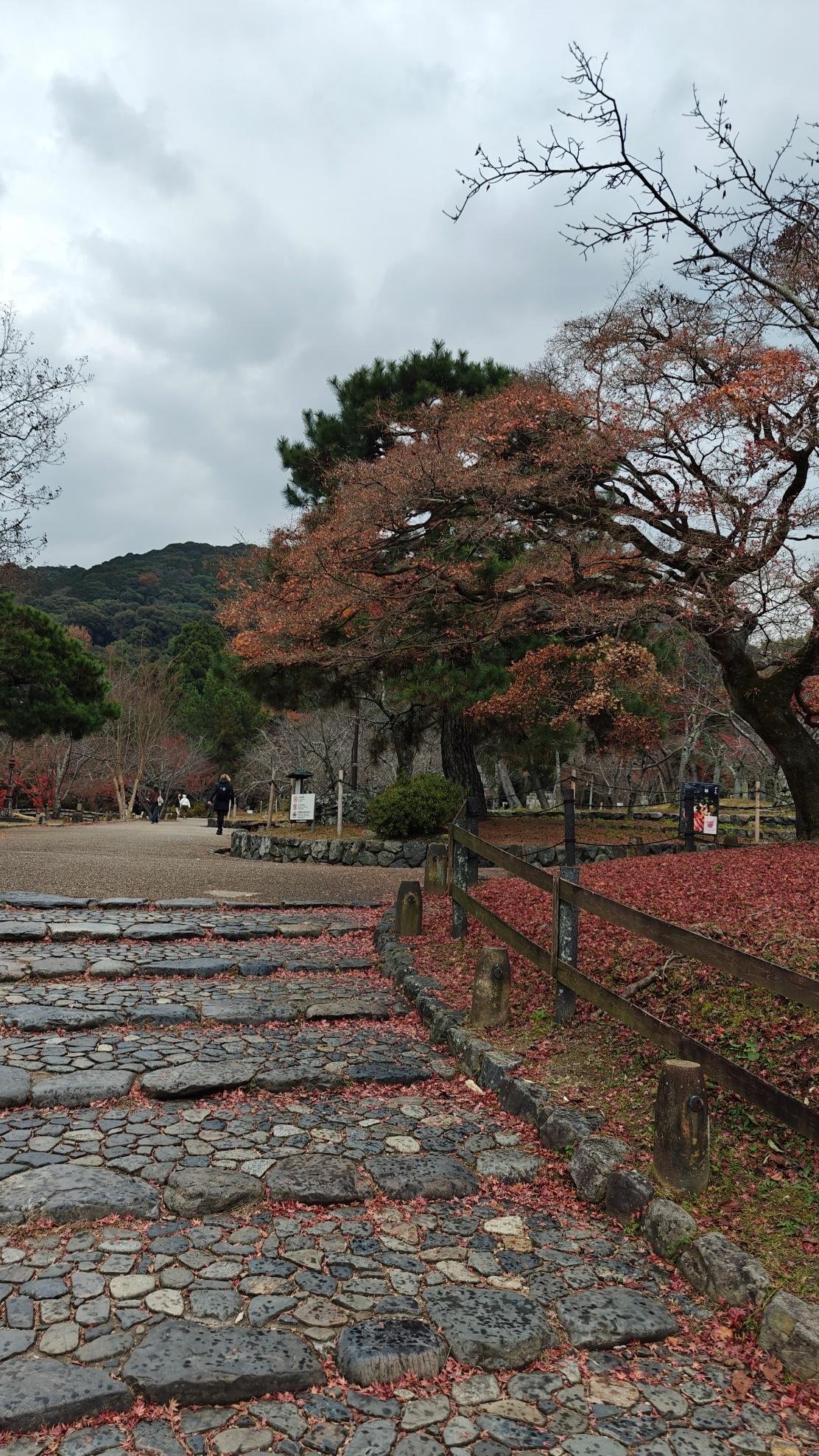
Crossing the bridge, I came across this paved path that then gave way to a short set of steps leading to this garden. Again, you’ll find yourself inundated with views of fall foliage here. I’m not sure if I was the only one who felt this but there was a certain sense of melancholy and nostalgia in the views that I’d personally witnessed during this trip that made it really memorable.
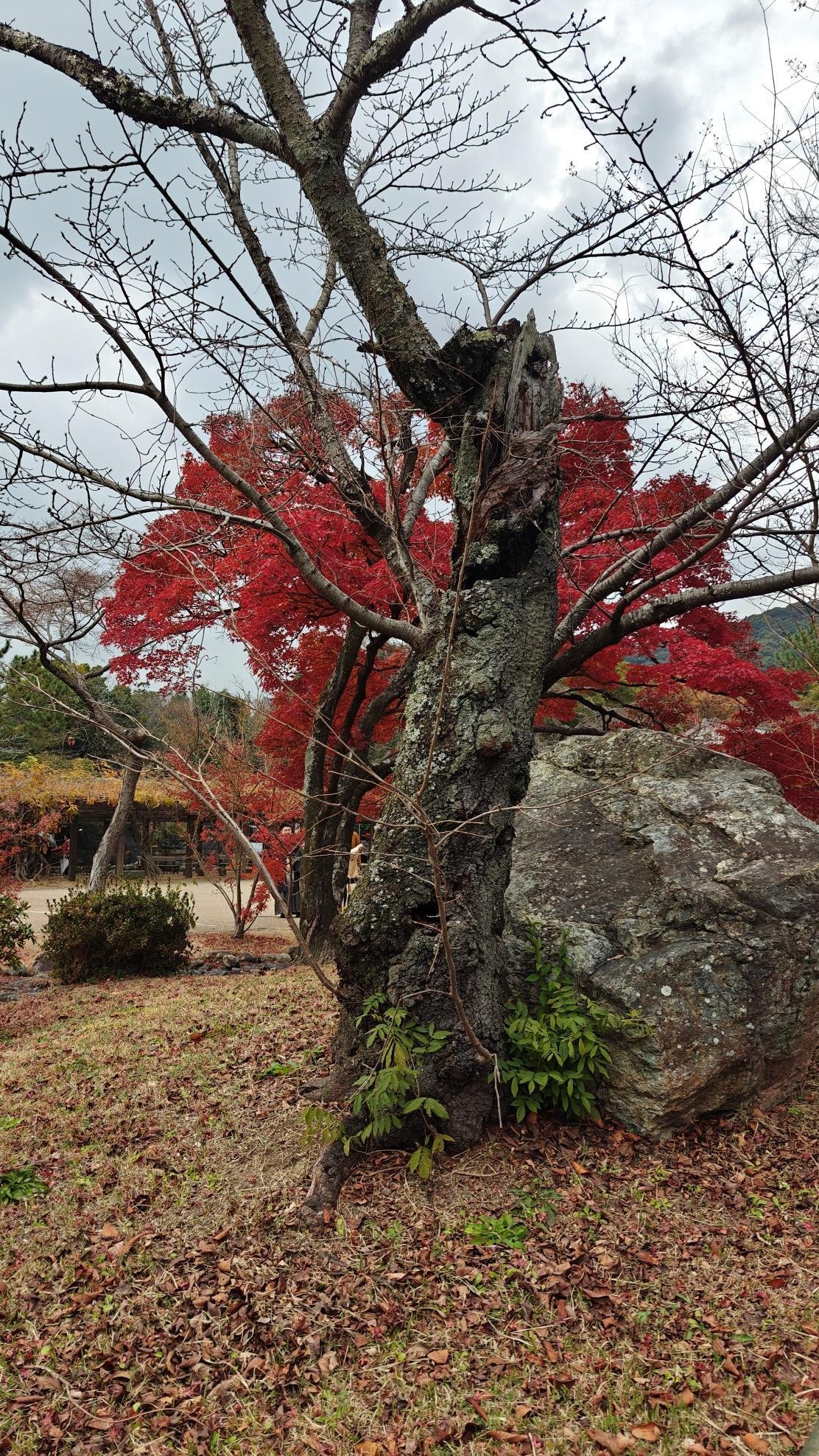
Speaking of memorable views, this was one of the more interesting of the images that I took during my visit. If I’m not mistaken, these are both sakura trees. What stood out for me though was that the tree in the foreground had already lost its leaves while the one in the background looks as if it still has a couple more weeks left.
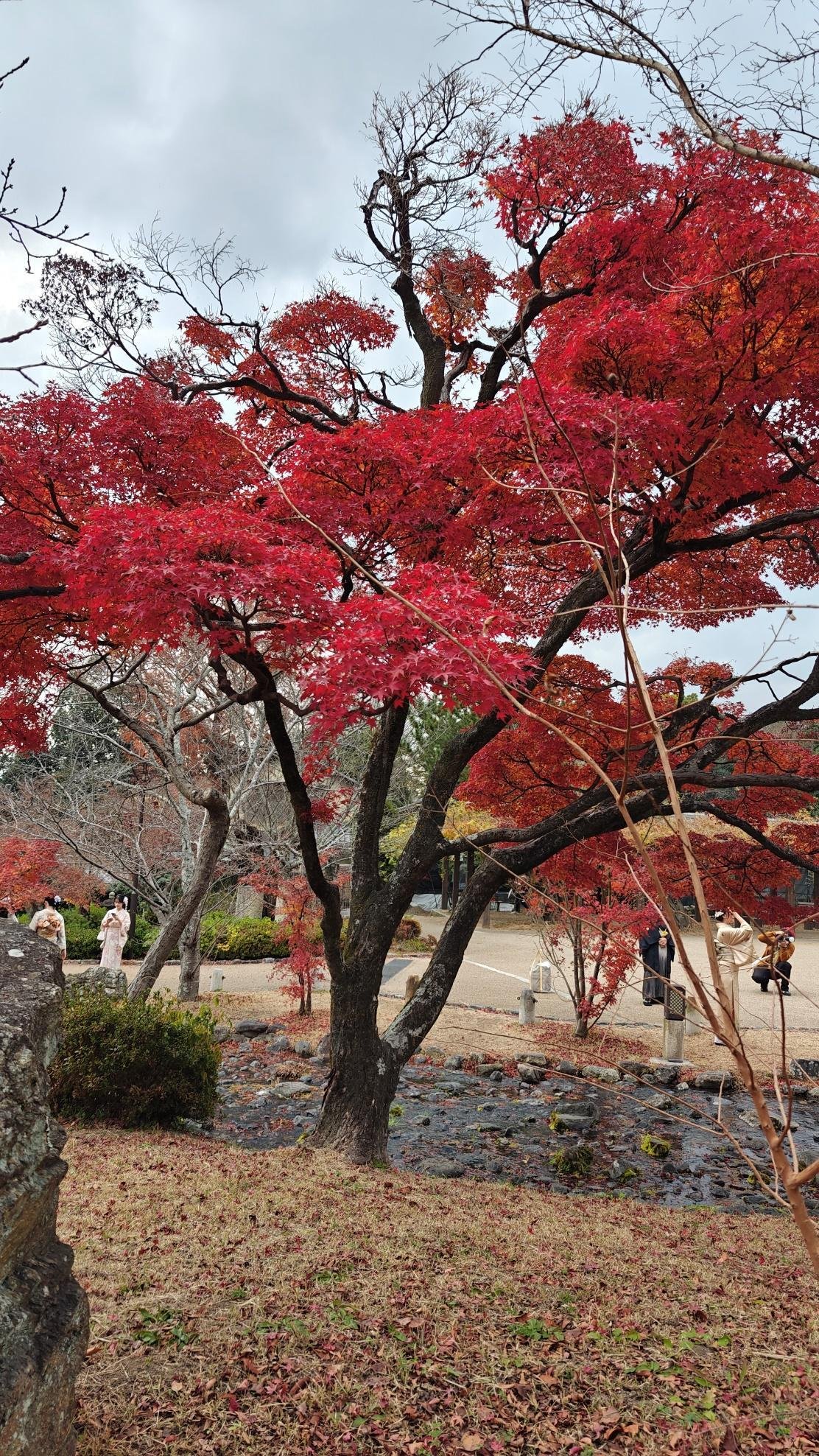
I tried looking into it and the reason for some trees still having their fall foliage probably has to do with their variety. Apparently, there are sakura varieties that bloom late and these would typically lose their leaves later. Conversely, varieties that bloom early would then tend to lose their leaves earlier.
As for the exact varieties of the trees here, that I do not know.
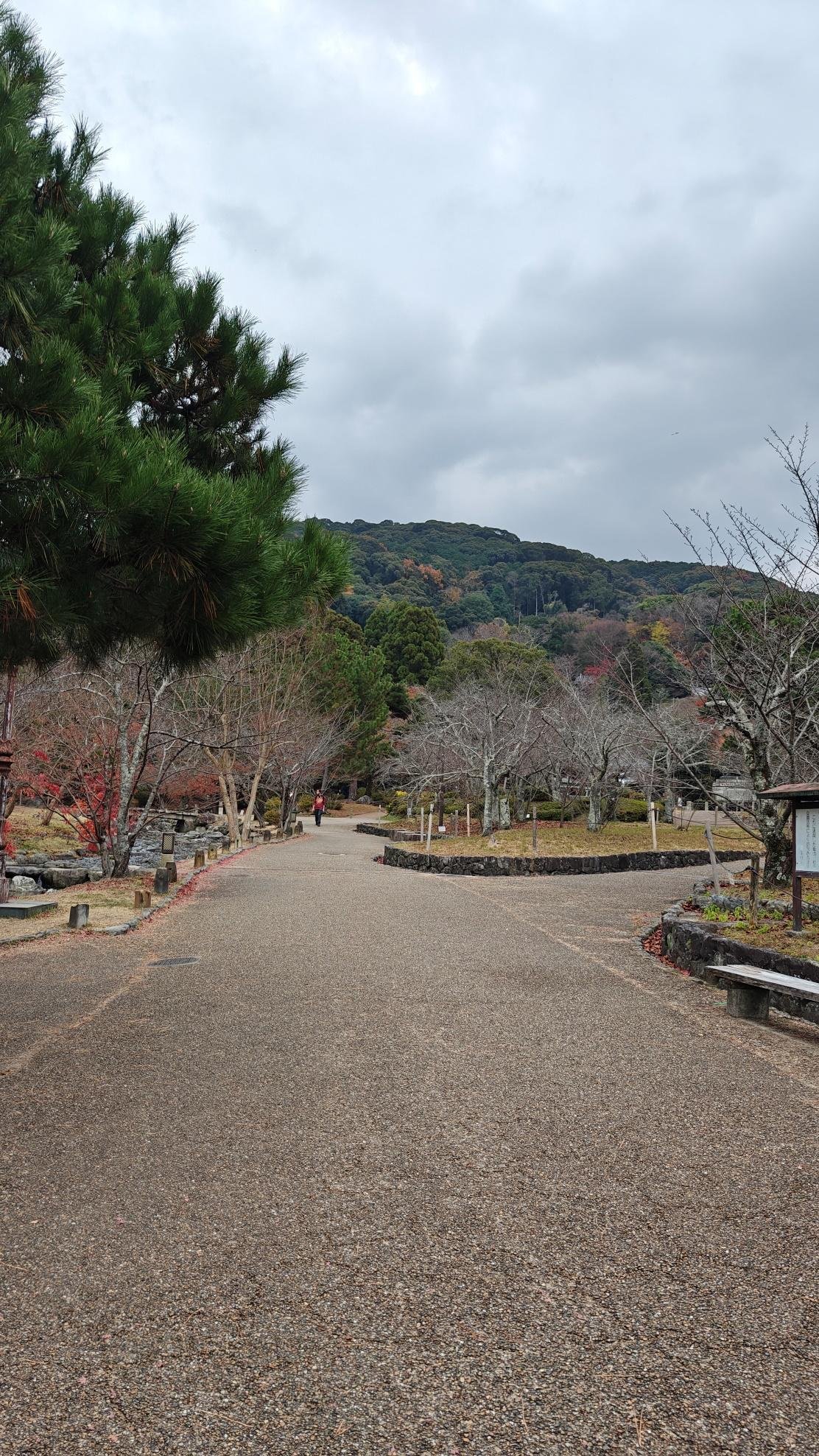
Going back to the path, it branches off to two once you get past the stairs. Shown here is the path going to the east which would bring you close to the notable attraction I was talking about earlier. Not shown here is a path heading to the south (to the right of this image) that would bring you directly to the food establishments near the southern end of the Gourd Pond.
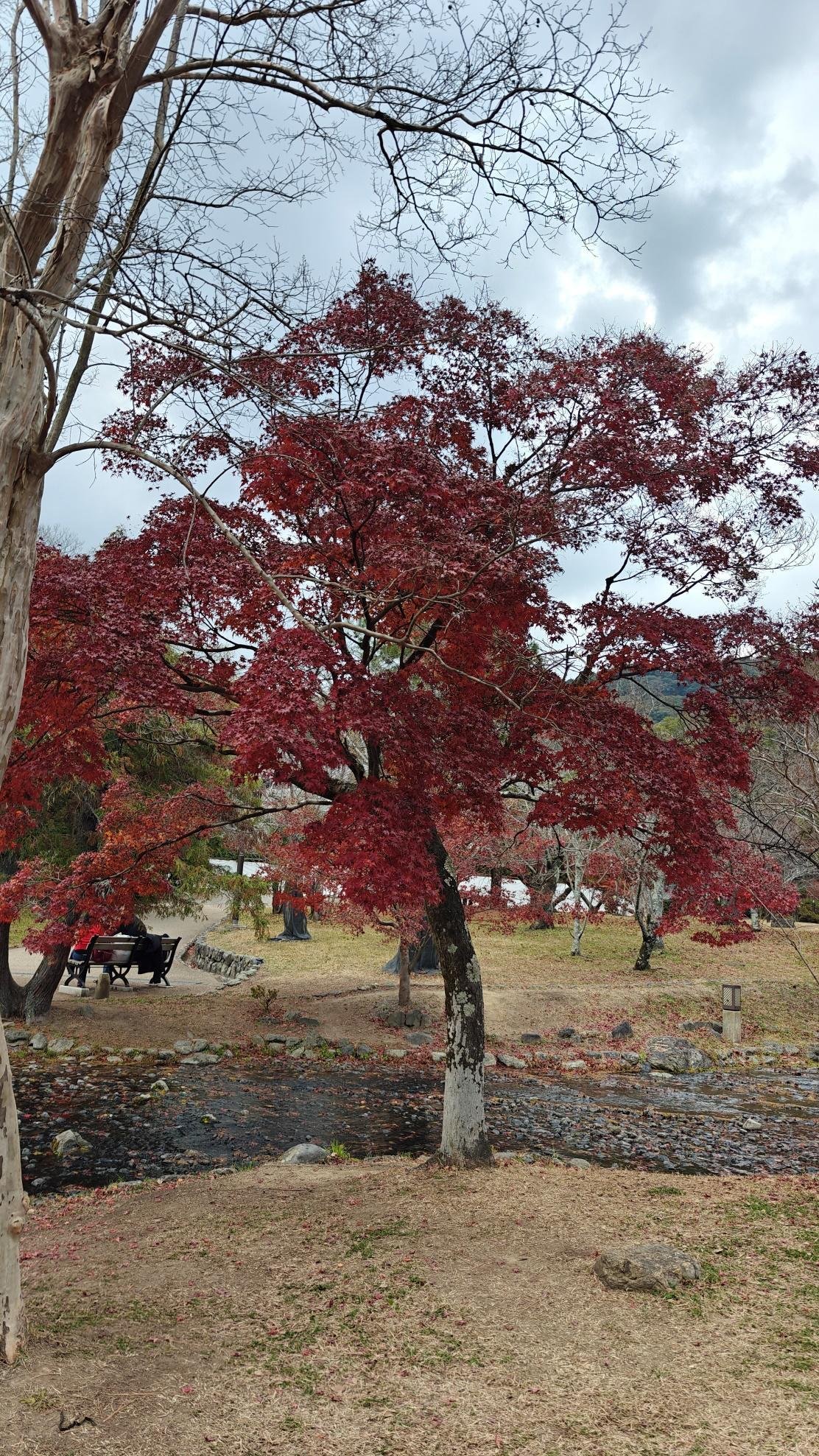
Speaking of the Gourd Pond, this small stream is actually still a part of it. If you looked at it on a map, the pond actually looks like the letter “L” turned 90 degrees clockwise. This section is part of the stem or long vertical line of that letter “L”.
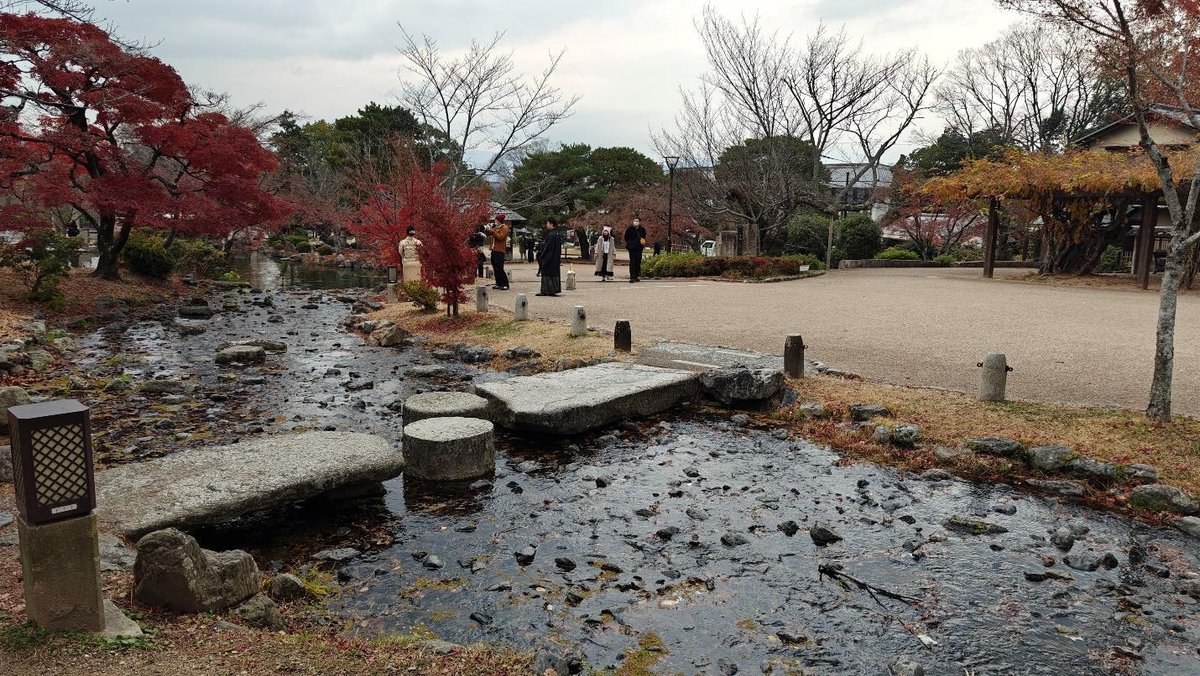
The eastern path that I talked about earlier also follows the length of the pond’s stream. At some point, you’ll find this small bridge that you can cross to get to a teahouse called Saka Maruyama. In fact, if you check the right side of this image you’ll see a glimpse of the teahouse.
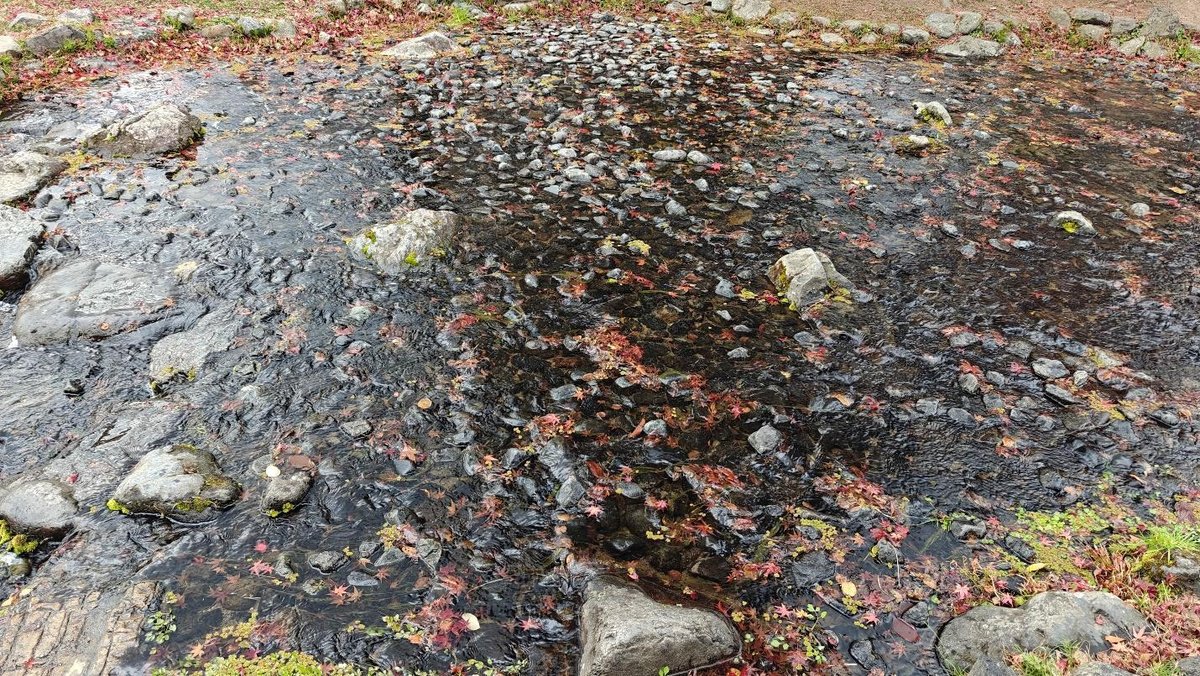
Now you might be tempted to just walk past the stream as it’s really shallow. I will say this: do not listen to the voices telling you to do so! Kidding aside, there’s really no stopping you if you did walk over to the other side through the stream.
That said, would it really be worth it drenching your shoes in water when you could just use the footbridge from earlier?
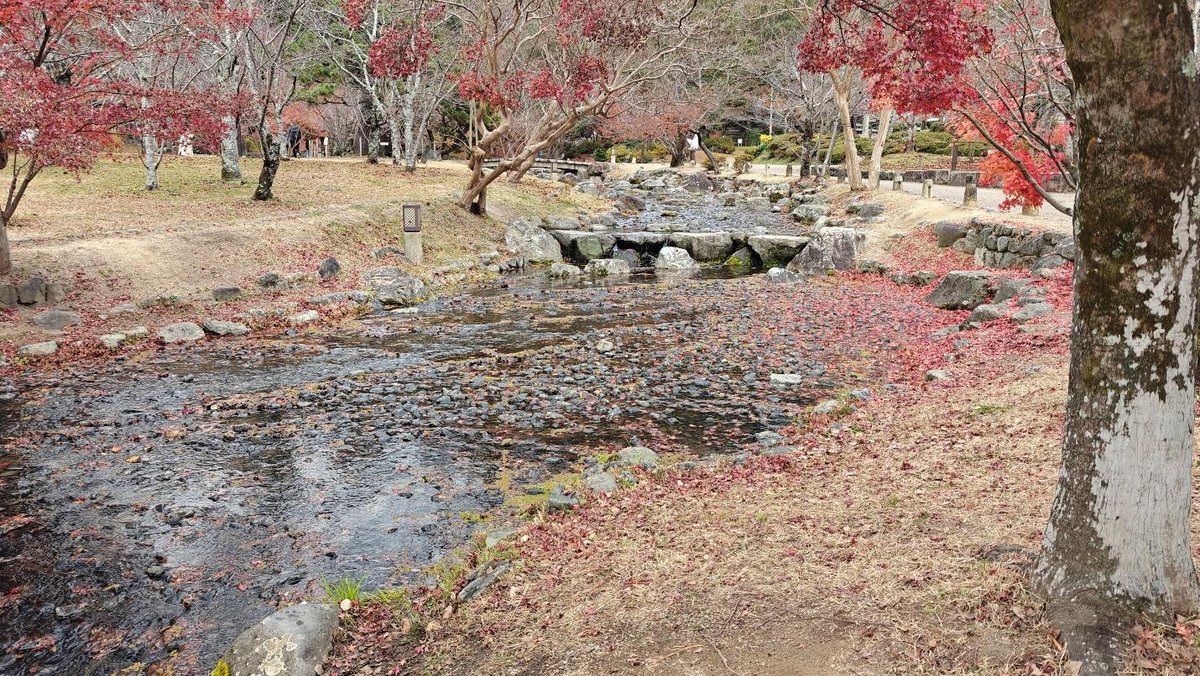
Further along the path you’ll also find other footbridges that you can use to cross over. Visitors to the park typically use these to get to the Chionin Temple complex (which I also visited, by the way) or when they want to exit out of the park. On a side note, I bet this area looks amazing when the sakura starts to bloom.
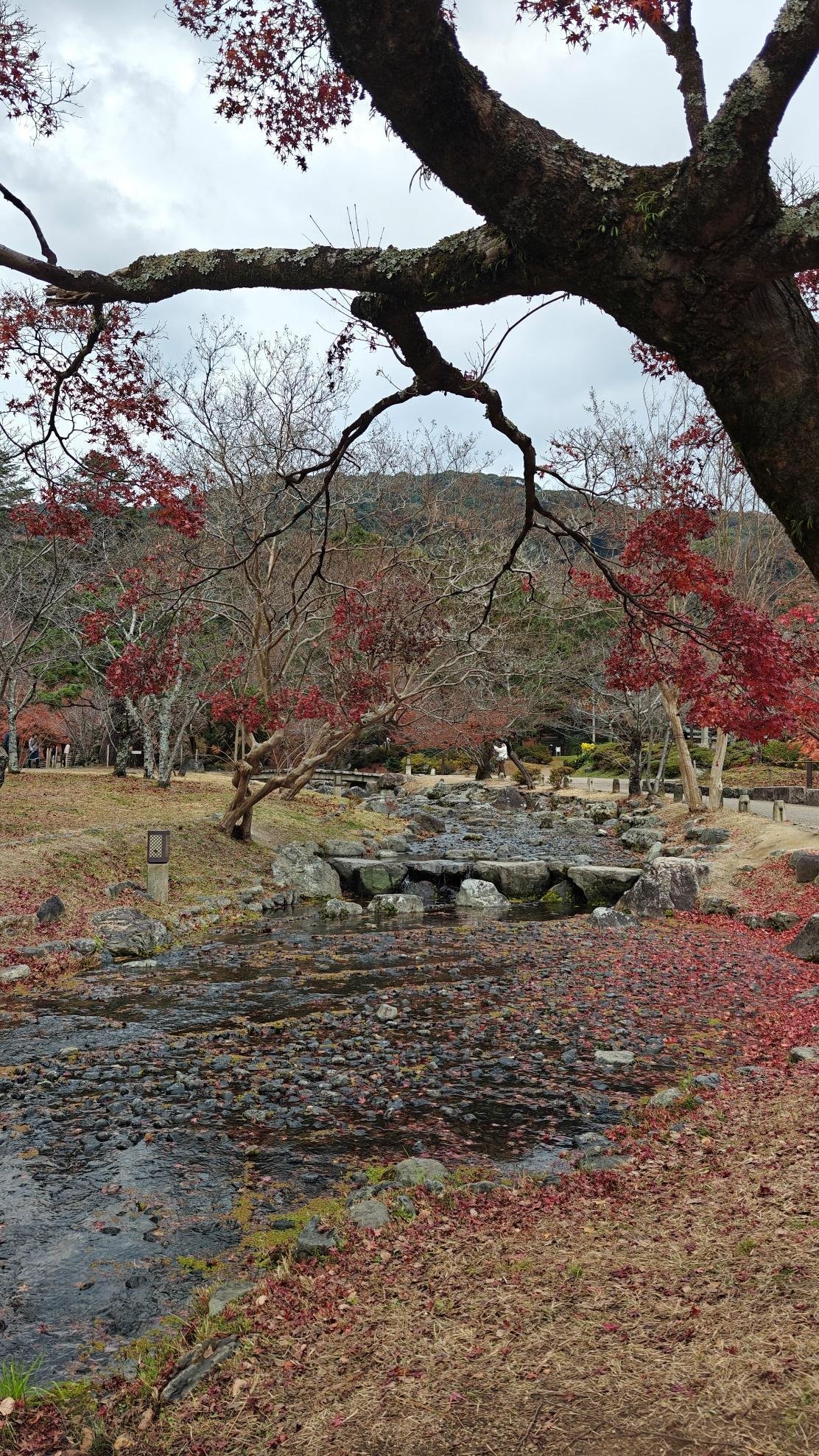
Now I don’t think I’ve said this yet but this actually isn’t standing water. Rather it actually feeds the main pond areas that you saw earlier. Towards the end of this write up, you’ll even see where the source of this water is.
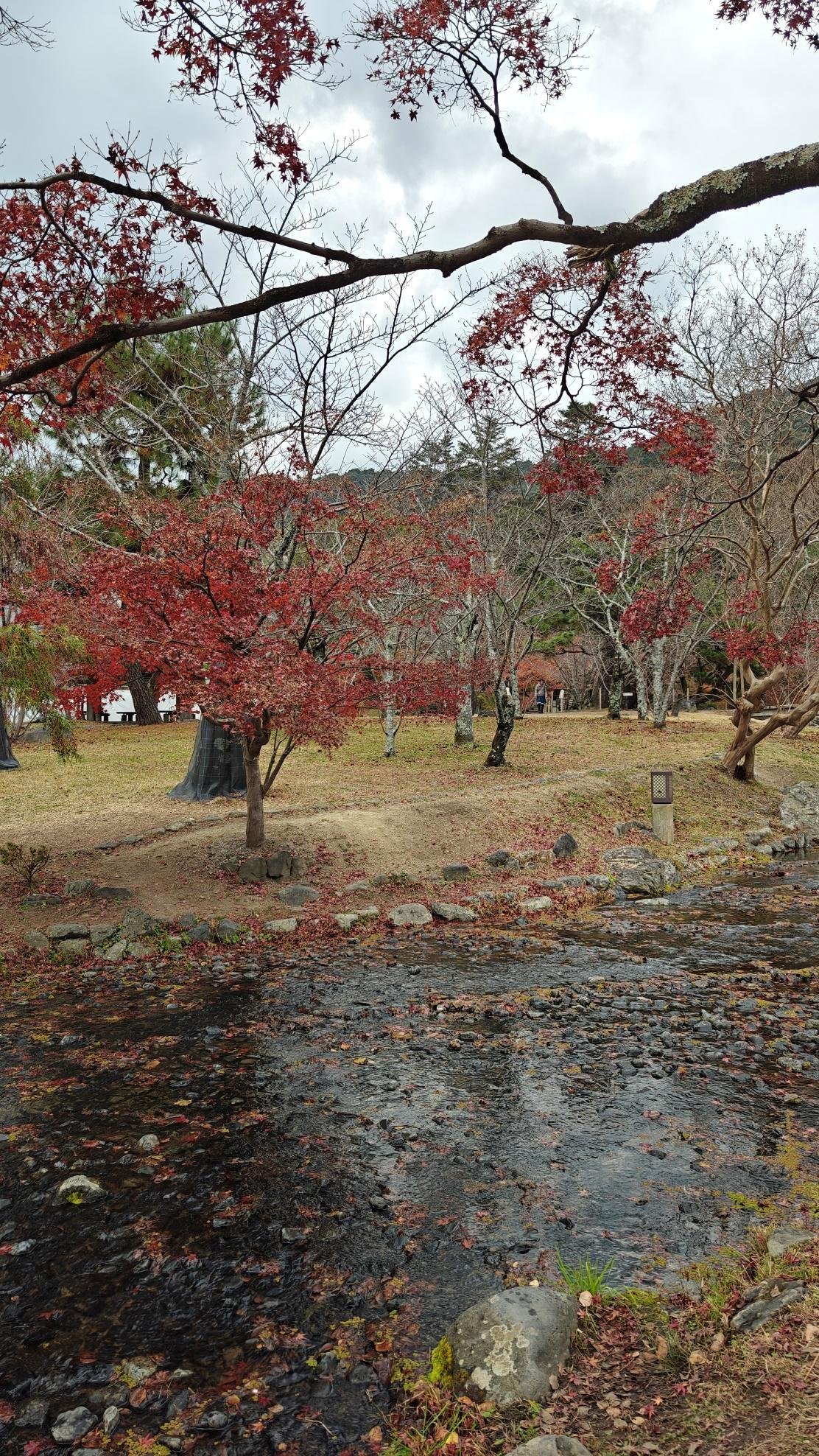
The fact that there weren’t many people around during my visit also meant that you could actually hear the stream’s calming sound from the water going downstream. I actually caught myself standing here for a couple of minutes and just soaking in the sights and sounds of the place. That said, I do wonder if I’ll have the same sentiments when this gets crowded in the spring.
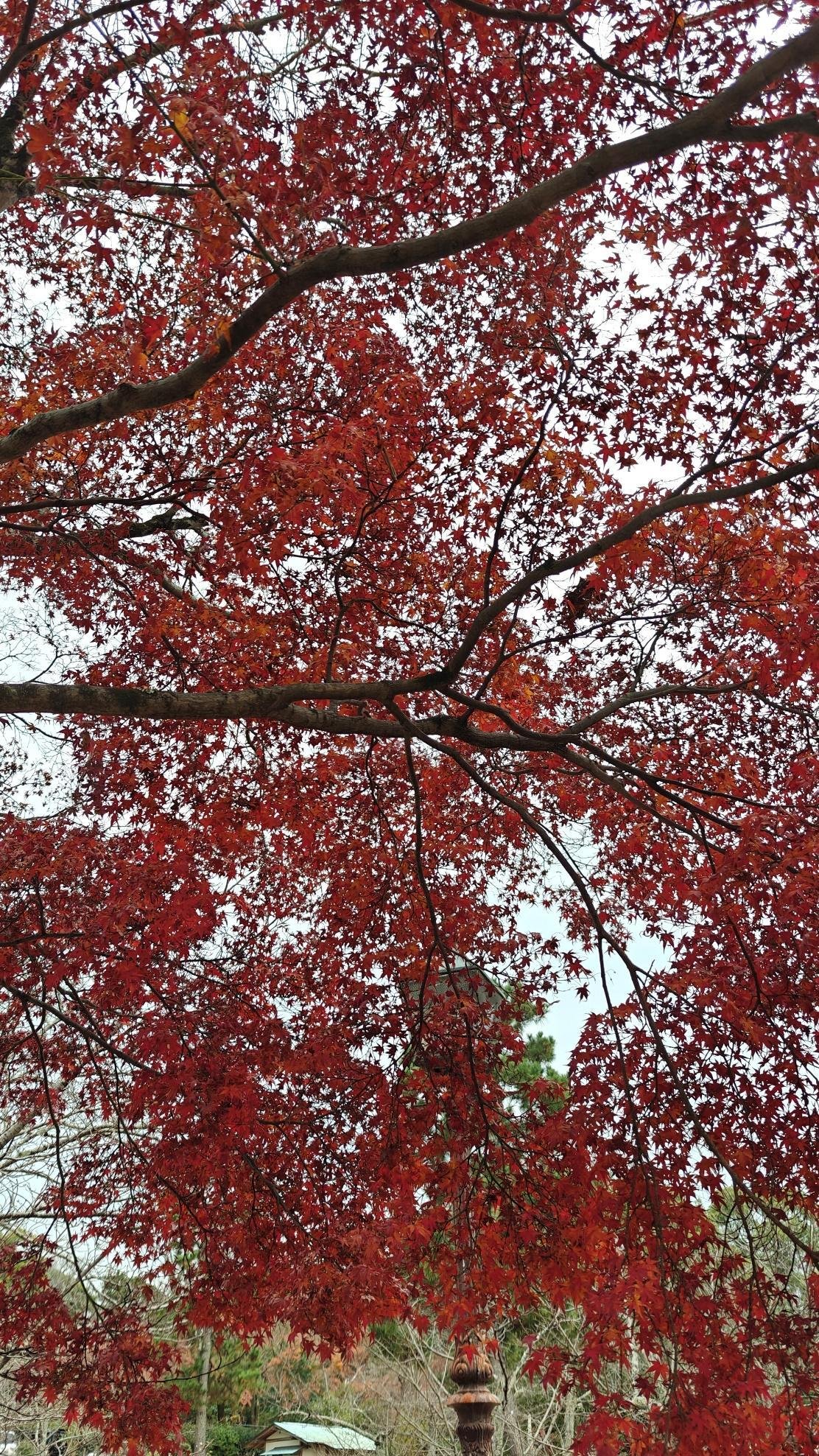
It’s covered by the fall foliage but there’s actually a historical landmark here. No, I’m not talking about the house in the background. Rather, it’s the gas lamp.
Called the Meiji Centennial Commemorative Gas Lamp, this was set up to commemorate the installation of the first gas lamps in Japan in 1872 (which was four years into the Meiji period).
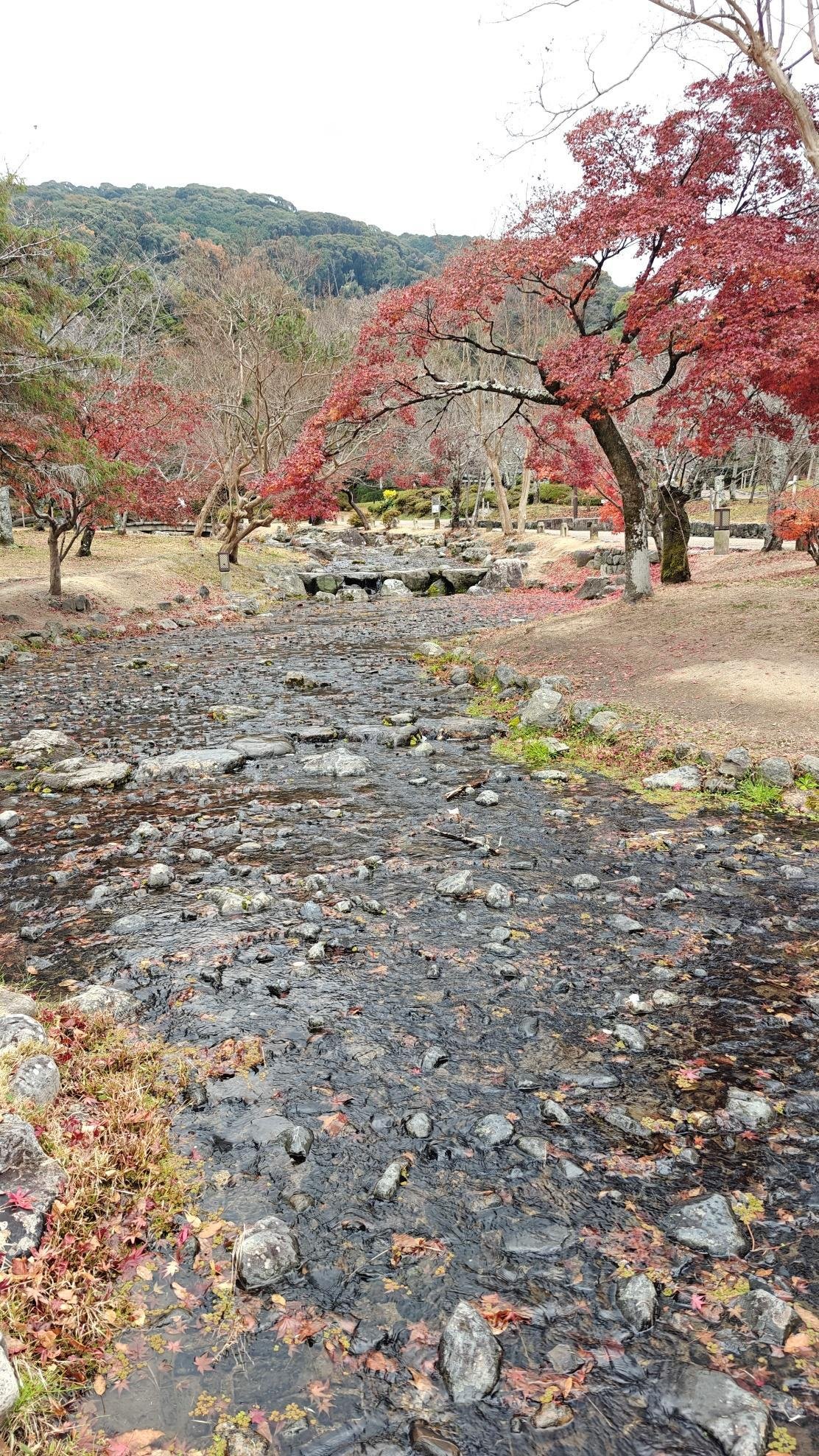
This is the view from the first footbridge that we saw earlier. It’s kind of intriguing how drastic the scenery changes here with just a couple of steps. The view here is of the two other footbridges that I said was used for when visitors would head on over to Chionin Temple.
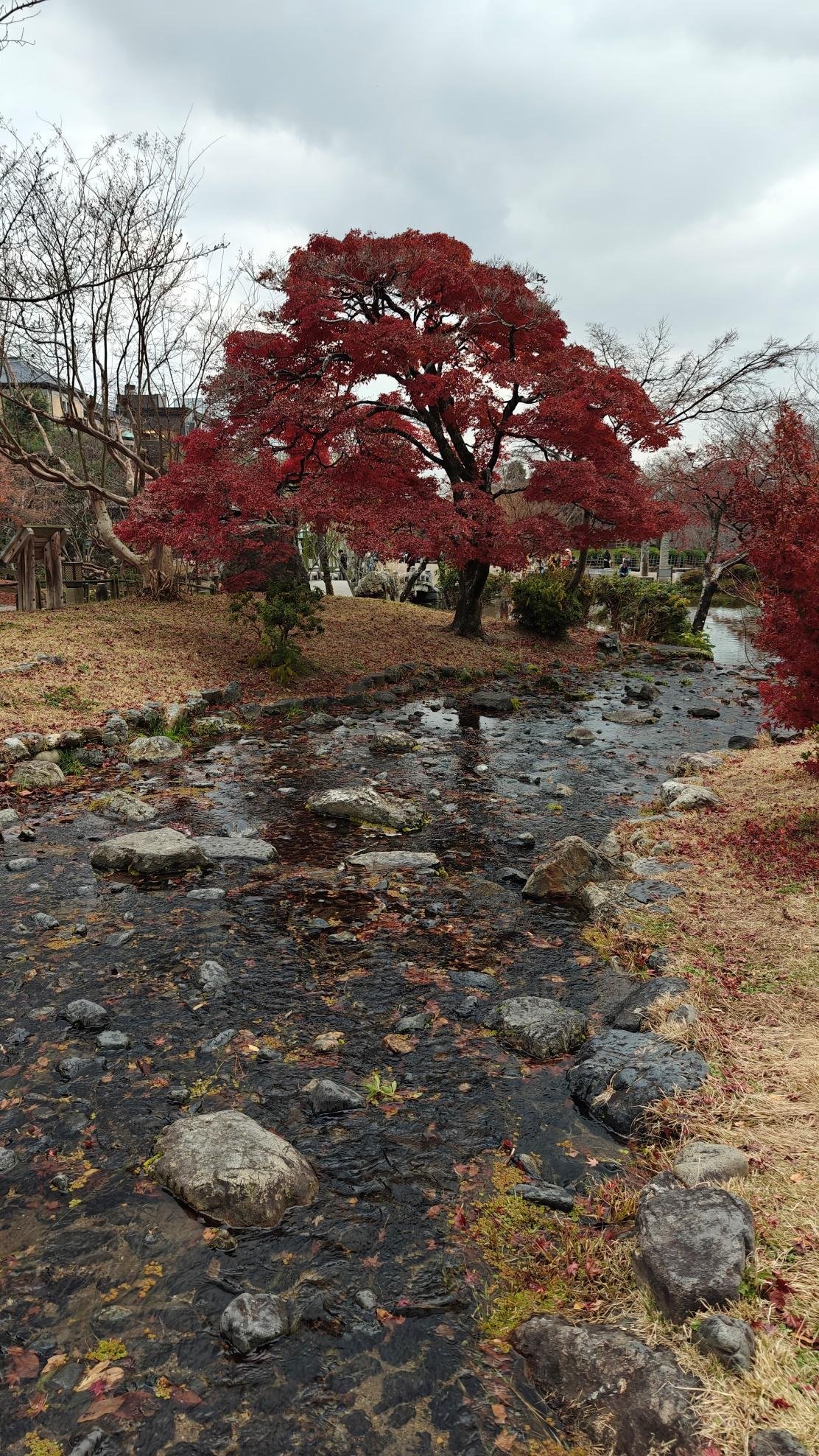
Here you can see the path where I came from. If you squint you’ll notice the northern end of the Gourd Pond from here as well as the bridge that separates it from its southern end. As for the building in the background, that’s actually a 5-star hotel called Chourakukan.
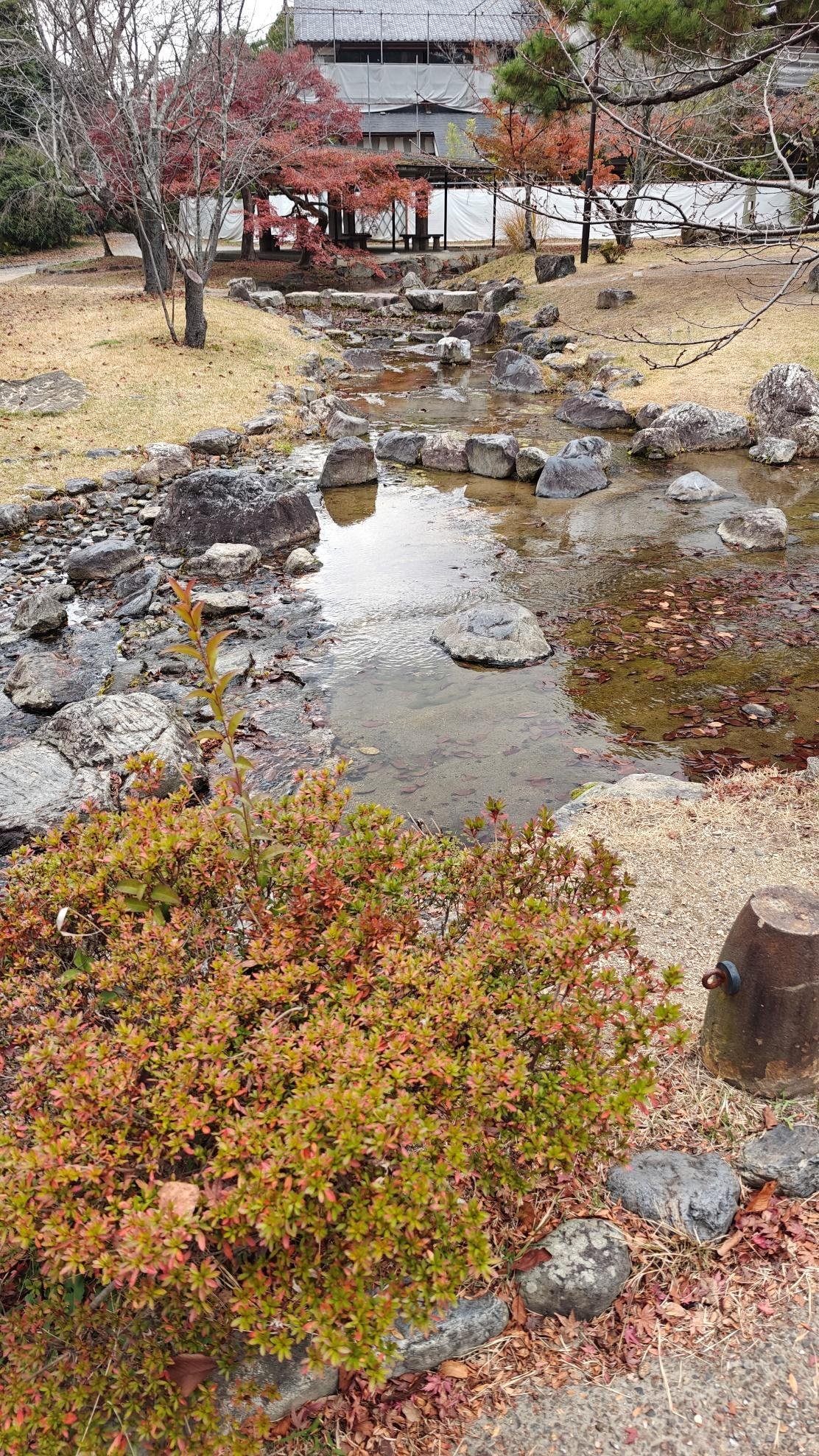
After taking those pictures from the footbridge, I then went back to the path and came across this building. Now, I’m not sure what building this is but I was informed that there is a public restroom near it. You’ll also notice that there’s a shed just in front of it that you can relax in.
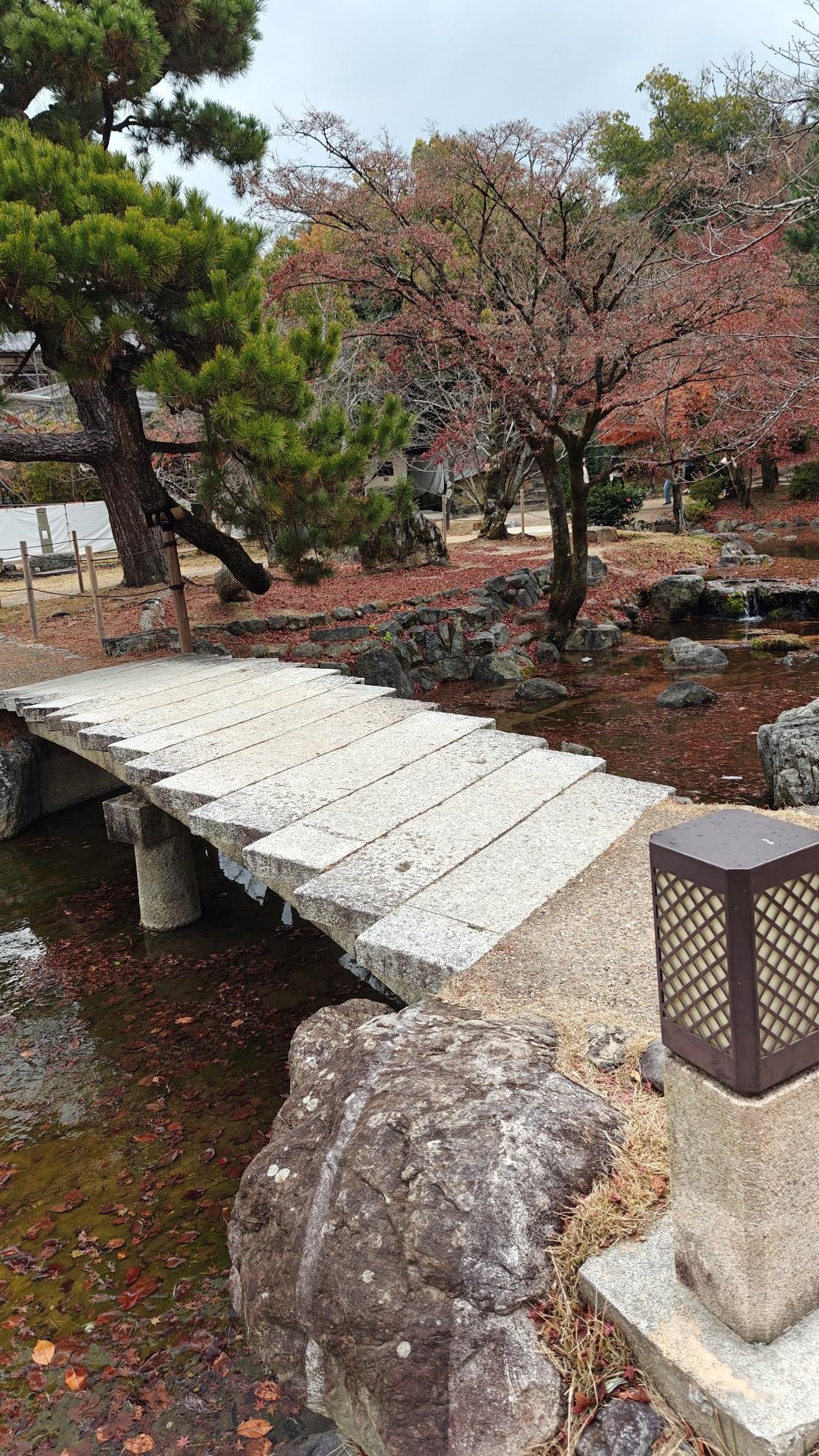
This is another of the footbridges leading directly to the building that you saw in the previous image. I think it’s also one of the most accessible so if you or someone you know has a disability then this is where you’re going to want to cross in case you want to head on over to Chionin Temple from this location. That said, it’s not a must to go through here.
In my Chionin Temple writeup I talk about other ways to access the place.
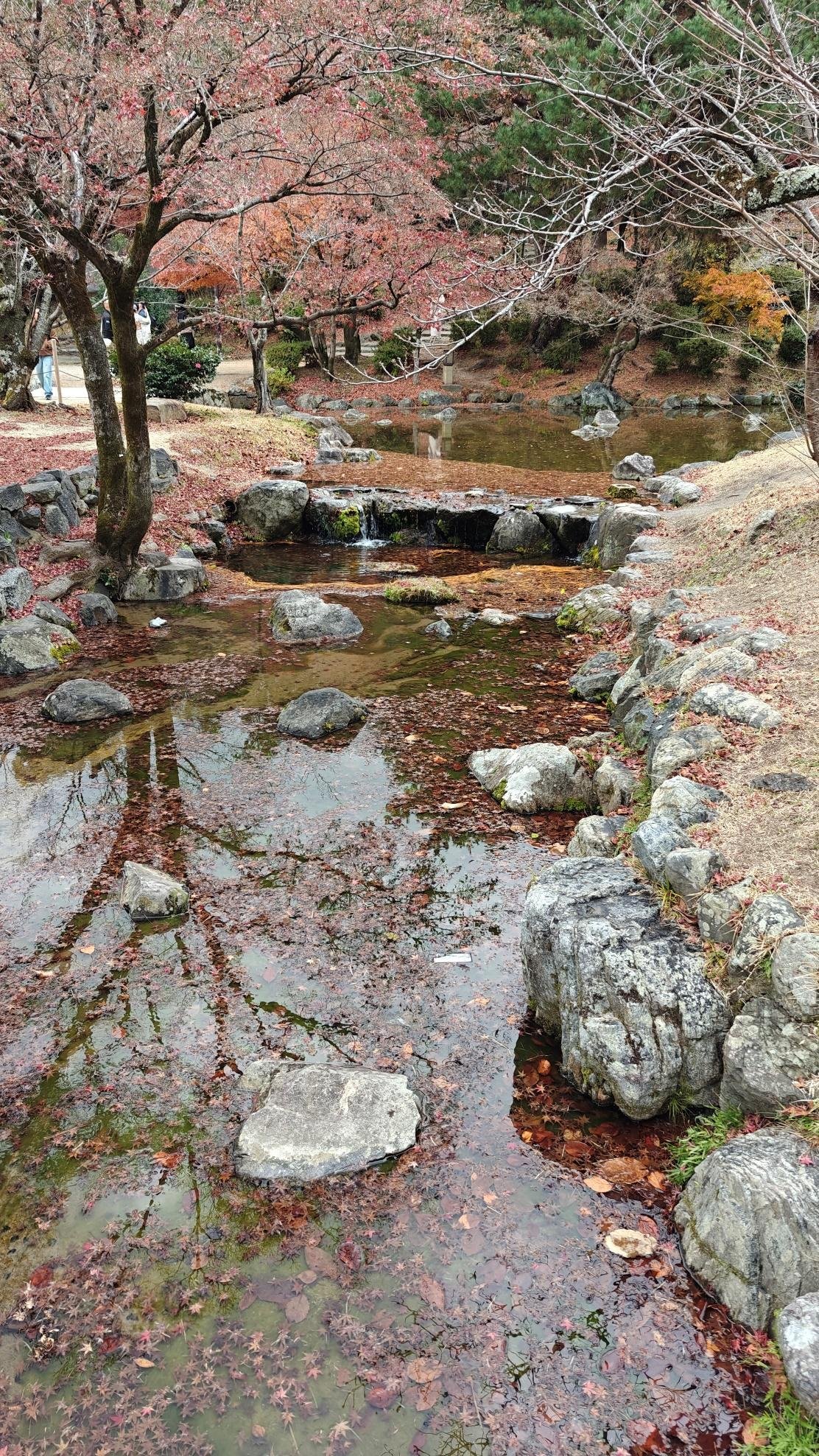
Here you can see the easternmost end of Hyotan or Gourd Pond. This was probably the most serene and calming area of the park because of how there were so few people here. You’ll also notice a set of stairs in the background and those actually lead up to a street that then leads up to Chionin Temple.
Just before that street, there’s also a building that has a restaurant called Saami that specializes in traditional Kyoto cuisine.
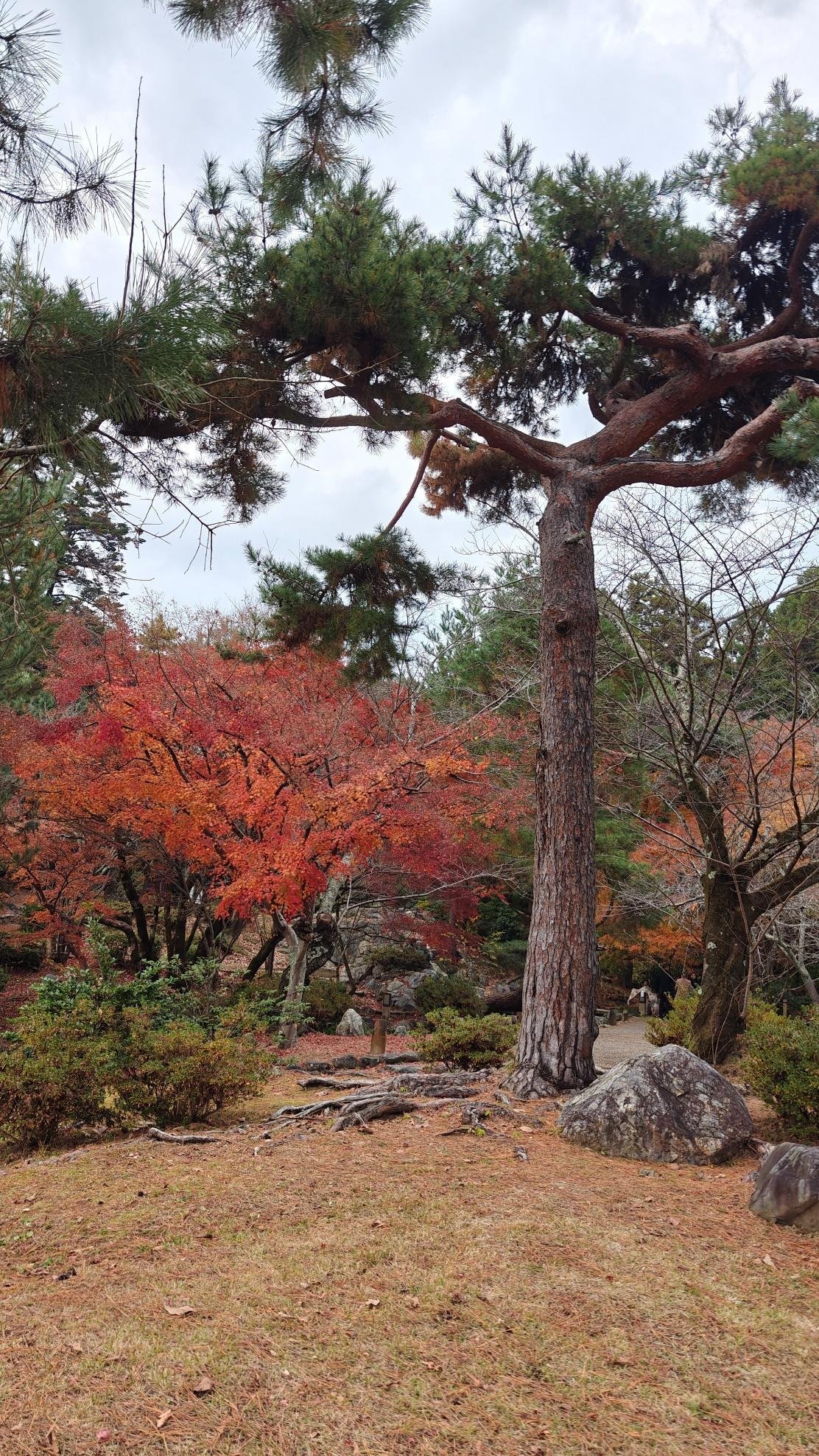
Of course, I didn’t go up the stairs as I still had to head to the notable attraction that I’ve been talking about since earlier in this write-up. From the area I took the picture earlier, I turned to the right and followed a narrower path. This had even fewer people than the previous area though I think that was for the better as I had this view all to myself.
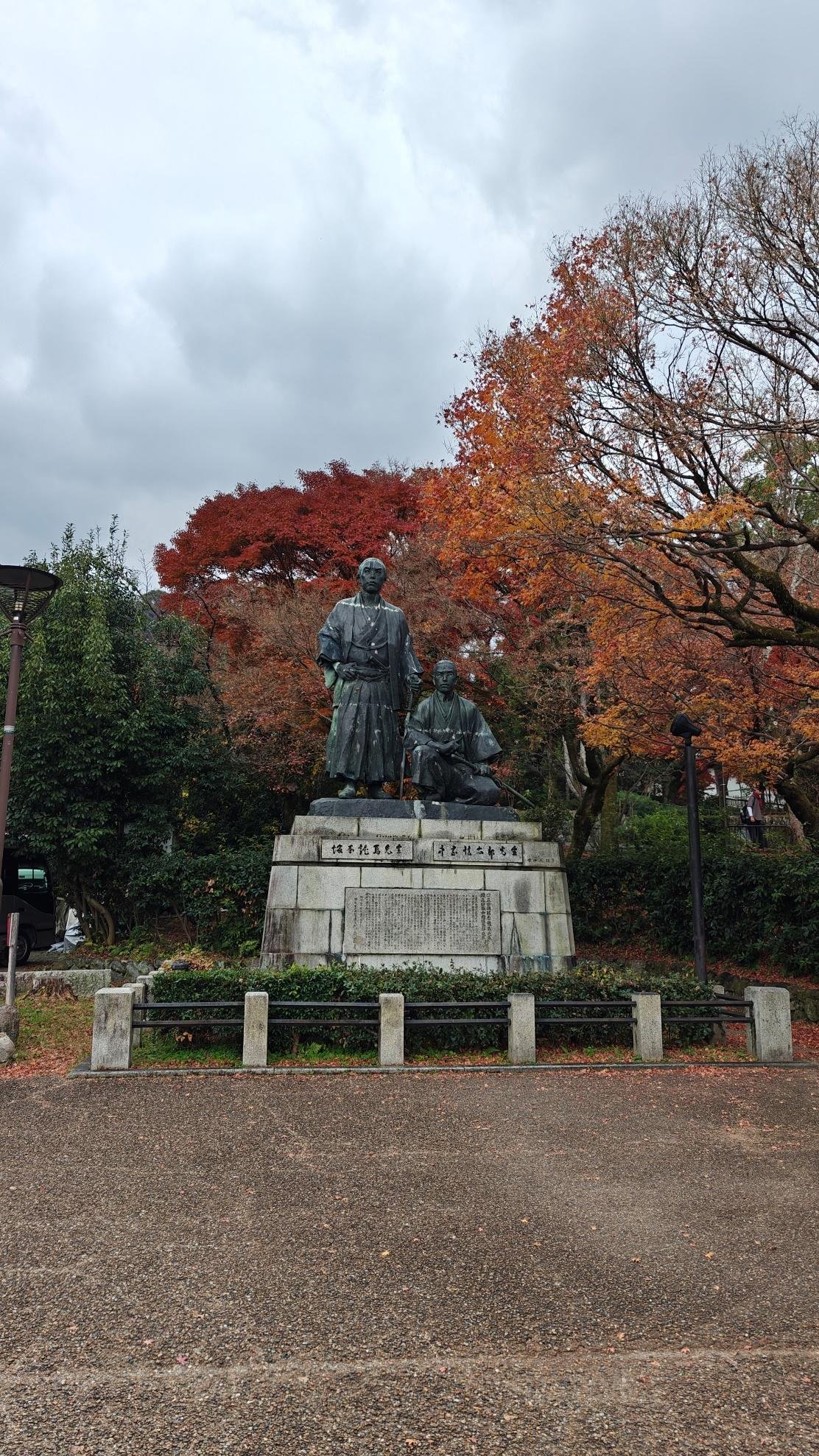
At the end of that path, I then finally reached the notable attraction. It’s actually a memorial with statues of two of the most popular figures during the Meiji Restoration: Sakamoto Ryoma (on the left, standing) and Nakaoka Shintaro. While both of these figures are from Tosa province, the majority of their work and anti-shogunate efforts were concentrated in the Kansai Region (Kyoto and Osaka).
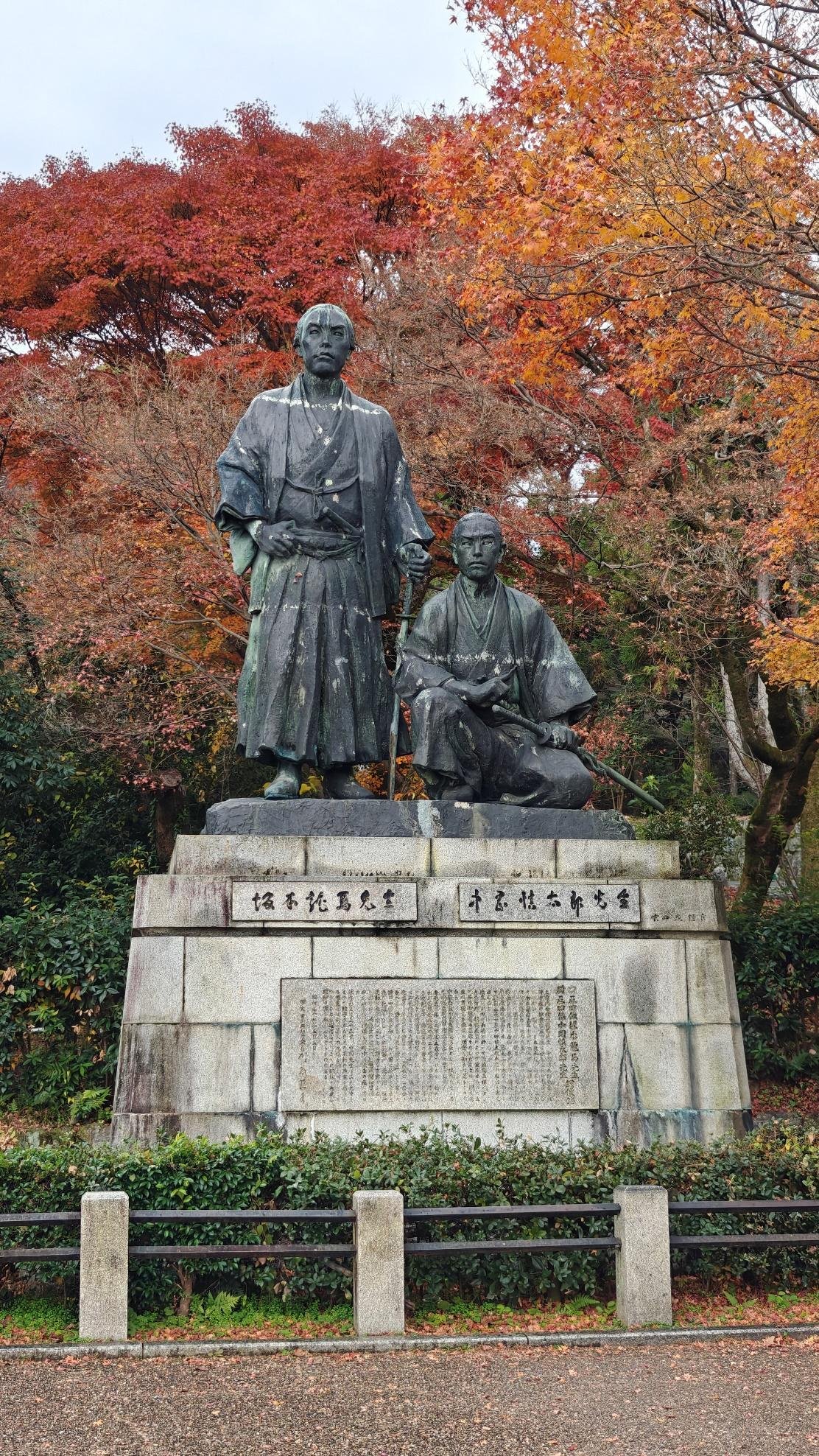
In fact, I think it’s apt that both have their statues here in Kyoto considering this is where they met their demise. Both Sakamoto Ryoma and Nakaoka Shintaro died here in Kyoto specifically at the Omiya Inn (which is about a kilometer from Maruyama Park). Ryoma in particular has ended up being one of the most popular figures from the Meiji Restoration period (even though he didn’t live long enough to see it happen) with him being depicted in multiple dramas, anime, and even video games.
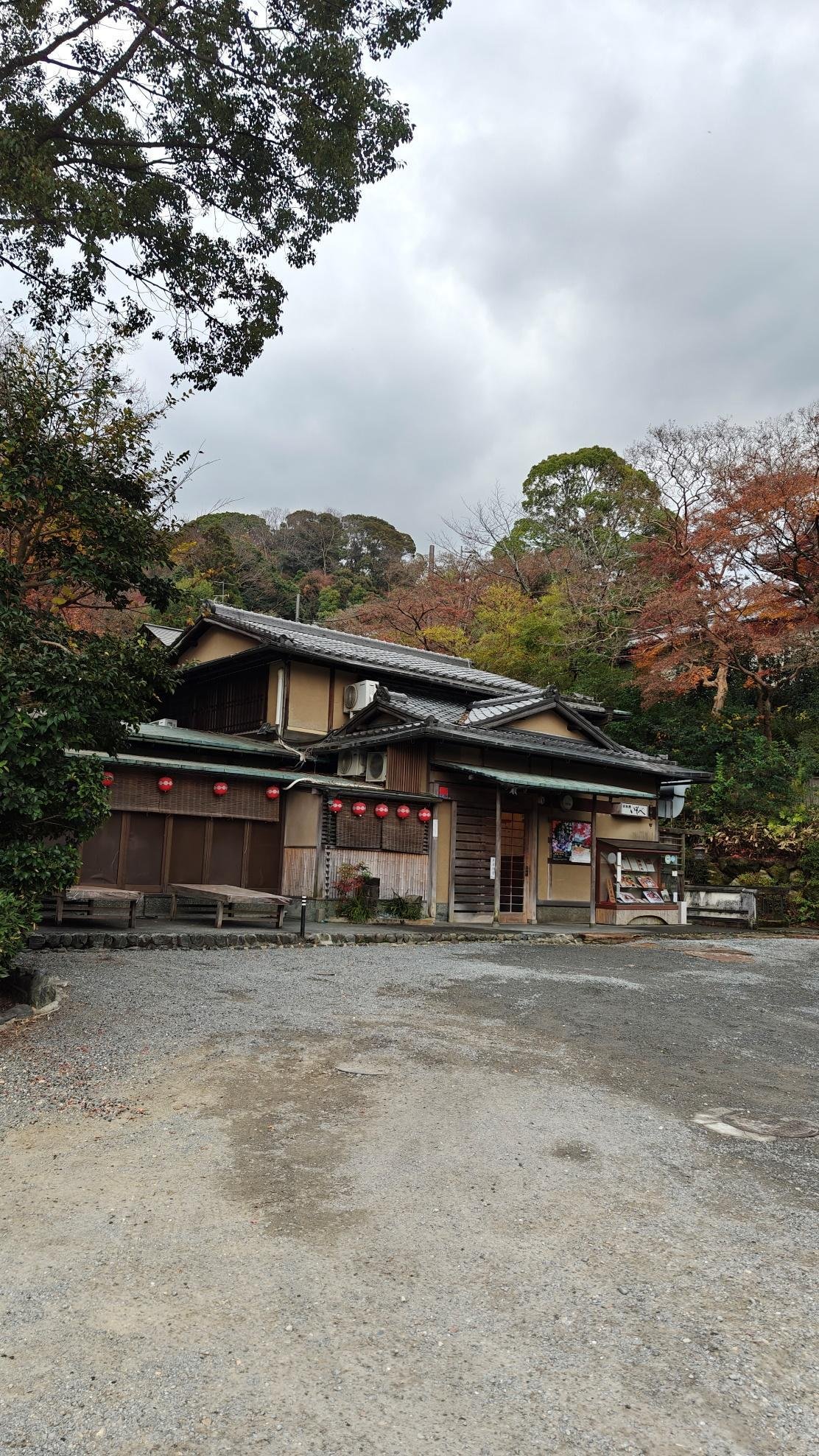
Now if you’re hungry you can then proceed to the area just behind the memorial and you’ll find this building. It’s a restaurant called Kyoto Cuisine ISOBE and it’s actually decently rated on Google. Like a lot of restaurants you’ll find here, it specializes in Kyoto Cuisine or Kyo-ryori.
Behind it (not shown in the image) is another restaurant called Mizai which markets itself as more of a fine dining restaurant.
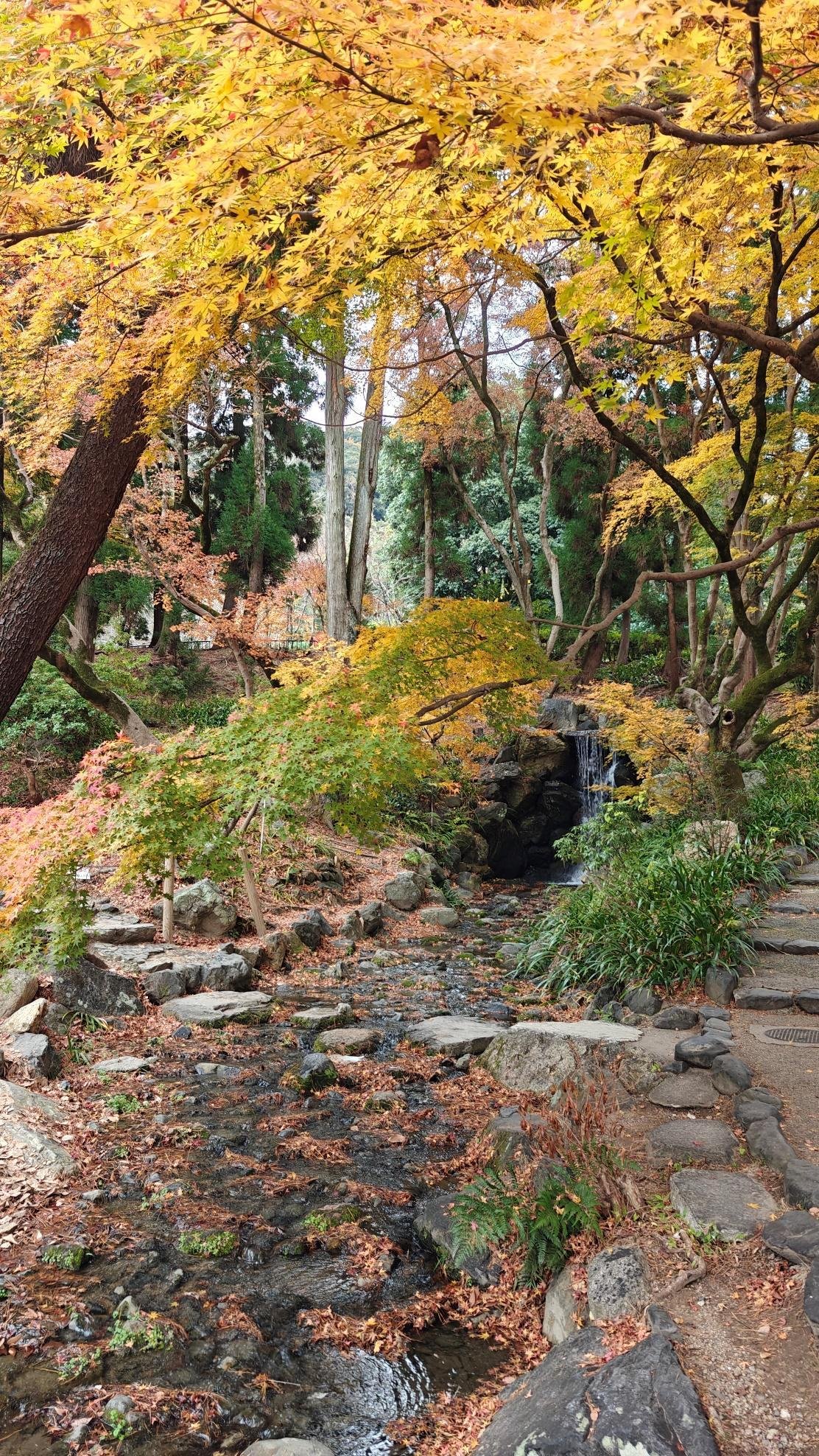
Speaking of Mizai, I’m not quite sure if you’re able to access it from the Kyoto Cuisine ISOBE building. If you want to get there though, you can take this path which is just before you reach the area where I took the previous image. Here you’ll also see the spring that feeds the Gourd Pond.
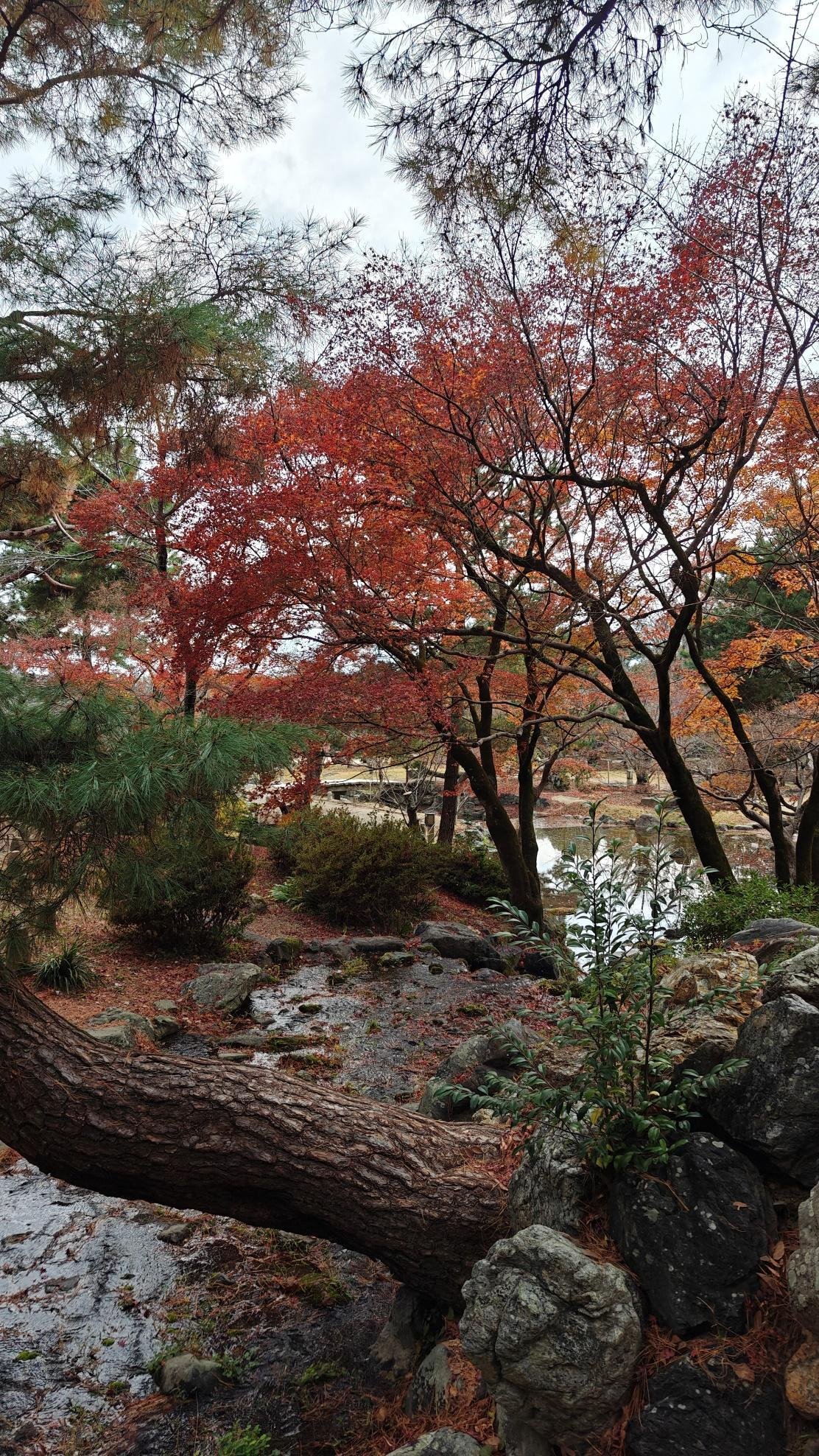
This ends my visit to Maruyama Park. It was absolutely a blast taking in the numerous sights and sounds of this place. Much like the adjacent Yasaka Shrine, access to the park is free and for that I think it’s definitely worth visiting.
As for when you should visit, I think your options really boil down to if you want to see the sakura in full bloom or fall foliage. Spring is really when the park becomes truly alive with the sakura blooming but that also means it gets really crowded. Fall and winter are very laid back with really few people visiting.
Unfortunately you won’t be able to do any hanami during these seasons though the fall foliage is worth checking out.Overall, Maruyama Park is a great Kyoto landmark to visit thanks to how affordable and accessible it is. It’s also adjacent to the Yasaka Shrine and Chionin Temple which make it a great stop if you’re intent on visiting both these sacred sites.Planning on going to Kyoto? If yes then would you consider visiting Maruyama Park?
Sound off your answers (as well as any questions you might have about this park) down in the comments section!