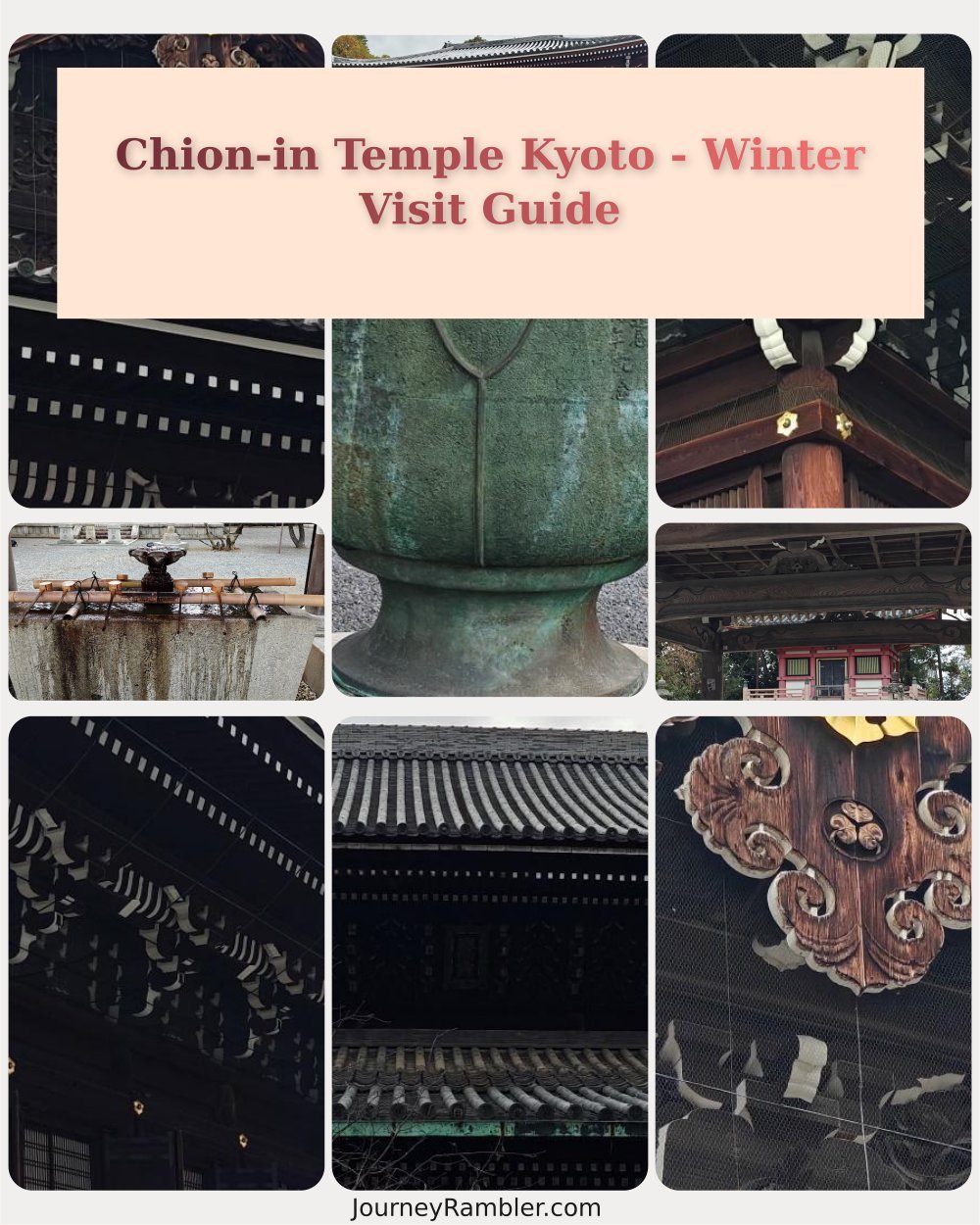
Chion-in Temple is quite possibly one of the most underrated cultural and religious landmarks in Kyoto. I managed to visit this Buddhist temple recently (December 2025 to be exact) and I was blown away by its size. While it's nowhere near as scenic as Kiyomizu-dera (which I've also visited), I would argue that it's equally as impressive.
Do I think it's worth visiting though? Read on further for my answer!
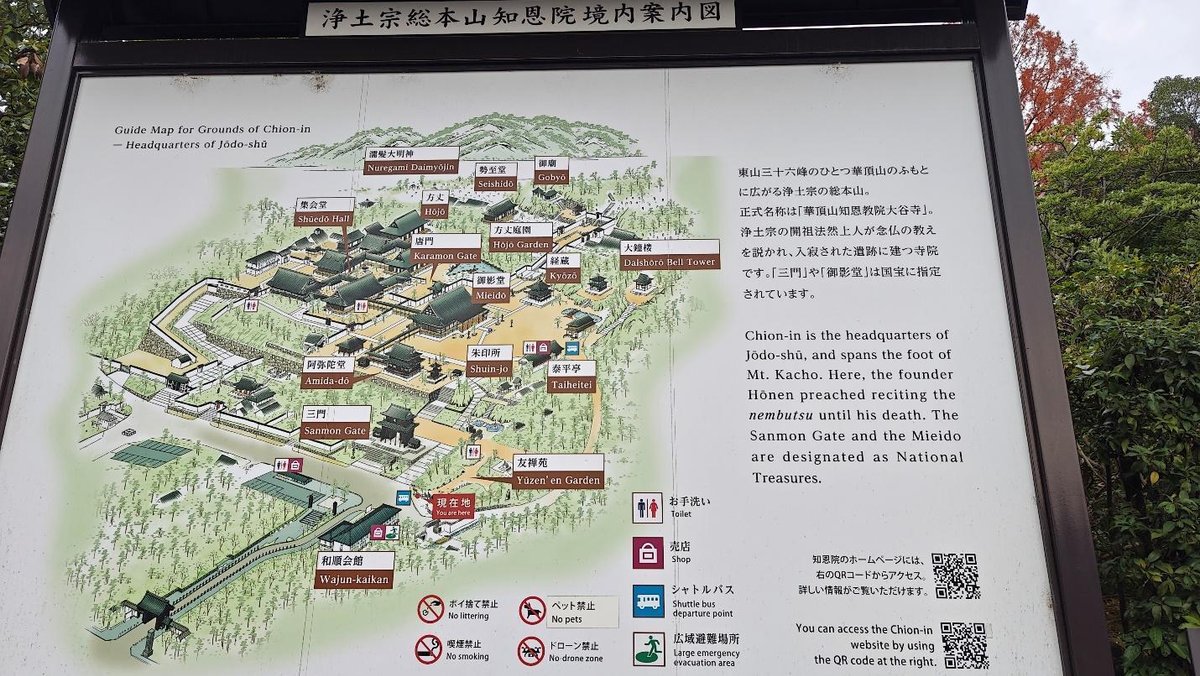
So here’s the guide map of Chion-in Temple. Right now, I'm already near its Sanmon Gate (which is close to where this guide map is). Like with Yasaka Shrine and Maruyama Park, there are a number of ways to get here.
The easiest way to get here is if you're from the latter. Just get to the path in between the Gion Weeping Cherry and the Gourd Pond and follow it north. This will lead you to the Chion-in Nammon (South Gate) and into a street called Jingu-michi.
Just follow this street north and you should then see the temple’s Sanmon Gate.
My Winter Visit to Chion-in Temple, No Snow Yet
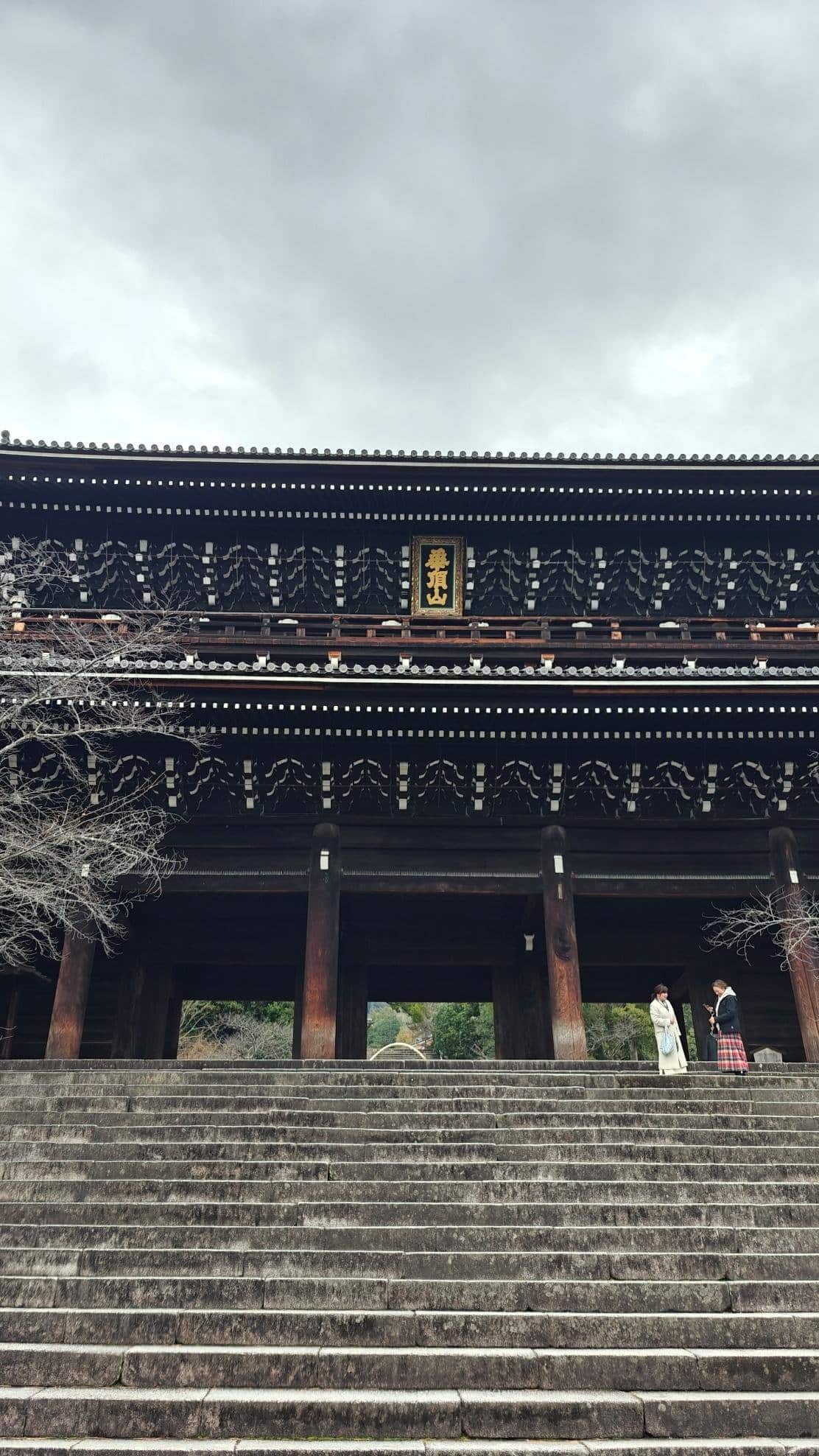
Speaking of the Sanmon Gate, here's how it looks. As you can see, it's absolutely massive. It's even larger than Kiyomizu-dera's Niomon Gate and it looks even older.
In fact, it's considered the largest wooden temple gate in Japan and surprisingly it hasn't gone through any major renovations. In contrast, Kiyomizu-dera's Niomon had one in 2003.
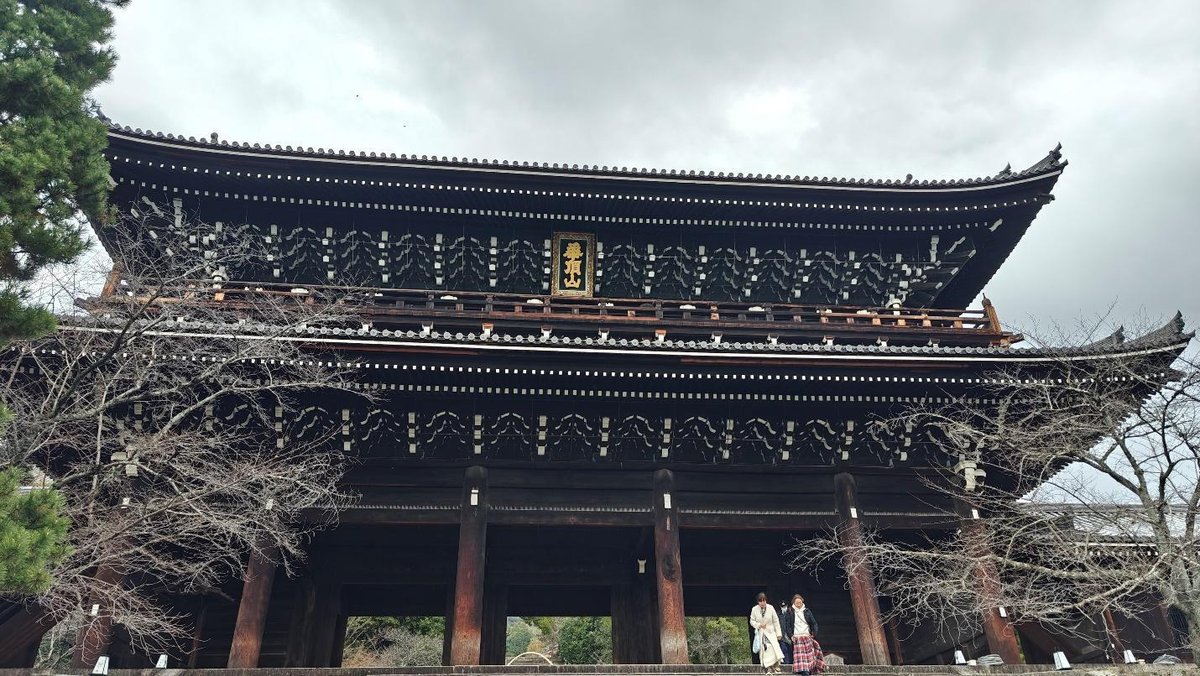
One other way the Sanmon Gate differs from Kiyomizu-dera's Niomon Gate is its “bare” look. What I mean by this is that the gate (and really a lot of the structures here at Chion-in Temple) is not painted with vermillion. I was actually quite surprised as that color was quite ubiquitous during my visits to both Kiyomizu-dera and Fushimi Inari Taisha.
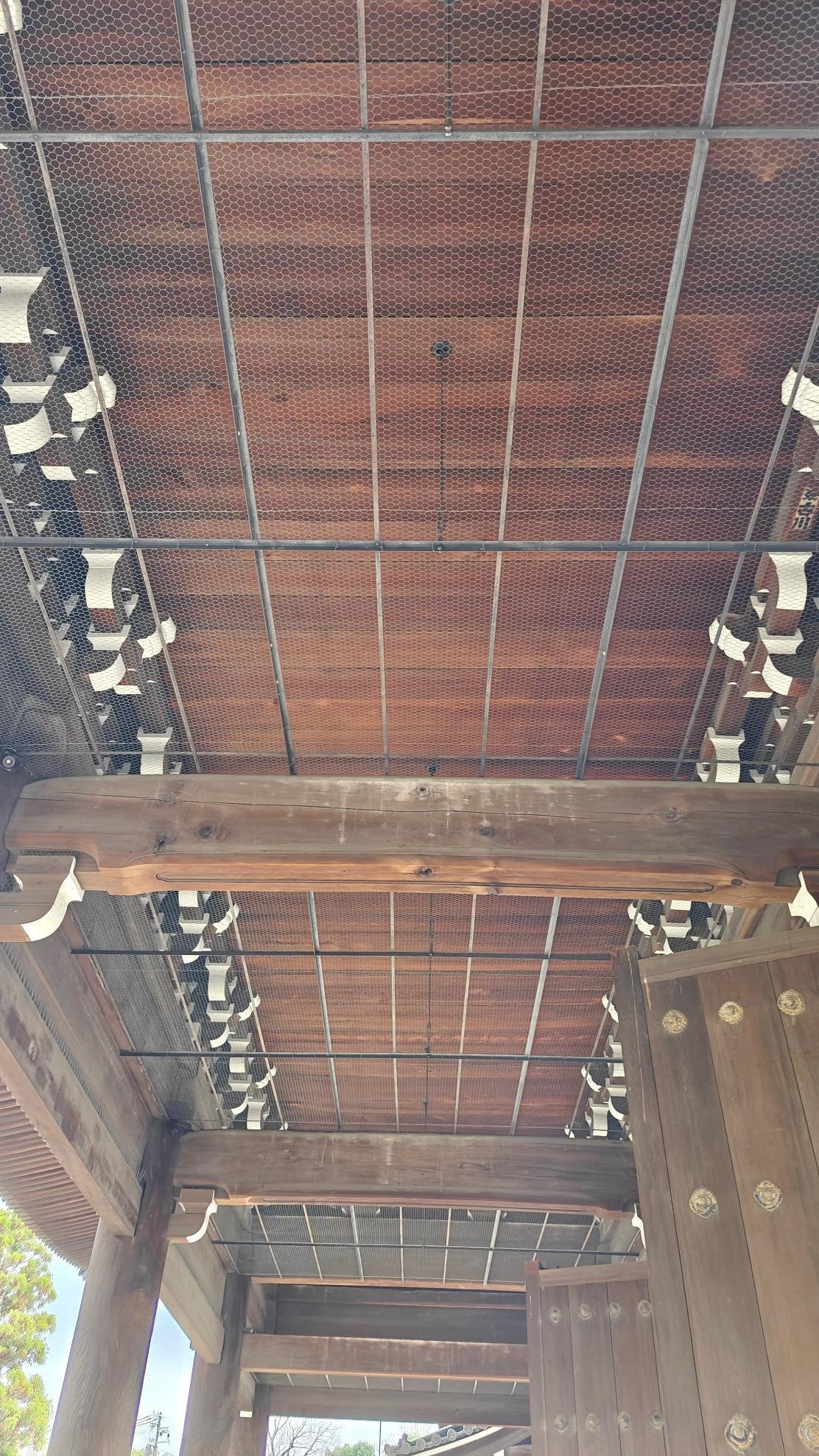
The Sanmon Gate might look old but it’s definitely well maintained. You can see the beams on its ceilings still looking very sturdy even though it seems weathered. As with a lot of the buildings in these shrines and temples, this one doesn't have a single nail while still keeping its structure intact and sturdy.
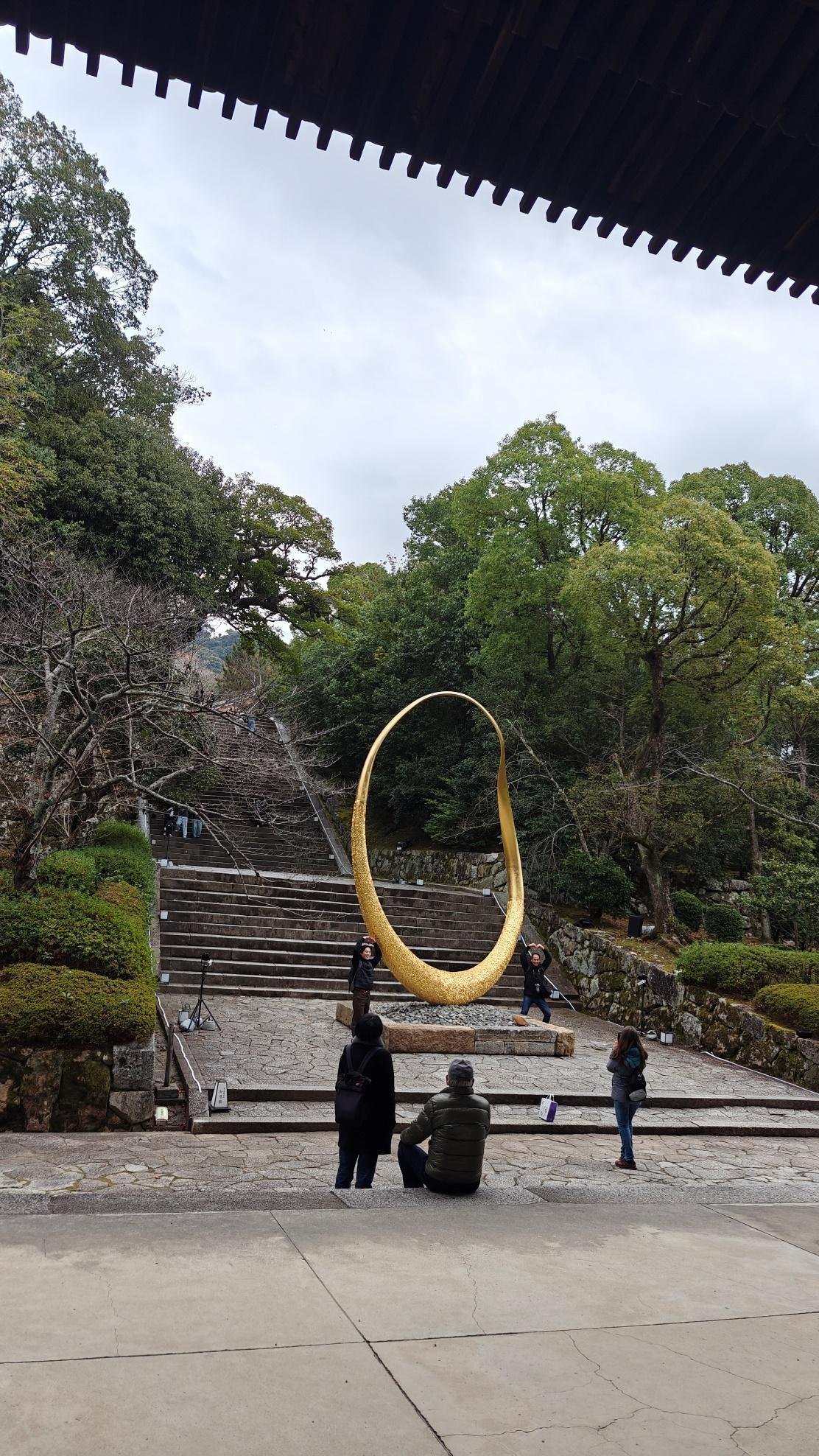
Here you'll see the Otokozaka or Men's Slope. It's really just a steep set of stairs that's composed of 51 steps. Off to the side (to the right though not shown in the image) is an Onnazaka or Women's Slope that’s a lot less steeper with steps that aren't as high.
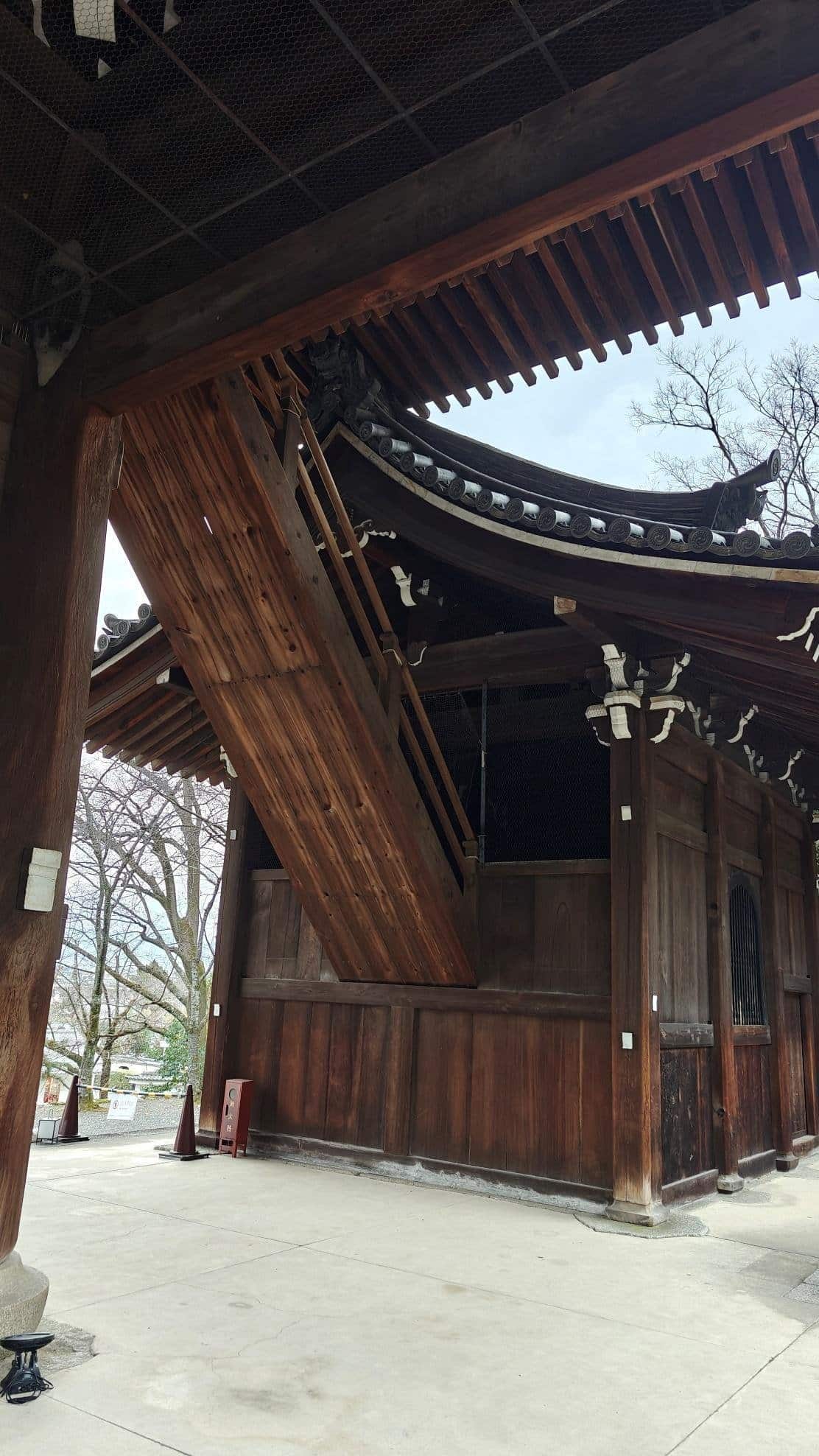
Before I proceed to go up the stairs, here's another look at one of the two smaller structures that seem to support the gate. Look closely though and you'll notice that what's connecting the structure to the Sanmon Gate is actually the underside of a stairway. I read up on this and it seems like it is possible to go up this staircase although it’s usually only on special occasions.
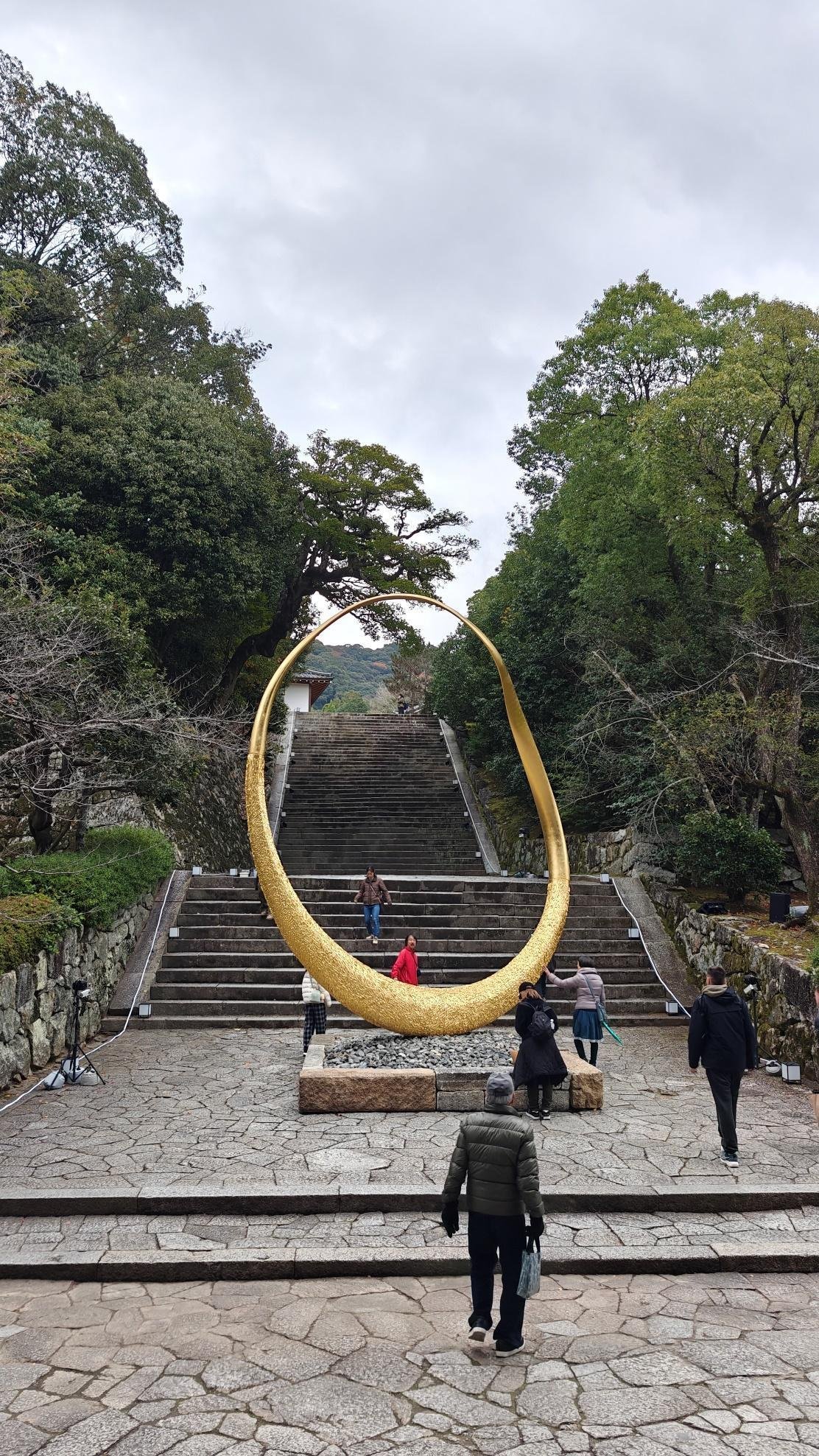
So you were probably wondering what this huge sculpture/installation is and what it's doing here. Initially I was intrigued as it didn't seem like a Buddhist or even Shinto symbol. Turns out, it's actually a modern sculpture called Magnus Rinn made by an Irish artist named Joseph Walsh.
It's actually quite new and was only installed here in 2025 after it was exhibited at the Expo 2025 Osaka Ireland Pavilion. Take note though that it’s on display here only up until September of 2026.
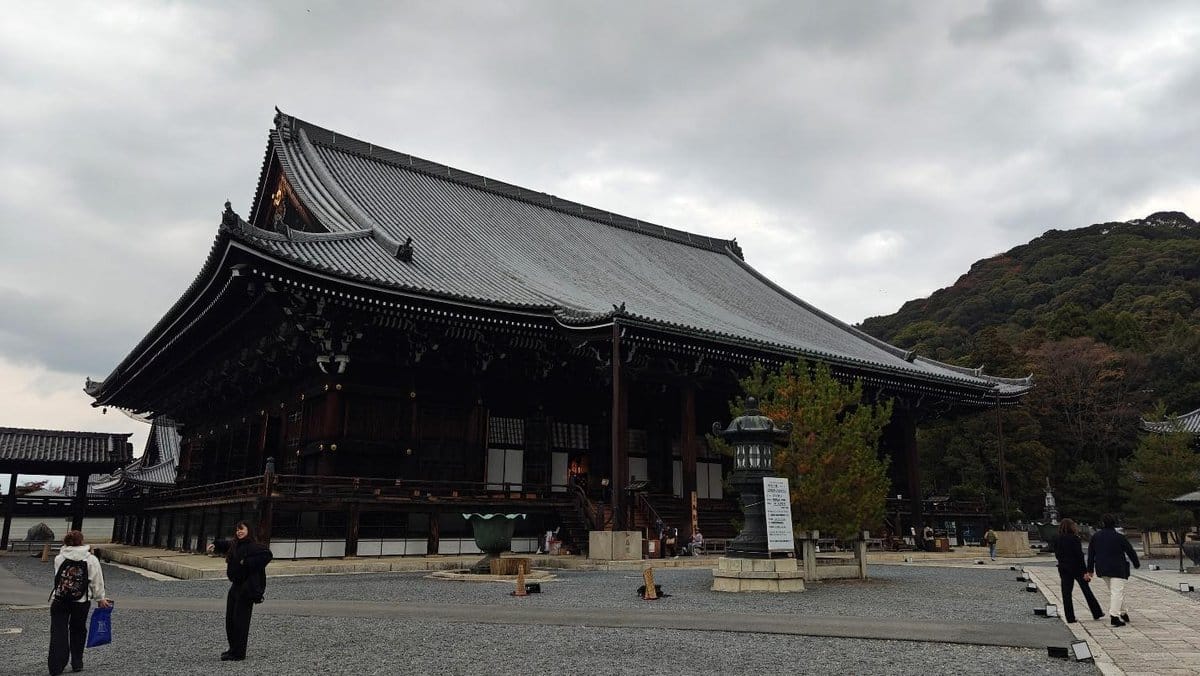
After a challenging climb up the Otokozaka, I finally reached the main temple grounds. The first large building I came across was the Mieido (pictured above). This was honestly a sight to behold because of how imposing it looked.
I mean, you can see how it dwarfs the people taking pictures at its steps as well as the ones in the foreground.
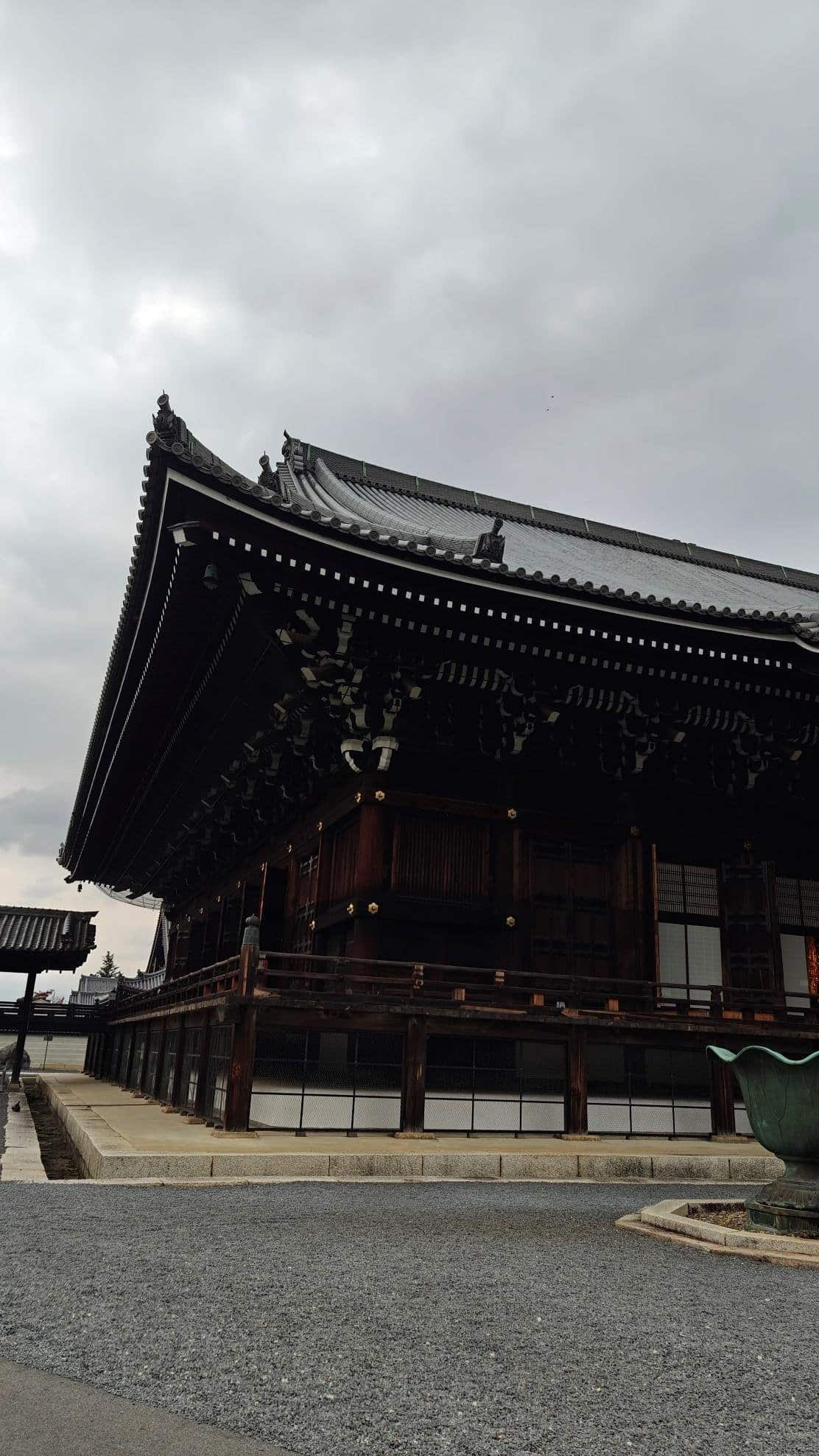
Reading up on this building, I realize the reason for its size is because of its importance to the Jodo sect (Jodo-shu or the Pure Land School) that runs Chion-in Temple. The building is actually where the sacred image of the monk Honen, who founded the sect, is enshrined. Due to its historical and religious significance, the building (along with the Sanmon Gate) was designated as National Treasures of Japan.
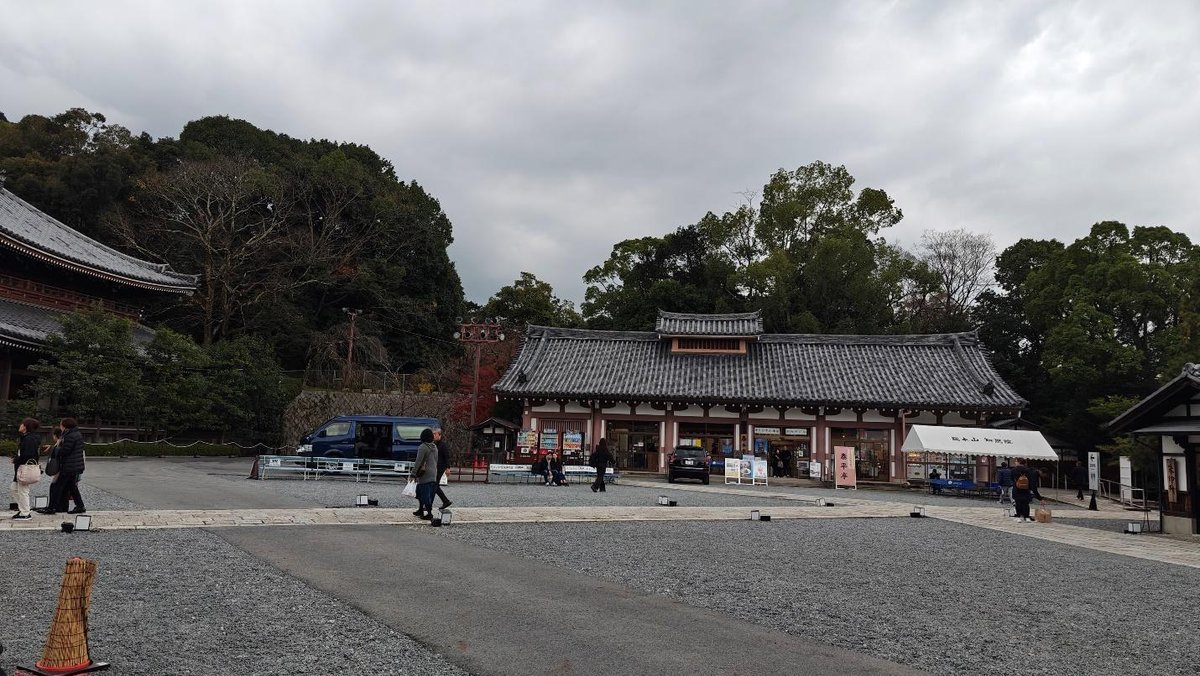
To the south of the Mieido building is the Chion-in Taiheitei. This is essentially the temple complex's gift shop where you can also buy food and drinks. I was only able to glance at some of the food items sold here but it seems like it's known for ice monaka.
Of course, it also has Buddhist religious items like prayer beads, incense, and fittings for Buddhist altars (just to name a few).
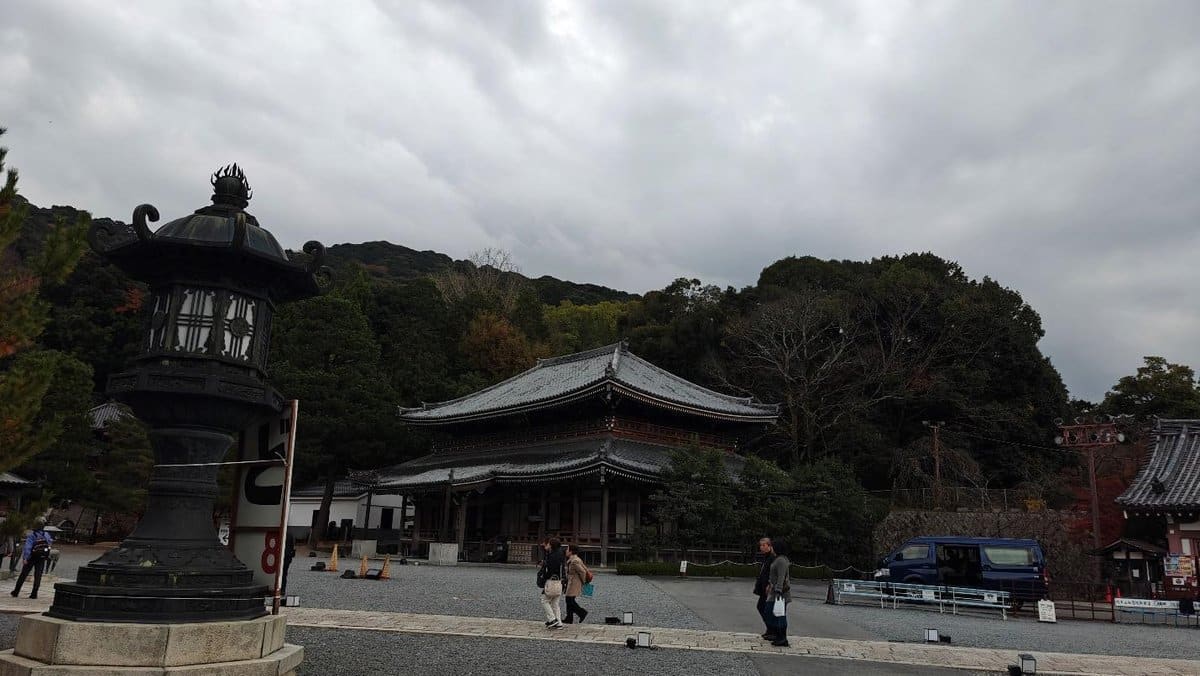
To the left of the Taiheitei (if you're facing it) is a building that doesn't really have a name on the guide map. I actually tried checking elsewhere and found that this is called the Hobutsuden. Additionally, you’ll find a set of stairs behind it that lead up to the temple's Daishoro Bell Tower.
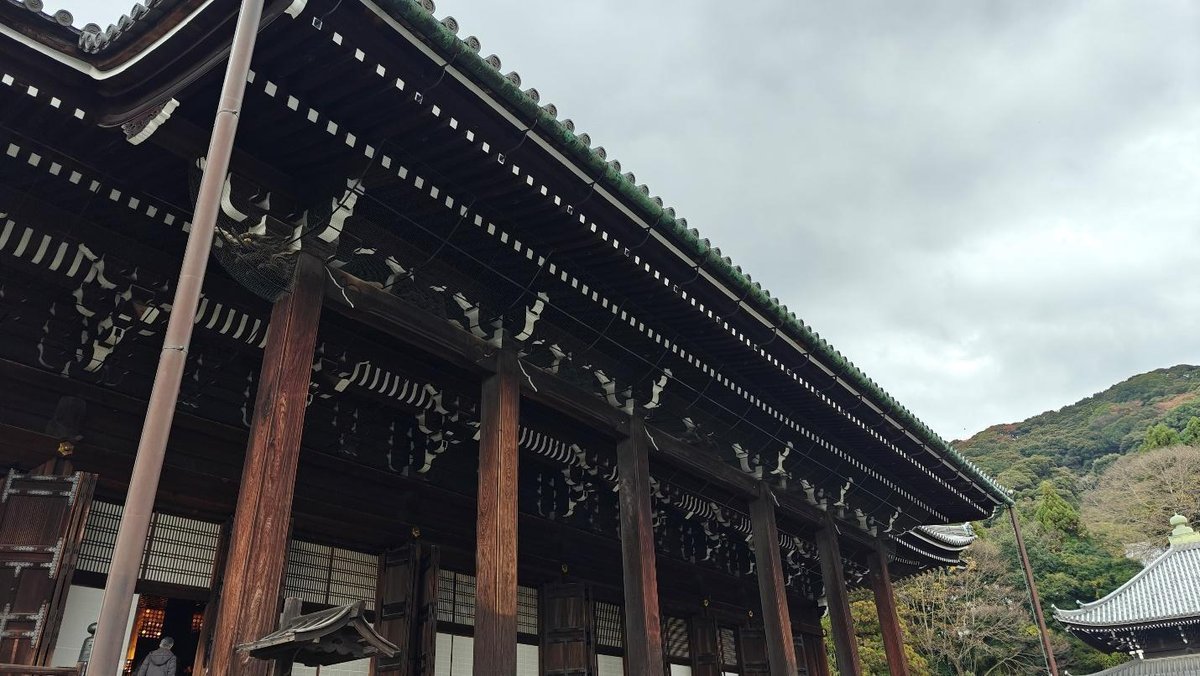
Here you can see the columns supporting the roof on the front of the Mieido up close. One thing about these columns is that they are absolutely huge. Paired with the layered eaves and rafters, this makes the building look imposing and majestic at the same time.
While Chion-in Temple has been around since the 1100s, the building as it is now is a reconstruction commissioned by Tokugawa Iemitsu in 1639.
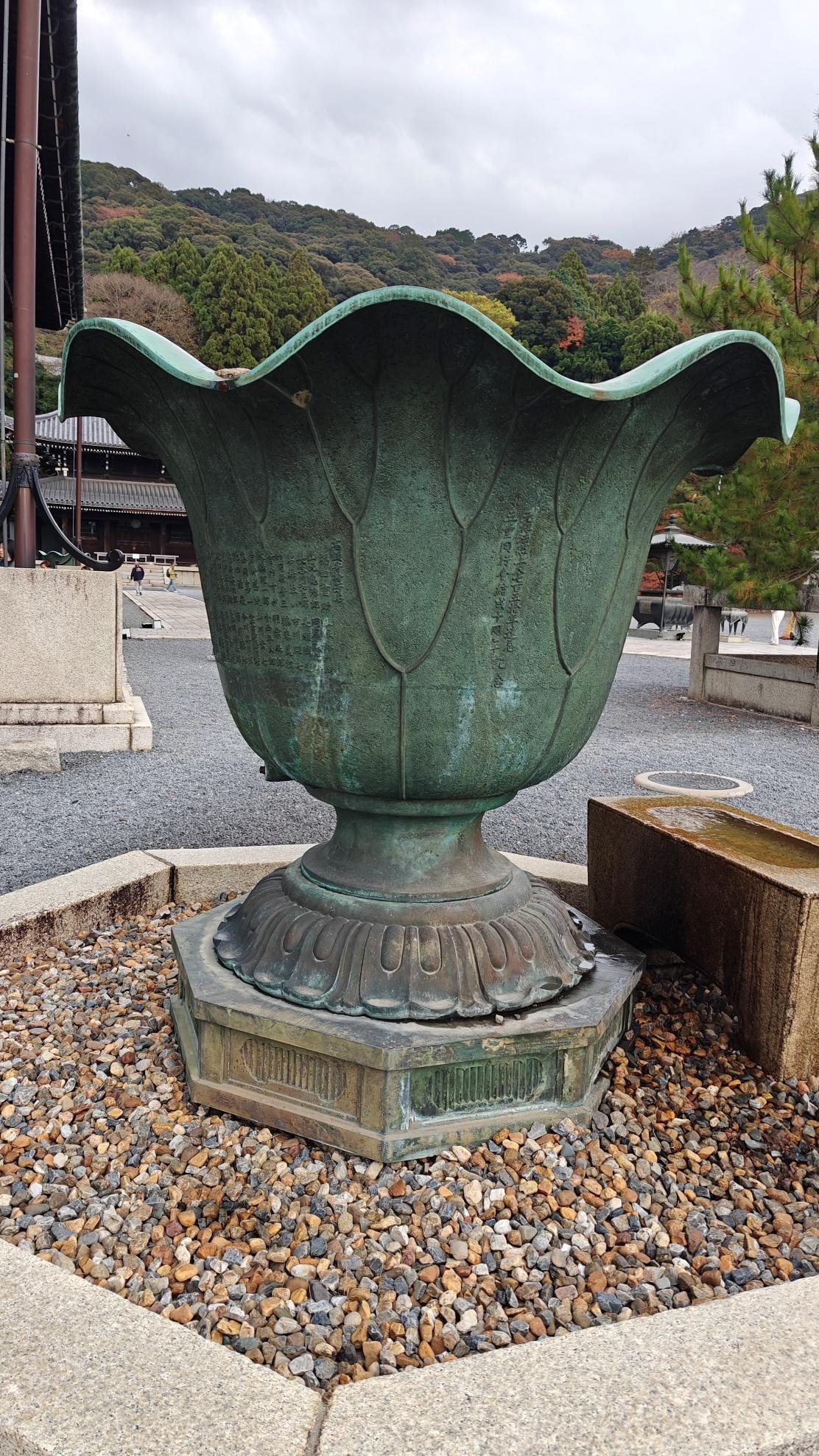
So the way the Mieido is structured, its front entrance is facing the south. Then on its left and right corners are these large ornamental cups with a chozubachi in front of them. I’m not quite sure what’s inscribed on the cups or their foundations but if I were to guess, these are probably excerpts from a sutra.
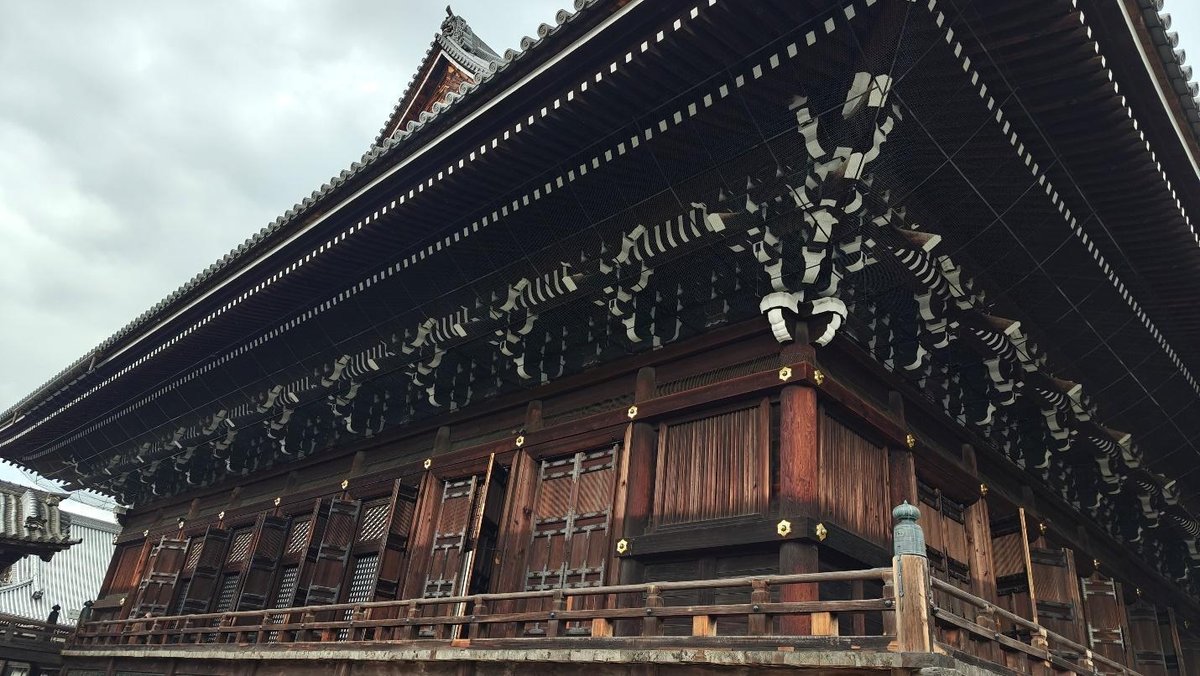
This is what the western side of the Mieido looks like. As with a lot of Jodo-shu temples, this faces the Amida-do or Amida Hall. This layout is symbolic in nature as it’s believed that Gokuraku Jodo or the Pure Land of Amida (hence why the sect is called Pure Land Buddhism) is in the West.
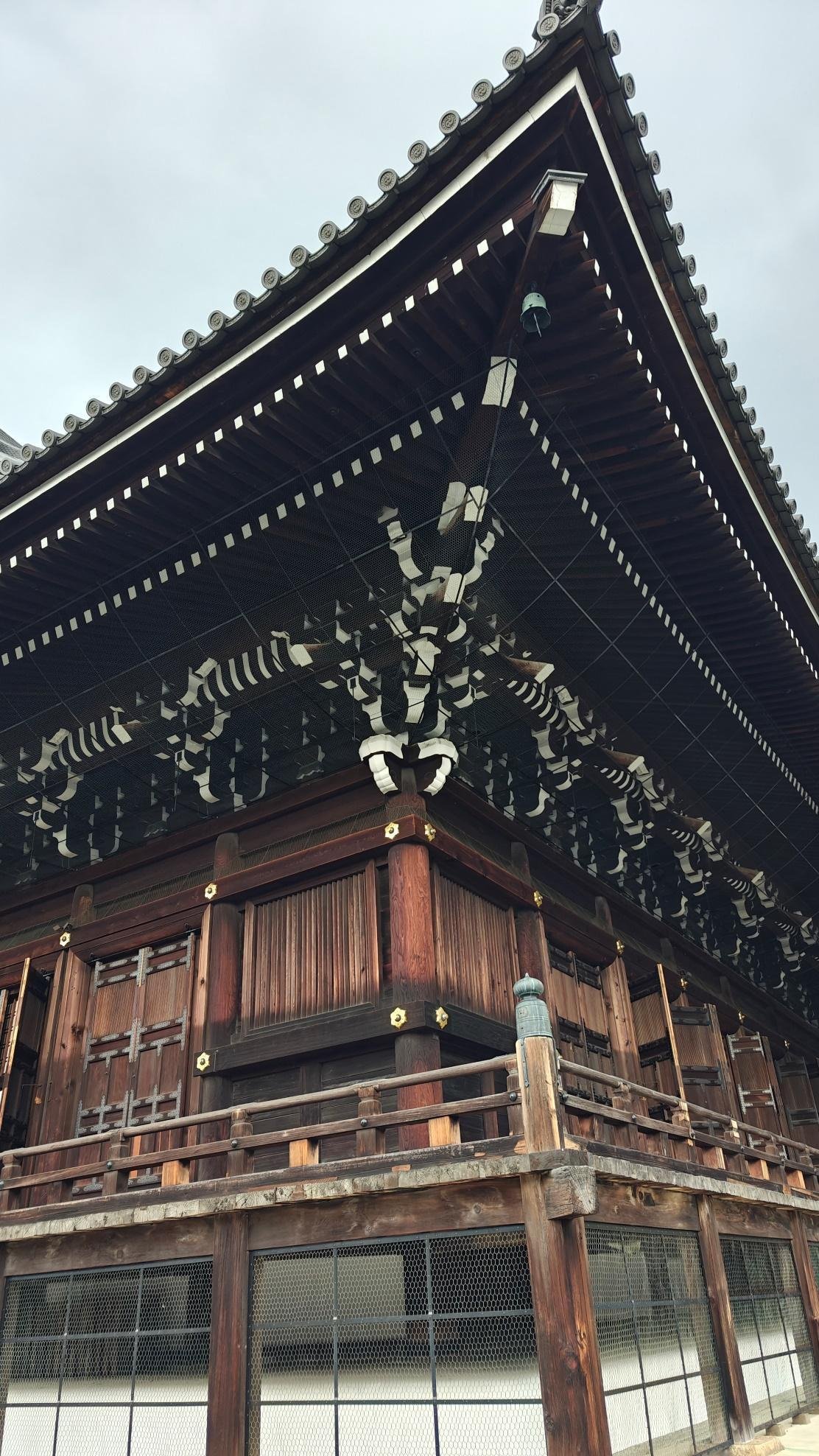
Now as I was admiring the Mieido’s architecture, I couldn’t help but notice this cage covering the building’s rafters. At first I thought this was a support structure since the building is quite old after all. I then tried looking this up and was actually surprised to find out that it’s for something that’s completely different but also related to the building’s protection.
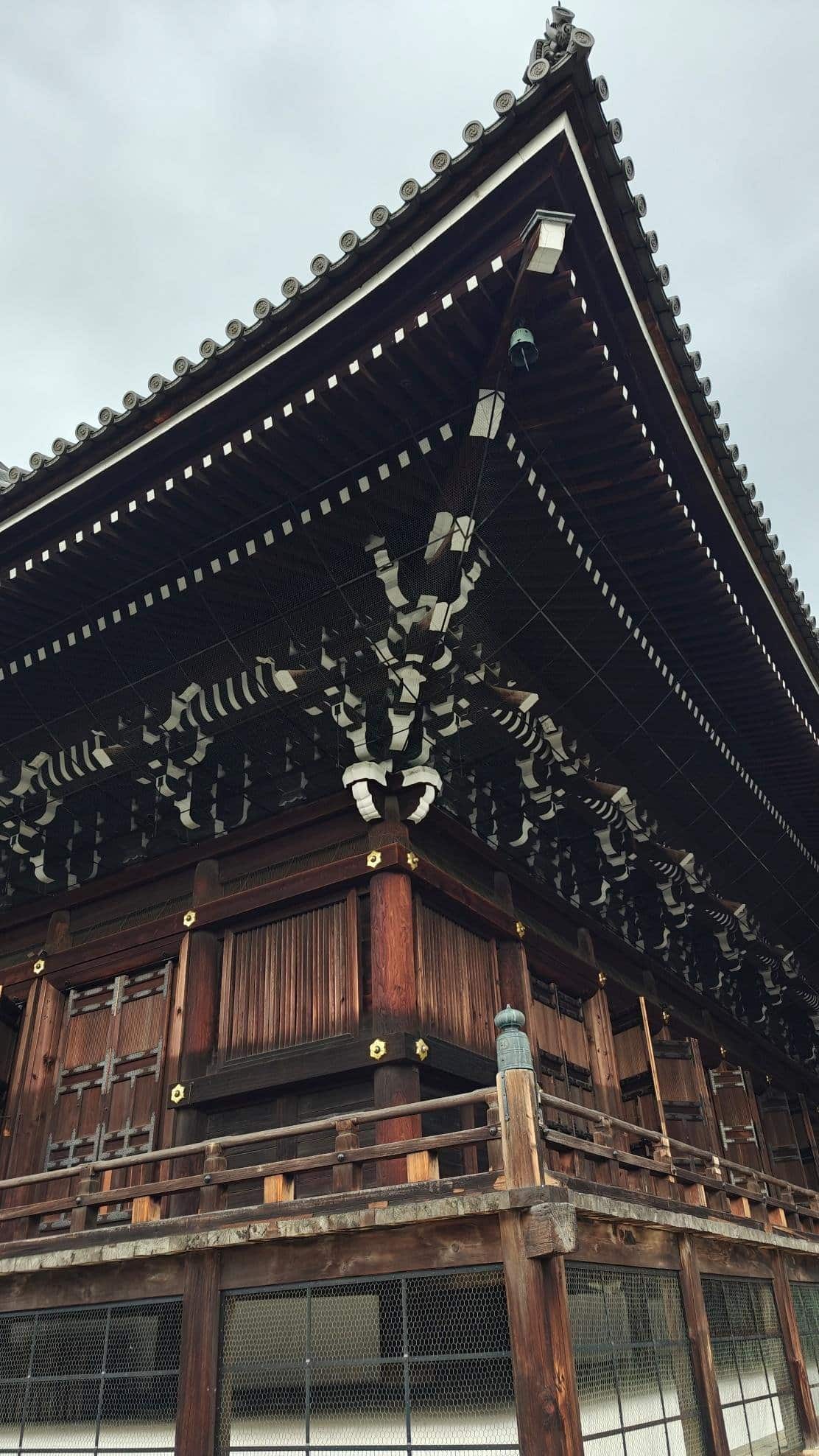
From what I read online, this cage appears to have been set up to ensure the Wasuregasa or Forgotten Umbrella is protected. This is an umbrella that was said to have been left by the master carpenter Hidari Jingoro (who headed the Mieido’s reconstruction) to serve as a talisman to protect and ward off against fire. Considering there hasn’t been a major fire since its renovation, I think it’s understandable why the Jodo-shu would want to protect what’s been protecting its most important building (and temple complex).
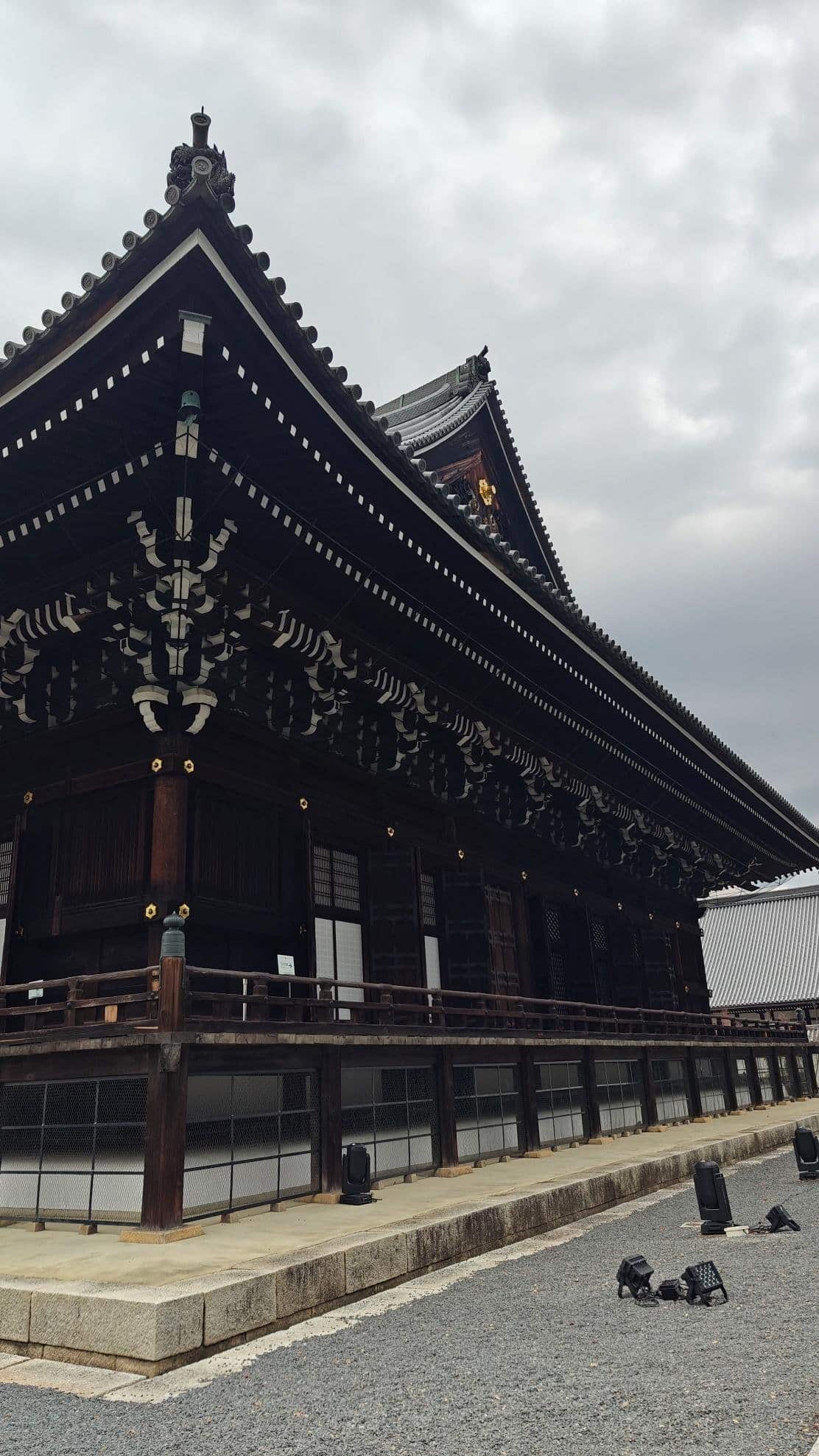
This is the Amida-do. If you remember earlier, I talked about how the western side of the Mieido was facing this building. As its name implies, the building houses a statue of Amida (Amida Nyorai).
Unlike other notable buildings in the temple complex like the Mieido, this one is a lot newer since it was reconstructed in 1910.
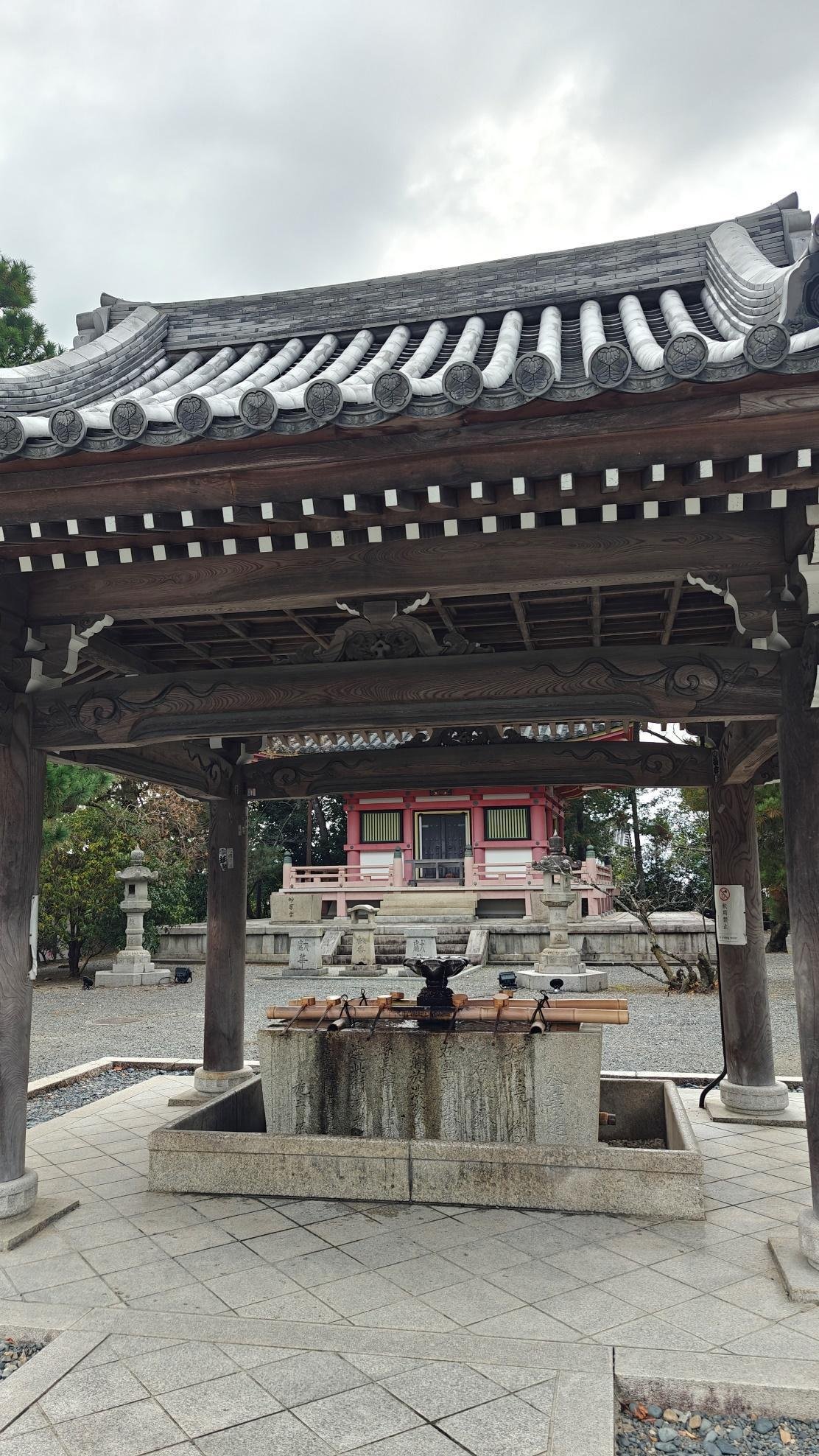
To the left of where I took the previous image is this pavilion that has a chozuya. As is custom in Buddhist temples (as well as with Shinto shrines), visitors/pilgrims typically wash their hands here as a purification ritual. Once they’re done washing their hands with water from the chozuya, they can then proceed to the buildings like the Mieido or the Amida-do just behind it.
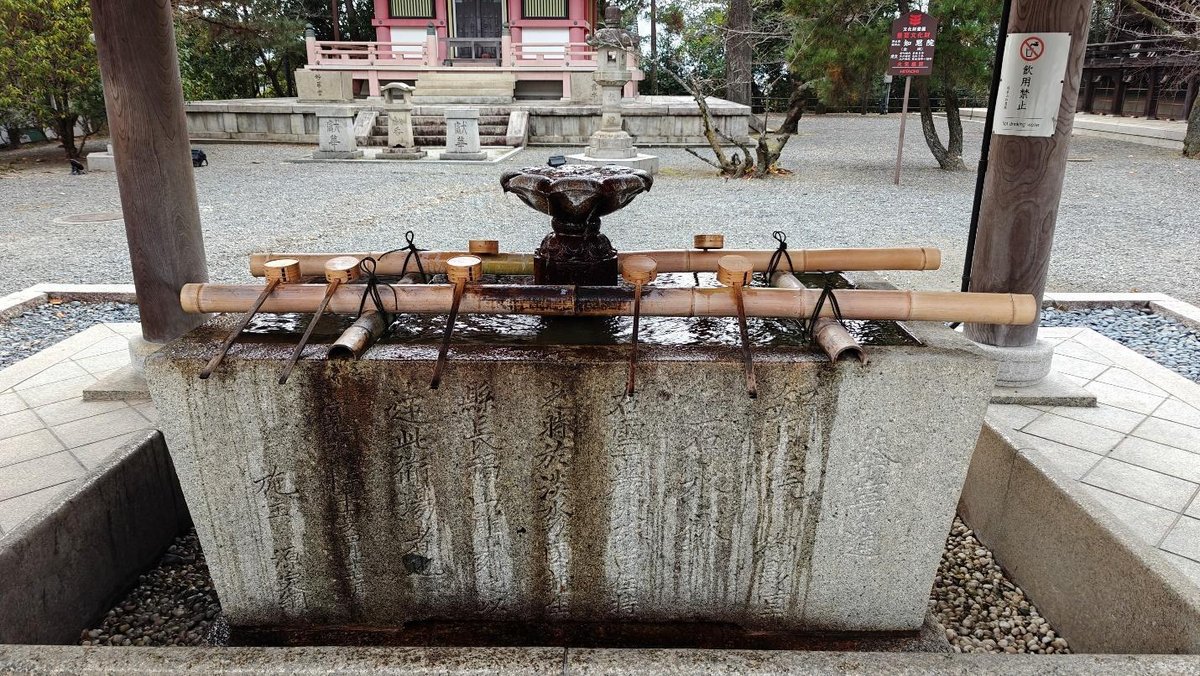
Here’s a closer look at the chozuya’s chozubachi. To use this, scoop water using one of the hisaku (the ladles with long handles) and pour that on your hands. Now you’re probably thinking if the water is safe and it generally for everything other than drinking.
The water here is flowing which means it’s relatively fresh and clean enough for its intended purpose.
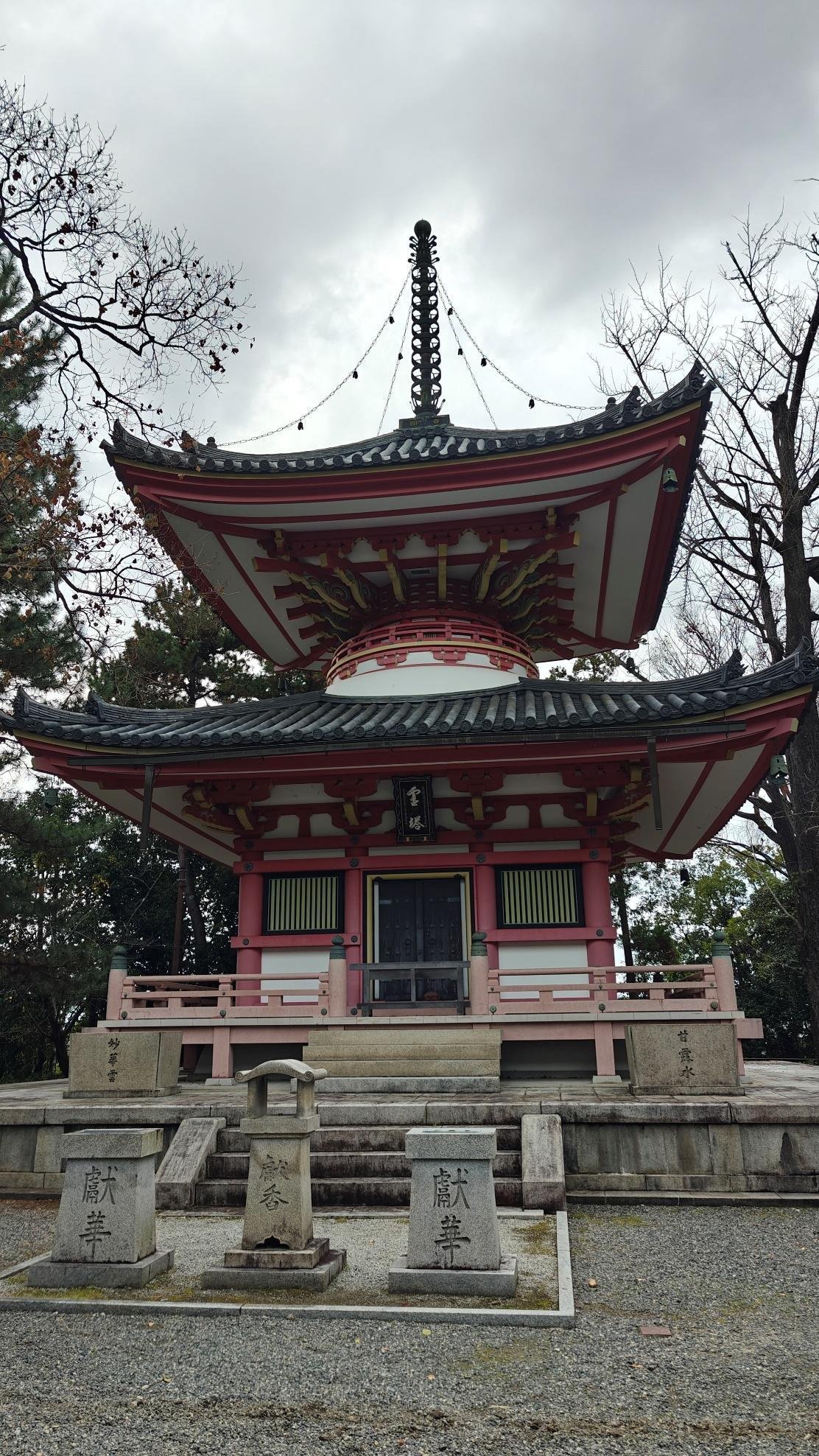
Directly behind the chozuya and to the left of Amida-do is the Tahoto. Unlike the three-story Sanju-no-to in Kiyomizu-dera, this one is only a two-story pagoda. Now pagodas typically serve as reliquaries but I’m not quite sure what relics are housed here (if there are any to begin with).
I did read somewhere that some Tahoto serve as an “icon hall” with the deity Taho Nyorai though again, I’m not sure if that’s the case here as well.
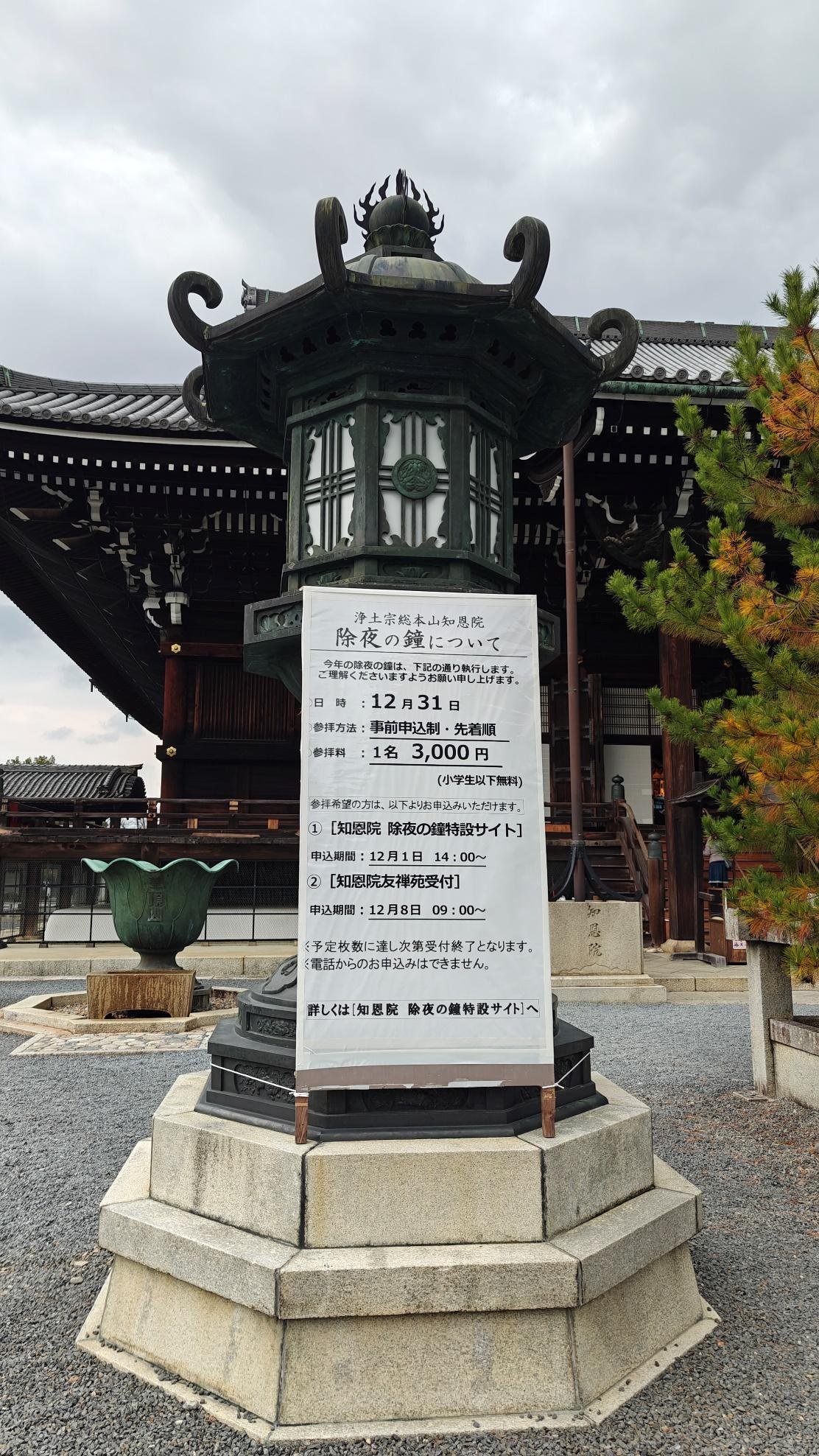
Here’s a lantern just in front of the Mieido with a sign talking about the temple’s New Year’s Eve bell ringing ceremony. This is actually surprising since Kiyomizu-dera also has something similar but hasn’t opened it to the public. Based on the inscription, registration for the ceremony is at 3000JPY with children free to join/enter.
The kicker is that it’s on a first-come, first-serve basis. Considering how big of a deal the New Year is in Japan, all the slots here were probably taken when I took this picture.
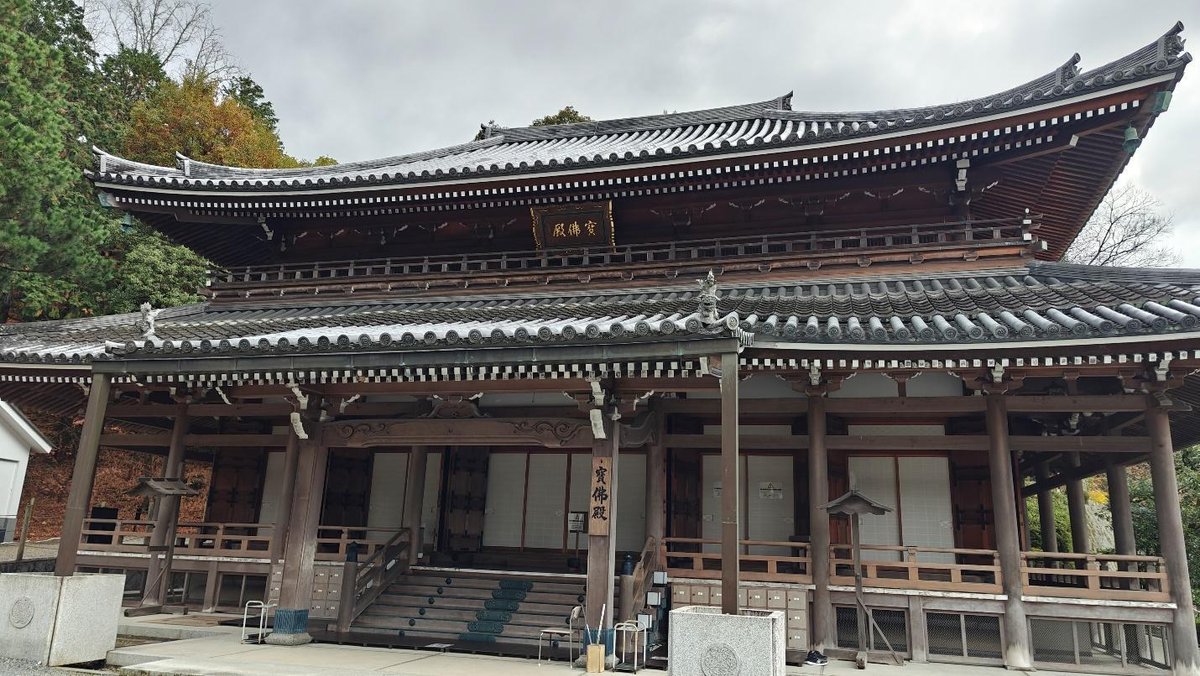
This is the Hobutsuden up close. Also known as the Treasure Hall, this is the designated building in the temple complex that houses sacred treasures, statues, and artifacts. Some of the most notable of the treasures found here include (but isn’t limited to) a detailed scroll called the Illustrated Biography of Honen, sliding door paintings from the Kano School, and various artifacts and documents dating back to the Tokugawa shogunate.
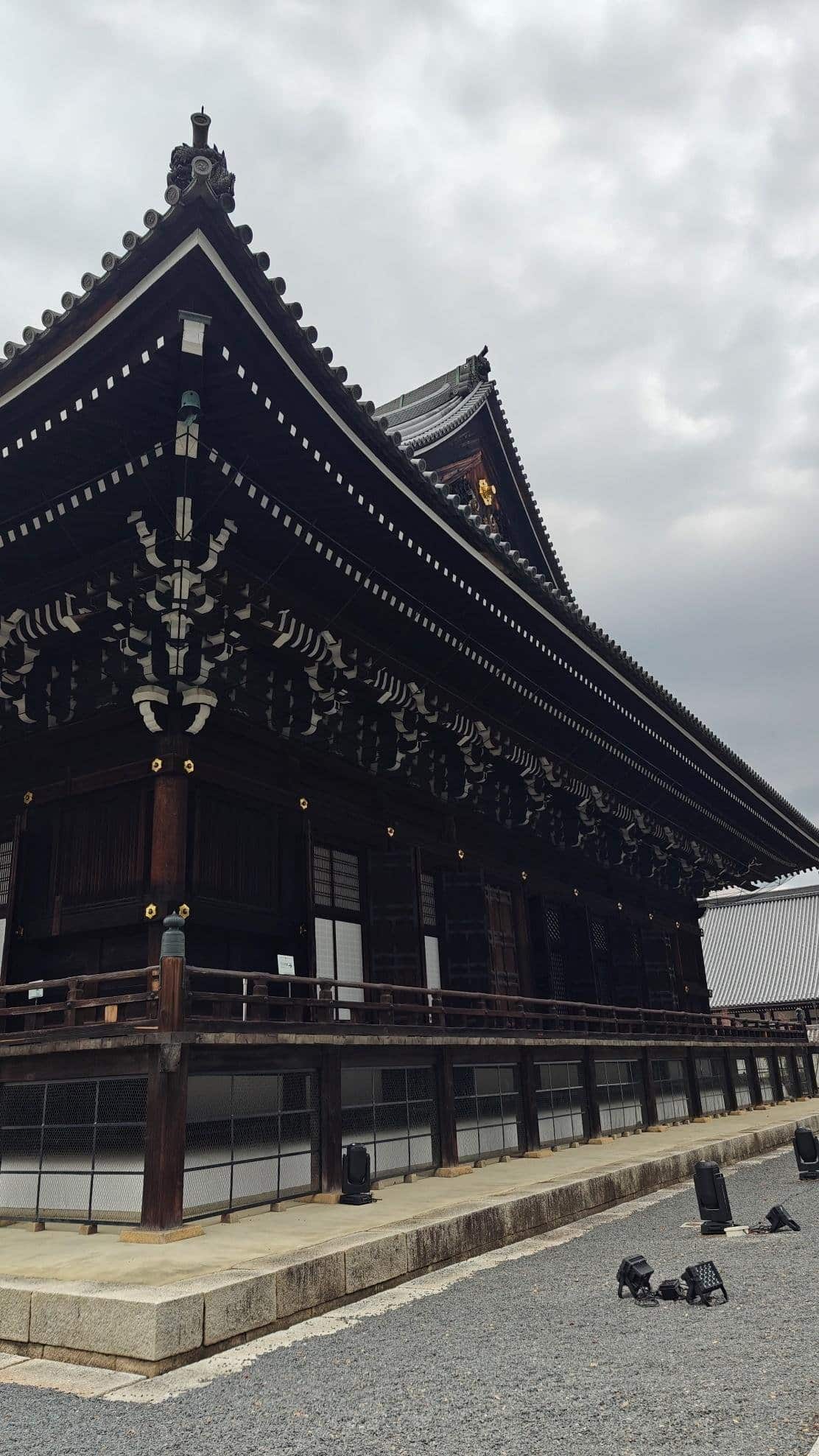
To the east of the Mieido (right if you’re facing the building’s front entrance) is the Kyozo or also known as the Sutra Repository. As its name implies, this is the building in a Buddhist temple complex that houses the sacred scriptures. For Chion-in Temple specifically, the specific scripture stored here is a version of the Tripitaka from the Song Dynasty.
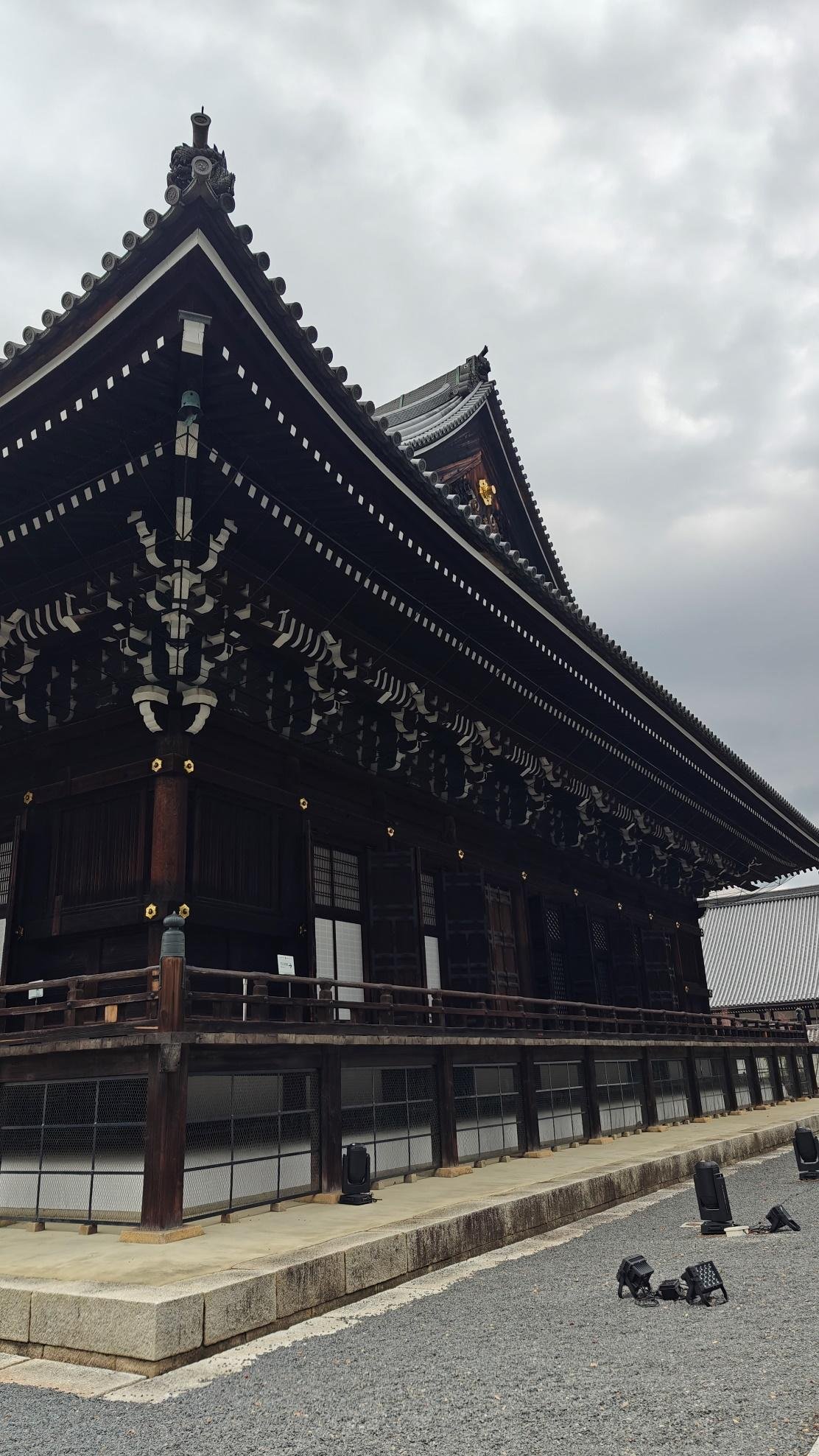
This is the side of Mieido that the Kyozo building is facing. If I’m not mistaken, it’s pretty identical to the western side that you saw earlier. Also present is the cage/mesh that I guess is meant to protect the Wasuregasa.
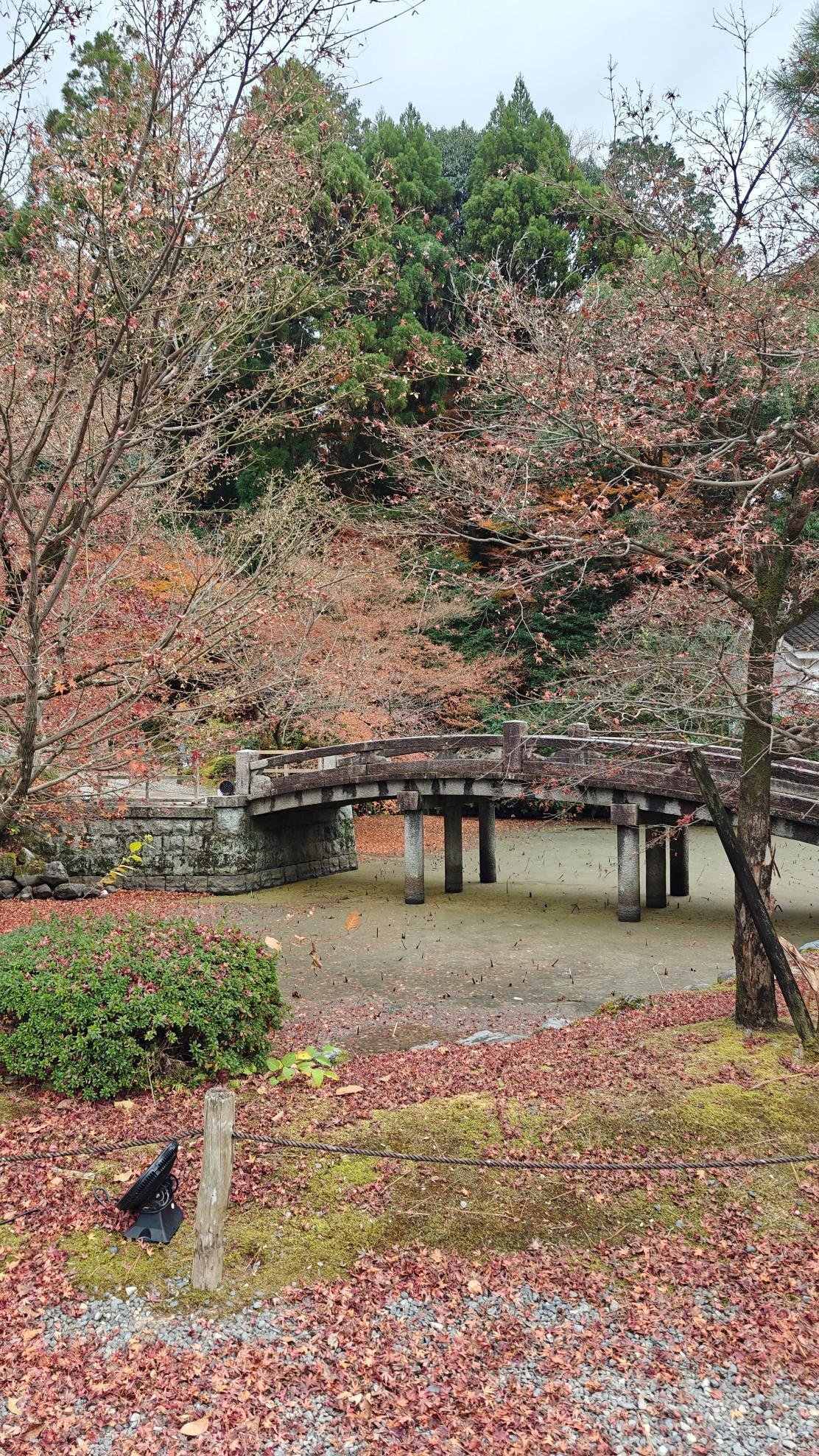
Off to the side (south) of the Kyozo and to the right (east) of the Hobutsuden is this pond with a bridge bisecting it. If I’m not mistaken, the pond doesn’t have an official name though I’ve read it being called the lotus pond on some sites. As for the bridge, it actually leads up to another notable and scenic building here at Chion-in Temple.
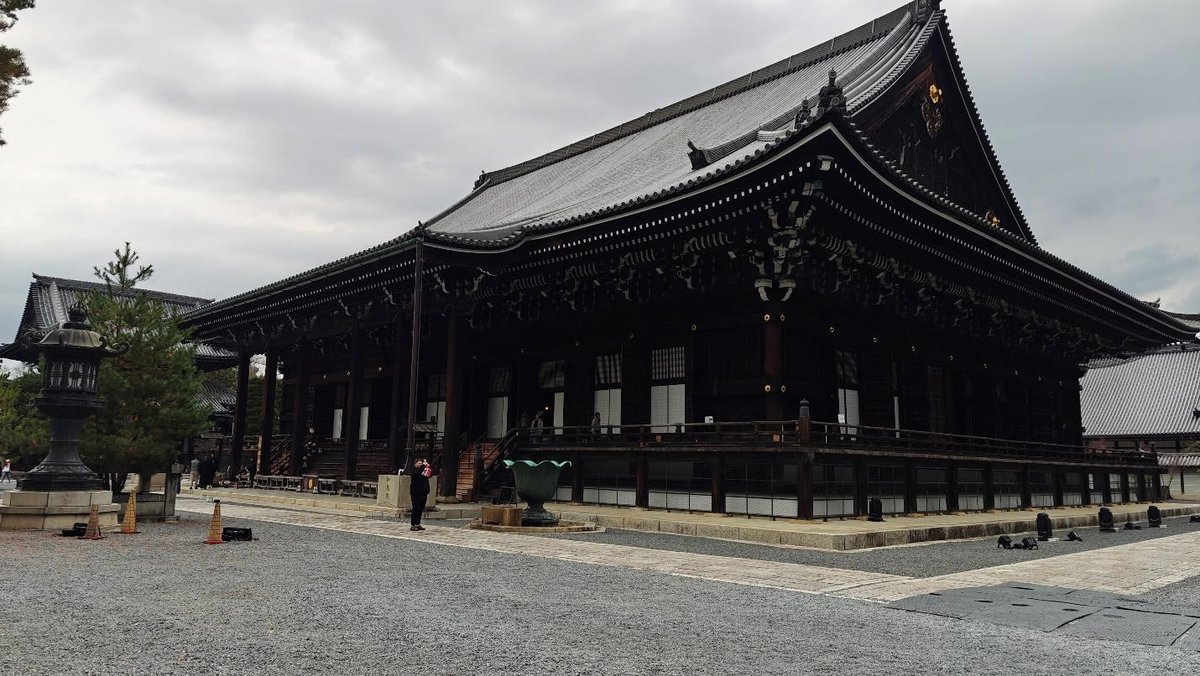
Before we head to that location though, here’s another look at the entirety of the front and eastern side of the Mieido. In the background you can catch a glimpse of the Amida-do. I don’t think I’ve ever mentioned it up until this point but you probably noticed how there aren’t that many people here.
In fact, I think there were far fewer people here compared to Yasaka Shrine.
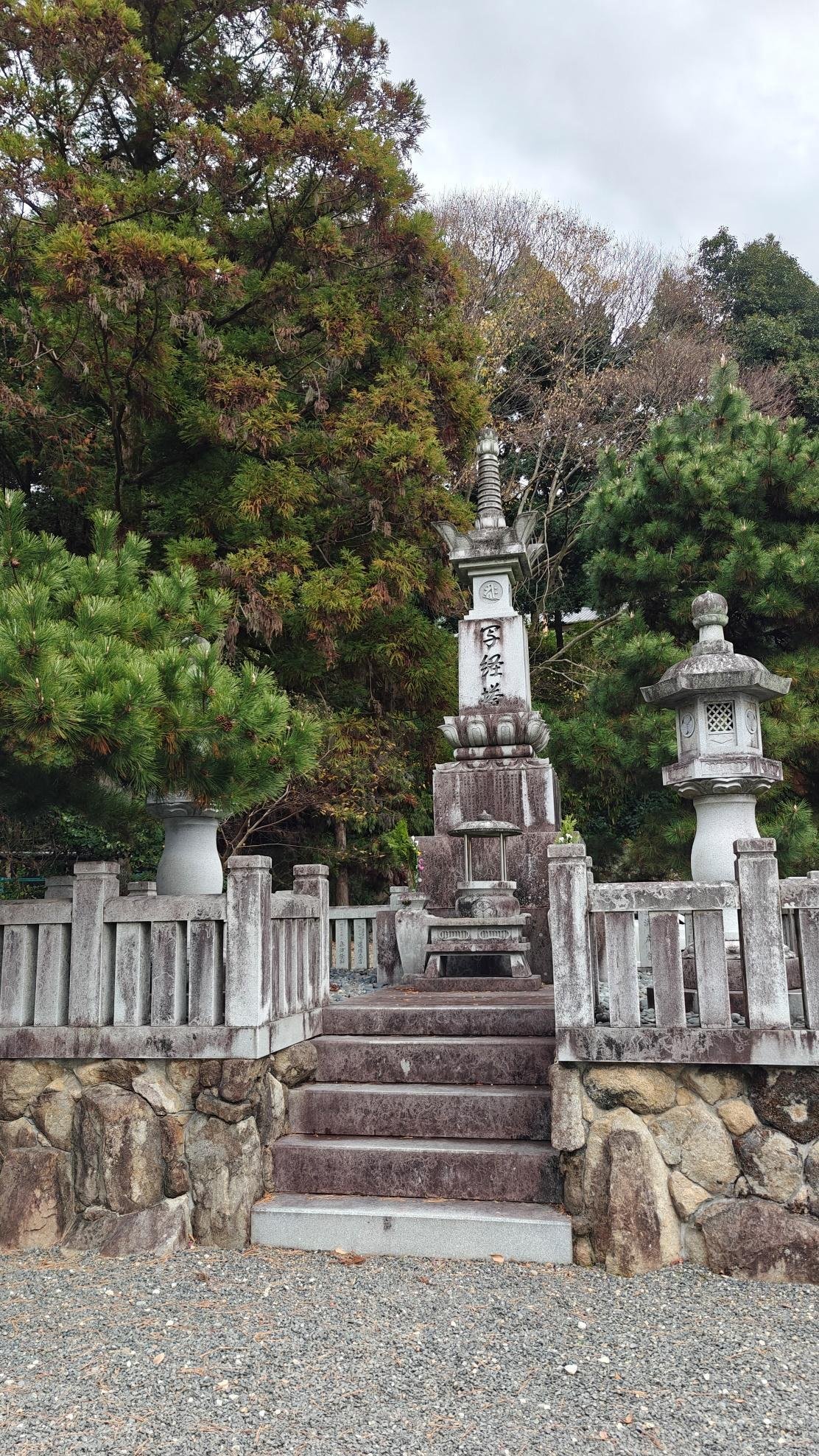
Now here’s something that I don’t think I saw at Kiyomizu-dera. It’s called the Chion-in Shakyoto and it’s found to the north of the Kyozo (to its left if you’re facing it). Translated, its name simply means Chion-in Sutra Copying Pagoda.
As for its purpose, I’m not actually sure.
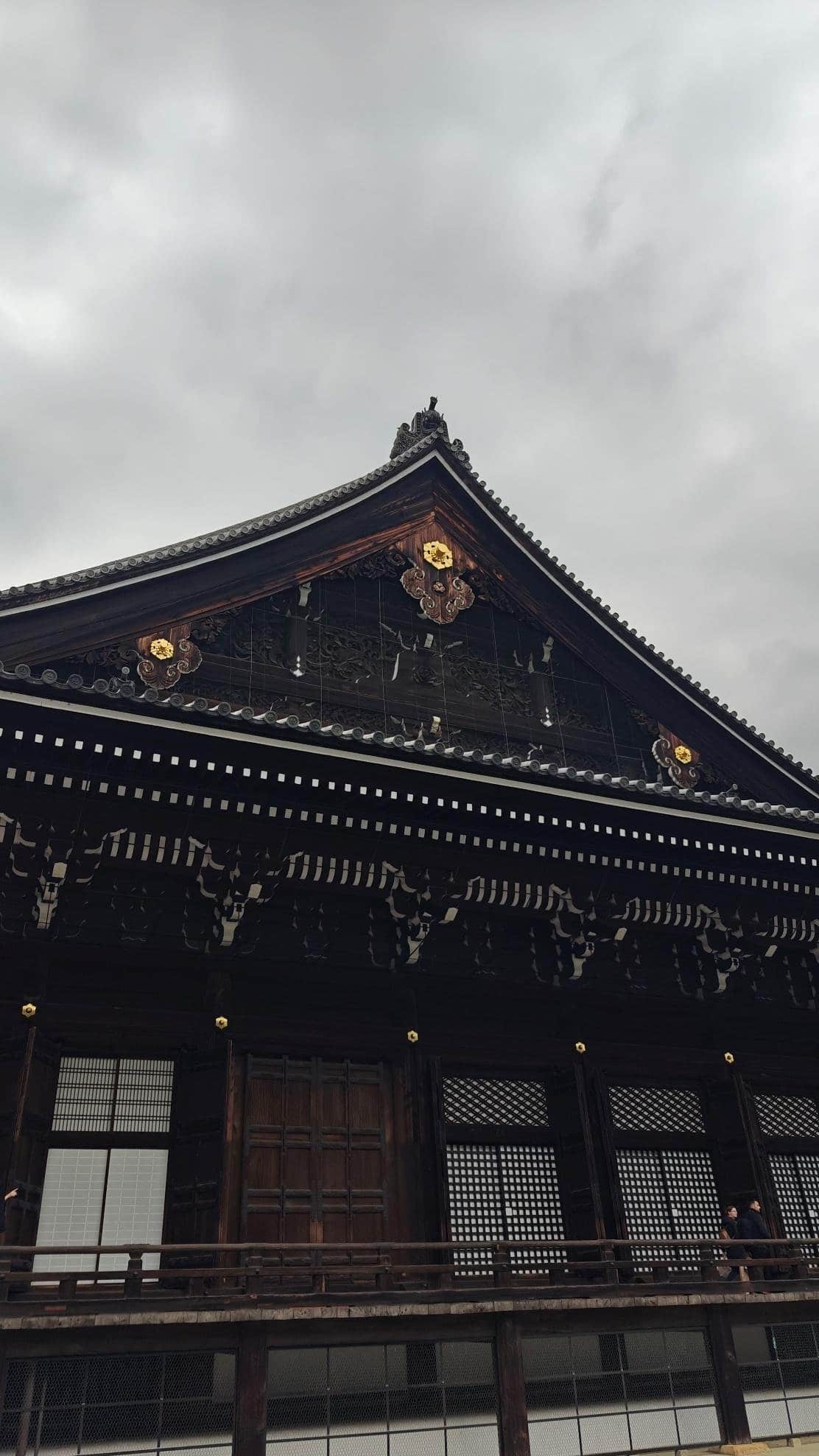
I said earlier that there weren’t that many people when I visited. Here you can see two of the other visitors walking around the eastern side of the Mieido. Again, you can see just how large the building is by comparing its window to the two visitors.
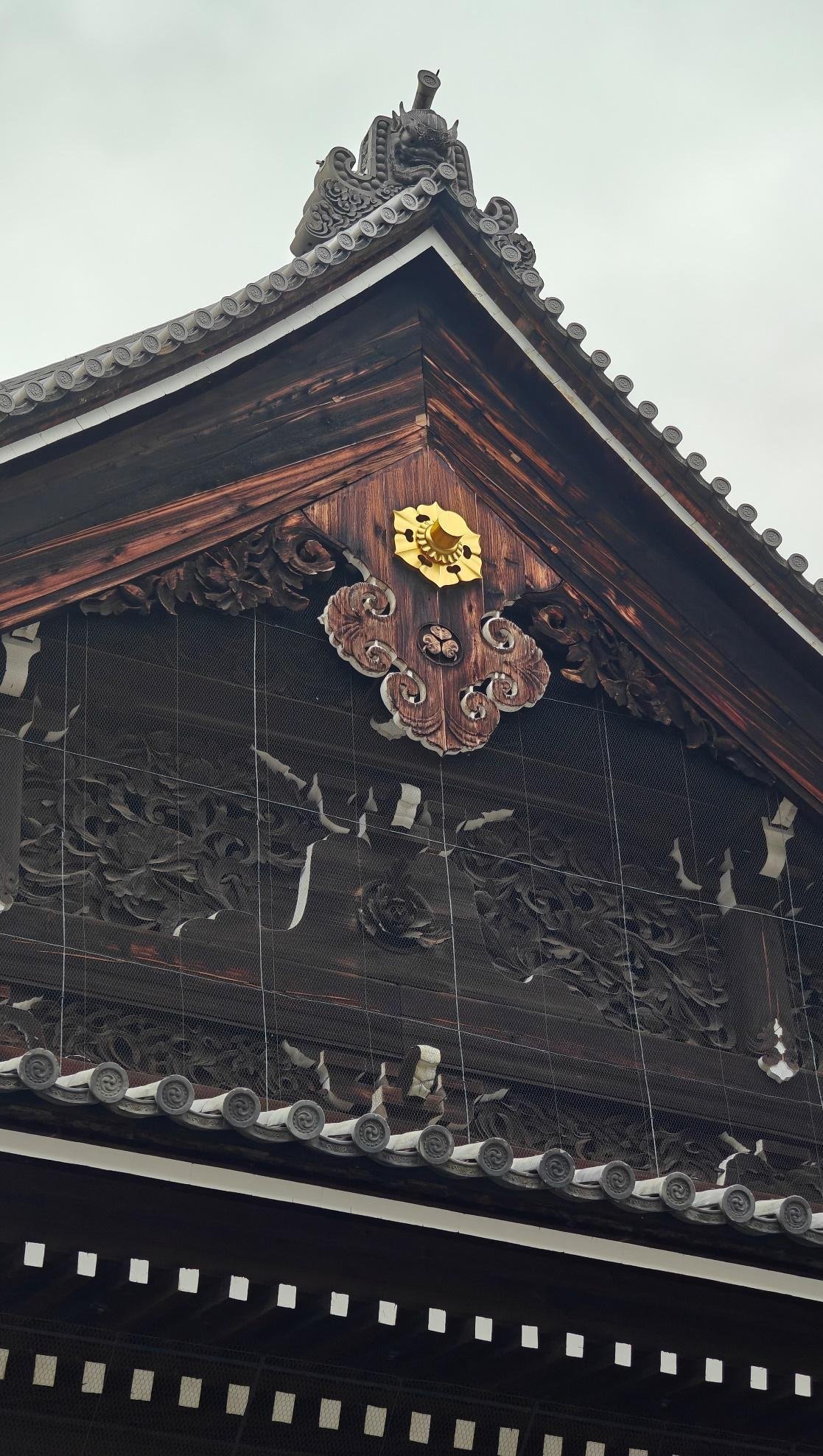
So it wasn’t just the rafters and eaves that were protected by a cage/mesh. The woodwork on this part also has really fine mesh that I guess was installed as an added layer of protection. Considering the building’s age and its status as a National Treasure of Japan, it’s kind of understandable that a precaution like this was put up.
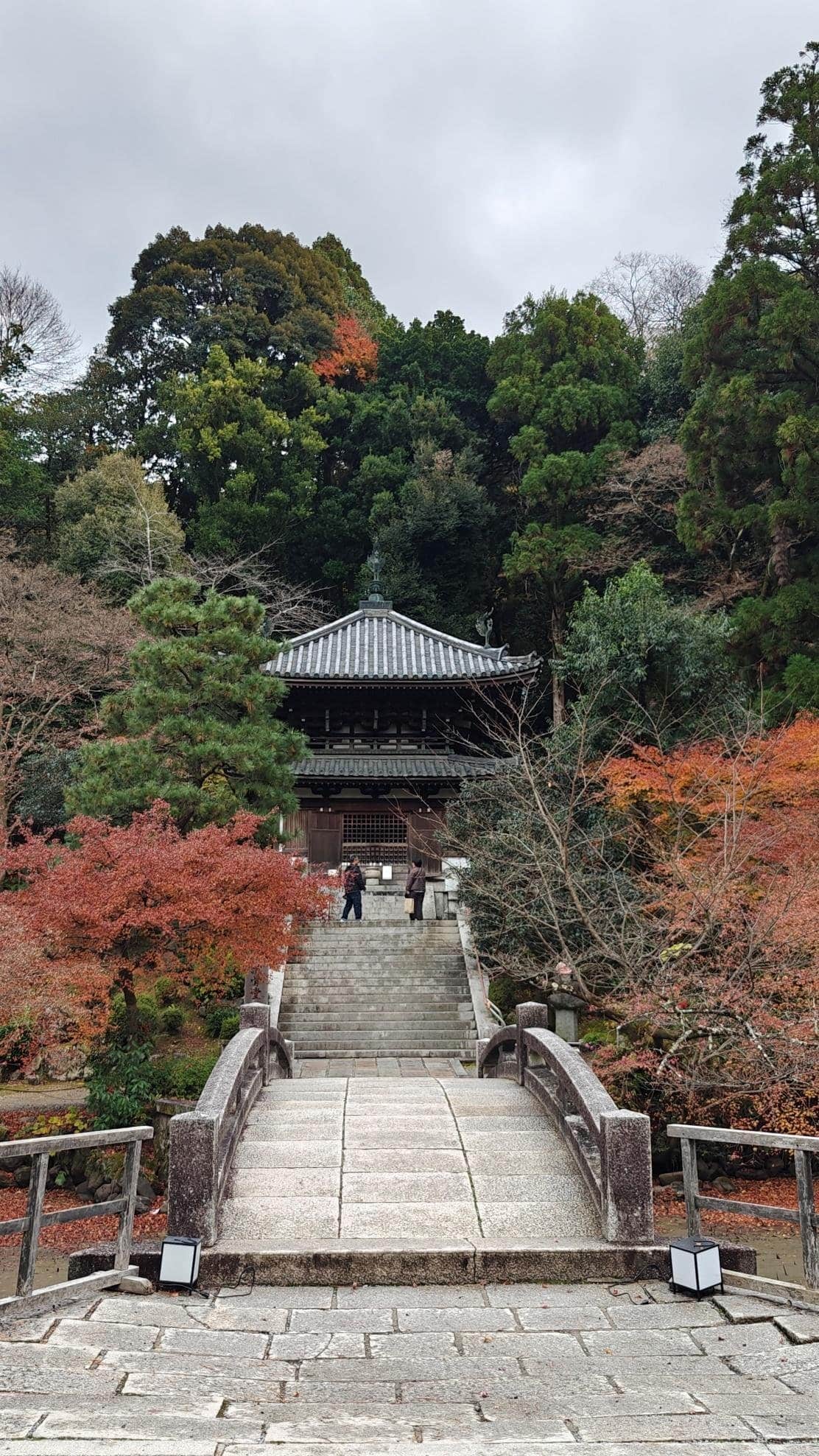
Remember when I talked about a notable building that the bridge over the pond led up to. Well, this is the building that I was talking about. Called the Nokotsudo, this building is arguably one of the eeriest looking here at the temple complex.
Its main function is really as a repository for deceased individuals’ cremated remains/ashes and as a memorial hall where the families of the deceased can remember and venerate them. There are actually plenty of other notable attractions here at Chion-in Temple that I didn’t manage to take a picture of because not only are its buildings large, the whole land that the temple complex is sitting on is actually quite massive. If I were to estimate, it covers an area that’s as large as Yasaka Shrine and Maruyama Park combined.Overall, I enjoyed my time at Chion-in Temple and I think it’s one of the more laid back visits here in Kyoto so far.
Now, I actually was hoping that it would have snowed when I visited as the temple is said to be at its best when it snows. Alas, I was a tad bit too early so I wasn’t able to catch the snowy views. That said, I still enjoyed my time here and would definitely recommend visiting it (especially since access to the main temple grounds and a lot of its buildings is free.Ever got the chance to visit Chion-in Temple in Kyoto?
In case you were fortunate enough then make sure to share what you thought of it (as well as any tips and tricks to maximize your visit) down in the comments!