
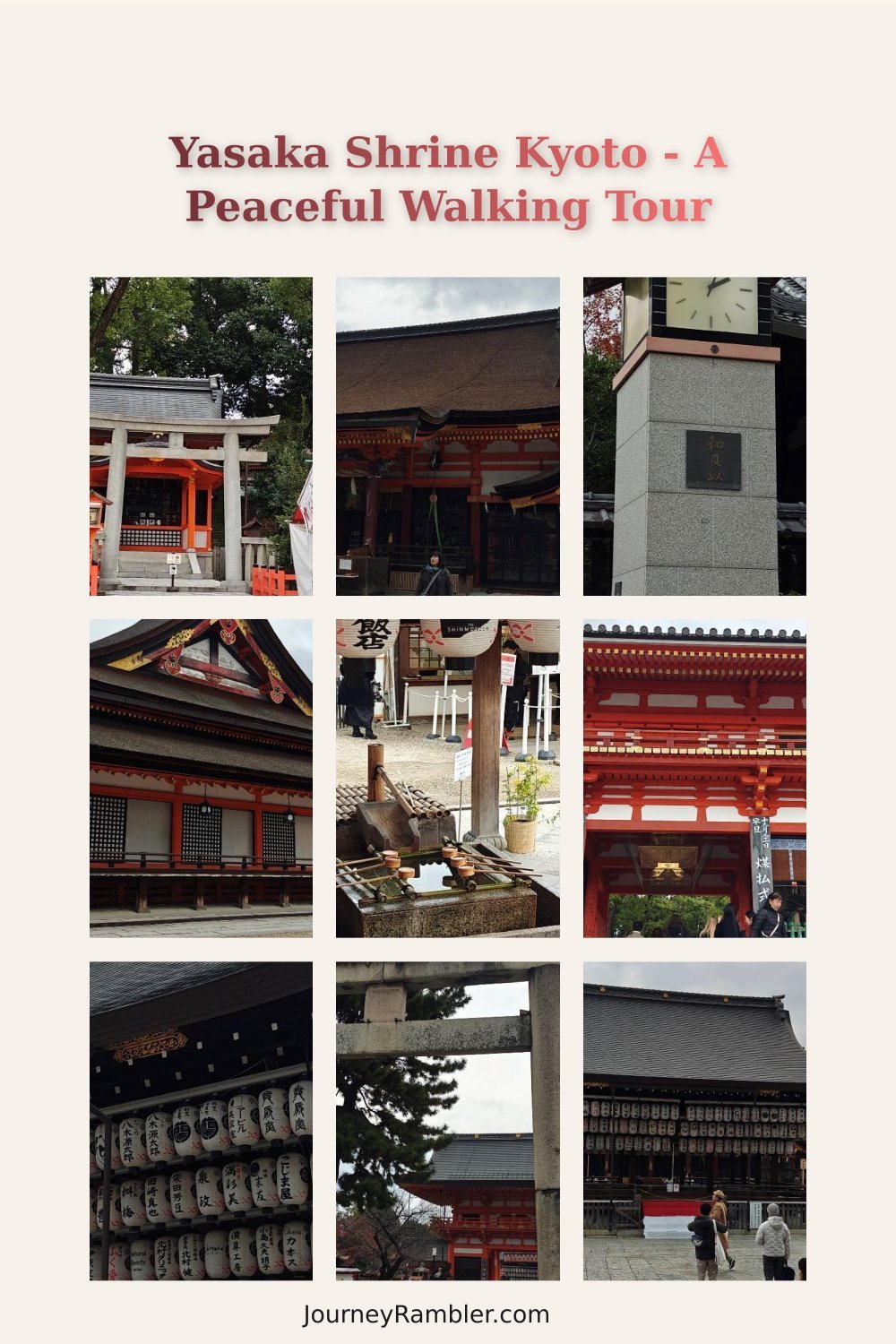
If Kiyomizu-dera and Fushimi Inari Taisha are too crowded for you then you're definitely going to love Yasaka Shrine. While it's decidedly not as much of a “must-visit” as the other two, I found that it was much more relaxed and laid back. As a Shinto shrine, it was a lot less flashy than Fushimi Inari Taisha but it also had this charm and vibe that made walking in and around it very memorable.
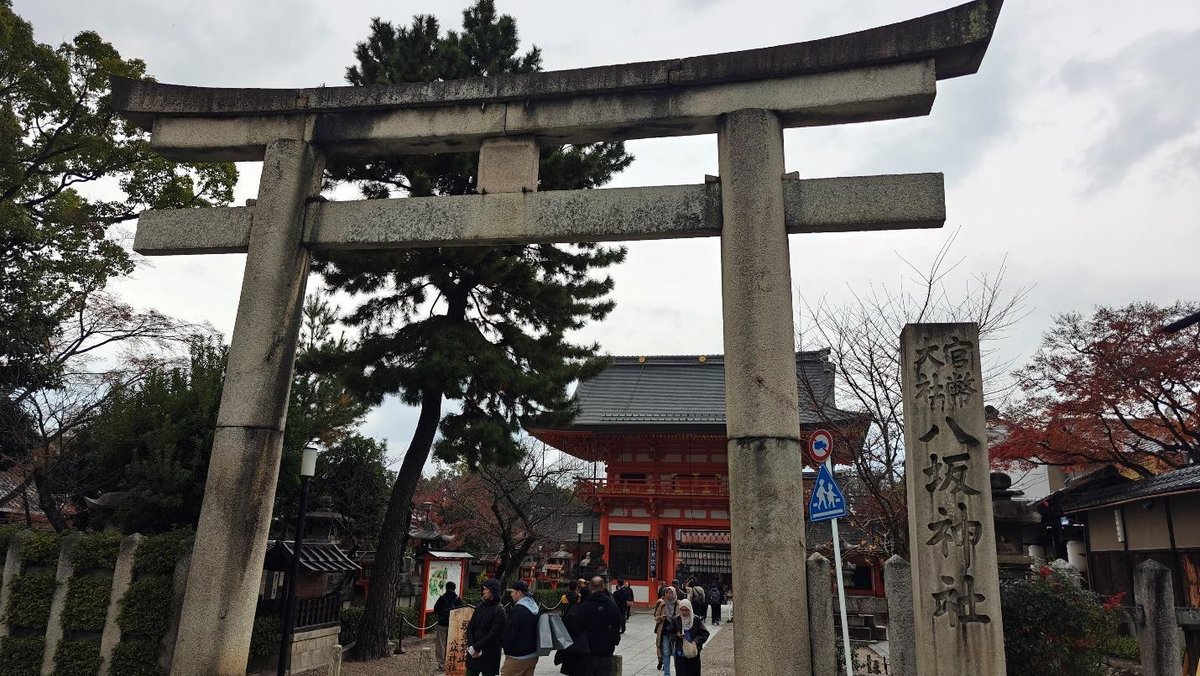
Much like a lot of the shrines here in Kyoto, Yasaka Shrine is easily accessible by bus.
The Gion bus stop is actually on the shrine grounds itself and from there you can walk south and then turn left (eastward direction) until you come across this stone torii. Just behind it, you'll then find the Minami-romon Gate.
Conversely, you can also go up north from the Gion Bus Stop and you'll find yourself at the Nishiromon Gate.
Slow Walk Through Yasaka Shrine
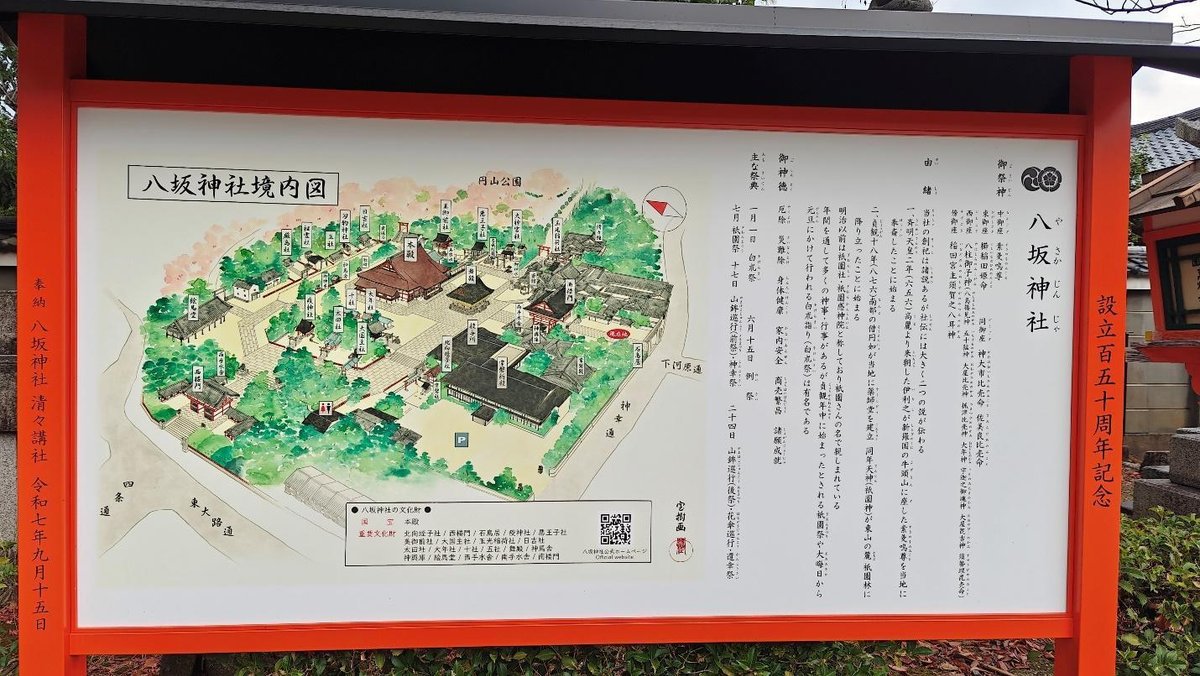
Now it really won’t matter which Yasaka Shrine gate you choose to enter if it is going to be your first itinerary item for the day. As you enter the stone torii and just before the Minami-romon Gate, you’ll find this guide map off to the left of the path. It features the buildings in this shrine as well as an indicator of where the map (and by extension, you) is in relation to them.
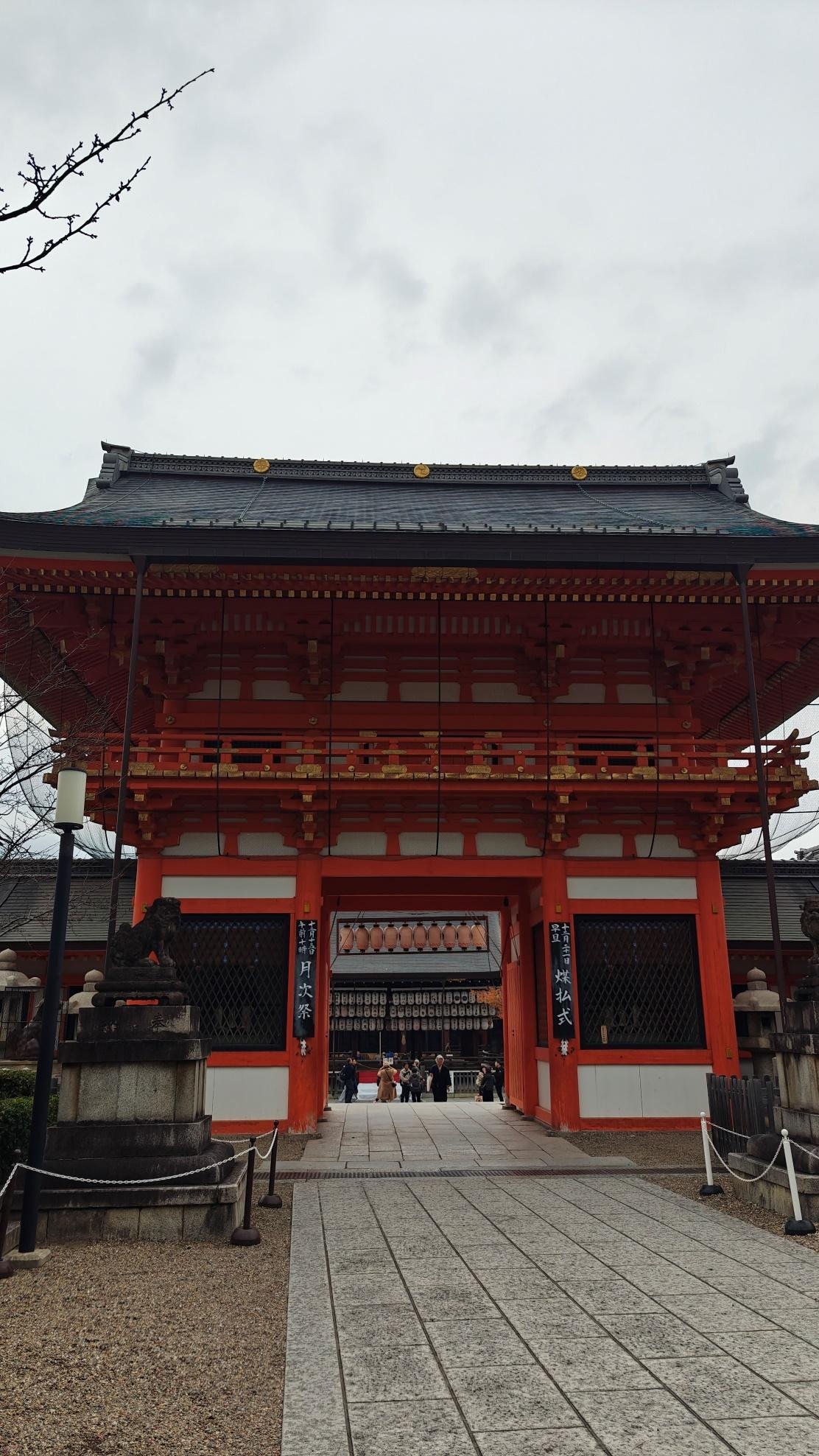
Here’s what the Minami-romon Gate looks like. It looks a lot like the Romon in Fushimi Inari Taisha which isn’t really surprising considering both are Shinto shrines. What was really surprising for me though was the fact that there weren’t that many people here.
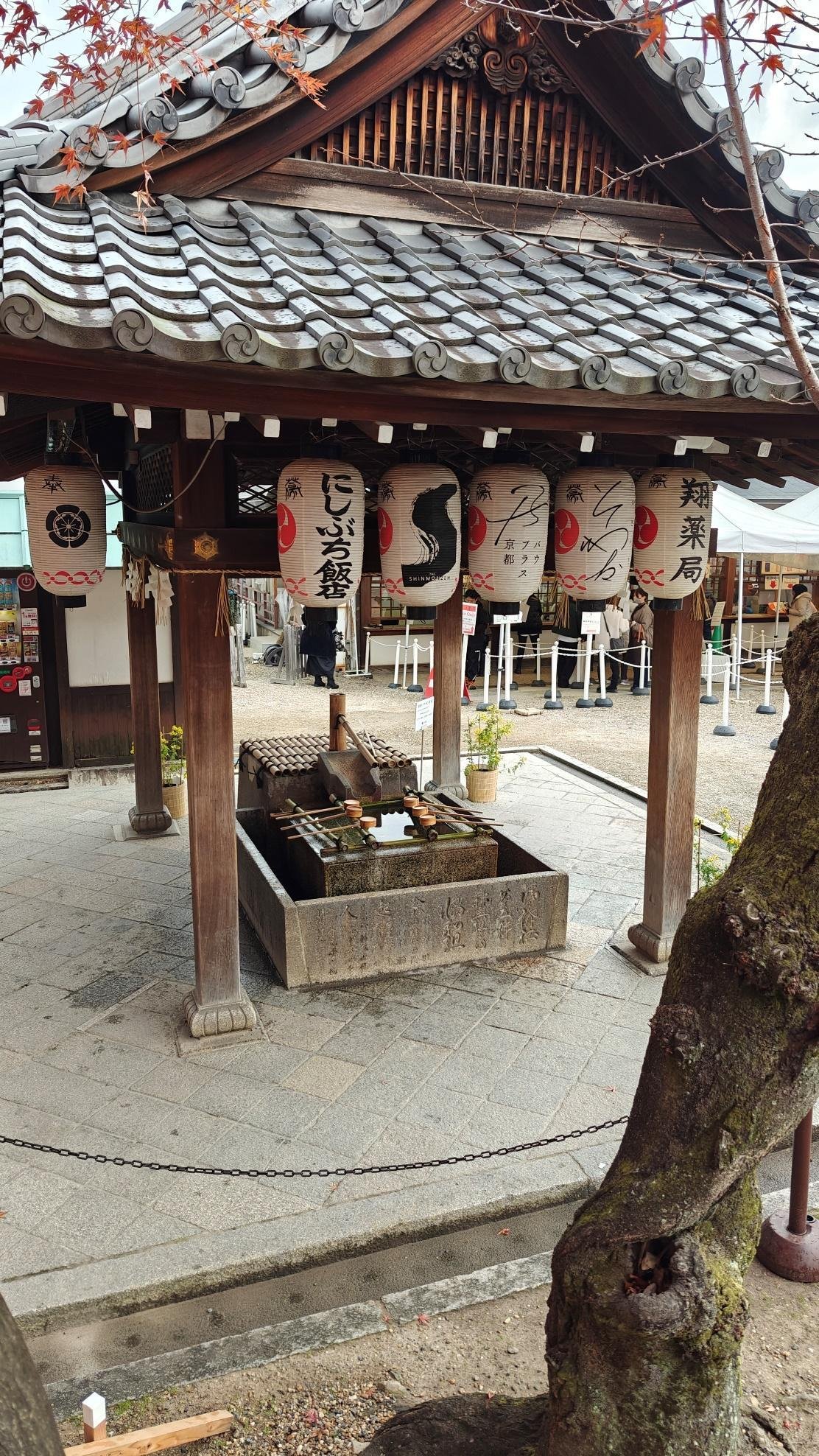
Unlike with Fushimi Inari Taisha though, the chozubachi here at Yasaka Shrine can be found after you go inside the gate. Just turn to the left once you get past the gate and you should find the pavilion housing the chozubachi. Compared to Fushimi Inari Taisha’s, this also is a lot smaller and lower to the ground.
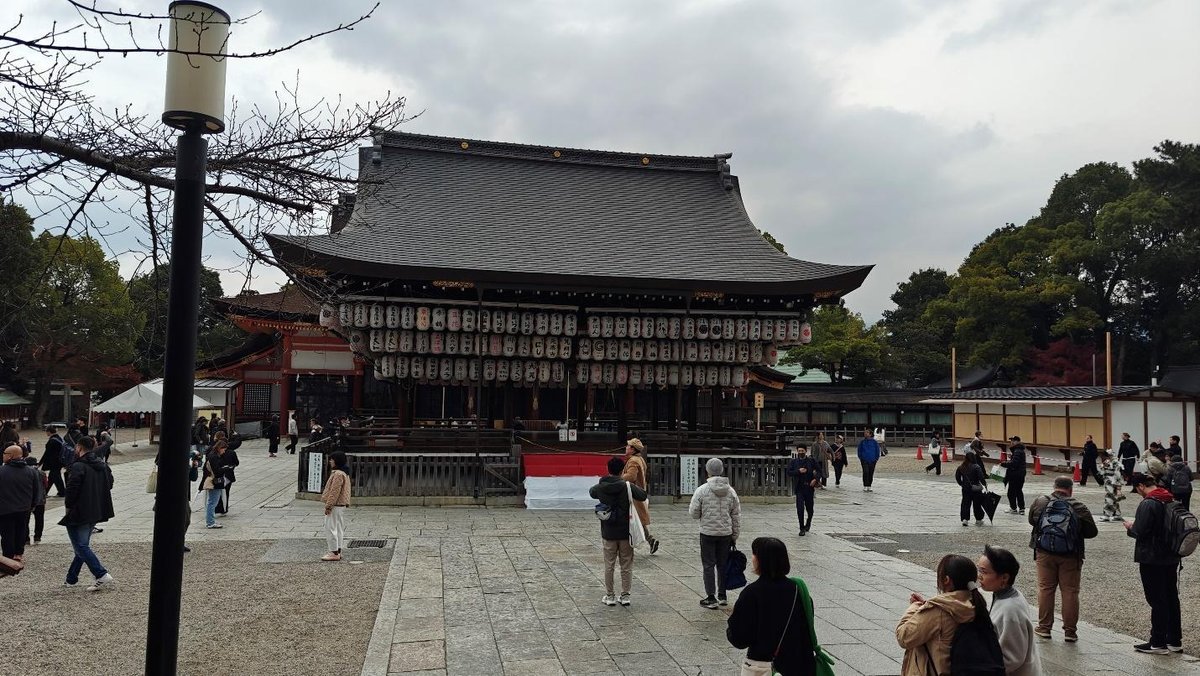
If you looked straight ahead as you entered the Minami-romon Gate then you’ll undoubtedly lay your eyes on the Buden Stage. Also known as the Kaguraden or Dance Stage, this building looks a lot like the Haiden in Fushimi Inari Taisha. Take note though that the Haiden and Kaguraden there serve two completely different purposes.
The former is usually reserved for worship and oratory while the latter is for the sacred dance and music performance called kagura. As you’ll find out later though, things are a bit different here at Yasaka Shrine.
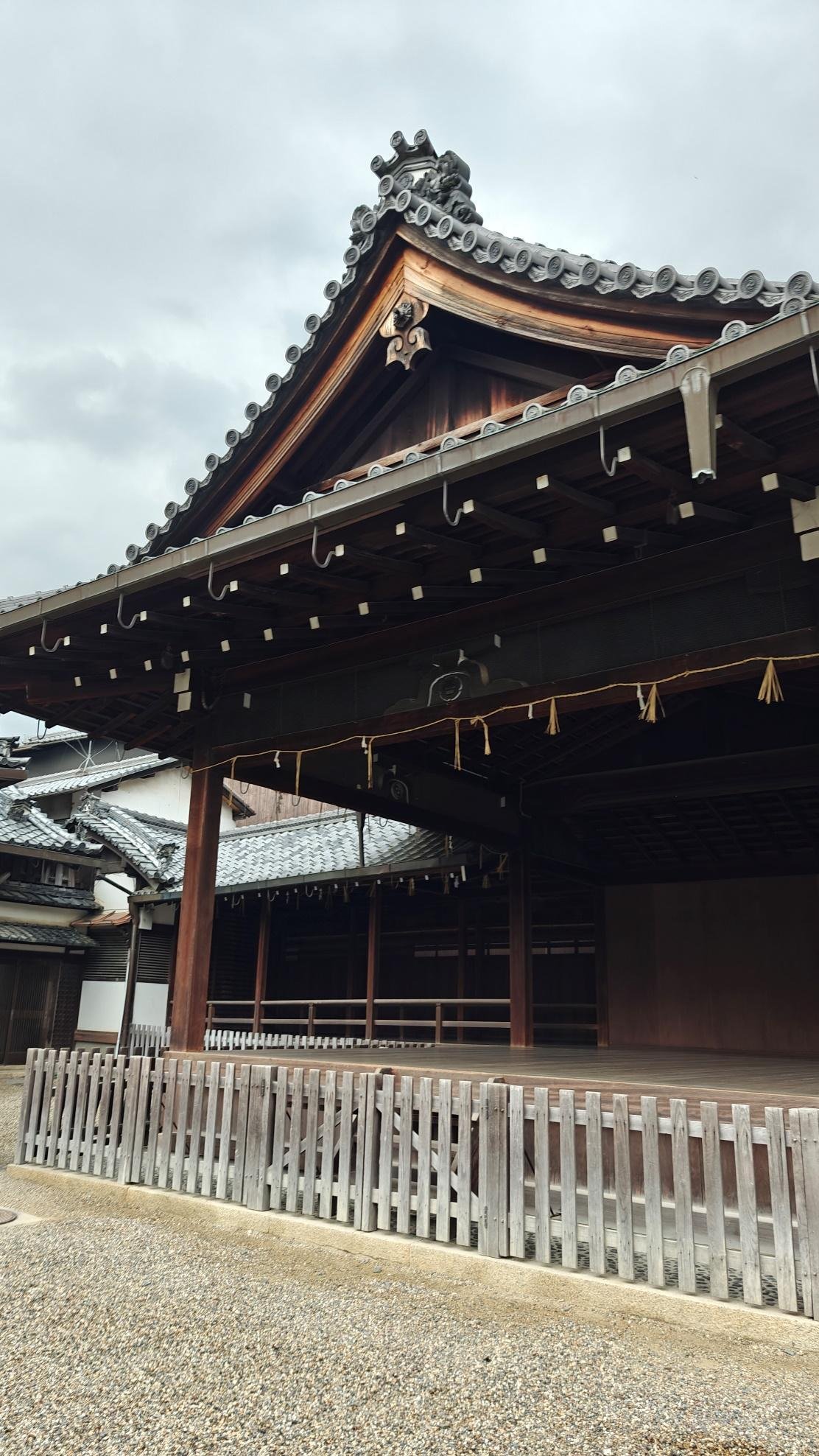
If you look to the right after entering the Minami-romon then you’ll notice that there’s another stage here. It’s called the Noh Stage and as the name implies, it’s mainly used for Noh theatrical performances. As for why there’s a stage for Noh theater here, it’s actually an art form that developed from kagura which was mainly performed in Shinto shrines.
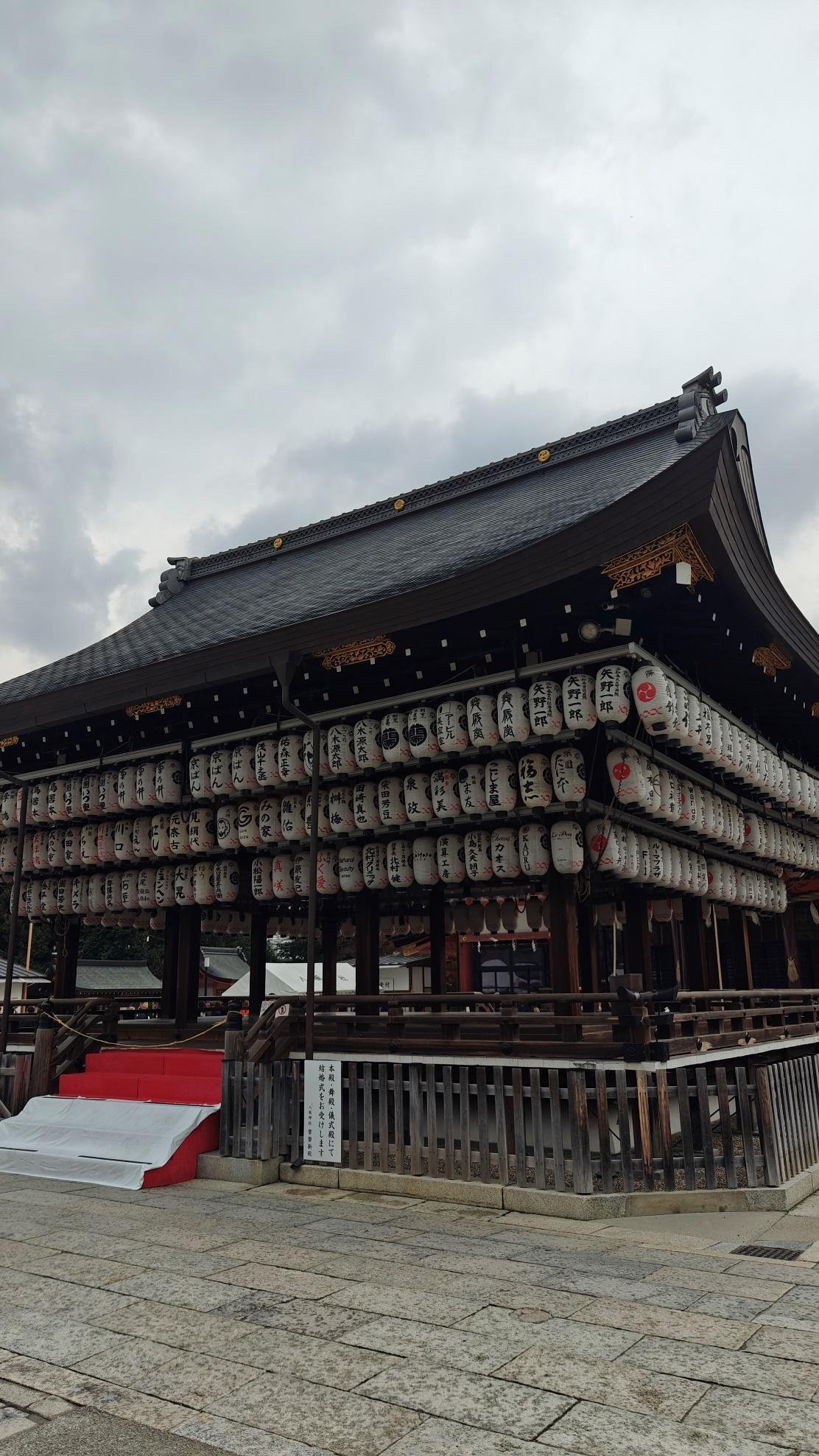
So if you read my write-up about Fushimi Inari then you’re probably wondering why the Kaguraden is here instead of the Haiden. Well, not all shrines are built the same. More often than not, a lot of the buildings’ locations relative to each other differ from shrine to shrine.
In the case of Yasaka Shrine, the Haiden is actually a part of the Honden rather than a separate building. As for the lanterns hanging from the ceiling of the Buden Stage, these represent the shrine’s major donors.
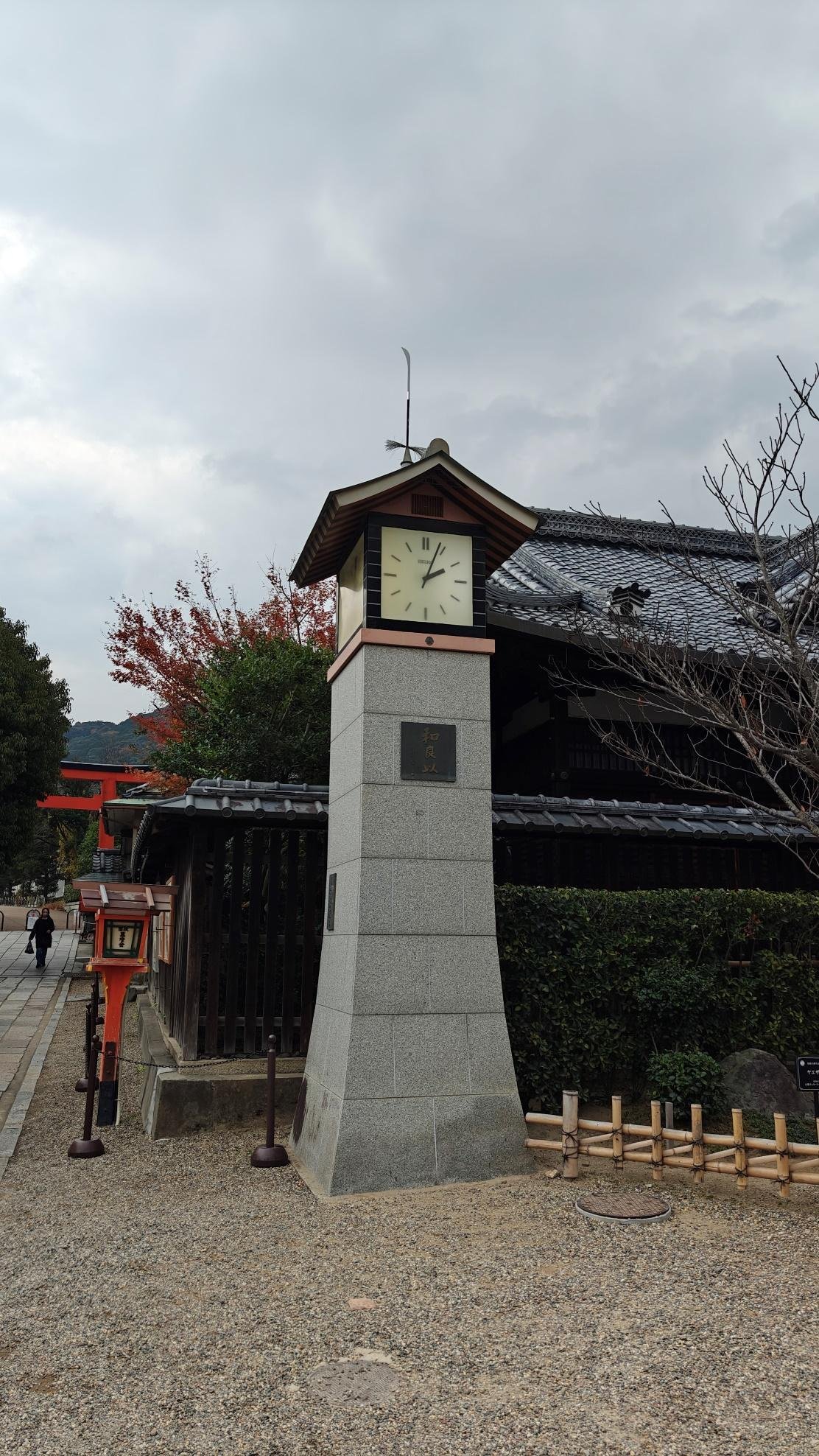
This is the Warai Clock Tower that you’ll come across if you turn to your right while facing the Buden Stage. Now I’m not actually sure as to the clock tower’s history. It’s obviously not an original part of the shrine since mechanical clocks only arrived in Japan in the mid-1500s (Yasaka Shrine has been around since 656).
Surprisingly though, the clock tower doesn’t look out of place.
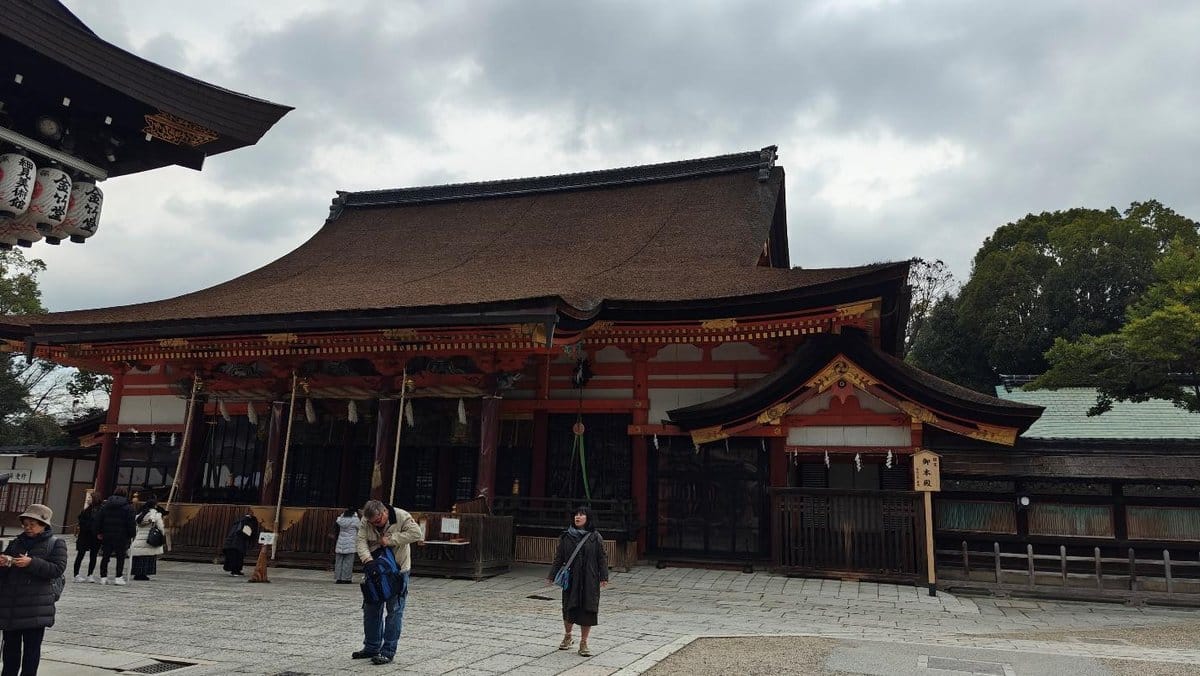
Behind the Buden Stage is the Honden or Main Hall. The facade here is actually the Haiden of the shrine. It’s not that noticeable from this angle but there’s actually a platform where ceremonies are conducted.
Of course, devotees and visitors can also donate here and then pull on the ropes to ring the bells for Susanoo-no-Mikoto to hear their prayers and wishes.
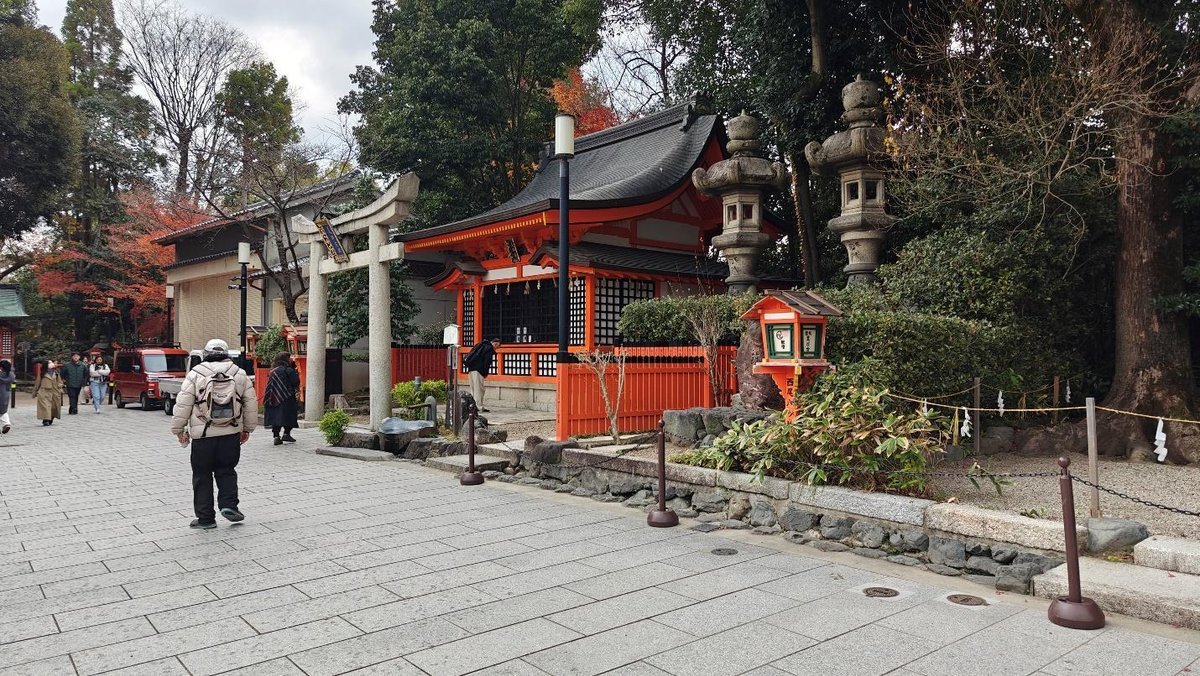
Of course, that’s not to say Yasaka Shrine doesn’t receive many visitors. A possible reason why there weren’t that many when I visited was because it was the off-peak season. In terms of attractions, there are plenty of well-preserved buildings here like the Utsukushi Gozen shrine shown in the image above.
A bit of a side note but this subsidiary shrine found to the right of the Honden (if you’re facing it) is where you want to go if your wish is to become more beautiful.
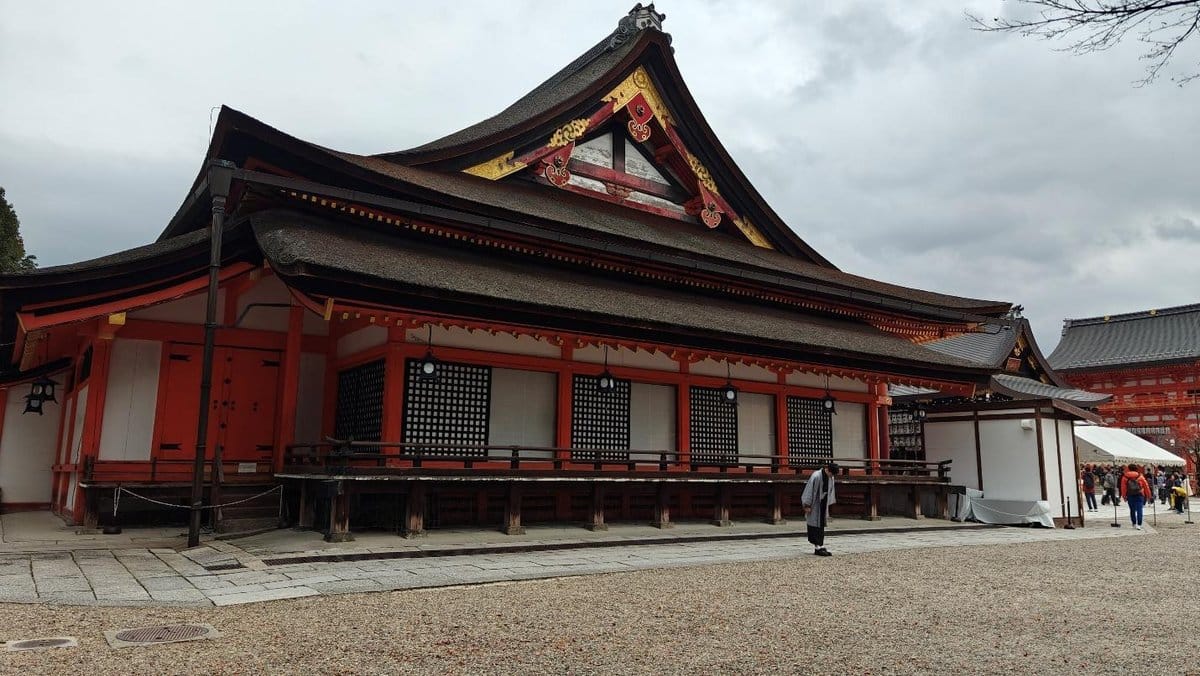
This is what the west-facing side of the Honden looks like. Off to the side, you can see parts of the Minami-romon Gate and the roof of the Buden Stage. If I’m not mistaken, it’s the largest traditional building here in the shrine complex and quite possibly the most impressive looking.
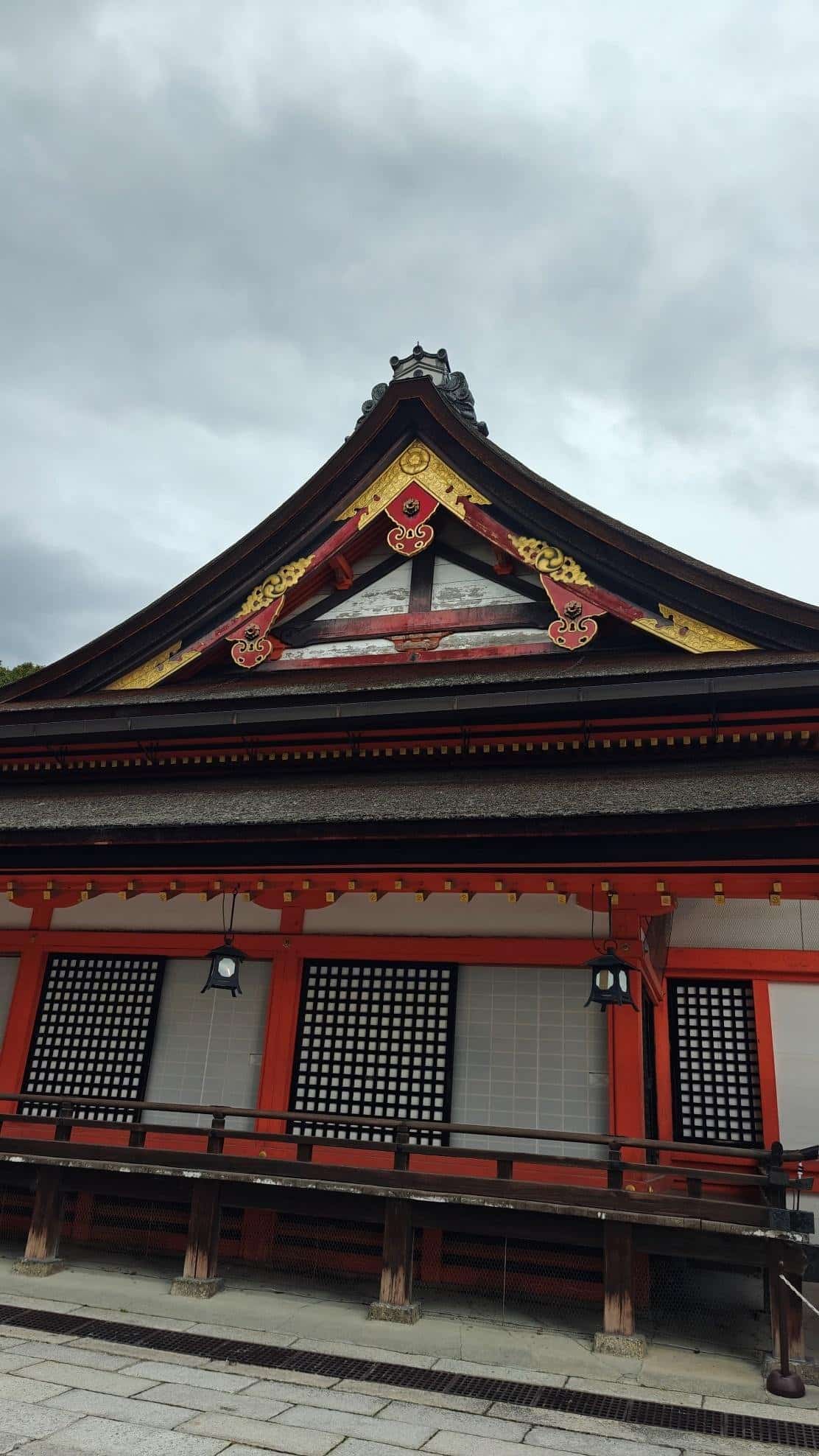
On a side note, the absence of crowds here at Yasaka Shrine initially perplexed me. You see, the deity worshipped here is Susanoo-no-Mikoto. In the Shinto pantheon, he is considered higher than Inari in the Shinto pantheon of gods/kami.
So why does his shrine look a lot less flashy? Turns out, Inari is actually more popular due to being a deity of prosperity and industry. This means that the shrines dedicated to them typically receive more visitors and more donations.
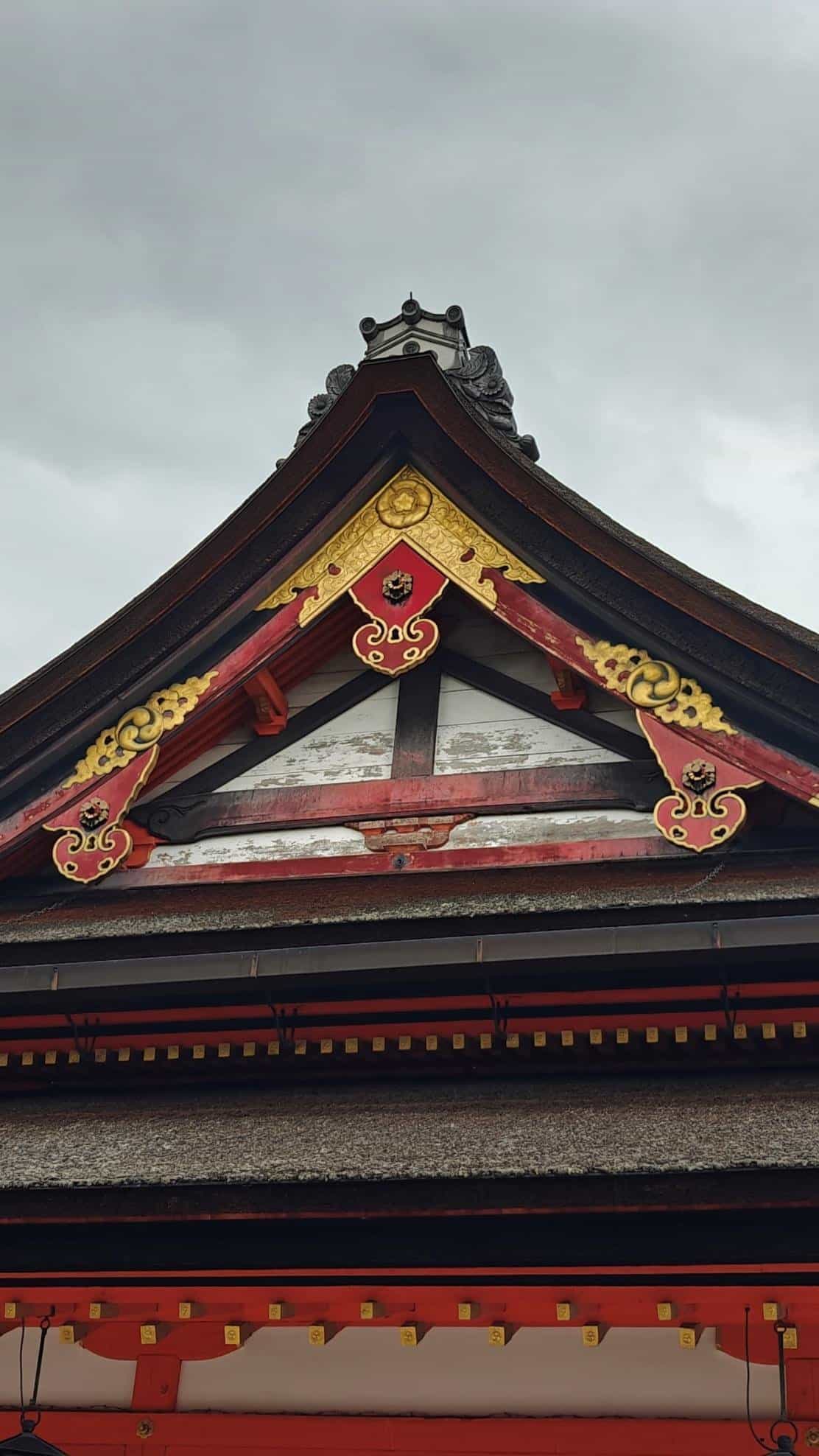
A tell-tale sign that this is a Shinto shrine is the presence of the symbol consisting of three magatama beads called a Mitsudomoe. An interesting bit of information regarding these is that they actually function as a sort of charm to protect against fire. Hence their presence here on the fascia of the Honden’s roof.
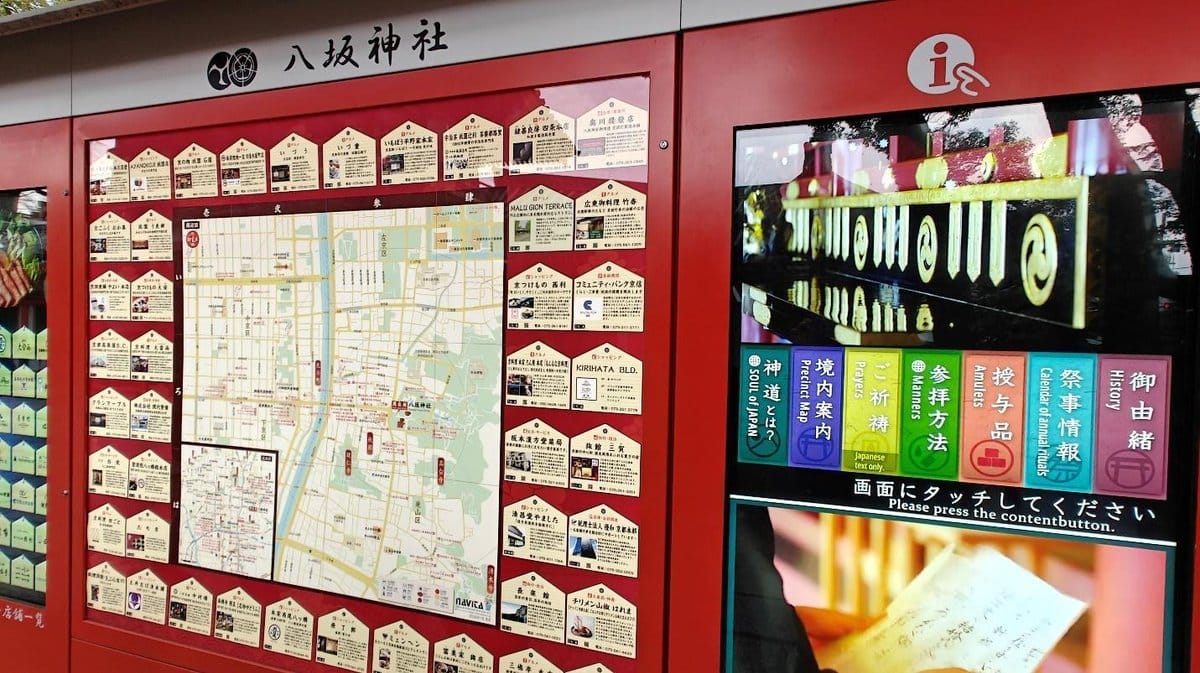
After admiring the Honden, I then decided to head to the Nishi-romon Gate next. The visitor guide map in this area is actually a lot more detailed. Aside from a map of the shrine, it also lists down surrounding businesses and establishments that you might want to consider checking out.
Next to the map is an interactive display that you can use to get more info about the shrine’s history and calendar of activities.
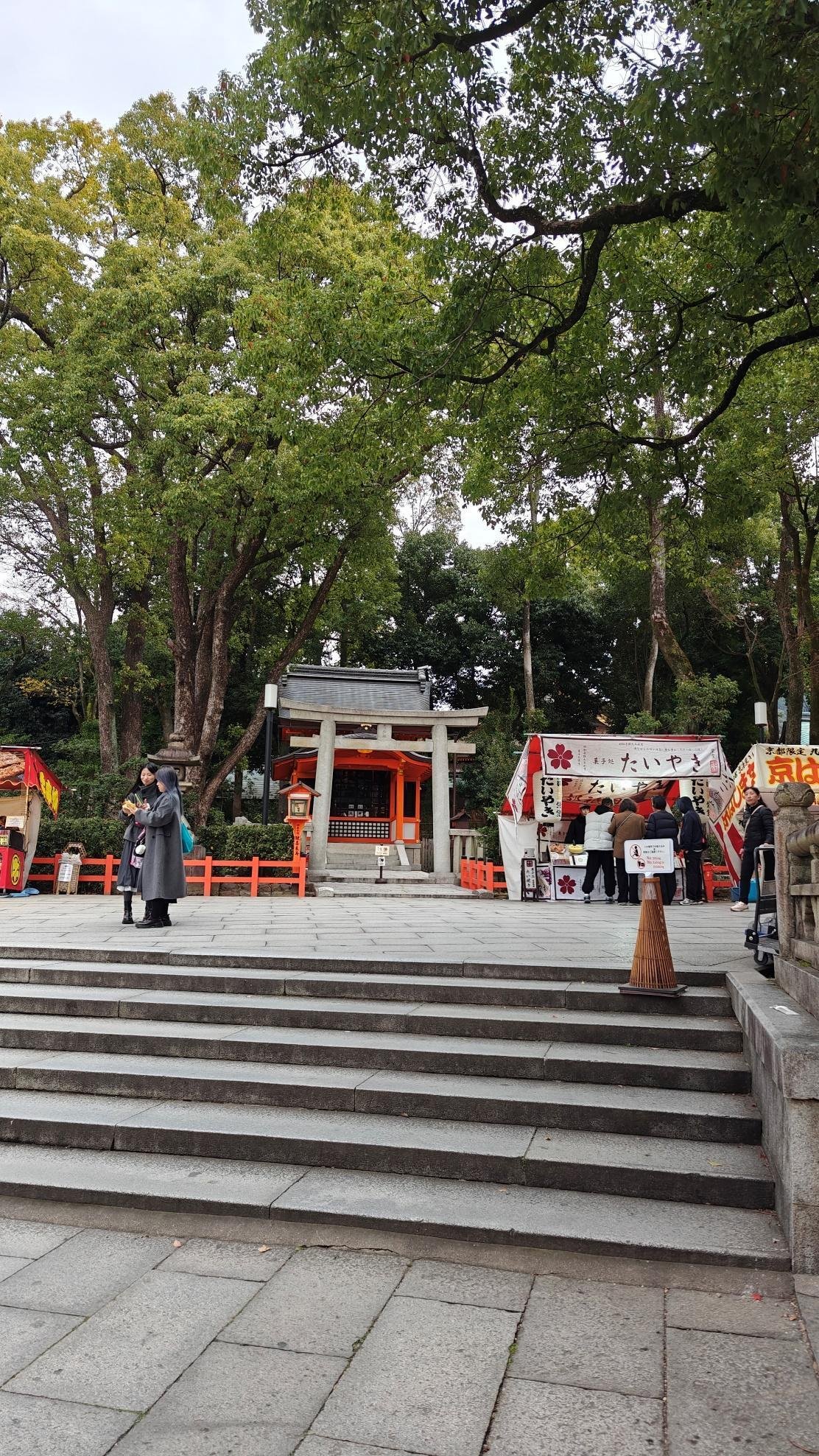
This is the area just before exiting (or after entering) the Nishi-romon Gate. It’s probably the busiest area in the shrine complex thanks to the stalls here selling Kyoto street food. In the background you’ll also notice an Eki Jinja or a shrine dedicated to Somin Shorai, a deity who guards against plagues and illnesses.
While it might be small, the sub-shrine does play a major role as the host of the last day (Nagoshi-sai or Eki Jinja Nagoshi-sai) of the Gion Matsuri in July.
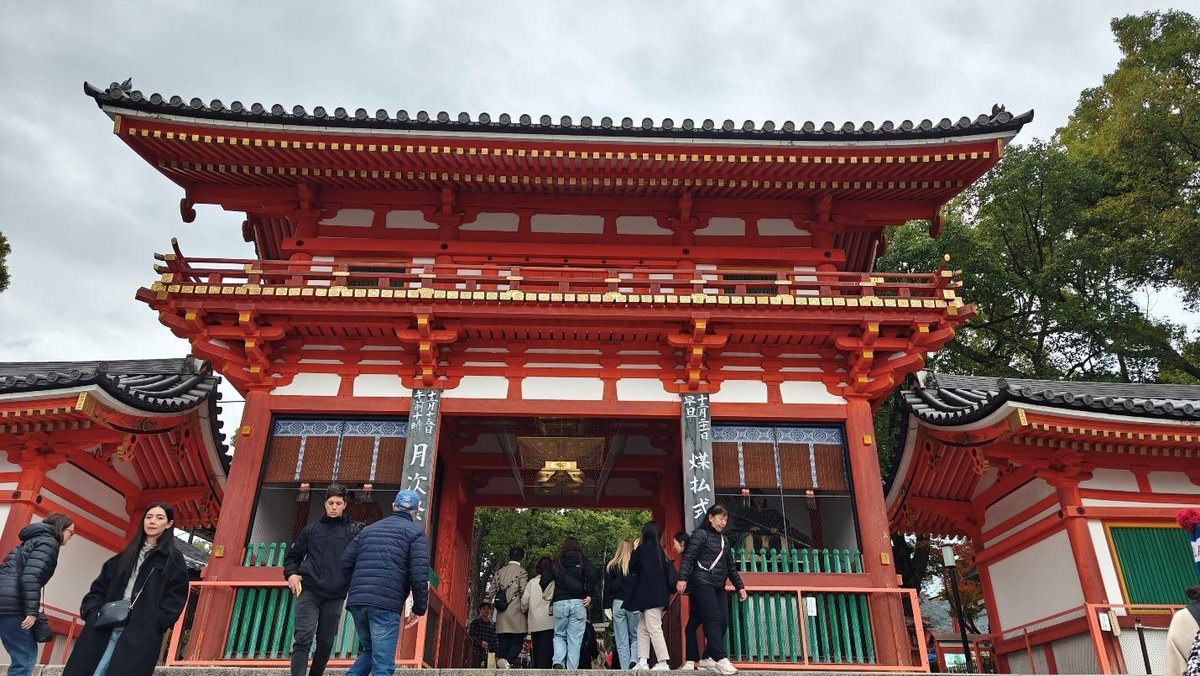
And so I end my walk through Yasaka Shrine with this view of the Nishi-romon Gate. The shrine was honestly a breath of fresh air as the crowd here was non-existent. It was a little short but still very much worth the time and effort.
Moreover, Yasaka Shrine is just one of a number of attractions in this area. There are a number of gardens (Maruyama Park) as well as a Buddhist temple (Chionin Temple) that are adjacent and/or a walking distance from here.Will you be dropping by Yasaka Shrine on your visit to Kyoto? If yes then head down to the comments section and share your reasons for doing so with us!
And if you’ve already been to this Shinto shrine then make sure to also comment any tips and recommendations you might have!