
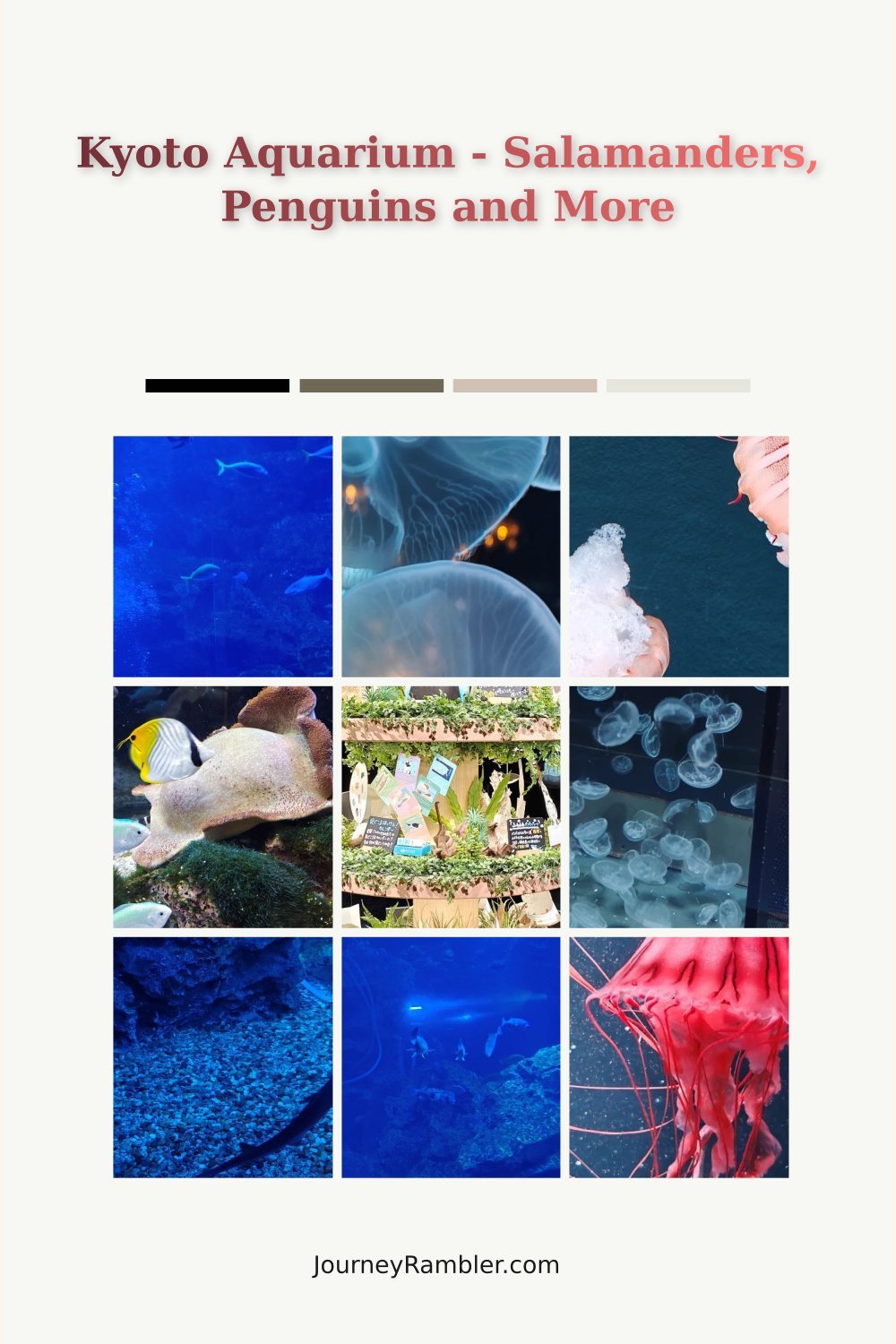
Kyoto Aquarium was probably one of the most surprising locations I visited during my recent Kyoto Trip. You’d think Kyoto only has traditional Japanese culture and architecture but the city actually has more to offer and the aquarium is proof of that. I was fortunate enough to have spent a couple of hours here and was genuinely blown away by the rich and diverse selection of marine life that I saw here.
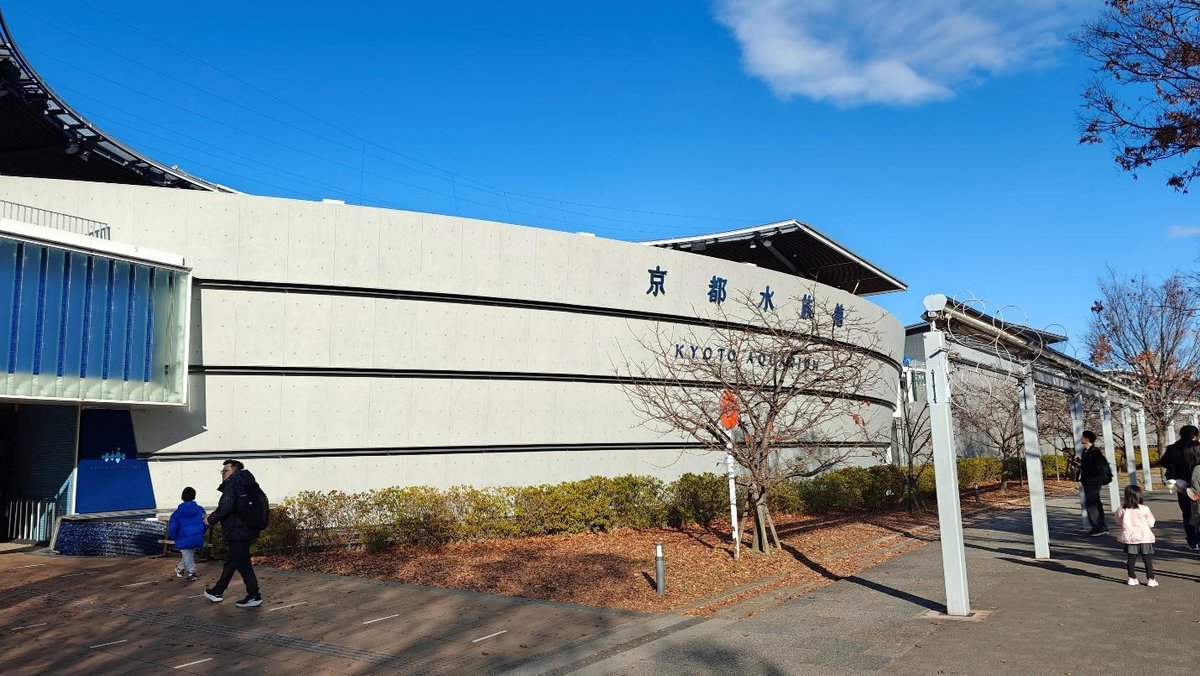
It’s relatively easy to get to Kyoto Aquarium since it’s quite close to both Kyoto Station and the Umekoji-Kyoto-nishi Station. Moreover, there are bus stops in nearby Umekoji Park if you’re not too keen on walking 7-15 minutes from the train stations. Of course, you could also just get a taxi or rideshare though those are probably going to cost more depending on where you’re picked up.
A Day at Kyoto Aquarium with Giant Salamanders, Penguins, Jellyfish and Dolphins
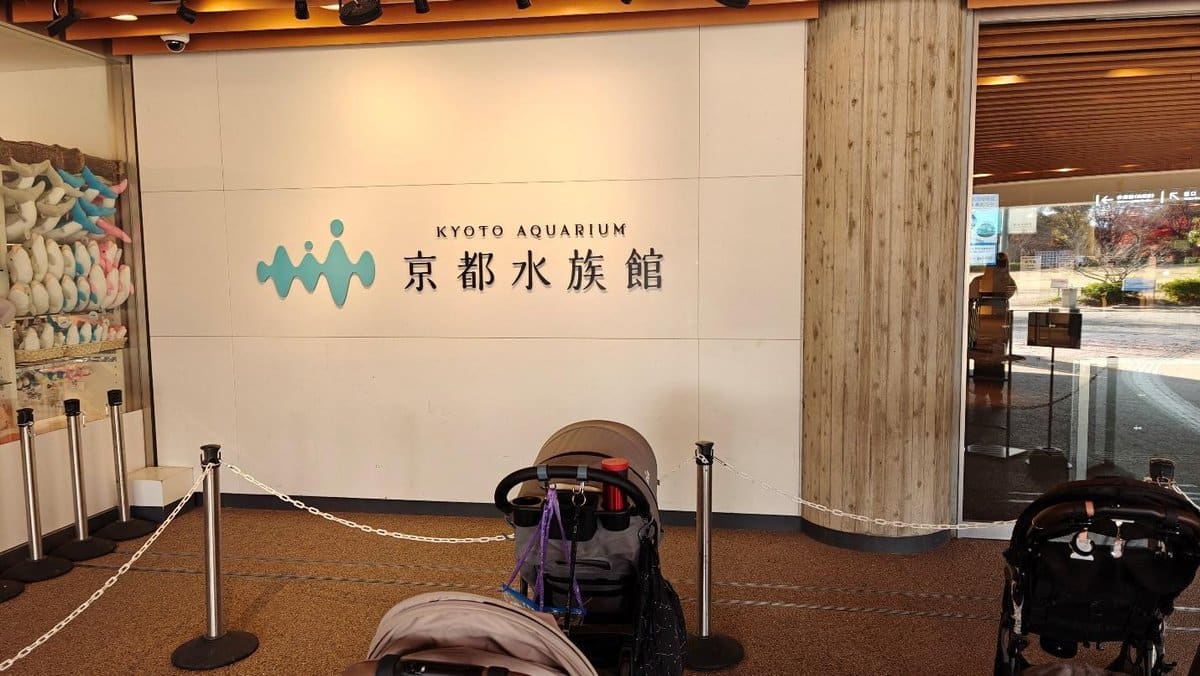
So this is the entrance to Kyoto Aquarium. Off to the side you’ll find the ticket counter as well as ticket machines. There are also some souvenirs here (see the dolphin plushies on the left of the image) that you can purchase.

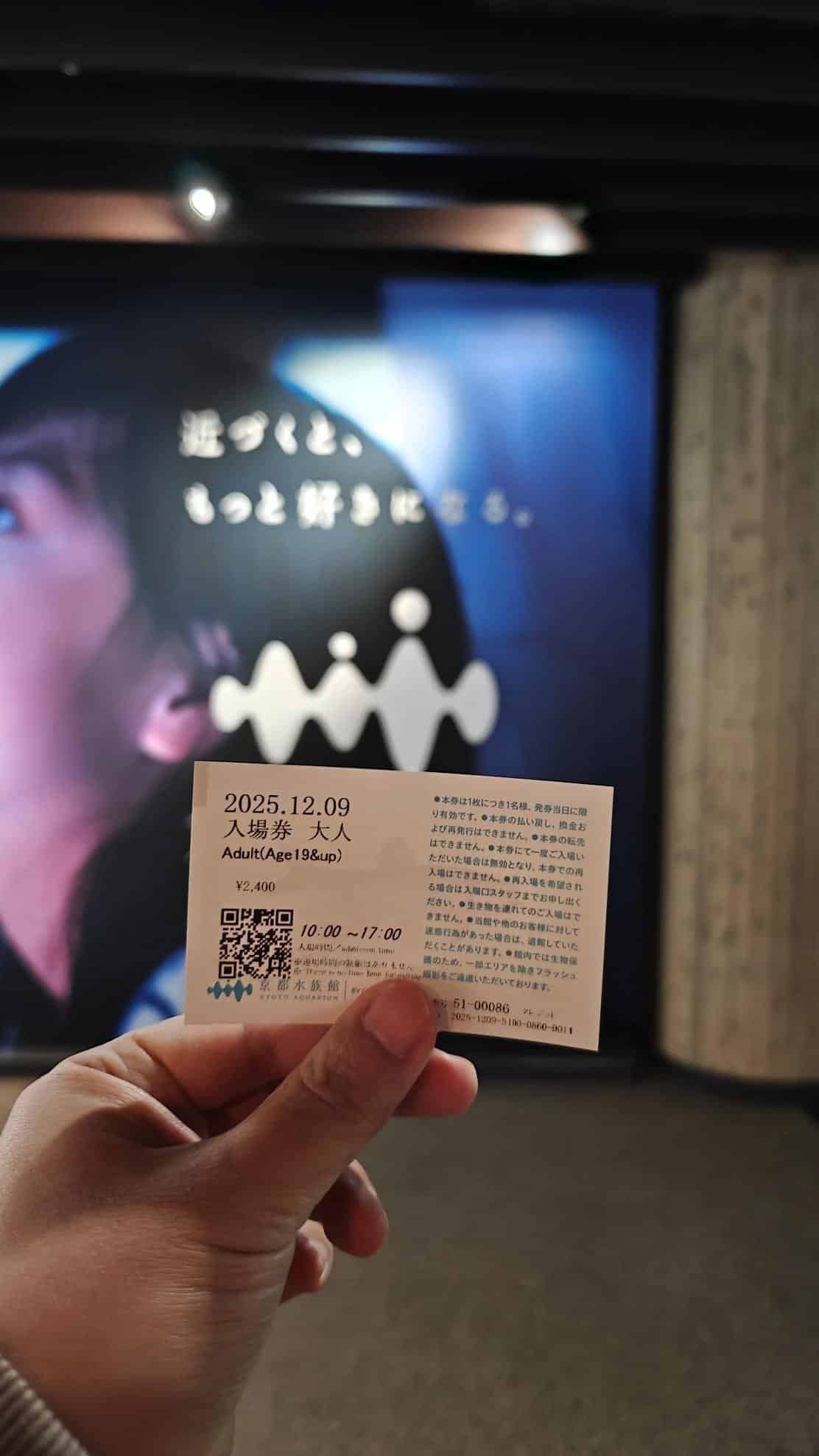
These are the rates for the tickets. While the Annual Passport might seem like a great deal, I would suggest not getting it if you’re not staying in Kyoto long term.
General admission is more expensive than a shrine or temple visit but considering the enjoyment I got from this visit, I think it was ultimately worth it.
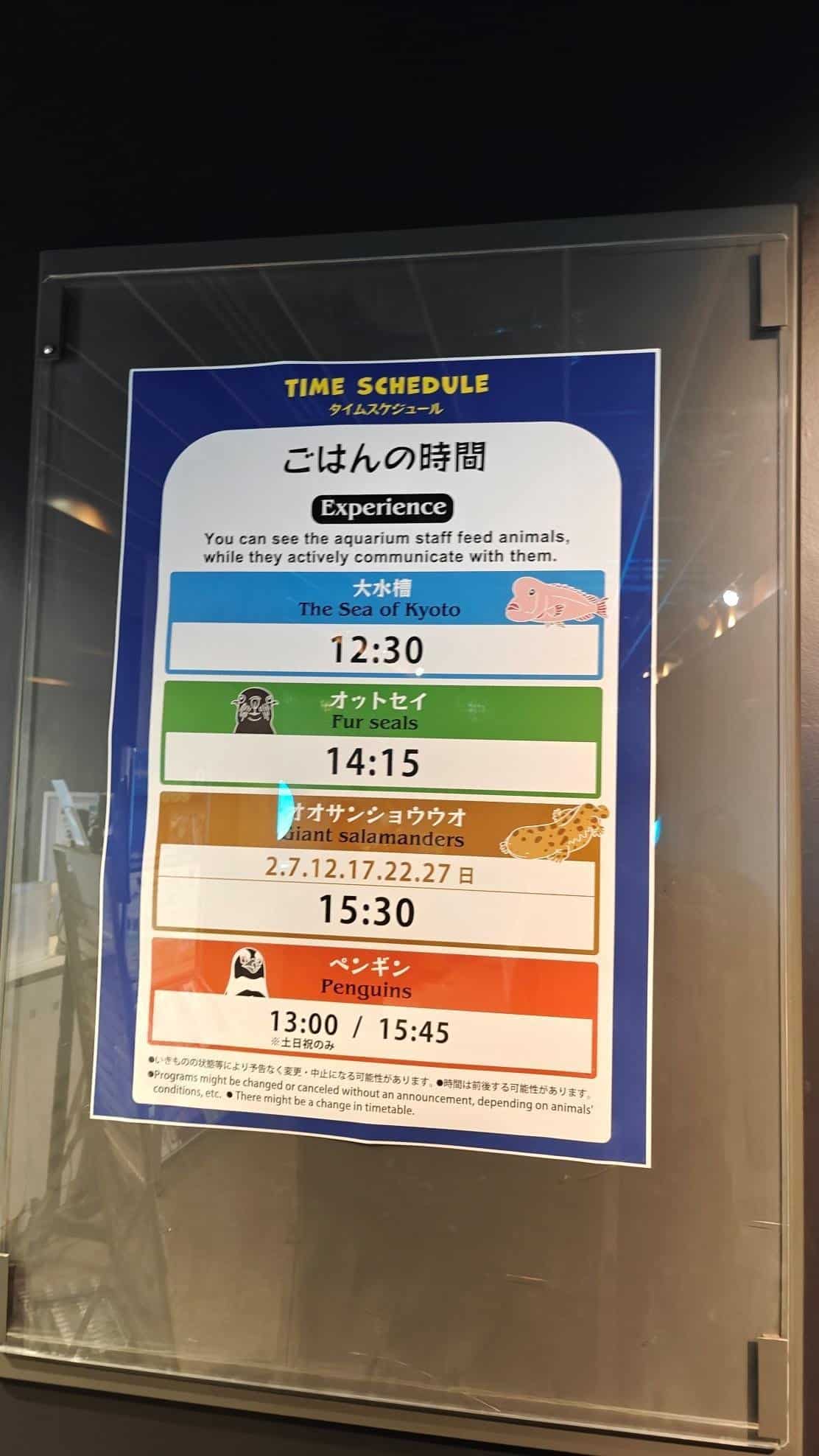
Here you can see the schedule for the feeding of some of the animals in the aquarium. Other than the Giant Salamanders, most of the popular animals are fed daily though you might want to time your visit during or after noon. Unfortunately, I only knew about this when I took the picture so I wasn’t able to see any of these animals being fed.
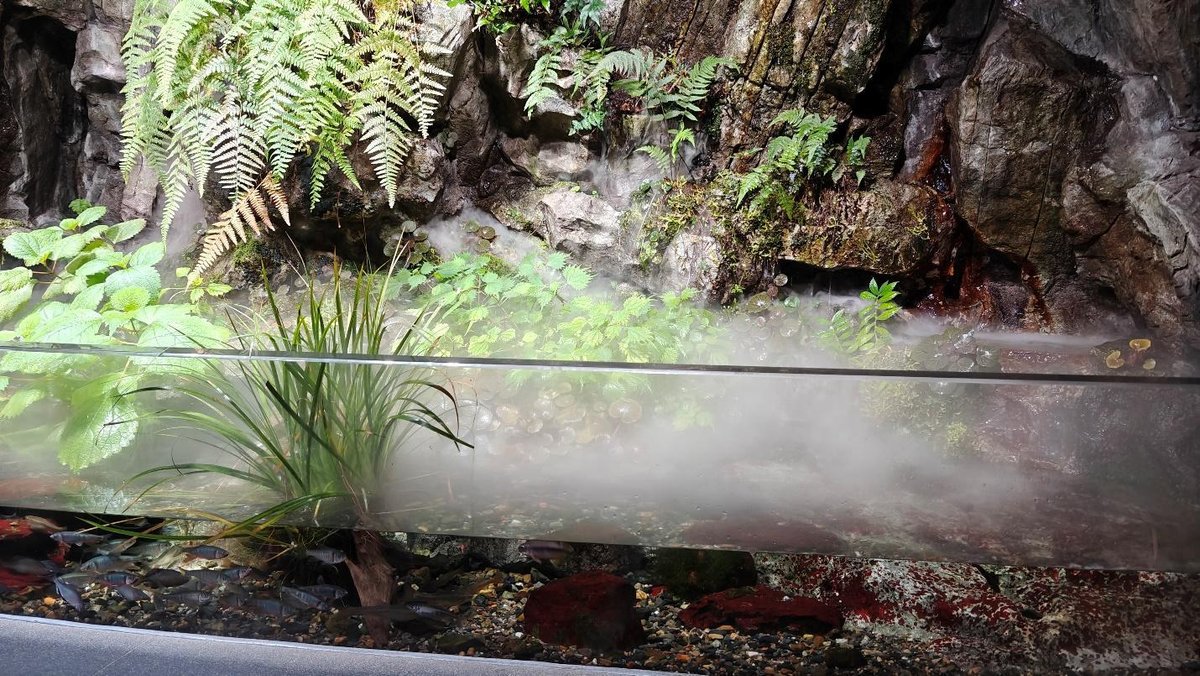
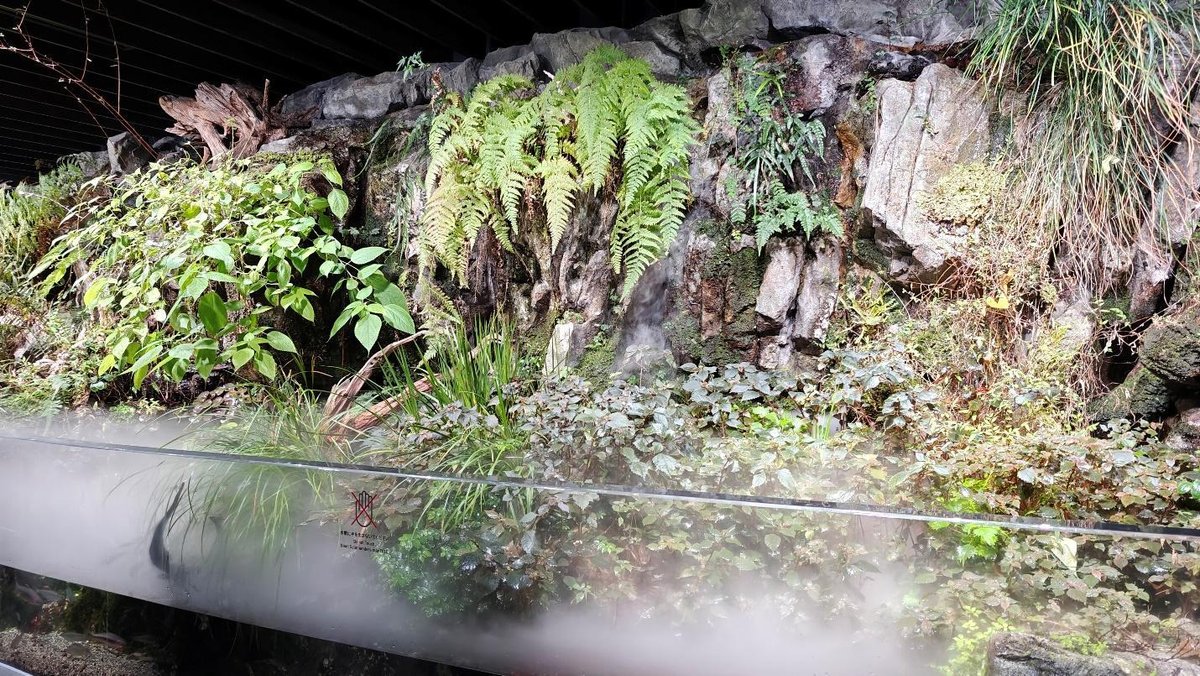
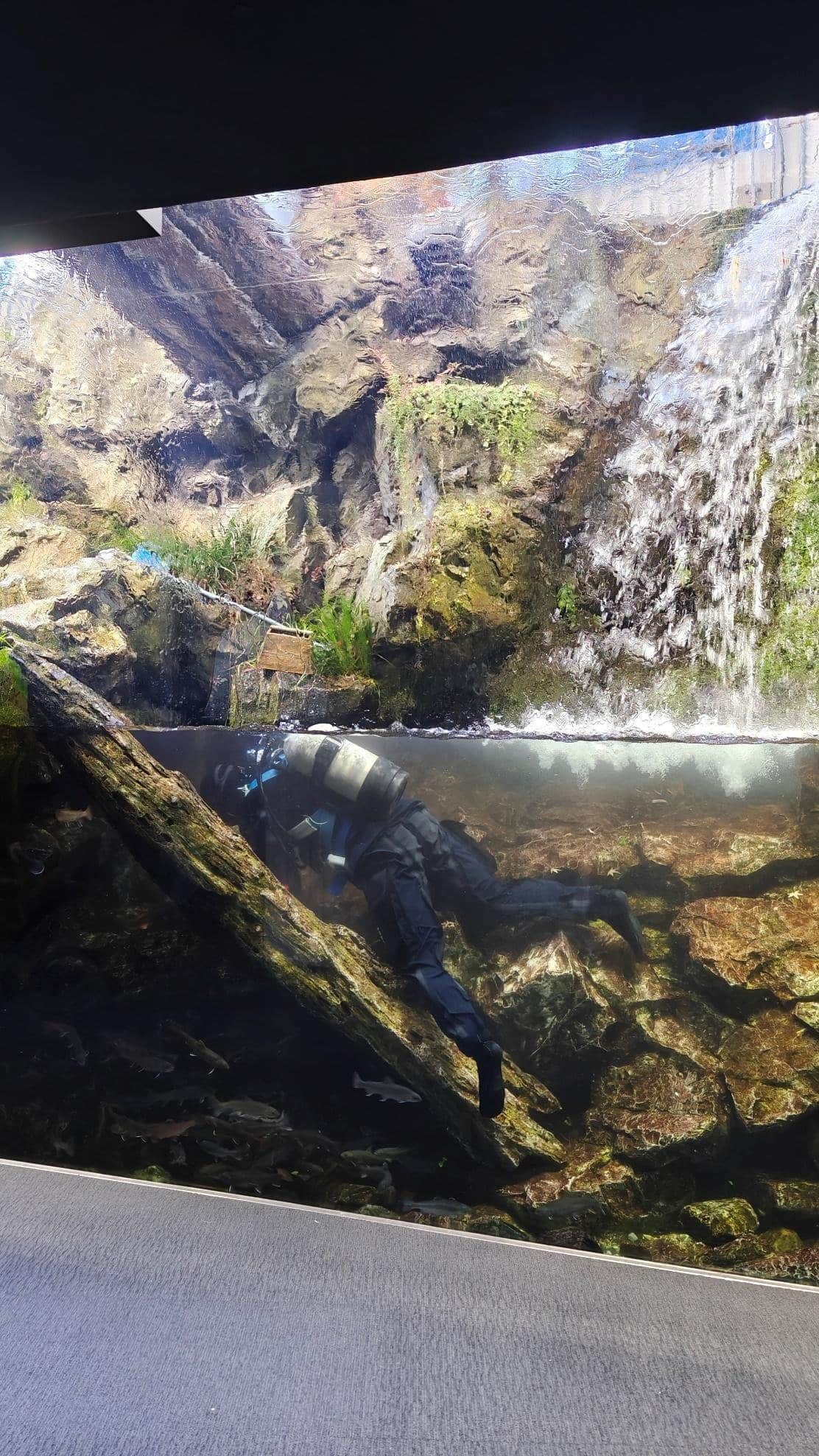
After entering, the first section of the aquarium you’ll encounter is The River of Kyoto. As its name implies, the section features an aquarium that’s designed to resemble the biomes of the rivers in and around the prefecture. This actually looked quite impressive as they even managed to recreate steam fog which also happens to appear during the autumn and early winter seasons.
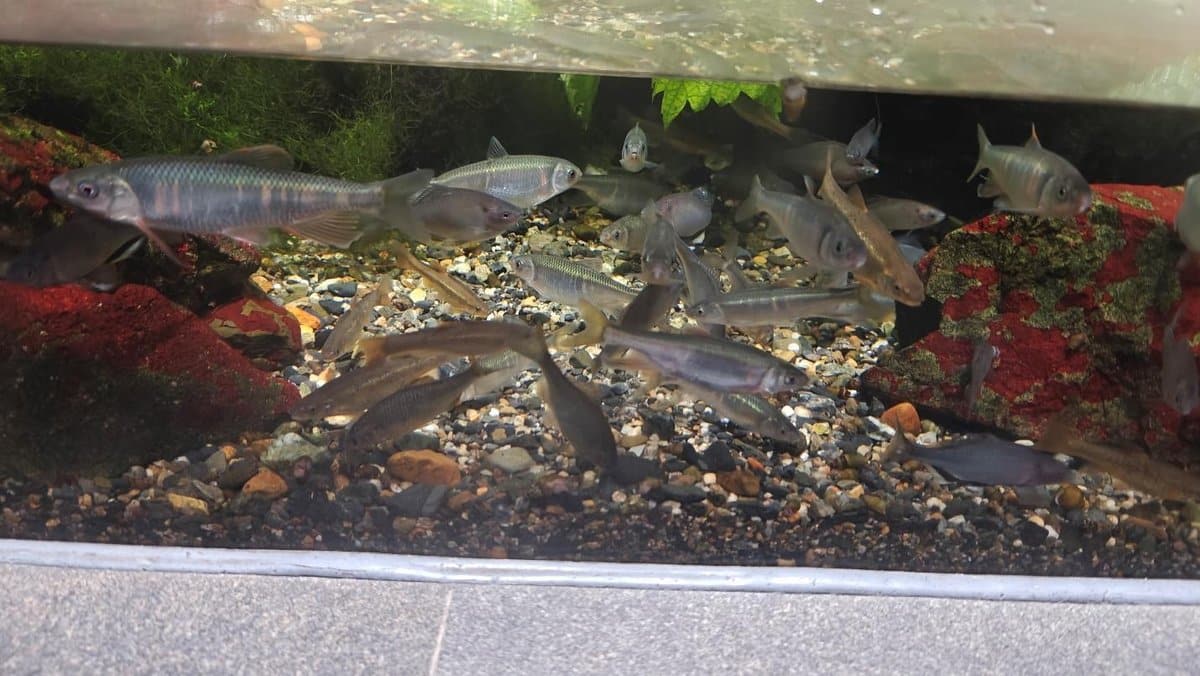
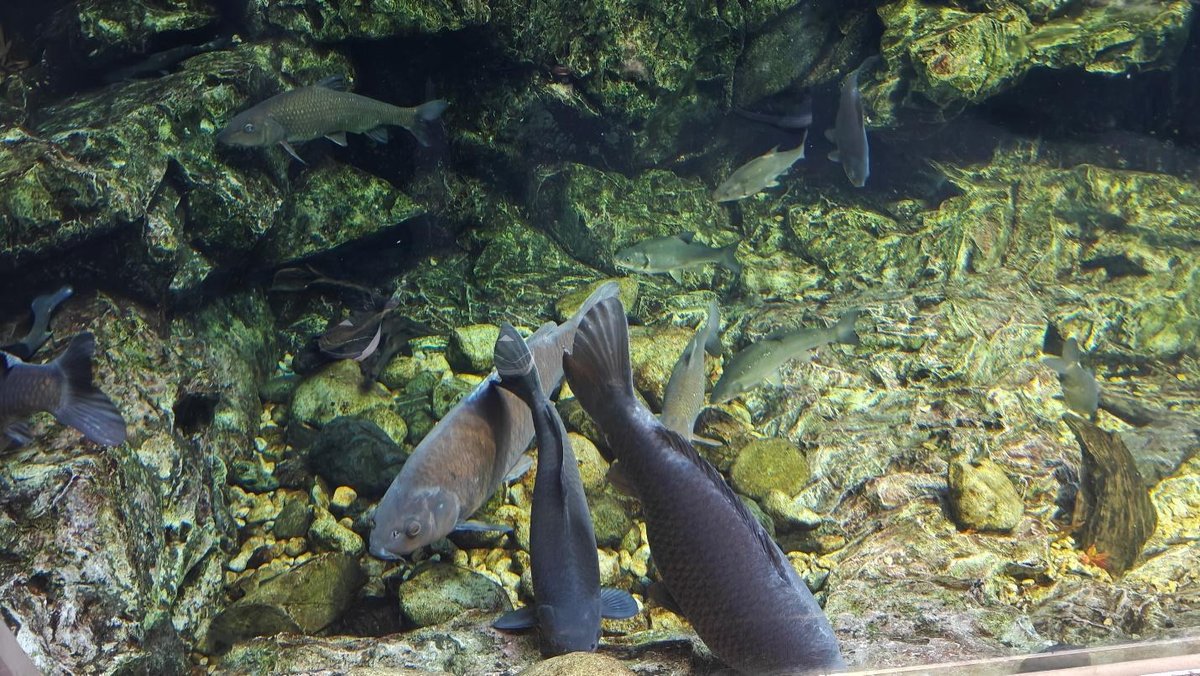
One of the first animals that I saw here was the Pale Chub or commonly known in Japan as Oikawa. It’s a very common fish in Japanese rivers and I was actually enamored by the shiny vertical stripes on its sides. I’ve also read that this kind of fish is edible though they’re not really considered a delicacy by any means.
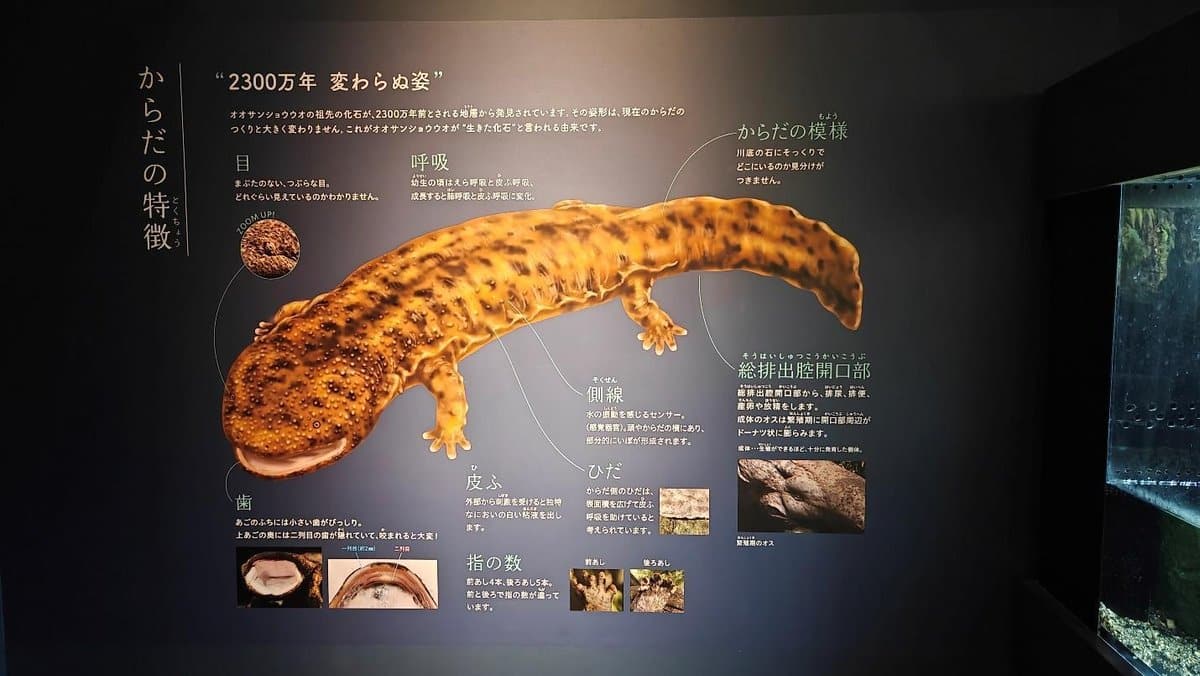
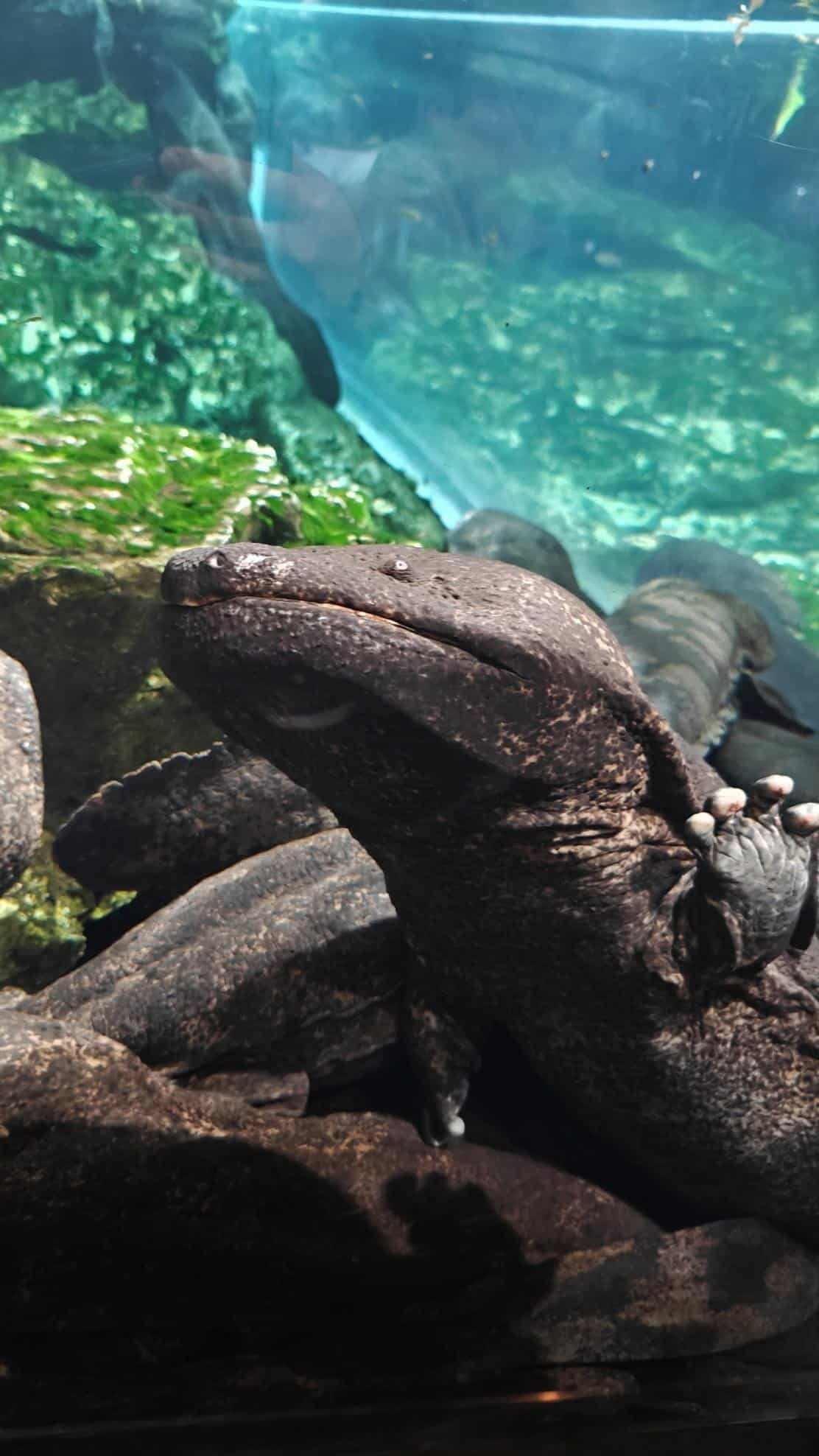
While the Pale Chub did look nice, the star of this section of the aquarium is undoubtedly the Giant Salamander. Here you can see an infographic of this living fossil. Yes, you read that right, the Giant Salamander has surprisingly maintained this form for 23 million years.
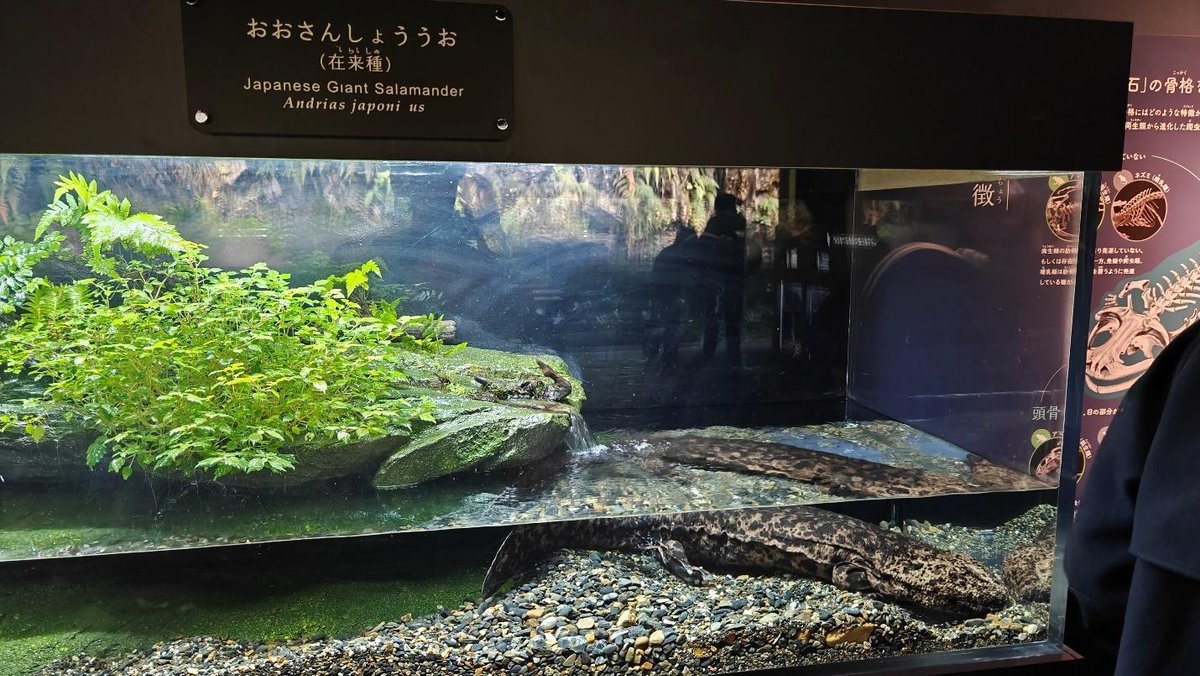
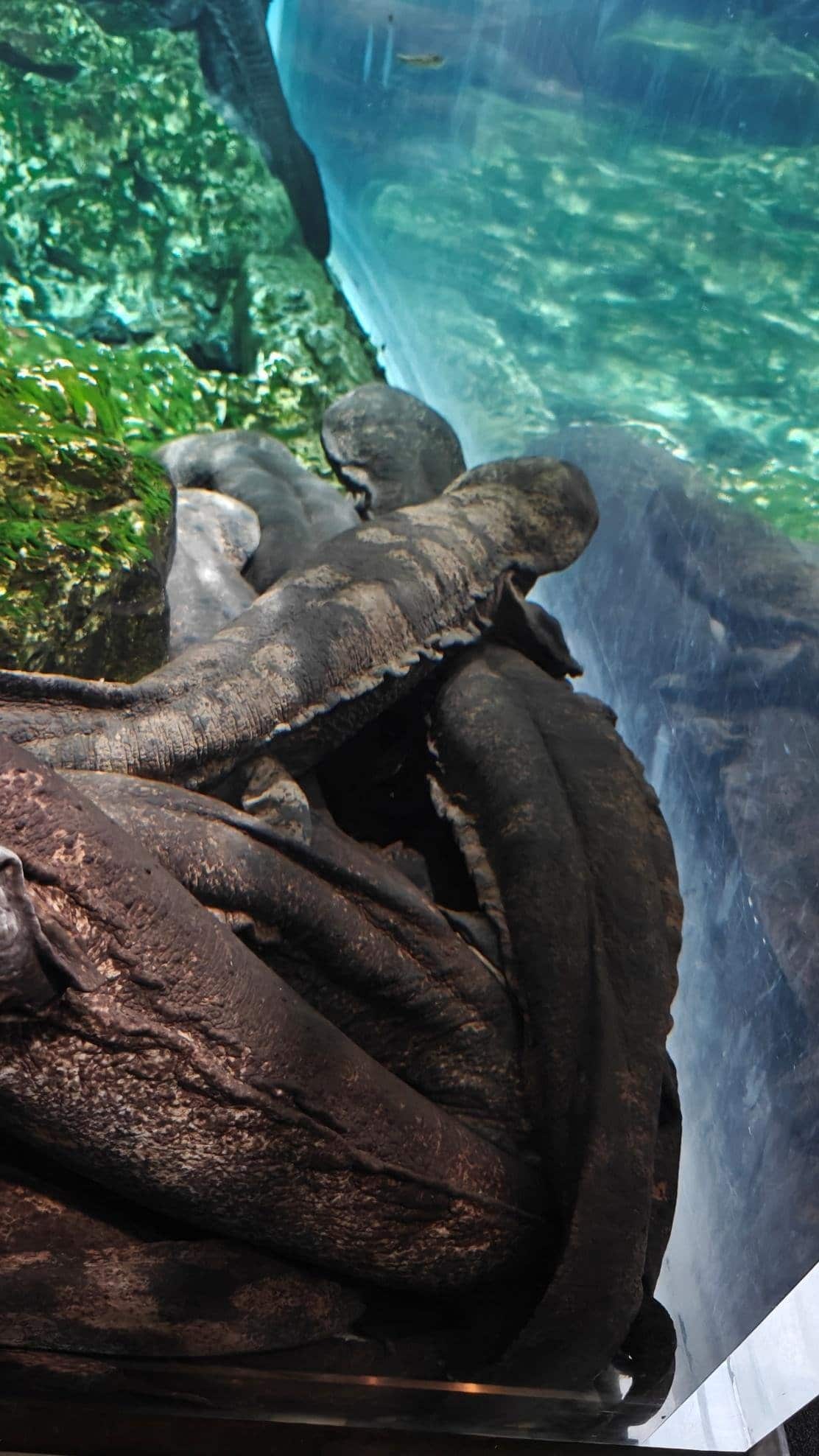
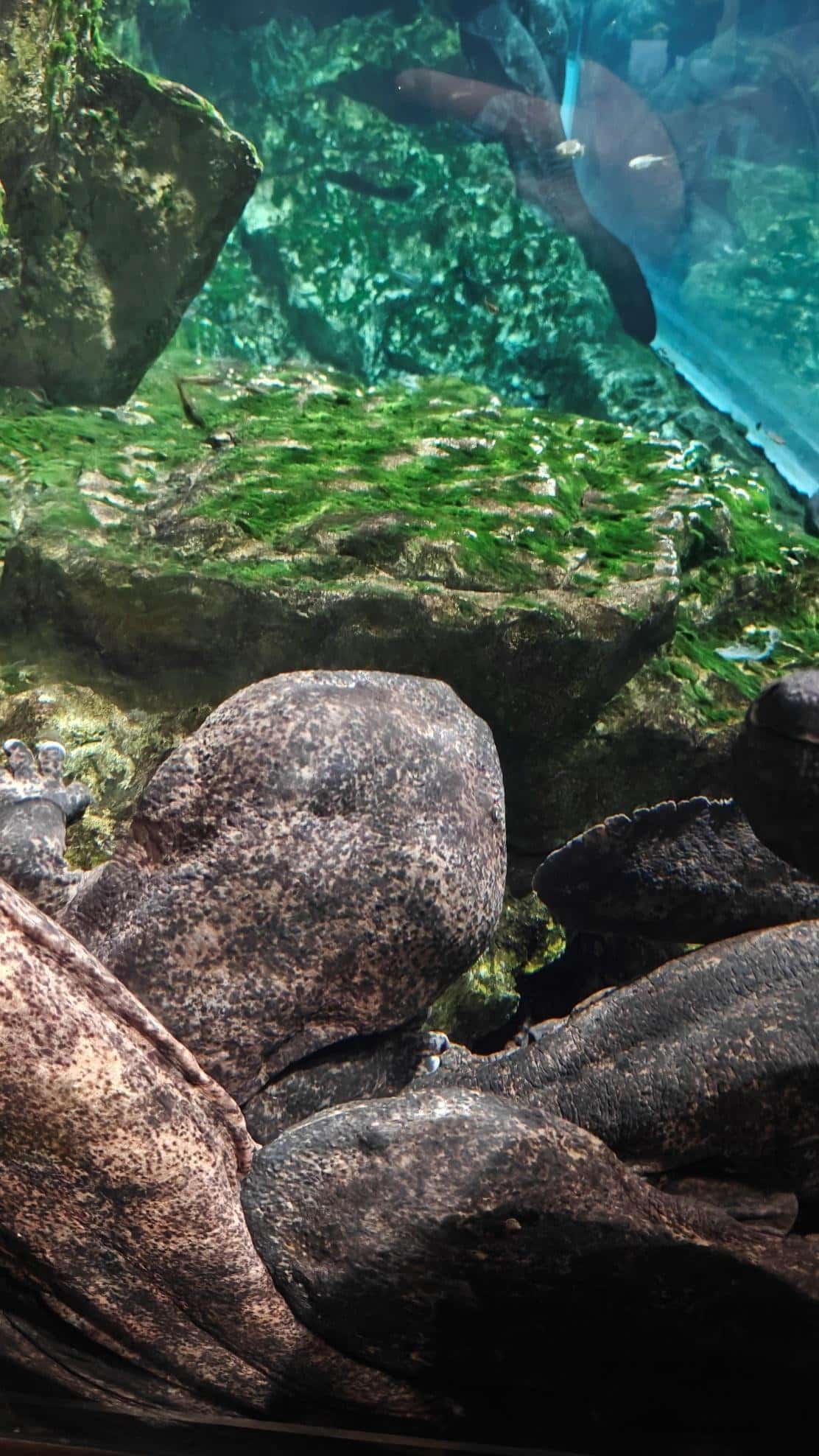
I was actually shocked to see a Giant Salamander in person because they just didn’t seem real. First off, they were really large with the one in the image looking about the same girth as (or was even larger than) my forearm. Funnily enough, I didn’t actually think they were scary, just really different.
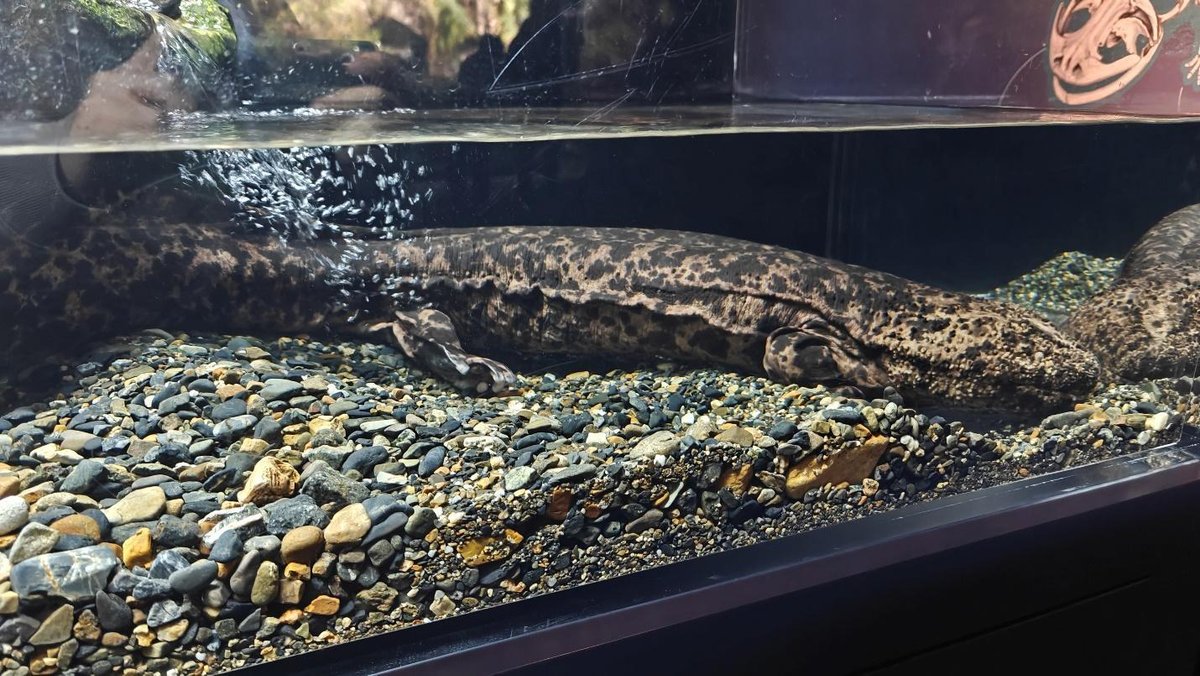
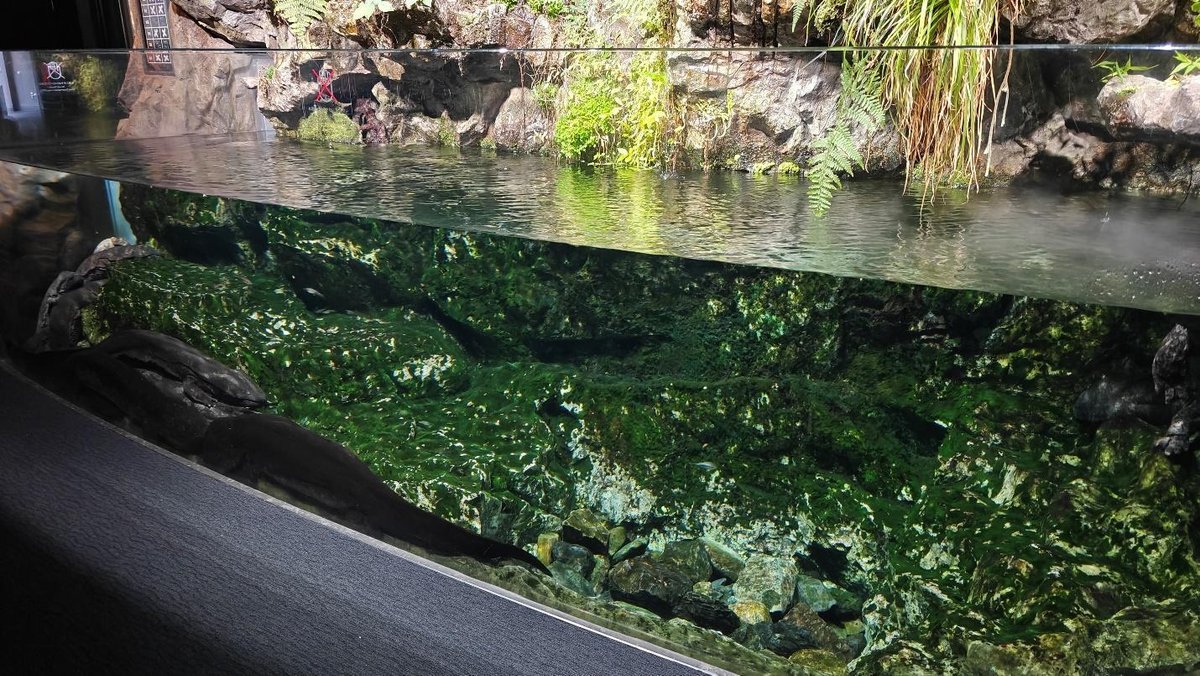
I mean, they are shaped like lizards but have more in common with toads and frogs (since they are amphibians after all). Unlike most frogs and toads though, these animals are fully aquatic so they can actually stay submerged underwater indefinitely. Come to think of it, the ones I observed here were very content to stay underwater even though they have been known to go on land from time to time.
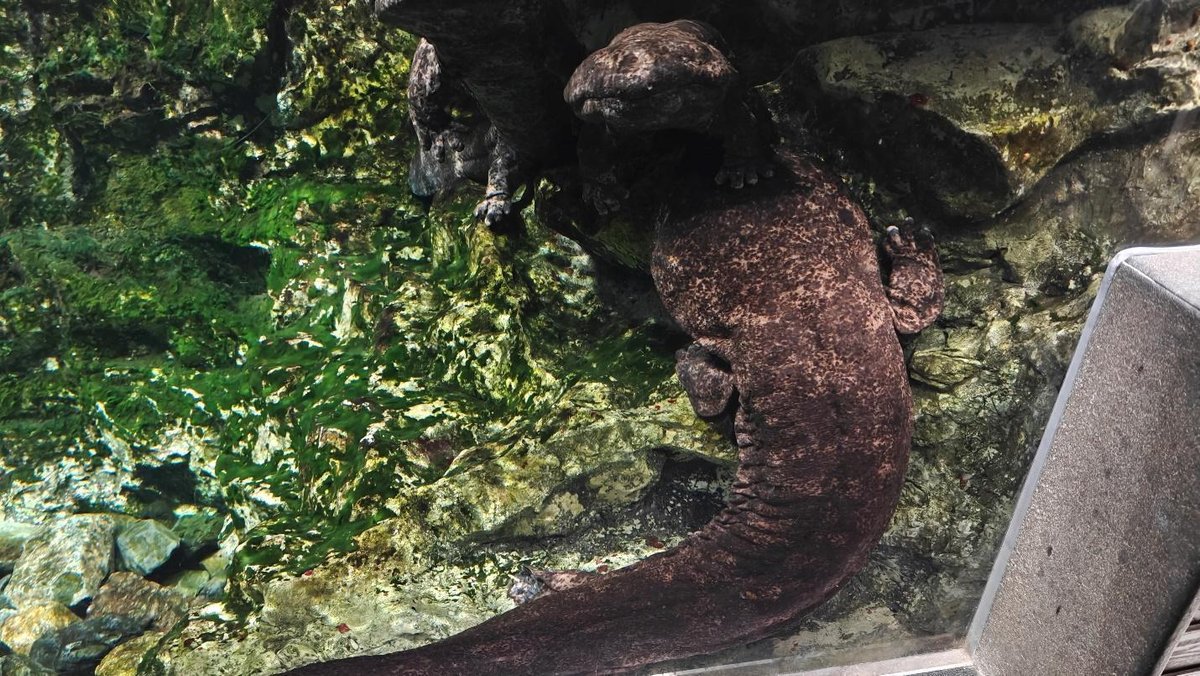
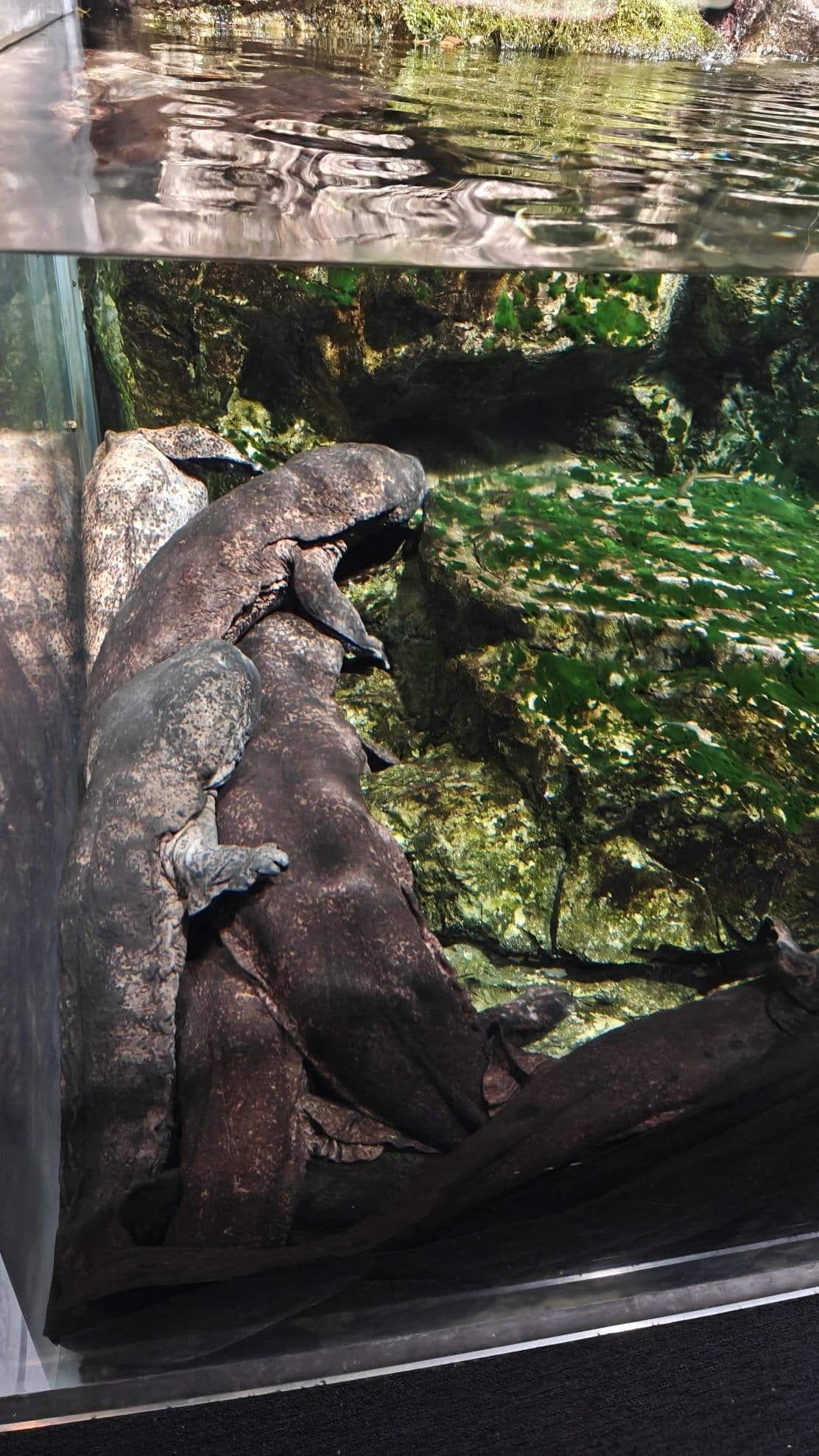
It wasn’t shown in the infographic earlier, but I read that the reason why Giant Salamanders are able to stay underwater indefinitely is thanks to their unique way of breathing. Most reptiles and amphibians typically breathe through their nostrils. In the case of Giant Salamanders though, their skins facilitate their respiratory functions (through a process called cutaneous respiration).
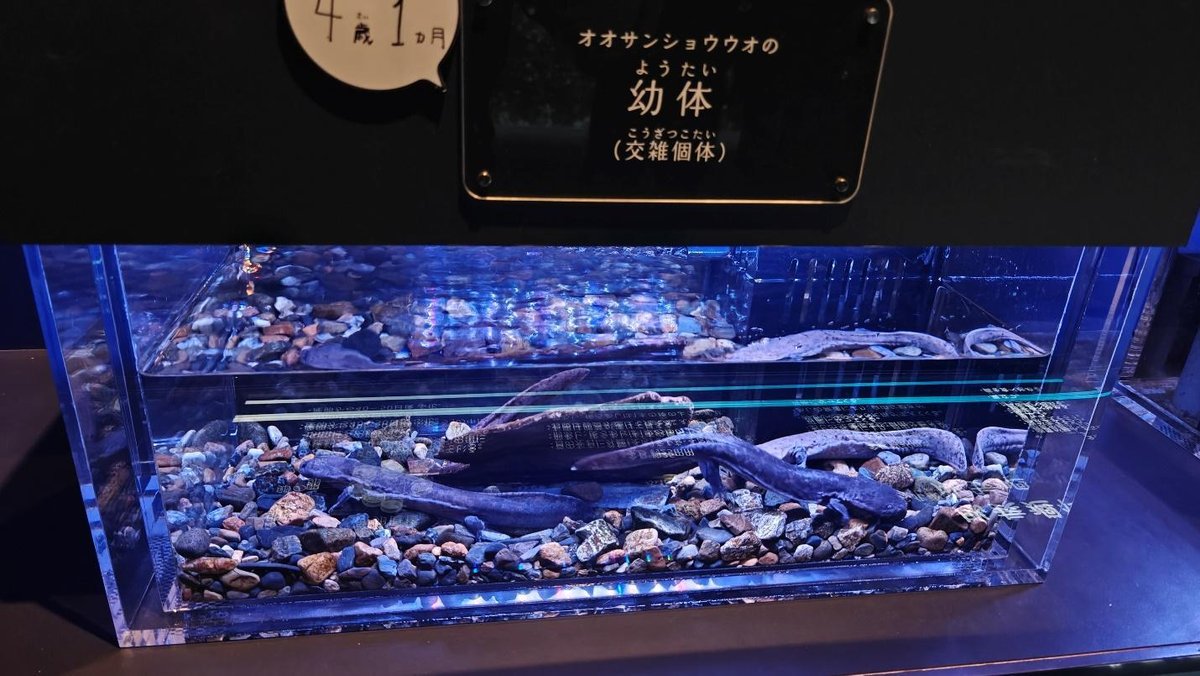
It’s not just adult giant salamanders that you’ll see here. There are also smaller displays featuring juveniles. The ones you see here are hybrids that are essentially the result of Chinese and Japanese salamanders mating.
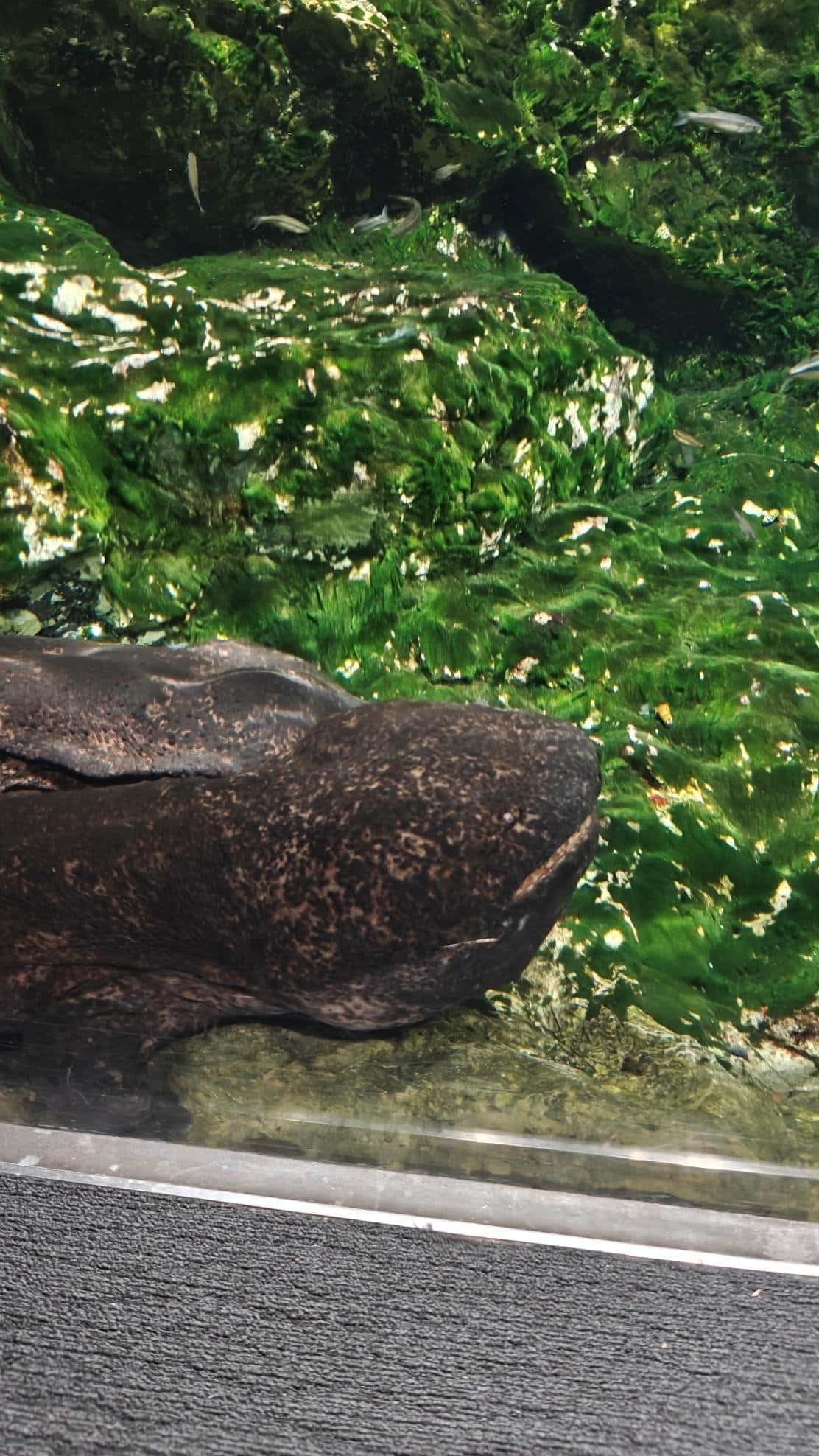
Now you might think that hybrids are a good thing but it’s actually considered a threat to the native Japanese giant salamander population. The Chinese giant salamanders are an invasive species that threaten to outcompete the native giant salamander population since they have no known predators. And since they can also breed with the native species, this could also result in there being fewer genetically pure Japanese giant salamanders.
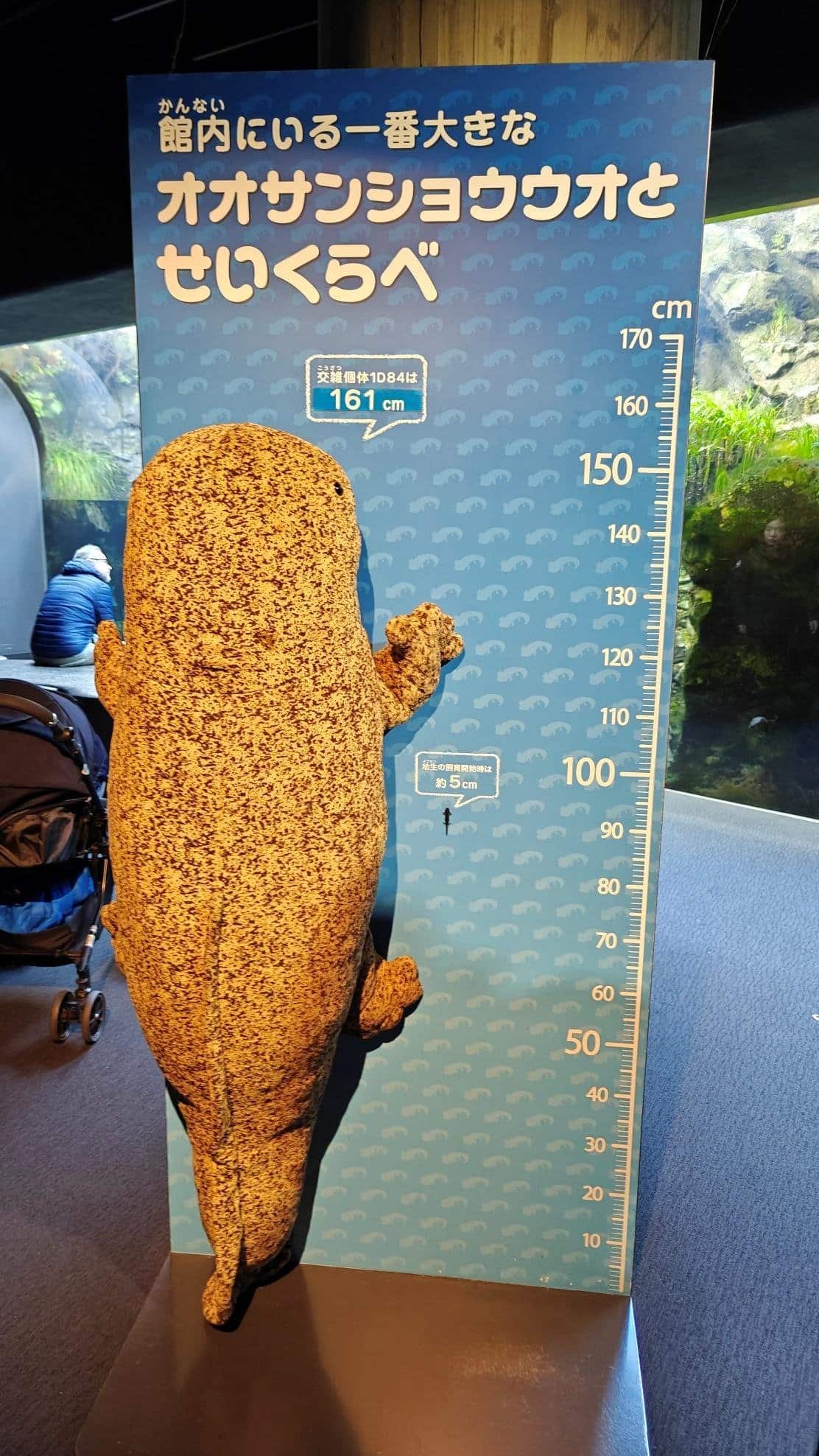
So this was an interesting display. It shows a really large plush toy of a salamander beside a scale for measuring height. The plushie is actually the same height as the longest salamander here in the aquarium and with the scale off to the side you can then measure your height against it.
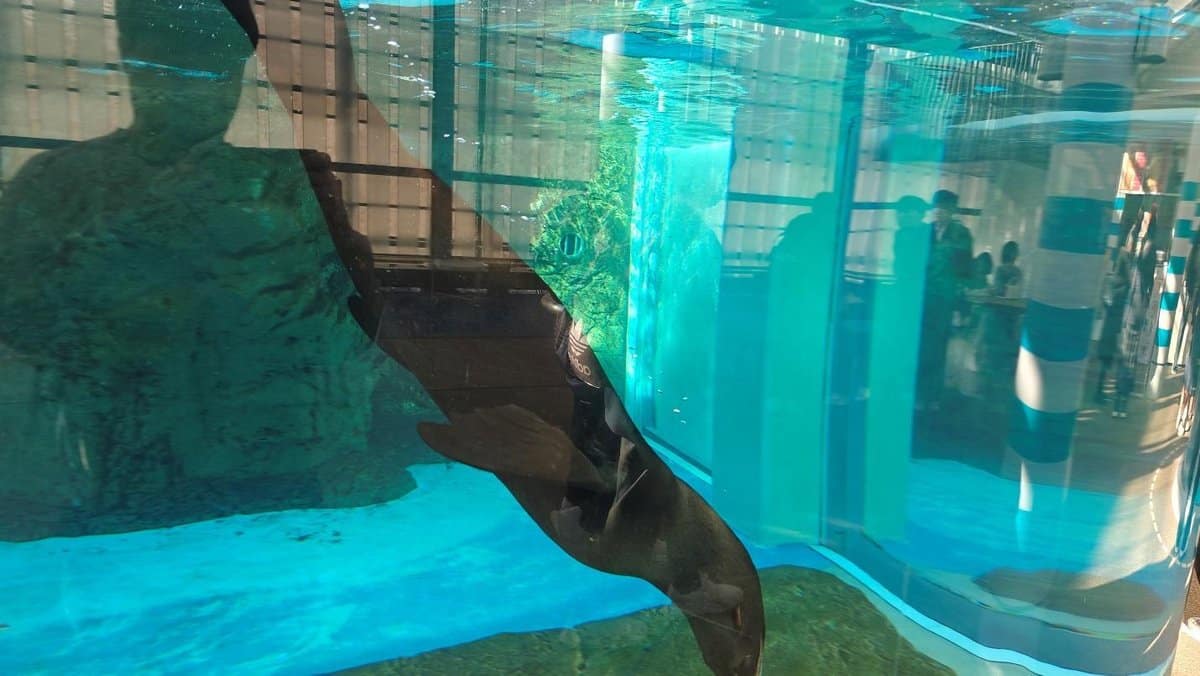
After the River of Kyoto, the next section that I found myself in was the U-shaped Fur Seal aquarium that’s also called the Marine Mammals Zone. And who else to welcome me to the area but this cute little guy! This is a South American fur seal which, as its name implies, is actually not native to Japan.
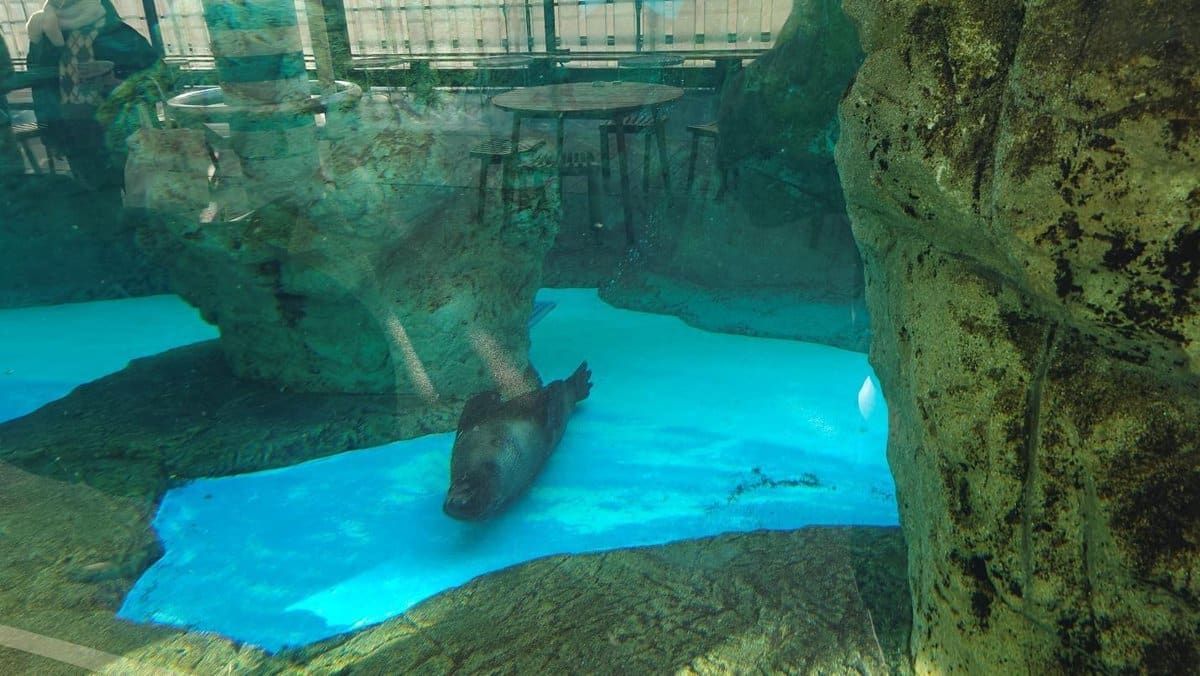
So why is a fur seal here you ask? The South American fur seals are actually considered as “Least Concern” in the wild though there was a time when they were considered endangered. If I were to guess, their presence here is still part of conservation efforts as well as for education purposes.
Coincidentally, the Japanese had a sea lion species endemic to the country that sadly went extinct in the 1970s.
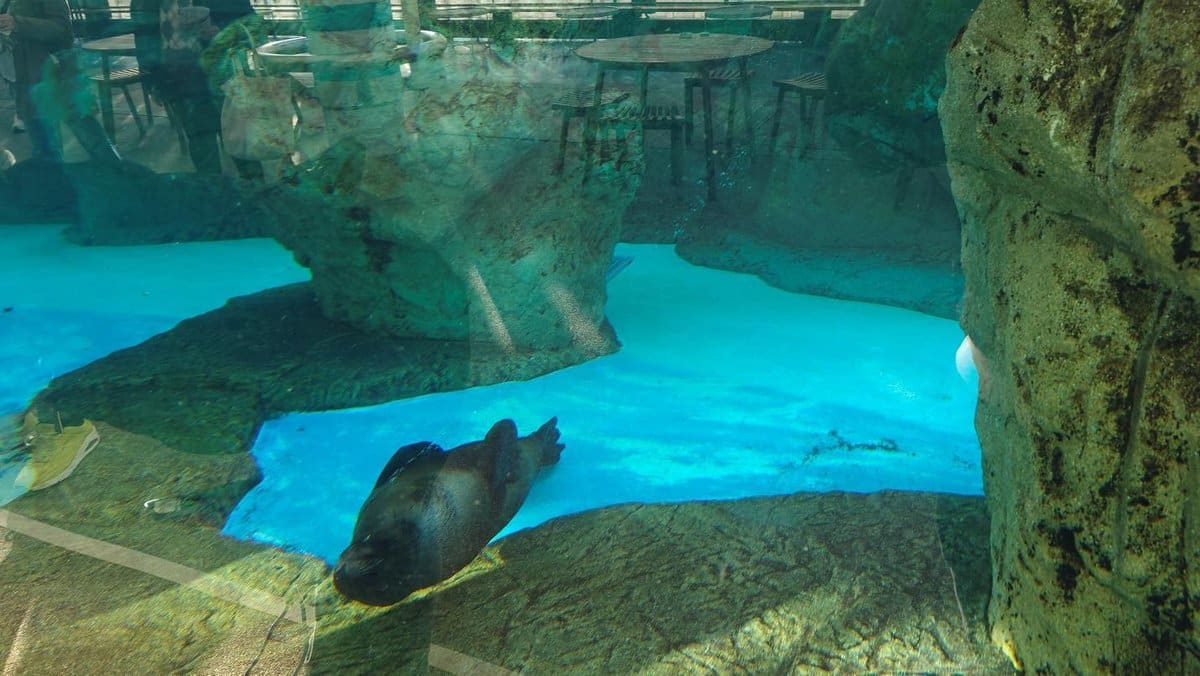
As far as I know, there are only 6 fur seals in this section. From what I observed, I think they all seemed quite happy and active. Now if you want to see them get fed, you’re going to want to be here at around 2:15 PM.
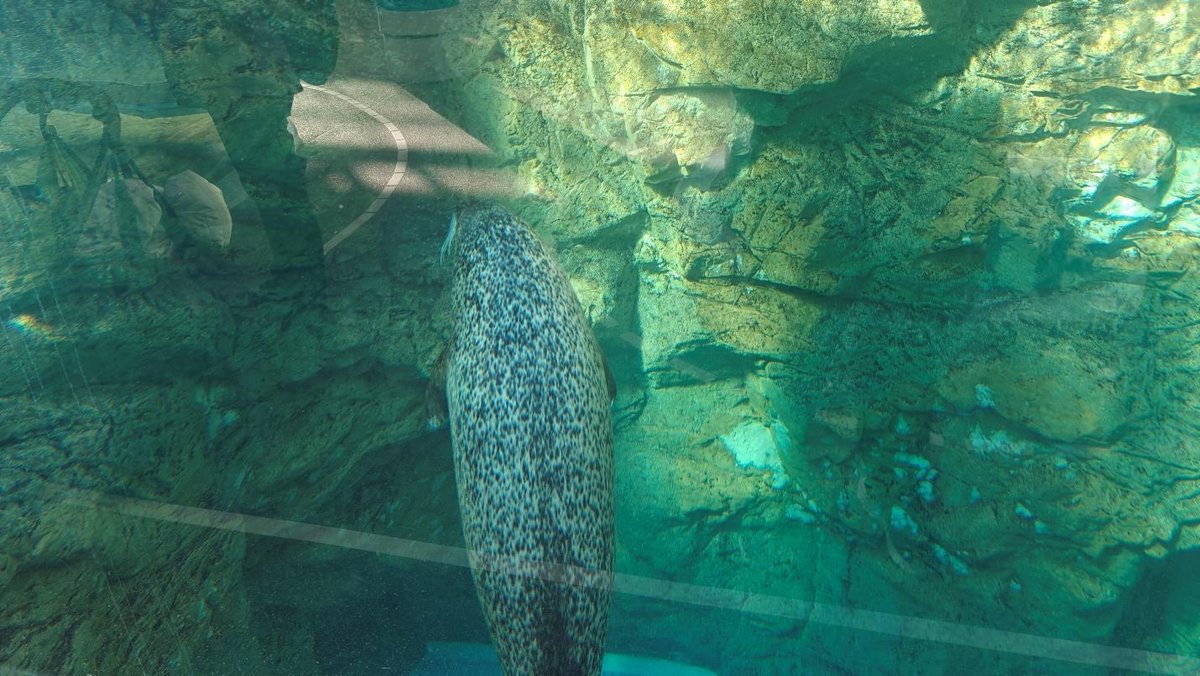
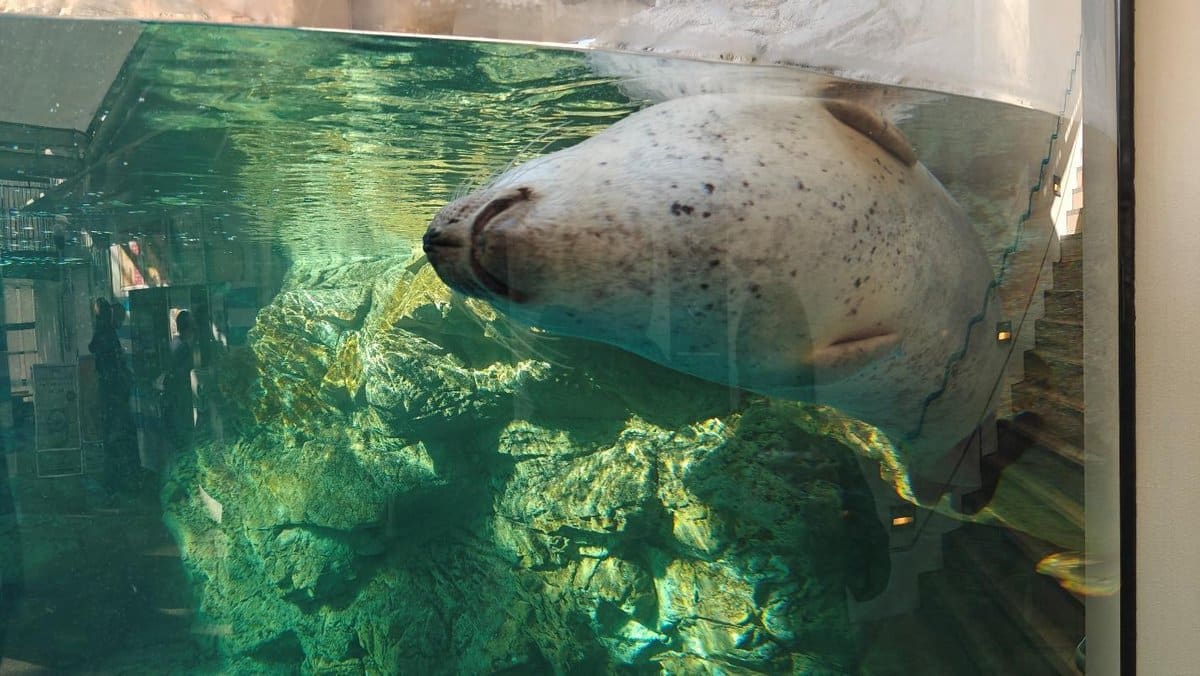
It’s not just fur seals that you’ll find in this section though. Spotted seals are also here though there are only three of them. It’s relatively easy to distinguish between the two seal species as the spotted seals, true to their name, are generally lighter colored with dark mottled spots on their backs.
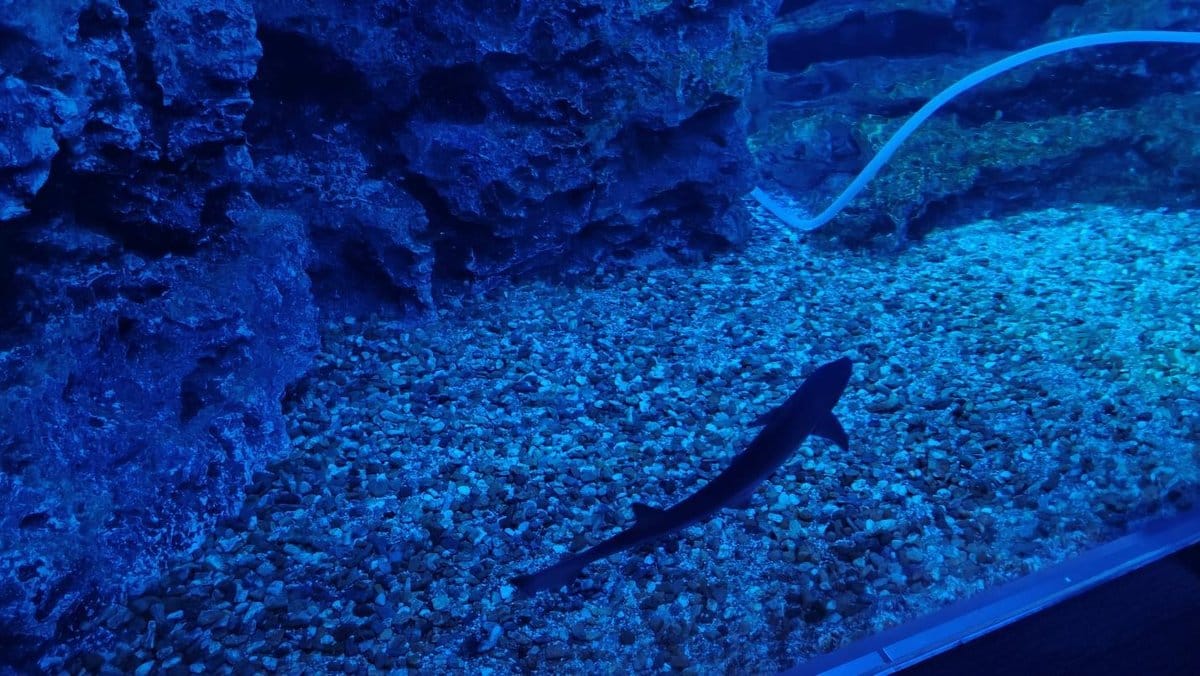
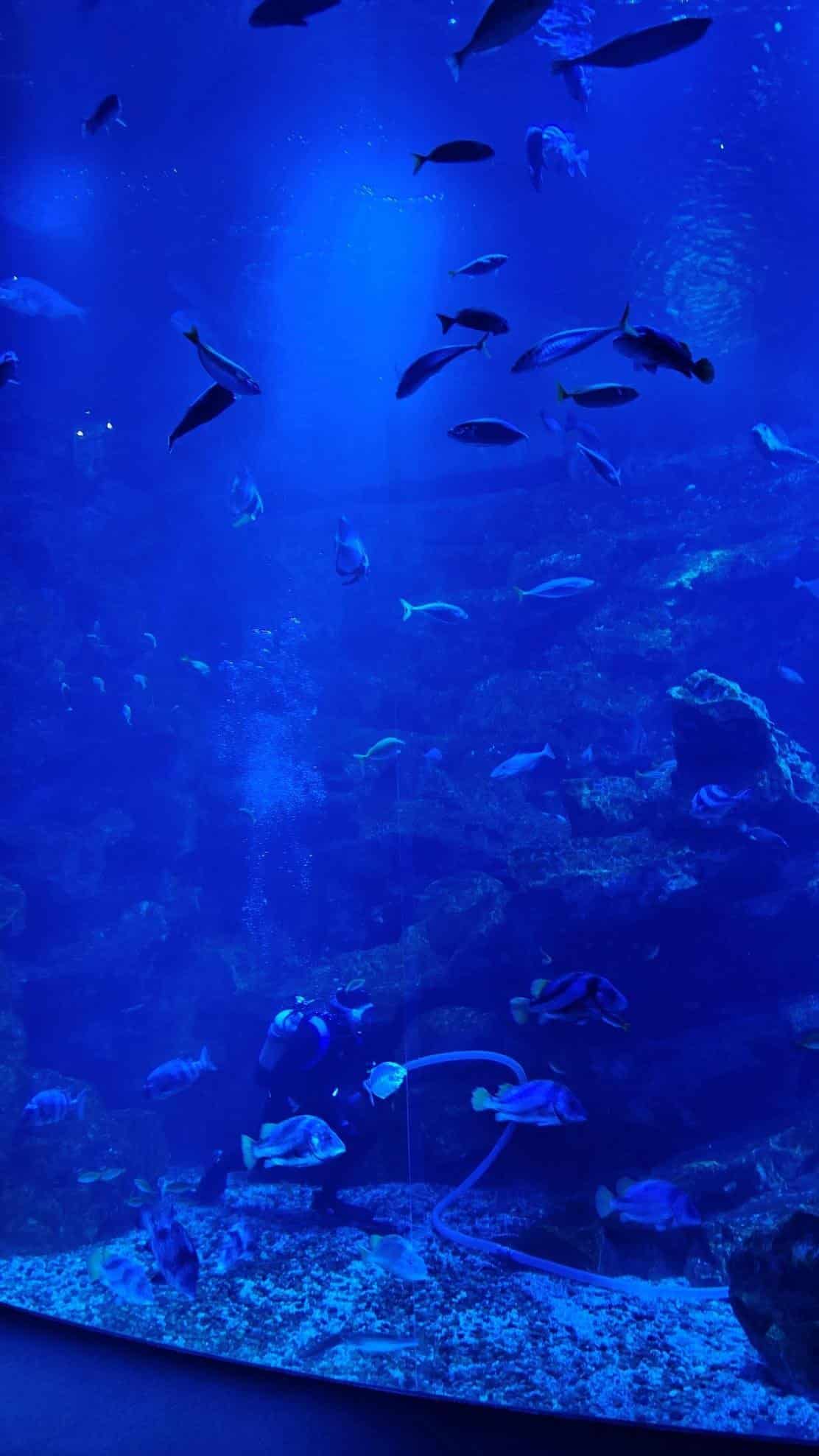
Just a couple of steps from the Marine Mammals Zone is perhaps the largest tank in the building. Called the Sea of Kyoto, this holds a whopping 500 tons of seawater. And as its name implies, this features a diverse selection of marine life that you’d normally find off the coastline of Kyoto Prefecture.
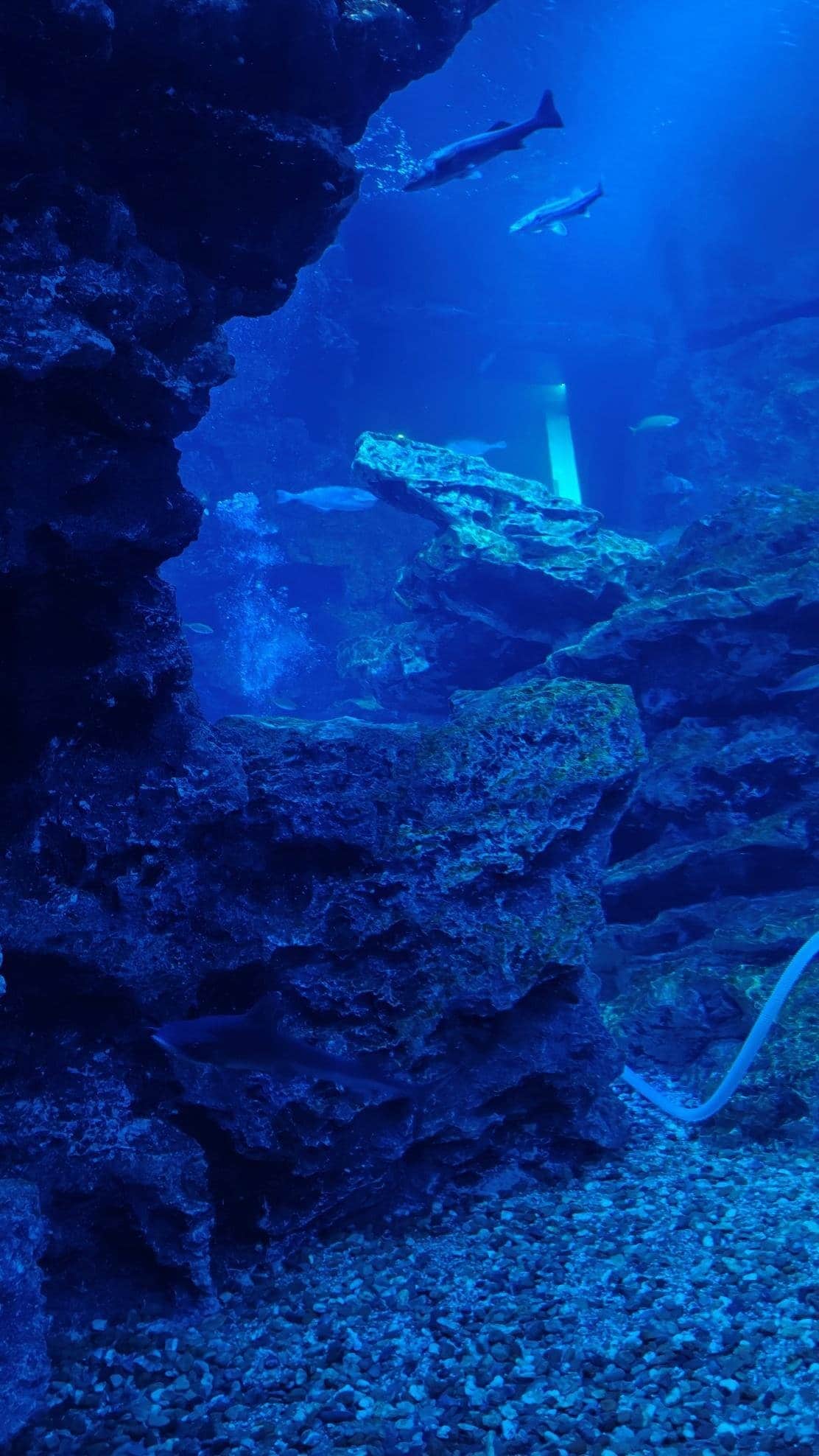
I was actually quite confused at first since the city of Kyoto is landlocked after all. Then I remembered that the prefecture that the city is a part of is also called Kyoto. Anyway, I moved on to the other tank in this area because while the Sea of Kyoto display was impressive, I was genuinely much more excited about its neighbor.
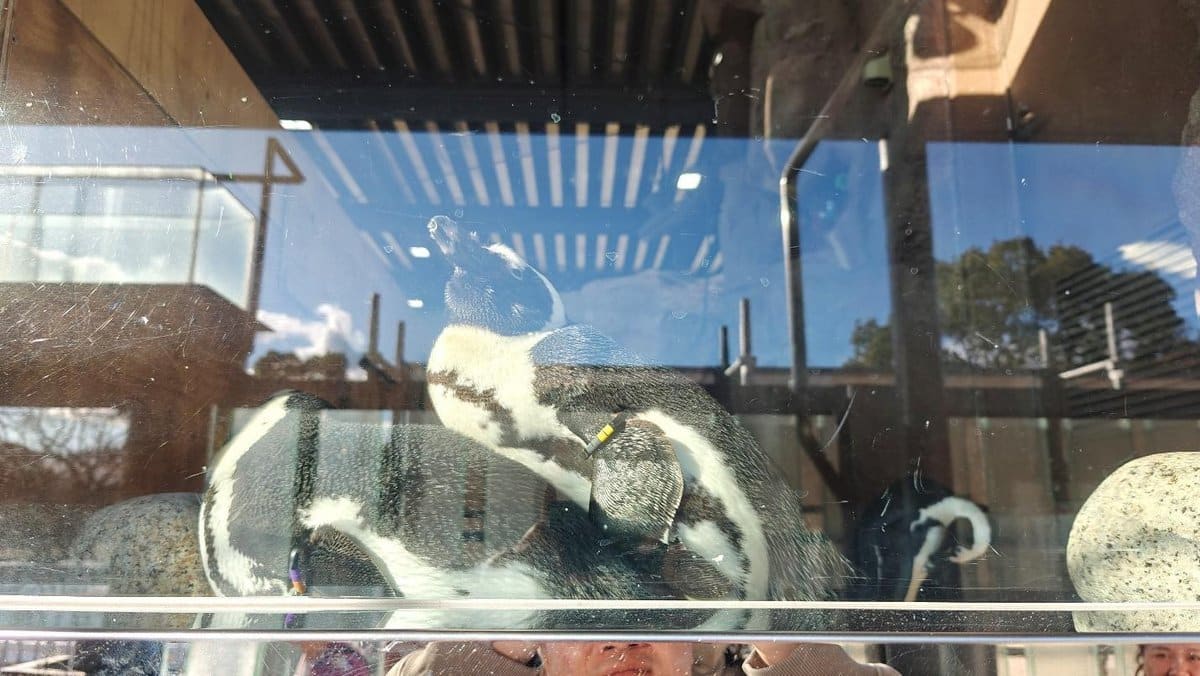
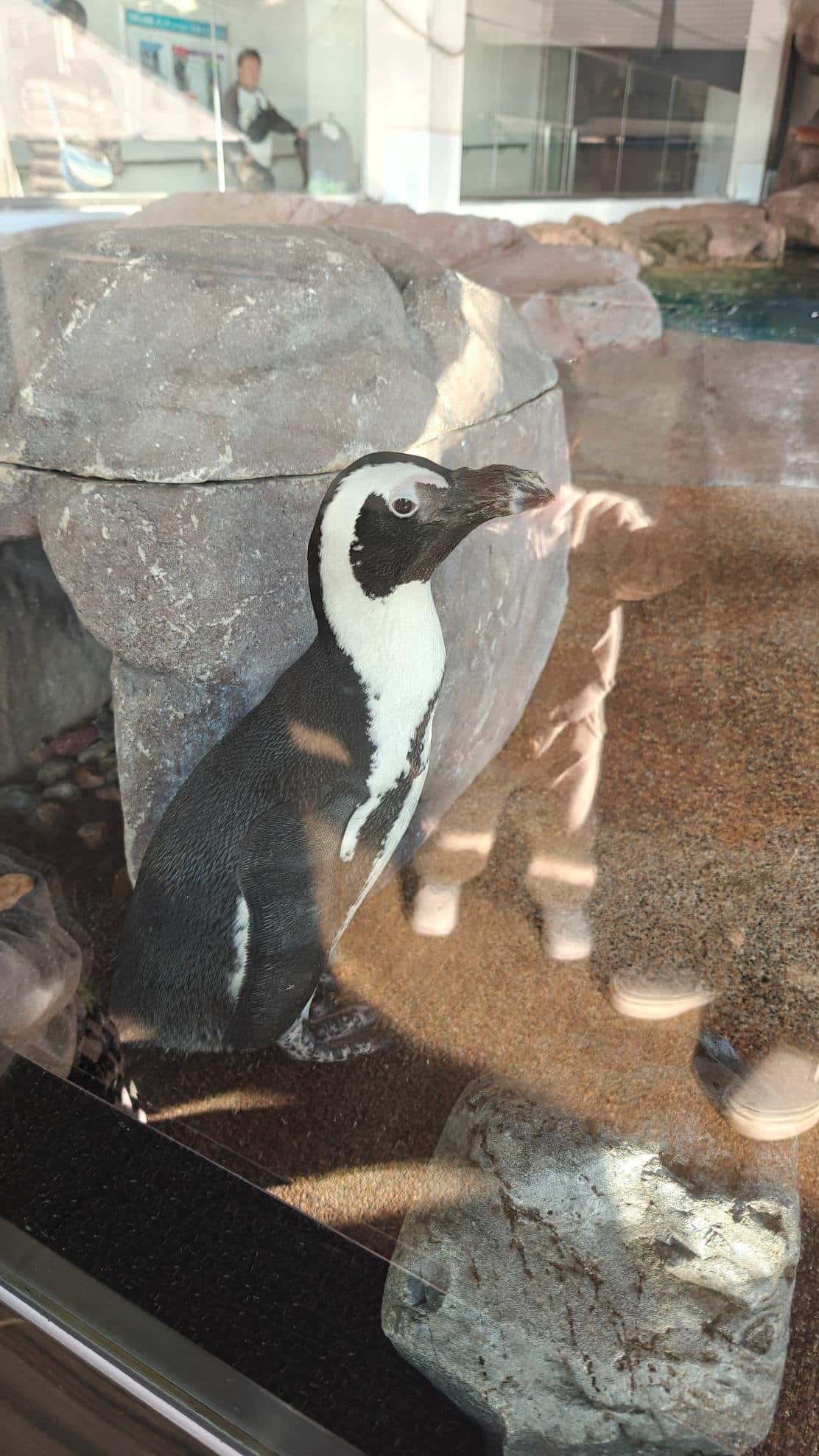
So the neighboring tank that I was talking about is where you’ll find the penguins. Now, you could observe them swimming underwater in the tank from the first floor but I decided to go to the second floor instead as more of them were lounging on solid ground there. If I’m not mistaken, these are African penguins and they looked absolutely adorable.
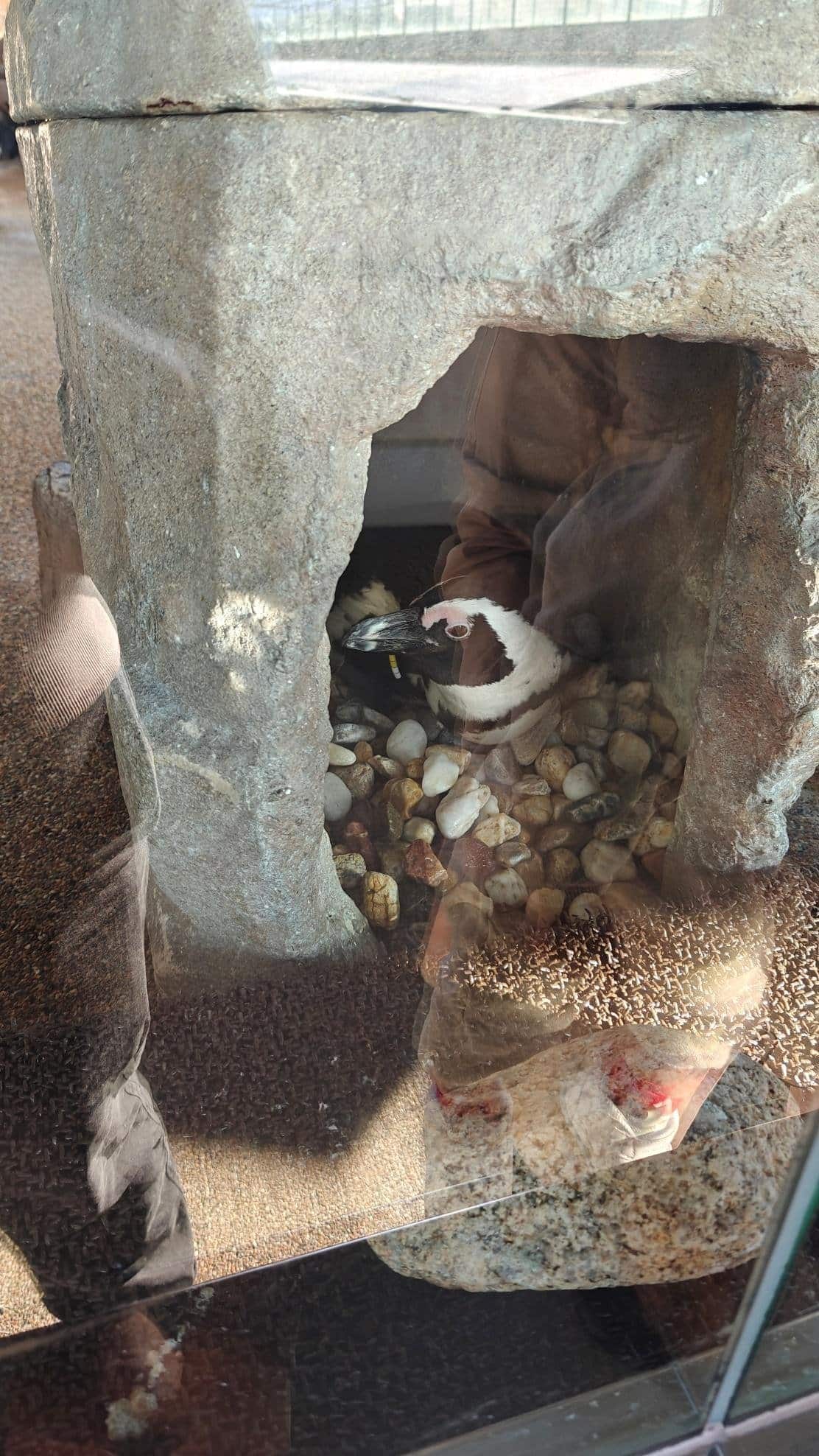
While they do seem to be thriving here, the penguins are actually listed as critically endangered. There are only 10,000 breeding pairs remaining the world over and Kyoto Aquarium has about 52 individuals in its care. I’m not going to lie, it was kind of heartbreaking knowing there are so few of them left.
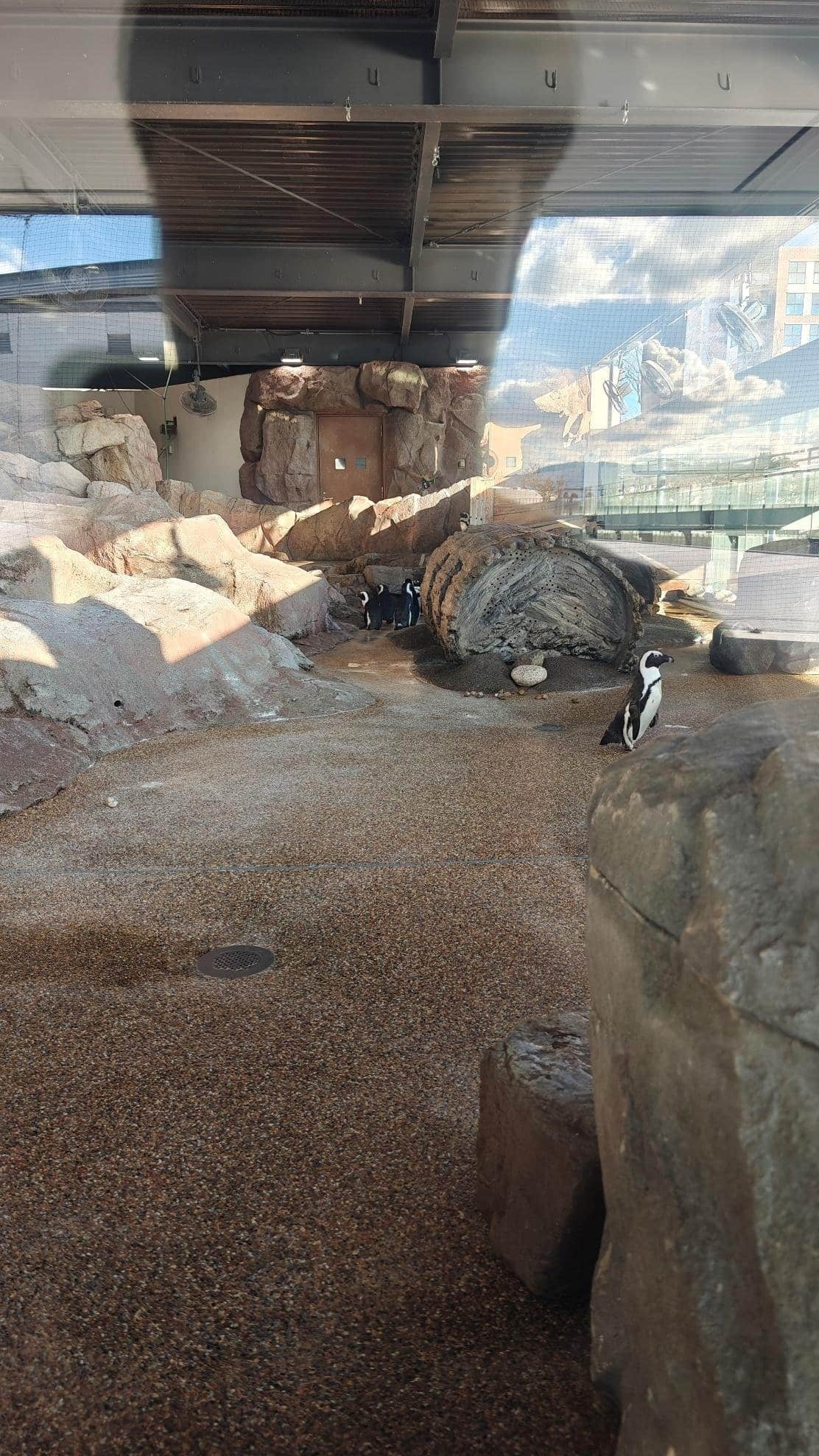
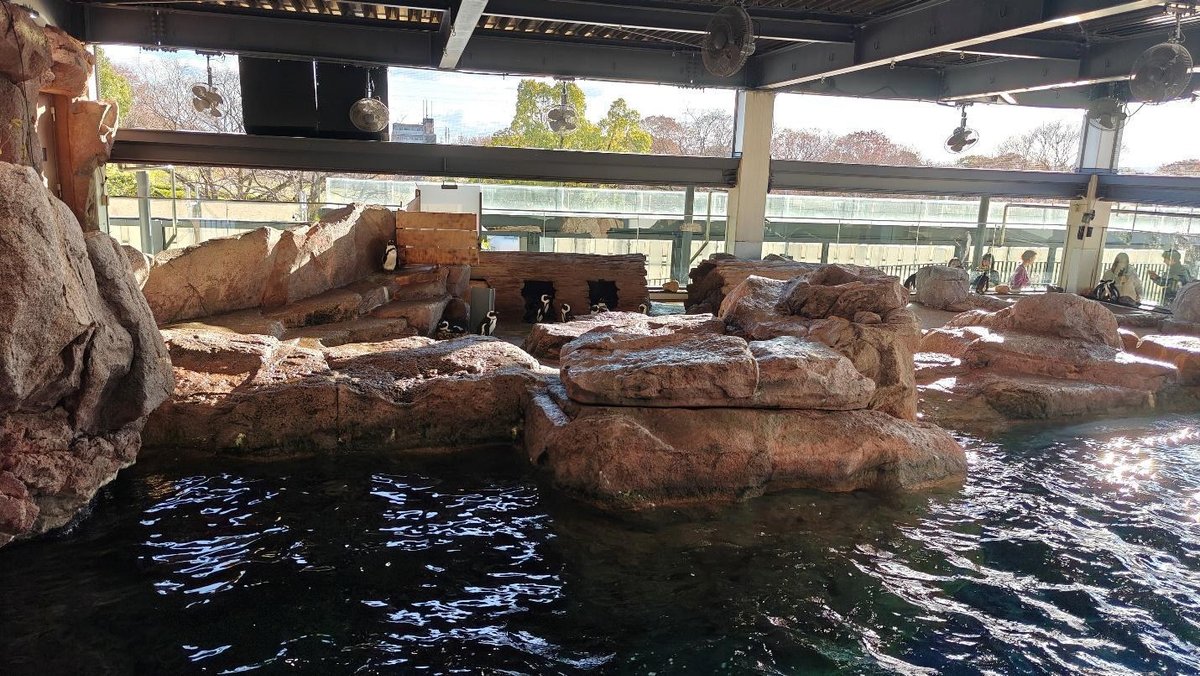
Here you can sort of glimpse the entrance to the penguins’ tank in the background. You’ll see a lot more of it later but it’s basically where the penguins enter if they want to swim. Again, if you want to see them swimming underwater then you’re going to have to go back down to the first floor.
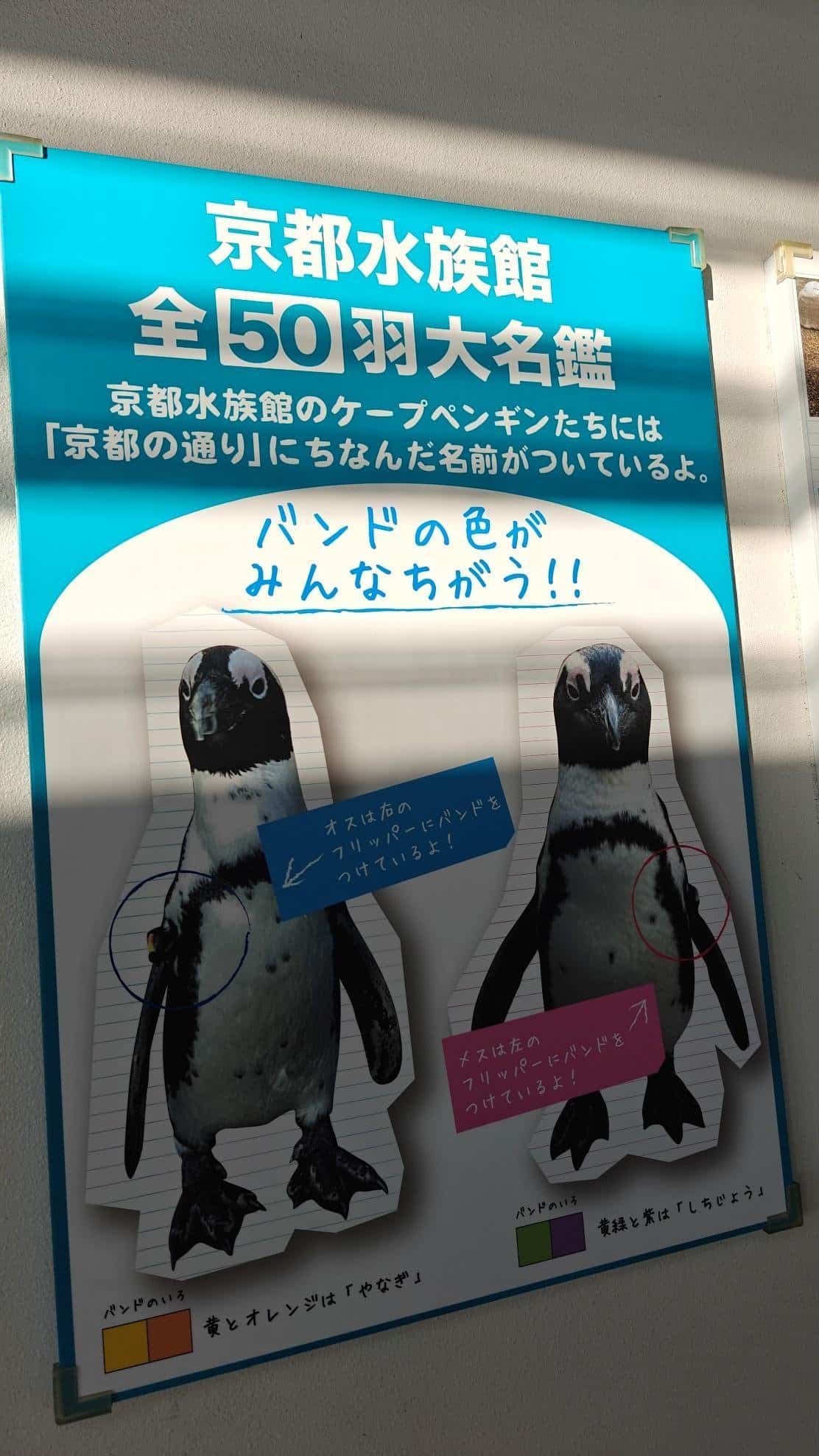
Going back to the penguins, Kyoto Aquarium actually has a gender identification system in place to help differentiate the males from the females. Moreover, each of the penguins here have names derived from the streets in Kyoto. I wasn’t able to take a picture of it but there’s even a chart that guests can use to keep track of the penguins’ relationships.
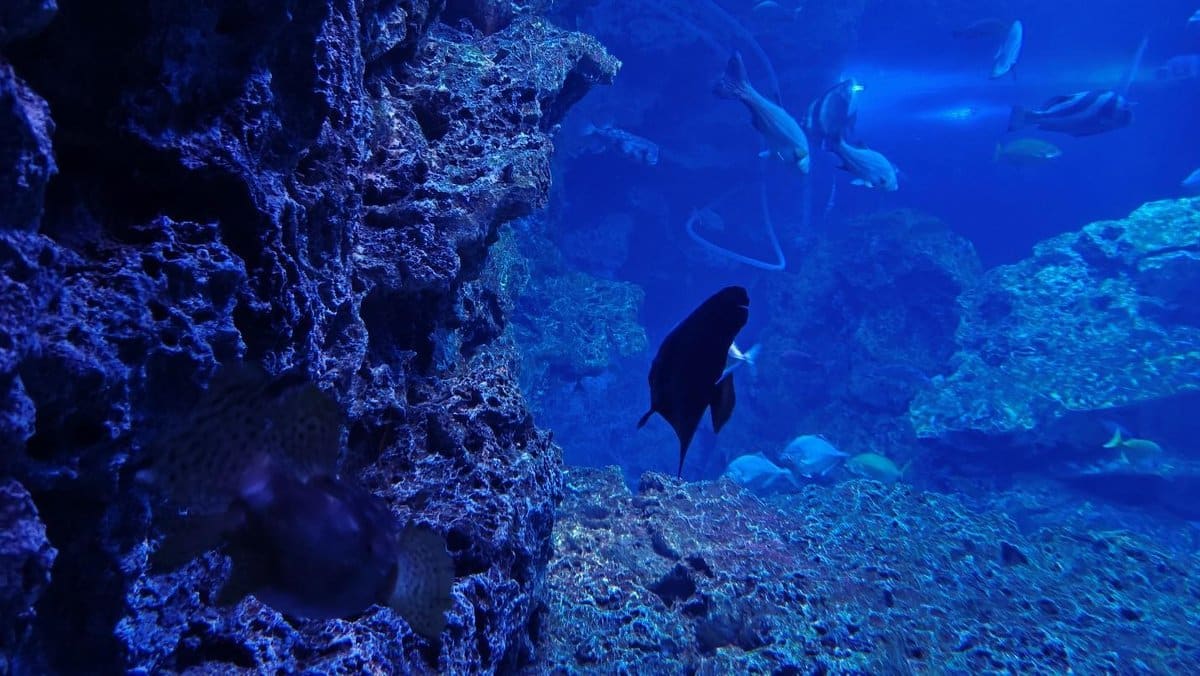
Just opposite the penguins’ enclosure is the Sea of Kyoto tank. This is still the same tank that you saw on the first floor and it actually extends up to this area. I actually prefer the views here though some people might argue that the first floor is better.
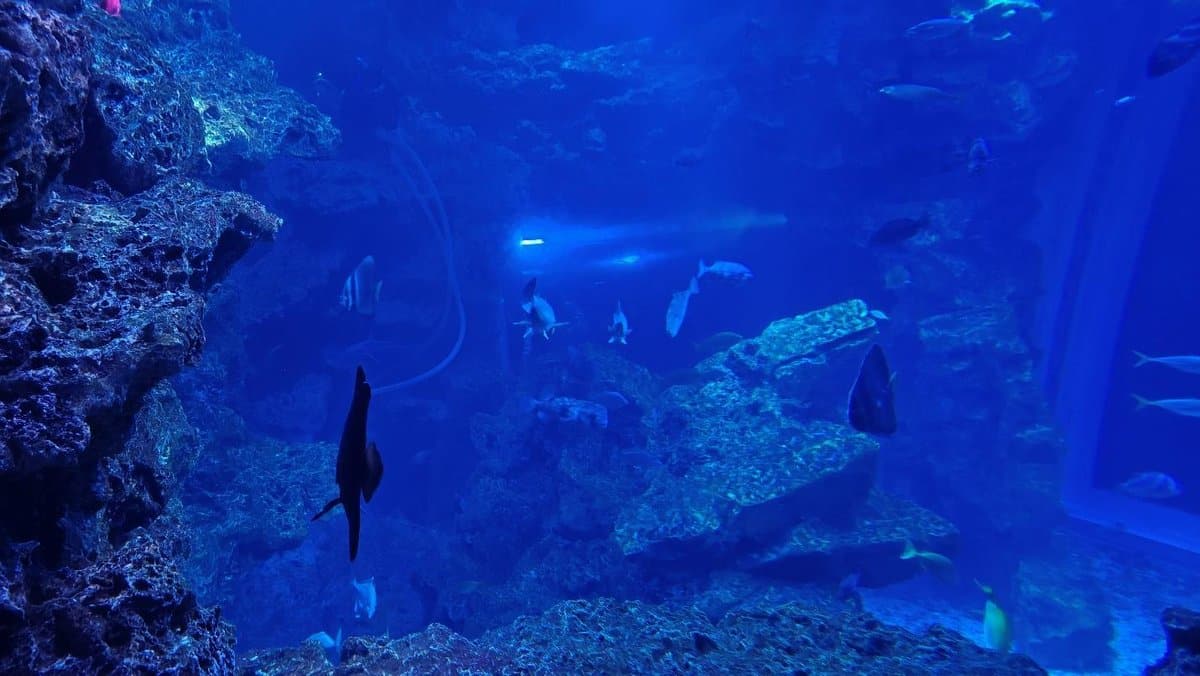
It’s not quite shown here in the image there are actually plenty of fish here. It’s just that they’re always in motion that you typically don’t see them crowding together. My favorite here was probably the rays just because of how graceful they looked while swimming in the tank.
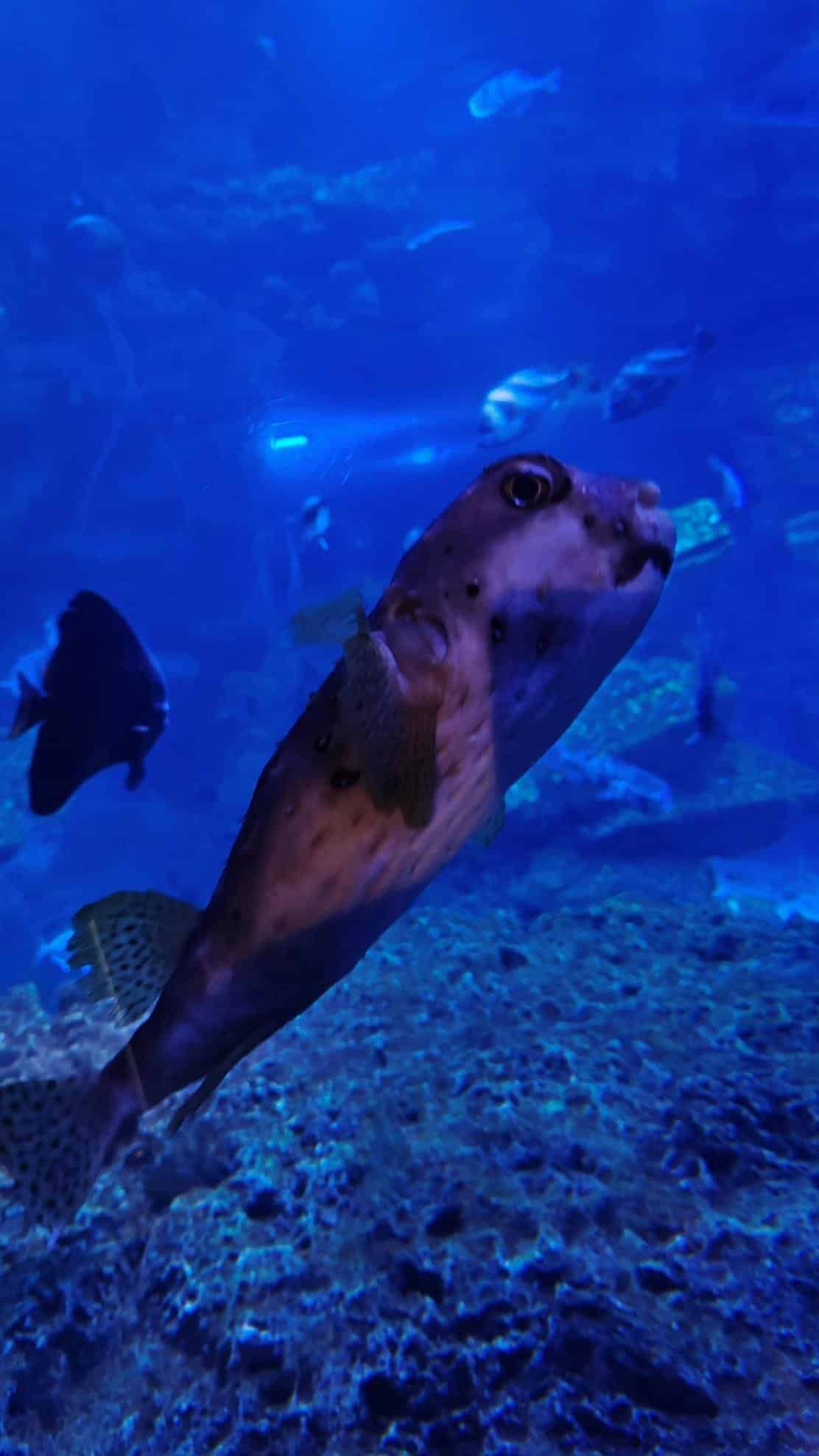
Another peculiar guy that I enjoyed looking at was this pufferfish (or at least I think it is one). Unlike the rays, this one swam rather clumsy and slow which was adorable in its own way. Puffer fish are said to be territorial so it might have also been trying to scare me (which it failed successfully at) when I took this picture.
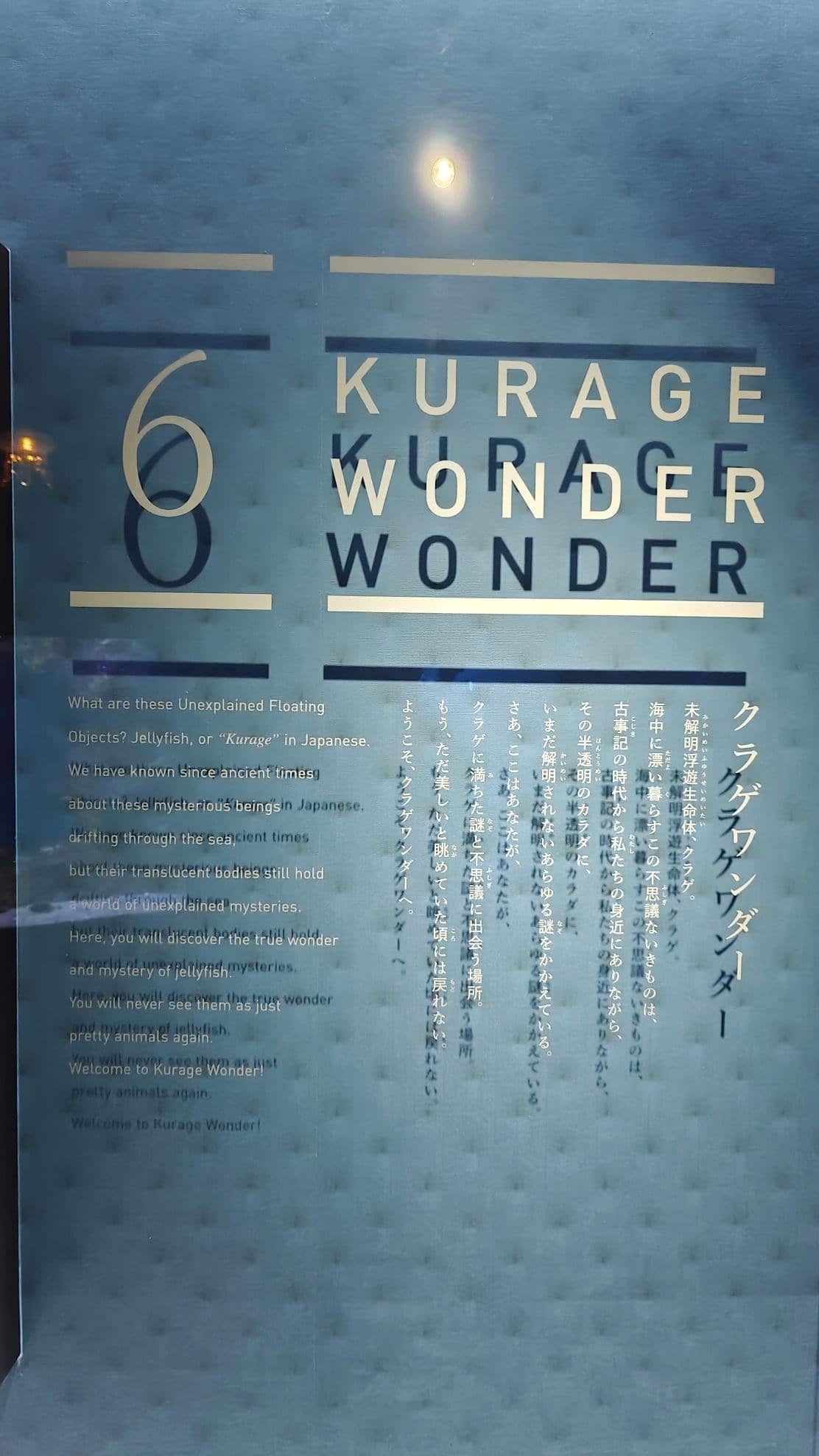
The next area that I found myself in (after seeing the Sea of Kyoto tank on the second floor) was called Kurage Wonder. If you’re wondering what the hell a Kurage is, it’s Japanese for Jellyfish. This exhibit is actually considered the largest in Japan that’s dedicated to these fascinating animals.
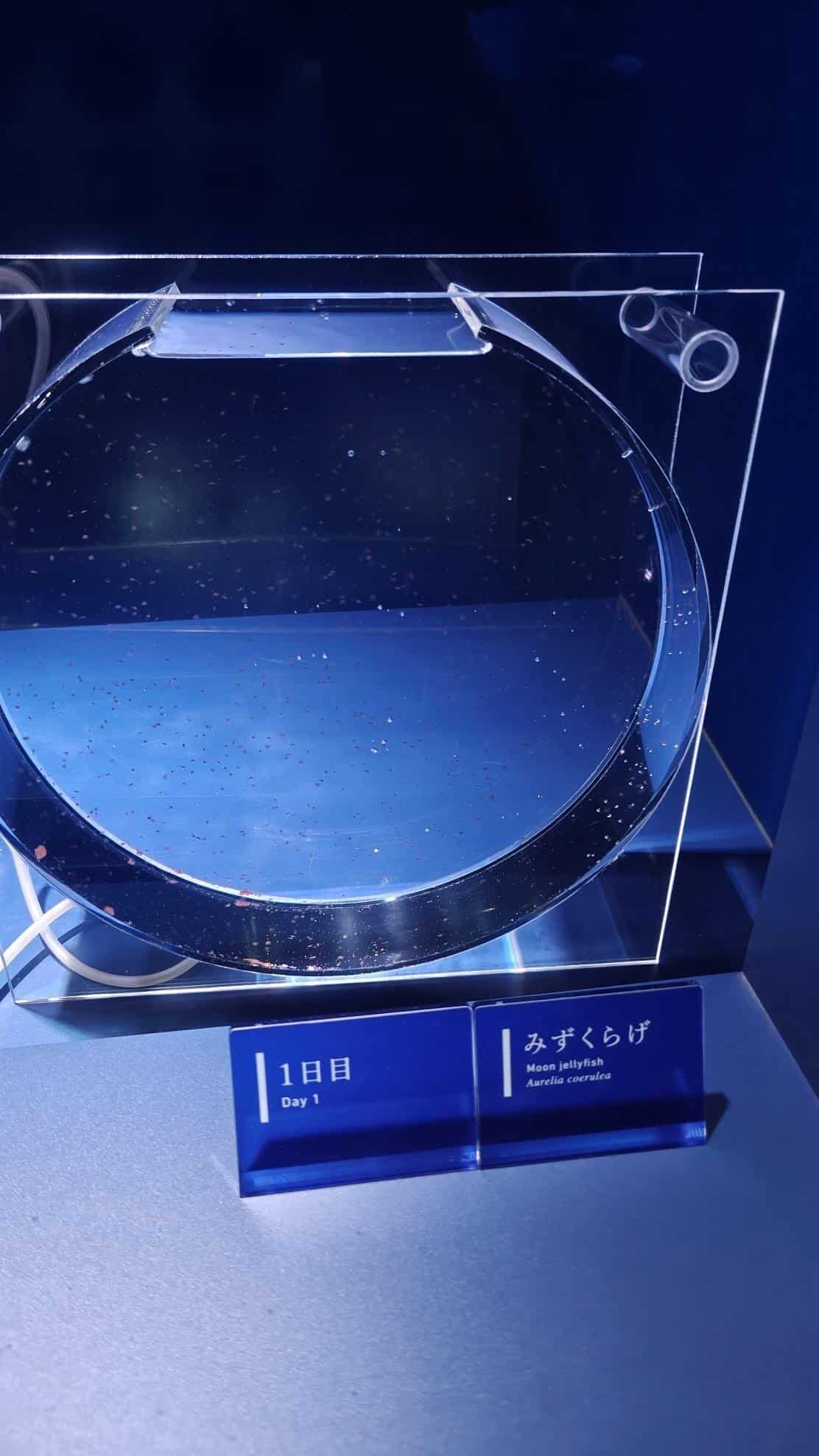
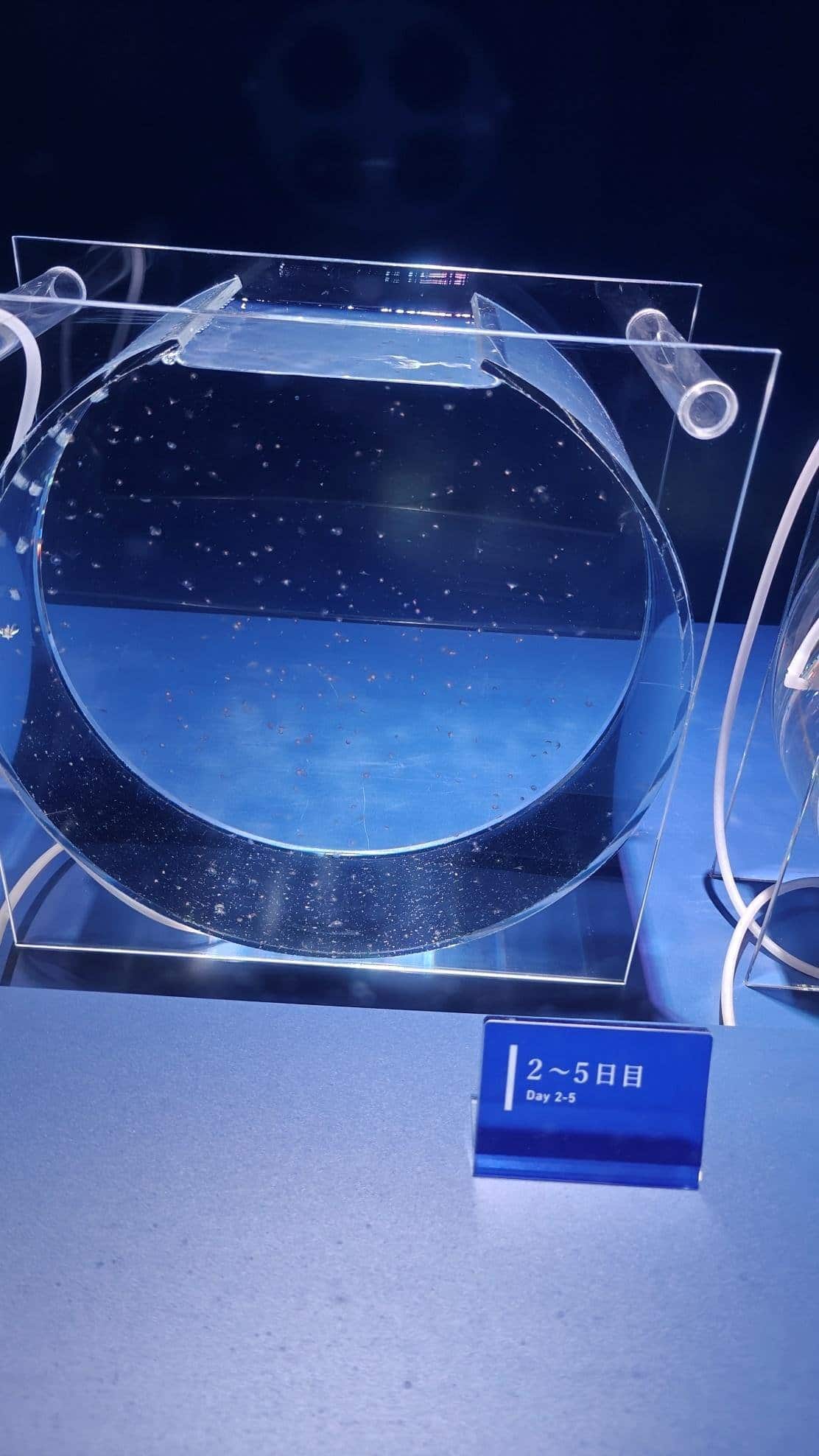
The first display here consists of small water-filled containers that feature jellyfish in various stages of its life cycle. These range from Day 1 up until the first month and it’s actually quite impressive. I’d always thought jellyfish were just like starfish in that they multiply when you cut them up.
Turns out they’re actually quite complicated creatures with some alternating between sexual and asexual reproduction at certain points in their lives.
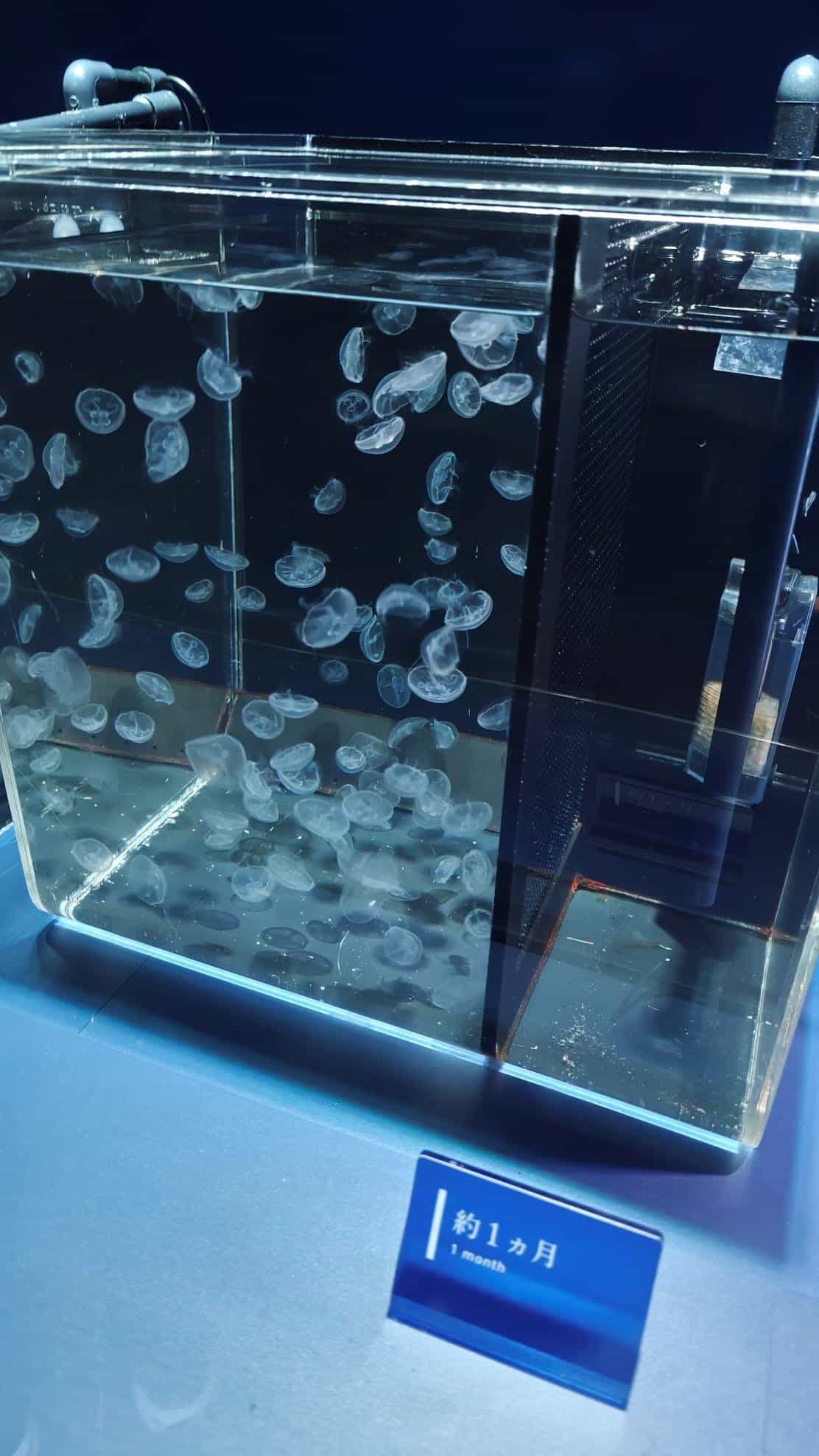
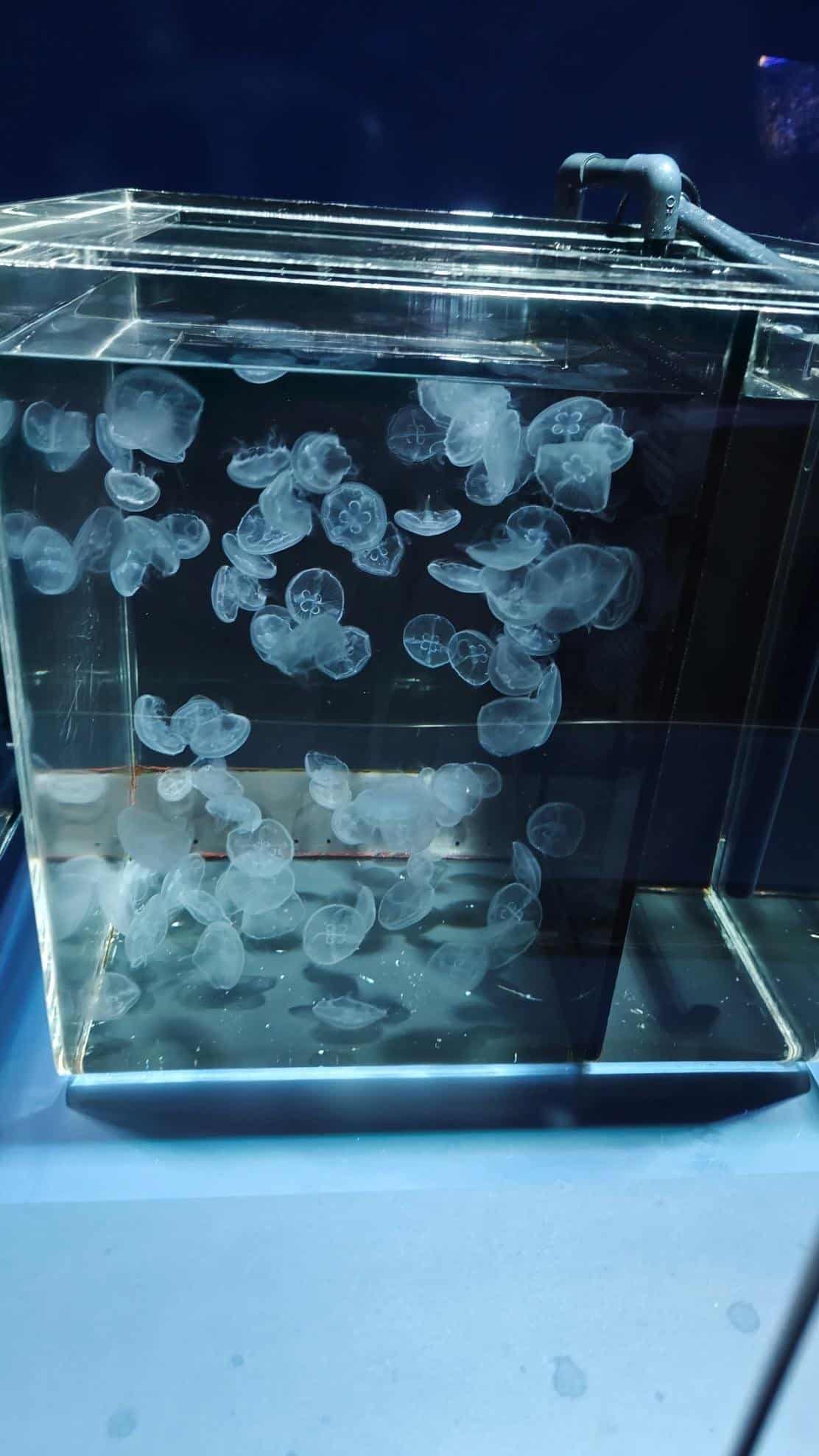
The one month old jellyfish (these are specifically moon jellyfish) were quite honestly the coolest looking in this display area. For some reason, they also looked very tasty! I actually looked into this and found out that moon jellyfish are used as the main ingredient in a dish called Chuka Kurage.
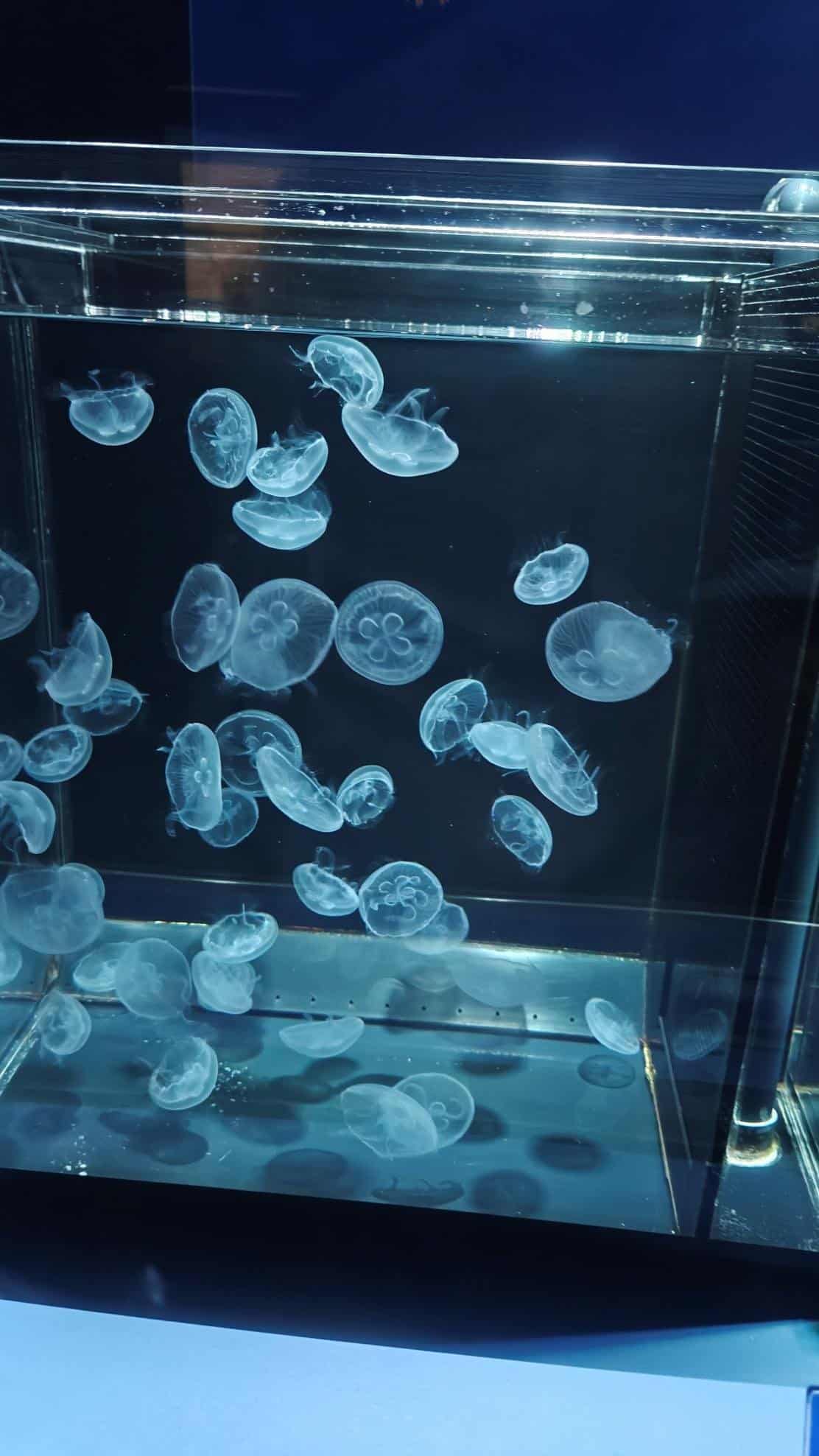
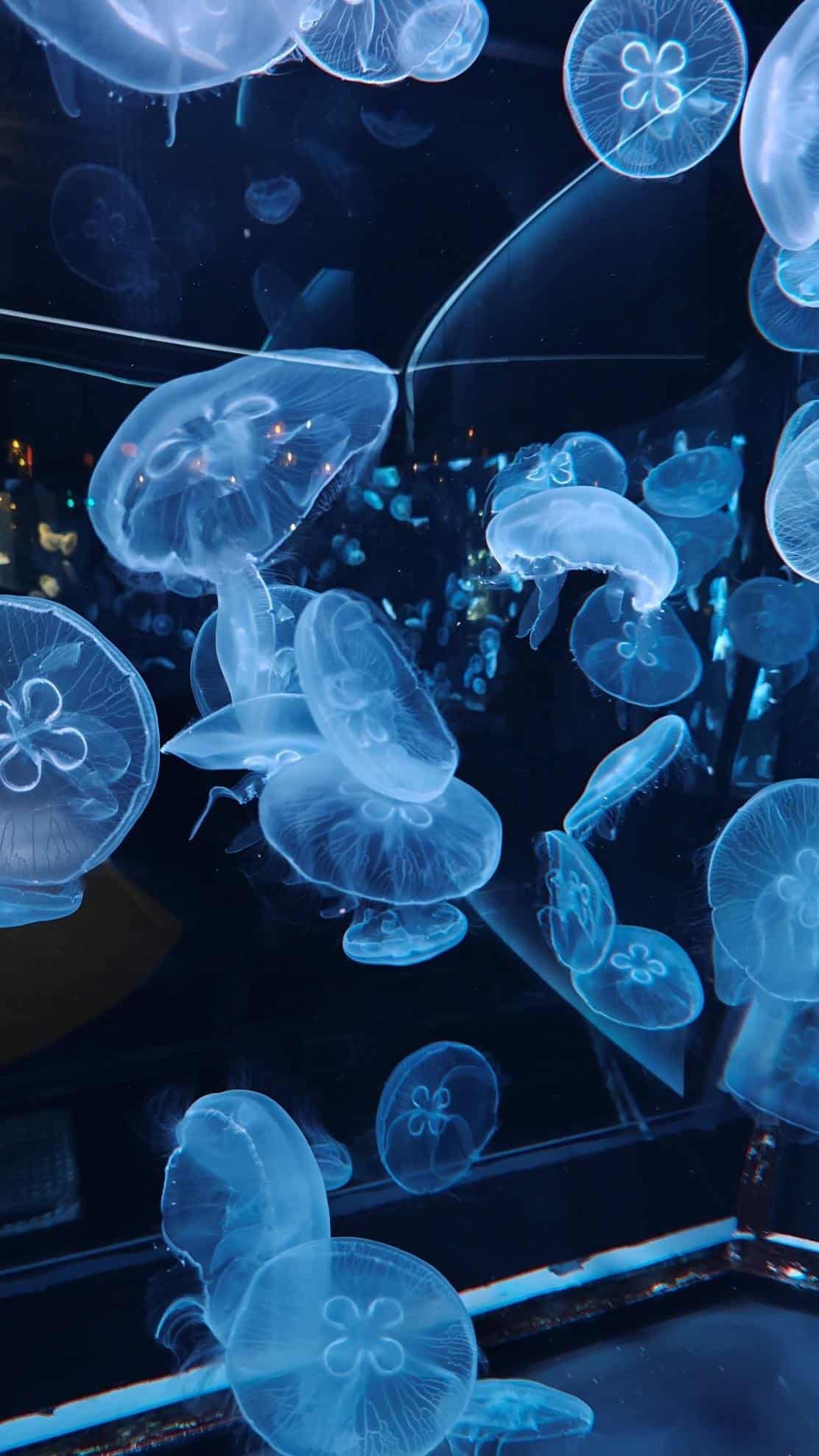
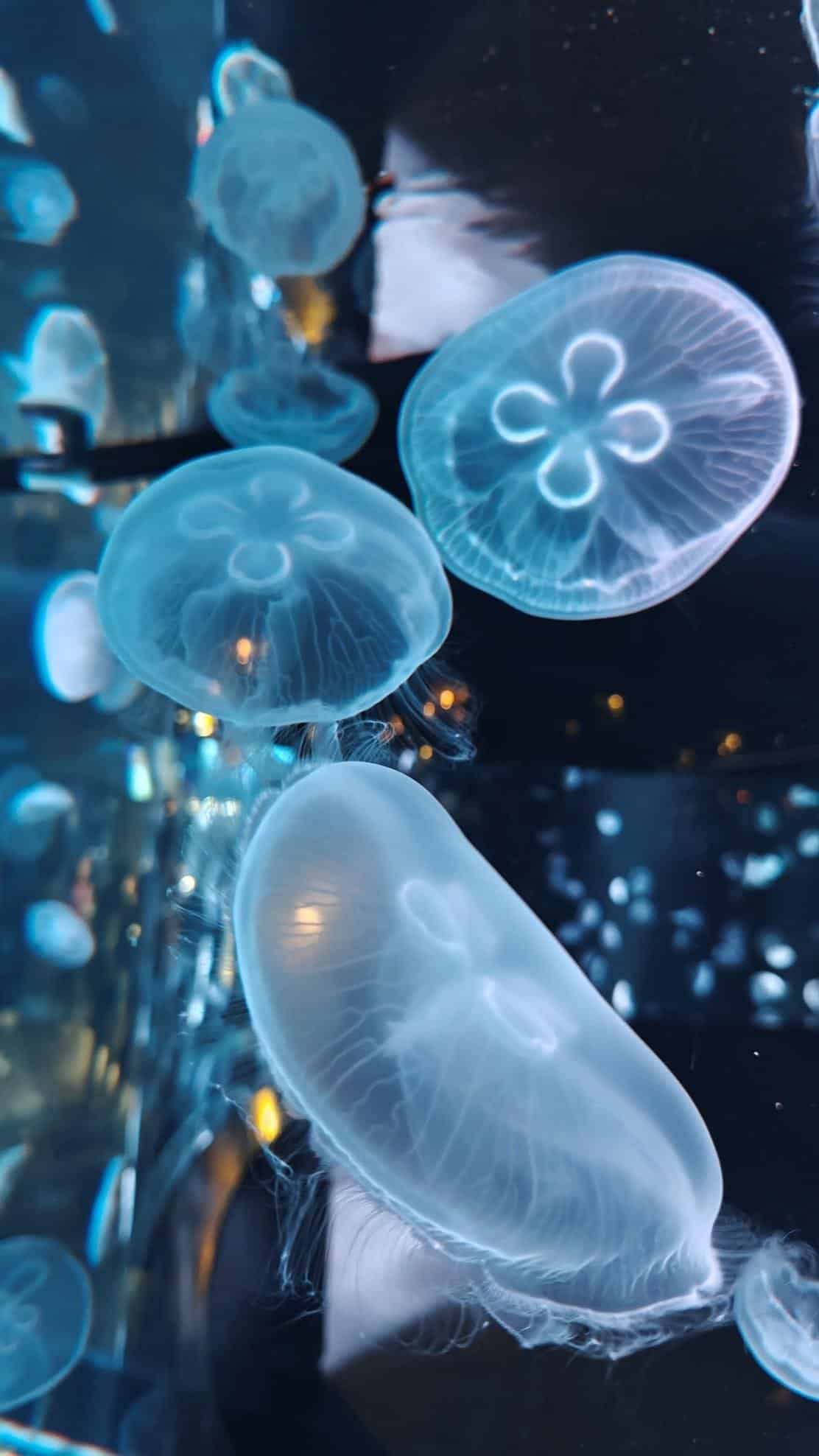
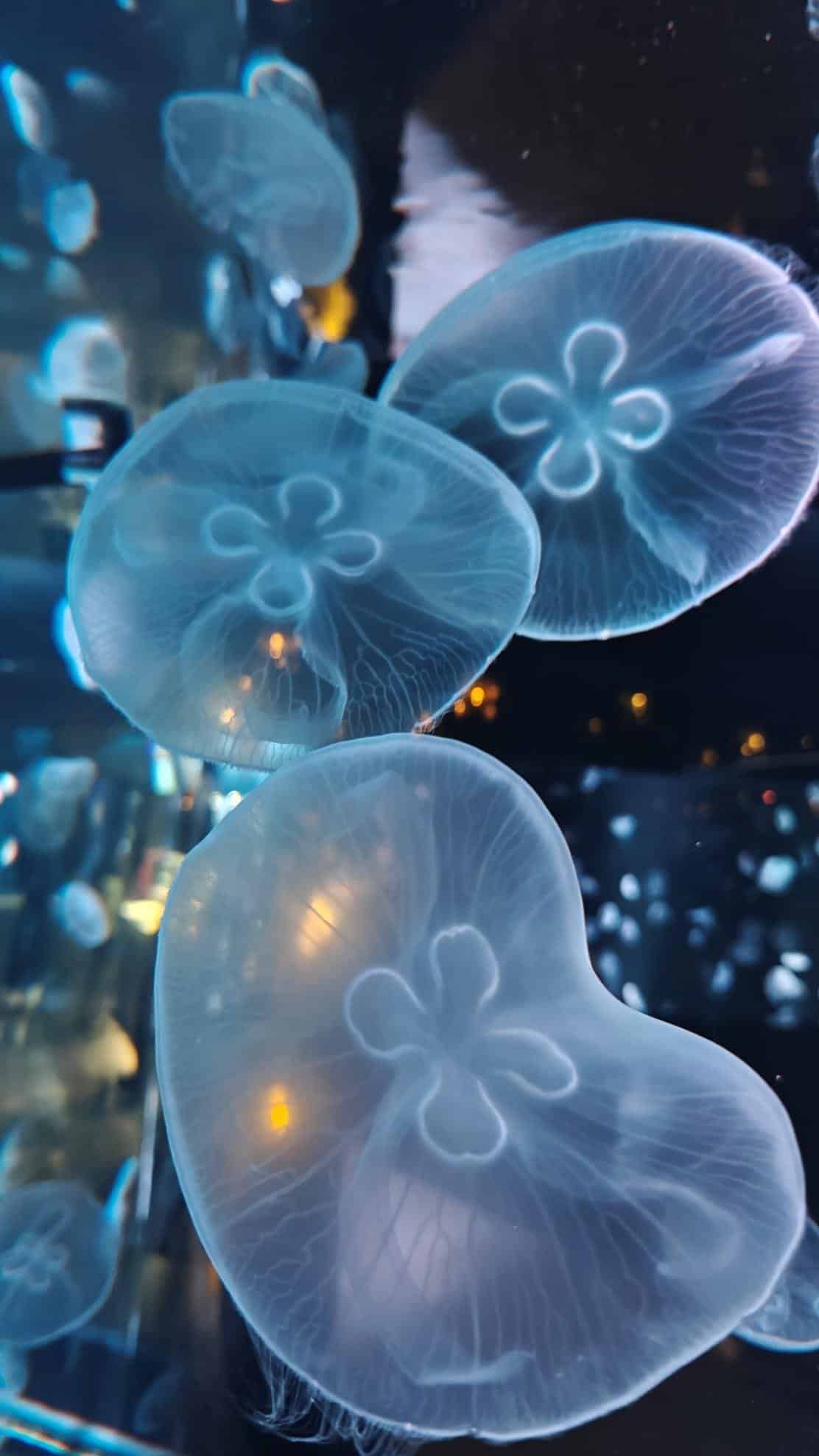
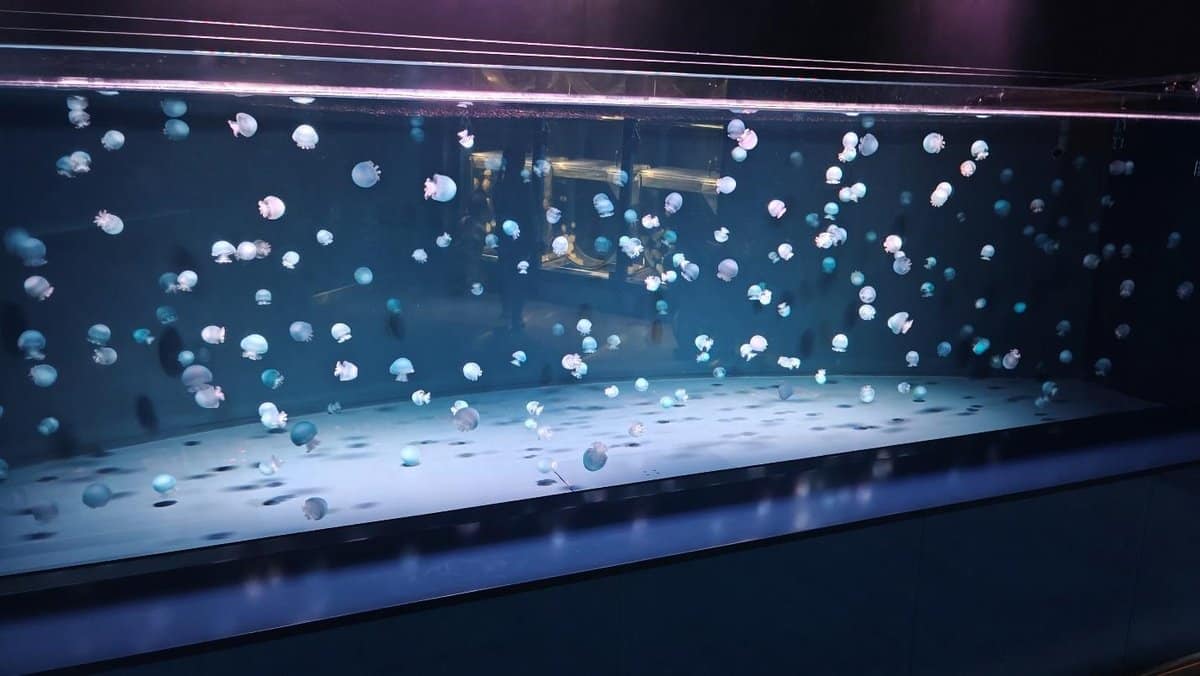
Still in the Kurage Wonder area, I came across a larger tank that had the adult moon jellyfish. While the area wasn’t that well lit, I didn’t have a problem seeing the jellyfish because they were actually glowing! This is thanks to a phenomenon called bioluminescence and is caused by the presence of bioluminescent proteins that allow them to produce a faint light.
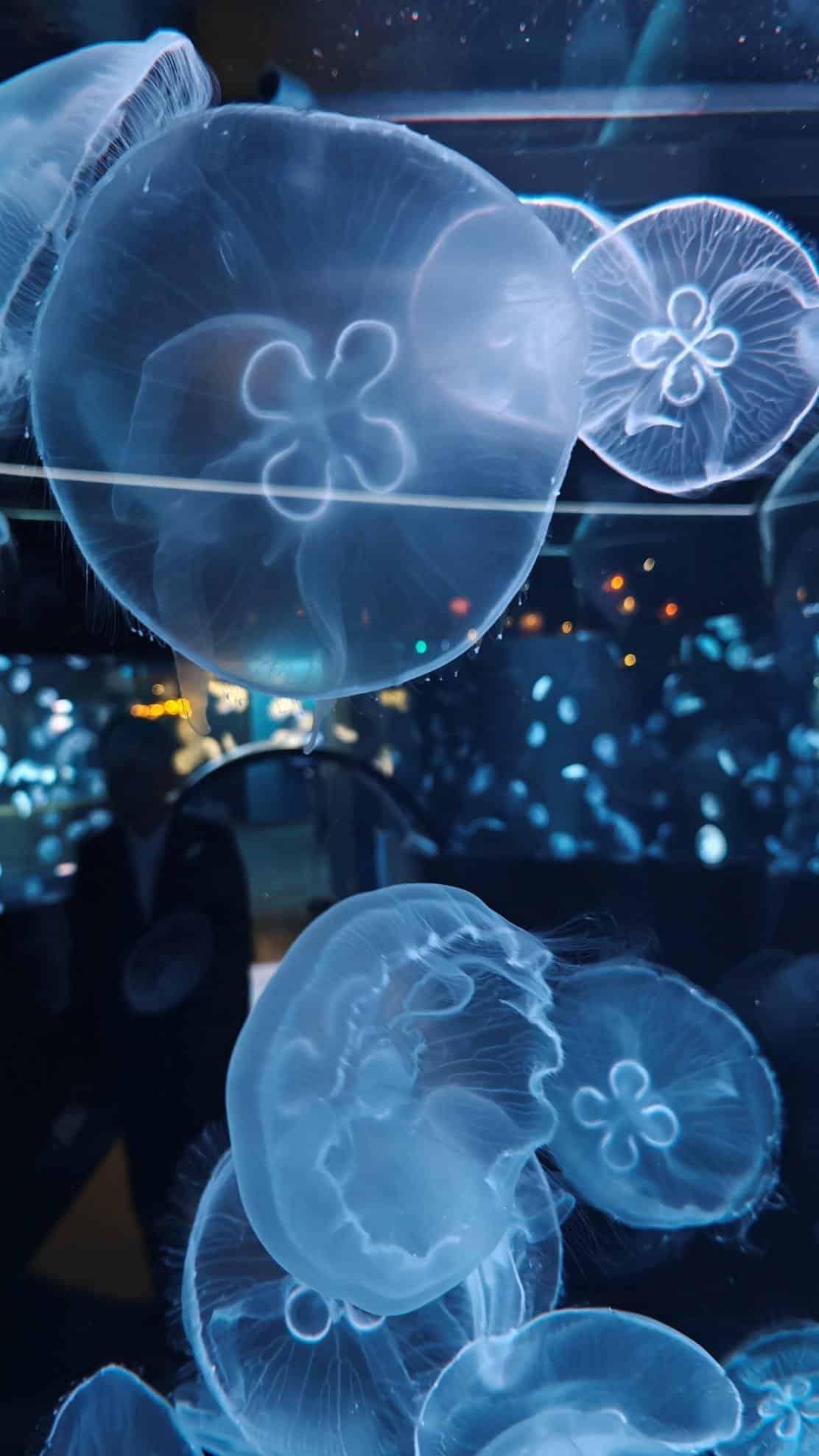
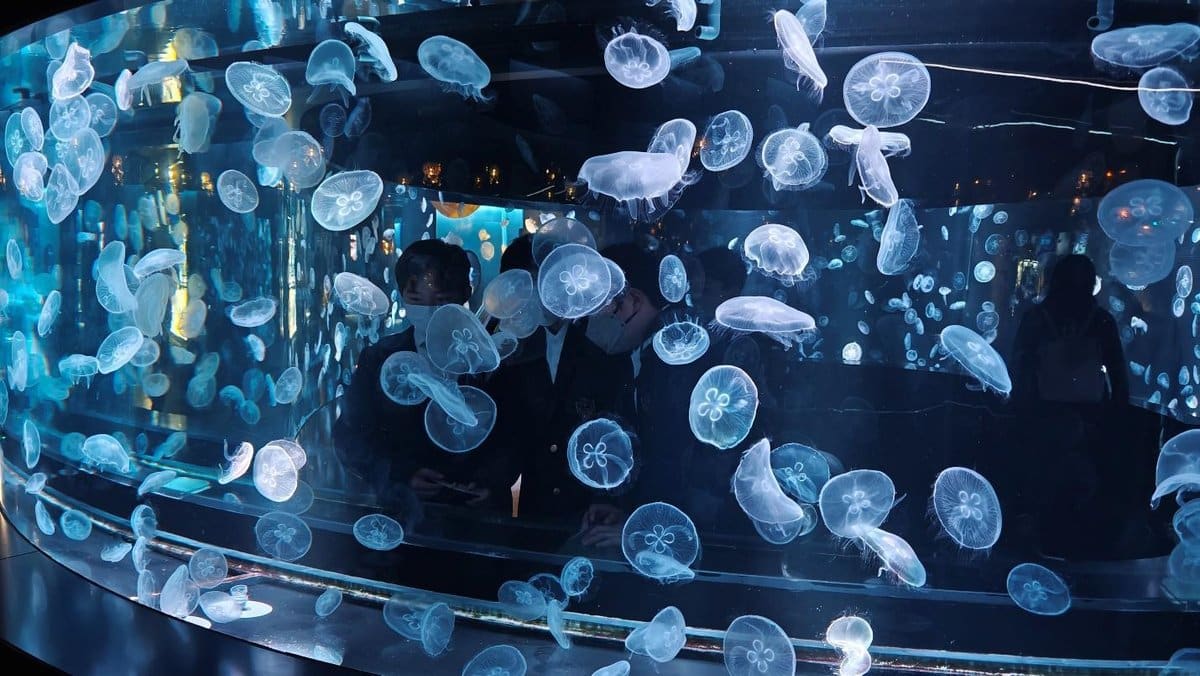
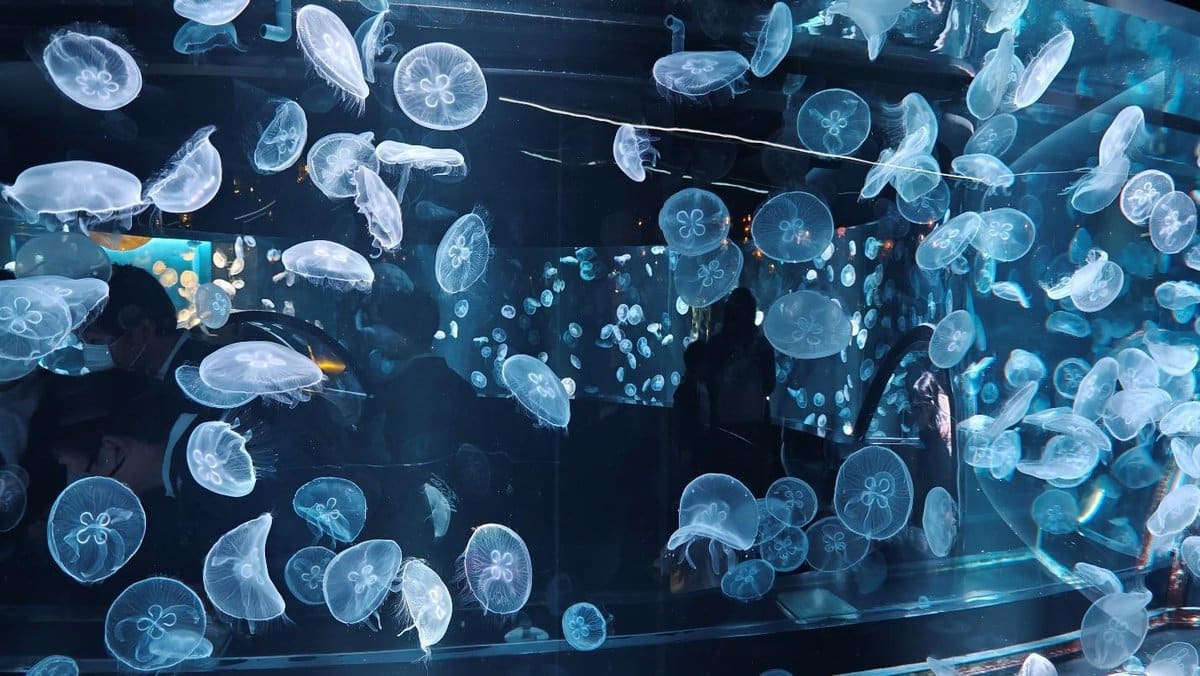
The tanks where the jellyfish are also have lighting that further enhance their glow. This was honestly a sight to behold. I think I even ended up spending a lot more time here just because it was so fun taking pictures of these unique animals.
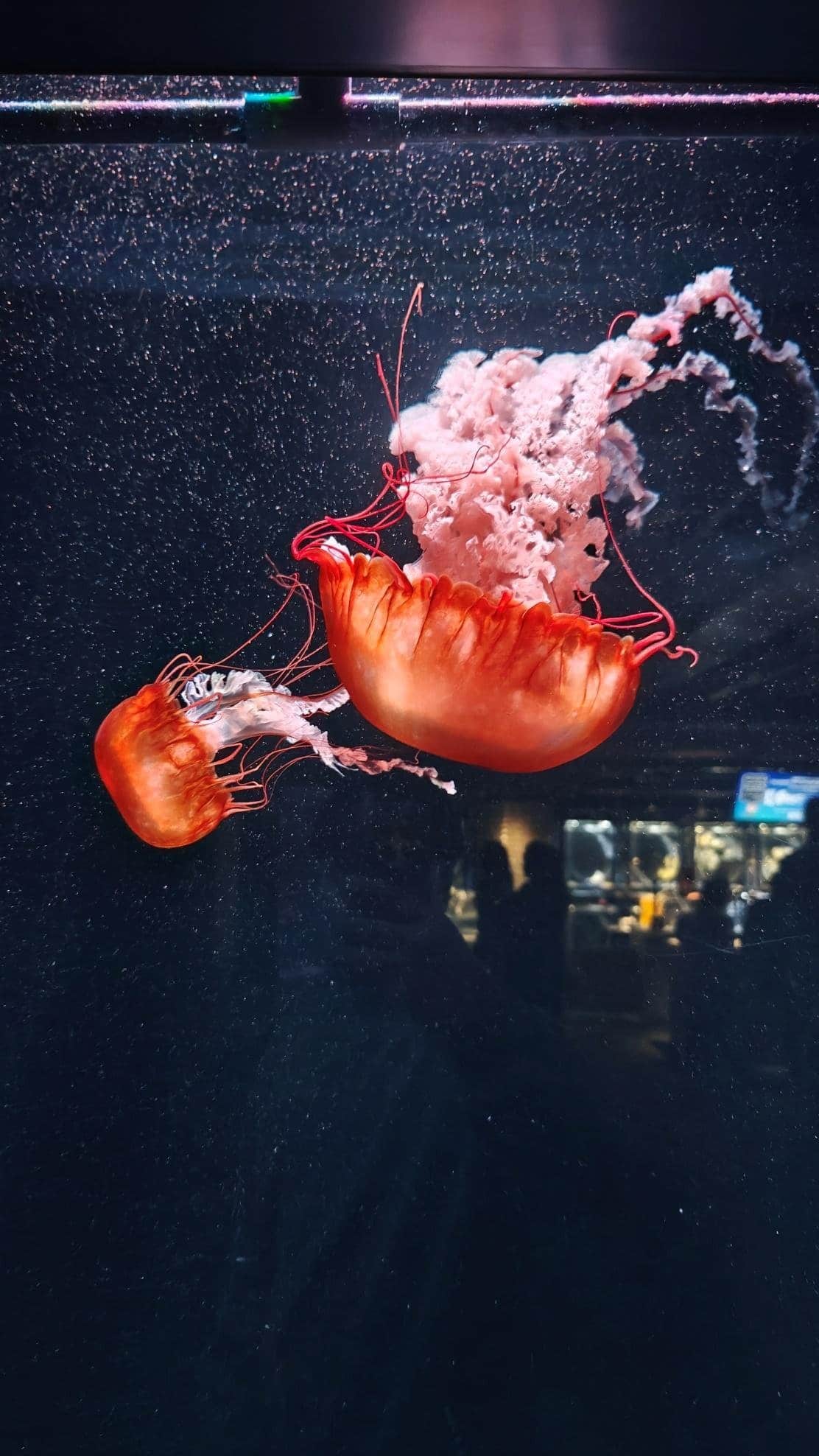
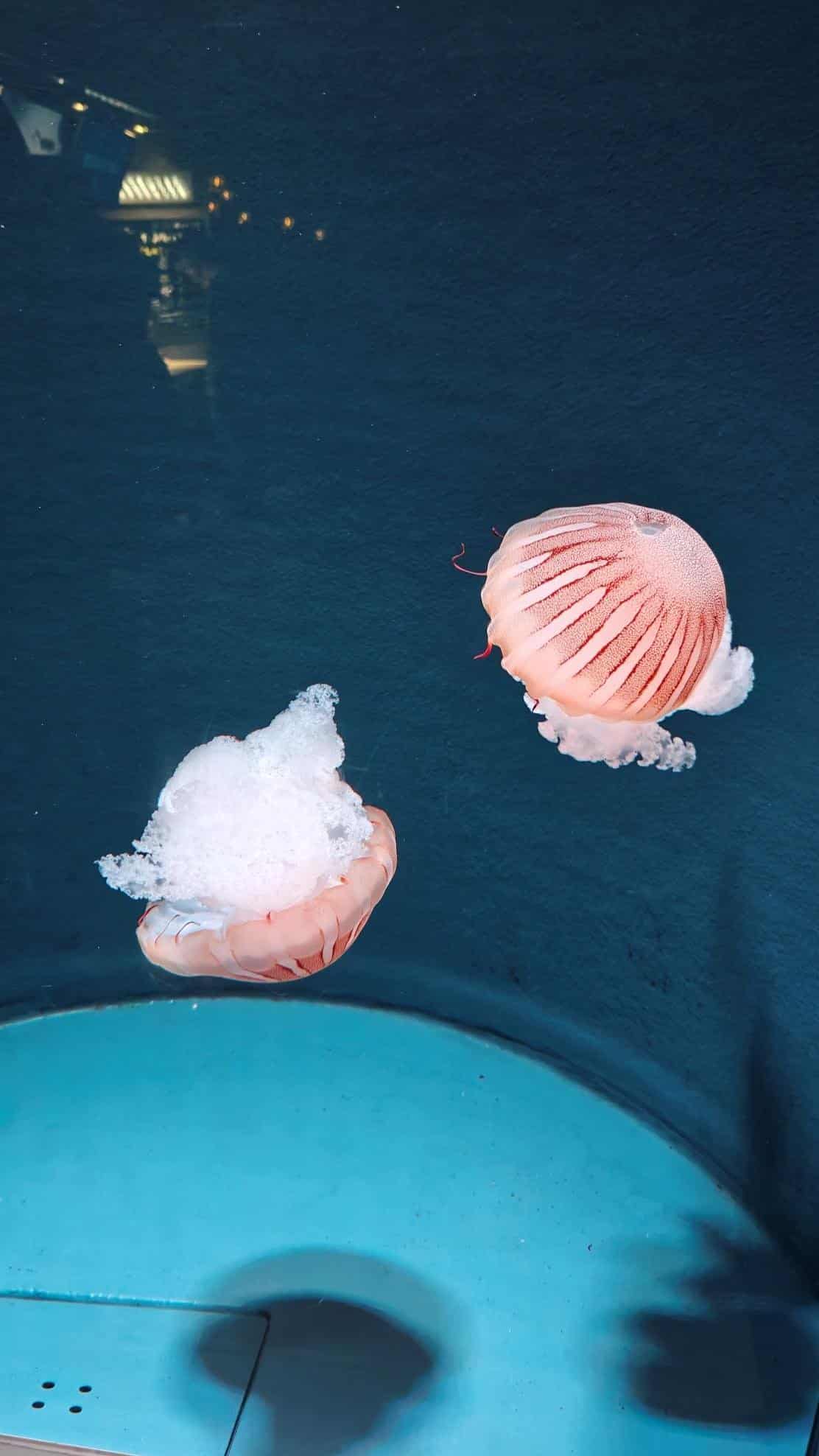
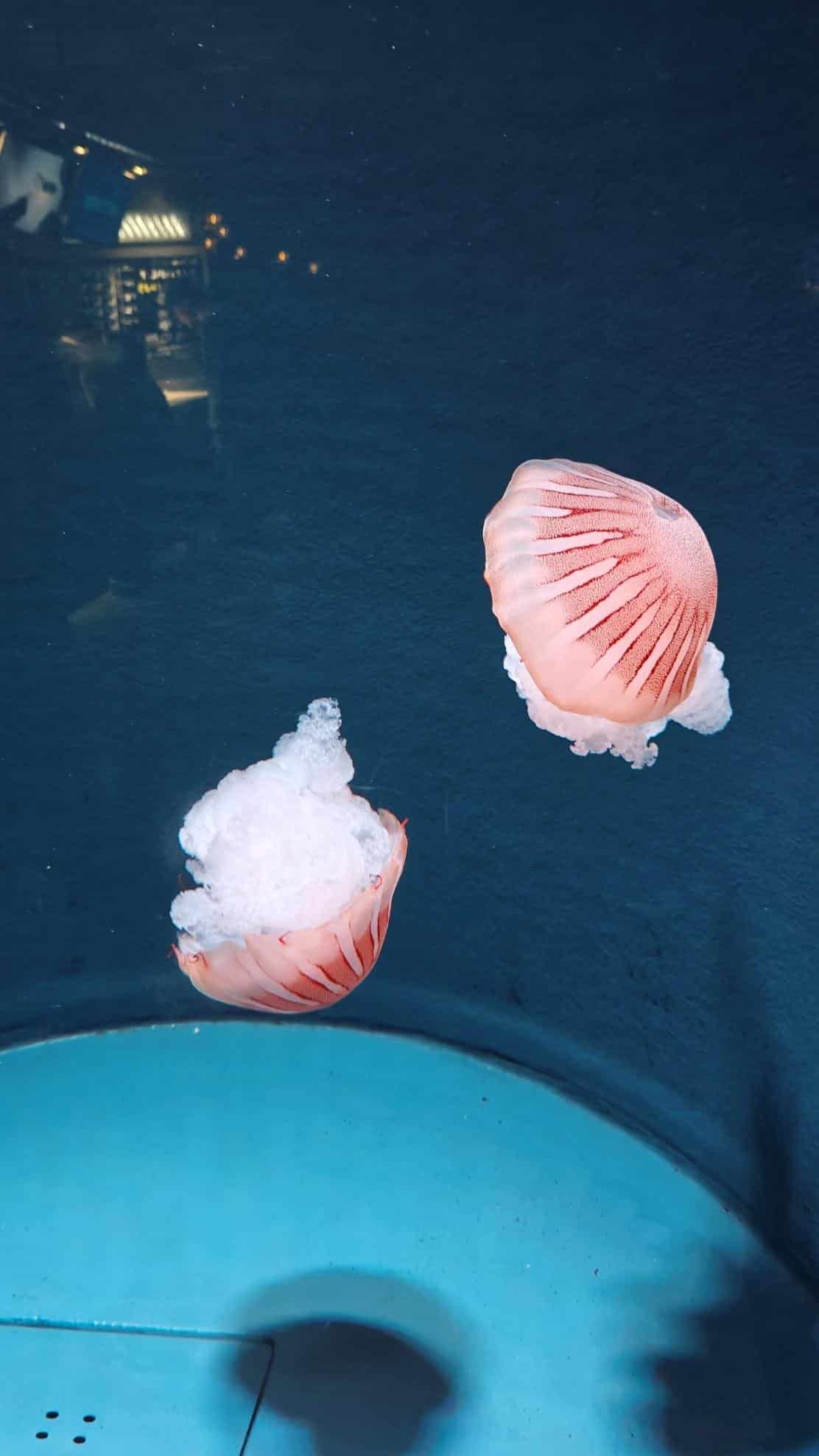
Just when I thought the moon jellyfish were cool, I then found myself staring at this tank that contained sea nettles. Now sea nettles are basically a type of jellyfish characterized by the bell shaped and umbrella like bodies with really long tentacles. The ones that you’ll find here are the Japanese and Pacific species.
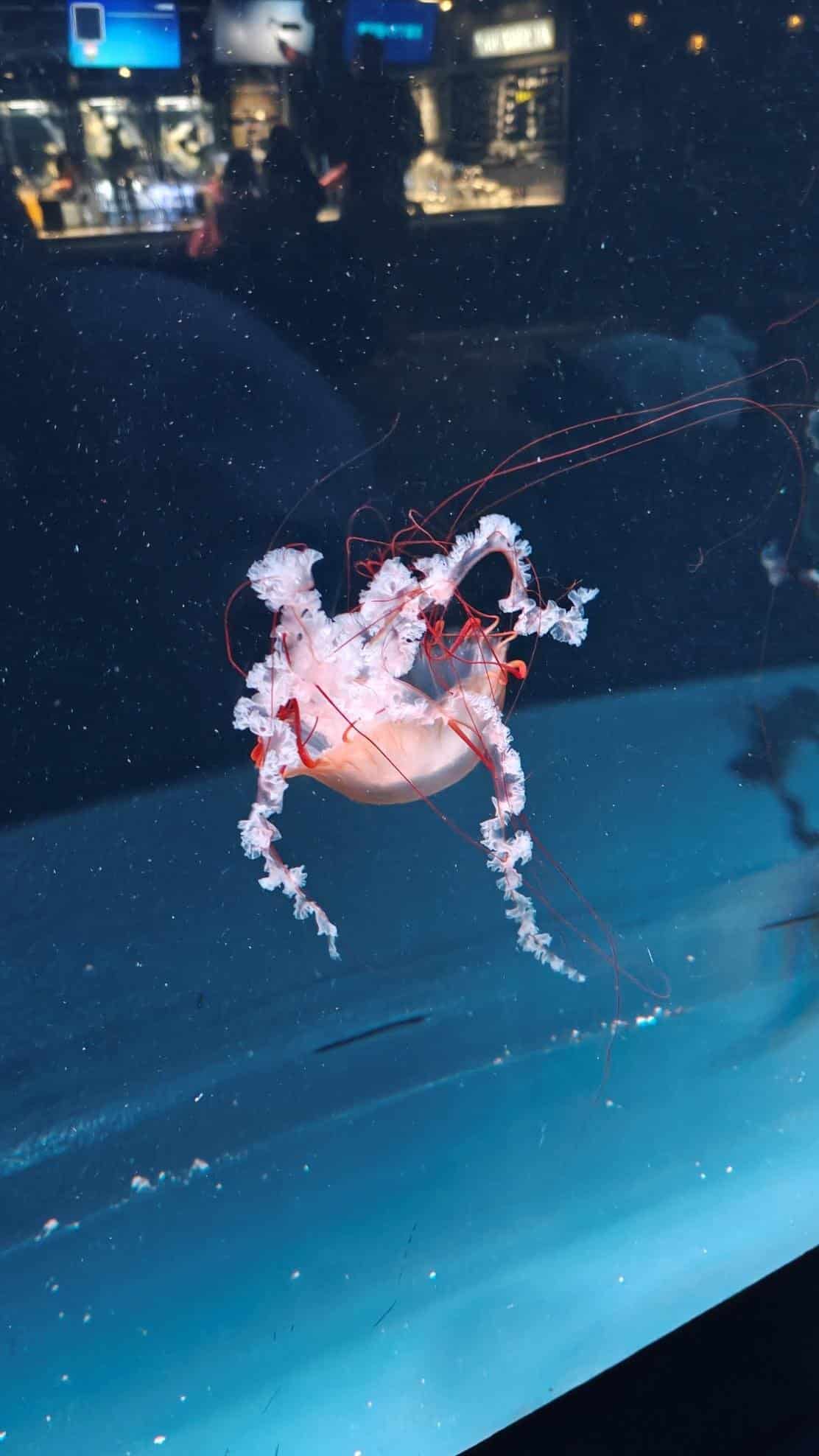
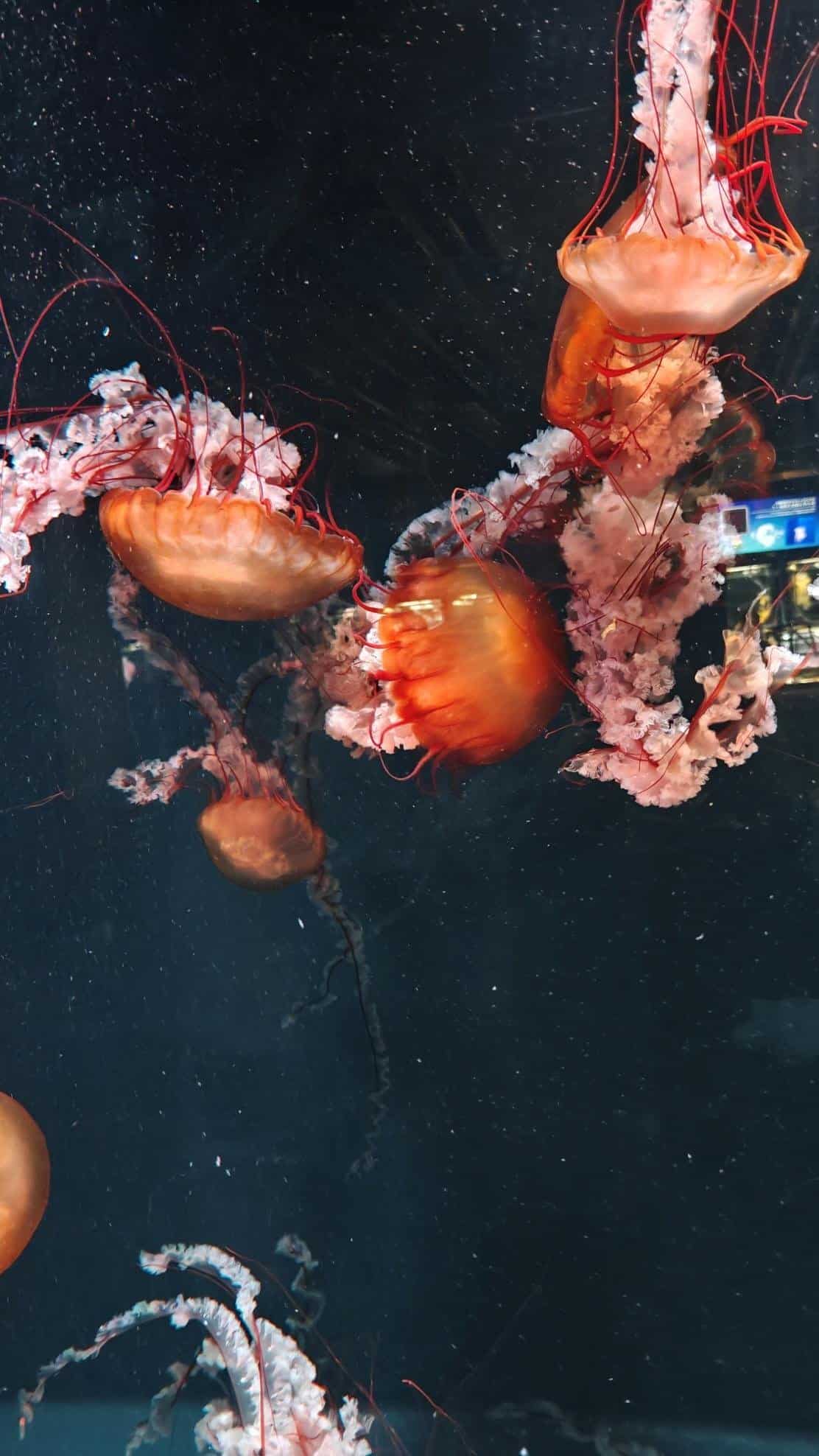
If I’m not mistaken, the ones you see in this image are the Pacific sea nettles. They can grow much larger than Japanese sea nettles and they typically have a brownish-orange coloration. Like the moon jellyfish, they moved in a very hypnotic way inside the tank and I couldn’t help staring at them for minutes on end.
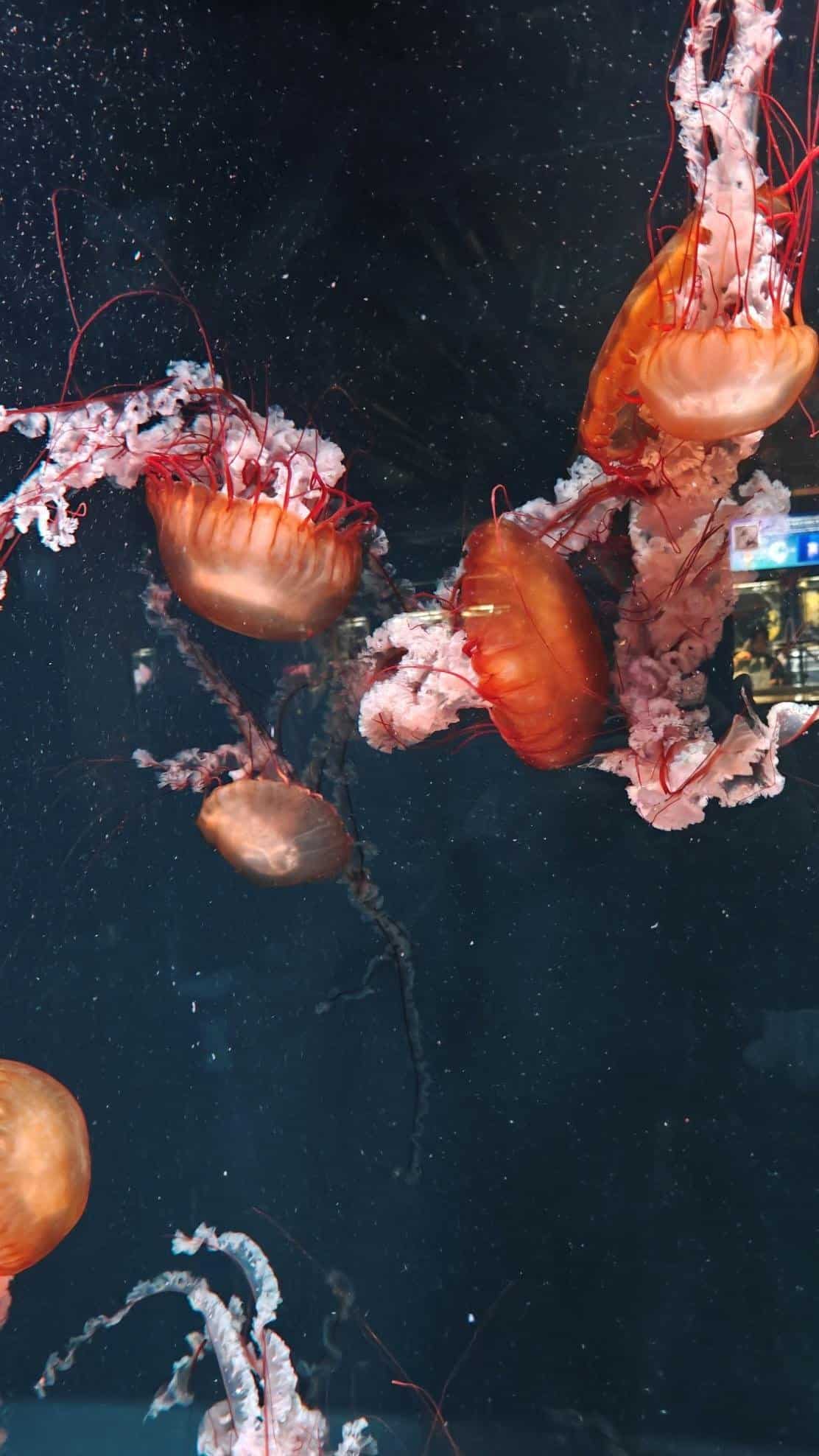
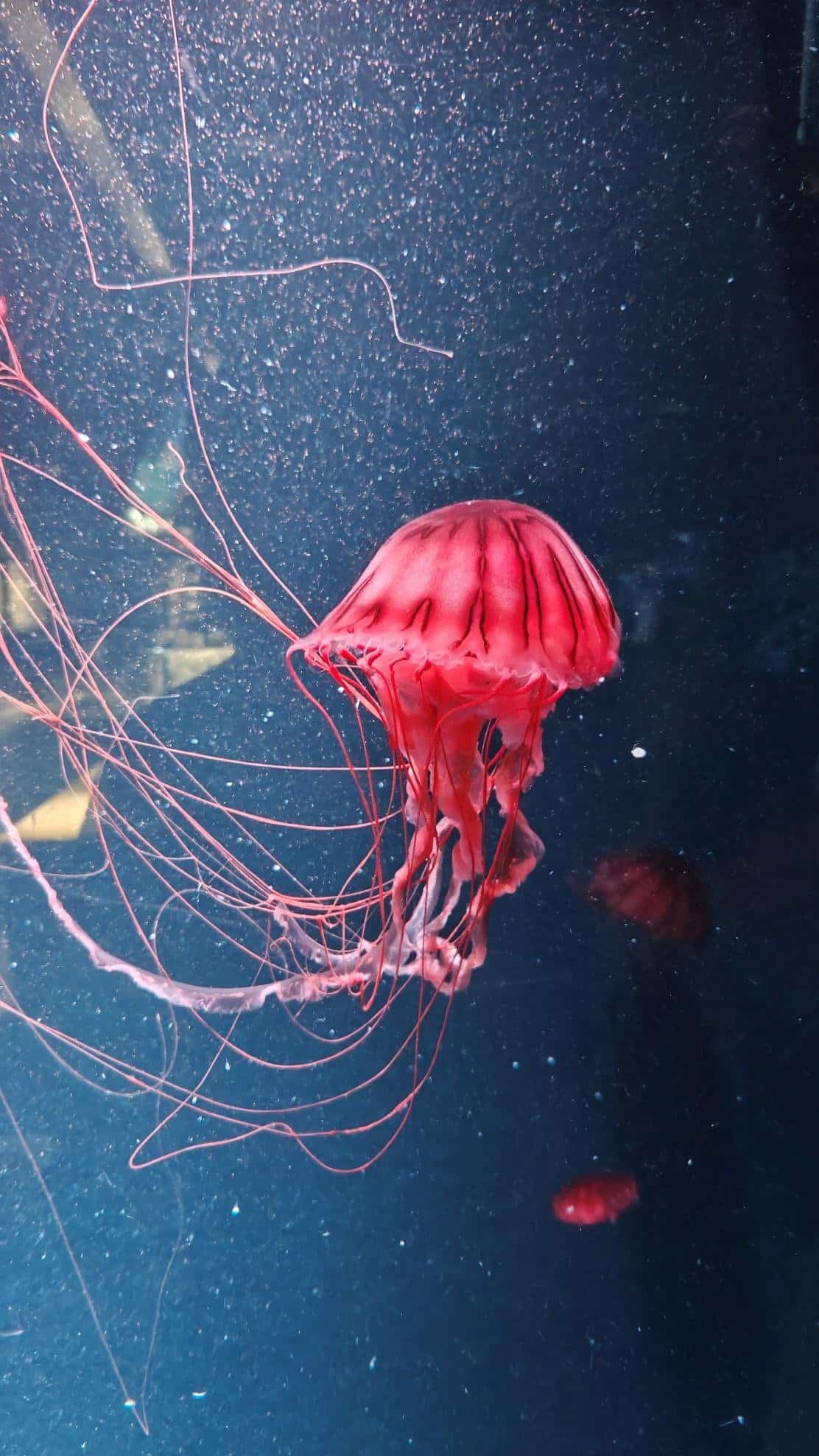
Perhaps even more mesmerizing than the Pacific sea nettles are the Japanese sea nettles (one of which you can see in this image). They have a much redder coloration and they also have stripe patterns on their umbrella/cap. Aside from adults, you’ll also see the juveniles of this species which look much cuter (though still as deadly as the adults).
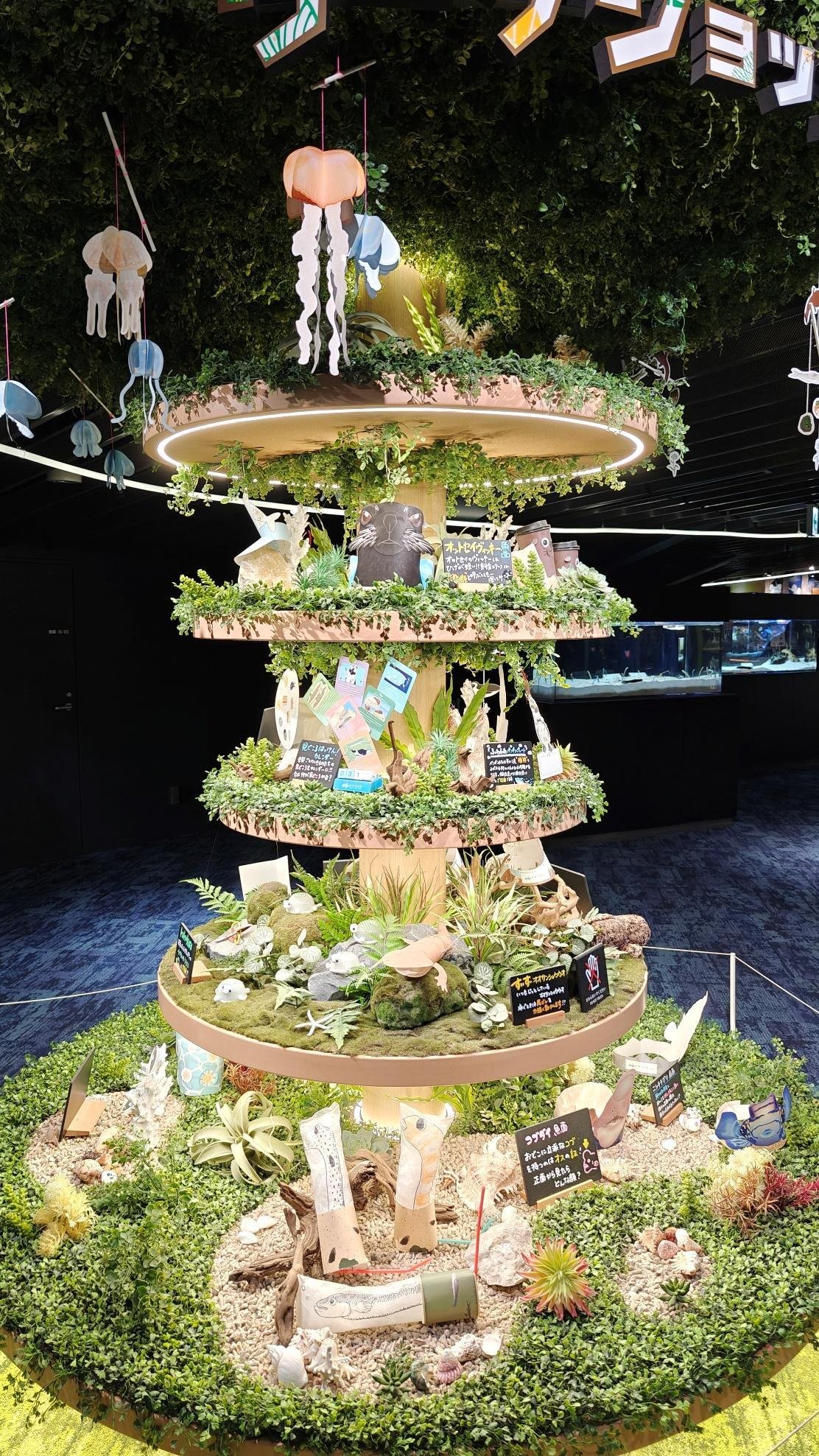
The next area I found myself in was Kyoto Aquarium’s Communication Hall. One of the first things that caught my eye here was this large display featuring miniatures and cute drawings of the animals that I saw in the earlier sections (as well as some that I’ve yet to see). Other than the drawings and miniatures, there are also small placards with information about these animals.
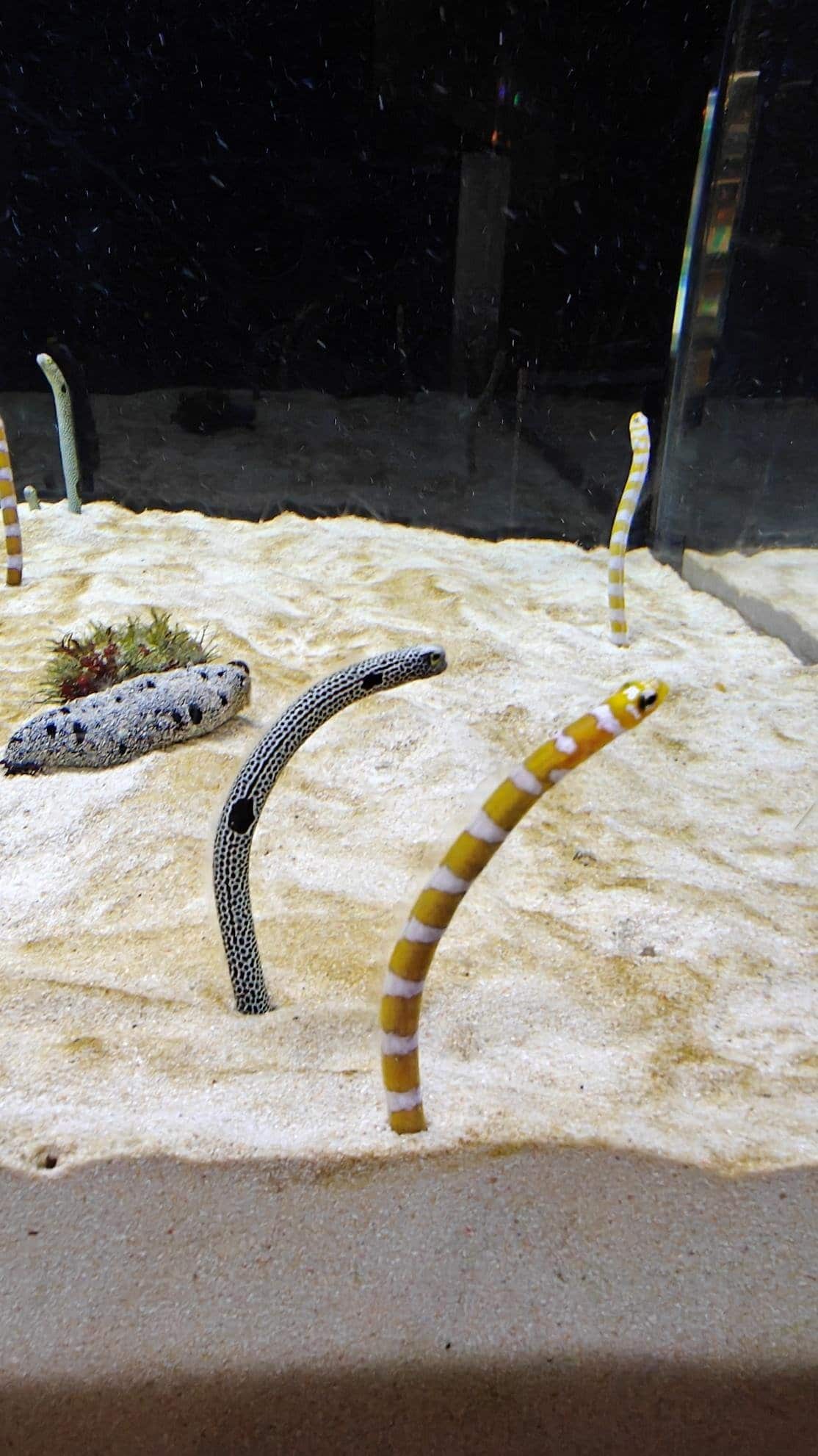
You probably saw drawings of these garden eels in the previous image. These guys looked really cute and they seem like they’re just chilling. If you checked the previous image, you can actually see the tanks where you’ll find these guys just behind the display.
As for the area these guys are in, it’s called the Fish of the Coral Reef.
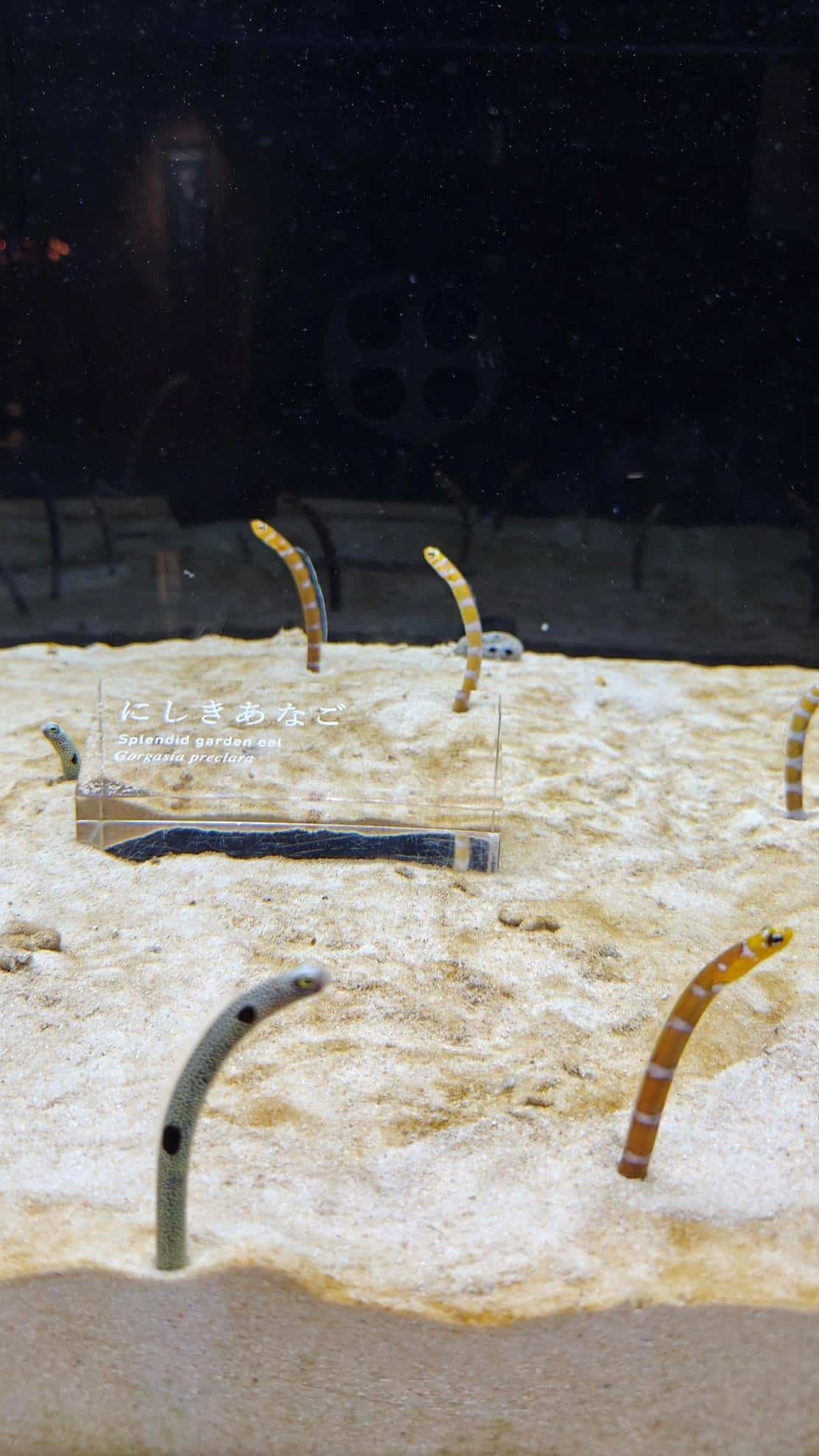
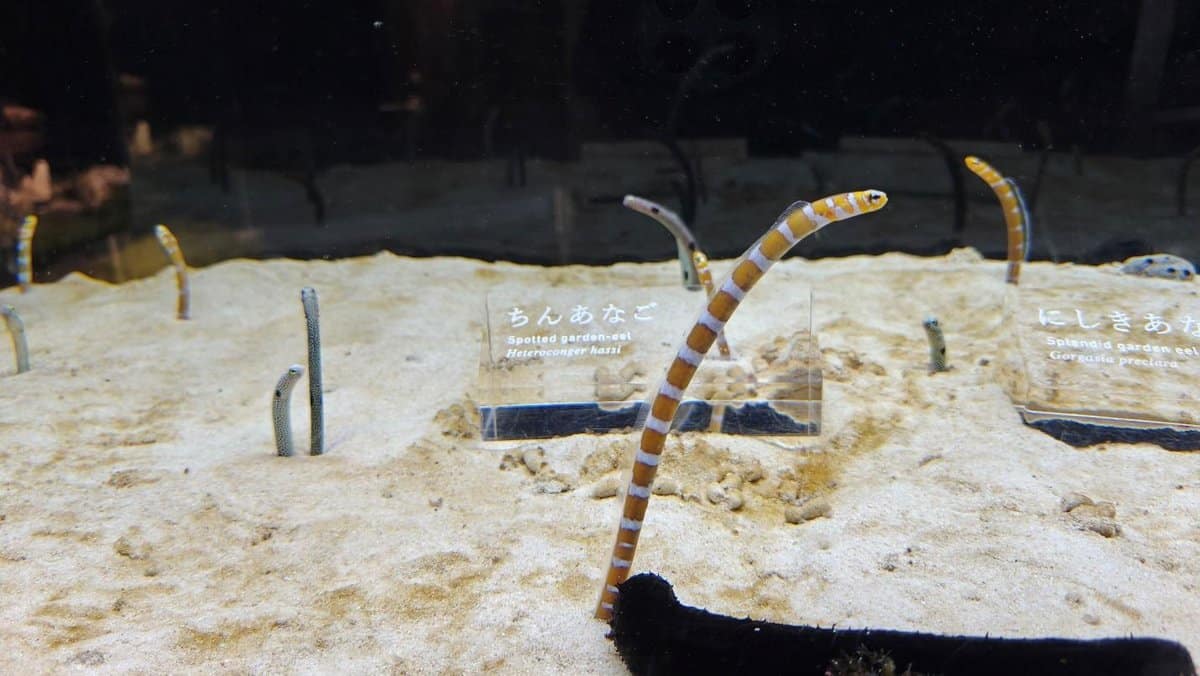
There are two types of garden eels in this tank. The ones with dark spots are the spotted garden eels while the larger yellow guys with white bands are called splendid garden eels. They might look similar aside from their markings but both are different species.
That said, you can actually see them sharing the same territory and habitats (coral reefs) not just here in Kyoto Aquarium but also in the wild.
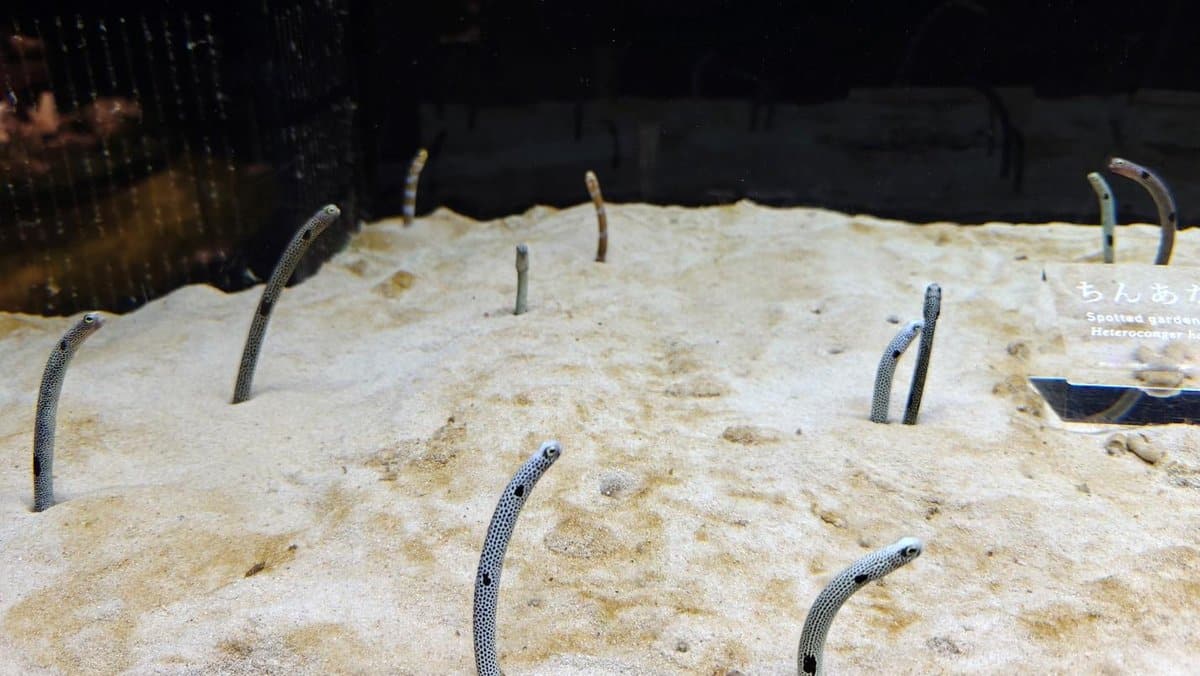
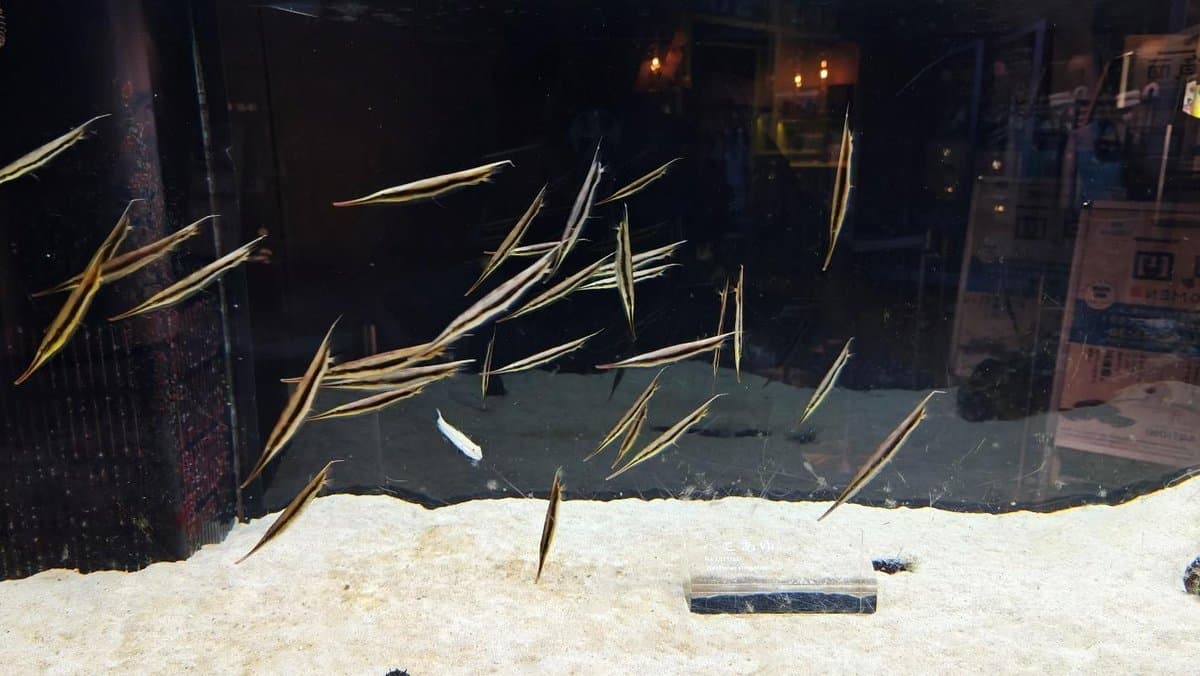
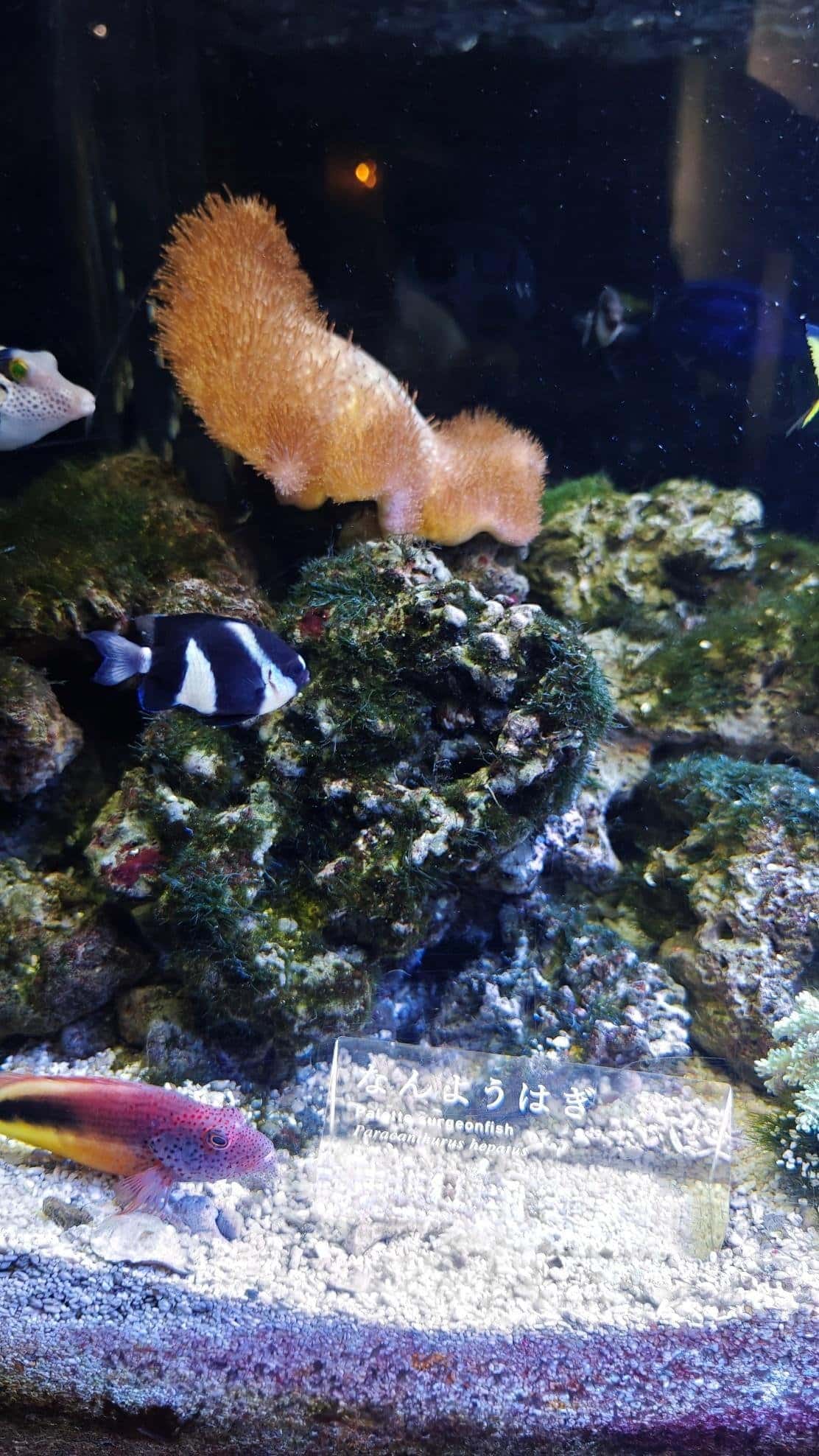
Other than the garden eels, there are also tanks here with Razor Shrimpfish (also called razorfish), Threadfin Butterflyfish, Threadfin Cardinalfish, and Blue-Green Chromis among others. Out of all the displays here in Kyoto Aquarium, these probably look the most like what you’d see at home or at a marine aquarist’s.
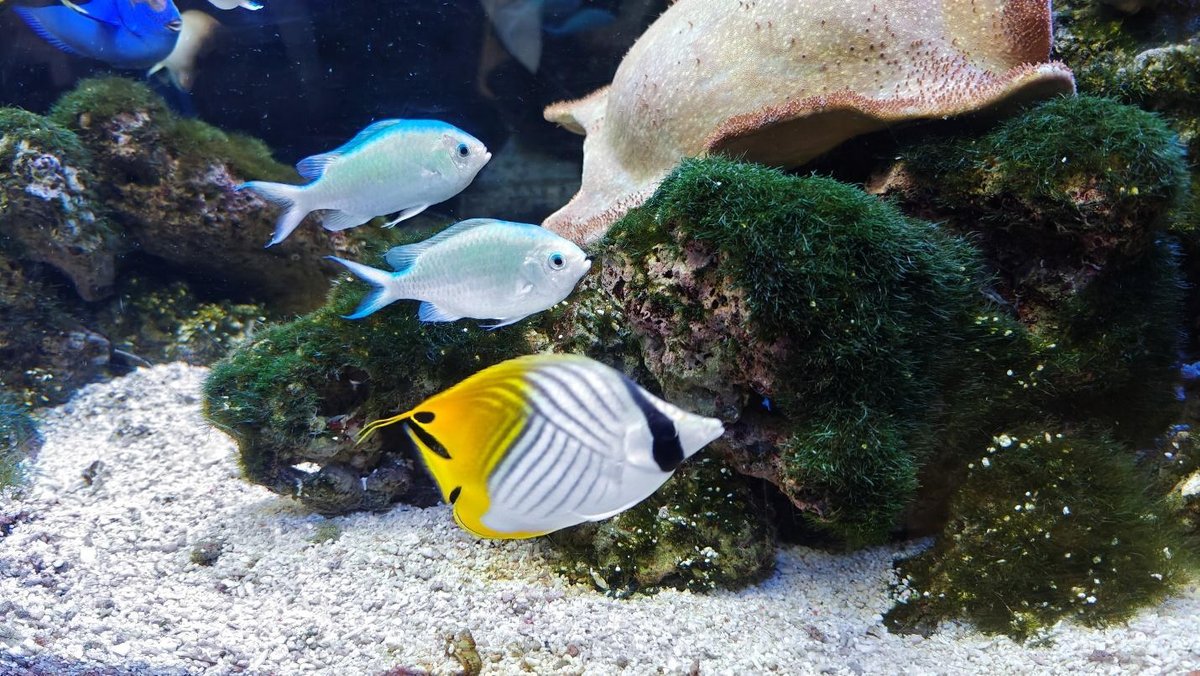
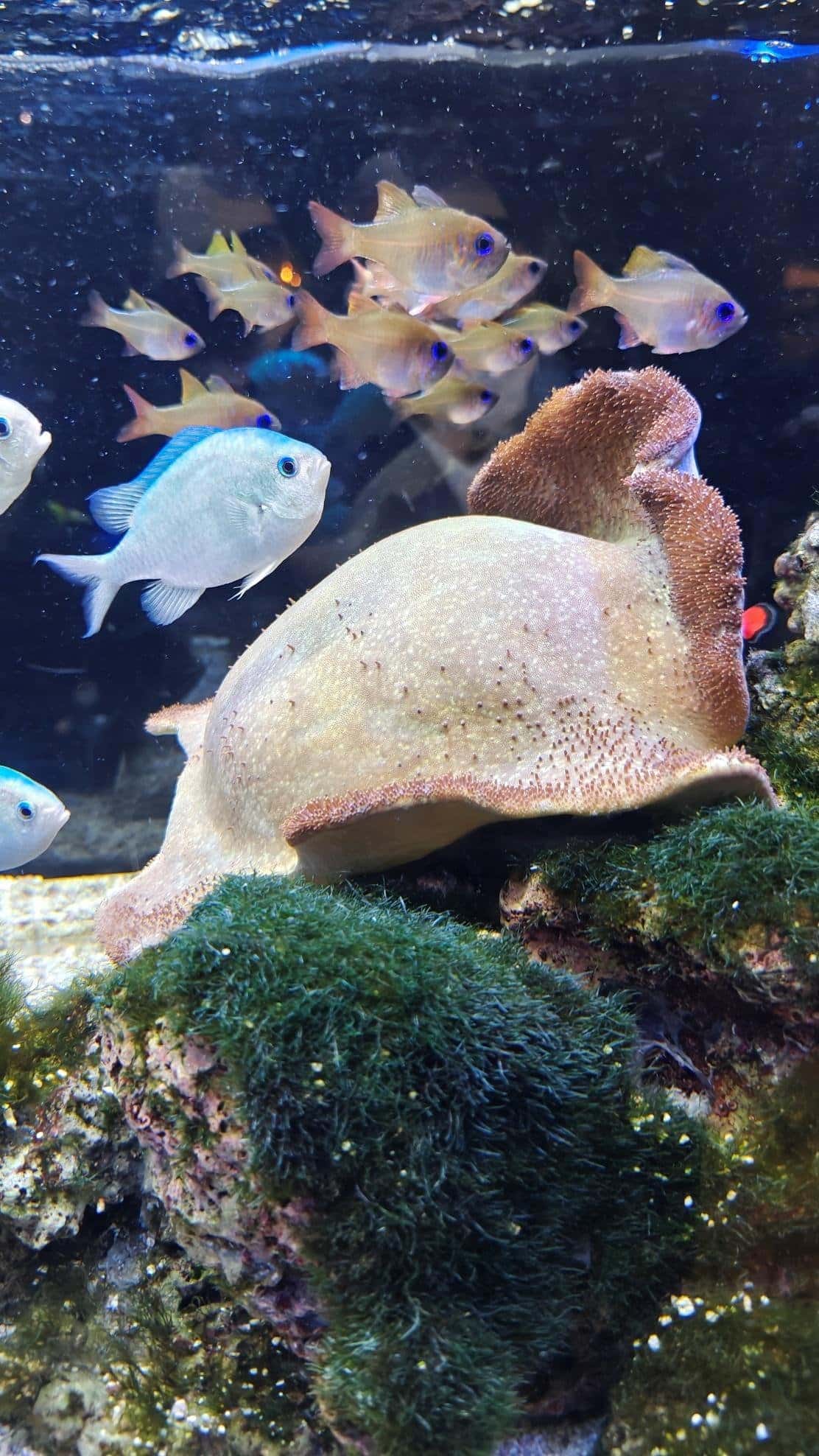
As the name of this section implies, there are also tanks that feature coral reefs here. Initially I thought that these were made of plastic but I was surprised to find out that it’s actually real. In fact, the corals in the Sea of Kyoto tank were real as well.
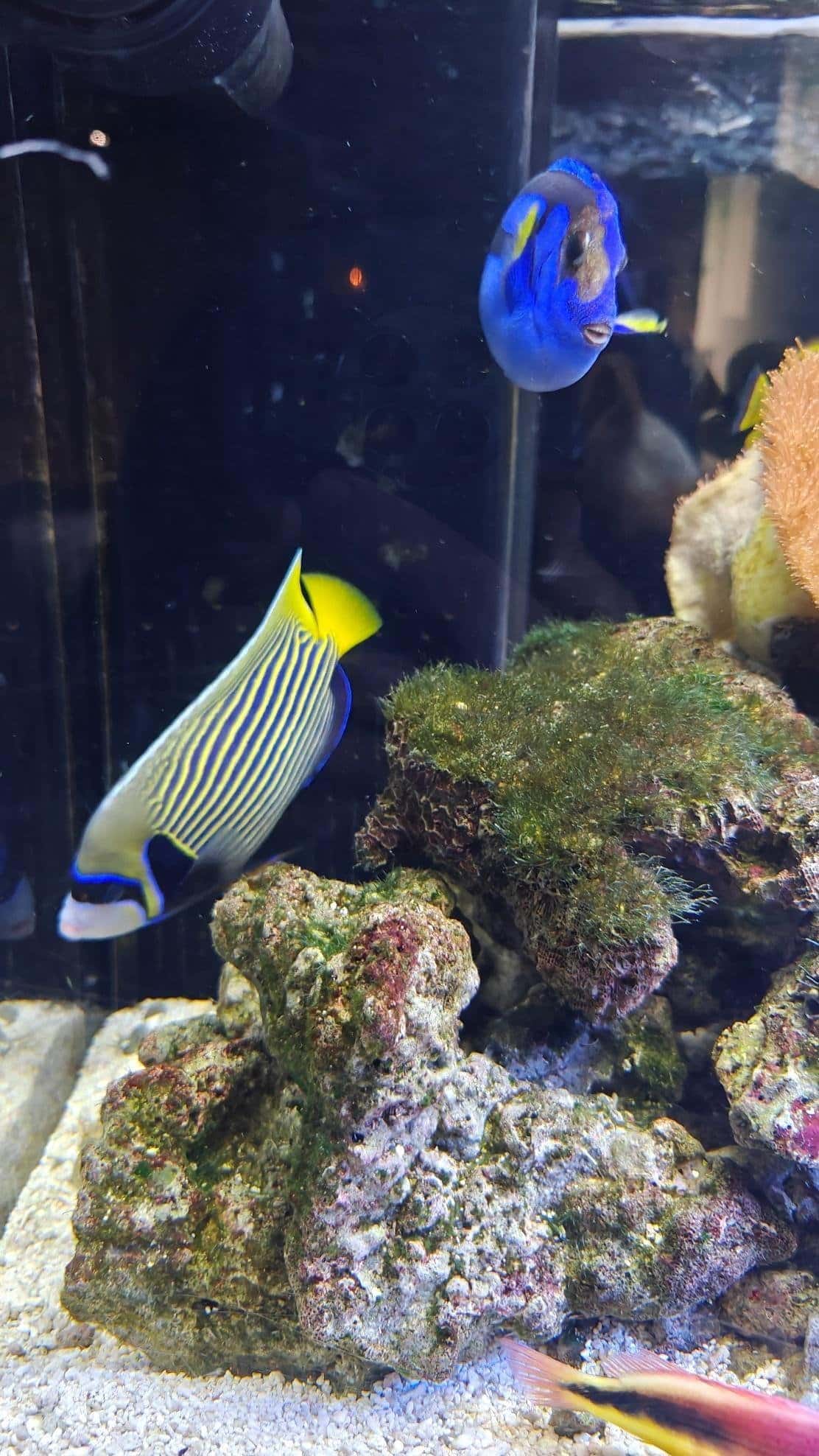
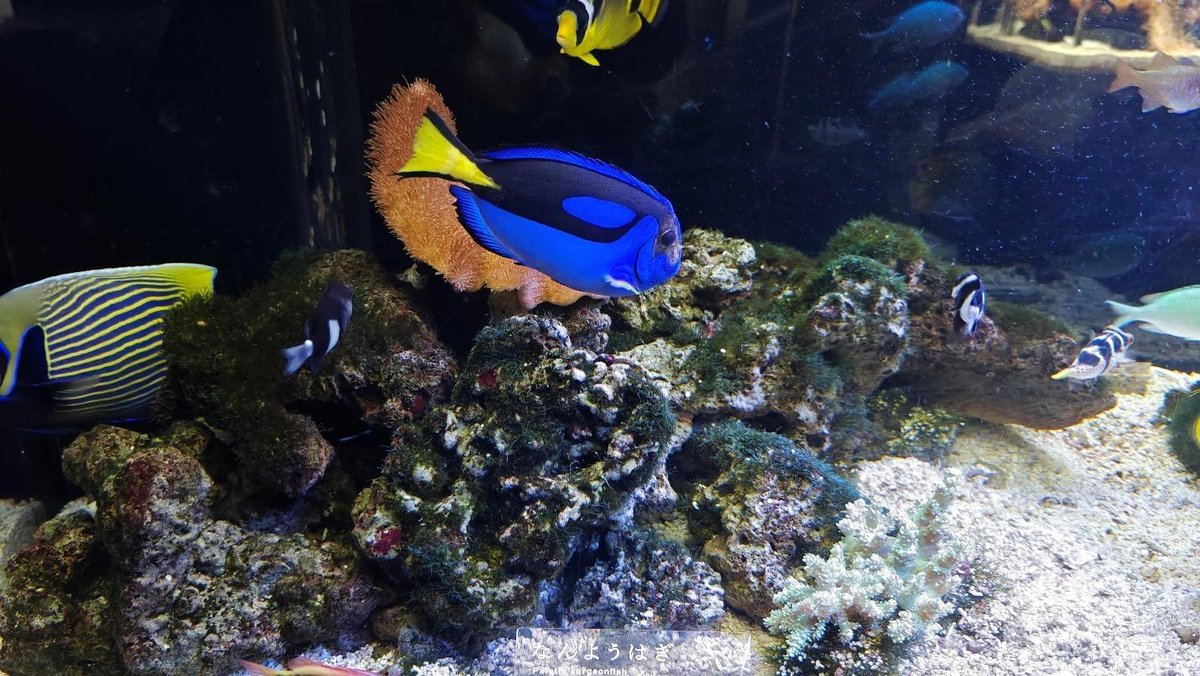
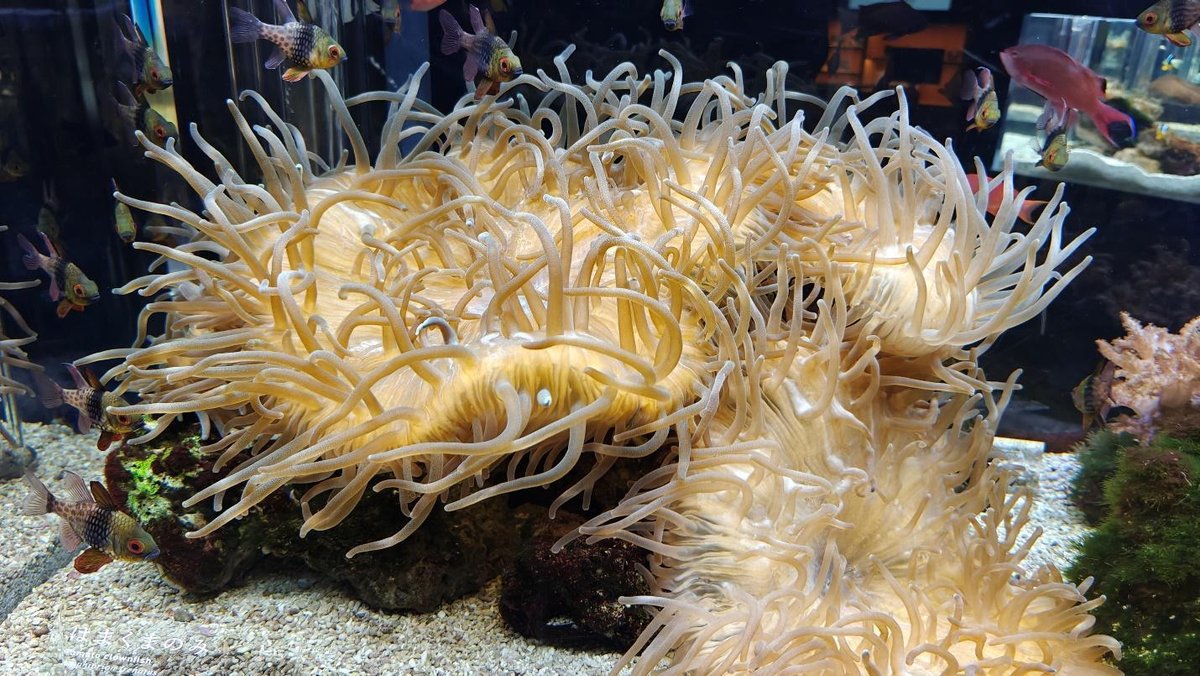
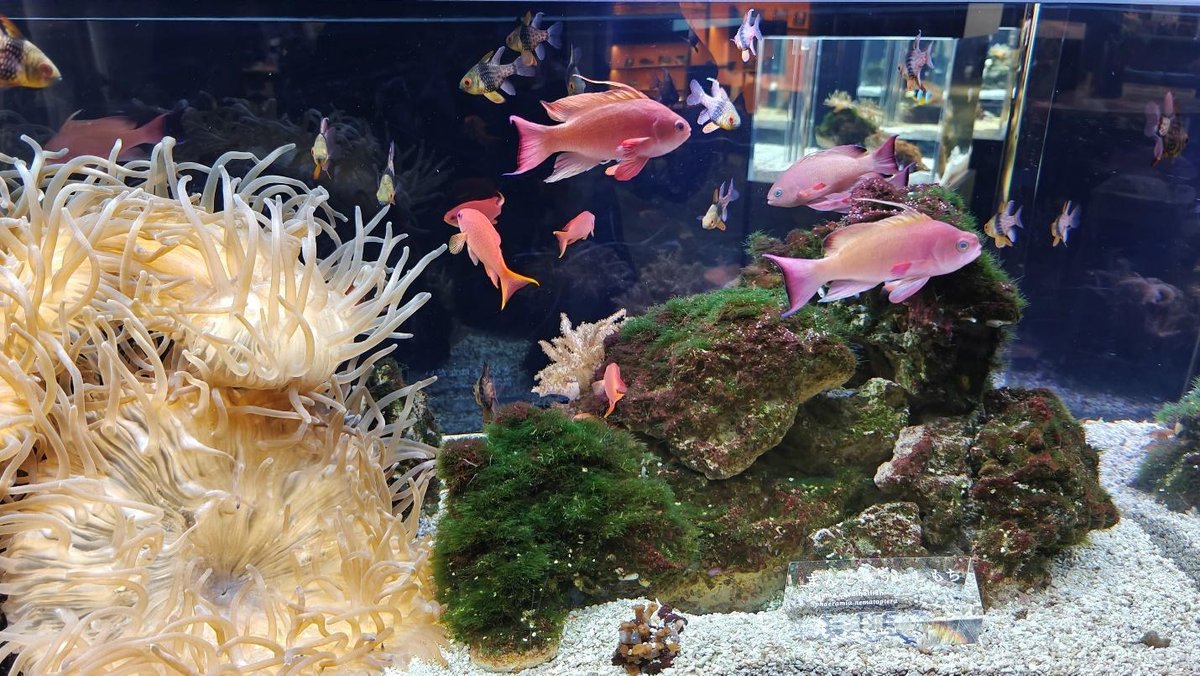
While the fish at the Sea of Kyoto tank were impressive, they honestly couldn’t hold a candle to how colorful the ones here at the Fish of the Coral Reef section are. The Regal Tang as well as the Ocellaris Clownfish (Clown anemonifish) were especially eye-catching and there was even an anemone.
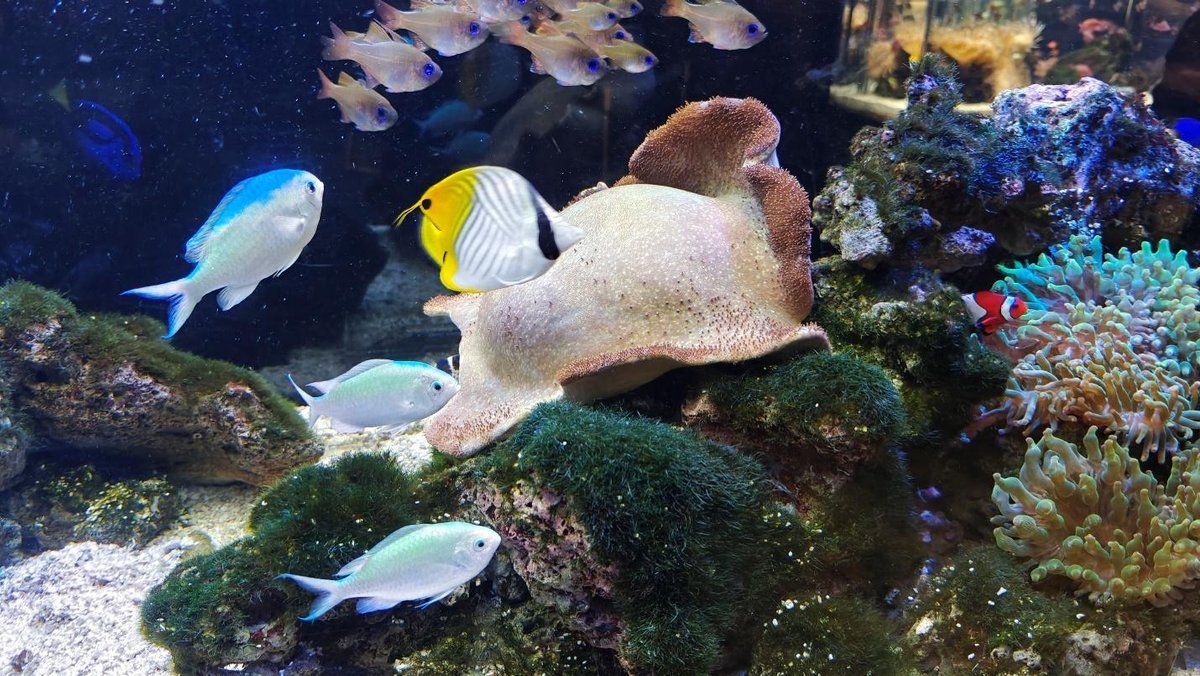
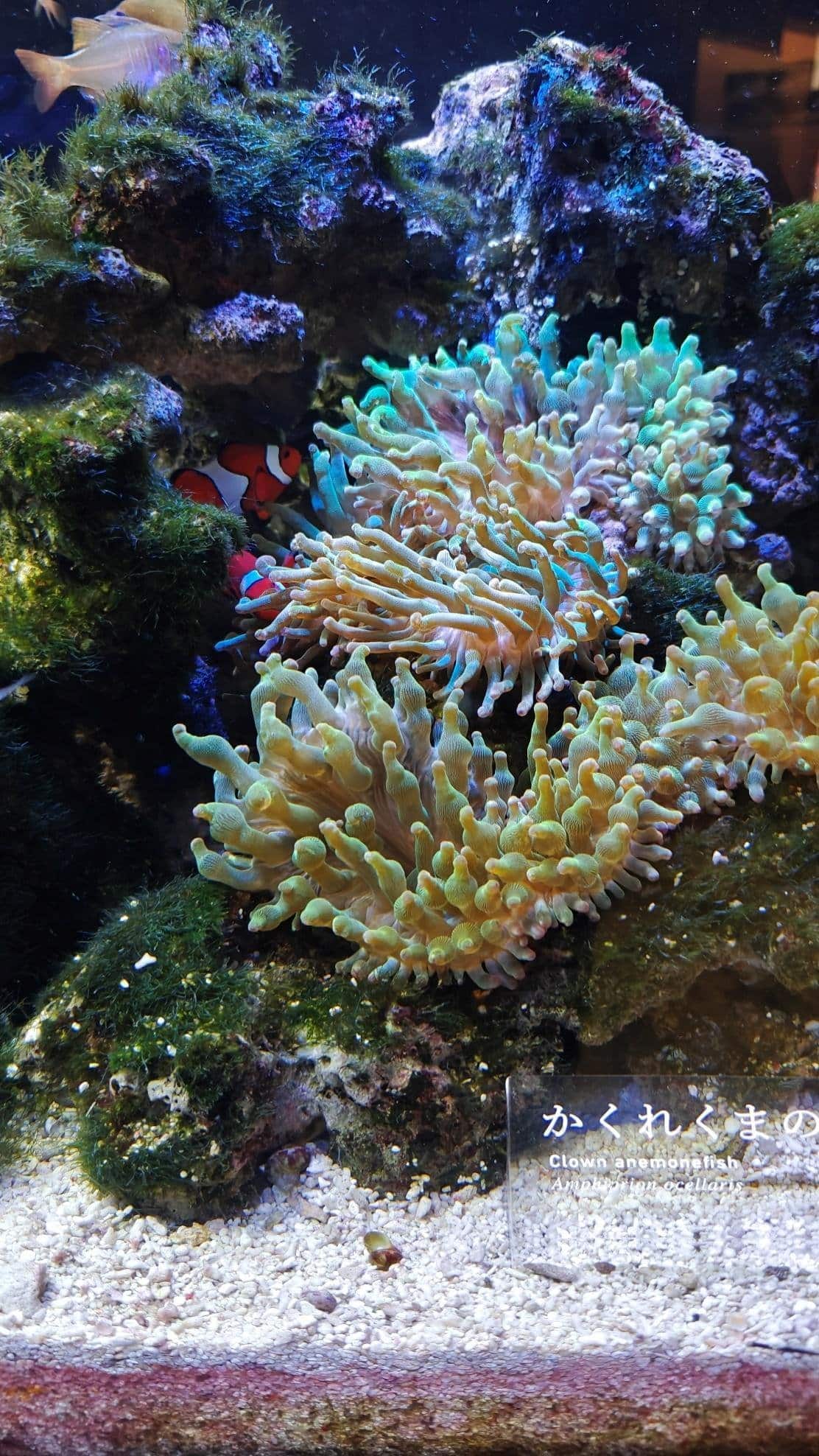
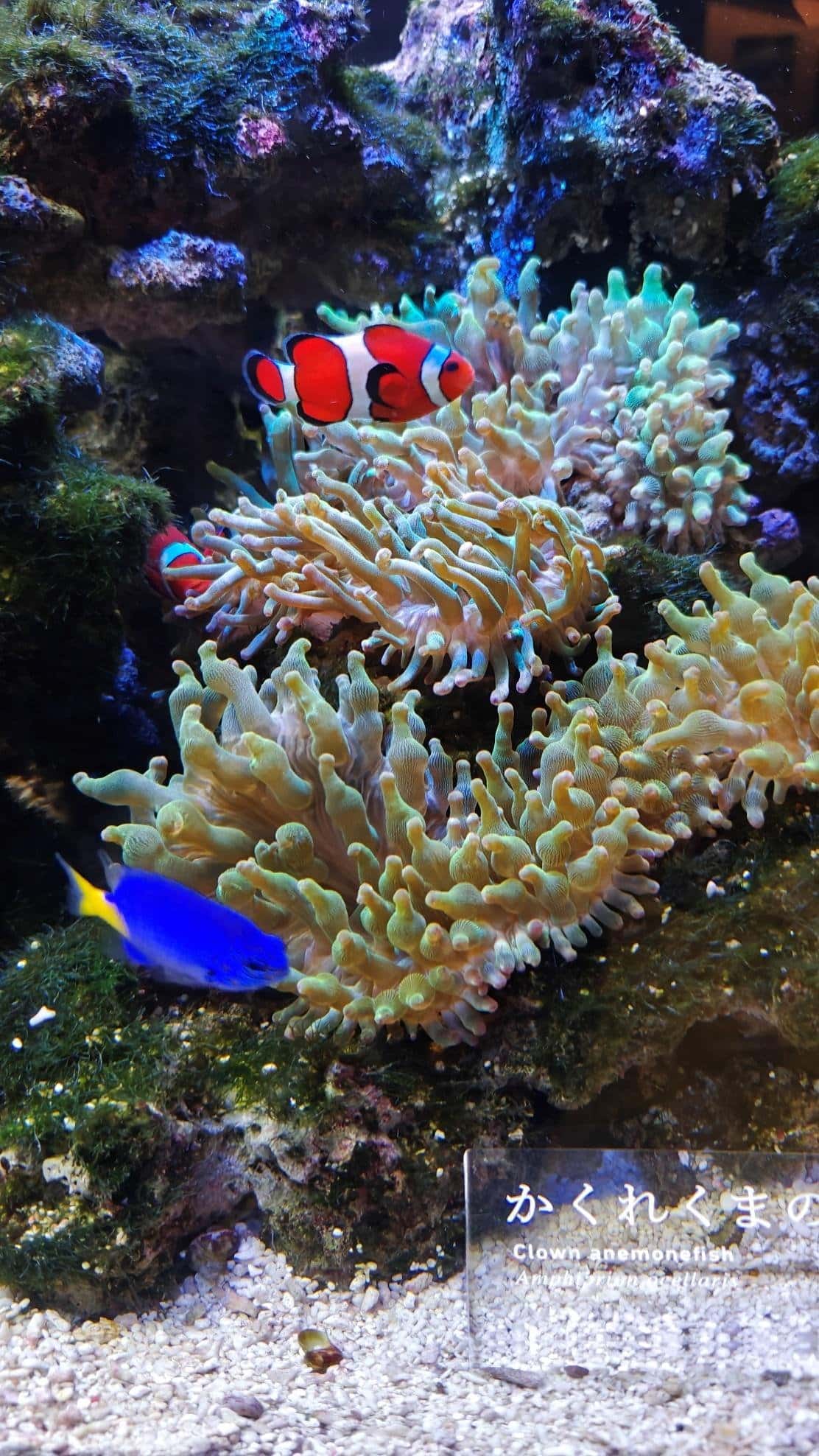
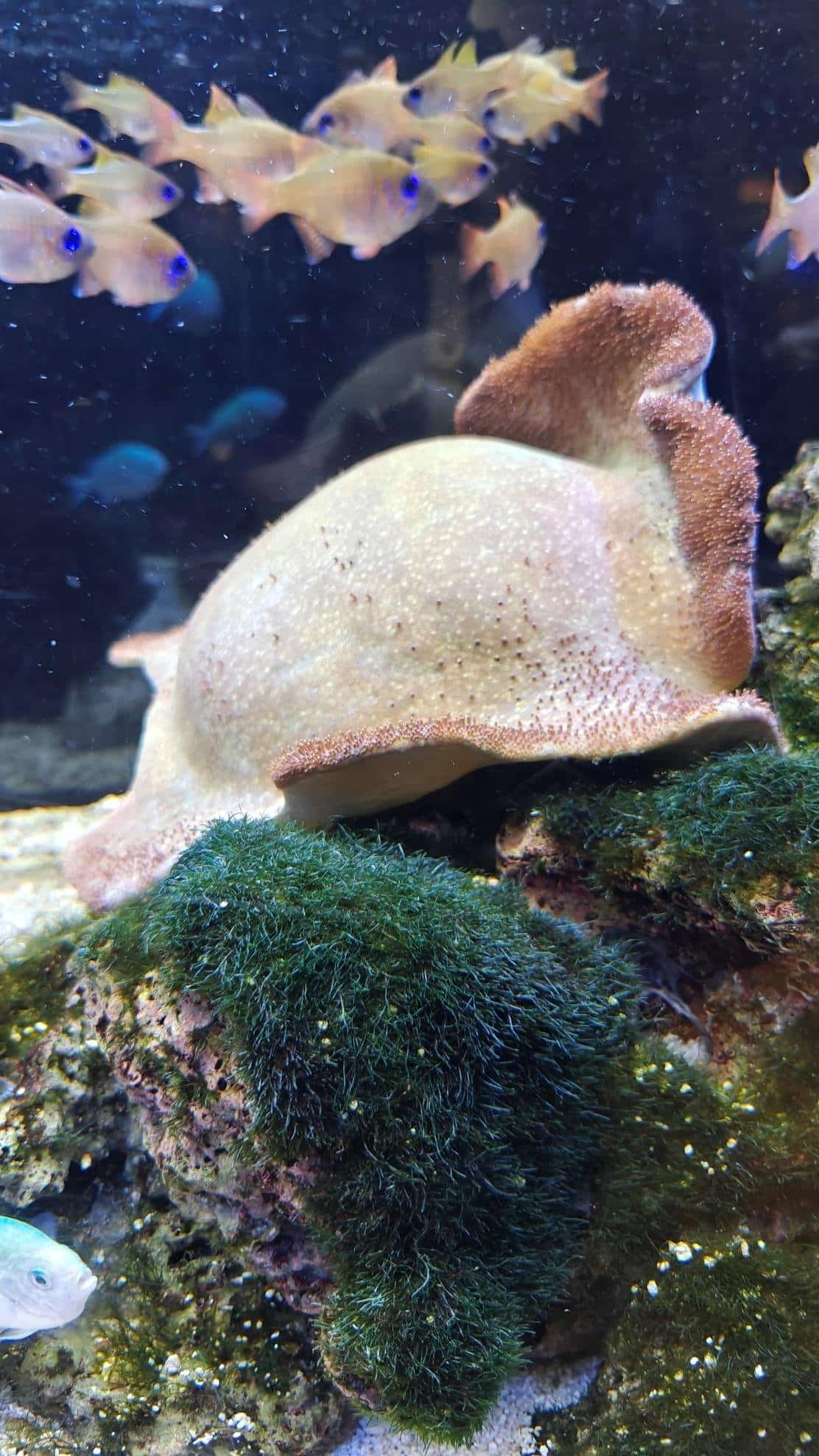
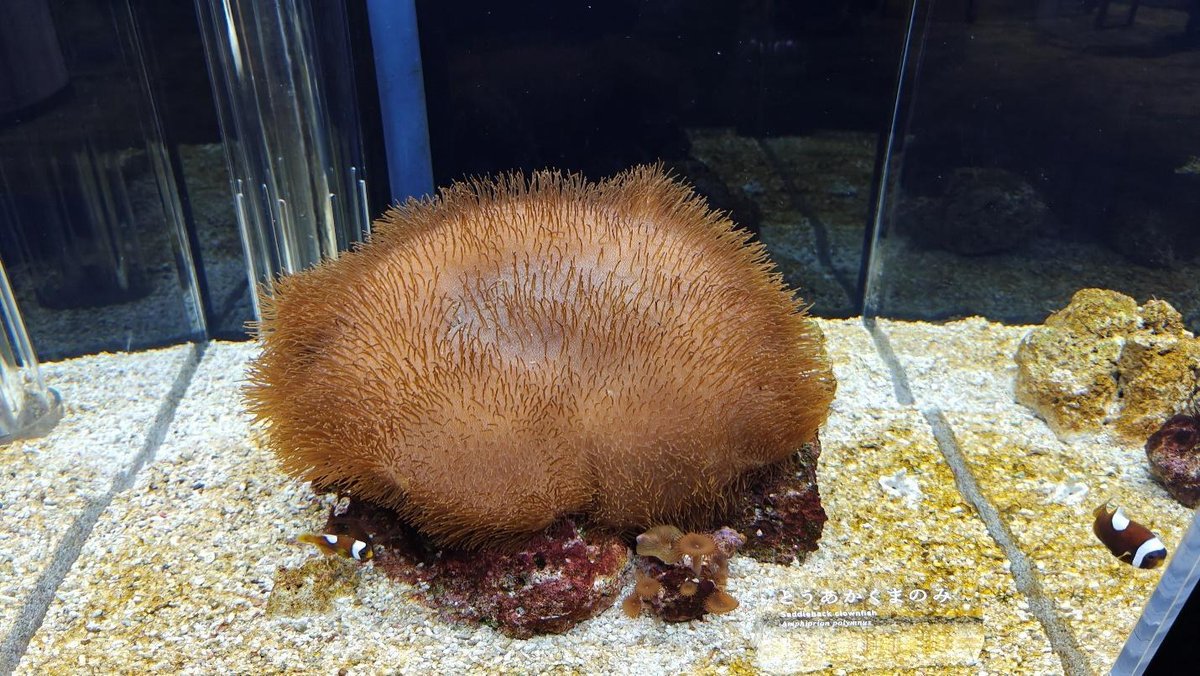
Here’s another look at the coral that’s been featured in the last couple of images. I don’t think Kyoto Aquarium listed what it is (I didn’t see any signs or placards) but I was able to use Google Lens and apparently it’s a Toadstool Leather Coral. Other than this, I also came across some Cabbage Leather Coral.
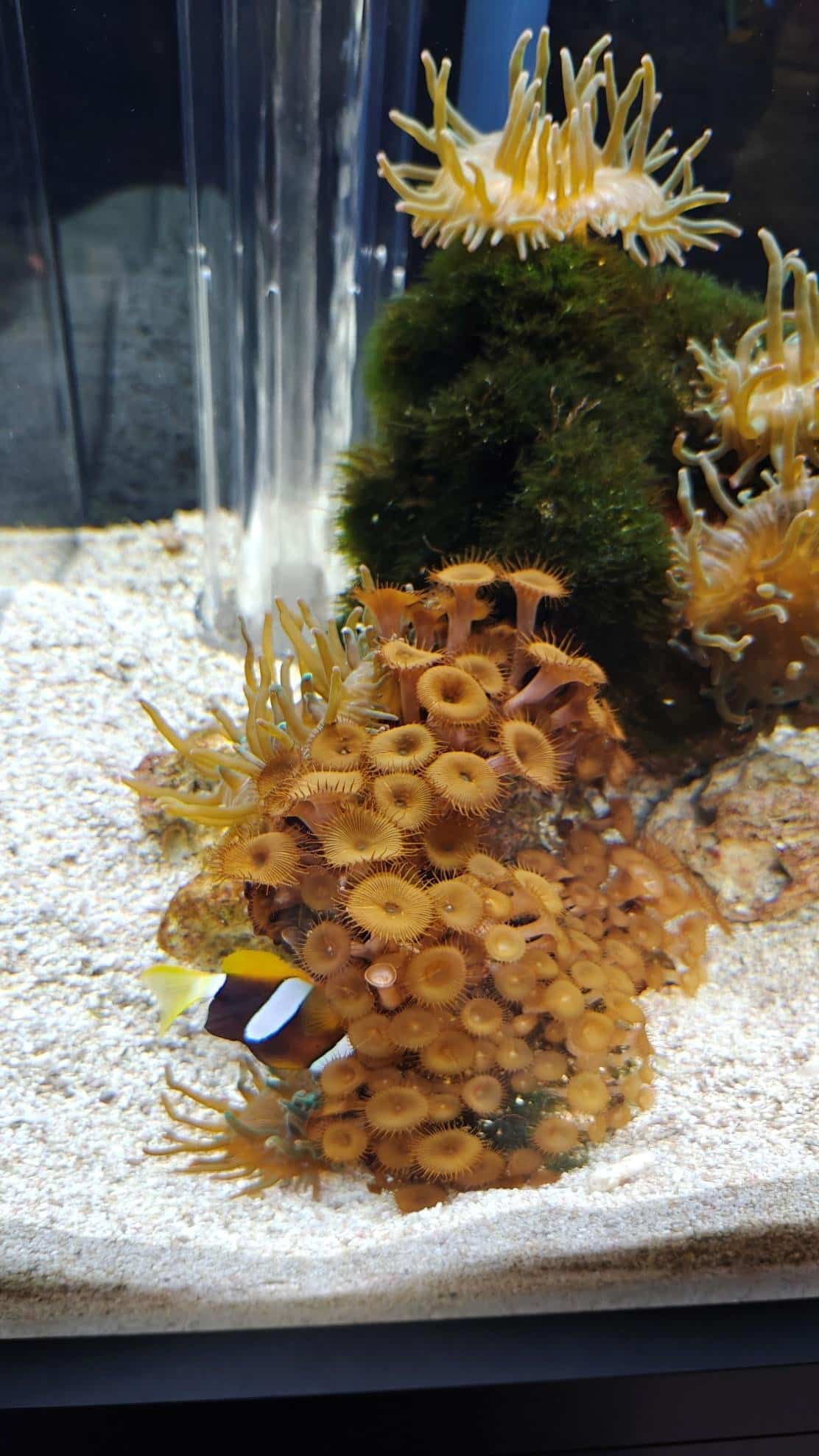
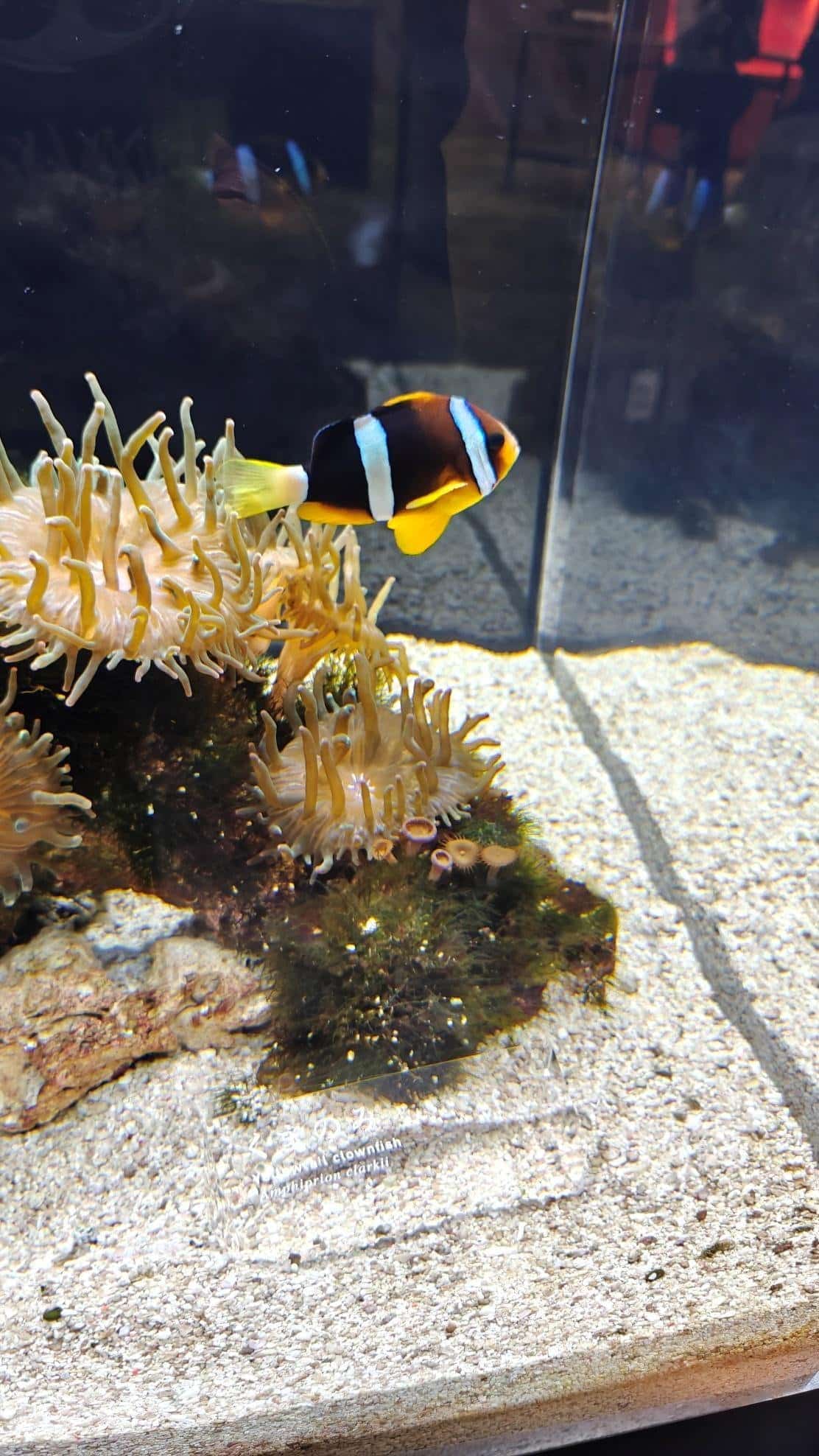
Other than the Ocellaris Clownfish, the tanks here also feature its relatives such as the Clark’s Clownfish (shown above) and the Pink Skunk Clownfish. Of course, these fishes can be seen next to sea anemone. The fish actually form an intriguing symbiotic relationship with these soft-bodied invertebrates as these provide them with protection in exchange for cleaning their (the anemone’s) tentacles and removing any parasites.
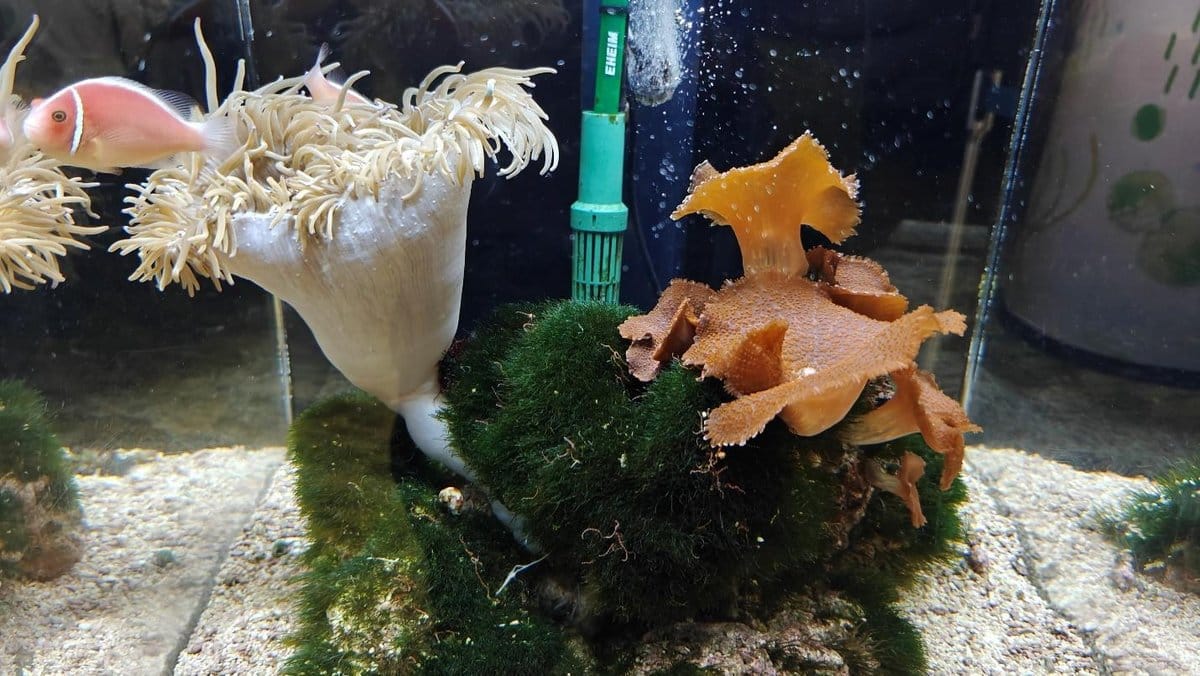
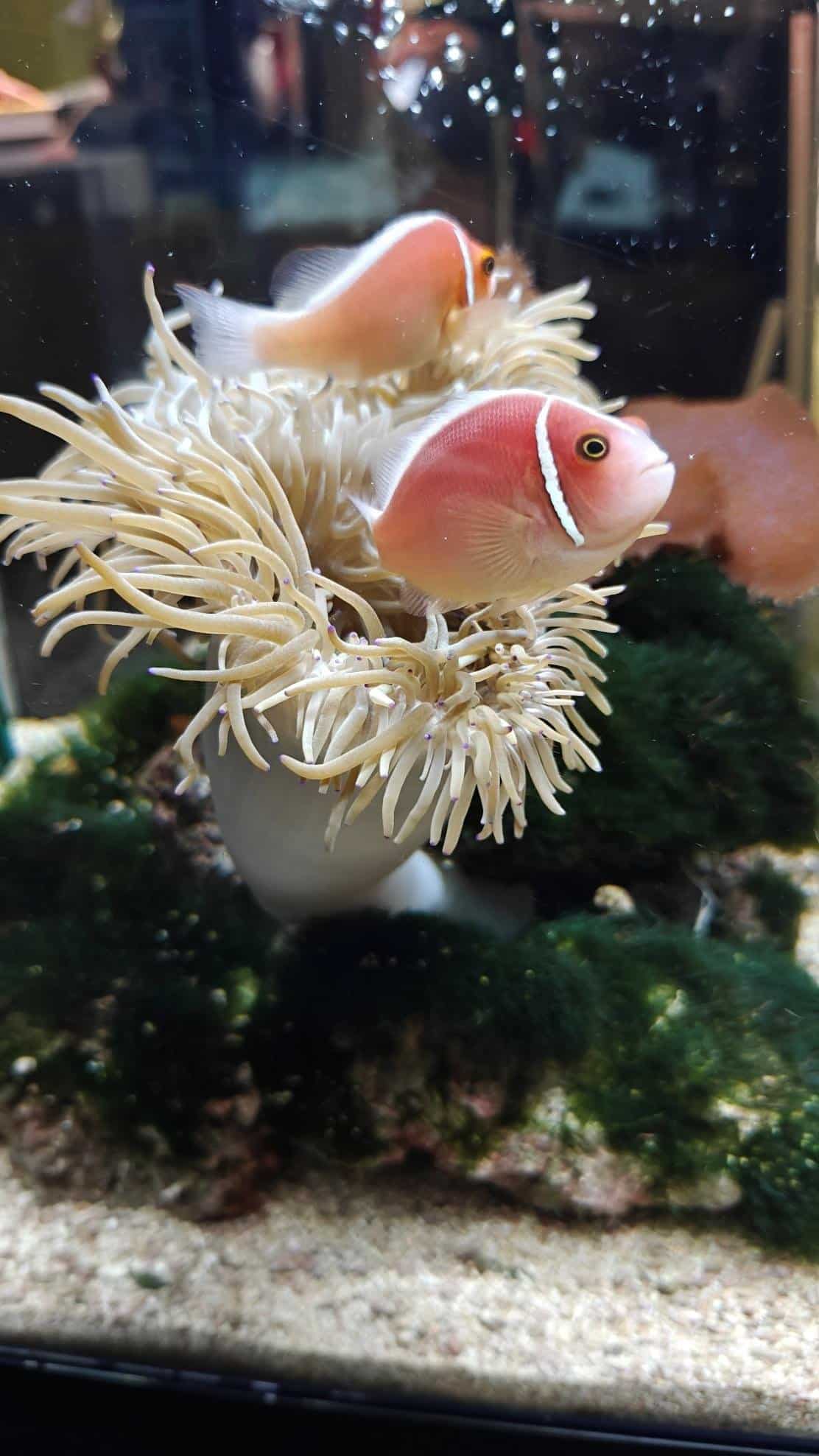
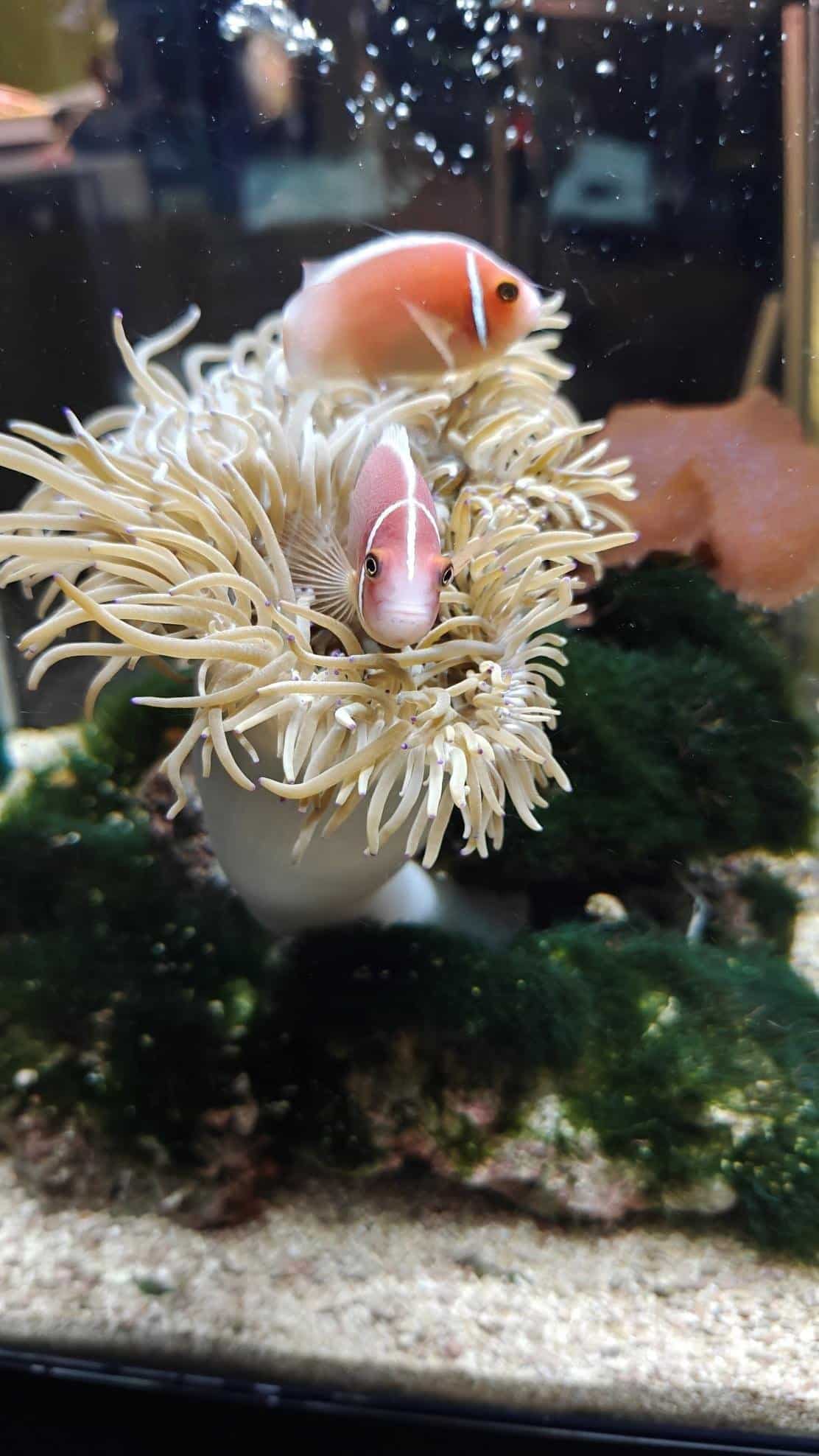
This is what a Pink Skunk Clownfish looks like. Of the clownfish species here, it’s probably the one that looks the derpiest. That said, I also like its pink hues and how it’s so attached to the sea anemone especially when I started taking its pictures.
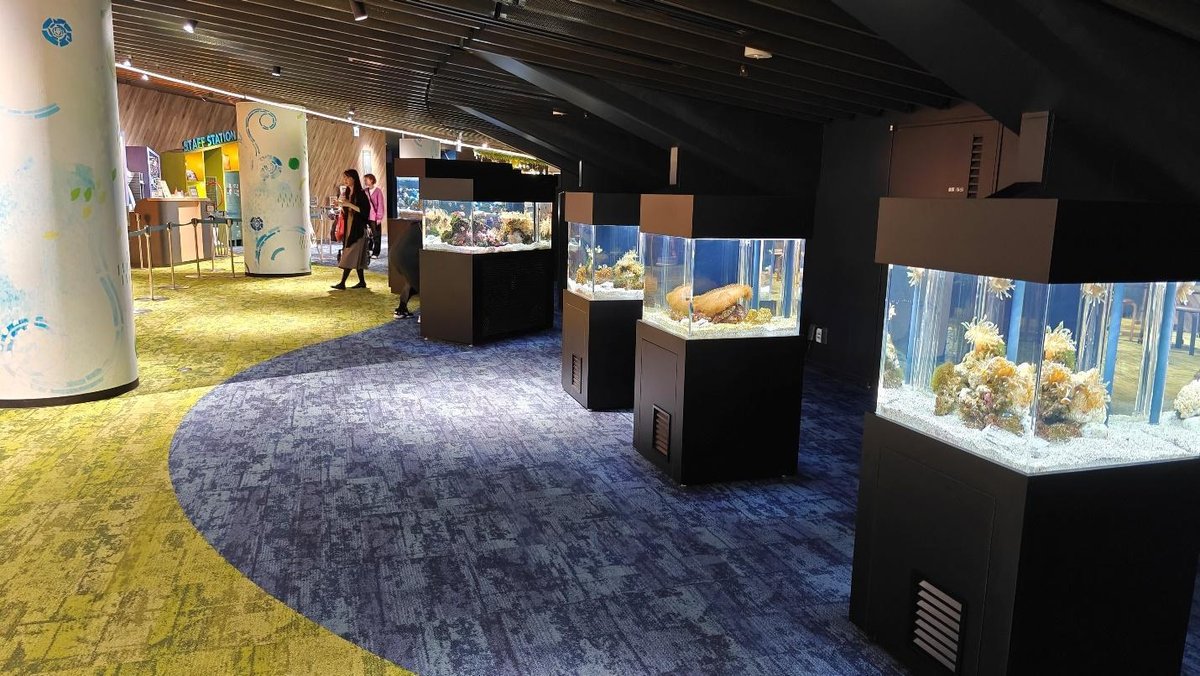
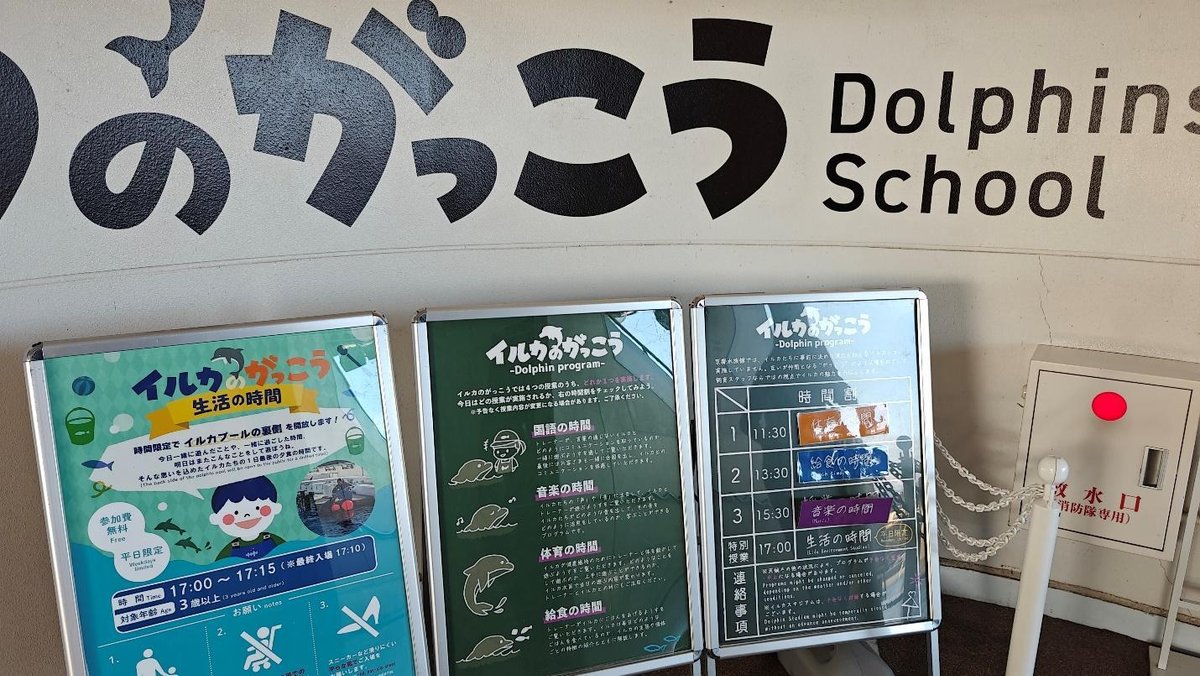
The last notable area that I visited was the Dolphin Stadium. There’s actually a program that the trainers follow where you can observe them communicating with the dolphins, exercising them, and feeding them depending on the schedule. In the image above, you can see the schedule to the right.
Typically the first schedule starts at around 11:30AM with a change in activities roughly every 2 hours.
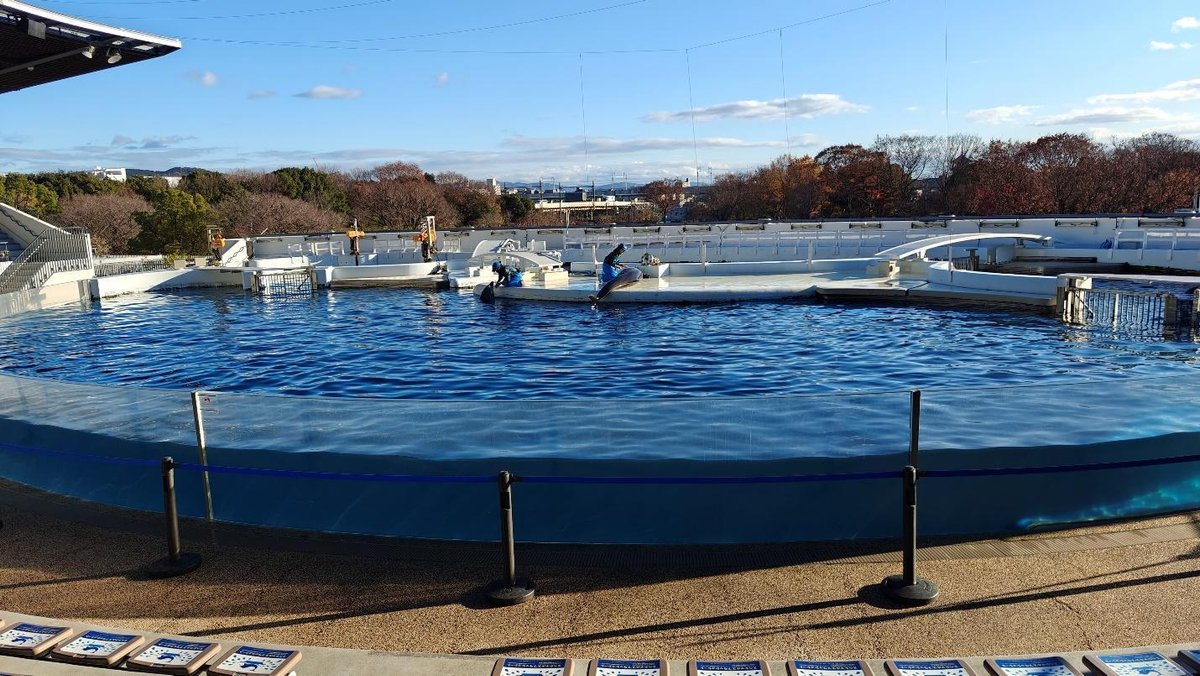
So you might be wondering, did I pay additional for access to this area? No, since these shows are already included in the 2400 JPY admission fee. In fact, you can opt to watch the programs straight if you want since the admission fee covers the whole business day.
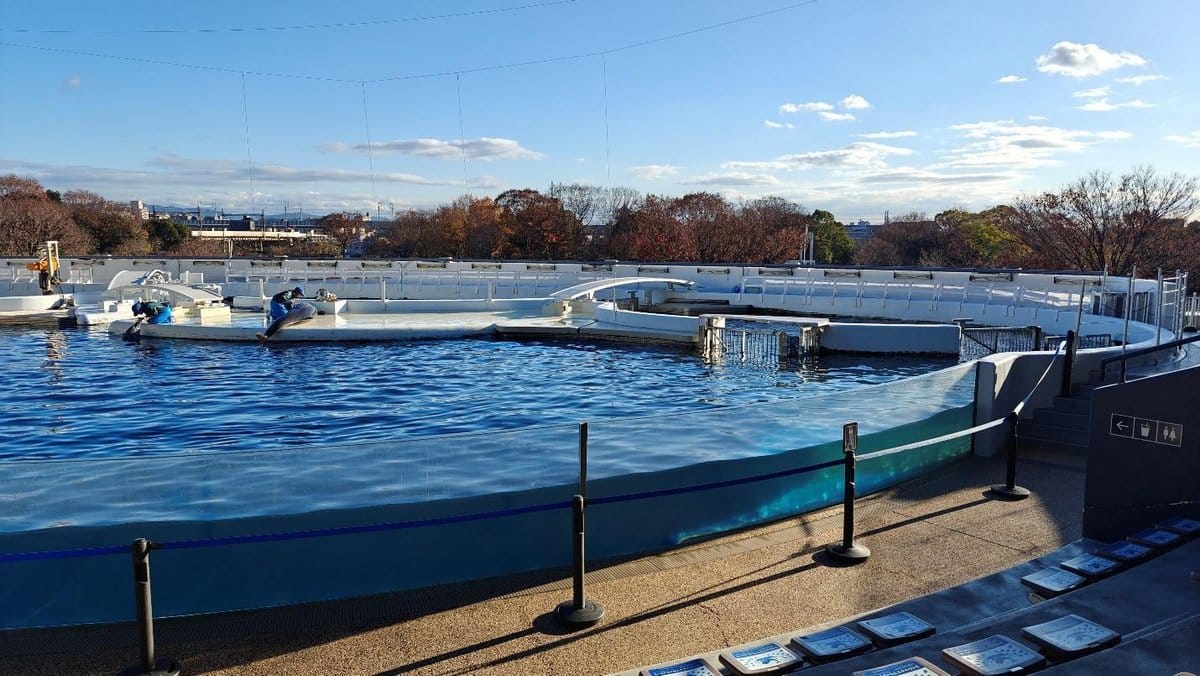
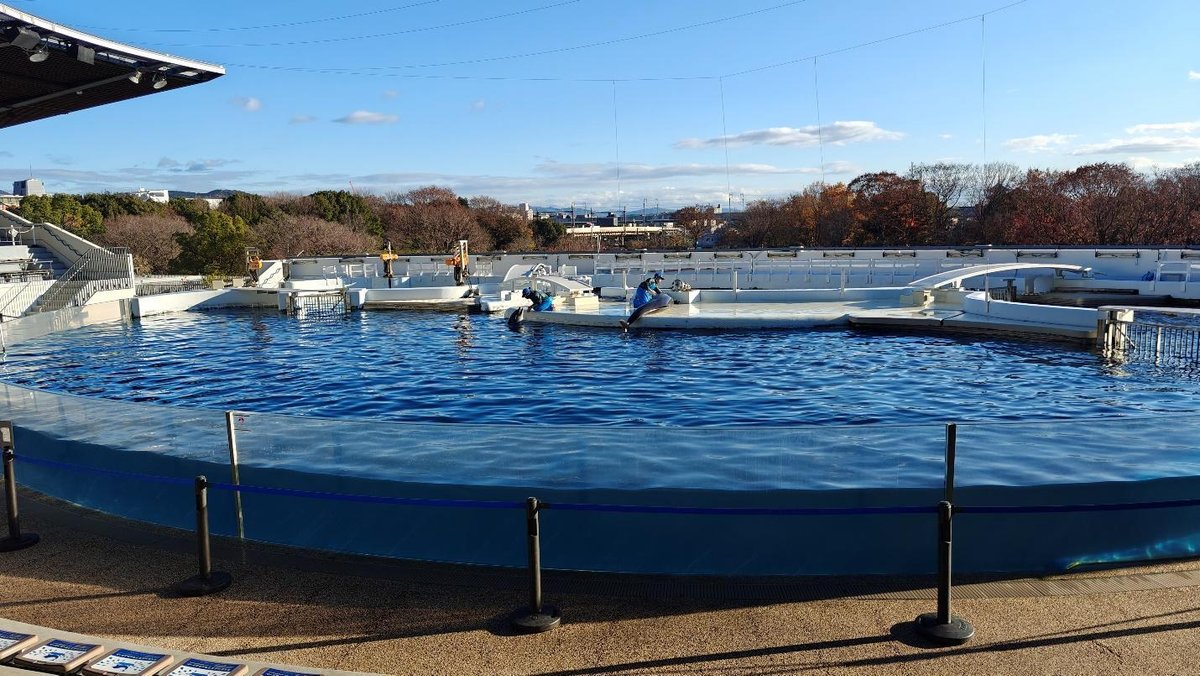
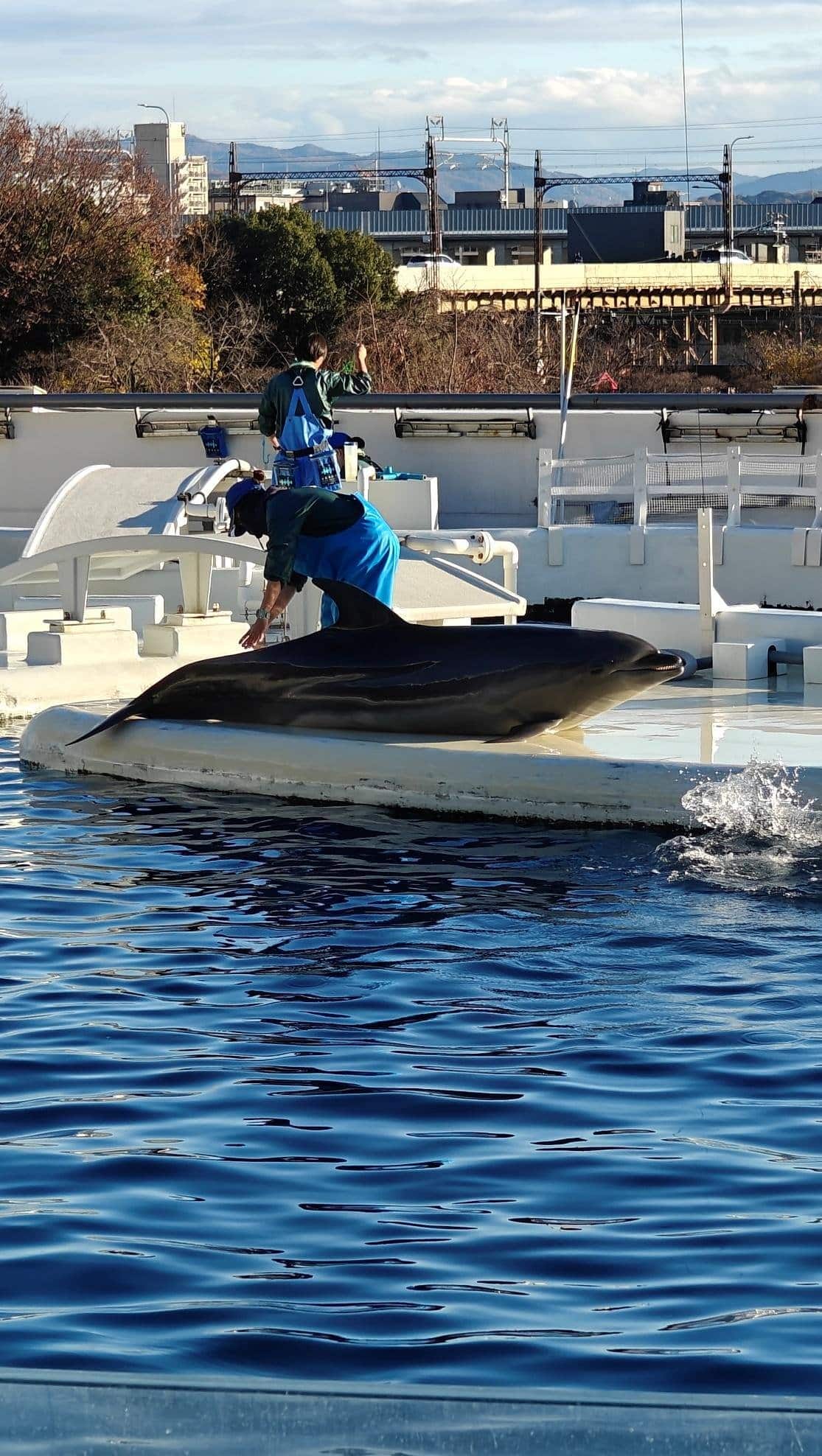
The bottlenose dolphins here were unsurprisingly very vocal. This was in the afternoon and if I remember correctly, the activity was centered around music. As you probably know, these dolphins are some of the smartest animals in the world and they are very cognizant of sounds and other audio cues.
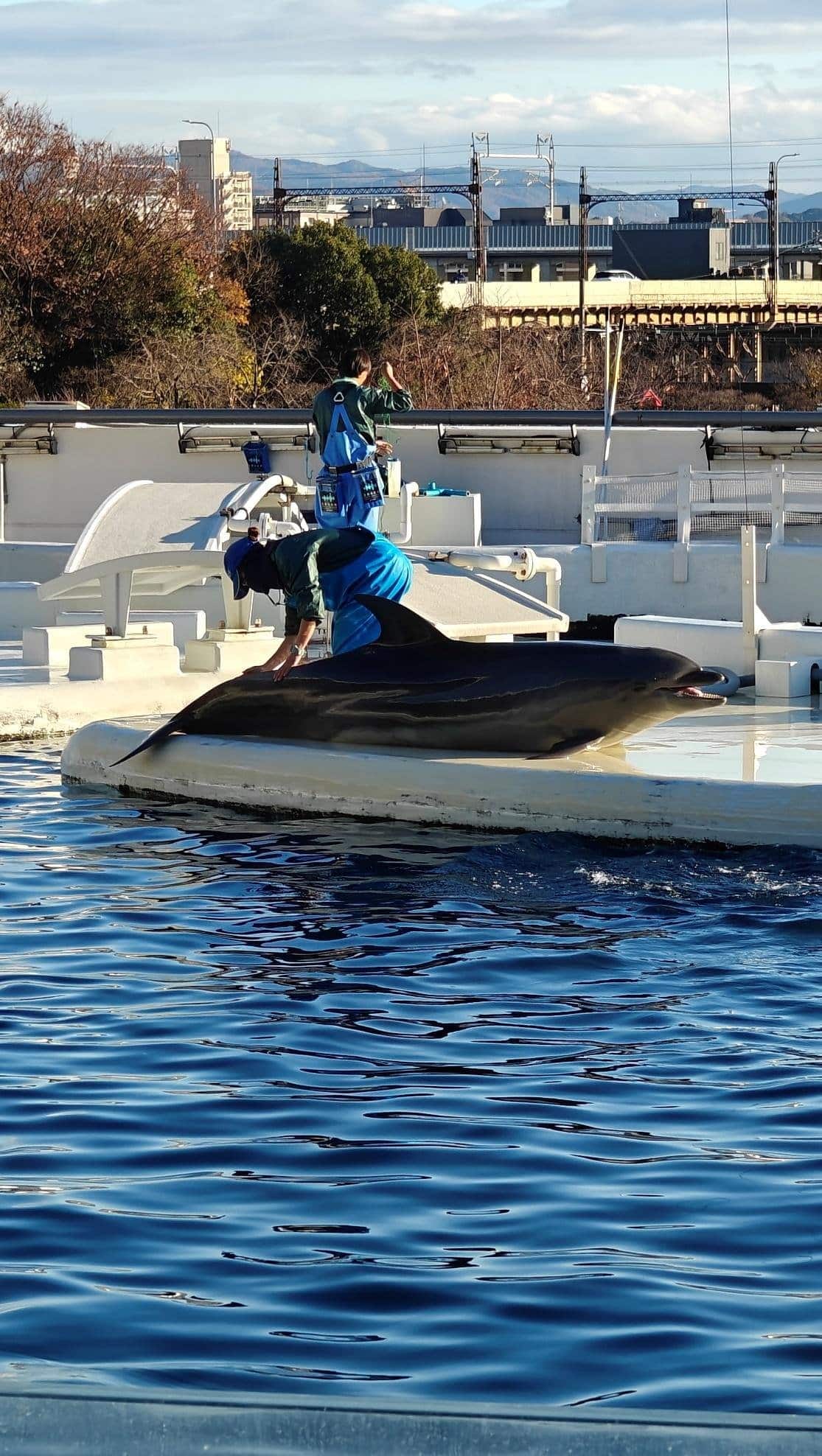
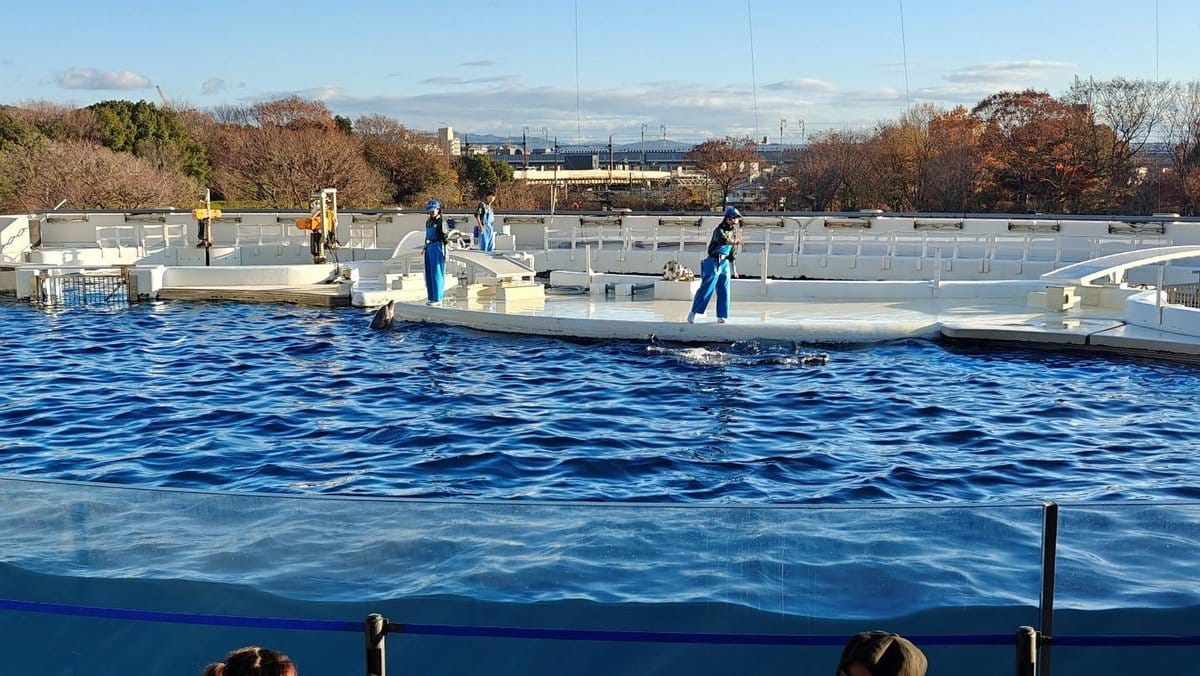
One trainer would sing a chant and after a certain cue, the dolphins would then continue it with their own vocalization. Their voices were actually quite cute and they seemed to actually enjoy getting rewarded for the activity. As for general care of the dolphins, they look very active and their tank is actually quite large.
I know there’s a much broader debate when it comes to the ethics of keeping the dolphins here so if that’s a personal concern for you then you can always skip this area.
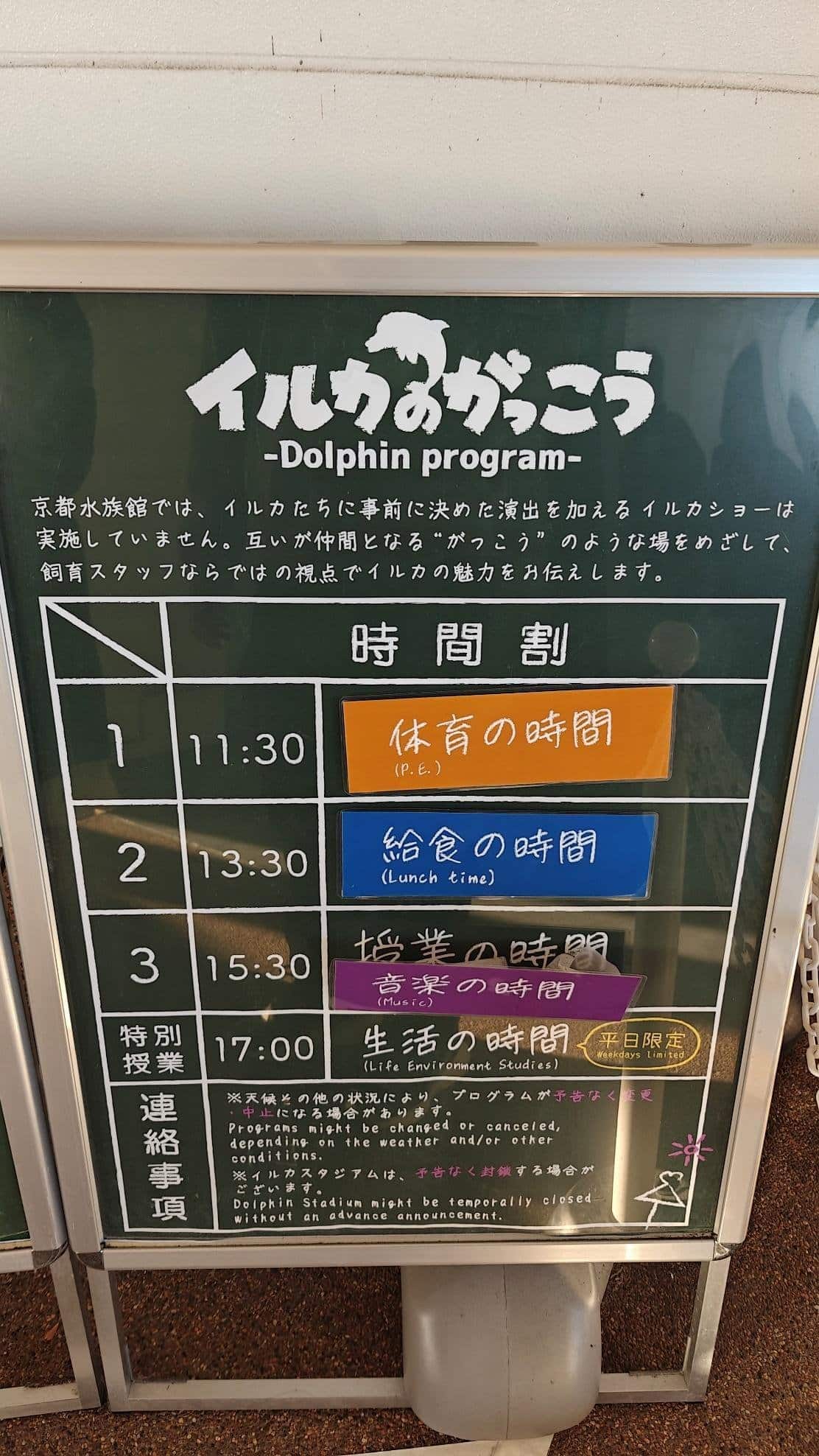
Here’s a clearer look at the Dolphin program. Take note though that the staff in charge of the dolphins only speak Japanese during the activities (at least that was the case for my visit). Thankfully, you don’t really need to know the language to understand a lot of what the trainers and the dolphins are doing.
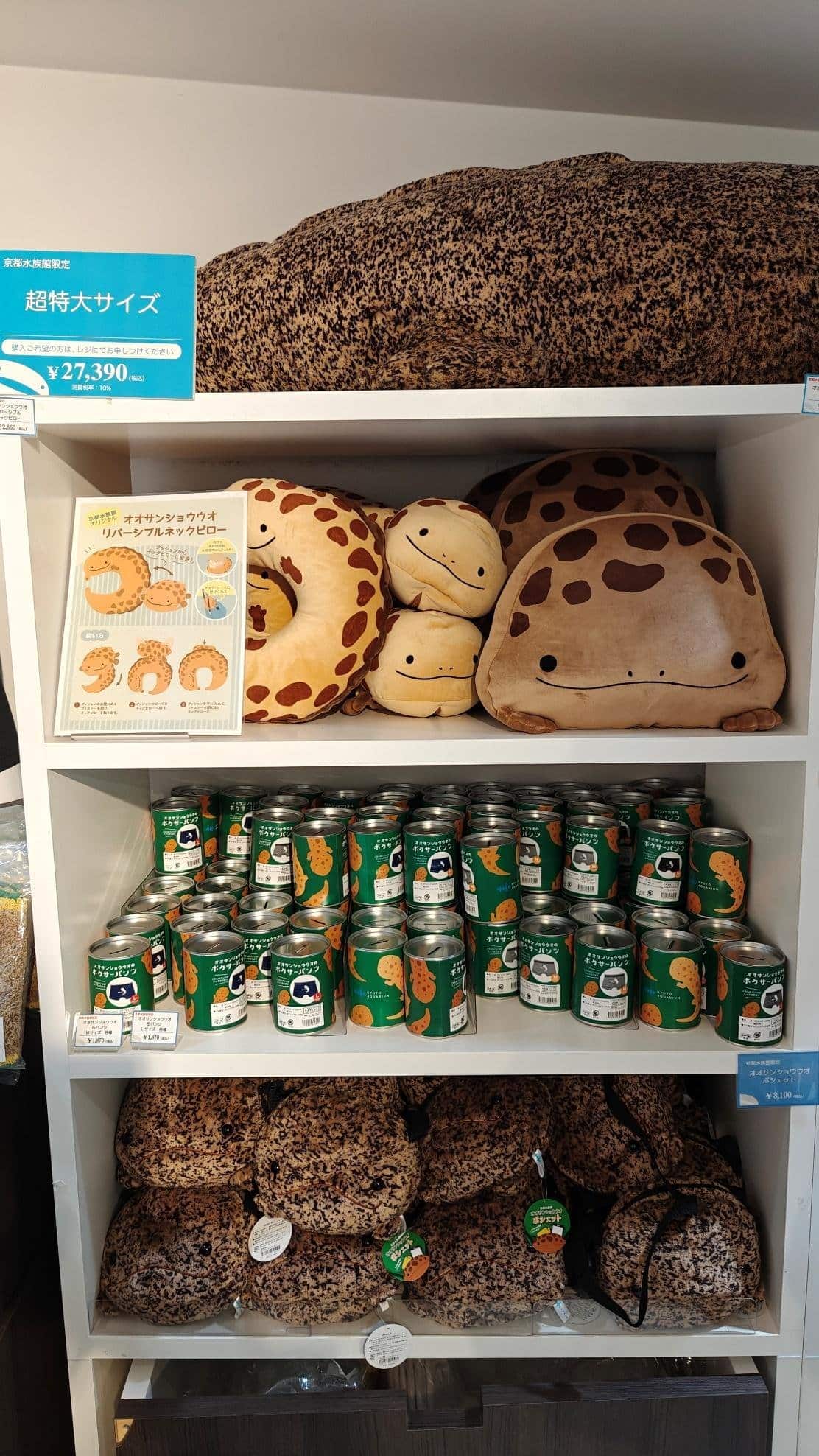
After the Dolphin Stadium, I went down and passed by the Countryside of Kyoto area to head straight to the Museum Shop. This is basically the souvenir shop and it’s the last section before you exit the building. Now I’ve been to a number of souvenir shops in the locations I’ve visited but I think this is the only one that has items that I genuinely wanted to buy.
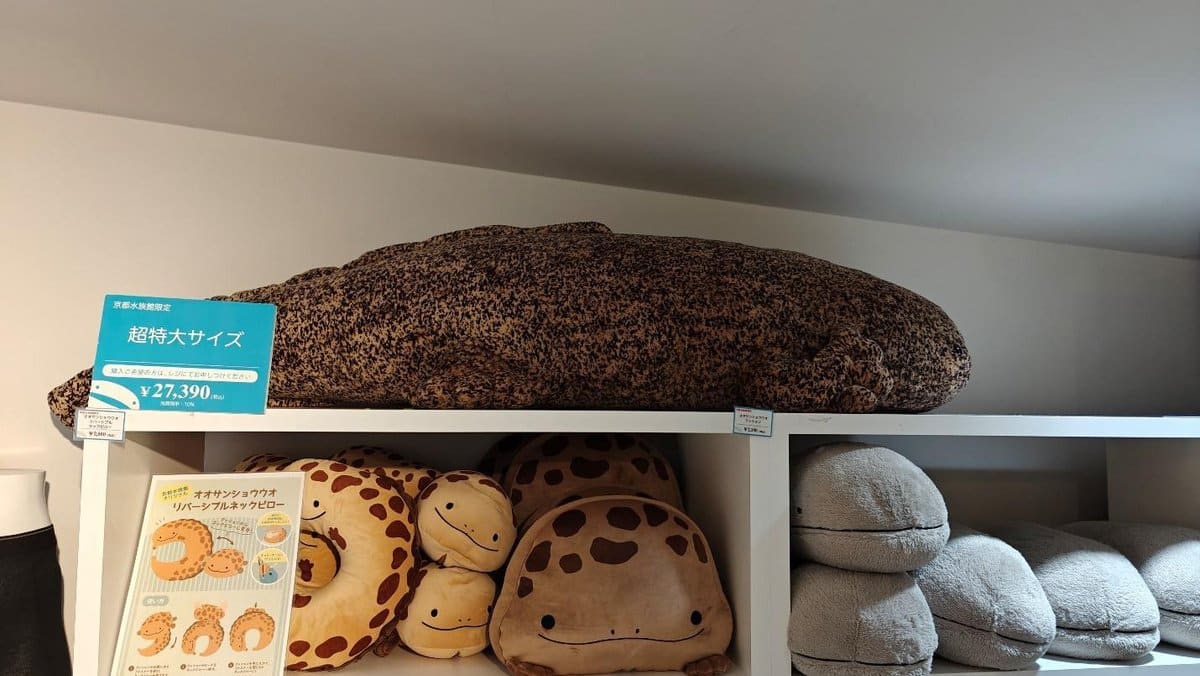
The piggy banks and the giant salamander plush toys were perhaps my favorites. I mean just look at the derpy faces on these plushies! Other than the giant salamanders, I also liked the spotted seals though more for their size.
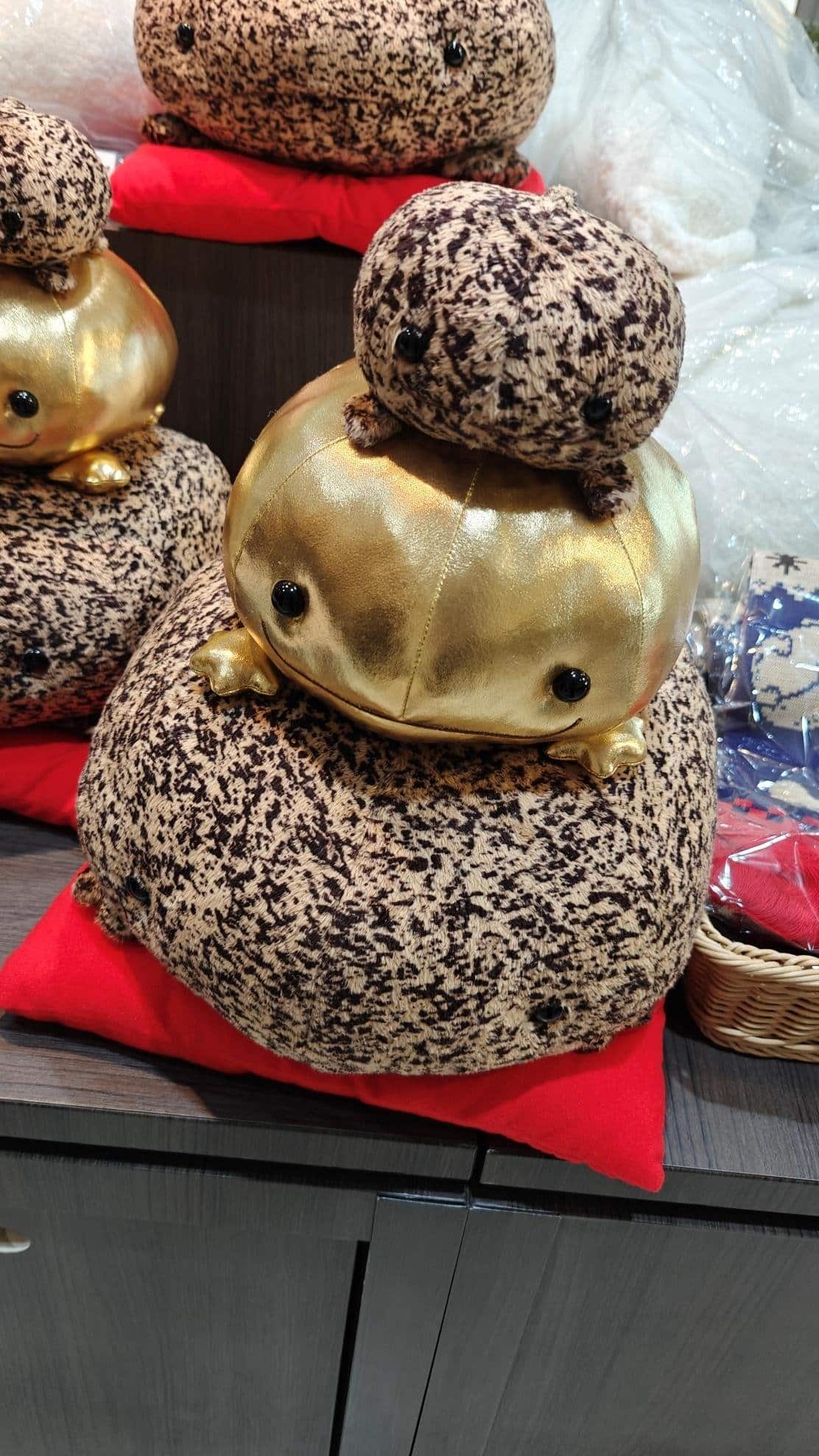
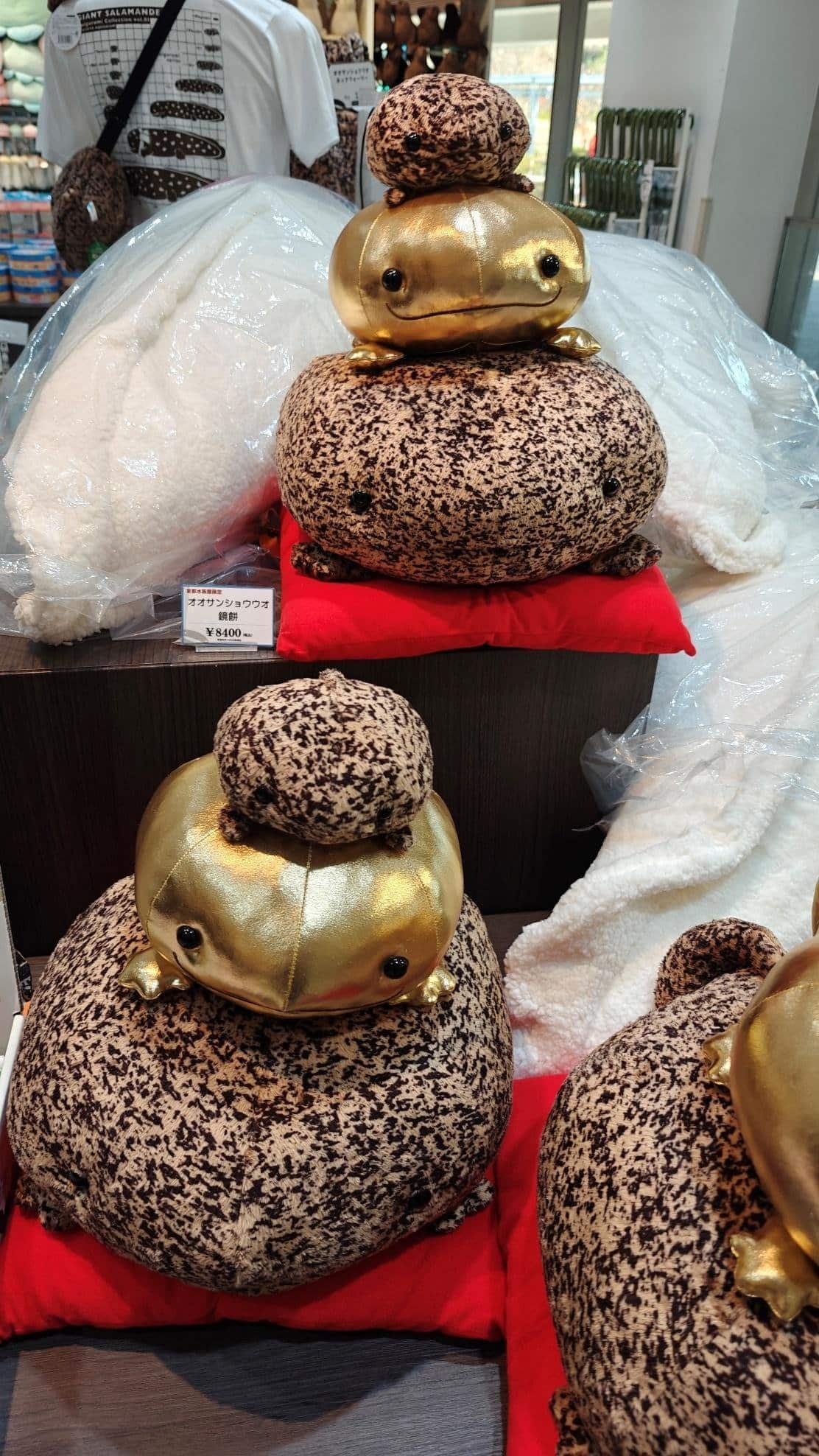
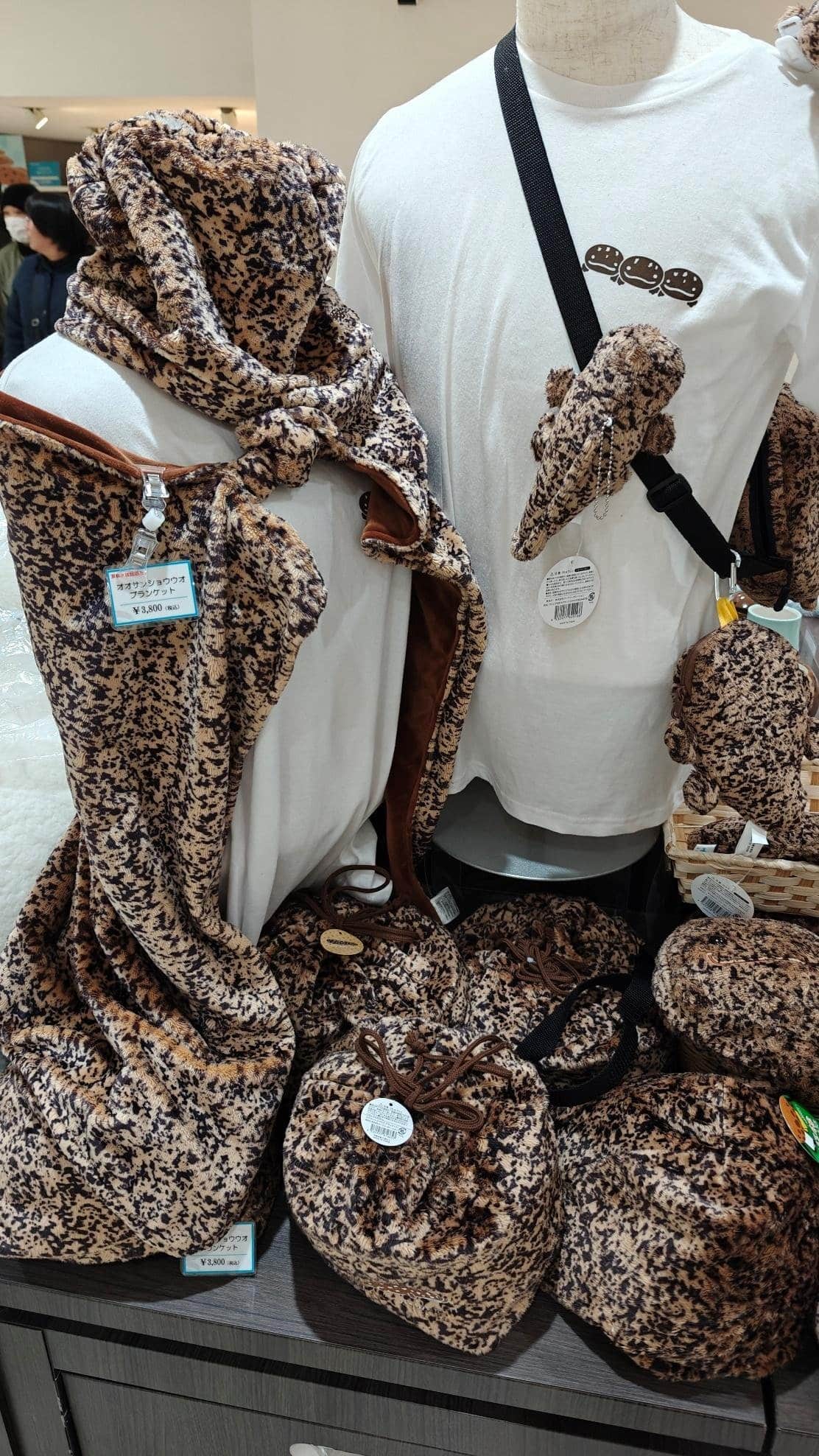
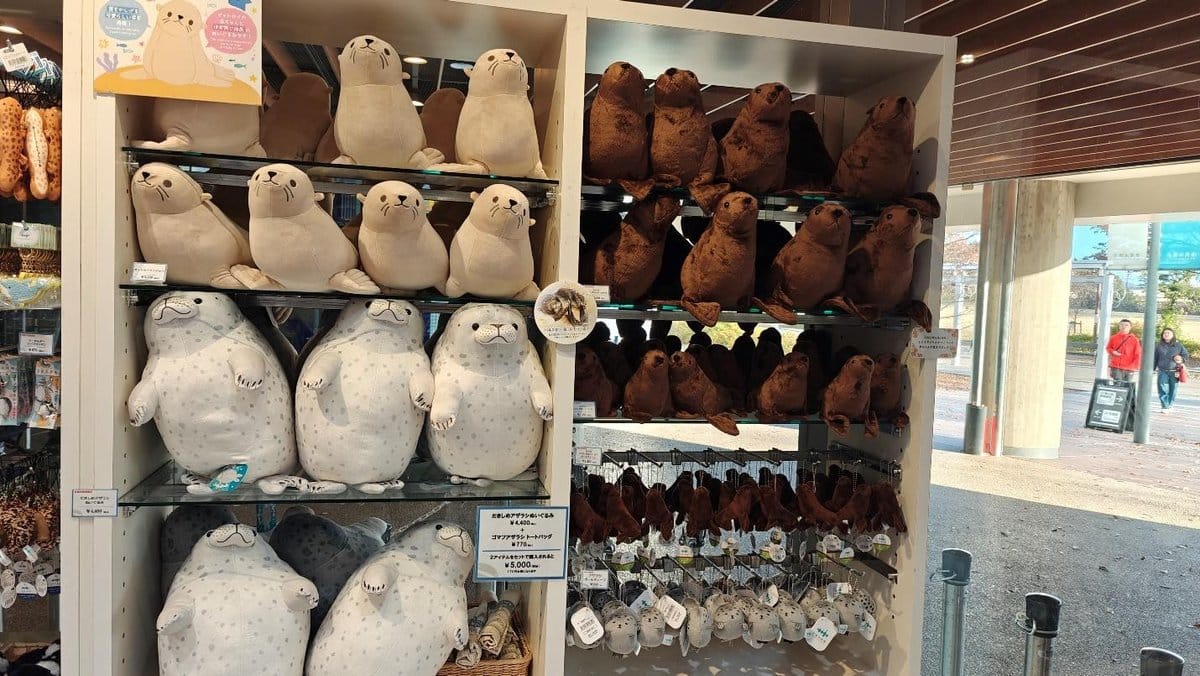
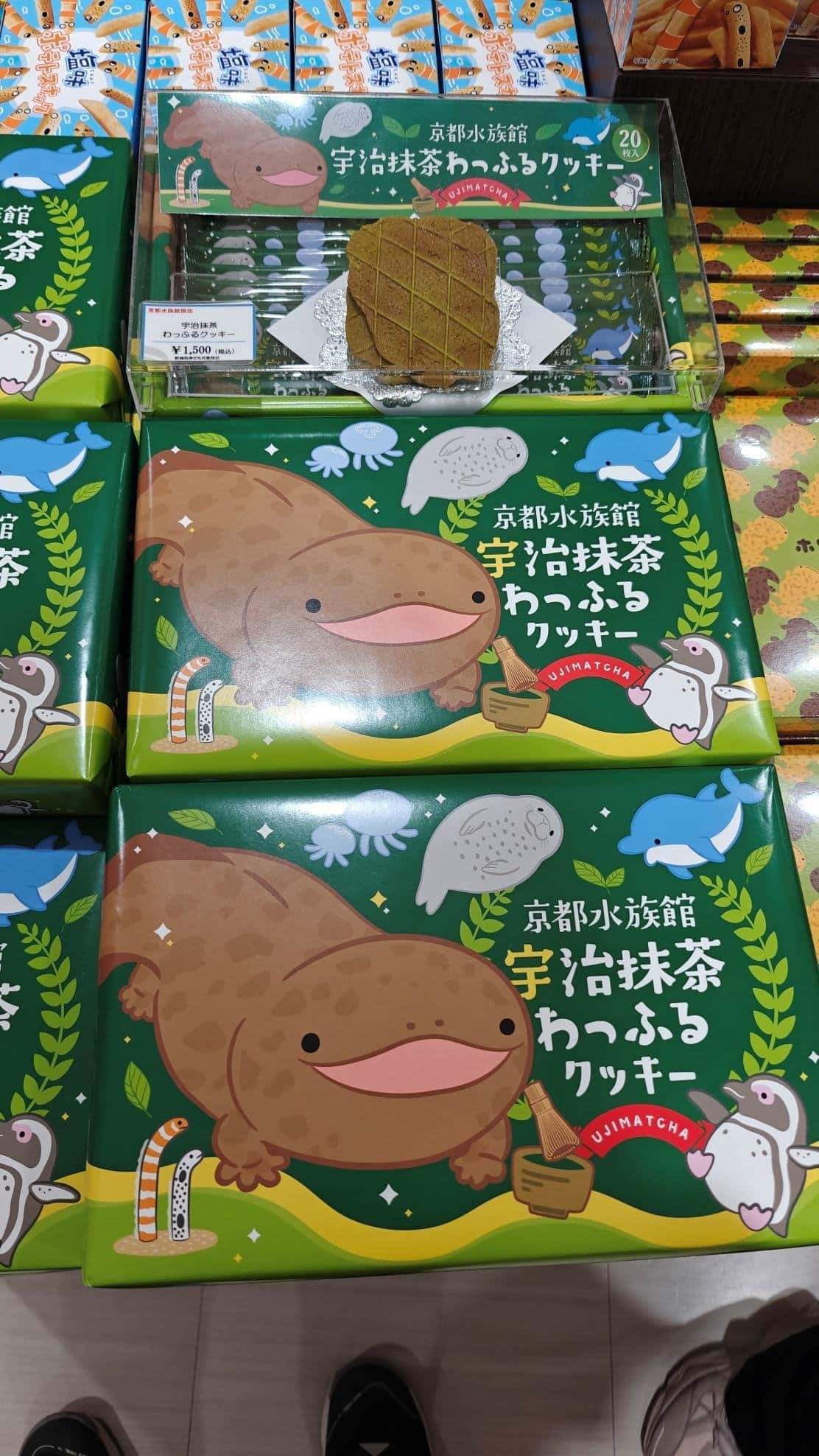
Of course, this being Kyoto, there’s also matcha-flavored snacks here. The ones pictured here are ujimatcha flavored waffle cookies. I’m not that big on match or waffle cookies but I’m not going to lie, the design of these boxes is probably why I’d buy one or two of these.
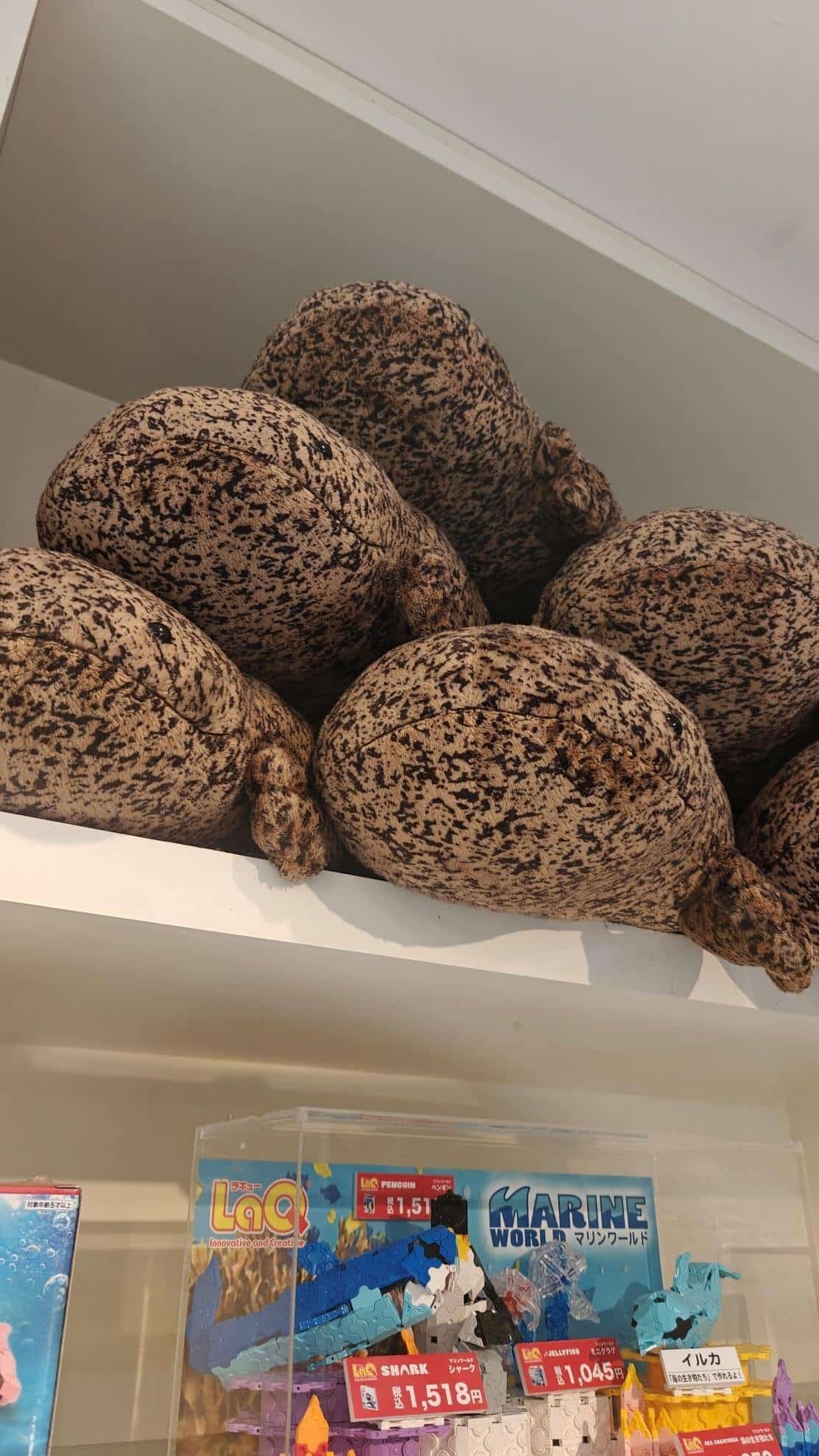
With this, my visit to Kyoto Aquarium ends. After visiting countless shrines and temples, this was a refreshing and much needed change of pace/scenery. The areas were very interesting and I thoroughly enjoyed just taking pictures of the dozens of marine animals here.
That said, do I think that this is a must-visit? I personally think so but I also understand that some people might not find observing animals to be that good of an activity. If you enjoy watching unique marine animals like giant salamanders, fish, seals, jellyfish, and dolphins then you’re likely going to enjoy it here.Anyway, what do you think of my Kyoto Aquarium visit?
Have you had the chance to visit this Kyoto landmark? If yes then please comment down below your thoughts and experiences with us and our readers!