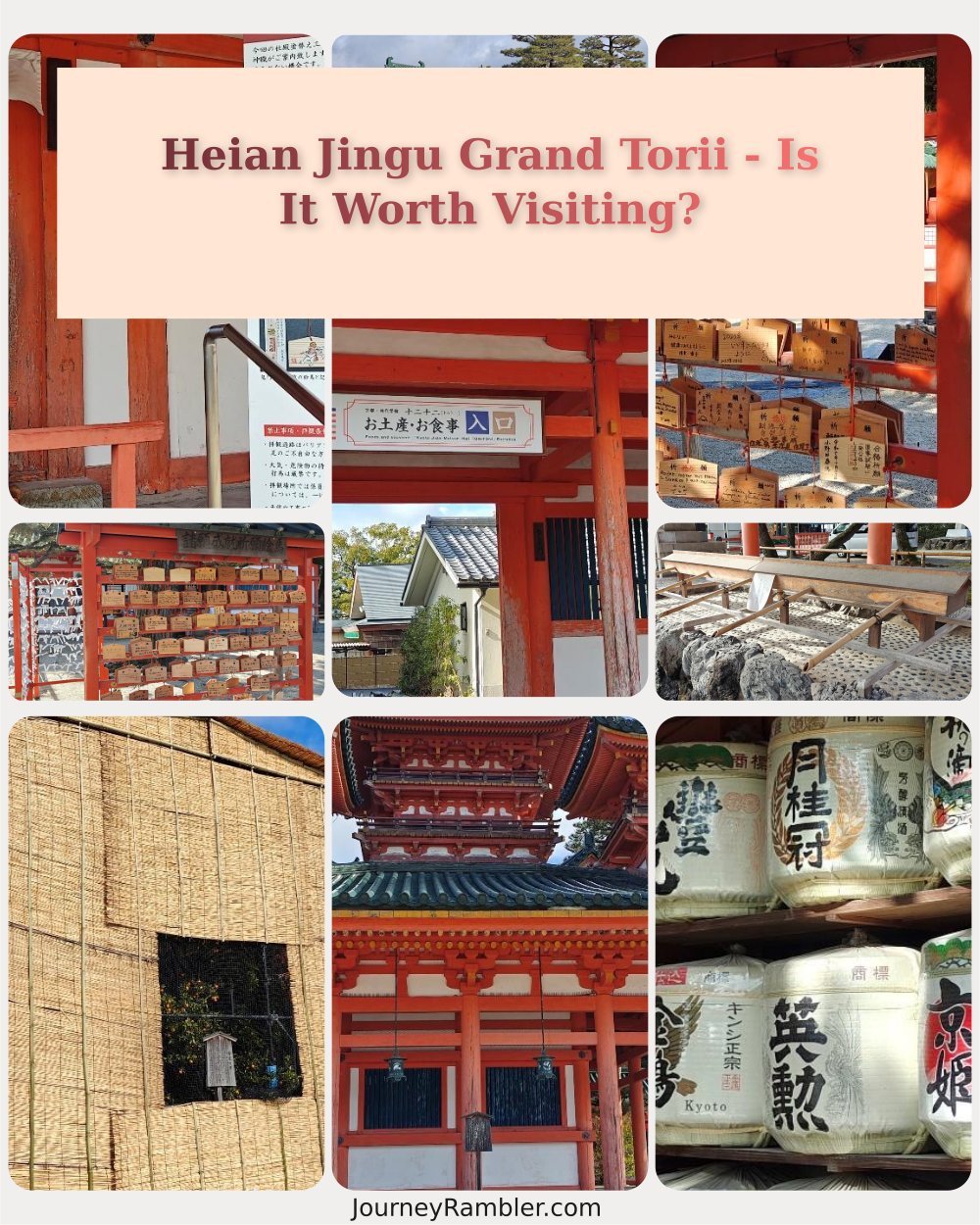
In my opinion, the Heian Jingu Shrine and its Grand Torii is perhaps one of the most underrated landmarks in Kyoto. It is well maintained and features some of the most beautiful recreation of traditional Heian-era architecture in the city. That said, is it worth visiting just for this?
Read on further to know more about what I think the definitive answer to this question is.
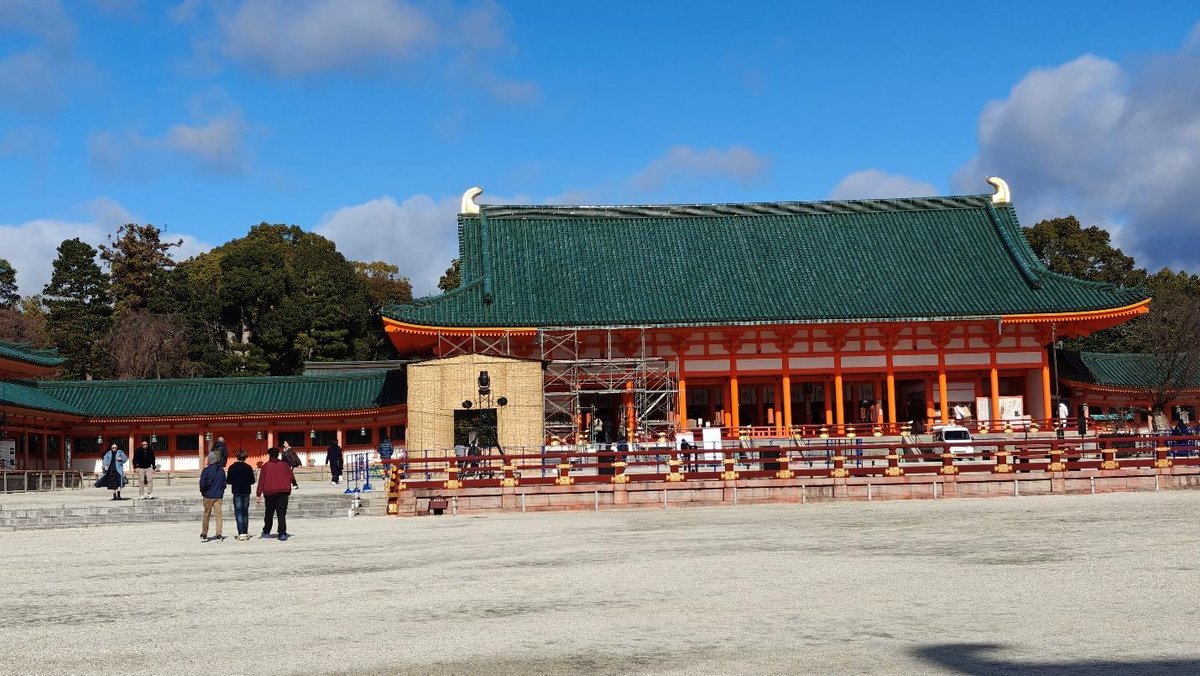
So before I go into detail about the Heian Jingu Shrine’s merits, let me first highlight just how easy it is to get here. From Kyoto Station, you can get on a number of bus lines that have stops around Okazaki Koen. The nearest of these is the one directly in front of the Kyoto Toni Toni shop and is a literal walking distance from the shrine’s Otenmon (main southern entrance seen above).
Is Heian Jingu Shrine Worth Visiting?
If you want to see the Grand Torii though, you’re going to want to instead get on a bus that will take you at the Okazaki Koen Bijutsukan/Heian Jingu-mae stop. It’s not shown in any of these images but this stop is in front of the Kyoto National Museum of Modern Art. From there you can look around the Keiryu Bridge and the Grand Torii before following the road north past Okazaki Koen to get to the shrine’s Otenmon.
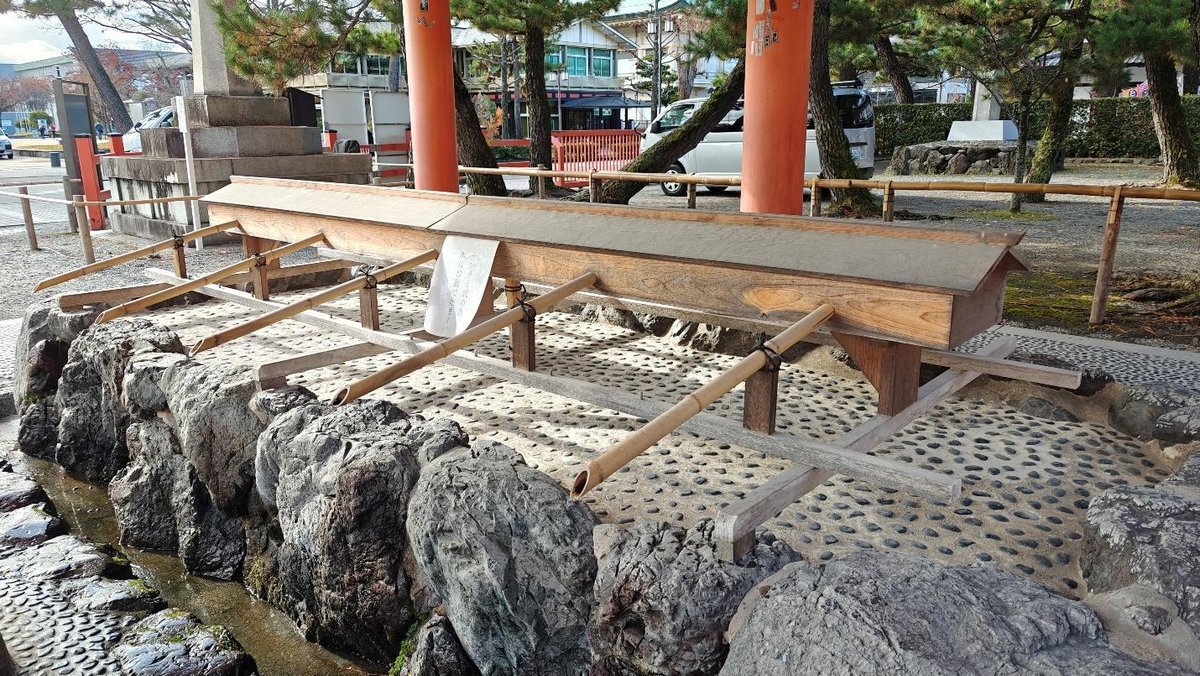
If you’re facing the Otenmon then look to your left and you’ll find the shrine’s temizuya. The pavilion is actually quite large so I doubt that you’ll miss it. Unlike most of the shrines that I’ve been to, this one doesn’t have a conventional chozubachi.
Instead water flows from these bamboo pipes so all you’ll need to do is wash your hands on these.
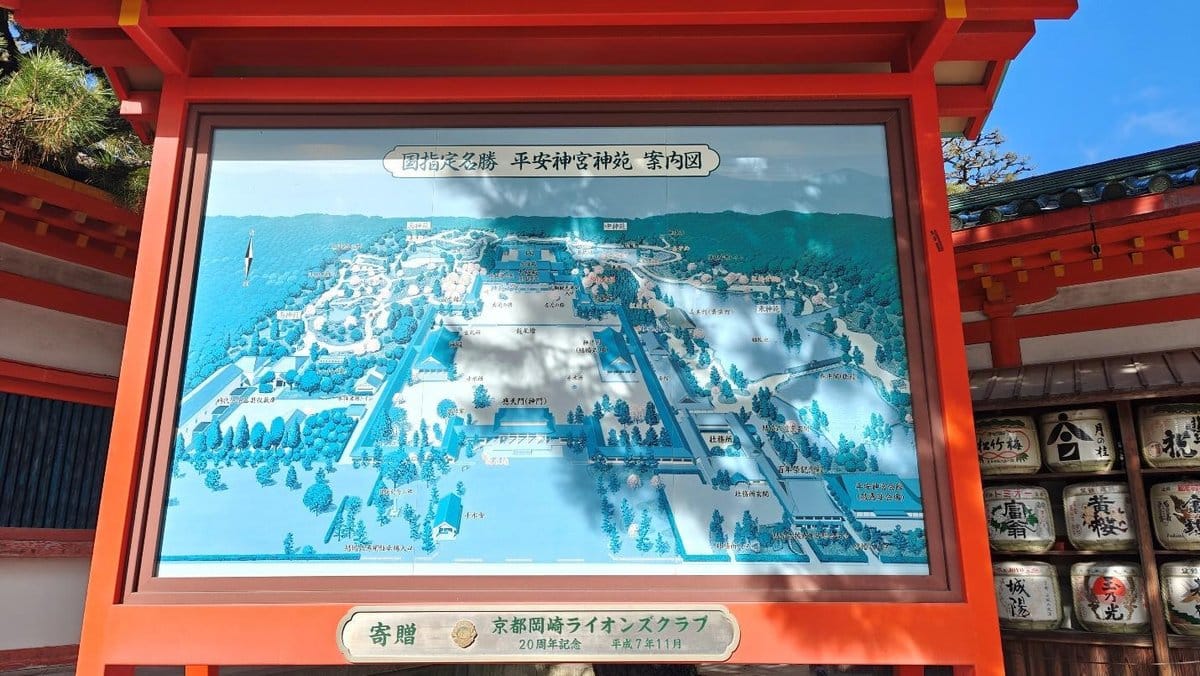
A couple of steps from the temizuya is the guidemap of the Heian Jingu Shrine. From here you can see just how expansive the shrine is. Despite its size though, it’s relatively easy to navigate around and I don’t really think I had much use of the guidemap because of this.
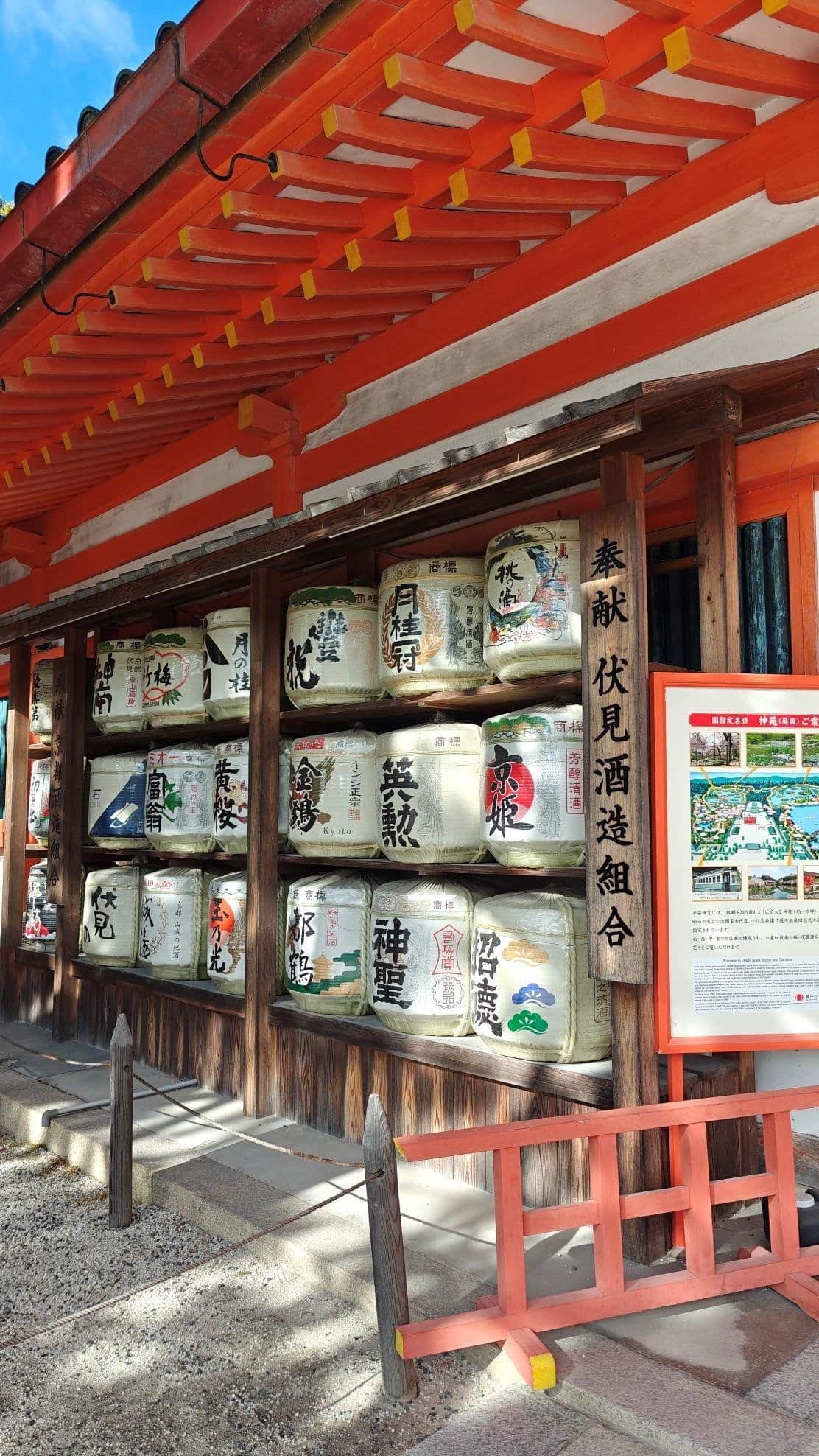
Much like with my Tsurugaoka Hachimangu visit in Kamakura, the shrine also features these displays of sake barrels called kazaridaru. This one is just behind the guide map and the barrels here are donations from notable sake brewers. Some of the brands include (but aren’t limited to) Kinshi Masamune, Gekkeikan, Miyakotsuru, and Eikun.
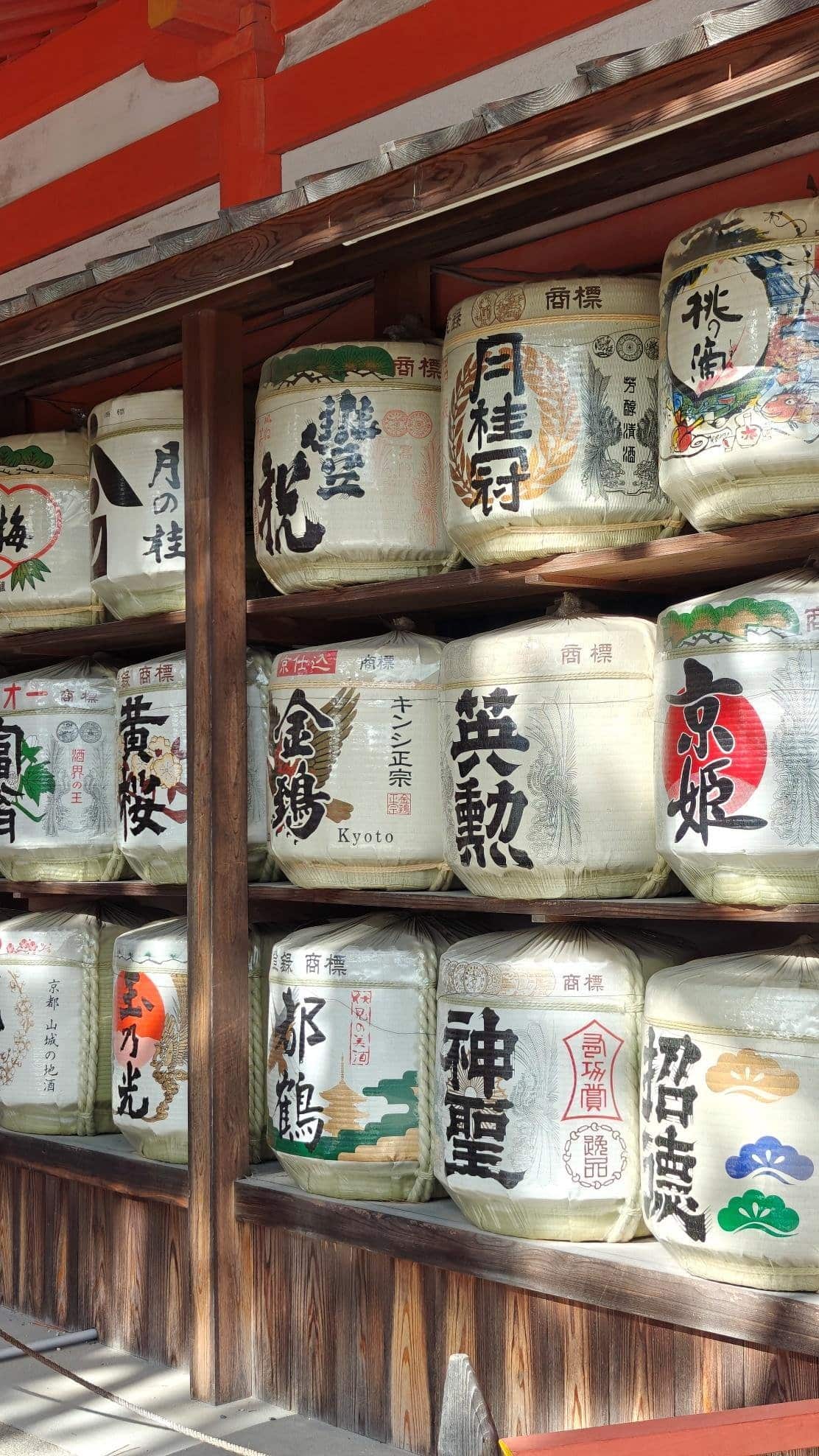
Also known as decoration barrels, kazaridaru are donated annually by brewers all throughout the country. These barrels typically don’t contain any sake. Their contents have likely been emptied and used by the shrine for their festivals as well as celebrations like Hatsumode, Jidai Matsuri, and Setsubun-sai among others.
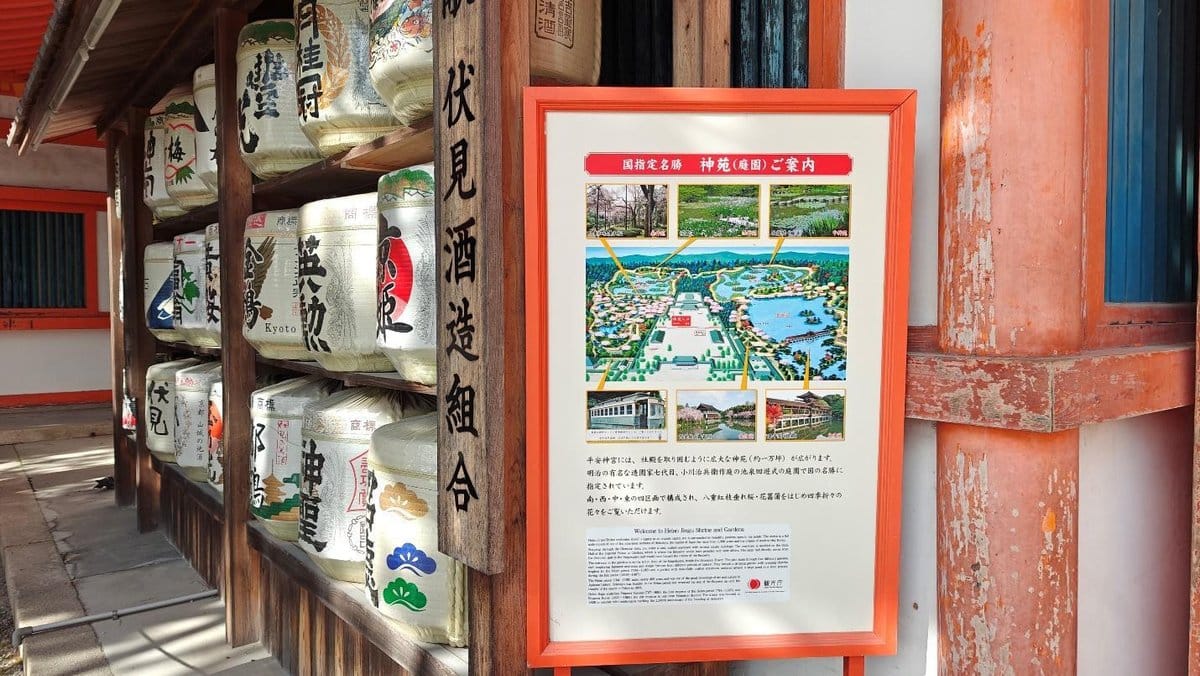
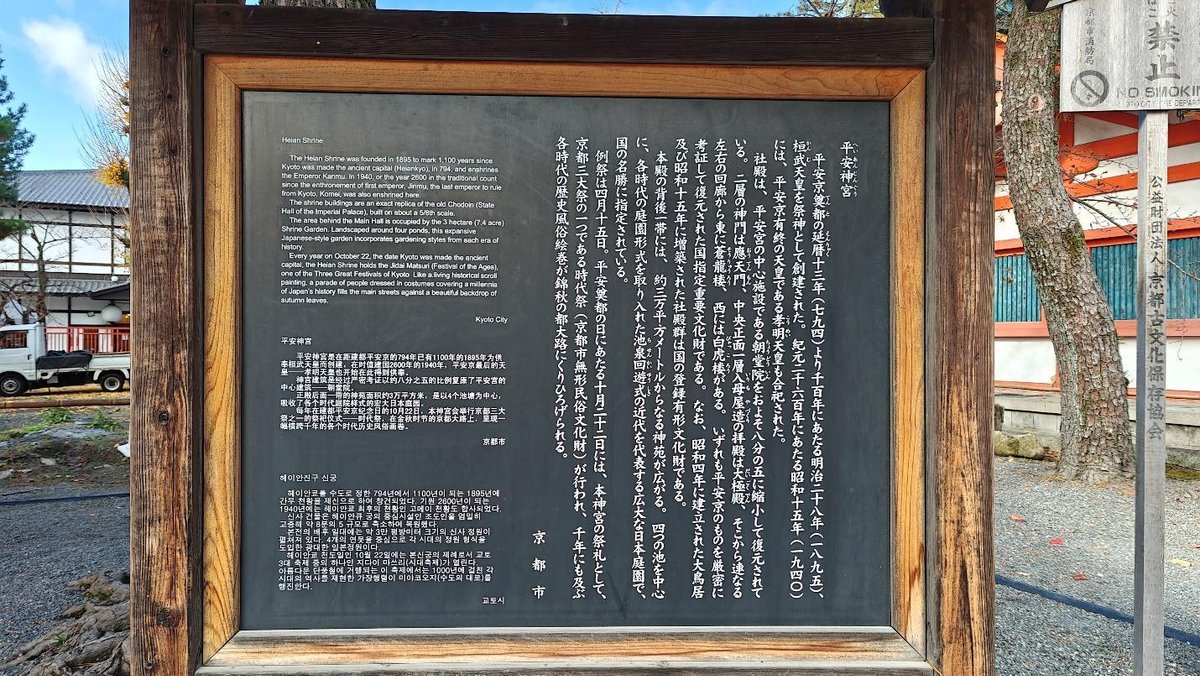
Beside the kazaridaru and just before the leftmost entrance of the Otenmon is this sign welcoming visitors to Heian Jingu Shrine. It talks about the 10000 tsubo (33000 square meter) garden called Shin-en that’s inside the shrine complex and how it’s divided into four sections. Each of these sections features a plethora of seasonal flowers and even a type of sakura called weeping red cherry blossom.
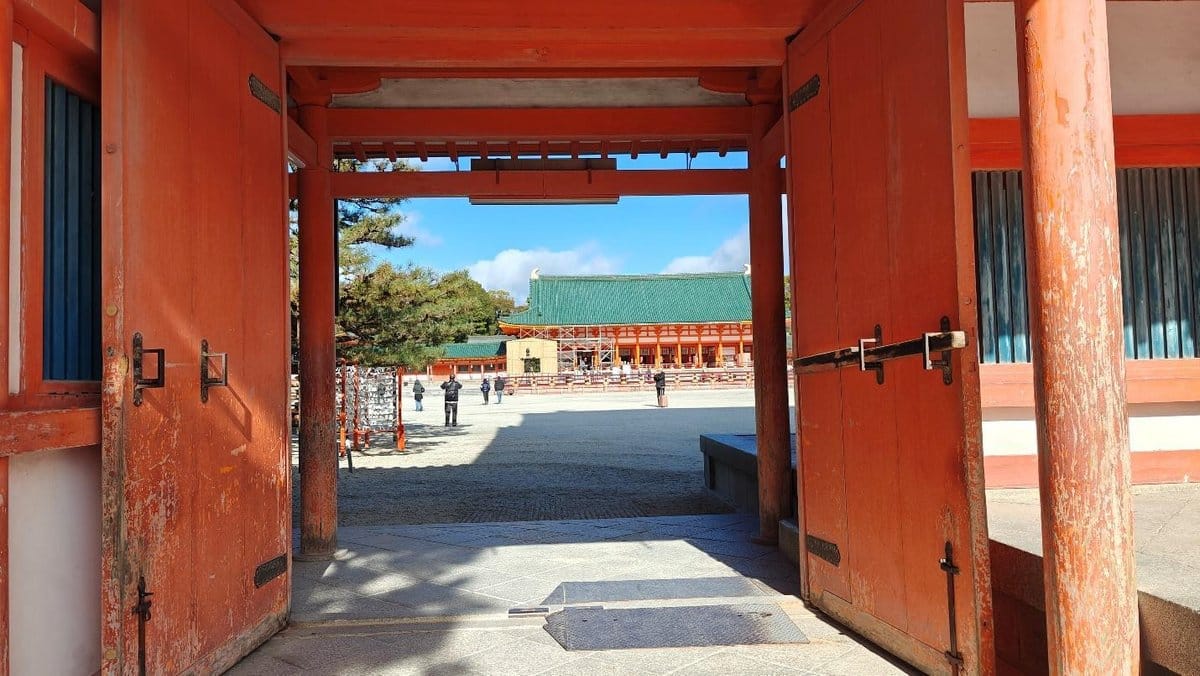
One thing that stands out here at Heian Jingu Shrine is the vermillion color on nearly every building. This is understandable though since the original Chodoin or Imperial Administration Complex that the current shrine is a reproduction of was said to have been awash with vermilion coloring. I particularly like this color so this wasn’t really an issue to me.
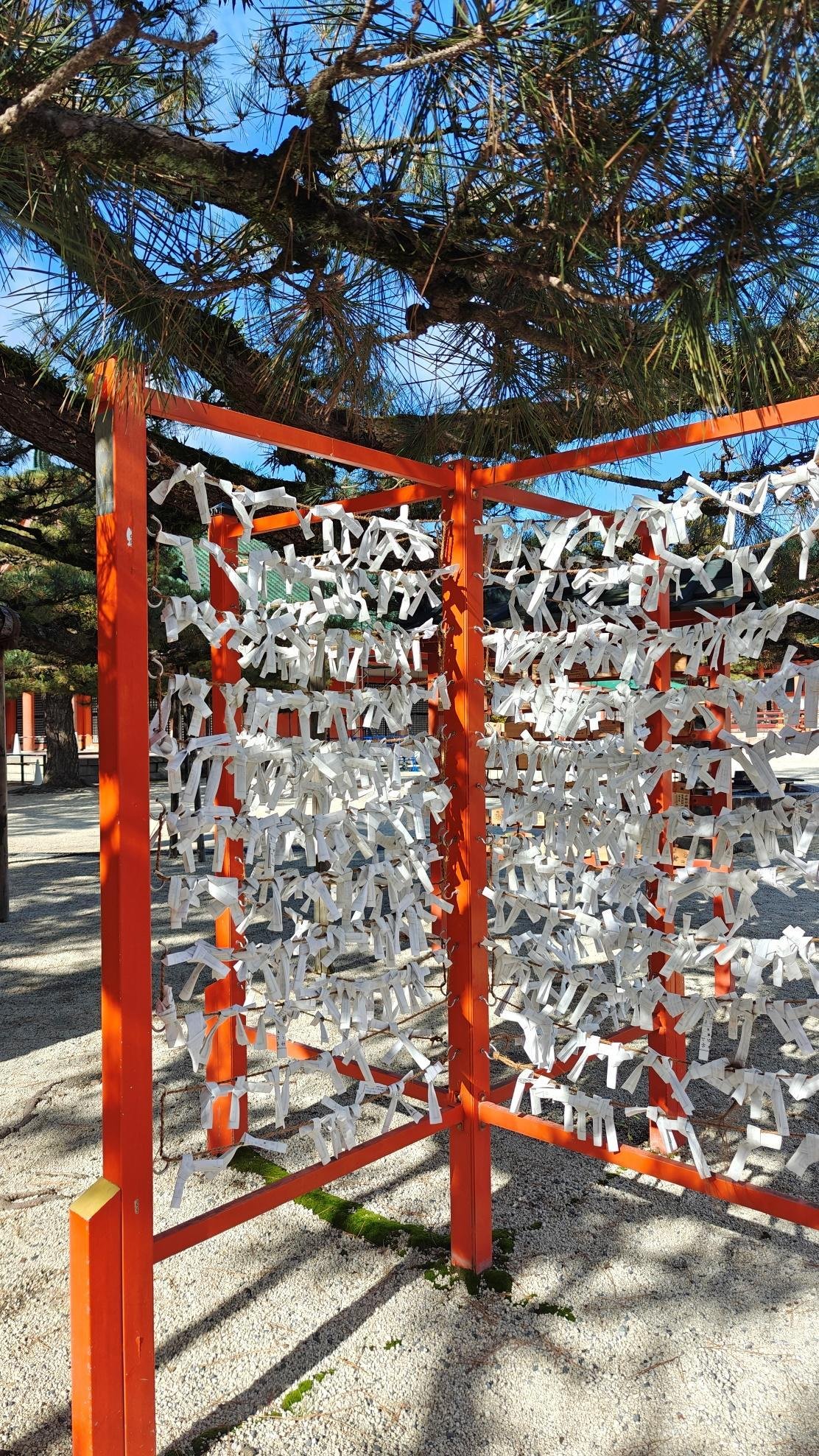
The first thing I saw when I entered the shrine was this huge pine tree to my left that was surrounded by racks for omikuji and ema. This particular omikuji kake looked like it was nearly full due to the numerous omikuji tied to it. It is customary for worshipers who draw bad fortune omikuji to tie those here so that they won’t bring that kind of luck back to their homes.
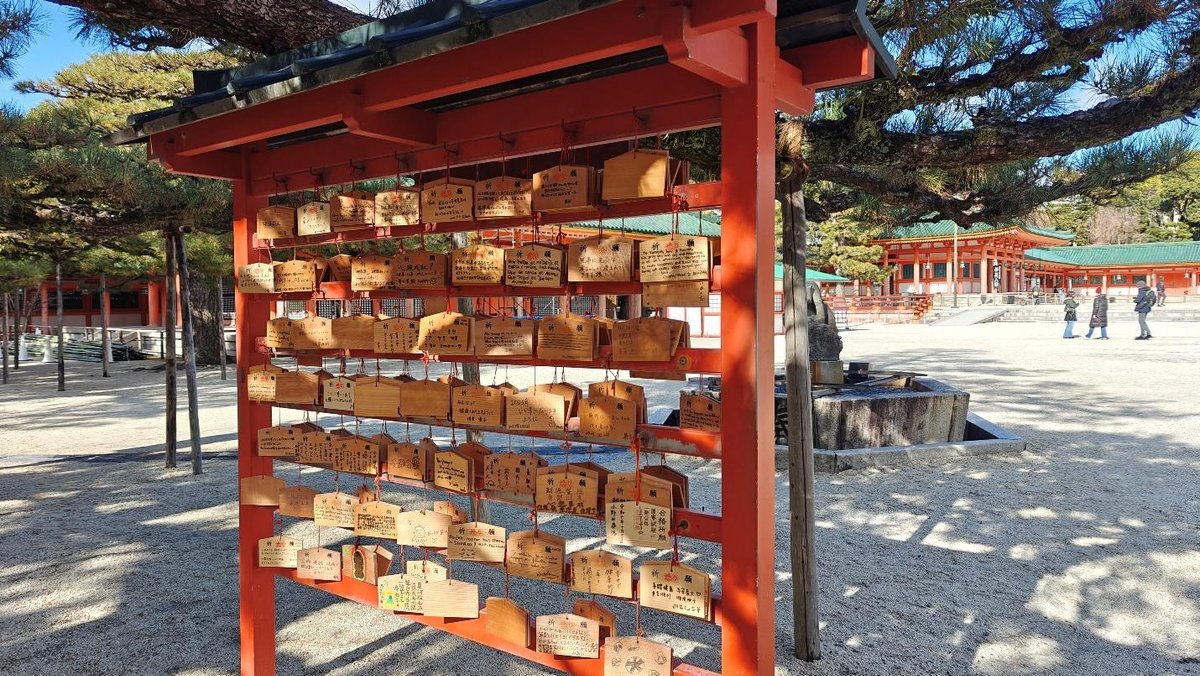
Aside from the omikuji kake, there’s also an emagake here. Unlike omikuji, these ema contain wishes and prayers written by worshipers.They’re usually left here as offerings for the gods or kami. Behind this particular emagake is a chozubachi called Byakko or the White Tiger guardian of the Western cardinal direction.
Opposite of this chozubachi is another called Seiryu or the Azure Dragon guardian of the Eastern cardinal direction.
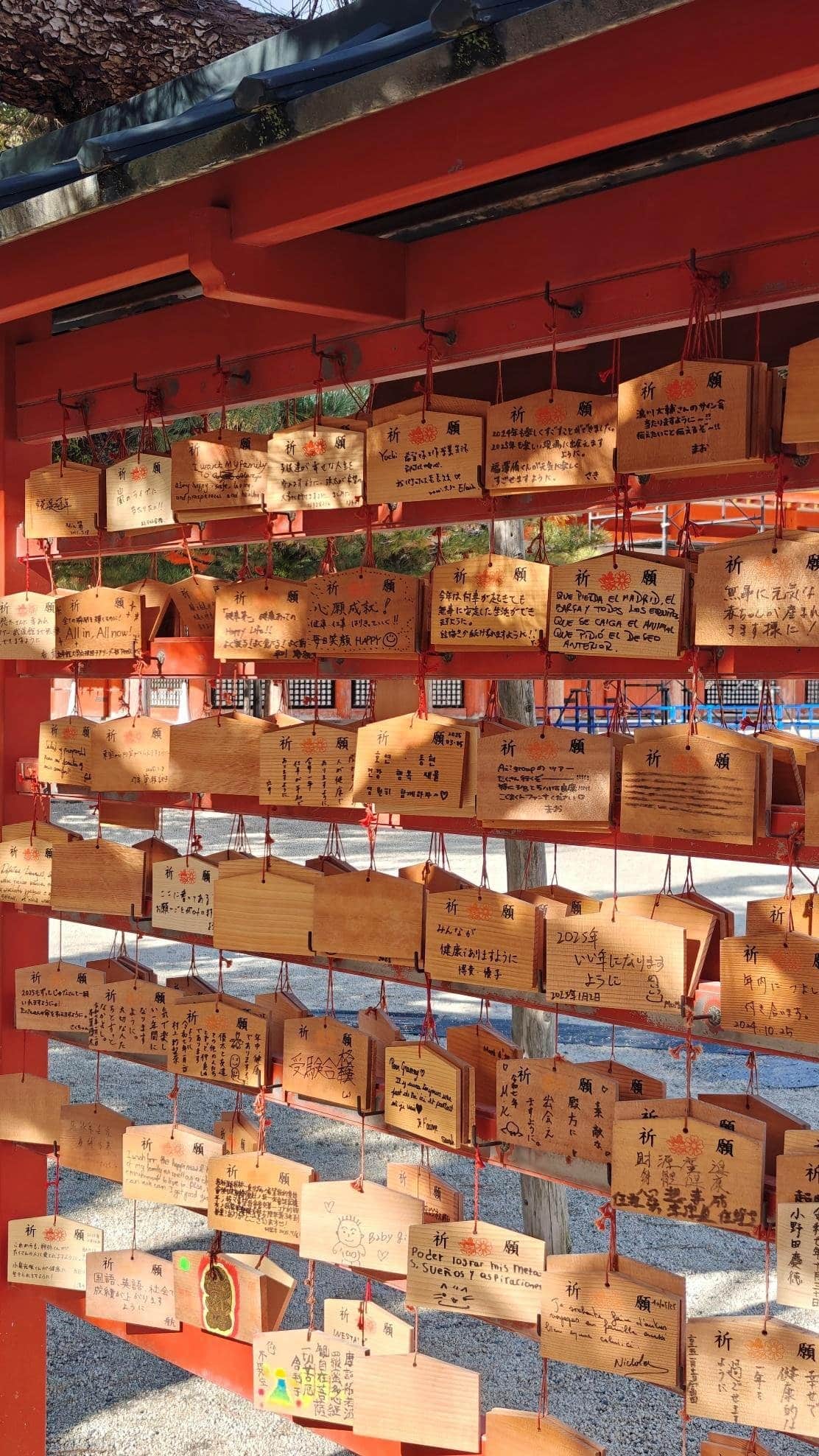
If you plan on hanging your wishes and/or prayers here then you can purchase an ema at stalls on either of the West or East Gate Corridor connected to the Otenmon. Aside from ema, you can also purchase omikuji and even shuin (shrine stamps/seals) from these stalls. Take note that you actually don’t need to write your wish or prayer in Japanese.
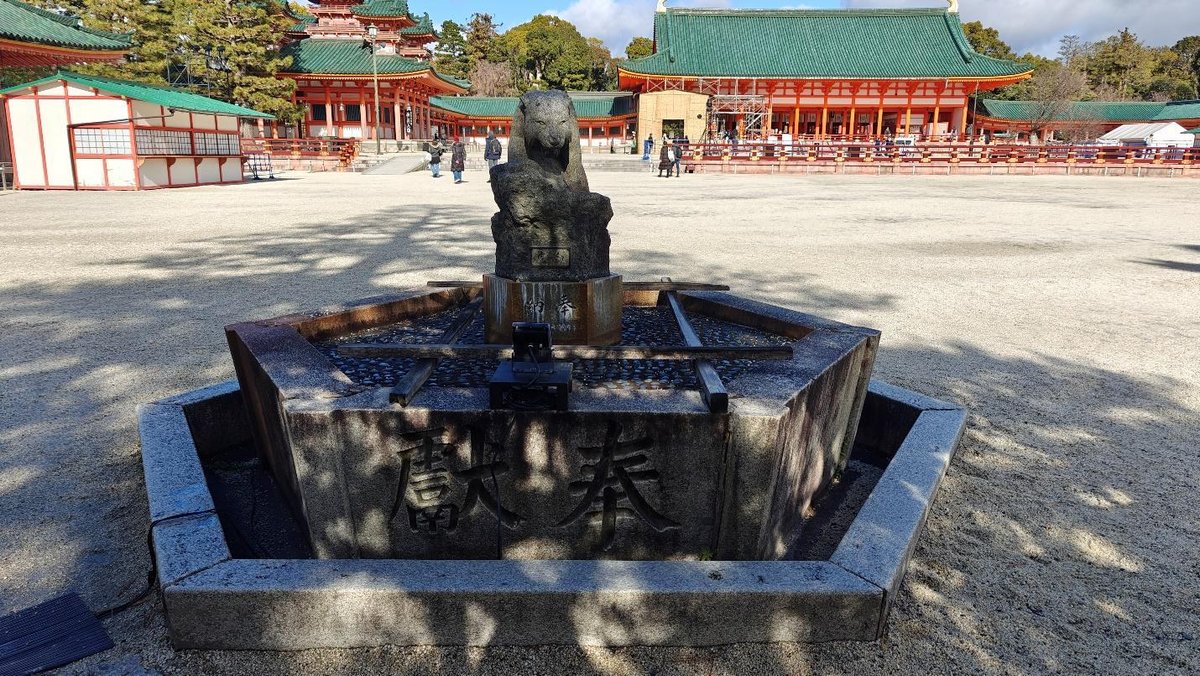
Here’s the Byakko chozubachi that I was talking about earlier. As the name implies, it features a statue of the White Tiger of the East as its centerpiece. I’m not too sure but I think this specific chozubachi only serves an ornamental purpose.
It lacks a hisaku which is a long handled ladle that worshipers use to scoop out water.
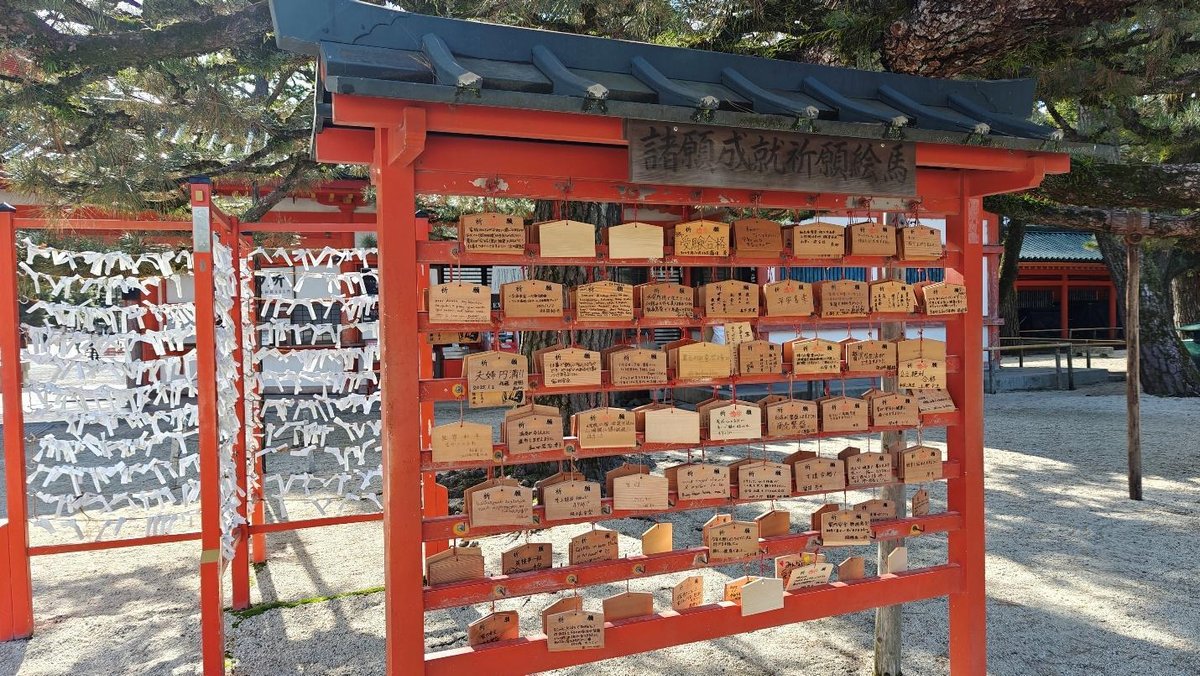
The Byakko statue on the chozubachi is positioned in such a way that it faces the emagake and omikuji kake that we saw earlier. It’s not quite clear due to the racks but you can sort of see the stall where you can buy the omikuji and ema. I wasn’t able to check on their prices but the ema typically costs around 500JPY while the omikuji are much cheaper and usually start at 100JPY.
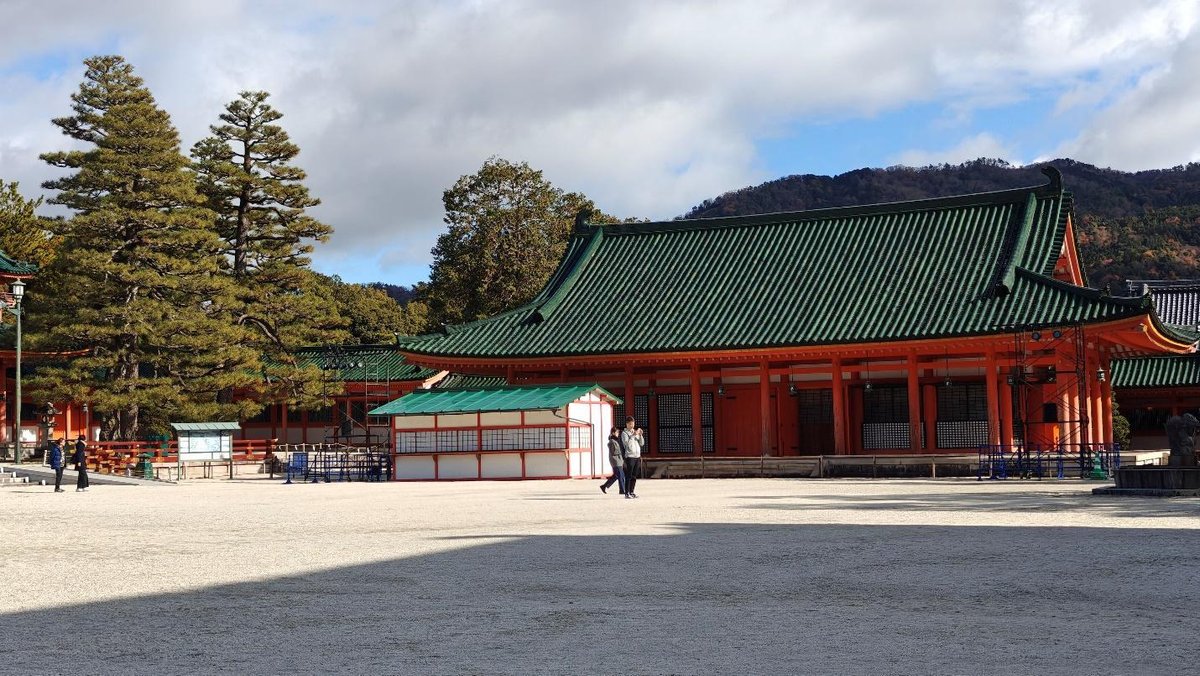
Still in the same area as the Byakko chozubachi, I caught sight of this building across the expansive Heian Jingu Shrine main courtyard. According to the guidemap, this is the shrine’s Kaguraden. As its name implies, this is where the ancient Shinto dance and musical performance called Kagura is performed.
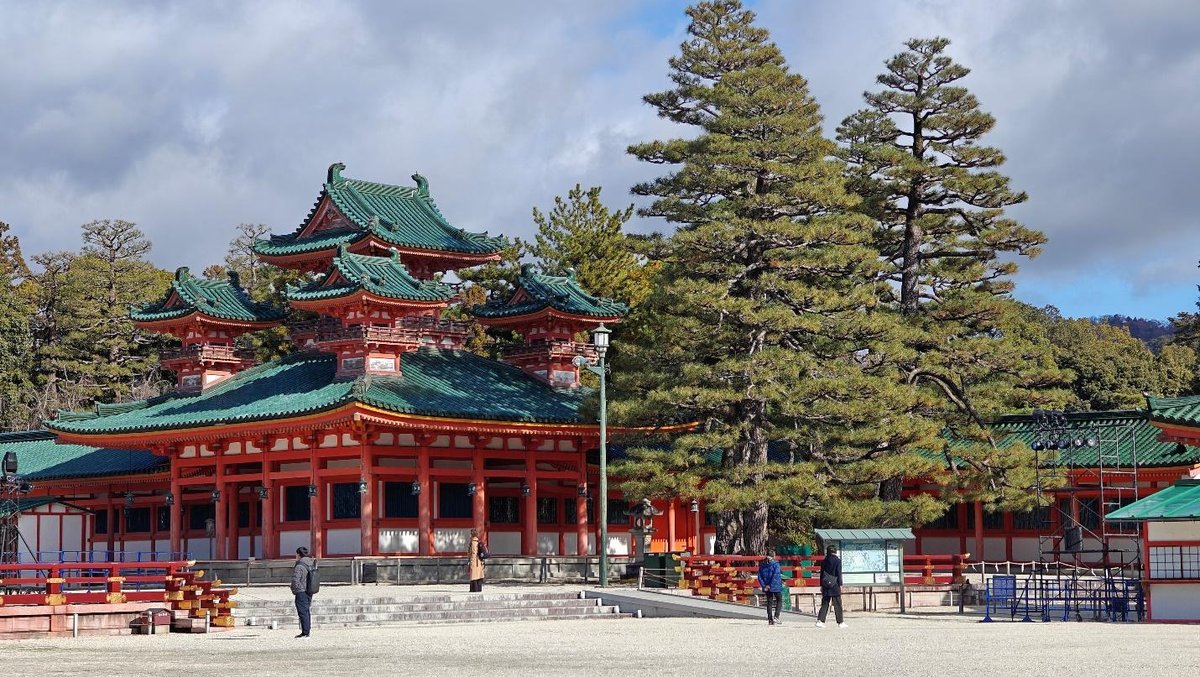
A short distance from the Kaguraden was this elaborate structure called the Soryuro Tower. Honestly, this was such a nice looking building and easily one of the most ornate that I’ve seen here in Kyoto. That said, this as well as the other buildings here at Heian Jingu Shrine are quite interesting as they’ve really only been around since the 1970s.
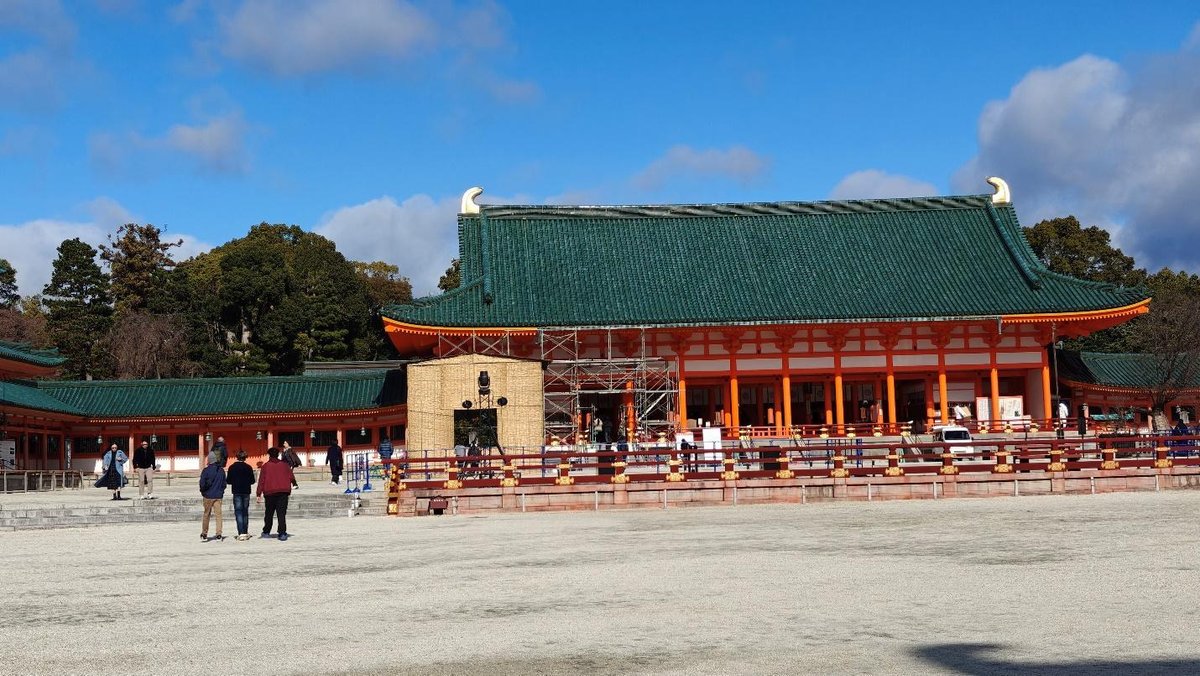
Here you can see the shrine’s Daigokuden and Gaihaiden. The Daikokuden is essentially the central most building in the shrine complex and in ancient times, was also considered its most important. As for the Gaihaiden or Outer Oratory, it’s essentially part of the Daigokuden serving as the outer hall where worshipers can pray.
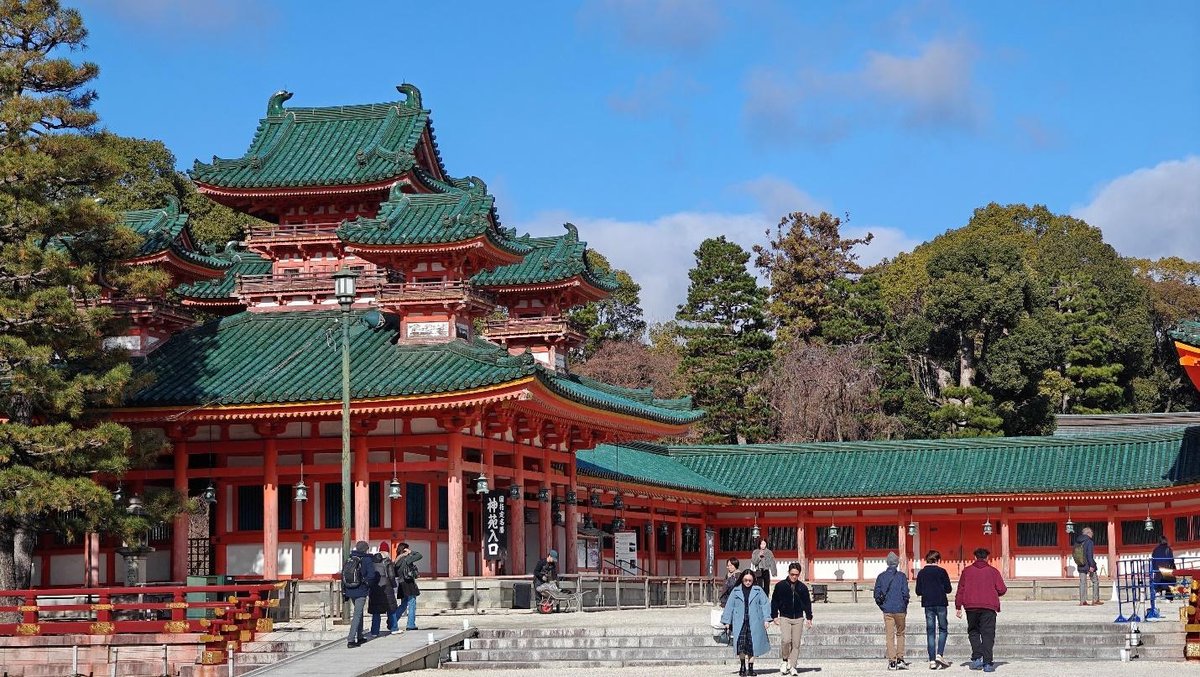
Bookending the Daigokuden together with the Soryu-ro is the Byakko-ro. It’s pretty much the same as the Soryu-ro I saw earlier that was a walking distance from the Kaguraden. It’s also not as clear in the image but a couple of steps from the tower is the entrance to the Shin-en.
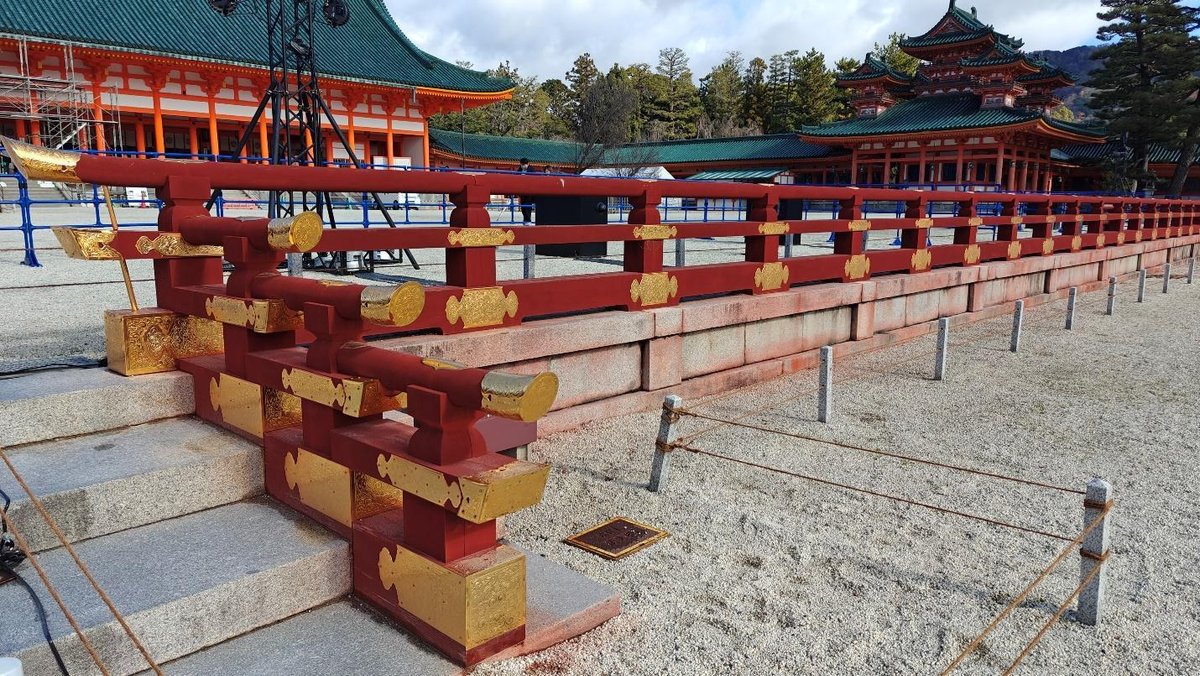
This is the elevated courtyard in front of the Gaihaiden. As you can probably notice, people are busy with preparations for what I think is construction/renovation of the building. As such, there are these barriers that restrict entry into this area.
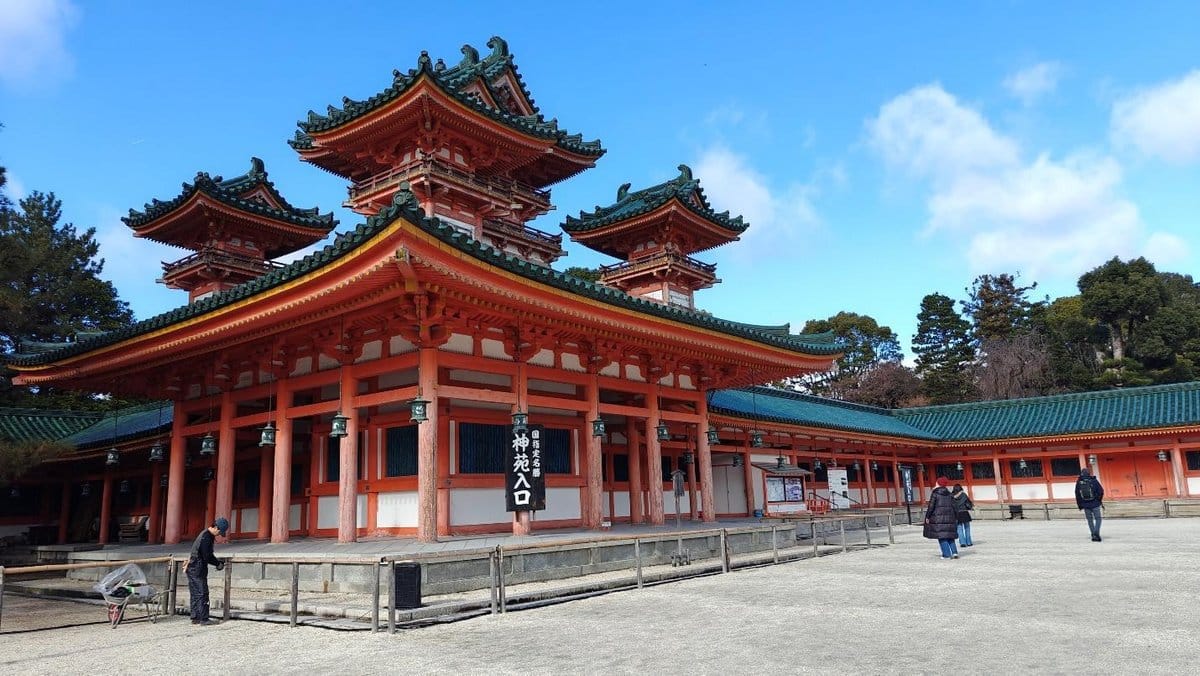
This is the Byakko-ro up close. Also known as the White Tiger tower, like its chozubachi counterpart that I came across earlier, this structure serves as symbolic protection for the Daigokuden (together with Soryu-ro in the opposite direction). From here, you can now sort of see the entrance to Shin-en garden.
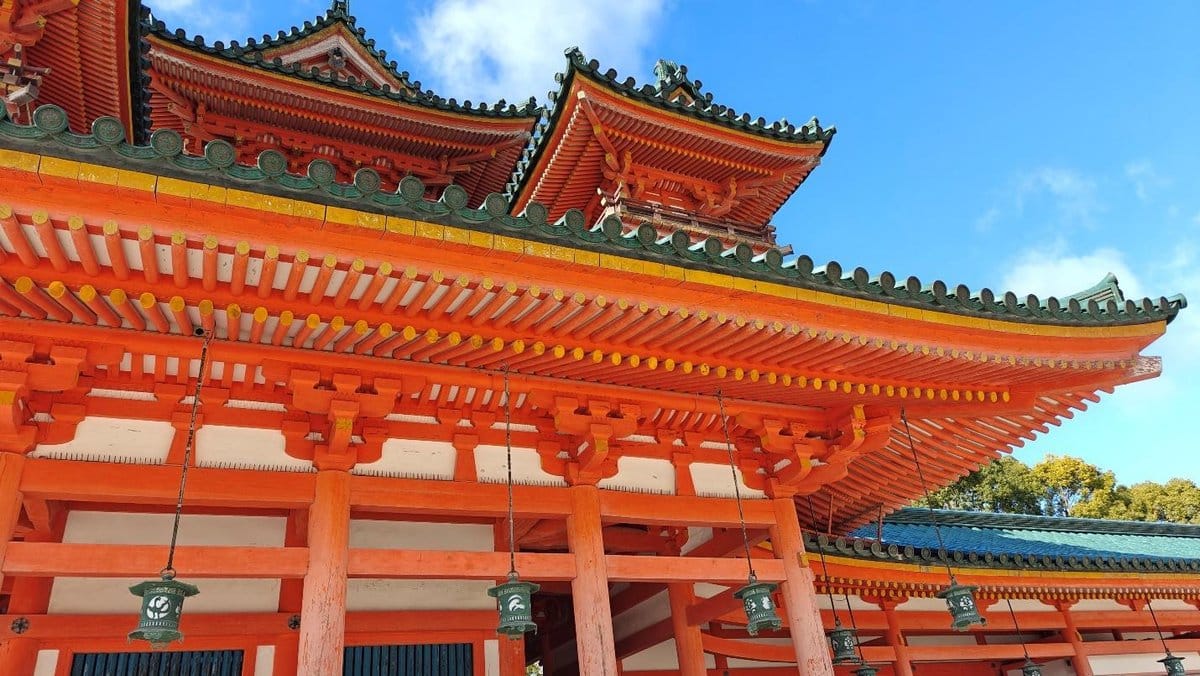
So I said earlier that the Heian Jingu Shrine is just a replica of the Chodo-in or Imperial State Hall complex. What I forgot to write was that it’s only 5/8th of the scale of the original. While this does look imposing, just imagine how large the original Chodo-in might have been if it somehow survived the Great Fire of Angen in 1177.
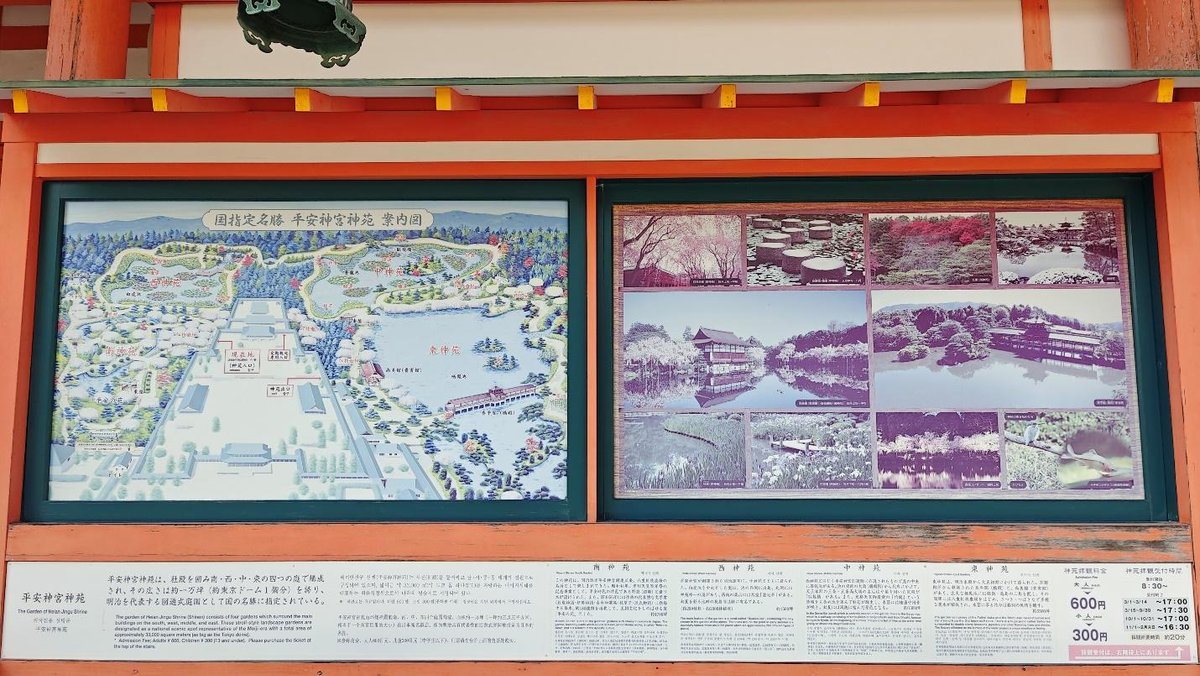
Here you can see another guide map of the Shin-en garden as well as pictures of its notable areas. The garden’s name translates to The Garden of the Gods and I guess this has to do with it representing a place where the kami are said to dwell. As mentioned earlier, the garden has four notable sections/sub-gardens corresponding to the four general directions.
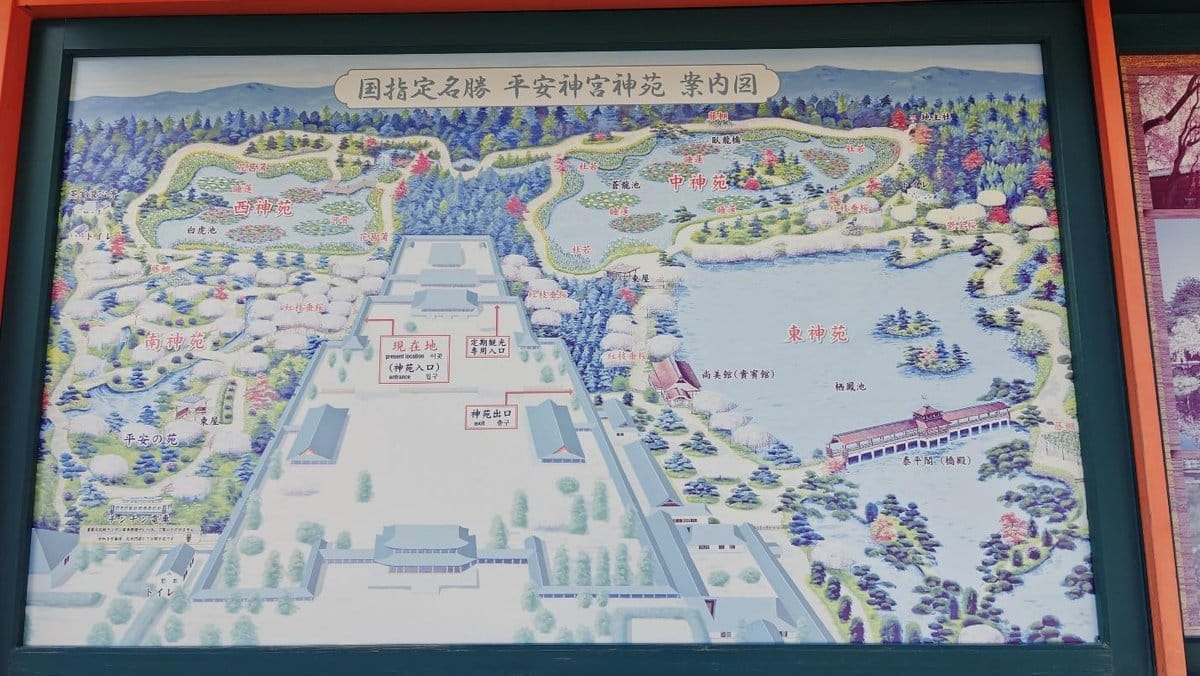
This is the close-up of the Shin-en guide map. If you enjoy nature then I’d really recommend a stroll through here. While the garden is expansive it also features relatively flat walking paths making it ideal for groups that with either the elderly or individuals who might have disabilities.
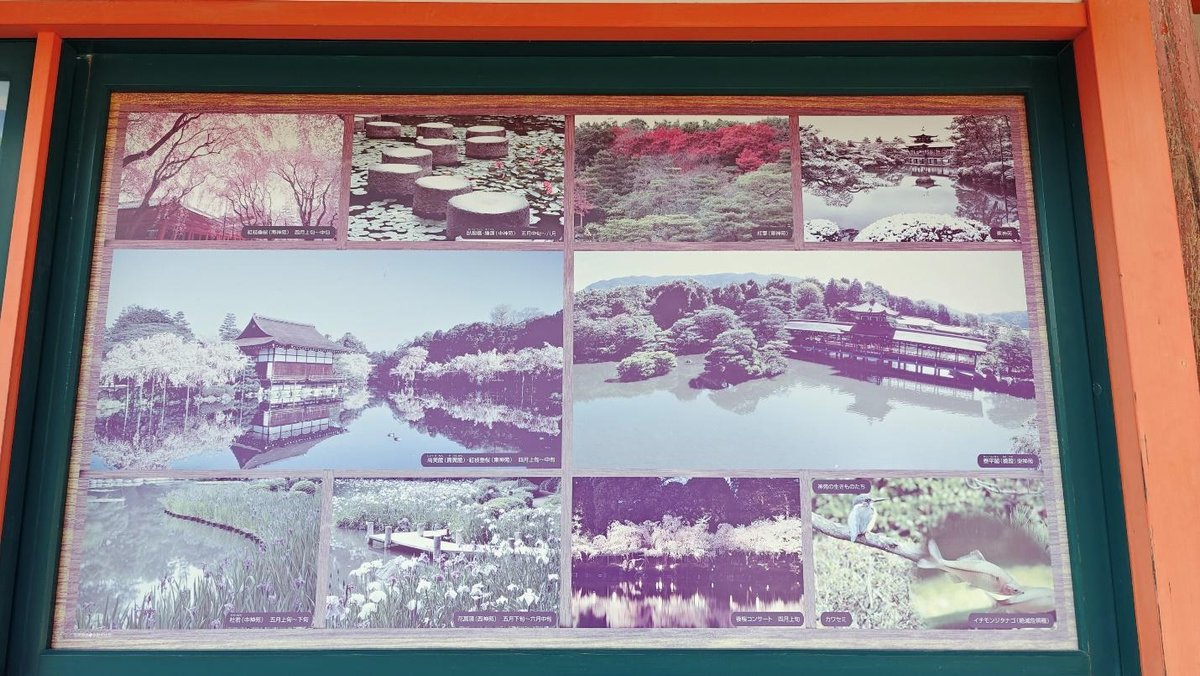
The ponds here at Shin-en are probably some of the most scenic I’ve seen in Kyoto. They feature a large number of flora and fauna with some being featured in the poster above (found right next to the garden’s guide map). While most people consider it a recommended visit the whole year round, the best time to come here really is during the spring season for the weeping cherry blossoms.
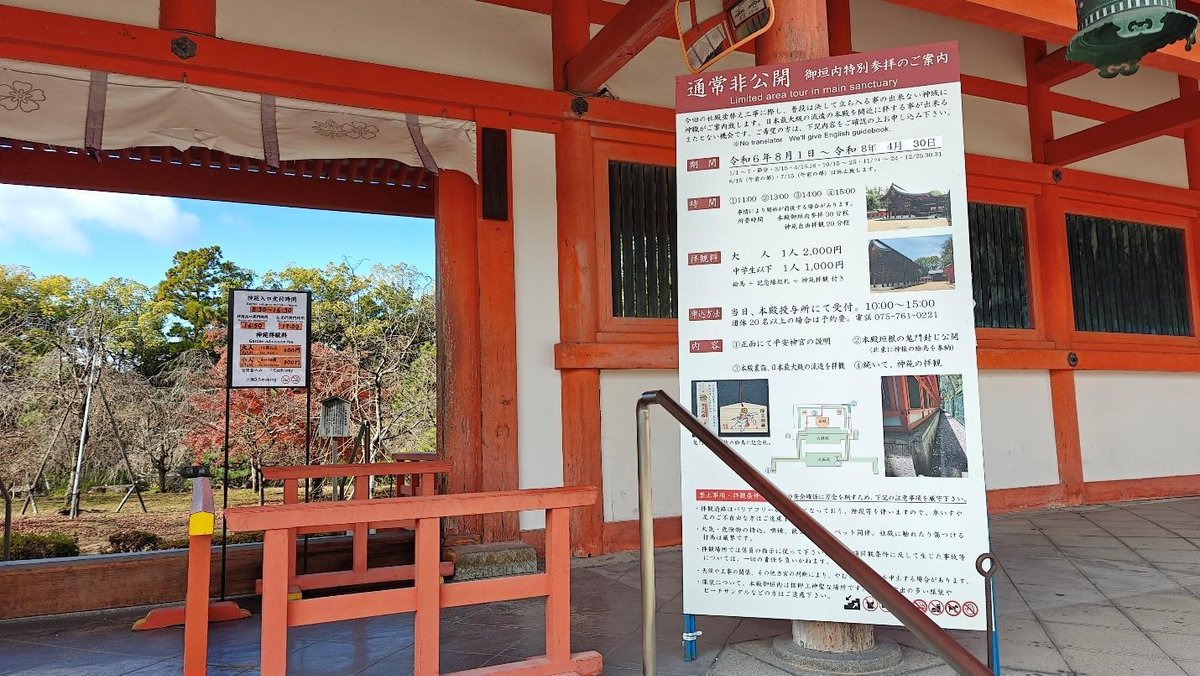
Here’s the entrance to the garden and I must say, it looks like a portal to a different world. Its verdant views really stand in stark contrast to the buildings and almost bare courtyard of the Heian Jingu Shrine. Entry to this area is just 600 JPY and I think it’s actually great value considering the views.
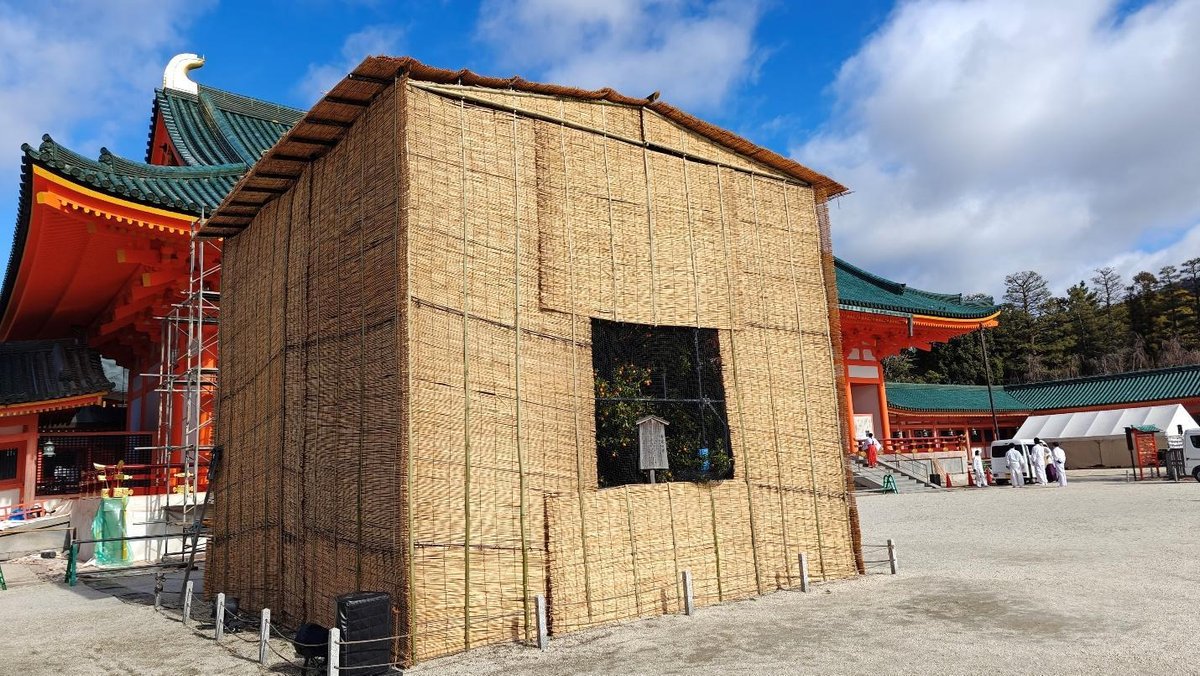
Directly in front of the entrance to the Shin-en was this unique hut-like structure. At first I thought this was a construction hut used for tool and material storage since there was work being done on the Gaihaiden after all. Turns out, this was actually a hut specifically meant to protect one of the landmarks here.
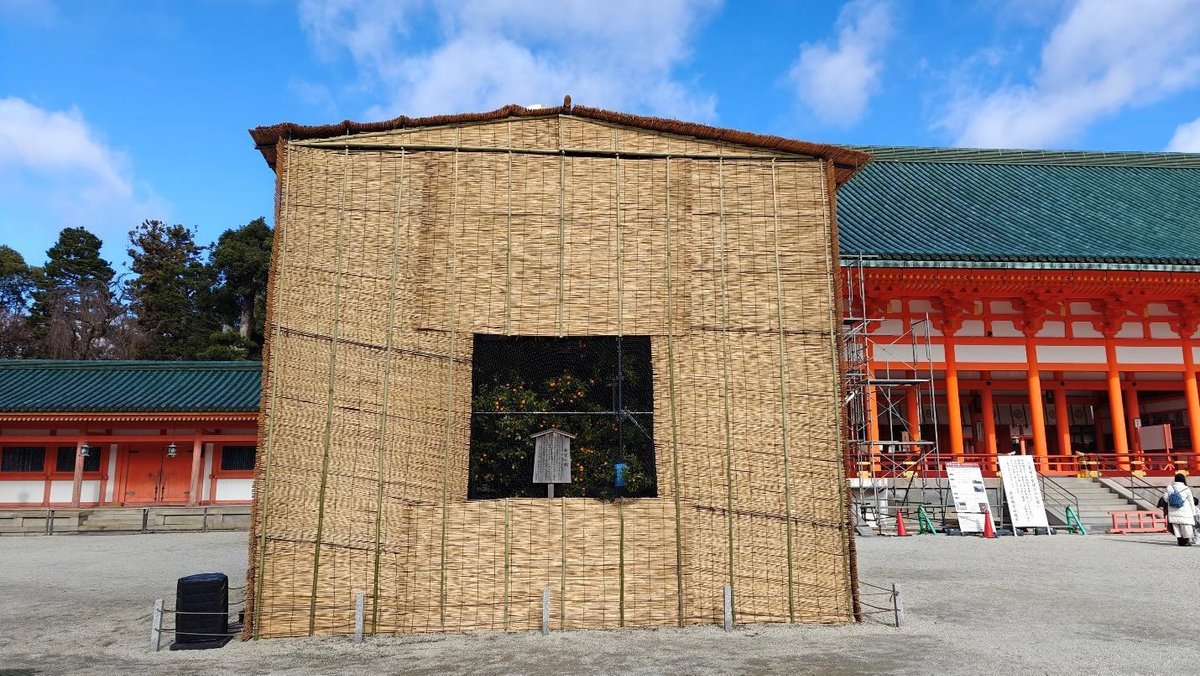
Only when I moved closer did I clearly see that what was inside was a tree. Called Ukon no Tachibana, this is a citrus tree that’s a representation of the one that traditionally stood in the Chodo-in’s grounds. The tree’s name translates to Citrus Tree on the Right pertaining to its position in relation to where the entrance of the Gaihaiden is facing.
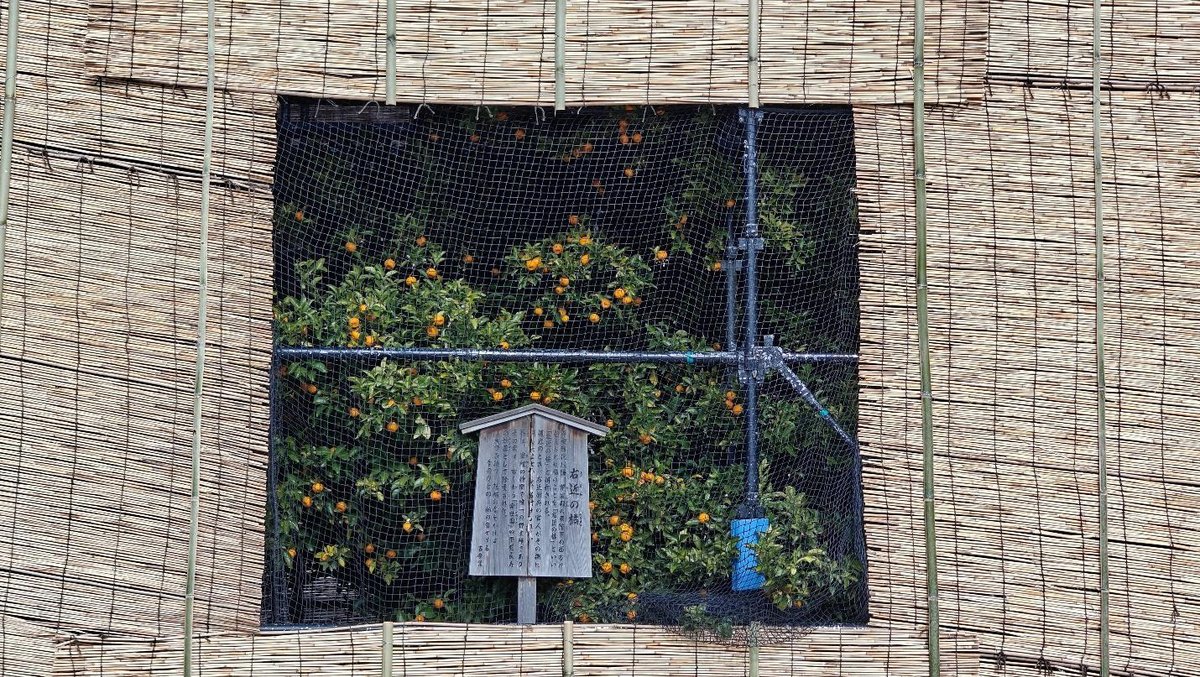
Citrus trees aren’t deciduous so they retain their leaves all year long. That said, they are prone to frost damage (especially since this was taken in early winter) so I guess this structure helps mitigate that. It’s not shown but there is another tree here called Sakon no Sakura that is Suiryu to Ukon no Tachibana’s Byakko.
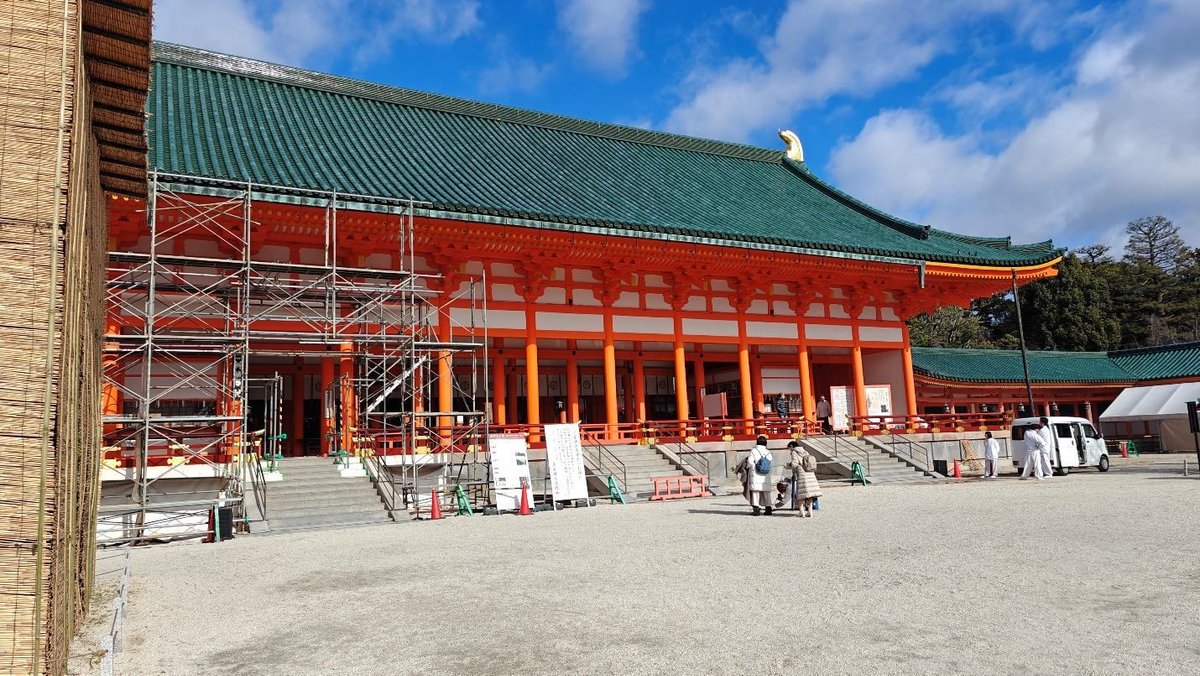
Here’s the Gaihaiden up close. Despite the work being done, I saw people still going up the steps to purchase omikuji and ema at the designated stalls. I wasn’t quite sure if it was okay for me to go up there though so I decided to just keep my distance and continue walking around the courtyard.
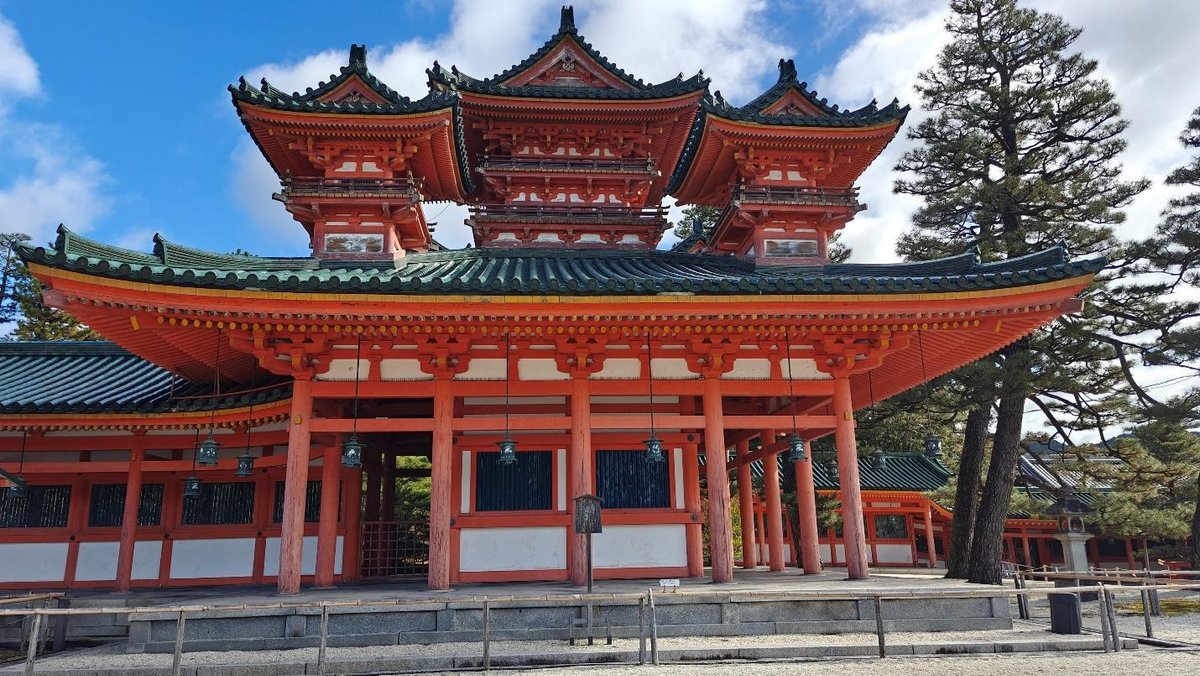
Eventually, my walking around brought me close to the Soryu-ro. It’s pretty much similar to the Byakko-ro and if you inverted this image and placed them side by side I wouldn’t be able to tell the two apart. From what I can tell, these structures don’t serve any functional purpose right now (they used to serve as watchtowers during the Heian period) though I might be wrong.
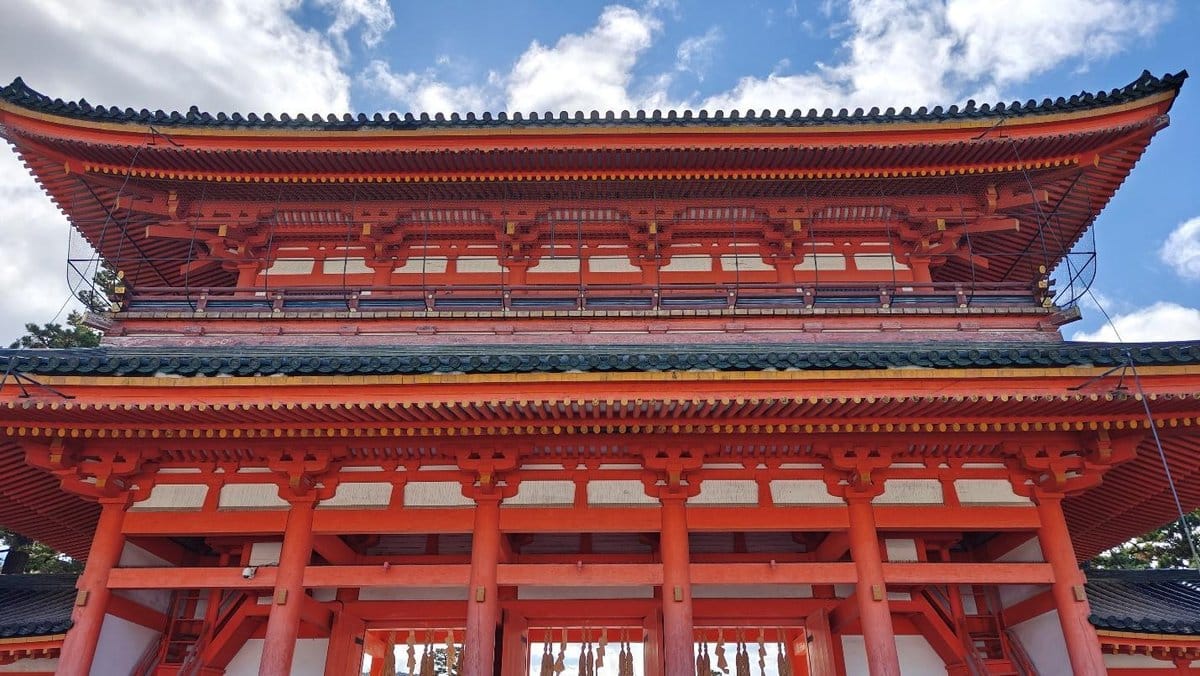
I finally found myself back at the Otenmon and here’s how it looks from the courtyard. There are actually ladders that go up to the second floor but like with most traditional structures like this, visitors aren’t allowed to use them. The ladders actually have small waist-high doors that prevent entry and access to the second floor.
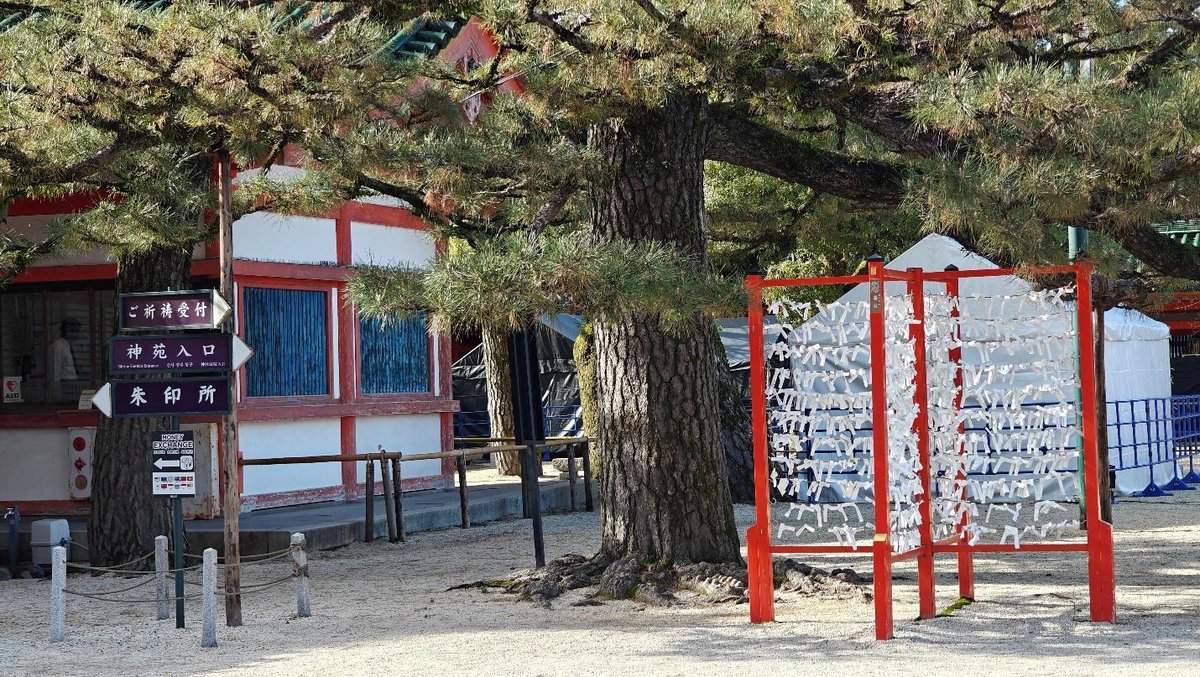
Oh look! That’s the pine tree and omikuji kake that I saw when I first entered the shrine. I didn’t realize it yet at that time but my visit ended up being relatively quick.
While it is expansive, there aren’t that many notable landmarks at Heian Jingu Shrine itself. That said, if you do check out the Shin-en then I’m sure your visit will take much longer to finish.
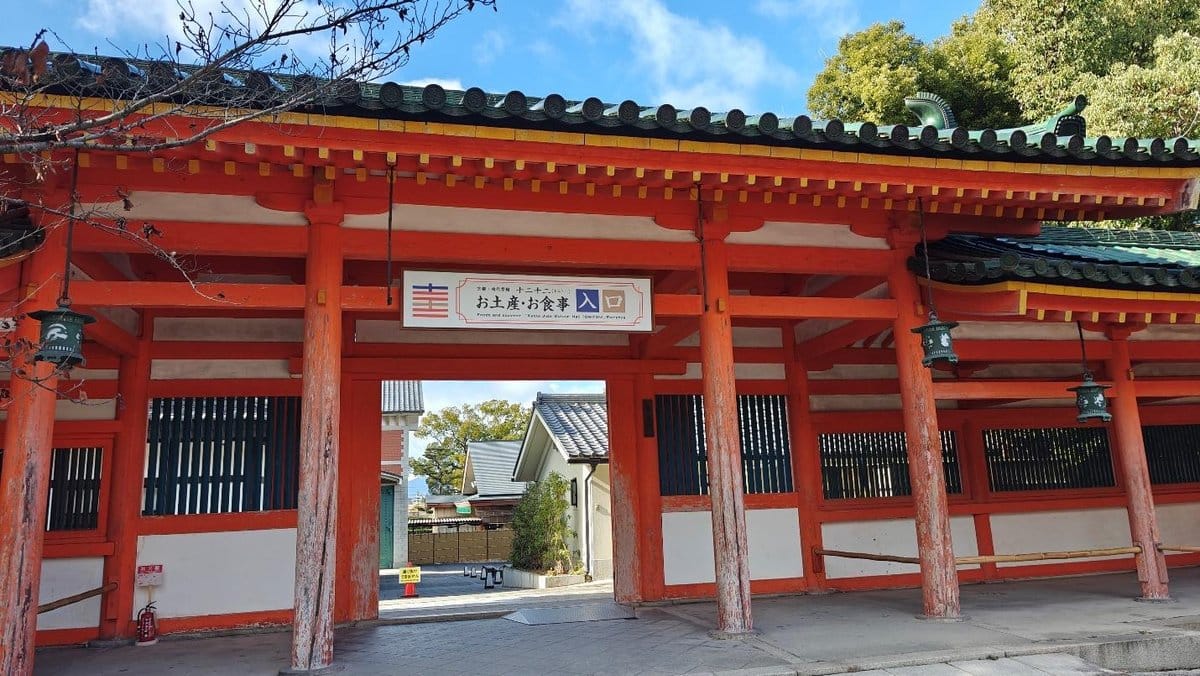
Eventually, I headed past the omikuji kake and pine tree straight to the Saimon or West Gate. This leads to an area that has a public toilet as well as a number of establishments where you can rest, eat, and even buy souvenirs (from the Kyoto Toni Toni store I mentioned earlier) before you go on to your next shrine or temple visit. Heian Jingu Shrine is beautiful, free, and takes very little of your time and money.
I think it’s definitely underrated though I can also get why most don’t rate it highly. As I’ve been saying, it’s expansive but there aren’t that many landmarks that can make you stay for long outside of the Shin-en. I’d still recommend visiting here though just because of how it’s so accessible with locations such as Okazaki Park, the Kyoto National Museum of Modern Art (which is close to the Grand Torii), and many more all within walking distance from it.What do you think about Heian Jingu Shrine?
Is it a must-visit or are you going to skip it on your next visit here in Kyoto? Don’t forget to comment what you think about this iconic Kyoto landmark down in the comment section!