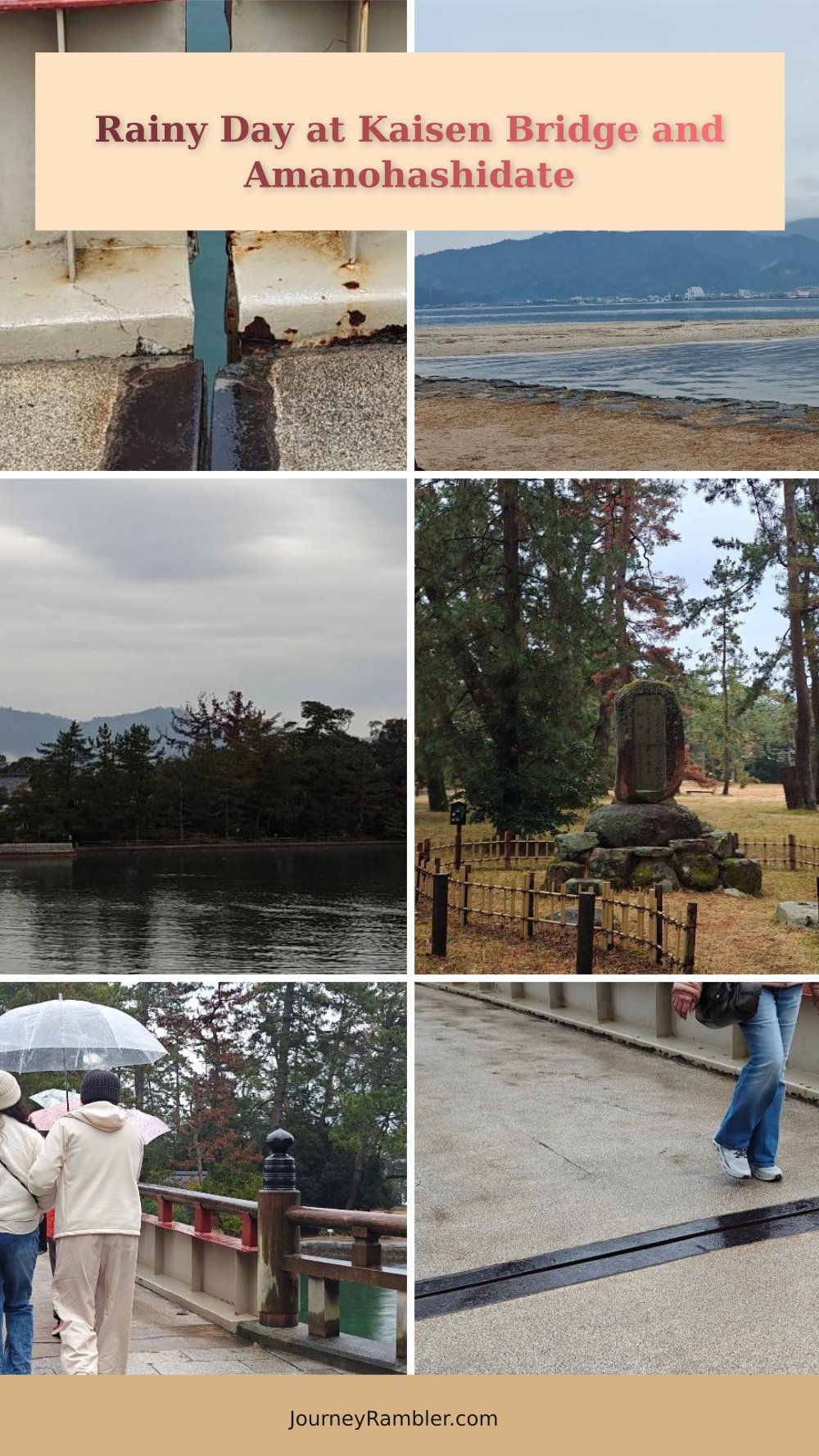
If you've read my write-up of Ine no Funaya then you probably remember me mentioning Amanohashidate. Well, I had the chance to visit Miyazu City and actually decided to check out Kaisen Bridge and Amanohoshidate Beach among other things. Despite the rainy weather, I actually ended up enjoying the sights at what many consider as one of the “Three Most Scenic Views” in Japan.
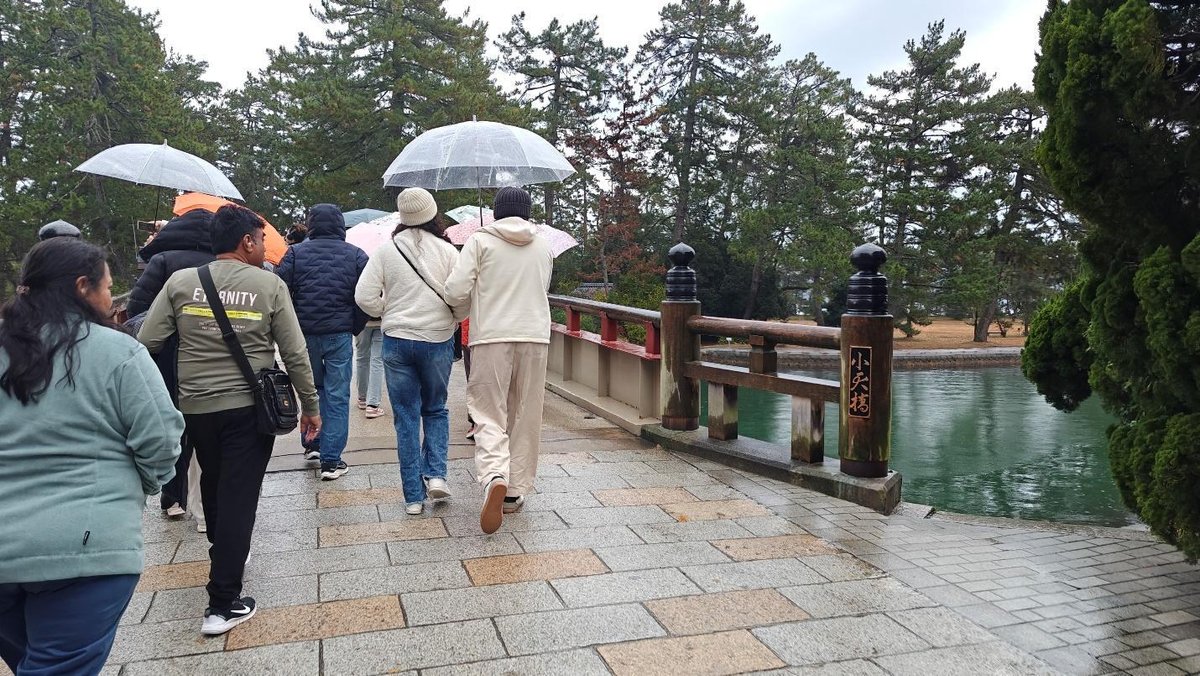
I’d recommend of course, to come here via the Klook listing I linked in my Ine no Funaya write-up. I think that’s quite possibly the best and most efficient way to get here if you also plan to go see the boathouses in Ine. Otherwise, you could try commuting via bus but this option will take longer.
It’s also possible to rent a car for the day but that’s also going to be much more expensive (though admittedly the most relaxed option as you’ll have control of your own time). Finally, there’s the train option which is actually cost-effective and also efficient.
A Rainy Walk at Kaisen Bridge and Amanohashidate Beach
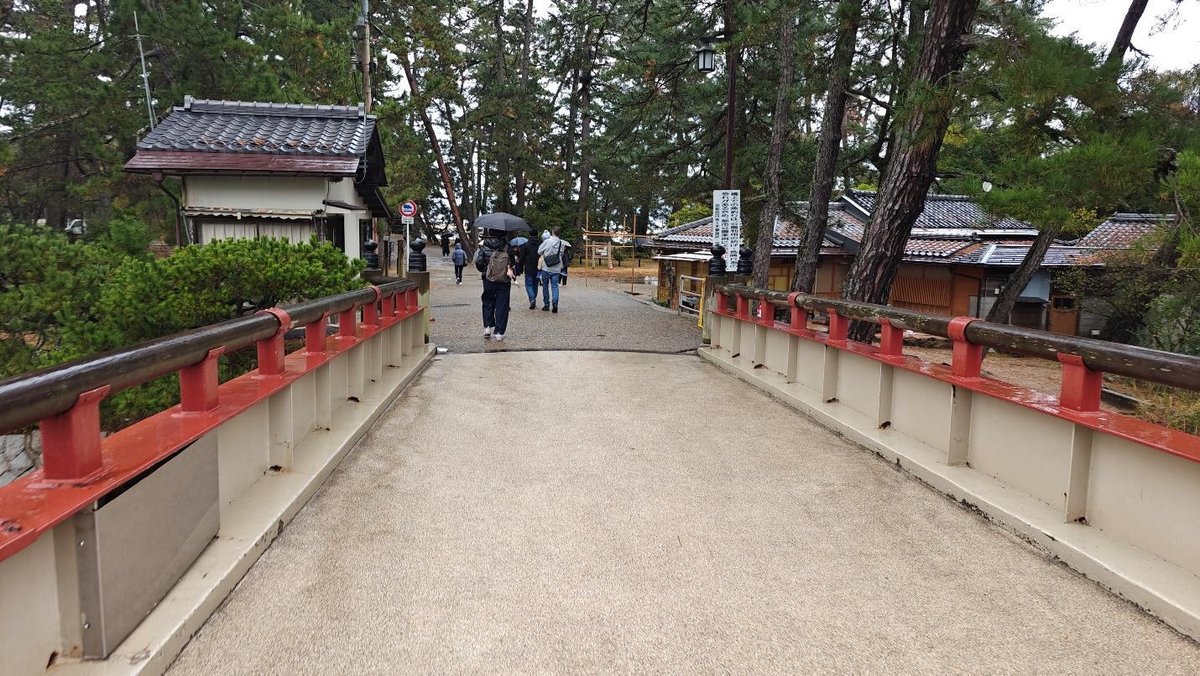
If you end up taking the train option, then make sure that your stop is at the Amanohoshidate station in the Monju area of Miyazu City. It’s relatively close to the beach sandbar, Chionji Temple, and the chairlift/monorail that will take you to Amanohashidate Viewland. Anyway, here you can see Kaisenkyo/Kaisen Bridge which goes over the strait connecting the Aso Sea to Miyazu Bay.
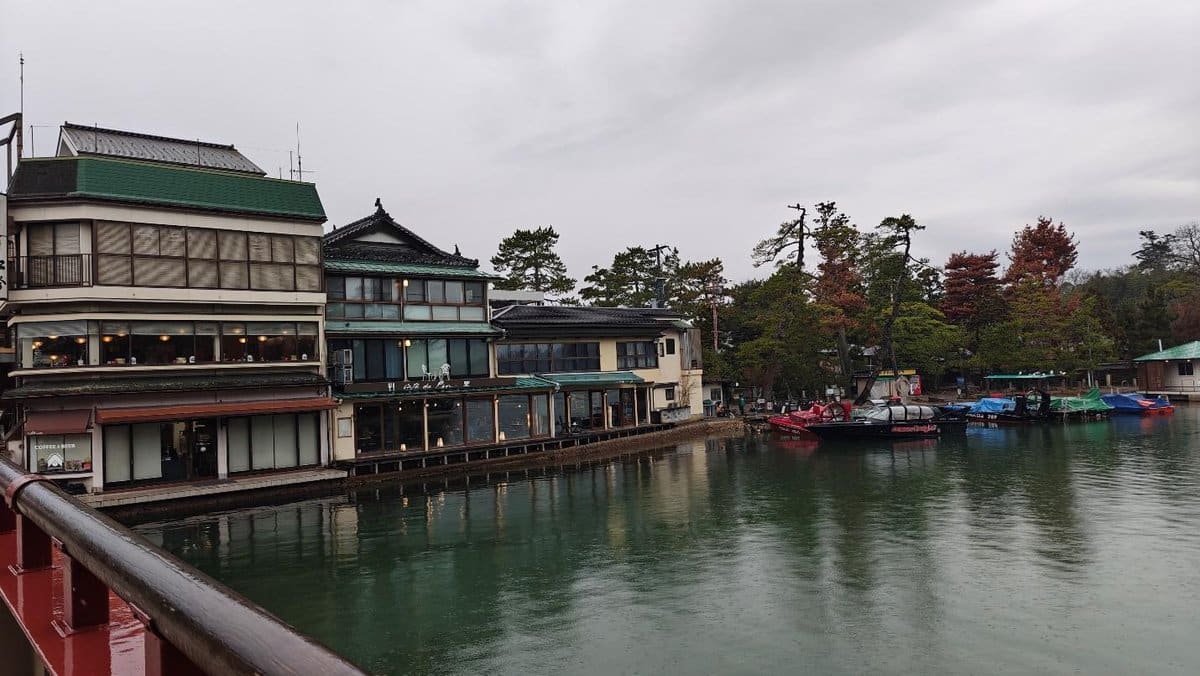
This is the view of the Monju Area on the Aso Sea side of the bridge. You’ll notice there are boats off to the side that are used for cruises. I was told that these boats follow a route that would give you a scenic view of the Amanohashidate sandbar from the Aso Sea.
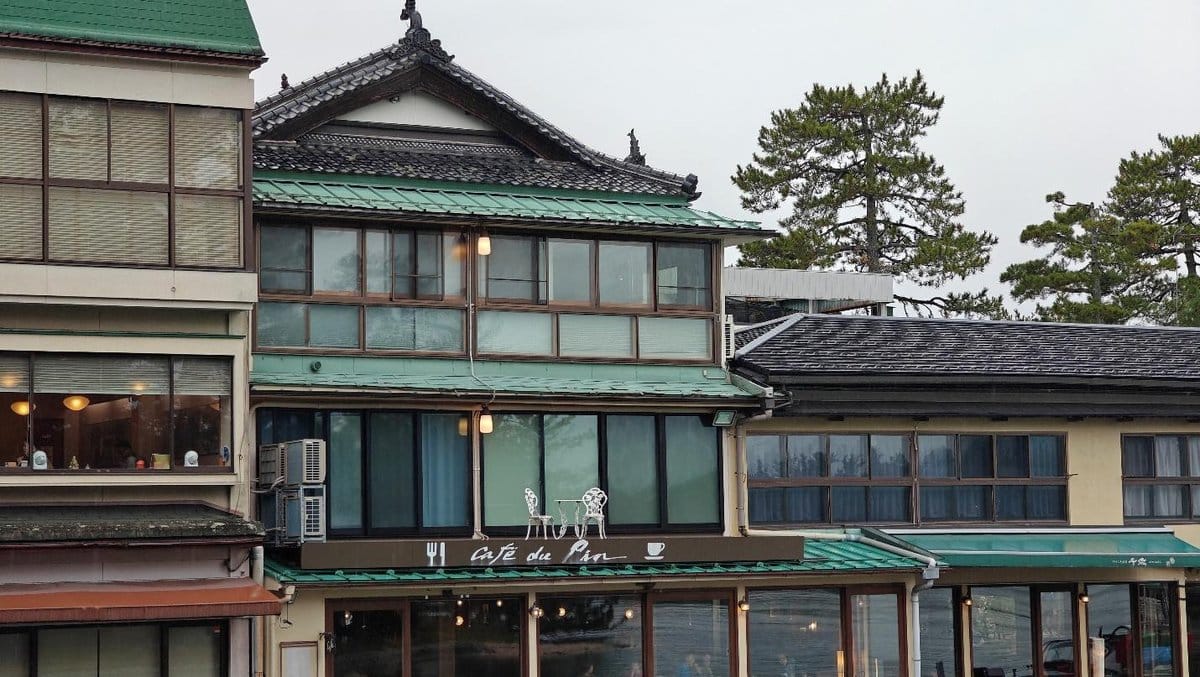
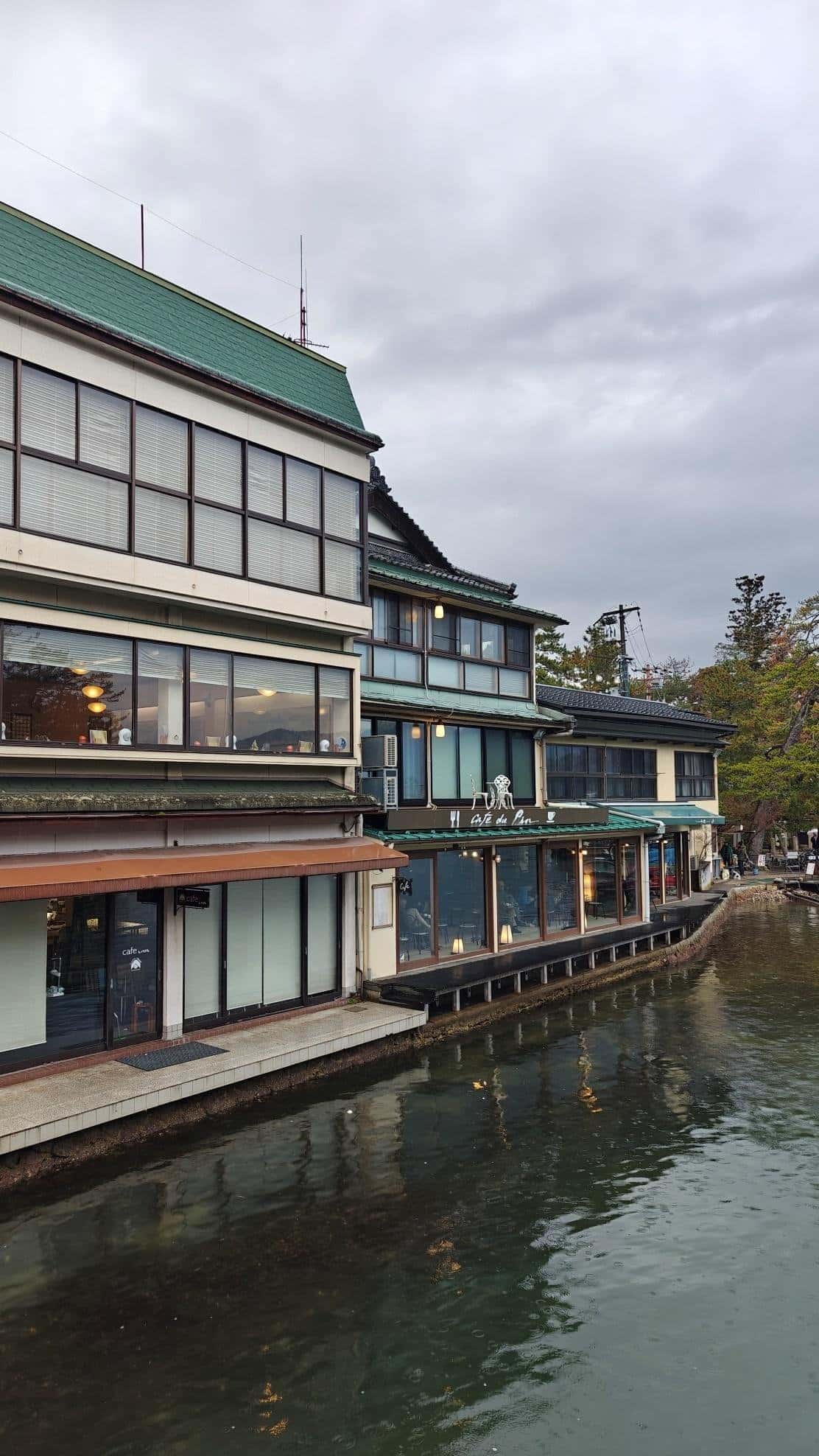
Just a short walk from the boat dock is a row of establishments offering food and drinks. Pictured in the image is one of these called Cafe du Pin. It’s a coffee shop that also serves meals such as Black Angus Beef Hamburgers, Chicken Katsu Curry, Chicken Katsu Sandwich, and more.
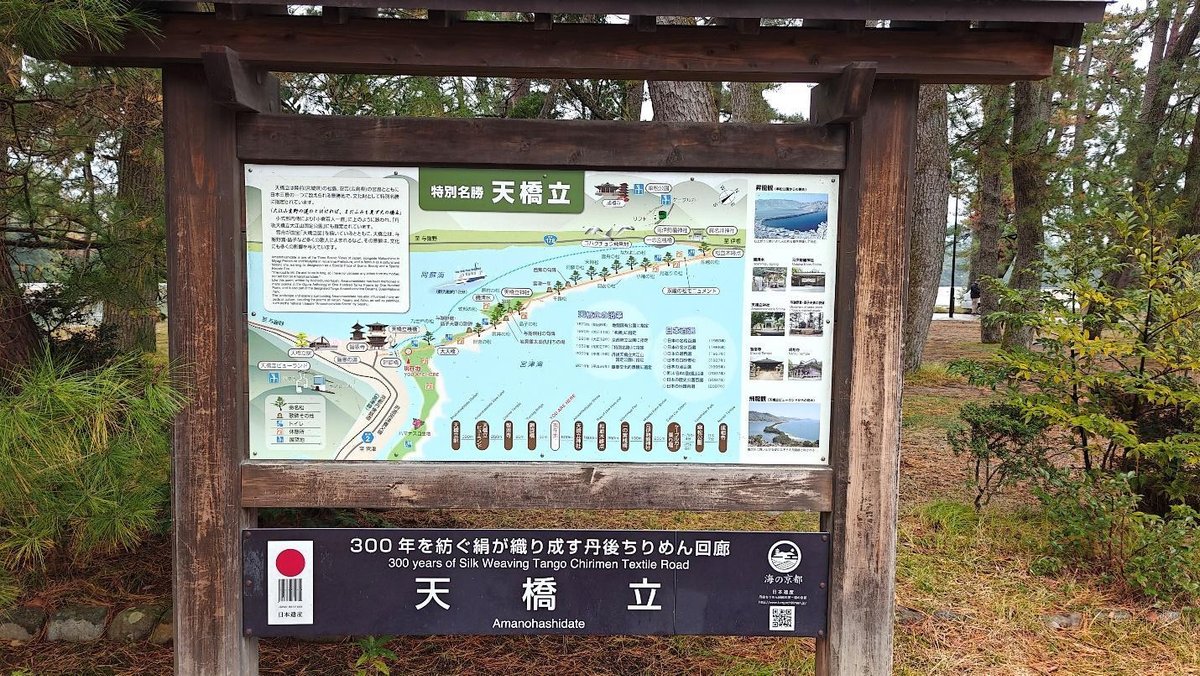
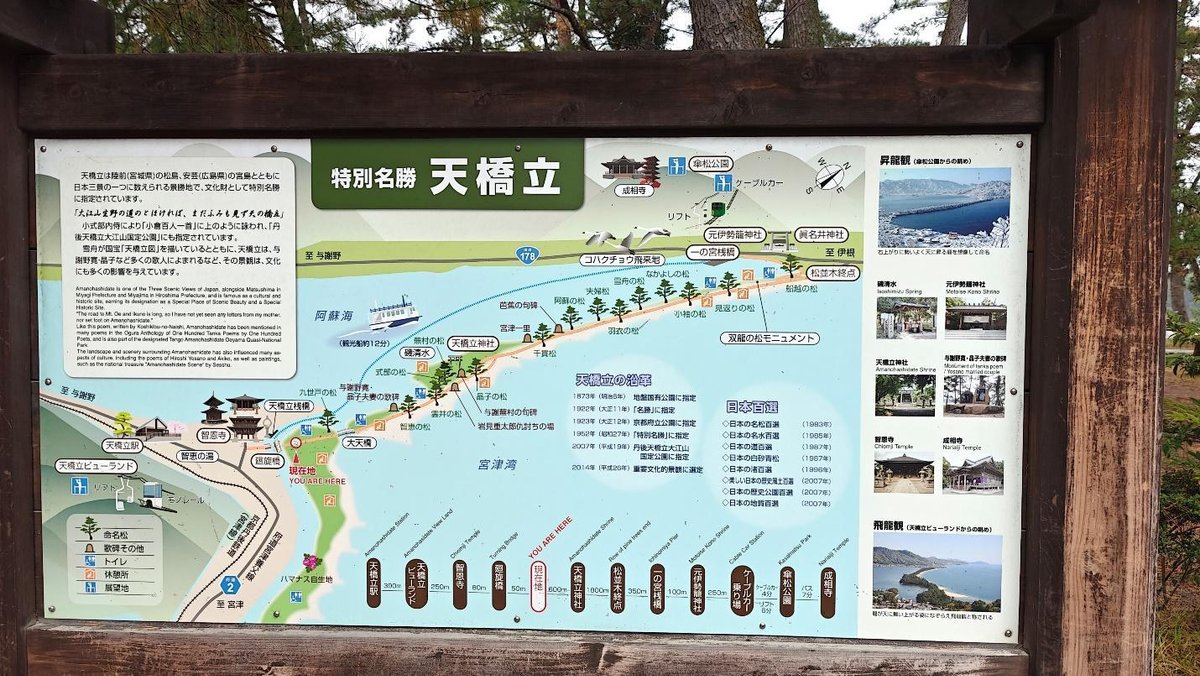
A short walk past the Kaisenkyo Bridge is the guide map for the Amanohoshidate sandbar area. Now this area is actually an “island” in between the sandbar and the Monju area but I’m not quite sure if it even has a name. Most maps that I checked don’t seem to have a name for it and I suspect it’s geologically still part of the sandbar.
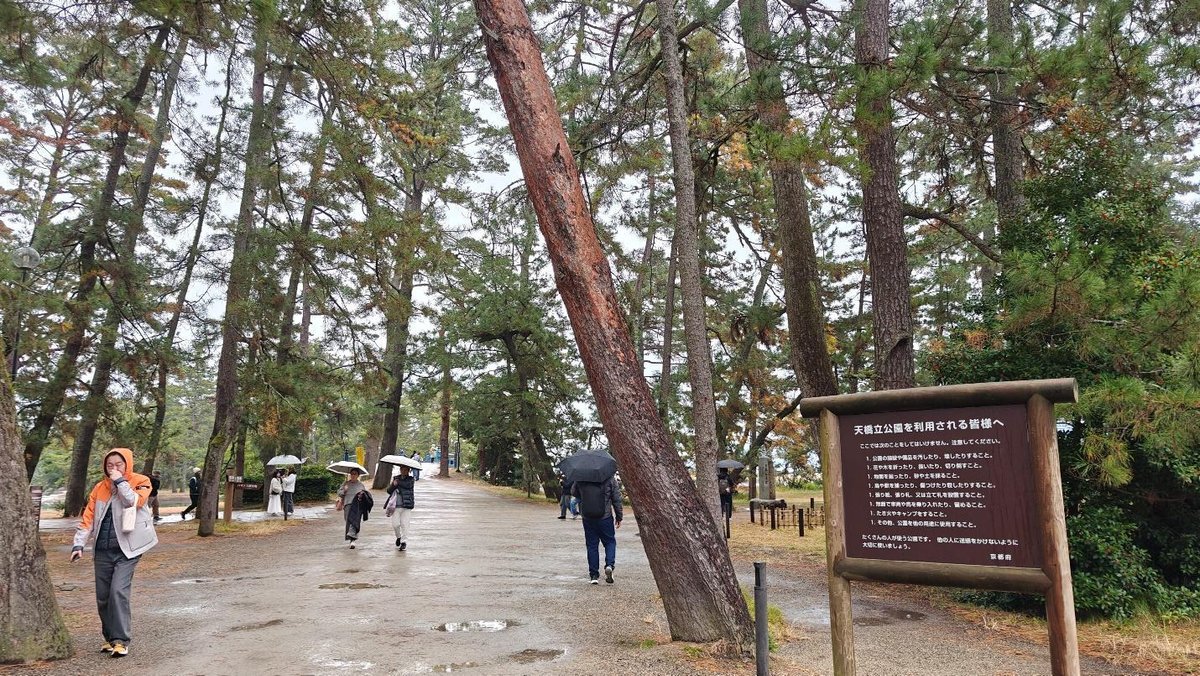
The area was absolutely scenic with plenty of pine trees that dominated the landscape. From this view (just near the guide map), you can see the footbridge connecting this area to the main Amanohashidate sandbar. Now I could have opted to go straight to the sandbar but I decided to check out the area first.
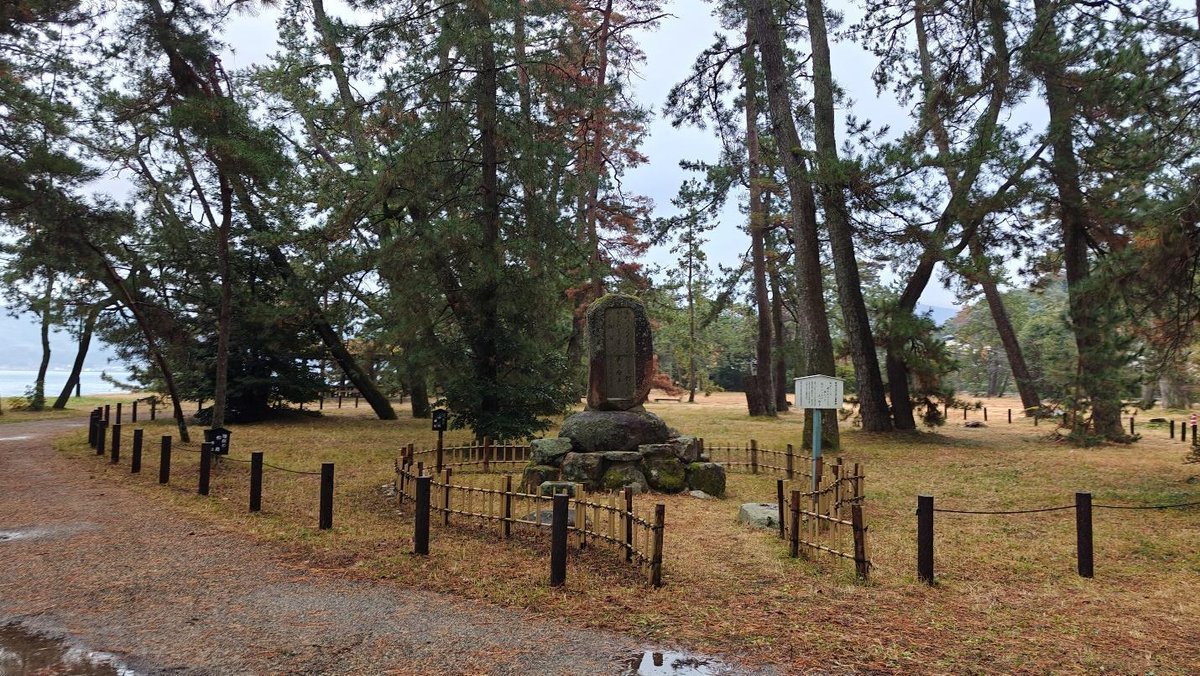
Just before getting to the footbridge, I came across a path on the right that had two monuments on either side. The one on the right (shown in the image above) is called the Showa Tenno no Kahi. It’s a monument that is meant to memorialize Emperor Showa (Hirohito) with a poem inscribed on a stone.
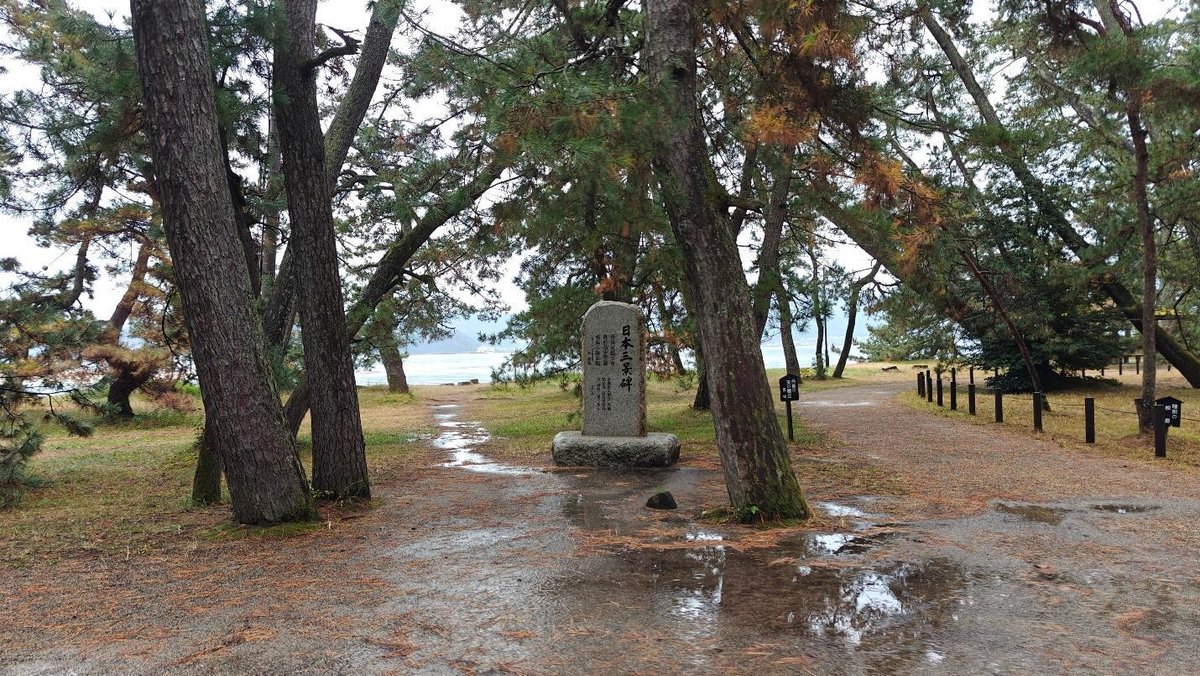
Across the path from it is a Monument to the Three Views of Japan. Now in case you’re wondering, the Three Views consist of Amanohoshidate (here in Kyoto Prefecture), Matsushima (in Miyagi Prefecture), and Itsukushima/Miyajima (in Hiroshima). Hopefully, I end up visiting and writing about the other two some time soon.
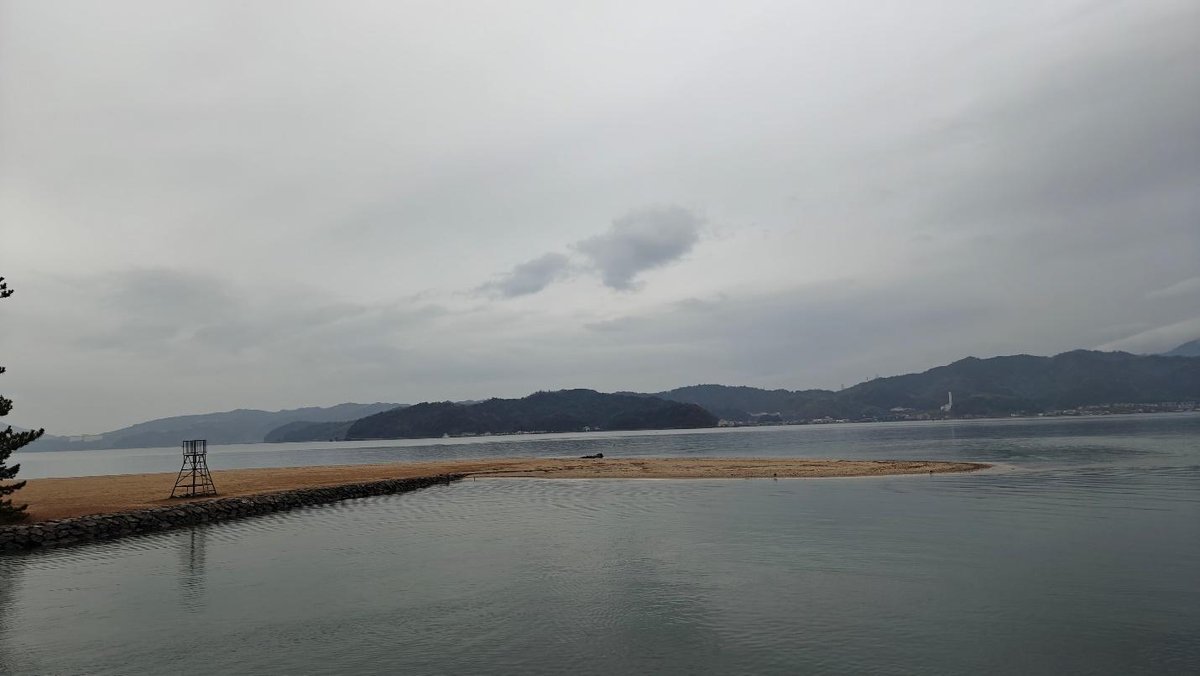
There are actually quite a number of other monuments in the island along with a park that you could also walk around in. Noticing that the weather wasn’t getting any better though, I decided to move closer to the footbridge. As I got near, I could finally see Amanohashidate Beach.
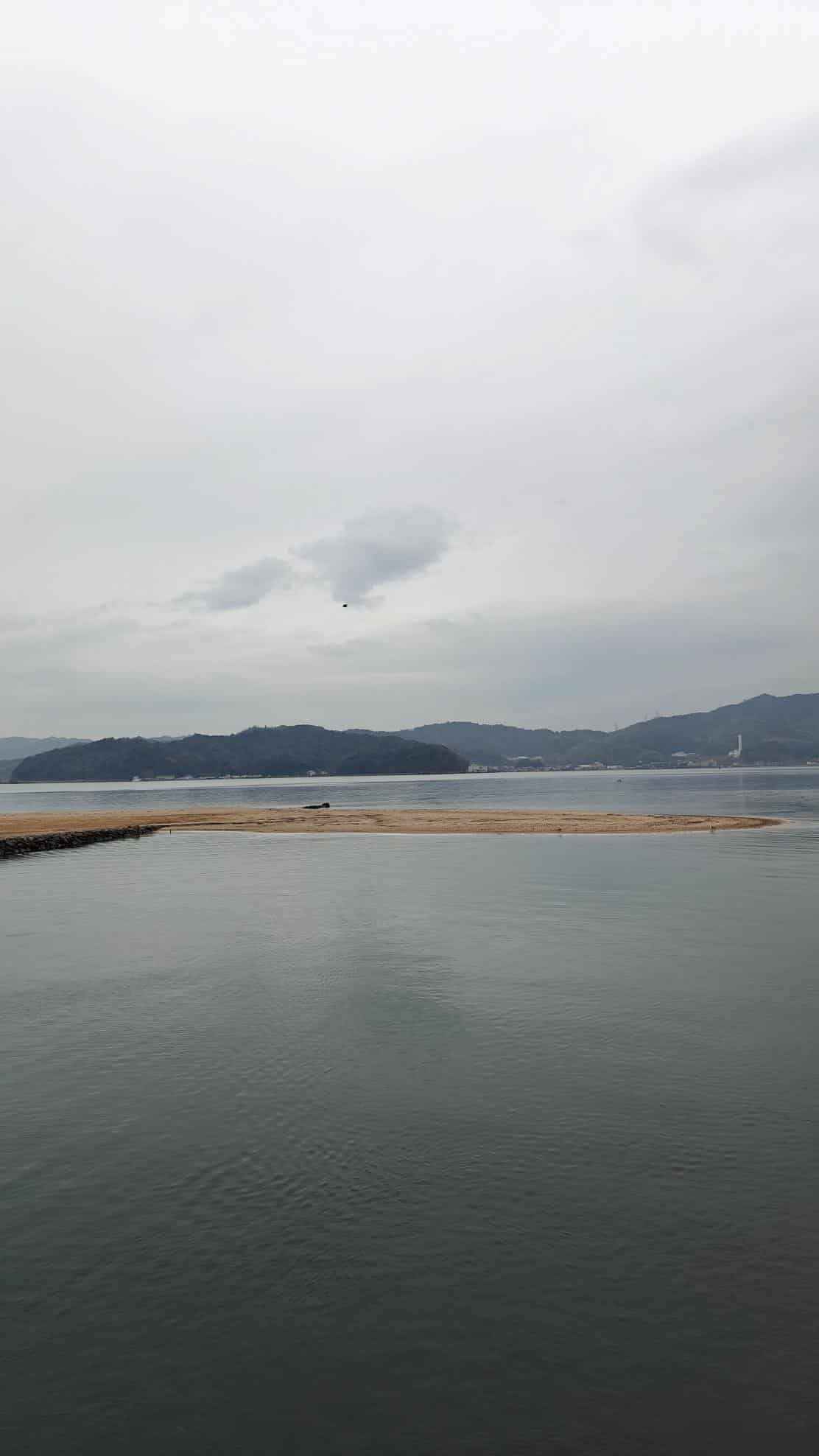
I’m not going to lie, the water actually looked quite inviting (even though it might not seem like it in the picture). Very much like Ine Bay (which interestingly enough, is northeast from here in a straight line), there aren’t any waves here due to how enclosed Miyazu Bay is. As such, it is actually possible to swim in this area.
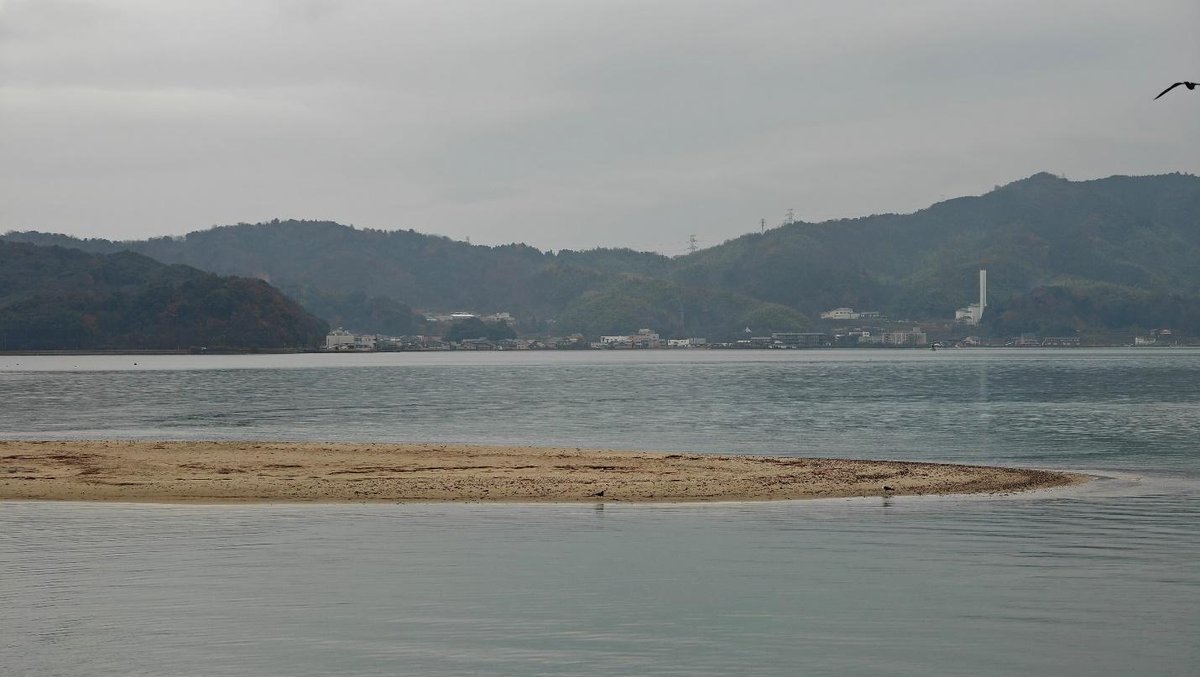
Now you’re probably asking why I didn’t end up swimming. The answer to that is quite simple and funnily enough, doesn’t have anything to do with the rain (at least directly). Rather, the water was actually freezing cold at that time since this visit was in early December.
Looking back now, I probably wouldn’t have swam even if the sun was out or if it was the summer due to me not bringing any swimwear!
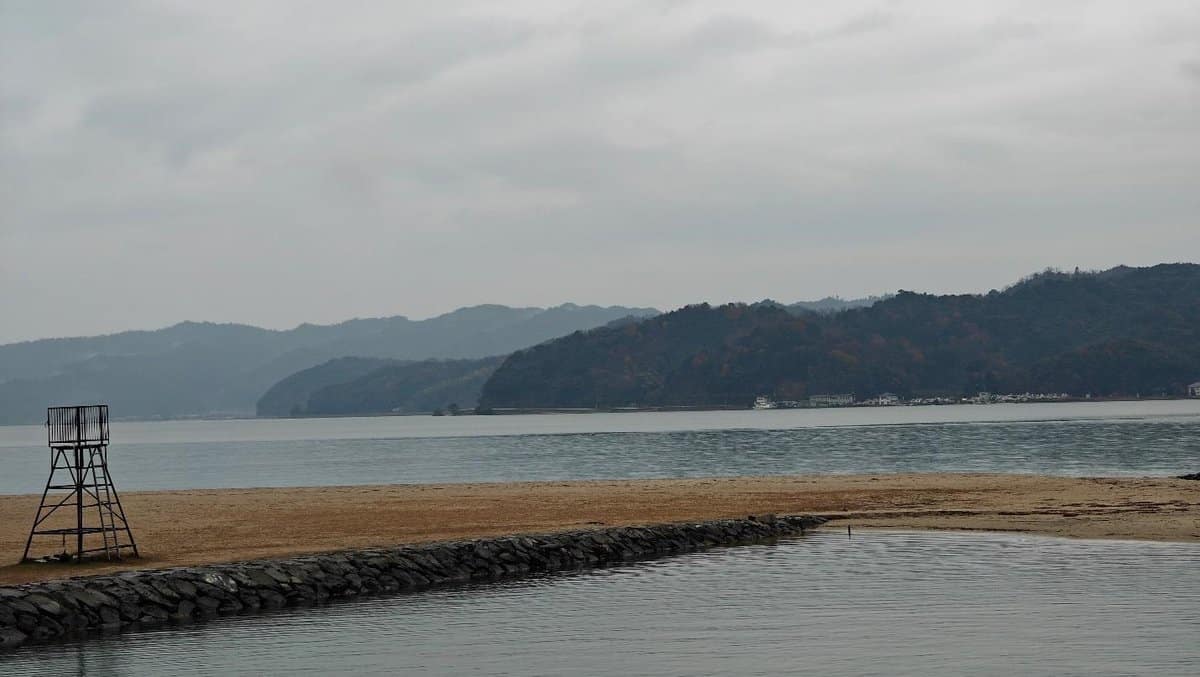
If I was given the chance to come here in the future summer months though, I probably would end up swimming since the water is going to be a lot warmer. Anyway, there’s an observation tower here that designated lifeguards can use to watch over the beach. Obviously, the lifeguard tower wasn’t in use since there weren’t any people swimming due to the weather.
I’m also not quite sure but I read that lifeguards here are seasonal and they’re typically only around during the summer months.
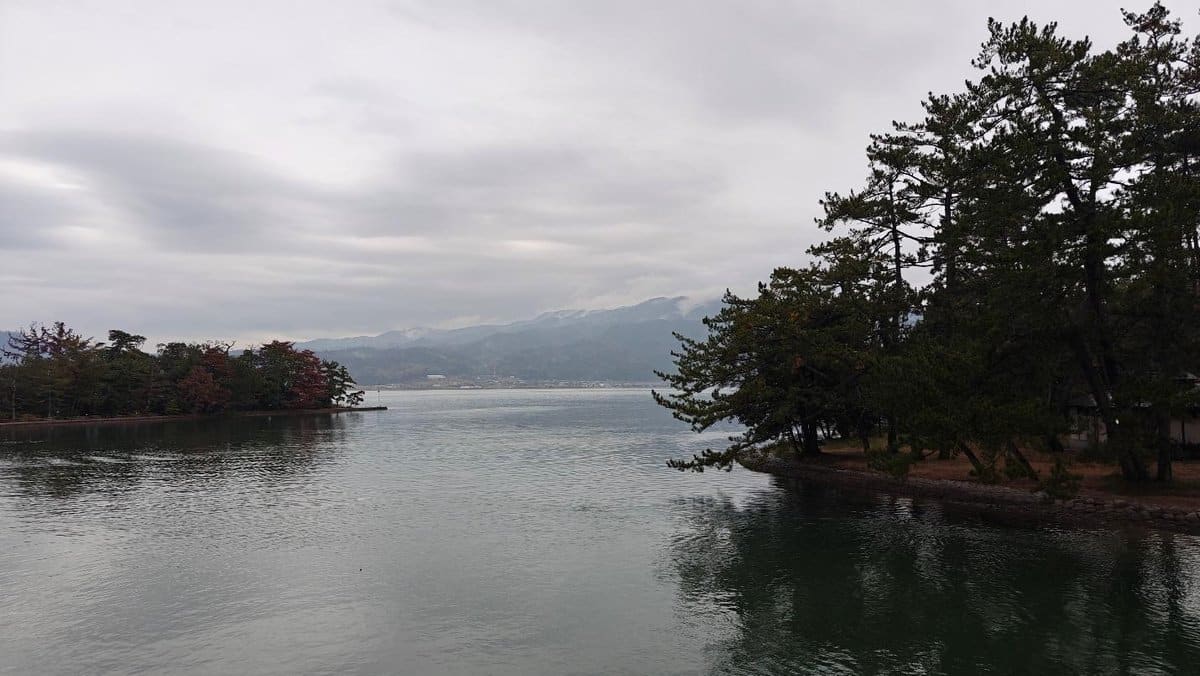
This is what the side of the Daitenkyo footbridge facing the Aso Sea looks like. Off in the distance you can see another town called Yosano and what I think is Mt. Nariai. Again, even with the rainy weather, this view still looks amazing.
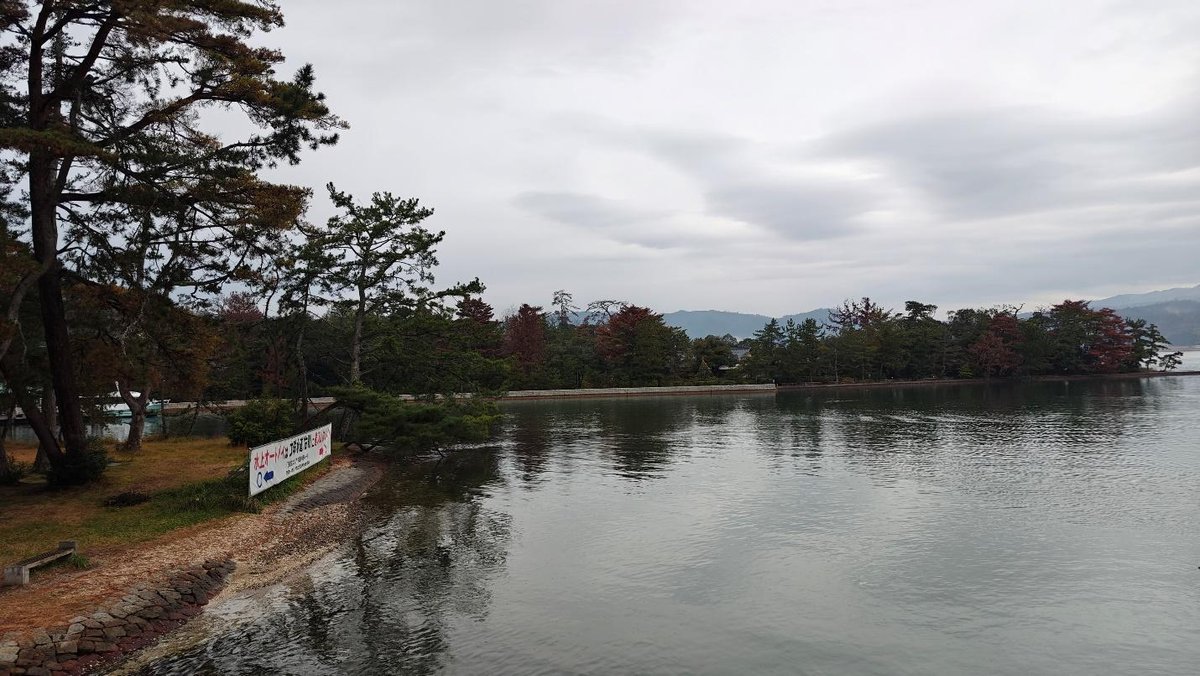
Here you can see the northern end of the island in the foreground and the grounds of the Monjushou Shoroutei behind it. Now if you’re wondering what the latter is, that’s actually a top-rated 4-star hotel in the Monju area of Miyazu. It’s adjacent to Chionji Temple and is a walking distance from the Kaisenkyo Bridge.
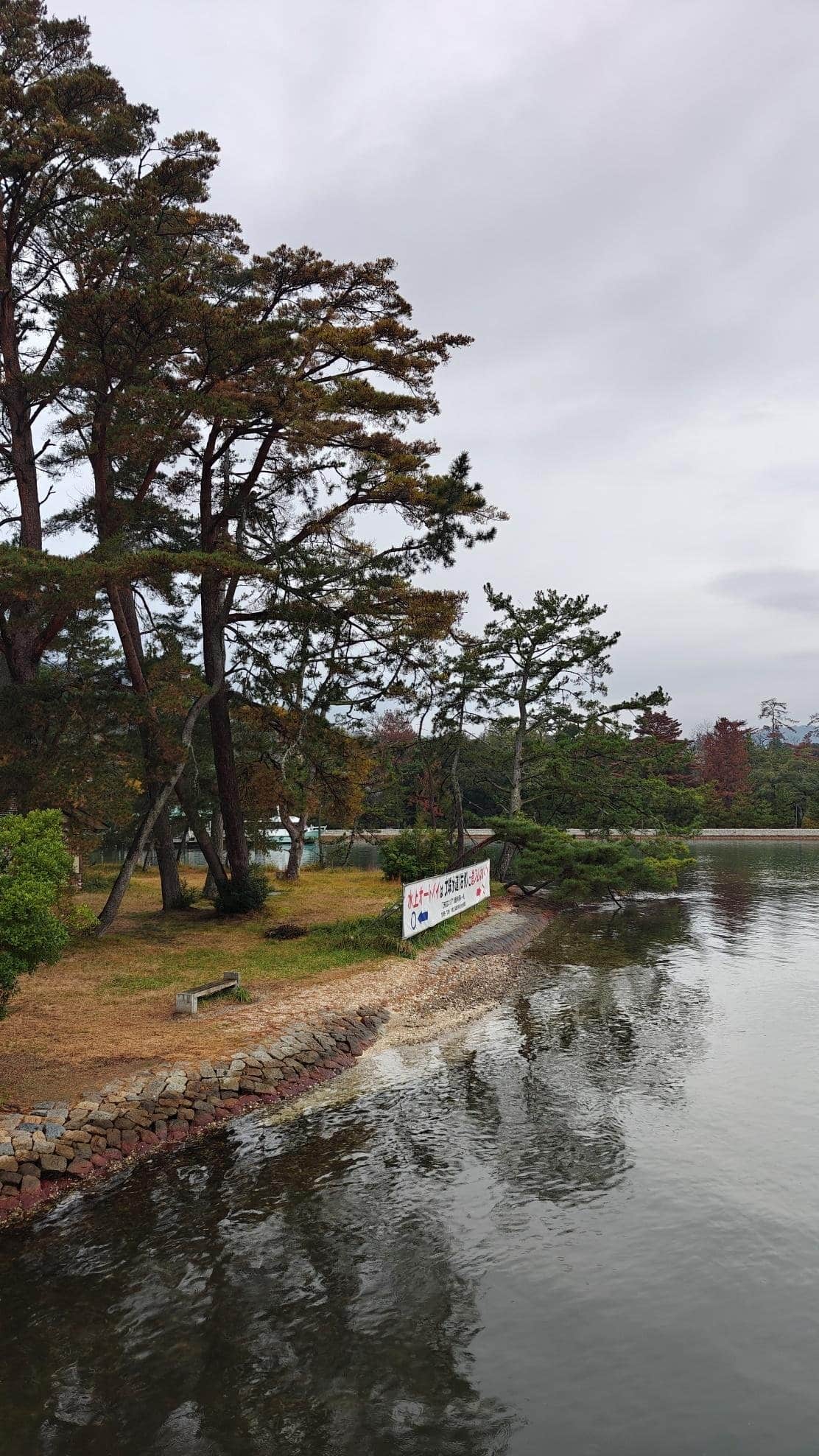
From here you can also sort of get a glimpse of the docks where the boats for the Amanohashidate boat cruises are anchored. Then on the foreground there’s a sign that serves as a warning for ships to not pass through the waterway in between the island and the sandbar. This is likely because the water here might be shallow and could result in the ship or vessel to run aground.
Take note though that this only applies to this waterway. Ships can still pass through the strait where the Kaisenkyo Bridge is.
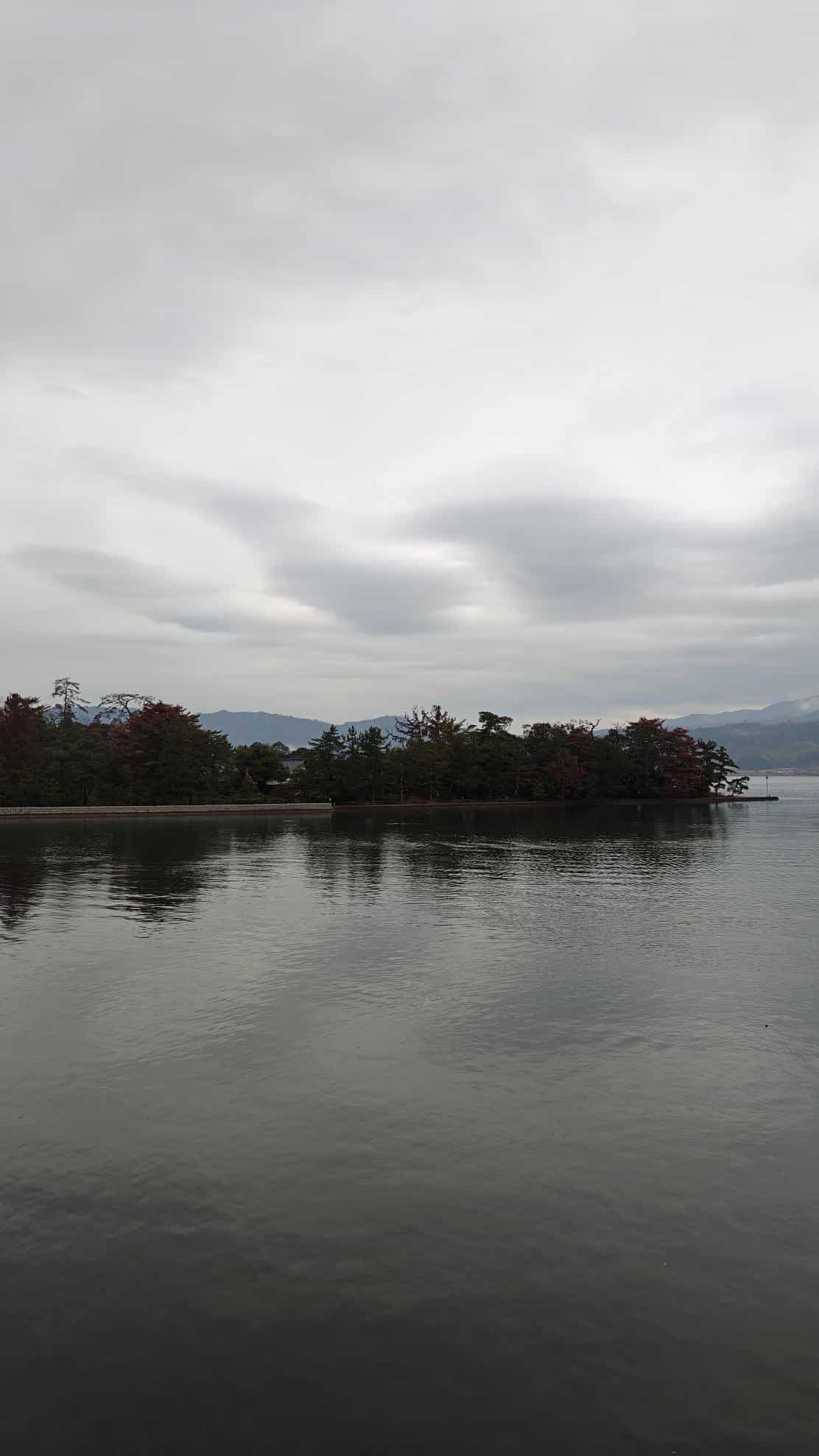
It’s kind of hard to see from here but there’s a scenic coastal walking path that goes around the grounds of the Monjushou Shoroutei hotel that I talked about earlier. From that walking path you can actually see parts of the Amanohoshidate sandbar. Take note though that the walking path is kind of eerie so it might not be for everyone.
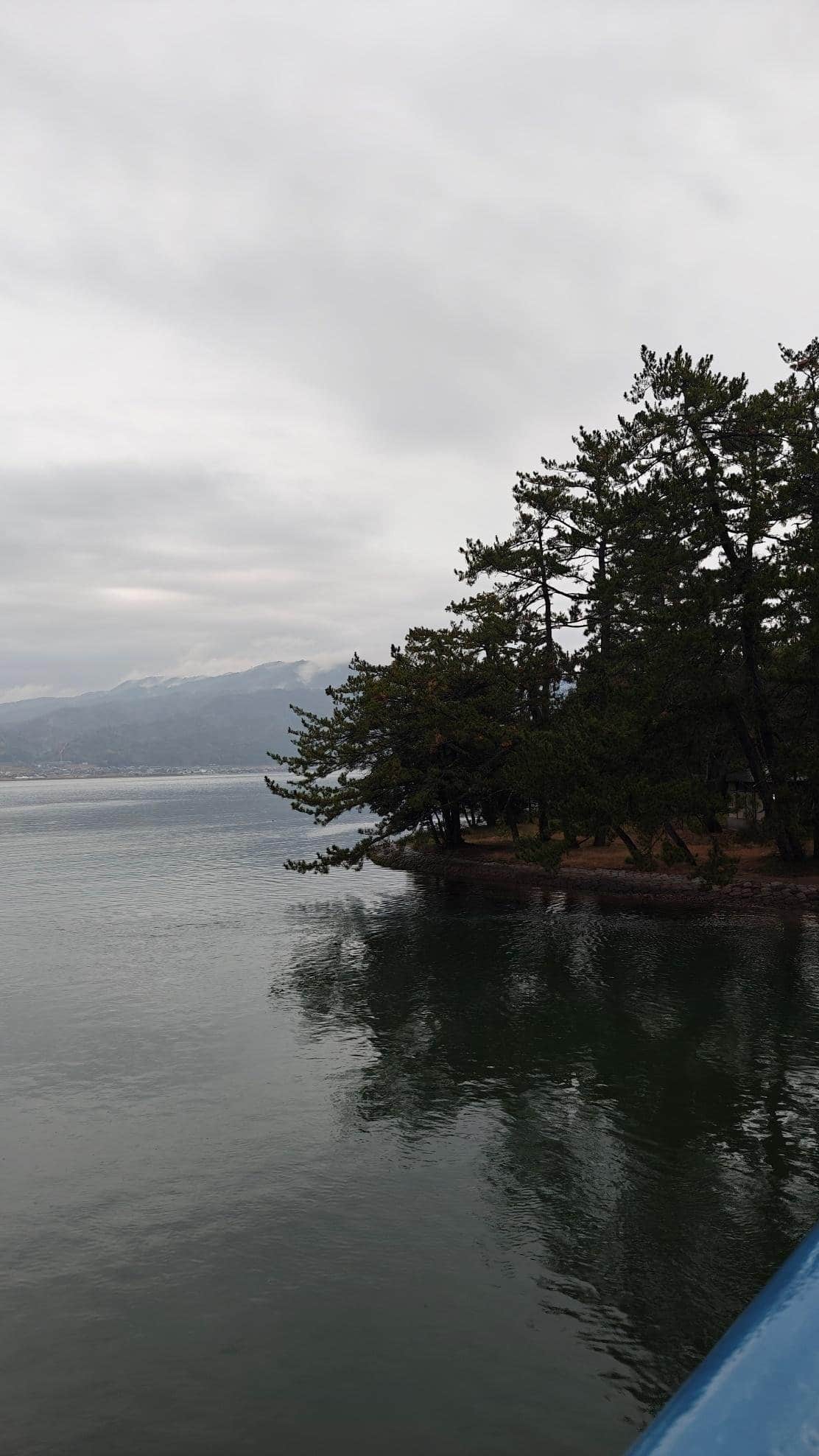
A third of the way across the footbridge and I can now see the start of the western side of the Amanohashidate sandbar. Off to the right of the image, you can sort of see a building. That actually serves as the public bathroom in the area.
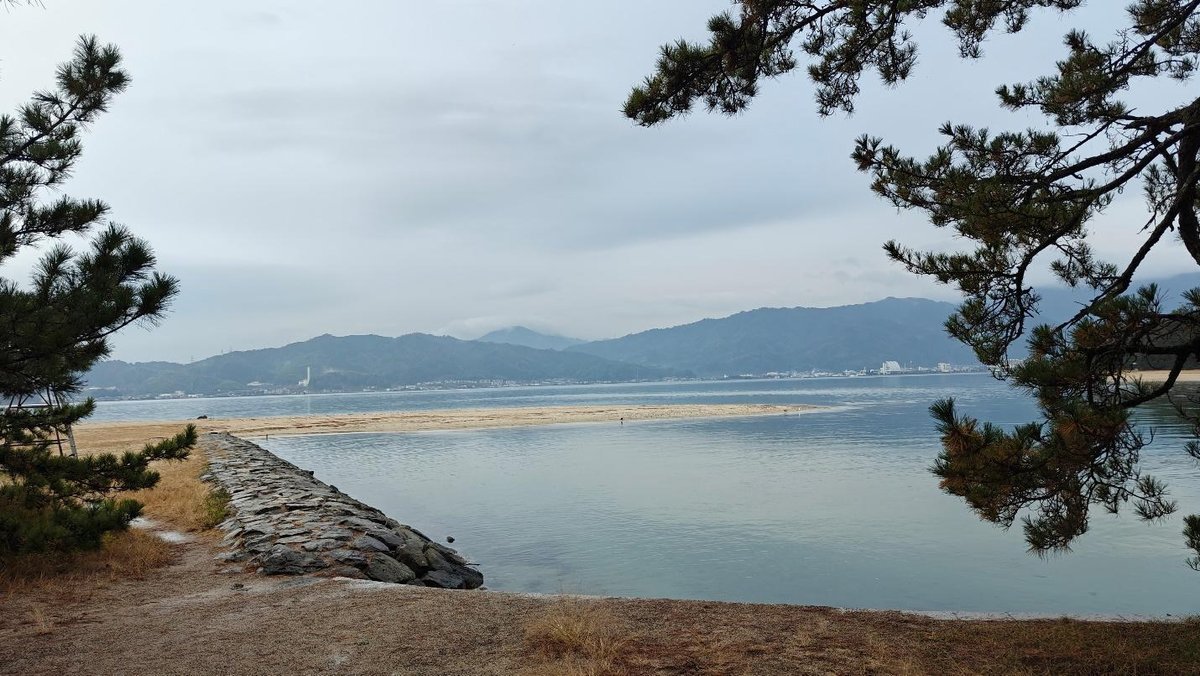
I finally managed to cross the Daitenkyo footbridge and now I’m at the Amanohashidate Beach area. Again, this is another picture that doesn’t do justice to how beautiful the beach is. From here it kind of looks small, but what you see in the image is actually just the start of the beach area which runs the length of the sandbar.
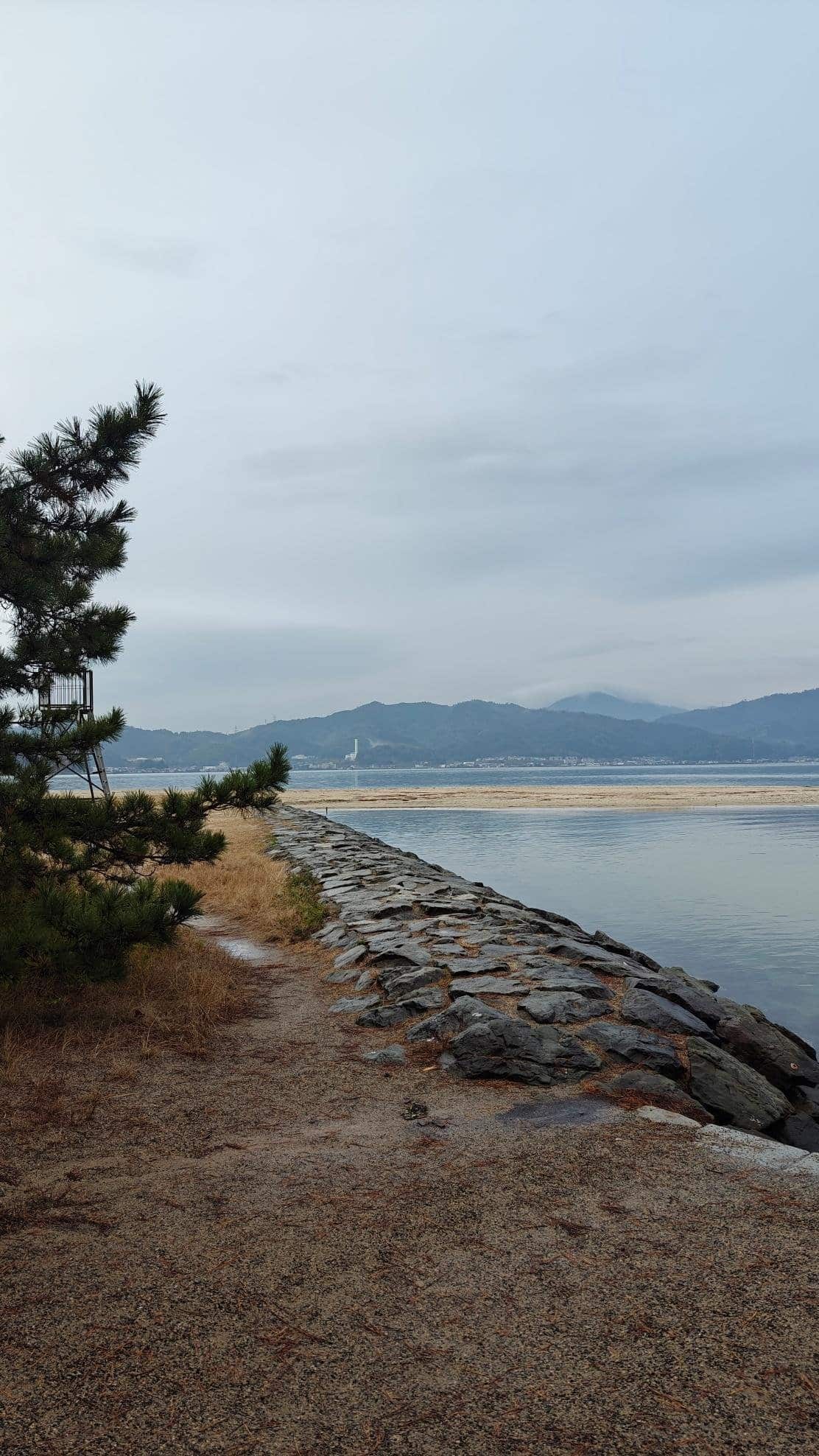
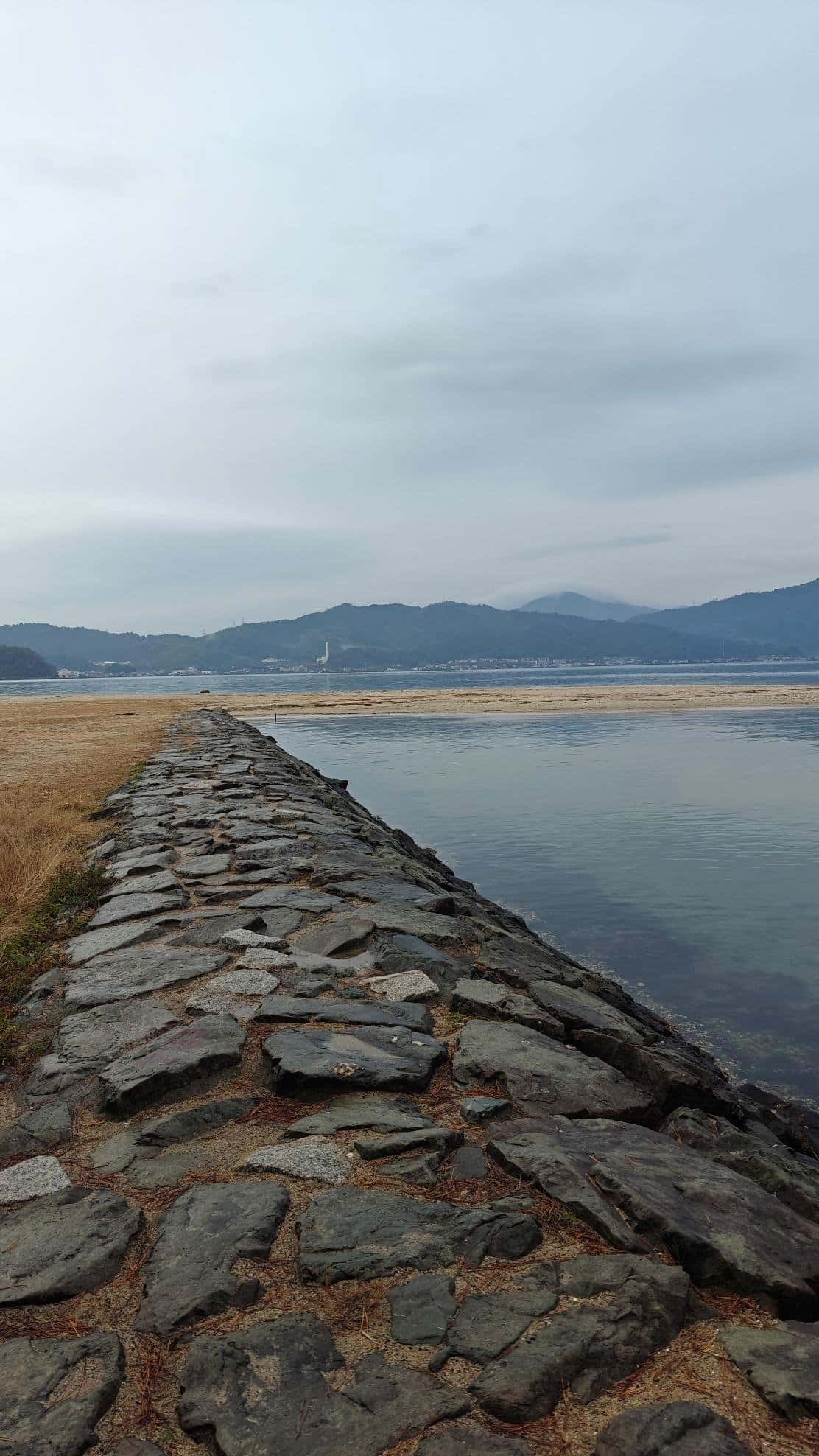
There’s a stone jetty here that's meant to keep the sand from going into the waterway between the sandbar and the island. Without this jetty, it's highly likely that the sand would end up accumulating like in the beach in the background. I ended up getting to the beach through the jetty and I will say, it has some really nice views.
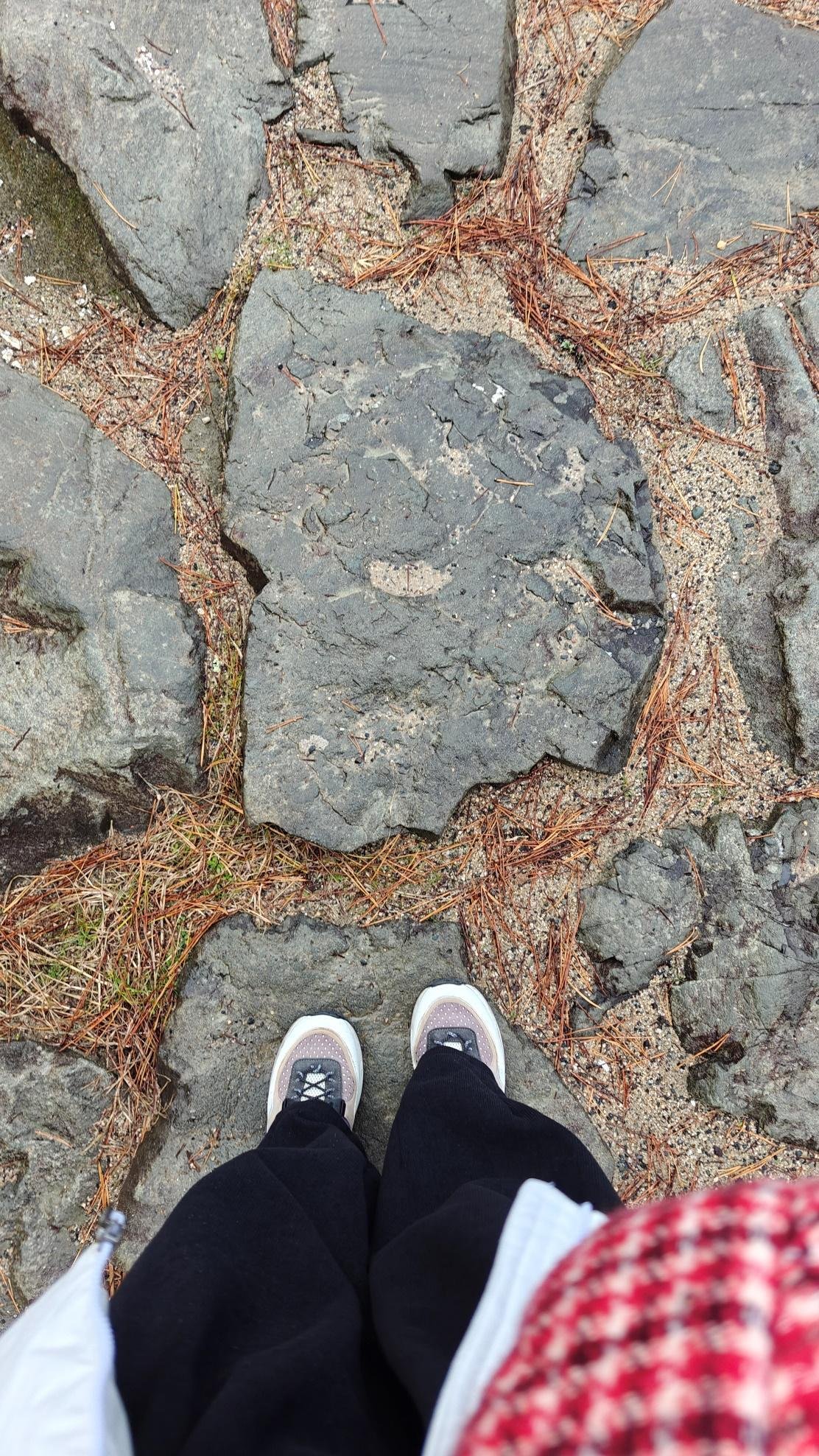
So if you’re like me and you decide to come here late in the year (autumn and/or winter) then I highly suggest you wear warm clothing. I kid you not, even with reasonably warm clothes on I could still feel the cold somehow seeping through the fabric! Still, I wouldn’t say I regretted this visit since I did end up seeing some genuinely profound views.
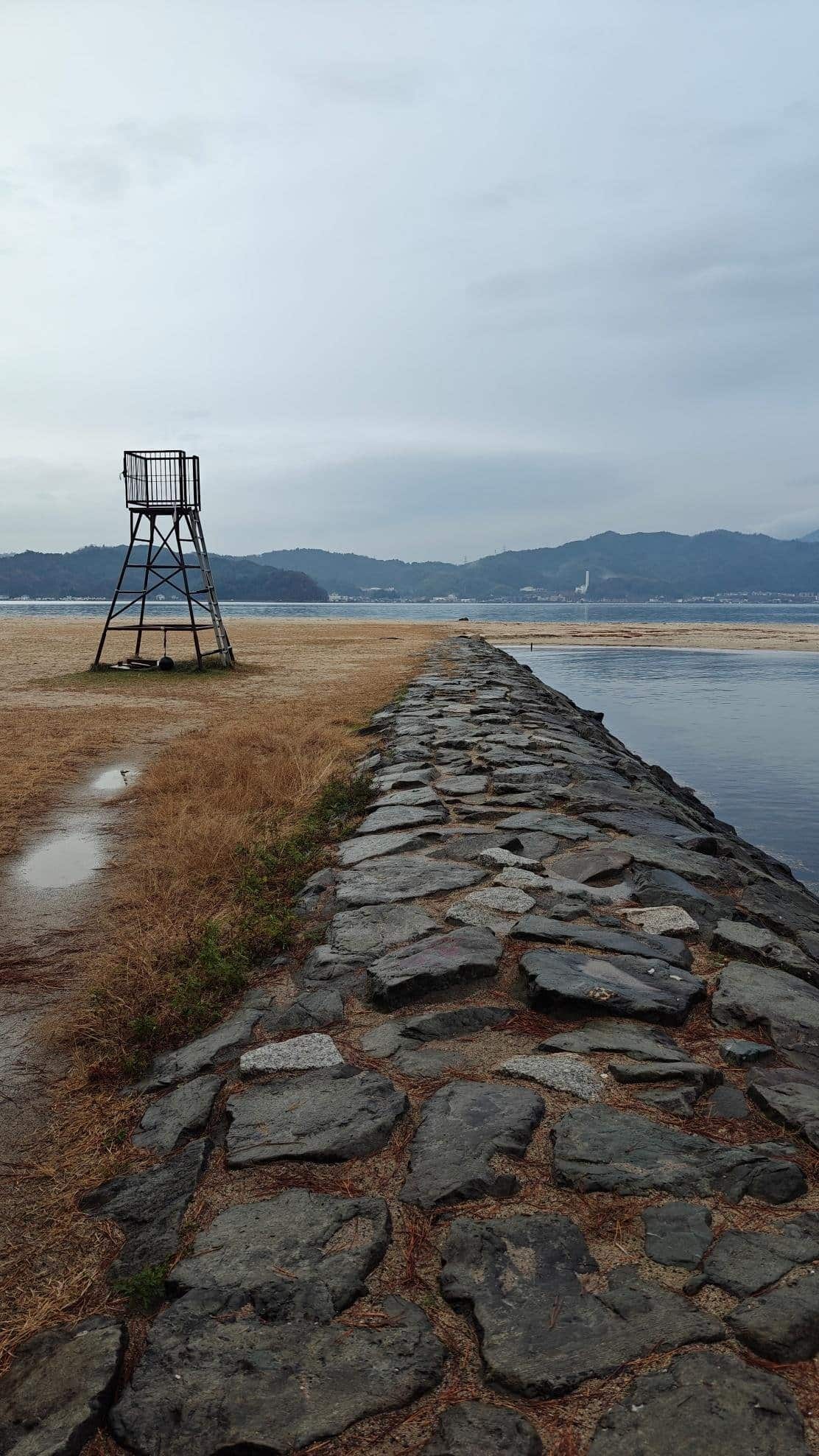
I don't know if it’s just me but I always end up feeling a certain sense of melancholy looking at this picture. It's beautiful at the same time haunting and it really has no business looking this stunning. Anyway, from here you can actually see the city of Miyazu off in the horizon.
If your eyes are really good, you'll probably even see Miyazu Harbor.
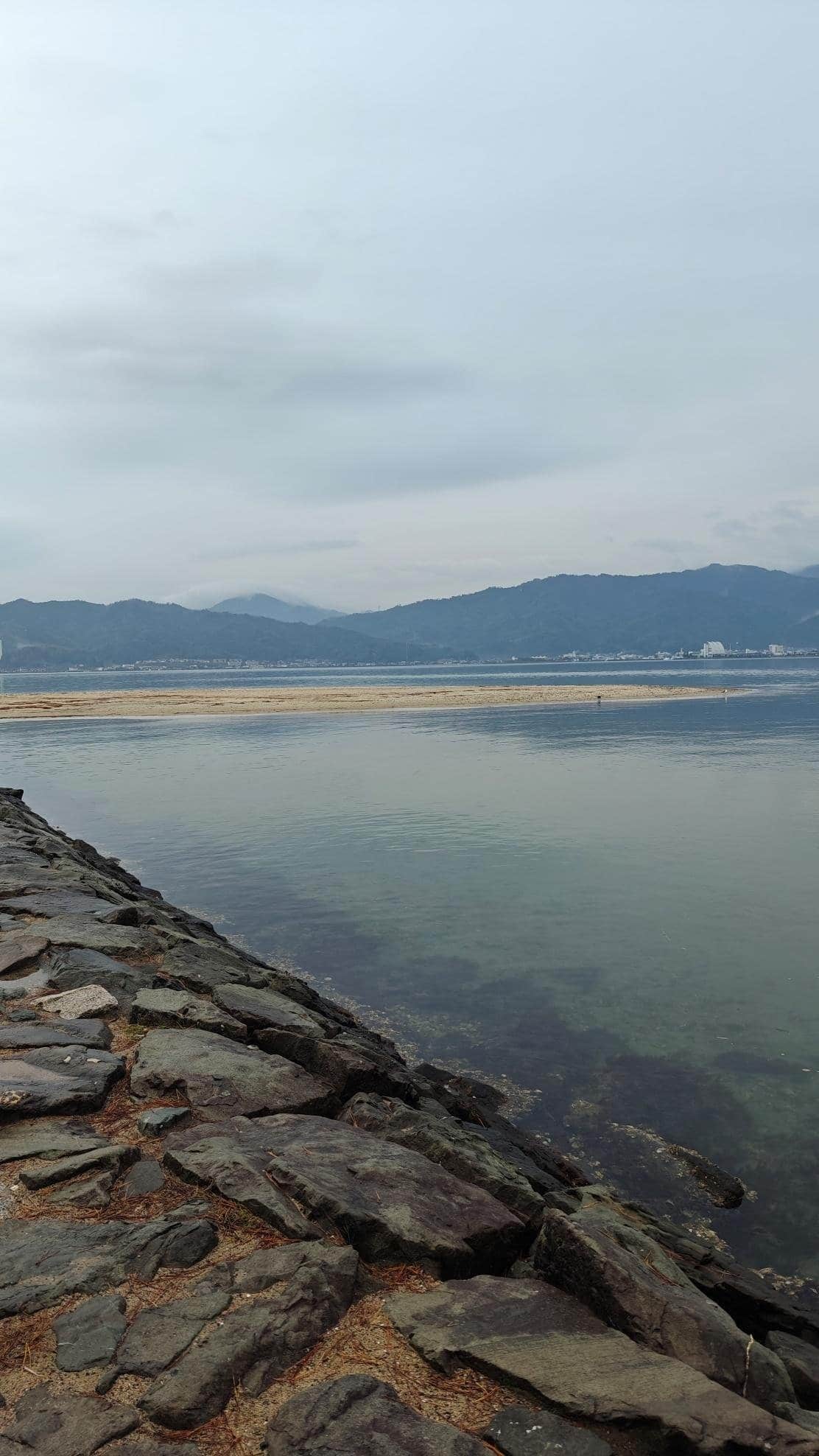
Up close, the waters here are actually quite clear. A big reason why it doesn't look like this in the previous images is due to the weather. I've seen pictures online where the sun was up and you could clearly see the crystal clear waters here.
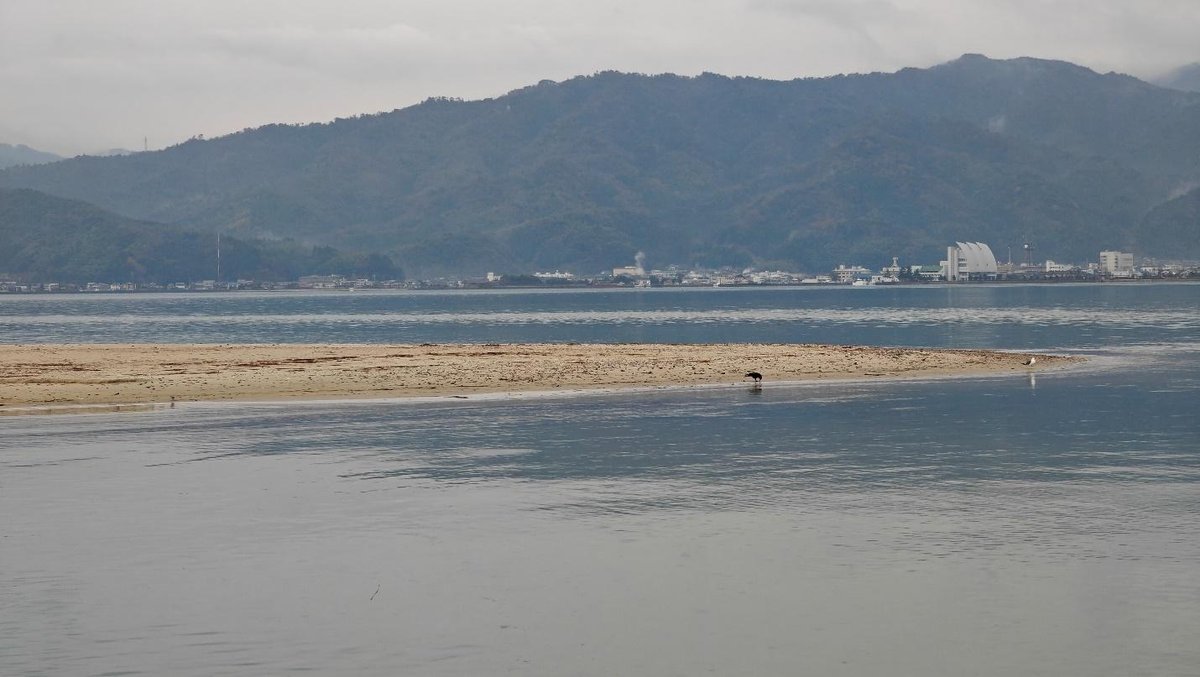
An overlooked draw of Amanohashidate is its wildlife. In particular, I'm talking about the birds that call the sandbar and the bay their homes. While it isn't exactly the best destination for this activity, there are still plenty of interesting avian species here for avid bird watchers to observe.
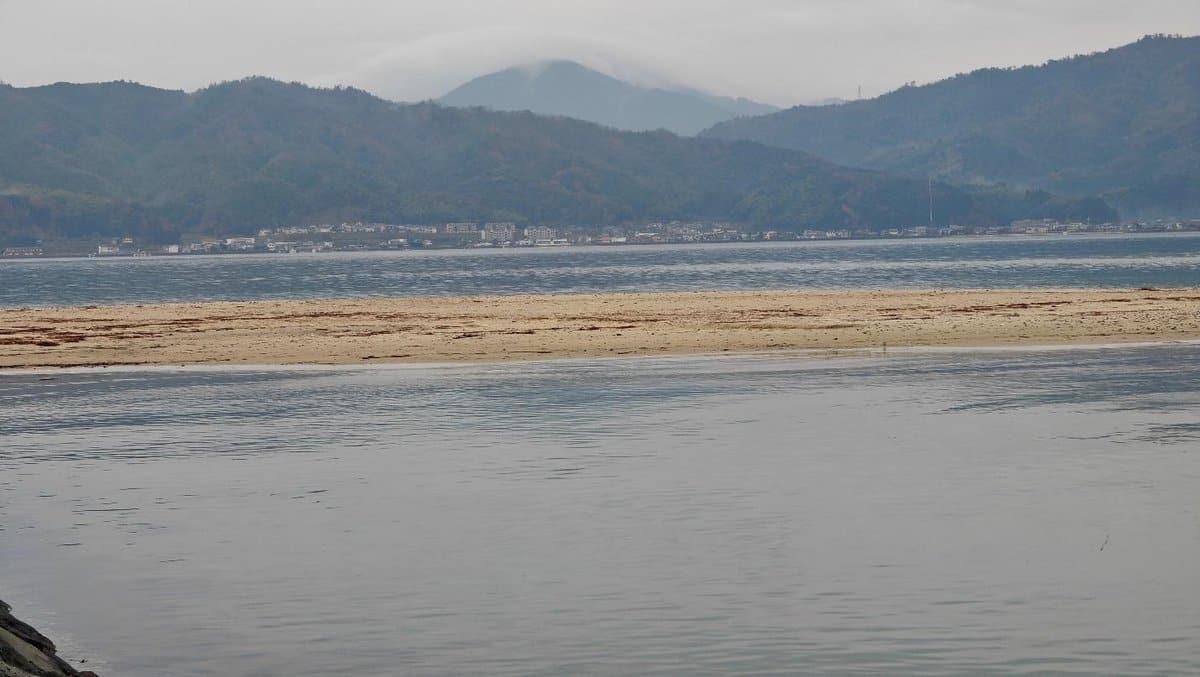
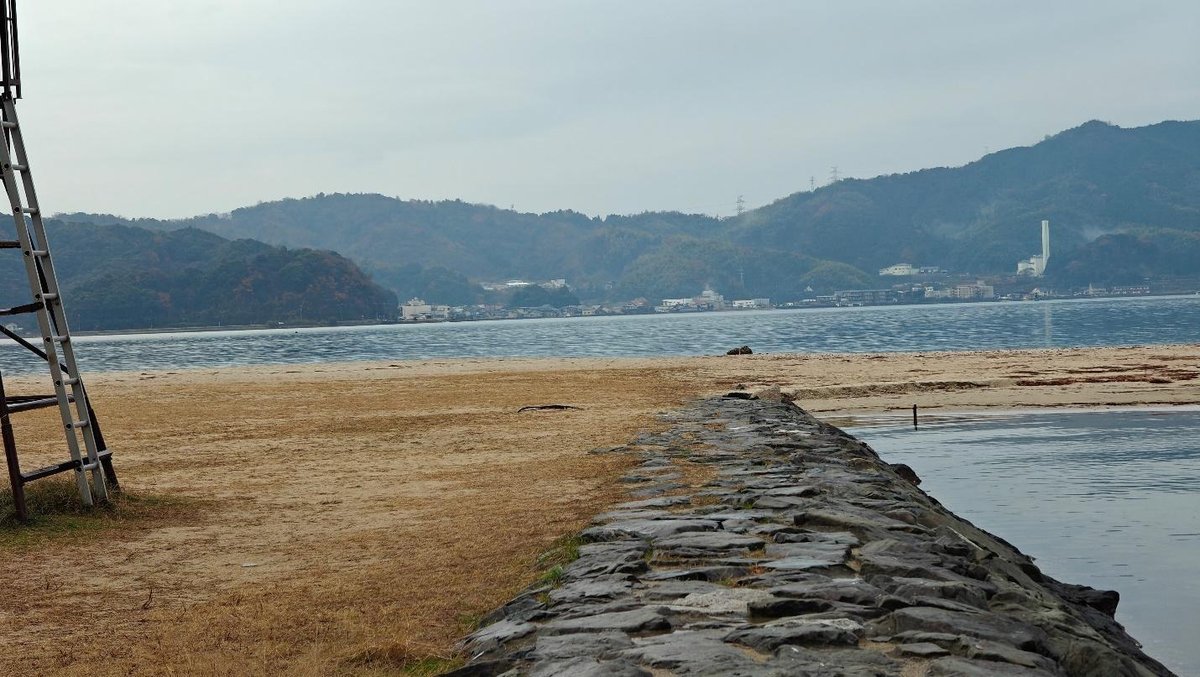
Arguably the best activity you can do here though (outside of swimming) is taking pictures of the scenery. I actually have plenty of photos just from this area alone. What’s even more impressive is that it was still so scenic even with the rainy weather.
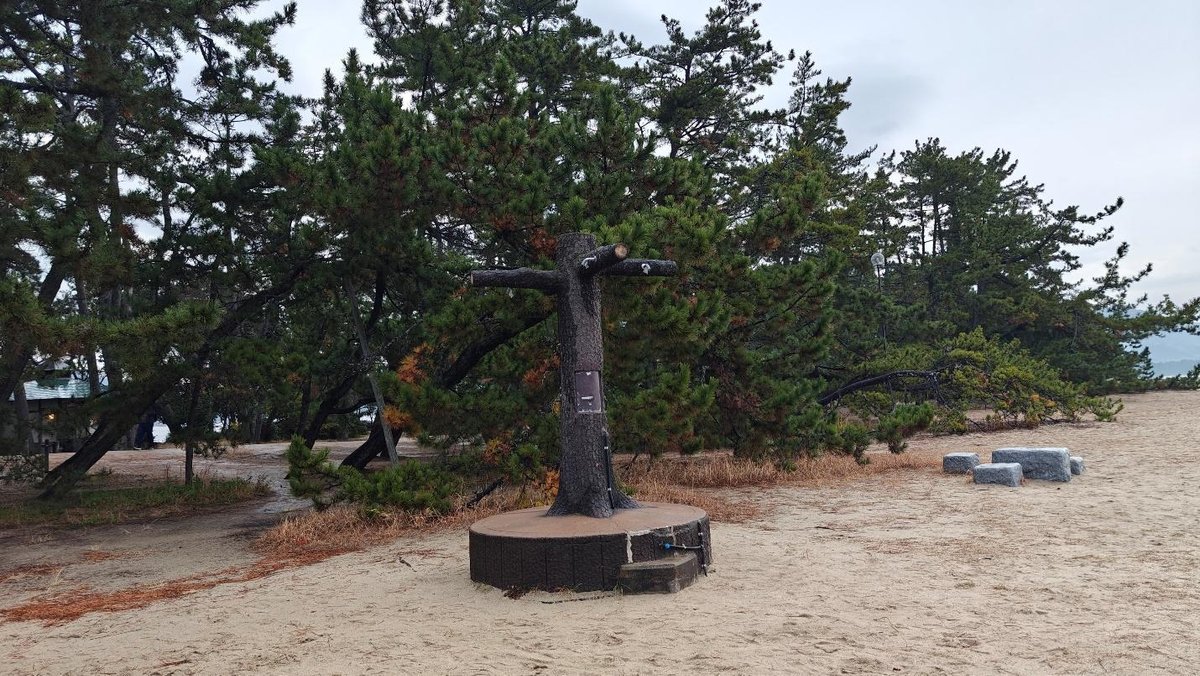
Here you’ll find one of Amanohashidate Beach’s public showers. There are also benches here for you to sit or leave your non-important belongings on. In the background, you’ll see one of the public bathroom buildings that I was talking about earlier.
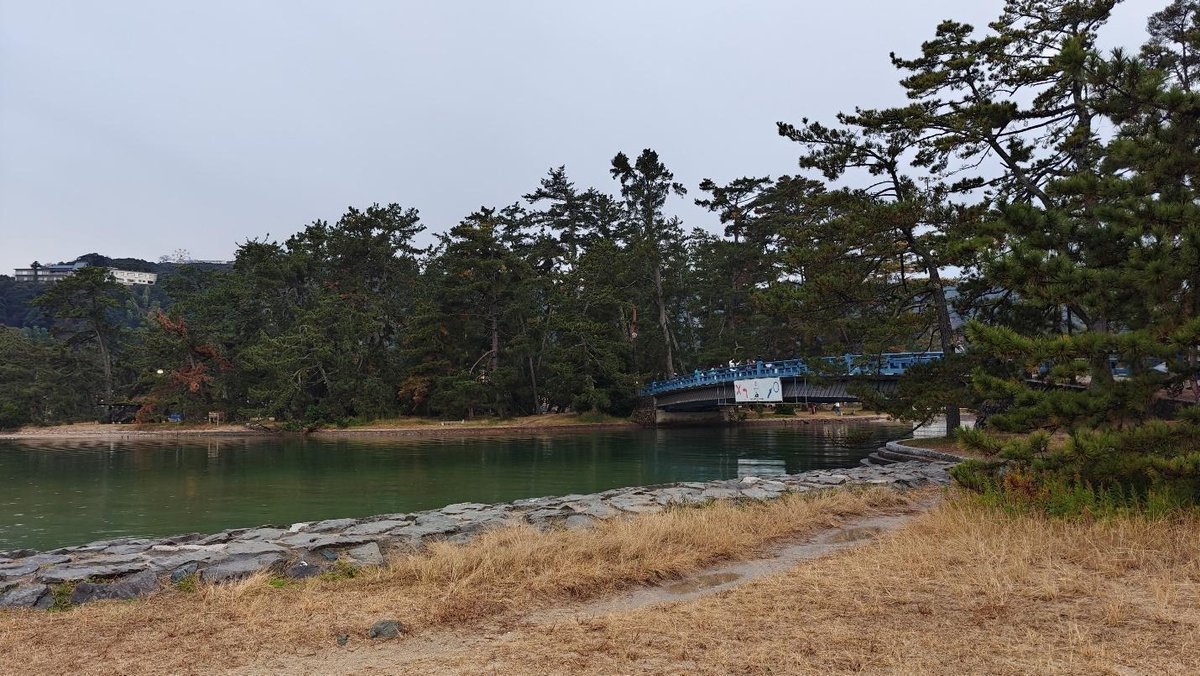
From the viewpoint in the previous image, I could also clearly see the footbridge that I walked across to get here. The footbridge is actually wider than the Kaisenkyo Bridge but it lacks the latter’s special rotating feature. In a while I’ll be explaining what this feature is since it’s actually quite cool.
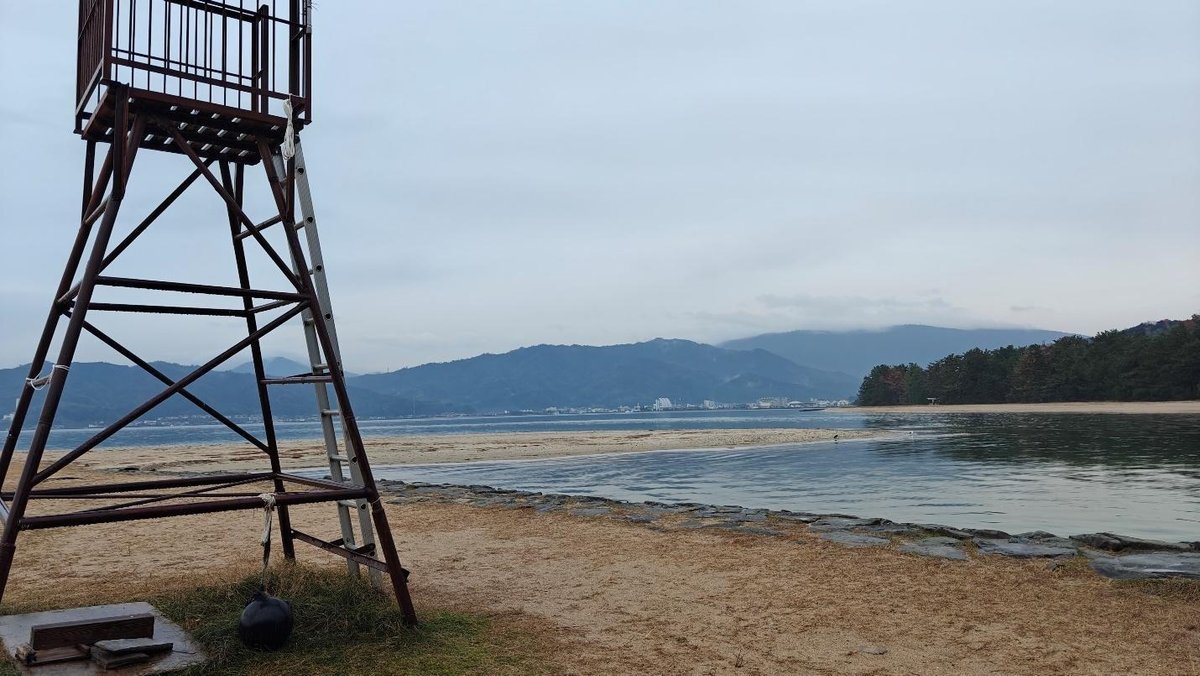
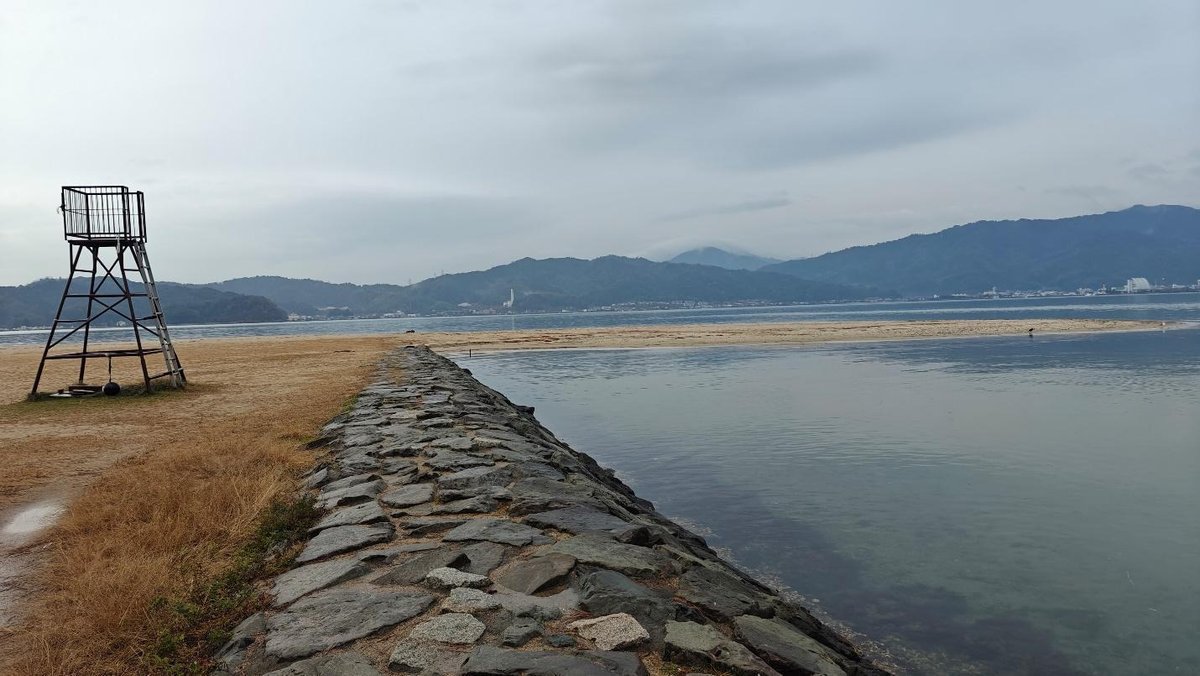
The view from near the lifeguard tower was actually even more dramatic. I particularly liked this angle as it perfectly showcases Miyazu Bay and the city of Miyazu, the beach itself, as well as the island in between the sandbar and the Monju area. Actually, I thought of climbing up the lifeguard tower for a better picture but decided not to since I might catch the attention of the groundskeepers (though I didn’t notice any at that time).
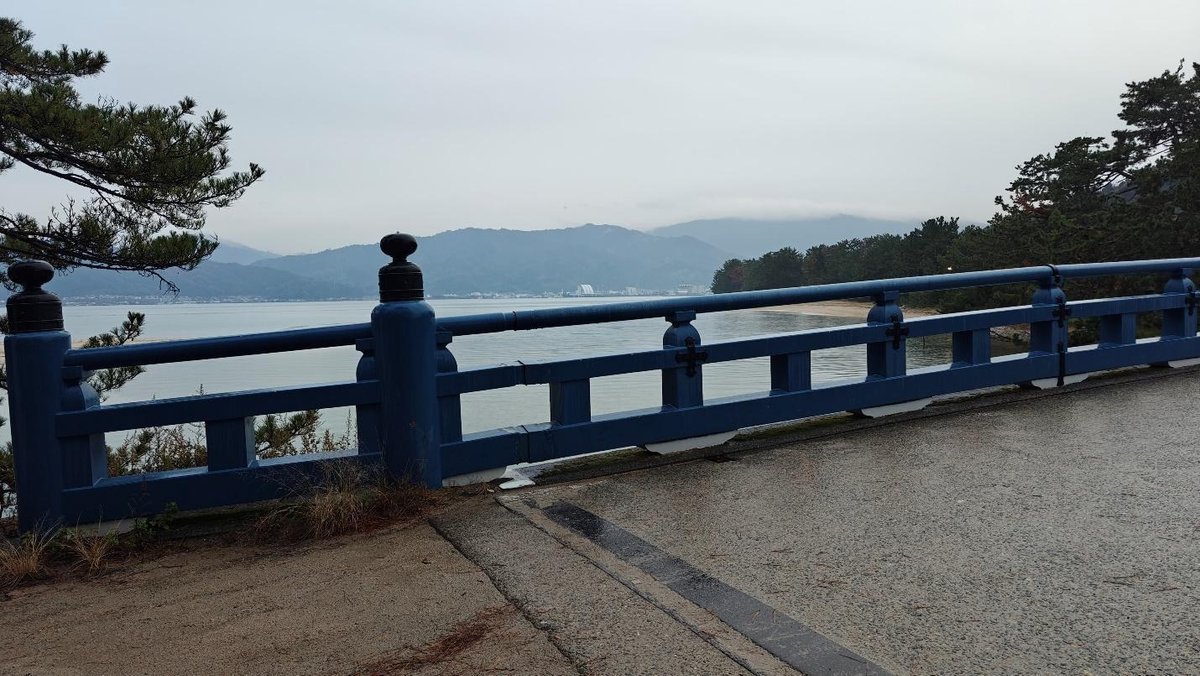
Since it was still raining, I decided to head back. Here you can see part of the Daitenkyo footbridge. While its railings look traditional, the bridge itself is quite modern with its deck likely made of concrete (or at least its top layer).
Interestingly, there are no piers propping up the center of the bridge and instead it’s supported by abutments on either end.
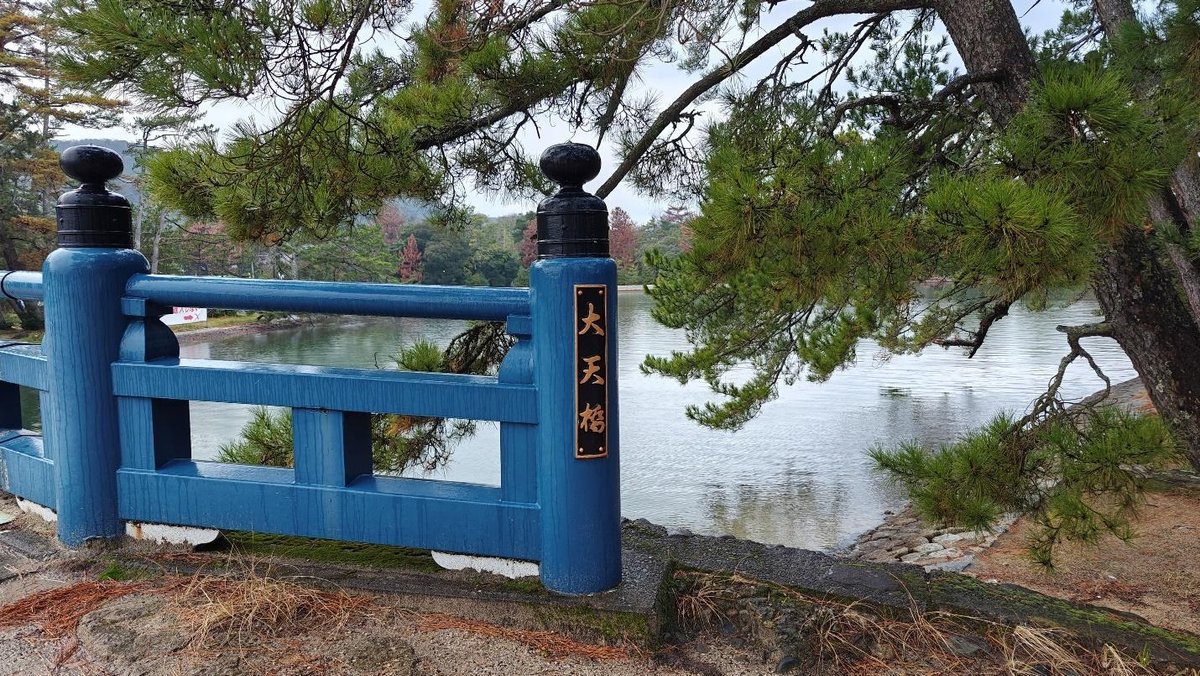
This is the side of the bridge that’s facing the Aso Sea. You’ll notice that there’s a sign on one of its posts inscribed with its name: Daitenkyo. Now, I tried looking up the bridge’s history and unfortunately came up with nothing.
What I did find though was its rating on TripAdvisor of all places.
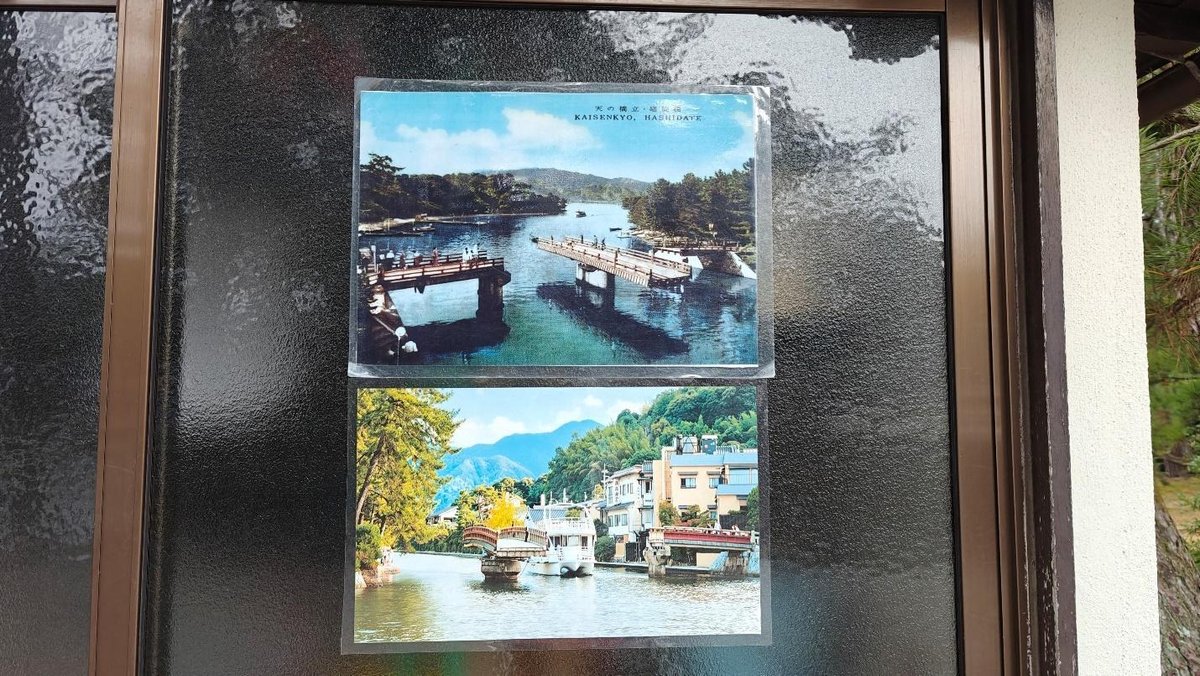
After going past the Daitenkyo Bridge, I again found myself at the Kaisenkyo Bridge. Before crossing this though, I checked out some images of the bridge in action. You might remember earlier that I noted how this was a rotating bridge.
Well, it’s named that way because it literally can rotate to give way to passing boats.
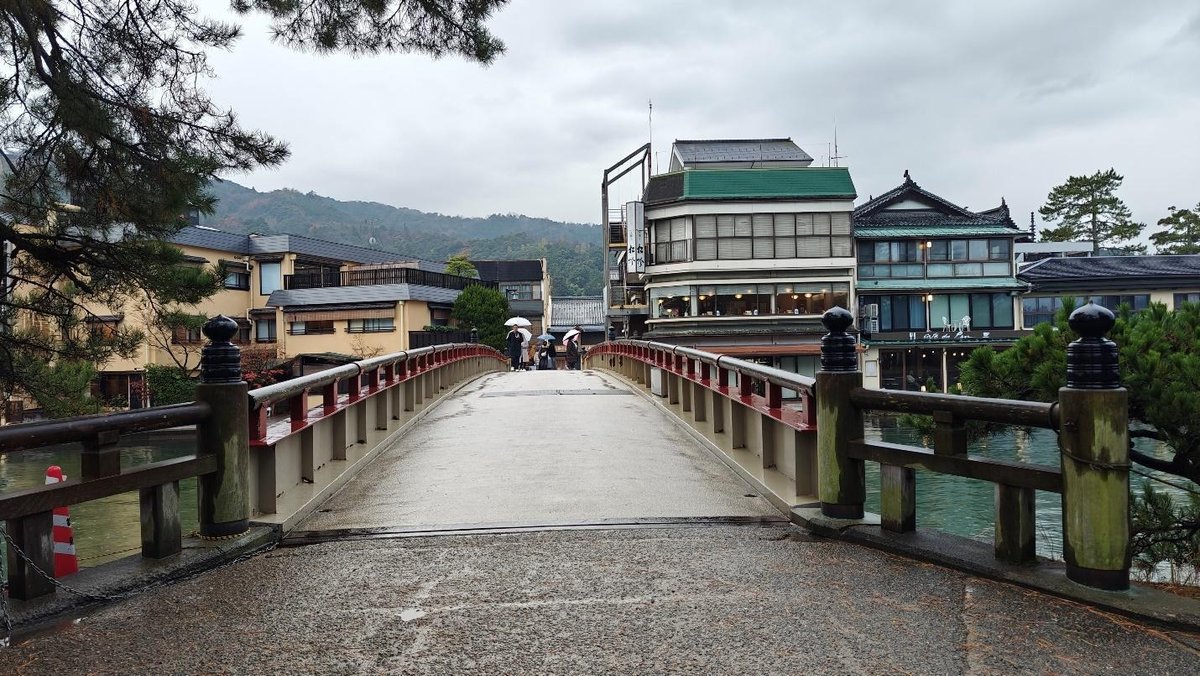
Unfortunately, there weren’t many boats passing through the bridge during my visit so I wasn’t able to personally see it in action. You’ll also notice that it’s a lot narrower than the Daitenkyo Bridge that I just passed through a while ago. Despite this, I’ve read that cars can pass through here.
I think it’s actually wide enough to fit those compact kei cars.
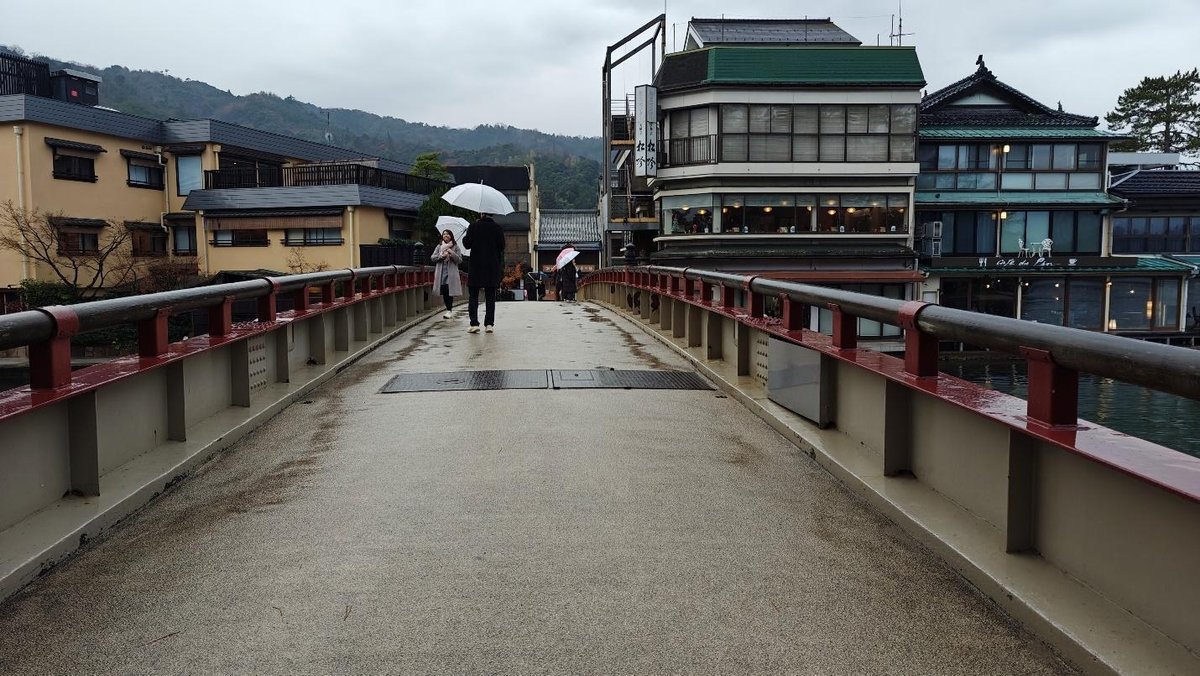
Now while I did say that cars can pass through here, I would imagine that entry is limited to vehicles from the groups that manage and maintain the Amanohashidate sandbar. If just about any car could drive through the bridge then I’d imagine this area will be inundated with vehicles. And honestly, that would suck all the fun out of Amanohashidate if it became your run of the mill tourist spot.
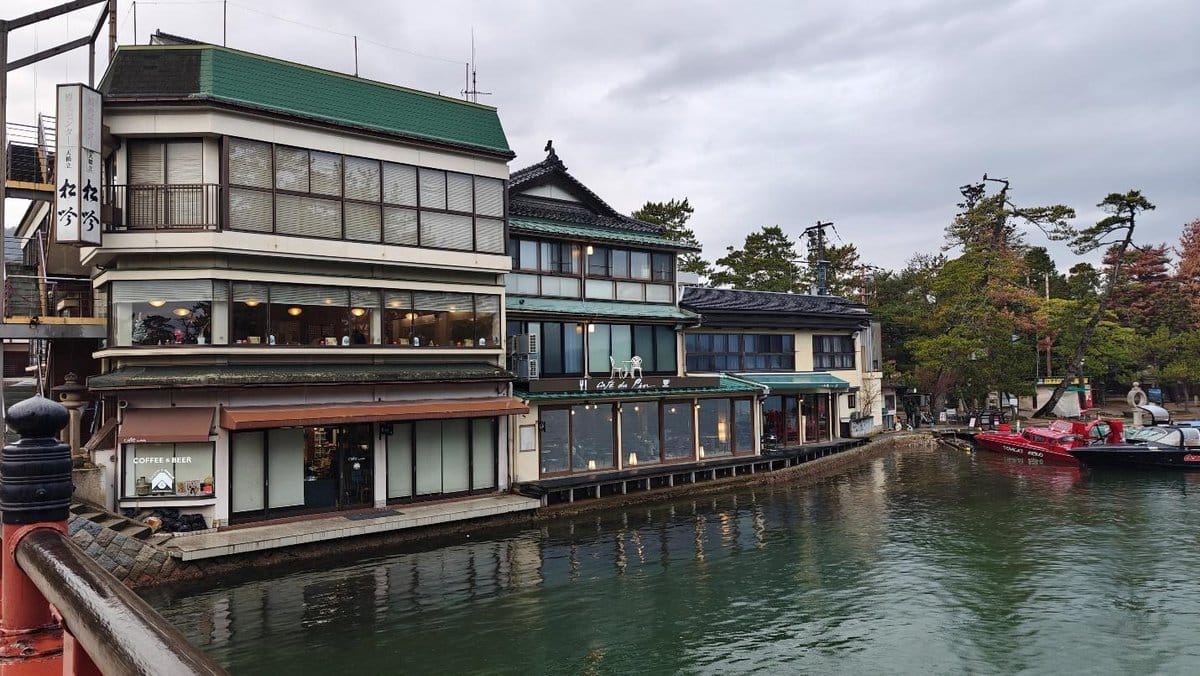
Anyway, here’s another look at Cafe du Pin this time with the neighboring Amanohashidate Shogin in full view. Much like the former, this is an establishment that mainly sells food and beverages. It styles itself as a Japanese restaurant and when I checked its menu, I saw that it offered a healthy mix of traditional cuisine.
Prices are relatively okay with the food ranging from 1000 JPY to 2000 JPY.
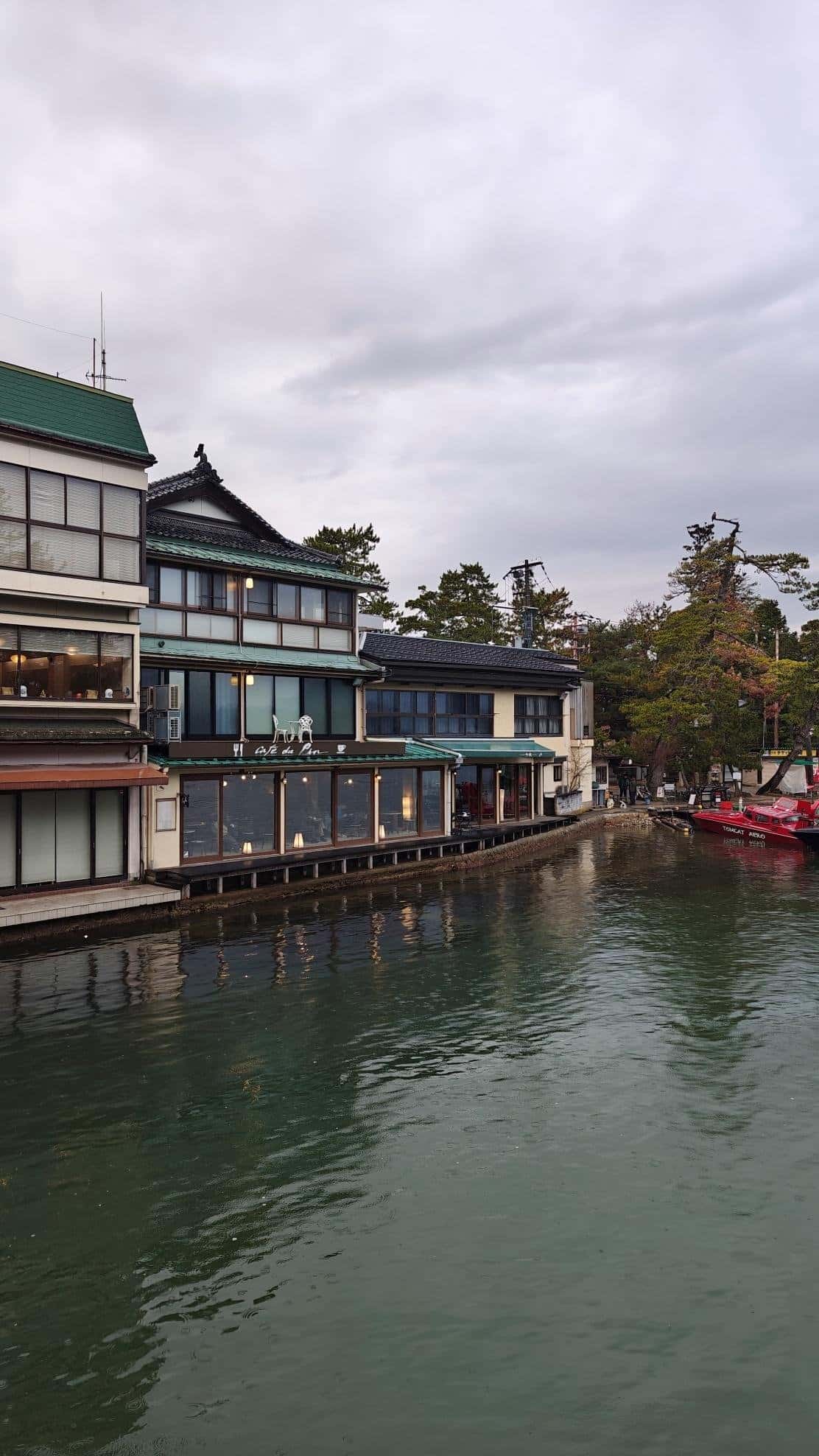
It’s not that noticeable in this image but the boats that I saw docked were mostly speed boats. Worry not though because I was informed that there are regular boats/ferries that also ply these waters. If you’re on the regular boats then you can even purchase bait that you can then give out to the birds during the cruise.
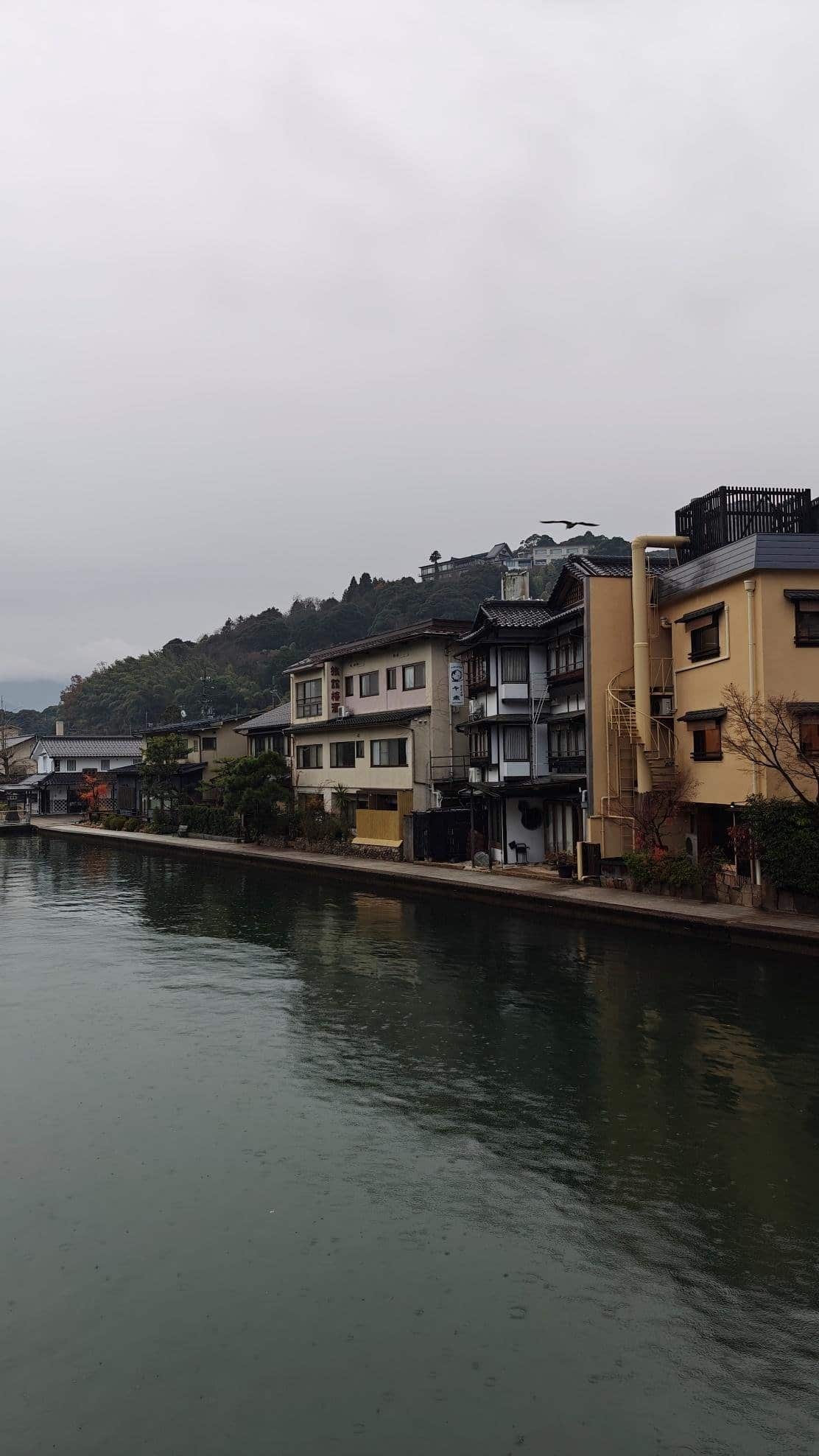
These are the buildings you’ll see on the side of the bridge facing Miyazu Bay. The tan/brown colored building is actually a 4-star hotel called Taikyoro and beside it is a 3-star accommodation (the building with white walls and traditional roofing) called Chitose. Now I call them hotels but really they’re examples of ryokan.
If you do end up visiting Miyazu then these might just be the best places to book as they’re pretty close to nearly all the notable destinations in the city.
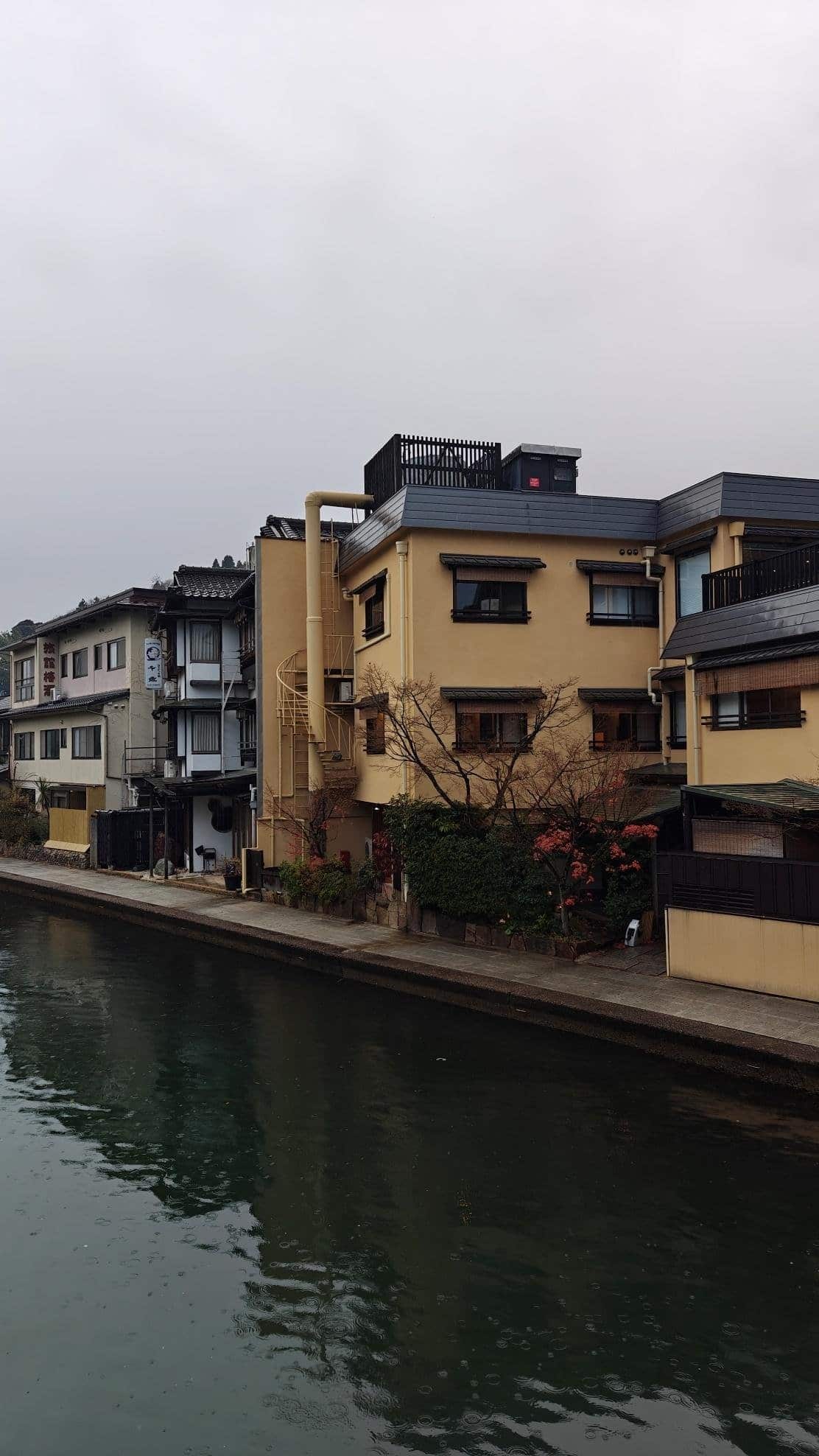
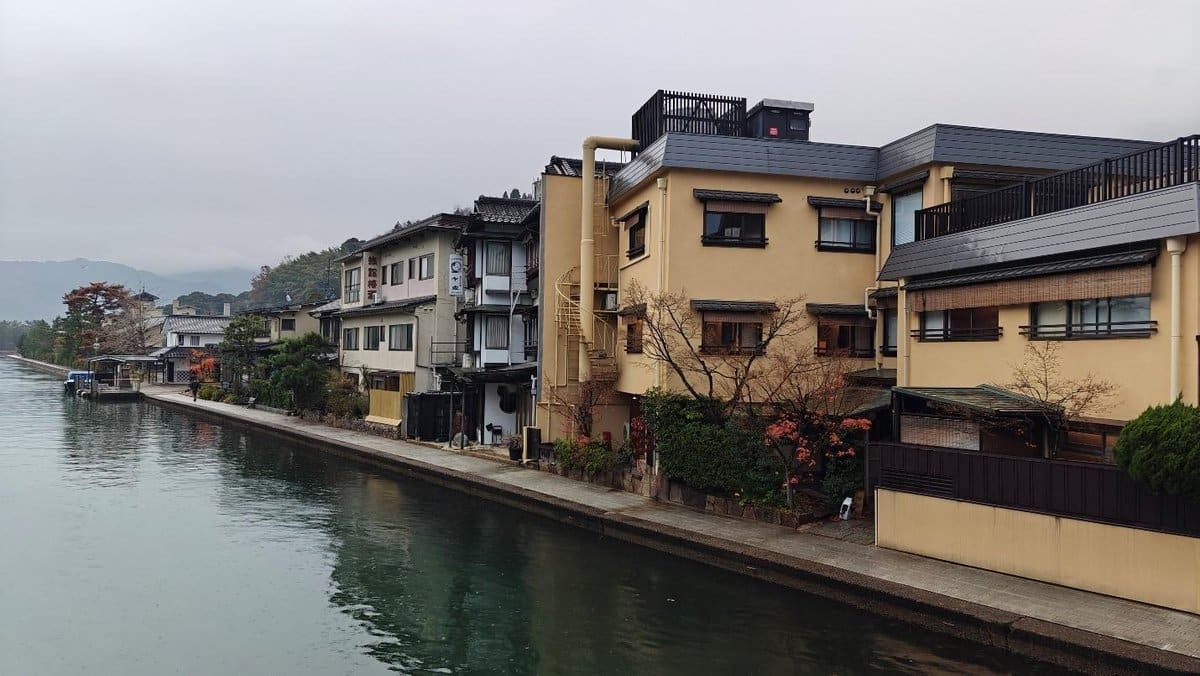
Taikyoro is actually quite nice since it has plenty of rooms with views of the Kaisenkyo Bridge. Now I’m not quite sure if this is true but I’ve read online that if you time your visit at the busiest time of the year for the waterway here, you’ll be able to see the bridge rotating about 50 times a day. Of course, you probably won’t need to see the bridge doing its thing that many times but it’s still cool that you’ll have plenty of chances to do so.
Aside from the boats and food establishments, I also read that there was a bike rental service at the docks. If I remember correctly, the name of the company renting out the bikes is Tango Kairiku Kotsu Co. Ltd. The way the service works is you rent out a bike either at the boat dock here or at the Ichinomiya Amanohashidate Ferry Terminal (the end point of the cruise that starts from here). You can then use the rented bike to explore the length of the sandbar and either return the bike from where you rented it or leave it at the opposite dock (e.g., if you rented from here then leave the bike at the ferry terminal).
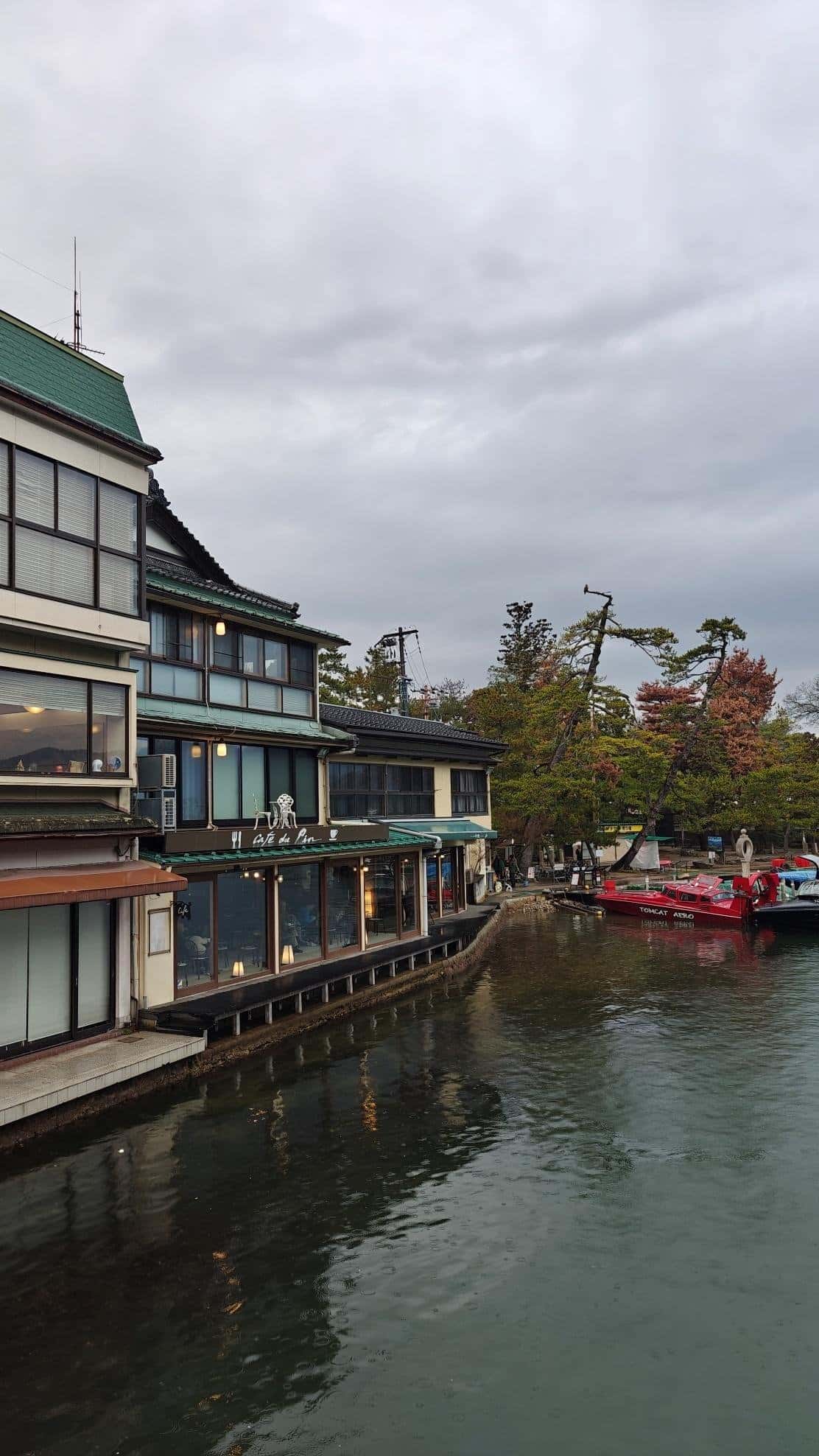
As for the kinds of bikes available, I believe the options include the iconic mamachari (grandma bike), folding bikes, and some mountain bikes. I wasn’t able to try these out though so I’m not sure how the bikes ride or if they’re any good. Admittedly, it’s not that clear to look at but you can actually see the shed (just a couple of steps from where the red speed boat is docked) where the bikes are kept in this image.
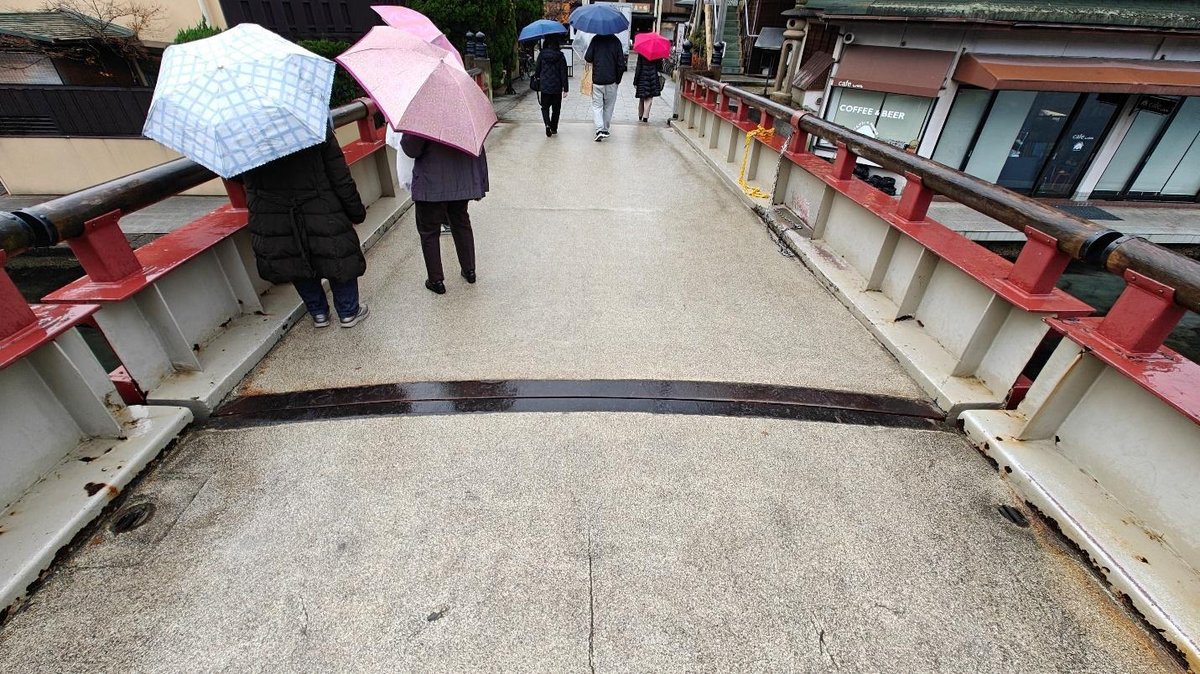
Okay, I’m now standing at the part of the part of the bridge that’s supposed to rotate when there’s a large boat that’s supposed to use the waterway. Initially I thought that there was someone who operated the bridge’s rotation. Turns out, the bridge actually operates automatically.
I’m not quite sure how it does this though. My uneducated guess is that there are probably sensors off to the side that automates the rotation whenever a large enough boat approaches.
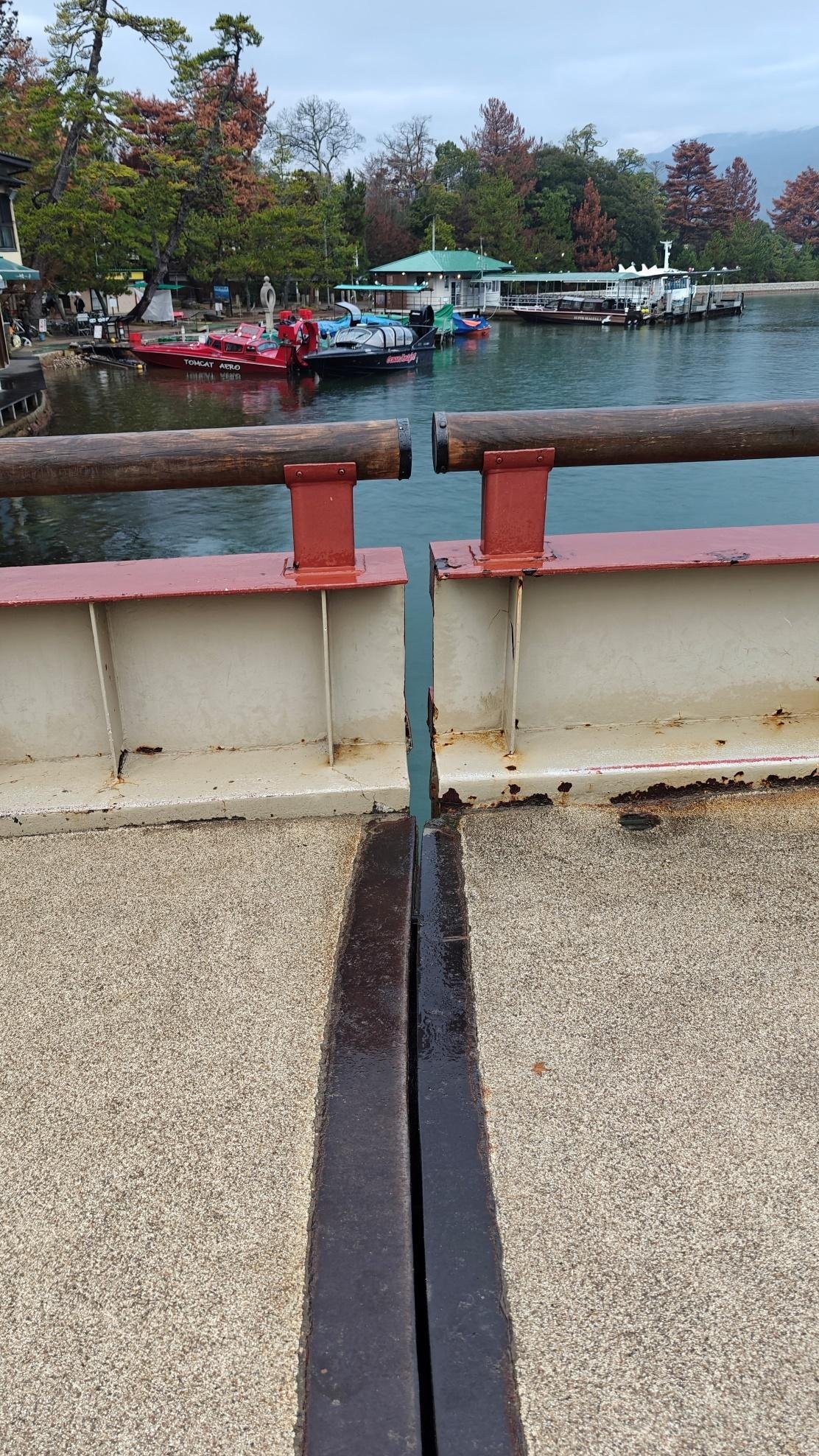
From my research about the bridge, I also learned that it wasn’t always like this. When it was built in 1923, it was manually operated. It was only in 1960 when an electric motor system was installed that this section of the bridge was able to rotate automatically.
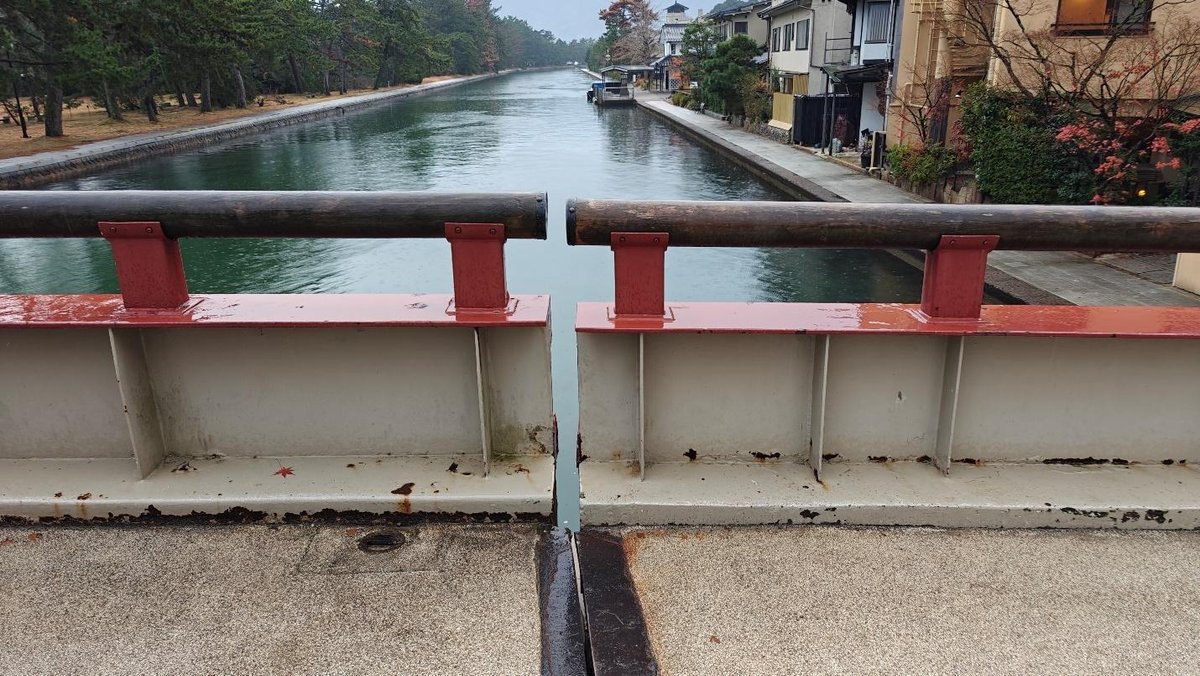
Now if you really want to see the bridge rotate then you can try visiting on Sundays. Starting from 11:00AM, the bridge will rotate automatically every hour up until 3:00PM. What’s great about this is that the rotations will happen regardless if there are ships or not.
So as long as you’re here at those hours, you should be able to get a good shot (or a video even) of the bridge.
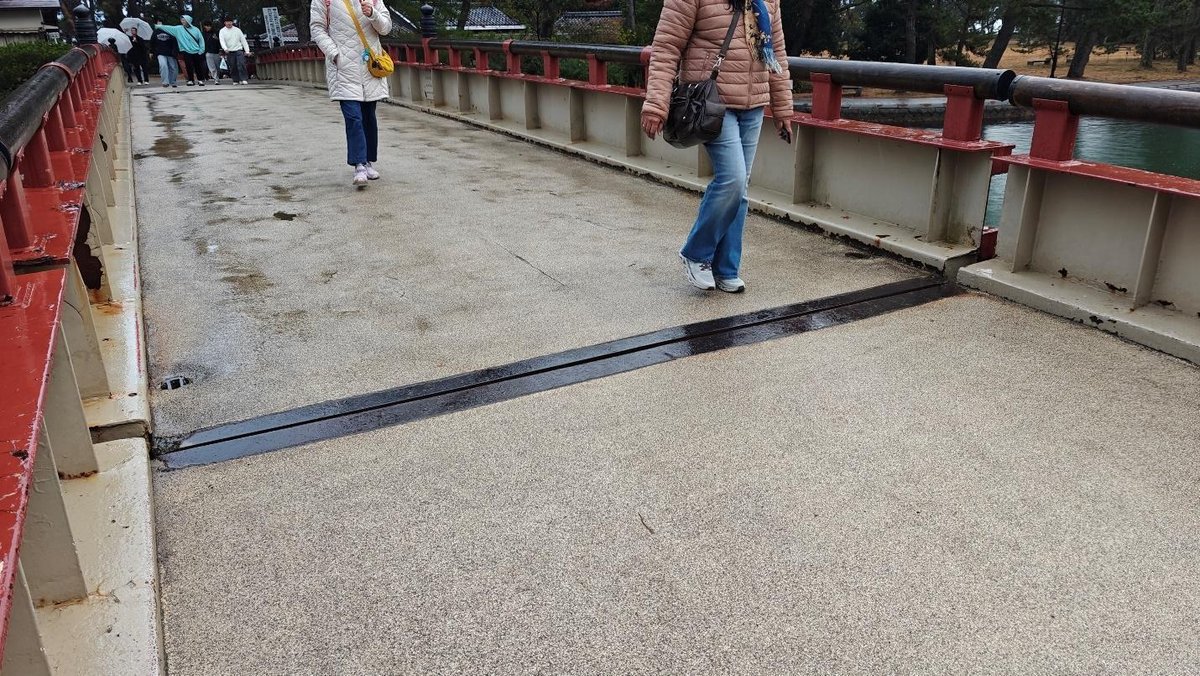
One thing that I forgot to mention was the state of the crowds here. If you’ve been reading my write-ups of my travels then you probably know my aversion (for lack of a better term) for crowds. Even with the rainy weather, there were plenty of people here.
That said, it actually wasn’t crowded thanks to how expansive the whole area is. Take note though that this visit was during the off-peak season (not to mention it was raining). It might be that there’d be way more people here during the summer, spring, and autumn.
Amanohashidate might also be worth checking out when it snows but really, that’s only if you’re fine with the cold temperatures at that time.
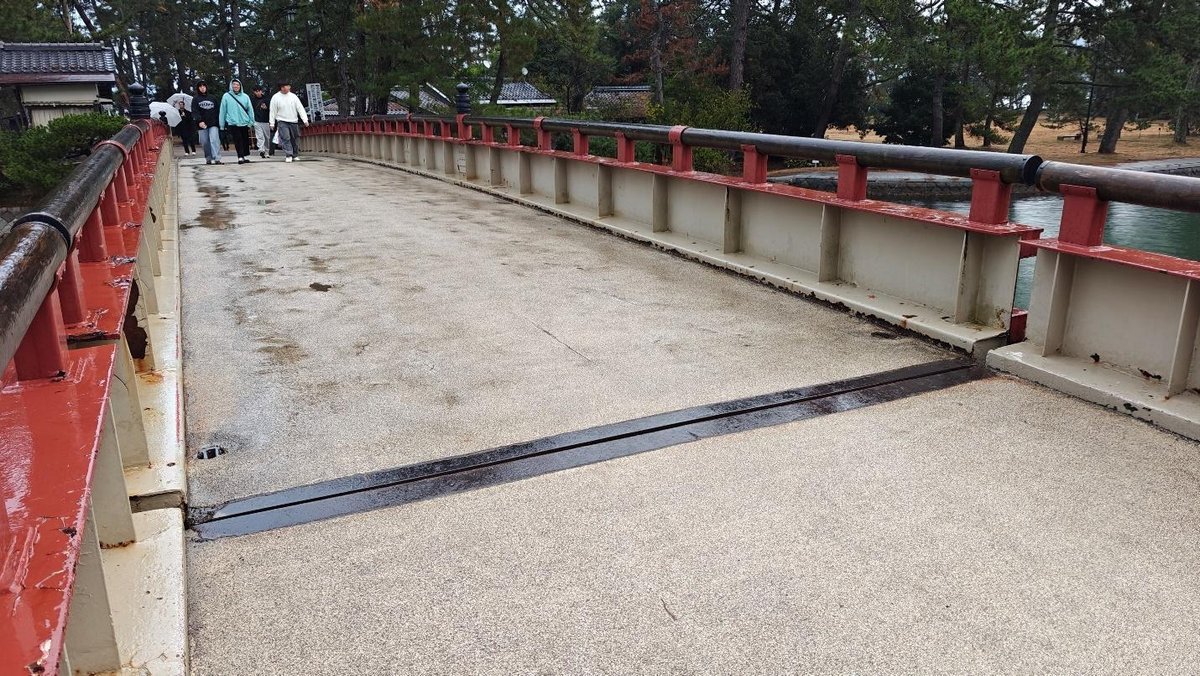
This ends my visit to Kaisenkyo Bridge and Amanohashidate Beach. Well, really it was just a small section of the Amanohashidate sandbar that I visited. Even then, it was quite memorable thanks to a plethora of views.
I will say though that if you plan to come here then you might want to look into walking the length of the sandbar or maybe even taking on a boat cruise to see it from either the Aso Sea side or the Miyazu Bay side.Perhaps my only real issue during this visit was the rain. I would be lying if the weather wasn’t a bummer. That said, this was really no fault of the area as rain is a common occurrence during winter.
Not only should you expect this kind of weather when you visit during this season, you’ll also need to make sure that you prepare yourself adequately. This means bringing weather-appropriate clothes as well as an umbrella if possible. Despite this issue, I still think that a visit to Kaisenkyo Bridge and Amanohashidate Beach is more than worth it.
On top of the views, you’ll find plenty of things to do and places to visit in the Monju area where these landmarks are located.