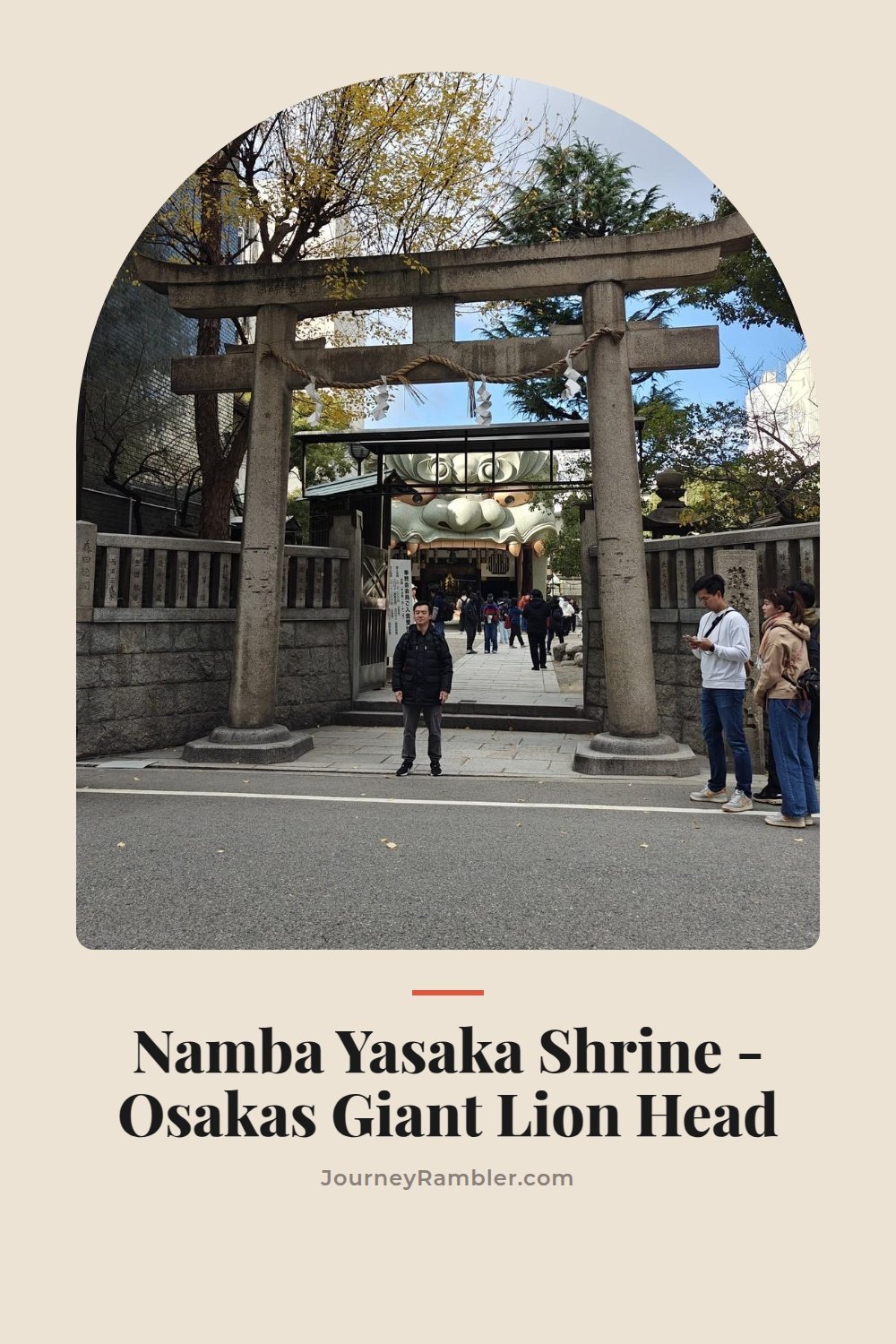
To say that Namba Yasaka Shrine was one of the most unique shrines I’ve visited is definitely an understatement. Located in Osaka, the shrine doesn’t boast of any traditional buildings that are hundreds of years old. Rather, it has a very unique lion shaped building that is quite iconic and is a favorite among both foreign and local visitors.
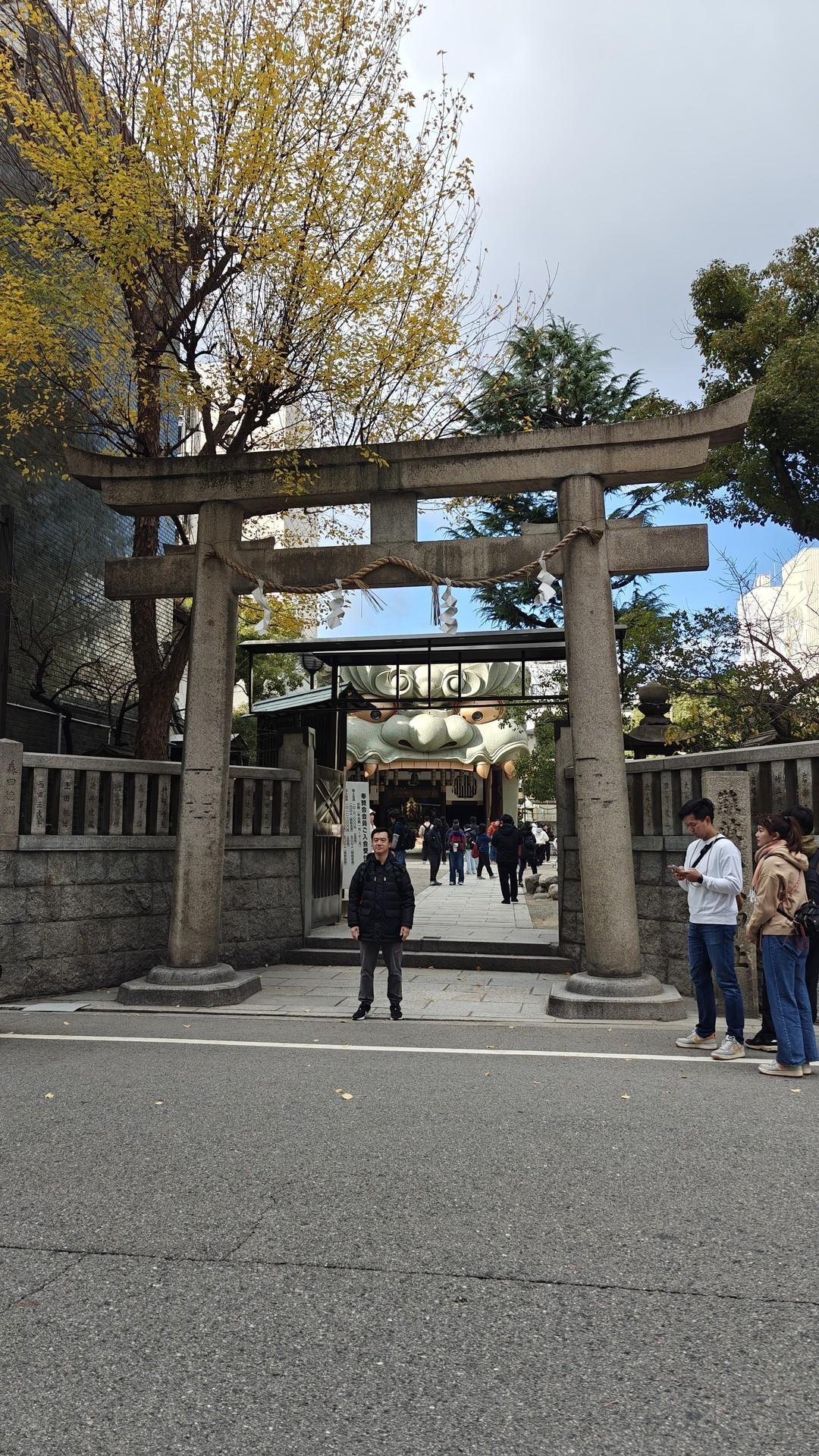
Getting here is going to be relatively easy as it’s a walking distance from JR Namba, Namba, and Daikokucho Stations. The shrine occupies one city block and has three entrances (that also serve as exits). Shown in the image is the east entrance which is quite popular because you get a glimpse of the shrine’s lion head building from it.
Visiting Namba Yasaka Shrine and Its Giant Lion Head
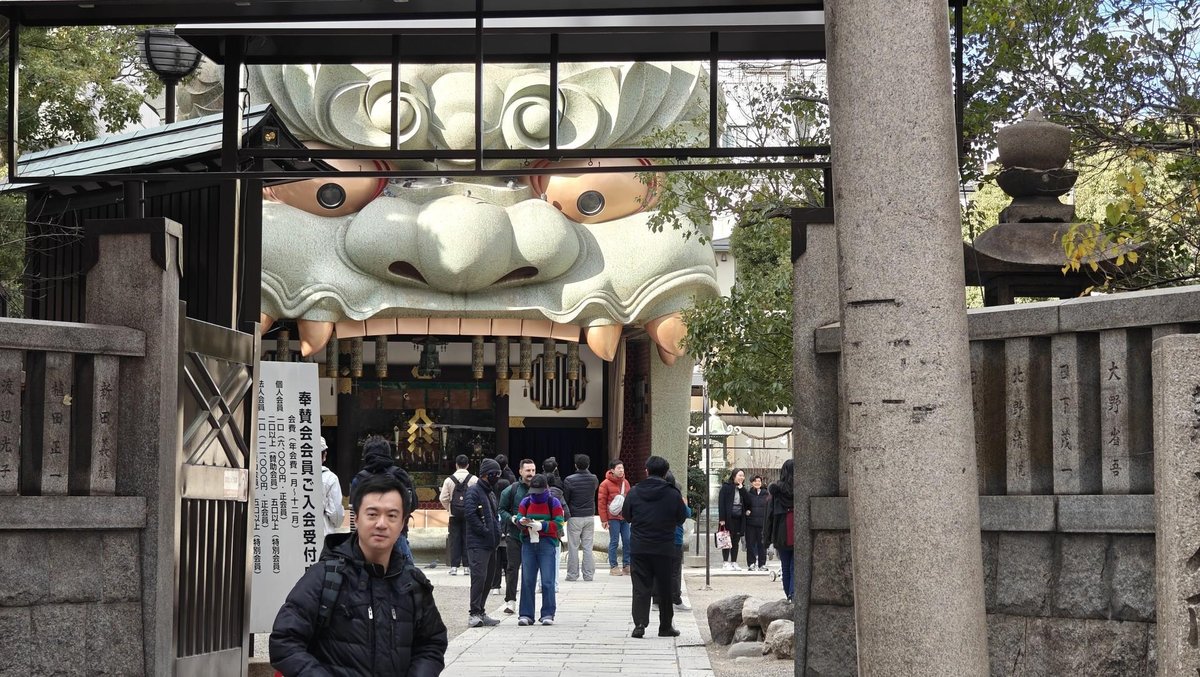
Also known as the Shishiden, the building is quite hard to miss. Its silhouette is kind of the first thing you’ll notice even when you’re still across the street from the east entrance’s torii gate. Measuring 12 meters tall and 11 meters wide, the building is said to function as protective talisman.
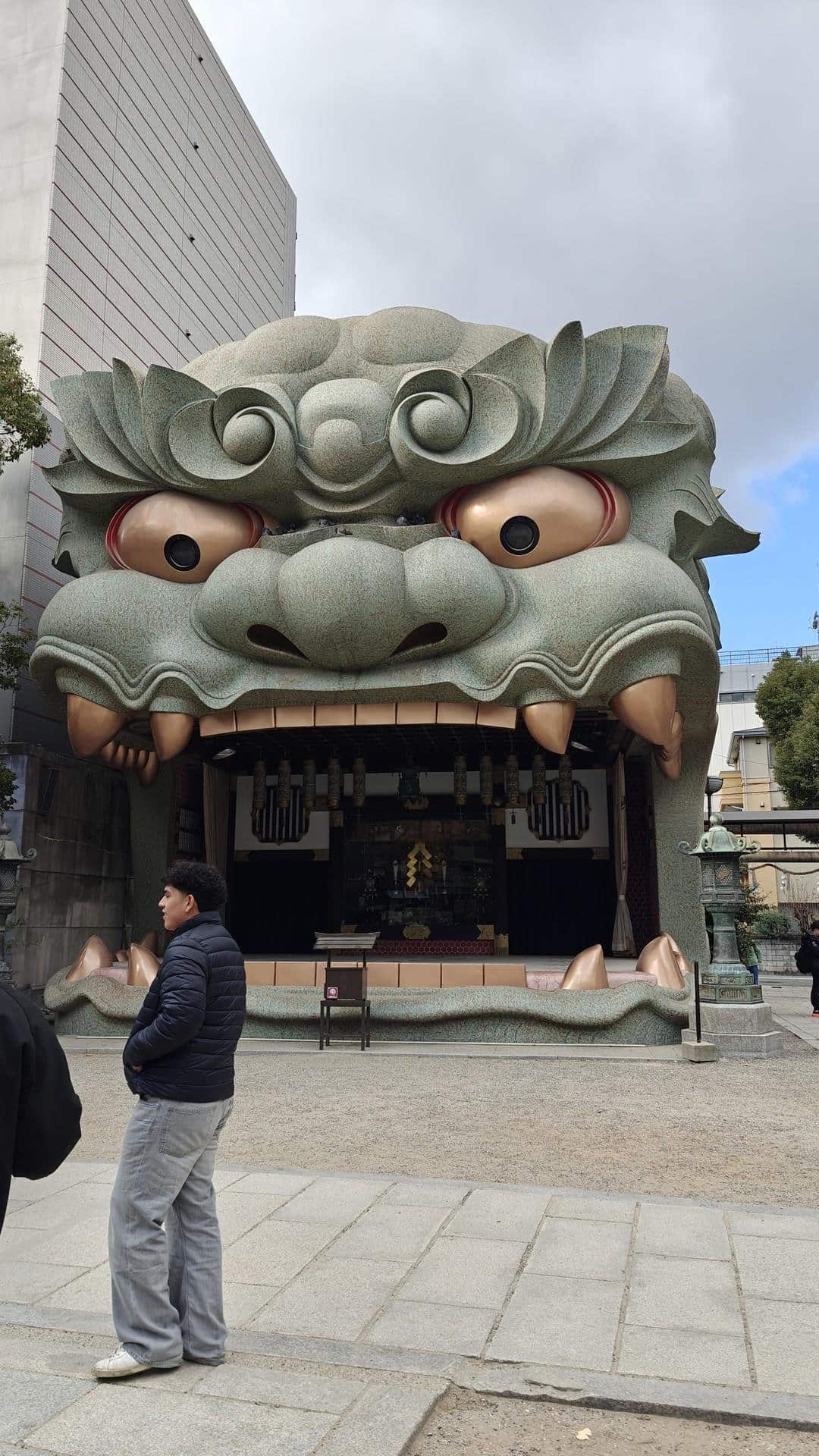
Looking at it from the outside, I initially thought that it was some sort of ticketing booth/reception area because of how people were milling about in front of it. Turns out, the area inside its mouth is actually an altar and there’s even a saisenbako in front of it. From what I’ve been told, most visitors come here to pray for success in their daily lives, business, and studies.
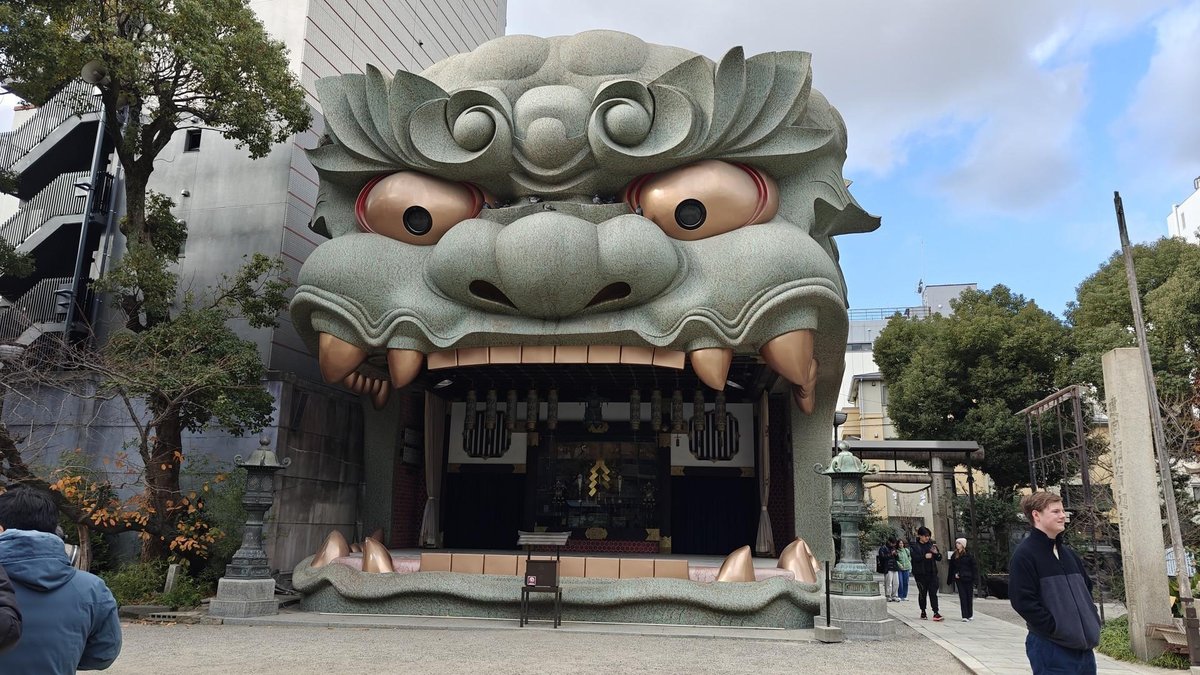
Another reason why visitors come here is to clear away negative energy. Remember when I said earlier that the Shishiden acts as a protective talisman? Well it’s believed that the gaping mouth of the lion swallows bad luck and evil spirits making it ideal to pray here for success.
I’m not sure if it works but praying here is also said to dispel illnesses, misfortunes, and plagues.
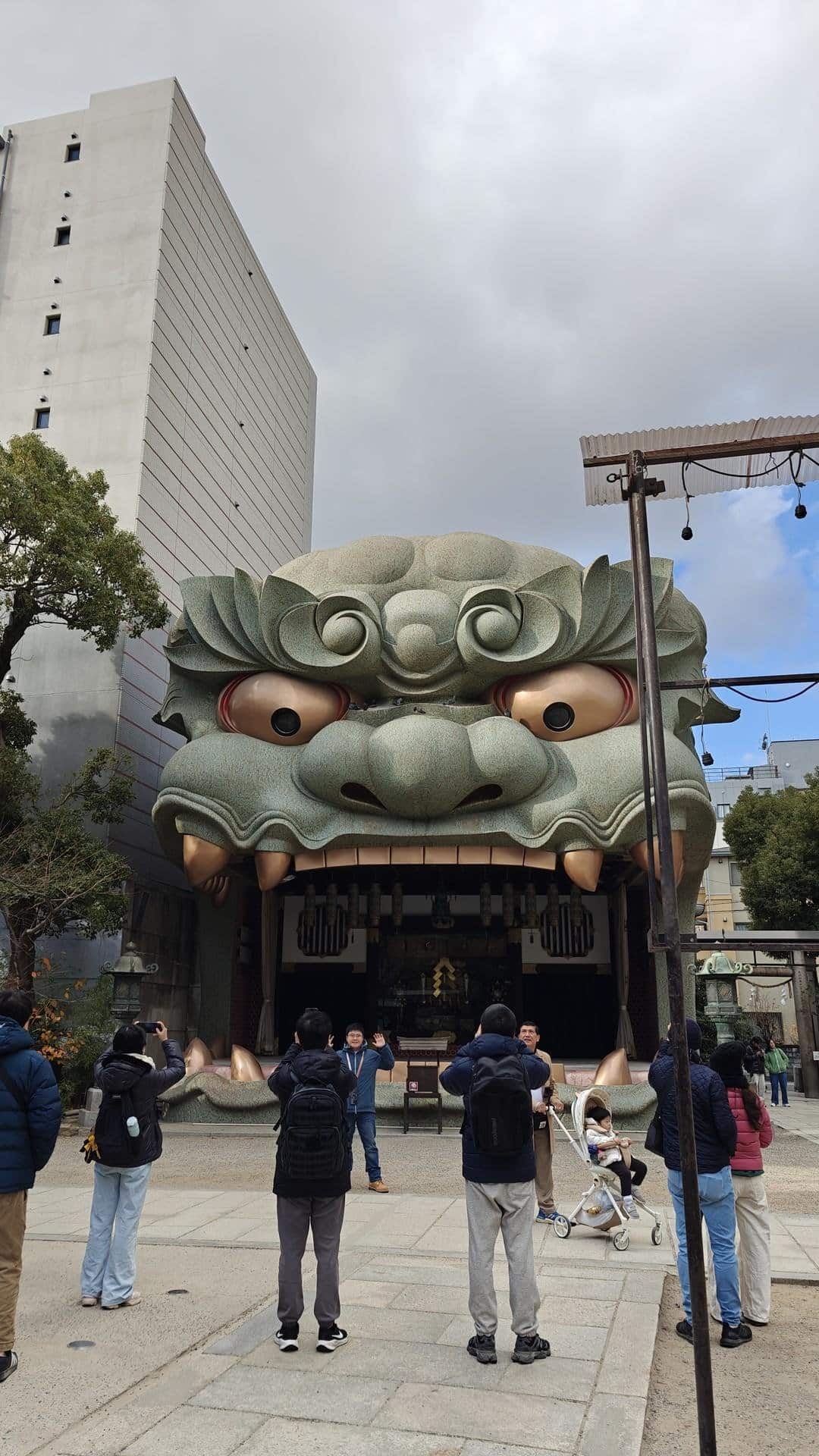
Speaking of plagues, the Yasaka Shrine in Kyoto is also known for warding these off. Conversely, the deity enshrined here at Namba Yasaka is also Susanoo-no-mikoto. Where this shrine differs from the one in Kyoto though is mostly with its size.
While it does occupy a block, it’s not as expansive and you could actually just walk around the place in 10 minutes tops. In fact, you can actually see the west entrance/exit from this image (right-hand side).
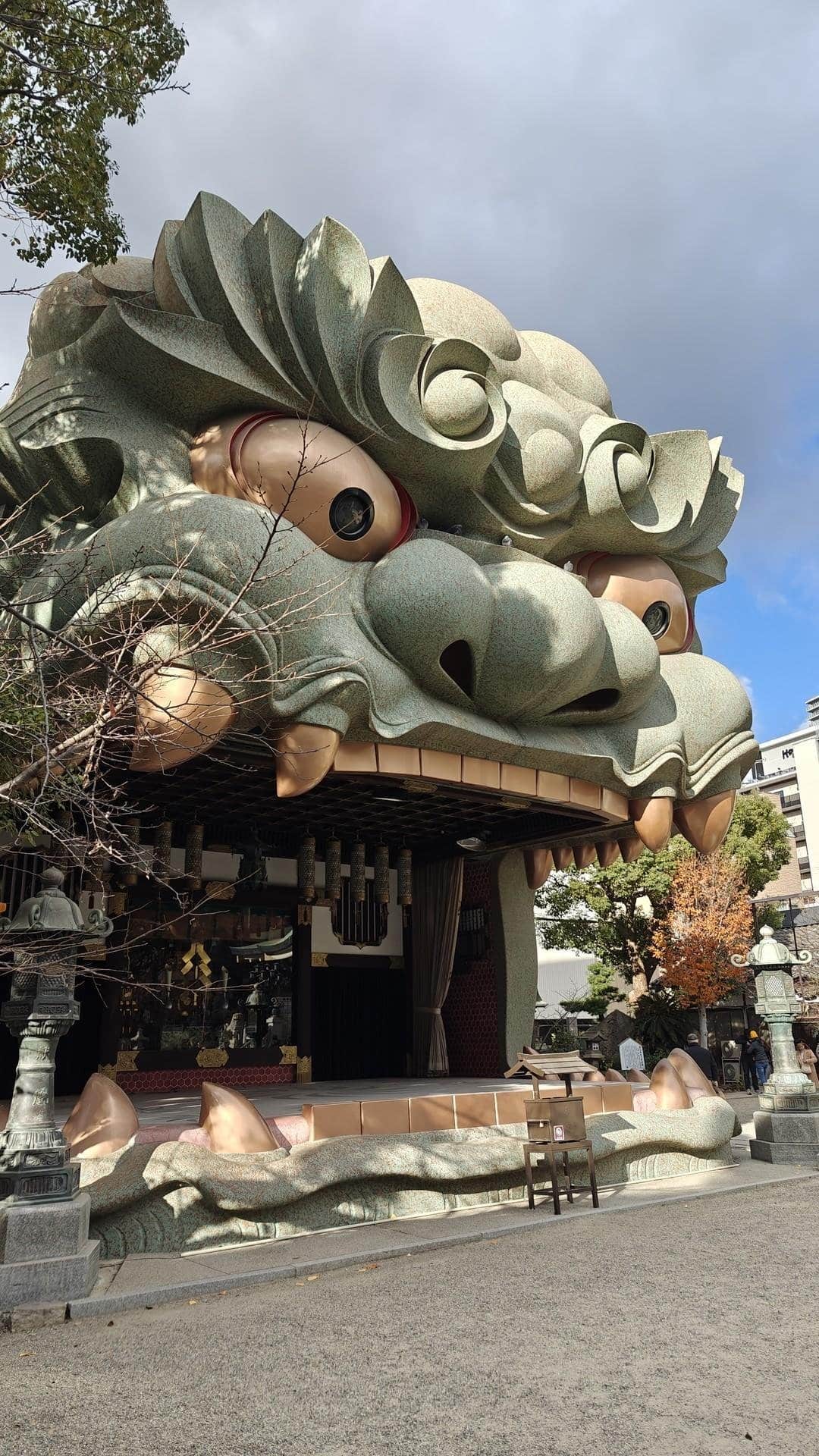
Aside from being a place to pray, the inside of the lion’s mouth also doubles as a stage. The shrine regularly holds Kagura performances here in addition to lion dances (also known as Shishimai). I’ve even read that there are performances here for Iaido, a Japanese martial art that focuses on sword drawing techniques.
Unfortunately, none of these performances were available during my visit.
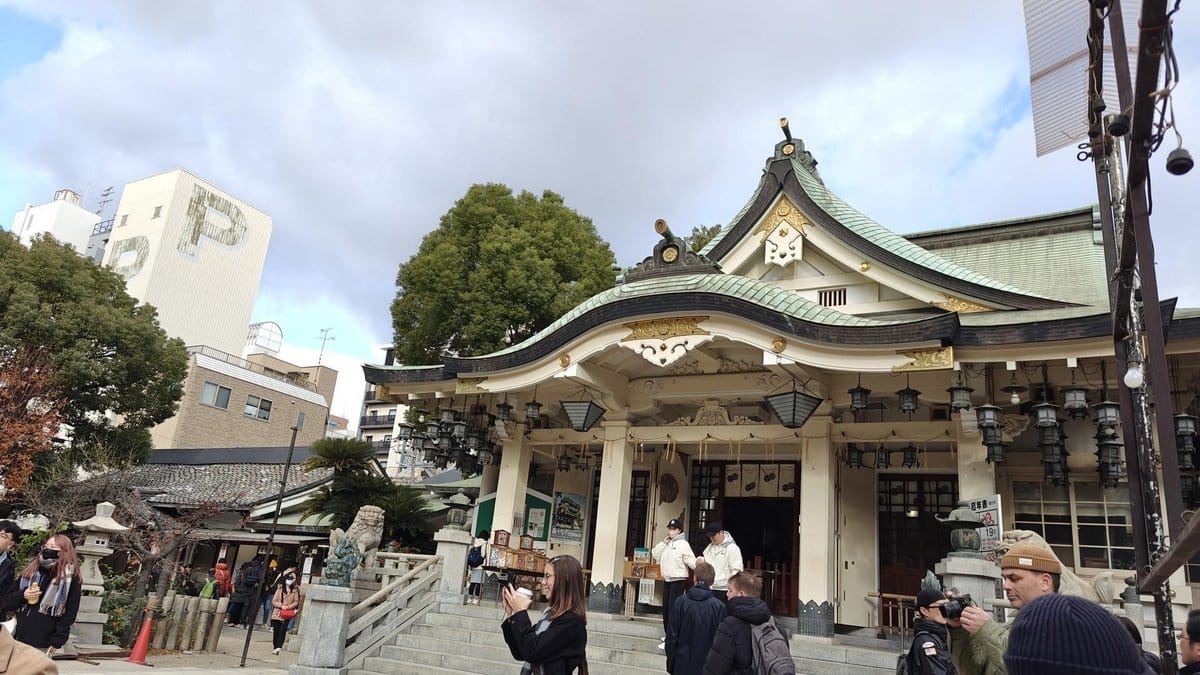
Occupying the northern section of the block is Namba Yasaka Shrine’s Honden or Main Hall. It’s not as attention-grabbing as the Shishiden but it’s still quite large. In keeping with the shrine’s lion theme, there are lion-dog statues called komainu bookending the stairs leading up to the Honden.
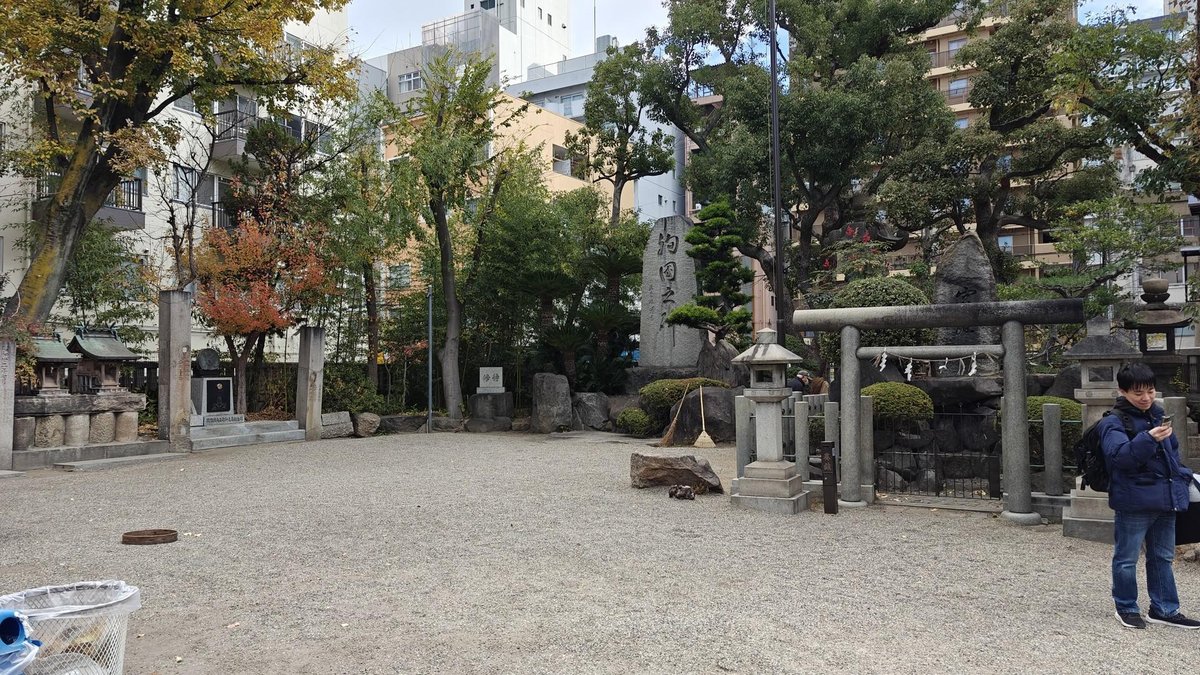
Off to the right (if you’re facing the Honden) is an area that features a couple of monuments. I’m not quite sure but I think the monument featuring a concrete torii gate is called “Miyato no Sekihi” or Stone Monument to the Palace/Shrine ruins. My guess is that this is to commemorate the shrine that was lost during the bombings made by Allied forces in the Second World War.
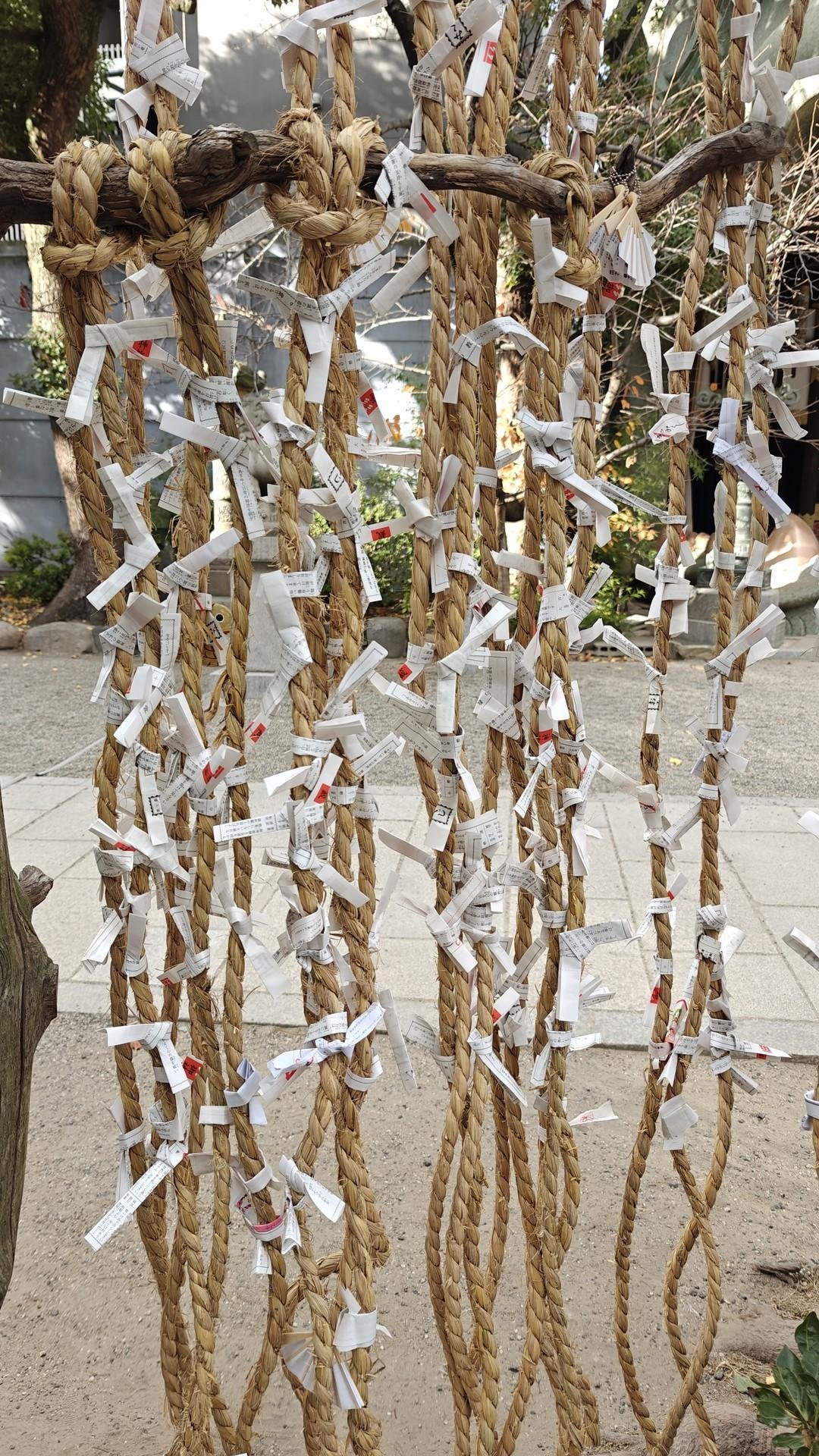
One of the more curious features of Namba Yasaka Shrine were these pieces of rope hanging from the branches of some trees. If I’m not mistaken, these are omikuji kake or omikuji racks though they’re vastly different from the ones that I’ve seen in other shrines and temples. Once visitors draw their omikuji, they typically then hang them here regardless if they contain bad fortunes (sometimes people hang their good fortune omikuji here too).
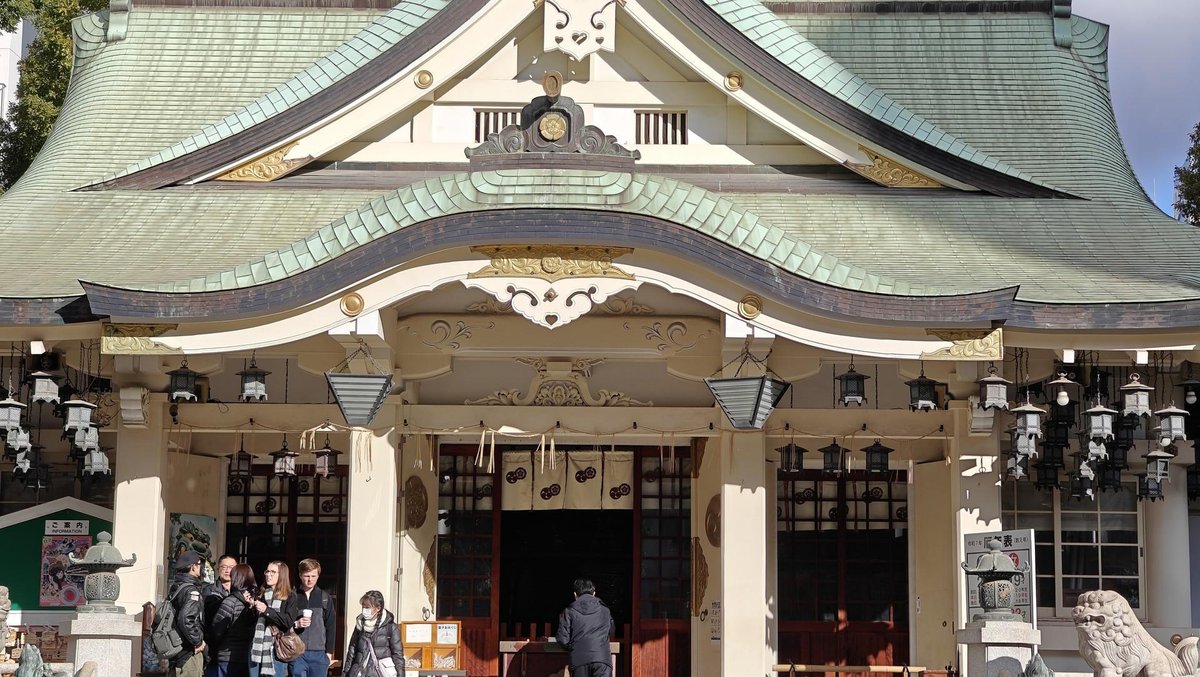
This is what the facade of the Honden looks like. Unlike most of the main halls from the shrines and temples that I’ve visited, this building incorporates both wood and concrete in its construction. This is understandable considering how relatively new the shrine complex is.
It was actually rebuilt in 1974 after the original was lost during the war.
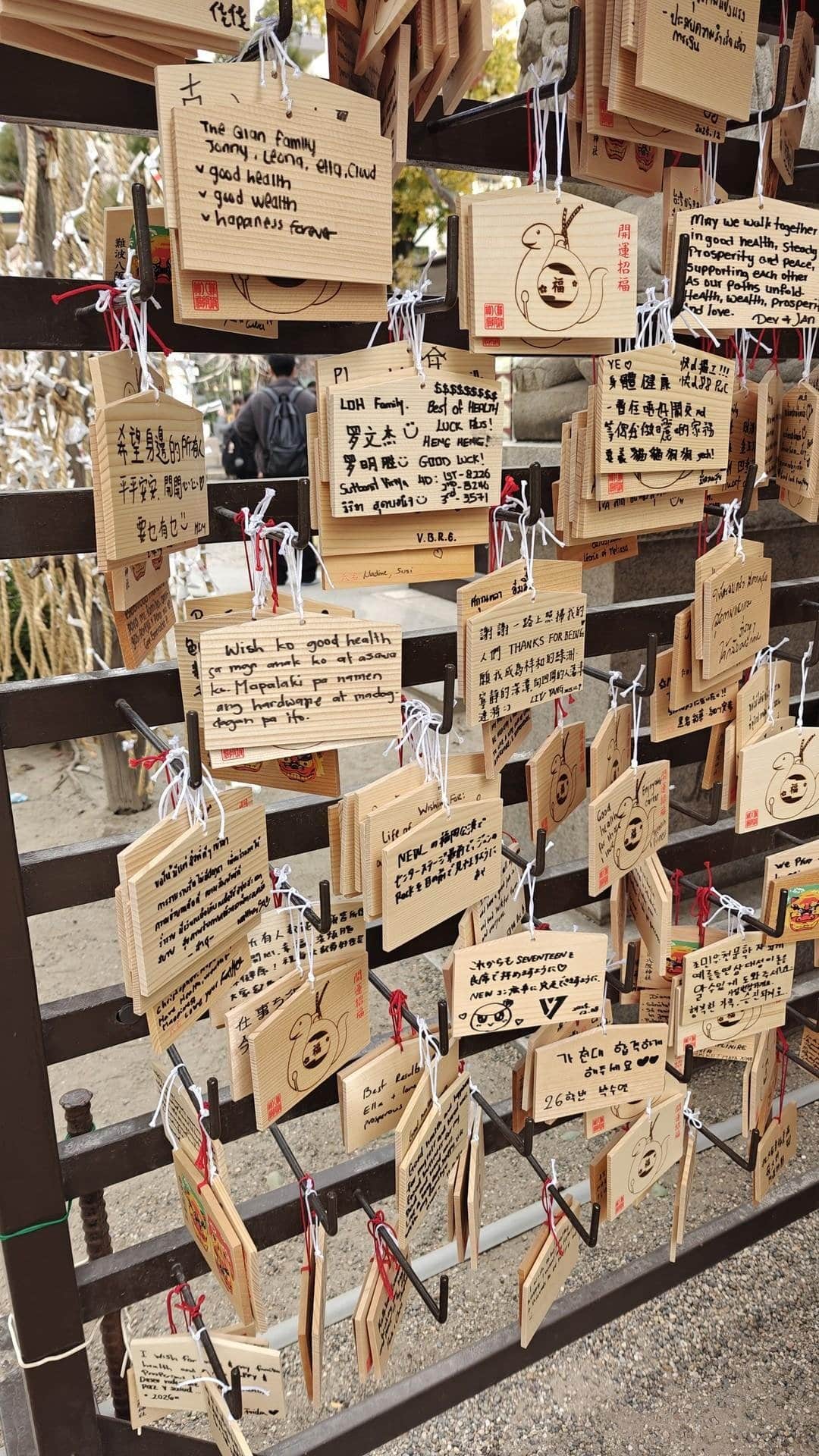
Here is a rack for hanging ema called an ema kake. Much like the omikuji kake from earlier, this is a fixture that you’re going to regularly see at shrines/temples (regardless of how new or old they may be). You can purchase both the ema and omikuji from the shrine’s shamusho or shrine office.
If you’re facing the shrine then this is the building to its left.
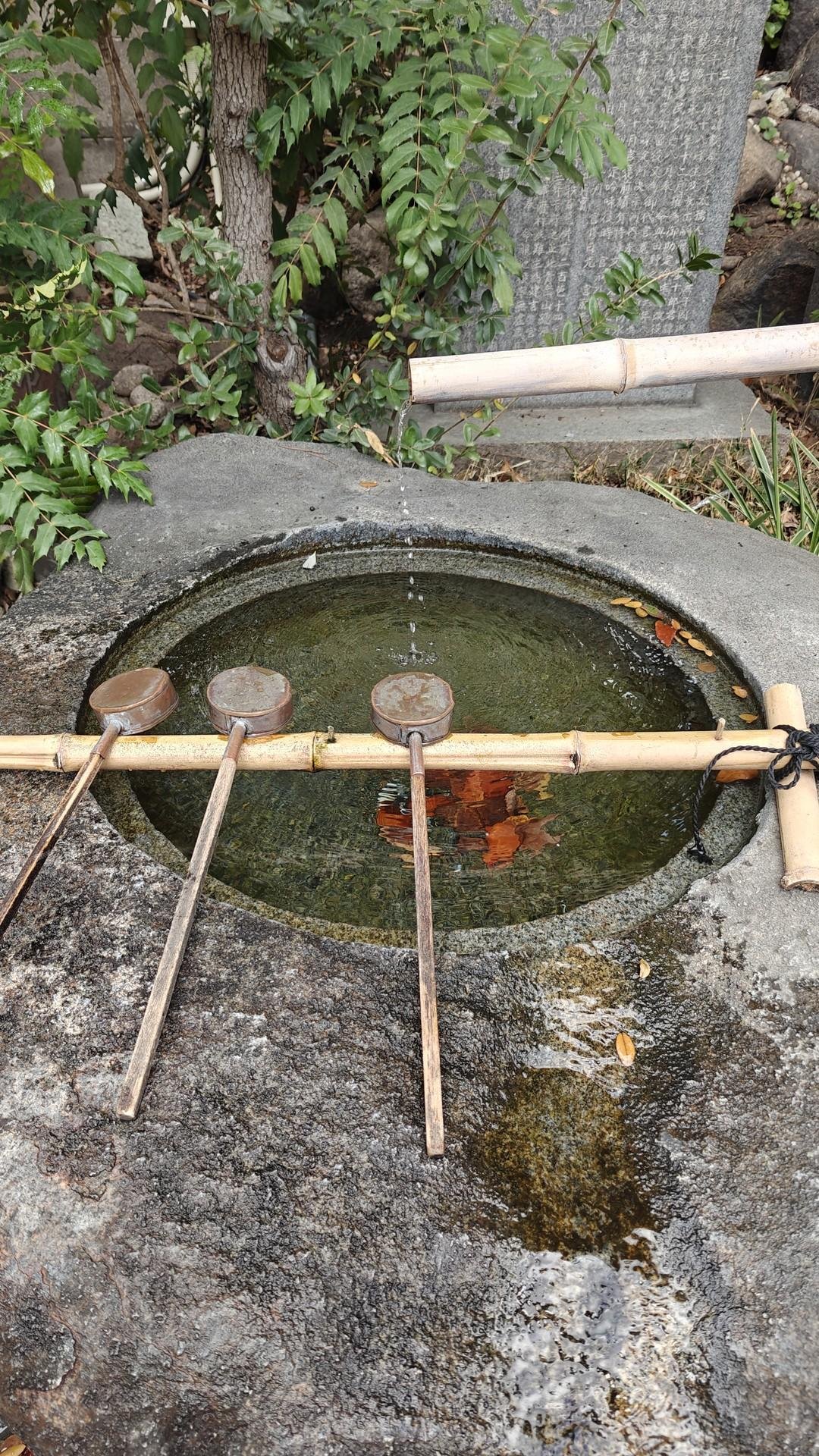
Now this won’t be a proper shrine without a chozubachi. This one is near the shrine’s west entrance/exit and is actually quite unique. Unlike most chozubachi that I’ve seen, this doesn’t have a dedicated pavilion for it.
As for why that may be the case, your guess is as good as mine.
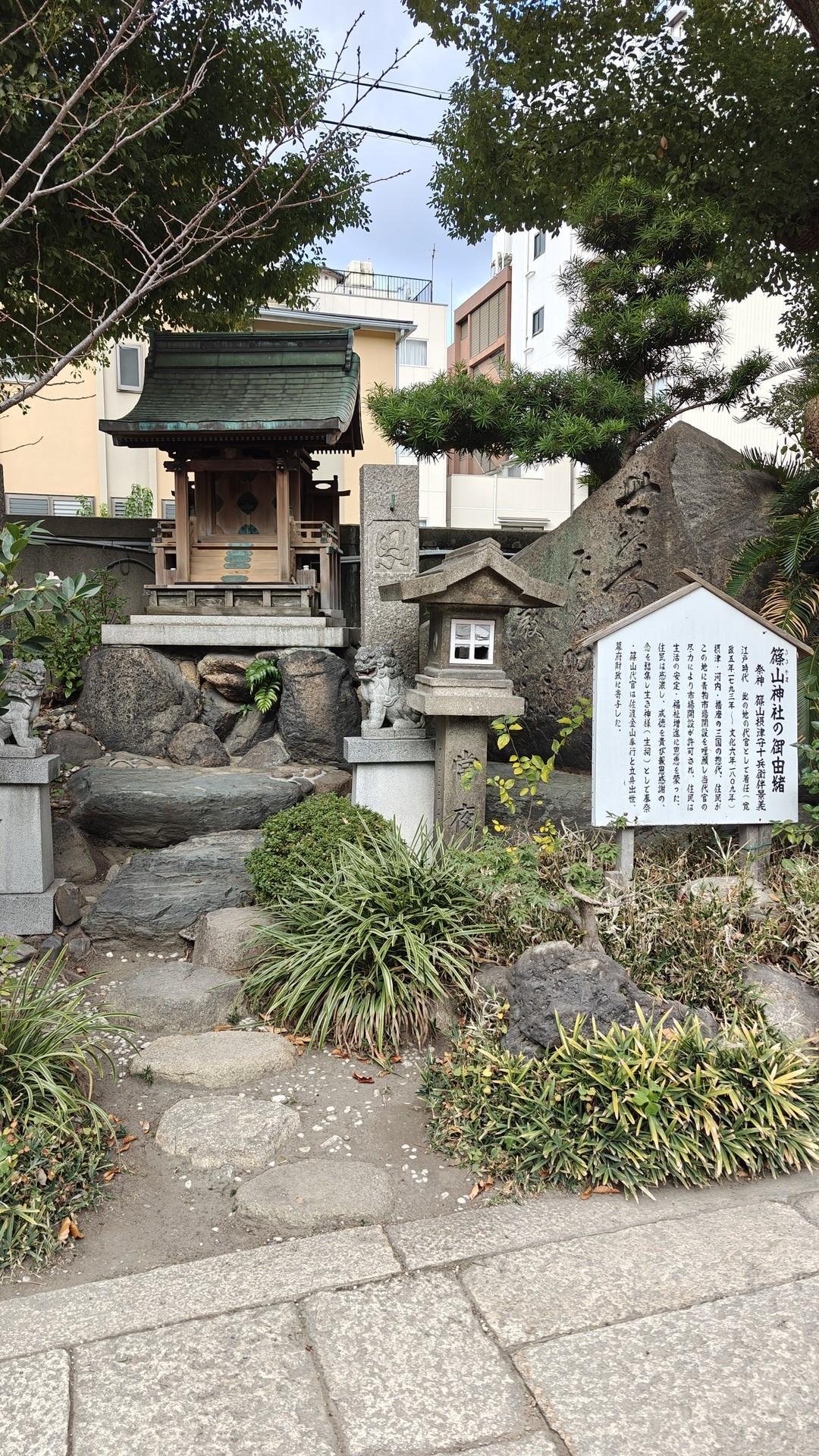
Right next to the chozubachi is the Sasayama Shrine. Also known as a setsumasusha or a sub-shrine, this one is dedicated to someone named Sasayama Jubei Kageyoshi. A governor during the Edo-period, he is enshrined here for his efforts to establish the Naniwa vegetable market in Osaka.
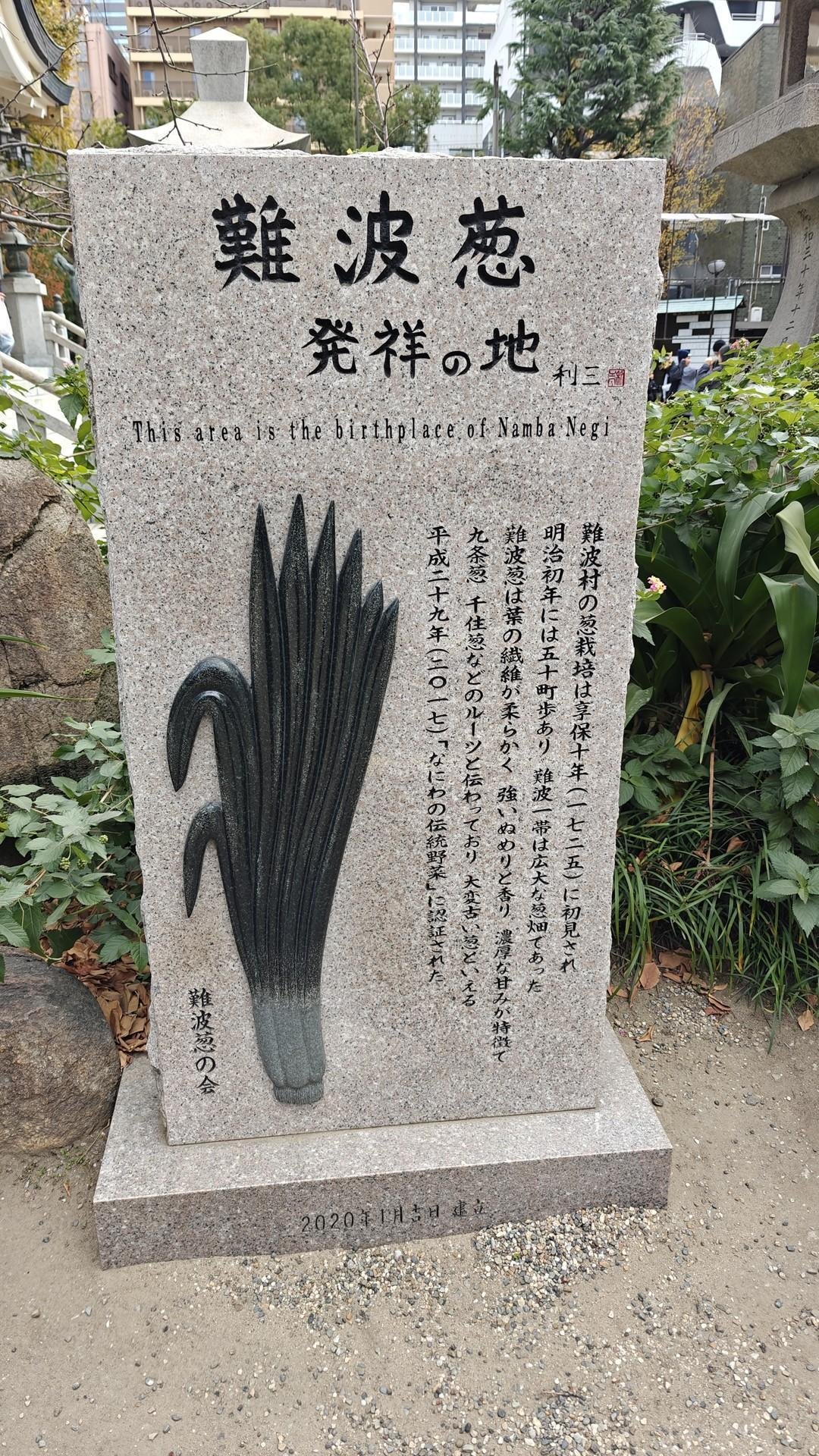
I end my visit to Namba Yasaka Shrine with this picture of a monument dedicated to the Namba Negi. This is a variety of spring onion that was first cultivated in this specific district (Namba) in Osaka in 1725.While short, I think this whole visit was actually quite eventful. Ideally, you want to visit here prior to Dotonbori as both landmarks are relatively close (that is if you’re willing to walk more or less a kilometer to get there).
It’s not as scenic as the shrines and temples in Kyoto but I think it’s still worth visiting just for the Shishiden alone.
How about you? Would you include Namba Yasaka Shrine in your itinerary? Head on over to our comments sections and share with us and our readers why you’d want to (or won’t) go here!