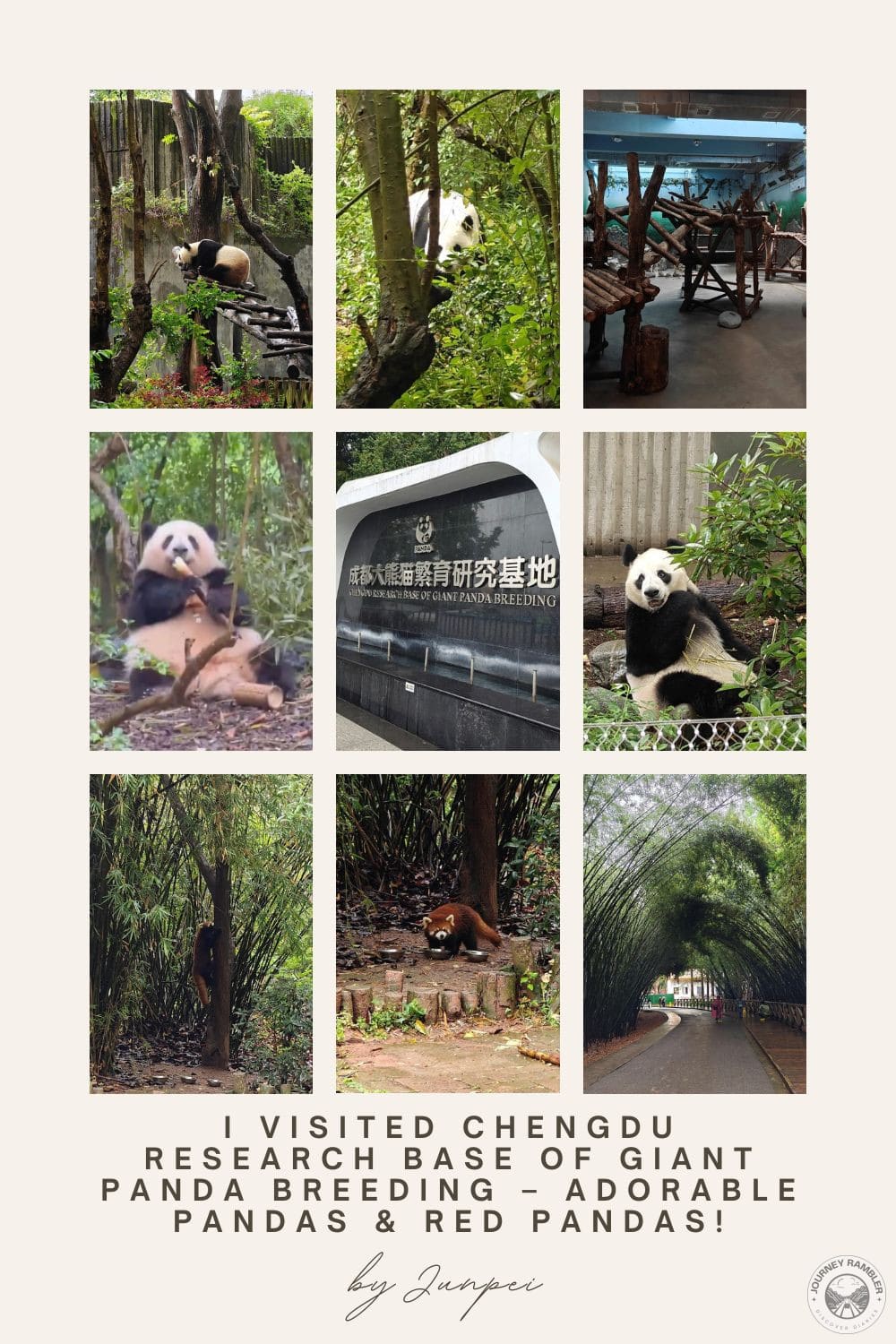
The Chengdu Research Base of Giant Panda Breeding is arguably one of the most worthwhile family-friendly attractions in the Chengdu region. To say that I enjoyed my visit there would be an understatement. While the weather wasn’t that good, the visit was saved by the scenery and of course, the pandas themselves. That said, would you enjoy being here? Thankfully, I took plenty of pictures of my visit and will also be sharing my experience. So if you have time then make sure to scroll down for the details of my visit!
Chengdu Research Base of Giant Panda Breeding: The Best Place to See Giant Pandas and Red Pandas
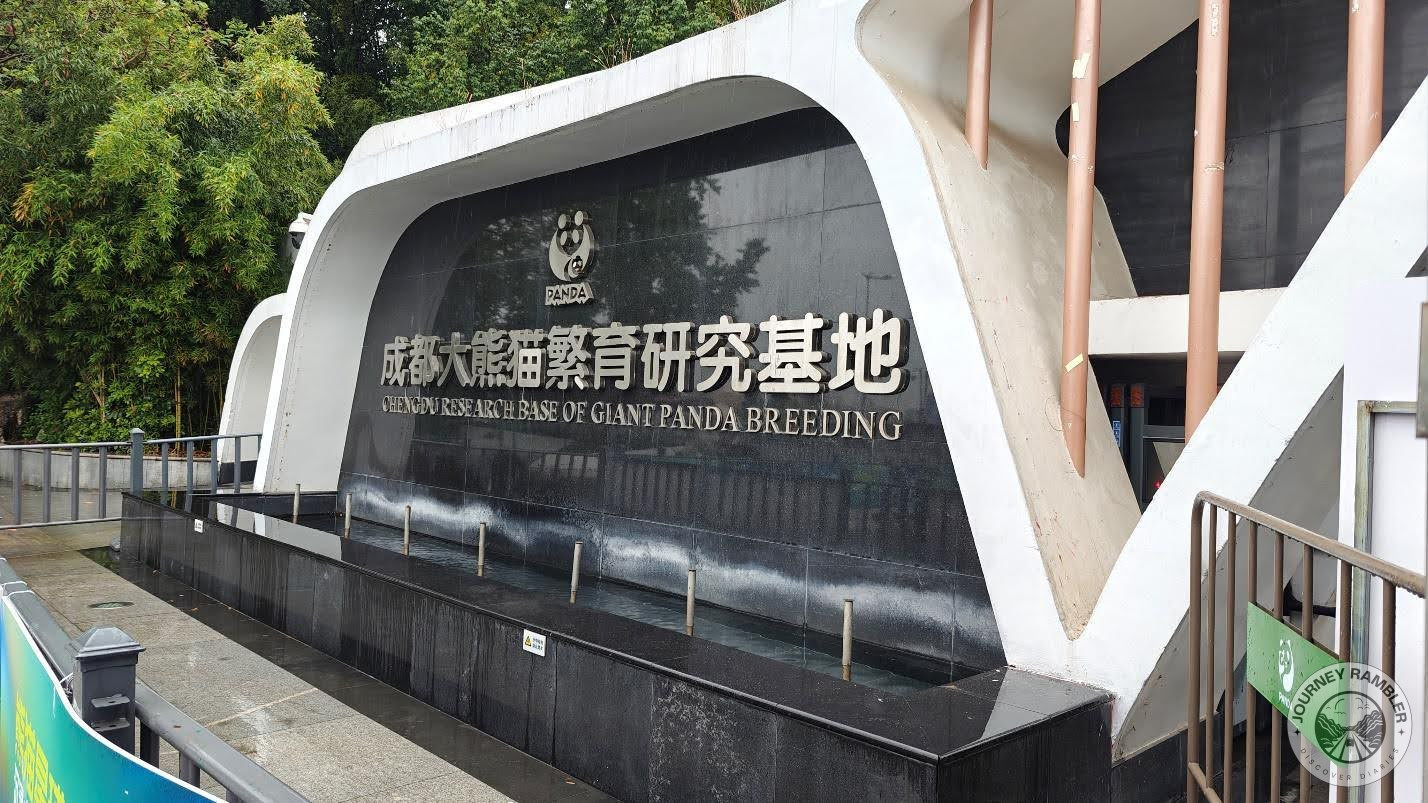
Getting to the Chengdu Research Base of Giant Panda Breeding was relatively easy. It’s quite possibly the most popular attraction for seeing live pandas so there are plenty of ways to get here. I will say that if you don’t want to bother with having to transact with taxi drivers and paying tickets to the venue then just get a tour package that offers pickups from your hotel to the research base.
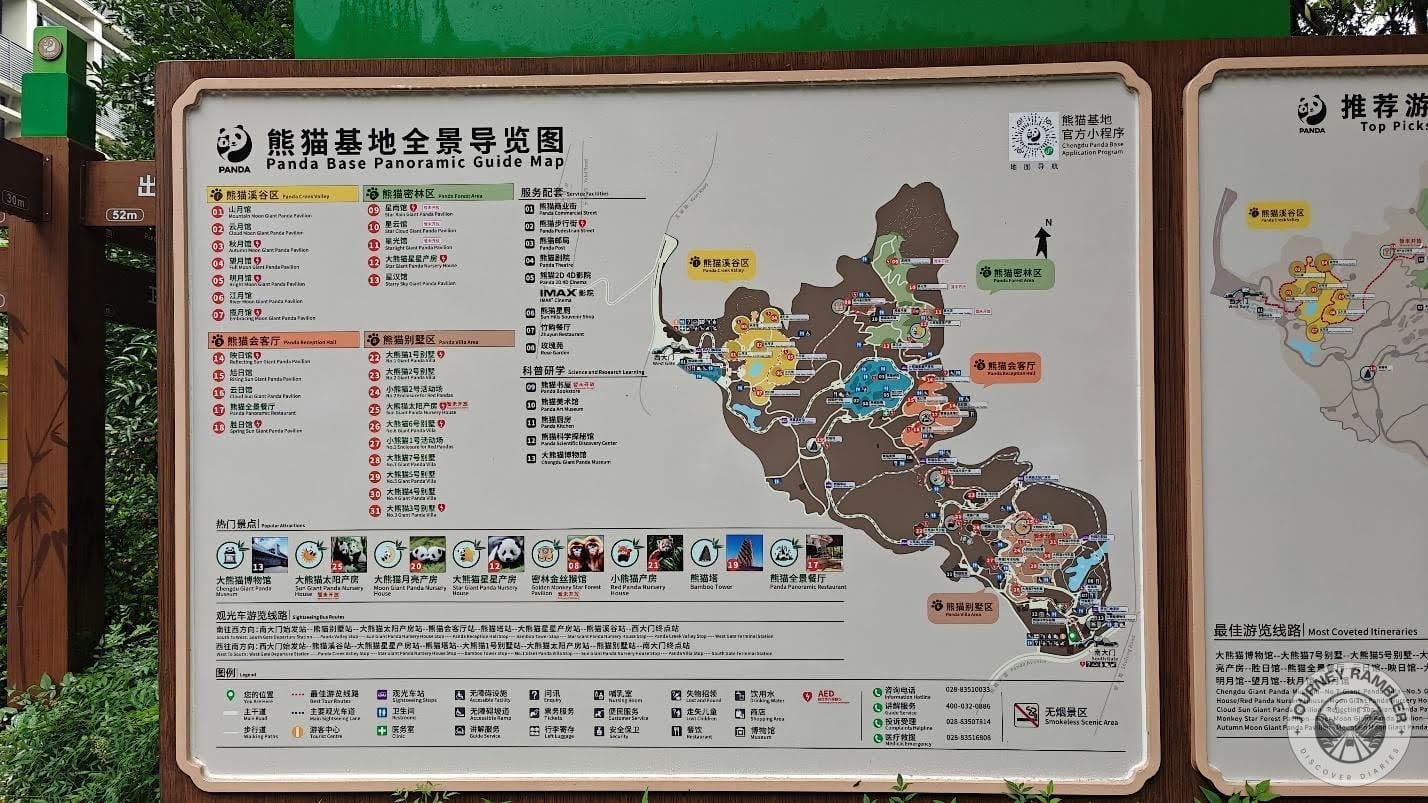
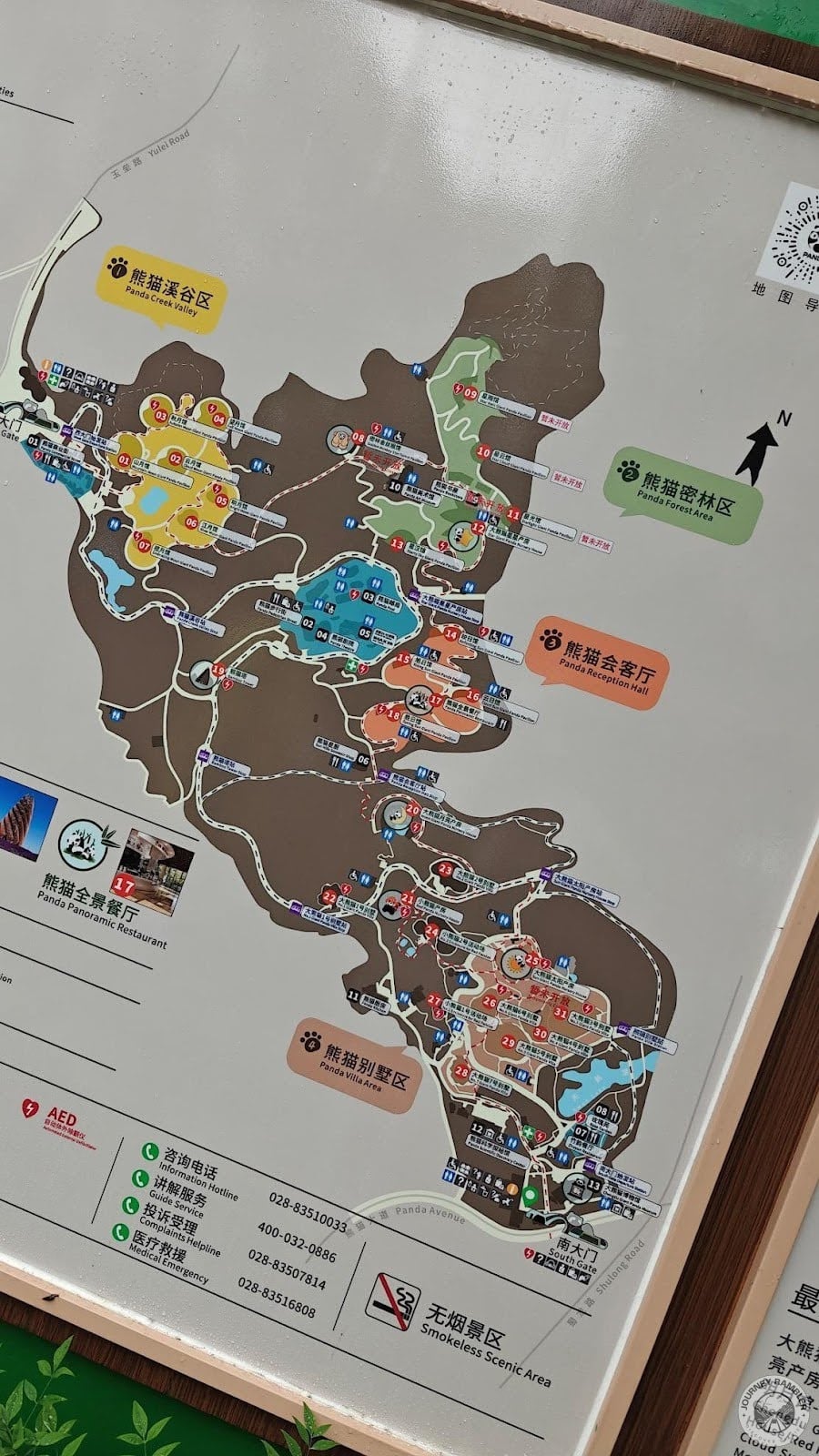
The research base is around 10 kilometres from Chengdu’s city center so you can also just get a taxi to drive you there. Once there, you’re going to want to take a picture of this guide map. You probably won’t get lost here but the research base covers a large area and you don’t want to find yourself backtracking because you missed a nice section.
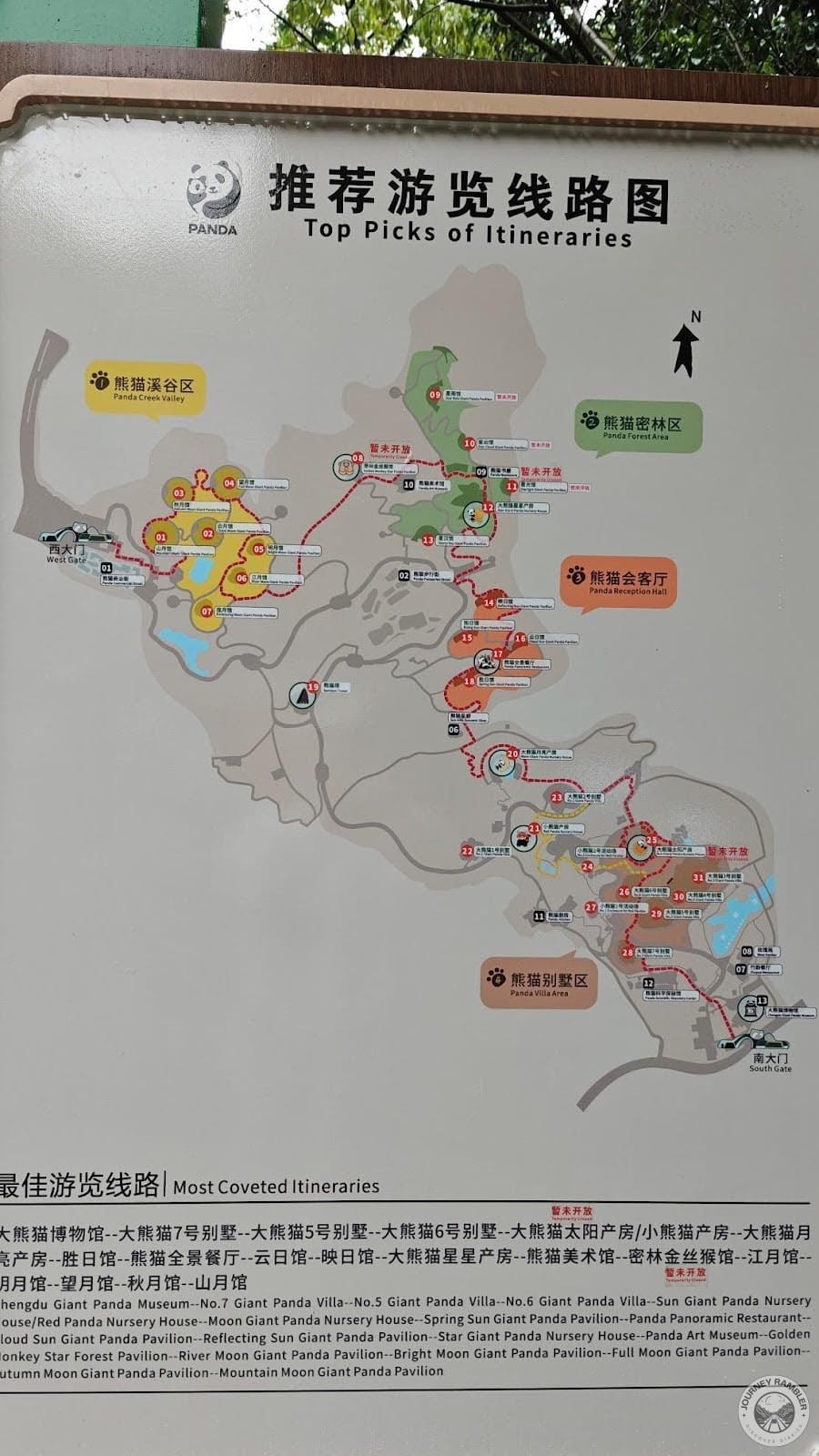
Just near the detailed guide map, you can find others that feature the research base’s recommended trail and sections to visit. I would recommend checking these as they’re pretty comprehensive and should get you to the base’s most notable sections. That said, some trails can take time so be mindful of them. An example is the one above which typically takes 5.5 hours to complete if you go through all the sections and attractions.
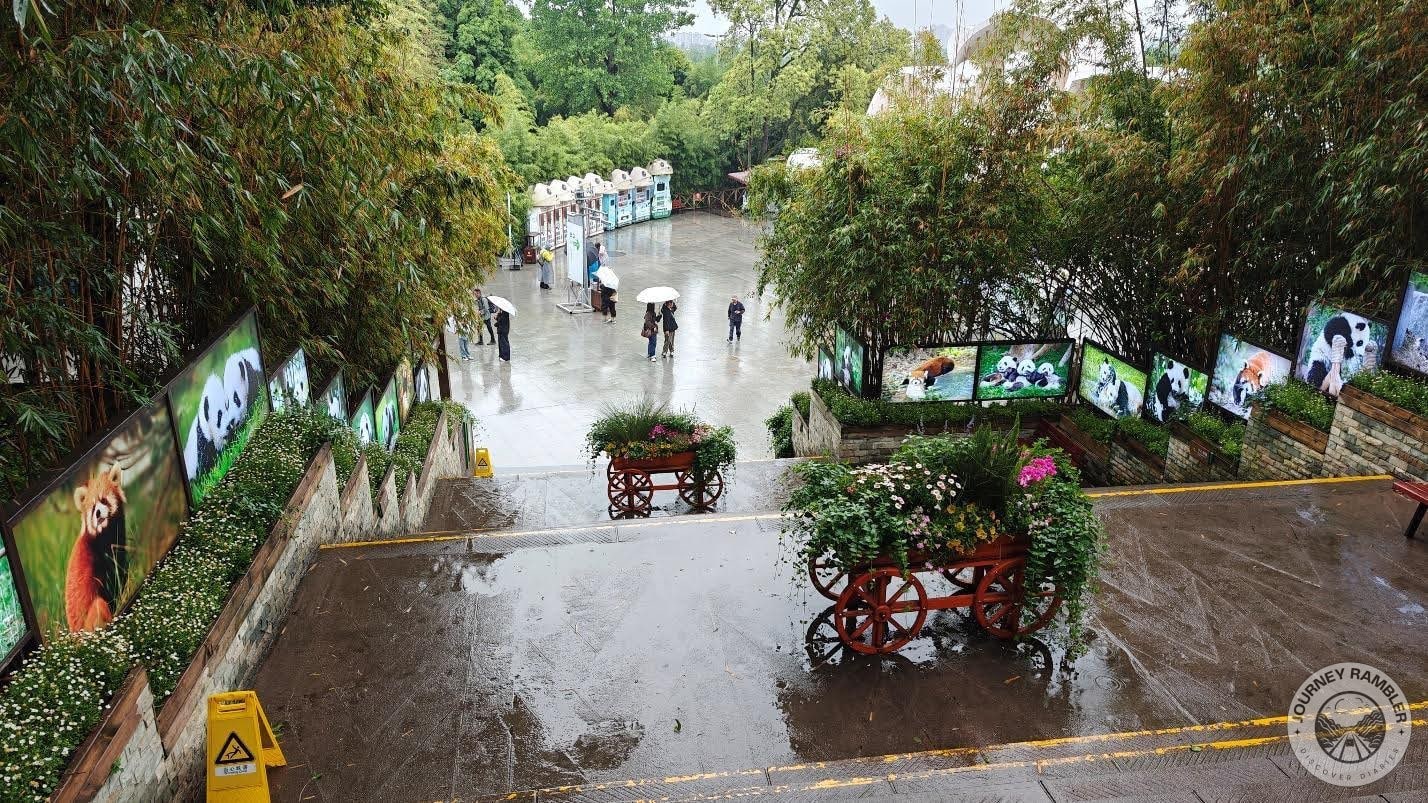
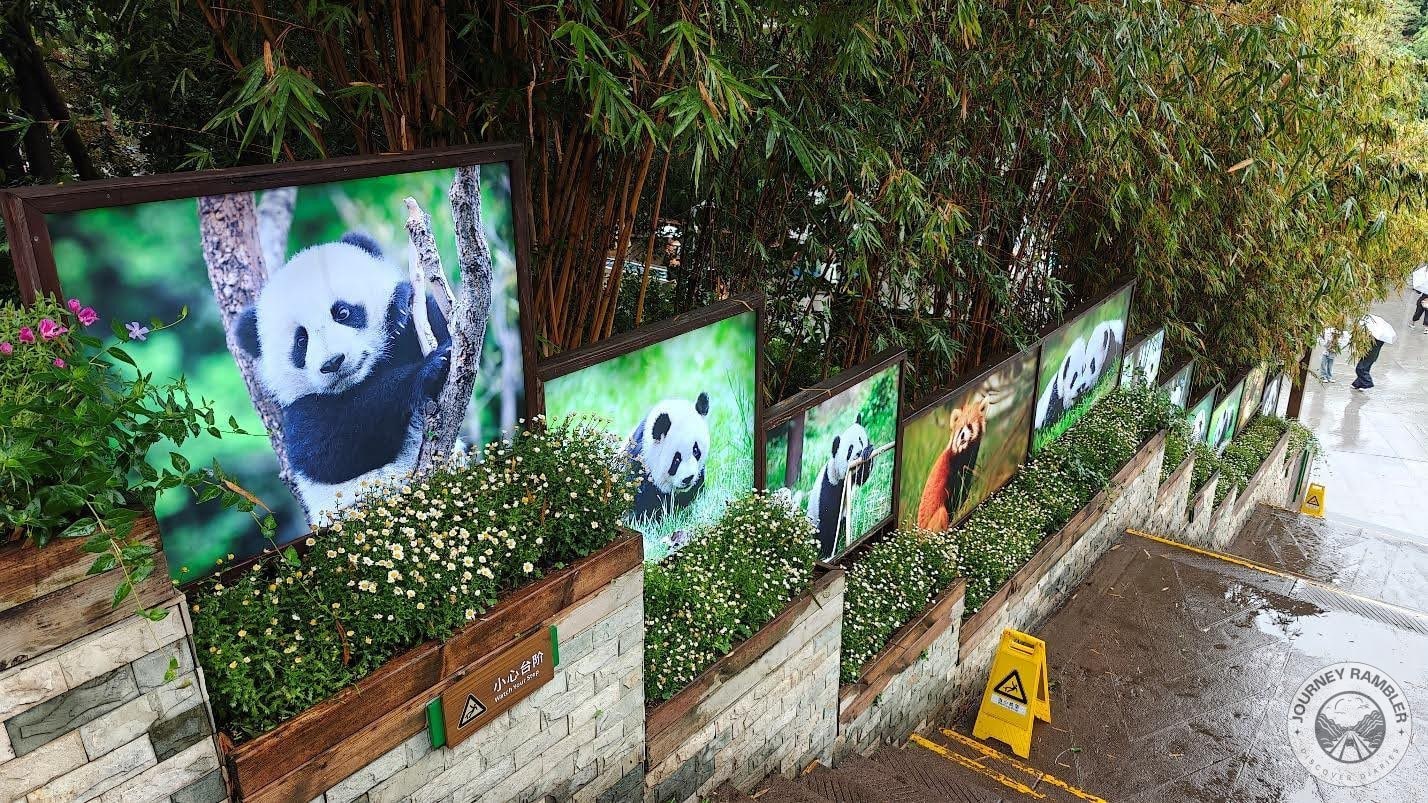
As I said earlier, it was raining when I came here to visit. As a result, there weren’t that many people! Usually, this area would be teeming with both local and foreign tourists but when I took this image you could actually count the number of people here. By the way, you go through these stairs if you enter from the South Gate.
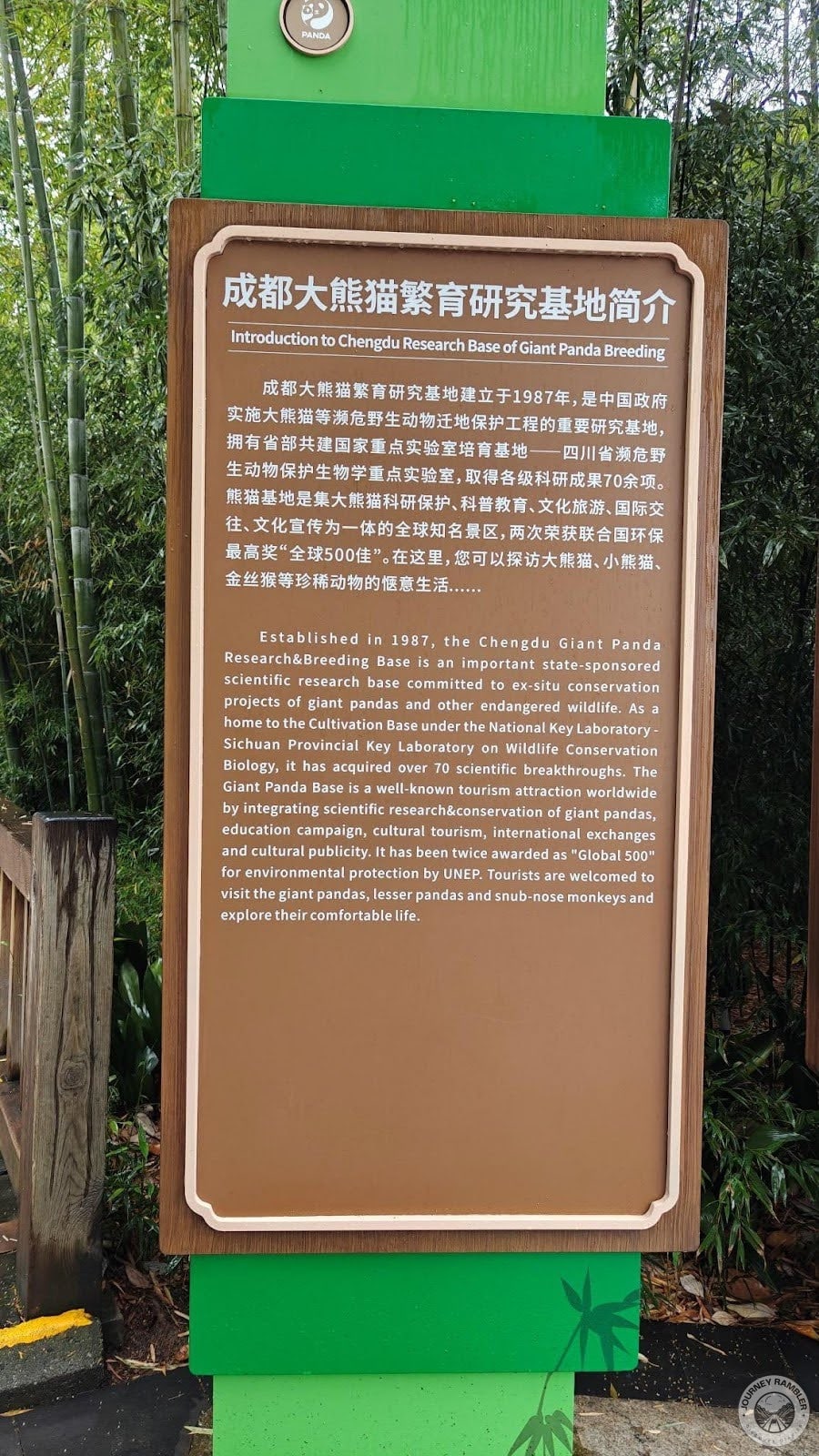

As I was walking around the area, I came across this iconic sculpture of a mother panda and her cub (another iconic panda sculpture I highly recommend visiting here is the IFS Panda at Chunxi Road in Chengdu’s central business district). You’d typically find people lining up to take pictures with the sculpture in the background here but with the weather being as it was, this was unsurprisingly not as busy. That said, it’s not going to be raining here all the time so you might want to consider this when you visit.
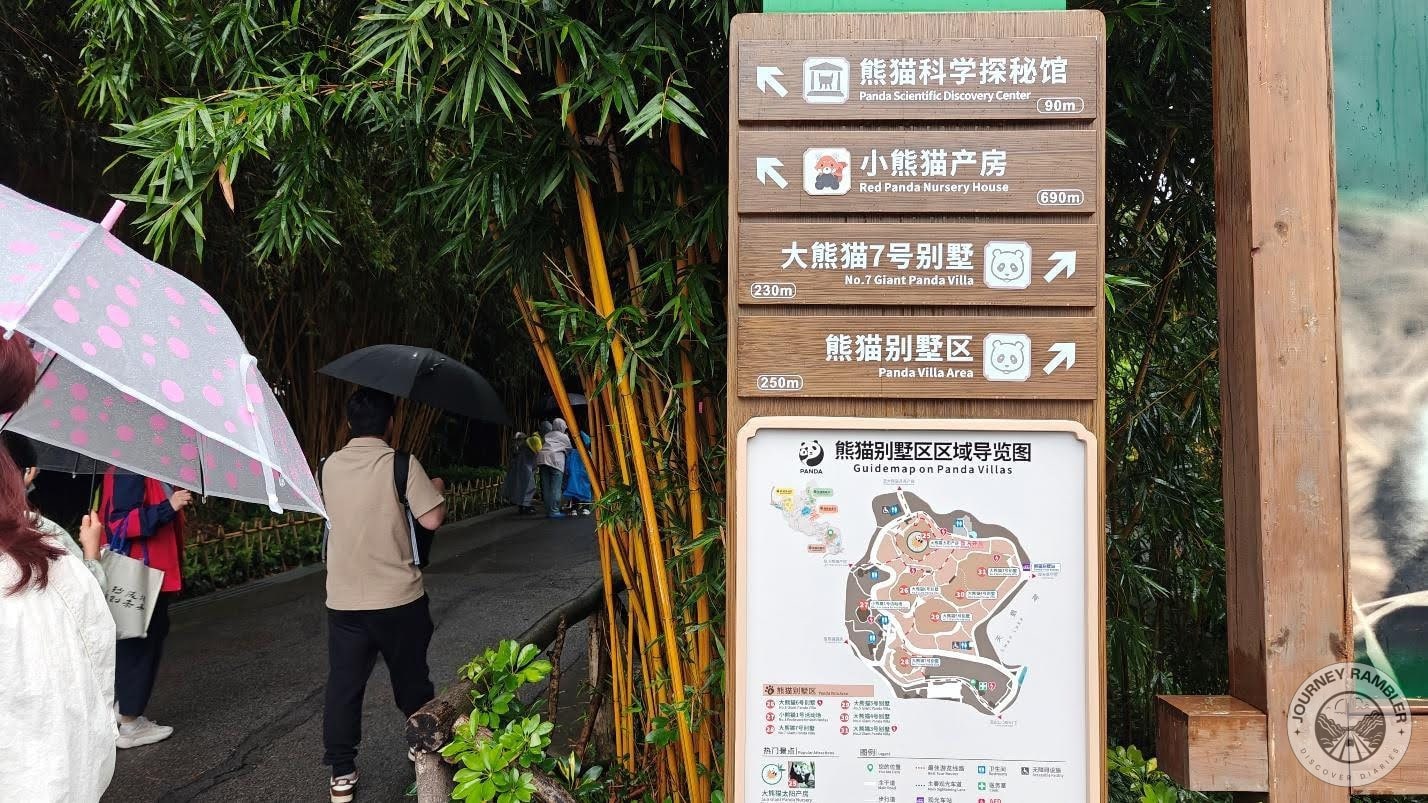
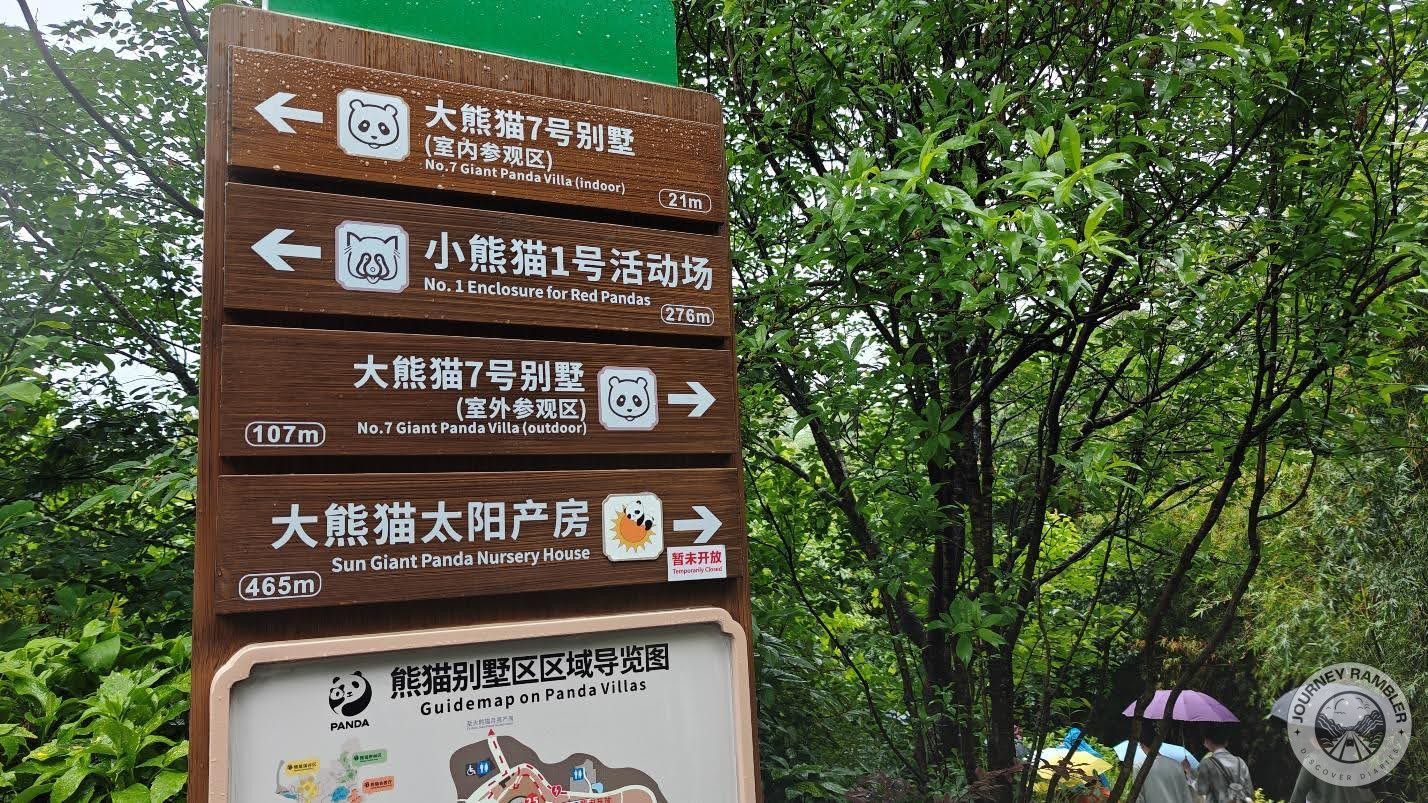
With this being a rather popular attraction here in Chengdu, a lot of the signs and guide maps here already have English translations so there’s no need for Google Lens or other translation apps (yay!). Anyway, these signs point to nearby notable attractions with the Panda Villas being the closest. Speaking of Panda Villas, there’s also a guide map of that area here that you can check out.
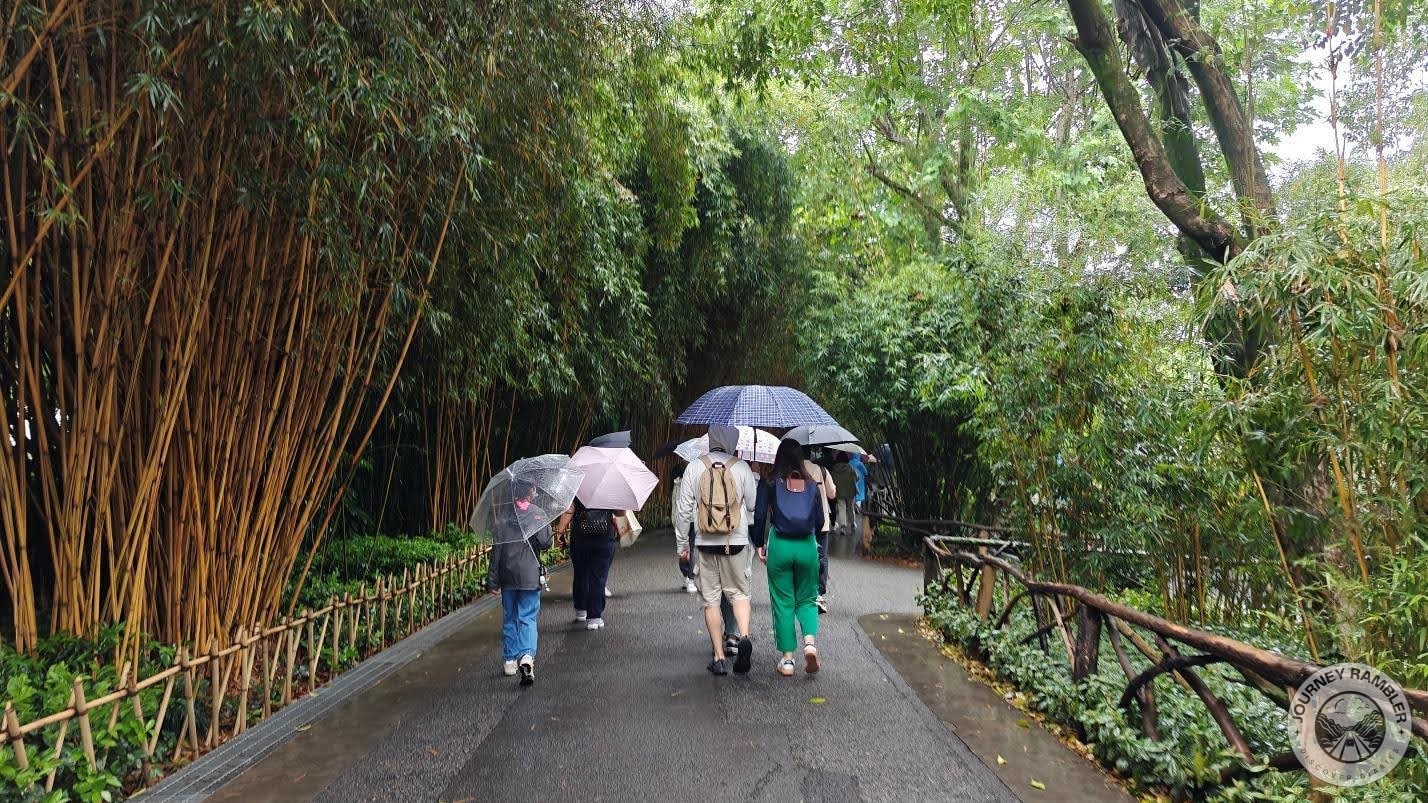
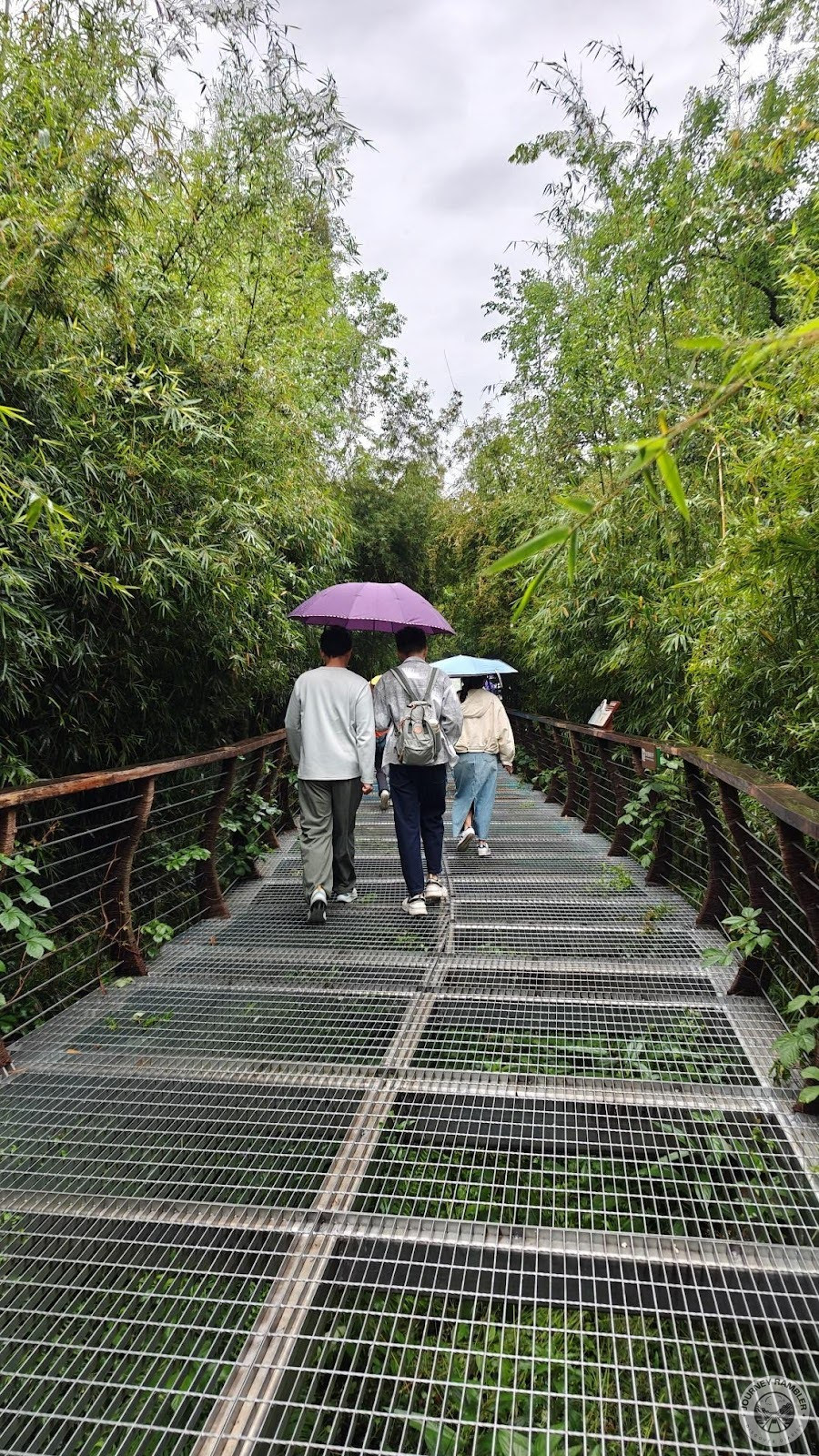
I had already heard that the trails here were rather scenic but I think the rain made it even more memorable. If I’m not mistaken, the Research Base is also considered a popular date spot for couples. And from what I saw, I kind of get why that’s the case.
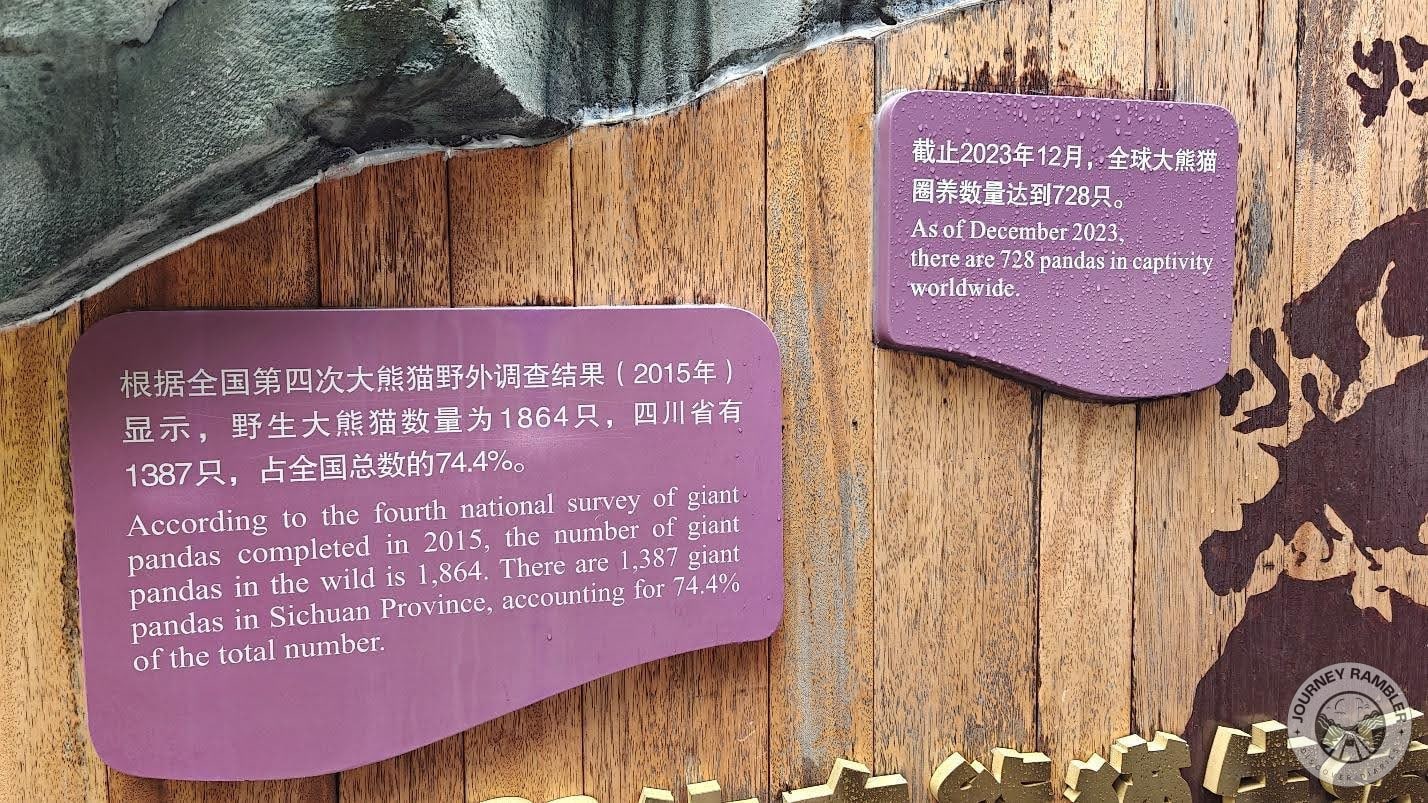
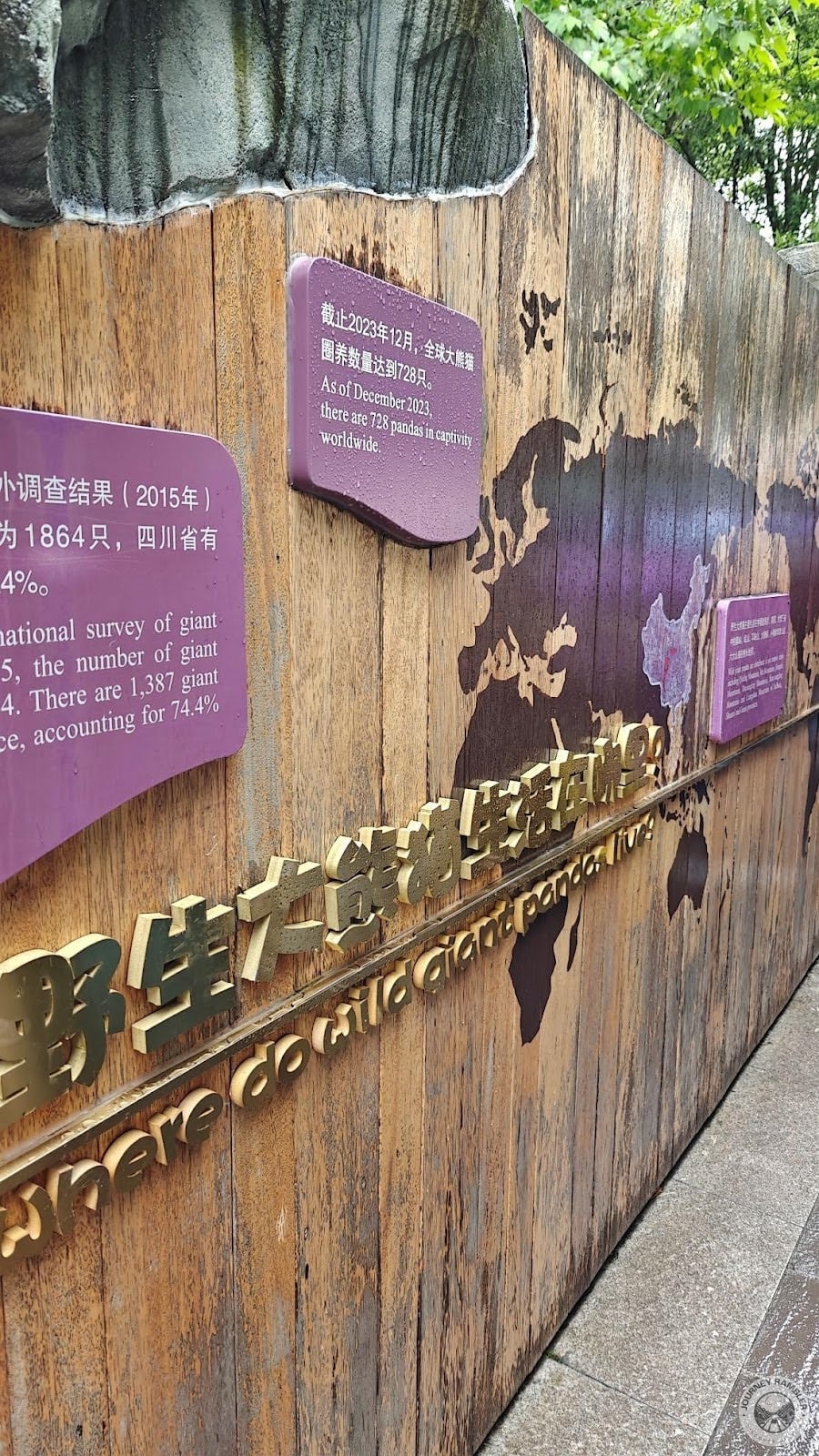
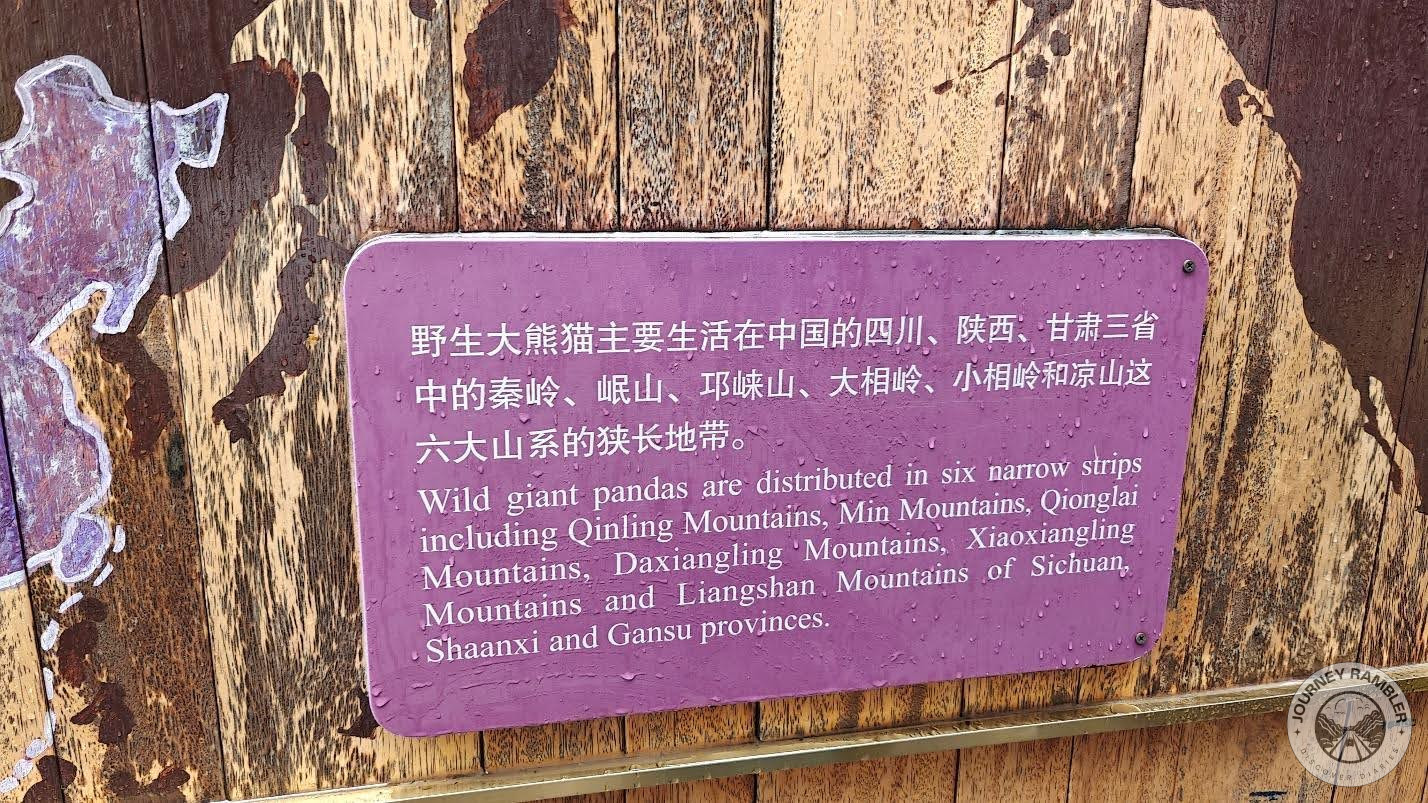
Now this is an interesting sign that features some general stats about the giant panda population. I was under the impression that the giant pandas are now thriving but it seems like they’re still pretty much in the red when it comes to their population. It’s actually crazy to think that there are probably less than three thousand of these animals in the world in total.
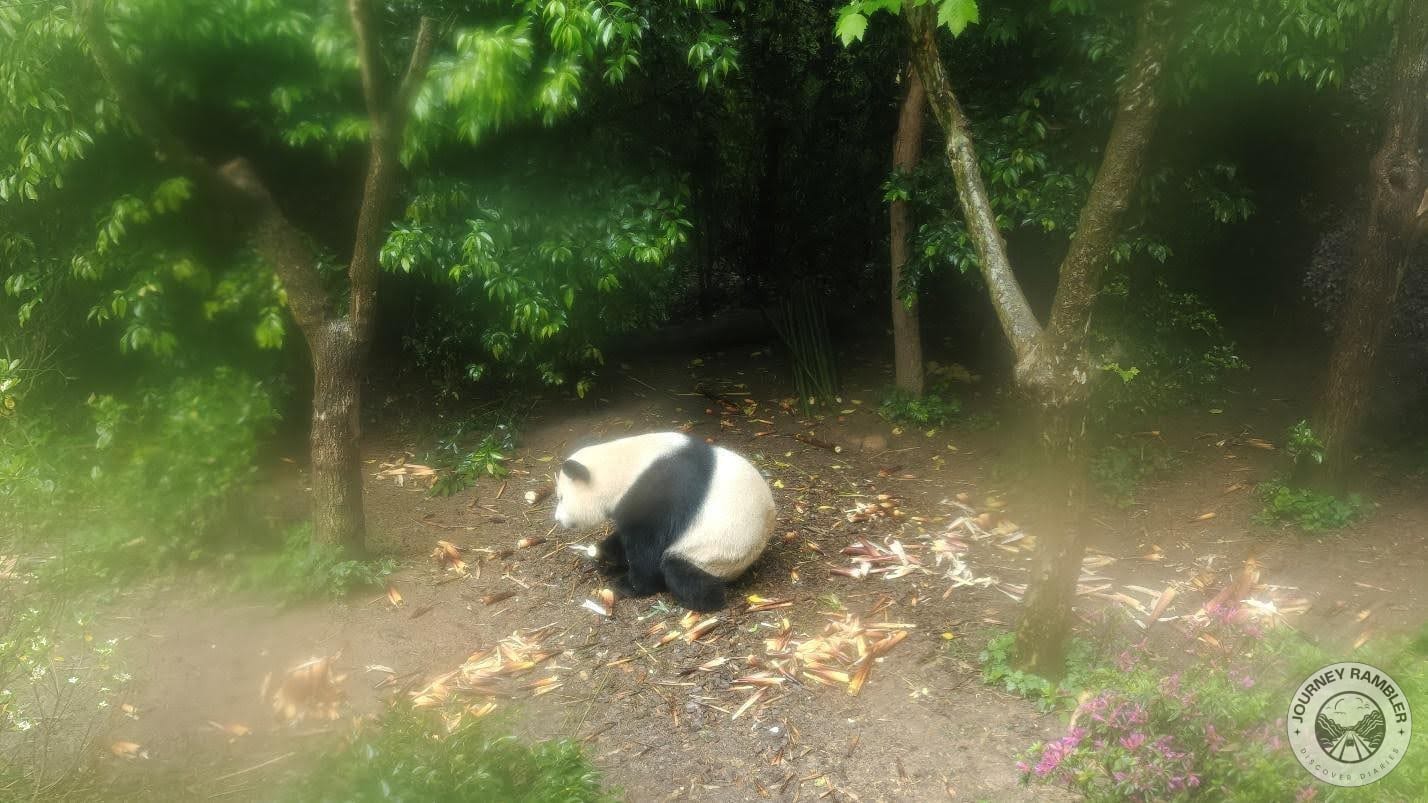
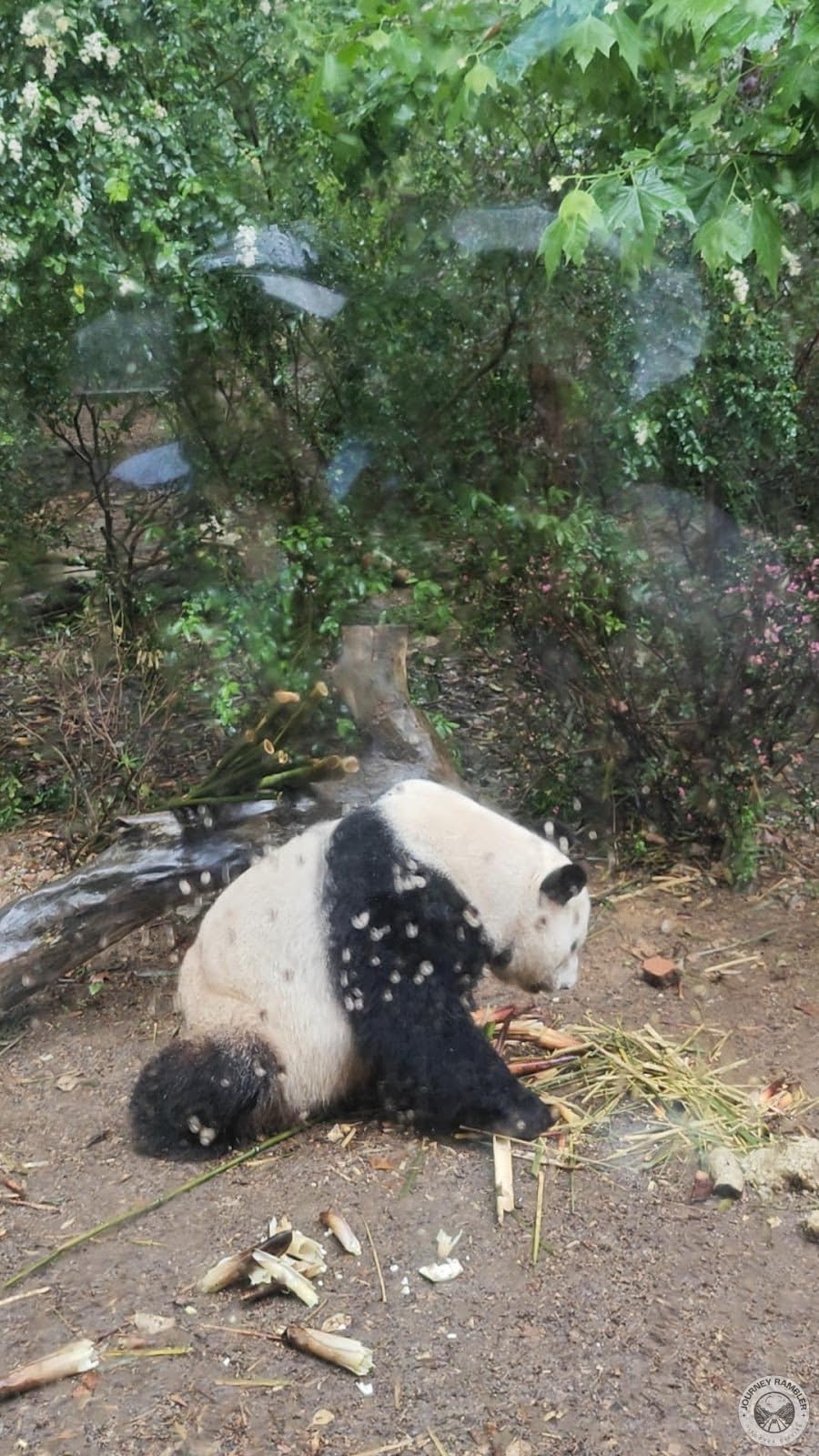
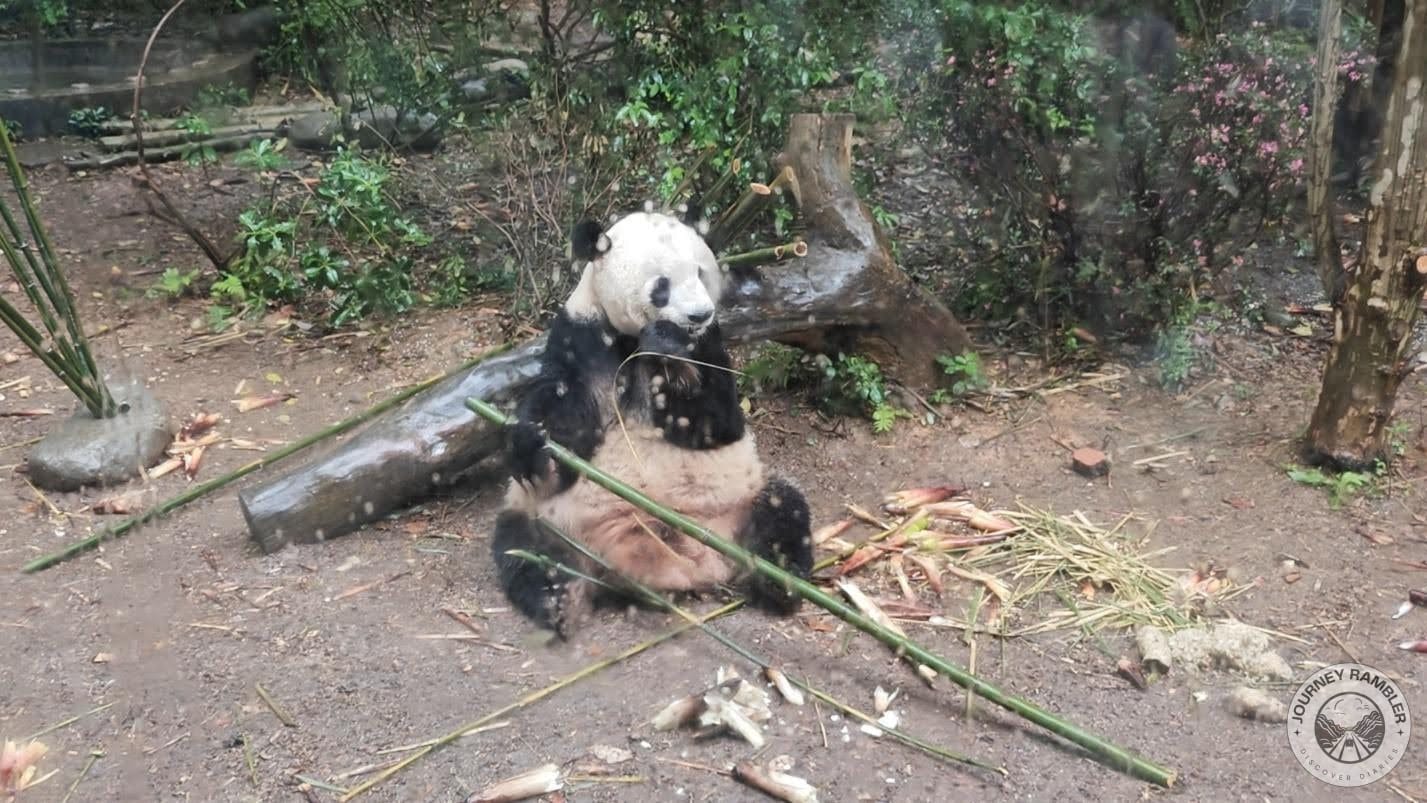
I finally got to the Panda Villa and this was the first panda that I saw there. It looked like it was enjoying its meal as it was just recently fed by the caretakers. The enclosure was behind glass and paired with the fact that it was raining, the shots I took ended up looking kind of blurry.
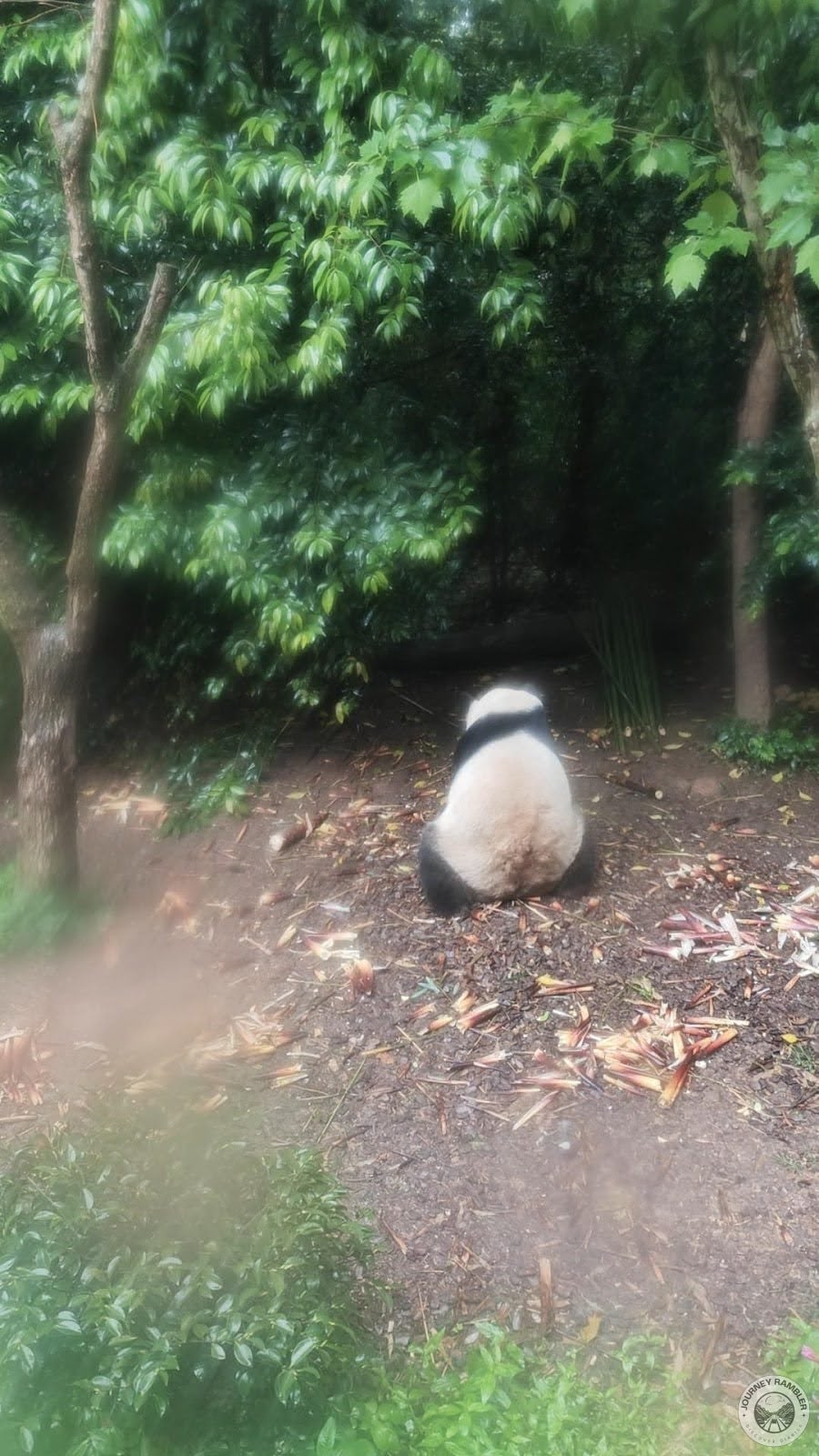
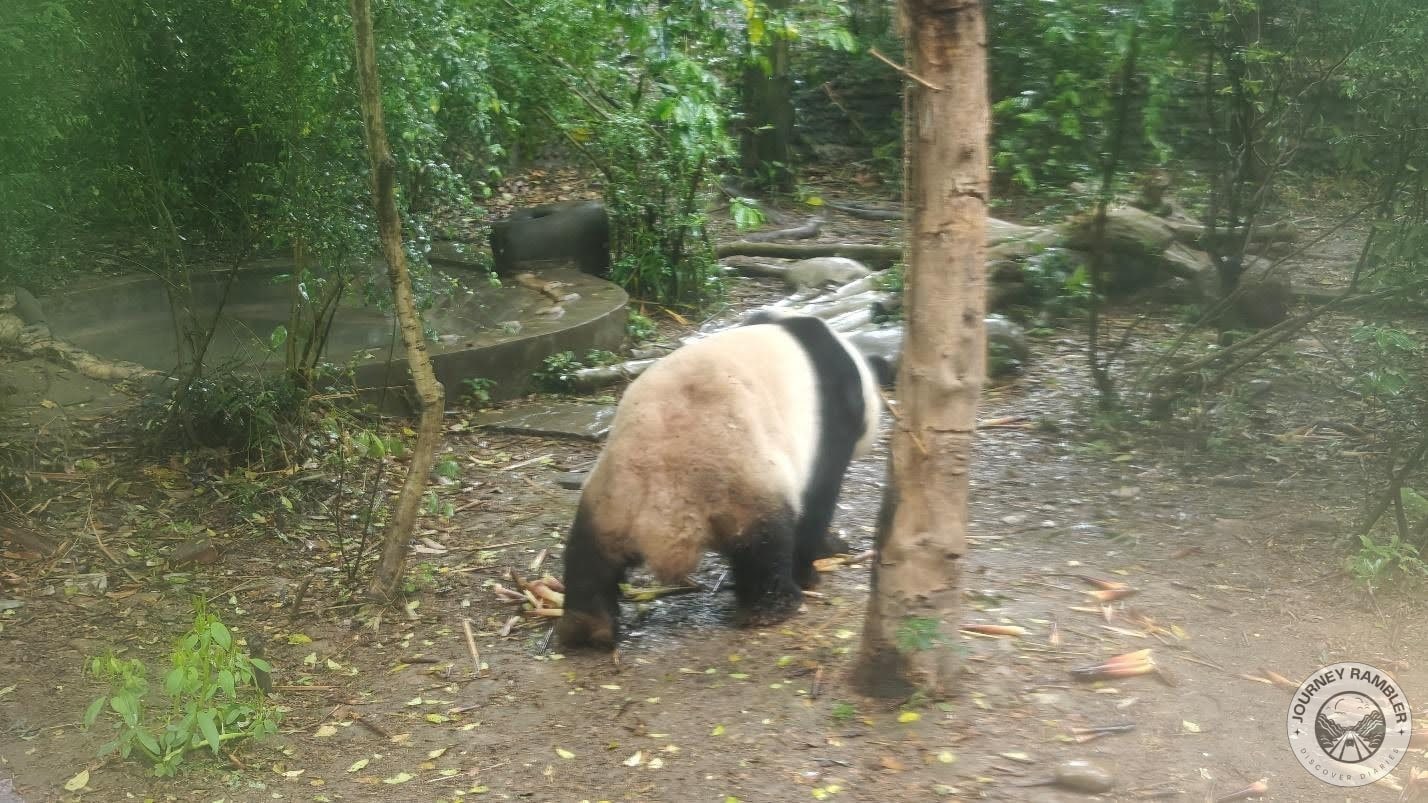
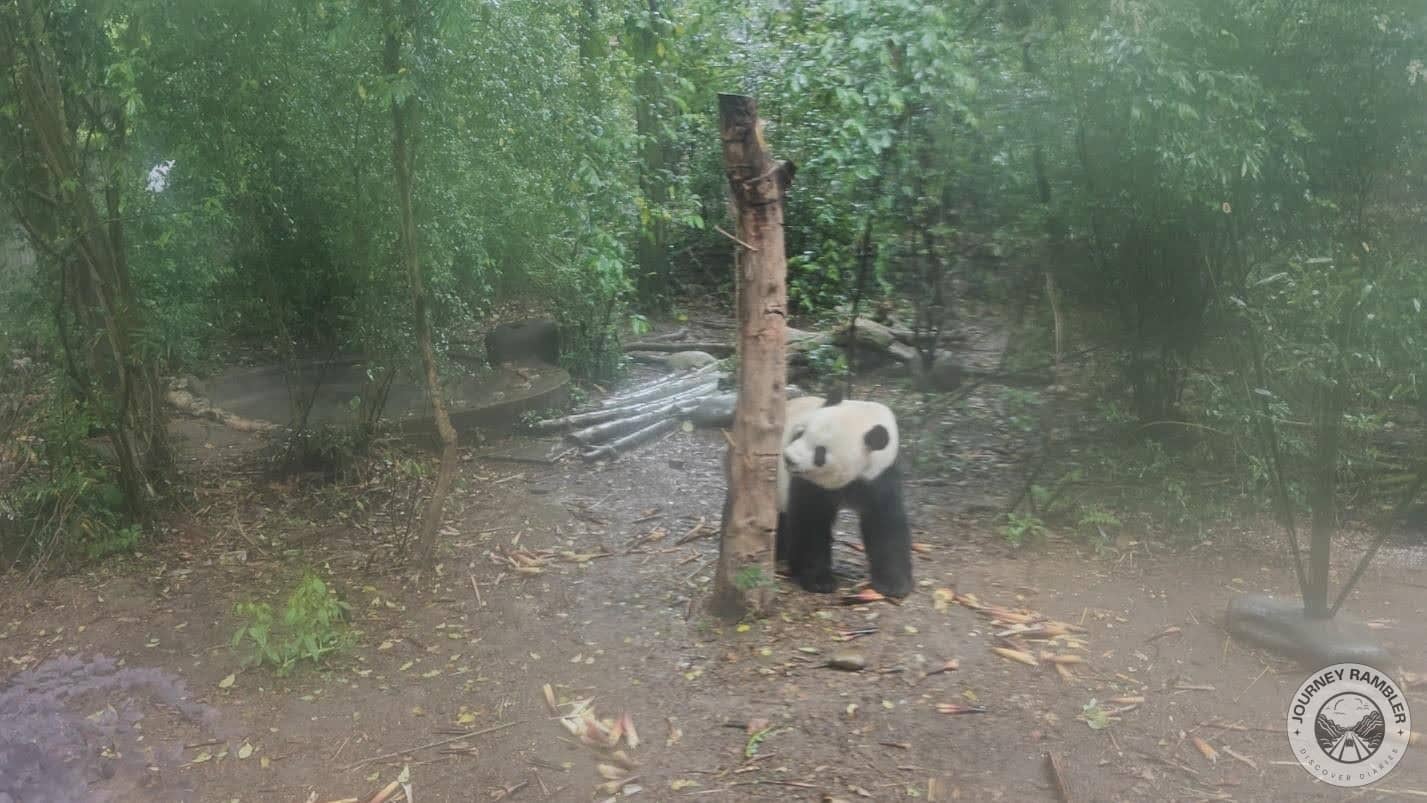
One thing that stood out with the pandas here was that they seemed really laid back. I found out that this relaxed attitude was mainly due to their diet. Bamboo is a low-energy food and so they end up lounging and sleeping for most of the day so that they can conserve whatever energy that’s left from what they ate.
Possibly the most interesting thing about giant pandas that I learned while researching about them is that their diet affects their reproductive activity. As I said earlier, bamboo is a low-energy food that also comprises 99% of their diet. The thing is, pandas need energy to mate. This means that they’ll need plenty of food if they want to bear offspring (especially the females).
Another interesting bit of information about pandas is that they reproduce best when the bamboo they’re eating has high flavonoid concentrations. And you know where you can find bamboo with high concentrations of flavonoids? Yup! The Sichuan region’s (which Chengdu is a part of) bamboo has one of the highest concentrations of these plant compounds and it’s no wonder why it has the highest population of giant pandas in China (and the world).
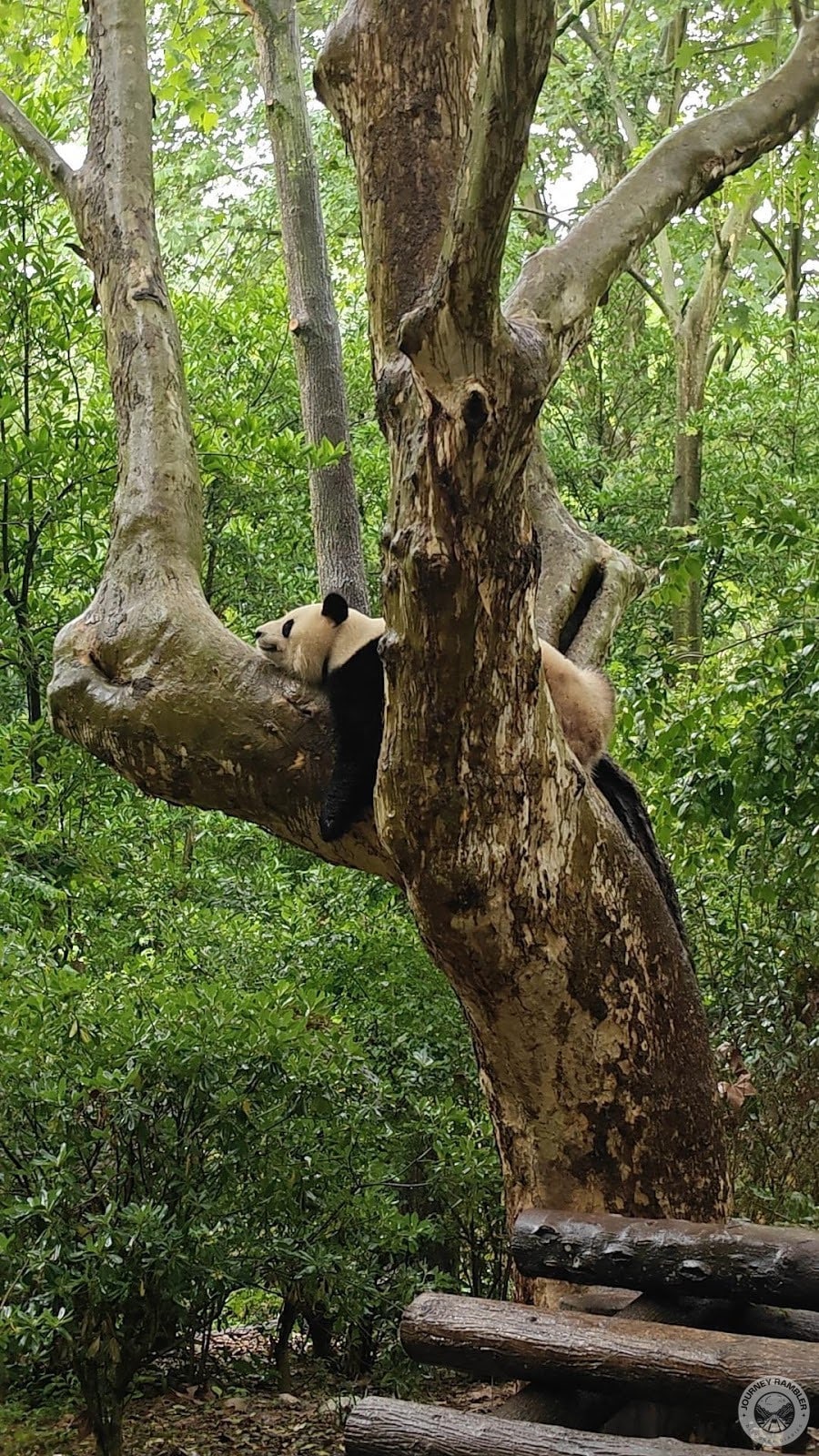
Here’s a panda that has likely just finished eating their meal for the day. I was kind of curious as to why they preferred lounging in trees and I realized it might be a defense mechanism of theirs. True enough, I came across several sources that talked about how despite their size, pandas actually still have natural predators. Considering this, it’s kind of understandable why this guy is lounging up this tree.
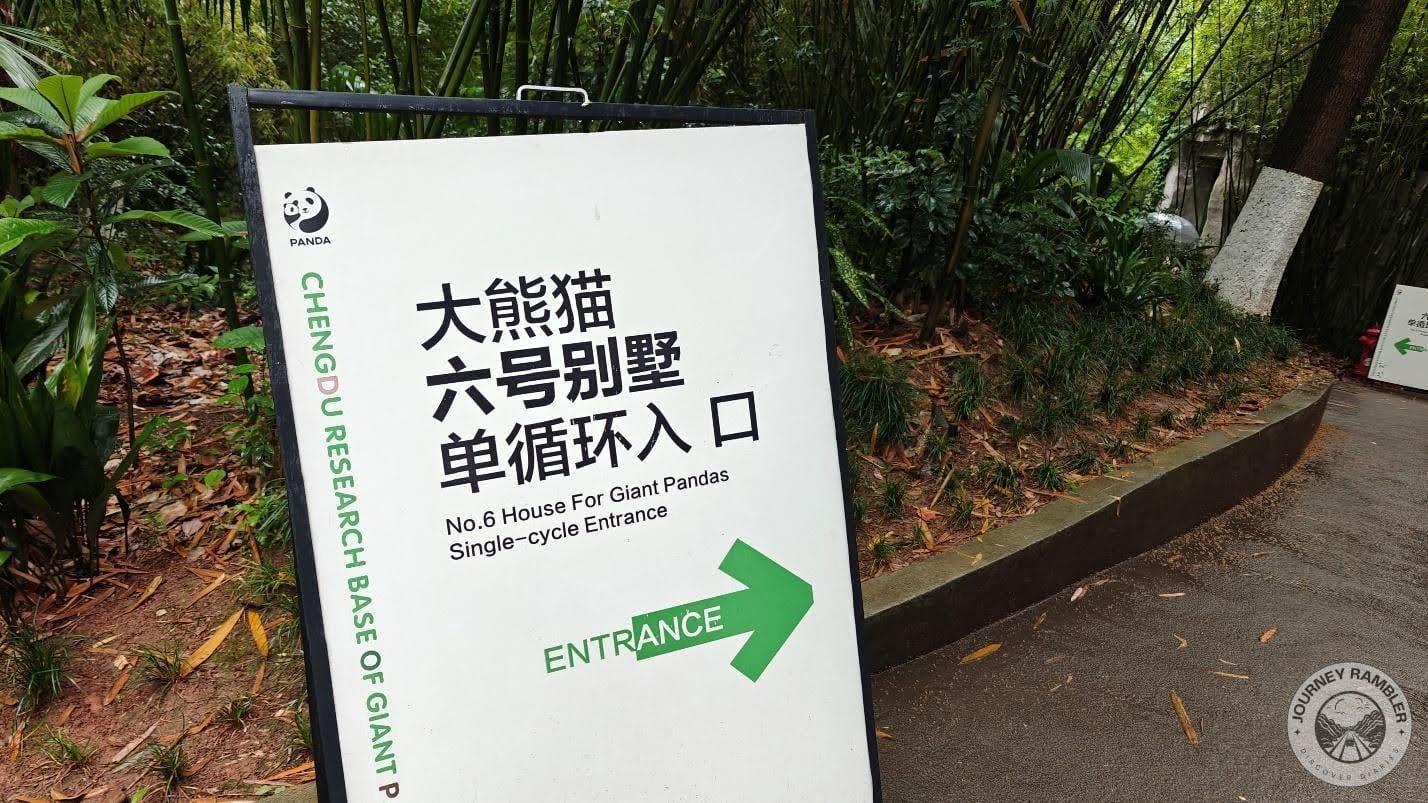
Everyone is queuing to see the star panda named “HuaHua.”
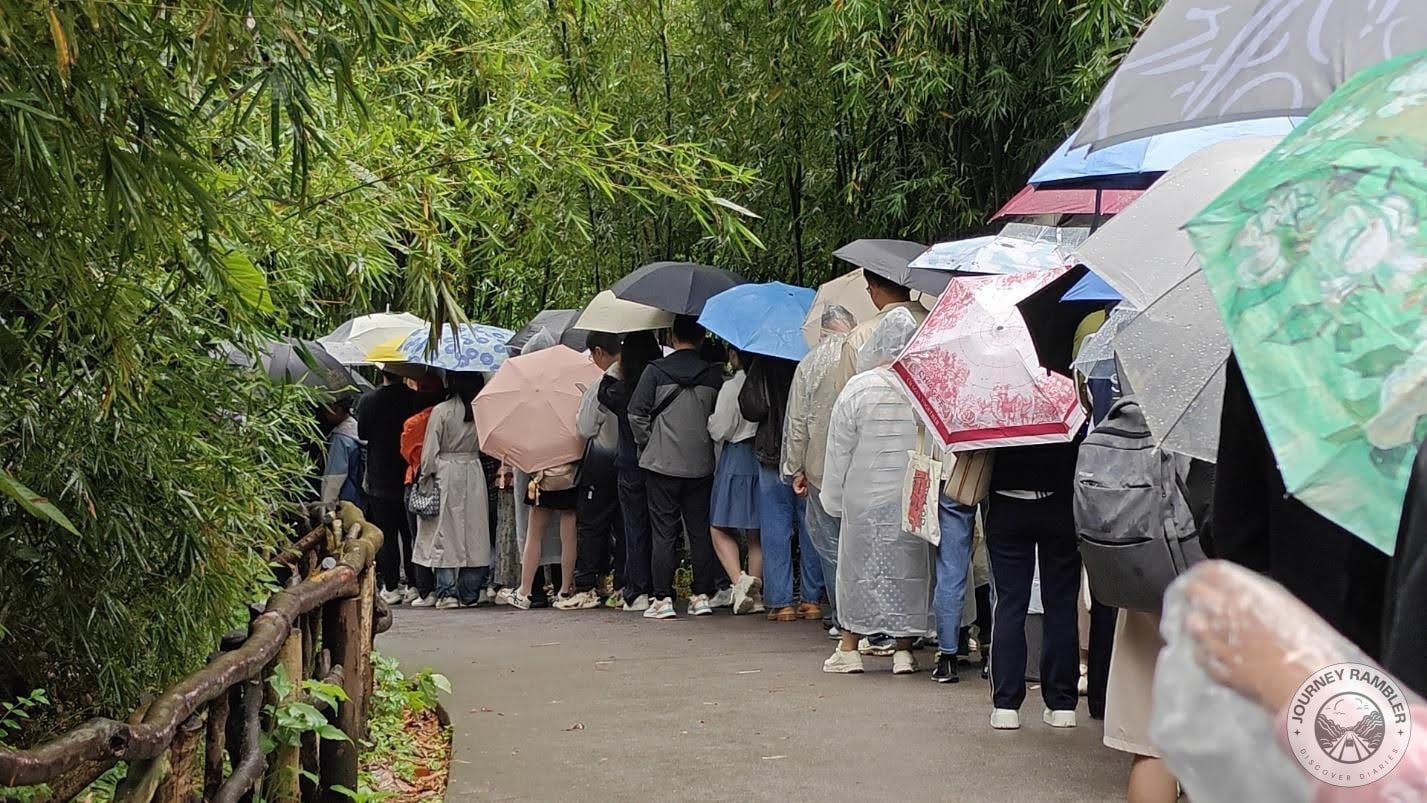
So if you’re wondering what these people are lining up for, it’s to see quite possibly the most famous giant panda in the Research Base: Hua Hua. Officially known as He Hua, this giant panda is the proverbial flower in this oasis in the city. At first I also wondered what the fuss for this panda was all about.
I mean, the line was just so long and it seemed like it wasn’t moving at all. Remember when I said that there weren’t that many people in the area near the South Gate earlier? Well, they were all actually here. I was even informed that this line could have gotten even longer if it weren’t for the weather.
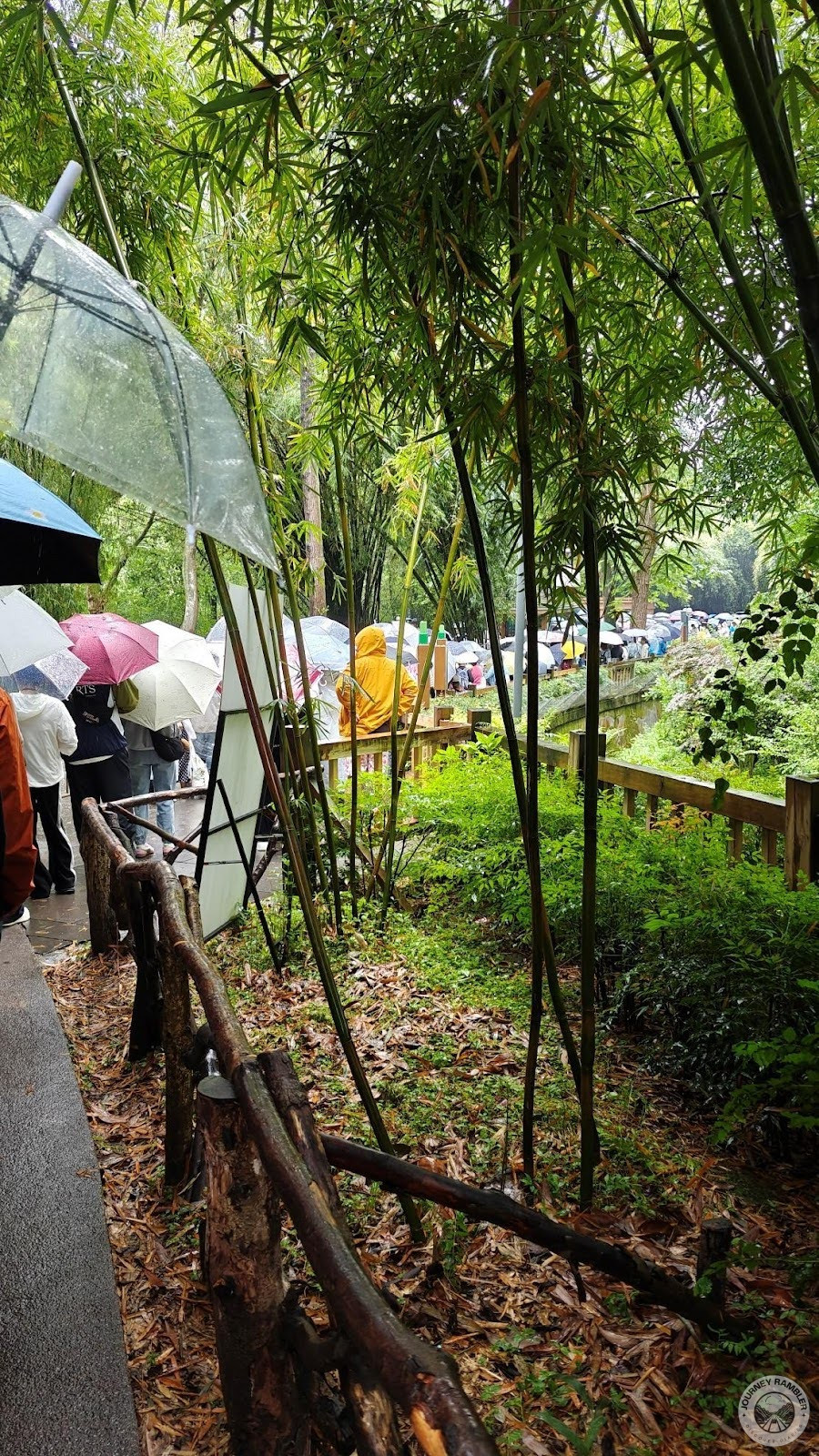
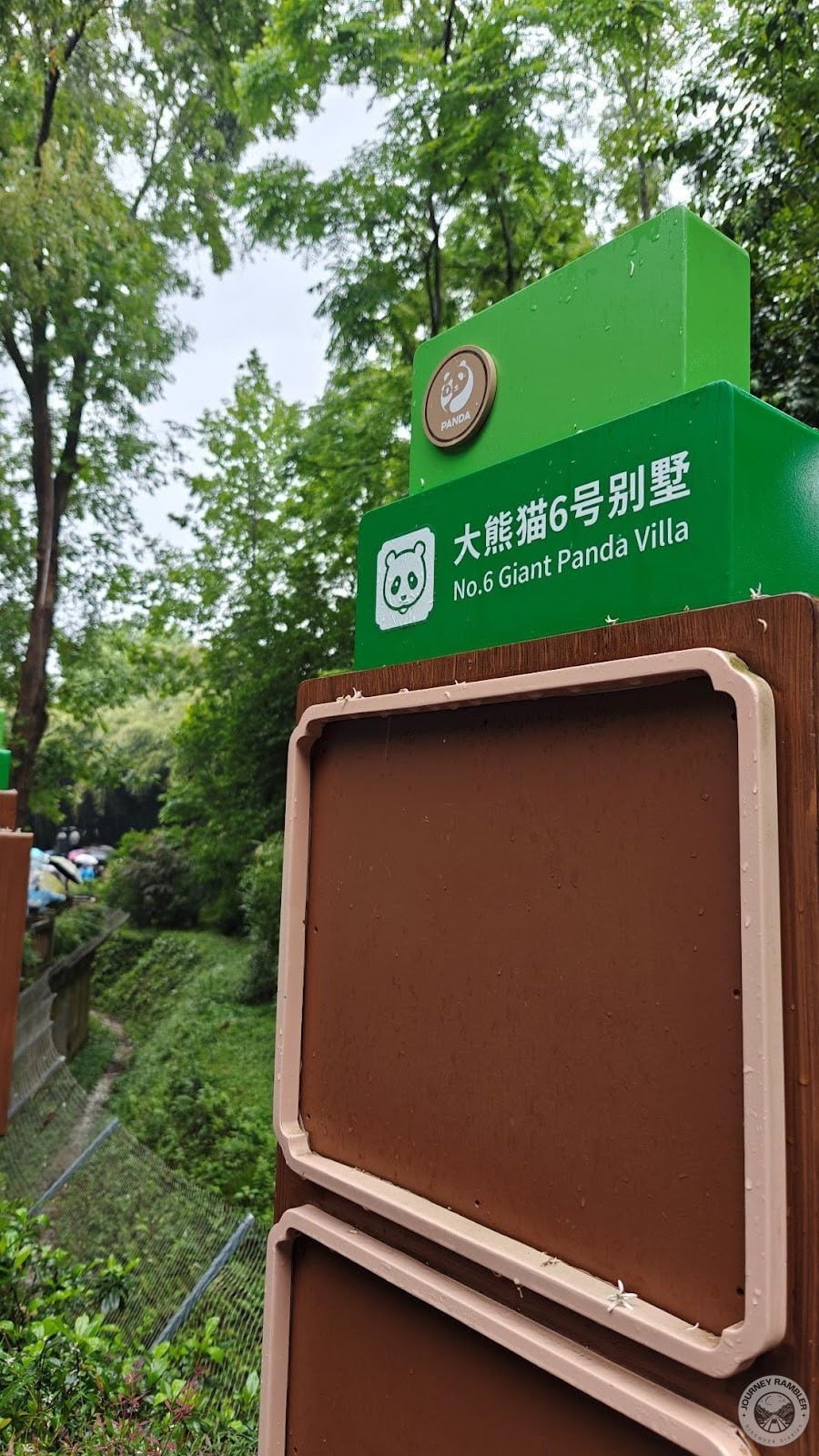
So Hua Hua is housed here at the No. 6 Giant Panda Villa. These are really just the enclosures (one of which you saw earlier), that houses the giant pandas and mimics their natural habitats. Aside from reproductive purposes, housing the animals in these villas allows for better control of their food intake (which again should help improve their rates of reproduction).
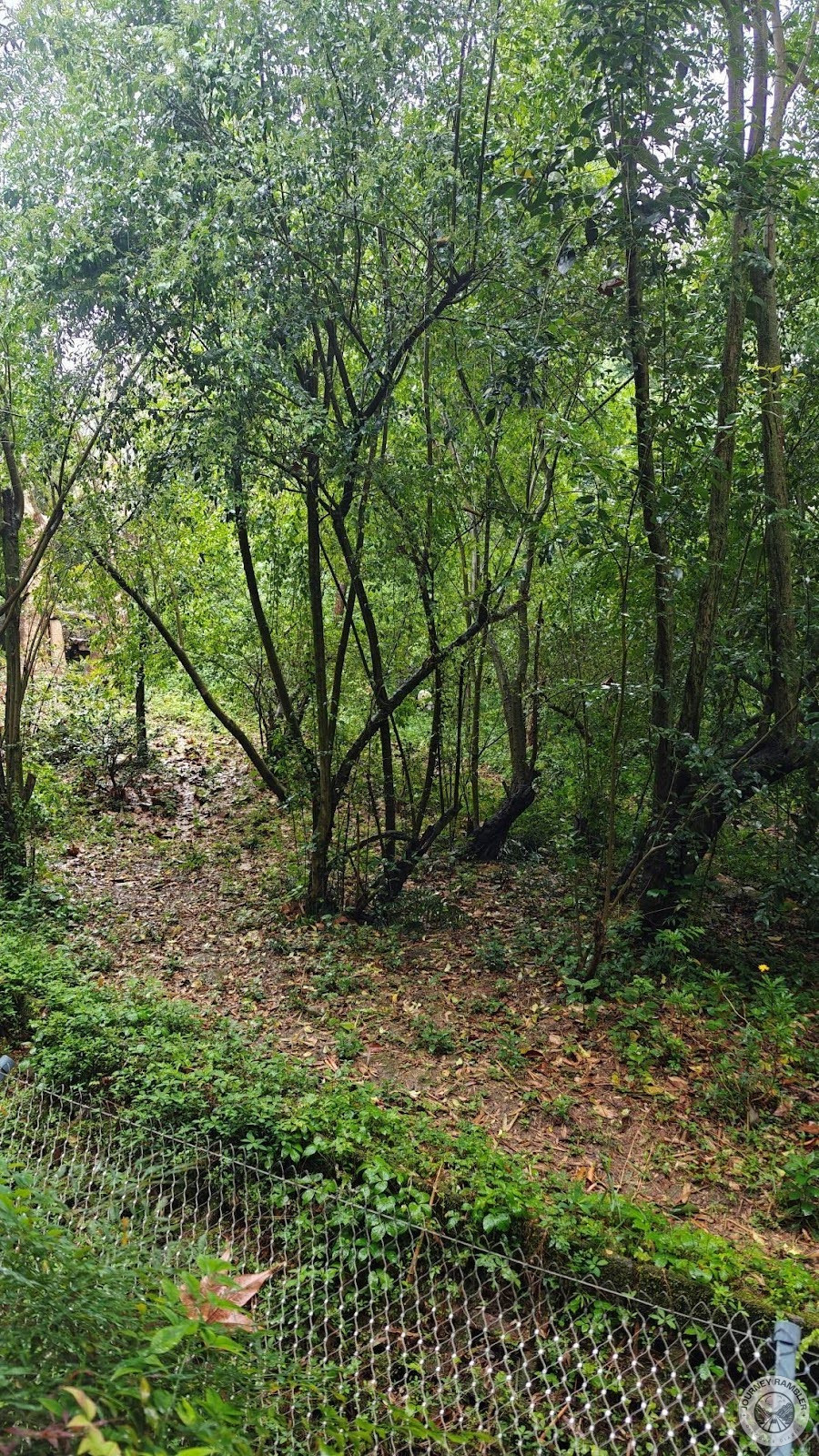
The enclosures are relatively large and they’re drastically different from the ones you’ll find abroad. These hold a lot of the trees and plants that you’d typically find in the giant pandas’ natural habitats. More importantly, these don’t have any of the animal’s natural predators (though they still opt to lounge in trees likely due to habit).
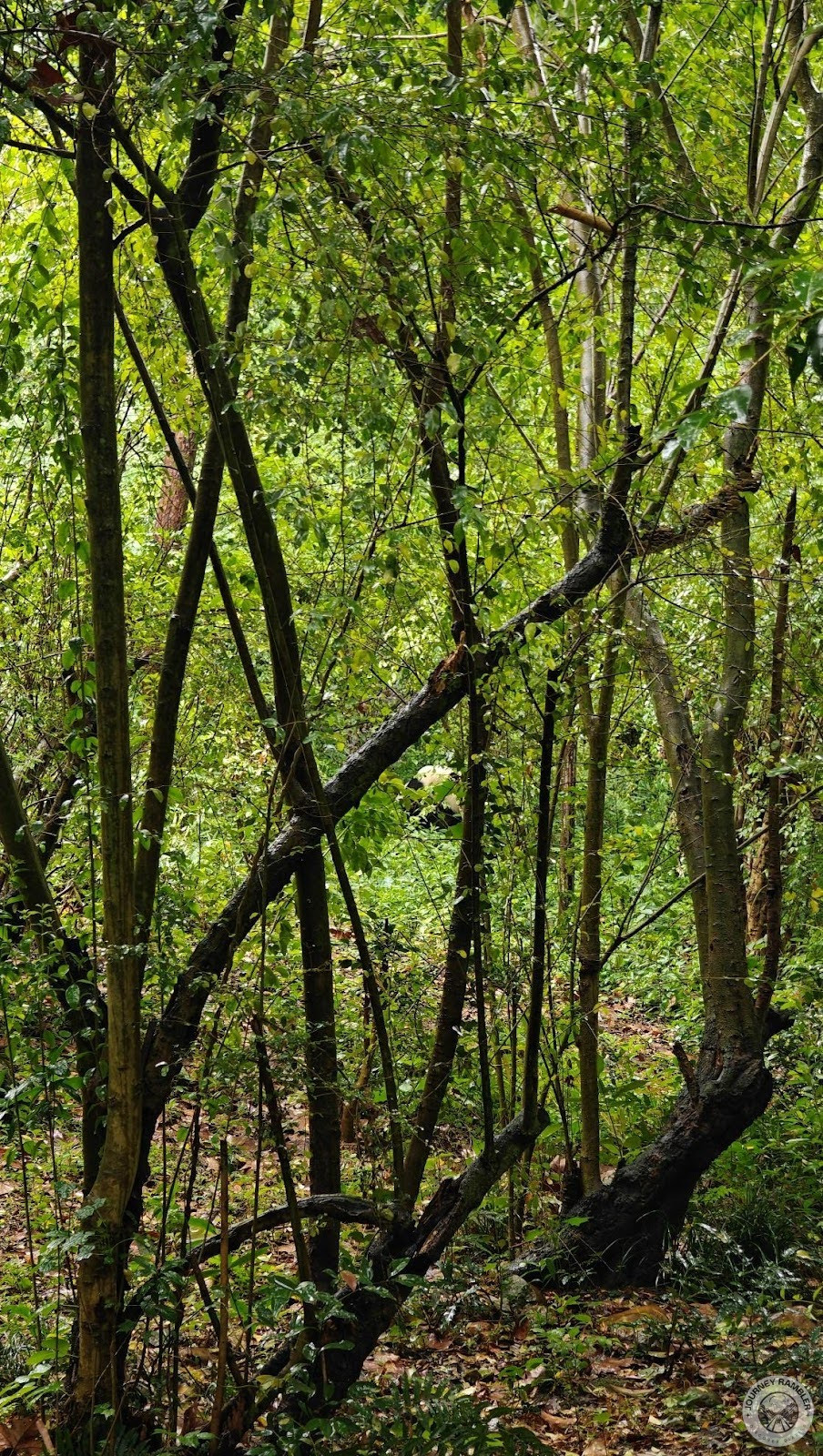
This is HuaHua Sister, named “Heye.”
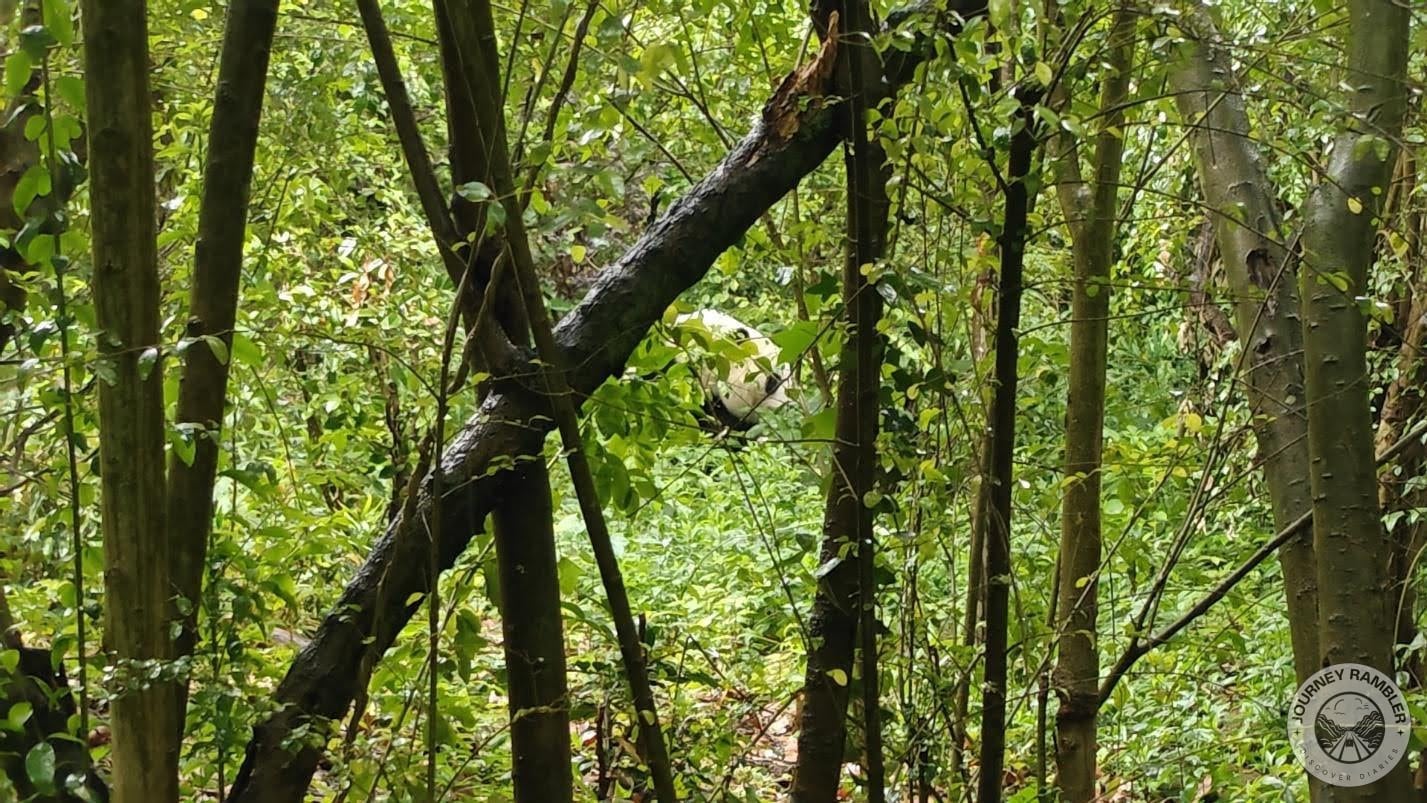
As I was waiting in line, I then caught sight of a panda off in the bushes. Could this possibly be Hua Hua? Well, it turns out this panda isn’t Hua Hua.
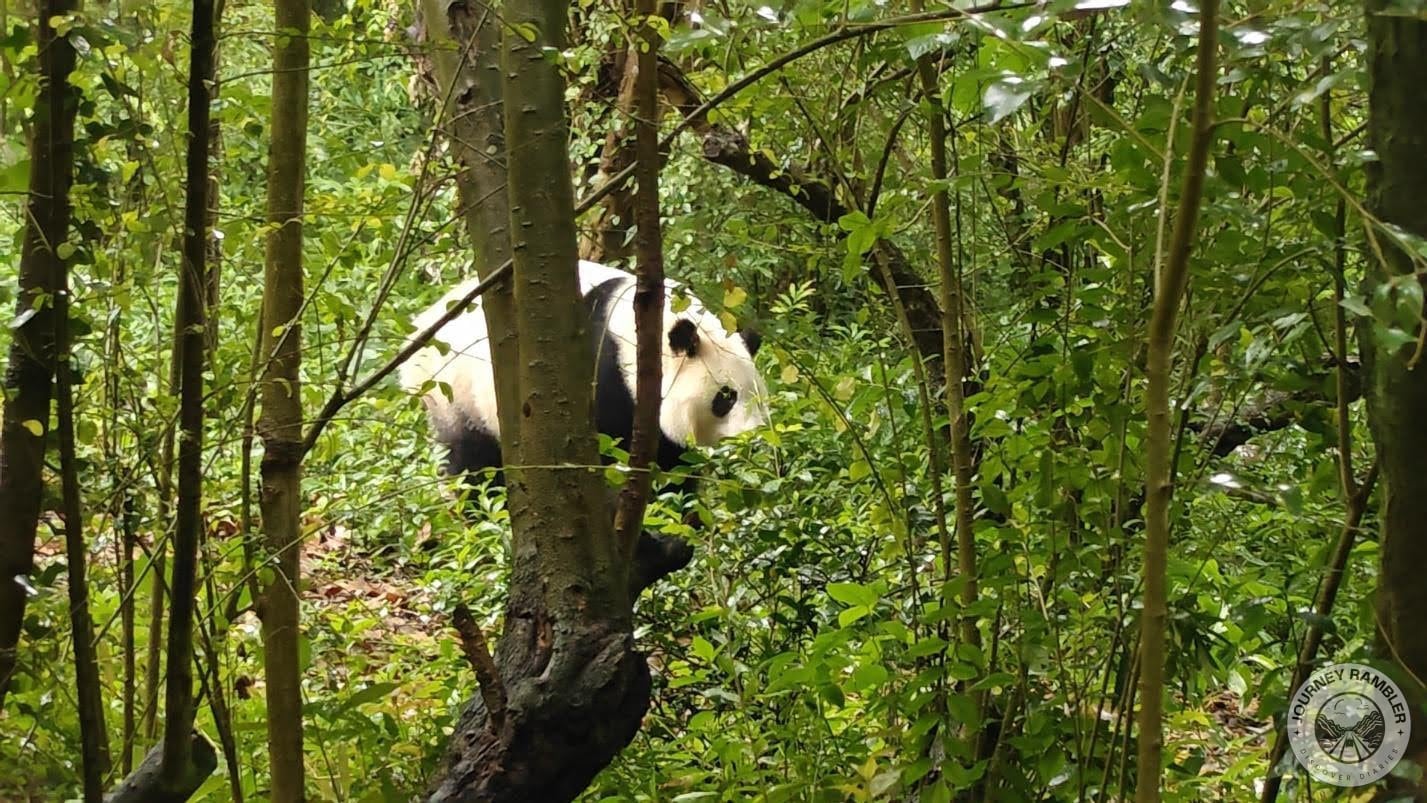
Rather, this is actually Hua Hua’s twin sister, He Ye. Though they might be twins, they’re actually very dissimilar though also easy to distinguish. To differentiate the two, you’ll just need to look at their size. He Ye is much larger and is actually much more active than her sister. As such, you’ll usually find her straying away from the main play area of their villa like what she’s doing in the image above.
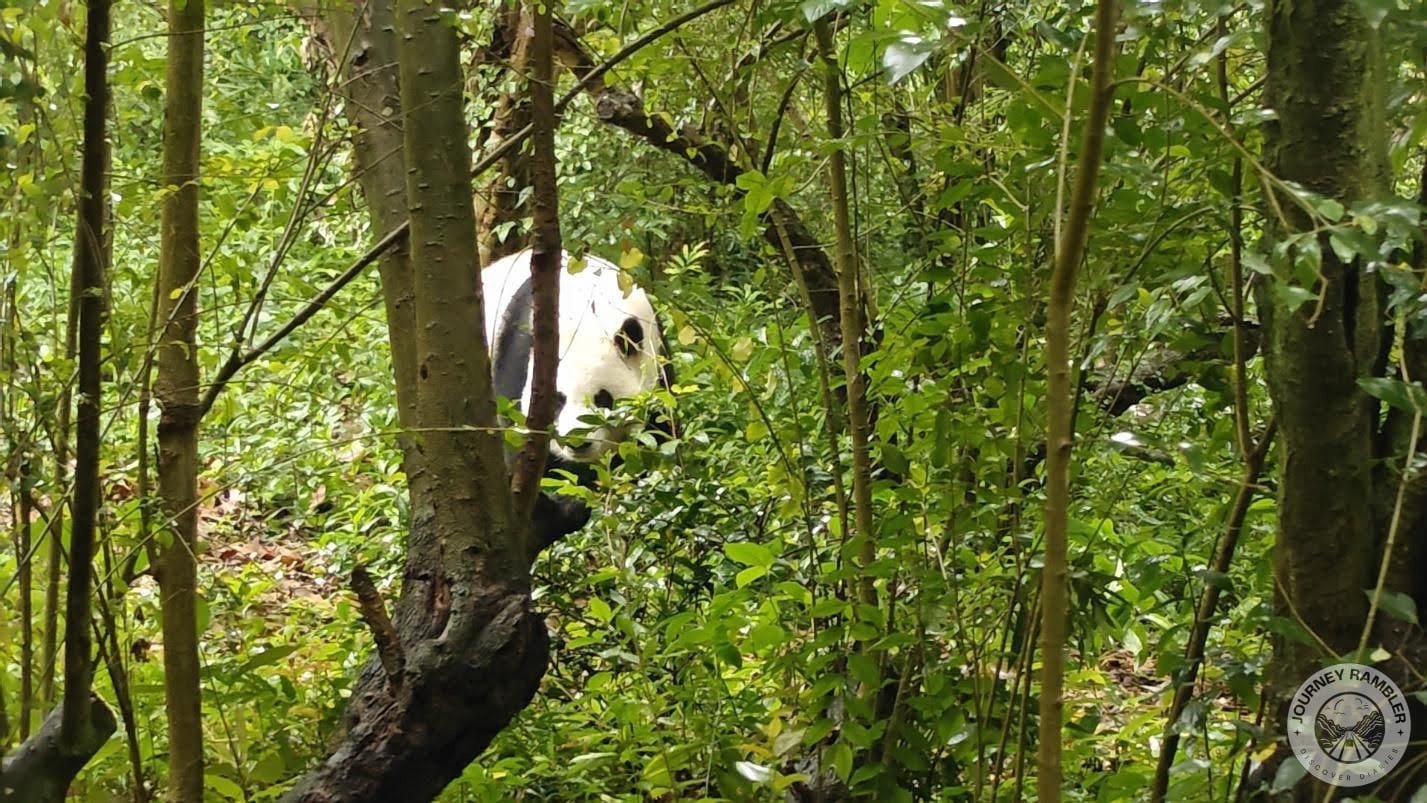
I couldn’t get a proper shot of He Ye’s face because of the brush and also since she was moving around a lot. She really is a lot more active even when compared to the other panda that I saw at the start of my visit.
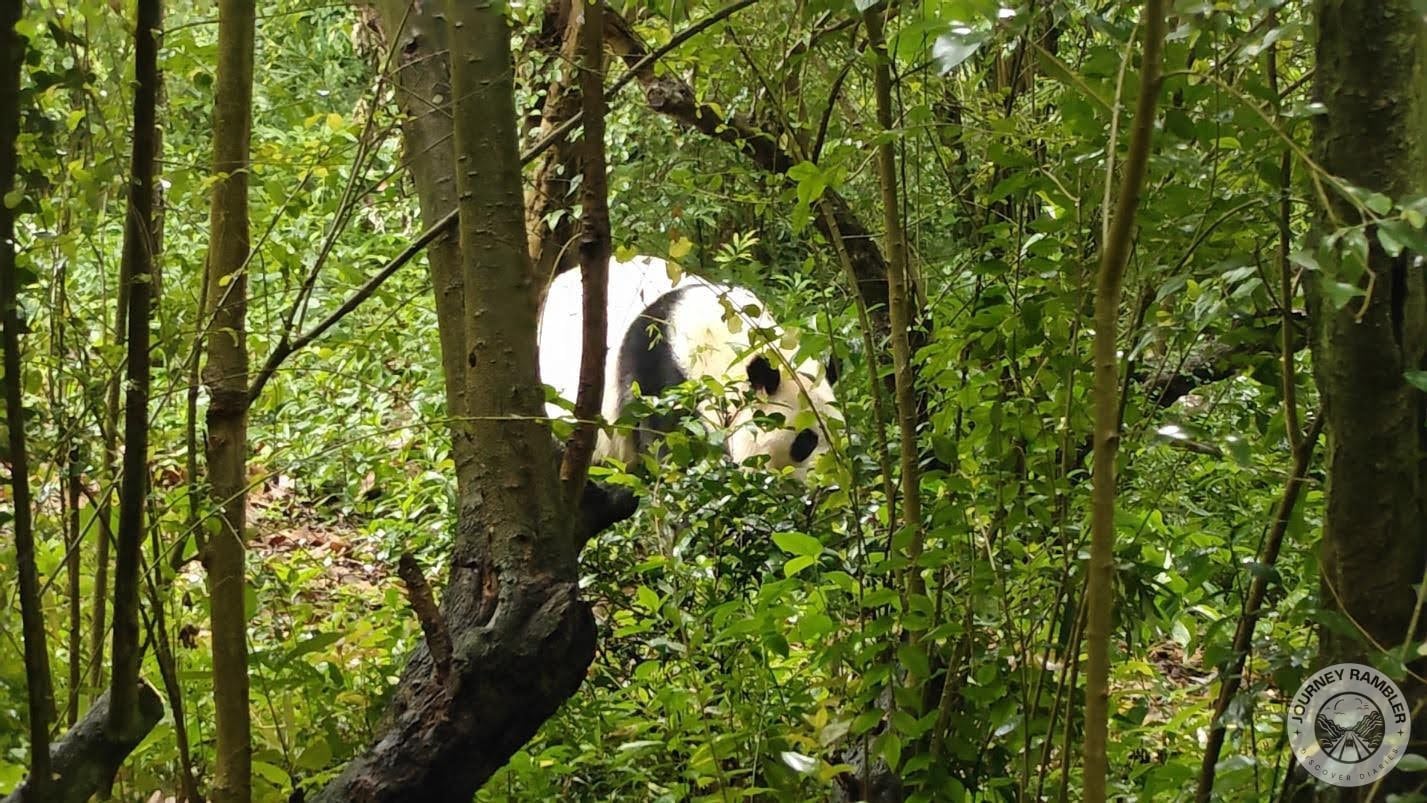
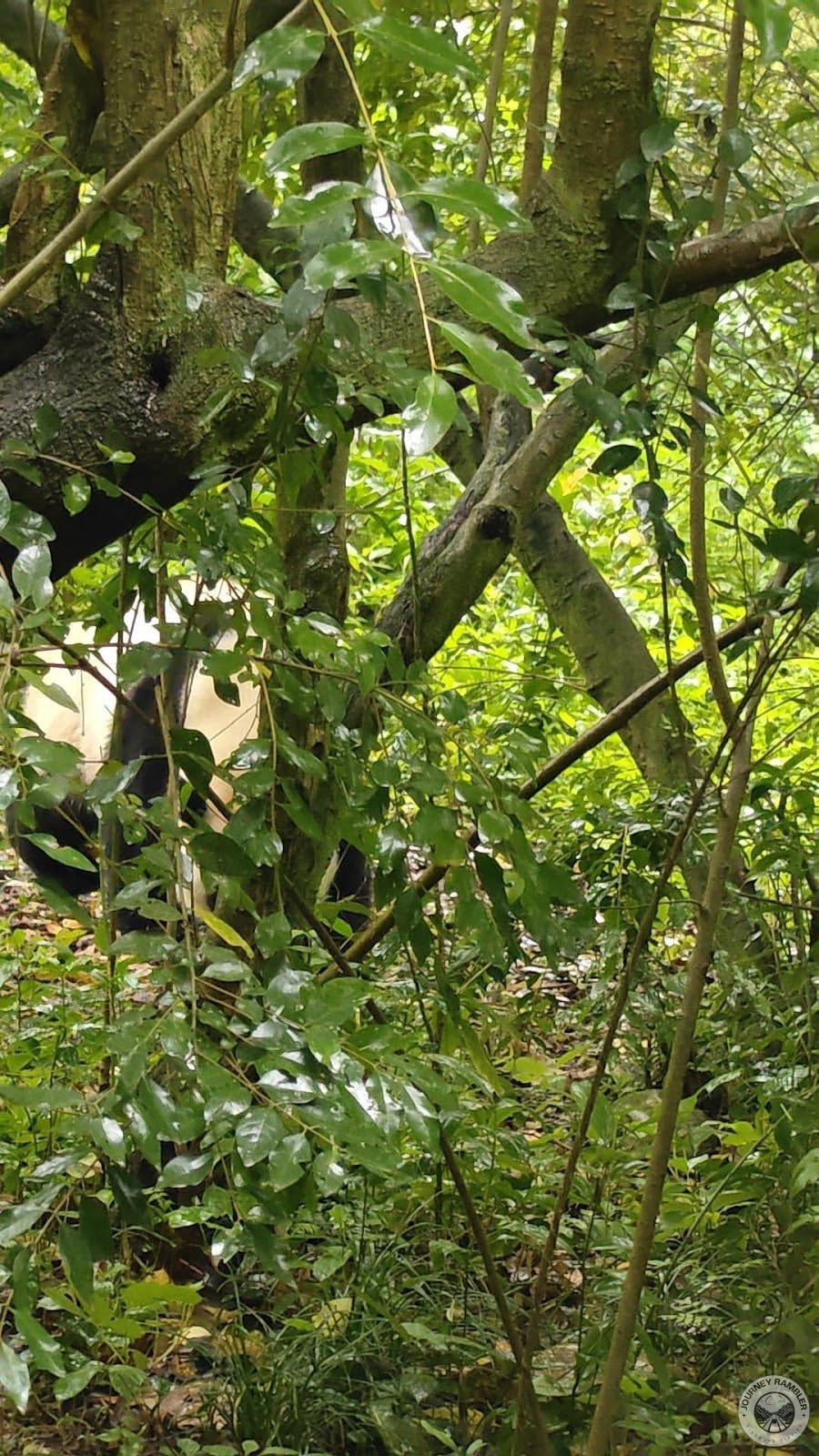
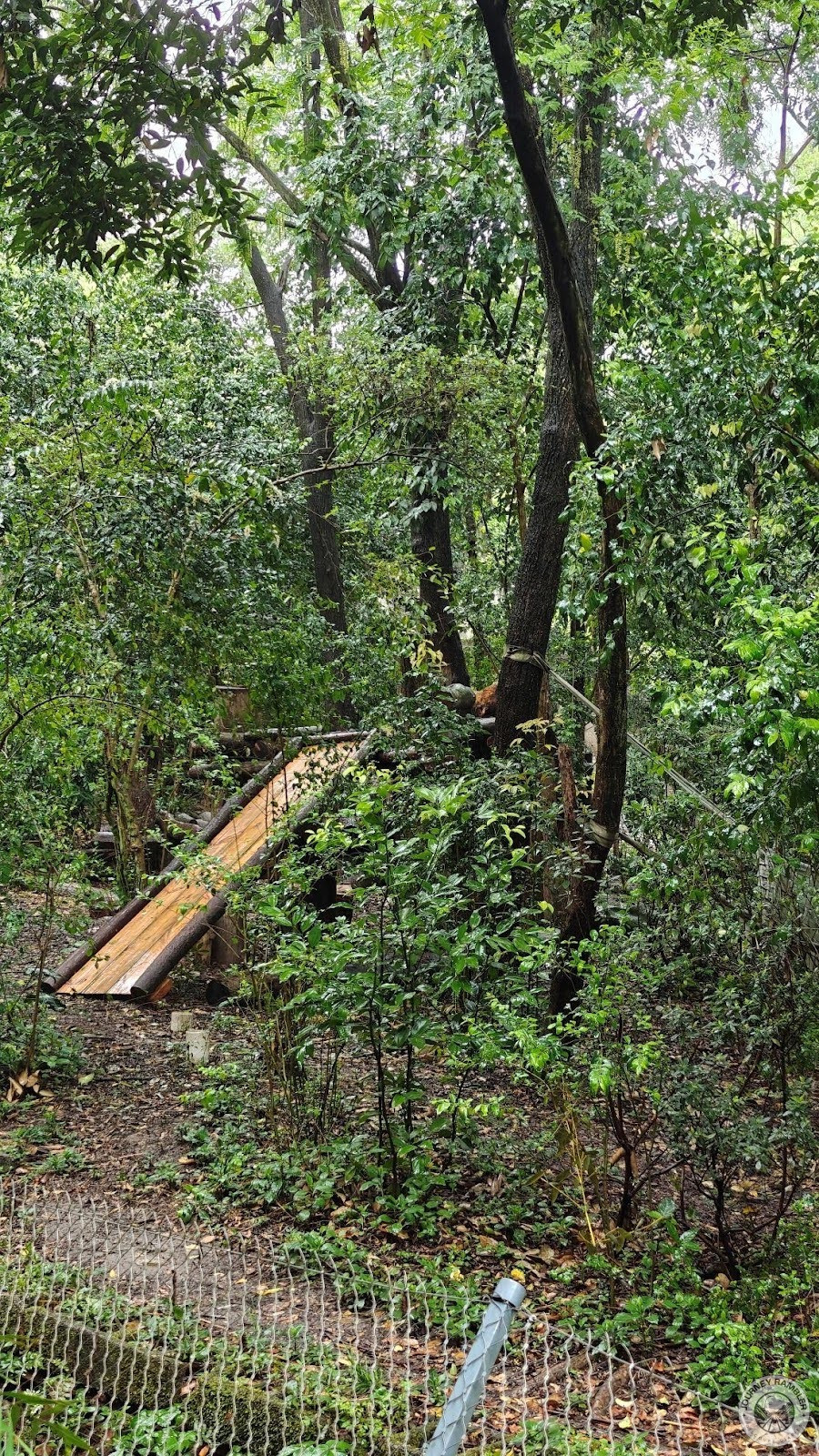
I’m finally at the play area of No. 6 Panda Villa. Will I finally get to see Hua Hua? The line was still moving slowly and I was actually getting a little impatient that I still couldn’t see the giant panda that everyone else was dying to see as well.
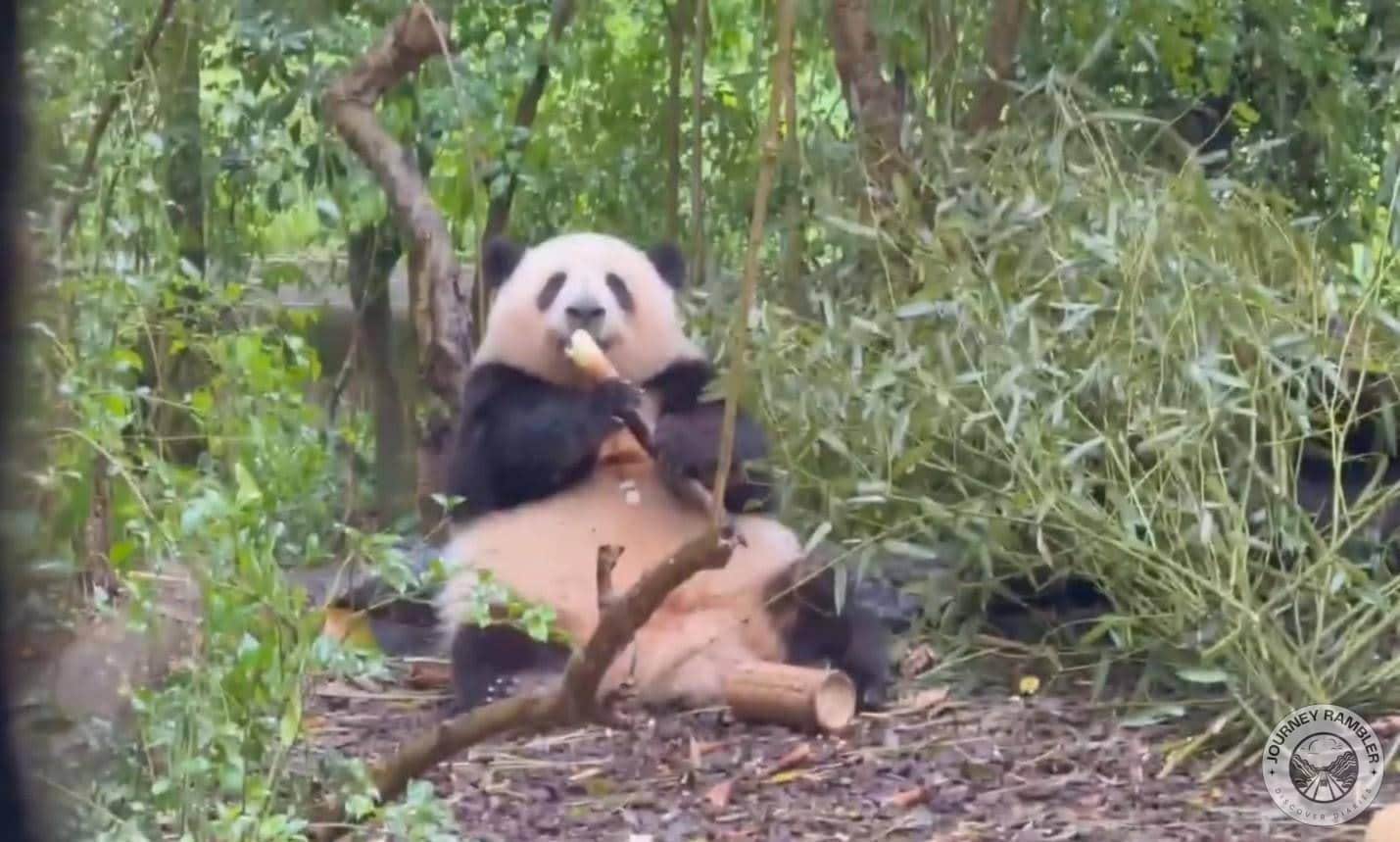
After what seemed like an eternity, I finally got to see Hua Hua in all her cute glory. She was still eating when I passed by and it seemed like she was curious about the attention she was getting from all these people passing by. Now a big reason for her popularity is that she’s fairly unique among other giant pandas. First, her reach is much shorter due to her short forearms. Other features that make her unique is her small size and generally rounder appearance.
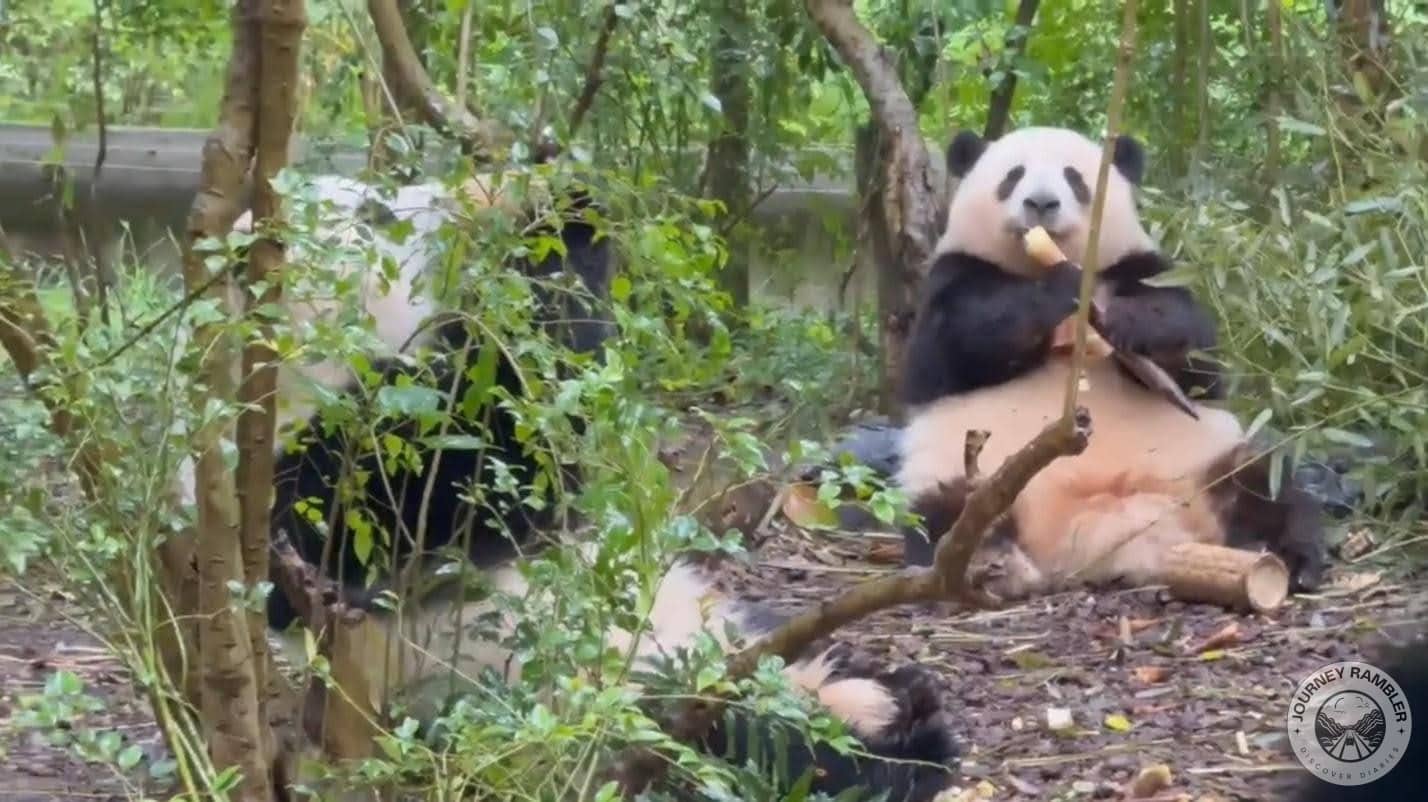
It’s not quite evident in the image but the size disparity between her and her sister He Ye is actually quite drastic. You can check pictures online and they kind of look more like mother and daughter. Anyway, Hua Hua is so popular that I’ve heard most people just visit the Research Base for a glimpse of her and then quickly leave.
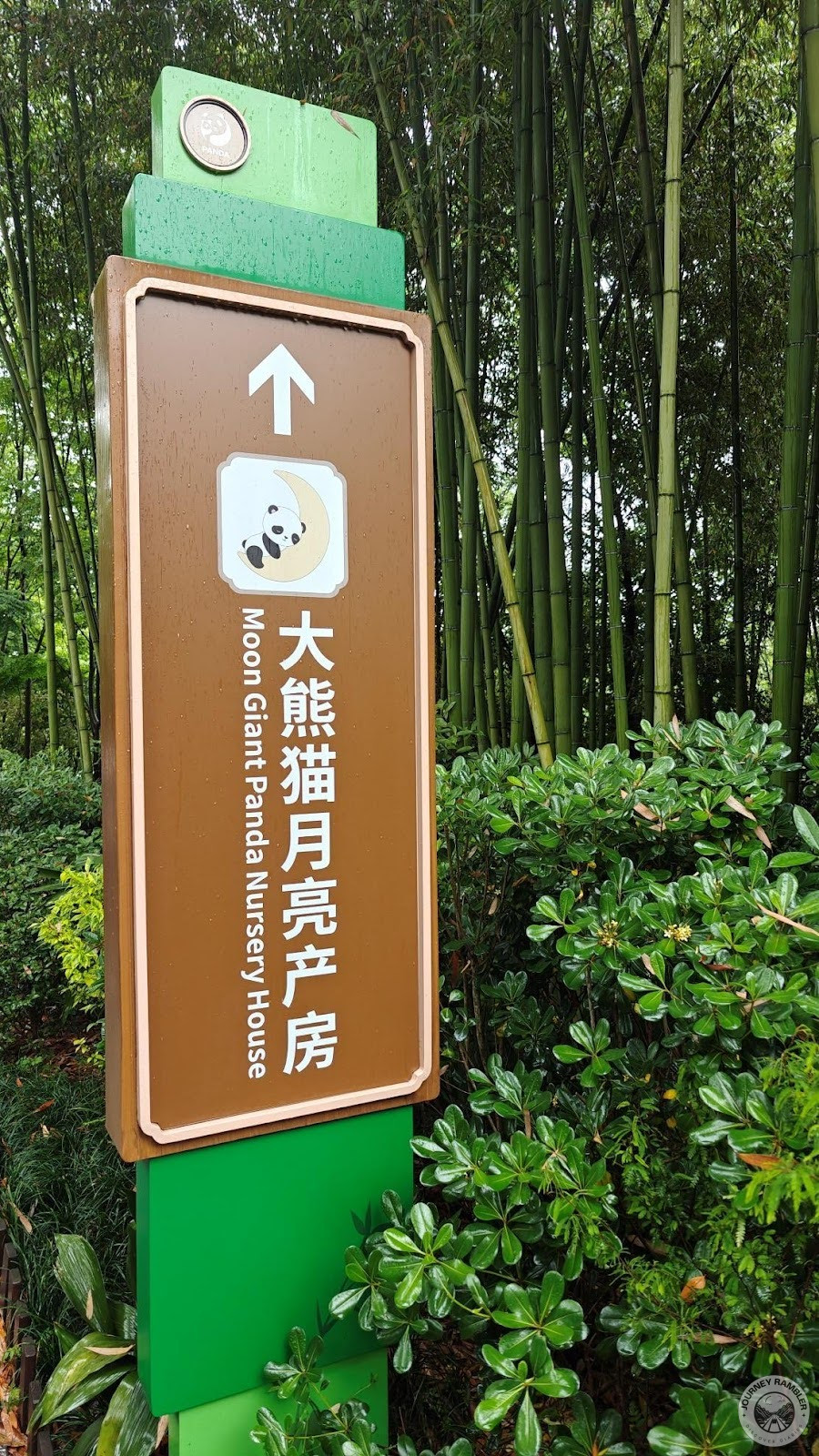
Of course, I’m not like other people and I genuinely want to see everything that the Chengdu Research Base of Giant Panda Breeding has to offer. After what seemed like an eternity lining up to see Hua Hua, I then headed next to the Moon Giant Panda Nursery House. If I remember correctly, this is where juvenile giant pandas are kept before they reach adulthood and are given their own villa or territory. There are also older pandas that are kept here likely because there aren’t any available enclosures for them.
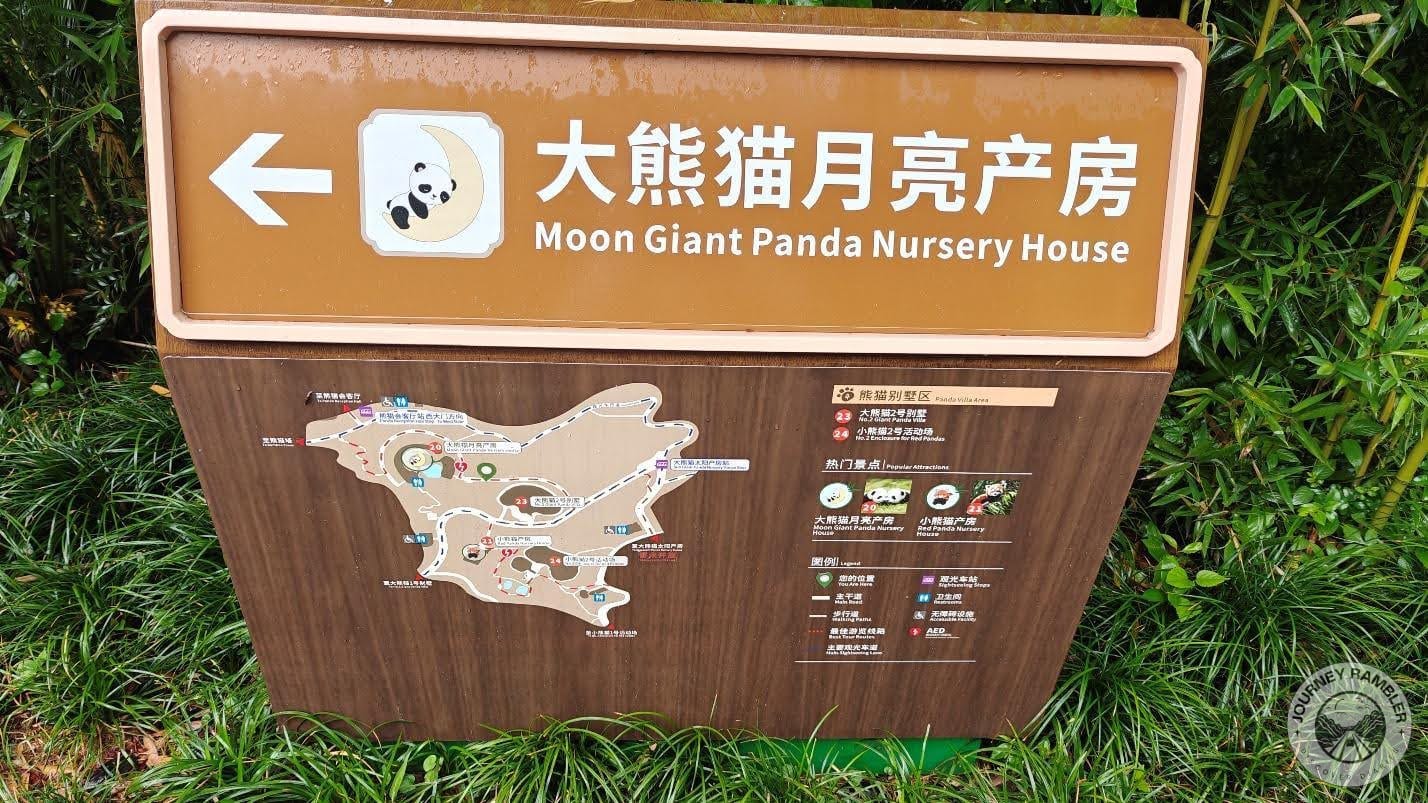
So in case you were wondering, this is still in the Panda Villa Area.
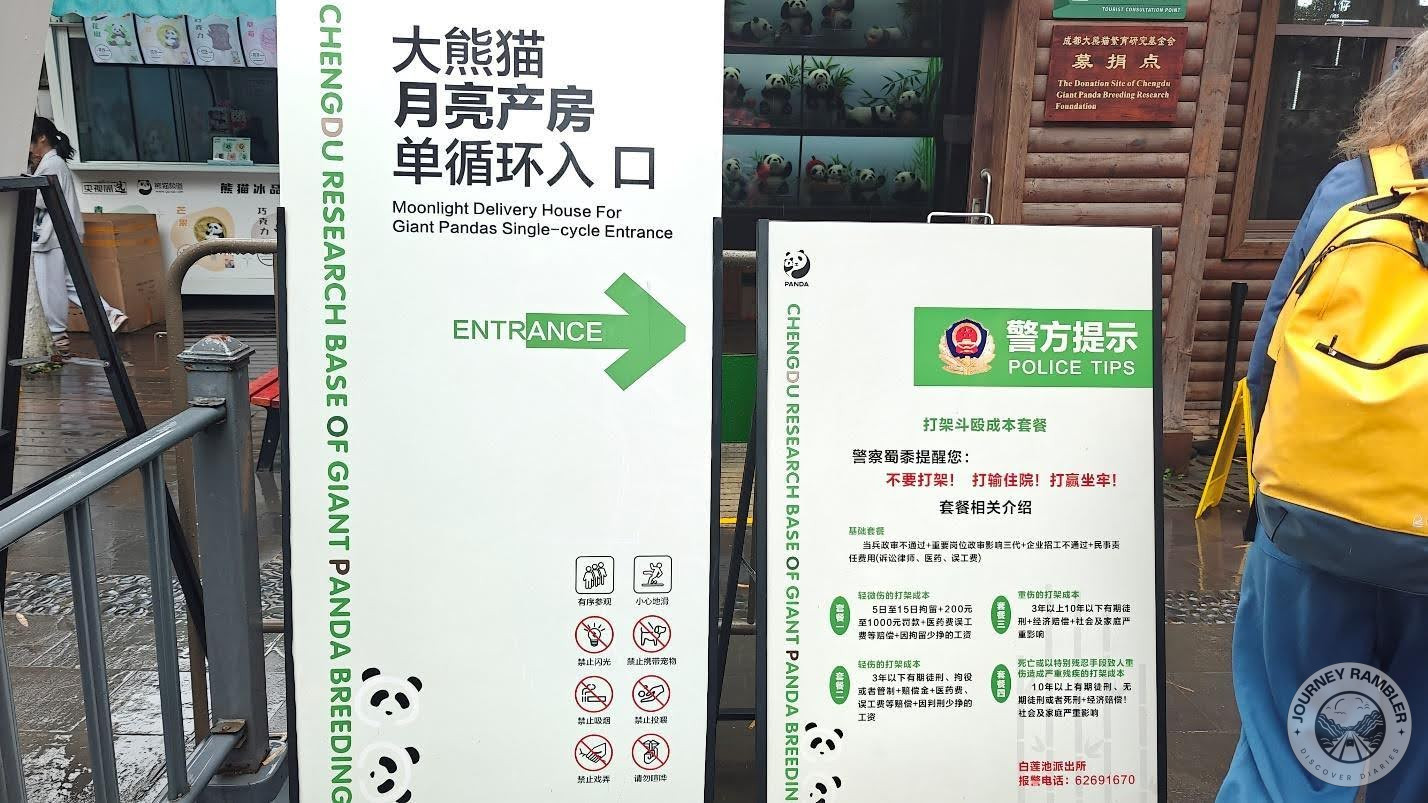
Here is the sign pointing to the Moon or Moonlight Delivery/Nursery House. It was still raining a little at this time so I was kind of in a hurry but fortunately, there weren’t that many people compared to No. 6 Panda Villa. Of course, entering here is free provided you already got the general admission ticket (which you pay for before you enter the Research Base).
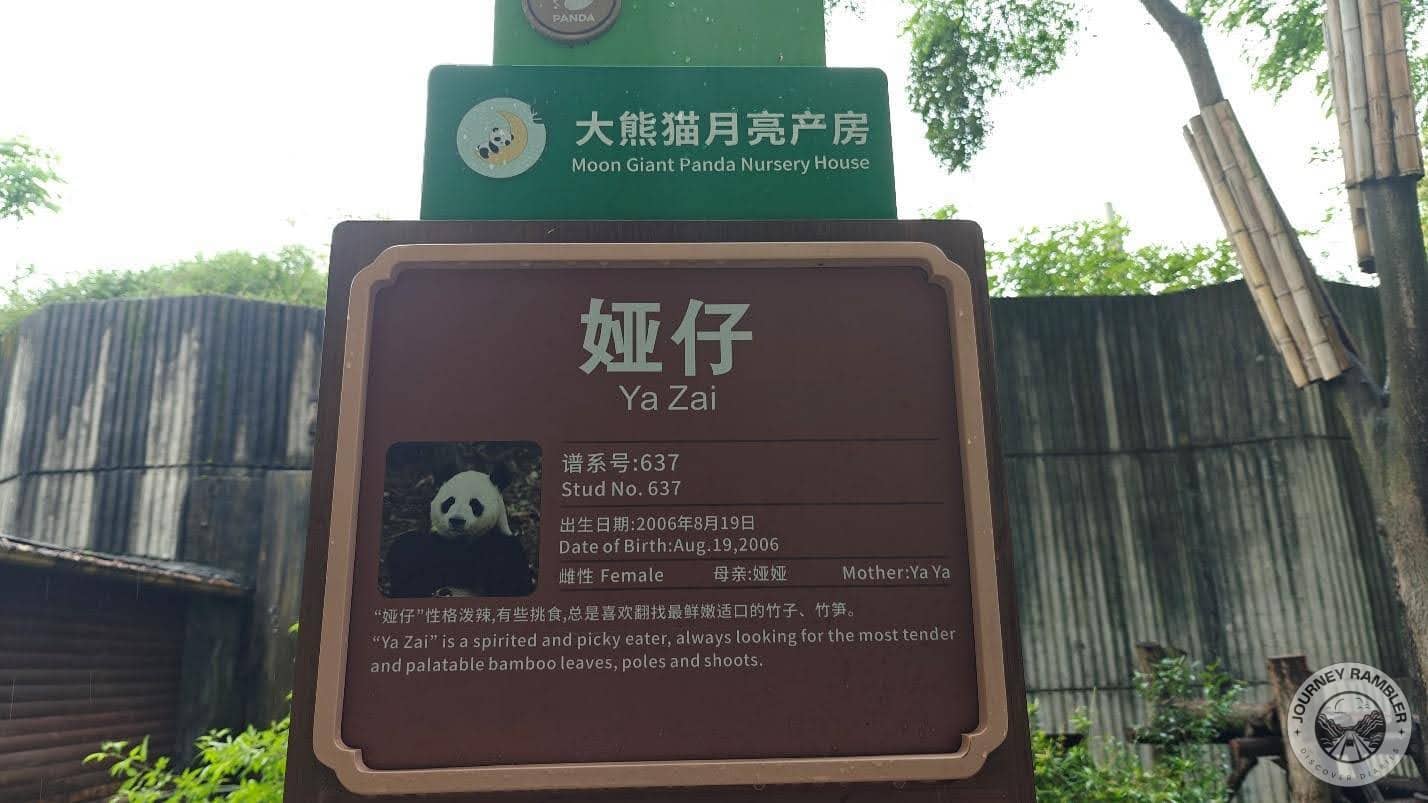
The first panda I came across here at the Moonlight Delivery House is Ya Zai. It says on the sign above that she’s one of the older pandas here having been born in 2006. That said, it might be that this is an older sign and that the panda here is actually a different one.
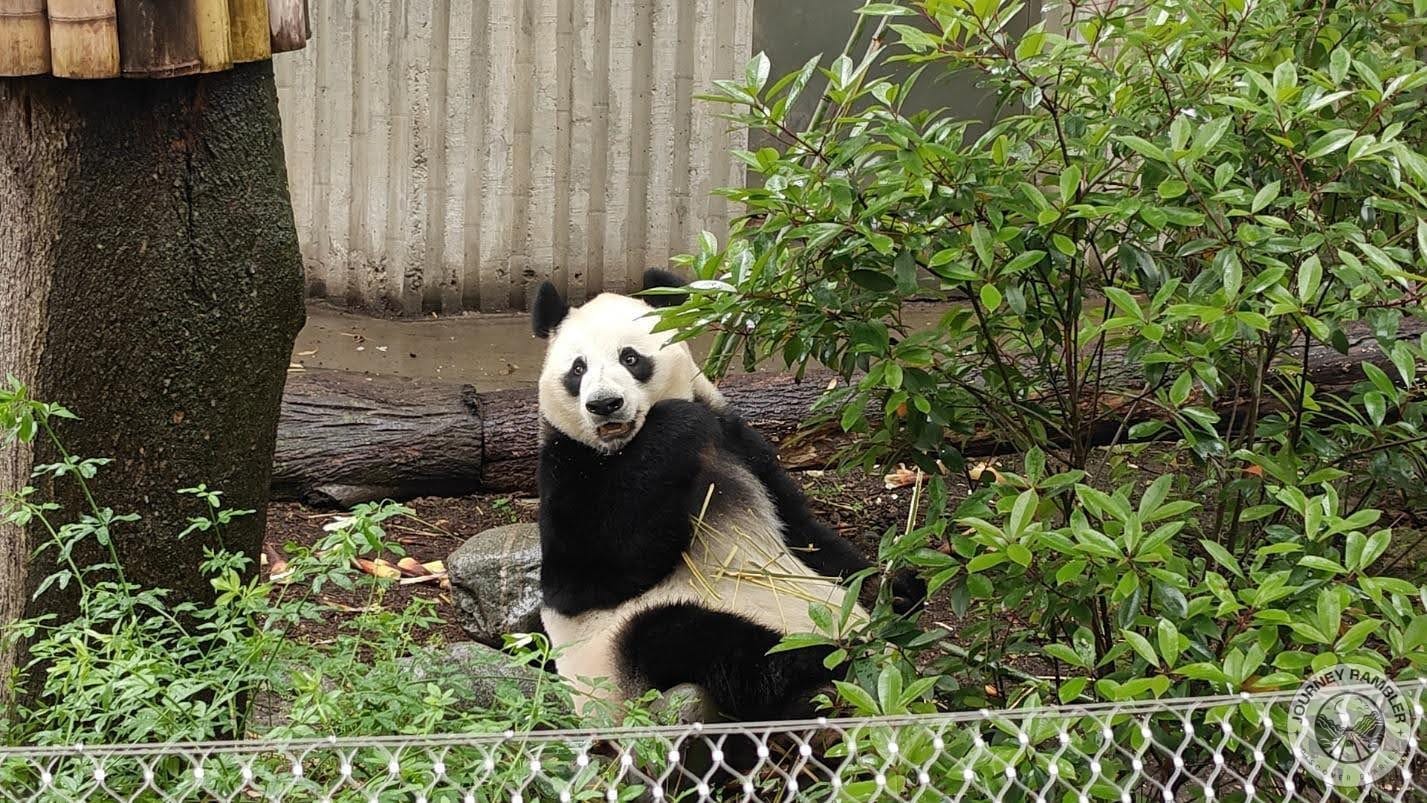
Regardless if she’s Ya Zai or not, the panda definitely looks like it’s living its best life. I will say though that the look of surprise (or maybe it was bewilderment) on her face as she saw people milling about was kind of funny. Much like the other pandas here, she was still voraciously eating when I chanced upon her.
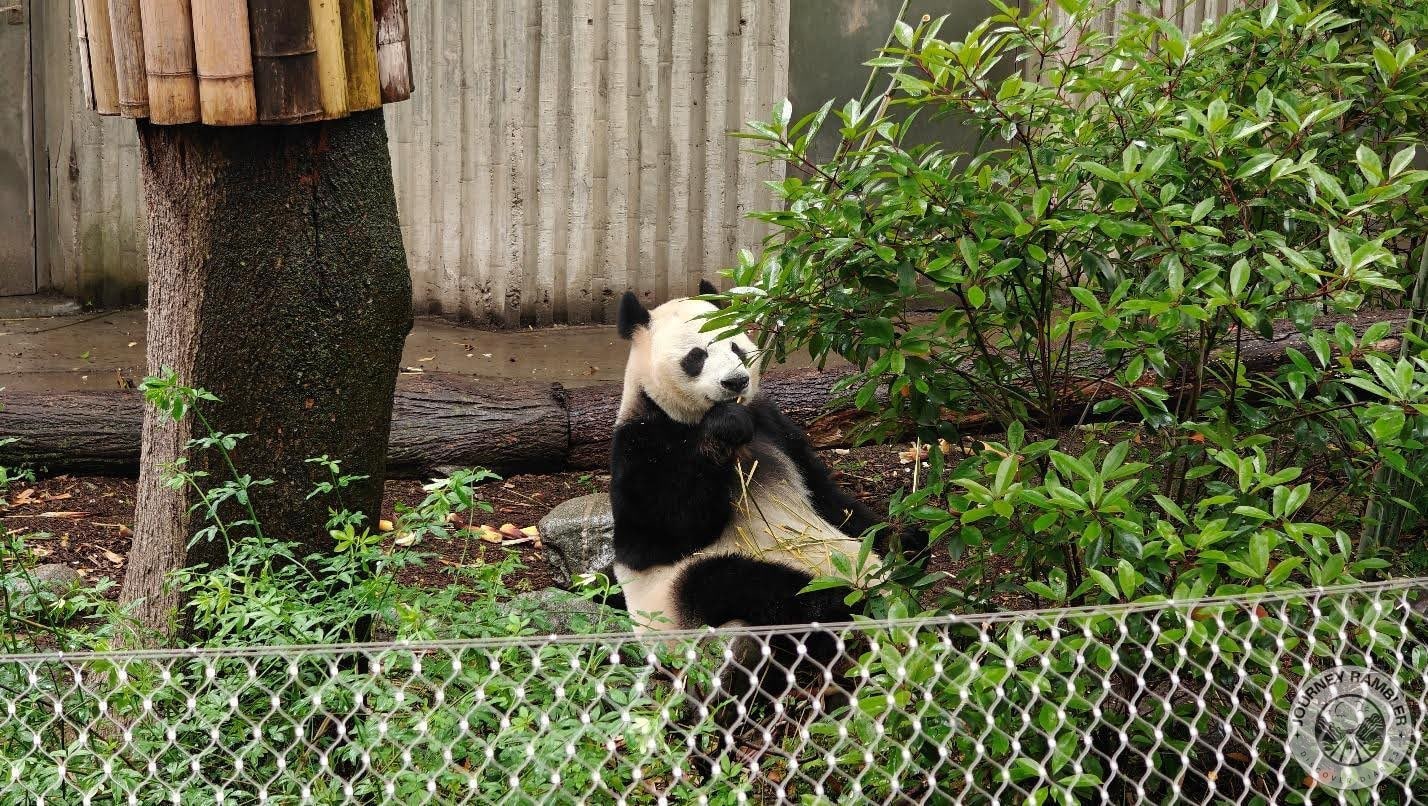
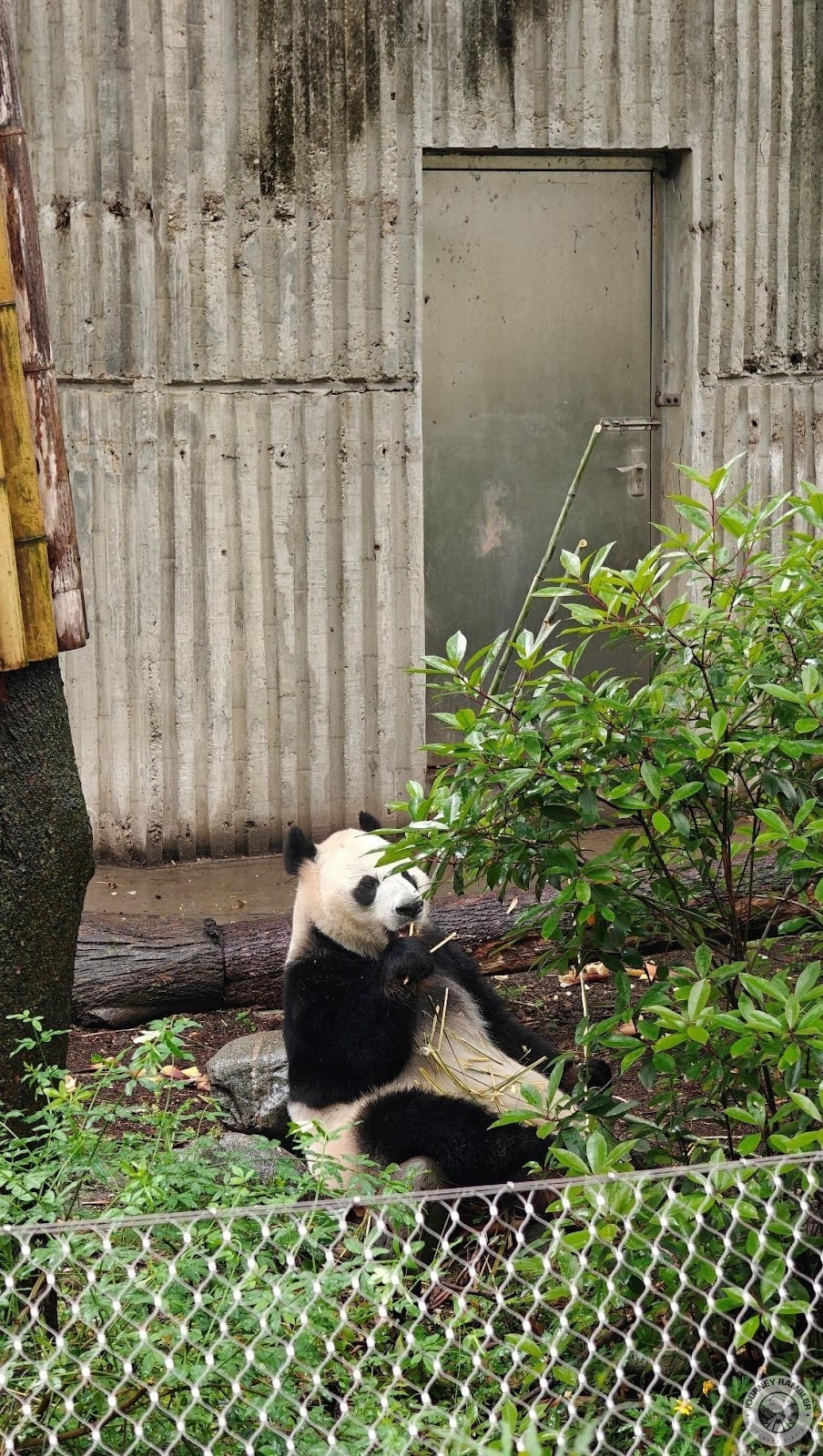
After observing us for a while, she then focused on eating and stopped paying us any attention. Now that I think about it, what I see as the tolerance that these pandas display towards people might just be non-chalance for them. Due to their diet, they simply might not have the energy to chase off the people passing by.
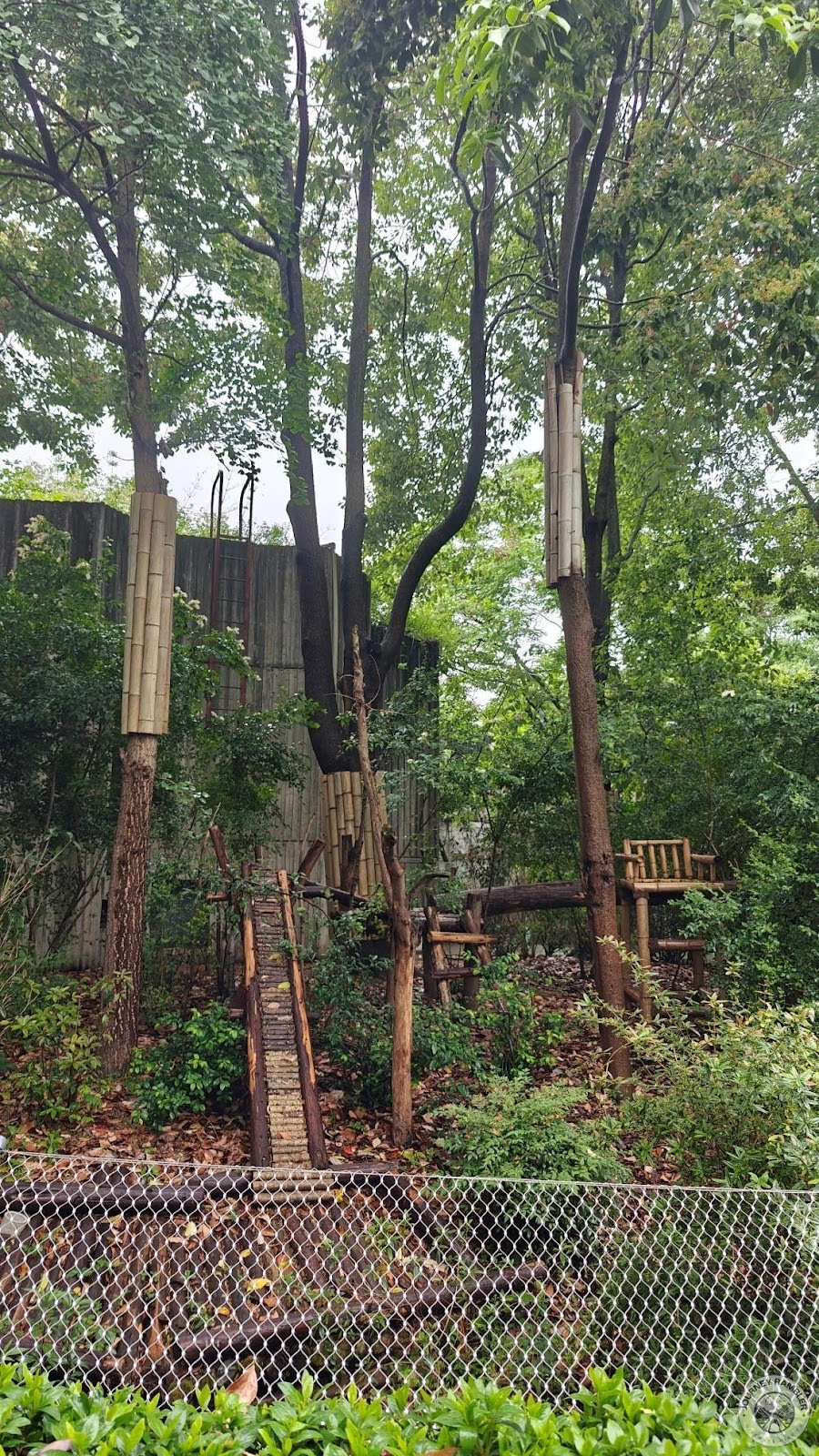
Here’s a play pen for this enclosure at the Moonlight Delivery House. Now you might be wondering what’s up with the bamboo poles covering parts of the trees’ trunks. If I were to guess, these are to discourage the pandas from climbing straight up the trees.
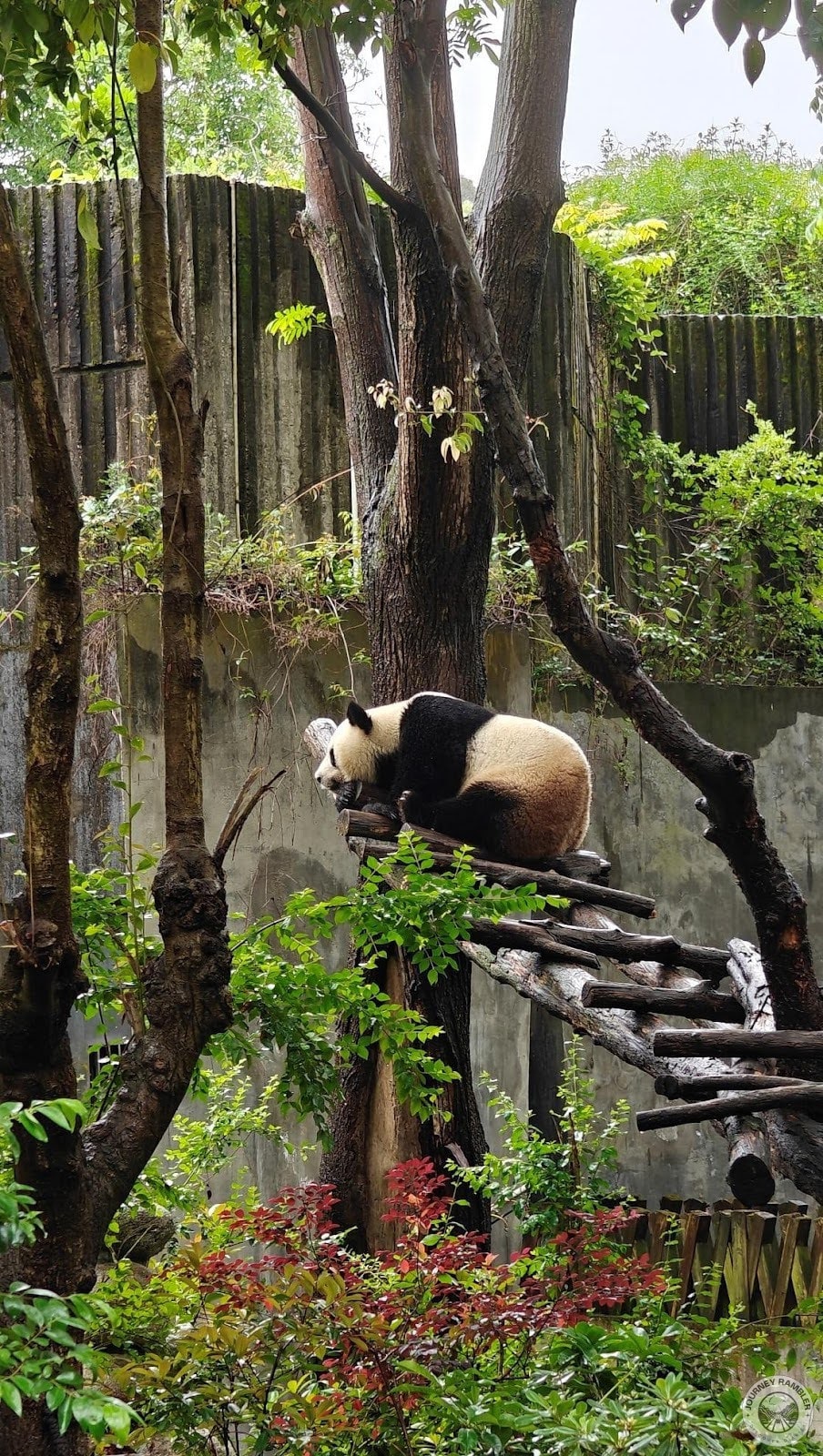
Pandas actually do fall off trees from great heights yet often still somehow end up okay thanks to their fur and fat protecting them. Accidents can still happen though so having the bamboo restricting the heights they can reach is kind of smart. Considering there are so few of these animals then it’s even more imperative that they’re protected from their own worst tendencies.
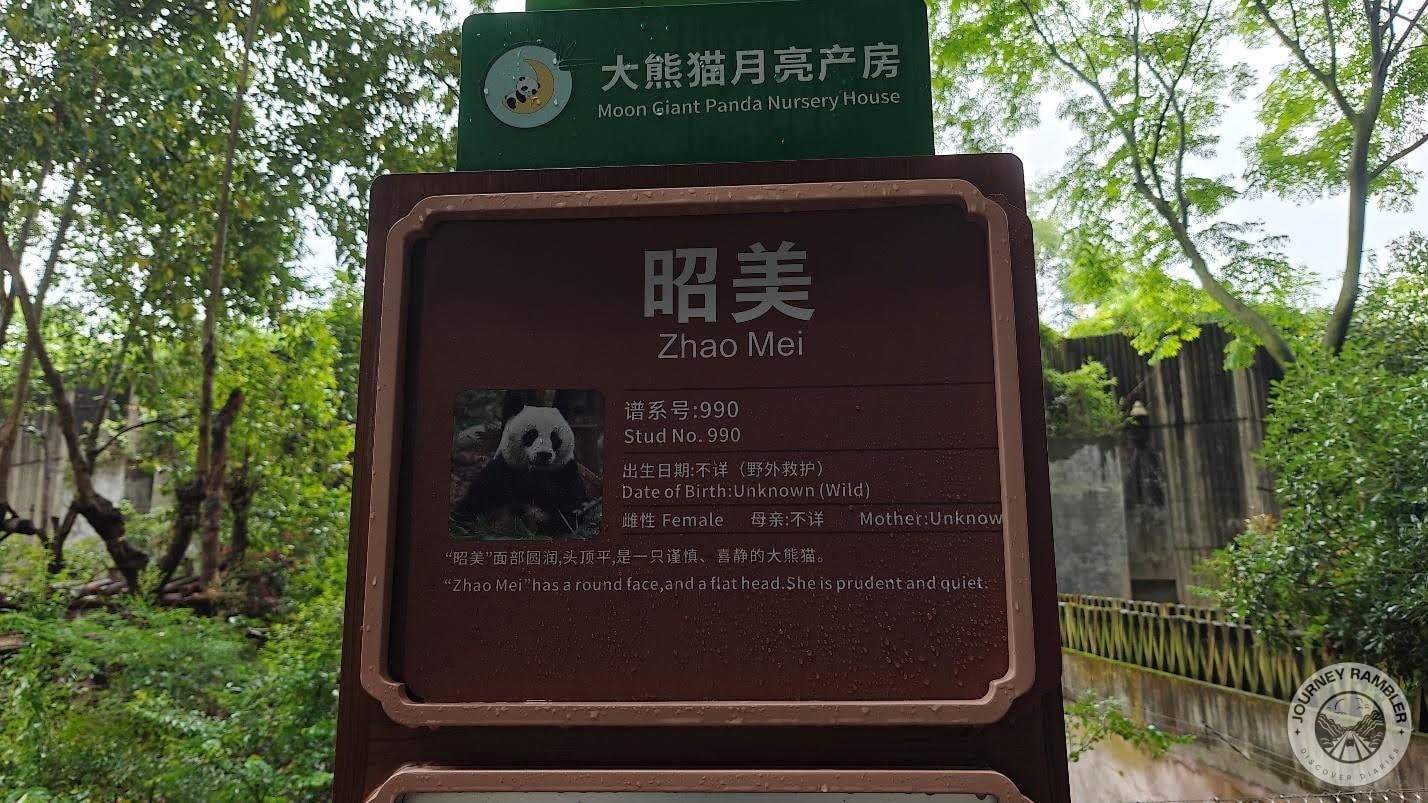
Anyway, the panda you saw lounging on the platform earlier is named Zhao Mei. Unlike most of the pandas here, her age is actually unknown. This is due to the fact that she was likely caught in the wild and then housed here to improve her chances of surviving. As the sign indicates, she was very quiet and it looked like she already had her fill when we arrived at her enclosure.
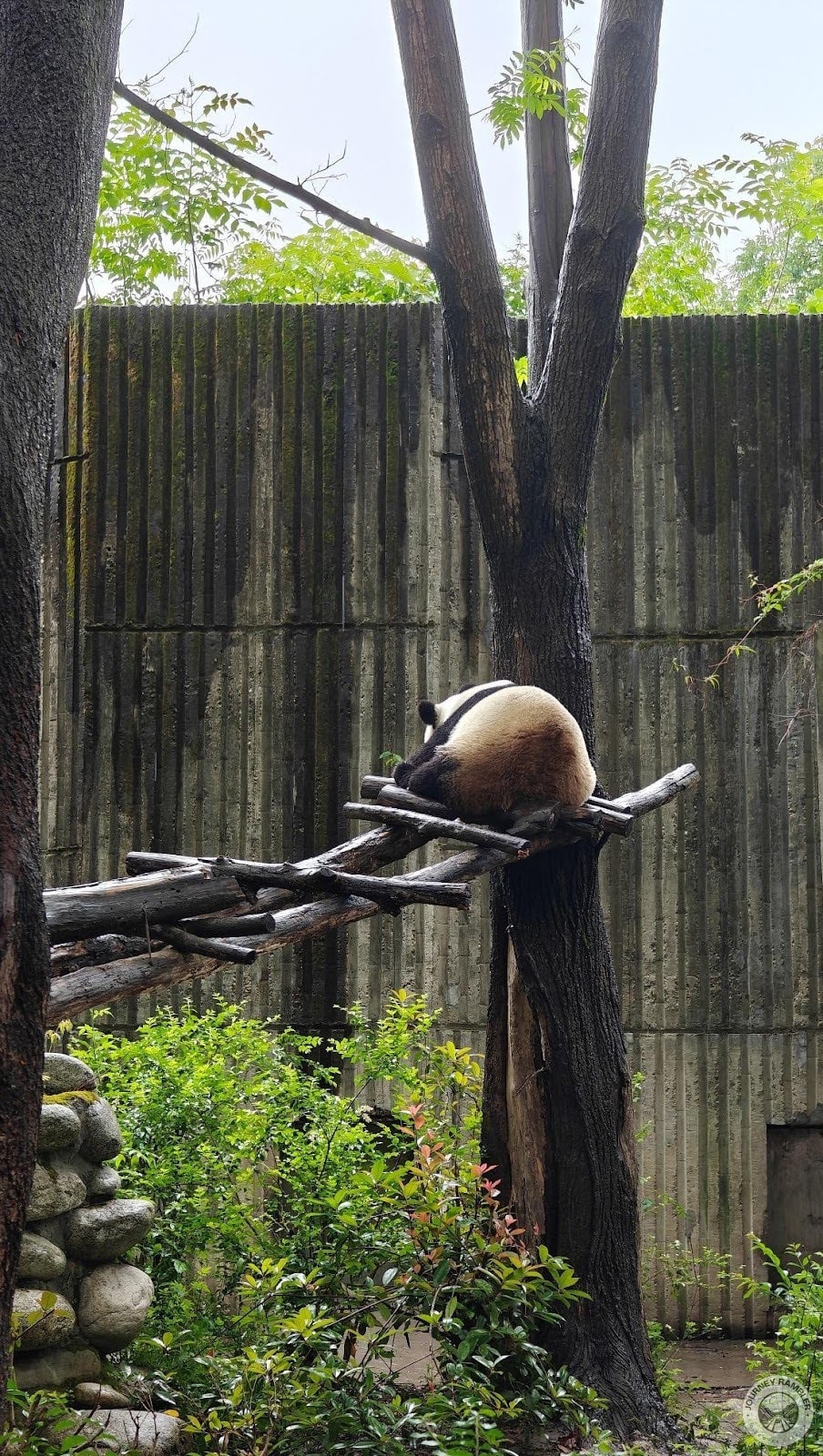
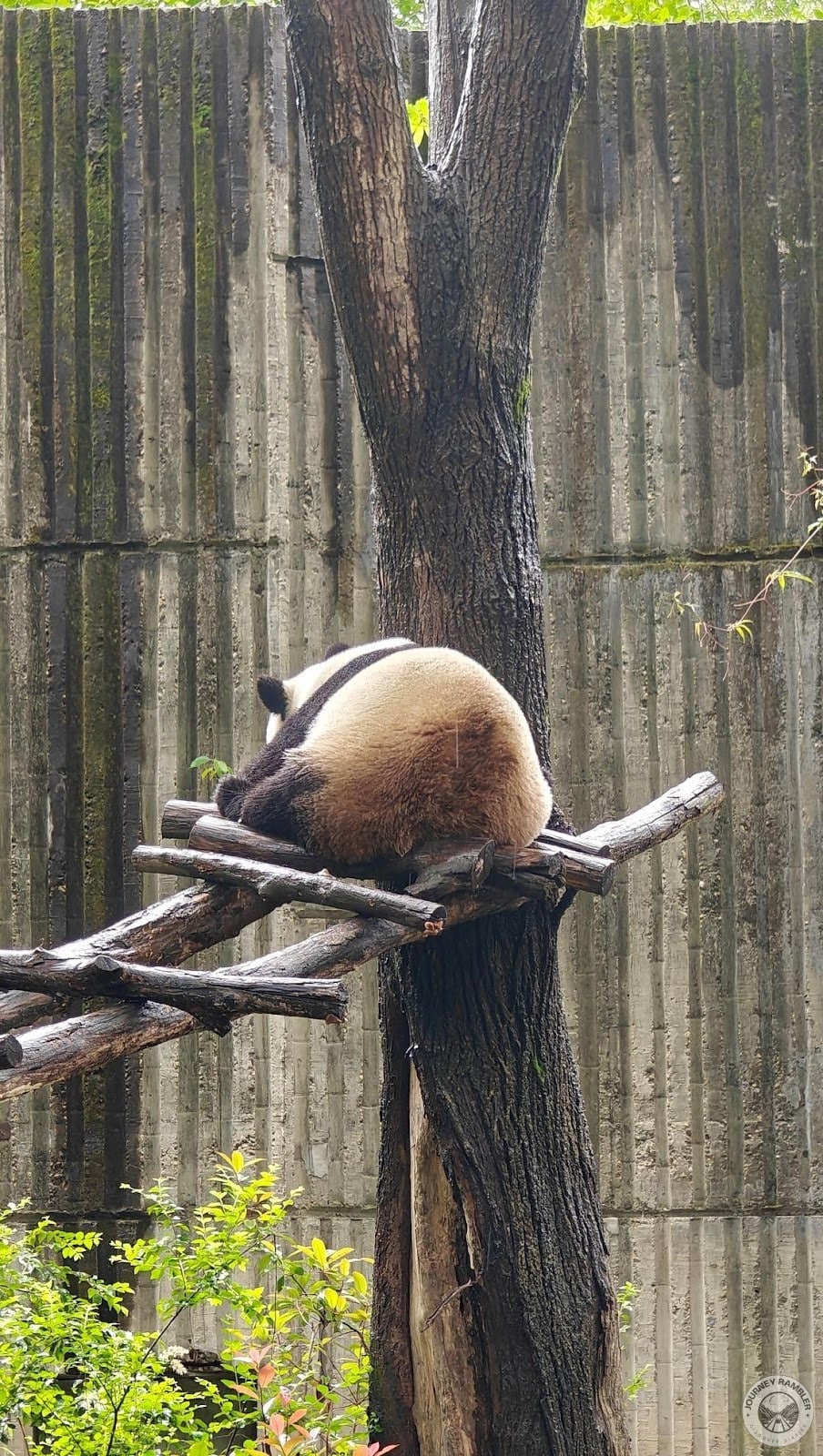
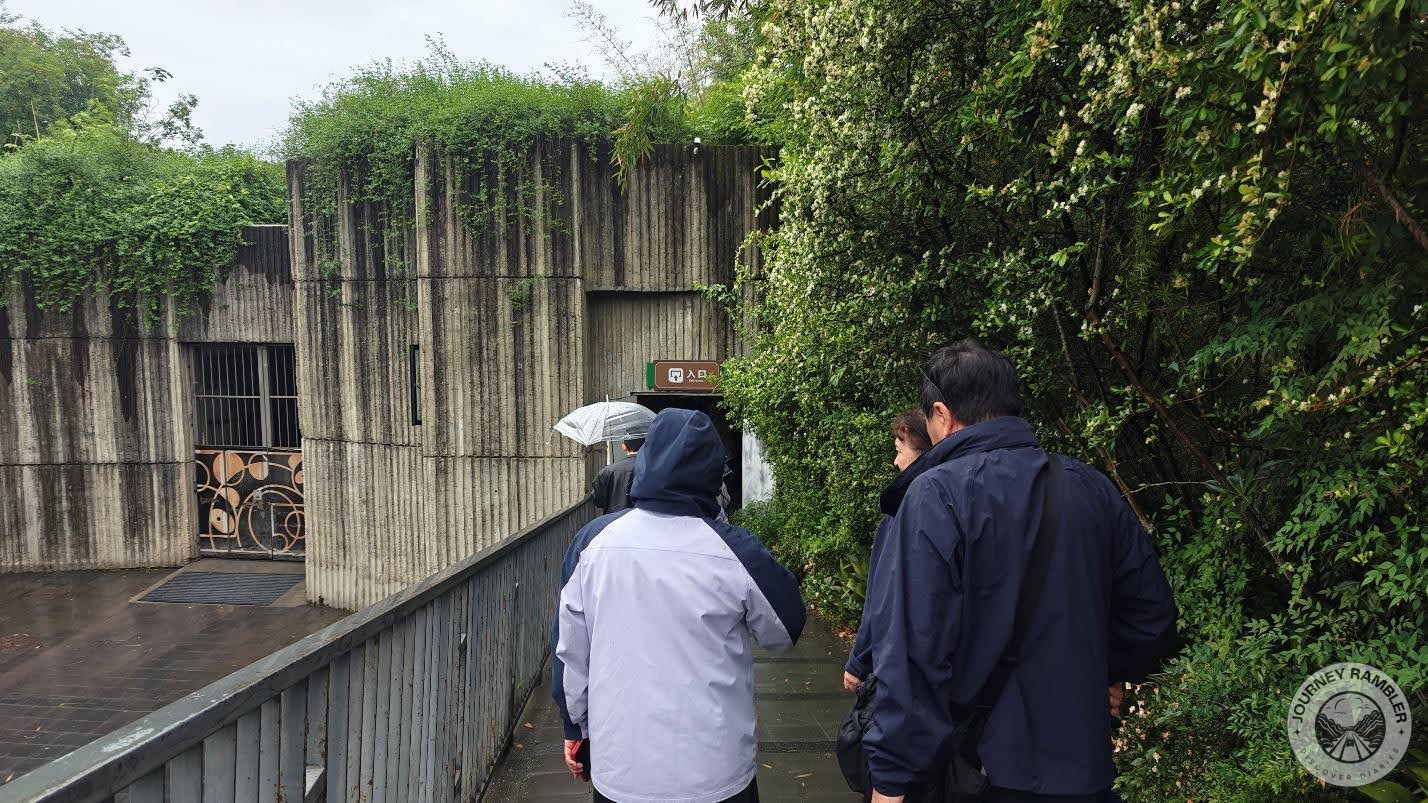
If you noticed, the majority of the images of the recent enclosures that had Ya Zai and Zhao Mei featured a concrete background. That’s actually the main building here at the Moonlight Delivery House. You can see here that the group that I’m with is now moving towards the entrance of that building.
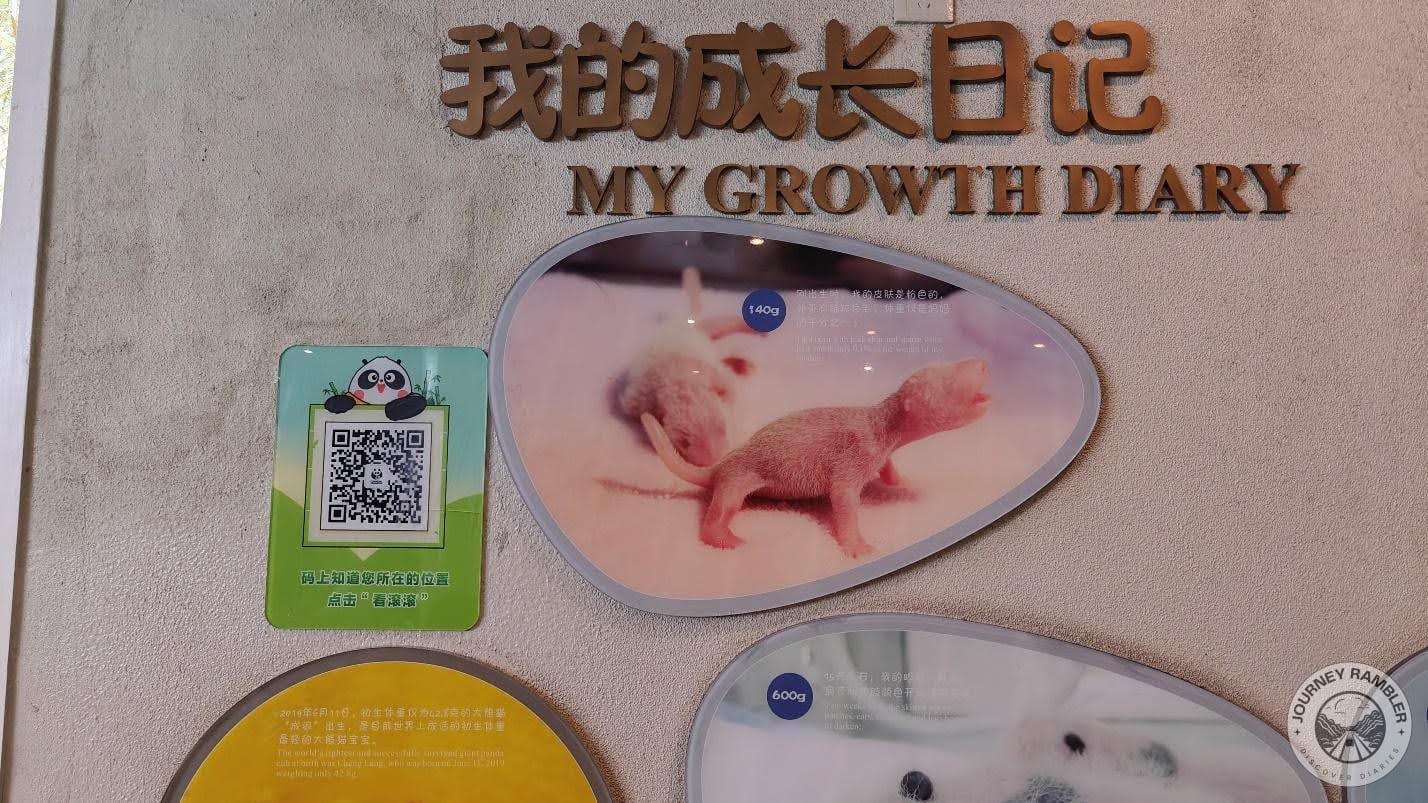
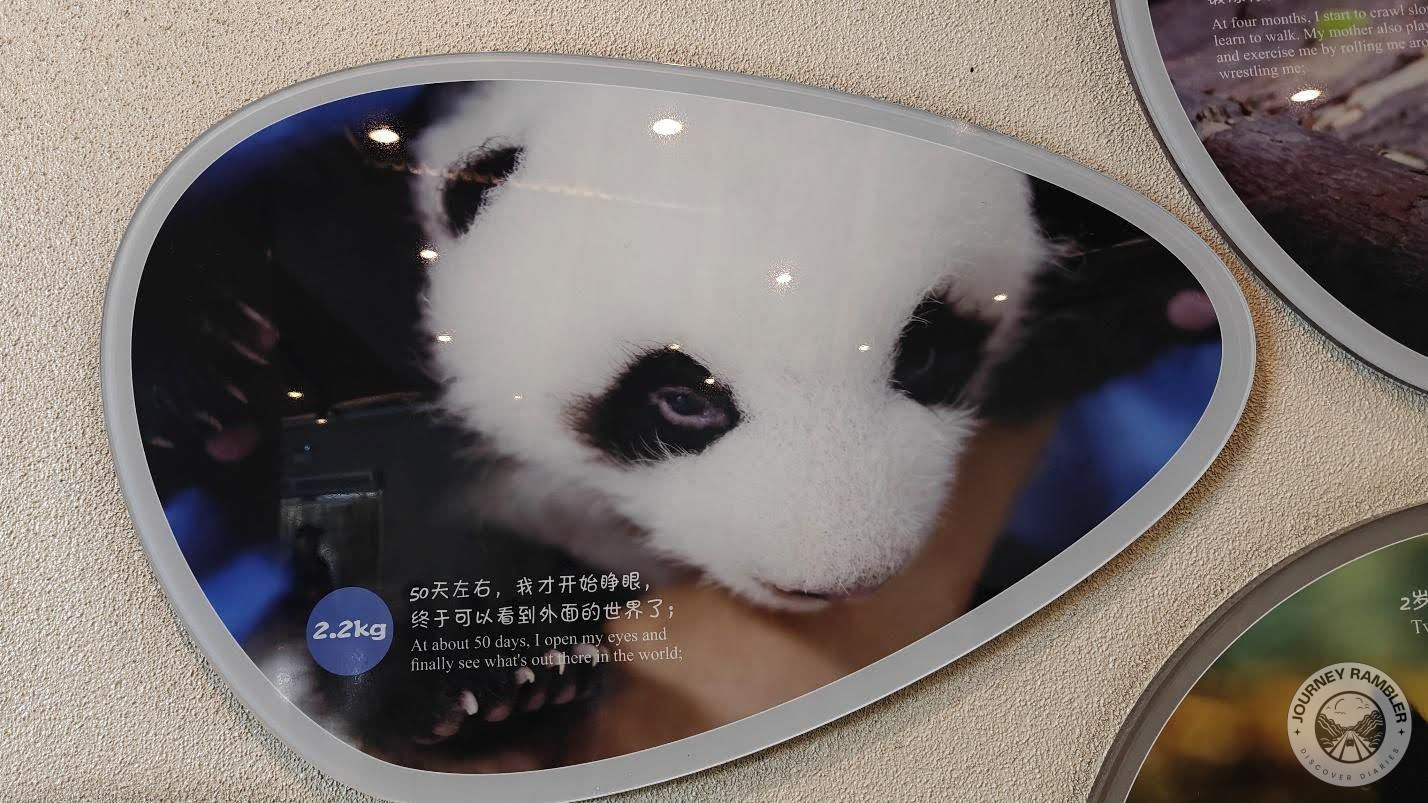
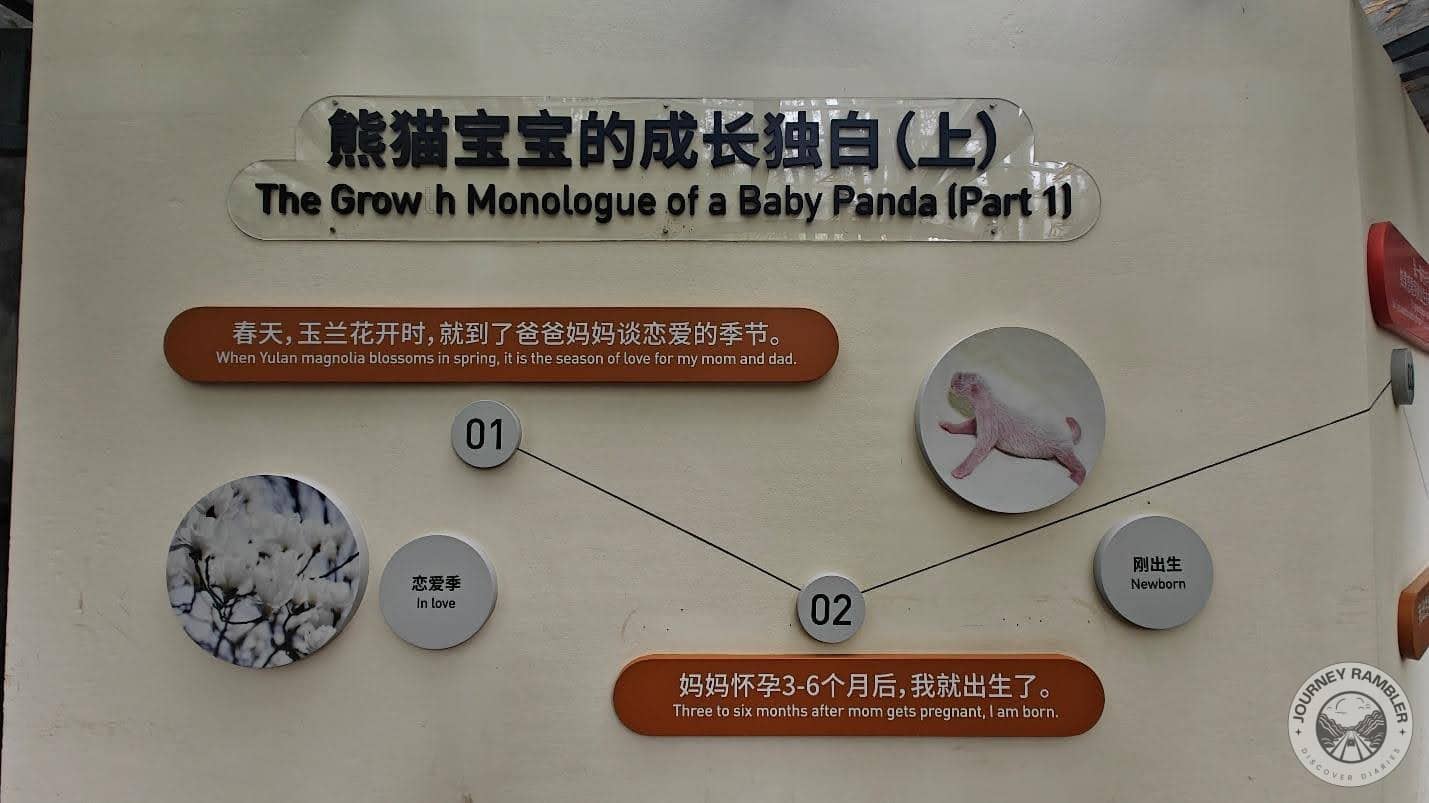
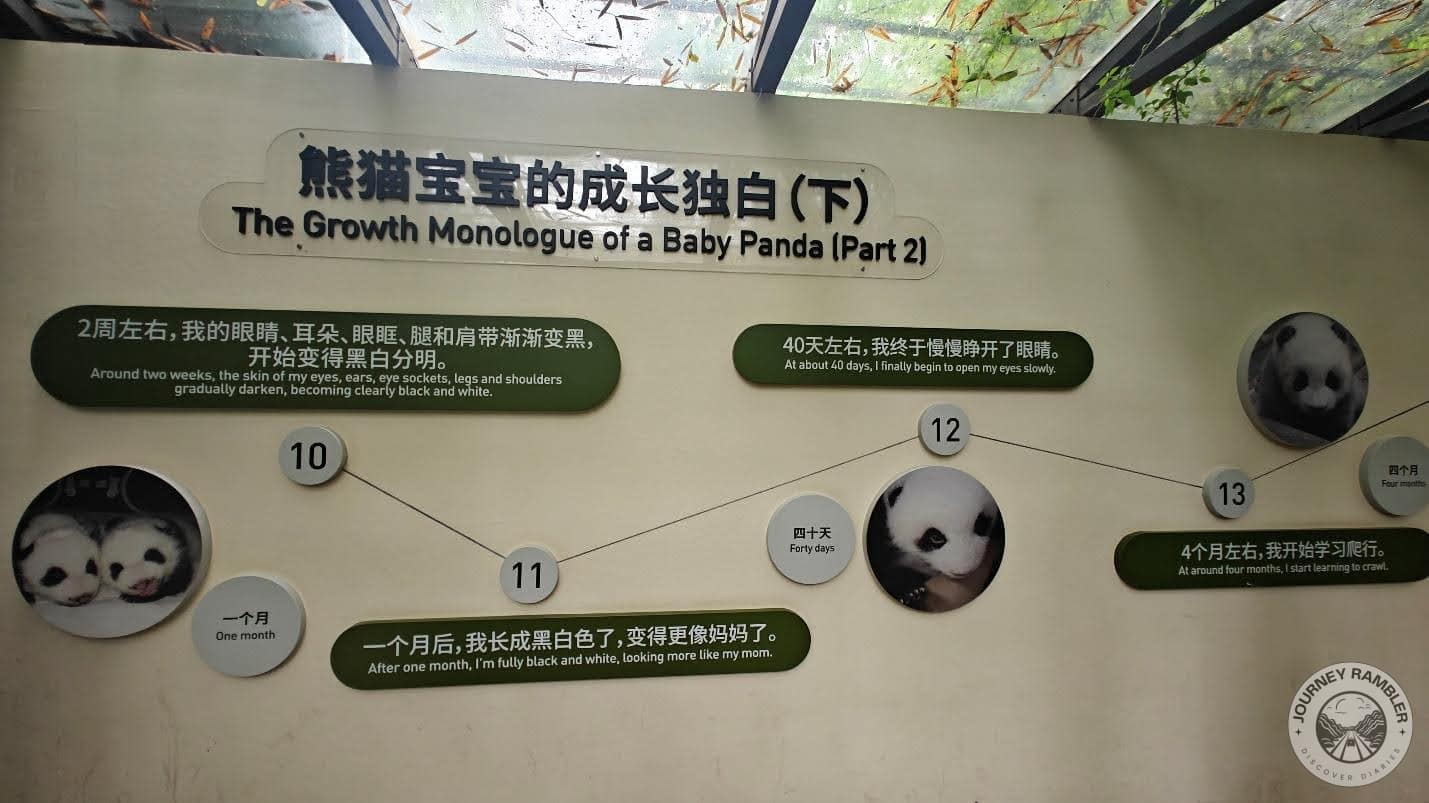
Before getting to the indoor nursery, I checked out a couple of infographics that featured the growth diary of the giant pandas complete with pictures of the cubs. Here, you can see an image of two of the cubs that are still at the neonatal stage which is immediately after birth up until the two month mark. These cubs’ eyes have yet to open though they’ve already started growing soft gray fur.
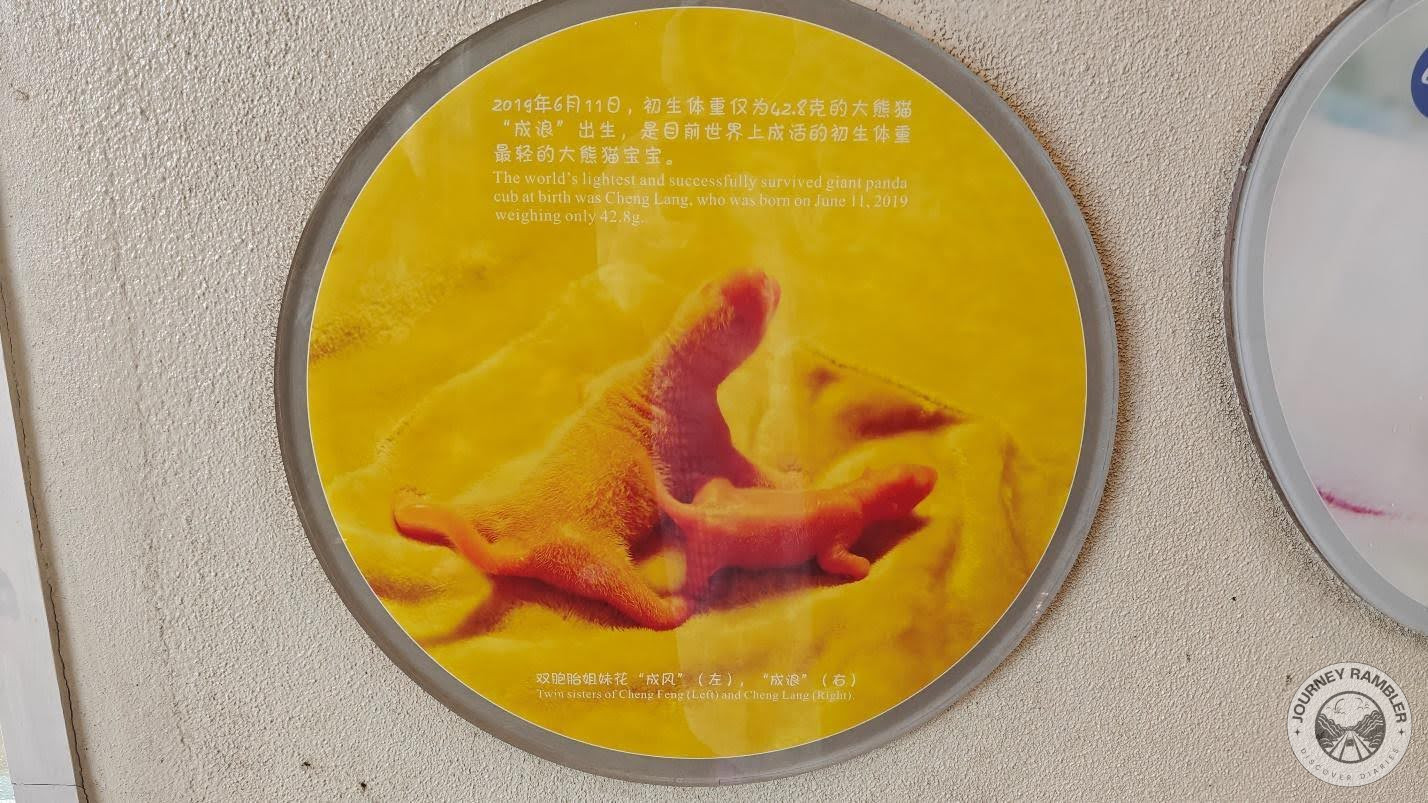
Now this is an interesting image of the lightest and quite possibly smallest cub that has survived and grown to adulthood. Named Cheng Lang, this panda cub weighed only 48.2 grams at the time of her birth. With help from the scientists here at the Chengdu Panda Base though, she eventually grew up normal and healthy.
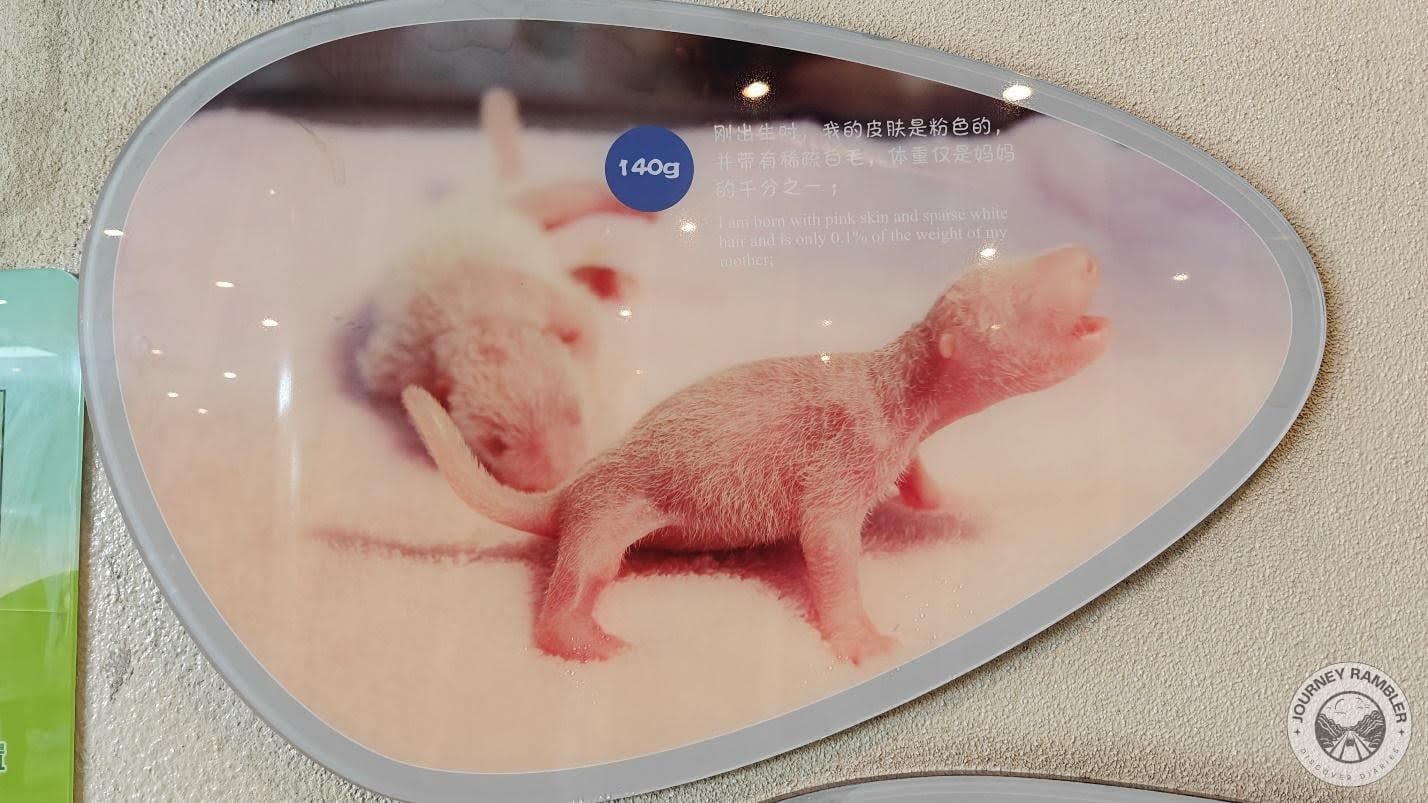
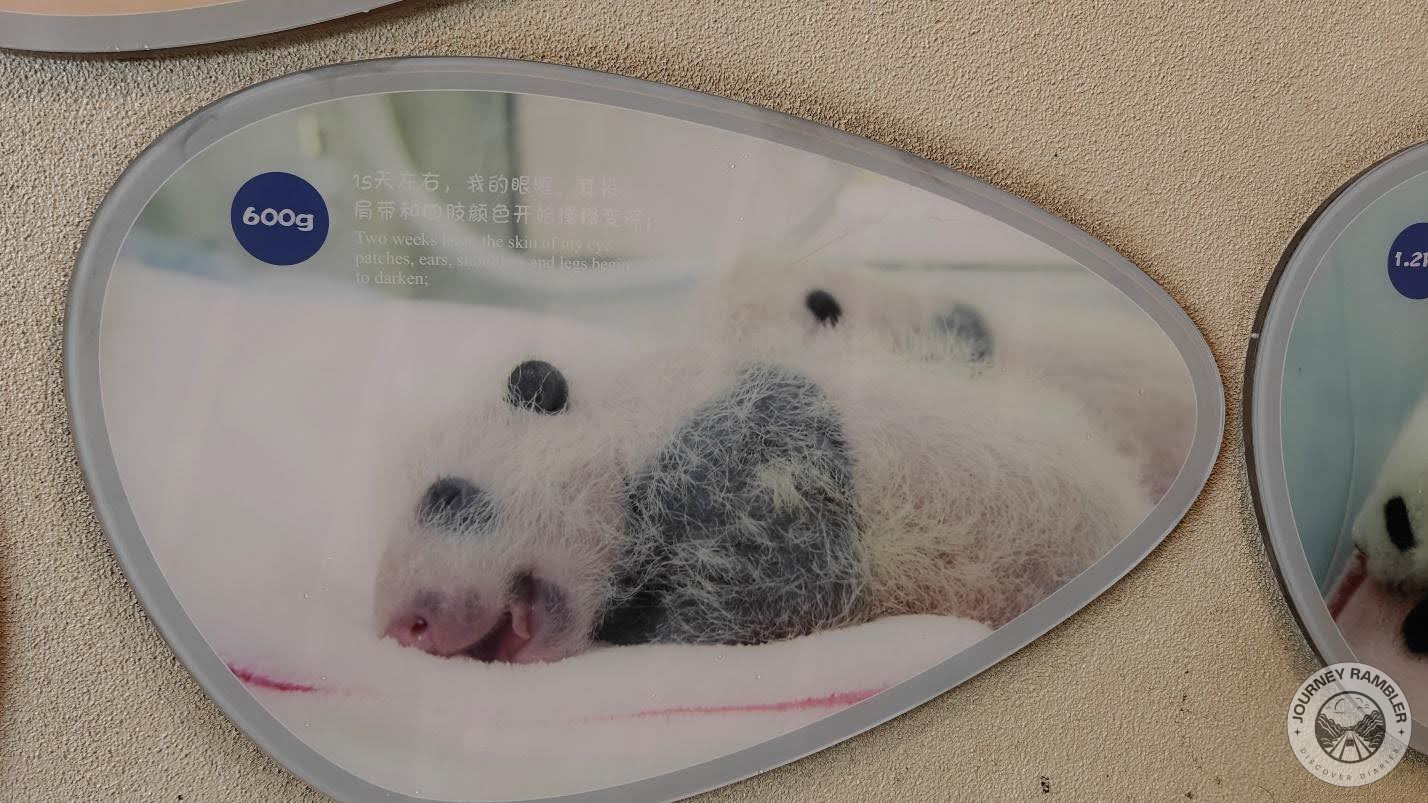
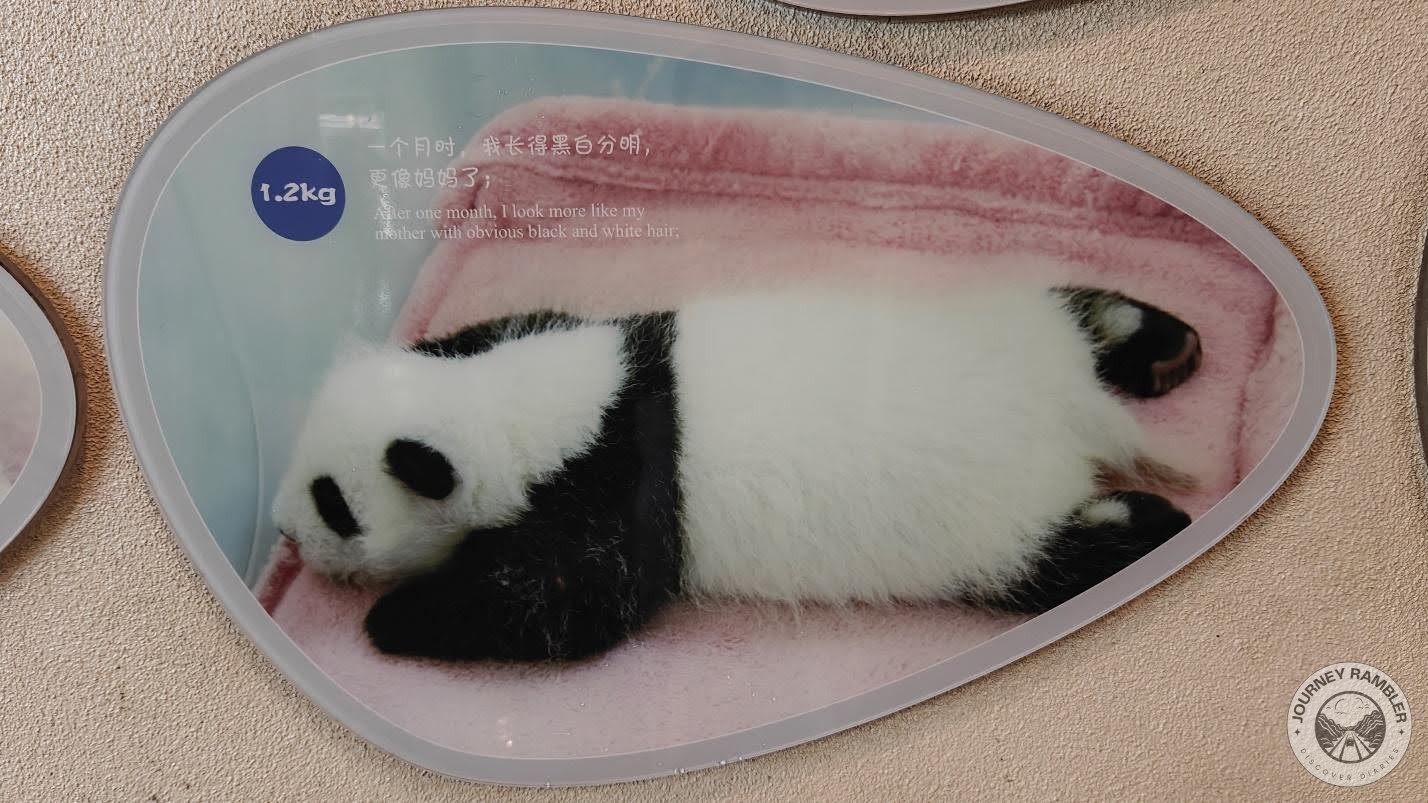
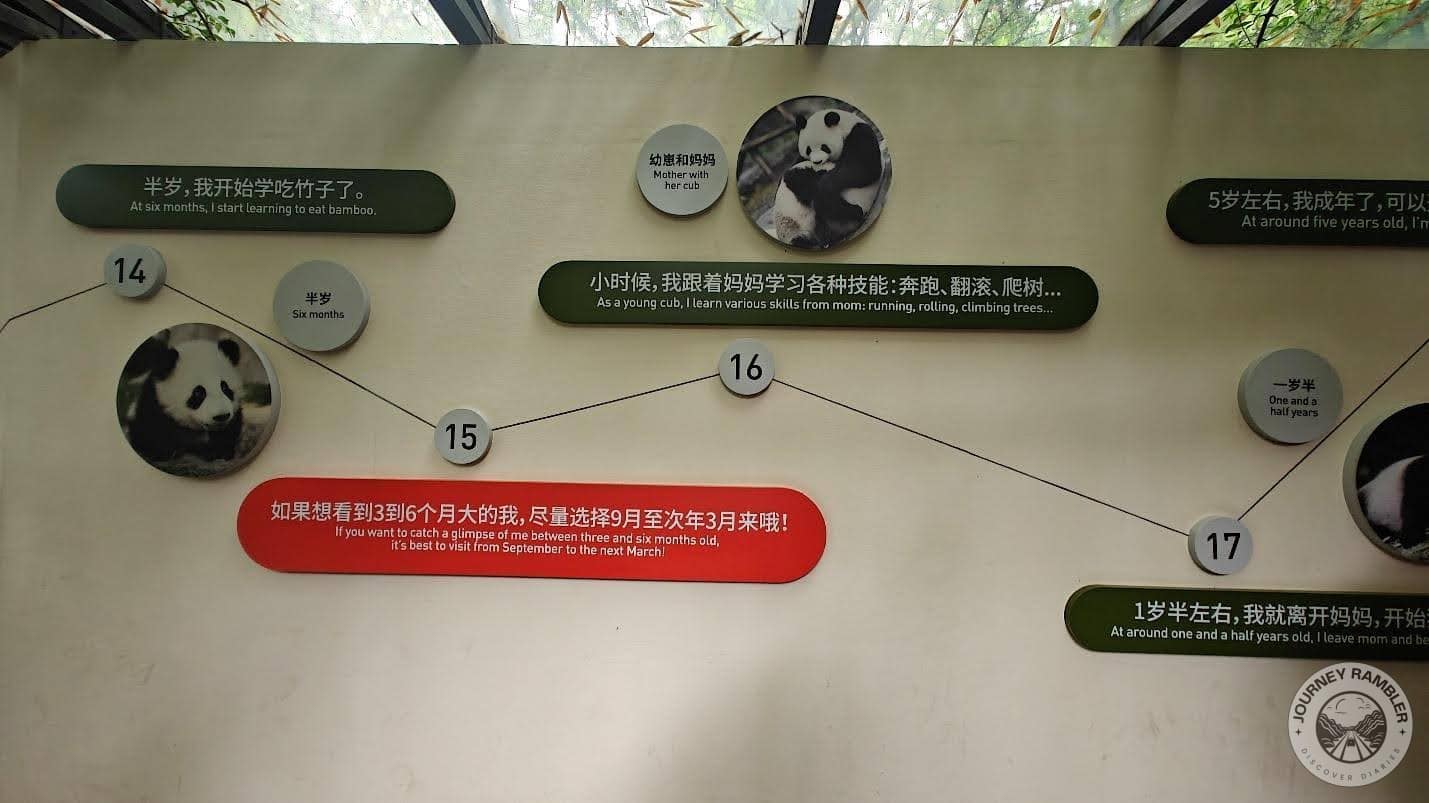
Surprisingly, the cubs only need about a month for their fur to change to the black and white markings that they’re famously known for. I think that it’s at this time up until maybe the 6th month mark that they really look the cutest (see next image). Aside from their cuteness, their weight also starts to exponentially grow as they’re being provided sustenance from their mother.
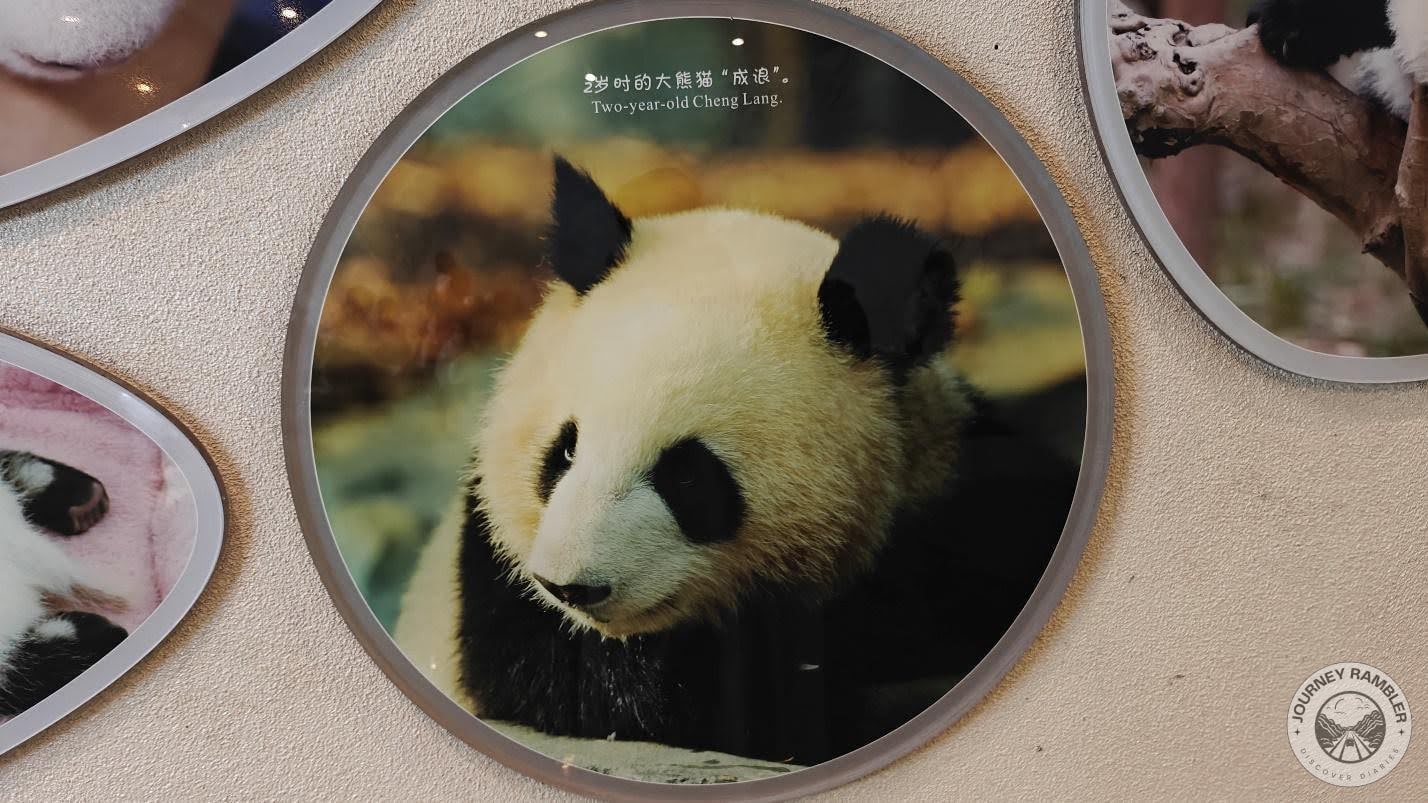
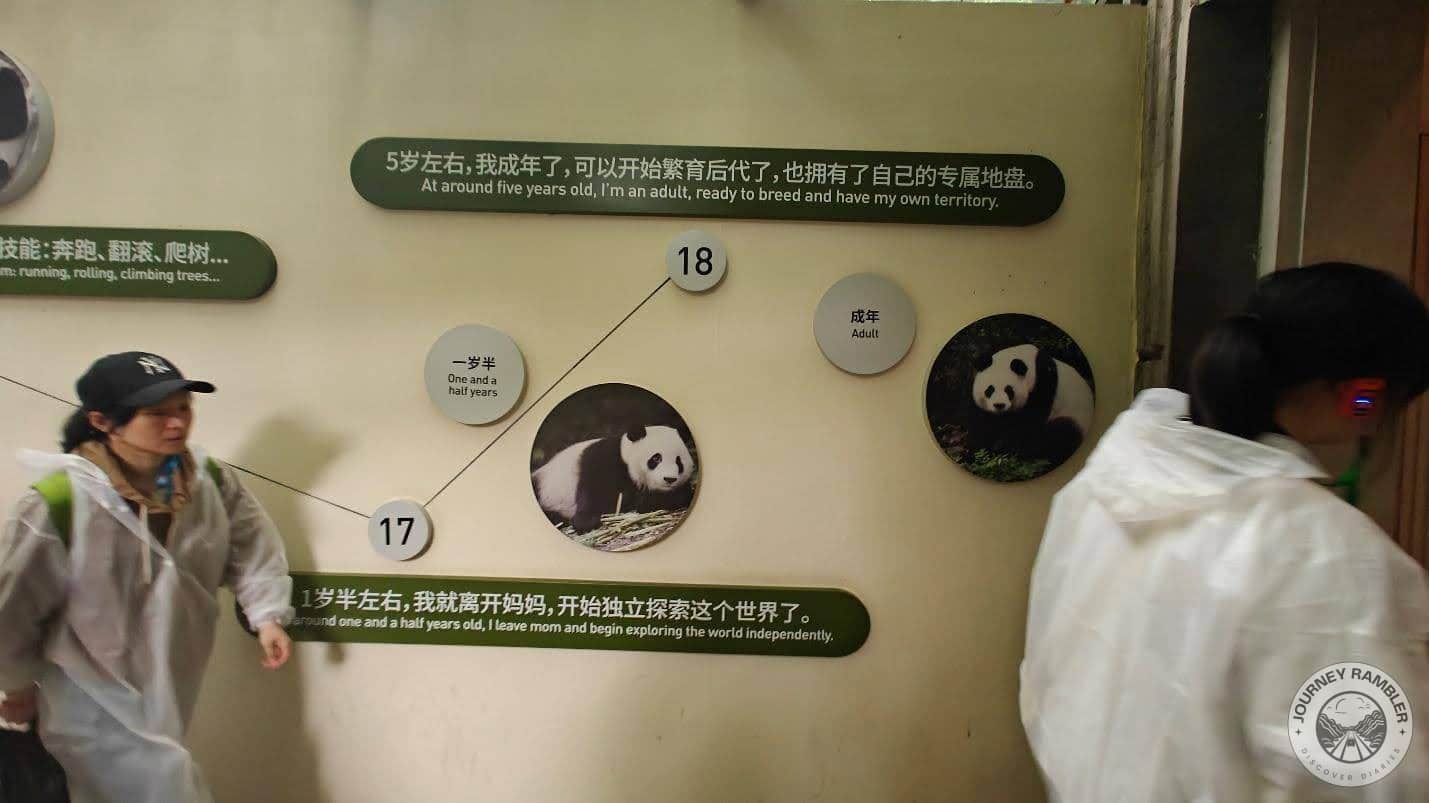
Here’s an image of Chang Leng (the really small cub you saw earlier) at 2 years of age. I must say, she looks very healthy and is a far cry from the runt-like appearance she had when her mom gave birth to her. I wonder now if it weren’t for the efforts of the people here, would she have survived?
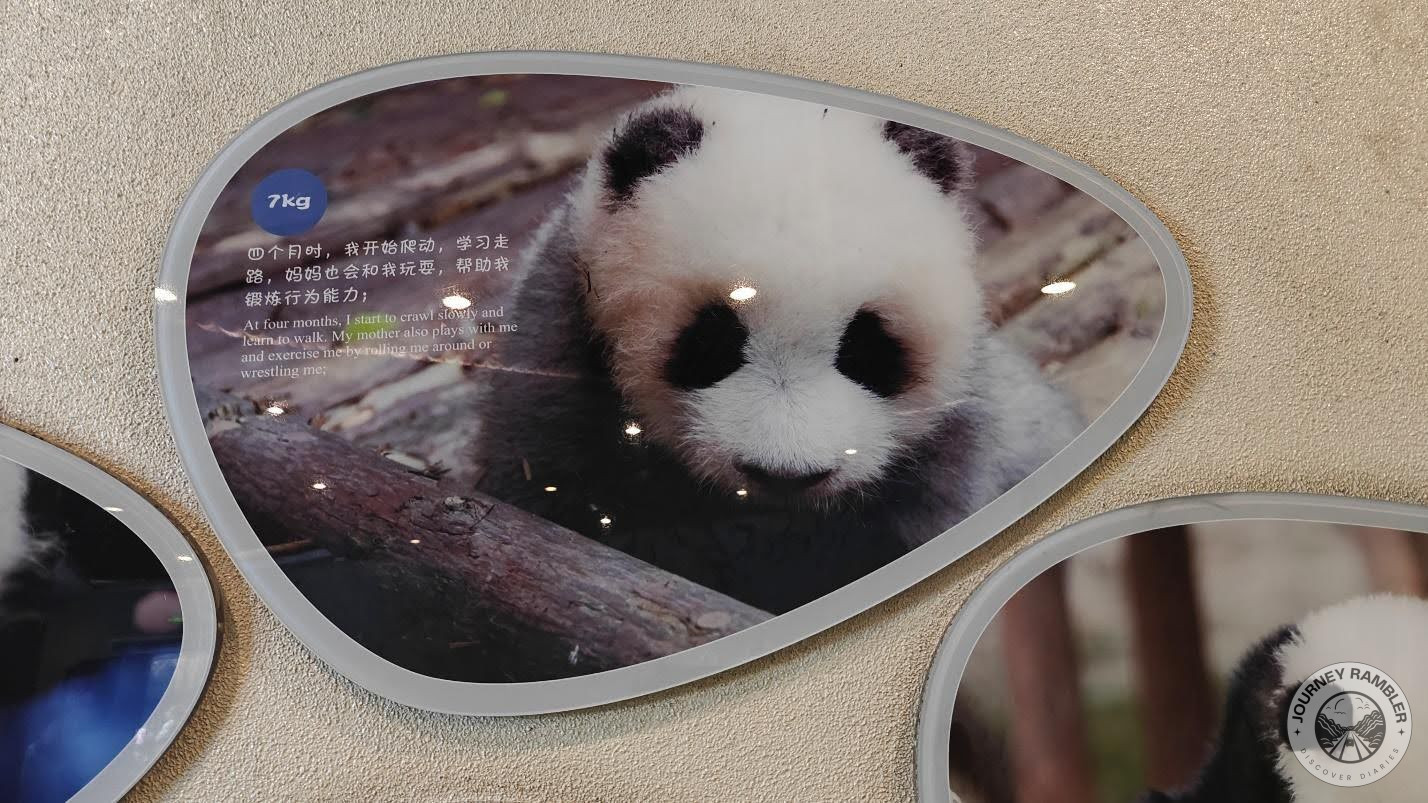
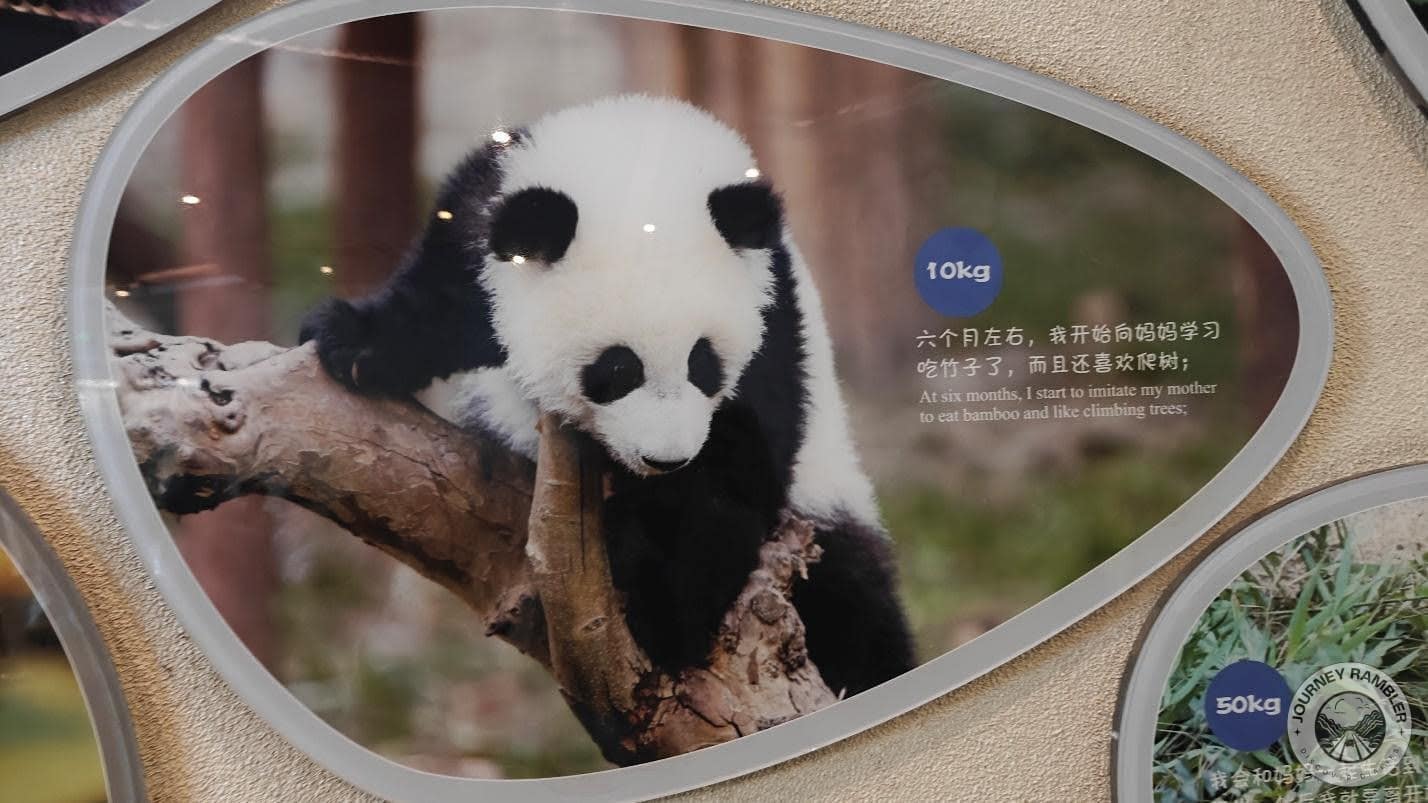
This is peak panda cuteness at 6 months. At this point, cubs are starting to mimic their moms though since they’re still very clumsy as they likely don’t have control of their motor skills yet. They’re still nursing but they’ve also started to incorporate bamboo into their diets. This is also the point where they start to look big with their weight now hovering around the 10kg mark.
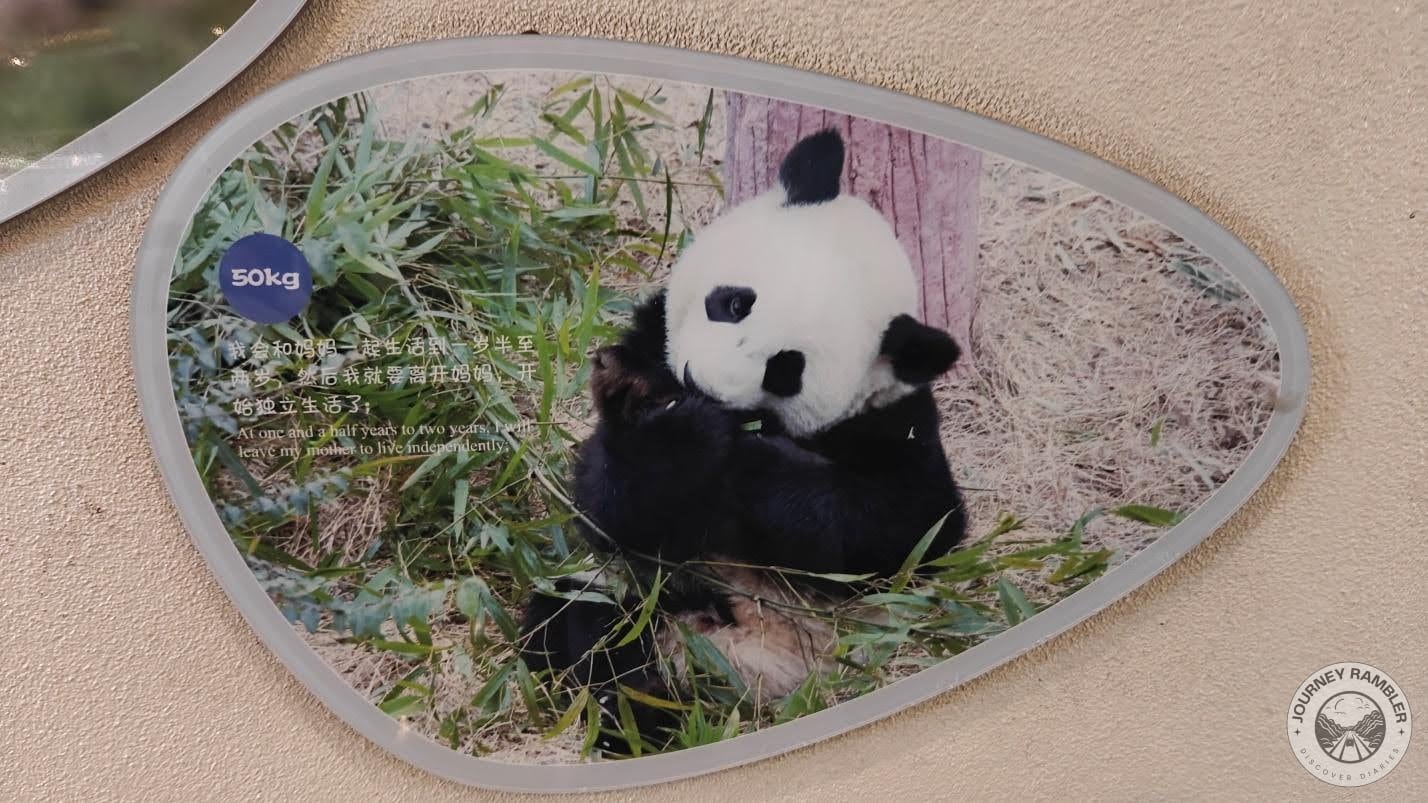
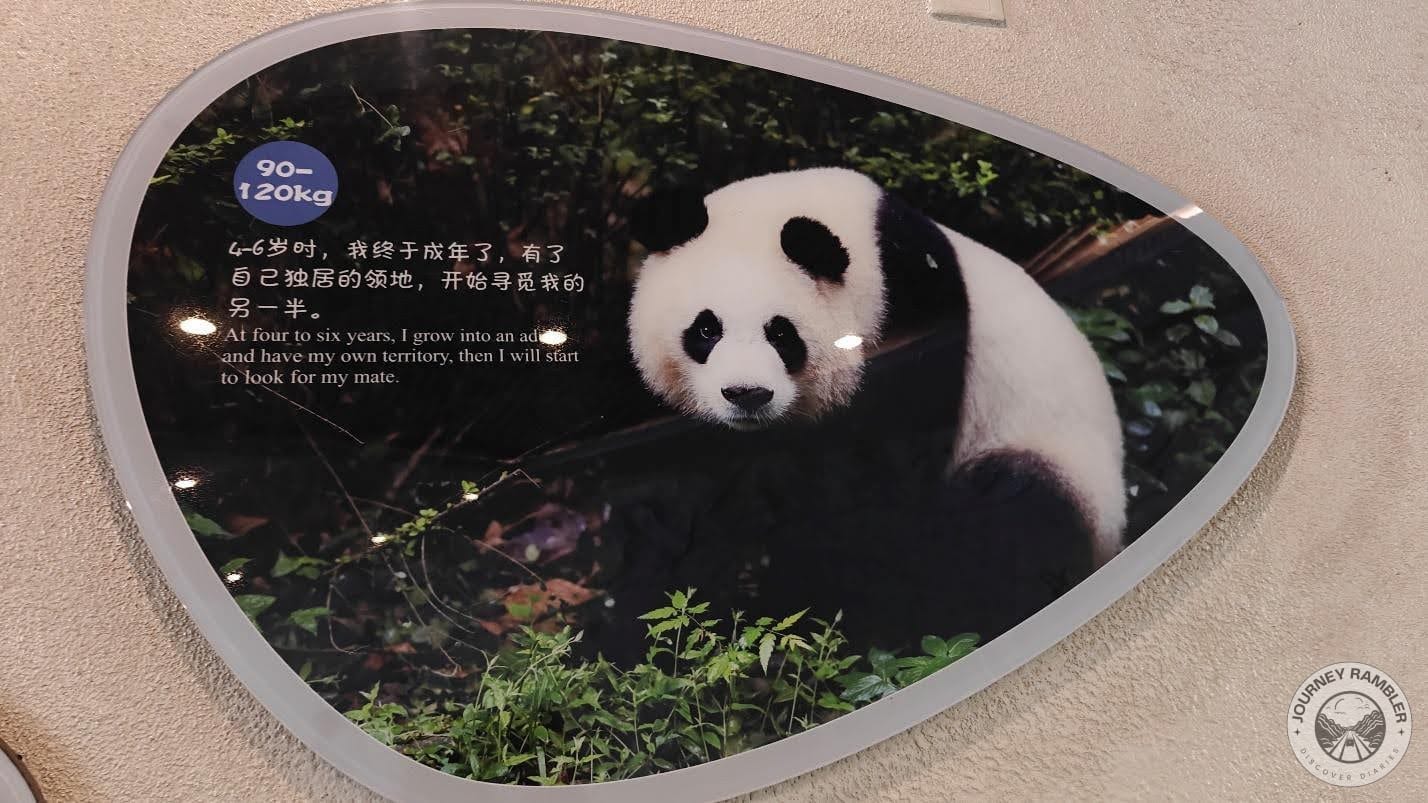
Giant pandas reach maturity at around the 4-6 year mark. At this point, they’re then given their very own enclosure which they can treat as their territory. Perhaps the only exception to this is Hua Hua and He Ye who still share an enclosure. That said, I did read somewhere that the sisters do have separate enclosures and that there are times when they’re placed together in one (like in the images earlier).
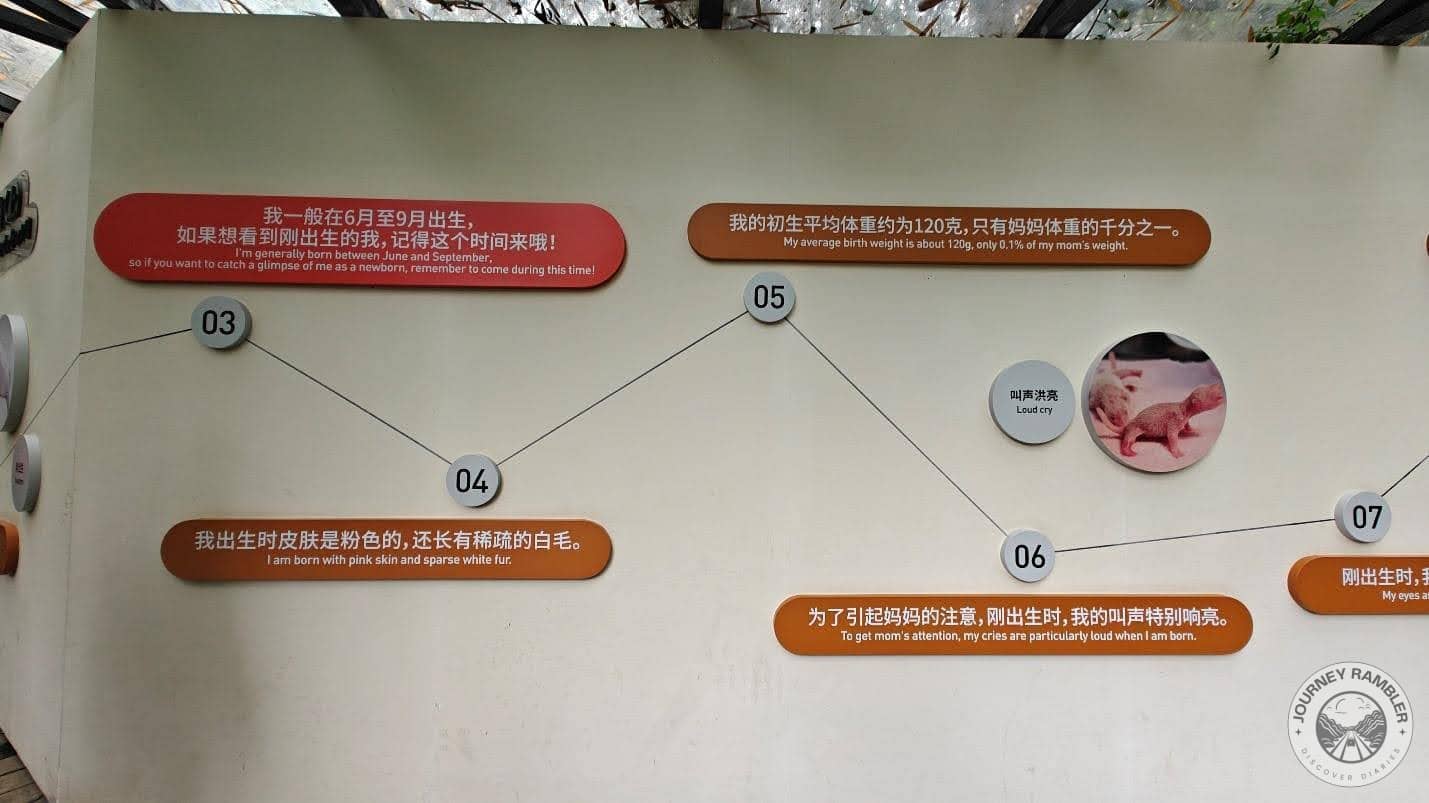
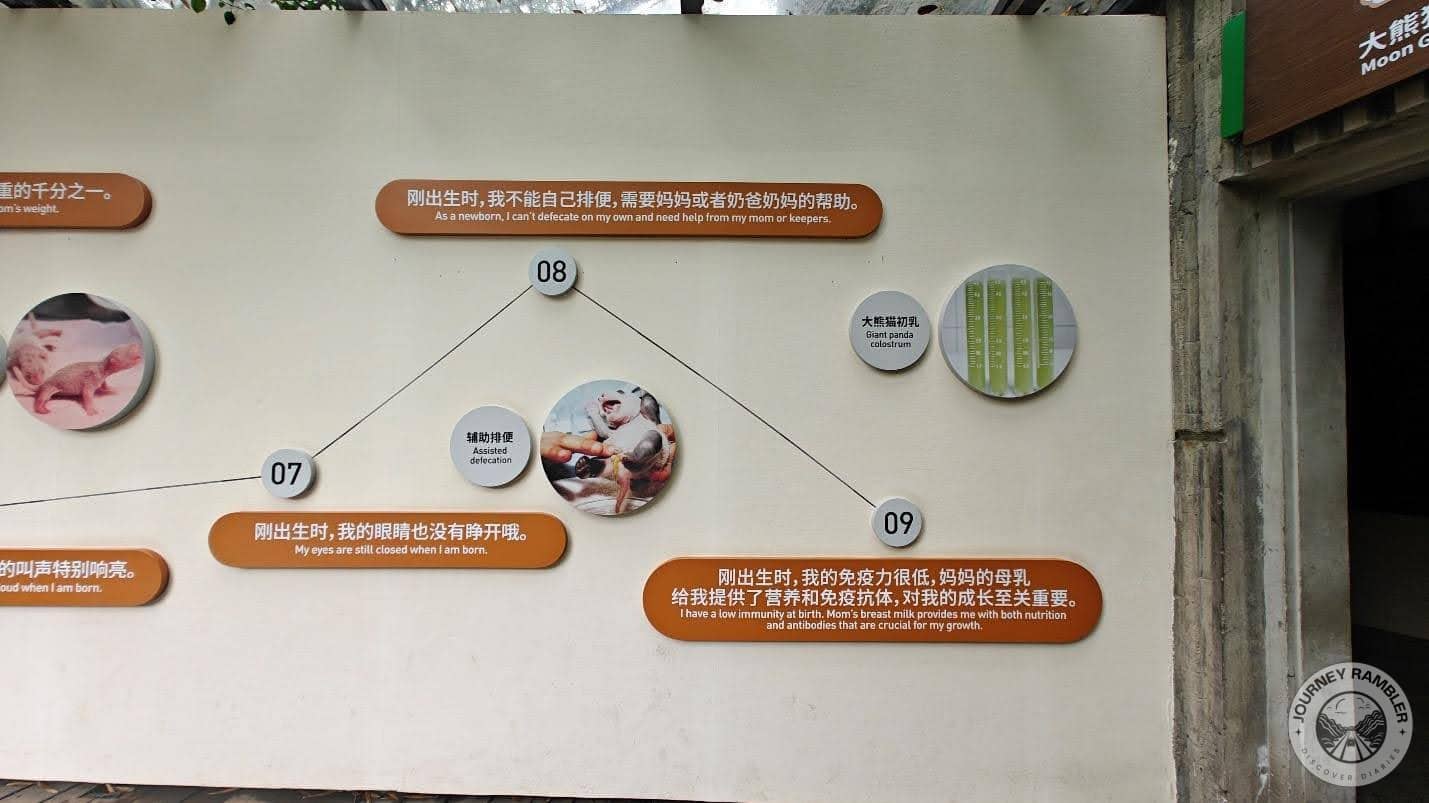
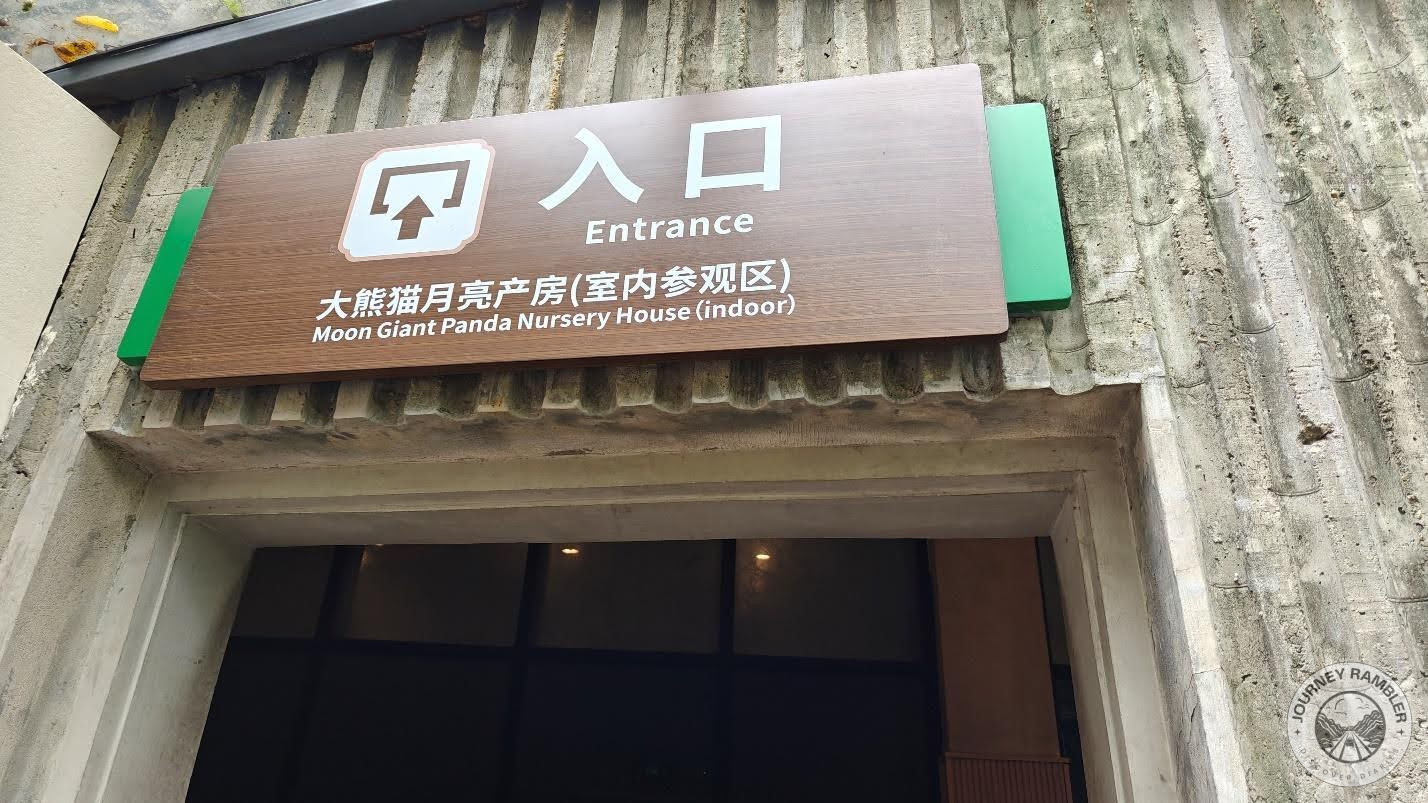
I finally reached the entrance to the indoor nursery house. This is where the giant panda cubs are kept together with their mothers to ensure that they are protected from the elements. Now, at this point in time there weren’t any cubs which isn’t surprising considering the really low birth rates of these animals.
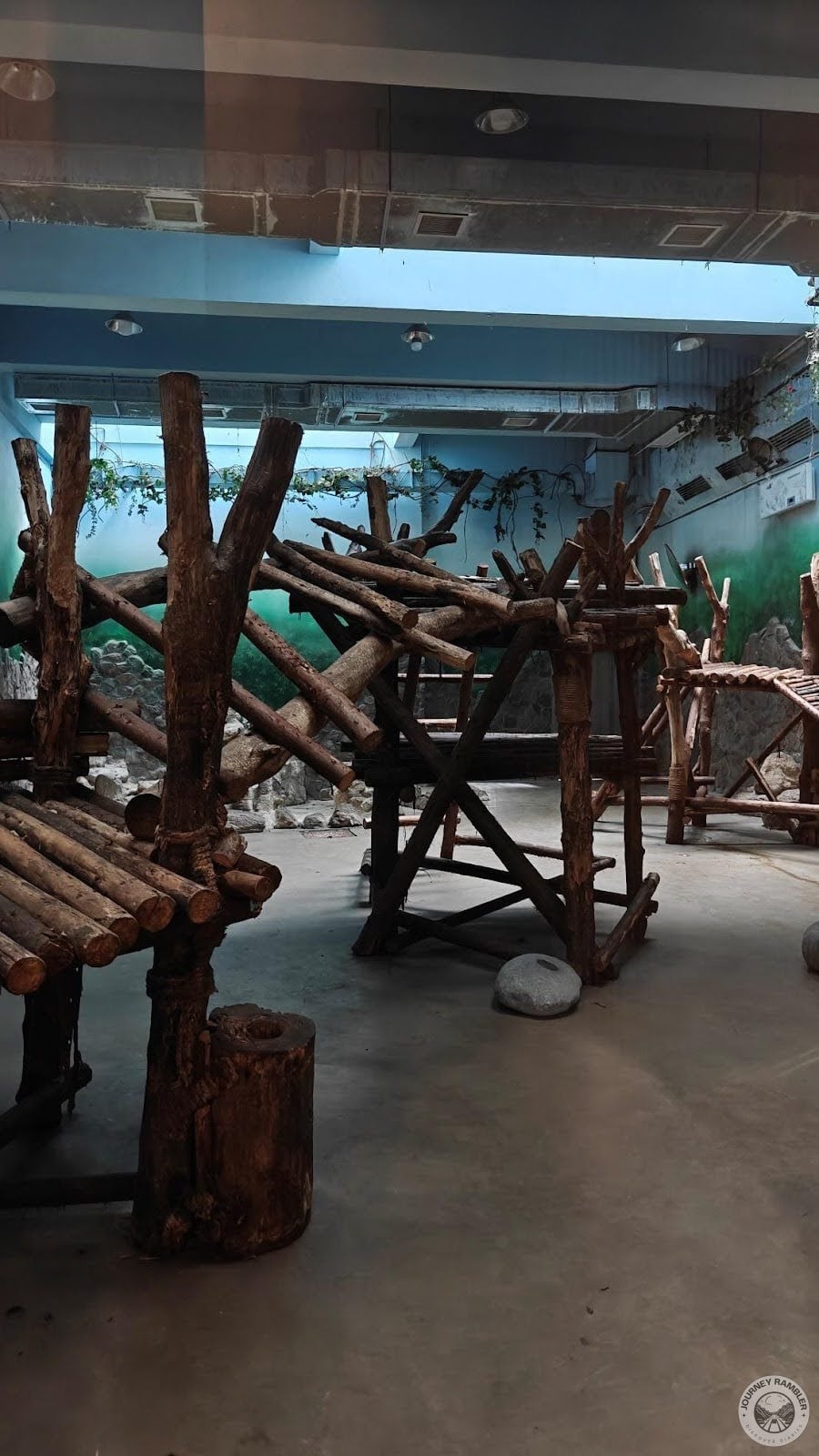
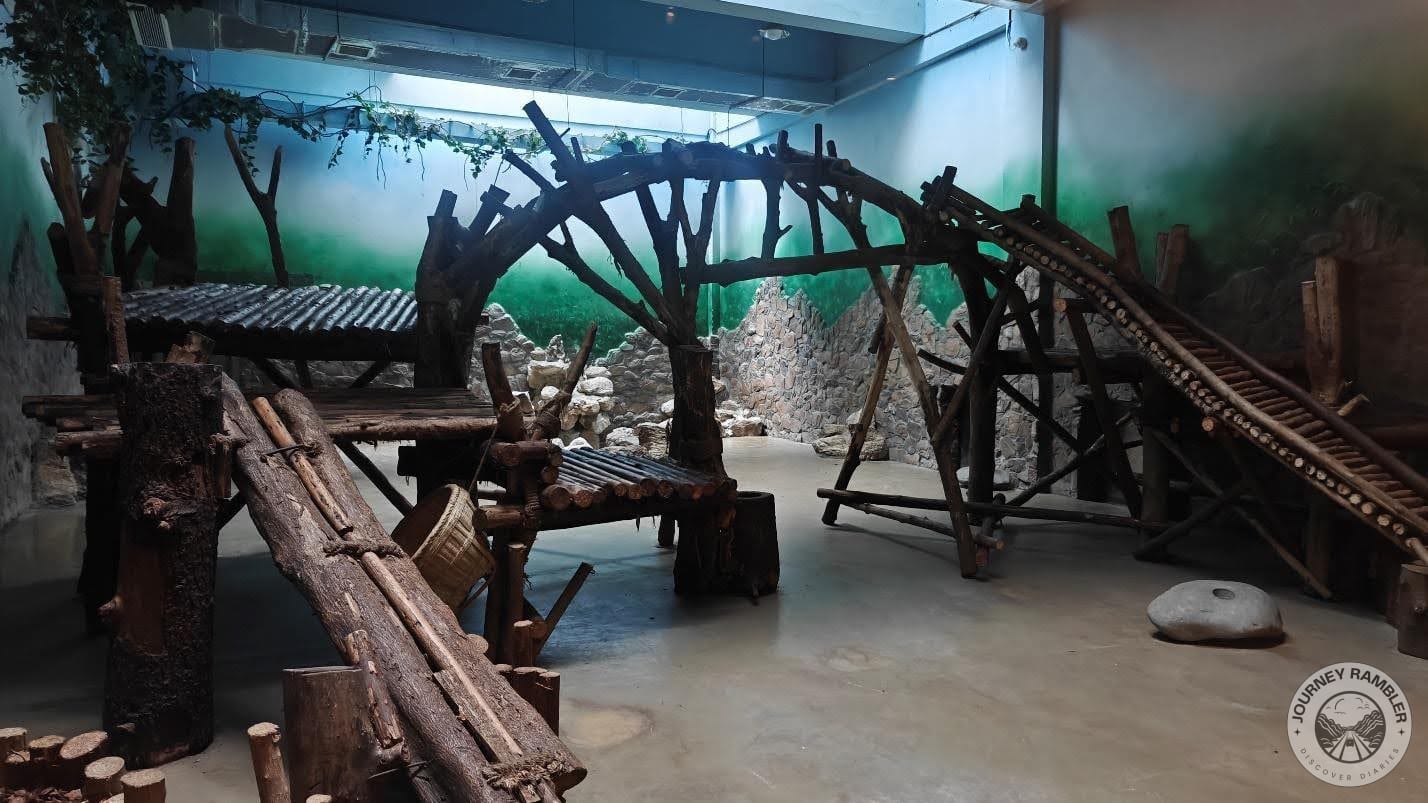
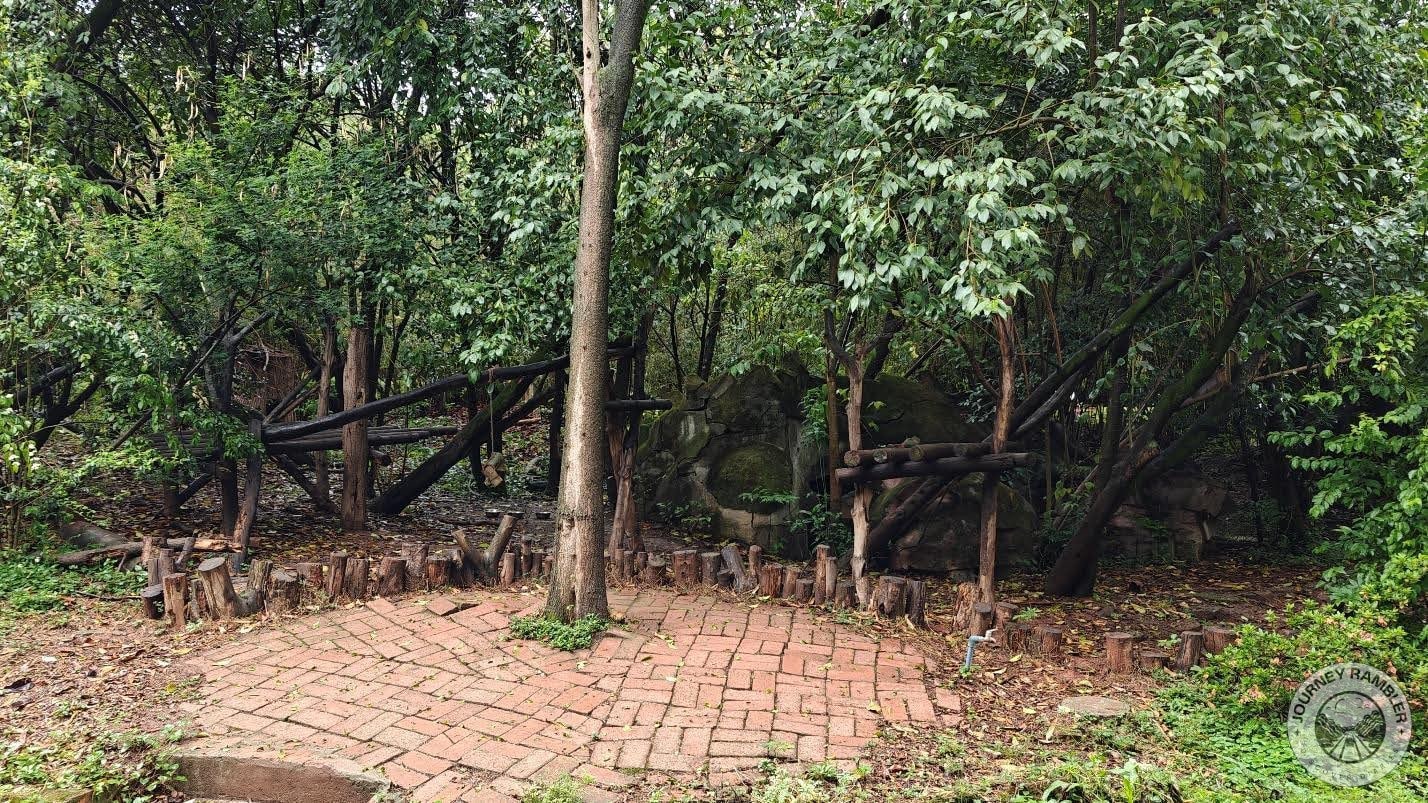
The area has these play pens especially built for the cubs for them to practice climbing. These are more or less the same with the play pens in the outdoor enclosures.
It’s not shown here but a giant panda female typically has a CHANCE of giving birth only once every two to three years (since they need to take care of their cubs for at least 2 years). Yes, you read that right. And you know what’s even crazier? They’re only fertile for 1-2 days annually! If they’re unable to mate at that time then the conservators will have to wait another whole year.
It is kind of understandable now why it’s such a challenge to increase the giant panda population. Even with such a challenging animal to save though, the Chengdu Research Base of Giant Panda Breeding and other organizations did show impressive results. In 2016, the giant panda’s status was upgraded from endangered to vulnerable which was an achievement for conservationists.
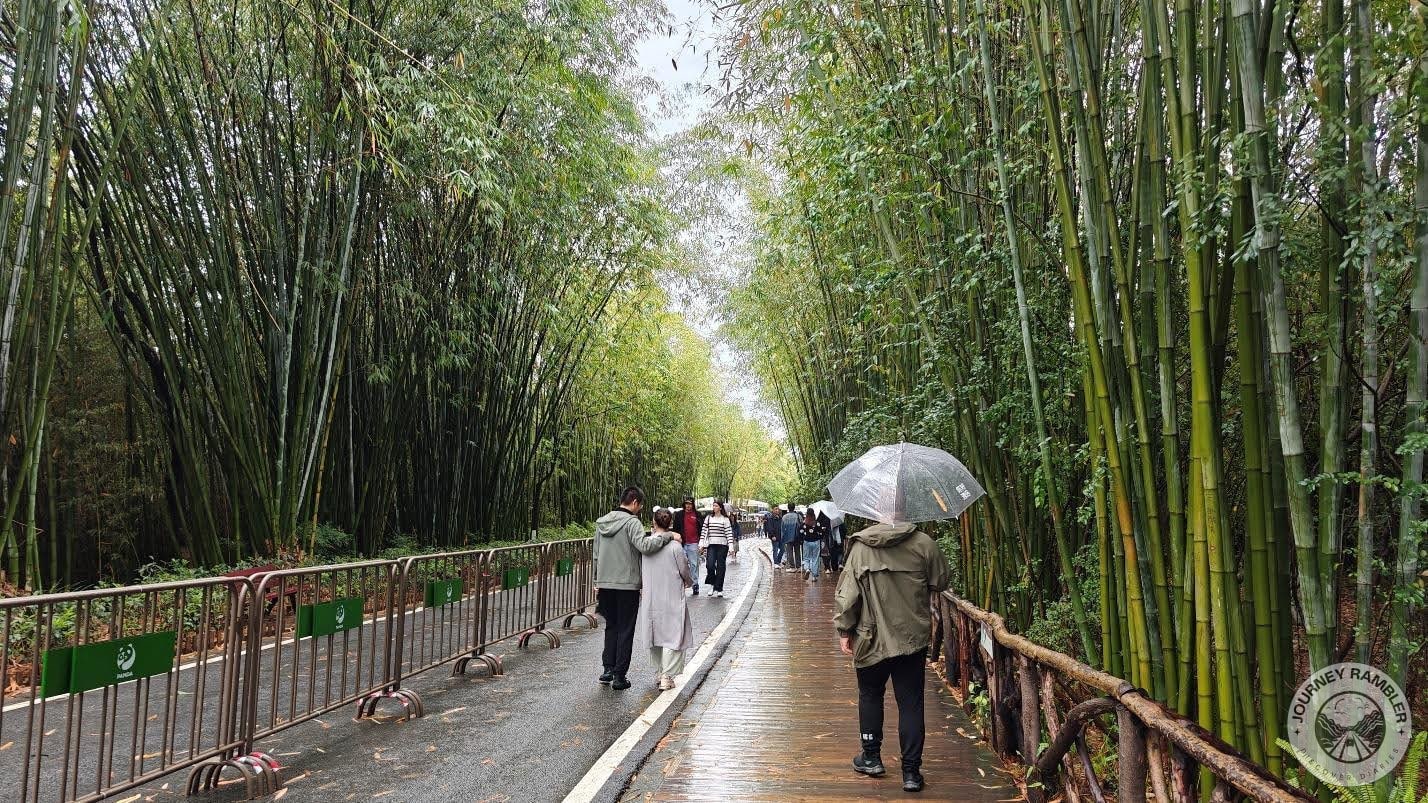
There was still a light drizzle when I finally stepped out of the Moonlight Delivery House. Still following the trail, I came across this bamboo forest that reminded me of the ones I saw in Japan some time ago. The bamboo here were quite tall and I guess this is where the pandas’ food comes from.
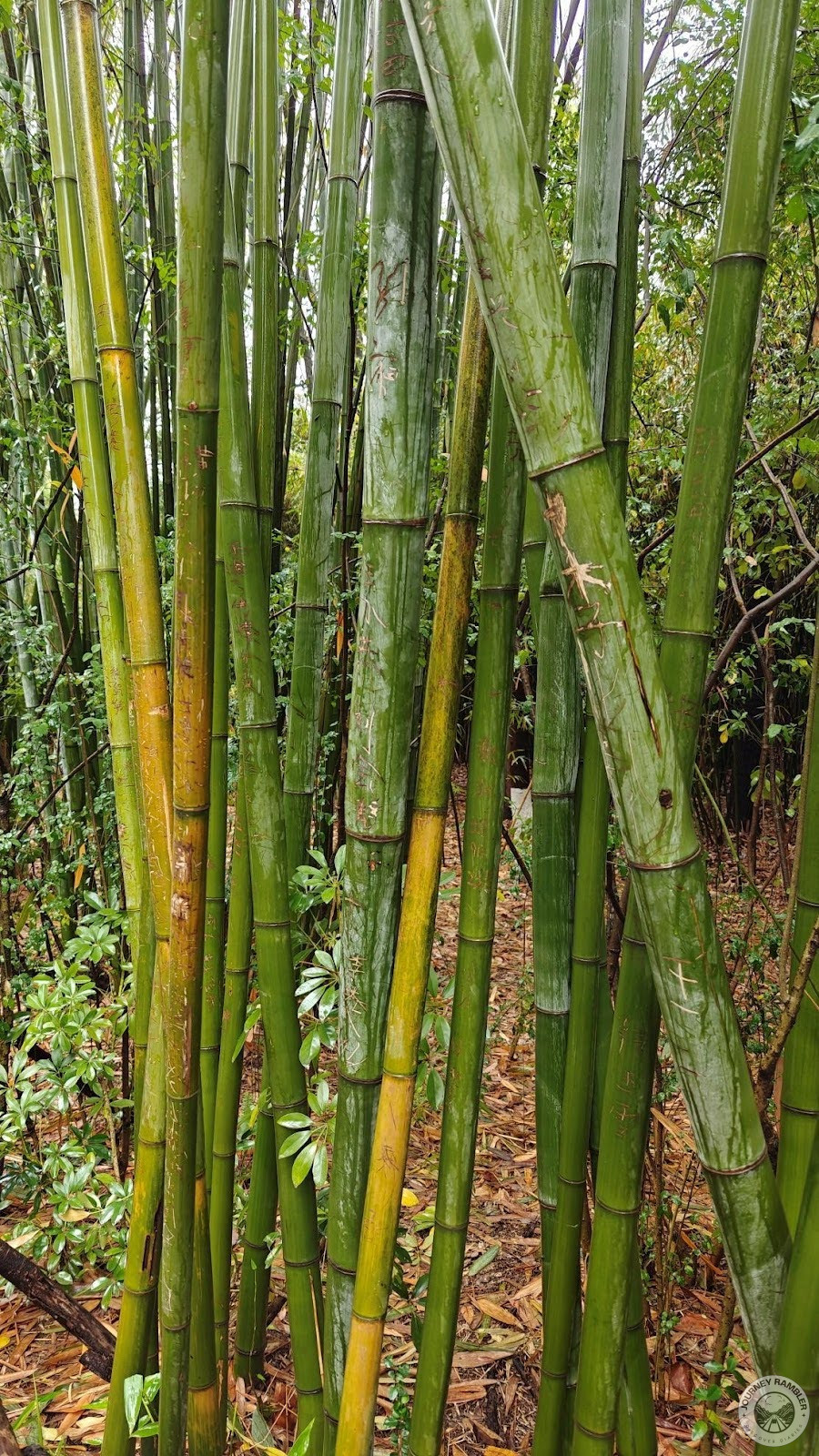
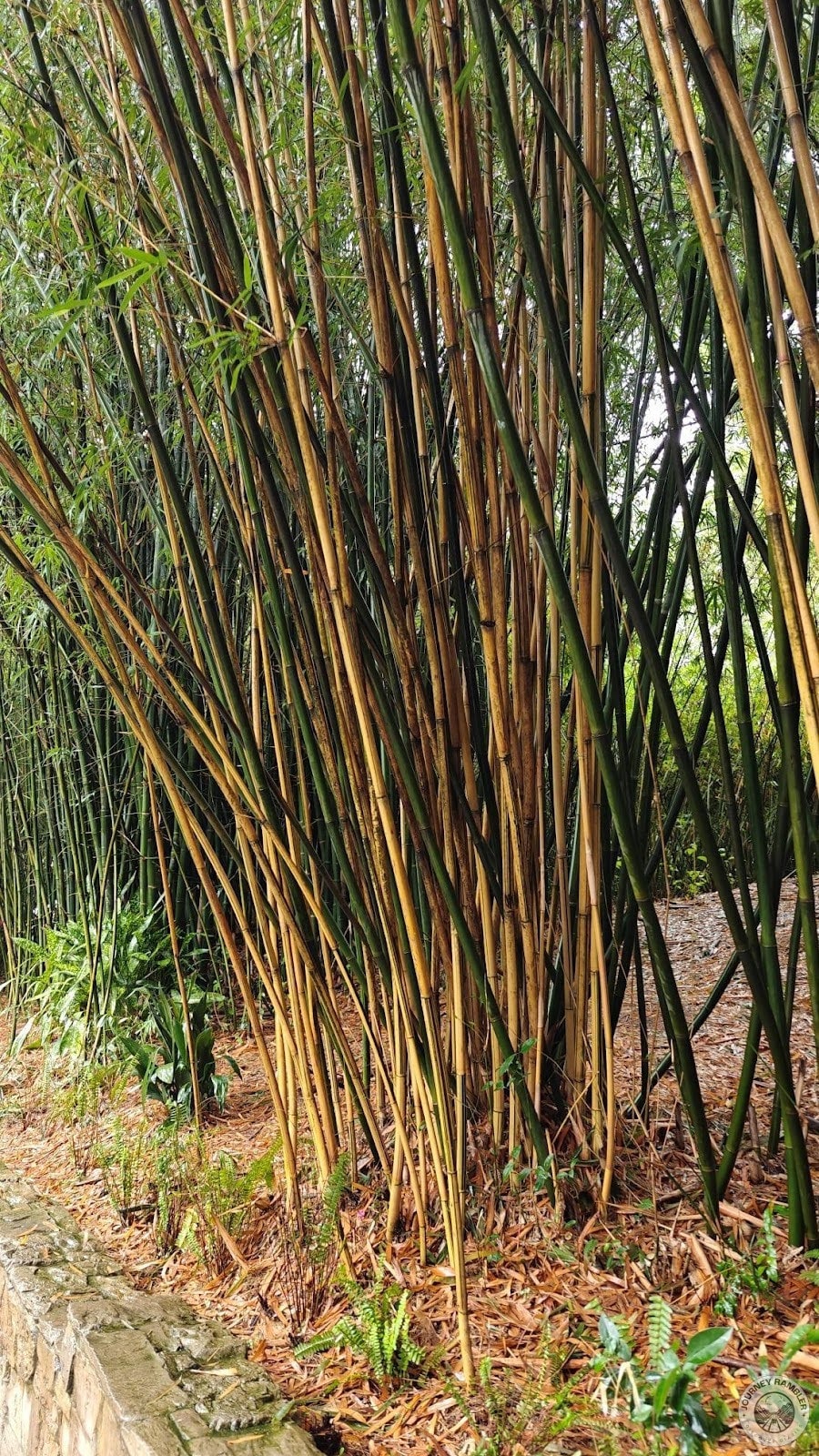
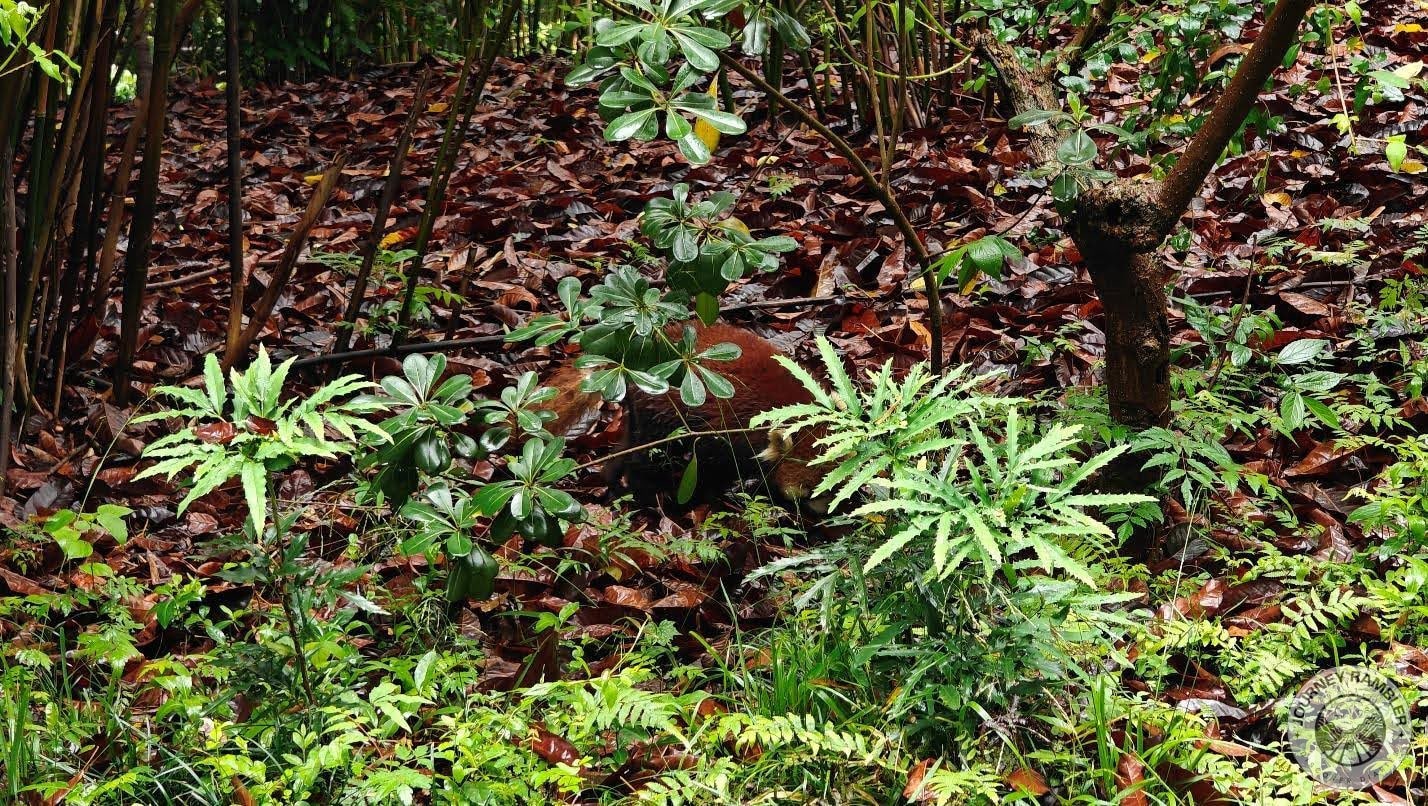
Still following the path when I caught sight of movement in the bushes. What’s this?! Turns out, this area had red pandas!
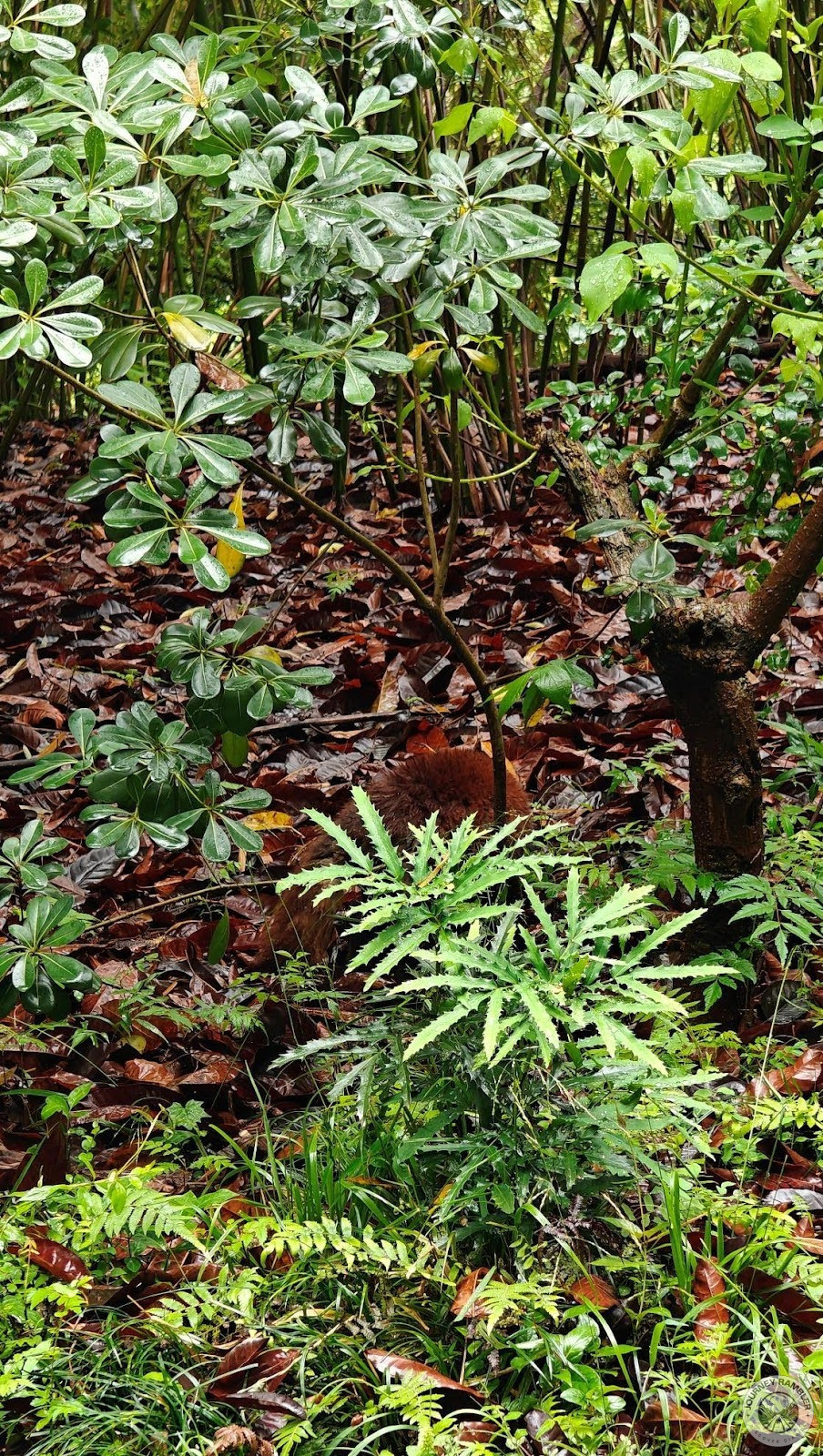
Now if you thought pandas were cute then you’re going to like red pandas! If I were to describe them, I think they’re what happens when you cross a panda with a raccoon and a cat. They’re chubby as a giant panda, are as large as a raccoon, and are as curious and aloof as a cat.
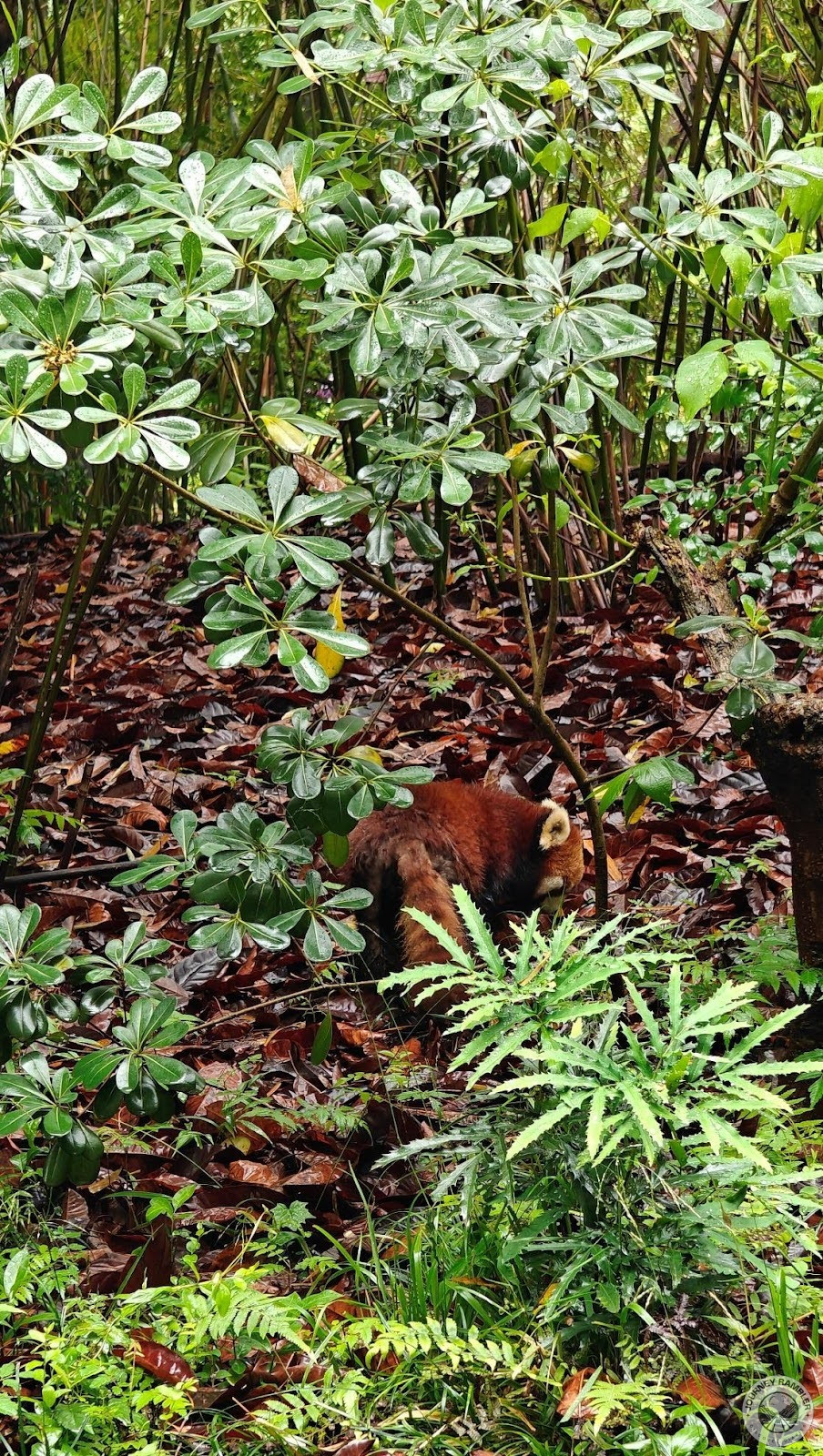
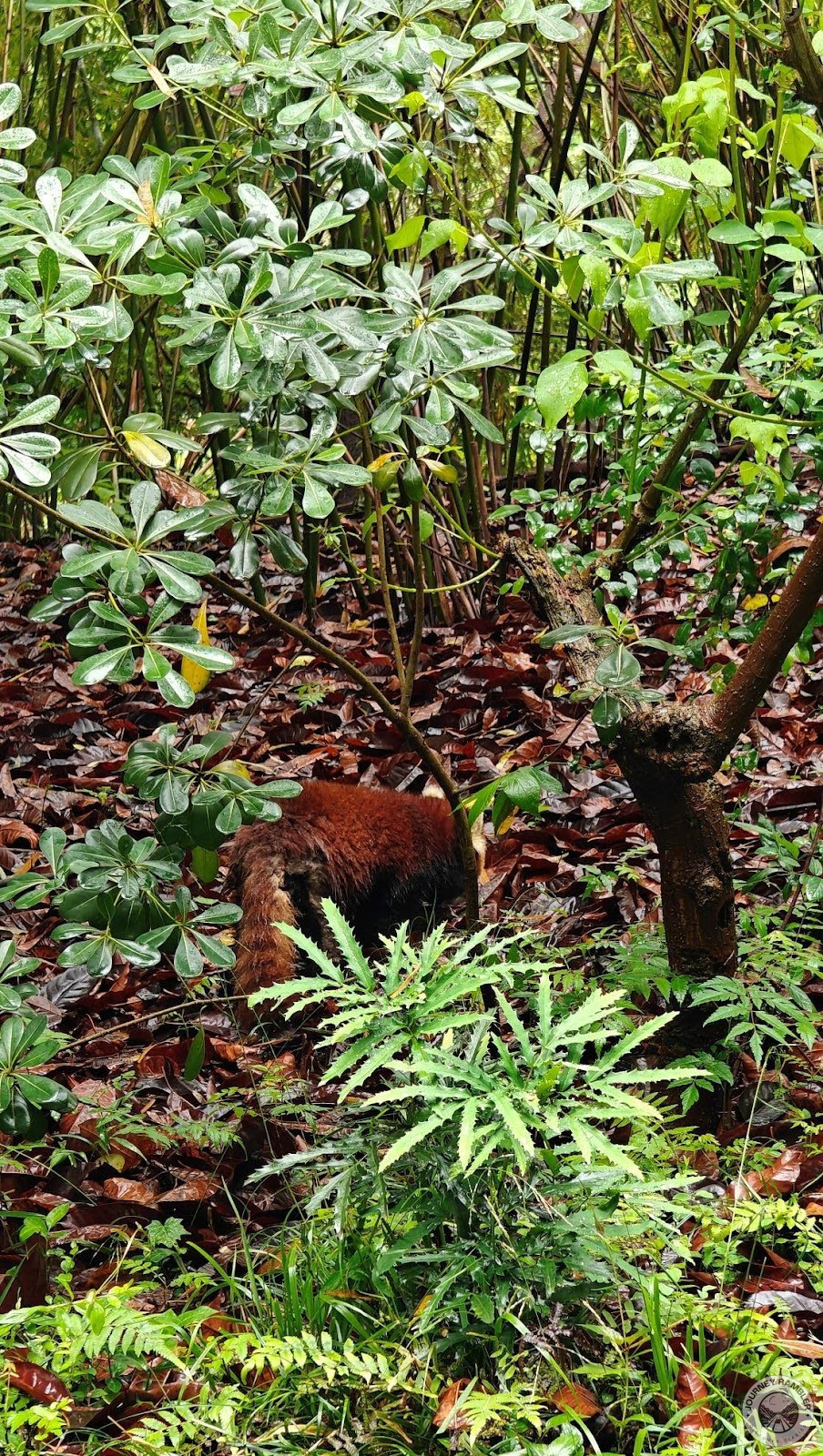
While I think that they’re cuter than giant pandas, red pandas aren’t as popular because they’re not as sociable. Oftentimes, it’s going to be hard to see these animals as they’re either sleeping or keeping away from people on top of trees. And unlike giant pandas, the red panda population has seen continuous decline putting them on the endangered list.
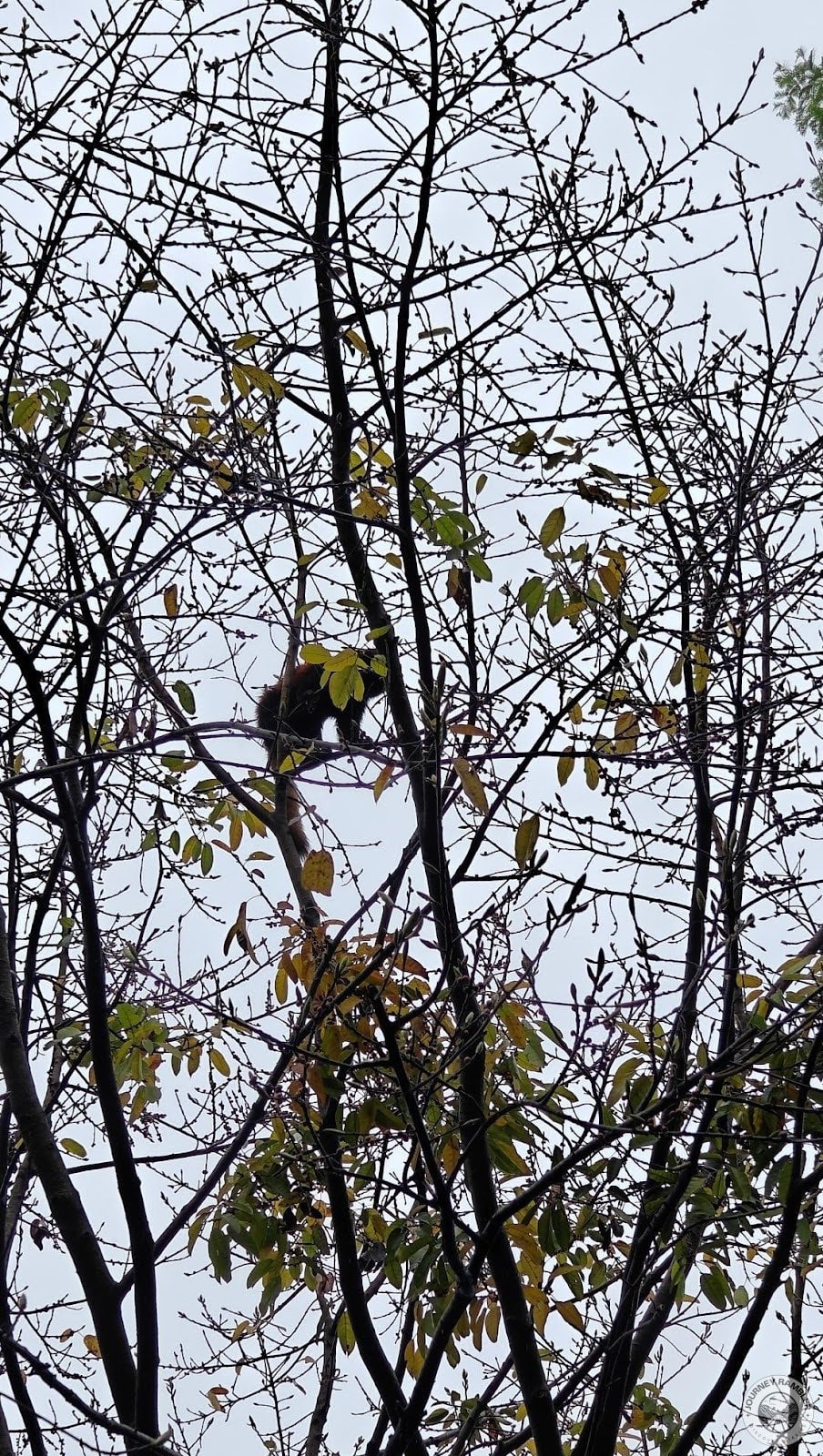
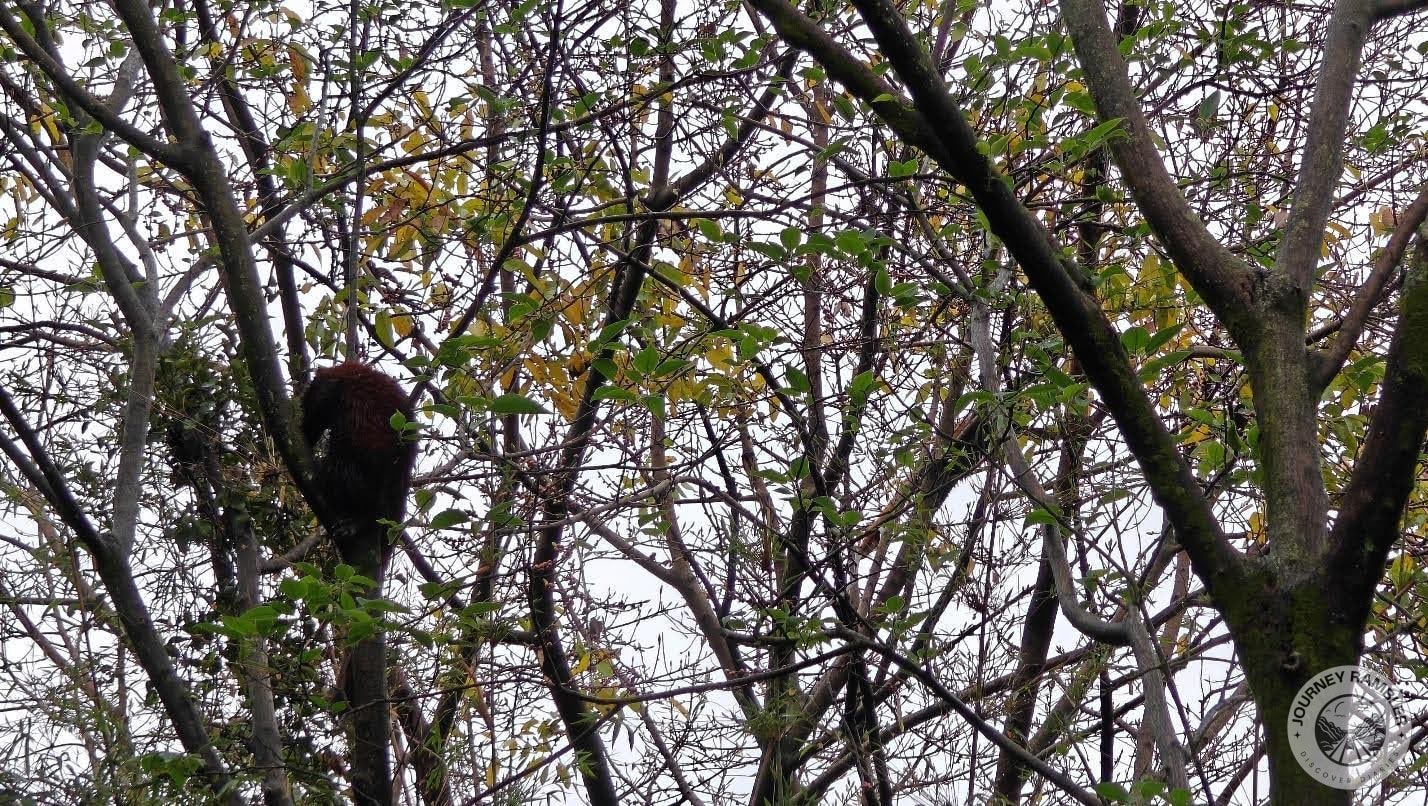
Here’s another red panda precariously sitting on top of the branches of this tree. Due to their size and relatively faster movements, it’s much harder to prevent these animals from reaching these heights. I was actually afraid that they might fall but then I was informed that red pandas are even better climbers than giant pandas.
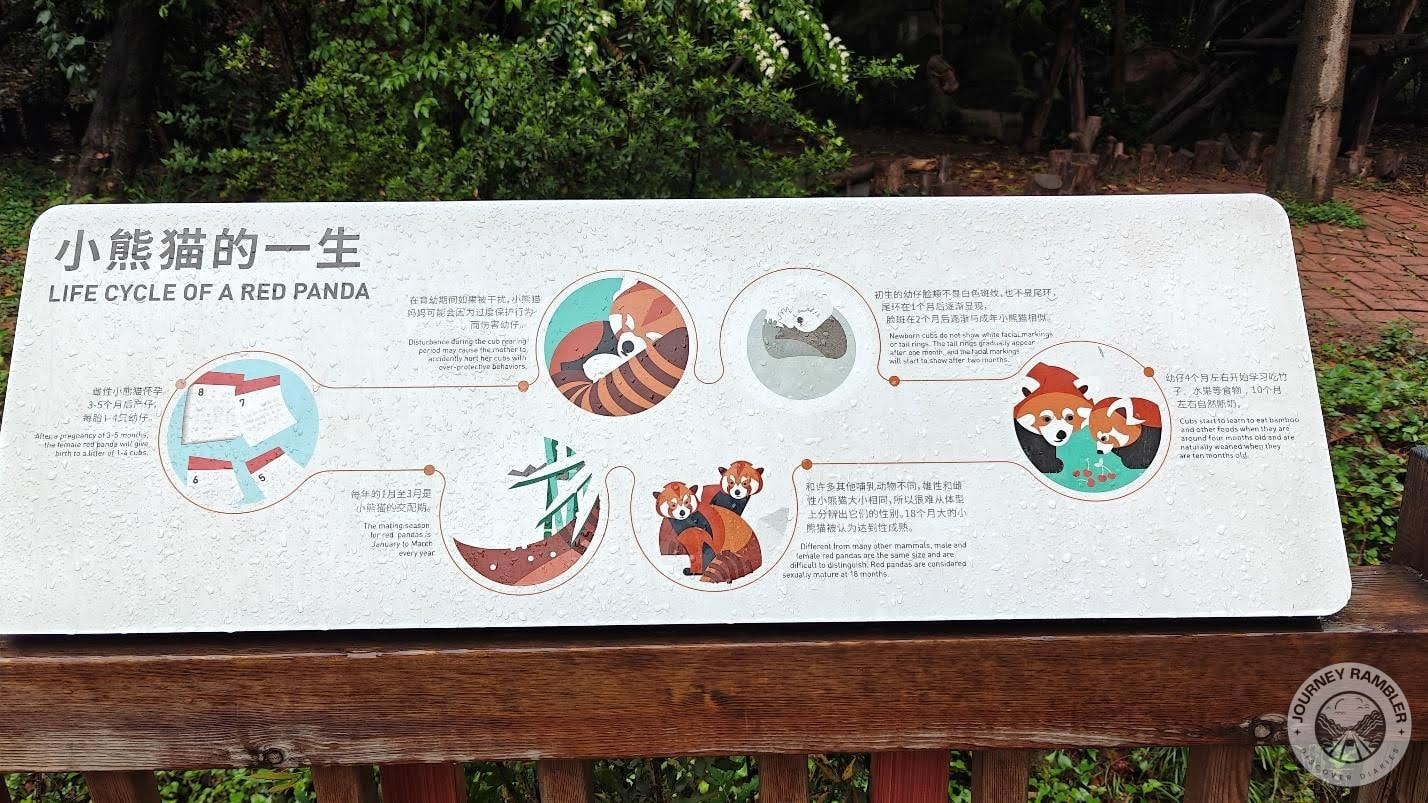
This is an infographic detailing a red panda’s life cycle. While they share the panda name with giant pandas, red pandas are actually more closely related to raccoons and weasels. Perhaps the only feature they share with the giant pandas is their love for bamboo which is also probably the reason why their reproductive rates aren’t that high.
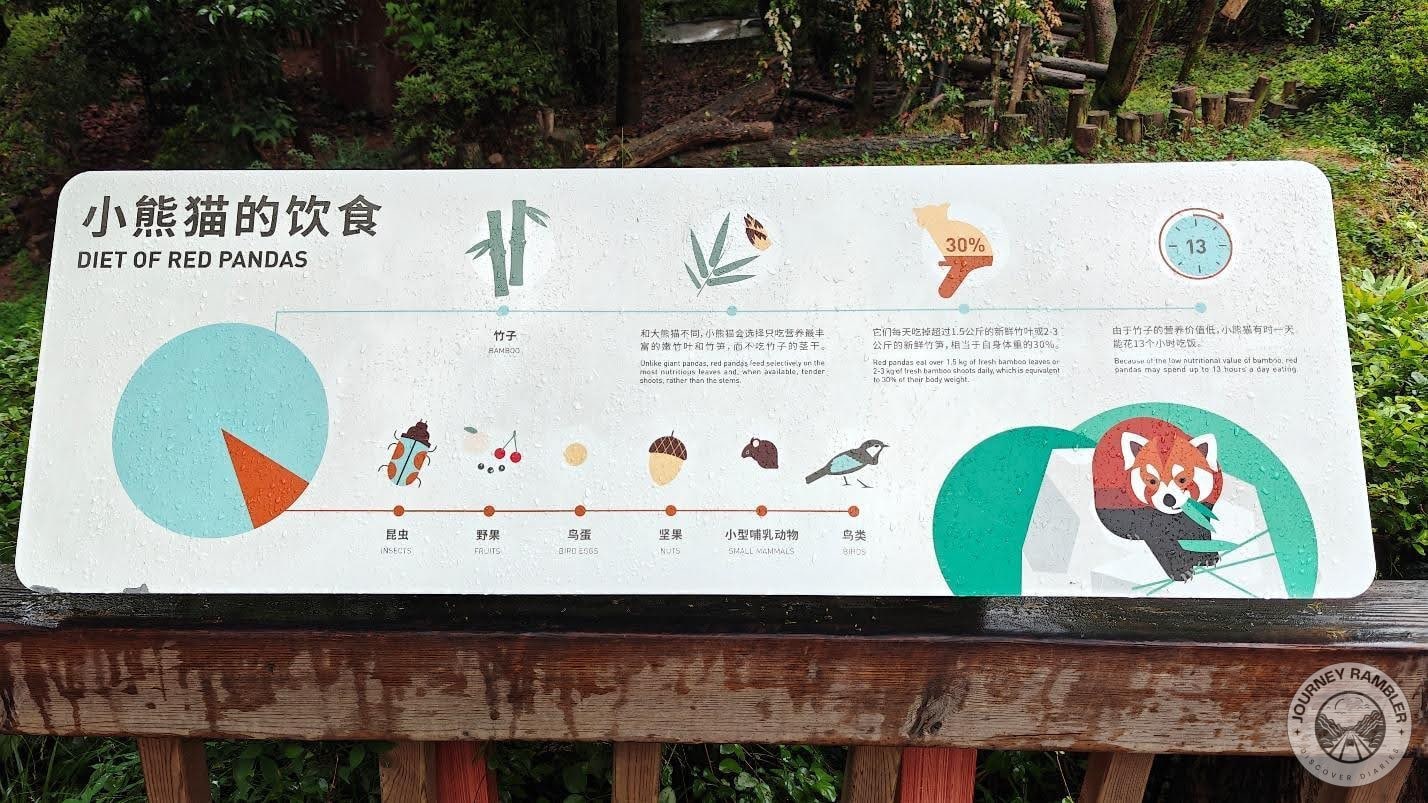
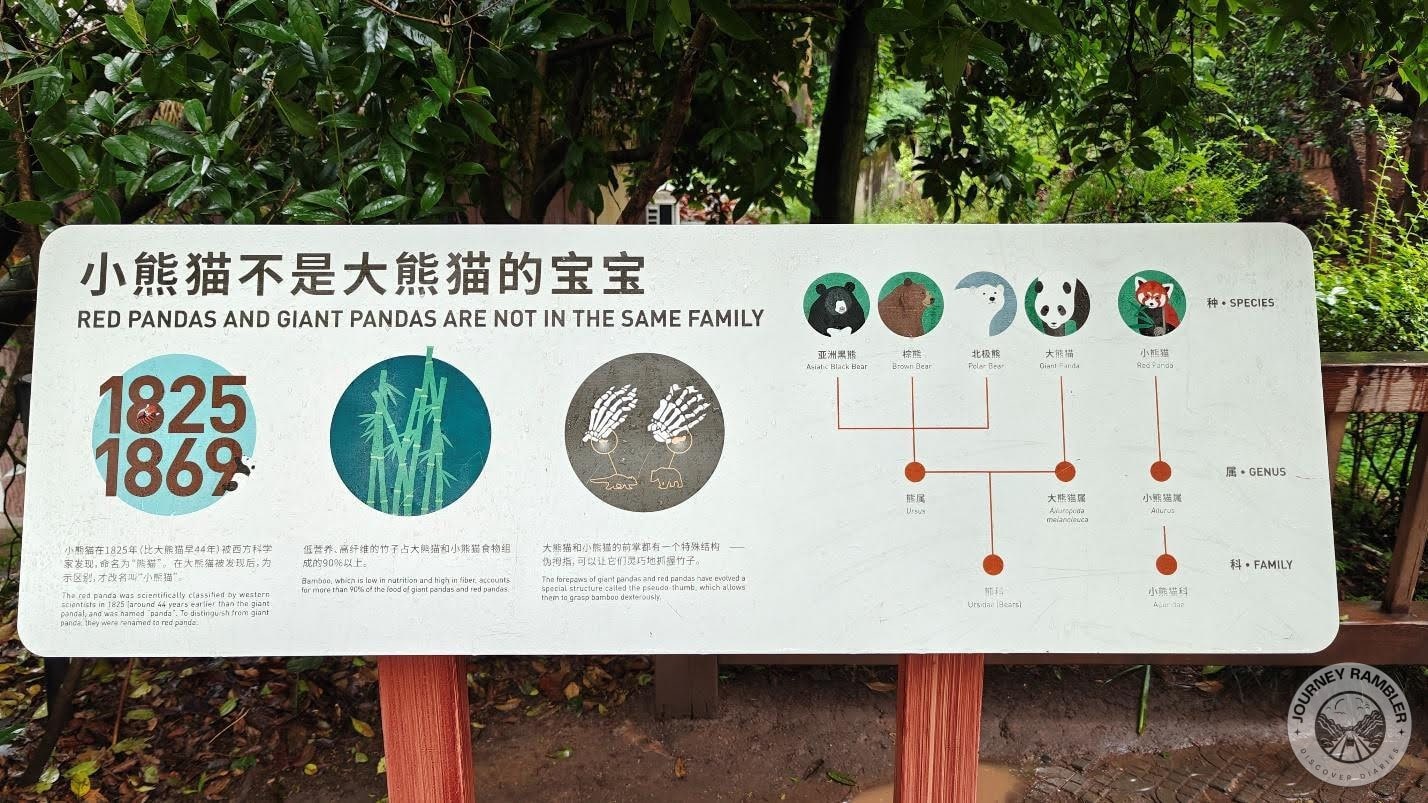
Here’s the infographic explaining how giant and red pandas are NOT related. It’s quite interesting to see that of the other species in its family, the panda is the only one that doesn’t have meat as a staple of its diet. Make no mistake, pandas are known to eat meat but it only constitutes .01% of the food that they consume. Much like giant pandas, the red pandas have also been known to eat meat but very rarely as it only constitutes about 5% of their diet.
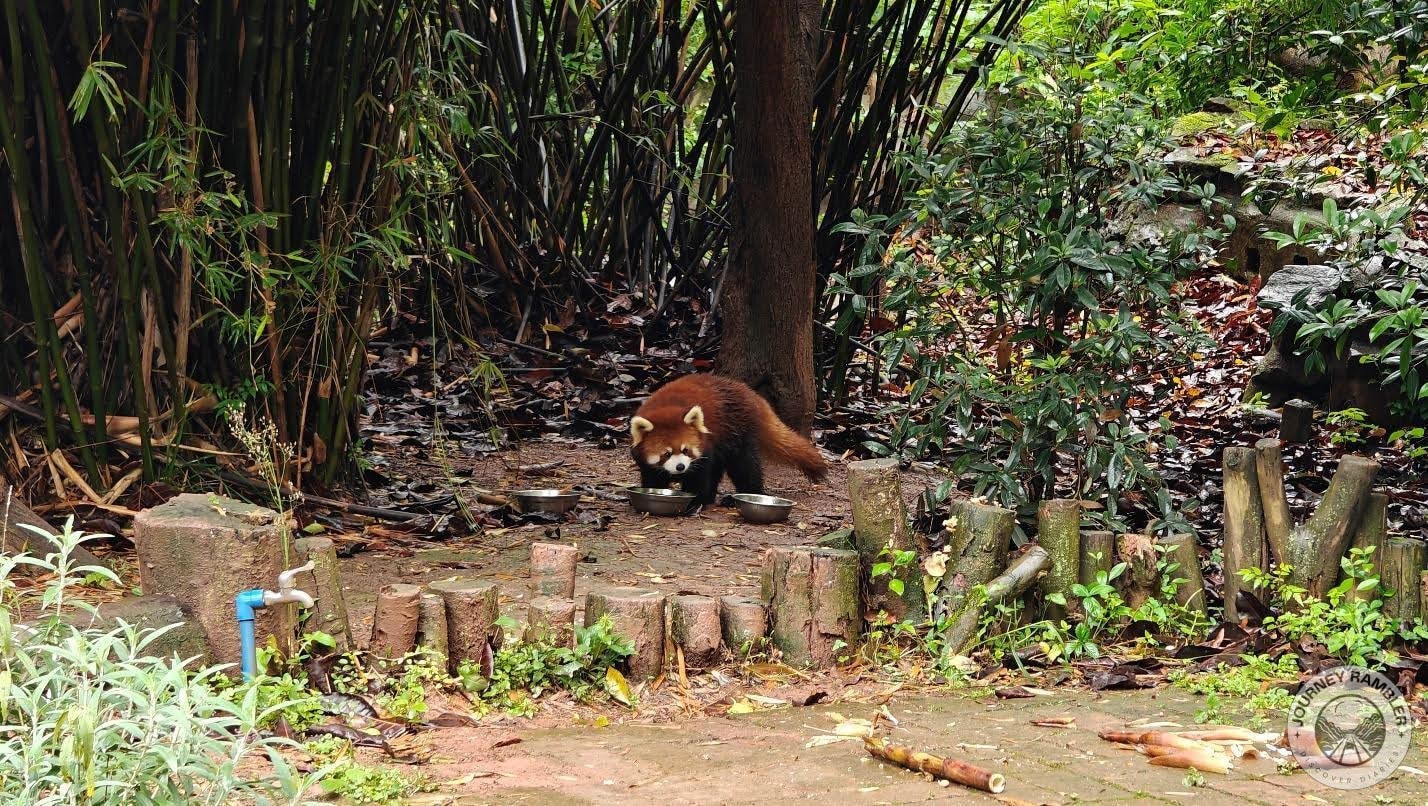
Just look at this little fella! It really does resemble a raccoon and it’s actually quite cute! When I took the picture the little guy just finished eating and was drinking the water provided for it by its caretakers.
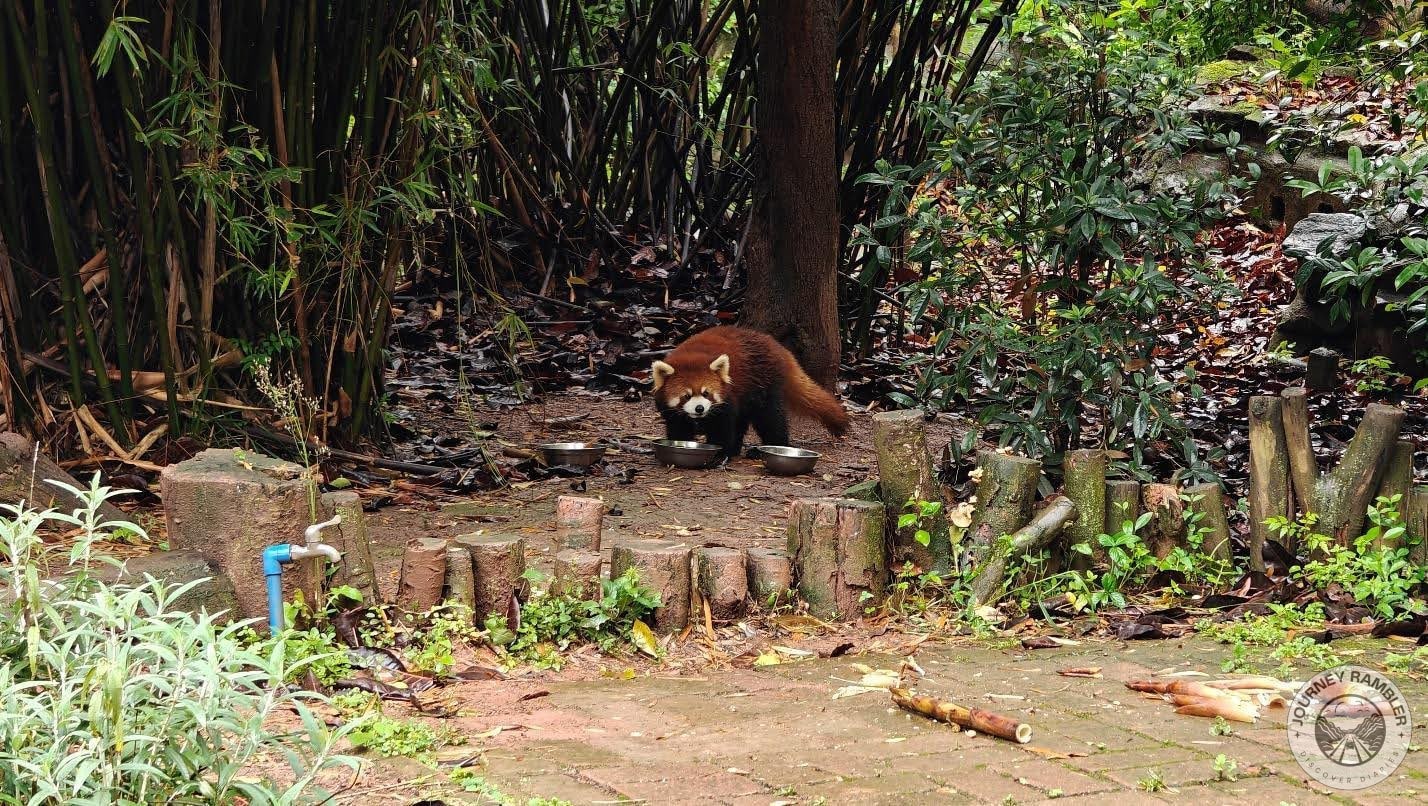
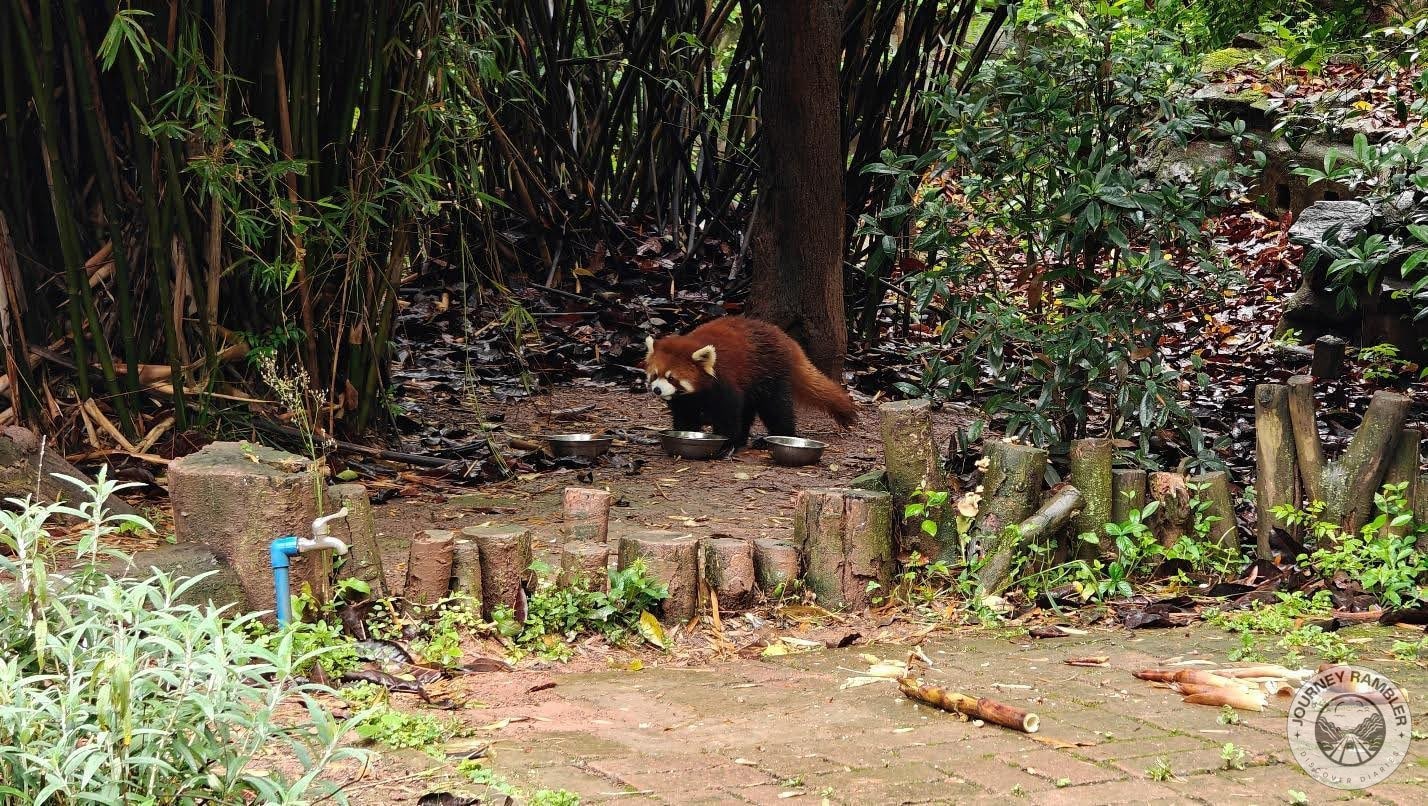
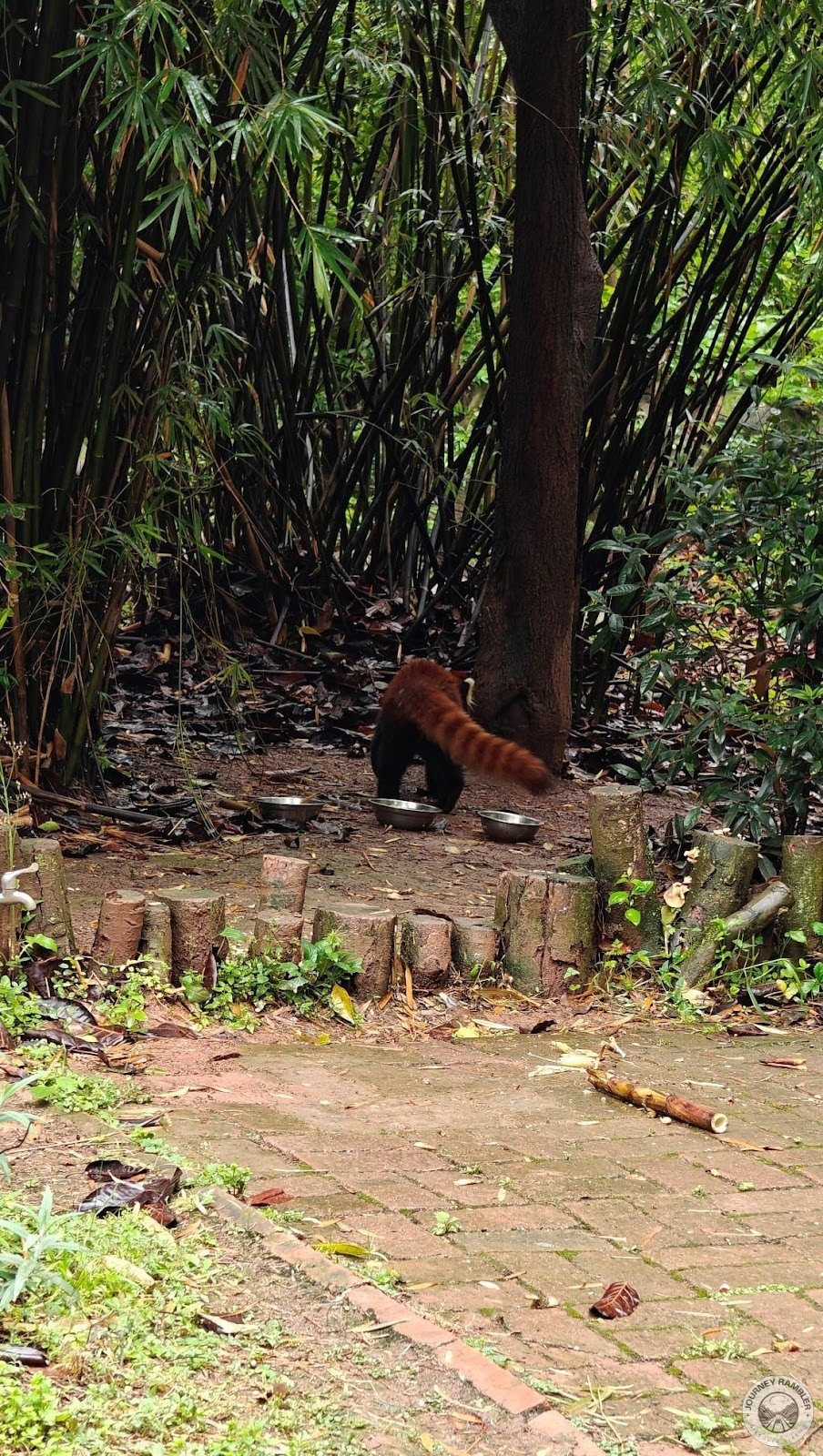
Like I mentioned earlier, red pandas are aloof and this one pretty much fits the bill. It was constantly staring at us while drinking its water and it immediately turned its back on us once it finished. That said, it didn’t seem like it was afraid. Rather it seemed like it just had no interest in dealing with the oohs and aahs of the crowd.
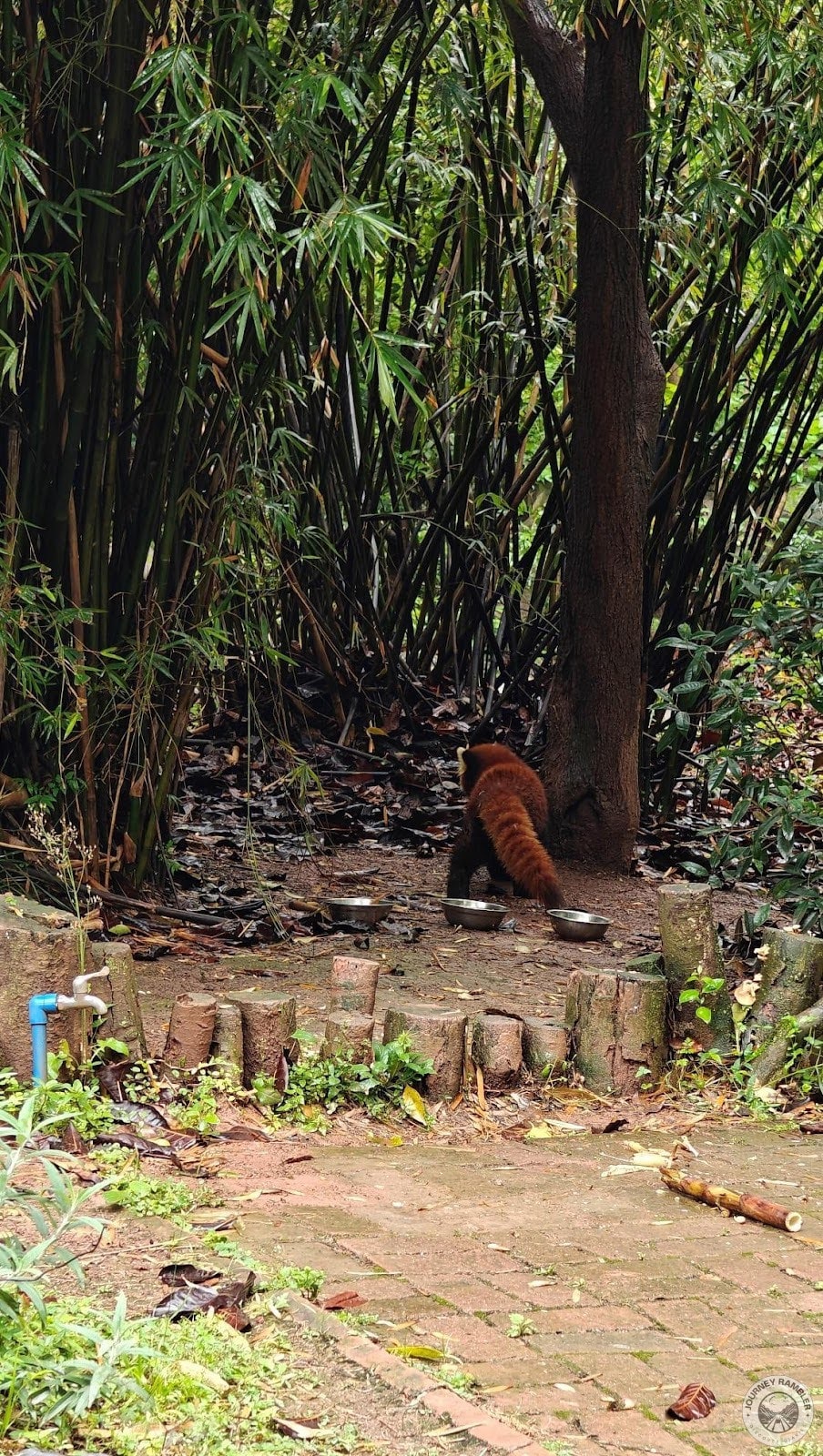
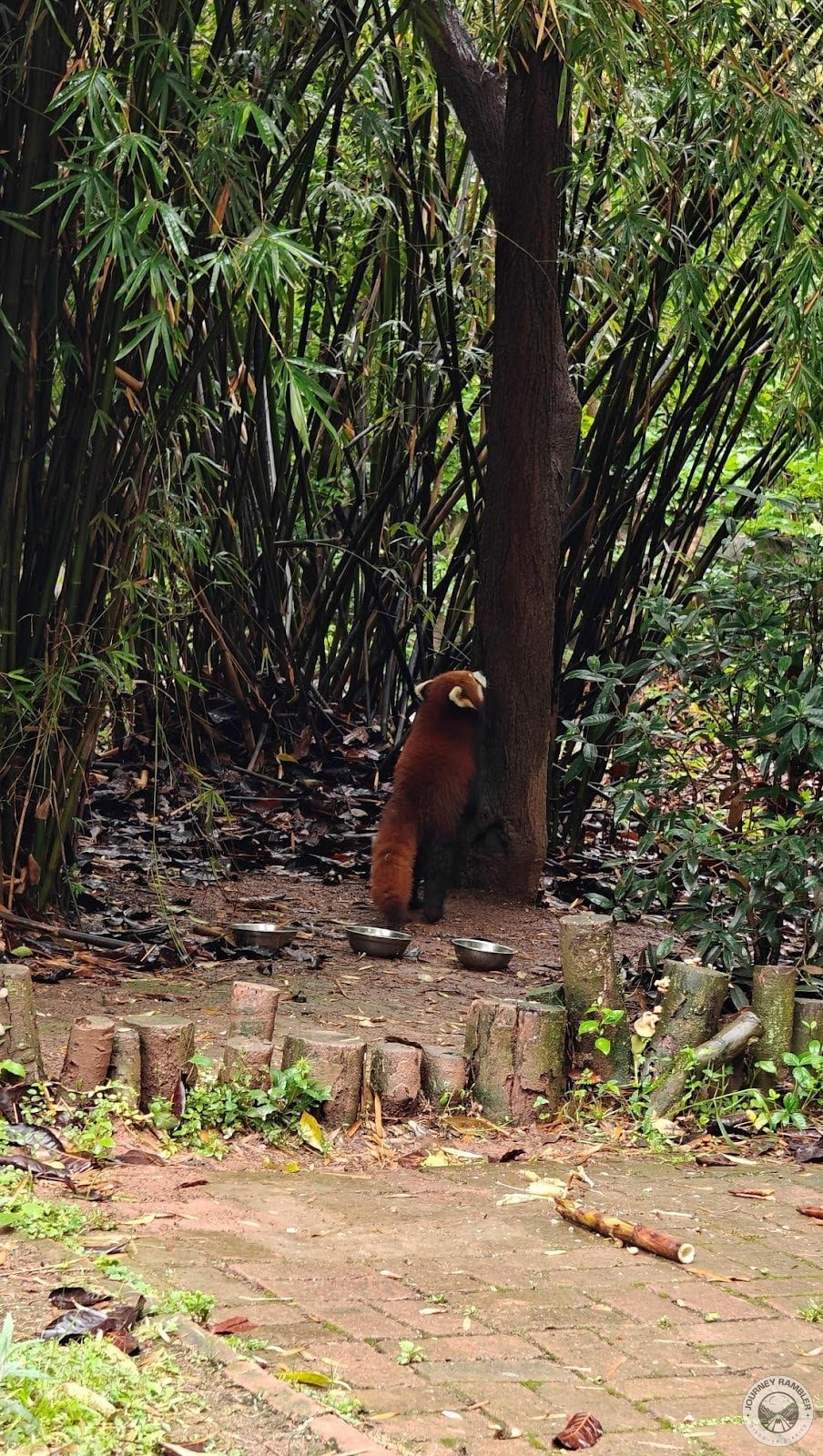
What was really cute though was when it started to climb up the tree. If you’ve ever played Super Mario Bros 3 on the Famicom/NES then you’re probably familiar with the tanuki powerup. Well, this just reminded me of that.
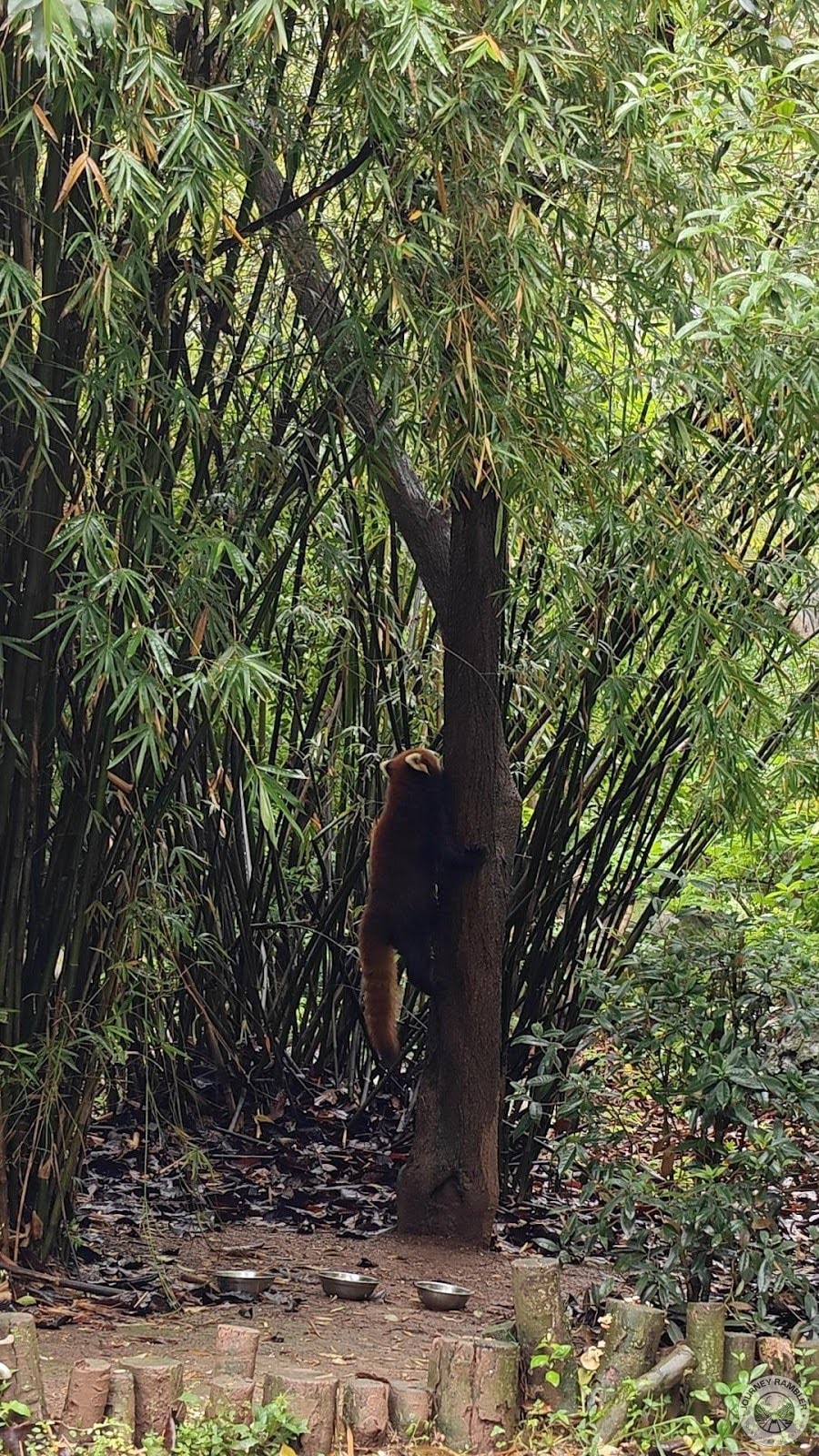
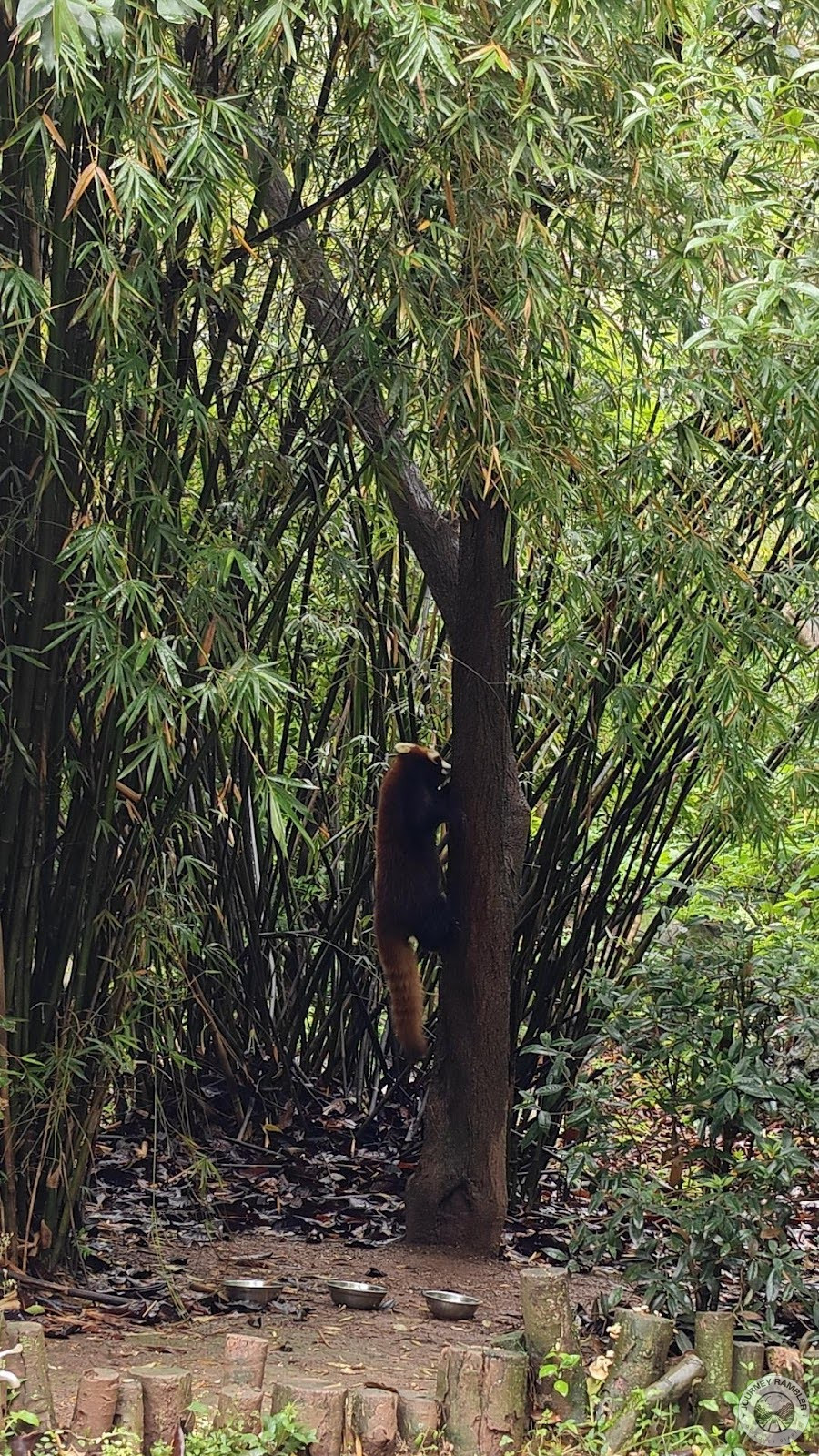
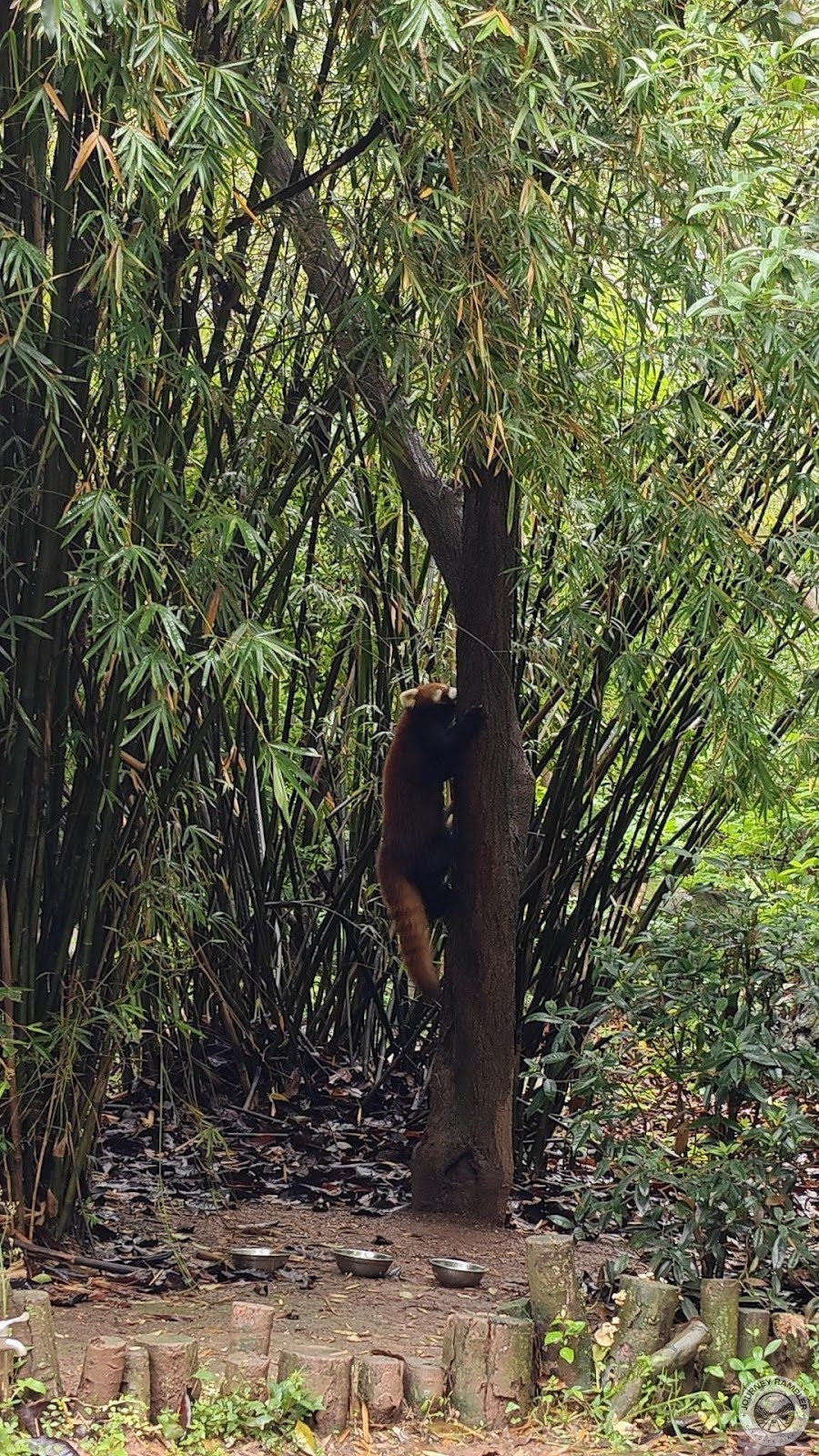
Maybe it’s because they’re smaller but I genuinely find the red panda to be the cuter animal. Moreover, their antics make them even more endearing. It’s like they’re natural born comedians with really high charisma but they’re also very shy. Such an enigmatic animal.
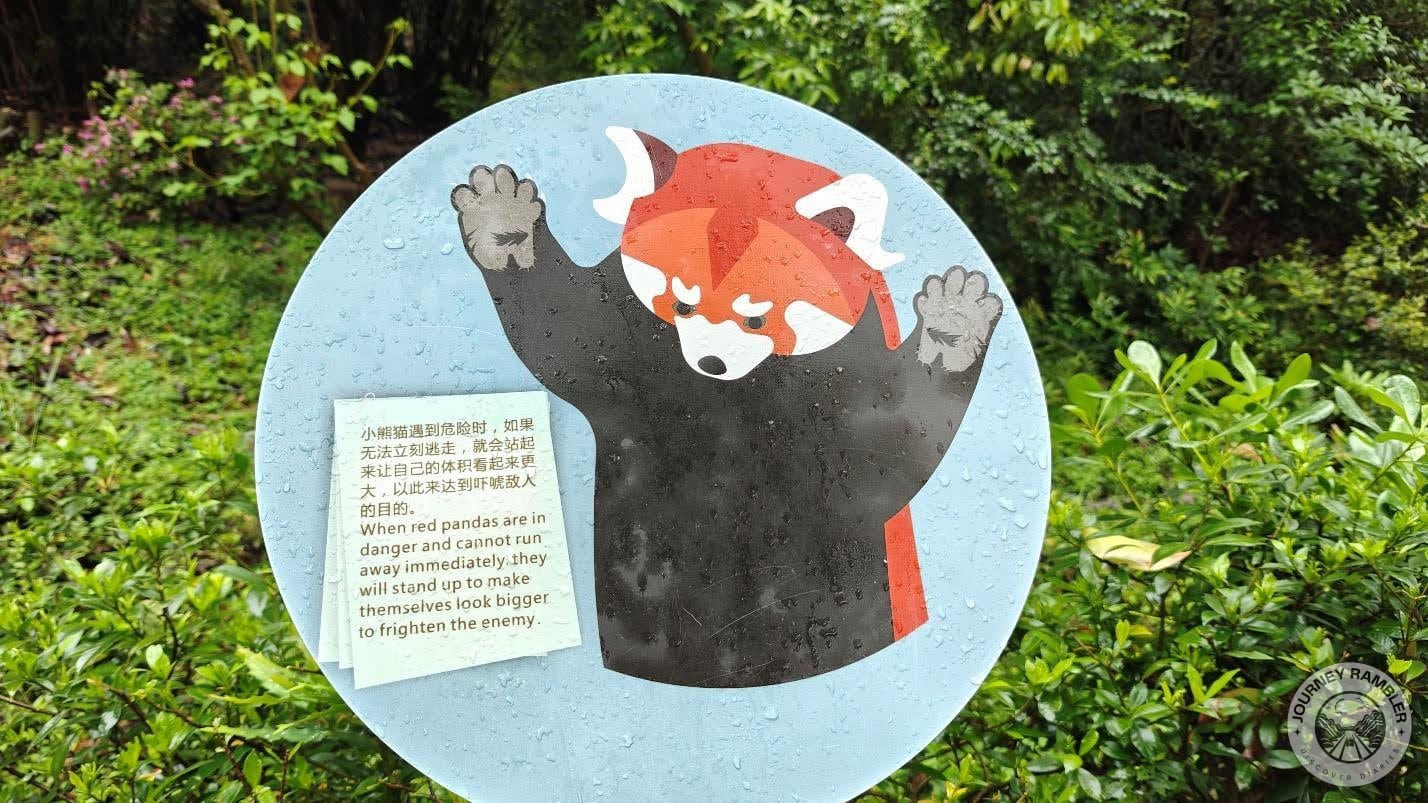
So this is an interesting bit of info about the little fellas that I also found hilarious. Apparently, they stand up whenever they’re up against a predator or an enemy and they have nowhere to run. Maybe the red panda earlier was trying to do just this but then he was really shy so he ended up just hugging the tree!
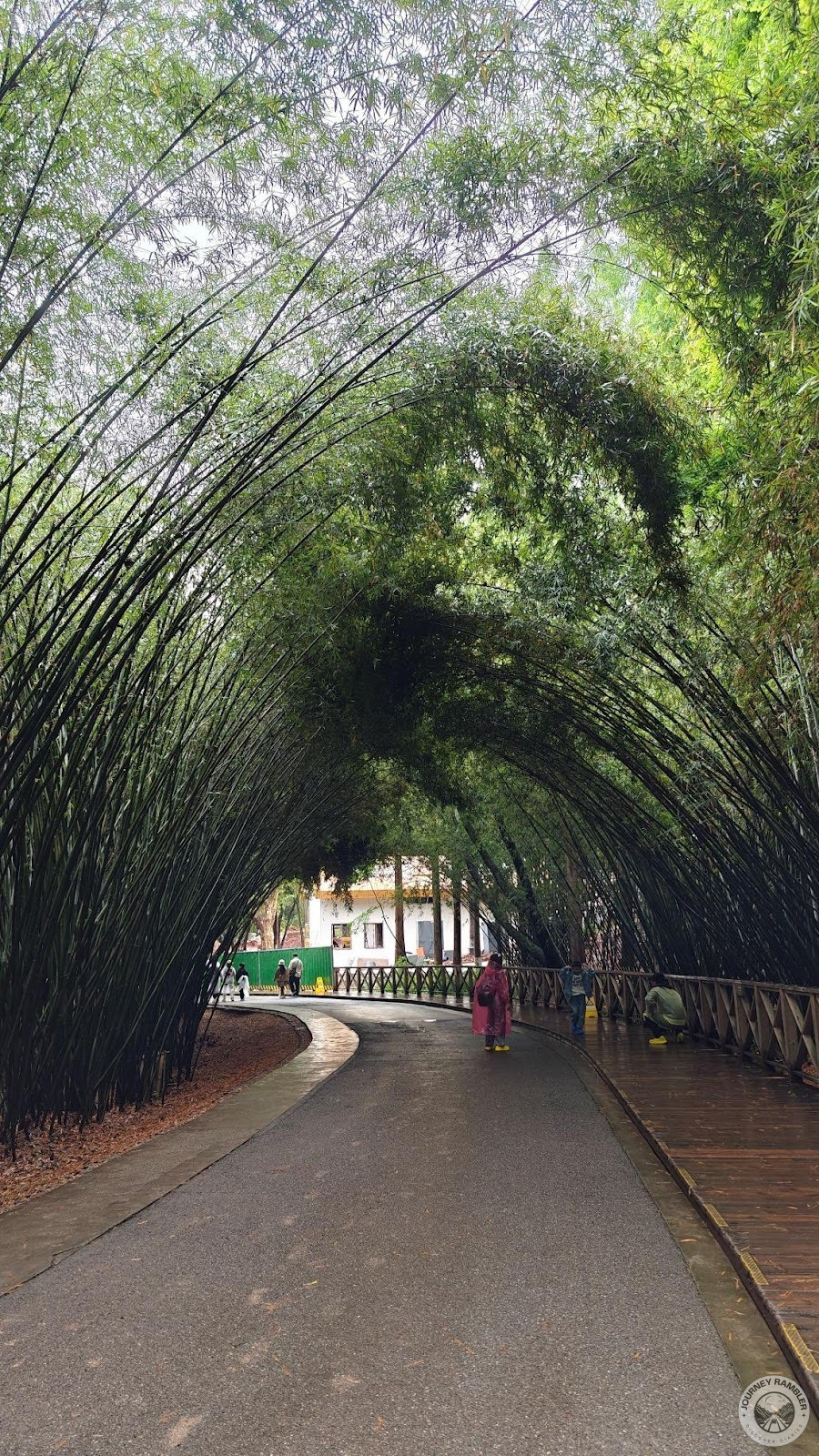
After observing the red pandas, I decided to move forward again. At the end of this part of the trail were these bamboo trees forming this natural archway. This actually made for a really nice photo spot and some of the people walking this trail even stopped to take some pictures even with the rain still drizzling.
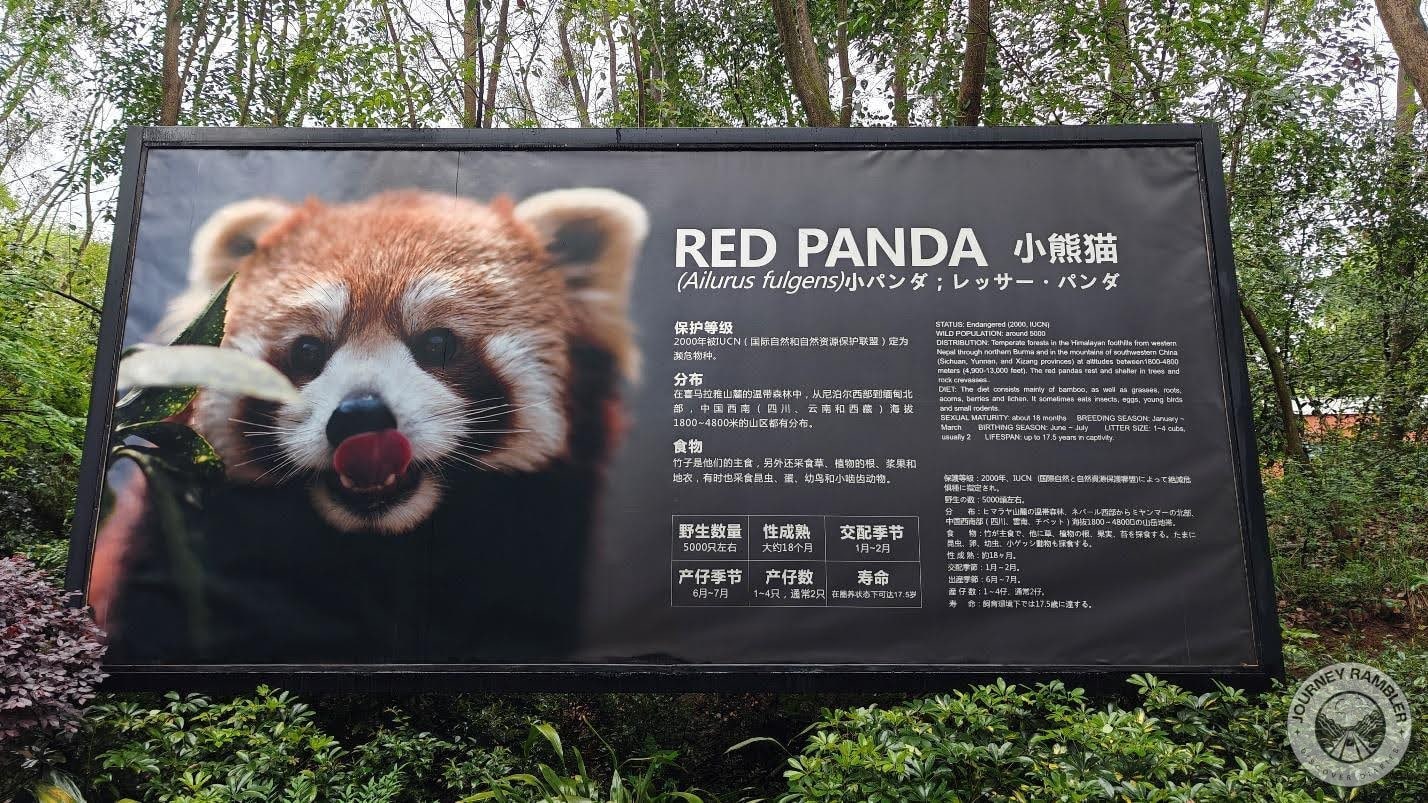
It should be noted that while the red panda population is significantly larger than the giant pandas’, it’s much more vulnerable and sensitive to threats like climate change and deforestation. The red pandas themselves are very sensitive to temperature changes and they’re much more picky when it comes to food (requiring bamboo planted in high altitudes).
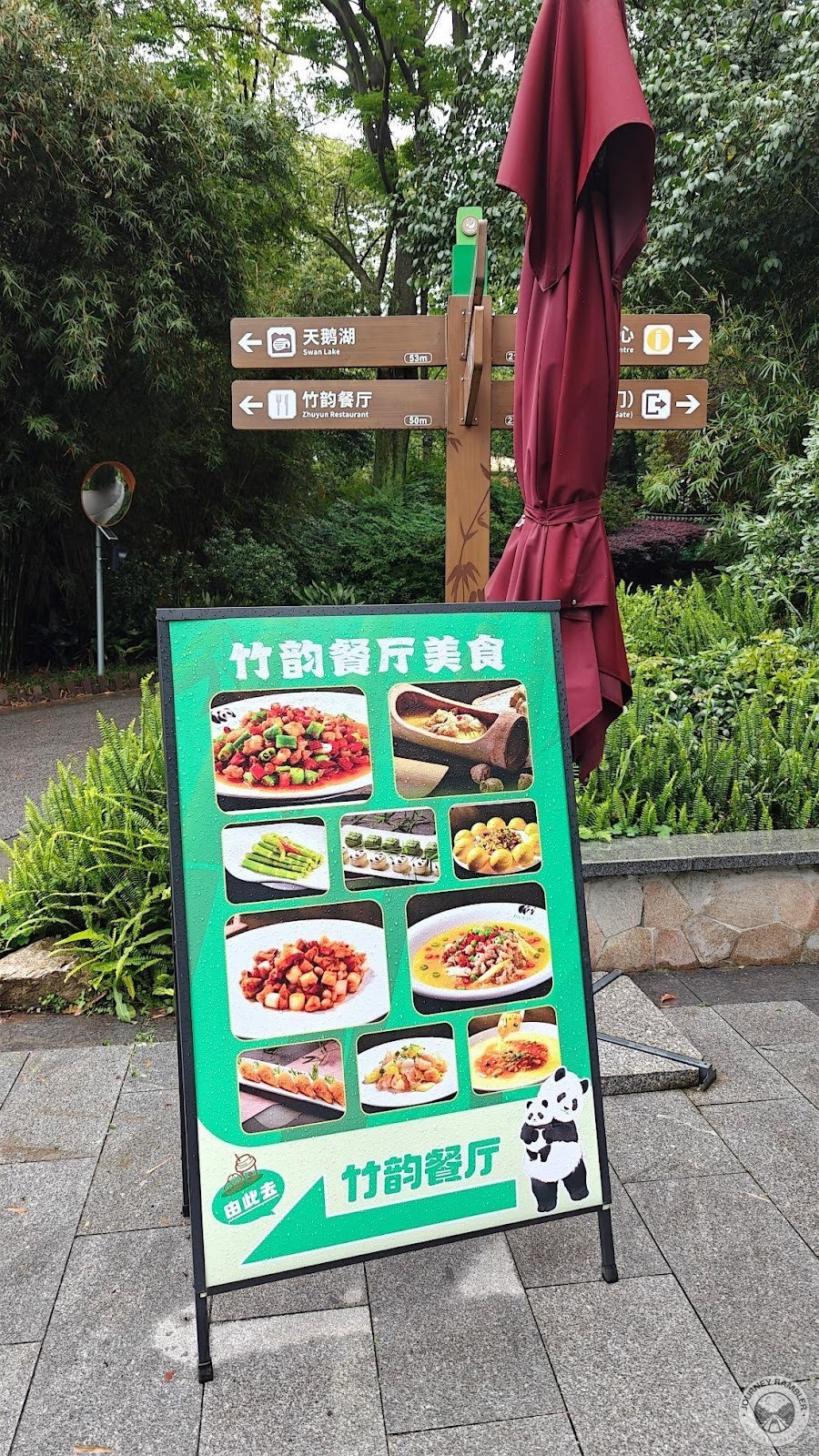
If you’re wondering, I took a circular route that limited me to a loop of the Panda Villa Area. This is near the end of the loop and from here you can go to Zhuyun Restaurant to the left if you’re hungry, or to the South Gate to the right to complete the loop and exit. Now this is only one of a number of routes that you can take. I personally took this as it was really short compared to other routes that could take hours to complete.
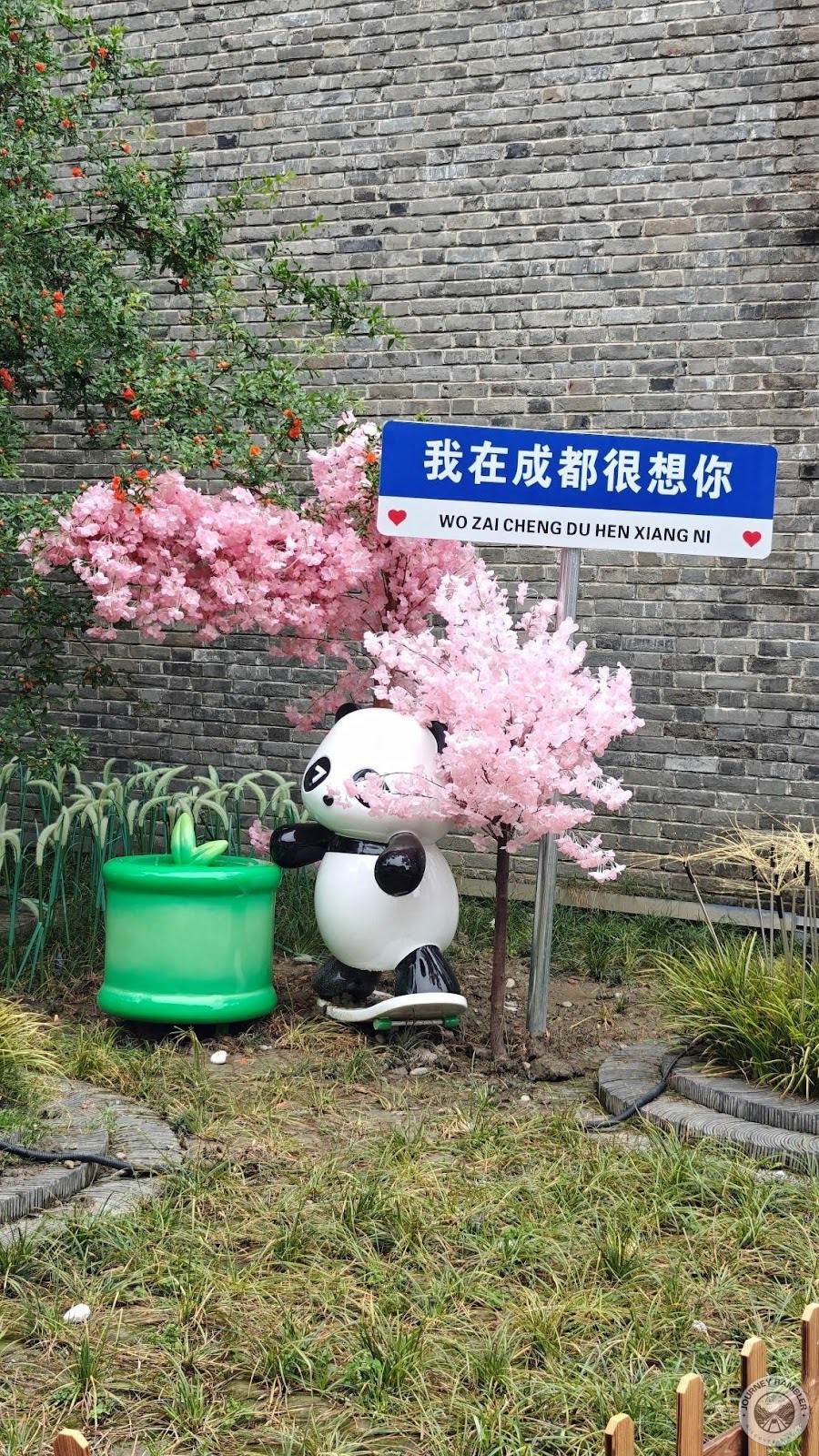
That pretty much wraps up my visit to Chengdu Research Base of Giant Panda Breeding. It was fun to say the least. Even with the inclement weather, I still enjoyed seeing both the red and giant pandas here. There was a lot of walking but I’ve been pretty used to it thanks to all the travelling I’ve been doing. While I did say that the route I took was short, it still took more than 30 minutes largely due to the lines for Hua Hua’s enclosure. Regardless, I think it was still worth it and if given the chance, I’d be game to explore the rest of the Research Base.
Have you had the chance to visit the Chengdu Research Base of Giant Panda Breeding? If yes then make sure to share your thoughts and experiences with our community down in the comments section!