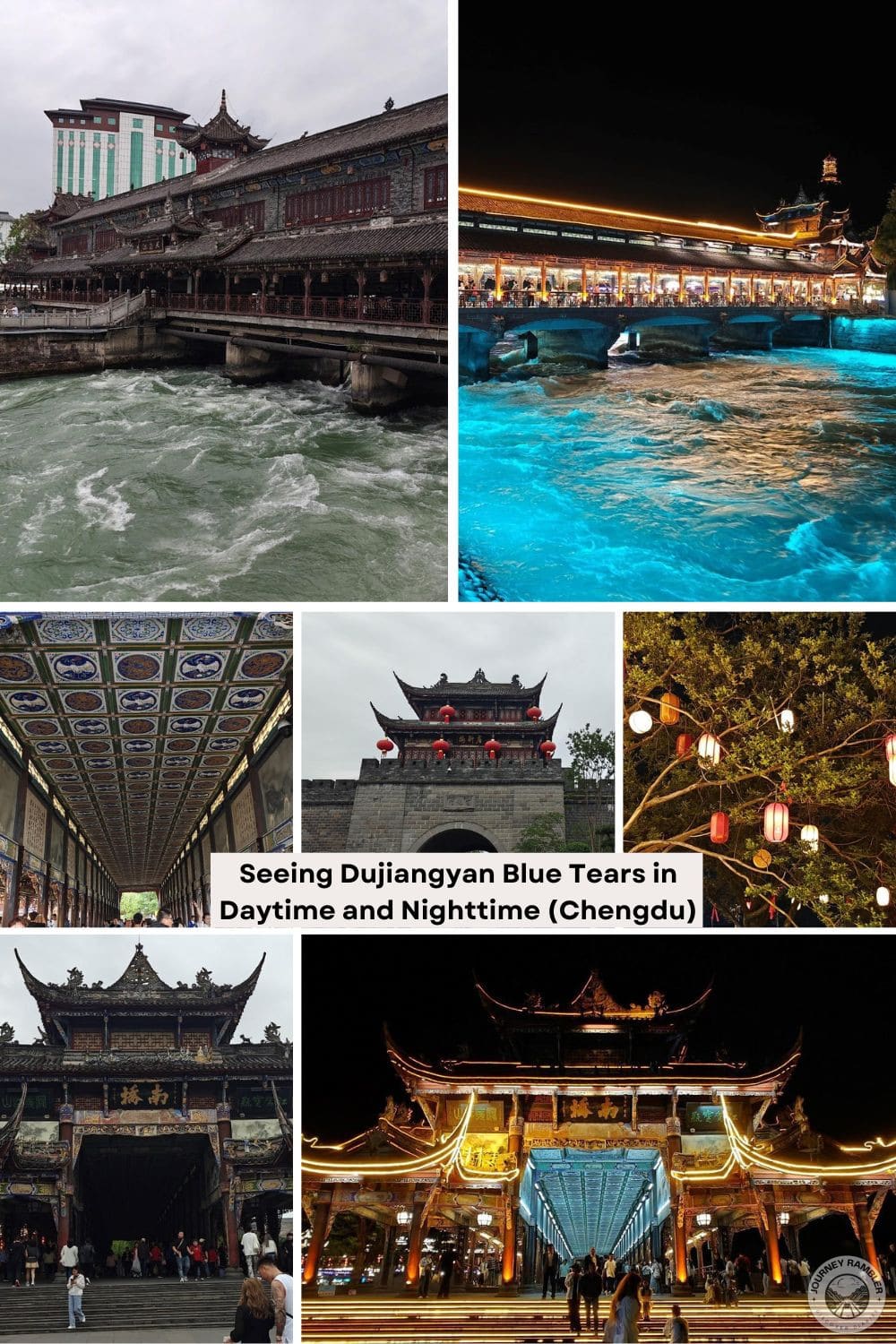
Of the numerous attractions that I’d been to in Chengdu, I’d have to say that the Dujiangyan Blue Tears was one of the most memorable and magical. It takes around 30-50 minutes to get here from Chengdu but I guarantee, the trip is almost always worth the time. I spent time both during the daytime and nighttime and today, I’m going to be sharing my experiences along with the shots I took.
Dujiangyan Blue Tears: Views During Daytime and Nighttime
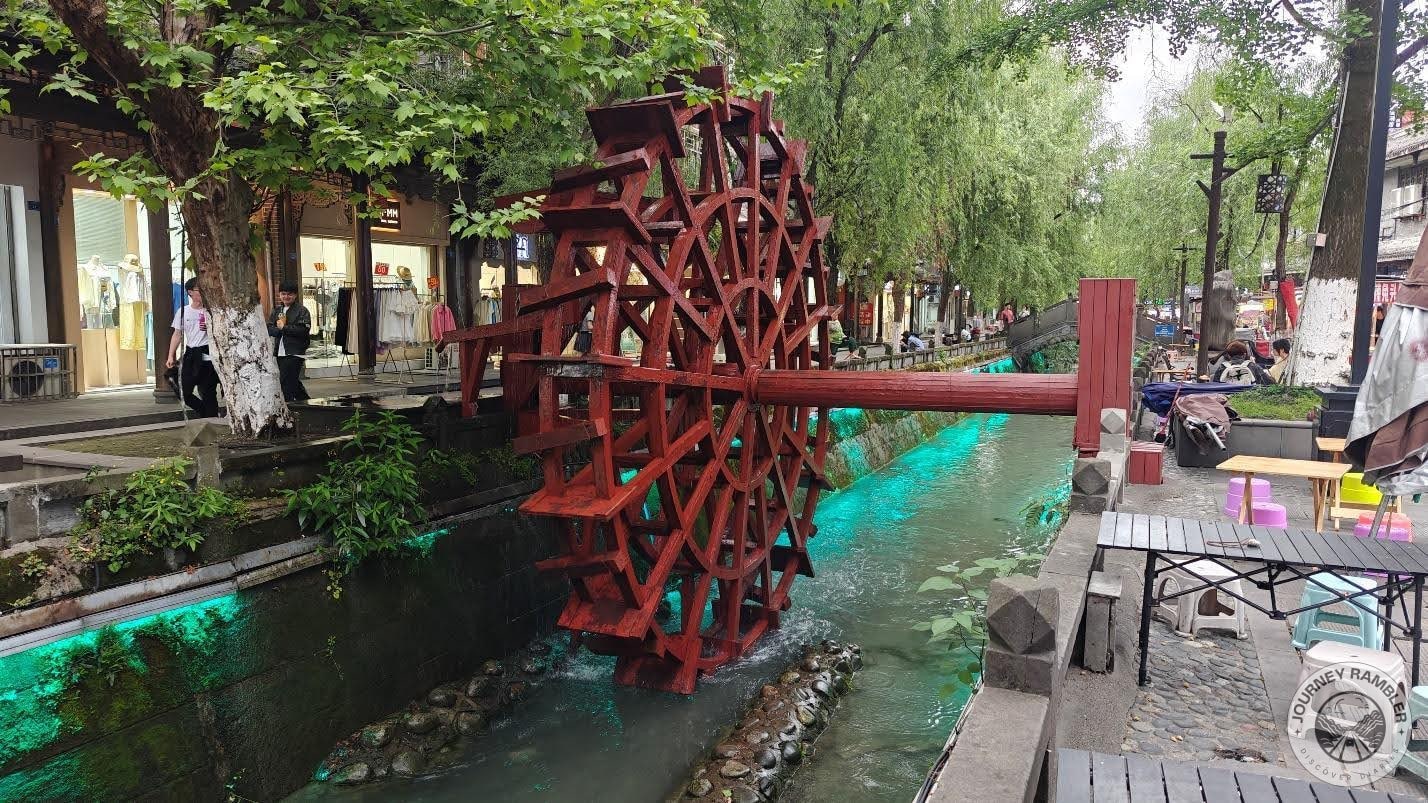
So one thing I learned about Dujiangyan is that it’s quite famous for its irrigation system. Walking through the city, you’ll come across water canals like the one above that have likely been around for centuries (maybe even millenia). That said, I’m not sure if the concrete lining the canals are as old as the canals themselves as the irrigation system has understandably gone through countless renovations over the years.
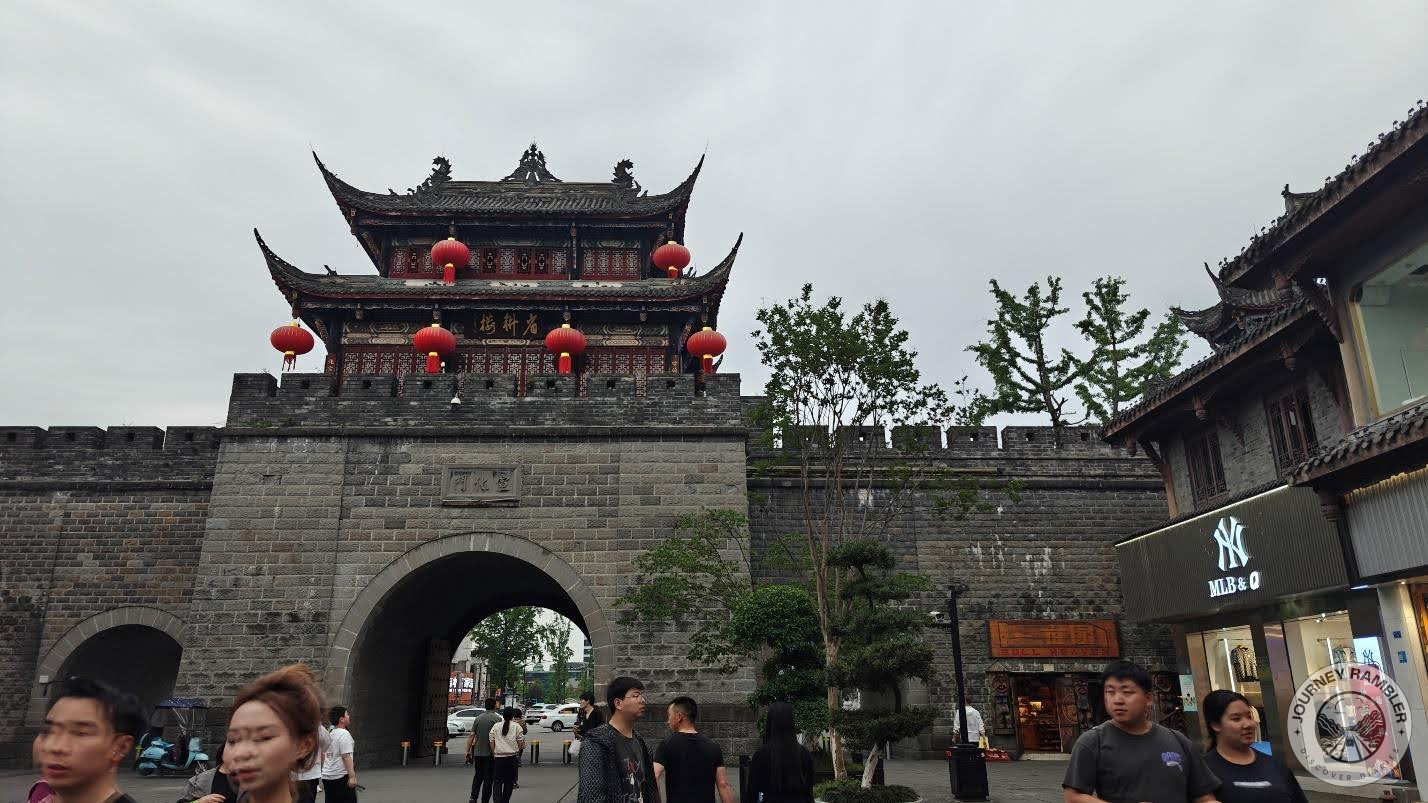
Anyway, I’m now at the entrance of the Dujiangyan Ancient City and boy was I impressed. This wall looks quite imposing and I feel like it could take on a Mongol horde. Kidding aside, this is probably one of the largest man-made walls I’d ever laid my eyes on during my travels.
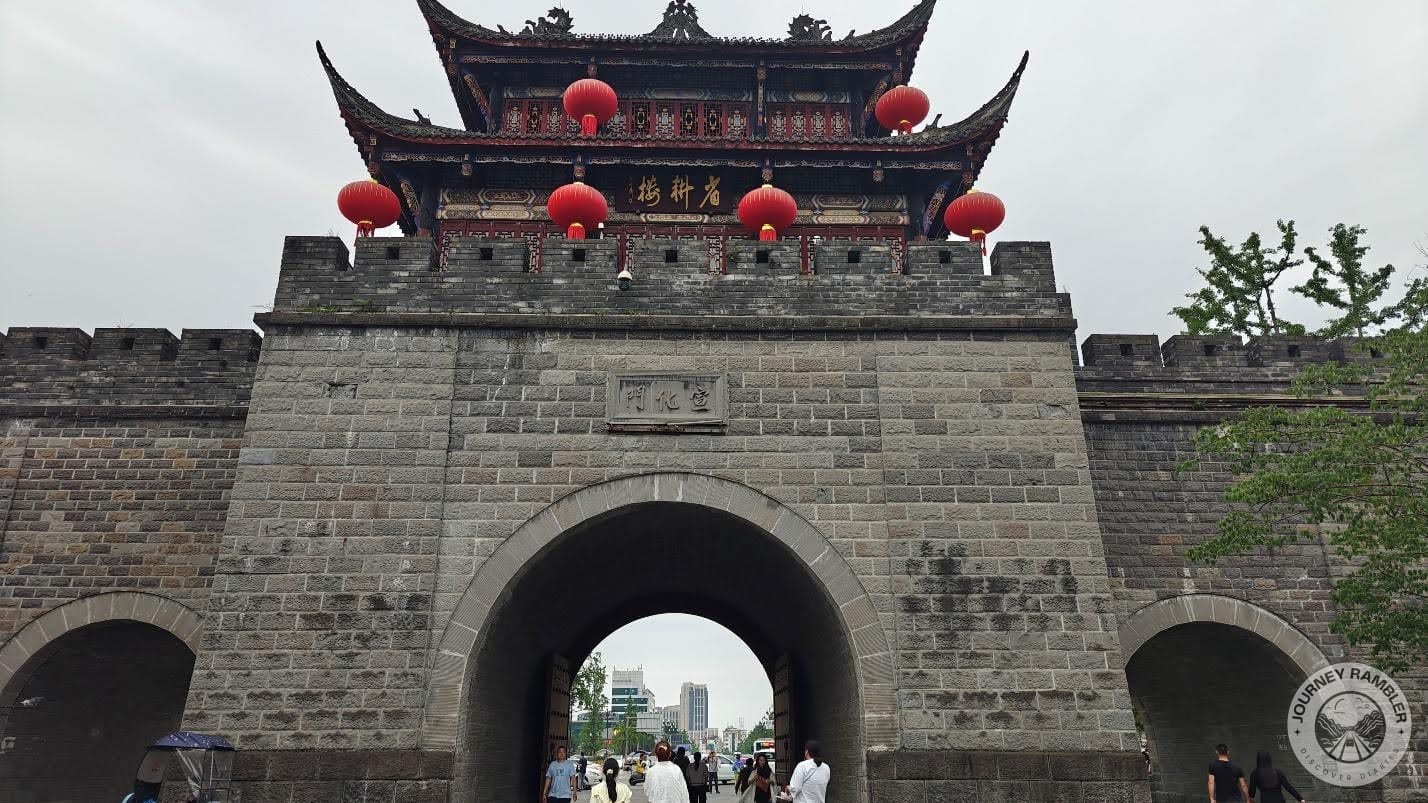
The wall is a lot less shorter than Gojukken Nagaya in Kanazawa Castle Park but it’s definitely taller. Anyway, this area is very similar to Ciqikou Ancient Town in Chongqing in that it features preserved buildings. Outside of that though, they offer very different experiences.
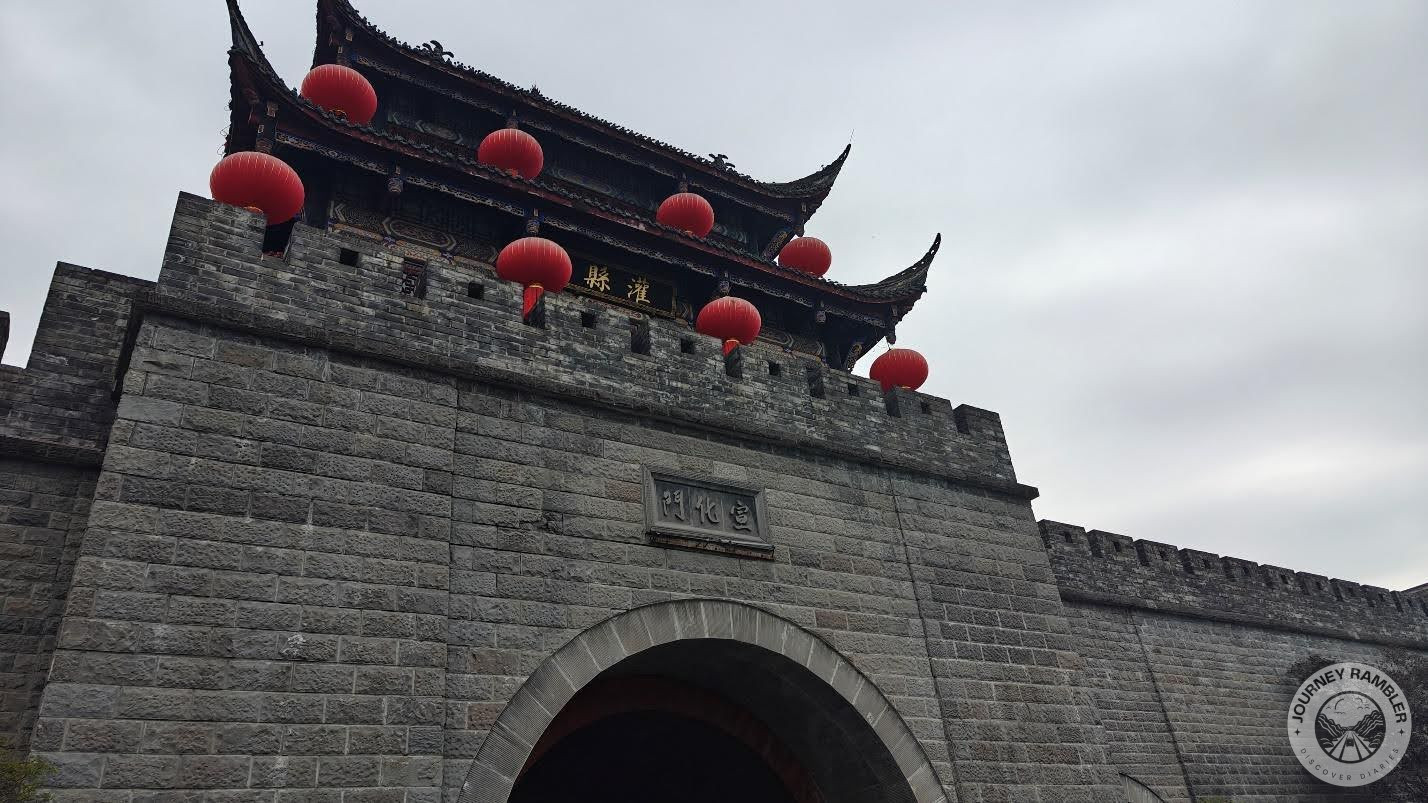
When I took this picture it was still daytime so I wouldn’t be able to see the Blue Tears of Dujiangyan yet. Instead, I decided to spend a little time familiarizing myself with the area. Before that though, I took another shot of the wall as it’s just so impressive.
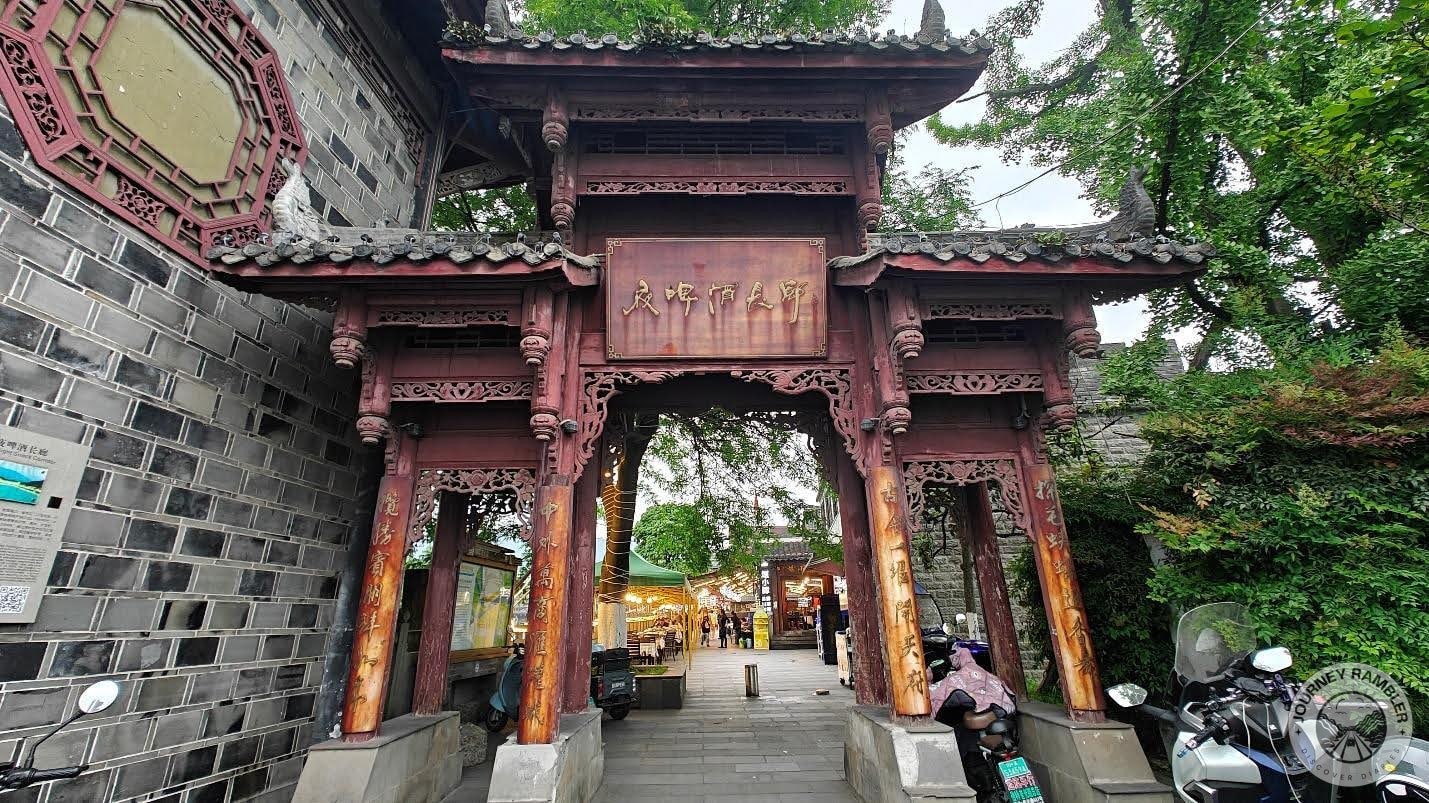
Walking around, I came across this pavilion that looked like it was the entrance to some kind of busy street. Turns out, this was a boulevard that had plenty of establishments selling all kinds of Sichuan cuisine. What’s great about this is that it also has outside seating with an overlooking view of the Min River which makes it a great place to watch the Blue Tears at night.
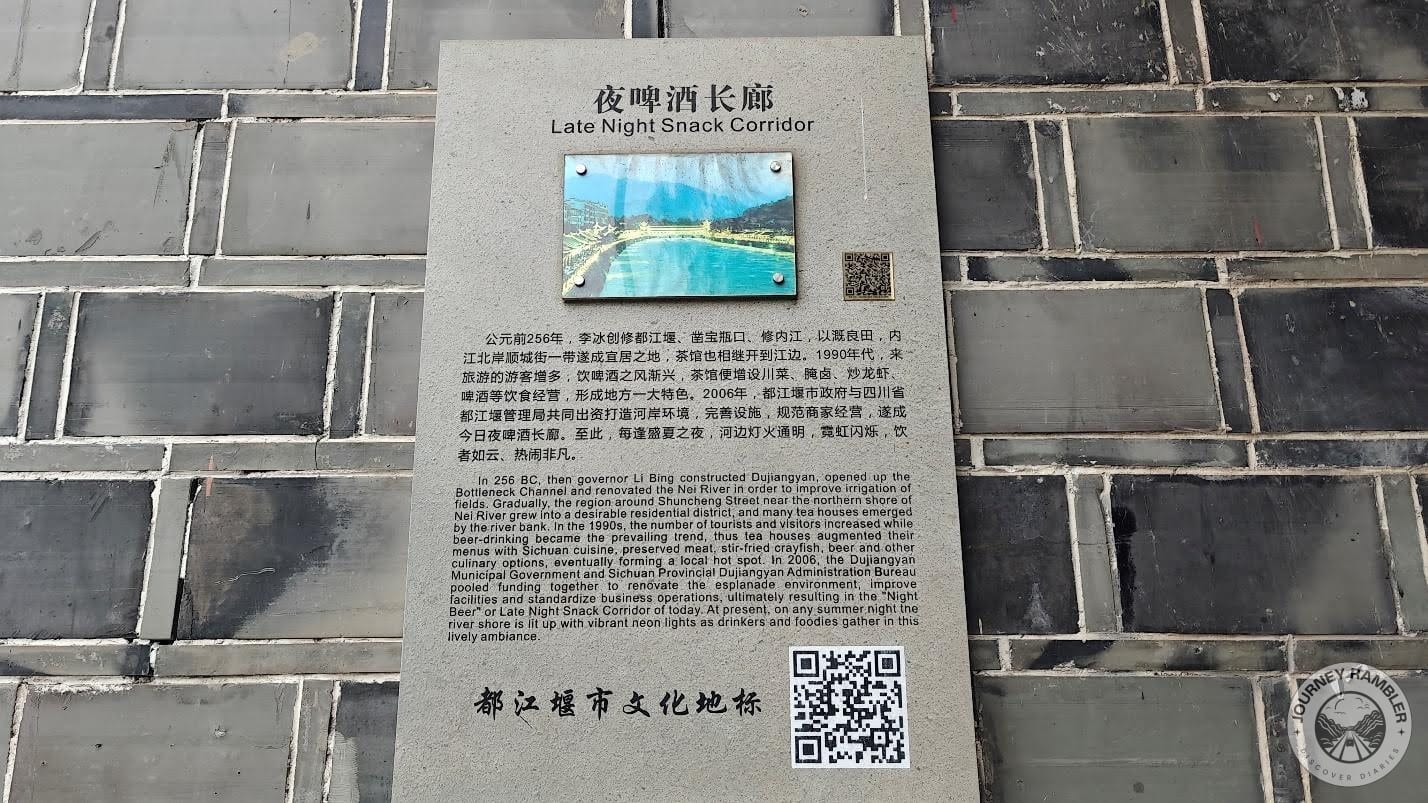
Here’s a plaque with an inscription detailing the boulevard’s origins. Known as the Late Night Snack Corridor, this area is actually as old as the irrigation system. Of course, a lot of the establishments here are quite modern but still impressive how it has continued for nearly two millennia now.
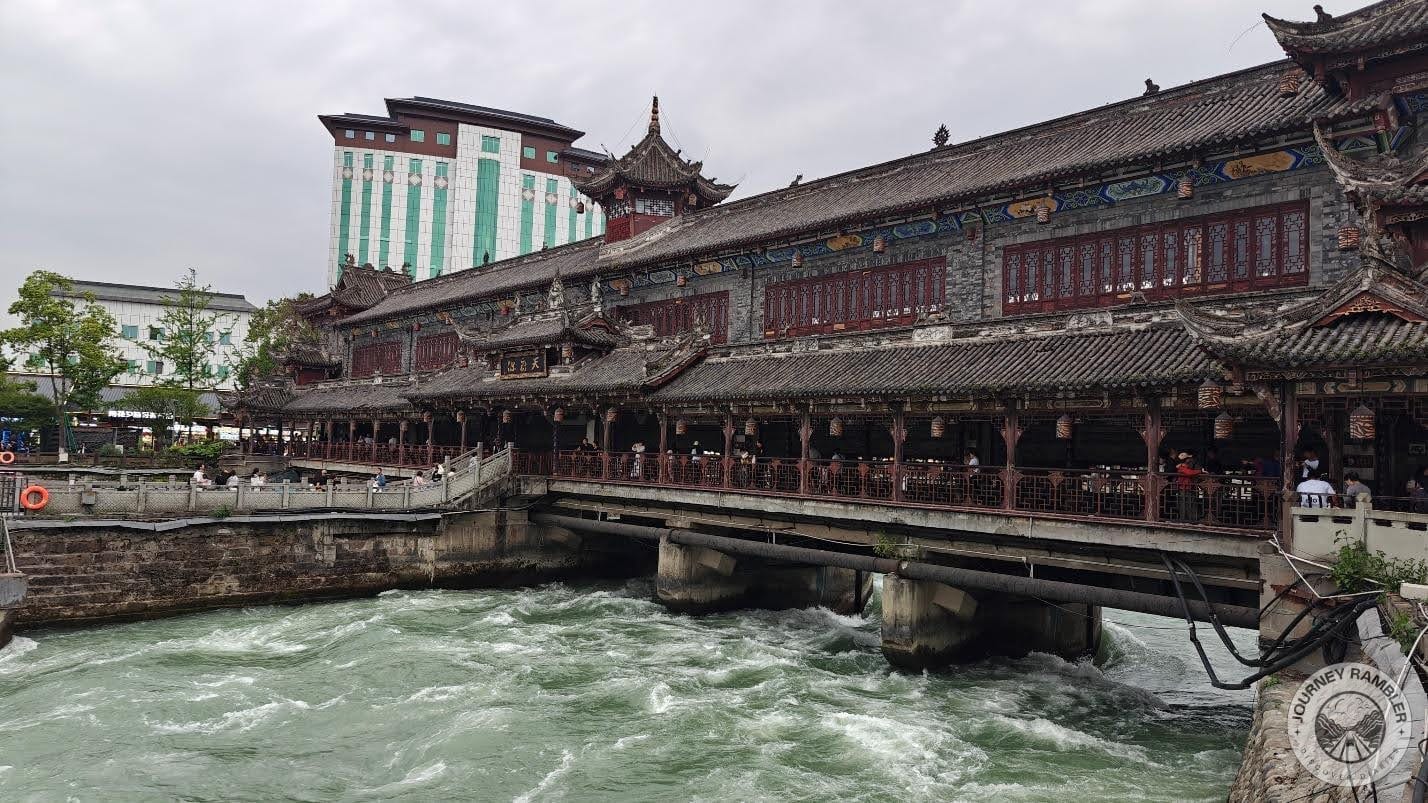
If you followed the Late Night Snack Corridor then you’re going to find yourself at this amazing looking bridge. At first sight of the bridge, I was immediately reminded of Italy’s Ponte Vecchio. Looking back though, it’s definitely much grander and more detailed (though I think it is a lot shorter).
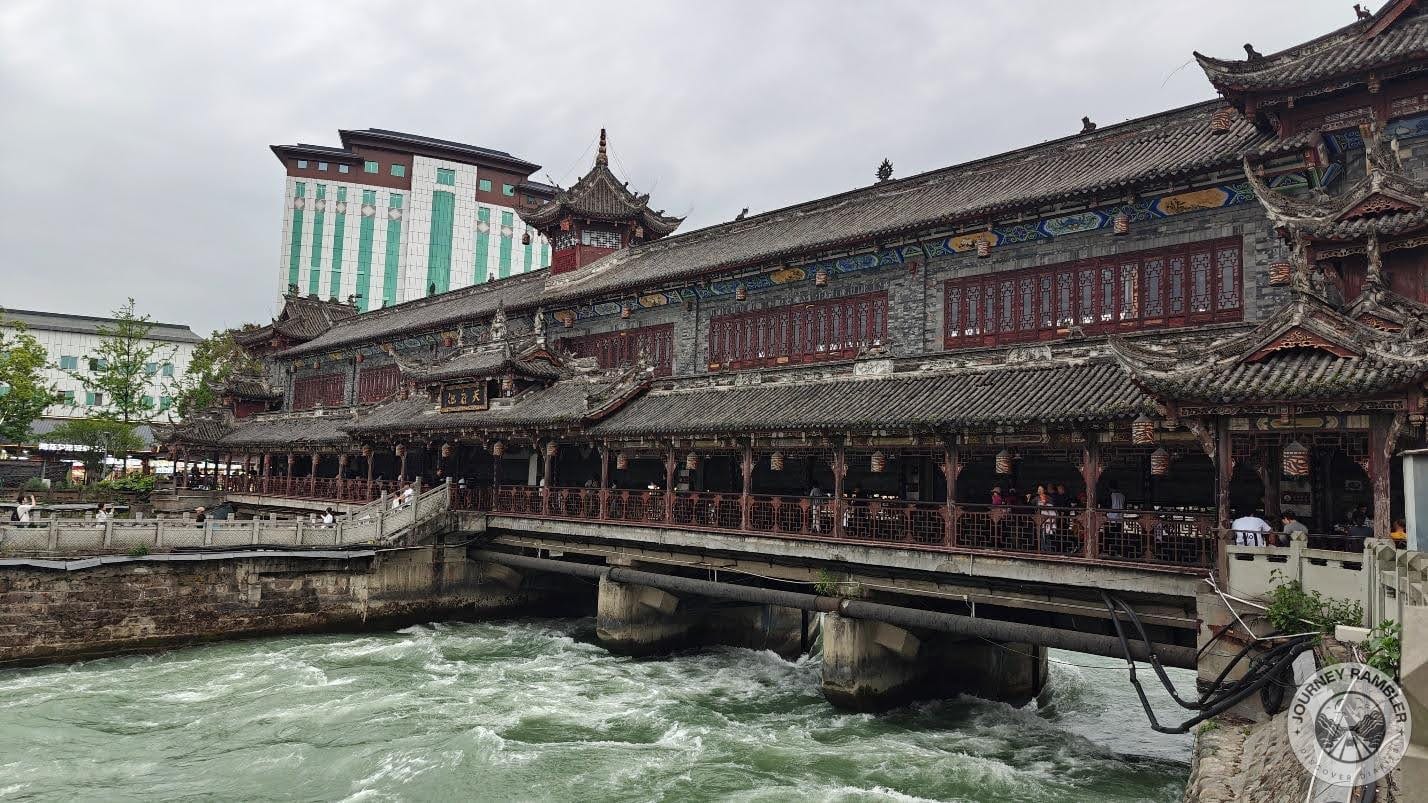
Another feature of this landmark that you’ll immediately notice is the river. The sound of its rapids is quite loud. Moreover, I found myself getting mesmerized by just the sheer volume of the water that was flowing through this narrow waterway.
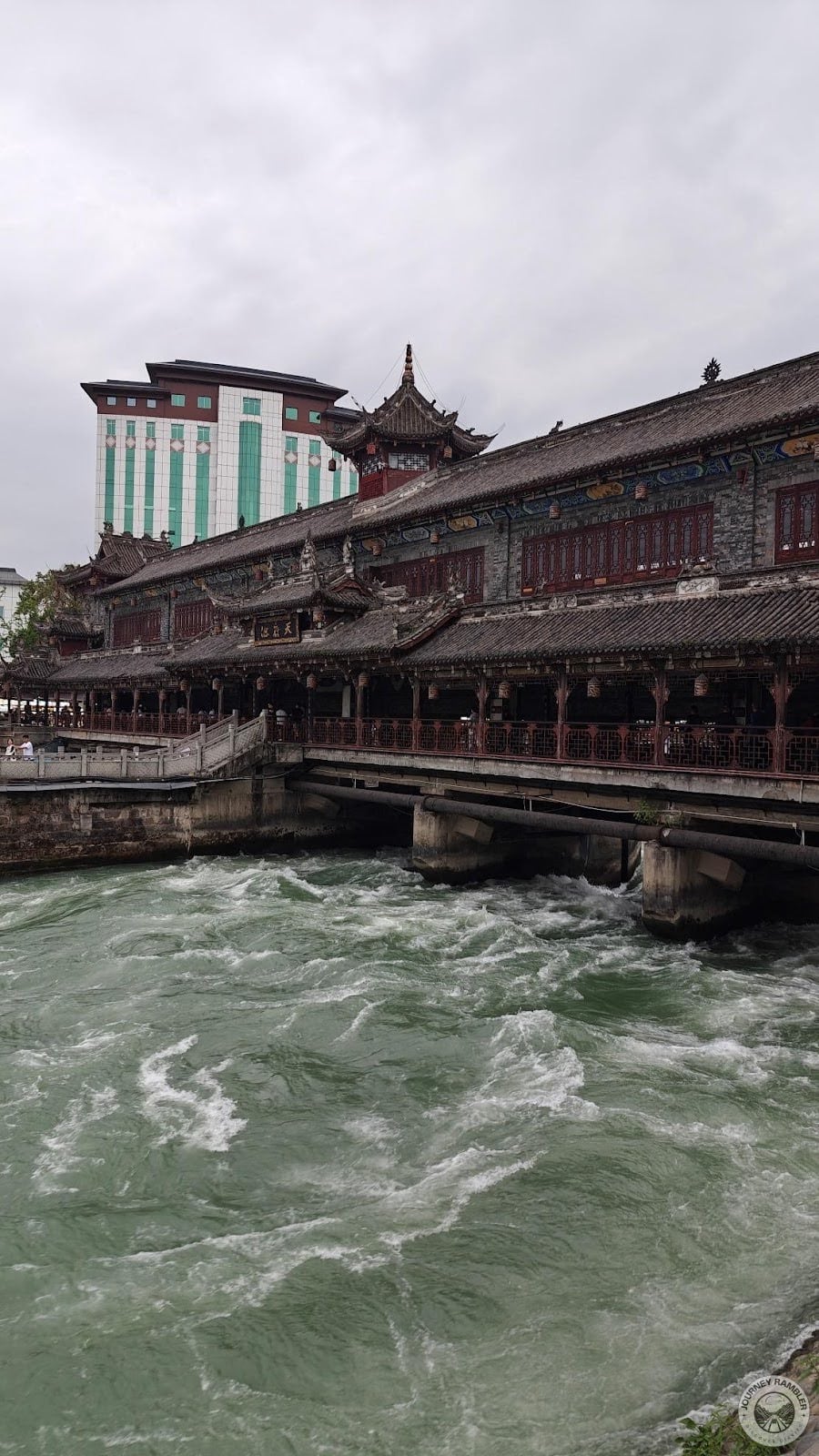
It goes without saying, please don’t swim here! I don’t care how good of a swimmer you might be, I highly doubt you’ll survive these rapids. And even if there is no strong current here, swimming still isn’t encouraged because of the possible contaminants and pollutants present in the river’s waters.
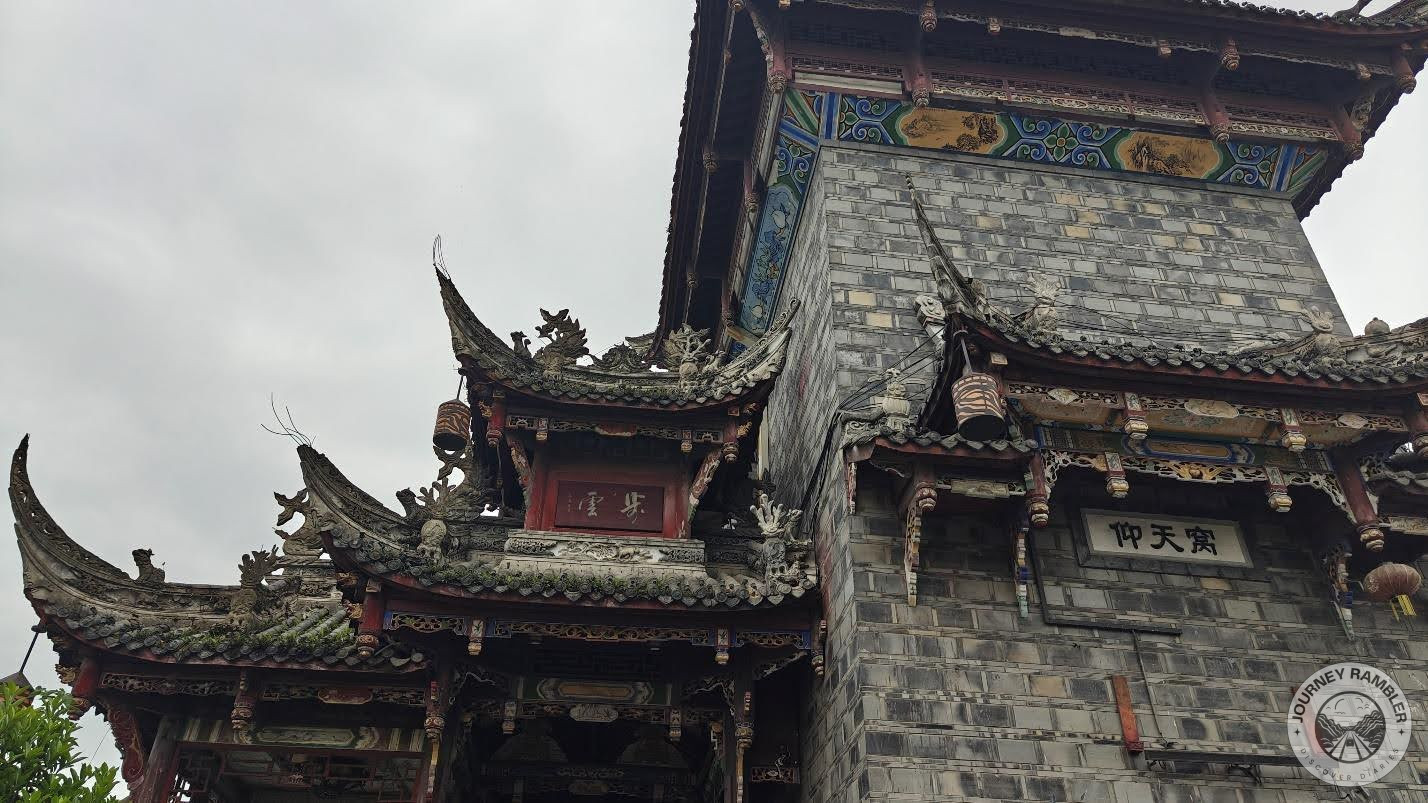
After observing the river, I then decided to cross it through the bridge. Before crossing though, I made sure to snap some photos of the bridge’s roof and eaves. While it does look like it’s gone through some wear and tear, the bridge is surprisingly still intact and it does look like it’s well maintained.
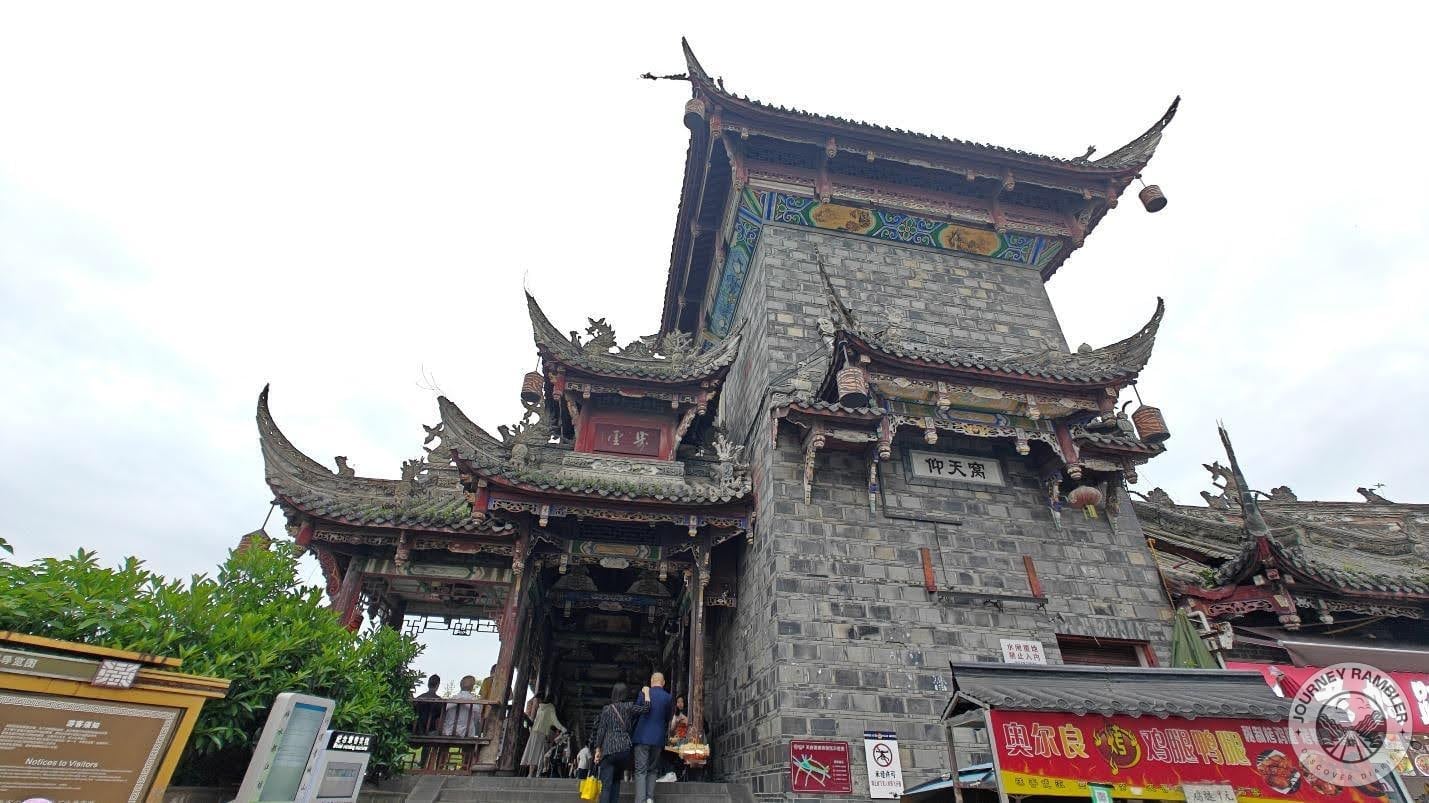
It’s not shown but the street leading up to and away from the bridge actually has plenty of food stalls. If you’re feeling hungry or thirsty then definitely check these out. Remember though that you’re in Sichuan province so expect plenty of the food being sold here to be on the spicy side.
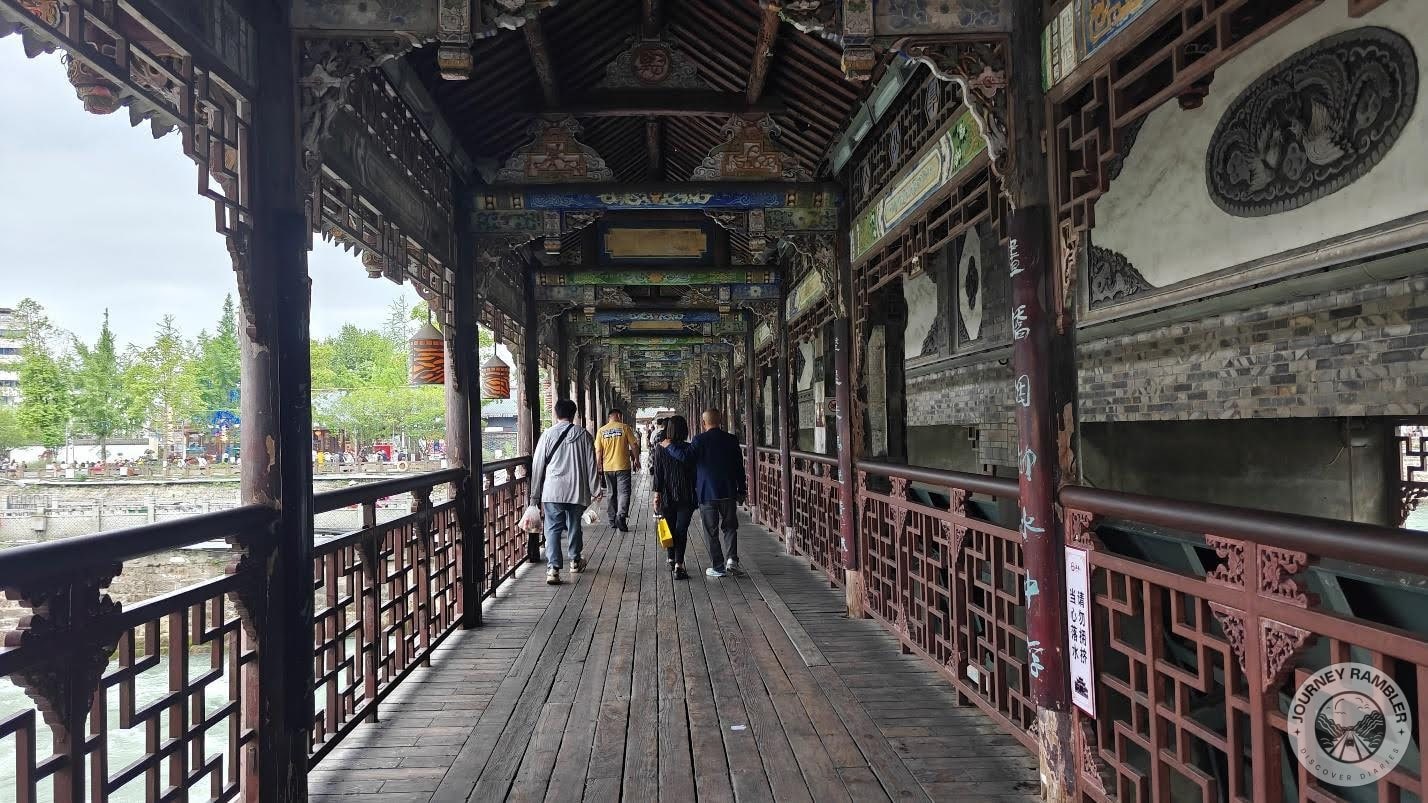
This is what inside the bridge looks like. When I looked it up, I found out that the bridge has actually been here for close to a century and a half. If I’m not mistaken though, this current iteration is actually much newer having been constructed some time in the mid 20th century.
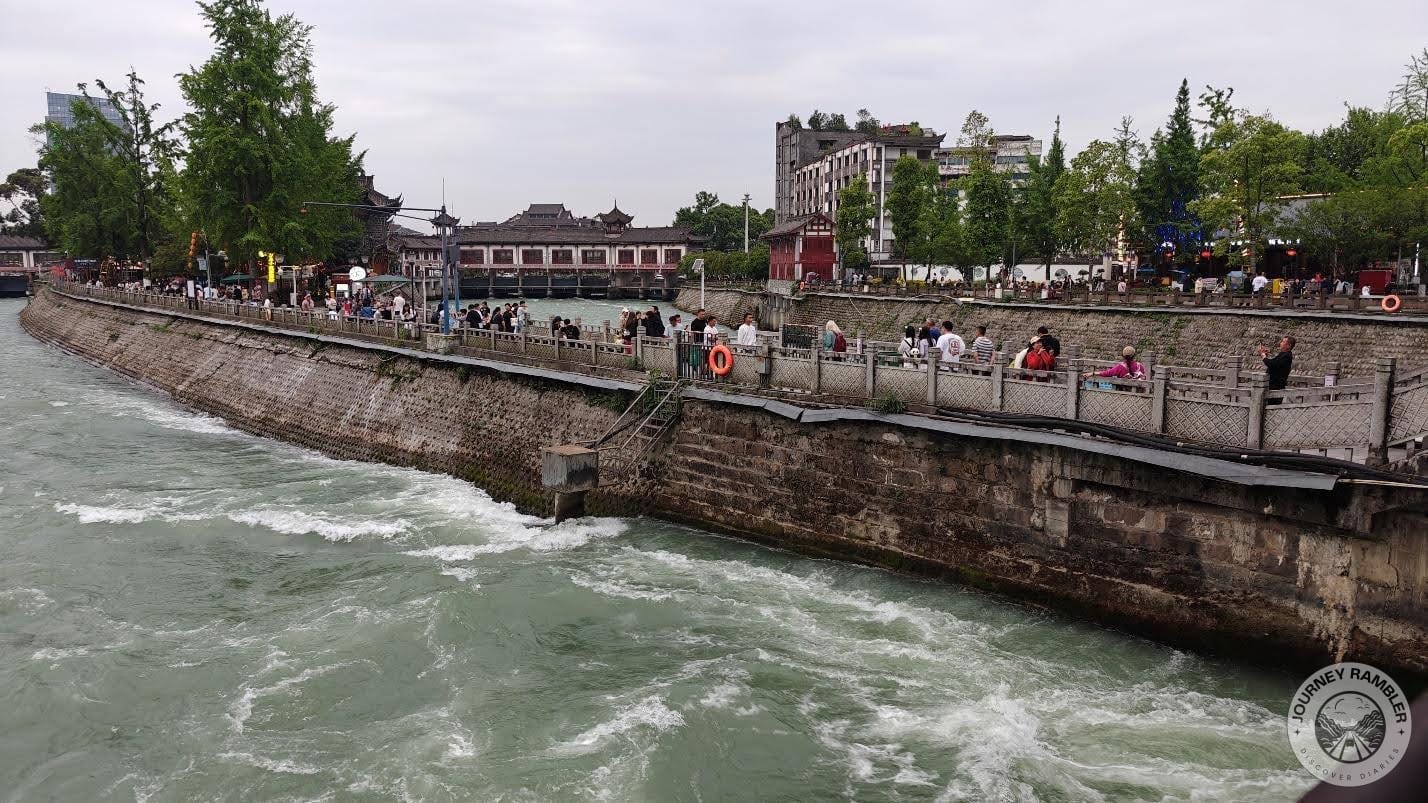
From the bridge, you can see just how many people are here. I was told that this crowd size is actually quite tame. On holidays the crowds are even larger and it’s usually not advised to visit here. You’ll also notice that this area actually bisects the river.
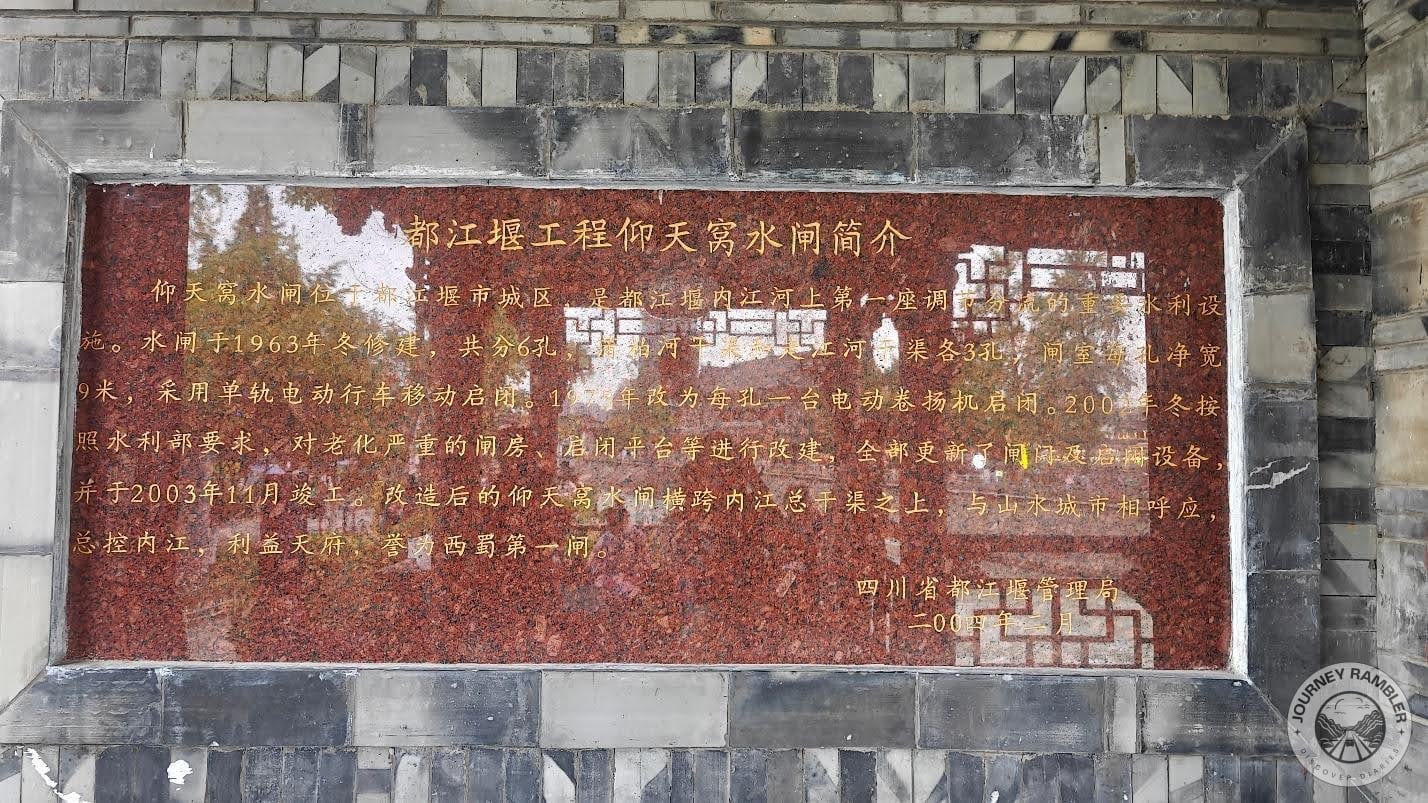
Here’s a plaque detailing the purpose of the sluice gate under the bridge. Called Yangtianwo, this sluice gate has a total of 6 openings with 3 directing water to the inner river and the remaining 3 for the outer river. This whole system was initially built in 1963 and has since been renovated and reconstructed with the latest work on it completed in 2008.
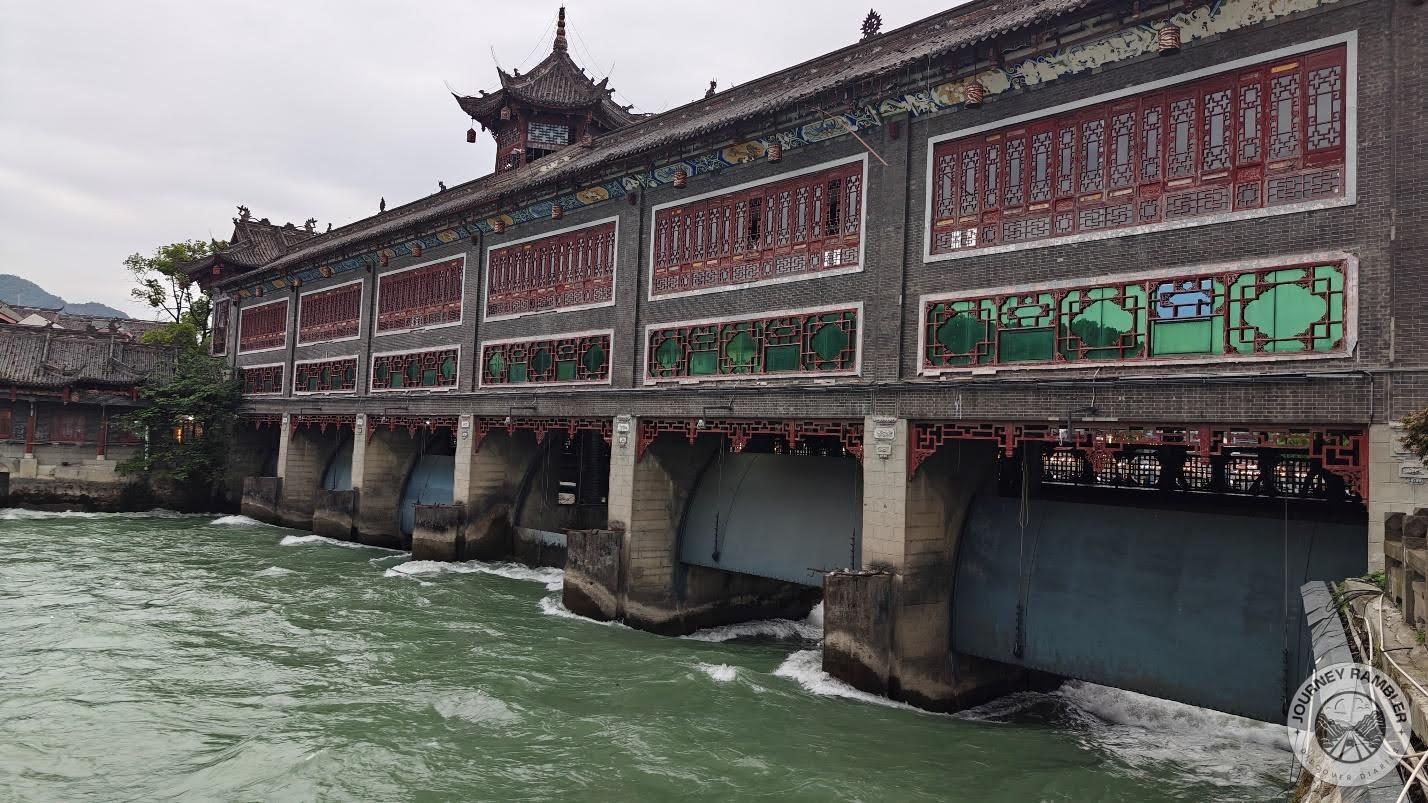
In this image you can clearly see the 6 openings I was talking about in the previous image. Now I’m not a flood control expert but from my understanding, this system allows for the city to easily prevent flooding by diverting the water that’s supposed to go to the inner river into the outer river. This is easily done by closing the gates for the inner river and allowing those for the outer river to stay open.
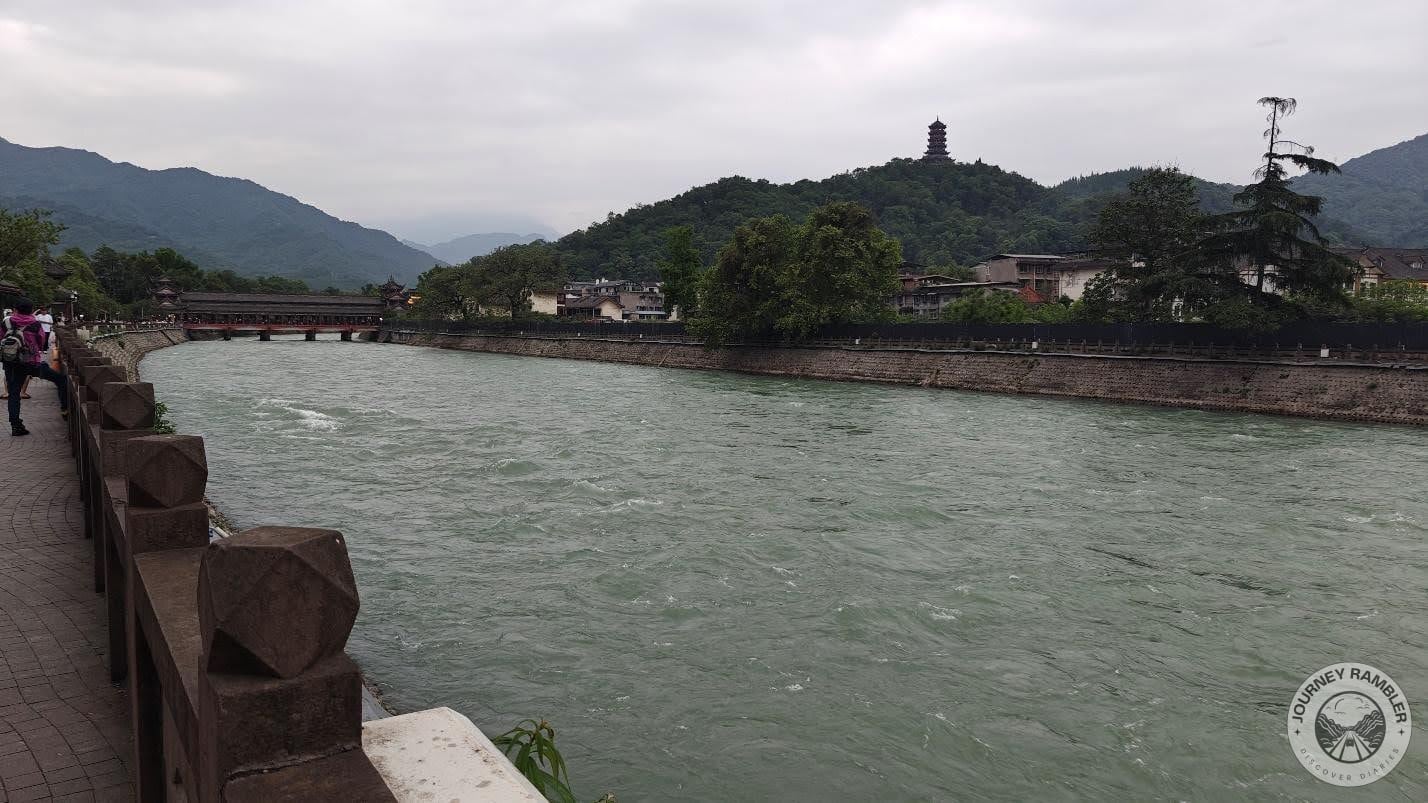
You’ve already seen what the downstream is like, now here’s the view upstream. You can see that there’s also a bridge about a ways off where you can also watch the Blue Tears at night. Now you’re probably asking what in the world are these “Blue Tears” even? This is nothing more than a light show that somehow turns the waters of the river a shade of blue in the evenings.
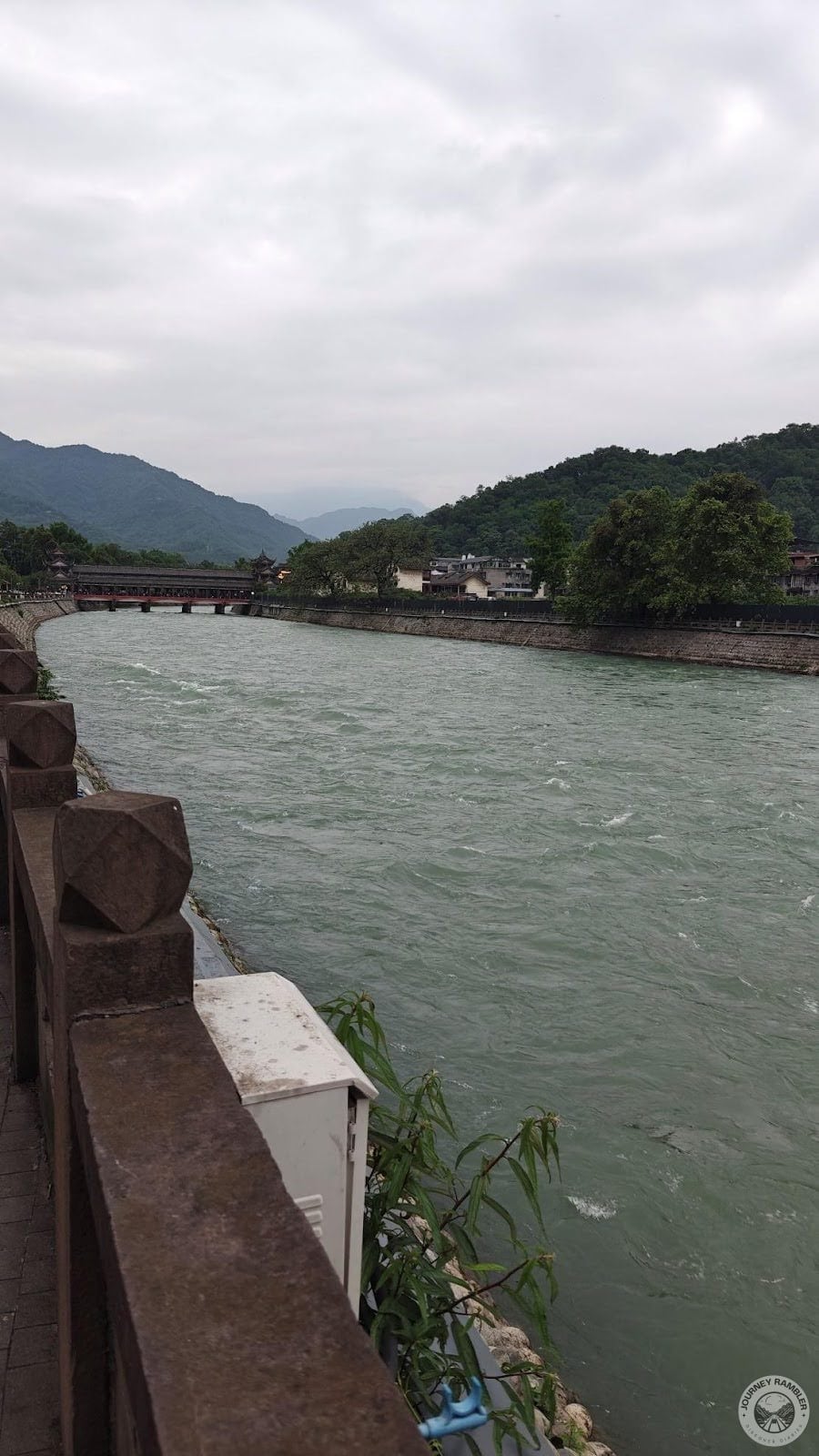
I don’t know if you’ve noticed but there’s a sort of line on the dikes on either side of the river that you can barely make out from this image. Inside of that are the lights that make the river’s waters blue at night.
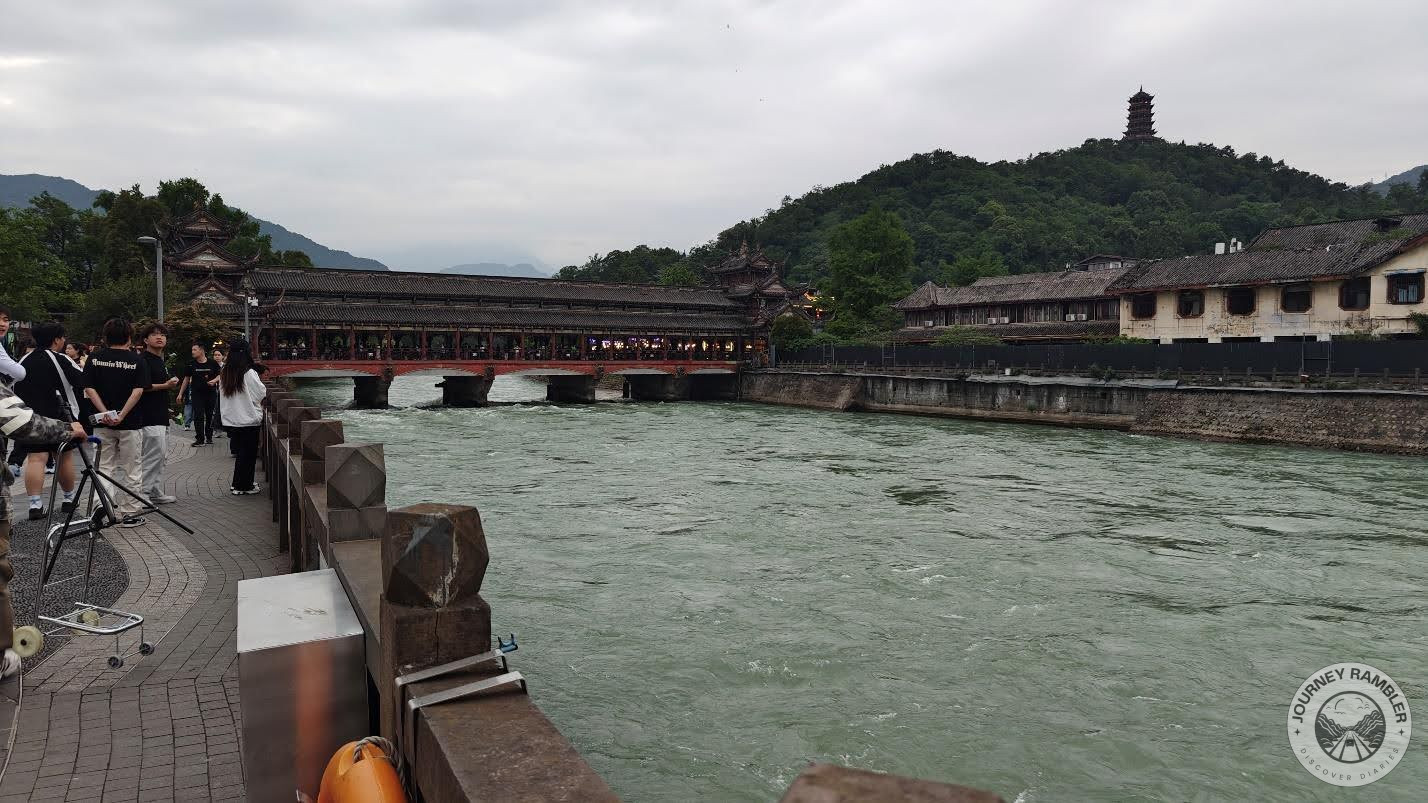
So if you’re wondering, I’m at the island connected to the midpoint of the Yangtianwo Sluice Gate. I will say, there were plenty of people here. And if you went to the bridge up ahead, you’ll find that there are even more people waiting there.
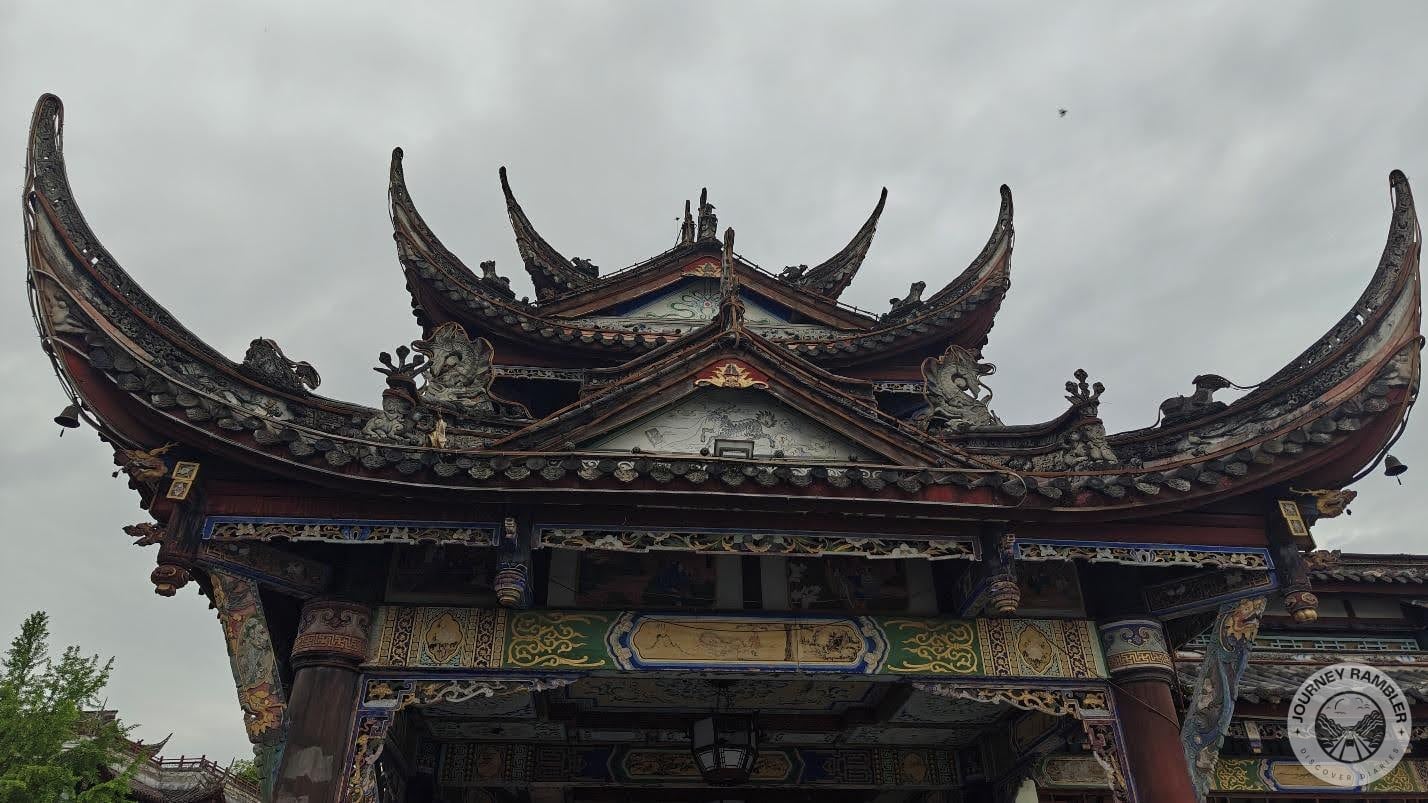
Of course, since I wanted to see what was up ahead I decided to walk over to the bridge. Called Nanqiao Bridge, it’s where most people view the Blue Tears and as such has become an iconic landmark here in Dujiangyan. When trying to look it up though, I couldn’t seem to find a definite date for when the bridge was built.
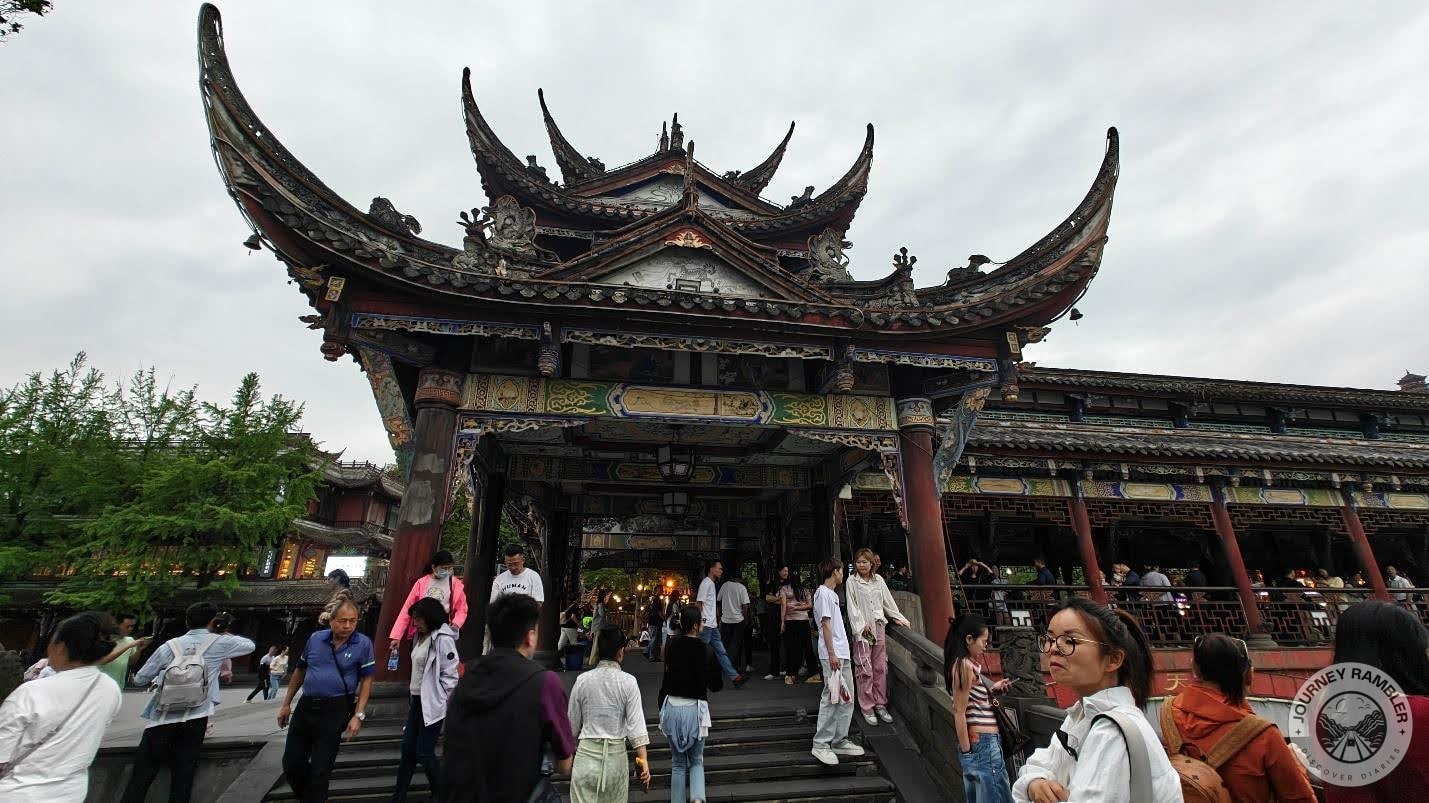
Before we tackle the question of the bridge’s age, let’s first take a look at just how many people there were when I visited. Honestly, I was kind of overwhelmed that there were this many people here even though it wasn’t a holiday. Just imagine the crowds if it were!
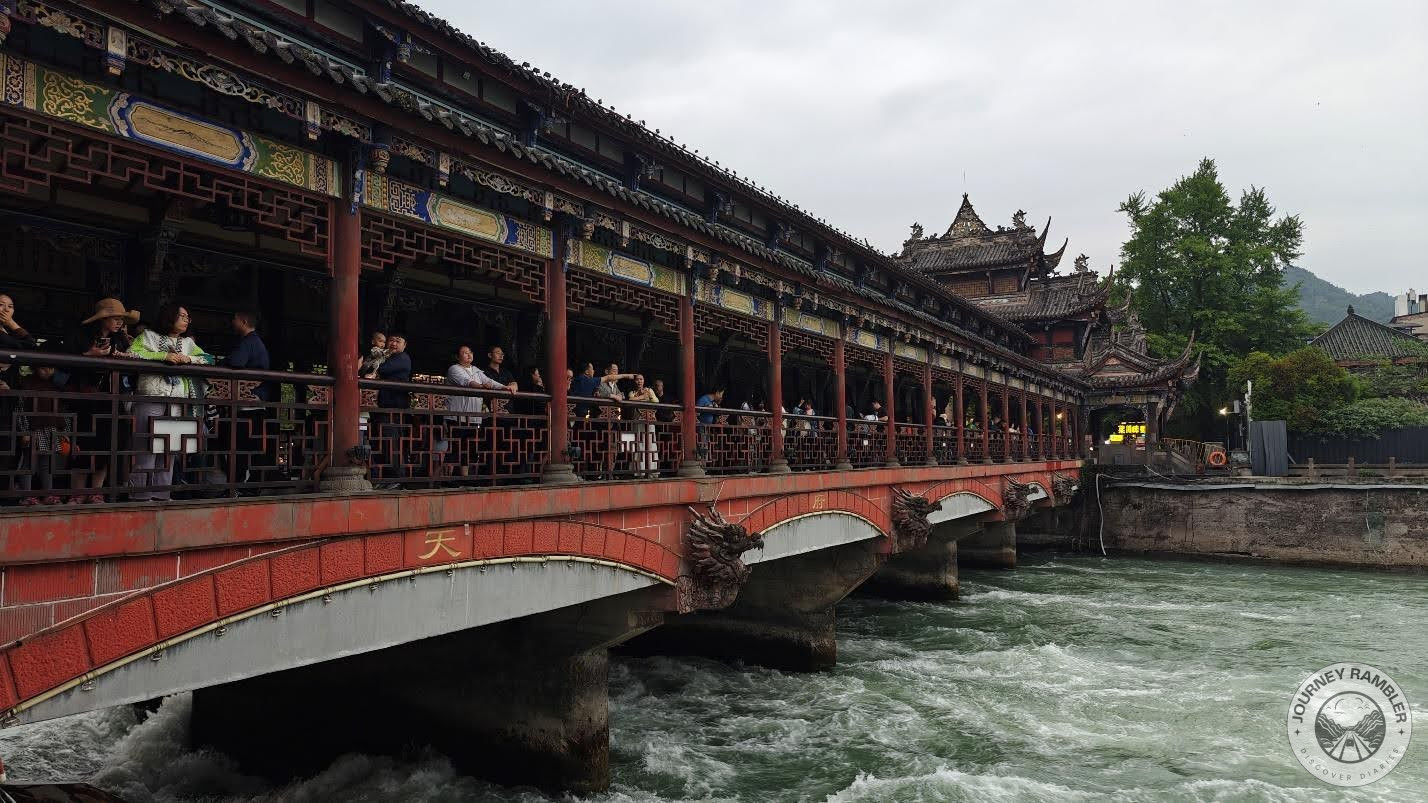
Now you might be wondering, is the bridge actually safe? While China has a reputation with regard to tofu dreg projects, I don’t think this is one of them. From what I know, the bridge has gone through numerous reconstructions and renovations throughout the years to address and prevent possible structural issues.
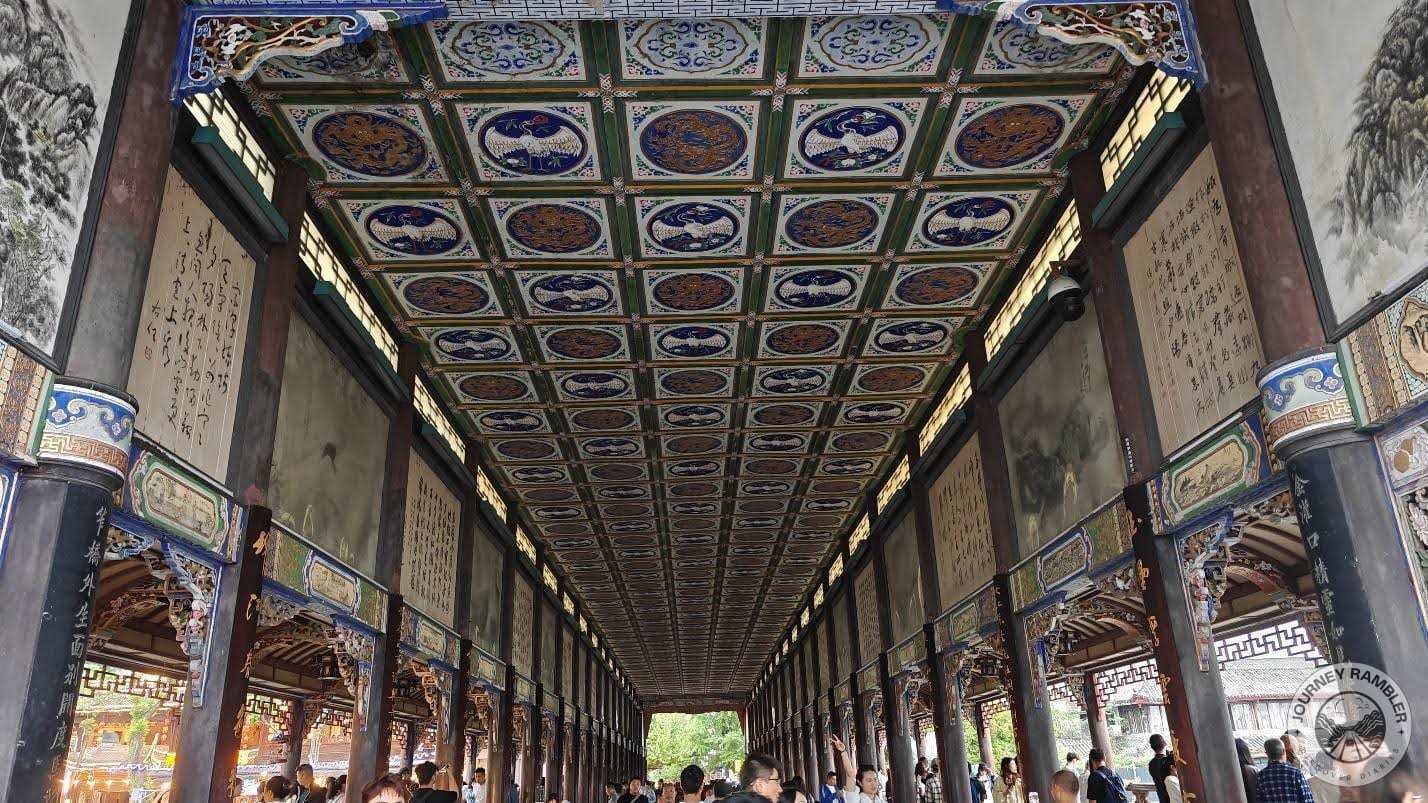
From outside, the inside of the bridge kind of looked dark. When I got inside though, I was pleasantly surprised at how adequately lit it was. This was sometime in the afternoon and the skies were overcast but I still had no problem getting enough light for this shot.
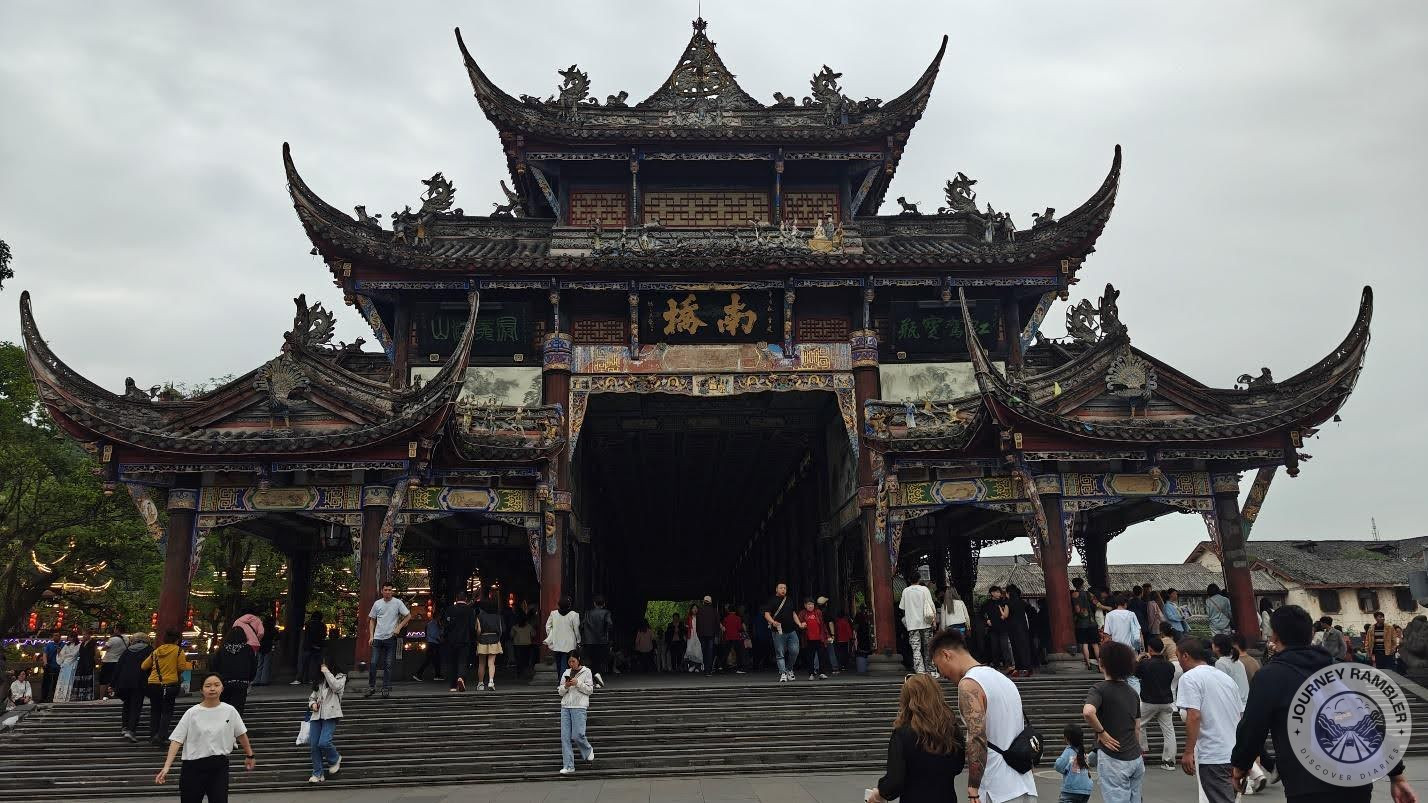
I then exited the bridge from the opposite side of where I entered and was impressed at this sight. If you asked me for an example of Chinese architecture then I think I’d point you to this. The flying eaves, the dragon sculptures, and just the details of the structure make it the quintessential traditional Chinese building for me.
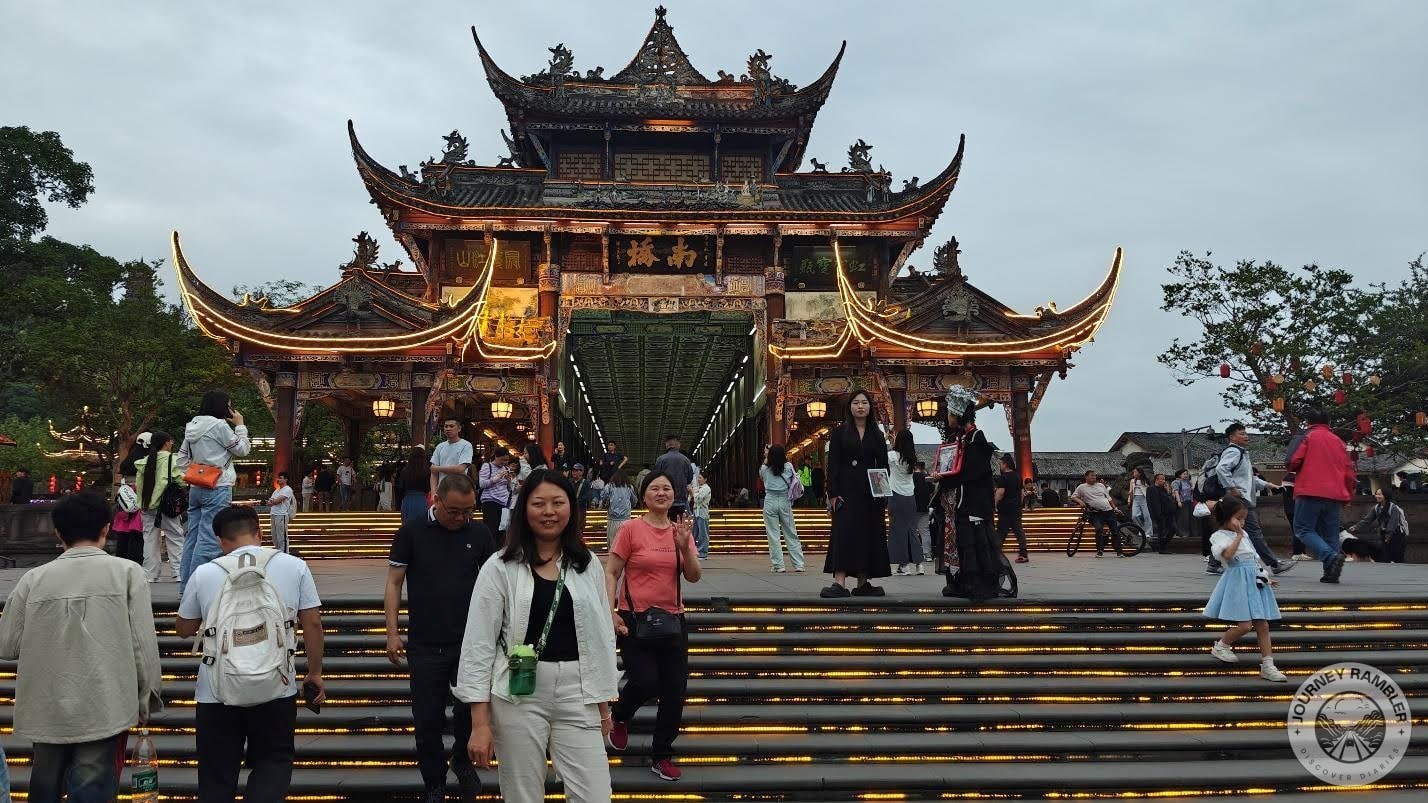
It was kind of timely that after a couple of minutes of me arriving, the lights on the bridge started to come alive. I’m not going to lie, I was totally expecting this to get lit up the same as Hongyadong in Chongqing. More lights eventually came on but it ended up a little tamer likely to not take away from the light show in the river.
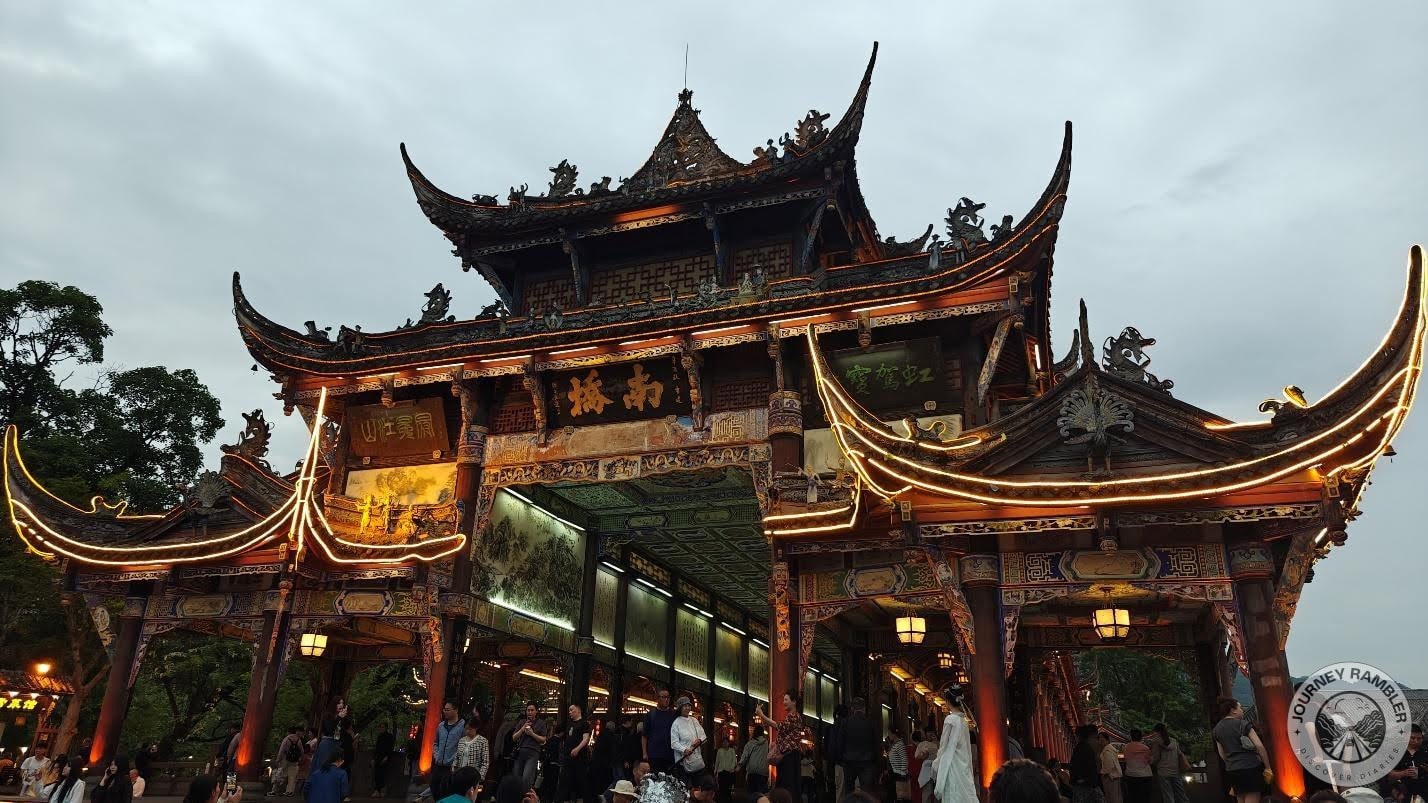
So going back to the bridge’s age, my research came up with lots of results that honestly weren’t definitive. One online source pegged its age at 2000 years old and others talked about it being built in 1878 AD. My guess is that the bridge might be 2000 years old but it has gone through so many changes that it’s probably not the same as when it first got completed.
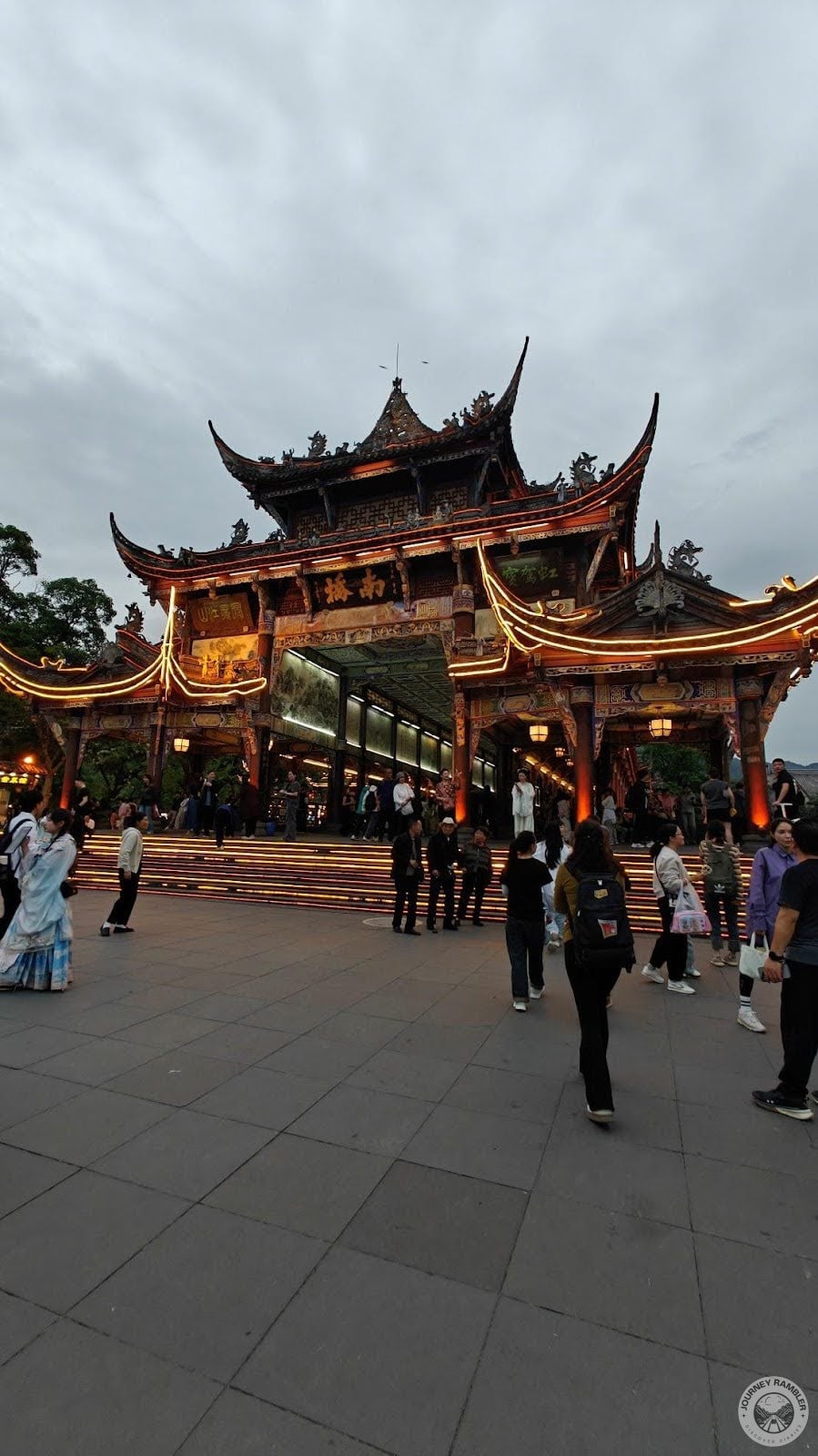
Regardless of its age, I am sure of one thing: it looks amazing in the evening! It wasn’t quite yet night when I took this picture but the bridge was brimming with even more activity. More of its lights were lit and the crowd also kept growing.
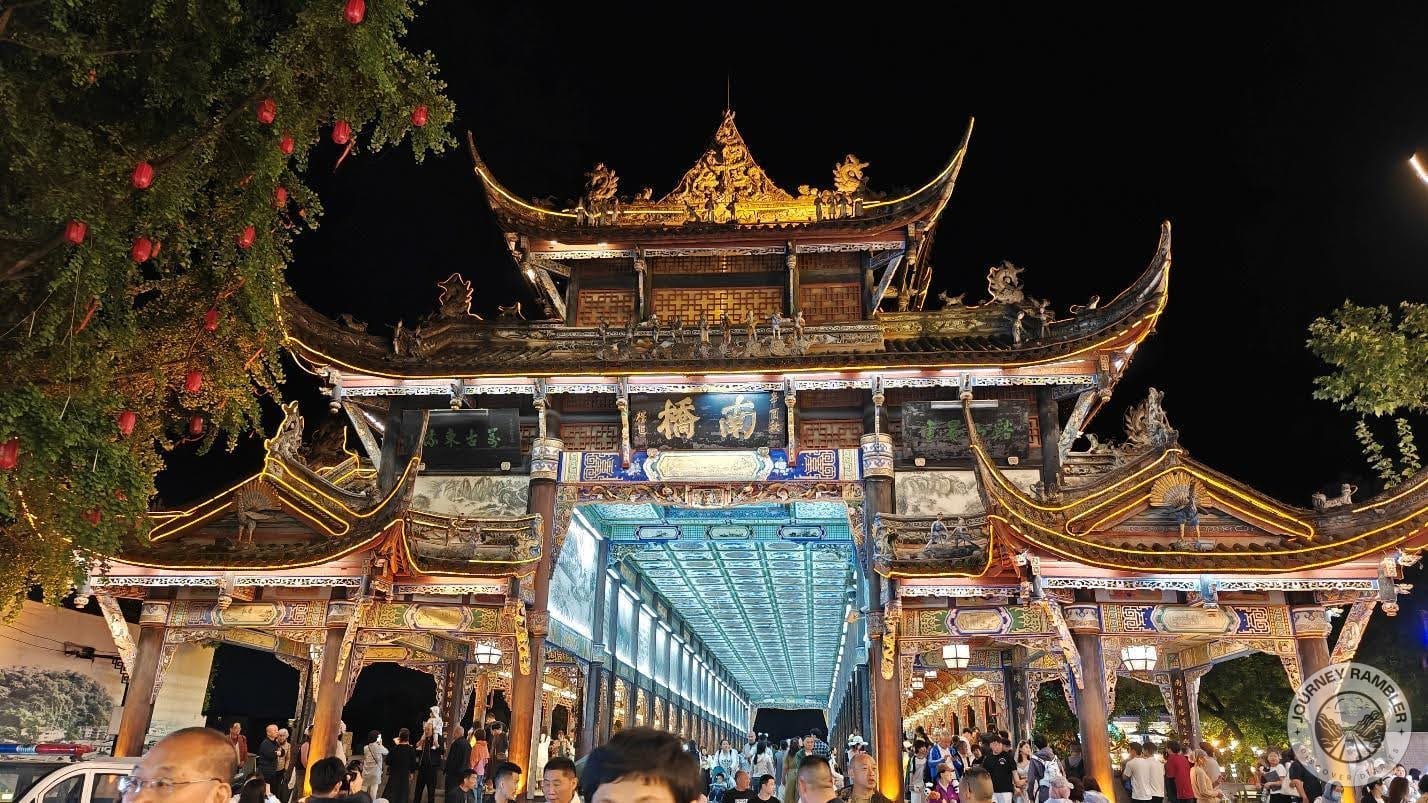
When night finally came around, the bridge started to look even more amazing. Its ceiling was lit with the shade of blue that kind of mirrored the lights in the river (which you’ll see in a bit). At this point people were still milling about though surprisingly, the huge crowd I was expecting didn’t come out in full force.
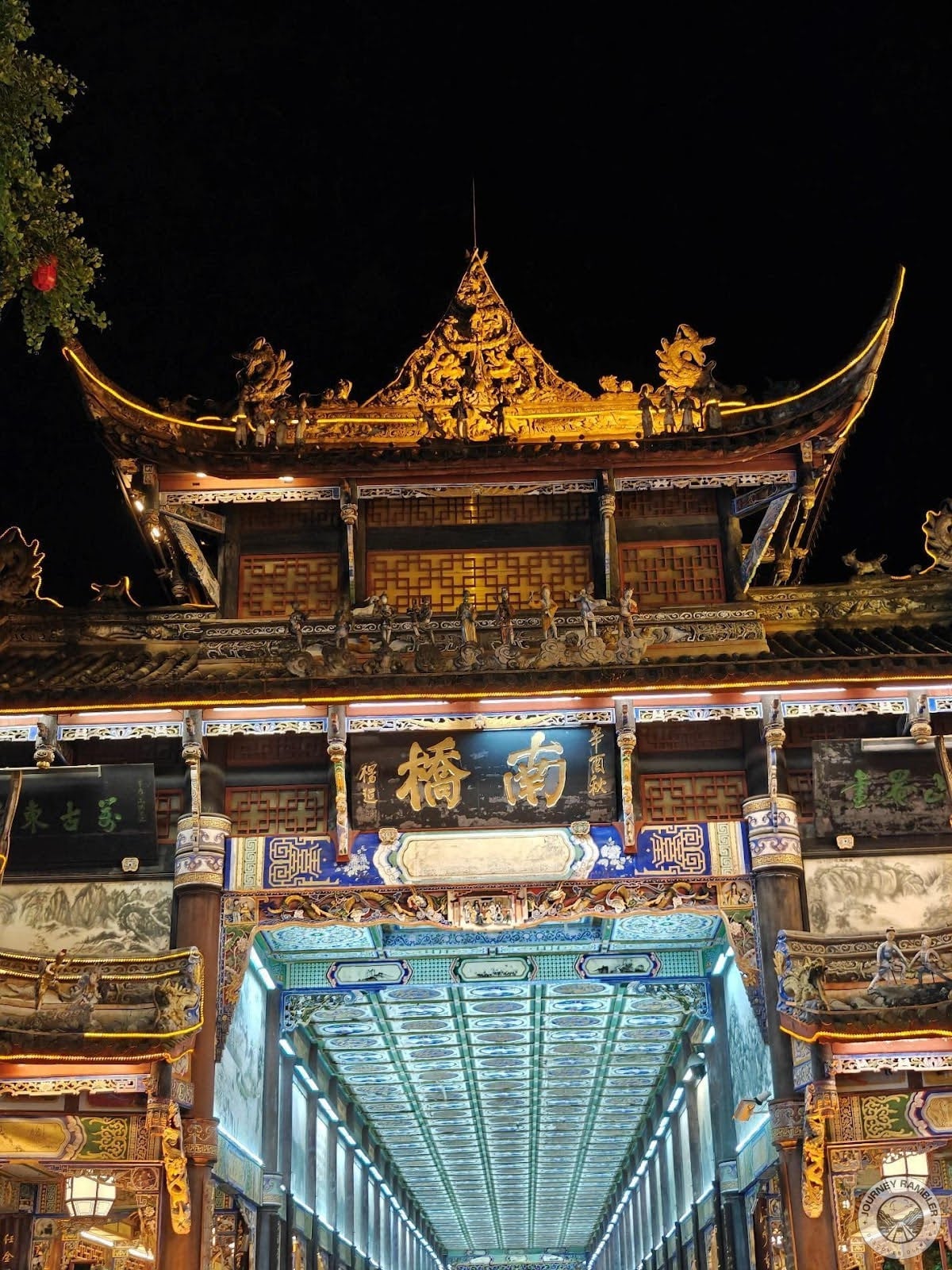
Here you can see the ceiling that I was talking about. The cool shade of blue here really goes well with the gold as well as warm and earthy colors of the rest of the bridge. Additionally, the ceiling actually adds a little more sophistication to the bridge thanks to the designs on the tiles (or I think they were tiles, I’m not quite sure).
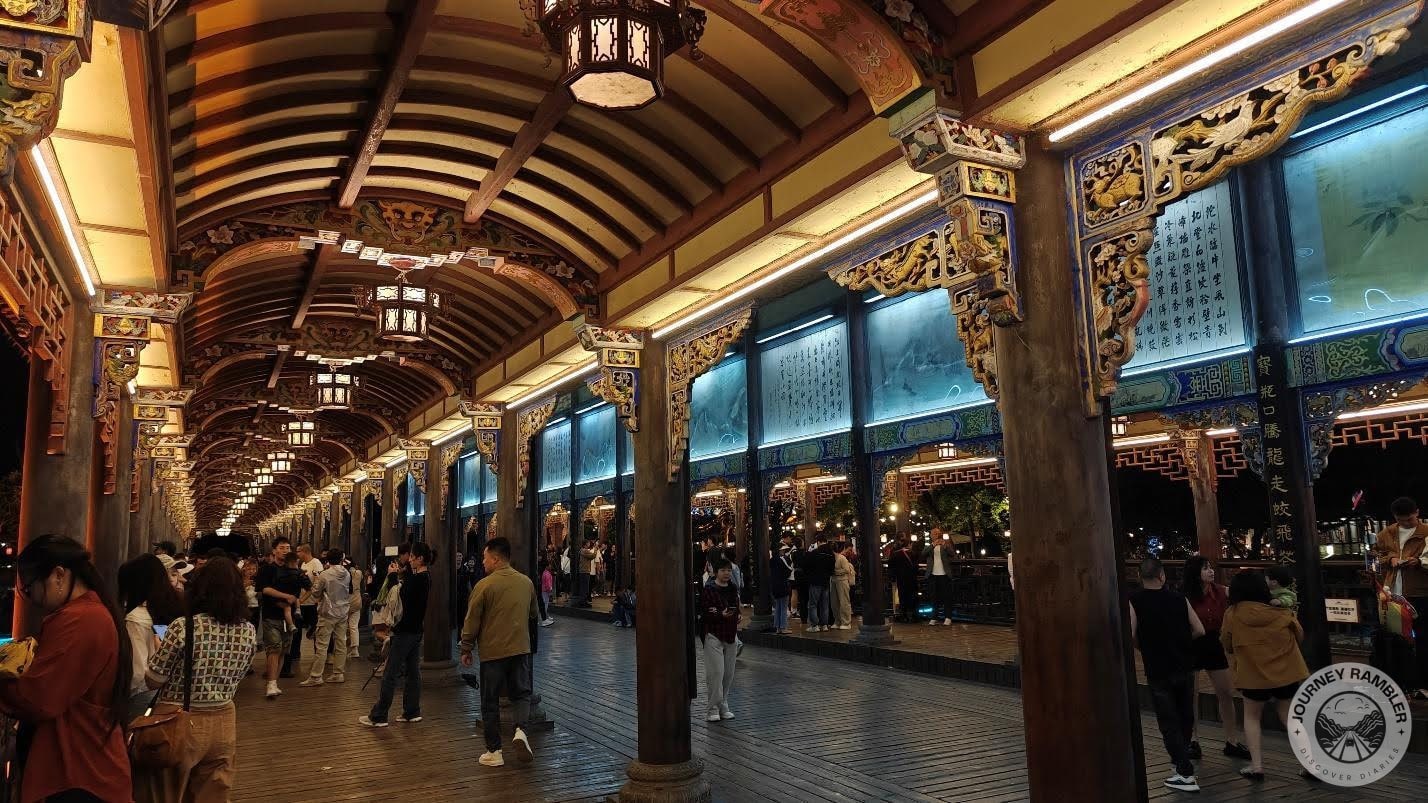
While the ceiling’s lights did seem strong when viewed from outside, they’re actually quite subdued when you’re inside the bridge. This wasn’t really surprising as I think the reason for this type of lighting is to mimic the Blue Tears. Speaking of…
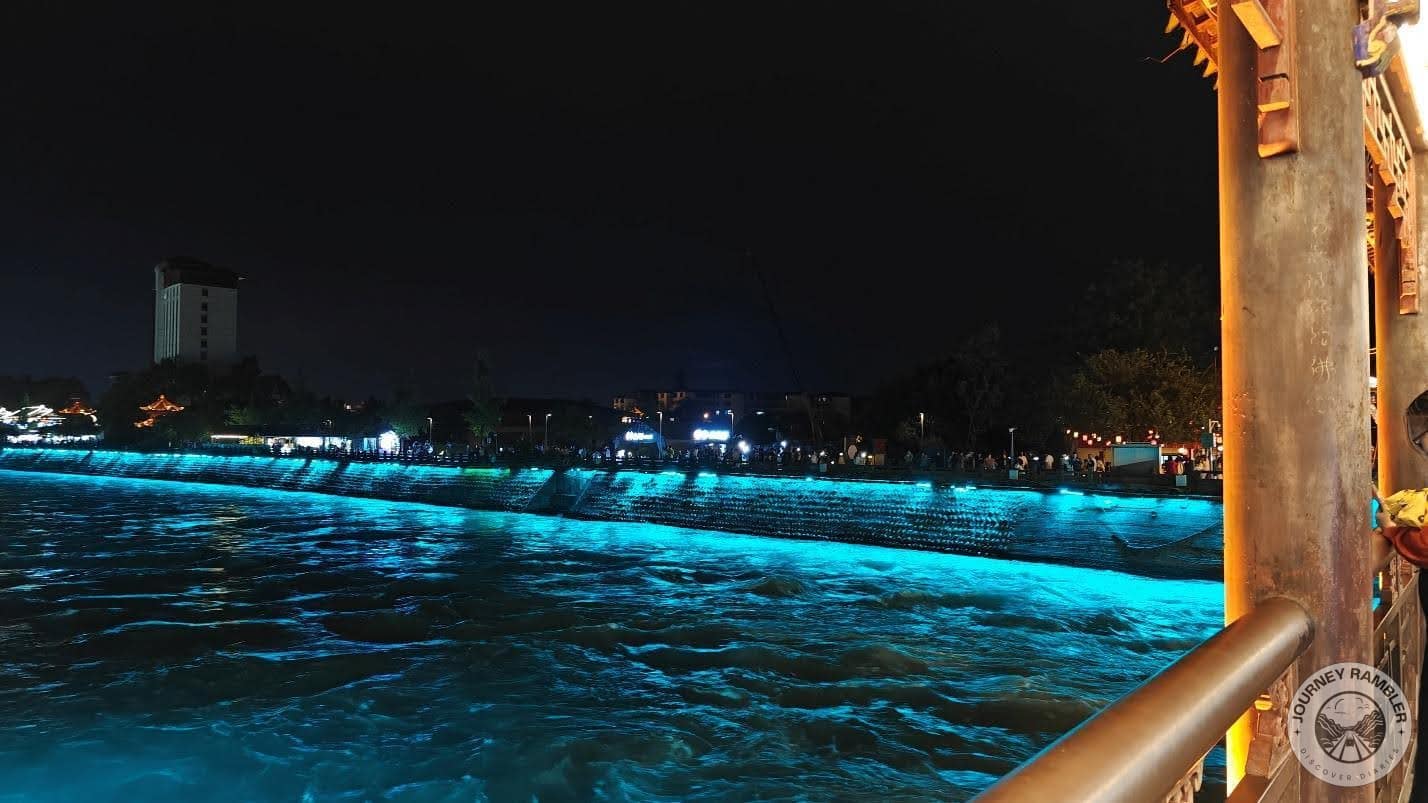
This is your first look at the topic of this write-up! If there was one word to describe this, it would be stunning. It’s not as ostentatious as the light show in Hongyadong but I think it’s equally ingenious and impressive looking.
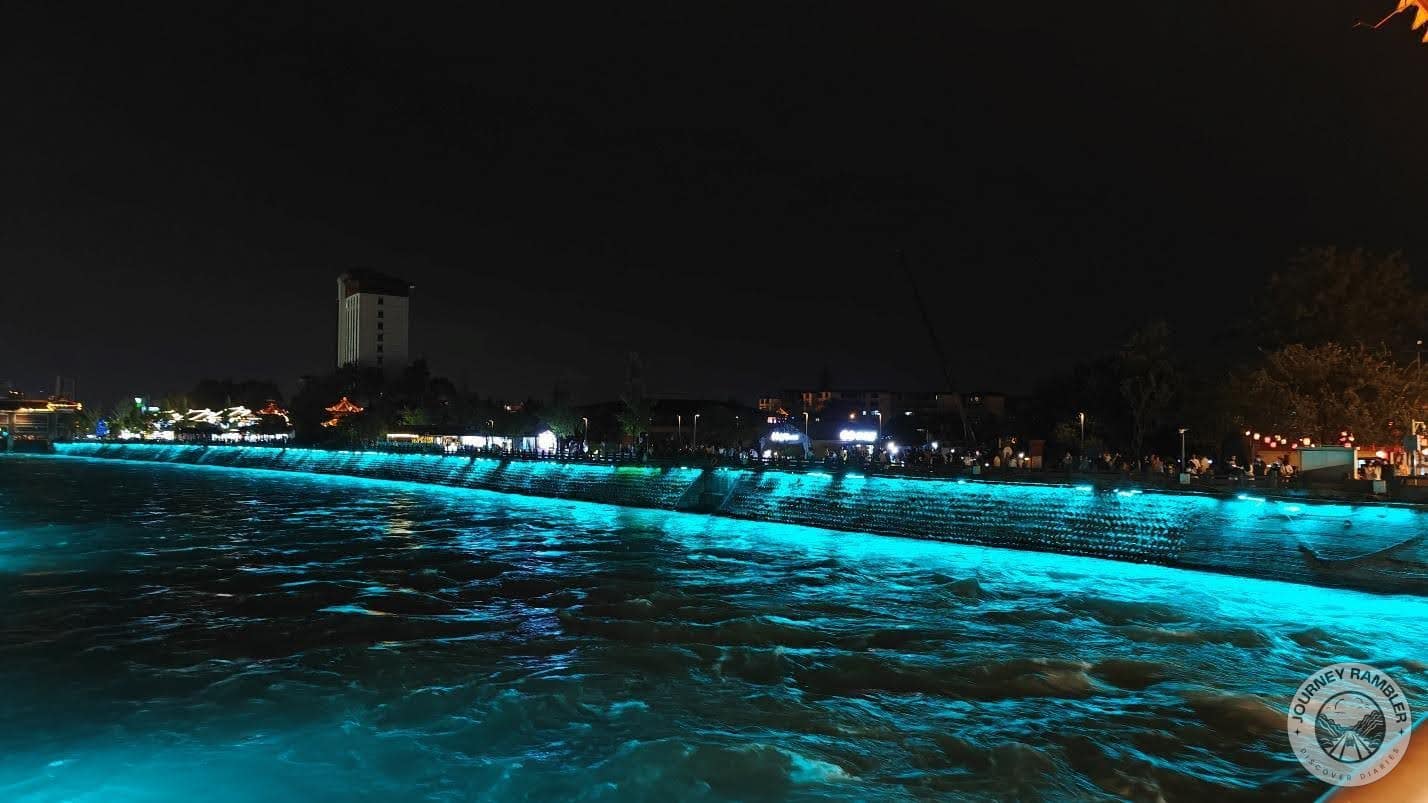
The sight really reminded me of that beach that had bioluminescent algae thanks to how striking the blue light is. I will say though that not all of the river is engulfed by the light. Possibly due to the wattage of the light used as well as its cover and the width of the river, the Blue Tears is pretty limited to the water near the dikes.
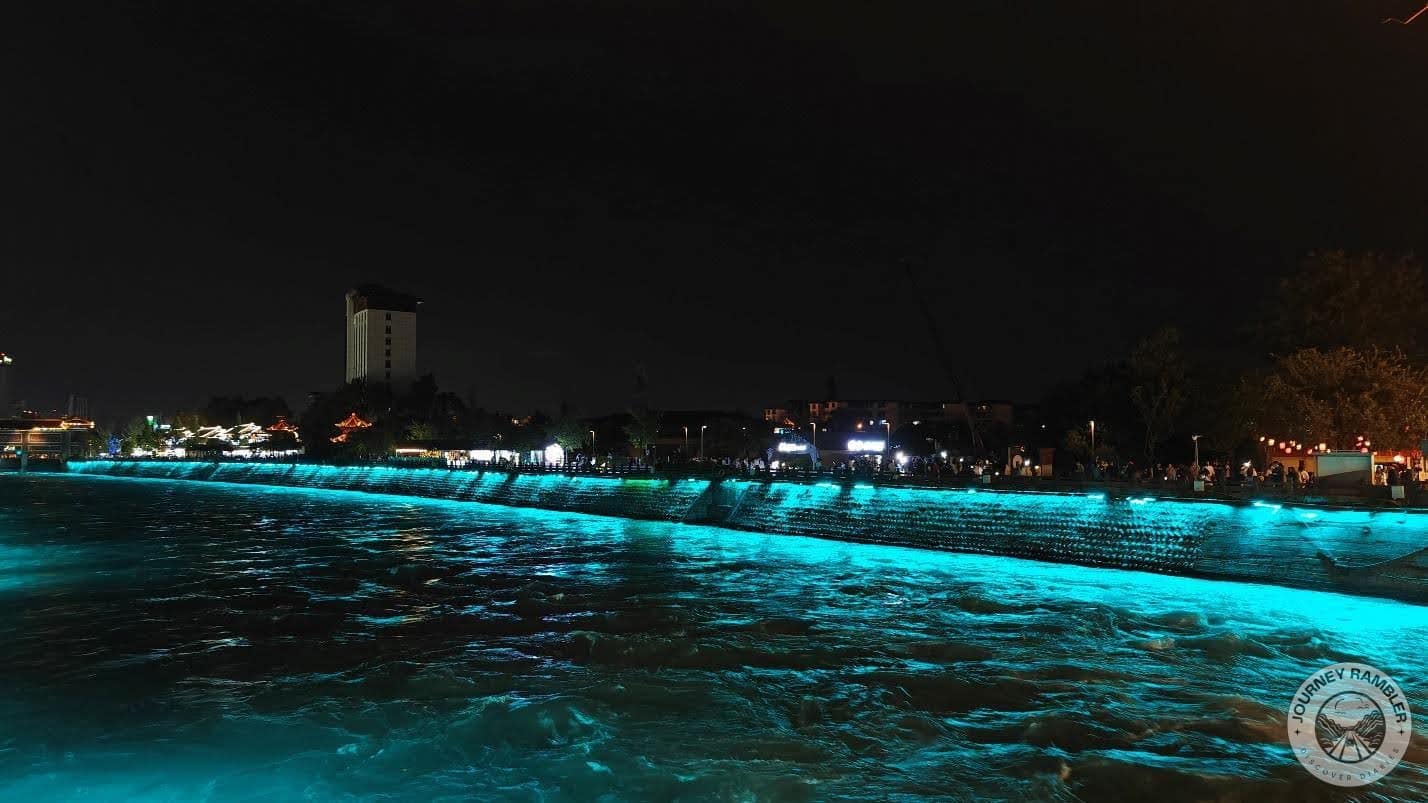
Even with the limitations, I must admit that it still looks mesmerizing. I’ve read some call it ethereal and that might just be an apt description considering how it’s only available at night. Just a warning though, the area can get a little loud thanks to establishments playing music on their speakers.
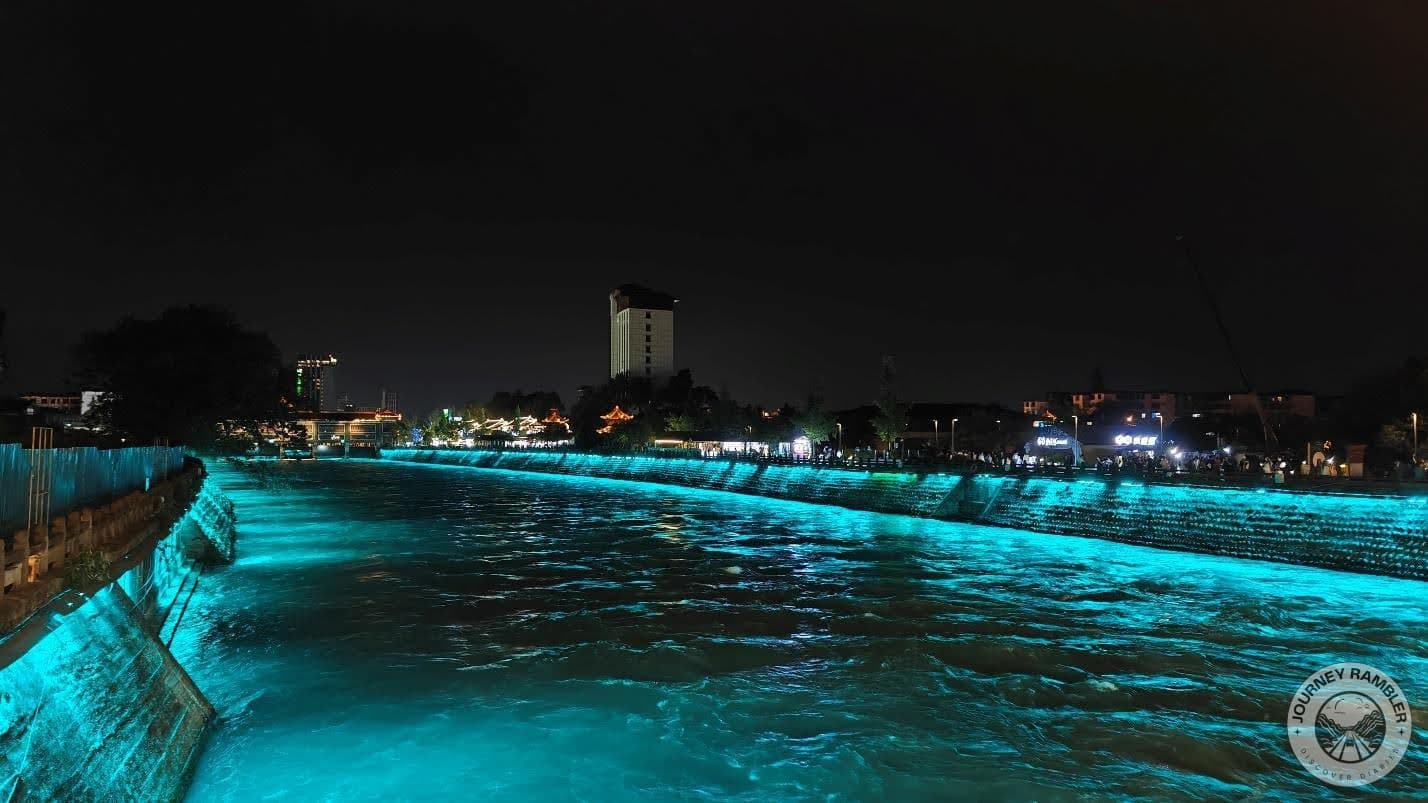
Here’s another look at the Blue Tears with Yangtianwo downstream. From here you can also sort of see the bustling crowds either looking for establishments with available seating or just observing the scenery. Looking back on this, I actually think the crowd size is preferable to the ones I saw in Hongyadong in Chongqing.
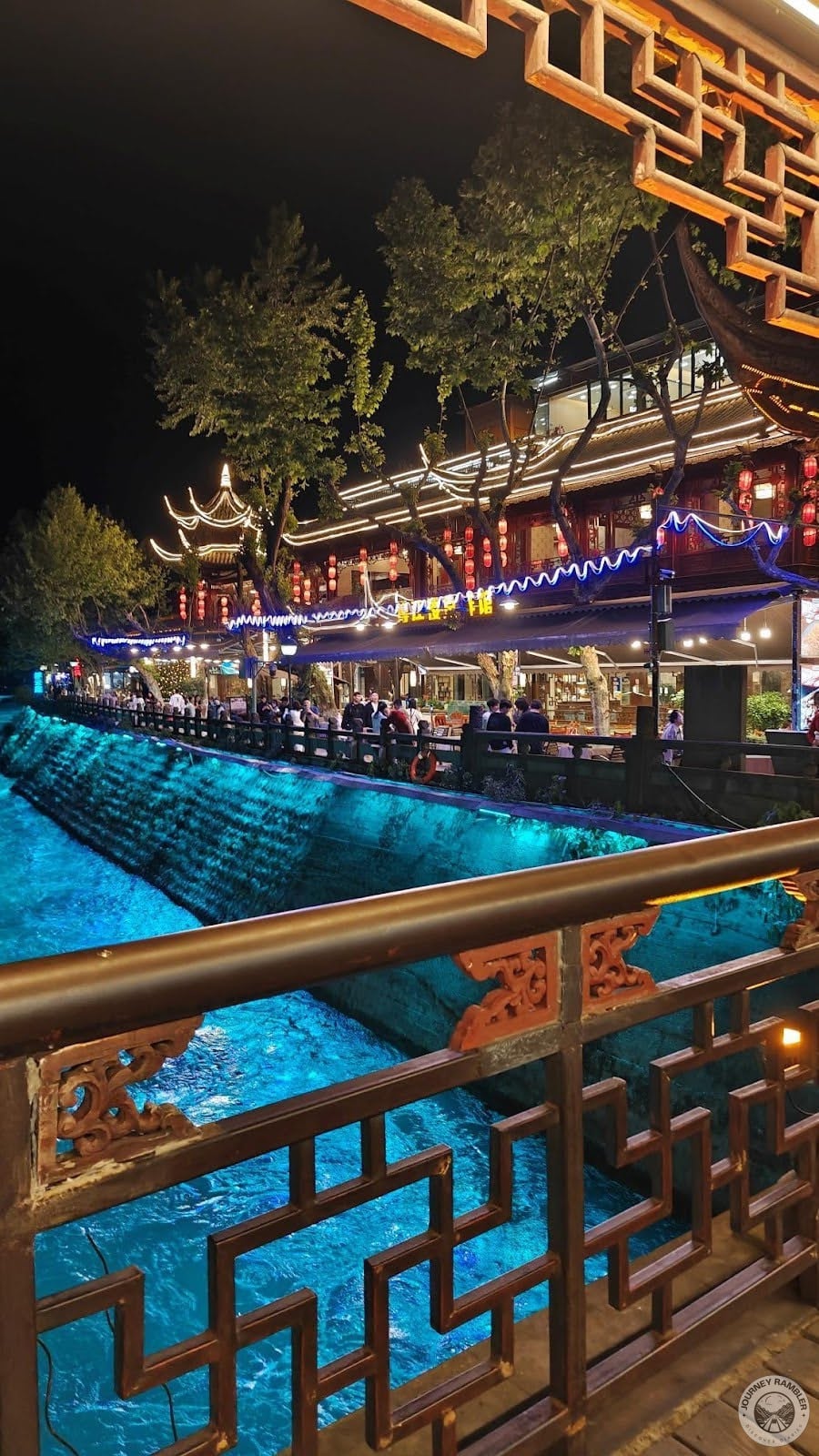
I decided to move closer to where the establishments were and also got to see the lights up close. So I was told that the lights used here were LED which kind of make sense since they’re probably much cheaper to maintain and/or replace.
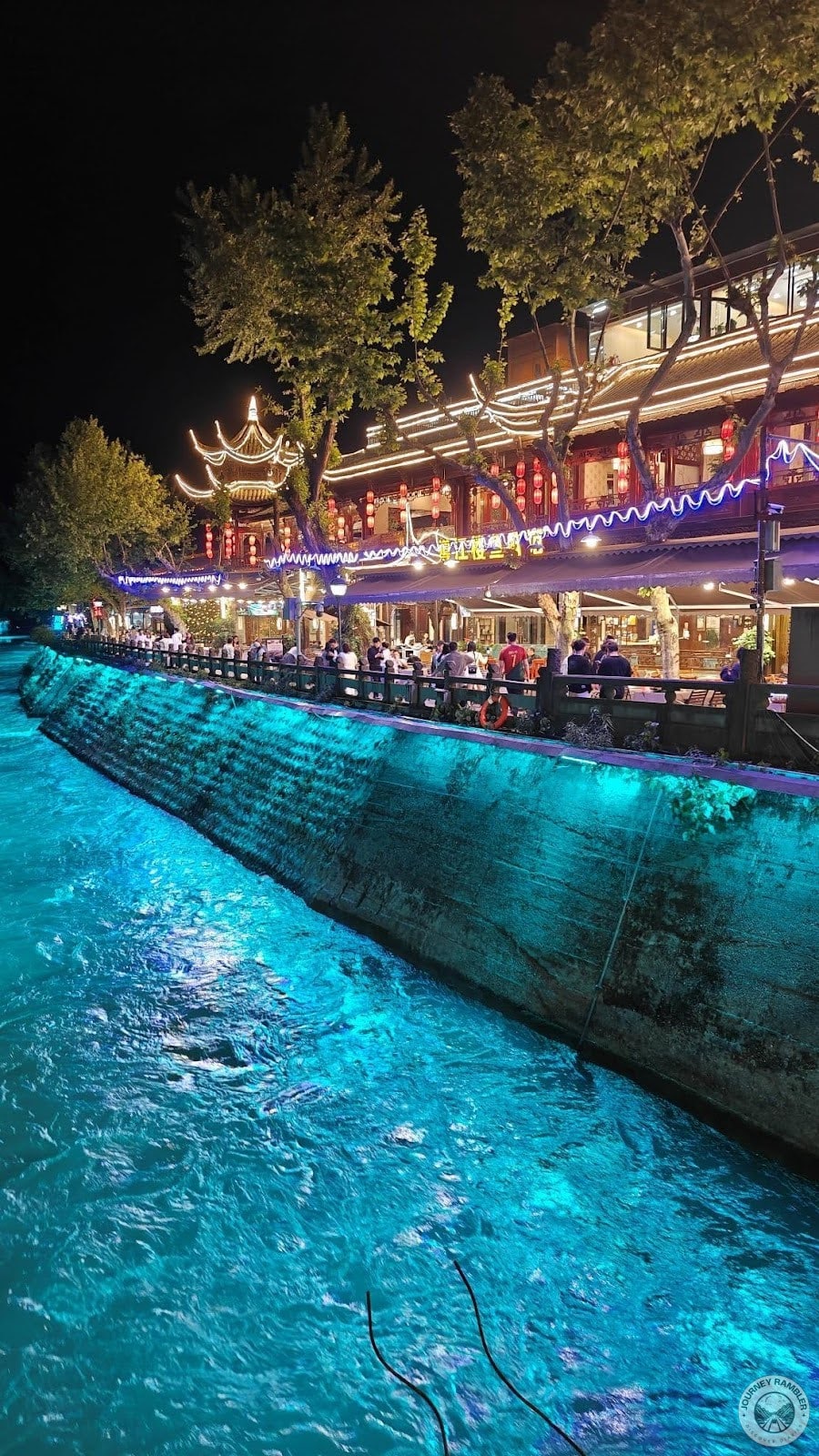
Something that also stood out to me was just how strong the lighting here was. I guess that’s to be expected since the “Blue Tears” effect might not be as effective with weaker lights. Still, it’s so strong that it kind of drowns out the lights from the establishments here.
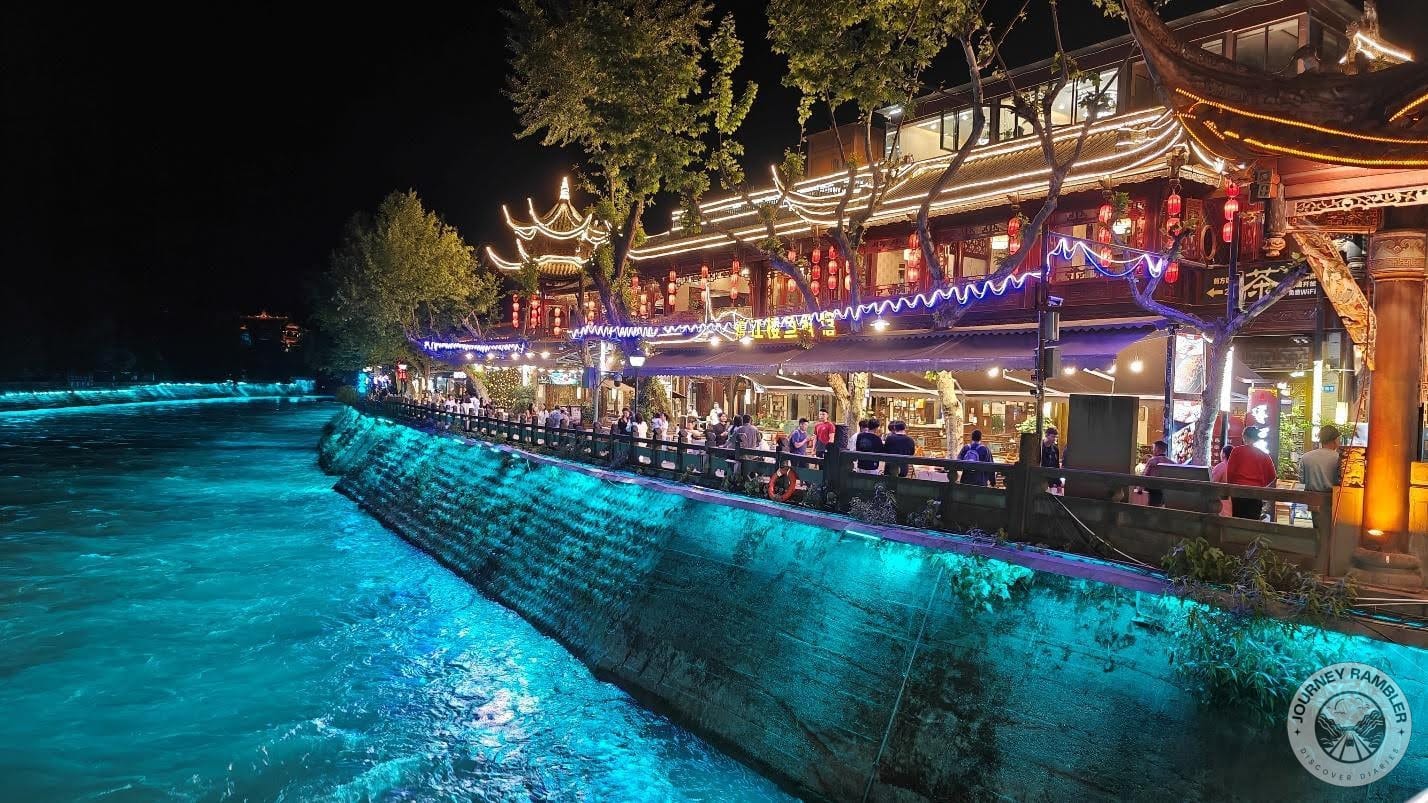
Perhaps the only real issue I have with my experience here was the noise. Like I said earlier, the music from establishments can be a little noisy. Of course, this isn’t the only place in China that does this but I genuinely think that it takes away from the experience of being here and watching the Blue Tears rather than enriching it.
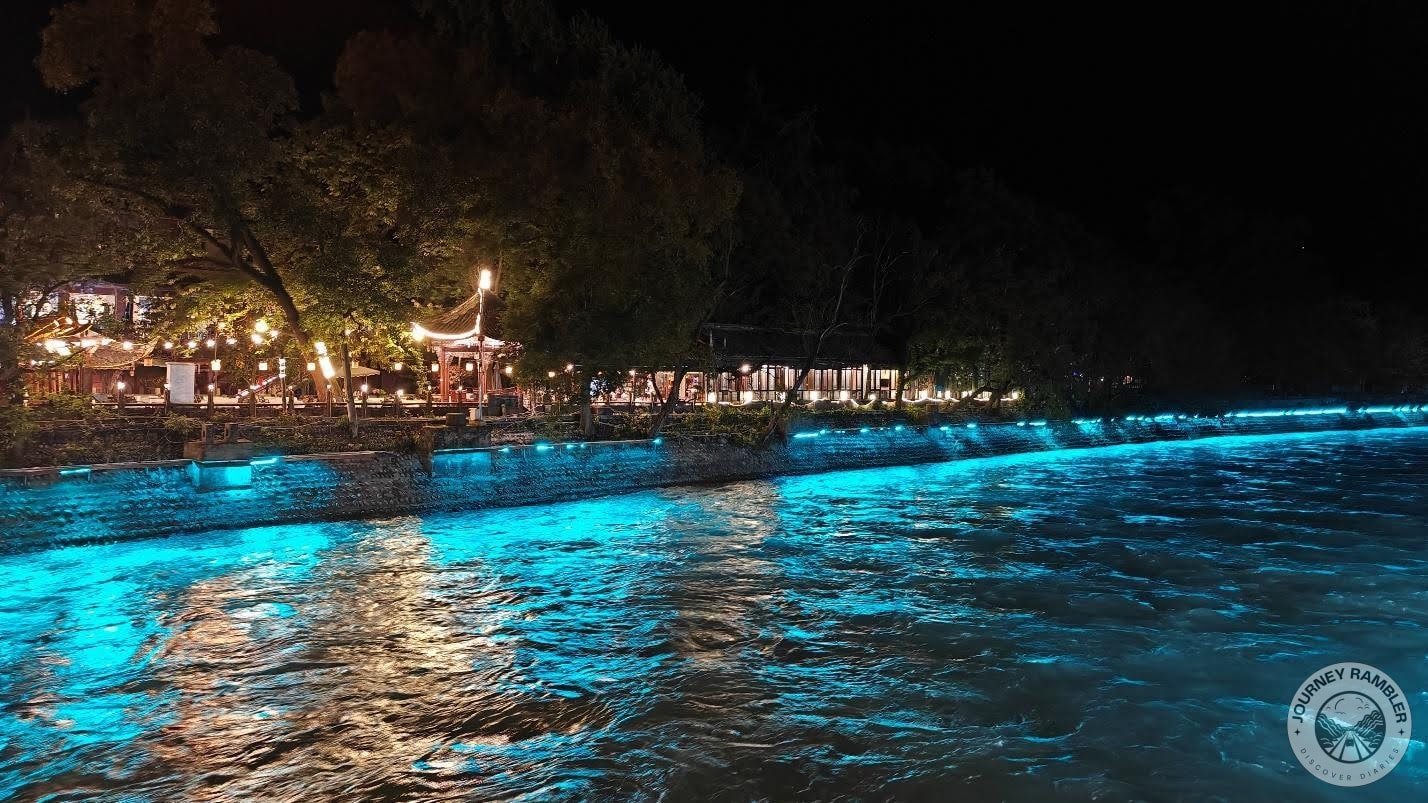
Complaints regarding the noise aside, this visit to Dujiangyan was still a very memorable experience. People seemed genuinely excited to be here and you could tell just by observing them. The establishments were also bustling with activity and there was just an energy here that seemed contagious.
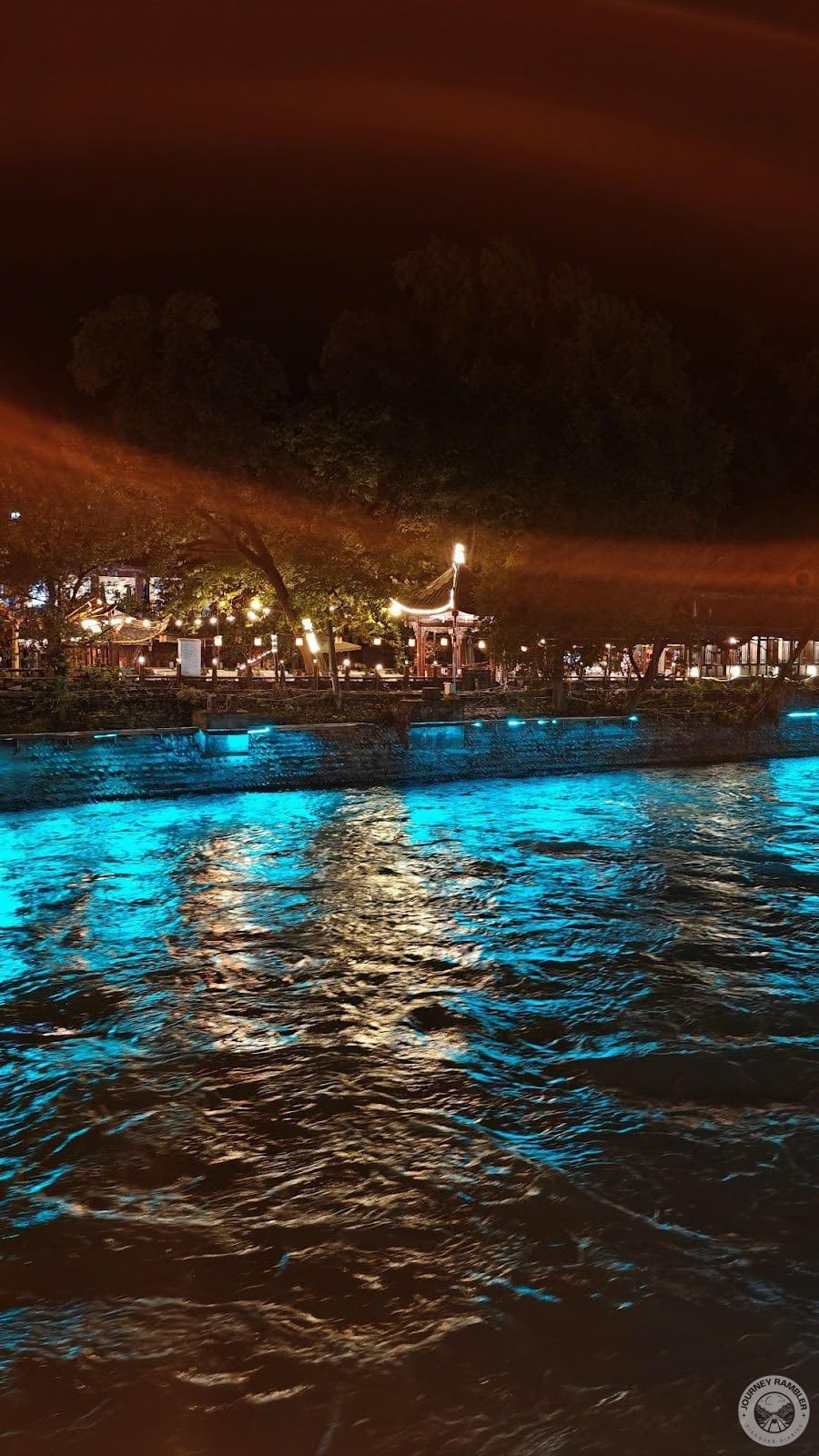
If you’re a photographer then you’re really going to love it here. There are plenty of subjects and angles for landscape photos no matter which way you look here. For street photography, just head on over to the Late Night Snack Corridor and you’ll find plenty of subjects there as well.
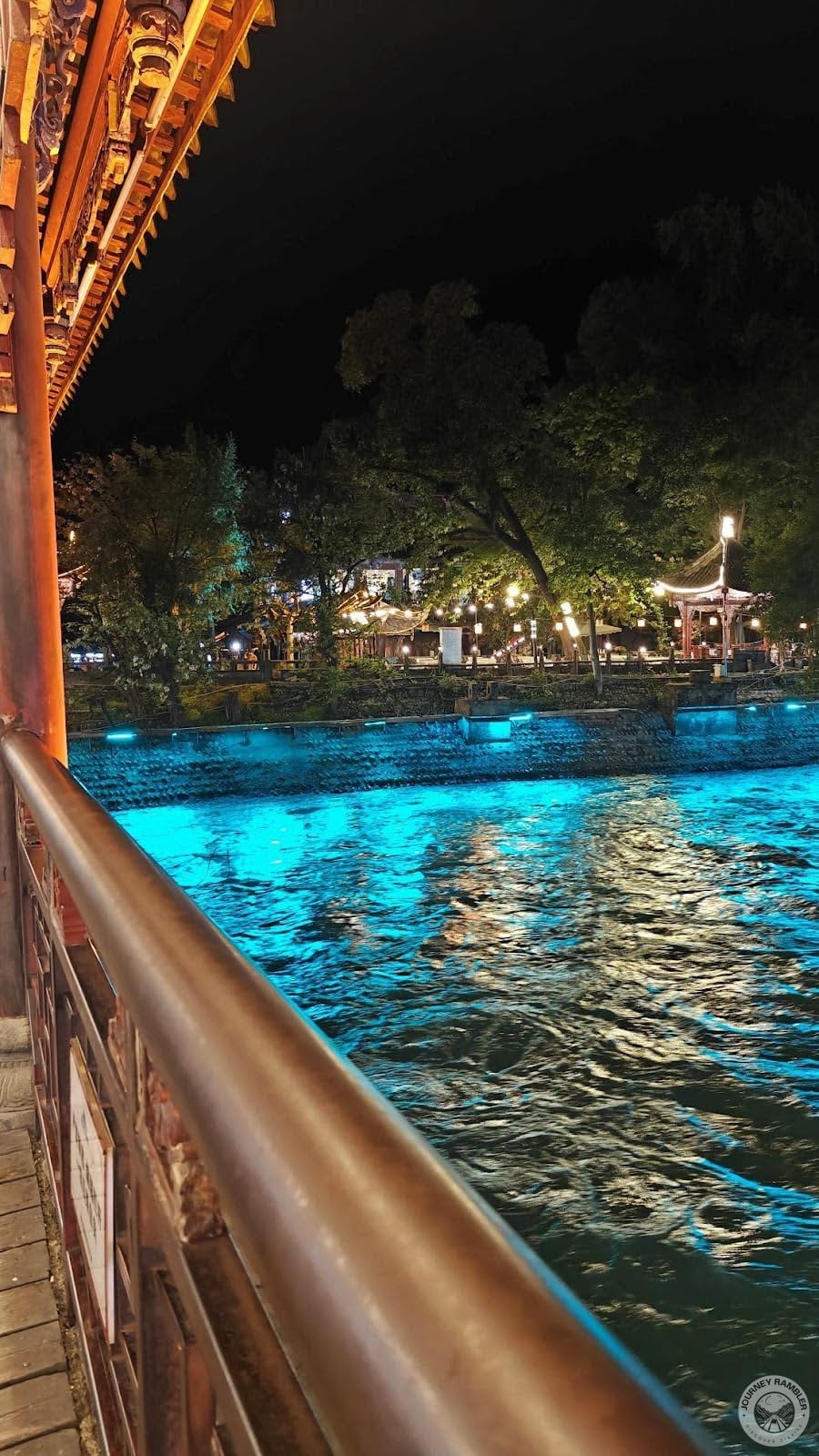
I will say though that the views from Nanqiao Bridge are probably the best in the whole area. That said, I really wouldn’t suggest spending all of your time here. If you have time then make sure to check out other areas especially if you’re also looking to eat.
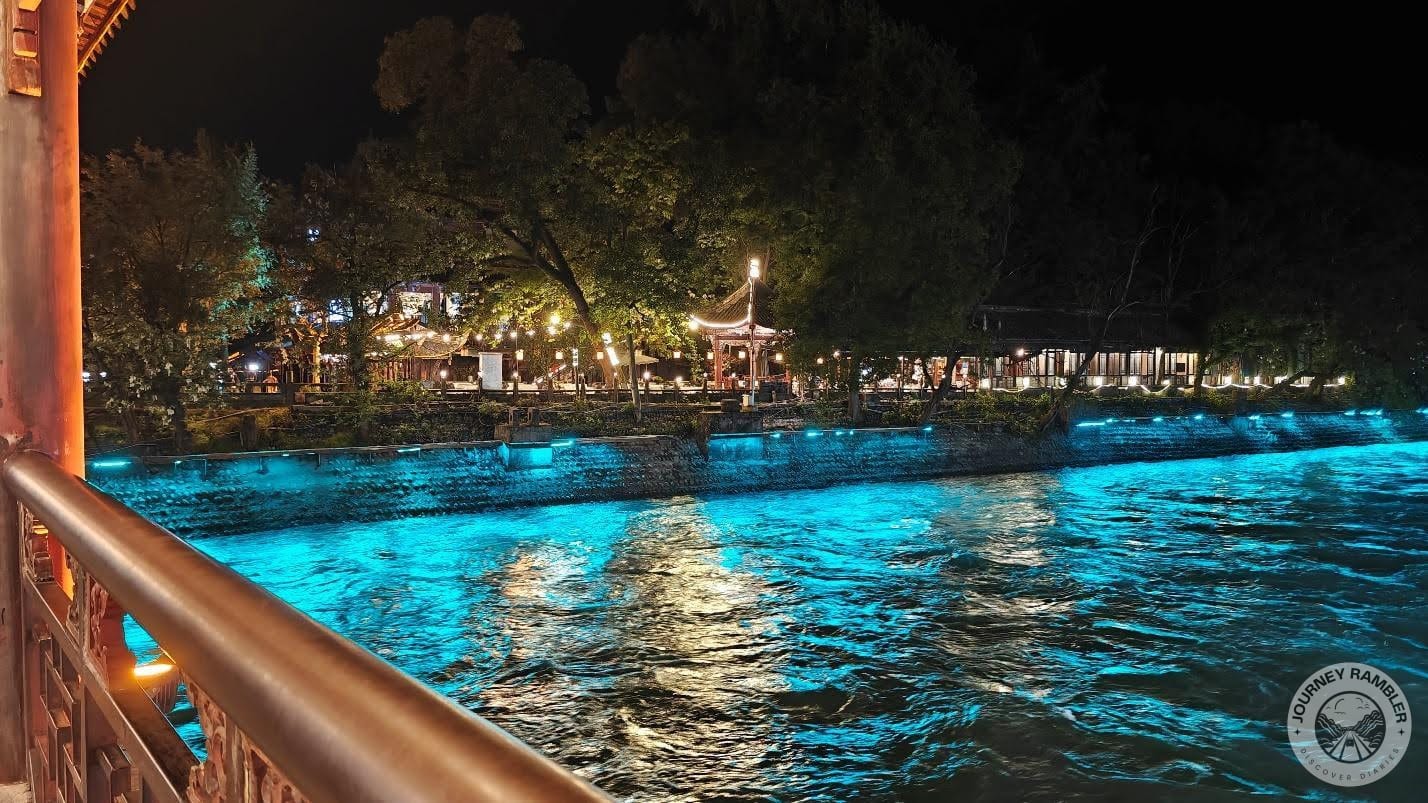
Now let me tell you, all the walking you’re going to be doing here is bound to make you hungry. If you went ahead and checked out Qincheng Mountain and the whole of the Dujiangyan Irrigation System then that’s even more reason to get something to eat. On a side note, the Blue Tears of Dujiangyan isn’t the only notable attraction here so you might want to look into those other landmarks as well.
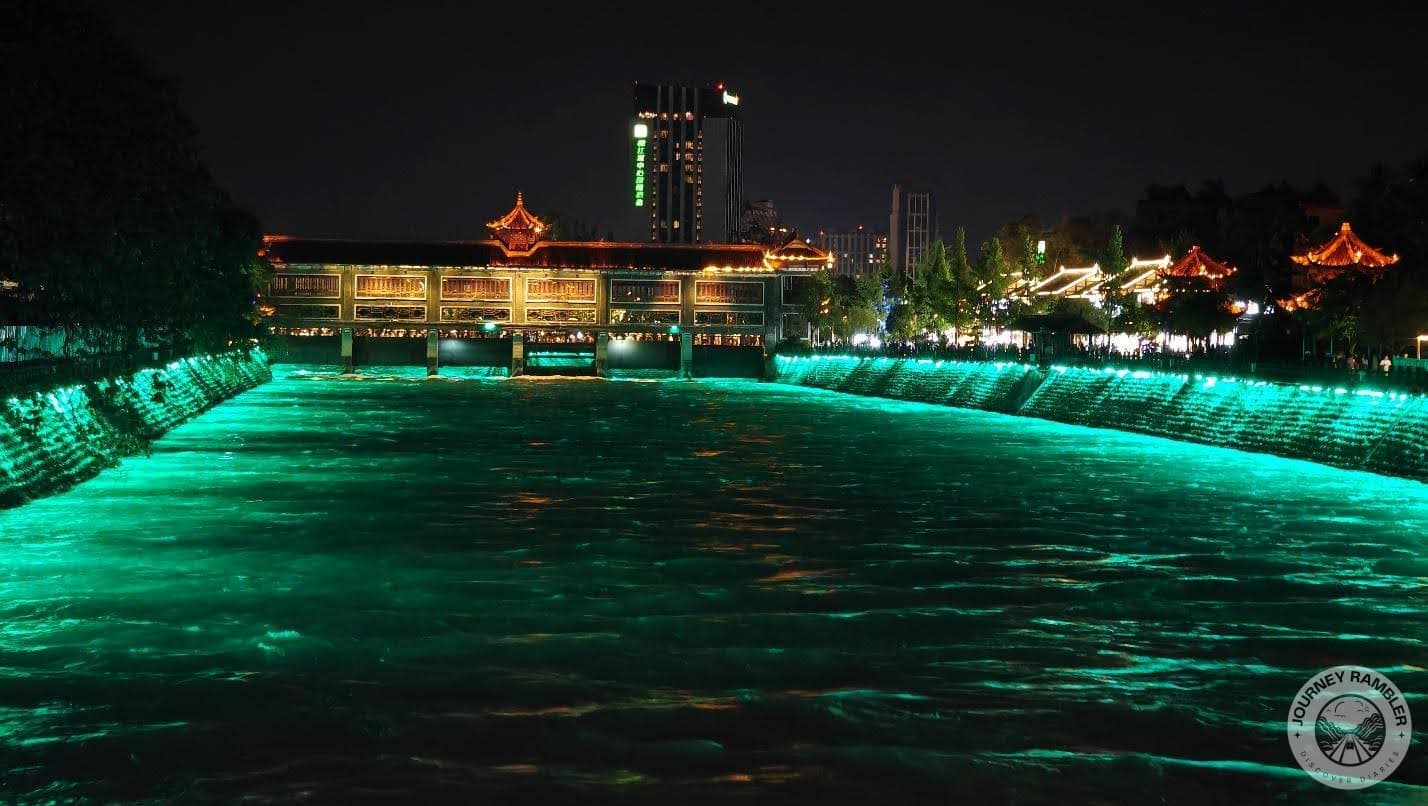
From time to time, the color of the lights change to green and it honestly looks even more interesting. I’m not sure though if I like this color more than the shade of blue. More than anything, the color reminds me of the radioactive green that you’d typically see in anime or movies.
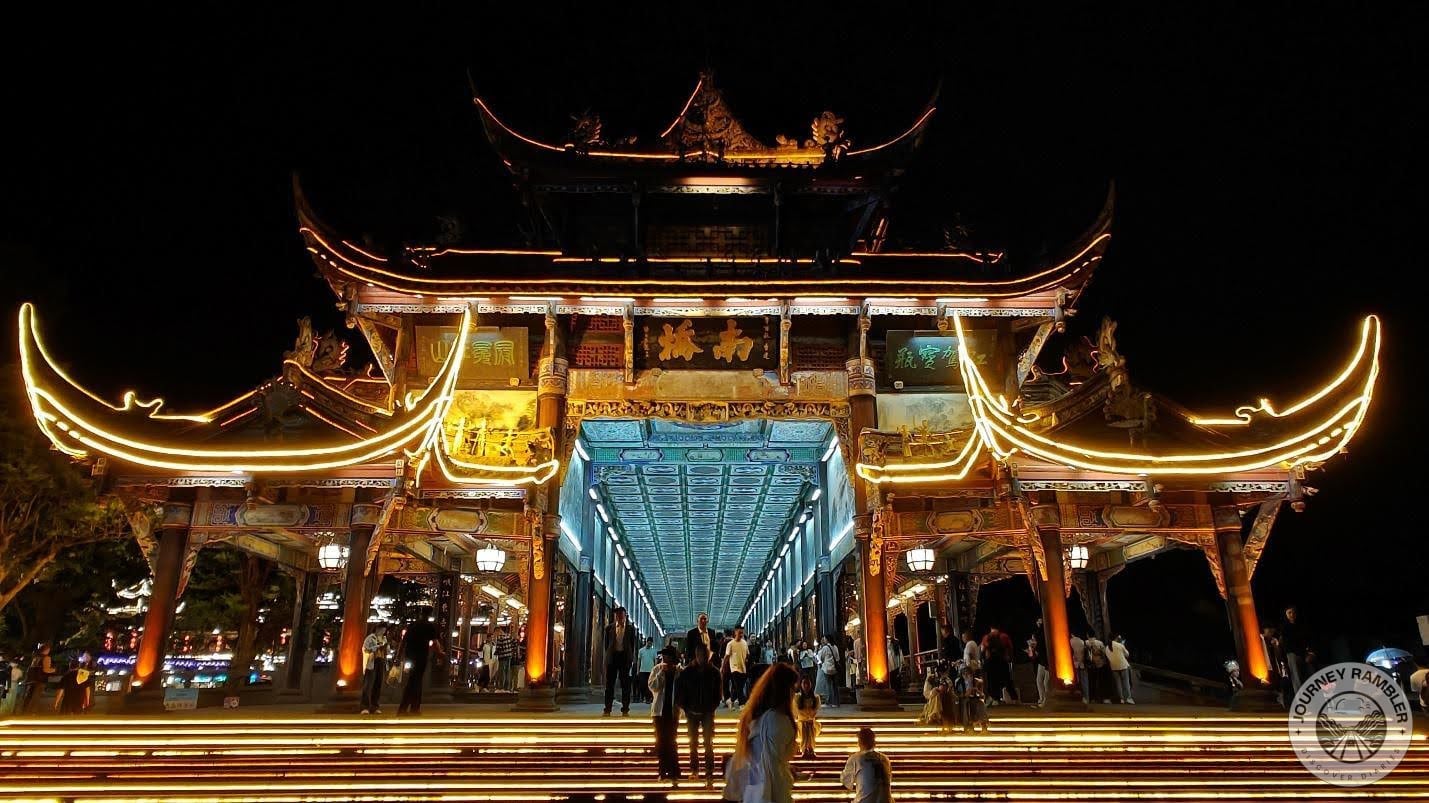
Here’s what I meant earlier when I said that the lighting for the Nanqiao Bridge itself wasn’t as ostentatious as what I saw in Hongyadong. The lighting here is less bright than what you’d see from the establishments in Hongyadong. It’s not too in your face and this is again likely to ensure that your attention is on the Blue Tears.
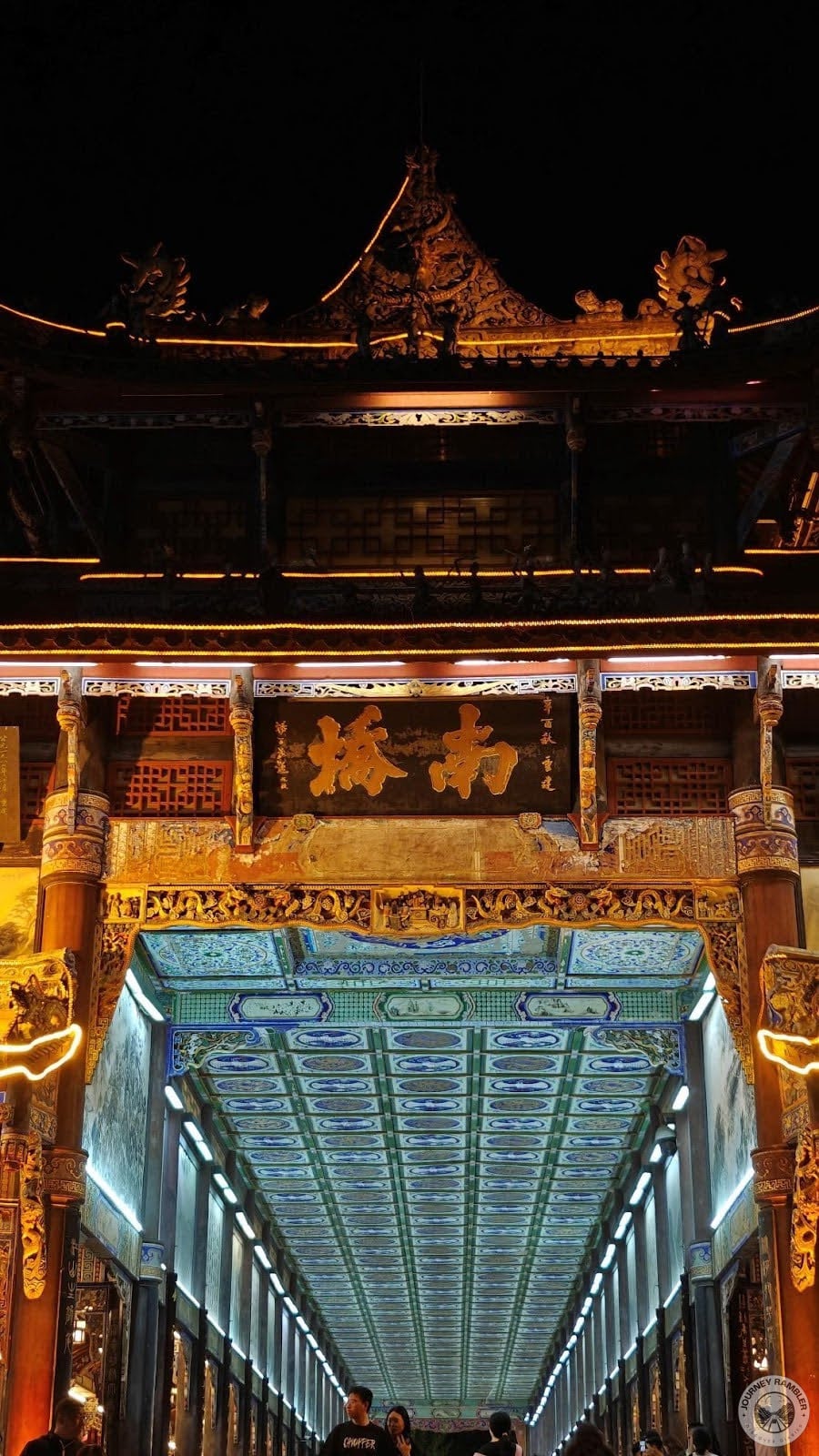
As the night was winding down, I took a couple more shots of the bridge’s ceiling from outside. Even without the Blue Tears, I think Dujiangyan is still very much worth visiting just because of traditional structures like Nanqiao Bridge. In case you’re interested, there are other areas like the Dujiangyan Confucius Temple and Mount Quincheng that feature similar traditional building styles.
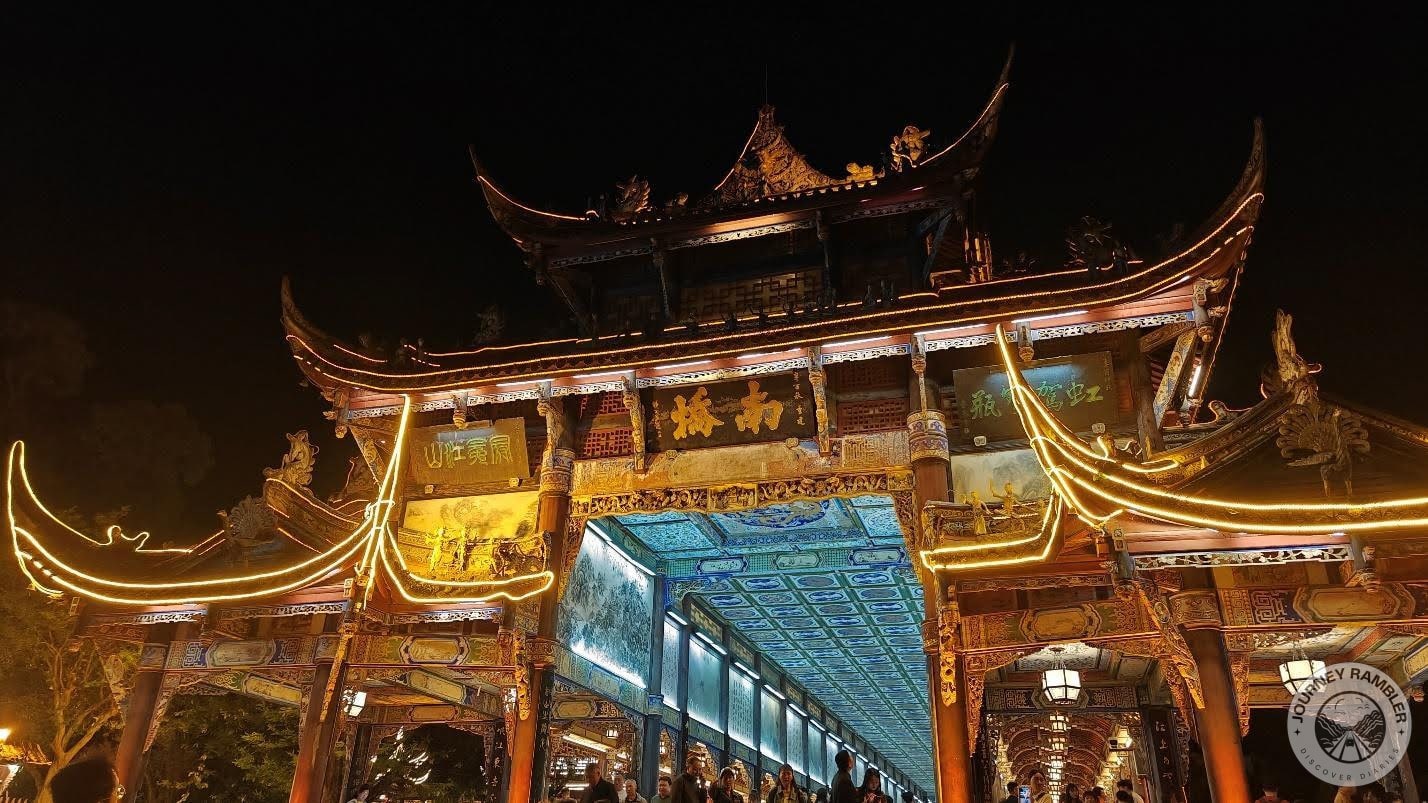
If you don’t have the time for all the other areas and activities here though then I think a visit to the Blue Tears as well as Nanqiao Bridge and Yangtianwo Sluice Gates will be more than enough. I mean, I think I might have filled the storage on my phone just from the pictures I took of this visit. Unfortunately, I had to exclude a number of them for brevity.
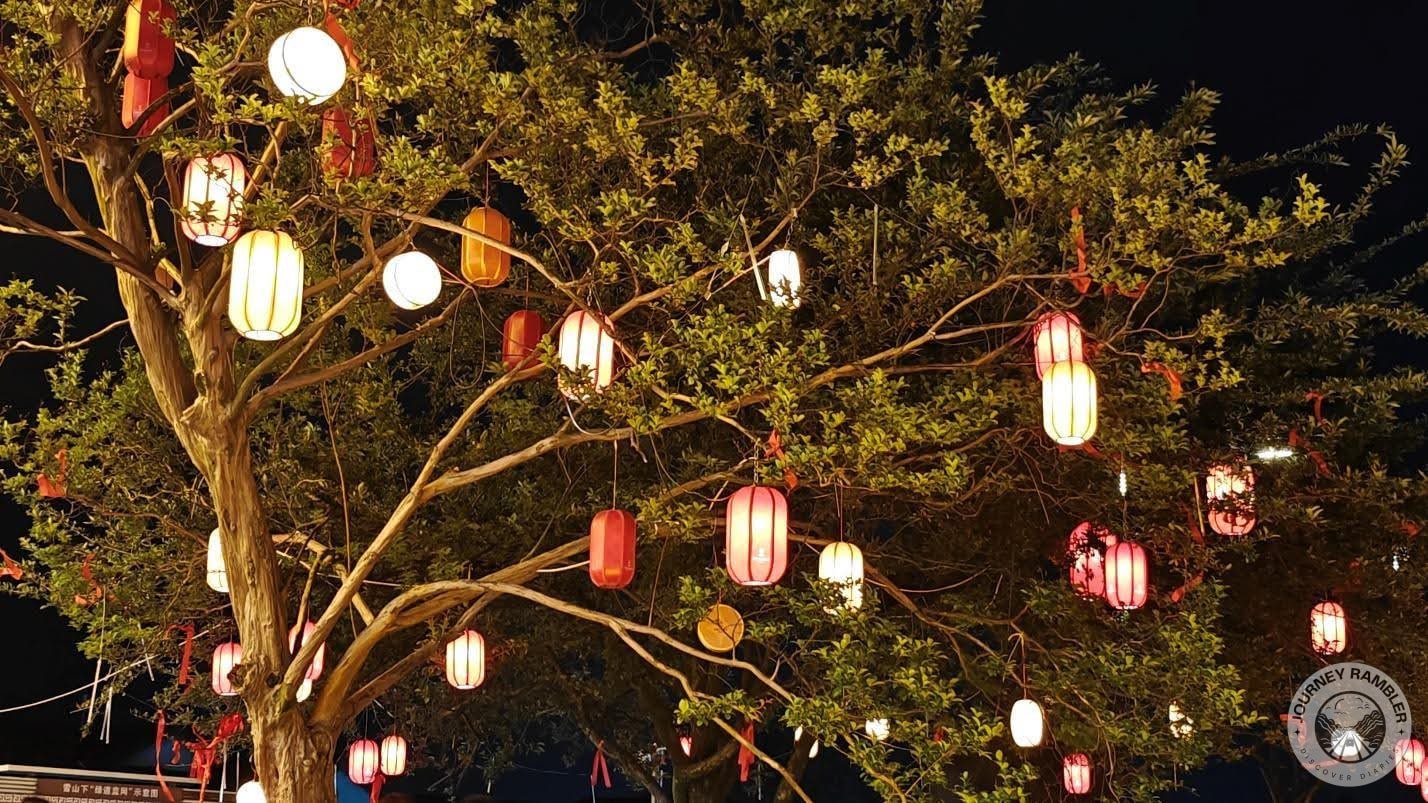
This is one of the trees close to the establishments at the Late Night Snack Corridor. I can’t quite remember but I think this was the only tree there that had lighting so it kind of stood out.
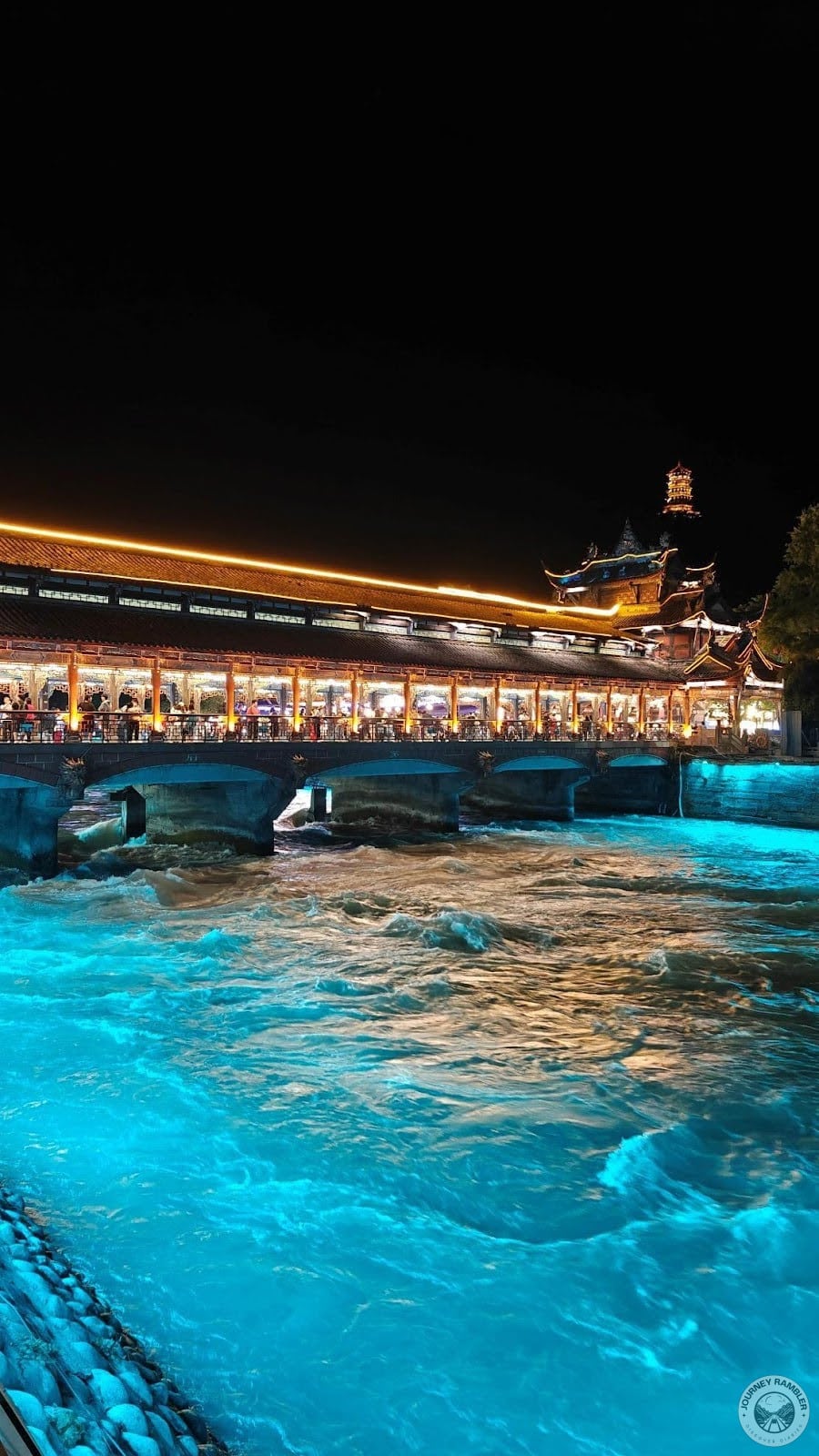
And that wraps up my experience visiting the Blue Tears of Dujiangyan. Again, I think this whole trip was worth it despite some issues I had with noise. Overall, the views were really nice even during daytime. I especially liked the buildings here, particularly the Yantiangwo Sluice Gates and Nanqiao Bridge. Yes, you will be walking a lot here but there are plenty of establishments with seating overlooking the river that you can rest in. Food also won’t be an issue as the Late Night Snack Corridor has you covered. Ideally, you want to explore the whole of Dujiangyan Scenic Area but if you’re pressed for time then a visit here would be a great compromise.
Anyway, what do you think of my Blue Tears of Dujiangyan experience? Sound off on the comments section and let us know if you plan to visit this place when you’re in Sichuan!