Ine is a tiny fishing city in the north of Kyoto Prefecture, and it took a bit of time to visit it, but I always wanted to do that.
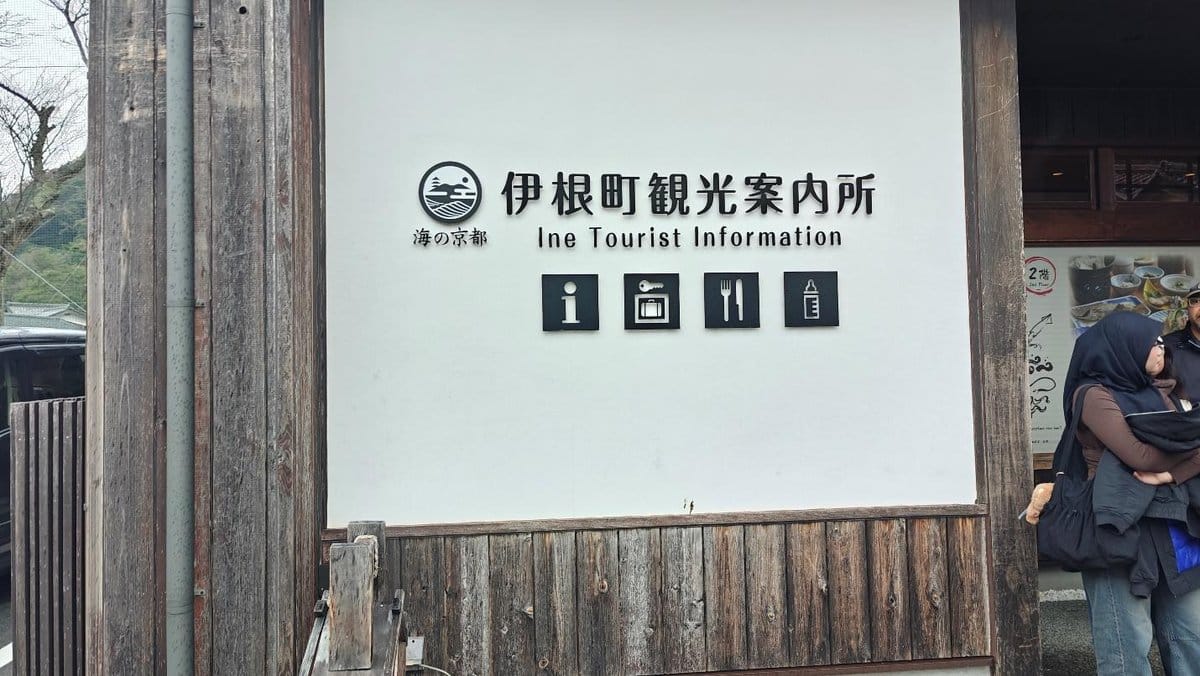
When I got there, the first thing I saw was the Tourist Information Center of Ine, a big building right next to the water.Some people walked around it.
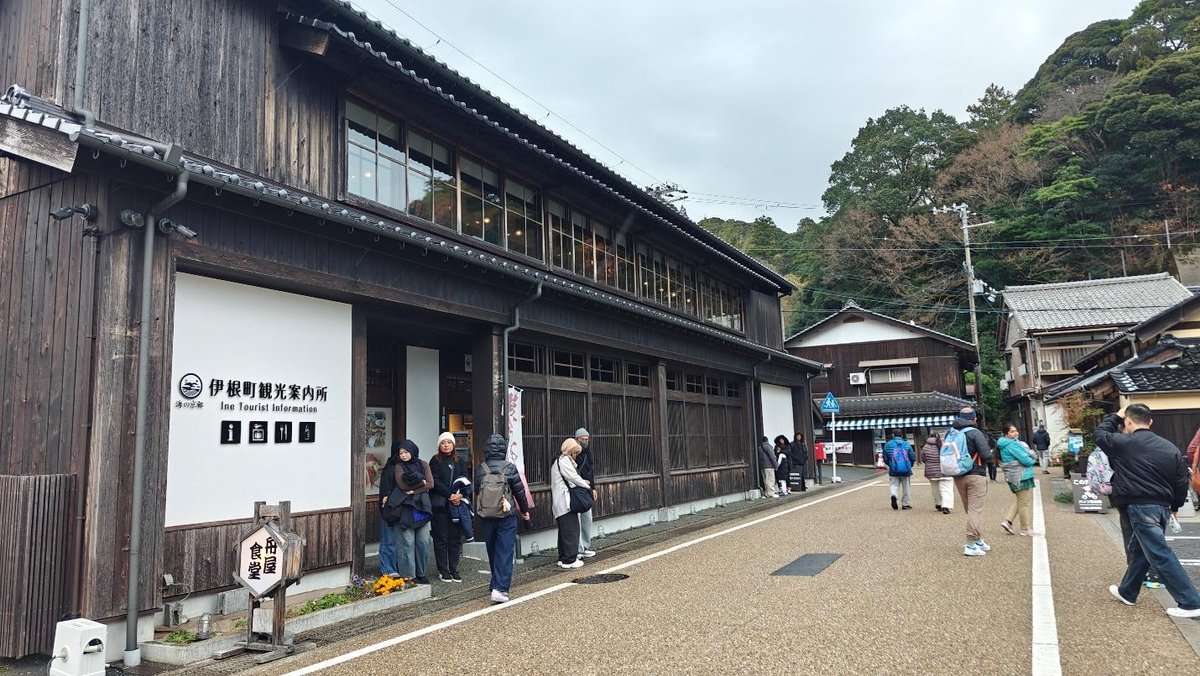
Ine is known for its funaya, which are old boathouses built right at the edge of the bay, and about 230 of them line up all along the shore.
Lunch by the Bay at Funaya Shokudo in Ine, Kyoto
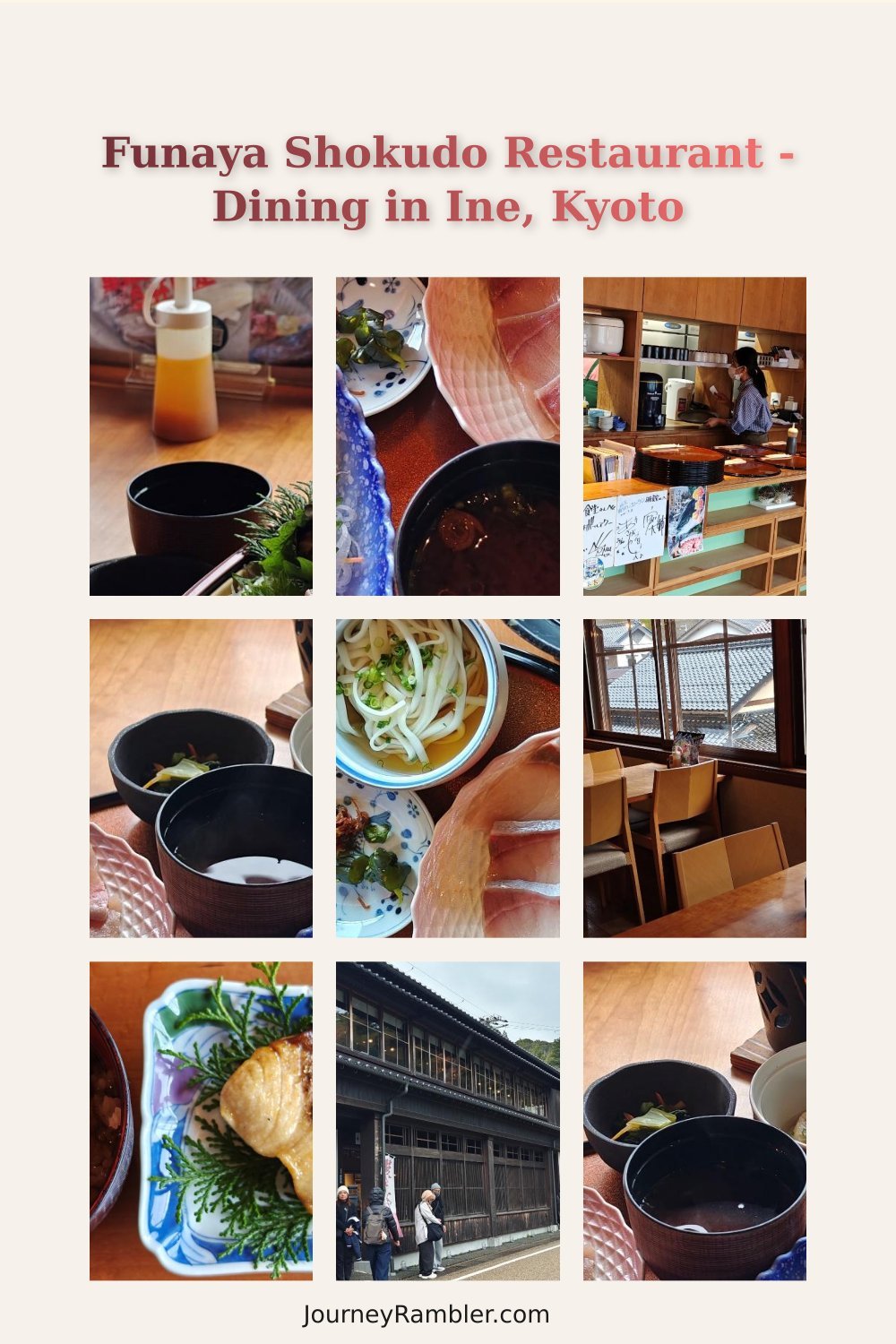
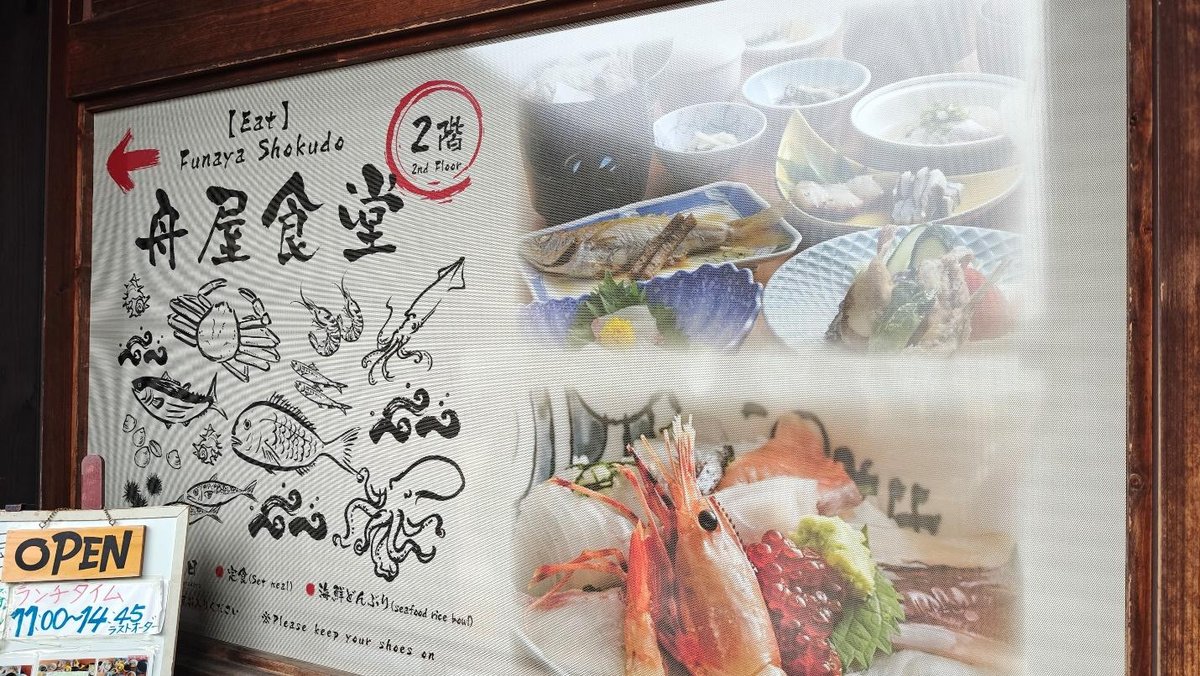
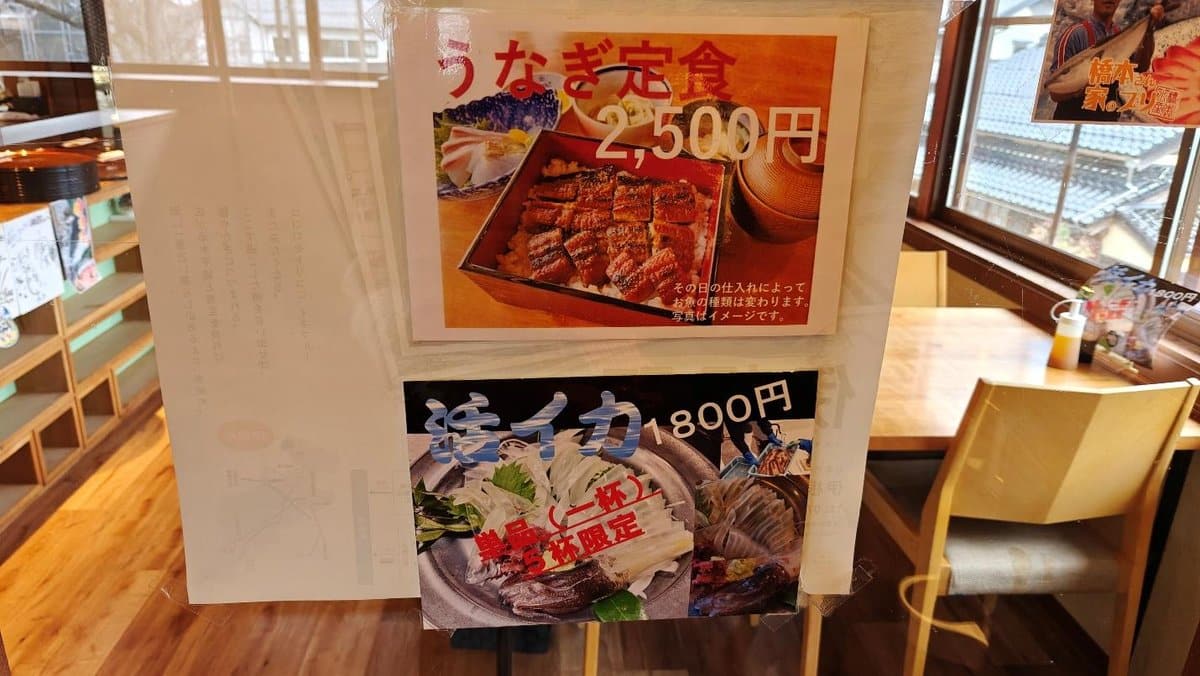
The sign at Funaya Shokudo showed pictures of dishes with seafood, like fish and shrimp on them, together with signs about open hours for lunch. I walked closer to check that out.
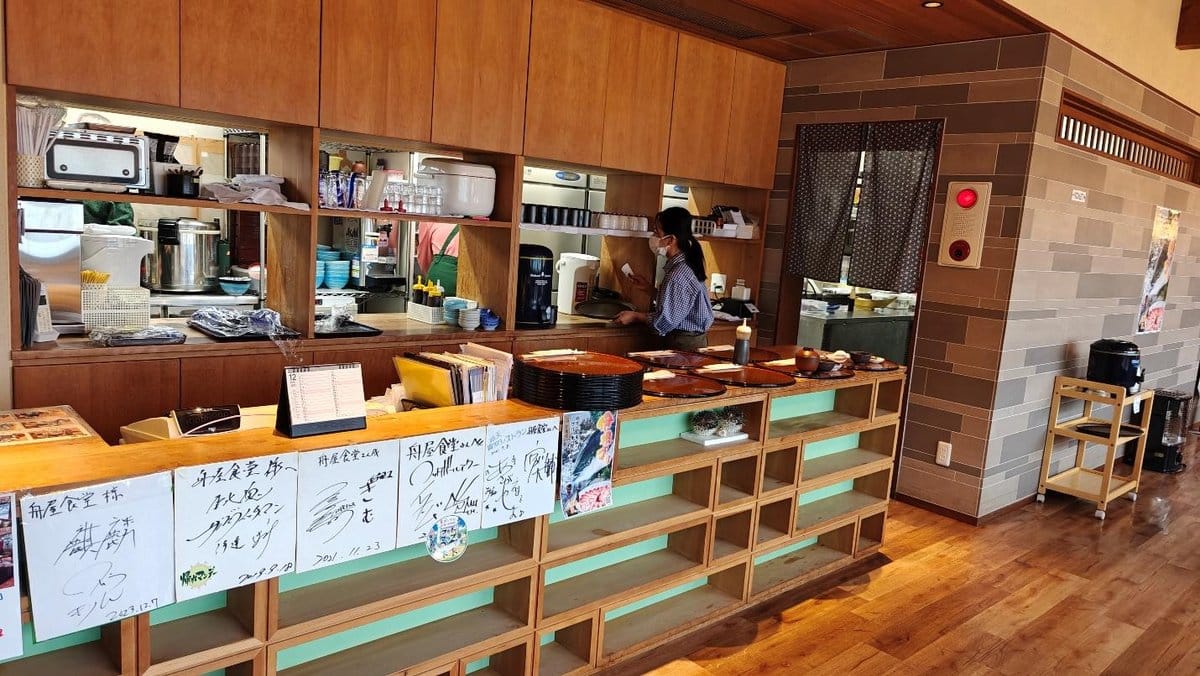
I went in and found a place to sit.
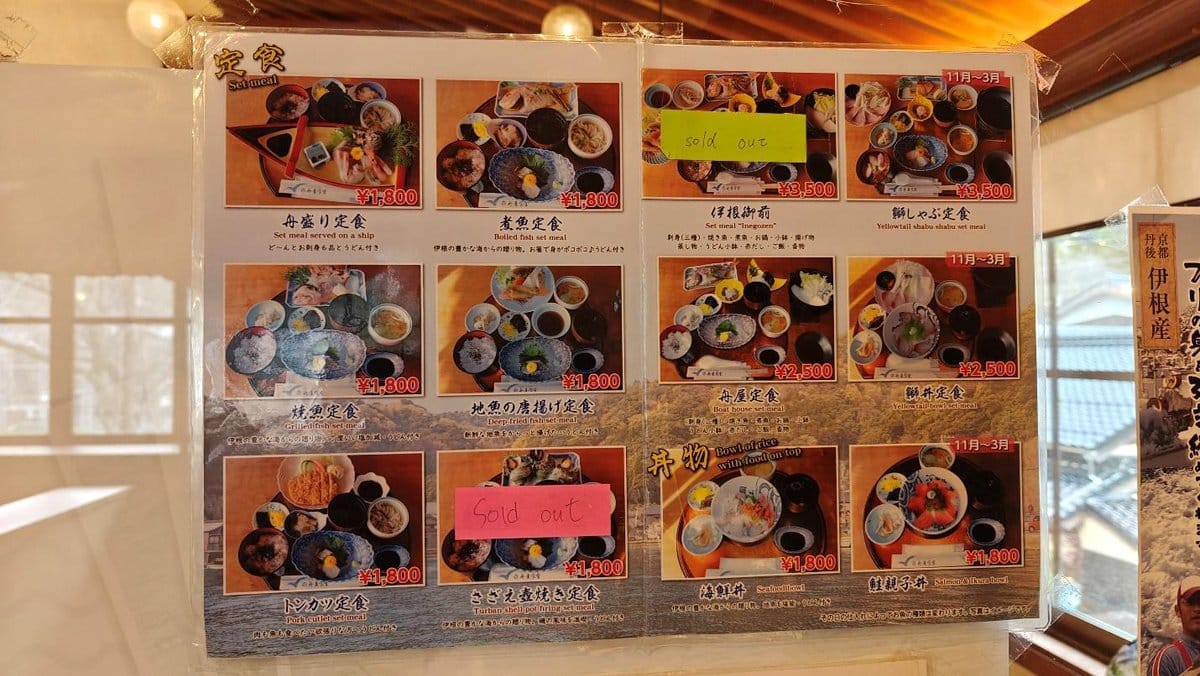
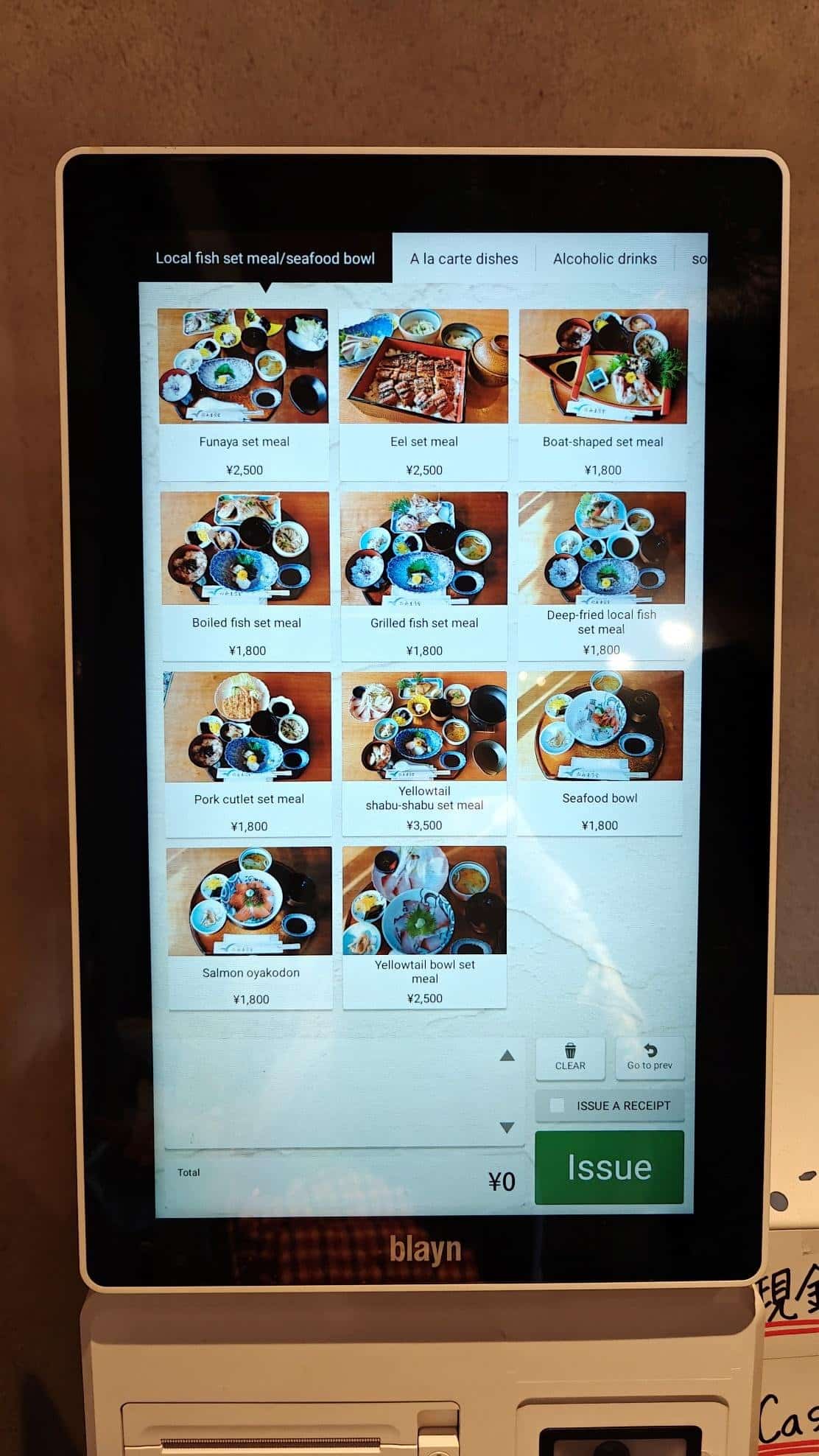
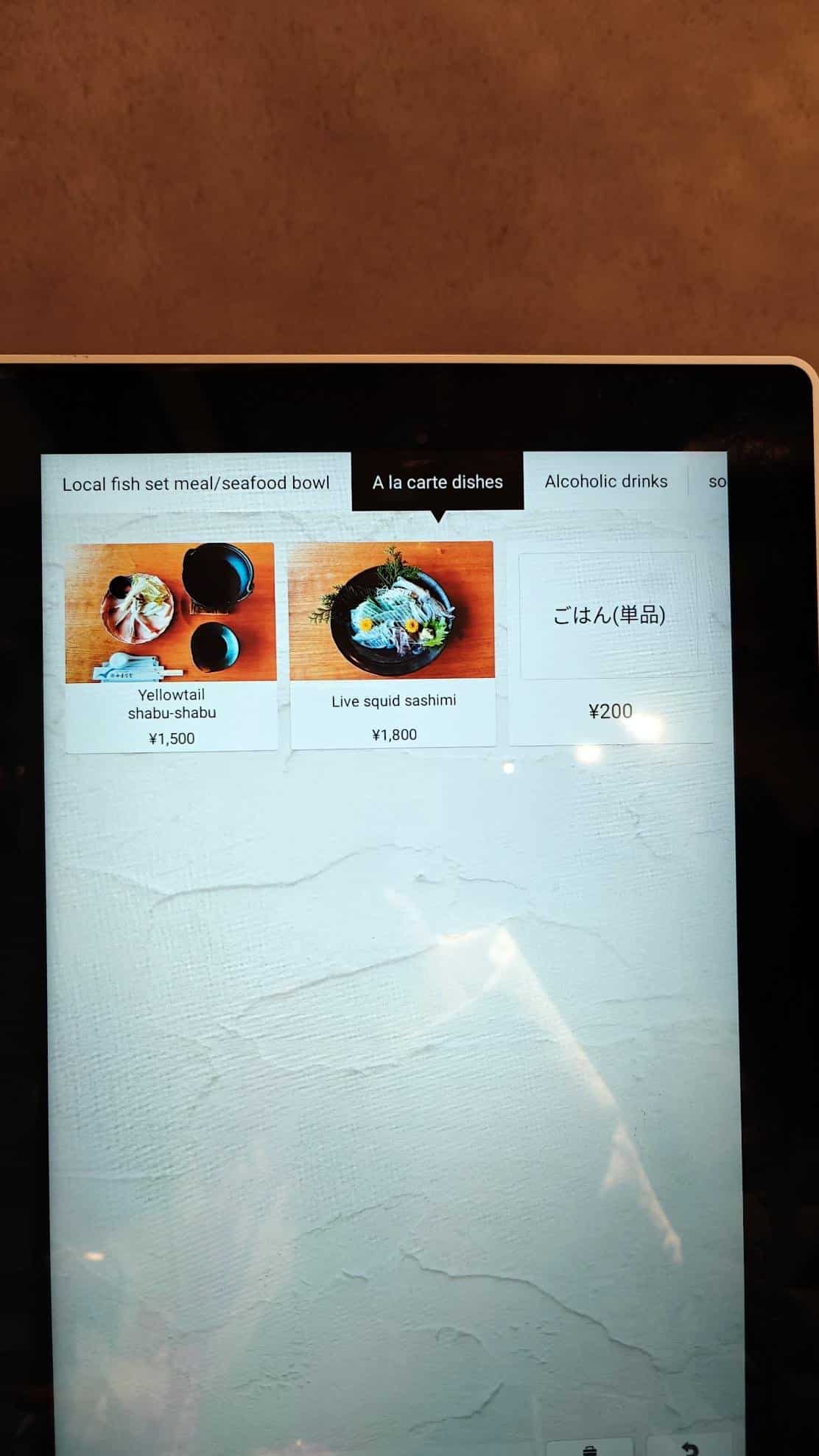
In the menu was a list of different dishes, such as boiled fish, fried fish, grilled eel, fresh squid and shabu-shabu from yellowtail. Some items were already sold out, which made sense, because Funaya Shokudo is a little place and they use whatever fresh fish that arrives during the day.
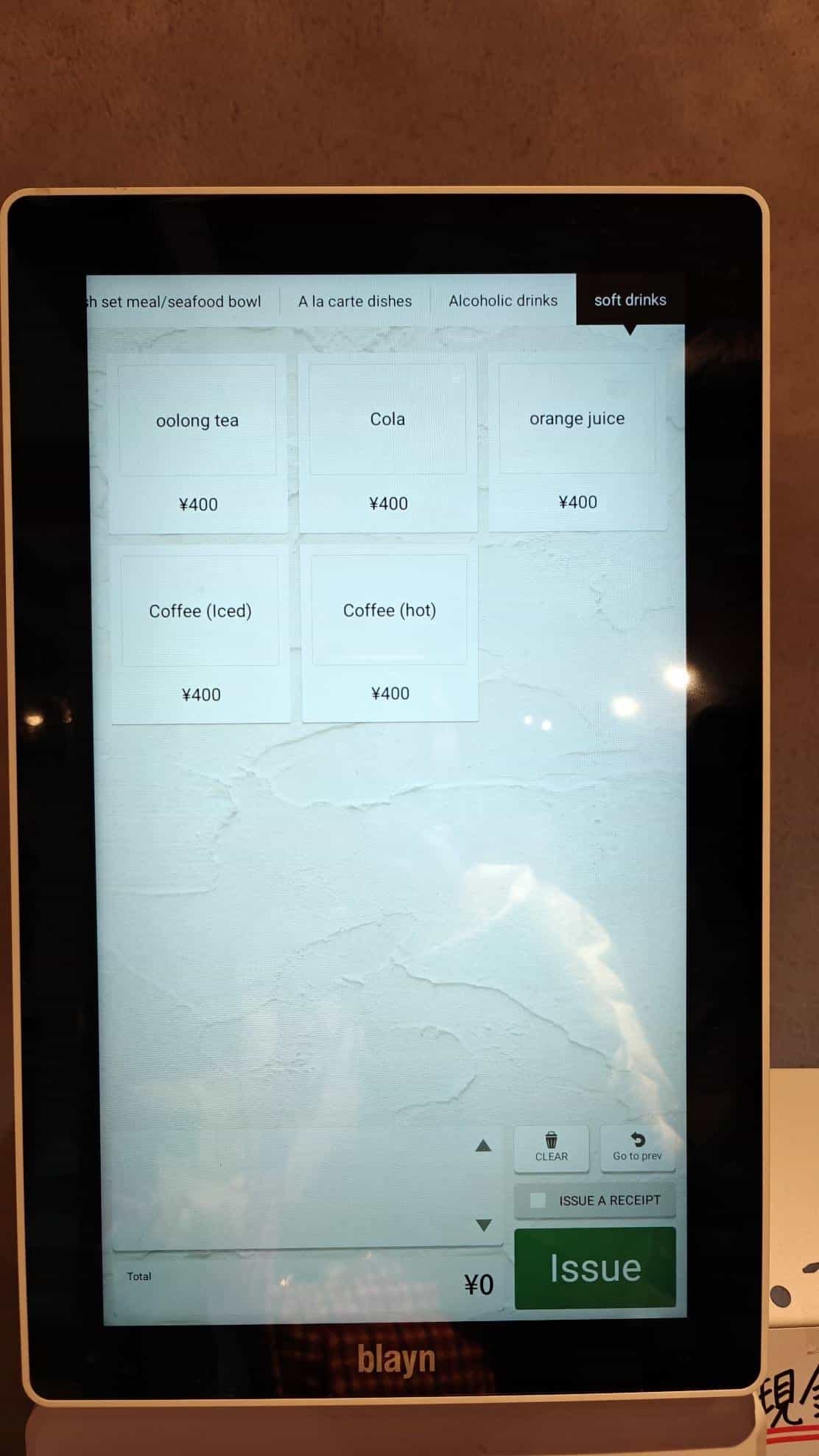
You order by way of a touchscreen, which you now find a lot of in Japanese restaurants.
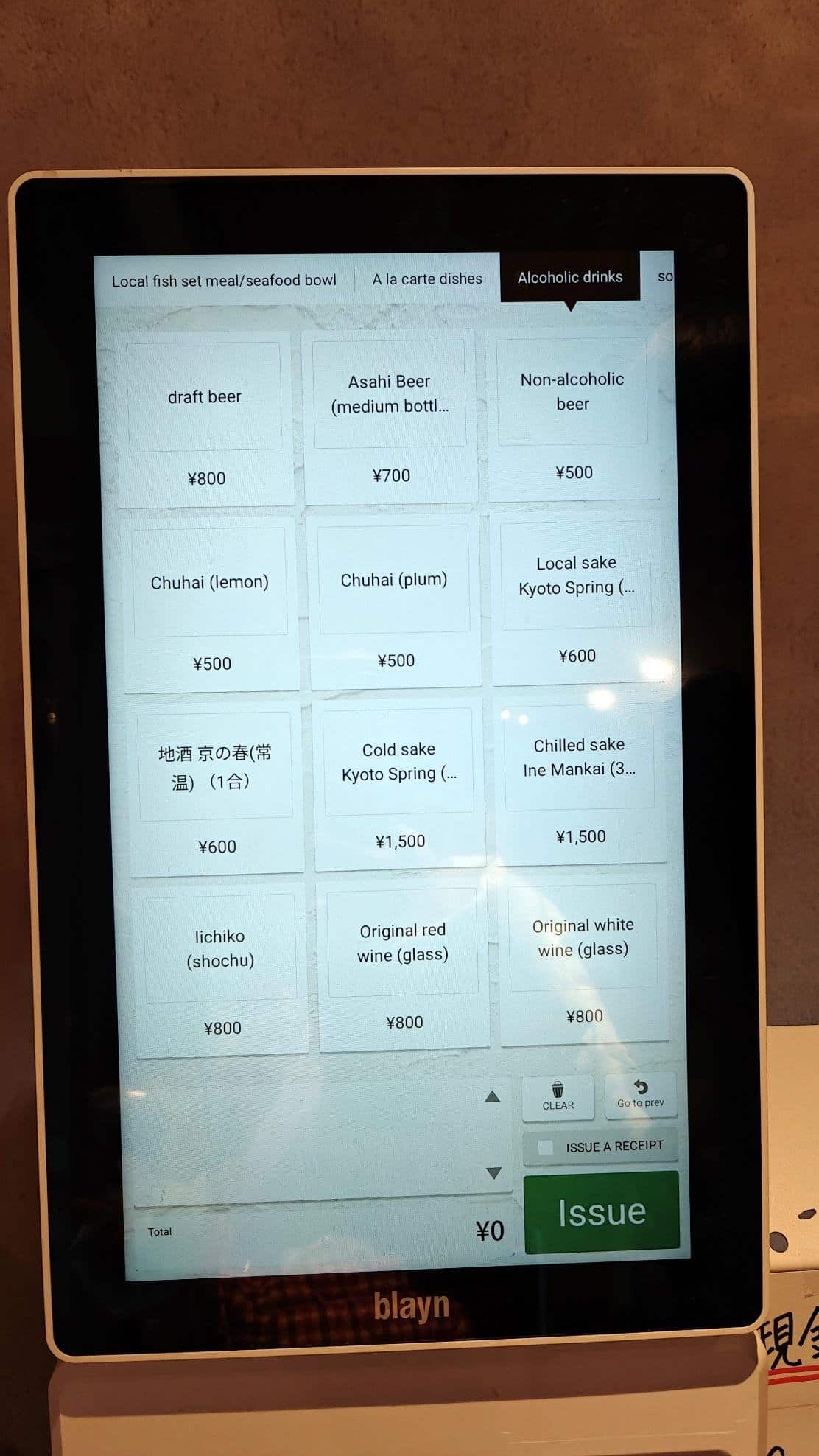
The list of drinks had Asahi beer, chuhai lemon, local sake, oolong tea, cola and coffee.
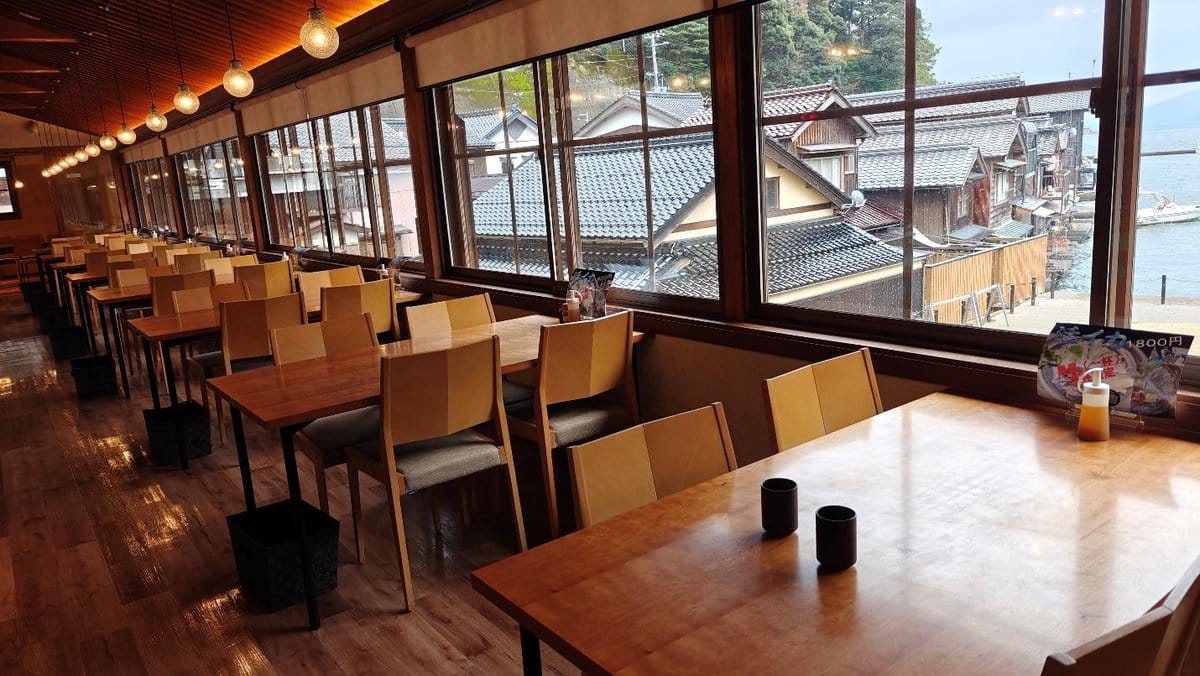
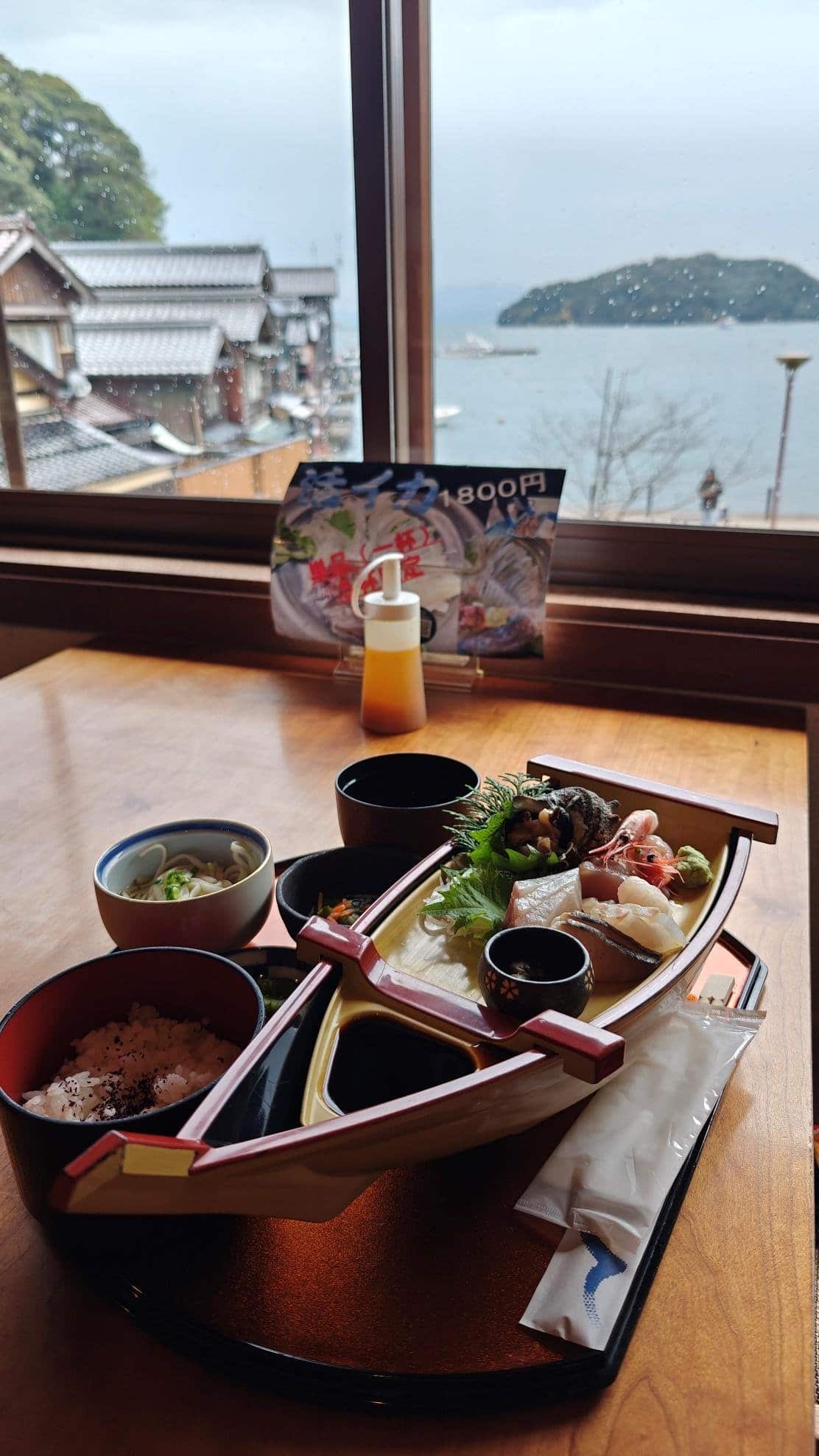
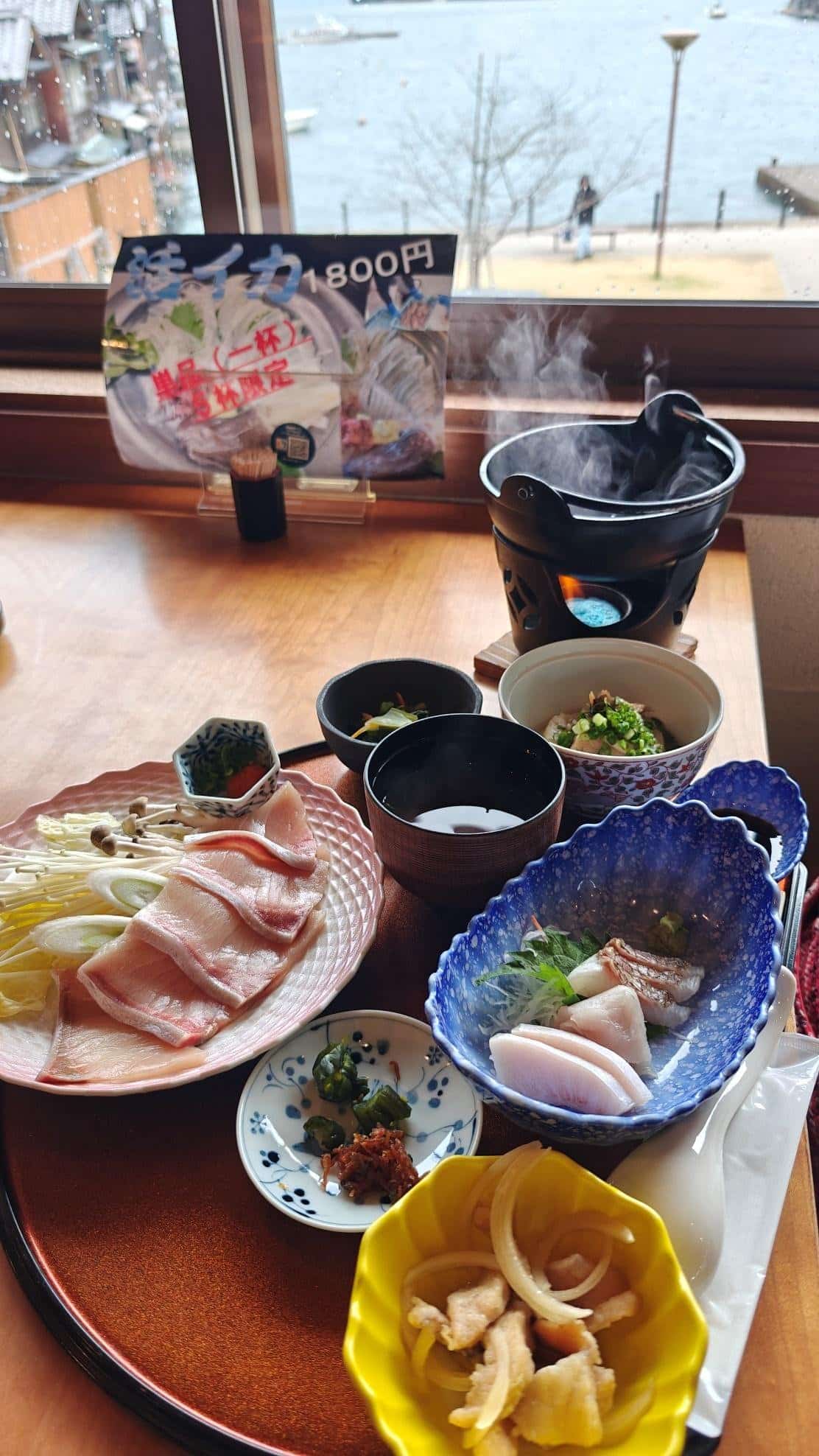
The dining room had long tables and big windows, through which you could see the bay and the funaya boathouses along the water.
Then we waited for the food.
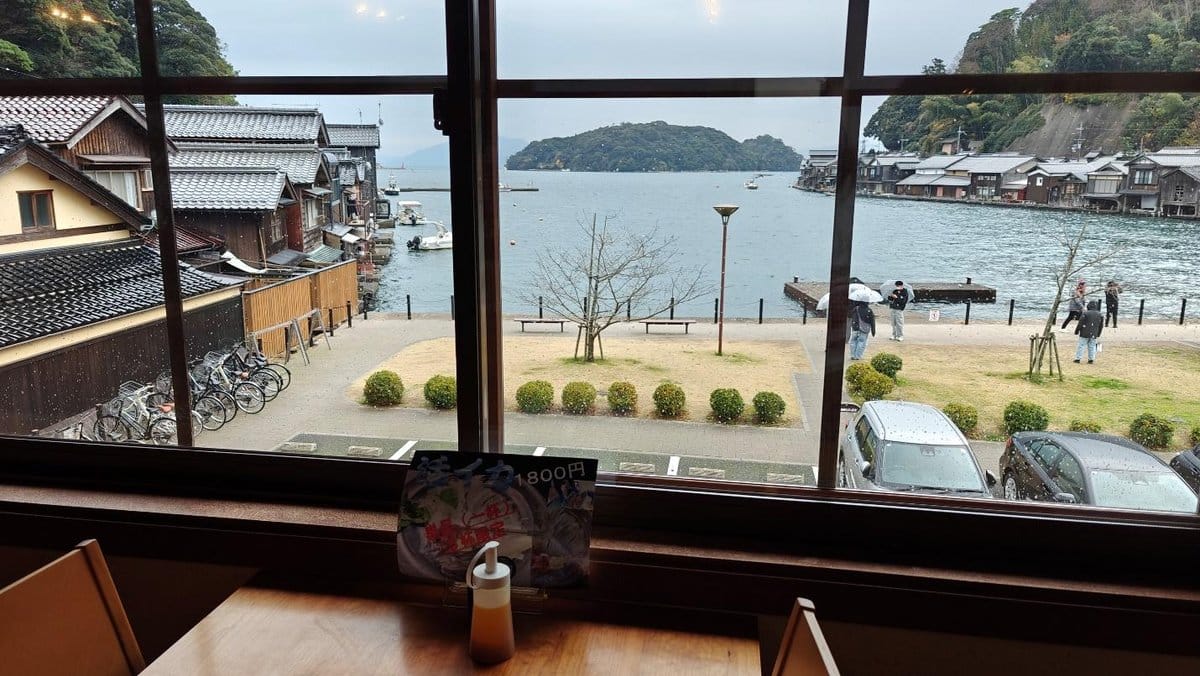
From my seat, the view was over the bay with boats parked right next to the houses. The boathouses of Ine have the water on the ground floor, where they keep the boats, and the living rooms are up, so everything is built right at the water’s edge. Here it was really calm and quiet with green hills in the background.
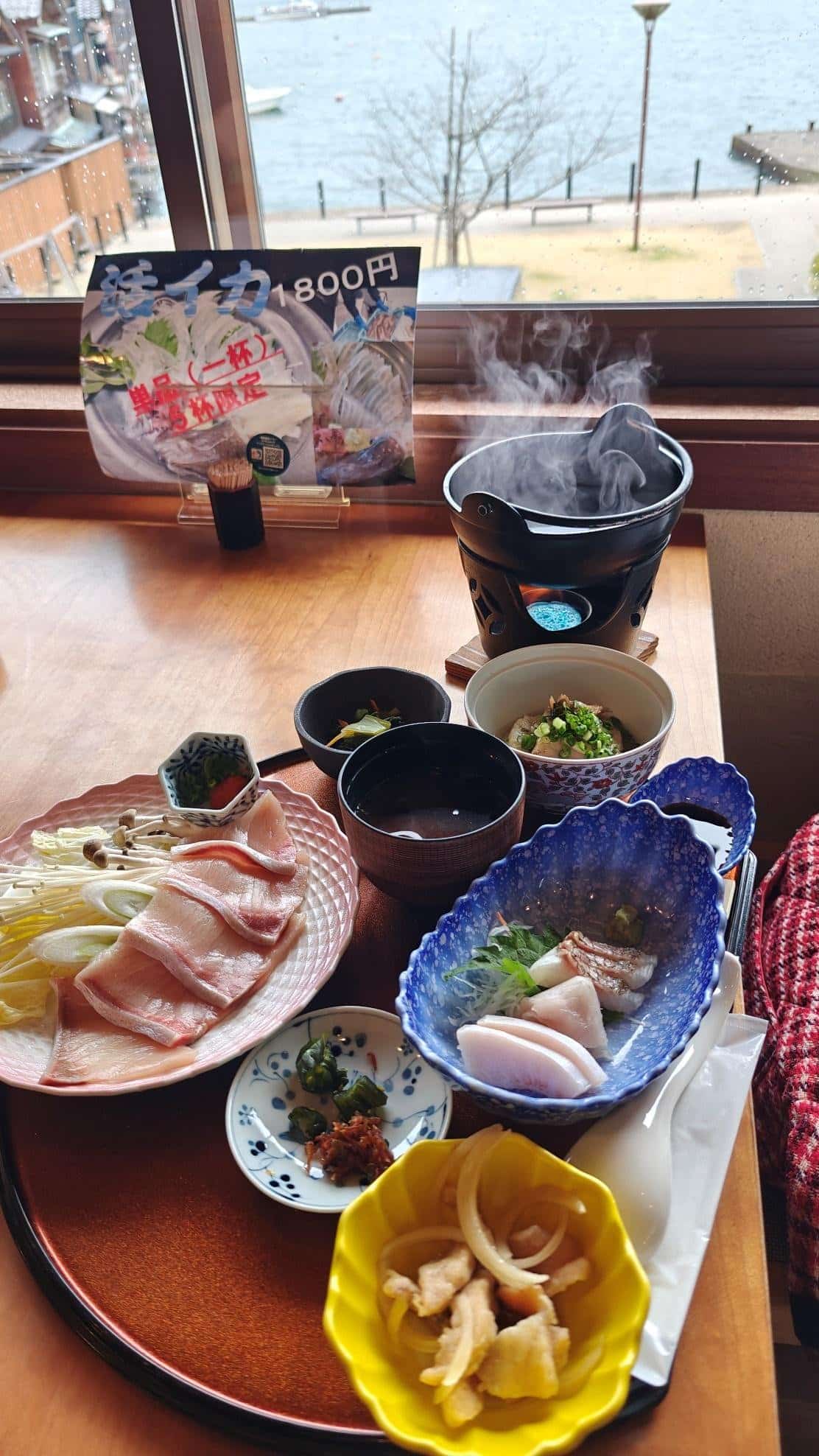
The food arrived and it looked cool. The sashimi lay on a dish shaped as a boat, with thick slices of fresh fish together with wasabi, plus bowls of rice, noodles and vegetables around it. Funaya Shokudo gets their fish right from Ine Bay, so everything was very fresh.
The fish looked clean and the slices thick, different than at Sushi Naritaya in Arashiyama, where they served the fish as sushi on rice.
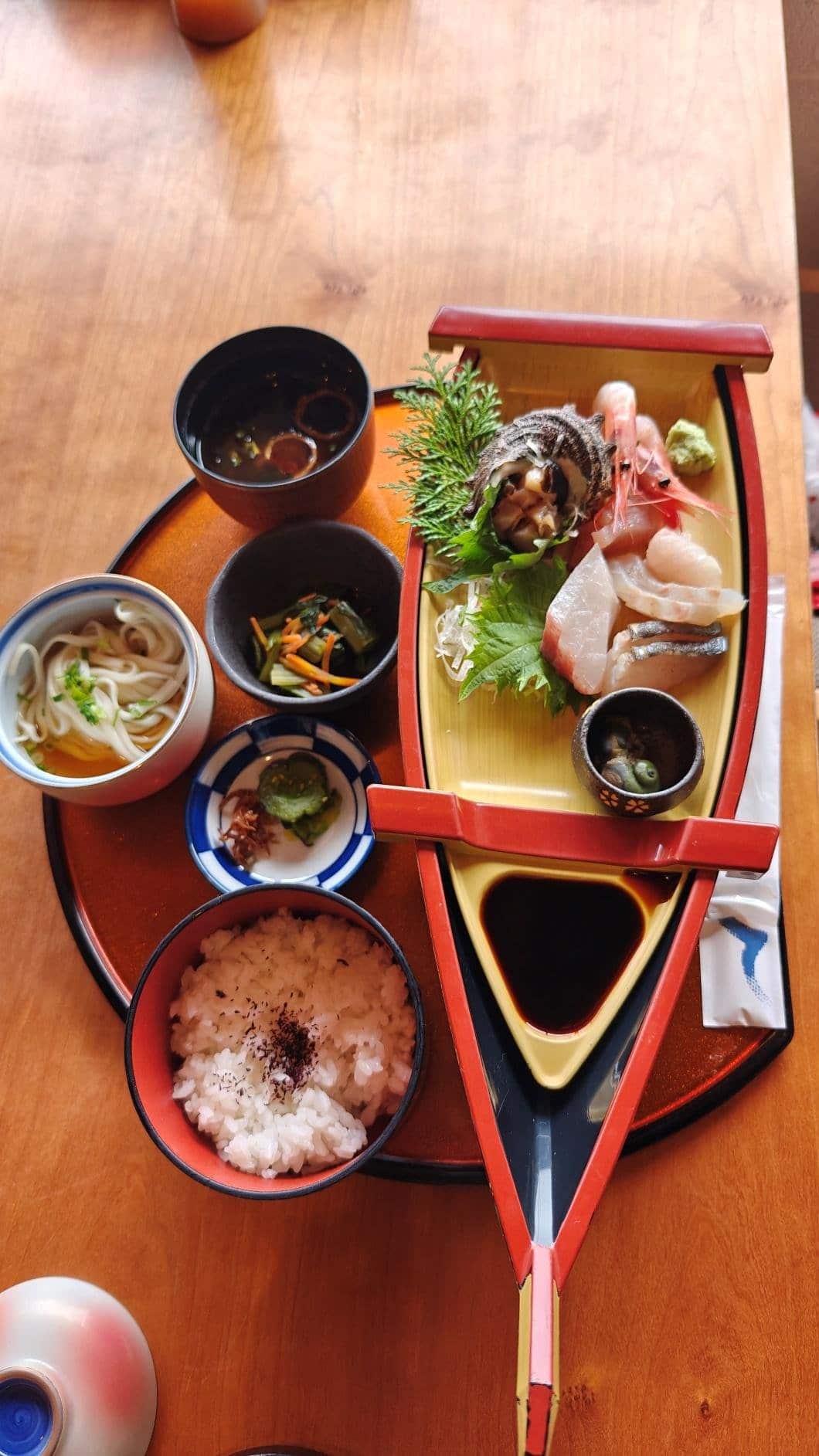
The other dishes were even better.
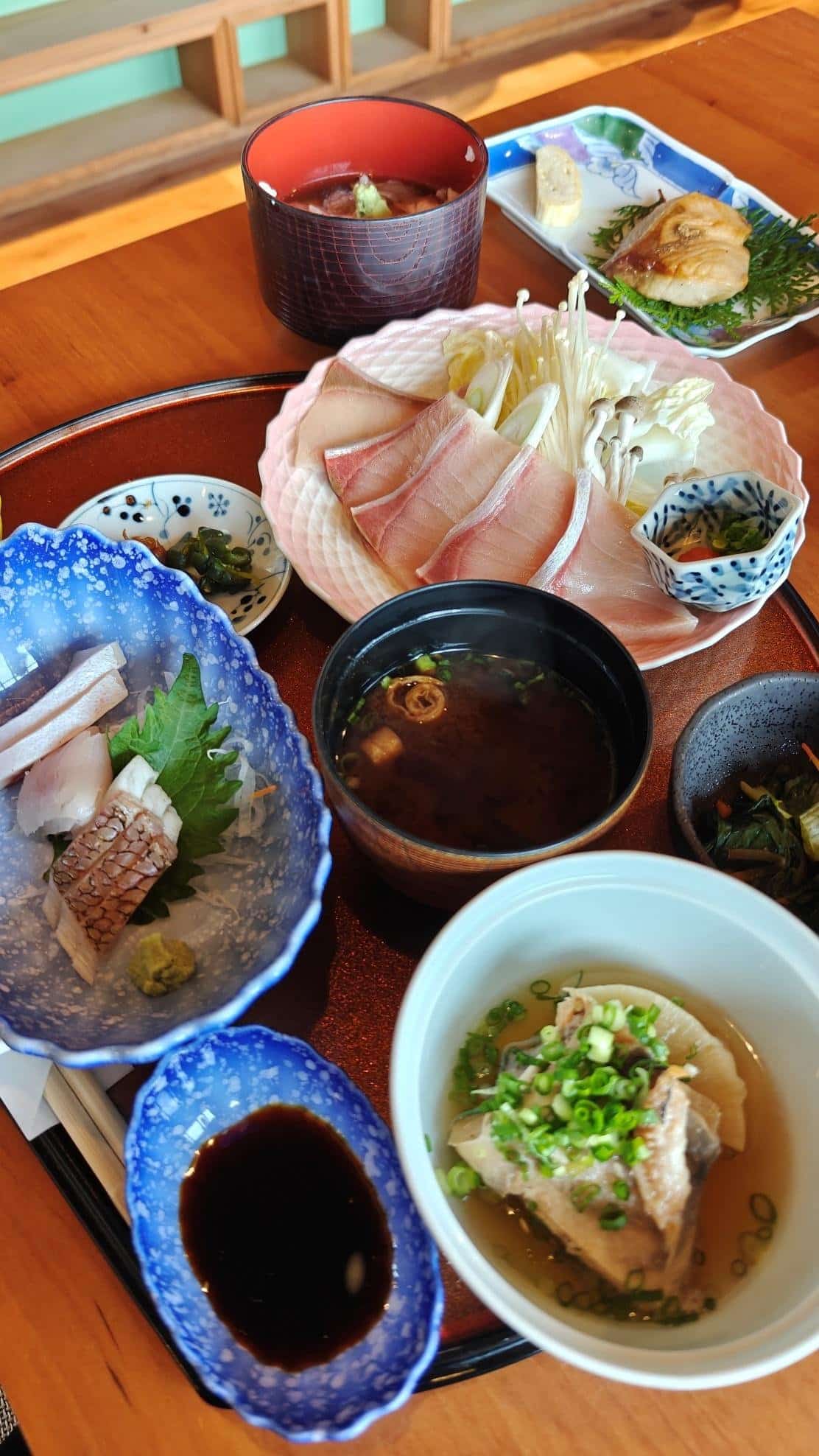
There was cut fish, udon noodles, soup, cooked fish with green onions, mushrooms and a pot for shabu-shabu. The shabu-shabu from yellowtail is a favorite winter dish in that area of Kyoto, because the yellowtail, called buri in Japanese, is caught fresh in the Sea of Japan during the cold months. The steam from the pot smelled really good and the fish slices were thin enough to cook fast, when you dip them in.
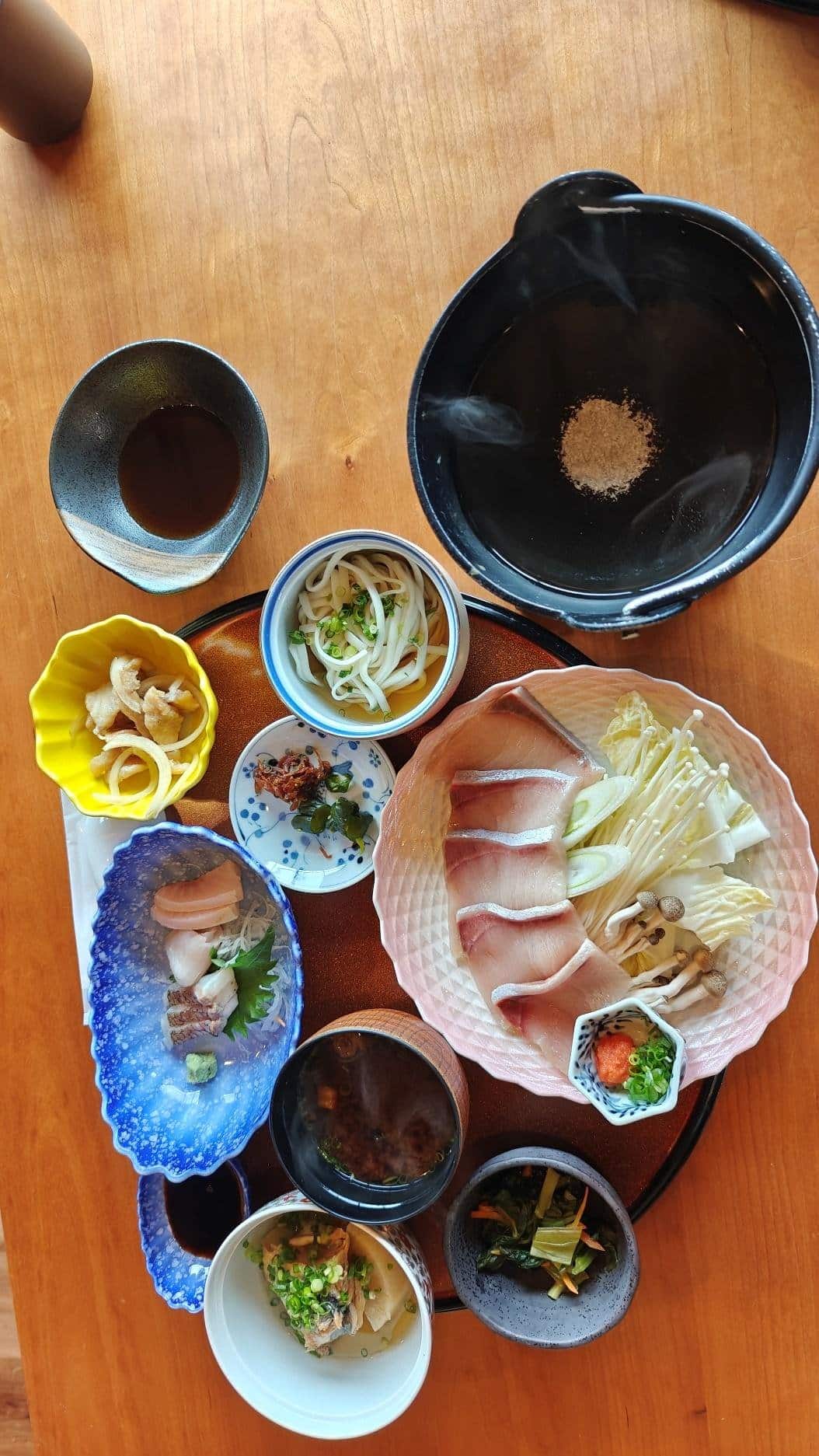
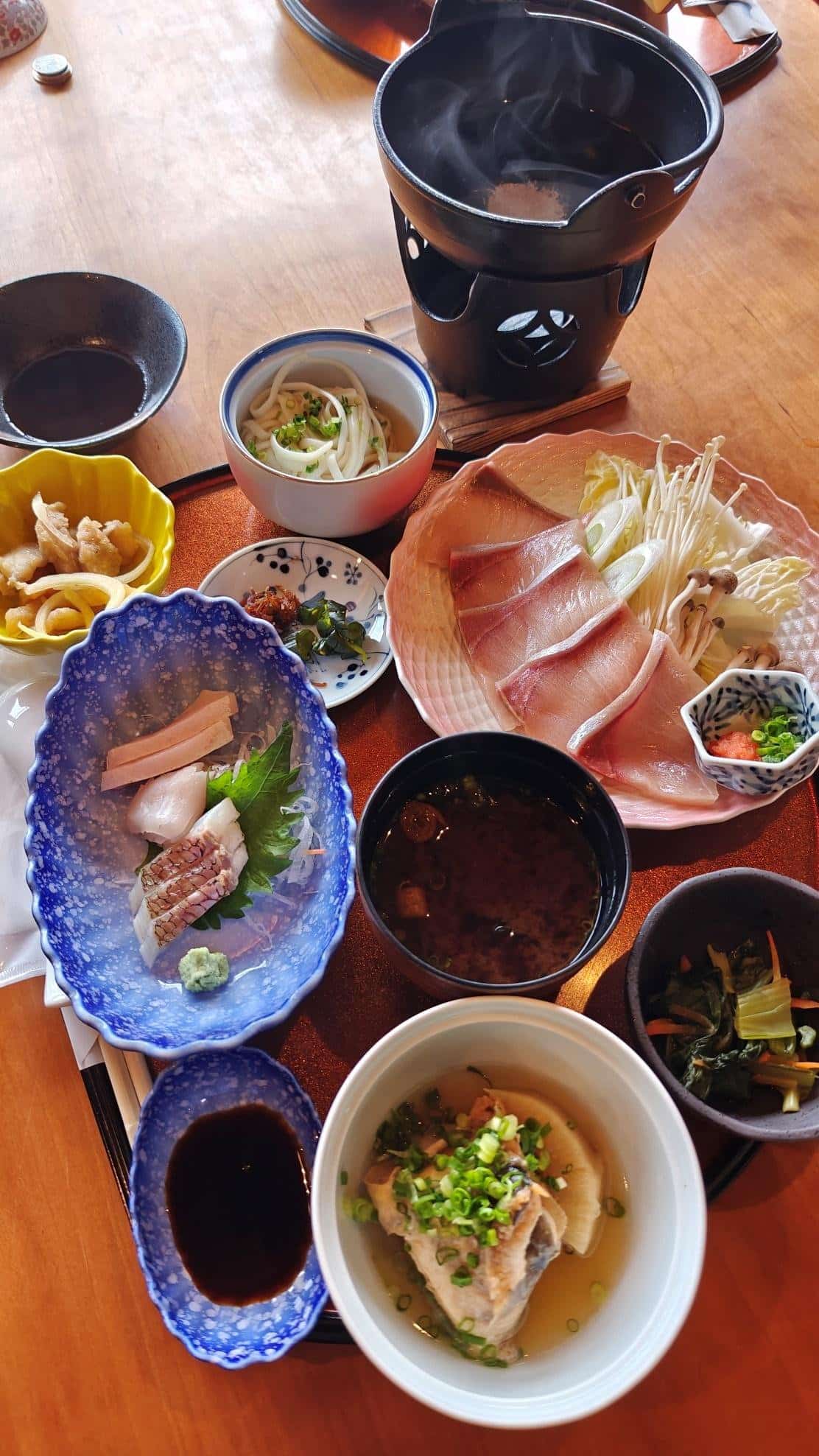
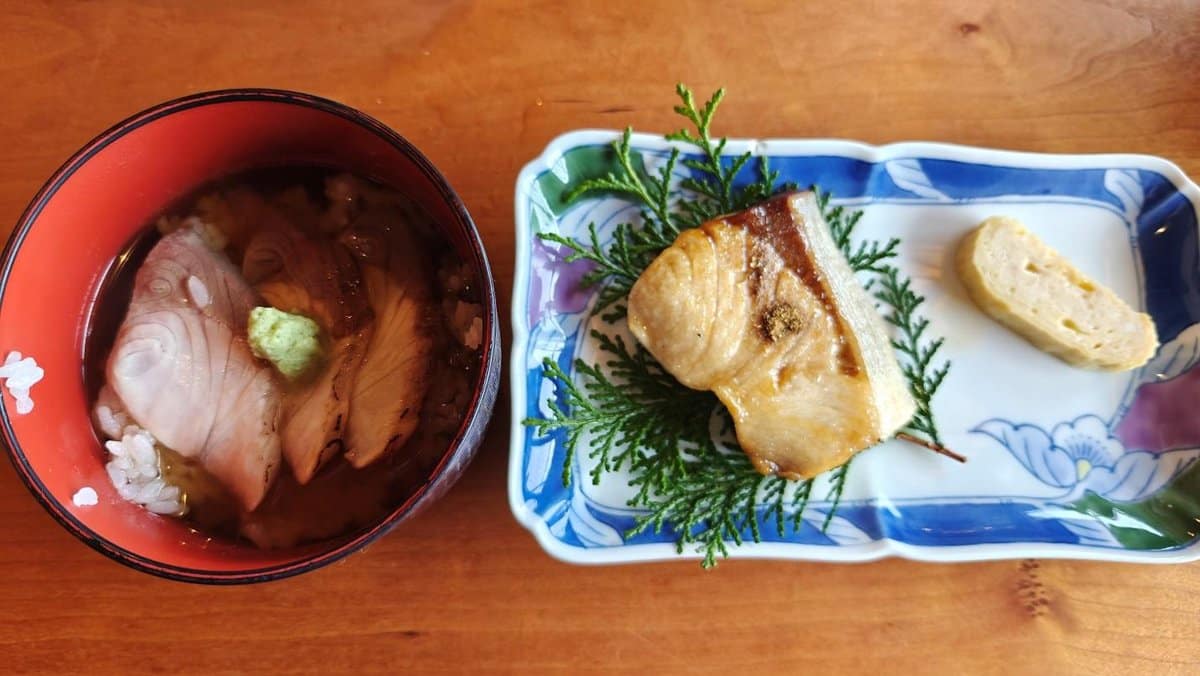
I also got a bowl with fish slices and wasabi on rice, together with grilled fish and rolled egg beside it.
The sashimi on another plate came with mushrooms and dipping sauce, plus miso soup. Everything had clean and light tastes, as seafood should taste when it is that fresh. It was a totally different style of Kyoto meal than the one that I tasted at Kamanza in Ninenzaka, where I tried unagi.
The nice bay view from the window made the whole meal feel slow and calm, without any rush. Ine does not get as many tourists as central Kyoto, so Funaya Shokudo stayed pretty quiet and the food just kept arriving.
I kept dipping and eating until everything was gone.