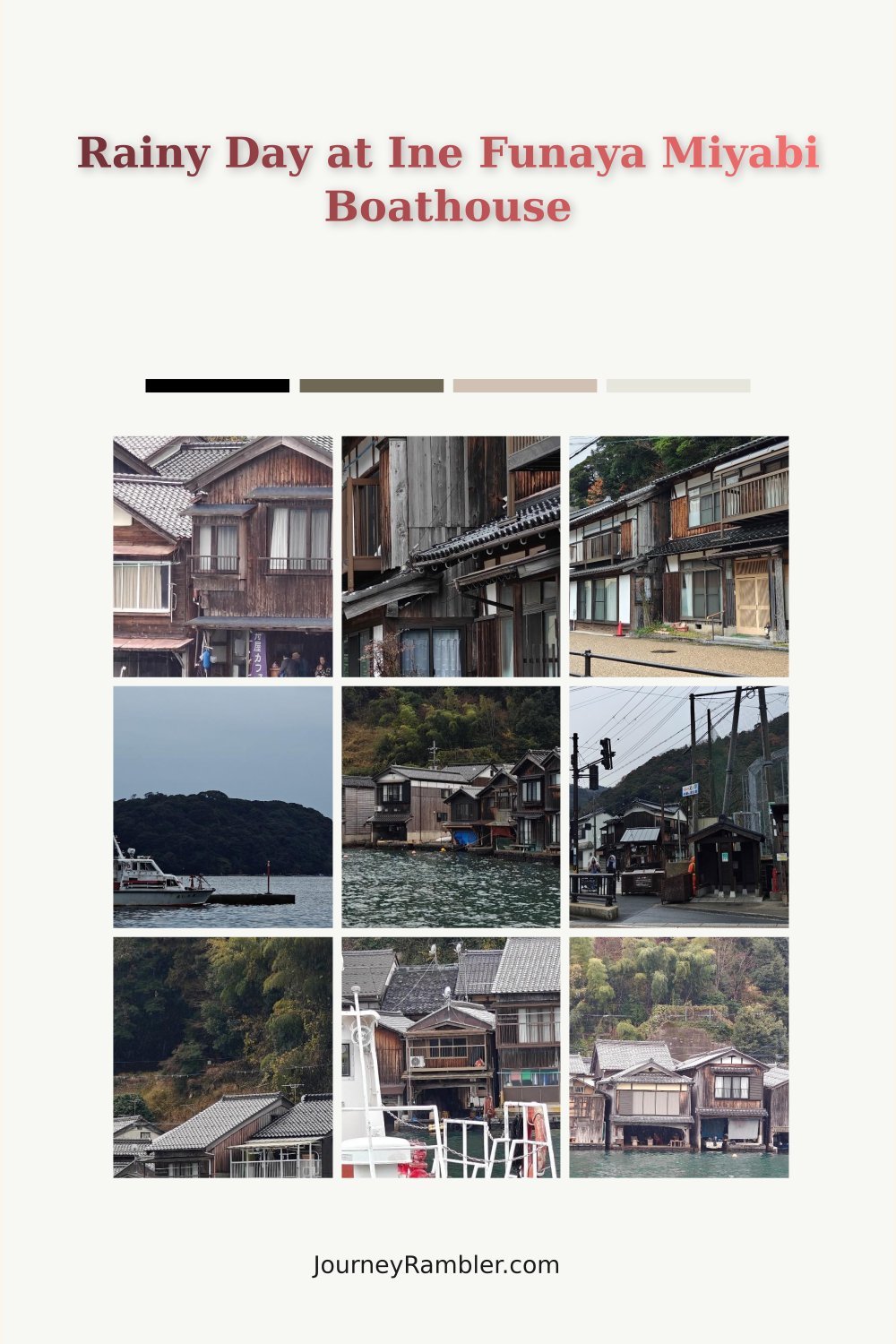
I’ve seen and been to plenty of unique areas in Japan but I was still quite surprised when I visited Ine no Funaya in Kyoto Prefecture. This is a landmark in a seaside town that features unique centuries old boathouses and it was an absolute blast to walk around in. Since it's relatively far from the city of Kyoto, it's also not as inundated by tourists/travelers.
I ended up visiting during my early winter trip and came away impressed by the sights here.
The best way to get to Ine-cho (Ine town) is arguably through a Klook booking. You could commute via bus but you'll have to go through a number of transfers especially if you're staying in Kyoto or Osaka. In my case, I just booked a tour through a listing on Klook instead since it offered hotel pickups and even dropoffs.
This way, I also didn’t have to worry about my itinerary as the tour already took care of it.
Rainy Day Walk at Ine and Miyabi Boathouse
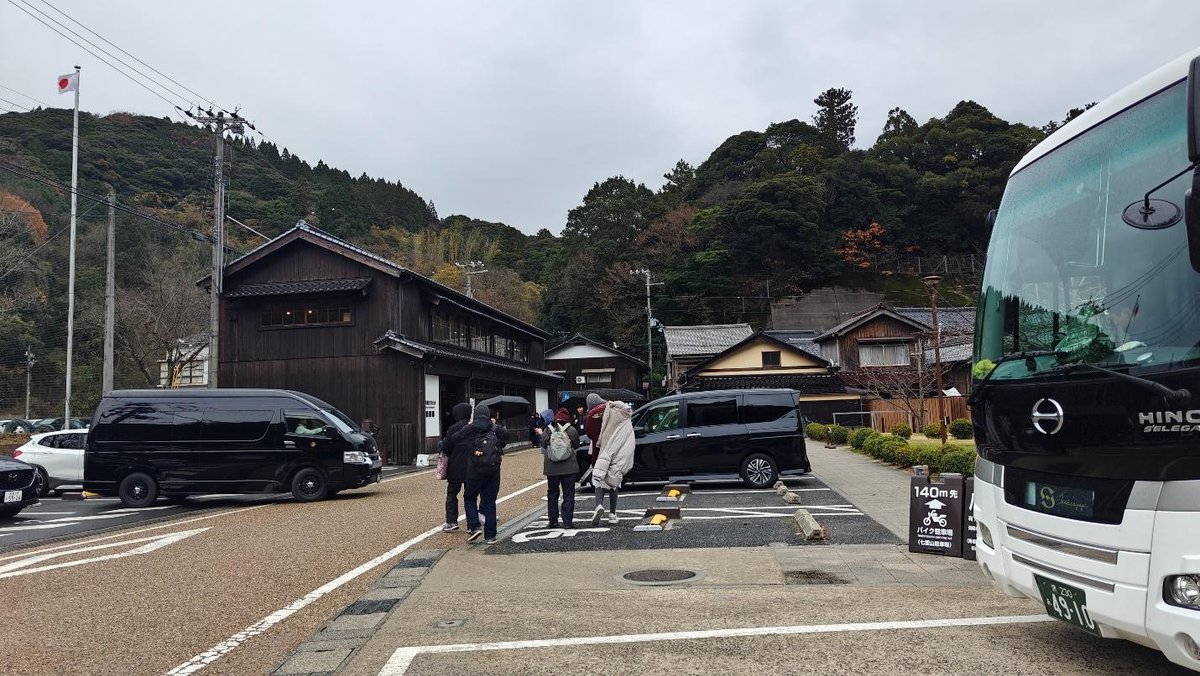
After a roughly two and a half hour ride, I finally found myself at Ine. Now the town is relatively large in terms of land area but the buildings are clustered around the coast. Our specific stop was at the Ineura Park bus stop and as you might have noticed in the images, it was quite a gloomy day thanks to the rainy weather.
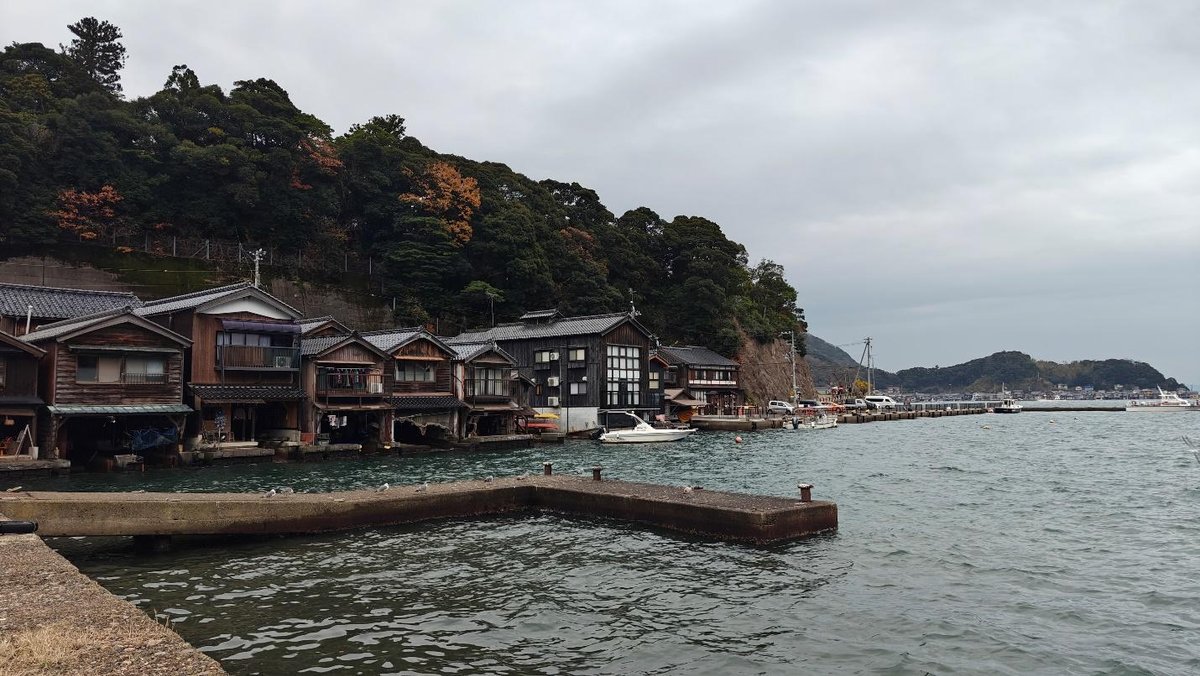
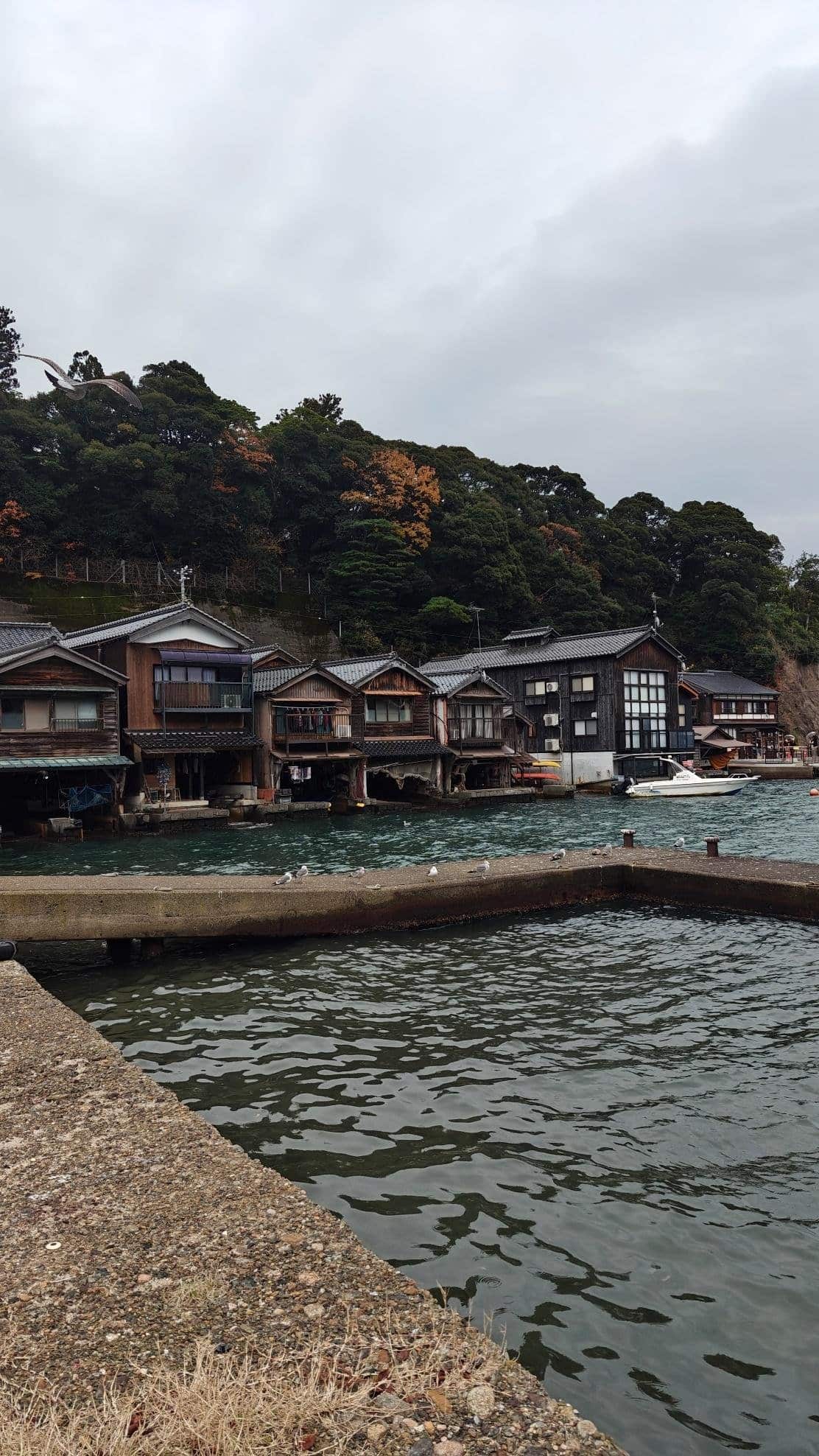
From Ineura Park you can see why most people online consider this town a must visit. The houses that line the coastline are quite unique as the side facing the water has this sort of garage for their boats to fit in. These are actually the Funaya in Ine no Funaya.
Basically, these are traditional boathouses that have been here since the Edo period.
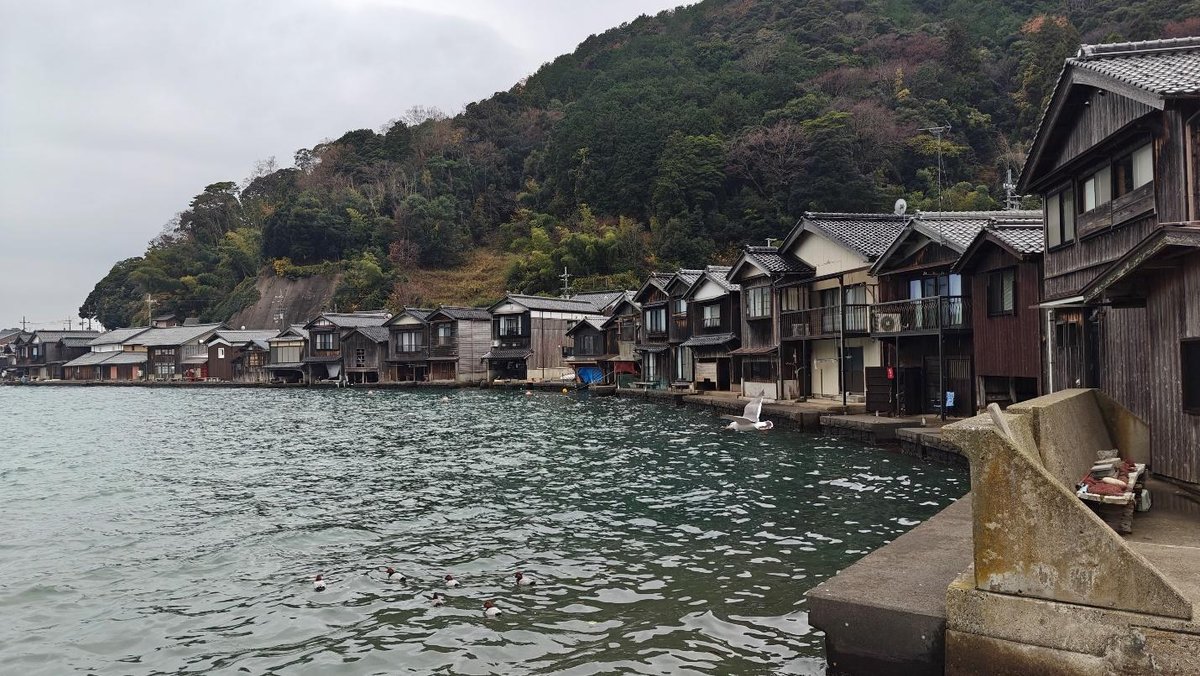
If I’m not mistaken, this section in Ine-cho has the most number of these houses. You can actually look left to right from Ineura Park and all you’ll see are the funaya on either side. An interesting thing that I also noticed was that it seemed like the houses were still being used.
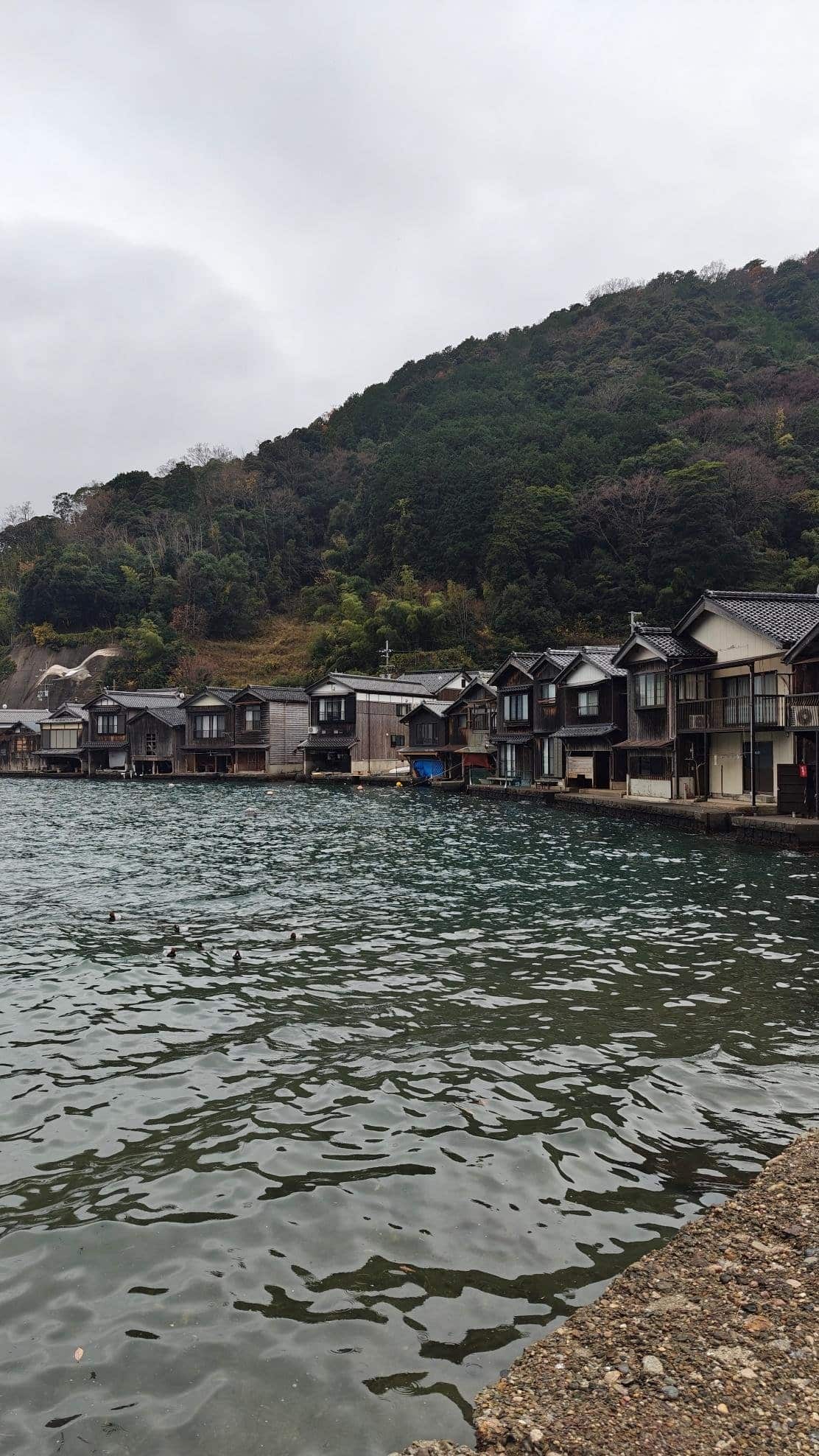
When I tried to look it up, I found out that there were more than 200 of these funaya and that the majority of them are actually still seeing use. Some were renovated to serve as living spaces while most retained their function as a garage for boats. I think more recently, a few of these have been converted to establishments catering to tourists and travelers.
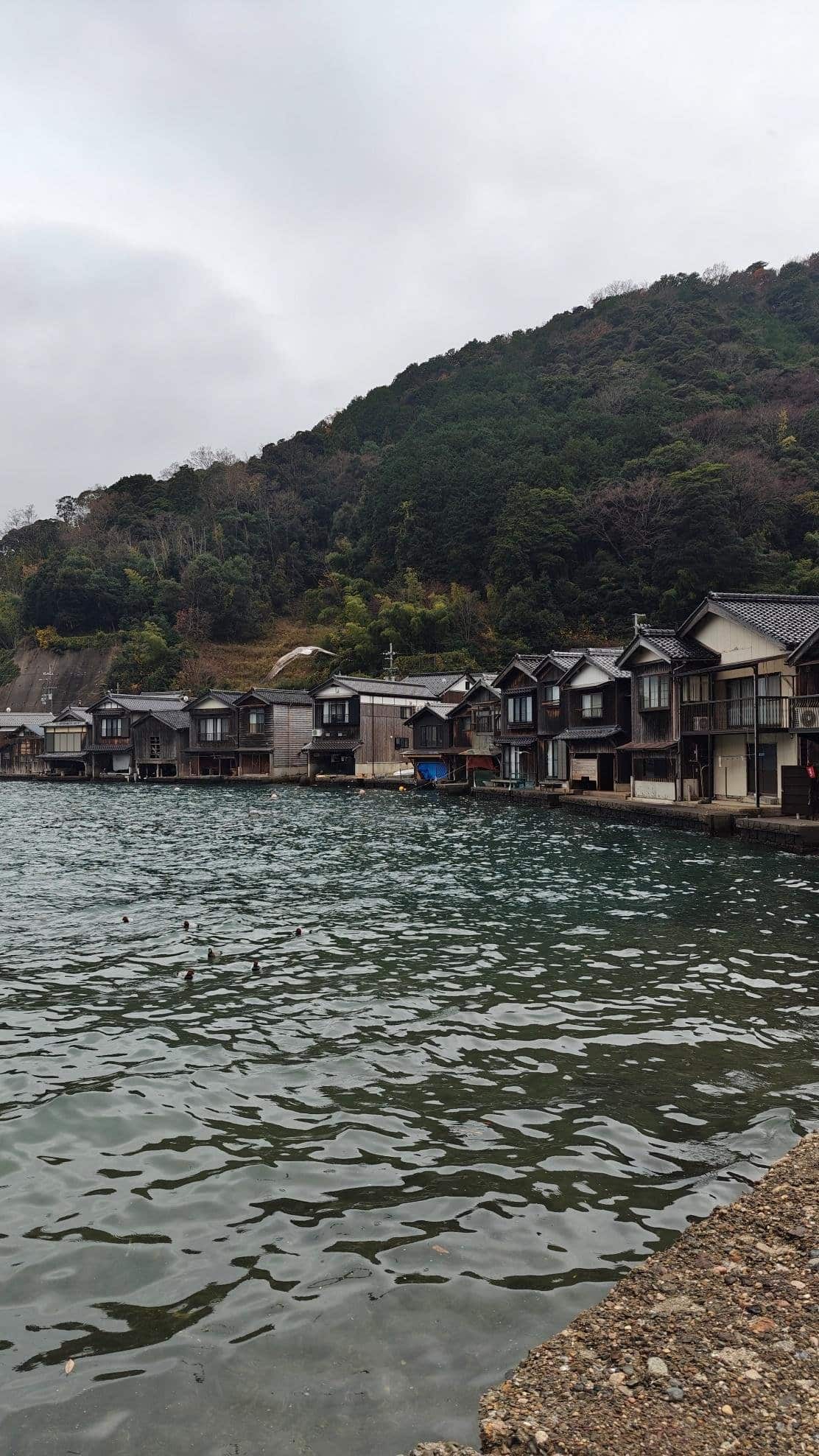
It was closer to noon when I arrived so I didn’t see that many boats heading out to the bay. While the town has seen a boom in tourism, the primary means of making a living for most of the people here is still fishing. That said, this might not be the case in the near future as the town has an aging population and some of the newer residents here have converted the boat houses to cafes, inns, and shops.
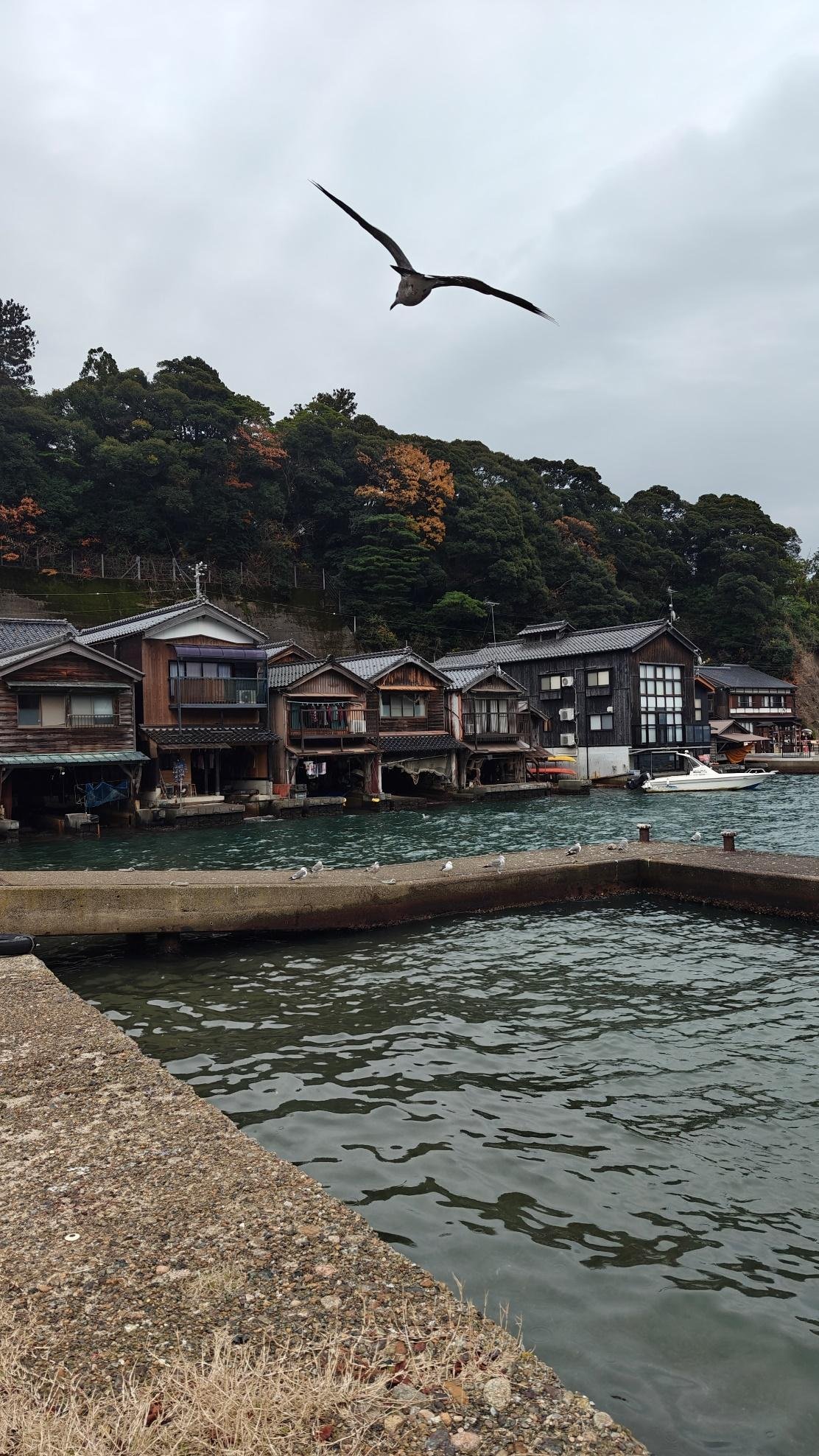
Other than seeing the boathouses, there are other activities that are worth checking out here as well. Due to being a coastal town, Ine also has a sizable population of gulls (both seagulls and black-tailed gulls can be found here). You can see some of them at Ineura Park or if you decide to get on the sightseeing boat then you can actually feed them from there.
On a side note, there is also another attraction about 10-15 kilometers from Ine called the Amanohoshidate sandbar. If you checked out the Klook listing I was talking about then you might see an option to go there on top of the Ine no Funaya sightseeing tour. It’s considered one of the top three scenic places in Japan and is also called the “Bridge to Heaven”.
On the Klook listing, a tour that includes tickets for the Amanohoshidate Cable Car and an Ine Bay Cruise is actually just 1000 JPY more than just the Kyoto/Osaka to Ine no Funaya package. That said, the former can take a little more time than the latter so if you already have other things planned for the day then the town and boathouses tour is still great. Another thing that you might want to consider is the time of year as Amanohoshidate is said to be best seen during early spring and mid-fall.
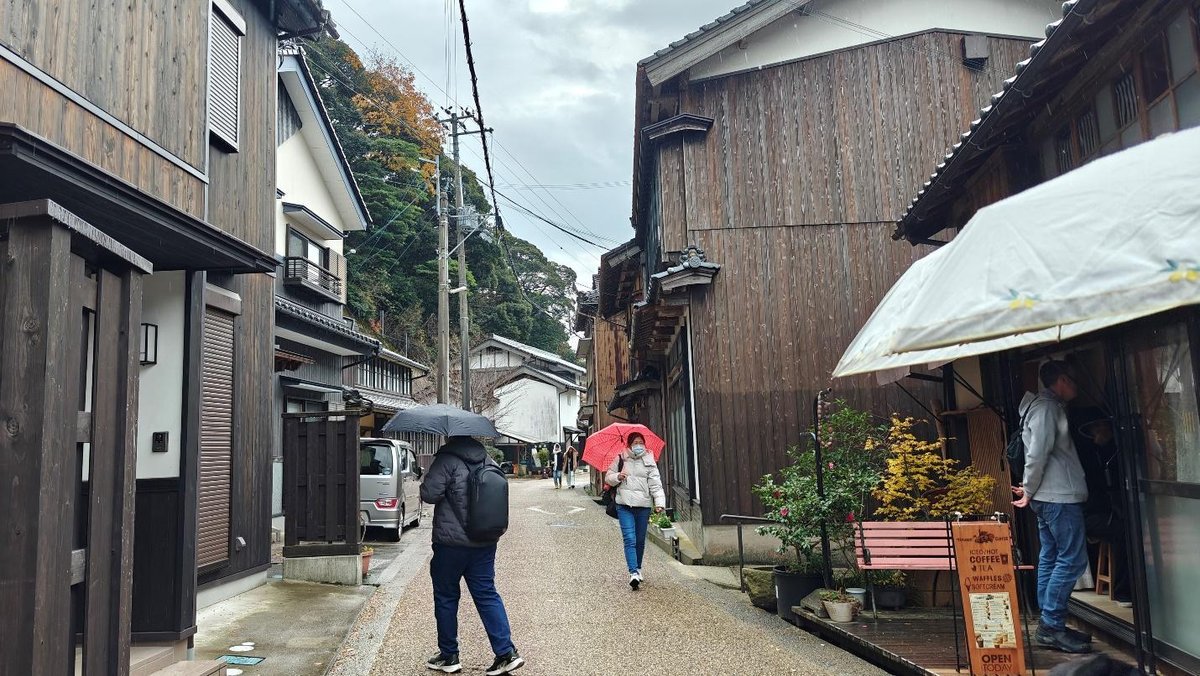
After appreciating the scenery at Ineura Park, I decided to see more of the town. So at first I really thought that the rain would dampen my experience but it honestly enhanced it. For some reason, the pitter-patter of the rain as it struck my umbrella had this almost soothing feeling.
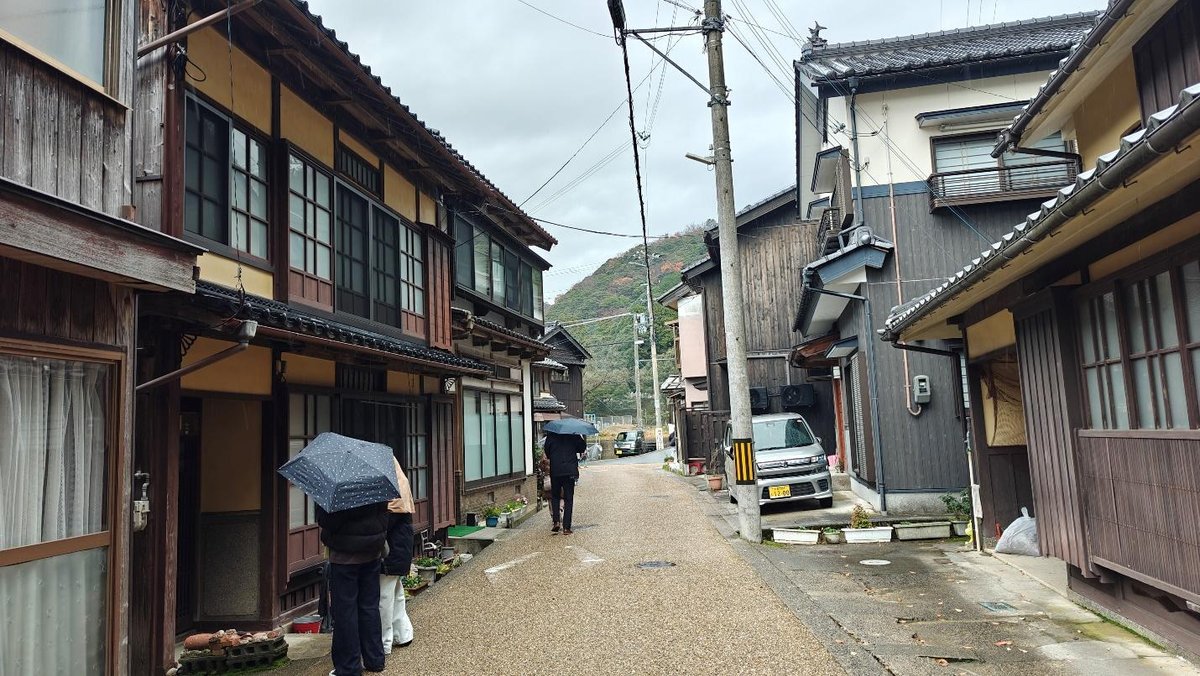
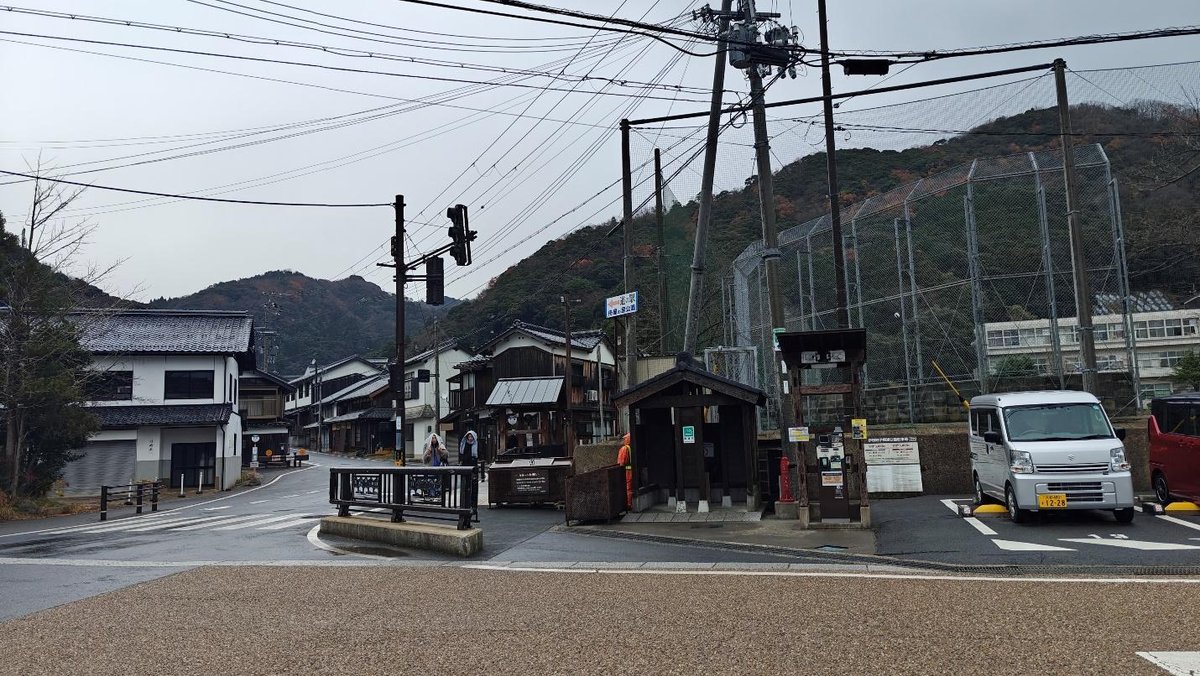
This is the path leading back to Ineura Park. Specifically, I'll need to walk from here then turn left to get back to the area where our ride is parked. The direction I was walking in though was opposite this.
There's actually another parking area that's a short walk behind me that's close to where you ride the sea taxis that will take you out to the bay.
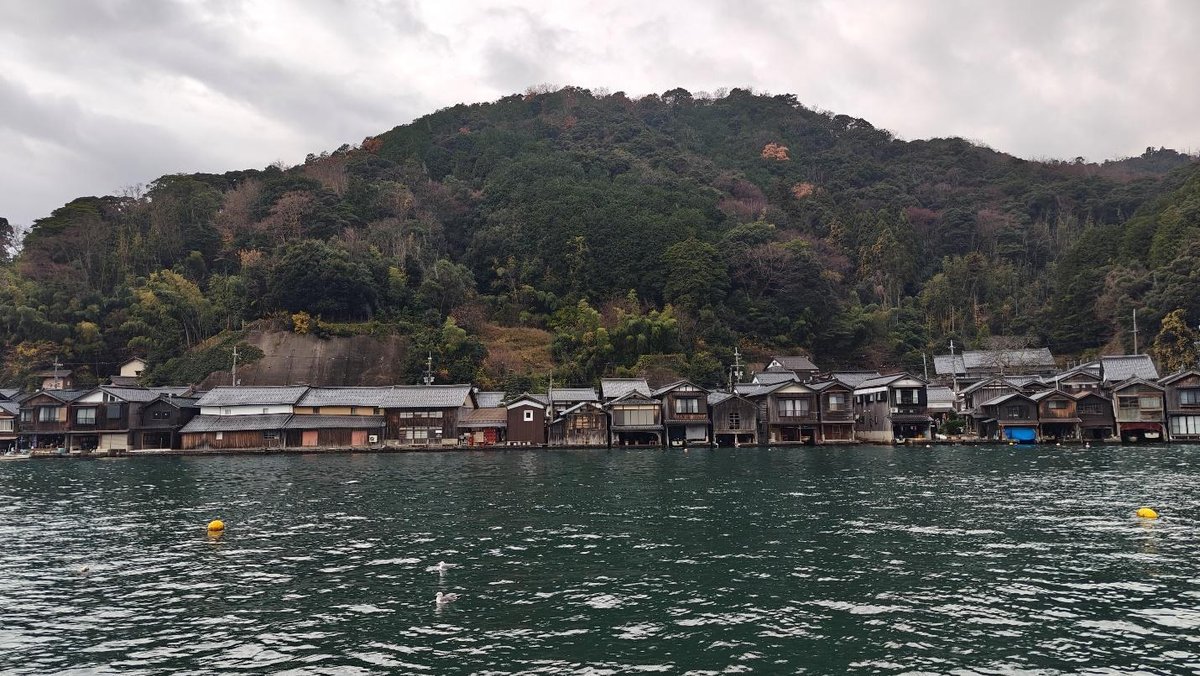
I finally reached the docks for the sea taxis/sightseeing boats. Chartering a boat was actually not part of my plans for this day. Instead I started taking pictures of this area of the town that's west of Ineura Park.
I’m not too sure, but I think this section that I took a picture of has the most number of boathouses so it does sort of catch your attention.
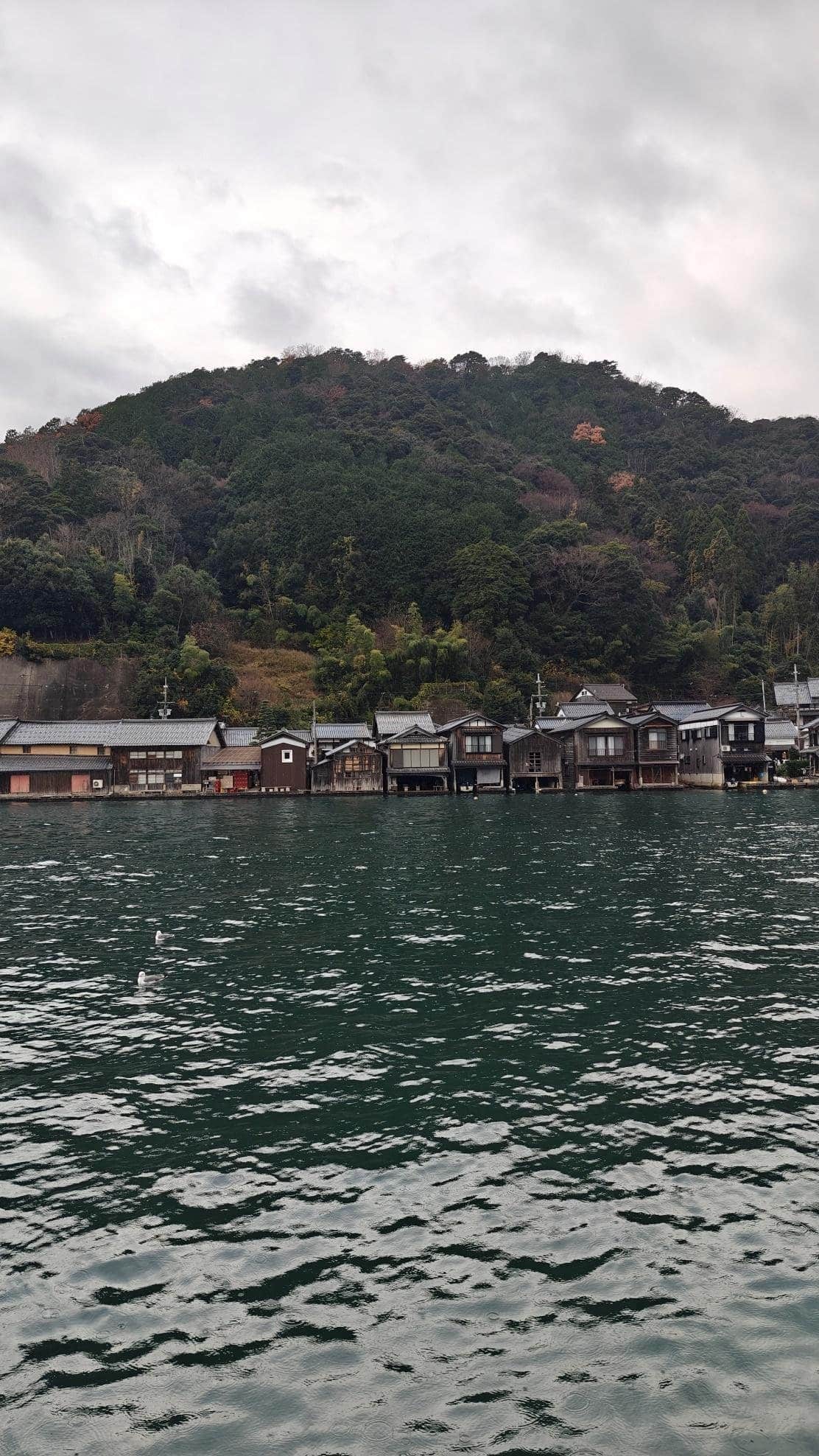
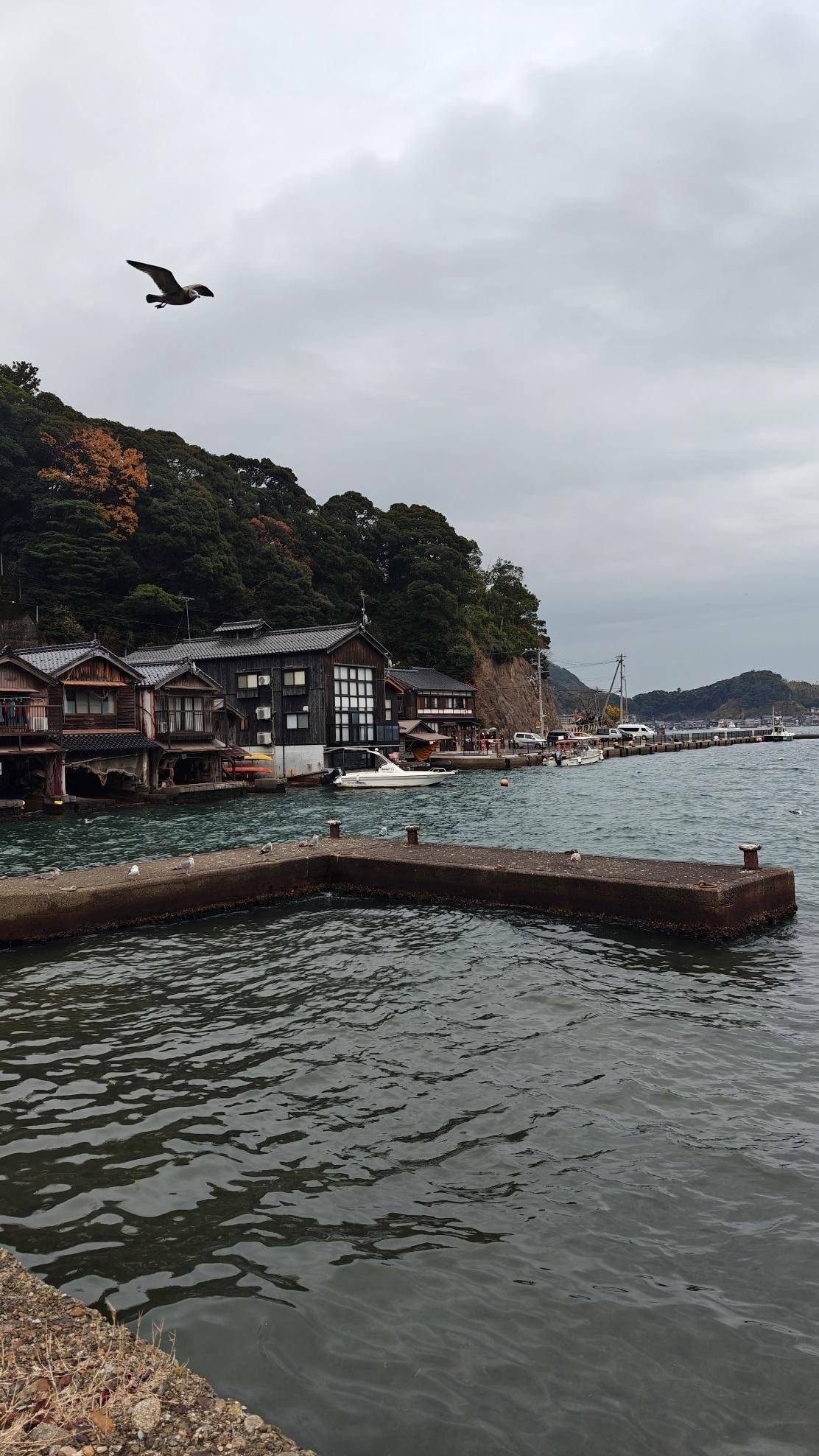
As I said earlier, this area where I took the picture from is actually where the sea taxis/sightseeing boats are docked. If you got the Klook listing that includes a tour of Ine Bay and Amanohoshidate then this is where you'll be waiting for your ride. It's also possible to just pay for the ride here.
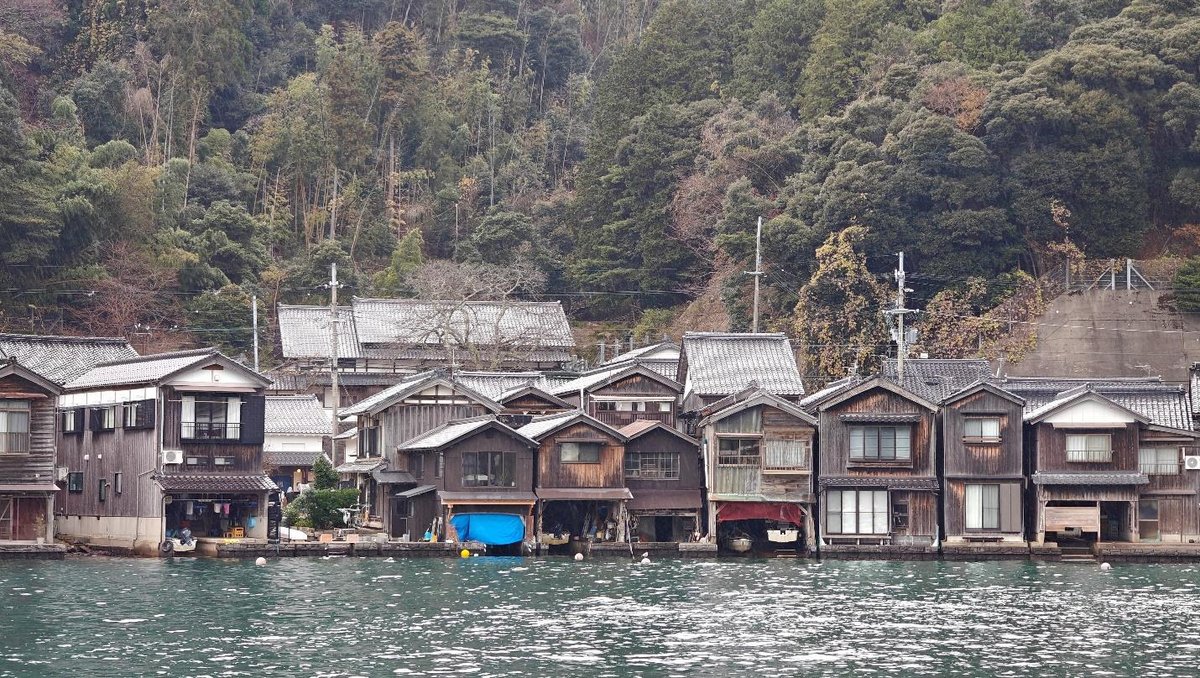
In some way, the sightseeing tours reminded me of my time in Milford Sound. Much like the fjord, Ine Bay has some really scenic views. Where it differs though is that these views are man-made (the funaya) while Milford Sound's is more of the natural kind.
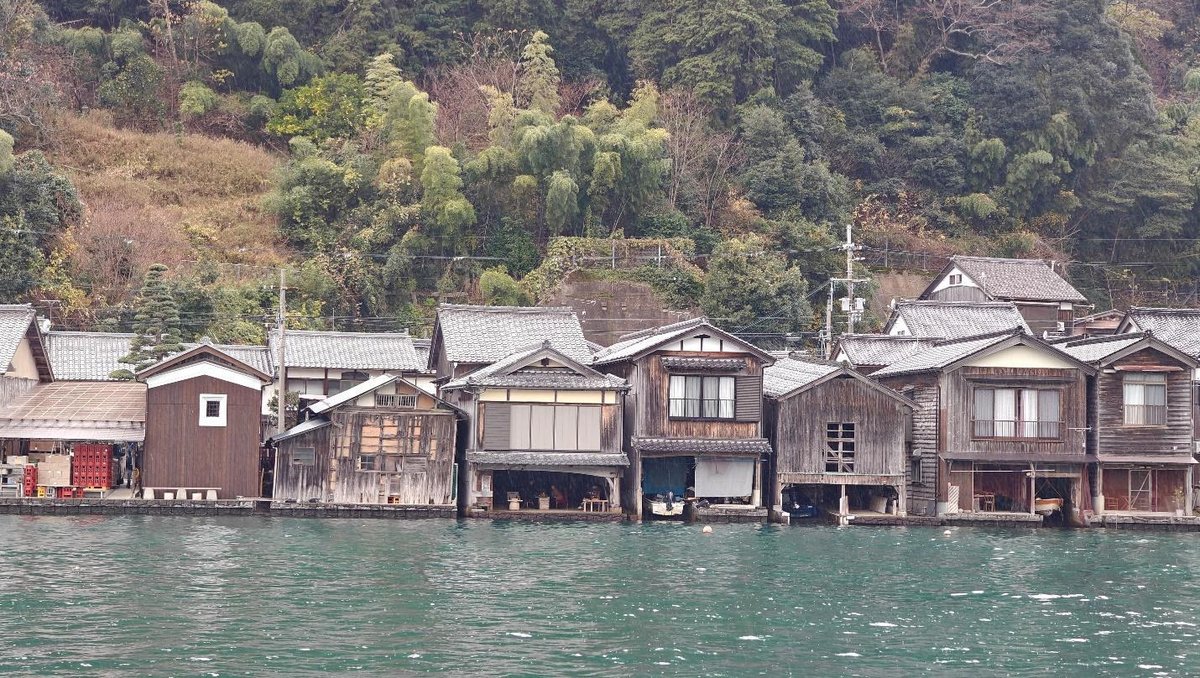
One thing I also noticed about the funaya is how unique they are. Sure, almost all feature a garage where the resident's boats are kept but the designs of the houses actually differ. Whether it's the number of windows or their sizes, these differences give each funaya a character of their own.
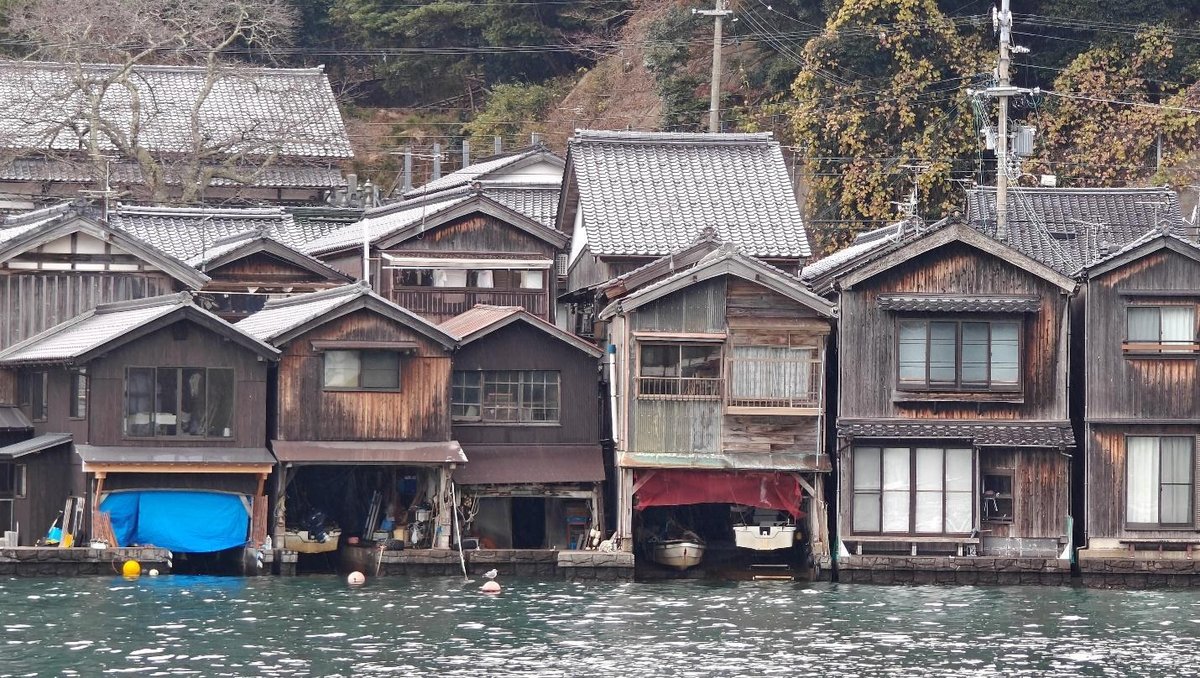
Now some online sites write that the best way to check out the funaya here in Ine is via the sightseeing boats. I'm actually not quite sure if I agree with that as you can still see the boathouses here in this area of the town clearly. That said, if you do want to see all of the funaya then I'd agree that the boat is the fastest and most efficient way to do so.
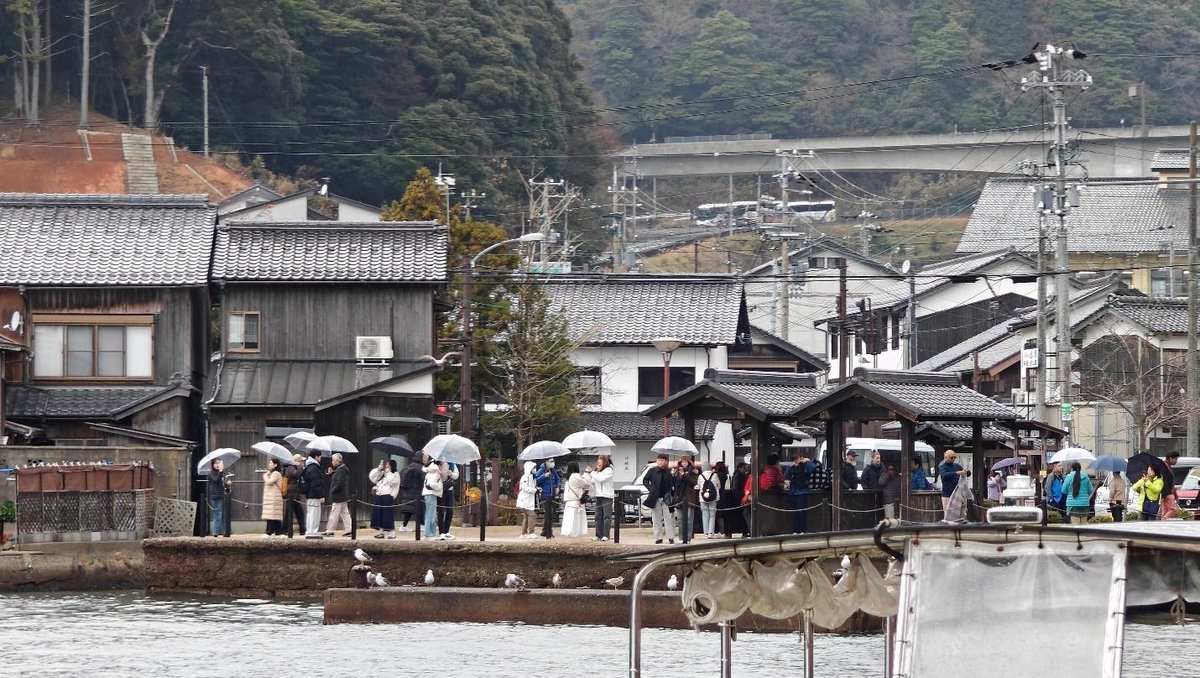
Here you can see the other visitors congregating in Ineura Park. I initially thought that there wouldn't be that many people here but the town has apparently gotten quite popular in the last couple of years. It's said that this is likely because people are finding it a quieter and more laid back alternative to Kyoto and Osaka.
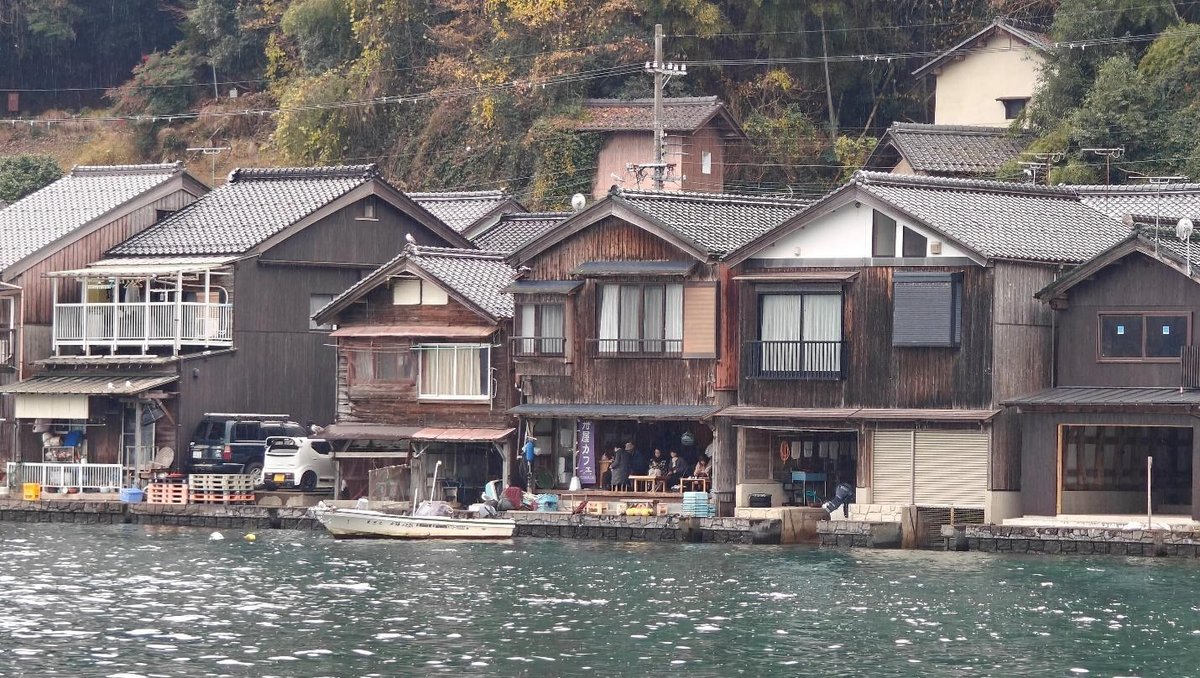
I got to snap a picture of these people at a local cafe called Funaya Cafe and Dining Aura. It's actually a highly rated establishment here and it also doubles as a homestay/inn. I wasn't able to personally go inside but I've heard that it has some really nice views of Ine Bay from its first floor garage (which I guess also serves as the dining area).
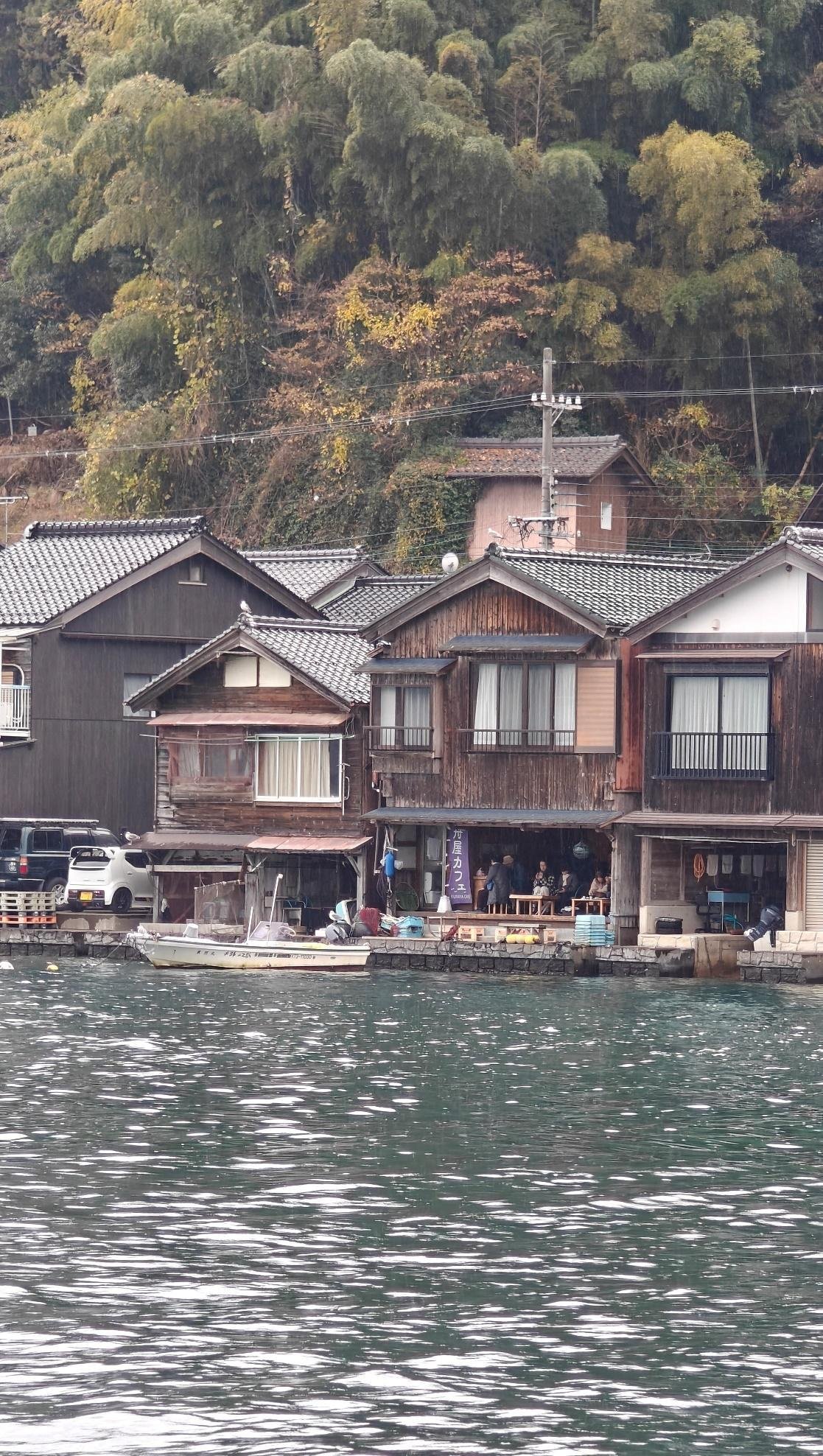
As I mentioned earlier, there are plenty of funaya converted to establishments like Funaya Dining and Cafe Aura. Another notable one is Ine no Funaya Miyabi or Miyabi Ine Boathouse. It's on another section of the town which is still a walking distance from the docks where I got onto the sightseeing boat.
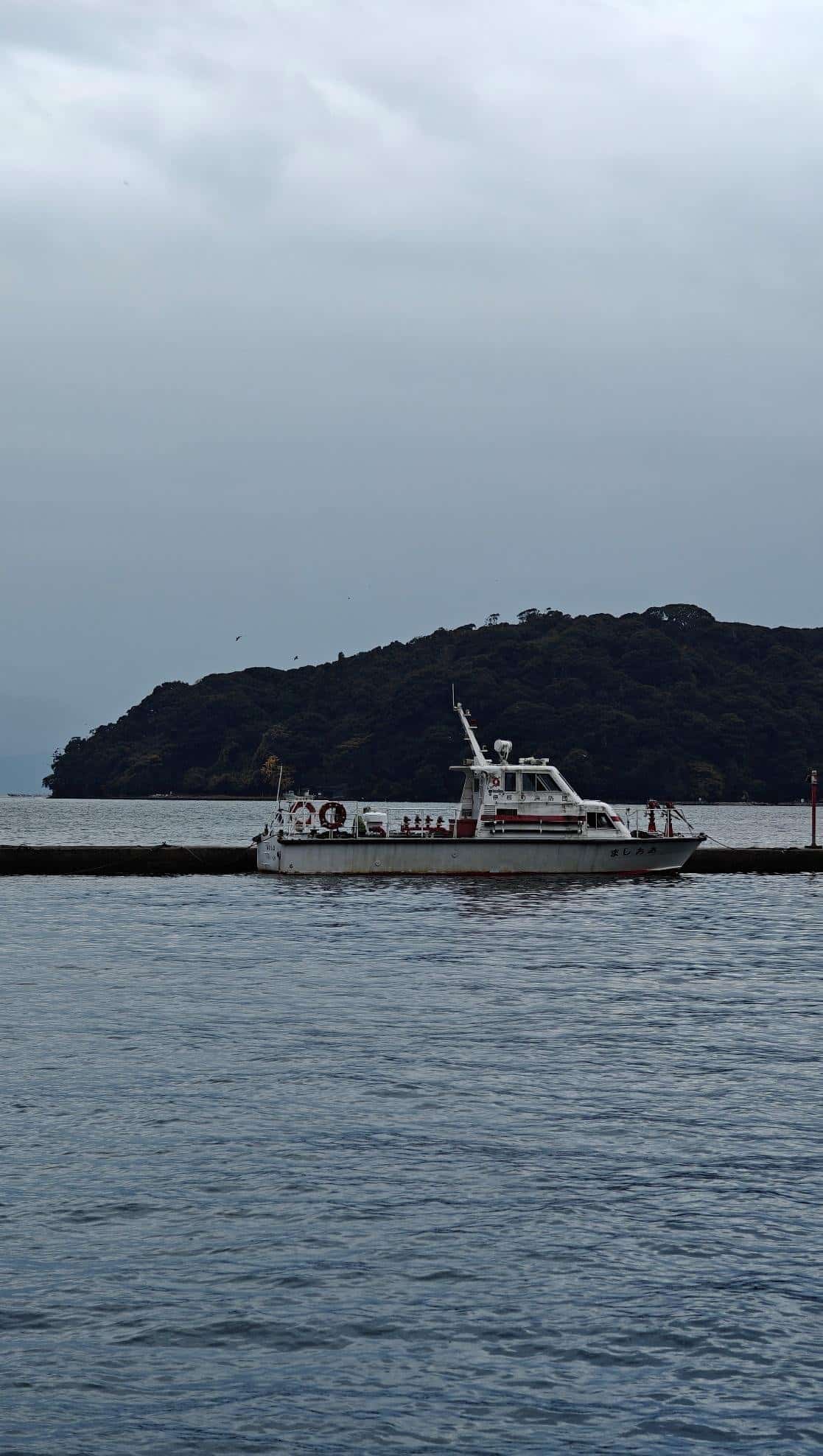
Now I said that I was fine with the rain when I got here but I also did want fairer weather just so I could see this island.
Called Aoshima, this is actually one of the reasons why Ine and its funaya have managed to survive for centuries even though Ine Bay is part of the Sea of Japan.
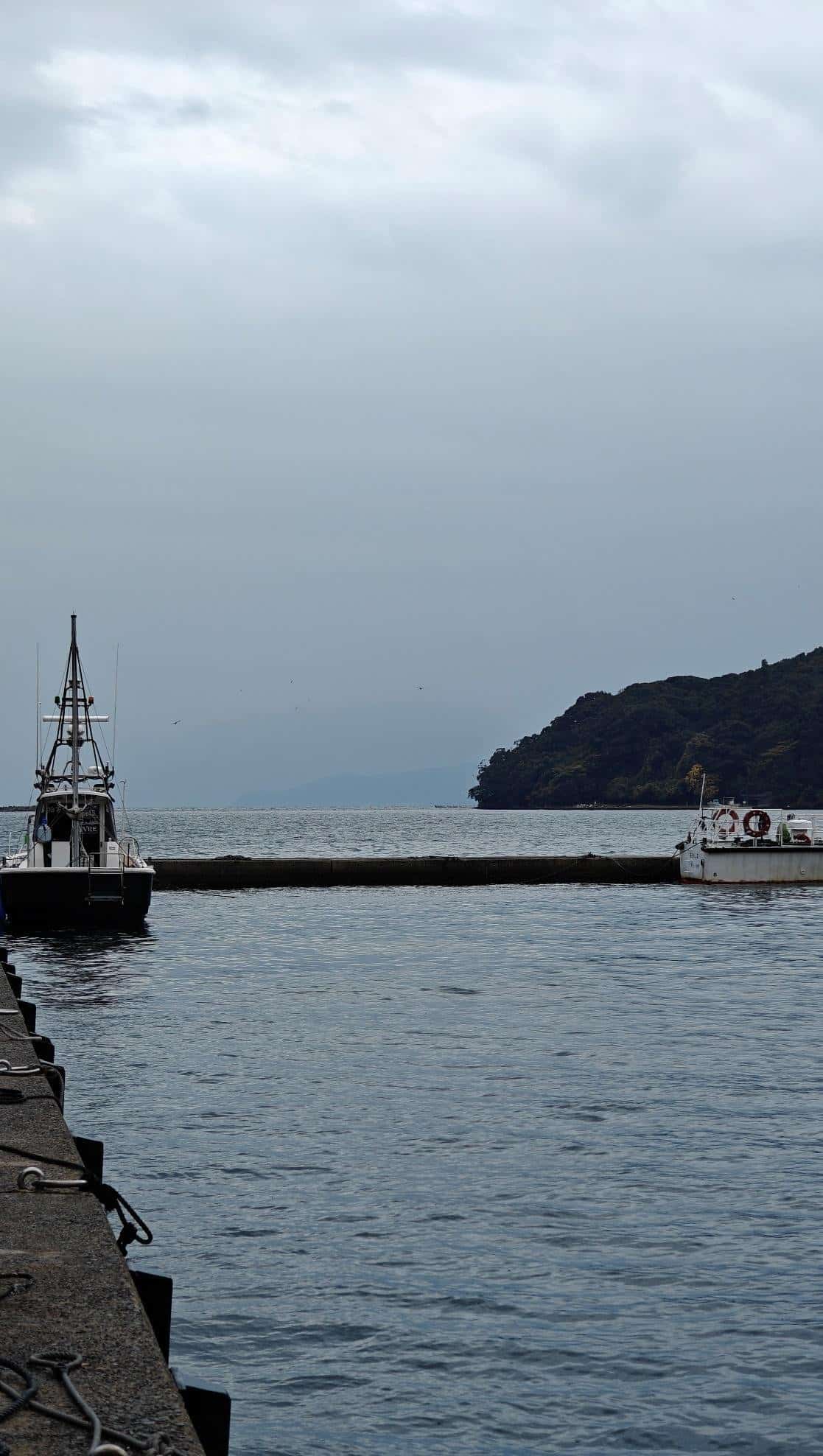
If you look at a map, Aoshima is pretty much a barrier island. It’s not visible from this view but there's another island behind it that also serves as a lighthouse. Both of these islands essentially function as one barrier that shields Ine Bay from the Sea of Japan especially during the winter (which is known to be particularly stormy).
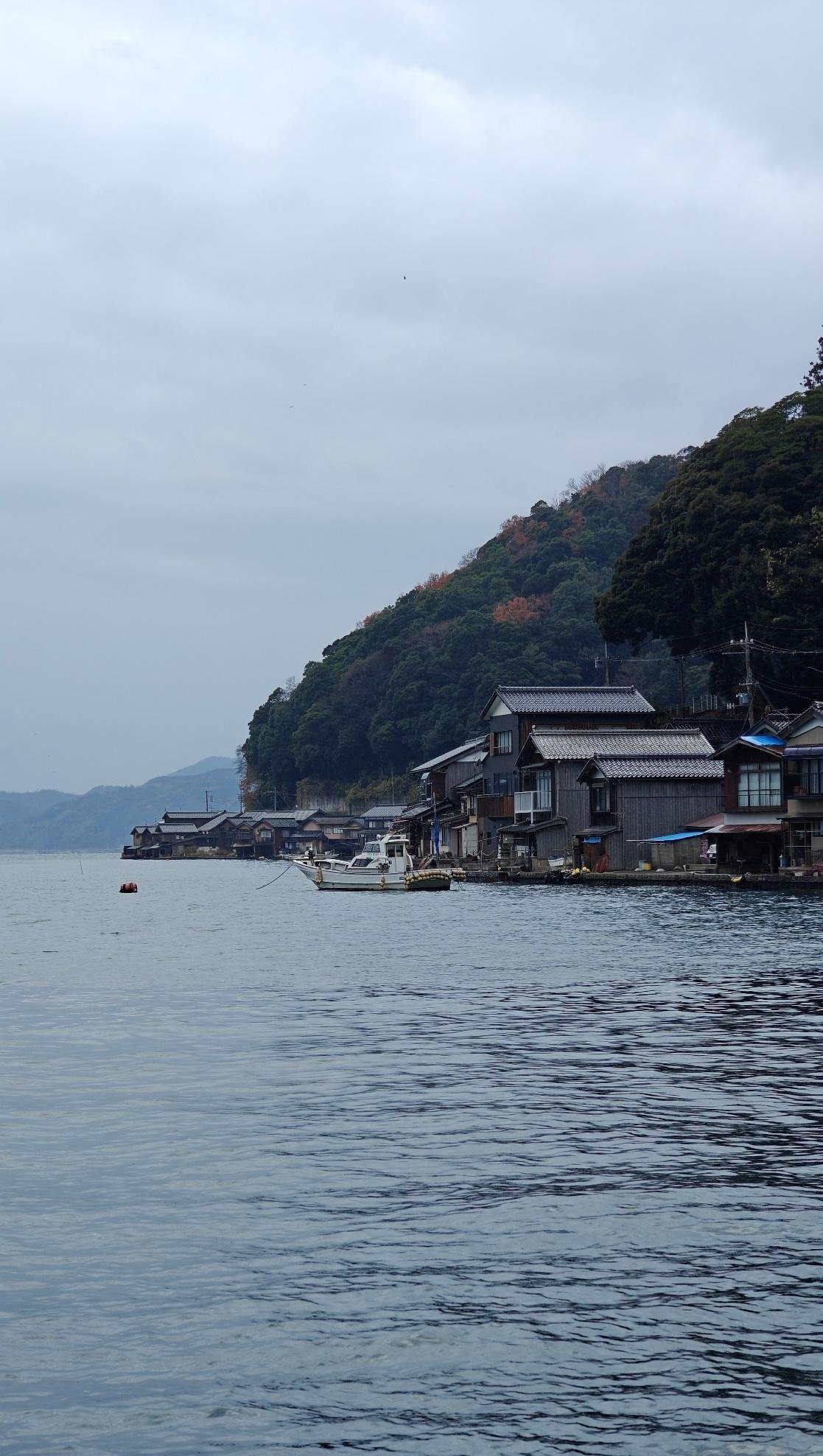
The barrier is so effective that even with the rain and overall bad weather, the waters of the bay were actually quite calm. I’ve read that even during storms Ine Bay can be counted on to have relatively calm waters. The natural protection of the barrier islands as well as the mountains is actually why the people here were able to confidently build their funaya on the waters’ edge.
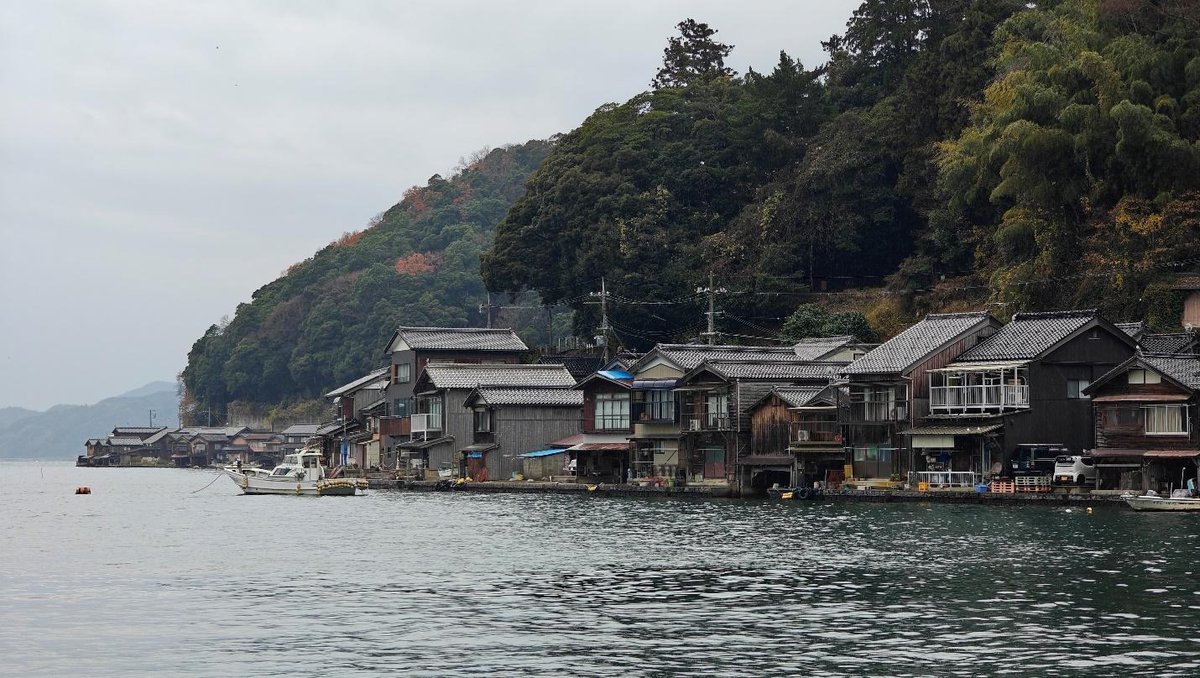
So another thing that I was quite curious about were the tides. If you’ve ever spent time near a shoreline or beach, you’d notice how the tides affect the level of the water. Here in Ine Bay though, the tidal range is actually quite small.
This means that the change from high to low tide doesn’t affect the level of the bay’s waters that much.
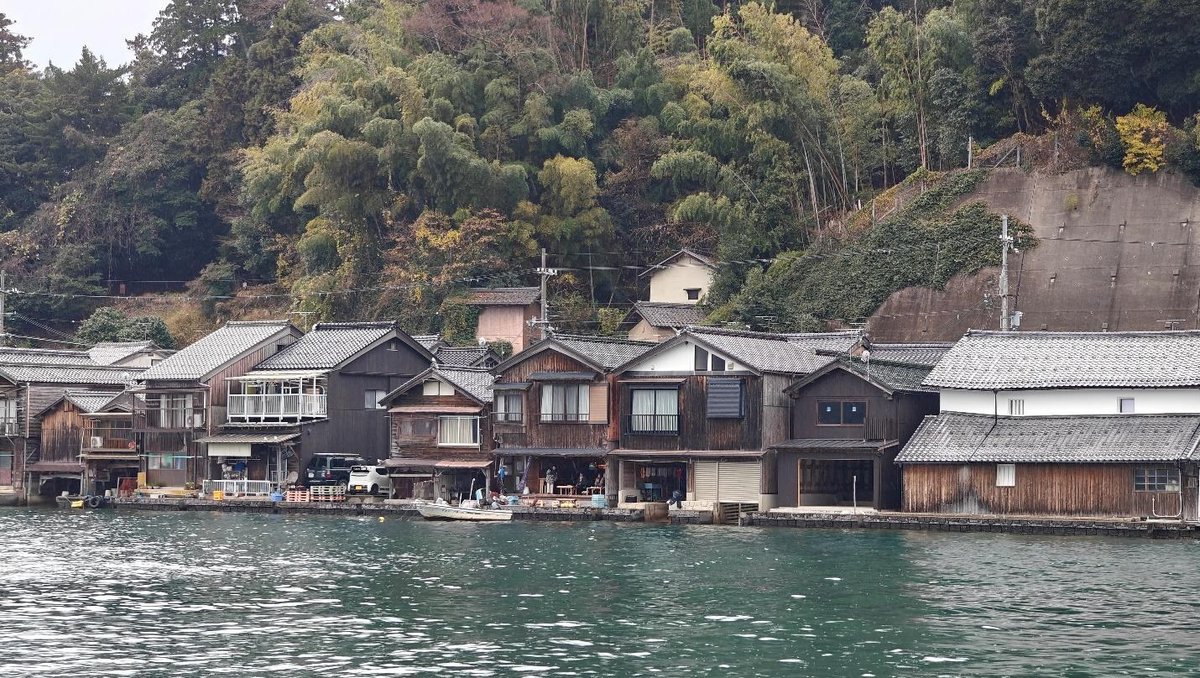
Now that I think about it, I’m actually not quite sure if the tides were low or high during my visit. I’ve read that the presence of Aoshima also affects the tides as it narrows the entrance of water to the bay. I’d always thought that living by the sea was scary but it seems like that’s not the case here.
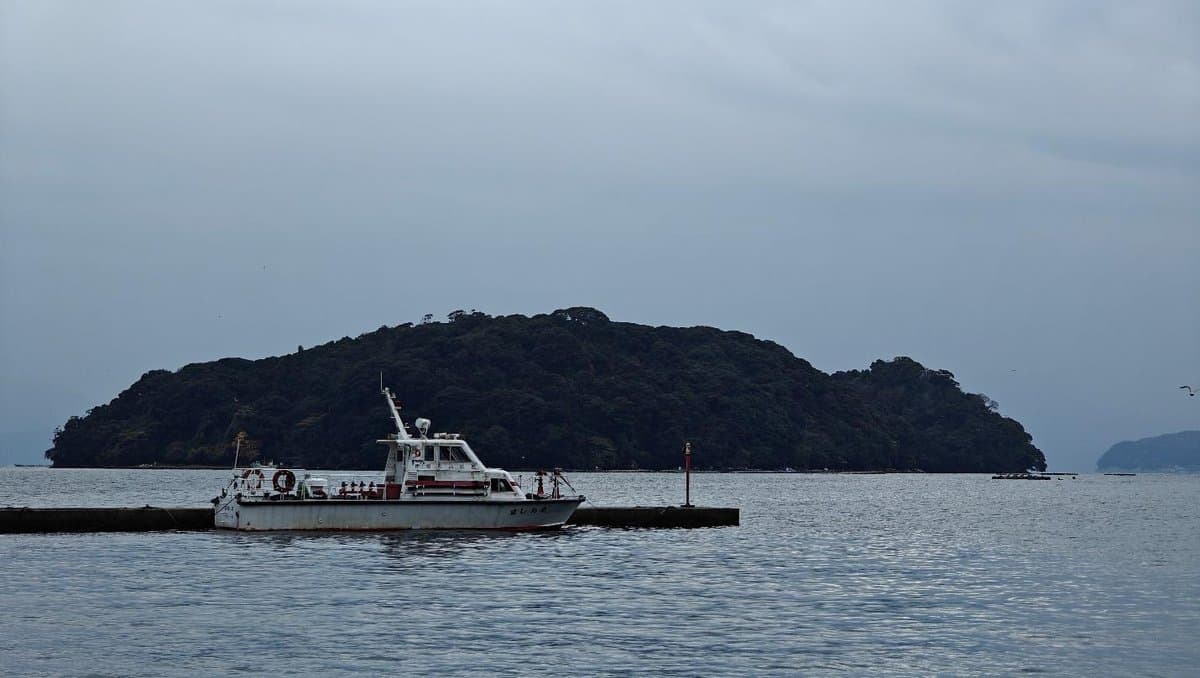
Speaking of Aoshima and the Ine lighthouse island, here they are. It looks like it’s one island but there’s actually two of them. I tried looking it up and it seems that the island is uninhabited.
Take note that this is not the same Aoshima that is famous for being a cat island. That’s actually in Ehime Prefecture which is in the Seto Inland Sea that faces the Pacific (whereas this Aoshima is facing the Sea of Japan instead).
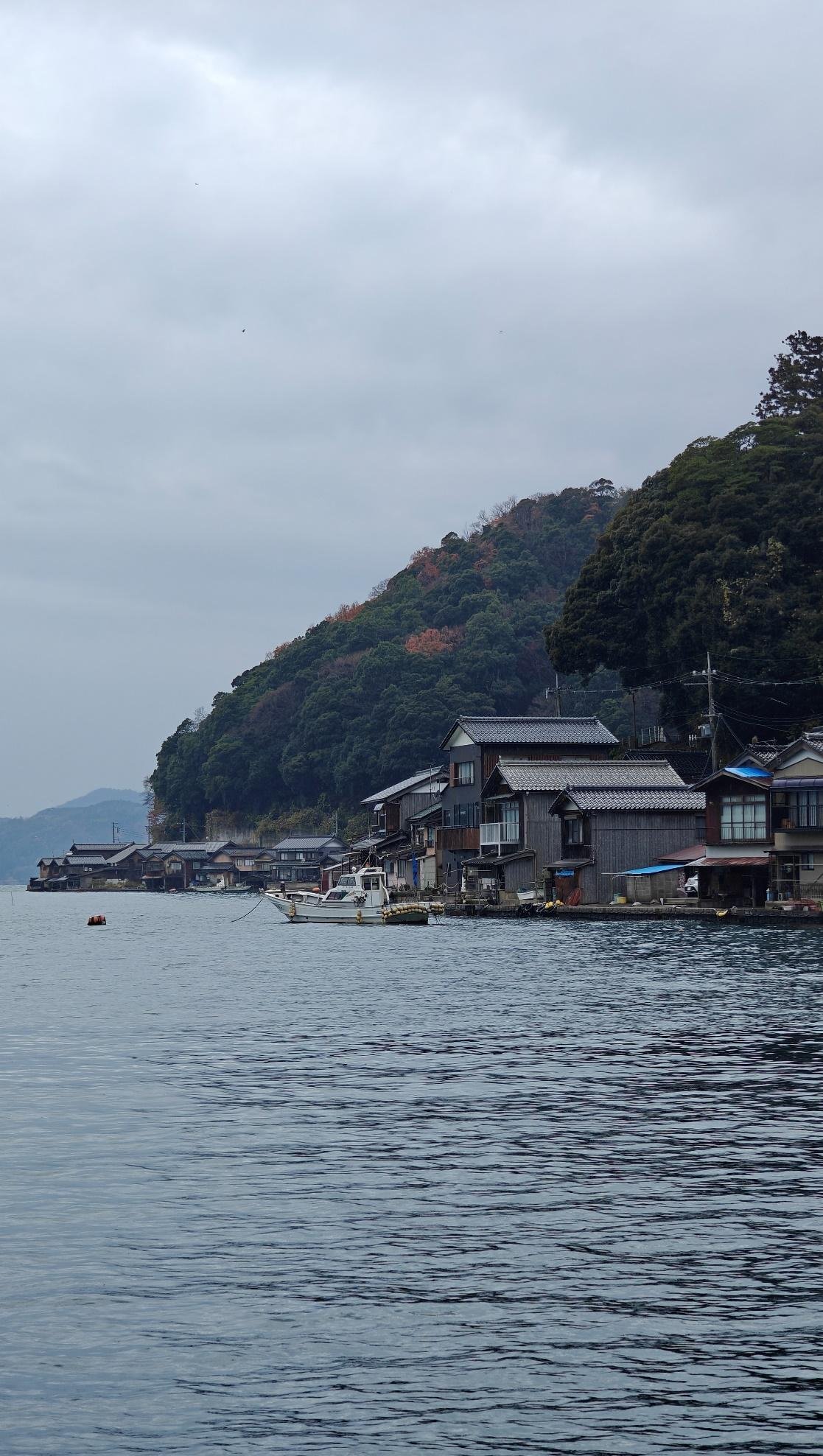
One of the locations I visited in Kyoto that was memorable for me was Yasaka Shrine and I was kind of surprised that there’s also one here. Yes, there are actually thousands of Yasaka Shrines all over Japan with a lot of them being in coastal villages such as Ine. This is kind of understandable considering how Susanoo-no-Mikoto (the Shinto deity worshipped in these shrines) is considered the god of storms, maritime safety, and the seas.
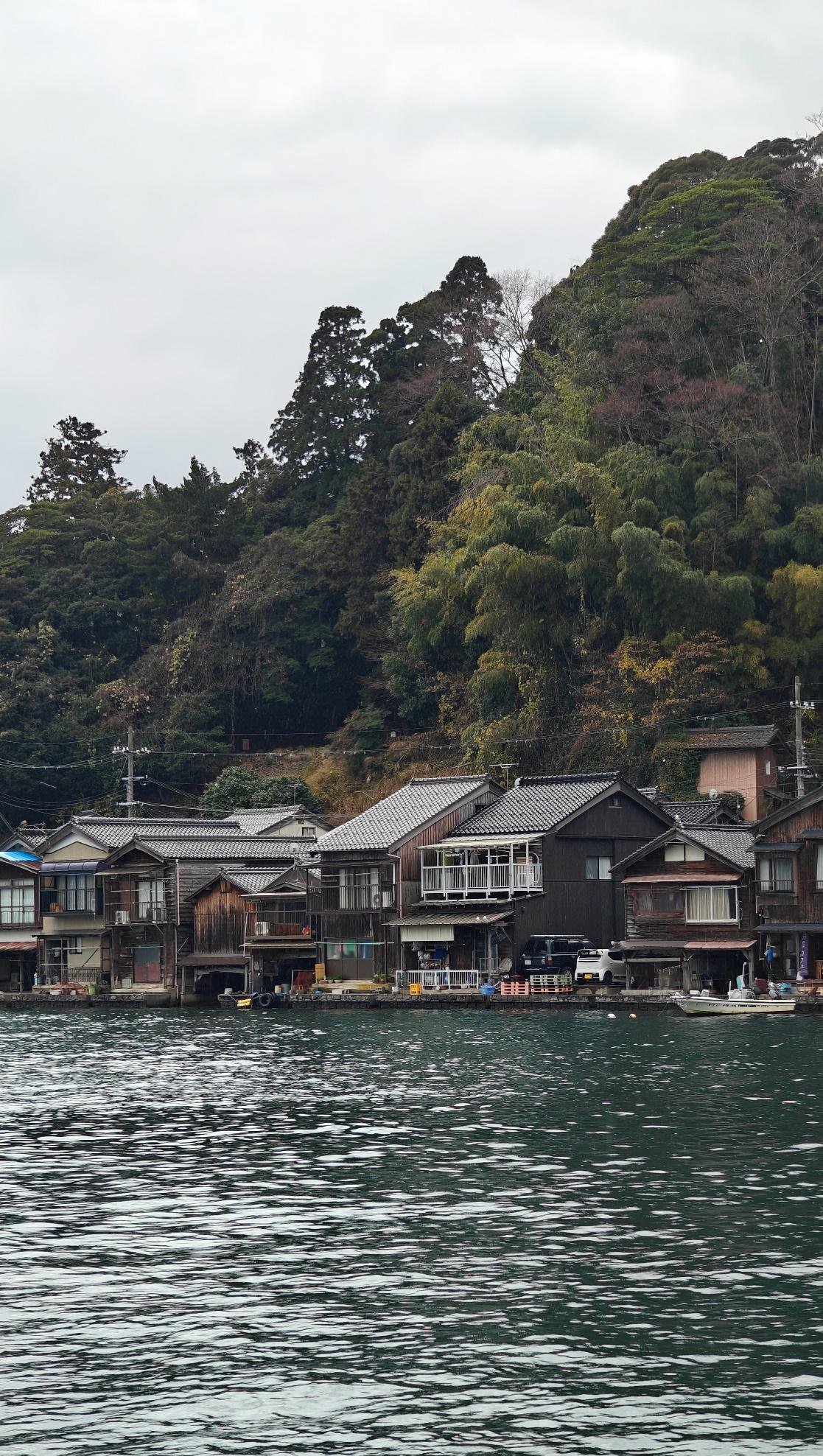
As for where you can find the shrine, I’m not really sure. I do know that it’s elevated from the street and the clearing in the mountain/hill that you see here is part of it. Knowing there’s a Yasaka Shrine here though, is it even worth visiting?
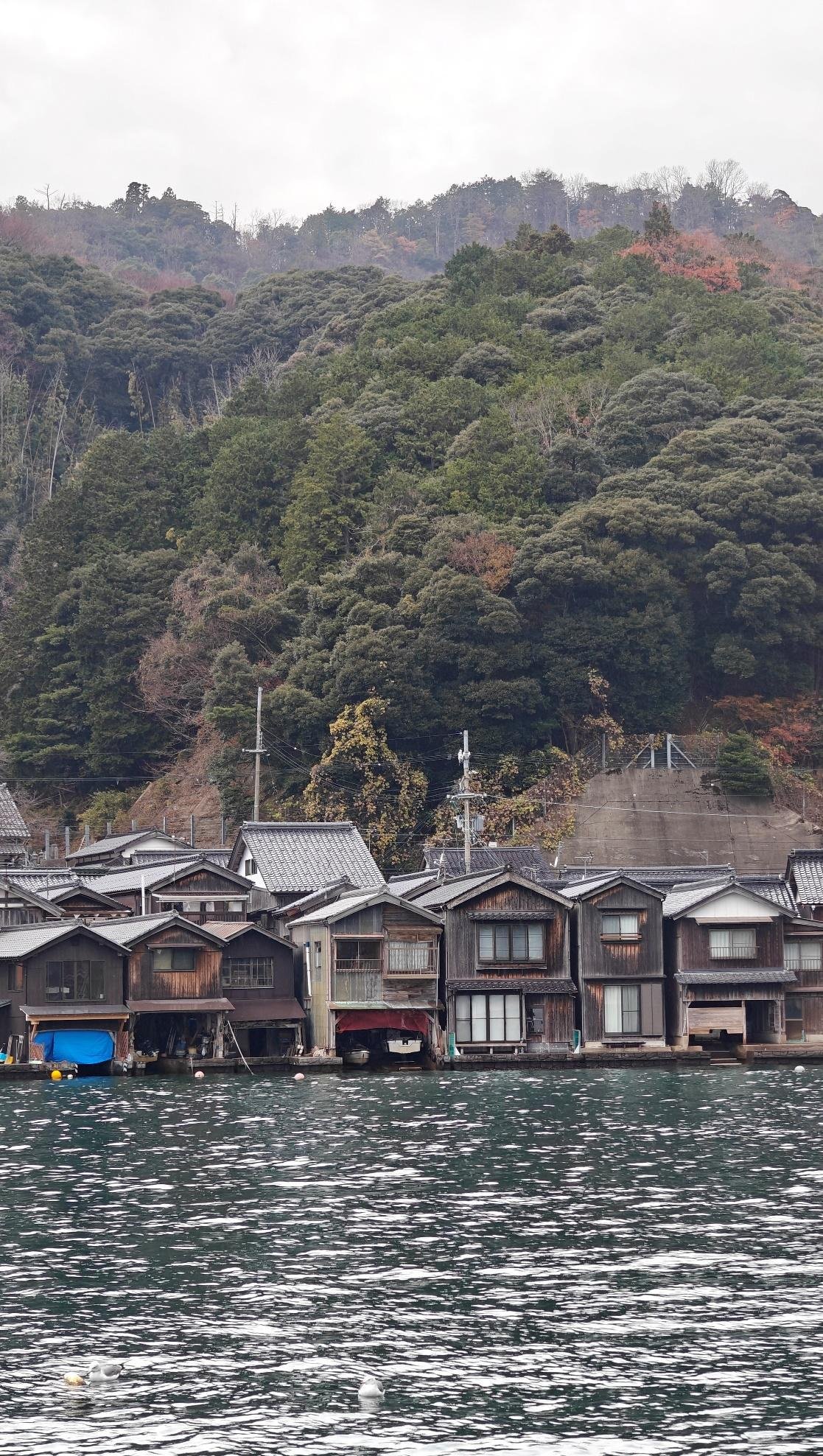
I tried looking up pictures of the shrine online and surprisingly, there were really few of them. That said, the ones that I did find show it to have a really nice view of not just the funaya below it but of Ine Bay as well. Since I haven’t really been there personally though, I don’t think I can recommend going.
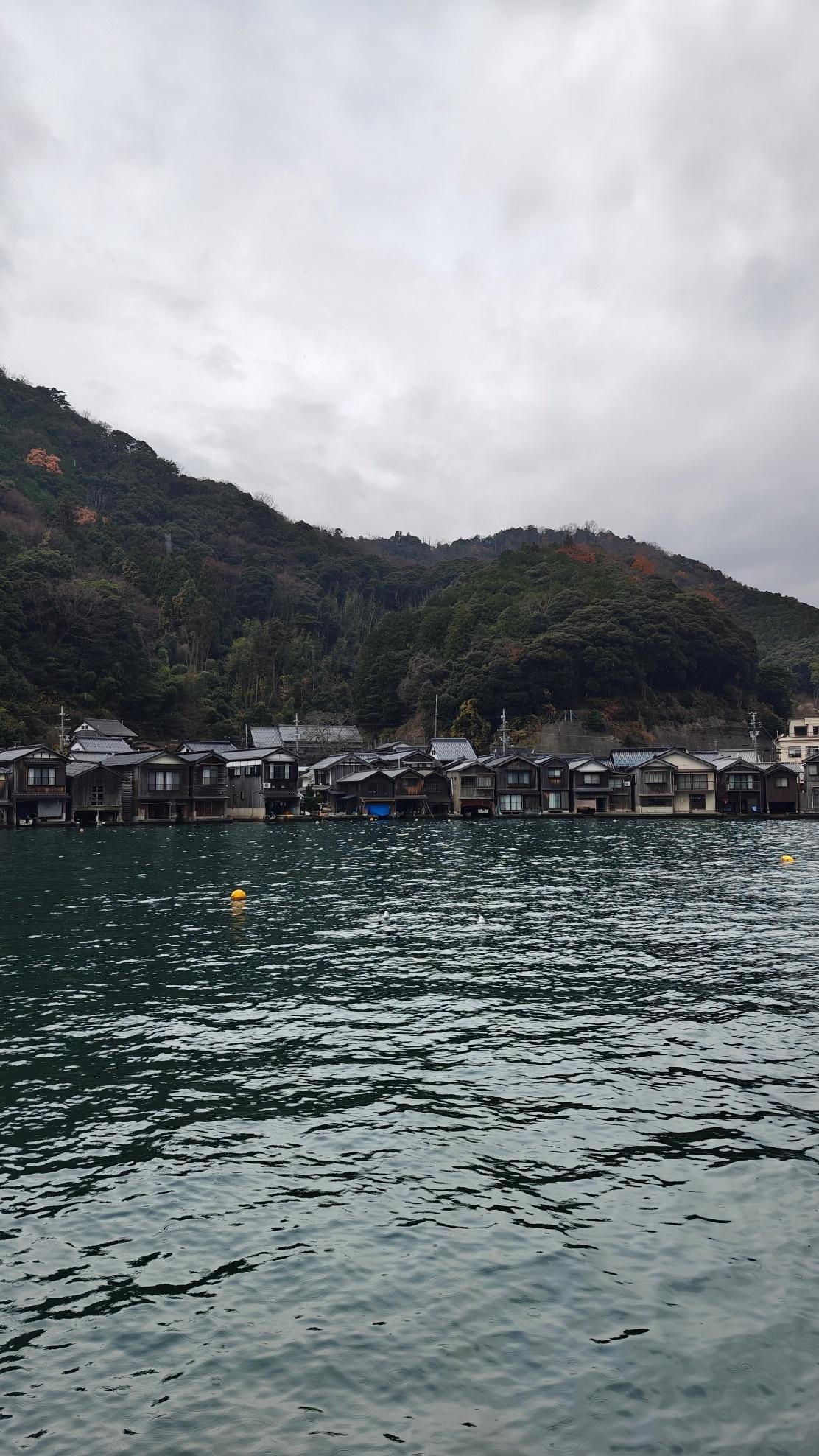
Still walking along the docks, I was contemplating on the fact that people online have been saying that the town of Ine is the Venice of Japan. While I understand the need to advertise the town and draw in travelers, I think comparing it to Venice is like comparing apples to oranges. Venice is far more sophisticated while Ine is just so full of rustic charm.
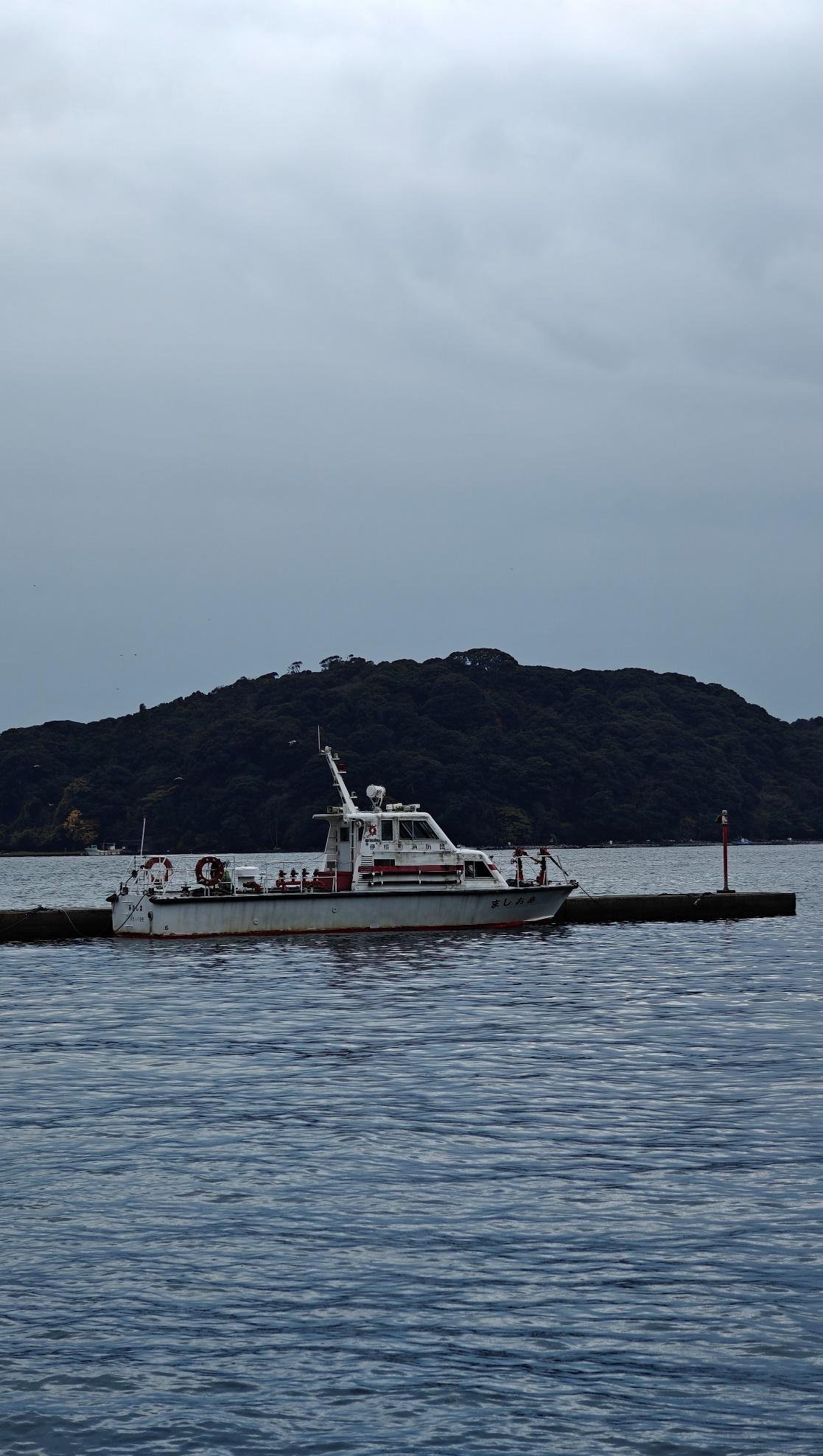
Though tourism has been on the rise since the 2000s-2010s, a lot of the boats here are still the ones mainly used for fishing. There aren’t any gondolas like the ones you’d find on Venice and these very same boats are what’s usually utilized for the sightseeing tours. Of course, there is also a boat with larger capacity though I’m not quite sure how many would fit in it.
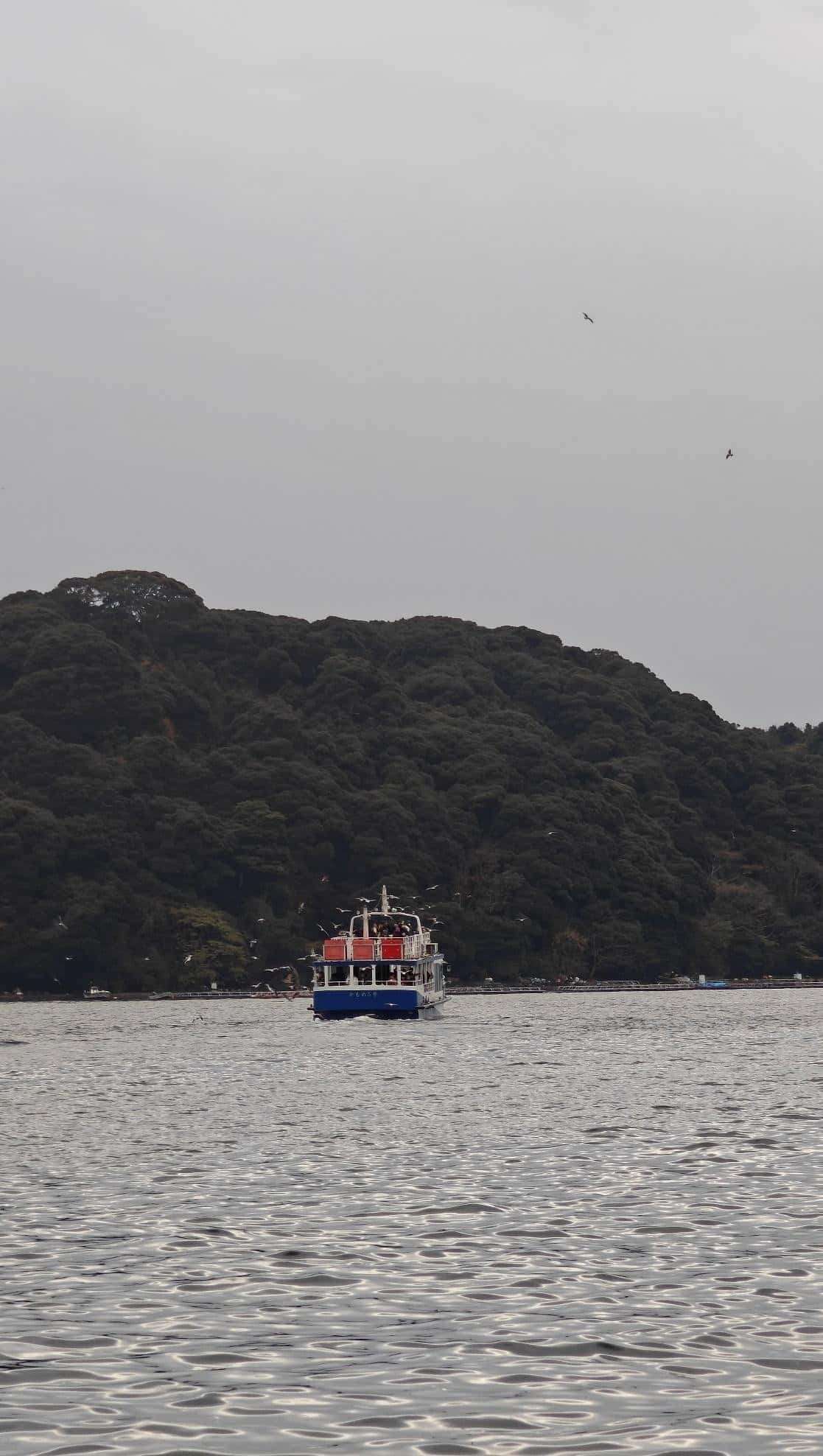
Here’s what one of the larger boats looks like. Now you might think they’re being attacked by birds but that’s actually far from what’s happening. As I said earlier, there are plenty of gulls here and one of the activities that you can experience if you decide to go on one of the tours is feeding these birds.
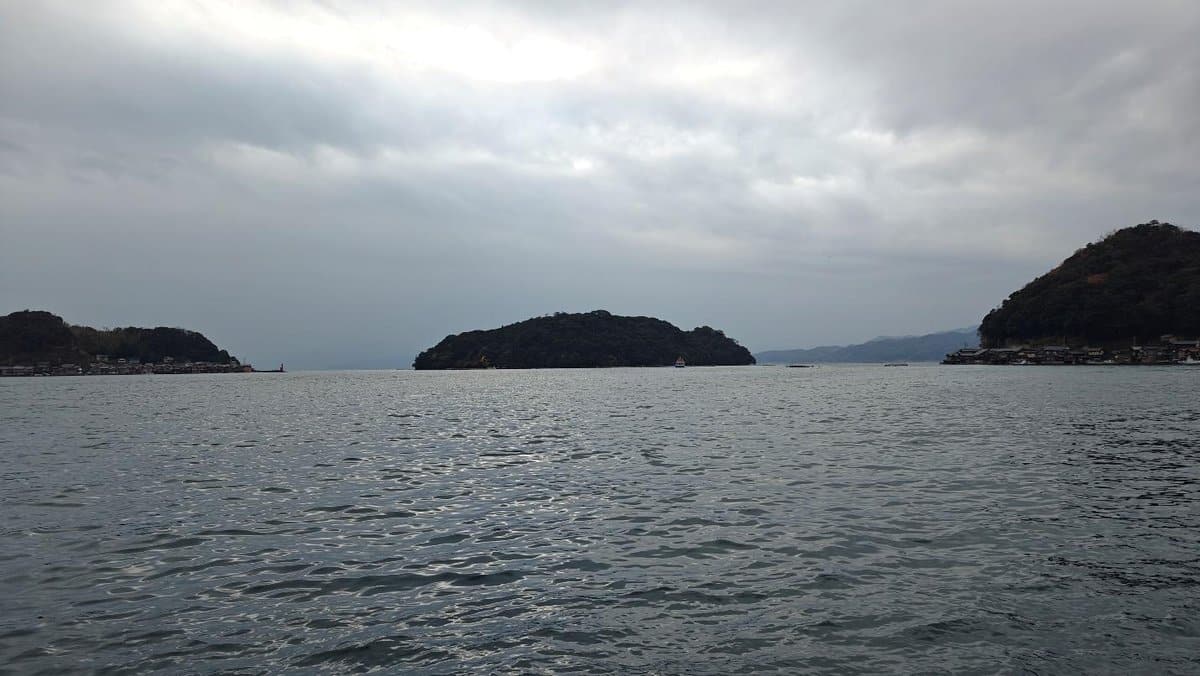
This is another shot of Aoshima and Ine Lighthouse Island and this time I made sure to include the two channels created by their existence. Again, they’re two separate islands with the larger one in front (if you’re facing it) being Aoshima. The smaller island which has a smaller hill is directly behind Aoshima and it’s there that a lighthouse for Ine Port was put up.
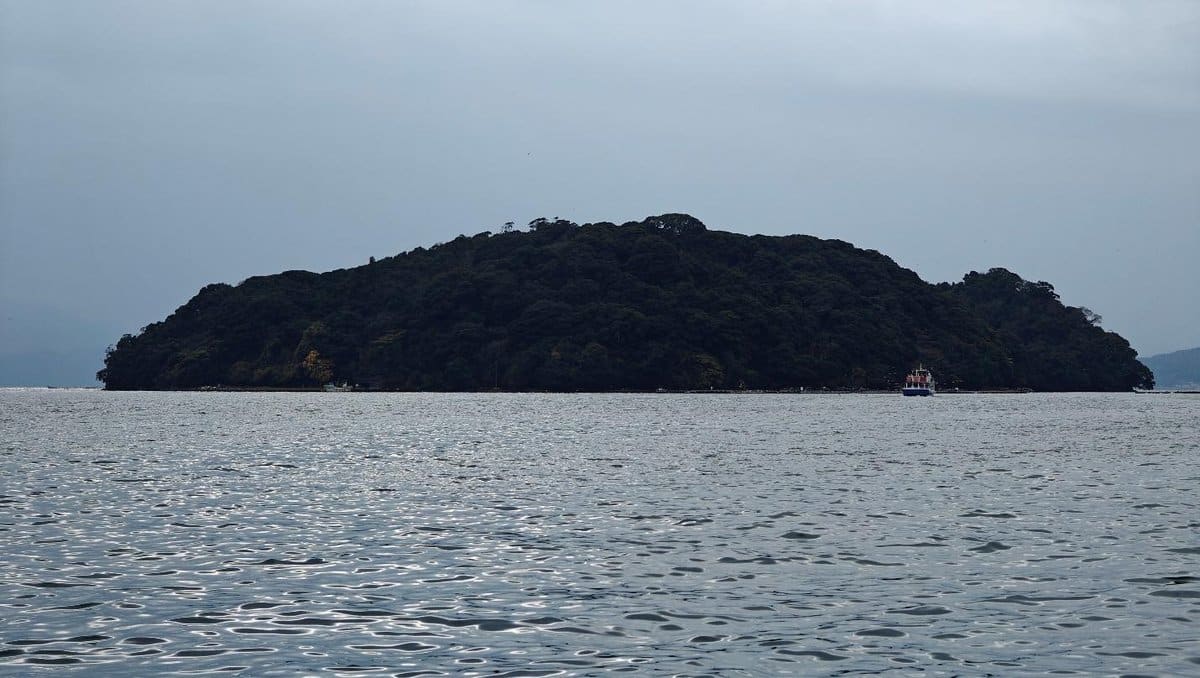
Here’s a zoomed in look at the islands. You can also see the sightseeing boat heading towards the channel on the right. After exiting the channel, it’s going to turn right into the area of Ine-cho that’s outside of the bay.
It’s still a coastal area though it has fewer funaya.
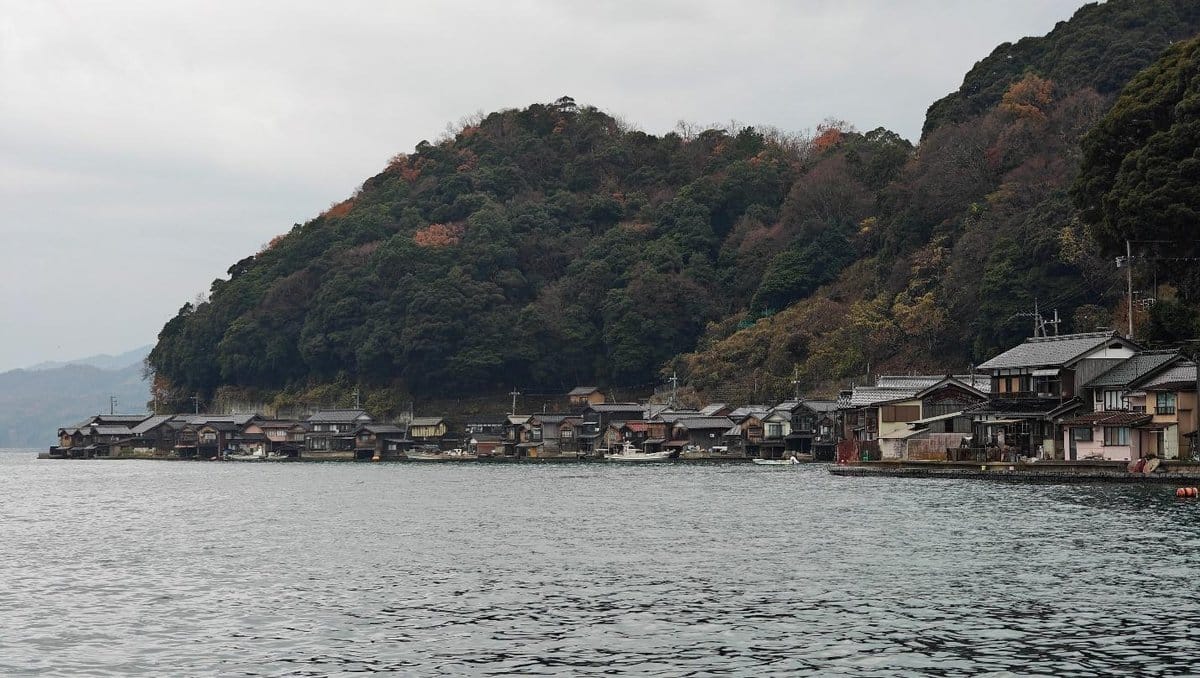
The hills here in Ine also featured trees on their fall foliage. That said, they weren’t really that nice compared to the ones that I saw in the shrines and temples I visited in Kyoto. Still, the trees definitely add to the charm and allure of the place especially when you’re walking through its streets.
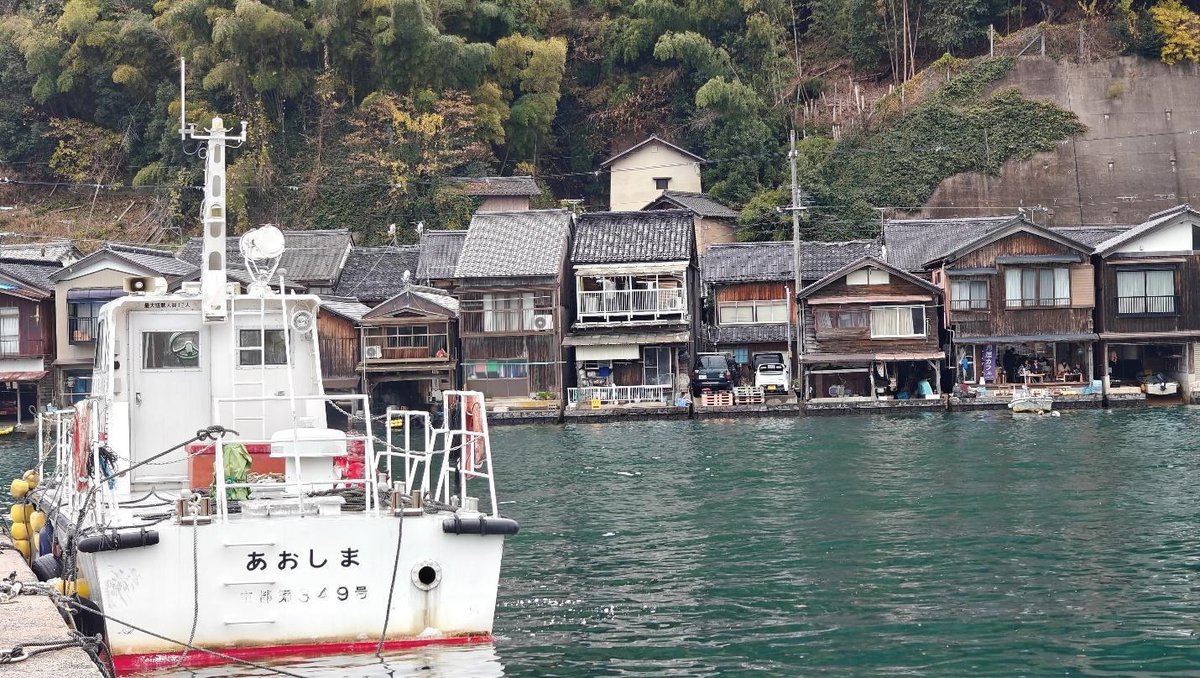
I didn’t quite notice it but I’d already reached the dock’s quay. Remember Funaya Dining and Cafe Aura from earlier? Well you can actually see it head on from here.
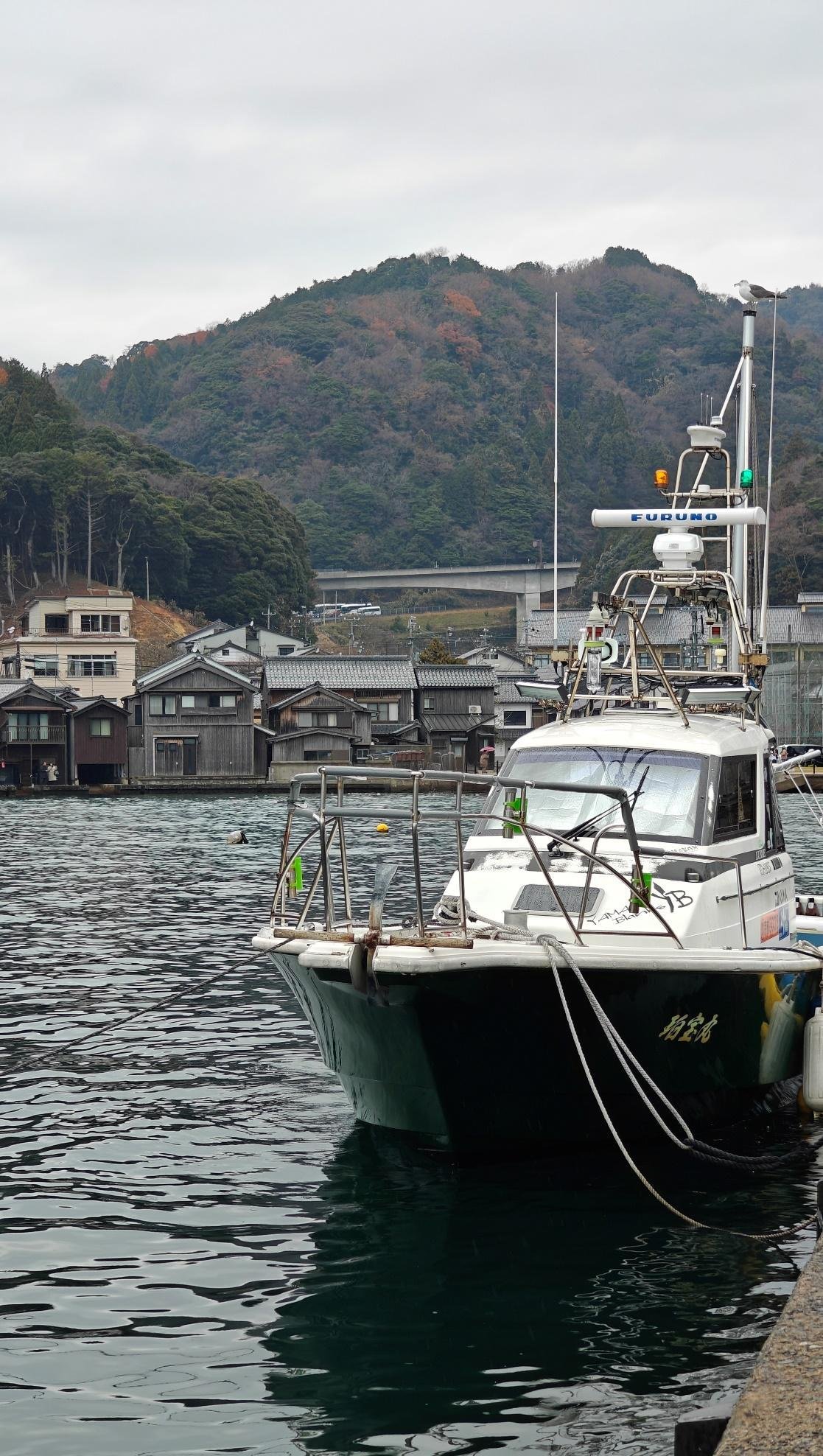
Here you can see what the view from the Ineura Park direction looks like. Off in the distance you can see the tourist buses parked under the Yoro-Ine Bypass Road. As for Ineura Park, its view was obstructed by this boat in the foreground.
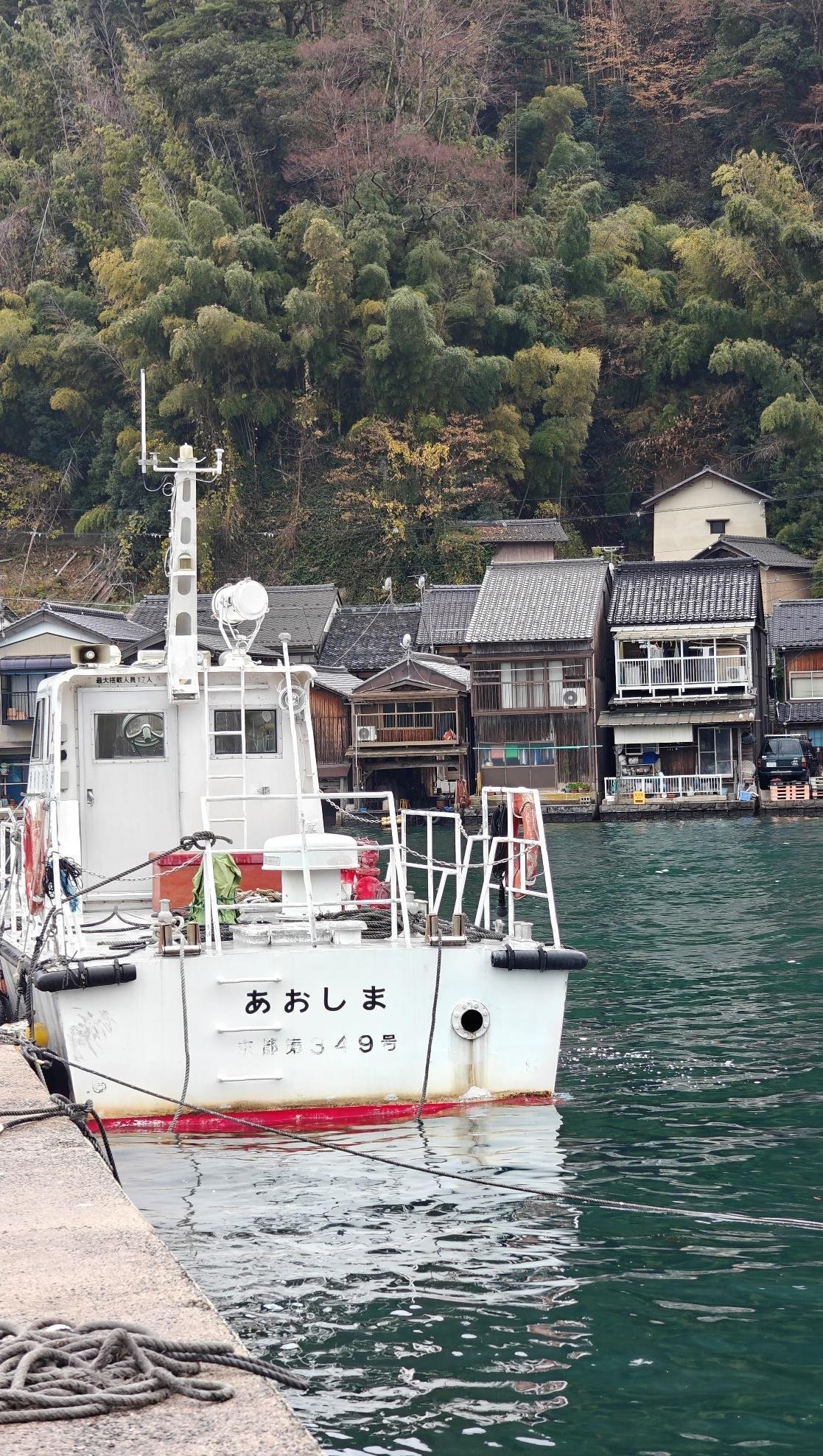
Still at the quay, here’s another look at the area west of Ineura Park. At this point the rain had stopped but the weather was still gloomy. That said, I had grown accustomed to this and it was to be expected considering this visit was in winter after all.
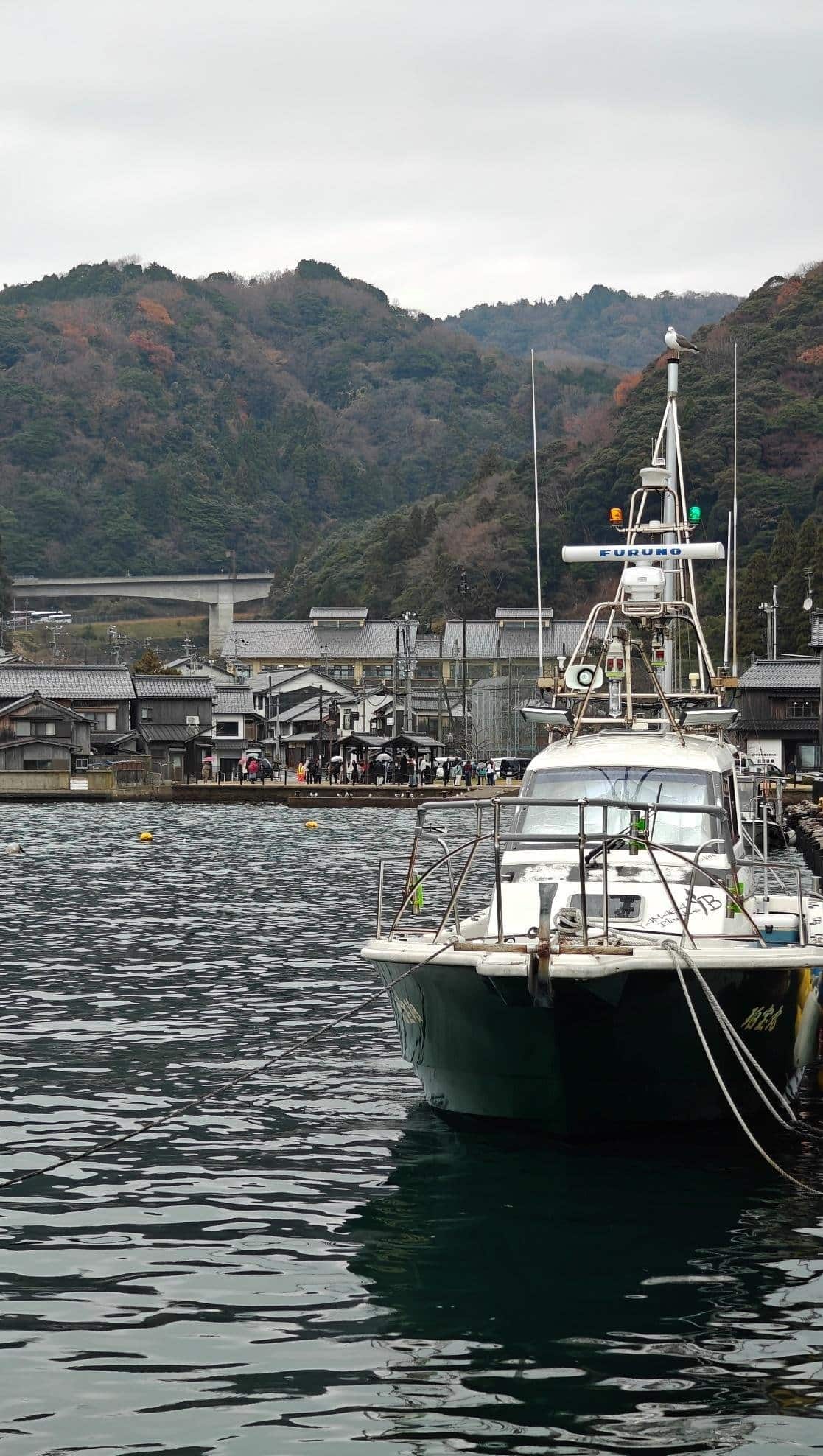
I decided to reposition myself to get a better shot of Ineura Park and was mildly surprised that there were even more people this time around. Even though it was sort of getting a little crowded, I still would prefer this to the droves of people you’d come across in Kyoto. I wonder though, will Ine-cho suffer the same fate as Kyoto in the future?
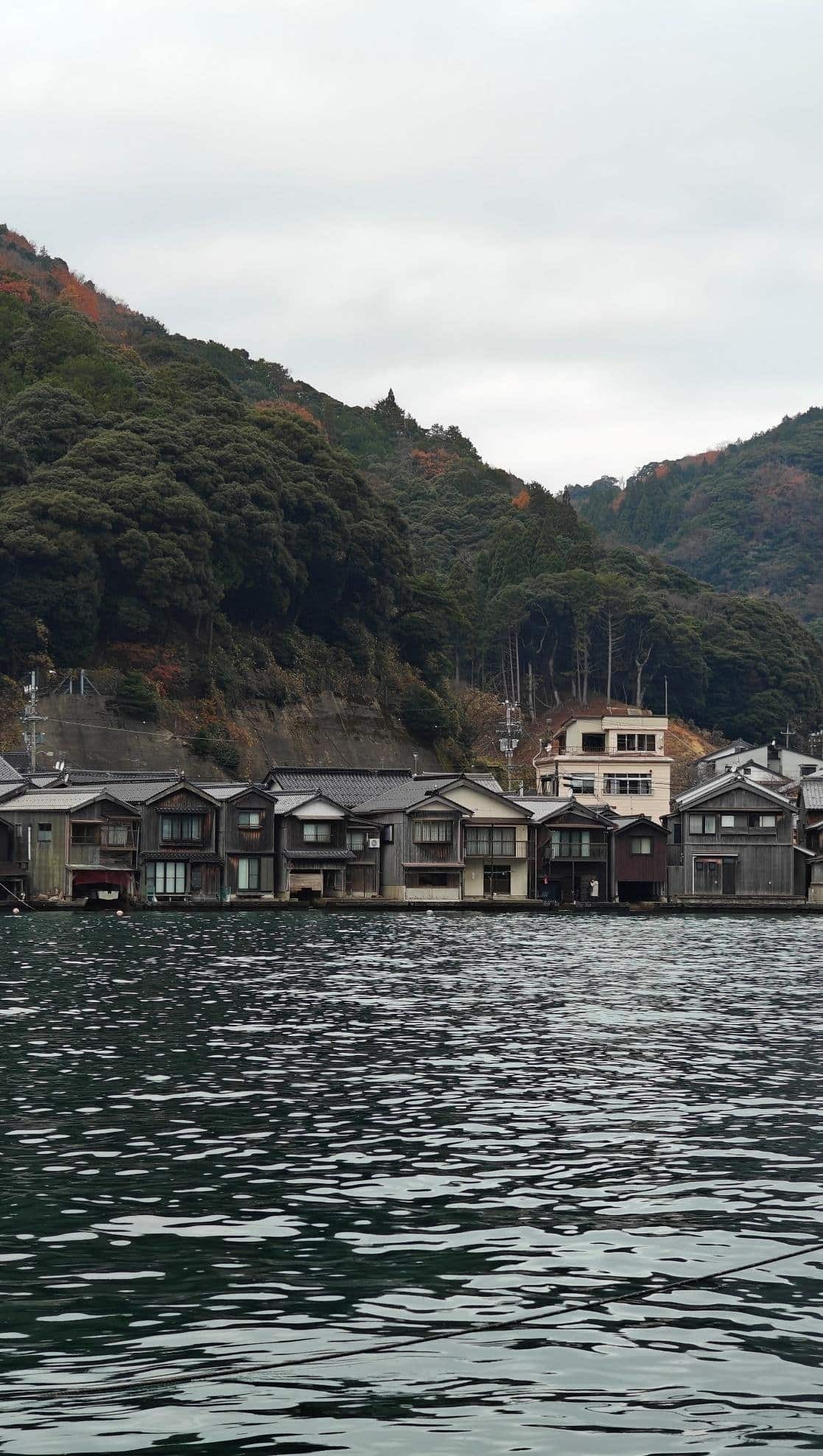
Oh, I kind of forgot to mention this but other than rain, Ine-cho actually gets snow this time of the year. I’ve seen pictures of this place in snow and I must say, I kind of want to come back when that does happen. If you’re the same then make sure to check the Japan Meteorological Agency’s weather outlooks in advance so that you can plan your itinerary accordingly.
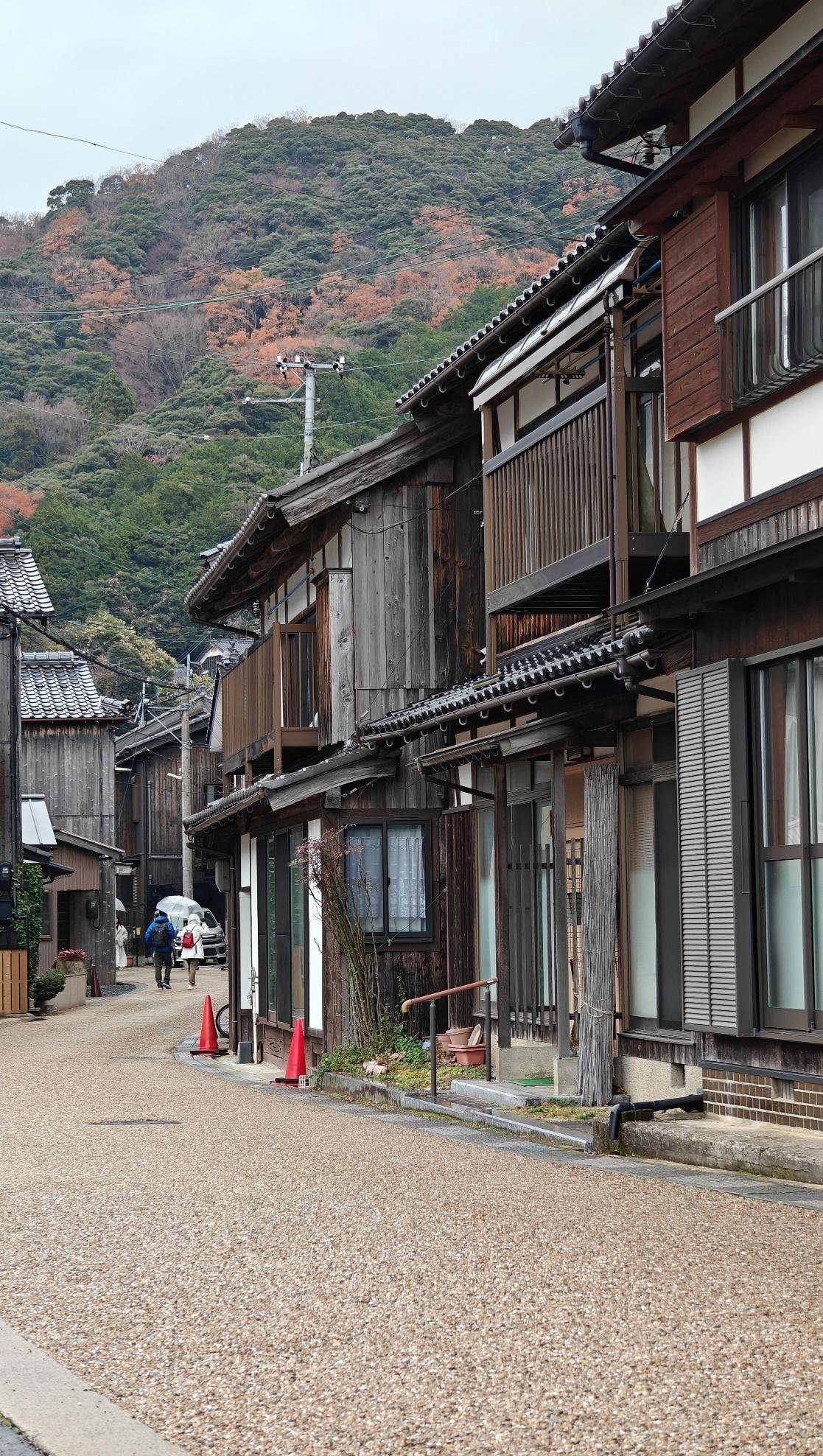
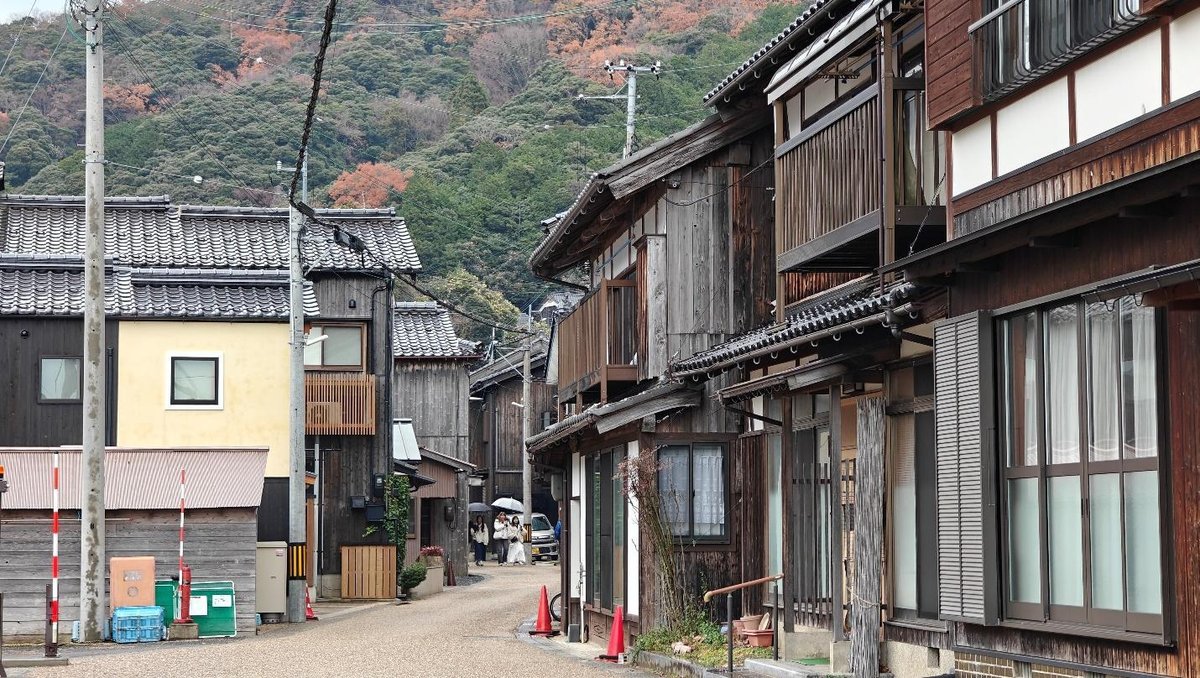
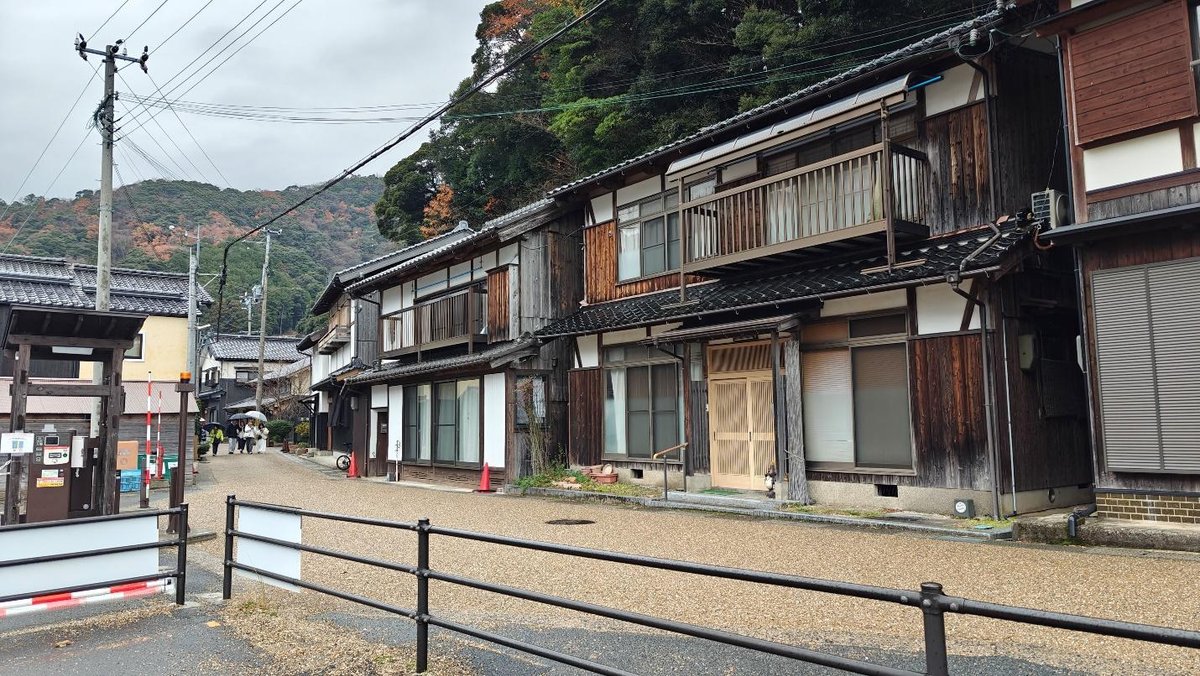
I was done taking pictures from the dock so I decided to go back through the path I used to get here. This also gave me the chance to see the houses here that aren’t facing the water. Now these aren’t really funaya but I think they’re still worth checking out.
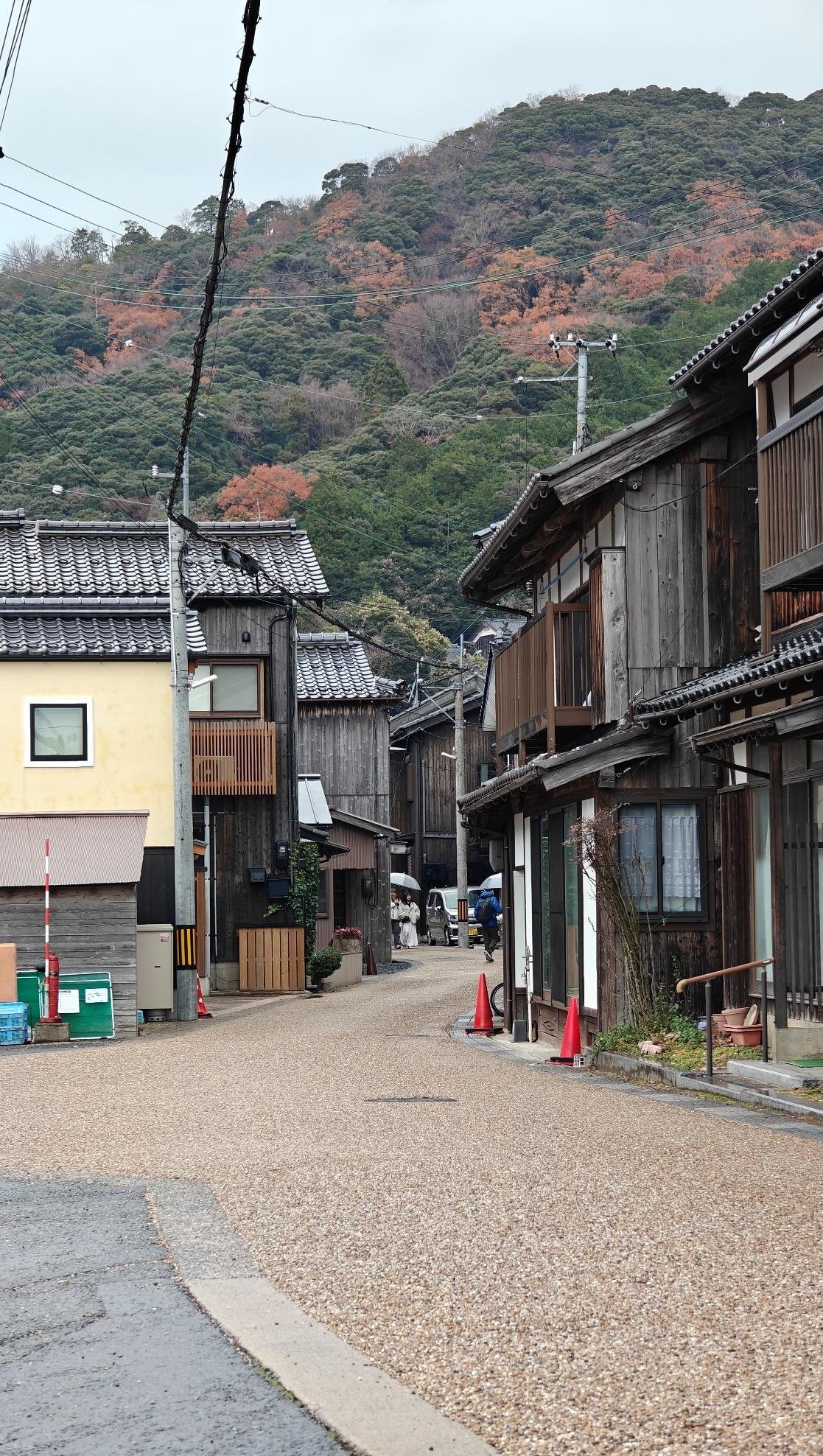
They feature a similar aesthetic as the funaya and I think the only difference is that these are not sitting on the water’s edge. I think if you enjoyed the buildings in Kiyomizu-zaka as well as Sannenzaka and Ninenzaka then you’ll probably love observing the buildings here.
As for seeing the interiors of a funaya, this will be something that you’ll need to book a separate tour for. Other than this, you could also book an overnight stay at funaya accommodations. Aside from Funaya Dining and Cafe Aura, there are establishments like Miyabi Ine Boathouse, Funaya Stay Ichi, and Taiheiso (among many others) that you can check out.
Take note though that if you do plan to book a funaya, do so via the Ine Tourism Association website and make sure it’s 2 to 3 months in advance. It’s also possible to check the sites of the individual establishments. Personally though, I’d just go to the Ine Tourism Association site as it’s a lot more convenient.
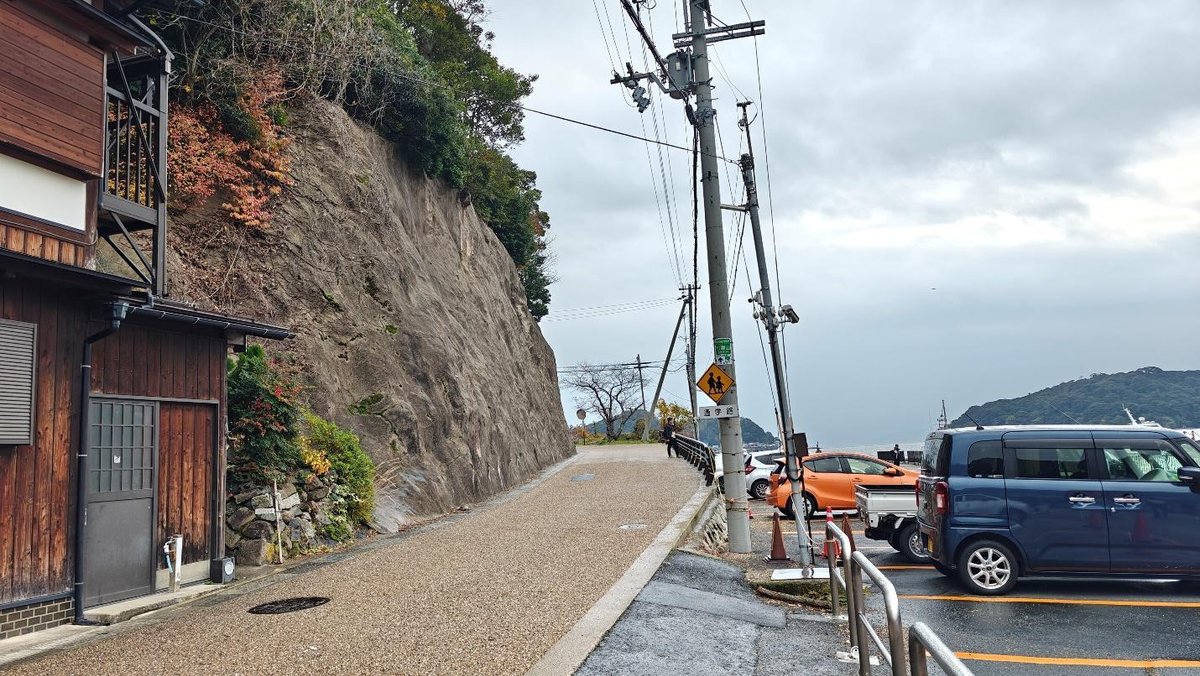
Earlier I talked about the Miyabi Ine Boathouse and this is actually the street that you can take to get to the area where it’s at. That area and the accommodation is actually just a short walk from here. As for where “here” is, it’s at the entrance of the dock where I was taking pictures earlier.
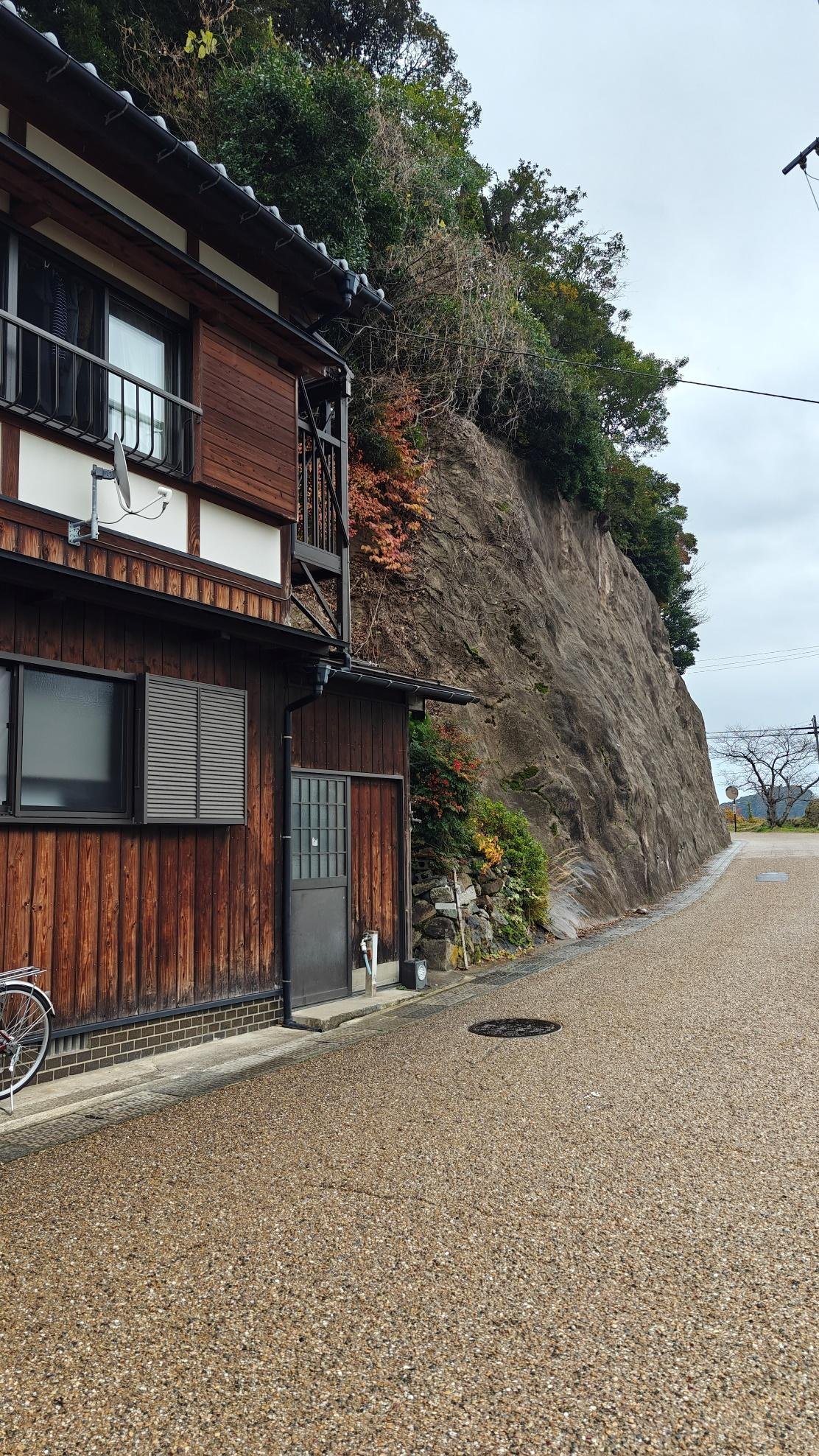
If I’m not mistaken, the length of this coastal path/street here at Ine-cho is around 5 kilometers. It’s very walkable though you probably don’t want to go through its length when it’s raining. Another way to get around Ine-cho is by bike.
Head to the tourist information center that’s just across the road Ineura Park and they’ll let you use one for free for a 2000 JPY deposit.
With it raining again, I then decided to call it a day. I still ended up walking around a bit though I didn’t take any more pictures. It was probably just me but I really appreciated the slow life here at Ine-cho.
It’s one of the few places that I’ve been to that I wish I could live in.Overall, I thoroughly enjoyed this experience. It wasn’t as colorful and vibrant as my walk through Sannenzaka and Ninenzaka but it was every bit as scenic and surprisingly, was also educational. I learned a lot about the iconic funaya as well as the bay’s unique geography and how it helped in the development of the former (and to an extent their preservation).
Make no mistake, the experience wasn’t perfect but I think the shortcomings had more to do with the fact that Ine’s tourism push is still relatively new.What do you think of my walk around Ine-cho and its funaya? Are you considering this town in your itinerary? If you have any more questions then feel free to hit us with them in the comments section!