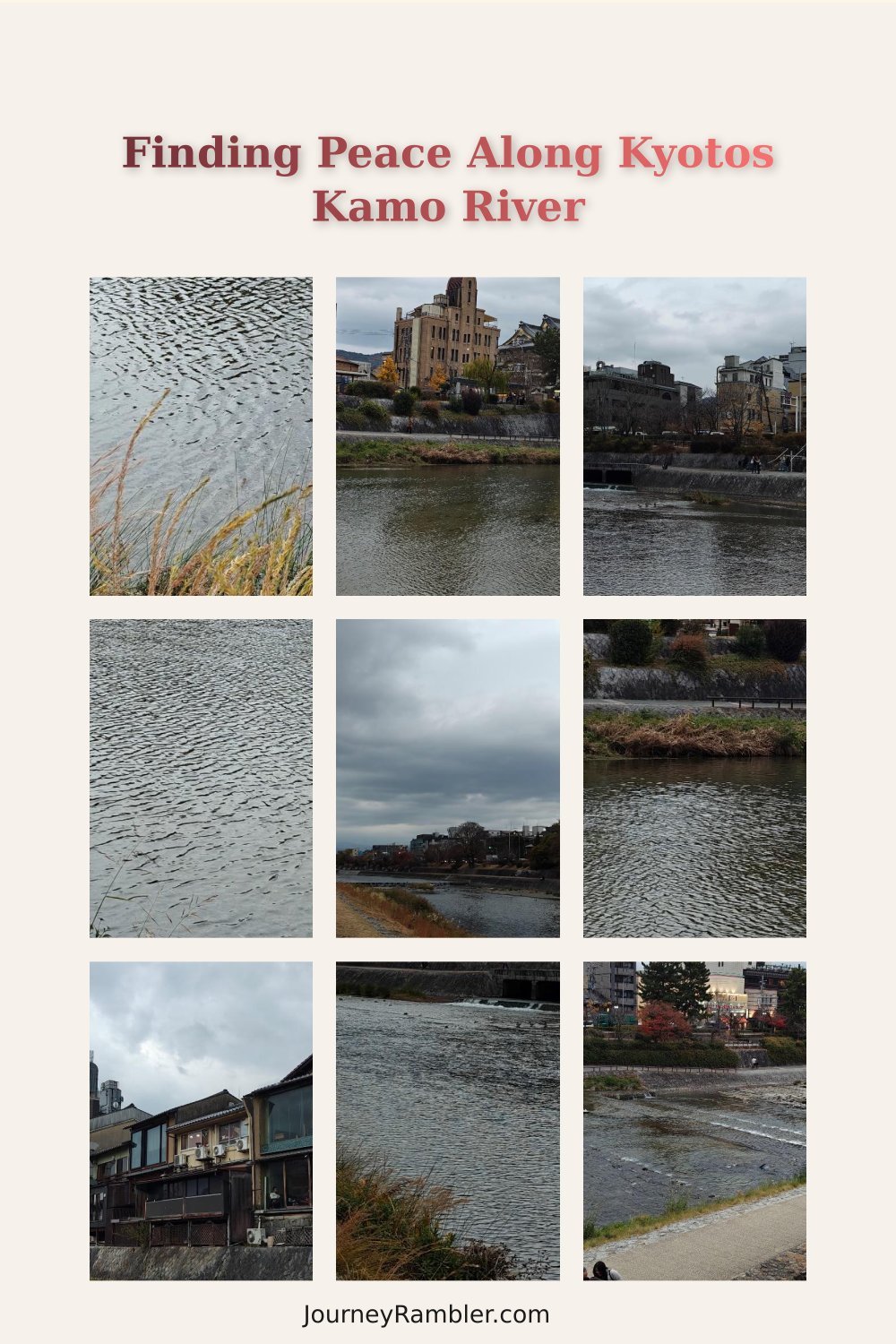
Though it’s not as scenic as the Hozugawa River, the Kamo River (which is also) in Kyoto is much more accessible and quite possibly one of the most serene that I’ve ever had the chance to visit. Access to the river is actually free and walking (or cycling if you can find a bike or e-bike to rent) through here is definitely an activity that I would recommend. Serving as the proverbial “beating heart” of Kyoto, the Kamo River is also quite easy to get to and a short visit here is definitely something that you can and should include in your itinerary.
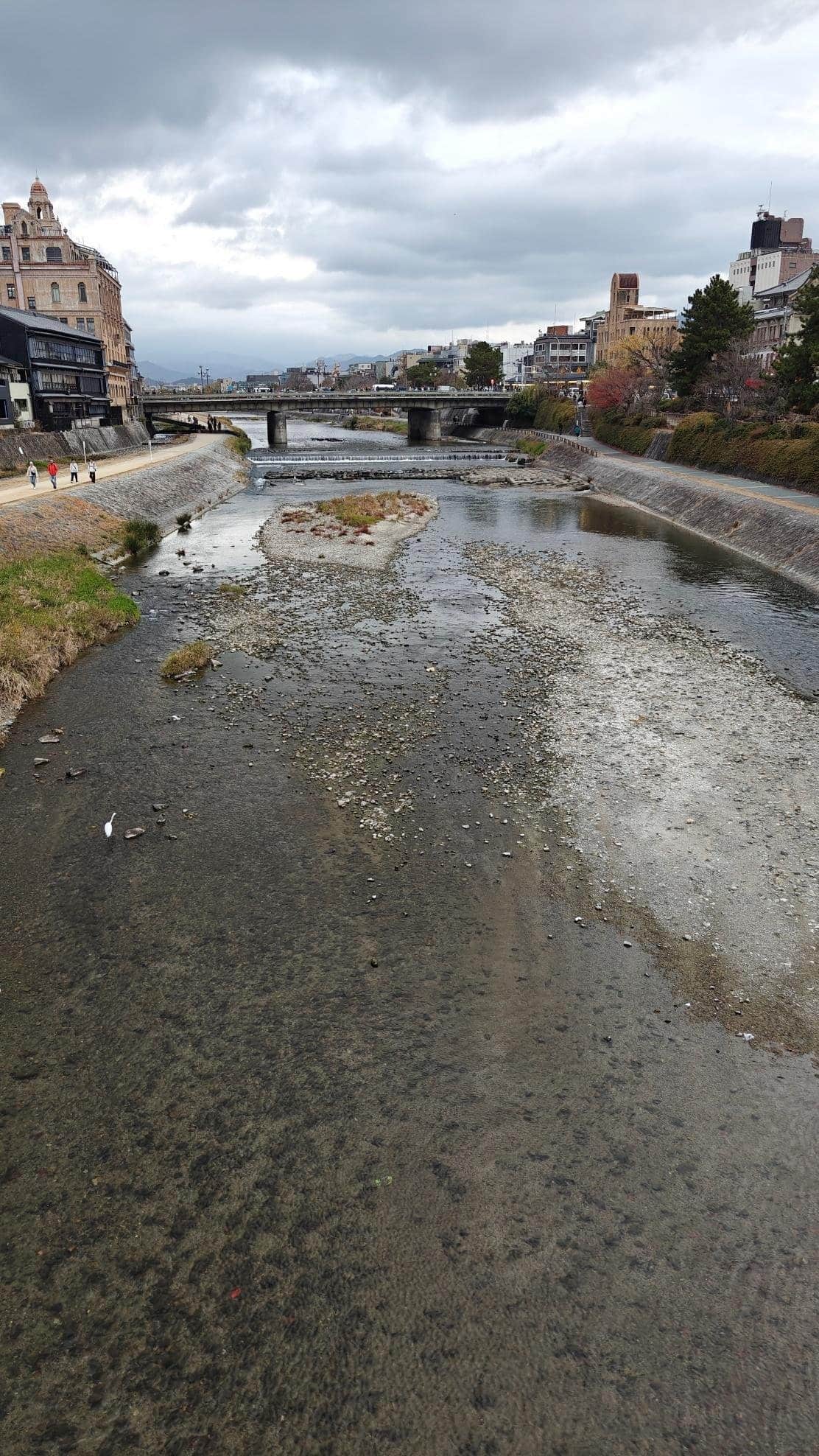
Okay, you’ve already included a visit to the Kamo River to your itinerary but where do you actually start your walk? Of the numerous entry points to the riverwalk, I think the best would probably be the one at Shijo Bridge which you can see in the picture. Remember how I ended my visit to Yasaka Shrine by exiting through its Nishiromon Gate?
Well, the street opposite the gate is actually Shijo Dori and if you follow that you’ll find yourself on Shijo Bridge.
A Peaceful Walk Along the Kamo River in Kyoto
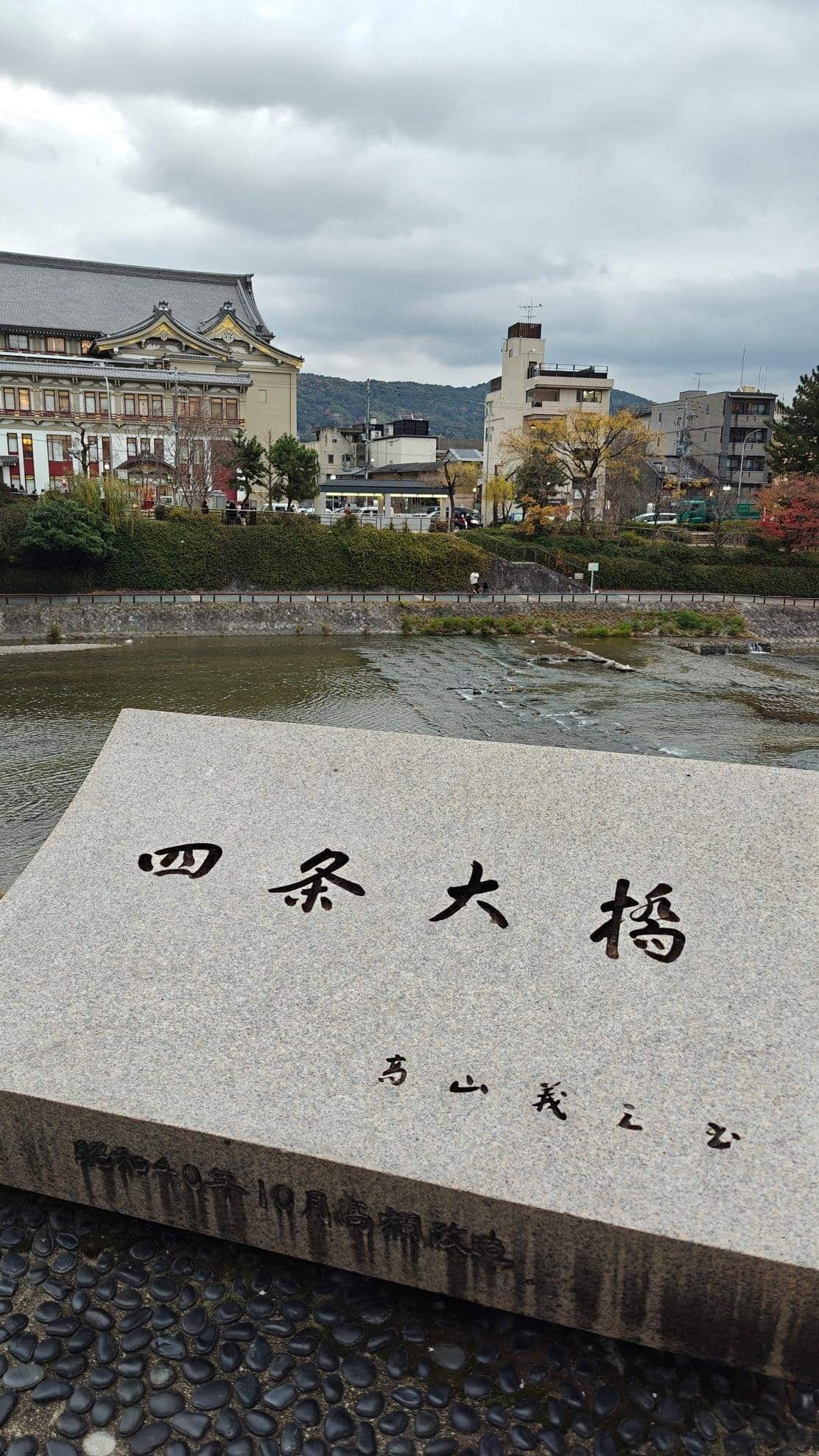
Speaking of Shijo Bridge, here’s its marker. You’ll find this on the right side of the bridge (if you’re facing the direction of the Gion district/Yasaka Shrine) just beside its pedestrian pathway. I must say, the view from the bridge is actually underrated.
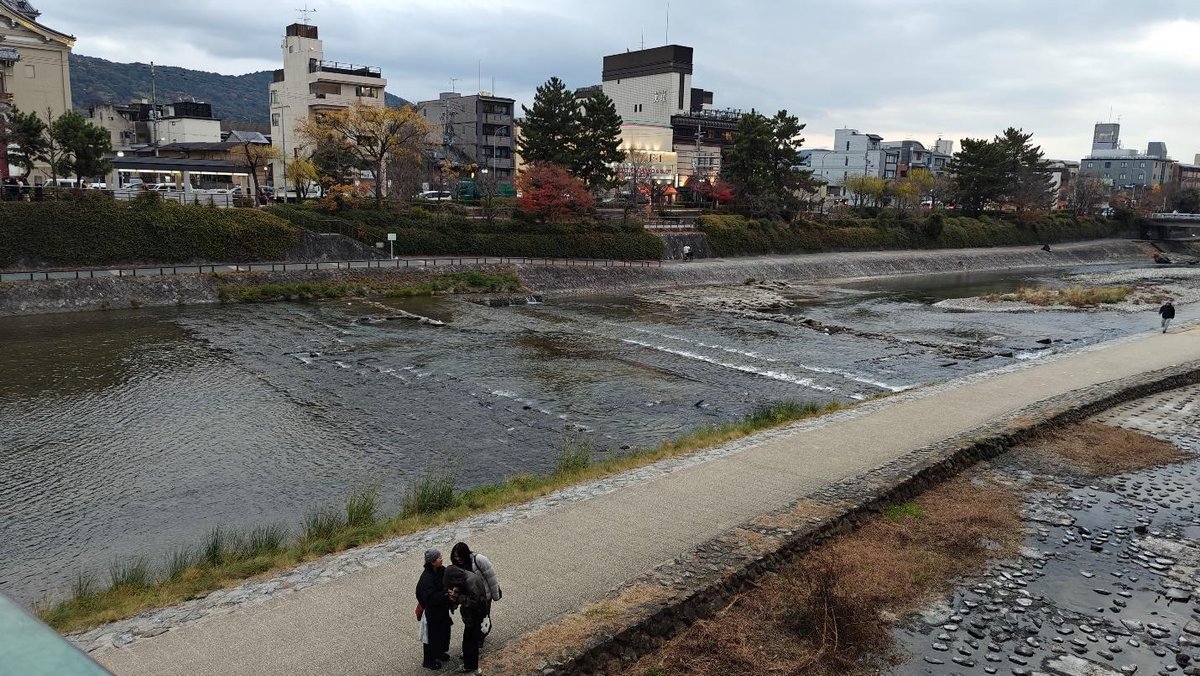
At one point in time, I remember being really into anime made by a studio called Kyoto Animation. As the name of that studio implied, it was based here in Kyoto and the backgrounds of a lot of the anime it made were actually referenced from various locations here in the city. If I remember correctly, the animated film Tamako Love Story even had some major scenes that featured the Kamo River in particular.
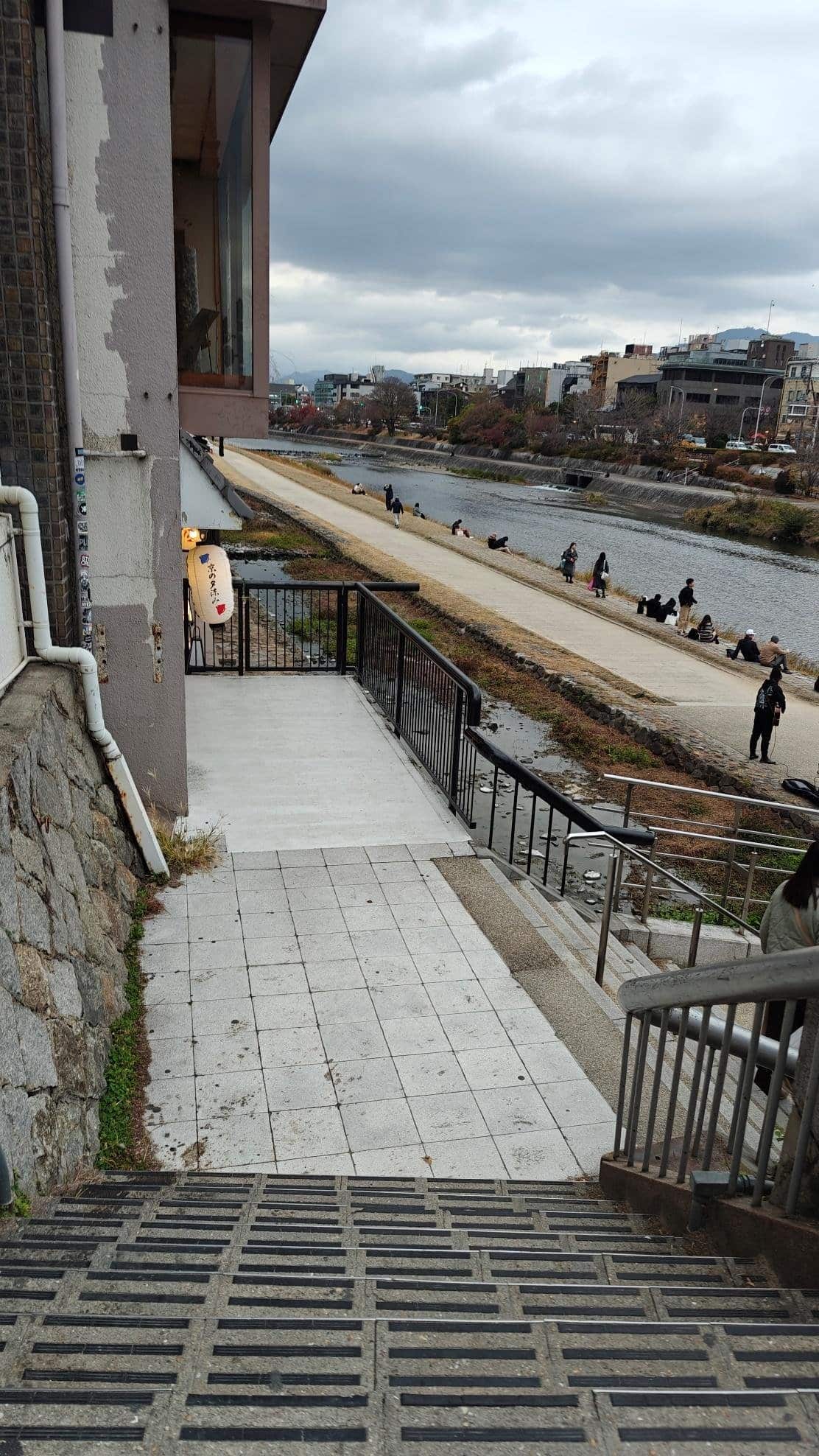
Across the street from the Shijo Bridge marker is the stairs leading down to the river walk. You’ll notice that this is a popular area for tourists due to there being plenty of attractions that are a walking distance from here.
I’ve found that most people tend to stay here for a couple of minutes to enjoy the views and then proceed to the next local attraction in their itinerary.
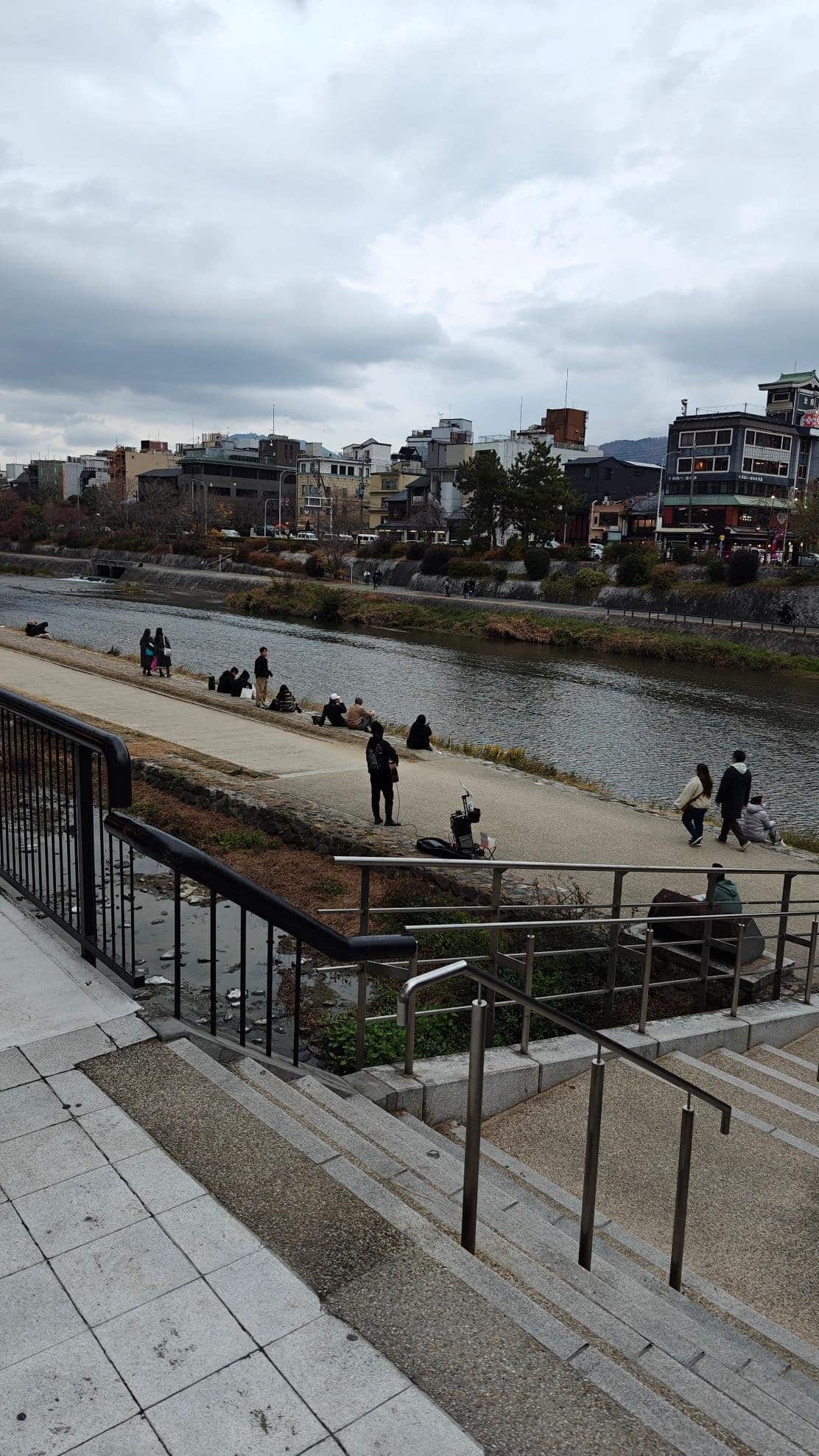
Wanting to see the views from the level of the riverwalk, I decided to then go down the stairs. I said at the start how the Kamo River is very accessible and you’ll kind of notice that when you look at its entryways. Not only are there plenty of these but they’re also very easy to go up and down on even for the elderly.
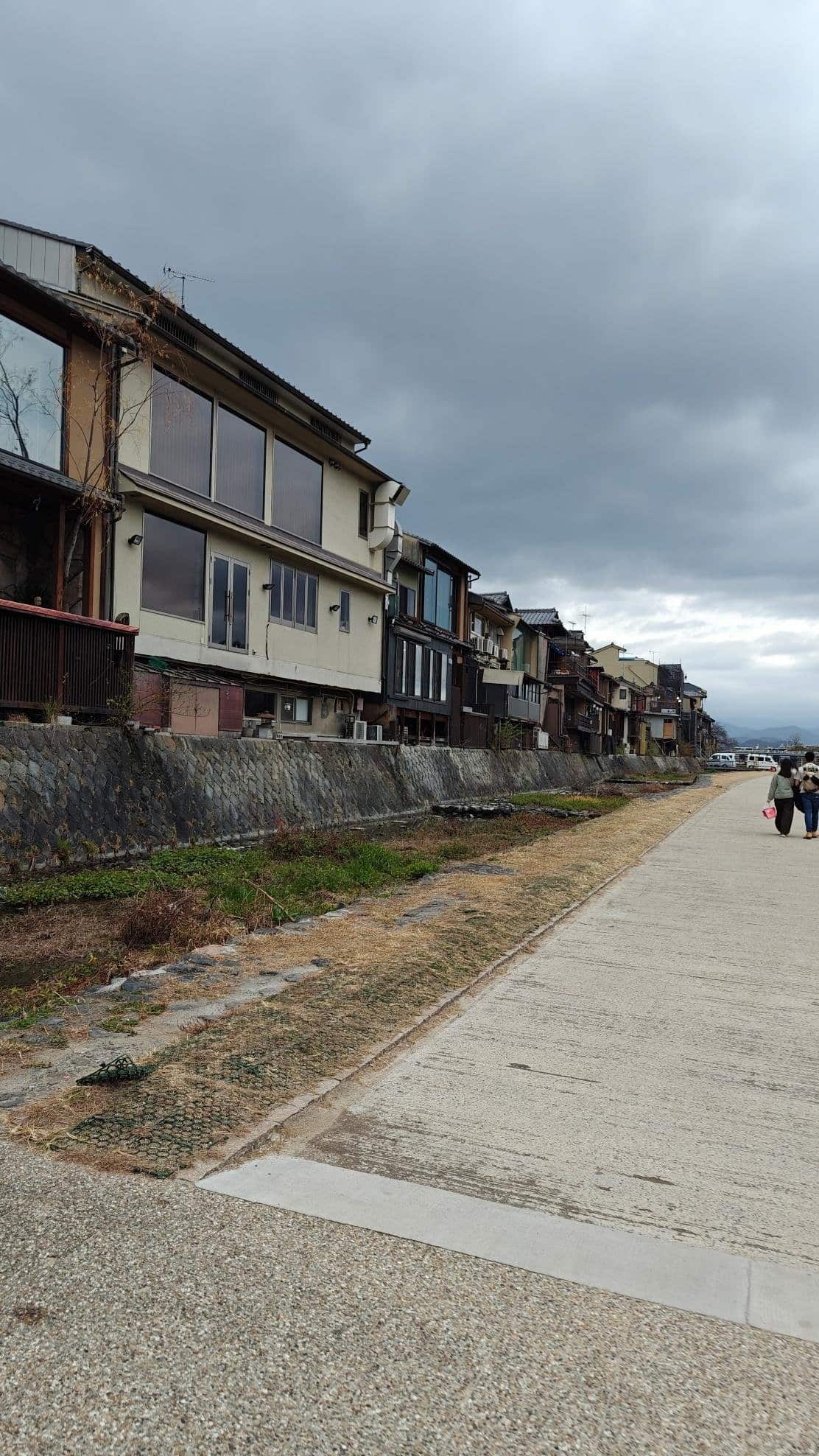
Once you get down, you’ll also notice how flat the riverwalk is itself. This is perfect for not just walking but also cycling. There isn’t a dedicated cycling lane here though so you’ll have to give way to pedestrians if you plan to rent out a bike and use it here.
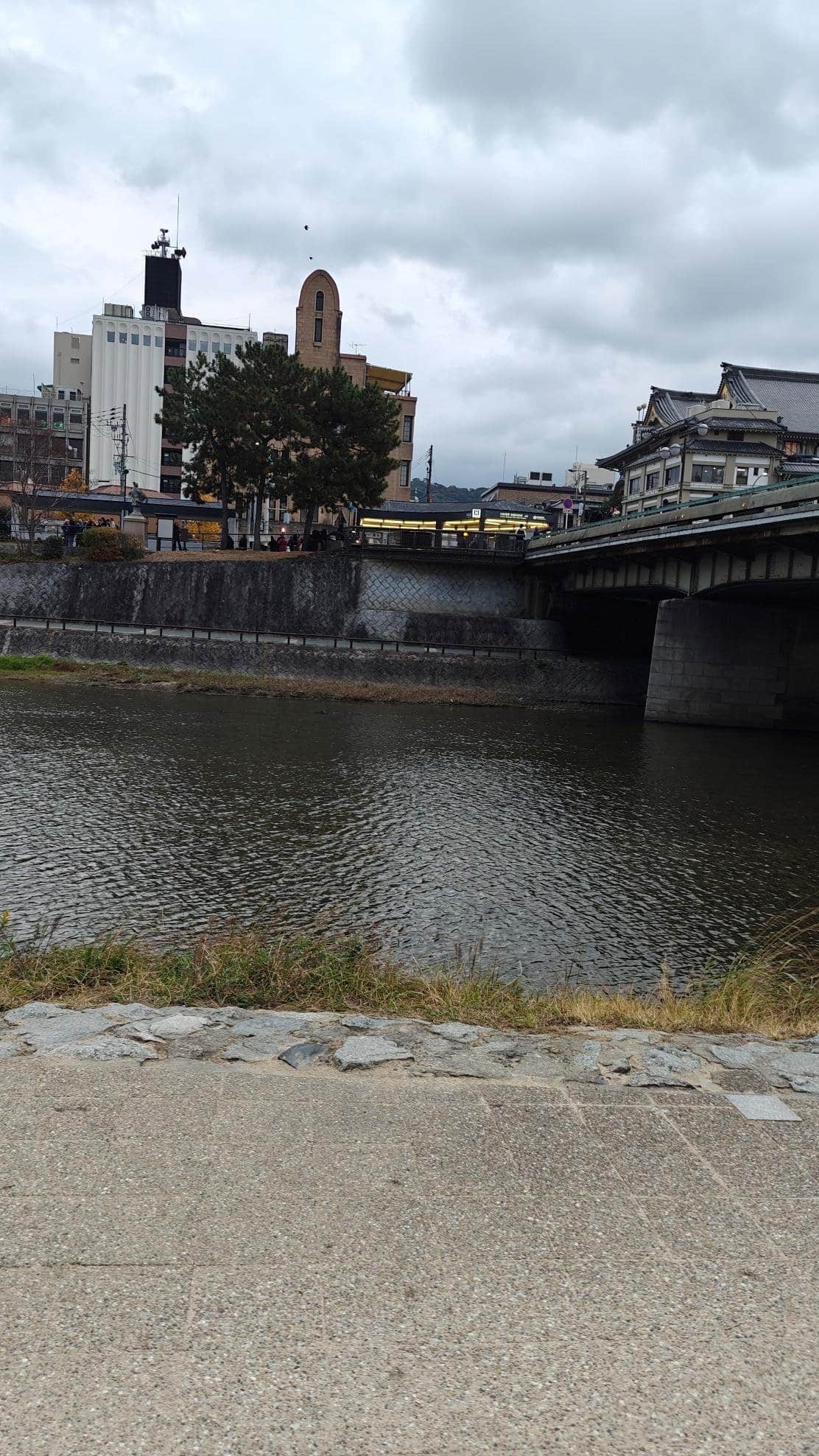
Here you’ll notice the area and street leading to Yasaka Shrine. The first building on the right after the bridge is the Minamiza Theater and what's interesting about it is that it's said to be where Kabuki theater first came to be. It’s a little hard to see but on the left you’ll notice a statue of Izumo no Okuni.
She was a former miko who was responsible for founding the Kabuki theater troupe that came up with and refined this traditional performing art.
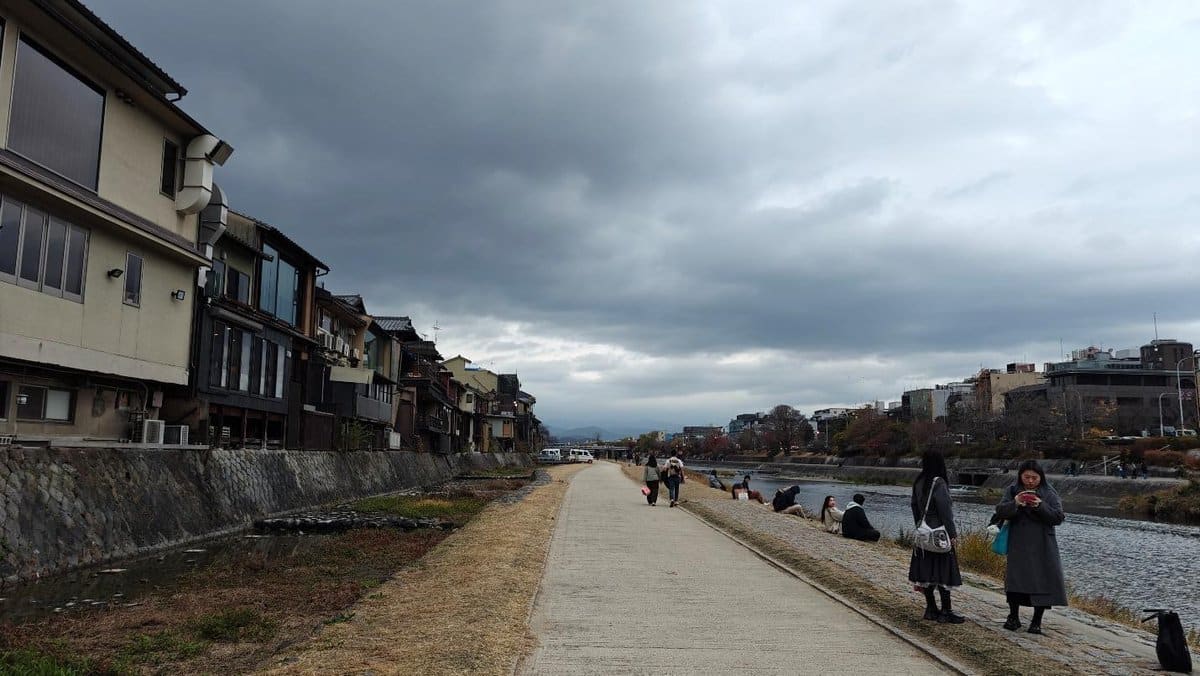
One thing that I really liked about the riverwalk was just how tranquil and serene it was. Even with the people there during my visit, I couldn’t help but feel a certain sense of calm. Heck, I could totally see myself spending the whole day walking through here because of how peaceful it was.
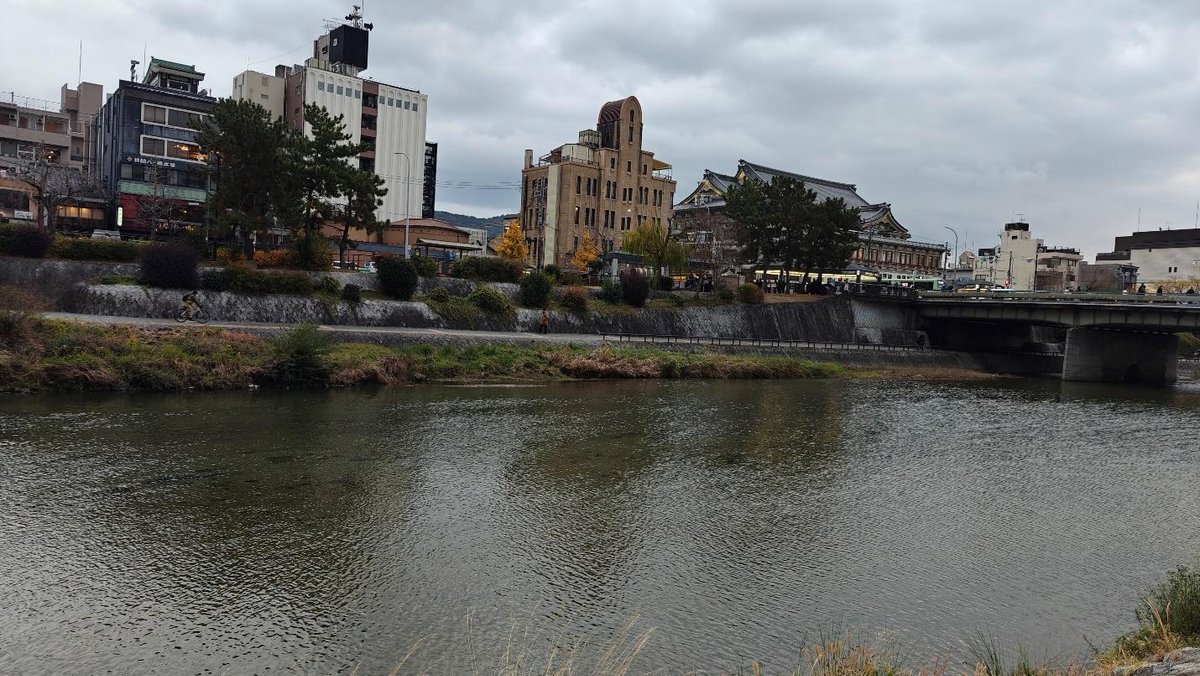
I guess this feeling of peacefulness had a lot to do with the Kamo River itself. Save for some areas, the flow of the river was quite gentle owing to how shallow it was. And while there was noise from car and foot traffic it somehow felt distant.
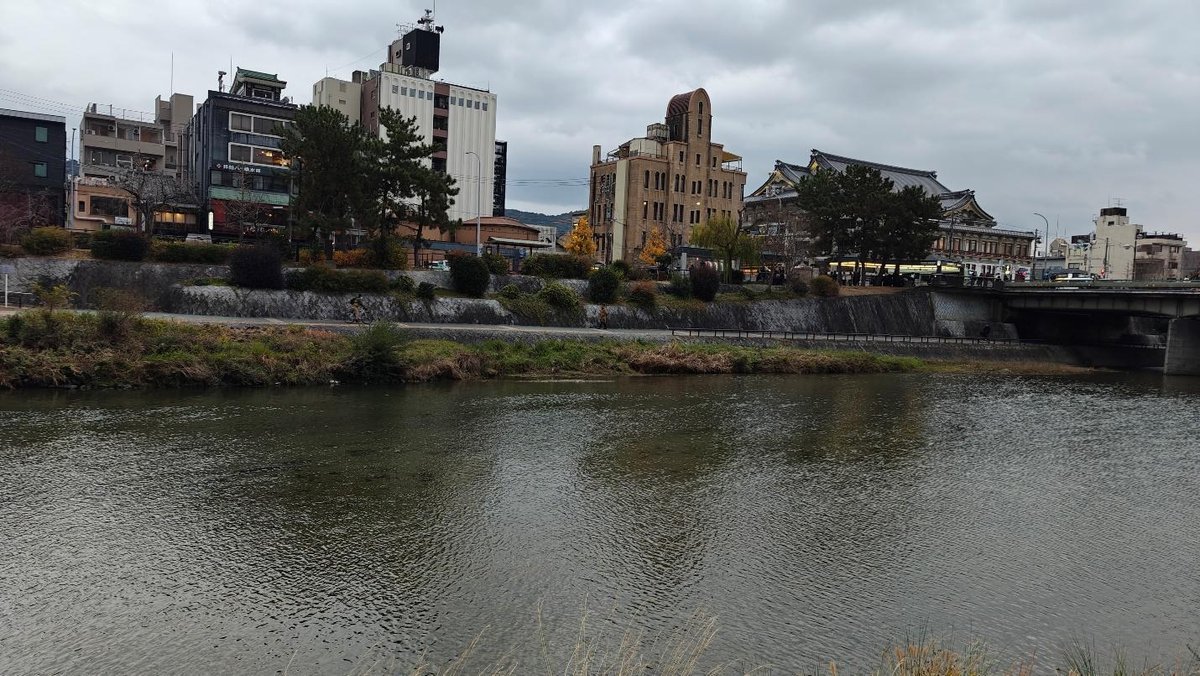
I’m not sure if it was just me but the riverwalk seemed like a different world compared to Kyoto’s streets. Here you can get lost in your thoughts just walking or resting on the banks. I will say though, the whole riverwalk could have used proper benches as during my visit most of the people that I saw were sitting on the sides of the pathways.
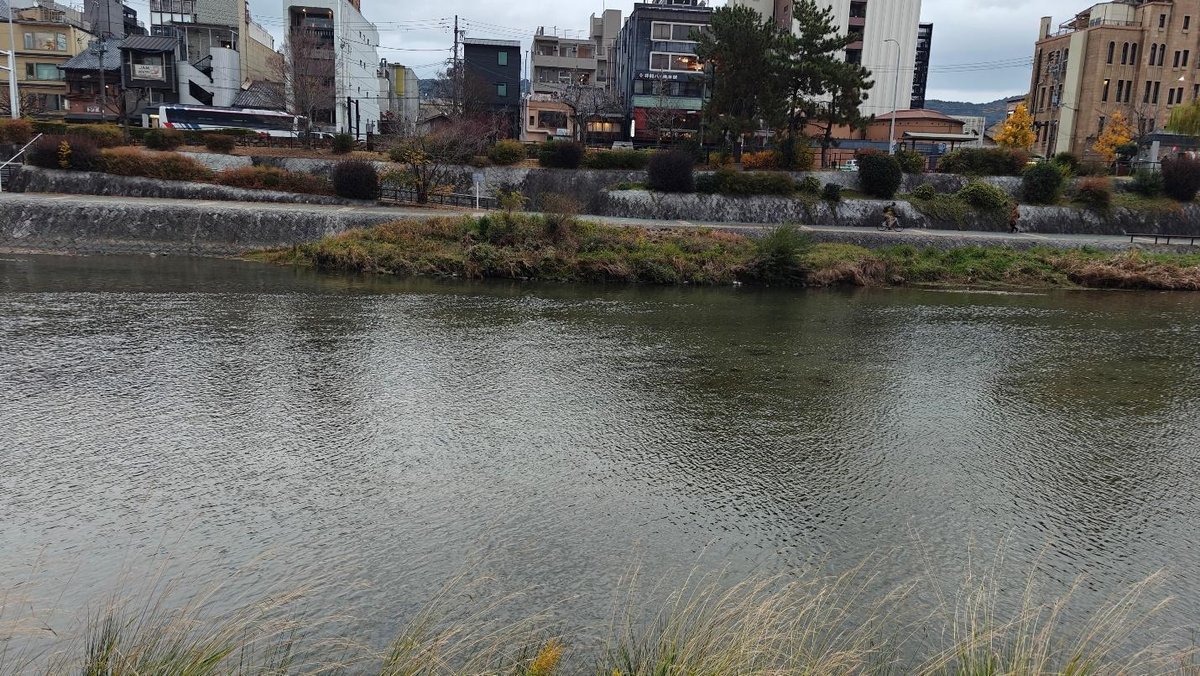
Walking around, I couldn't help but compare the river walk to another one that I'd visited just recently. If you remember, I talked about the Dujiangyan Blue Tears a couple of months ago and the difference between that and the Kamo River is so drastic. While that place was arguably much better for tourism, it was also quite loud and extremely crowded.
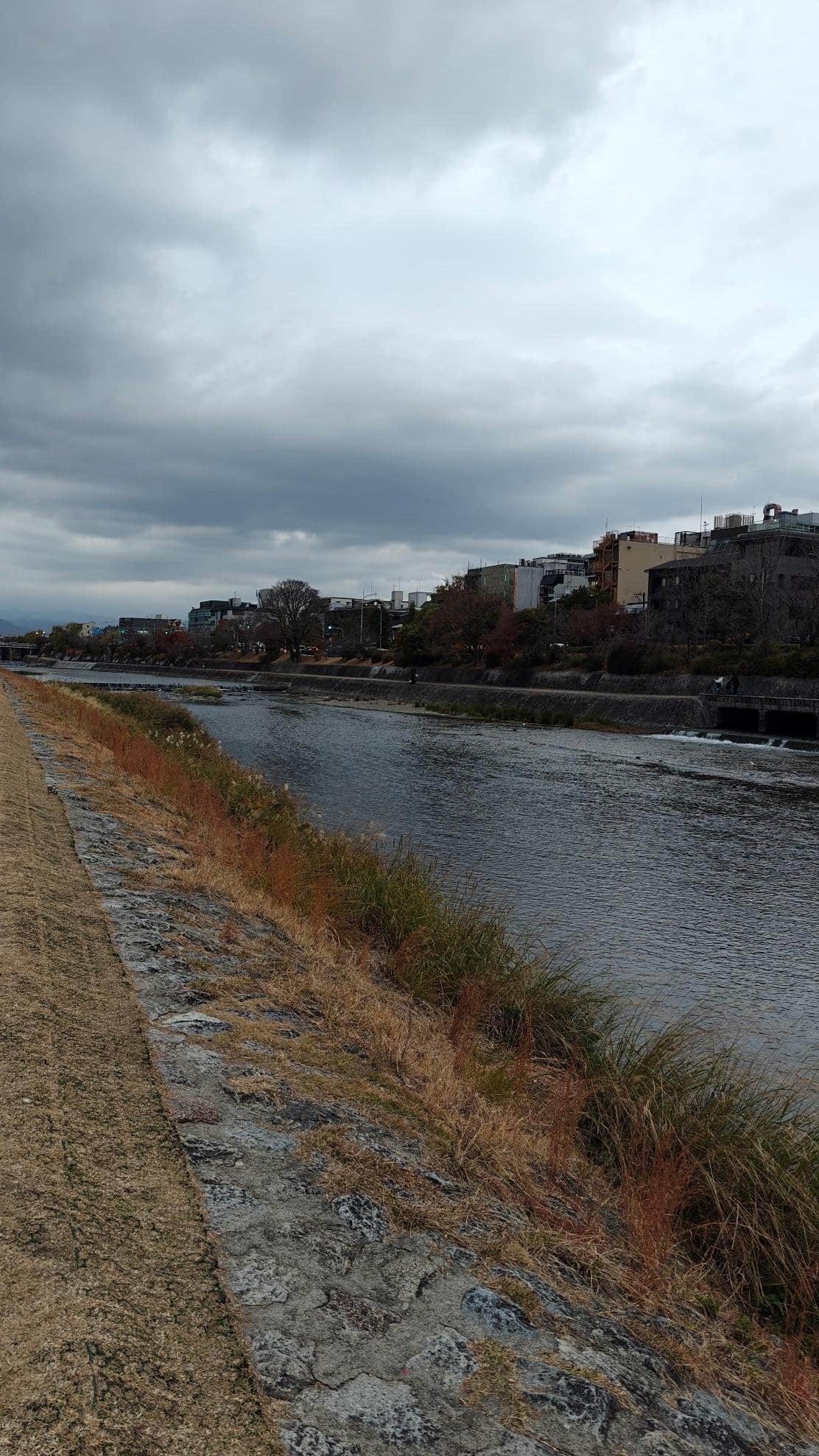
Contrast that to the Kamo River which, despite being rather plain, was such a treat to walk around in. There was no garish music playing in the background and all you'll really hear was the sound of distant traffic being drowned by the river's gentle flow. Here you can see the banks of the river and part of the Sanjo Bridge off in the distance.
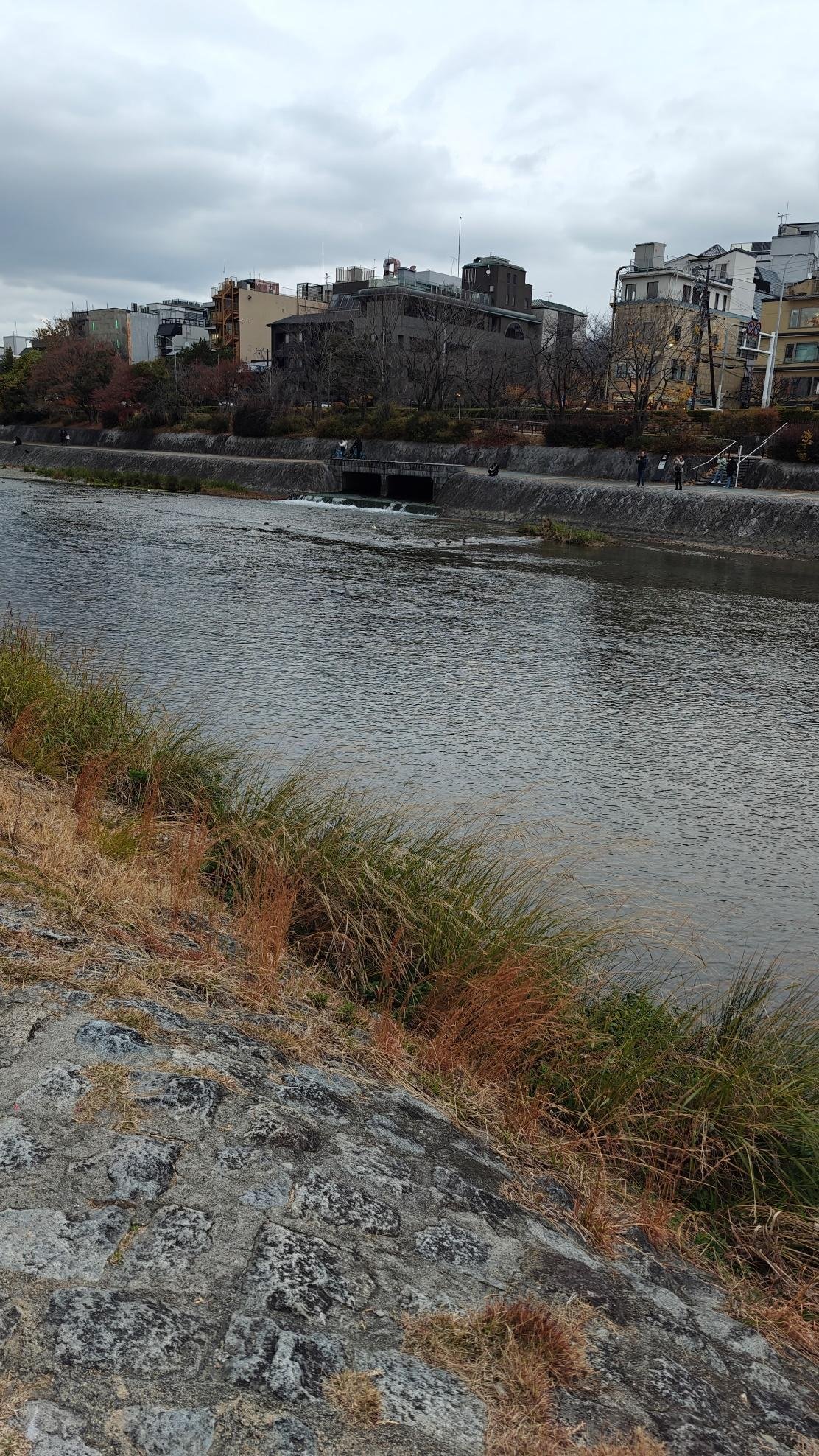
As I was preparing to sit down, I noticed that the opposite bank was rather busy. It wasn't a crowd but I noticed that there was a constant stream of people in the area pictured above. Turns out, the area is actually quite popular during certain parts of the year.
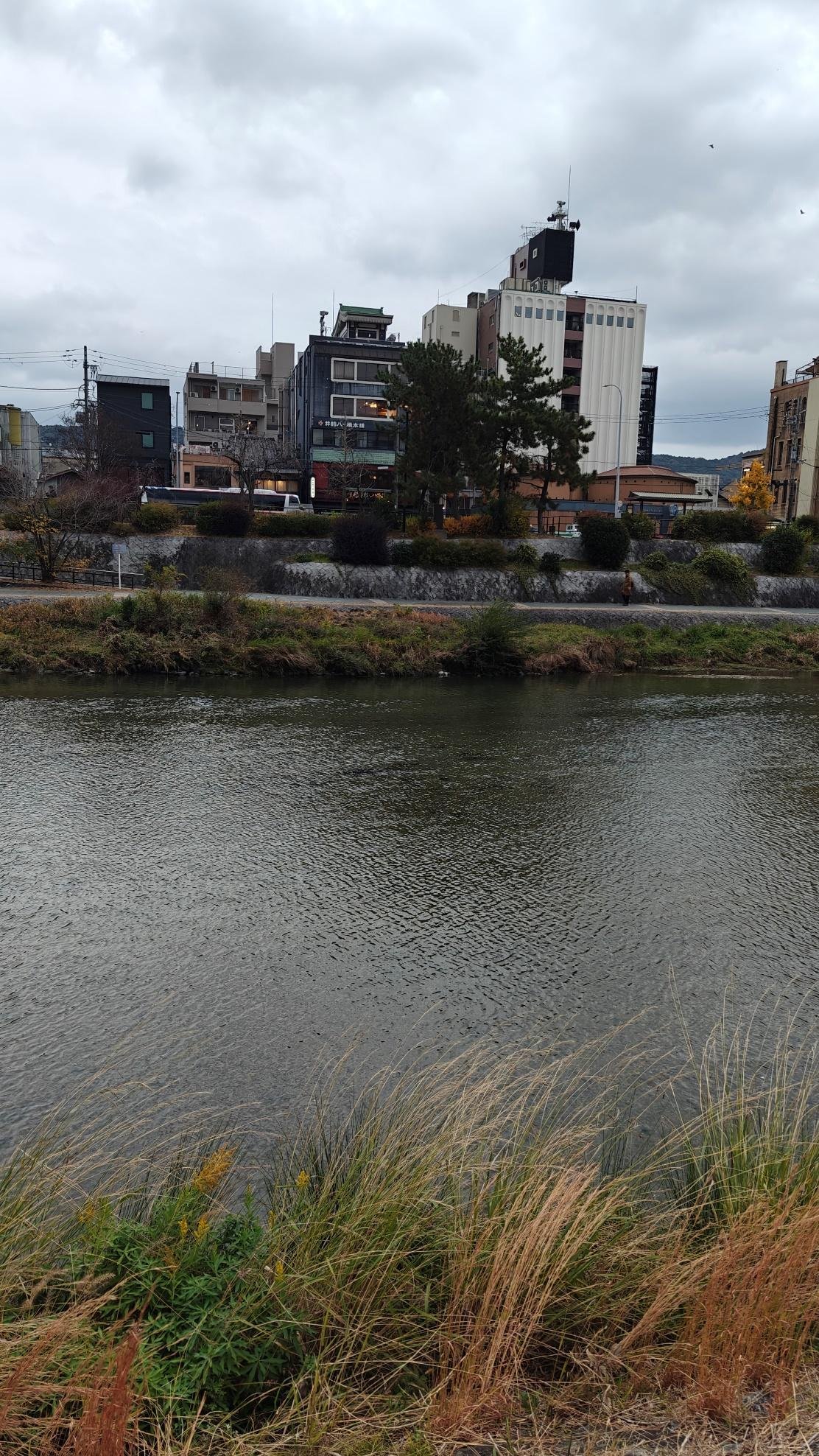
Known as the Corridor of Flowers, the area is actually lined with sakura trees. Kyoto has been known for having some of the best sakura viewing locations in Japan but I'd argue these are perhaps the most underrated. You could say that locations like Kiyomizu-dera and Kinkaku-ji are more popular and have better amenities for hanami but they also require admission fees.
In contrast, viewing the sakura in bloom during the spring season here at the Corridor of Flowers is totally free.
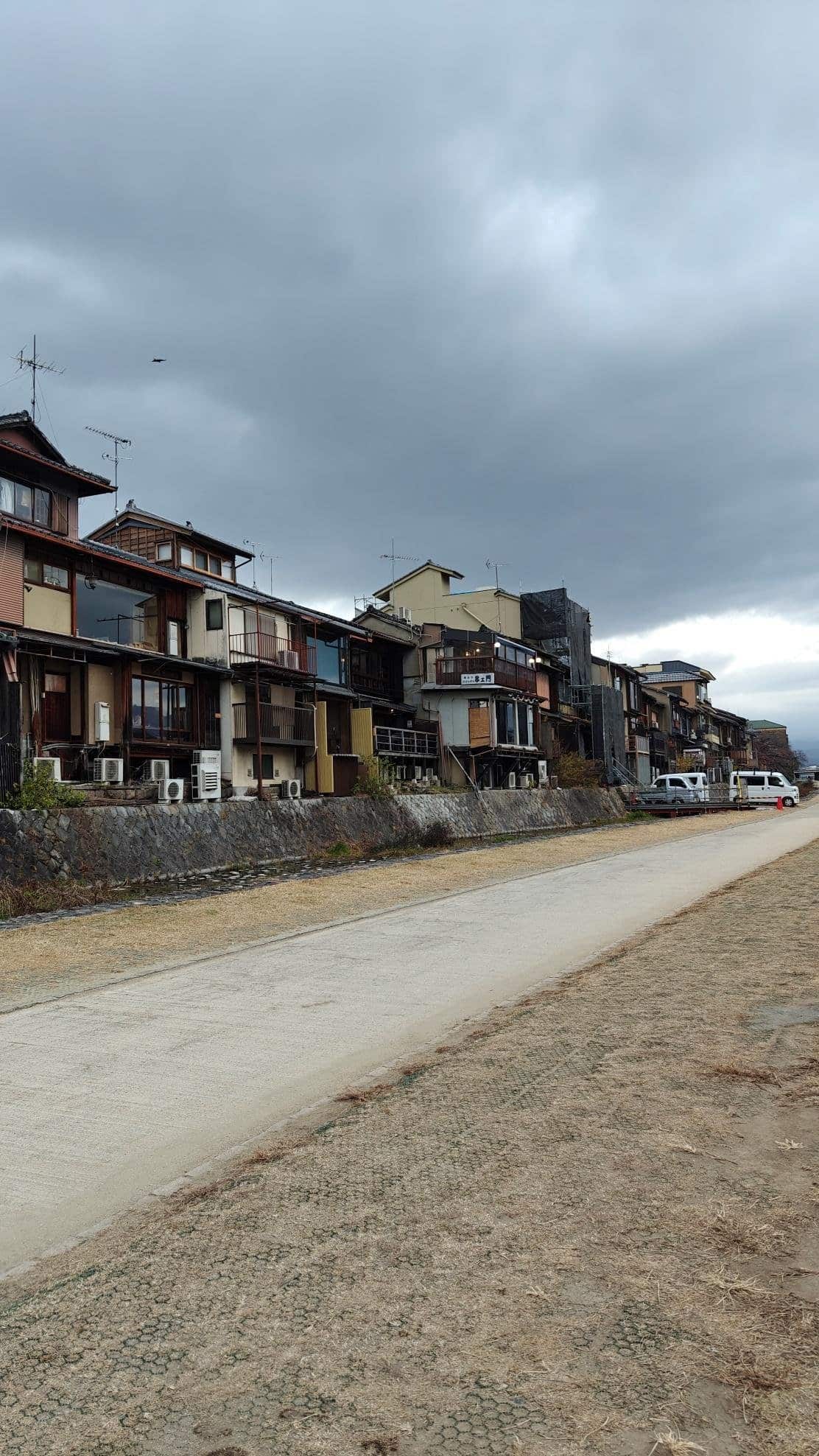
This is what you'll see behind the bank that I'm currently on. A lot of these buildings are food establishments that are part of the Kashiwayacho area which itself is part of the larger Pontocho Alley. If you're feeling adventurous then I'd definitely suggest going to this area to get a taste of Kyoto cuisine or to maybe just relax further after a long day of walking around Kyoto.
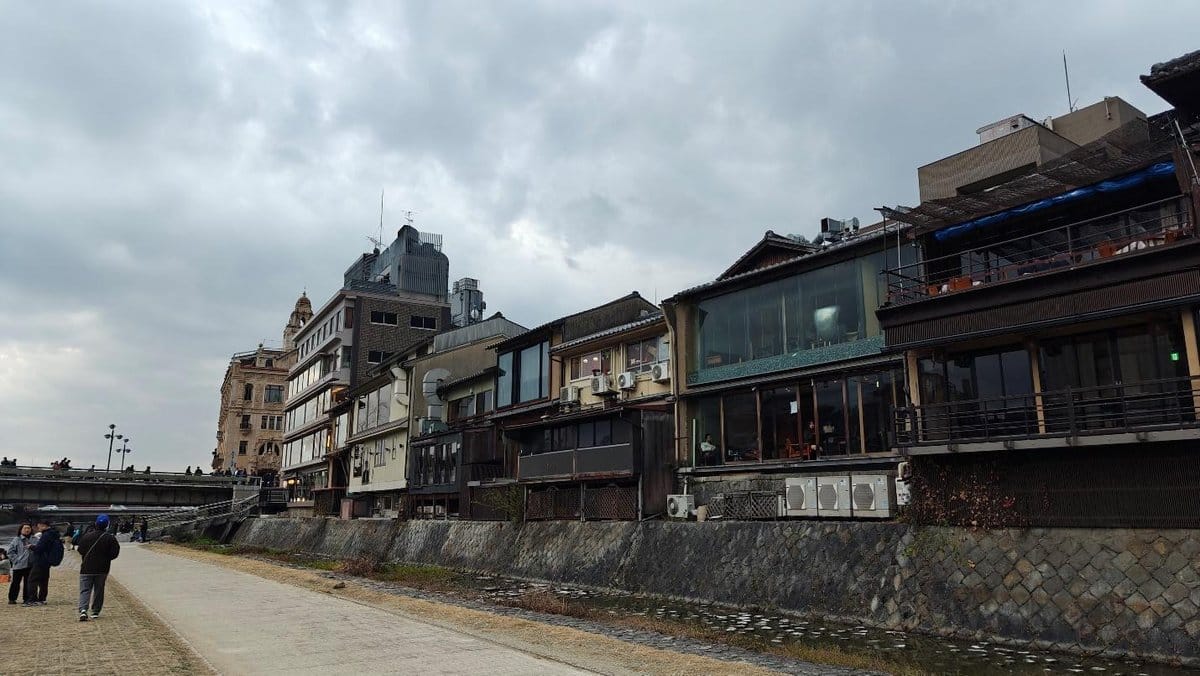
Now if you come here in spring, this whole area actually changes. A majority of the establishments here will start building temporary elevated wooden verandas over the small stream that are connected to their buildings. These are called kawa-yuka and they allow the establishments’ guests to view the sakura without having to go over to the Corridor of Flowers on the opposite bank.
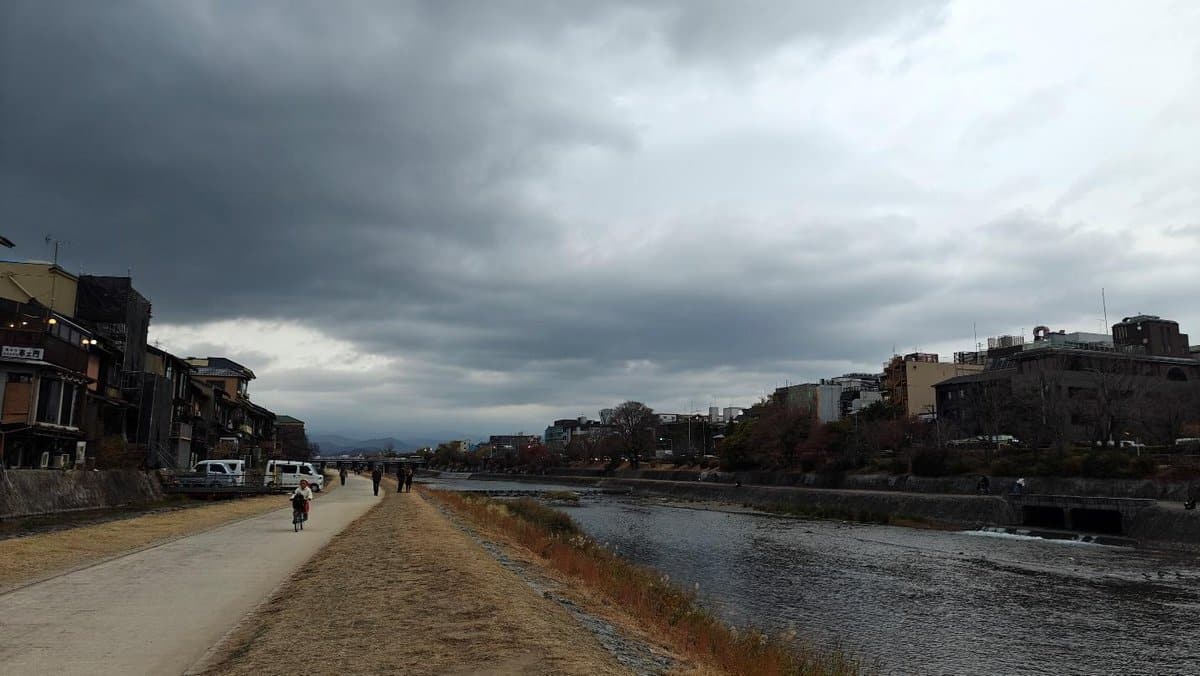
Speaking of the Corridor of Flowers, here's a look at its length. It stretches from the Sanjo Bridge in the background and ends somewhere near the Statue of Izumo no Okuni that I pointed out earlier. Since this visit was during the early part of autumn, the sakura had already pretty much shed their leaves and flowers.
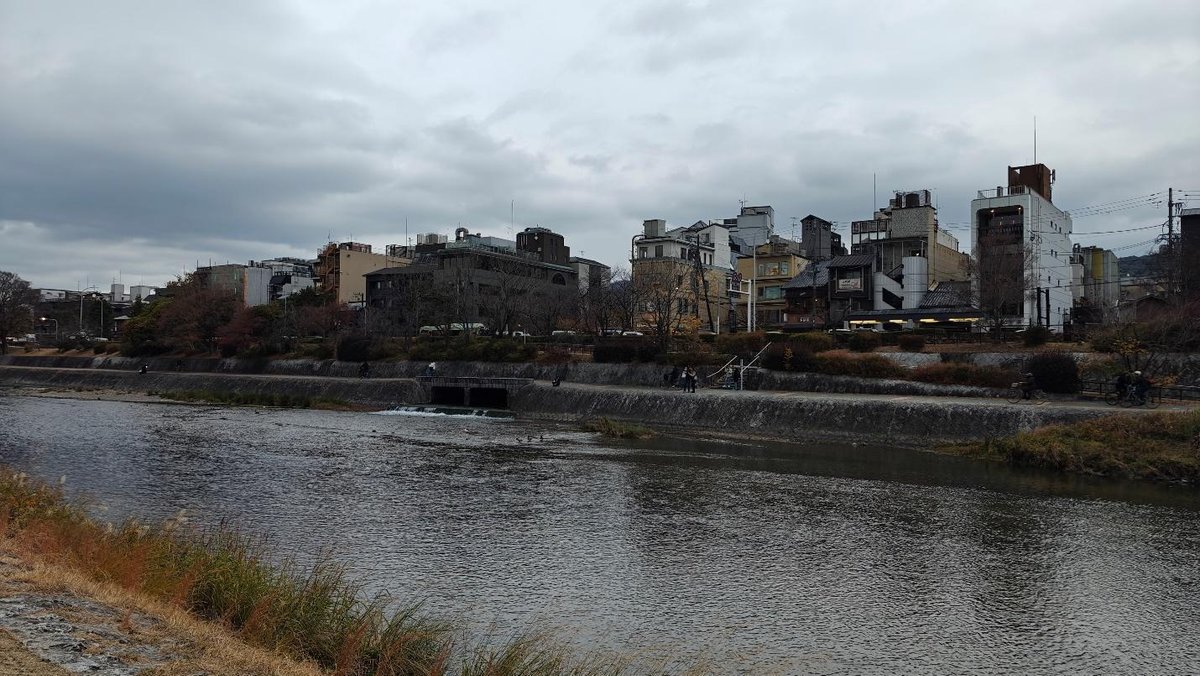
You’ll have to really squint to see them but there are quite a lot of sakura trees here. Also, you've probably noticed the large drain in the middle of the image. Make no mistake, that's not a drain for waste but rather it's where the Shirakawa Canal empties into the Kamo River.
It's actually a rather interesting canal that you might want to check out as well for the machiya houses, willows, and sakura trees that line it.
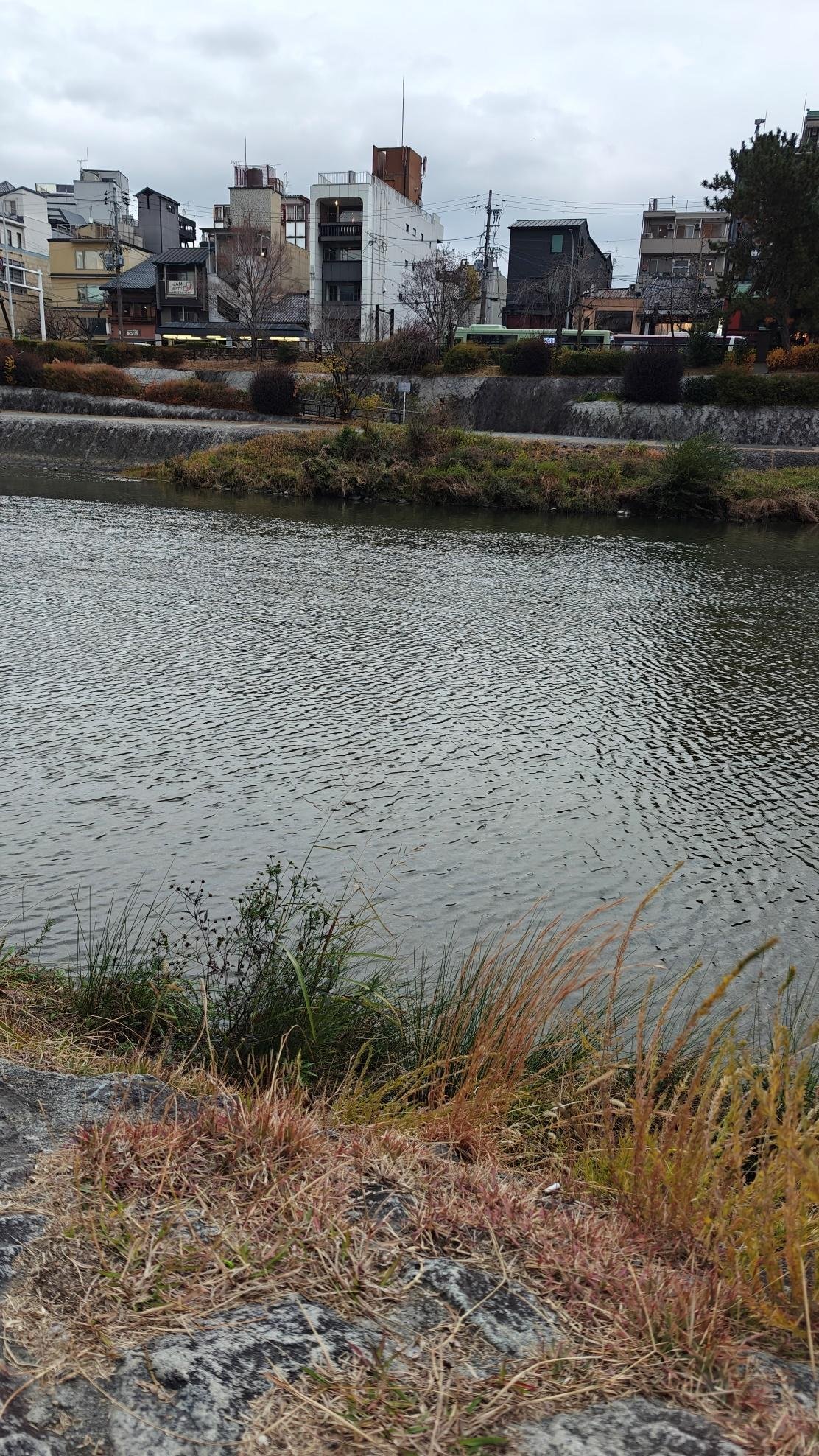
I was actually thinking about stuff while sitting here before realizing just how much time had gone by. It was already quite late in the afternoon and the whole area was slowly coming to life. By this point it was near the end of the business day so I could actually hear the noise from the traffic get a little bit louder.
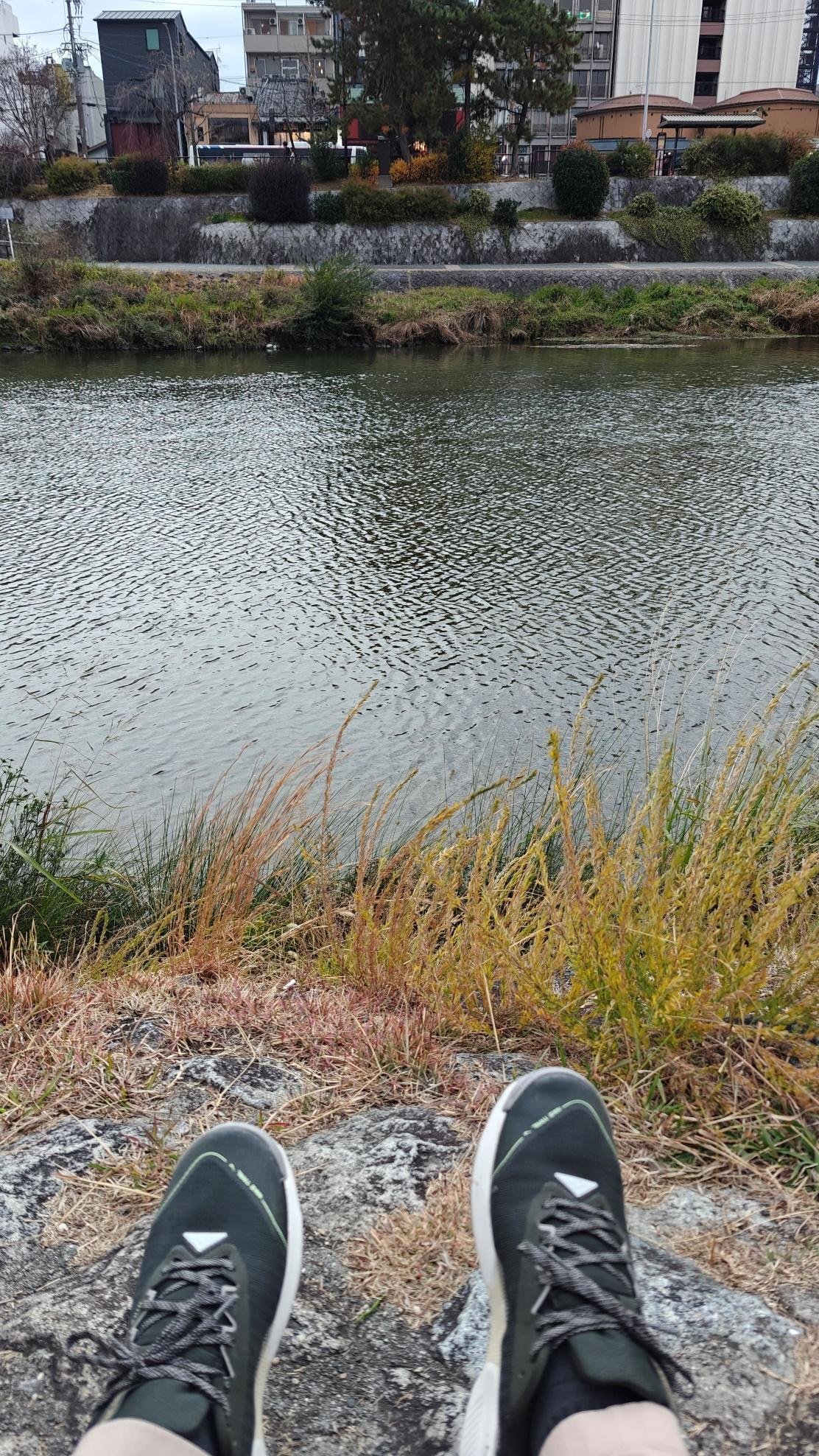
While the noise levels were increasing, it still was relatively bearable from where I was sitting. Come to think of it, I actually wanted to stay here a bit more because I was expecting the worst for foot traffic during the late afternoon/evening rush. Like all things though, this visit had to end so I was getting myself ready to leave for the night.
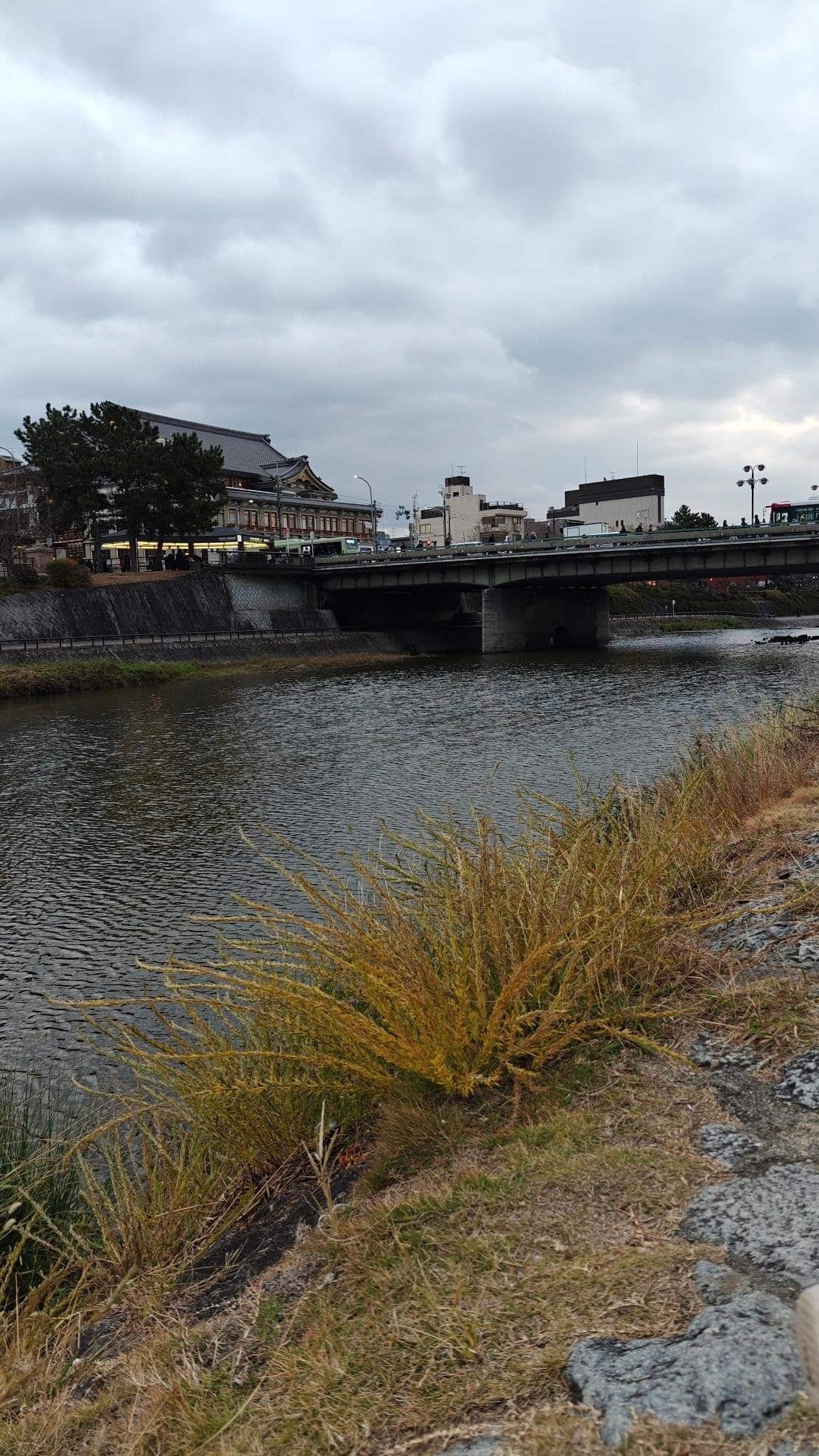
From where I was sitting, I took this picture of the Shijo Bridge with a wider view of the Minamiza Theater behind it. At this point, the lights were already up on a lot of the traffic posts. It's not quite clear in the image but you can also sort of see people already walking across the bridge's dedicated pedestrian walkway.
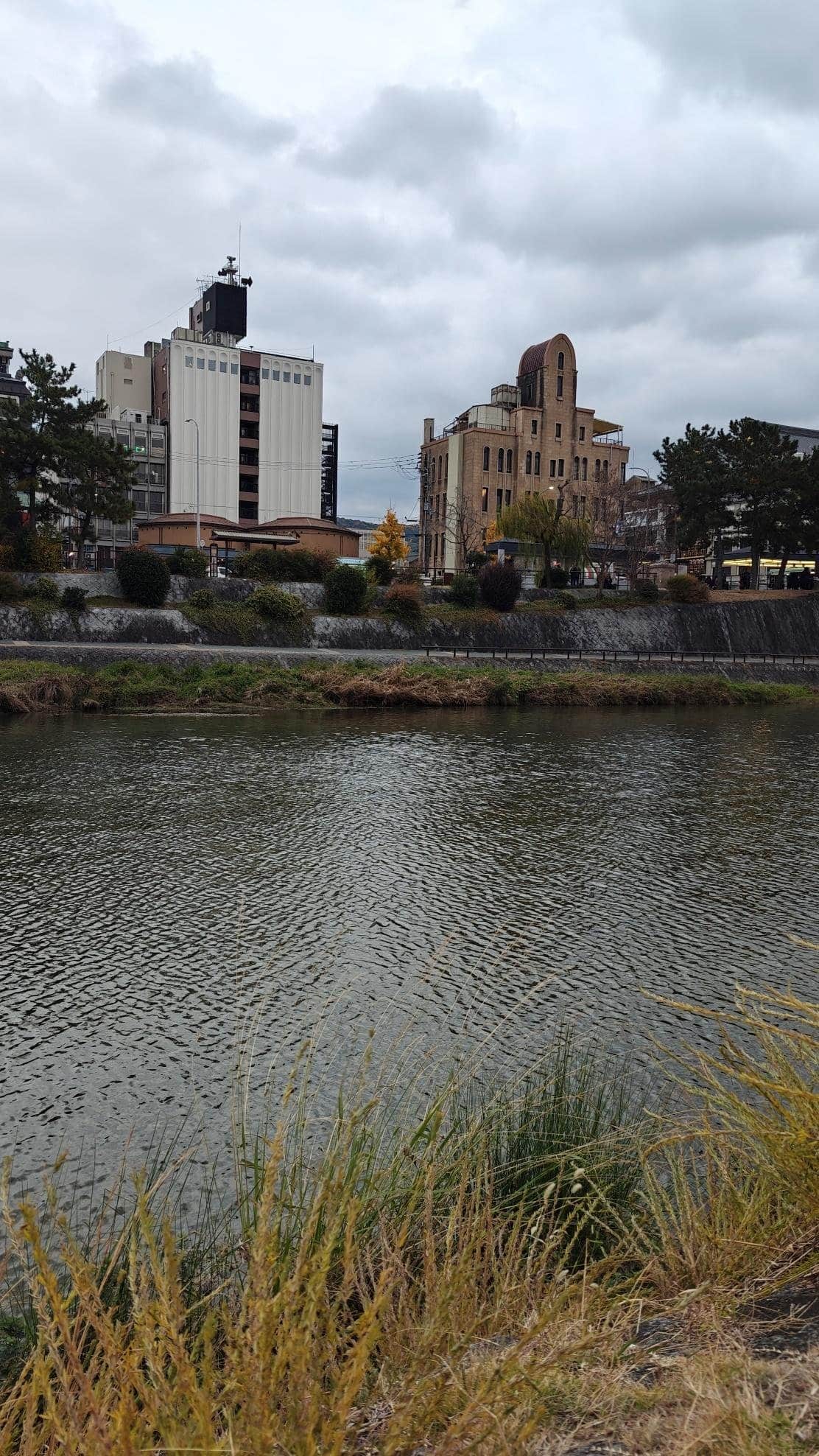
Here you'll see another iconic building that's right across Shijo Street from Minamiza Theater. Built in the early 1900s (1926 to be exact), the building is an example of Western-style expressionist architecture and it now houses Restaurant Kikusui. I'm not too sure if the food there is good but I've read that the beer garden at the top of the building actually has some really nice views of the Gion district below it.
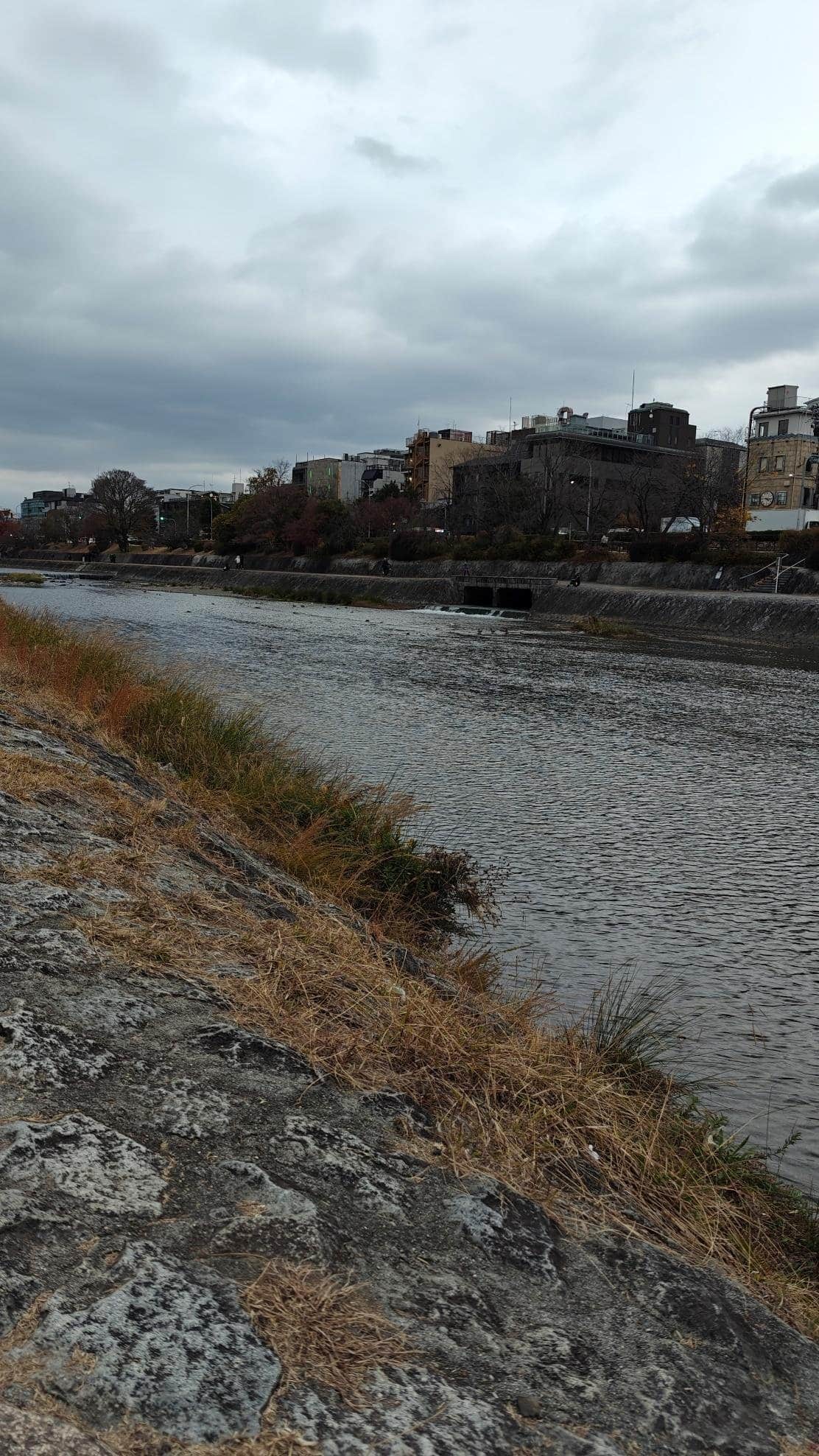
With the street lights now starting to come to life, it seemed like people were slowly leaving the Corridor of Flowers. In this image, there were only around three with the ones from earlier having left just a couple of minutes earlier. Interestingly enough, the gentle sound coming from the river seemed to grow stronger.
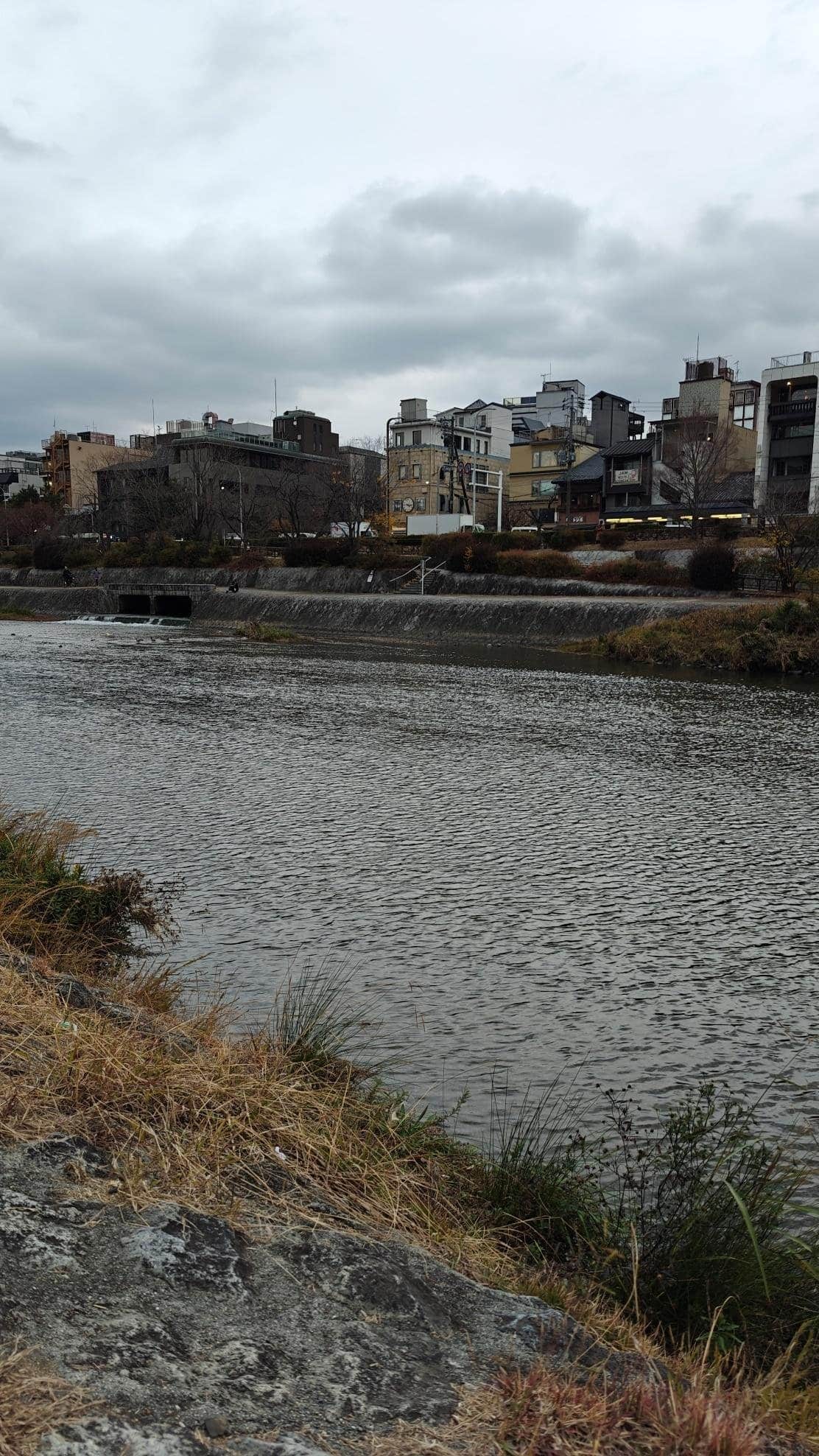
I wasn't sure if the water was actually rising or if my hearing was just hyperfocusing on it but suffice to say, it again gave me that feeling of calm and peace. I'm going to say it now, a visit to Kamo River is definitely a must just for this. It's kind of unreal just how a place as serene as this river is in the heart of one of the busiest (in terms of tourism) cities in the world.
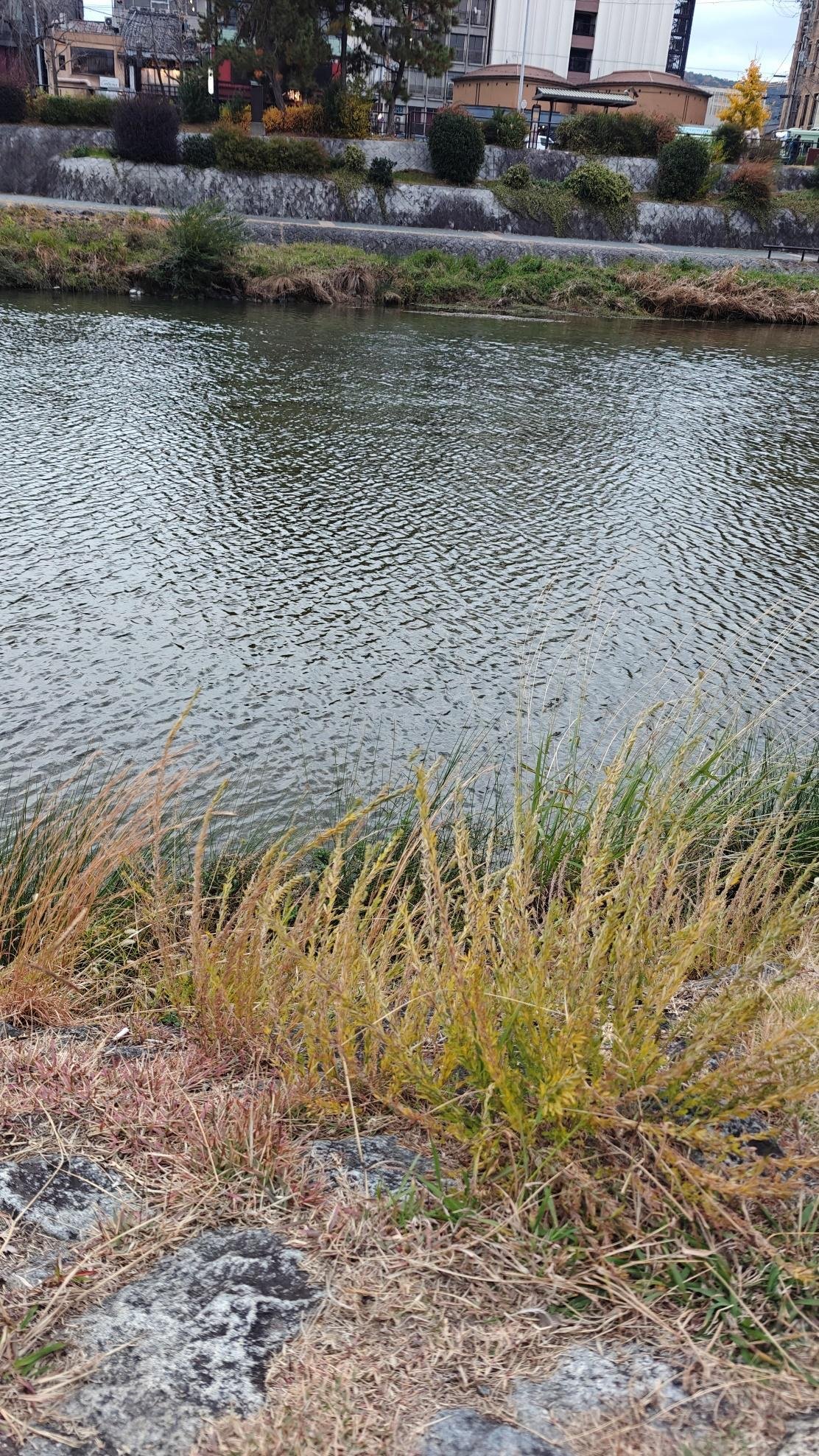
This ends my visit to the Kamo River. Overall, this was one of the most value for your time and money experiences during my recent Kyoto trip. If you do plan to visit, I suggest doing it either first thing in the morning or as one of the last items in your itinerary for the day.
It's very close to the historic Gion district which has locations such as Yasaka Shrine, Chion-in Temple, and Maruyama Park. Ideally, you would want to visit during the start of the sakura season or the peak of fall foliage.What do you think of my visit to Kamo River? Are you considering a visit to the riverwalk yourself?
If yes then please share why and when you plan to visit down at the comments section!