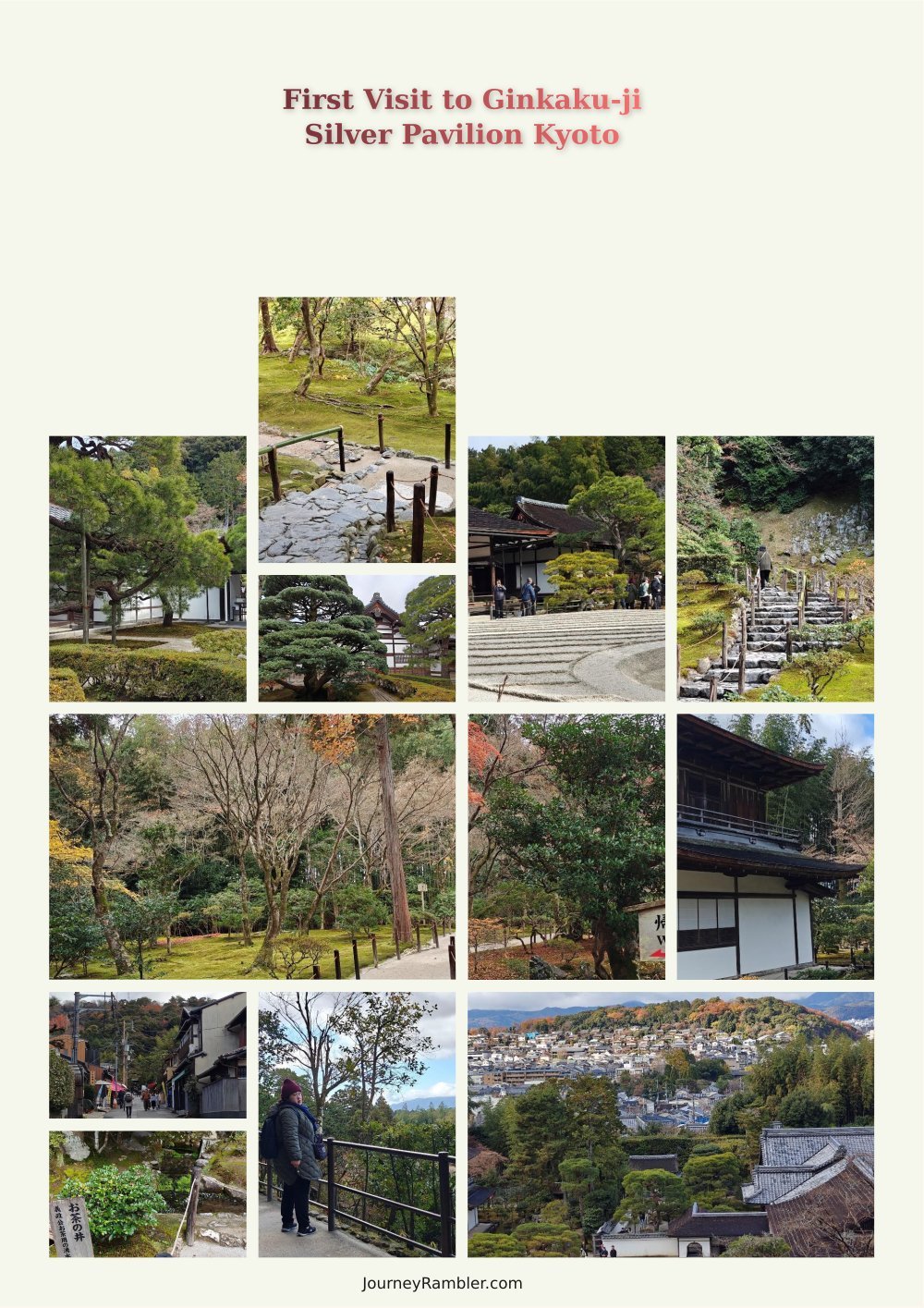
In my recent Kyoto trip I managed to visit Ginkaku-ji for the first time and boy was it an experience. As you probably know (especially if you've been following my recent write-ups) I'd already gone to Kinkaku-ji on this recent trip and was blown away by its sights. Ginkaku-ji was much more different though and today I'll be talking about why I think that way.
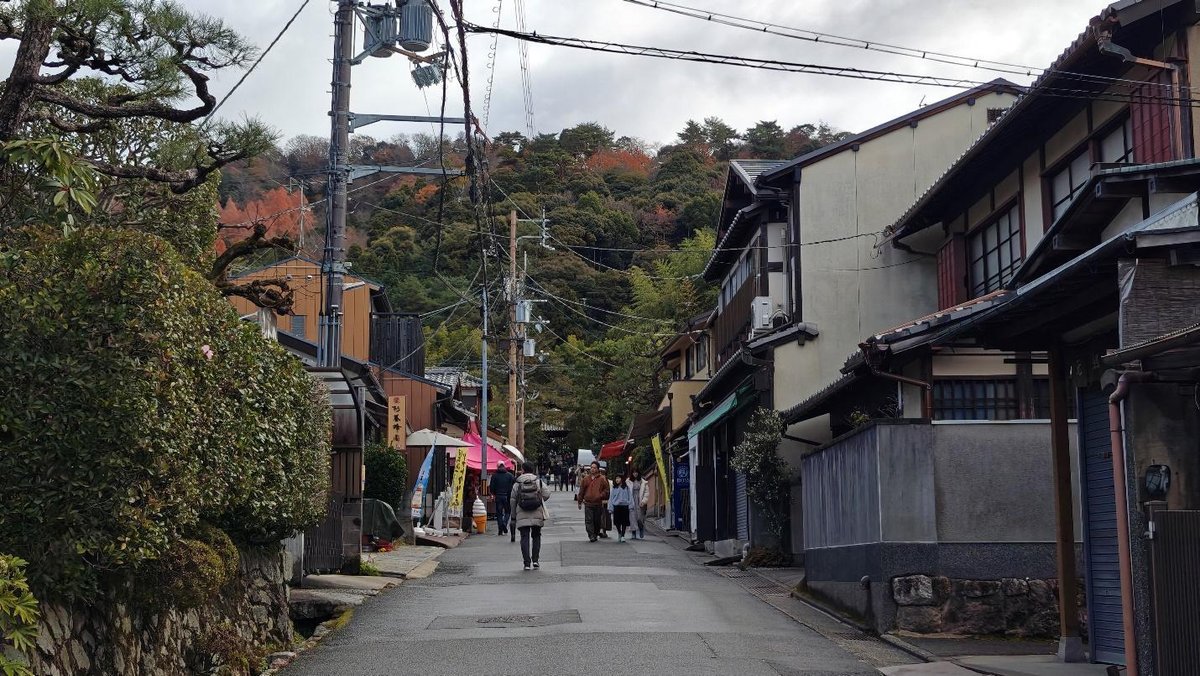
The first major difference between the two iconic temples is accessibility. Ginkaku-ji was much easier to get to. There are two bus stops (Ginkaku-ji mae and Ginkaku-ji michi) that are a walking distance from its approach.
A more scenic route to take though would be the Philosopher's Path if you’re coming from the Nanzen-ji/Eikan-do Temple area.
A Quiet Visit to Ginkaku-ji and Its Garden
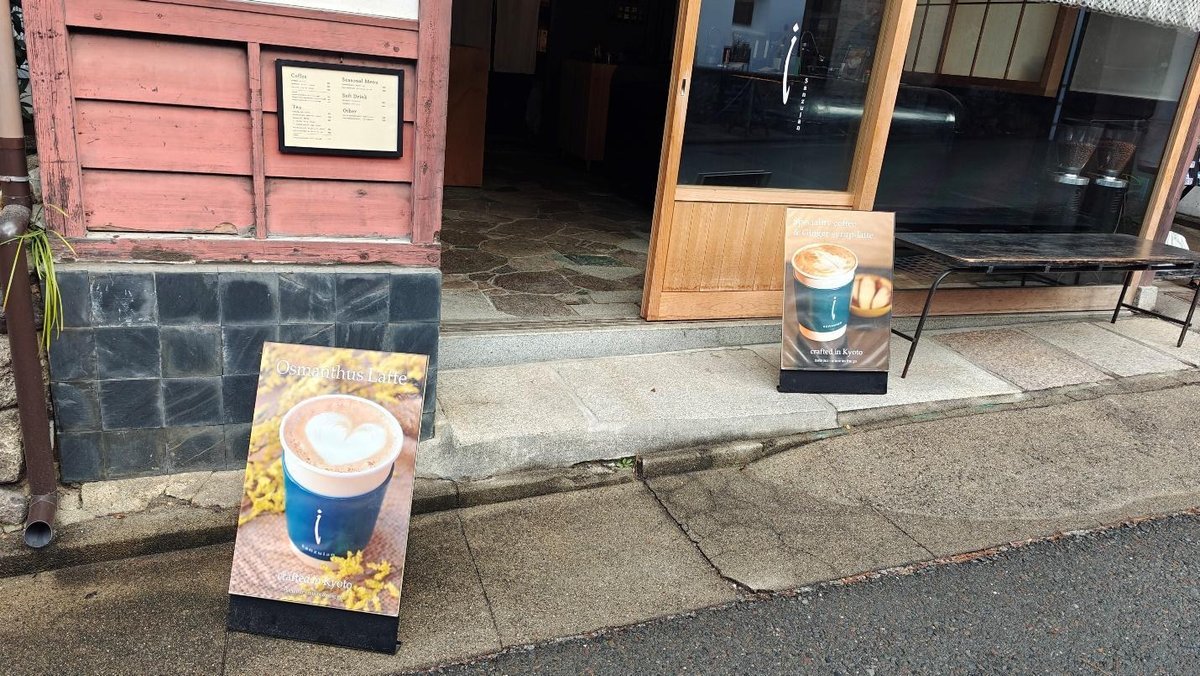
The approach to Ginkaku-ji was quite scenic even though it was raining a bit. Thankfully there are plenty of establishments lining the approach like the one in the image called Sanzuian. These establishments typically offer food and/or drinks on top of having really nice ambiances where you could rest before continuing to the temple visit.
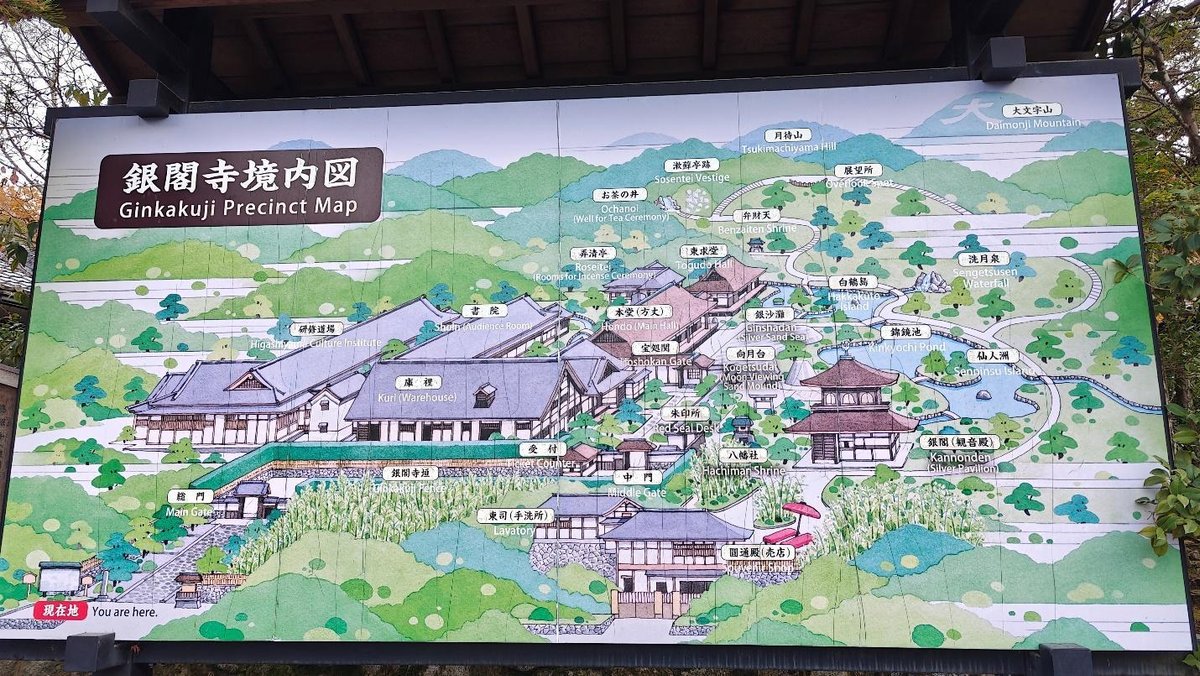
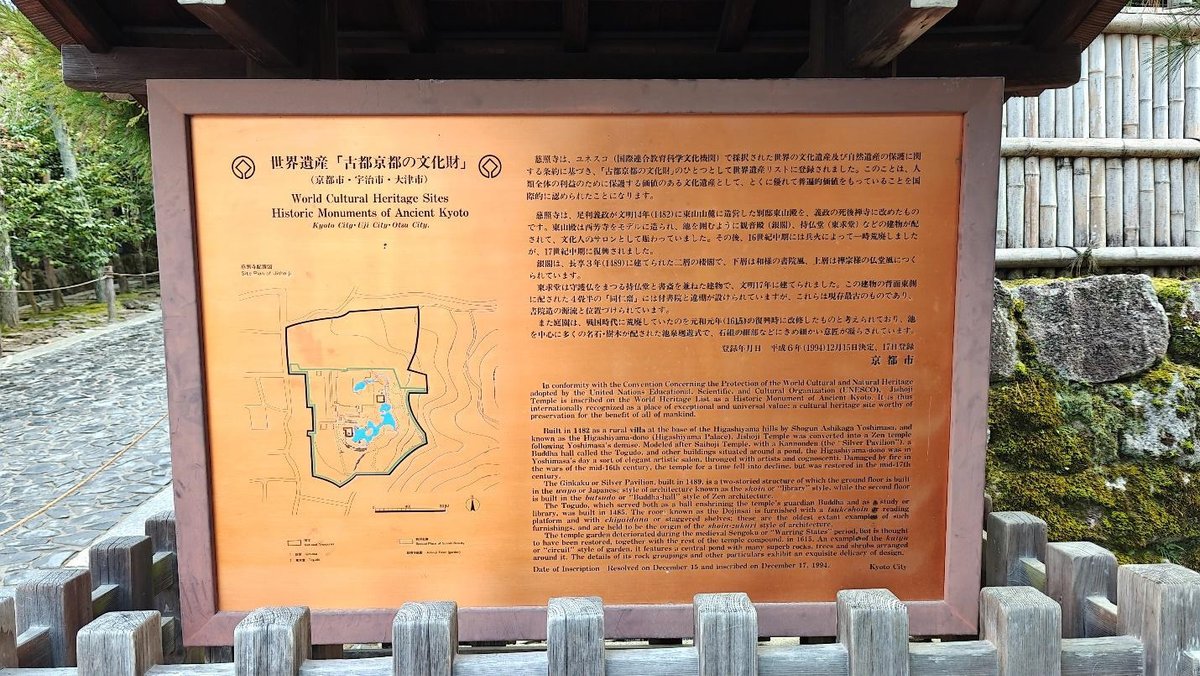
Just before reaching the small footpath to Ginkaku-ji's So-mon, you'll come across this large guide map on the right. To the left of the path is a sign denoting Ginkaku-ji’s status as a World Cultural Heritage. As with many of the shrines and temples I've visited, I always take a picture of the guide map just in case I might end up losing my way.
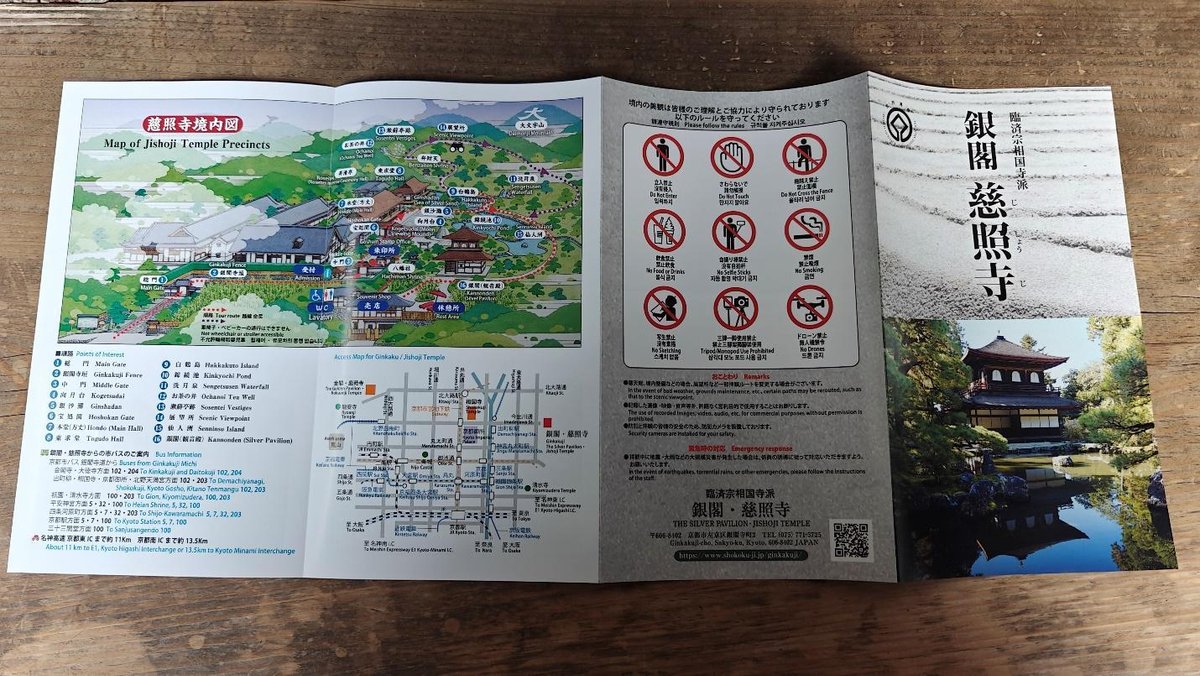
As you'll see later on though, I ended up not using this pic because I already got a guide map after purchasing an admission ticket.
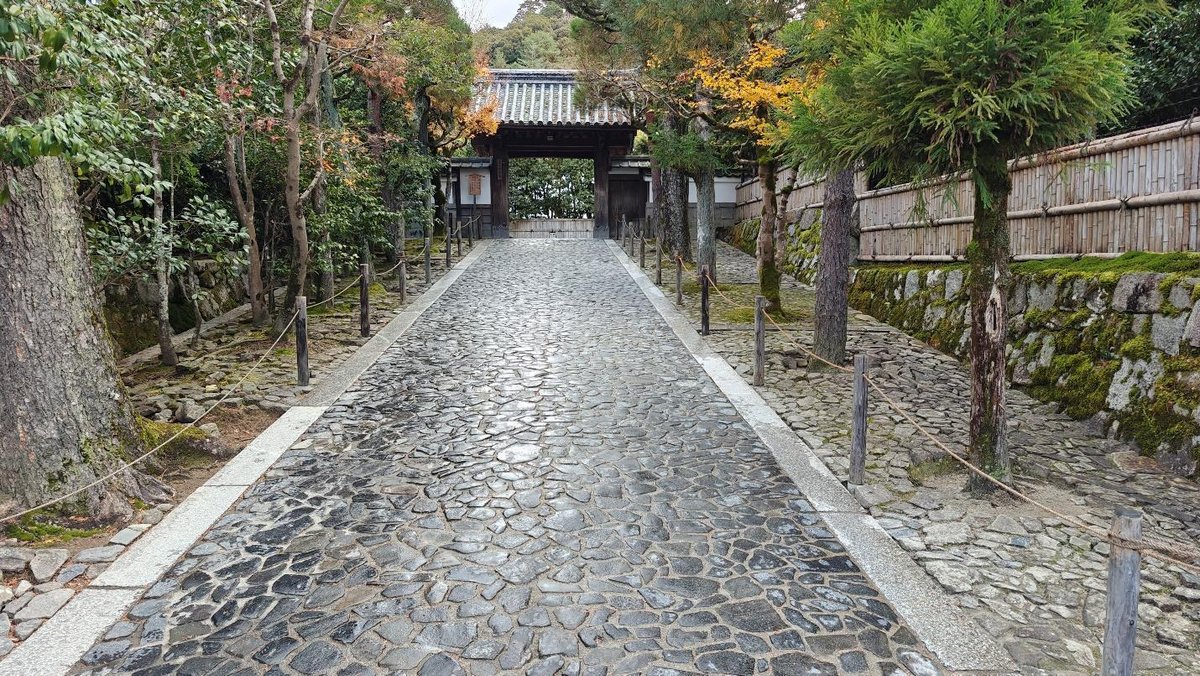
The path to the So-mon was actually quite unassuming. Kinkaku-ji’s was more opulent (for lack of a better term) while this one was more ascetic. Make no mistake though, I consider both paths to still be charming in their own unique way.
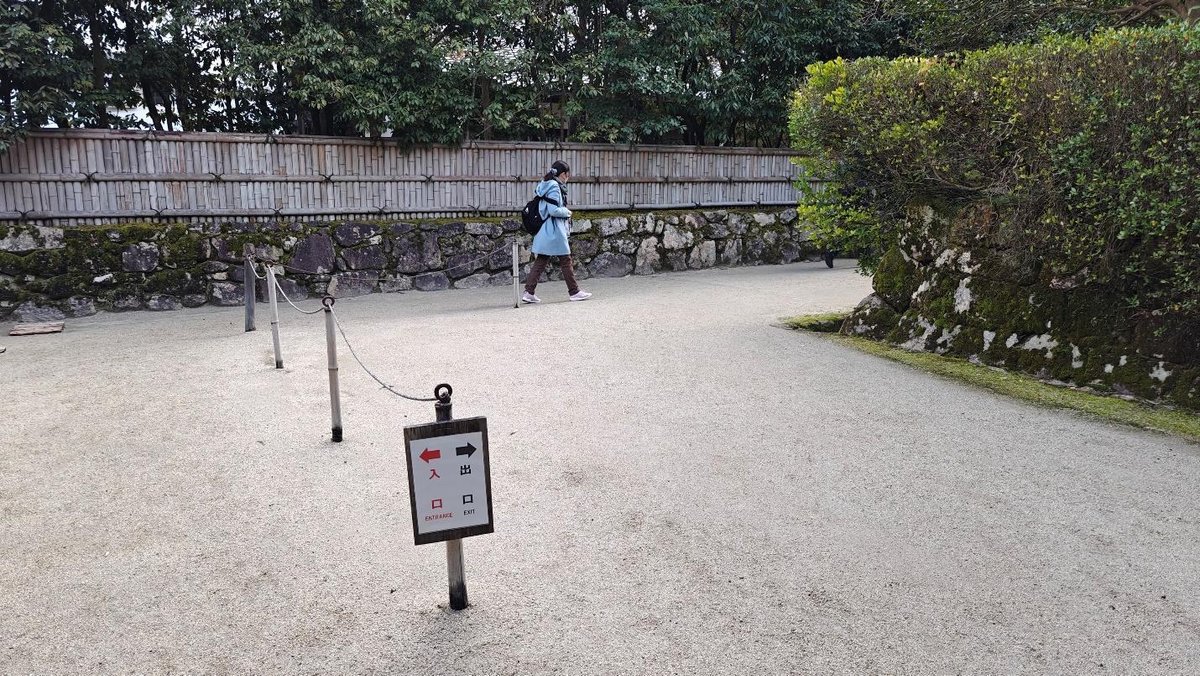
After entering the So-mon, you'll find yourself on a fine gravel path. This leads to the Chu-mon or Central Gate. Entry to this area is still free but once you get to the Chu-mon you'll need to fork out 500JPY for admission.
There is a booth where you can pay for admission just before getting to the Chu-mon.
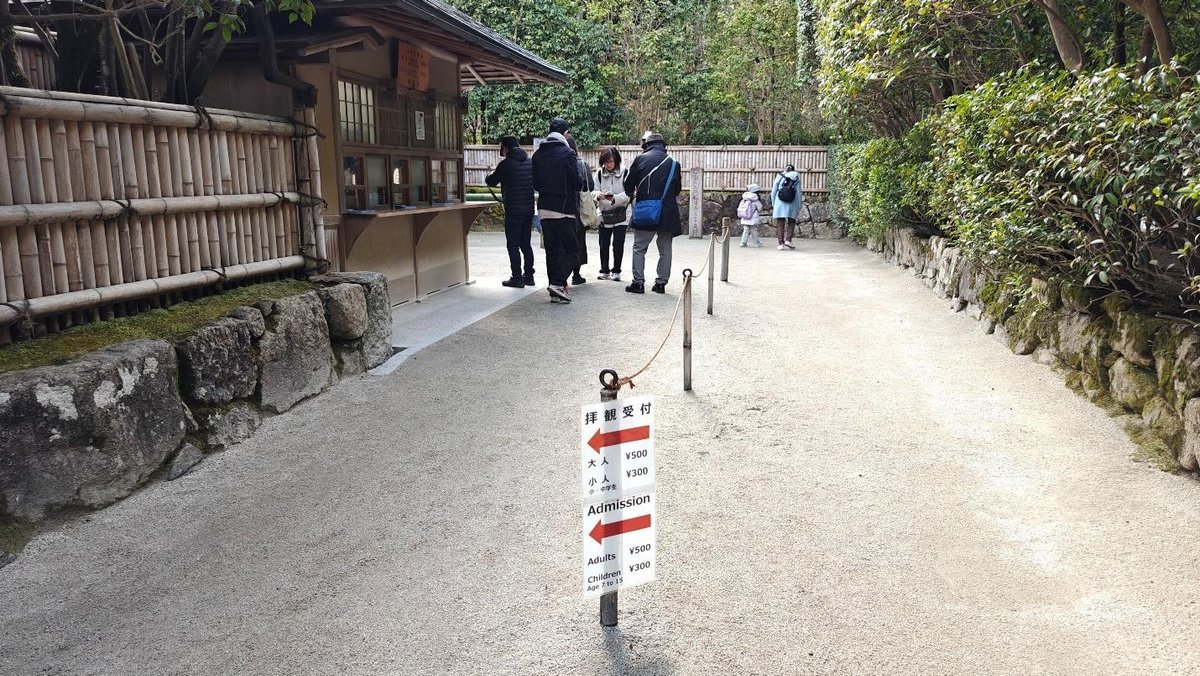
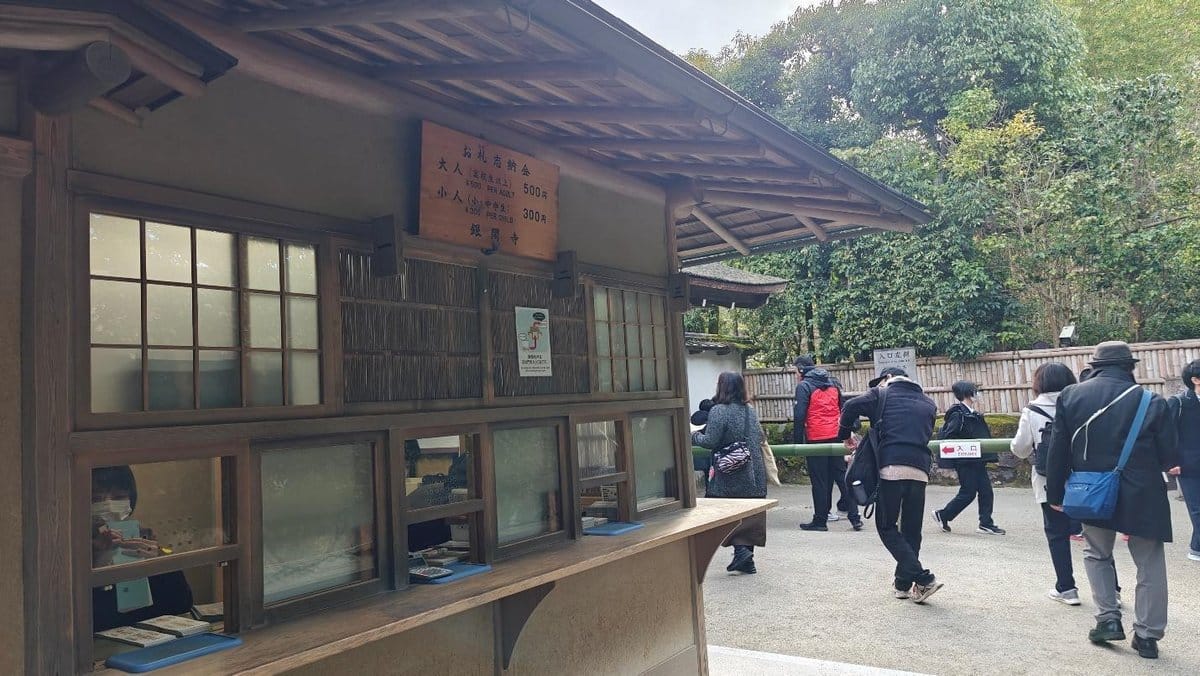
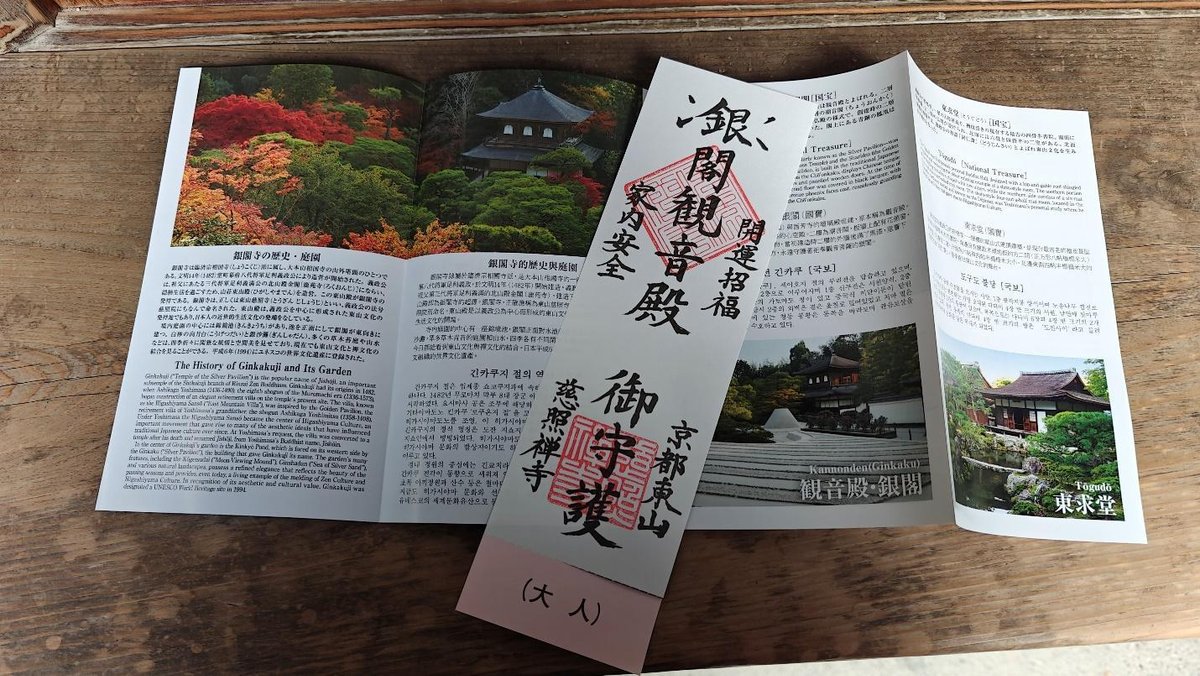
Ginkaku-ji wasn't as crowded as Kinkaku-ji but there were still a noticeable number of people when I visited. That said, getting a ticket was relatively fast and as I mentioned earlier, they include a guide map with the purchase. The ticket itself is very nice and like Kinkaku-ji, it also serves as an ofuda or talisman for good luck.
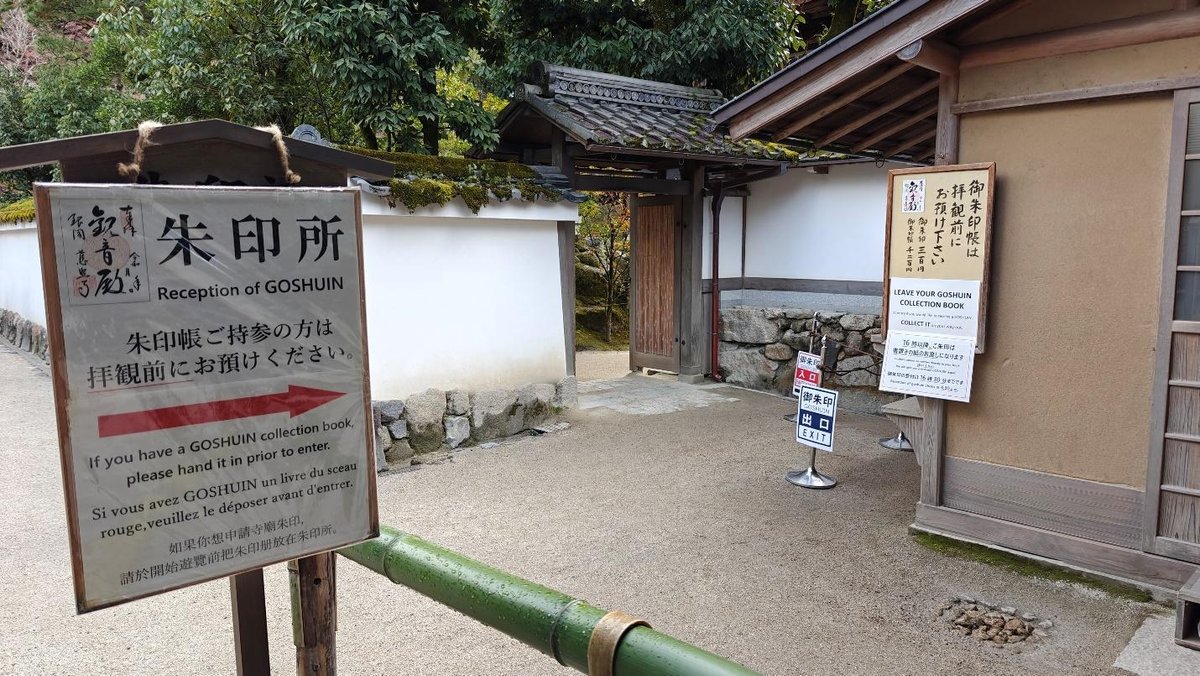
This is a sign pointing to the Shuin-jo (small hut on the right) where visitors can turn in their Goshuin collection books to have them stamped. What happens is that you typically leave the Goshuin collection book at Shuin-jo before you start your walk through the temple. You can then claim it just before you exit at this very same gate.
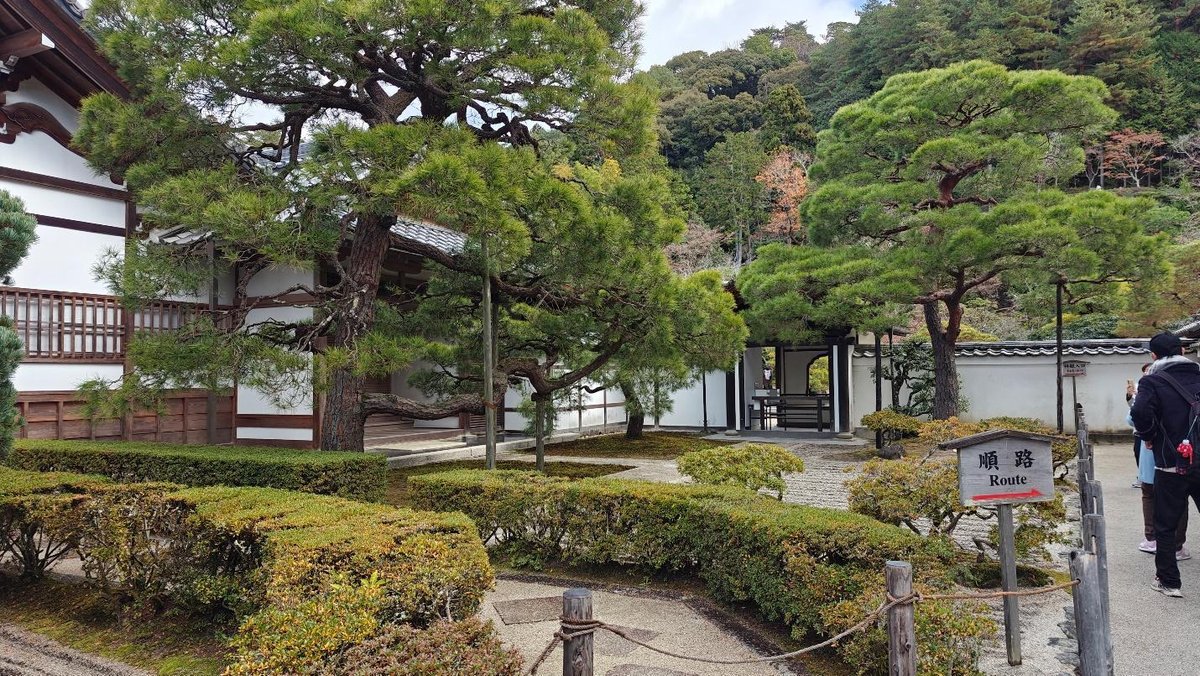
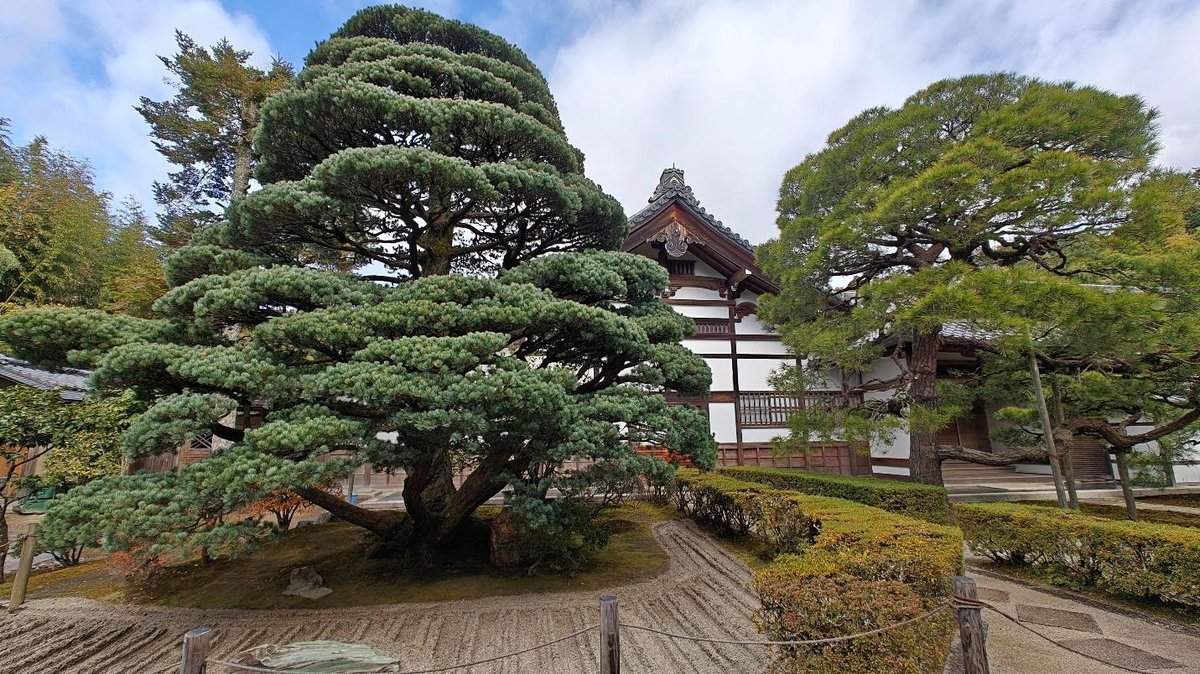
This was the first major area that I came across after entering the Chu-mon or Central Gate. The large building is called the Kuri or Warehouse and in front of it is a beautiful garden enclosed in a rope barrier. Now, it does say Warehouse on the guidemap but the building actually functions more as the priests’ quarters and kitchen.
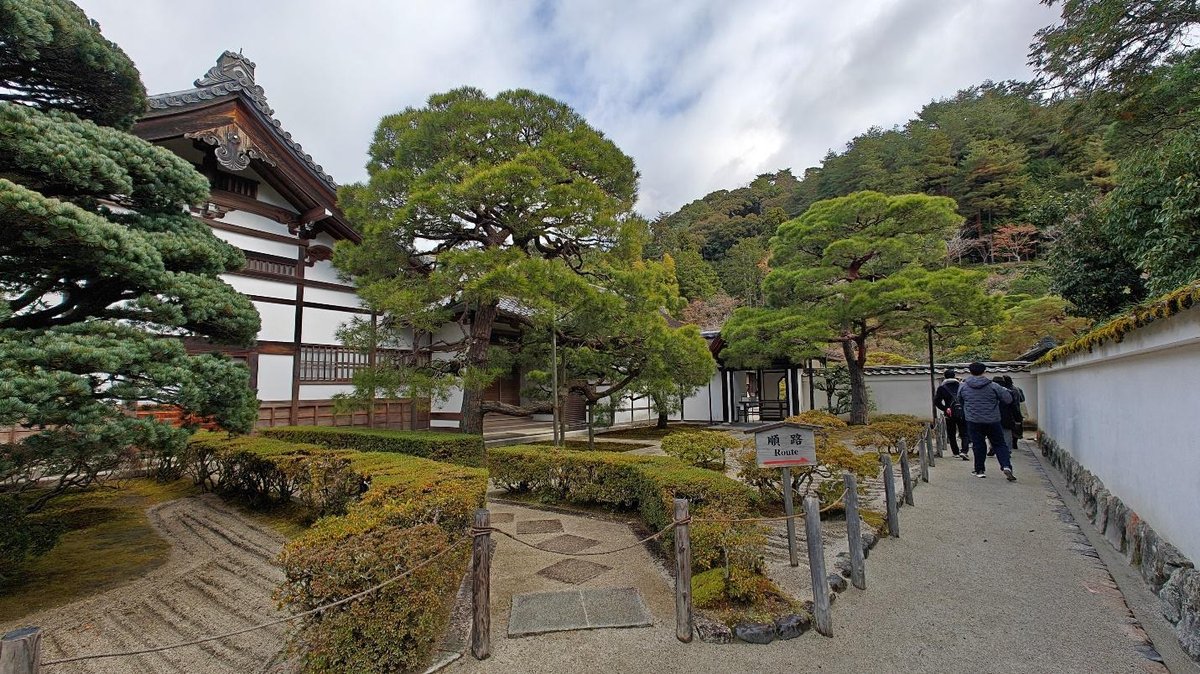
I didn't stay long here since there wasn't really that much you could do. Following the path, I then passed the Hoshokan Gate which you can see in the middle part of the image. From there, I then found myself at one of the most unique gardens that I'd come across in my Kyoto trip.
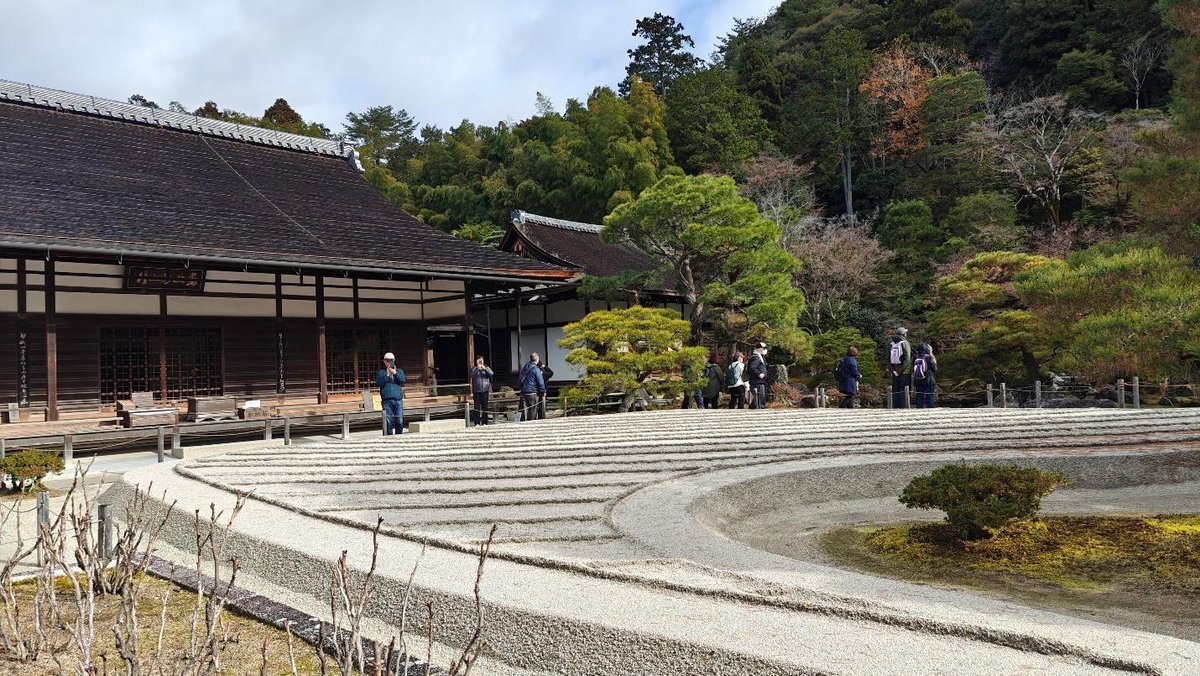
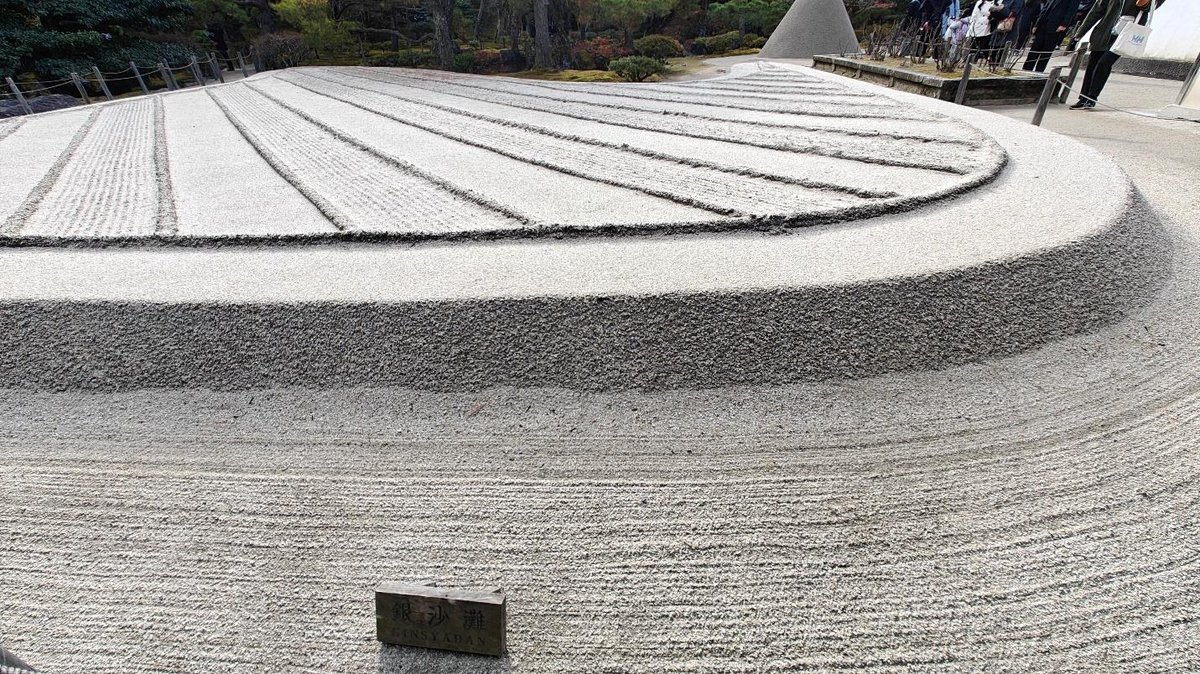
I've seen many karesansui or dry landscape gardens during this particular visit to Kyoto but I'd never seen one that's as ornate as this one. This is called the Ginshadan (translates to Sea of Silver Sand in English) and it's believed to be around 400 years old. What's cool about the garden is that it's said to be designed in such a way that it reflects the moonlight onto the buildings surrounding it.
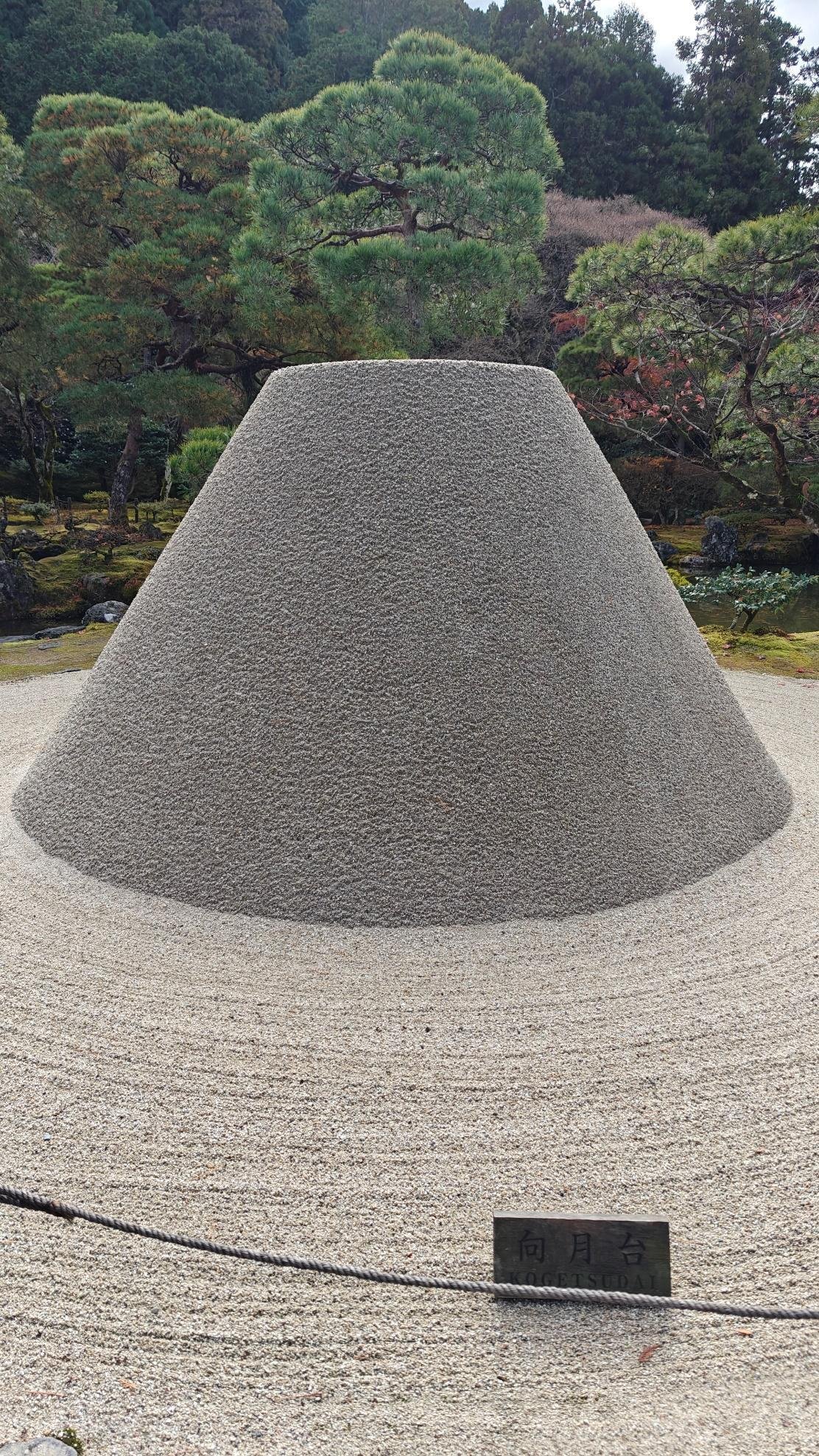
Connected to the Ginshadan is a smaller karesansui that has an even more peculiar shape. Called the Kogetsudai, this garden has a large conical mound that's about 6 feet tall. Much like the Ginshadan, this is also said to reflect moonlight onto the surrounding temple buildings.
As for why the mound is so tall, it's said that it's supposed to represent Mount Fuji. In English, the name Kogetsudai translates to Moon Viewing Platform.
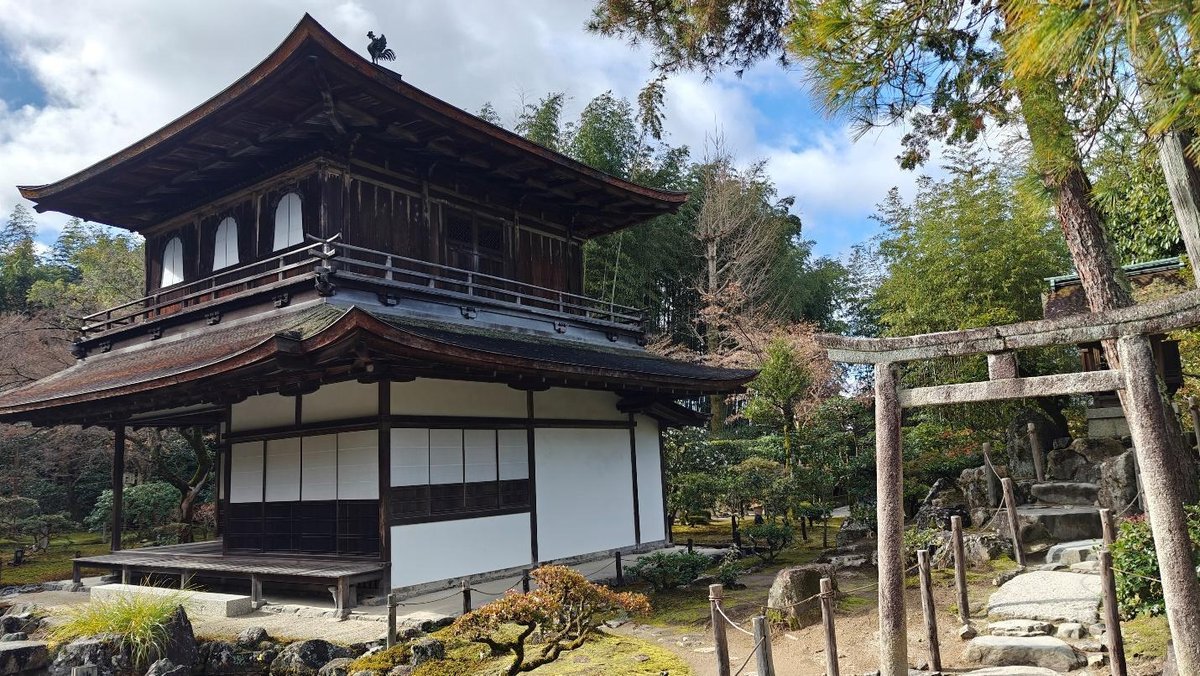
A rather short distance from the Kogetsudai is the building that lent its name to the temple. This is the Ginkaku or Silver Pavilion and it’s actually quite old. The building was completed around 1490 to serve as shogun Ashikaga Yoshimasa's retirement villa and this makes it around 500 years old.
What's even more impressive is that it hasn't gone through any major reconstruction (though there have been restorations over the years) and has even survived multiple fires.
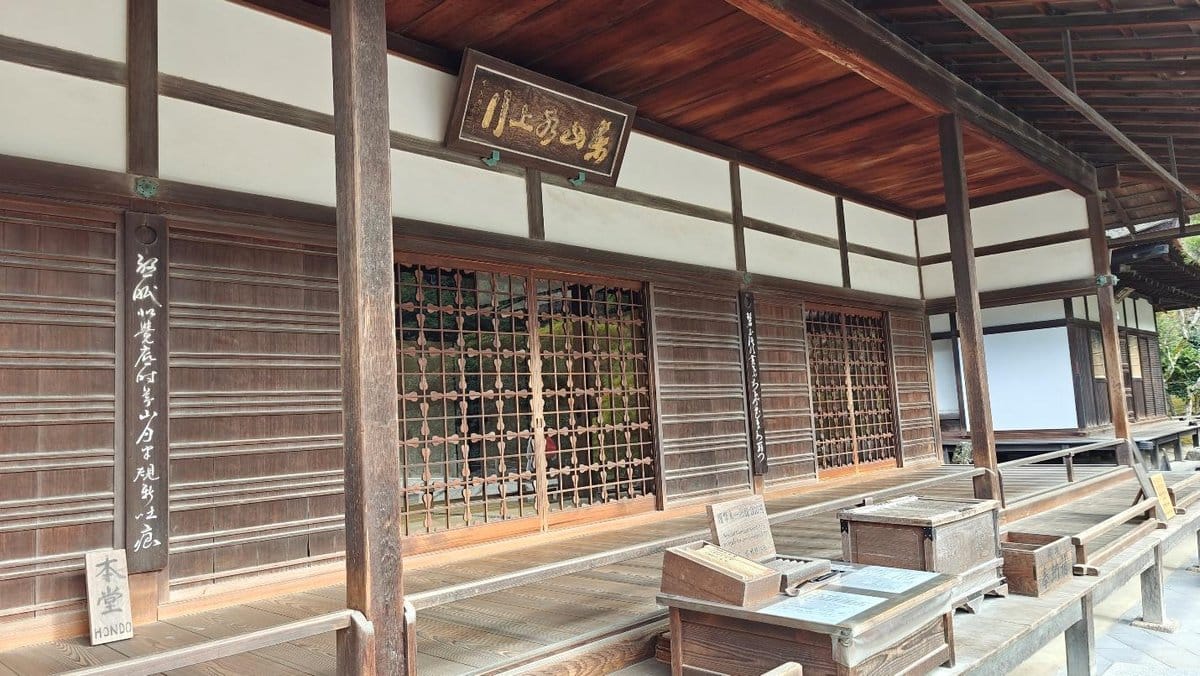
Directly facing the Ginshadan is Ginkaku-ji's Hondo or Main Hall. Enshrined here is the Shakyamuni Buddha and it's surprisingly quite new. I've read online that it was reconstructed in 2005 though it was completed using traditional building techniques as well as following traditional designs.
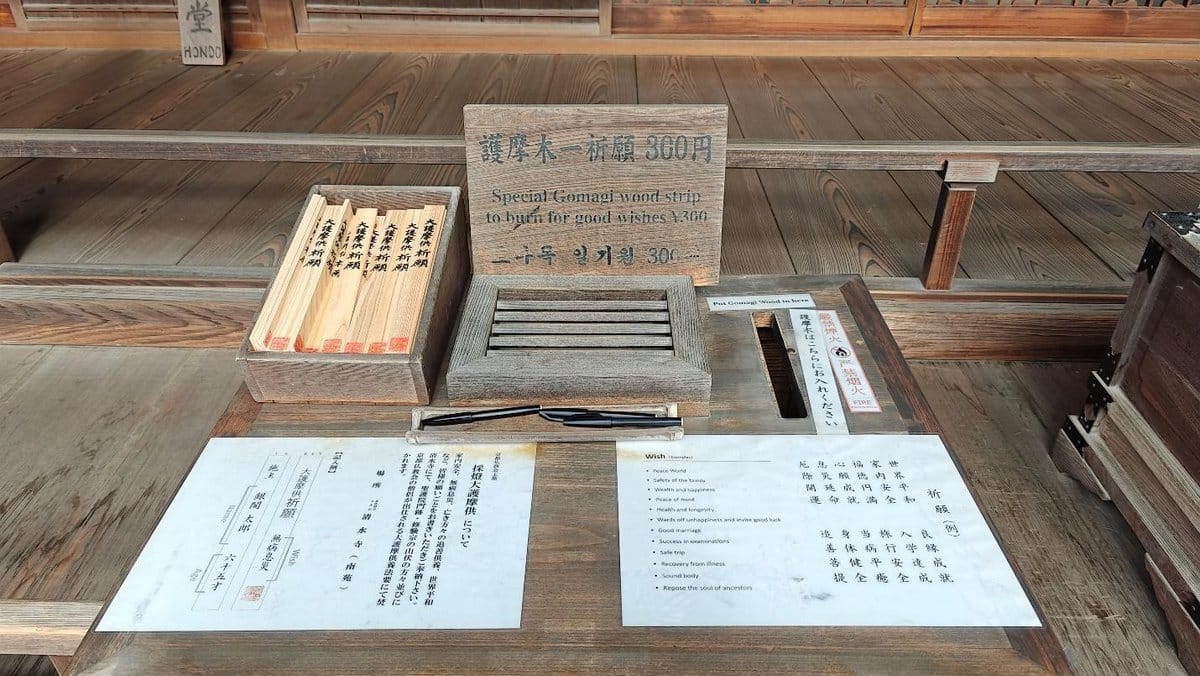
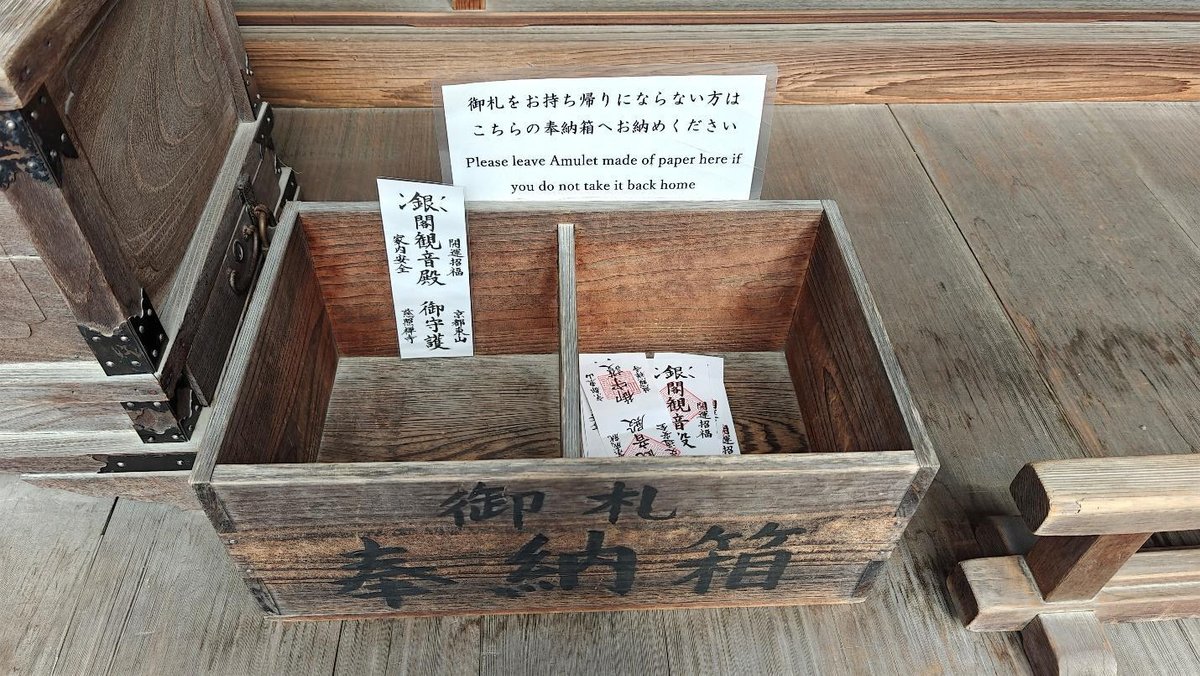
On the Hondo's engawa you'll find a saisenbako, a box for offering special Gomagi wood strips, and another box for leaving your ofuda talisman behind.
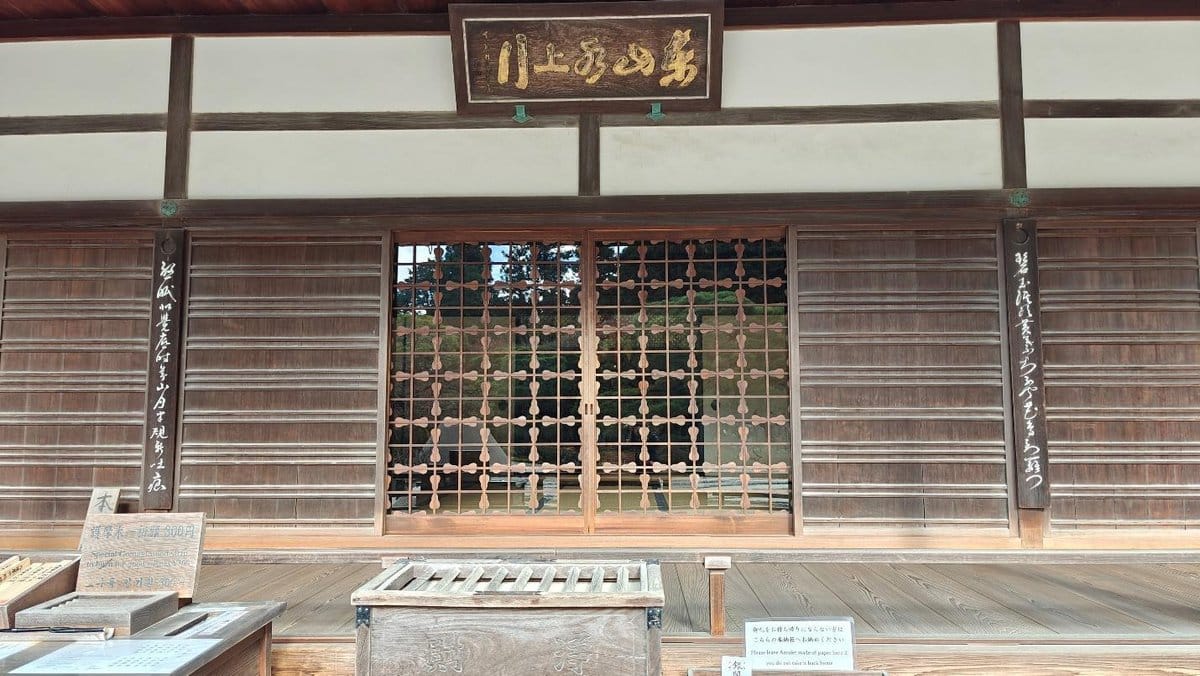
Unfortunately, I wasn't able to see clearly inside the window as the Hondo’s engawa is closed off for visitors. I’ve read though that there are fusuma with paintings by 18th century artists Ike no Taiga and Yosa Buson. The highlight of this area really is the view of the Ginshadan.
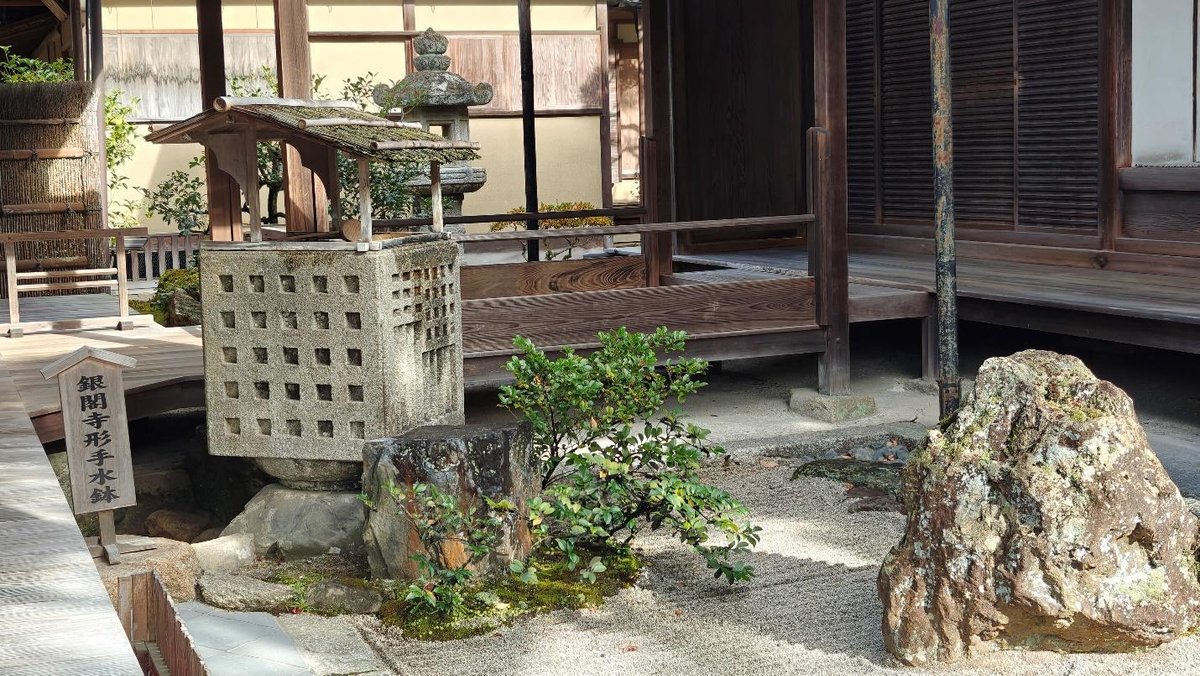
There's an area between the Hondo and another building called the Togu-do that features a smaller garden. It featured a bonsai and a Ginkaku-ji styled chozu that looked a lot like a stone lantern's base. Much like the buildings and other gardens here though, this area is closed off to visitors.
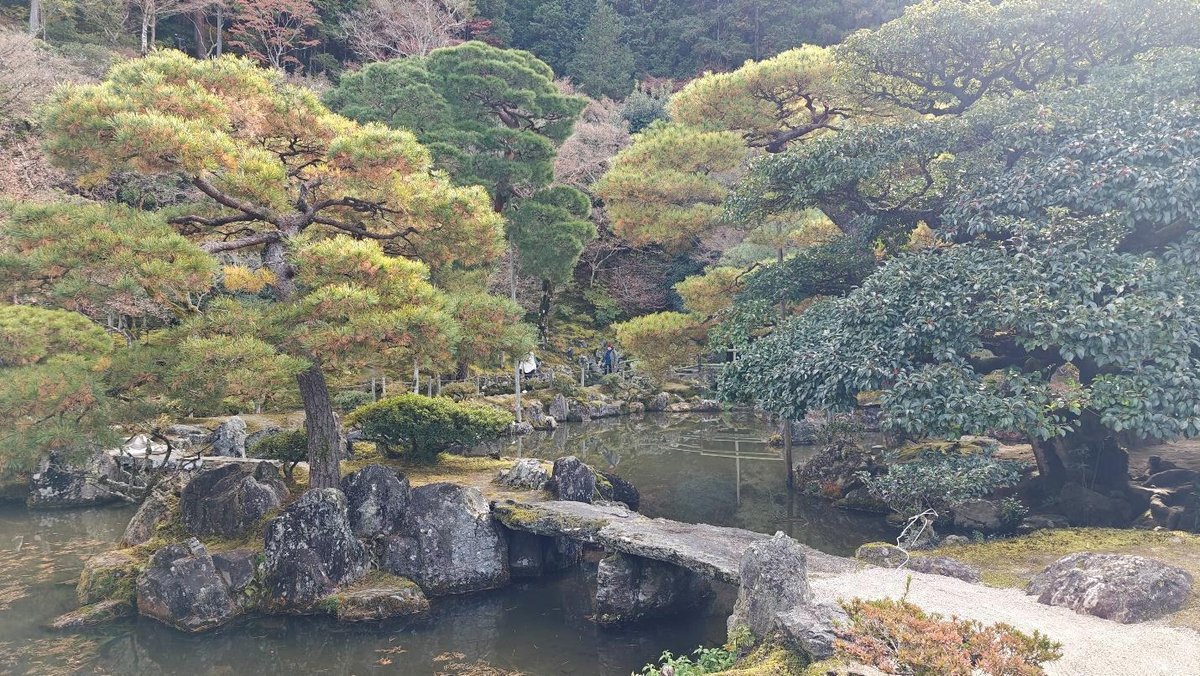
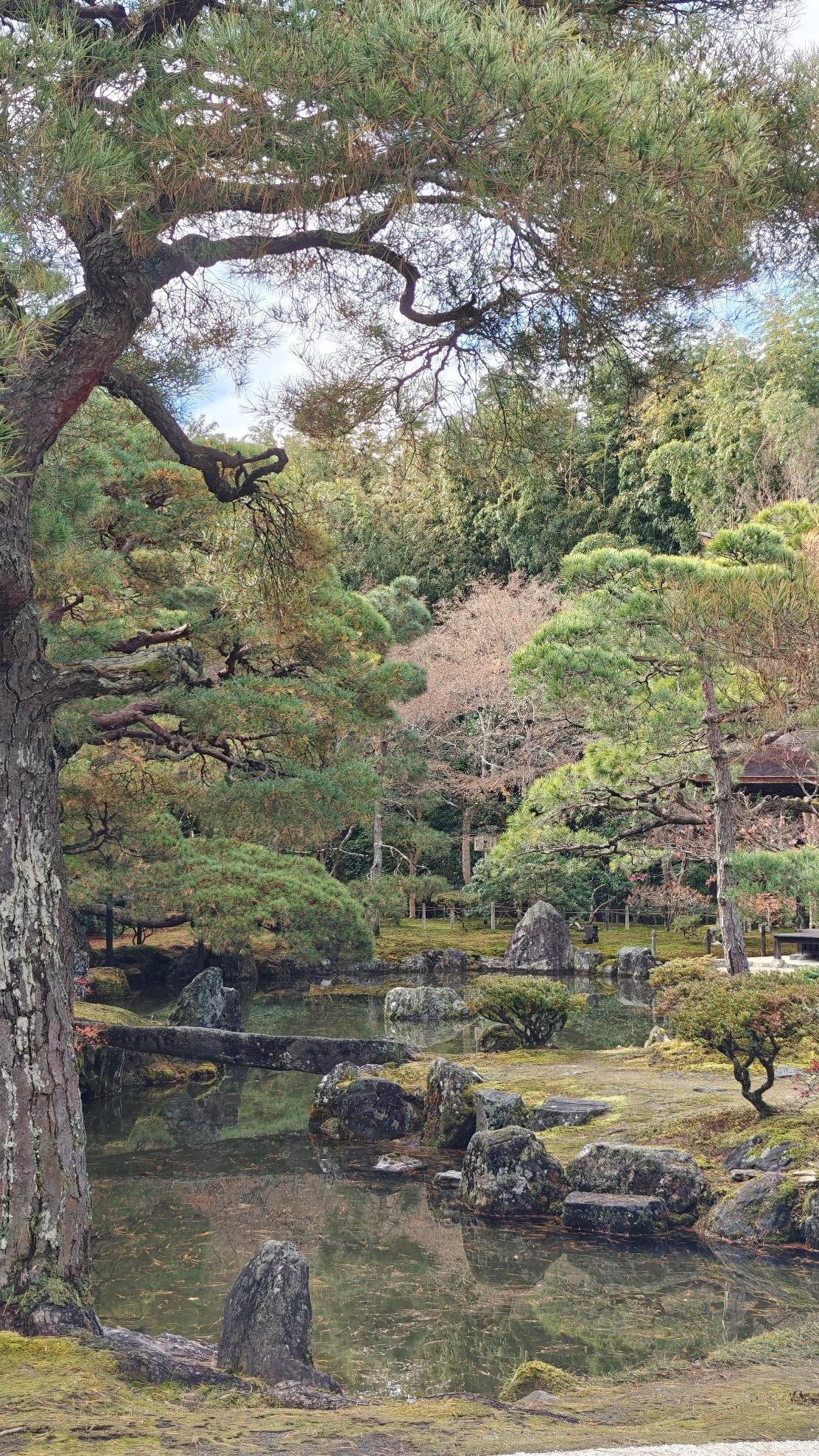
Following the visitor's route, I walked past the Ginshadan and found myself at the Kinkyochi Pond. While it's a lot smaller than the pond at Kinkaku-ji, I'd argue that it's equally as scenic. Whereas Kyoko-chi served to highlight the Golden Pavilion, this pond was designed to showcase the gardens surrounding it.
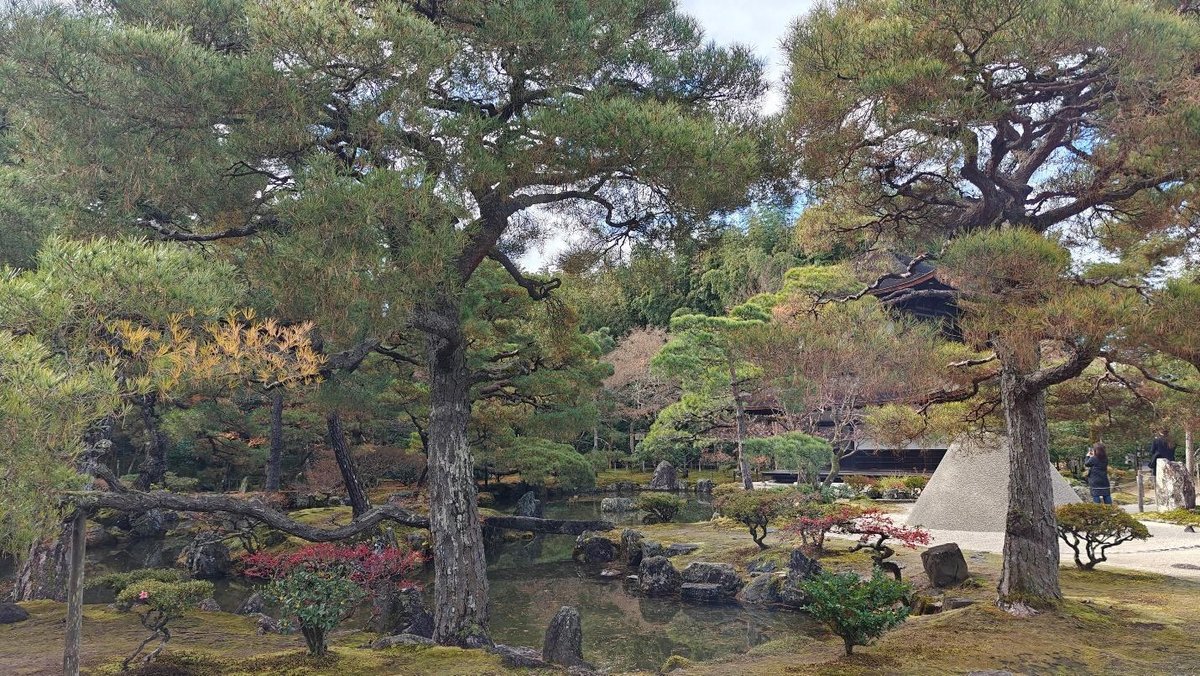
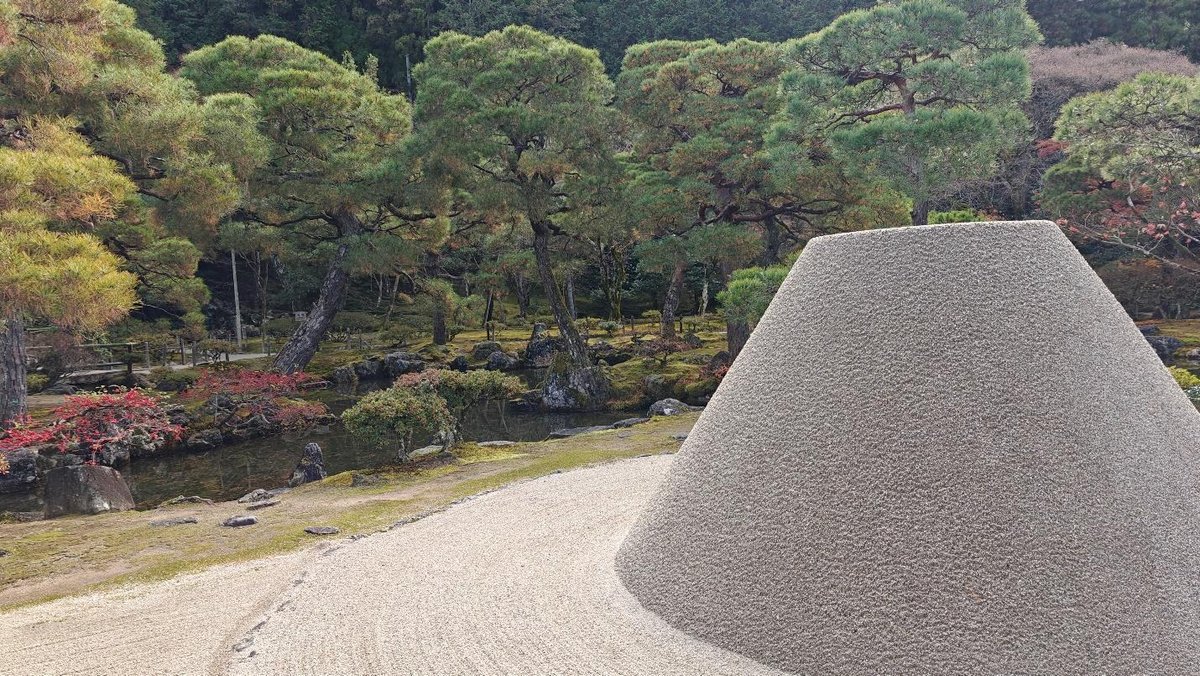
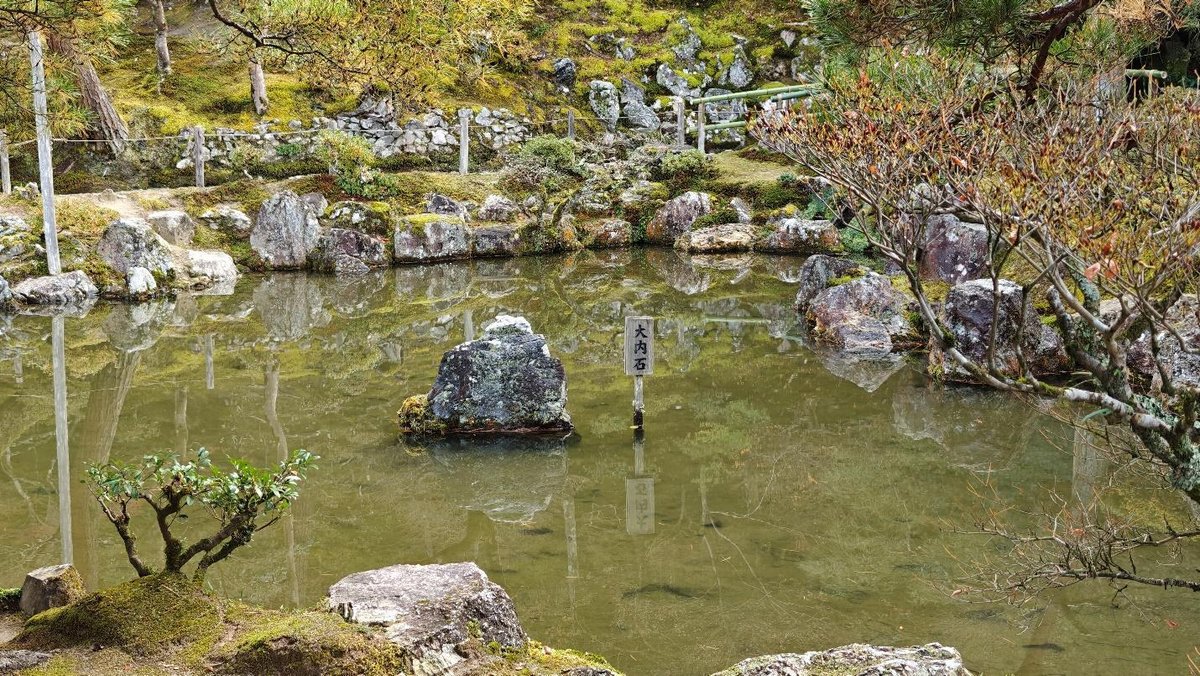
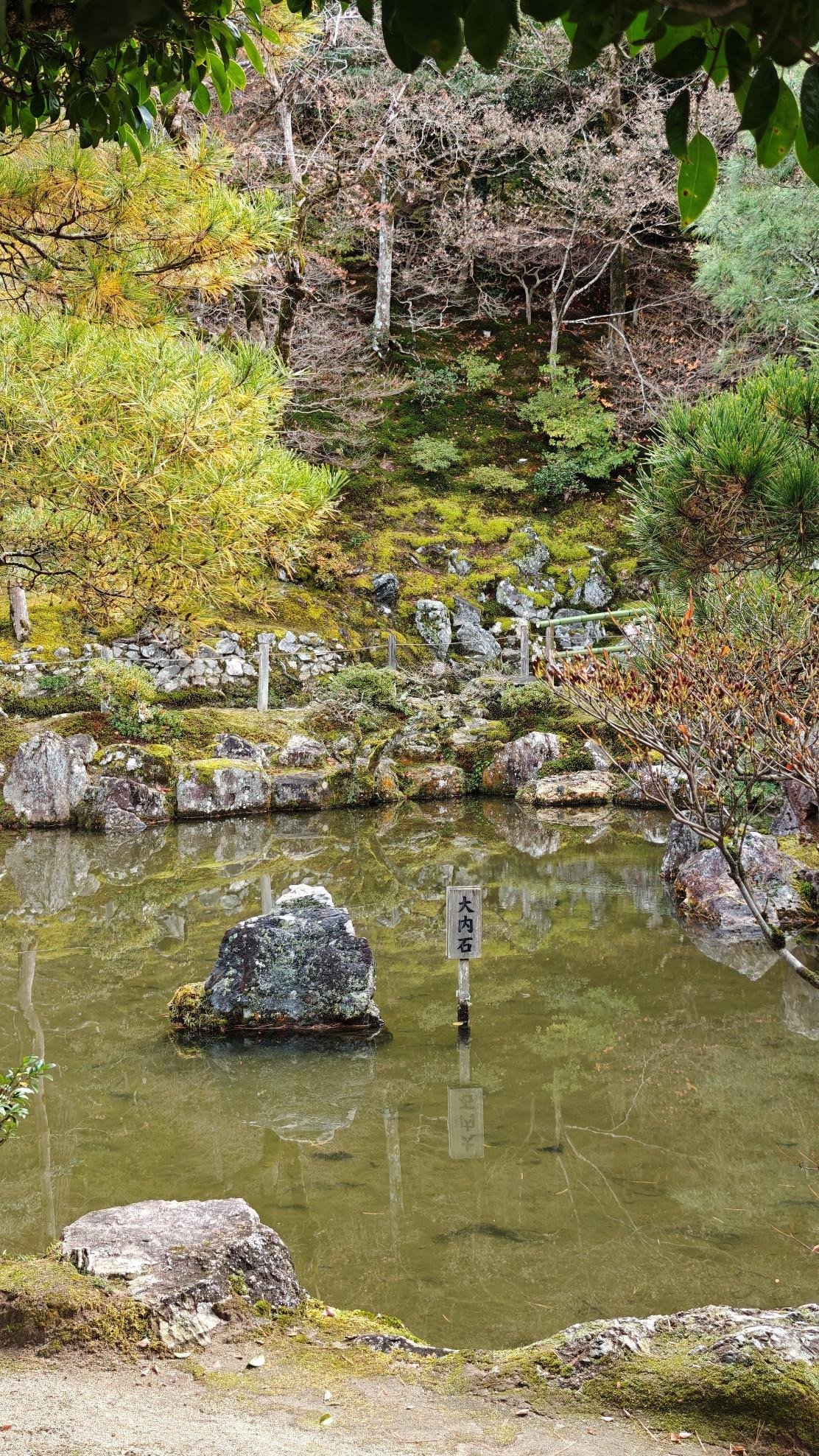
Here you can see the southern end of the pond with the Kogetsudai off to the side and the Ginkaku covered by the trees’ foliage. On the northern end of the pond you'll find a stone at its center. This is called the Ouchi-shi or Ouchi Stone and it is said to have been a gift by the local daimyo Ouchi Masahiro when the temple was still being built.
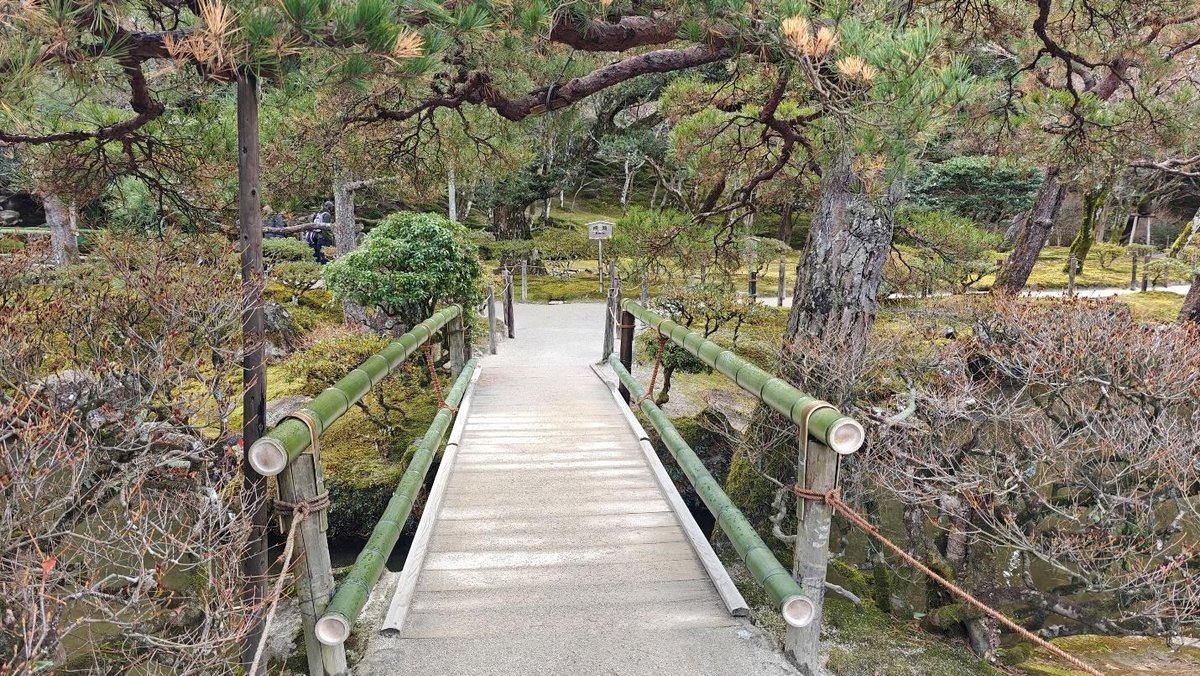
Bisecting the pond is a bridge that leads to a walking trail. After crossing the bridge, you'll then see a large Japanese yew called the Chiyo no Maki. Its name actually translates to Japanese Yew of a Thousand Generations and it's said to be around 500 years old.
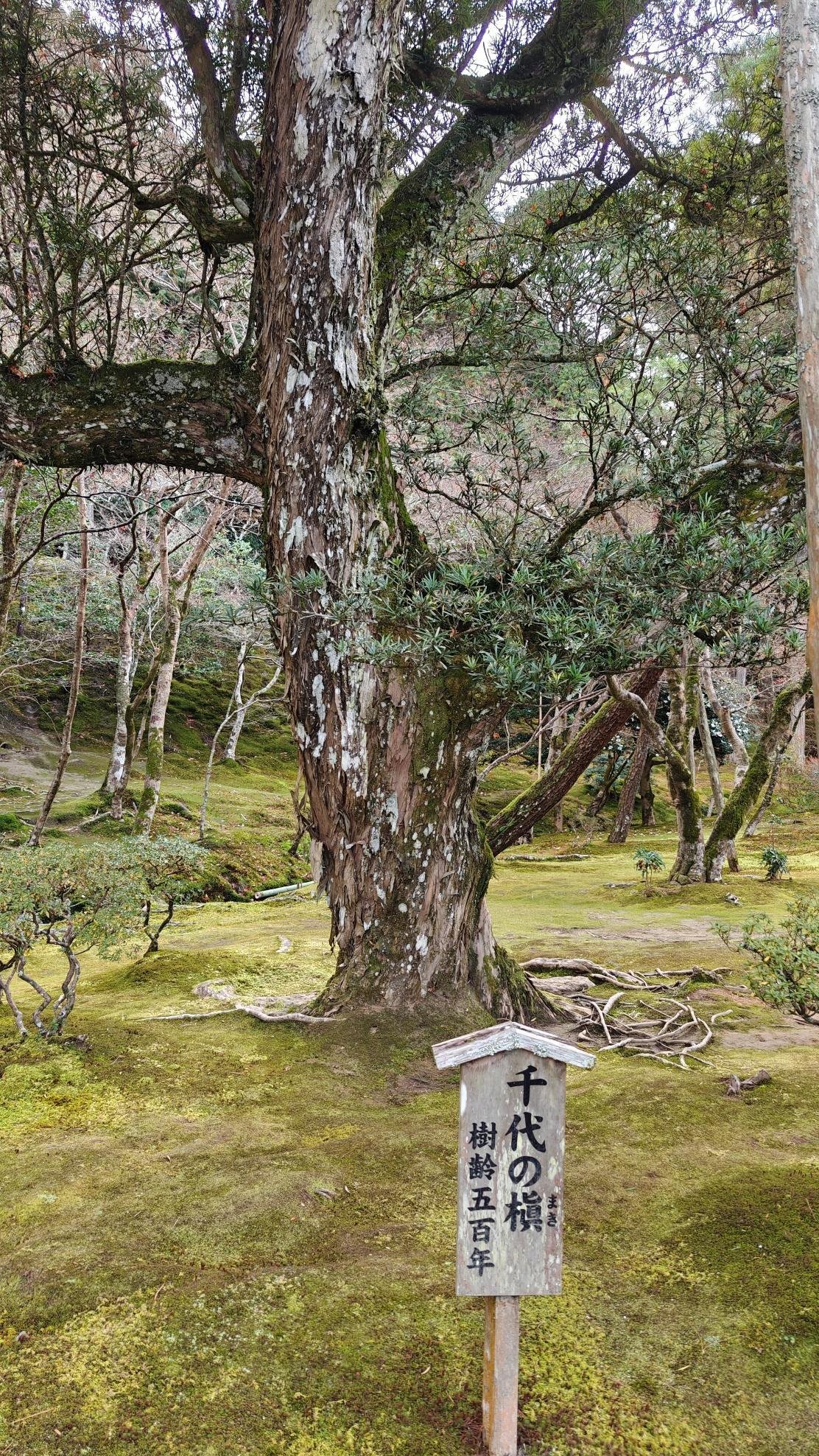
I tried searching online for more info about the specific tree but actually came up with not a whole lot. Historically there were no accounts of shogun Ashikaga Yoshimasa planting a yew of any kind in the grounds of Ginkaku-ji. My guess is that this might have been planted years after the temple was built.
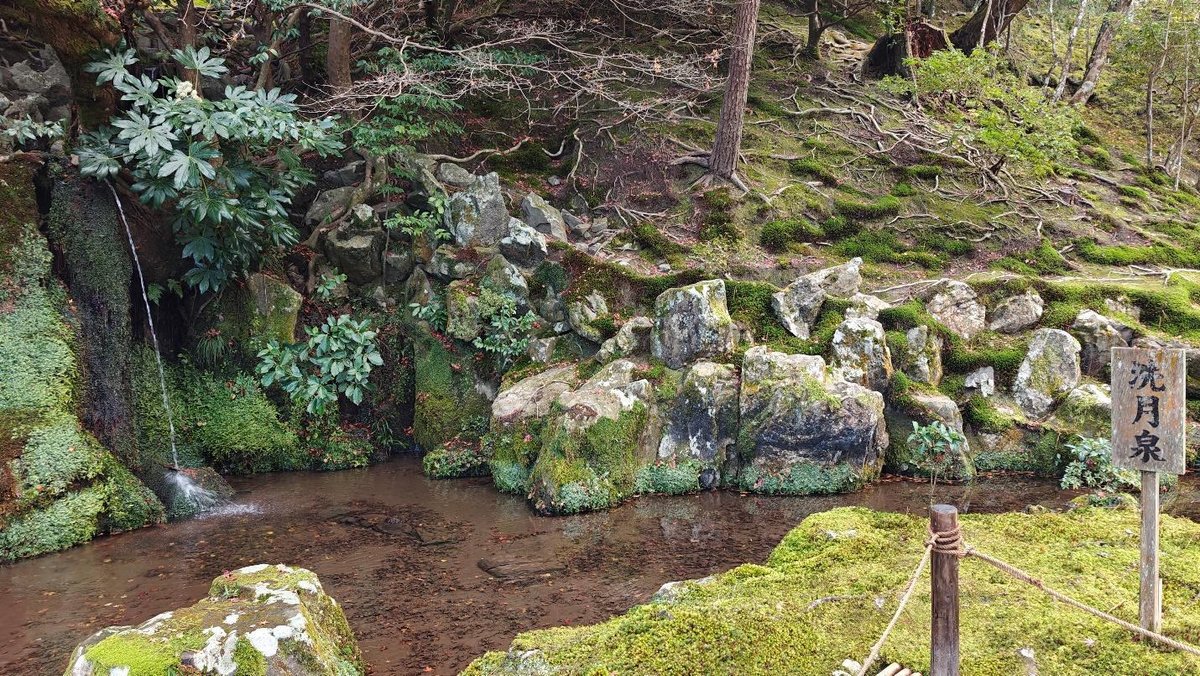
Off to the side of the Chiyo no Maki is the spring that feeds the pond. Initially I was not quite sure what it's called as my translation app couldn't seem to decipher the sign indicating its name. Additionally, the guide map also doesn't mention this area for some reason.
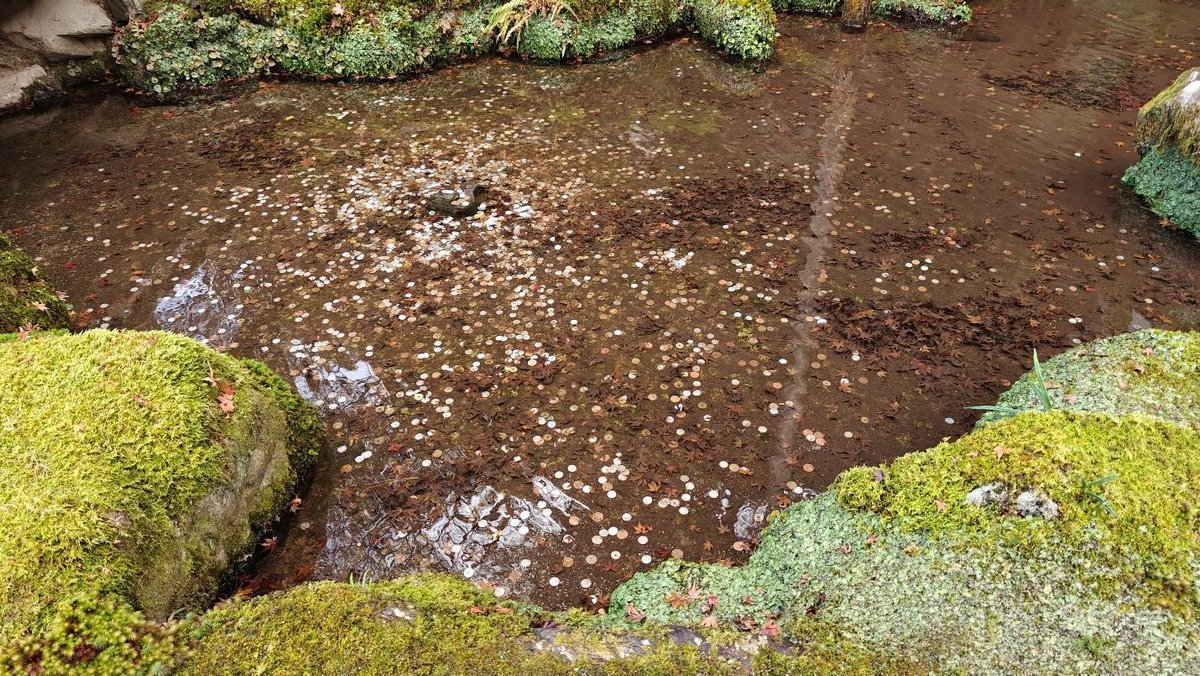
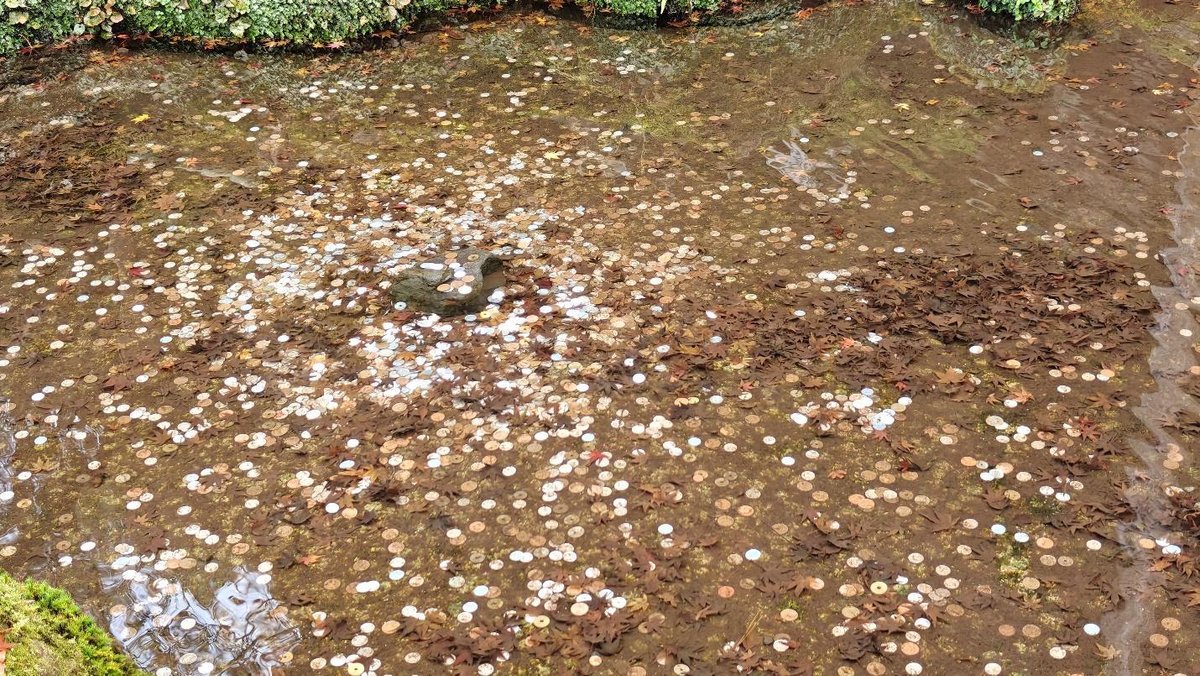
After some snooping around though, I eventually found out that this is the Sengetsu-sen. Translated to Moon Washing Falls, this also serves as the temple's wishing fountain. The water here is quite clear so you can actually see the coins the visitors have thrown over the years.
If I were to guess there's probably thousands (maybe tens or even hundreds of thousands?) of these coins here considering the temple complex was opened to the public in 1894.
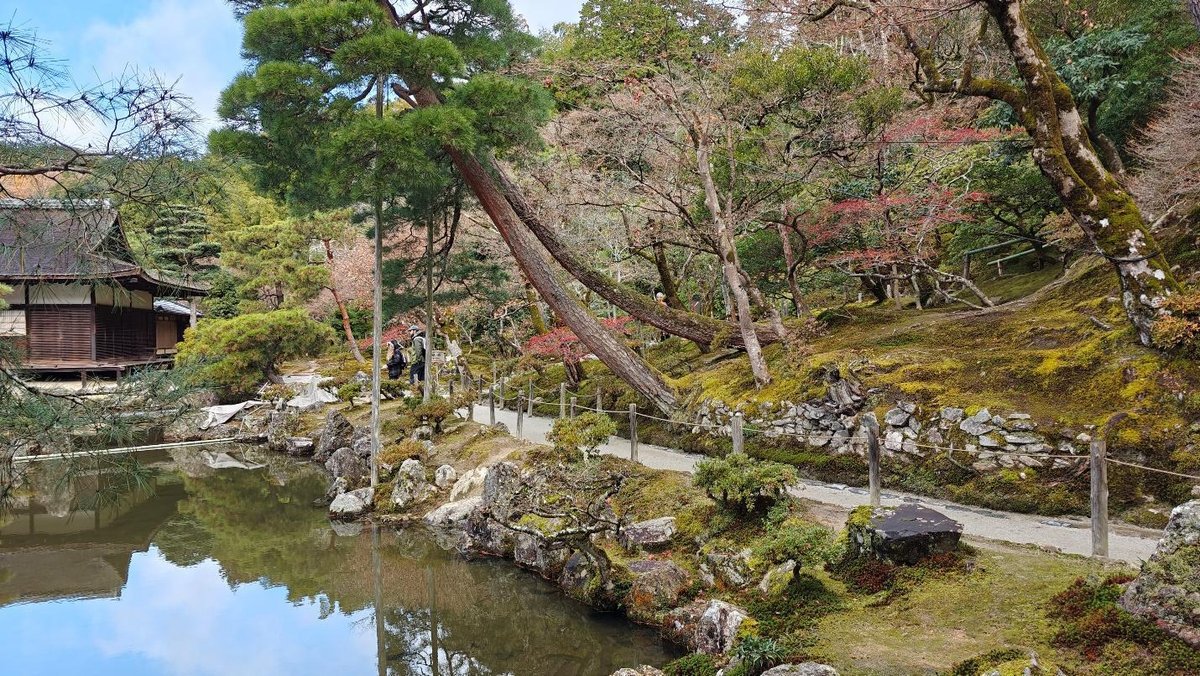
Here you can see the walking path leading up to the Observation Deck. Then off to the side is the Togu-do building that I passed by earlier. Now that I think about it, this is actually pretty similar to the walking path in Kinkaku-ji.
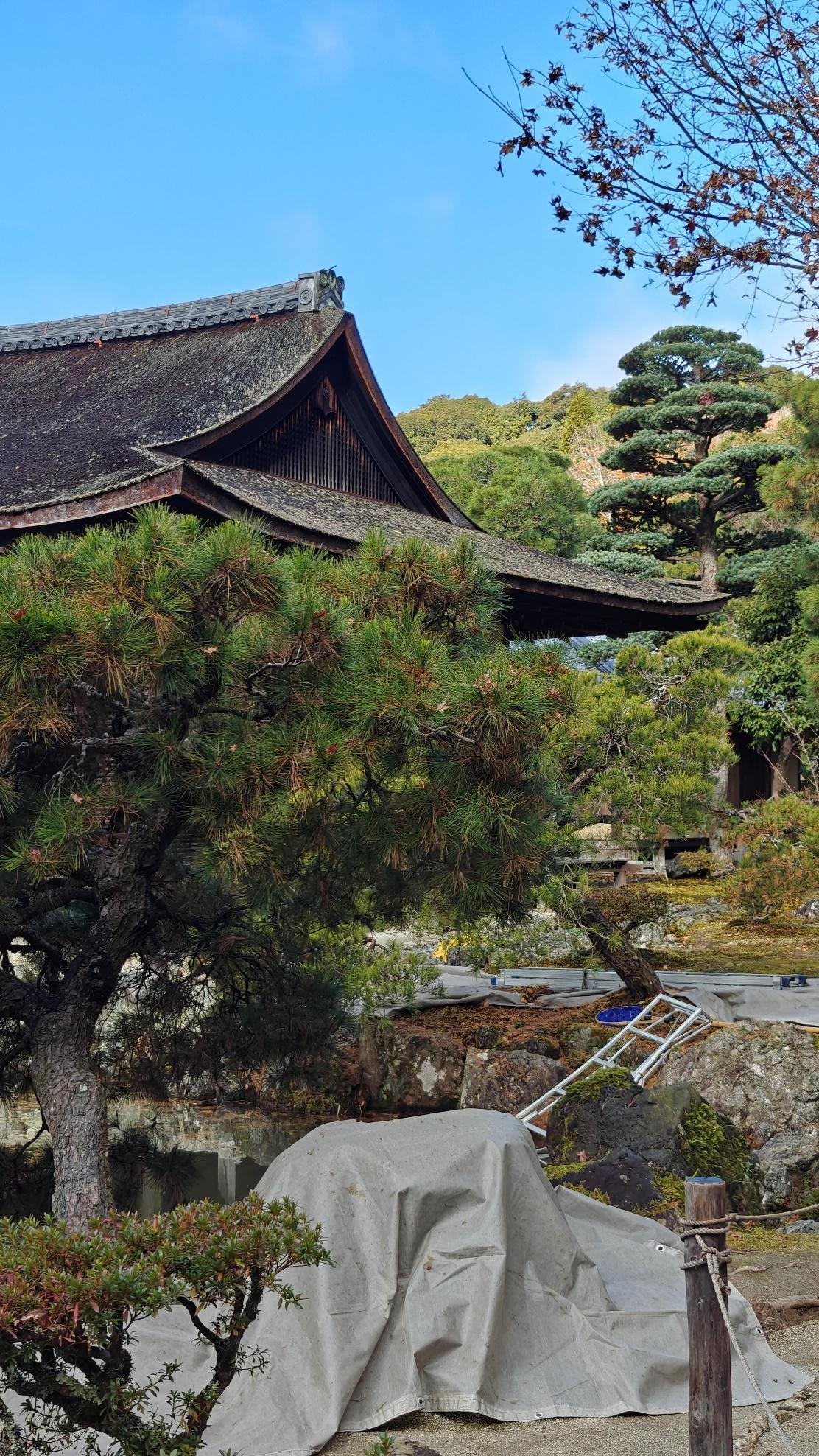
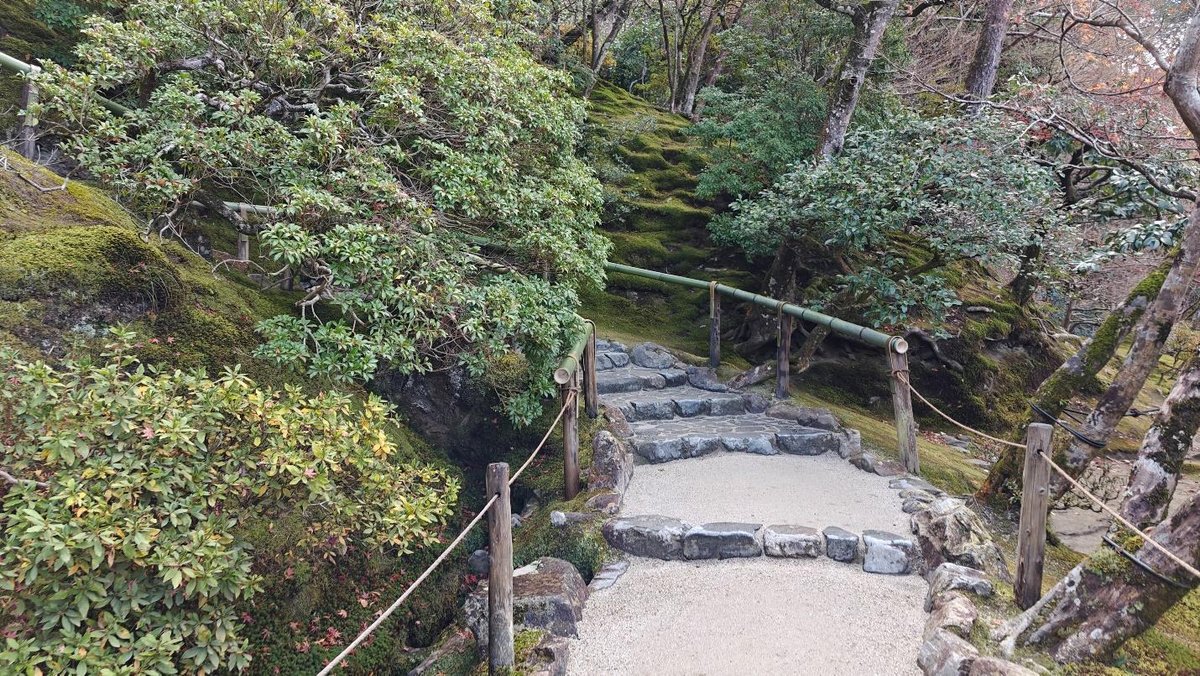
Now the path here is generally easy to climb up with the steps having wide horizontal treads and short vertical risers. These along with the bamboo railings make it relatively safe for even elderly visitors to go up on. Obviously though, this can be a challenge for individuals with disabilities that make it hard for them to use their legs.
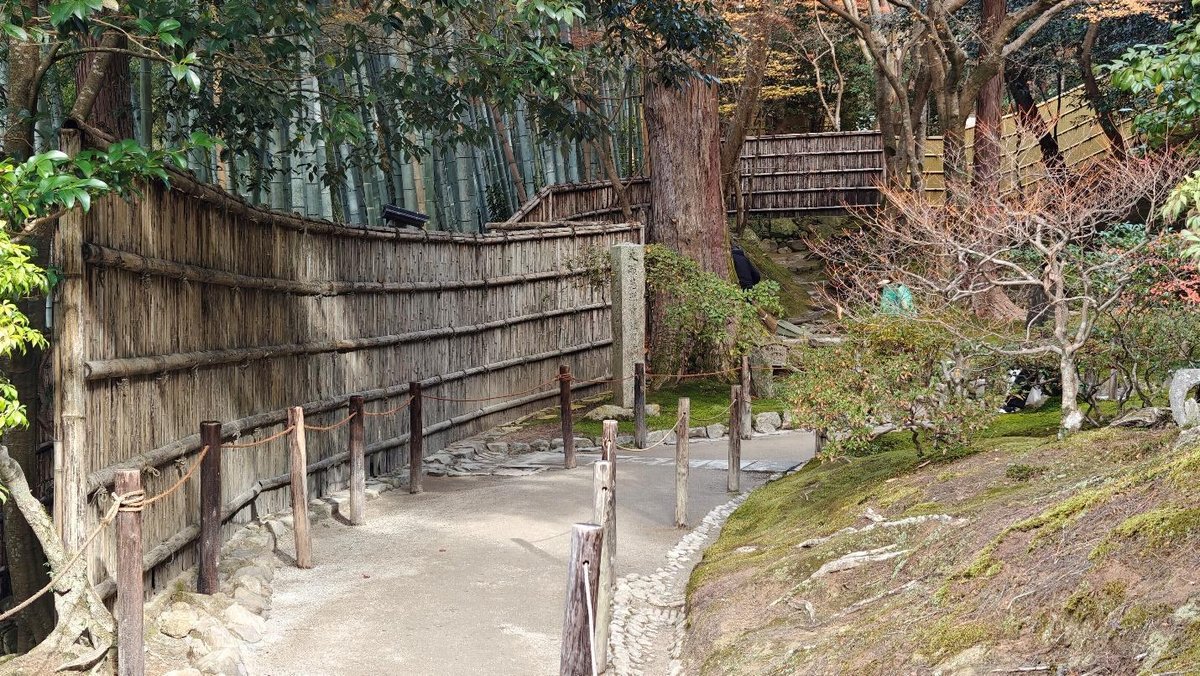
So I read that there used to be a path just before this area that led to a shrine for Benzaiten. Apparently, that has been closed down now though the shrine is still around.
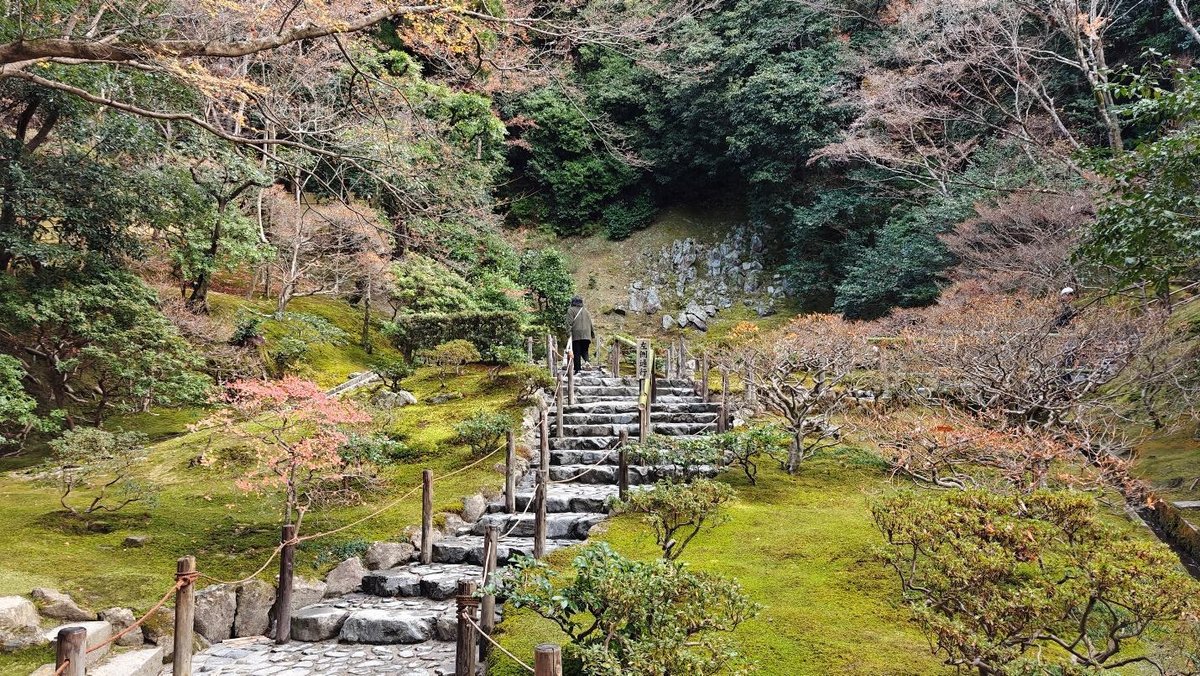
One thing that I particularly liked about the walking path is how natural the scenery here seemed. I particularly liked the balance of large trees and then areas of grass with smaller trees then lining the walking path. Like a lot of places here in Kyoto, the best time to visit Ginkaku-ji will be in spring and in autumn.
I visited in early winter so I missed out on the autumn foliage of some of the trees here.
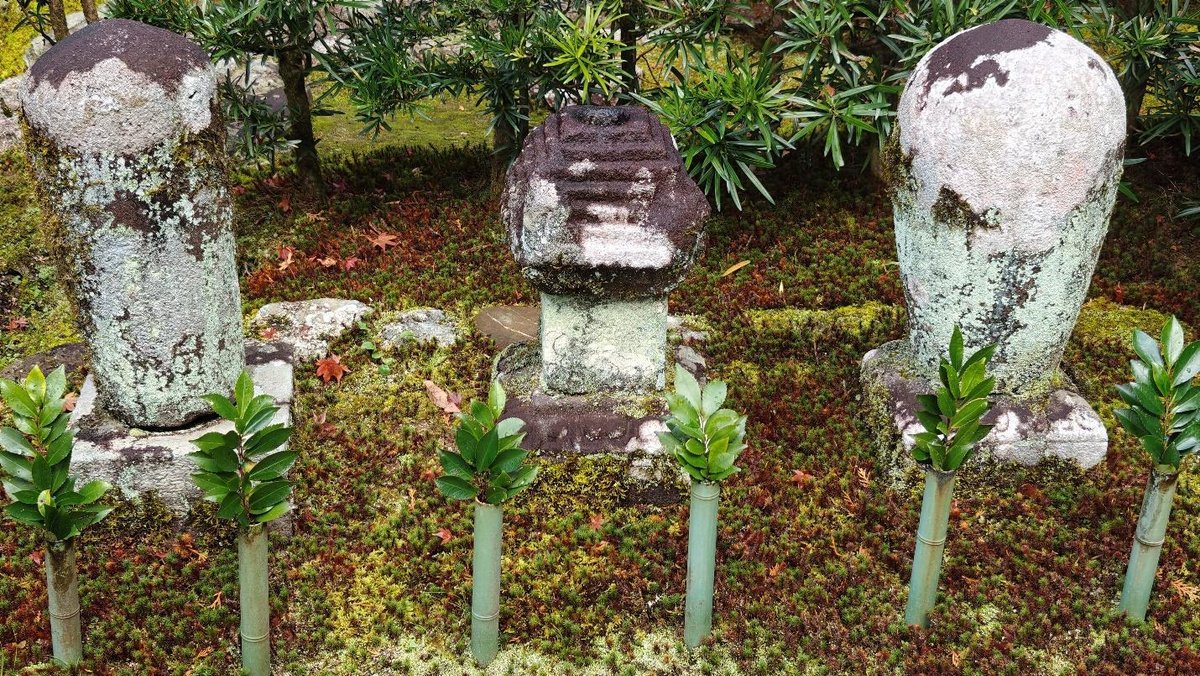
The first notable landmark that I came across in this walking path was the Ocha-no-i or Tea Well. I was quite interested in this area so I tried looking it up and apparently, it served a similar function to Kinkaku-ji's Ginga-sen. Like Ashikaga Yoshimitsu, Ashikaga Yoshimasa enjoyed his tea and this is where he got his water for the tea ceremonies he officiated.
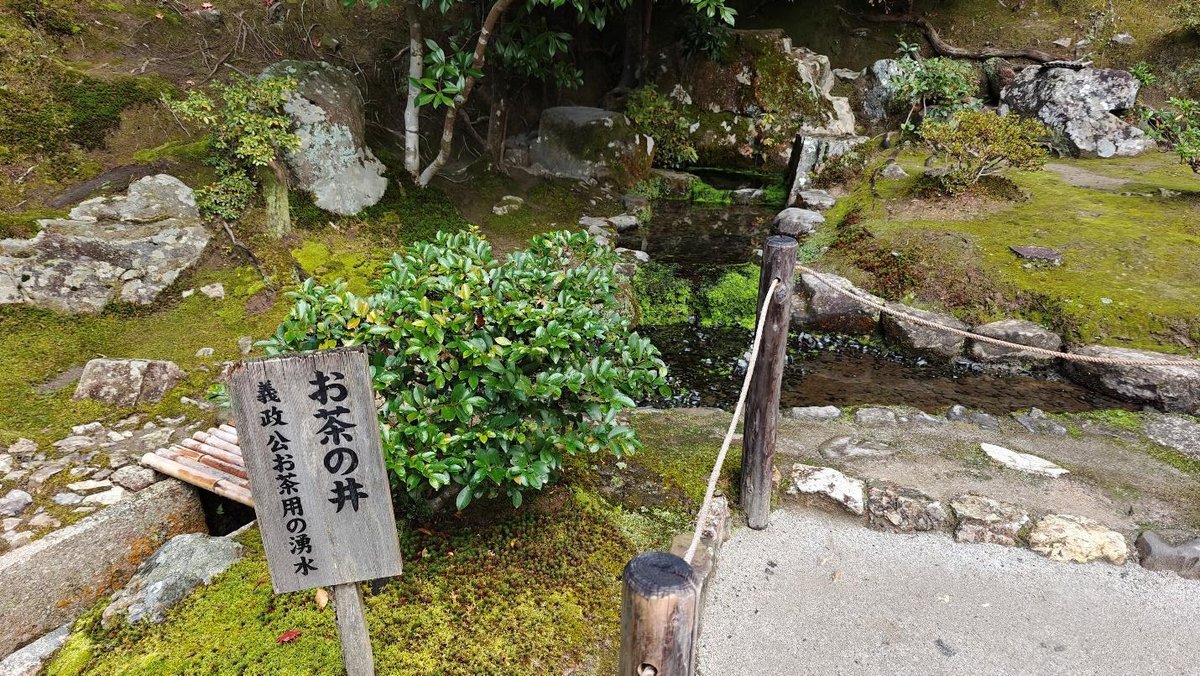
Much like the Sengutsu-sen from earlier, the water here also feeds into the Kinkyochi Pond. As to where the water from the pond drains to, that's something that I'm not too sure about. I tried looking it up and there doesn't seem to be any mention of where the water from the pond might go when it fills up.
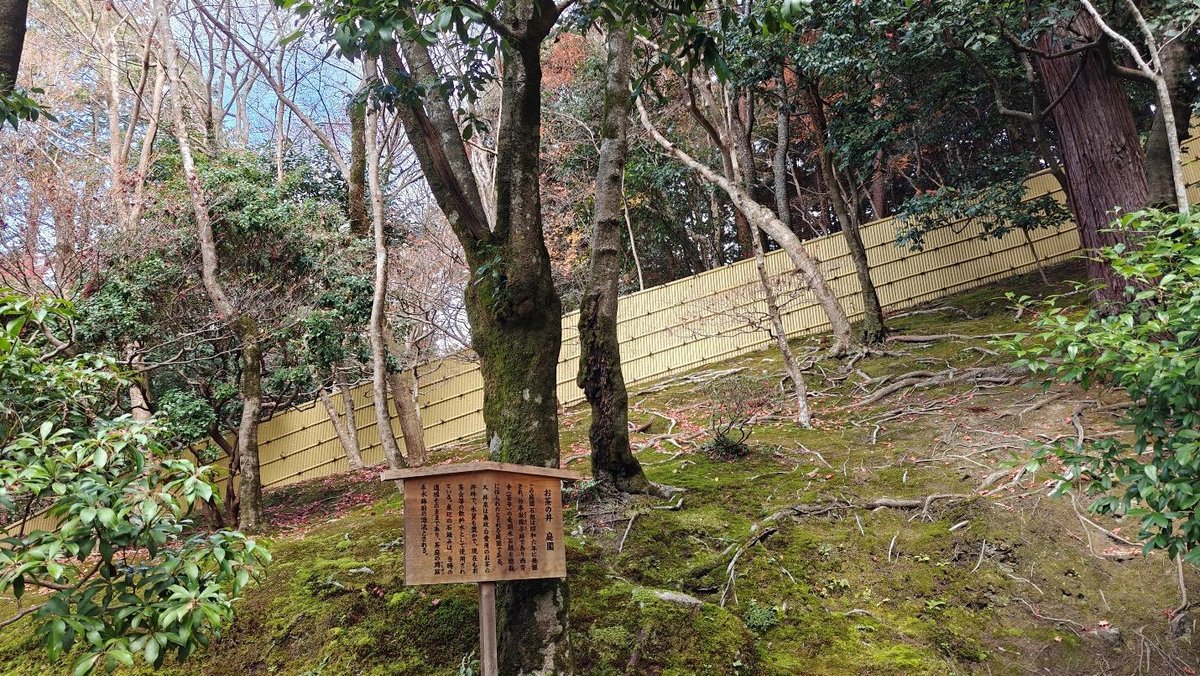
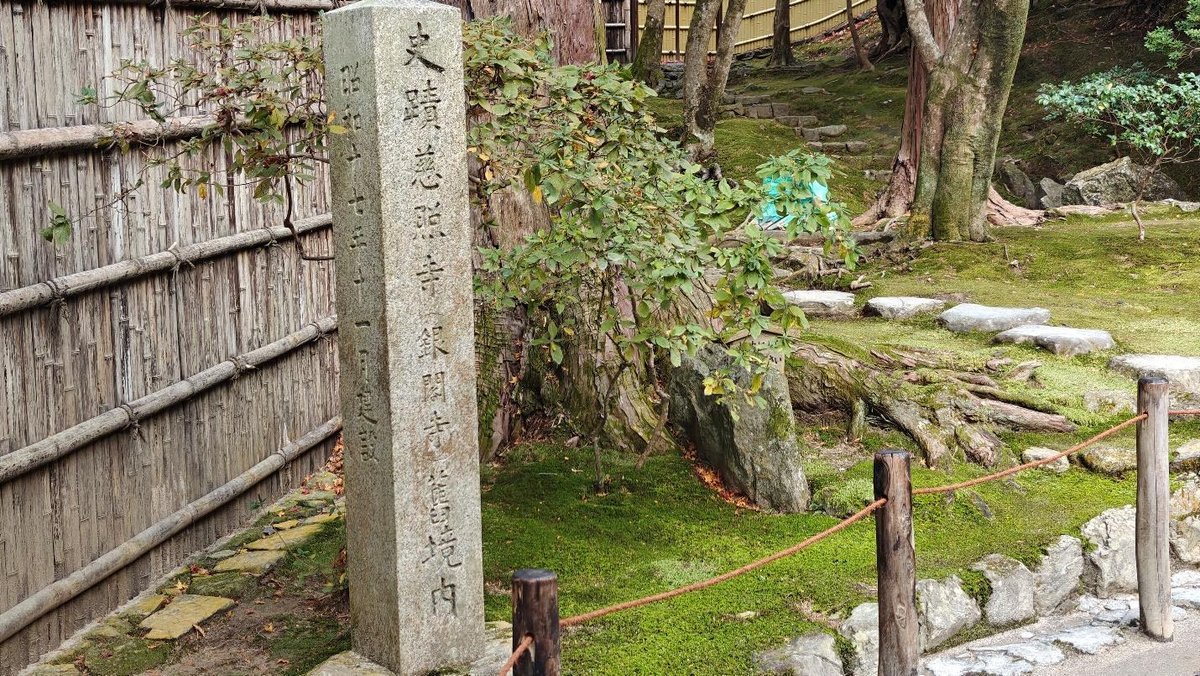
Here's a signpost that talks more about the Ocha-no-i. It details that the stone arrangements here were actually made sometime in 1931 and that these were patterned after the ones found at Saihoji/Kokedera. As for the well, it remains unchanged since the 15th century and the water is still good enough to be used for tea ceremonies in the present.
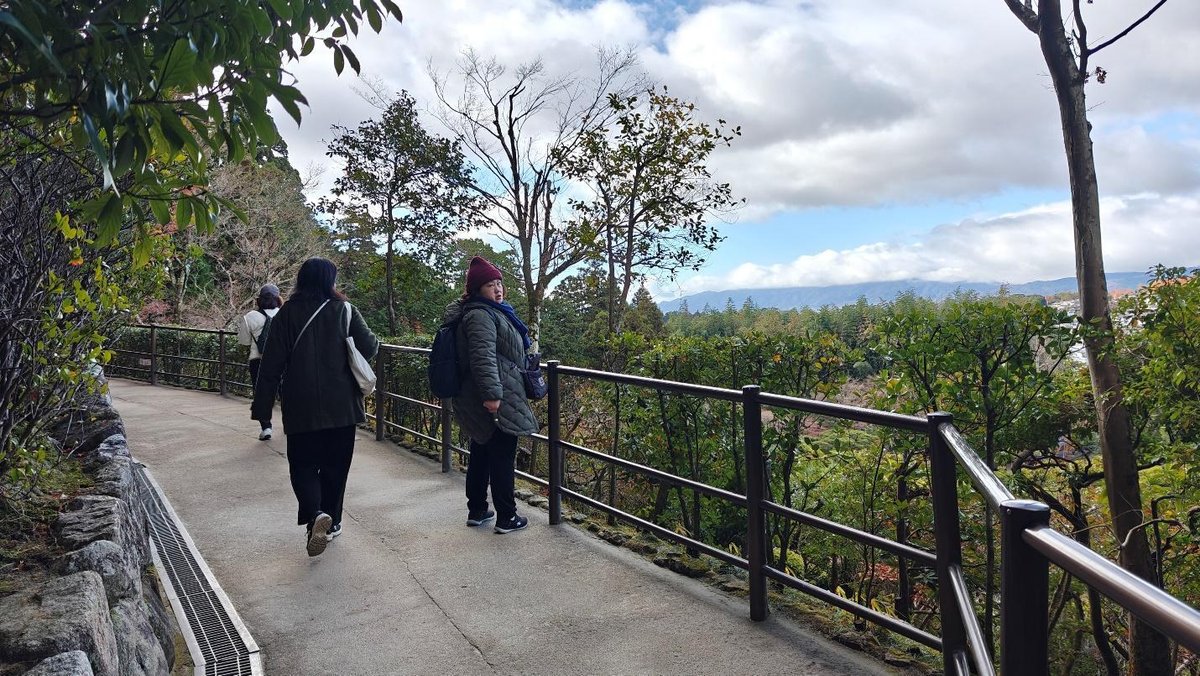
From the Ocha-no-i, I continued on to the walking path until I found myself at the Observation Deck. Now at this point I was a little tired from all the walking I've been doing. Thankfully though, the views here more than made up for everything.
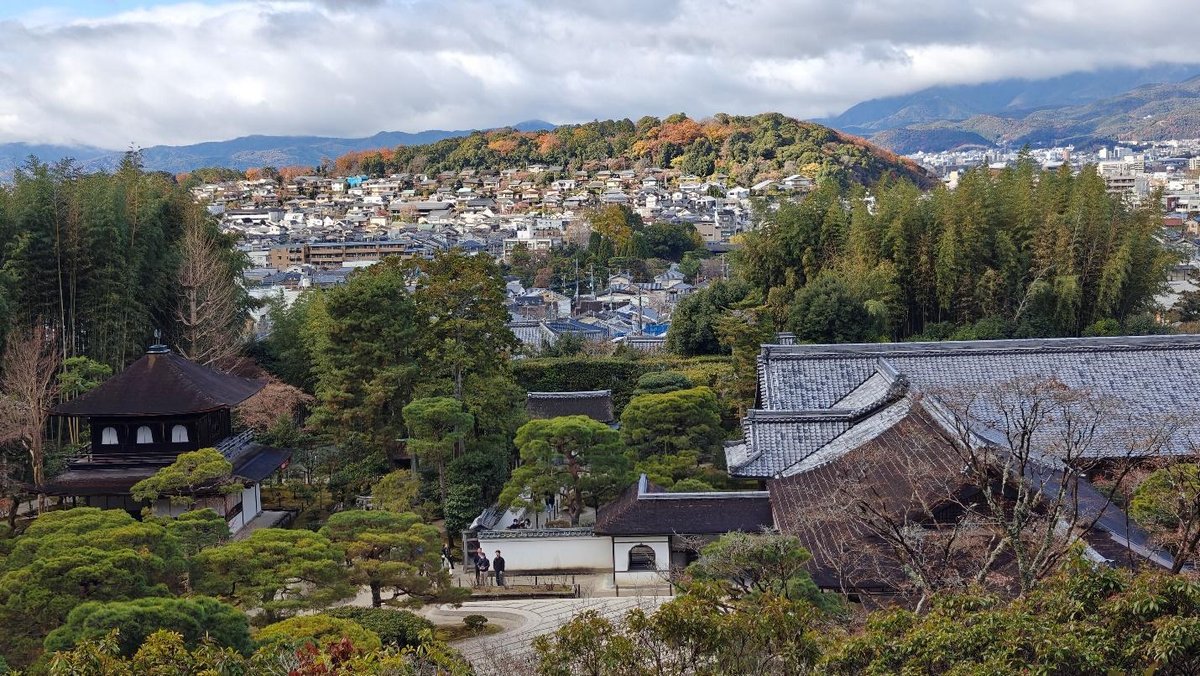
I kid you not, after seeing the view here I could feel myself regaining my energy. This was such a refreshing vista and it really made me appreciate the opportunity to be here. From this Observation Deck I could clearly see the areas that I'd already gone through earlier.
The Hoshokan, Ginshadan, and the Hondo were the landmarks that initially stood out. Off to the side I could just barely make out the Kogetsudai and the first floor of the Ginkaku.
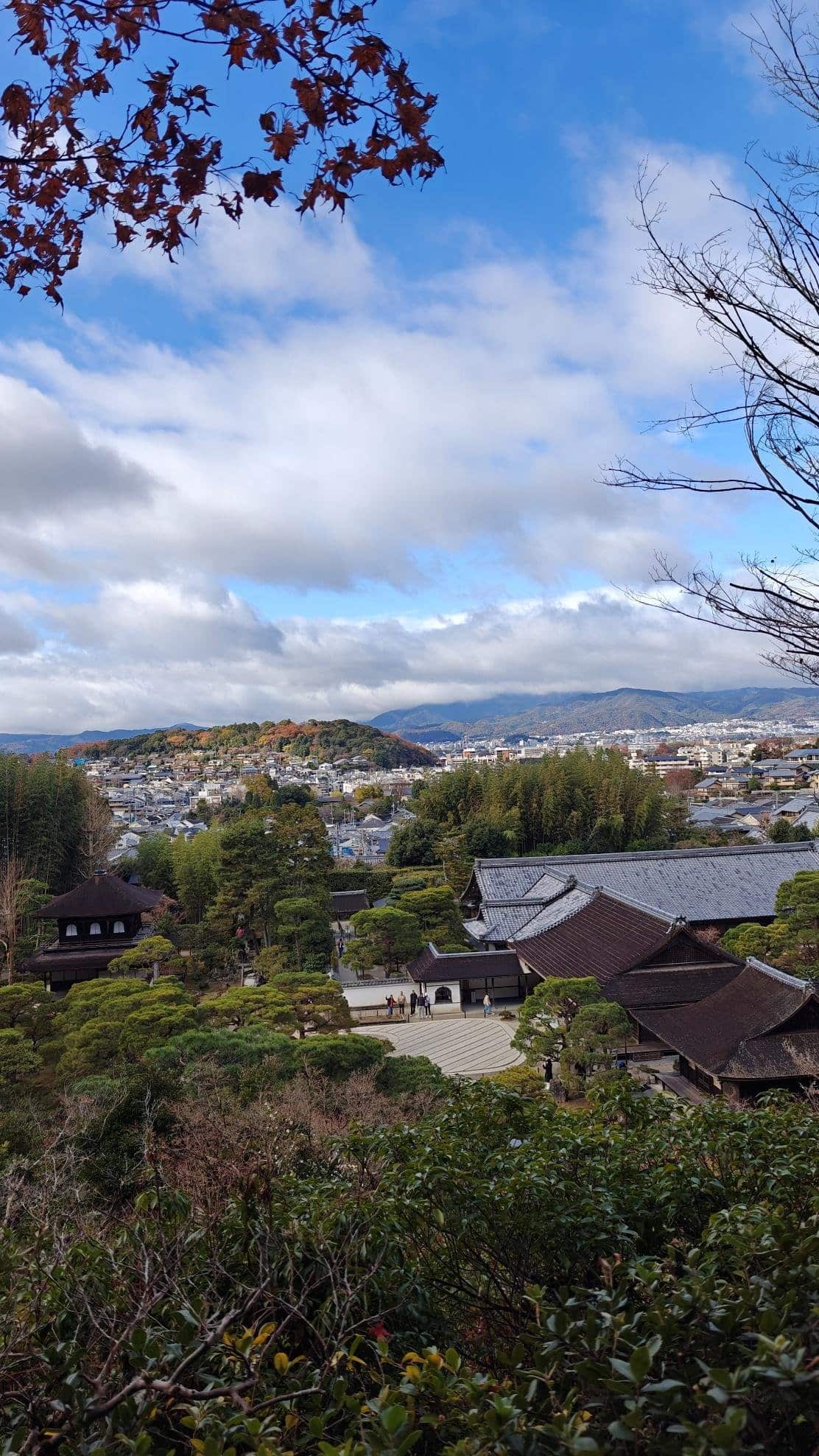
Aside from just Ginkaku-ji, the Observation Deck also gives you a view of Ginkakujicho and Kyoto itself. For some reason, I found myself just feeling amazed at these views. Moreover, I also found myself marveling at how there didn't seem to be a high-rise building in sight (at least from here).
It's kind of impressive that even though it's an advanced and high-tech city, Kyoto still feels more like a village or a town. If I'm not mistaken, this is by design as the city wants to preserve its aesthetics as well its culture.
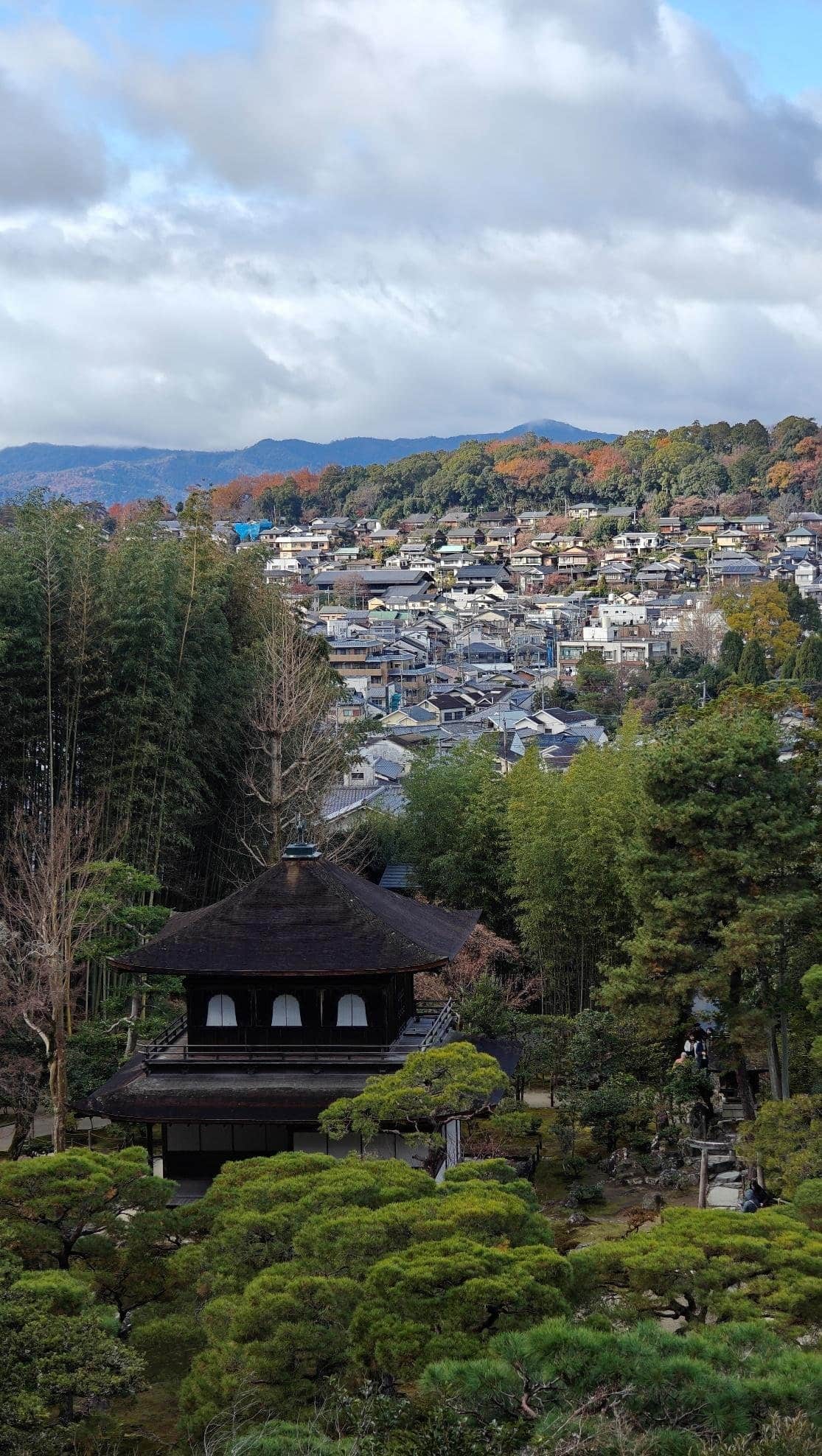
Anyway, here's a closeup of the Ginkaku or Silver Pavilion. Now that I think about it, it has a lot of similarities to the Golden Pavilion in Kinkaku-ji. Specifically, the top floor as well as the shape of the windows look very identical.
Looking deeper into this, I found that this was also by design as Ashikaga Yoshimasa wanted a more minimalist and subdued aesthetic for the building.
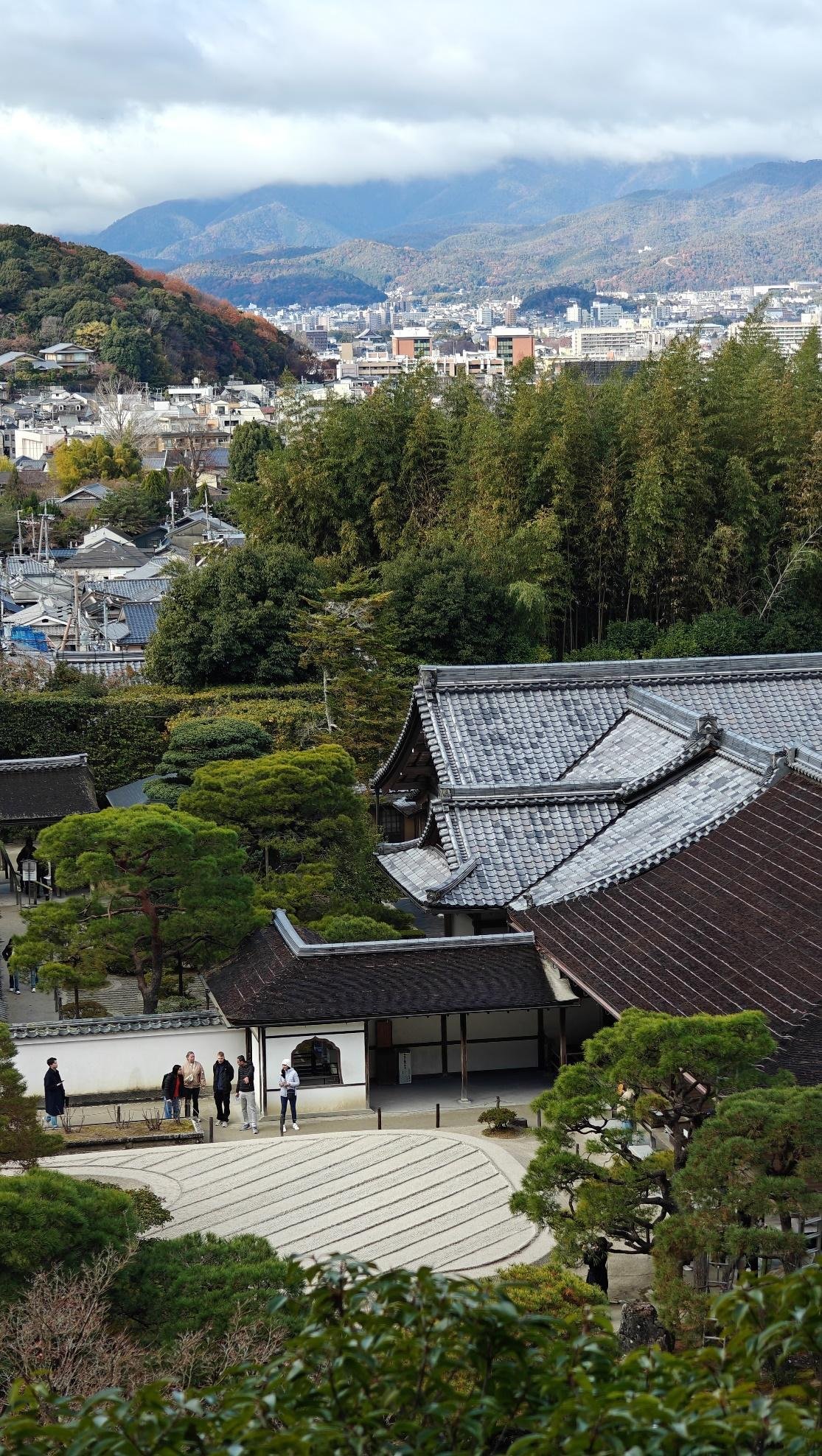
In this closeup, you can clearly see how the Ginshadan looks from above. Now I'm really curious how this whole area looks when the moon is full. Unfortunately, the temple is only open for visitors from 8:30AM up until 5:00PM.
Moreover, with light pollution I don't think it's possible to see how the moonlight would reflect on the buildings here. On a side note, you can also see a glimpse of the Chu-mon or Central Gate on this particular closeup.
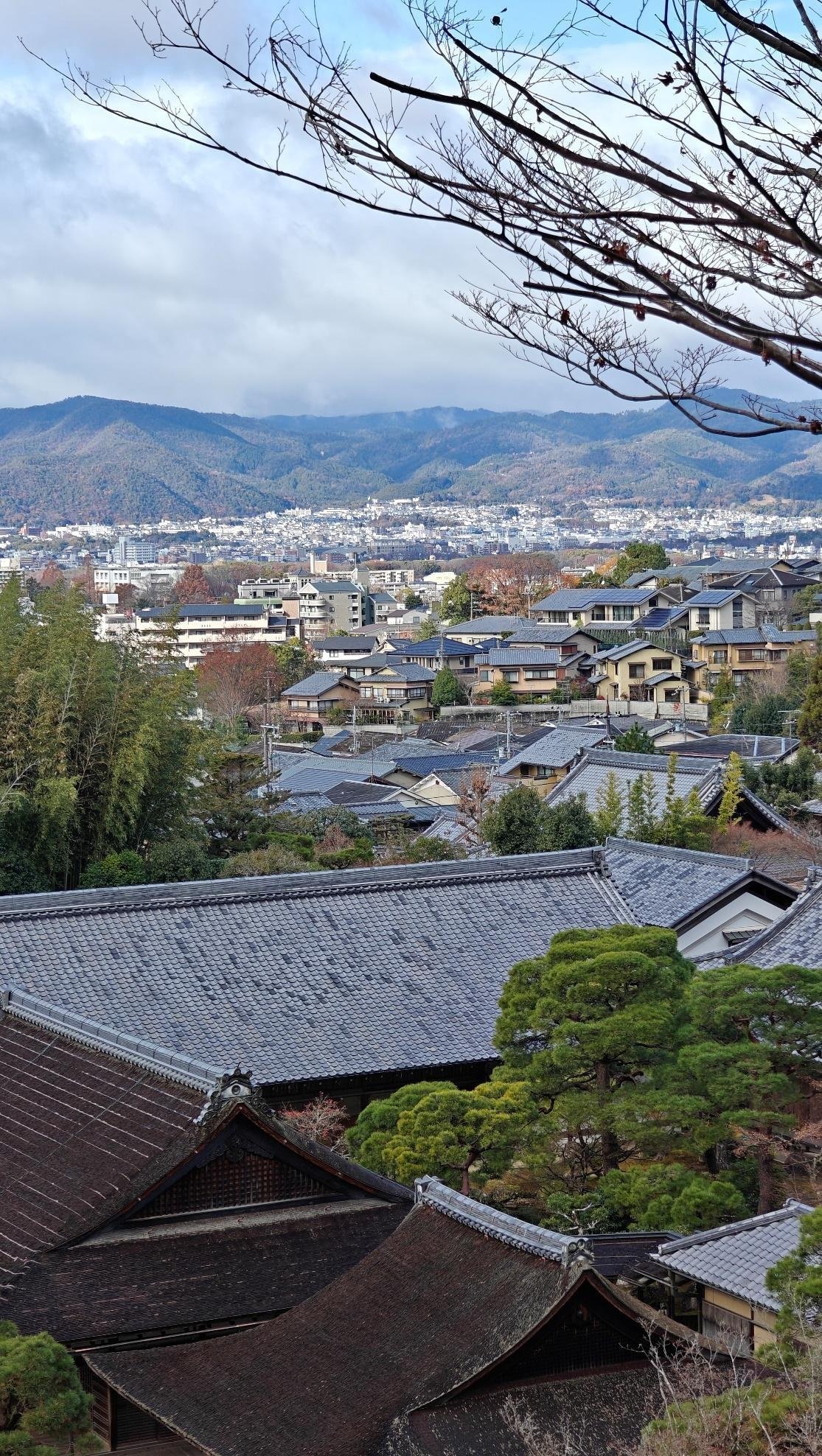
These are the roofs of the Togu-do, the Hondo, and the Kuri. You can also see a small part of the roof of the Roseitei or the Rooms for the Incense Ceremony just beside the Togu-do's roof. In the background you can see parts of Jodo-in Temple's roof and a huge chunk of the buildings in Ginkakujicho.
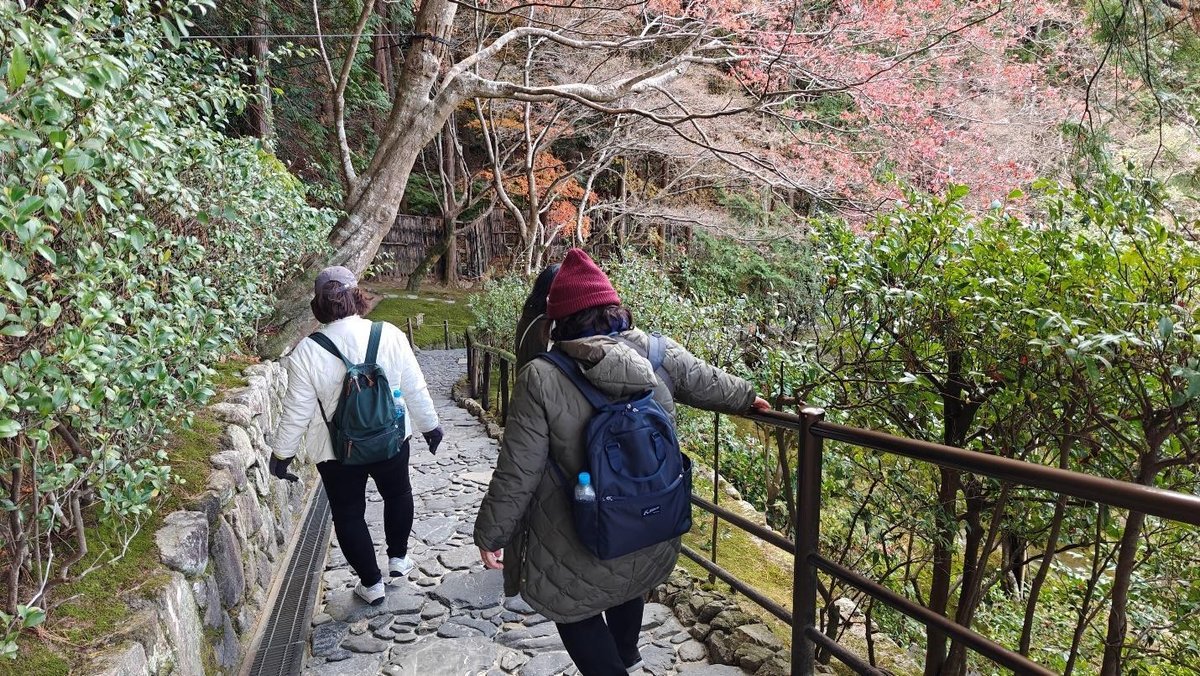
These steps mark the end of the walking path's Observation Deck section. Walking down these steps was relatively easy again thanks to the wide horizontal treads. As you can see, the group in front of me had an elderly individual who had no issues going down and at a rather brisk pace at that.
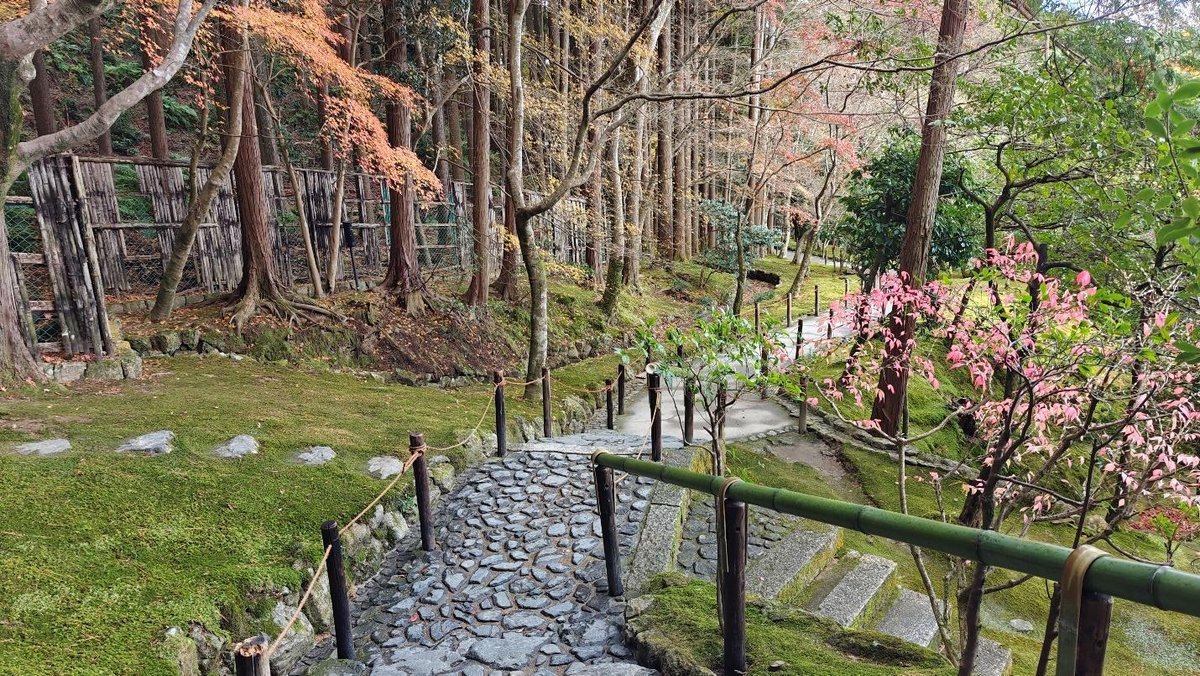
As for me, I wasn't in a hurry to get down. I actually ended up spending a little more time walking through the path to just soak in the views and the fresh air here. It also helped that the crowds here were non-existent.
Yes there were other visitors but their numbers really pale when compared to the ones I saw in Kinkaku-ji.
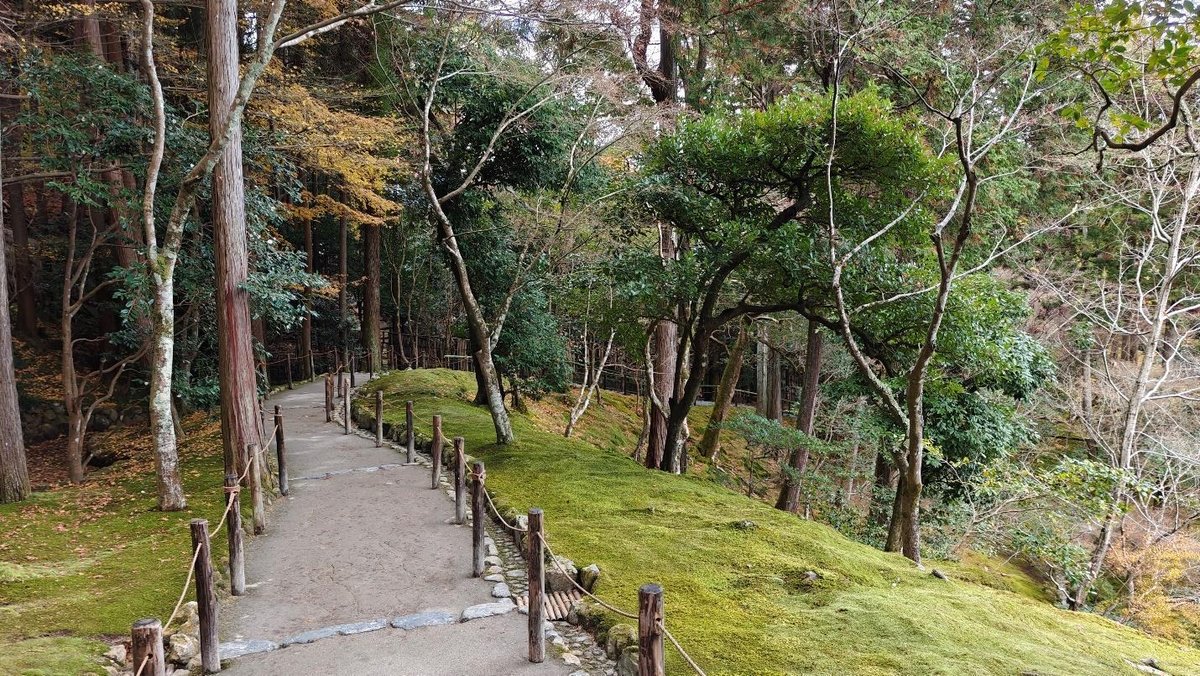
One thing that you'll likely notice once you get here is that there are relatively few sakura here. This is probably one of the few gardens in Kyoto that doesn't have a grove full of the popular trees. Initially I was confused by this but apparently, this is also by design.
You see, Ginkaku-ji was built with the wabi-sabi aesthetic in mind. In a nutshell, wabi-sabi is finding beauty in rustic simplicity, impermanence, and imperfection.
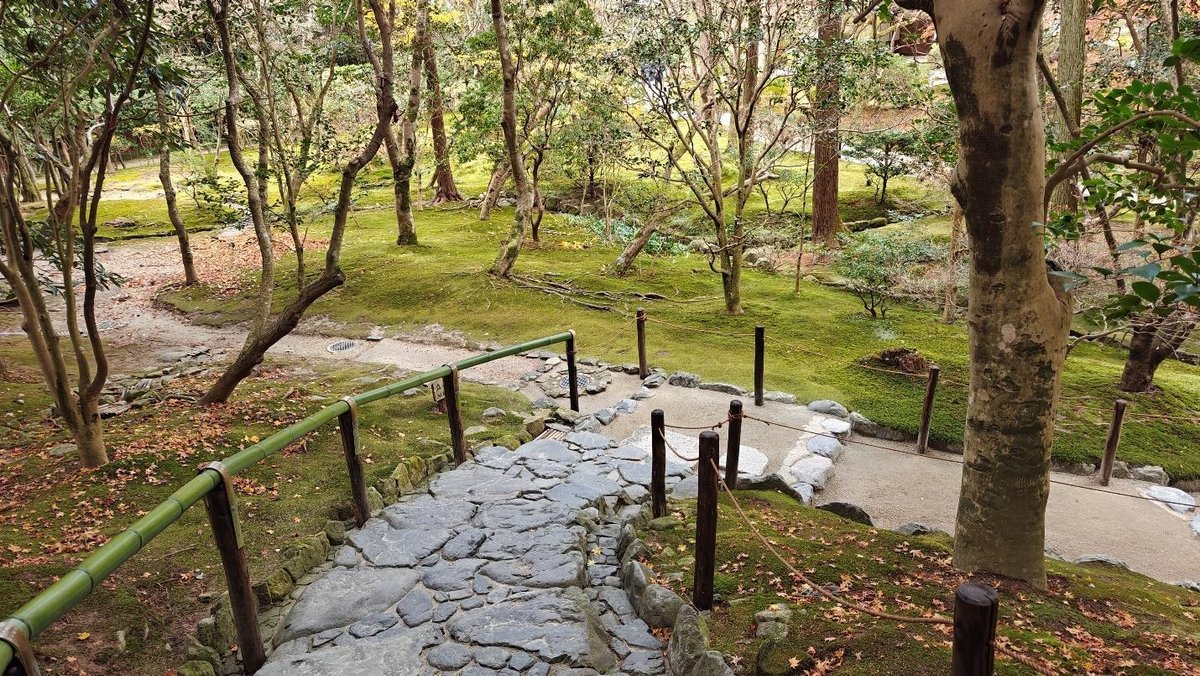
While you can argue that the sakura’s deciduous nature is a great example of impermanence, it's also considered very dramatic and beautiful especially when it blooms. These features contradict the simple and unrefined aspect of wabi-sabi and for that reason, you're not going to find that many of them inside the temple grounds. That said, there are plenty that line the Tetsugaku-no-michi or Philosopher's Path so if you come here in spring you can always go there before or after to see their blossoms.
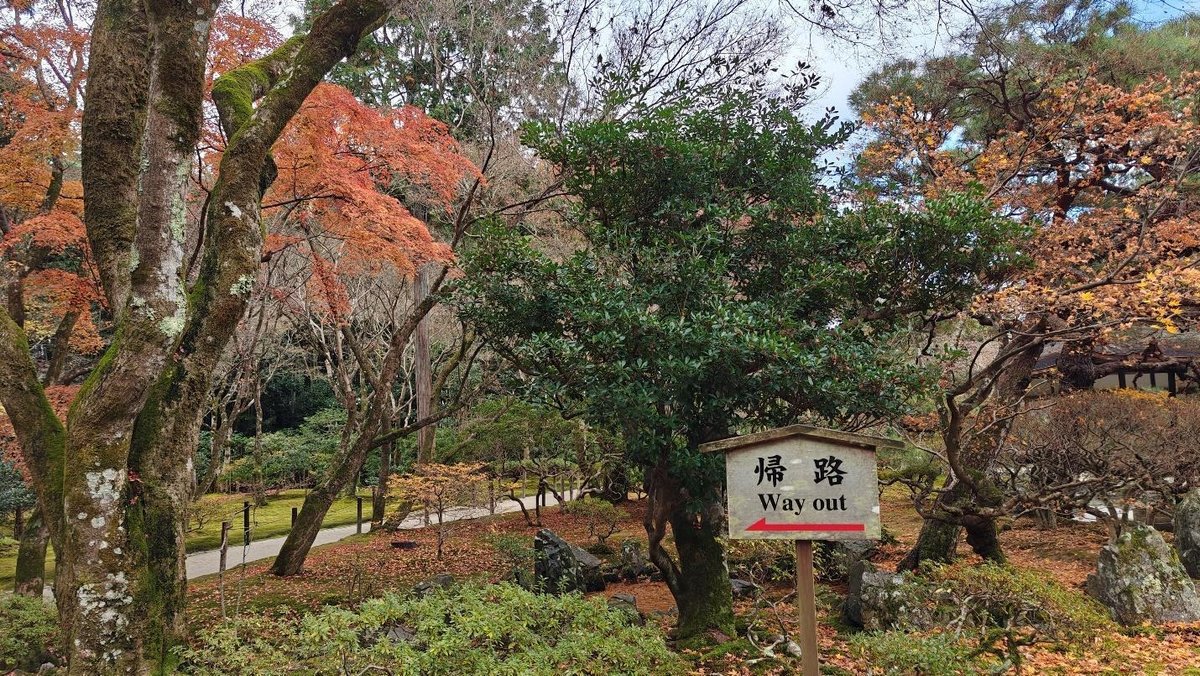
I'm back again in the vicinity of Kinkyochi Pond. This is near its southern end and this sign is pointing to the direction of the exit. Following this route, you should then be able to exit at the gate that's just in front of the Shuin-jo.
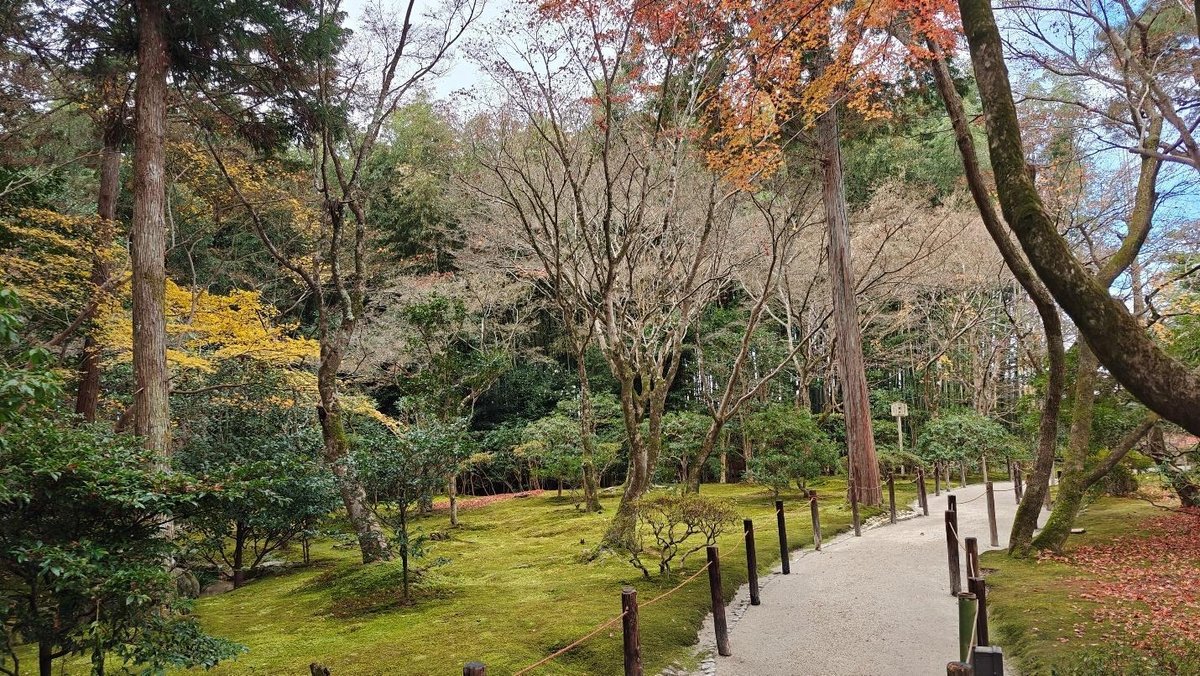
Initially I thought these were sakura but upon closer inspection I realized that the trees here were Japanese maple. If you want to see sakura, there's a shrine dedicated to Hachiman close to the Silver Pavilion that has a tree or two. Again, the Tetsugaku-no-michi offers a better sakura viewing experience at exactly no cost to you.
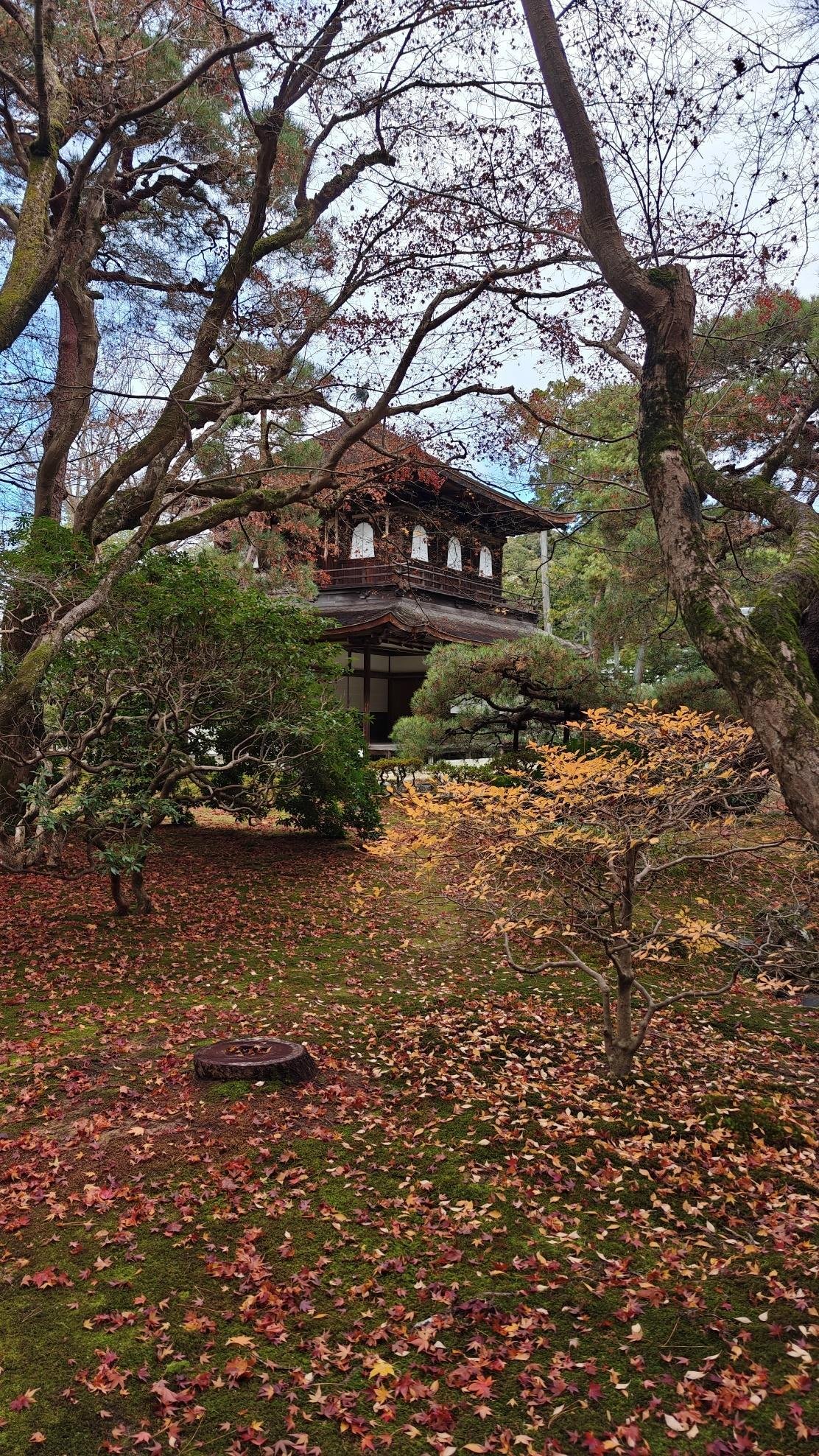
One of my regrets during this trip is coming here about 2 or 3 weeks late and not being able to witness the peak of the fall foliage season. Then I remember just how crowded Kiyomizu-dera as well as Kinkaku-ji was and the feeling of regret immediately turns to relief. Honestly, I just don't think I could deal with the peak tourist season crowds.
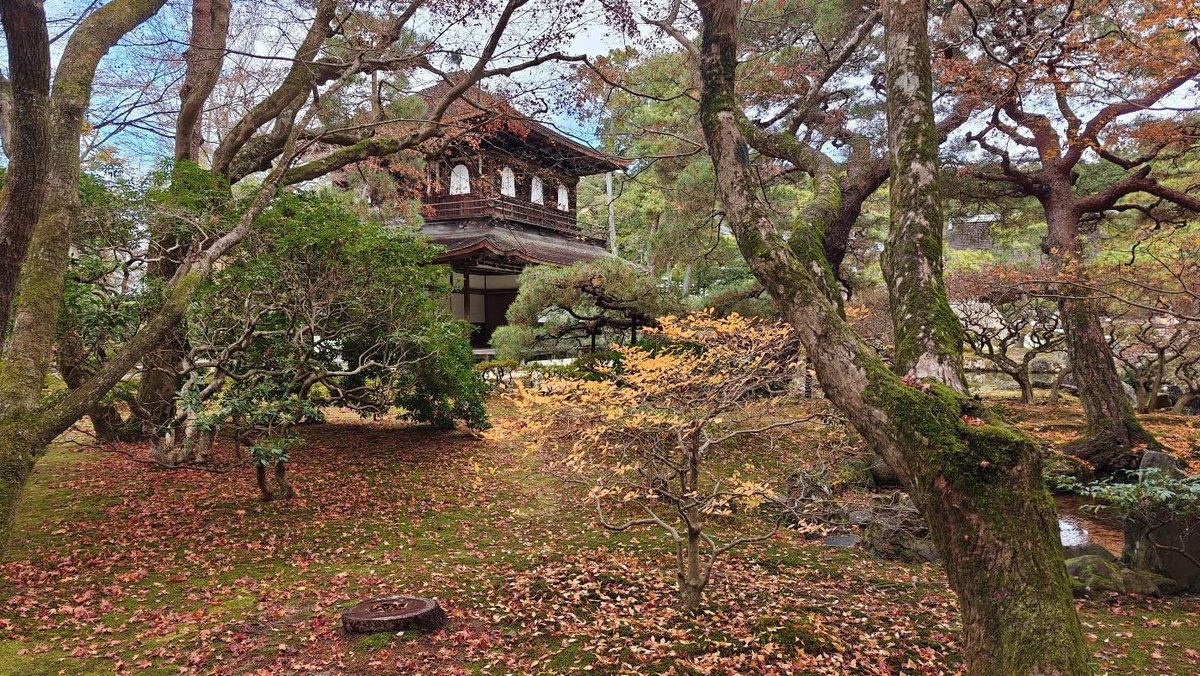
Anyway, here's the last picture I took of the Silver Pavilion. It's definitely not as ostentatious or as impressive to look at as the Golden Pavilion. In hindsight, I think it perfectly embodies the wabi-sabi aesthetic of being imperfect, simple, and rustic.
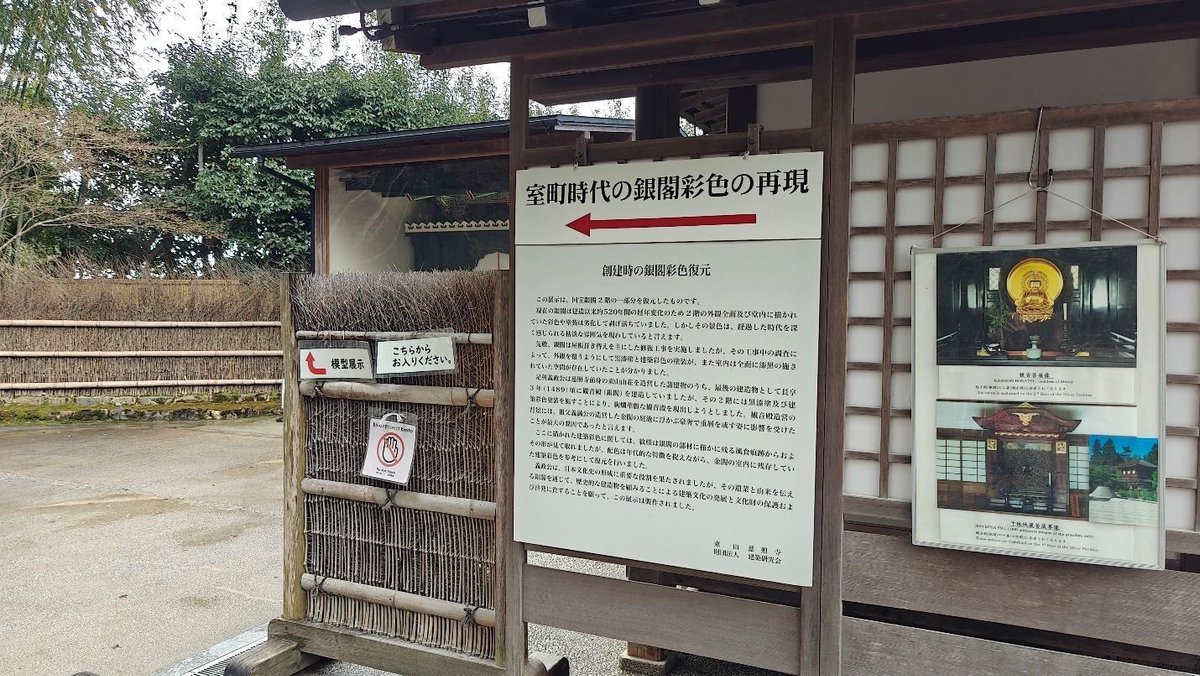
This is a sign detailing an exhibit showcasing a reconstruction of the Silver Pavilion's second floor. I was a little tired at this point so I decided to not go through here. There are pictures of what you can expect to see beside the sign though so you could check that out if, like me, you're a little tired and want to rest.
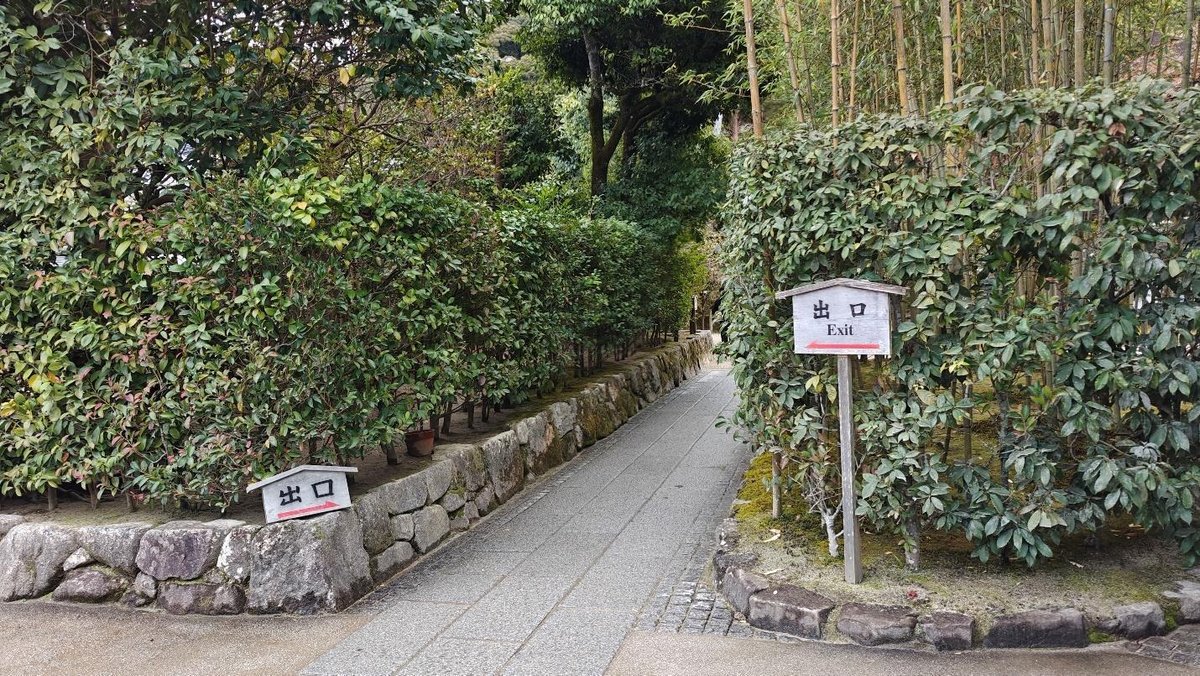
Speaking of rest, just behind this path to the exit is a souvenir store called Entsuden that’s next to the temple's public restroom. There's also an area to the right (of this image) that has chairs that you could sit down on to rest before you proceed to the exit. I didn't notice that I'd spent a little too much time here though (I mean, who could blame me the views were just so nice!) that I went on ahead for the next destination of that day.And with this, my visit to Ginkaku-ji was complete.
It was definitely a much more intimate and reflective experience compared to Kinkaku-ji. There weren't that many sights that knocked me off of my feet but I also didn't find myself dozing off with the views that I did come across. It's kind of amazing actually.
The temple is much smaller and yet I seem to have spent a little more time in it because of how I found myself introspecting while appreciating its views. So do I think it's worth visiting? It definitely lacks the mass appeal of Kinkaku-ji but it's also much easier to access.
Moreover, it's quite close to the Tetsugaku-no-michi as well as other shrines and temples. At just 500JPY, admission is also relatively cheap. I definitely think that Ginkaku-ji is a worthwhile visit and some would even go so far as to consider it a quintessential go-to landmark in Kyoto.
Ideally, you want to visit Kinkaku-ji first as it's further and is far more crowded. You can then schedule Ginkaku-ji in the afternoon or as the first item in your itinerary for the following day.Ever had the chance to visit Ginkaku-ji in Kyoto? What do you think of this Zen temple and its gardens?
Don't forget to hit the comment section to share your thoughts as well as tips and tricks with us and our readers!