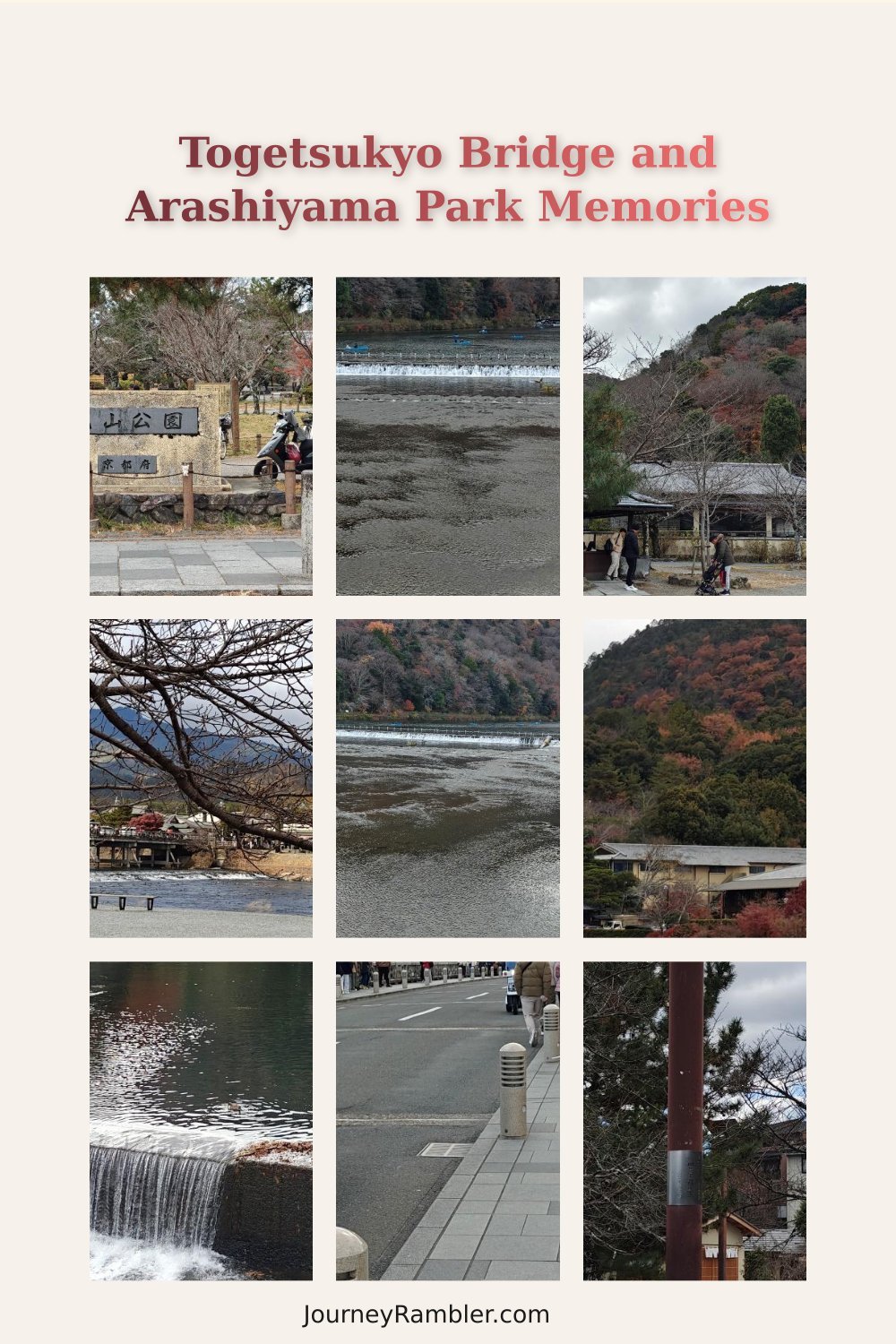
There were plenty of memorable places in Kyoto that I had the chance to visit and Togetsukyo Bridge and Arashiyama Park (the Nakanoshima Area to be precise) were two that still bring a smile to my face when I remember them. I came to these locations immediately after my Tenryu-ji Temple visit and I was blown away by the views. Still in the Arashiyama district, these are actually just a walking distance (albeit it is a bit far) from Tenryu-ji Temple.
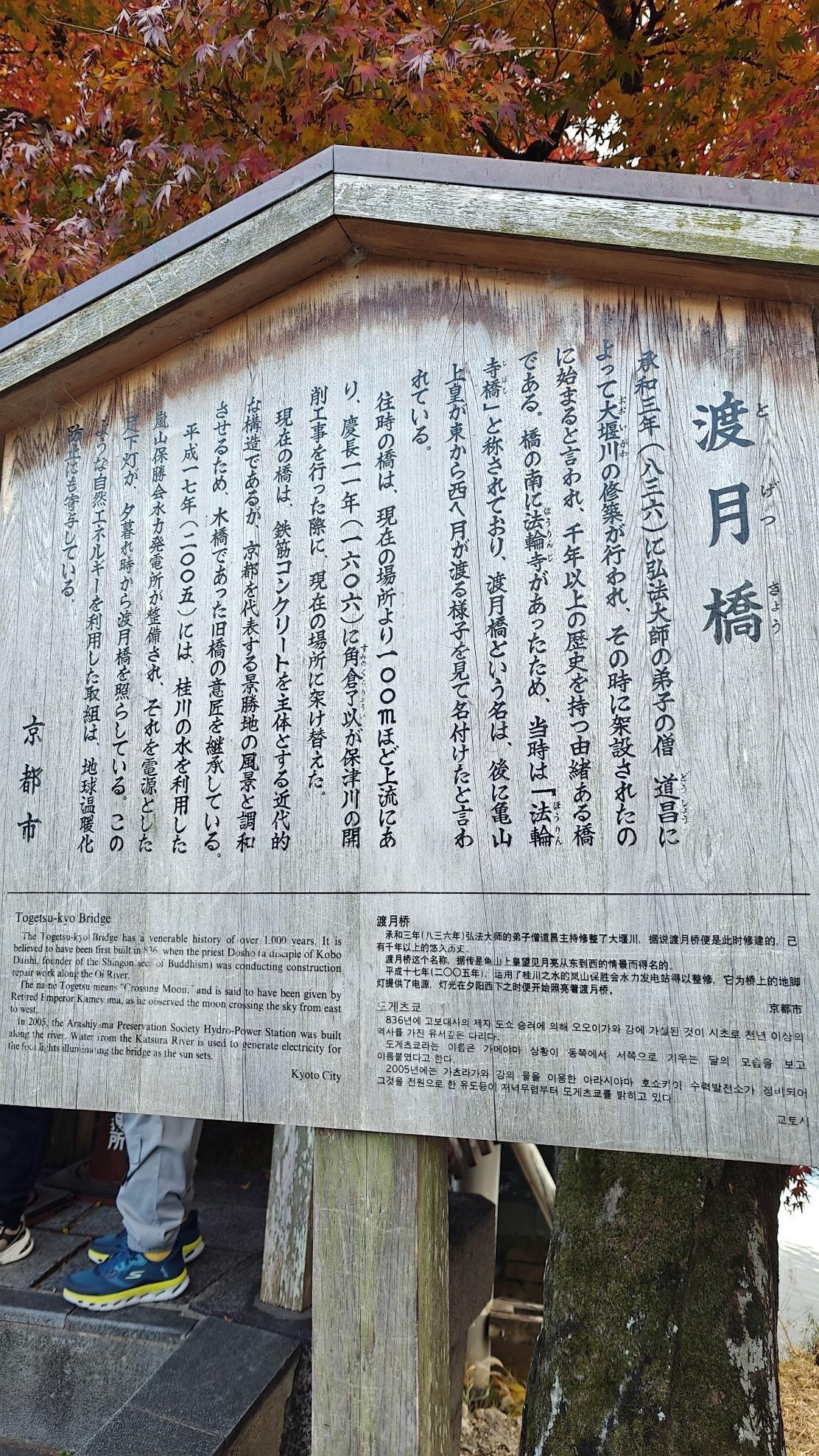
If you remember, the last picture I took of my Tenryuji Temple visit was of its marker facing the Kyoto Prefectural Route 29 main road. From there, I walked southwards until I came across this marker just before the bridge. It essentially talks about the bridge's history from when it was first built up until its renovation in the 1930s to even more recent work on it in the early 2000s.
Why I Loved Togetsukyo Bridge and Arashiyama Park
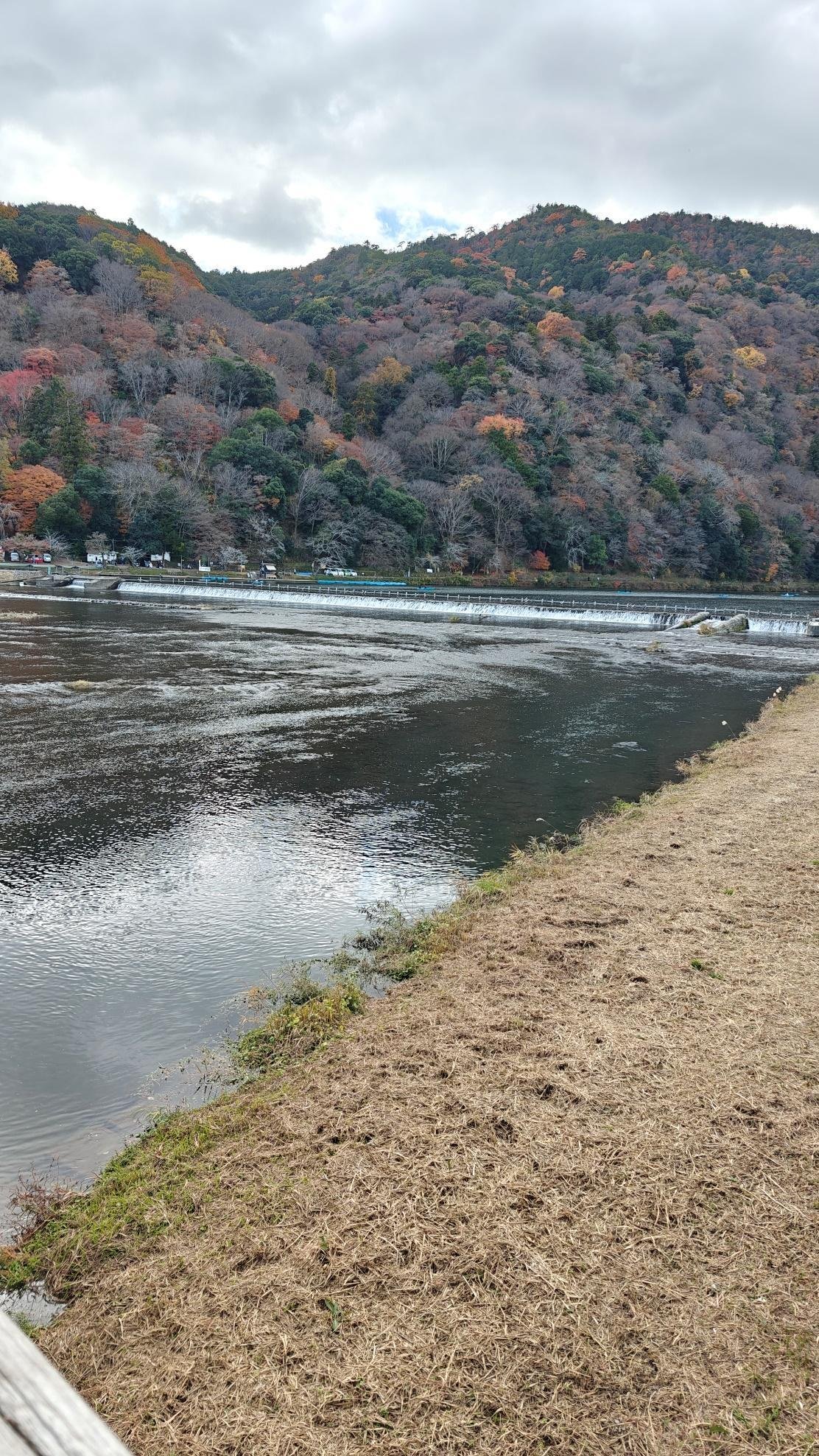
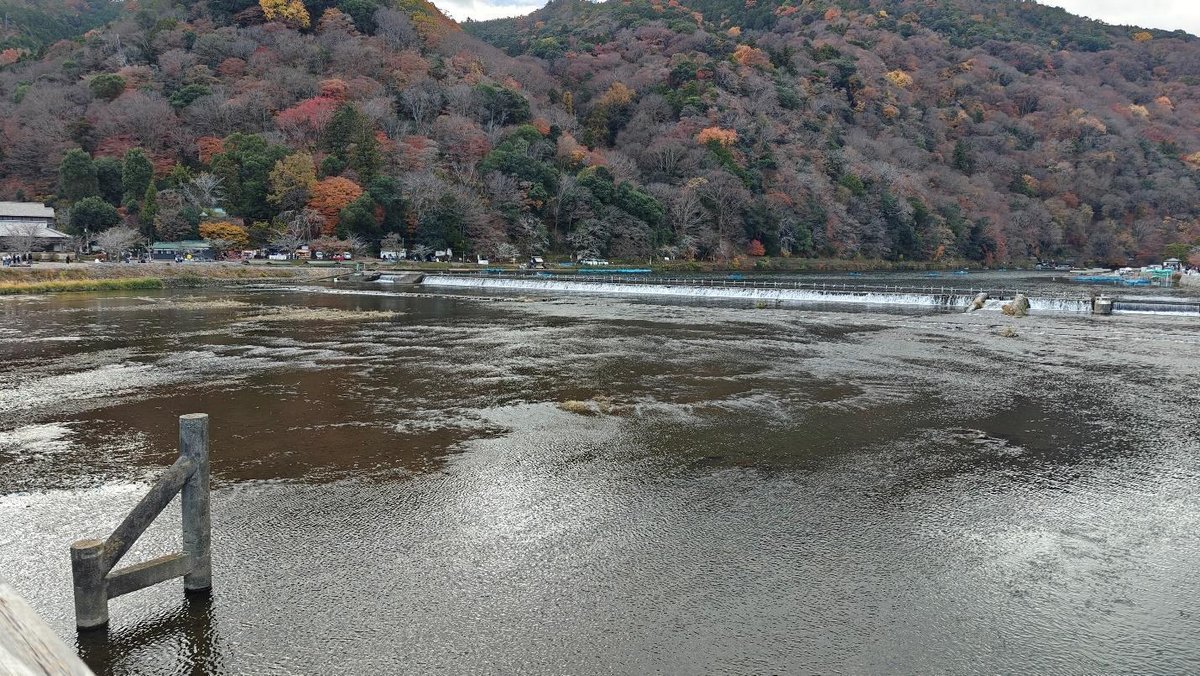
So the Togetsukyo Bridge crosses directly over the Katsura River (a section of which you saw in my write-up of the Sagano Romantic Train). From here you can see the Ichinoiseki Weir which is a small overflow dam that also bisects the river and is upstream of the bridge. Far off in the background, you'll also notice the stunning fall foliage of the trees at the foot of Arashiyama (the mountainous area which the district is named after).
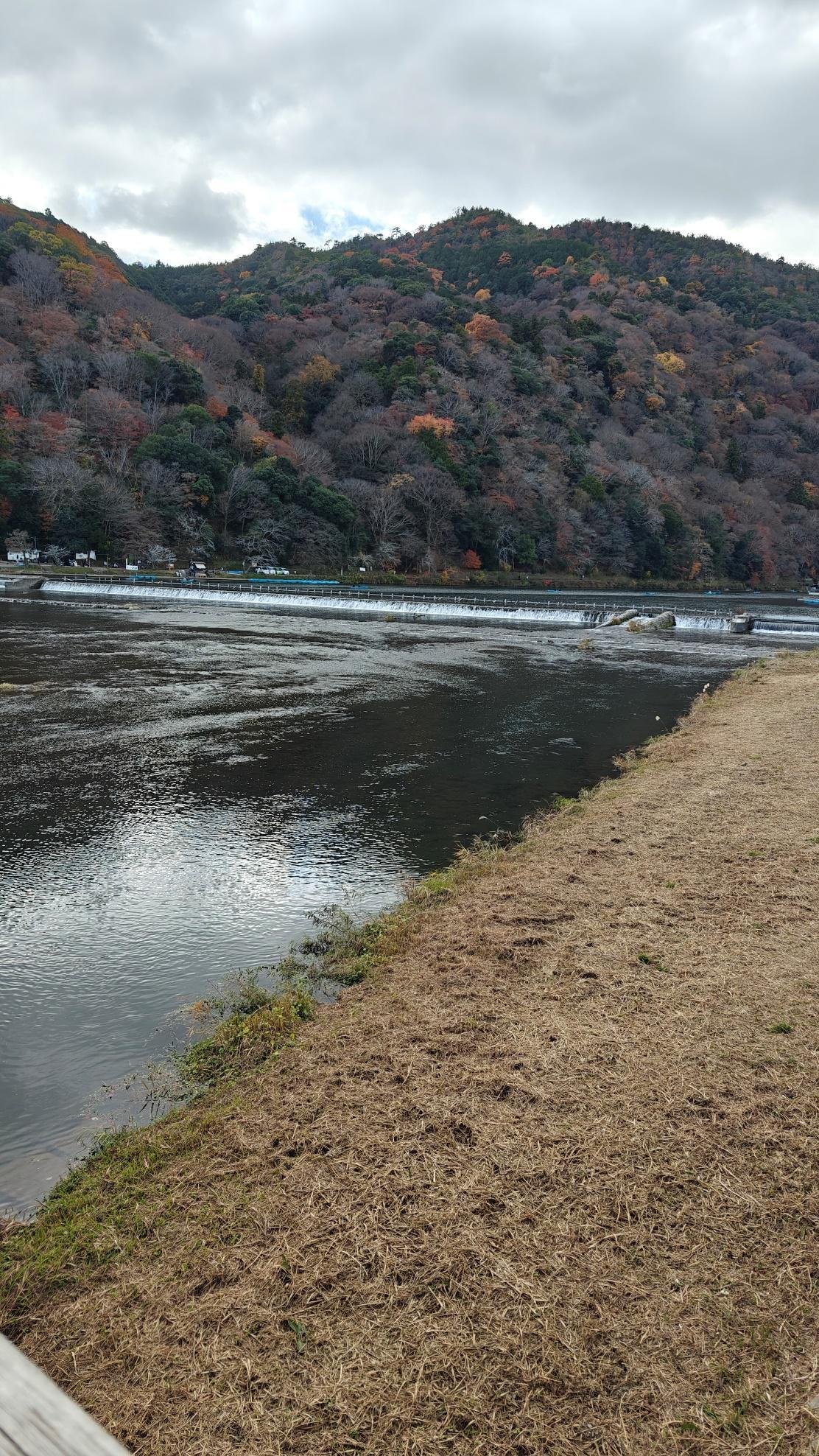
I initially thought that the Ichinoiseki Weir was a relatively new structure but it's actually quite old. Some of the sources I read online say that the weir has been around since the Heian period which means that it’s more or less a thousand years old. That said, those very same sources did say that it has gone through maintenance and modifications.
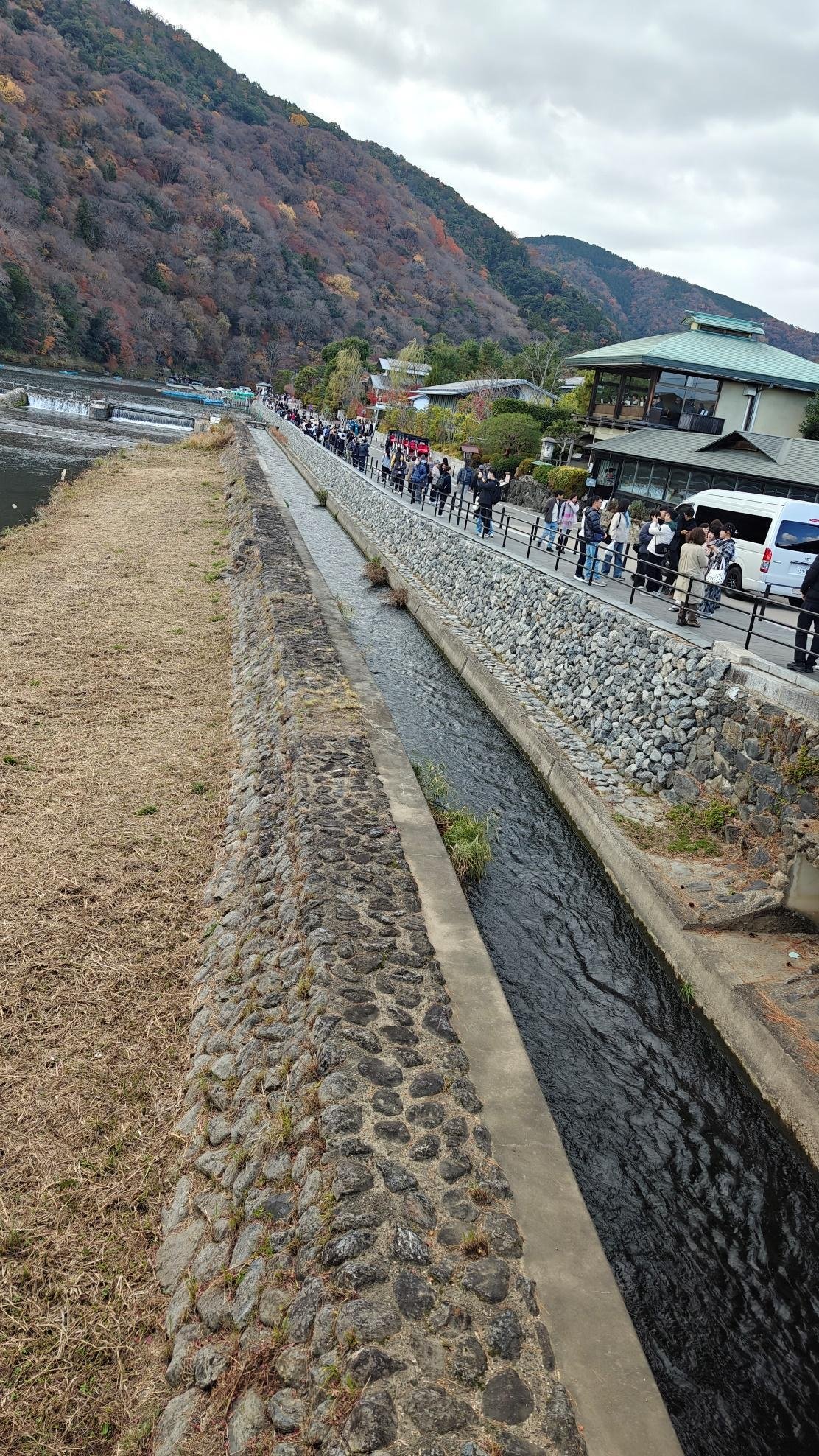
From what I understand, the weir was initially used for irrigation. It diverted the flow of the river to this small irrigation canal which then fed into nearby farming fields. From what I understand though, its main use now is to power a small hydroelectric generator that provides the lighting for Togetsukyo Bridge.
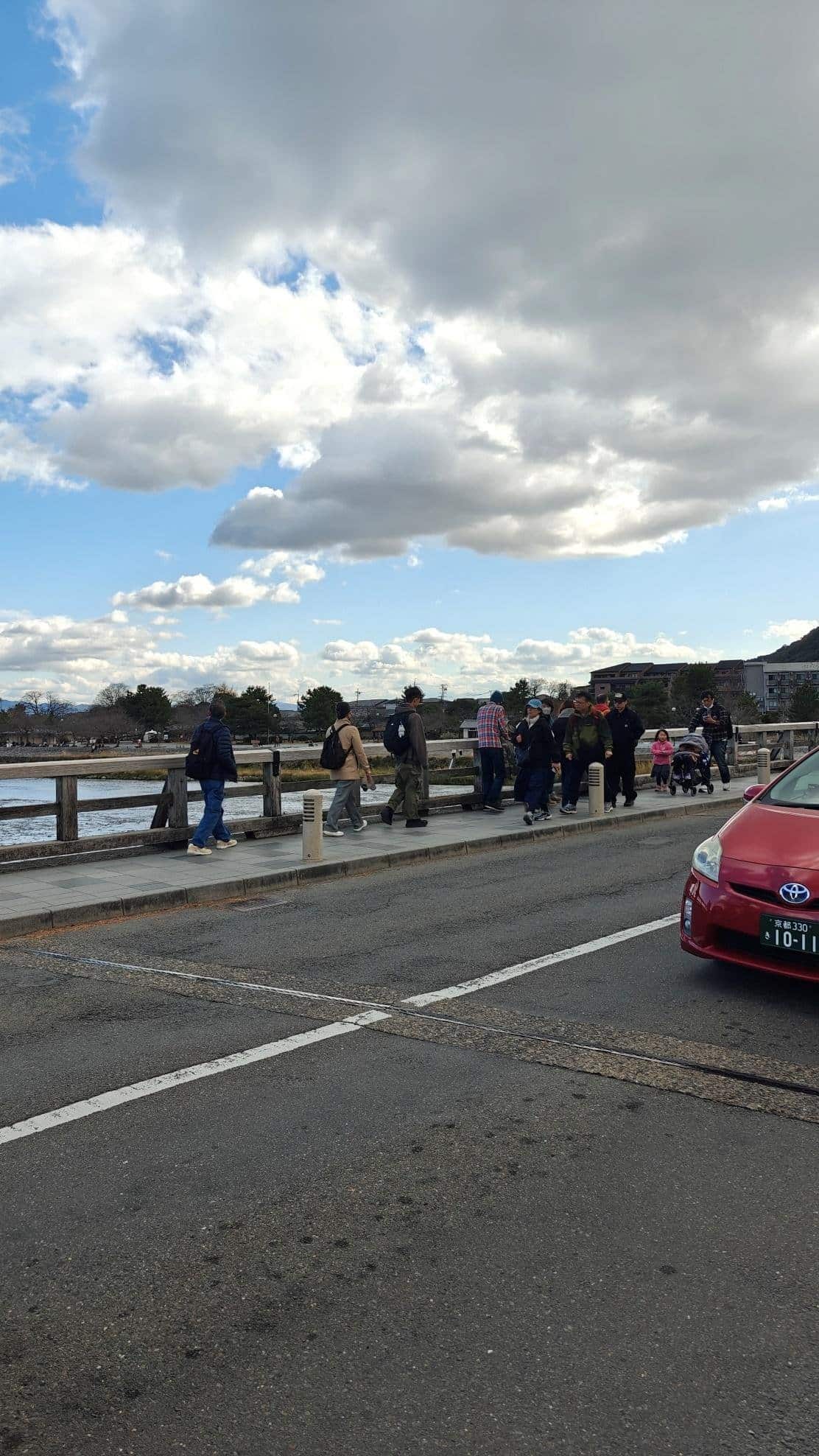
Here you can see people walking to and from Arashiyama Park. Just to be clear, this is different from the Arashiyama Park that's to the west of Tenryu-ji Temple. That park is the Kameyama Area while the one here associated with Togetsukyo Bridge is the Nakanoshima Area.
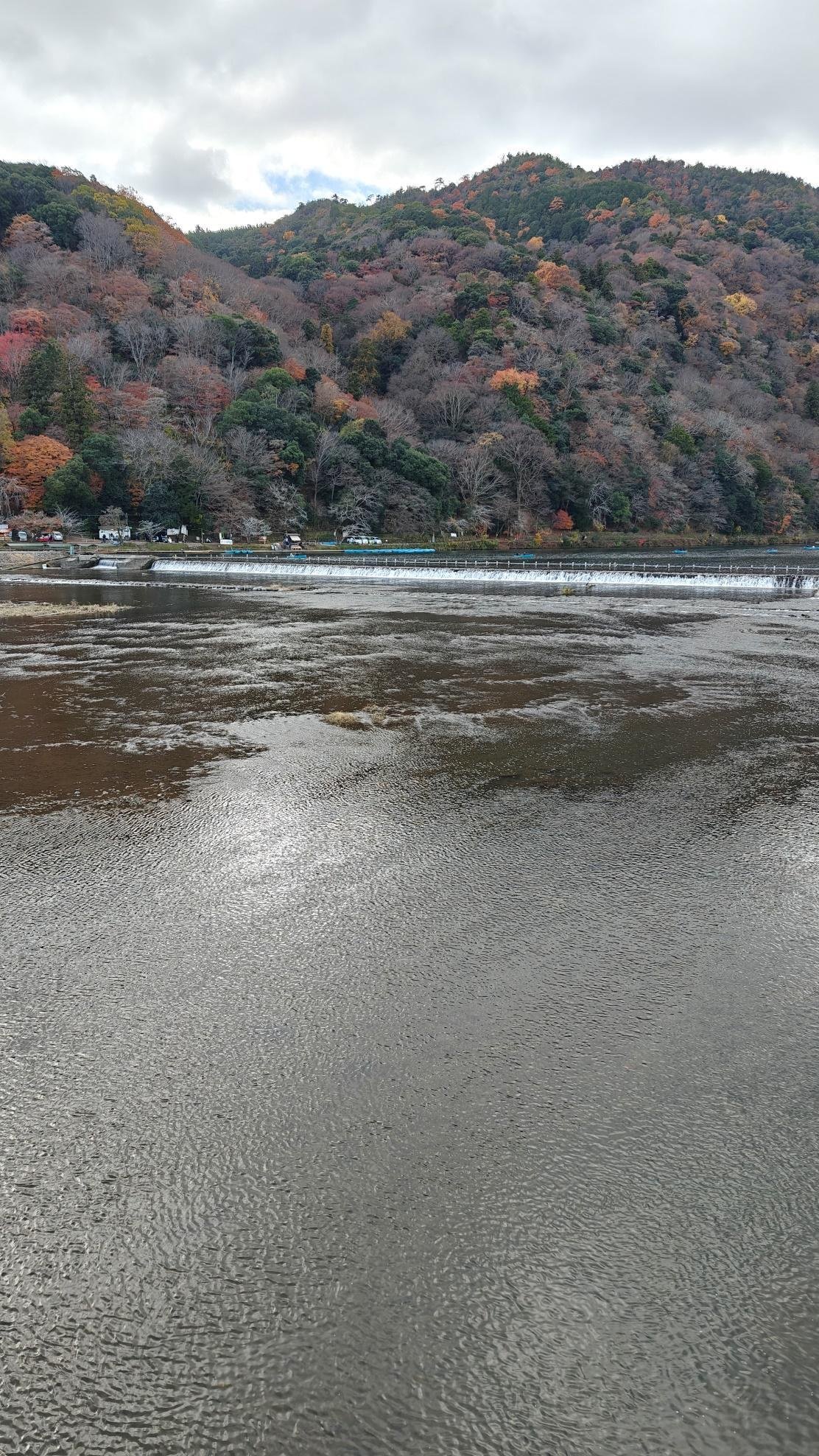
In my write-up about my experience with the Sagano Romantic Train, I talked about the Daihikaku Senko-ji Temple. You might have to squint but you can actually see the trail leading to that temple from here. If you do plan to go to the temple then take note that it's going to be a long (albeit scenic) walk to get there.
Speaking of walks, I'd also suggest walking to get to the Nakanoshima Area. The bridge is actually quite friendly to pedestrians (as you saw earlier). It's possible to use a car to cross but you'll really be missing out if you did that.
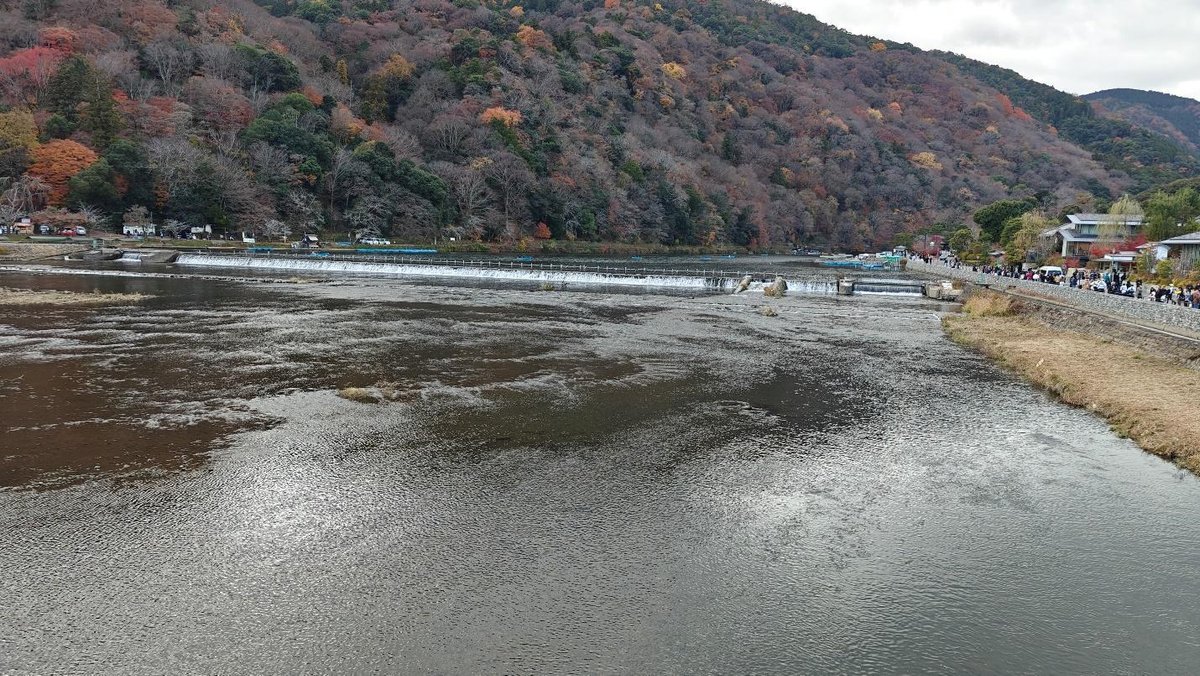
Since my visit was in early December, it was rather cool and the skies were admittedly overcast. I guess you could consider a car during the summer when the heat and humidity just make walking outside a pain. Unless you're on a really large truck, you shouldn't have problems taking your vehicle on the bridge as it is constructed with concrete beams and pillars.
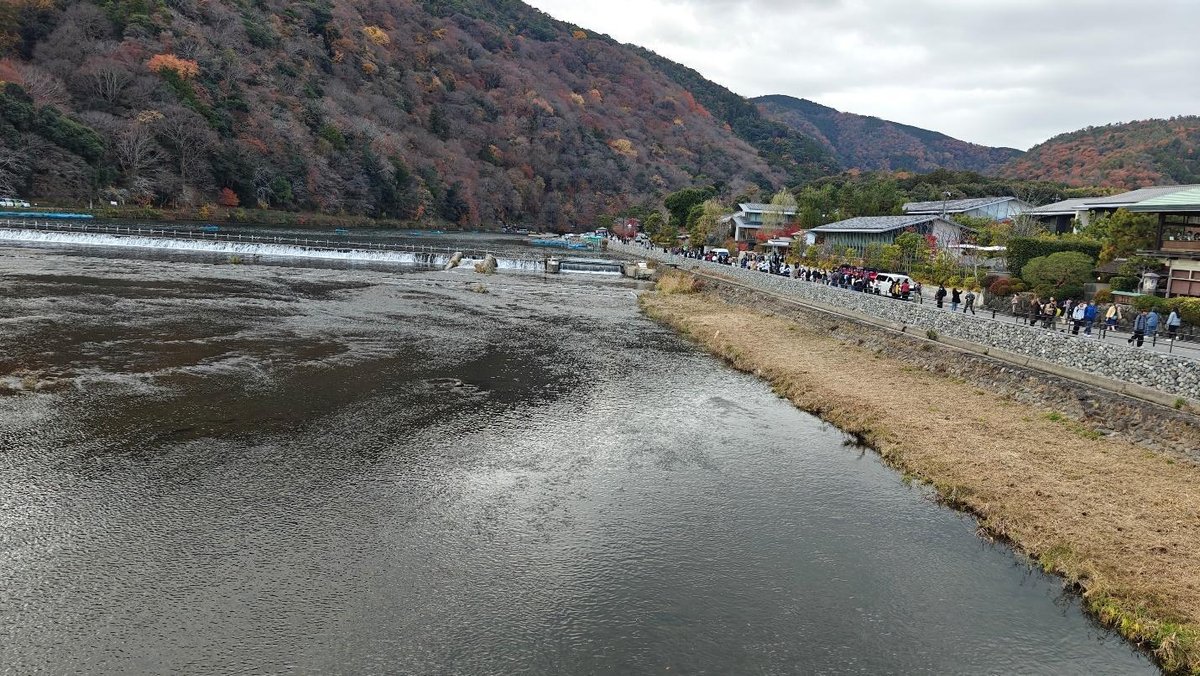
Here you can see people likely coming from (or going to) either the Kameyama Area Arashiyama Park or the North Boarding Area of Arashiyama Tsusen. The latter is actually a company that offers boat rental services for exploring the area just before the Ichinoiseki weir. Unfortunately, I don't think you can use these to get to the area of the river near Daihikaku Senko-ji Temple.
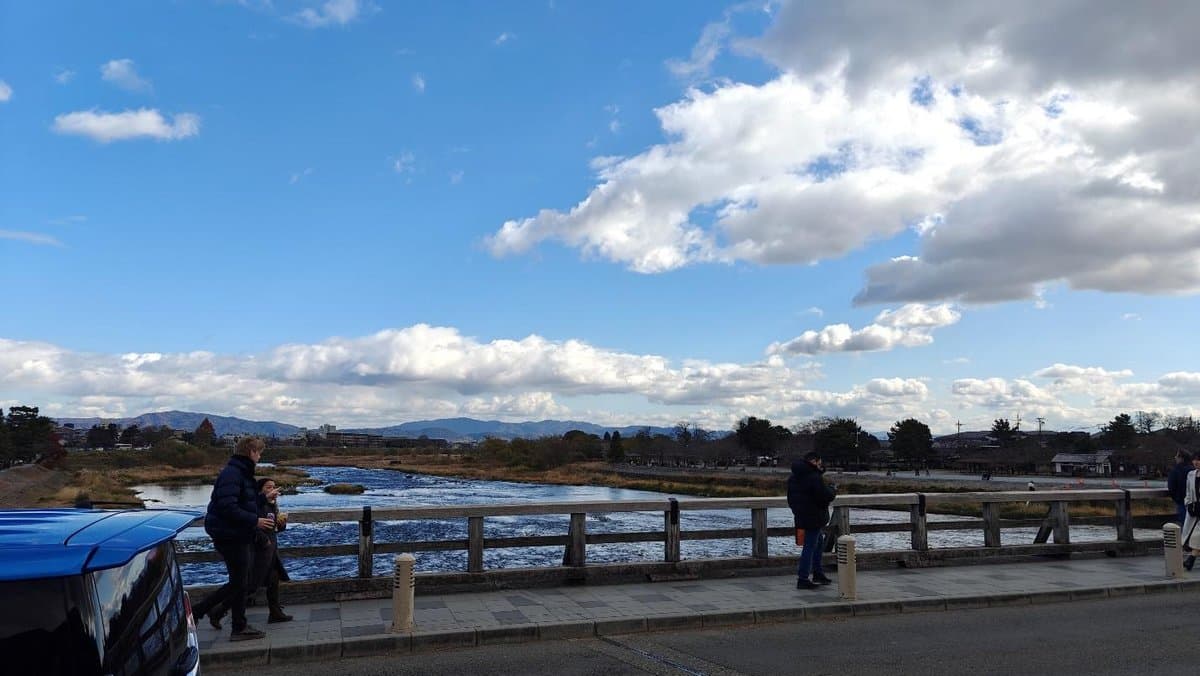
See those bollards lining the walkway? Those are actually some of the lights that the small hydroelectric generator powers. The sun was still up so naturally, these and other lights that are supposed to illuminate the bridge at night weren't turned on.
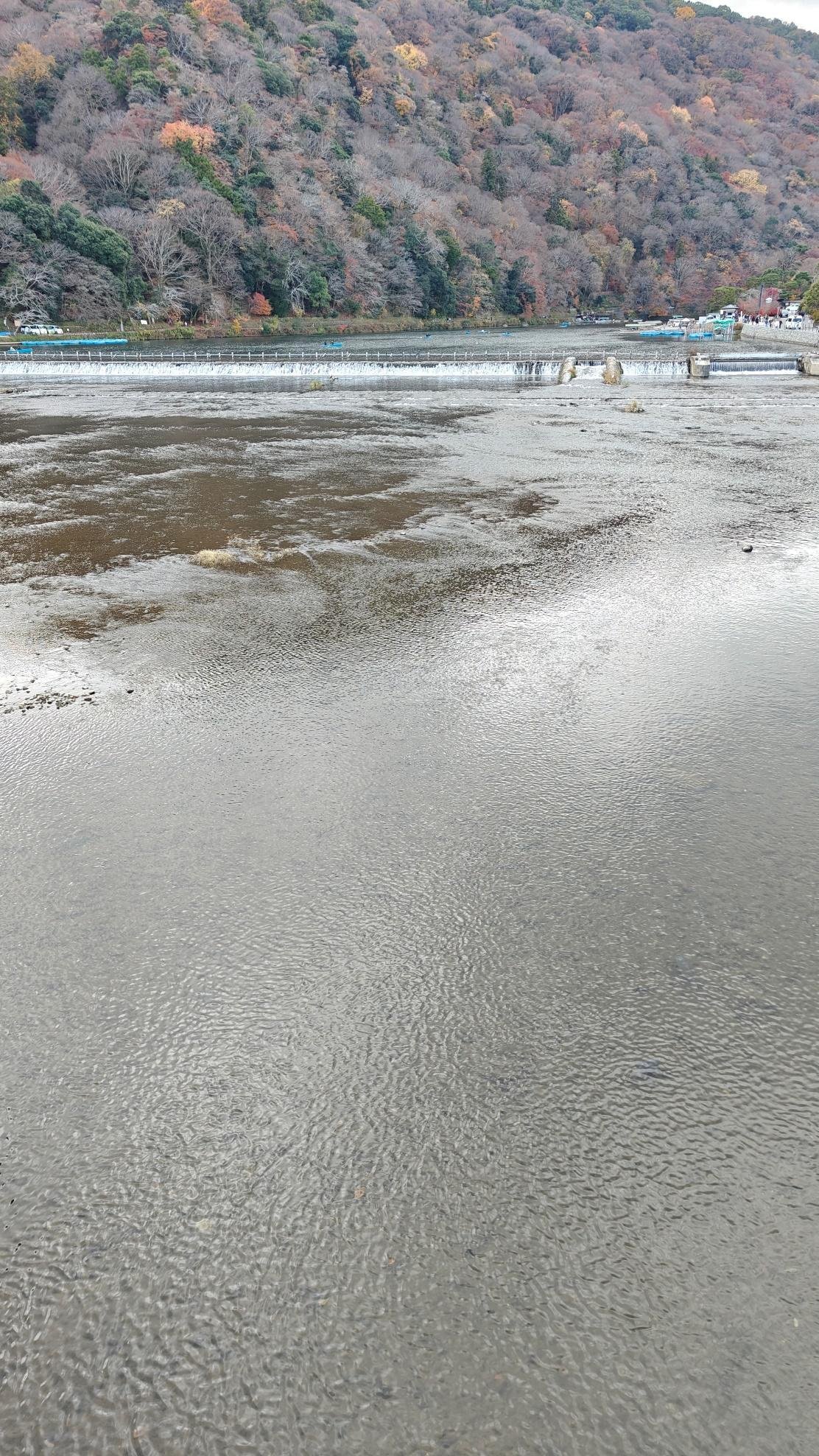
Here you can sort of see some of the boats at the Arashiyama Tsusen boarding areas (North on the right and South on the left). It's not that clearly pictured but you can also see some boats already on the water. Later on you'll get to see these boats up close.
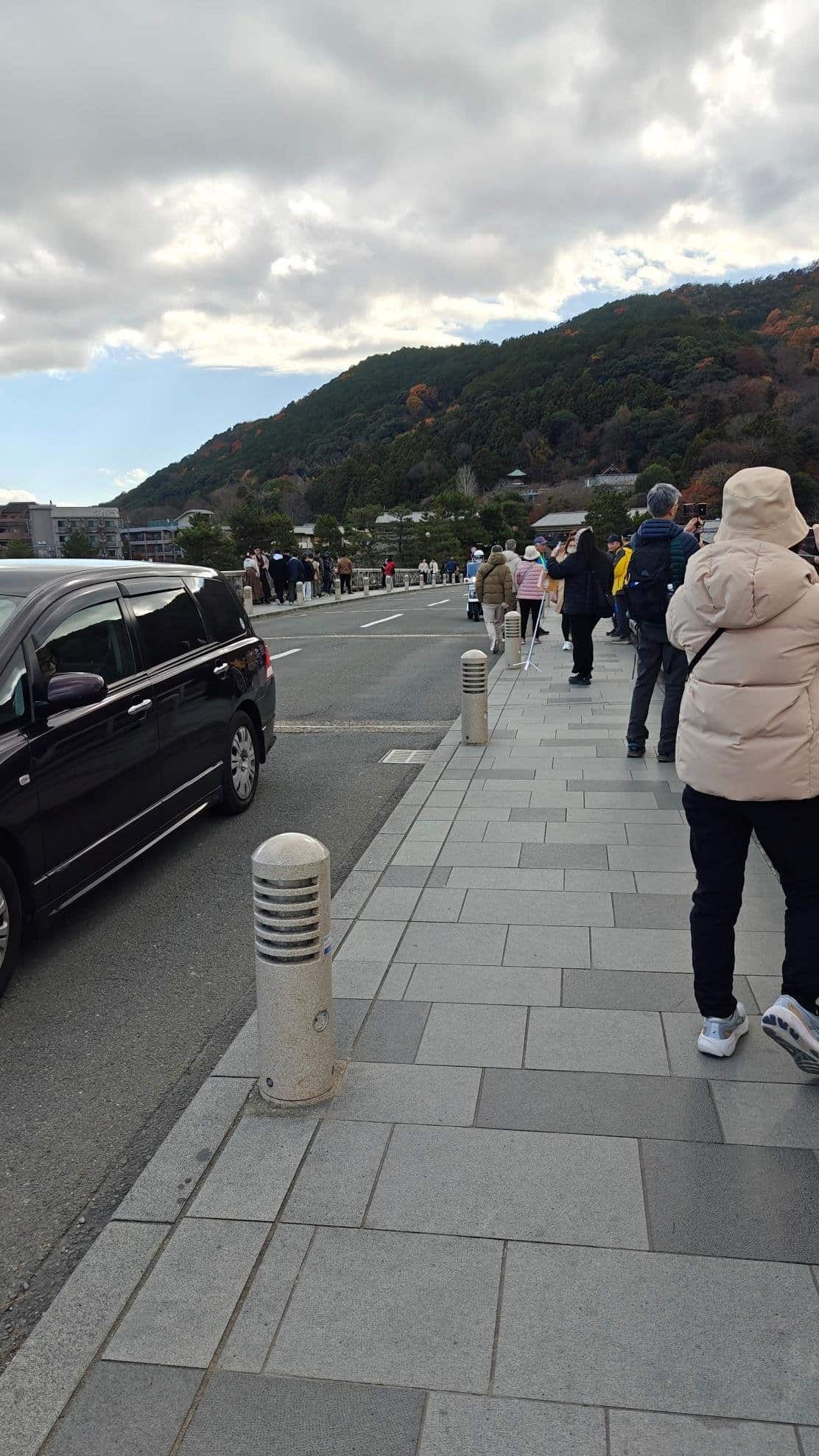
This is how busy the bridge was during my visit. Believe it or not, it can get much busier here especially during spring and the peak of the fall foliage viewing season in autumn. While there were plenty of people during my visit, it definitely wasn’t crowded.
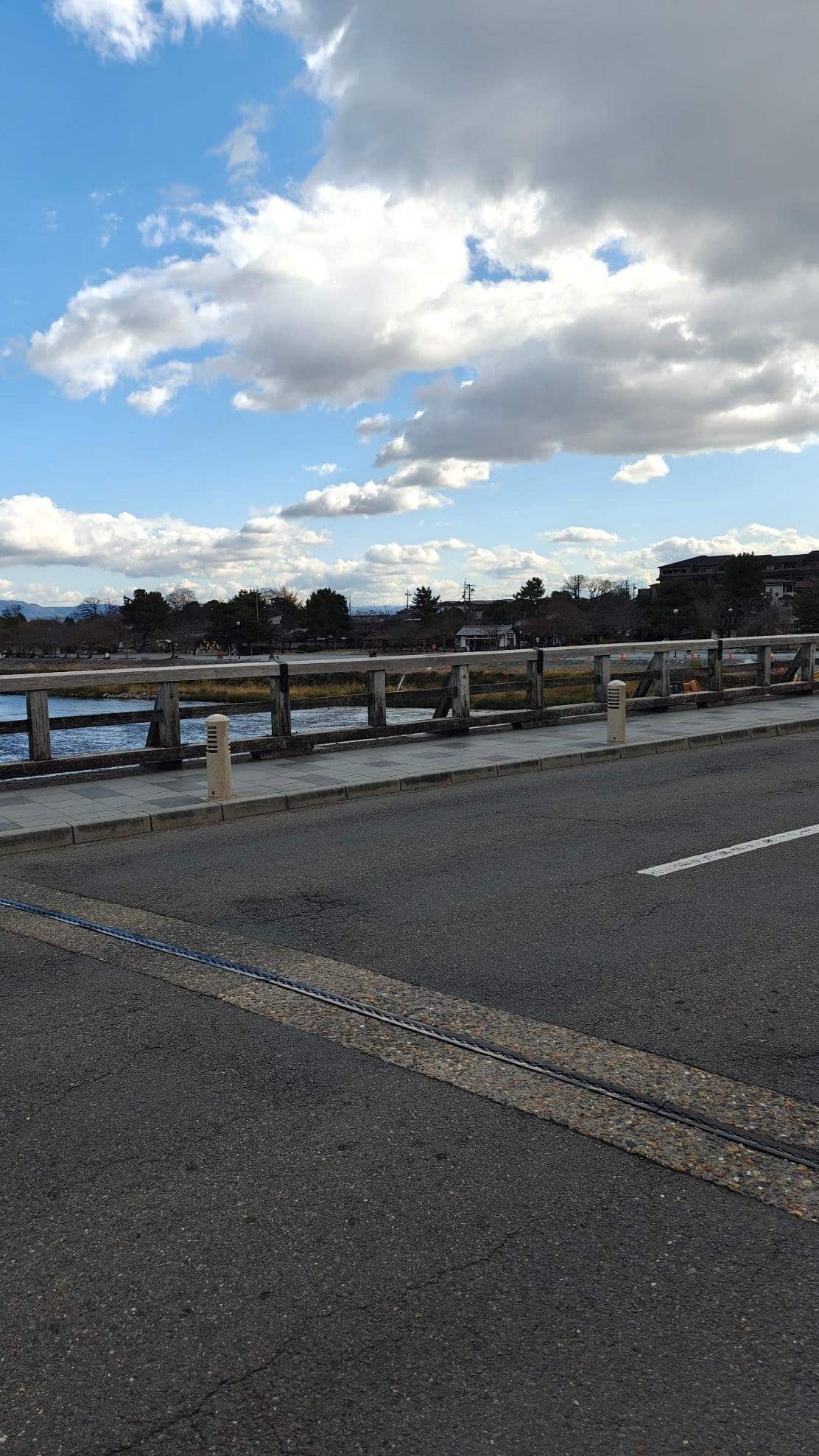
Here you can sort of glimpse some parts of the Arashiyama Park Nakanoshima Area. It’s not quite evident in the picture but those sections weren’t as busy as I initially expected. A big reason for this is that people tended to stay close to the establishments selling food and drinks (that you can sort of see in the background of this image).
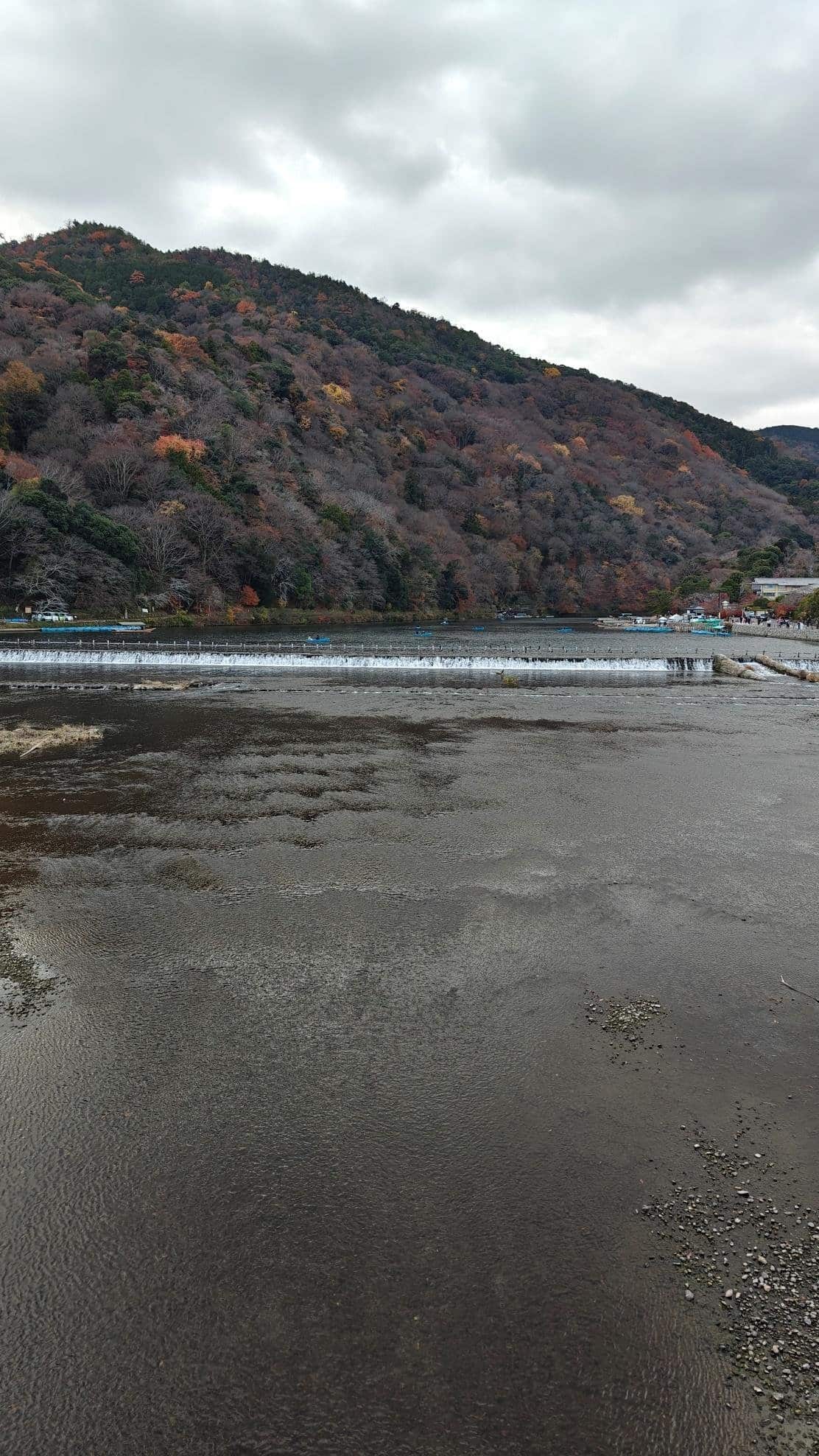
So an interesting thing about this area of the Katsura River is that it’s actually quite shallow. I mean you can even see some parts of the riverbed exposed in this image. I’ve read that during the summer you can actually wade near the banks and even under the bridge itself.
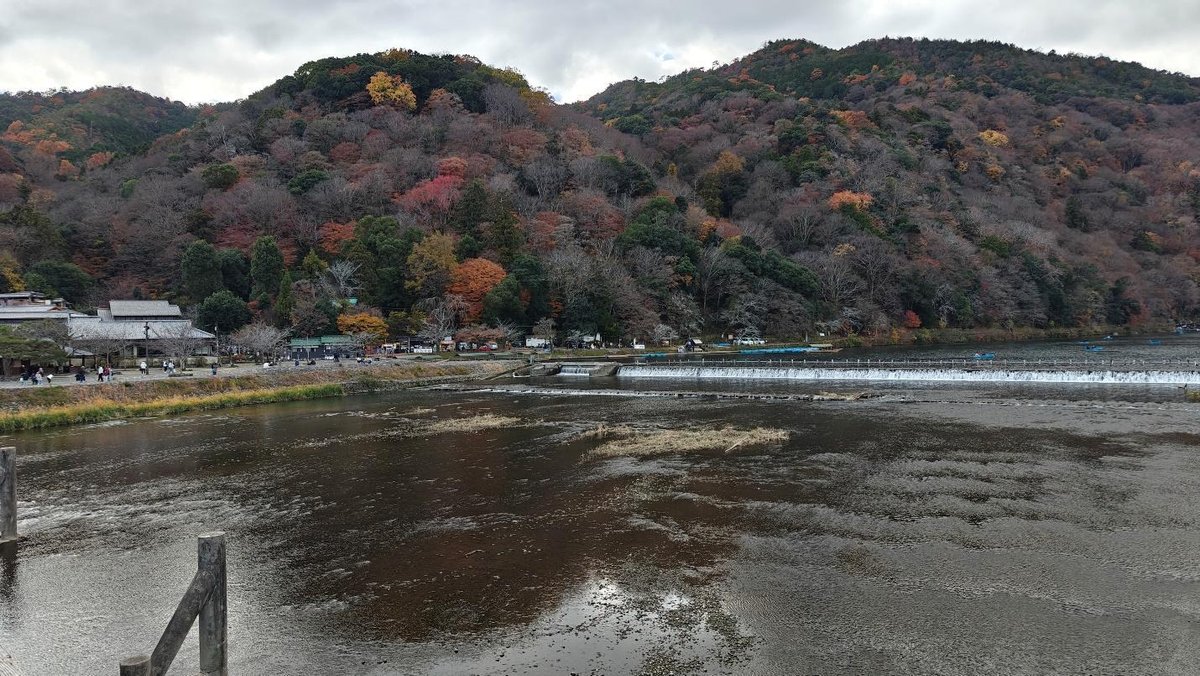
Technically I could’ve also waded here during my visit. The thing is though, the water was going to be really cold since it was early winter after all. So if you have plans to walk around the river’s banks then make sure you visit in the summer (though you’ll have to make sure that you visit before the start of typhoon season).
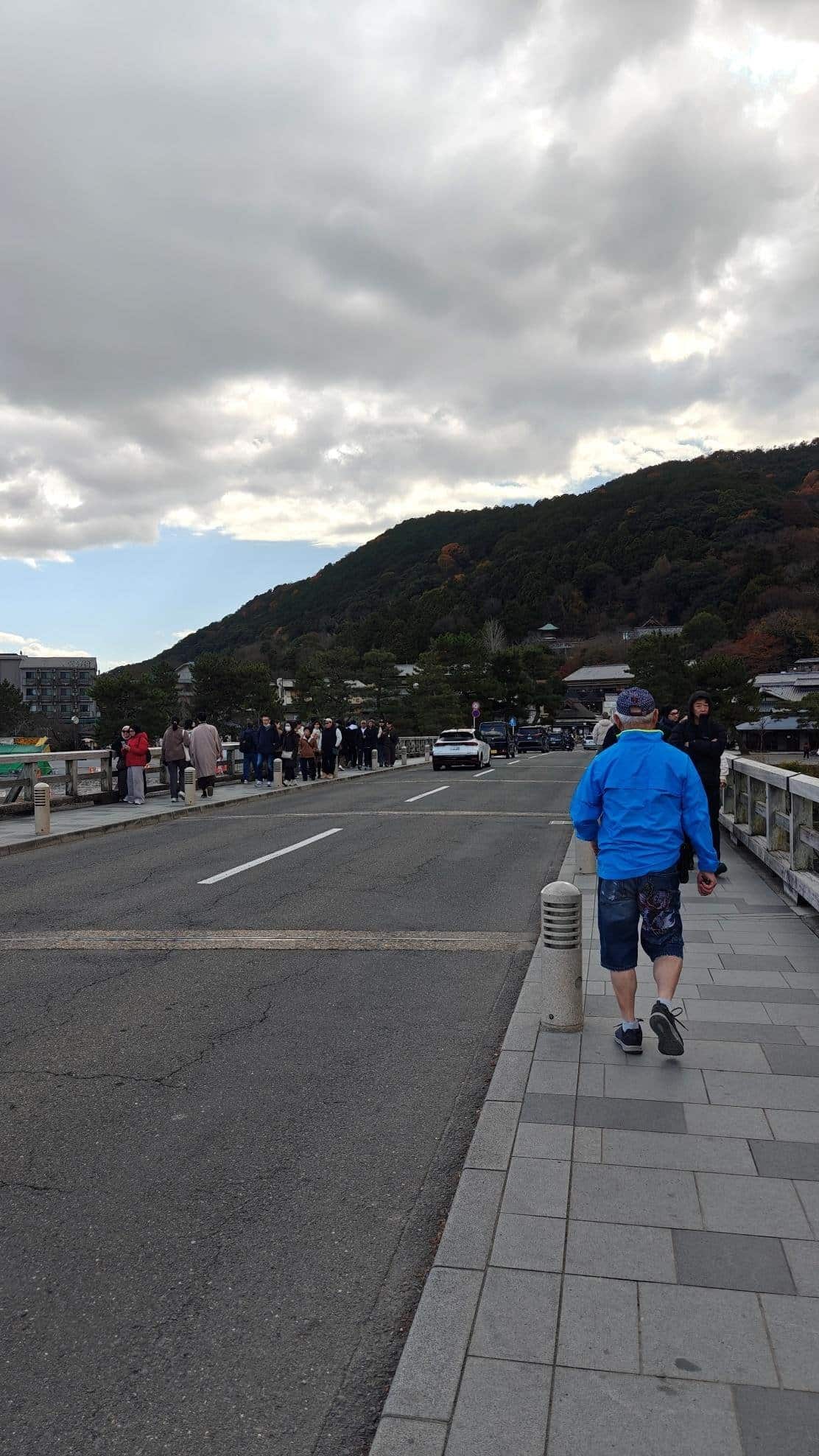
A big advantage of visiting in the colder seasons though is that you won’t have to deal with extreme heat and humidity. Walking is actually much more relaxed provided you wear warm clothes. If you’re used to the cold then you could even wear shorts here like the guy you see in the image.
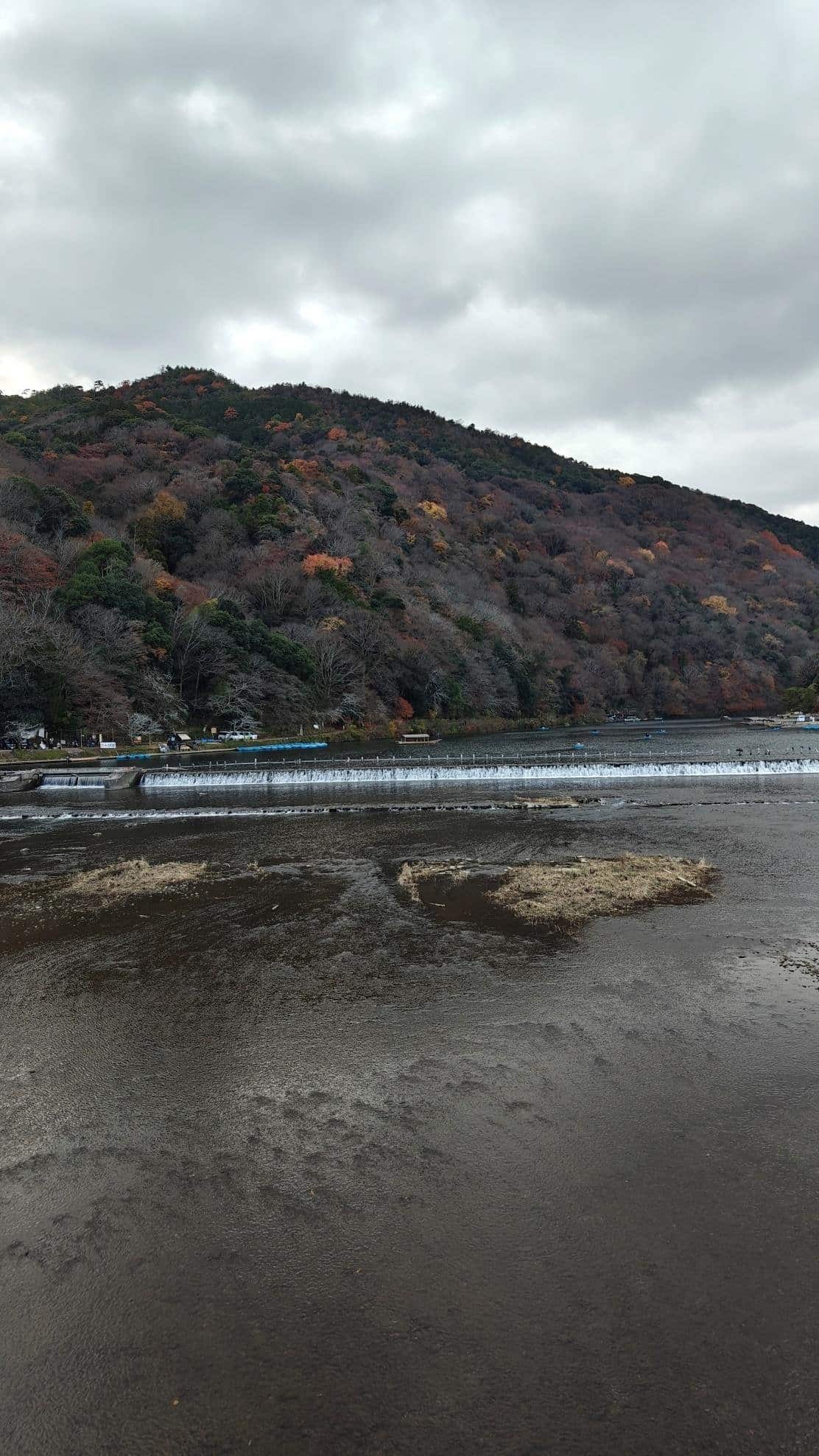
I’m going to be honest. I really wanted to enjoy the spring season here but the idea of having to deal with large crowds just didn’t sit well with me. If you’re fine with crowds though then definitely visit here in spring.
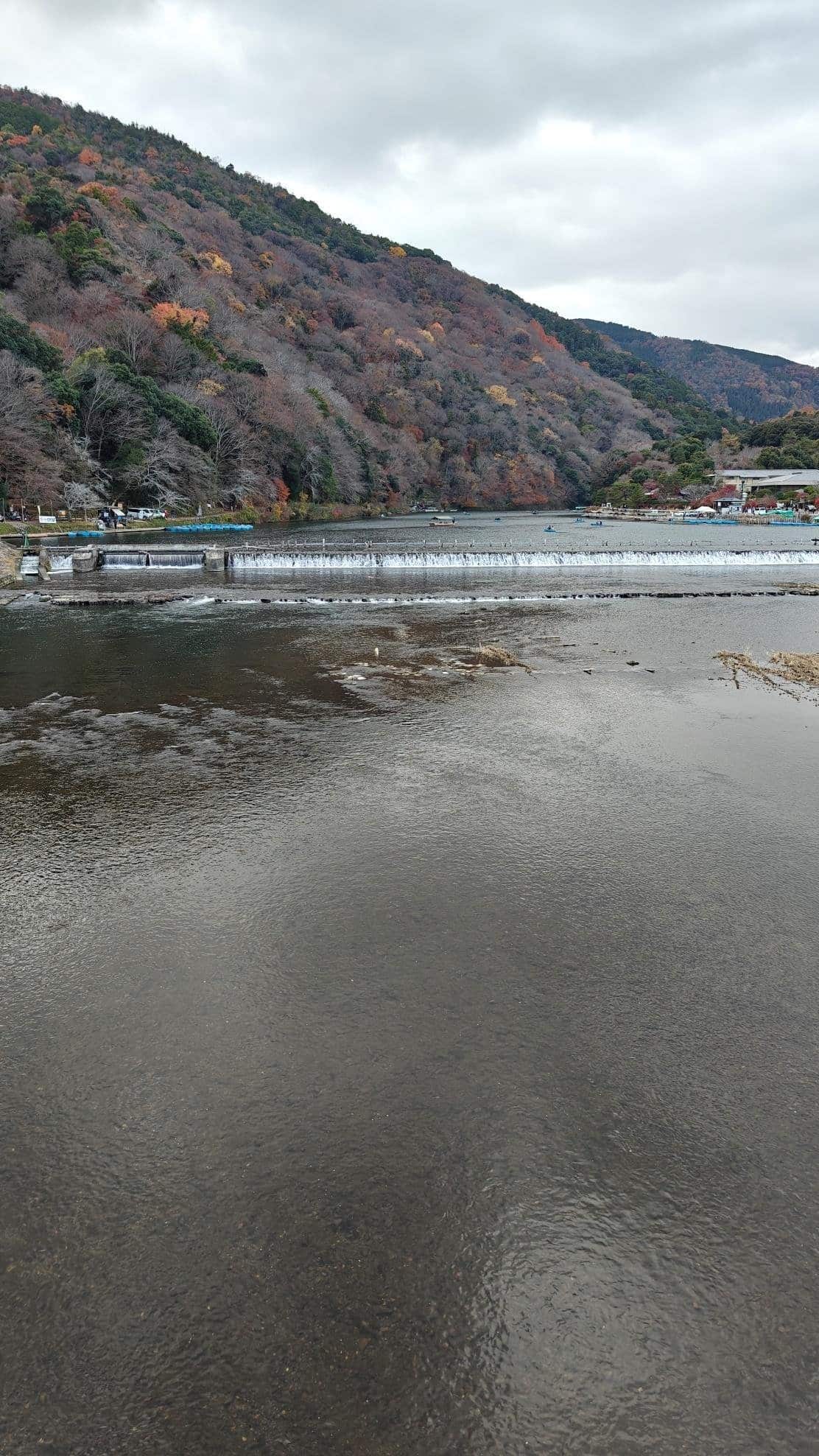
Now if you want a compromise between scenic views and fewer people then visit some time in early winter. You’ll still get to see some fall foliage (like in the image) but it won’t be as crowded. Since it’s winter though you won’t get to see any of the sakura blossoms that the area is known for.
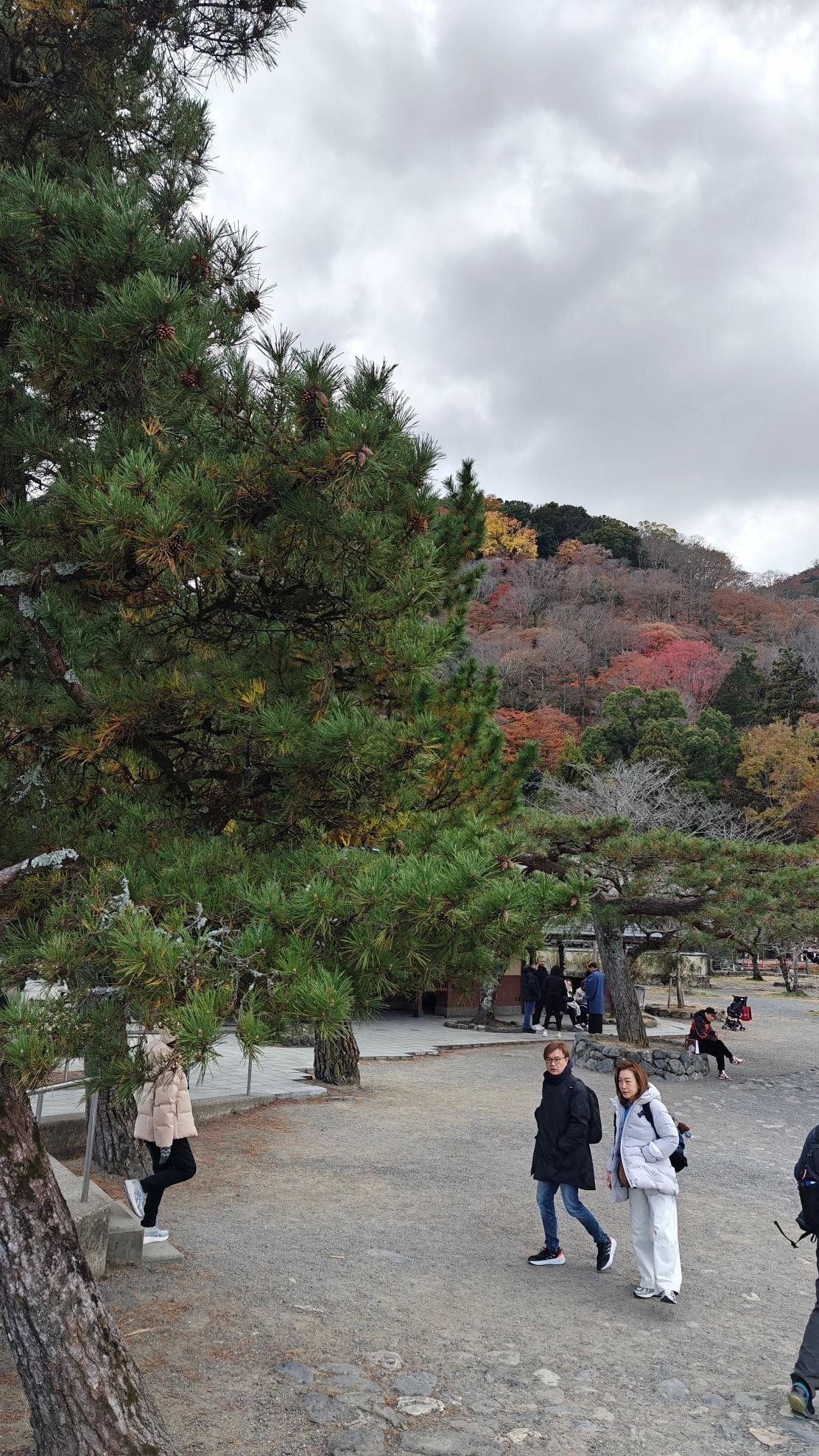
I finally reached Arashiyama Park and it was absolutely lovely here. Trees provided plenty of shade though it wasn’t really needed thanks to slightly overcast skies at least in this area. Most trees here also had wraparound benches where you could rest after walking the length of the bridge.
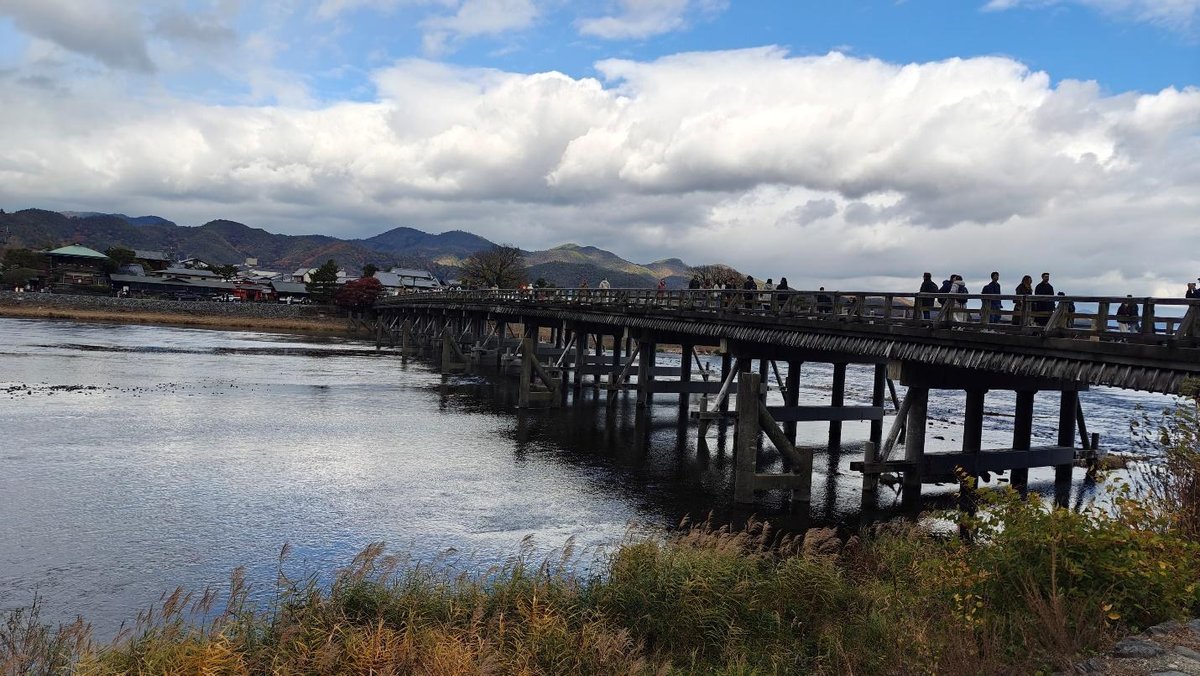
Speaking of walking the length of the bridge, here you can see people doing just that. I think this is also the first time that you get to see how the bridge looks. It’s honestly impressive how they were able to make it look so traditional even with modern construction materials.
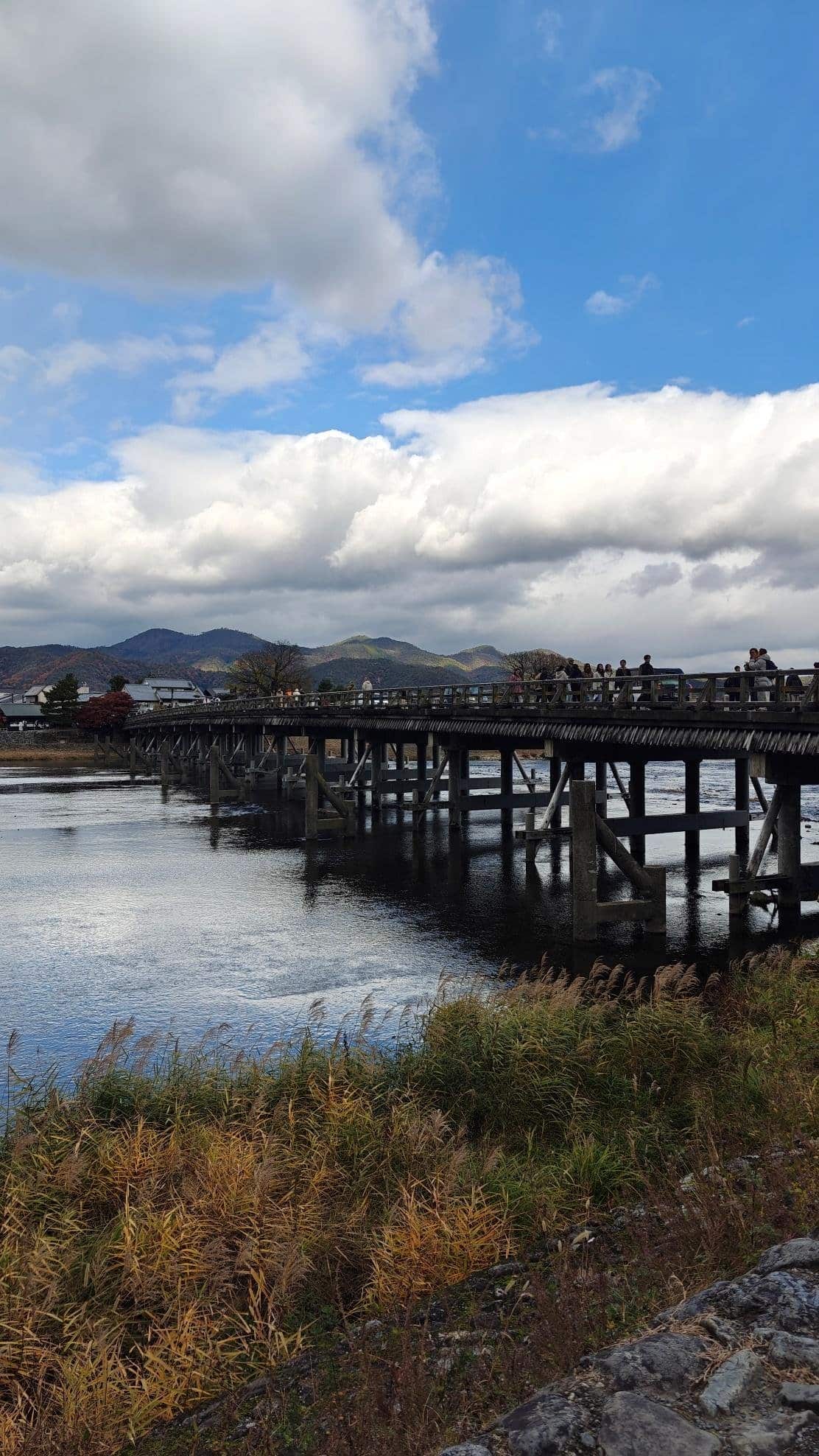
The sight of the river and bridge in this image actually reminds me of my visit to Kamo River. It’s also in Kyoto and I did a write-up of my experience during that visit. Much like that experience, I also felt a sense of peace and tranquility just standing here and taking in the sights and scenery.
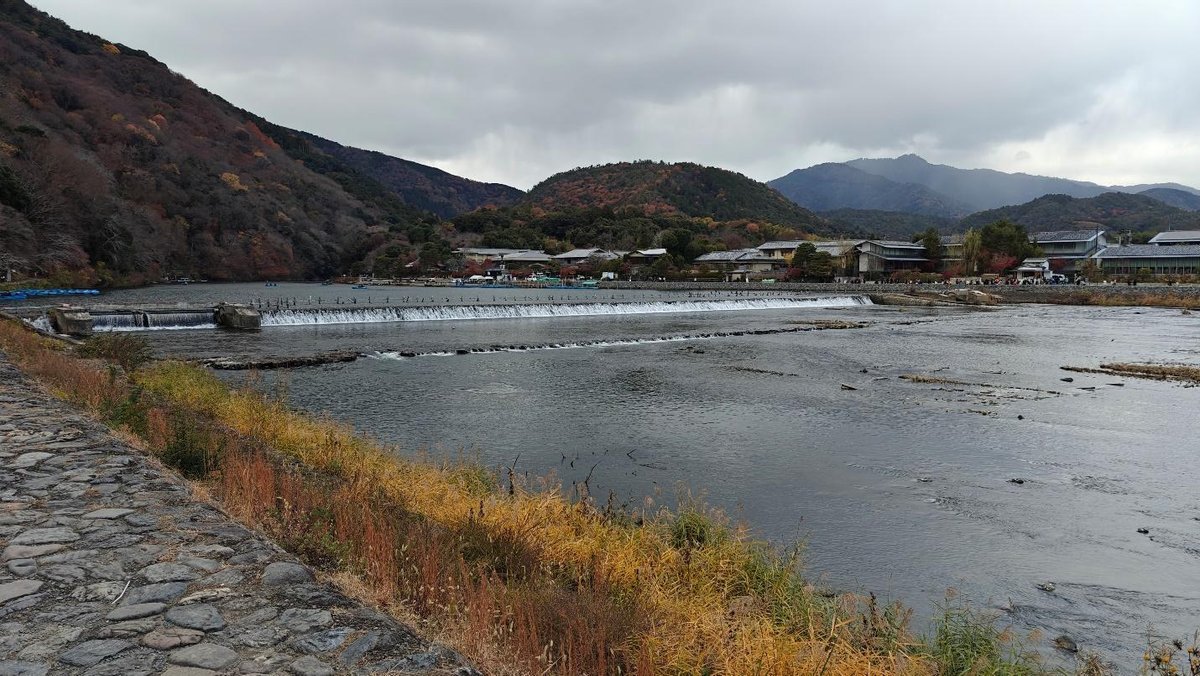
Here is another look at the Ichinoiseki Weir. You’ll notice that there are what seems to be sticks just before the weir’s crest. If you look closely, these actually form a fence.
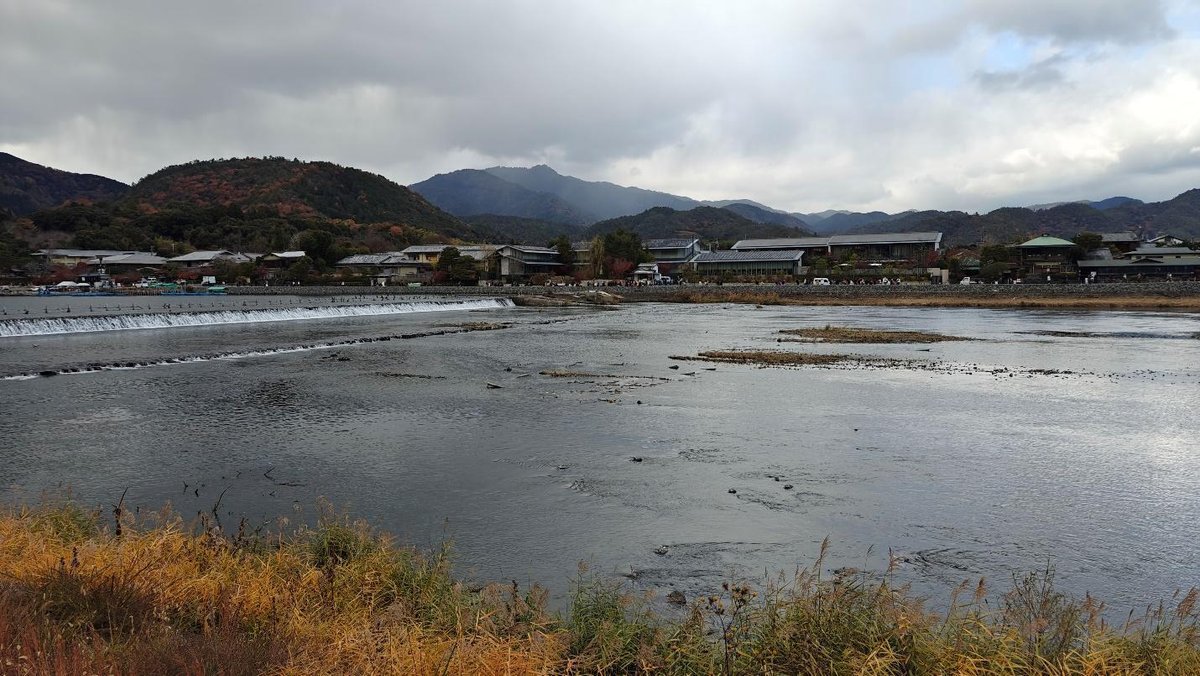
As you’ll see later there are plenty of boats here that tourists themselves can use. The fence ensures that tourists actually don’t fall off the crest while they’re leisure boating. Now I don’t think the water after the crest isn’t really that deep but there are times when the water level does rise which can make it quite dangerous.
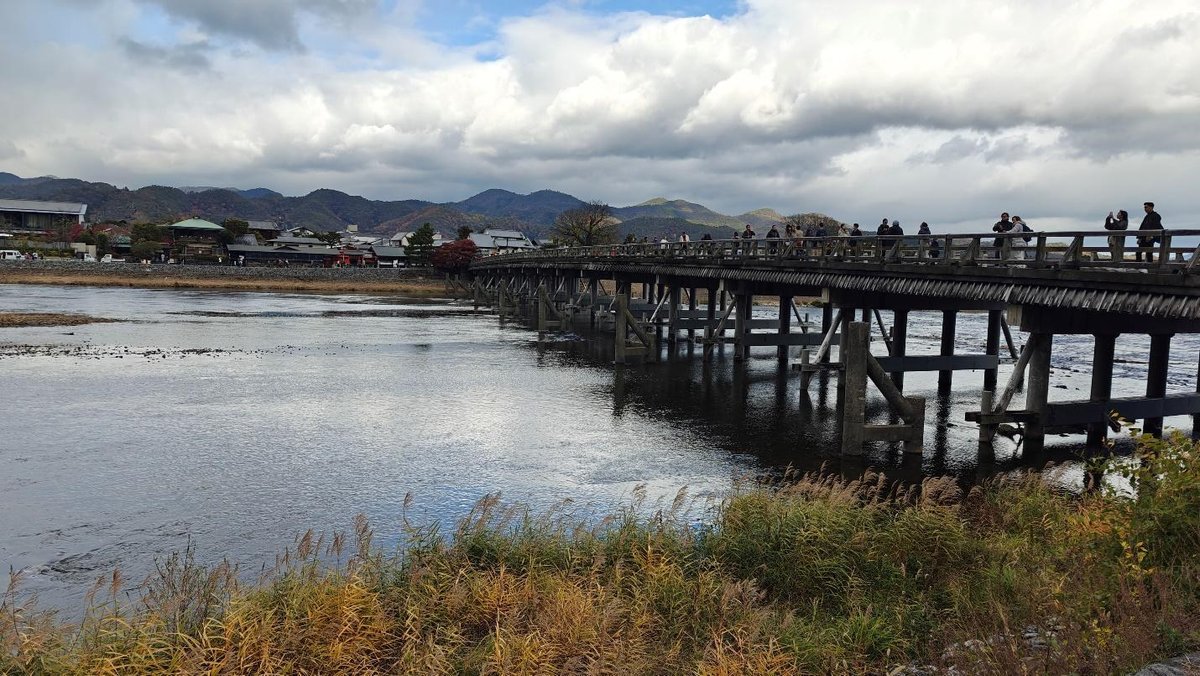
Now you might be wondering why there aren’t any boats downstream of the weir. Remember, the water here is really shallow. As such, boats typically are harder to maneuver and a lot of cases end up getting grounded.
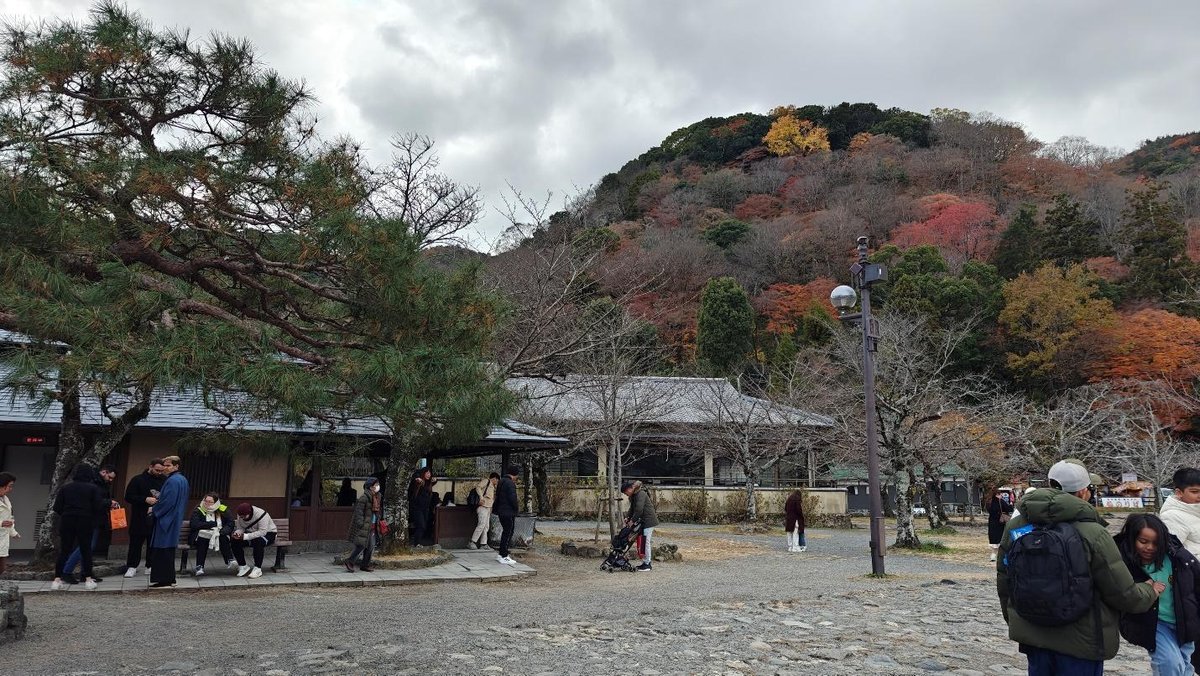
These are two of the buildings in the western end of the Nakanoshima area. The building in front is the park’s public toilet while the one in the back is an establishment called Togetsu Cafe. Further back are buildings that are part of the Arashiyama Monkey Park Iwatayama area.
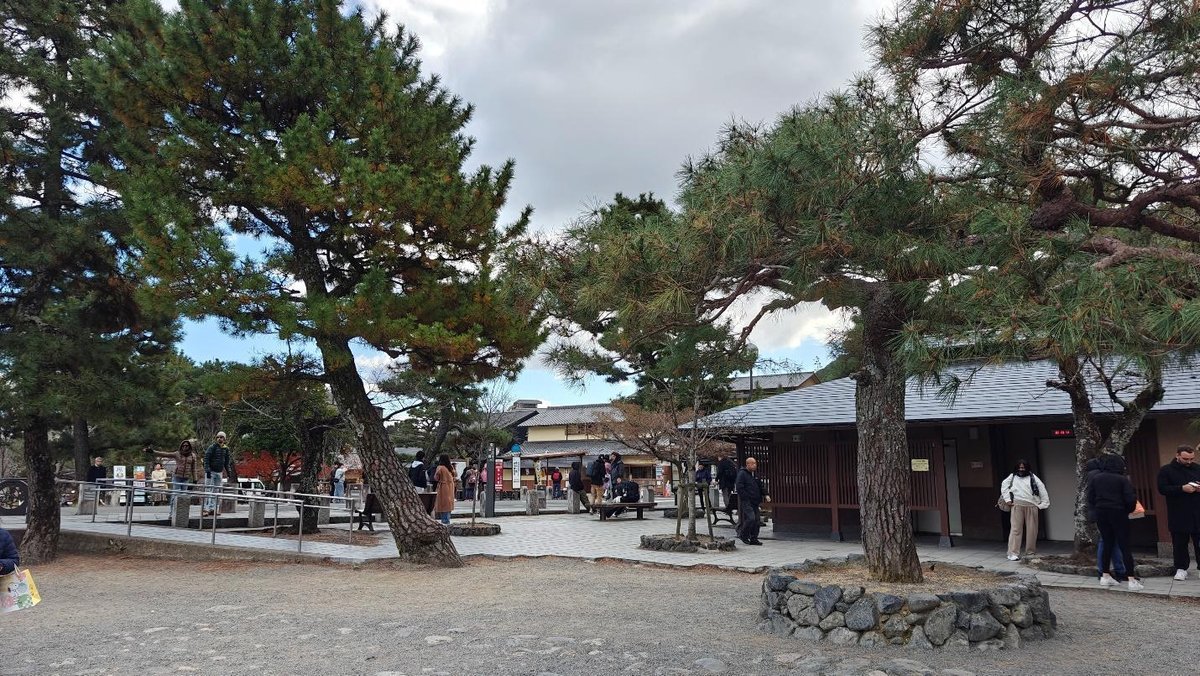
Here you can see the road that goes through Nakanoshima that’s called the Utano Arashiyama Yamada Line (connected to the Togetsukyo Bridge). It’s not quite clear but there are bus stops on either side of the road. Following the road south will bring you to the the Nishikyo Ward which encompasses districts such as Arashiyama Nakaoshitacho, Rakusaiguchi, and Katsura just to name a few.
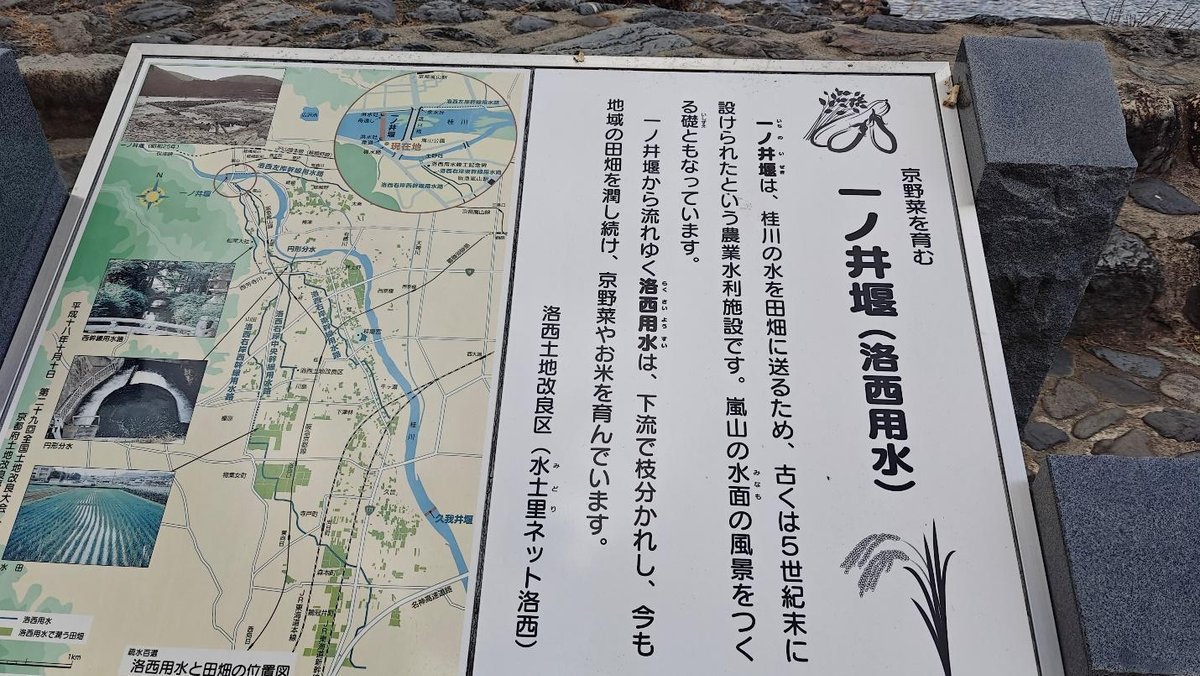
Near the edge of the western side of this area of Nakanoshima is a large plaque facing the river. Based on Google Lens’ translation, it talks about the Ichinoiseki and the Rakusai Irrigation Channel. This channel is basically the body of water separating the Arashiyama Park Nakanoshima Area from Nishikyo Ward.
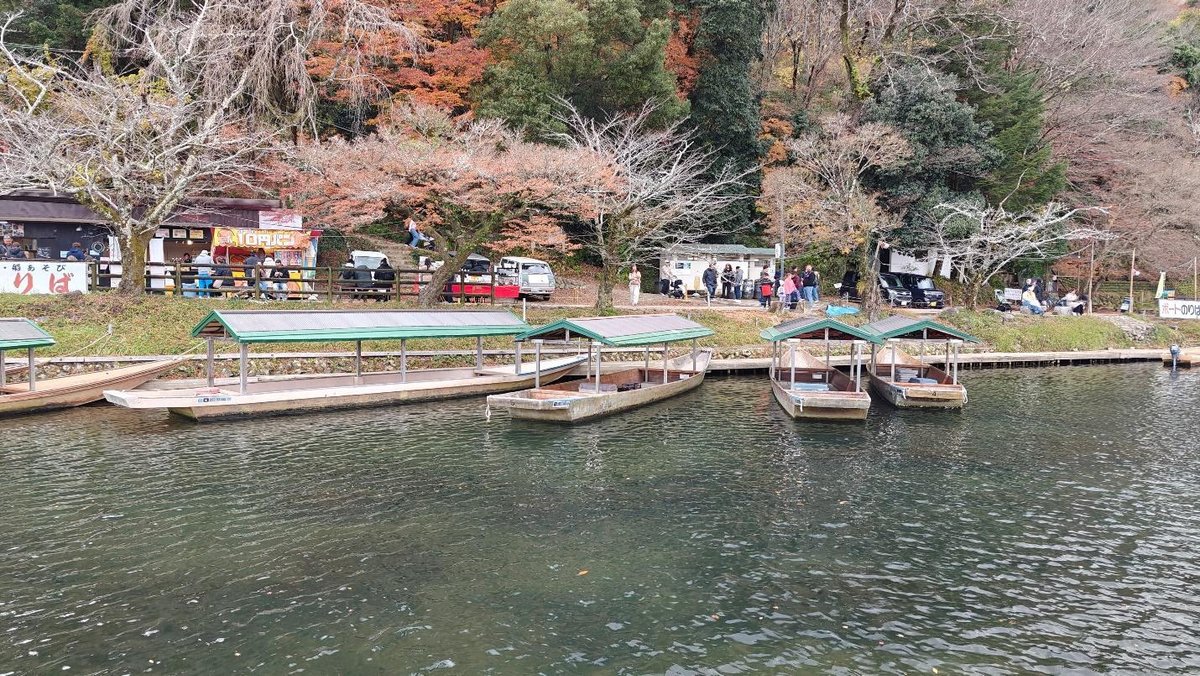
Speaking of the channel, here’s what it looks like. On the Arashiyama Monkey Park side, you’ll see traditional river boats called yakatabune. Unlike the blue boats you saw earlier, these are for guided scenic tours and are from Arashiyama Tsusen.
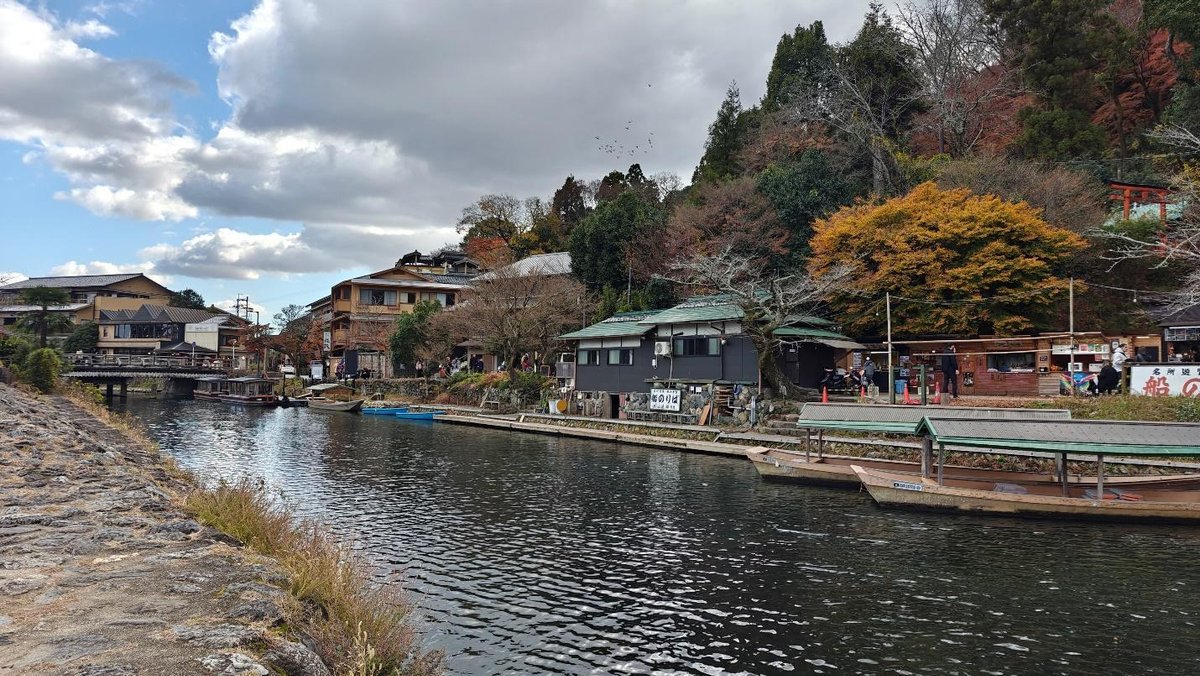
This is what the rest of the channel (at least in this area of Nakanoshima) looks like. In the distance you can see the Togetsukyo Small Bridge. Surprisingly, this area actually reminds me of Venice more than Ine no Funaya.
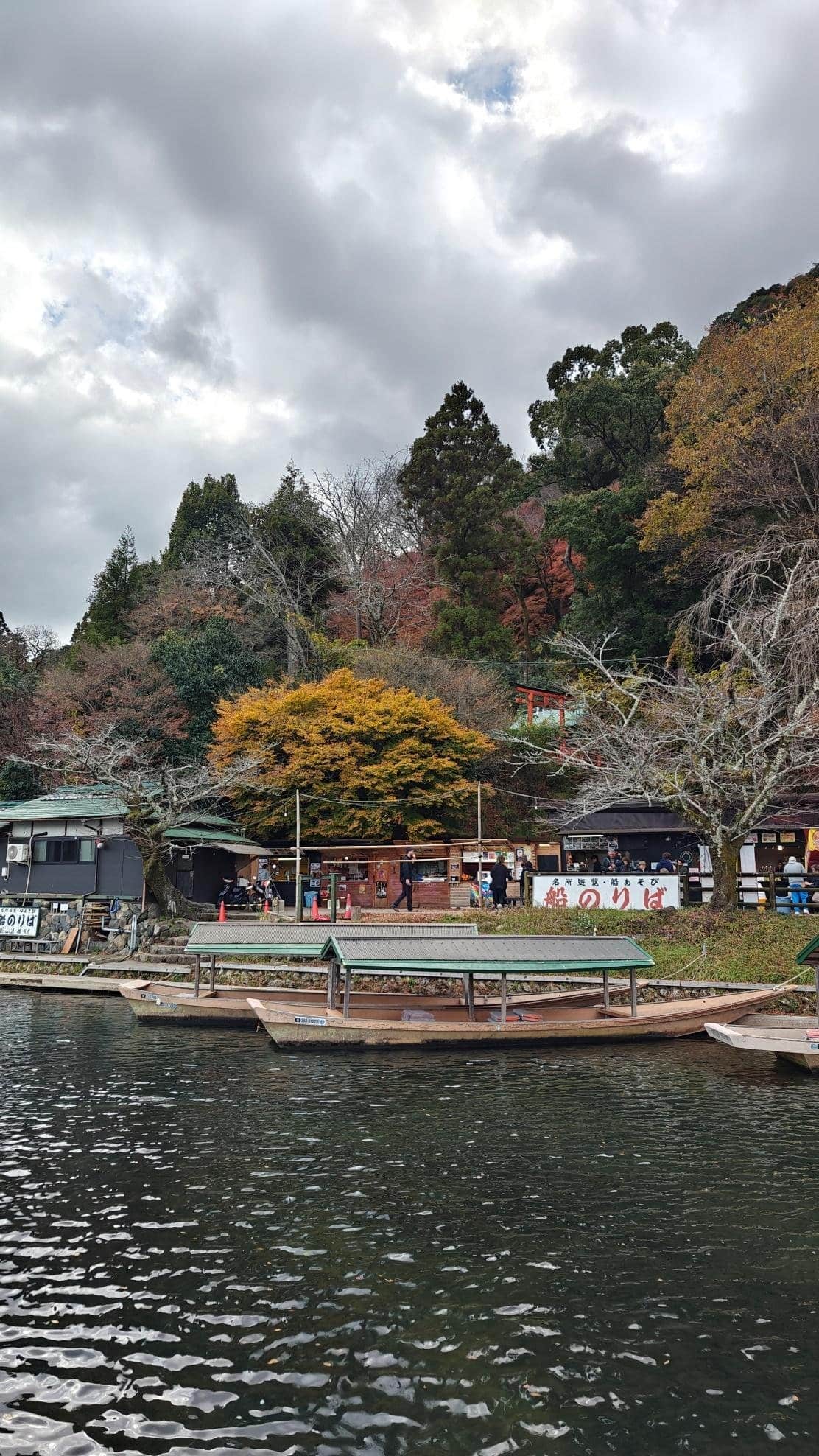
Remember when I talked about the Arashiyama Tsusen Boarding Areas earlier. The building on the right of the image is actually the company’s South Boarding Area. Much like the North Boarding area, you can purchase tickets here for the yakatabune sightseeing boats.
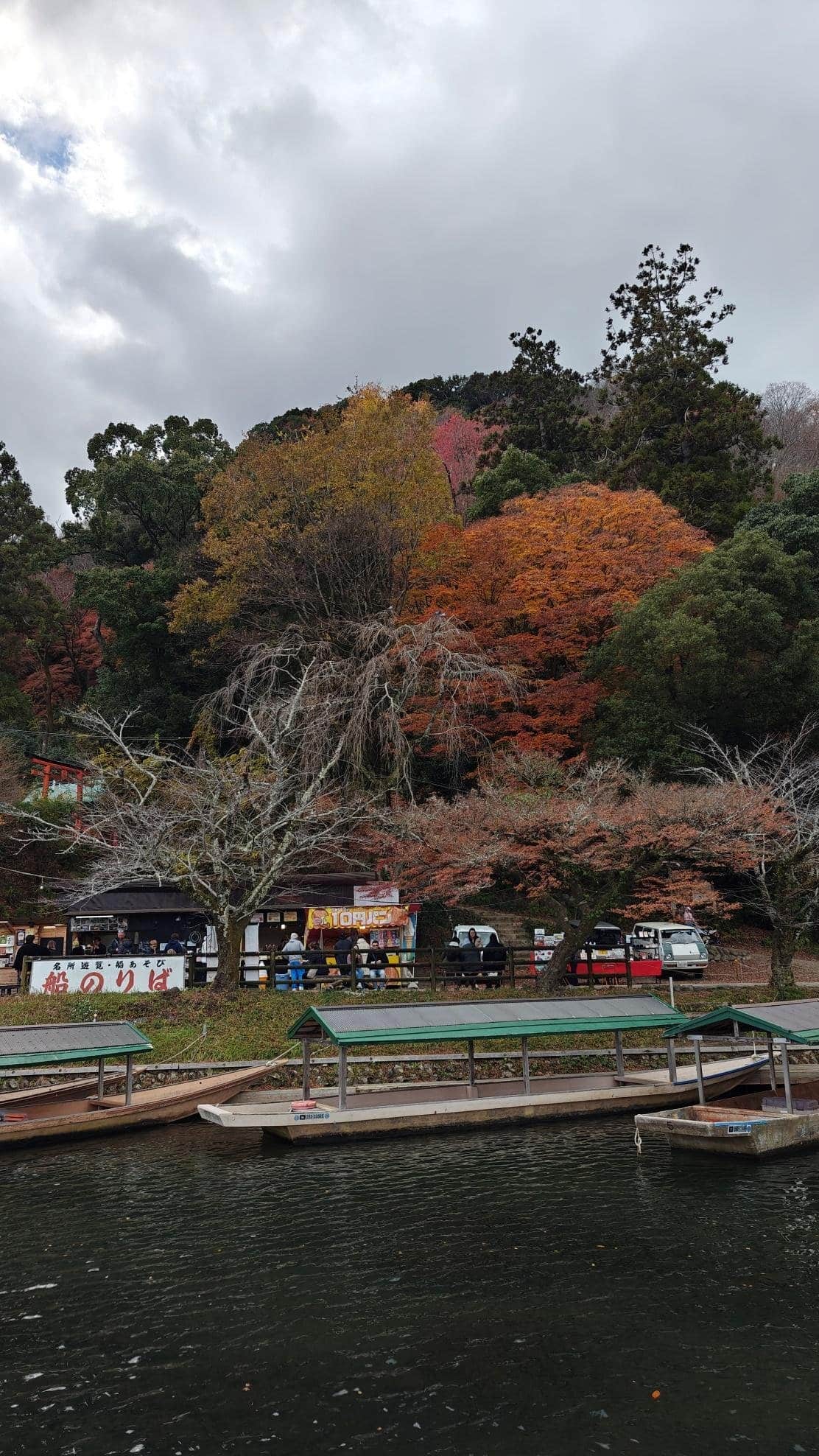
If you think going to Daihikaku Senko-ji Temple is a bit far, there is actually a shrine close by that you might want to check out instead. Just head to the food stalls pictured in the image and behind them is a path leading up to Ichitani-Munikata-Jinja. It’s a Shinto shrine dedicated to the Munakata Sanjojin or Three Goddesses of Munakata.
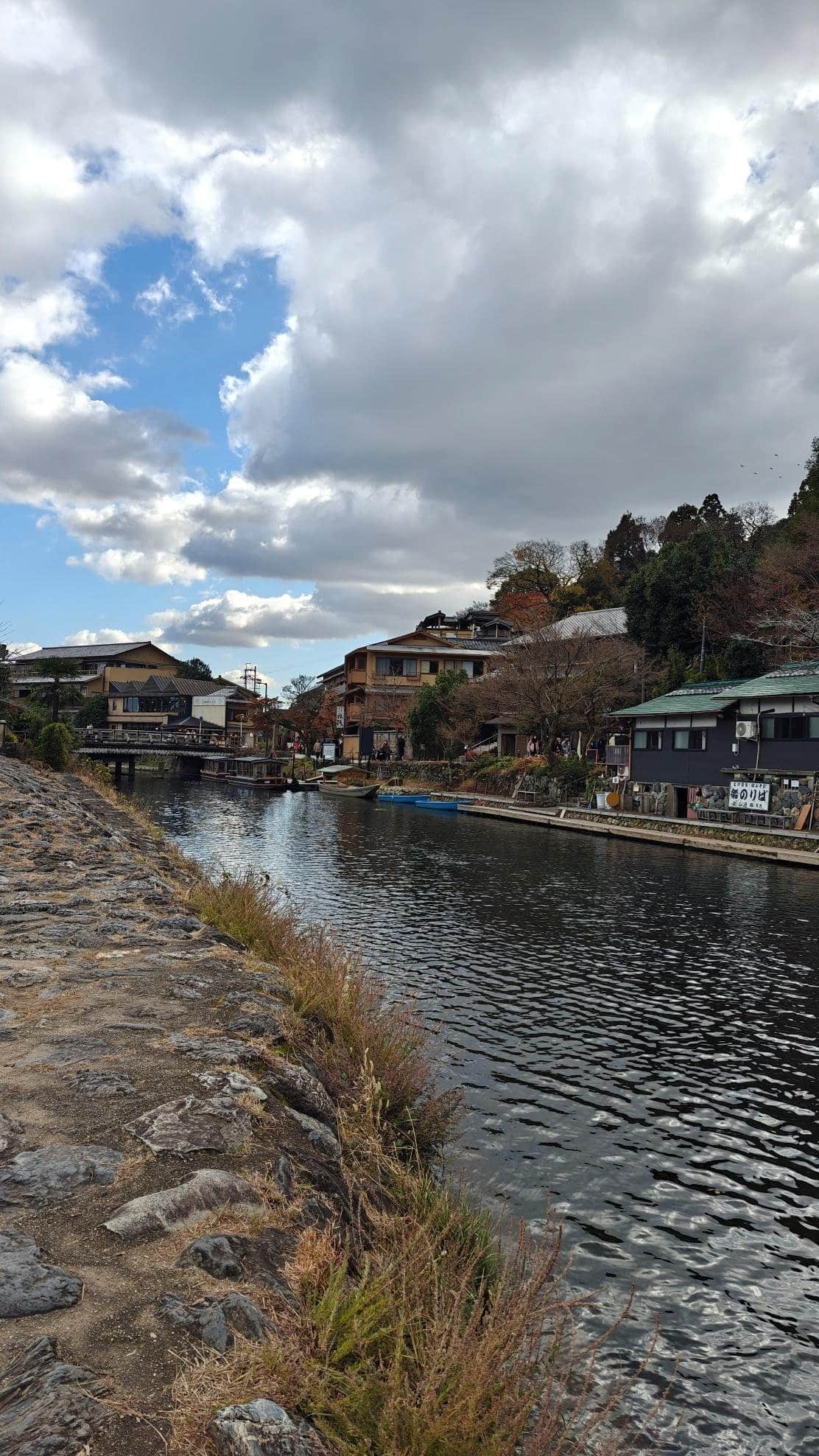
Another glimpse of the area around the Togetsukyo Small Bridge. It’s not visible here but there’s actually a hotel past the bridge that you might want to consider if you plan to stay in this specific area. Called Togetsutei, it’s a 4-star hotel that actually has some really decent (around 4.2 stars out of 5) reviews online.
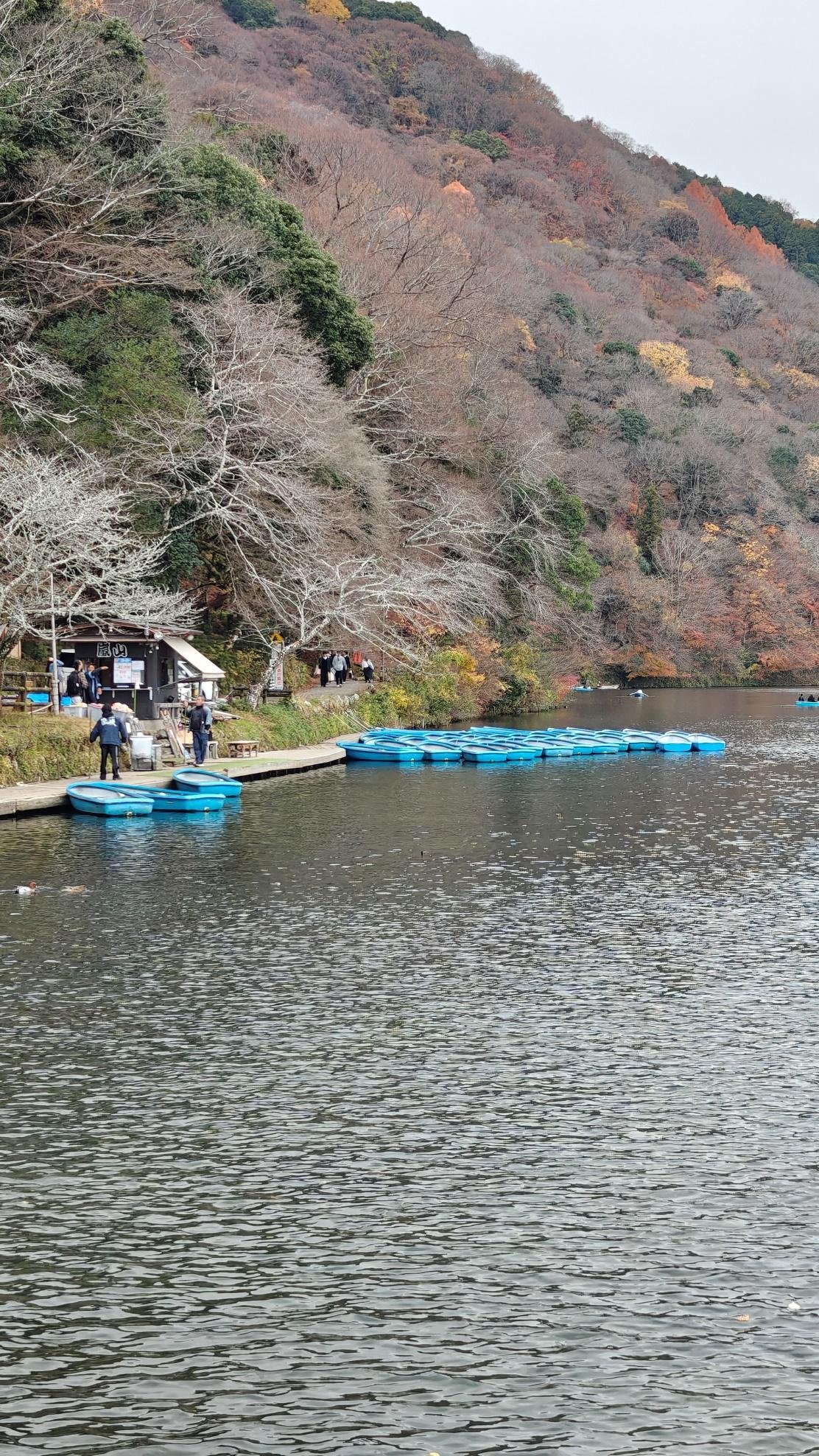
These blue rowboats are also owned by Arashiyama Tsusen and are actually much cheaper than the yakatabune. The range on these is rather limited and you’re probably just going to find yourself rowing leisurely in the area of the river between the north and south boarding docks.
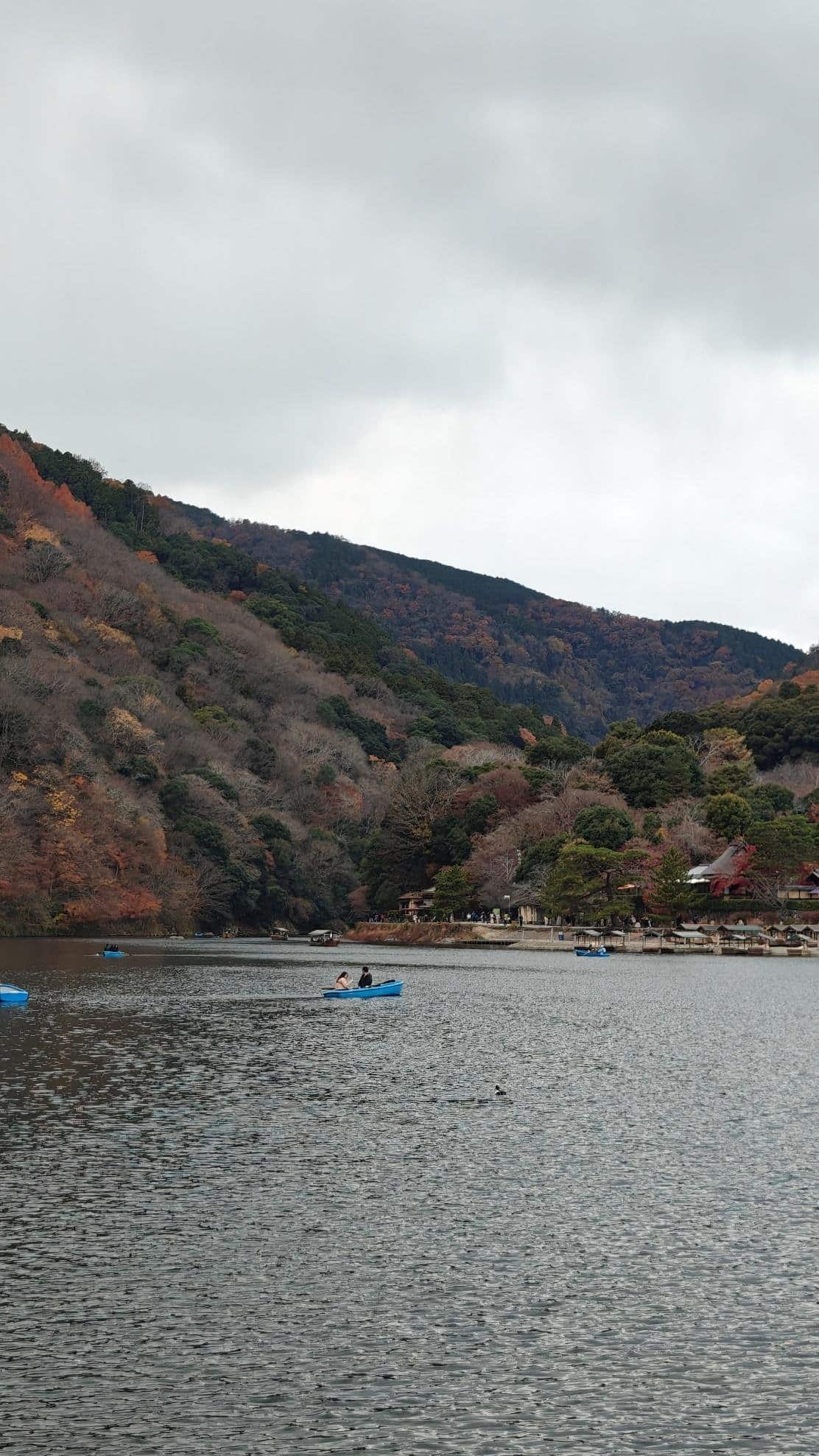
If you have an hour to spare then I’d really recommend renting out one of these rowboats. Riding in these is quite possibly one of the best ways of appreciating the beauty of this area. The yakatabune is also nice but expect to shell out a bit more.
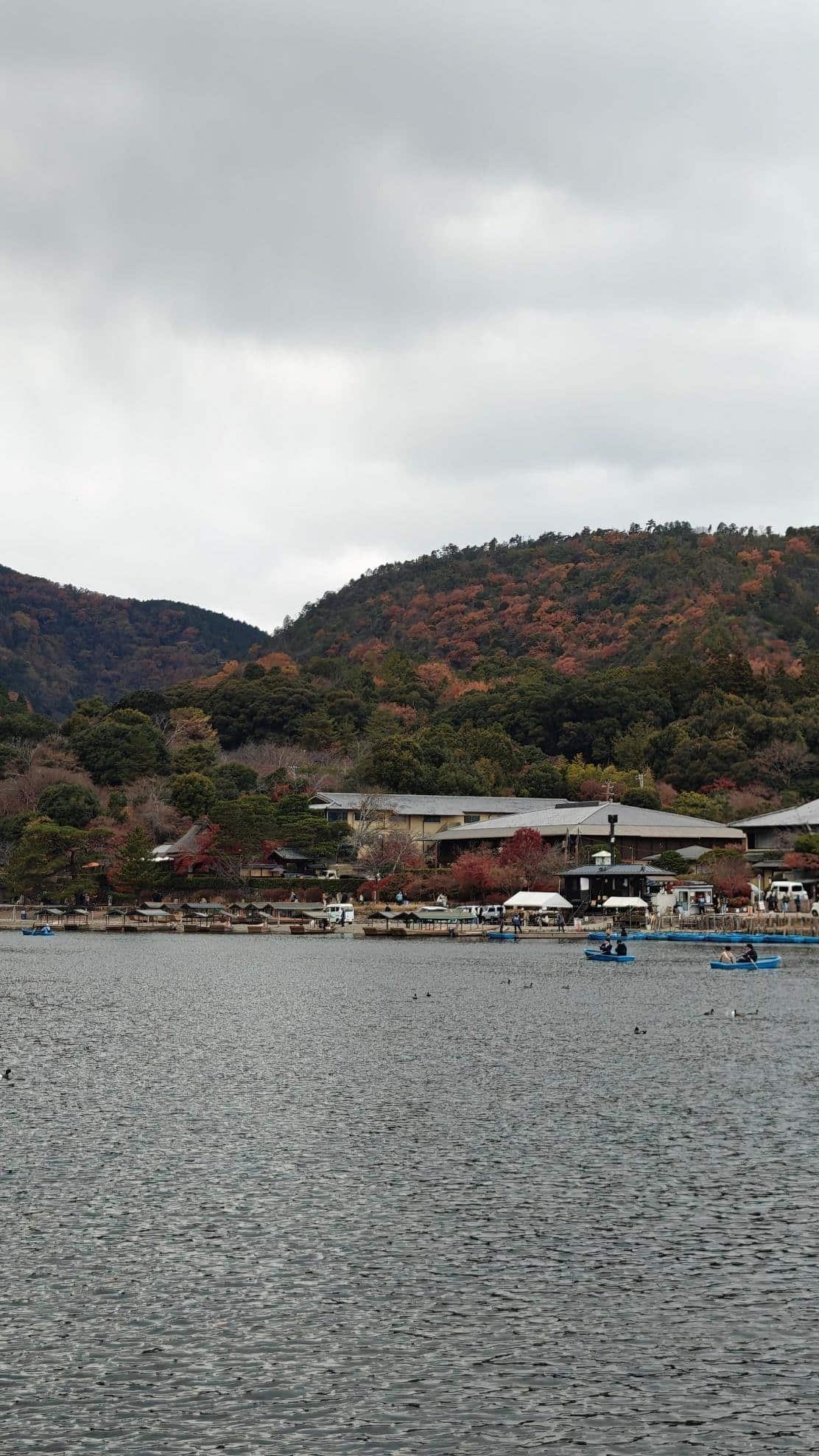
What you see here is Arashiyama Tsusen’s North Boarding Area. It’s actually much larger and has more boats. If you’re coming from the Arashiyama Park Kameyama Area then that’s where you’re going to want to rent out a blue rowboat or book a sightseeing tour on a yakatabune.
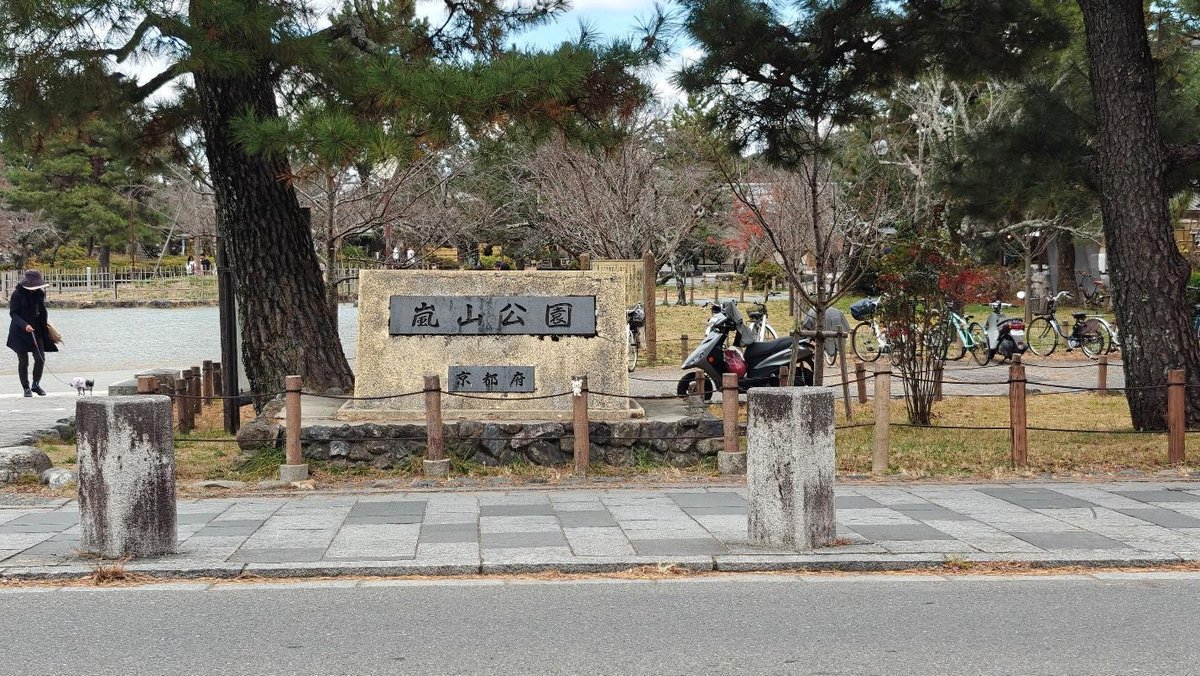
After checking out the western part of Nakanoshima, I then proceeded to the main/middle Arashiyama Park area. The pathways here are quite wide and there’s a dedicated space to park bikes and motorcycles. This is also the busiest area during the spring season as it’s where the sakura trees can be found.
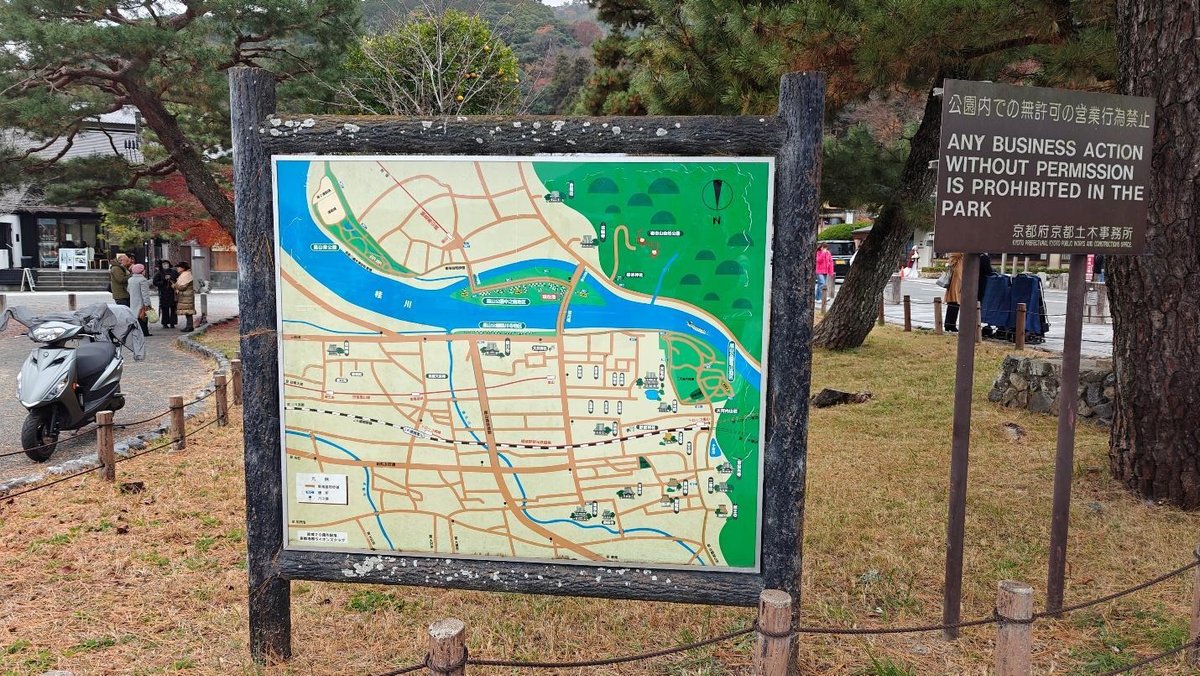
This is the guide map of the Saga Arashiyama area. It features the most notable attractions here including Tenryu-ji Temple, Arashiyama Monkey Park, and of course the island itself. Take note though that the map is surprisingly oriented upside down.
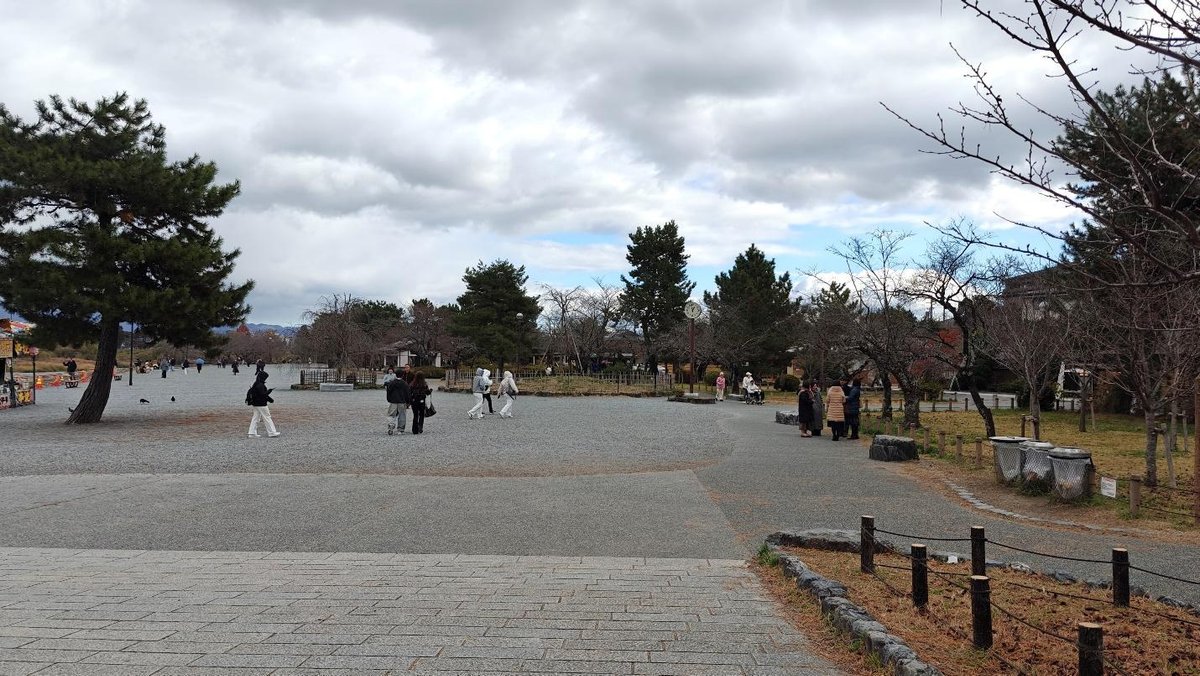
Like I said earlier, the pathways in this section of Arashiyama Park are quite wide. If I’m not mistaken, you’re even allowed to ride bikes here so long as you give way to pedestrians.
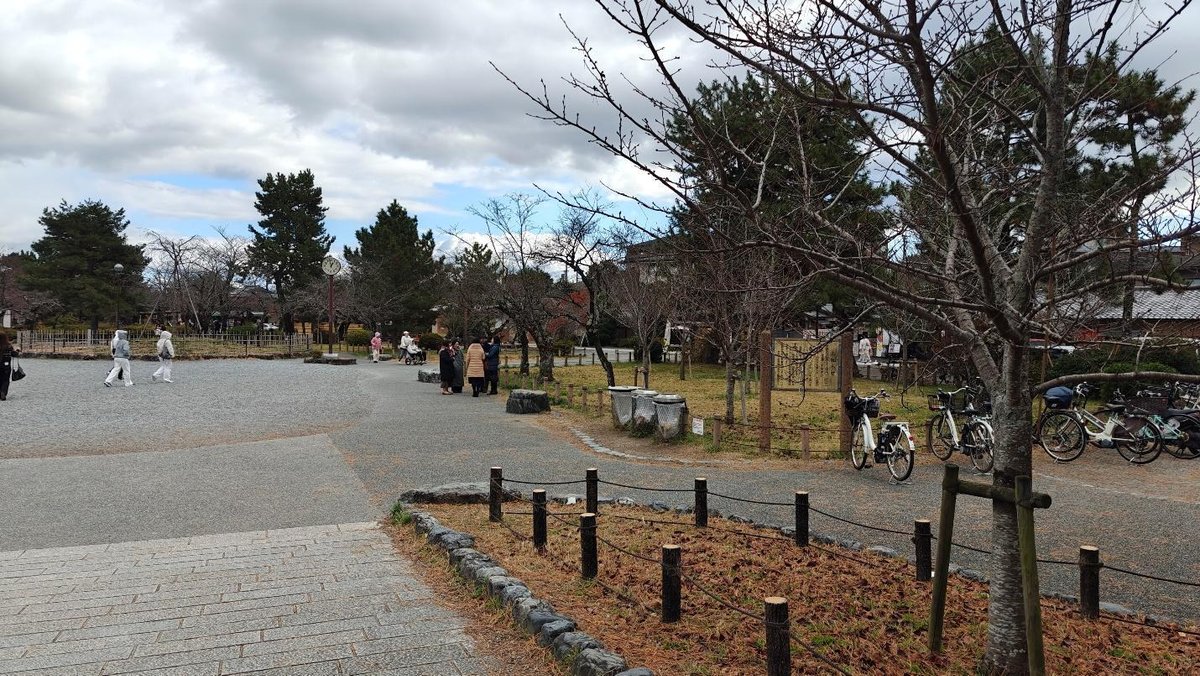
Speaking of bikes, you can see there are plenty of those in this designated parking space. There are a number of establishments where you can get rental bikes so it might be worth checking some of those out. If you’re the adventurous type, it’s probably going to be a much cheaper way to get around the area (and even around the city).
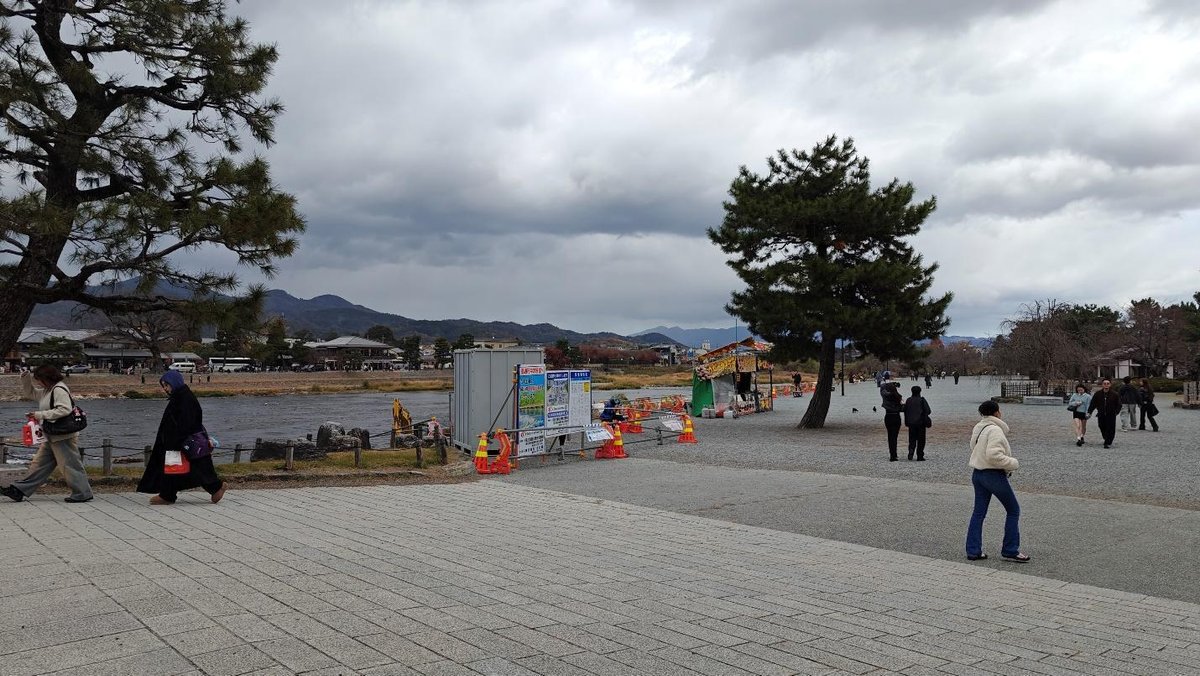
The skies were quite overcast when I took this picture and it surprisingly gave the park a somber atmosphere. Thankfully it didn’t rain though I was quite interested in how the landscape would turn out if it did. I’ve read that the park is actually quite beautiful when it rains.
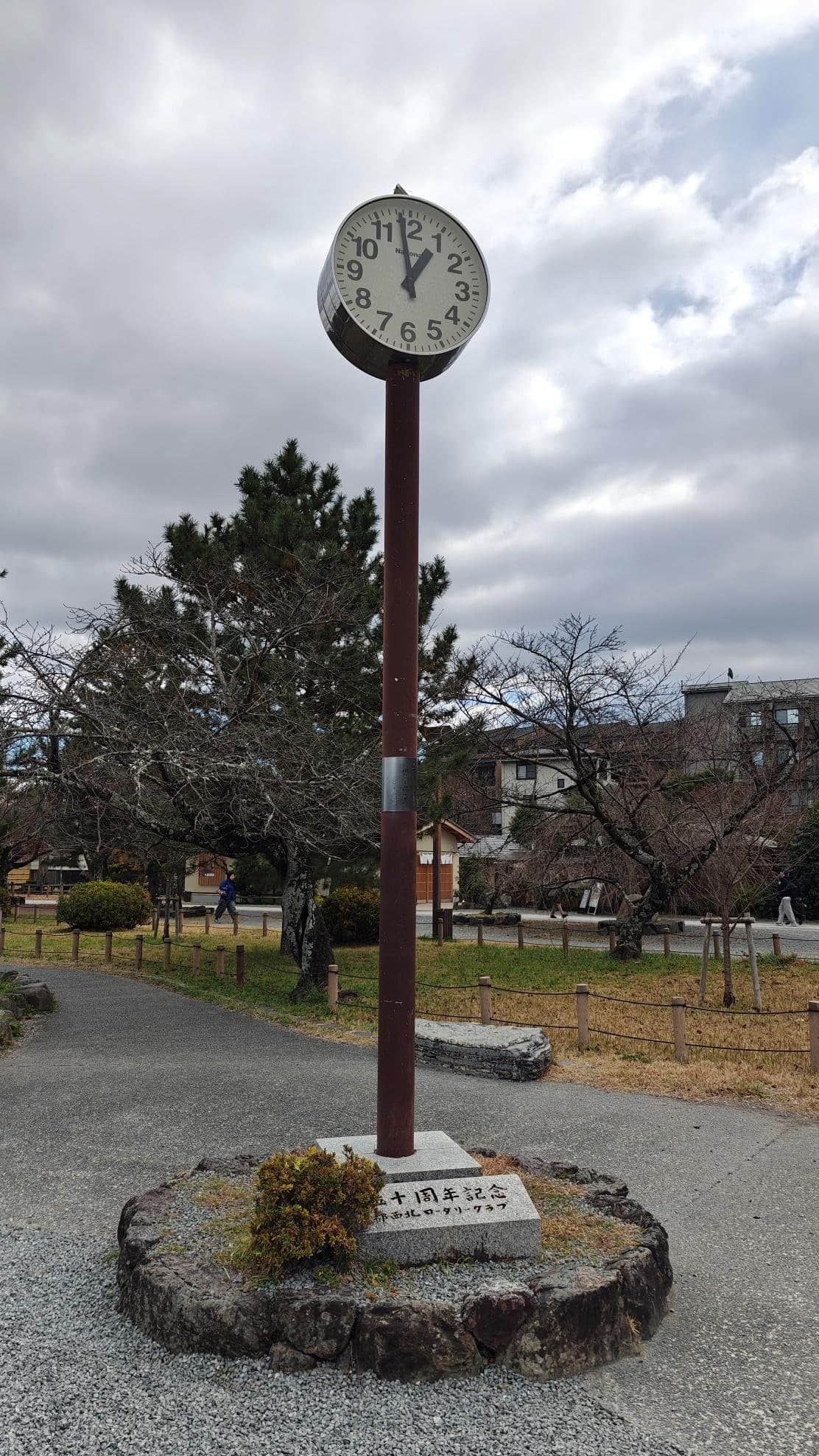
This is a clock monument constructed by one of the local rotary clubs in Kyoto. As you can see, it was still noon when I arrived here yet it looked like it was close to evening thanks to the overcast skies. It was actually quite baffling that the weather was like this considering December is said to be one of the months in Kyoto with the clearest skies.
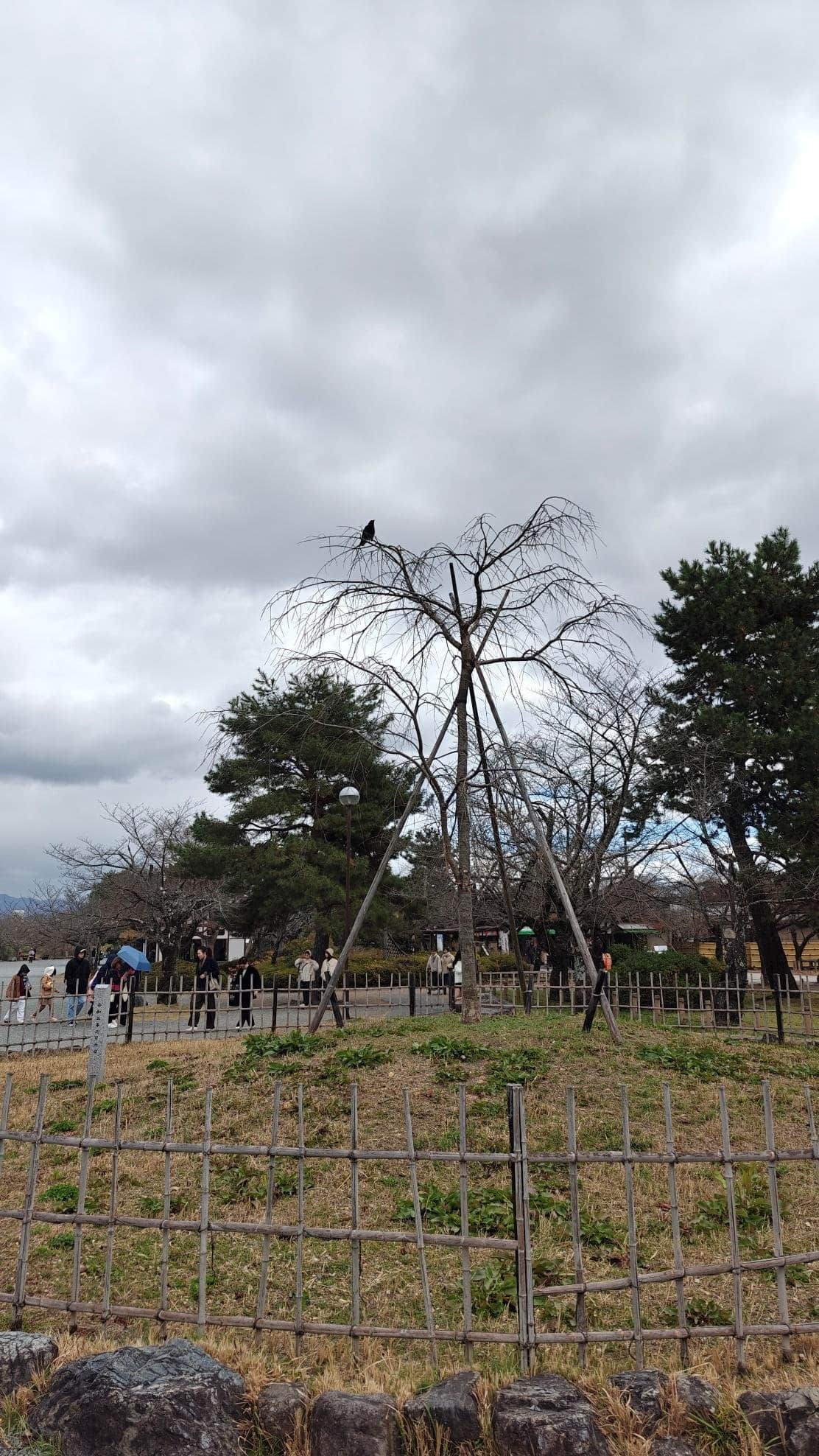
If you read my writeups of my visit to Japan sometime during the first quarter of 2025 then you probably are familiar with yukitsuri. This is a traditional Japanese gardening technique used to help trees during the winter season. Aside from supporting the trunk, the sticks connected to the trees protects its branches from accumulating too much snow.
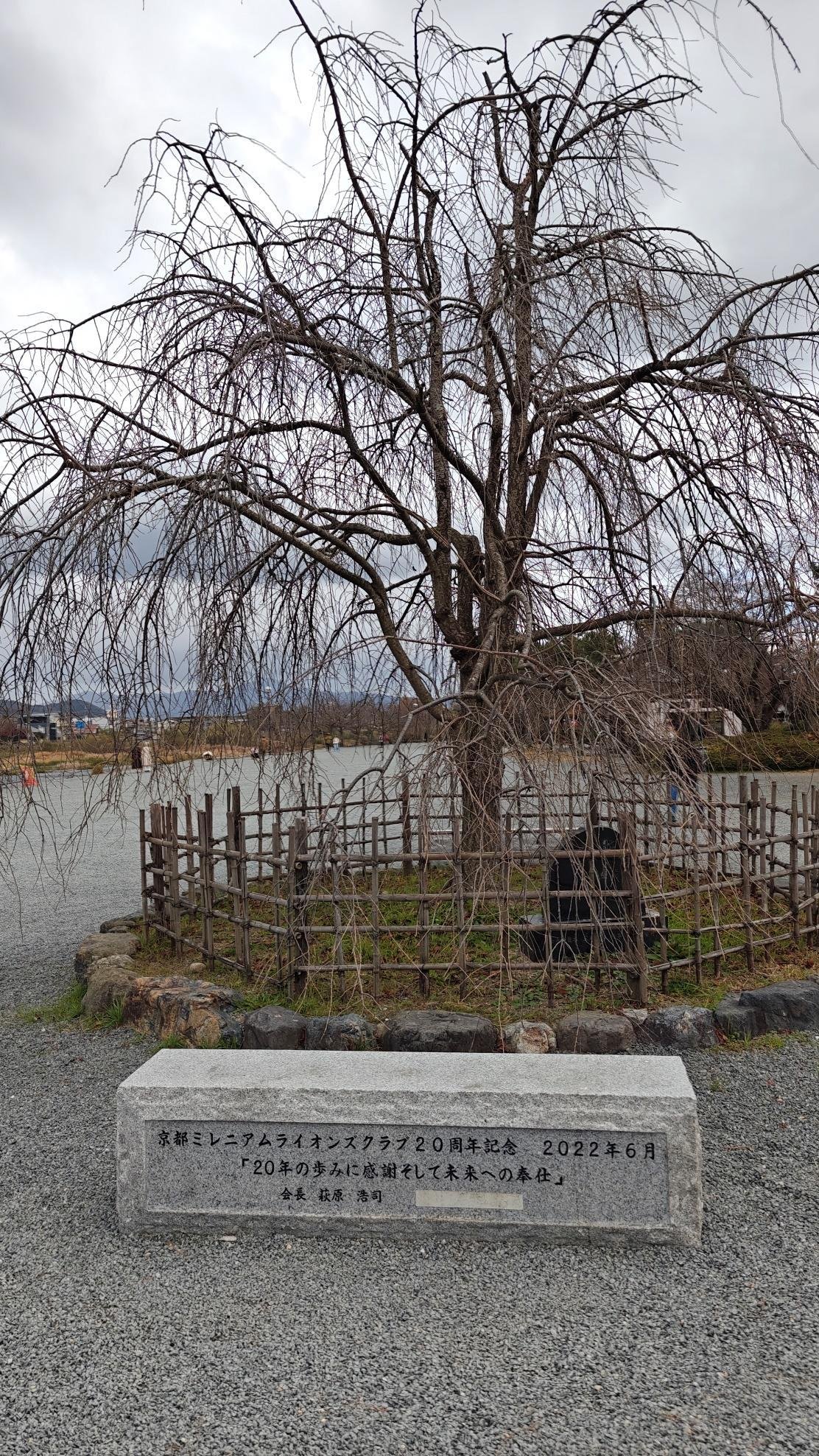
This weeping cherry tree is a commemorative monument put up by the Kyoto Millenium Lions Club. It was set up in June of 2022 to commemorate the organization’s 20th anniversary. One thing I noticed here is that you’ll find plenty of these monuments by various civic organizations strewn throughout the park.
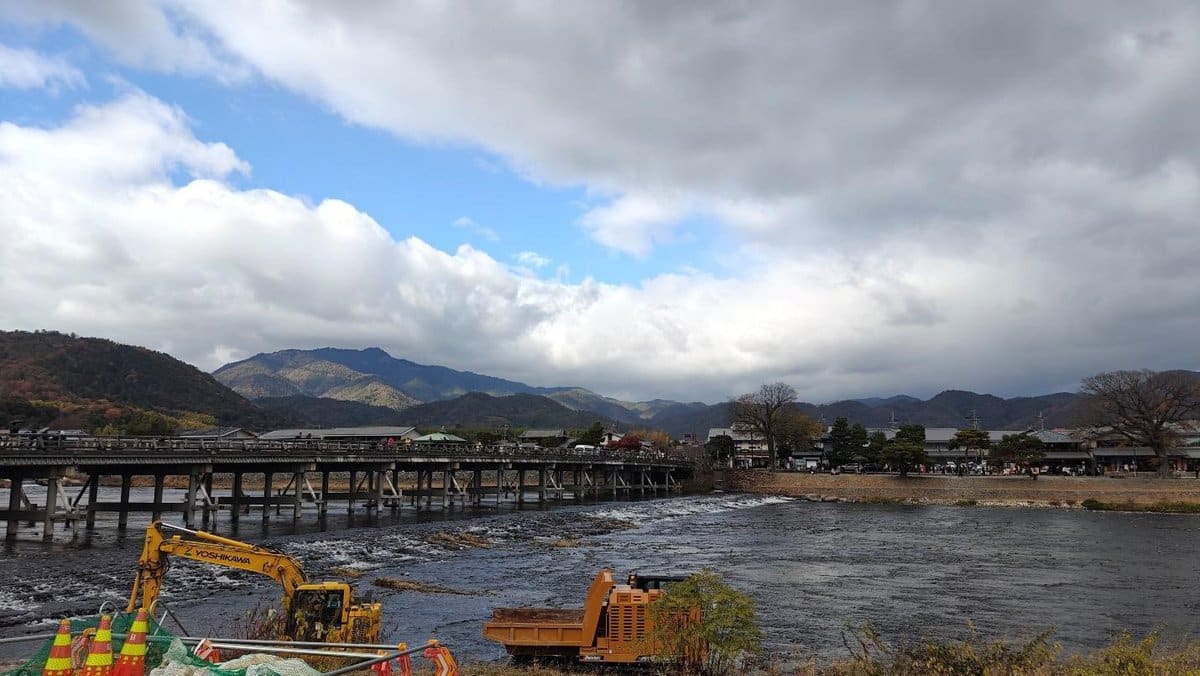
This is what the Togetsukyo Bridge looks like from the middle area of Arashiyama Park. It was a bit noisy here due to some work being done by the excavator in the foreground. I’m not actually quite sure what this was for.
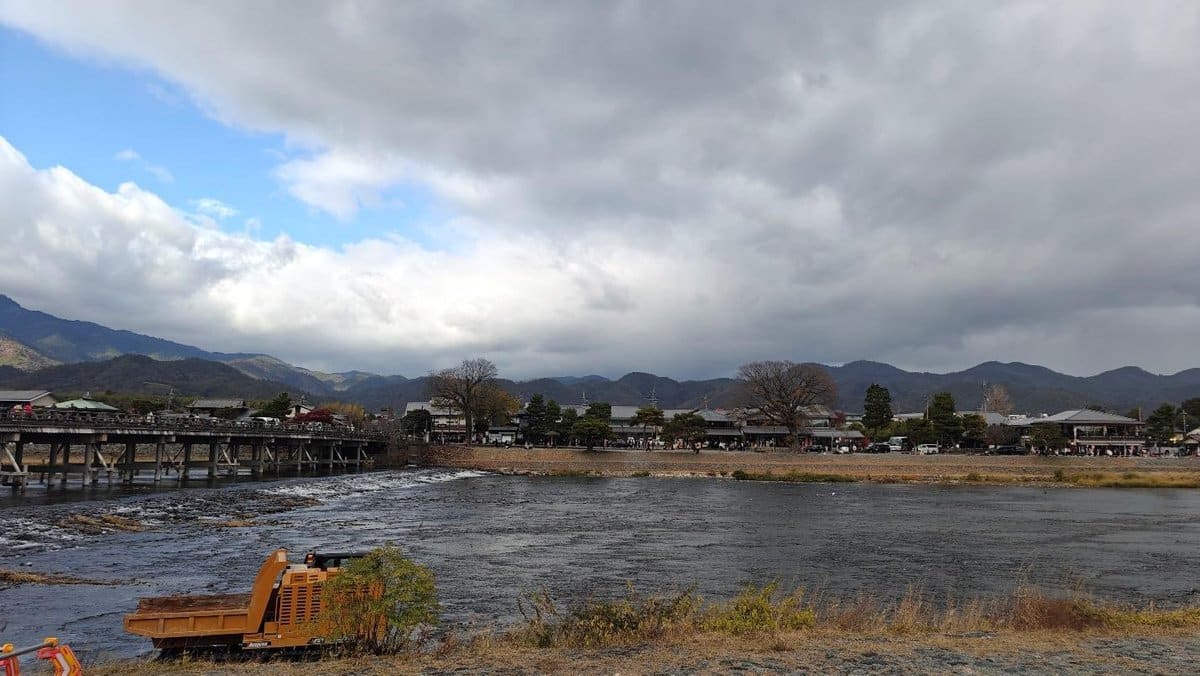
Much like the area immediately downstream of the Ichinoiseki Weir, the water downstream of the bridge looks like it’s also shallow. There are times though that this gets deeper especially once the springmelt season starts in March. The water level then reaches its peak during the rainy season (June to mid-July).
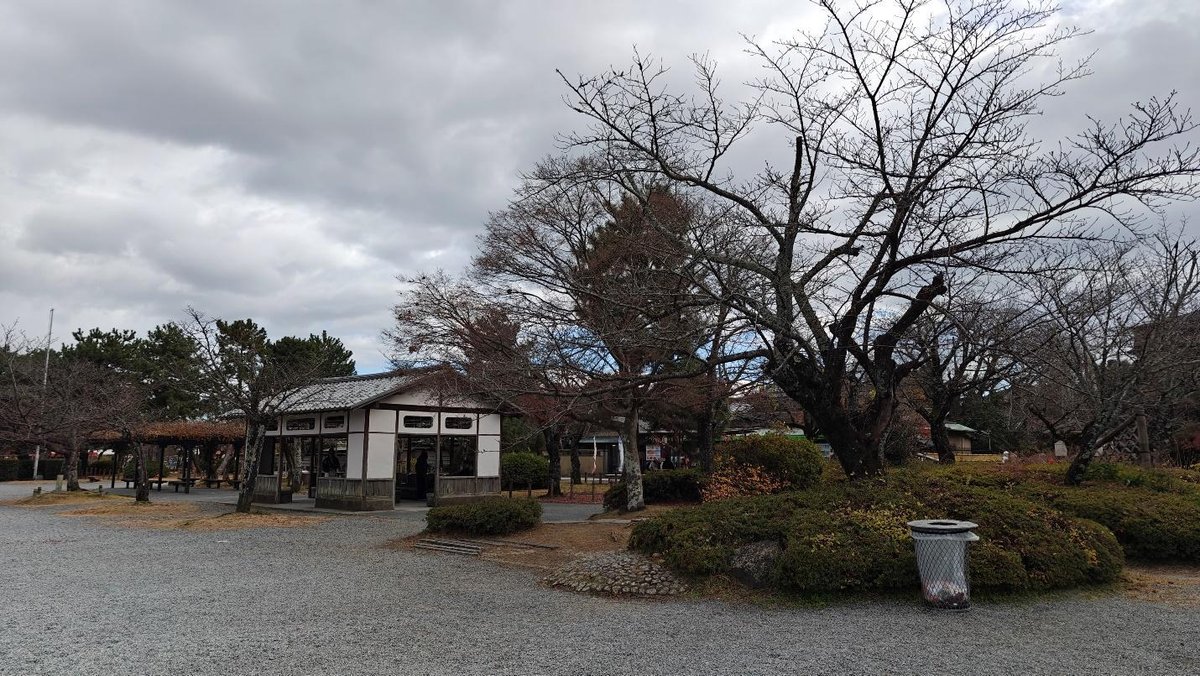
Continuing my walk around the middle part of the park, I came across this open air building. This is part of the park’s rest area and it’s actually free to use. Beside it is a pergola that also has seats where you can rest and relax.
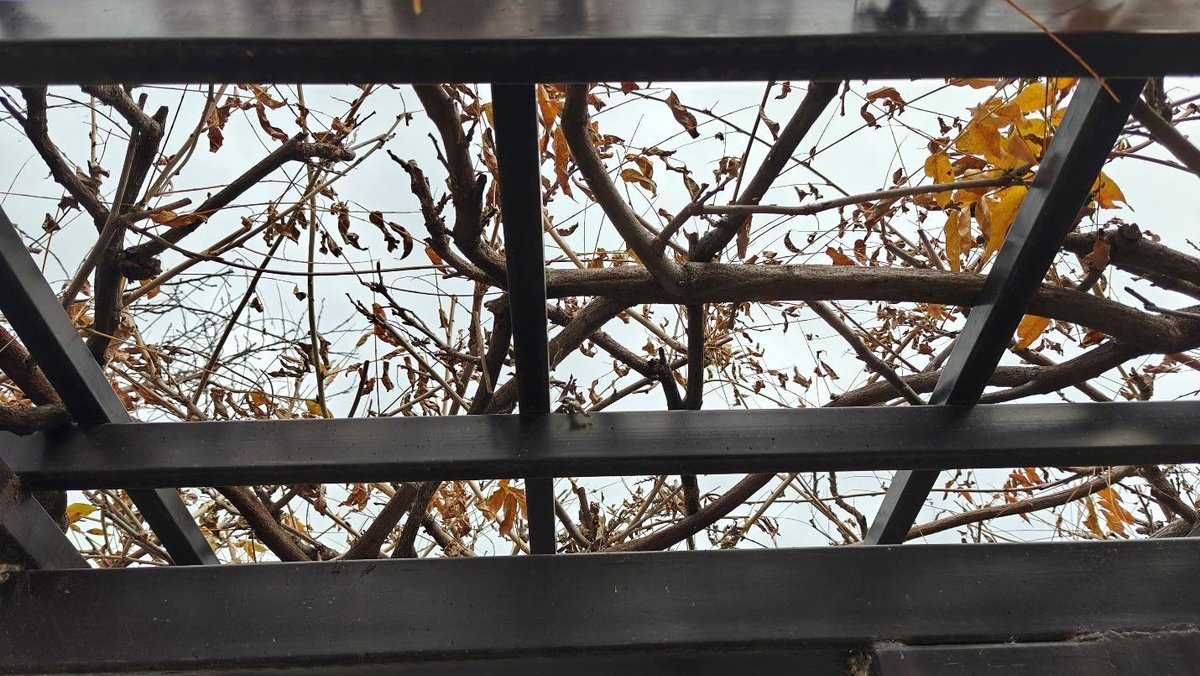
Here’s the view of the beams and rafters on the pergola. If I’m not mistaken, the vine here is wisteria which is similar to the one I saw near the entrance of Sankeien Garden. There are actually only three of these plants serving as the pergola’s natural roof.
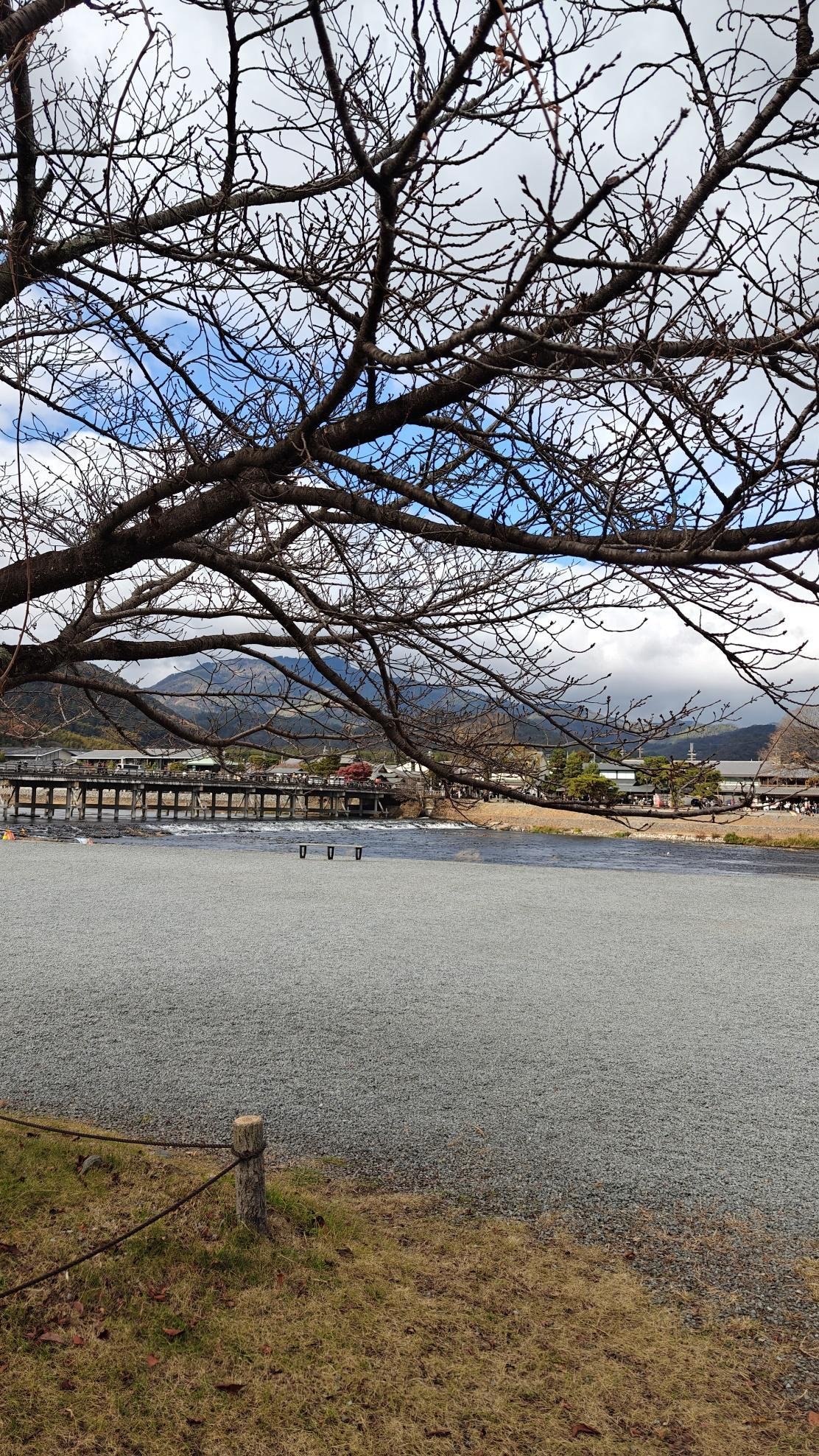
Here’s the view from the pathway to the left (if you’re facing the river) of the pergola. I’m not sure why but this view took my breath away. This was one of those times when I really felt thankful that I was fortunate enough to have gone on trips like these.
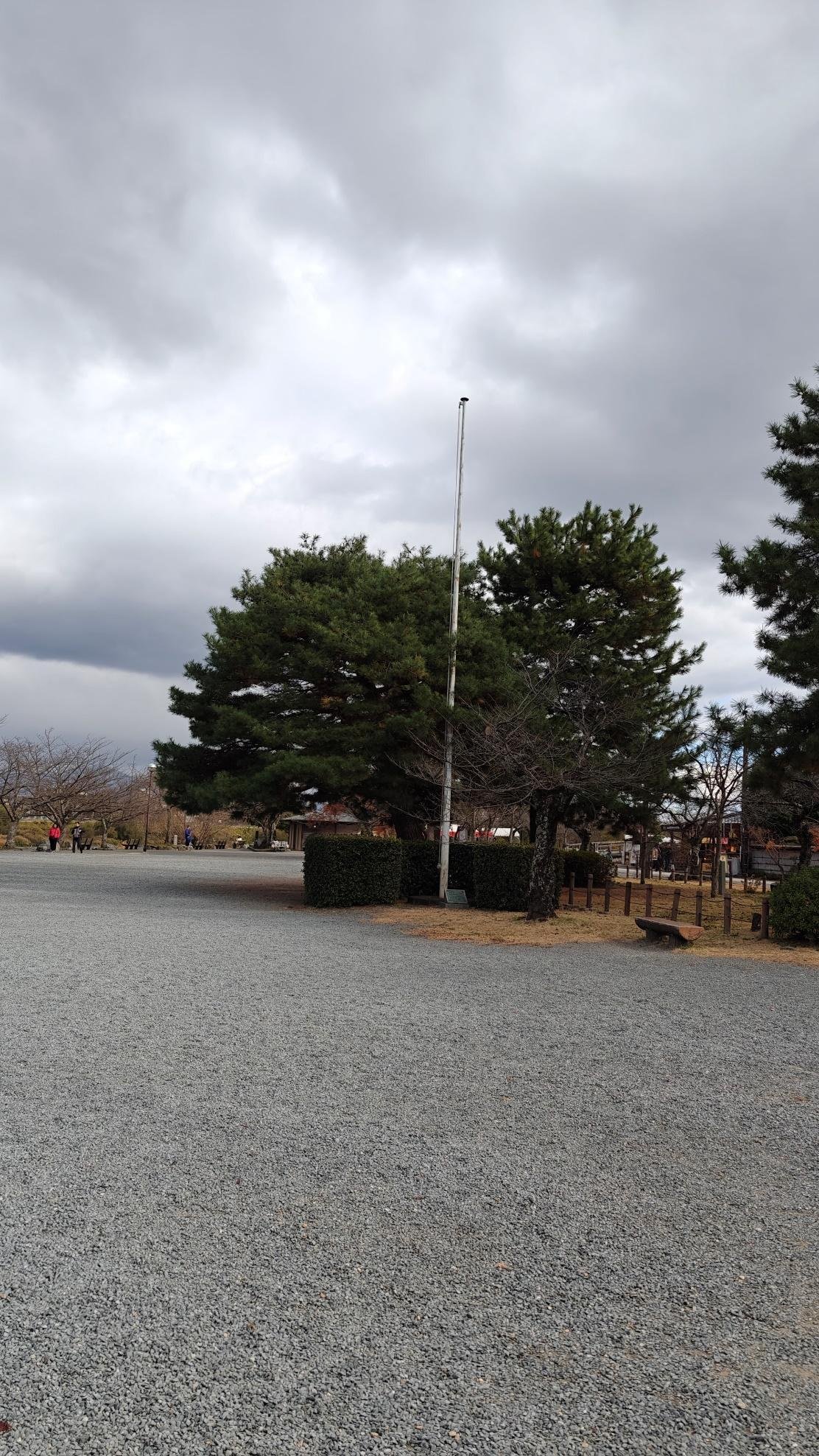
Walking a bit forward from the previous spot, I turned right and saw this tall pole. It looks a lot like a flagpole that isn’t being used anymore. This was actually quite surprising as you typically don’t see flagpoles in Japanese parks and public spaces.
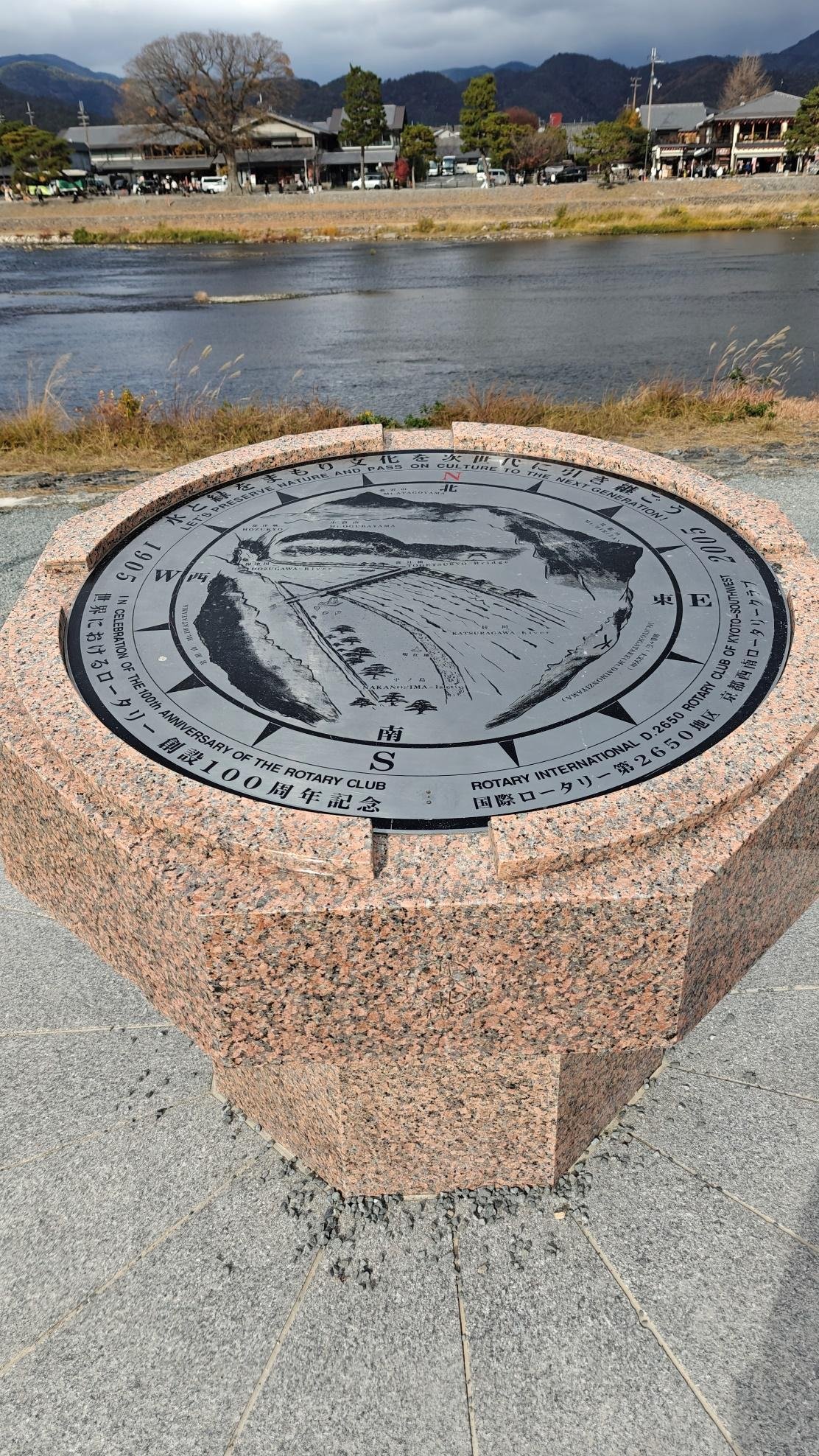
In the area in front of the pergola and the rest area, you’ll find this granite monument commemorating the 100th anniversary of the Rotary Club International. What I particularly liked about this is that it features an engraving of the Katsura River and the Togetsukyo Bridge at its center. The monument was built in 2005.
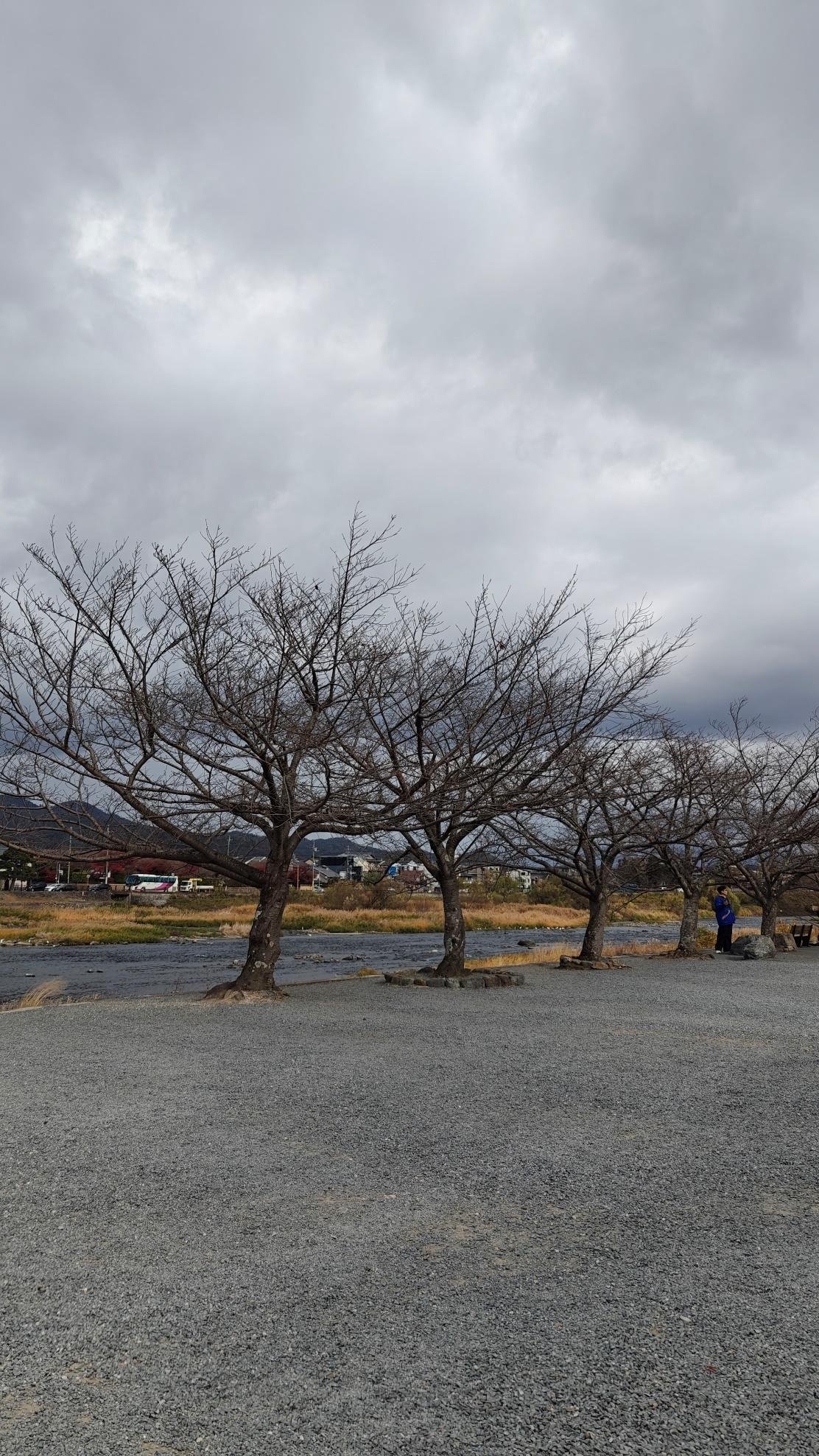
Here is a line of cherry trees overlooking the Katsura River. Man, I can just imagine how spectacularly colorful the spring season in this specific area is. If I have the chance, I’m really coming back here just to see these trees when they’re in bloom.
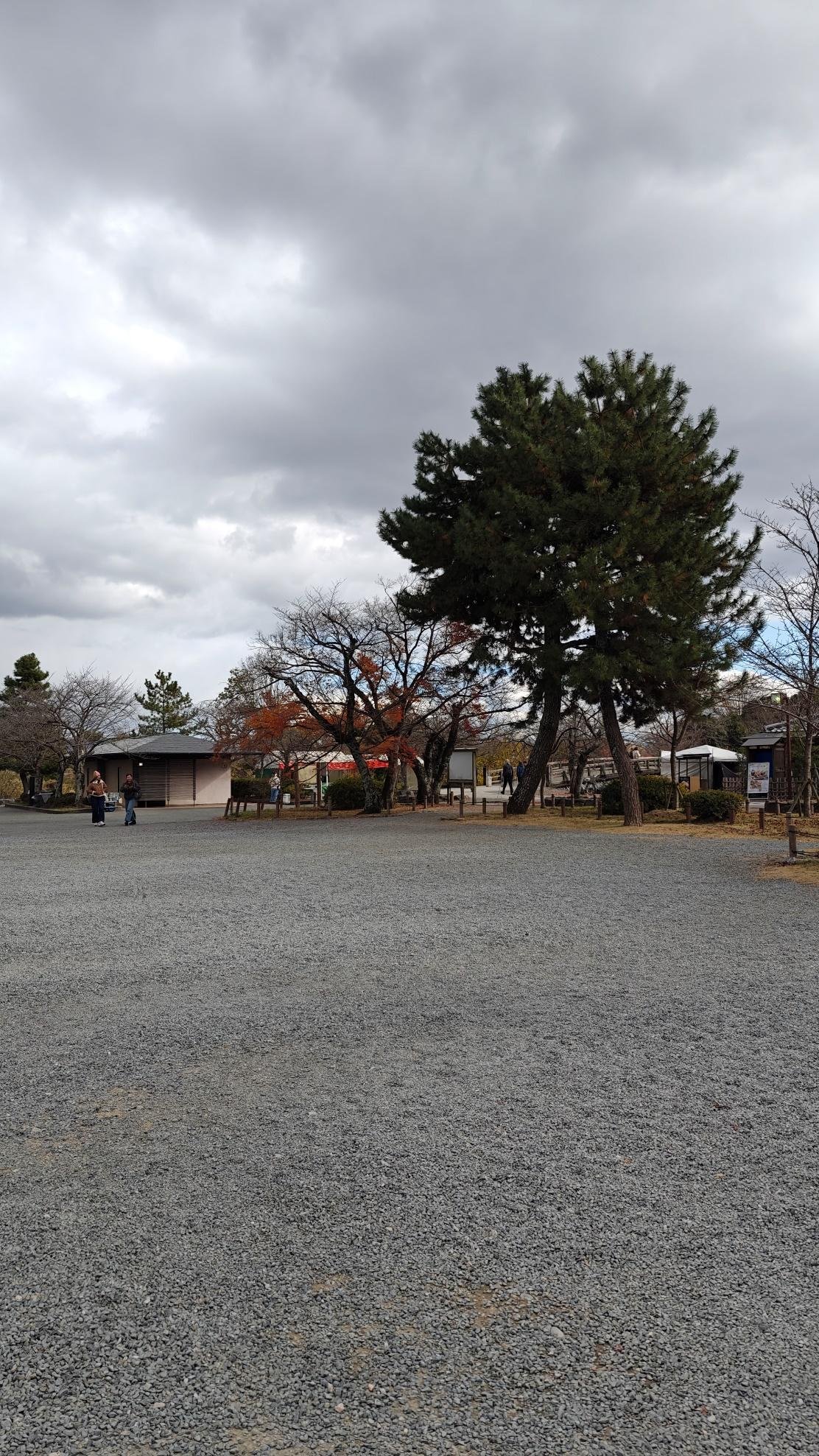
This is the eastern part of Arashiyama Park. The building off in the distance is a public washroom and if you look closely, you’ll see the Nakanoshima Bridge a couple of steps away from it. At this point, my visit was drawing to a close which actually made me feel a little sad.
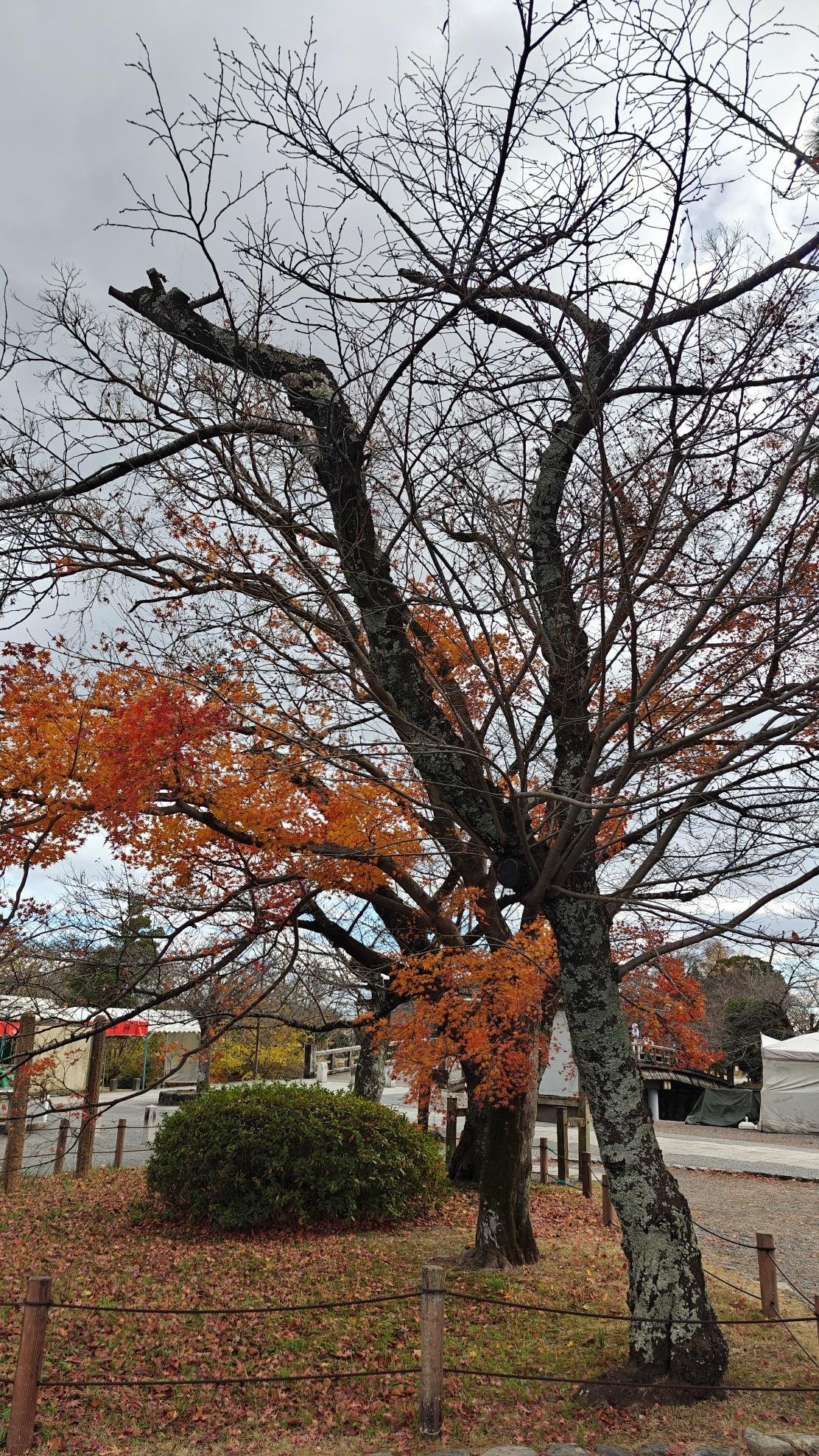
Opposite the public washroom was an area that had what I think were maple trees. As you saw earlier, sakura typically lose their foliage first so by early winter their branches are already bare. On the other hand, Japanese maple start their fall foliage a little later and as a result, you’ll usually find them with some of their leaves still on at the start of winter.
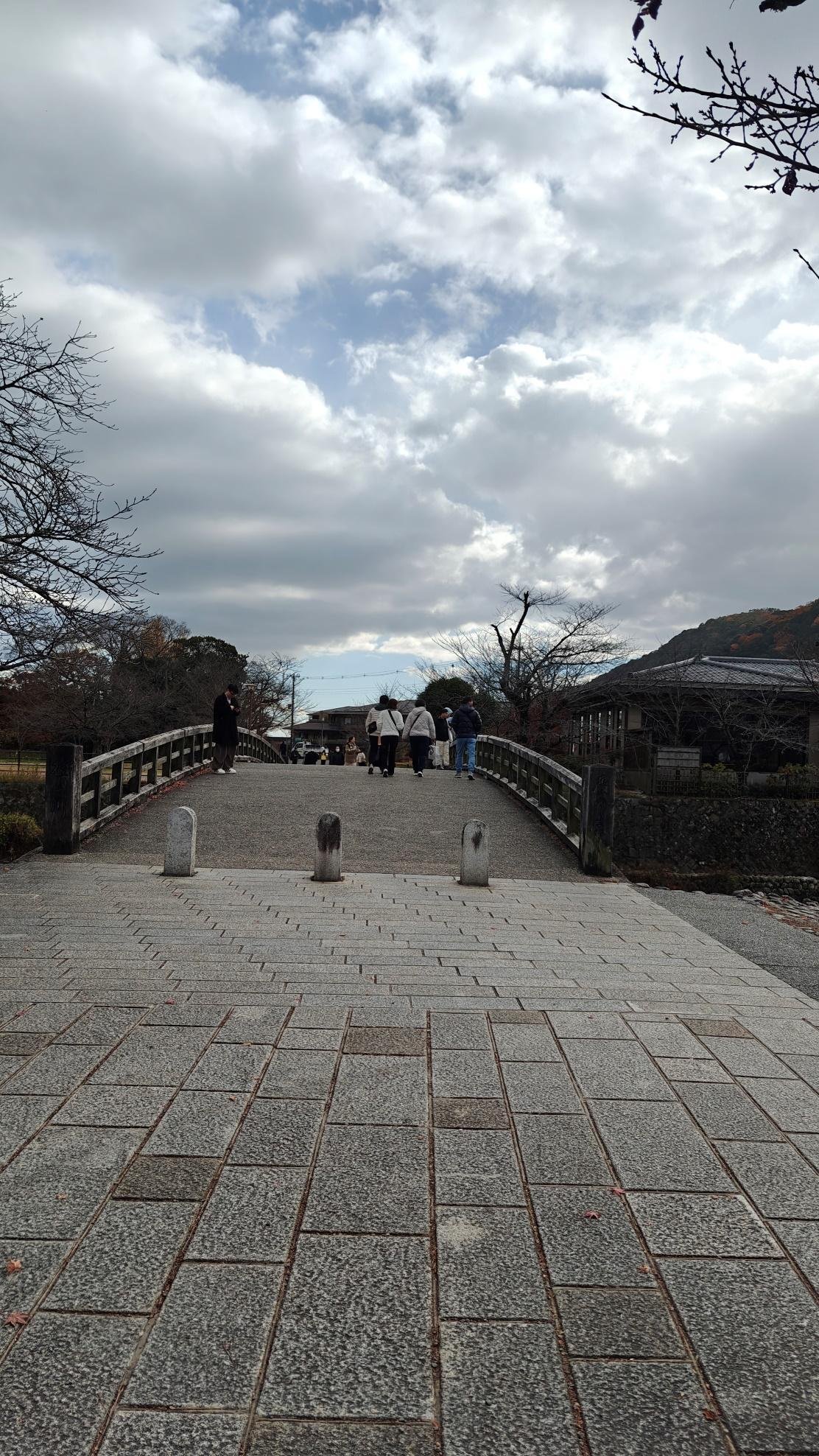
Past the public washroom I came across the Nakanoshima Bridge. Like the Togetsukyo Small Bridge, this connects Nakanoshima directly to the Arashiyama Nakaoshitacho area. Unlike Togetsukyo Small Bridge, only foot traffic is allowed here (evidenced by the bollards that you can see in the image).
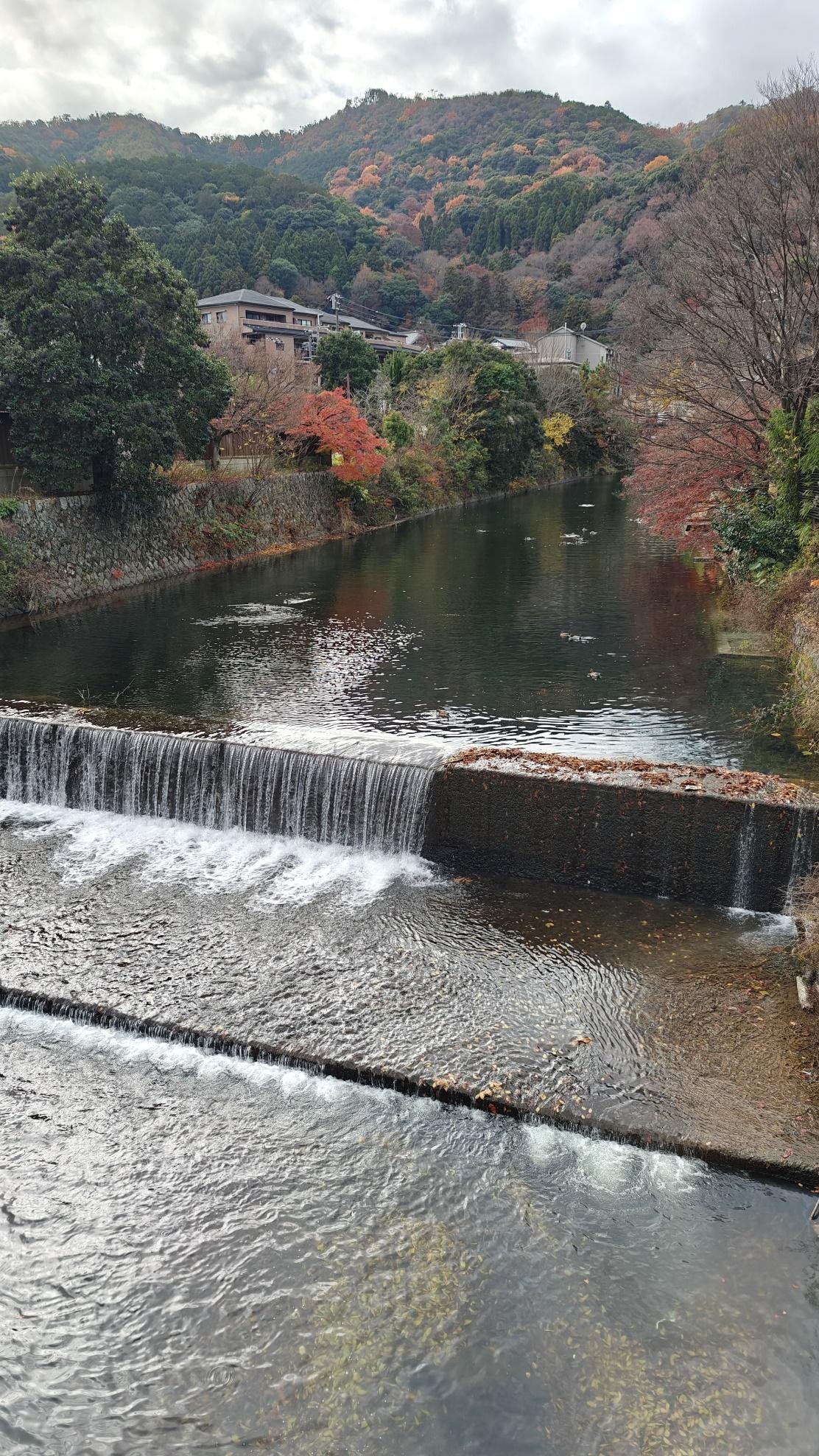
Similar to the main channel of the Katsura River, the Rakusai Irrigation Channel also has a weir. Since the channel is quite narrow, the weir isn’t really that long and wide. That said, it still spans the width of the channel and like how the Ichinoiseki Weir is to the Togetsukyo Bridge, it’s found upstream of the Nakanoshima Bridge.
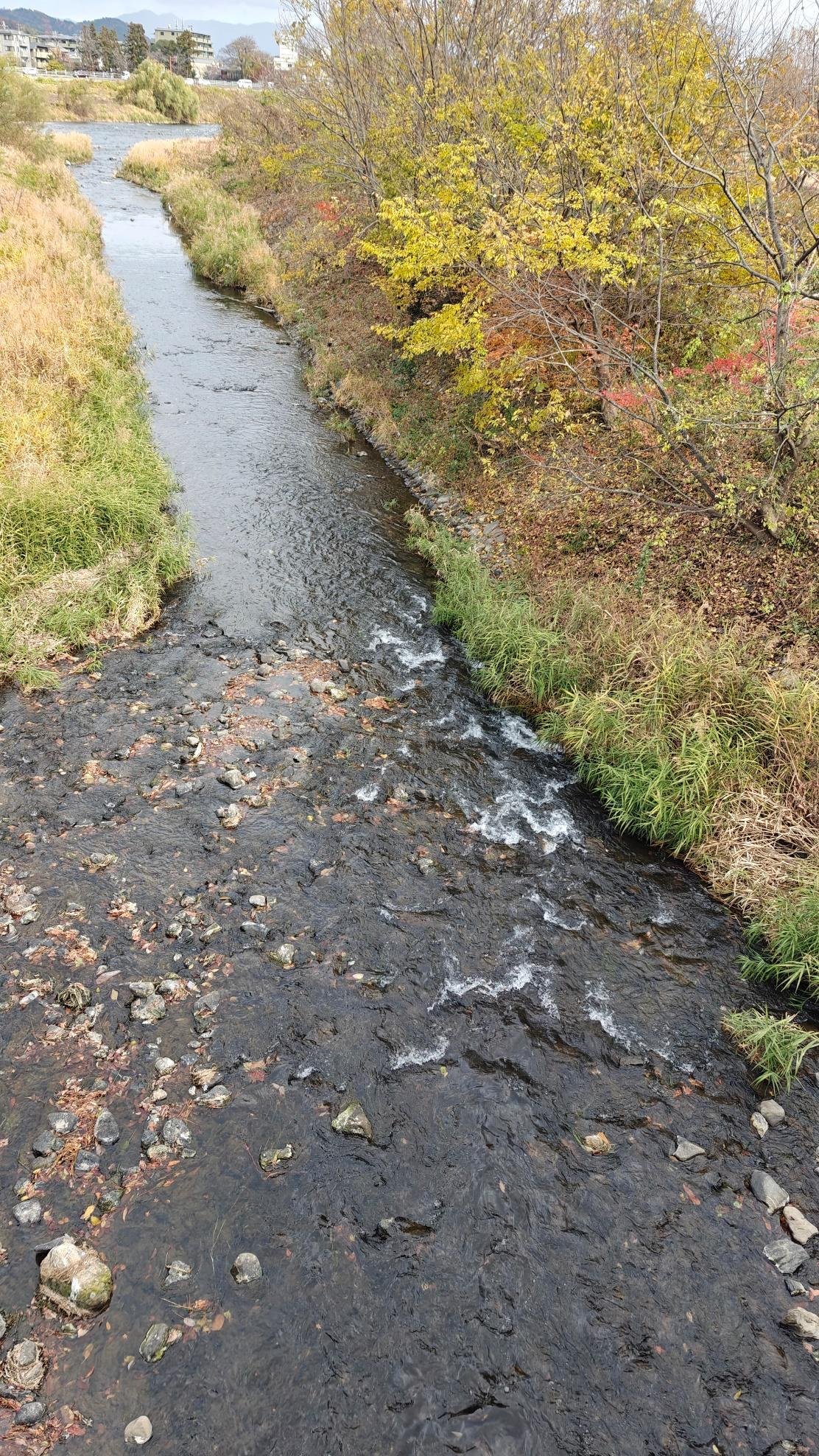
Here’s the final picture I took of Arashiyama Park Nakanoshima Area. From the weir, the water splits off with one channel redirecting it back to the Katsura River which you can see here. The other channel is the one that’s used for irrigation and is similar to the one you saw at the Ichinoiseki Weir early on.So what can I say about my visit here at Togetsukyo Bridge and the Nakanoshima Area of Arashiyama Park?
In a nutshell, it was excellent and I couldn’t recommend it enough. There’s just so much to do and see here. It was definitely worth walking from Tenryu-ji Temple just to get to this place.
From here you can also check out other areas like Arashiyama Monkey Park or Arashiyama East Park. For other activities, you can enjoy a leisurely boat ride with Arashiyama Tsusen.What do you think of Togetsukyo Bridge and Arashiyama Park Nakanoshima Area? Will you be including these in your Kyoto itinerary?
If yes then make sure to share with us your reasons for doing so down in the comments!