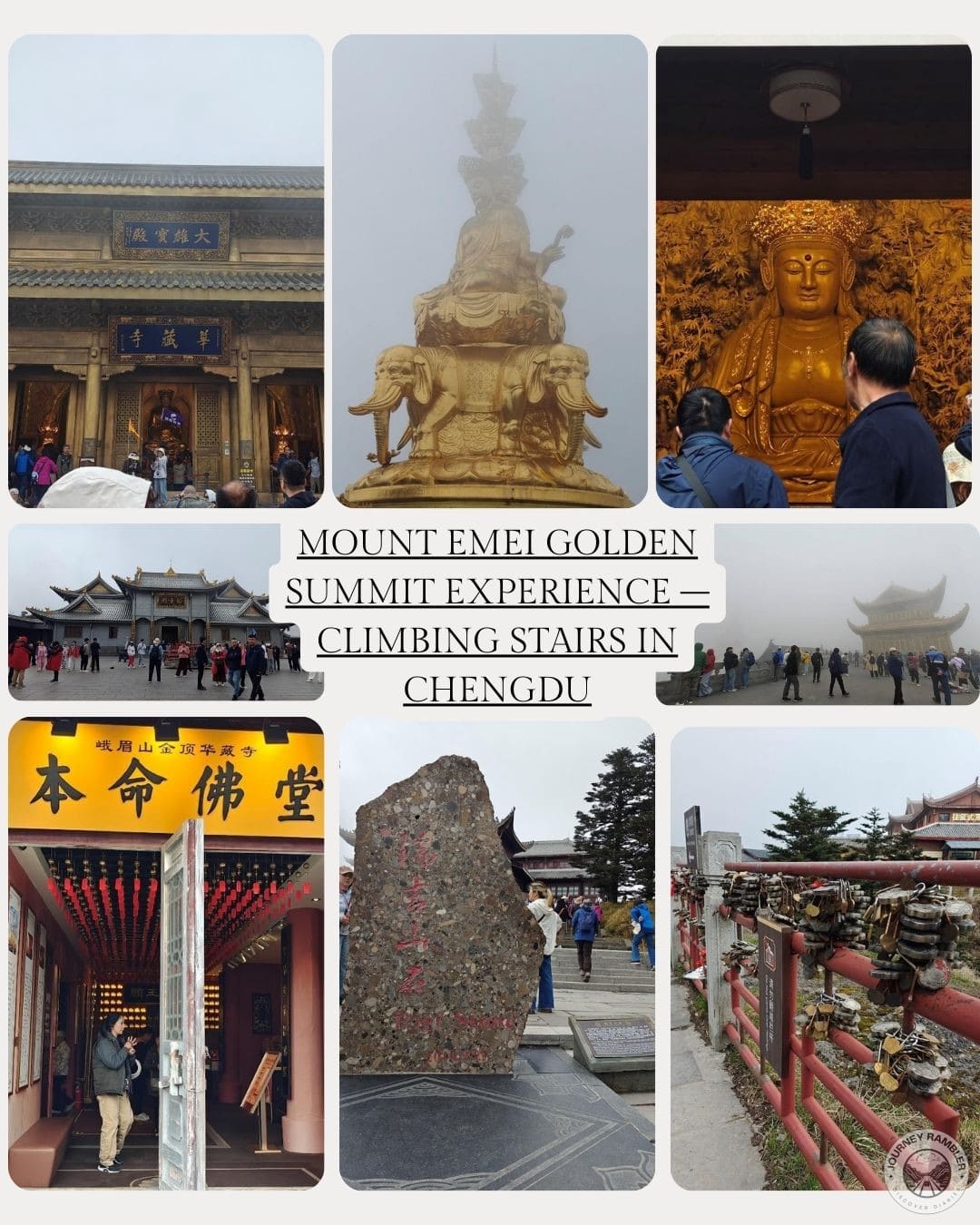
Going up Mount Emei to get to the Golden Summit was perhaps one of the most scenic climbs I did this year during my travels. The climb is considered by many to be harder than Mt. Fuji’s which is why I actually opted to go up on a cable car at some point during the hike. Today I’m going to be sharing a couple of the shots that I took as well as my experience climbing up this Buddhist holy site.
Mount Emei Golden Summit: A Buddhist Holy Site in Chengdu
Like with Leshan Grand Buddha, I’d highly recommend getting a Mount Emei Golden Summit tour package. A lot of these offer hotel pickups so you won’t have to worry about commuting. What’s even better is that they offer these pickup services for visitors staying as far as Chengdu.
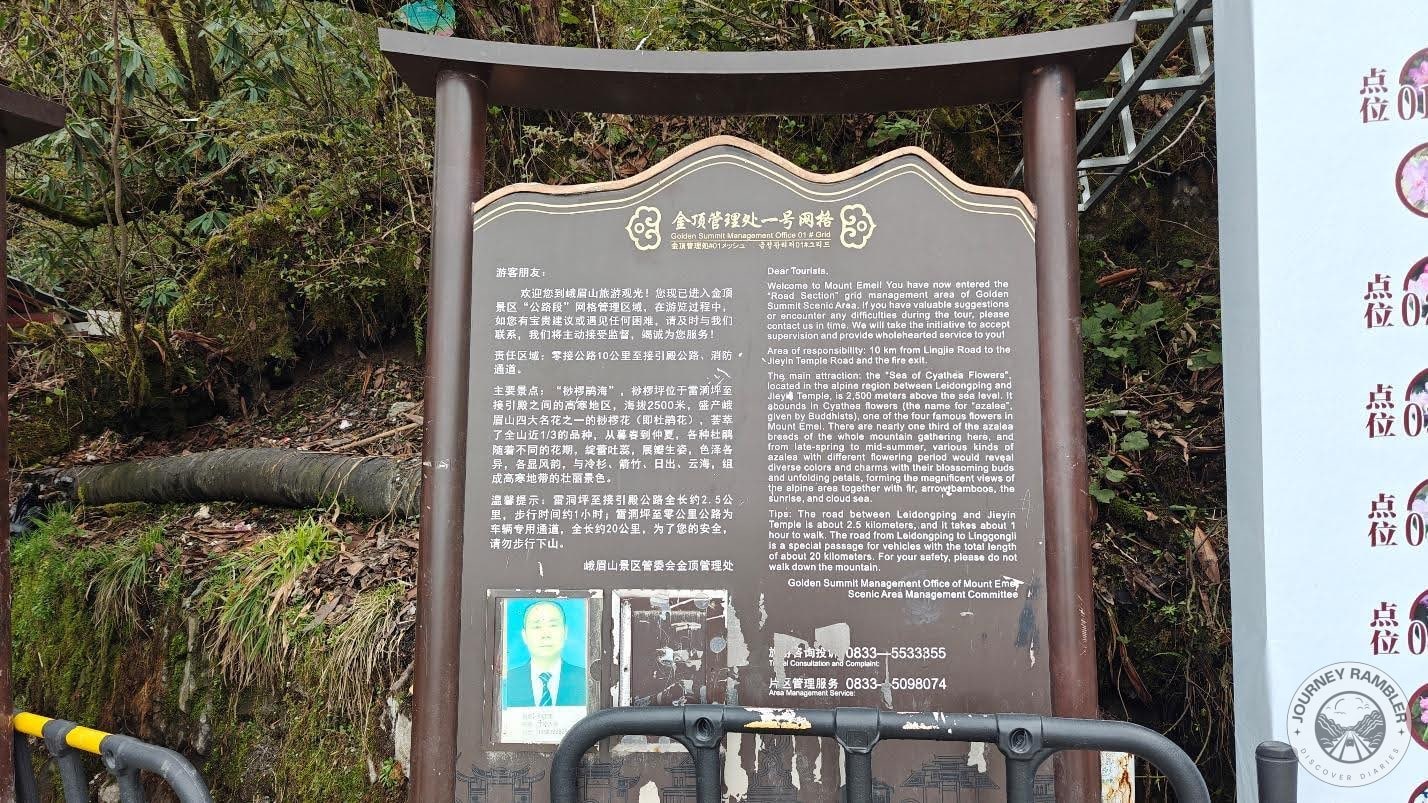
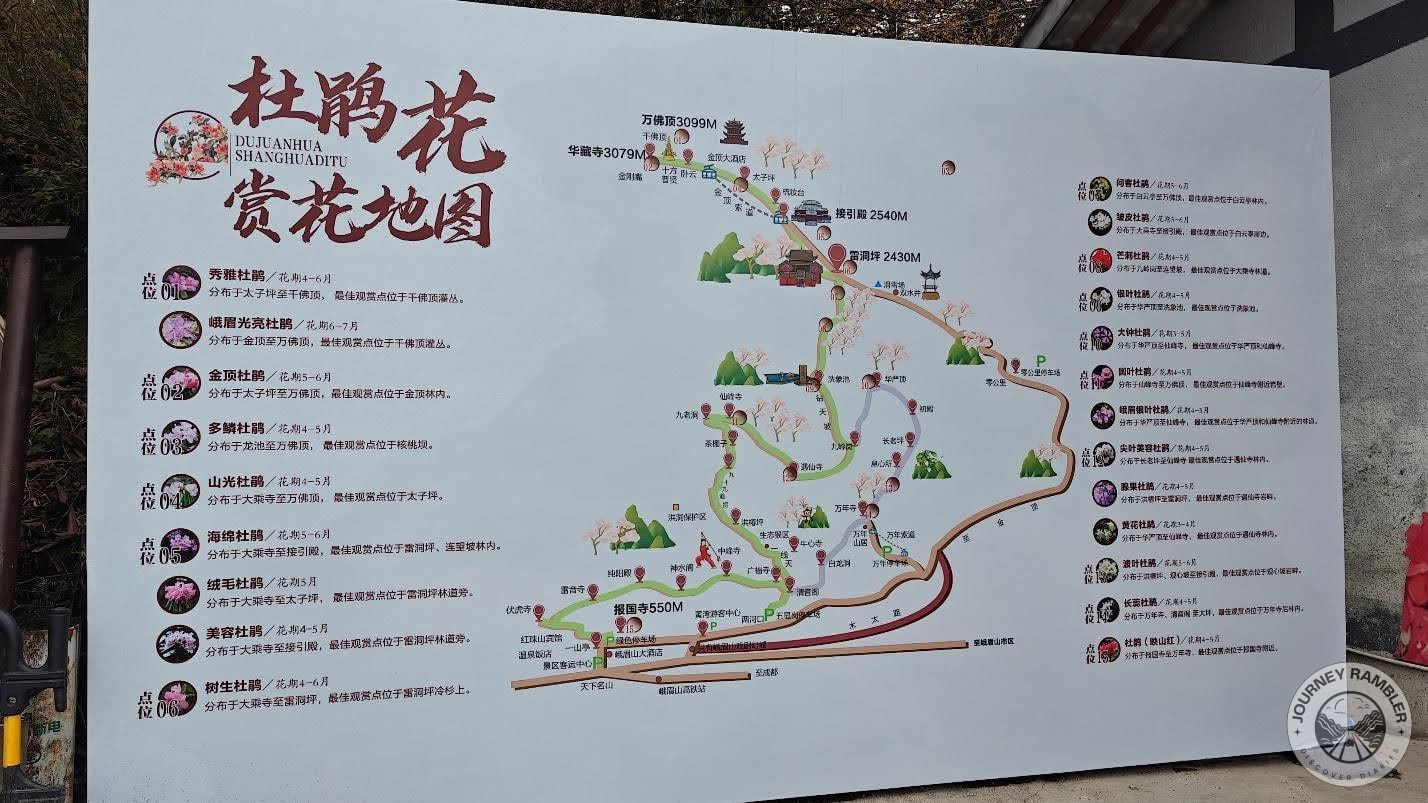
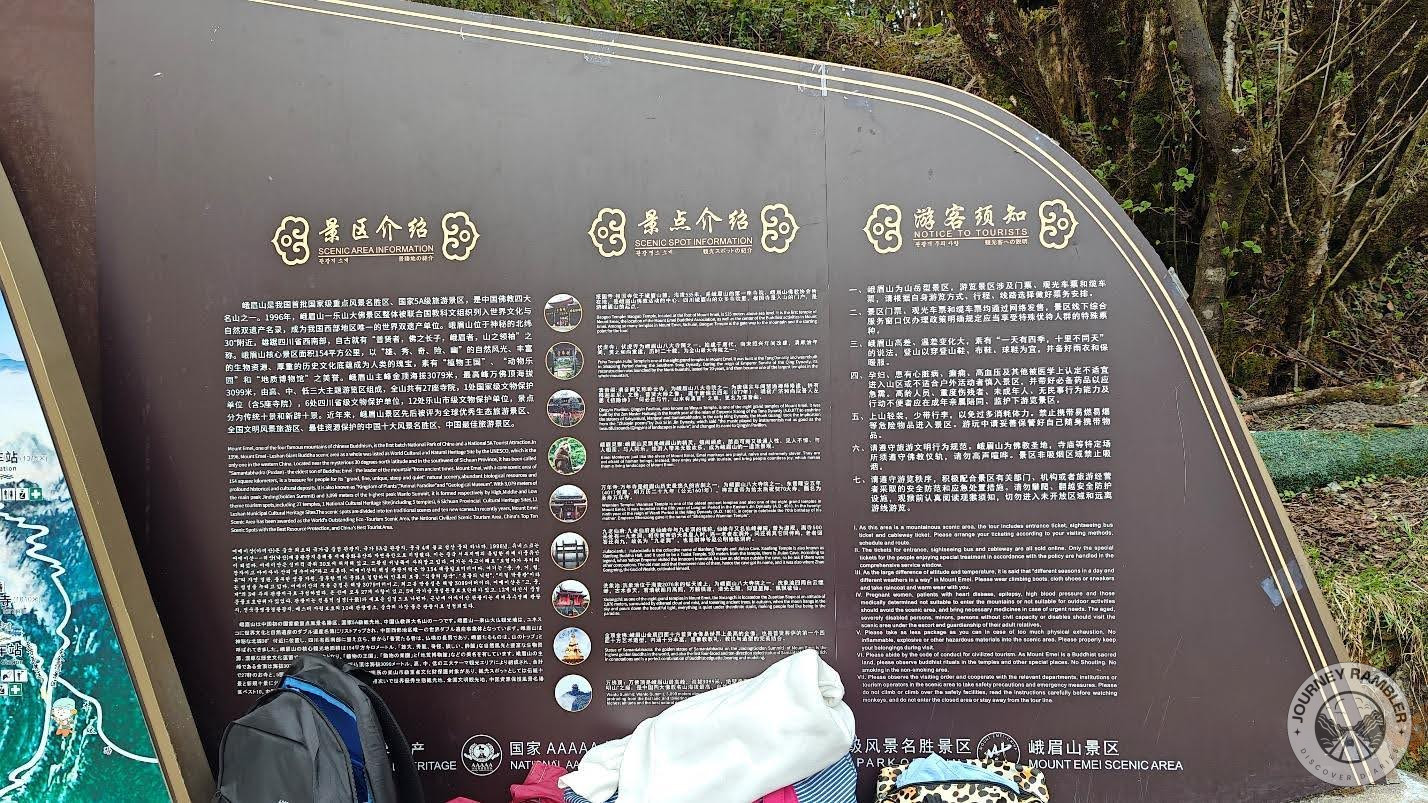
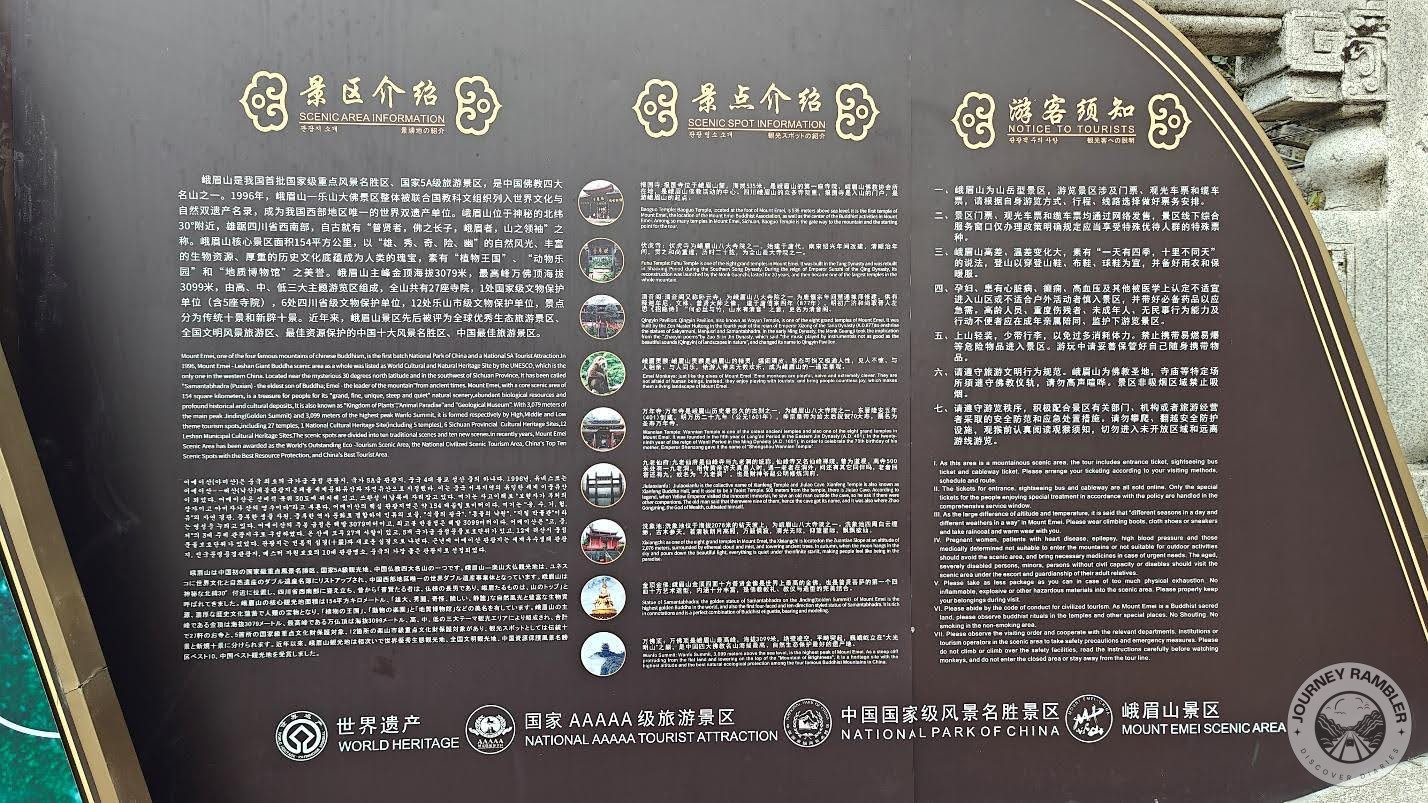
At where you start the ascent, you’ll come across this sign welcoming visitors to the Mount Emei Golden Summit Scenic Area. It lays out which parts of the mountain the area covers as well as the attractions you can expect on your visit. It also lays out that there are vehicles that can take you up until a certain point in the mountain.
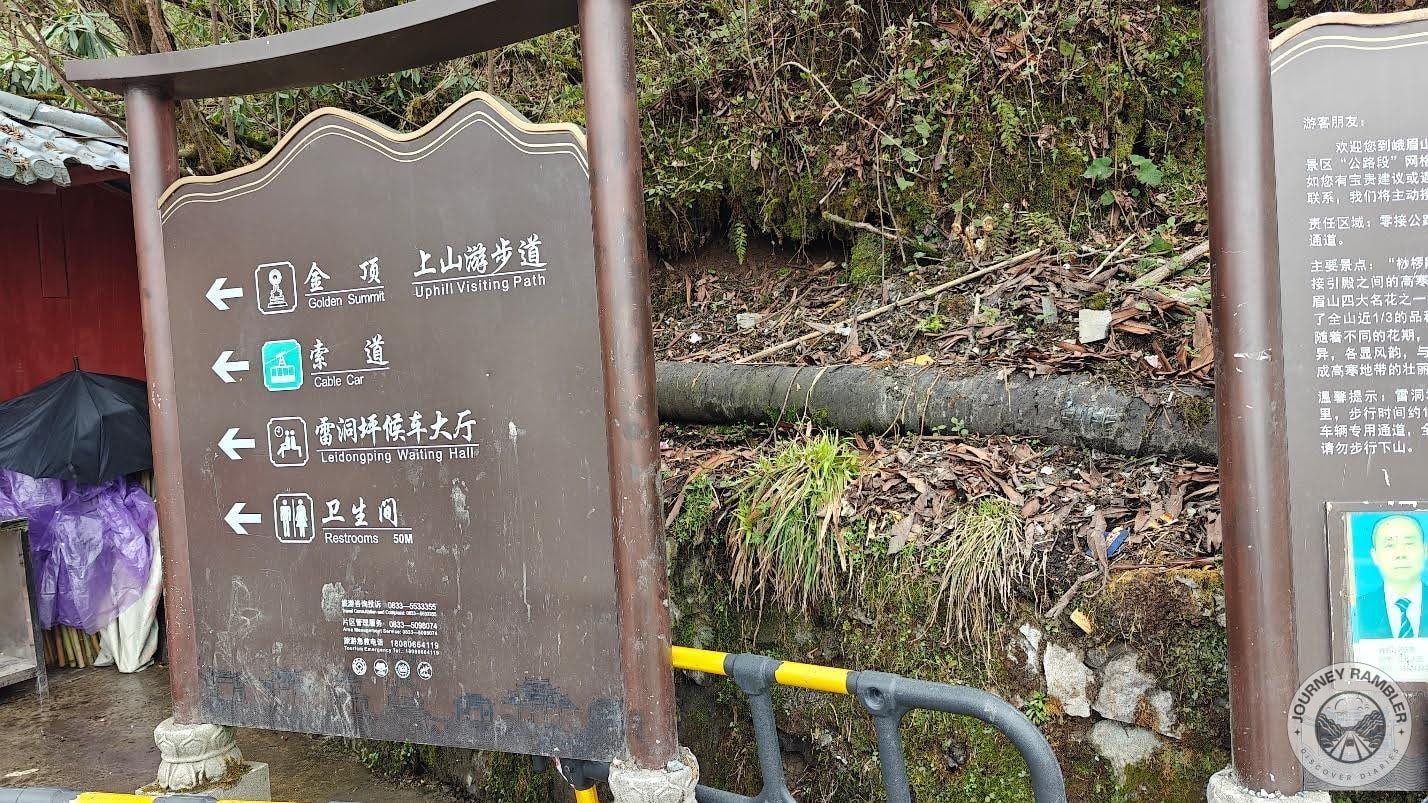
Of course that certain point is the Leidongping Waiting Hall which is quite near here. Essentially, you take the bus from either Baoguo Temple or Huangwan and that’ll take you up a scenic route up to Leidongping. From here, you can then walk towards the cable car area which will take you up to the last leg of the hike to the Golden Summit.
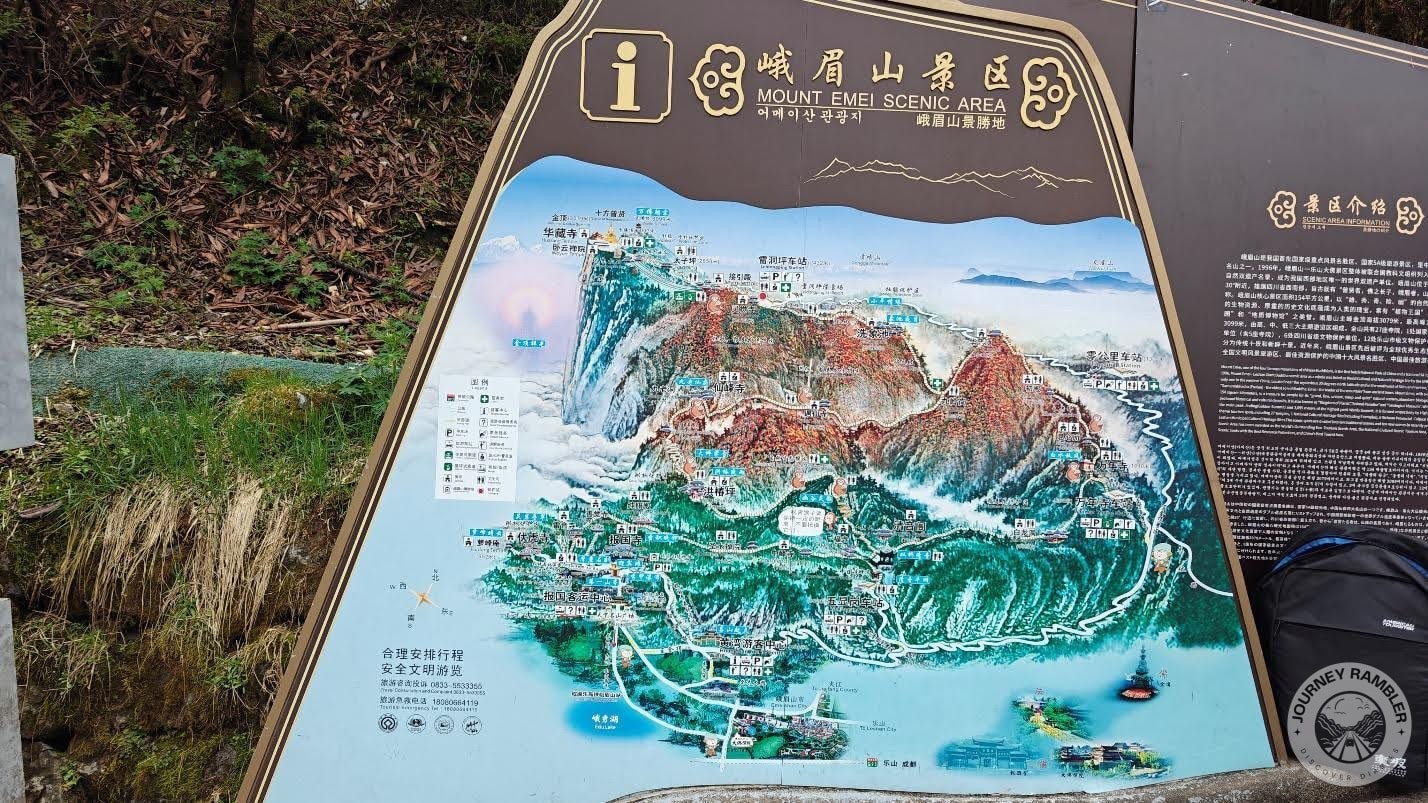
Here’s an even better looking guide map of the Mount Emei Scenic Area which also happens to include the Golden Summit. It’s probably a bit hard to see from here but there’s a red dot indicating this place’s location on the map. Moreover, you can also see the route that tour buses cover to get to this transportation hub.
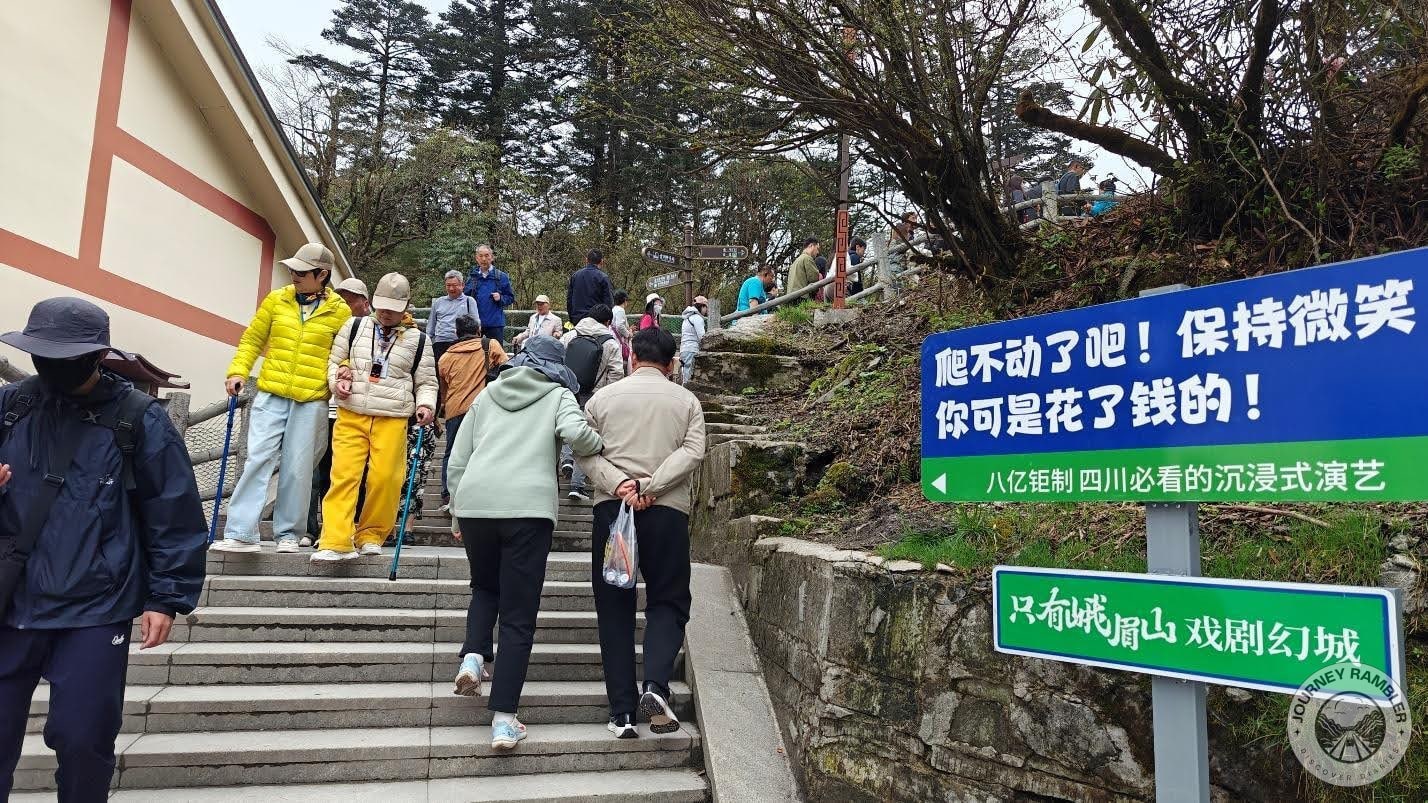
In case you’re wondering, Leidongping is more or less 2430 meters above sea level. The Golden Summit is even higher at 3070 meters (more or less). Now, there have been reports of people getting acute mountain sickness but the symptoms are usually mild. In fact, I saw quite a number of elderly people during my climb.
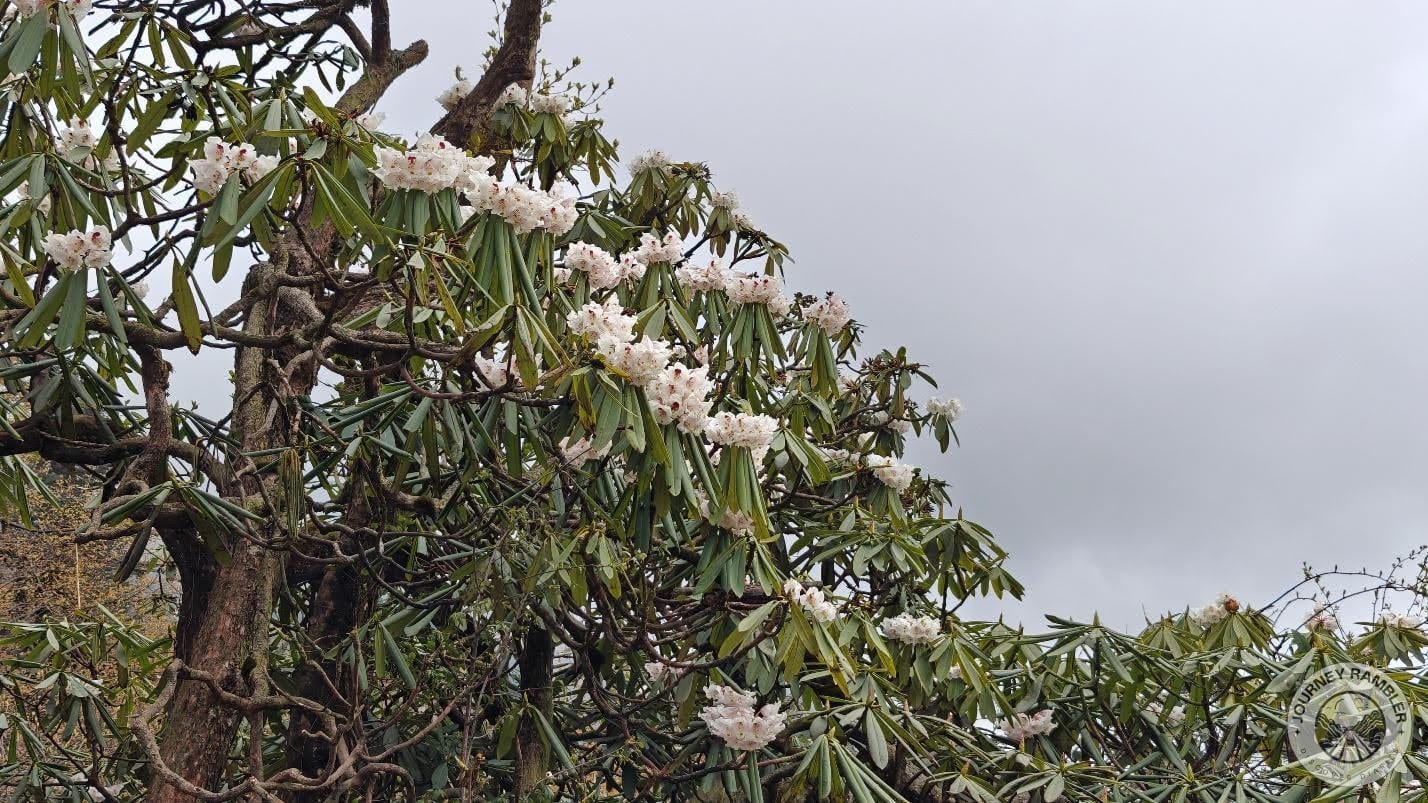
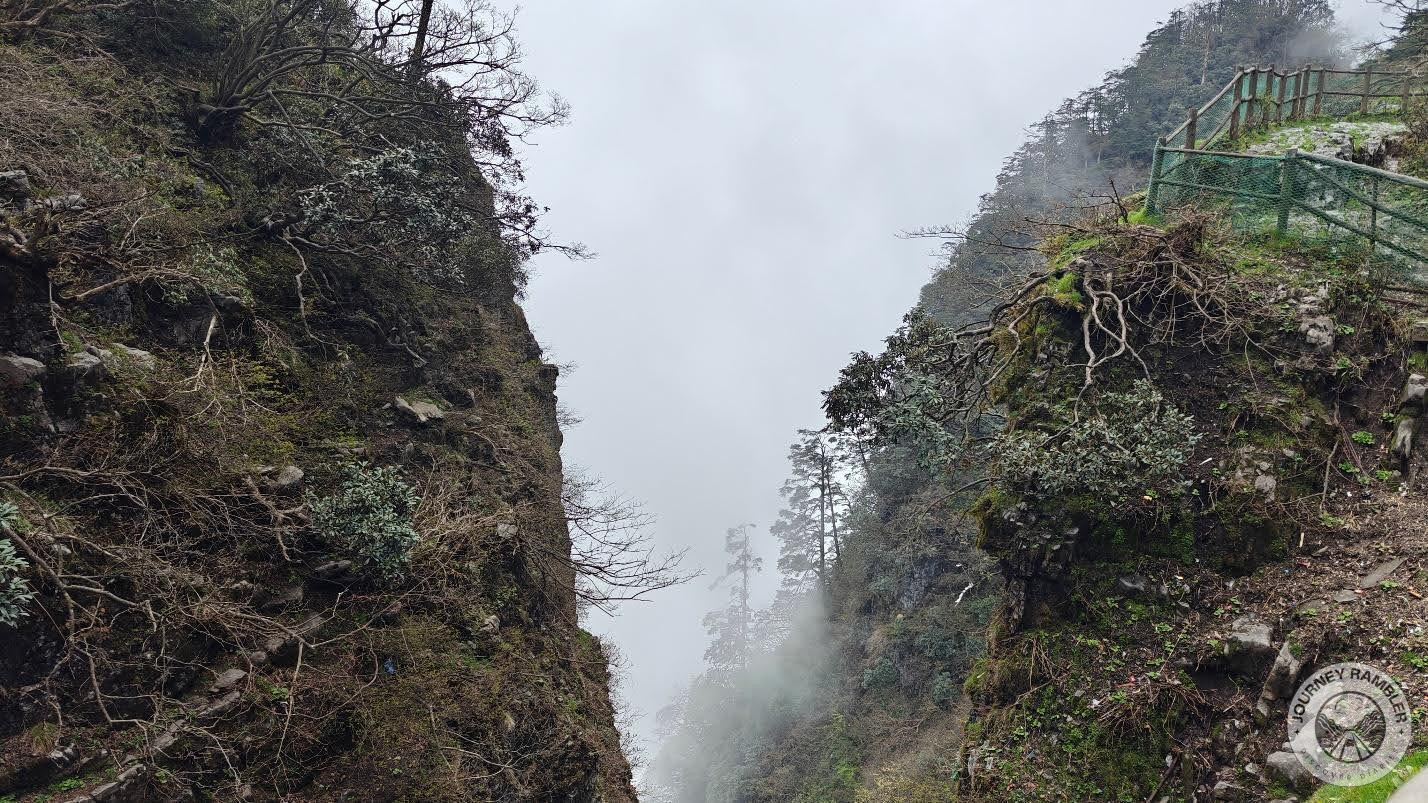
One thing that really stood out here was the landscape. It really reminded me of those old Chinese and Japanese paintings of mountains that you’d usually find on hanging scrolls. It’s not shown in this specific picture but the sea of clouds here is also on another level.
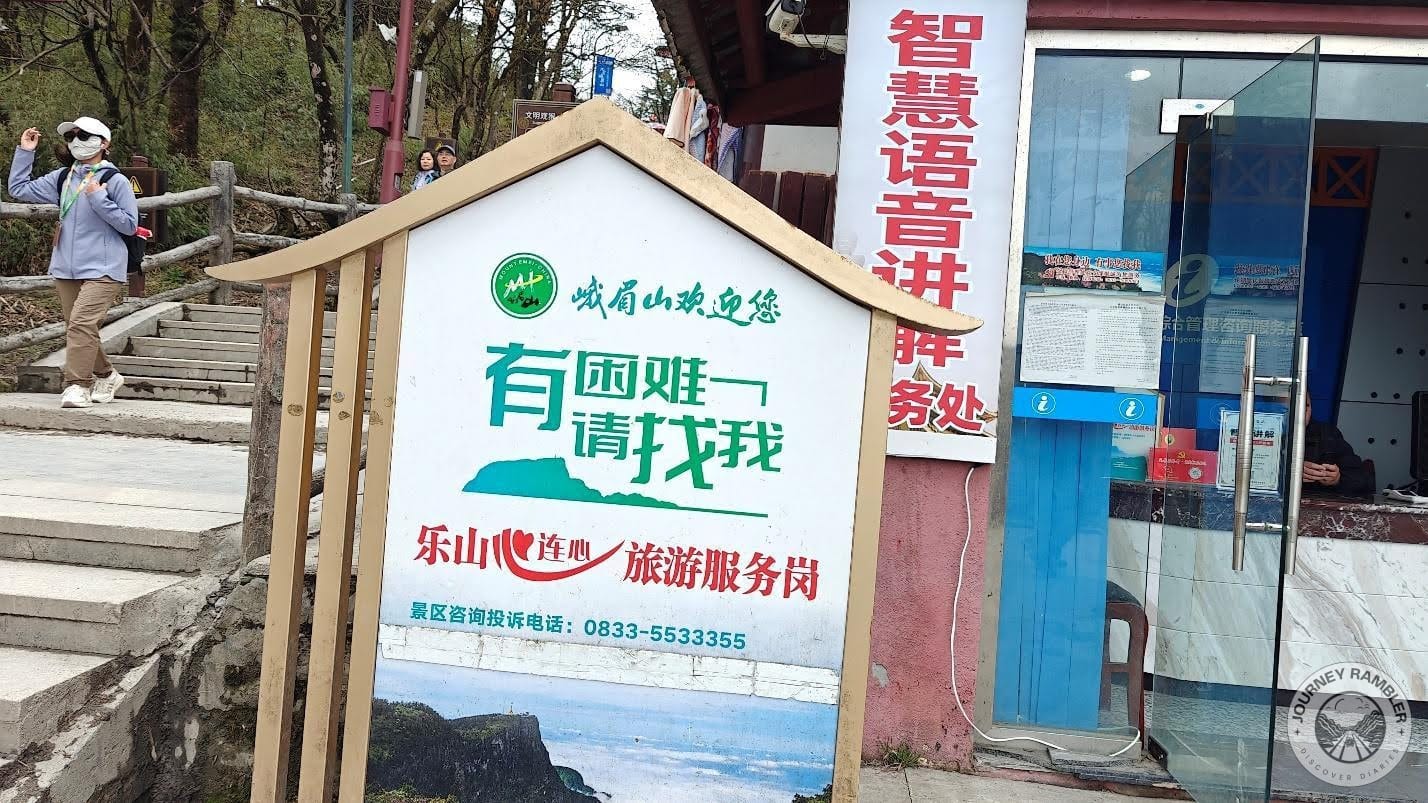
As you go up to the cable car area, you’ll come across the tourism office here. This is where you can ask for maps, schedules for bus/shuttles, and even lodging or food options that might be available in the area. I’ve been told that the staff here are welcoming though I haven’t personally tried making use of their services.
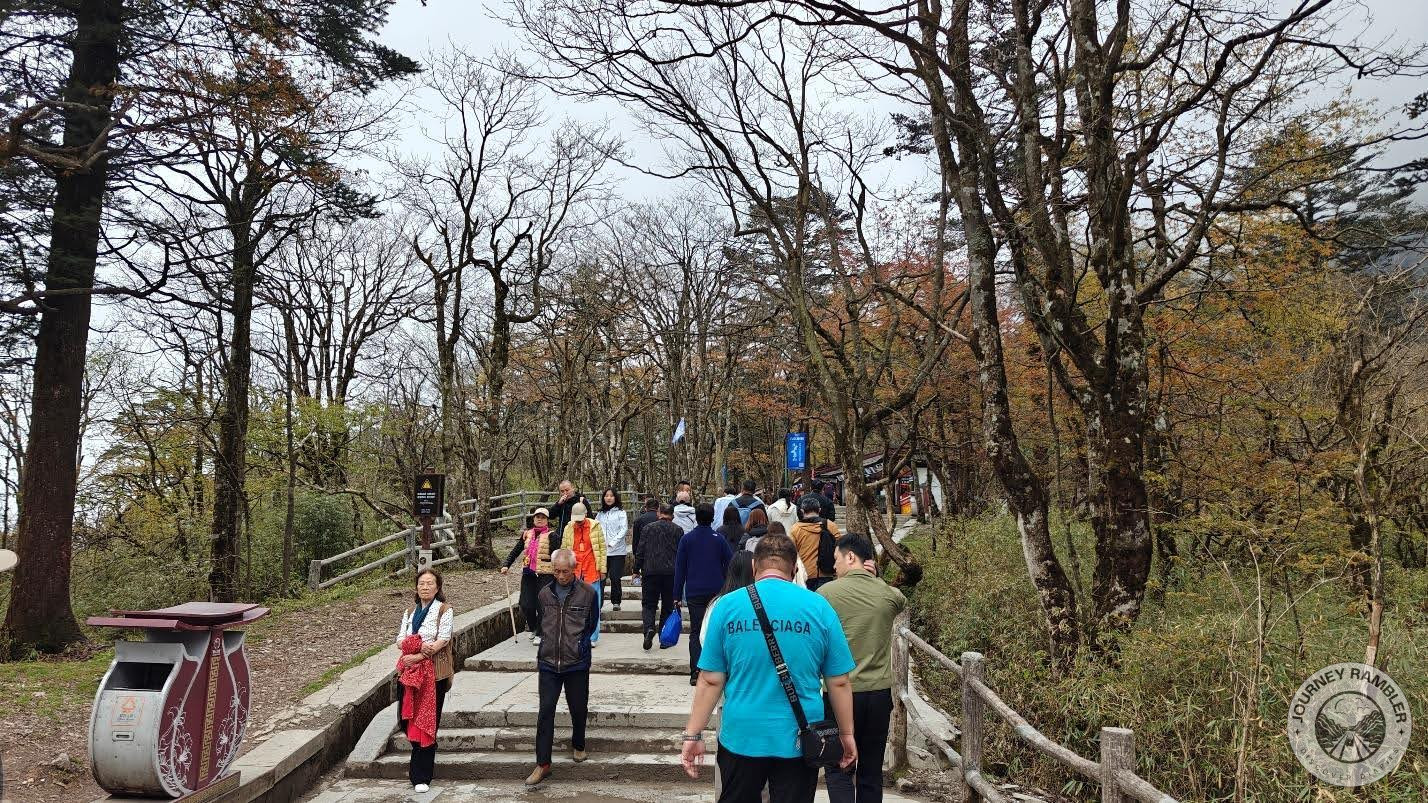
The walk up to the cable cars was admittedly longer than I thought. That said, you wouldn’t really notice it because of how lively the trail was. People seemed to be enjoying the walks though the ones going down noticeably were a little somber looking (out of breath maybe?).
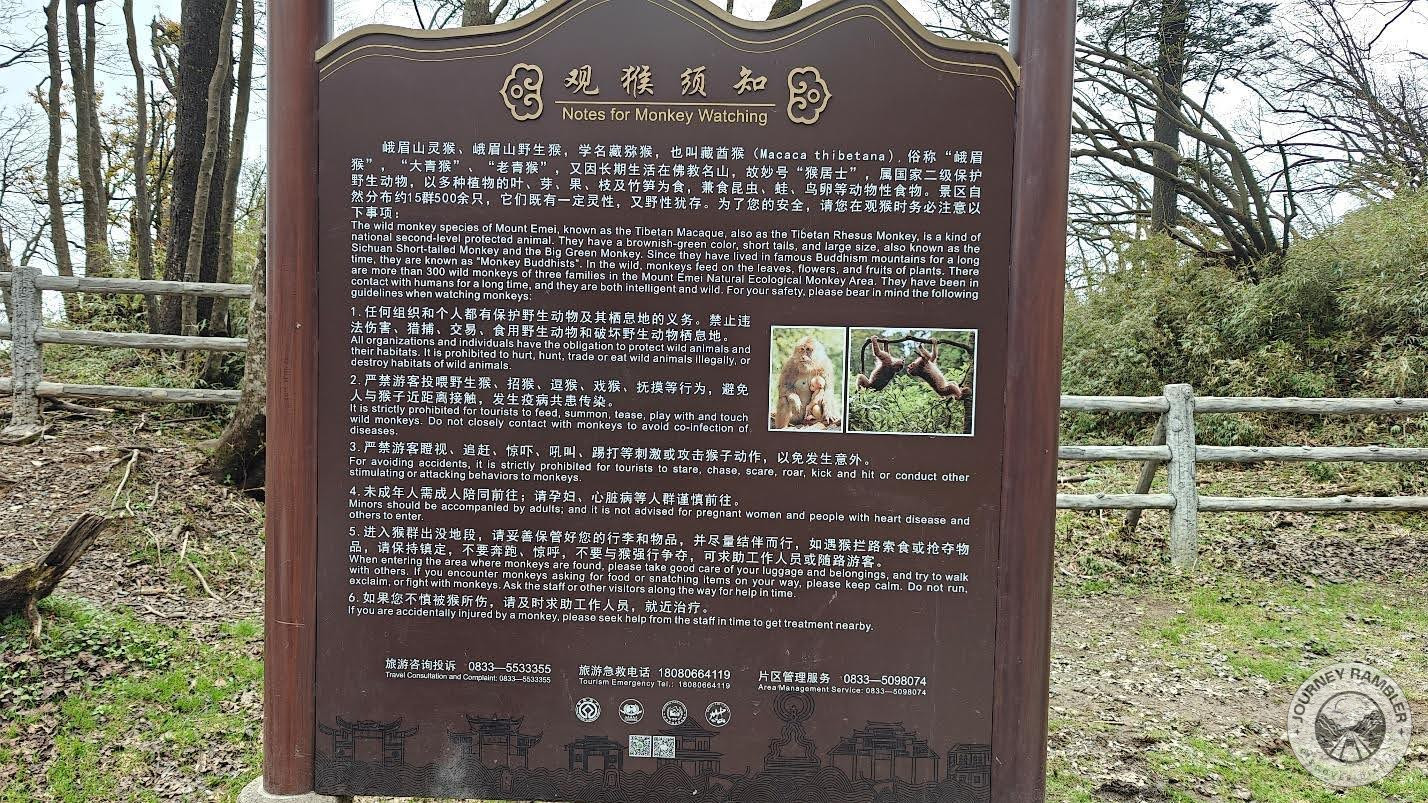
Another thing that you might want to look out for are the monkeys. These are Tibetan macaques which coincidentally, are relatives of the Japanese macaques I came across during my visit to Jigokudani Monkey Park in Nagano, Japan earlier in the year. Unfortunately, I wasn’t able to see one while going up to the cable car area.
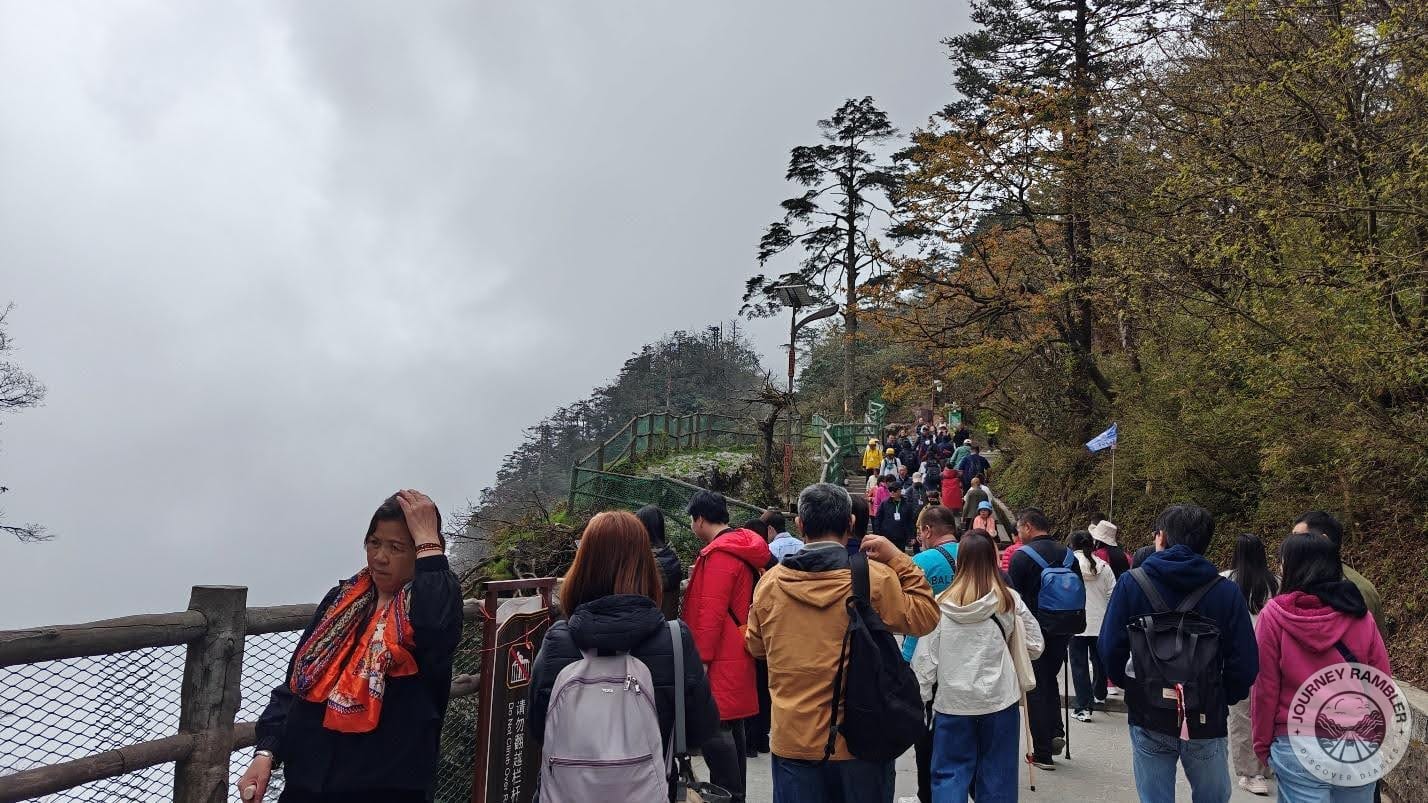
At some point during my walk, I came across this area that had a really nice view of the sea of clouds (or is it fog/smog?) that I was talking about earlier. I’m not sure why but this was such a soothing sight for me. Most of the people that I was with for the walk up the cable car area also seemed to agree with some even stopping to take pictures.
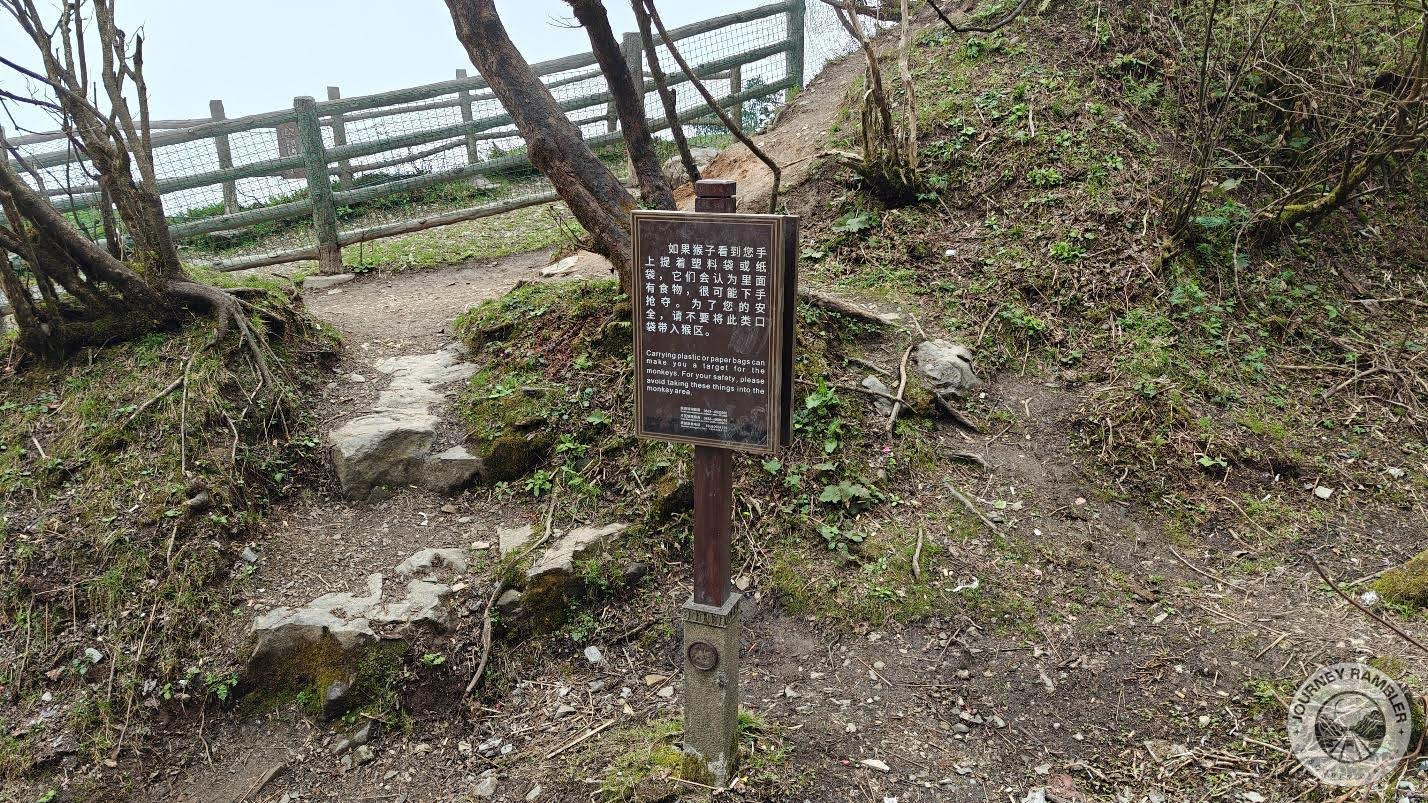
Here’s a warning sign regarding the carrying of plastic and/or paper bags. Apparently, the monkeys here will target you if you bring these. It’s likely that the monkeys think these bags may contain food so you might want to make sure you bring a backpack with you or just not bring any plastic/paper bags at all.
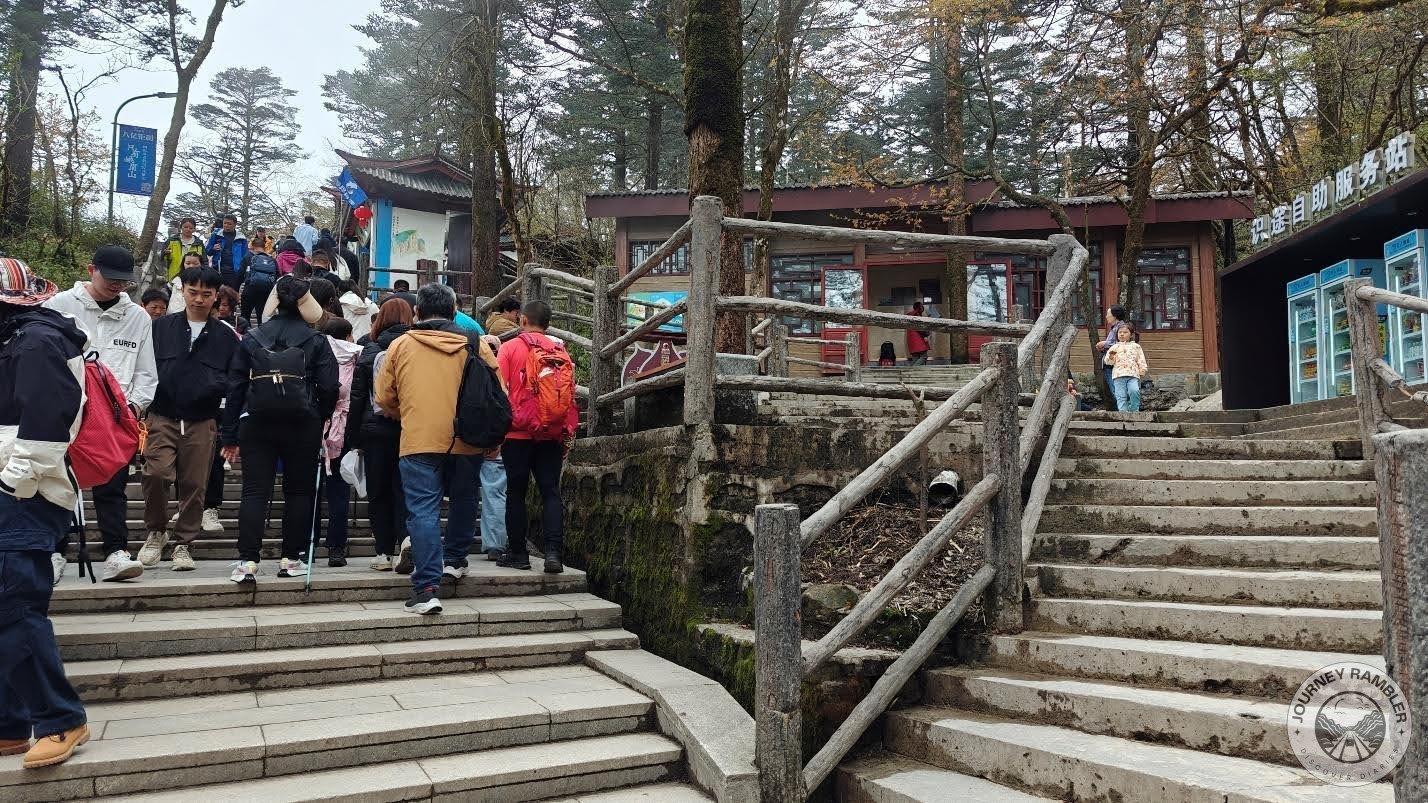
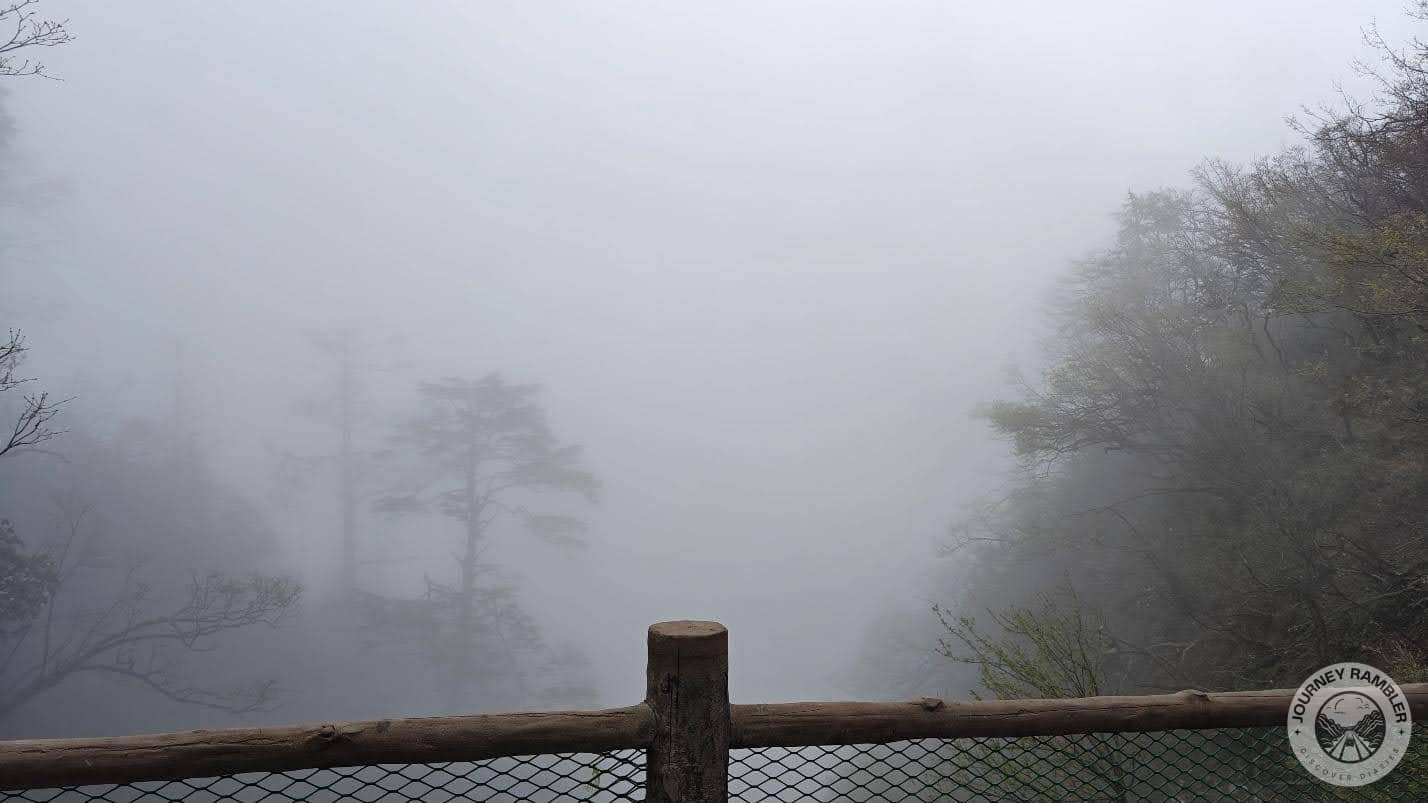
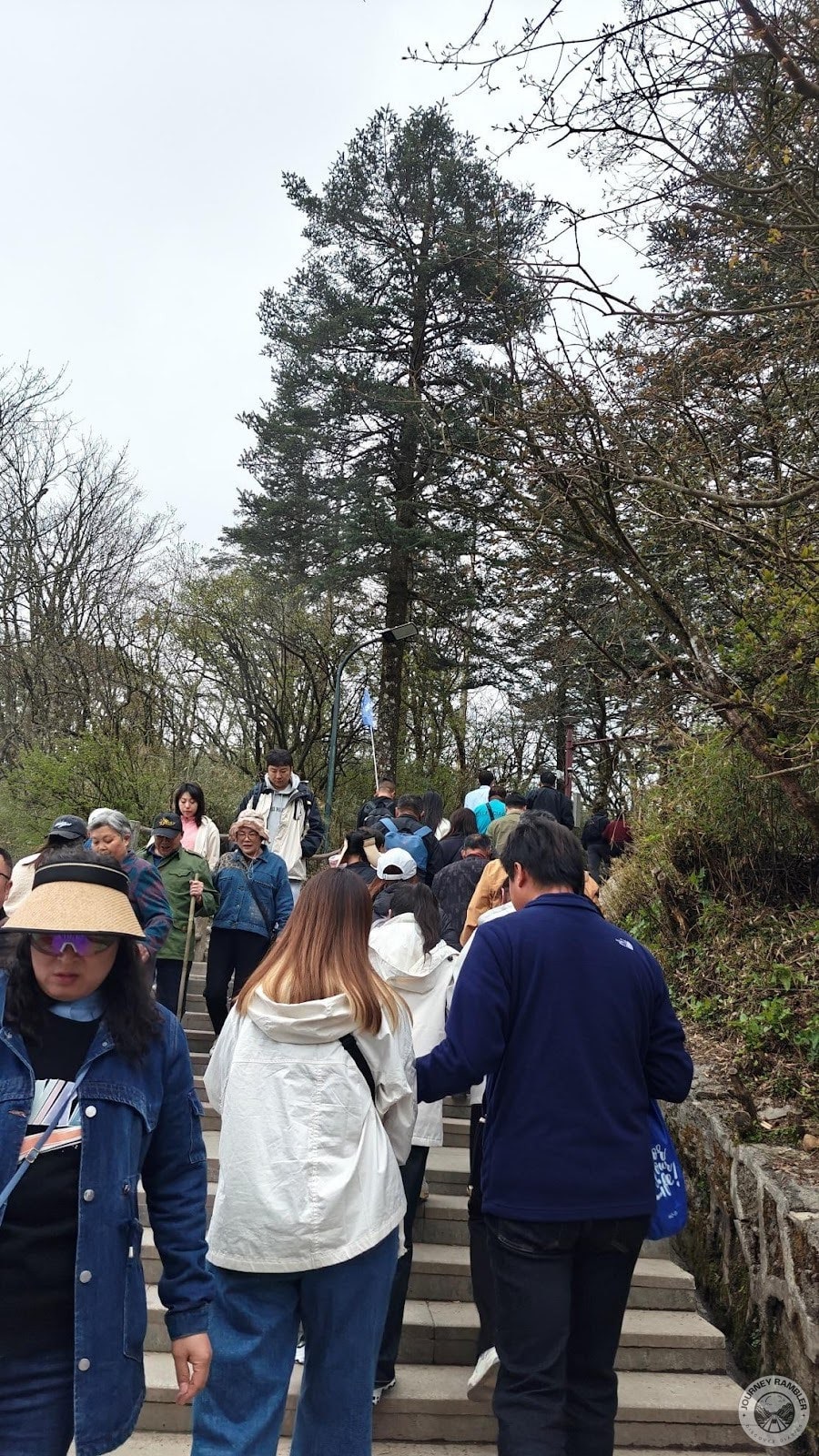
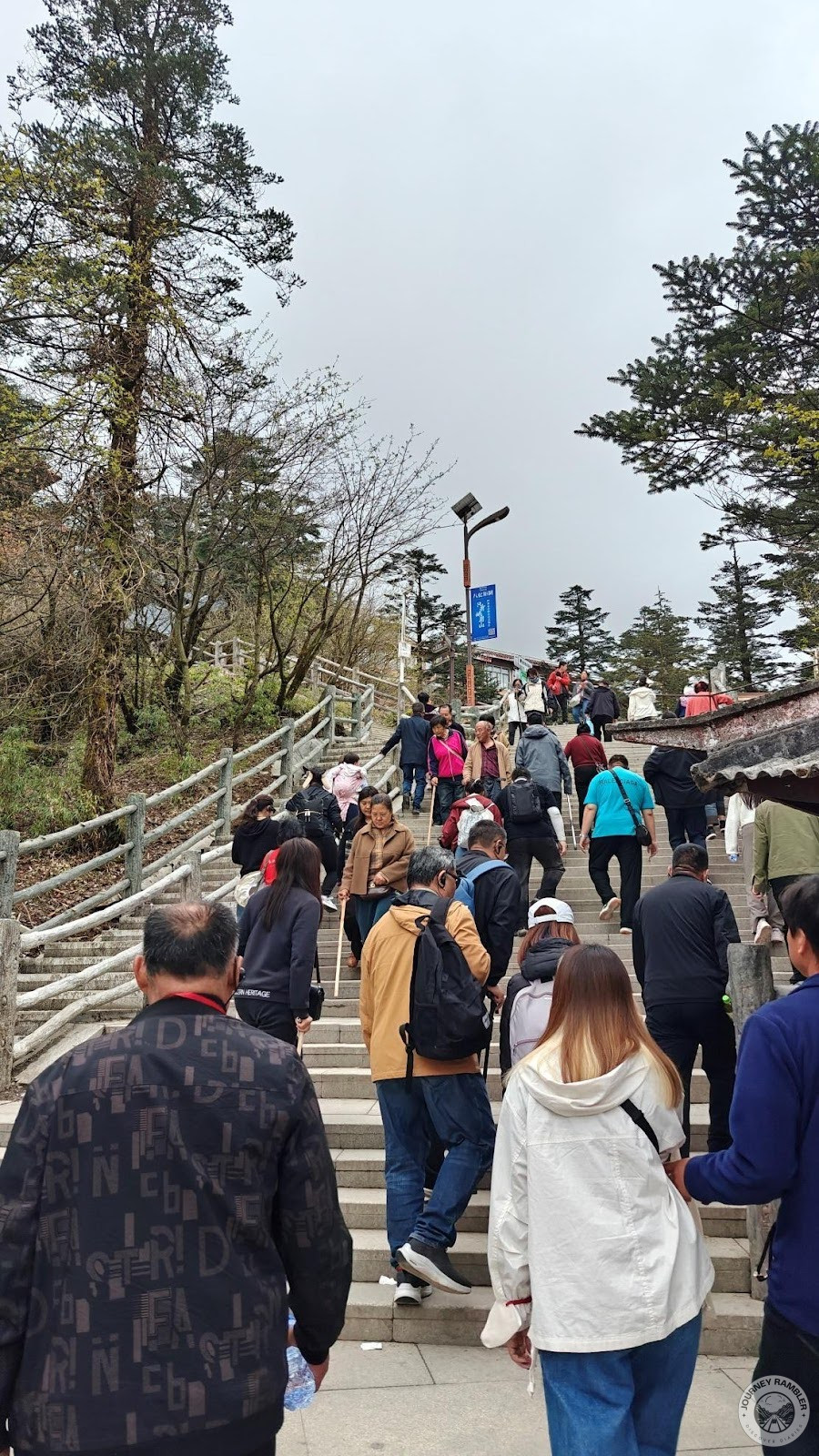
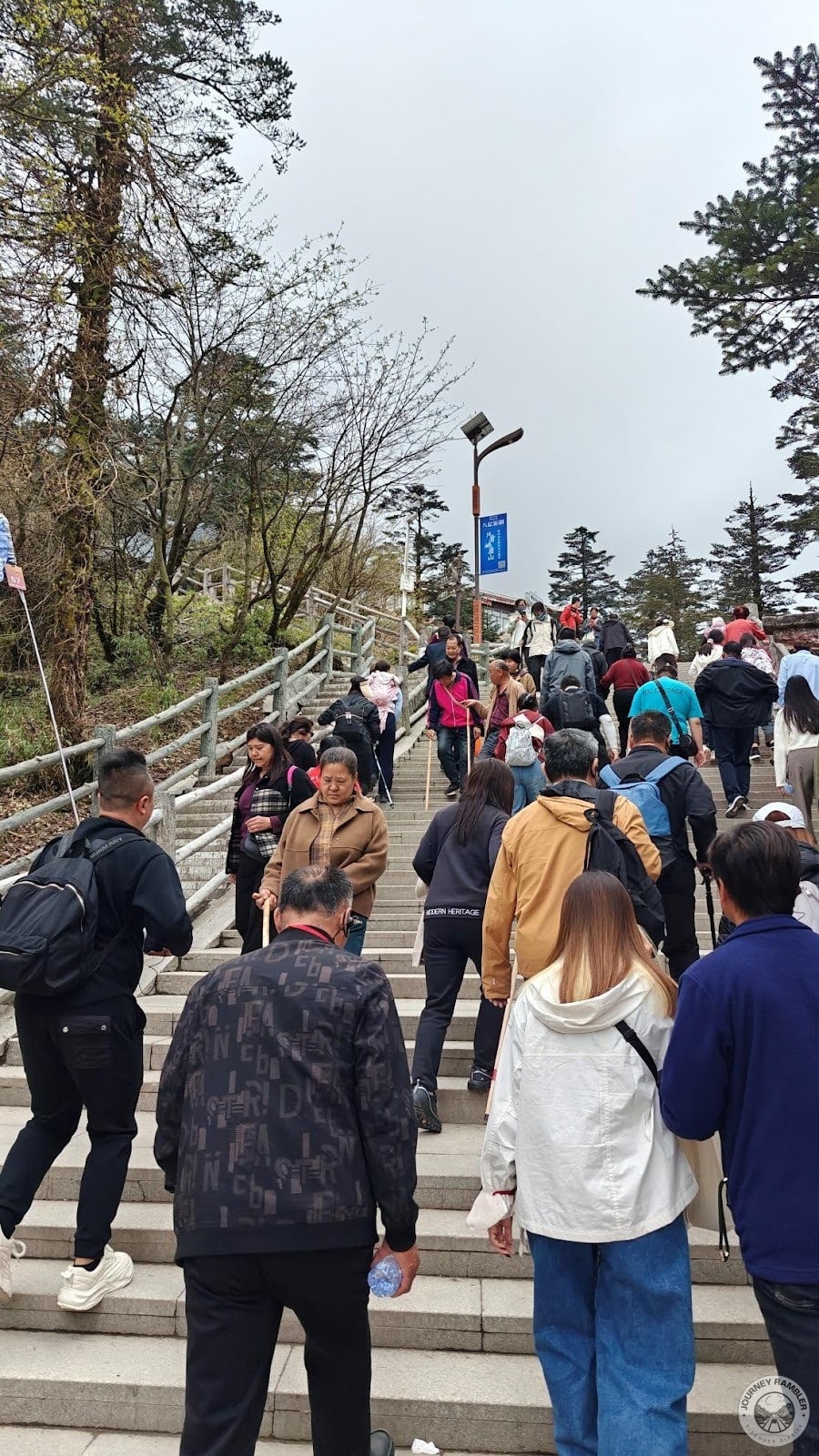
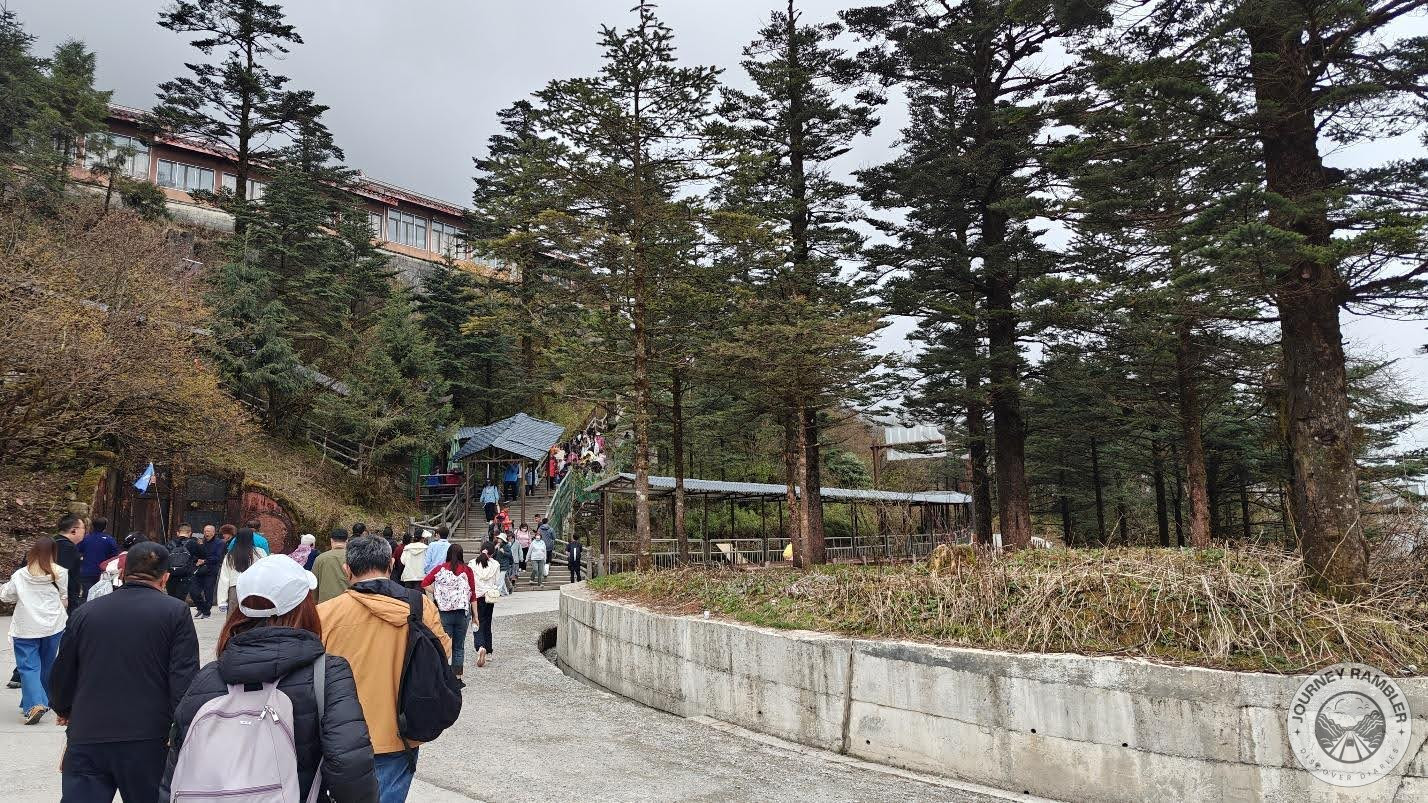
After some time, I finally reached the Cable Car area. I was surprisingly still full of energy at this point which I think might be because of the fresh air here. Now I might be wrong but I think I’ve read about this place being touted as a natural oxygen bar.
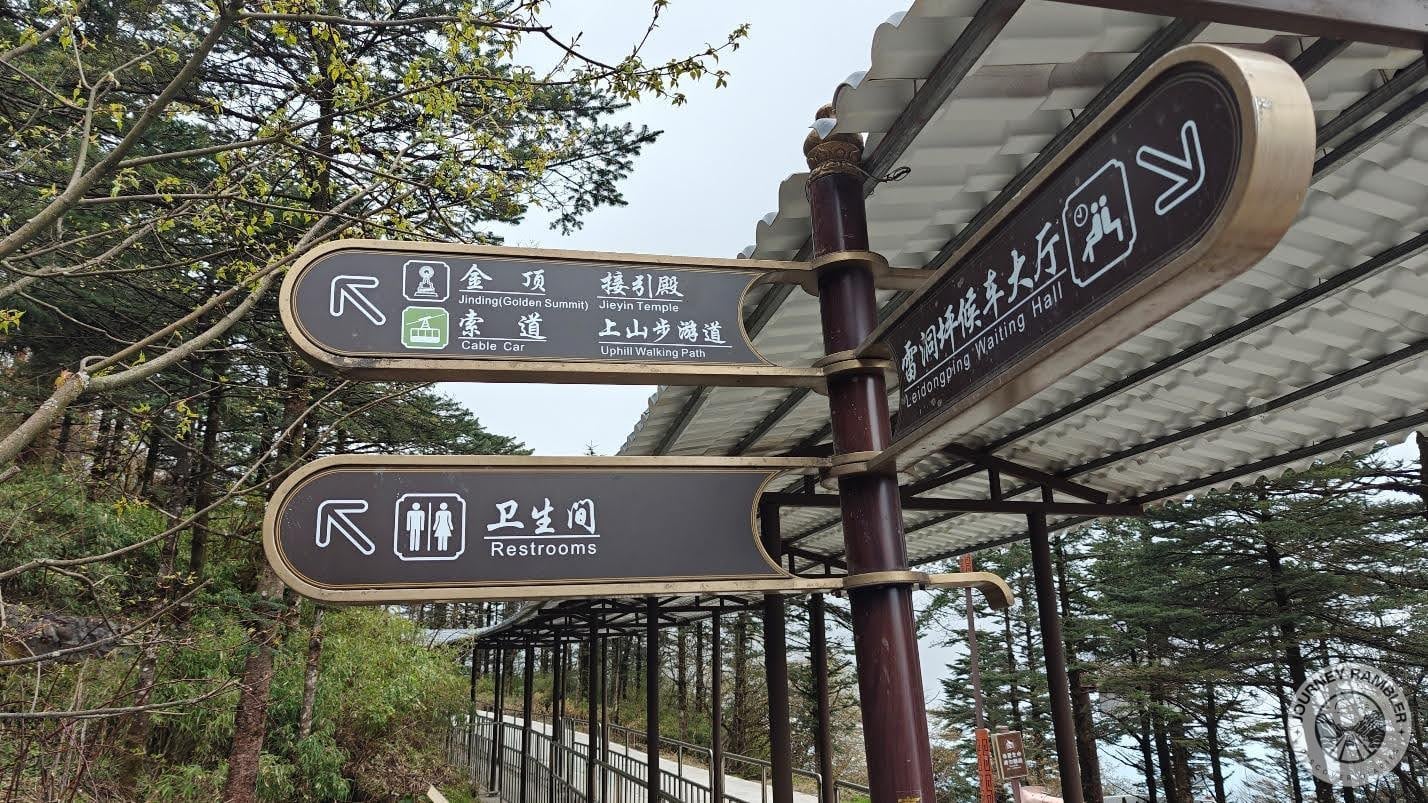
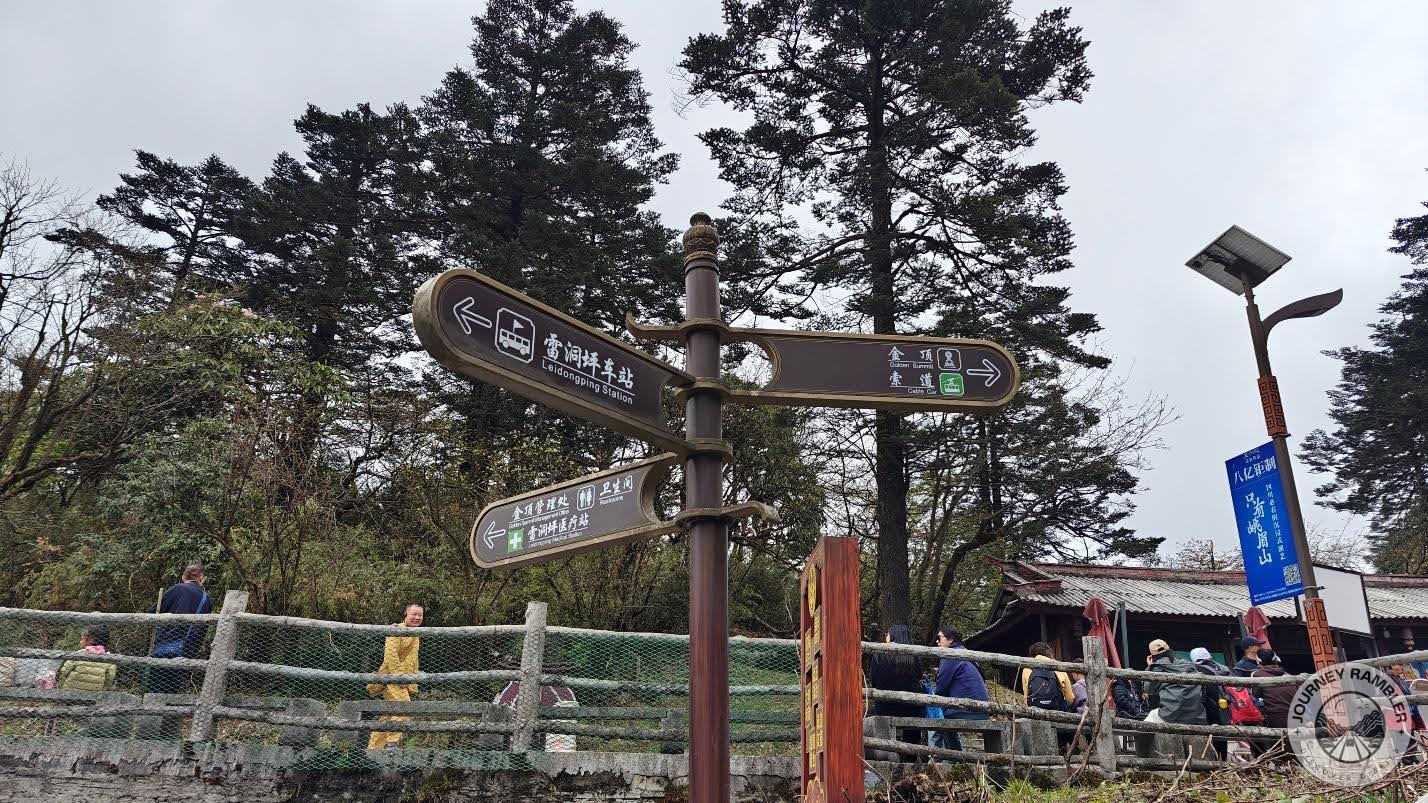
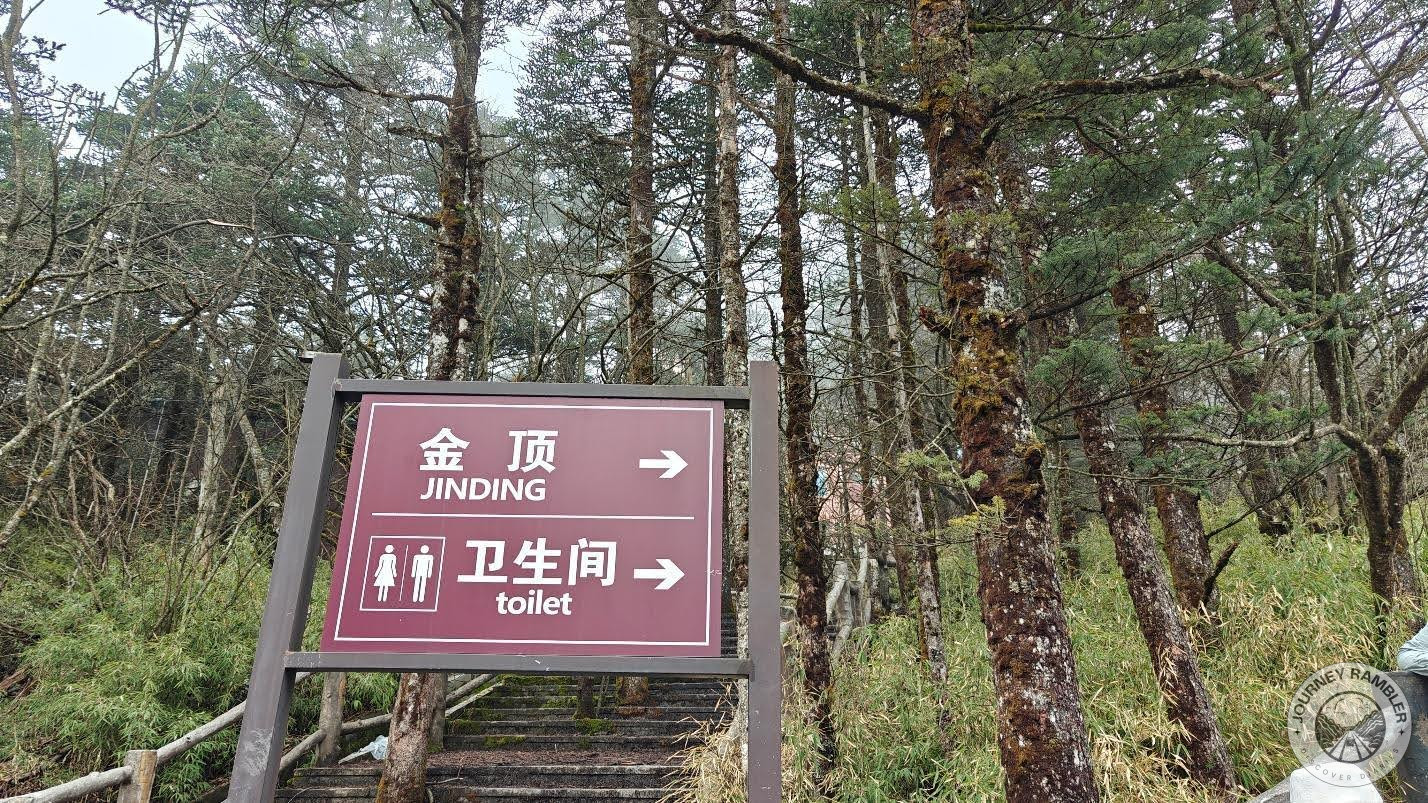
Here are the signs pointing to the cable cars terminal and the restrooms. You can actually go up to the Golden Summit using the Uphill Walking Path but I’ve read somewhere that this would take a good 2 hours or more. If you’re not fit or are in a hurry then I would recommend just taking the cable car as it’s more convenient.
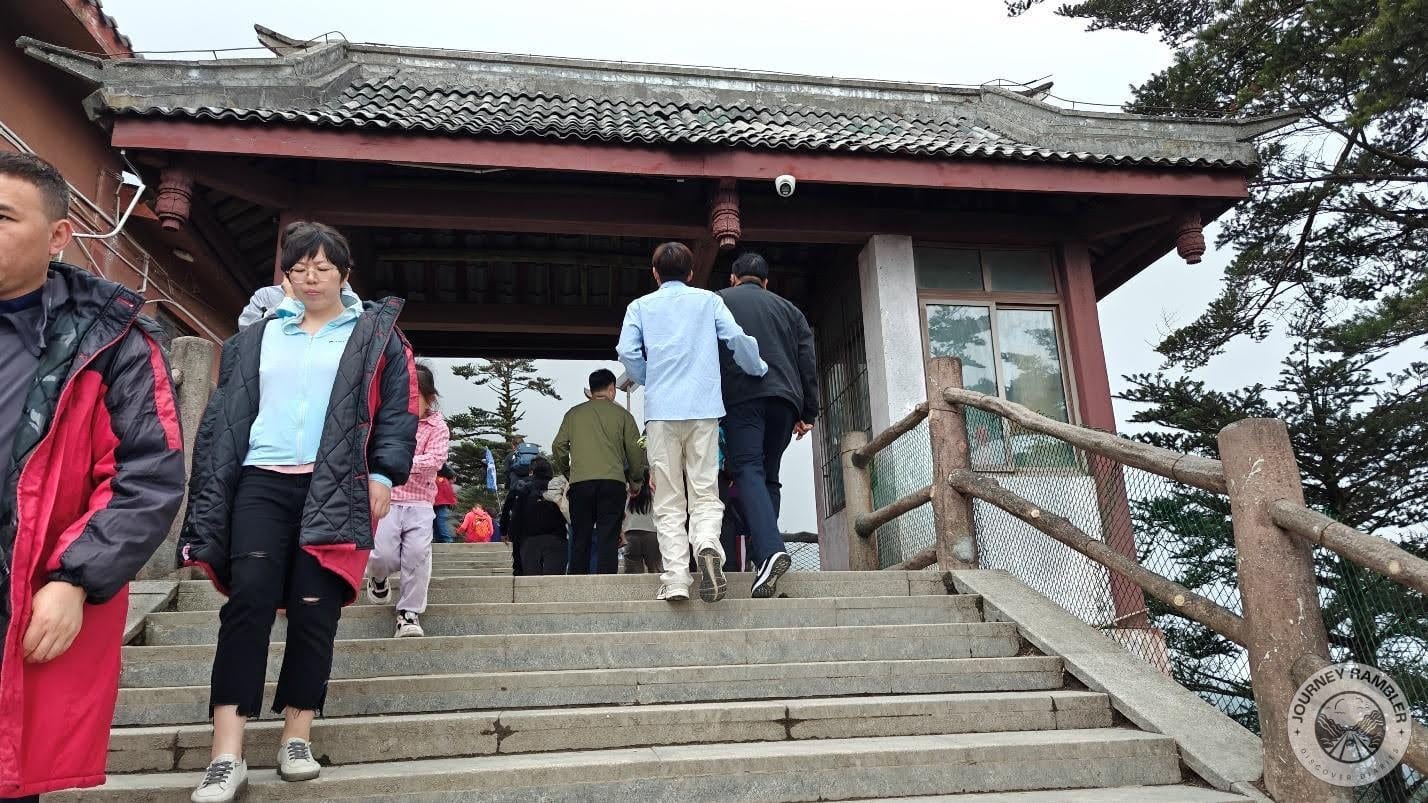
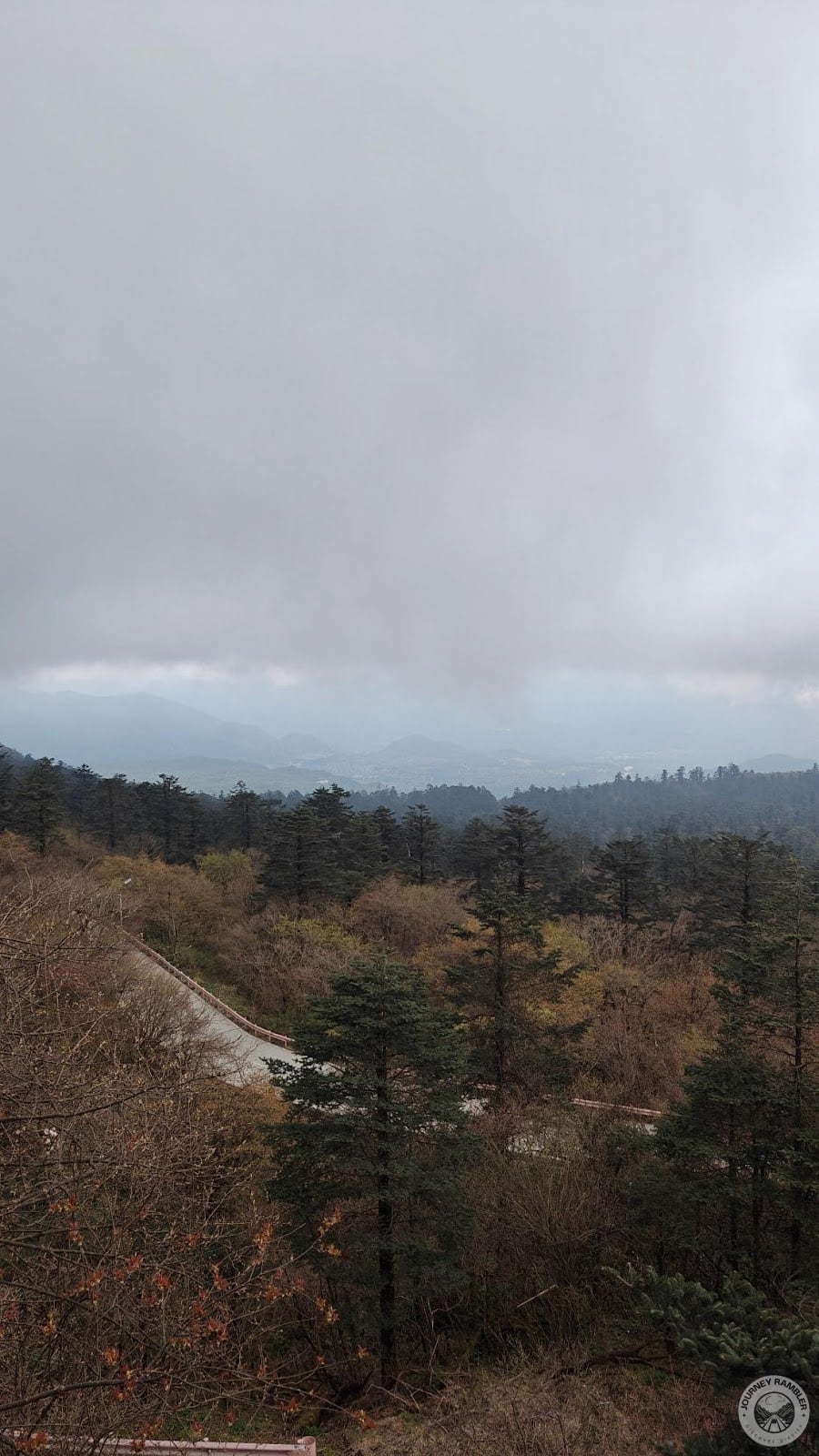
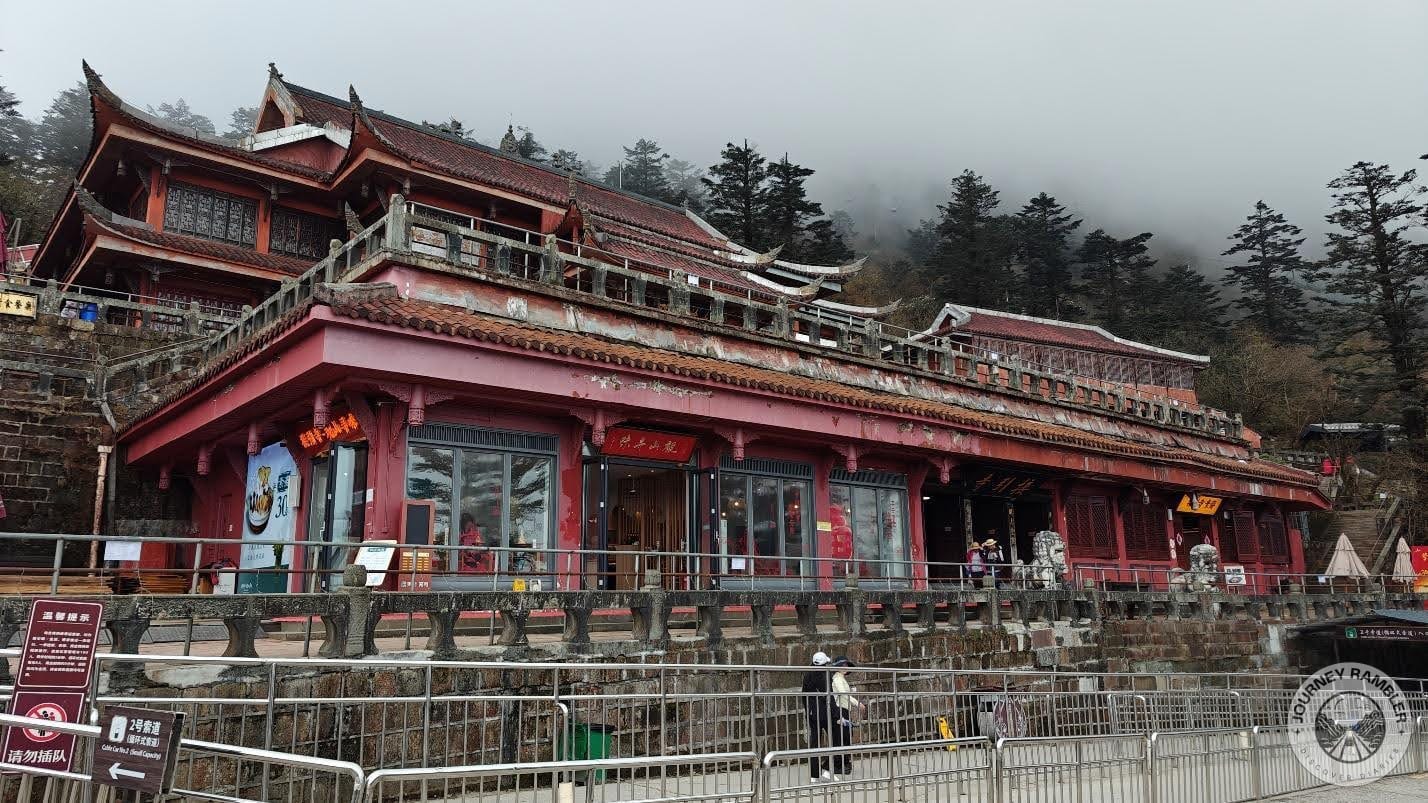
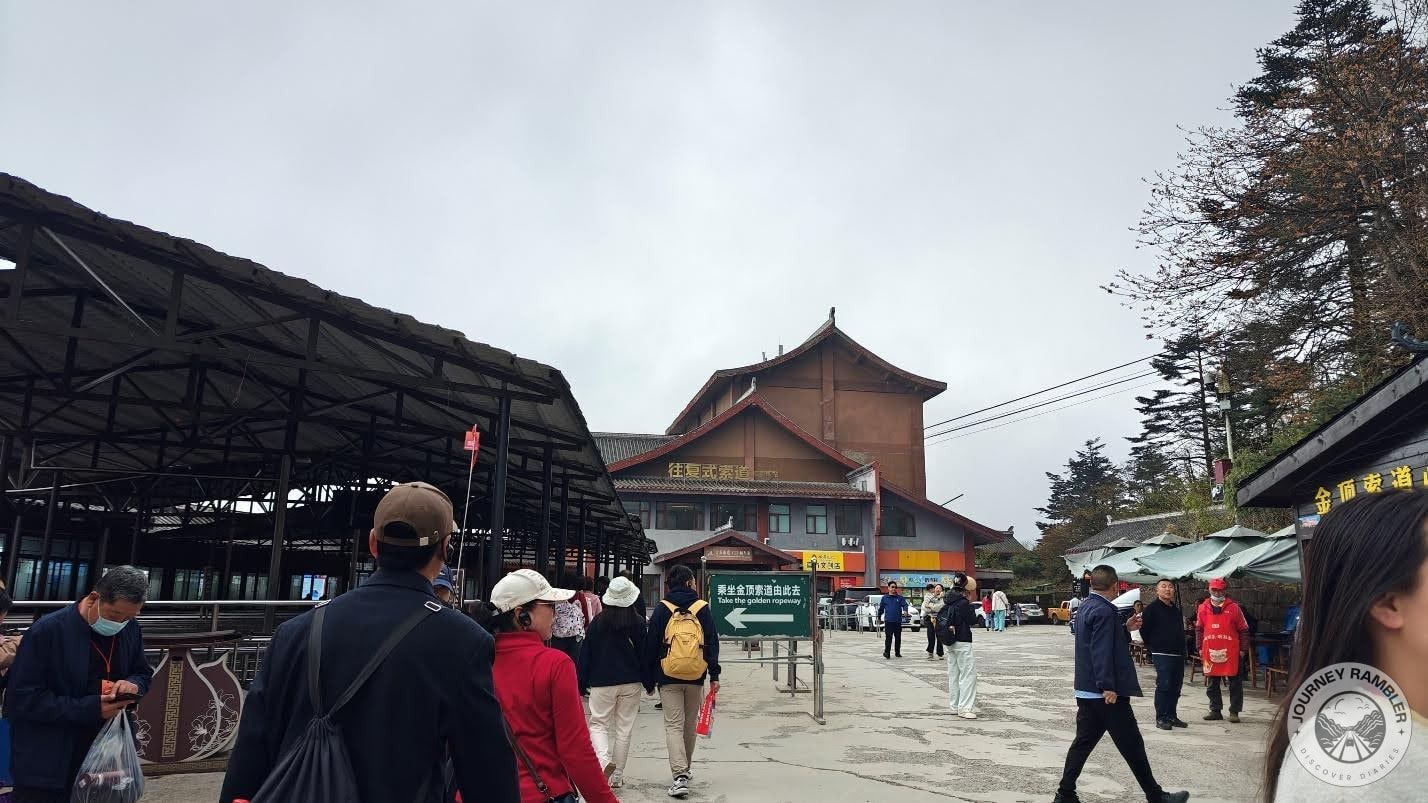
So I finally reached the vicinity of the cable car terminal and it was honestly really nice. You’d think the buildings (Jieyin Hall) wouldn’t be as well maintained since it’s pretty hard to get up here. Surprisingly though, the buildings looked like they were maintained reasonably well considering how the scenic area as it is has been in operation since the late 80s/early 90s.
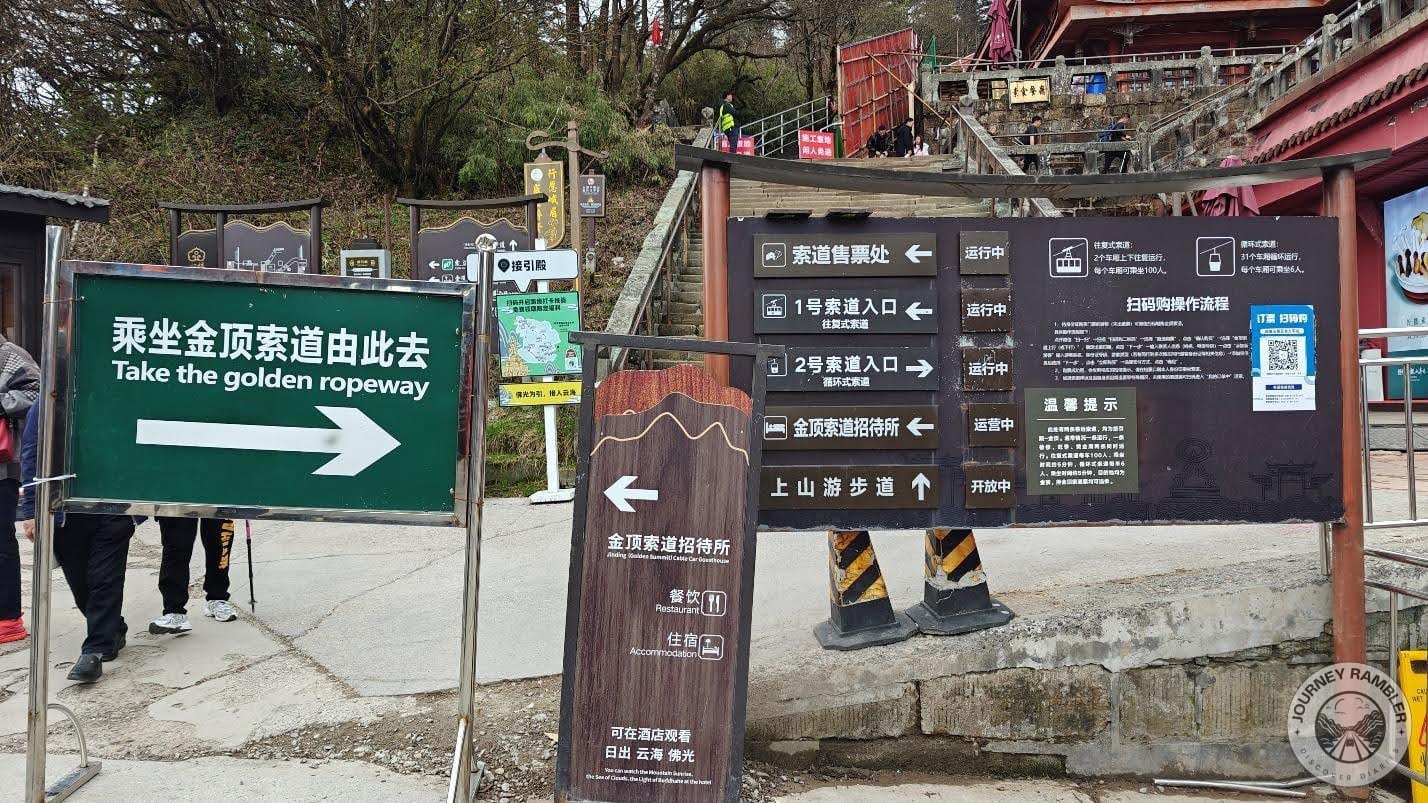
There are plenty of signs here pointing to where the cable cars are. Before you heed the sign in green and head to the right, make sure you already have your ticket. The ticketing sales office is in the opposite direction so make sure you head there. Of course most tour packages will have this covered and you probably won’t have to worry about getting the tickets yourself (since your tour guide will most likely get these).
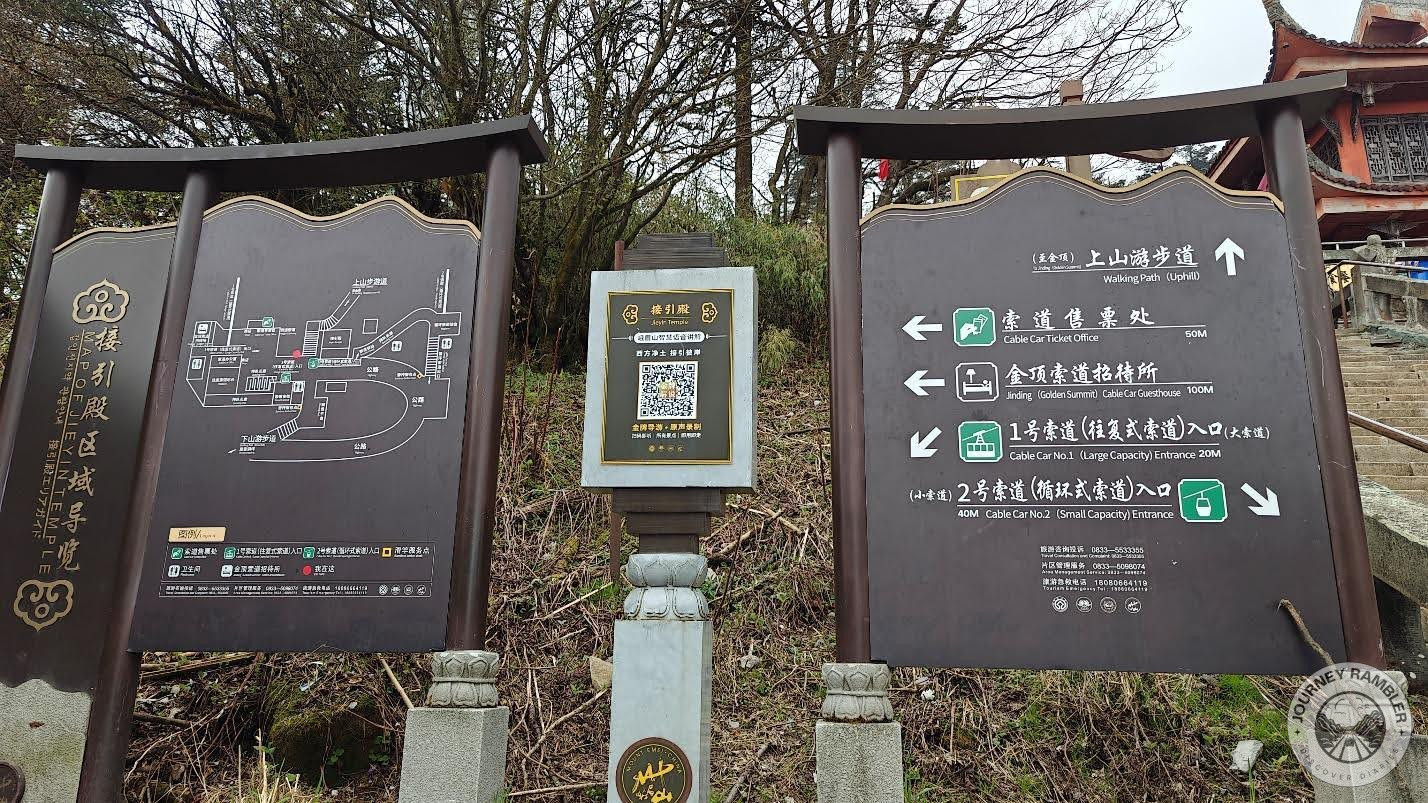
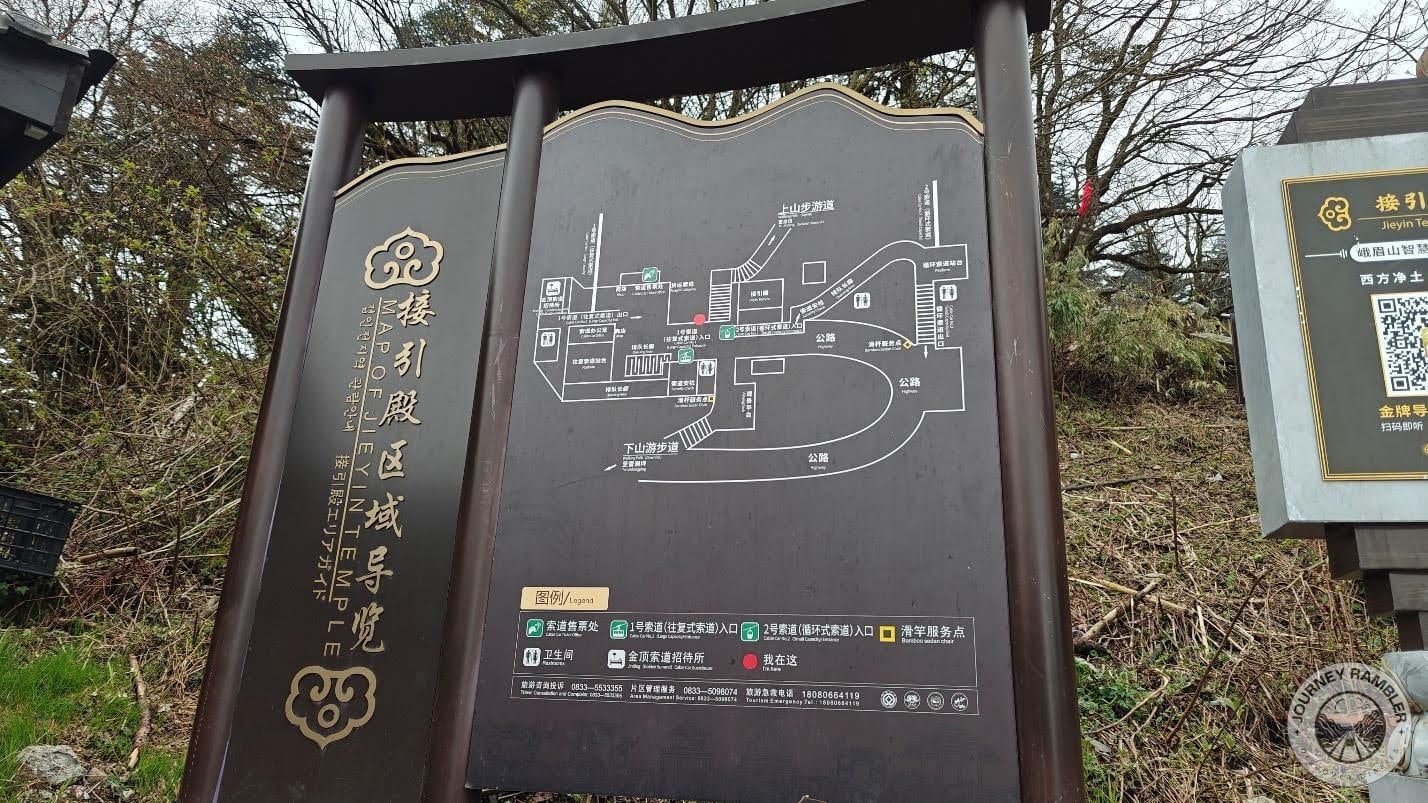
In case you’re unsure where to go, look for this guide map here. It shows the location not just of the ticketing office but also of the cable cars and even a guesthouse where you can stay overnight. If you’re feeling adventurous, you can also just go on straight up to the Uphill Walking Path.
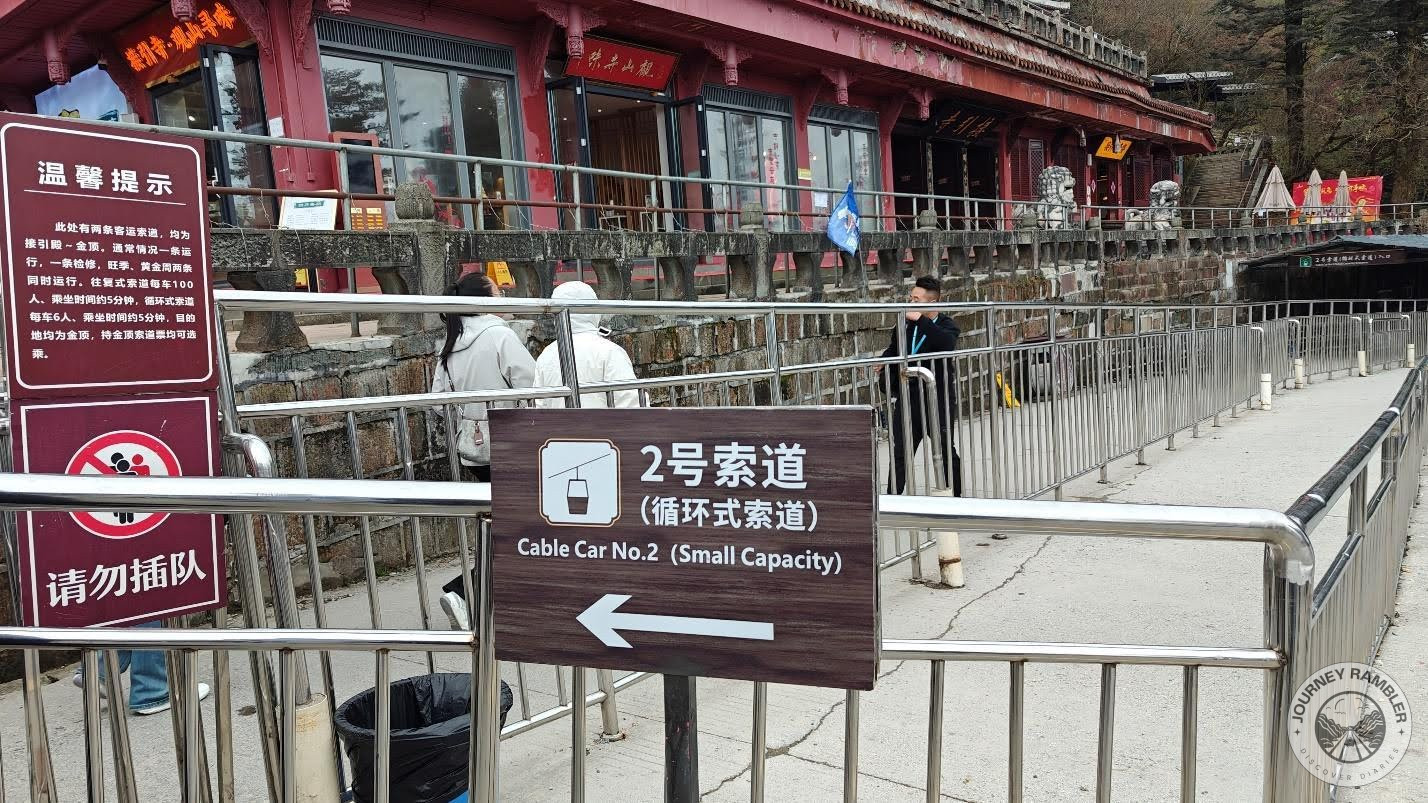
Just beside the stairs from earlier, you’ll find the entrance to the small capacity cable car terminal. It’s pretty hard to miss so you shouldn’t have any issues getting here. It wasn’t as crowded here as I thought it would be and I’ve been told that’s due to the fact that more people prefer the large capacity cable car.
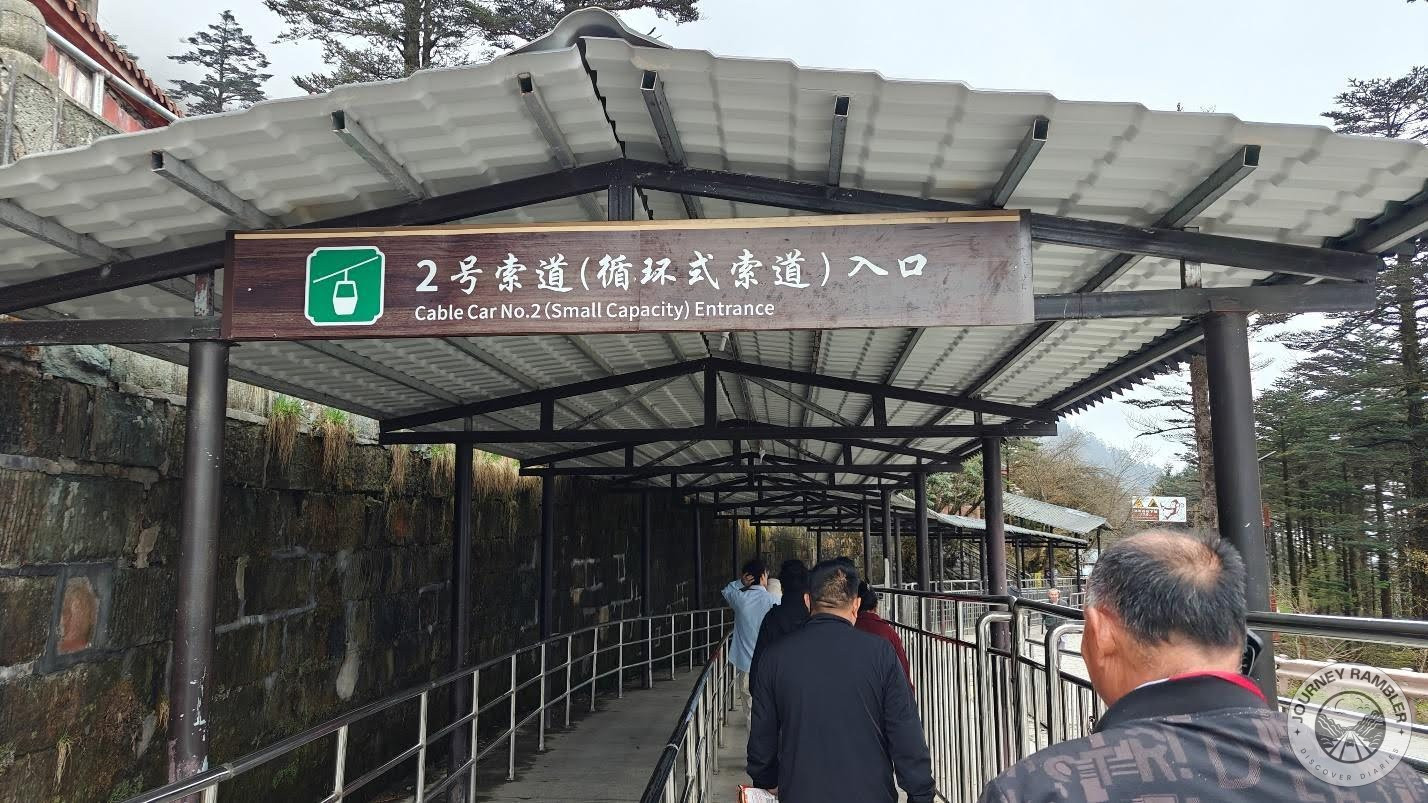
After entry, I then started walking to where the cable car terminal was. The walk was relatively uneventful and quick. I was actually quite excited to ride and see the views from the cable car.
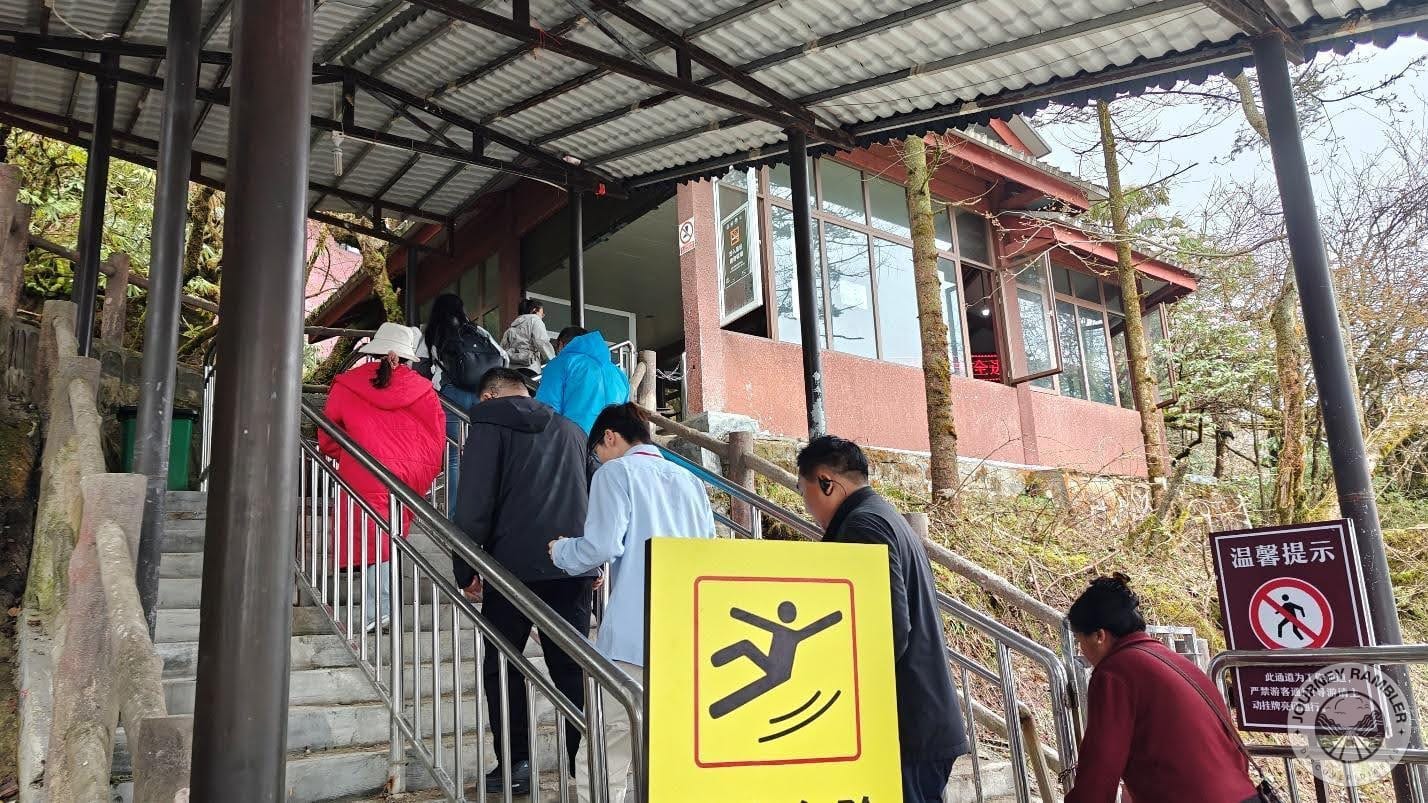
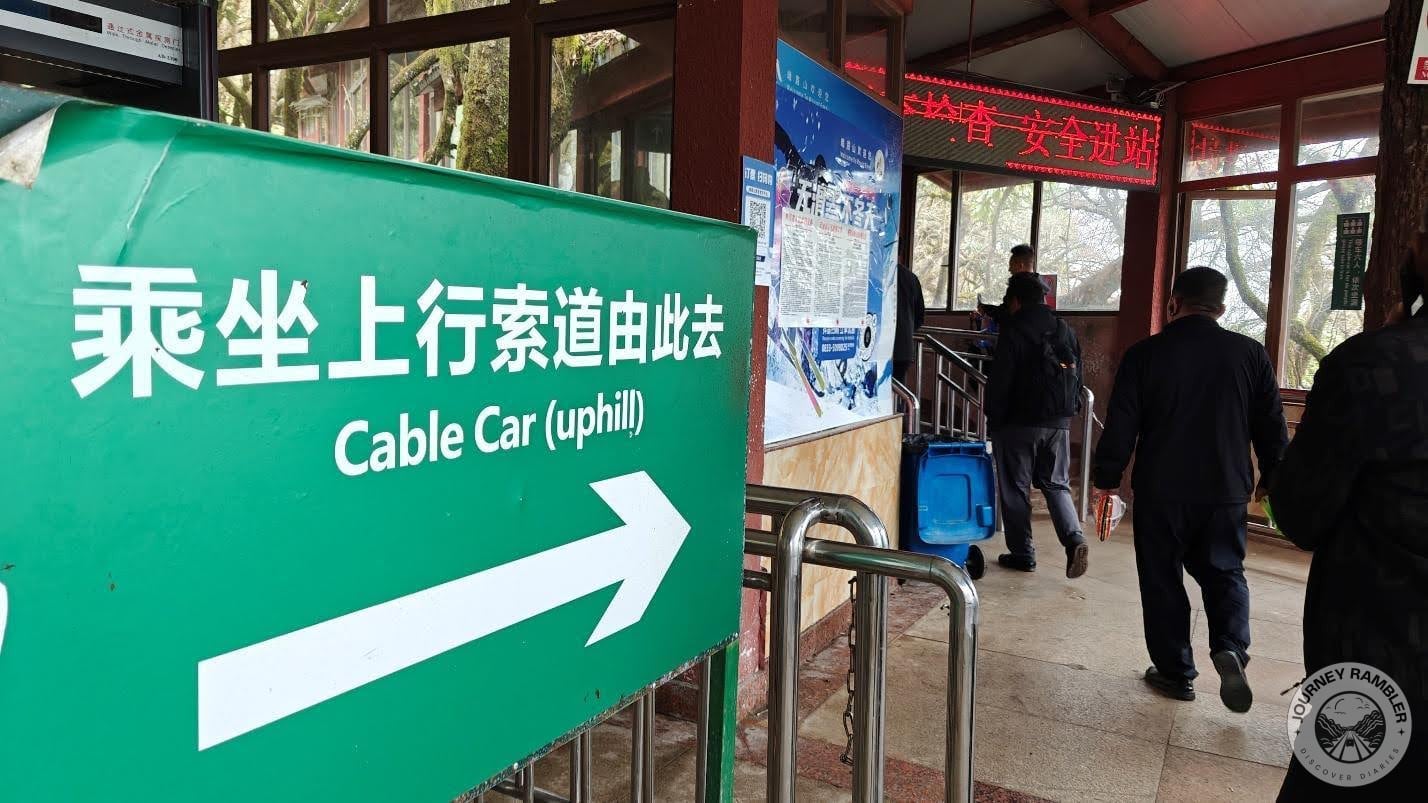
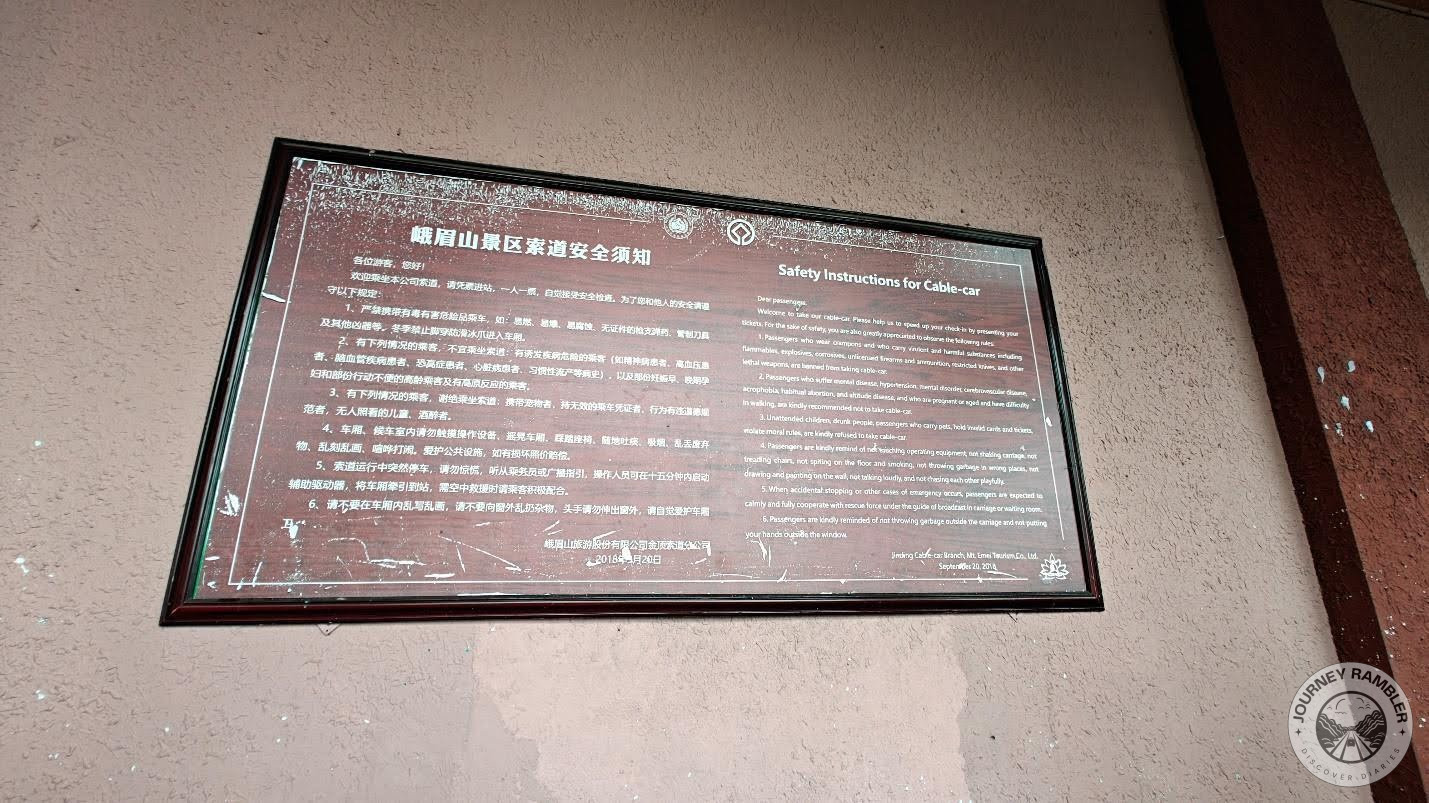
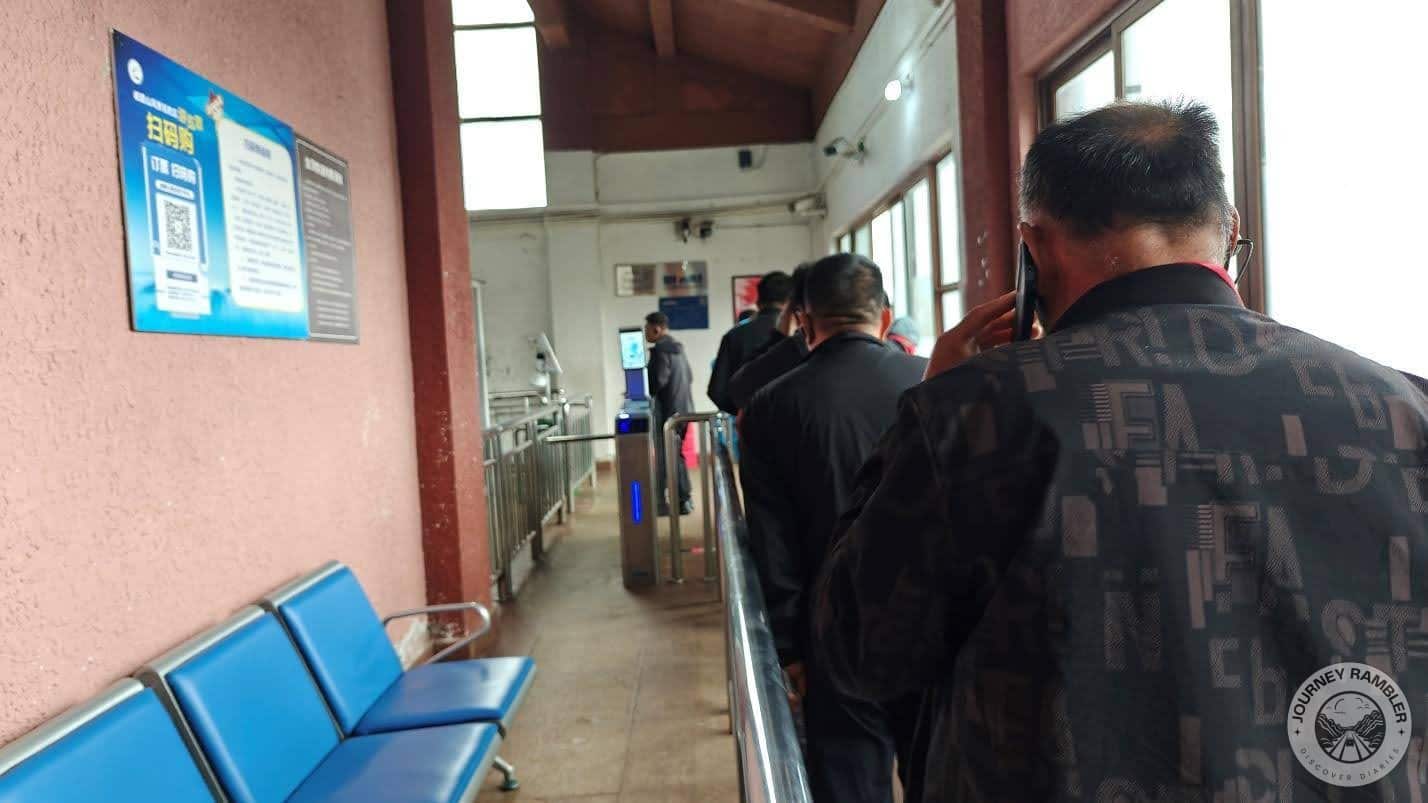
Like with a lot of public attractions that I’ve visited here in China, you’ll need to go through some stringent security checks before you’re allowed to board the cable cars. Again, make sure you have your passport and ticket at the ready so as to not hold up the line.
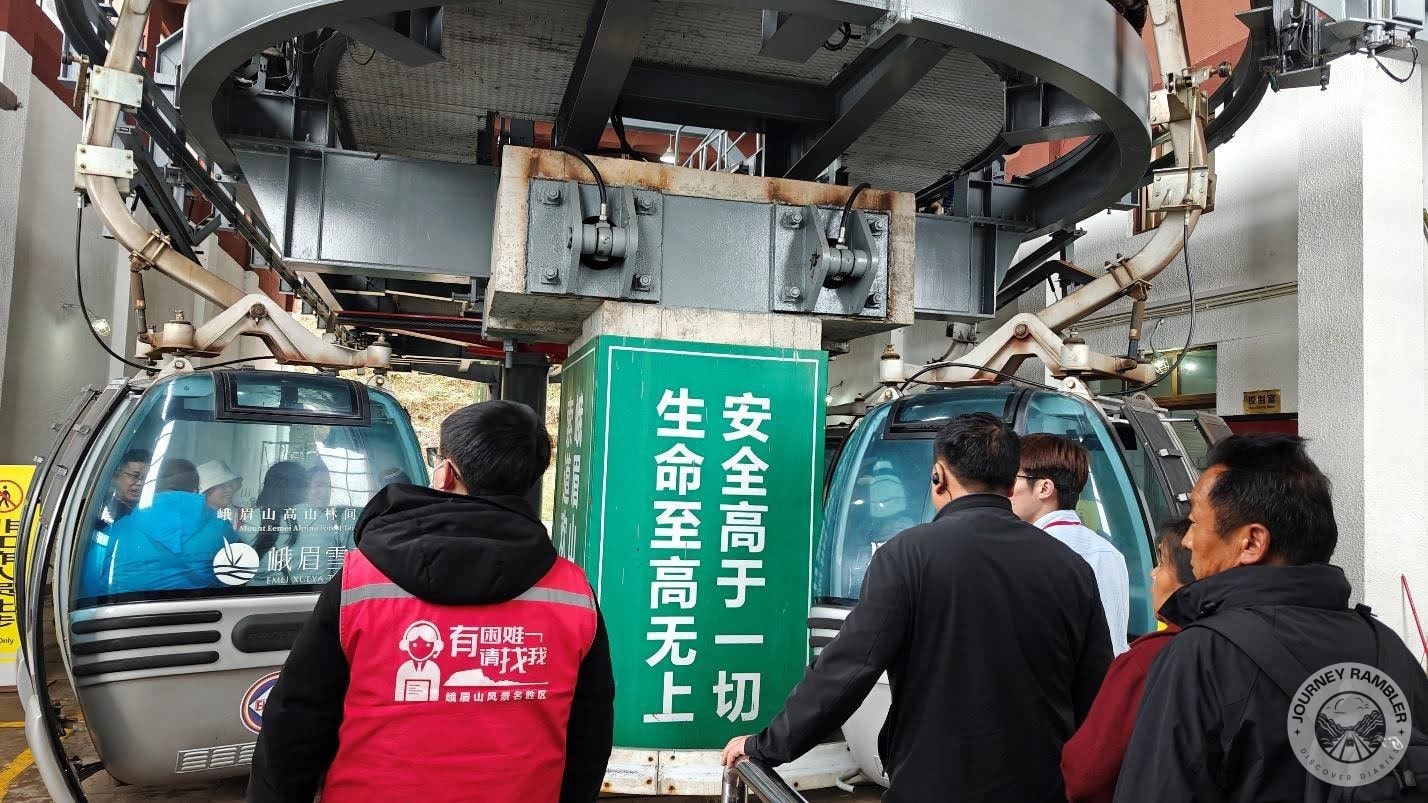
These are the cable cars that I’ll be riding. I read that the maximum capacity is for 8 normal sized people though I’ve seen them loading around 6 each during my visit. Suffice to say, maxing out the cable cars might not be ideal so that’s probably why they settled with 6 people every trip.
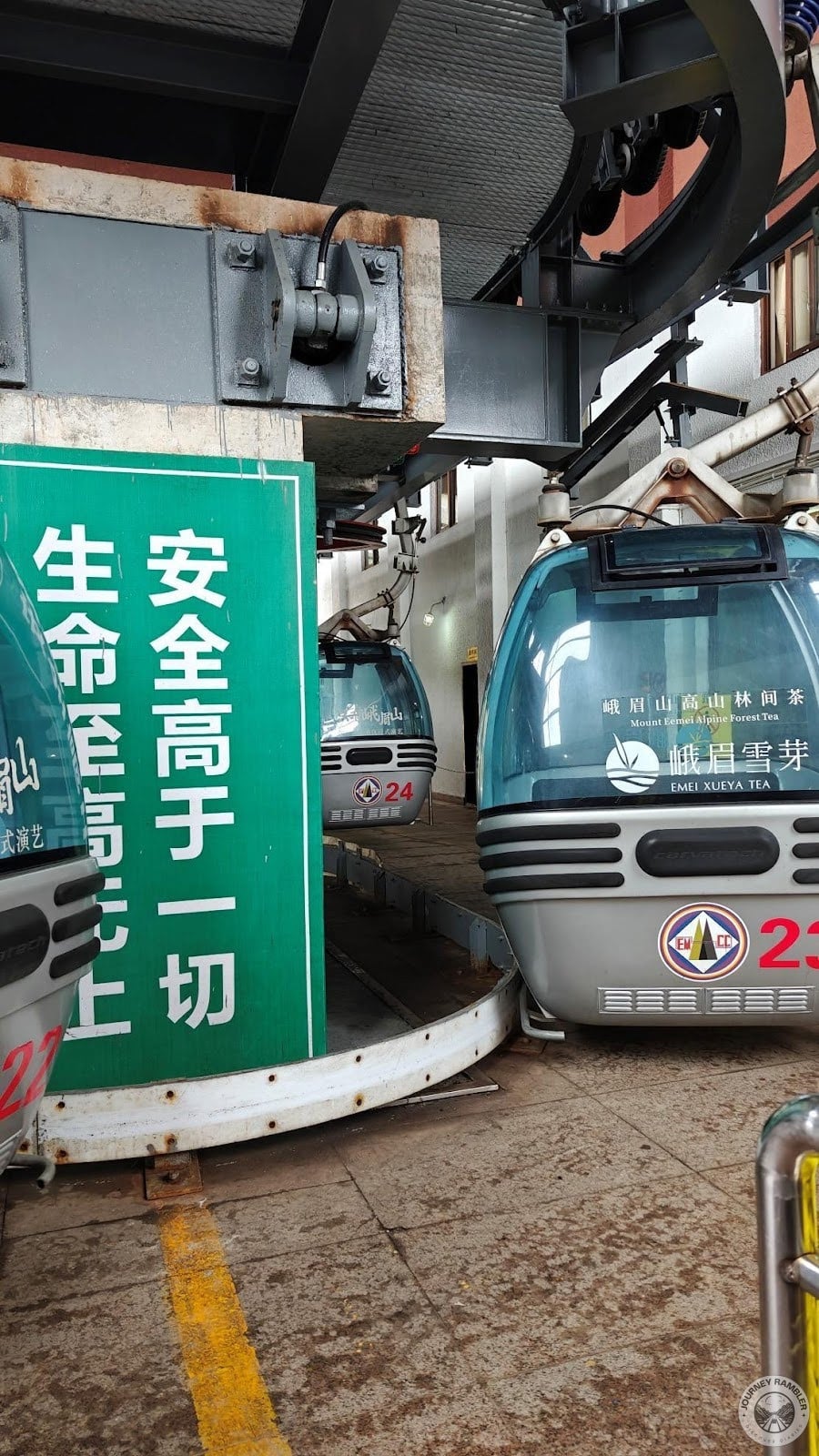
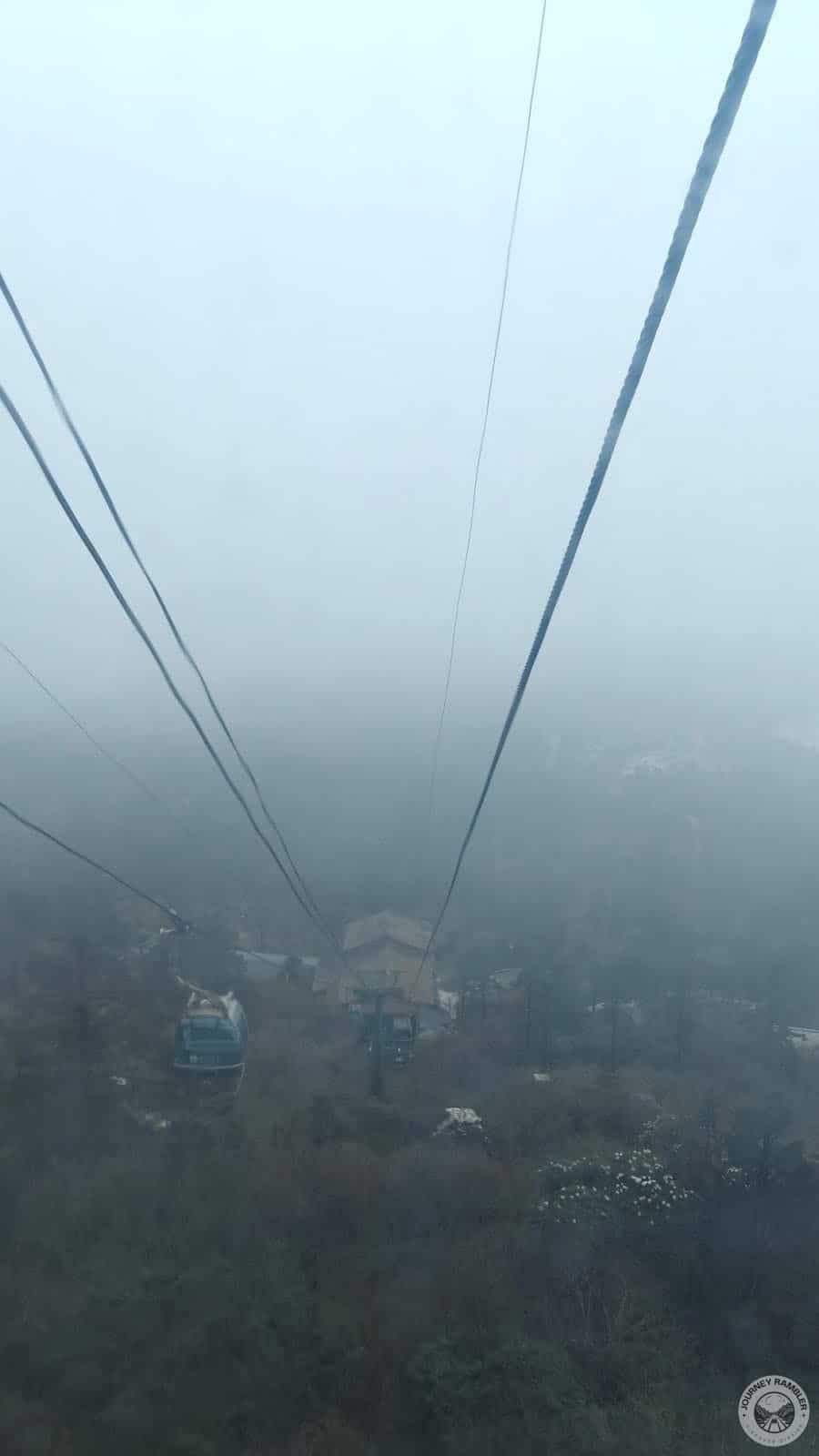
I was totally expecting awesome views and for a while that was the case. As the cable car kept rising though the fog just became too much and we ended up having close to zero visibility inside the cabin. I’m not going to lie, this was kind of scary but then I remembered that there haven’t been many (if not any) cable car accidents here.
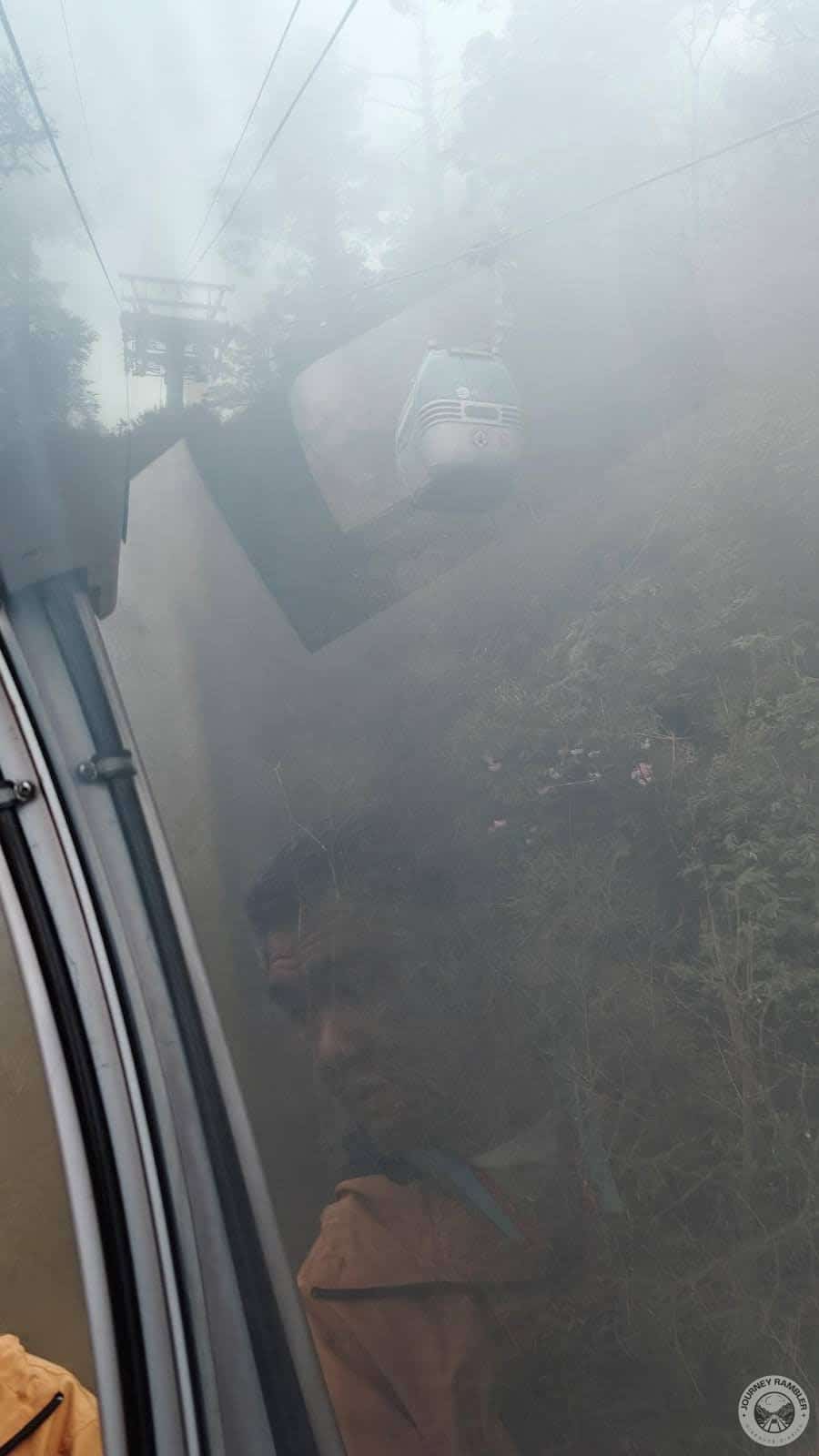
Visibility actually improved as we got closer to the Golden Summit terminal for the cable car. My excitement came back during this time as I was really looking forward to seeing the Puxian Bodhisattva. I won’t spoil things yet but it’s probably one of the finest looking Buddhist statues I’ve ever set my eyes on and is one of the reasons why going up the Golden Summit is worthwhile in my opinion.
After alighting from the cable car, I was surprised at how light I was feeling. The air here was even fresher than at Leidongping. That said, what I was feeling might have just been an acute sign of altitude sickness since this is 3000+ meters above sea level after all.
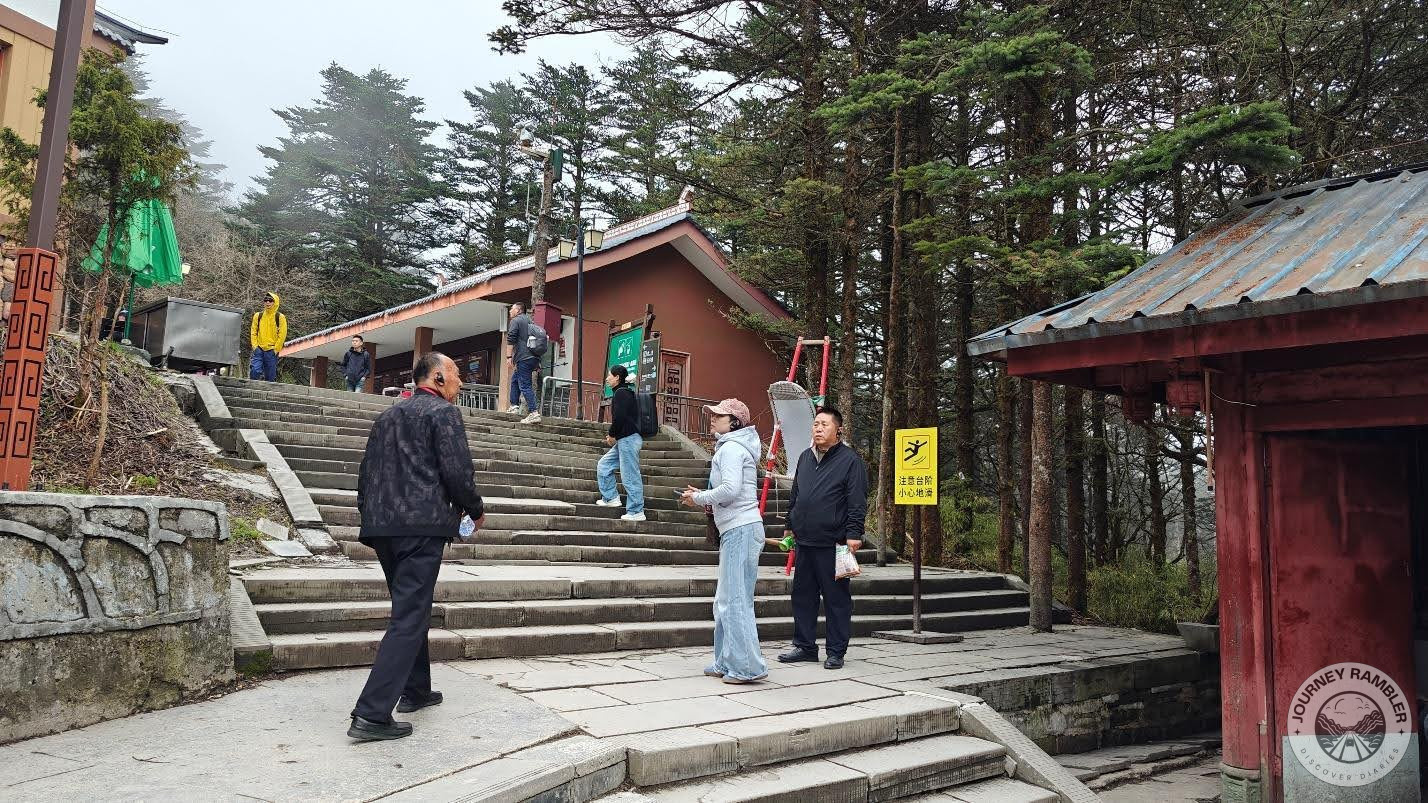
Take note though that this area is still a ways off from the Puxian Bodhisattva. There’s still going to be a substantial walk to get to where I want to be. Even with the prospect of this walk though, I somehow felt more energized and raring to start.
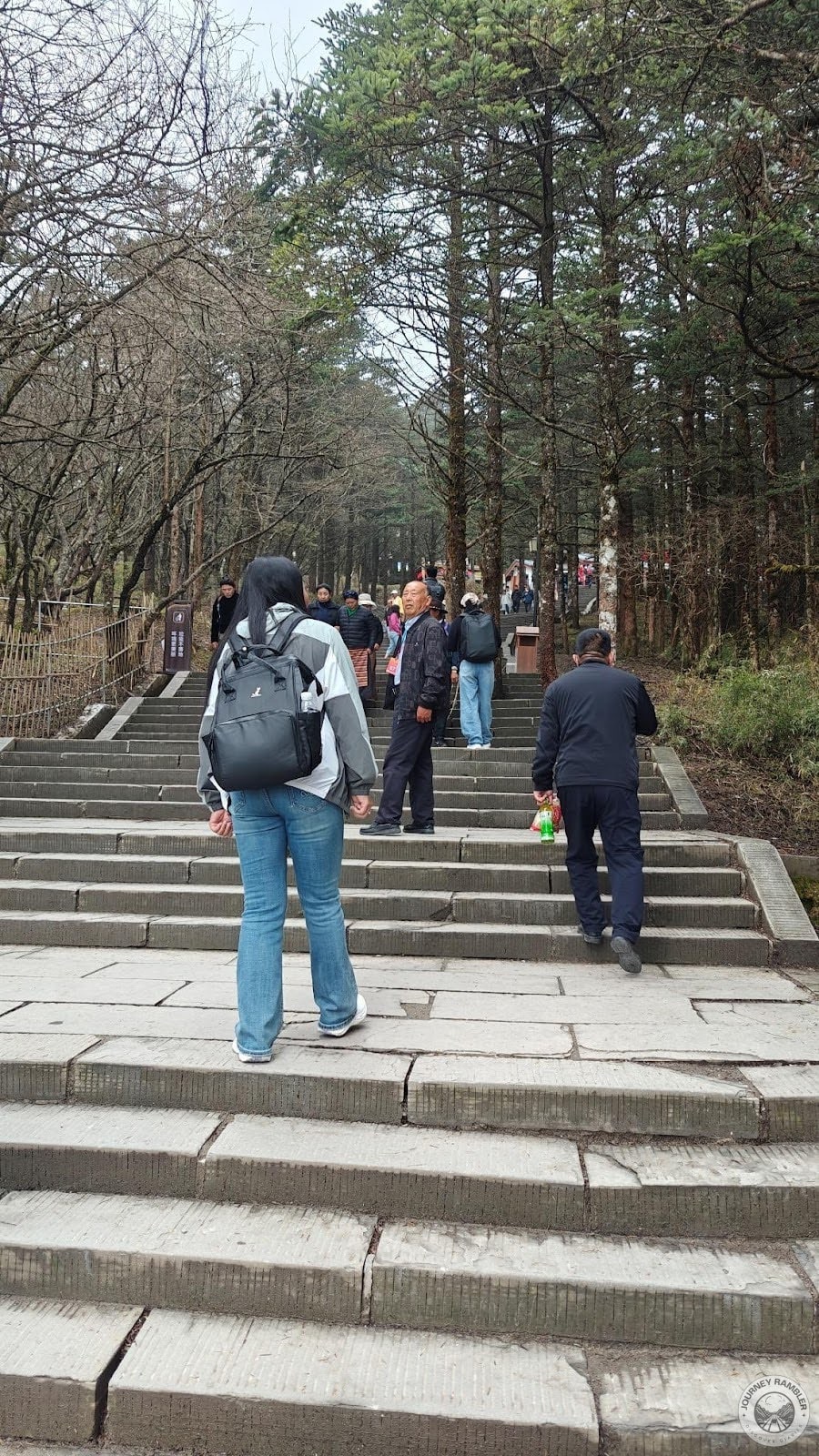
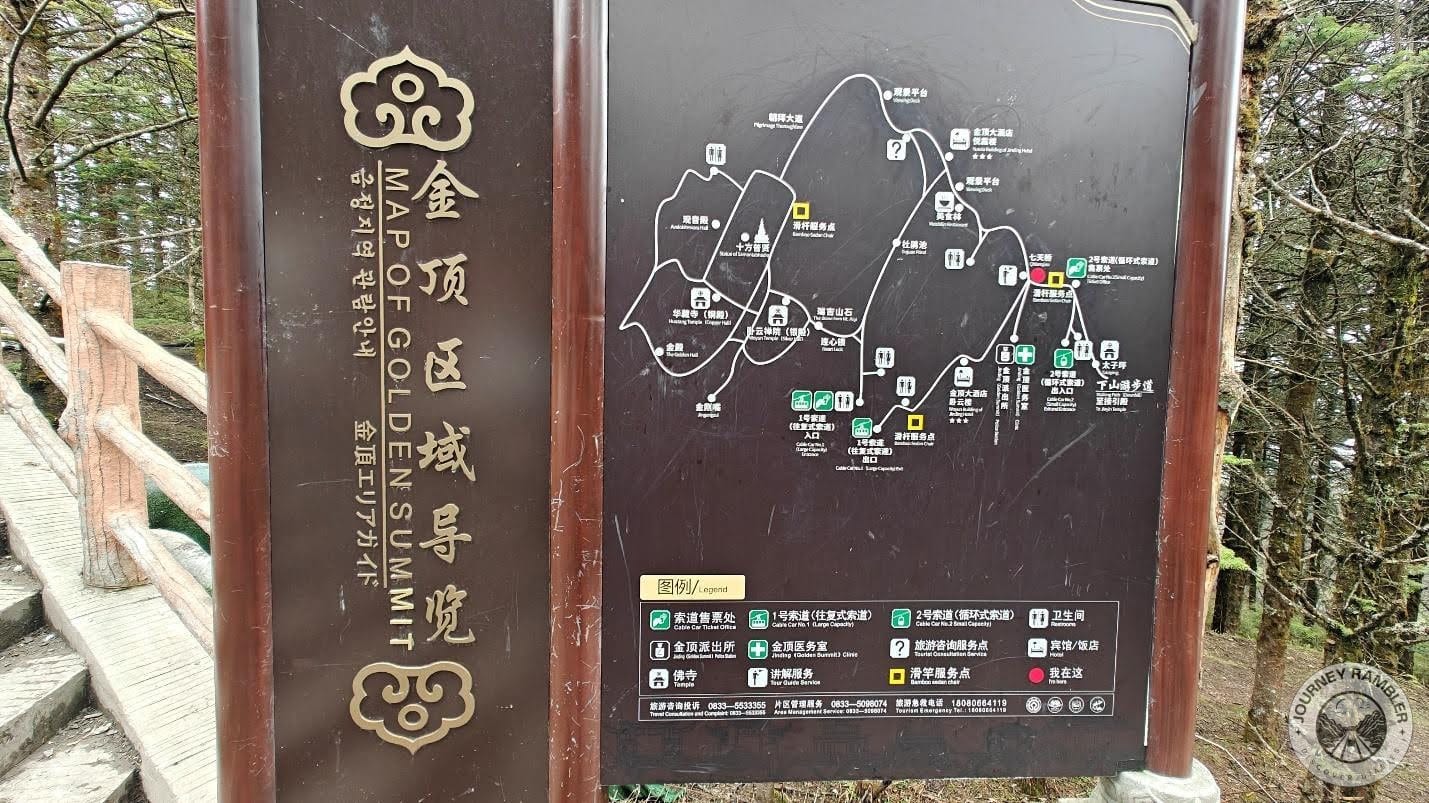
Before anything else though, I sought out the guide map for the area. Again, make sure that you take a picture of this the moment you get to this point. The guide map has English translations and taking a pic of it will give you an idea of where the important services for tourists are in this area.
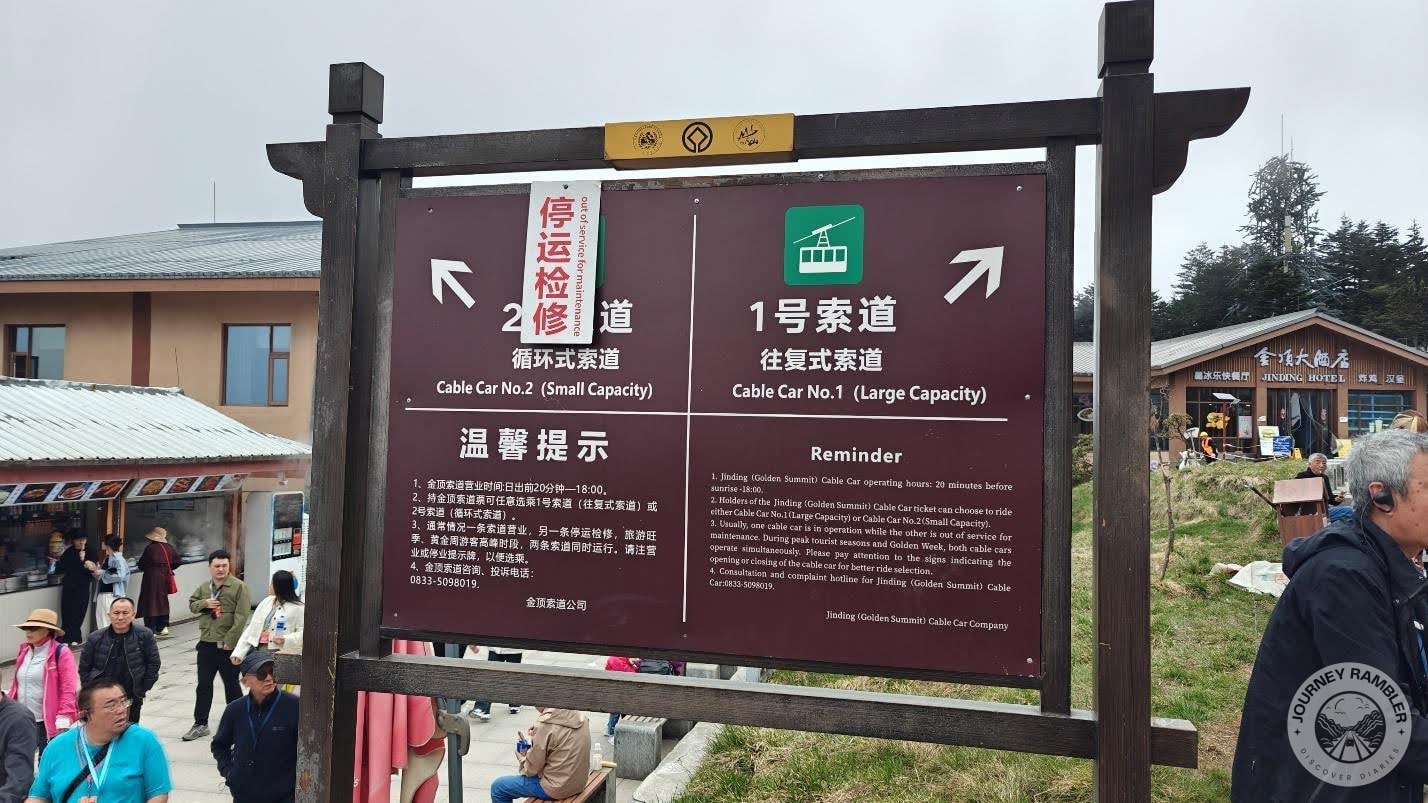
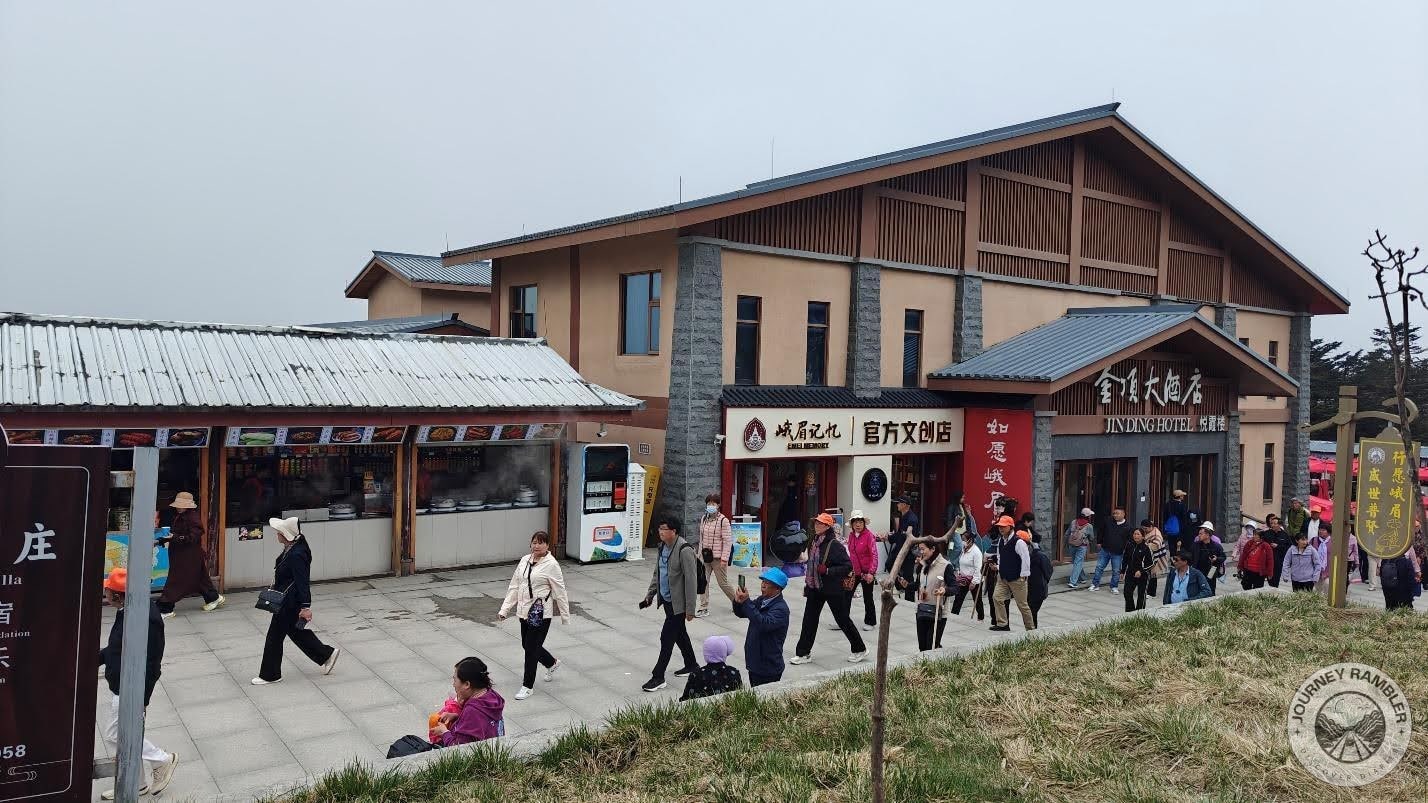
Much like with Leidongping, there are also food establishments and even accommodations here in the Golden Summit area. If you’re actually planning to walk up here then I suggest you look into booking a room in advance as you likely want to rest here first before going down. Since I was going to use the cable cars I didn’t have to worry about accommodations.
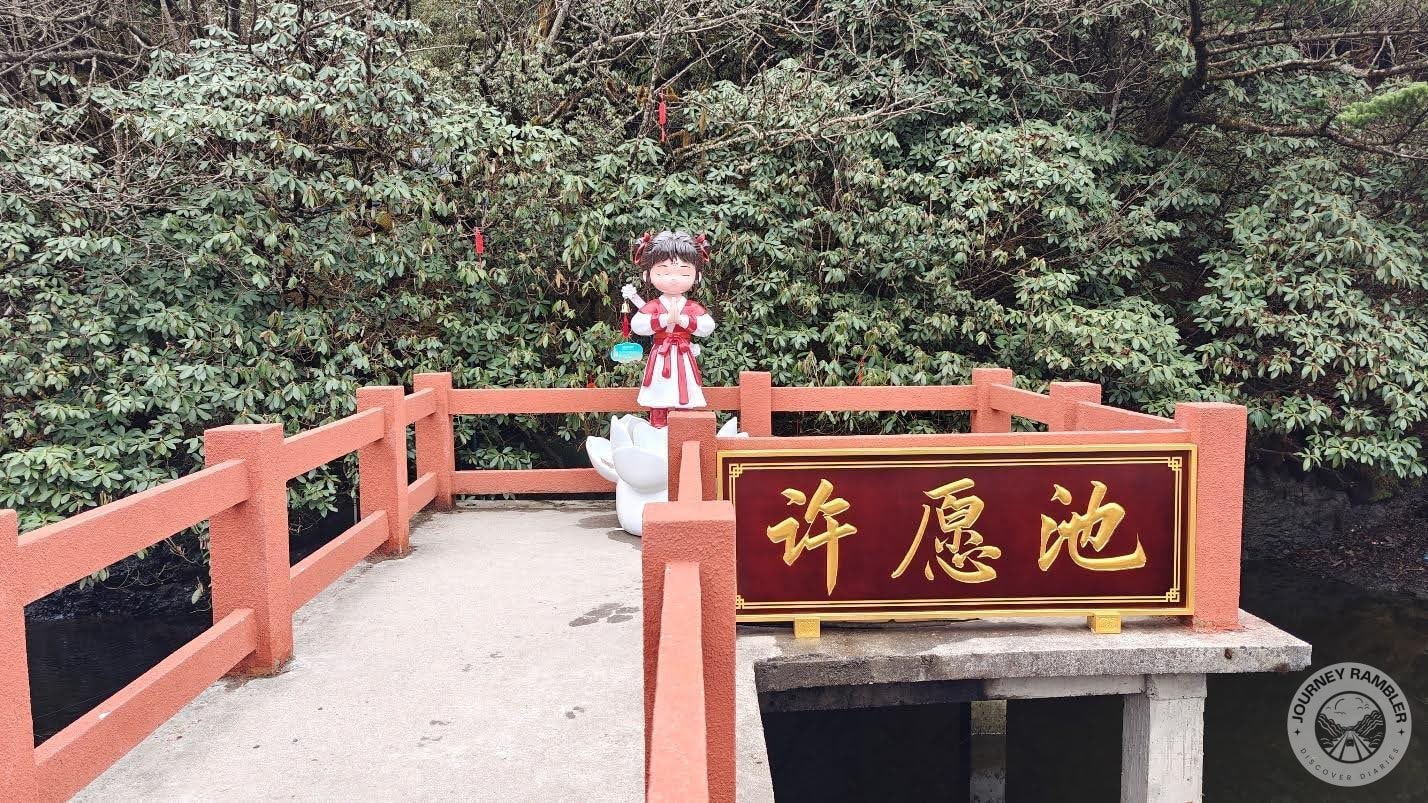
This is a Wishing Pool that I came across while walking towards the Puxian Bodhisattva area. Now, I’m not sure who the mascot is supposed to be but it seems like he’s some sort of warrior standing on top of a lotus flower. I’d like to think this is a depiction of Nezha but I could be wrong.
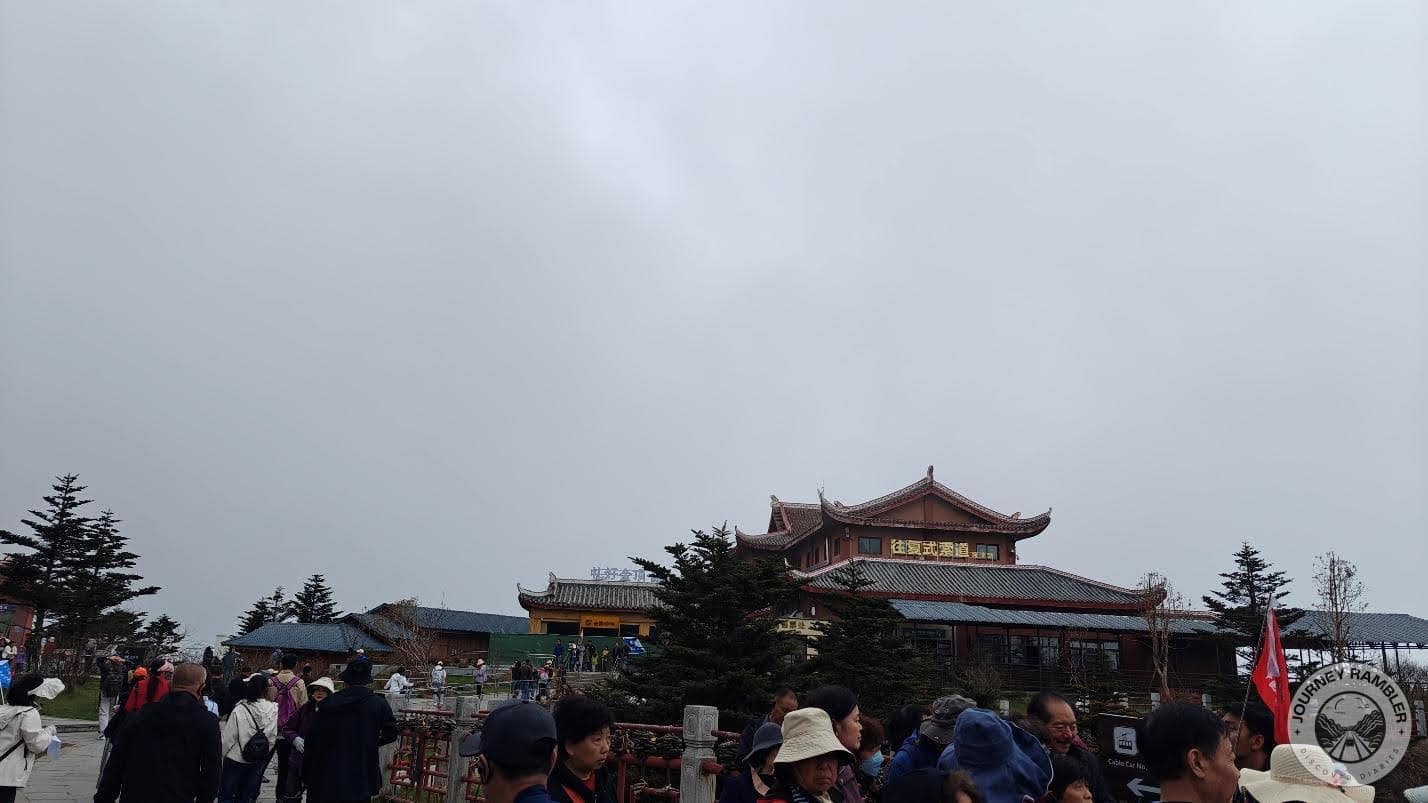
I’m now walking towards Woyun Temple and from the Heart Lock area I can actually see the terminal for the large capacity cable cars. So I think the reason why a lot of people take this over the smaller capacity that I took to get here is because its terminal is a lot closer to the Puxian Bodhisattva. Personally I don’t mind the longer walk as I get to see more of the scenery here.
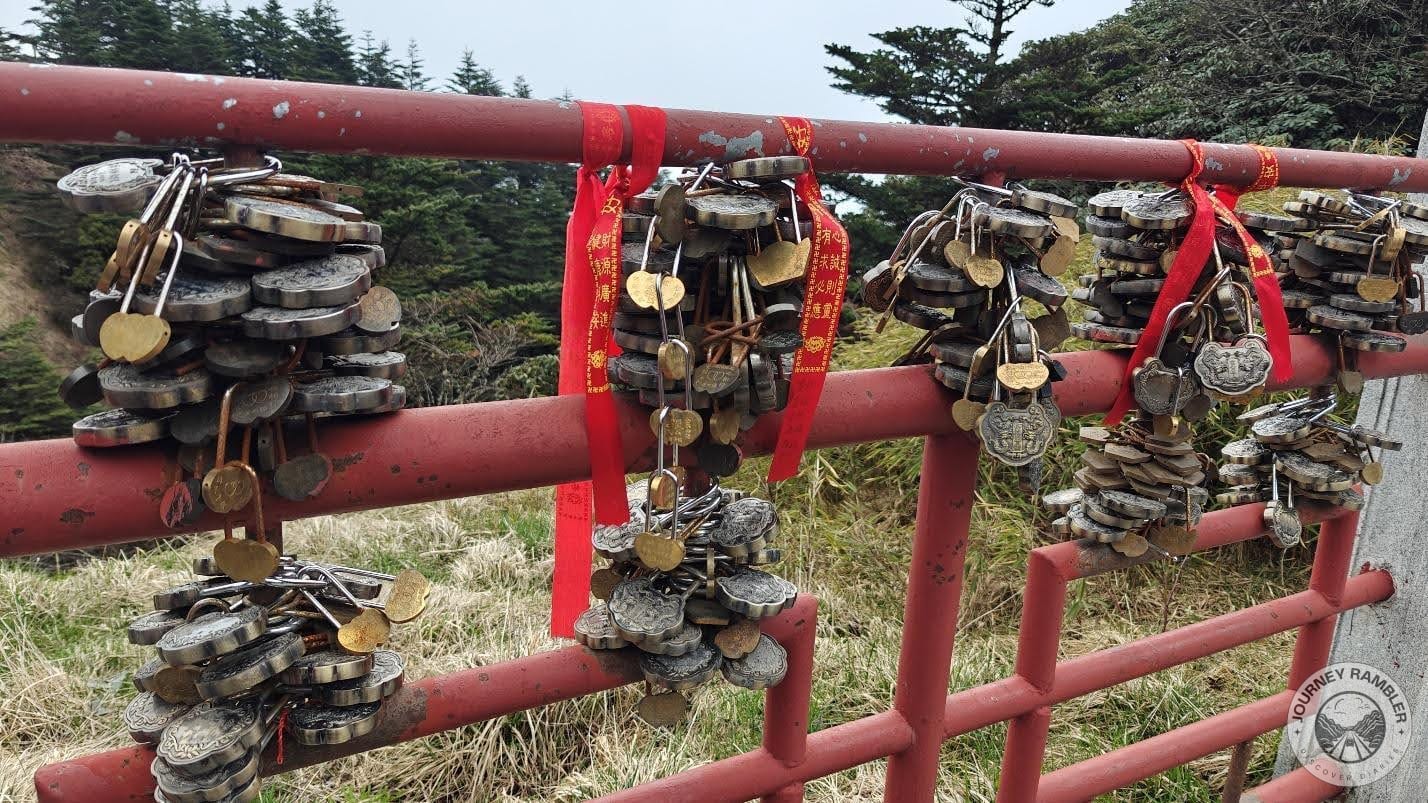
Anyway, here are the heart locks I talked about in the previous image. They’re attached to the railings and they’re mainly done by couples who want to show their love and commitment to each other. After affixing the locks on the railings, they then throw away the keys to symbolize the permanency and irreversibility of their decision to be together.
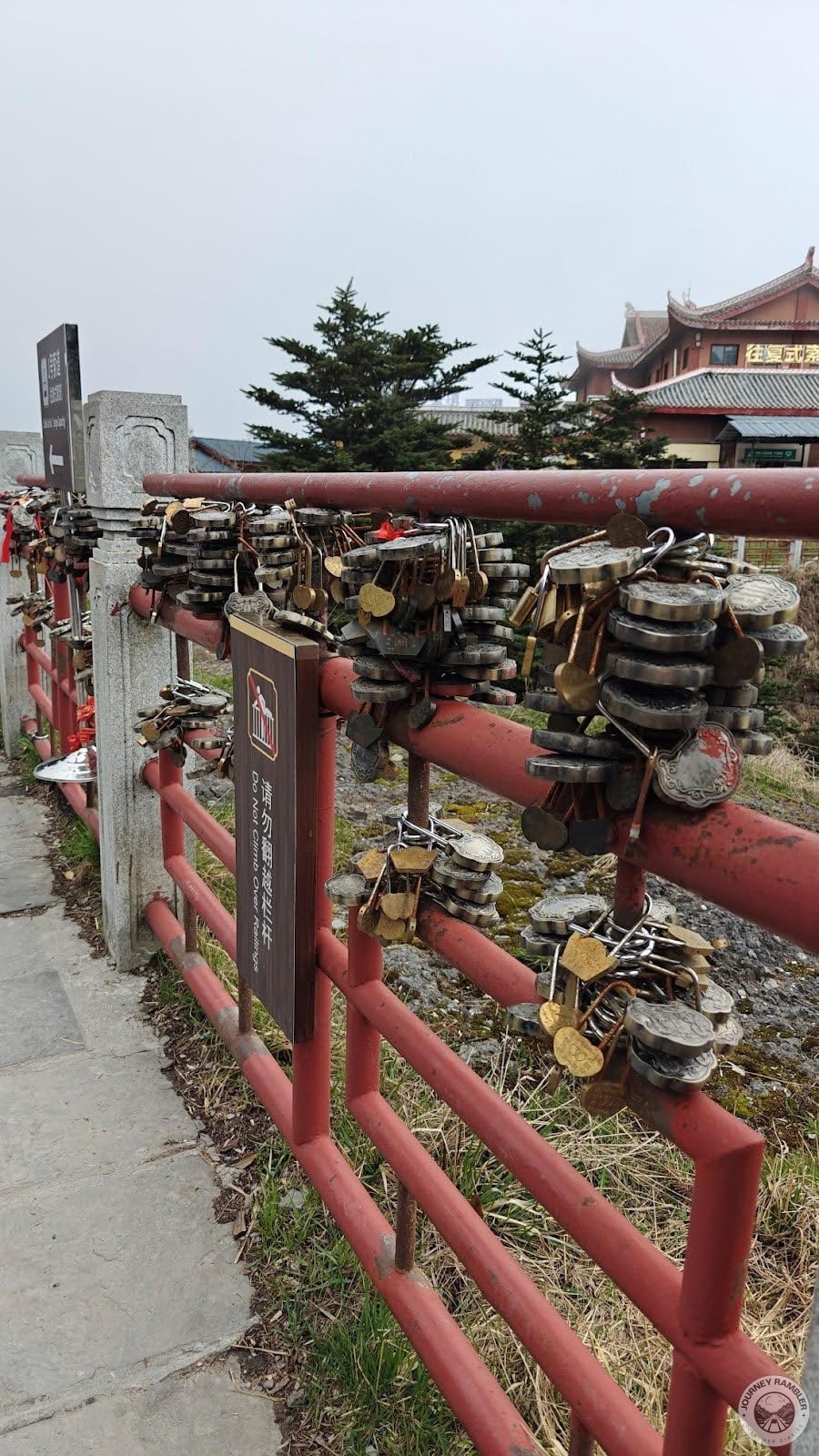
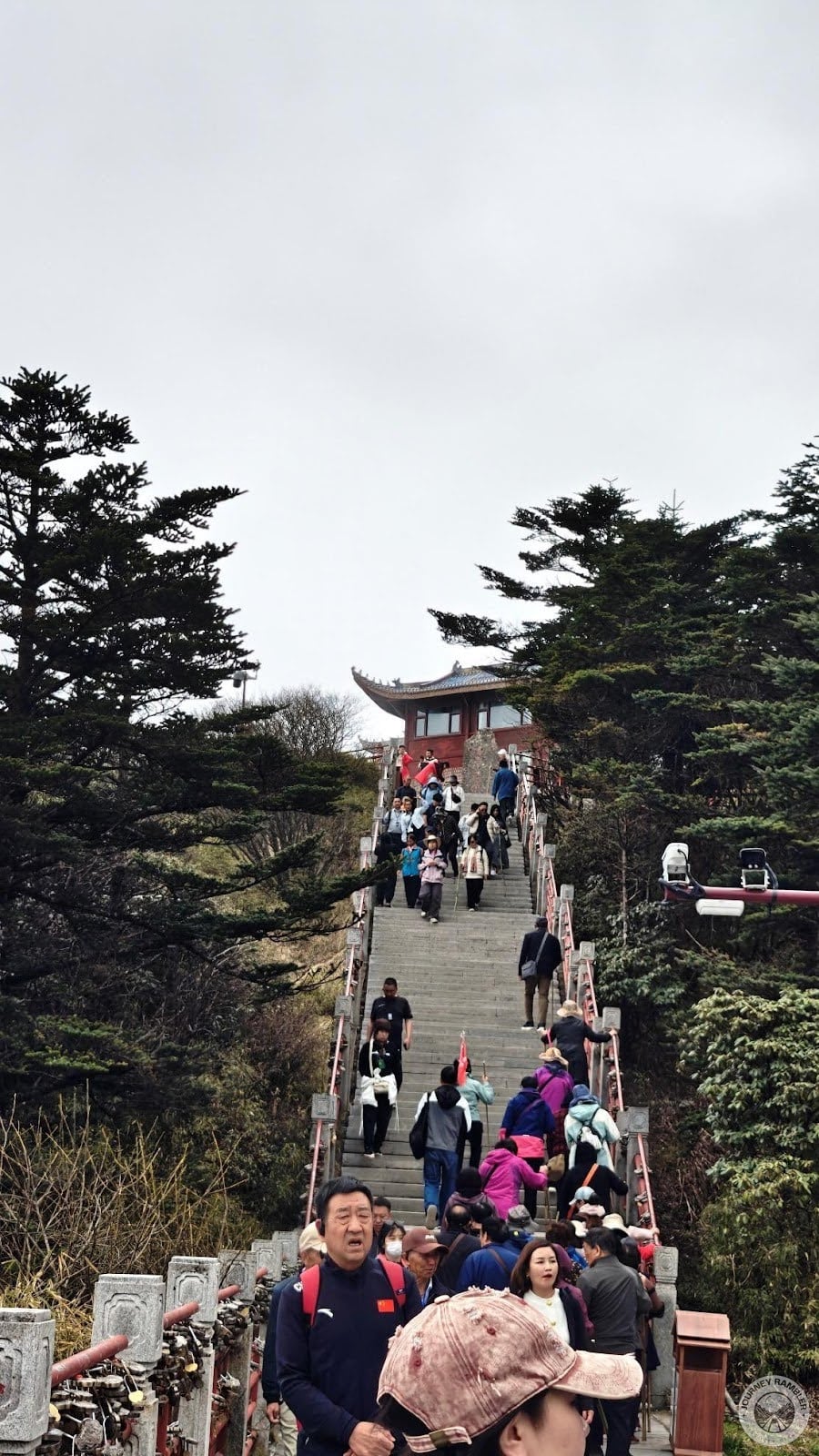
From this pathway, you can see the Woyun Monastery building. Though it’s much lesser known, it’s still part of the Golden Summit temple complex. At this point, you’ll also notice the pathways getting more crowded.
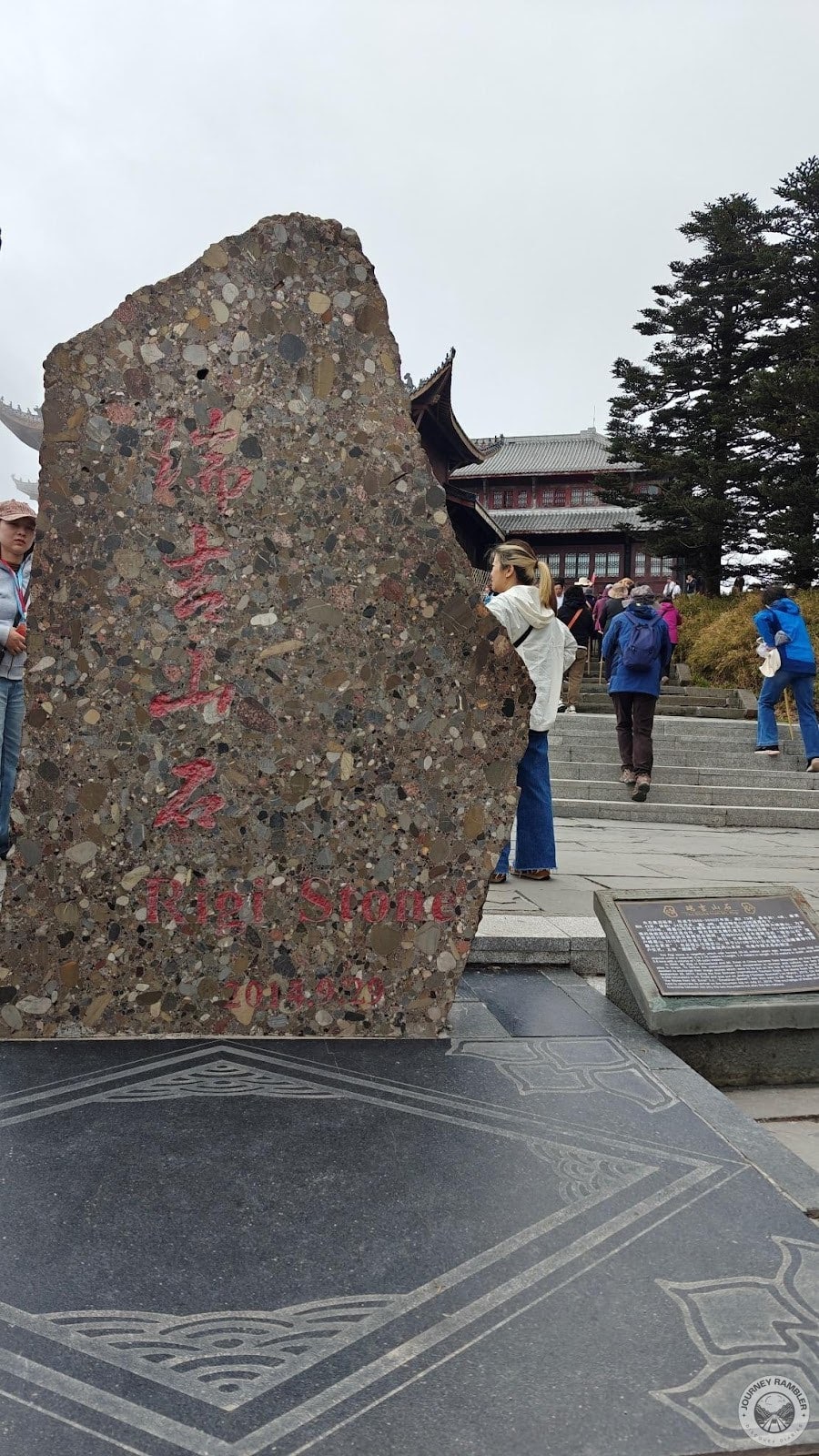
At the level of the Woyun Monastery, you’ll see this unique looking attraction. Called the Stone From Mt. Rigi, this is a sedimentary rock called a nagelfluh that was said to have been formed millions of years ago. As its name implies, the stone comes from Mt. Rigi in Switzerland which is said to be quite similar to Mt. Emei.
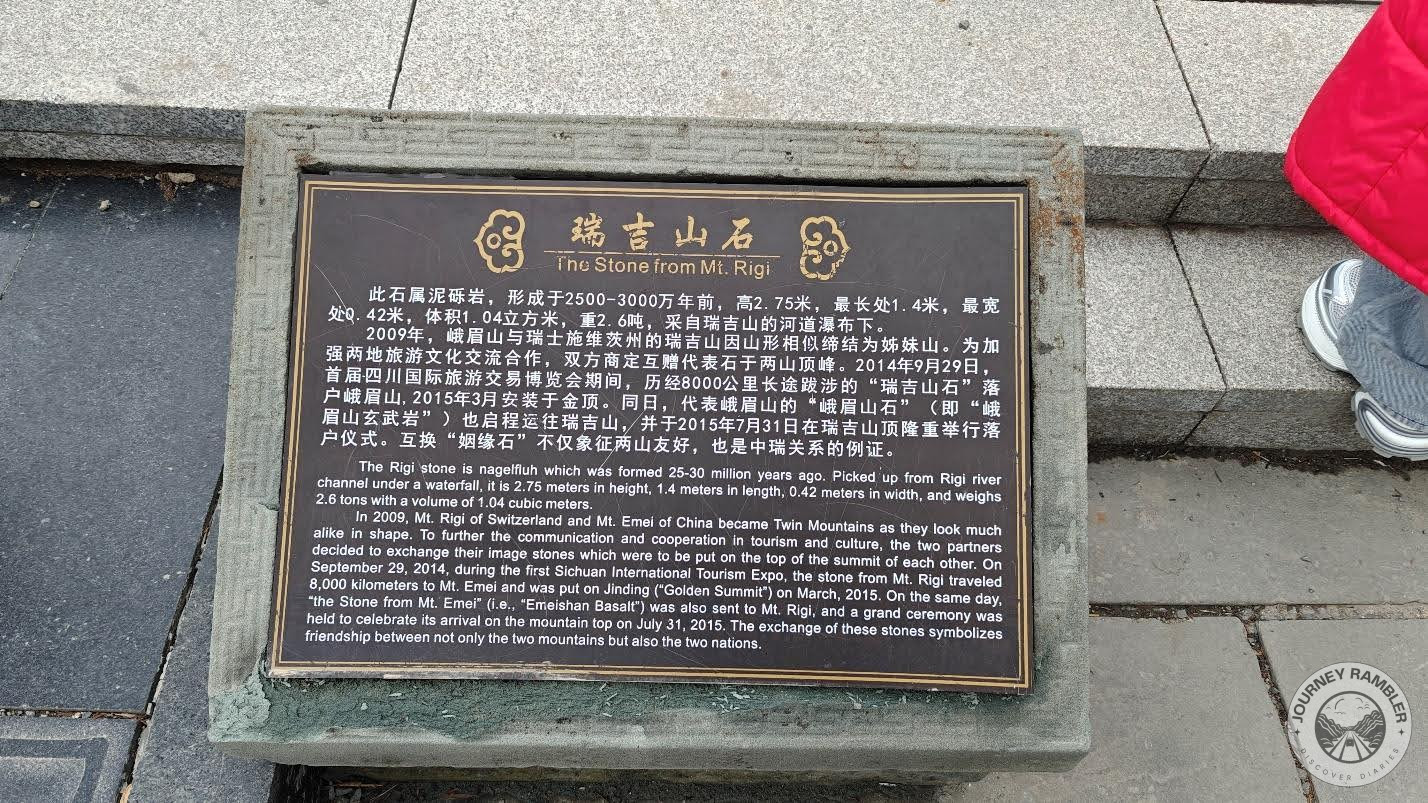
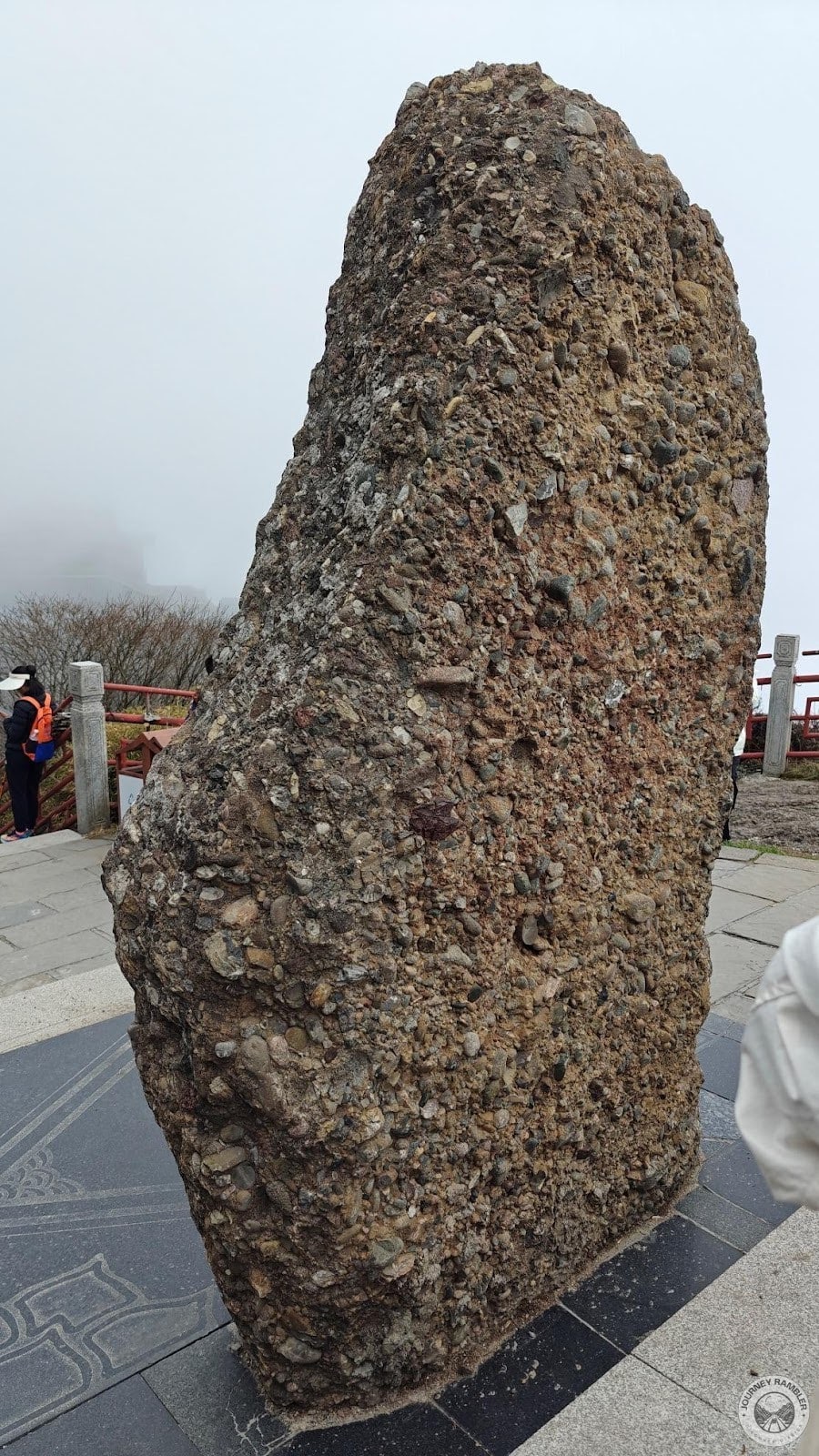
Based on the inscription, Mt. Rigi also got a stone from Mount Emei called the Emeishan Basalt. The exchange of stones which was supposed to symbolize friendship and cooperation happened sometime in 2014 and 2015. I actually thought this was a cool gesture and now I definitely want to see what the Emeishan Basalt looks like in person.
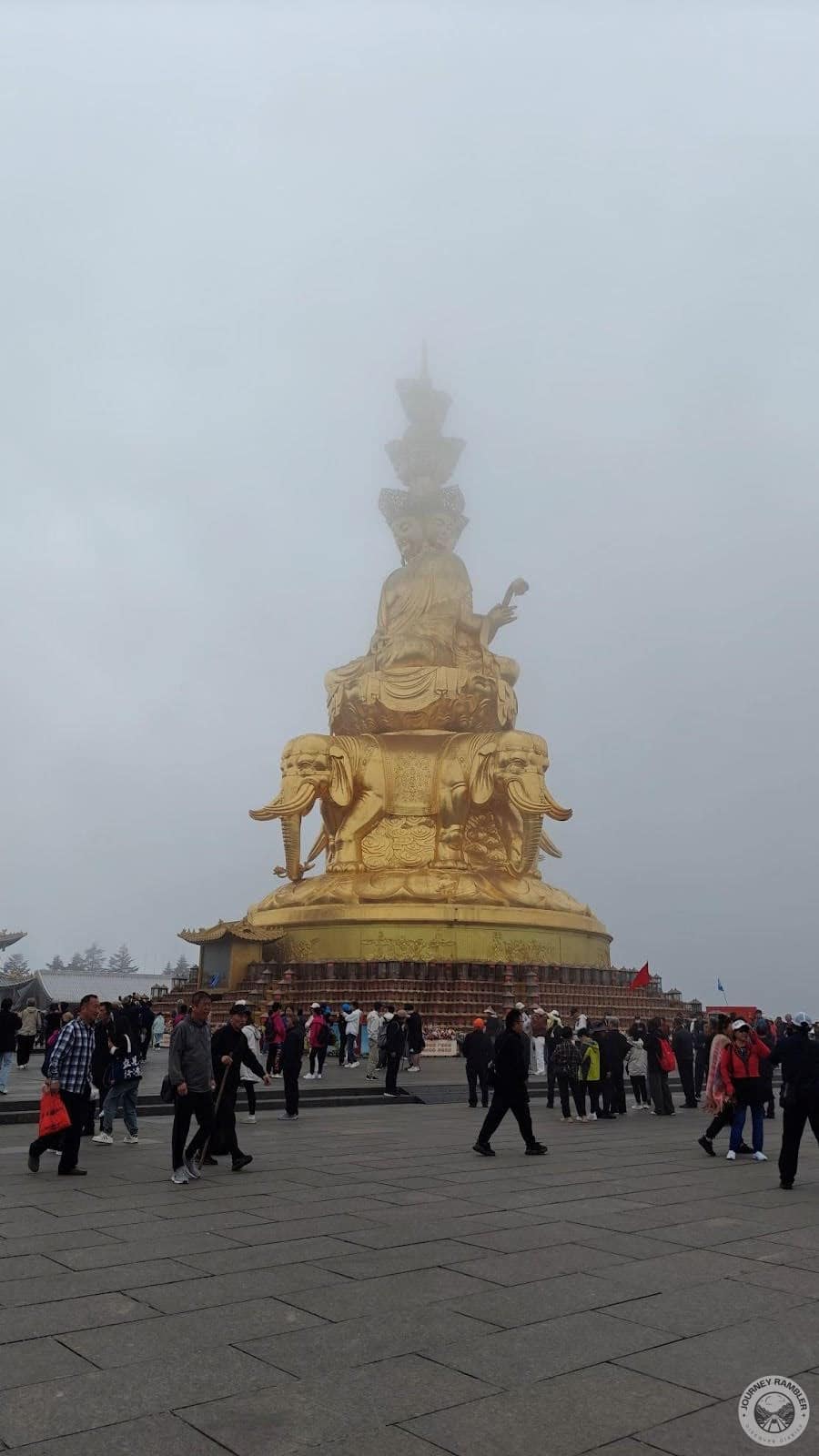
After a short walk from the Mount Rigi Stone, I finally came across the Puxian Bodhisattva. Let me tell you, this was absolutely amazing. The fog/clouds notwithstanding, the statue was absolutely impressive. Puxian is the Bodhisattva of universal kindness, great conduct, and diligent practice who also happens to be the patron saint of Mt. Emei.
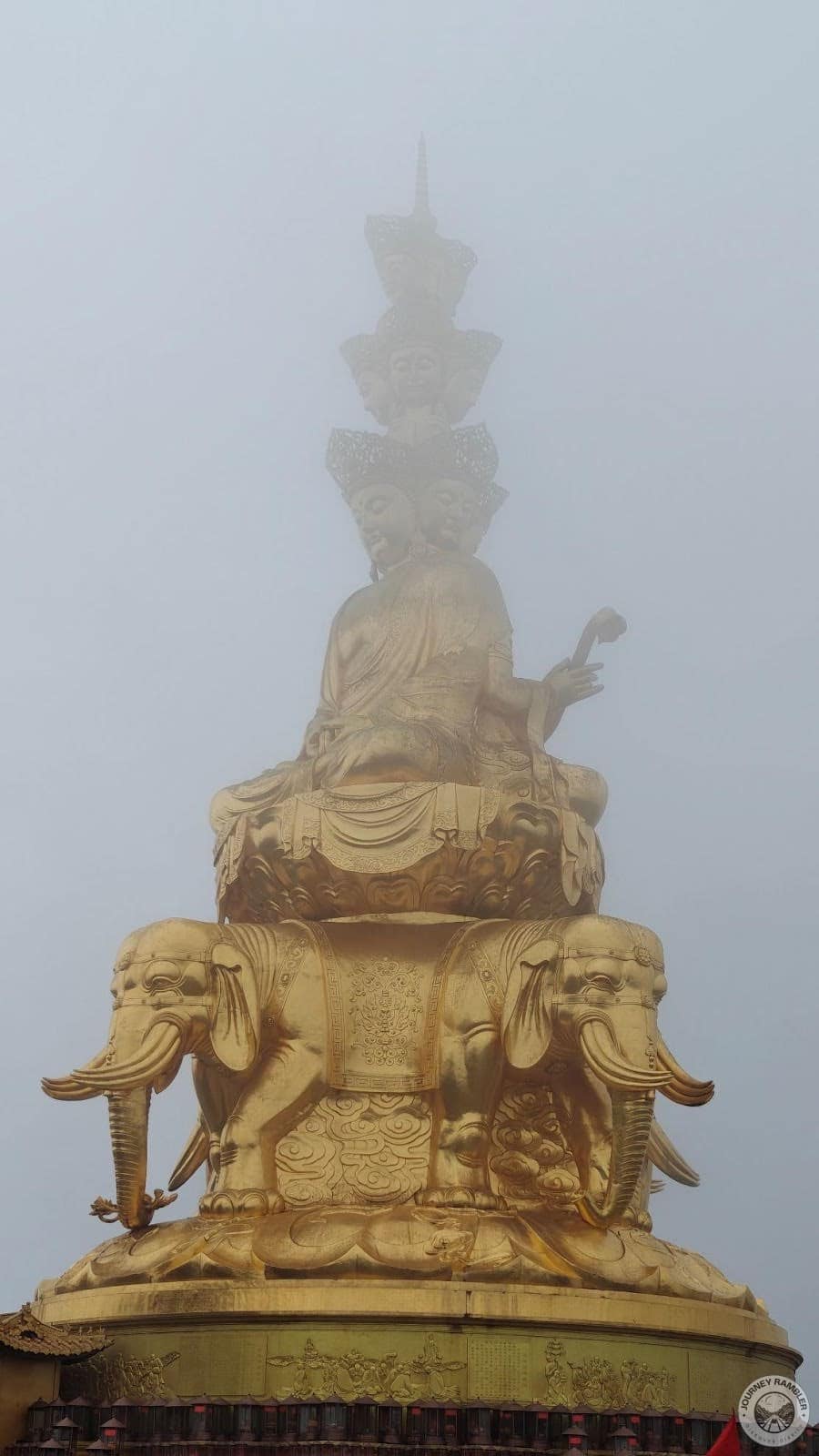
It was by no means the largest Buddhist statue I’d ever come across but it was definitely the most opulent looking just because of the gold. Now you might think that it’s made entirely of gold but I’ve read that it’s only just for the plating. The statue itself though is just made from copper.
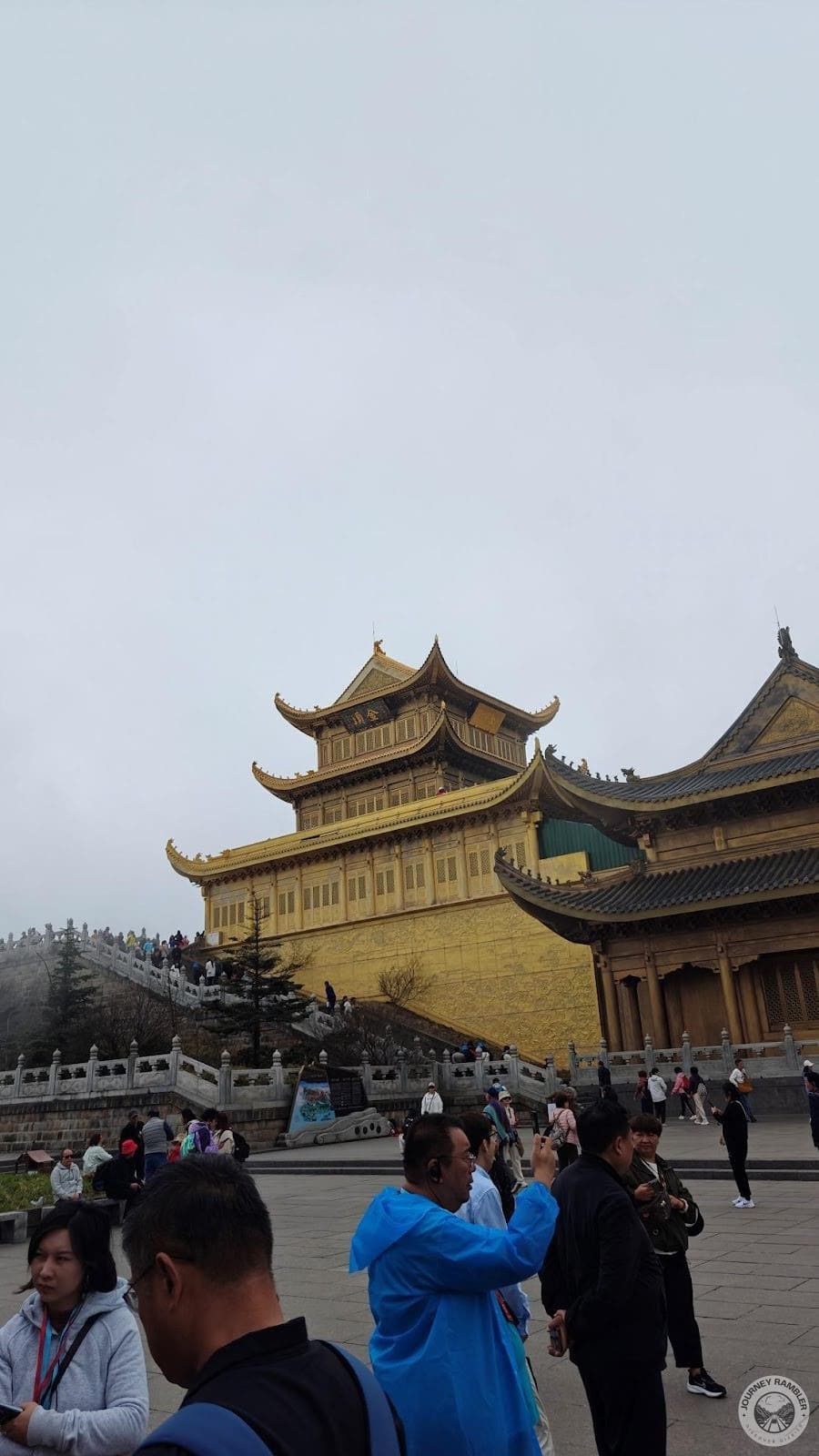
Nearby the Puxian Bodhisattva Statue are some of the halls in the Huazang Temple complex. I will say, it does look equally impressive especially since it looks like it’s made of gold as well. Much like the Puxian Bodhisattva statue though, it’s probably just plated with gold rather than being made purely of the metal.
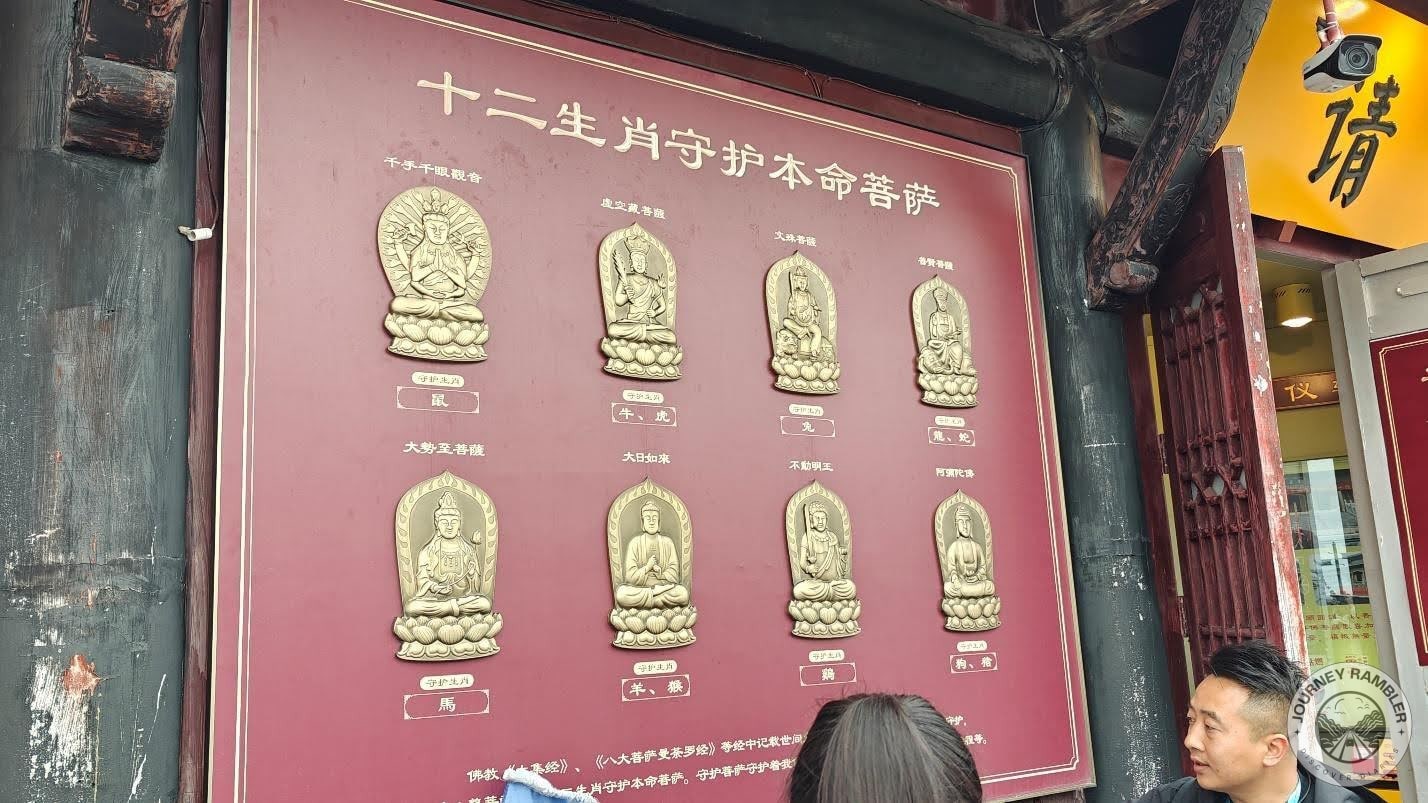
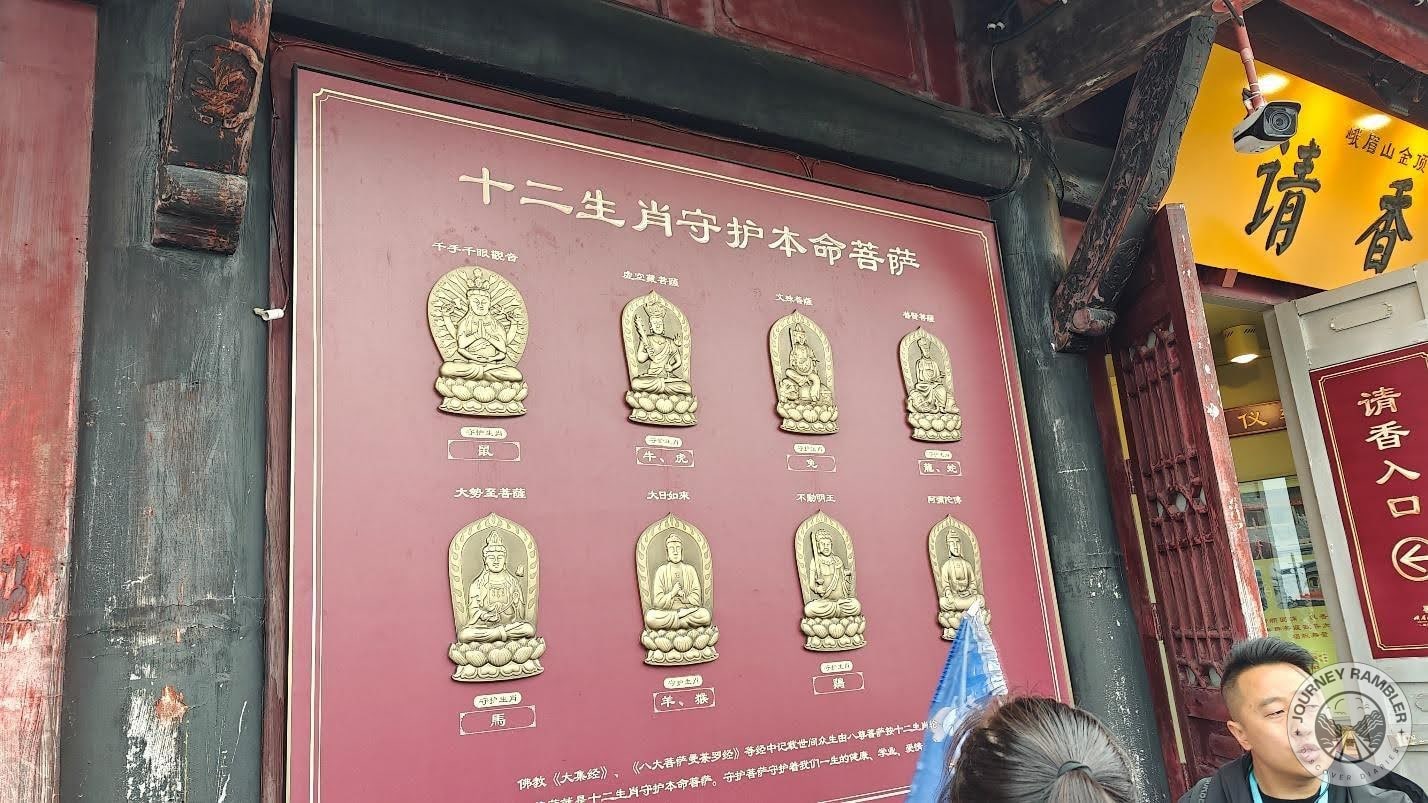
Walking around, I came across this panel with inscriptions detailing Buddhism’s Eight Zodiac Guardians. These are eight Bodhisattvas who are believed to provide guidance and spiritual protection to specific zodiac signs. The sign further notes that the belief was based on the records found in Buddhist scriptures such as the Mahasamniputa Sutra and the Eight Great Bodhisattvas Mandala Sutra.
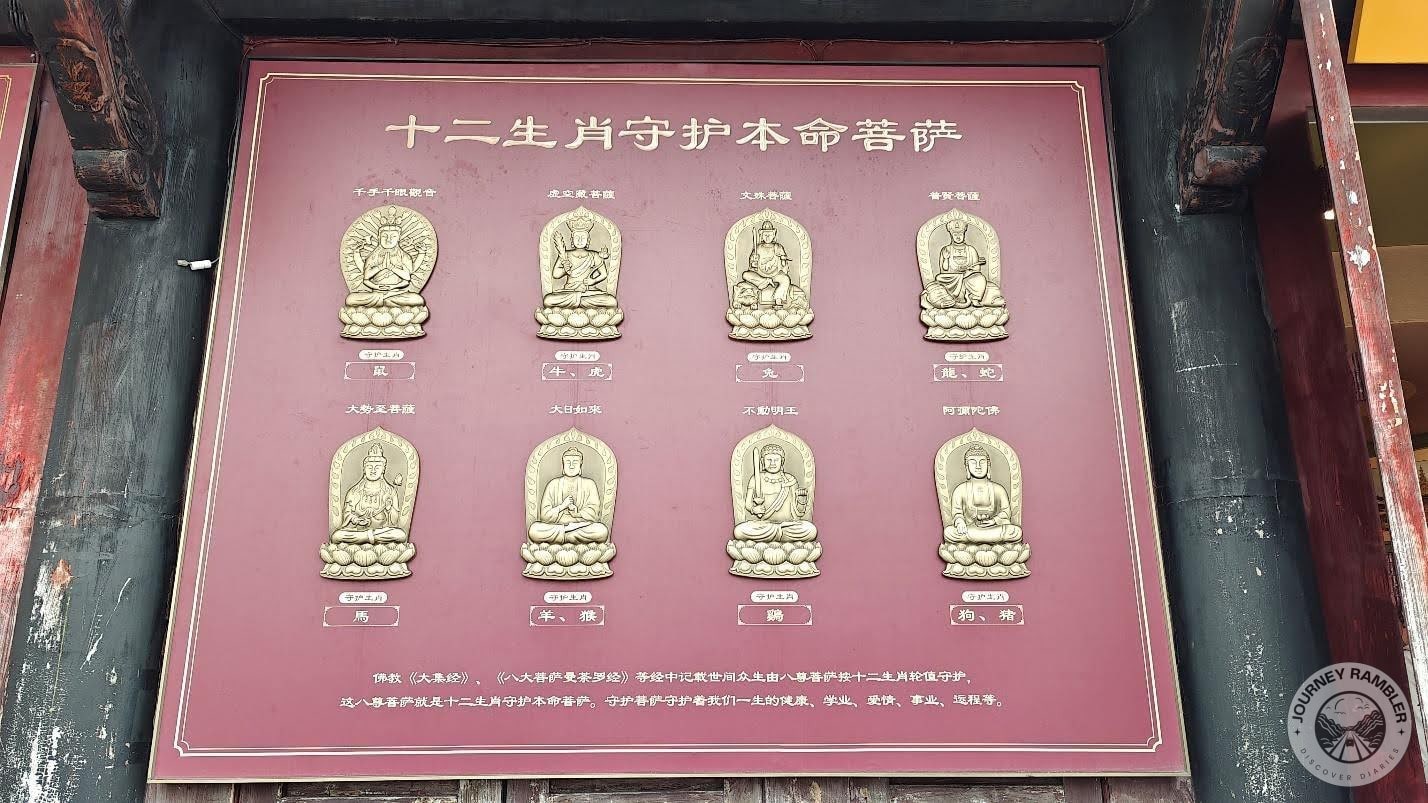
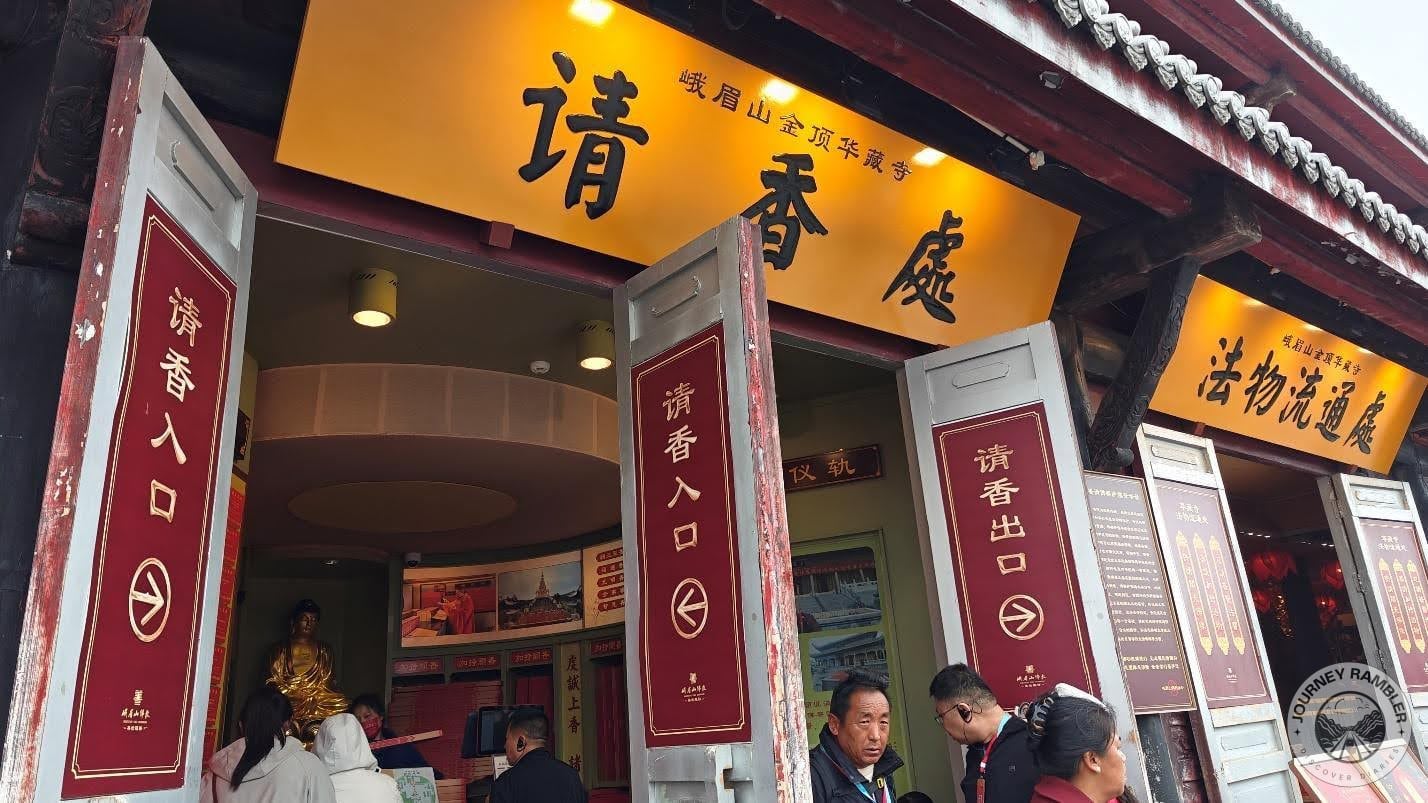
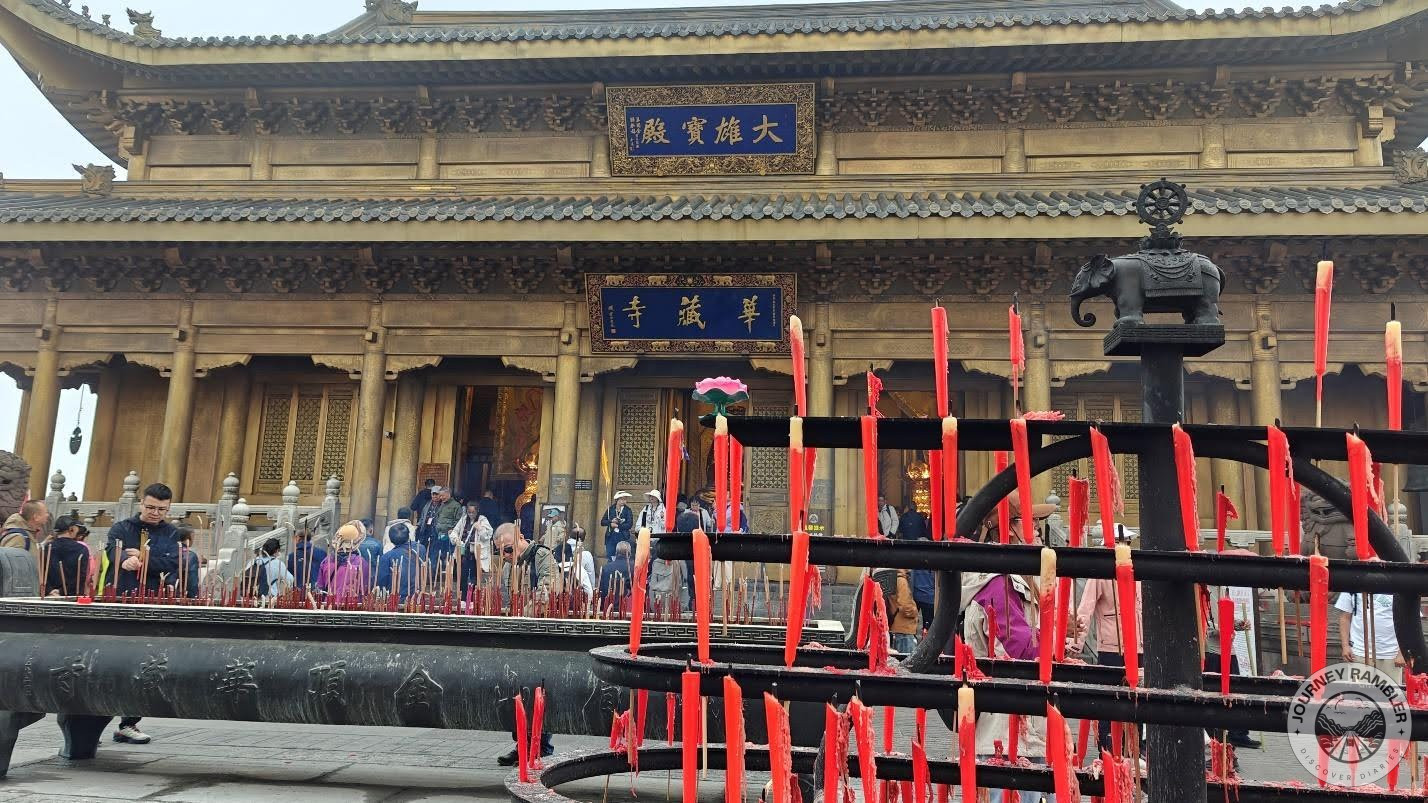
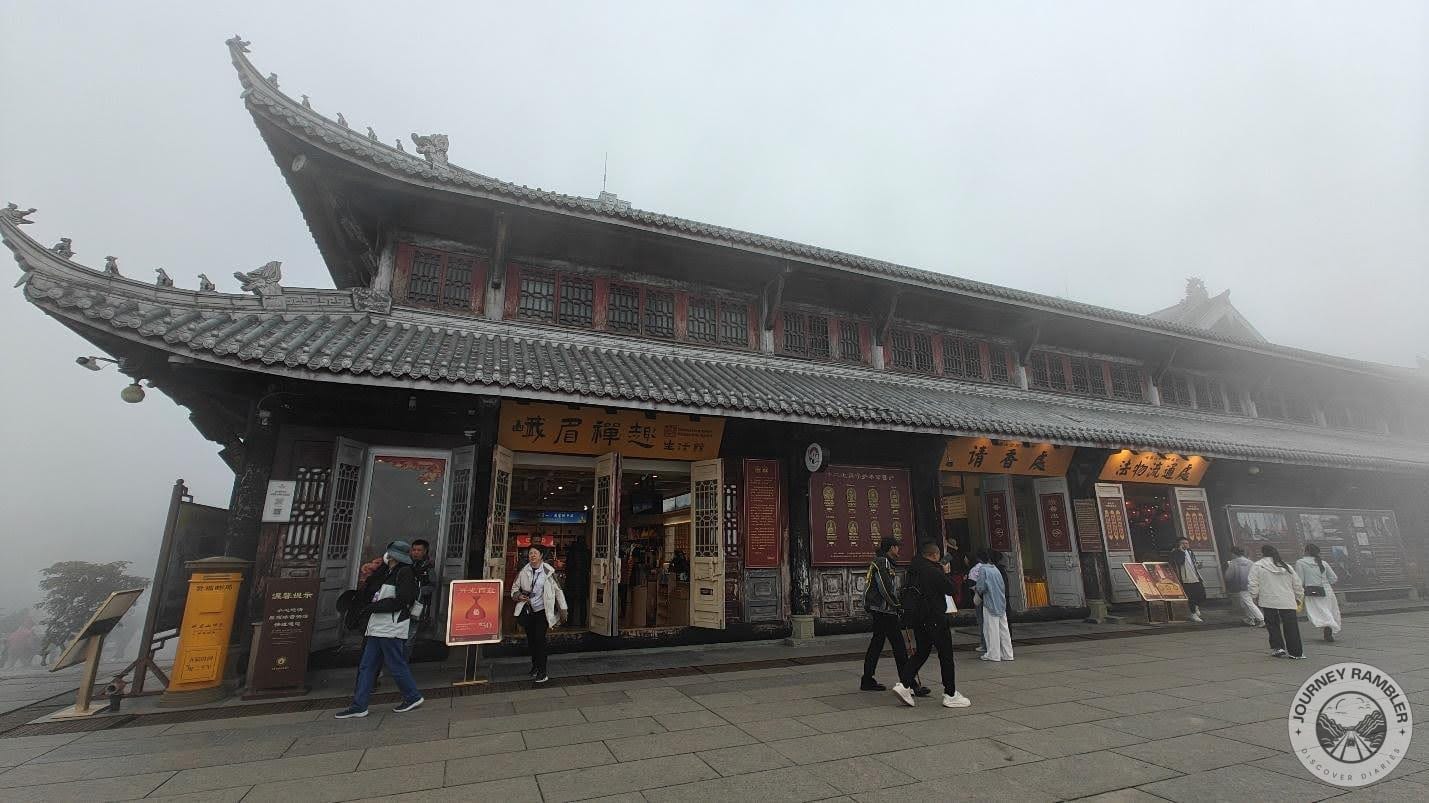
Right next to the sign featuring the Eight Zodiac Guardians is the entrance to where you can get incense. Take note that much like most Buddhist temples, the incense here is not free. Typically though, the price for incense isn’t that exorbitant and should be relatively affordable.
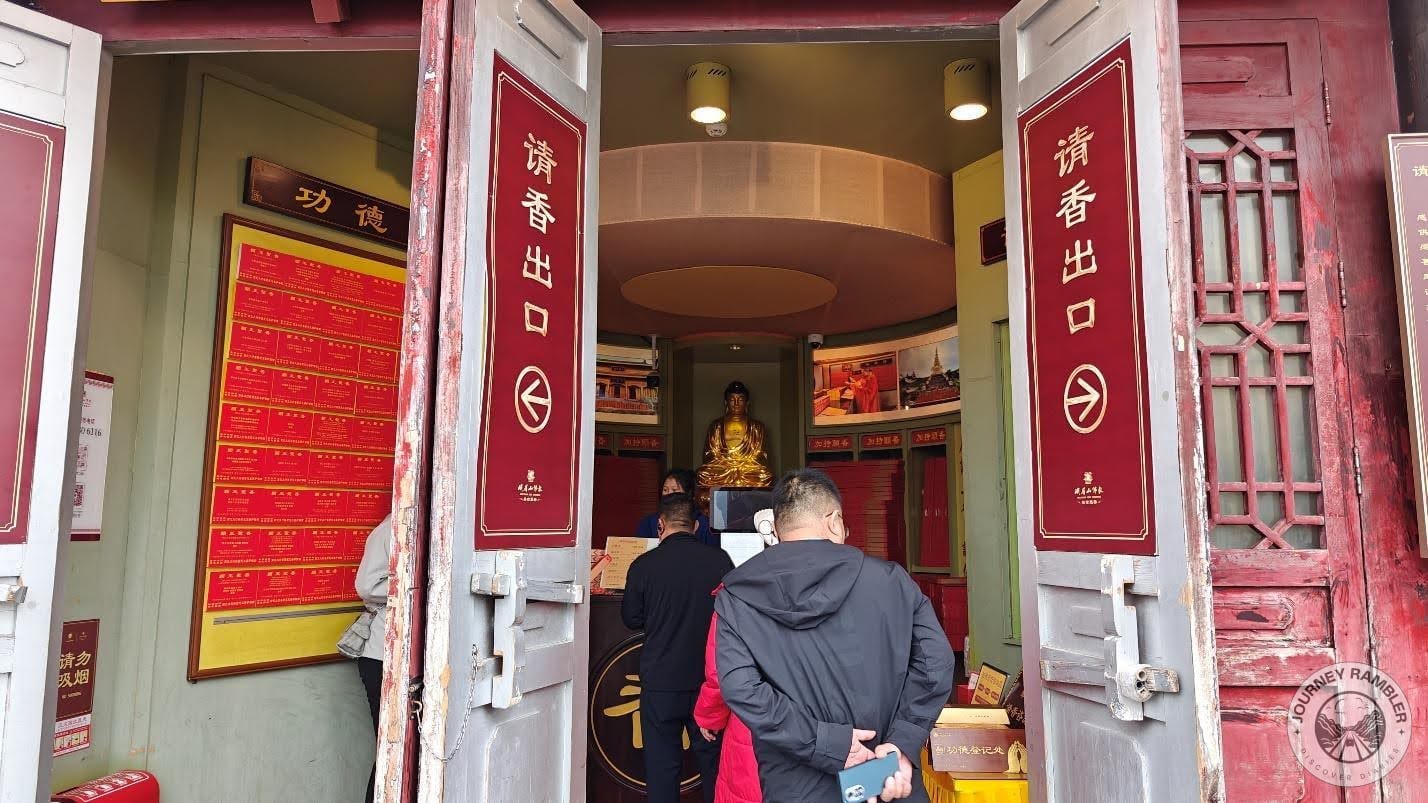
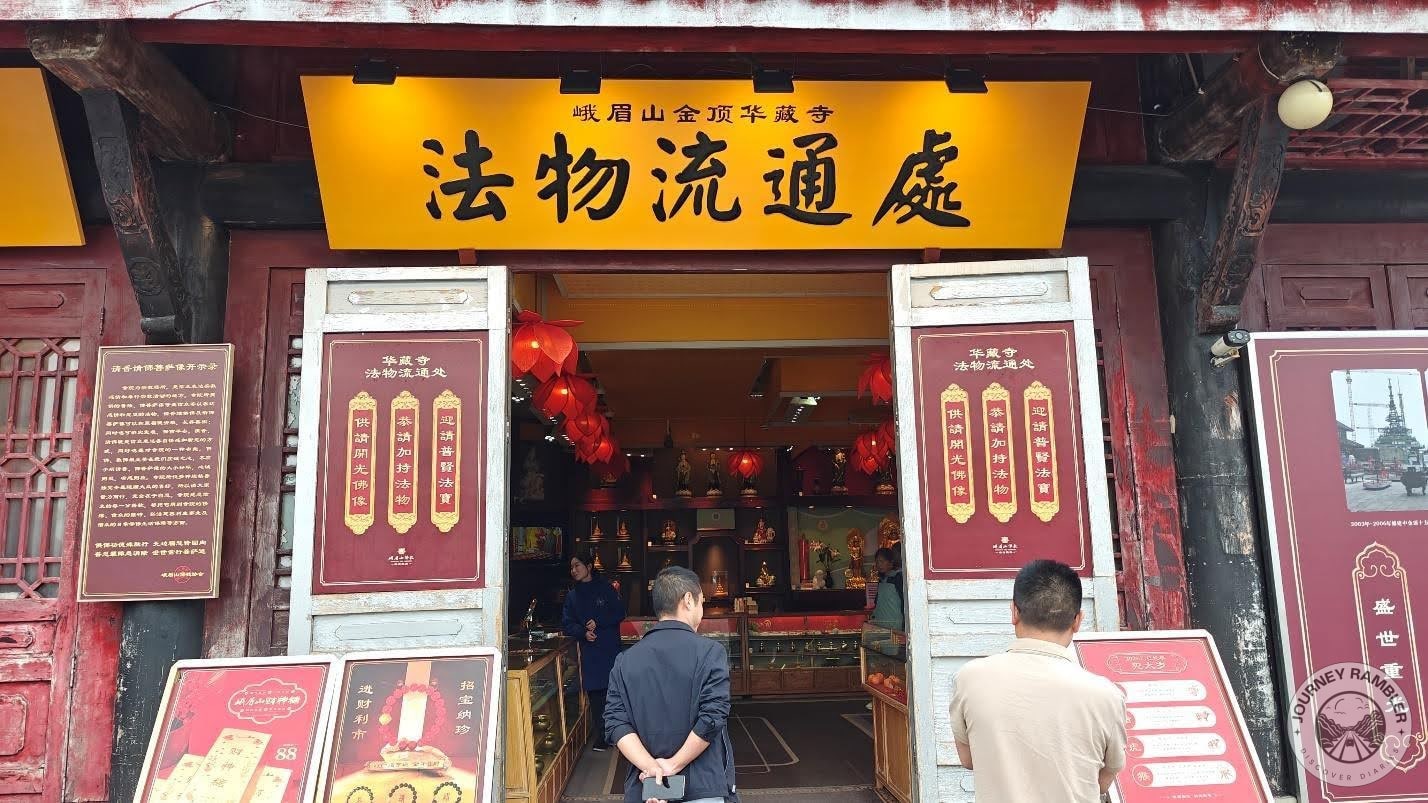
Beside the door where you can get incense is another door where you can purchase dharma items. These range from statues, prayer beads (mala), dorjes and bells, and stupas among others. Take note that you don’t strictly have to be Buddhist to buy these dharma items. Most people actually purchase these as souvenirs for themselves or their loved ones.
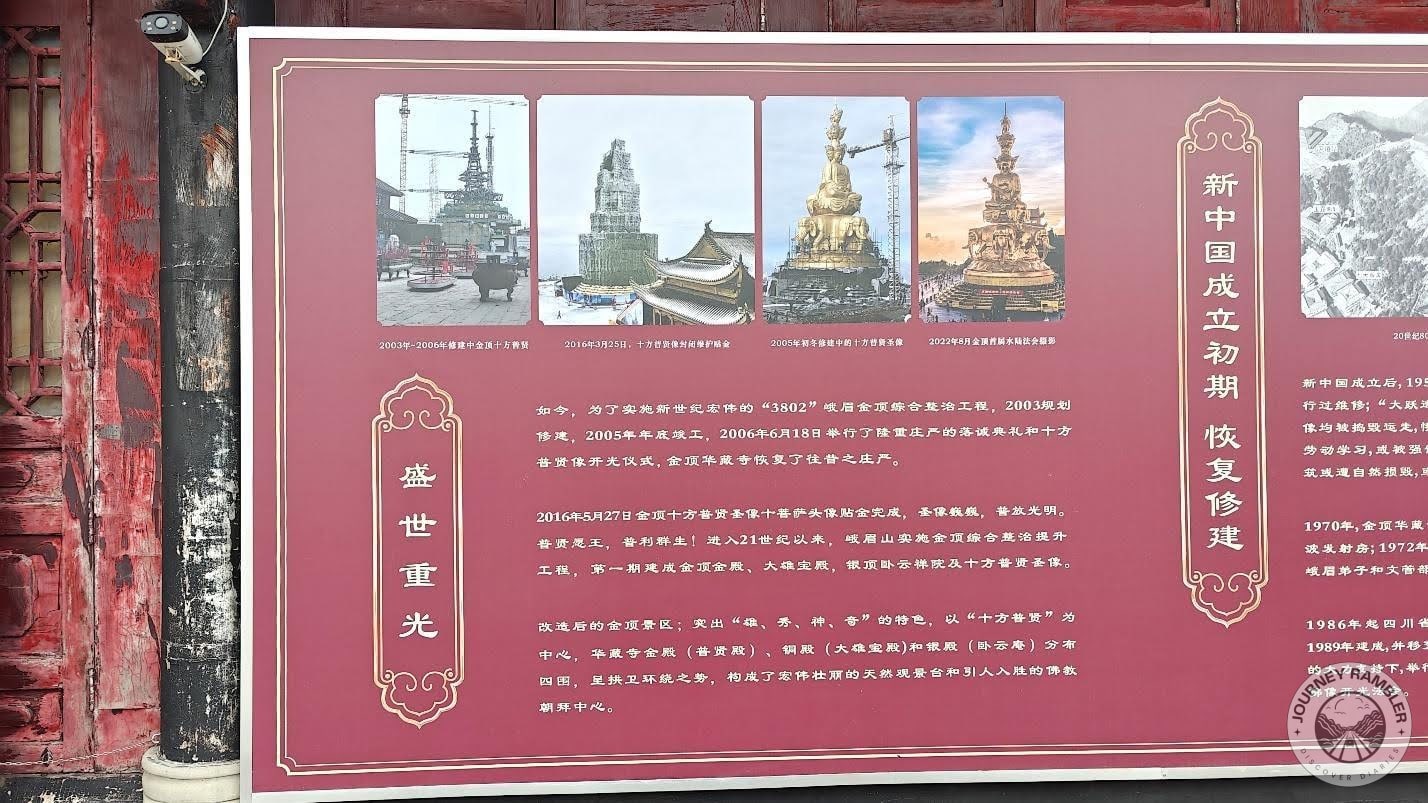
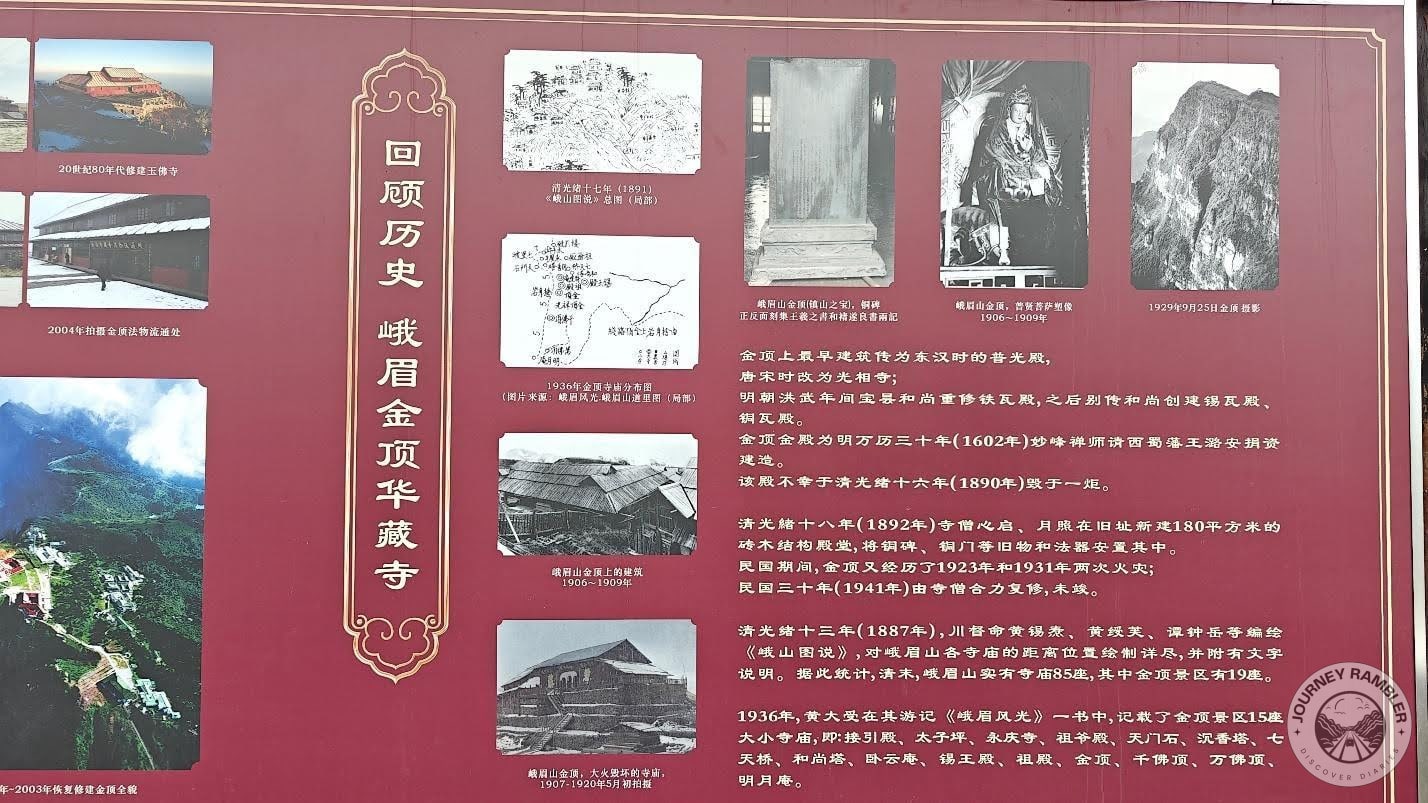
Just a little to the right of the entrance to where you could purchase the dharma items are these infographics that I think are worth reading. The one in the image details how the Puxian Bodhisattva was constructed. It talks about the start of the statue’s construction in 2003 followed by its completion in 2005. The gold plating though wouldn’t be completed until 2016.
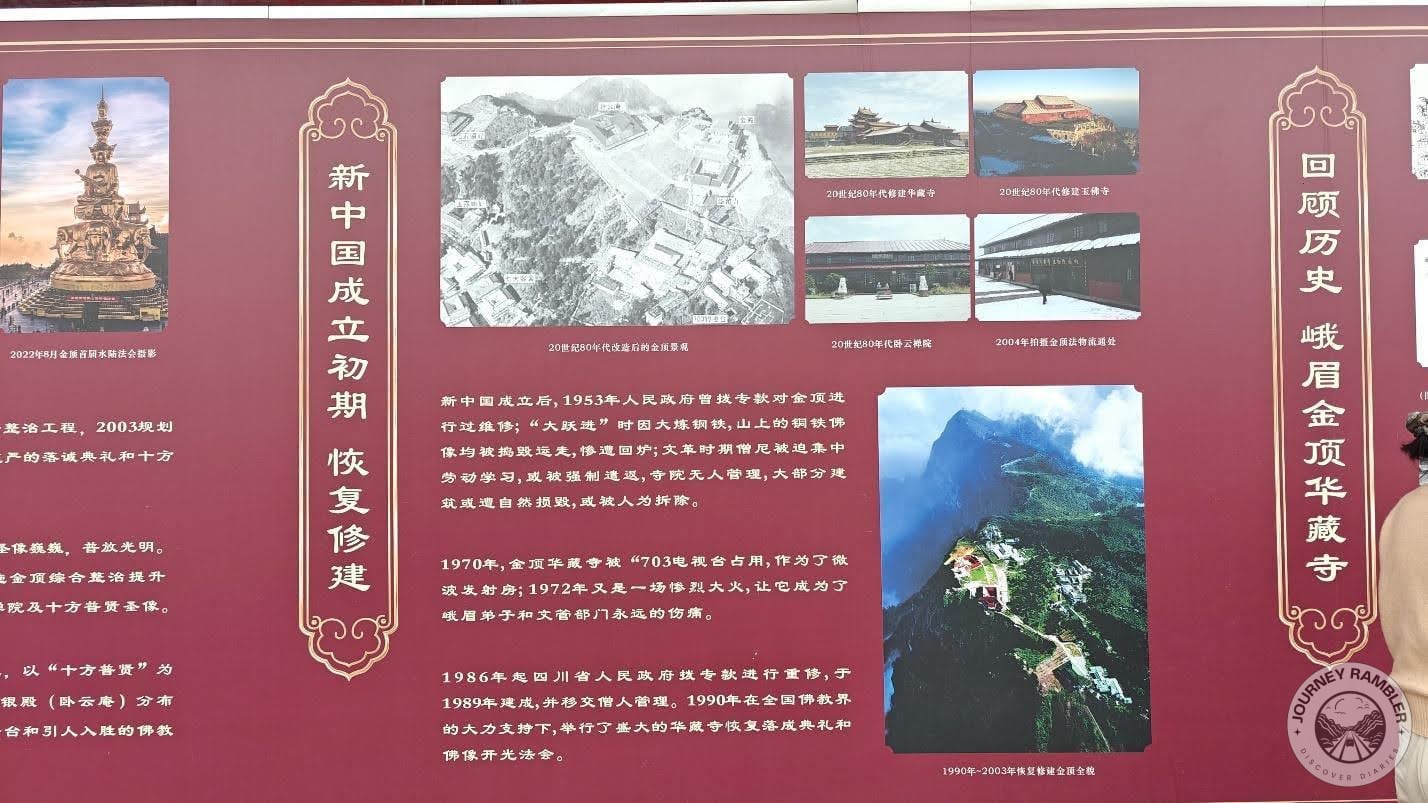
Other than the Puxian Bodhisattva statue, the infographic also covers the recent history of the Golden Summit scenic area. It talks about the temple complex’s history starting from the 1950s up until the start of the Sichuan Provincial People’s Government’s reconstruction efforts in the mid-1980s. What’s interesting here is that for a stretch of time in the 1970s, the temple complex was turned into a microwave transmission station for a television station.
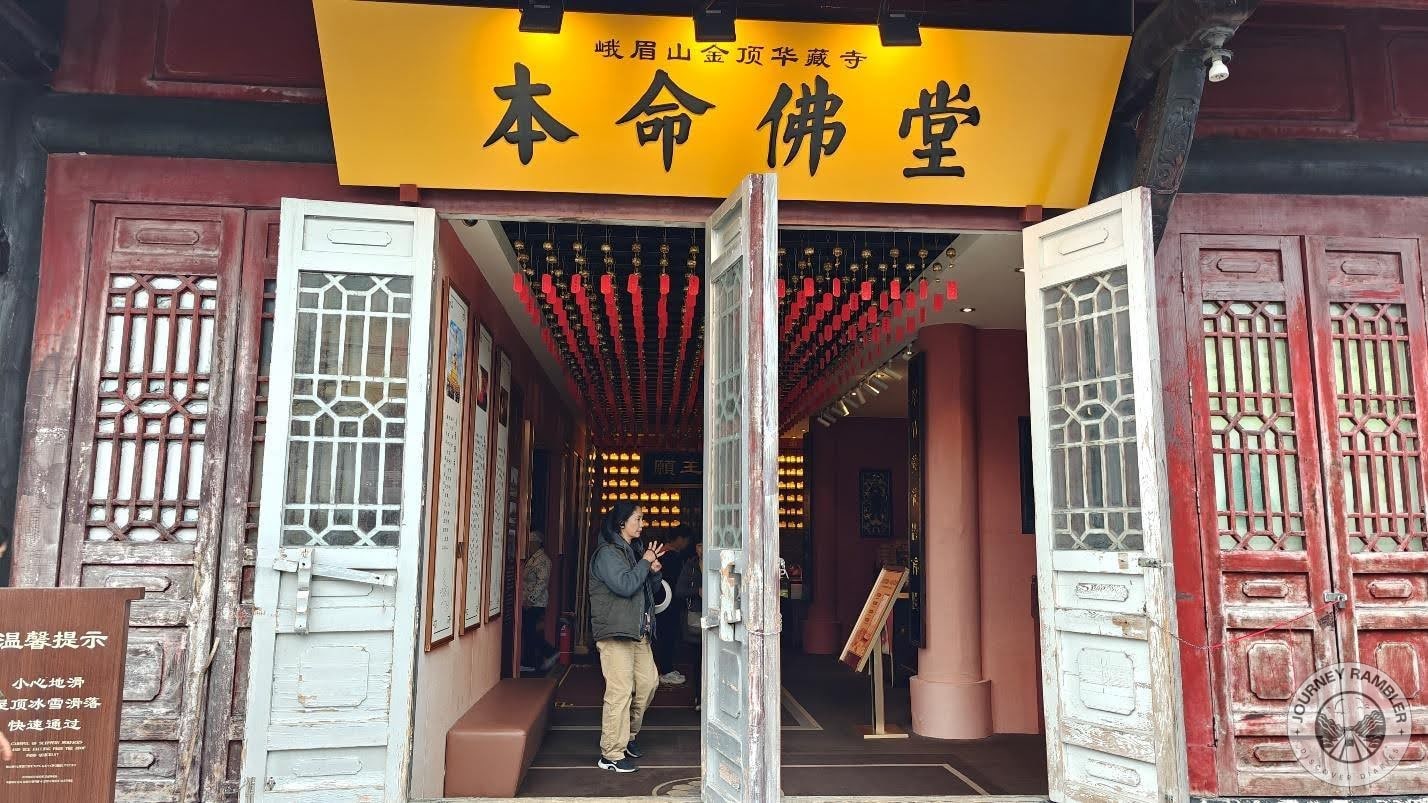
Here you’ll find the Zodiac Buddha Hall. Remember the Eight Zodiac Guardians I talked about earlier? This is where you can pray to the one designated for your birth year.
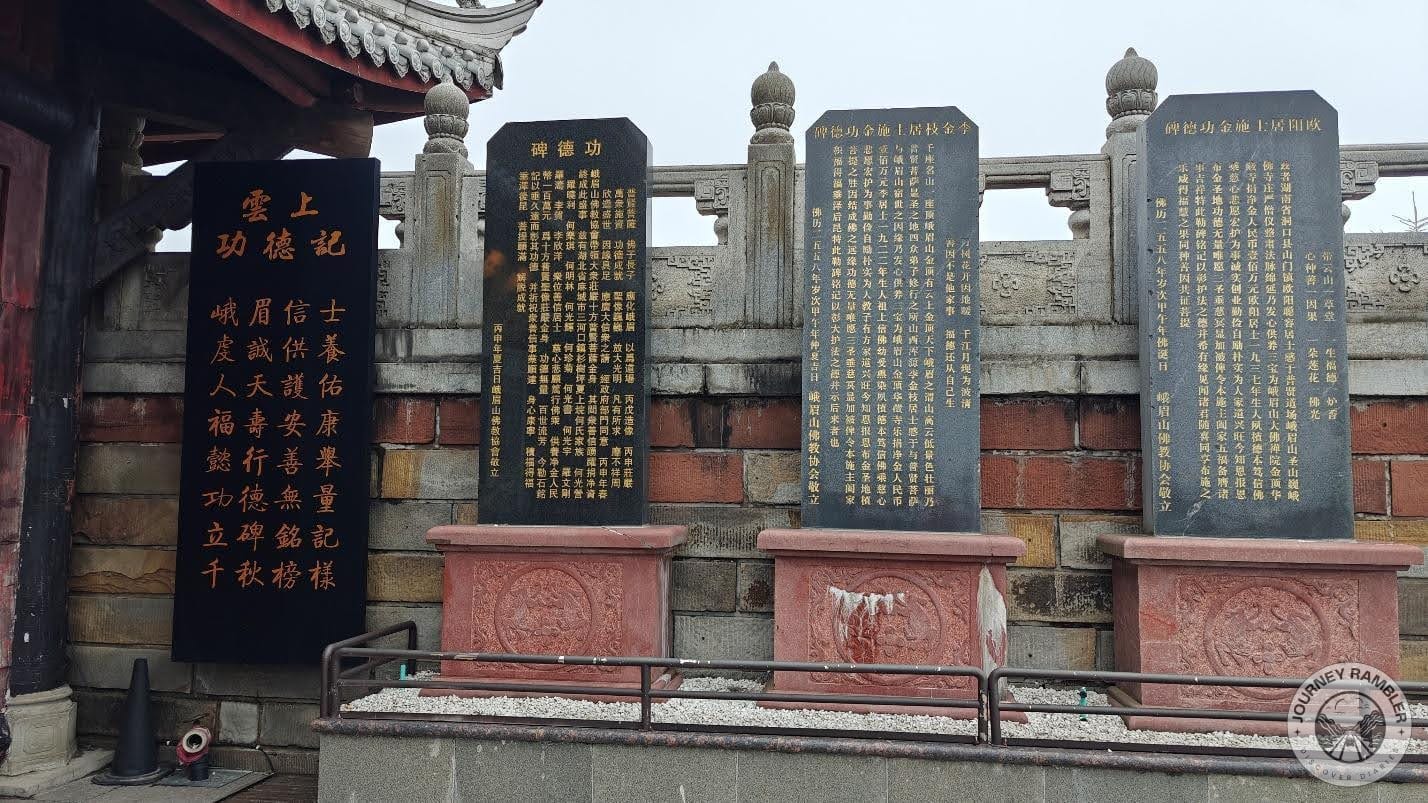
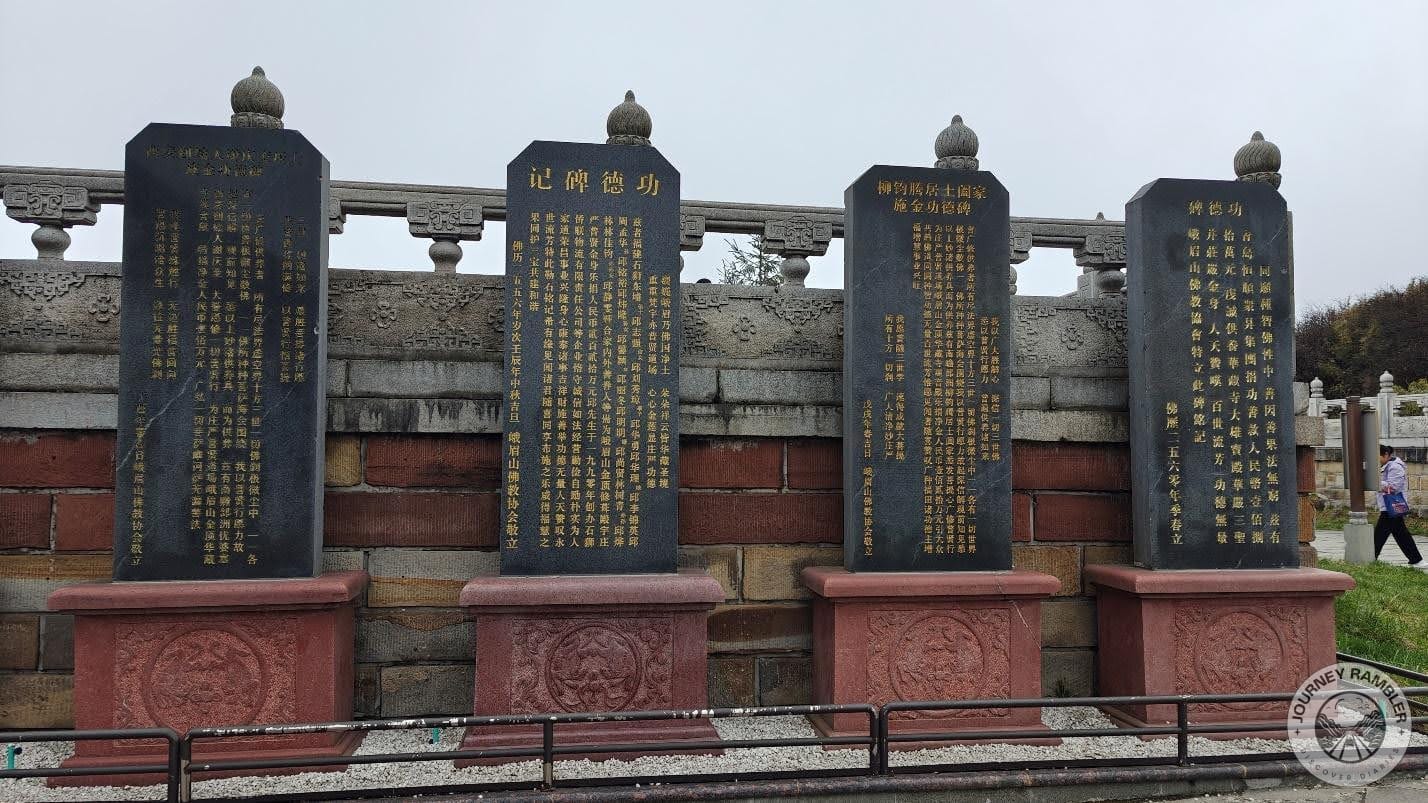
It’s not just the Bodhisattvas that are honored here at the Golden Summit. There are also steles like the ones pictured that honor the efforts of devotees and practitioners. The ones pictured here specifically honor individuals who had contributed monetarily to the different Buddhist temples in the country.
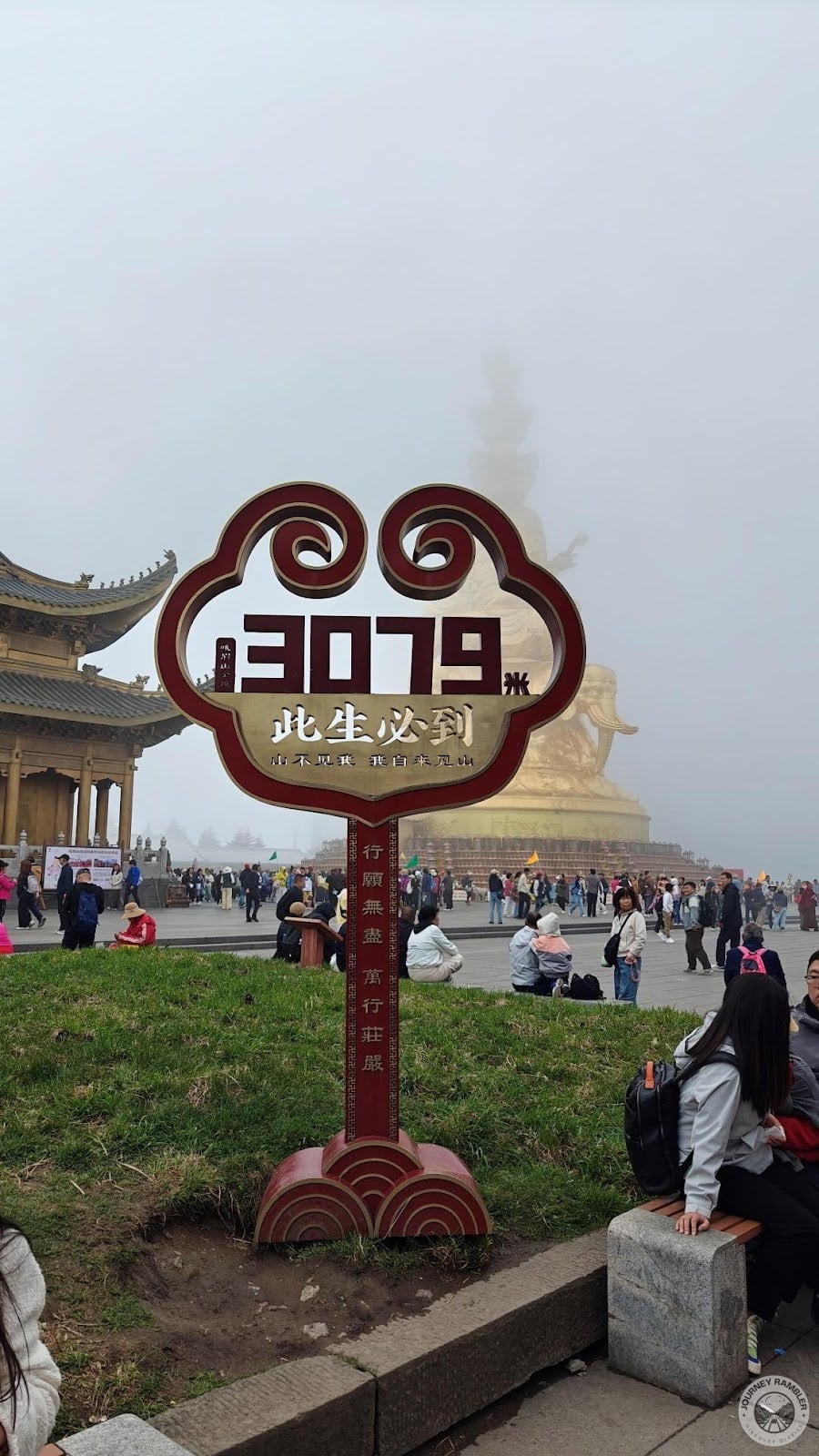
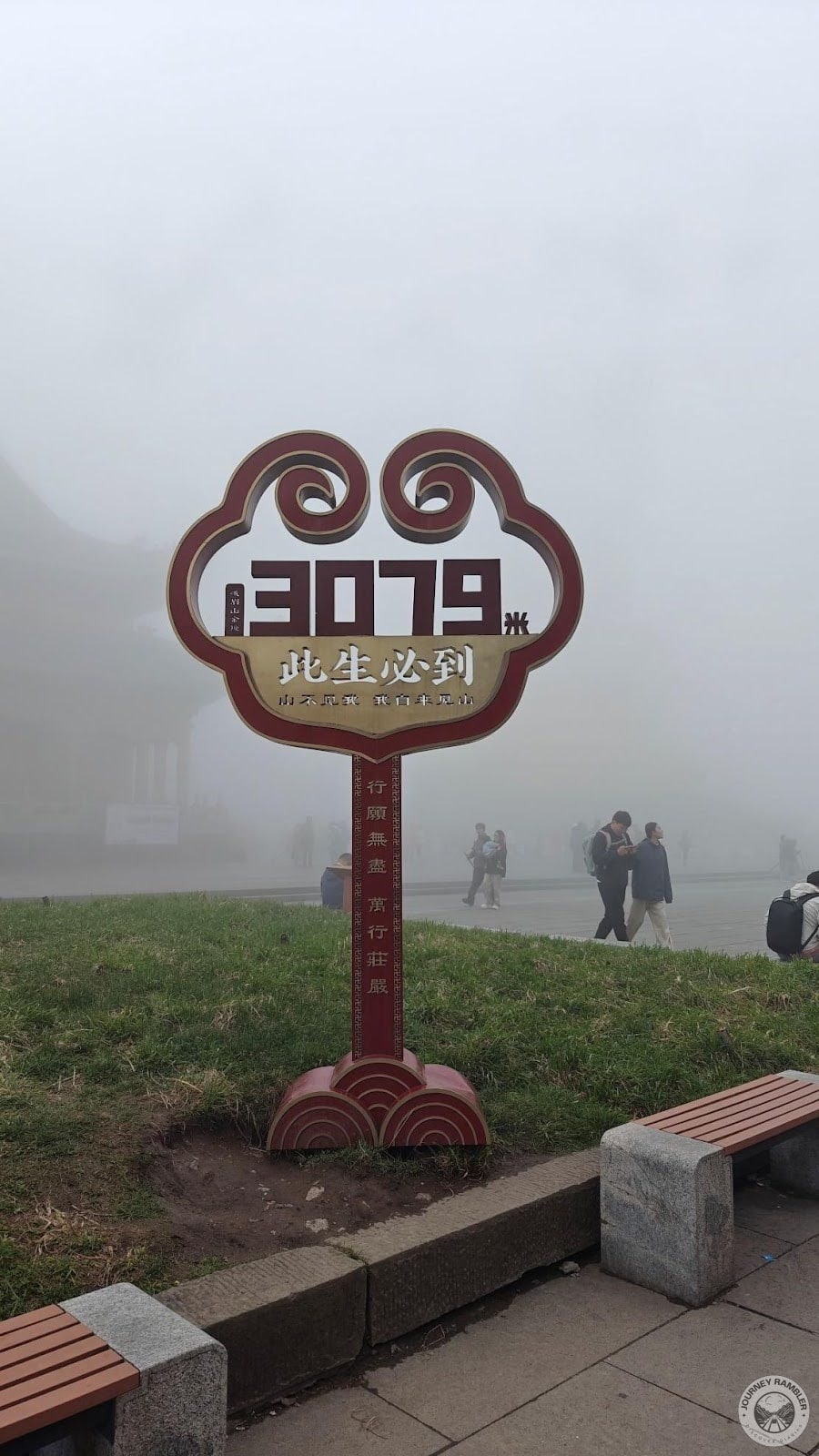
This is the altitude marker here at the Golden Summit. As you can see, I’m (as well as the people in this image) at a whopping 3079 meters above sea level. Behind the marker is the Puxian Bodhisattva statue that’s dramatically being enveloped by the clouds/fog.
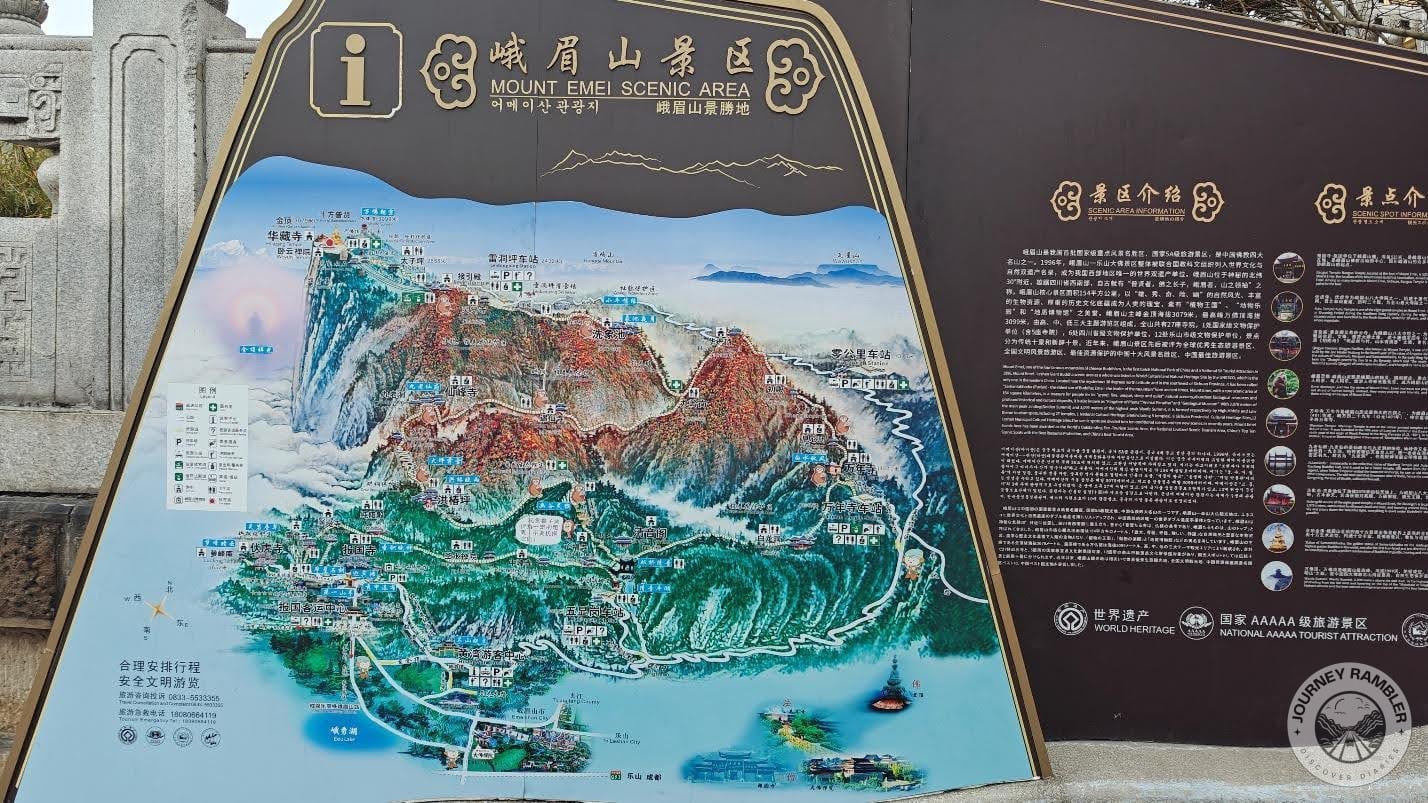
Here’s a copy of the guide map you saw at Leidongping. I’m not sure if you can see it clearly but the red dot indicating the area this map is located is now at the top of the mountain.
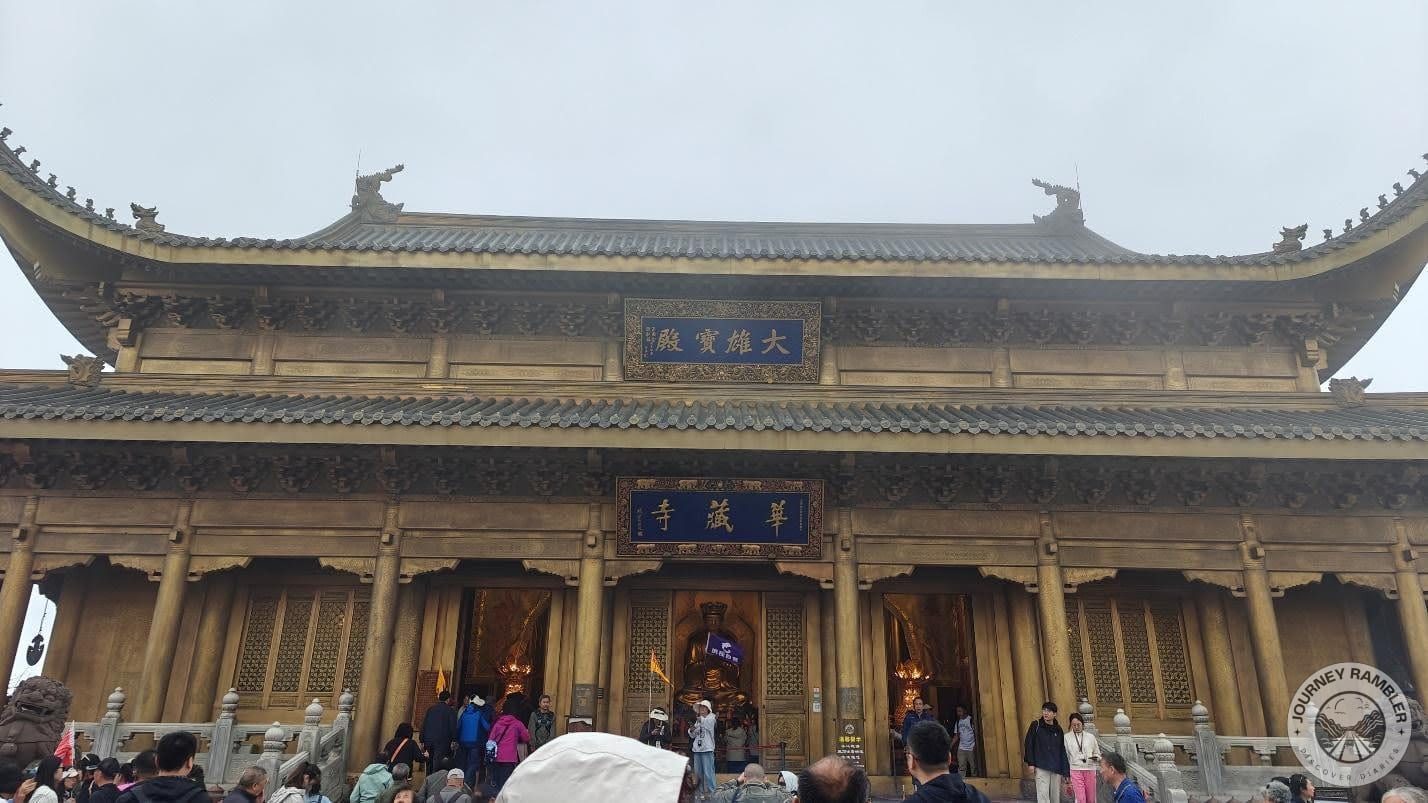
This is the Great Treasure Hall of Huazang Temple that’s found here at the Golden Summit. Now one of the signs (the lower one) says that it’s Baoguo Temple but I think this is supposed to be its old name. I’ve also read that the name Jinding (or Golden Summit) actually pertains to the temple.
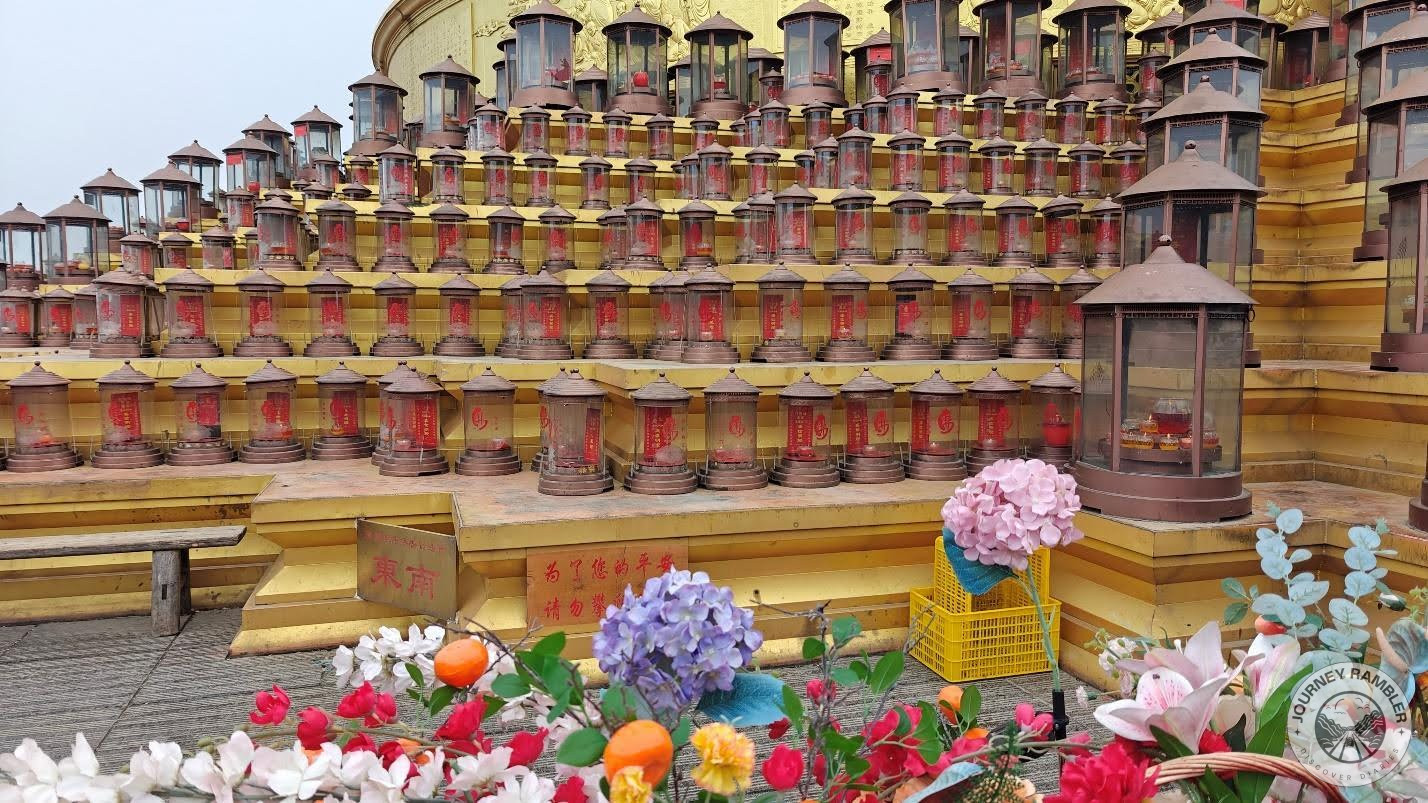
Going back to the Puxian Bodhisattva, I was kind of intrigued at the presence of these lanterns. Found on the steps at the statue’s base, the lanterns featured lit candles that symbolize guidance, wisdom, and enlightenment. Perhaps when (and if) I get back here, I might be able to see how these lanterns look at night.
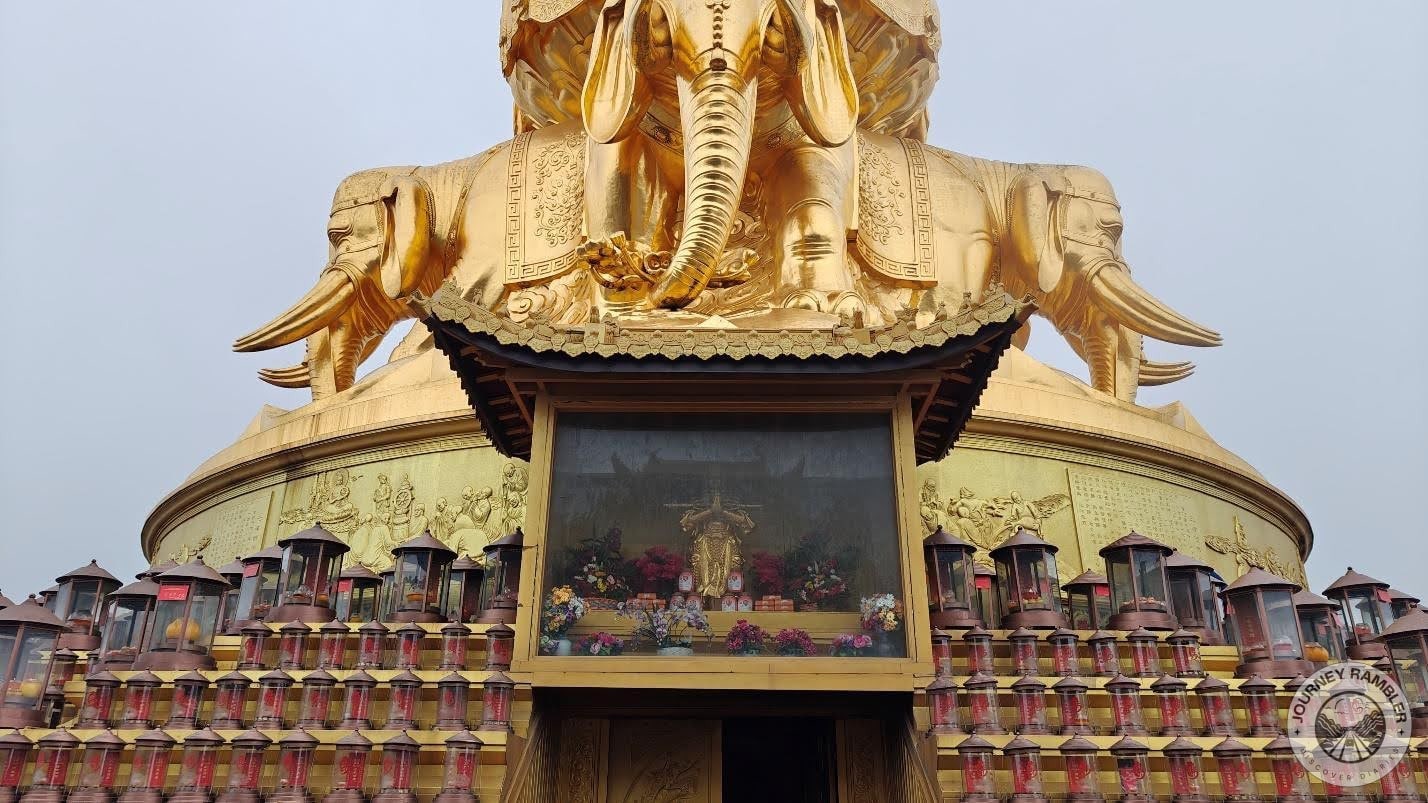
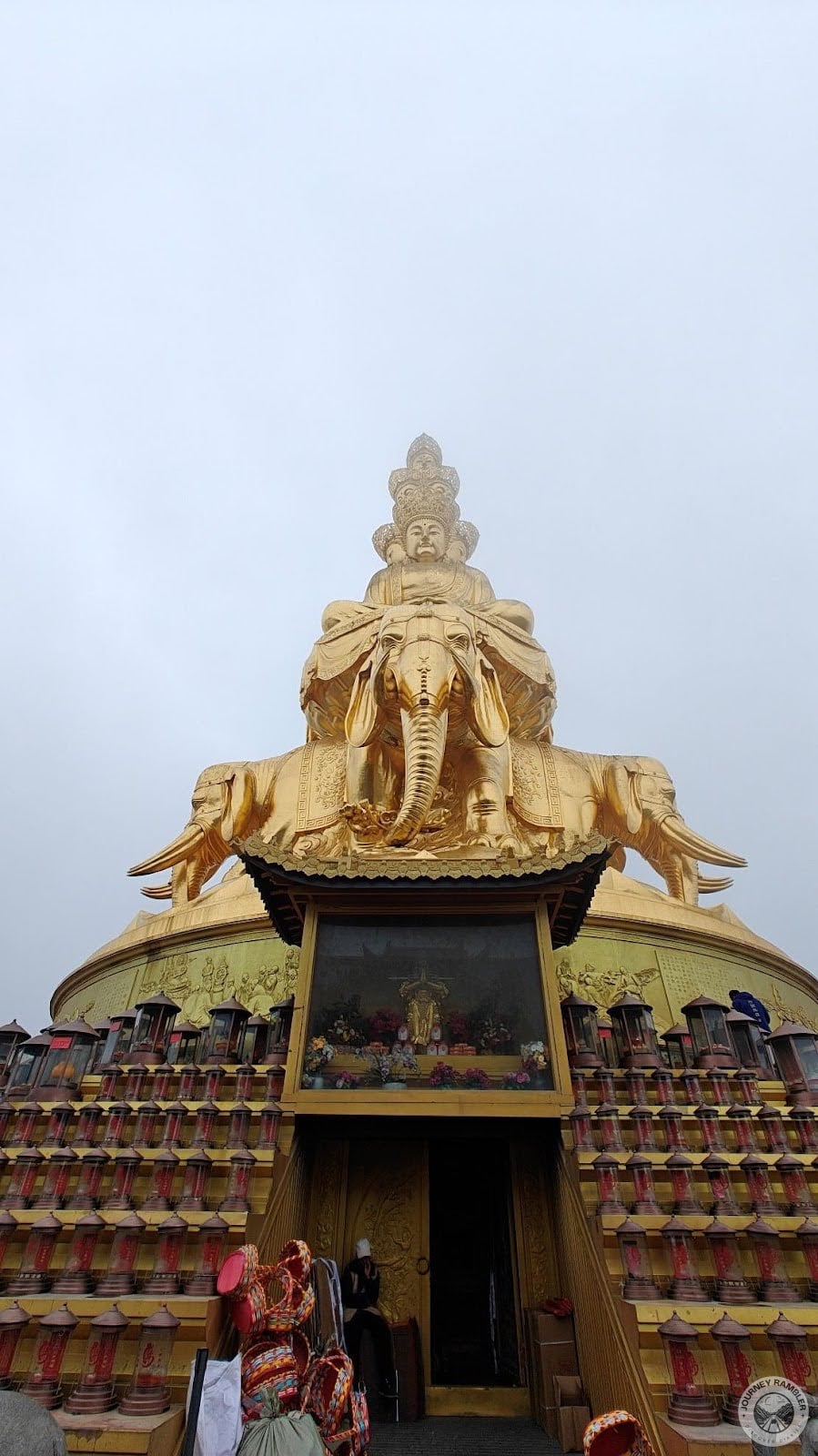
From the front, the Puxian Bodhisattva statue looks really magnificent (for lack of a better term). I wonder how much better it looks though if the weather on top of the mountain actually cleared up. I can just imagine how shiny it’ll look after getting hit by sunlight.
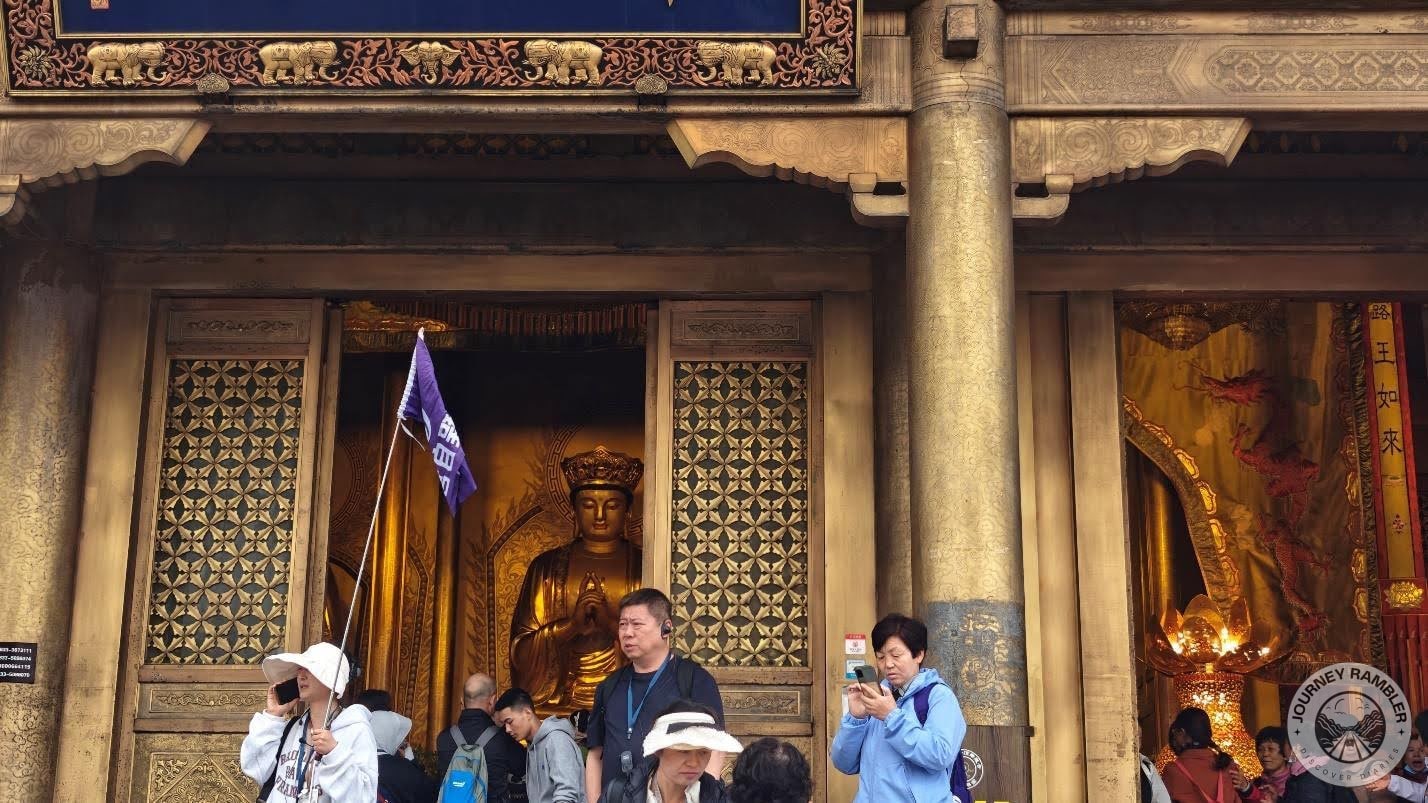
From this angle, you can see a glimpse of the inside of the Great Treasure or Mahavira Hall of the Huazang Temple. The area was a bit crowded so I decided to avoid going there. I will say though that the inside looked absolutely spectacular with the Buddha statues and all the gold fixtures and designs.
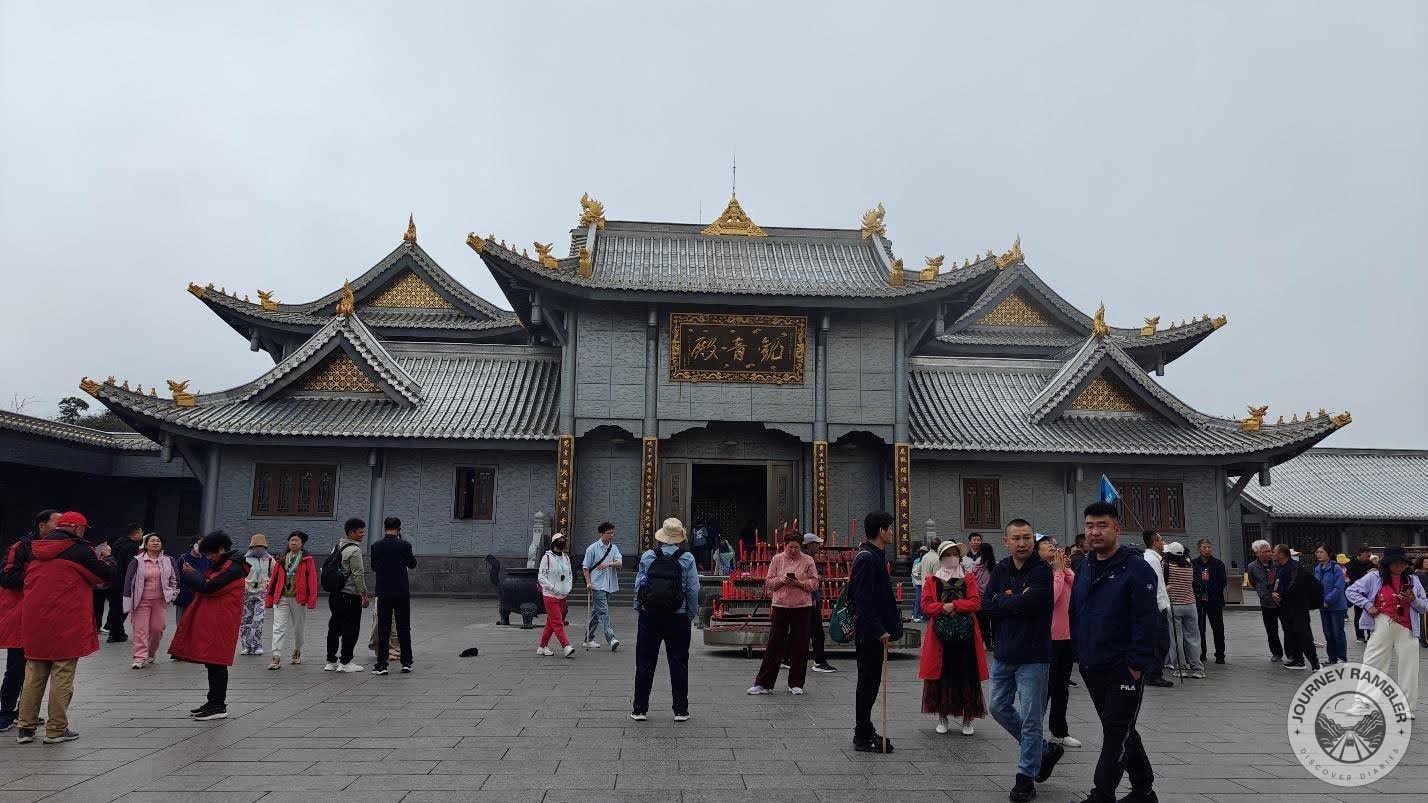
This was another building that I thought was interesting. If I’m not mistaken, this is the Jade Buddha Temple which is still part of the Huazang Temple complex. It’s not as busy as the Mahavira Hall and definitely not as flashy but it’s actually full of surprises once you get inside.
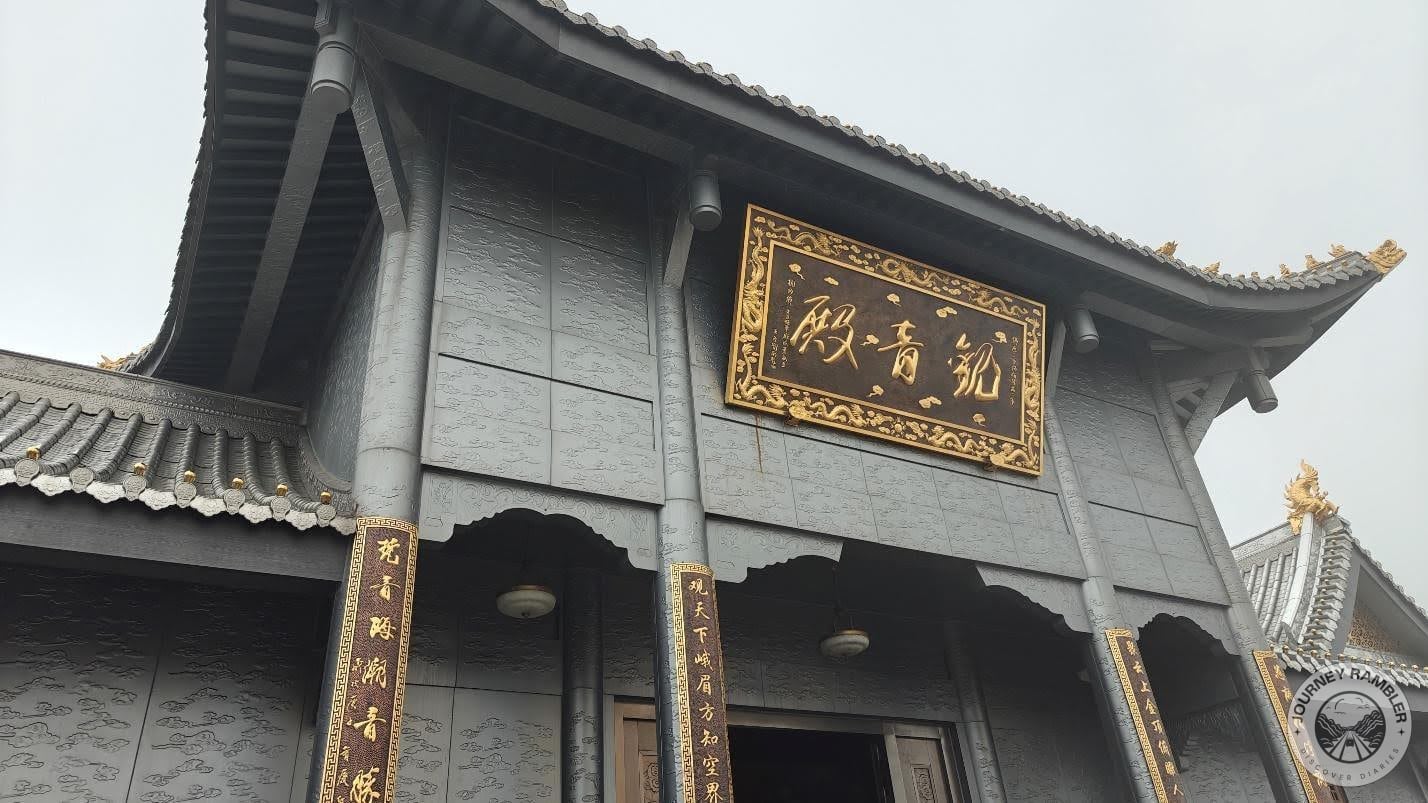
According to one of the infographics earlier, the building is one of the reconstructions made by the Sichuan People’s Government during the 1980s. Despite the traditional building style, its materials do seem very modern. Moreover, it also makes use of modern fixtures.
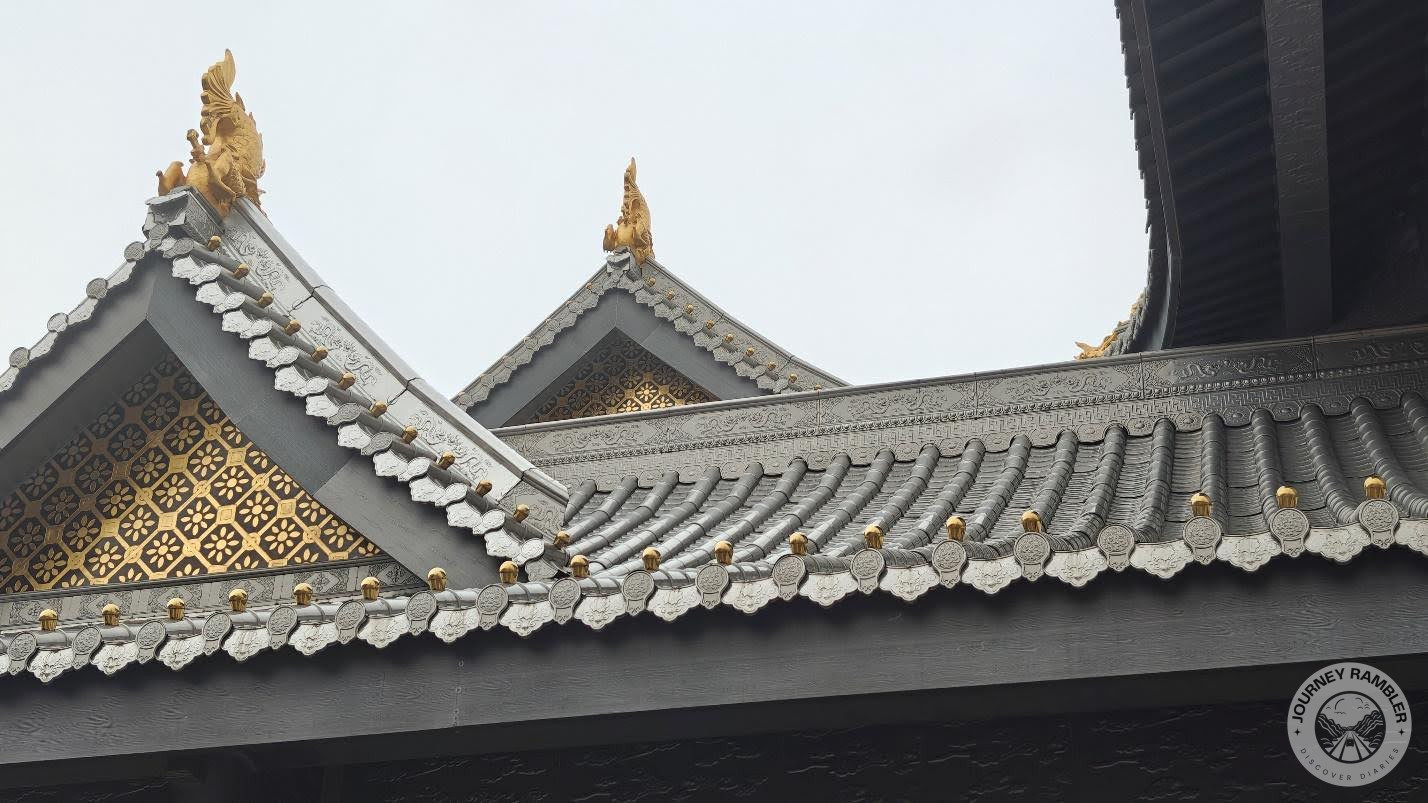
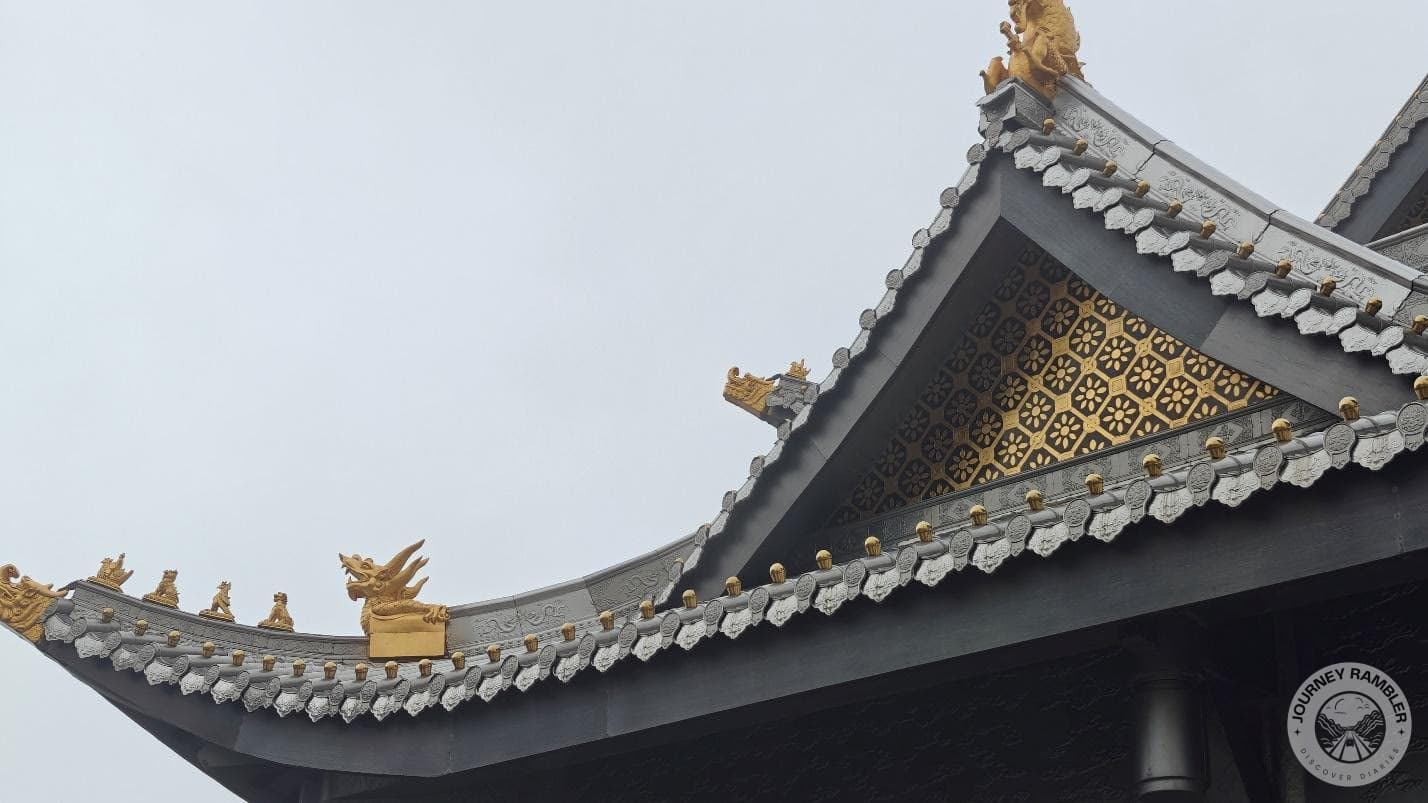
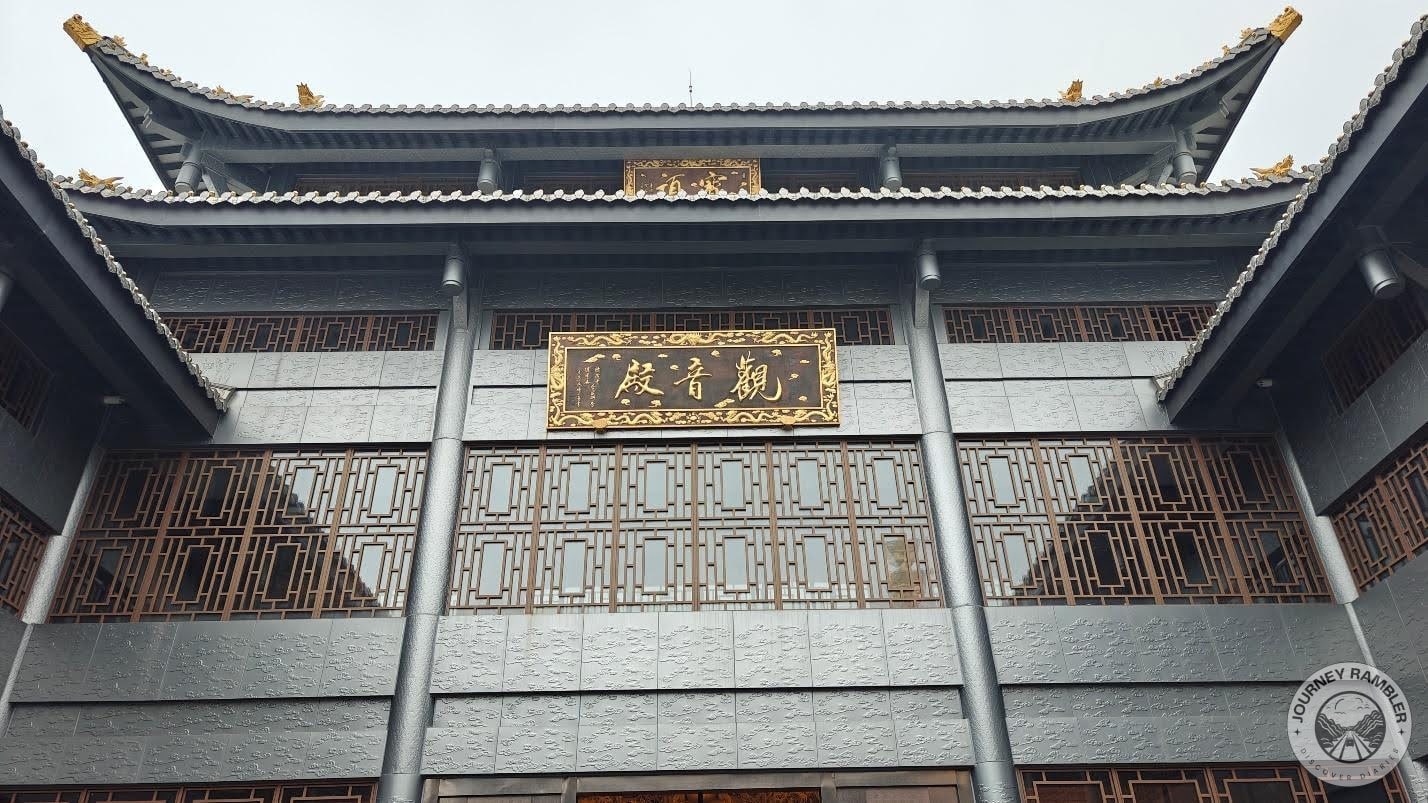
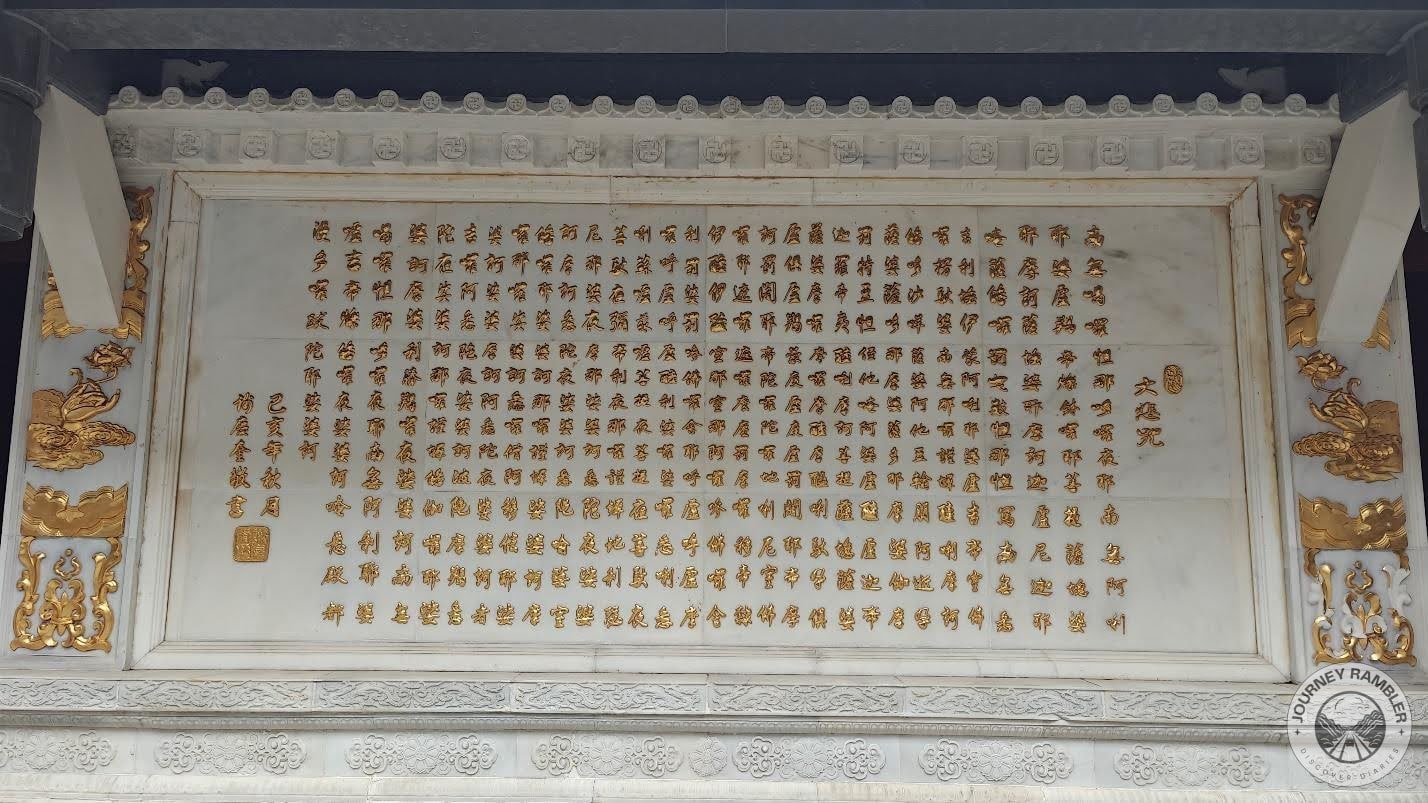
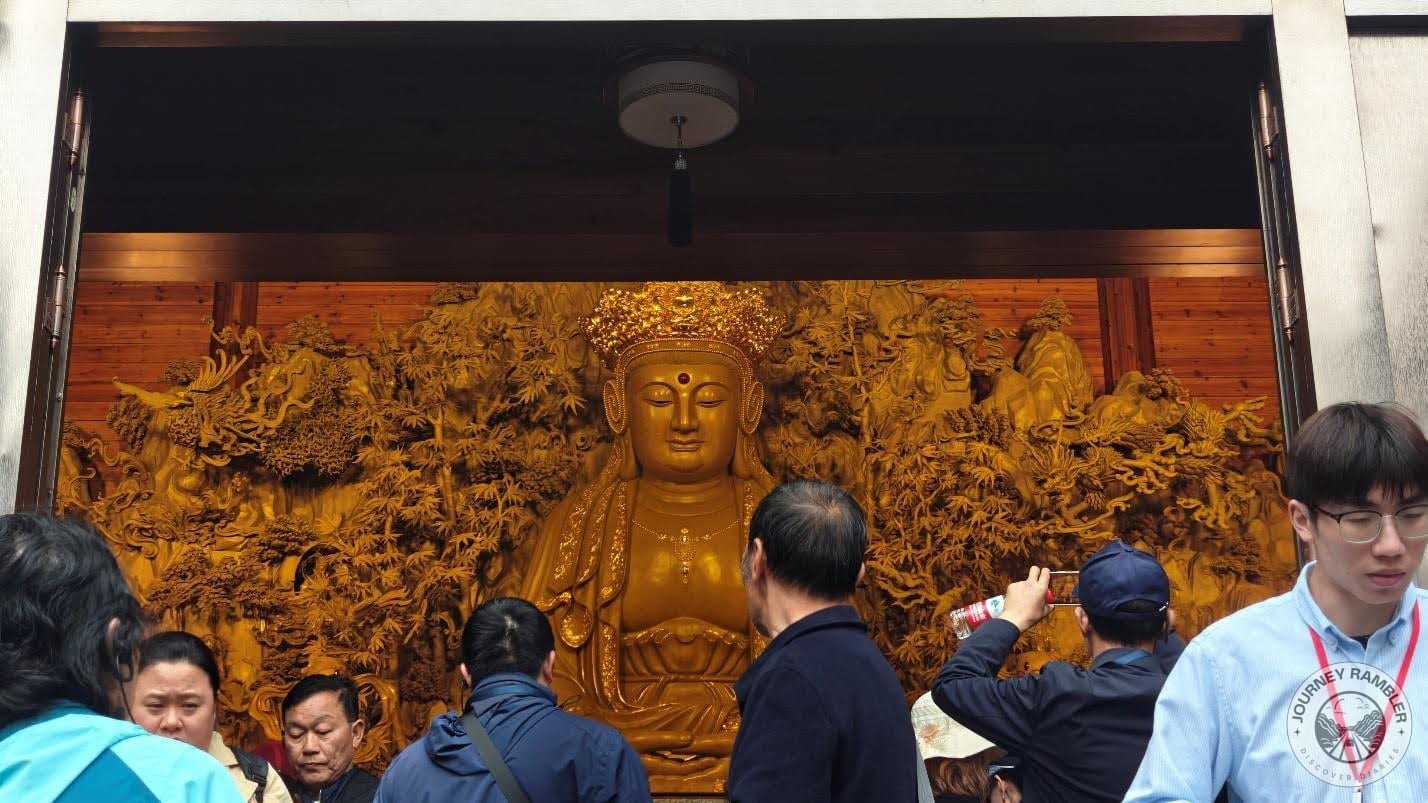
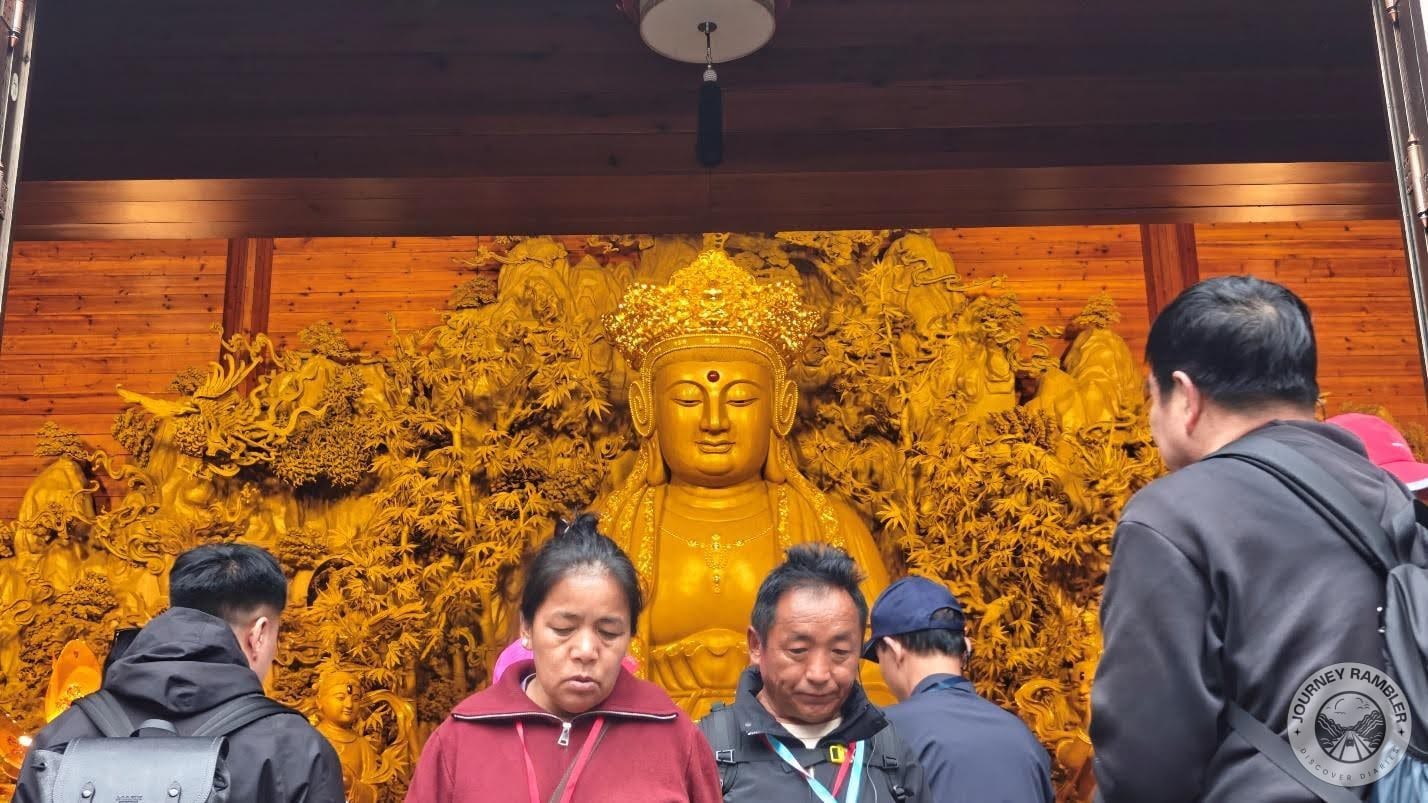
Here’s the Jade Buddha that the temple is named after. This was quite possibly one of the most intricately detailed Buddha statues I’ve ever laid eyes on. I’m not quite sure though if this is new though or if it’s a statue that’s been here even before the renovations.
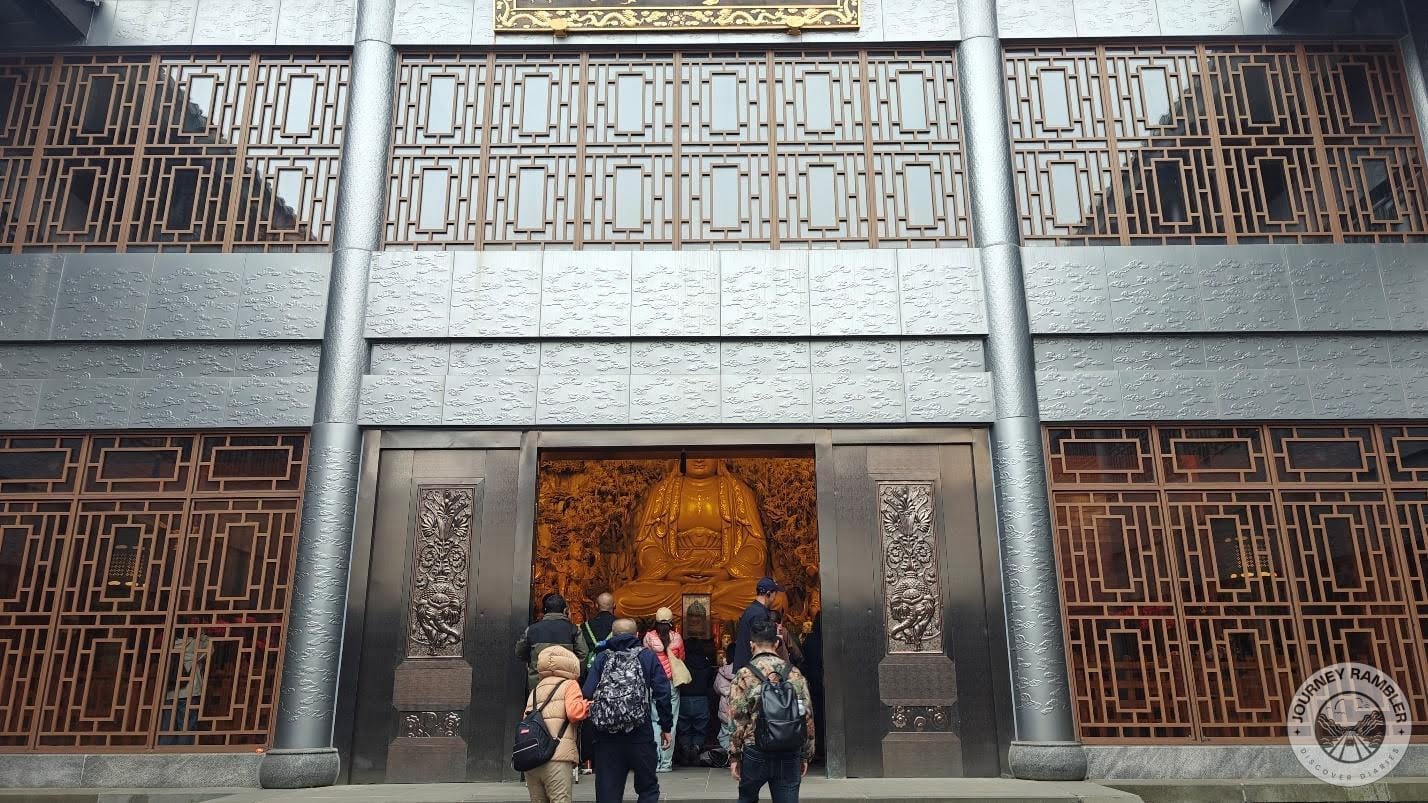
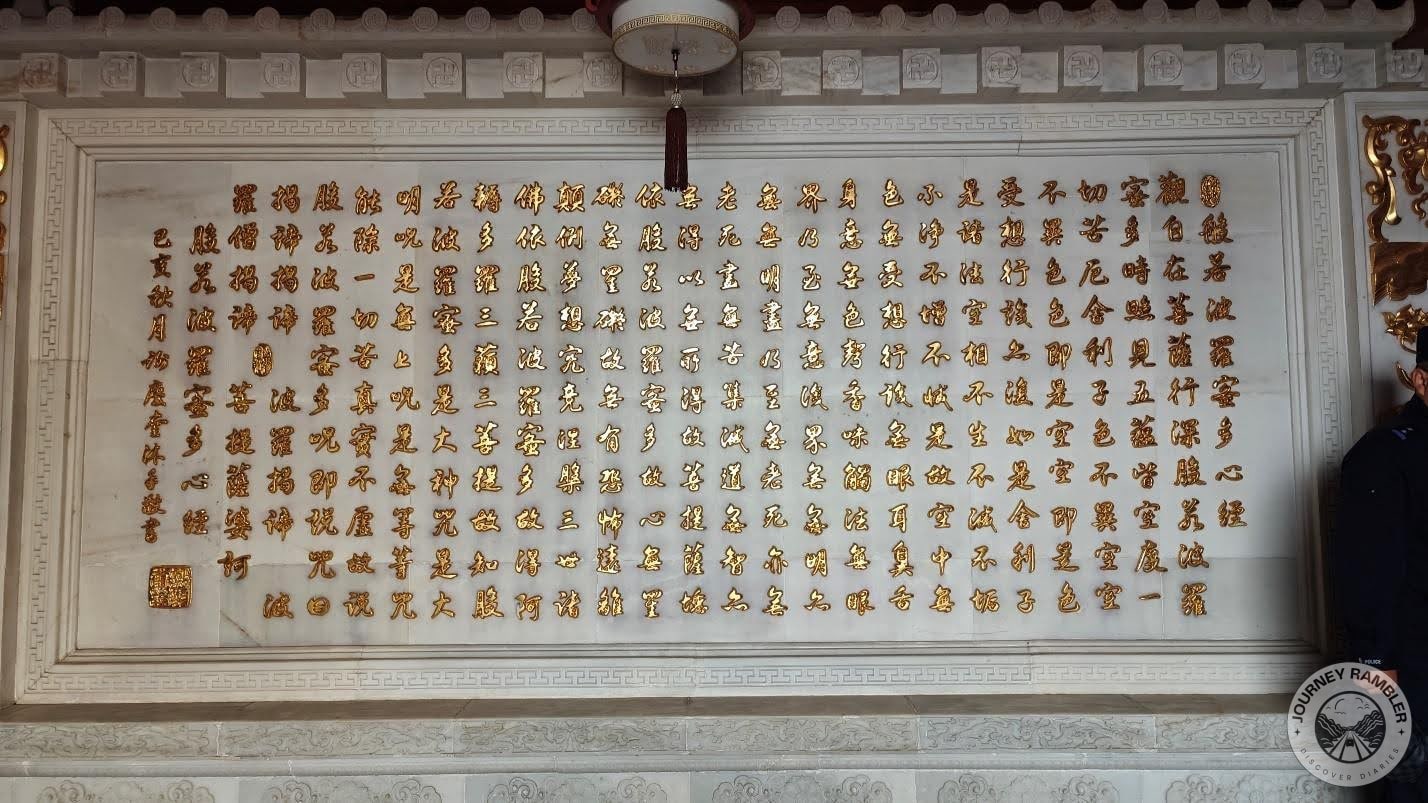
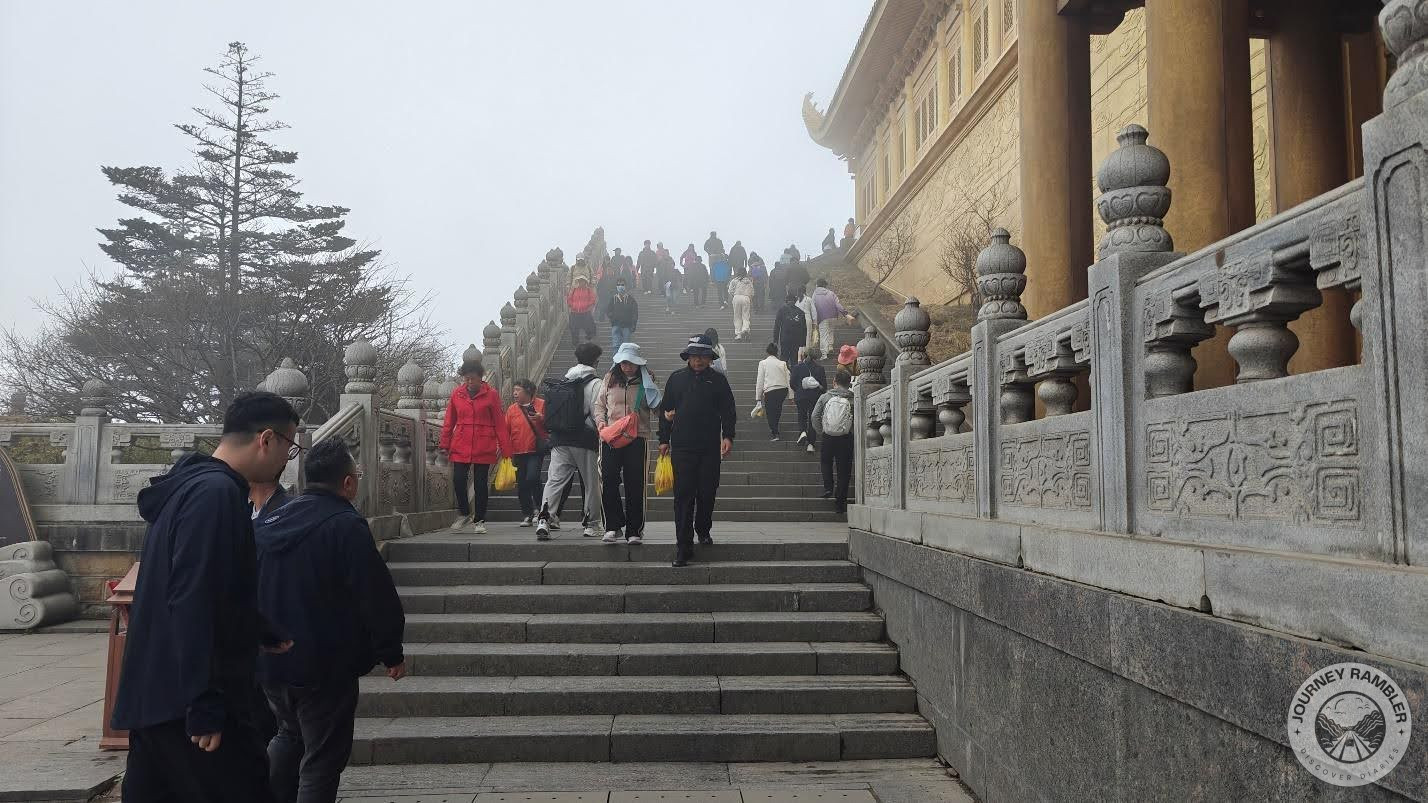
After visiting the Jade Buddha Hall and the Mahavira Hall, the final notable building I visited was the Golden Hall. To get there, I needed to climb up this set of steps. After all the climbing I’d been doing the whole day, these were relatively easy.
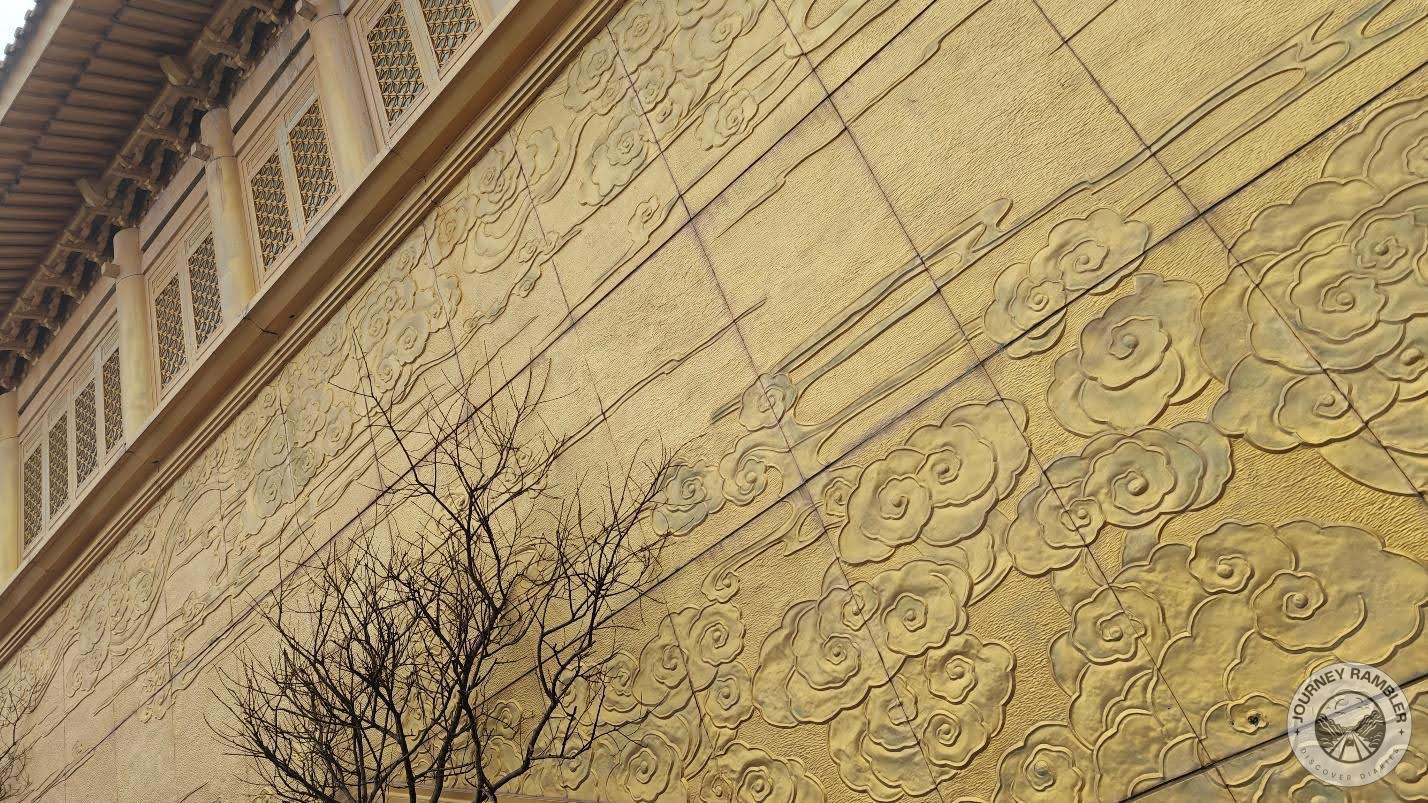
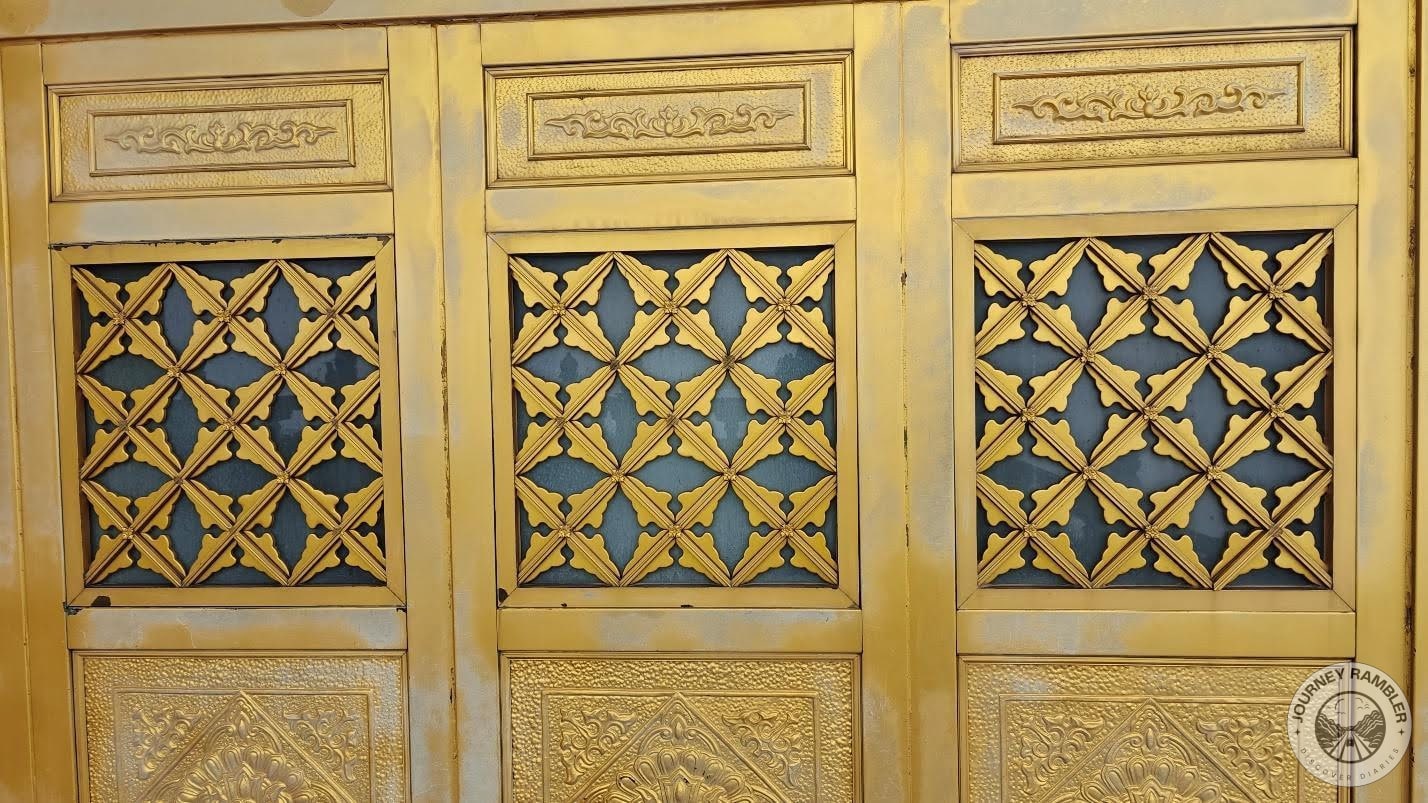
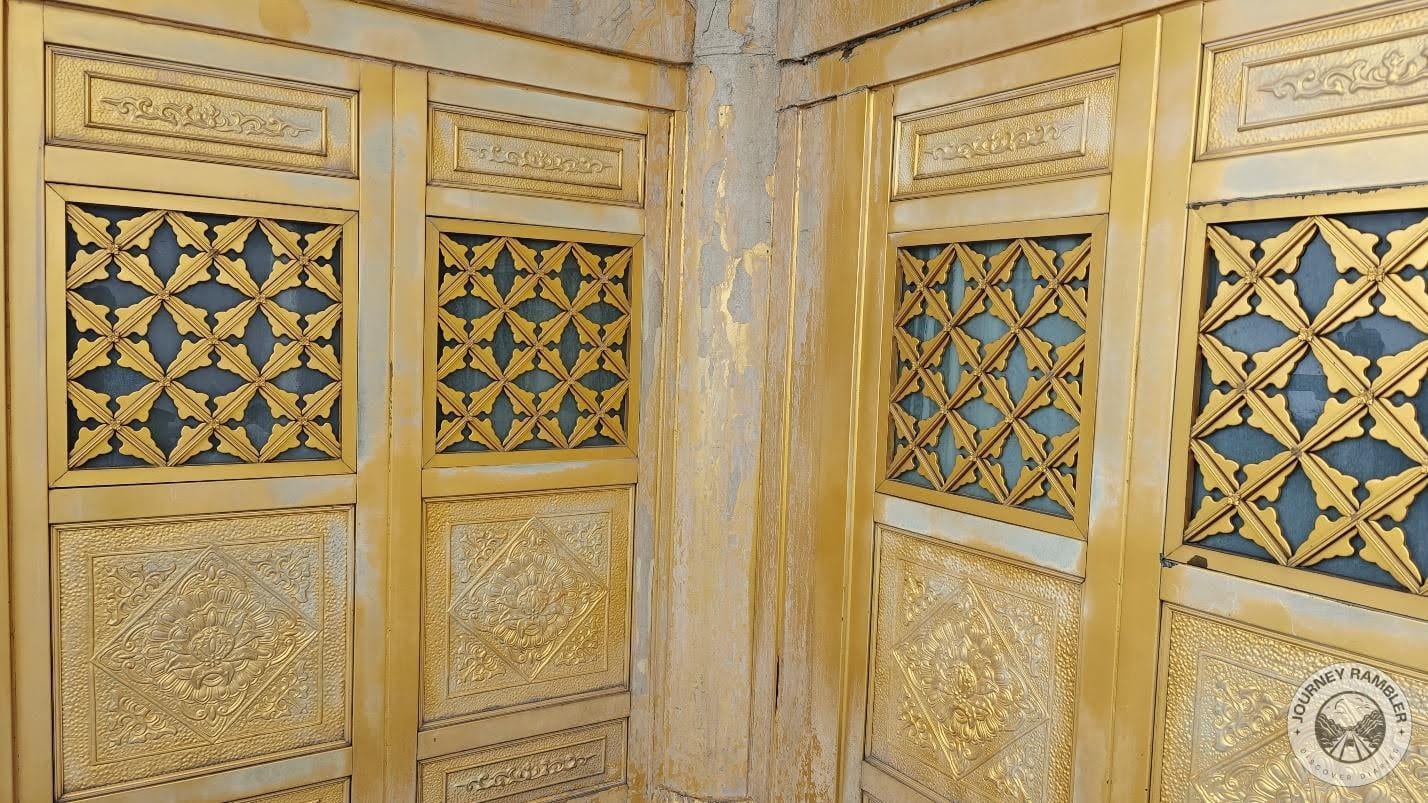
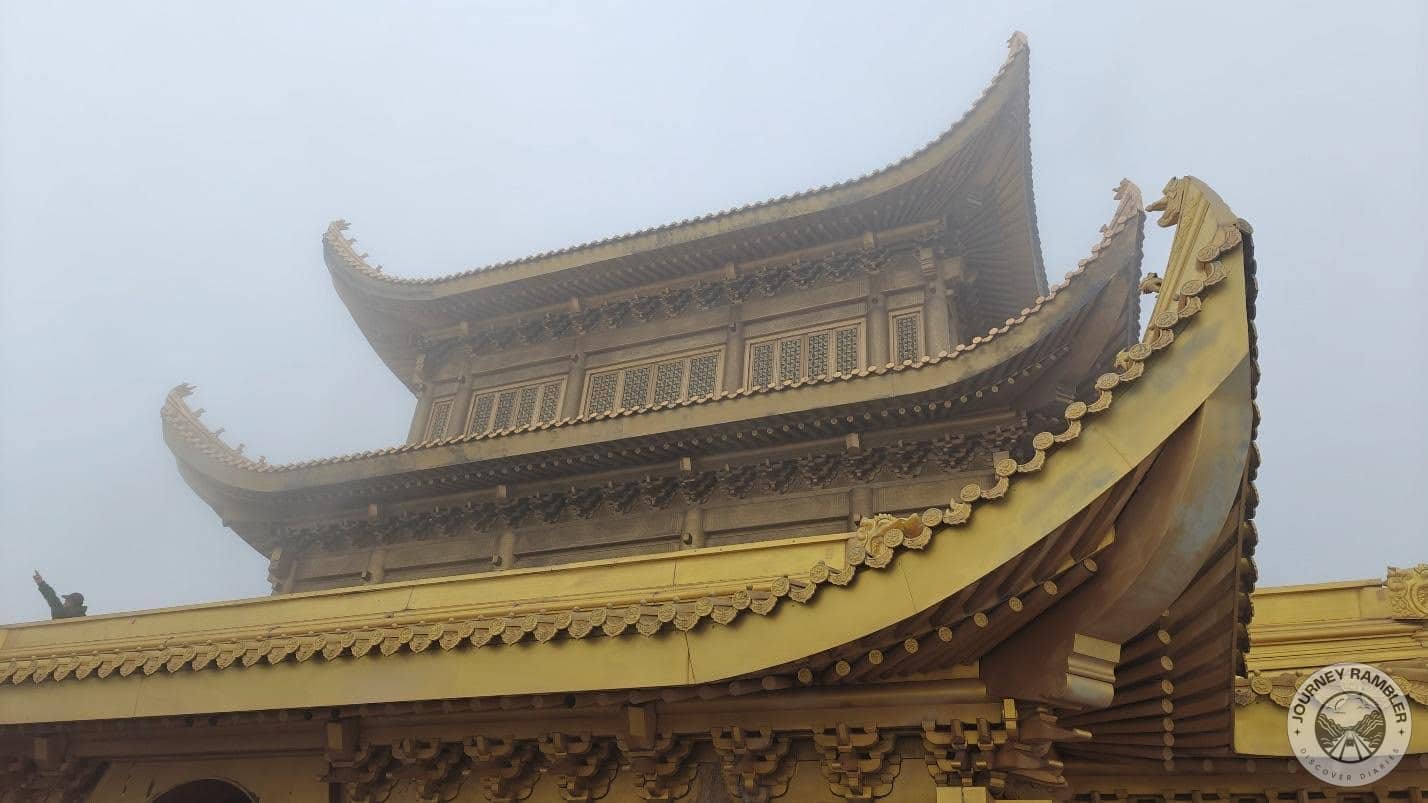
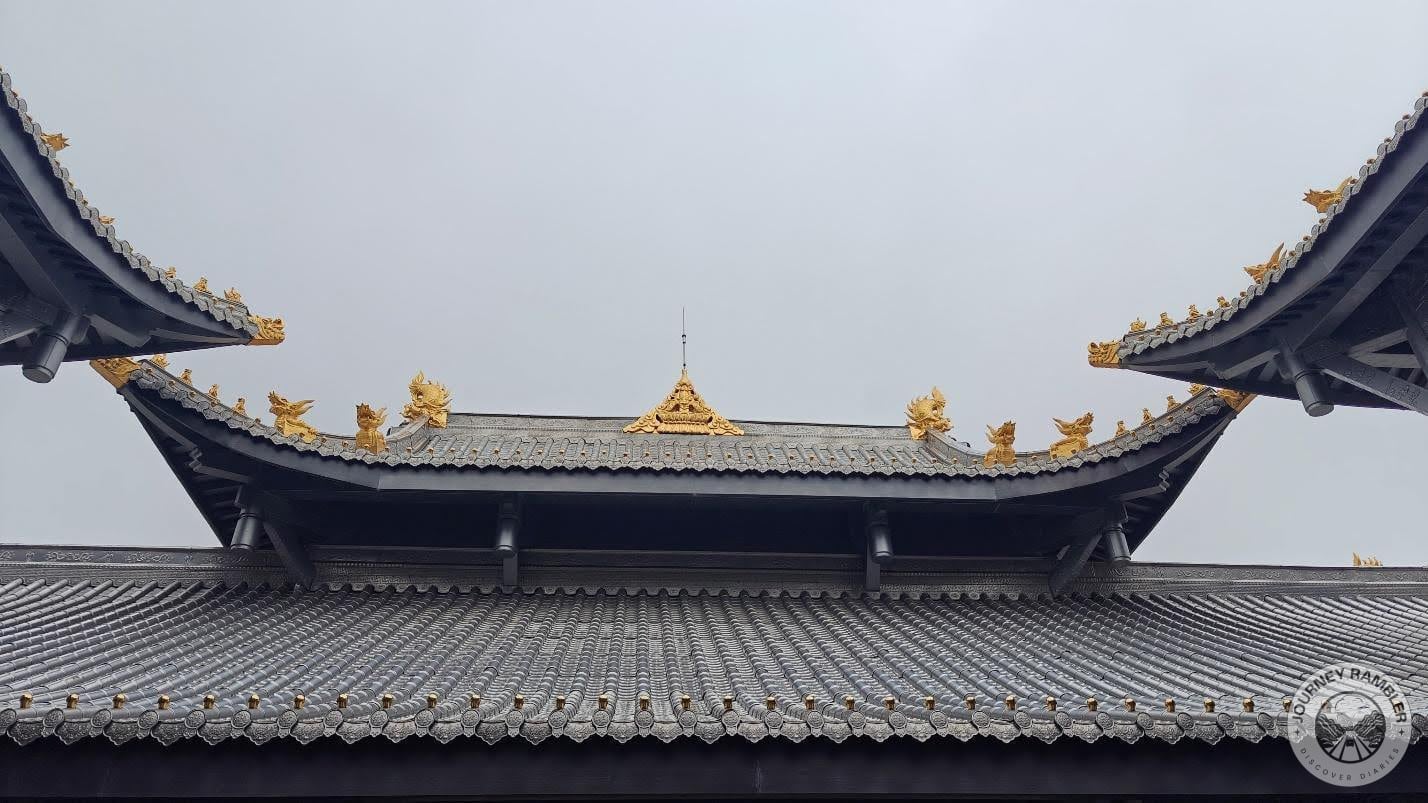
After the short climb, I finally got up close and personal with the Golden Hall. It’s not actually made from gold but rather, it features a golden paint job. The architecture and craftsmanship here was also quite impressive as evidenced by the details on its flying eaves.
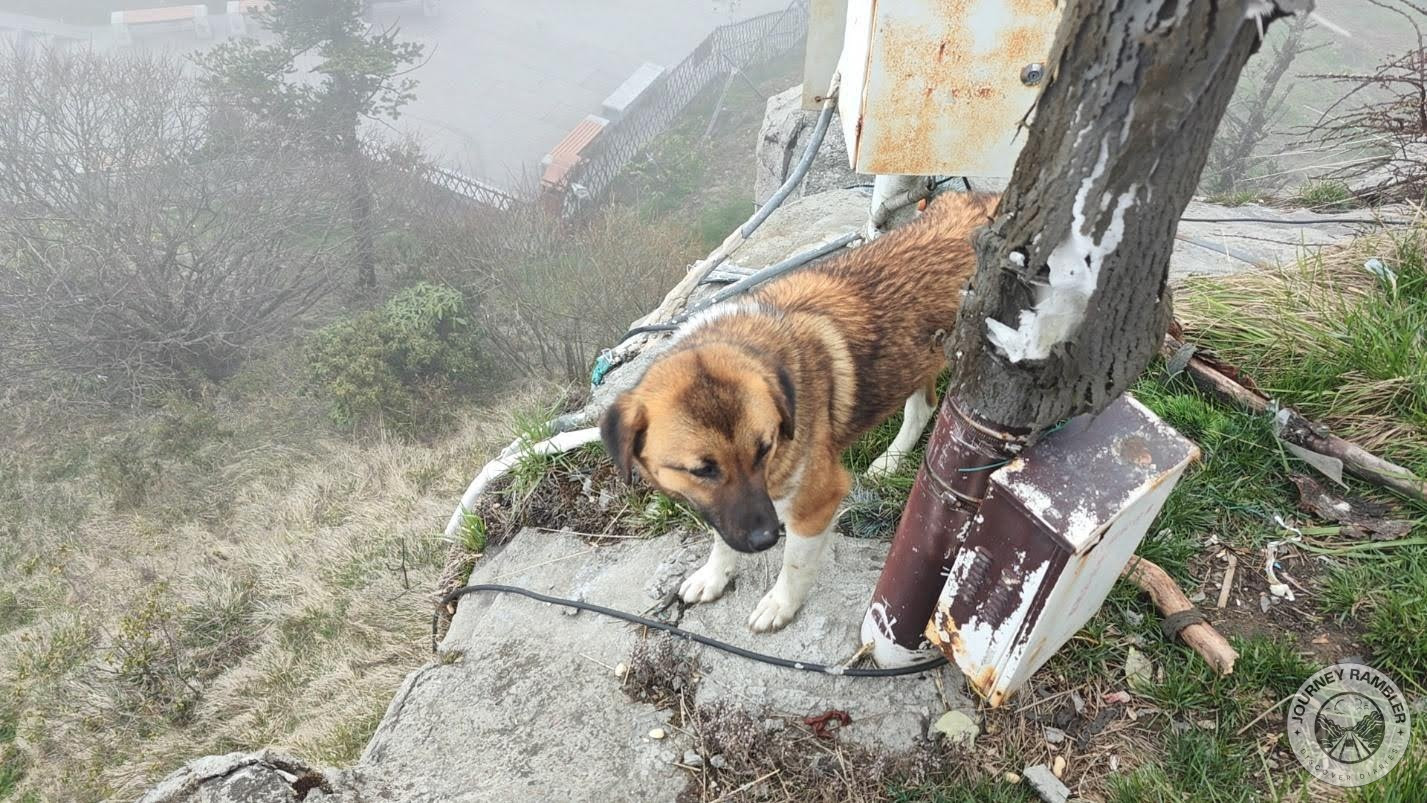
This cute doggo seemed to be very friendly around the people here. I’m not sure if you’re allowed to feed the dogs here though so I refrained from giving the little guy any treats. He actually didn’t mind and he just seemed to be really curious at the people milling about the place.
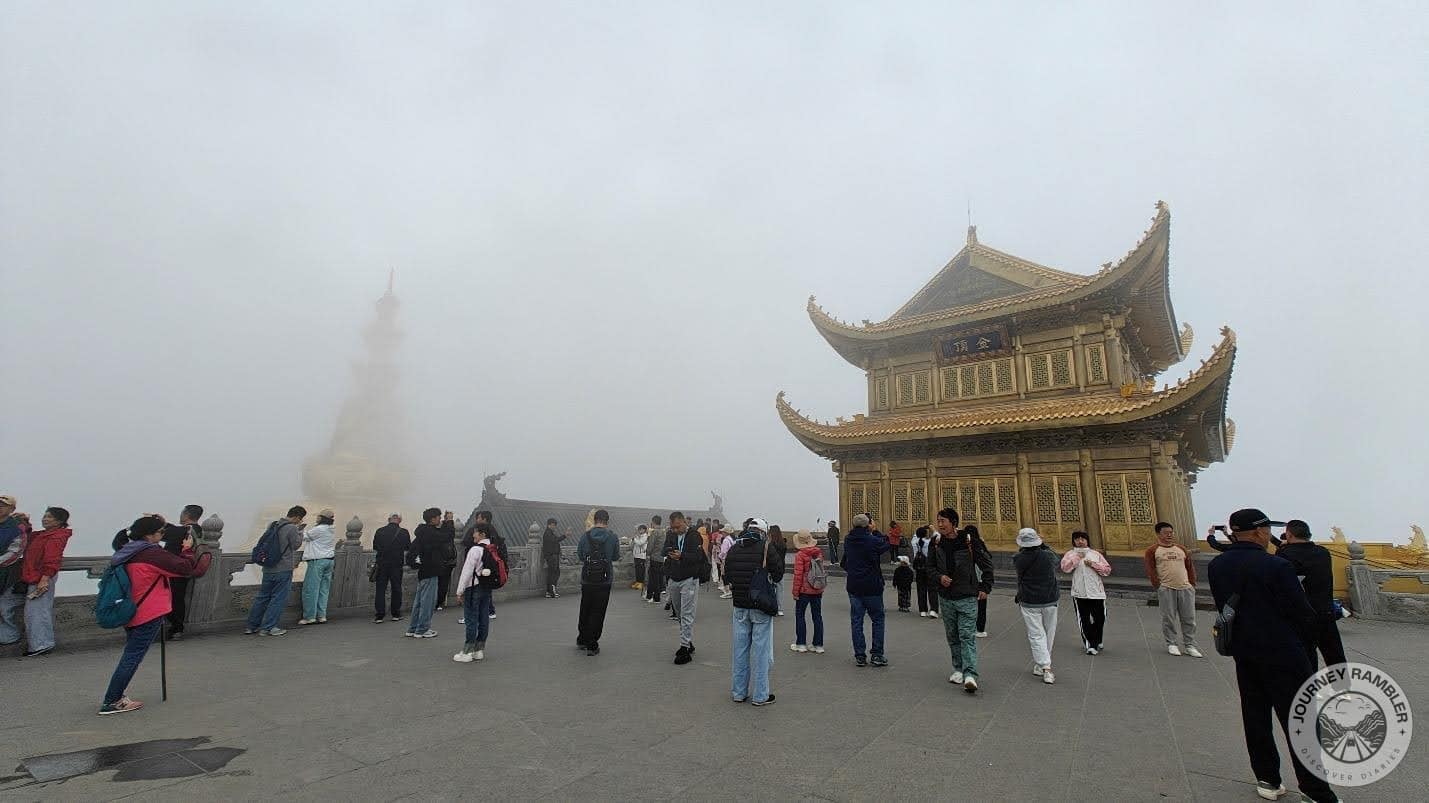
Here’s a picture of both the Golden Hall and the Puxian Bodhisattva. Again, the clouds were just too thick at this point in my visit so visibility was quite limited. I’ve read that if you want clear air, the best time to visit would be around September to November.
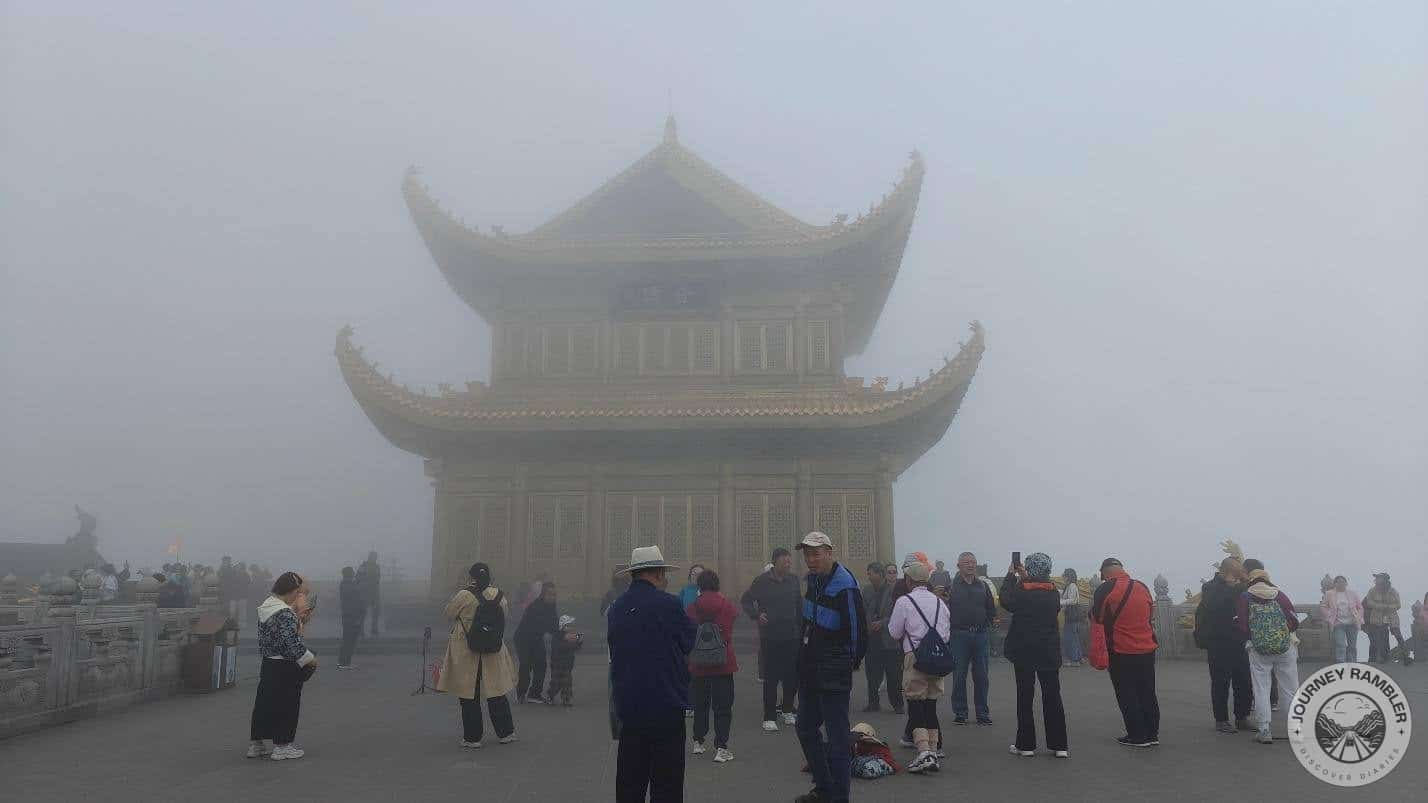
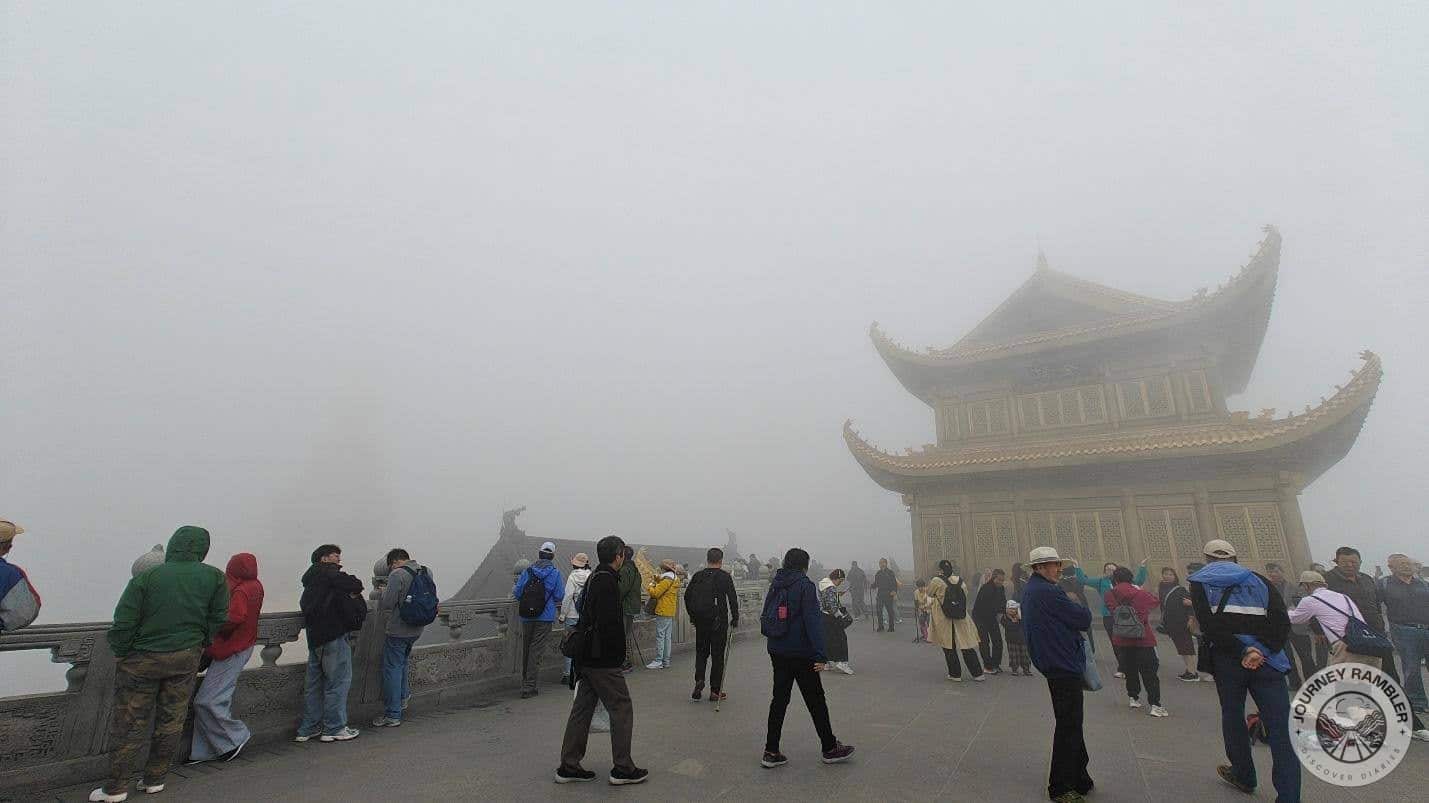
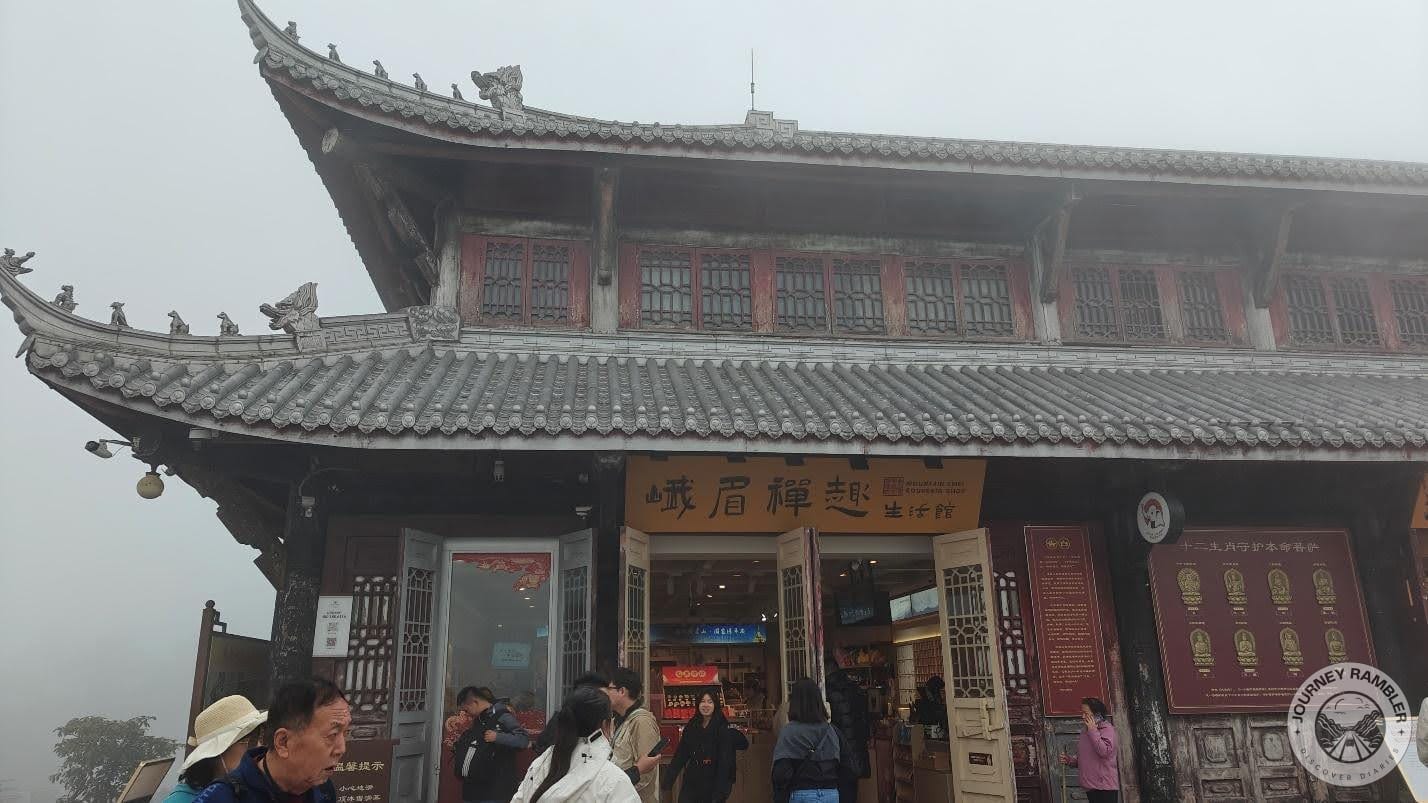
I finally decided to get down and found myself again at the building that had the incense and dharma items stores. At this point, I didn’t think I should be staying here much longer because the clouds were making it hard to see after a couple of meters. In the succeeding pictures you’ll see just how poor the visibility was getting.
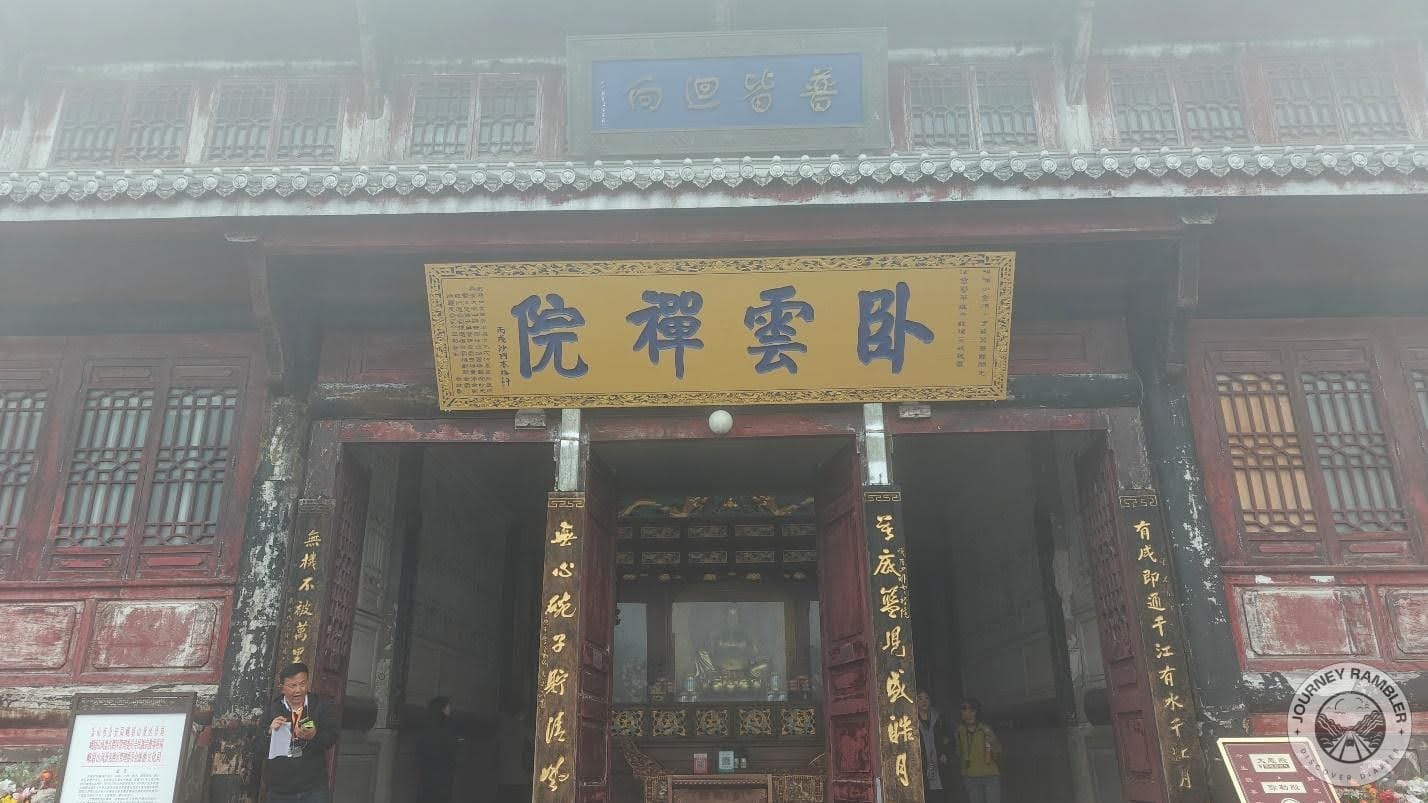
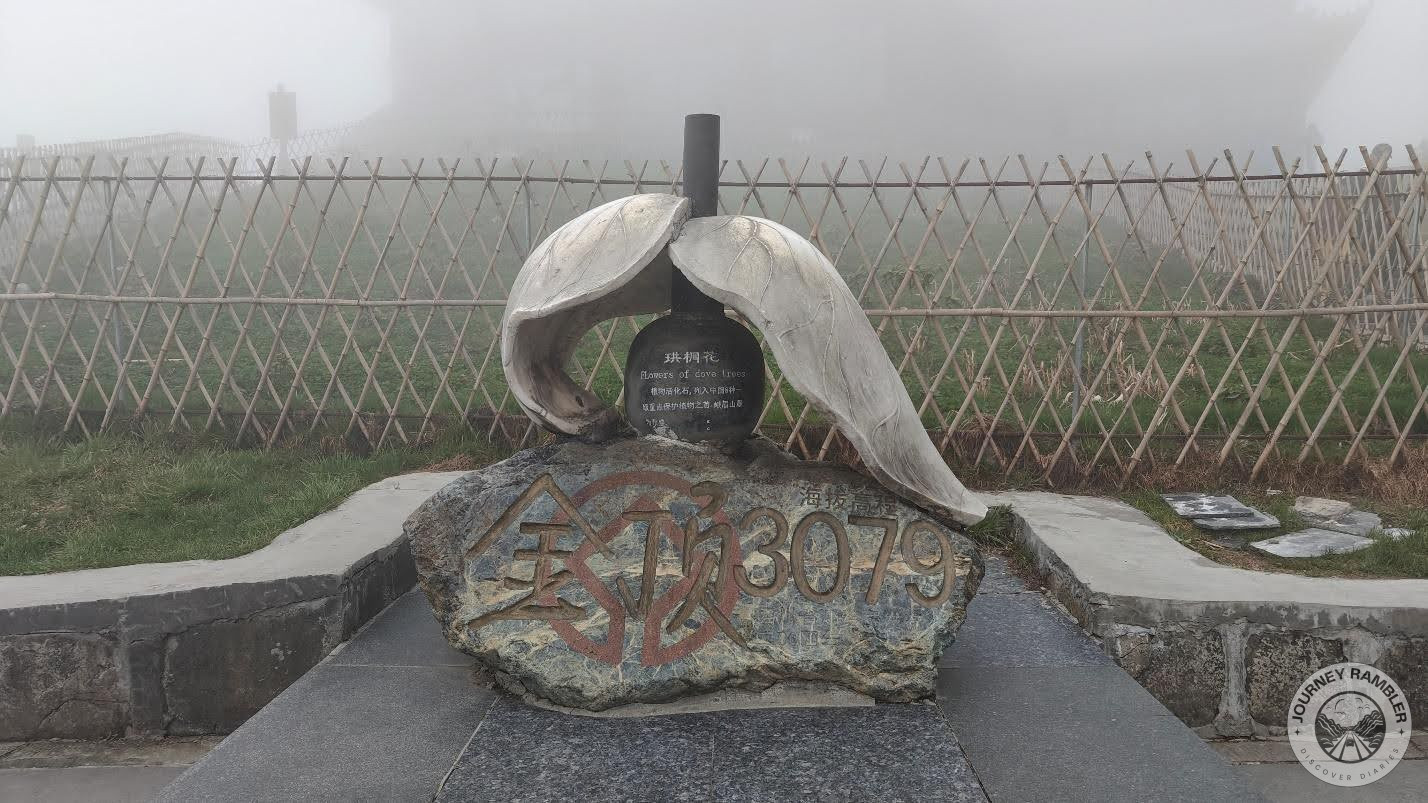
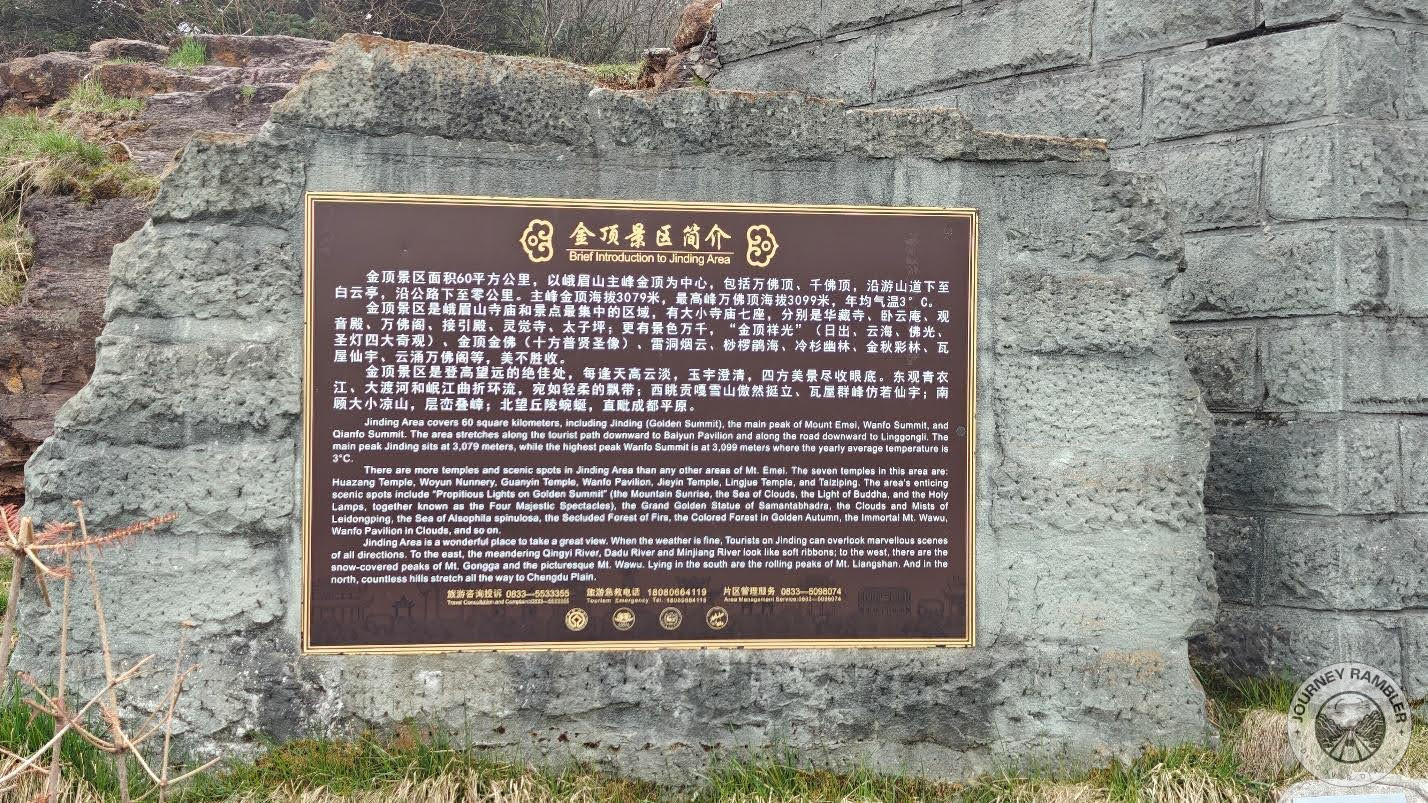
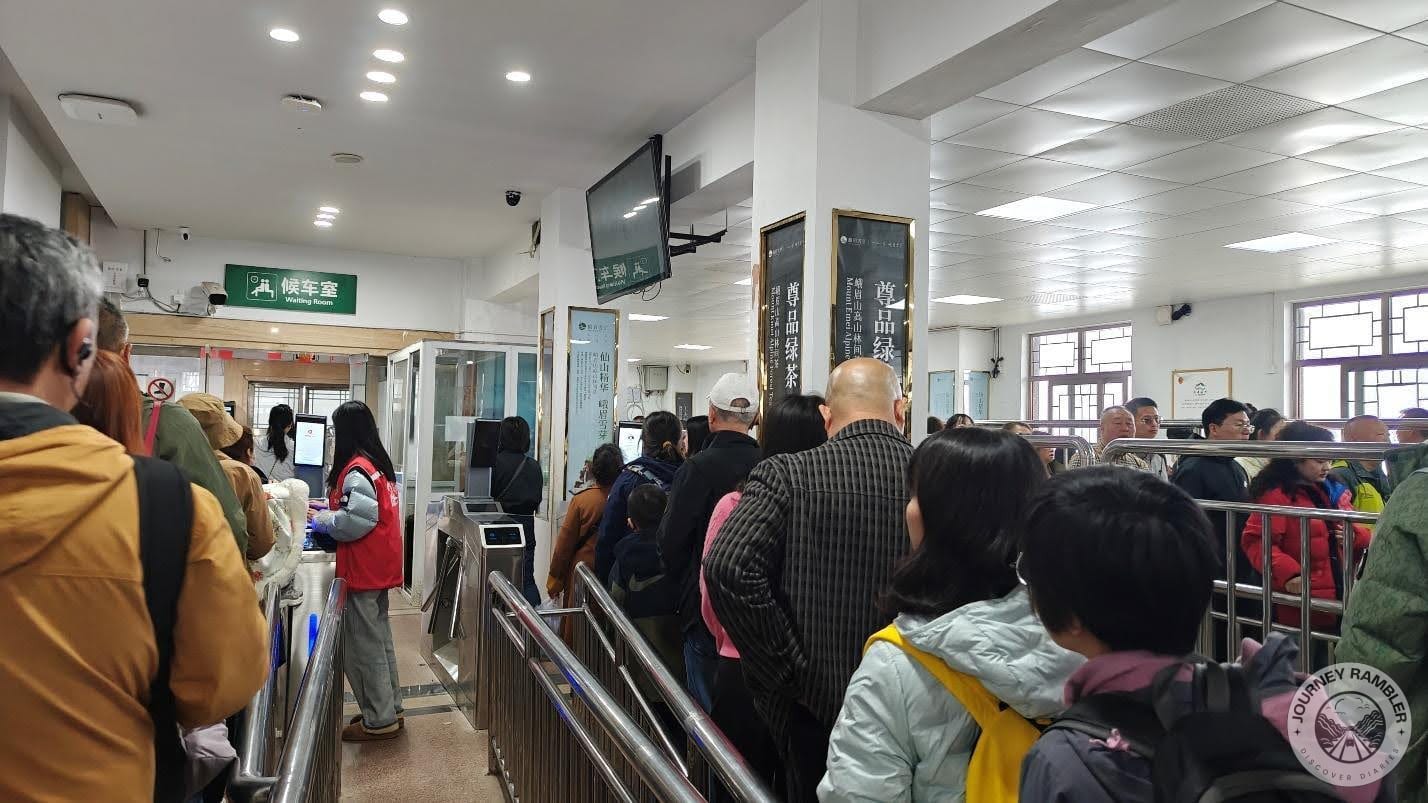
With not much left to do, I found myself back at the cable car terminal to get down to Leidongping. Unlike when I got up here though, this terminal was absolutely packed with people. Similar to me, they probably thought that there wasn’t much to do at the Golden Summit Scenic Area due to the lack of visibility.
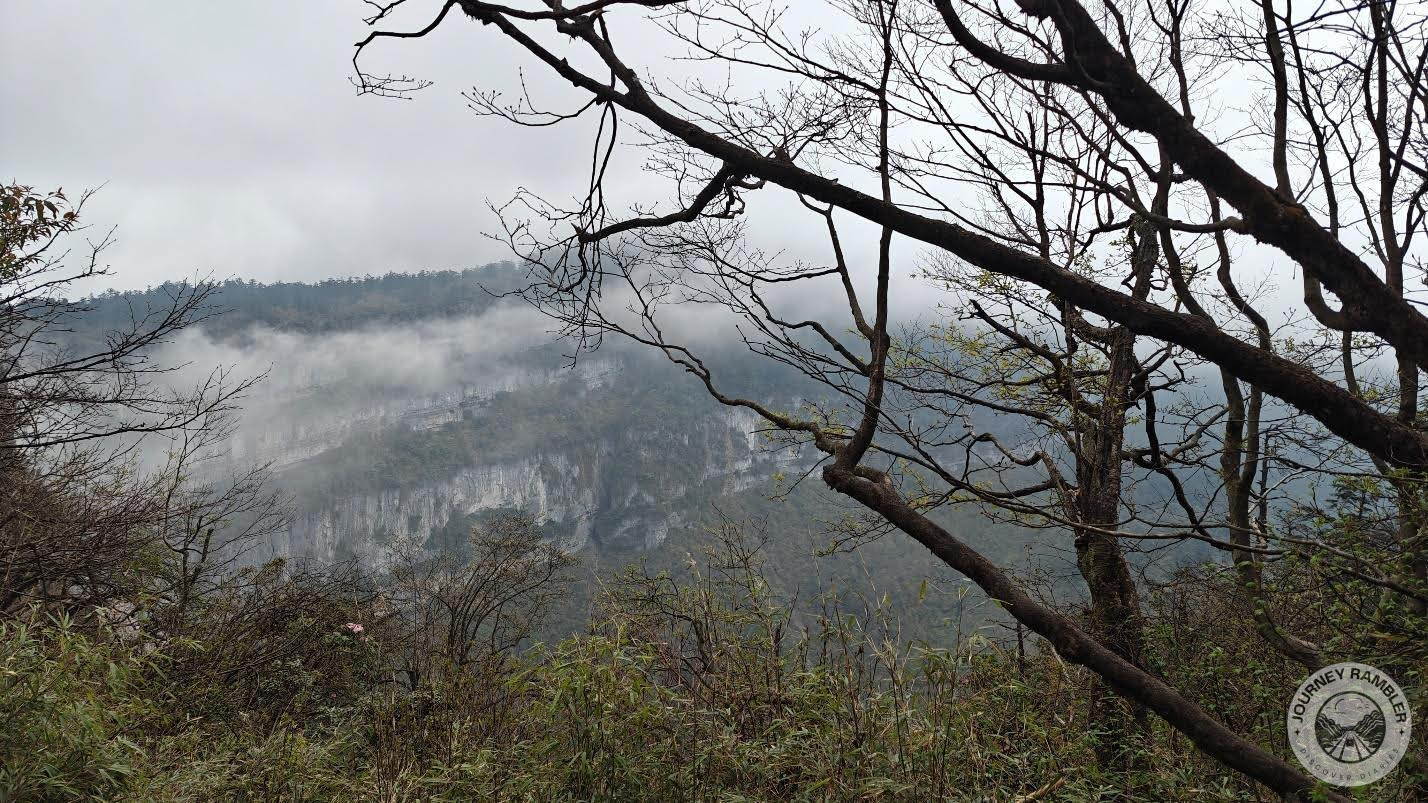
And that ends my experience at the Golden Summit in Mount Emei. I’ll say it again, this was worth it. Going up was relatively easy thanks to the bus and cable car. There was a little bit of walking but it was very manageable and I even saw some elderly people enjoying it. The only real issue I had was the poor visibility from the clouds/fog cutting short my time up in the Golden Summit. Otherwise, the experience was extremely memorable. The Puxian Bodhisattva was honestly the centerpiece of the whole scenic area and I’d say seeing it was worth the climb and the price of admission.
What do you think of Mount Emei’s Golden Summit Scenic Area? Ever had the chance to visit this Buddhist holy site? If yes then we’d very much like to hear about your experiences! Share them with us and our readers down in the comments!