
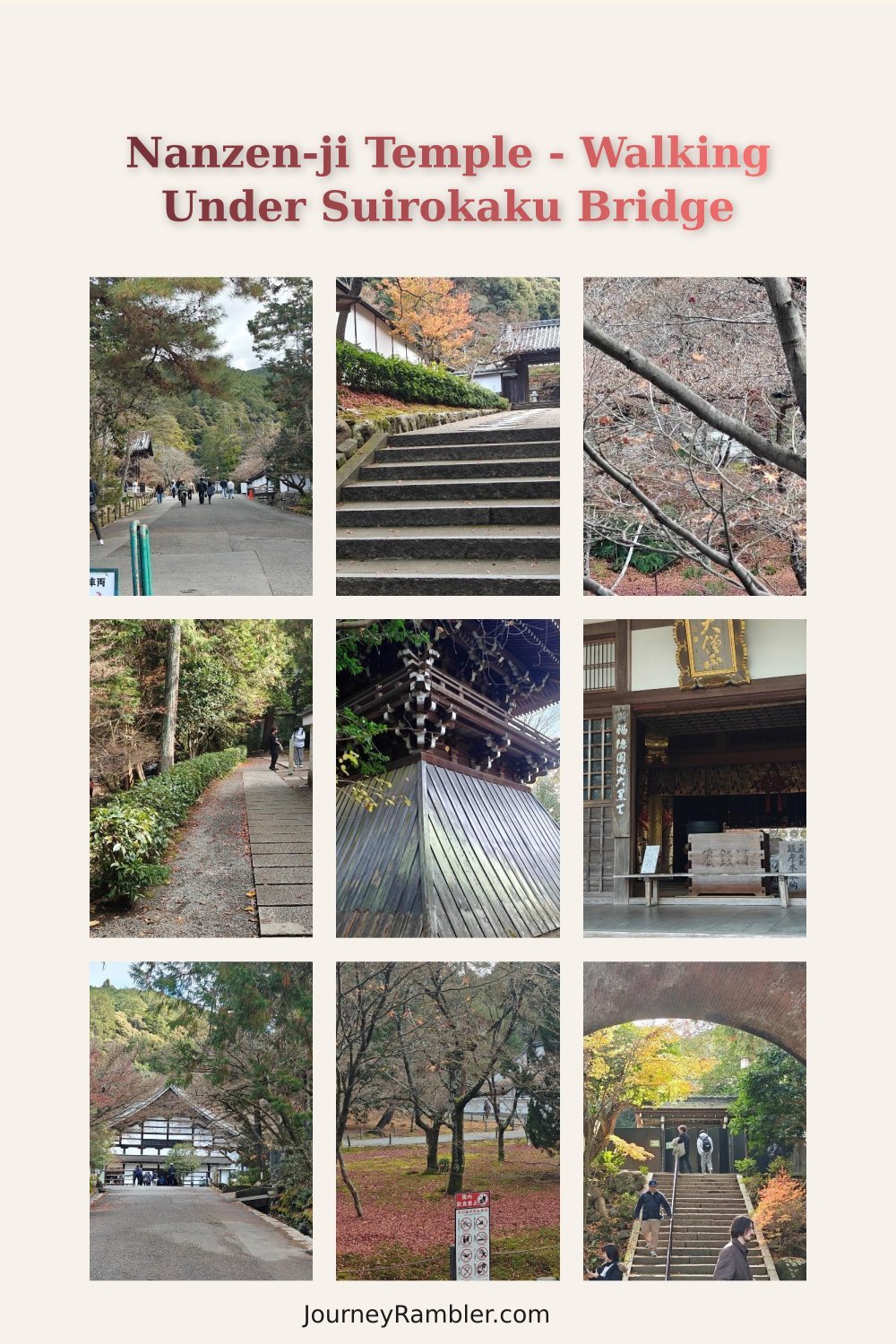
While it might be overshadowed by sites like Kinkaku-ji Temple, Fushimi Inari Taisha, and Kiyomizu-dera (just to name a few), Nanzen-ji Temple in Kyoto is by no means a pushover. This Zen Buddhist temple in the Sakyo Ward is one of the most underrated destinations I’ve been to in Kyoto. Today, I’ll be detailing my visit as well as why I think it might be worth adding to your own itinerary.
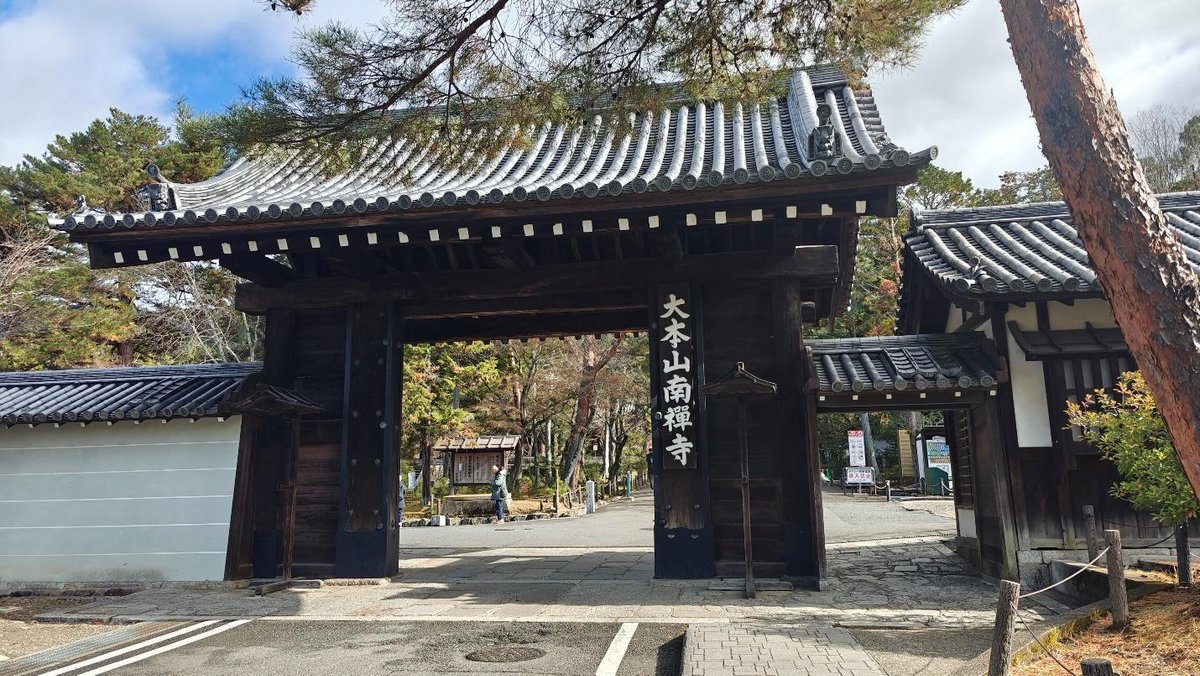
I started my visit to the Temple at the Nanzenji Chumon or its Central Gate. As for how you can get here, it might get a little complicated. So if you're starting out at Kyoto Station, you'll need to get to Karasuma Oike Station and then get on the Tozai Line subway train heading east to Keage Station in Higashiyama.
From there, you can walk up north (passing the scenic Keage Incline) until you reach the Nanzenjimae intersection. Head east from here and you’ll find yourself smack dab in front of the Nanzenji Chumon.
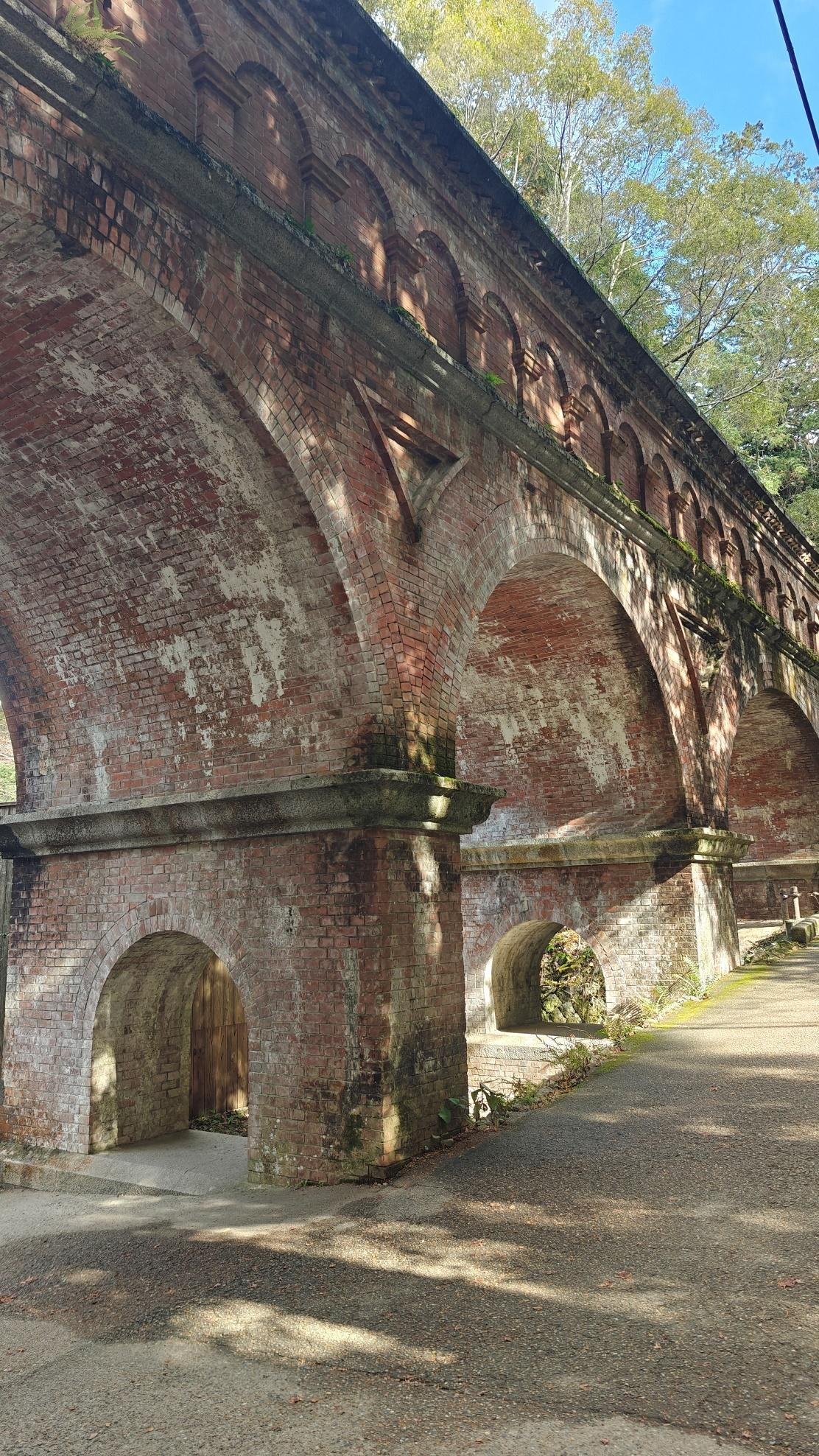
Walking Under the Suirokaku Water Bridge at Nanzen-ji
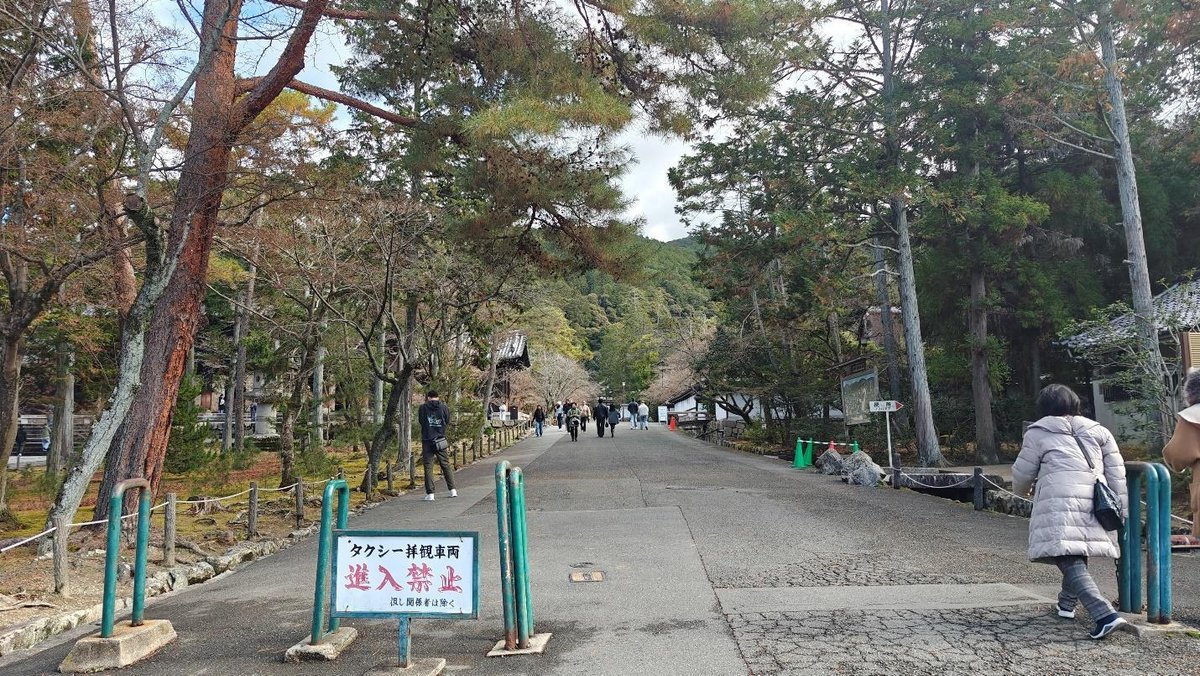
Upon entering the gates, I was then greeted by this sight. Up ahead were the temple’s main buildings as well as its famous Zen gardens. You could technically take this path but doing so, you'd miss out on one of the temple's other notable landmarks.
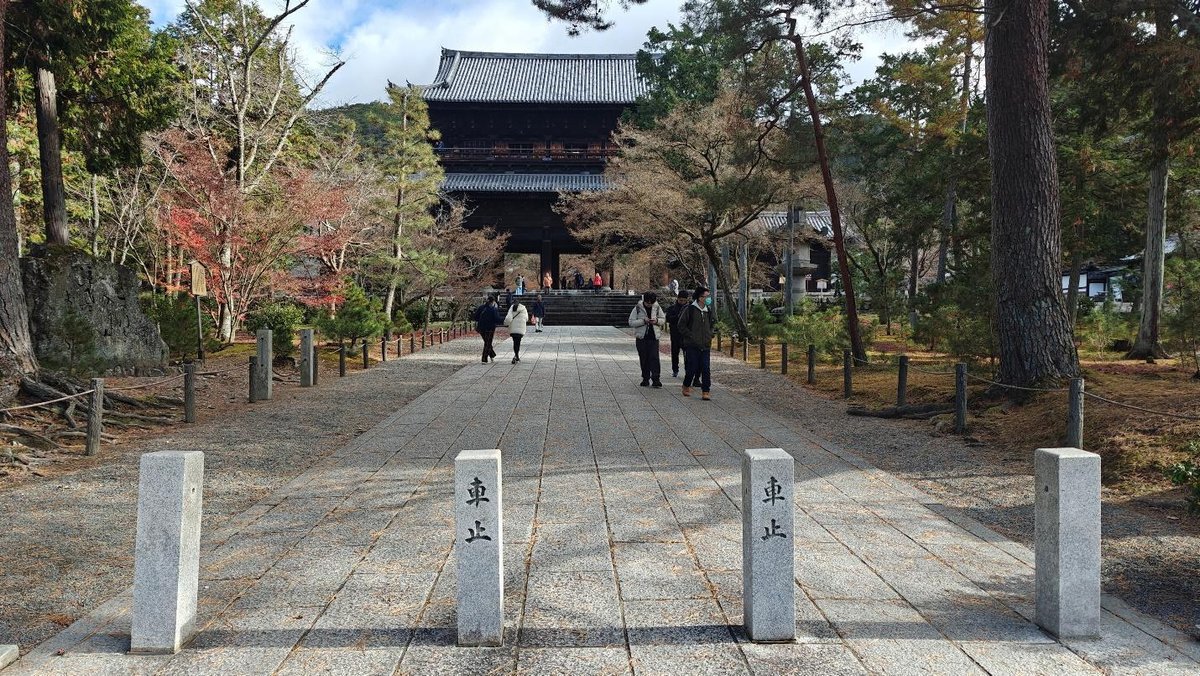
From the spot where I took the picture earlier, turn left until you come across this path that has these traditional bollards. As you can see, this path leads directly to the notable landmark I alluded to in the previous image. Called the Sanmon, this 22 meter tall structure is the largest gate in the Nanzenji Temple complex.
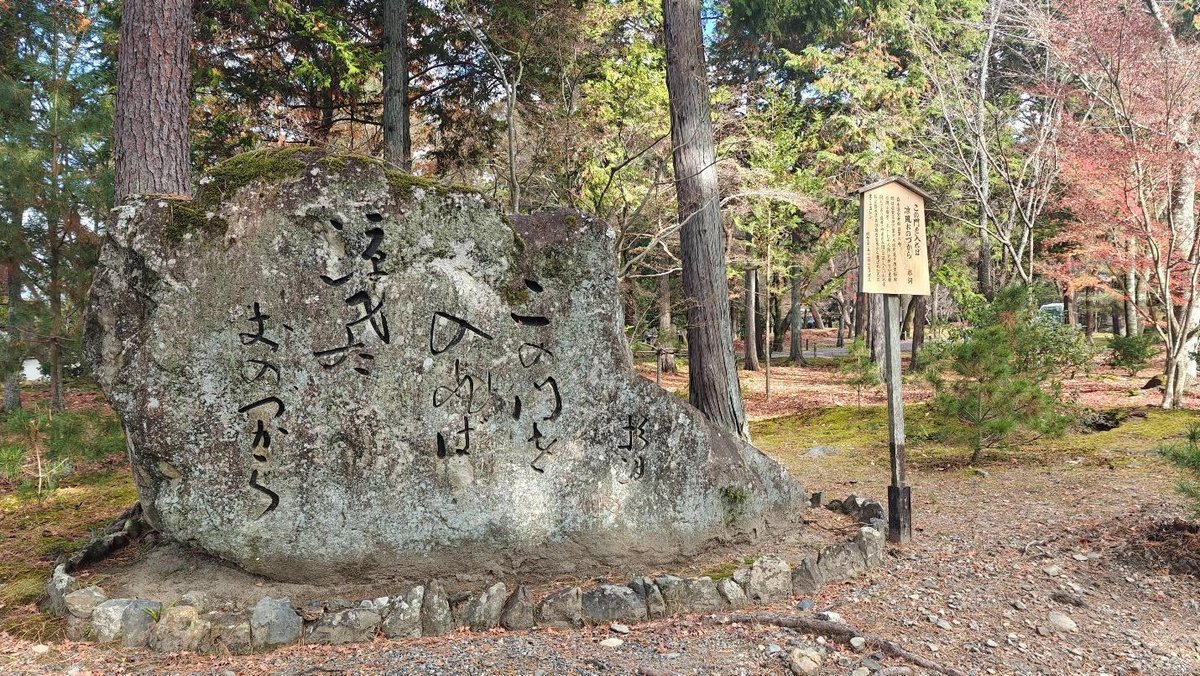
About a third of the way to the Sanmon Gate, I came across this large stone monument. According to the sign beside it, this is dedicated to the Zen Master Morinaga Tando/Zando. Brought from Mount Shiraga (Kumamoto Prefecture) in 1976, the stone is said to weigh a whopping 15 tonnes and has a haiku engraved on it.
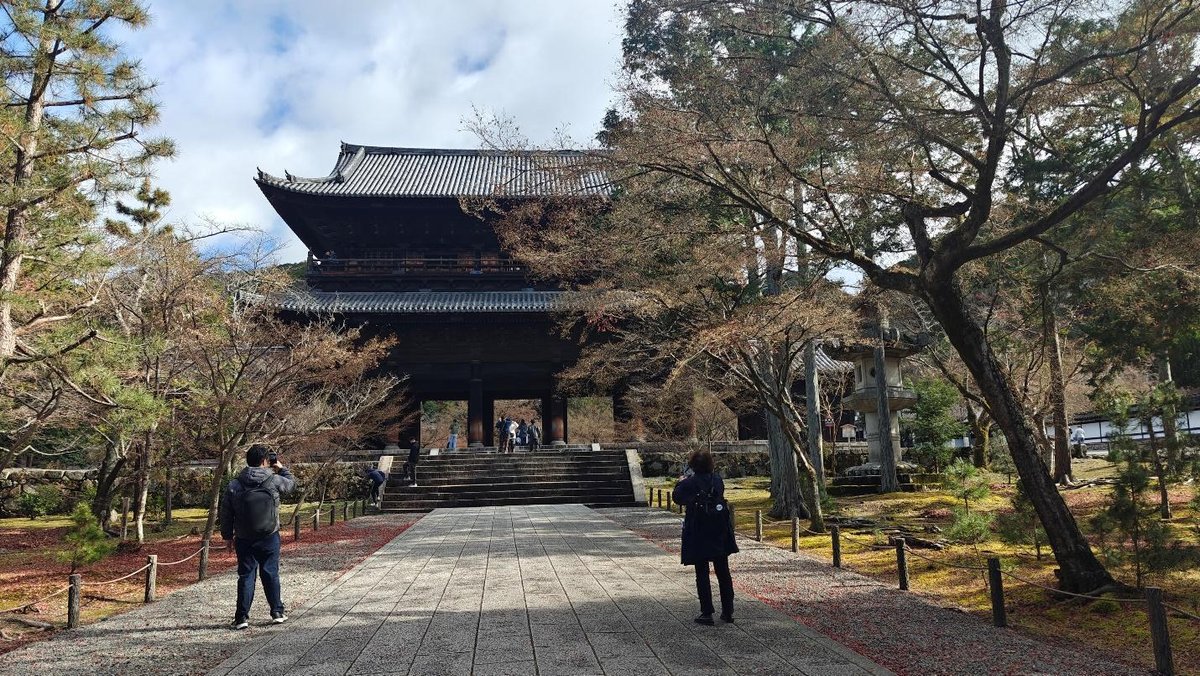
The Sanmon was definitely an imposing and impressively large structure. One thing I noticed as I got close was its seemingly burnt appearance. I tried looking it up and there really wasn't a concrete explanation for why it looks the way it does.
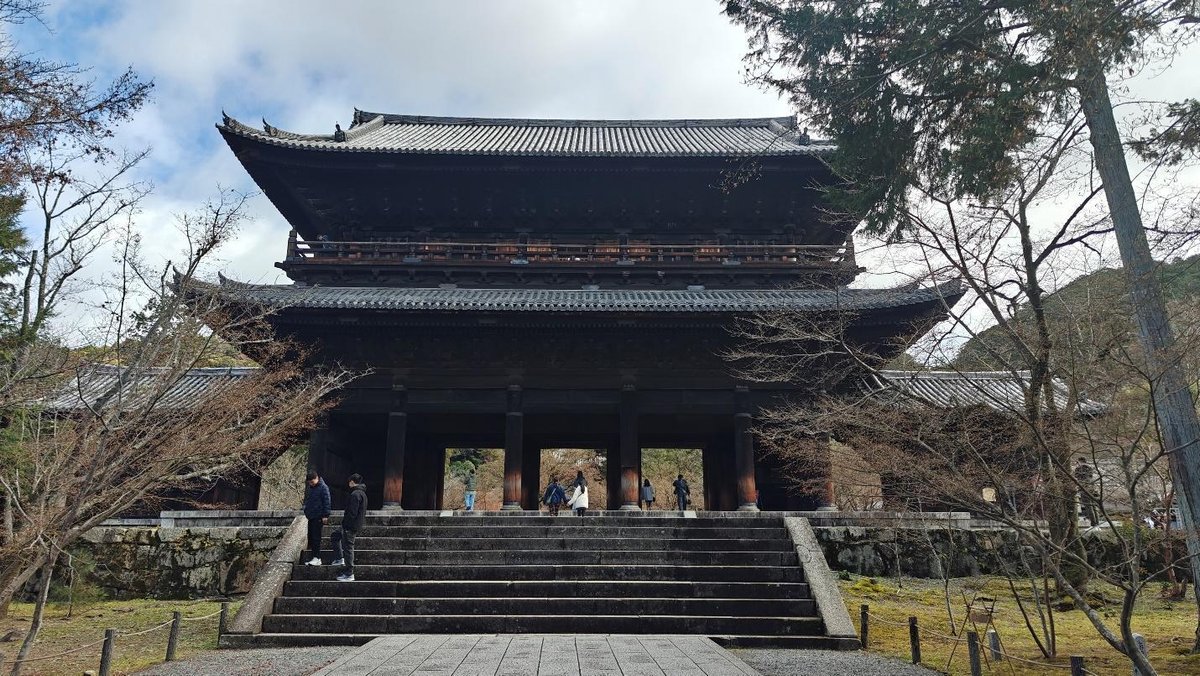
One explanation that I came across was that when it was reconstructed in 1628, this current Sanmon was intentionally given a burnt look/finish as it was meant to honor those who'd died when the original burned down in 1393. Another one attributes the burnt look to the type of wood used in the structure. Japanese zelkova wood is said to take on a charred and darkened appearance as it ages.
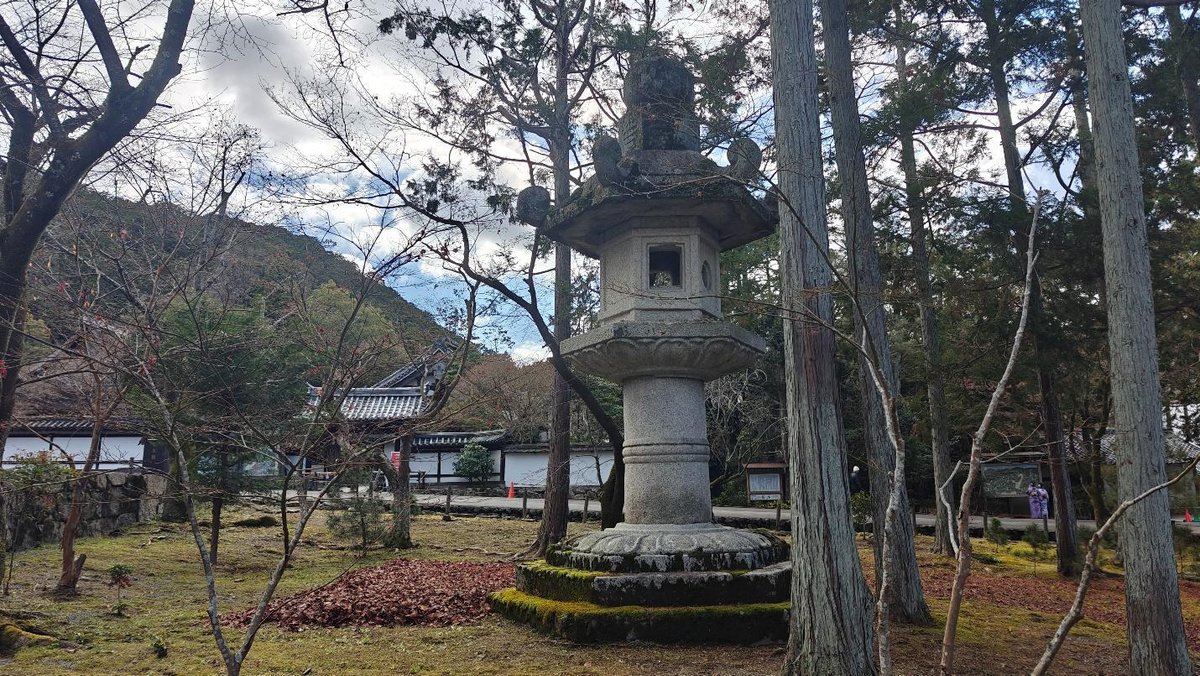
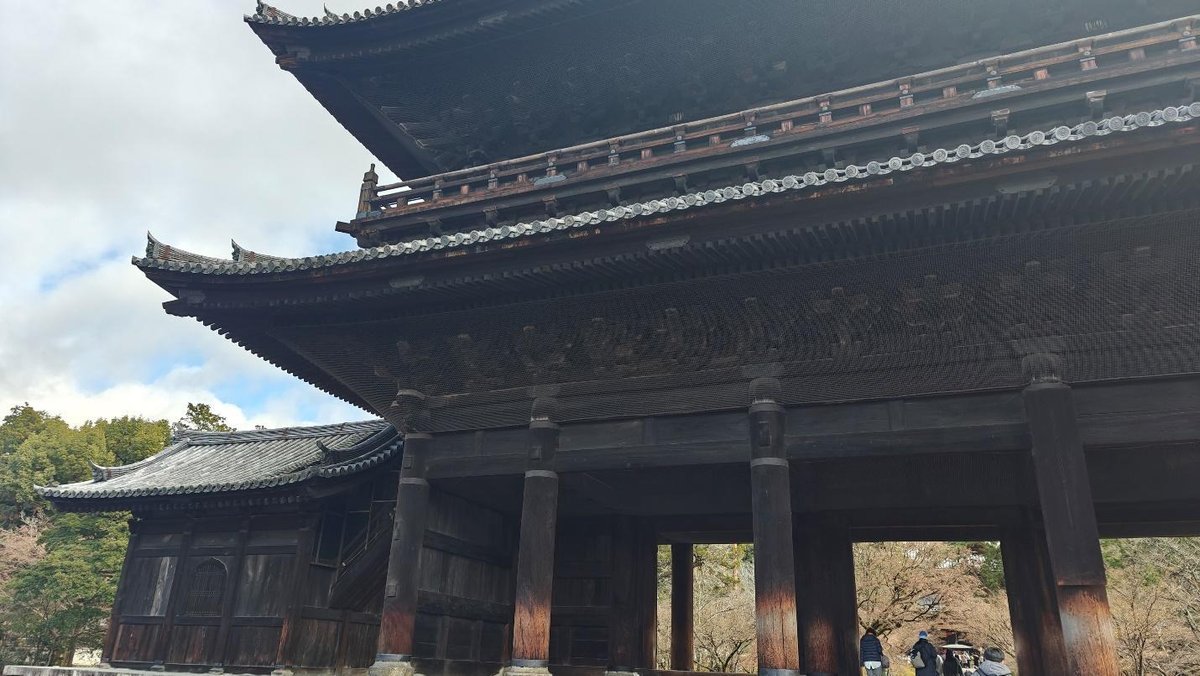
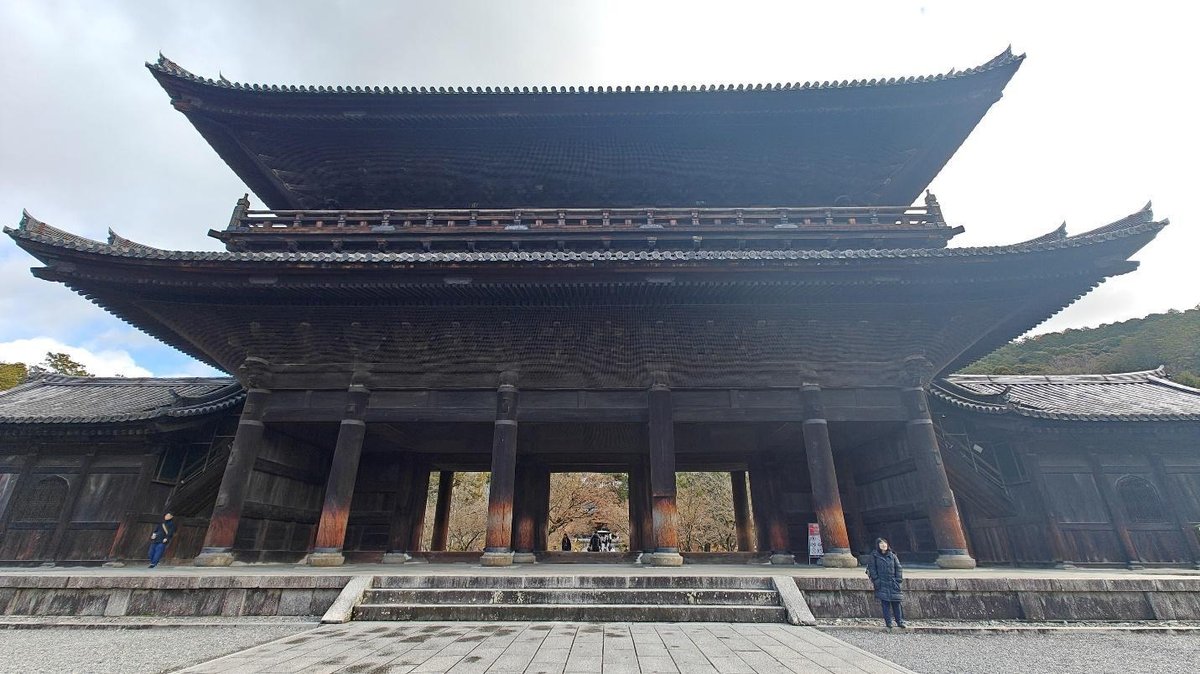
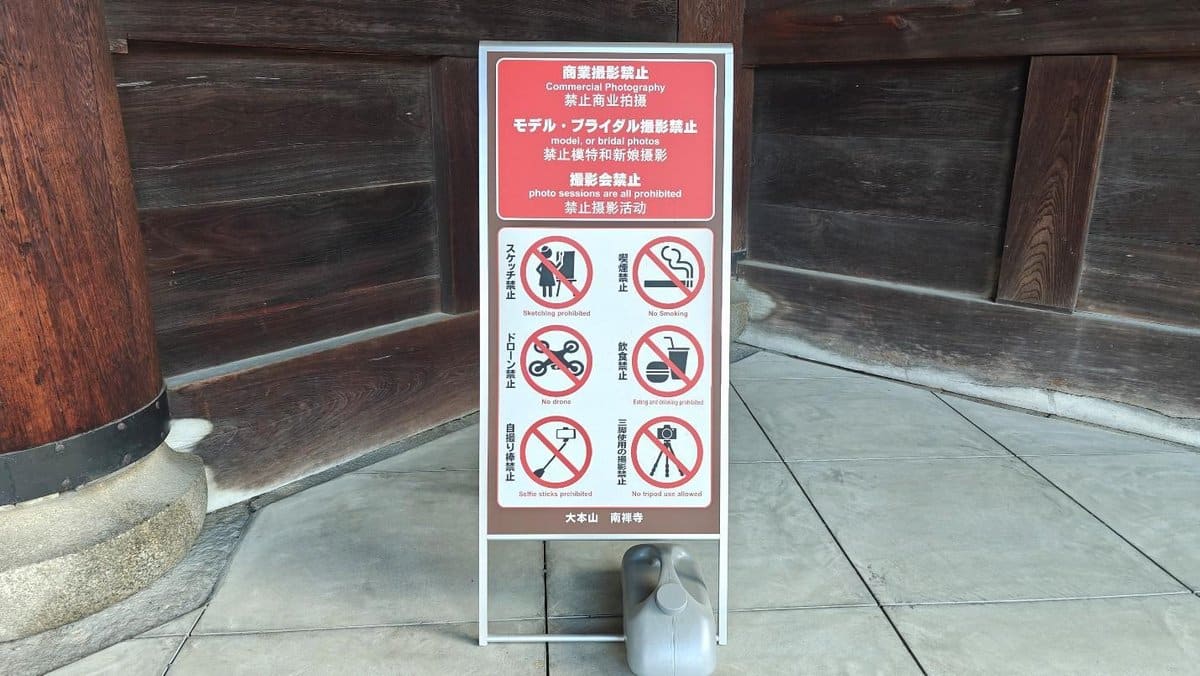
Personally, I think the Sanmon is really just old and it's why it has this burnt and weathered look. And as with a lot of centuries-old buildings that I've been to here in Japan, this one also has a sign warning against smoking (among other things) in its direct vicinity. Of course, this is understandable as buildings like this are really prone to catching fire.
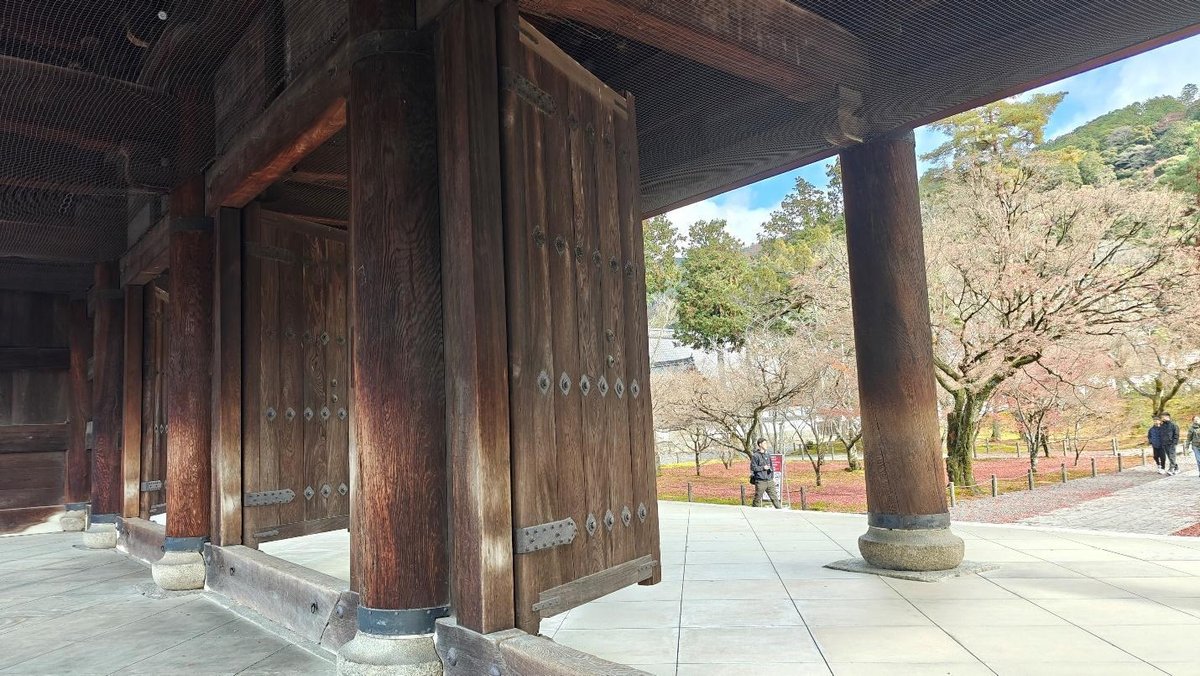
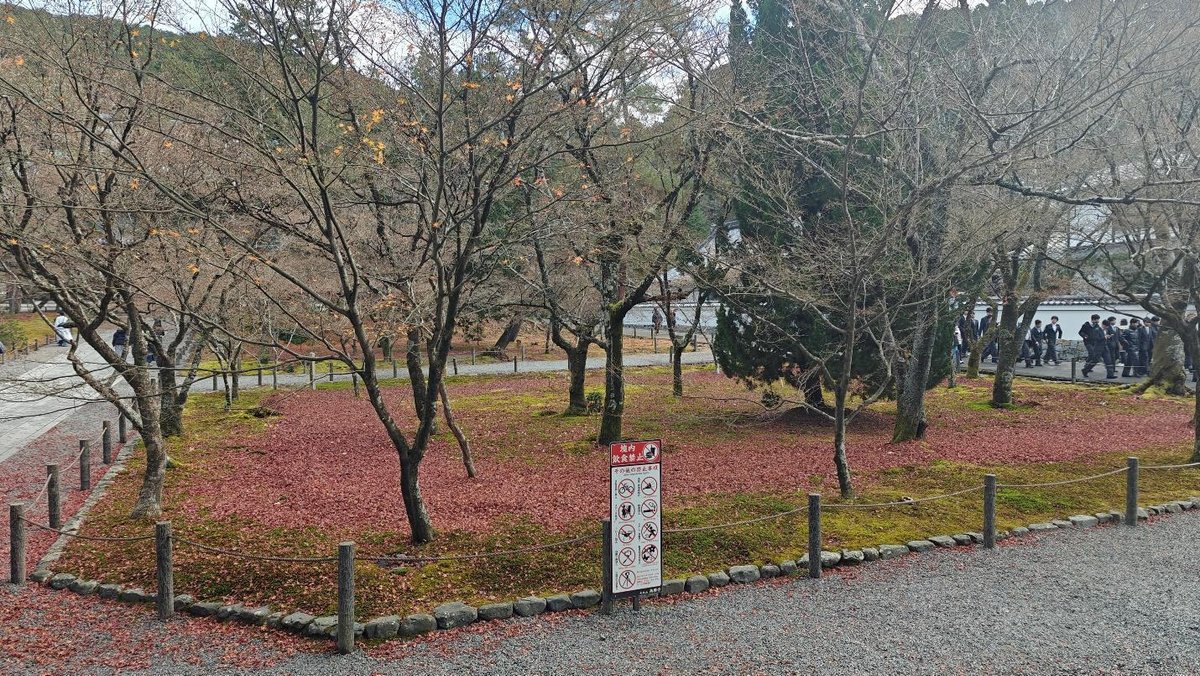
Past the Sanmon, I was then greeted by a grove of sakura trees that had just shed their fall foliage. Honestly, I was a little disappointed in myself that I didn't come here a little earlier. It would have been nice to see the sea of red that likely would have been here 2 or 3 weeks before this visit.
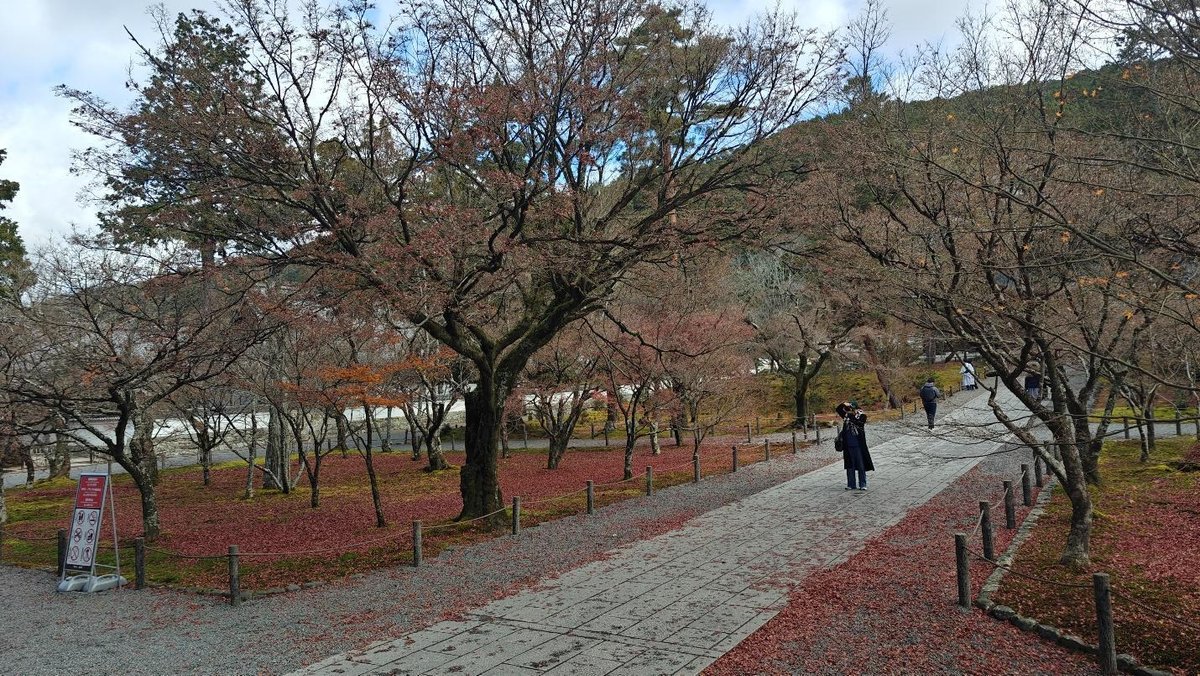
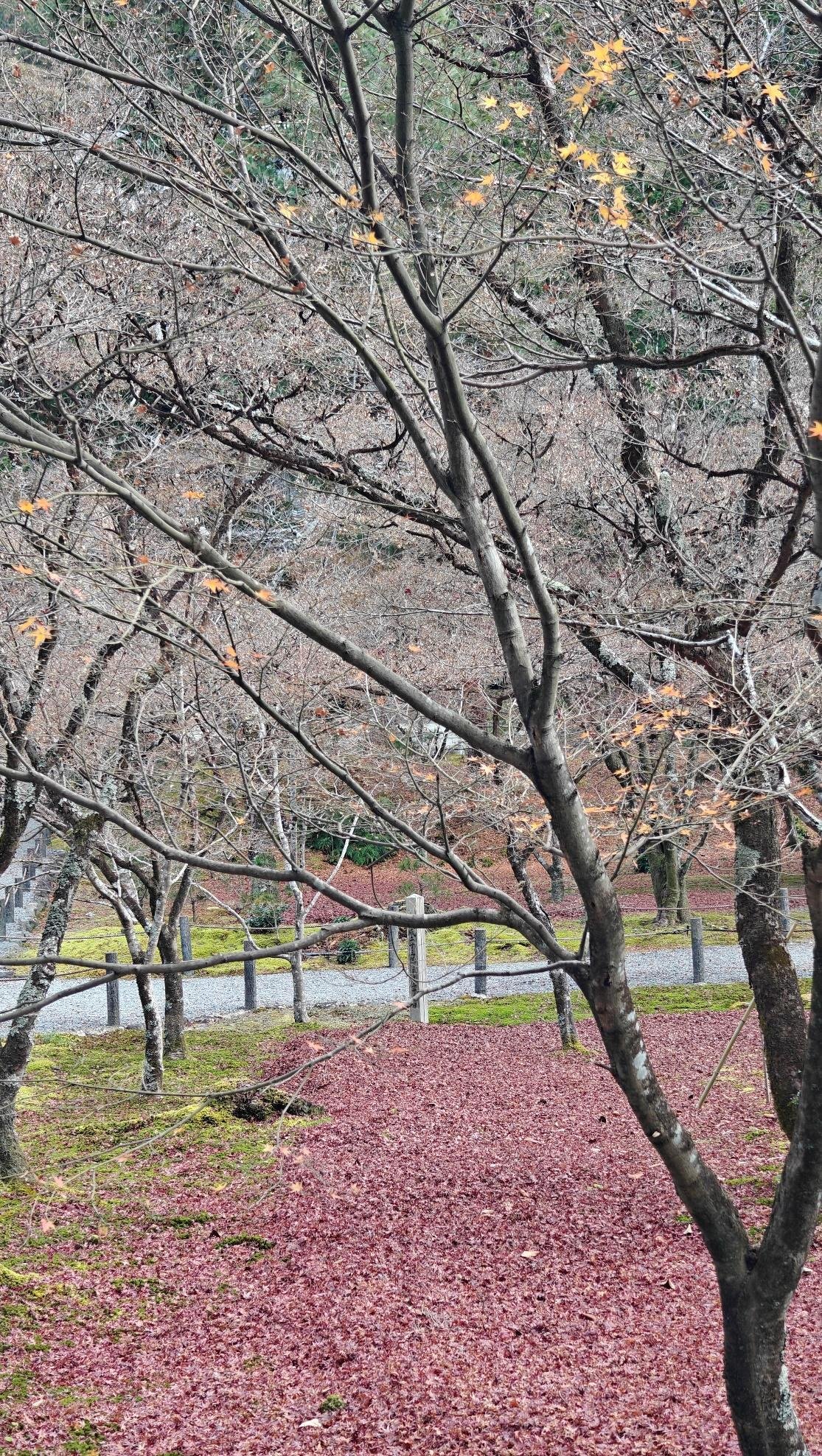
Now you might think that this visit is wasted because the sakuras’ branches are all bare. Don't worry because even with the state the sakura were in, the views here were still quite nice. I especially liked how the ground was covered with the red leaves which beautifully contrasted with the clear blue and white of the sky.
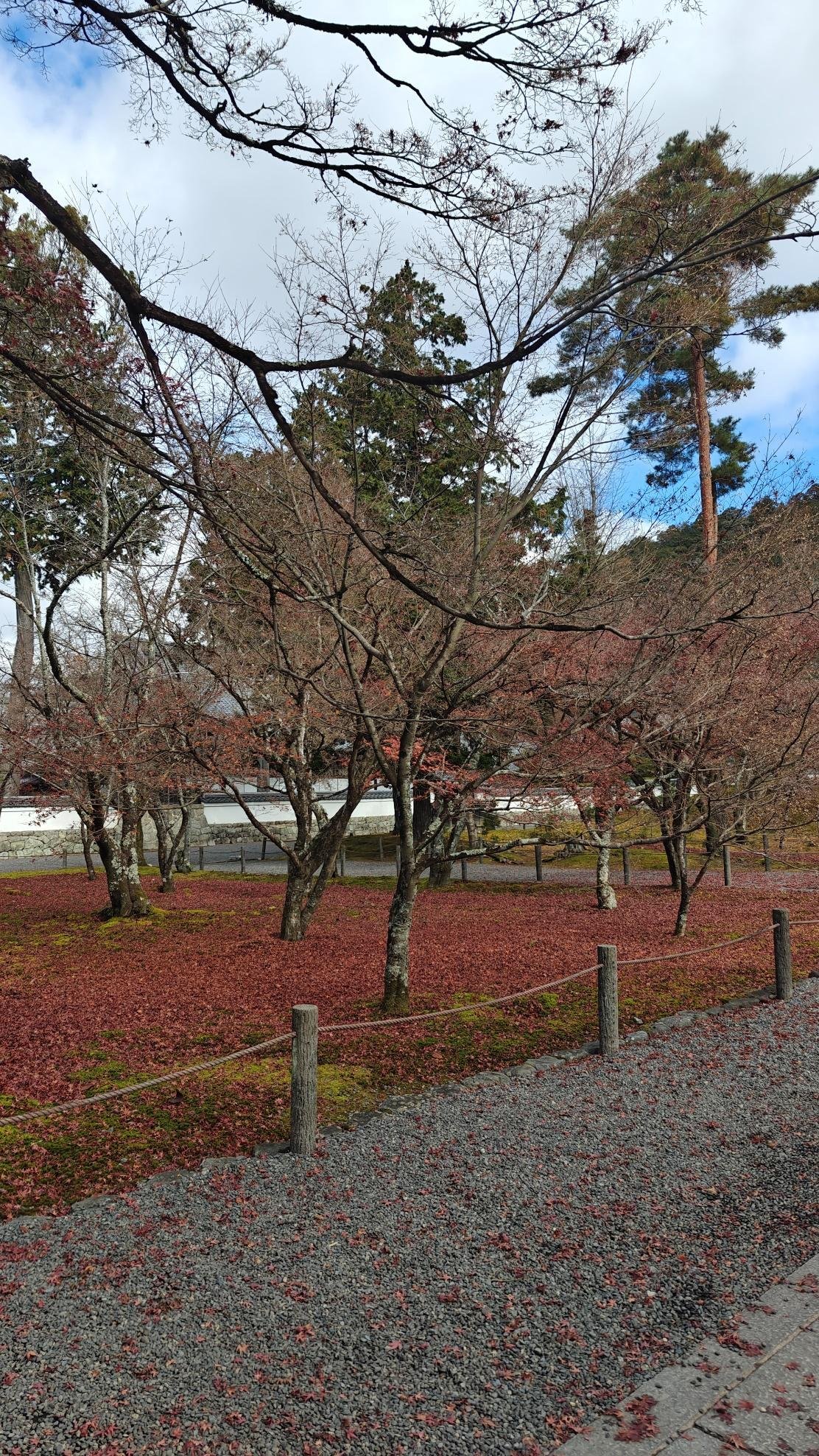
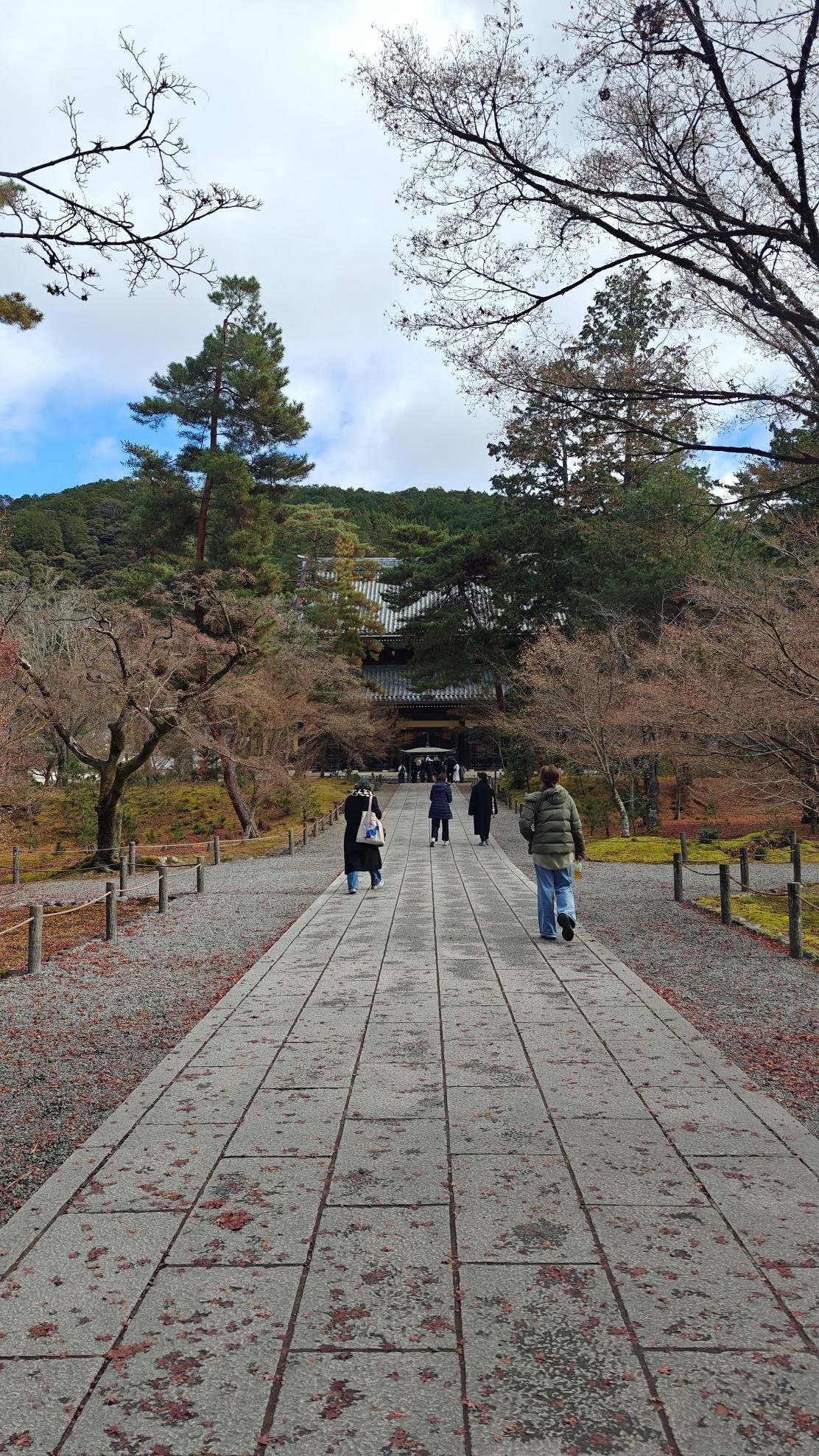
Another reason why I enjoyed the visit was the absence of large crowds. Just a couple weeks past the peak tourist season, there were so few people here that I actually appreciated the views even more. If this were spring or the peak of autumn then this area would just be swarming with people.
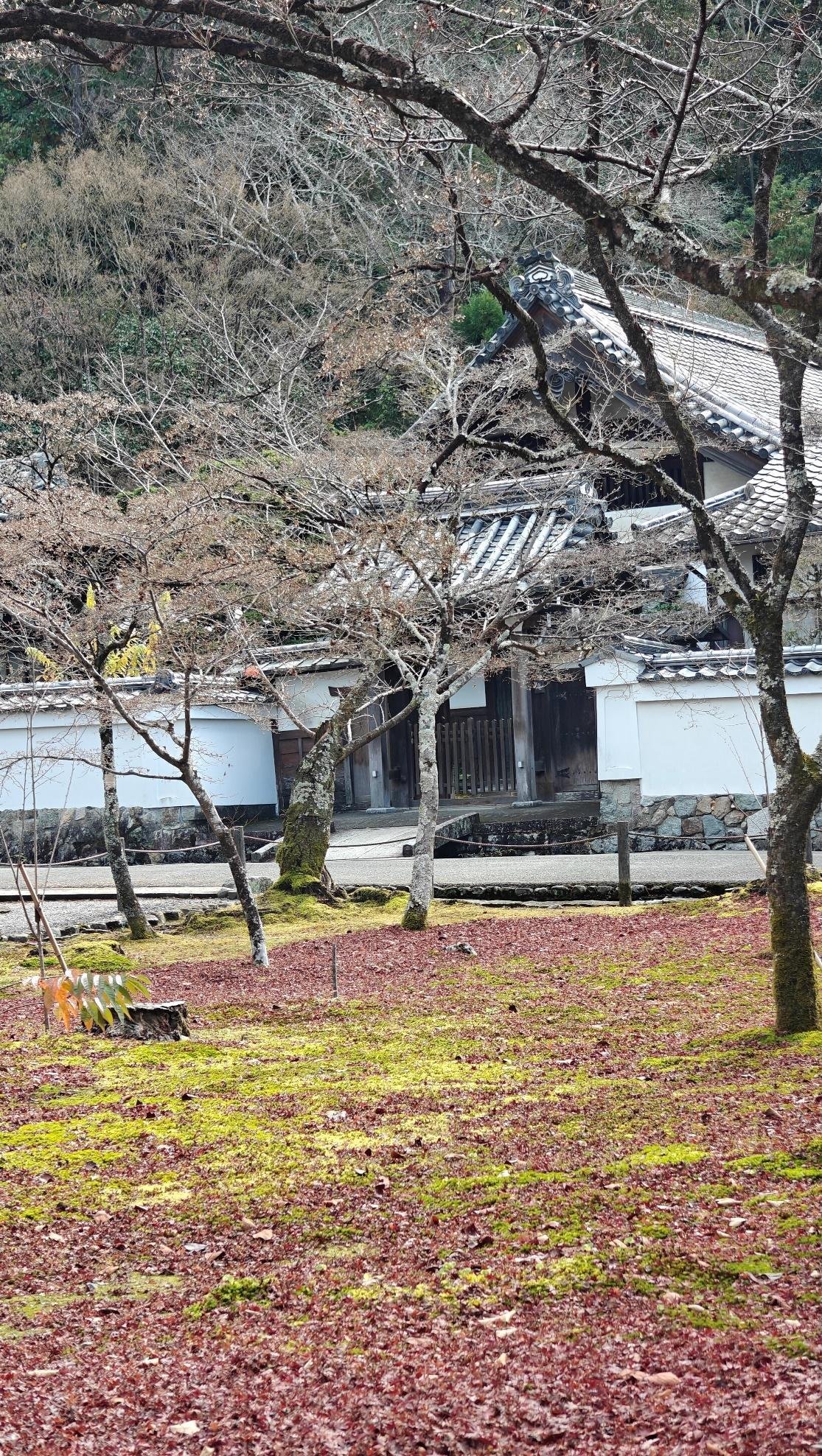
Without the sakuras’ leaves impeding the view, I managed to get a clear glimpse of other buildings in this area. This one is called the Nanzen-ji Shion-an and it's one of the sub-temples in the Nanzen-ji Temple complex. Much like the original Sanmon, this sub-temple was built in the Muromachi period and eventually got reconstructed over the years.
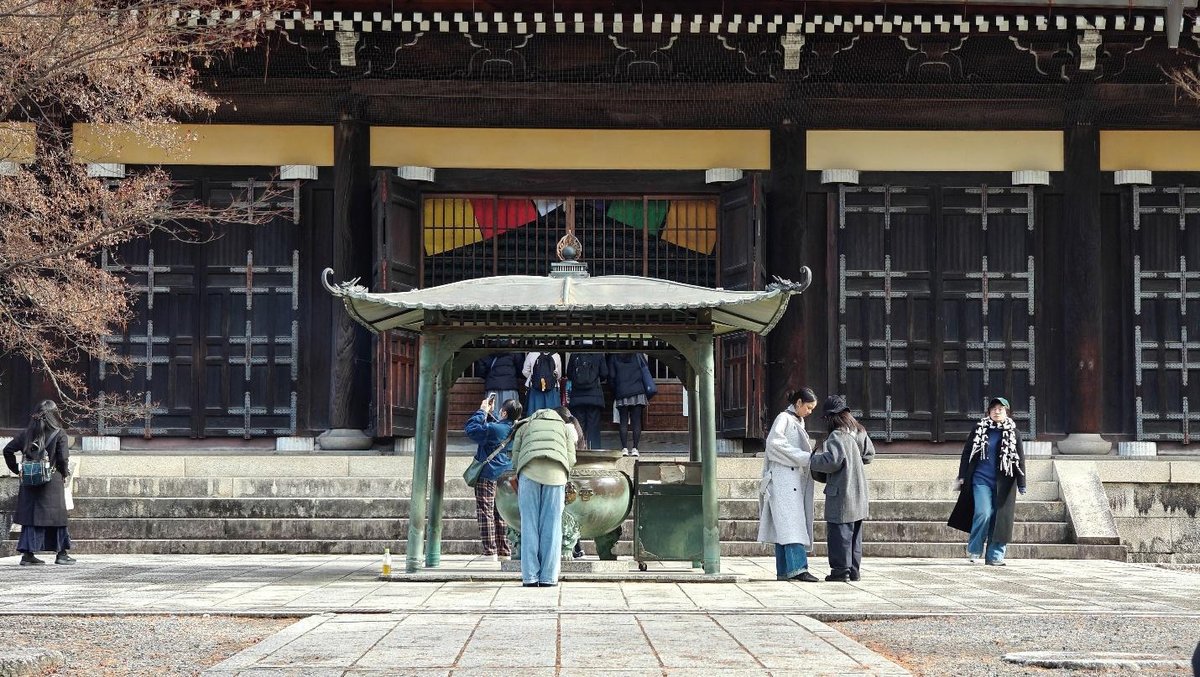
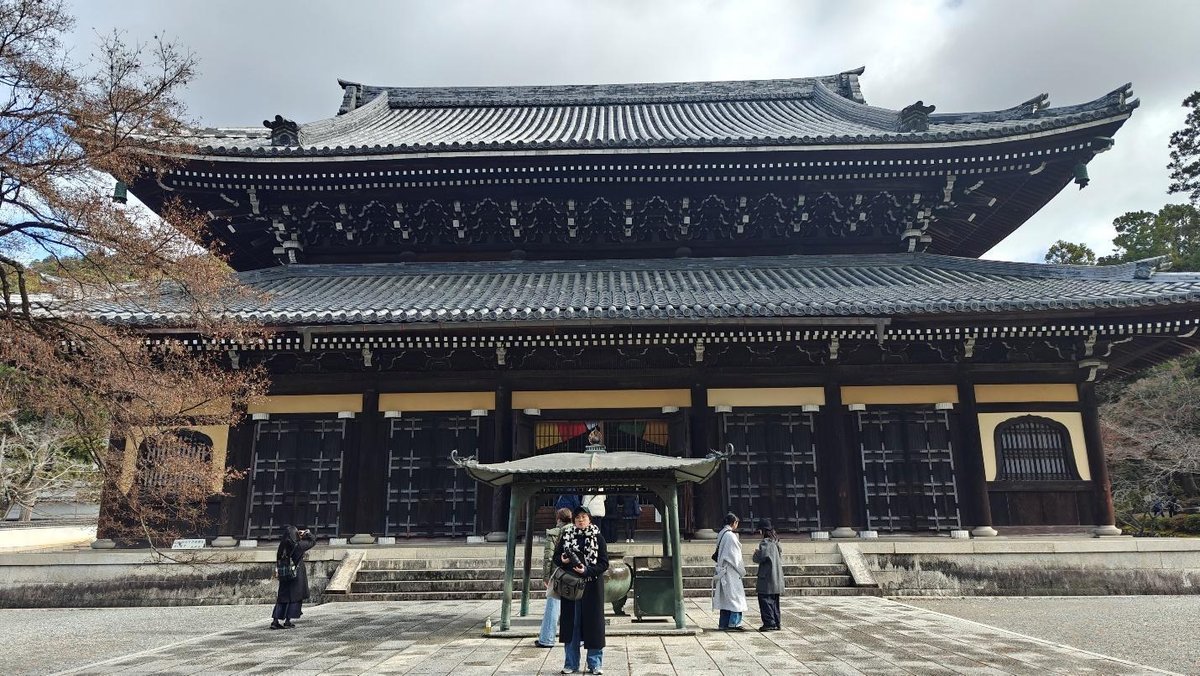
Going back to the main path, I soon found myself drawing near to the Nanzen-ji Temple's Hatto or Lecture Hall. In front of it is a pavilion containing a large incense burner or jokoro. Incense is available to the side of the jokoro and you can get some in exchange for a monetary offering.
If you've been following my write-ups, you're probably wondering where the chozuya is located. Well, there actually isn't one (at least here at the main temple building). Instead, the way for worshipers to purify themselves is through the burning of the incense here at the jokoro.
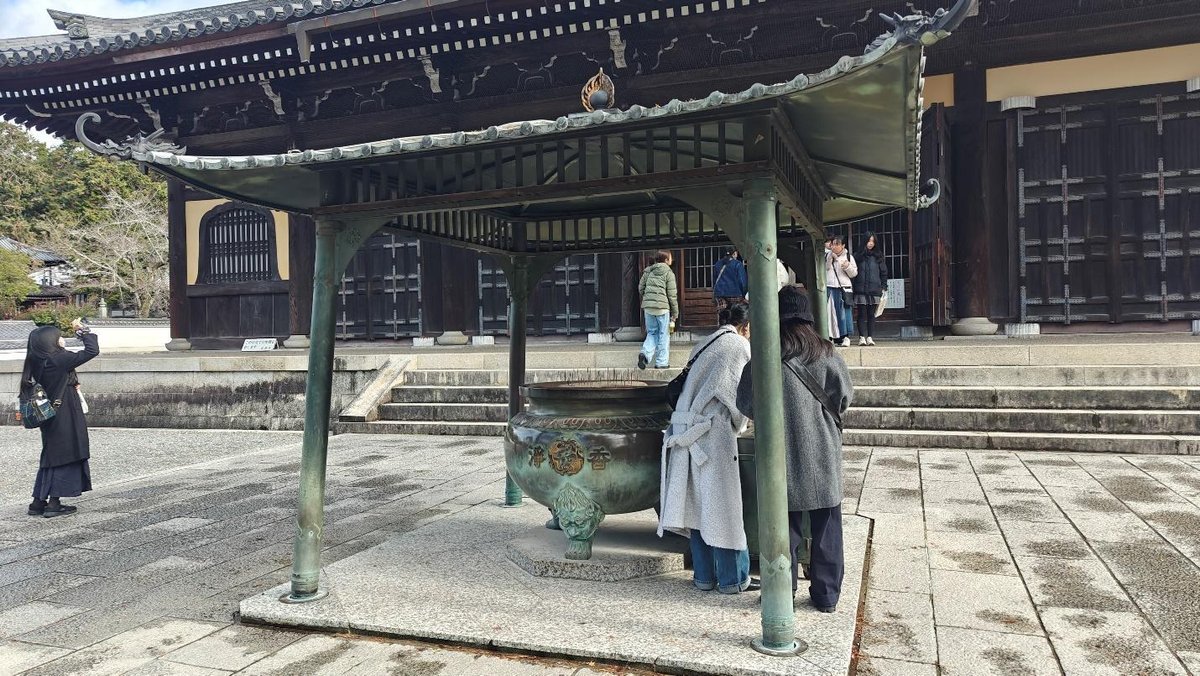
Once they're done with lighting their incense, worshipers can then proceed to the window of the Lecture Hall just behind the burner. There they can pray and make additional offerings. As with most Buddhist temples, the inside of the building is unfortunately not open to worshipers.
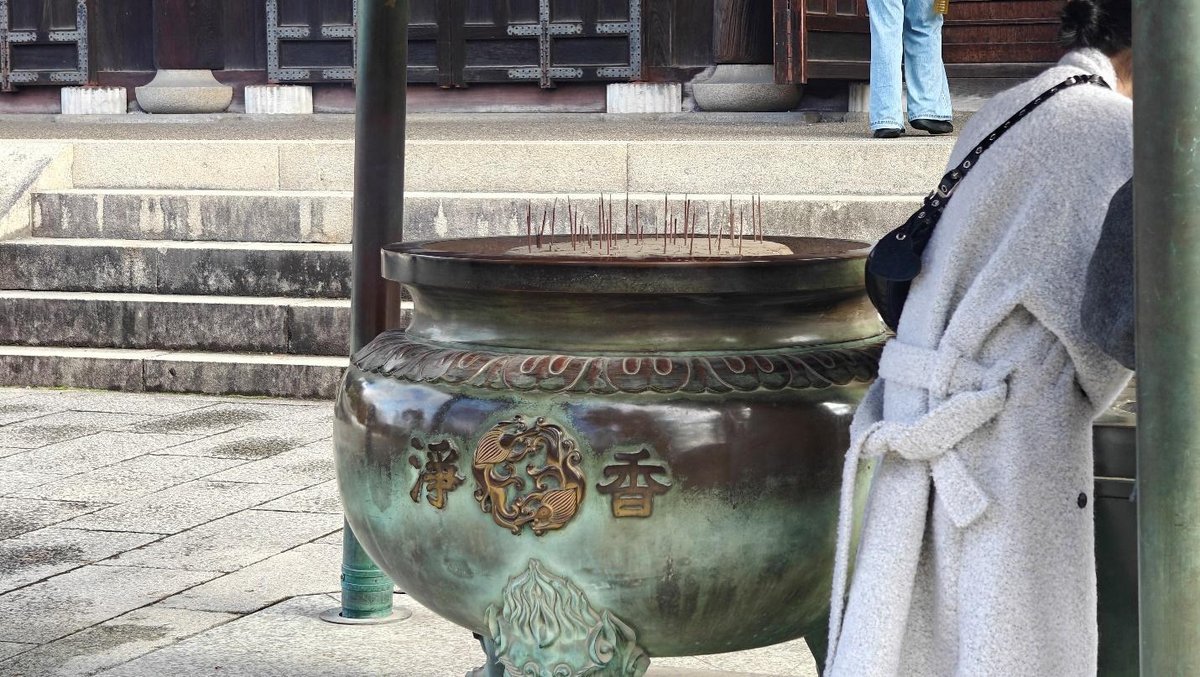
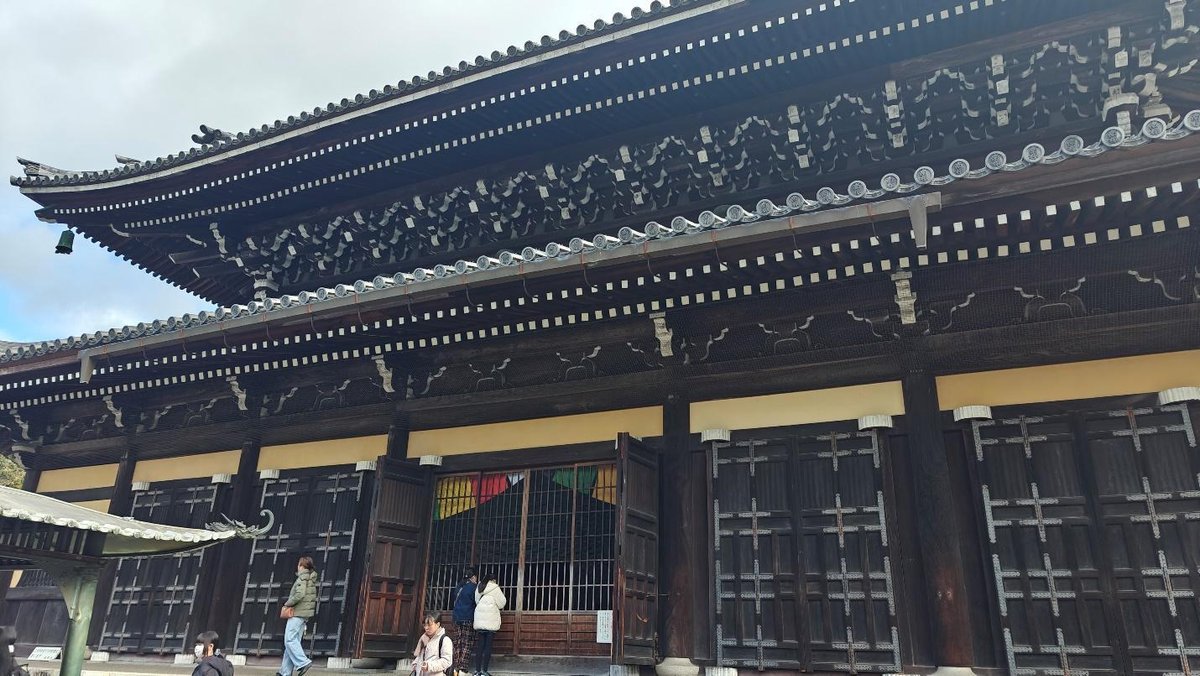
Enshrined in the Hatto (which also serves as the temple's Main Hall) and visible from the window are the statues of Shaka Nyorai, Manjusri Bodhisattva, and Samantabhadra Bodhisattva. These are placed in a rather ornate altar on a room with tiled flooring. On the ceiling directly above these is a large and rather scary-looking painting of a dragon that might not be that visible from the window.
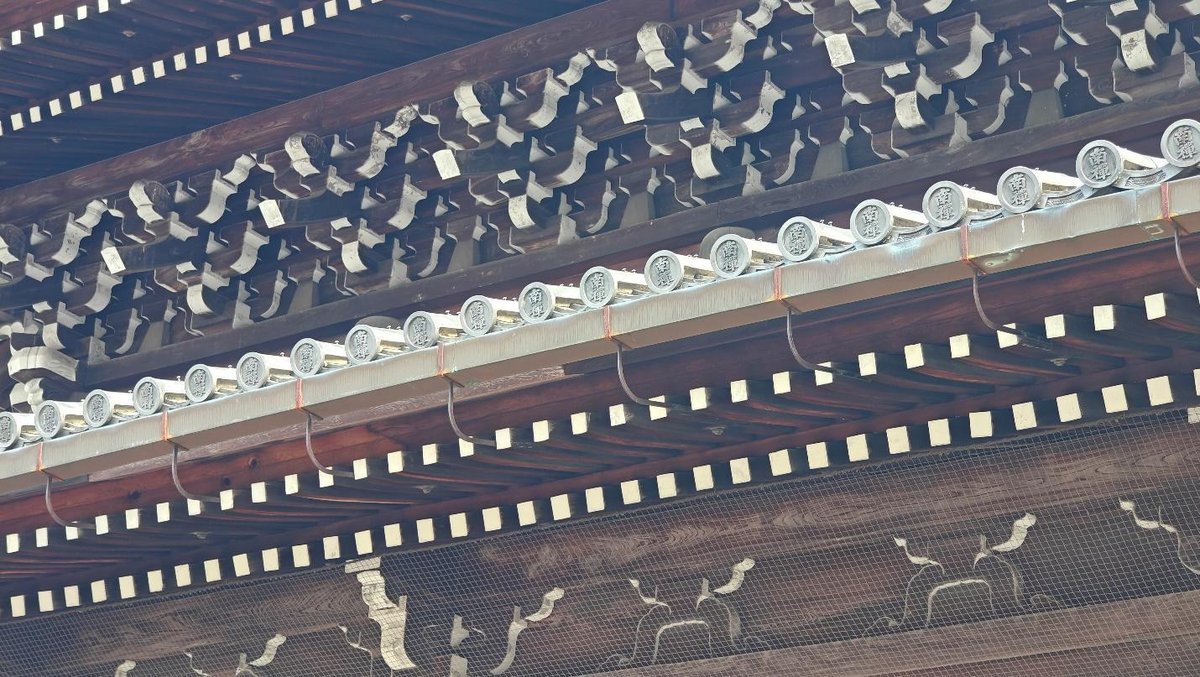
So the Hatto is probably one of the relatively newer buildings in the temple complex. While Nanzen-ji Temple itself has been around since 1291, the Lecture Hall is a reconstruction that was completed in the early 1900s. As such, it looks like it's in noticeably great shape with little signs of weathering (at least when compared to the Sanmon).
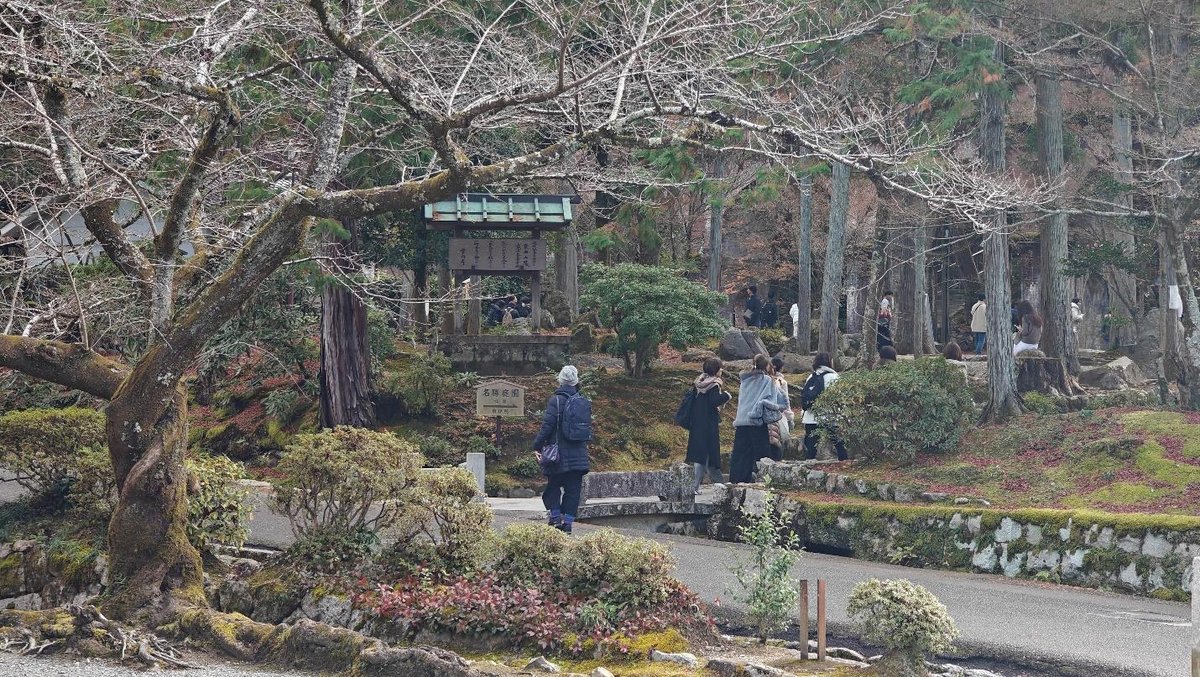
After checking out the Nanzen-ji Temple Hatto, the next area I was interested in seeing was the Suirokaku. This landmark is probably one of the most unique in the area just because of how unusual it is. Thankfully, getting there is relatively easy.
Just follow the path right when you’re facing the Hatto and you’ll see a sign pointing to the Scenic Garden where the landmark is.
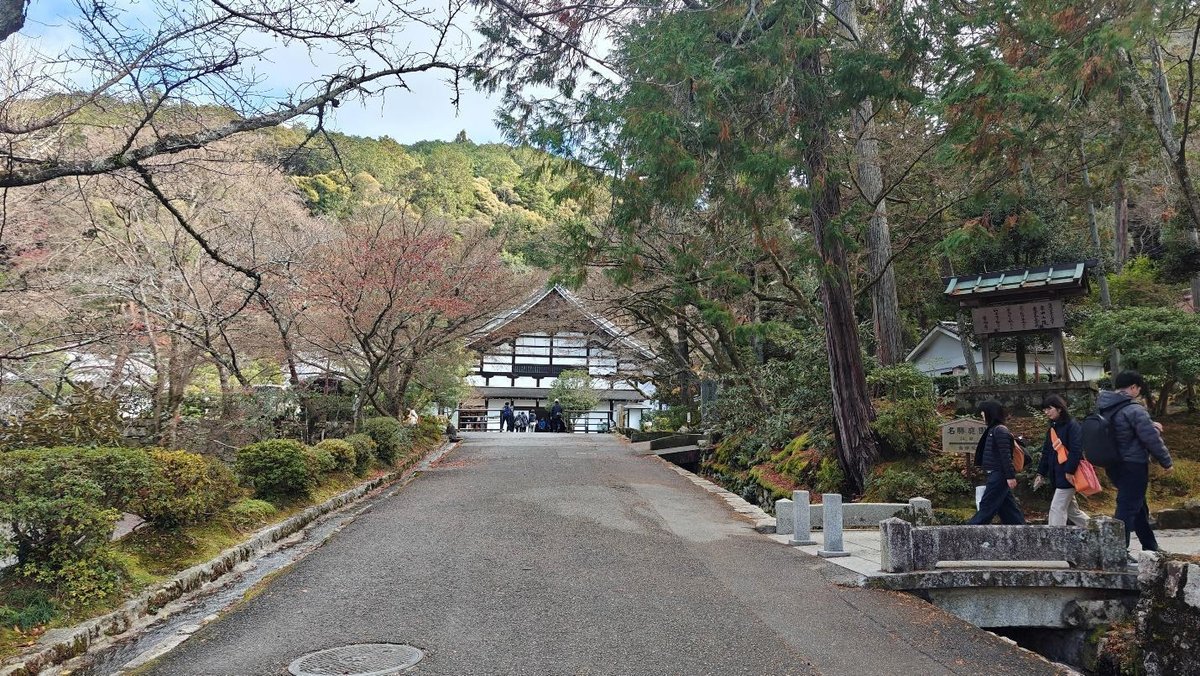
As you follow the path, you’ll also catch a glimpse of the Hombo or the Abbott’s Quarters. This building along with the Hatto, all connect to the main temple building which has two enclosed Zen Gardens. I actually checked this area out in detail but that will be a bit later on in this write-up.
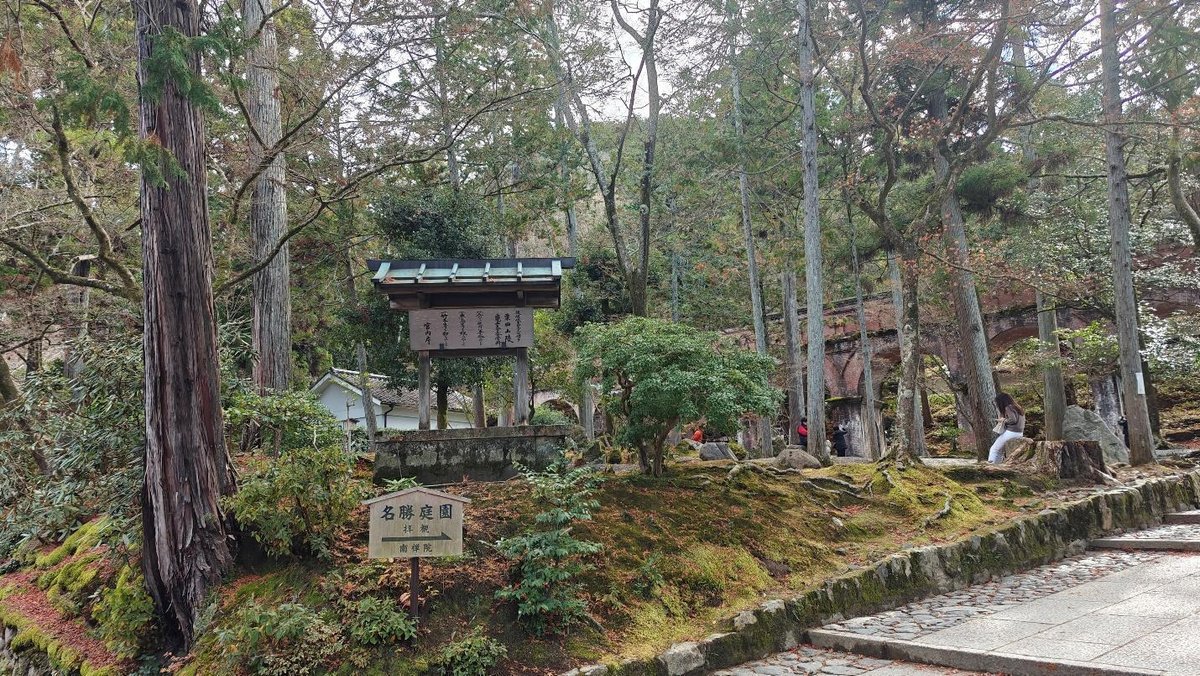
Since I wasn’t going to the Hombo yet, I turned right to this pathway. From here, you can already see the Suirokaku and you can probably understand why I was so interested in it. It’s a large bridge-like structure that looks completely out of place in a Zen Buddhist garden.
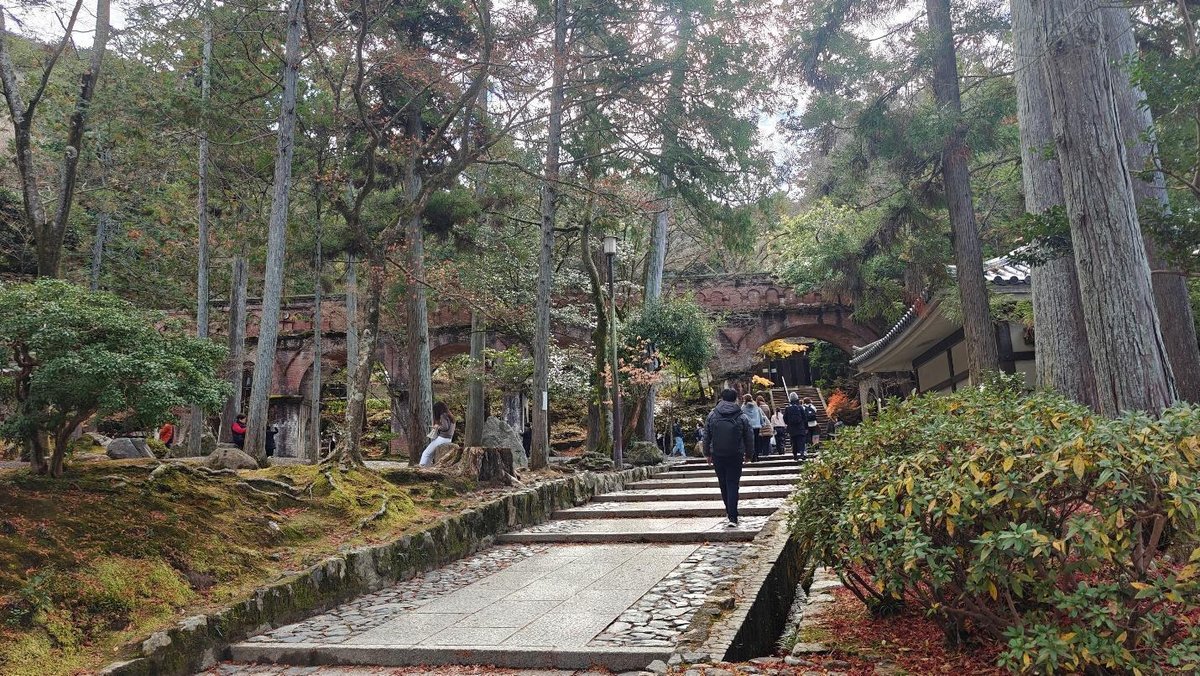
It’s not just me who was interested in the structure. I noticed that there were seemingly more people here than in other areas of the temple complex. This isn’t really surprising as the Suirokaku really does look quite unique.
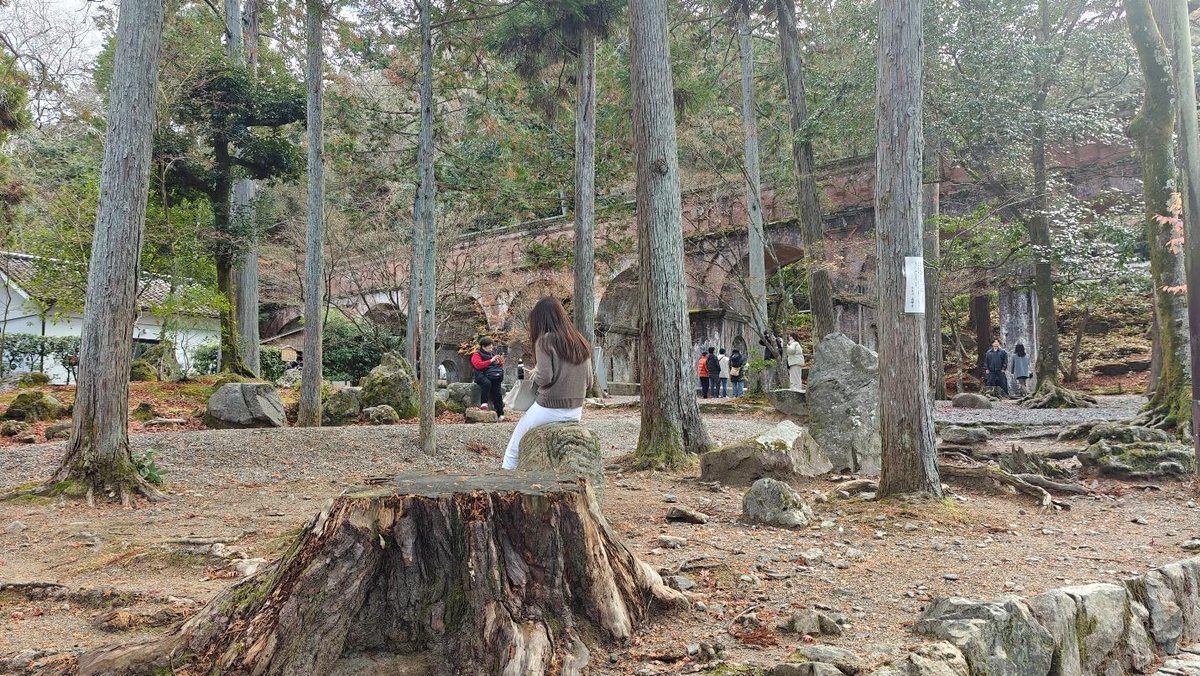
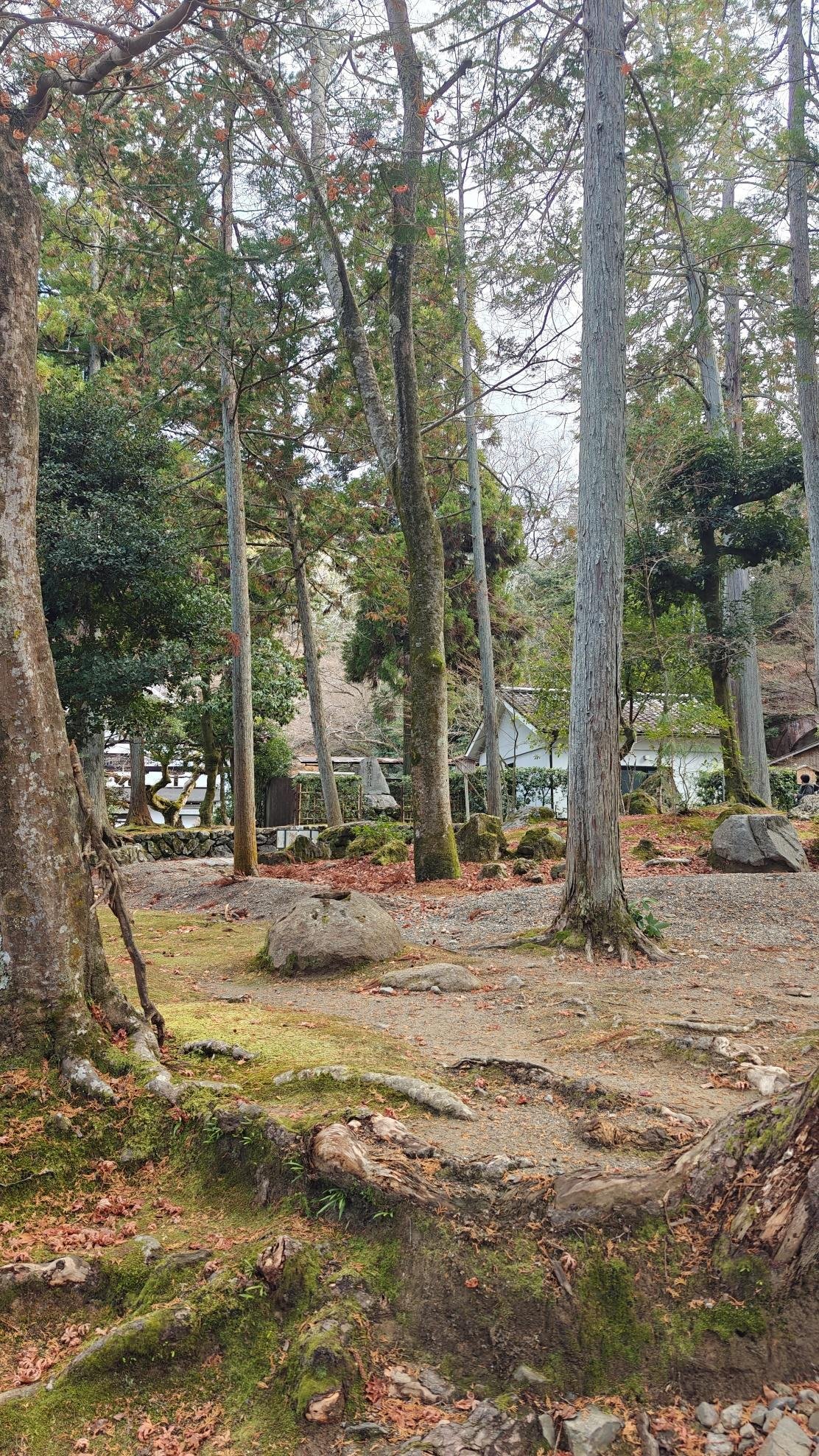
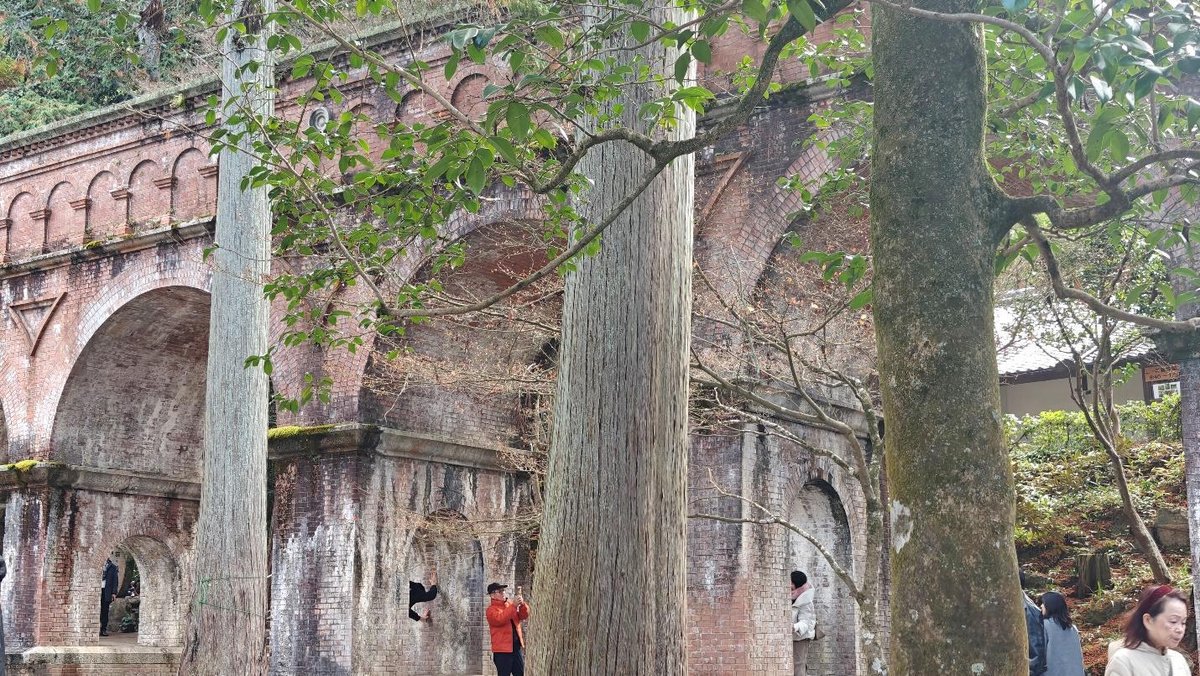
Unlike most traditional Japanese buildings and structures here, the Suirokaku looks a lot more European. A big reason for this is that it’s actually heavily inspired by Roman architecture. It’s actually an aqueduct or water bridge much like the ones you’d see in Rome.
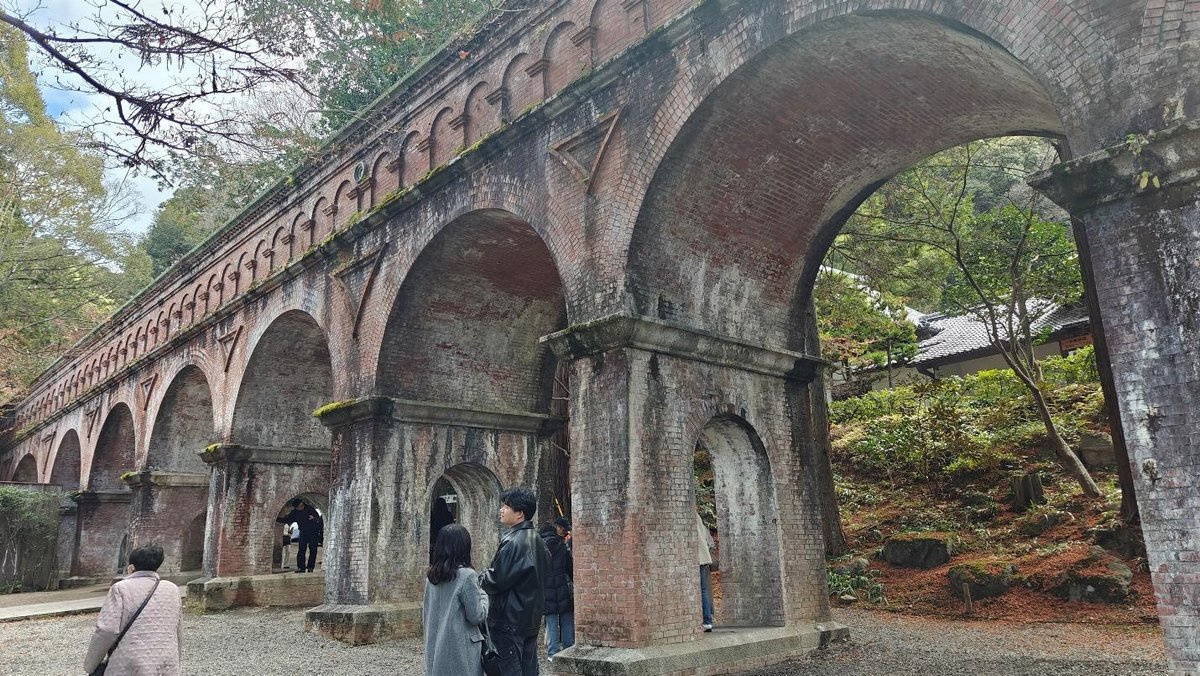
Built sometime in the 1890s, the Suirokaku’s main purpose was to help facilitate the transport of water from Lake Biwa to Kyoto as part of the Lake Biwa Canal Project. Interestingly enough, this project including even the aqueduct is still fully functional despite being over a hundred years old. In fact, water from Lake Biwa still flows through the aqueduct going to the Keage Power Plant which can be found across the street from Keage Station.
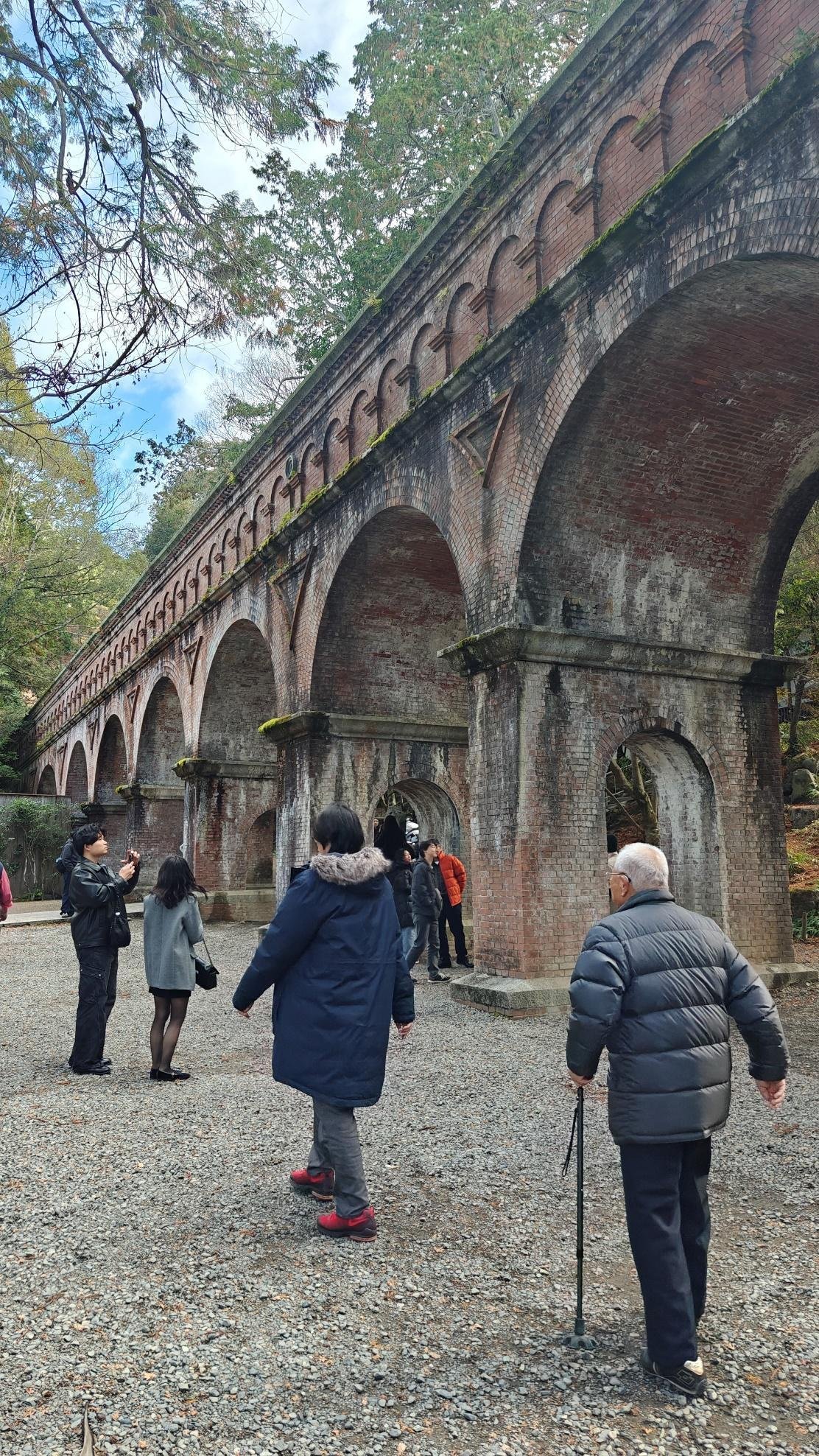
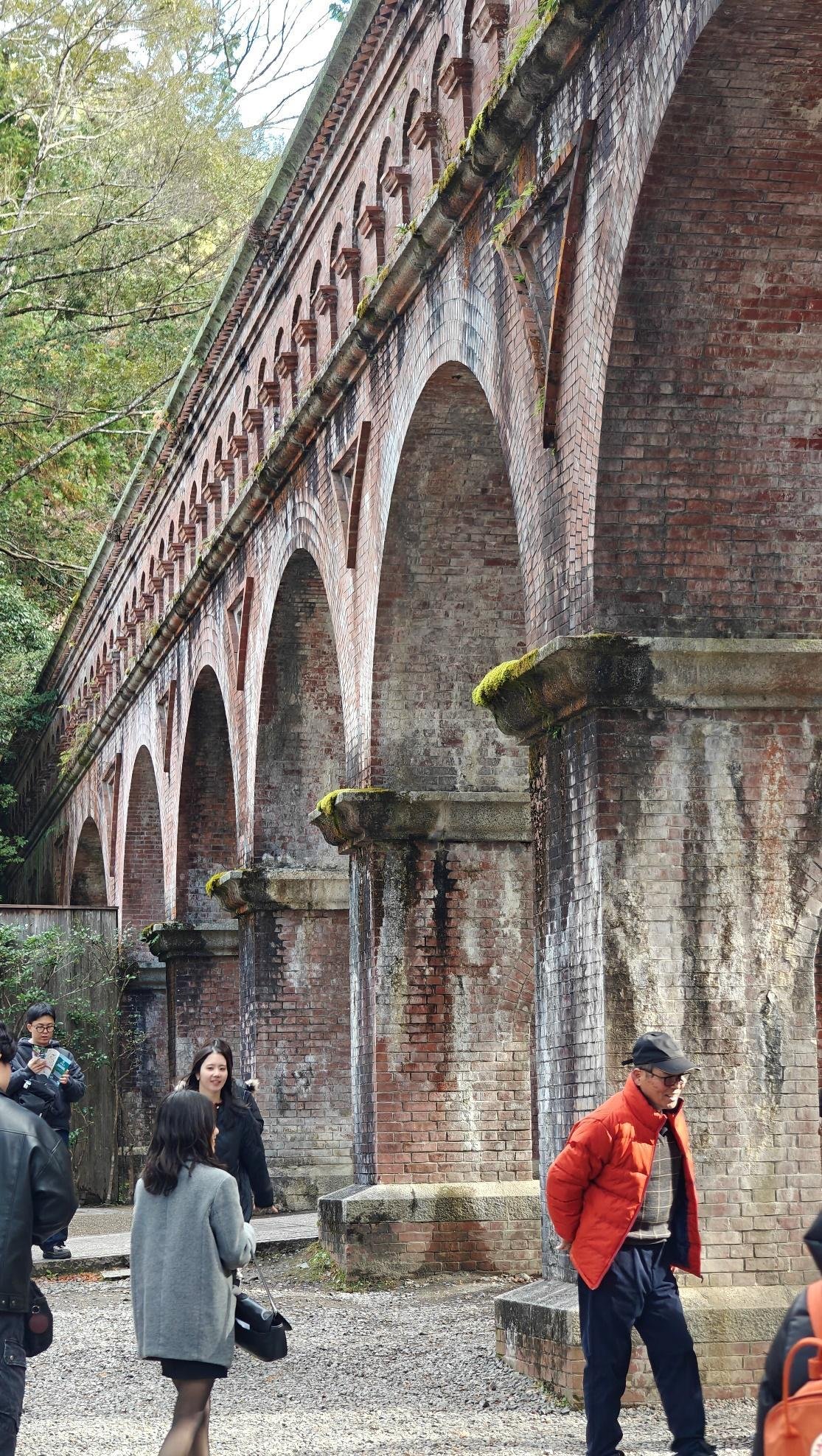
According to sources I read online, the designer of the aqueduct (Sakuro Tanabe) wanted it to naturally blend in with the surrounding temples. Truthfully speaking though, it actually stands out more than it blends in. The bricks and other details of the structure make it look more like European ruins were somehow magically transplanted here.
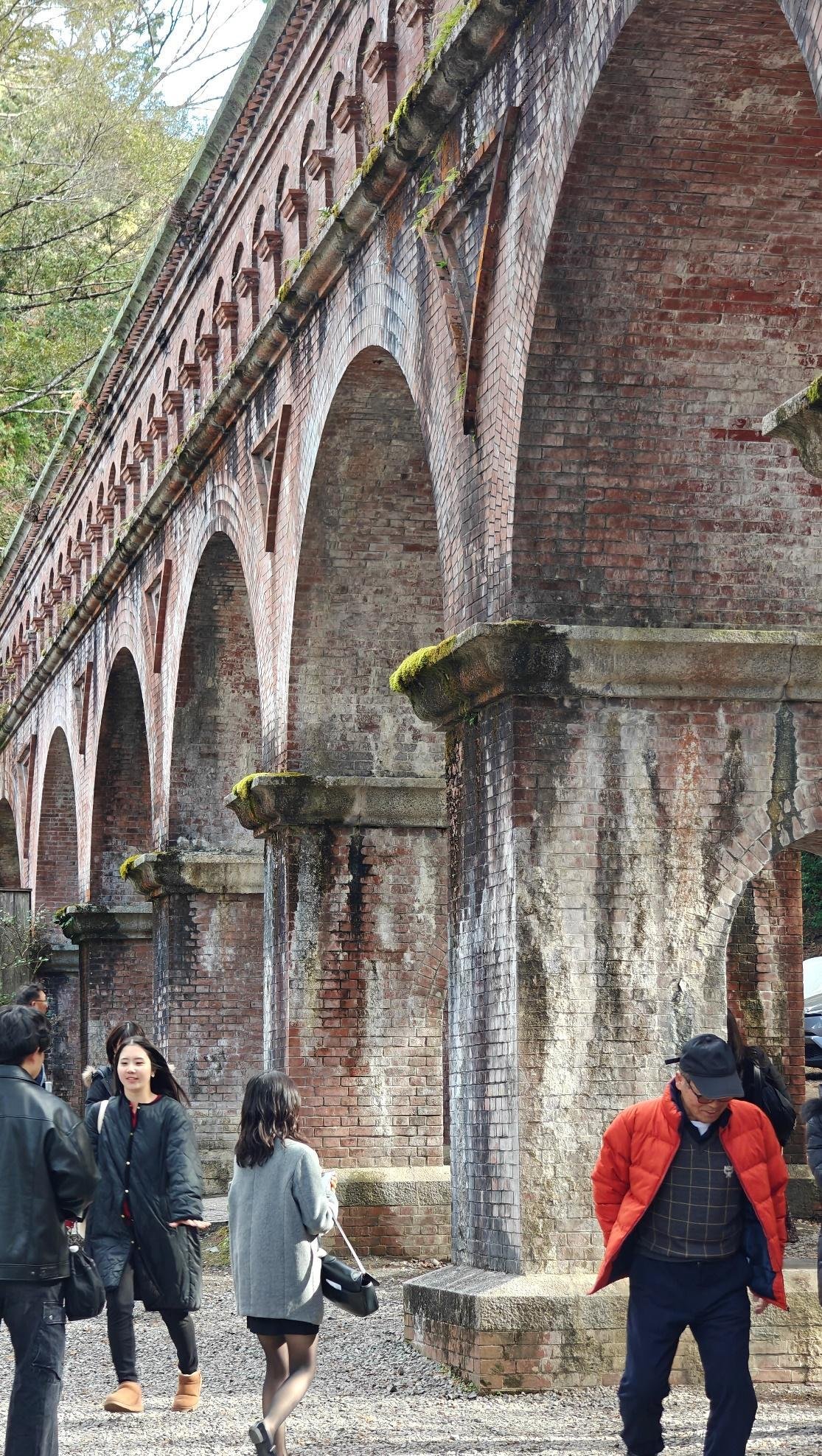
That said, it’s not like the Suirokaku Water Bridge looks bad. While it does stand out, it also complements everything around it in a way. Japanese culture values contrast and I think it’s why the placement of the aqueduct here actually works.
Its design and construction stands in stark contrast to everything around here that in a way, it sort of makes an otherwise regular temple complex interesting.
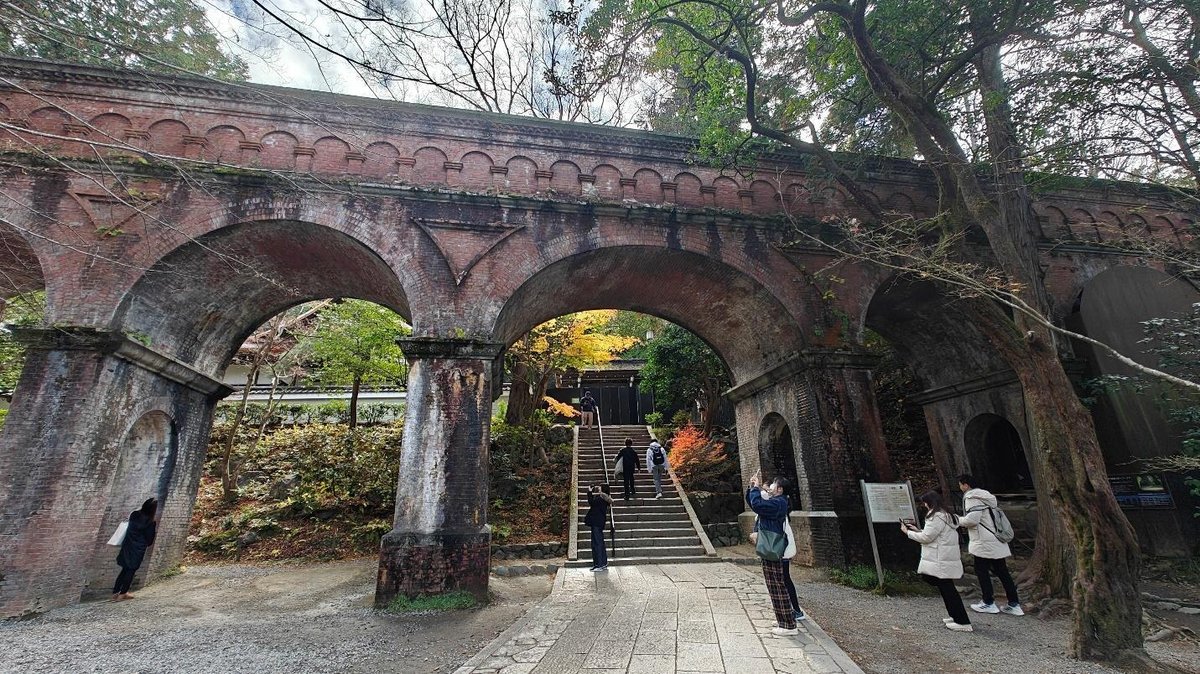
The Suirokaku area is also a good place to explore the rest of the sub-temples in the Nanzen-ji temple complex. These stairs lead up to an area which has the Nanzen-in Temple, Nanzen-in Garden, and the Nanzen-ji Shoro (some images of which you’ll see later). Other than these, you can also reach the Saisho-in sub-temple by turning left just before you get to the first step of the stairs.
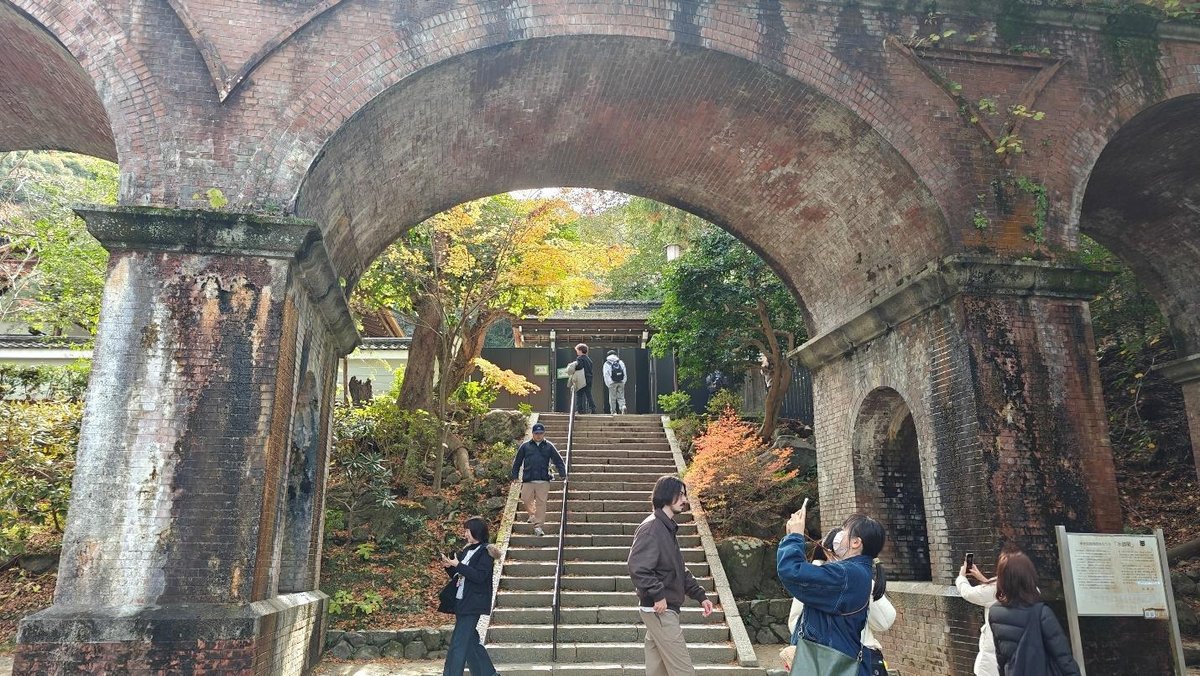
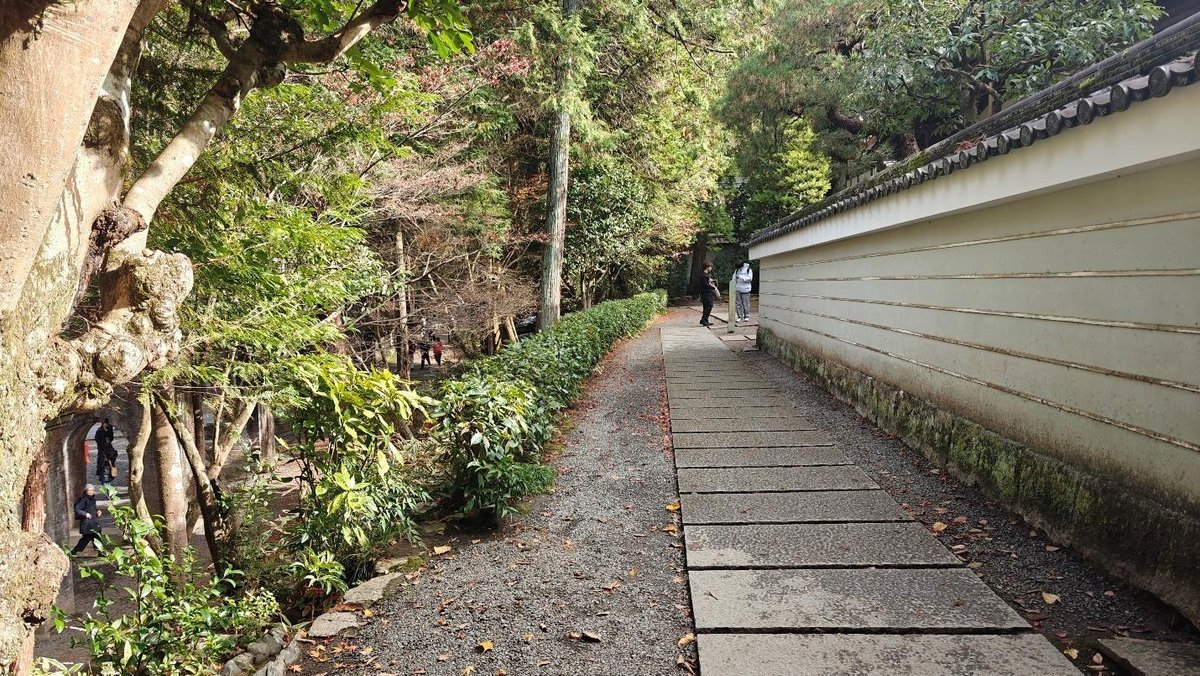
So this is what the path at the top of the stairs looks like. I decided to check it out since it seemed quite promising. There wasn’t much to see though as the Nanzen-in Temple was closed at that time.
A cool fact about this sub-temple is that it used to be the site of the retirement villa of Emperor Kameyama during the Kamakura period. Apparently, the main object of worship here is a statue of the said emperor who in 1291, had his villa converted to a Zen Buddhist temple.
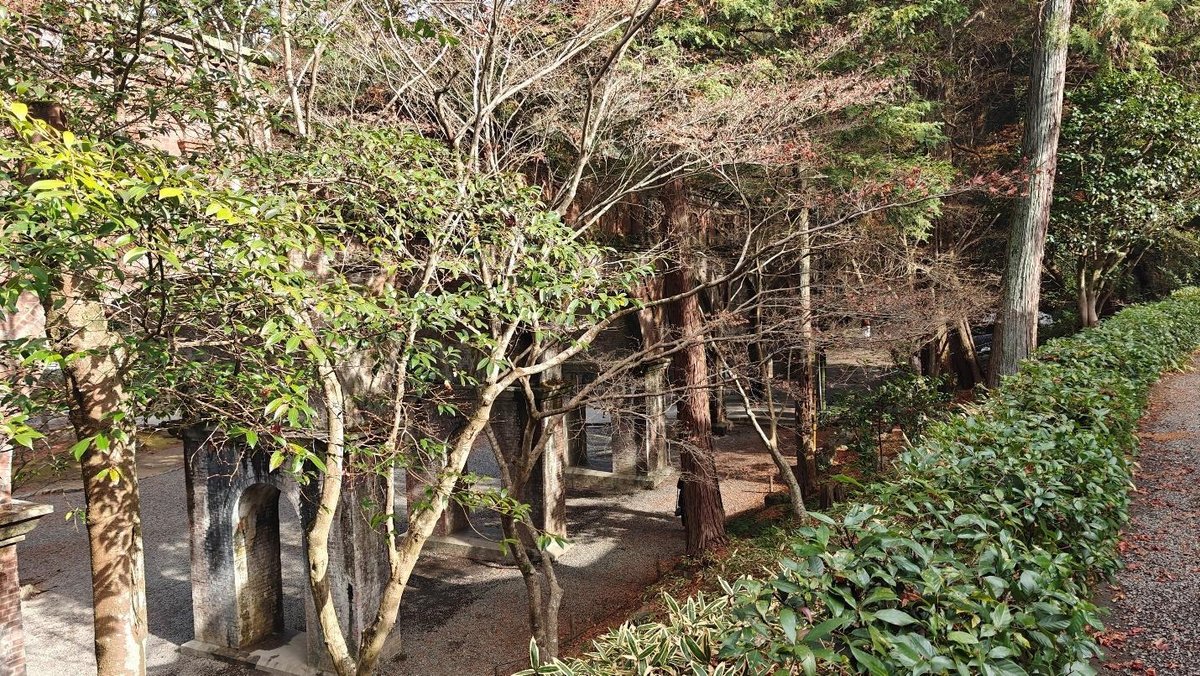
From this area, you can see the path leading to Saisho-in Temple. Since there wasn’t much to see here, I decided to get down to that path instead. The path itself is much more scenic and is also a lot more accessible for individuals who might have disabilities.
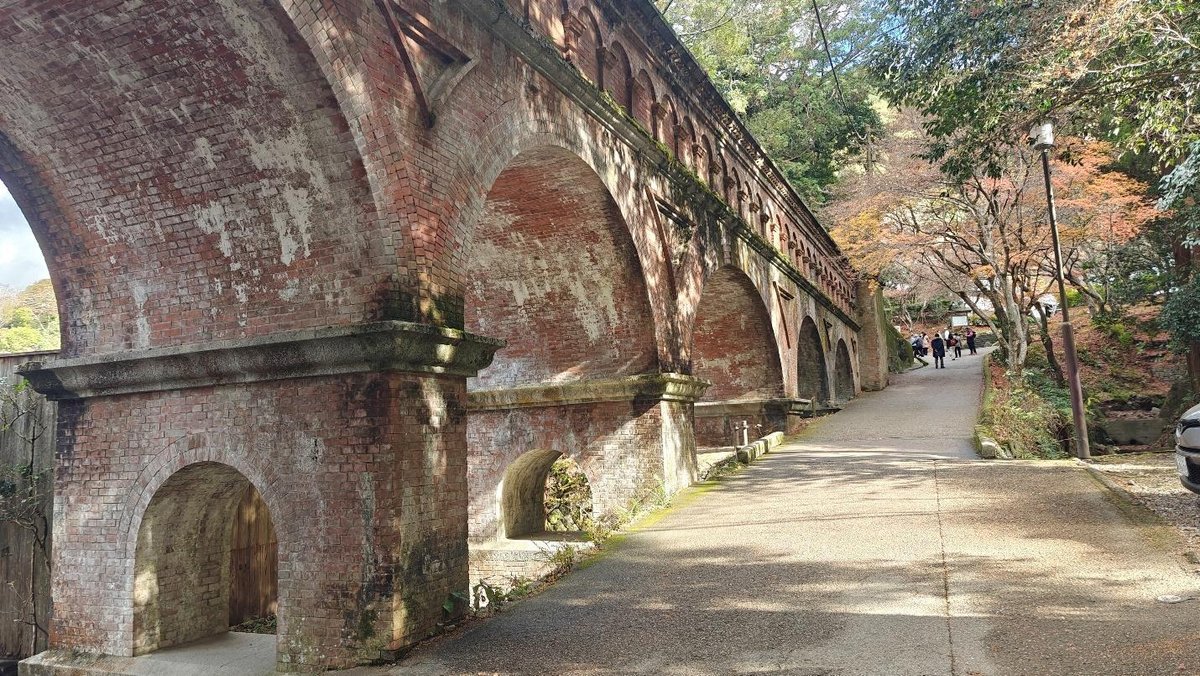
What I also liked about this path is how you can actually get to see more of the Suirokaku up close. And once you reach the top, you can even see how the water flows in the aqueduct’s channel. While it was relatively quick, I did find myself enjoying the walk up this path.
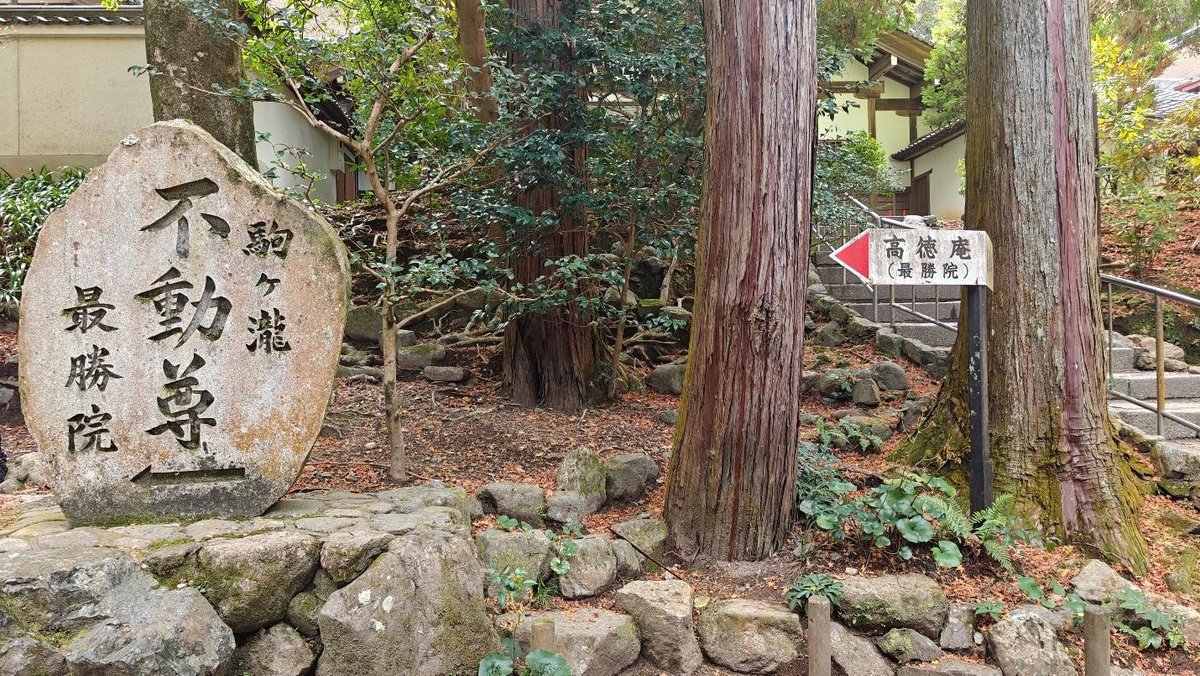
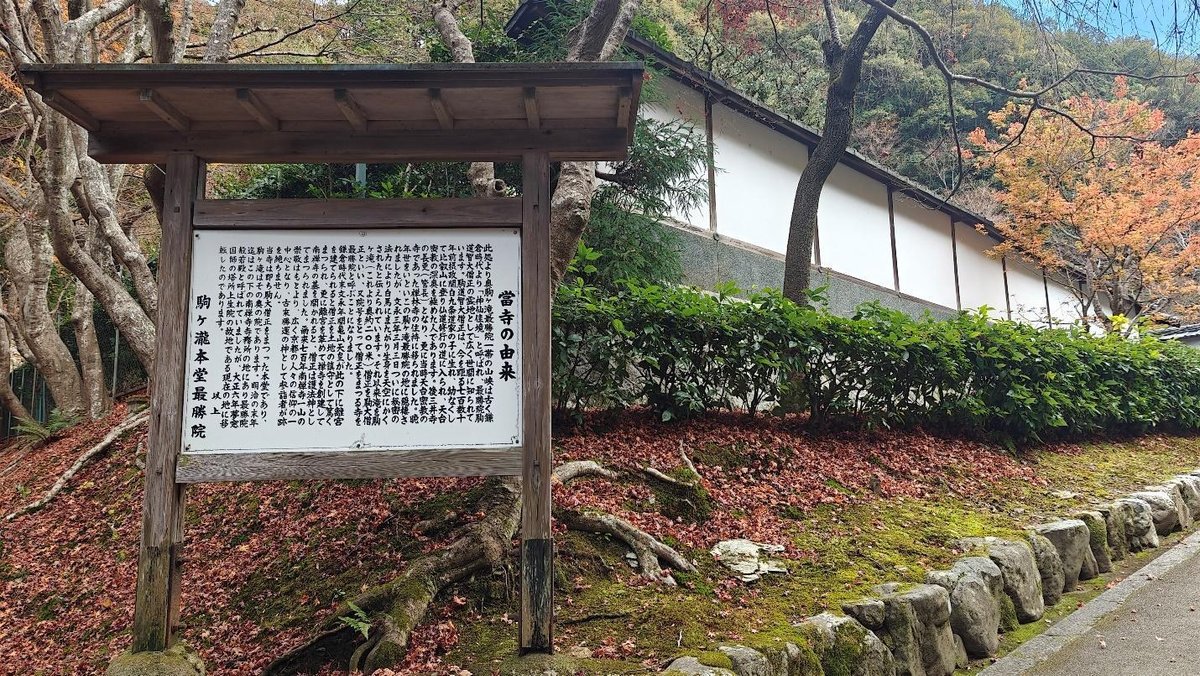
So this sign indicates the notable landmarks you’ll see as you go up the path. Aside from Saisho-in Temple, the path also leads to Komagataki Waterfall and an area called Fudoson. Of these, I only ended up going to the temple as the waterfall was a bit far and the other area I wasn’t too sure about.
As for where you'll find this, it's just beside the steps going up to Nanzen-in Temple.
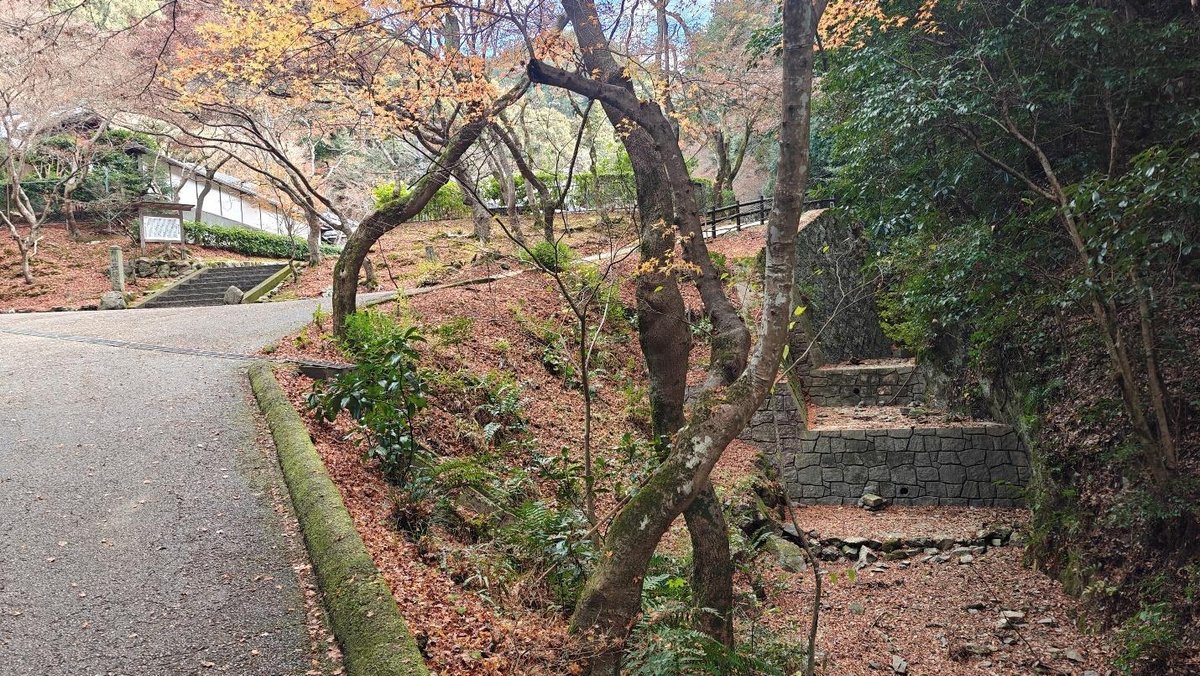
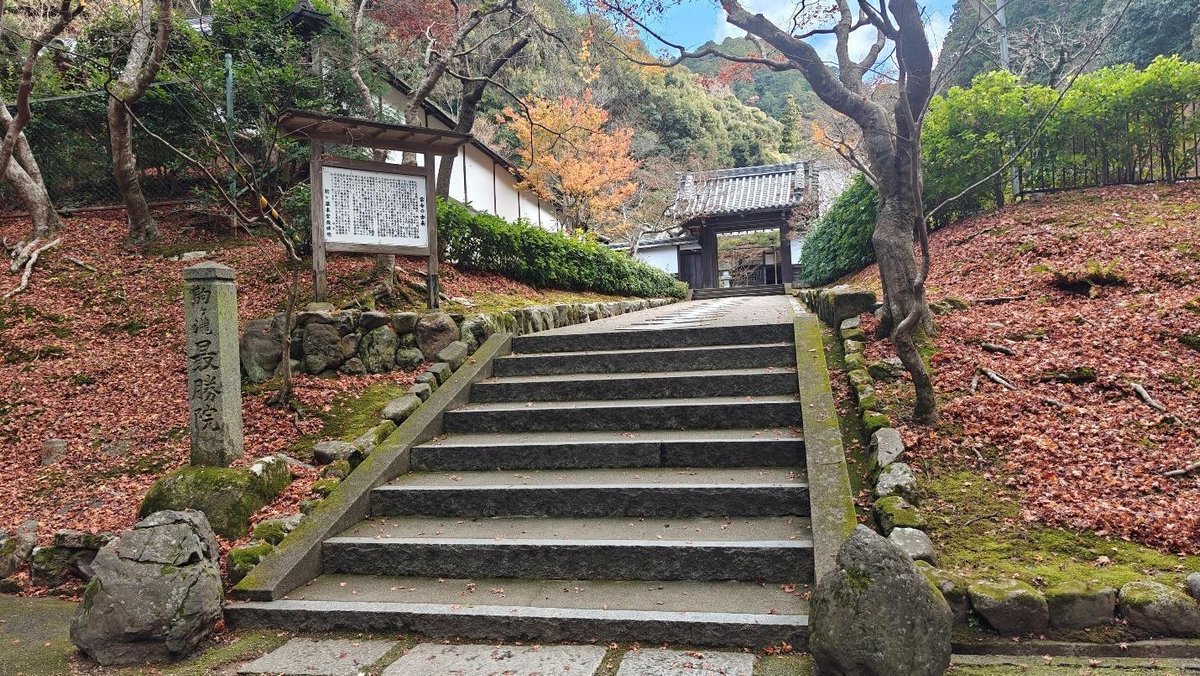
After a relatively quick walk up, I finally found myself at the approach to Saisho-in Temple. Now for some reason, I found this particular path to be a little eerie. It's likely though that it's just because of how few people that were here compared to the Suirokaku area from earlier.
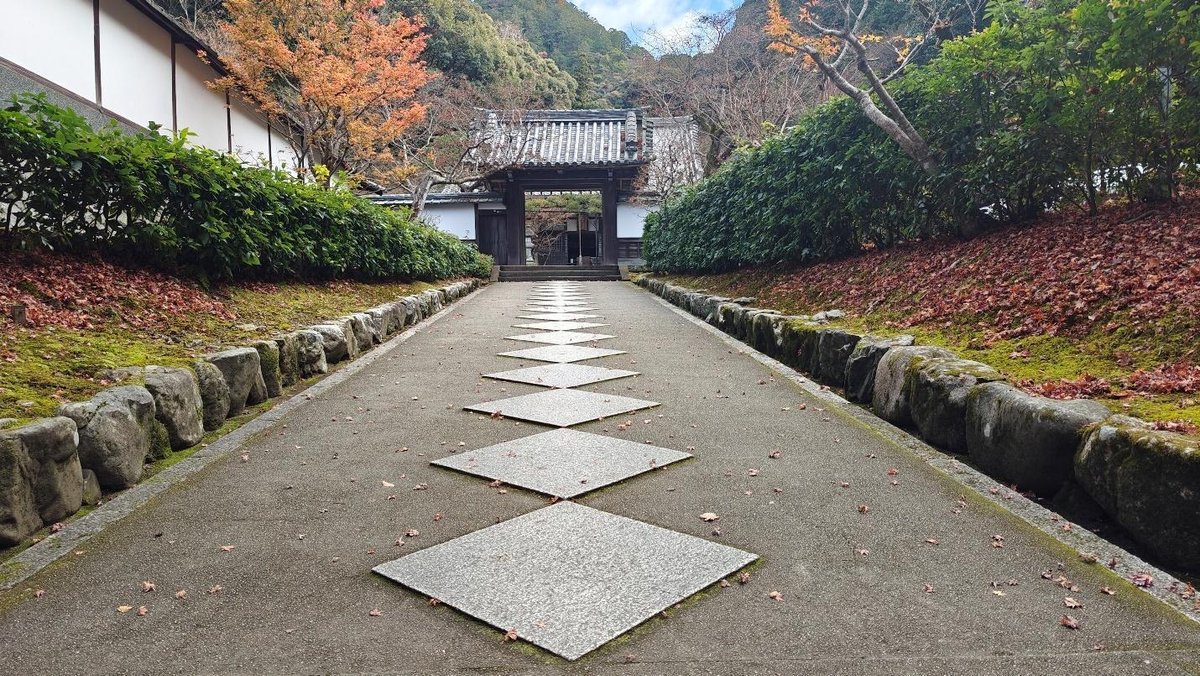
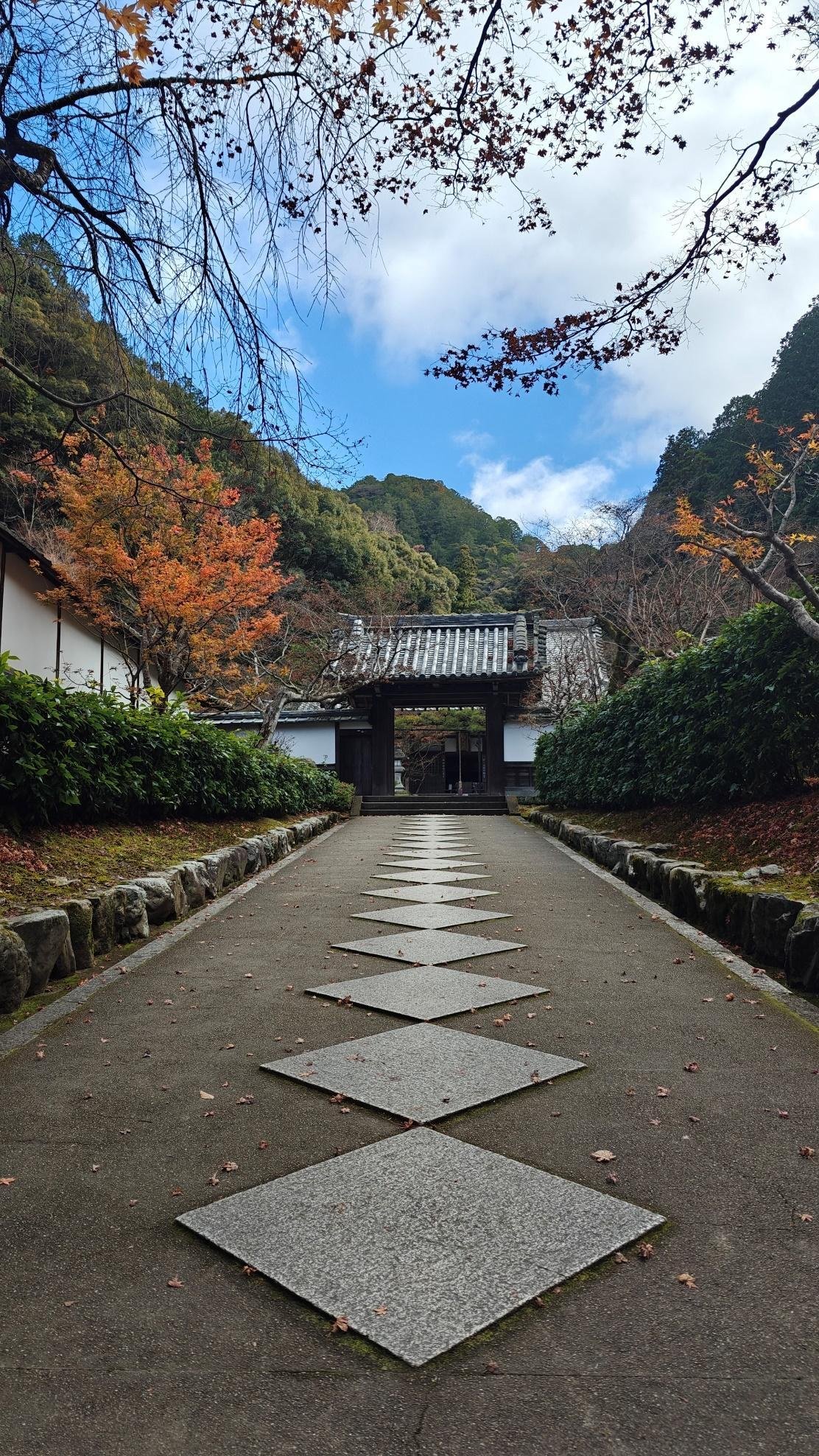
Another possible reason why I felt it was eerie was quite possibly because of what I read about Nanzen-ji Temple and its history. Apparently, the main temple used to be haunted back when Emperor Kameyama was still alive. Looking back, that information probably made me feel a little scared when I saw how there weren't any people around.
Take note though that the stories pertaining to the hauntings are only limited to the main temple. If I remember correctly, the stories don't specifically include Saisho-in. And since my visit was in an off-peak season, the fact that there weren't that many people here is understandable.
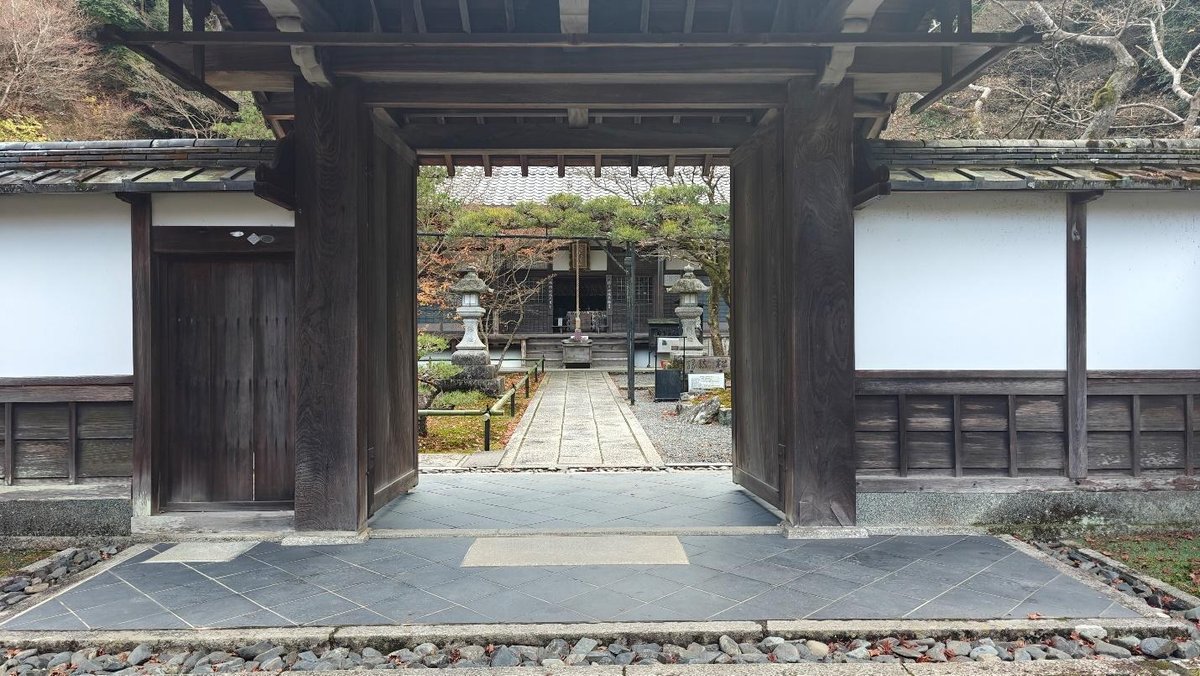
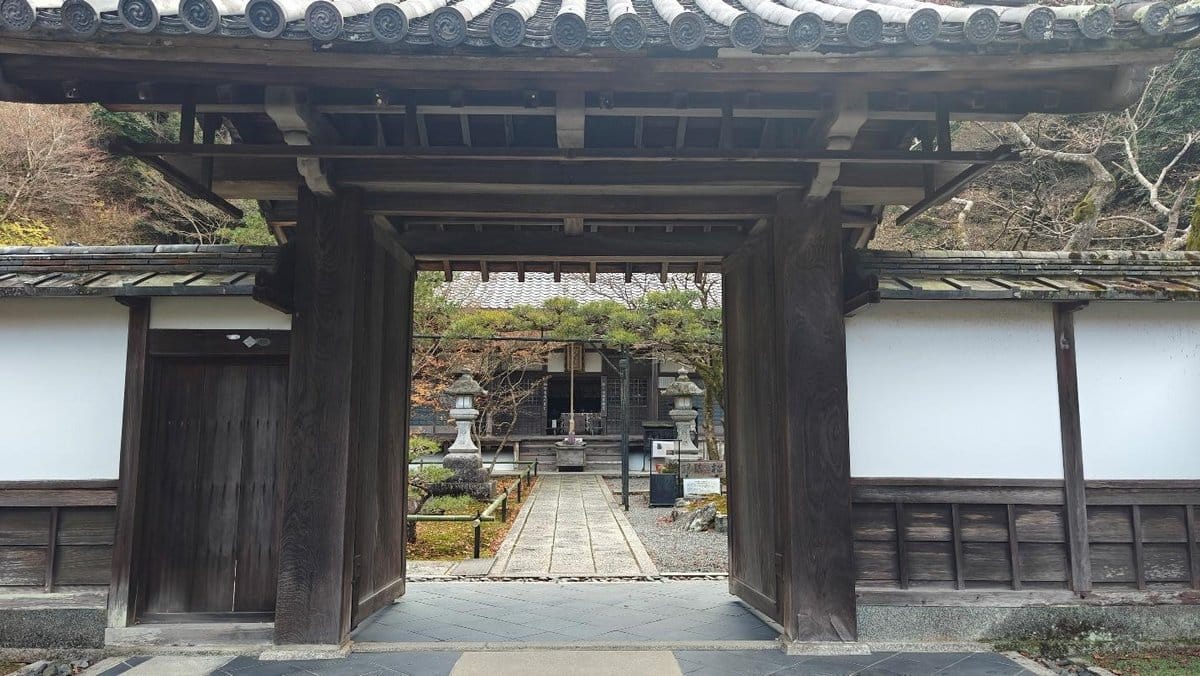
In a way, there being no other visitors here made this the most Zen-like of all the temples in the complex. Walking around here felt meditative and the silence was actually quite refreshing. The eerie feeling I had earlier was instantly replaced with a sense of calmness and peace as soon as I stepped inside the gate.
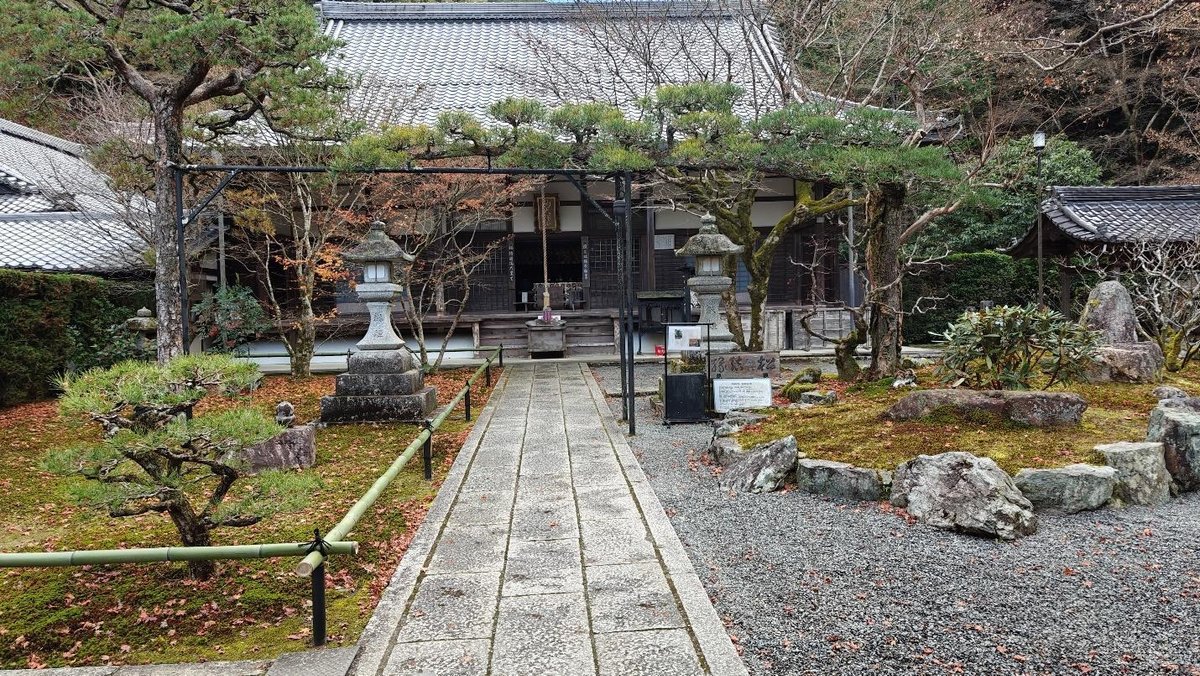
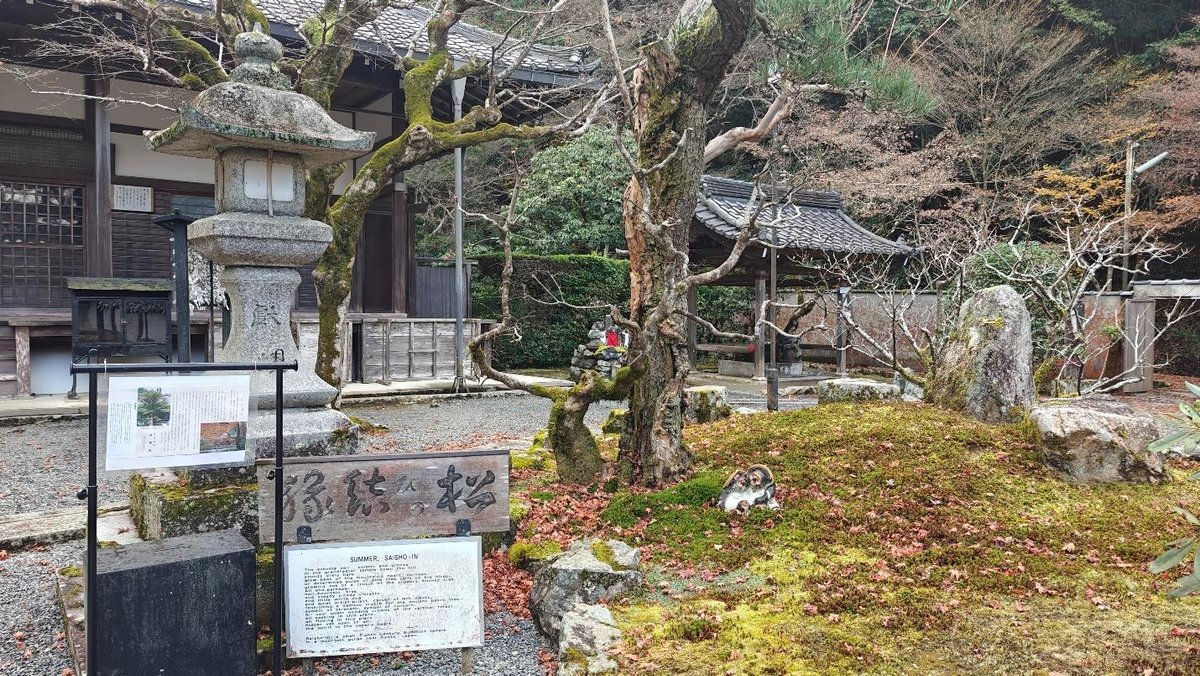
Admittedly, Saisho-in is rather small. That said, it perfectly makes use of the limited area with its beautiful garden that features a plethora of trees as well as large decorative rocks and stone lanterns. There's also a sign here with a poem about a peaceful summer in the temple.
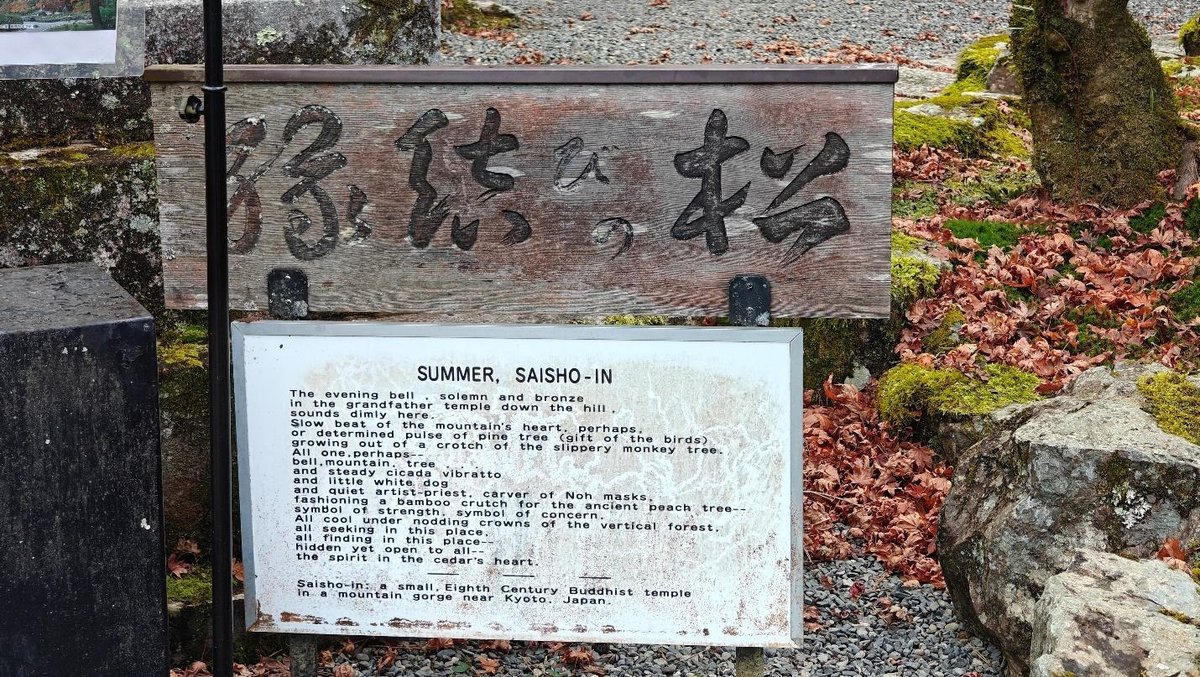
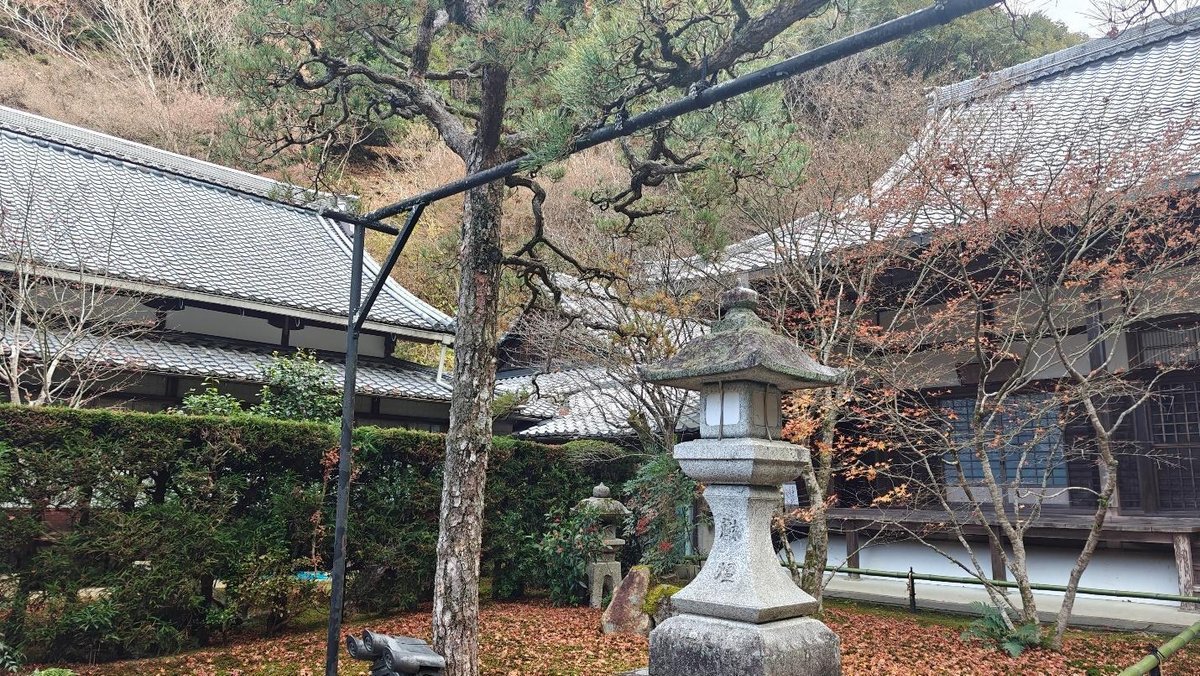
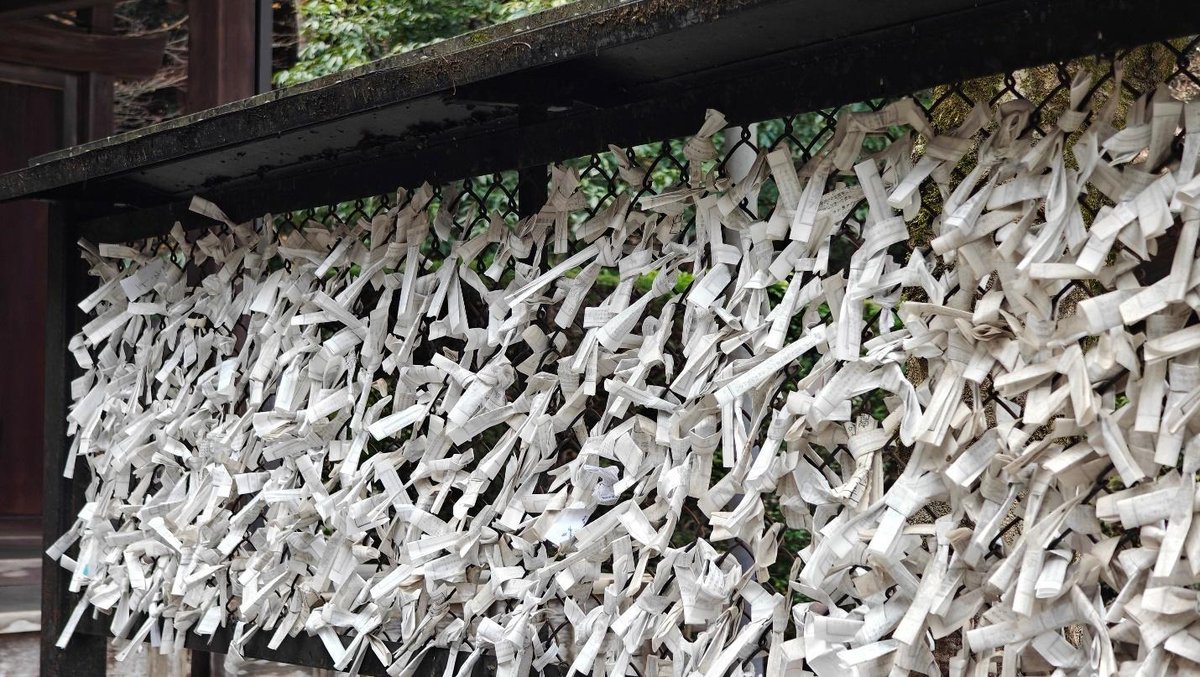
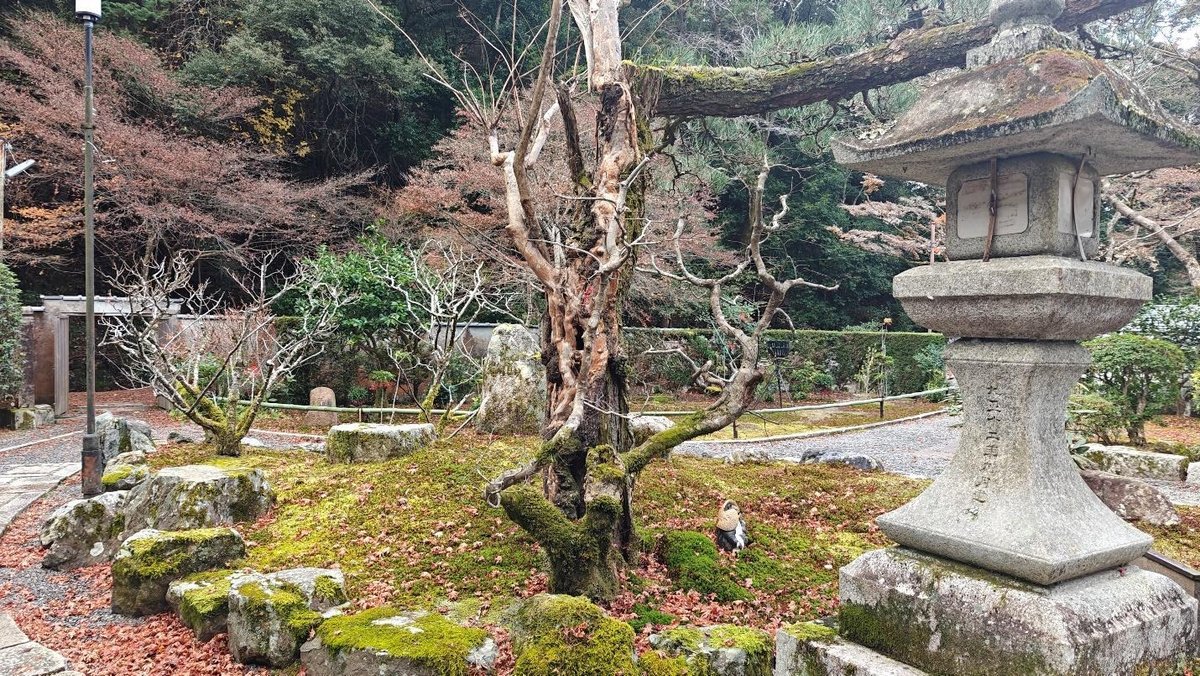
One thing that surprised me about Saisho-in Temple is its age. Apparently, it's much older than the main Nanzen-ji Temple complex. Based on the sign earlier, it's been around since the 8th century and this is also probably why it has a different vibe from the main and sub temples in the complex.
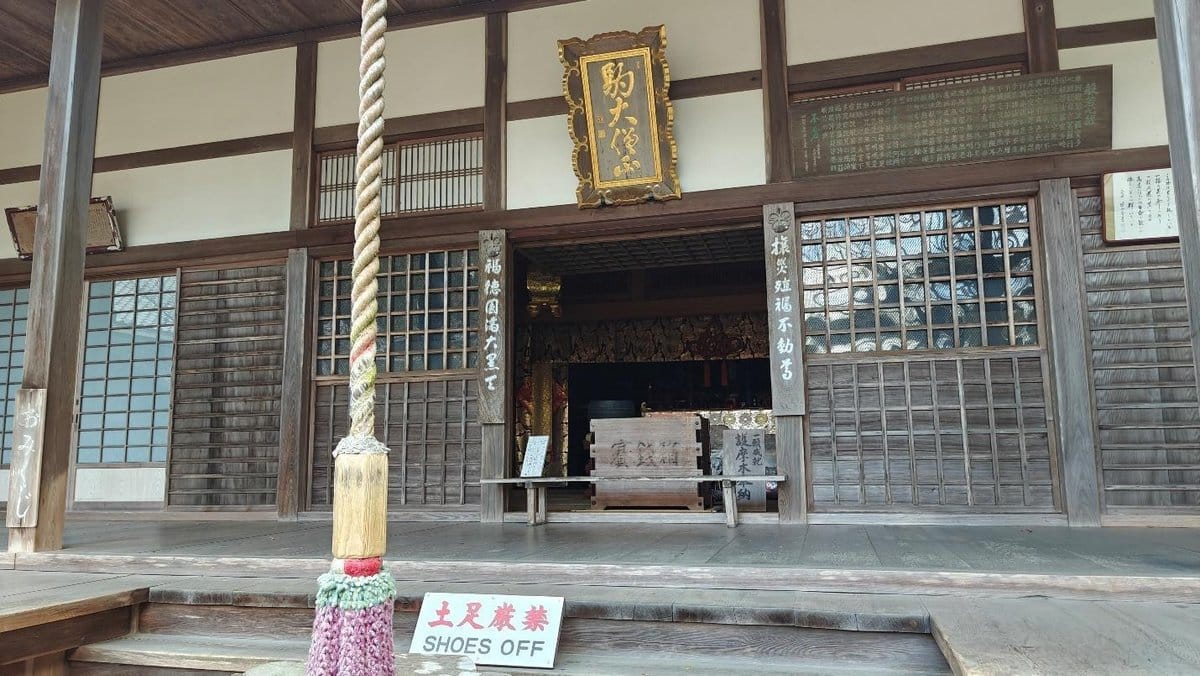
I'm not quite sure if the building is the original since the temple isn't really mentioned that much online (at least compared to other popular landmarks in Kyoto). That said, the fact that you're allowed to go up the engawa means that the wood and the building is still in great condition. This could be thanks to regular maintenance or due to it being relatively new (and honestly, it could also be both).
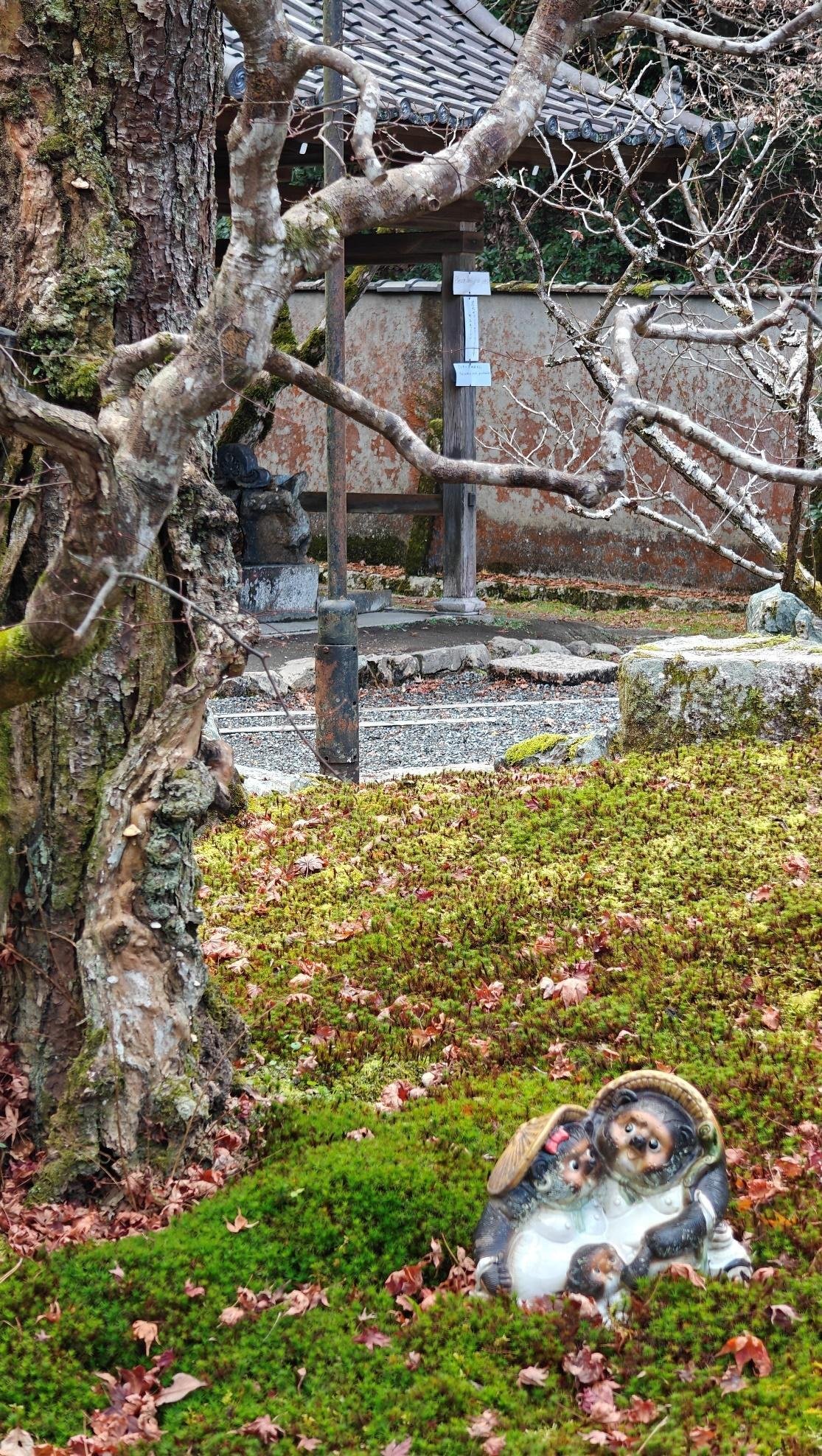
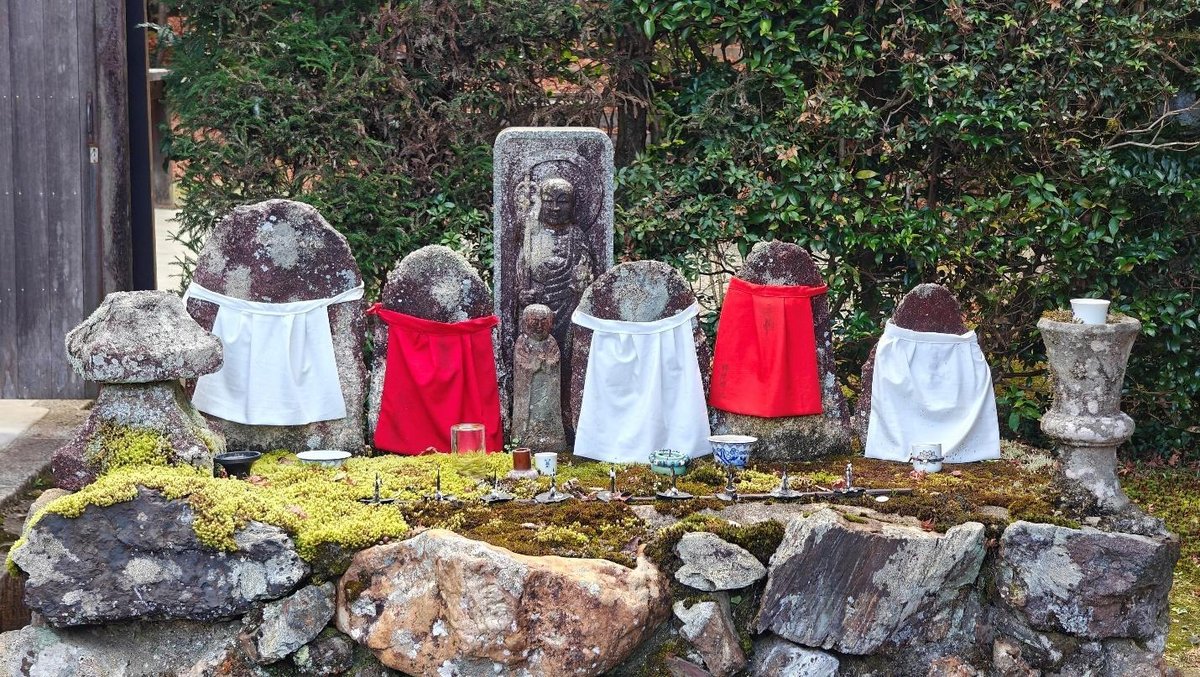
A particular statue that I found really interesting in the garden here at Saisho-in was this one featuring a family of tanuki. For some reason, I found this to be really cute. Other than this, there were also stone jizo statues here with red and white bibs.
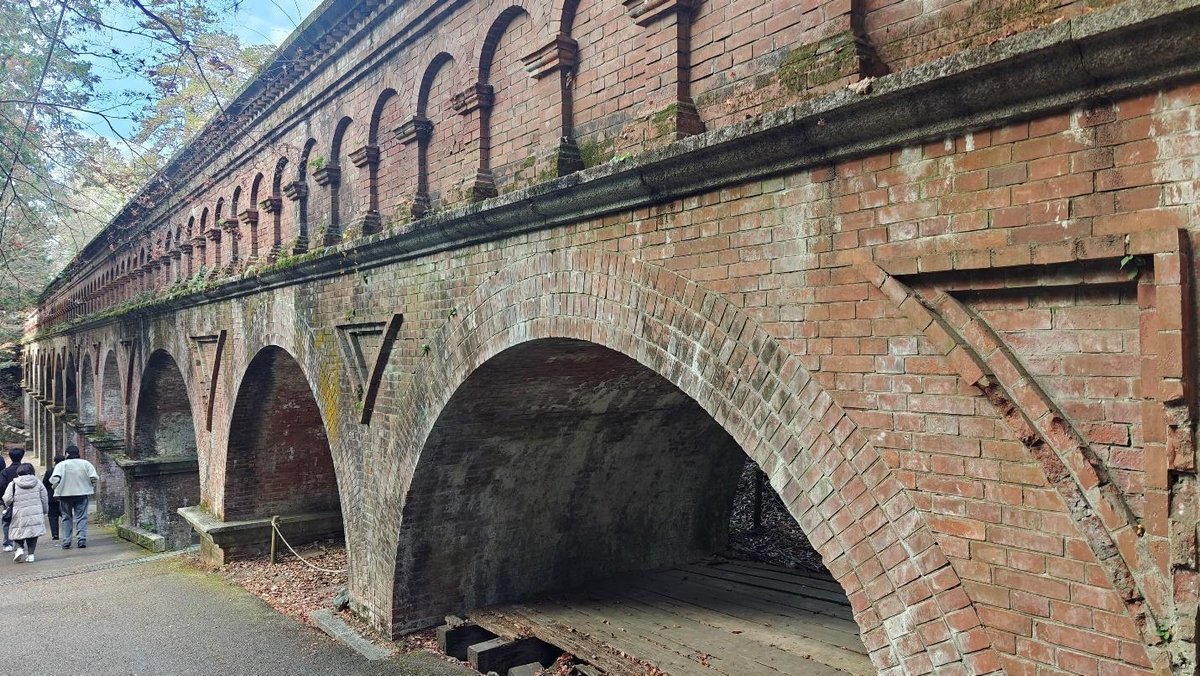
After Saisho-in Temple, I decided to head back down and look for the Nanzen-ji Shoro. I actually forgot to check it out earlier when I went up to the area where the Nanzen-in Temple was. Along the way, I again was impressed by the architecture of the Suirokako.
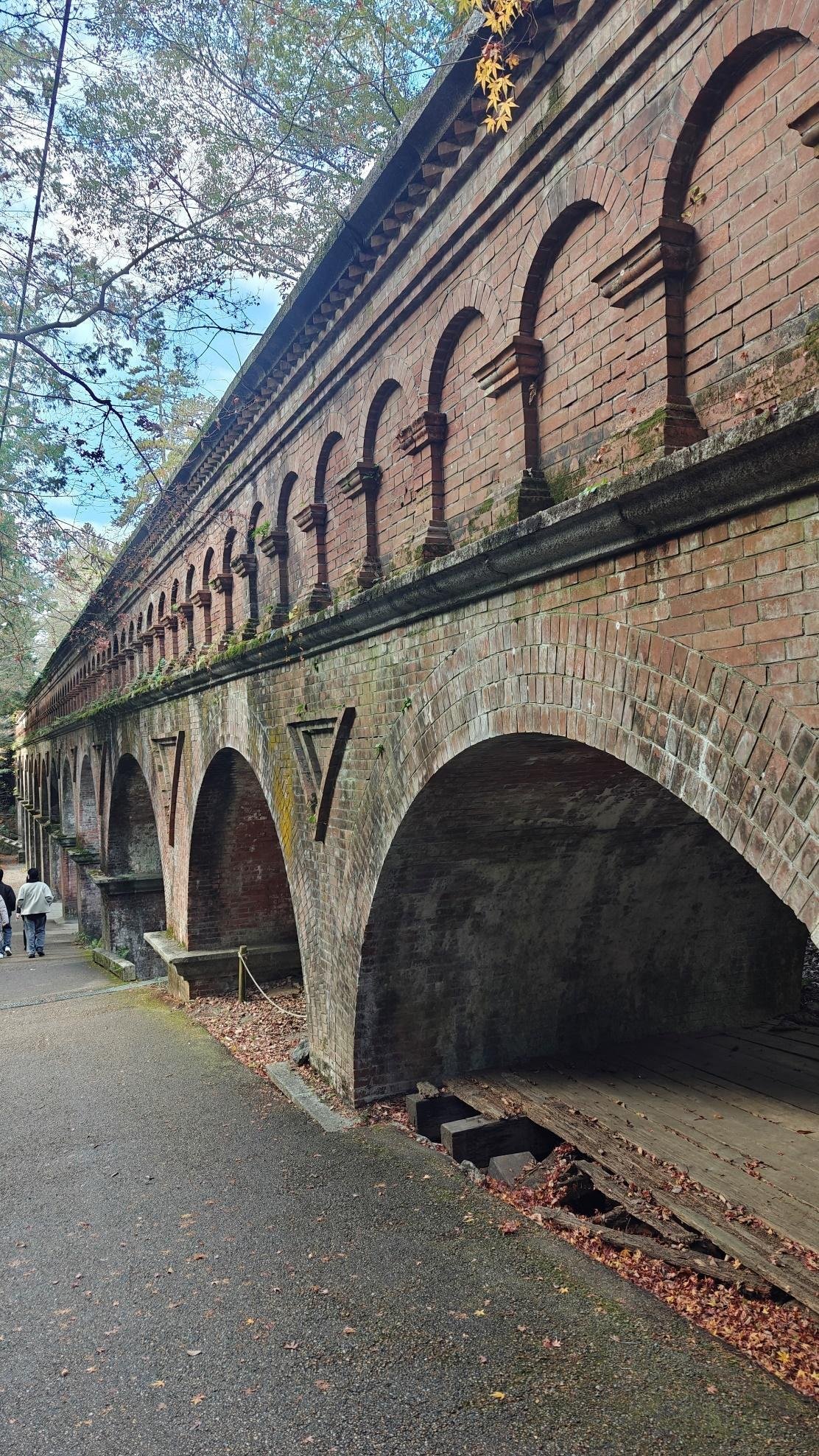
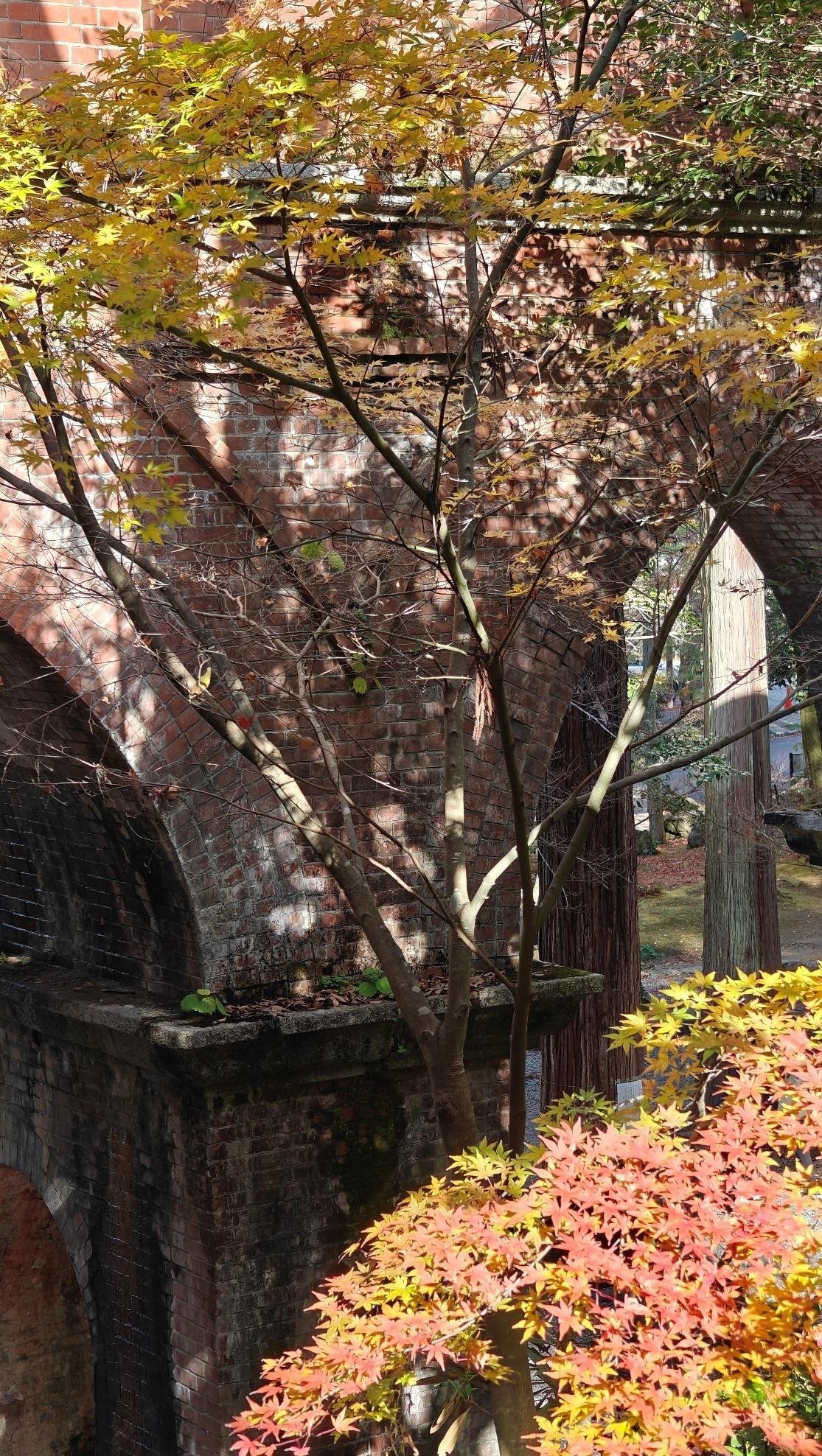
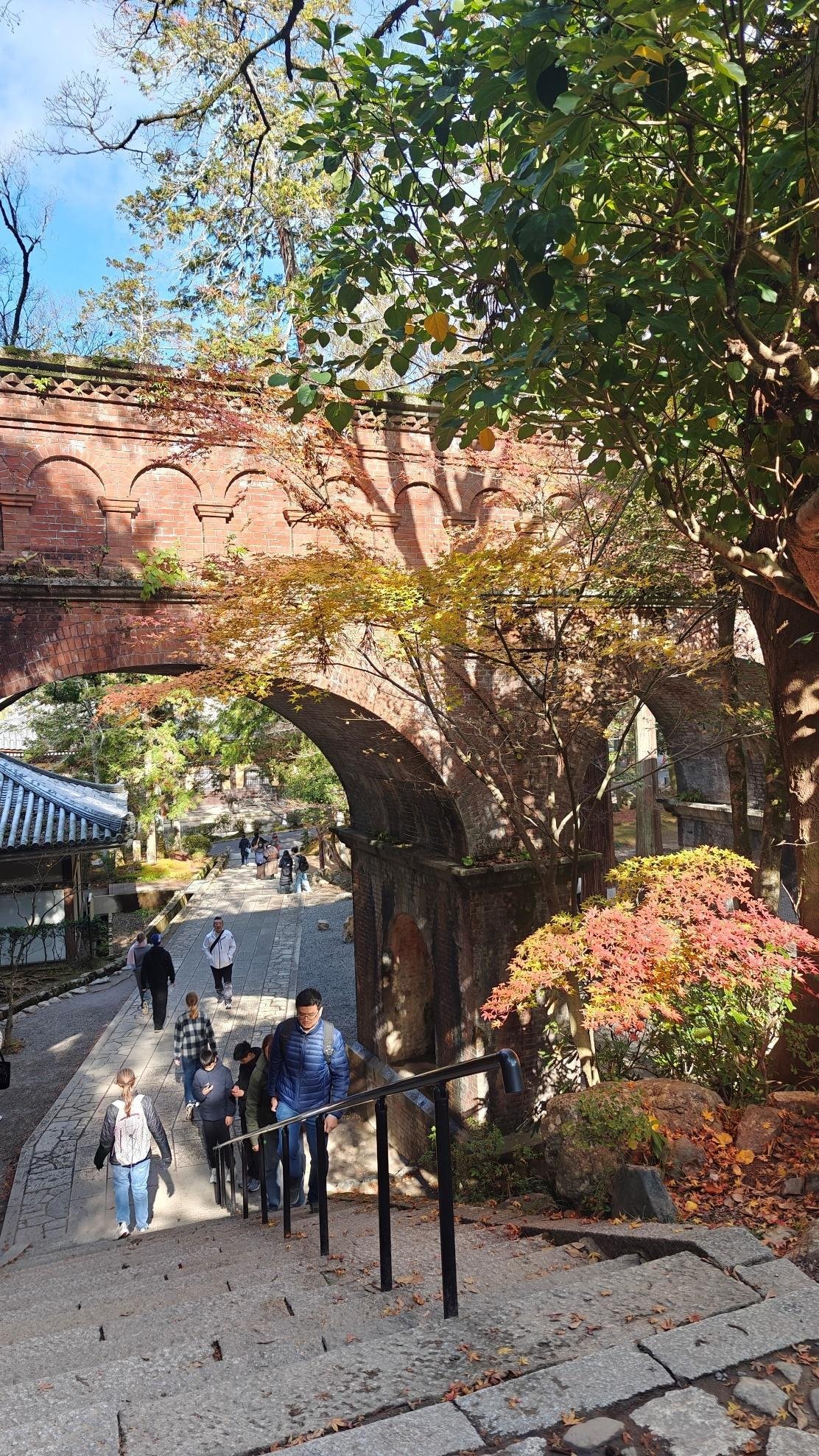
Now that the sun was up, the Suirokaku water bridge looked even more stunning. It still looked out of place but I do kind of see now that its red bricks kind of match the fall foliage of the Japanese maples here. Again, I was left to wonder how spectacular this area would look at the height of fall when everything is covered in fall foliage.
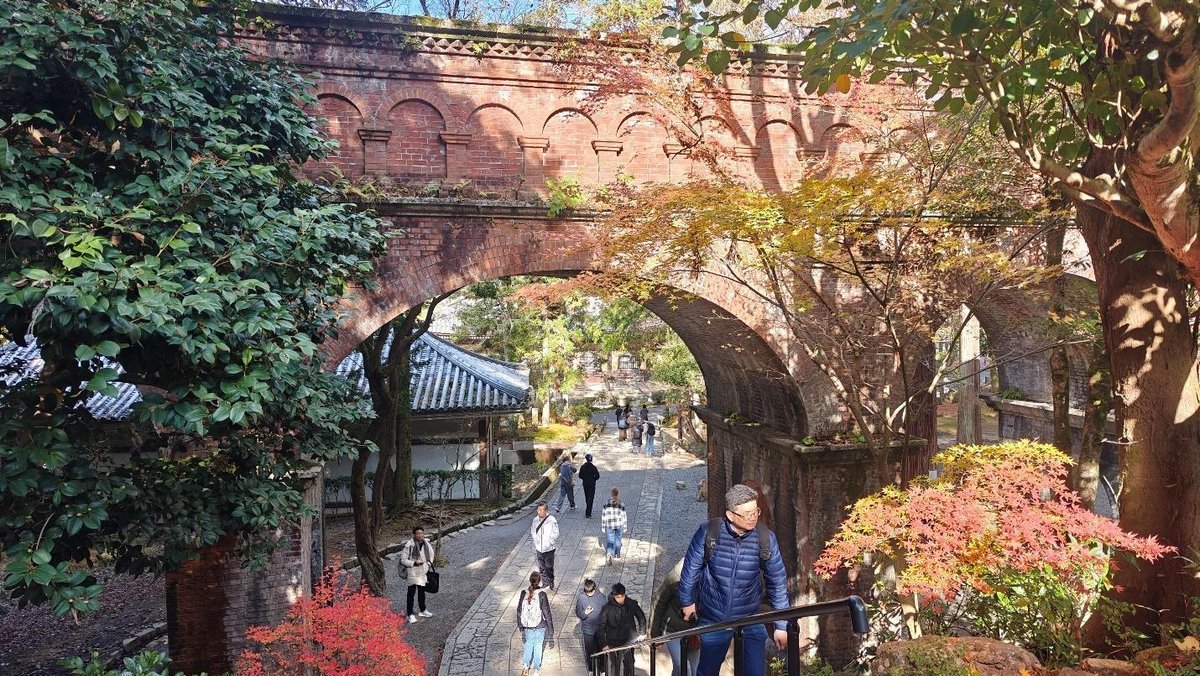
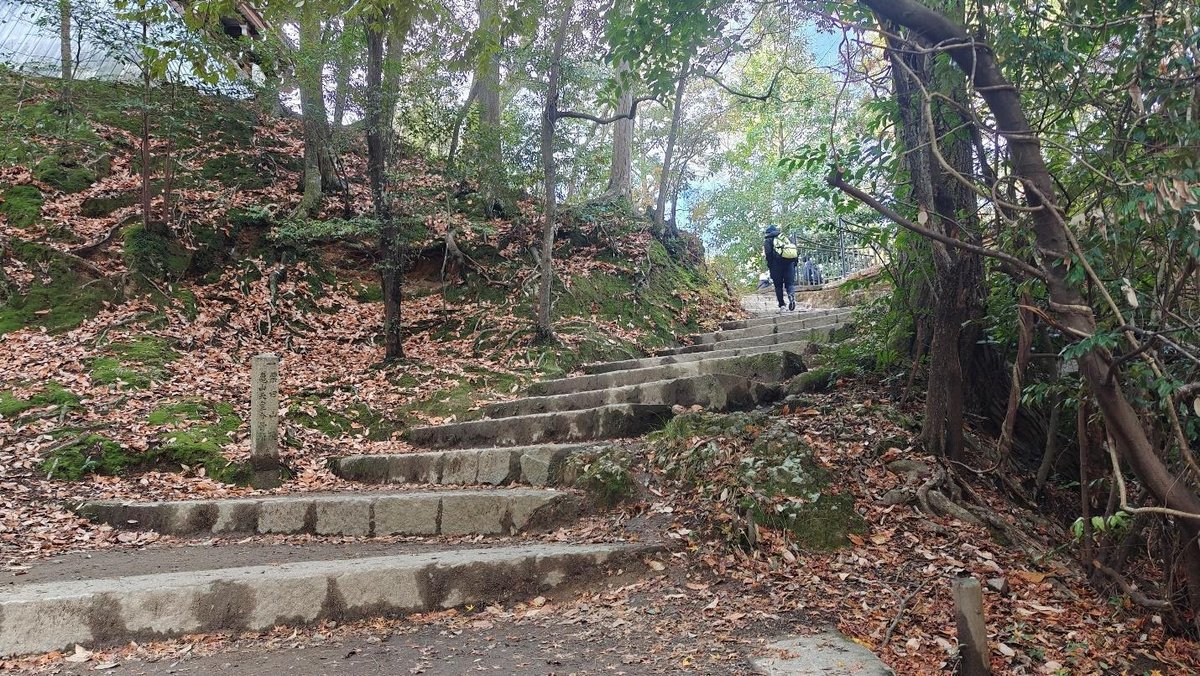
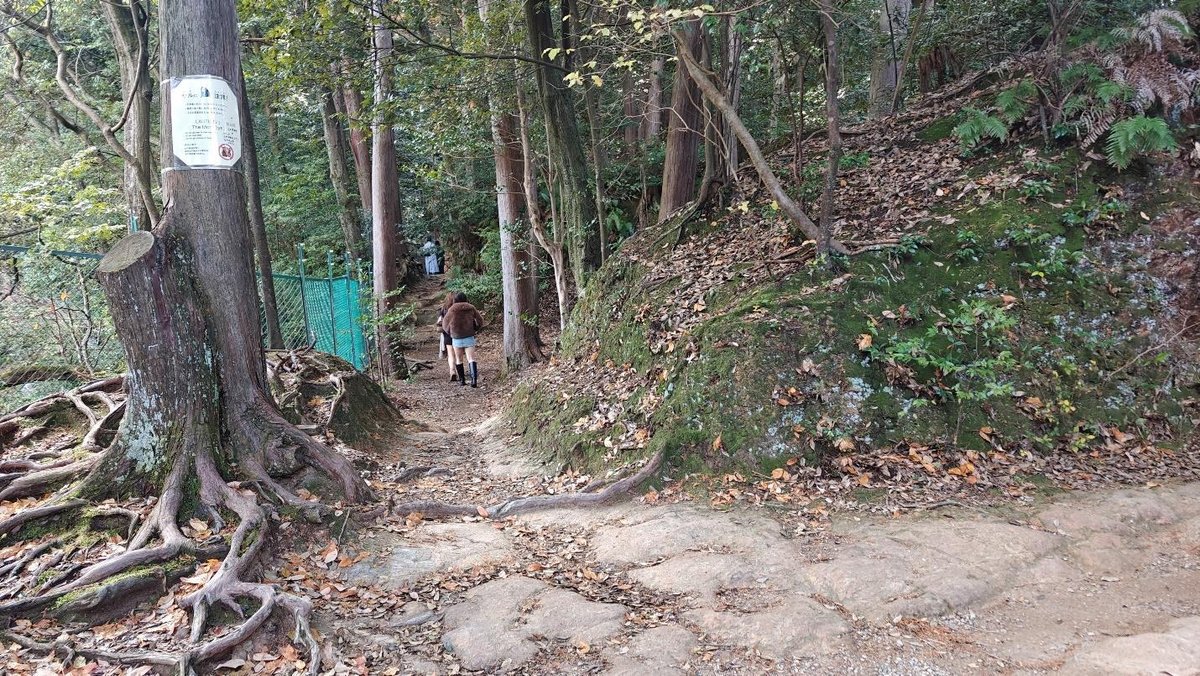
From the top of the stairs, you'll see this path to your right just beside the walls of Nanzen-in Temple. I followed this path and I soon found myself at a clearing that had a pagoda with a very unique looking base. This was the Shoro or belltower that I'd been looking for.
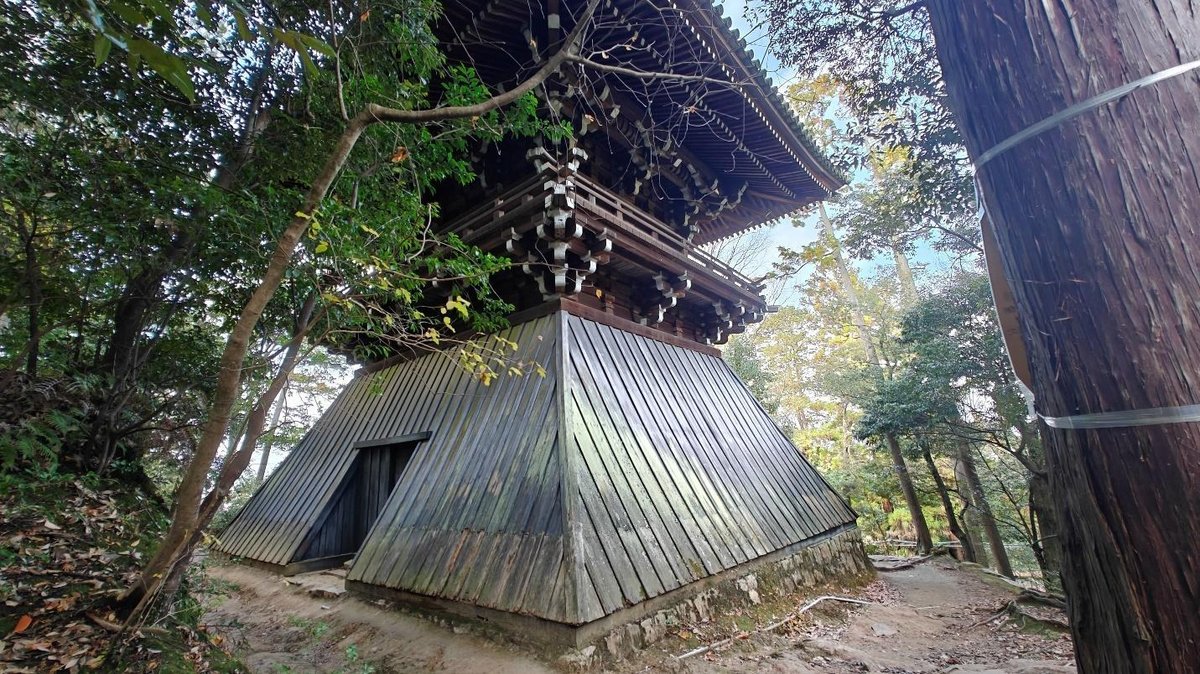
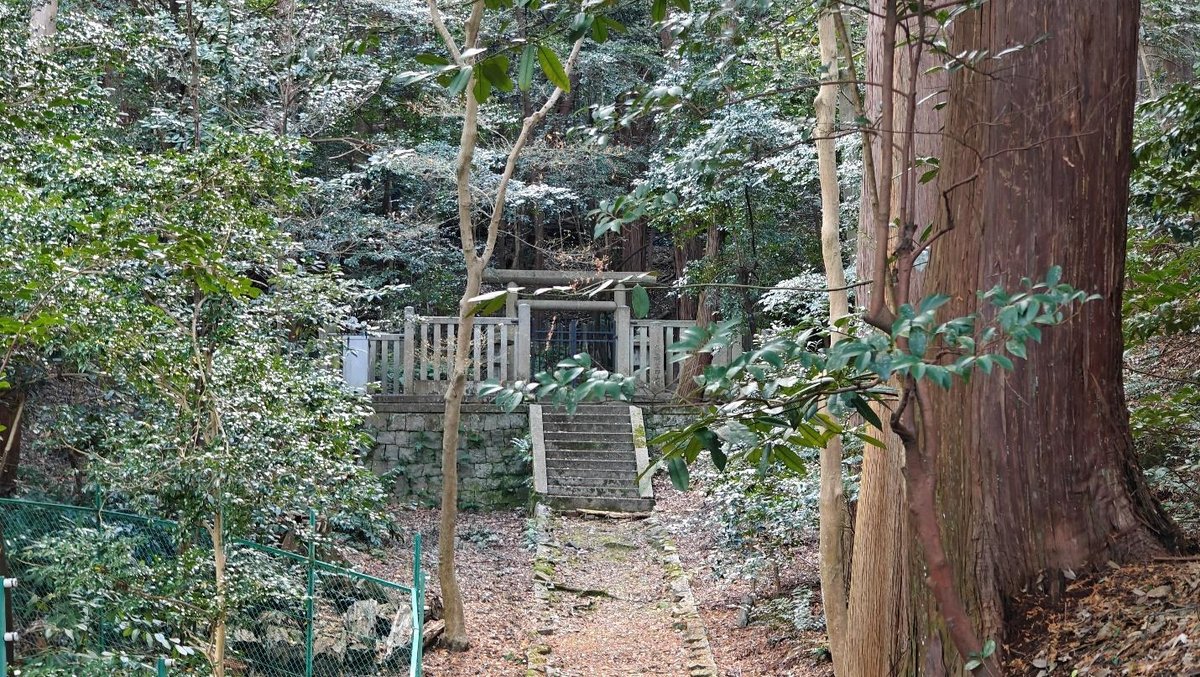
Here's what the Shoro looks like. It's not shown here but you can see the channel that the Suirokaku is connected to in the area behind the Shoro. In addition, there's a nearby mausoleum (see image below) dedicated to the Empress Kishi who was the consort of Emperor Go-Saga and the person who helped her son Emperor Kameyama ascend the throne.
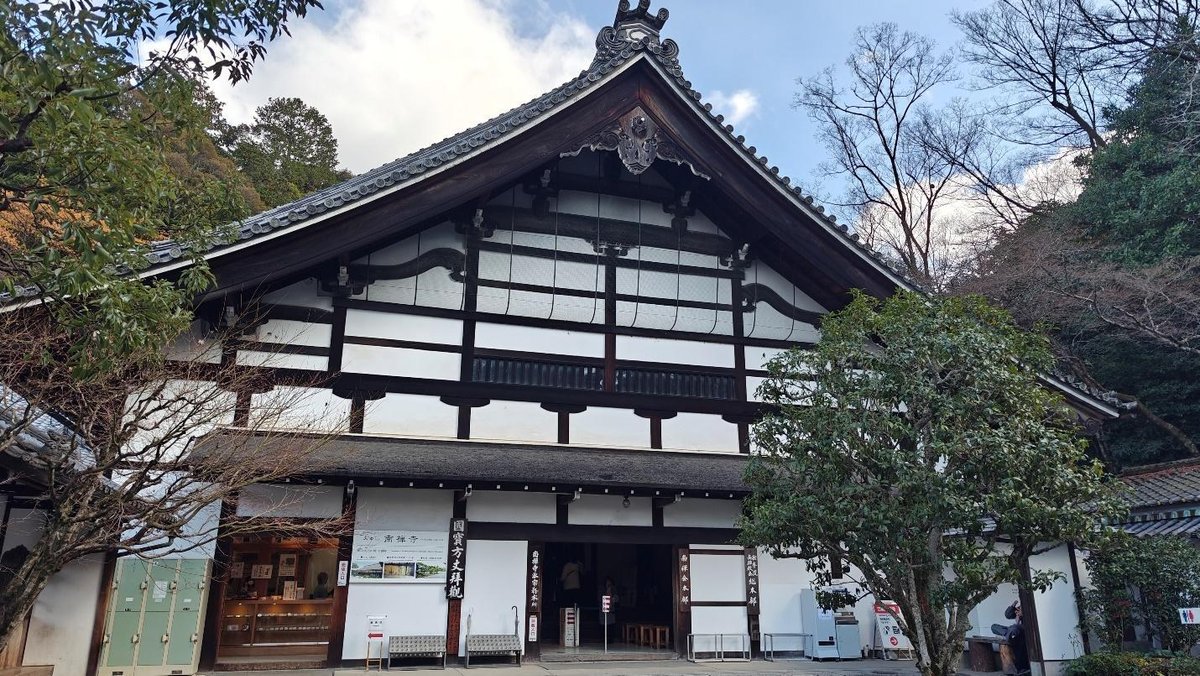
With my visit nearing its end, I finally found myself in front of the Hombo. If you wish to check out the Zen rock garden (karesansui) at the Hojo which is just nearby then this is where you can pay the admission fee. While it only costs 500JPY, I decided to not see it yet as I had visits to other locations scheduled and I was thinking I might be running out of time.
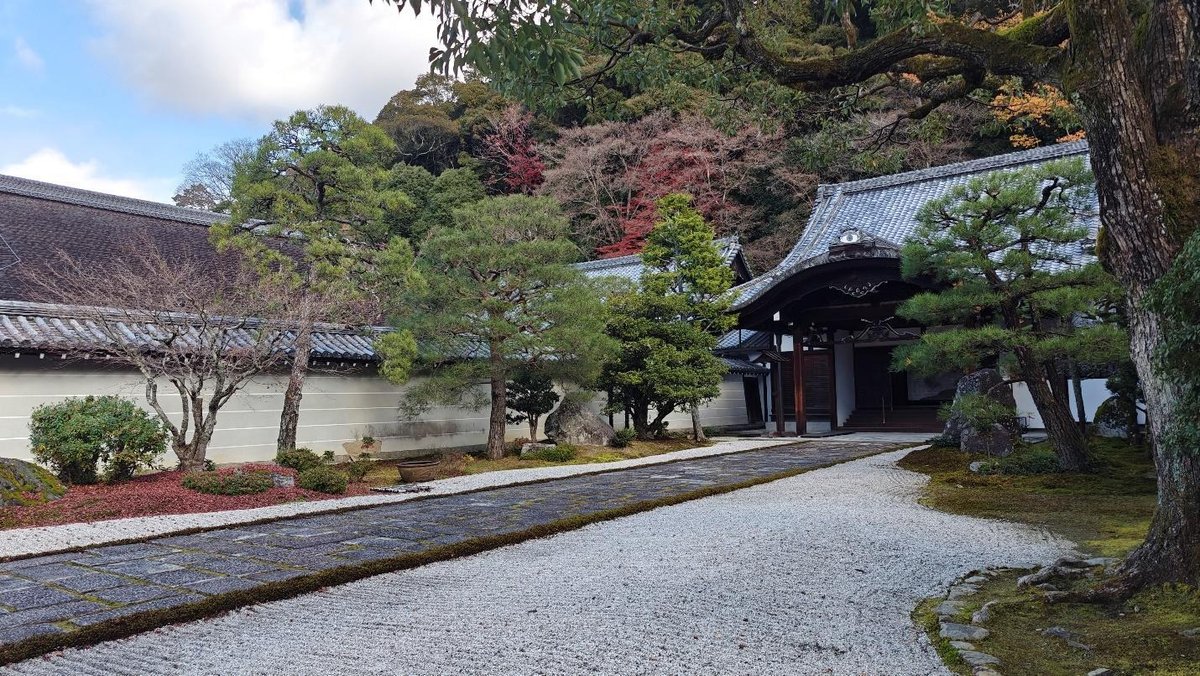
Here you can see the main entrance to the Hombo. Perpendicular to it is the wall of the Hojo that encloses karesansui. I have seen pictures of this garden and it's a lot like the one you see in the image only with more gravel and fewer plants/trees.
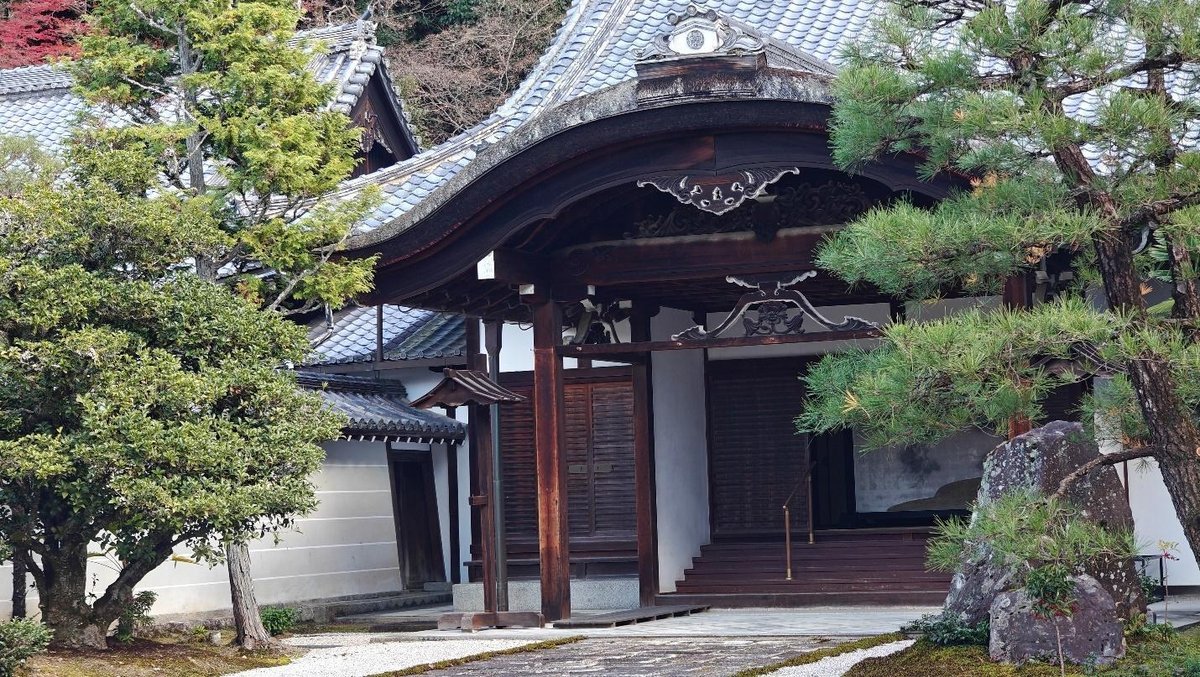
Another feature of the Hombo as well as the Hojo are its fusuma (sliding doors) that feature really intricate artwork. You can actually see one of these in this entryway although I don't think you might be able to make out the details from this distance. Like with the karesansui, you're going to want to pay the admission fee to get inside and see these sliding doors.
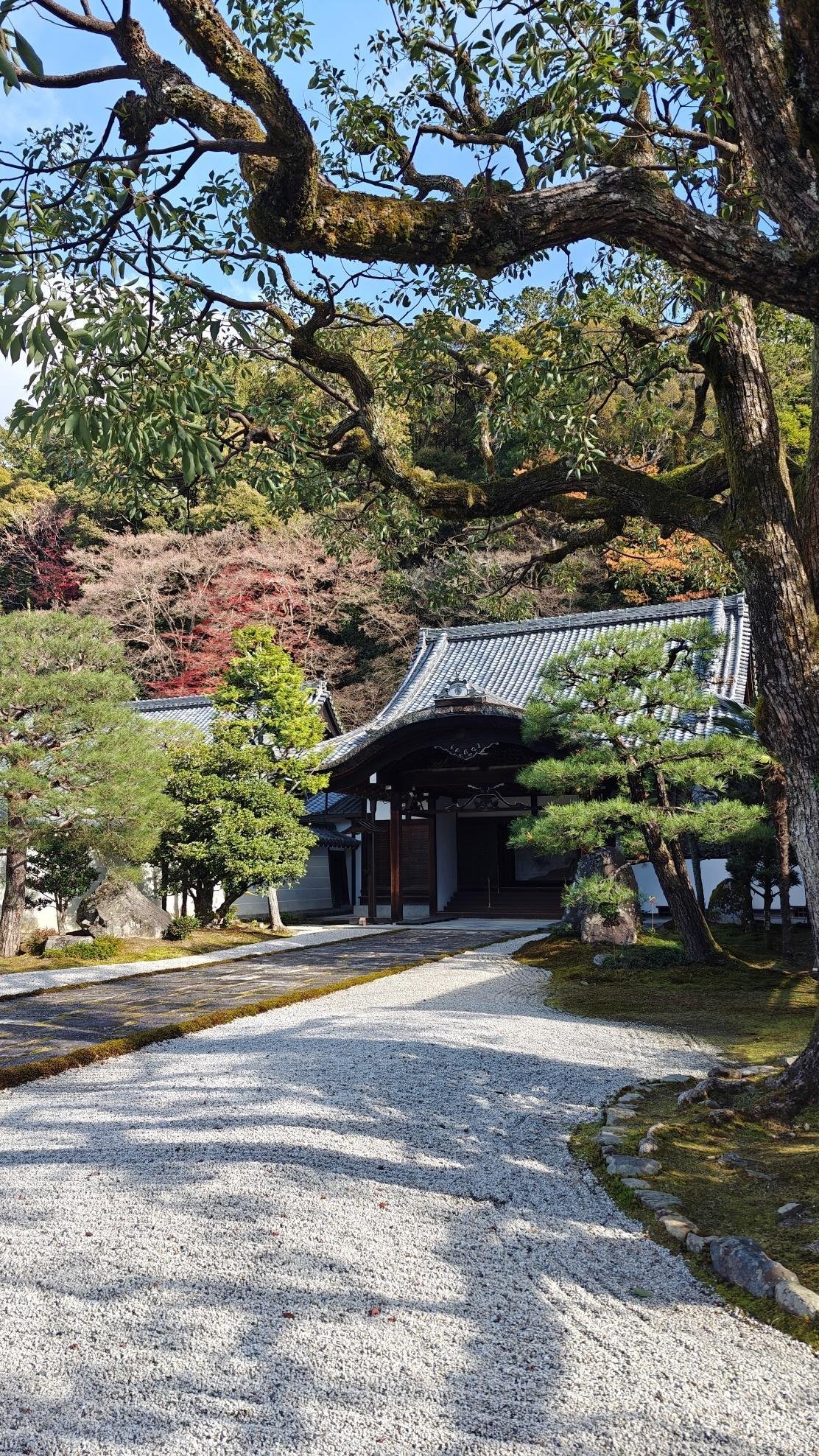
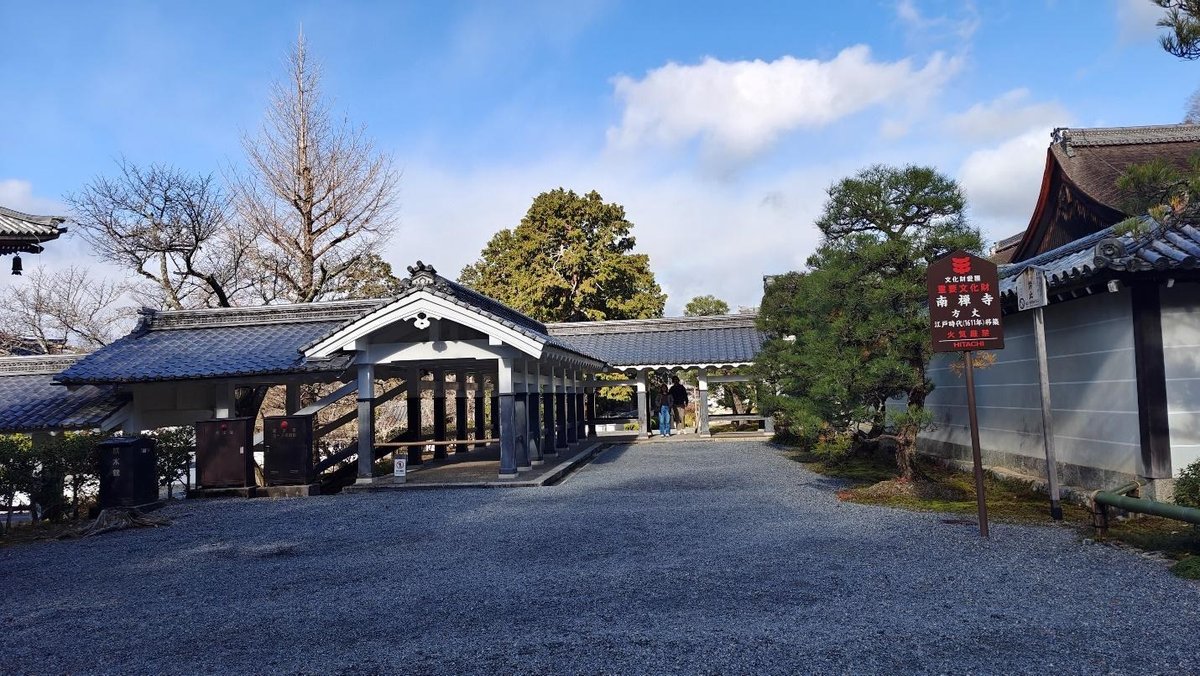
Here you can see the walkway connecting the Hatto to the Hojo. Now while it might connect both buildings, you won't be able to enter either from here. There are actually barriers here that disallow entry except for the section of the walkway where visitors can pass if they want to exit this area.
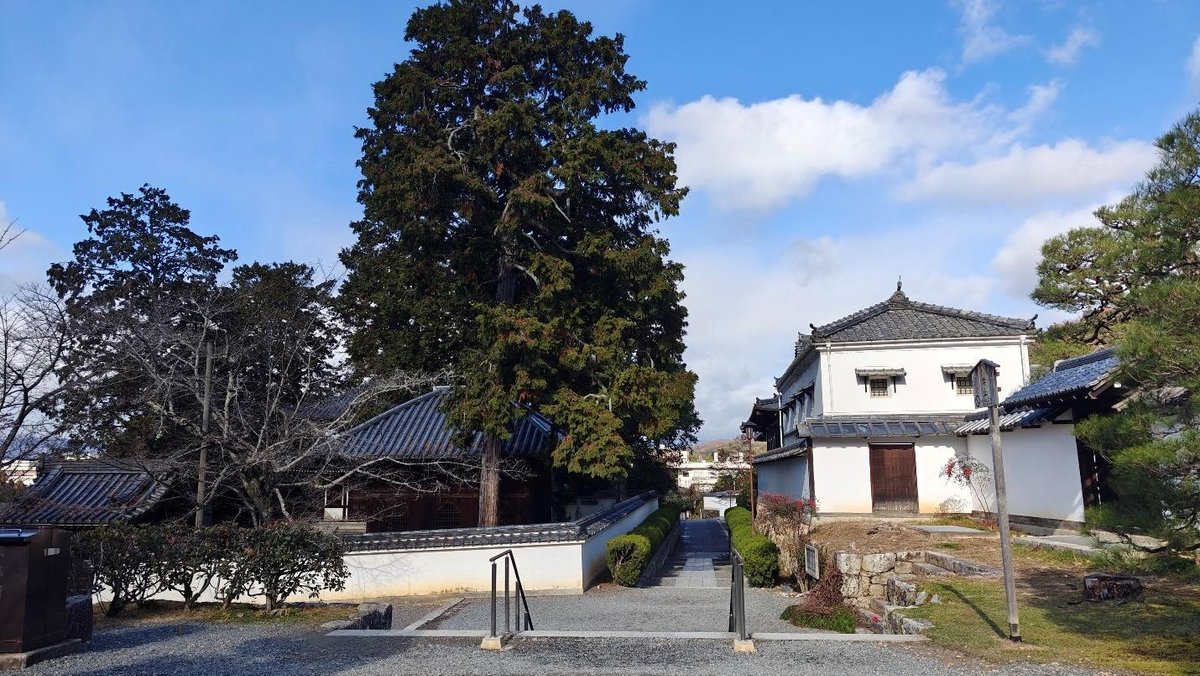
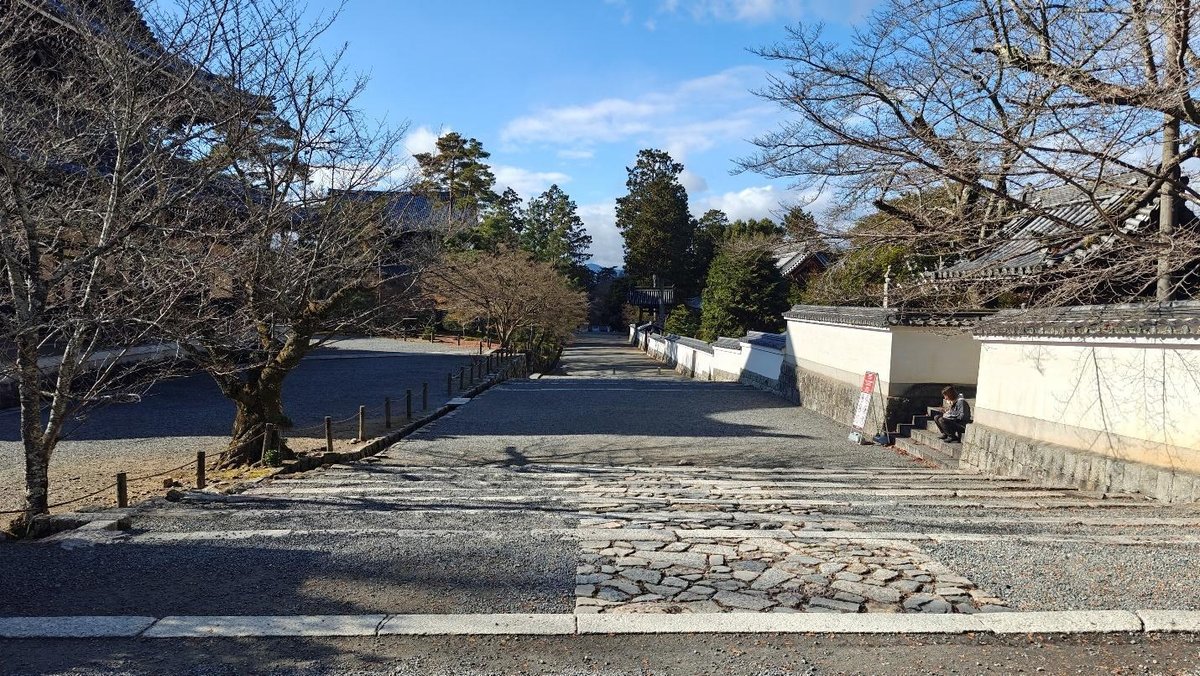
After passing through the walkway, I then found myself in this intersection. From here you can quickly exit to Shishigadani Dori by following the small street in front. The larger path on the left (see next image) also exits out to Shishigadani Street though it's a much longer route which will also allow you to see the exterior of the Nazen-ji Semmon Dojo (a training area for monks of the Rinzai Zen sect) upfront.
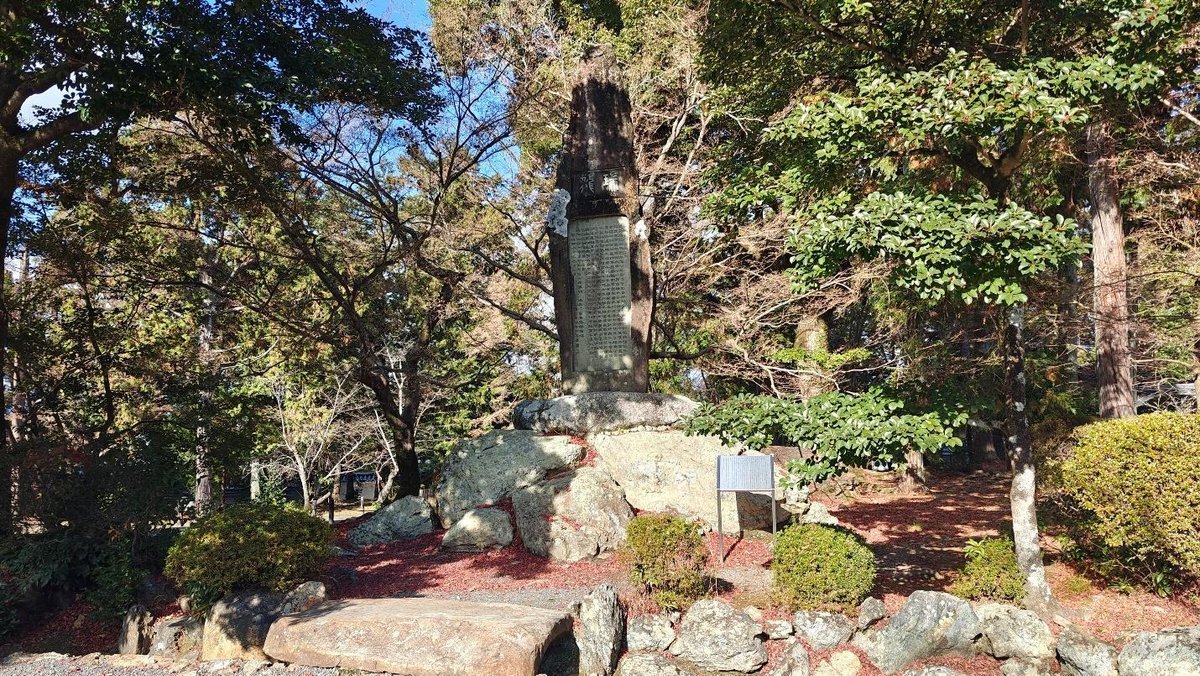
Just past the Nanzenji Semmon Dojo and just before I exited the temple complex, I came across this monument dedicated to the painter of the dragon ceiling found at the Hatto. If I remember correctly, this is called the Dragon Monument and the painter memorialized here is Imao Keinen. From here I then just continued to the left and finally exited out of Nanzen-ji Temple.Overall, I think Nanzen-ji Temple was worth the visit.
Its Suirokaku was perhaps one of the most unique and interesting buildings that I came across in all of Kyoto. The Roman style and European-inspired aqueduct really made it stand out. As for the traditional Japanese buildings and gardens here, they were quite scenic as well.
I especially liked going up to Saisho-in as well as discovering the location of the temple’s Shoro. There are areas like the Hojo and its karesansui that can't be accessed without paying for an admission fee though. That said, I don't think going to these areas is really necessary and you're still going to enjoy the sights and sounds of the free to access landmarks and buildings here.
Lest I forget, quite possibly the best reason to visit Nanzen-ji Temple is that it's not as crowded as premier locations like Fushimi Inari Taisha, Kiyomizu-dera, or even Yasaka Shrine.What do you think of my visit to Nanzen-ji Temple and its Suirokaku water bridge? Would you be adding it to your own itinerary? Head on over to the comments section and make sure to share with us what you think about this Rinzai Zen temple in Kyoto!