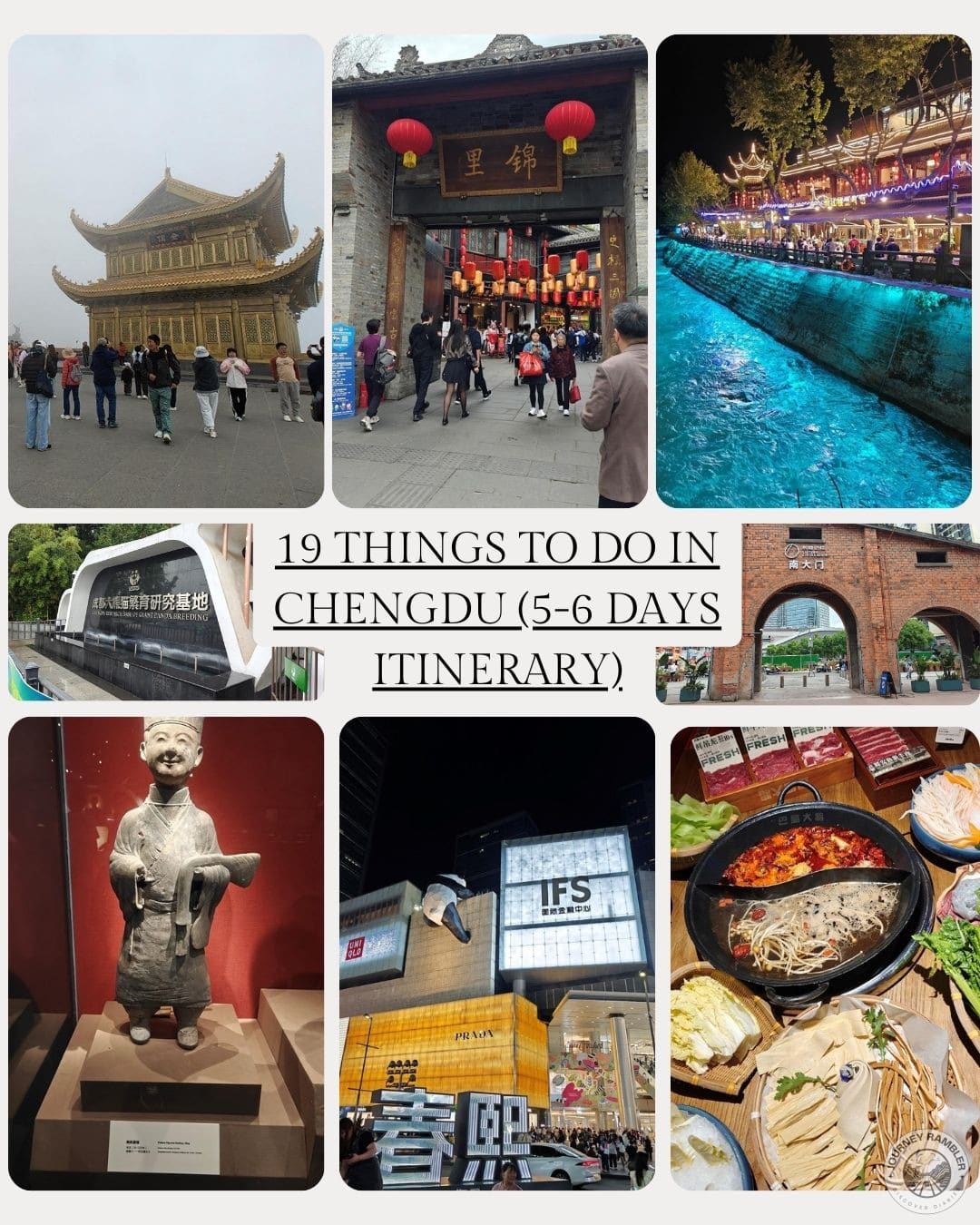
The capital city of the Chinese province of Sichuan, Chengdu has plenty to do. It’s also one of the most populated cities in China and was first founded by the Kingdom of Shu in the 4th century BC. I knew that the city was very closely associated with the giant panda and I couldn’t wait to explore Chengdu.
Chengdu: The 19 Things You Can Do in 5-6 Days
Day 1

I started out my first day in the city with a visit to the Wuhou Memorial Temple. Wuhou Memorial Temple was one of the most historically significant temples in the area. It was jointly dedicated to Liu Bei, the emperor of Shu Han, and to his prime minister, Zhuge Liang. The latter was also known as Wuhou, which is where the name came from.
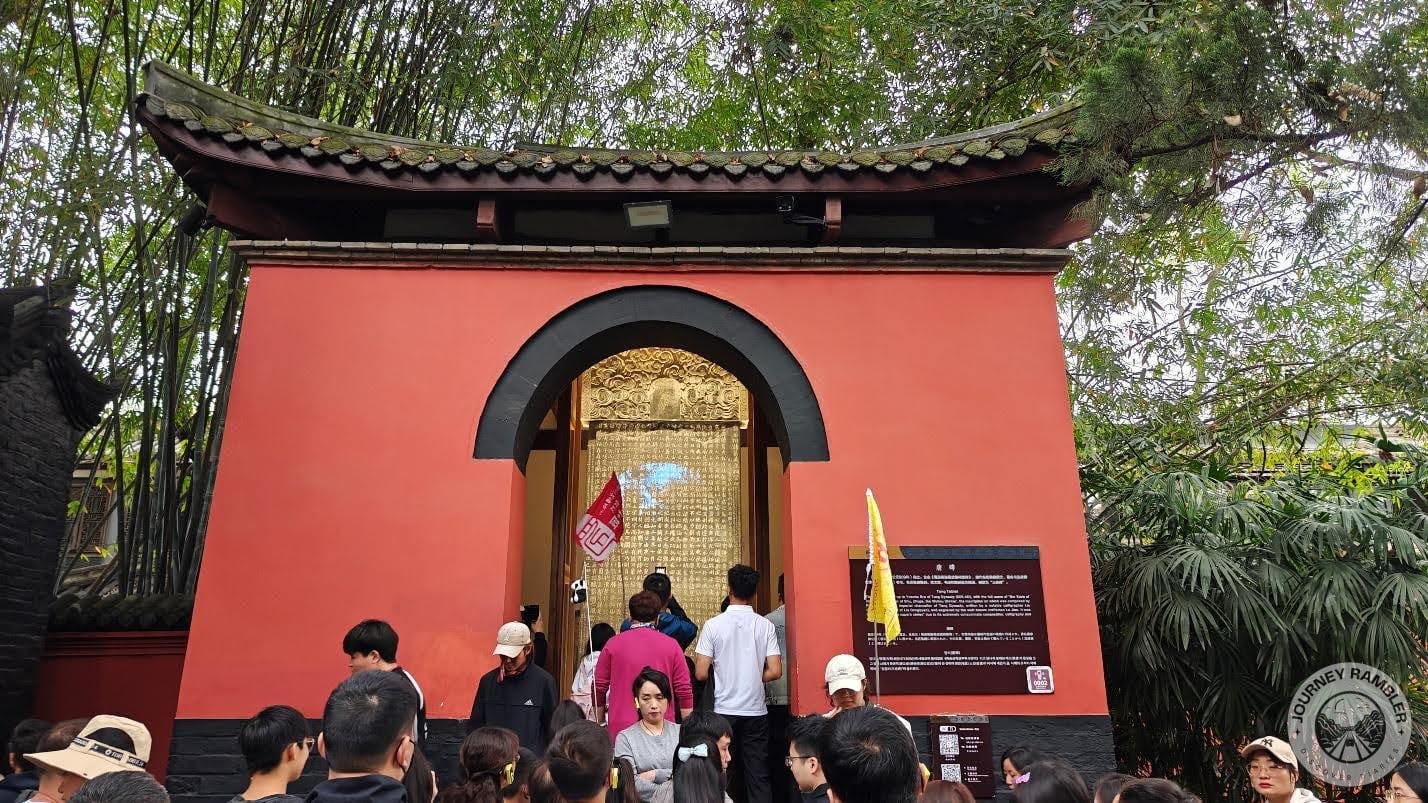
The temple had pretty simple architecture and was surrounded by greenery. The trees lent an air of calm to the memorial temple.
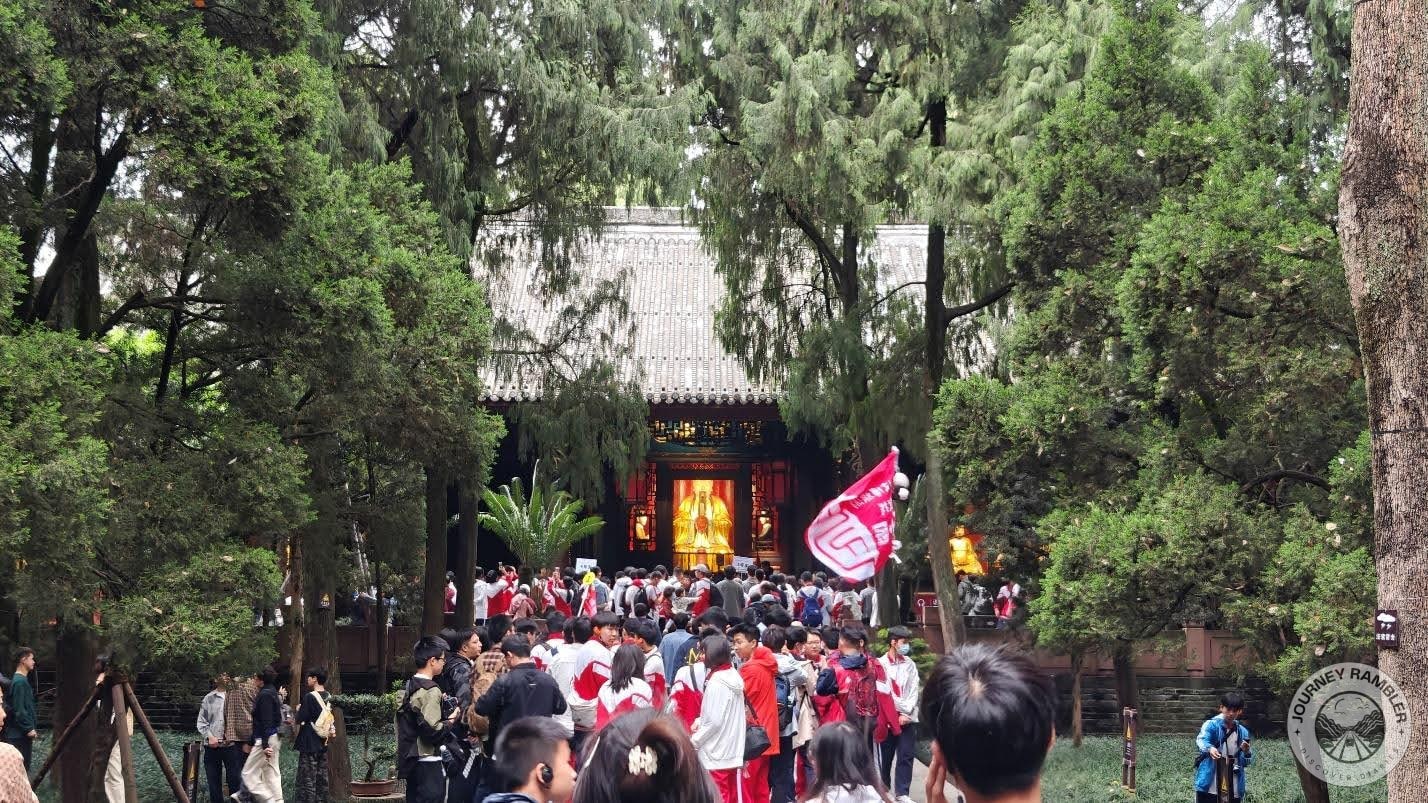
I was surprised to see scores and scores of visitors at the temple. It was one of the most crowded spaces that I visited.
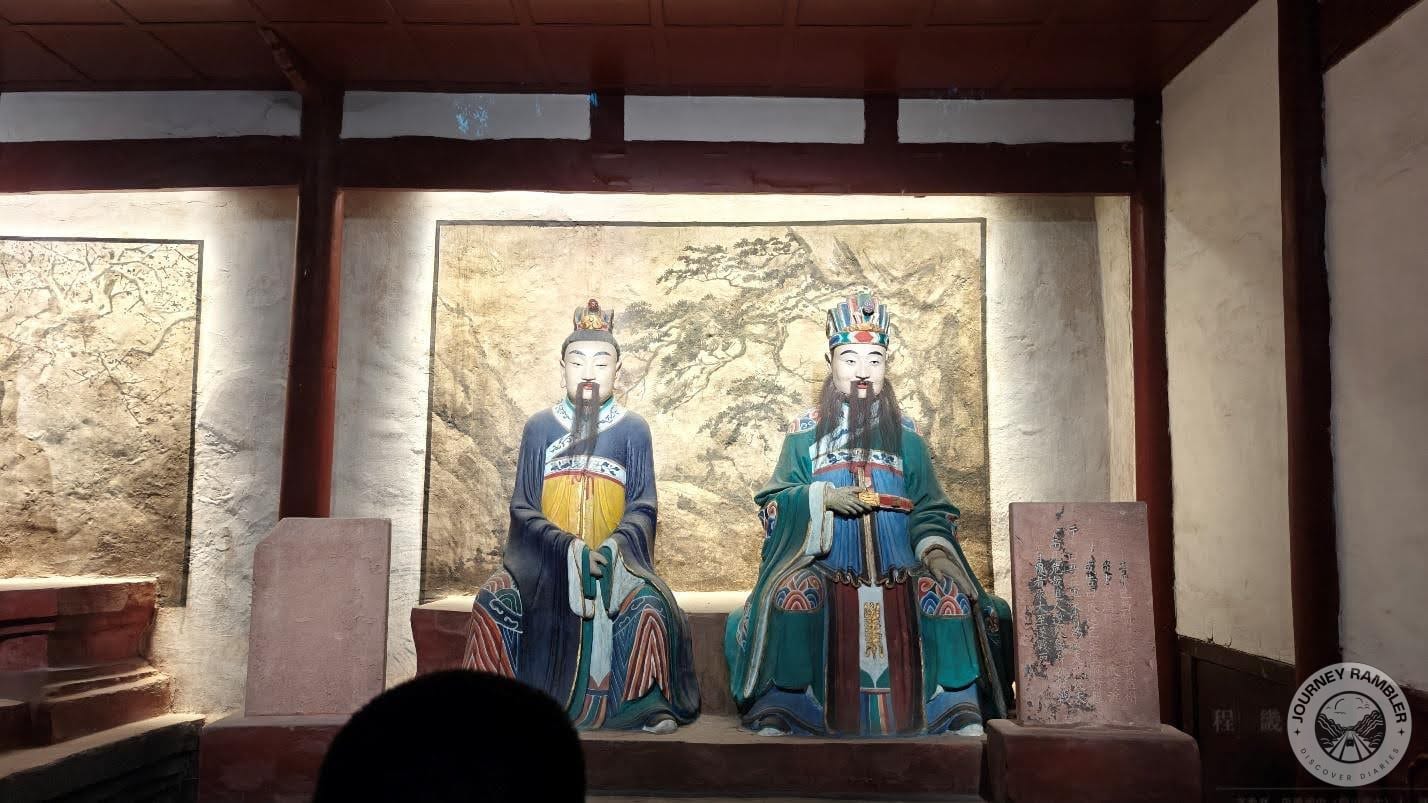
The memorial temples to the two men and the emperor’s mausoleum had been built at different times. But ultimately all three sites came to be known as the Wuhou Temple complex. Statues of the emperor and his generals could be found inside, along with lovely artwork.

I found it very interesting that there were statues of Liu Bei’s military generals inside the temple complex. In a way, it was a memorial to them as well.
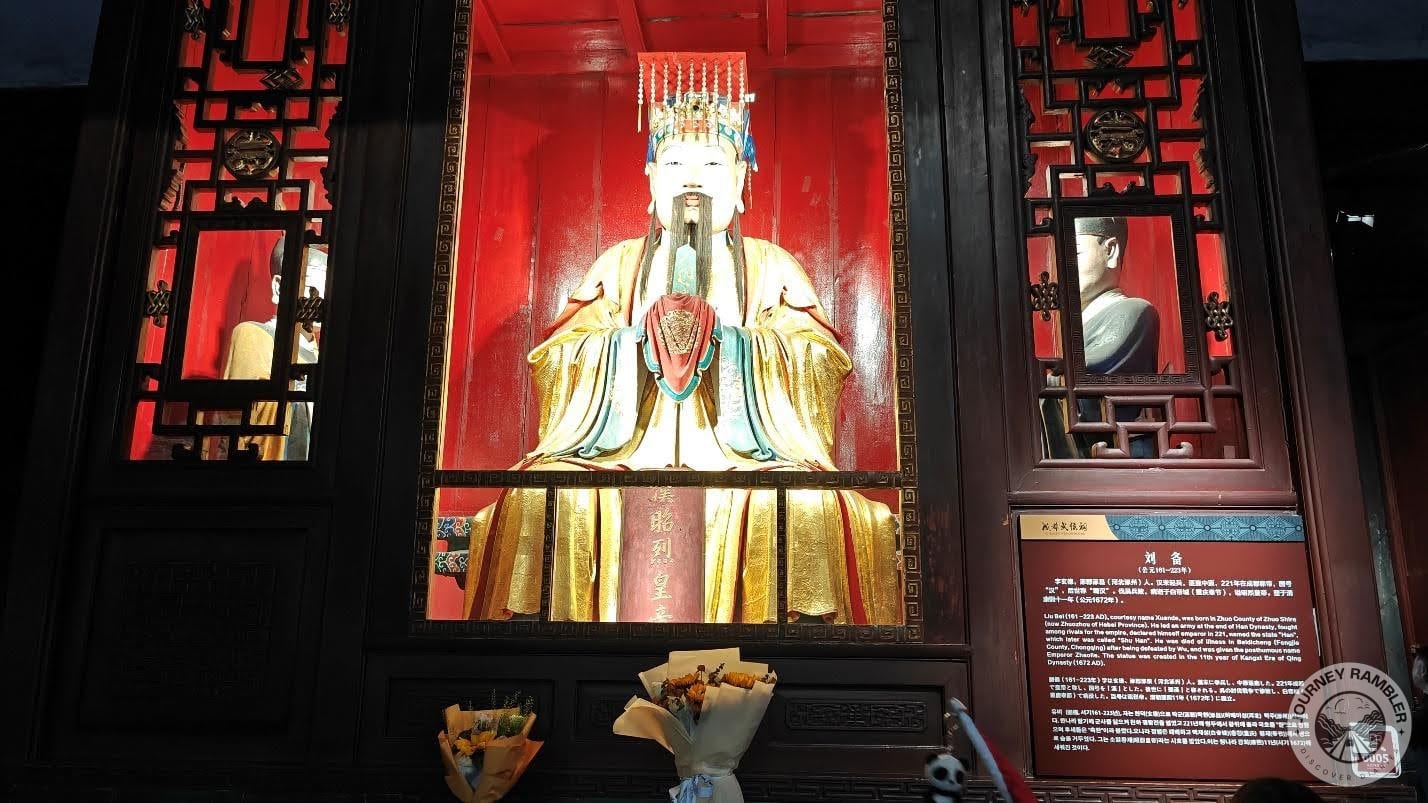
Liu Bei’s statue had a position of honor and I could see that people had left bouquets of flowers in front of his statue.
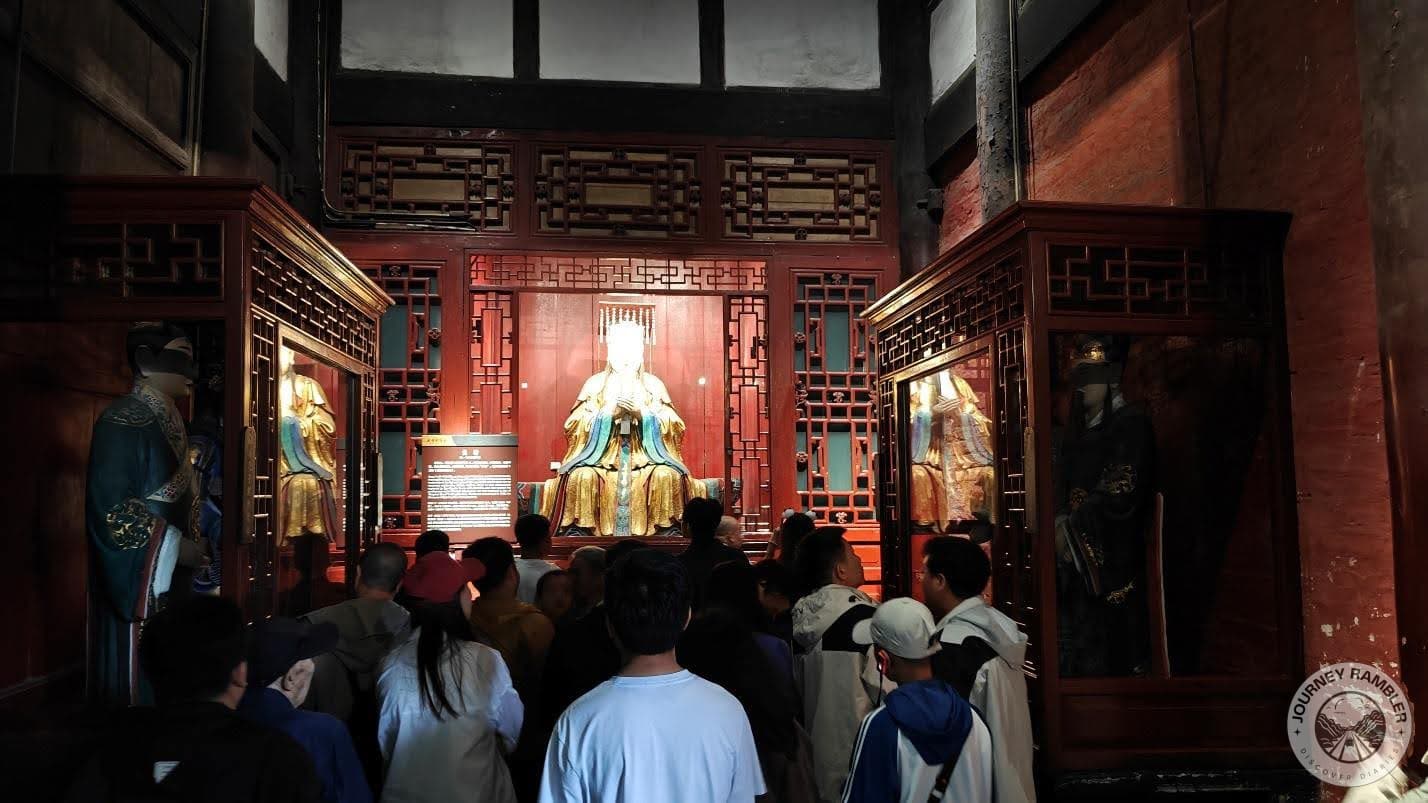
I spent some time looking around the interior of the temple. Everything had been painted in royal shades of red and gold and there was a rich feeling to the whole place.

The gardens outside were even more stunning, with pools and waterfalls everywhere.
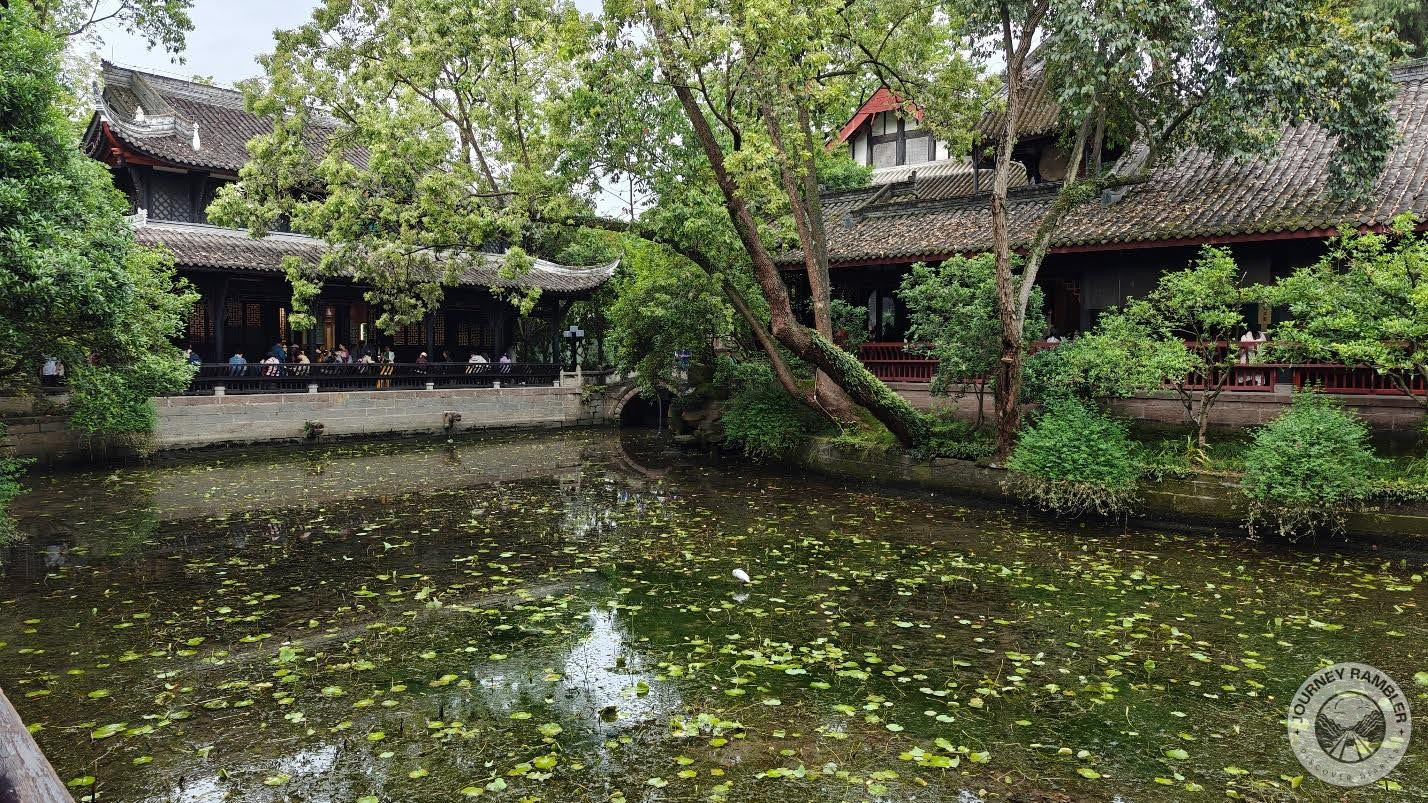
The temple complex was quite spread out. There were courtyards around each of the temples and big trees shading the temple complex.
2. Jinli Ancient Street
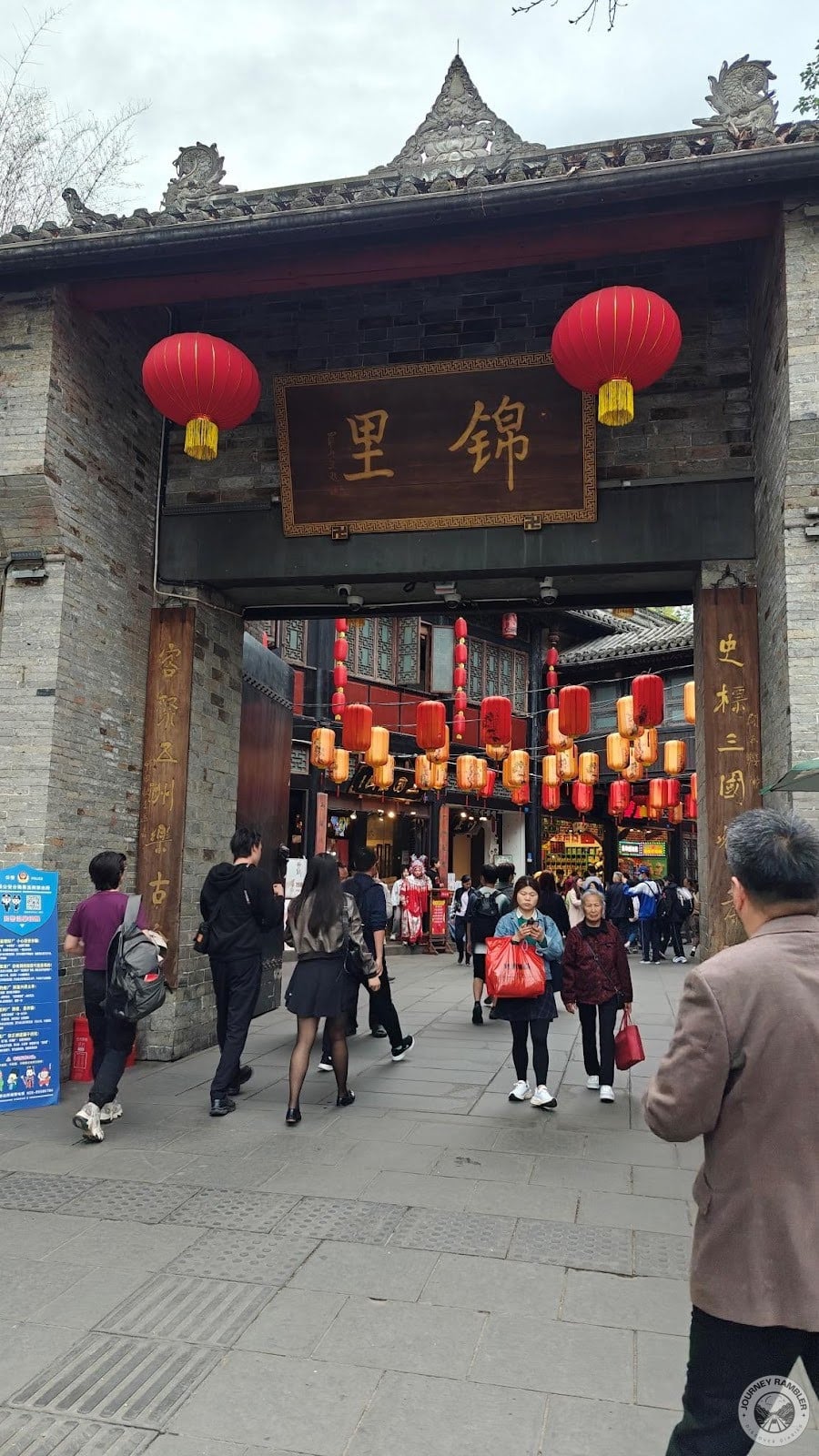
Next, I went to Jinli Ancient Street. The street was around 1800 years old and its history could be traced back to the pre-Qin Dynasty era. I had read that CNN Travel named Jinli first among “the world’s most beautiful streets” in 2019. I could certainly see that it was very beautiful, with lovely stone gates, lanterns hanging overhead and buildings with fascinating architecture on both sides. There were a lot of shopping opportunities in Jinli so I walked around the street during the evening.
Day 2
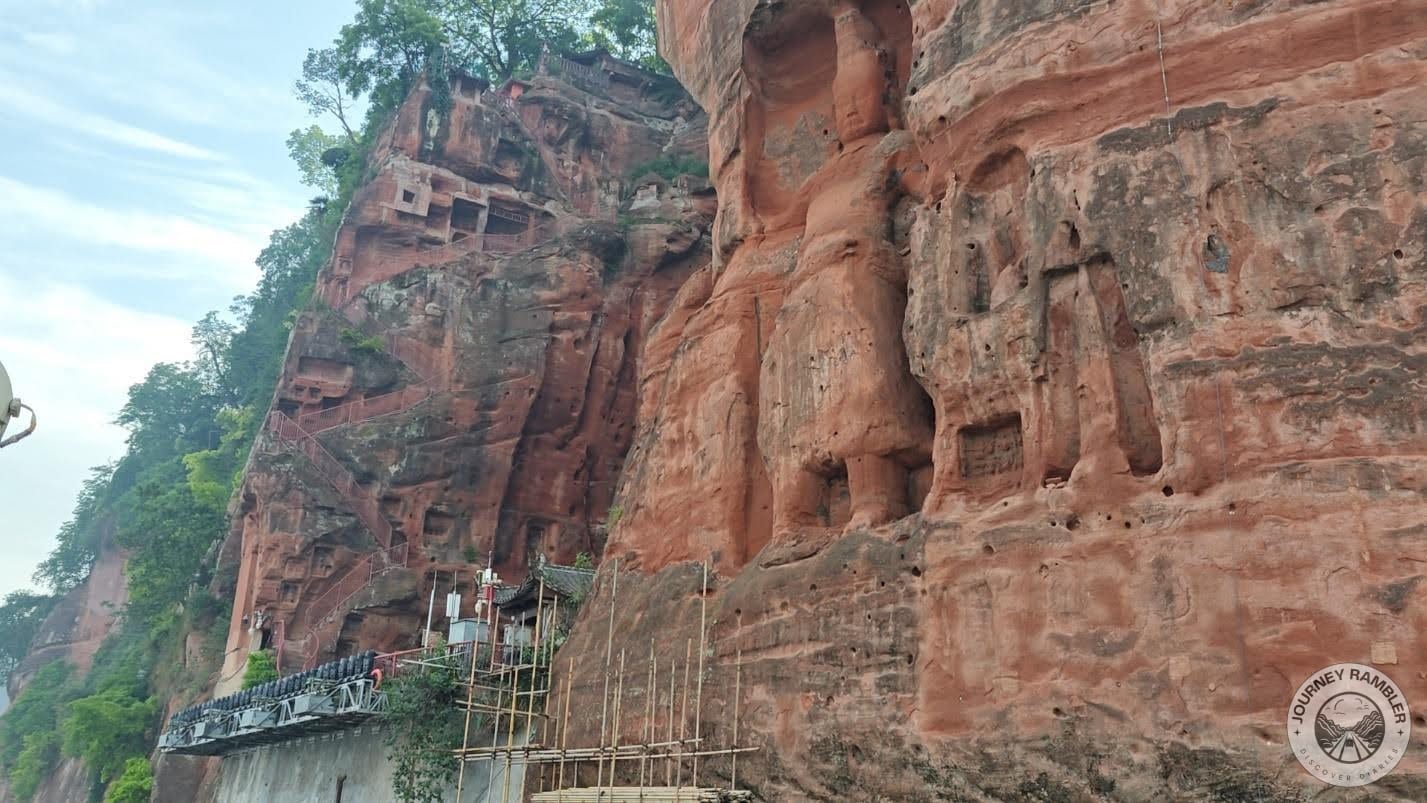
My second day in Chengdu started with a trip to the Leshan Giant Buddha statue.
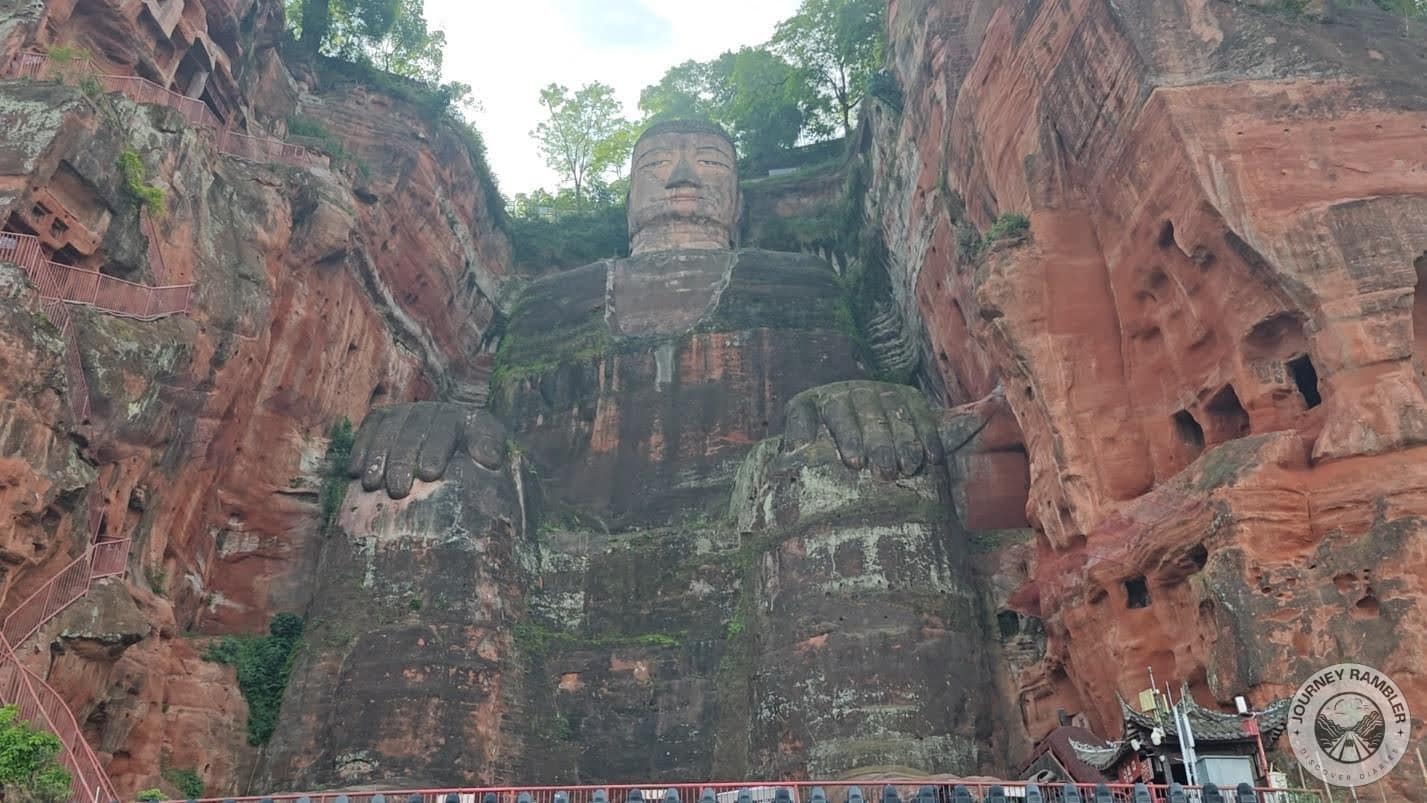
It was a 71m tall stone statue and it was the largest and tallest stone Buddha statue in the world. Having been built between 713 and 803 during the Tang Dynasty, it was a red sandstone statue. It had blackened over the years but the face of Buddha still looked so peaceful. I stood at the bottom and stared up at the statue in awe. It was one of the most marvelous statues that I had ever seen.
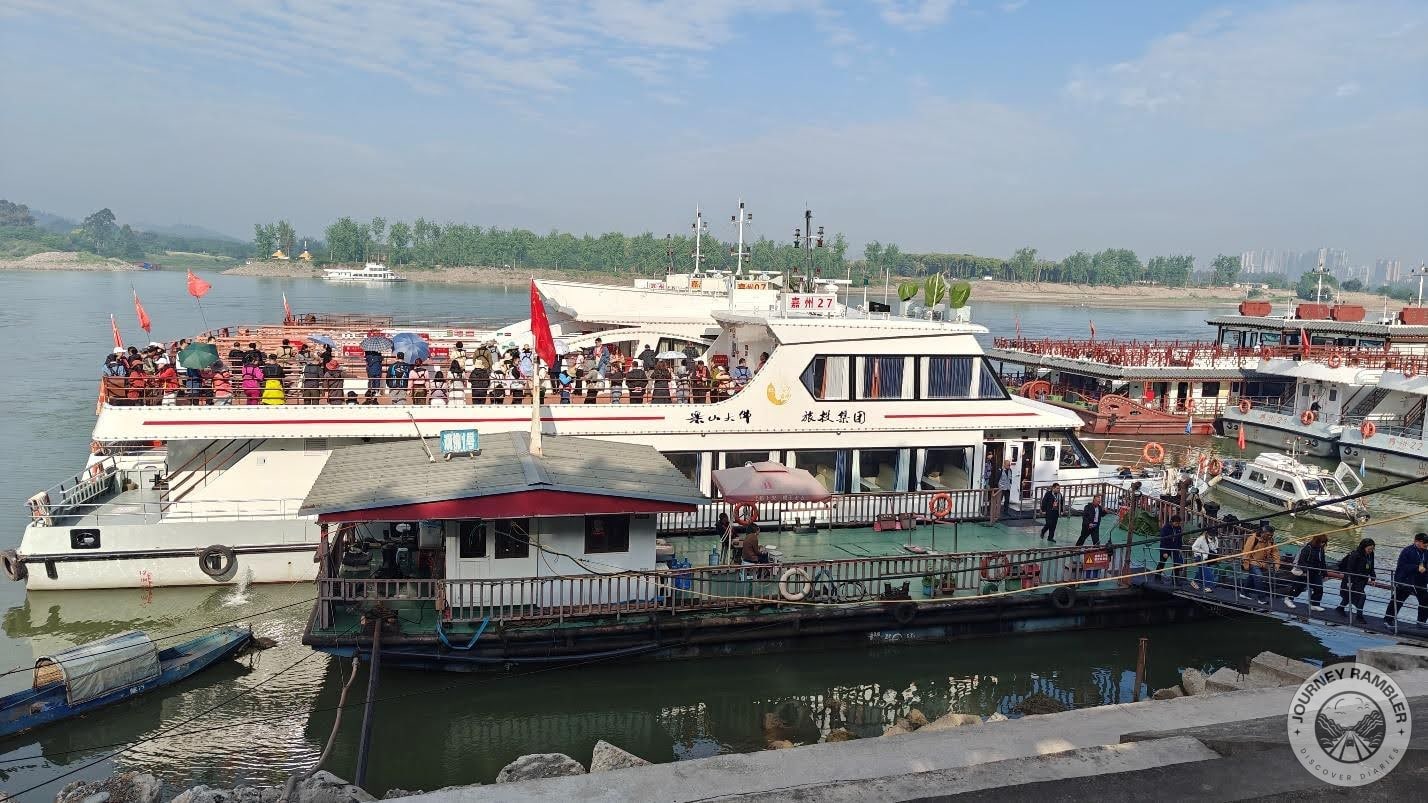
The Leshan Giant Buddha was a UNESCO World Heritage Site. It was located in the Mount Emei Scenic Area at a junction of three rivers. It was reached by boat.
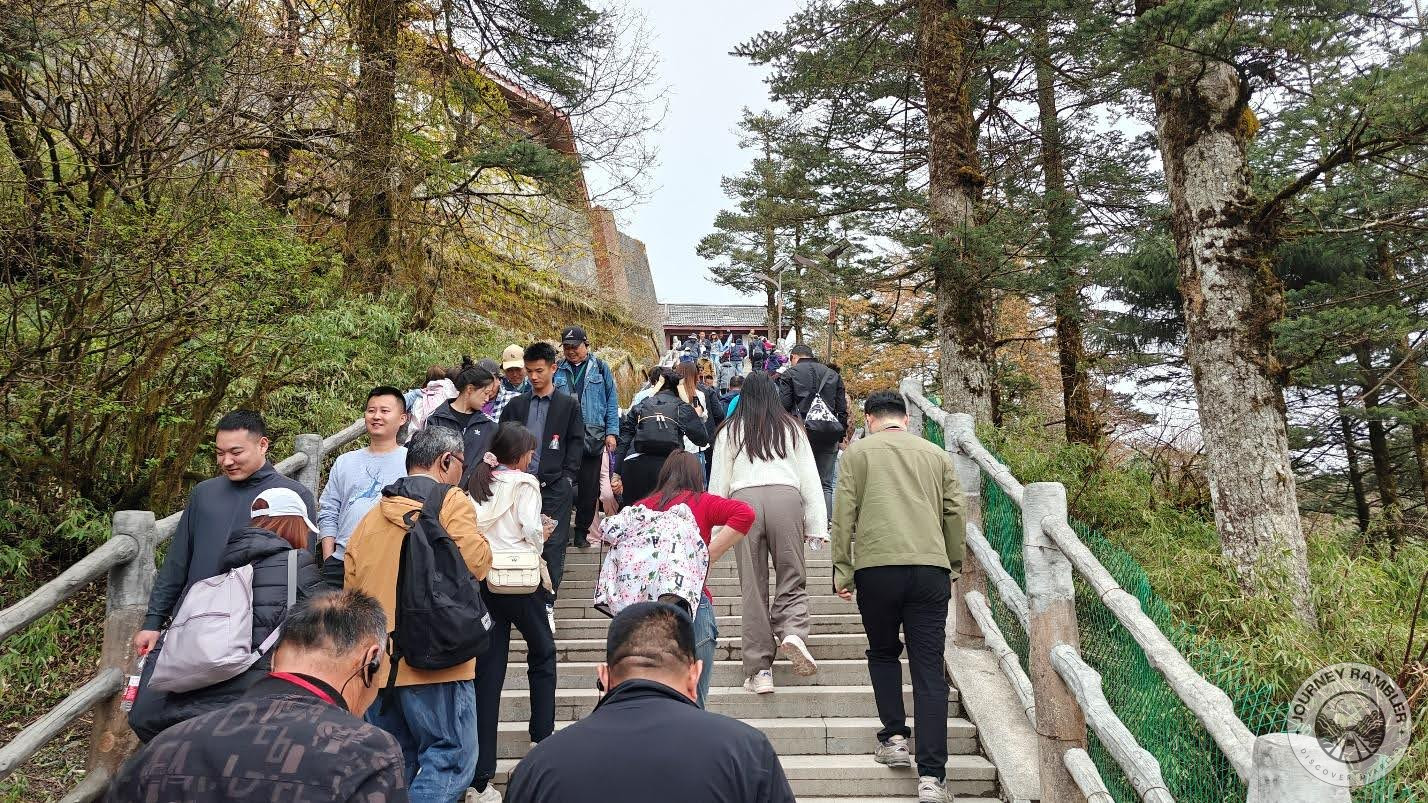
Once I had seen the Giant Buddha statue, I wanted to climb up to the Mount Emei Golden Summit. There were steps that visitors could use.
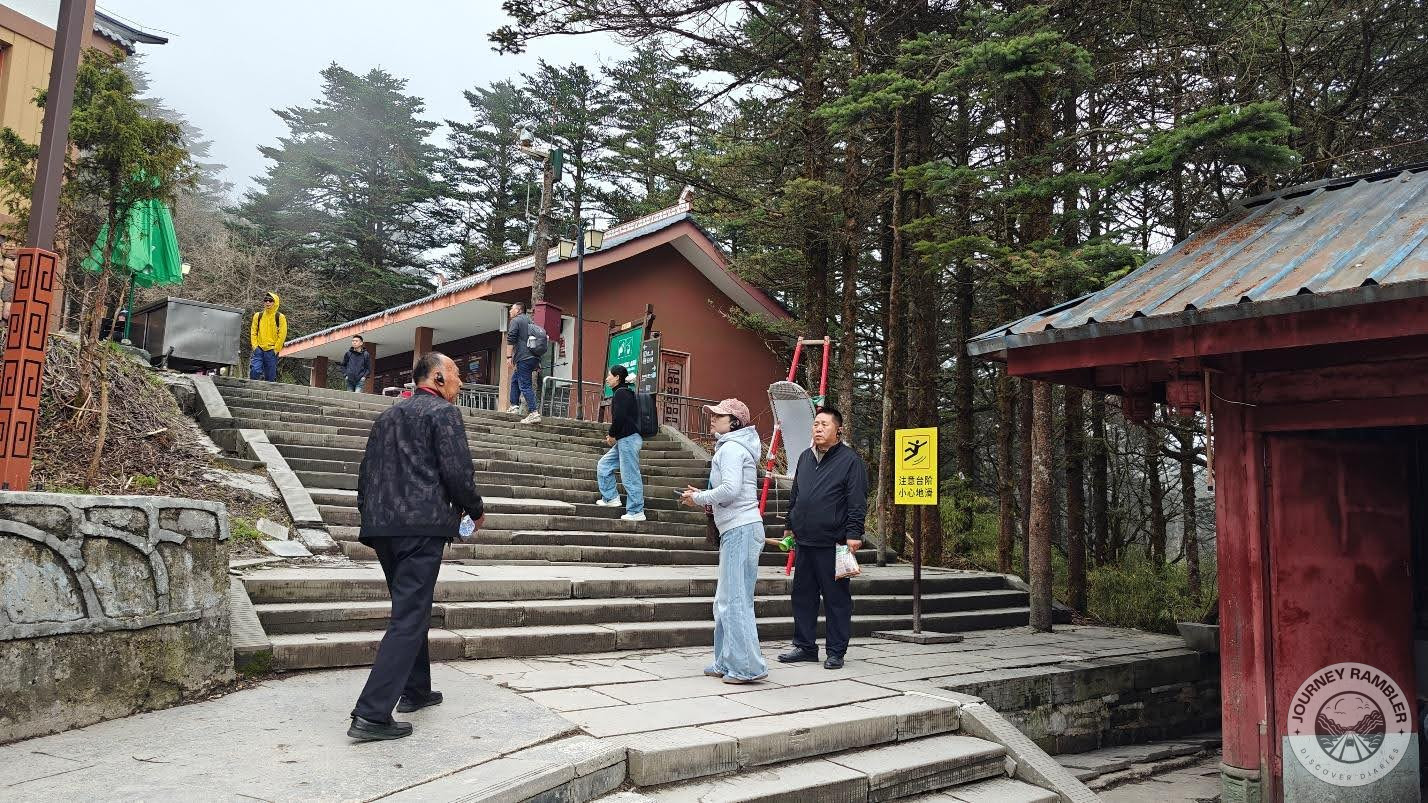
I climbed through coniferous forests. There were a lot of other tourists as well. Mount Emei is the highest of the Four Sacred Buddhist Mountains of China. So many people come to visit it from around the world.
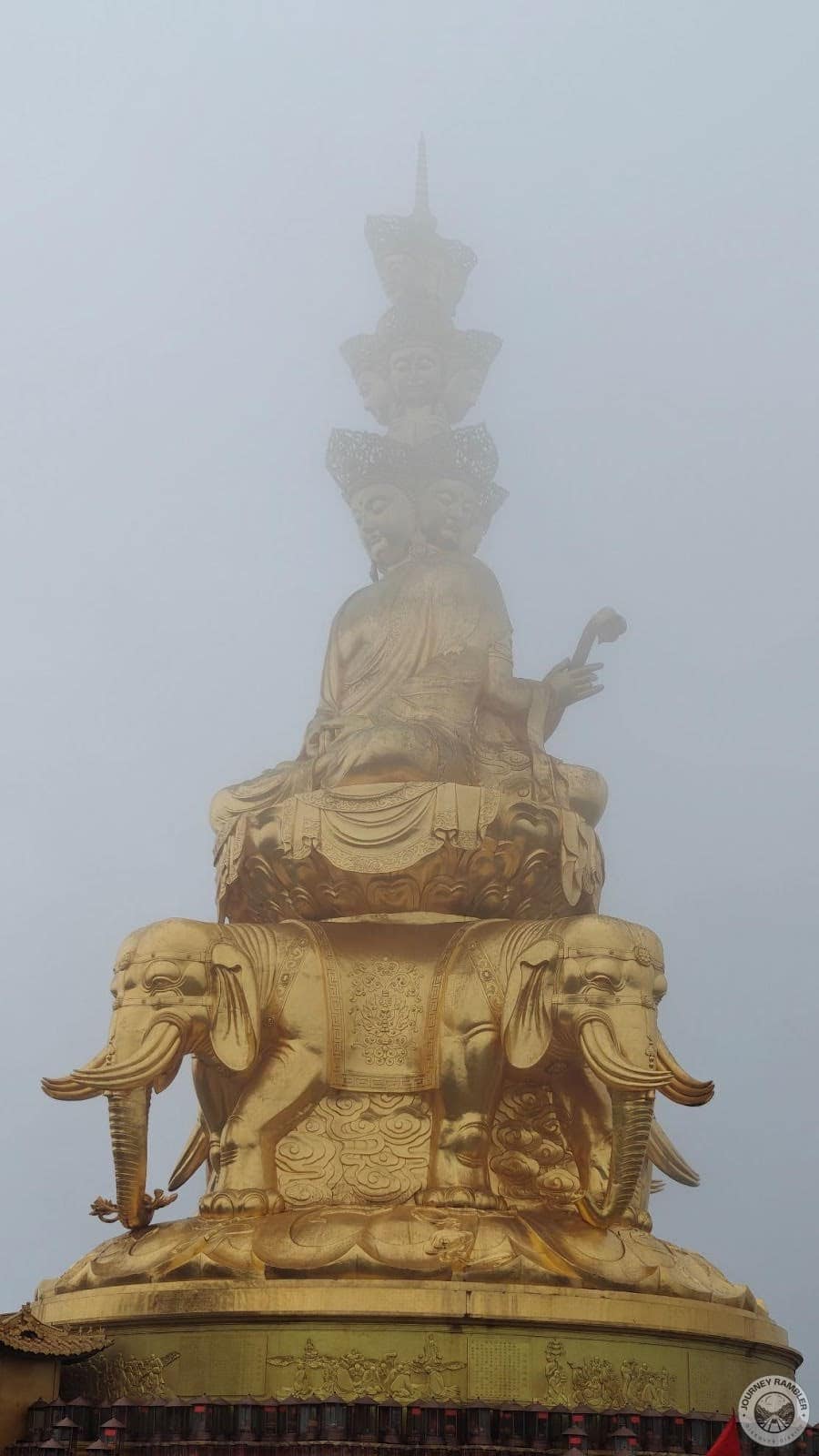
At the top was a big statue in brilliant gold. It was starting to get cloudy and misty and the view wasn’t at all clear. In fact, Jinding was known for its sea of clouds. But I could see the figure of Buddha seated on top of elephants.
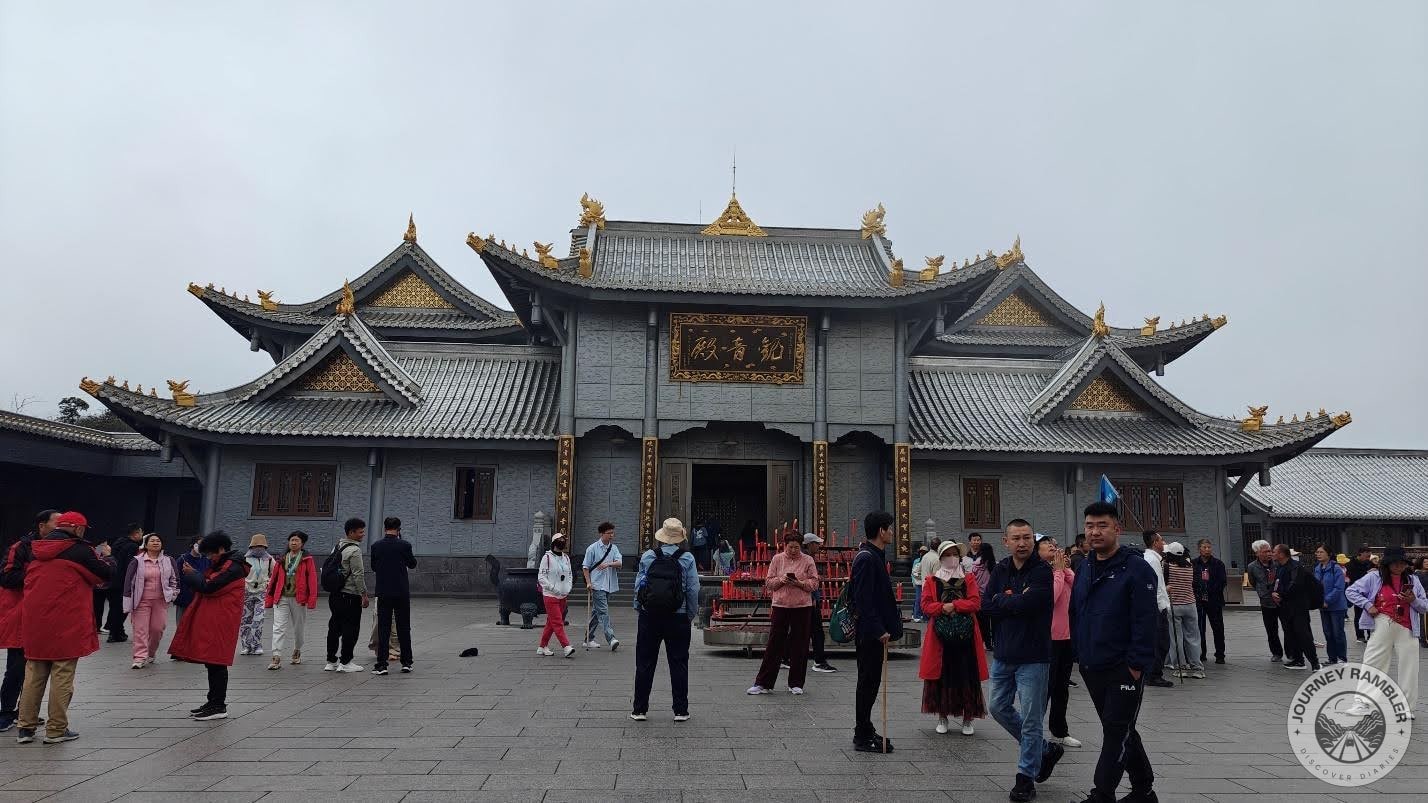
The premise of the temple was crowded, despite the weather. I found the architecture very interesting, with the soaring roofs and the golden accents.
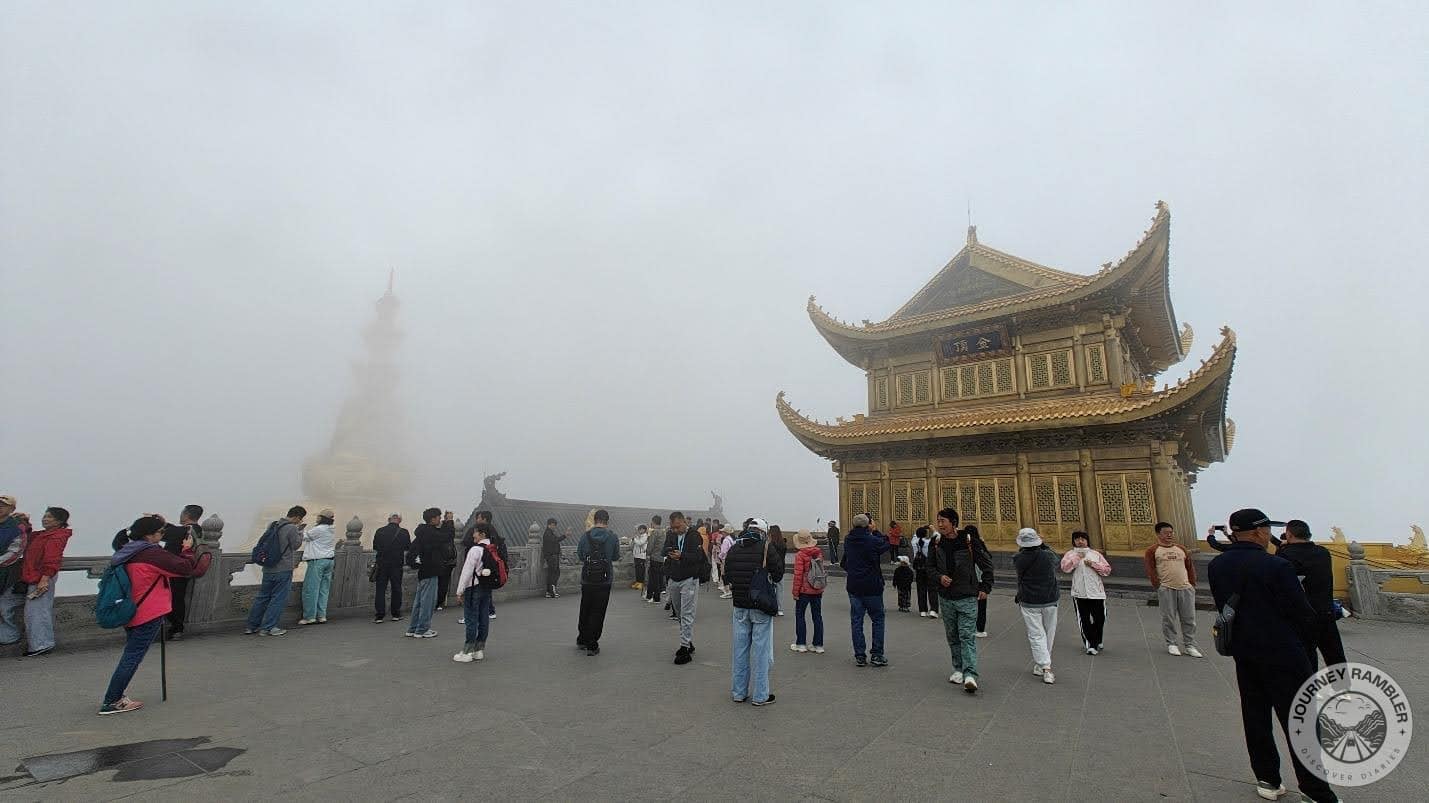
The golden colored Puxian Hall on one side looked extremely majestic and picturesque. Everyone was taking photographs with the temple and the hall in the background. I also took pictures so I would remember the experience, even though it would have been better if I had gotten sunny weather.
Day 3
5. Selfie Panda at Yangtianwo Square
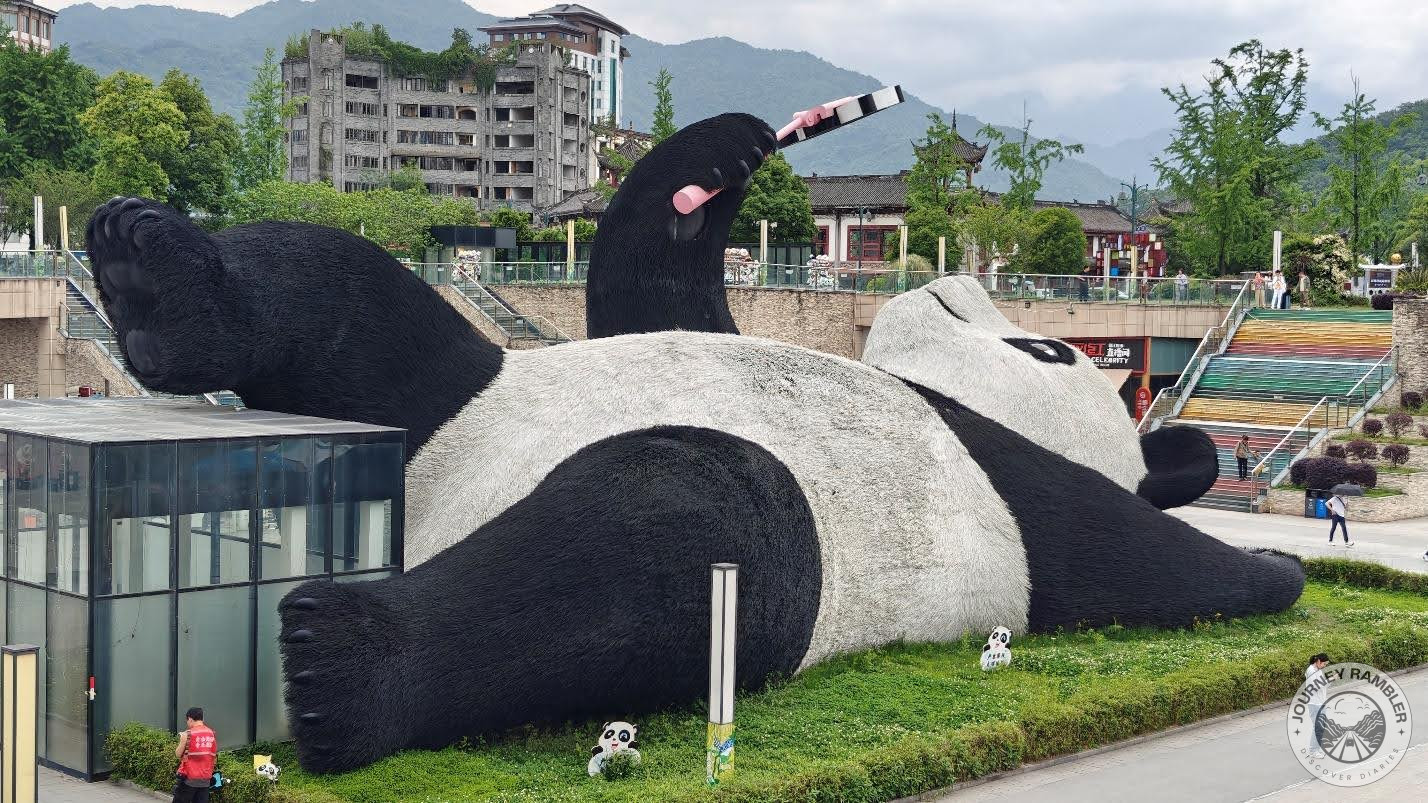
My third day at Chengdu was quite exciting. First, I traveled to Dujiangyan City from the Chengdu City Center. I wanted to see the famous Selfie Panda in the middle of Yantianwo Square. It was supposed to be a commentary on modern selfie culture and phone culture. But it really was a sight to see. I had never seen such a huge panda statue!
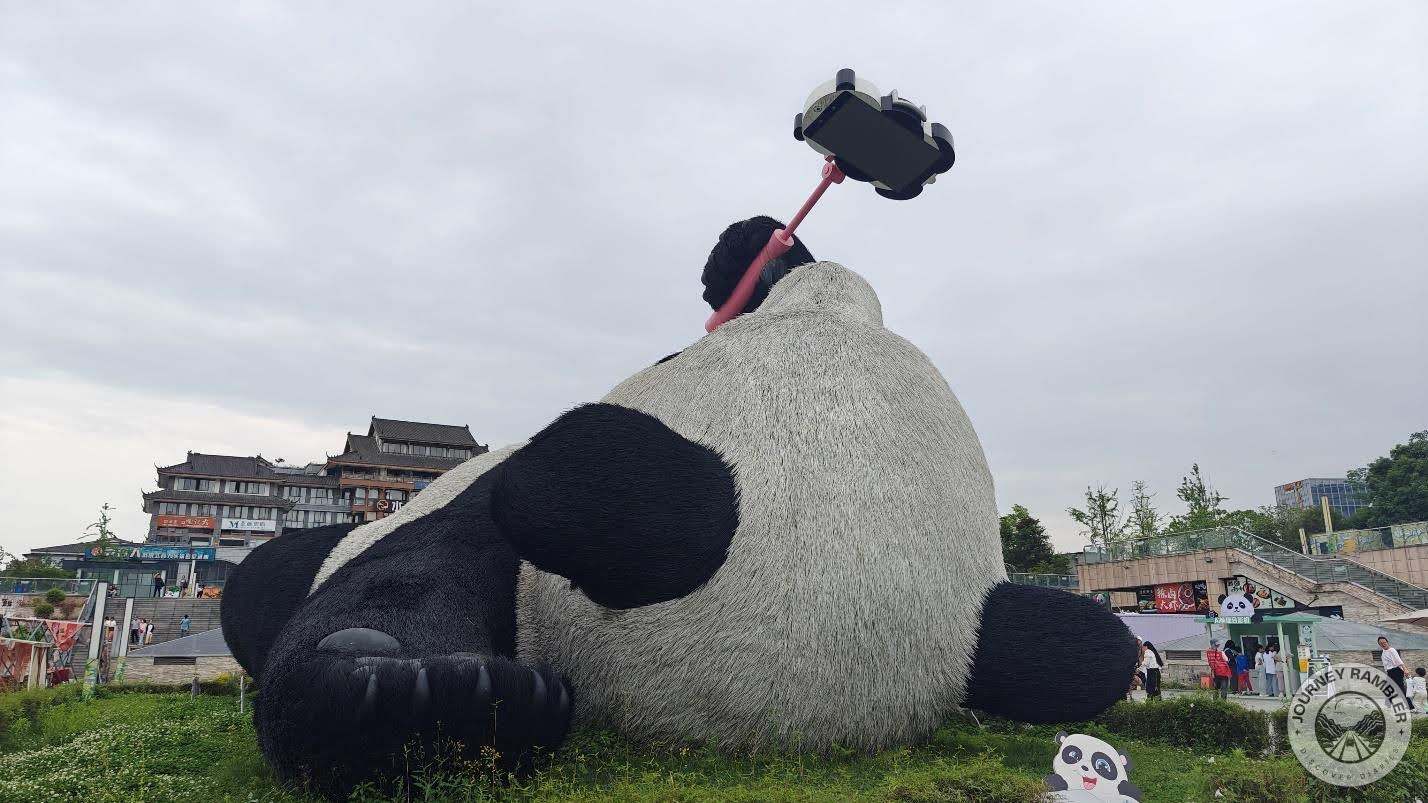
The giant panda was lying back on a field of grass and holding up a giant smartphone on a selfie stick. In fact, tourists could take a picture of themselves along with the panda on the panda’s smartphone. They just needed to scan a QR code! It was fascinating.
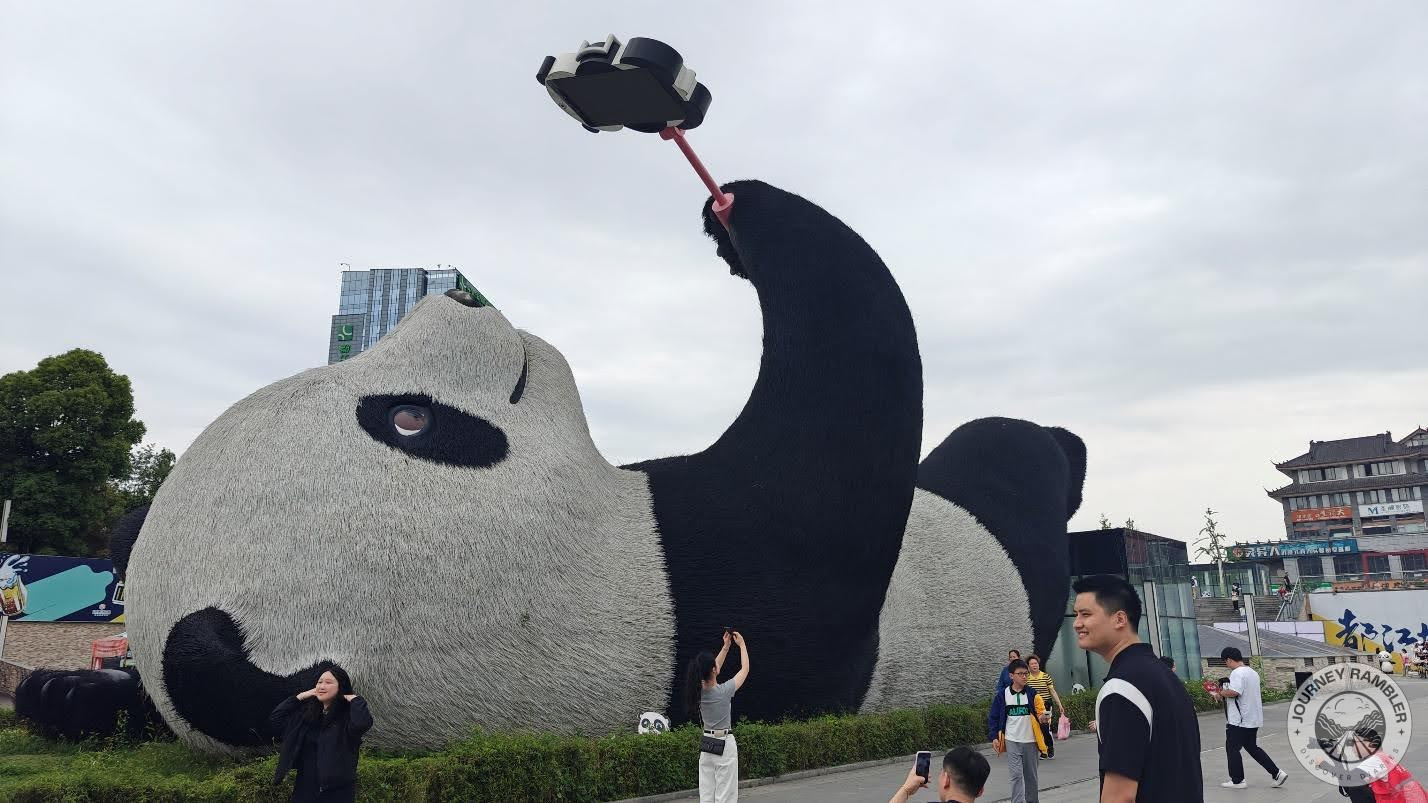
I took pictures of the Selfie Panda from all angles, just like everyone else.
6. Dujiangyan Zhongshuge Bookstore
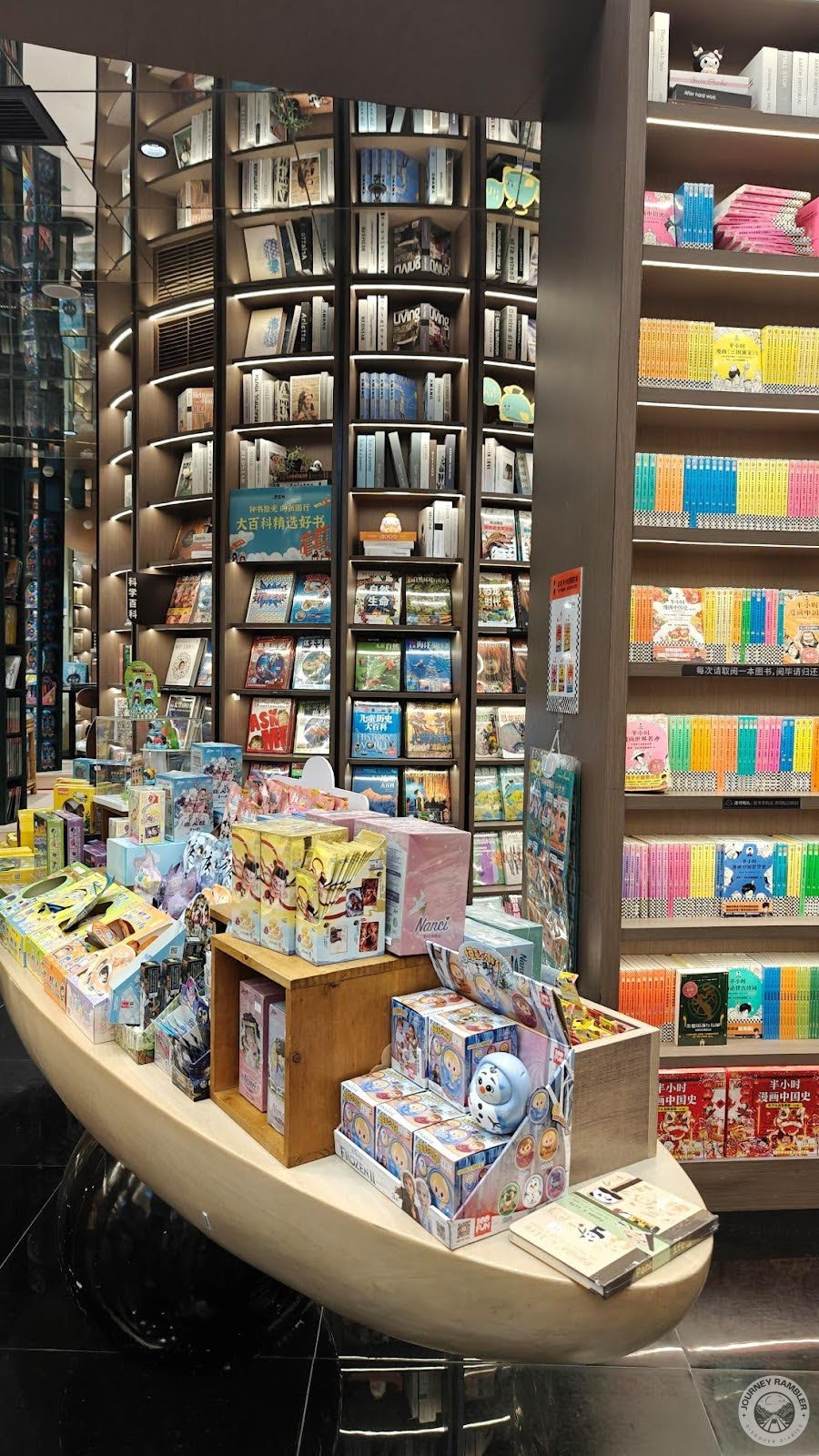
I left Yangtianwo Square and headed to the Dujiangyan Zhongshuge Bookstore. The store had only opened a few years ago and was still quite new. There was a children’s play area and café inside too.
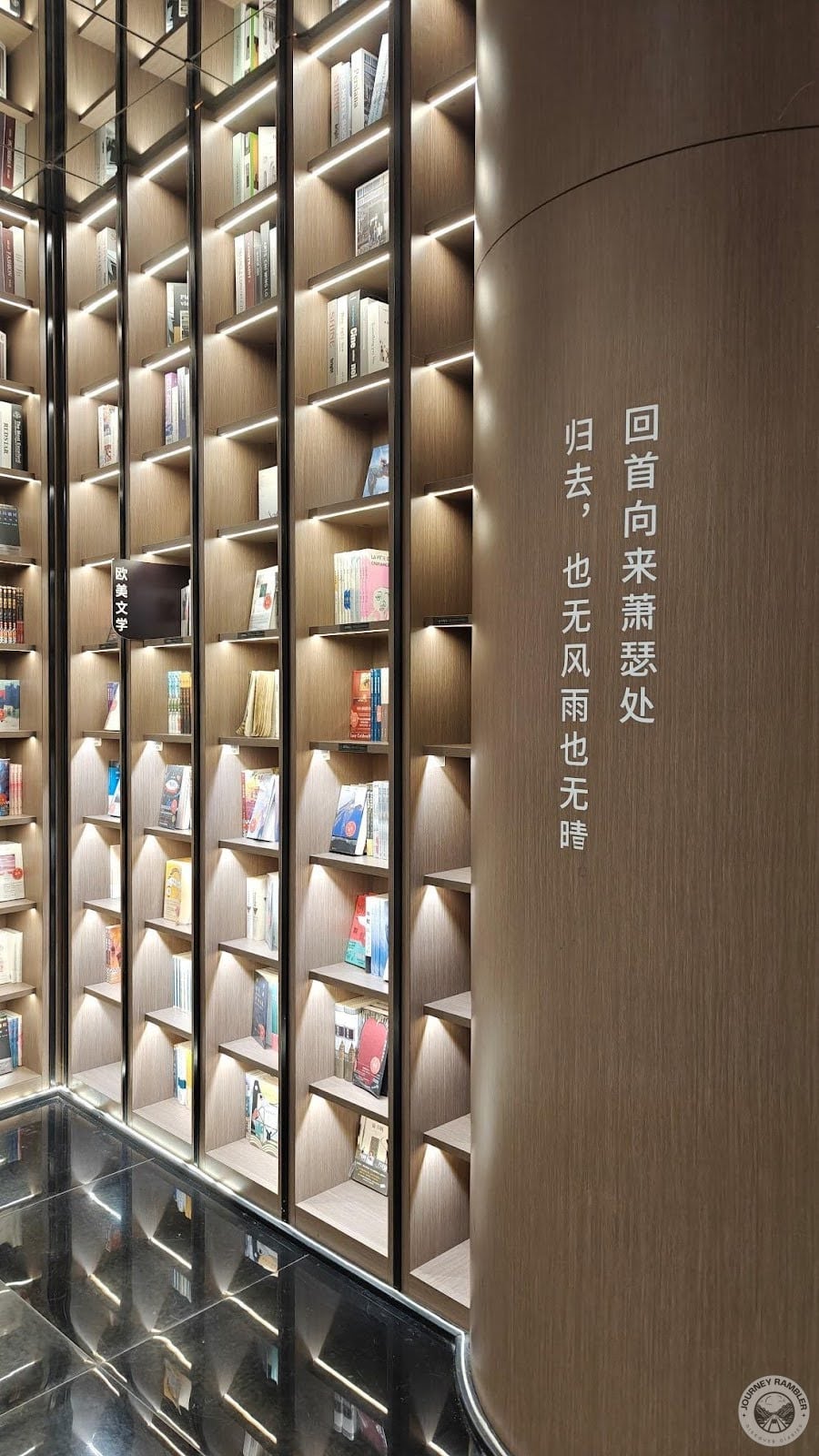
The shelves were all so neatly organized and the black tiled floors gleamed in the light.
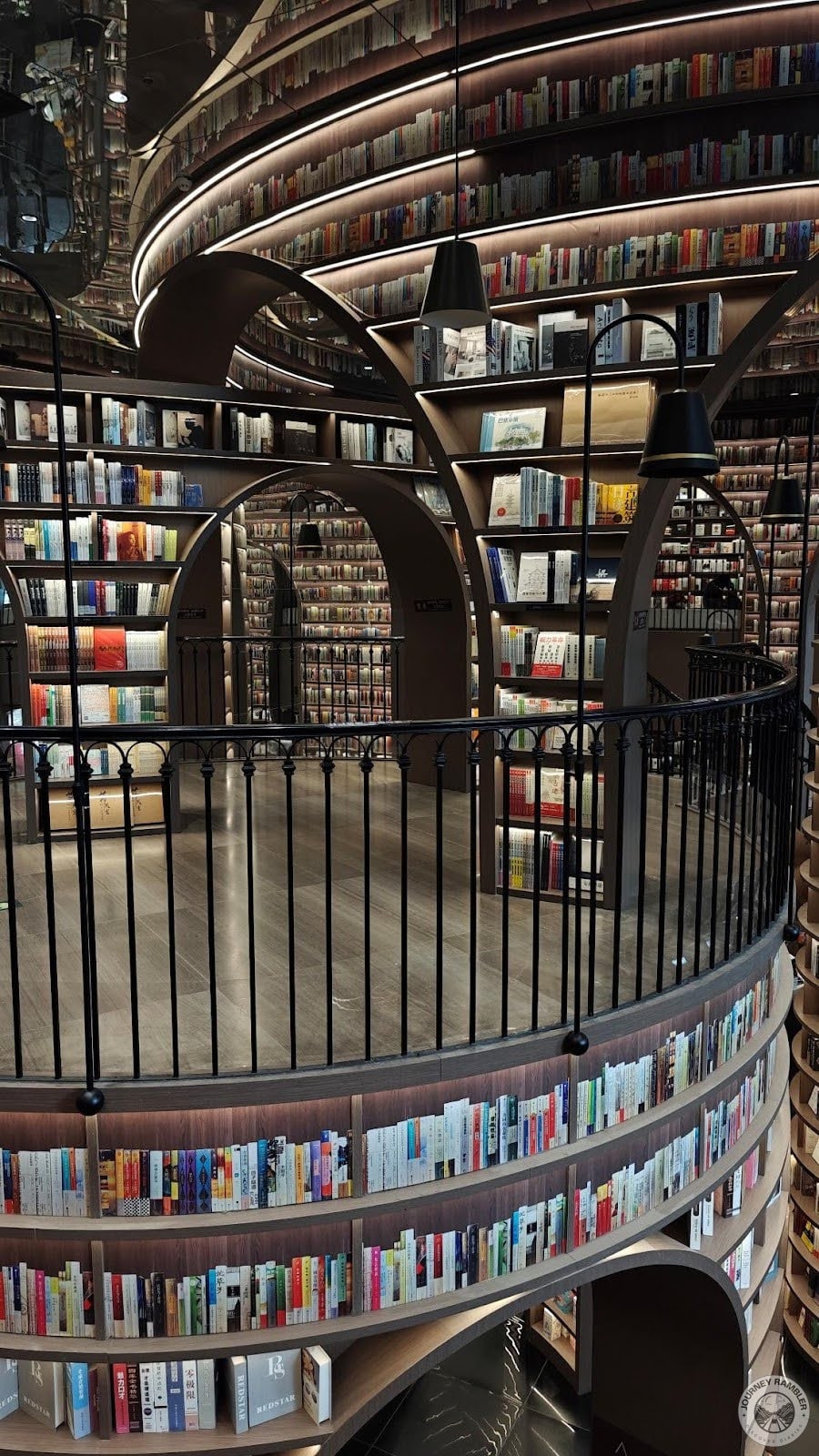
But the most interesting part of the bookstore was the surrealist architecture. It was spread over two floors and there were mirrored ceilings. The whole place felt a bit like a funhouse of books with no beginning and no end.
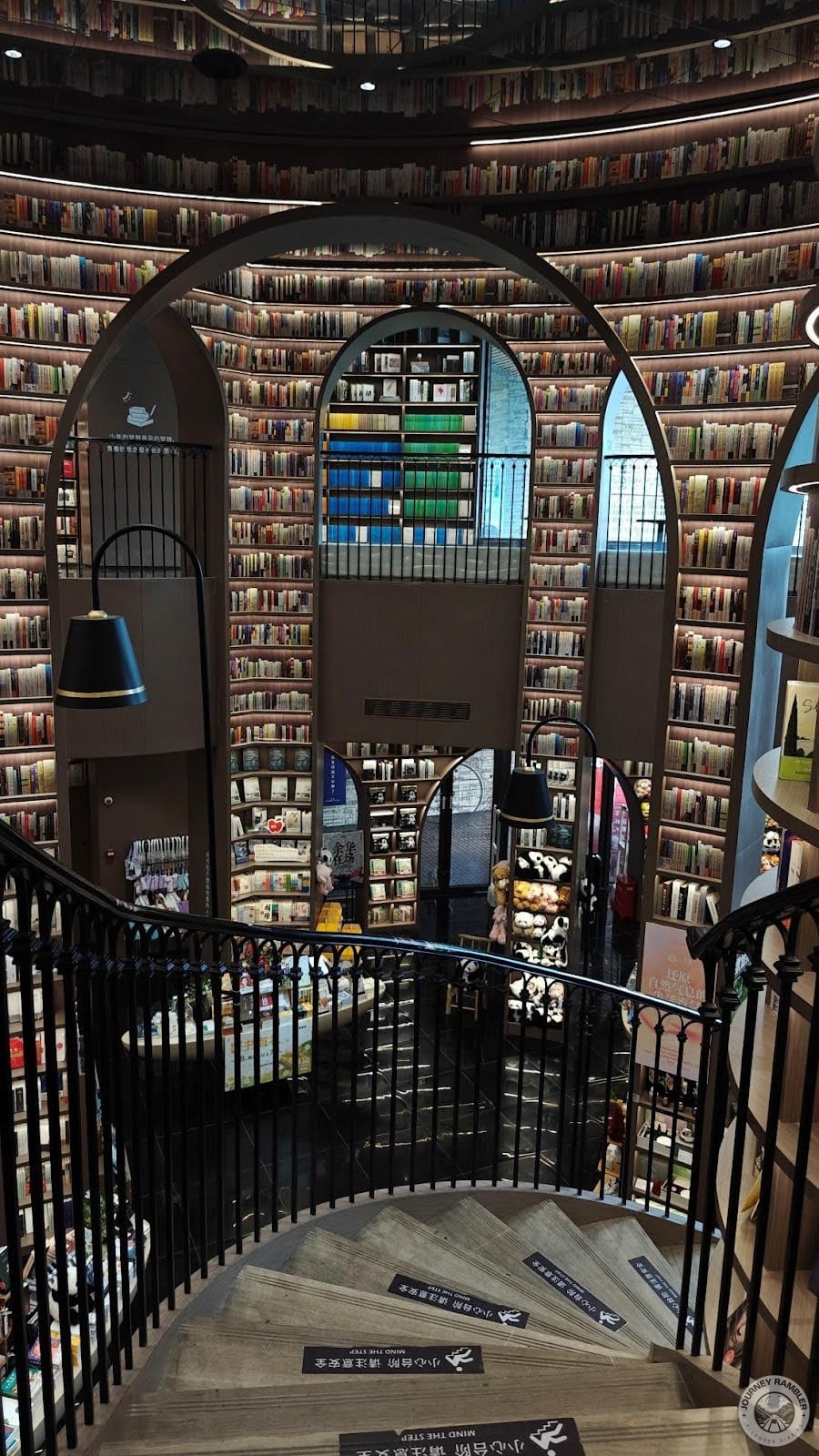
Booklovers would get lost inside the bookstore and would be able to spend hours just looking around.
7. Dujiangyan town walk
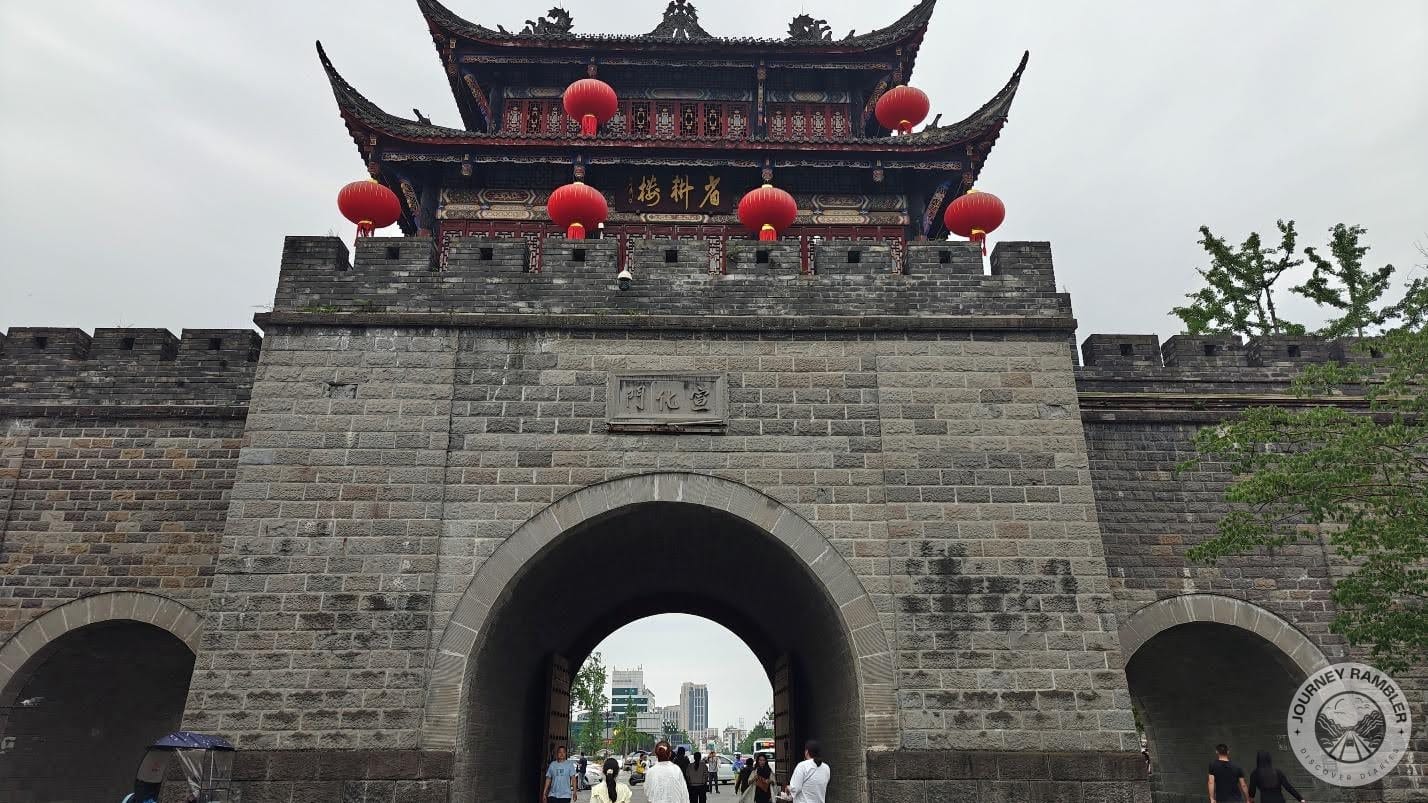
I came out of the bookstore and decided to take a walk around Dujiangyan town. It’s located to the west of Chengdu and is a county level city. It’s an old city and it is best known for its ancient irrigation system. I explored the gates and city walls as I walked around. The Xuanhua Gate looked very majestic and had been decorated with lanterns. I knew that it was always beautifully decorated for the Chinese New Year celebrations.
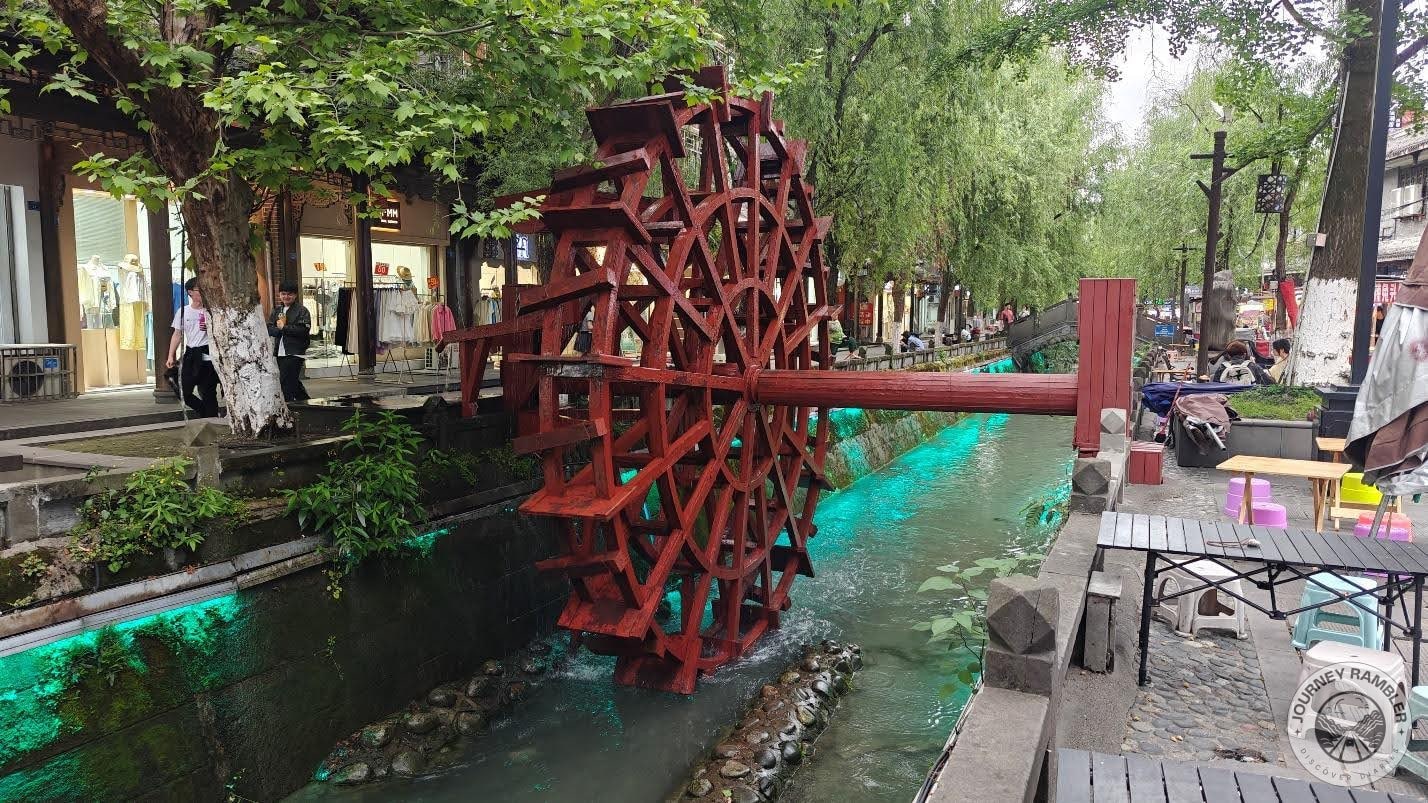
Small rivers and streams flowed along the streets as I walked around and there was café style outdoor seating. A wheel was fitted above the water. It looked like an old mill wheel that used to be turned by water.
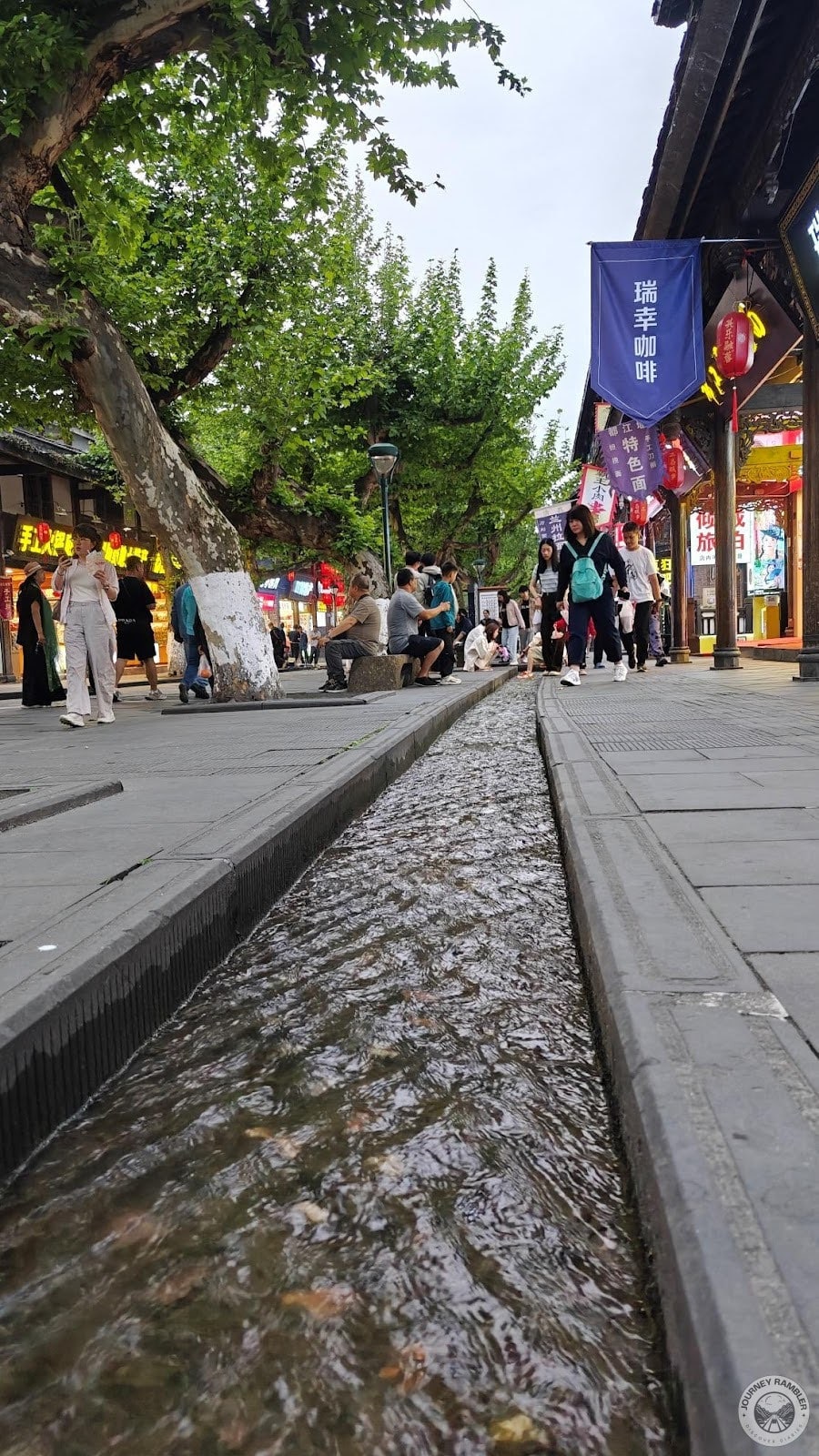
The streets were so clean and well-paved. There were a lot of trees even inside the old city, which I really liked. The streams and canals which had water flowing along the streets were also used for flood control and had been used that way for millennia.
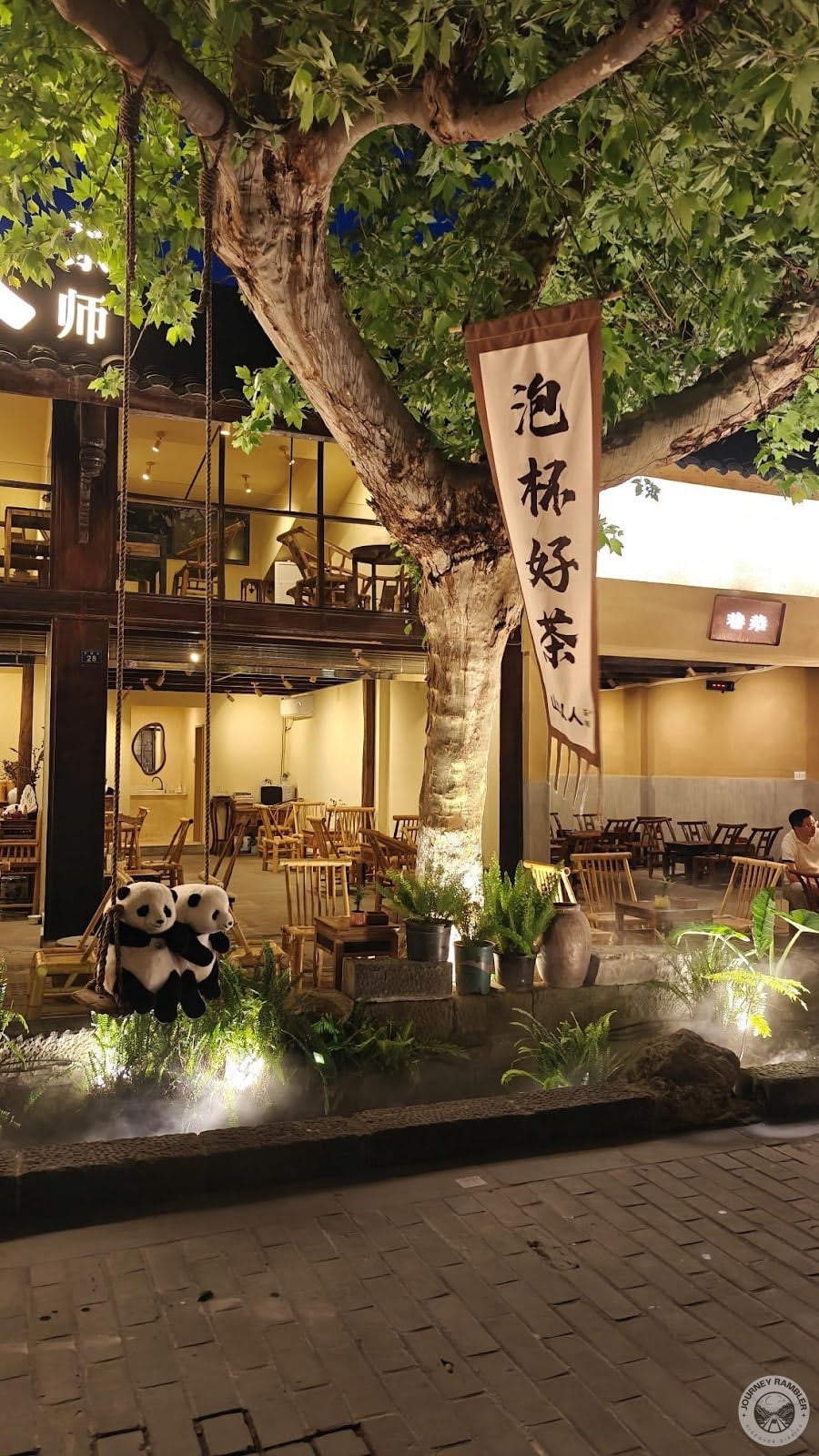
And there were statues of giant pandas everywhere! I even saw a pair of pandas on a swing right outside a restaurant. It was one of the cutest sights I had seen in Chengdu.
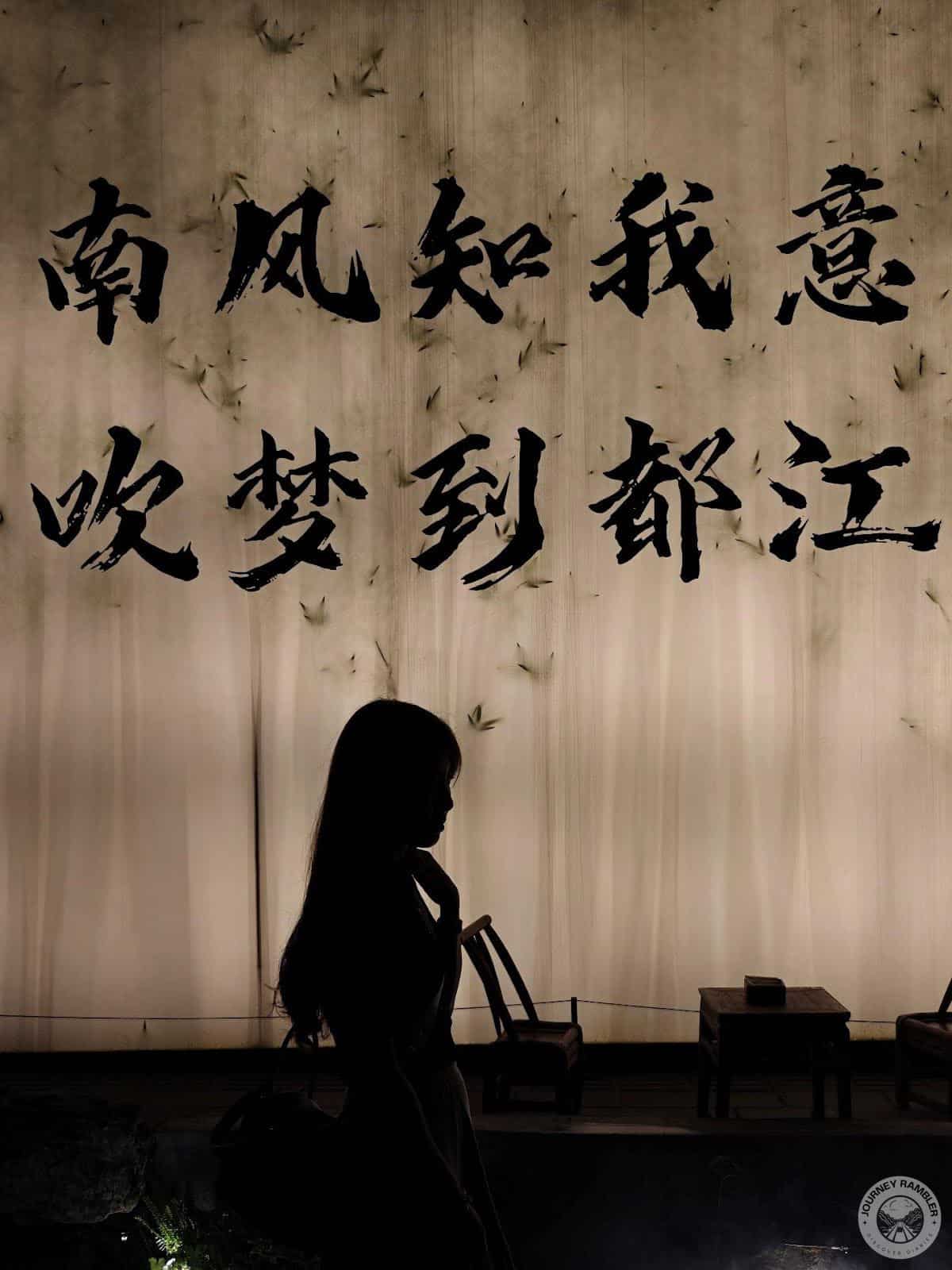
I enjoyed walking around Dujiangyan City after dark and seeing the different sights. There were people everywhere and it made me feel more connected to the city. Dujiangyan had been around for over 2000 years.
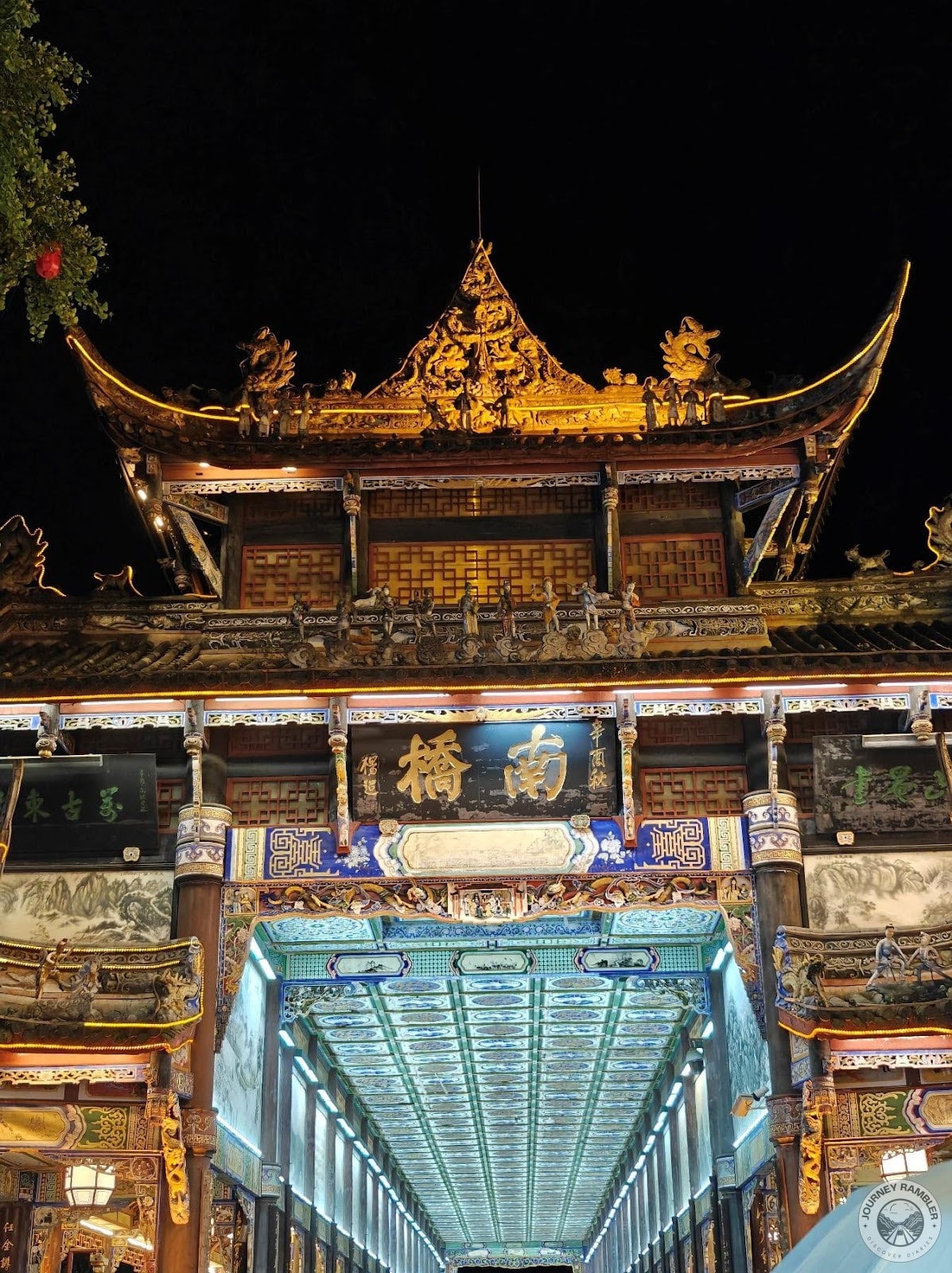
I had wanted to stay in Dujiangyan till late at night because I wanted to see the Blue Tears phenomenon. I headed towards the beautiful and historic Nanqiao Bridge. I could already see the blue glow from the water reflected on the ceiling of the bridge.
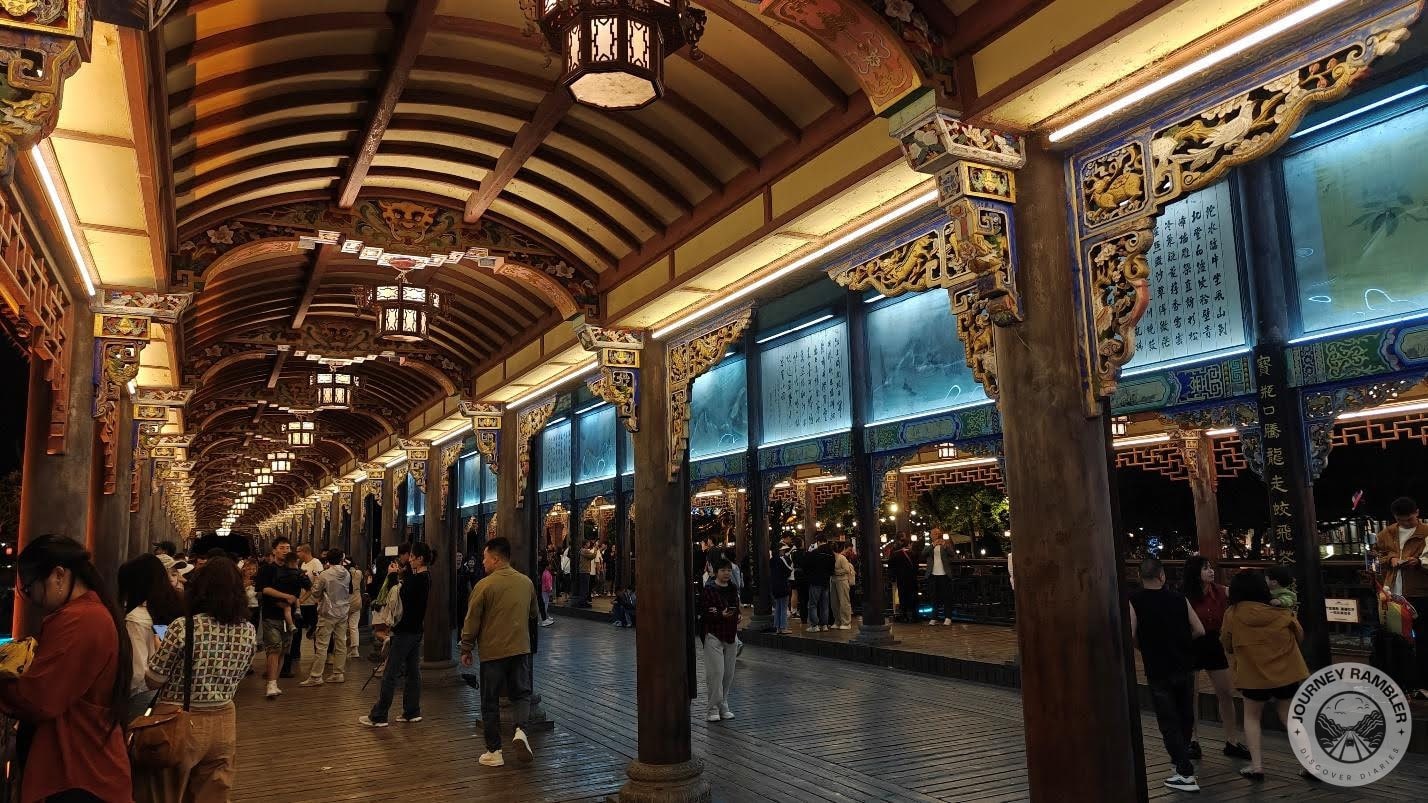
There were dozens and dozens of people lined up on both sides of the bridge so that they could get a glimpse of the strange blue glow of the Min River.
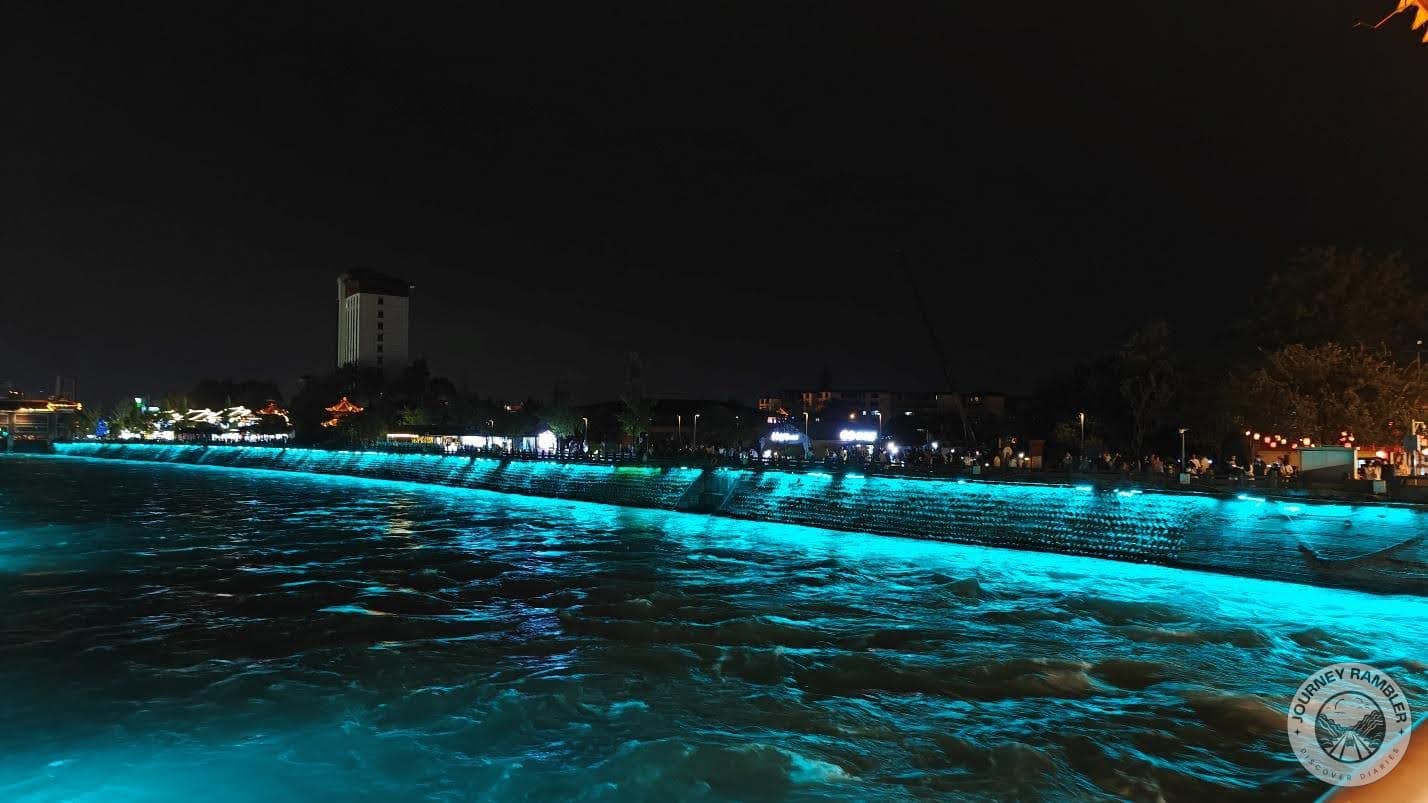
I had read that the Blue Tears phenomenon was caused by bioluminescent algae that lived in the Min River. At night, the algae would glow and it looked like a stunning light show. But it was all natural. I had really never seen anything like it. It looked like blue lights had been turned on underwater.

The Min River was so important to Dujiangyan. It was the water of the river that had allowed civilization to flourish and for the city to grow all the way back in 256 BC. So it was fascinating that tourists were still coming in hordes to see the river and all its canals.

There were restaurants and eateries along the river so that tourists could eat something even as they were sightseeing. Everything was brightly lit and the whole city center was full of life.
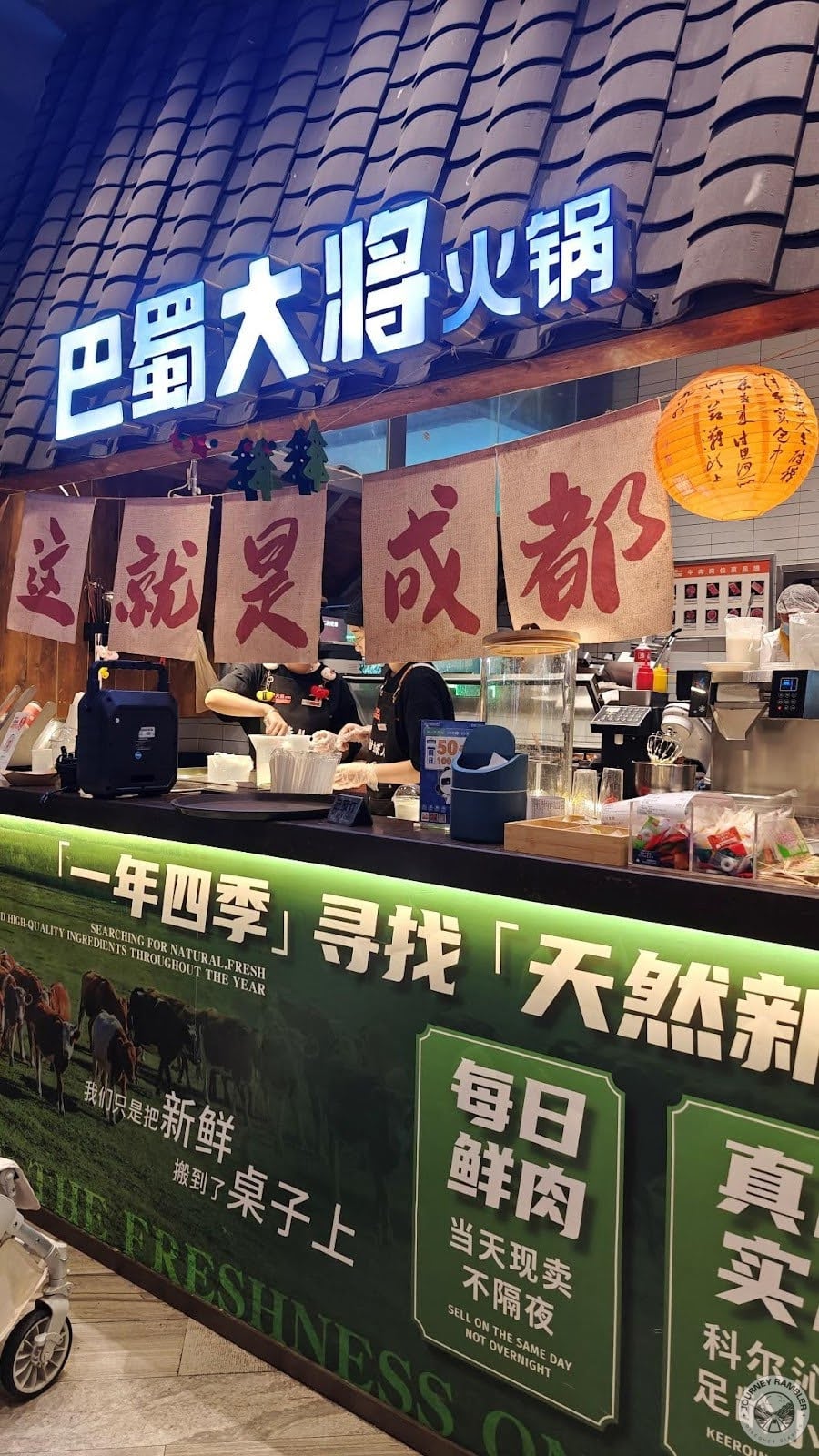
I decided to end the day with dinner at Bashu Dajiang Hotpot. It was a pretty small shop but there were a lot of customers. The chefs were hard at work behind the counter.
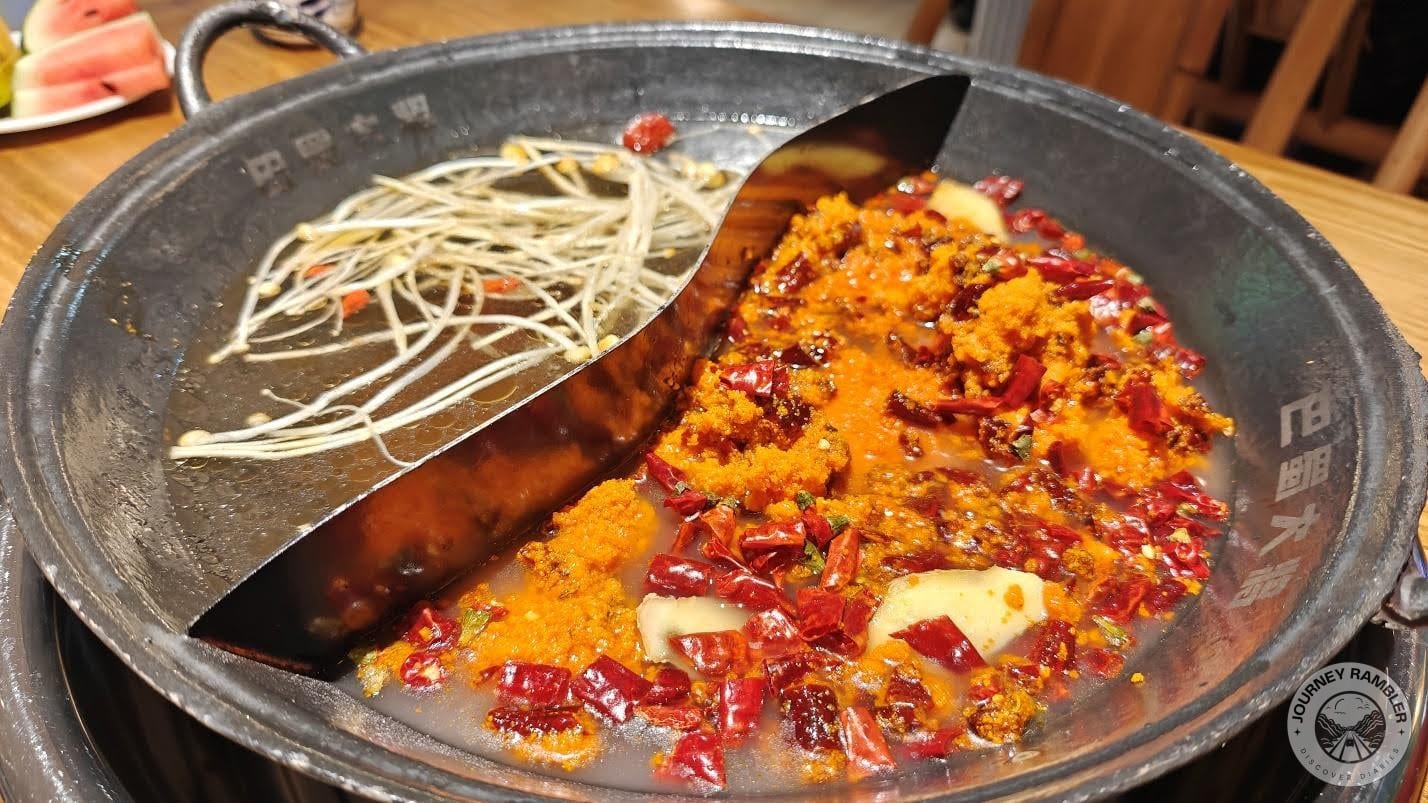
They gave me two different kinds of soup bases. There was a really spicy one with lots of chilies and there was a milder one with sprouts in it. Both tasted savory and flavorsome and I was excited for the meal.
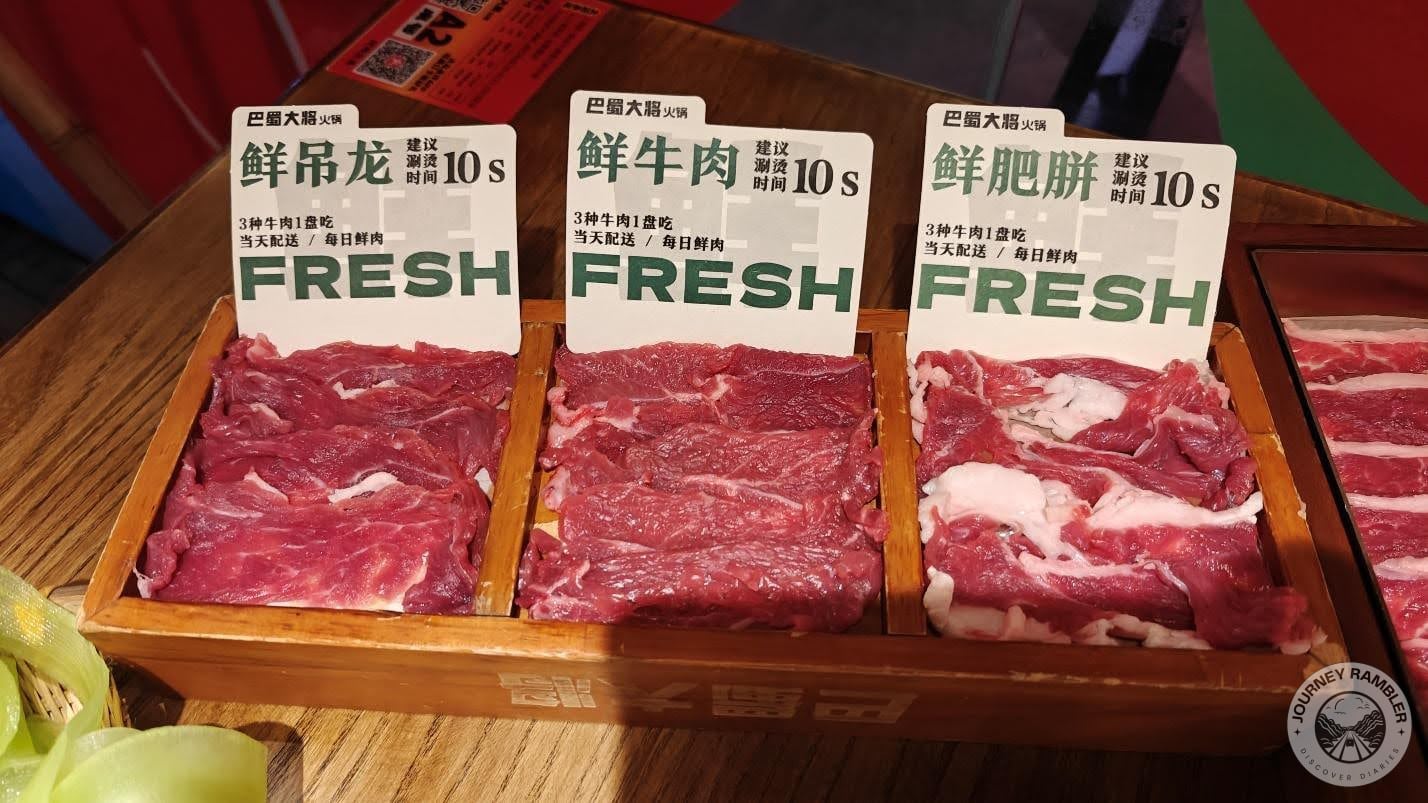
There were different kinds of meat. I could cook it in the soup base to my liking. The meat was all thinly sliced so that it would be easier to cook. I could see some fat on the sides of the meat which would make it even tastier.
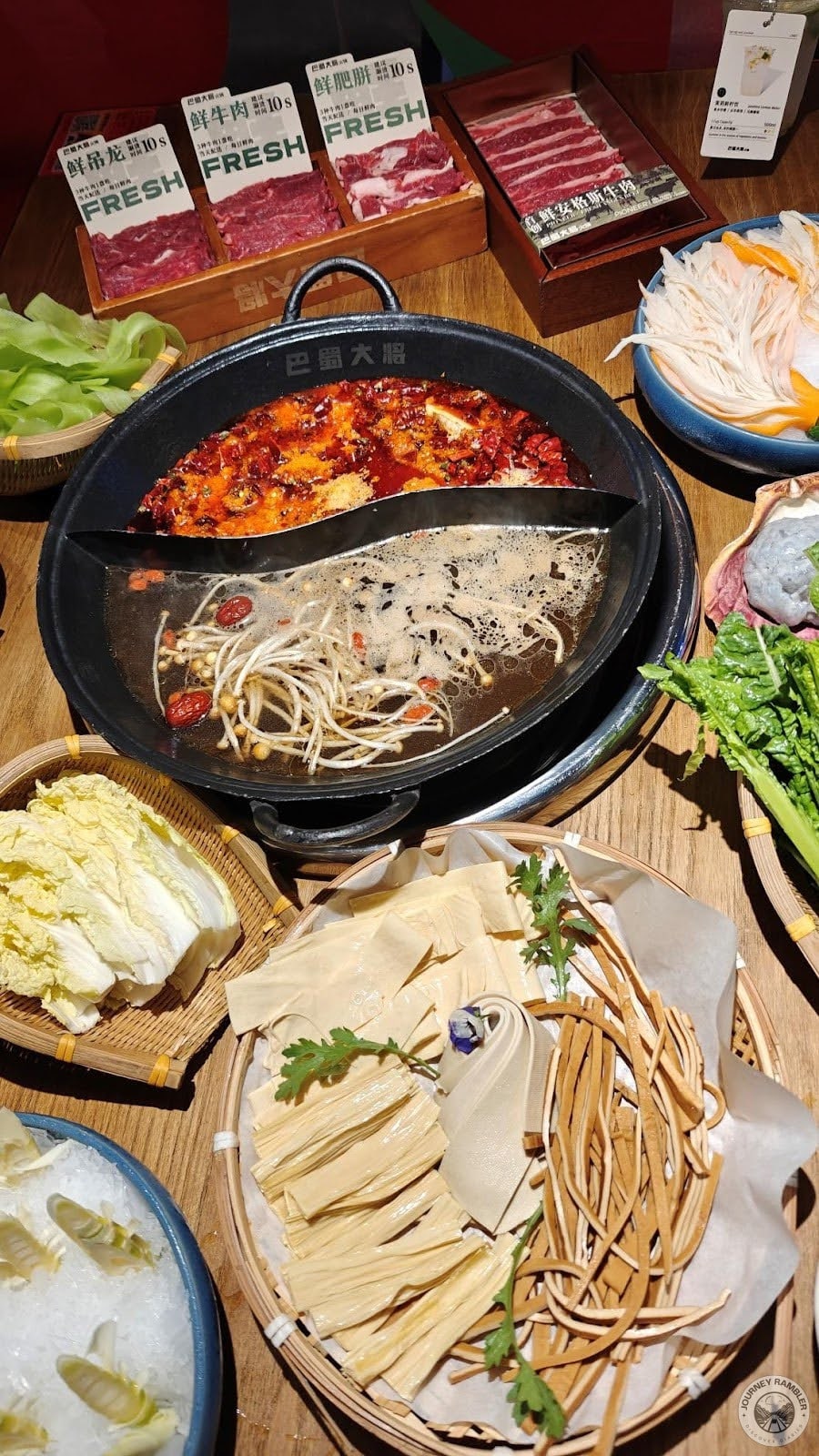
It was a huge spread and I was stuffed by the time that I finished eating. I decided to head to bed. I wanted to wake up refreshed for the next day. There were a lot of things planned for my fourth day at Chengdu.
Day 4
10. Chengdu Research Base of Giant Panda Breeding
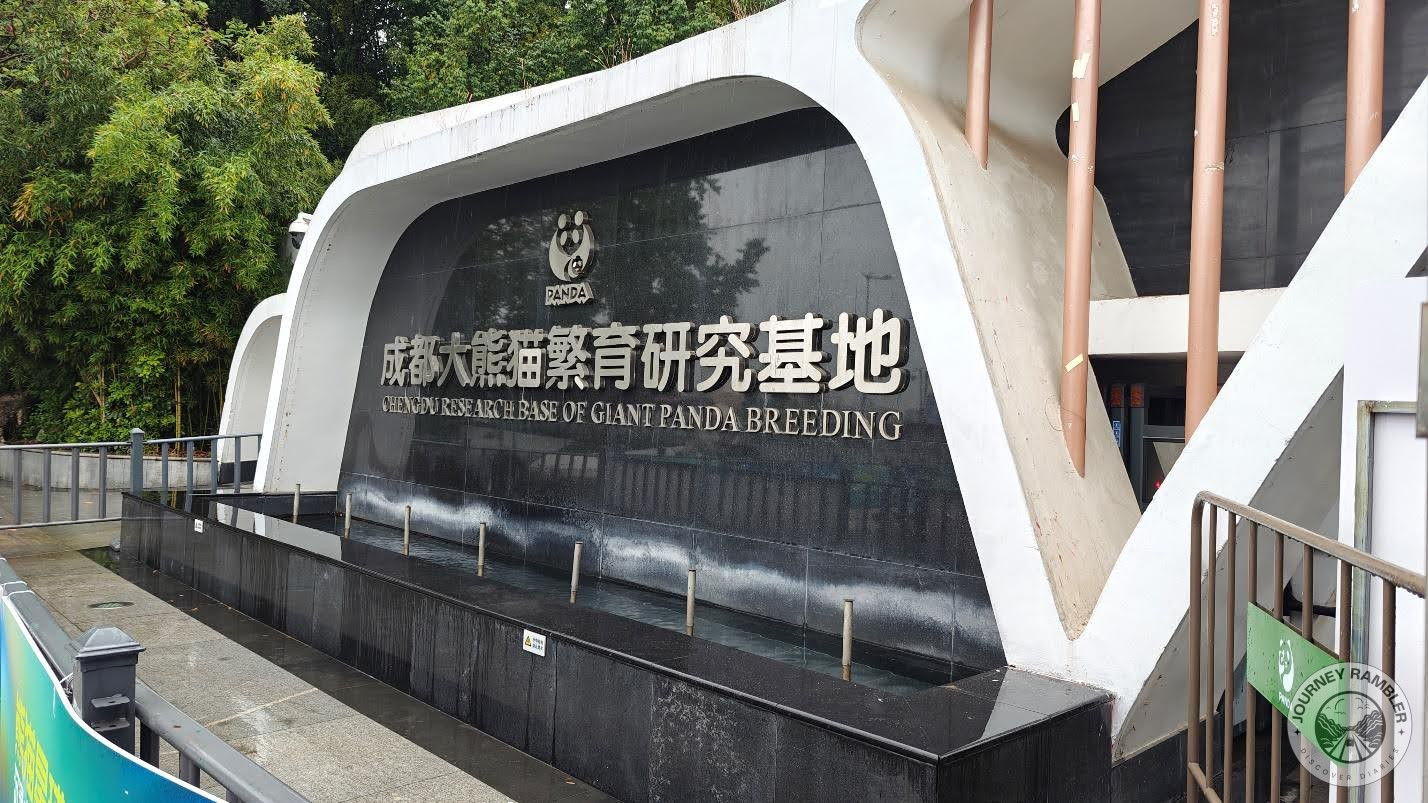
On my fourth day, I first went to the Chengdu Research Base of Giant Panda Breeding. This was not only a research space but also a zoo where people could see the giant pandas and red pandas. It was a non-profit organization and it was funded by the government.
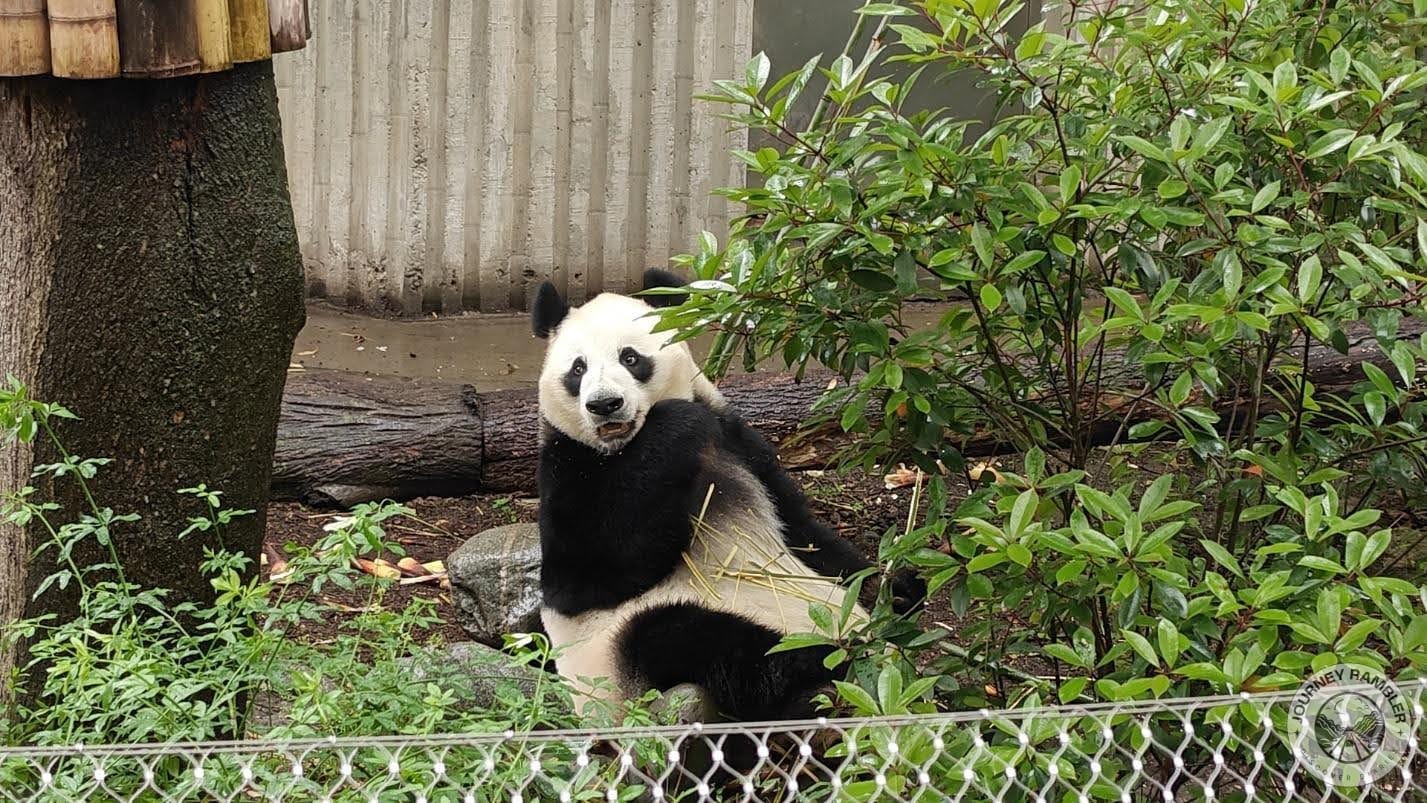
The research base had started with only 6 giant pandas that were rescued from the wild. It was started in 1987. By 2008, there were 124 panda births and now there was a very big population. The pandas had really nice enclosures and plenty to eat. And it was such a lovely experience, being able to see the giant pandas from so close.
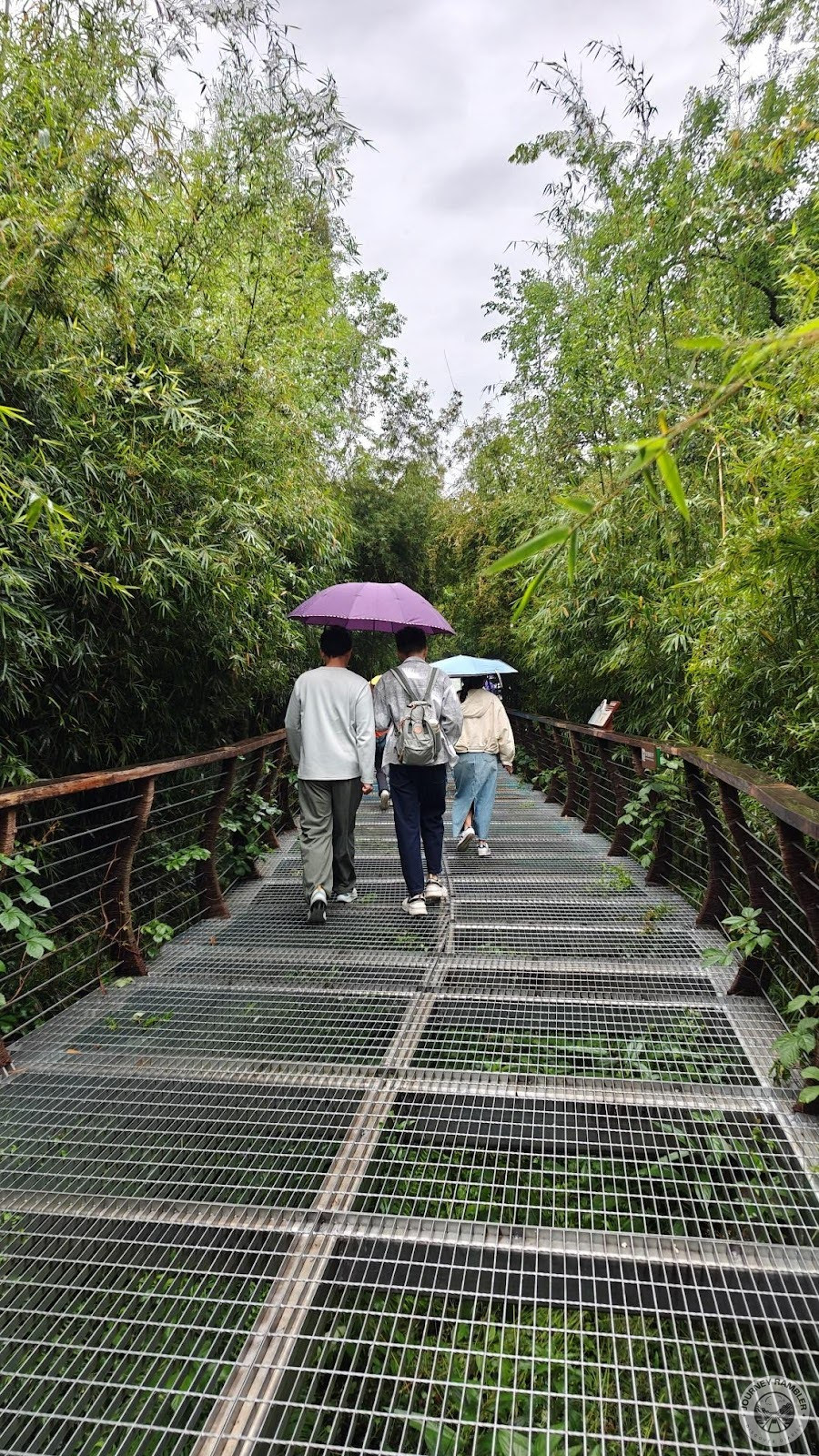
The whole place was filled with bamboo forests and there were walkways so that visitors could walk through the forests safely. It was a pretty sunny day and it felt nice to be walking about in the middle of so much greenery. There were plenty of other tourists and they were all armed with umbrellas against the sun.
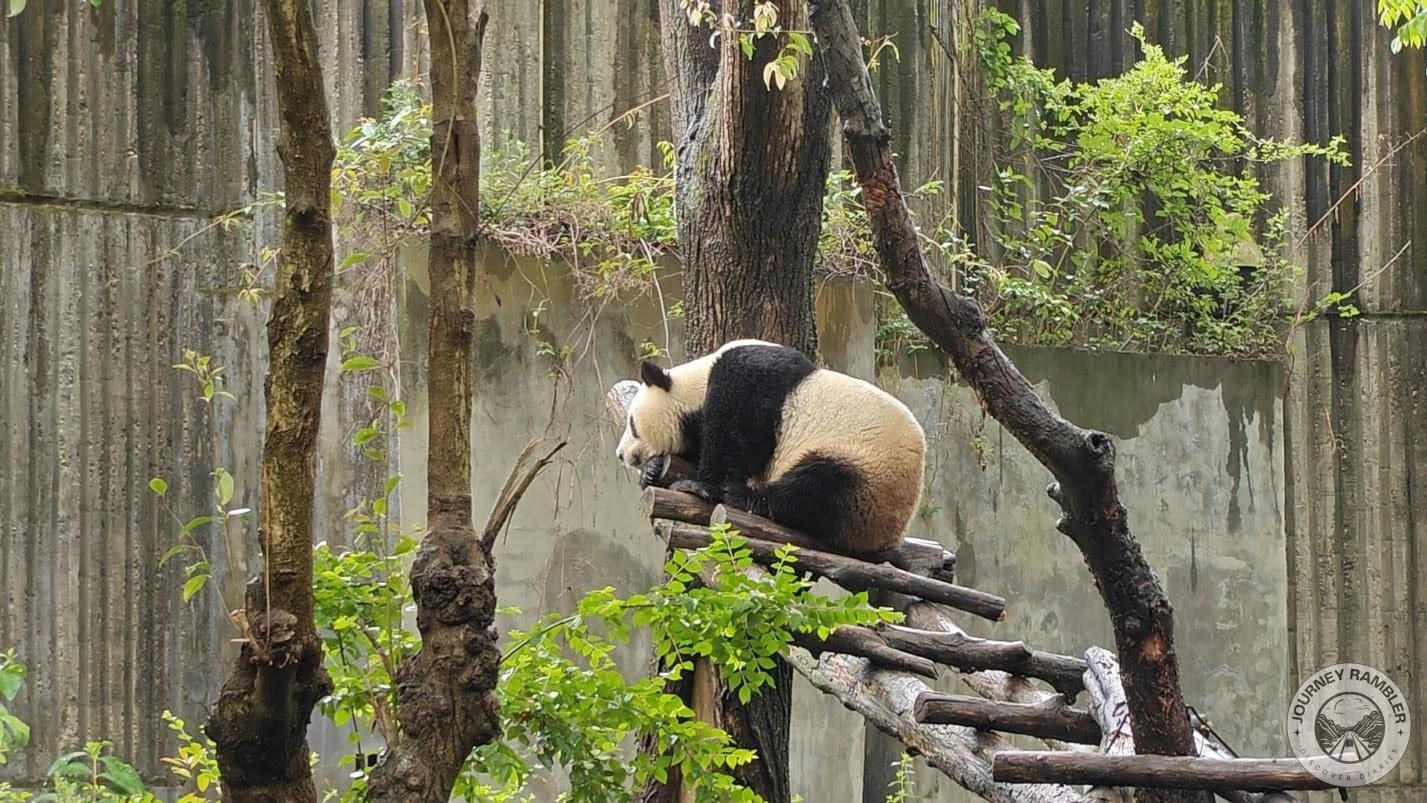
The giant pandas had ladders and walkways in their enclosures. They could climb trees and play around. I saw one giant panda lying on top of a wooden ladder and napping in the sunshine.
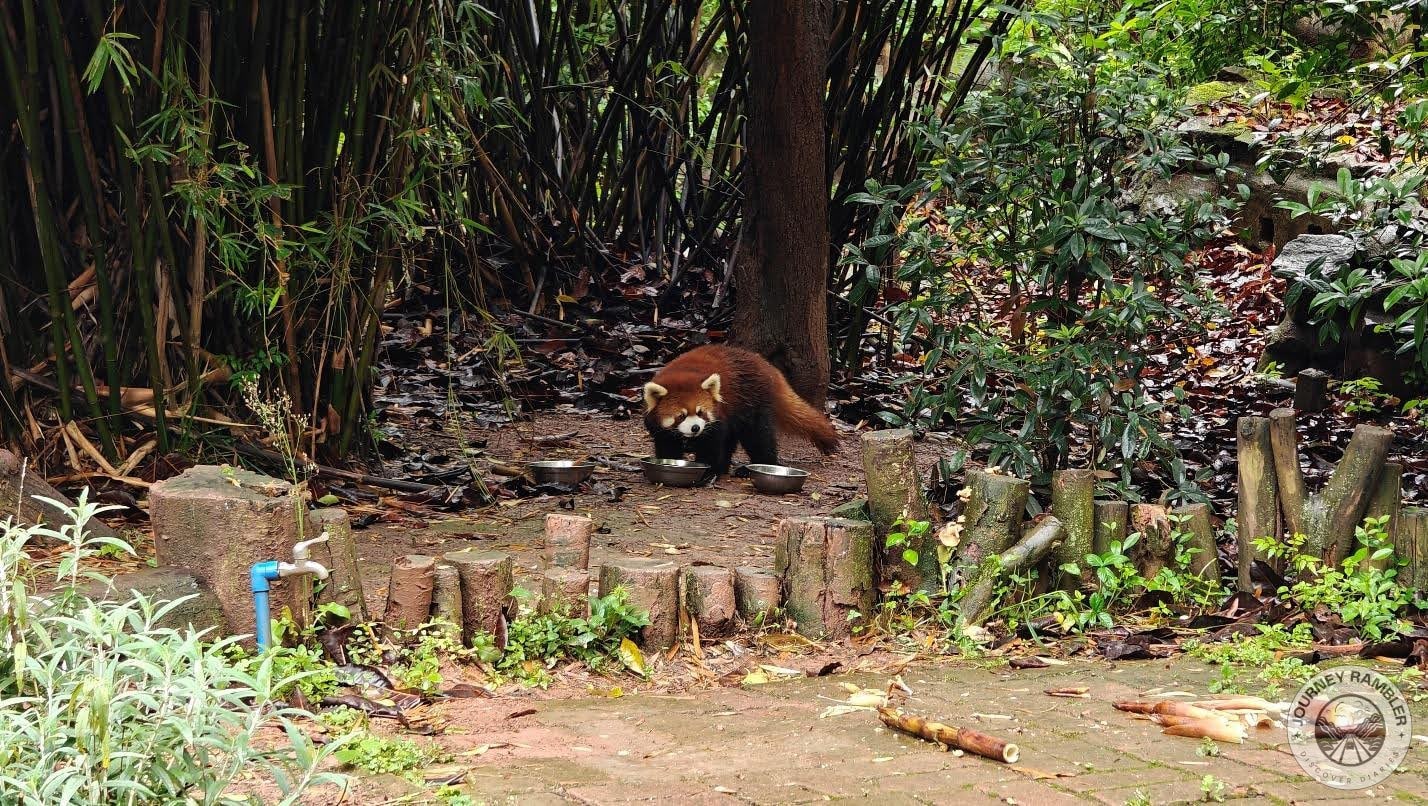
I even saw red pandas at the research base. It had been given some food in three metal bowls and it looked pretty shy. It didn’t come too close to the visitors. But it was still clearly visible.
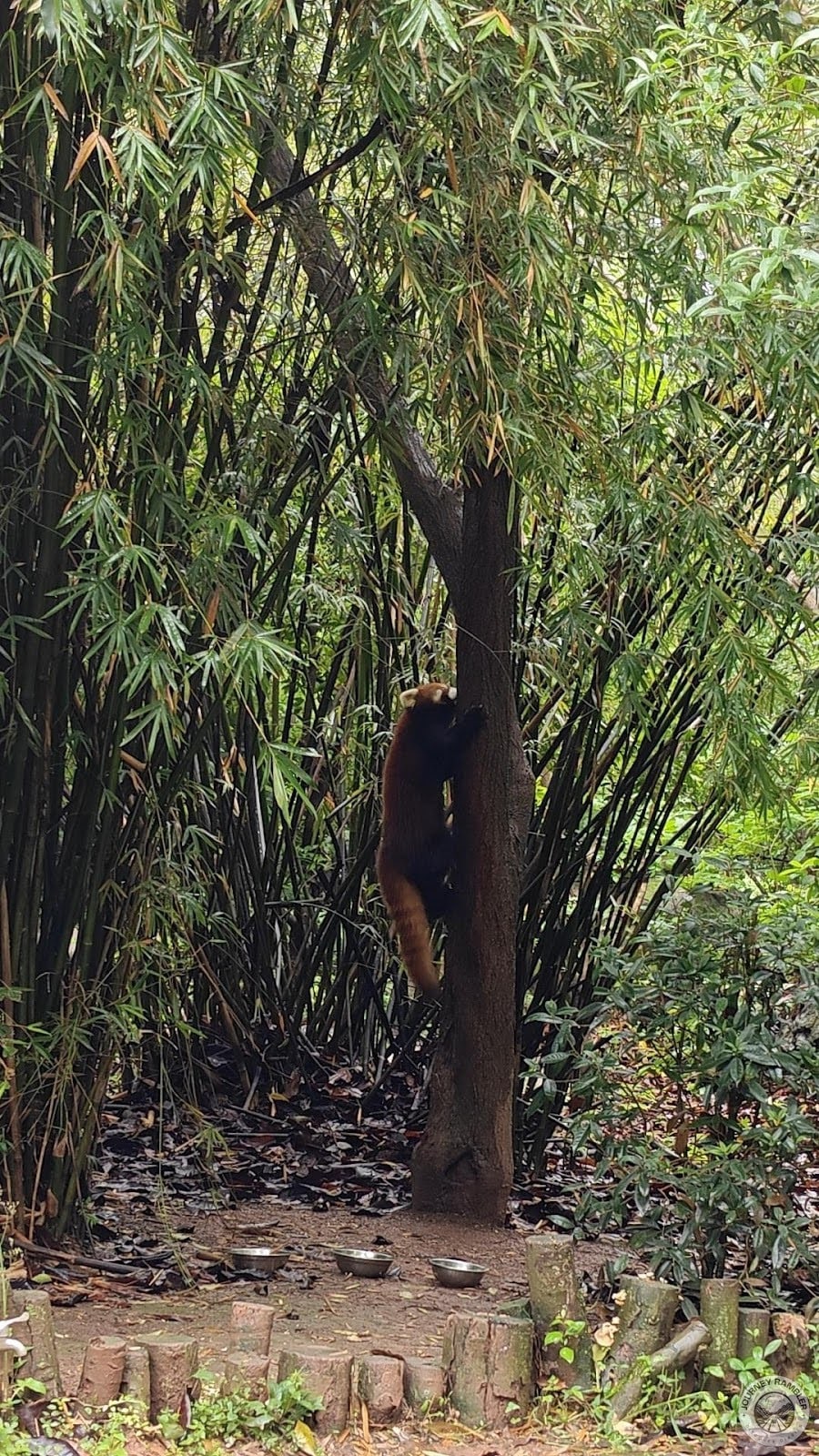
I watched as the red panda began to climb up a bamboo plant. It was climbing almost vertically up the trunk of the bamboo.
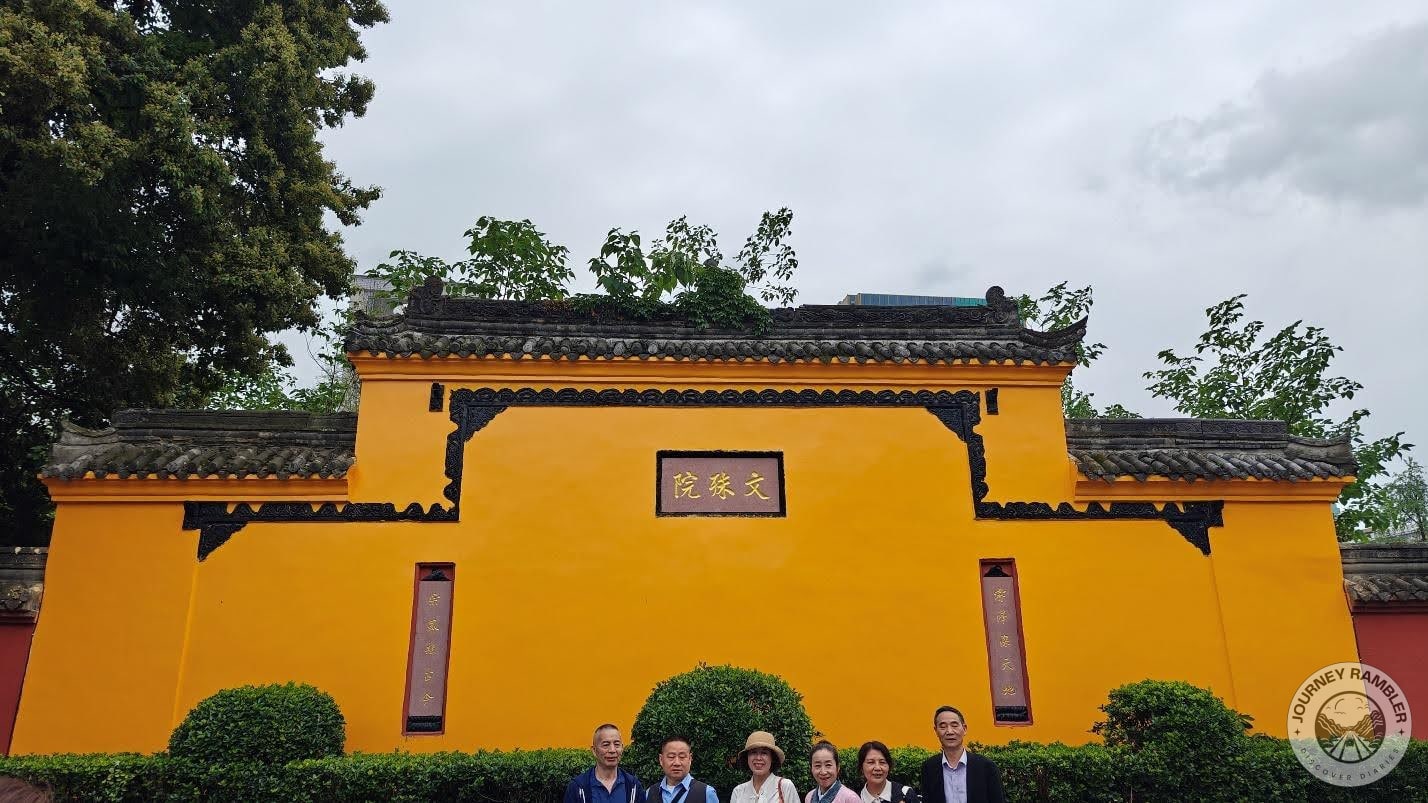
Next I went to the Wenshu Yuan Monastery. The outside walls were painted a bright and cheerful orange and the roofs were tiled. Tourists were stopping to take group photos outside the monastery walls. Not much was known about when the monastery had been originally built although legend said it was between 581 and 618. The name had been changed with every dynasty that came to power.
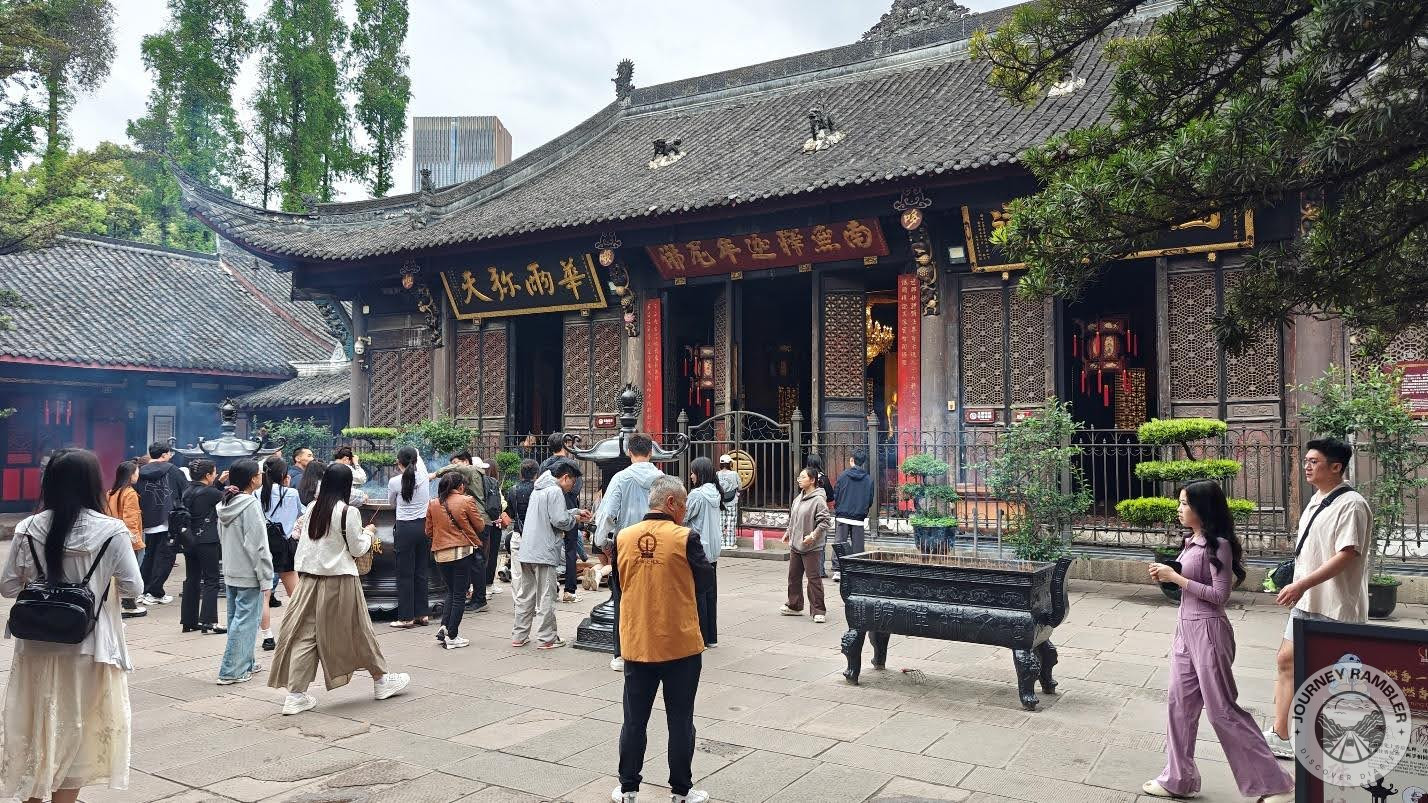
When I went inside, I saw that the courtyard looked really lively and cheerful. There were trees and plants growing all around. It gave the place a serene and peaceful atmosphere even though there were so many tourists walking around and talking loudly! The monastery doors and the façade of the building were beautiful.
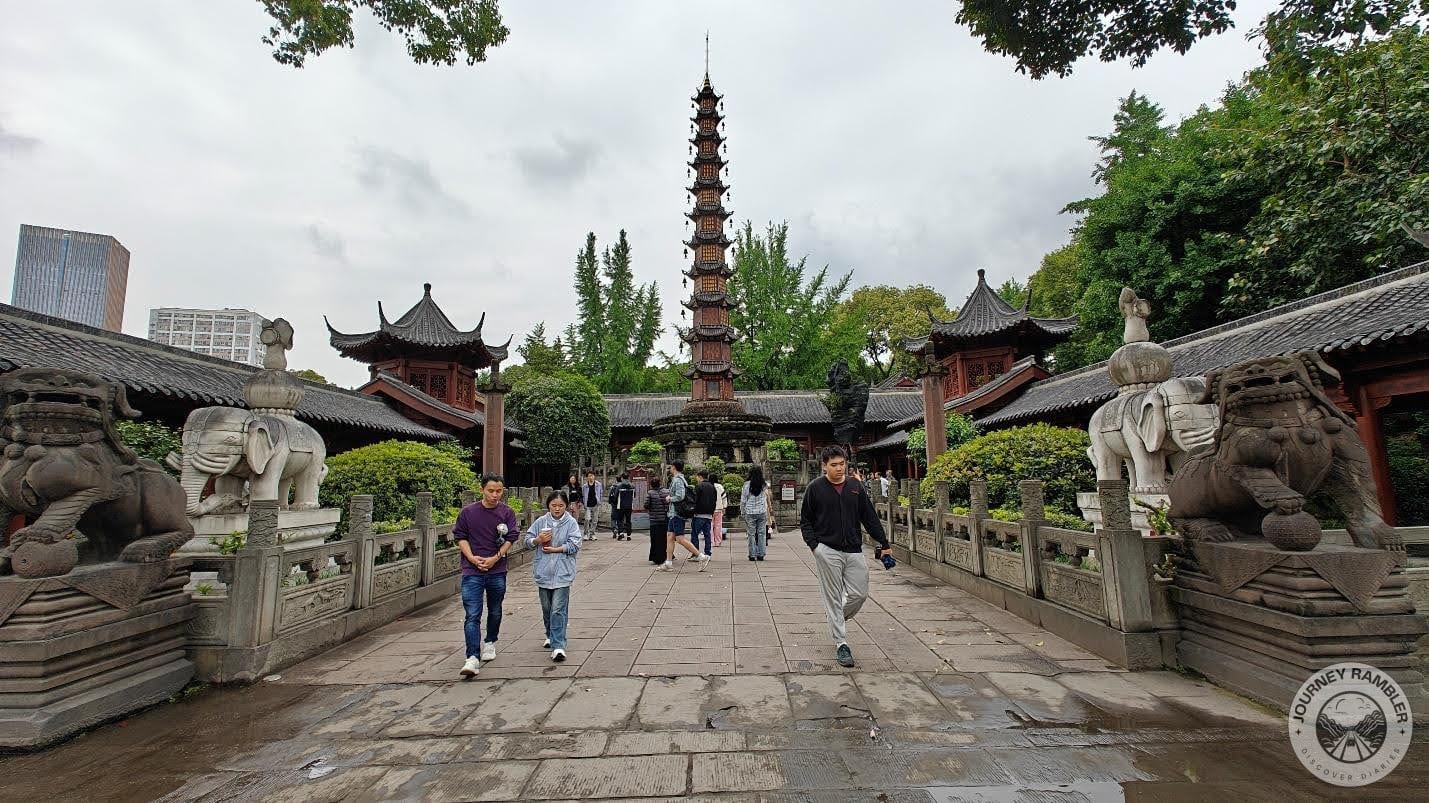
As I walked around, I admired all the statues of lions and elephants everywhere. There was a spire rising up right in front of my eyes and the roof of the monastery looked elegant as it rose up above all the rest.
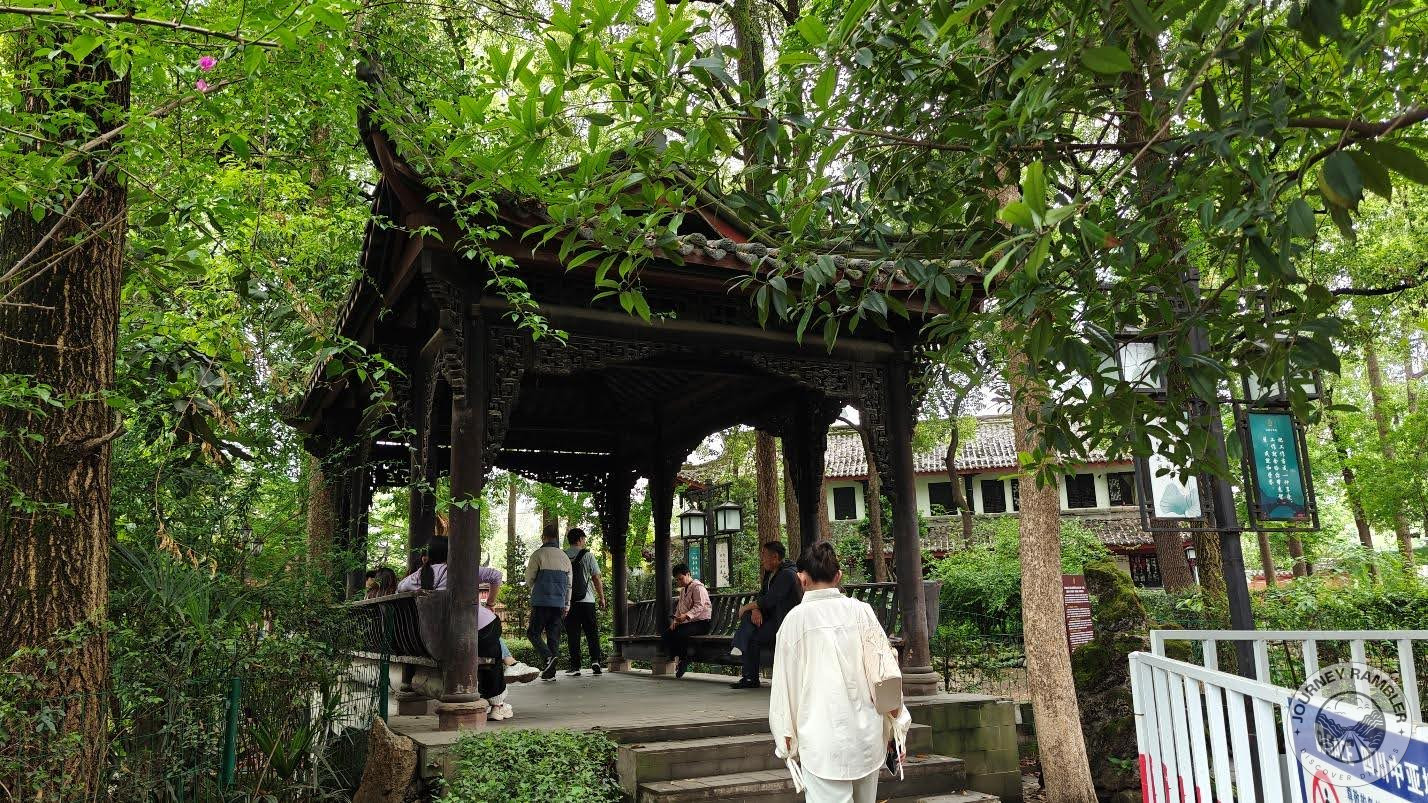
I loved the gardens of the monastery and temple. There was a lovely patio-type seating area surrounded by trees and visitors were resting on the benches that had been provided.
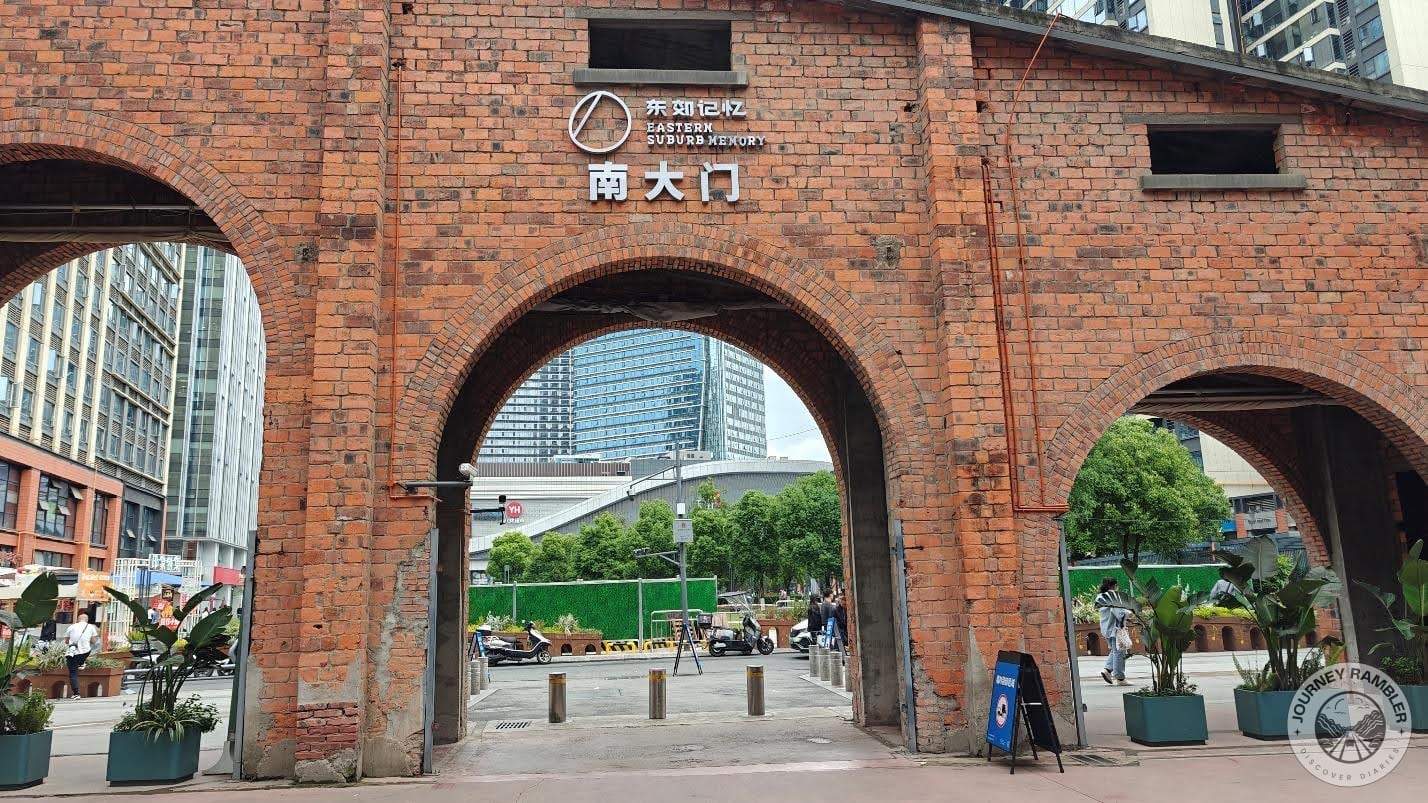
One of the strangest and most interesting places I went to in Chengdu was Eastern Suburb Memory. It was considered Chengdu’s coolest neighborhood since it had many themed areas like Gourmet Alley and Celebrity Street. Eastern Suburb Memory was recreated in a way that let visitors feel like they were stepping into the past.
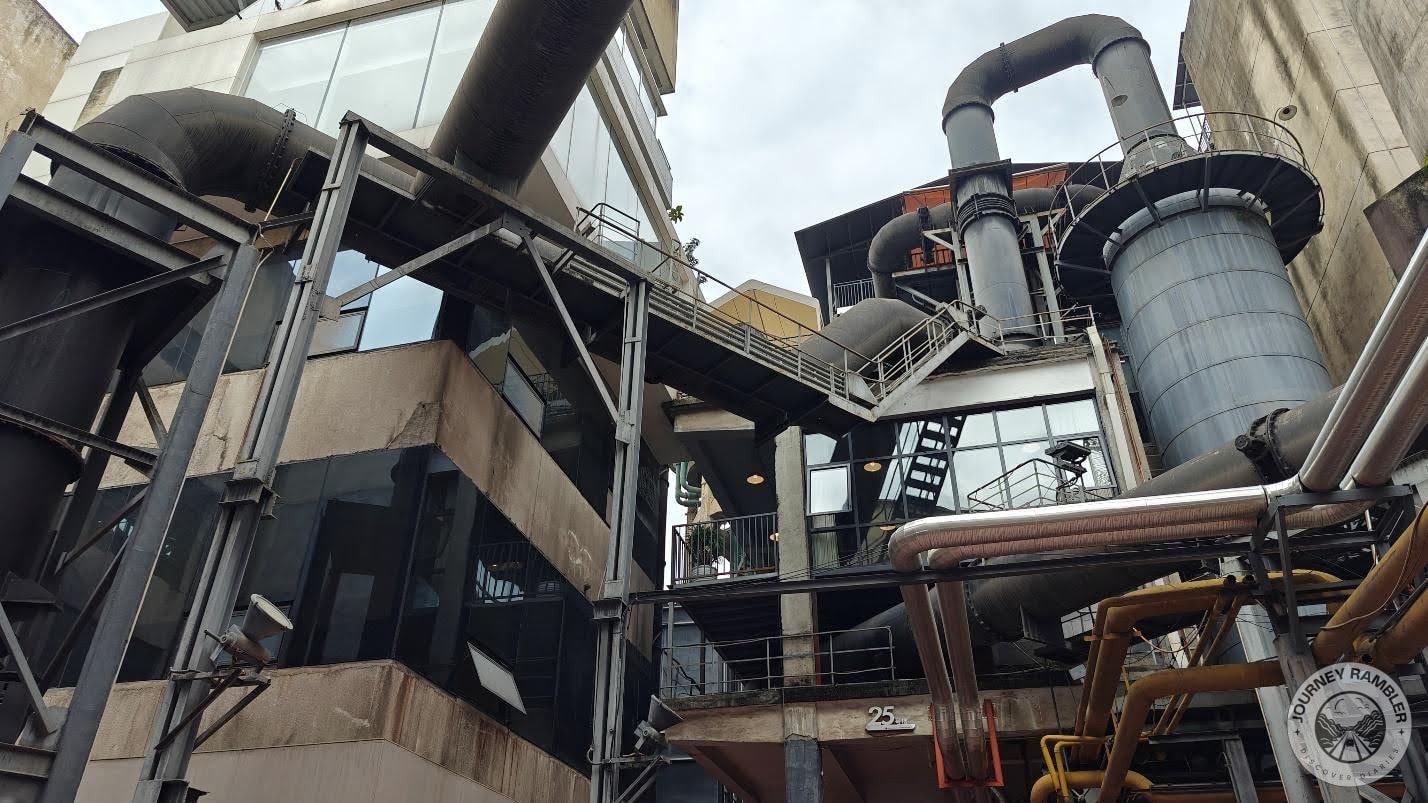
There were areas where the factories and chimney pipelines were clearly visible. These types of factories had been built all the way back in the 1950s with the help of the old Soviet Union. And they were state sponsored. It was an intriguing look at the past of China.
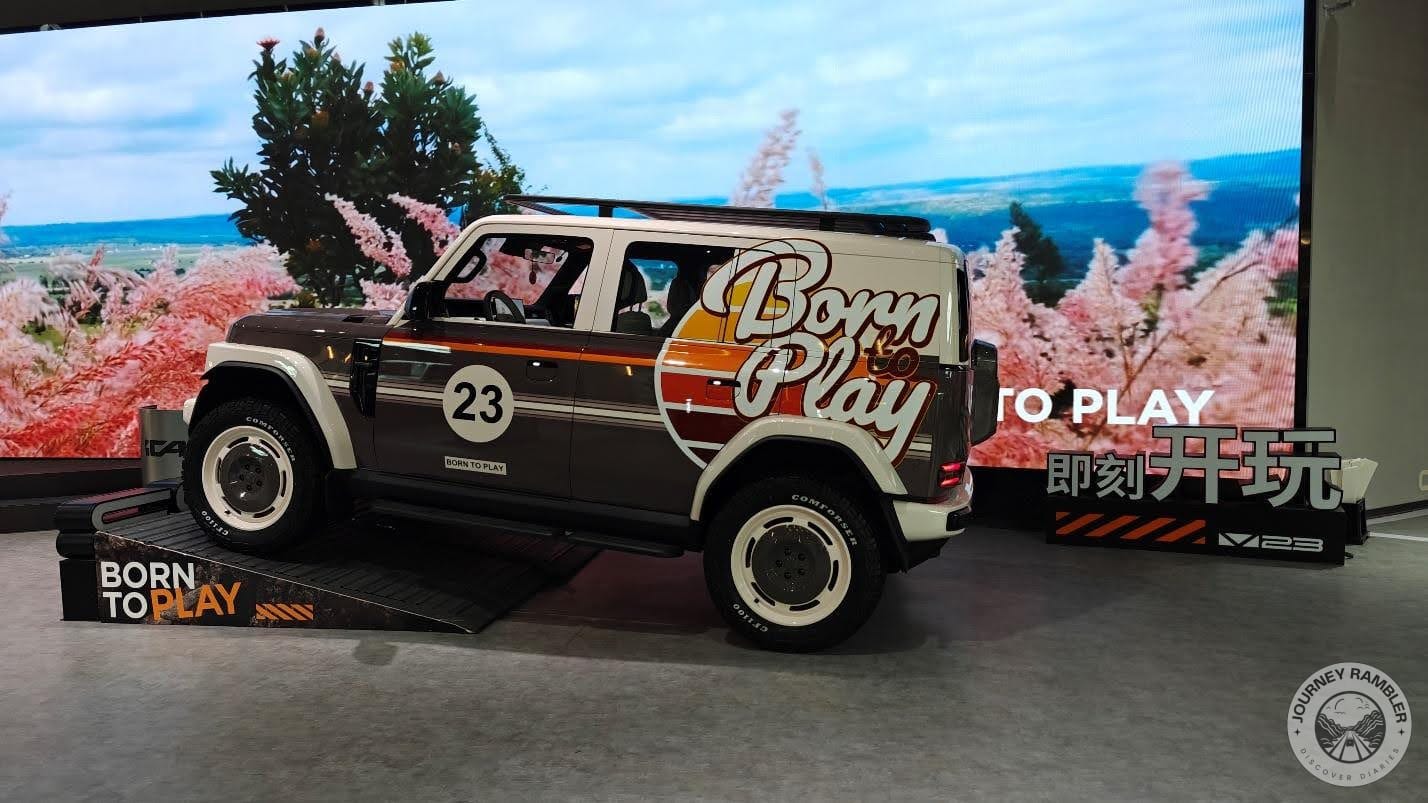
Brightly painted vans and trucks had been parked on the street and there was a large screen in the background with pictures of cherry blossoms. It would be the perfect spot for a photo op.
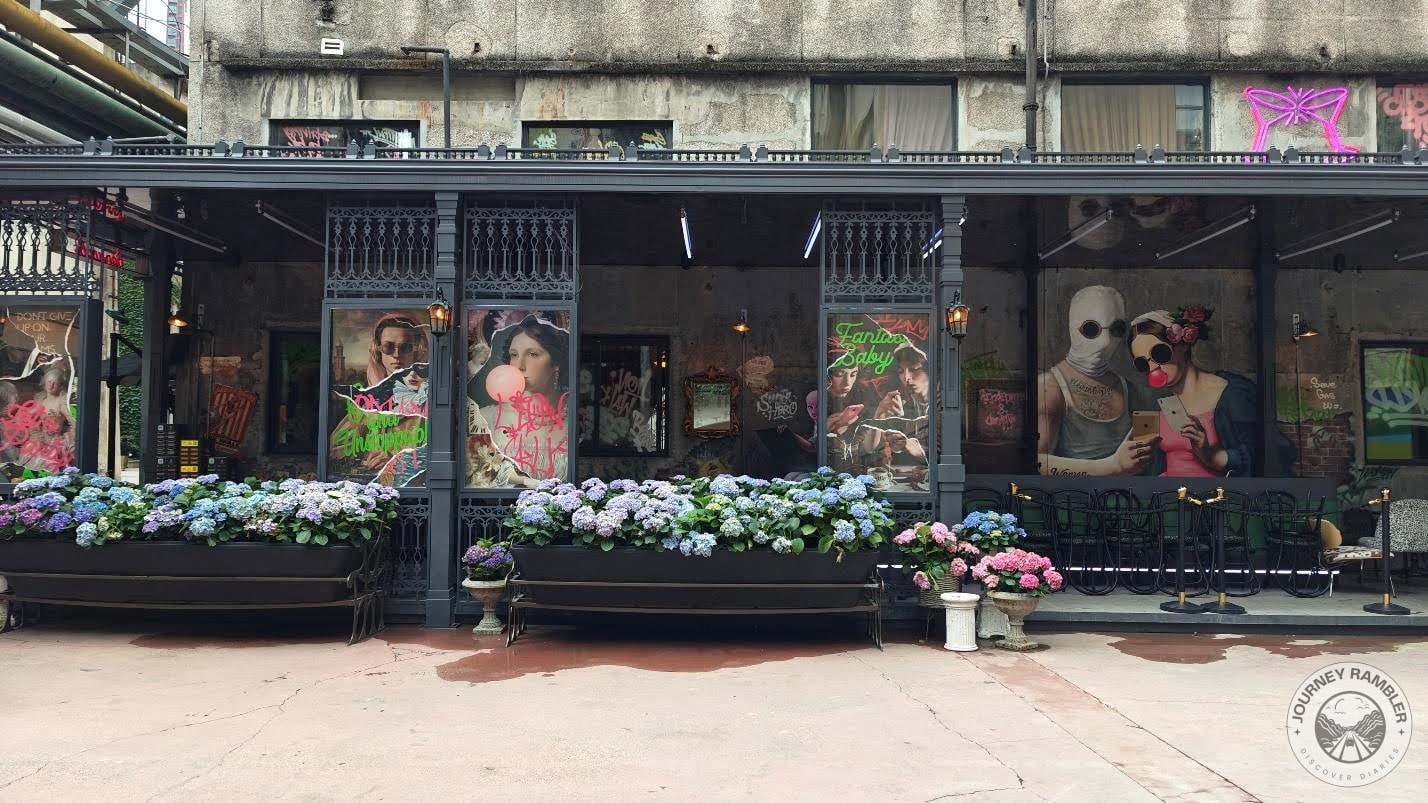
The hydrangeas growing in boxes along the street were a burst of color. There was blue, purple and pink and they looked so pretty. I just had to take a picture.
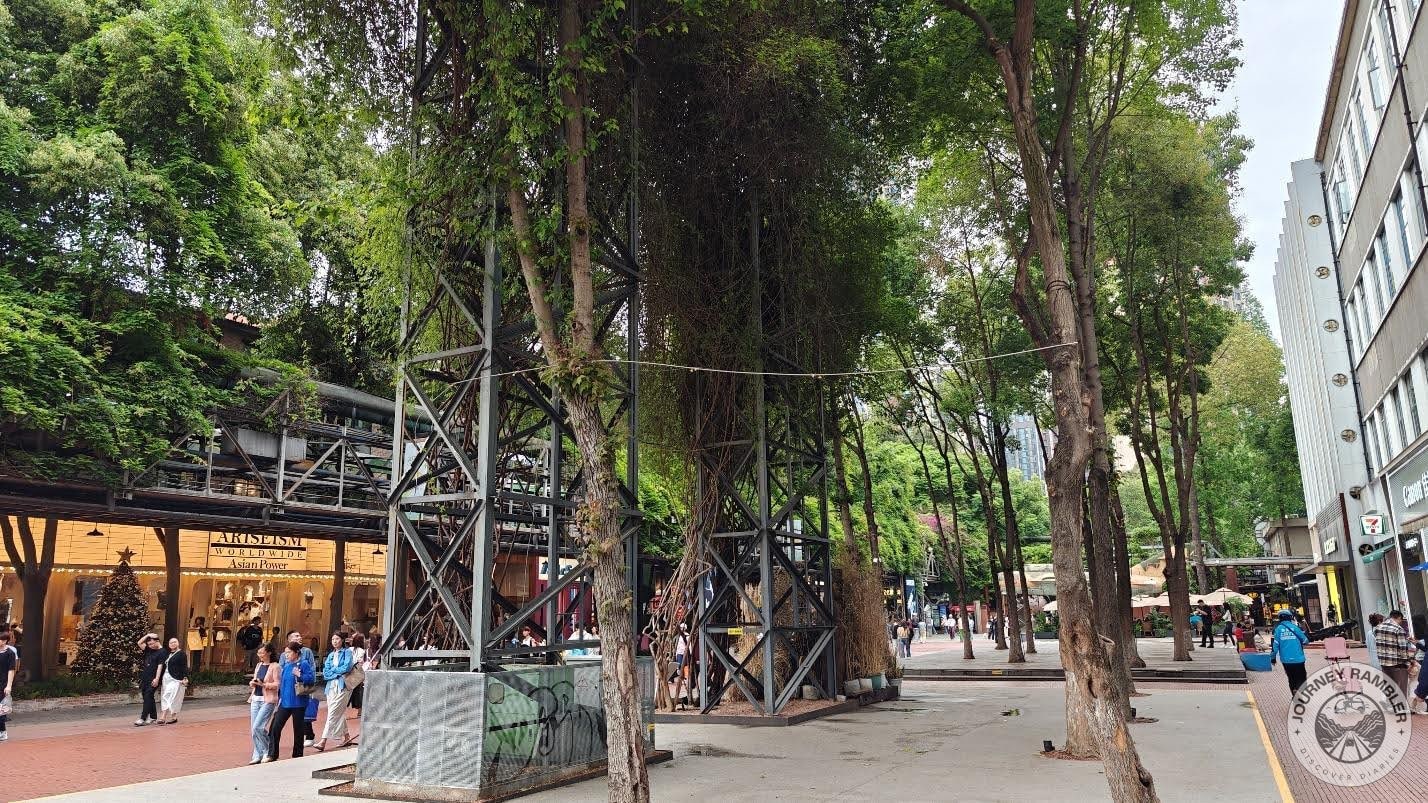
The trees and the factory pipes were right next to each other. It was a strange and fascinating contrast.
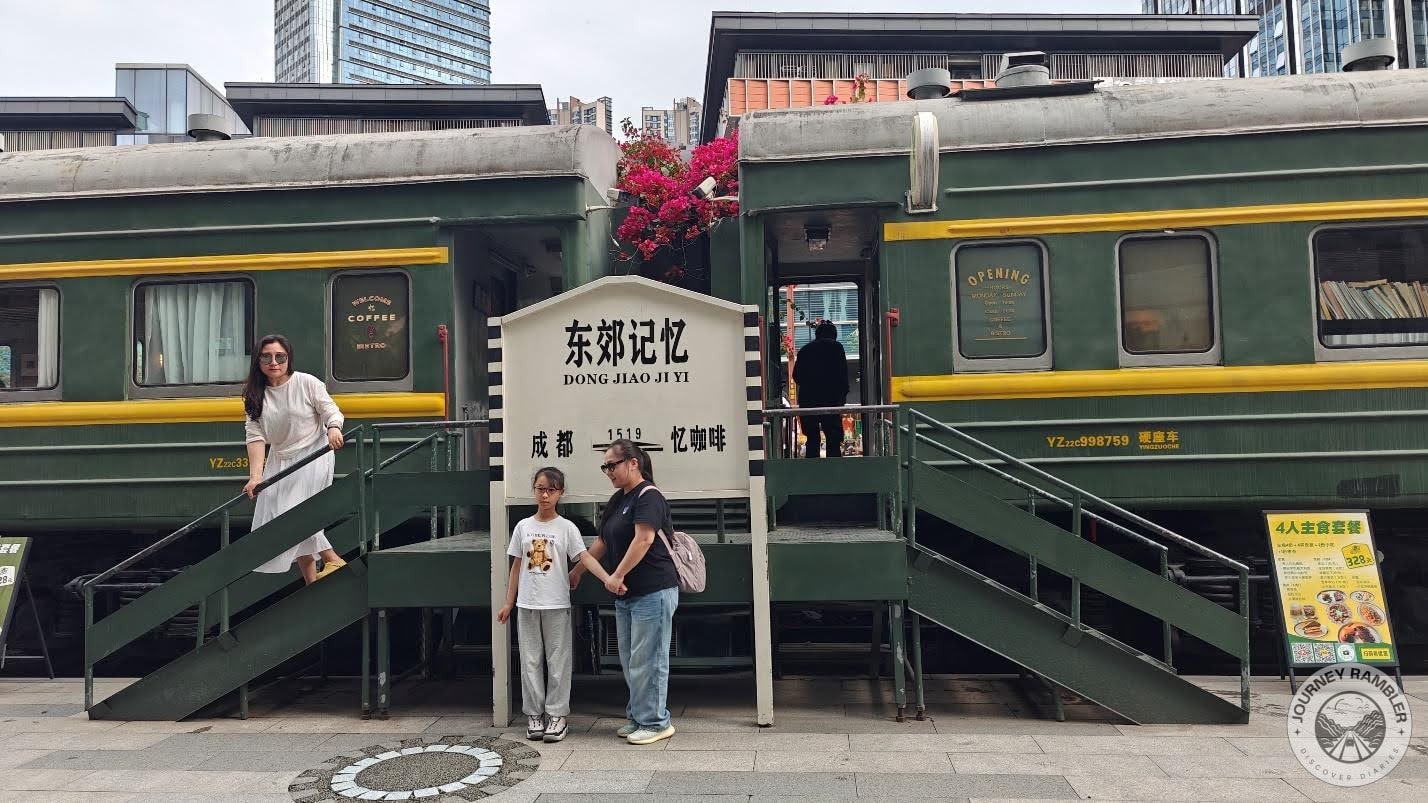
There were also a couple of old train carriages parked in one corner. Visitors were posing for pictures in front of the carriage or on the steps leading up to the train carriage. They were painted an attractive dark green color.
13. Chengdu Mixed Hot Pot冒菜
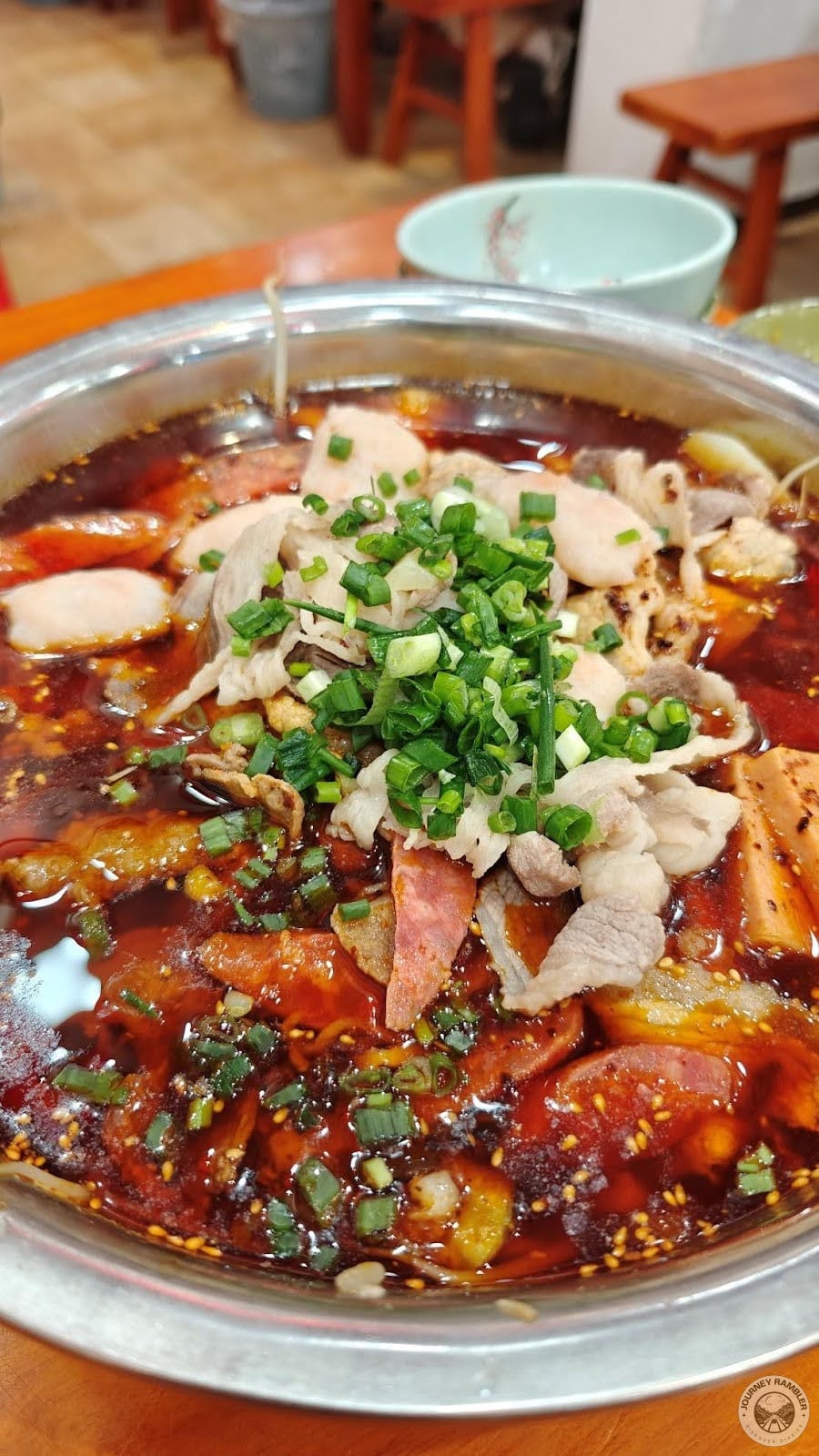
Then I went to have a meal at Chengdu Mixed Hot Pot. The dish that I ordered was full of sauce and seasoning and was topped with fresh green onions. It was an excellent meal after all the walking around that I had done the whole day.
Day 5
14. Guanghan Sanxingdui Museum
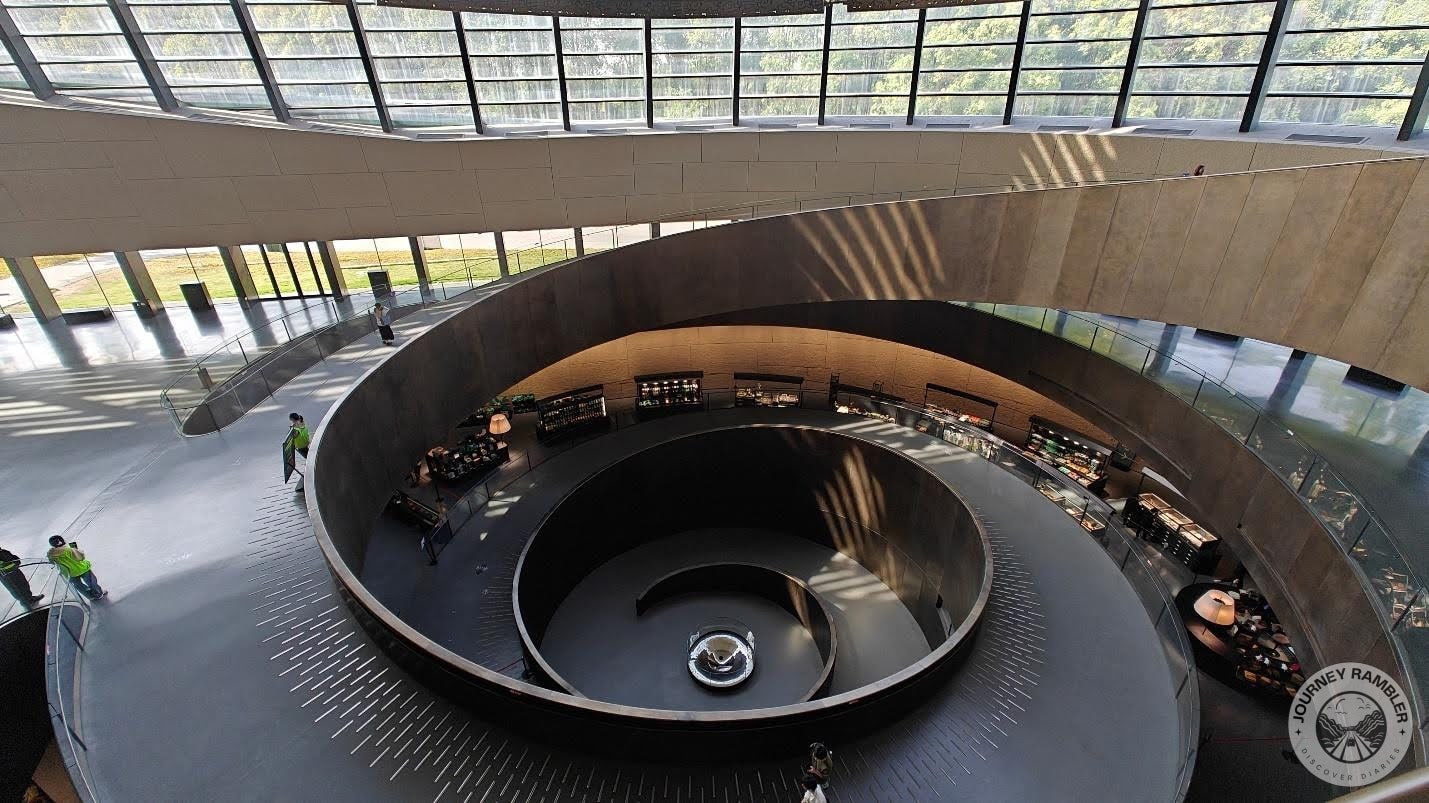
On my fifth day, I visited the Guanghan Sanxingdui Museum. It was a museum filled with mostly Bronze Age artifacts and the architecture of the museum was just as interesting as the artifacts inside.
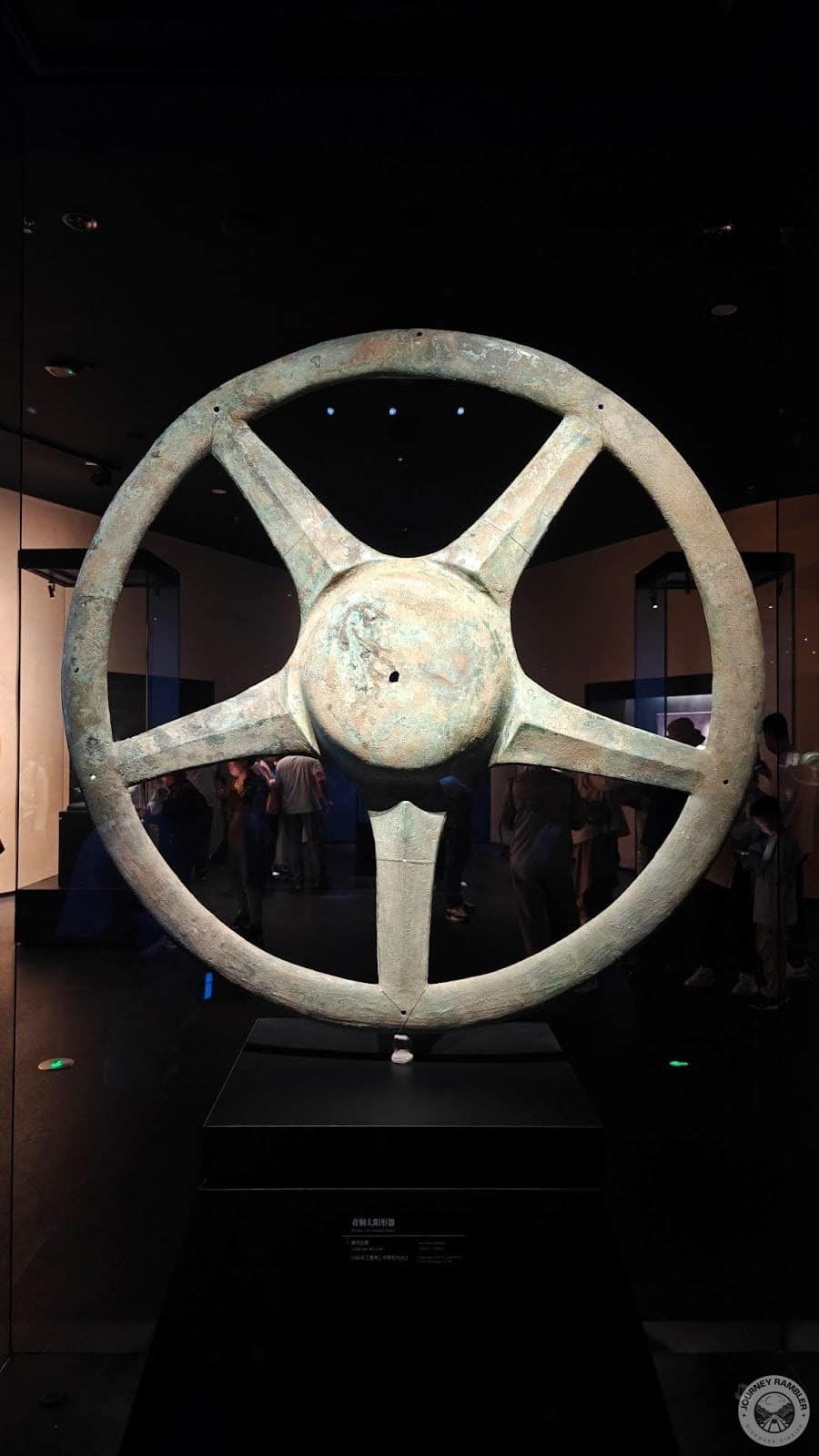
I walked around inside and took pictures of some of the things that I saw.
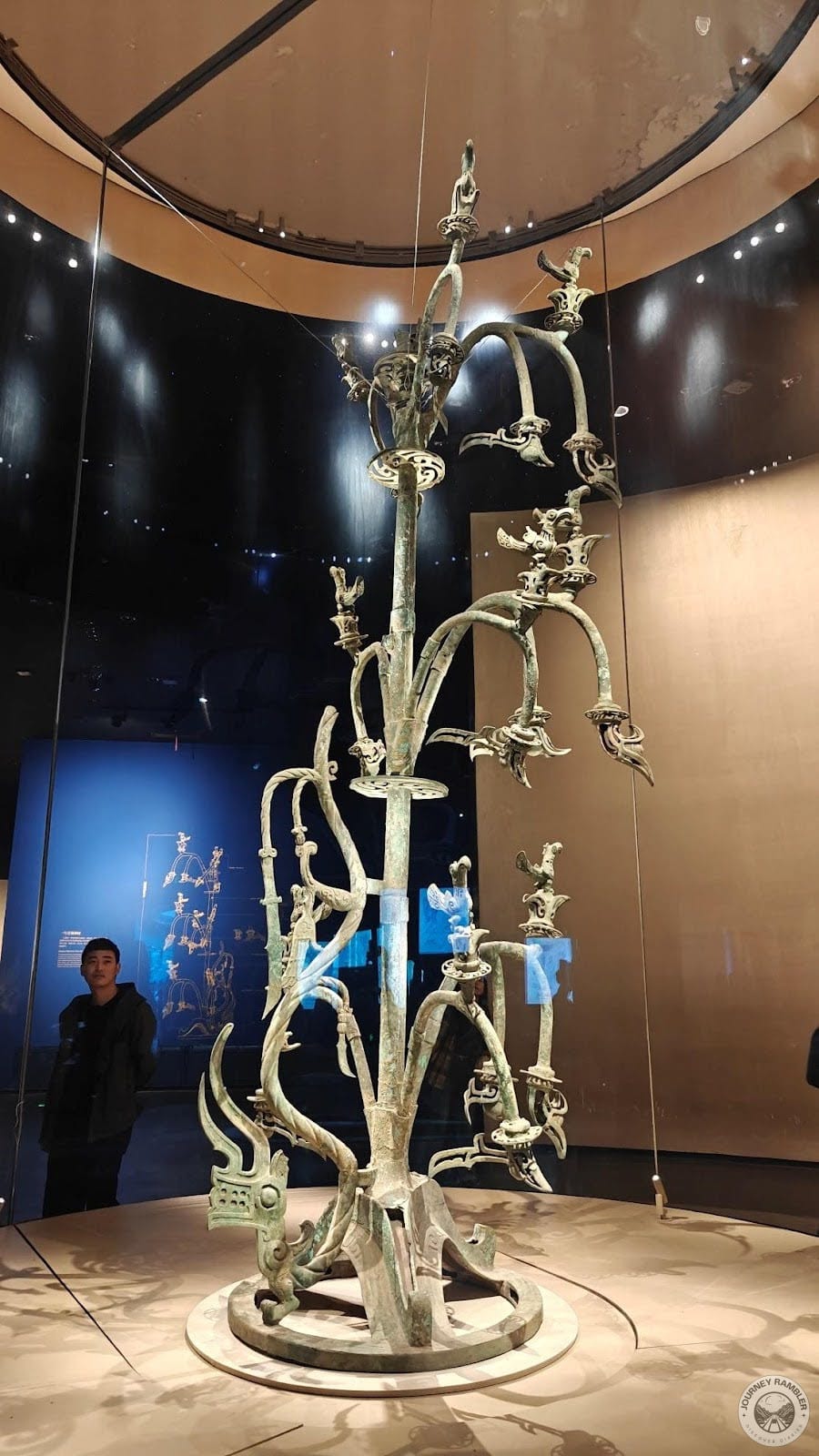
There was a sculpture at the center that was attracting everyone’s attention because it was so tall and beautiful.
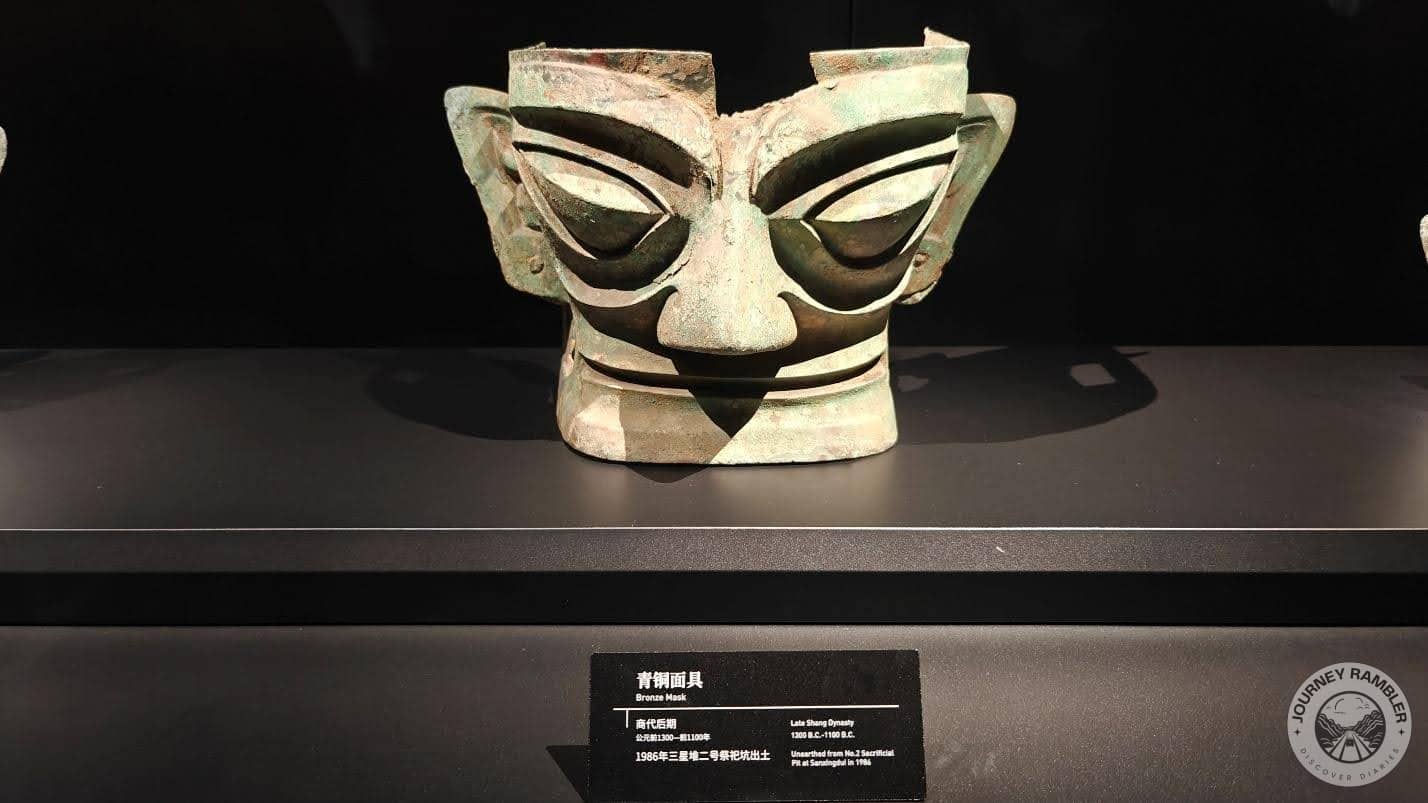
There were masks and bronze sculptures of faces. Even though I didn’t know what some of the artifacts were used for, it was still strange to see how old they were.
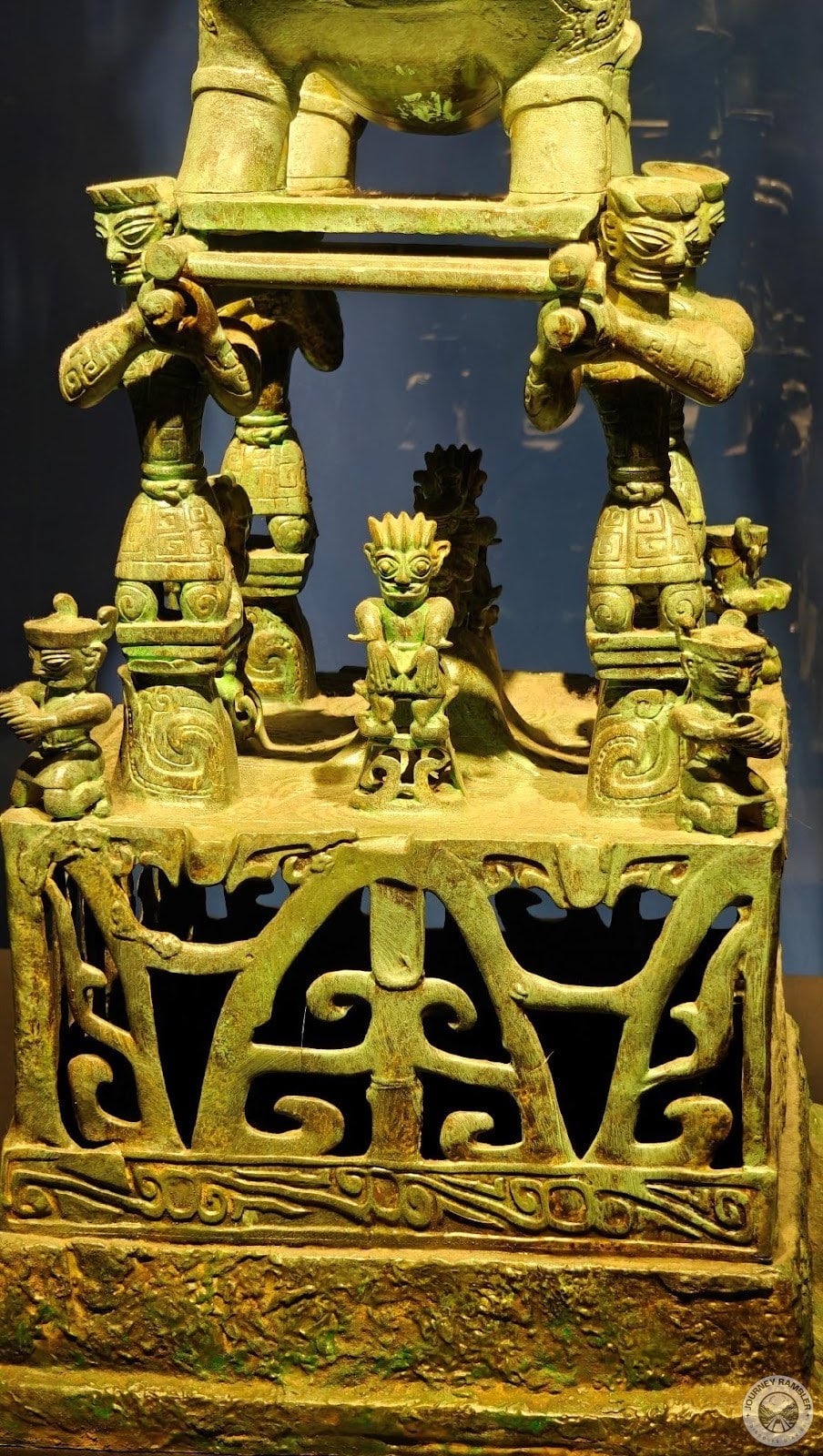
The sculpture of four people carrying a deity was especially intricate.
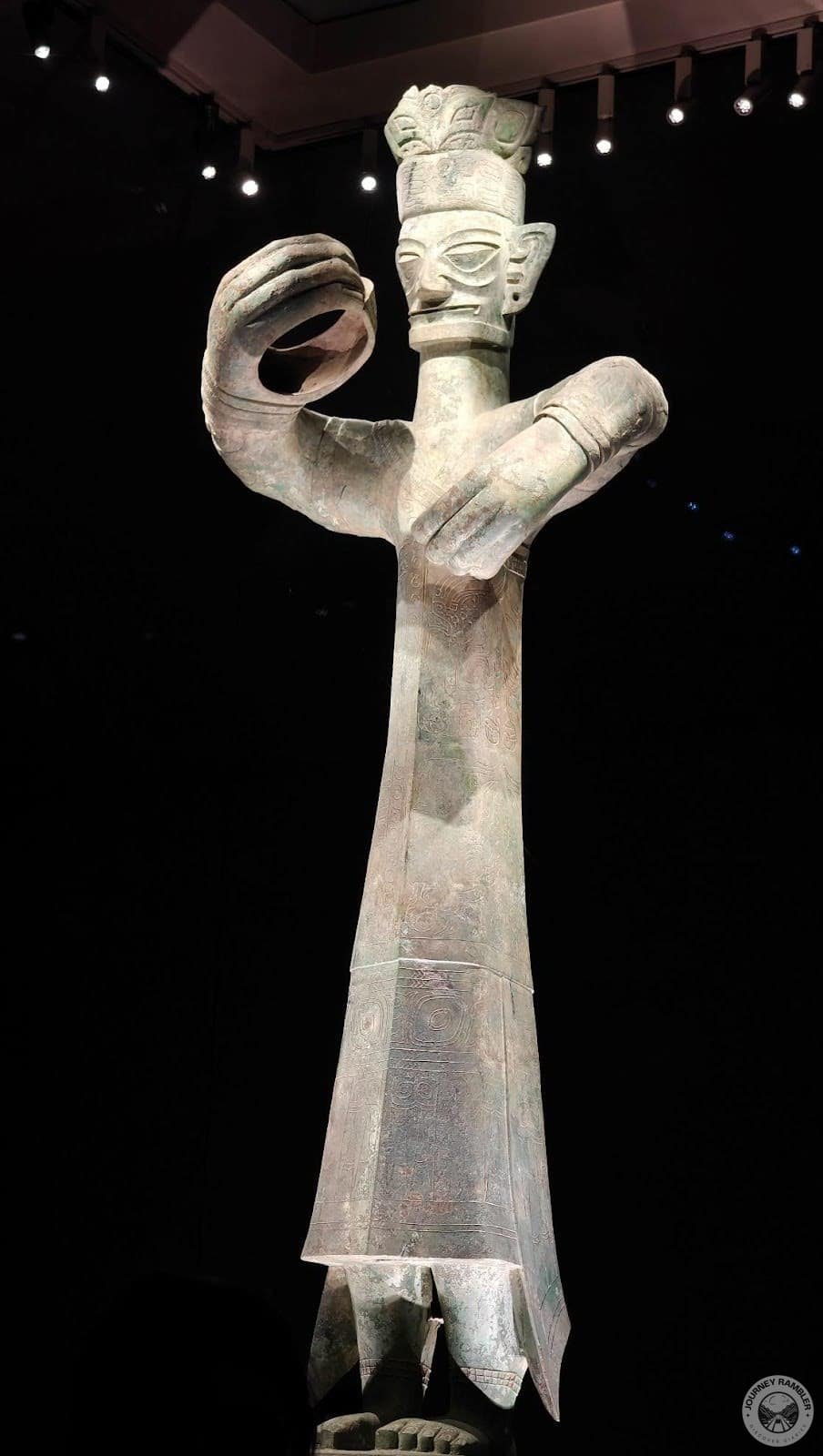
There was also a sculpture of a man. His hands and arms were too big for his body! It looked so funny.
15. Tao De Casserole
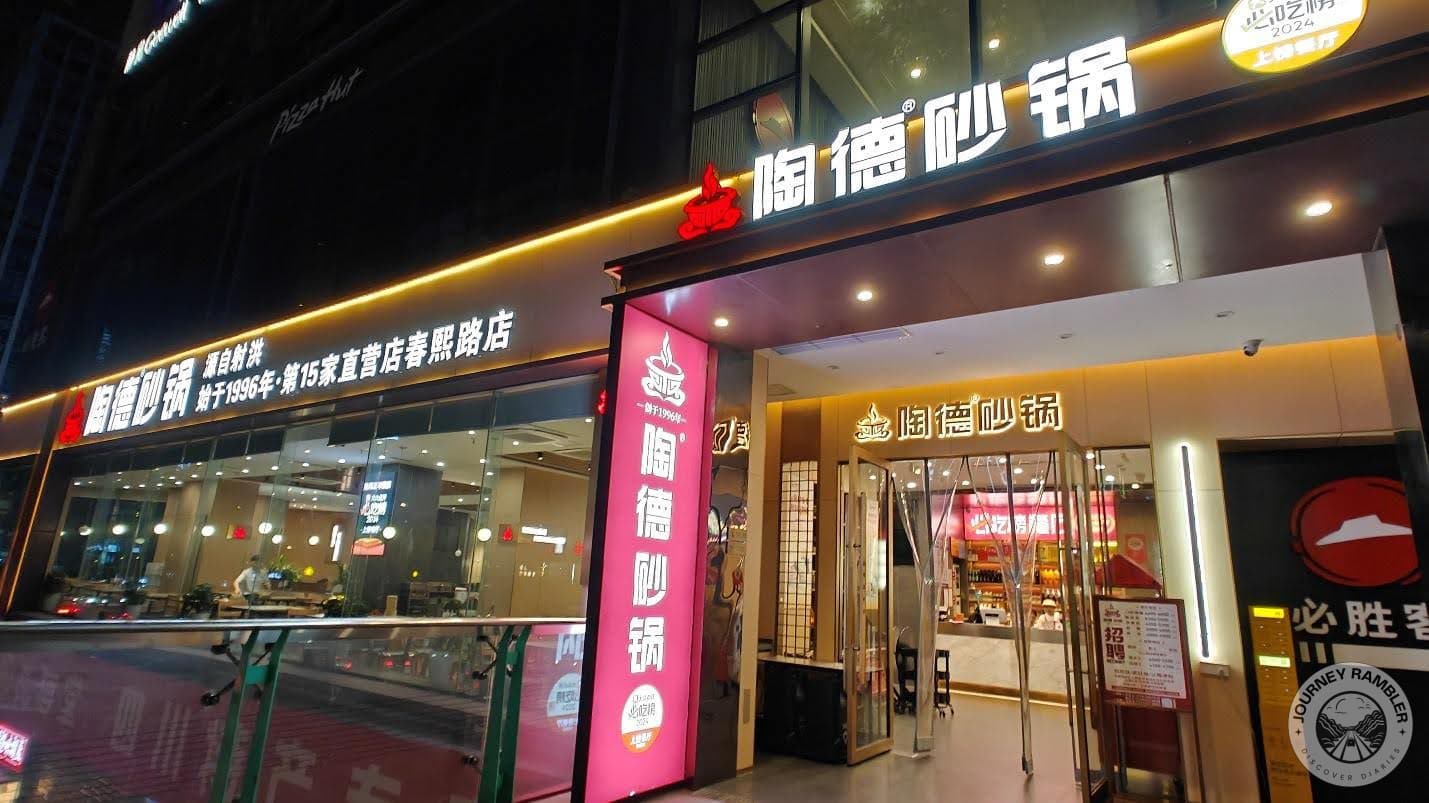
I was hungry after I left the museum and I went to a restaurant called Tao de Casserole. They had a lot of one-pot meals that were served hot.
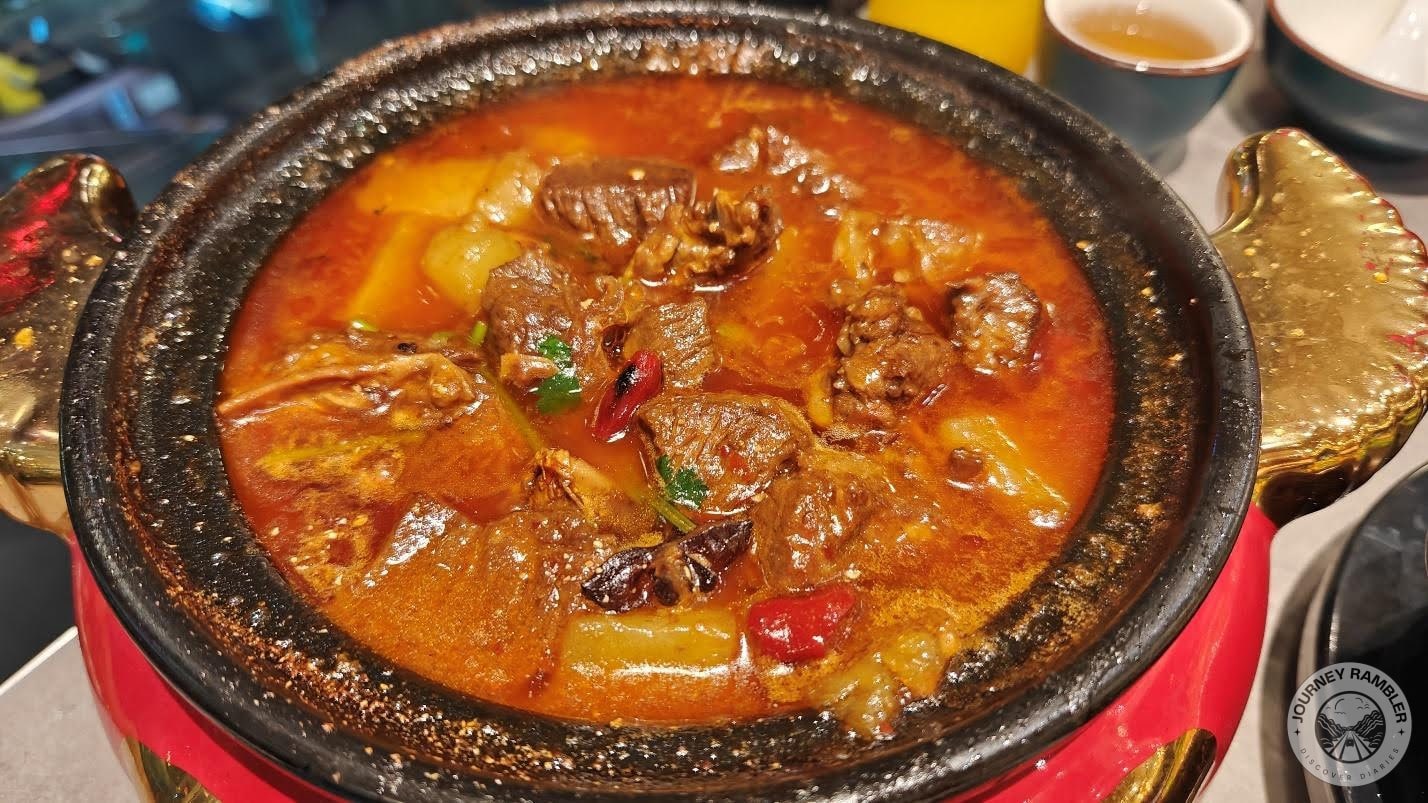
The meat stew was served in a traditional looking pot and was absolutely delicious.
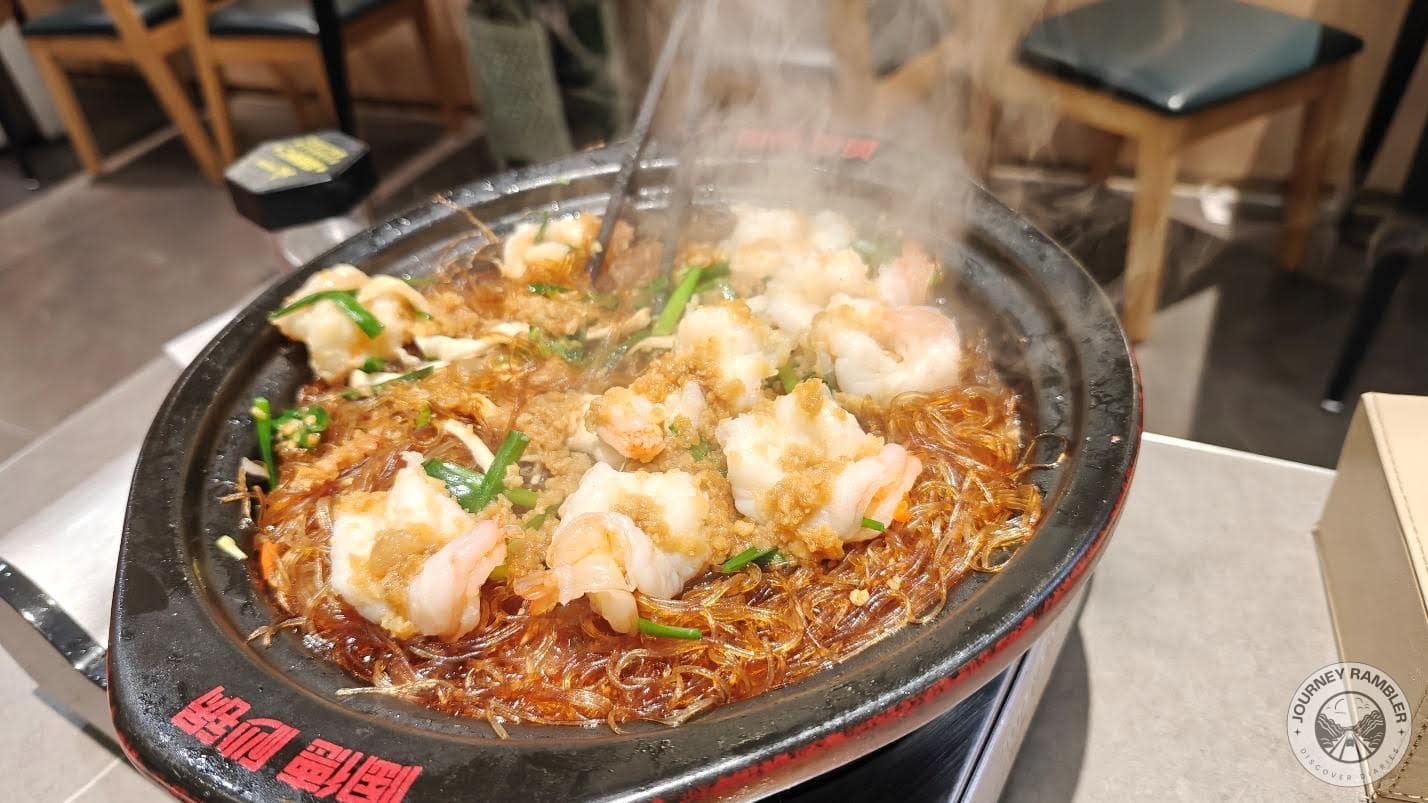
The noodles were served steaming hot. It was also really good (and speaking of noodles, if you really want to taste one of China’s most famous noodles, you can also try Xie Man Lou’s crab roe noodles here in Chengdu). I was glad that I had decided to stop at this restaurant but I was still not done for the day.
16. Chengdu IFS Panda Chunxi Road
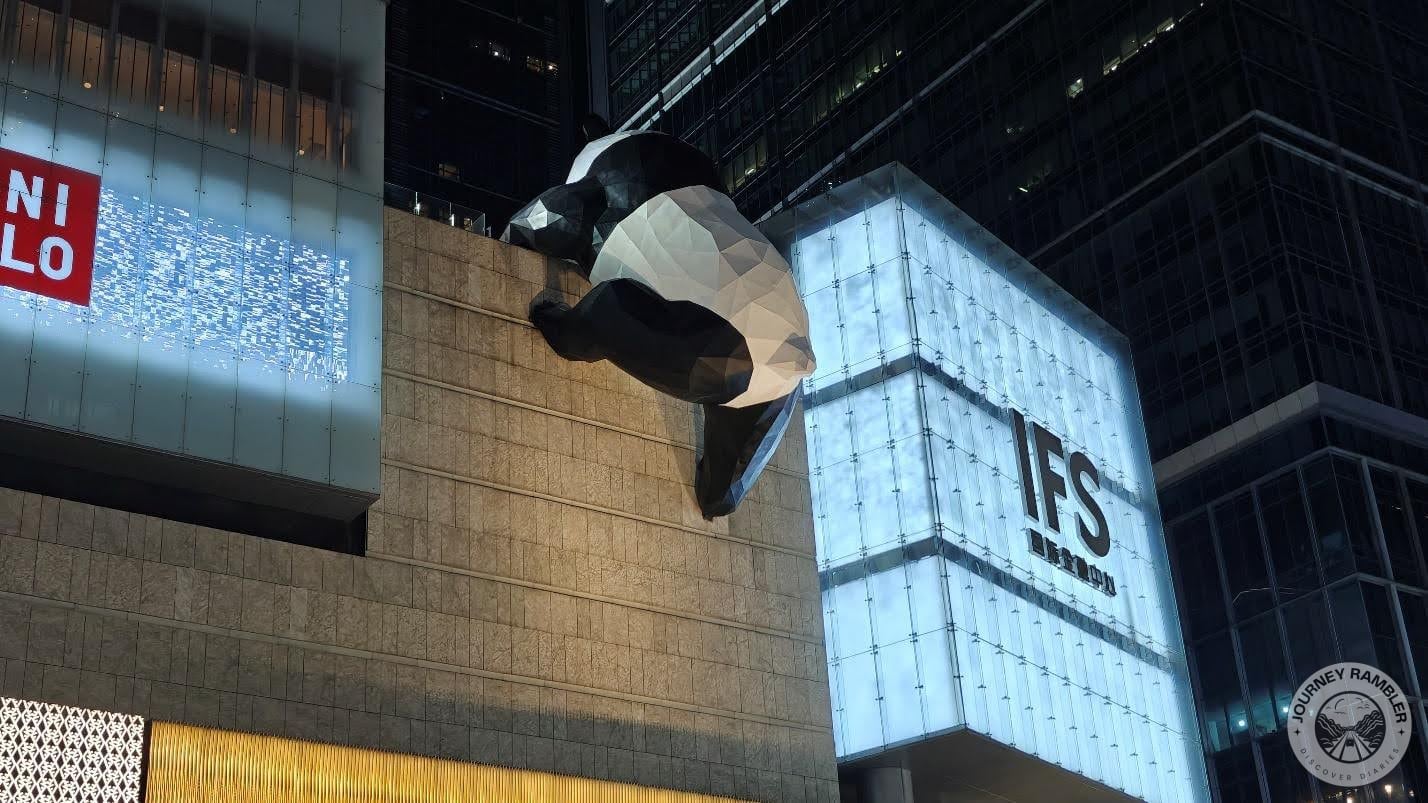
Then I went to see the IFS Panda at Chunxi Road.
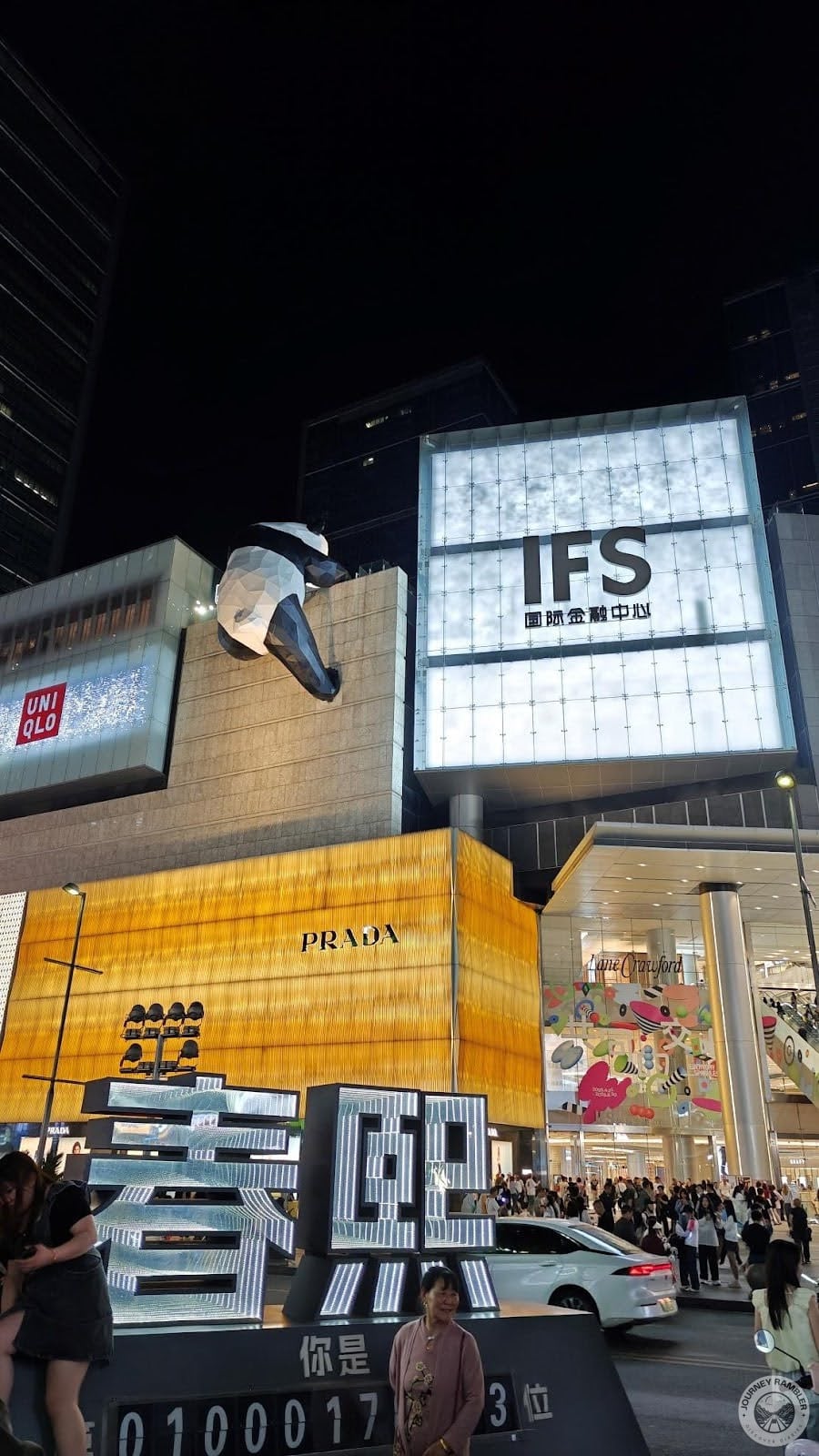
Called the “I Am Here” Panda, it was a statue of a giant panda climbing a wall in the middle of a busy town street. Everyone stopped there for a photo.
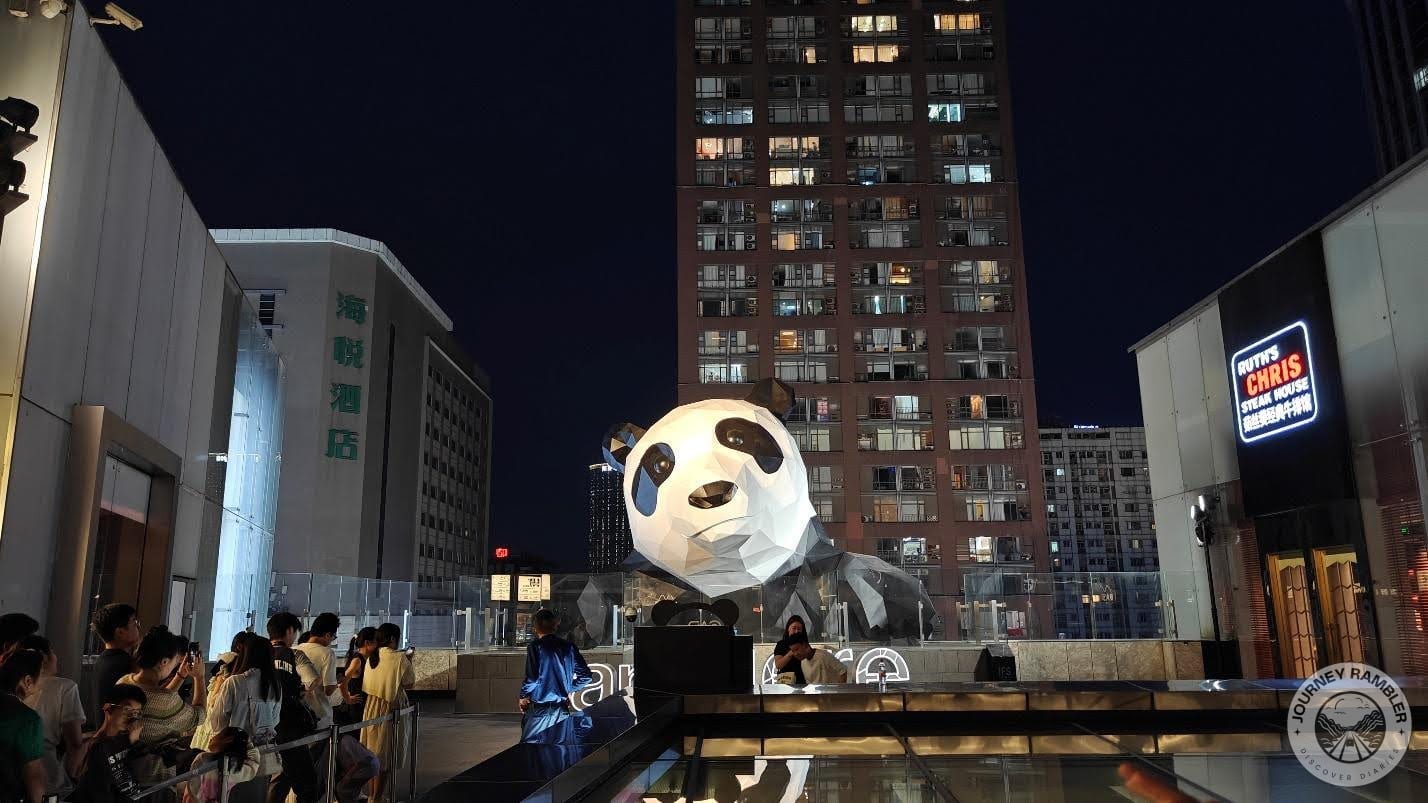
I climbed to the top of the building so I could see the panda’s face. It really was a symbol of how much Chengdu loved giant pandas.
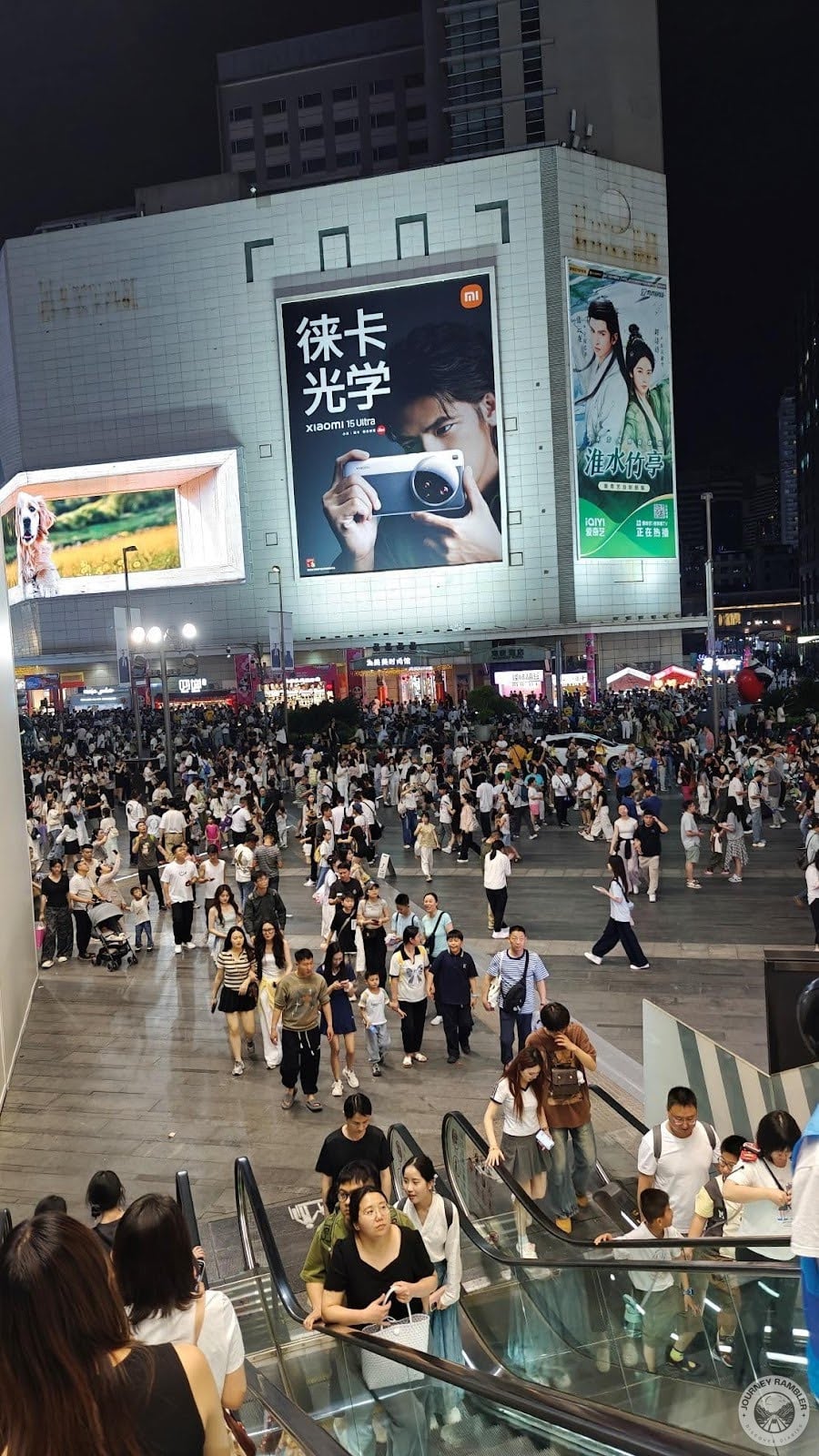
There were hundreds of people gathered on the street below me.
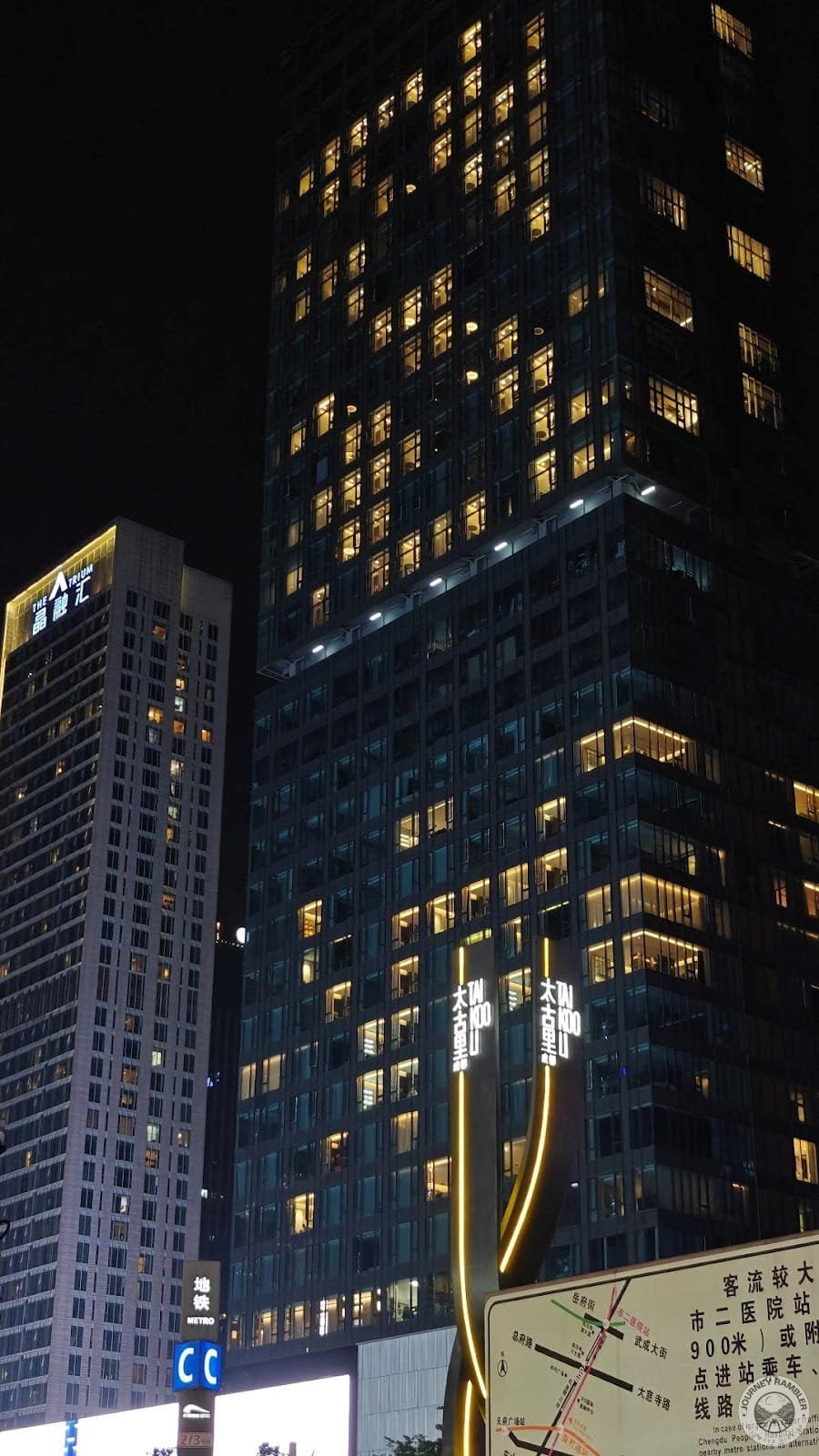
The area was full of tall skyscrapers.
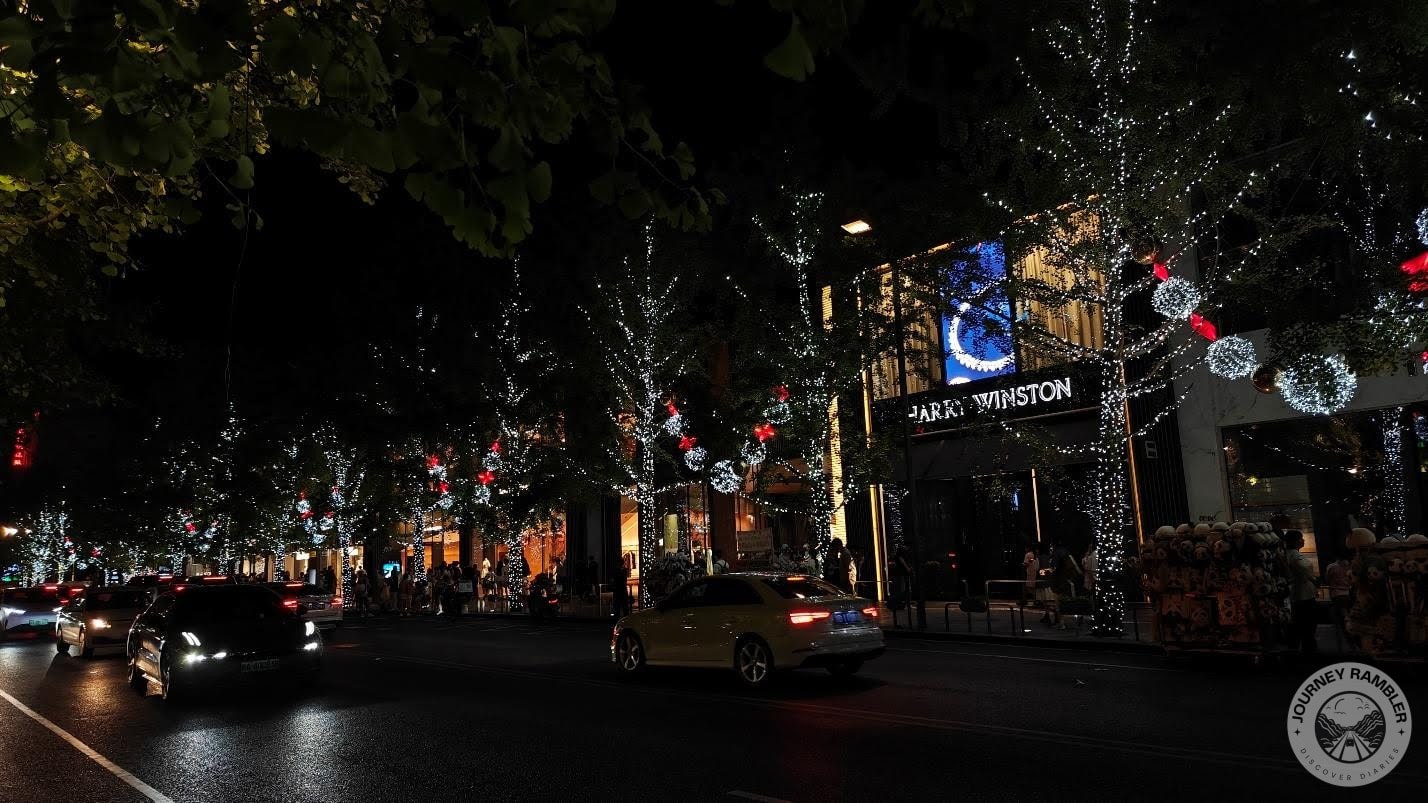
It was busy and lively, even at that time of night.
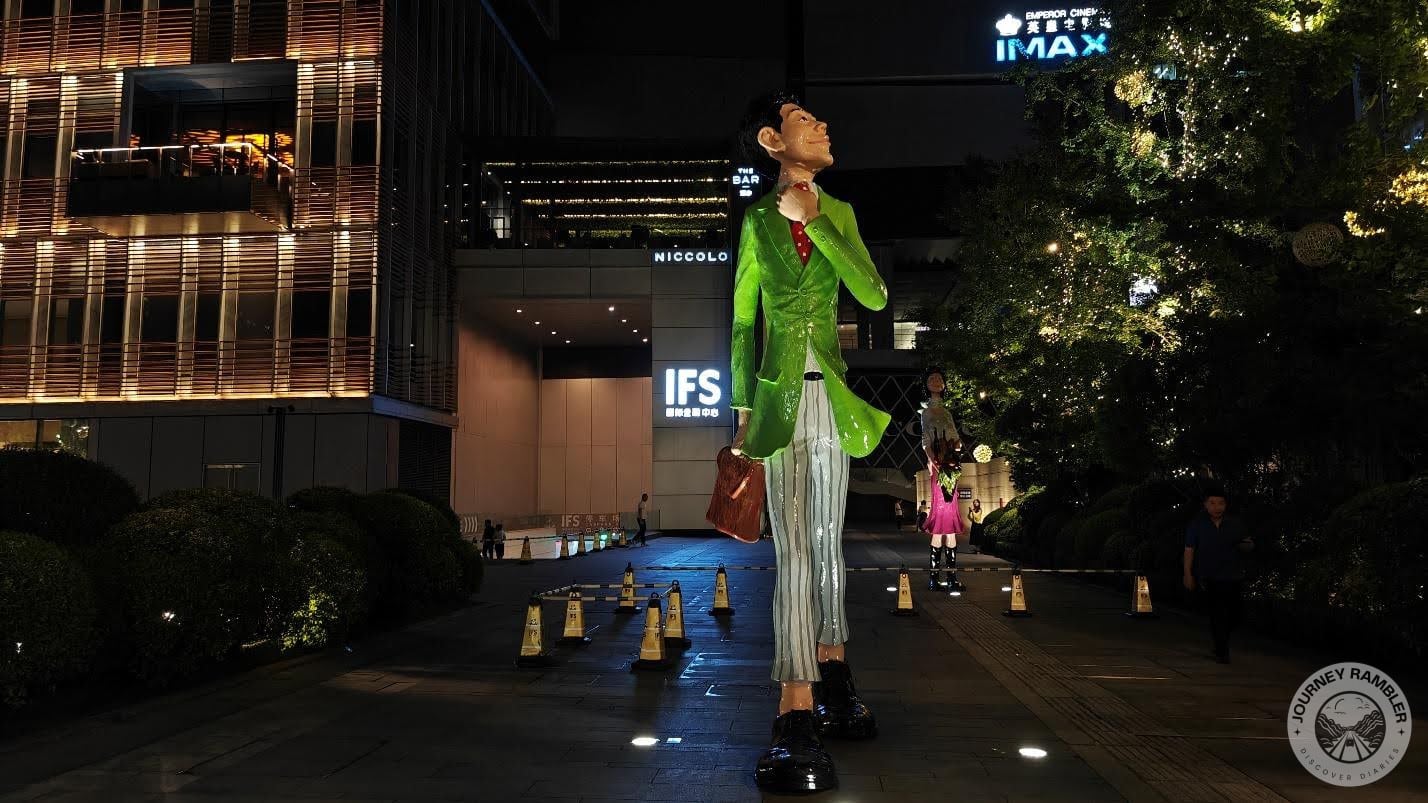
I walked around for a little bit, looking at the strange statues, before deciding to head back to my hotel. I still had one day left at Chengdu and I was excited for the next day.
Day 6
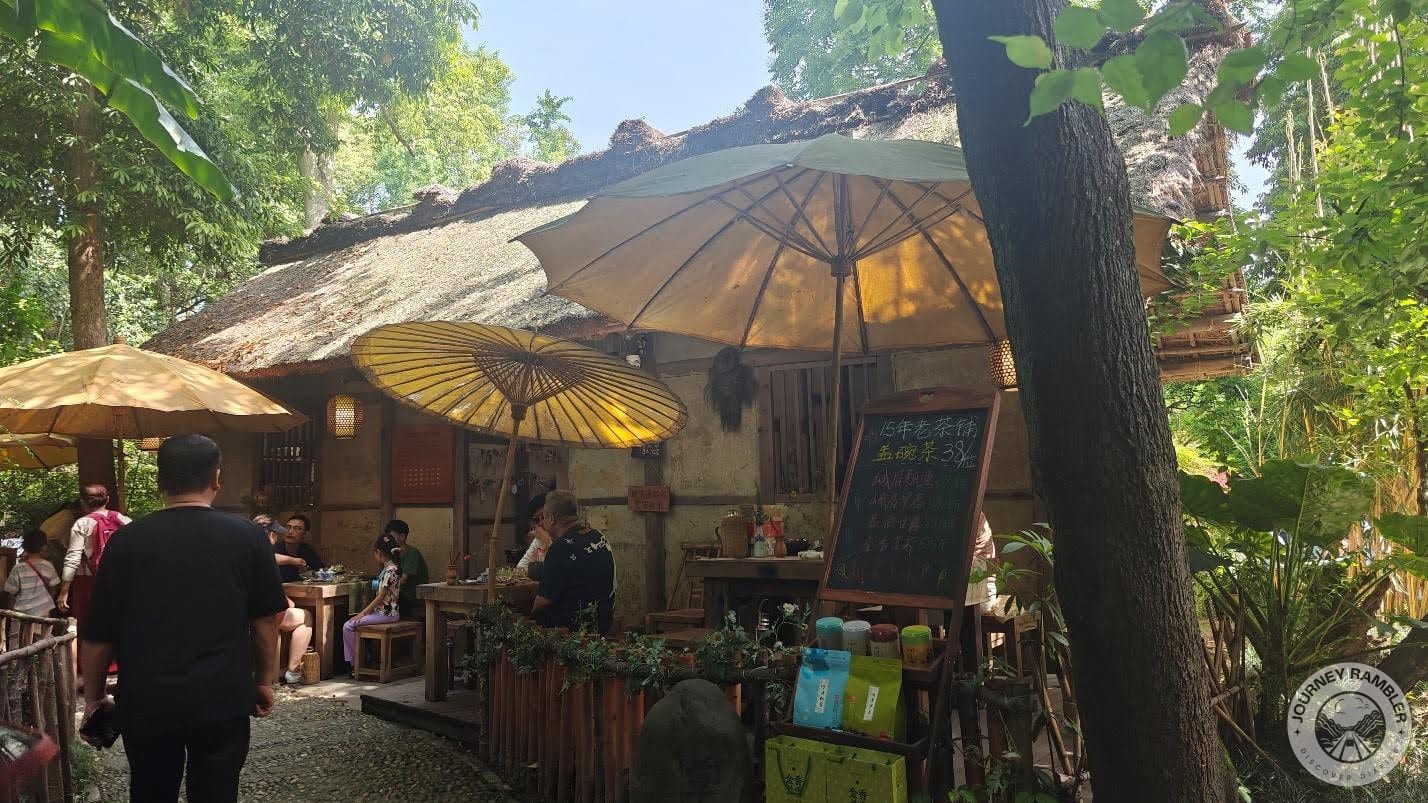
On my sixth day, I went to Du Fu Thatched Cottage. It’s a museum to honor the famous poet from the Tang dynasty, Du Fu. The Chinese government made the cottage a National Heritage site in 1961.
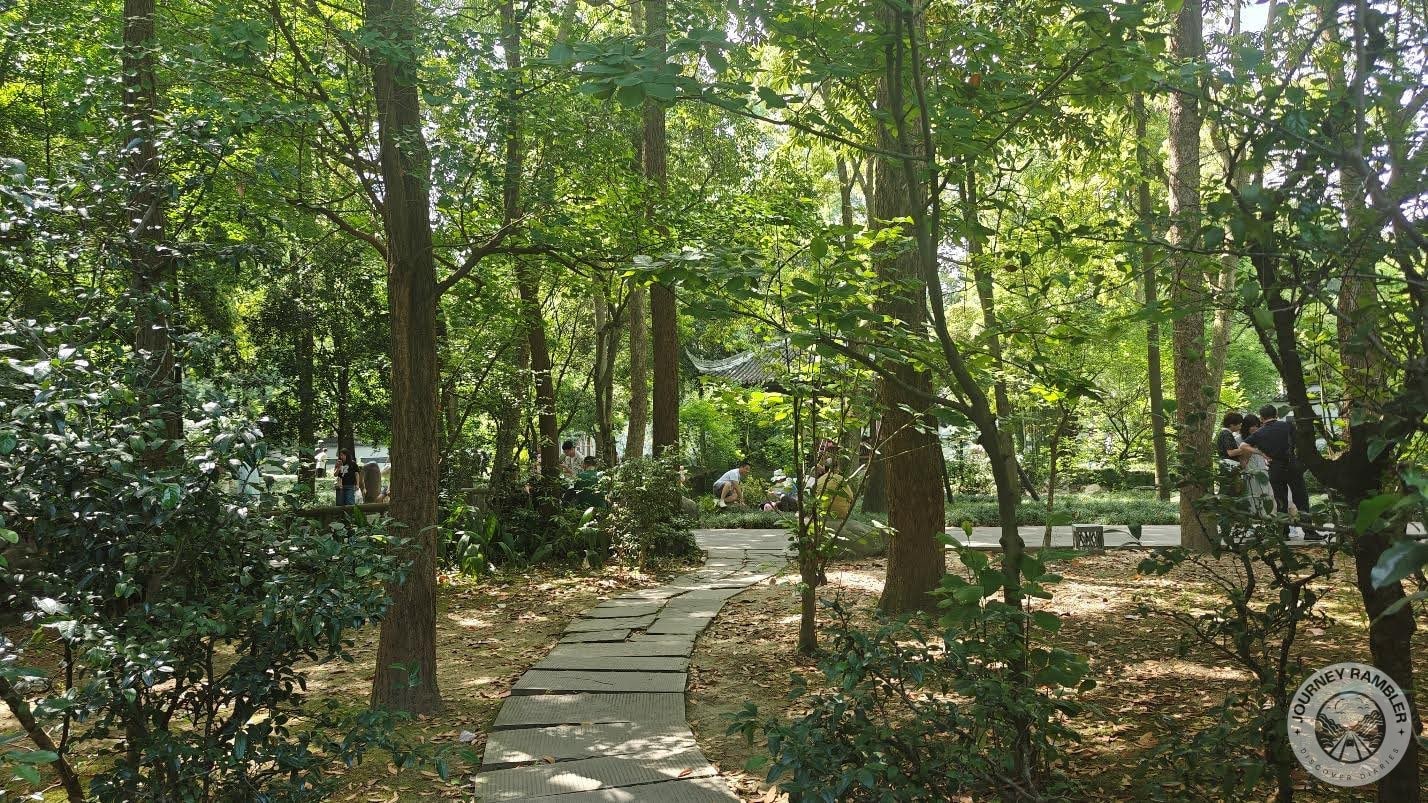
It looked like I had walked inside a forest. It was so beautiful.

There were little metal statues everywhere. These were the statues of prominent Chinese poets.
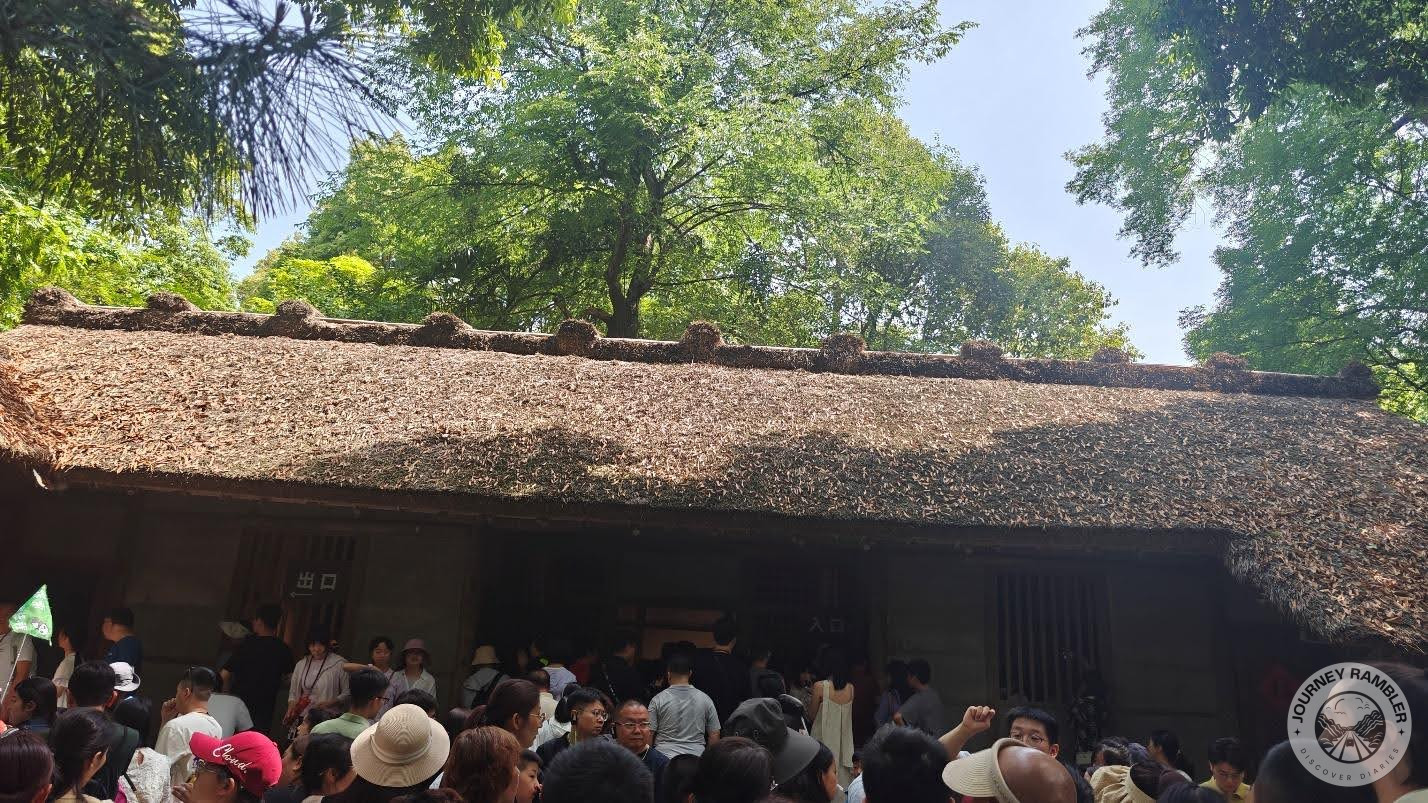
The cottage still looked just as simple and old-fashioned as ever.
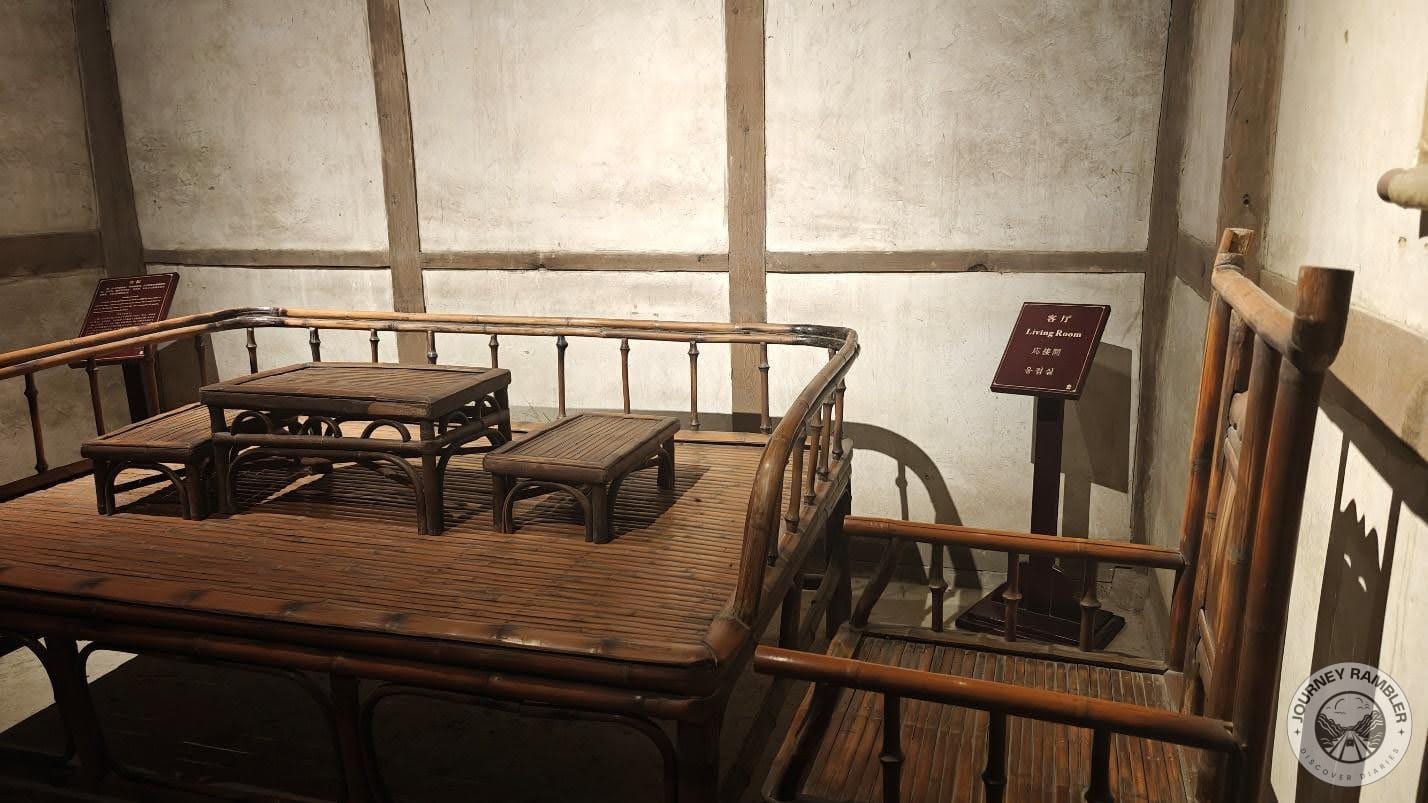
I walked inside and looked at the furniture. This was how he used to live.
18. Tianfu Square
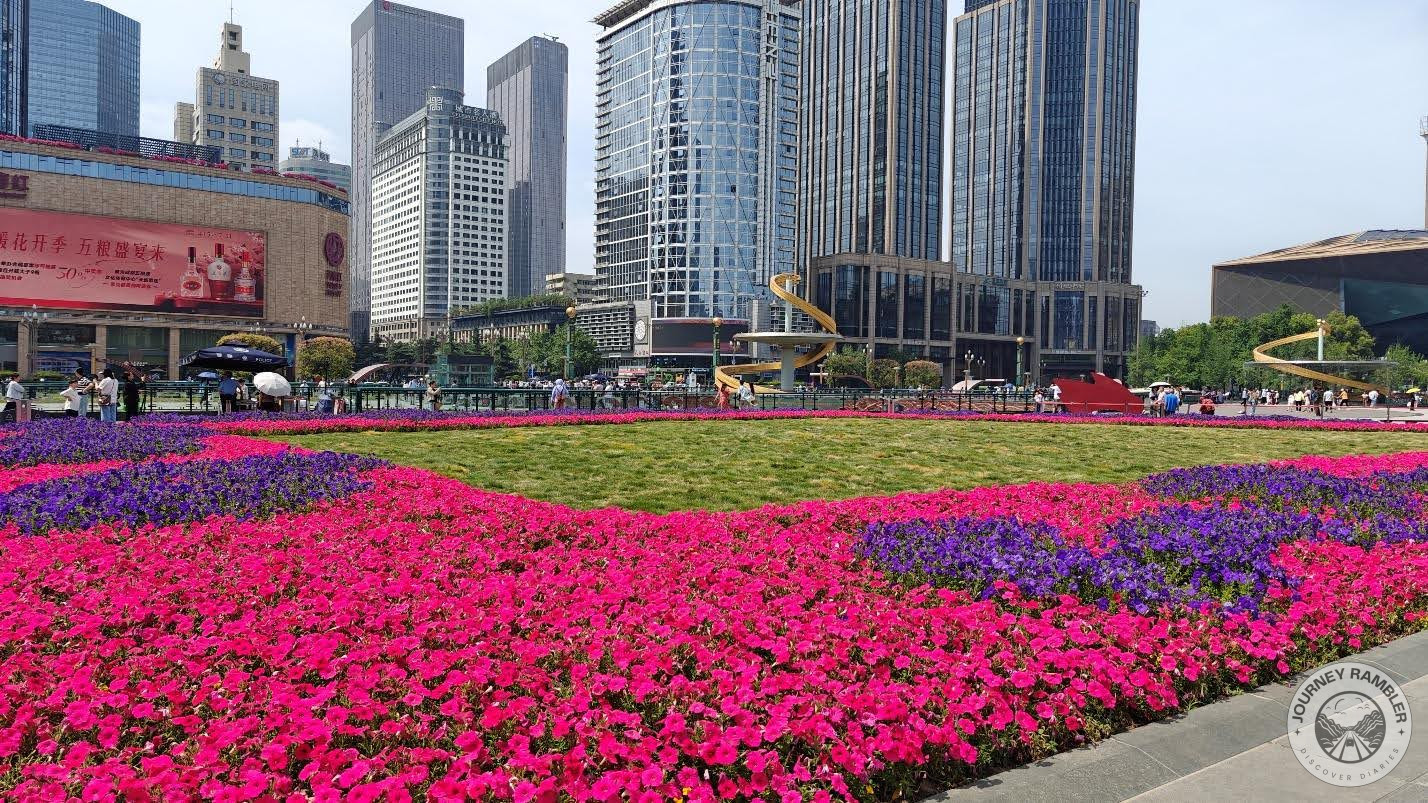
Then I went to Tianfu Square, which was mostly famous for its fountain and its beautiful blooms.
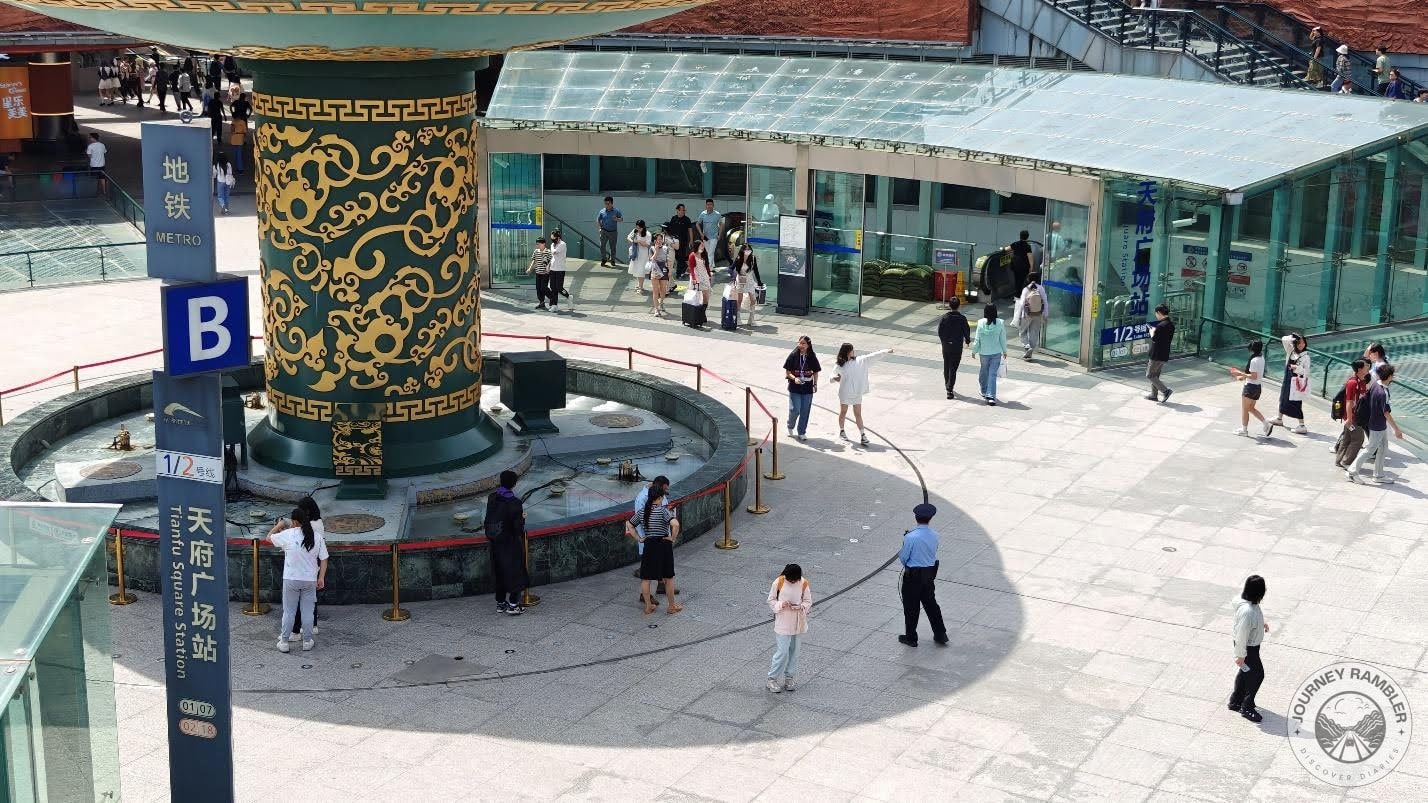
The fountain was off when I visited but a lot of visitors were still taking pictures of it and posing in front of it. I was sure the fountain would look pretty in the evening, when it was working.
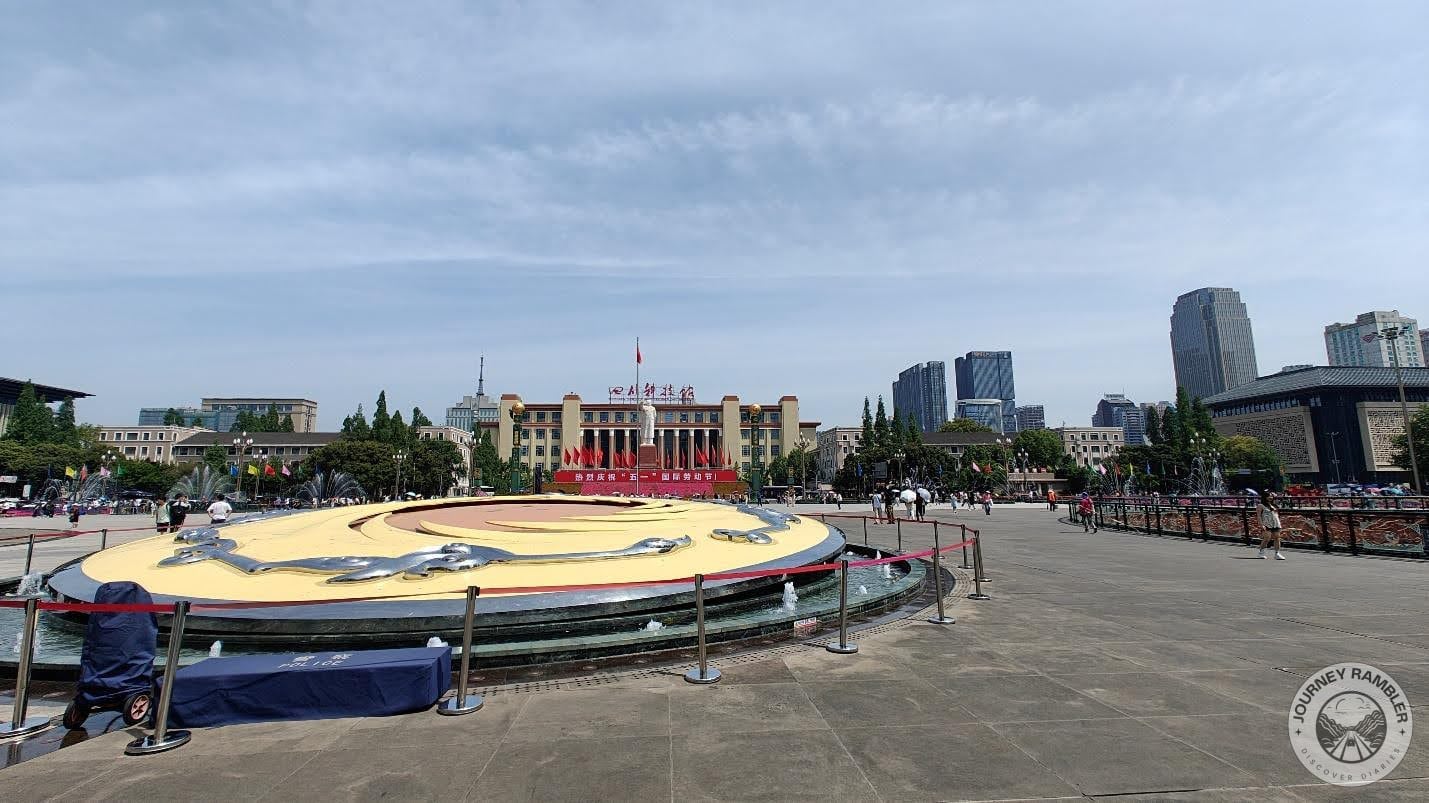
Tianfu Square had a lot of interesting art installations scattered all around. I could see the well-known Sichuan Science and Technology Museum in the background.
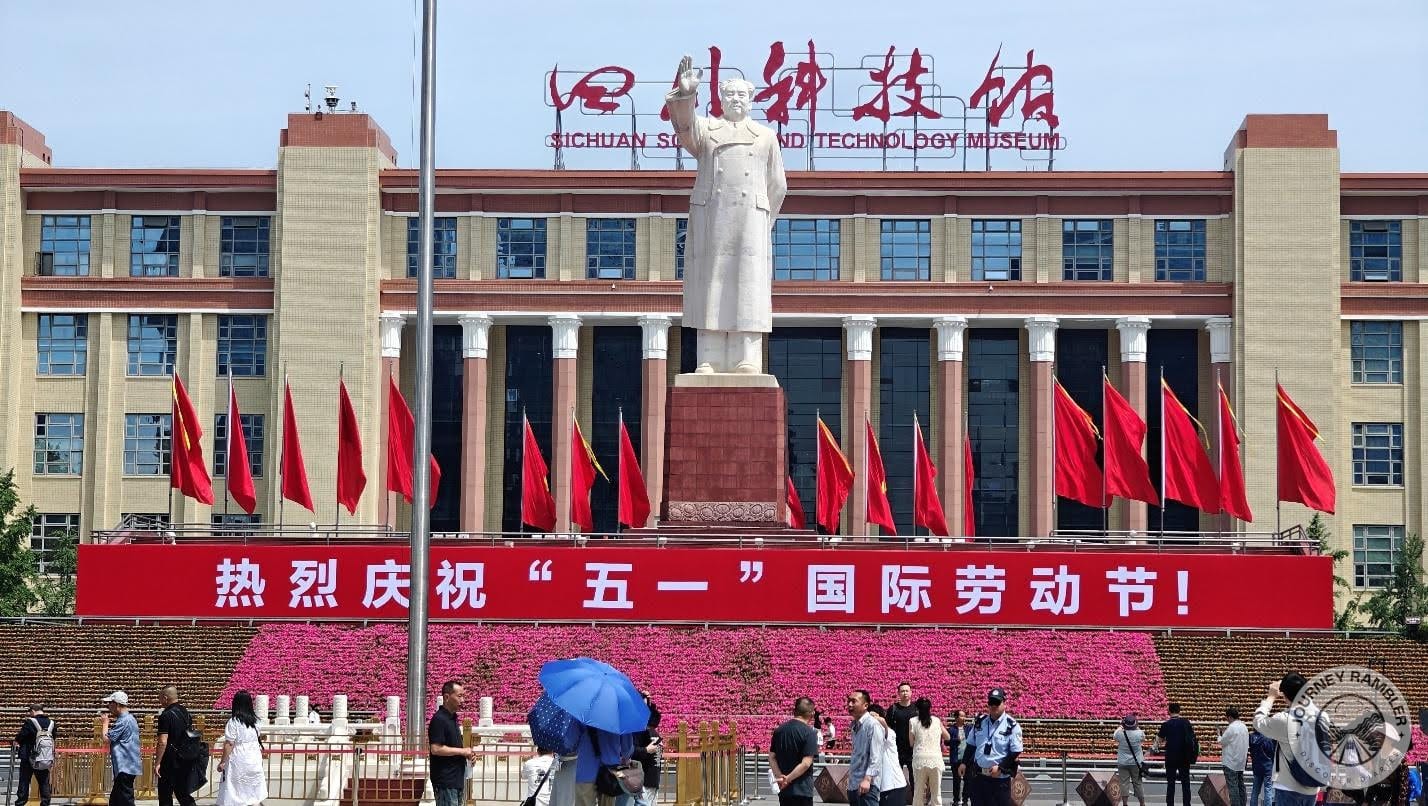
One of the tallest statues of Chairman Mao that I had ever seen was located right in front of the museum. I knew that was also one of the landmarks of the square.
19. Chengdu Museum
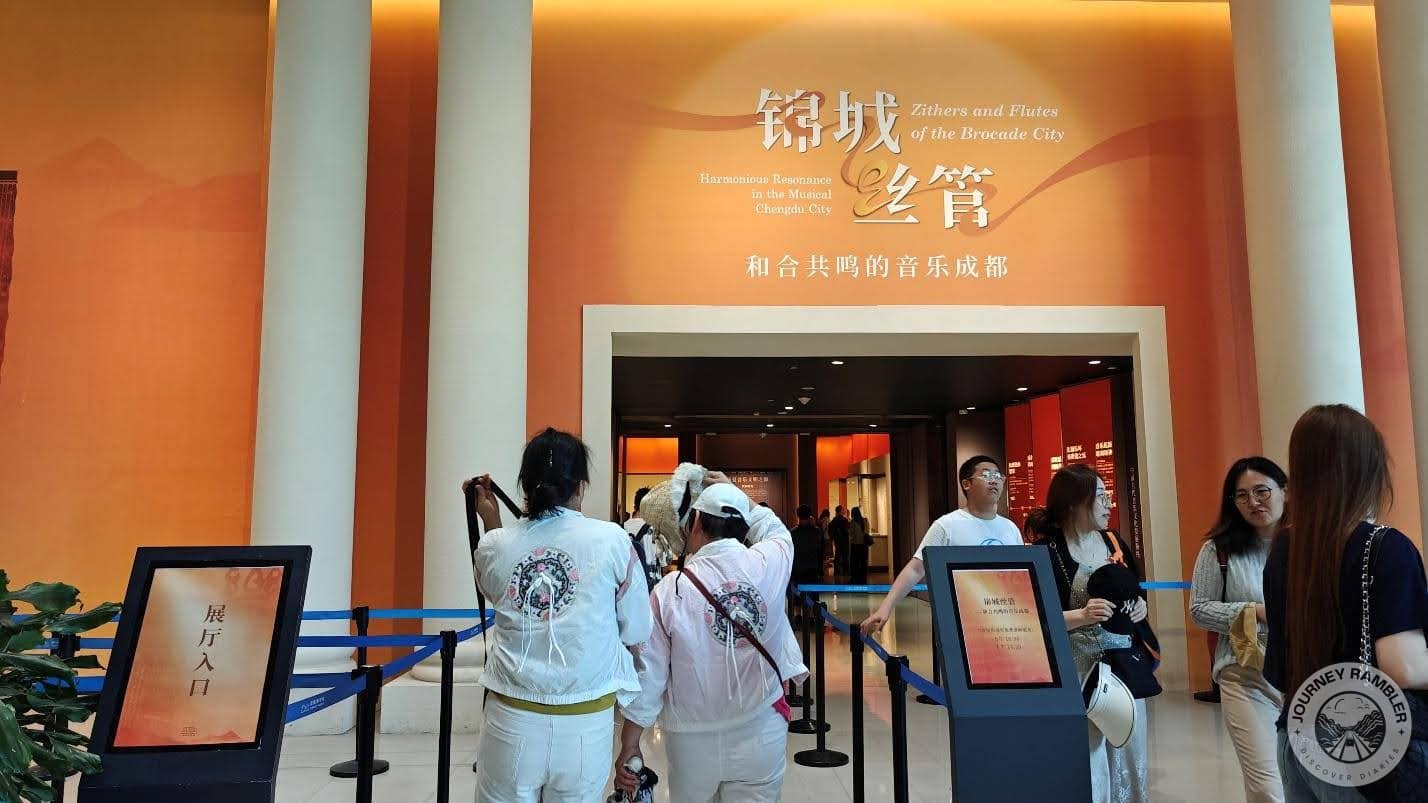
Finally I visited the nearby Chengdu Museum.
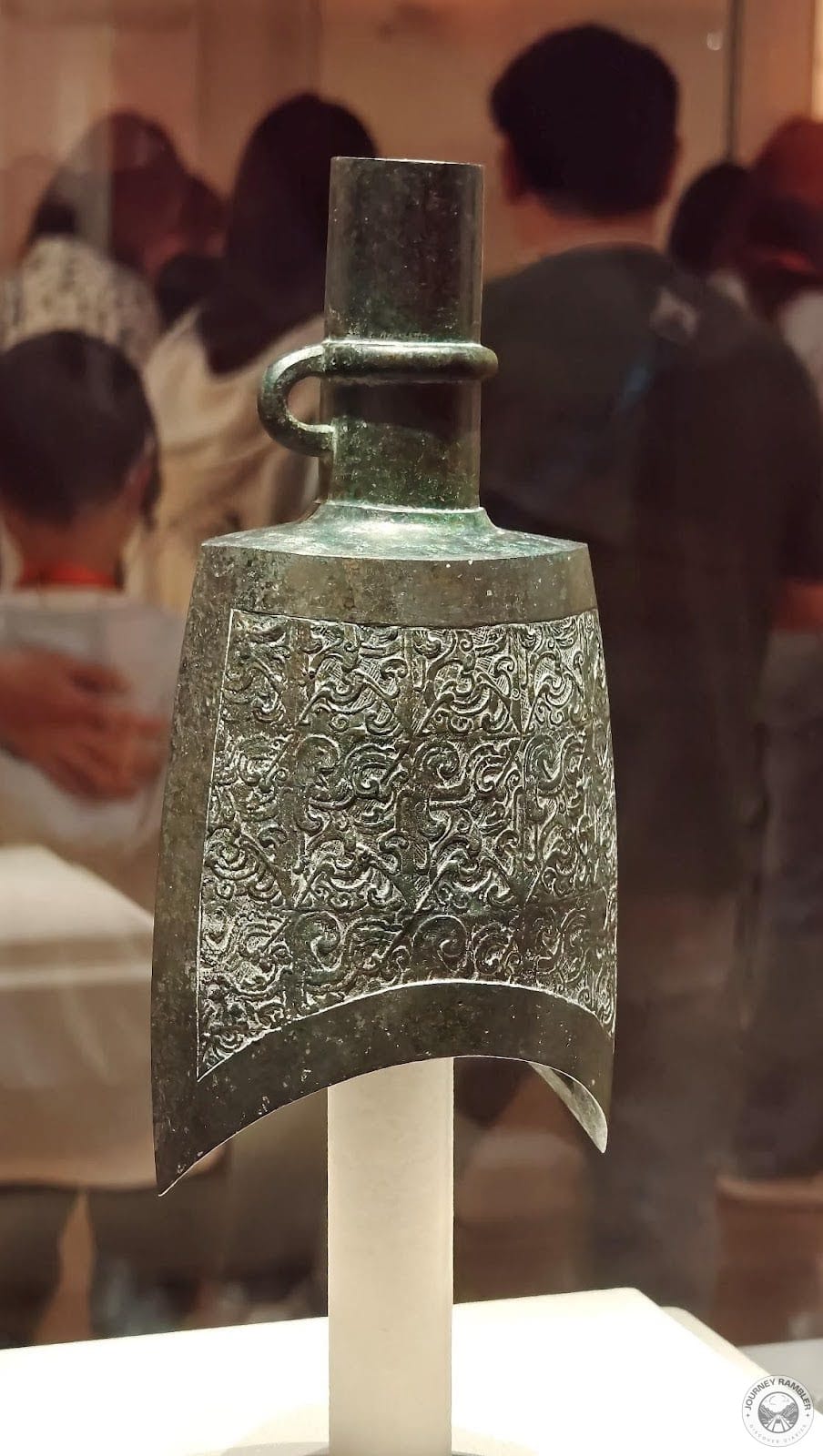
There were all sorts of bronze and stone artifacts on display.
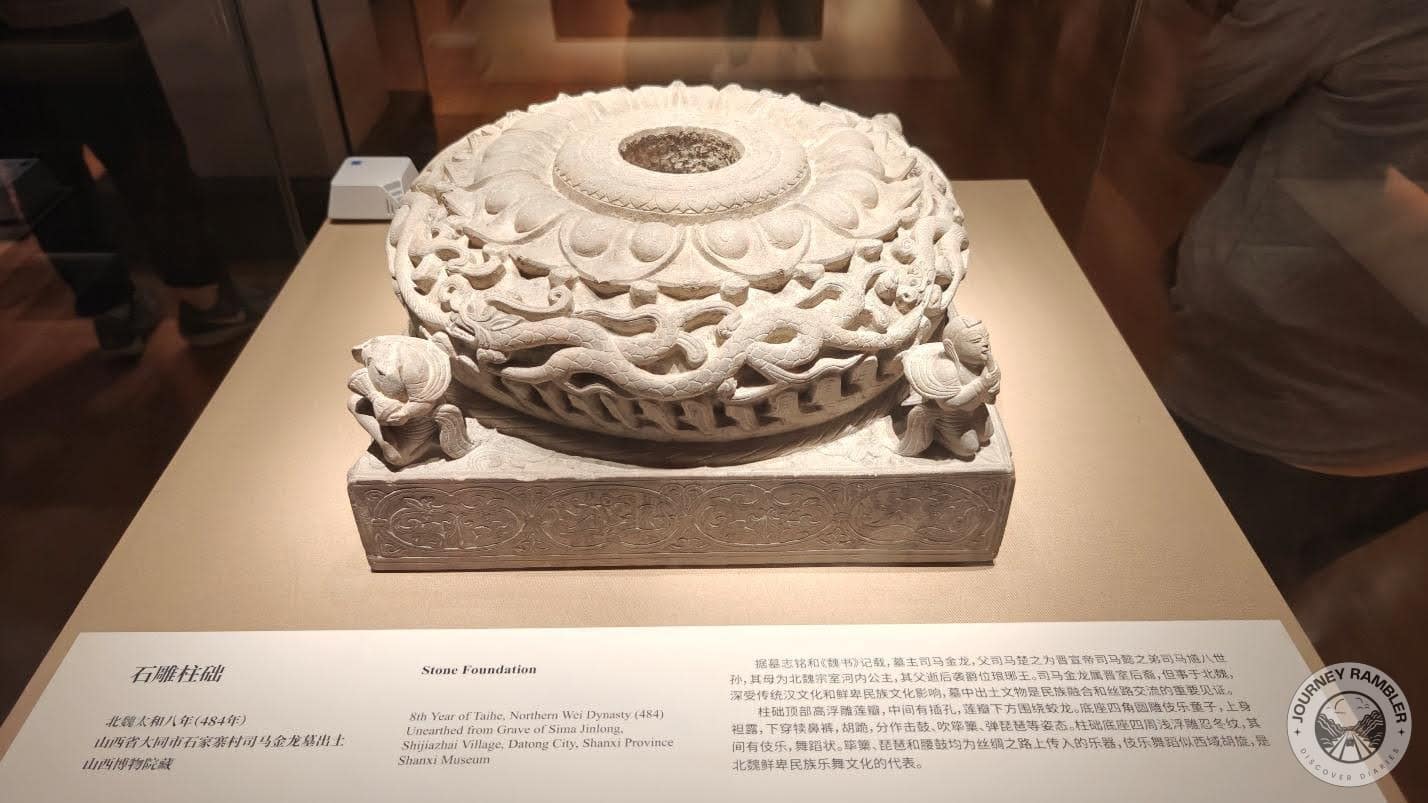
Everything was carefully labeled and the time periods were given. A stone foundation that had been intricately carved caught my attention.
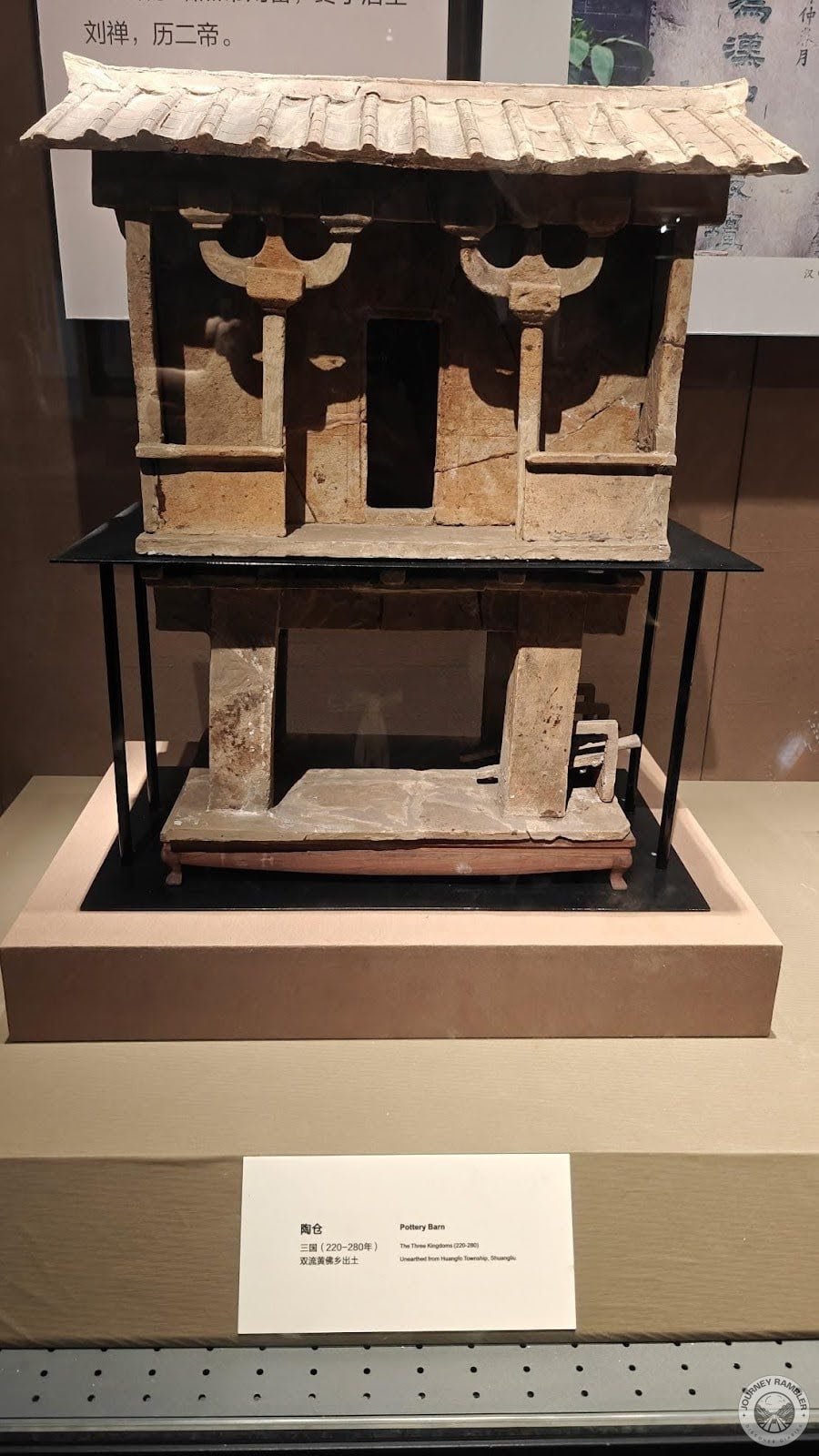
I walked around the museum, looking at some of the artifacts. I didn’t really understand what all of them were or what they were used for but it was still quite interesting.
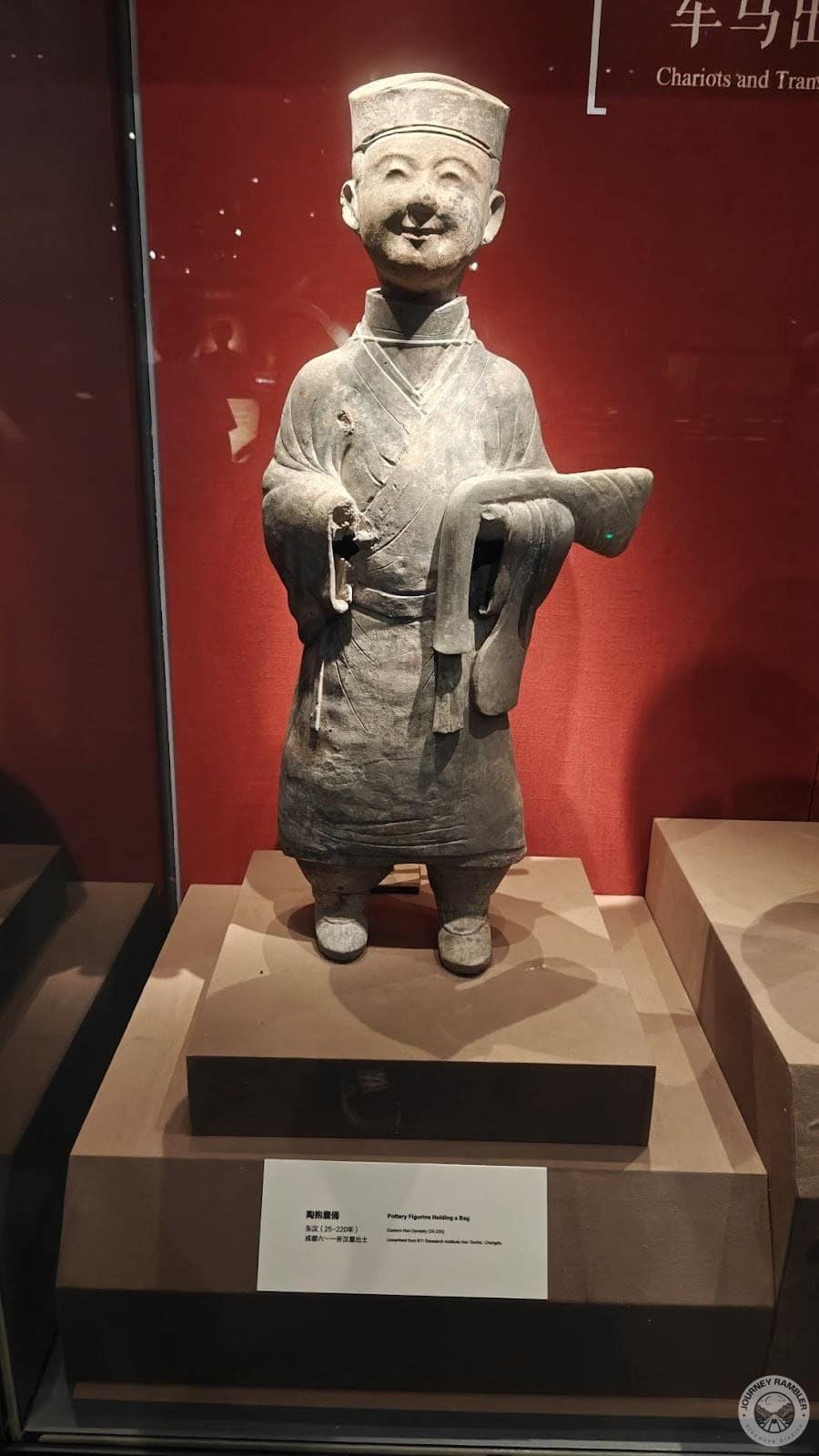
There was a statue of a smiling man. His expression looked so peaceful and serene. I thought it was marvelous that the old sculptors and artists had been able to carve such an expression.
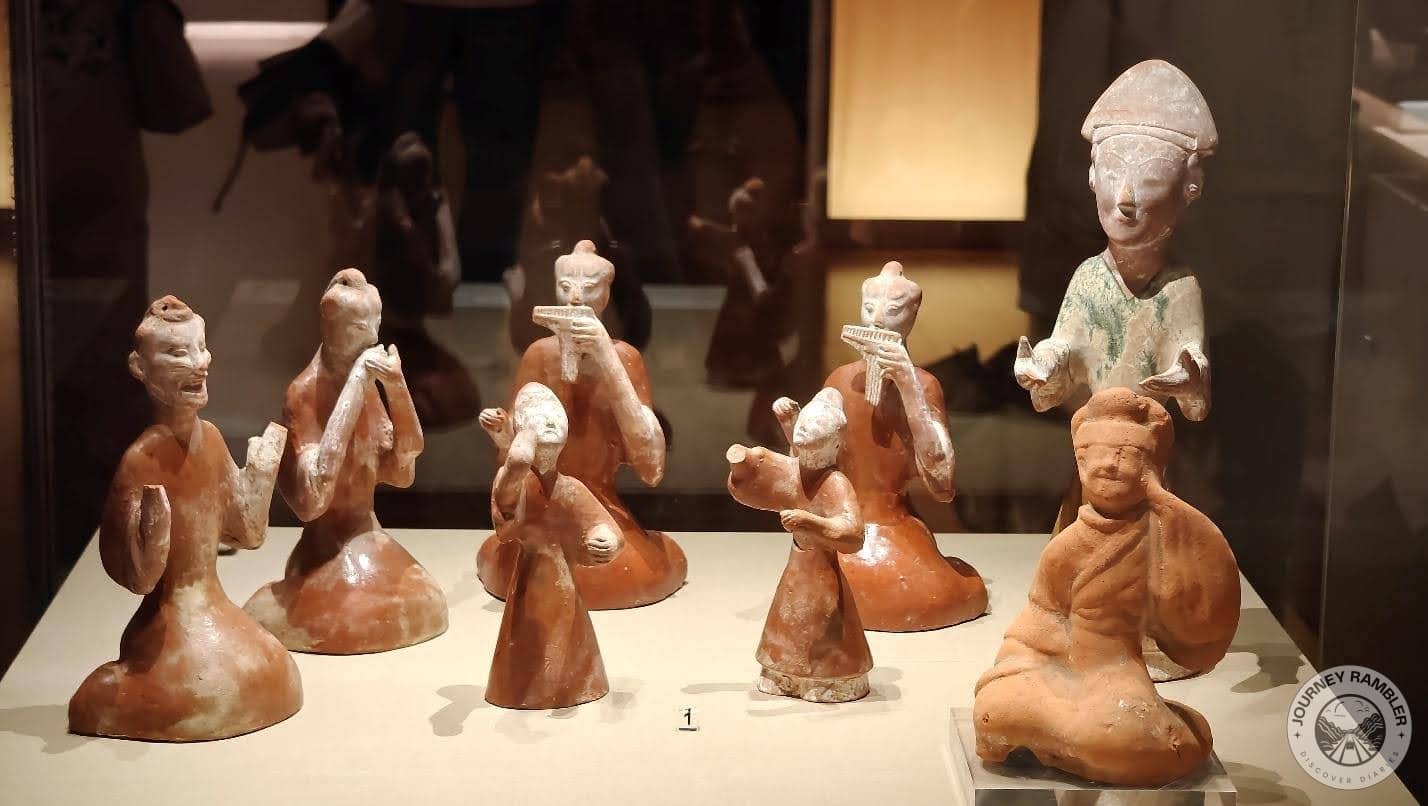
There were also a lot of terracotta figurines. Terracotta was one of the most important products in those days and the ancient Chinese people had used it for many things. There were figures of musicians and dancers.