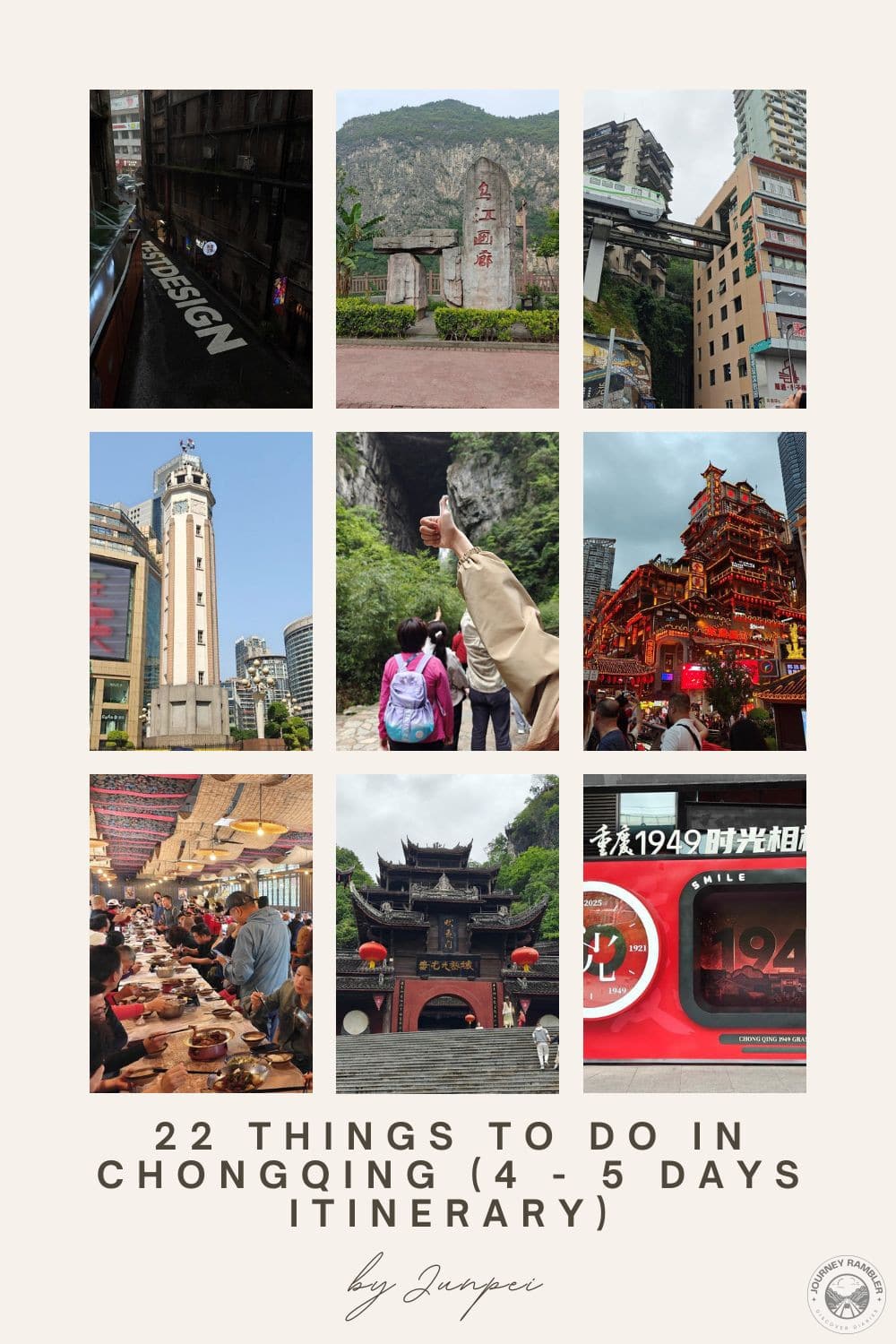
The first thing that I learned about Chongqing was that it was the largest city in the world by population. This is because Chongqing Municipality has many large urban areas under it other than Chongqing proper. It was also a really modern city, with lots of fascinating architecture and cool buildings. I was looking forward to exploring Chongqing.
Chongqing: The 22 Things You Can Do in 4 – 5 Days
Day 1
1. Try Chongqing noodles as breakfast (Xiao Mian)
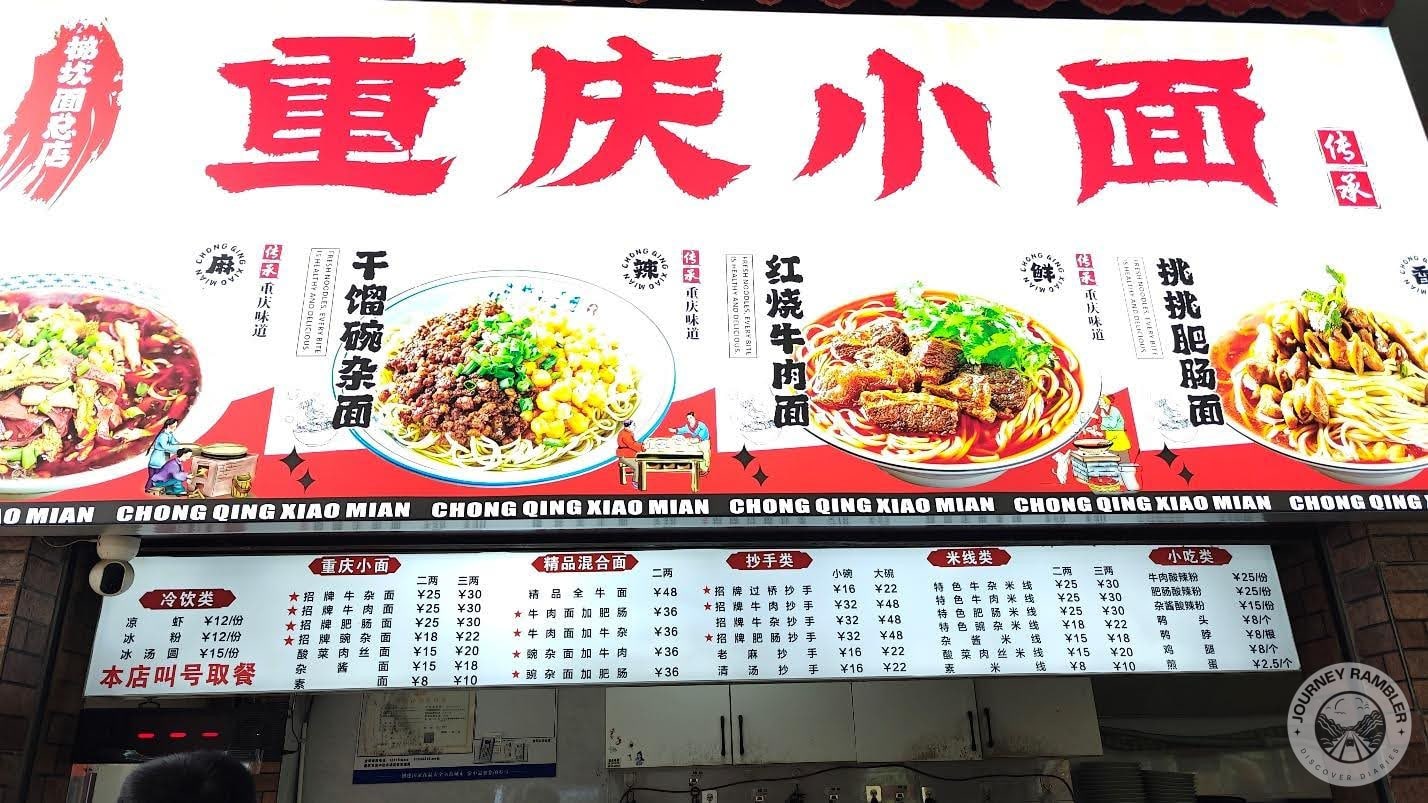
I started my first day in Chongqing with a hearty breakfast! I wanted to eat noodles for breakfast. And the local Chongqing noodles, also known as Xiao Mian, were really famous. It was a spicy dish that was very aromatic and mouth-numbing because of the Sichuan peppers that were used in it.
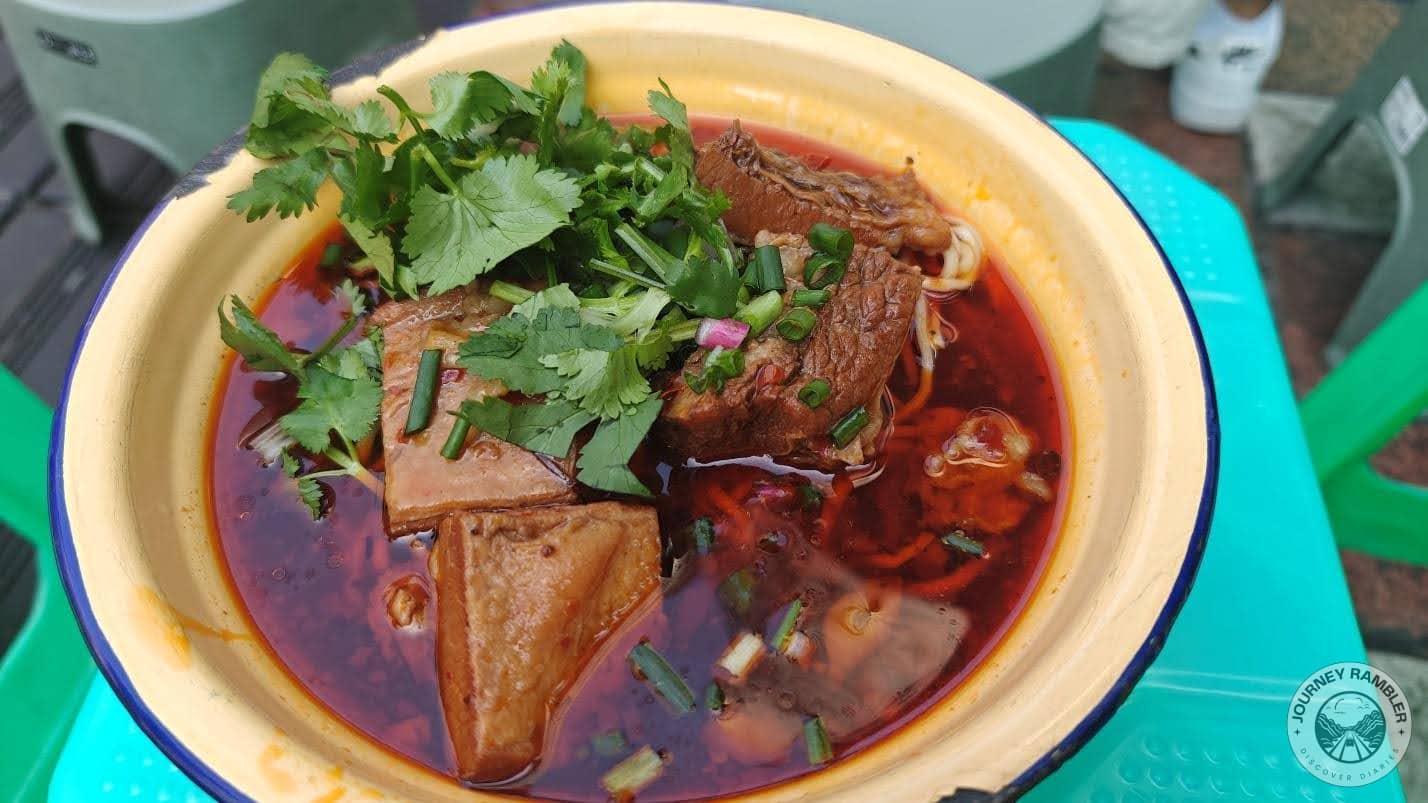
The noodles, when the staff brought it out, were floating in fiery red oil. It looked spicy and very rich and I couldn’t wait to get started.
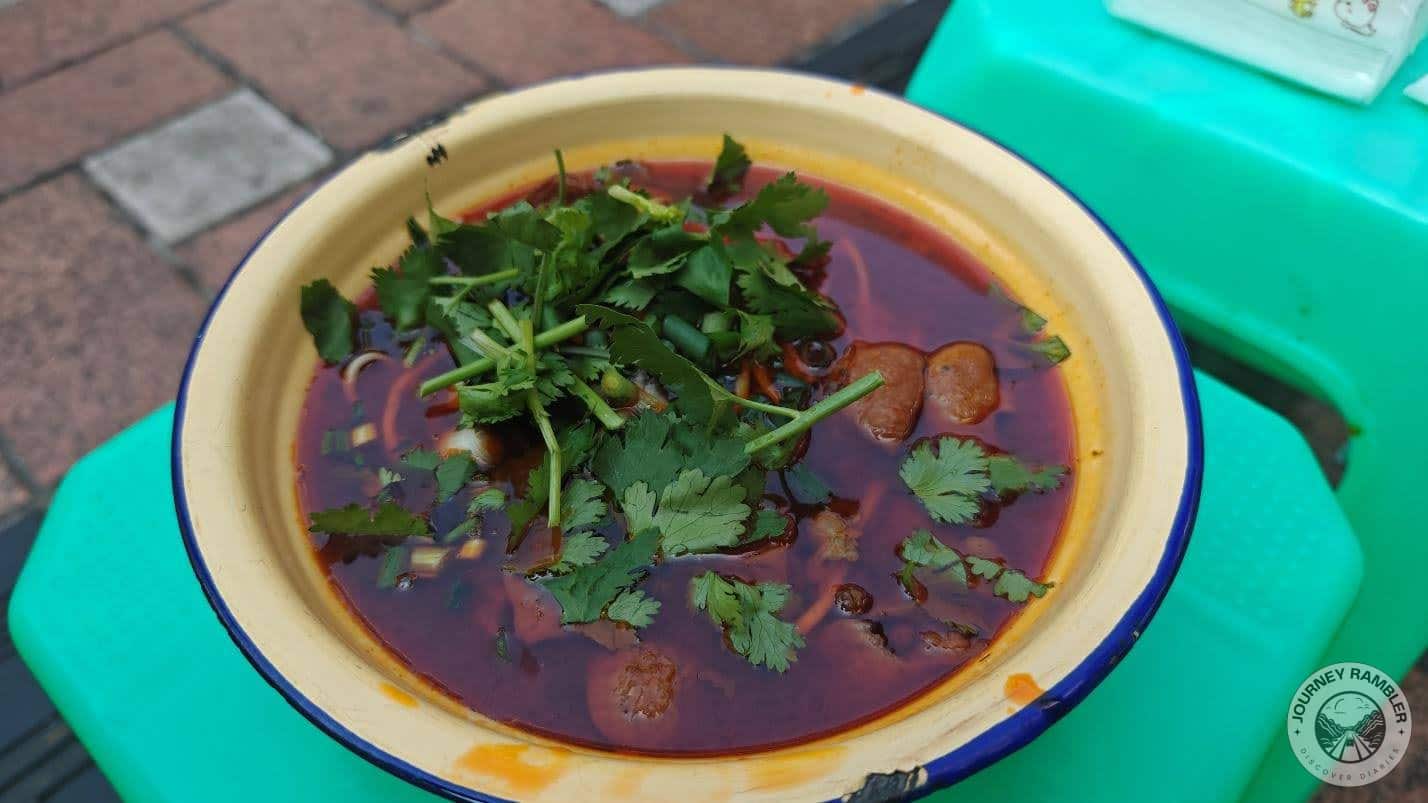
The noodles also had meat and greens and it was a very delicious breakfast. Even though it was spicy, I could tell why people loved it so much. I soon finished my bowl and was ready to start sightseeing!

free chongqing itinerary
Visiting Chongqing?
Get my original 4–5 day, 13-page Chongqing itinerary in PDF format, based on my real trip, with many photos, hotel, and food tips. Enter your email to receive it free.
We won't send you spam. Unsubscribe at any time.
2. Jiefangbei – Chongqing Liberation Square
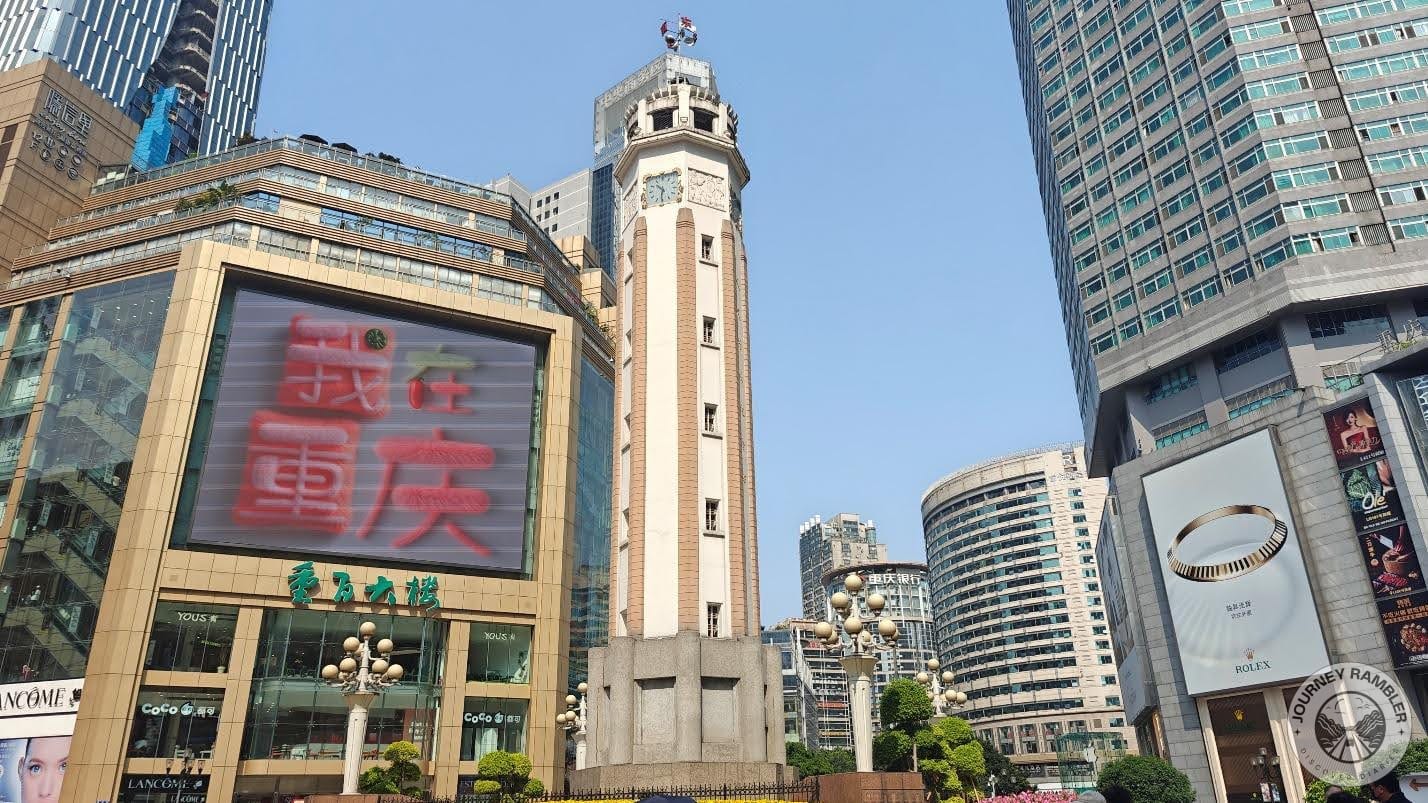
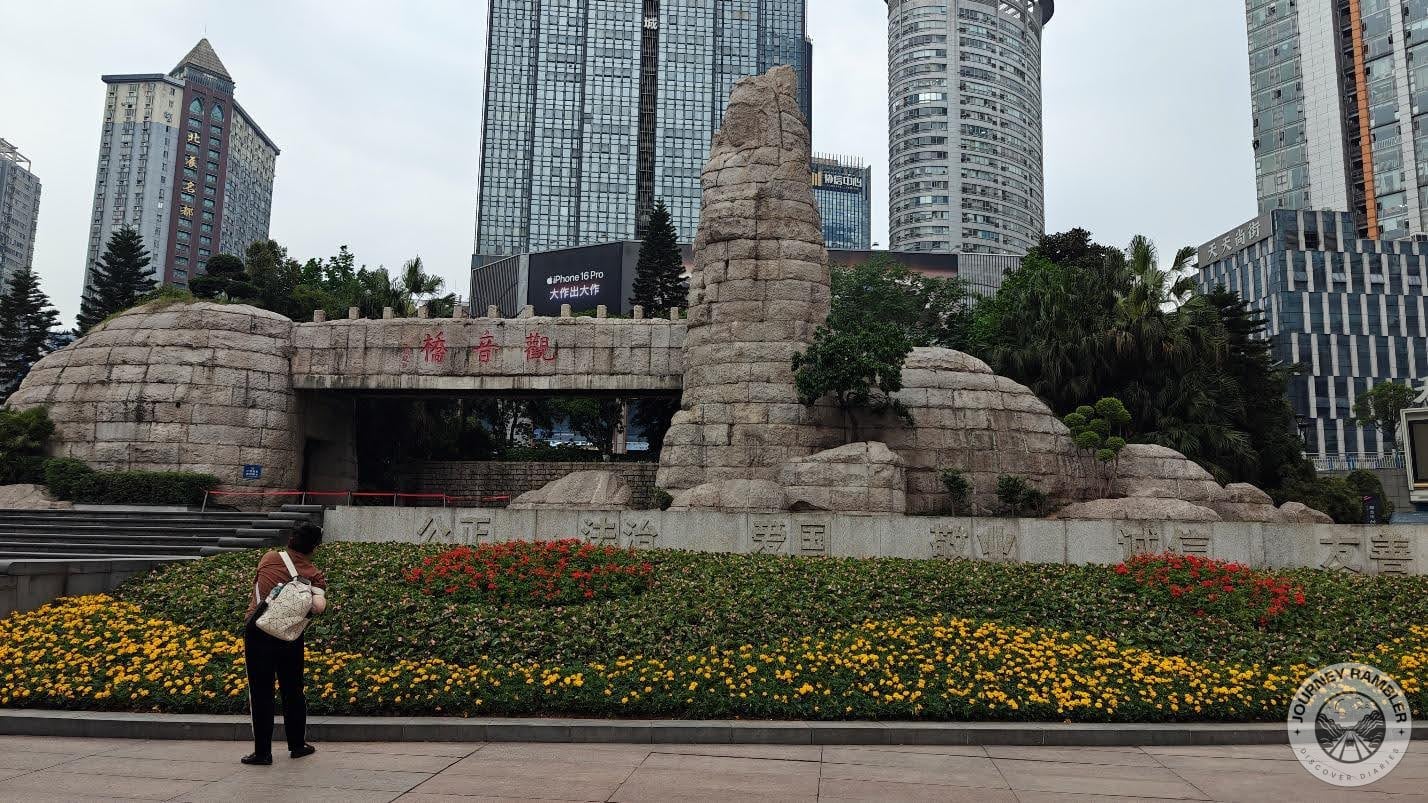
My second stop for the day, after breakfast, was Chongqing Liberation Square. The square was mostly known for Jiefangbei or the Liberation Monument. It had originally been called the War Victory Monument and had been built in 1946. But the Chinese People’s Liberation Army captured the city of Chongqing in 1949 and the monument was renamed in 1950.
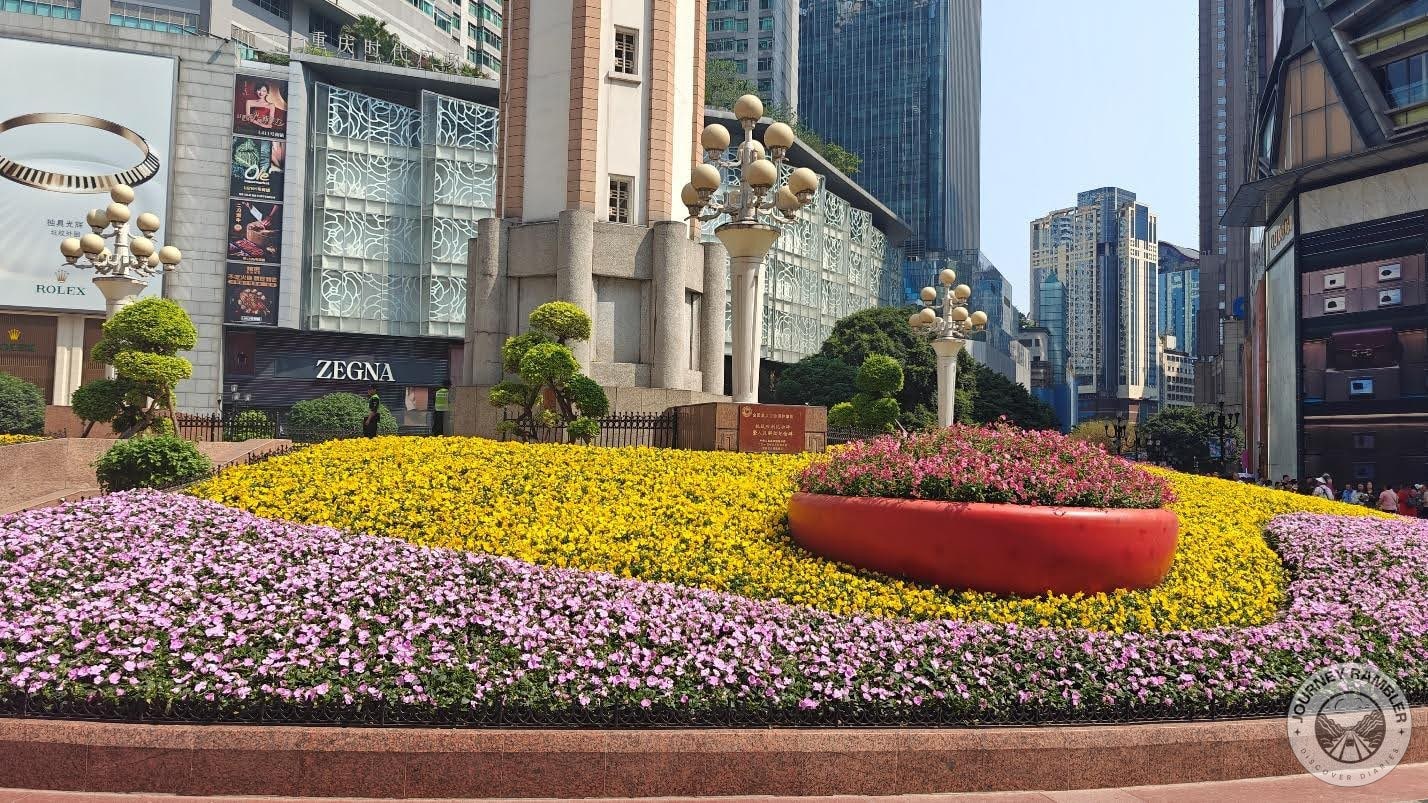
The thing that really caught my eye was all the yellow and pink flowers growing at the base of the monument. They were so beautiful and colorful and the gardeners obviously took very good care of the spot.
Chongqing Hotel Recommendations Based on My Own Stay
🔹 Ascott Raffles City Chongqing
🔹 Westin Chongqing Liberation Square
Top Activities in Chongqing
Wulong Tiansheng Three Bridges
Banquet in Ba Kingdom Royal Feast
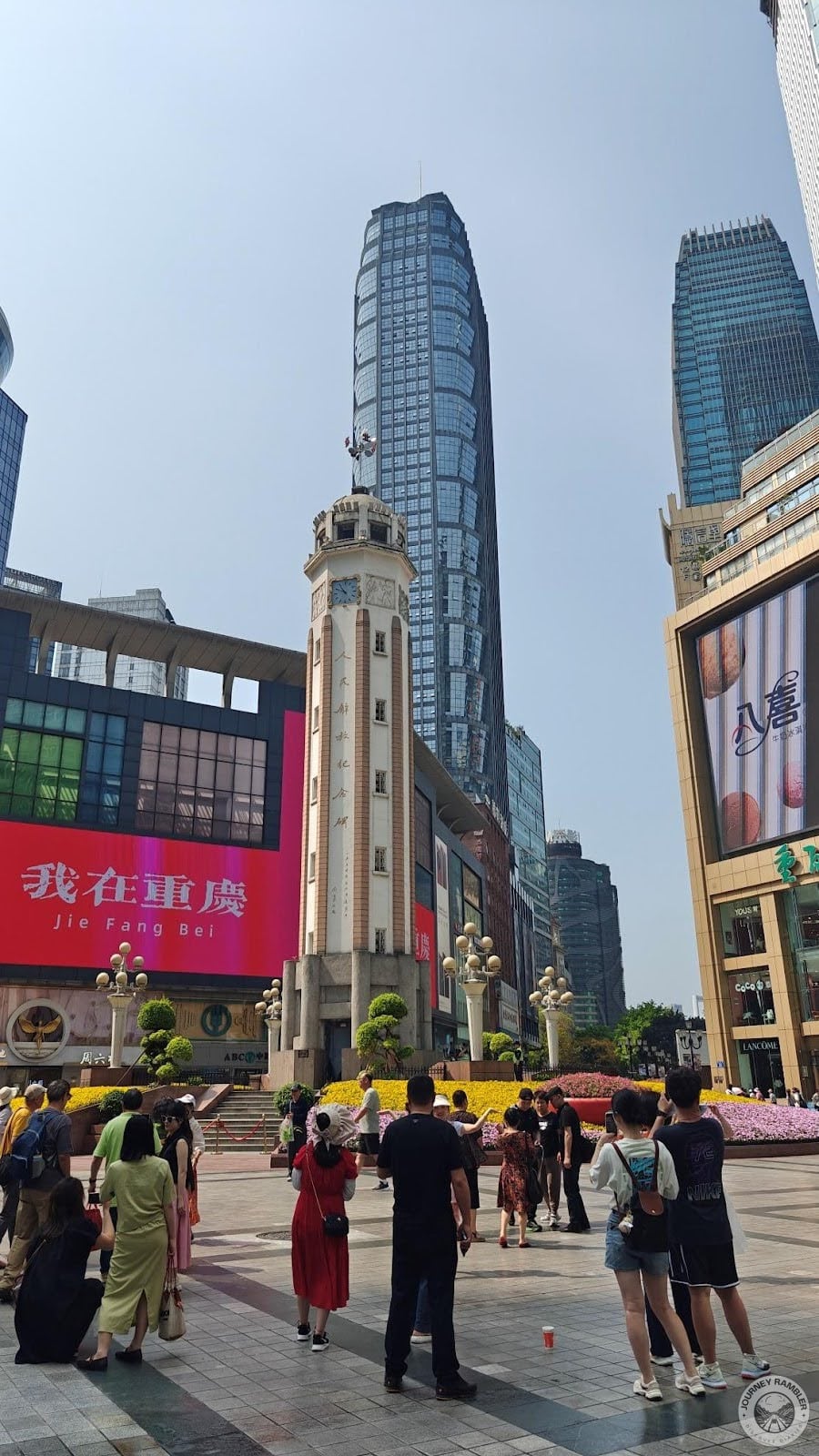
The monument was dwarfed by all the glass and steel buildings all around it. But that’s what made it look so proud and elegant, standing straight in the center of the square. People stopped to pose and take pictures in front of the monument.
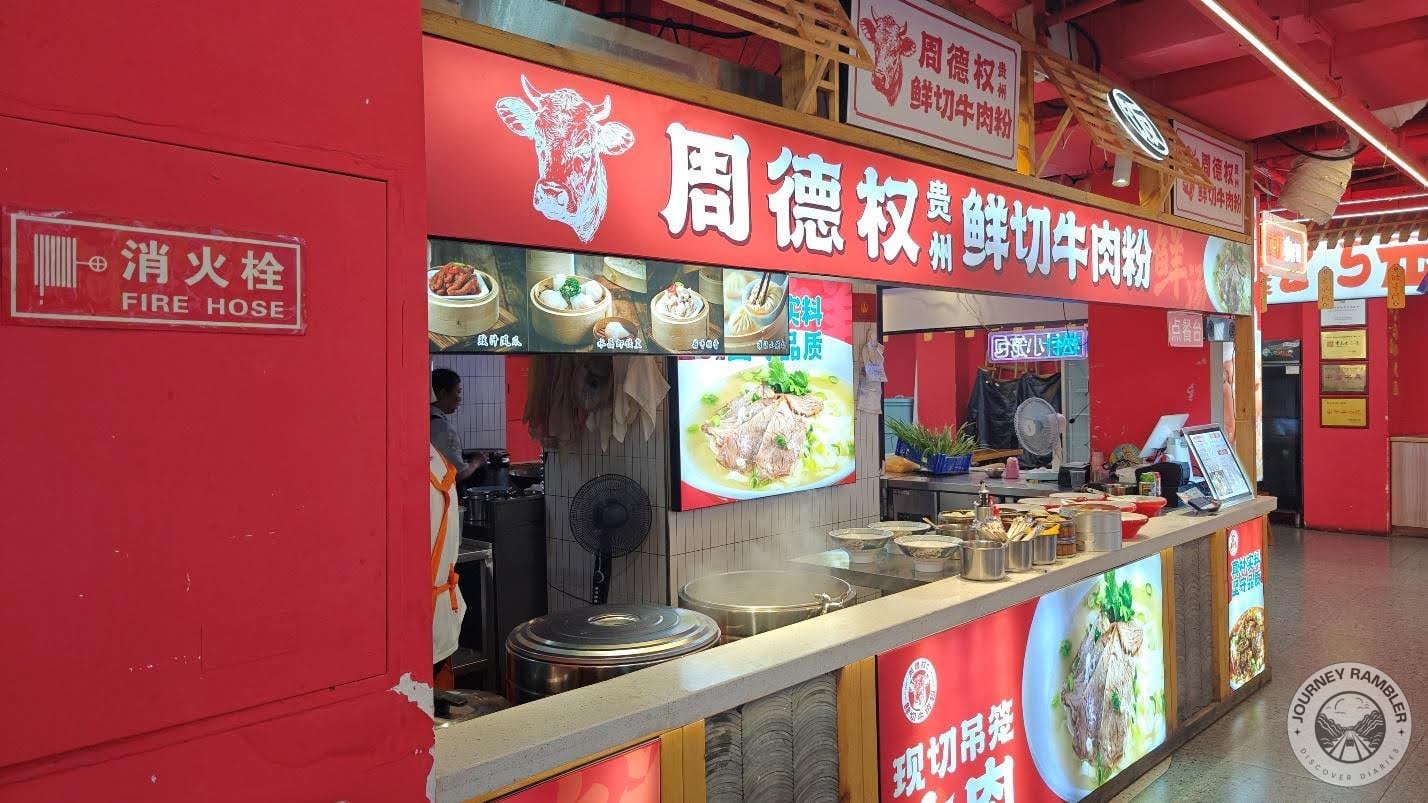
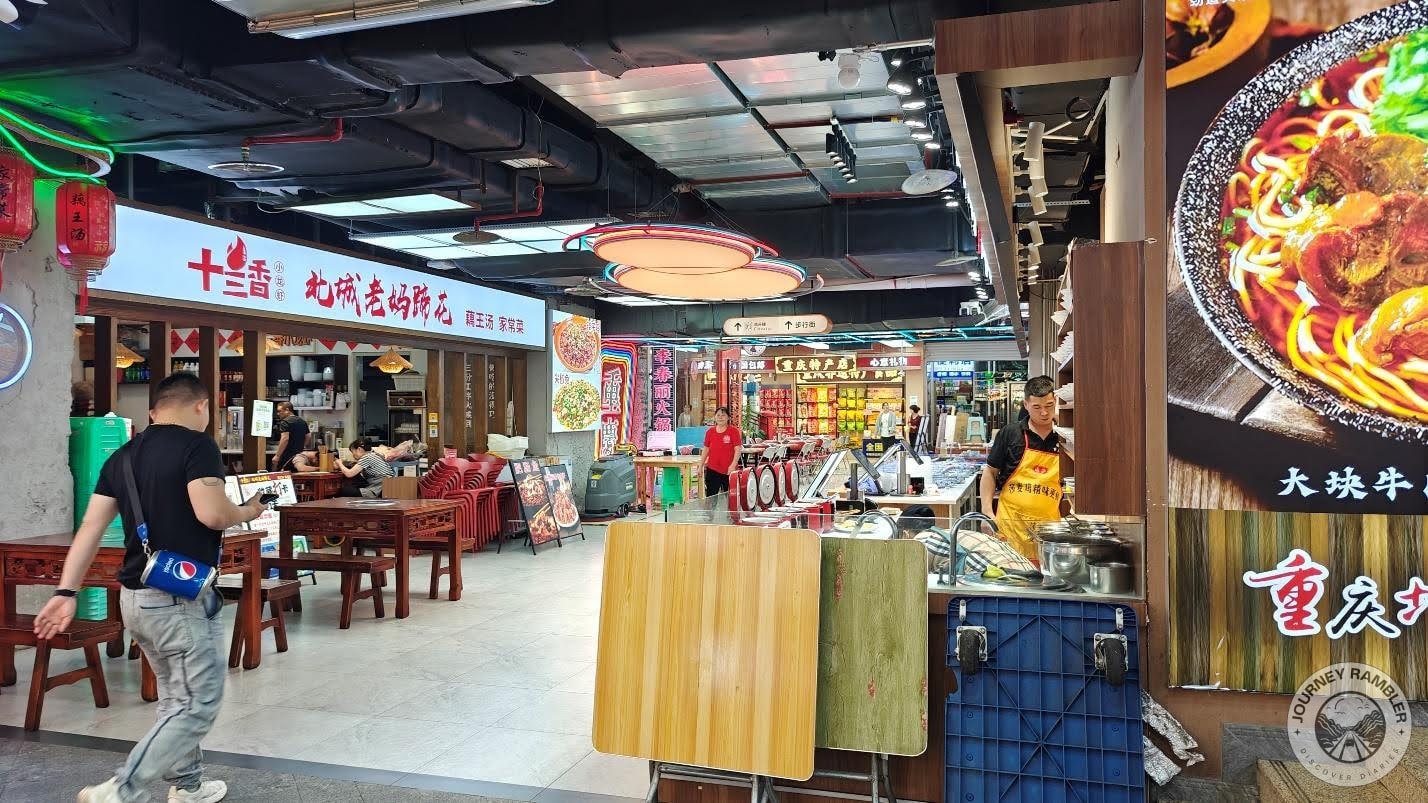
Once I had finished that, I was excited to go and eat some more food. I went to Bayi Food Street, which was known for all its street food. There were so many different stalls and restaurants selling so many different dishes! There was no way people could try all or even half of them.
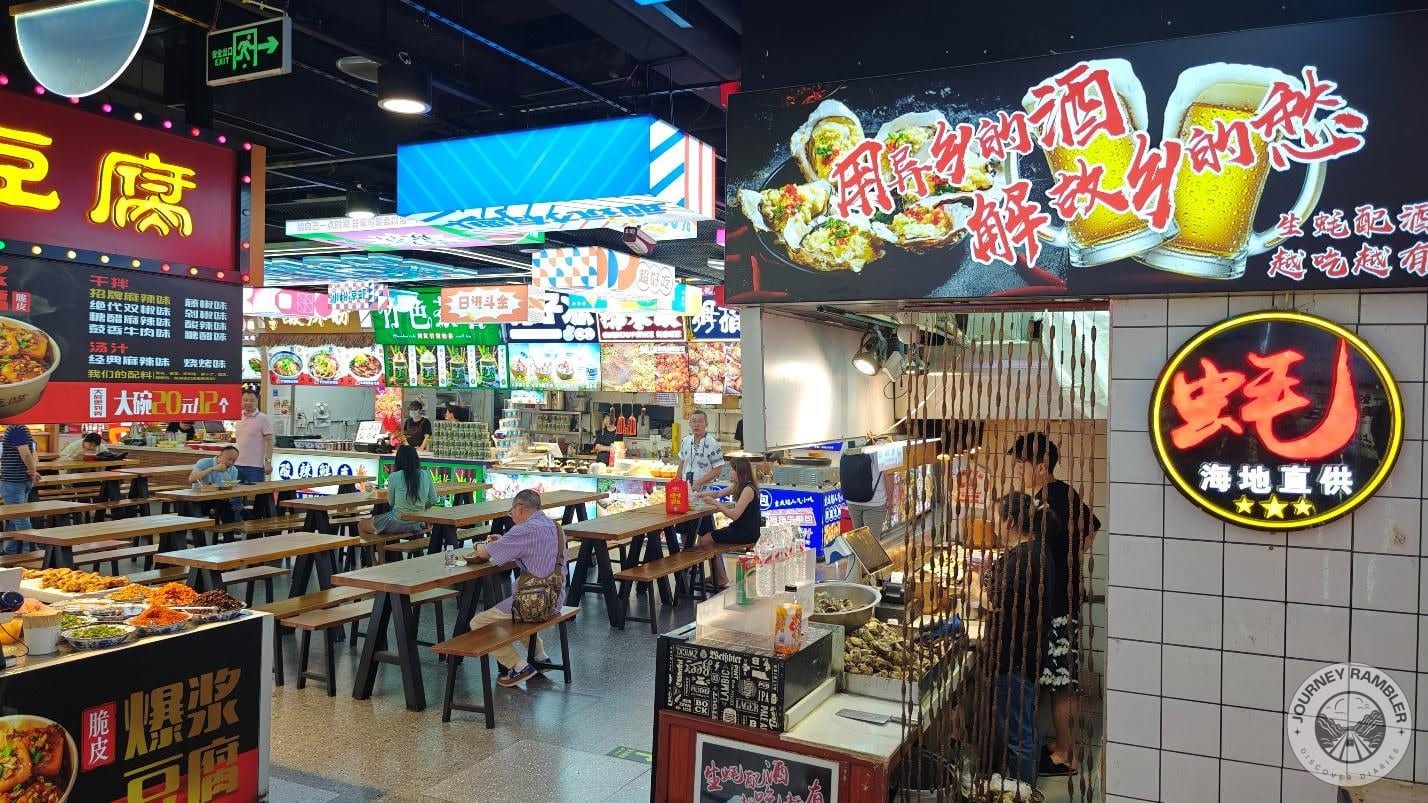
Chairs and tables had been laid out at the center of the hall so people could fetch their own food and sit down to eat. From noodles to beer, everything was available.
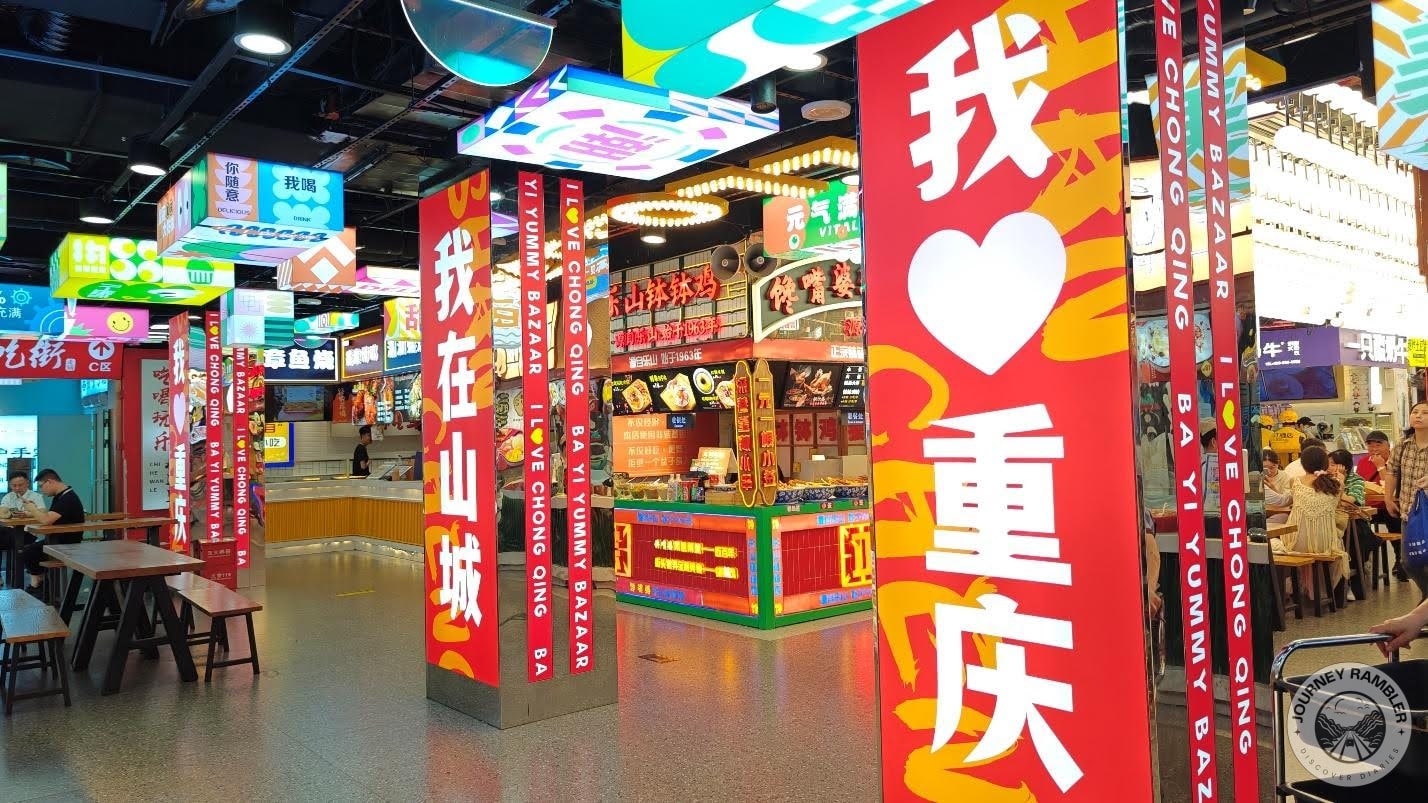
It was all really colorful and clean.
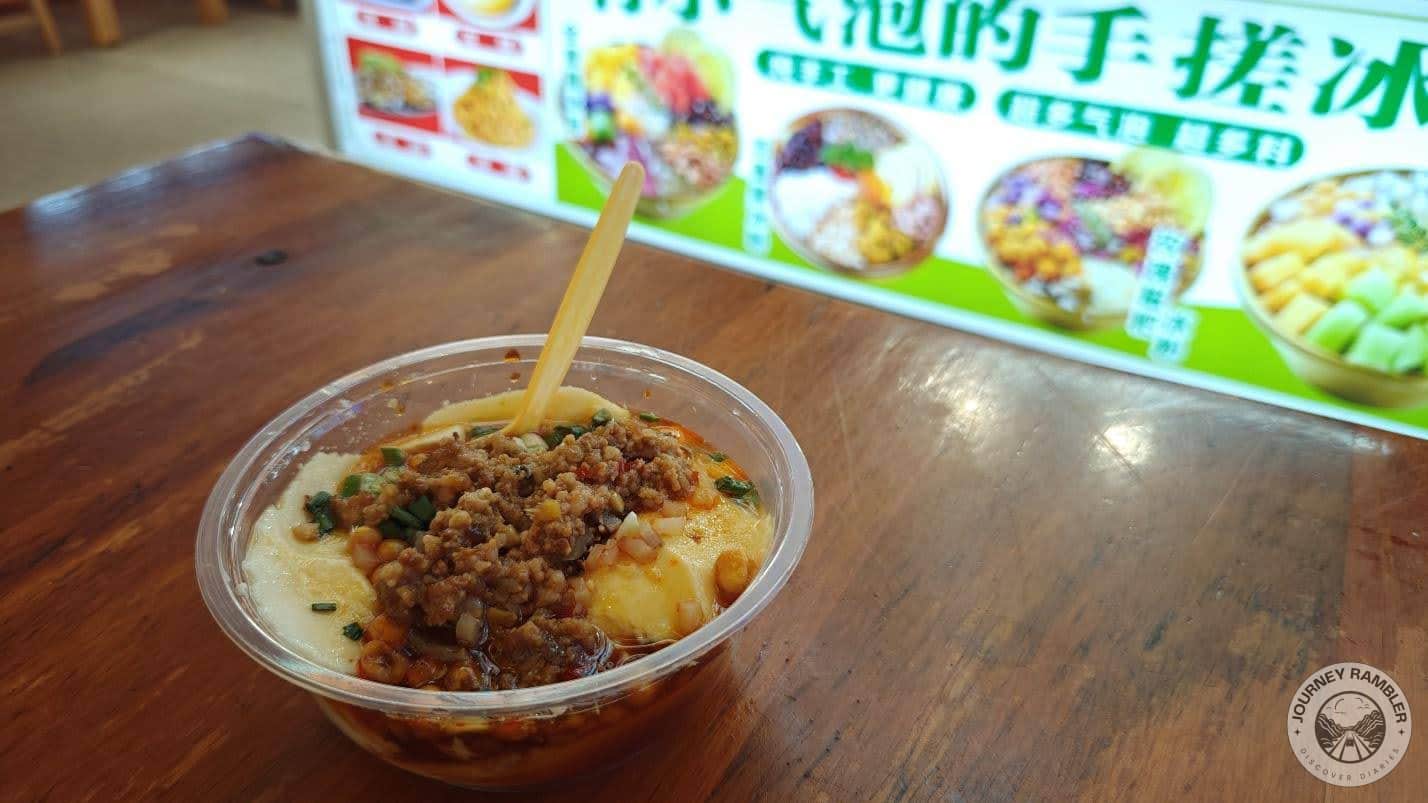
I tried some spicy tofu. It had a jelly-like texture but it was really quite good. I enjoyed it but I didn’t try anything else since I was still full from my breakfast.
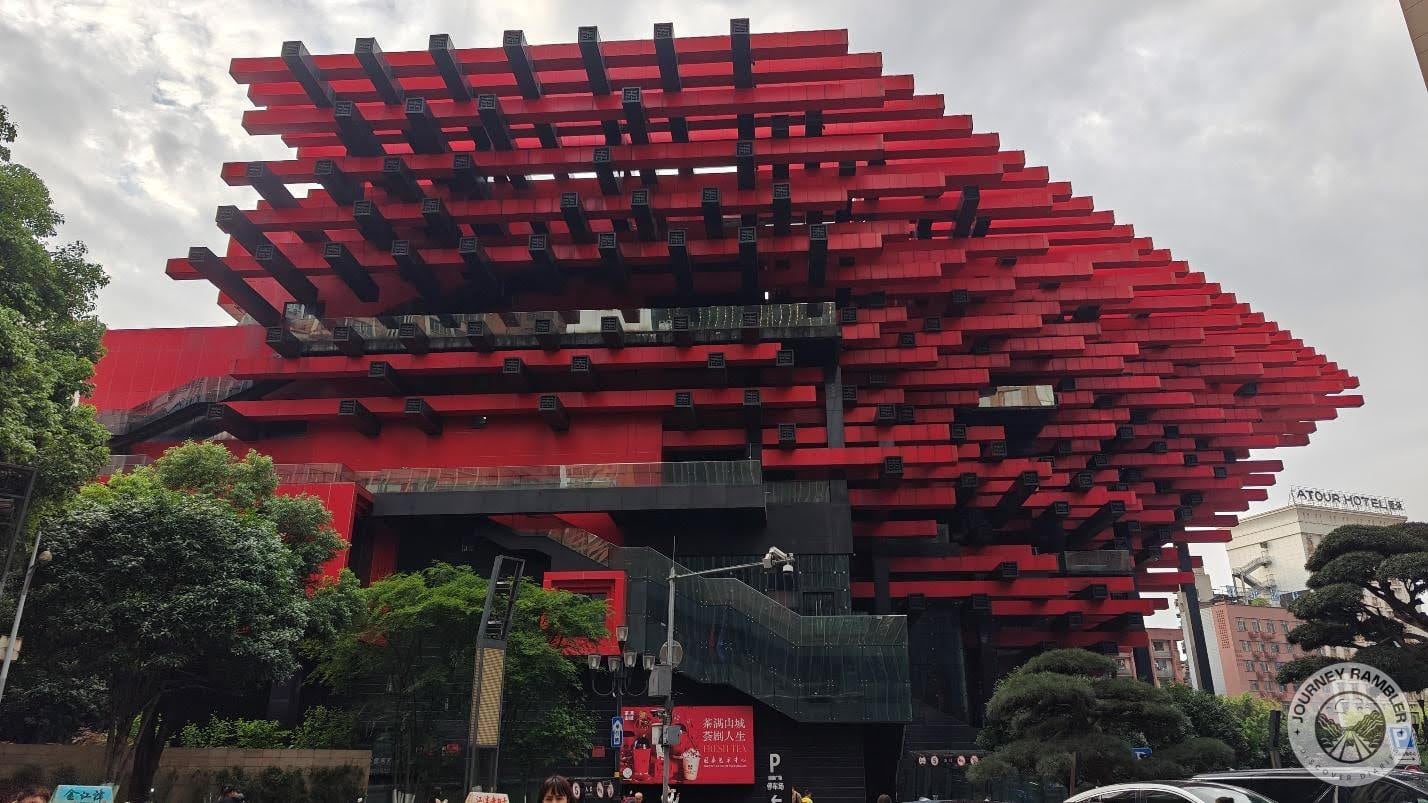
The next place I went to was the intriguingly named Chopstick Building.
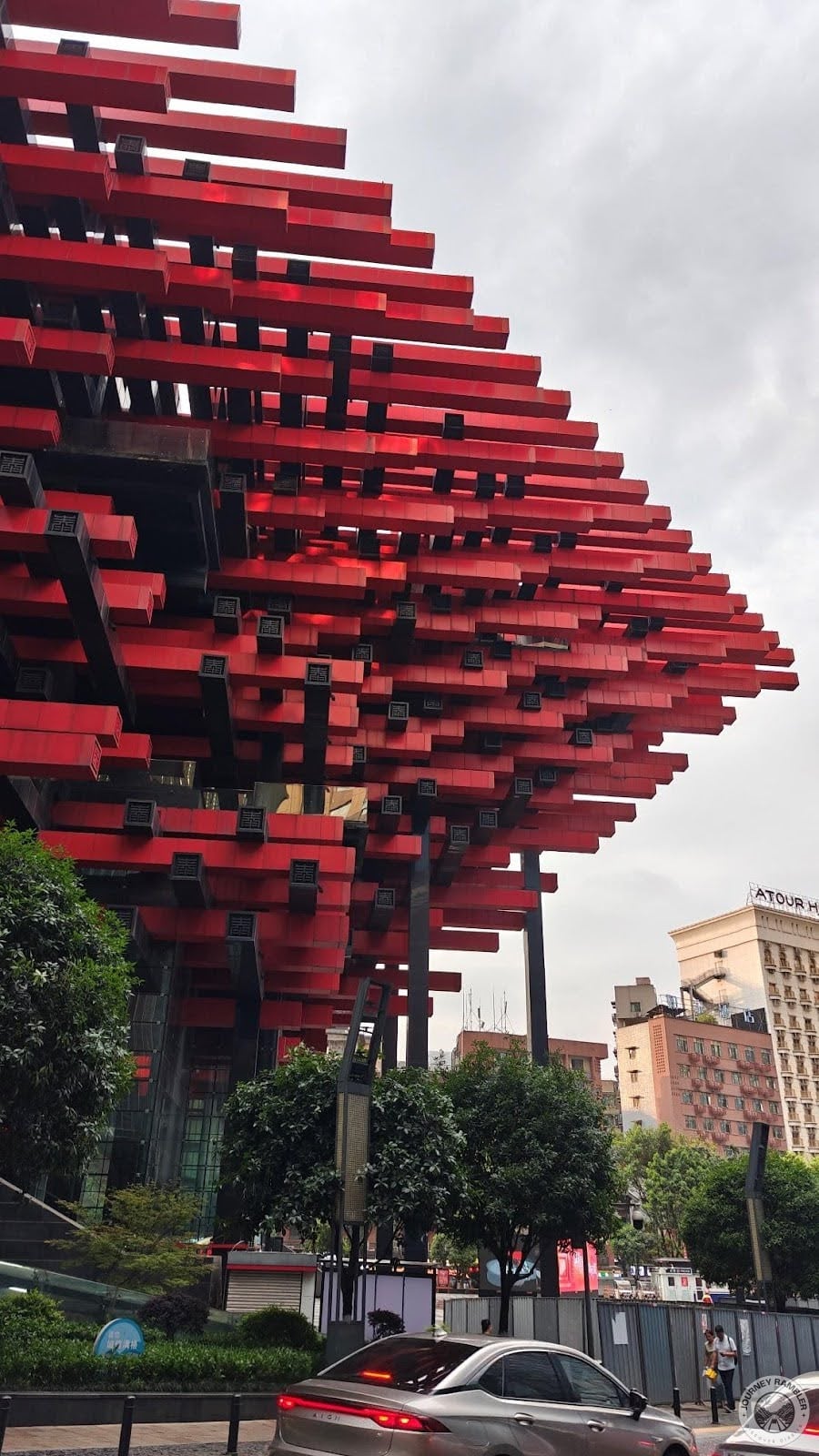
Actually the Chongqing Art Gallery, it was affectionately called Chopstick Building or Chopstick Tower because of the strange architecture. The outer structure had so many intertwined red beams that it really looked like it was made with chopsticks. It was very fitting for an art center.
5. Hongyadong
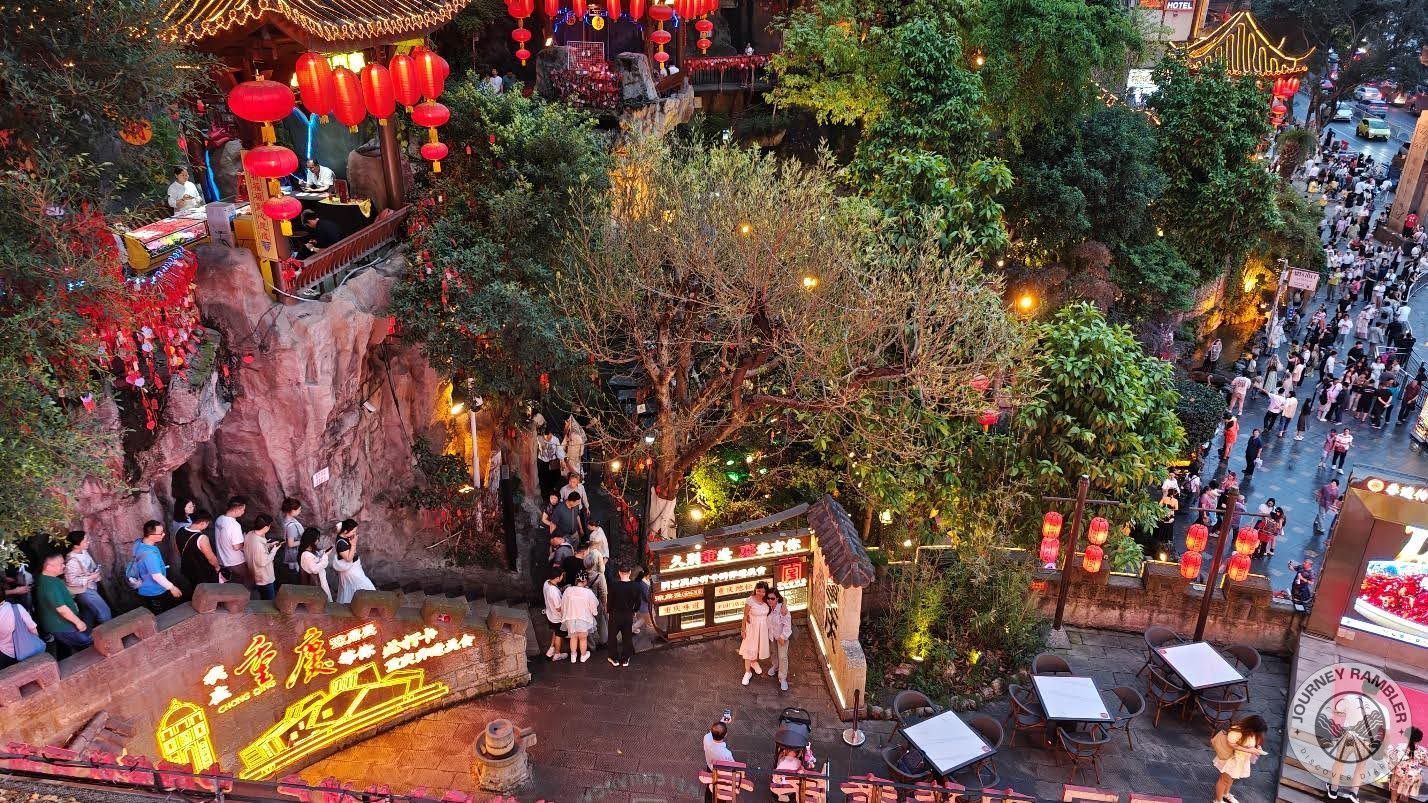
But it was time to move onto my next stop, Hongyadong. It was an eleven story stilt building complex right in the center of Chongqing’s commercial area. Hundreds of people gathered around to stare at the architecture.
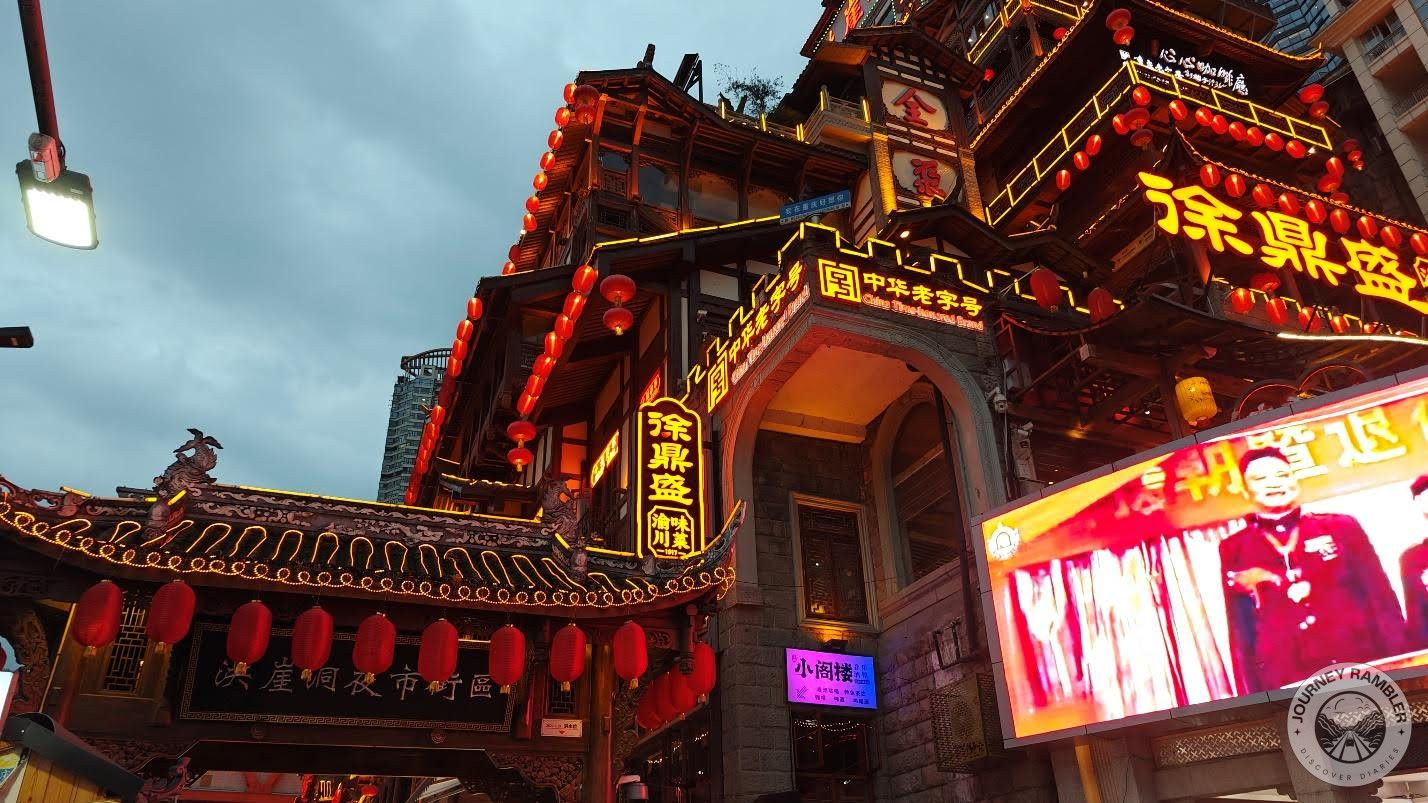
I now knew why so many people talked about the architecture of Chongqing and called it a cyberpunk city. I had never seen so many different styles, both modern and traditional, meshed together so well.
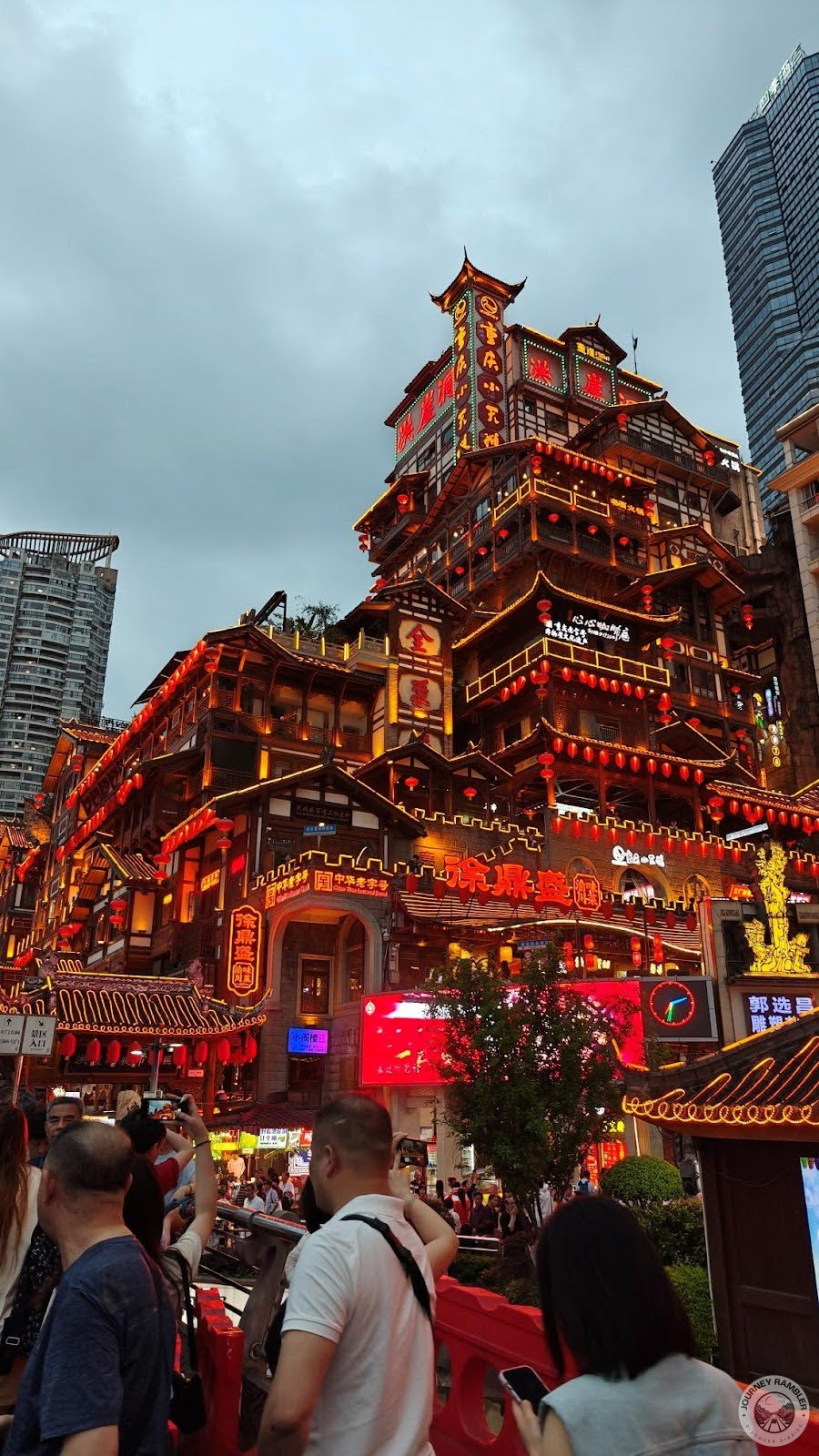
Hongyadong was filled with food courts, restaurants and hotels. It was also famous for spice stores. No wonder tourists from all over the world came to stare at this structure.
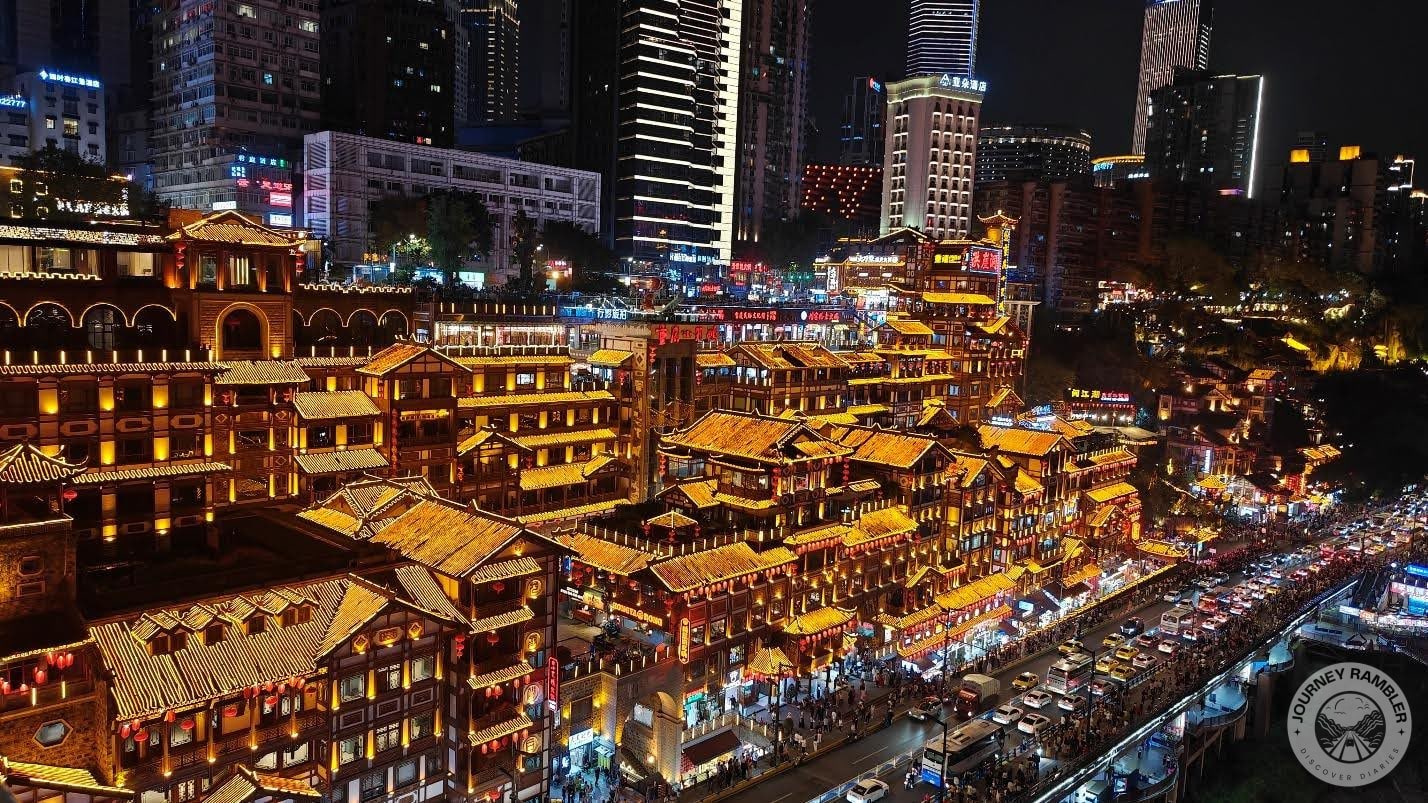
It was built into the hillside along the bank of the river. The view of the complex from Qiansimen Bridge, which you can see in the image above, was truly amazing.
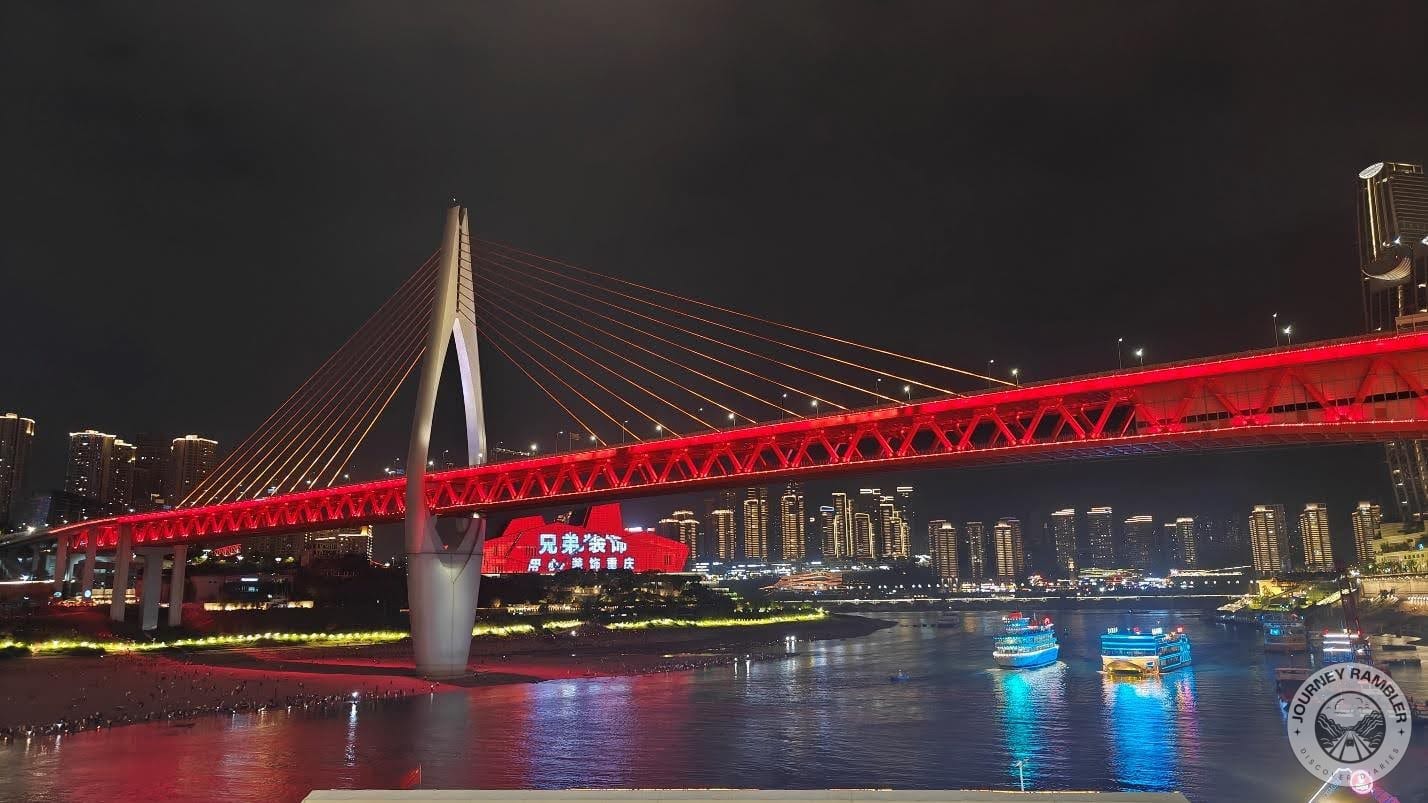
Qiansimen Bridge, on the other hand, was a simple looking structure despite being an engineering marvel. The twin river bridges were built for both cars on raids and the railways. It was lit up at night.
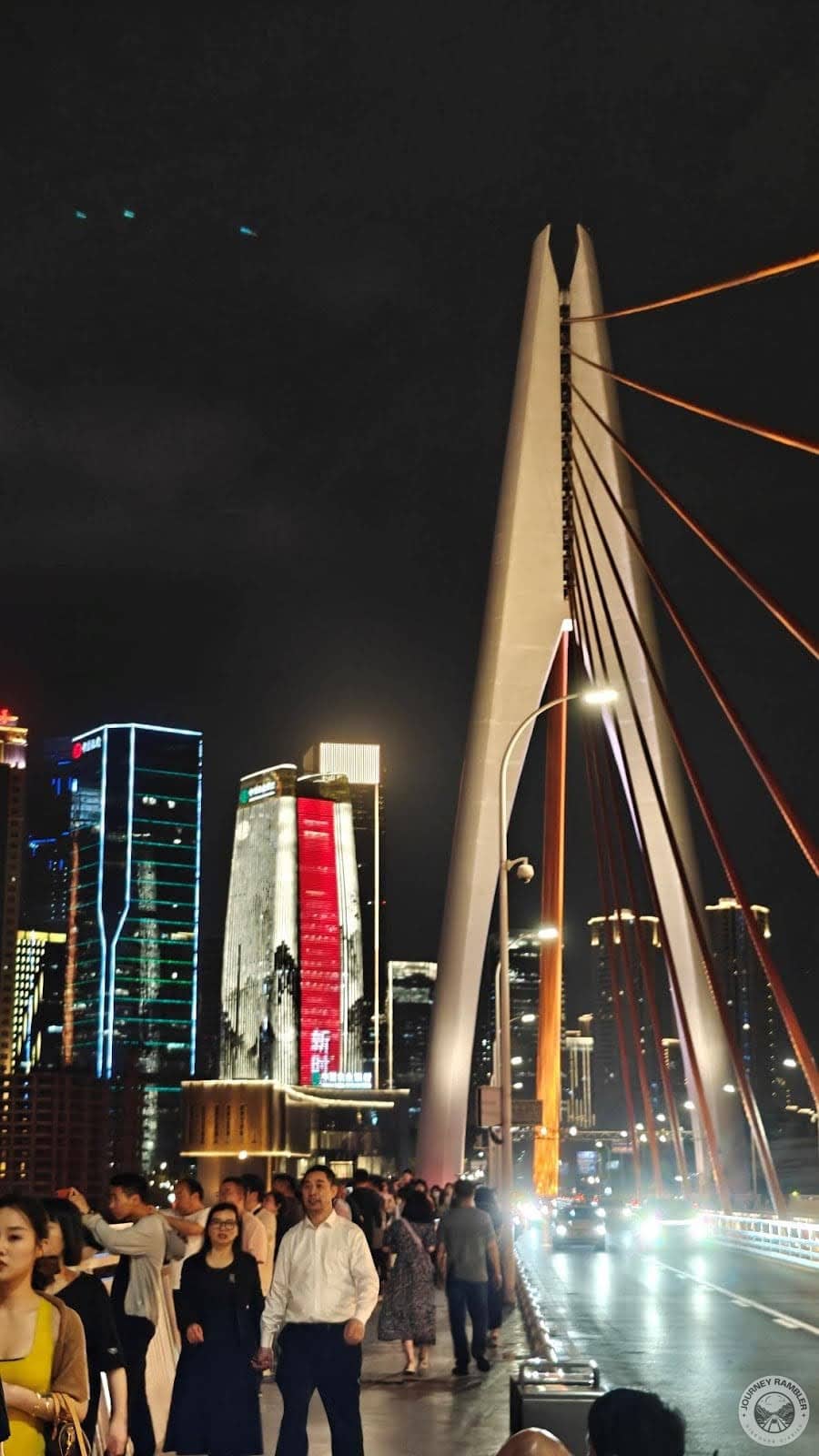
There were even pedestrian walkways on the upper deck, alongside the road. The lower deck was where the rail line lay.
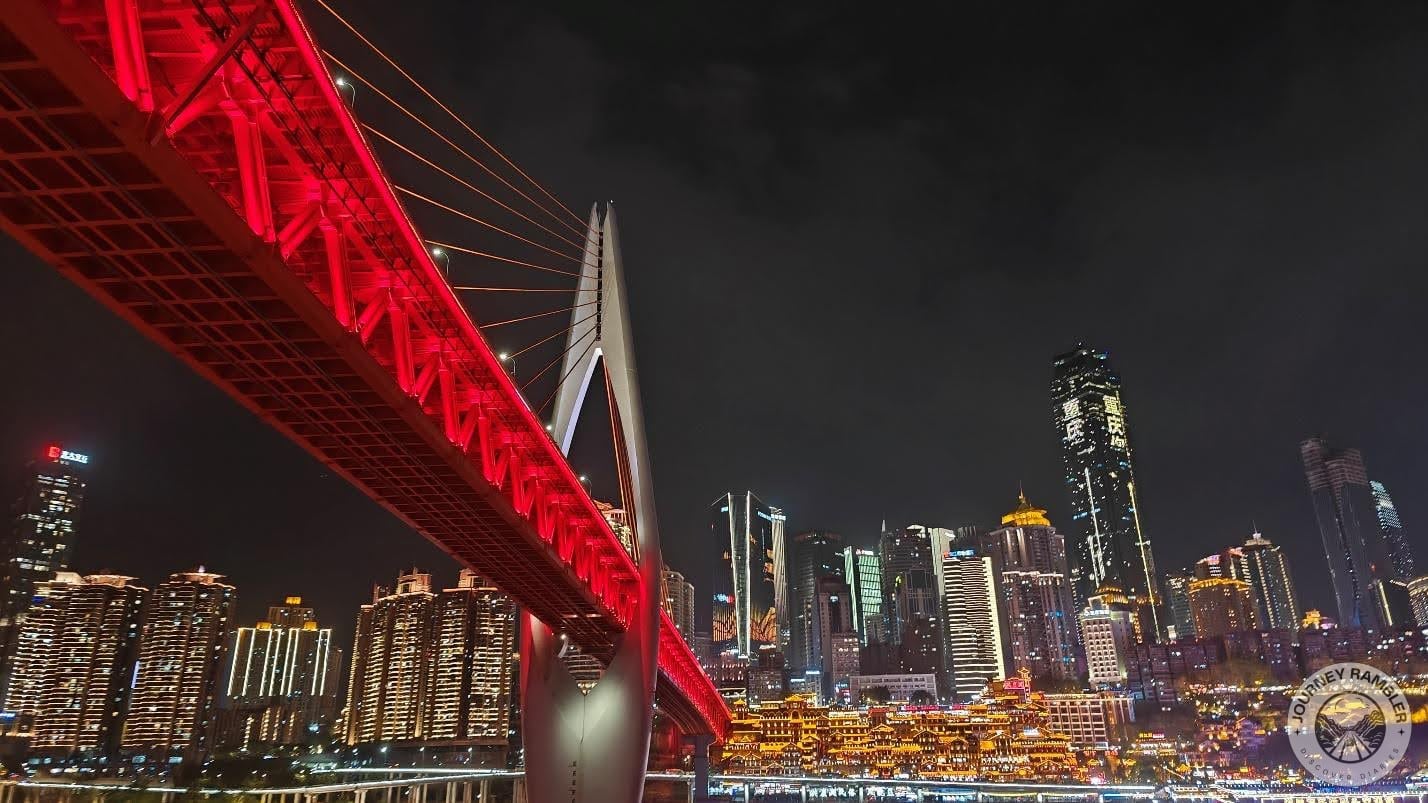
It rose above my head and the red lighting made it look really striking. In fact, the whole skyline of Chongqing was absolutely stunning.
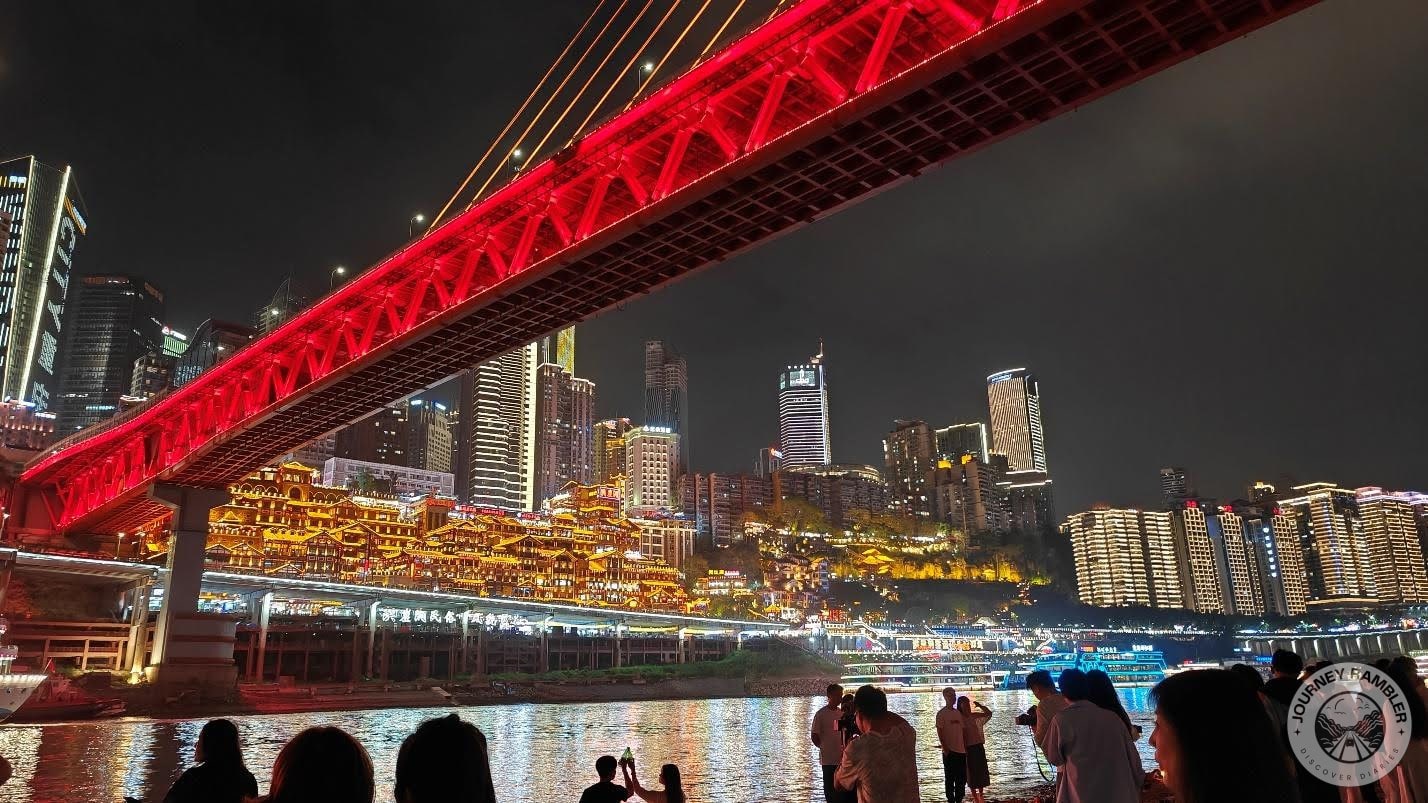
I looked around from both sides of the river. Hongyadong was visible from the opposite bank and there were tourists gathered along the water, taking pictures.
Day 2
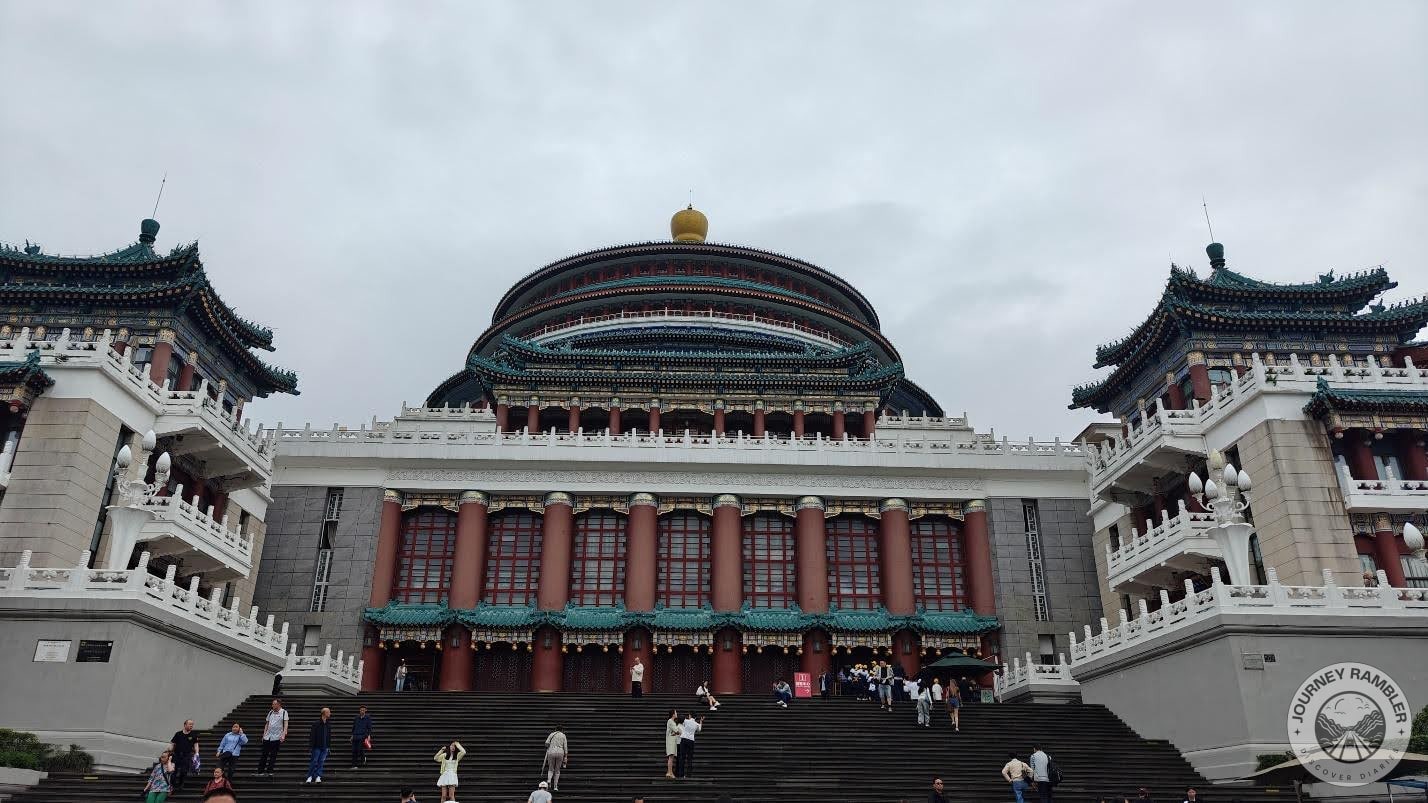
After my first eventful day in Chongqing, I woke up bright and early on my second day. I was ready for another productive day of sightseeing and a whole list of places to see. The first thing on my list was the Great Hall of the People. The exterior looked similar to the Temple of Heaven in Beijing.
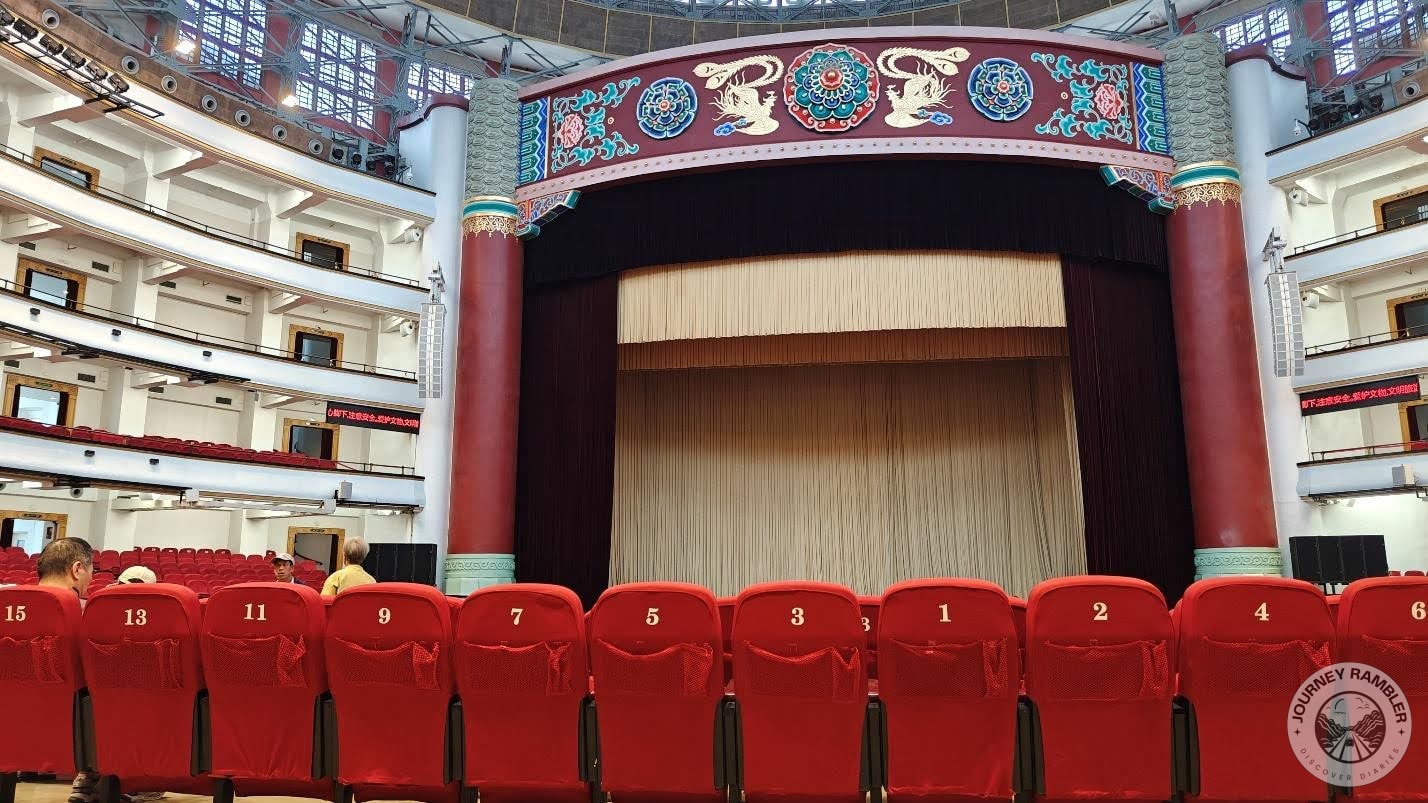
The Great Hall of the People in Chongqing is actually a meeting place for legislative bodies and other government committees. But if anyone saw the inside, they’d think it was a theater or auditorium for plays and musicals! There were hundreds and hundreds of chairs and rows of balconies on the upper floors.
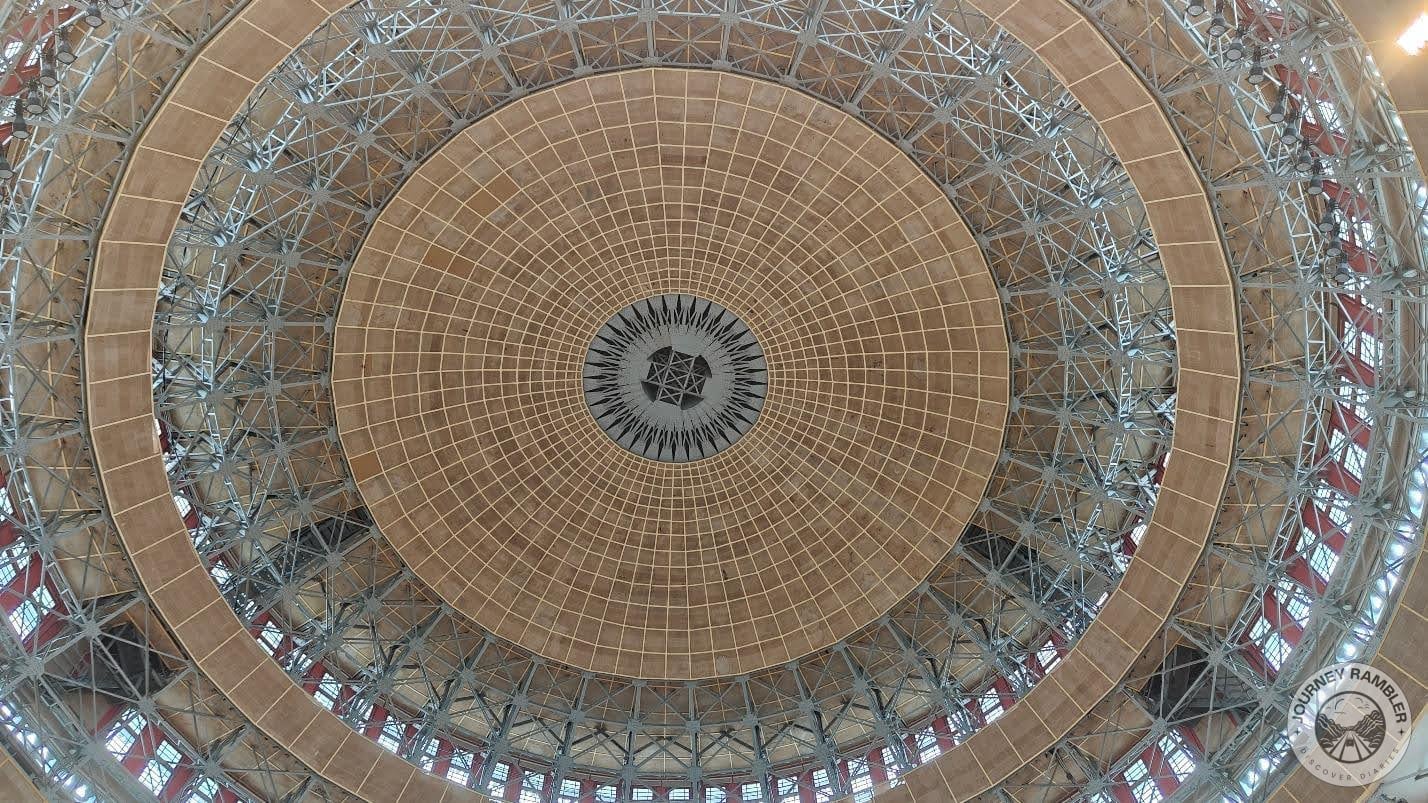
The ceiling was one of the most beautiful things that I had seen in Chongqing. It was dome-shaped and there were windows at intervals to let in sunlight.
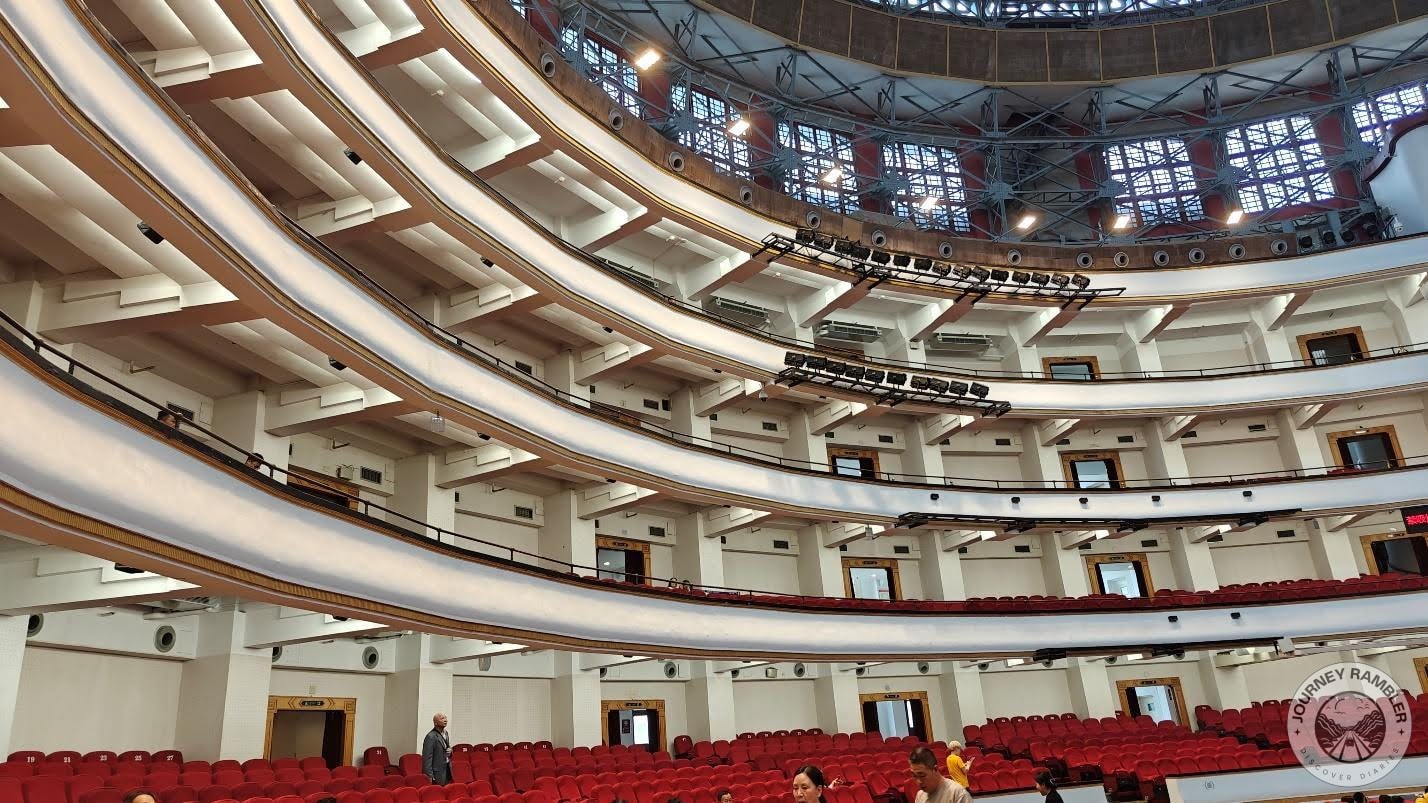
The hall was built in 1954. I could hardly believe that the whole place had been completed in only three years.
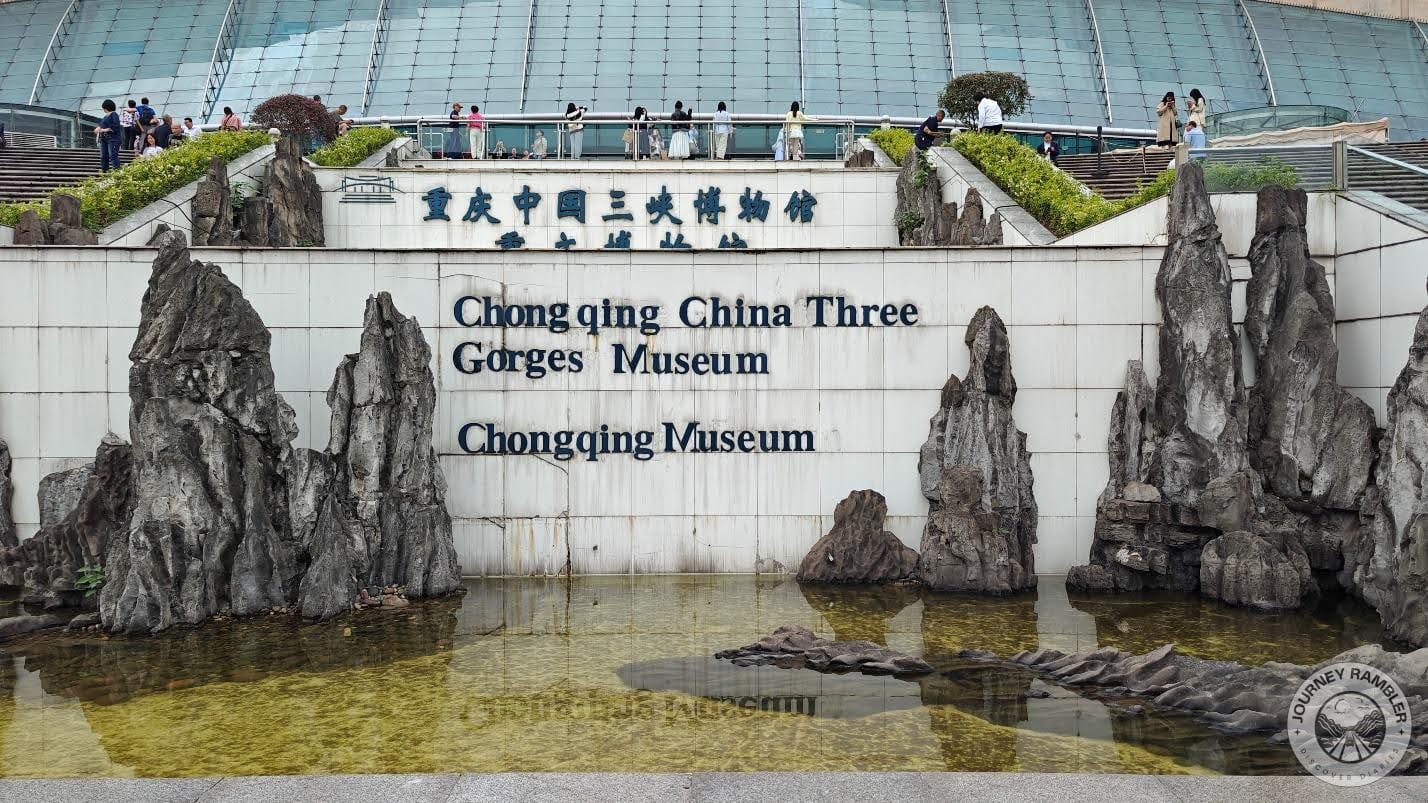
Then I went to the Three Gorges Museum or Chongqing Museum. It was meant to be a record of early Chongqing history and the history of the epic Three Gorges Dam.
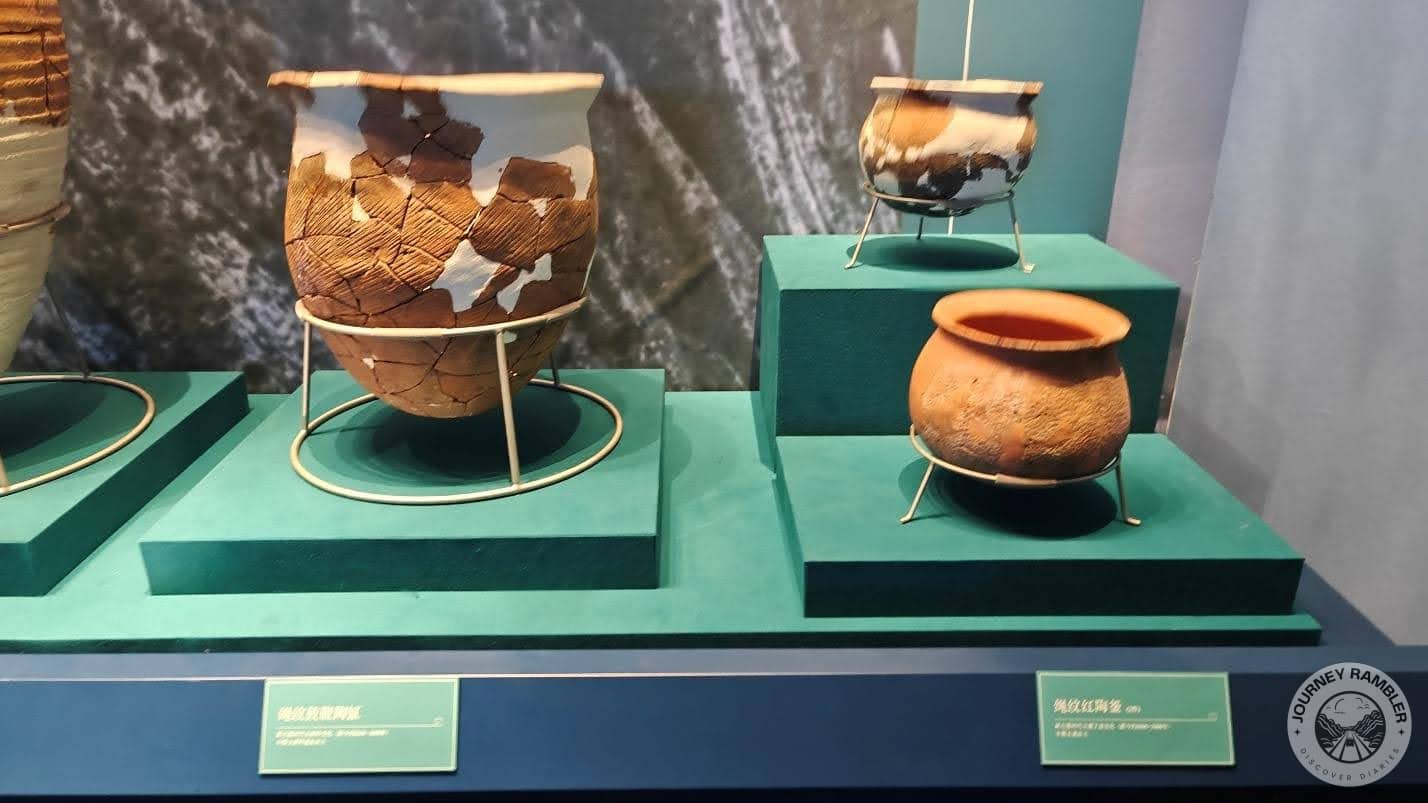
They had displayed all the terracotta and clay pots they had found in the area. I was surprised at how well-preserved some of the pots actually were.
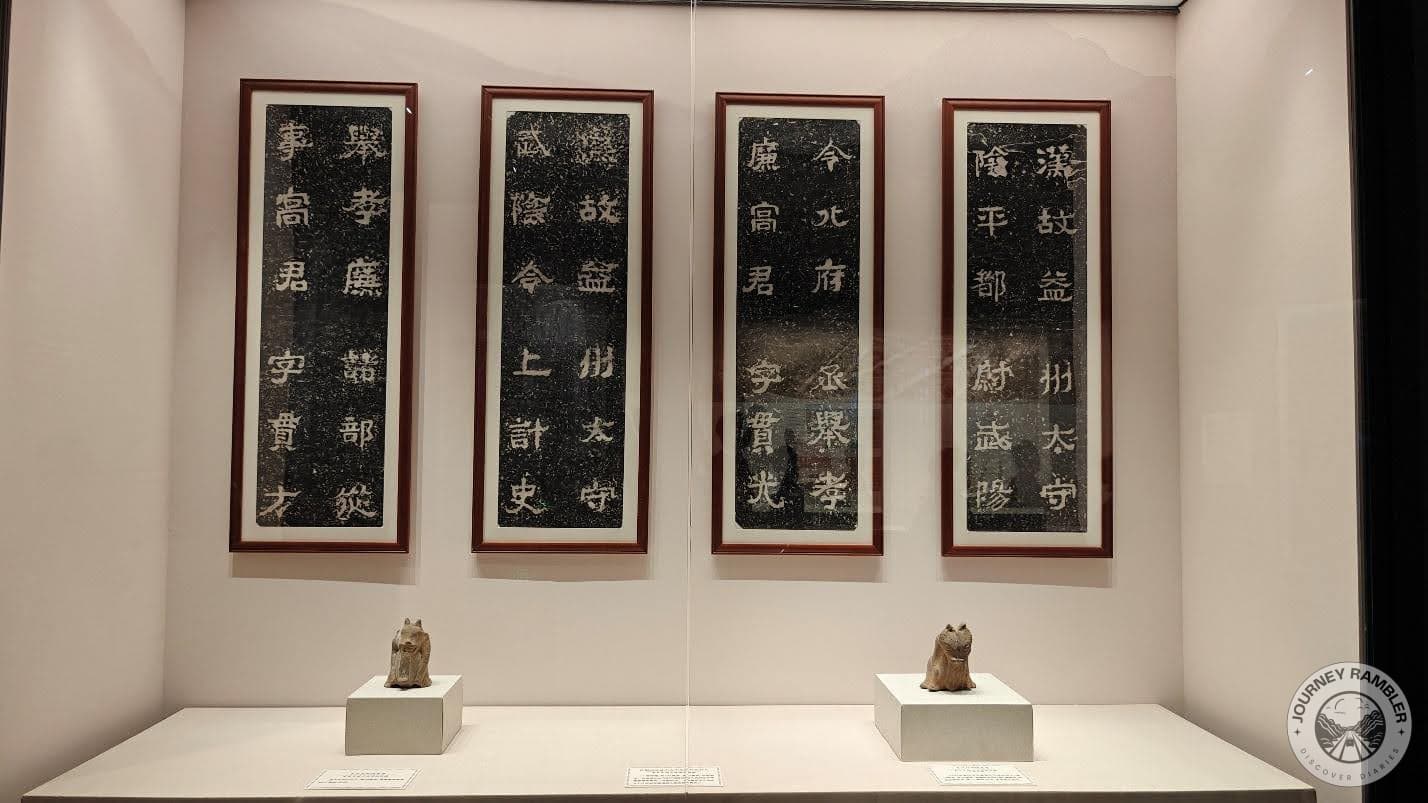
There were also some little statues and I could see that they had been nicely displayed with a lot of light.
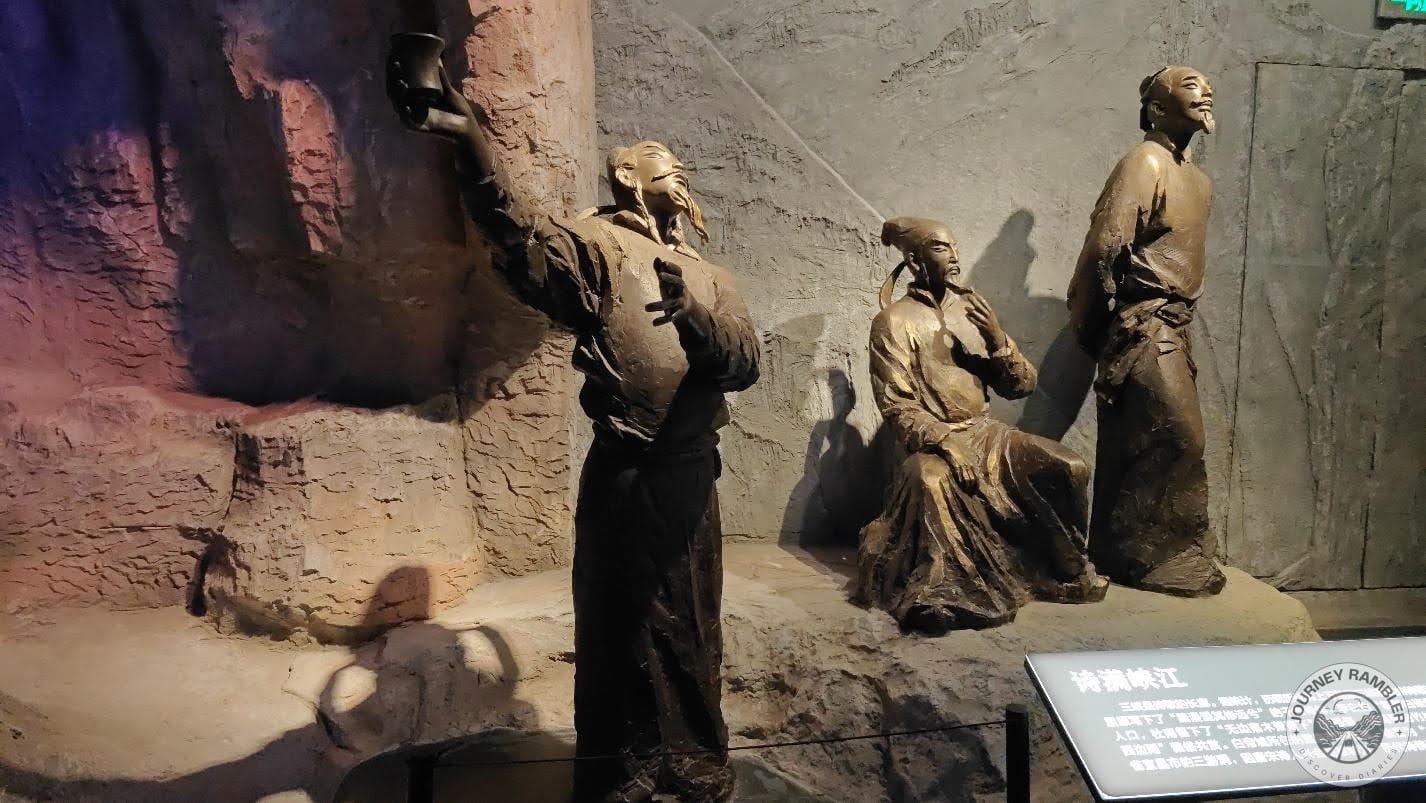
Statues of men had been placed in the exhibits to give tourists an idea about how people lived in those days. There were both permanent and temporary exhibitions at the museum.
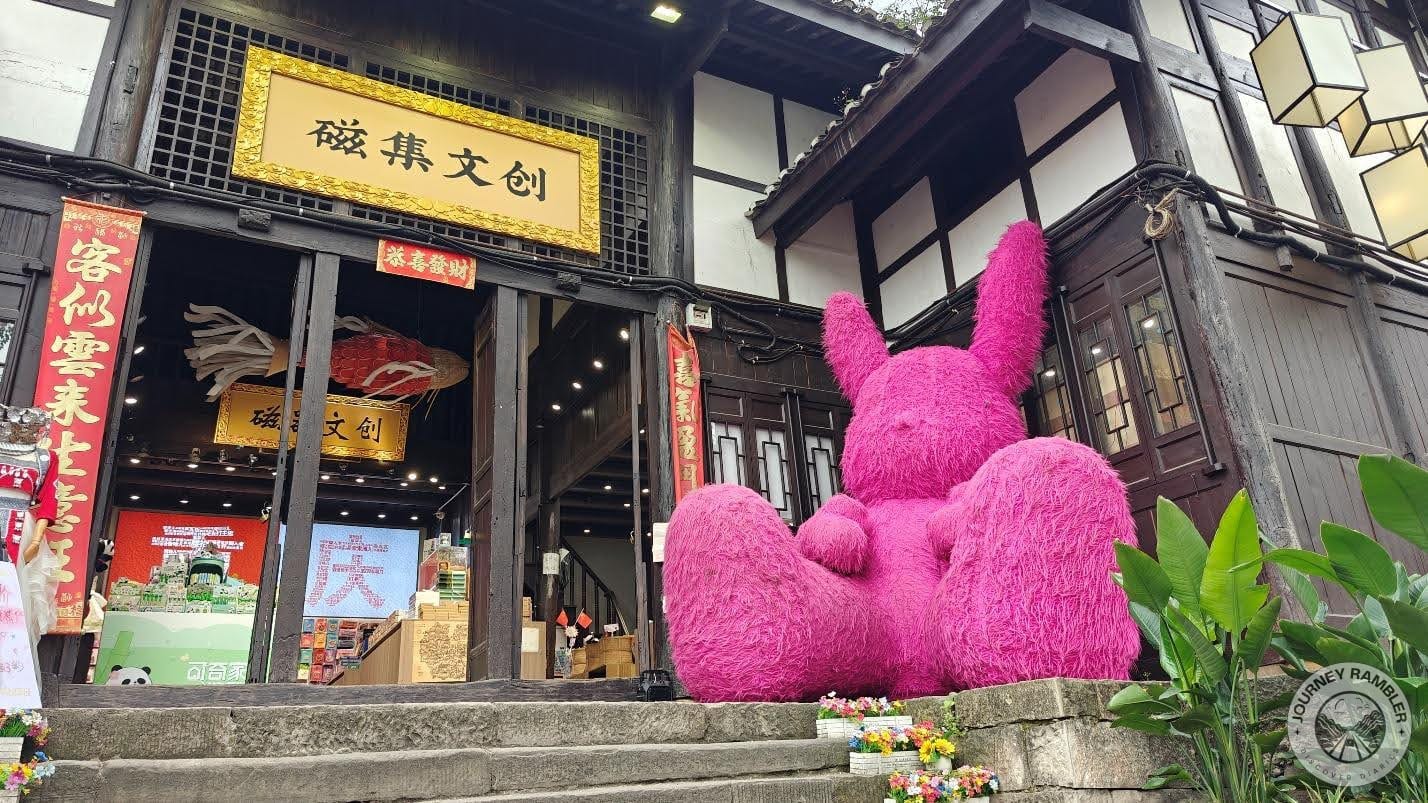
Next, I went to Ciqikou Ancient Street, which tourists usually called Little Chongqing. It was actually one of the most tourist-friendly areas in the whole city, filled with shops and boutiques. It was very charming and aesthetic.
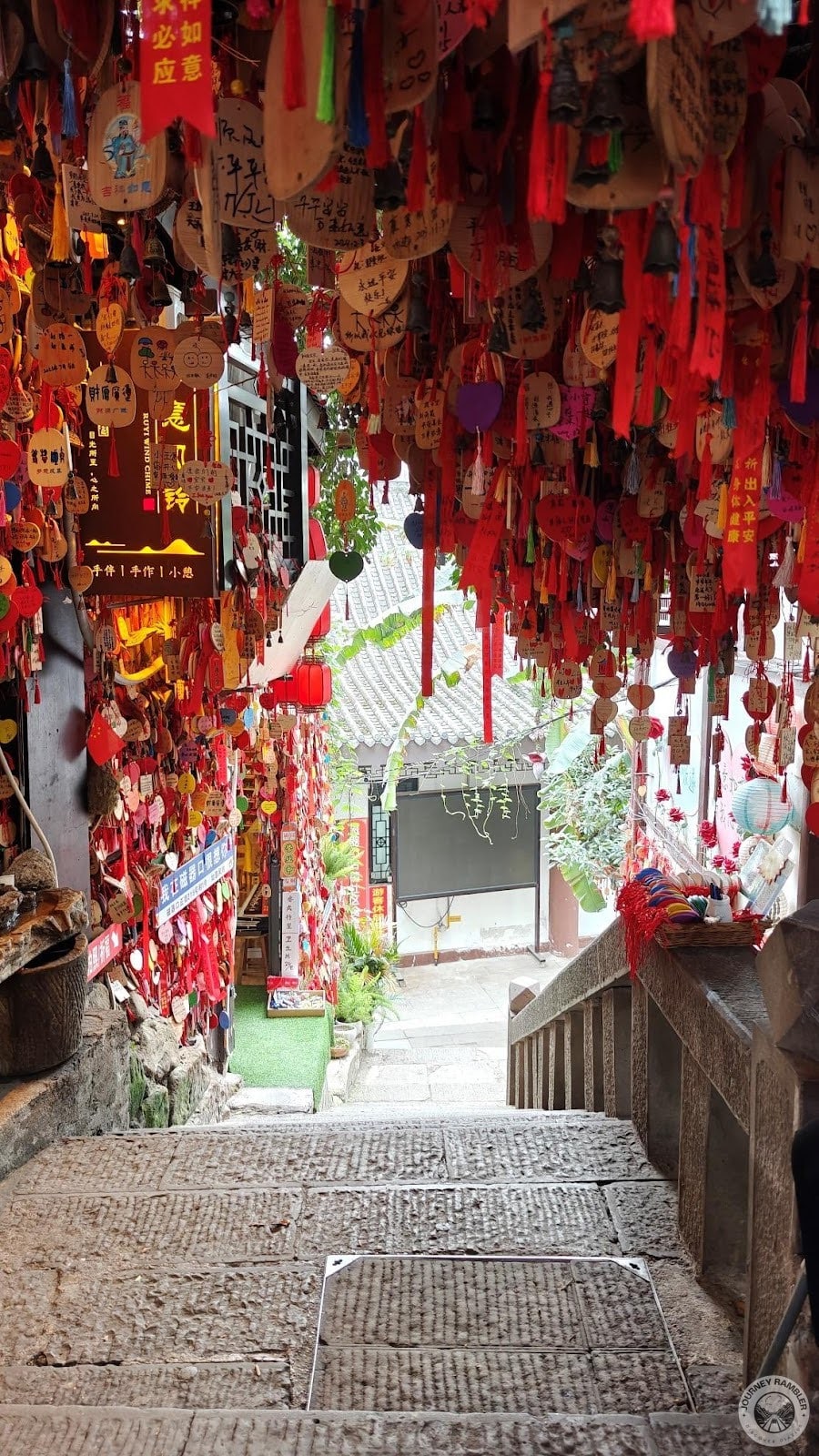
This is a thousand year old market town and it’s a protected zone. It’s considered a very auspicious place because it has perfect Fengshui.
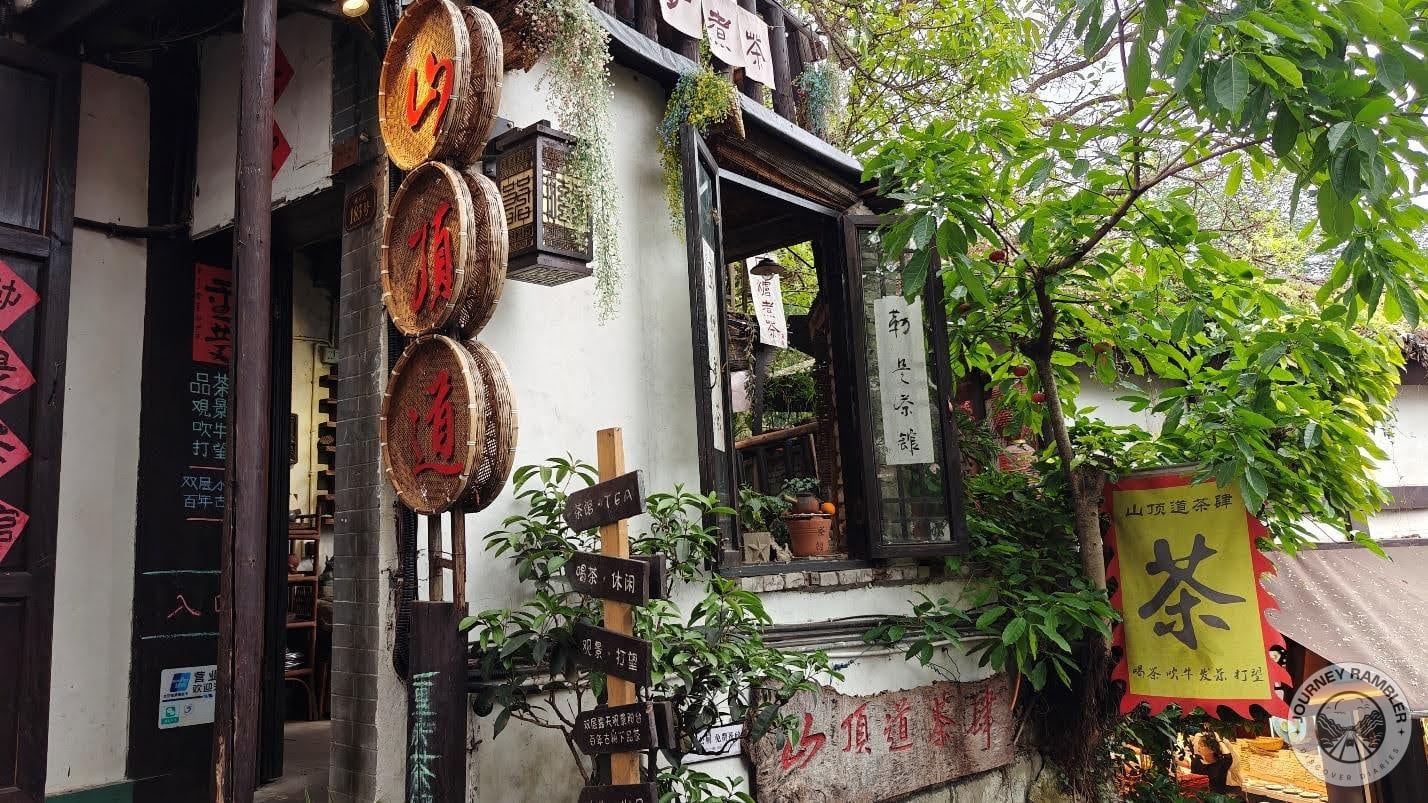
I walked around the ancient town, window-shopping and admiring the little touches of decoration outside the shops and boutiques. It was a lovely day of sightseeing.
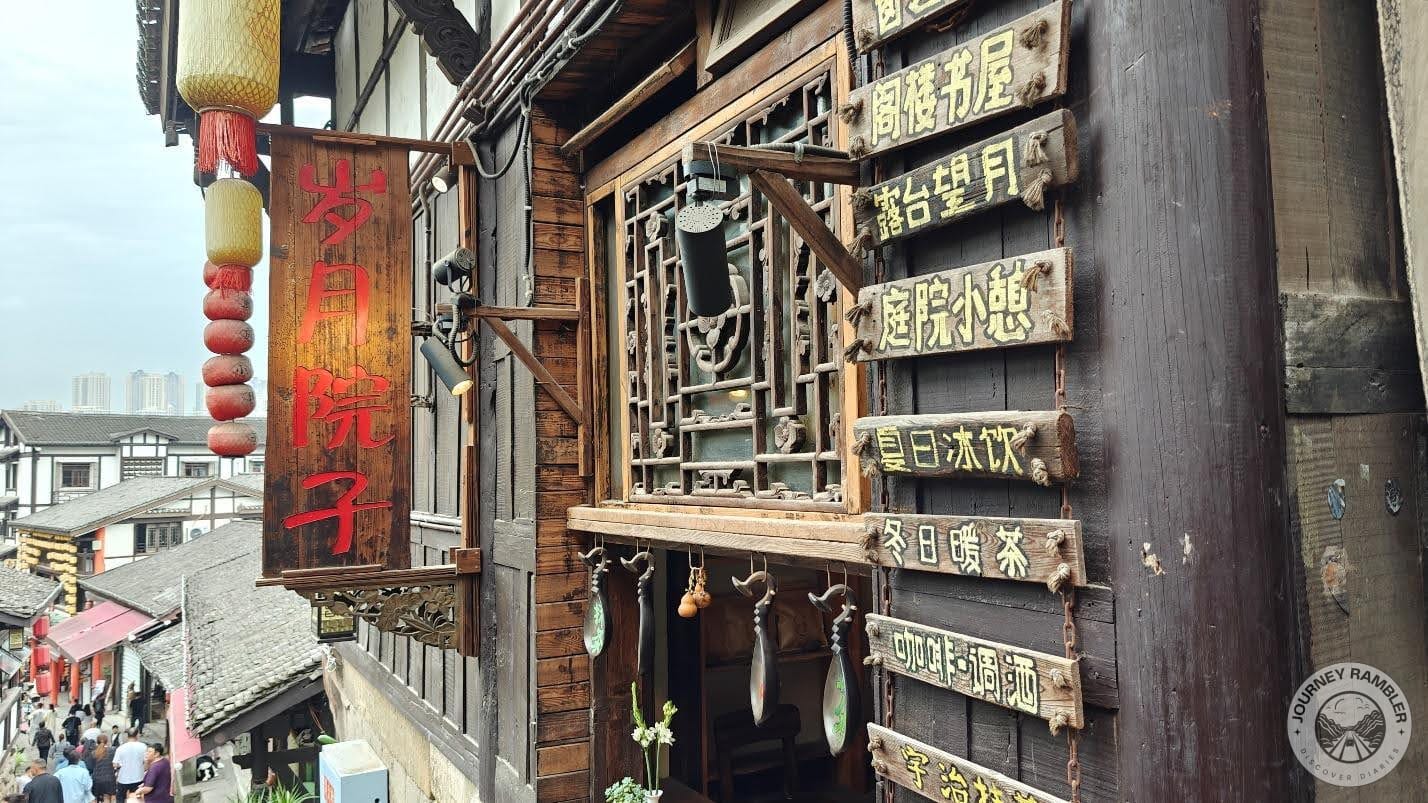
Wooden doors, windows and pillars lined the streets. Lanterns were hanging along the paths and it almost felt like I had gone back in time to some long forgotten age.
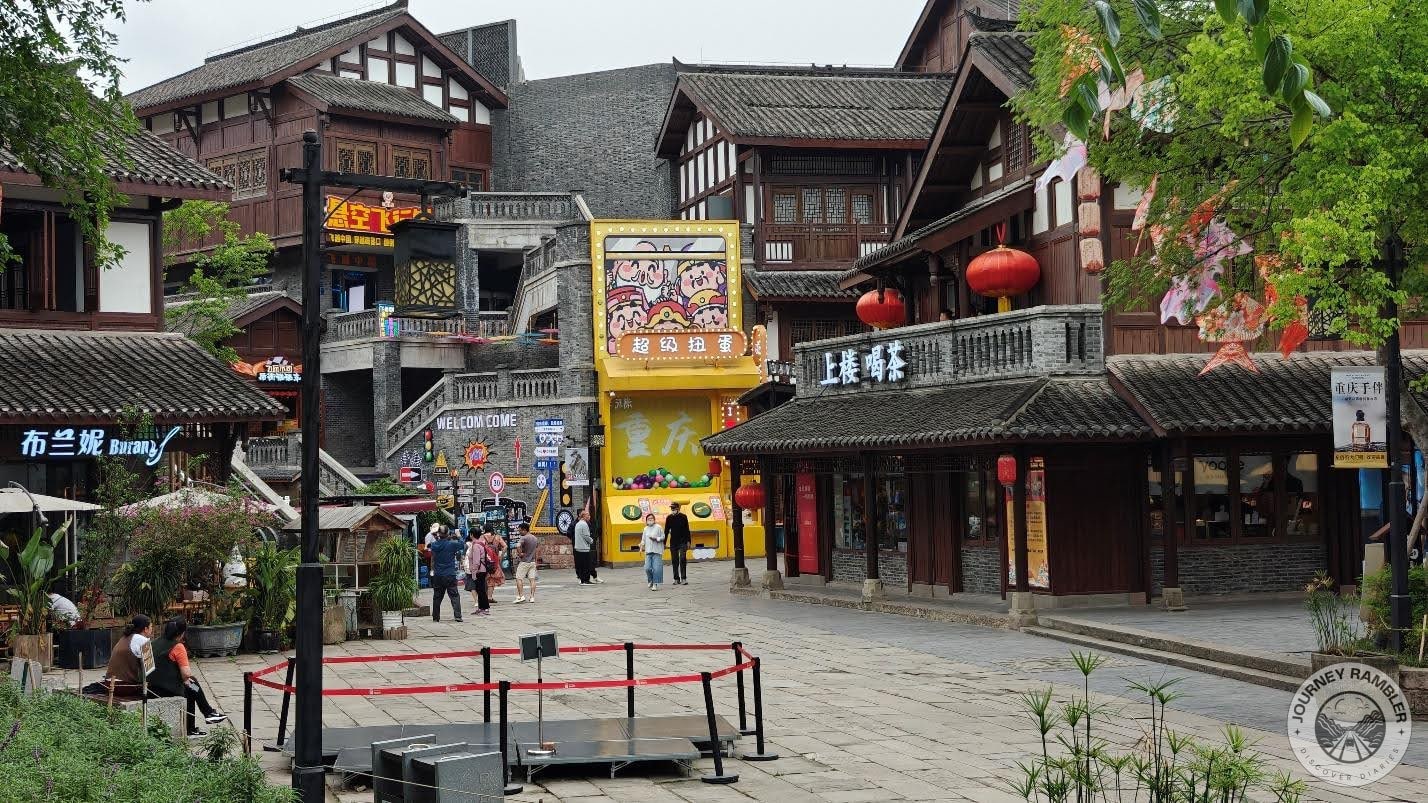
Ciqikou was definitely worth a visit. After having visited, I now knew why tourists loved the area so much.
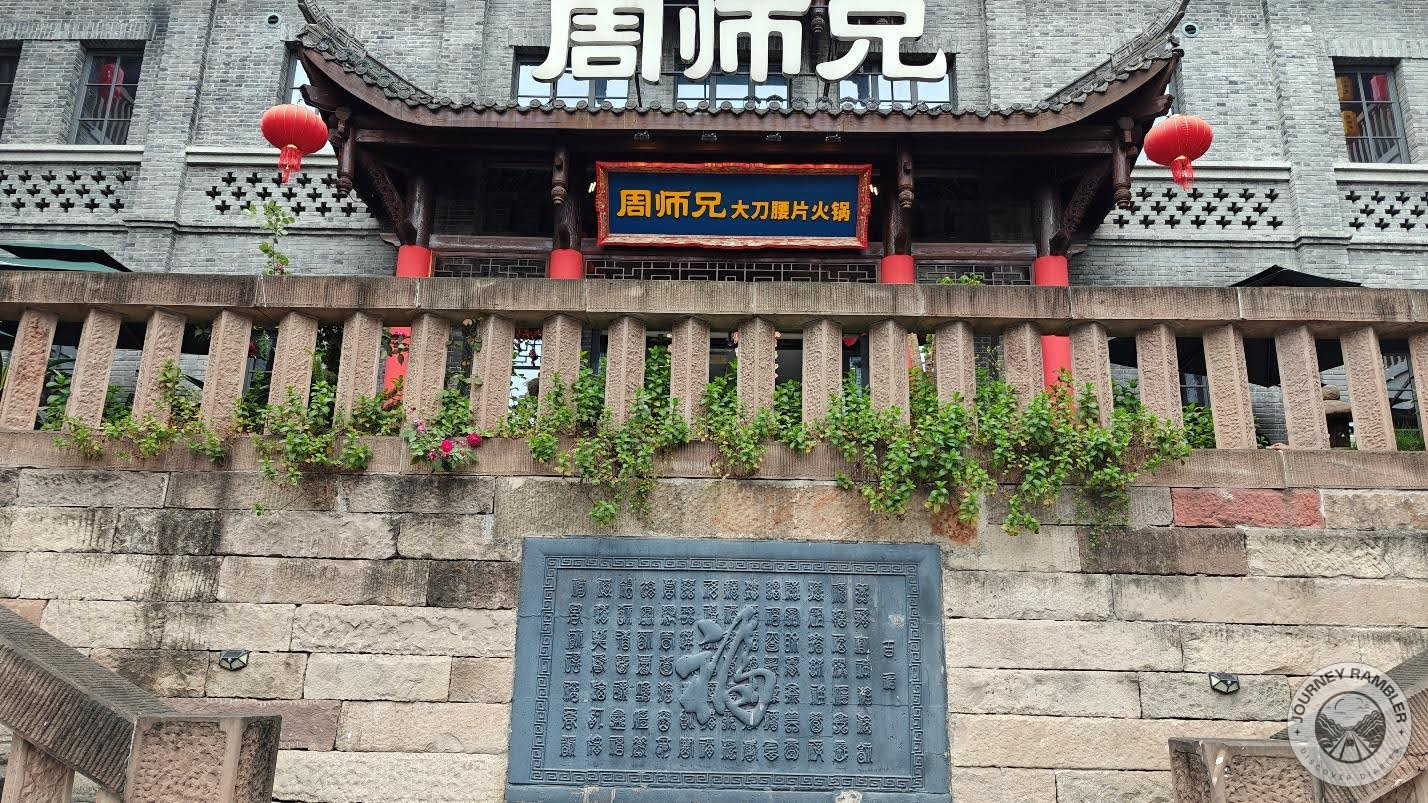
It was time to take a quick break for lunch. I stopped at Zhoushixiong Hot Pot. I loved hotpot and there was just so much opportunity to eat it while in China!
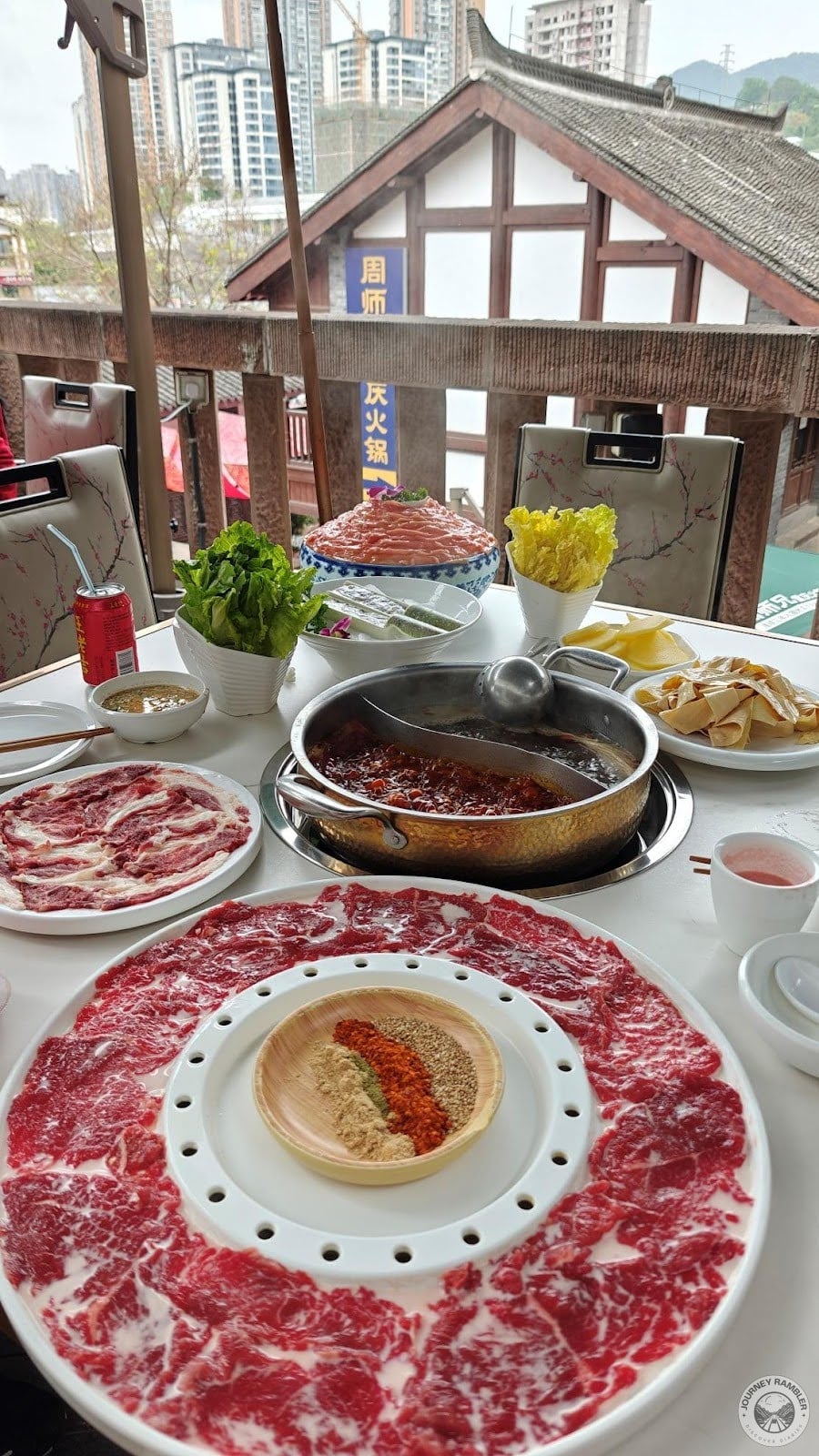
The soup pot was placed in the center of the table and kept steaming hot. Different cuts of meat were served on round plates and so were some vegetarian sides.
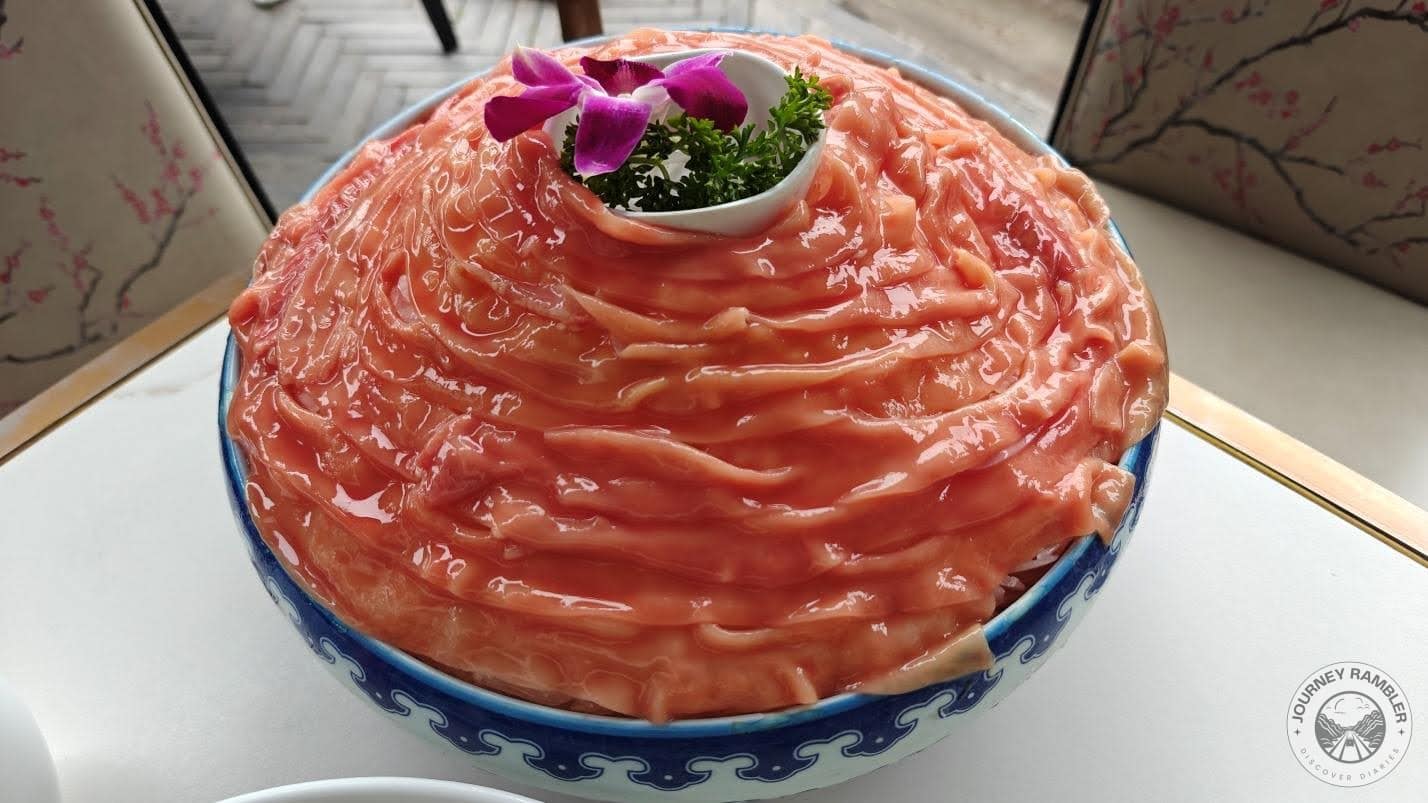
One unique thing that the restaurant served, which wasn’t available in most places, was duck intestine. It was served in a large blue porcelain bowl and it both looked and tasted quite different.
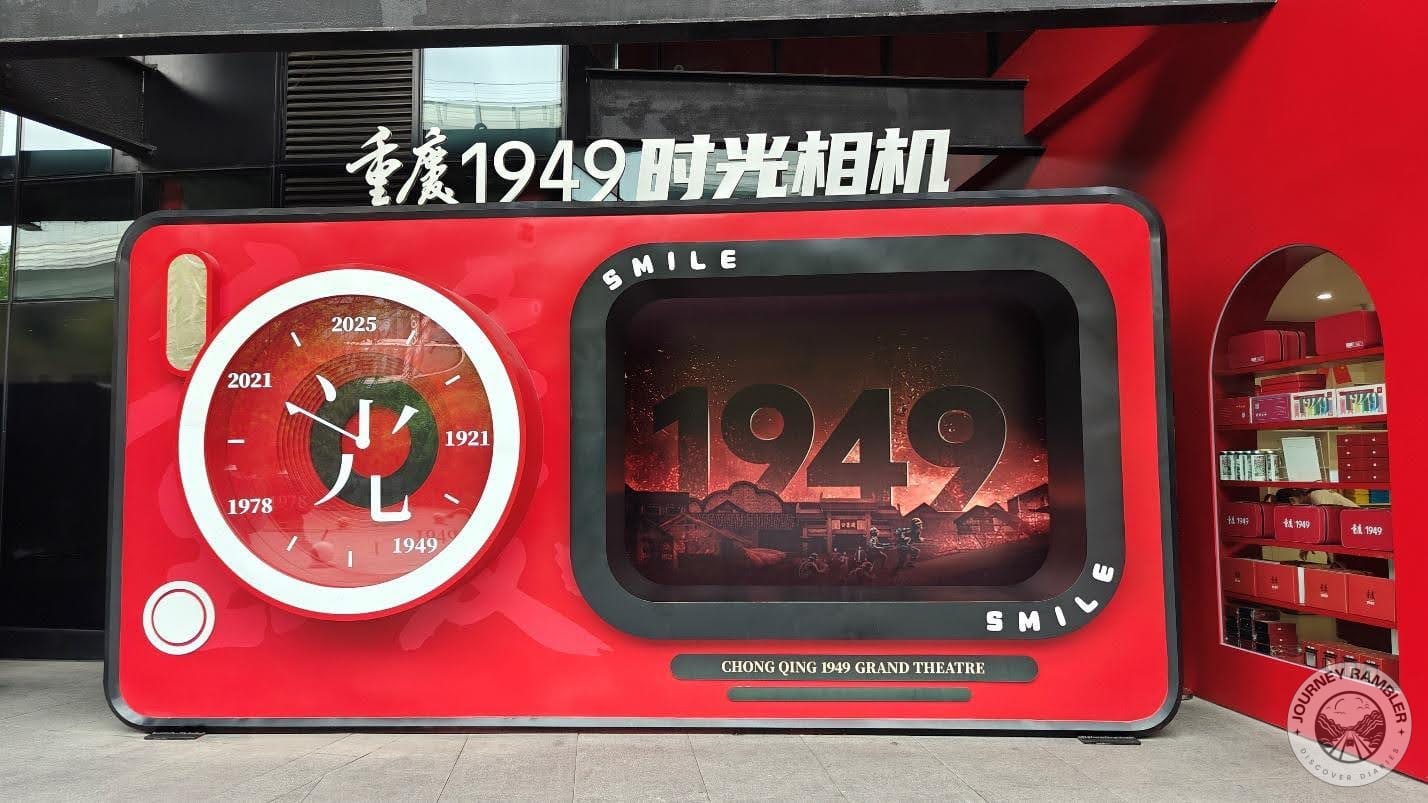
After lunch, I headed to Chongqing 1949 Grand Theater. Despite what the name suggests, the theater wasn’t built in 1949 but much more recently. It was built specifically for the show Chongqing 1949. And the show was quite an experience.
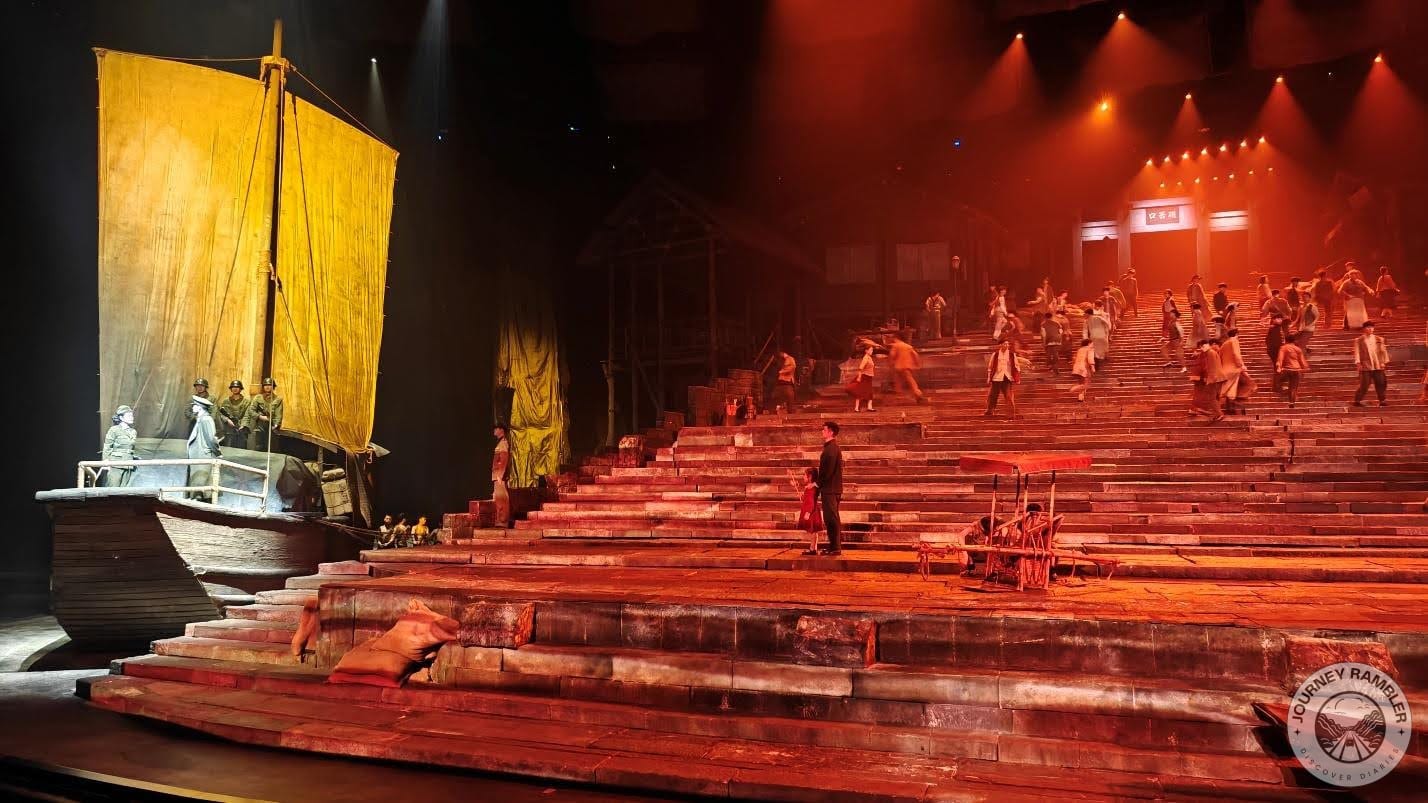
The sets were all fabulous. Everything looked so lifelike, from the rock steps to the sailing ship.
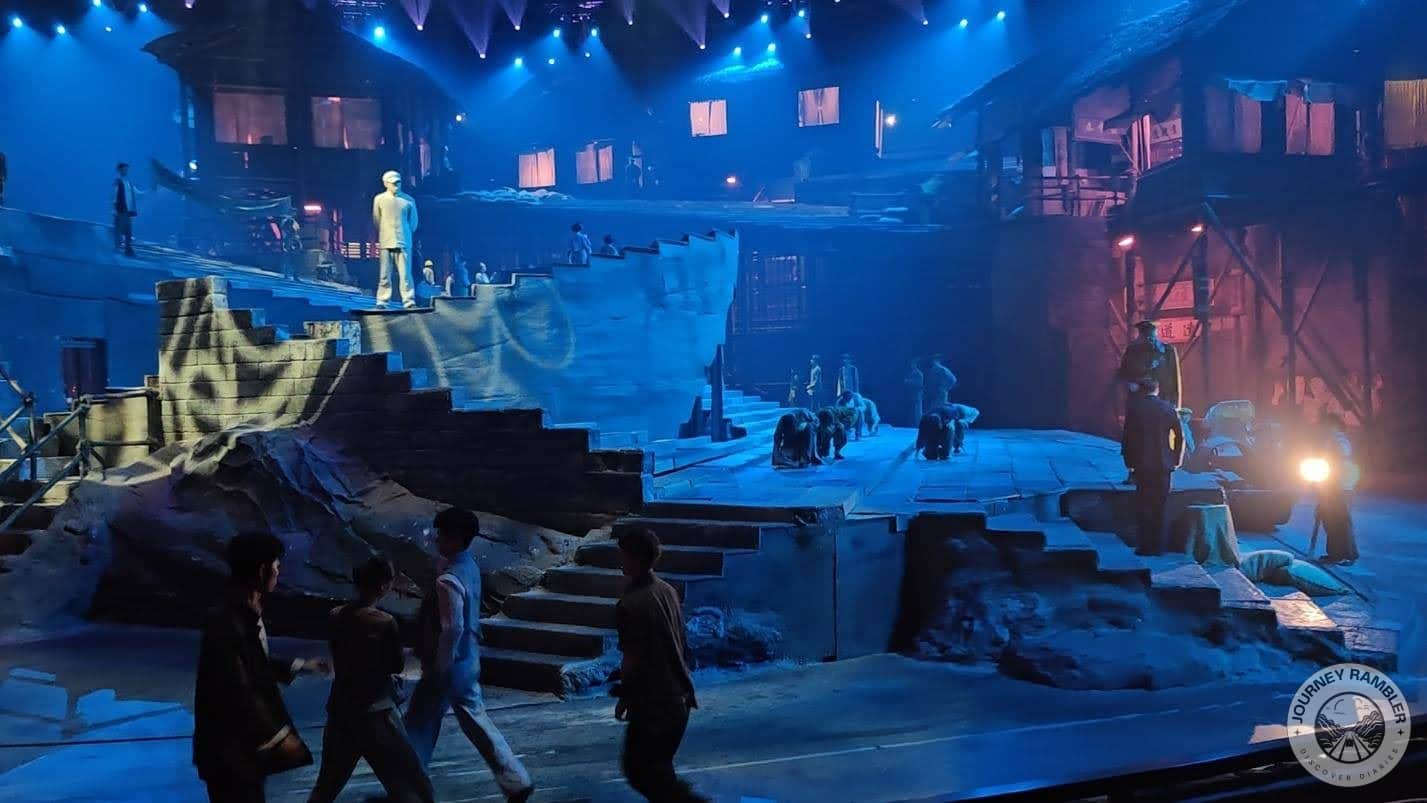
There were rotating stages and people flying around on cables. The action was happening all around the audience, not just on stage. In some ways, it felt like I was a part of the play itself.
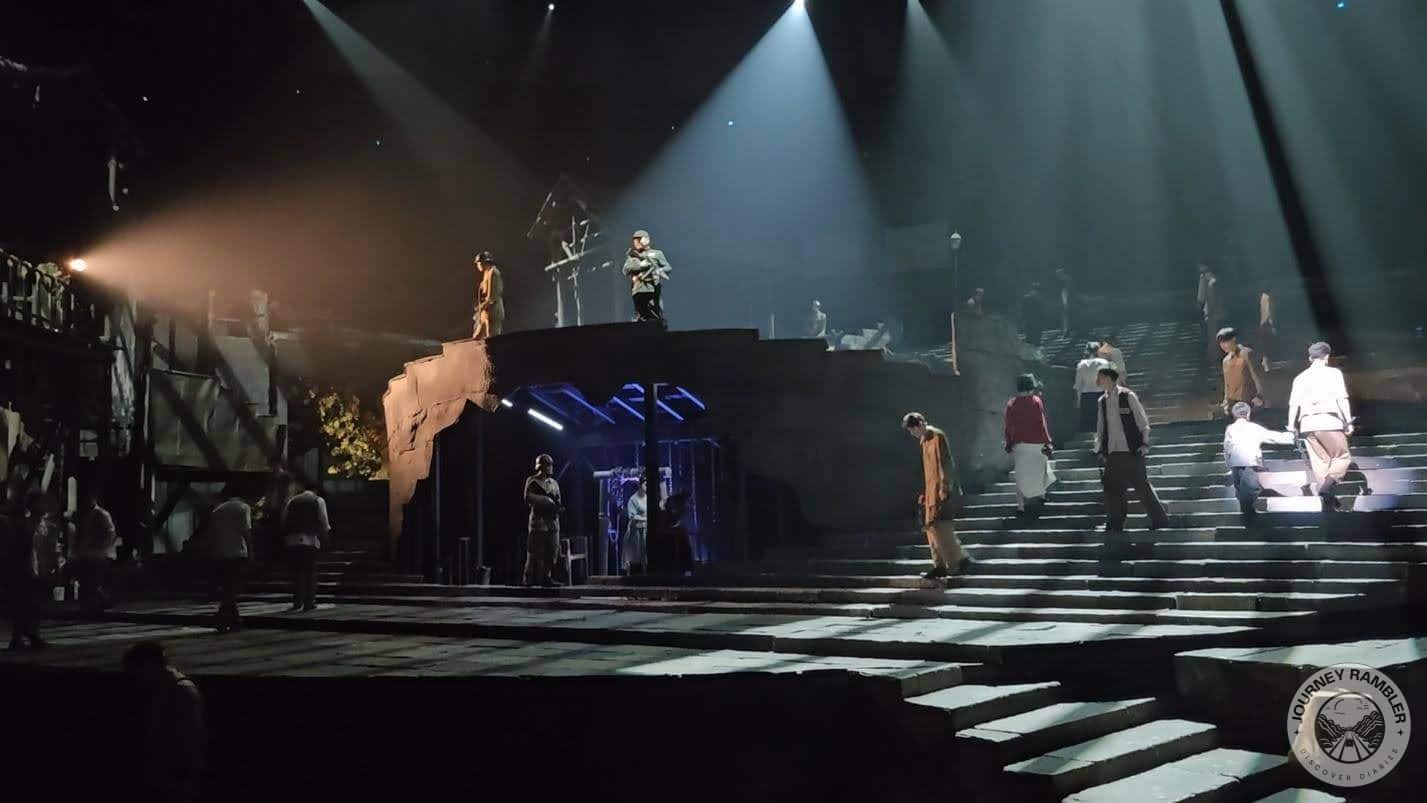
The actors also had elaborate costumes. I knew that a lot of money and resources must have been spent on this grand theater experience.
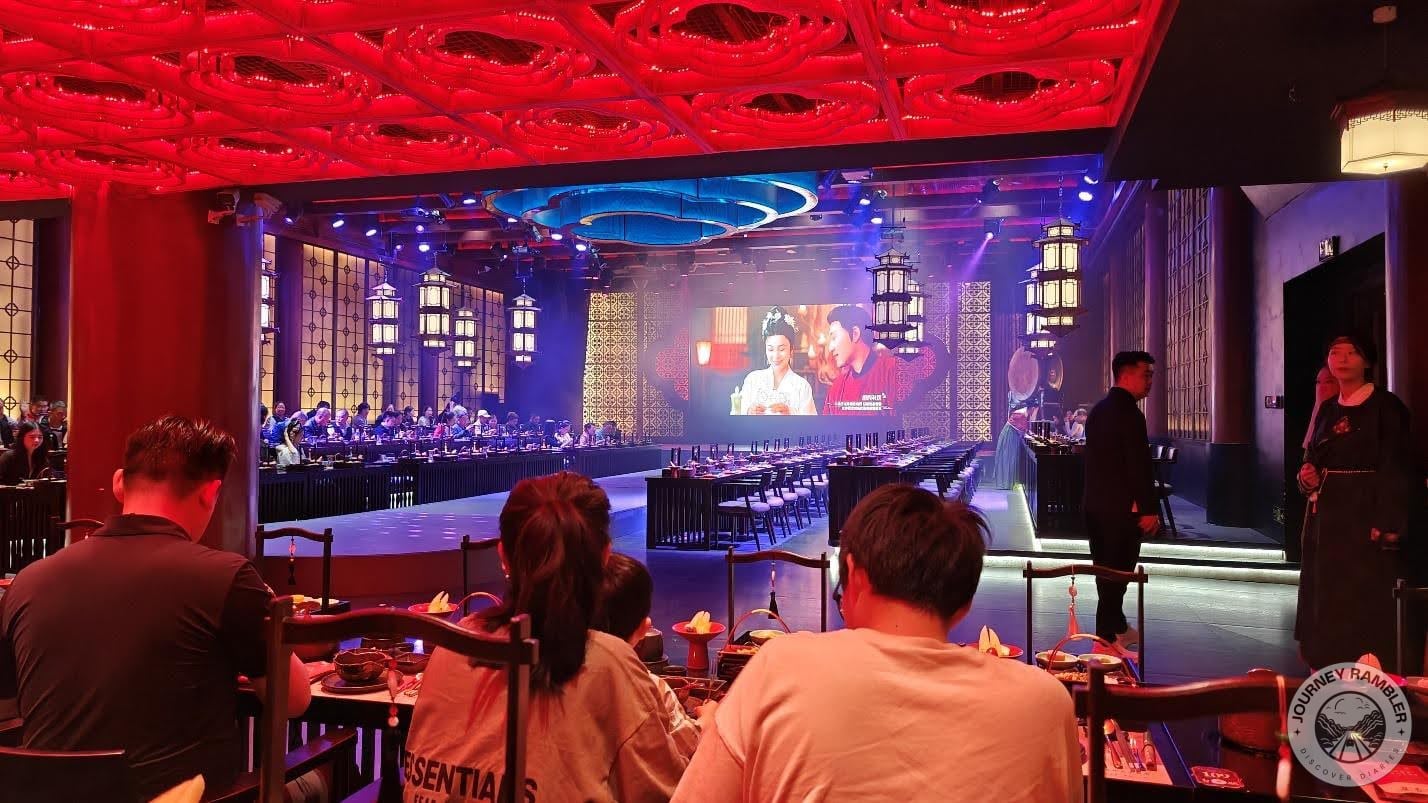
After the show, my last thing on the itinerary for the day was the banquet in Ba Kingdom. It didn’t just have food but a whole cultural experience. The banquet made guests feel like they were back in ancient times, with cultural games and performances.
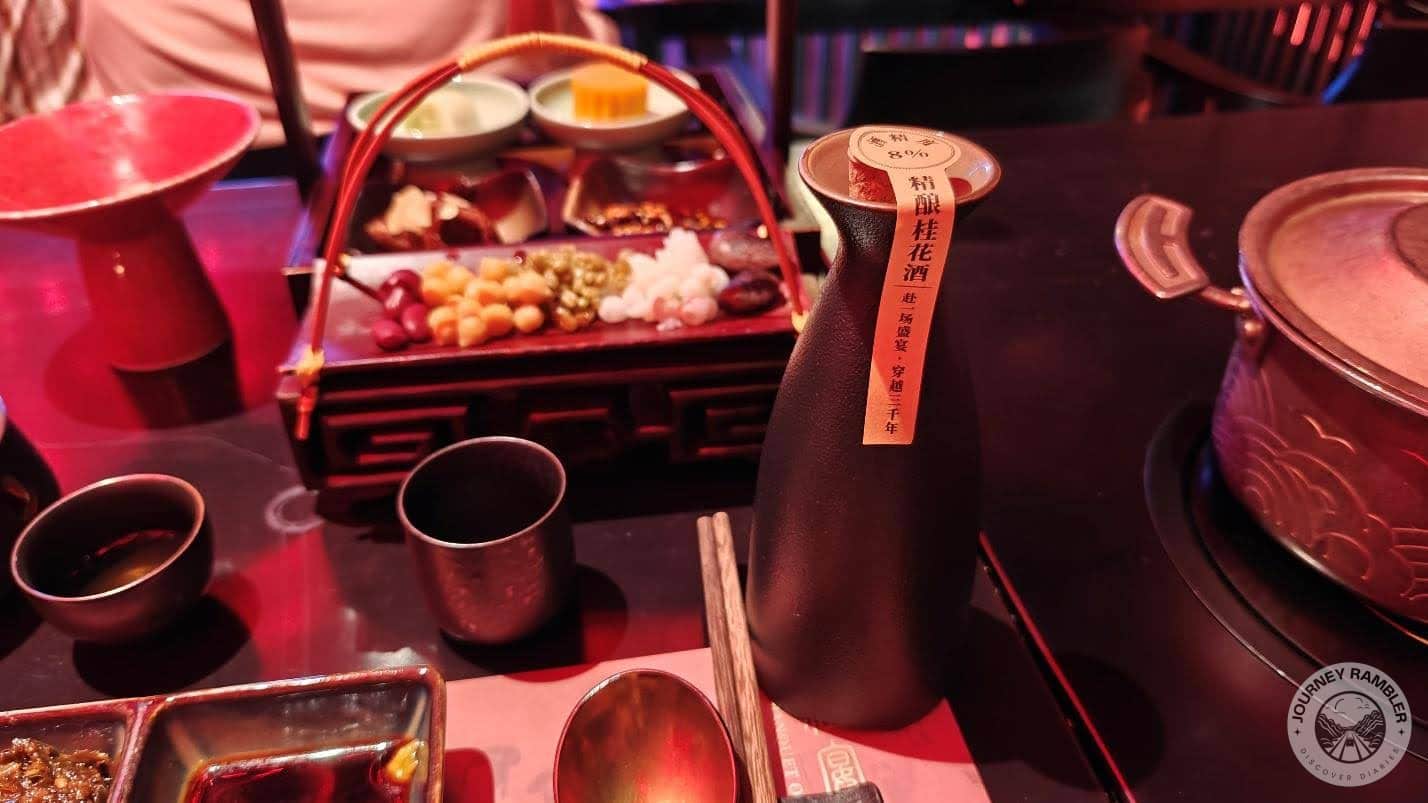
The food was really good too.
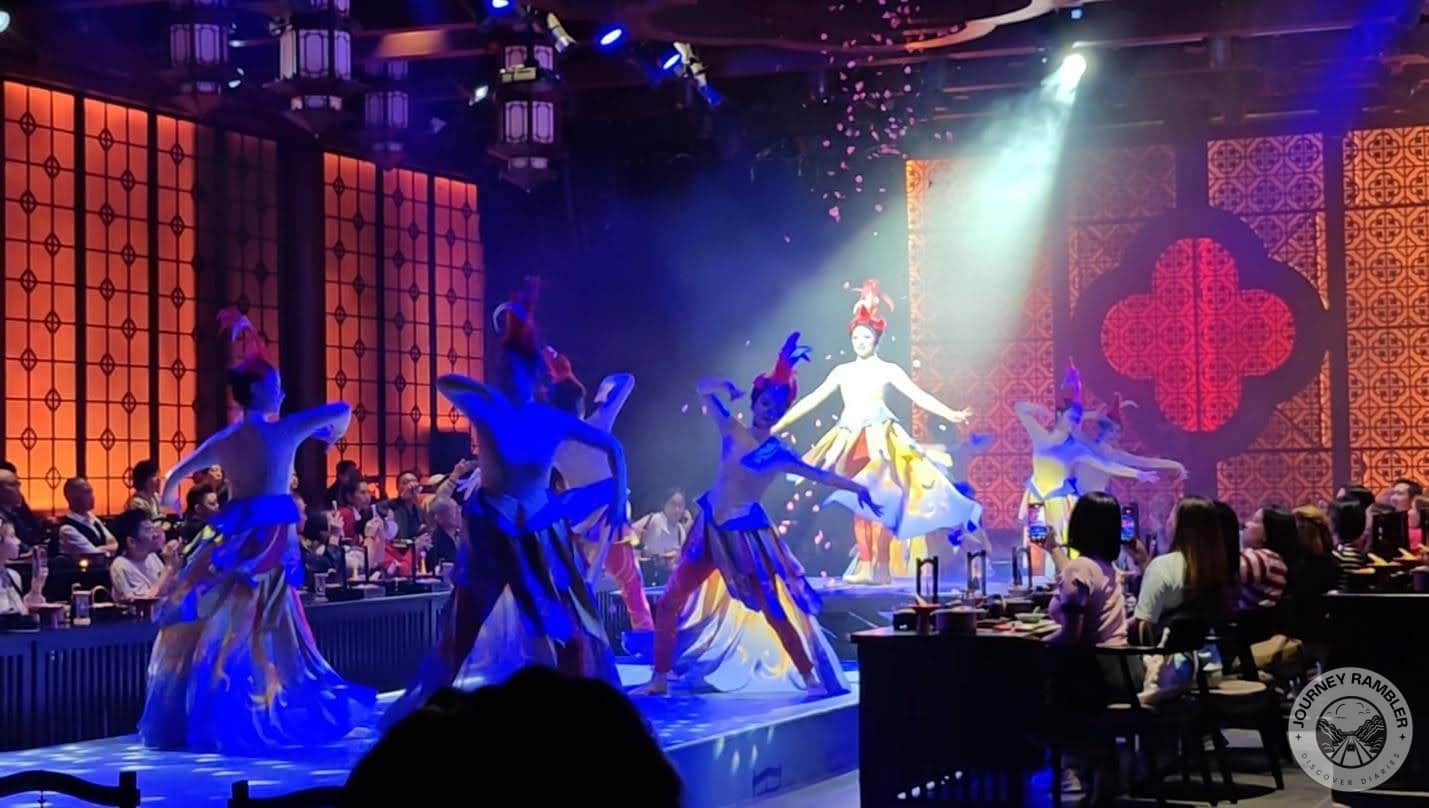
The performance during the meal was mesmerizing and I couldn’t take my eyes off the performers. It was a glorious end to a really hectic day.
Day 3
13. Fairy Mountain National Forest Park
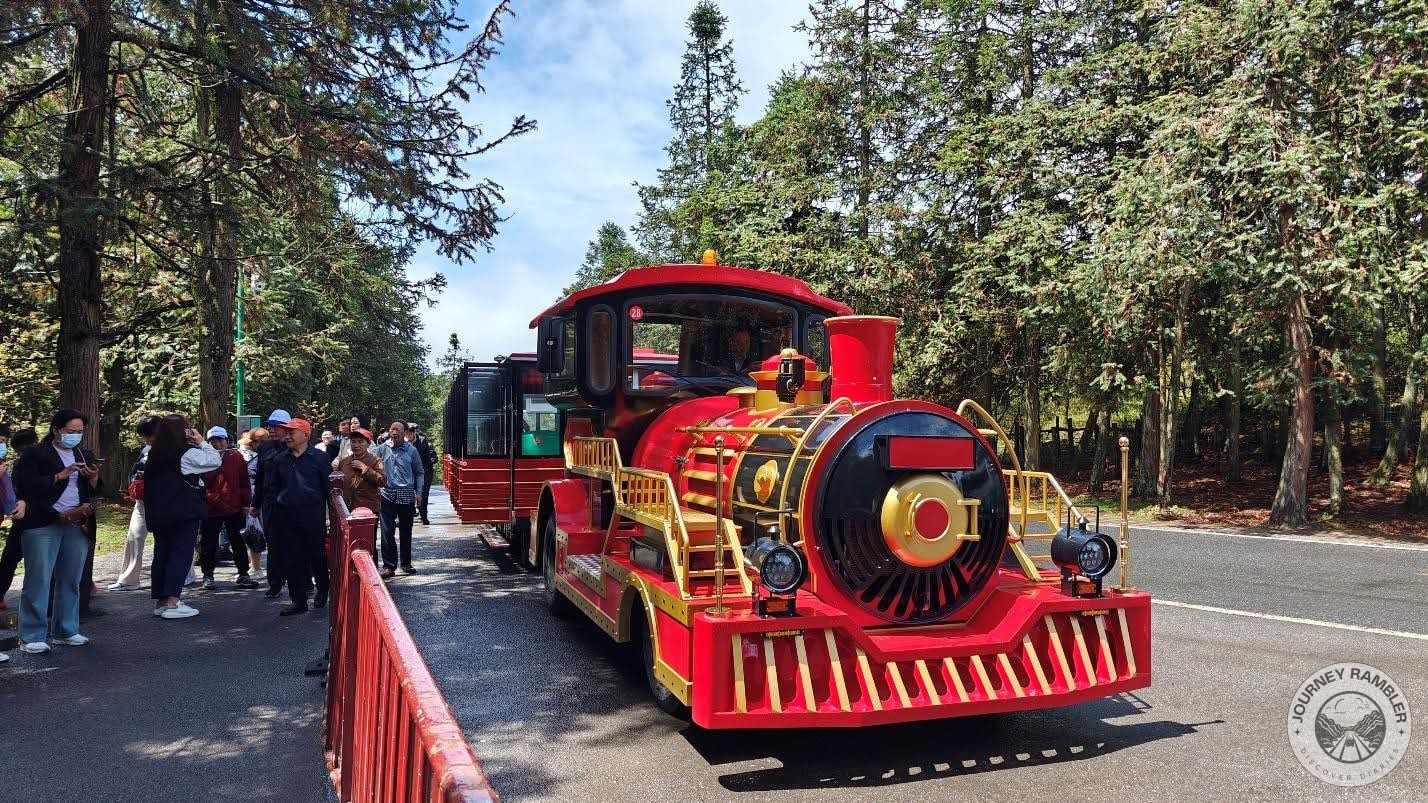
My third day was packed so I set off quite early. I headed to Fairy Mountain National Park, which was about 180 km from the urban Chongqing city area. There was a cute red and black train roaming around the park.
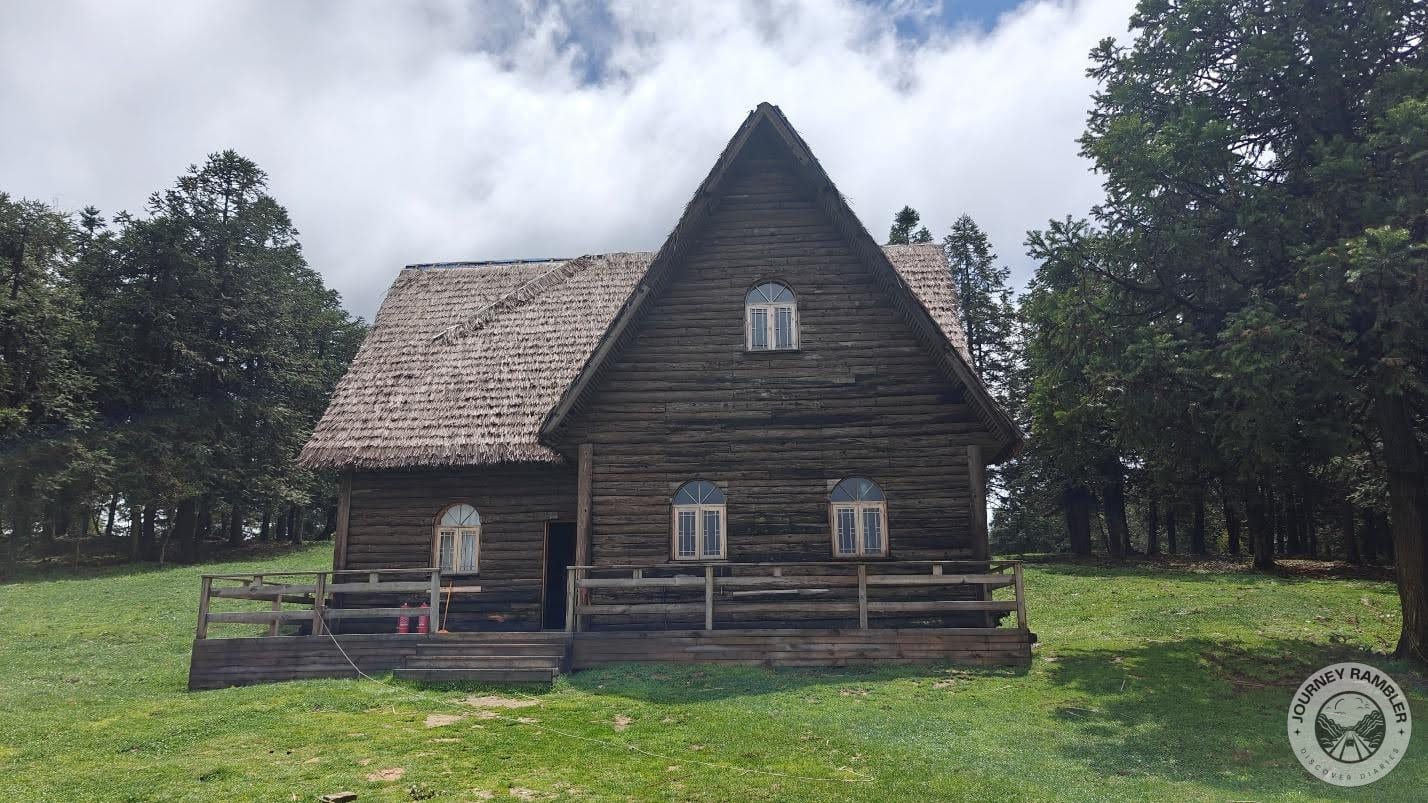
The log cabin surrounded by open fields and trees looked picturesque. It was like a storybook image of a farmhouse.
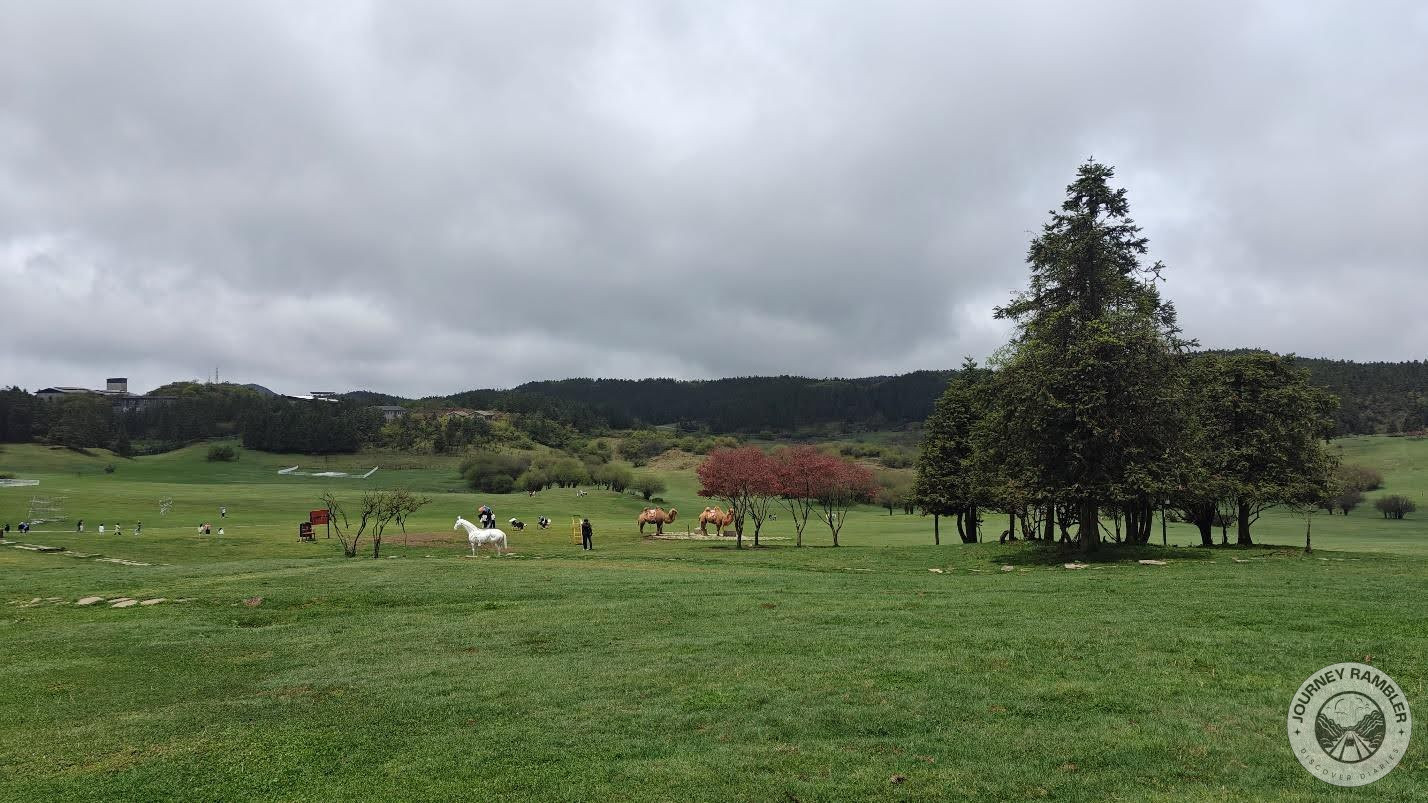
There was a herd of horses grazing in the distance. The National Park has a lot of animals and it’s so scenic that it has been used for filming several movies. In the winter, it’s used for skiing.
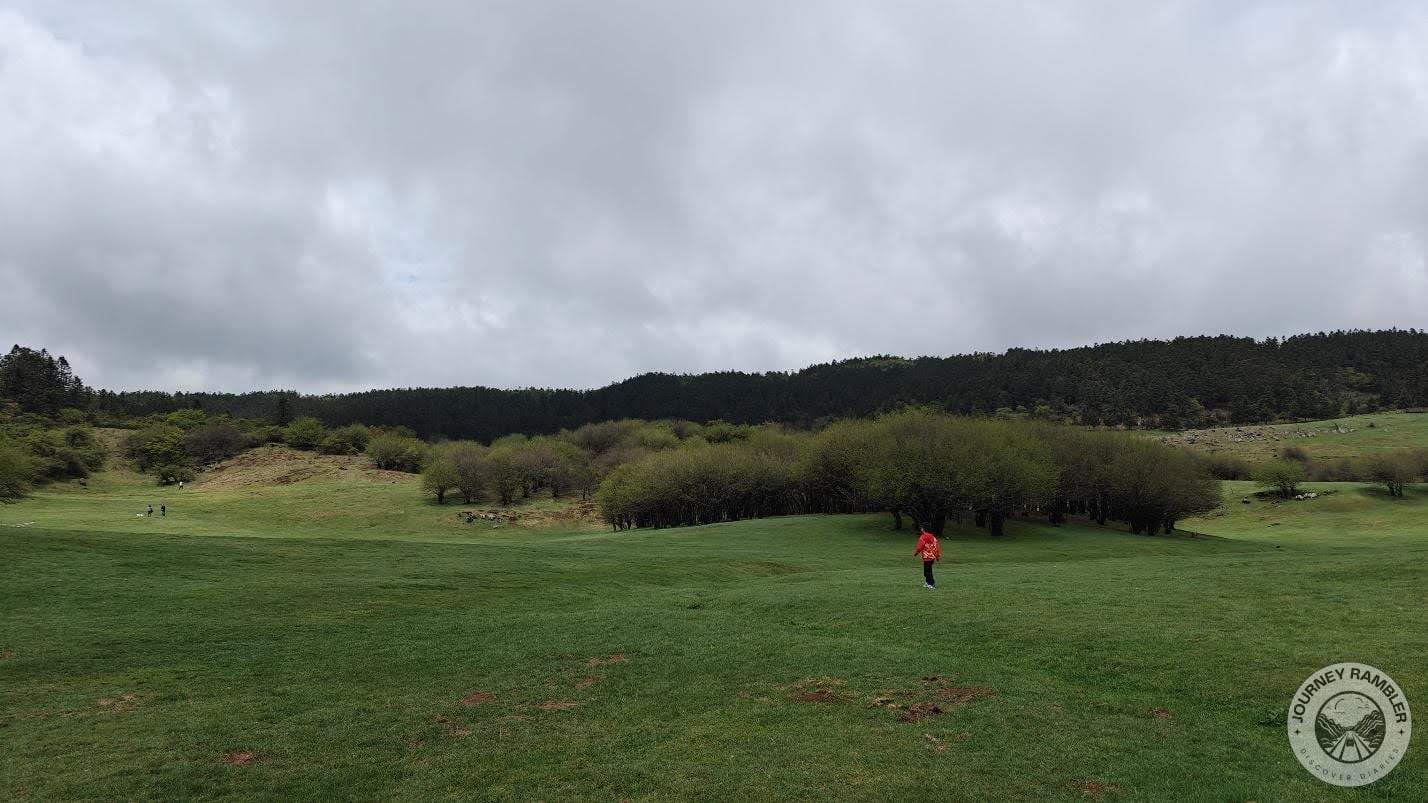
Visitors could walk around the quiet meadows. I could see why Fairy Mountain was called “the eastern Switzerland.”
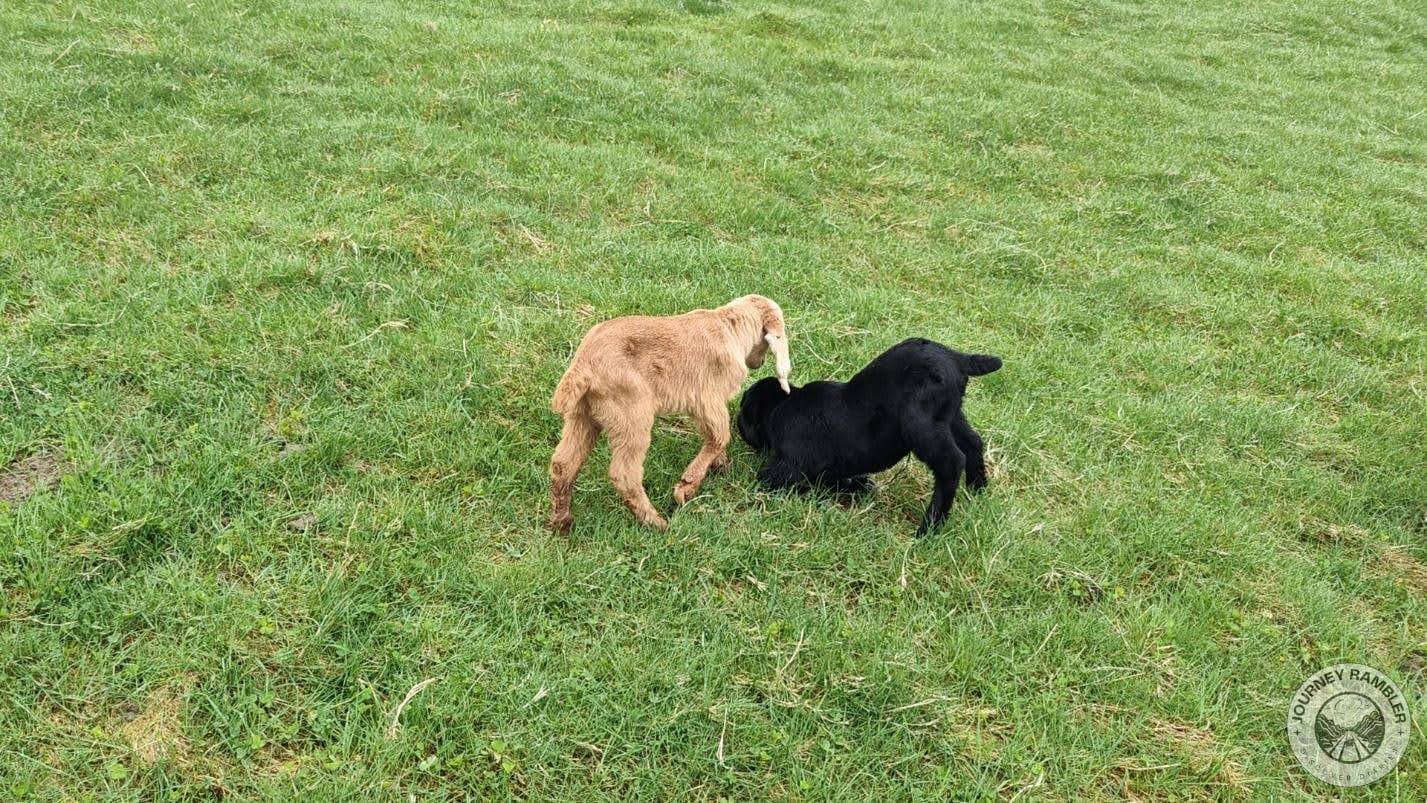
I saw two little lambs playing with each other in the grass. One was light brown and one was pitch black. They were extremely cute.
14. Wulong Natural Three Bridges
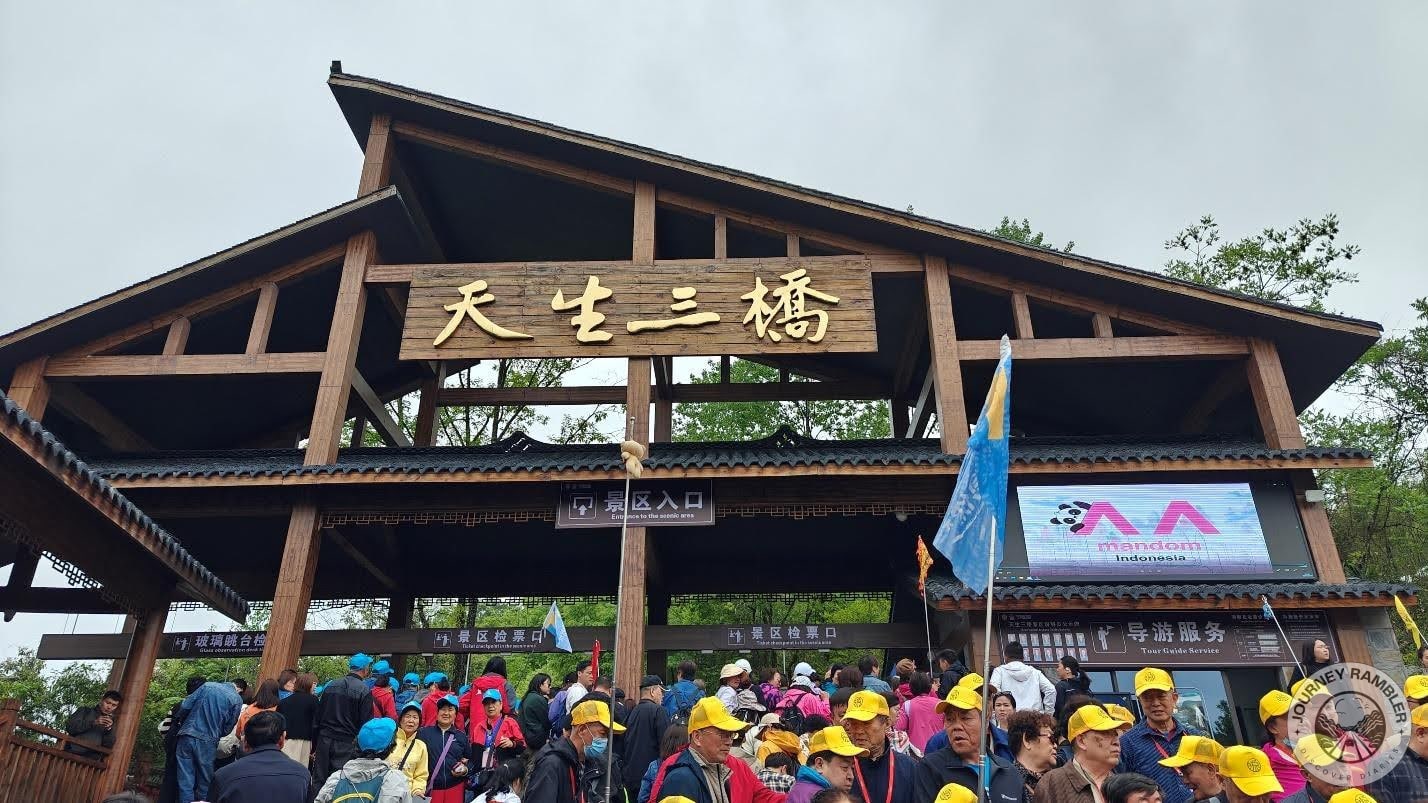
I moved on to the Wulong Karst National Geology Park to see the three bridges.
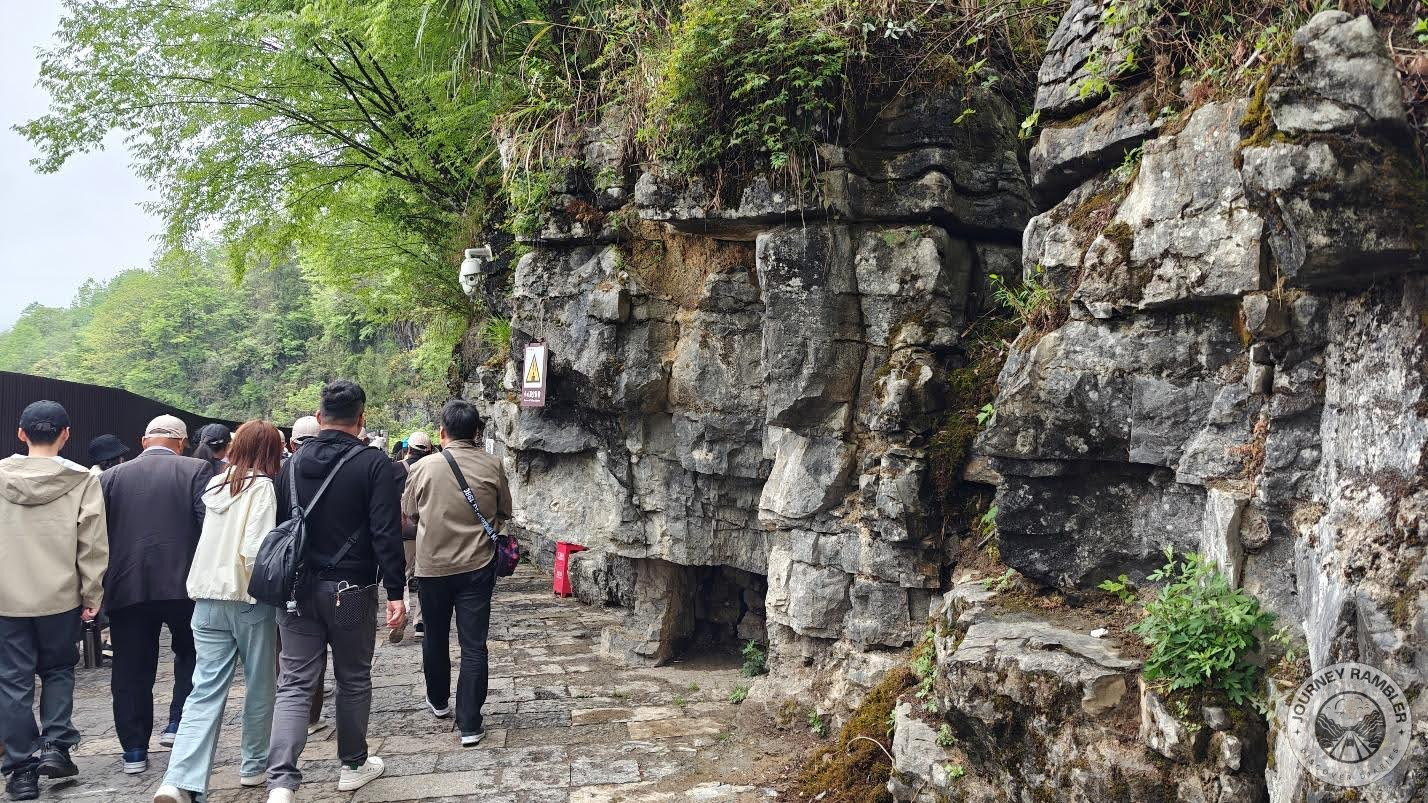
The three limestone bridges had actually all formed naturally and they spanned the Yangshui River. In Chinese, the bridges were all named after dragons.
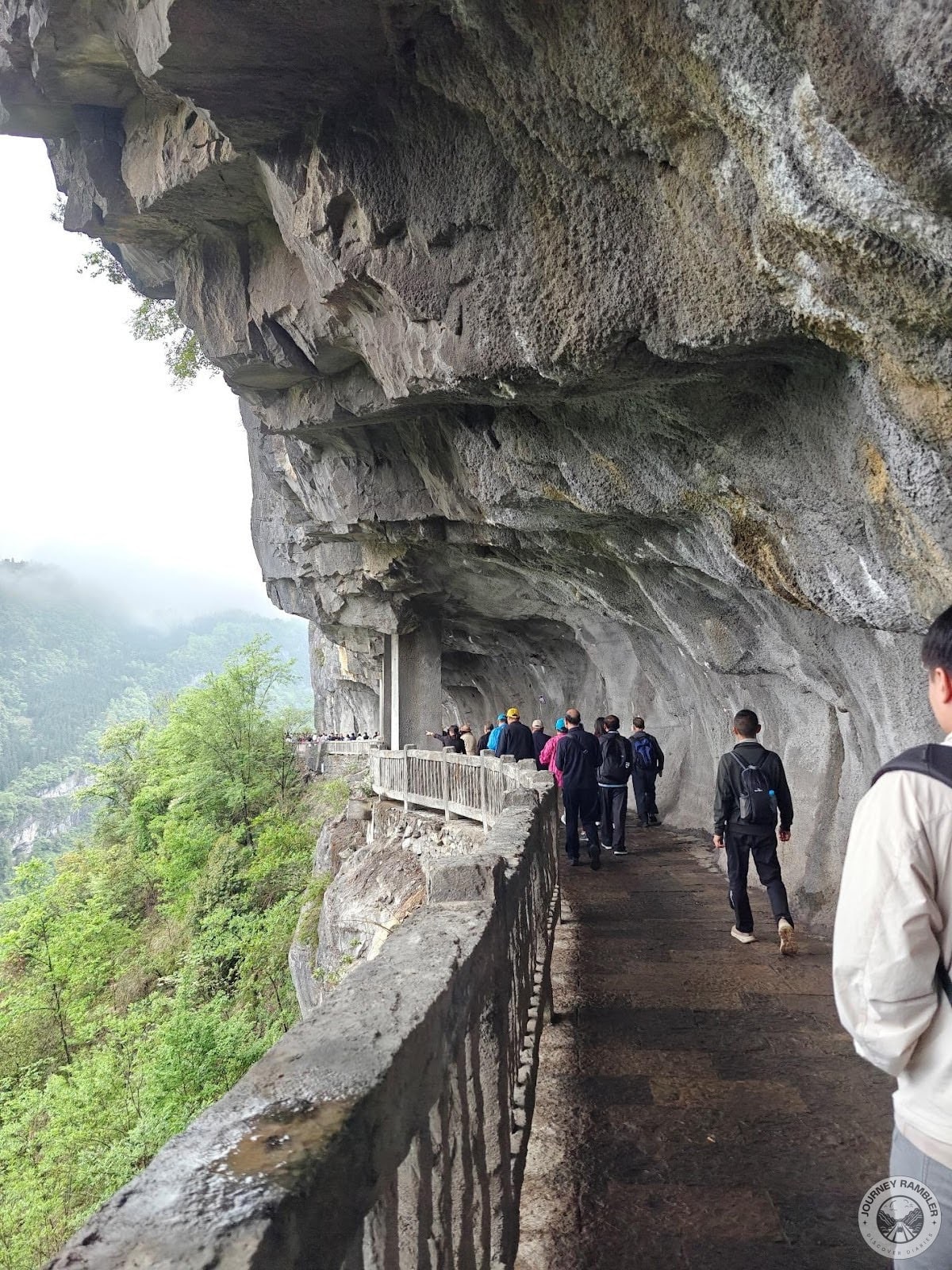
I walked along the side of the mountain, like all the other tourists. It was a long drop but it felt very safe because of the stone railings on the side.

There were all kinds of crevices and gorges and the view was just brilliant. The contrast between the bright green foliage and trees and the dark rock made the view much more striking.

The distance that the bridges spanned wasn’t very long. But it was fascinating that the rocks had been able to form across the river in such a manner.
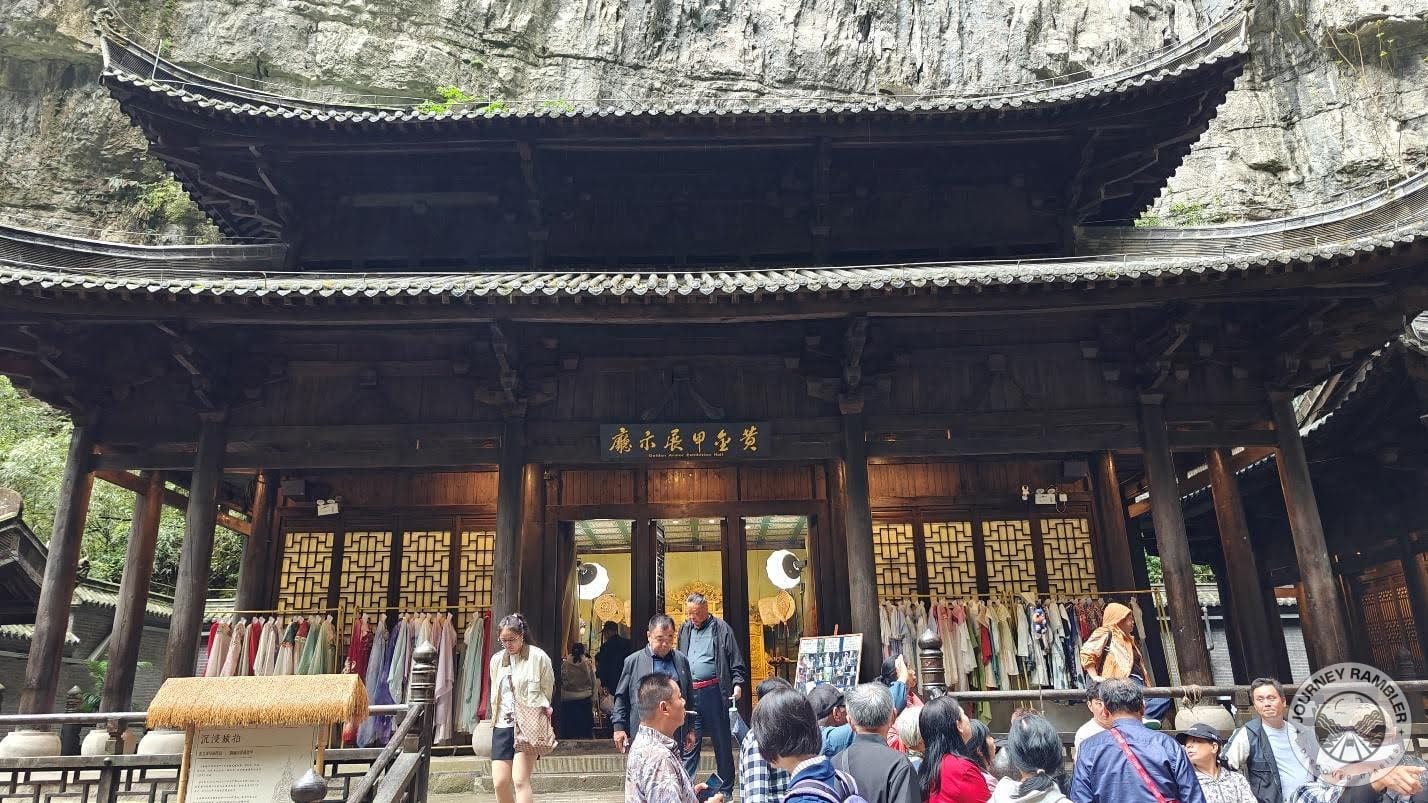
There was a visitor center that I visited to find out more information about the bridges and the park itself. Chongqing and China in general had so much natural beauty, even apart from their modern cities.
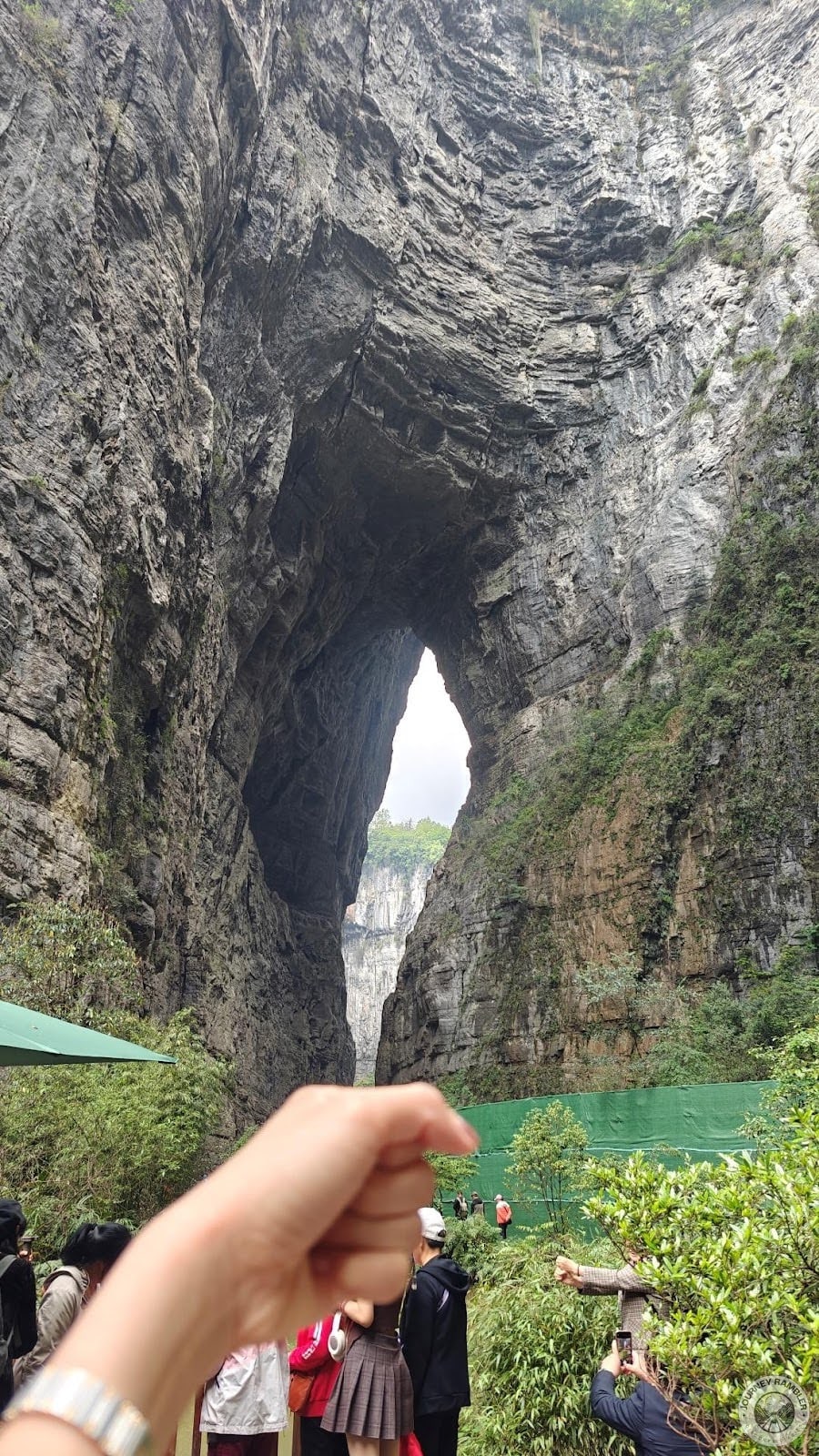
From some angles, the cracks and gaps between the mountains almost looked like an ice cream cone. I held my hand out to take a picture.
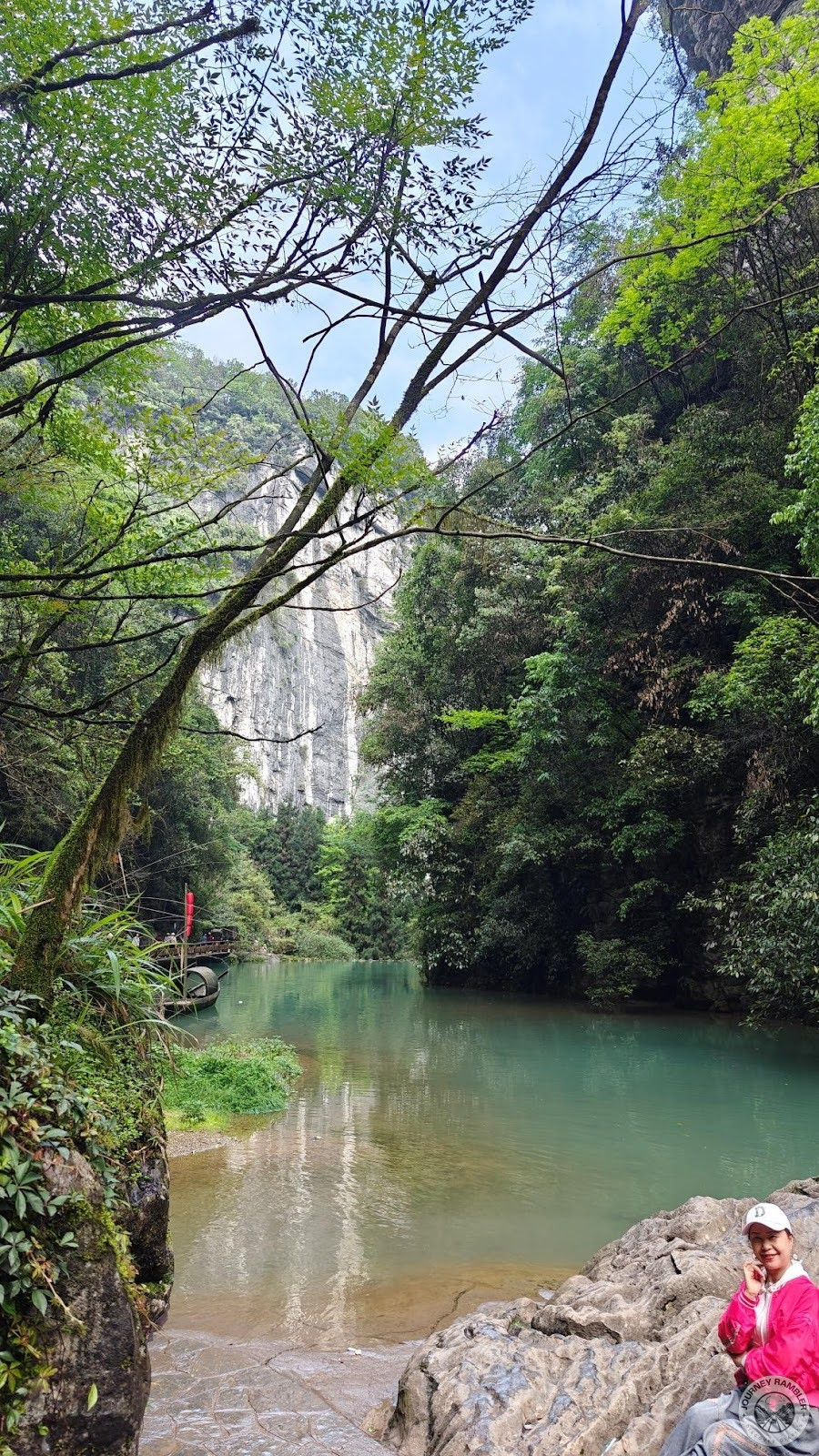
The river was quite smooth and still. It wasn’t a fast flowing river. But the water was very green and it reflected the mountains around it almost like a lake.
Day 4
15. Testbed 2, Erchang Culture and Creative Park
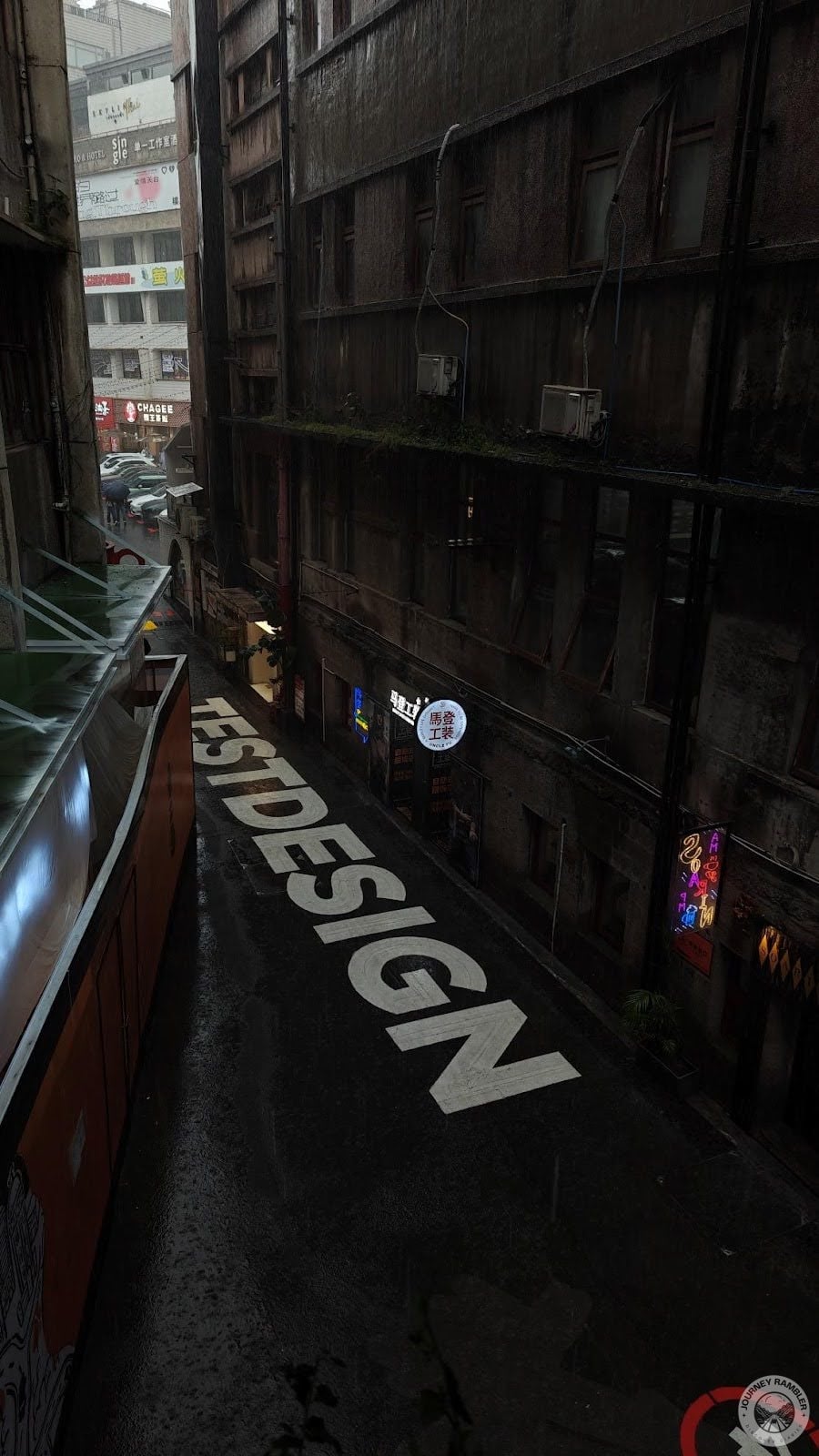
A place that had become a huge tourist landmark in modern times was Testbed 2. It was a part of the Erchang Culture and Creative Park.
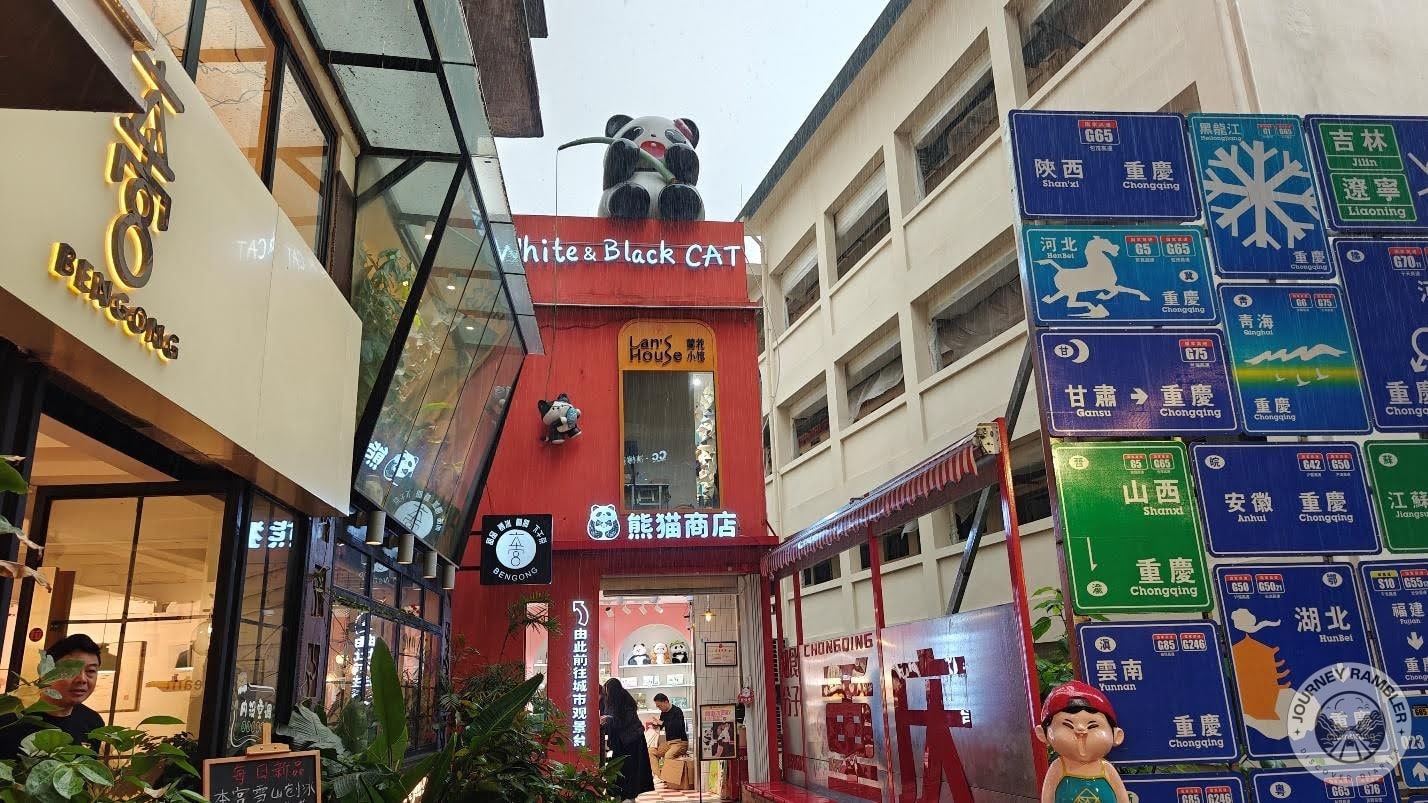
It was another area that had a lot of shops and boutiques for tourists to explore. But unlike some of the other shopping streets that I had seen in Chongqing, Testbed 2 was extremely modern.
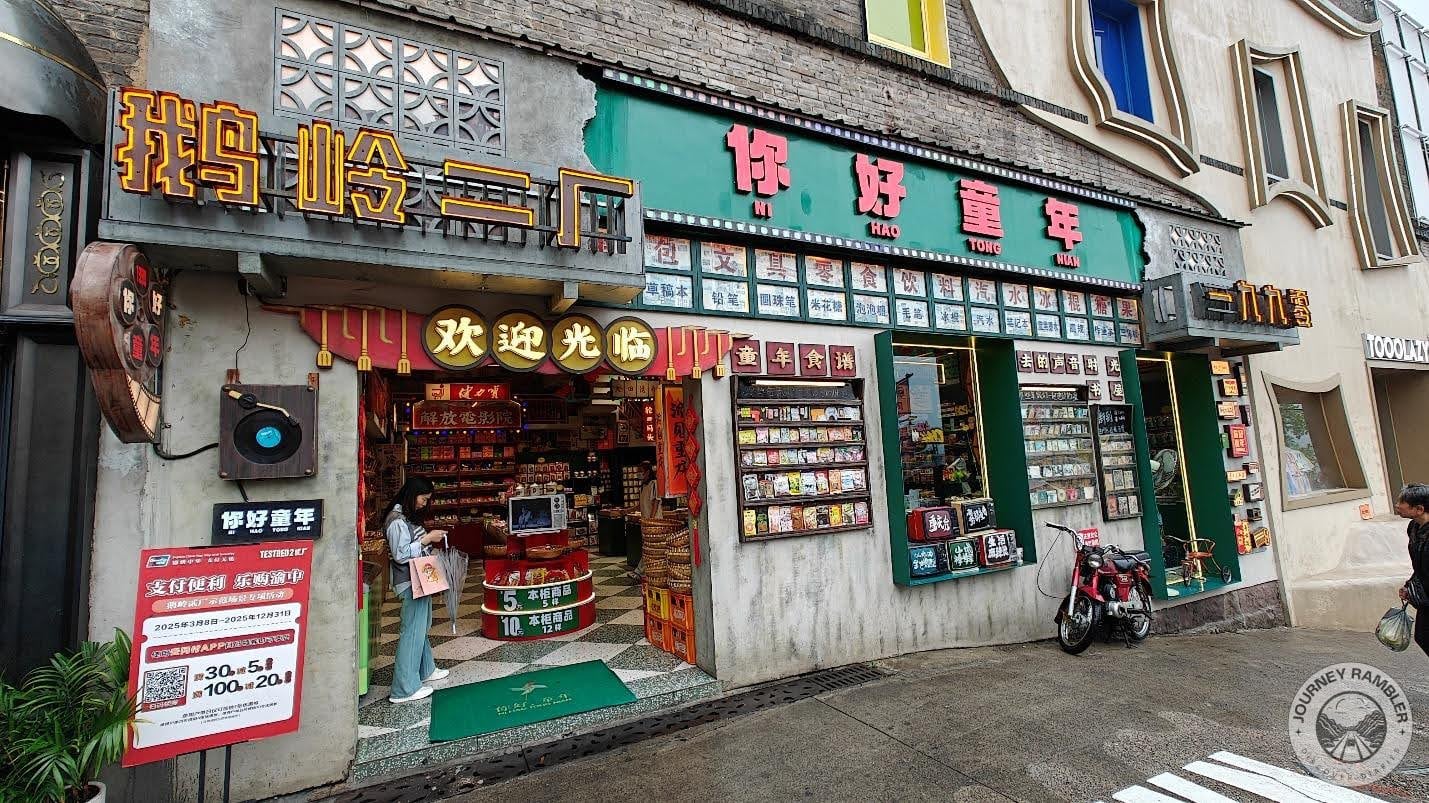
It was a good place to buy souvenirs and little knick-knacks. One of the shops caught my attention since it had a bright and colorful window display.
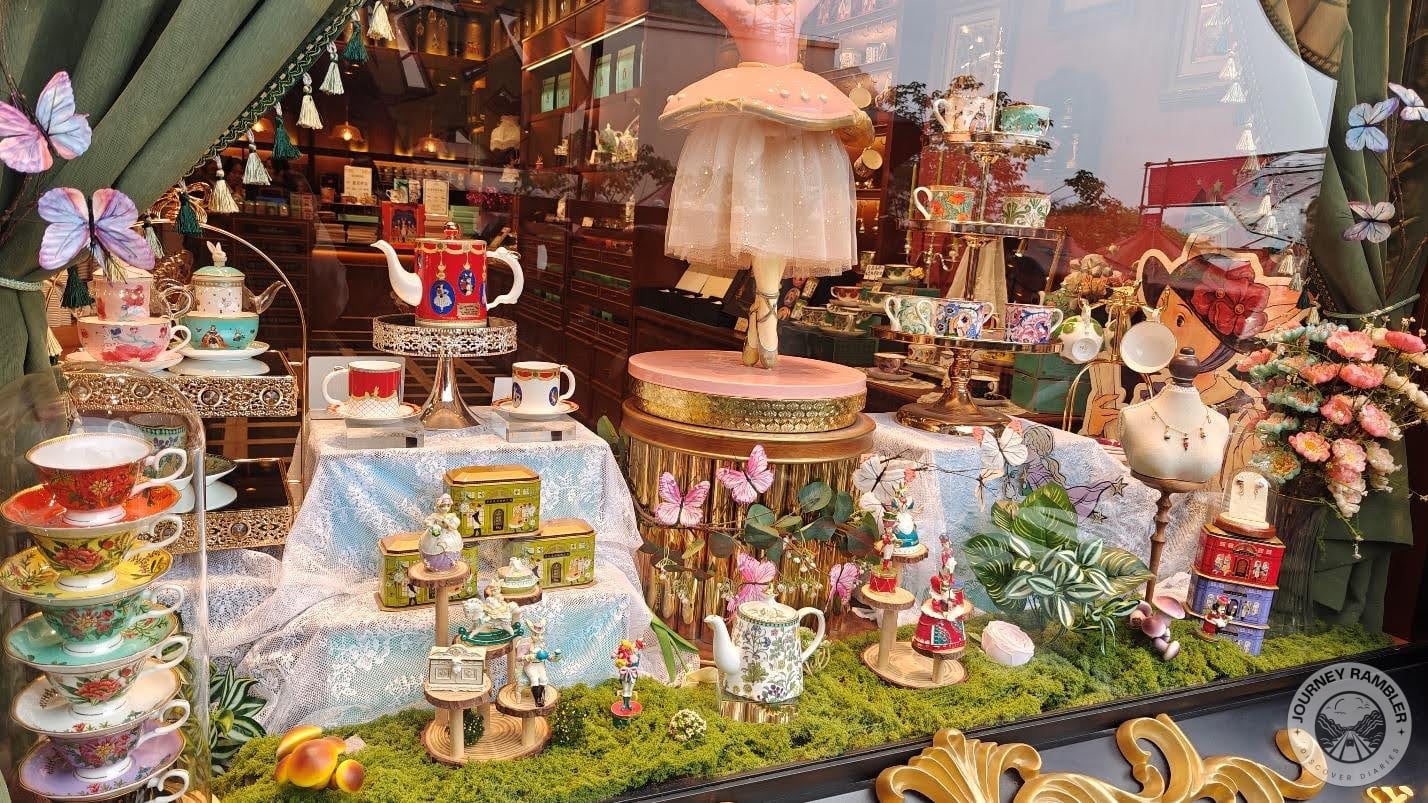
There were teacups and pots, jewelry and little child-sized houses, dolls and decorative pieces. It was a strange and curious mix of Eastern and Western designs and I was sure that it was meant to appeal to tourists.
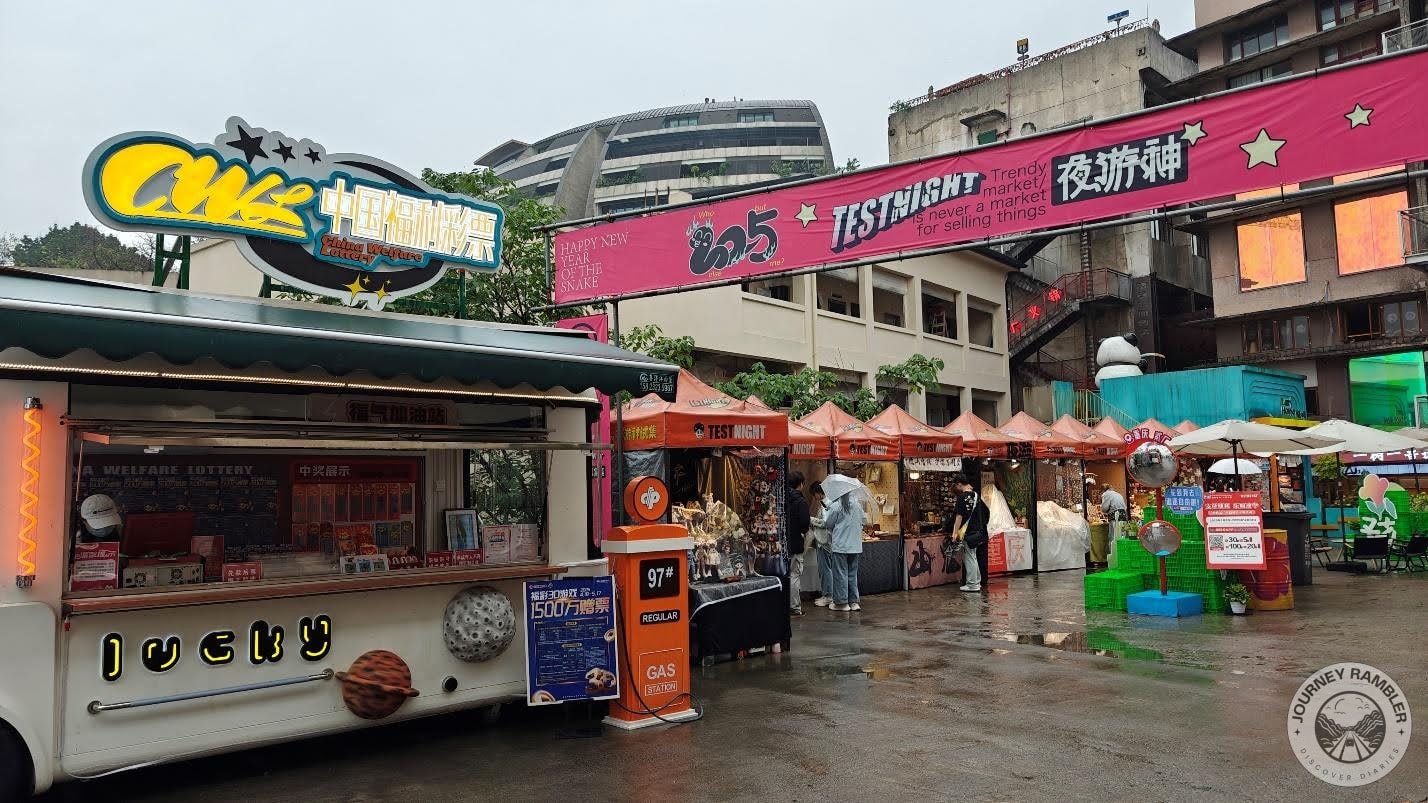
There were plenty of food stalls and eateries with umbrellas above to shade them from the rain and sun. Visitors could walk among the stalls and pick and choose whatever they wanted to eat.
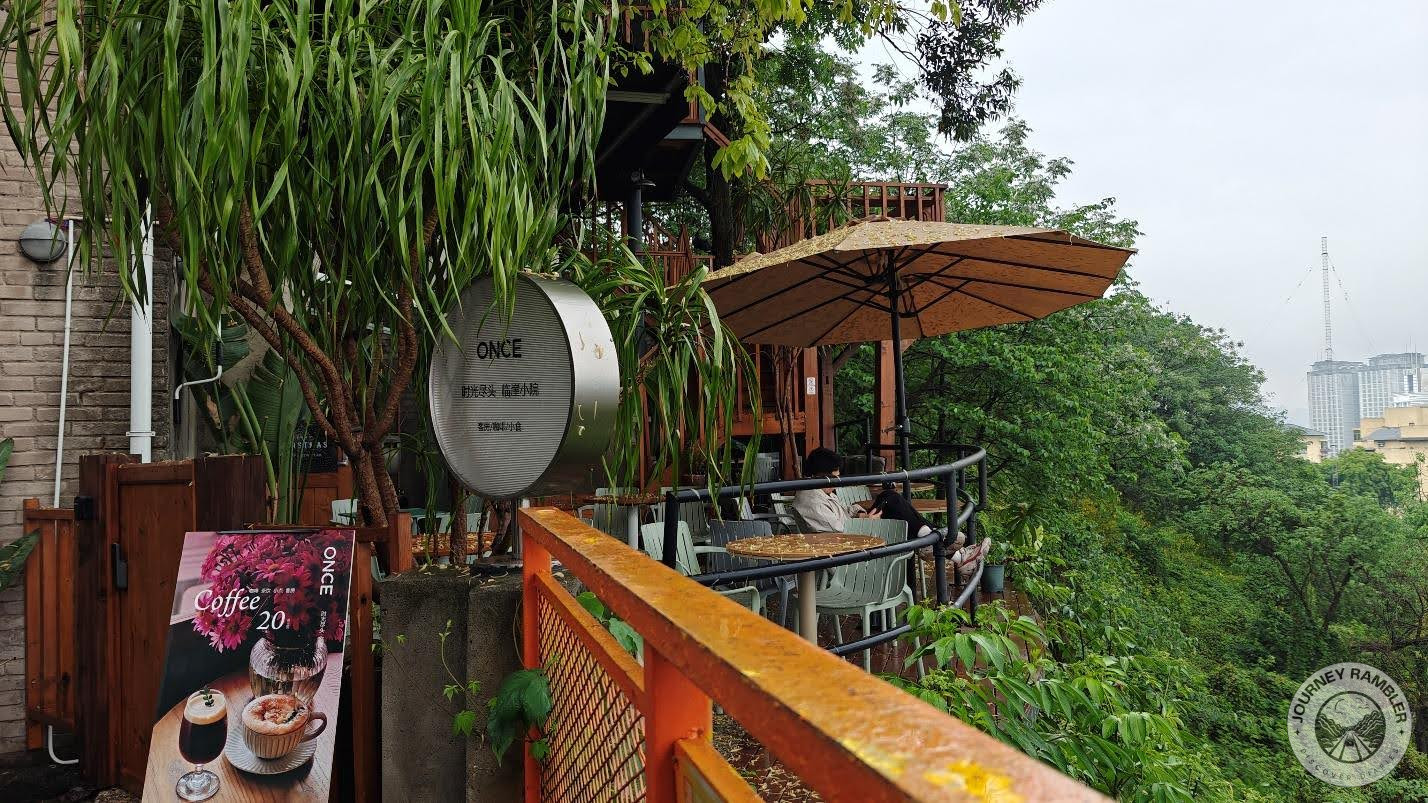
There were even some balcony type spaces where I could sit and look down at the city. The view of the Chongqing skyline was stunning from where I was sitting and I really liked how green it was.
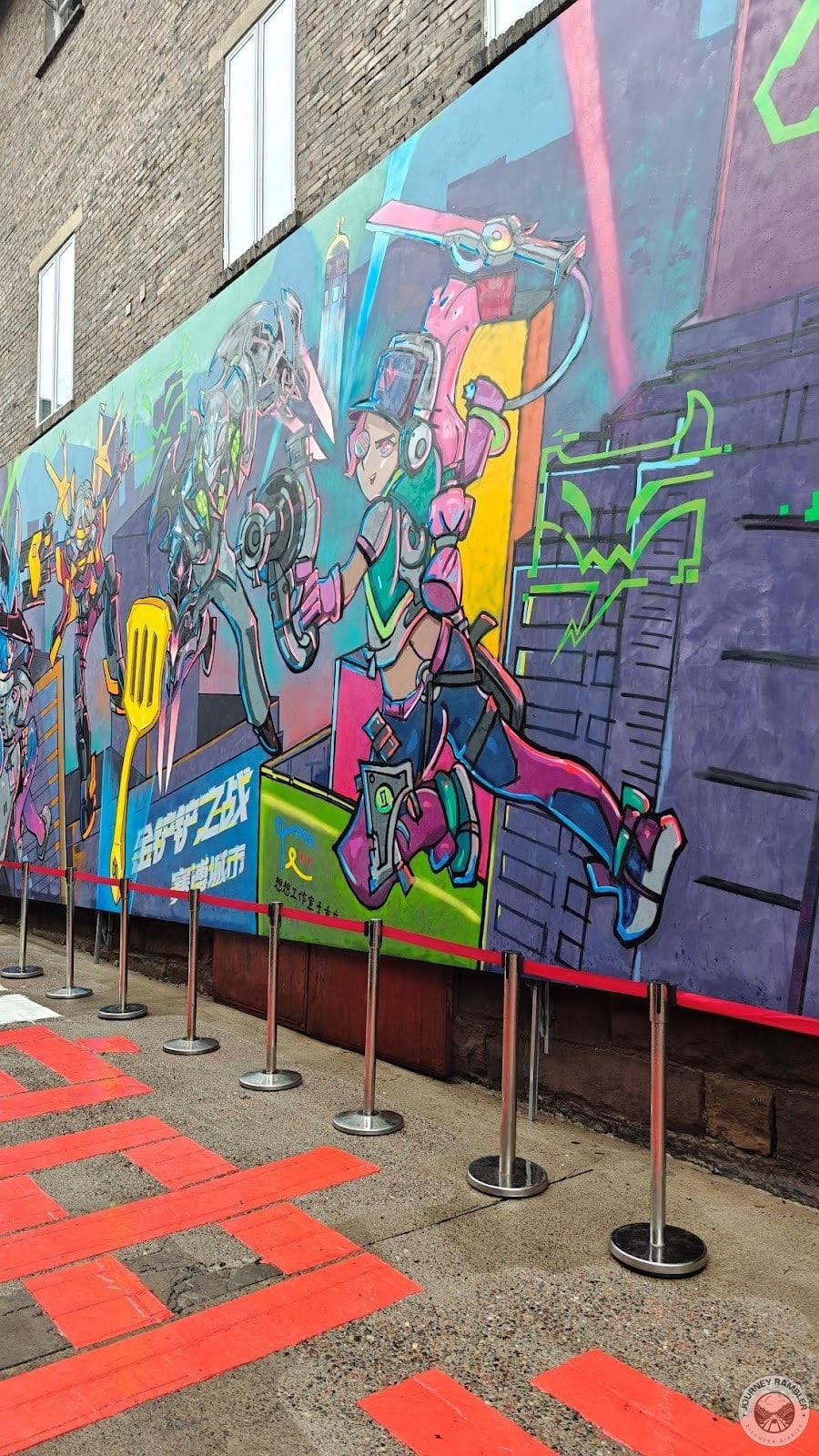
I also really loved the graffiti on the walls. It was cordoned off so that visitors couldn’t touch the walls. That would help save the artwork. Everything was in bright and brilliant colors. It made the otherwise colorless alley look so cheerful.
16. Liziba Station
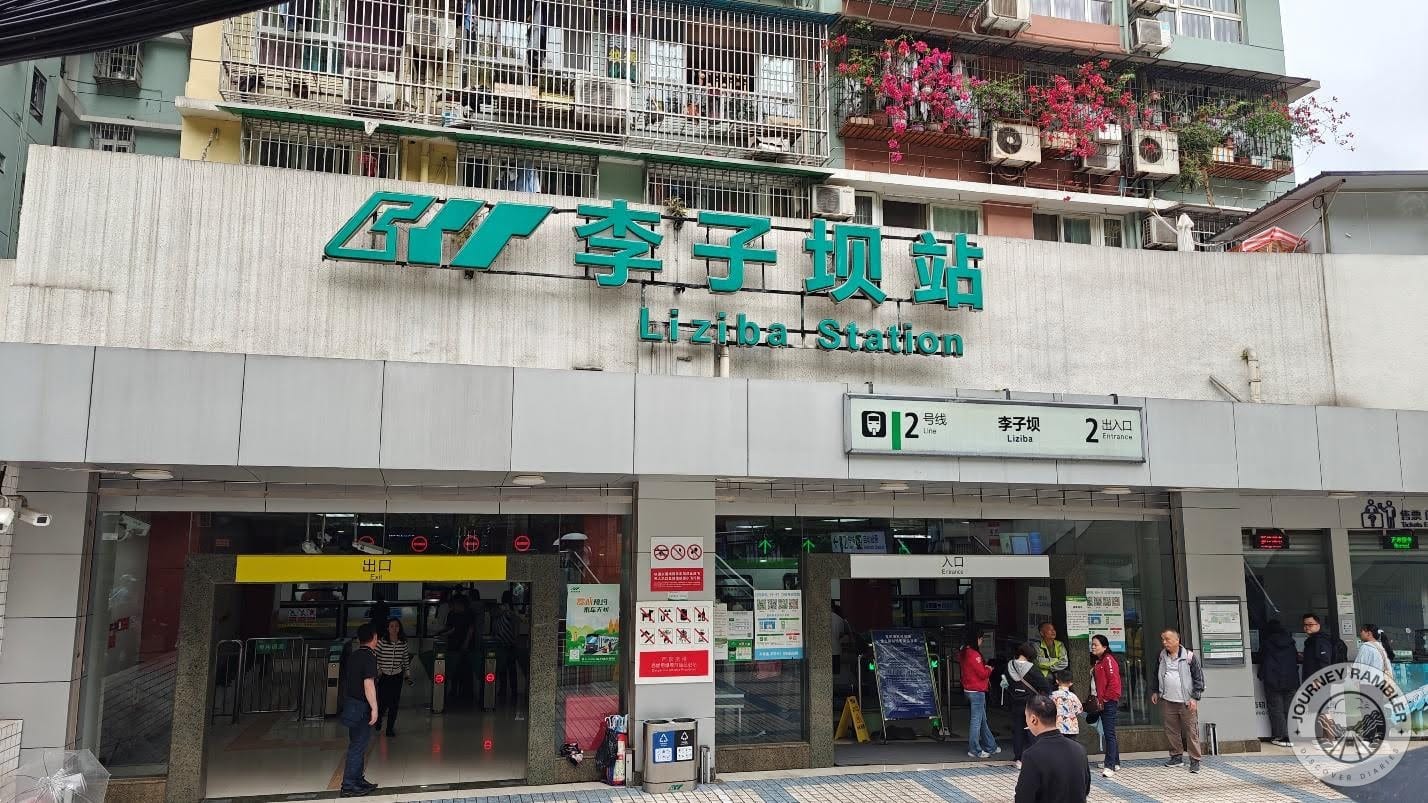
After I was finished with Testbed 2, I decided to go to one of the strangest sights in Chongqing. This was Liziba Station, which was located in Yuzhong District.
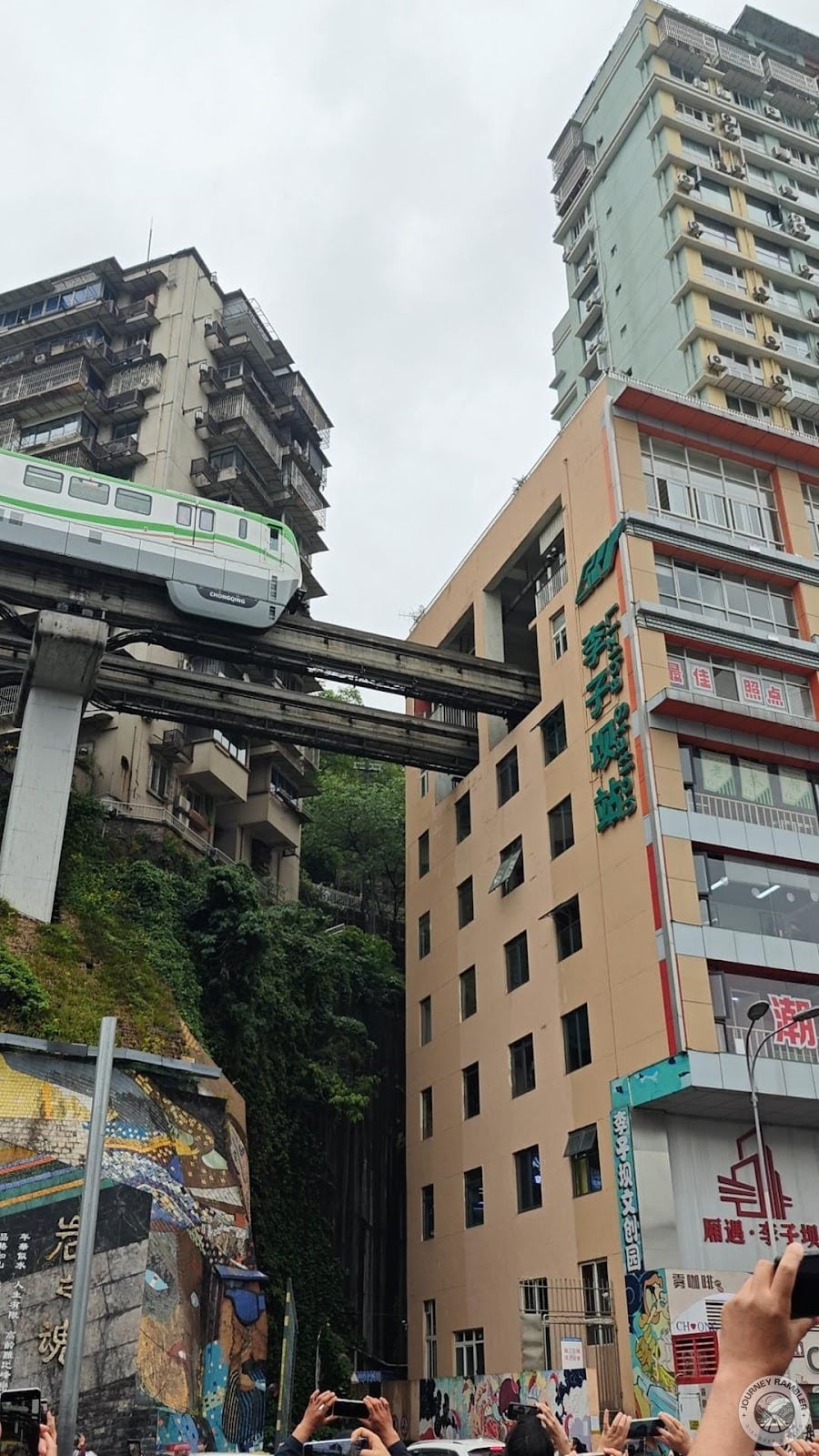
Liziba Station opened in 2005. The weirdest thing about it was that it was located on the 6th, 7th and 8th floors of a 19-storey residential building. I saw a train disappear inside what looked like a very ordinary building. It was very odd to see. And obviously, I wasn’t the only person who thought that since people all around me were filming the train on their phones.
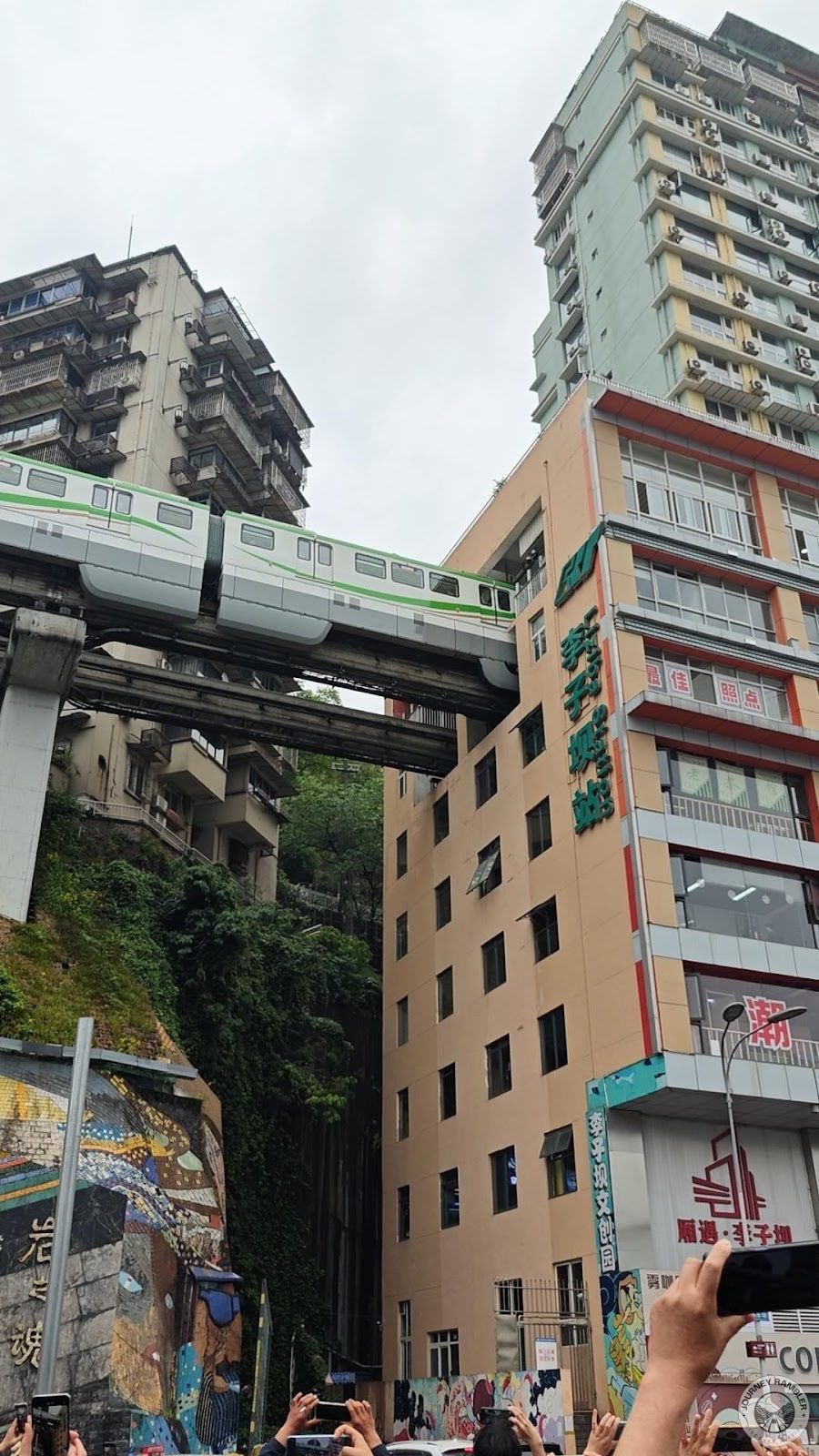
I couldn’t believe that people lived like that! It must have been so noisy for all the people who lived near those floors. The train made a roaring sound as it went into the station.
17. Dim Dou Duk
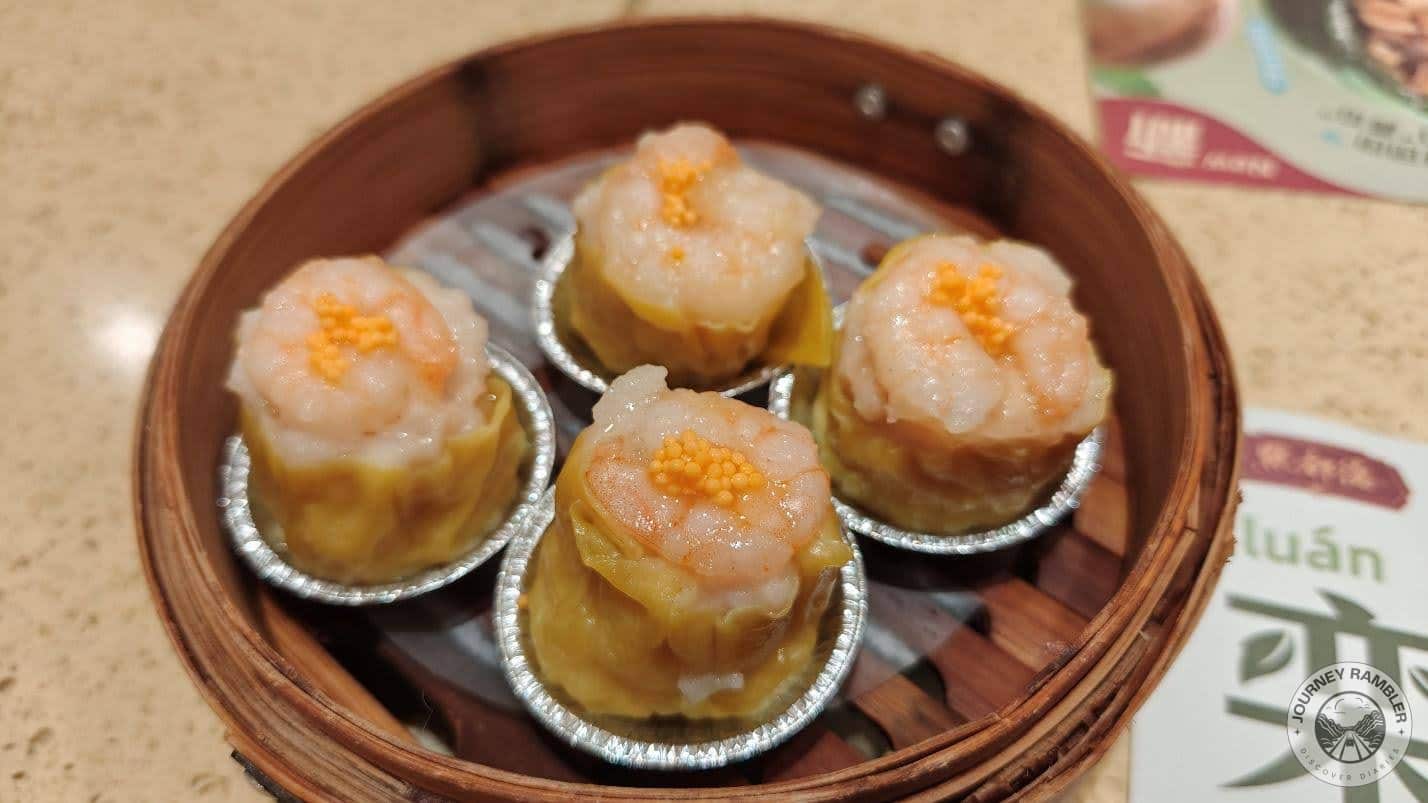
I was in the mood for dumplings after having eaten a lot of noodles and hotpot over the last few days. So I went to a restaurant called Dim Dou Duk. It had Hong Kong style cuisine and the dim sums were fresh and soft and so juicy!
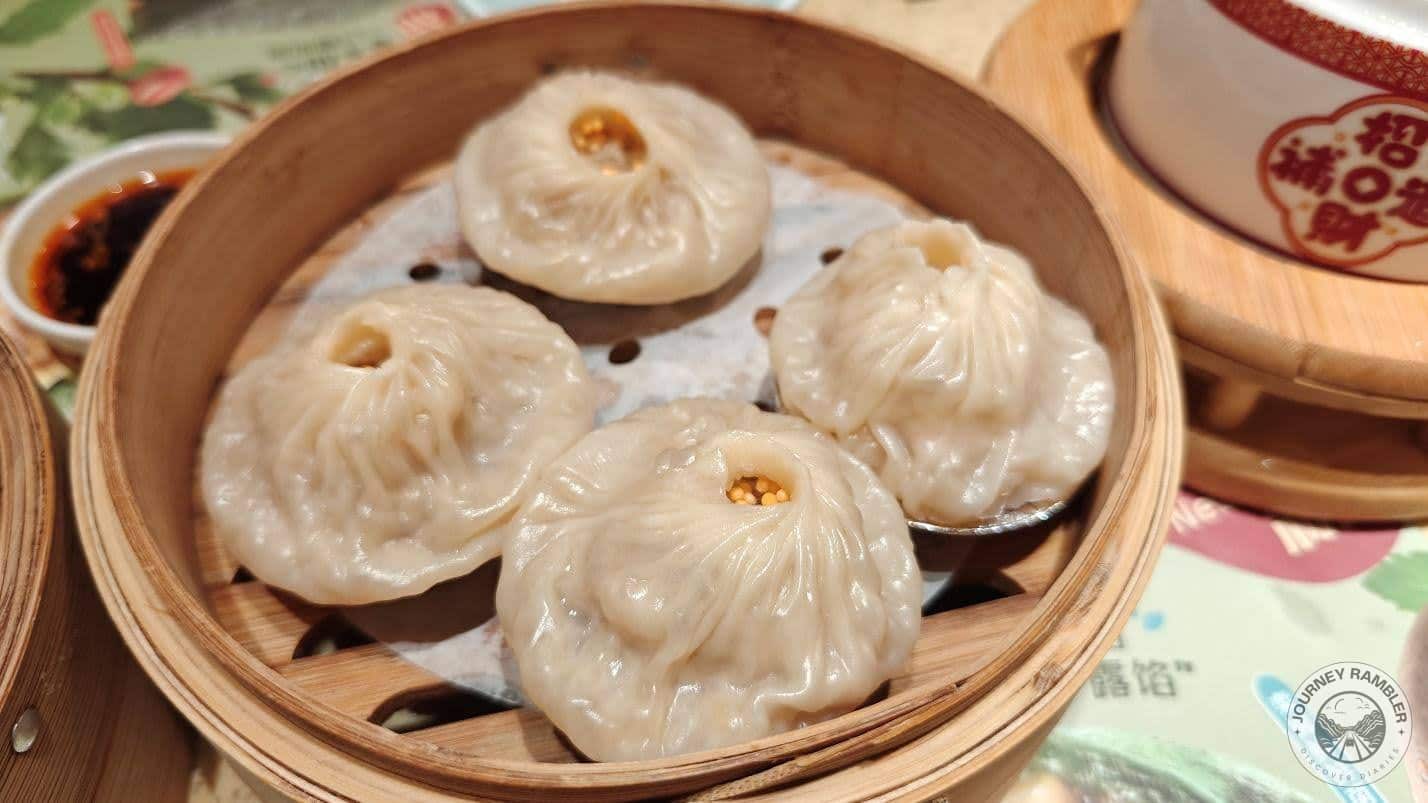
I ordered two different types so that I could taste a variety. The Xiao Long Bao, which you can see in the image above, was full of savory soup. I bit off a corner and drank the soup before eating the rest. The meal was inexpensive and great for the price.
18. Xiahao Lane
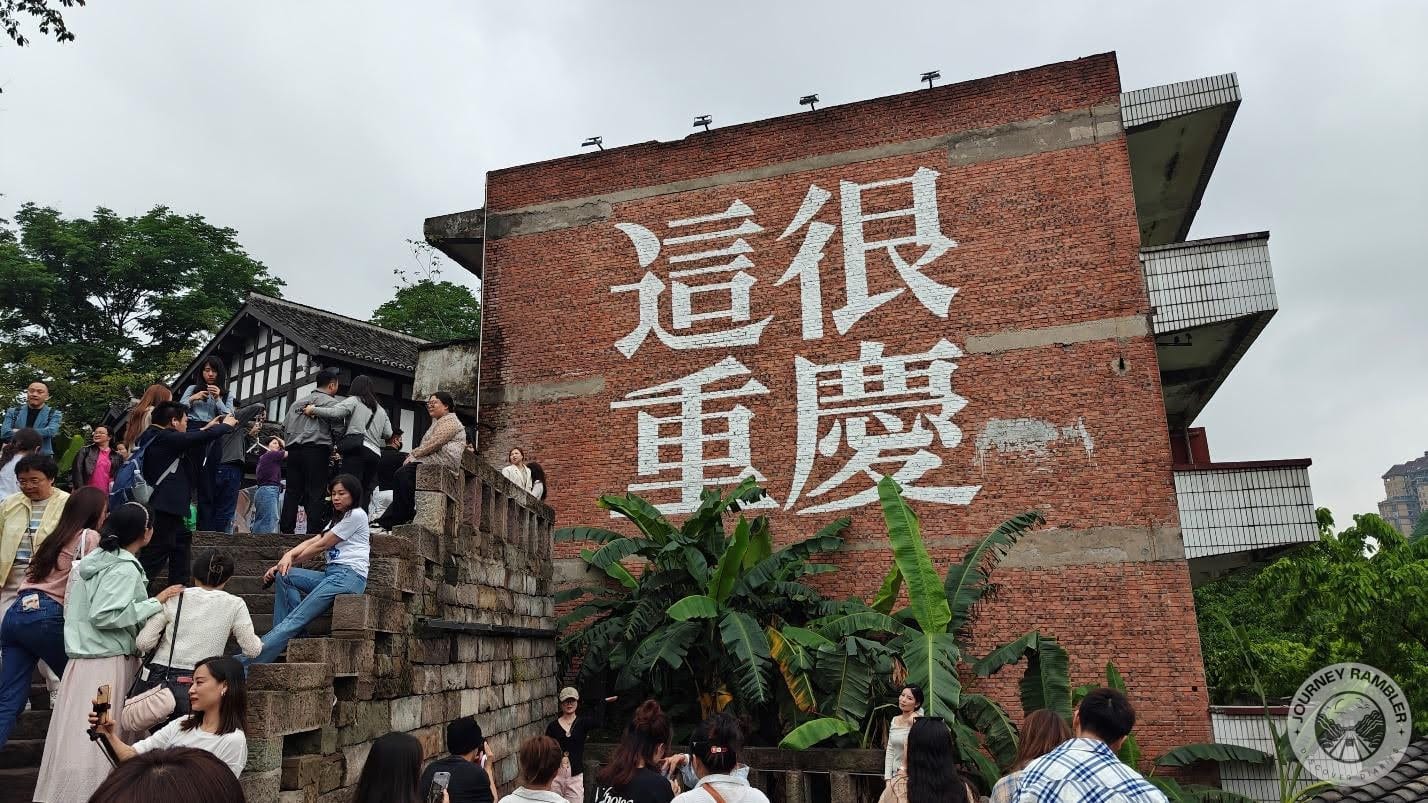
Once I was done with lunch, I wanted to walk around a little. It would help me digest my meal and it would also help me see more of the city. Walking around a foreign city is a much better way to see it than to take a cab or a train. I headed to Xiahao Lane. The old street was full of hidden gems and I was hopeful that I would see some unique shops and artifacts in Xiahao Lane. The mural that said “This is so Chongqing” was obviously a hugely popular photo spot.
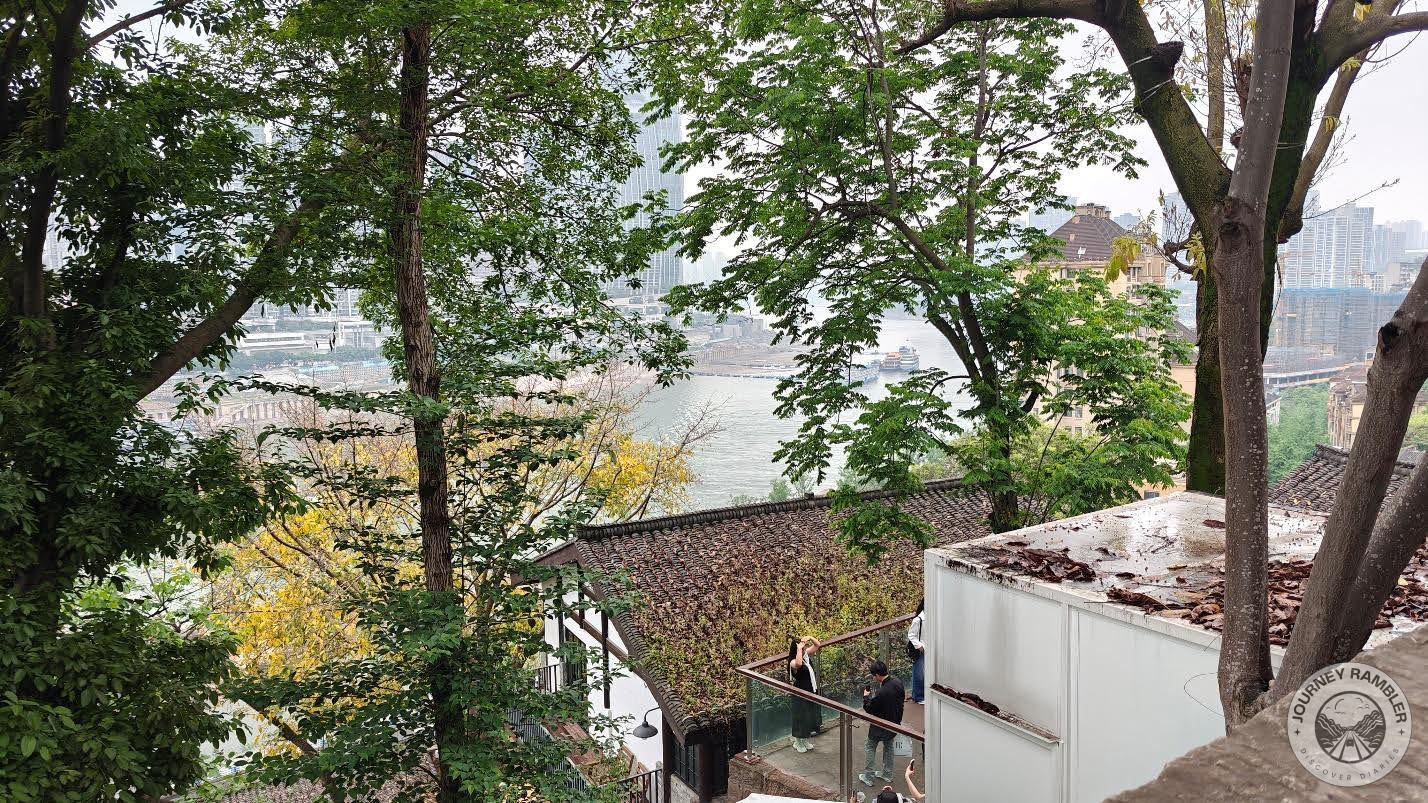
The view of the Yangtze River and the Yuzhong district that I had just visited was picture perfect.
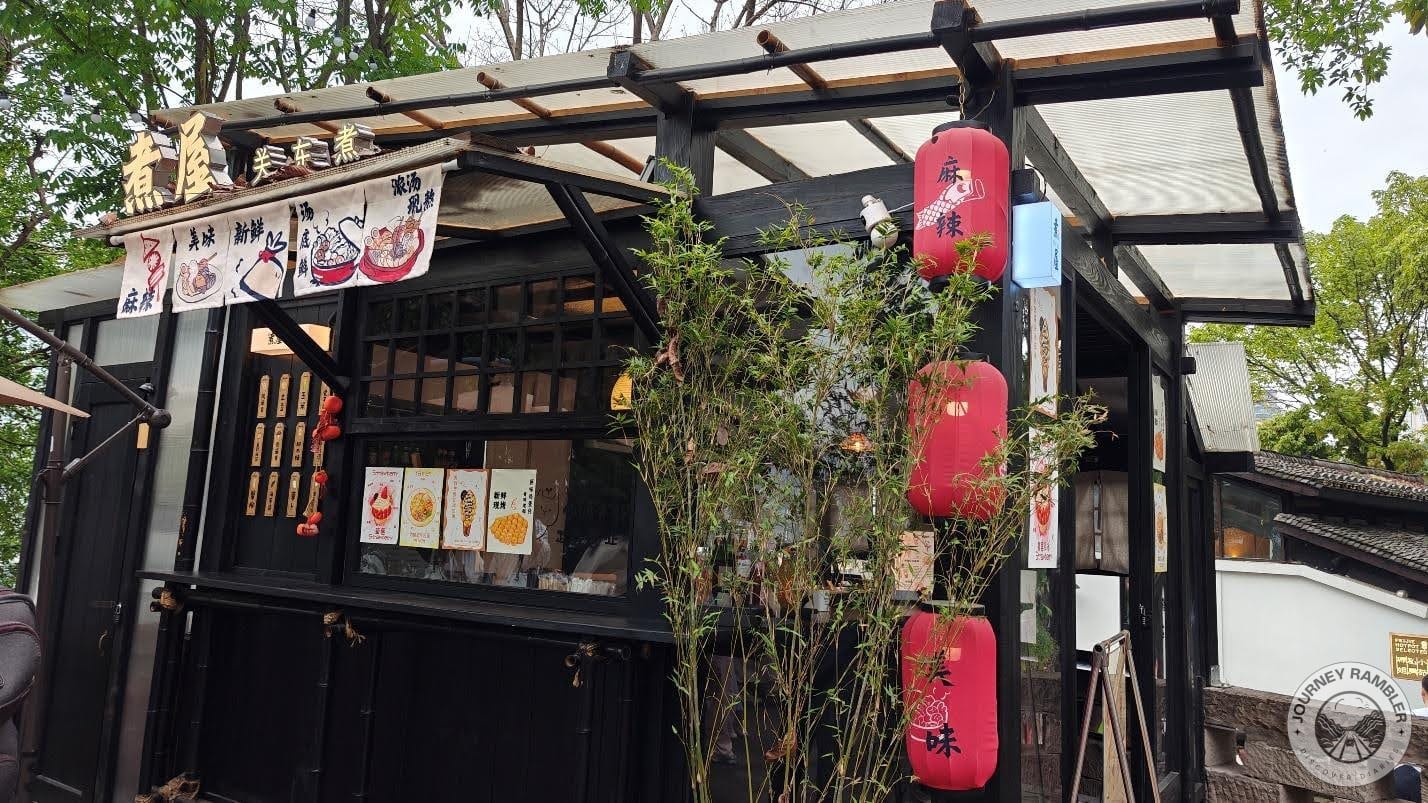
I walked around and looked at the little eateries and restaurants. They looked cozy and intimate, like a group of people could sit down and enjoy a great meal and a wonderful conversation together.
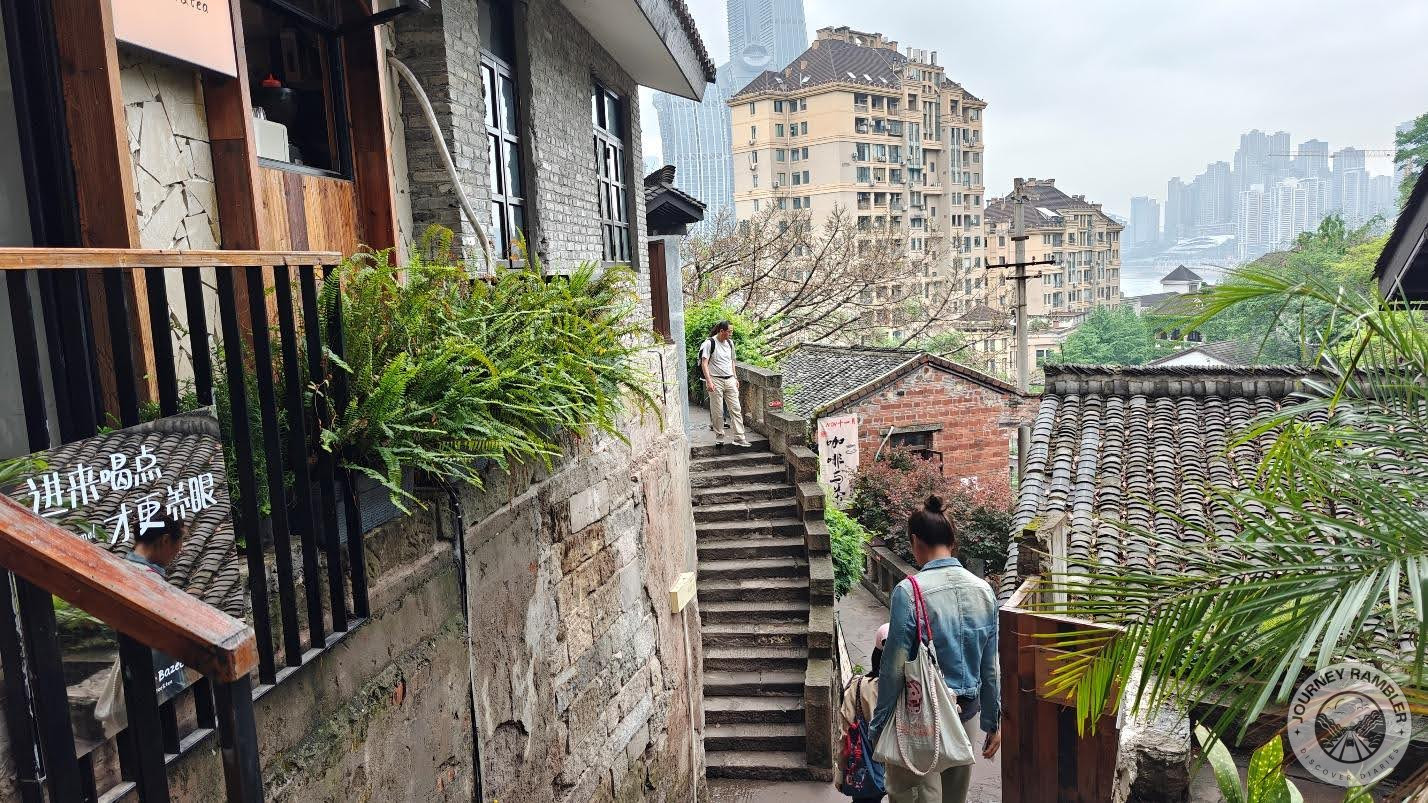
It was a hilly area, so there were plenty of steep stairs going up and down. It gave me an excellent opportunity to work off all the calories I had eaten over the last few days.
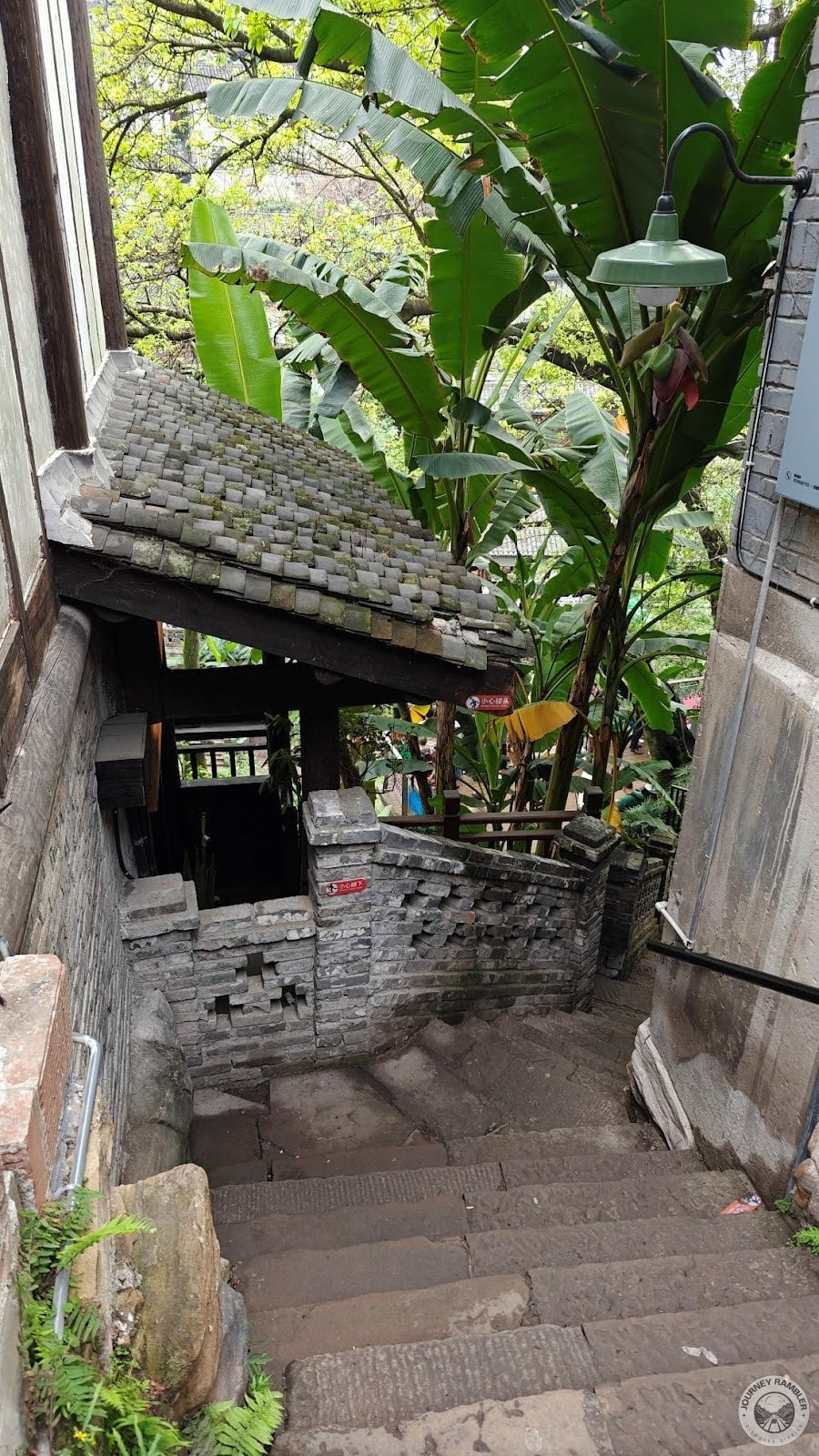
Even the stairs looked old and worn and I could tell that I was in an older part of the city.
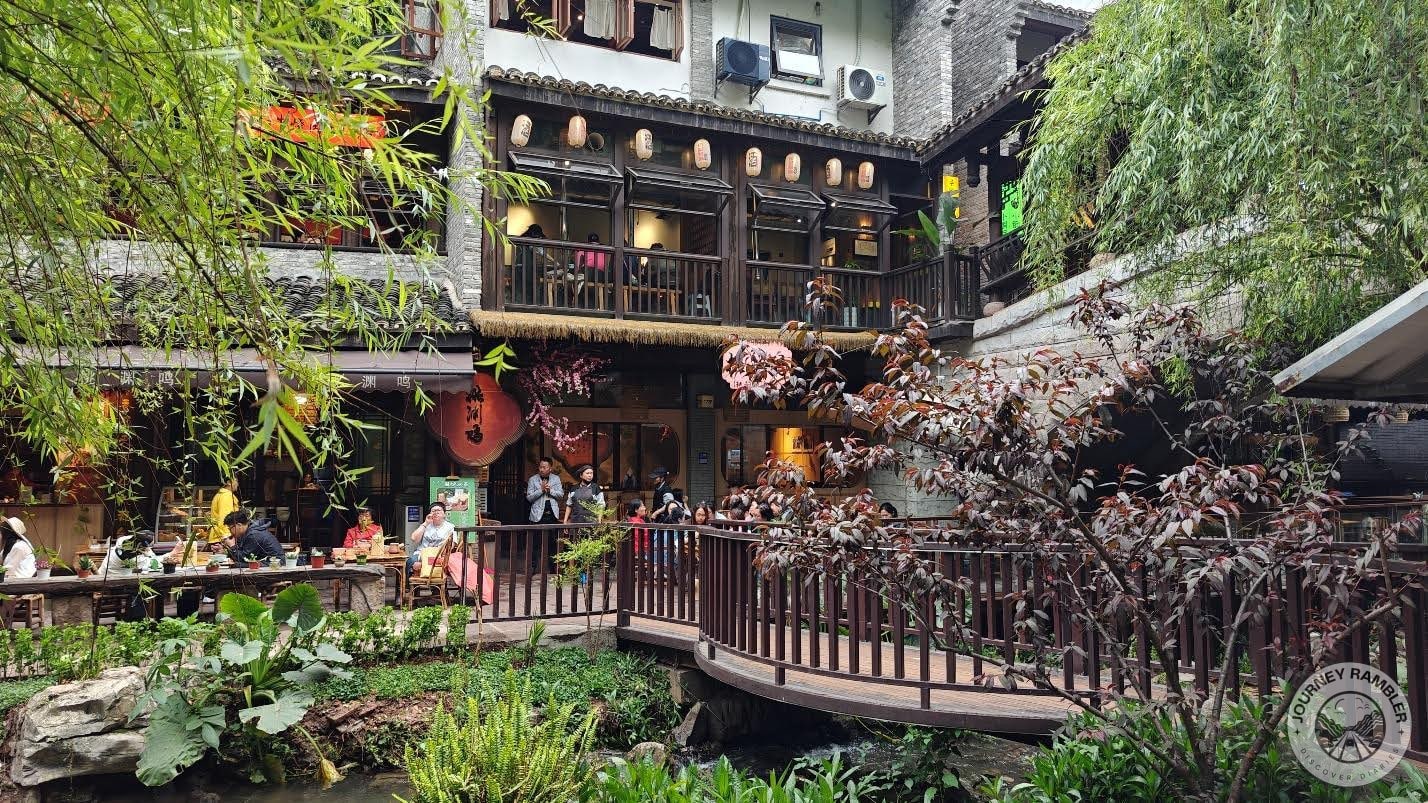
Little wooden bridges meandered and crossed over small pools and streams.
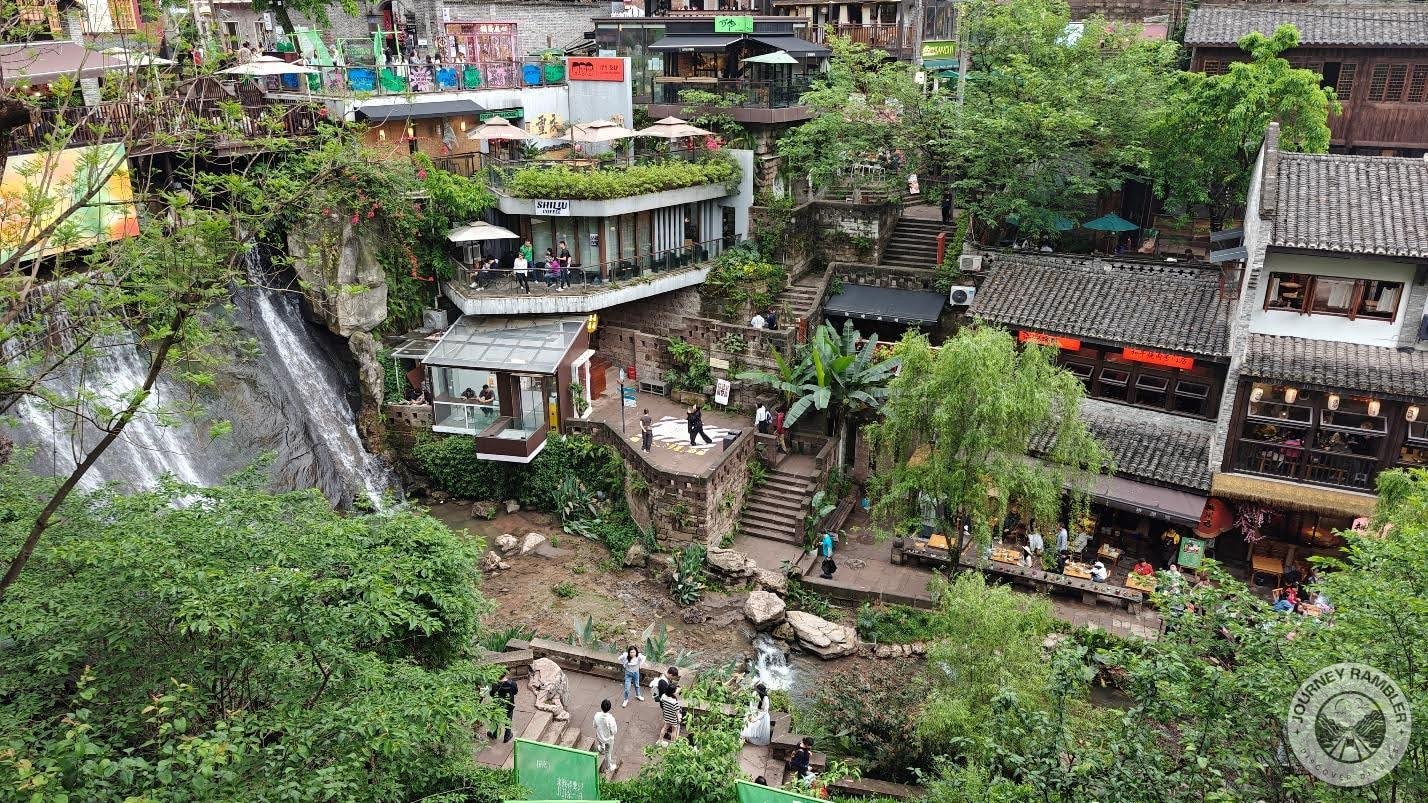
And there was even a small waterfall cascading down into a market square. But everything looked small scale and miniature sized as I looked down from the top of the hill.
19. Guanyin Bridge and Its Food Street
Guanyin Bridge was the next location. It had its own food street, which was my last stop of the day.
It was a wonderful mix of traditional and modern.
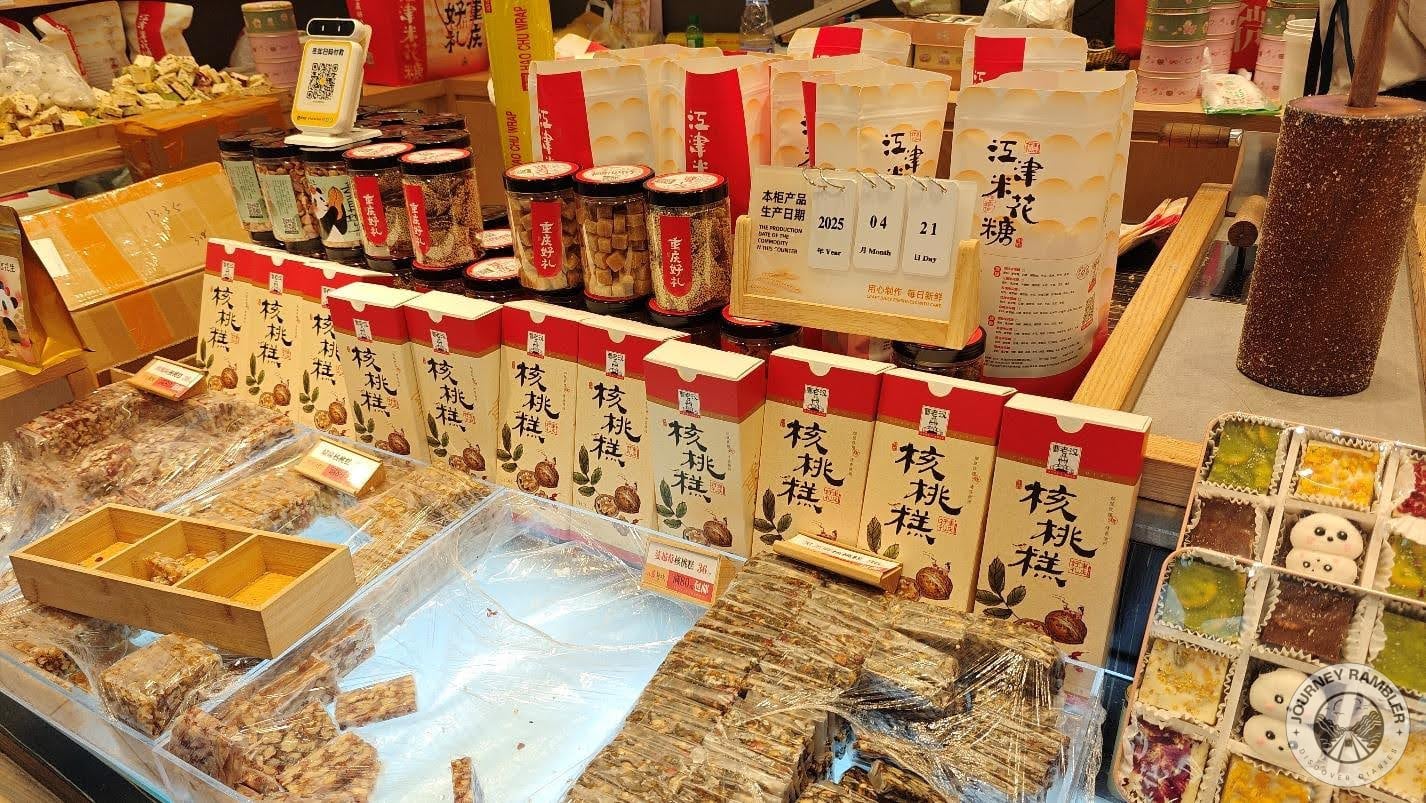
Some of the sweets were being displayed to tempt customers to buy them.
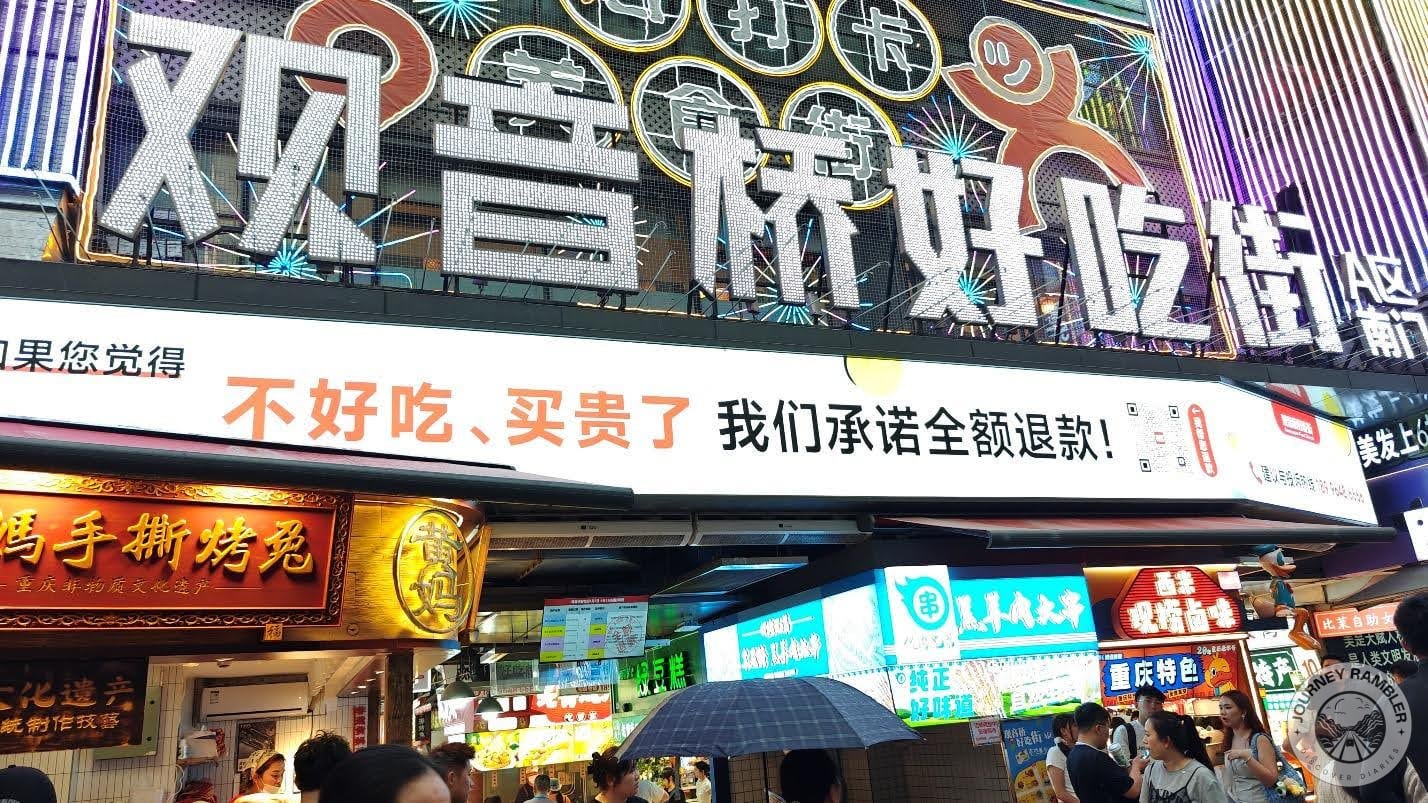
It was a lively and bustling spot to finish up the day at. I spent some time browsing the different stores and also people watching. Everyone seemed to be having fun.
Day 5
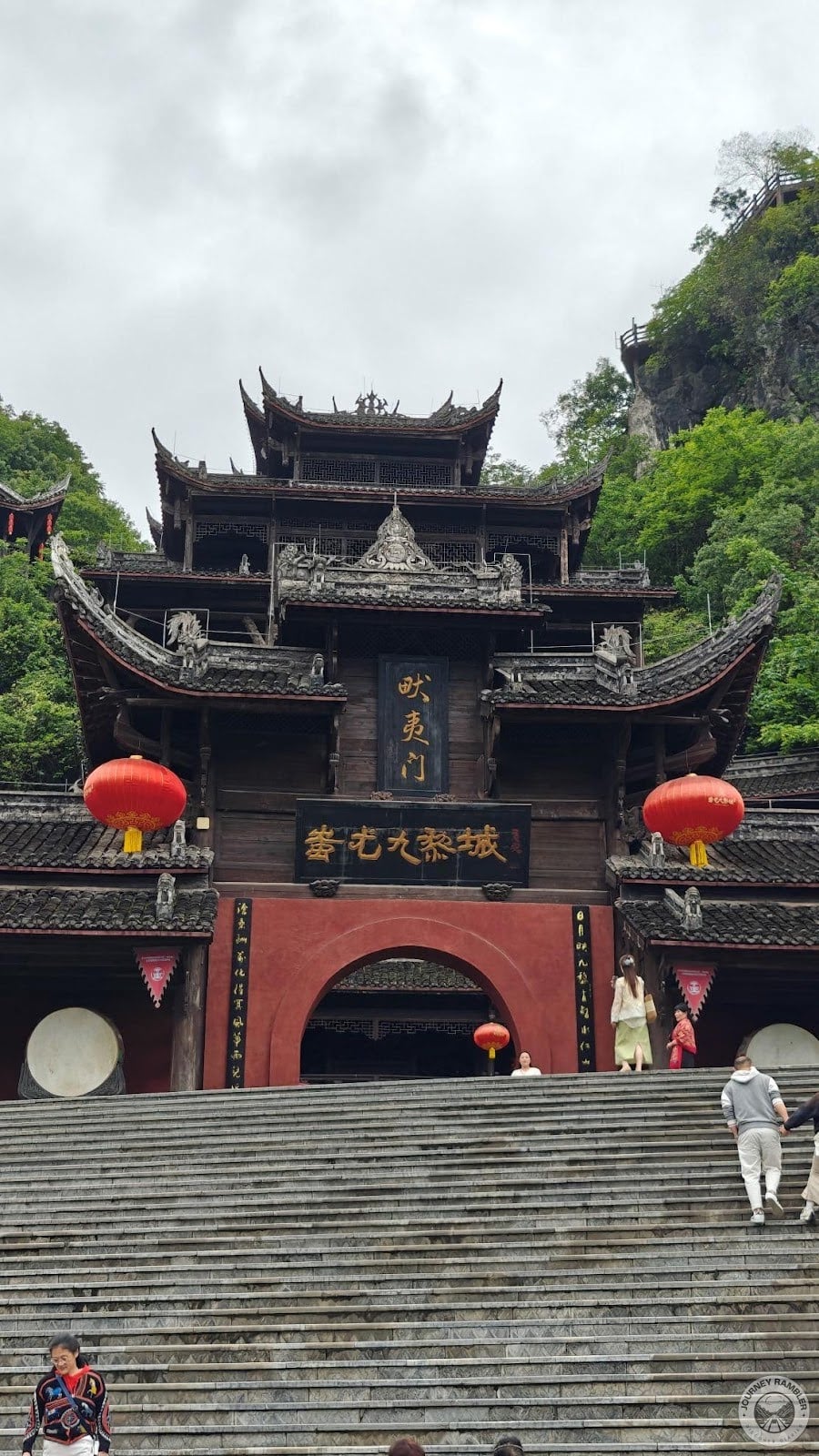
The Chiyou Jiuli Miao Palace rose up out of the hills and forests like something out of a legend. It looked less like a palace and more like a fortress. The gate alone was awe-inspiring, especially because of the number of steps I had to climb to reach it.
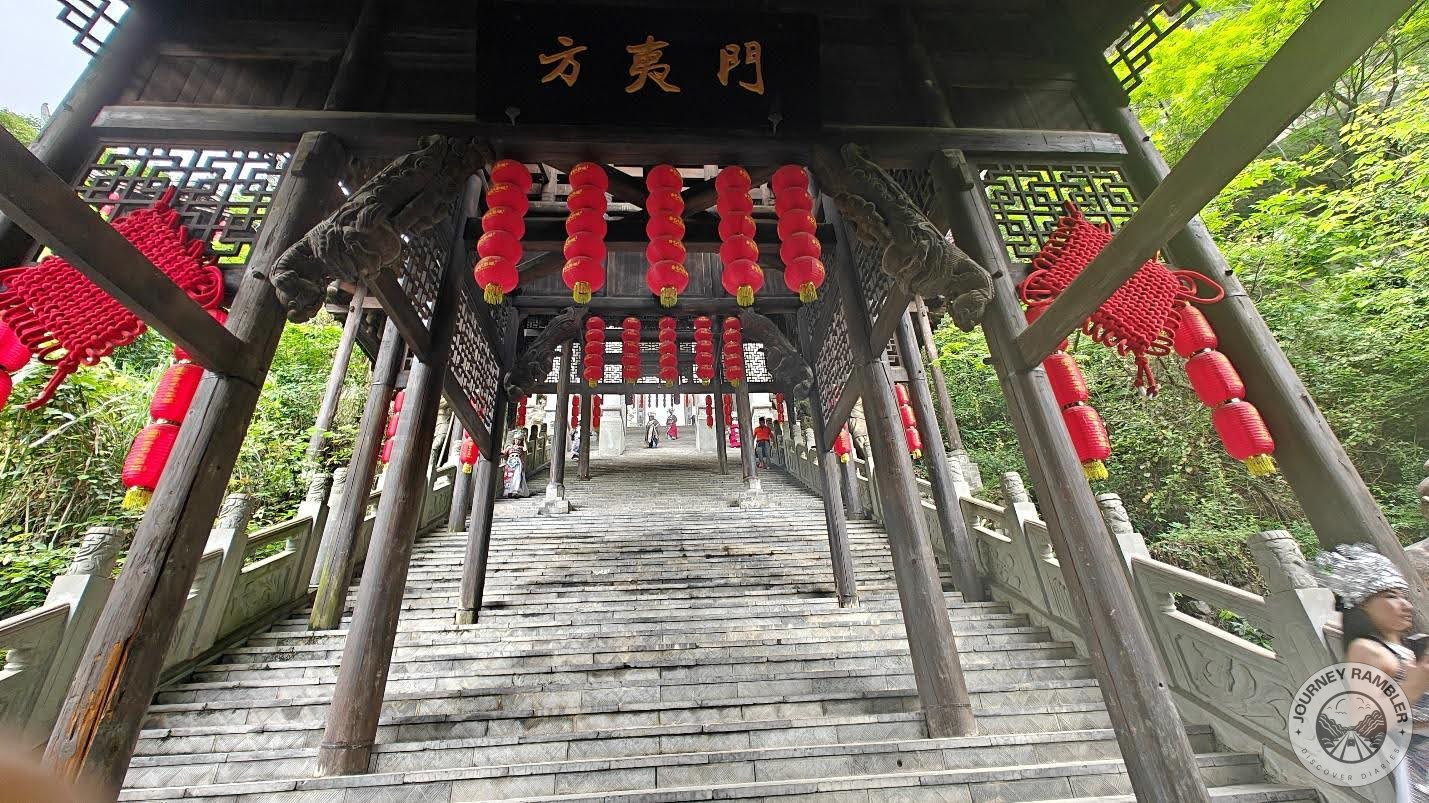
The whole palace had a black and red theme which stood out in a striking way against the bright green of the surroundings. The Nine Gates, which were the main entrance to the palace, wasn’t just majestic but also symbolic in many ways.
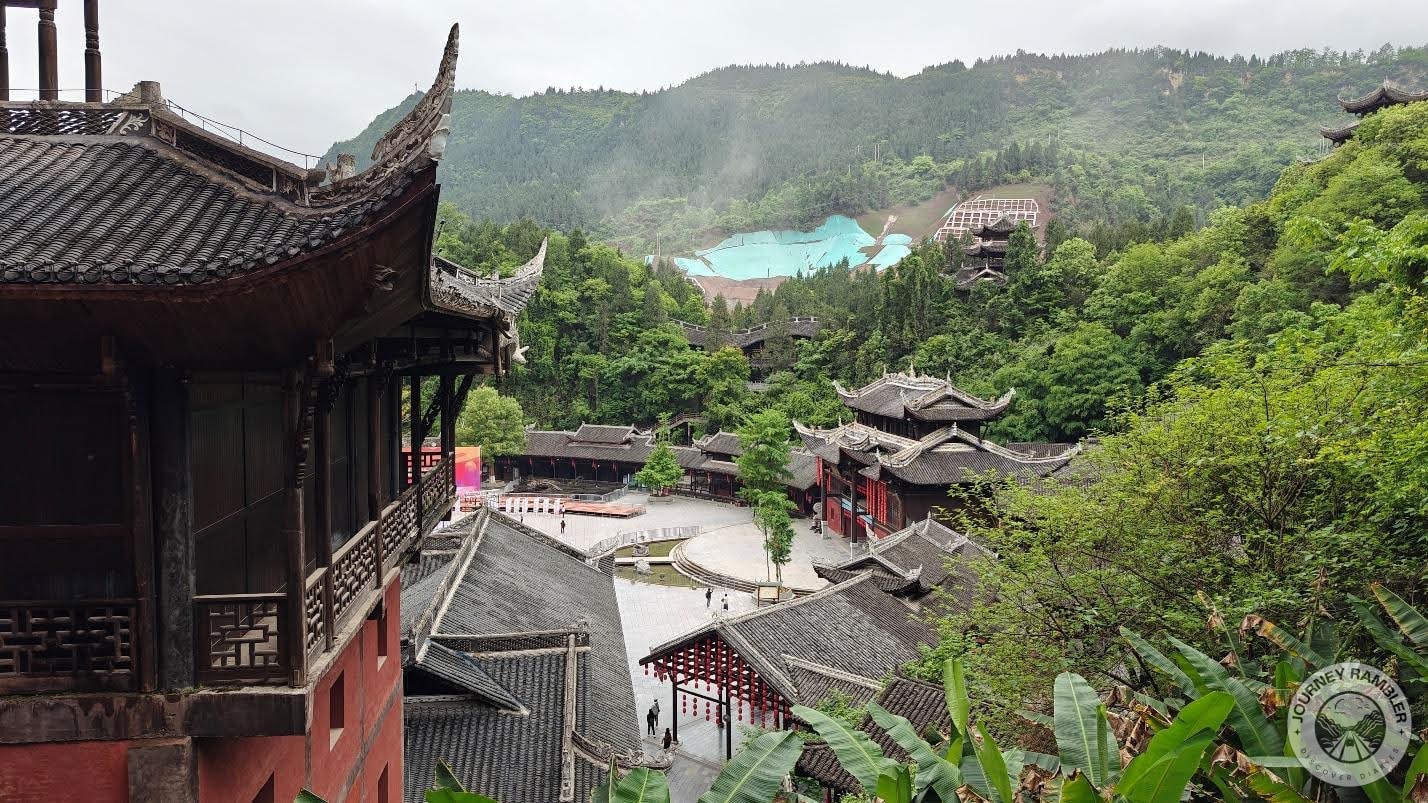
The view from the top was breathtaking. I could see every hill around me as the clouds rolled in.
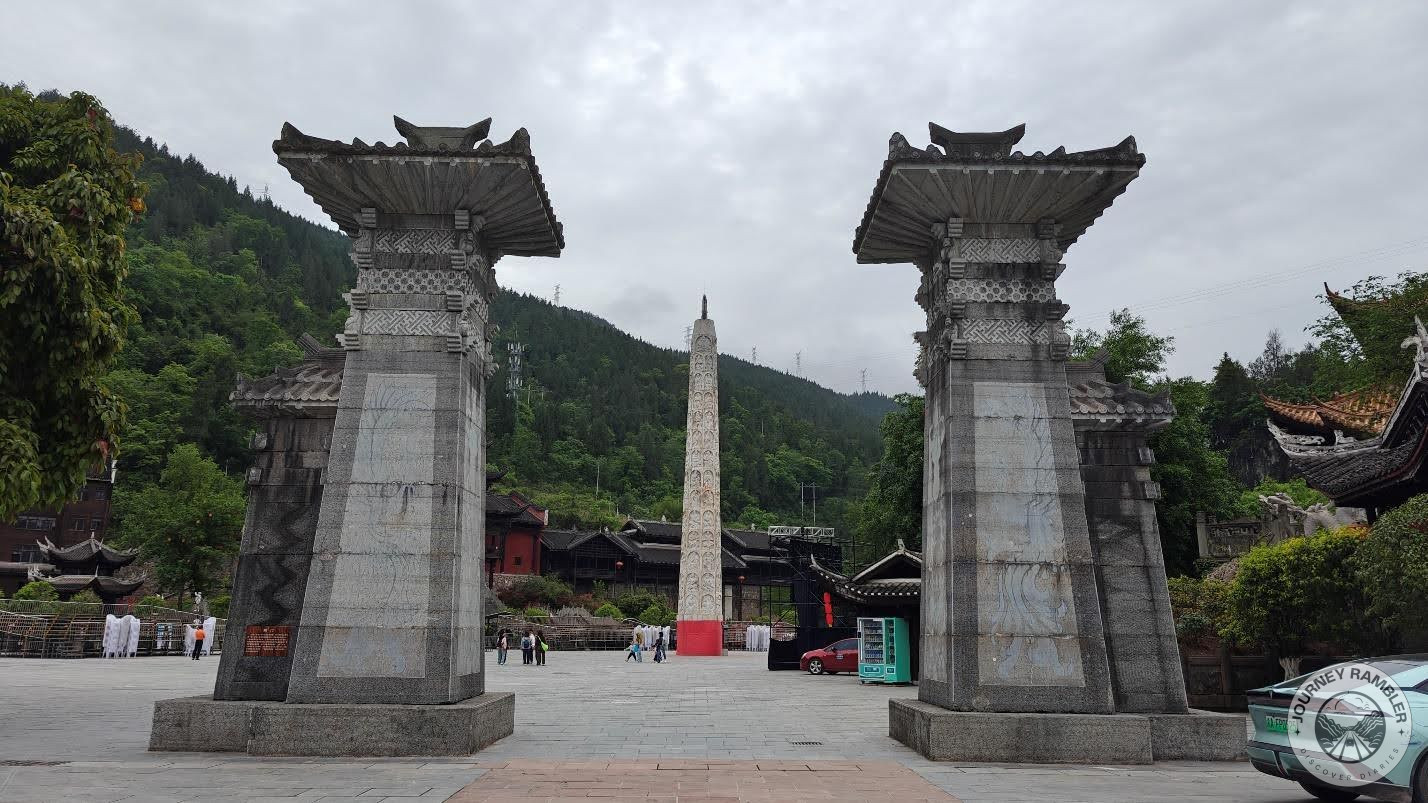
The pillars stood straight and tall, like guardians at the front.
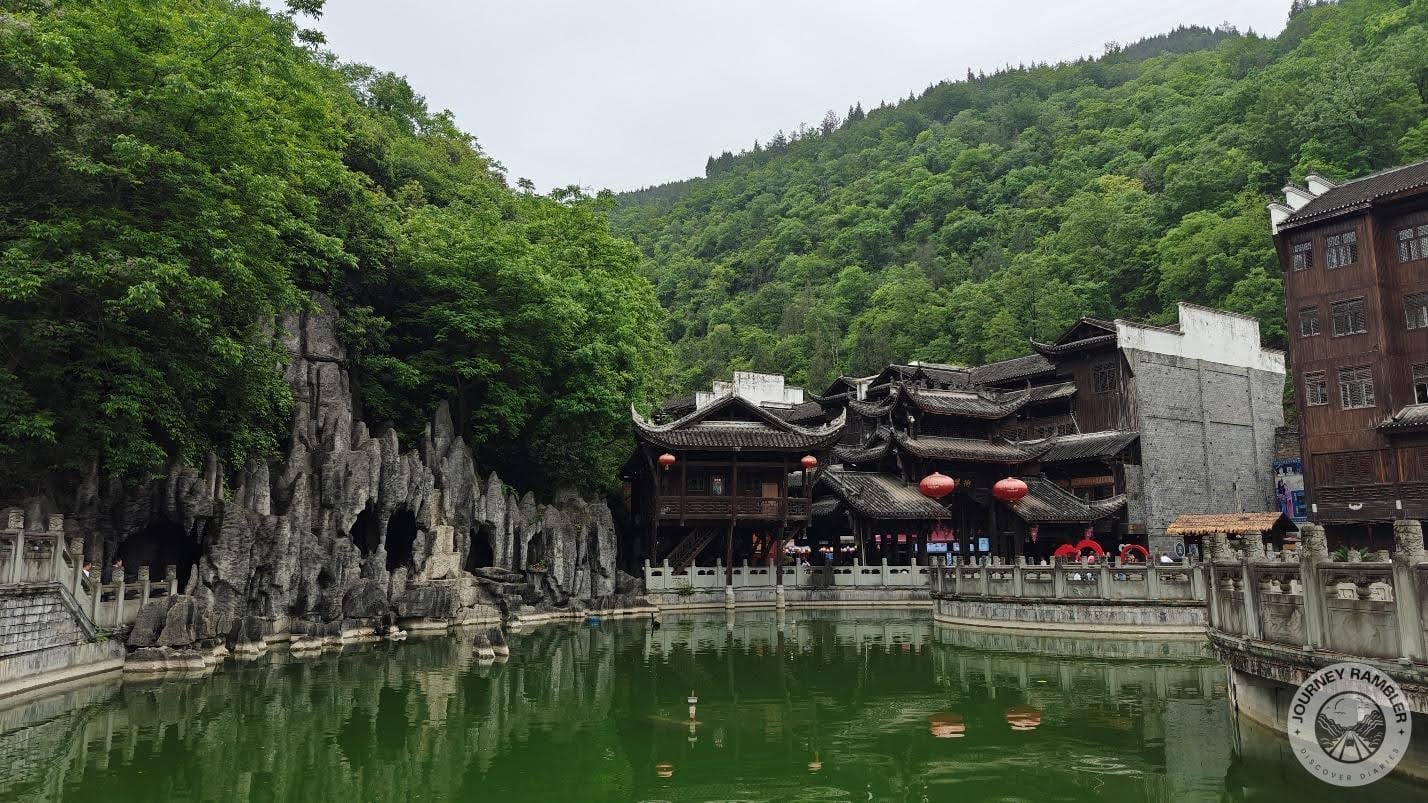
The pool of water in front of the palace added an atmosphere of serenity to the place.
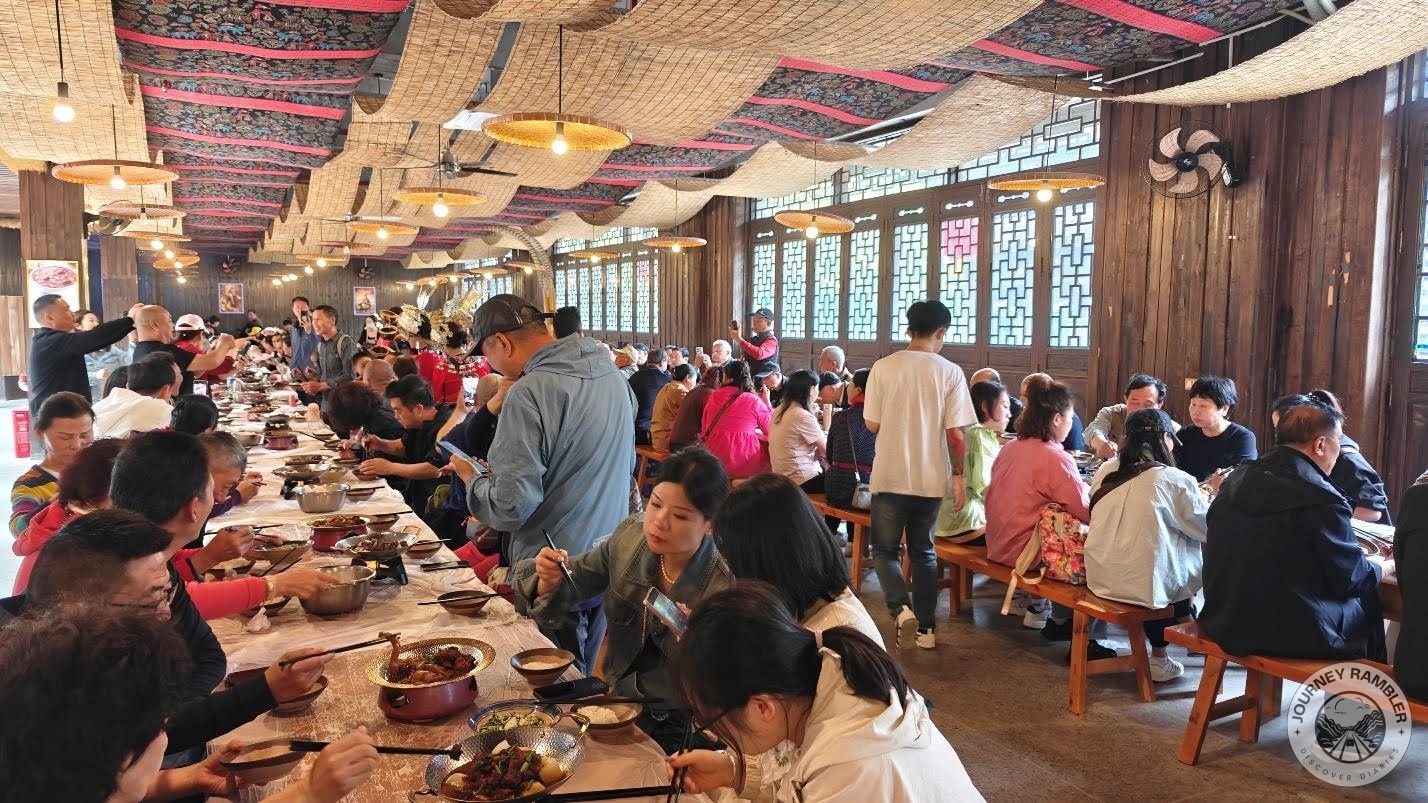
Next I went to the Miao Long Table Banquet. There were communal tables where everyone sat and ate together.
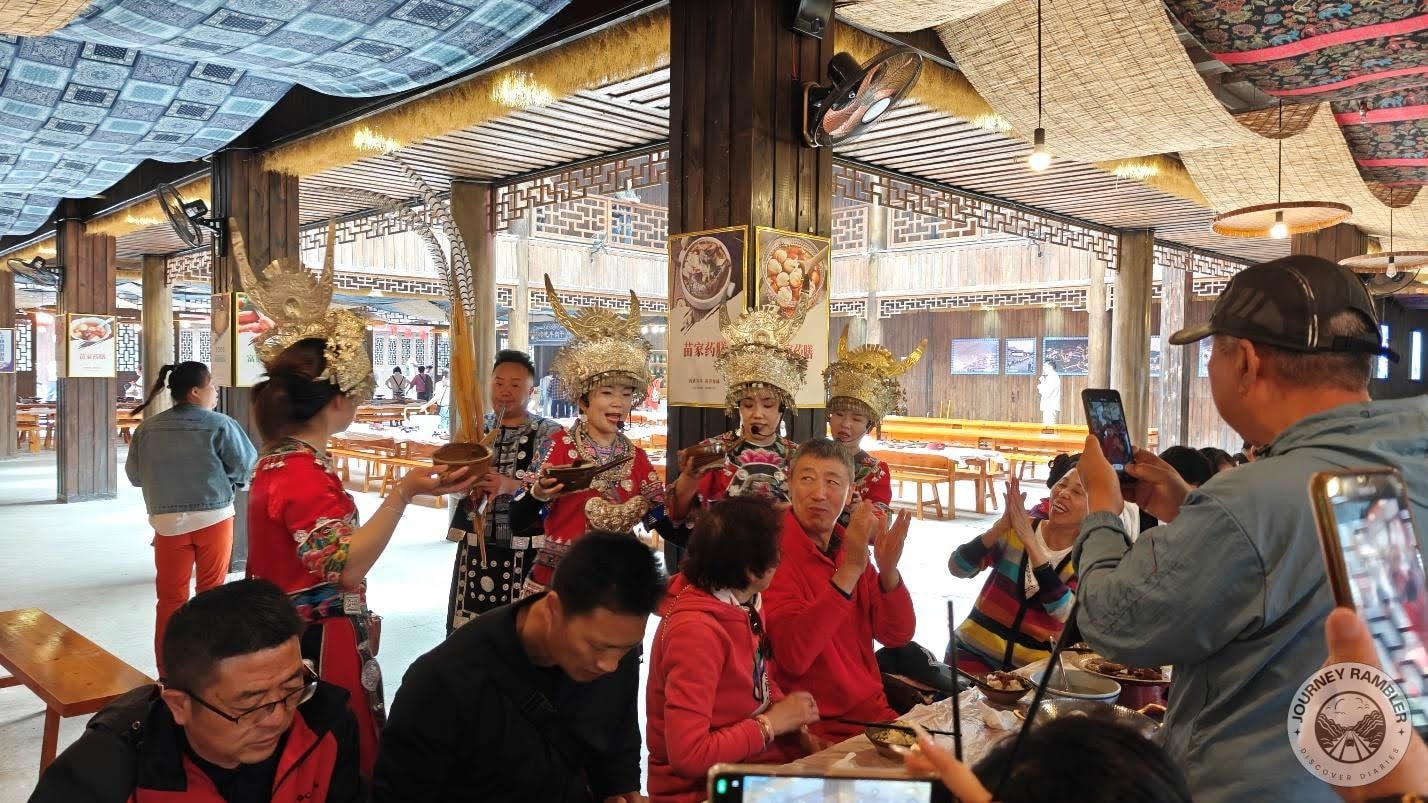
There were various dance performances taking place and people were busy taking pictures even in the middle of the meal.
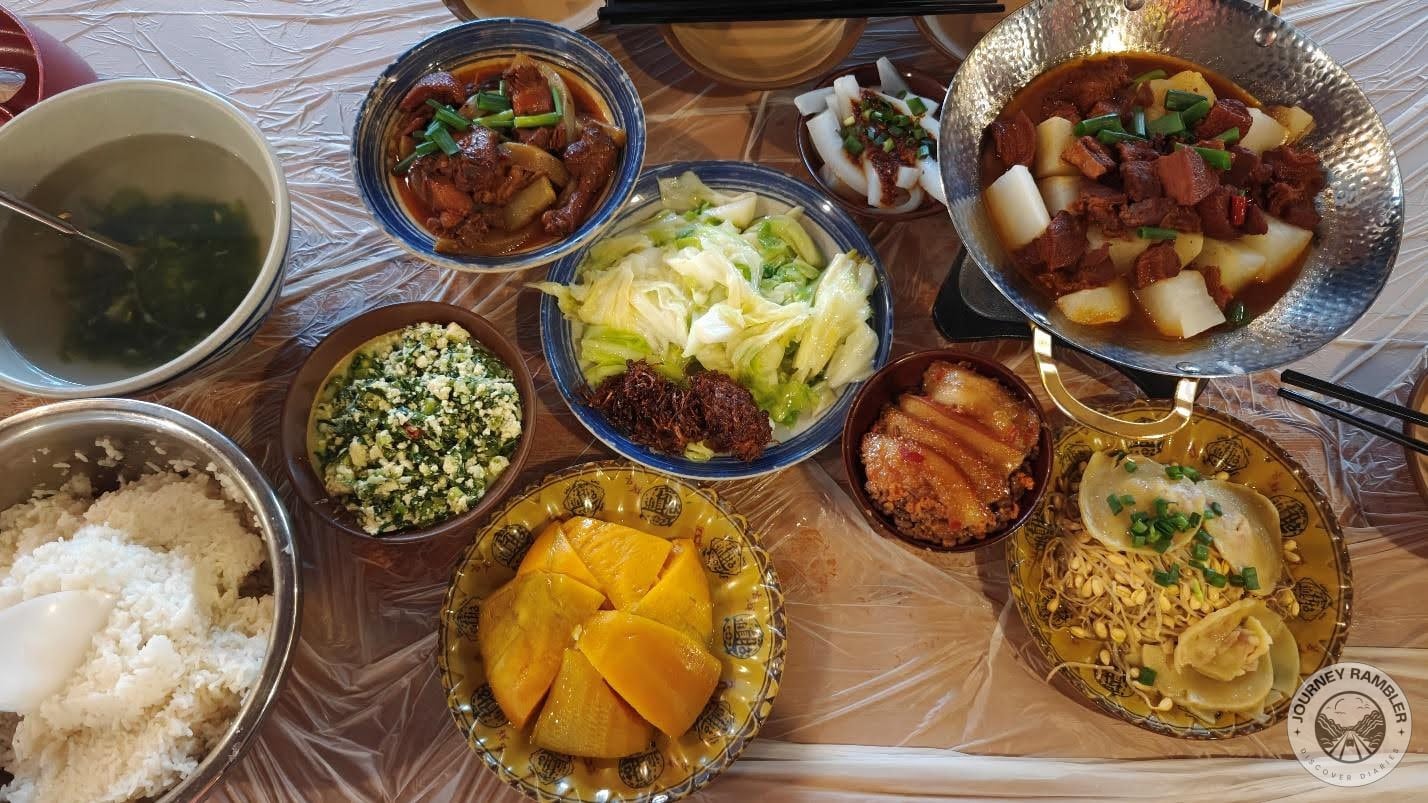
They offered a huge array of local dishes and I got to try some things that I had never eaten before.
22. Wujiang Gallery Scenic Spot
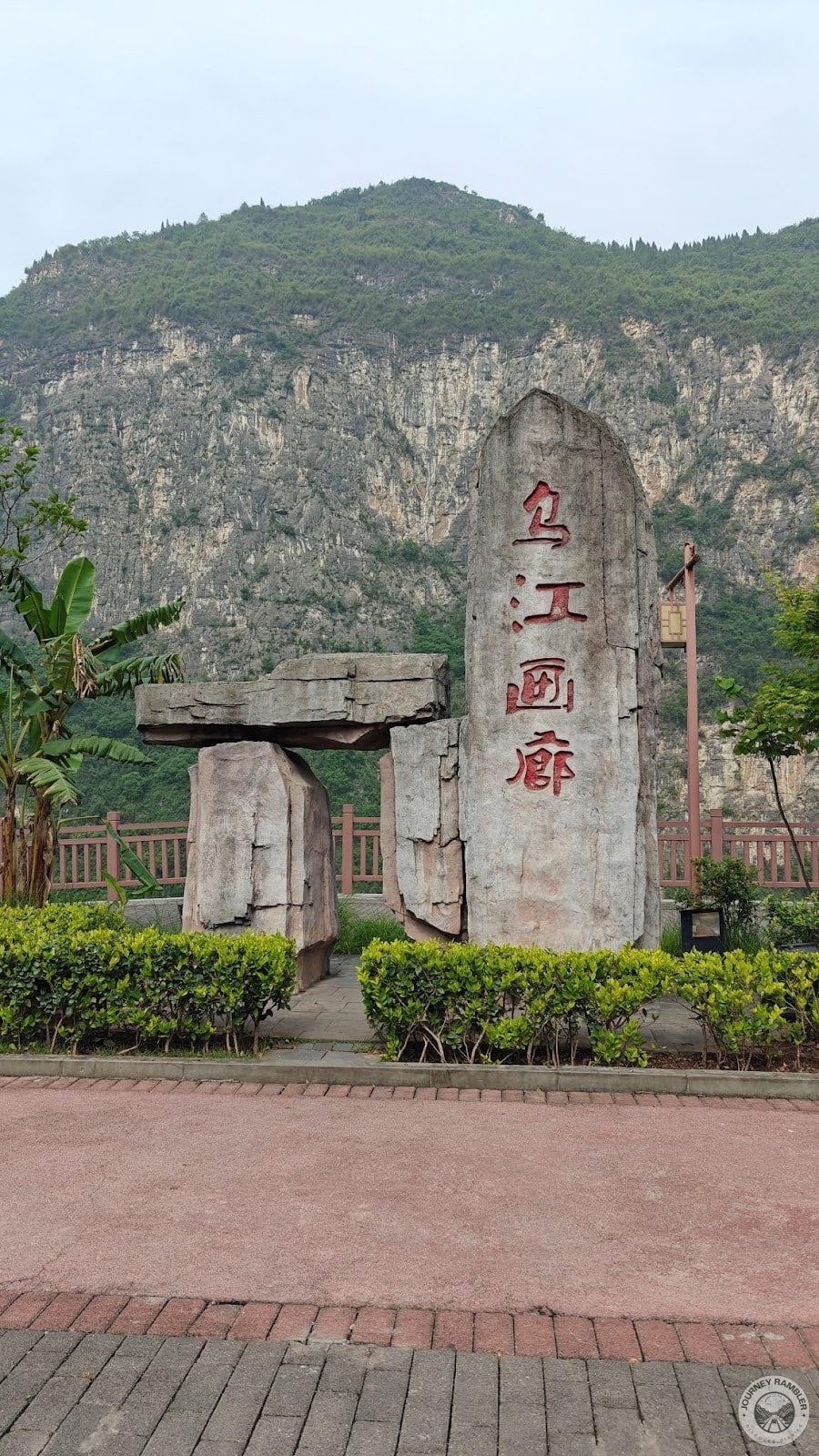
After lunch, it was time for my very last stop in Chongqing. I went to the Wujiang Gallery Scenic Spot to simply admire the views. I had read that the gorges and the river between them formed a shape like a dumbbell.
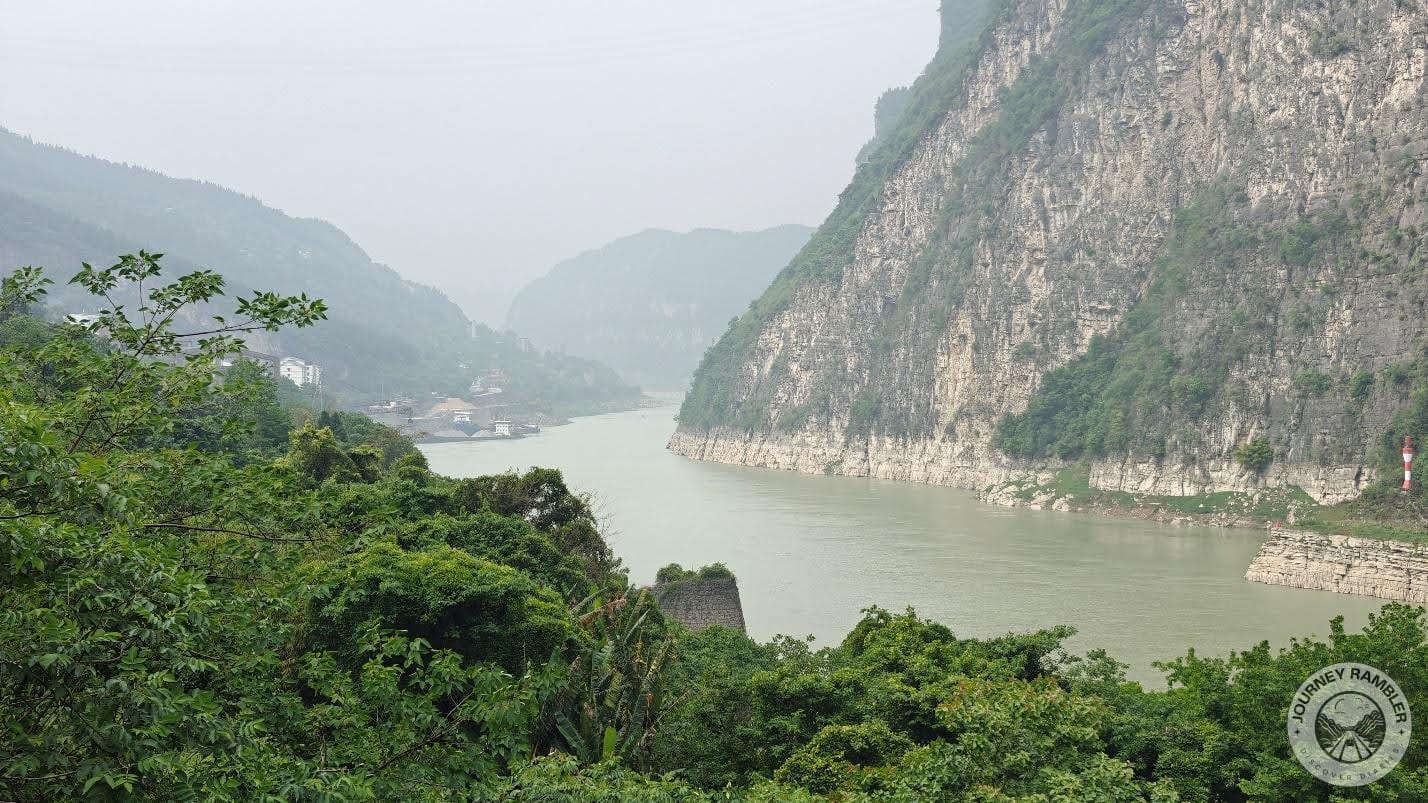
I couldn’t see the dumbbell shape from above but the view was spectacular. The misty shapes of the distant mountains gave the whole thing a surreal vibe. It was a paradise for photographers. I had heard that watching the sunrise and sunset on the Wujiang River was truly a once in a lifetime sort of experience. I couldn’t stay till sunset but I could imagine how stunning it would be.
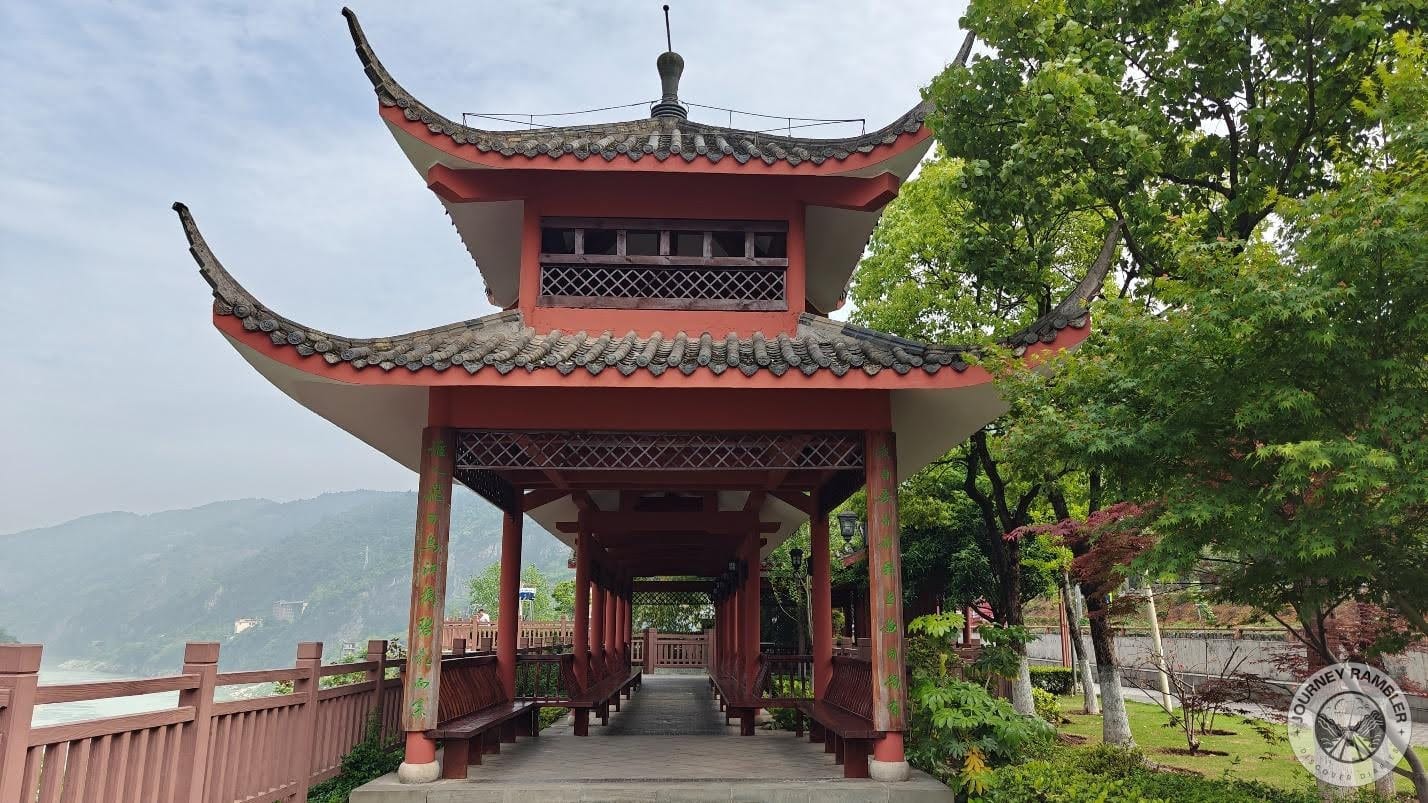
There were benches and seats for visitors to sit and rest. The gazebo style seating area looked like an elaborate temple. The curved arches of the roof and the tiles added a grand air to the structure.
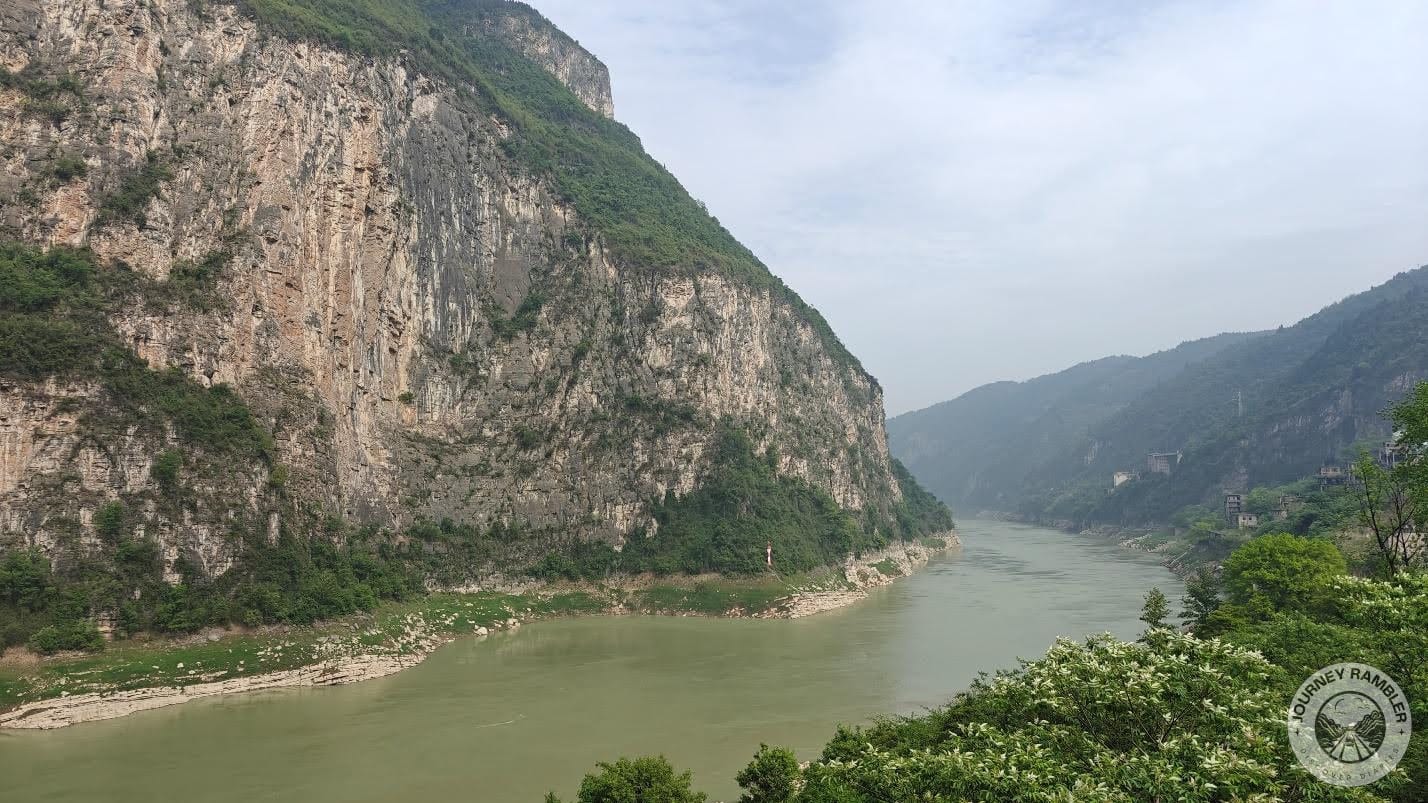
The Wujiang River seemed to lazily curve around the mountainside. It looked deep but slow and the water was very clear. The Wujiang Basin had long been the home of cultural minorities like the Tujia people and the Miao people so it had been an important cultural area for years. This last visit capped off my time in Chongqing in a satisfying manner.