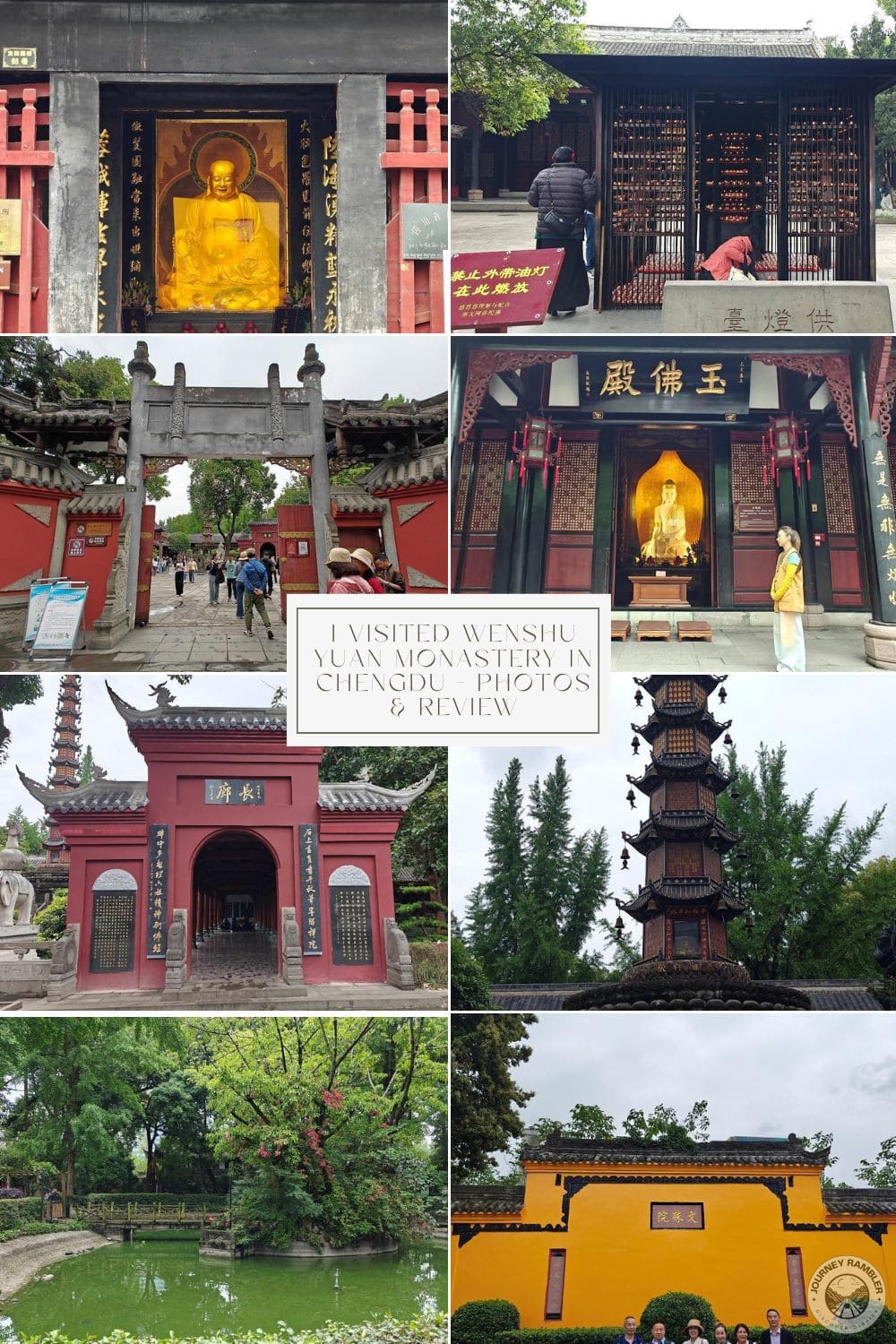
I found myself again in China with Wenshu Yuan in Chengdu being one of the first places I visited. If you’ve been following my travels, you probably remember the time I visited Chongqing. Well, this time around I was in Chengdu which is actually quite close to Chongqing.
Wenshu Yuan Monastery: The Largest and Best Preserved Buddhist Monastery in Chengdu

Now Chengdu does not have a shortage of attractions but Wenshu Yuan Monastery is quite special and in my opinion, it’s one of the few that’s a must-visit. The monastery is the largest and best preserved Buddhist Monastery in the city and is replete with history, culture, and even culinary delights. There are a number of ways to get here but probably the most fool-proof would be to just hop on Chengdu Metro Line 1 and stop at the Wenshu Monastery Station. From there, it’s more or less a ten minute walk to the entrance.
Just before you get to the entrance though, you’ll come across this sign which features the guide map to Wenshufang. At first I thought that this meant the monastery but it’s actually the area which Wenshu Yuan is a part of. Other than the monastery, it features plenty of restaurants, teahouses, and establishments selling a wide variety of souvenirs and cultural goods.
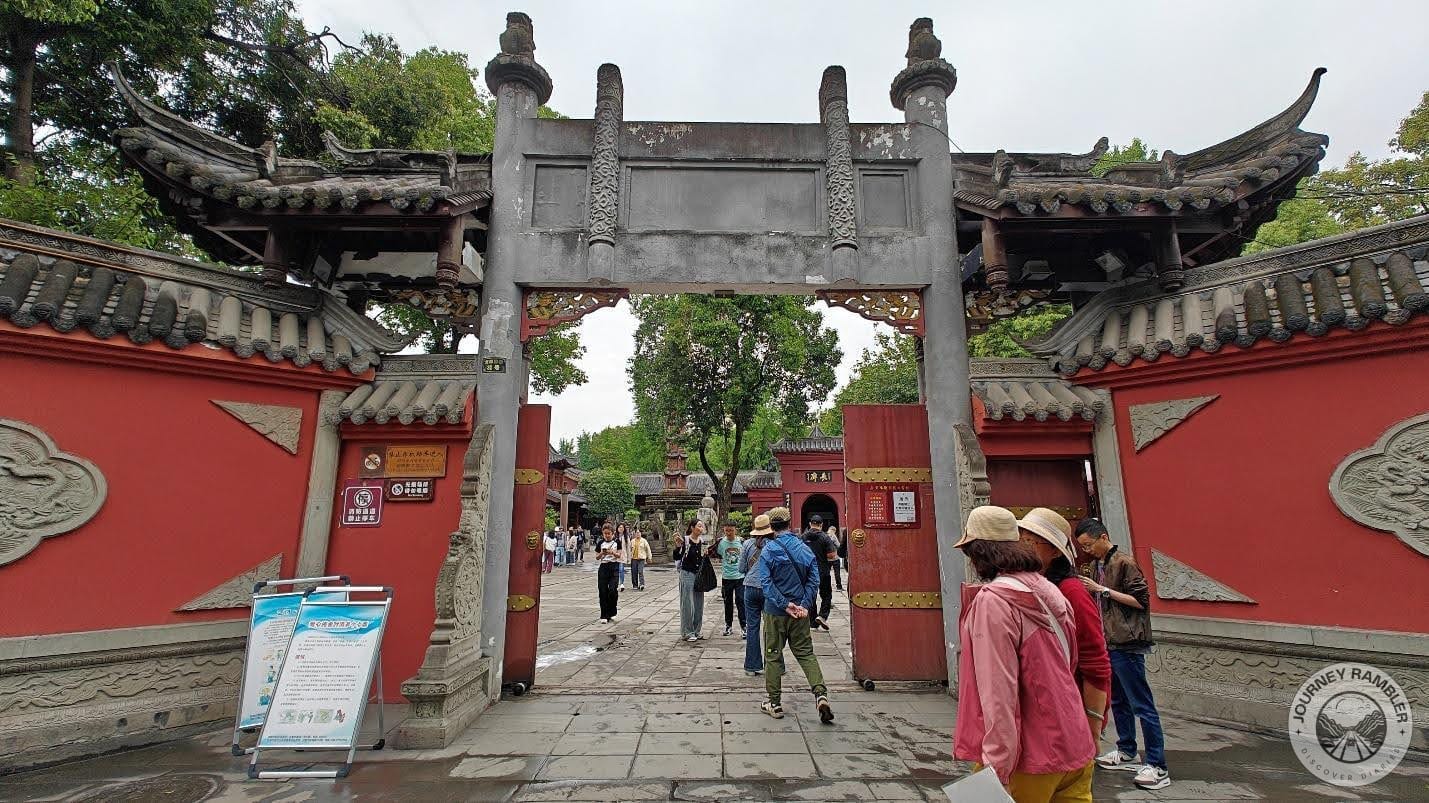
Due to being an iconic cultural and religious landmark in Chengdu, Wenshu Yuan naturally has plenty of visitors. This was pretty evident during my visit and could be a turn off for those who aren’t too keen on crowds. Personally though, I didn’t mind the number of visitors as I was more focused on the views and architecture of the buildings.
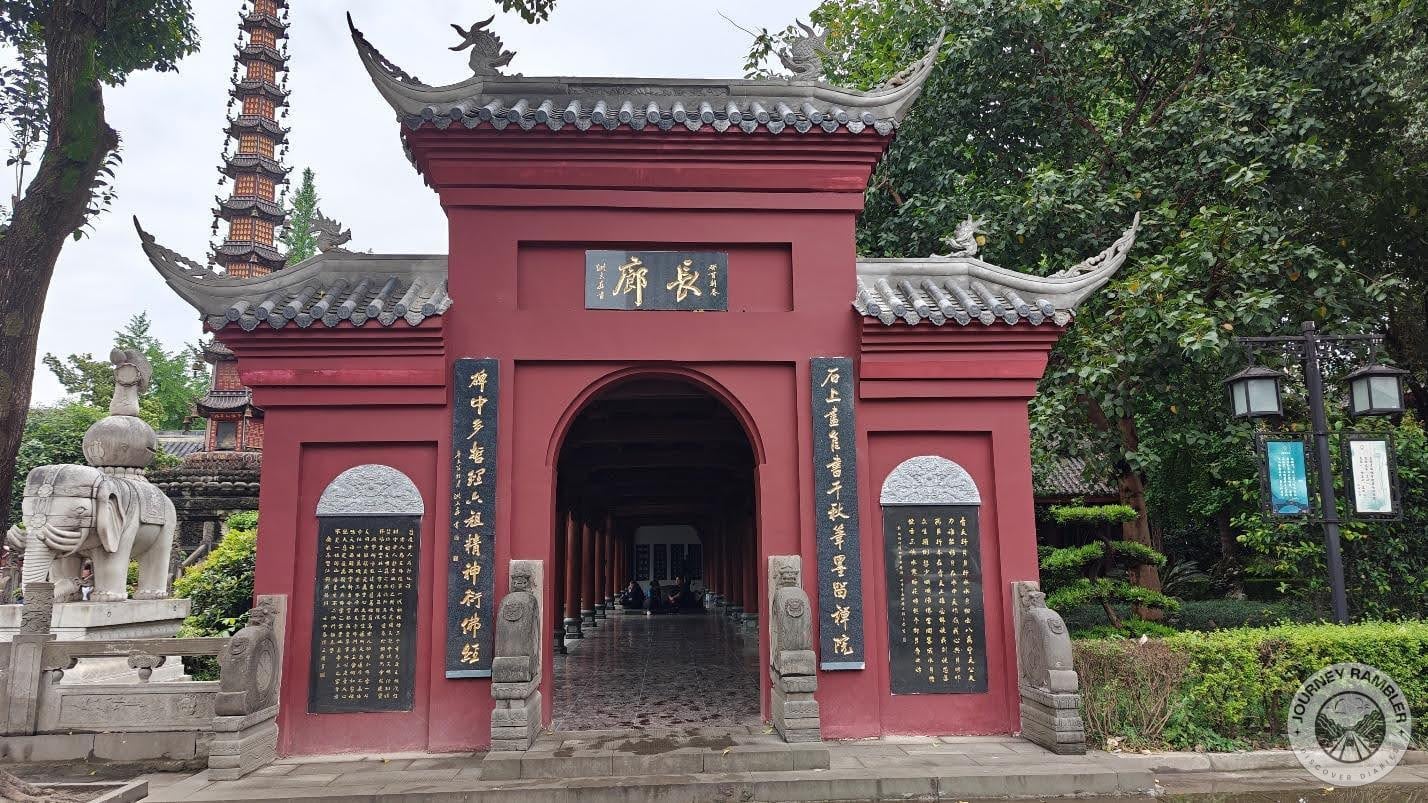
Upon entering, the first building that I came across was the Stele Forest. Also known as the Stele Gallery, this contains a selection of paintings and calligraphic works from different periods in China’s rich history. Arguably one of the most famous items that can be found here is a preserved ink scroll given by the Qing Dynasty’s Kangxi Emperor in 1702.
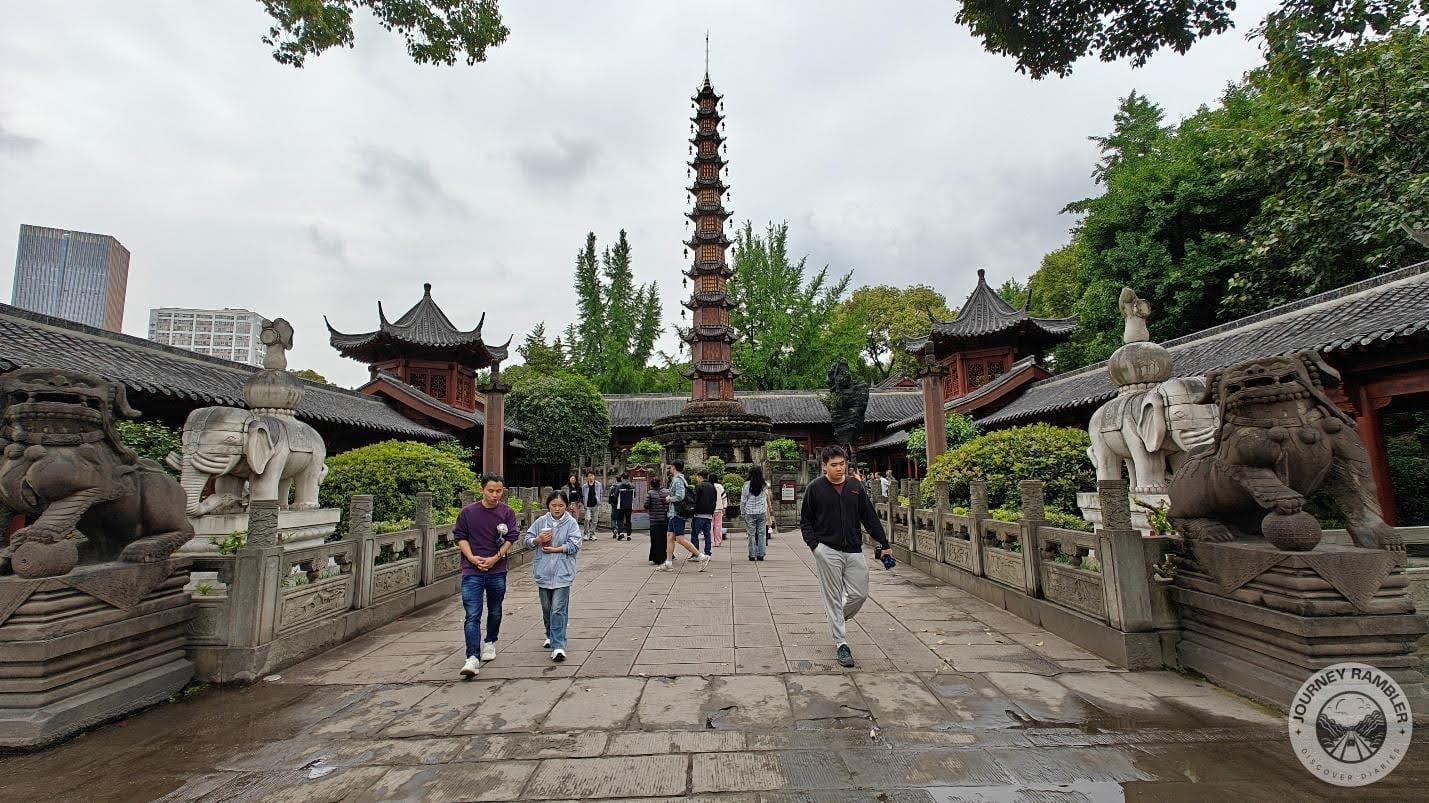
Right next to the Stele Forest is probably one of the more impressive structures here in the Monastery complex. Called the Thousand Buddha Pagoda, this is said to hold a relic of the Buddhist monk Xuanzang Sanzang. For those unfamiliar, Xuanzang is the protagonist of the Chinese literary classic, Journey to the West.
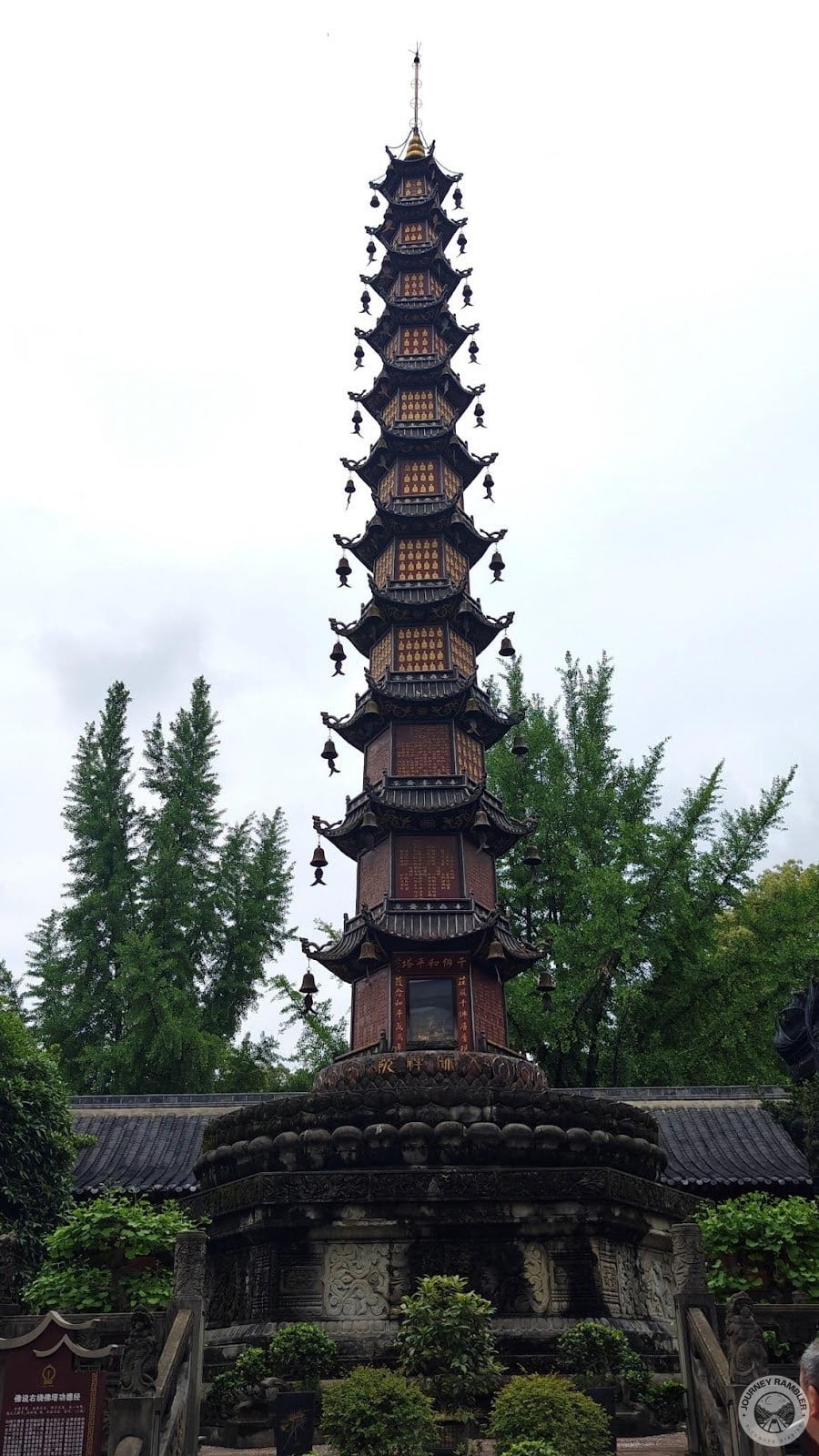
Up close, the pagoda looks absolutely stunning if not a bit weathered at its base. Now you might be wondering why it’s called the Thousand Buddha Pagoda. If you look at the upper floors of the pagoda (specifically from the third floor and up), you’ll notice what appear to be Buddha carvings.
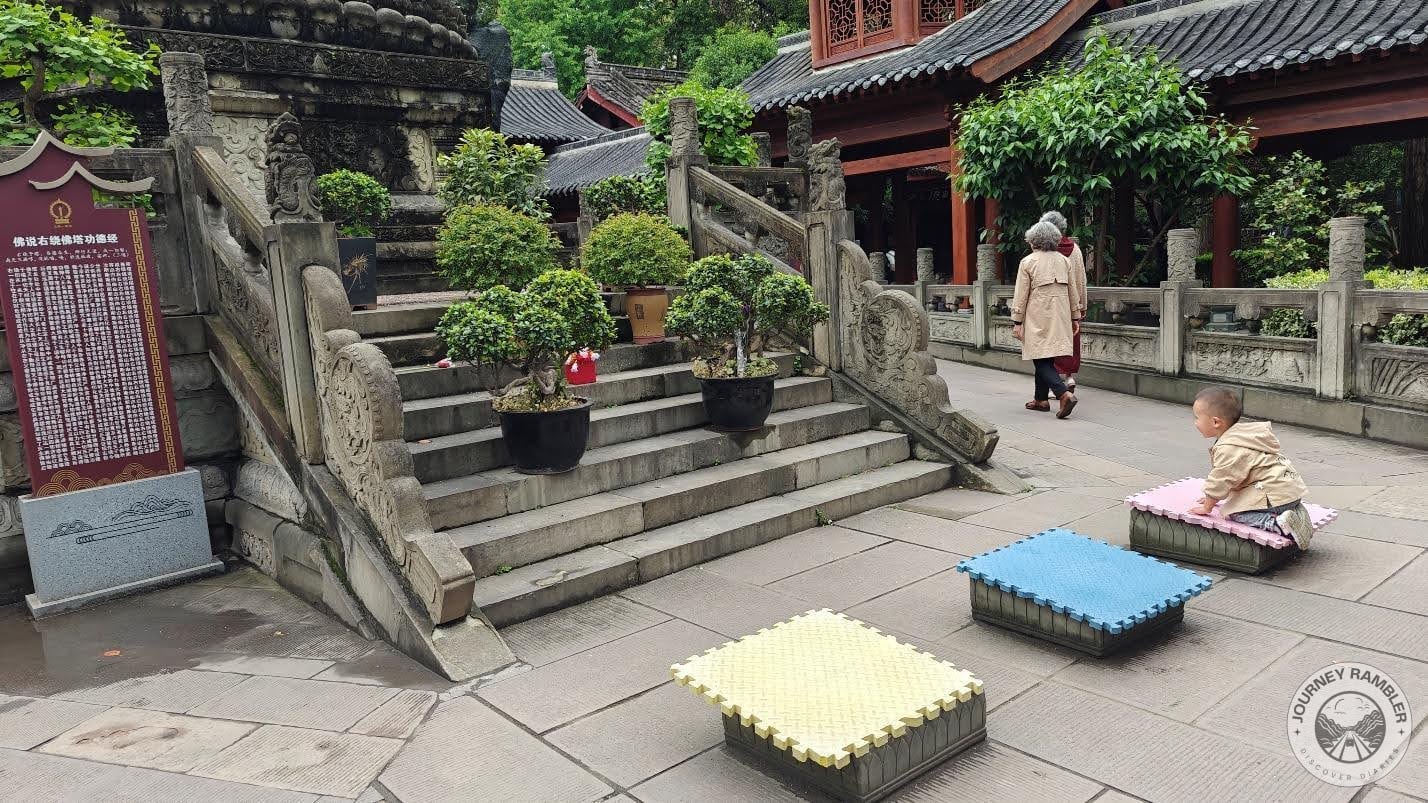
Here you’ll find the whole base of the pagoda which has a set of stairs with what looks to be bonsai trees on them. I’m not really sure what significance the trees have here. It does seem like they’re there to prevent people from going near the pagoda more than anything else.
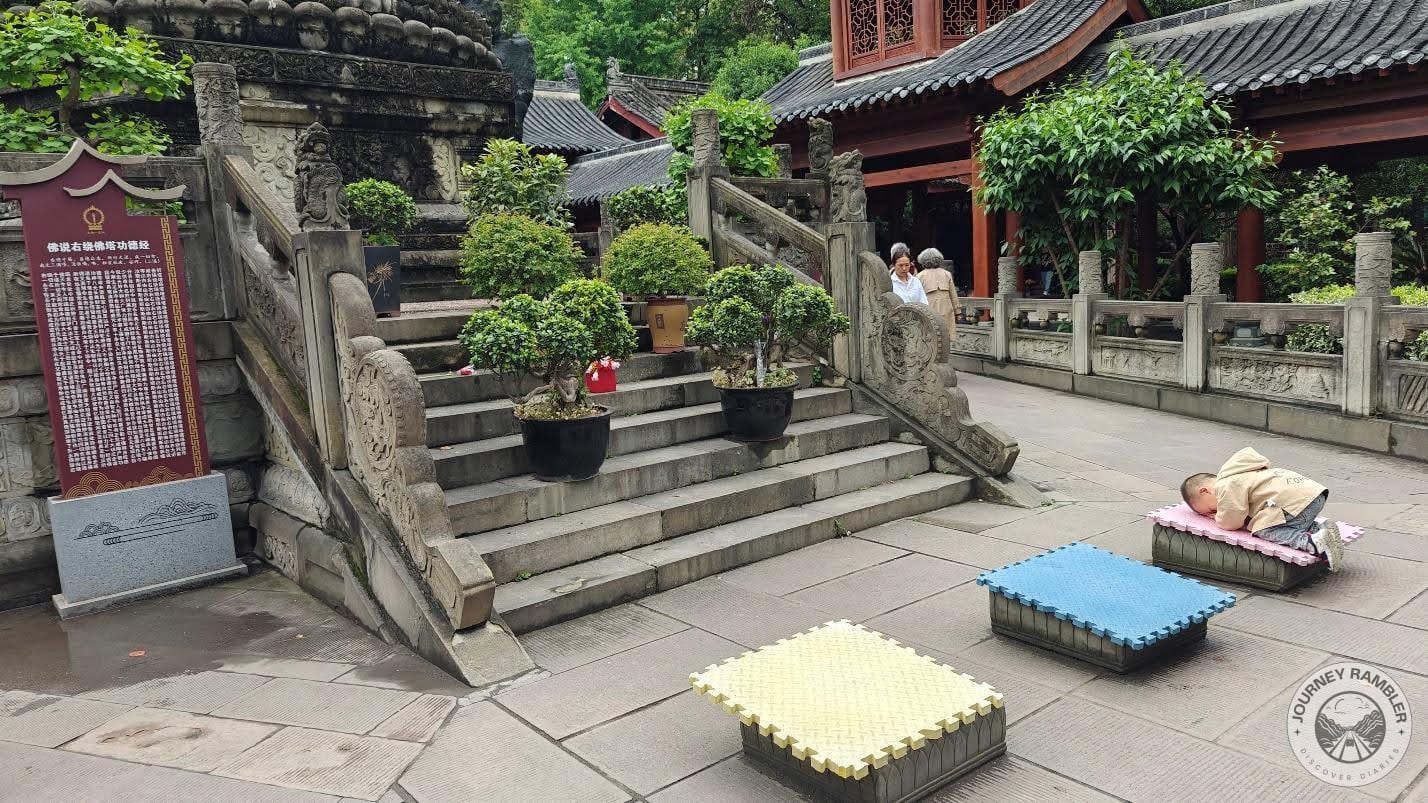
Then in front of the base of the pagoda, you’ll find these elevated platforms which have cushions where visitors can then use to pay reverence to the Buddhas. In fact, you can see one really young visitor doing just that in the image above. I will say, there weren’t that many people that did this when I was there.
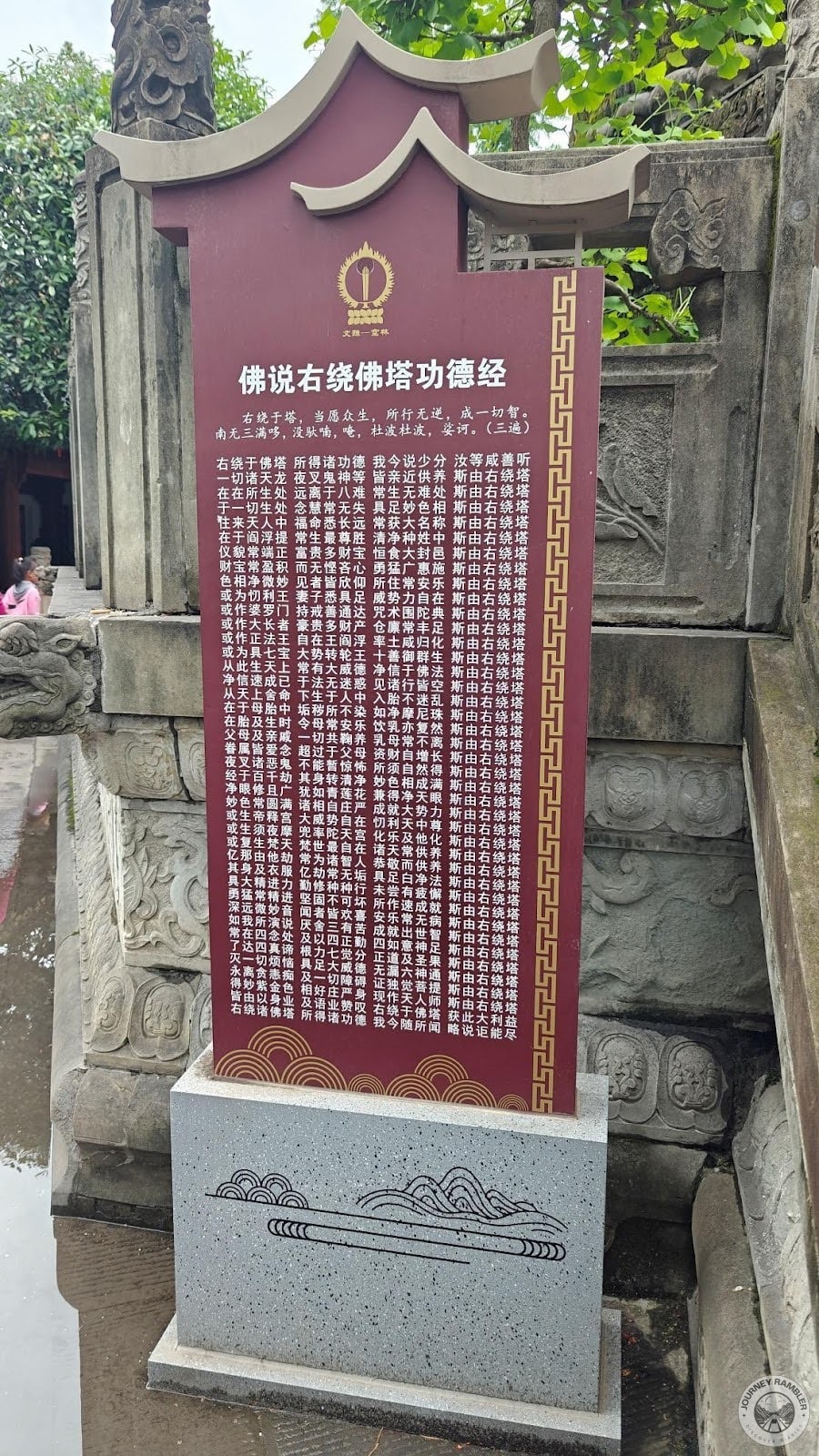
Beside the stairs, you’ll find this slab that features some writings in Chinese. Using Google Lens, I found that the title of the inscription on this slab translated to “The Sutra on the Merits of Circumambulating the Buddha’s Stupa to the Right”. Circumambulating a stupa to the right is basically the practice of walking around a Buddhist shrine in a clockwise direction and the slab details why this is good as well as the benefits you’ll enjoy from practicing this.
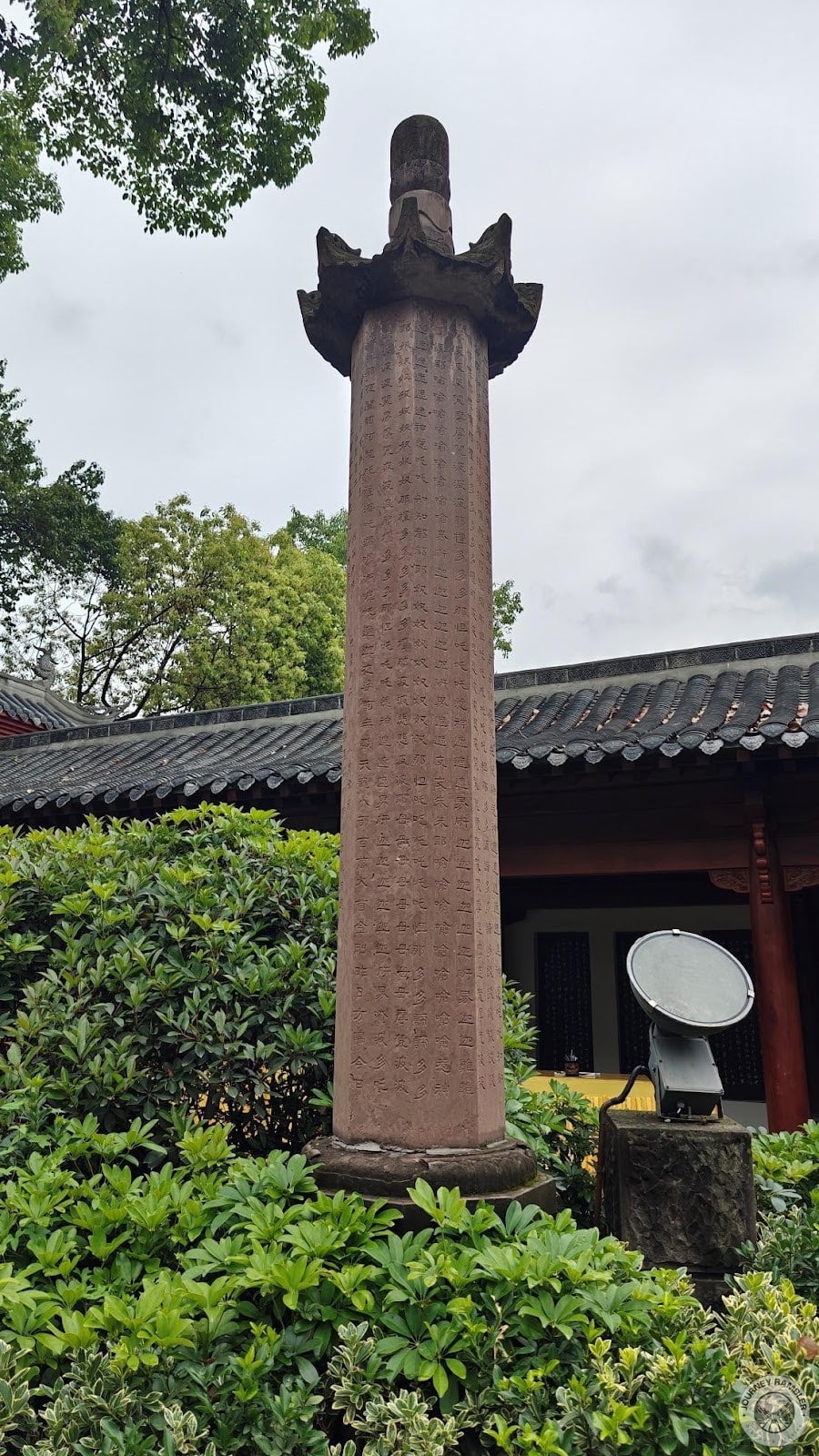
On both the left and right side of the Thousand Buddha Pagoda, you’ll find these steles that also feature inscriptions in Chinese. Unfortunately, my Google Lens couldn’t seem to translate what these were. Additionally, there doesn’t seem to be any mention of what these function/s these steles had.
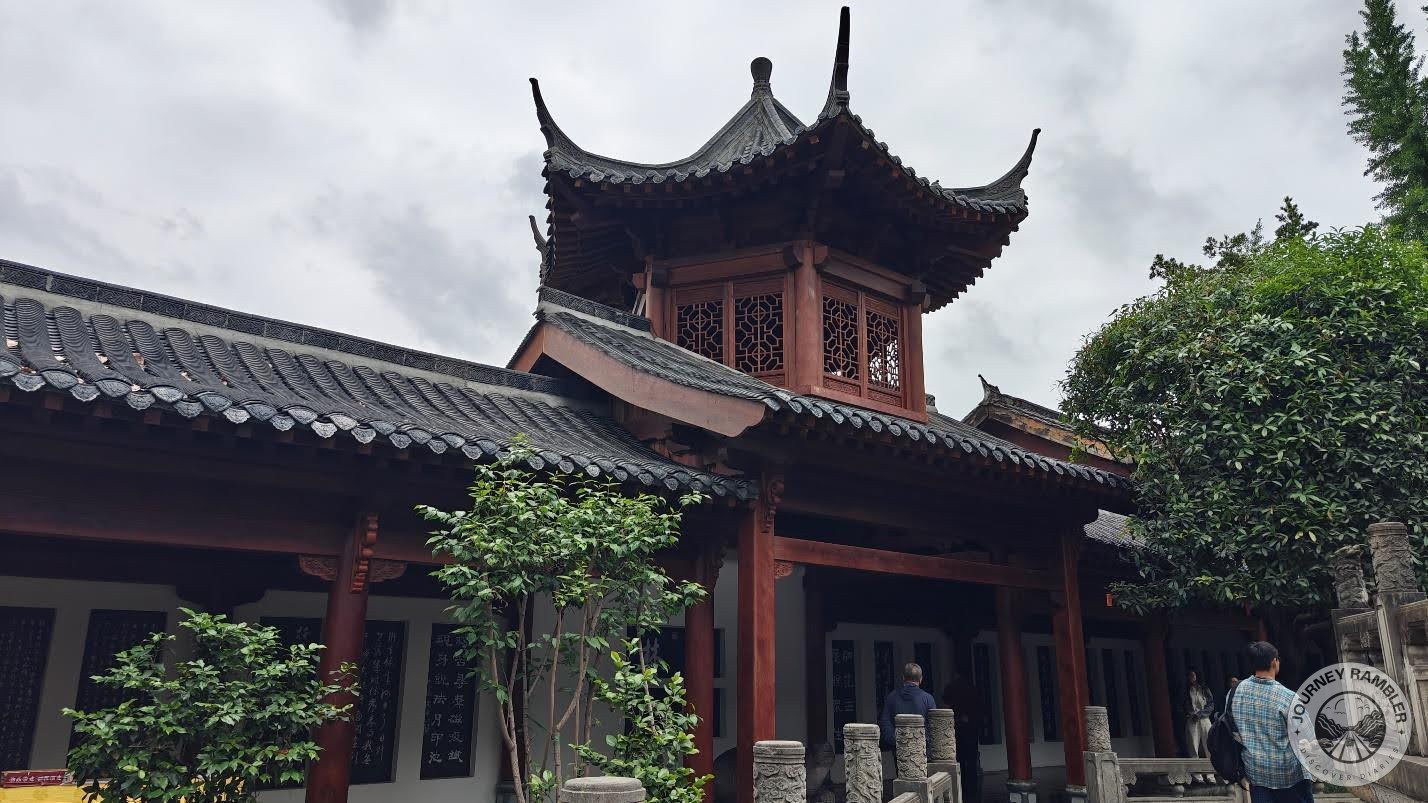
I don’t think I was able to discuss this earlier but the Stele Gallery building forms a U-shape around the Thousand Buddha Pagoda. This part of the building can be found to the left of the pagoda and it’s a great place to wander around in especially if the weather isn’t amenable.
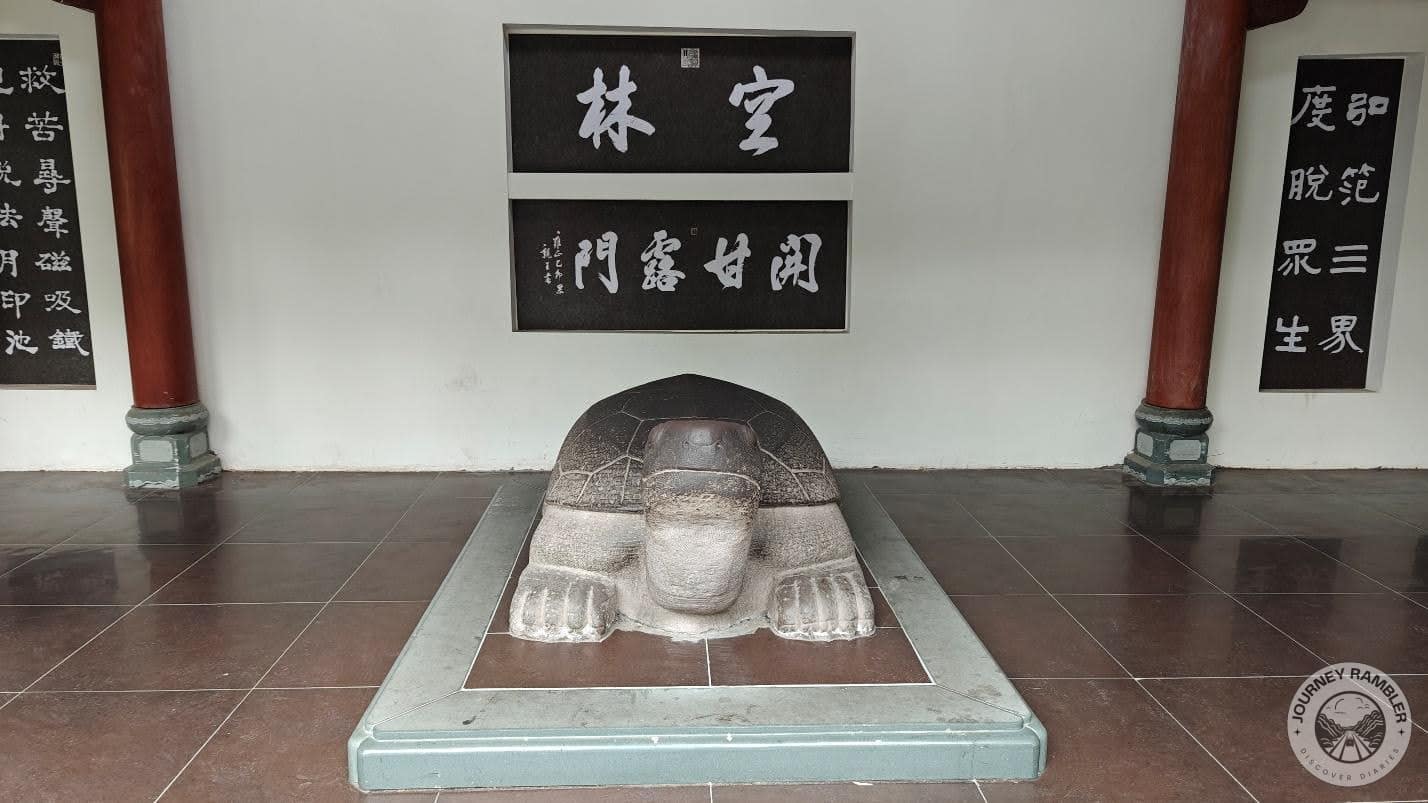
Here’s what the covered walk of the Stele Gallery looks like. As you can see, plenty of calligraphic works line up the walls here. Other than the calligraphy, you’ll also notice what looks like a worn out statue of a tortoise here (the significance of which I’m not quite sure).
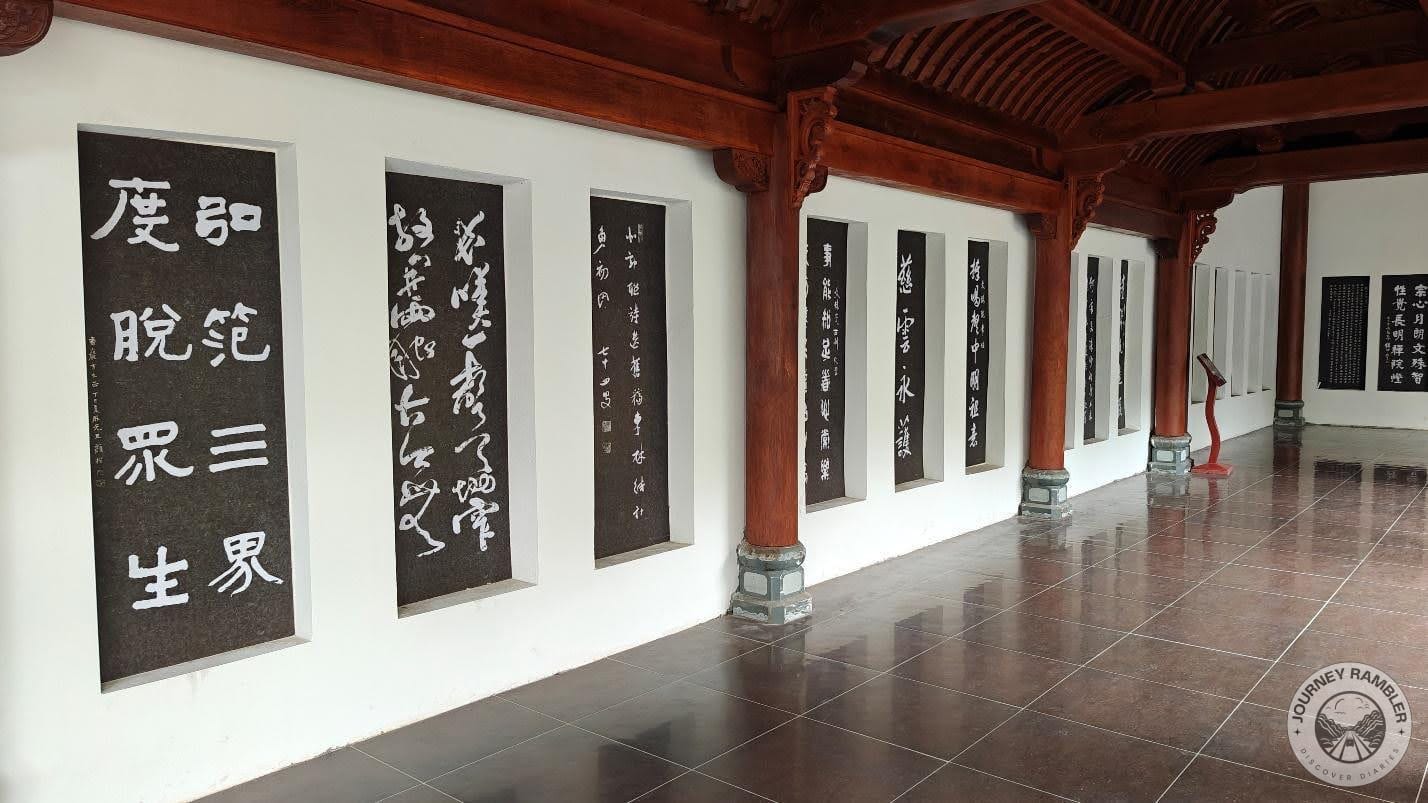
Since this is a Buddhist monastery, the majority of the calligraphy you’ll find here talks about Buddhism. I used Google Lens on the left most calligraphic work in this image and it translates to “Deliver All Beings Across the Three Realms”. If you’re familiar with Buddhist cosmology, the Three Realms refers to the realms of Desire, Form, and the Formless.
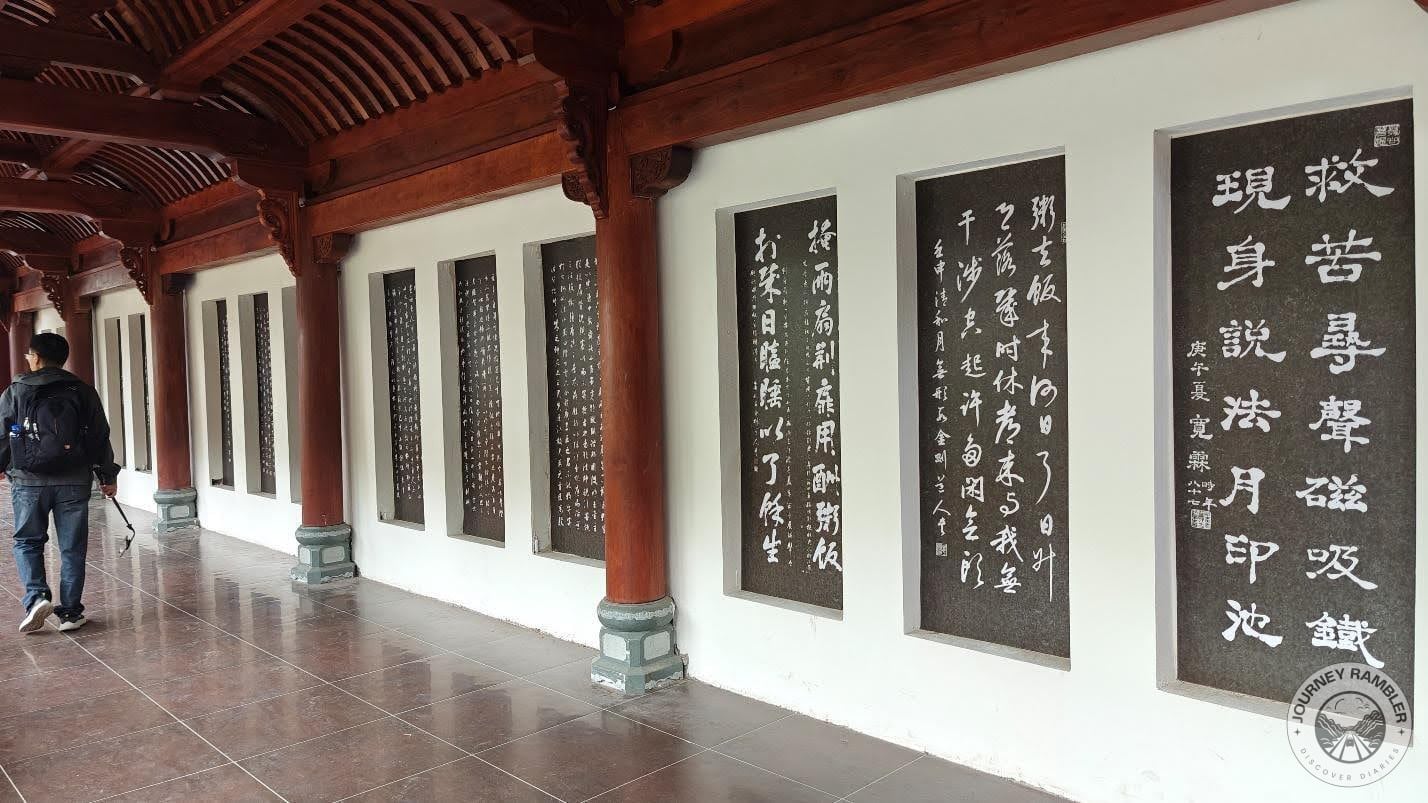
A lot of the themes discussed in these calligraphic works pertain to Buddhism’s core tenets. The rightmost work in this image talks about teaching the Dharma which is essentially the Buddha’s teachings.
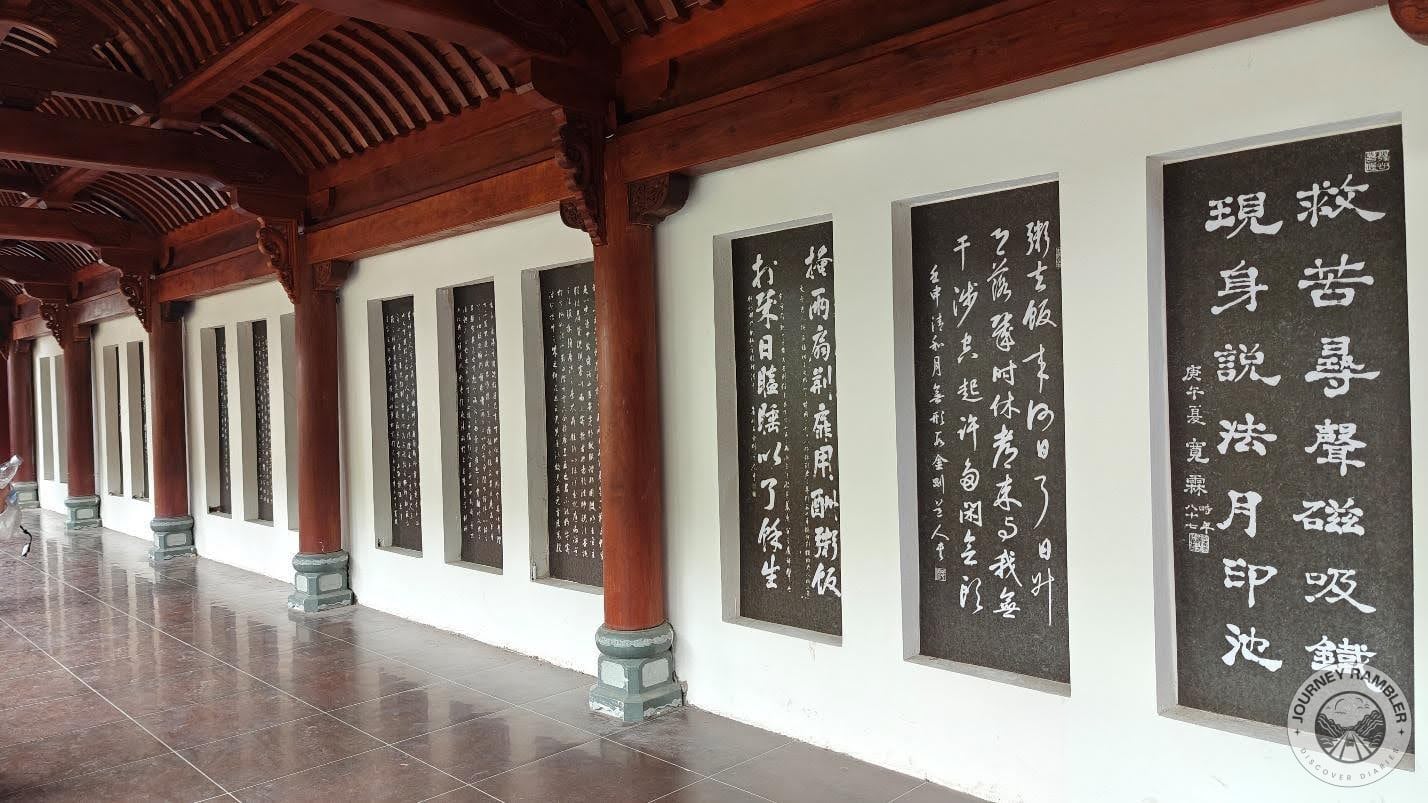
Other than the calligraphy, one thing that I really liked walking down this hallway was surprisingly the ceiling. The exposed beams and rafters were really detailed and kind of reminded me of the old buildings I came across during my trip in Japan. As for the floor, I’m not quite sure if these tiles were the result of the renovation done to the complex in 2006.
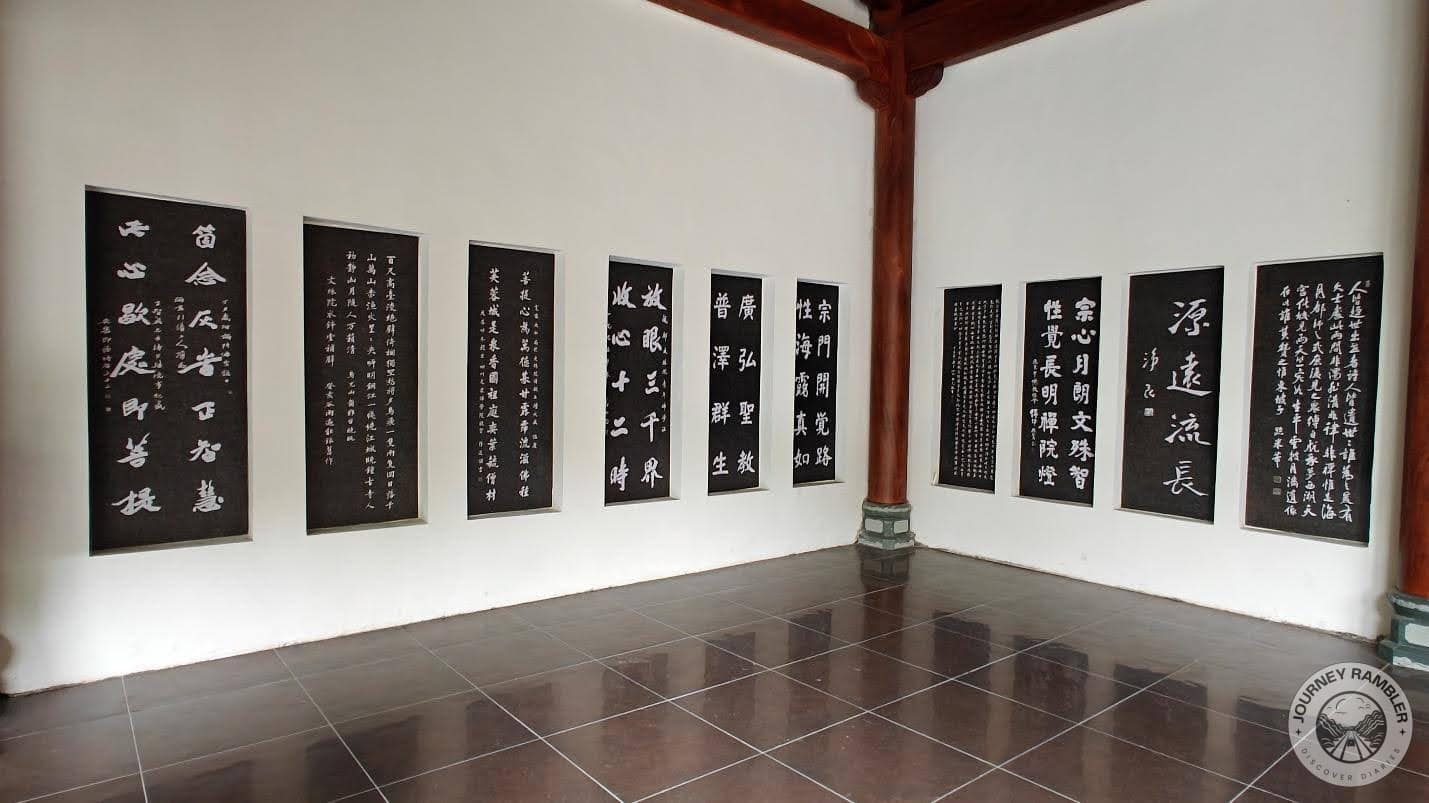
Now you’re probably wondering why would somebody dedicate such a sizable building to calligraphy? It’s a question I asked myself as well and upon further research I found that calligraphy is actually a highly revered art form in both China and Japan. In fact, it’s even considered much more valuable than painting (fine art) even today.

After exploring the Stele Gallery, I came across this interesting scene in the area just behind the building. So the objects in the small hut on the raised platform are apparently oil lamps. In Buddhist tradition, oil lamps represent the Buddha’s teachings and are used to purify negative karma.
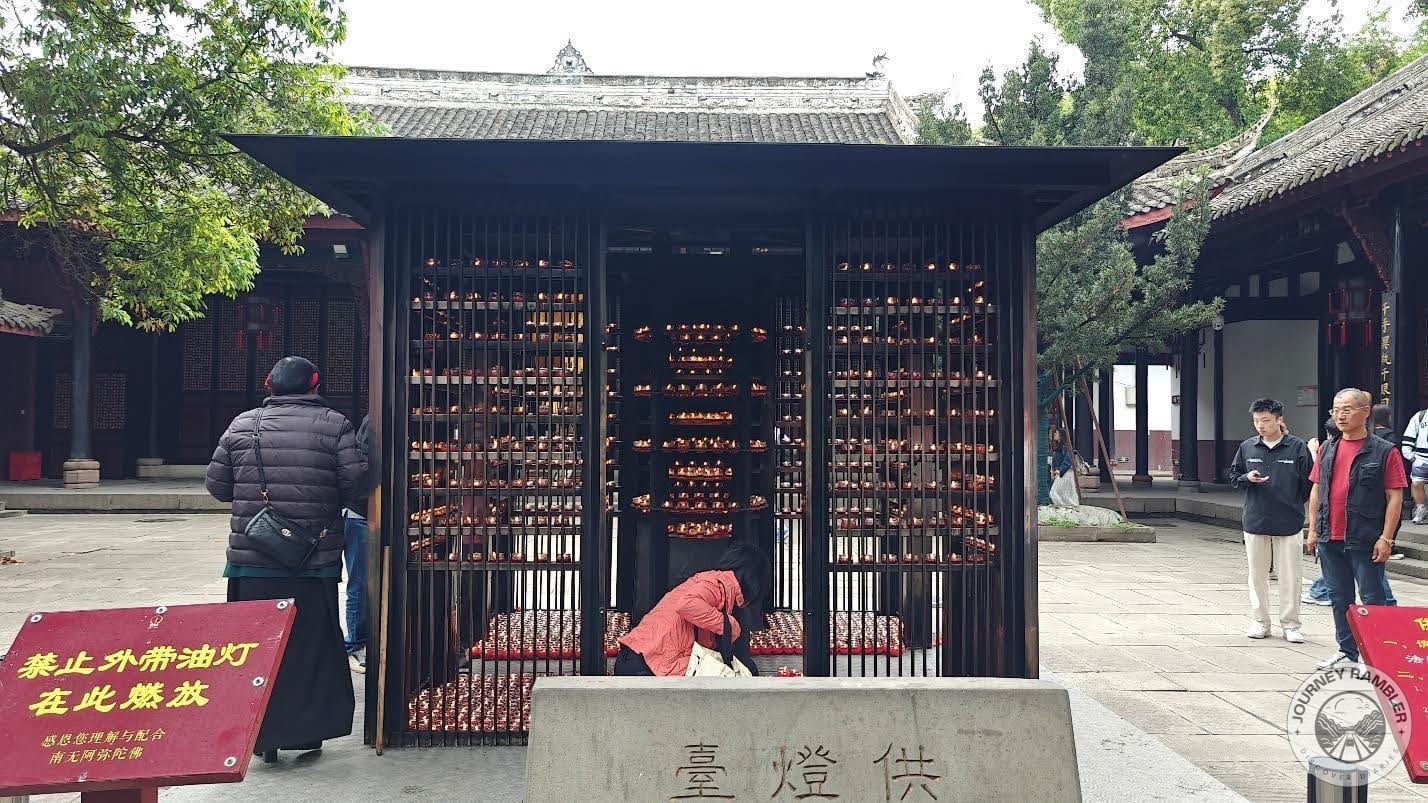
Now I couldn’t find any translations in English for the instructions here so you’ll have to make use of Google Lens or your translation app of choice if you want to make an oil lamp offering. Much like with the shrines I saw in Japan, I think you will need to donate cash here to get an oil lamp that you can then light inside the hut/altar.
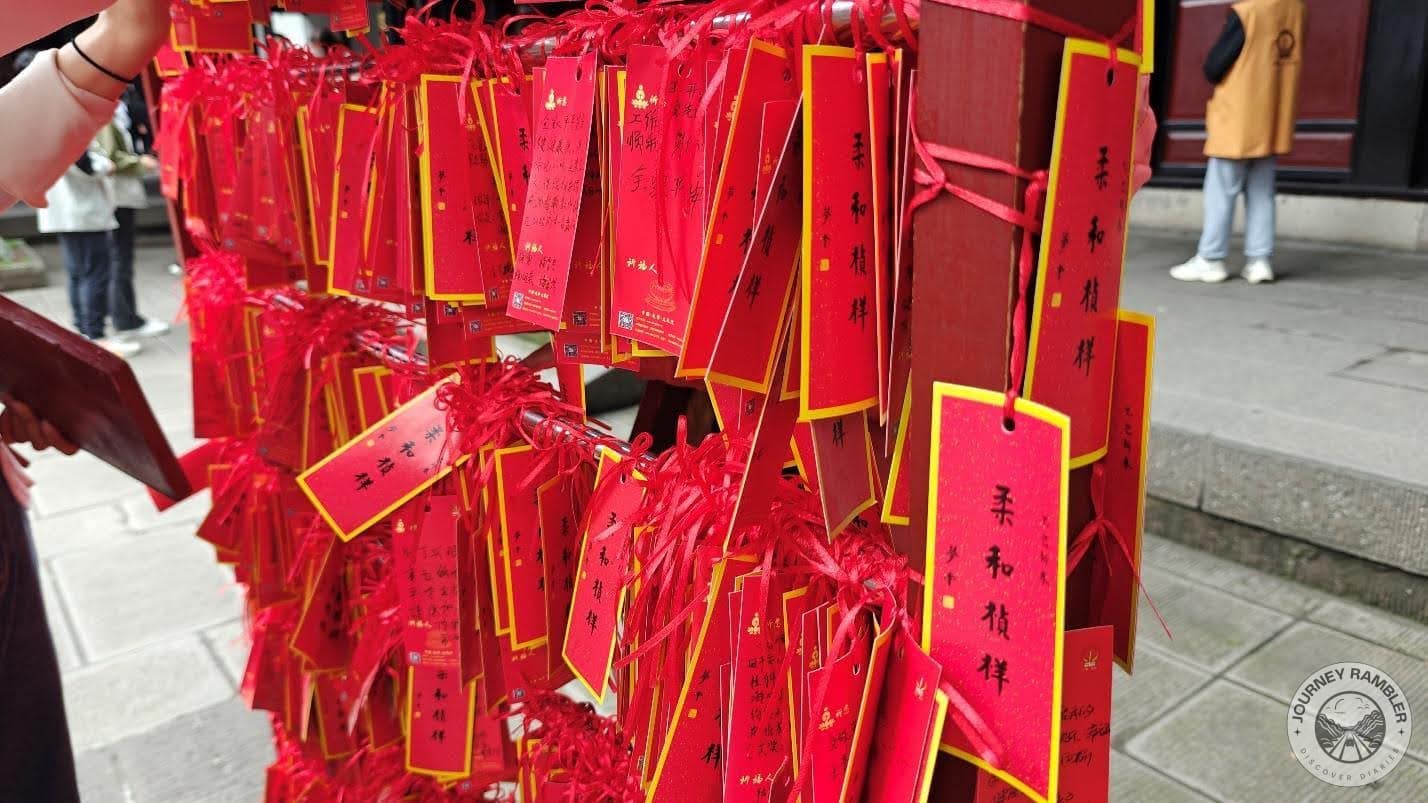
Behind the hut/altar, you’ll then find this rack where you can hang these charms. This actually reminded me of a similar rack that I saw being used in Japanese Shinto and Buddhist shrines called emagake.
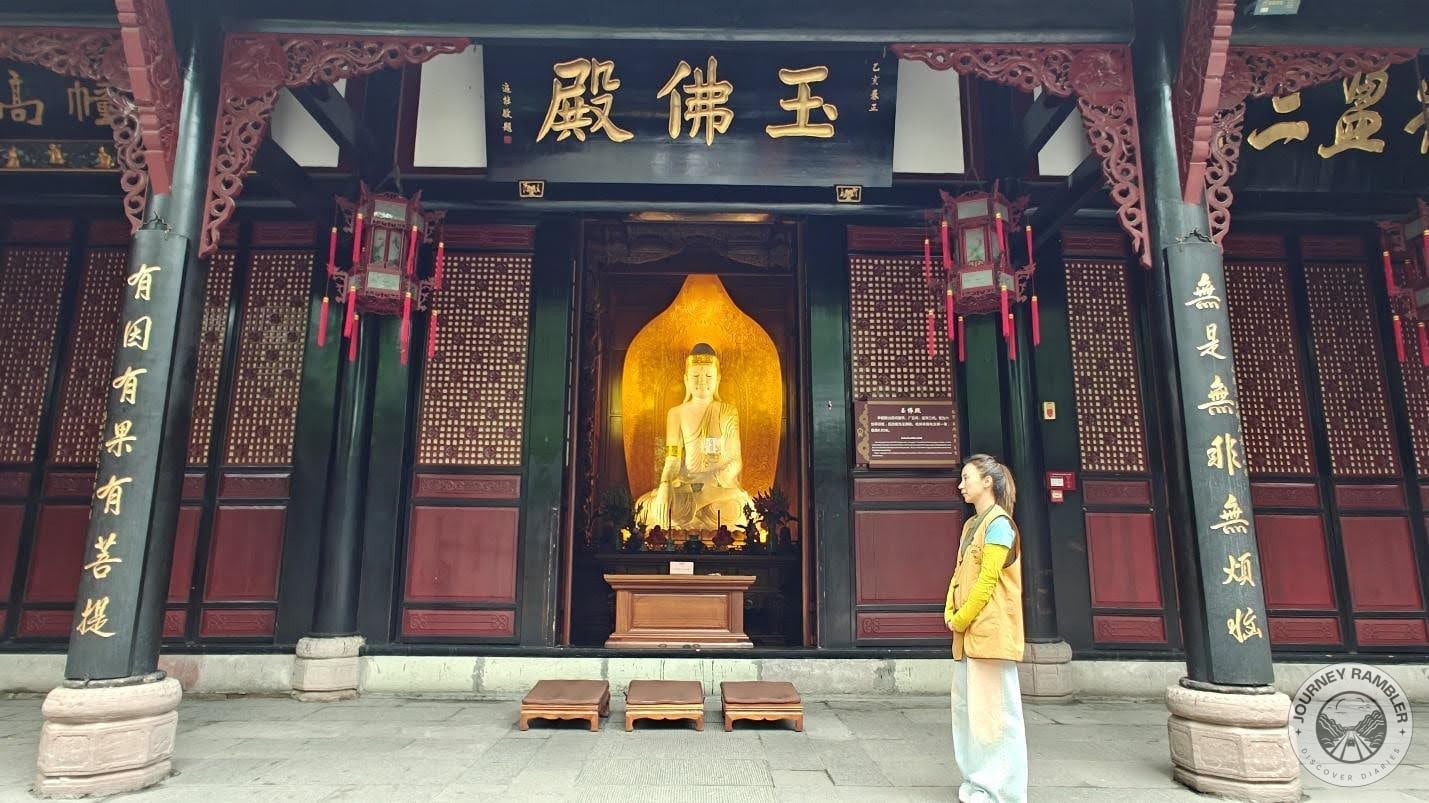
Now behind both the hut/altar and the rack for charms, I came across this building that was called the Jade Buddha Hall. This is basically a shrine where a Jade Buddha statue (hence the building’s name) can be found. This was honestly a very impressive statue that looked very life-like.
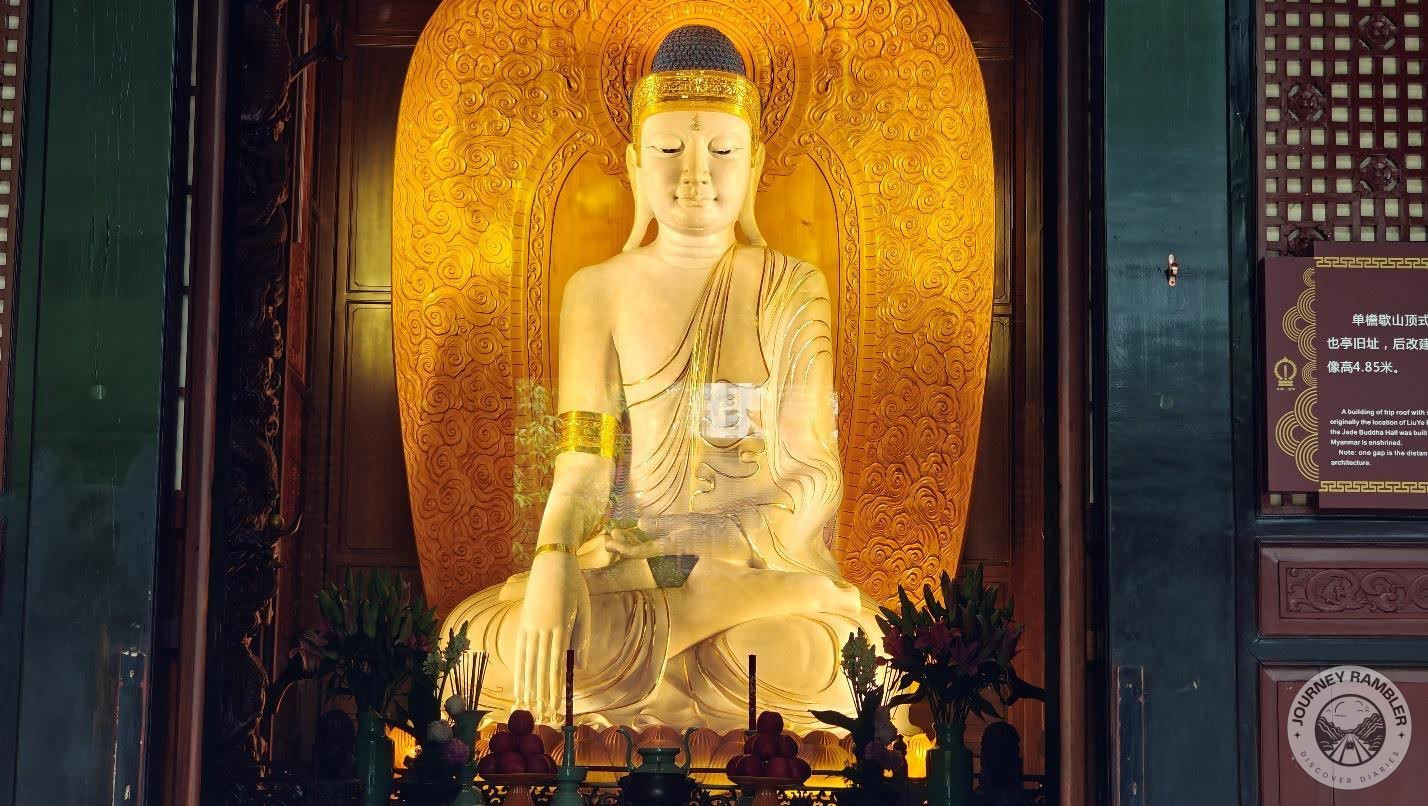
This is a close-up of the statue and you can see what I was talking about earlier. The Buddha’s expressions just look so serene that it somehow looks as if he’s alive. Of course, this is just a statue and I guess the reason why he looks like this is probably due to the shrine’s lighting.
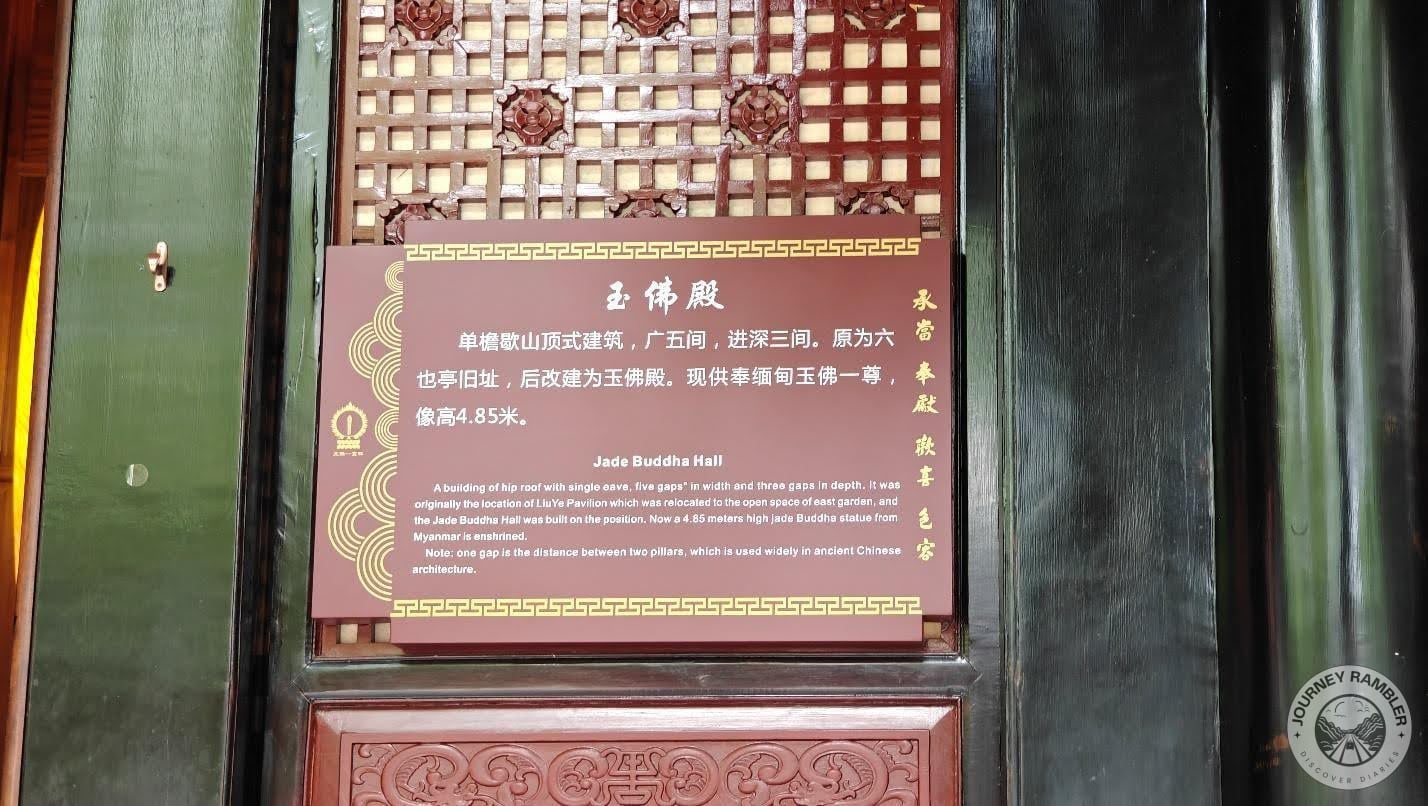
Near the opening of the shrine, you’ll notice this sign detailing the notable characteristics of the Jade Buddha Hall building. Additionally, the sign also talks about the origins of the Jade Buddha. Apparently, it was originally from Myanmar and from further research I found out it was brought by a monk who walked from there to Wenshu Yuan back in 1922.
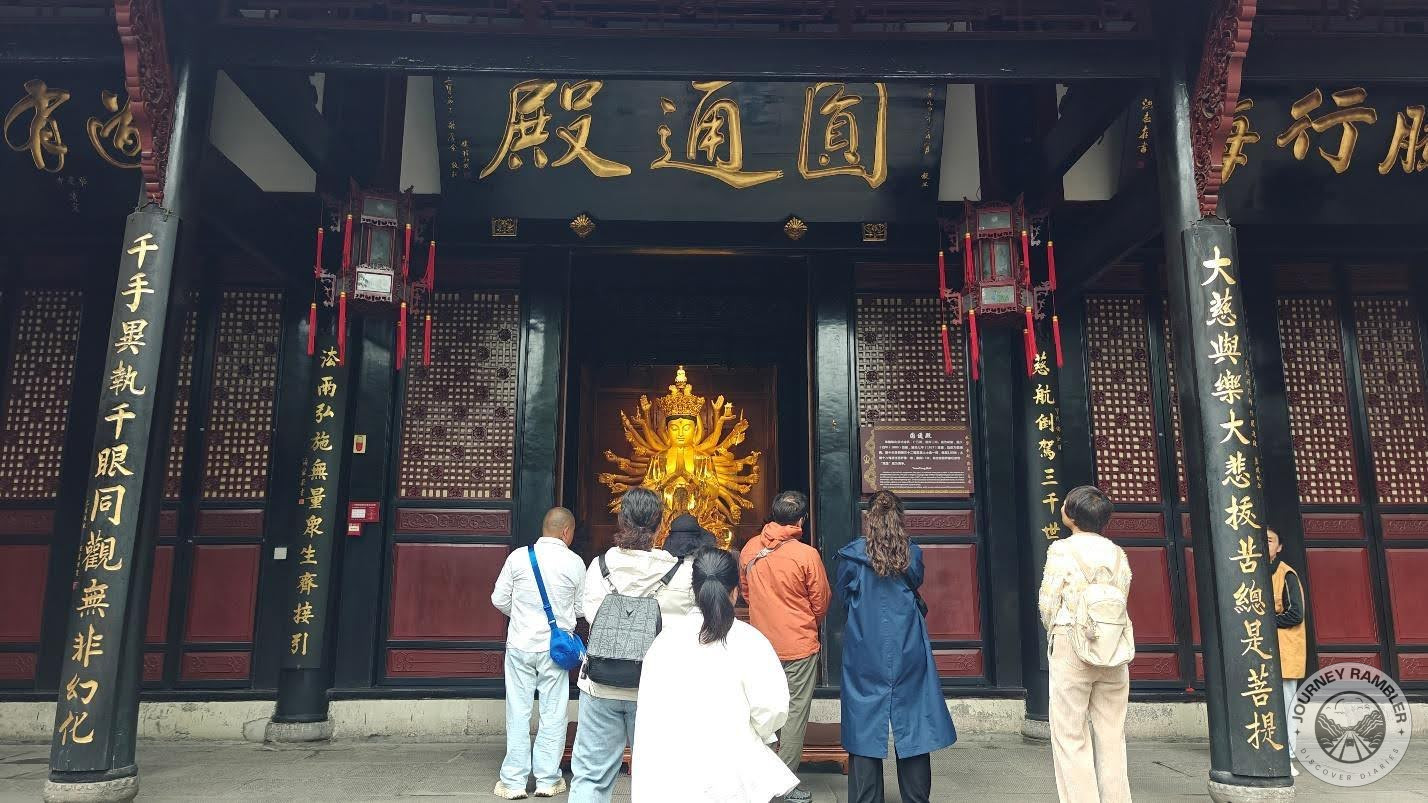
The Jade Buddha Hall isn’t the only shrine to a Buddhist deity that you’ll find here at Wenshua Yuan. Here’s one for the Bodhisattva Guanyin or Yuan Tong. It’s aptly called Yuan Tong Hall and her statue is probably one of the most impressive that I came across while exploring the monastery’s grounds.
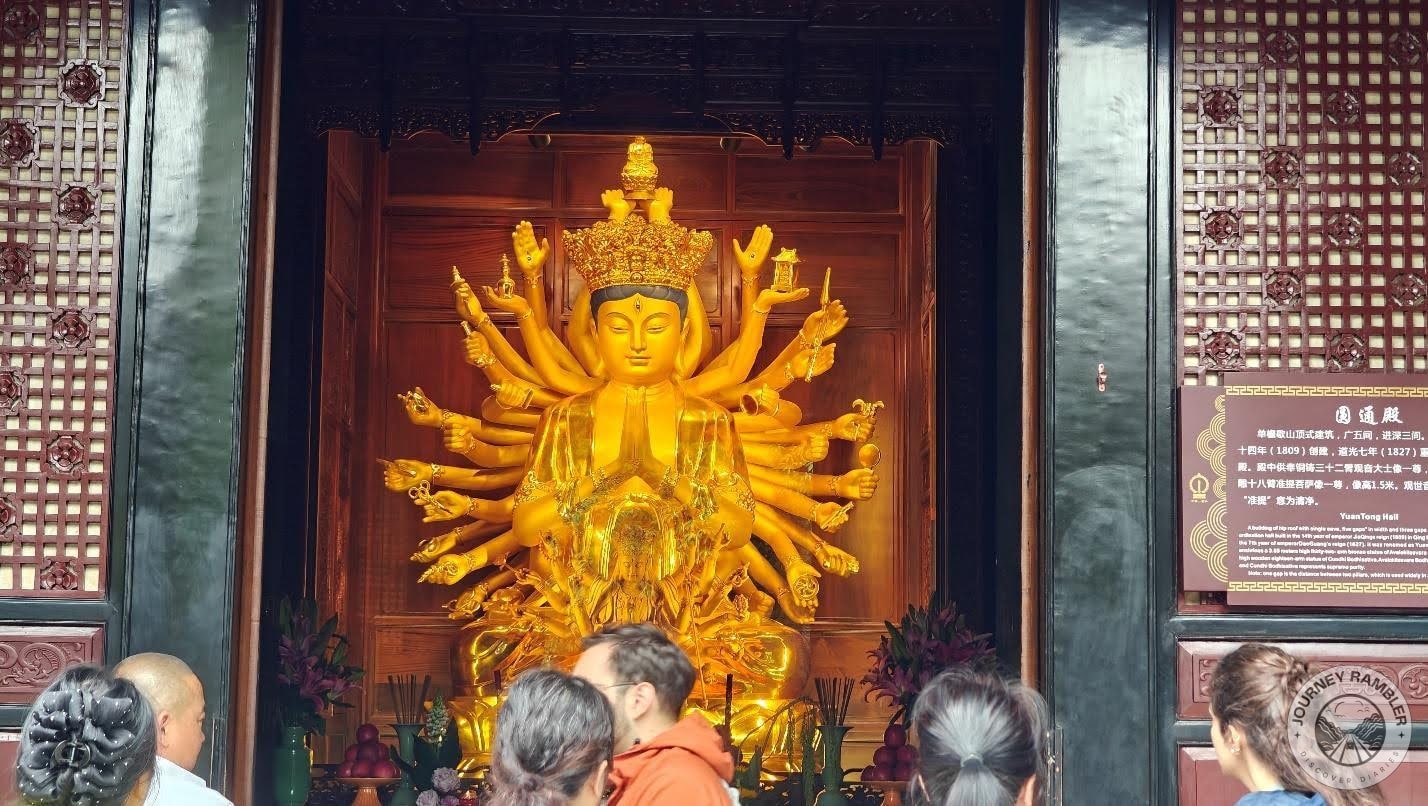
Typically Guanyin is depicted in a multi-armed form like here in Yuan Tong Hall. In East Asian Buddhism she’s typically referred to as female and as a Goddess of Compassion. In Indian Buddhism though, she was originally a male Bodhisattva named Avalokiteshvara. Hence, when you look at most of her depictions (including the one above) she looks very androgynous.

Here’s a sign just beside Yuan Tong Hall explaining its origins. It’s one of the older halls in the monastery complex as it has been around since 1809. I wasn’t able to take a picture of it but aside from the Guanyin statue there’s also one of Cundi/Cundhi Bodhisattva who is one of her manifestations.

Yuan Tong Hall itself is part of a larger building called The Hall of the Three Saints or Three Sages Hall. As its name implies, the building has shrines for the Three Sages which, aside from Guanyin, includes Amitabha Buddha and Mahasthamaprapta Bodhisattva. As for its location, it’s just beside the Guest Hall which itself is beside the left wing of the Stele Gallery.
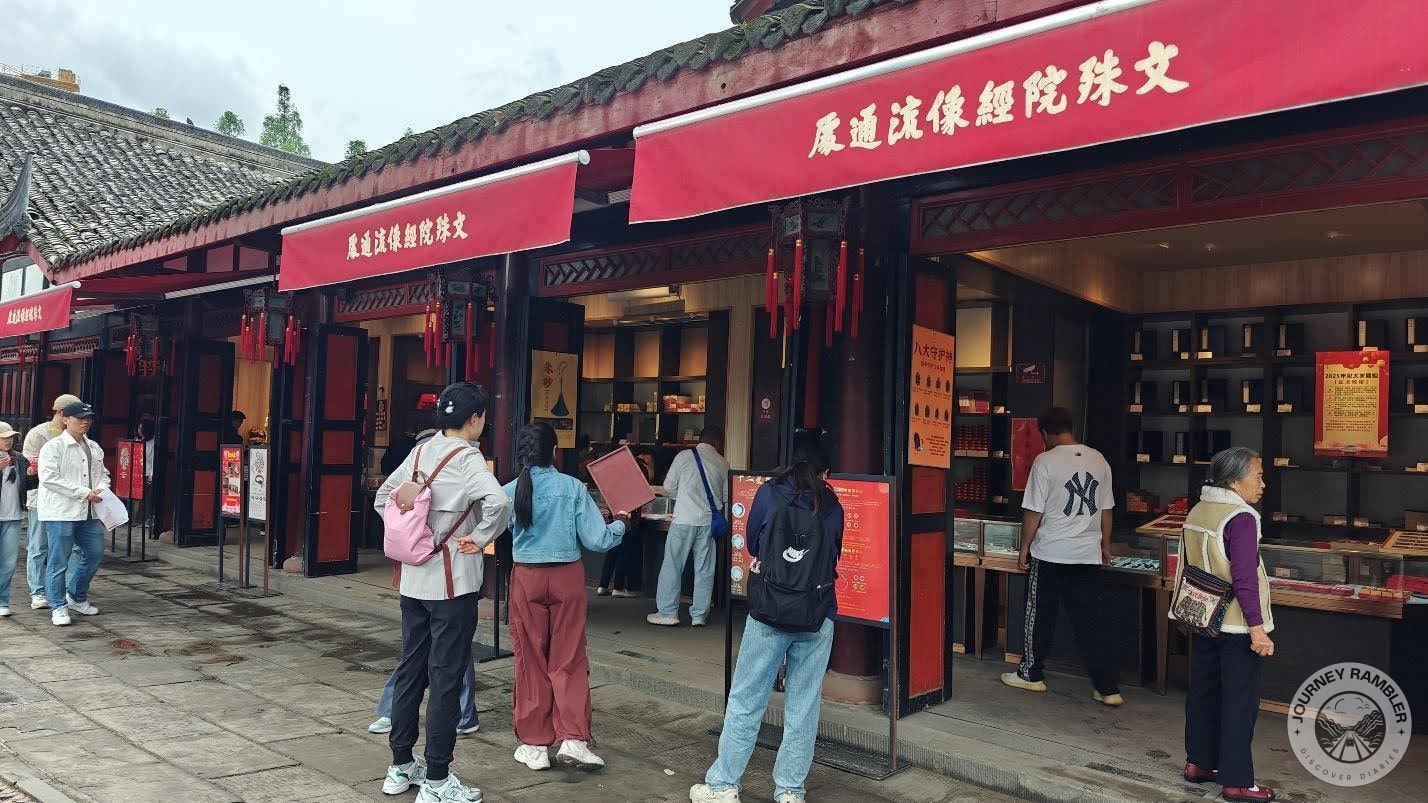
It’s not just shrines and pagodas here at Wenshu Yuan though. Pretty much like the shrines and temples that I visited in Japan, there are also shops here that sell souvenirs and a lot of other things that you might be interested in. Ideally you’ll want to drop by here once you’ve done your sightseeing.
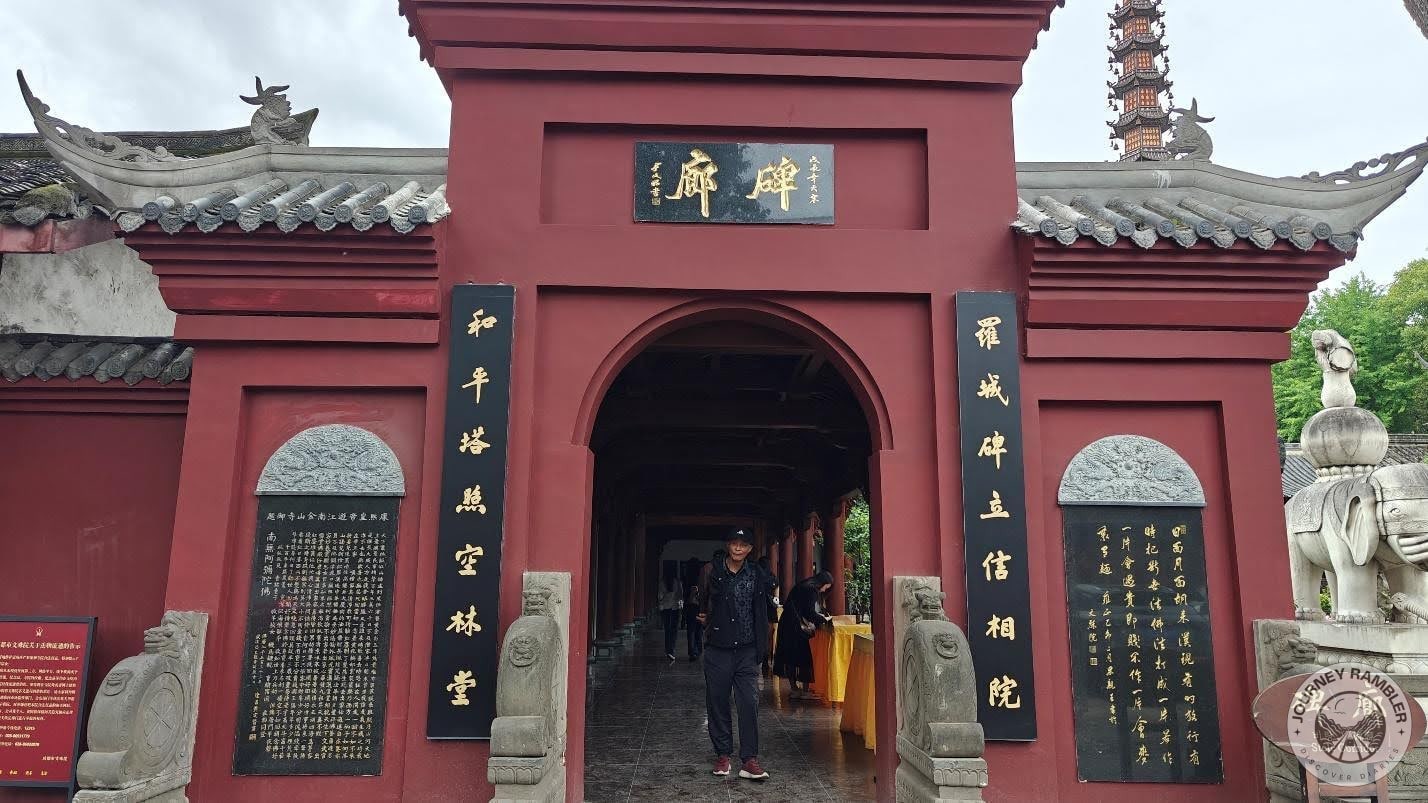
Here’s the left wing of the Stele Gallery from way earlier. You’ll also notice one of the elephant statues from the Thousand Pagoda area. As for the pagoda itself, you can actually see it towering in the upper right hand corner of the image.
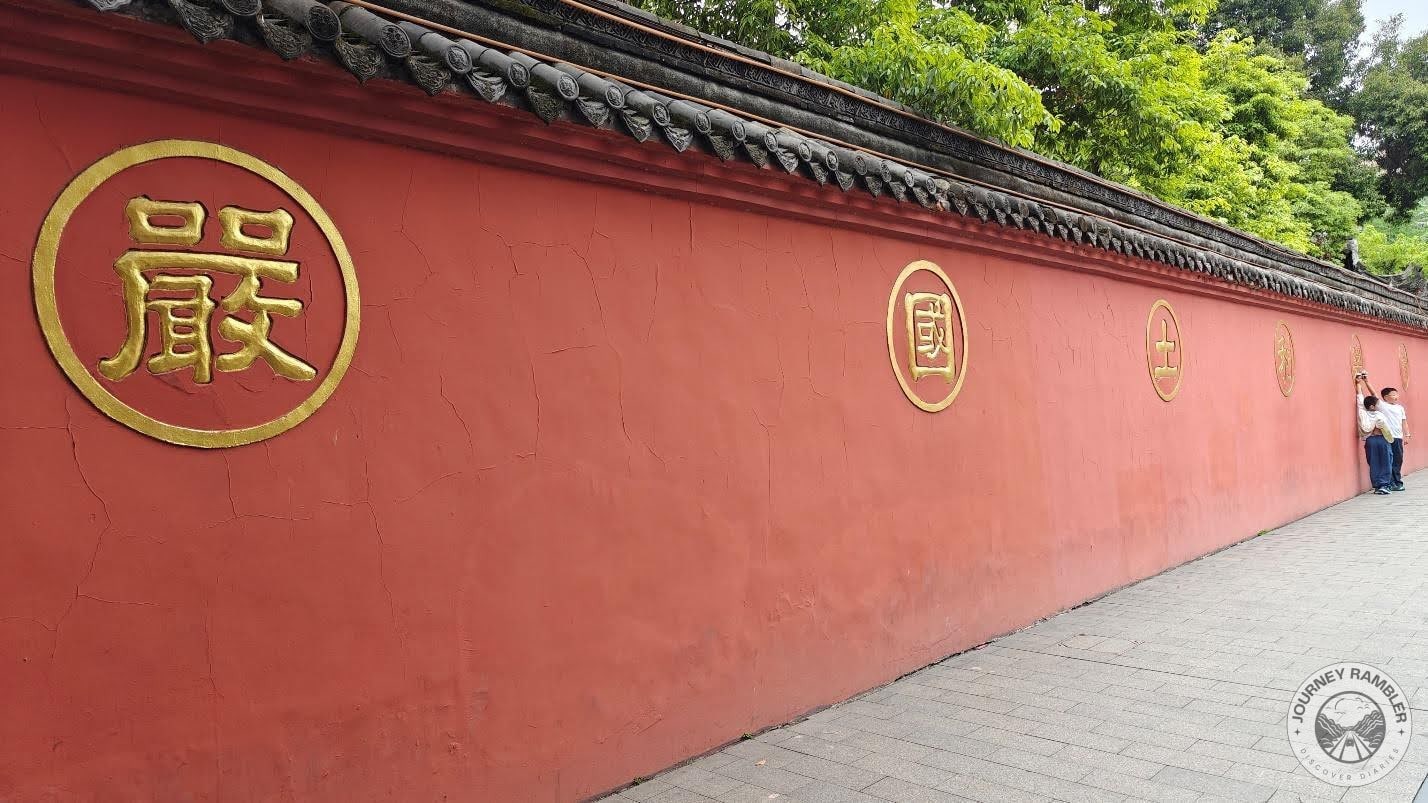
This is the wall surrounding Wenshu Yuan. The red/vermillion color really stands out and gives this classic vibe to the walls and the area itself. In fact, these really reminded me of the Chinese period movies that I grew up watching as a kid.
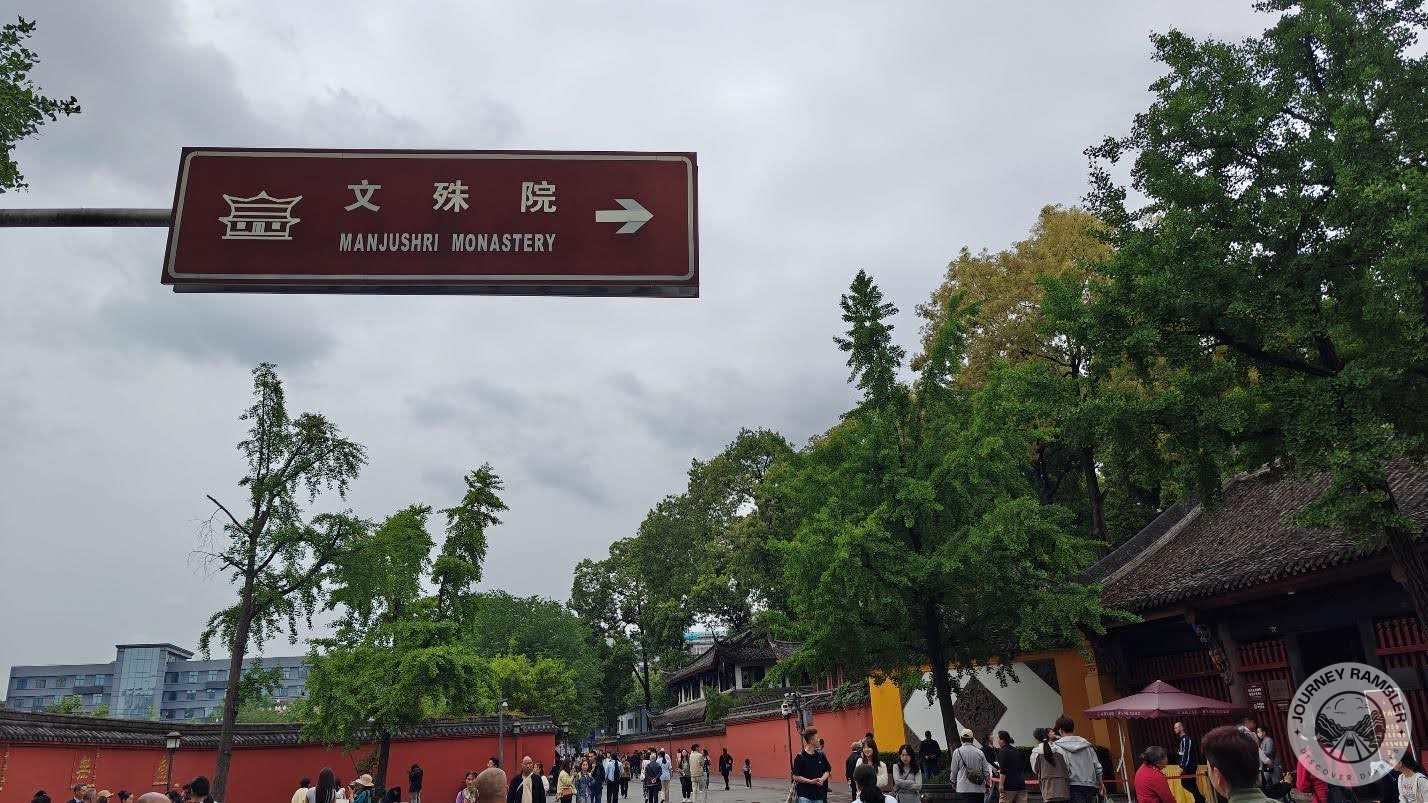
Here’s the sign post outside Wenshu Yuan pointing to its entrance. Initially I thought I was in the wrong place since it says Manjushri Monastery in English. Apparently, Manjushri is just the Sanskrit name of the Bodhisattva Wenshu which is who the monastery is named after.
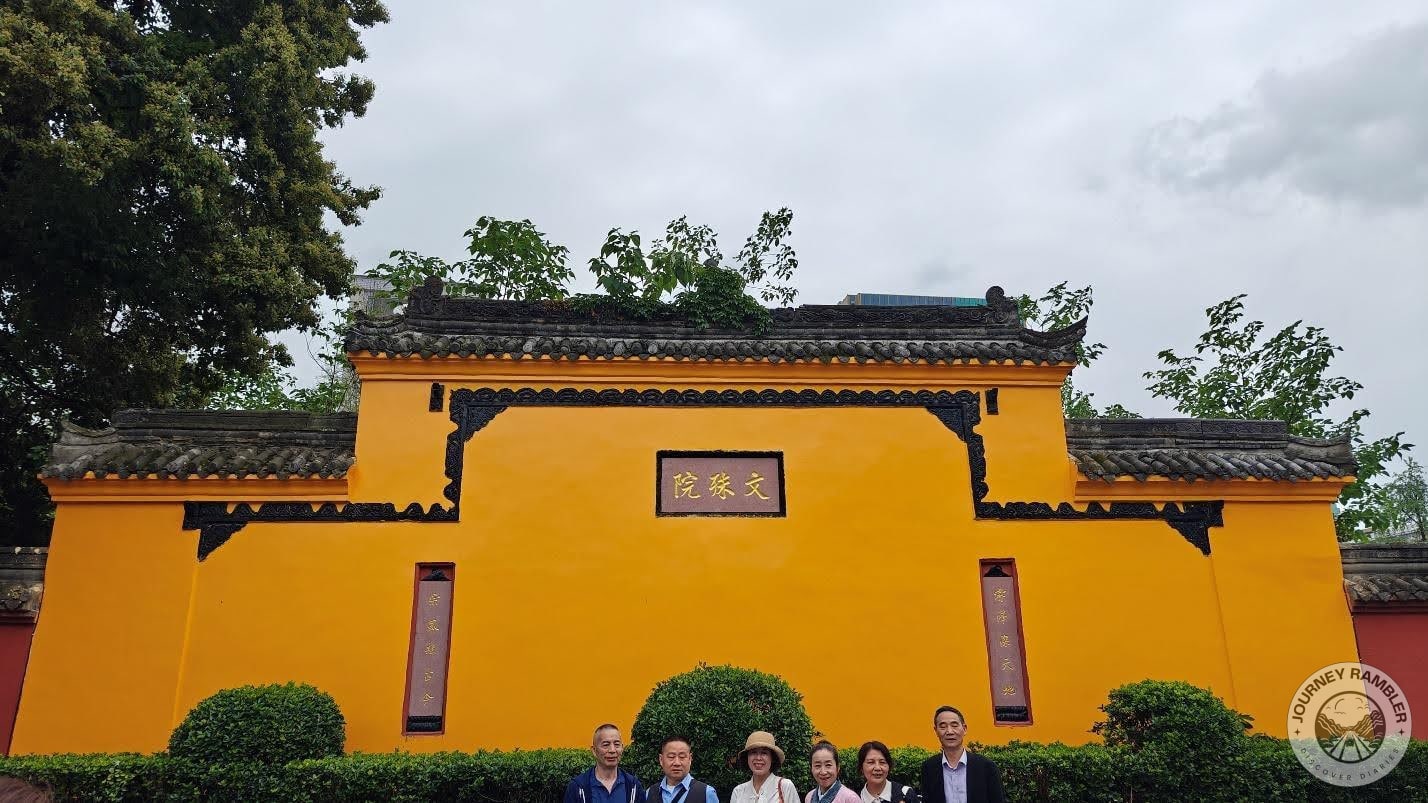
This is the yellow/gold wall outside of Wenshu Yuan. I was interested in the color choice of this wall so I tried searching for some answers online. Unfortunately, I couldn’t find any resources in English with regard to its origin.
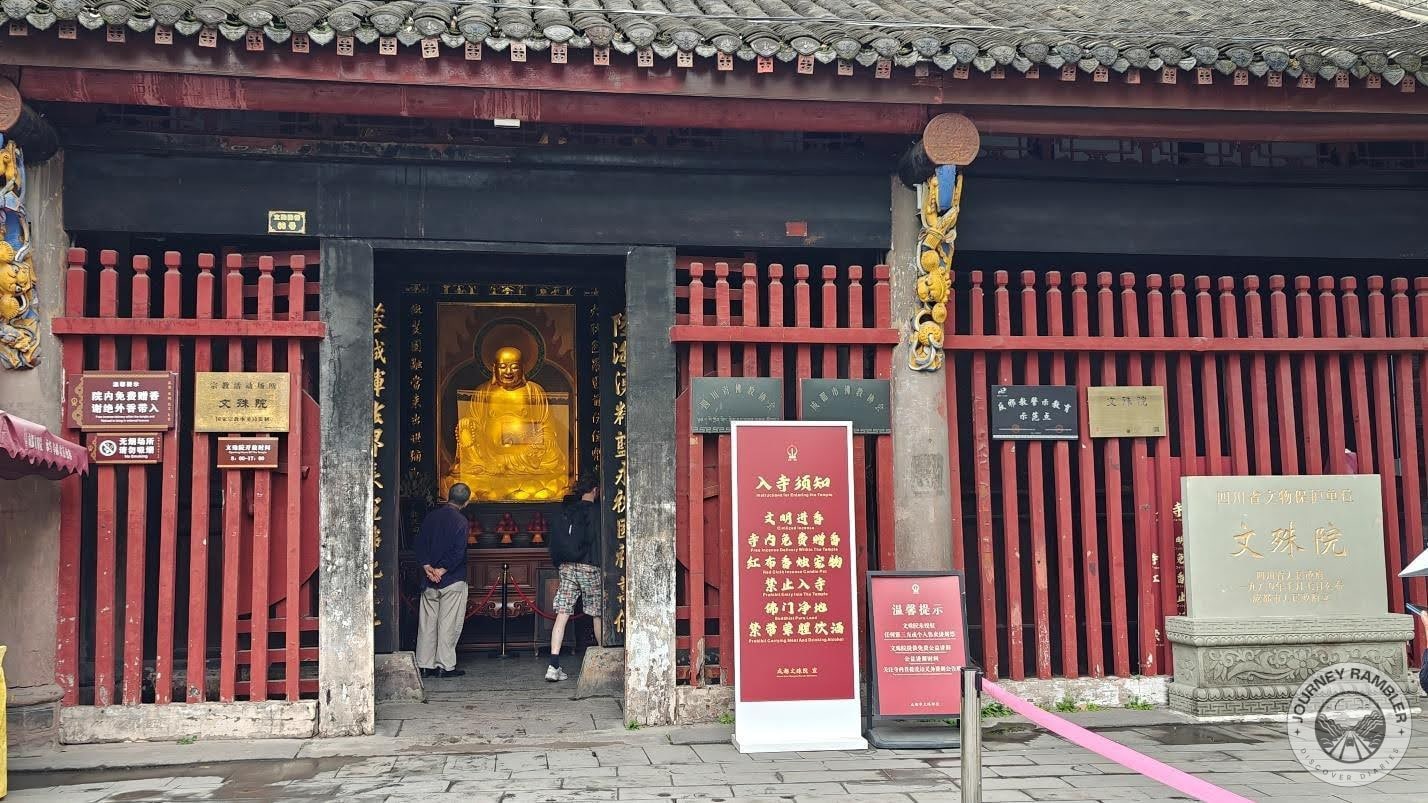
Here you’ll find the main entrance to Wenshu Yuan. If I’m not mistaken, this also is called the Hall of the Heavenly Kings or the Four Heavenly Kings Hall. It features this large golden statue of who I think might be the Laughing Buddha or Budai.
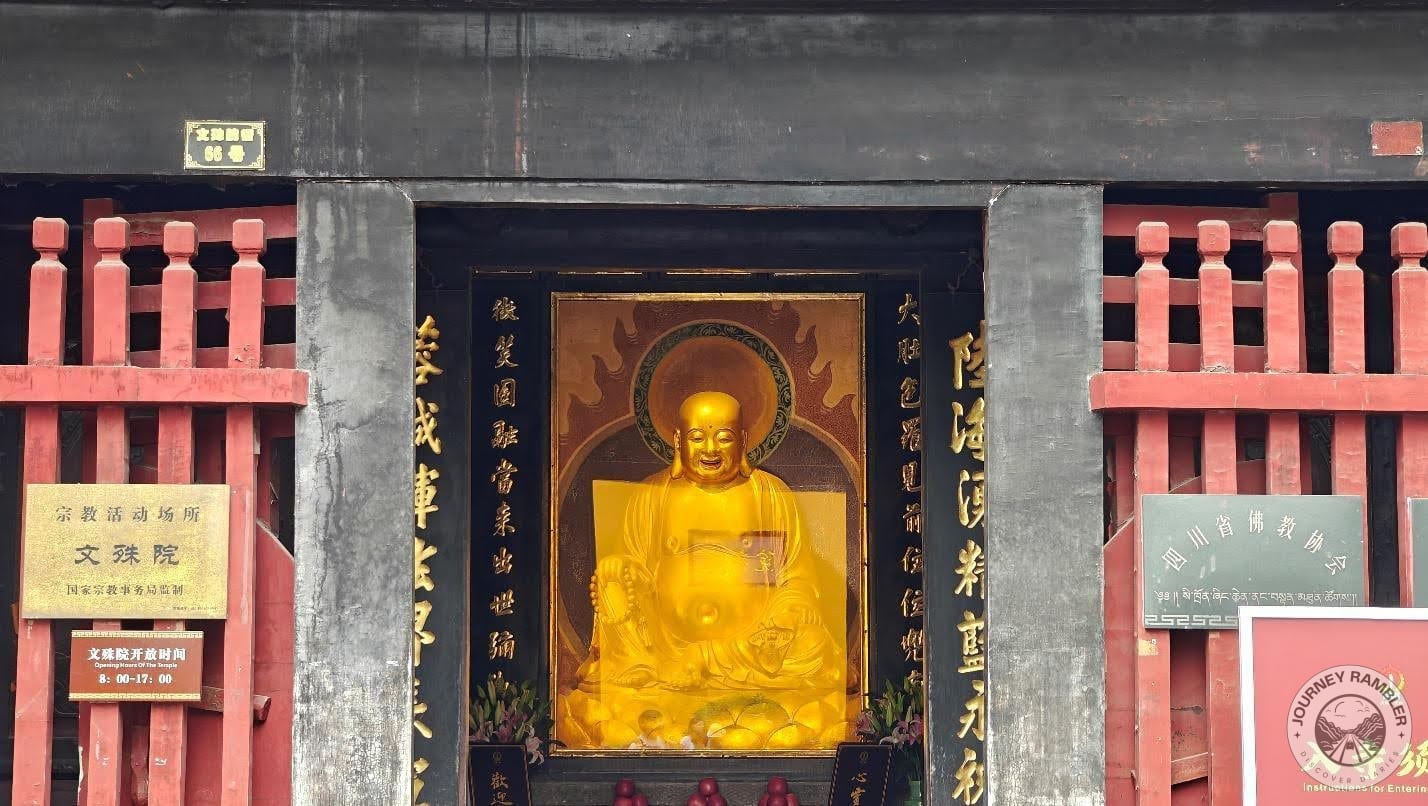
So I’ve been talking about Wenshu Yuan’s buildings and other attractions but I don’t think I’ve ever mentioned its business hours. Much like a lot of attractions open to the public, the monastery is open from 8:00AM and closes at 5:00PM.
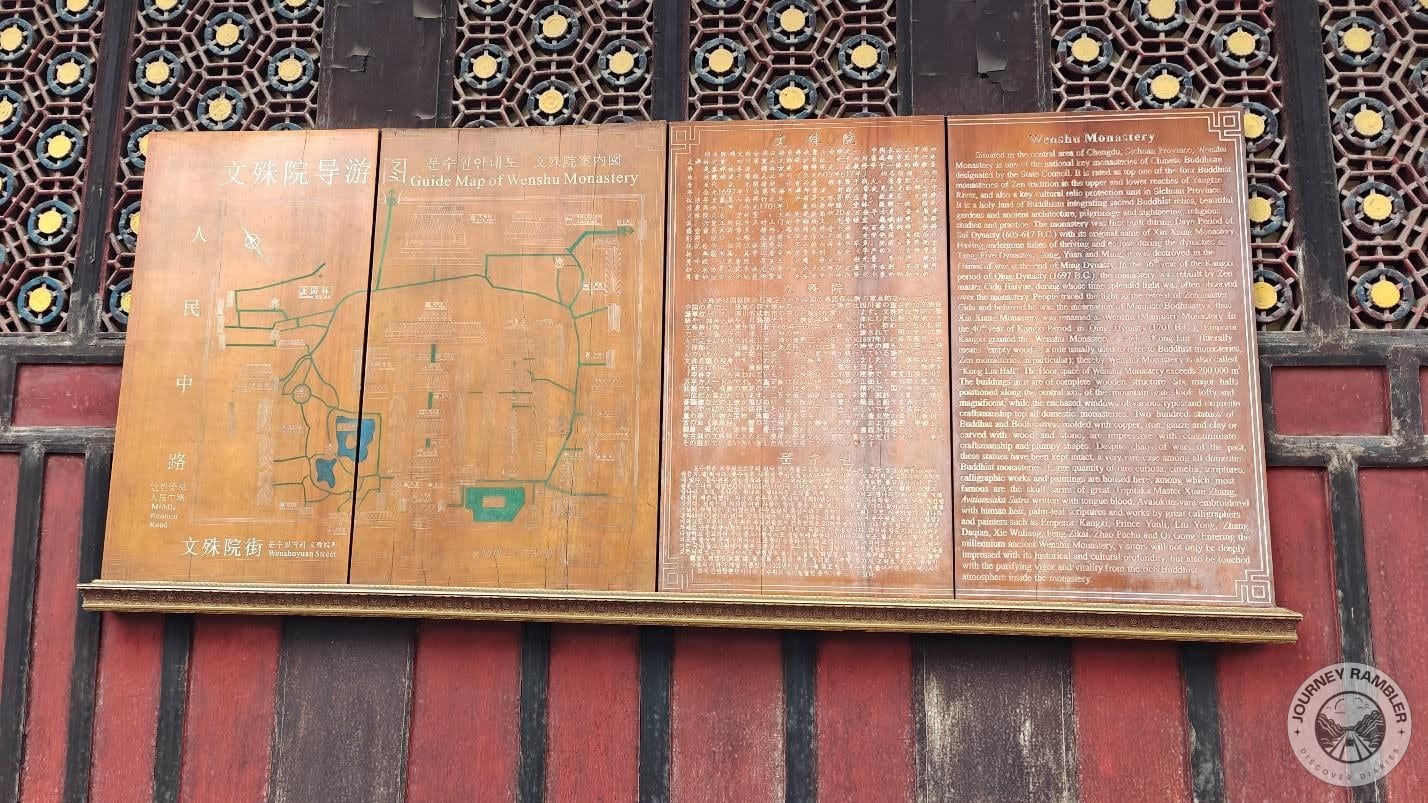
Also in the vicinity of the Hall of the Heavenly Kings entrance is this guide map to Wenshu Monastery. It looks quite old but still very legible. What I like about this though is the English translation of Wenshu Yuan’s history.

Again, we find ourselves back to the Hall of the Three Sages or Three Great Bodhisattvas. If you looked at the guide map of Wenshu Yuan earlier, you’ll notice that it’s the first building after going in through the Hall of the Four Heavenly Kings entrance.
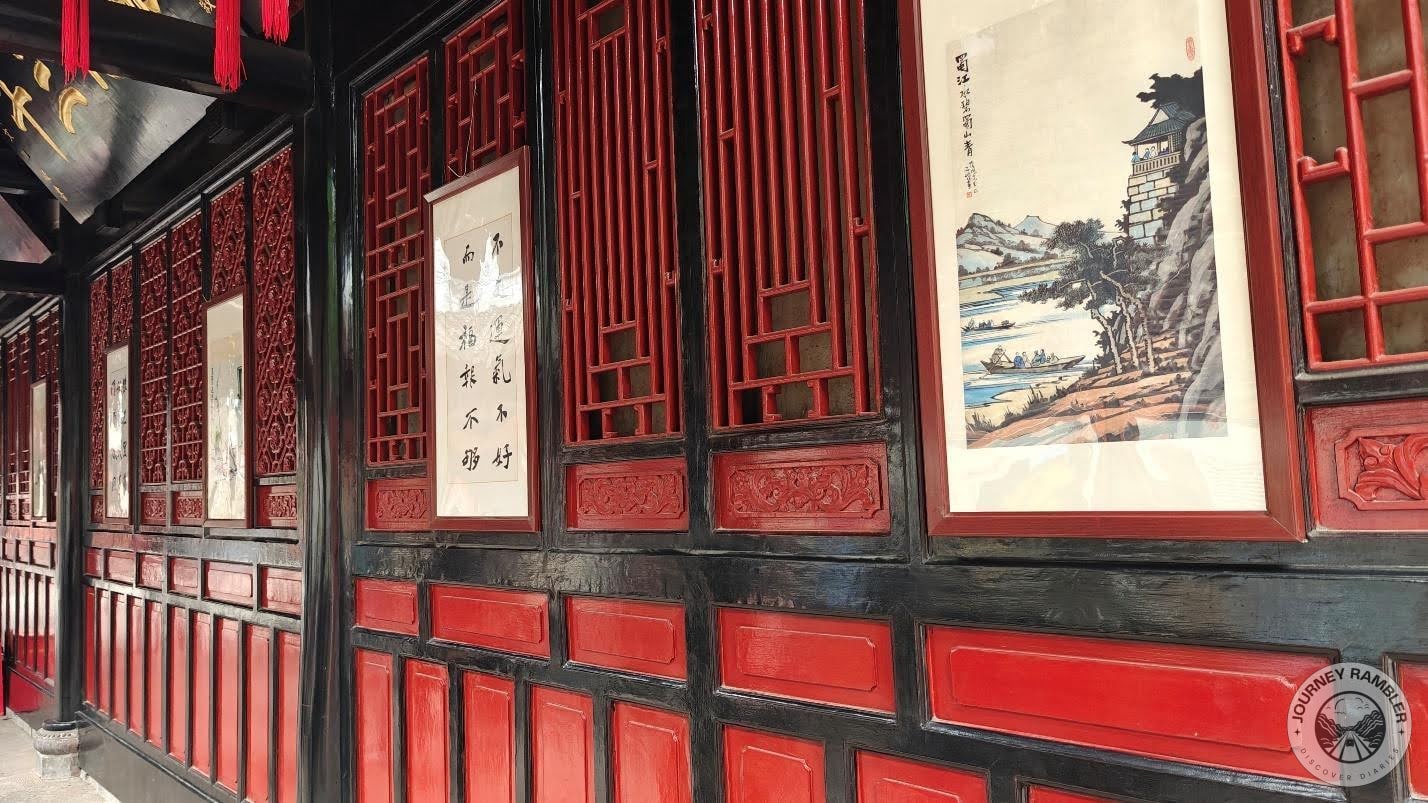
Other than the Stele Gallery, you’ll also find plenty of calligraphy and even some art here. I’m not quite sure if the artwork shown in this image is a woodblock print or a painting. I know the Japanese popularized woodblock prints but the Chinese actually were its pioneers.
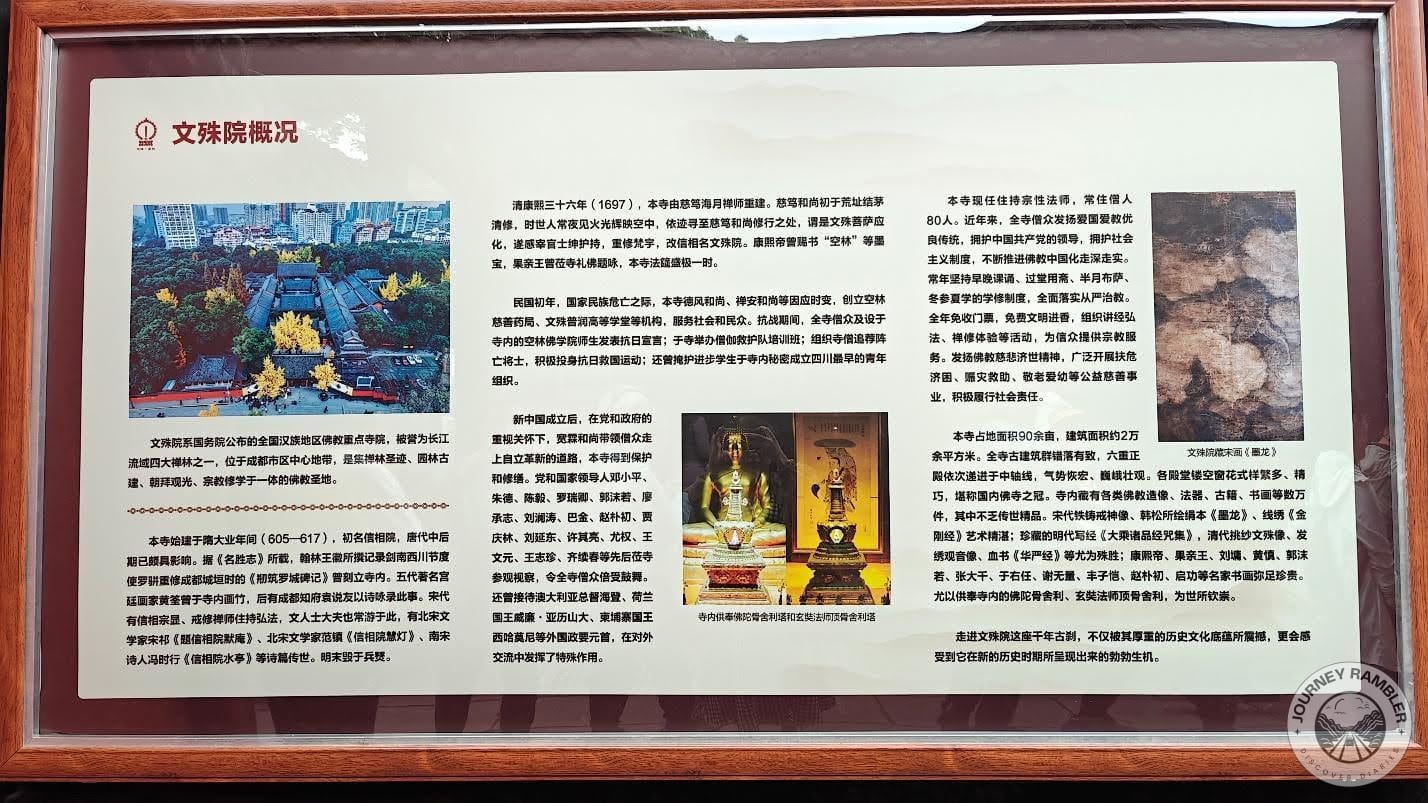
Here are some infographics detailing the history of Wenshu Yuan. It talks about the monastery’s establishment sometime in 605-617 AD and how the Qing Dynasty rebuilt it in 1697 after being decimated during a war. Additionally, the infographic talks about the important Buddhist relics found in the monastery.
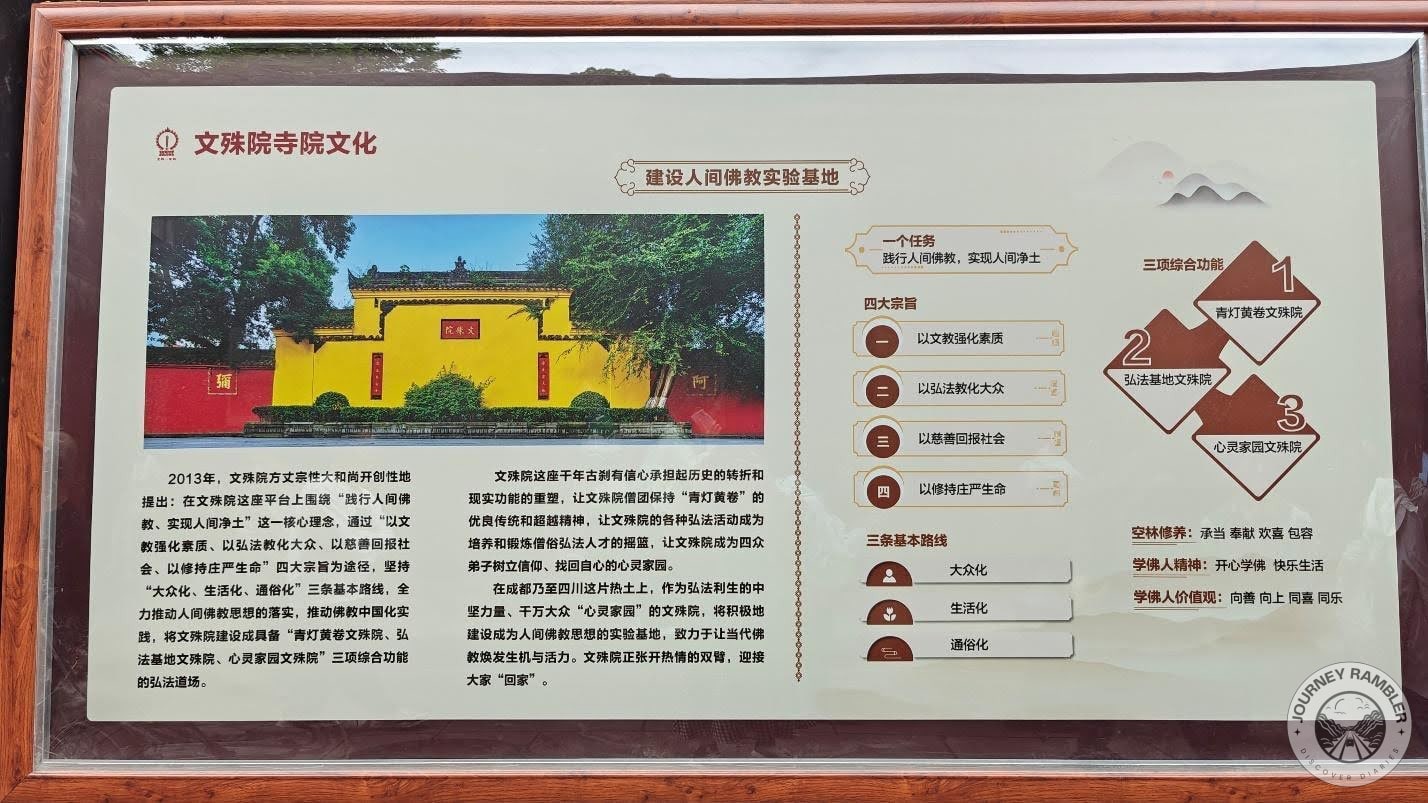
Another plaque has an infographic talking about Mahayana or Pure Land Buddhism. Wenshu or Manjushri is actually closely associated with the Mahayana sect which values the wisdom that the Bodhisattva is the embodiment of.
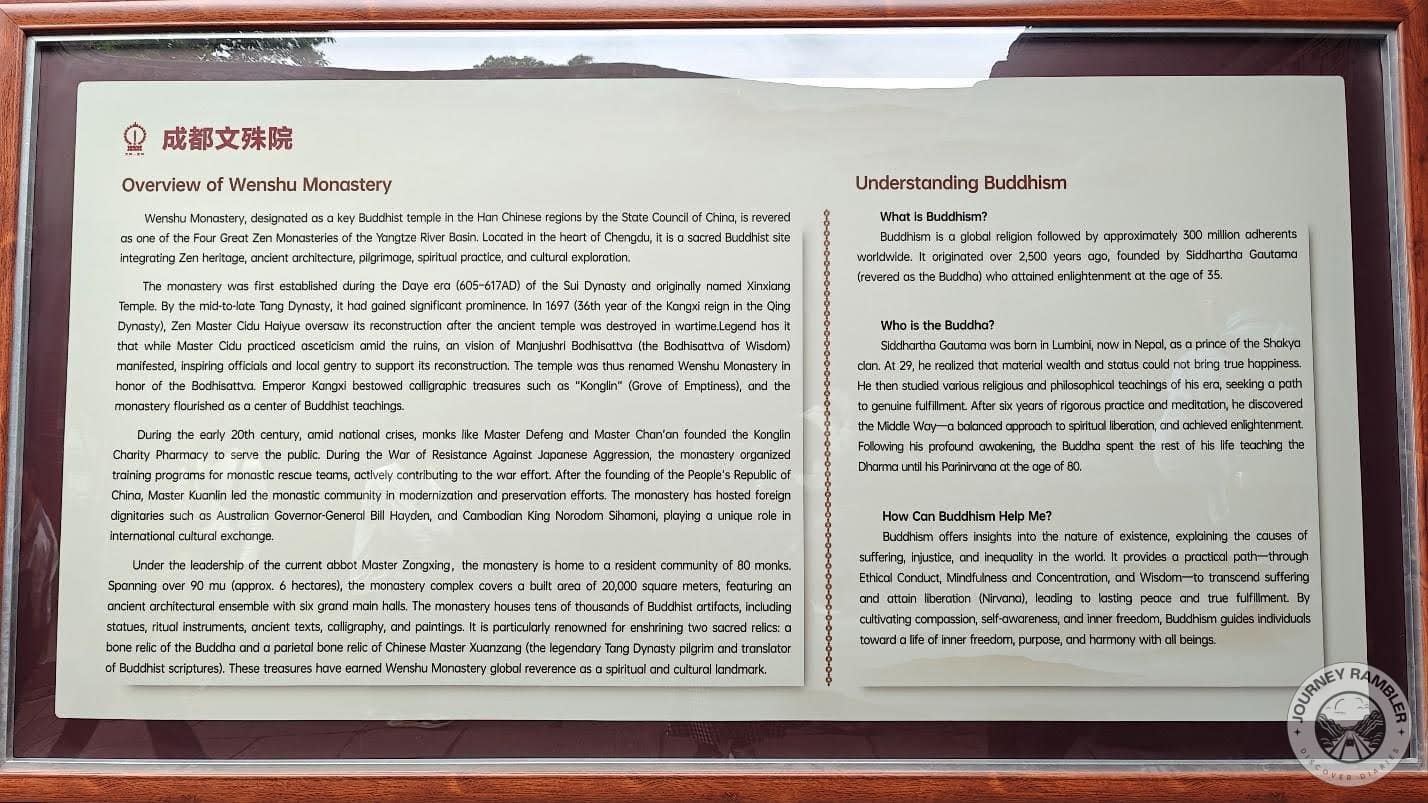
Not well versed in Chinese? Don’t worry as there’s an English translation of everything from the two infographics you saw earlier. I actually think this is kind of nice considering not many tourists are aware that they can use apps like Google Lens to translate languages they’re unfamiliar with.
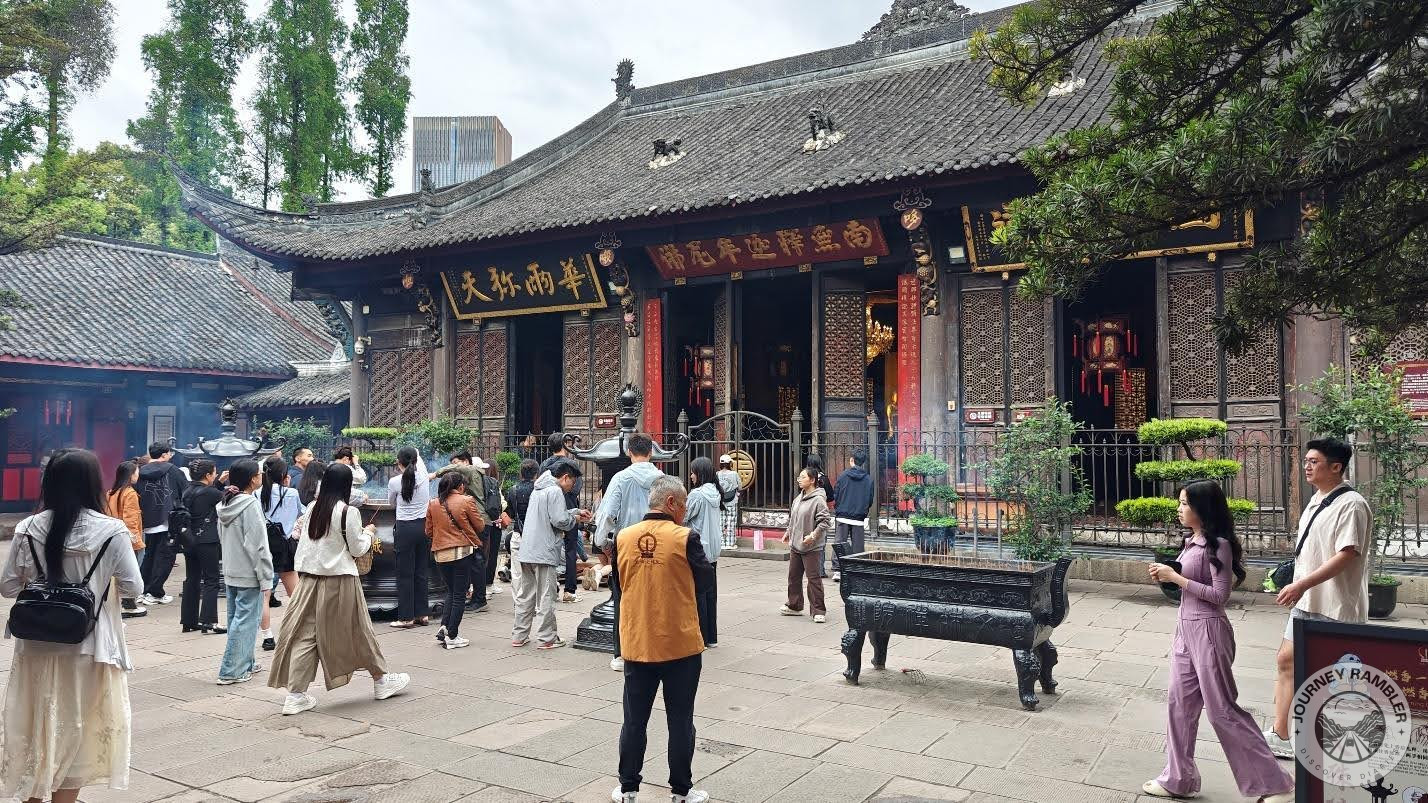
Moving on from the Hall of the Heavenly Kings and the Hall of the Three Sages, we’ve finally reached the monastery’s Main Hall. Also called the Mahavira Hall, this is where practitioners show their reverence and devotion to Buddha by burning their incense. The larger circular incense burner here actually reminds me of the ones I saw in the shrines and temples I visited in Japan.
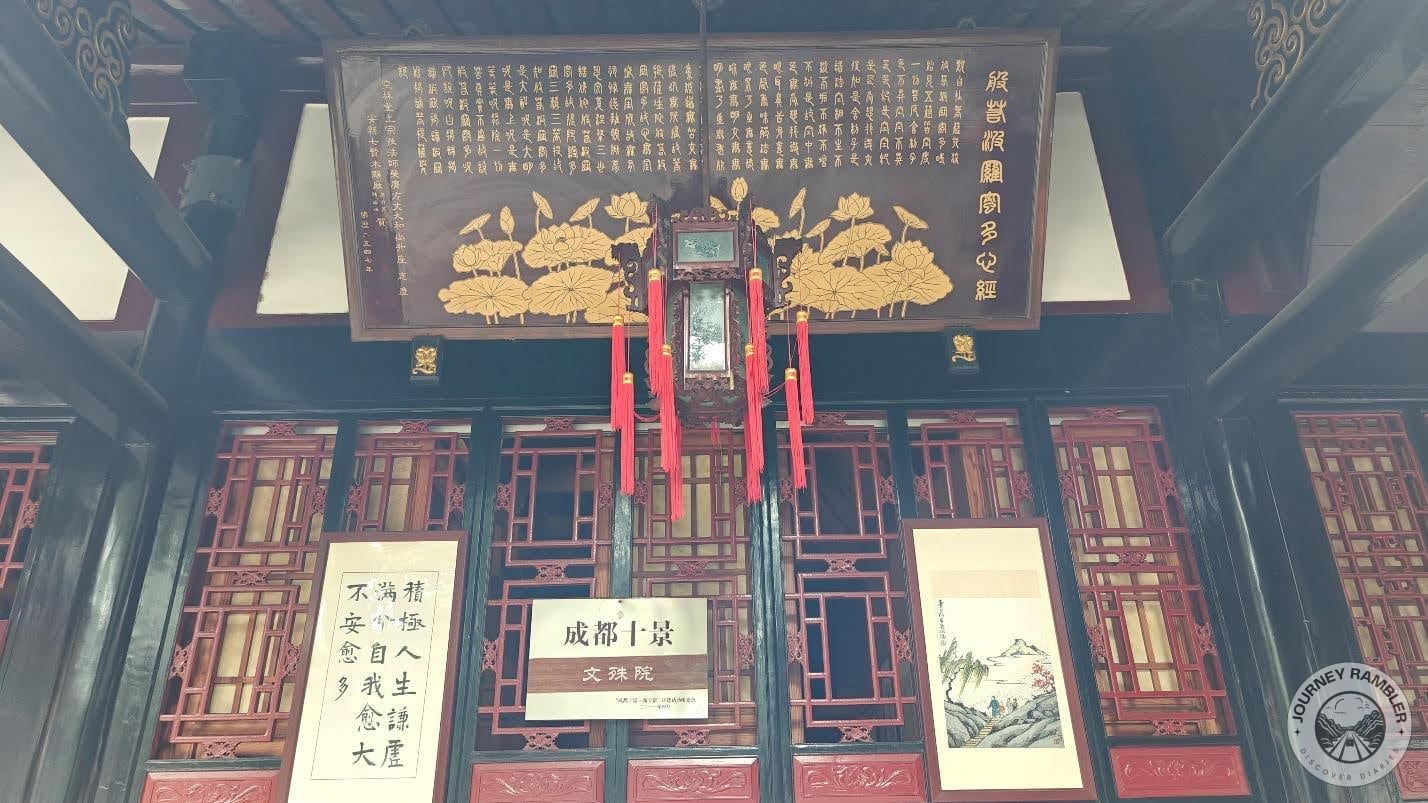
Here you can see hanging from the sealing a panel with text from the Great Wisdom Sutra inscribed on it. What is really interesting here though is the painting you see just below the panel. It’s actually a woodblock called Spring Outing by a prominent Chinese artist named Feng Zikai.
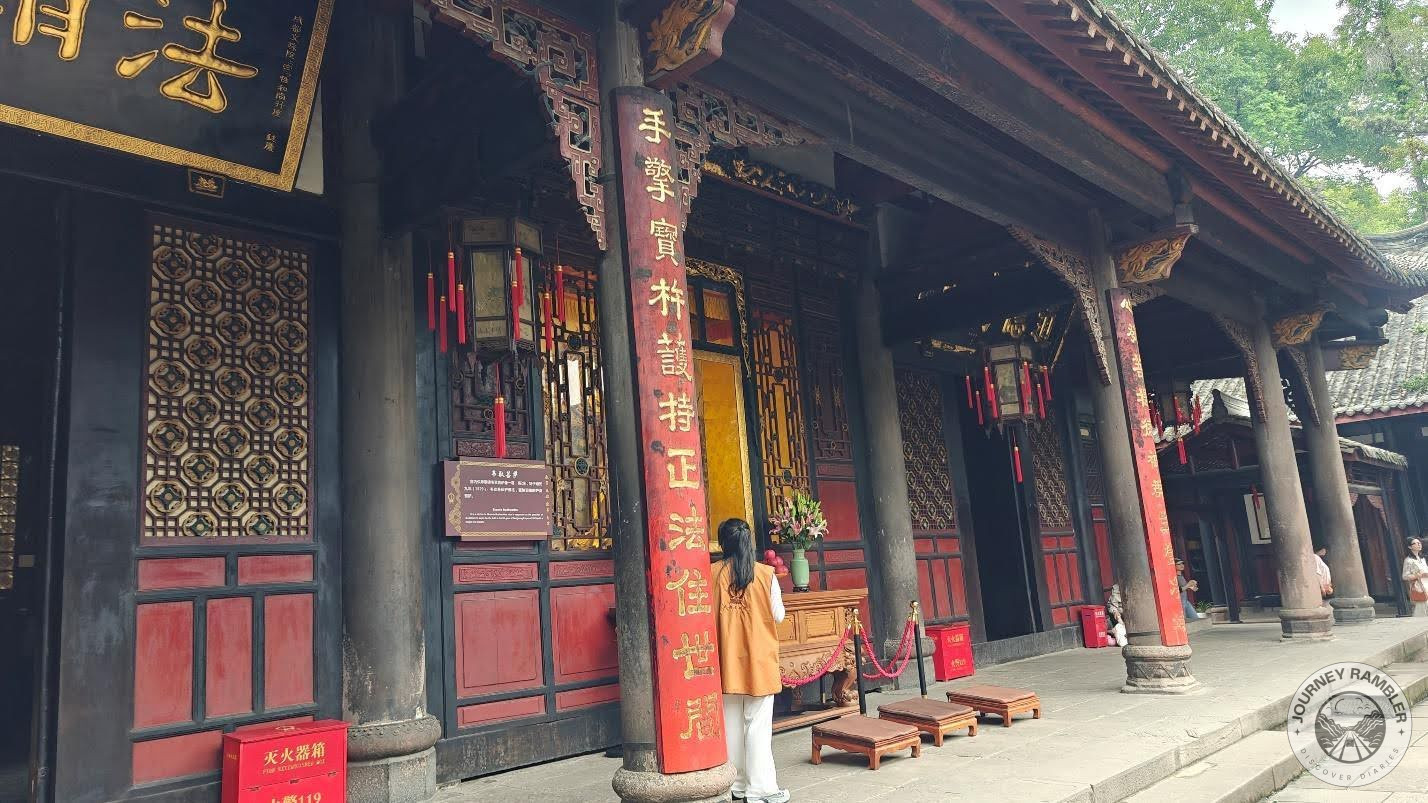
This is the back of the Hall of the Three Sages which directly faces the Mahavira Hall. Both buildings are separated by a small courtyard that has incense burners which I think you saw earlier. You probably also notice it in the image but there’s also a shrine here of the Skanda Bodhisattva.
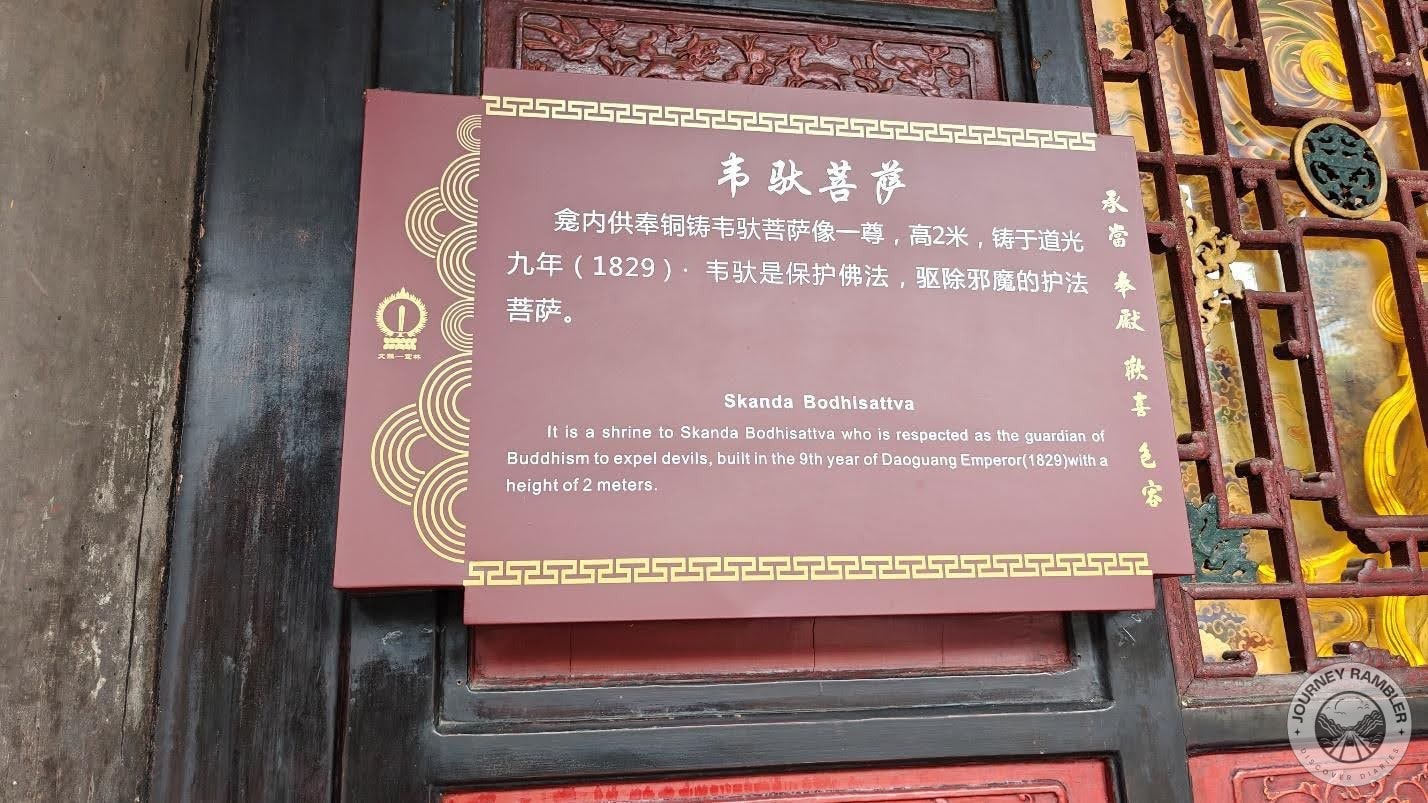
Also known as Wei Tuo, the Skanda Bodhisattva is a guardian figure that’s considered as the supreme protector of the Dharma. One thing that I’m confused with though is the placement of the shrine. From what I’ve read, the shrine of this particular Bodhisattva is usually placed in the Hall of the Heavenly Kings and not in the Hall of the Three Sages.

This is a corridor in one of the buildings found to the side of the major halls. Like a lot of the buildings here, these feature calligraphy and woodblock prints/paintings. What I liked about these though is that they also looked detailed and well maintained (though admittedly not as impressive as the major halls’ buildings).
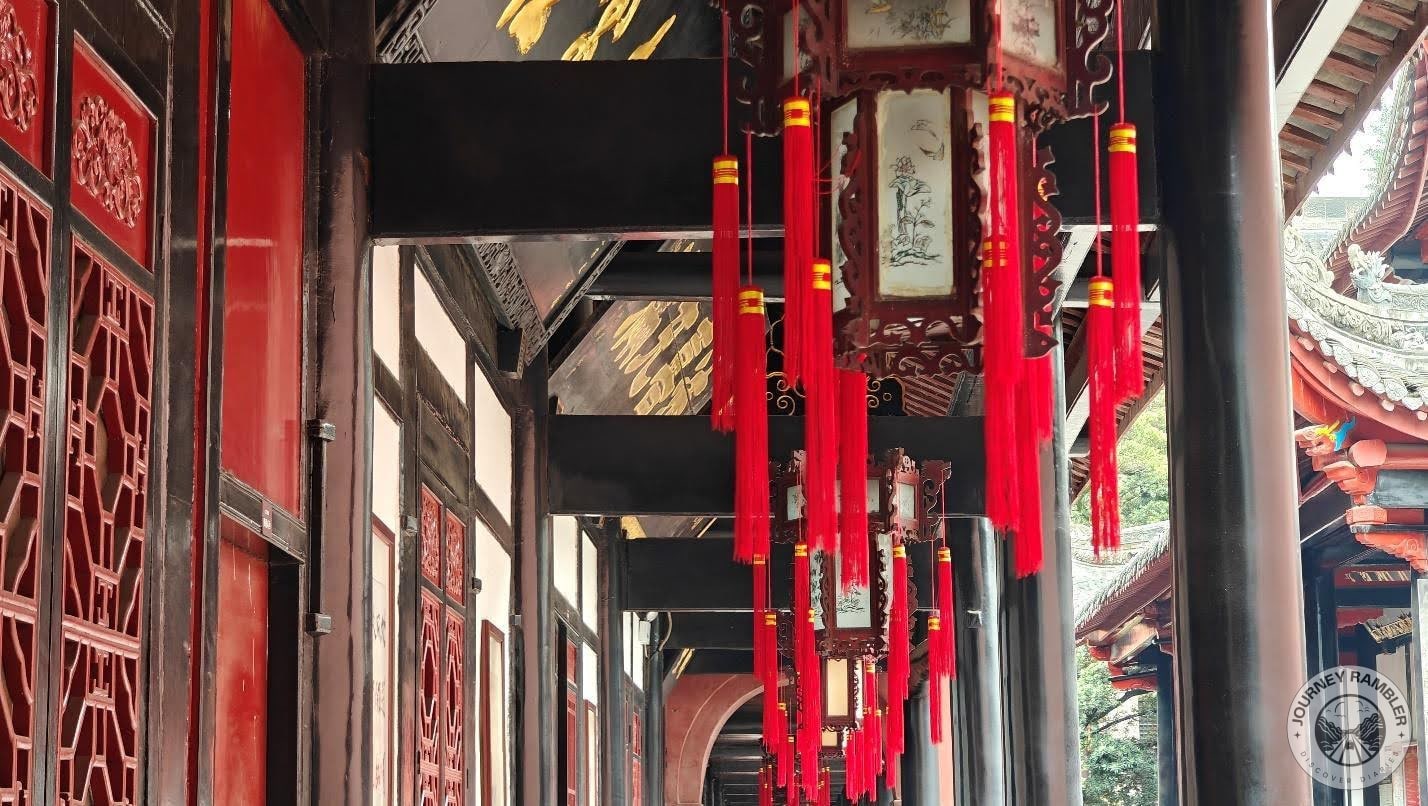
Another feature that I particularly found nice is these lanterns. I tried looking these up and I think these are what’s called gong deng. The ones shown here are particularly nice as they have these designs/paintings on their paper coverings.
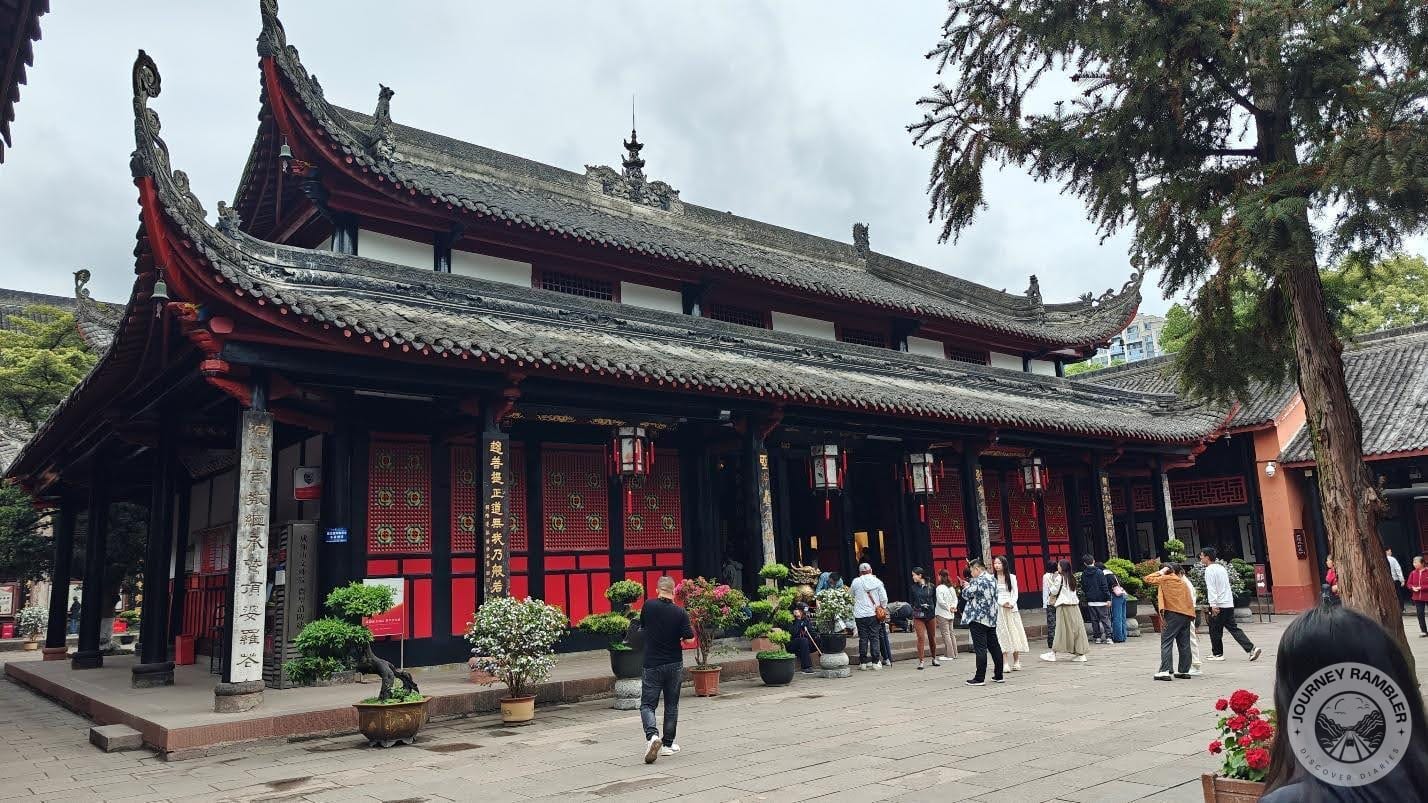
Behind the Mahavira Hall is the Dharma or Sutra Chanting Hall. As its name implies, this is where the sutras are chanted by the monks with the abbot then following this up with his lecture. There was no sutra chanting during my visit as these are typically done in the early morning and evening.
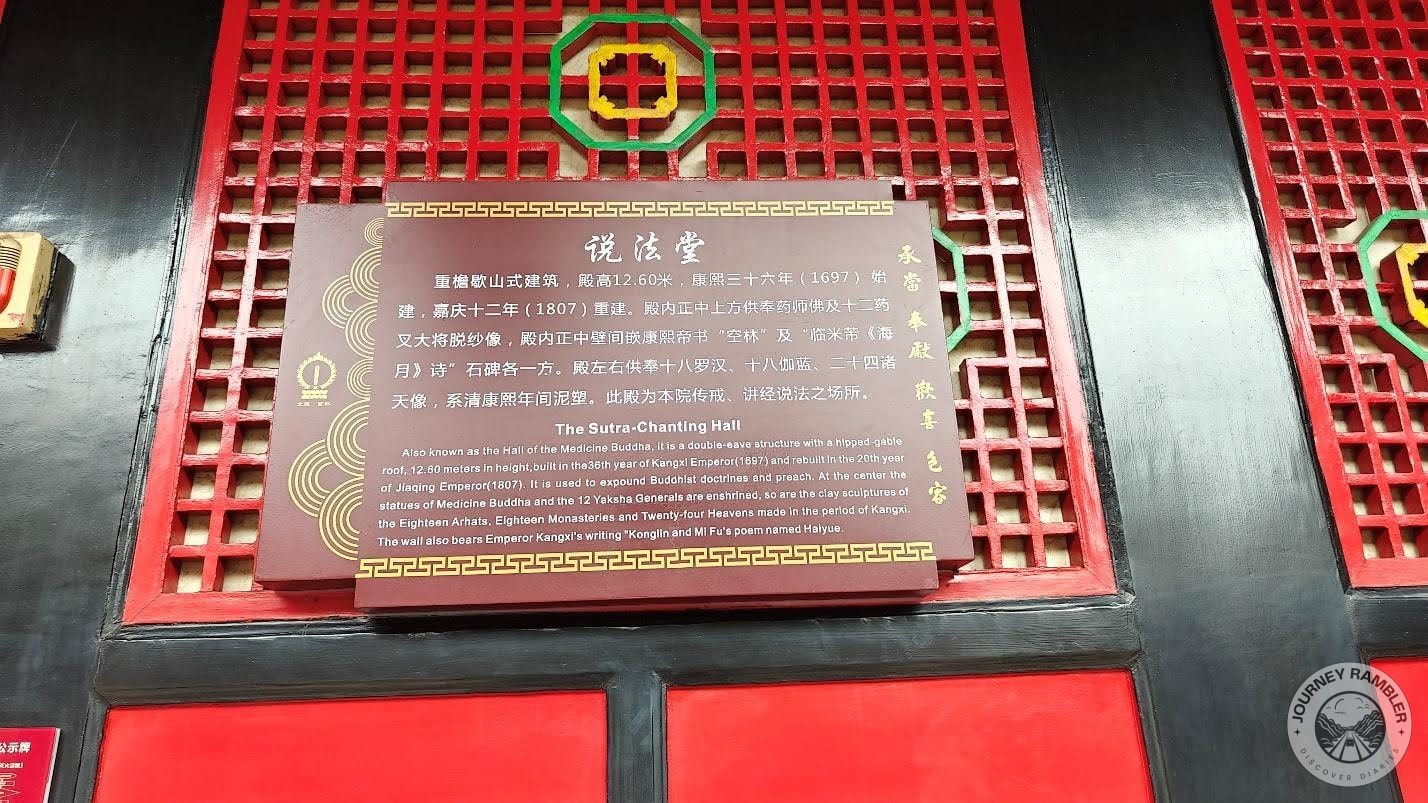
Here’s a plaque with an inscription detailing the history of the Dharma or Sutra Chanting Hall. It talks about the building being initially built in 1697 and then rebuilt more than a century later in 1807. The inscription also details the various guardian deities enshrined inside the building.
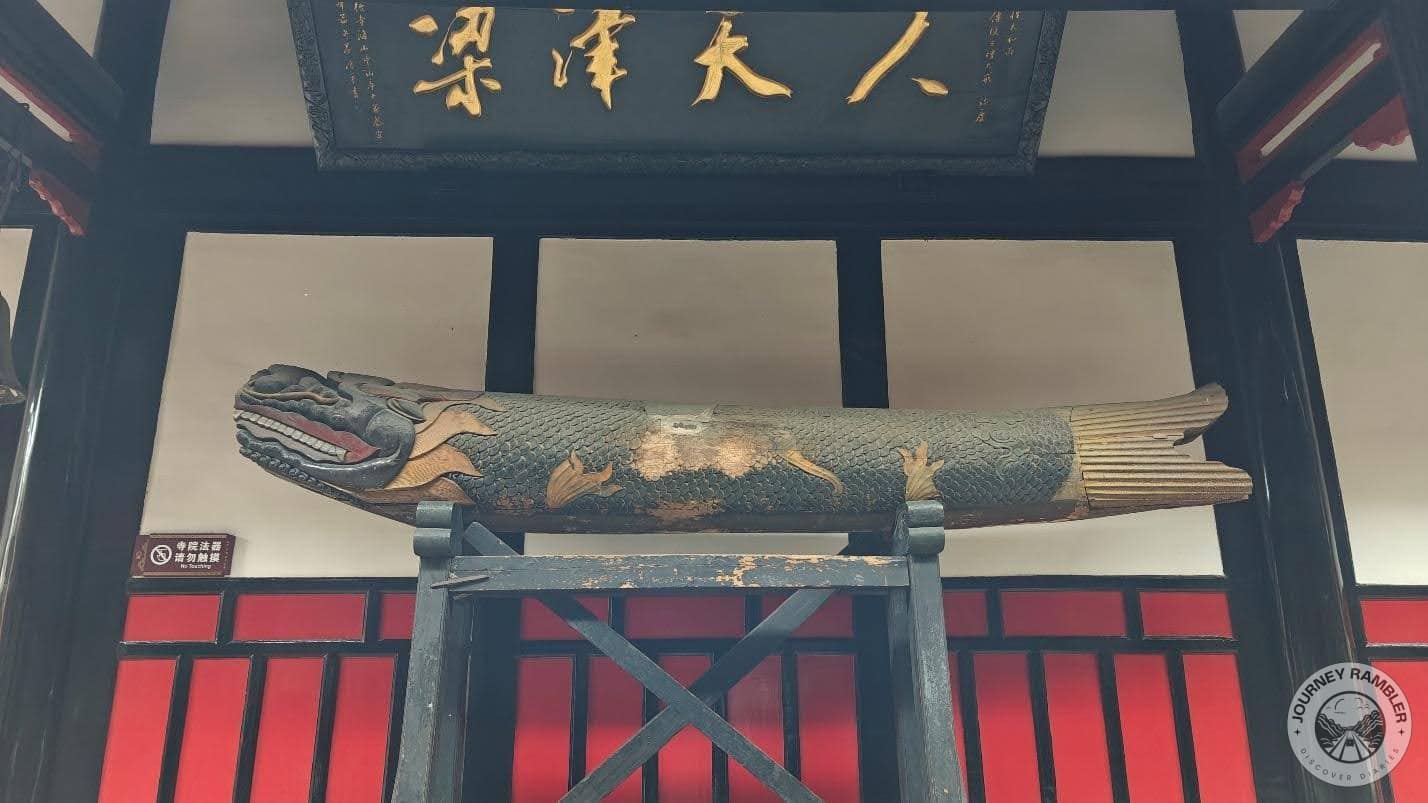
Here’s a random carving that I came across while looking around the area. I’m not quite sure what this is supposed to be but it does look like some kind of fish. I tried looking it up and found that this is supposed to be a muyu and it’s a percussion instrument used specifically to maintain a steady beat during the chanting of the sutras.
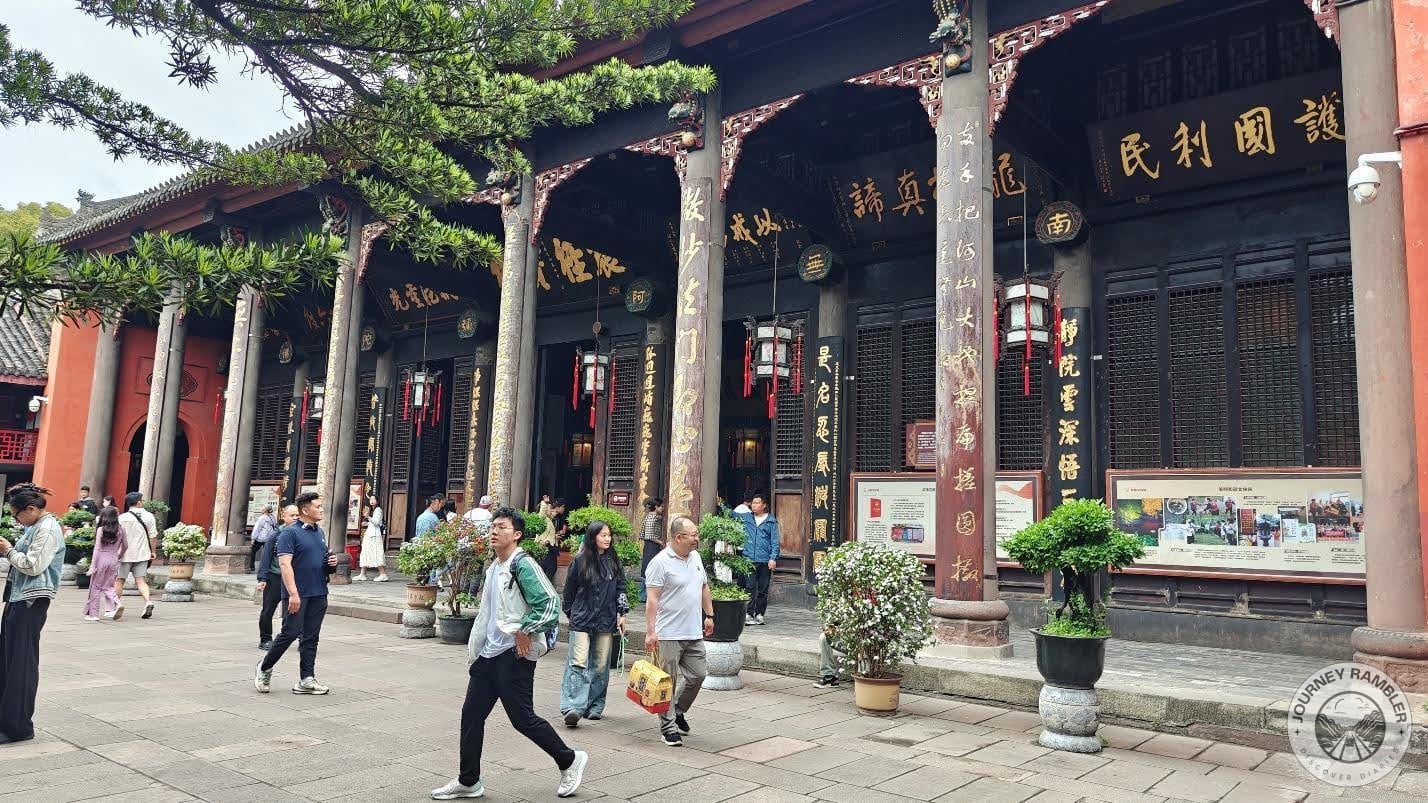
After the Dharma Hall, the next major building I came across was the Scripture Hall or the Sutra-Storing Tower. This was by far one of the largest which is understandable considering the number of sutras that are likely stored within it. Its exterior isn’t as ornate as the other buildings but it’s equally imposing.
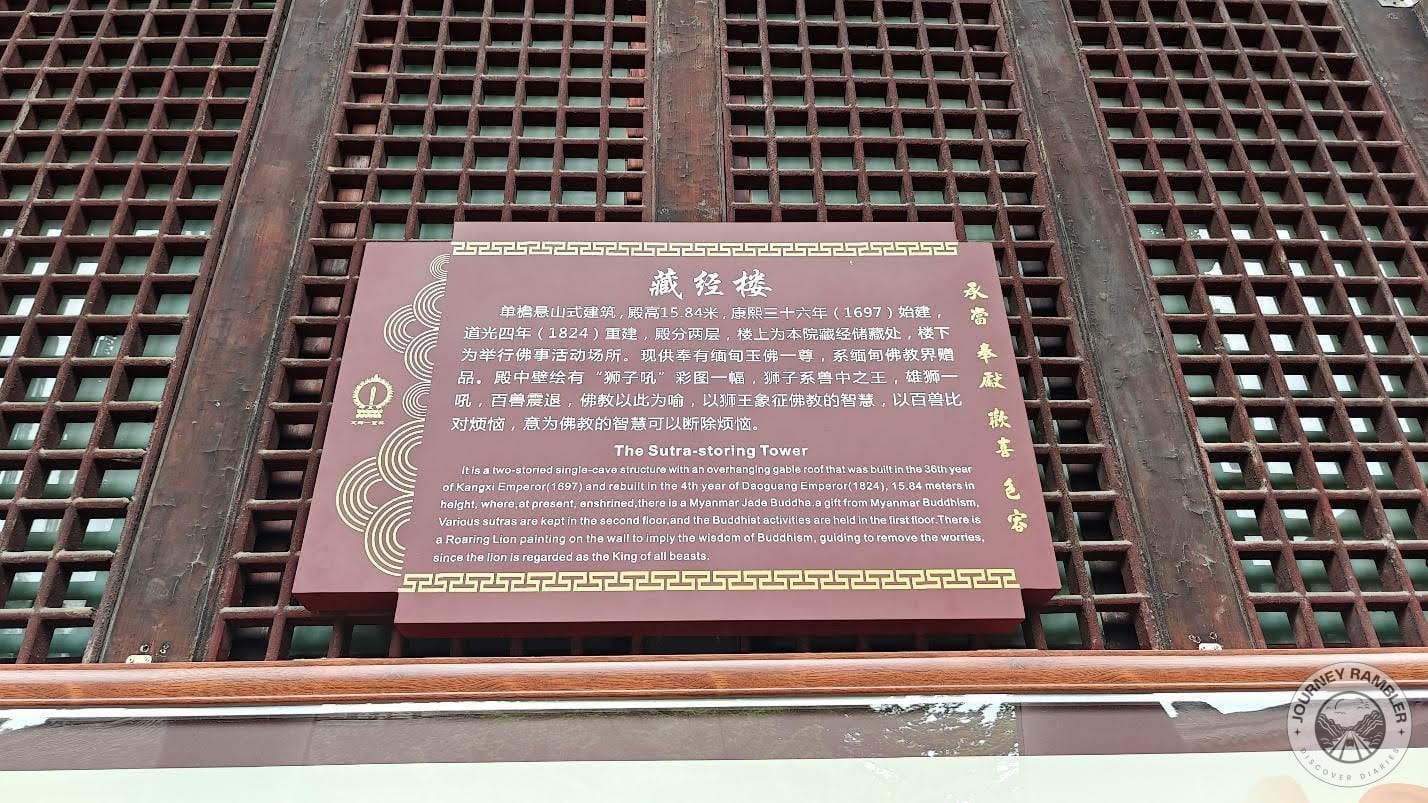
So this is the plaque with an inscription of the building’s history, purpose, and even its vital measurements. The plaque also details that there’s a jade Buddha enshrined in the building but I wasn’t able to see this for myself. My guess is that this is probably talking about the one in the Jade Buddha Hall which also happens to have come from Myanmar.
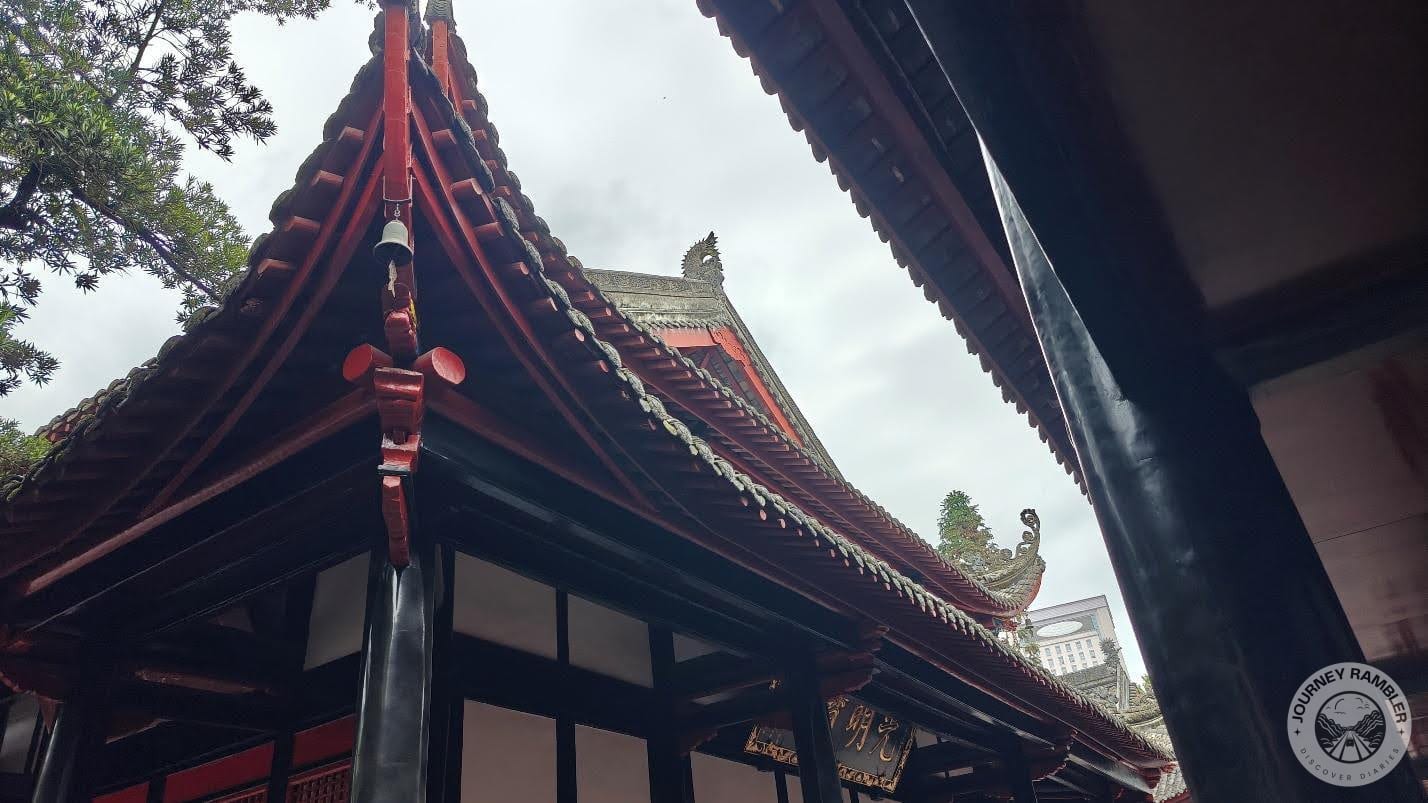
At this point, I was still thinking of where to go next when I saw this bell hanging from this building’s flying eaves. I was quite intrigued by this as I didn’t really notice these on the shrines and temples I visited in Japan. Apparently, these are called Lingduo and they typically chime as they’re blown by the wind or a breeze.
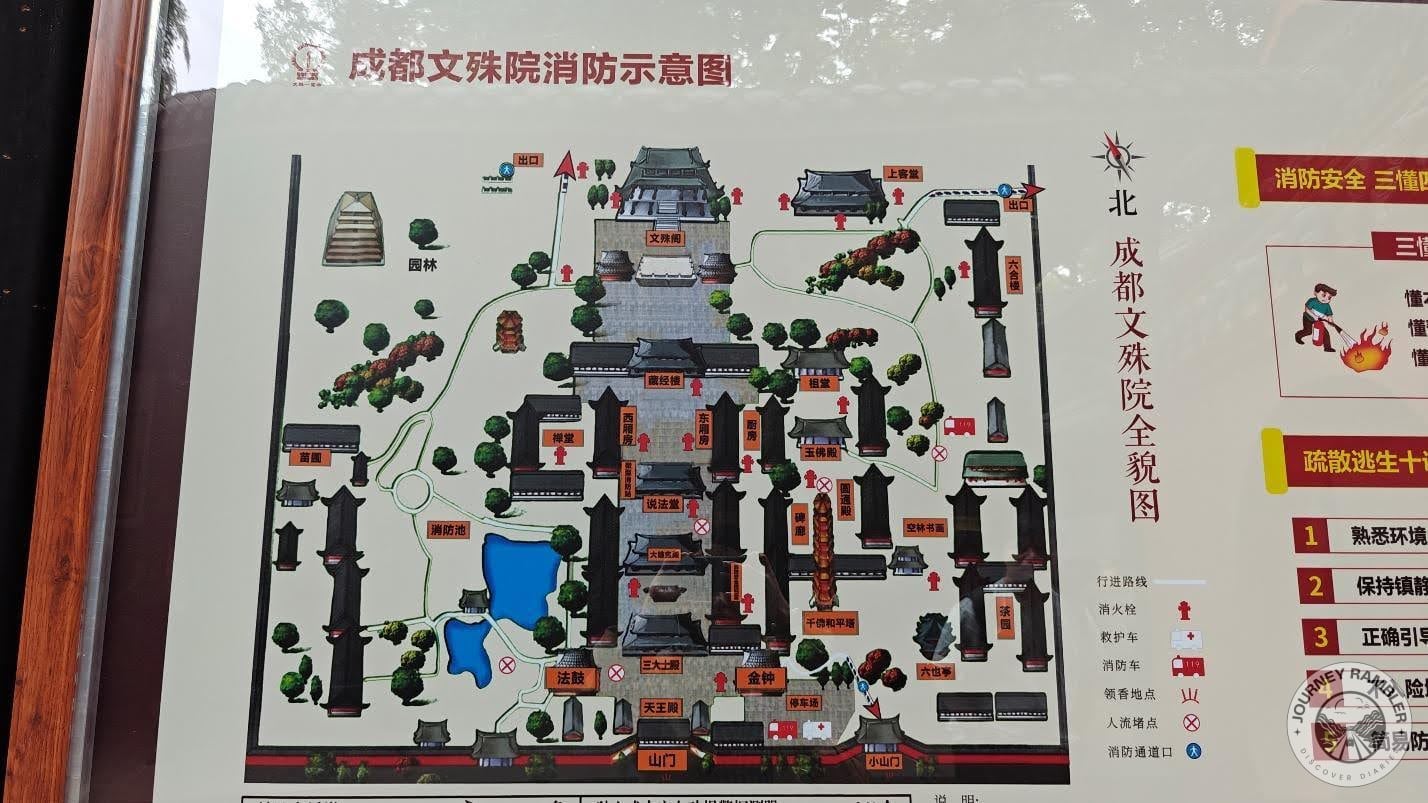
Other than the Lingduo, I also noticed another map of Wenshu Yuan. This one was probably the most detailed and it also featured other information like foot traffic, first aid stations, and even areas to receive incense. From here, I then decided that I’d end this visit with a trip to the gardens.

So while the buildings and architecture in Wenshu are really nice, I think the best thing about this place is its garden. This particular area is called the Free Life Pond and it’s actually a common fixture that you’d find in Buddhist temples. I remember coming across a lot of these with the one in Hase-dera Temple being one of the latest that I’d been to.
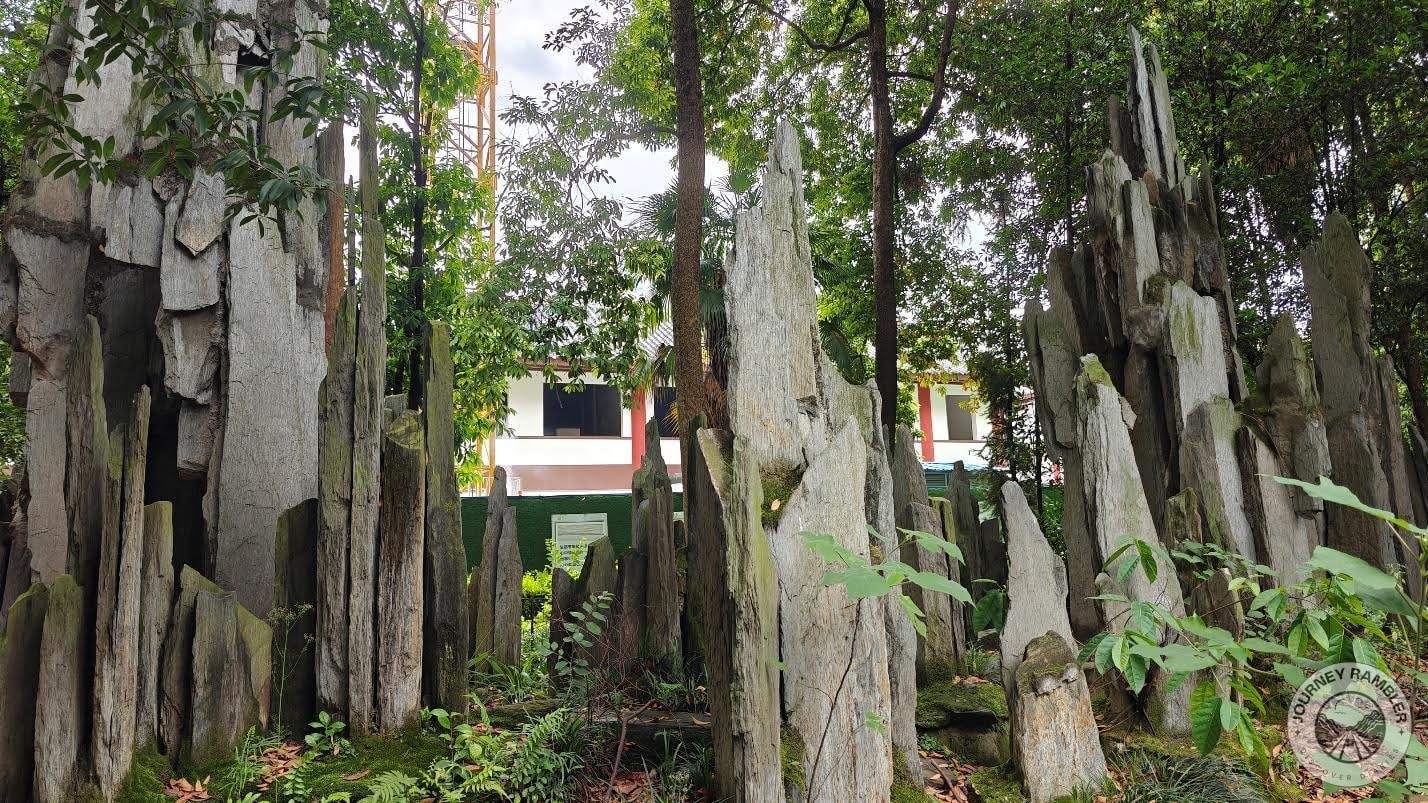
The garden itself was immaculate and there were these stone structures that reminded me of the karst landscapes I came across in Wulong. Looking back, I think they might have made these to resemble those though I’m not really sure.
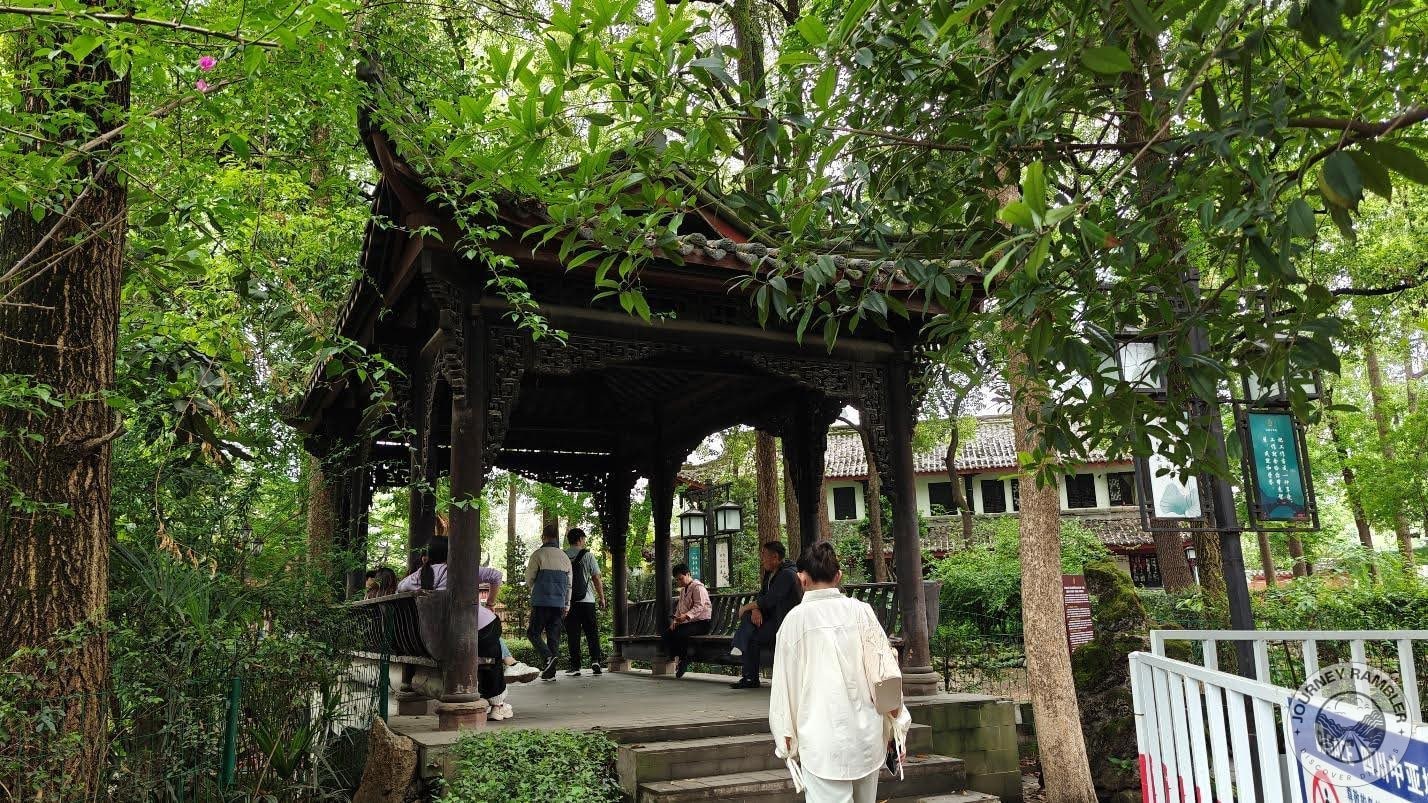
This whole area was also a great place to just relax and rest your feet after all the walking that you’ve probably been doing. There are pavilions like the one in the picture where you can have a seat and just let the cool breeze from the surroundings refresh you. Granted, it might still be a little crowded but it definitely won’t be as congested as the areas around the main buildings/attractions.

Here’s a final look at the Free Life pond with its banks lined with the numerous turtles that call it home. Overall, I enjoyed my visit to Wenshu Yuan. It wasn’t as large as the temples I visited in Japan but I’d argue it was a lot busier. More than the nice buildings, this busy-ness is I think what made me like it here. There’s just something about the sight of people congregating and celebrating their beliefs that really stuck with me. Now if you’re not too keen on being around crowds then you might want to look elsewhere. That said, this is China so you’re eventually going to come across crowds whether you like it or not.
What did you think of my Wenshu Yuan visit? Have you ever been to this Buddhist monastery in Chengdu? If yes, then please don’t hesitate to share your experiences and thoughts about the place with us in the comments section!