
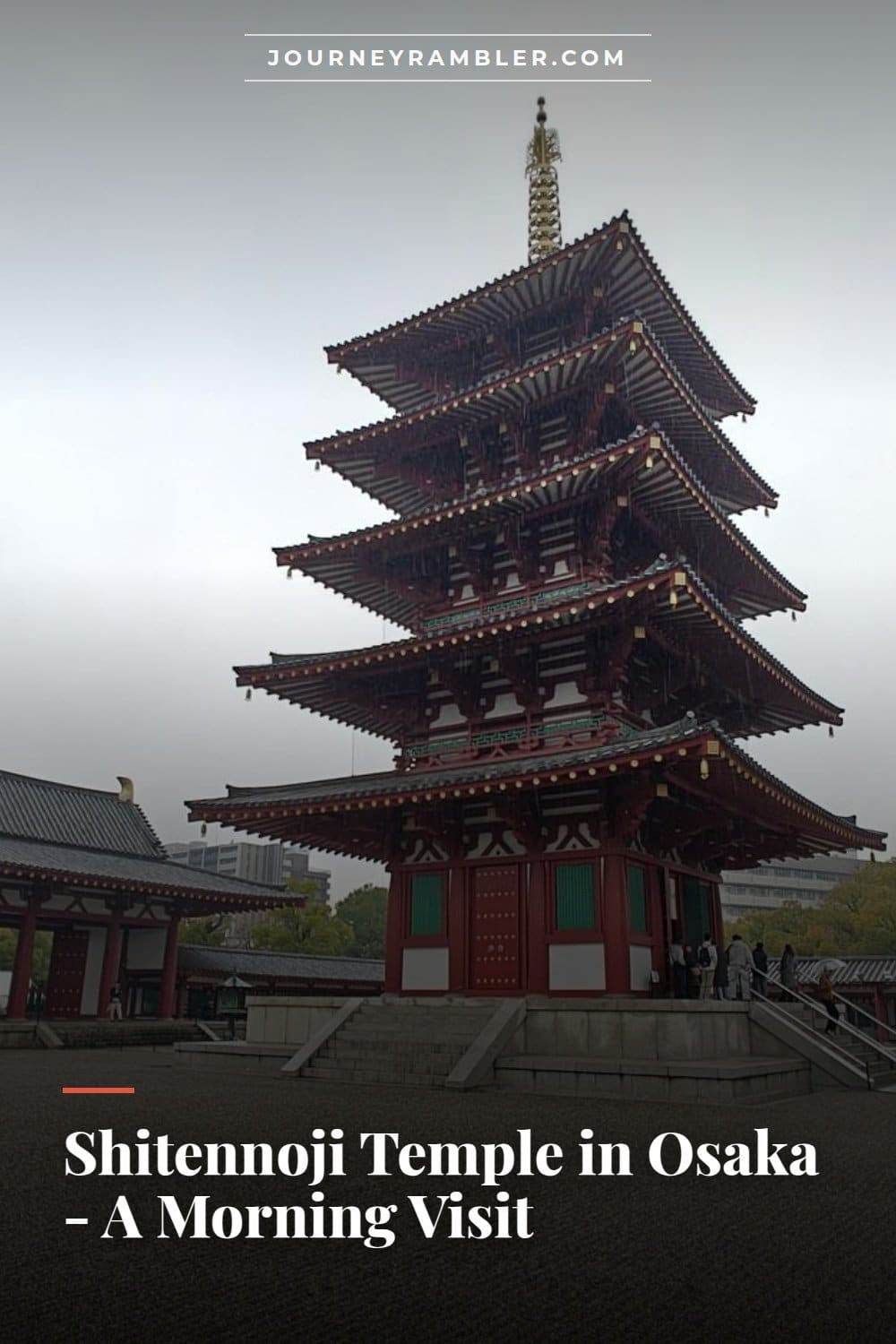
Shitennoji was perhaps one of the more impressive “modern” Buddhist temples that I had the chance to visit in Osaka. Okay, it's not really modern per se since the temple complex is actually the first and oldest temple in Japan that was sponsored by the state. Due to having been reconstructed multiple times though, there isn't any structure or building from the original that's left.
Why do I think it's impressive? Well, you'll have to scroll down and follow me on my visit to this iconic temple in Osaka to find out.
So I visited Shitennoji just before my visit to Tennoji Zoo since it's a relatively short walk between both landmarks.
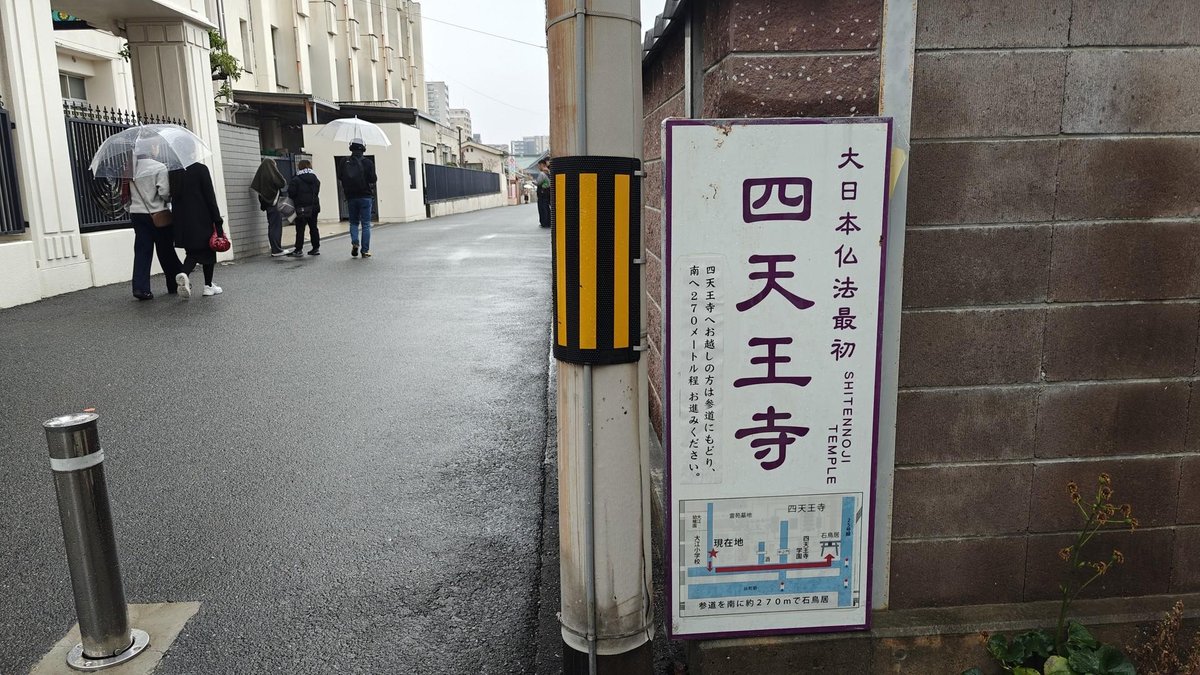
As for how to get here, you can take the Tanimachi Line and stop at the Shitennoji-mae Yuhigaoka Station. From the station, you just walk south, cross the pedestrian crossing and you should now find yourself in the city block that the temple complex occupies.
After crossing, you should find a small street that leads into the Old Kumano Road. Just follow this and you should see signs along the road like in the image above pointing you to the Shitennoji Saidaimon (also known as the Gokurakumon or the Grand West Gate).
A Walk at Shitennoji Temple
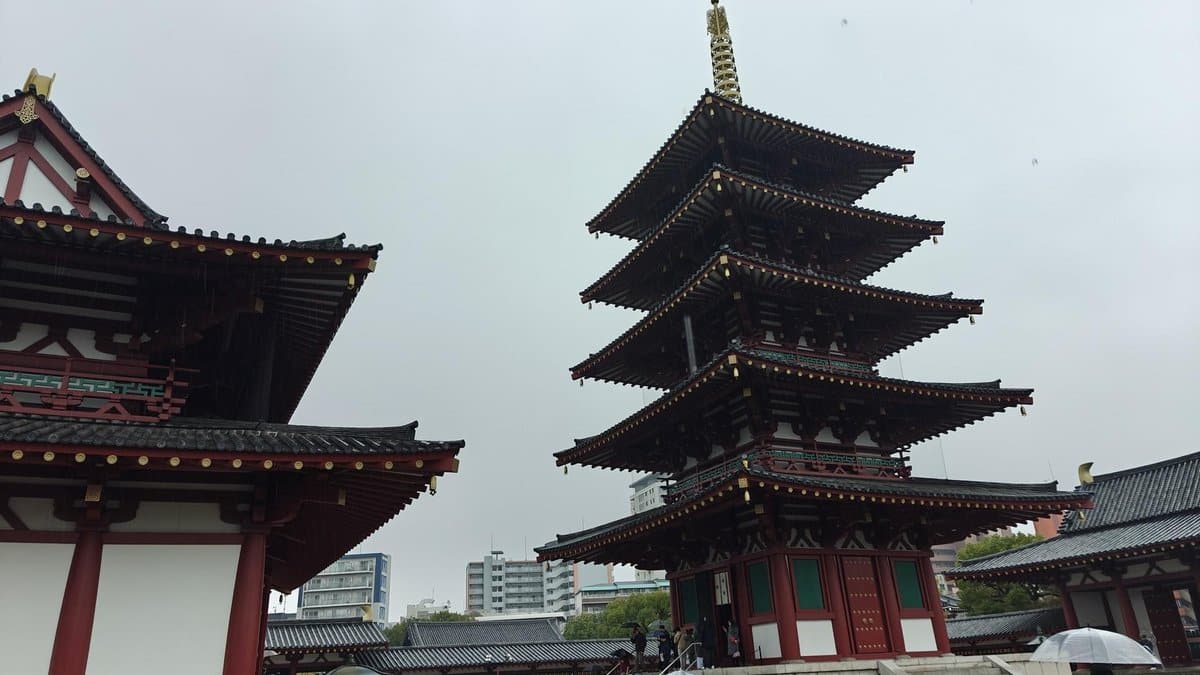
Other than the subway, you can also ride a bus that will take you to the Tennoji-keisatsusho-mae stop that's on the Shitennoji block and just a couple of steps from the small street that leads to the Old Kumano Road. Anyway, two of the first things you'll see after passing the Grand West Gate should be the Shitennoji Kondo and the Gojunoto. Also known as the Golden Hall or Golden Pavilion, the Kondo is the central worship hall in the temple complex.
The Gojunoto on the other hand, is a five-story pagoda that houses a display featuring the Shitenno (or the Four Heavenly Kings).
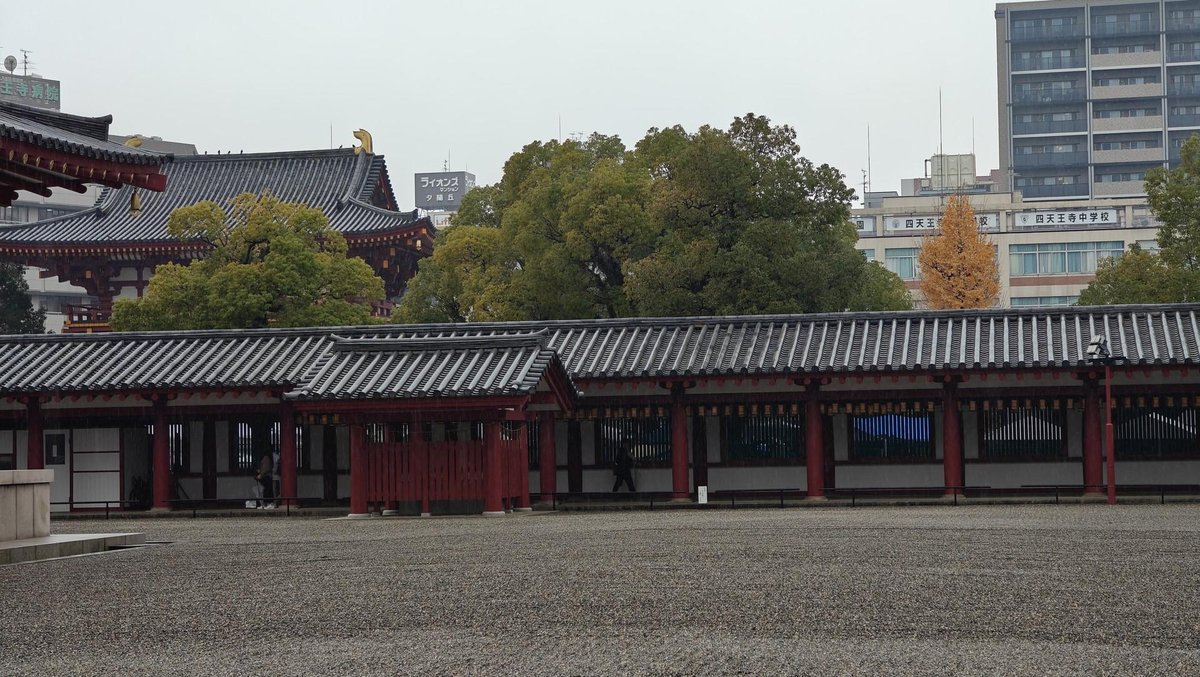
Speaking of the Grand West Gate, you can actually see it from this area. As for what this area is, it's called the Chushin Garan or central inner complex. Now, it should be noted that going inside this area is not free.
You don't have to pay to enter Shitennoji but there are areas inside it like the Chushin Garan where you'll need to fork out 300JPY for entry.
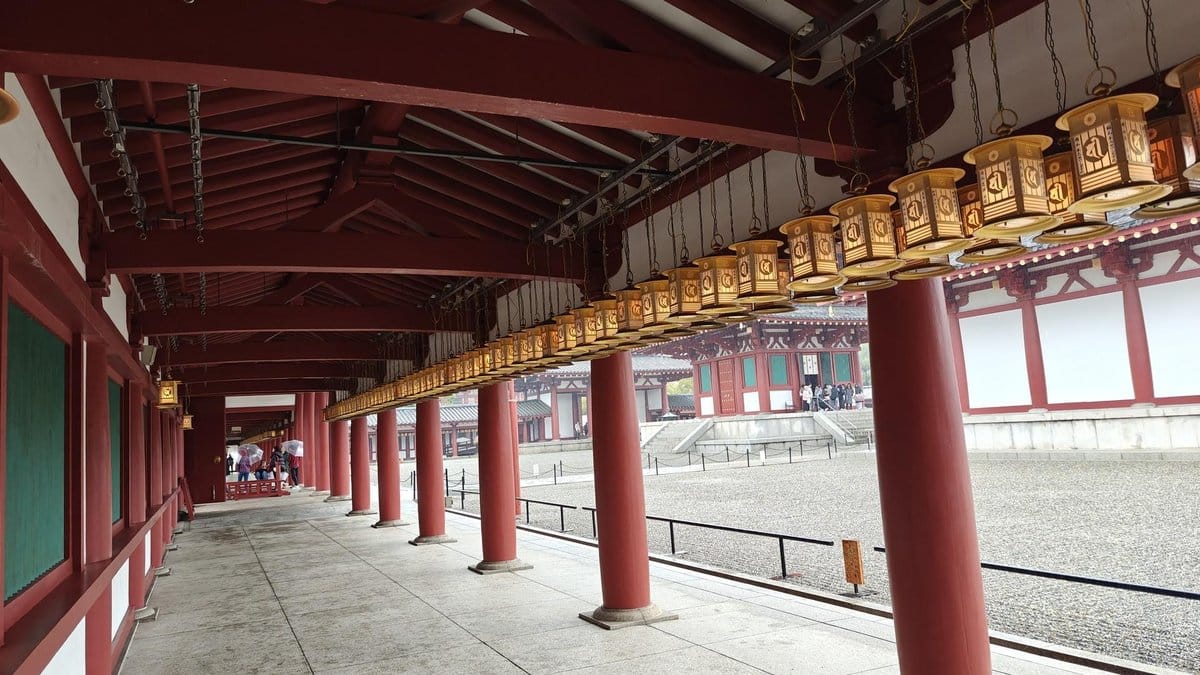
I found the Chushin Garan to be quite unique due to this covered corridor called the kairo that encloses it. This corridor also connects the other structures in the Chushin Garan like the Niomon in the south, Saijumon in the west, Tojumon in the east, and the Kodo or Lecture Hall in the north. As with a lot of the buildings in the complex, the kairo is made mainly from concrete.
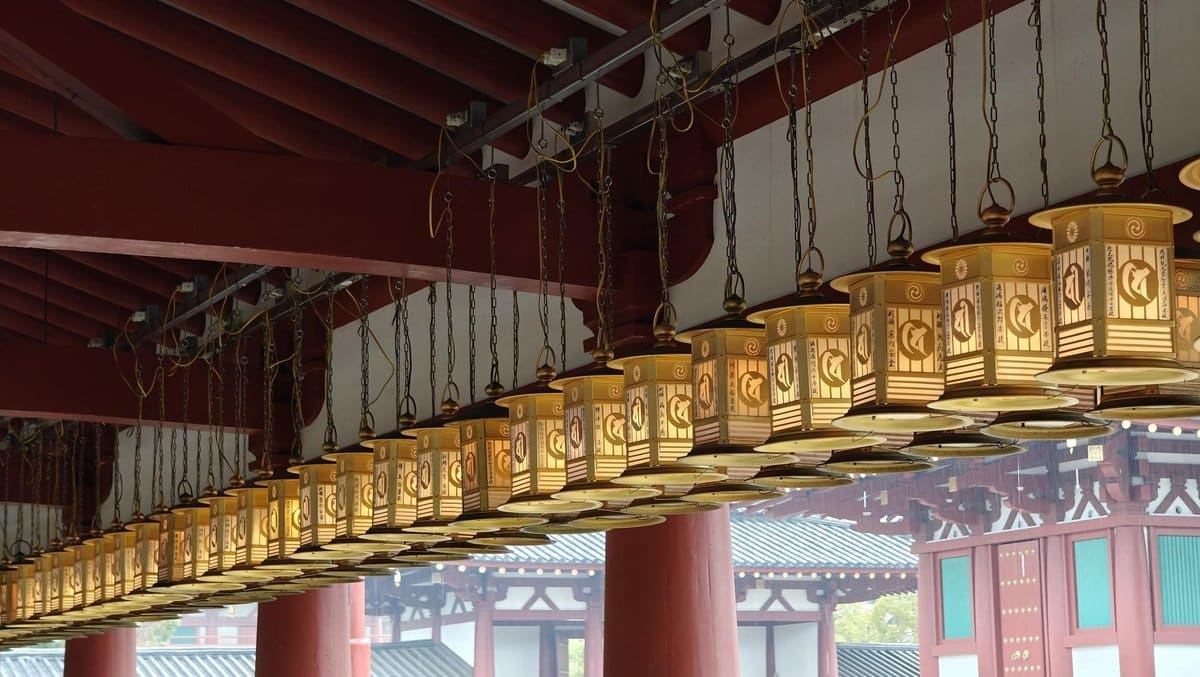
While the buildings and fixtures here do look traditional, you’ll notice a lot of details that give away how modern they are. Case in point would be the Tsuri-doro (lanterns) here all being electrical powered rather than using candles. Considering how many fires the temple has gone through, it is kind of understandable how the Japanese government decided to go with more fire-resistant materials and fixtures during its reconstruction in the 1960s.
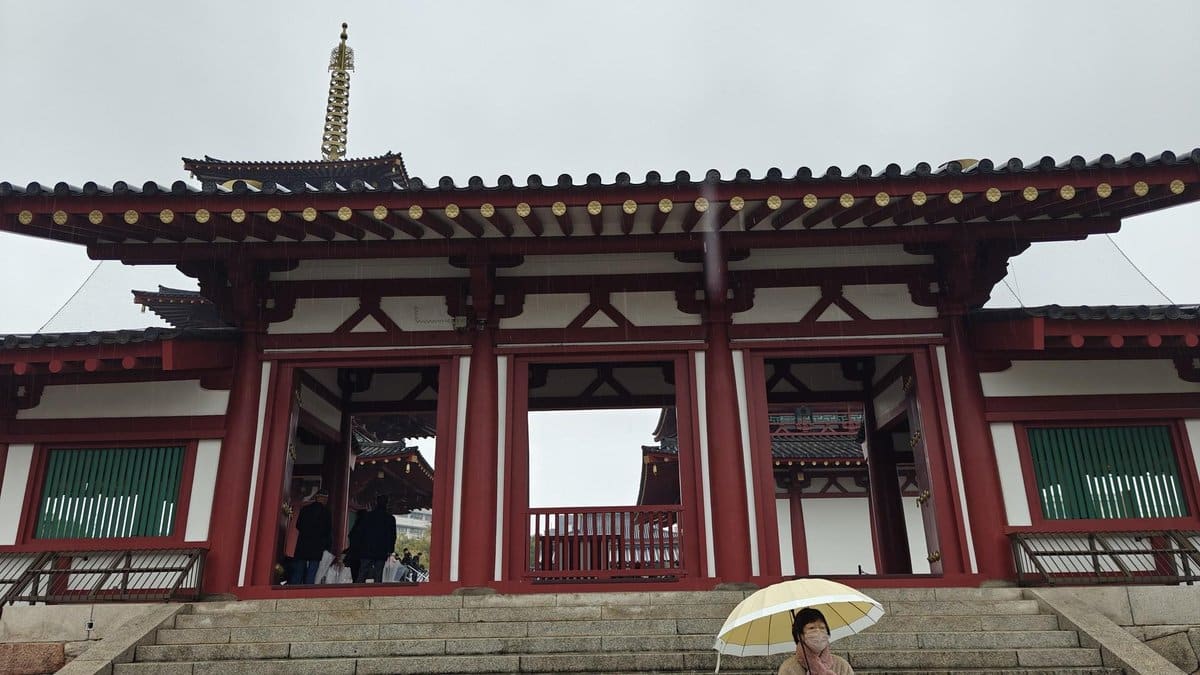
This is the Tojumon that I talked about earlier. In the background, you can see a glimpse of the Gojunoto pagoda’s finial. Now I said that you’ll actually need to pay to get inside the Chushin Garan.
As for where you can do that, it’s actually at the Saijumon which is the gate opposite this one. There’s a ticket counter there where you can purchase tickets not just for the Chushin Garan but also for other areas like the Gokoraku Jodo Garden and the Homotsukan (Treasure Hall).
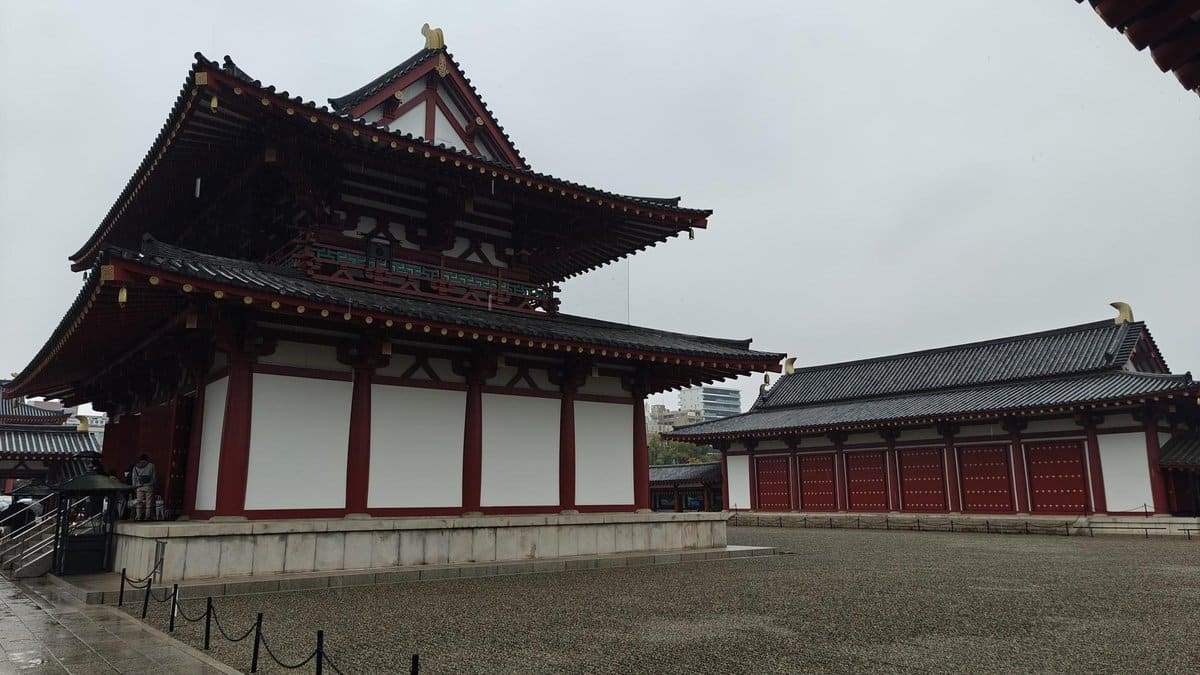
So you’re probably asking why I was able to get back and take a picture of the Kondo and Kodo when I just took a picture of the Tojumon from outside of the Chushin Garan. The thing is, you can actually use the ticket for unlimited access to the area for the whole day. I think this is actually quite nice especially during times when the weather isn’t that cooperative (like during my visit).
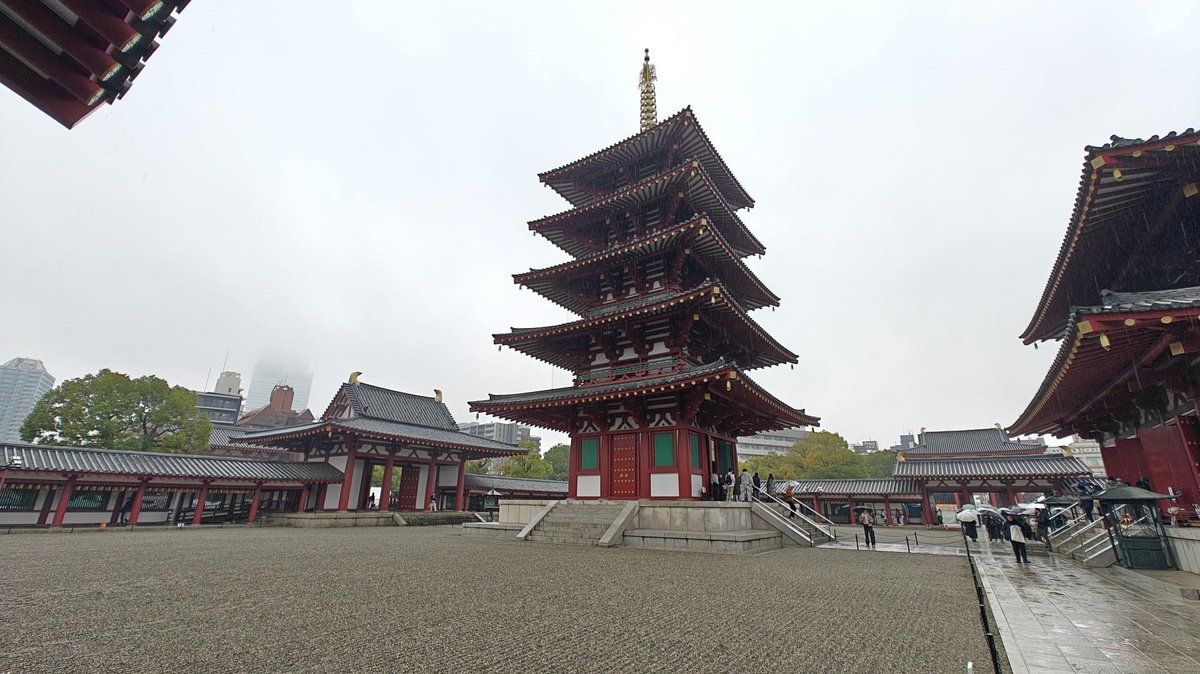
Despite the weather, the Chushin Garan was still somewhat bustling thanks to the people who braved the rains just to visit. Now this isn’t really surprising considering how popular the area is for visitors both local and foreign. This is basically why I think Shitennoji is impressive.
While the buildings in it aren’t the original, the temple still manages to draw lots of visitors yearly.
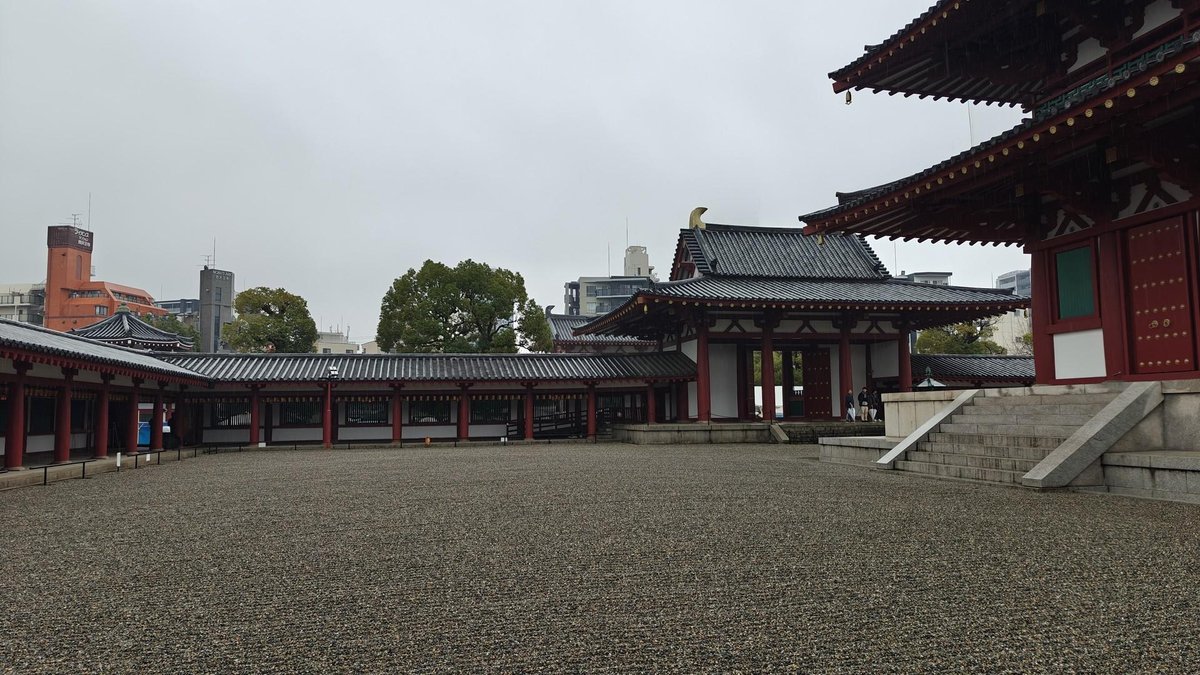
Perhaps the only real issue I have with the views here in Osaka is that it’s not as “clean” as in Kyoto. What I mean by this is that the city doesn’t have building height limits and so you tend to get views of the city’s high-rises in the background of your pictures. That being said, there are people that actually like this fusion of history and modernity which I think is much more evident here in Osaka than in Kyoto.
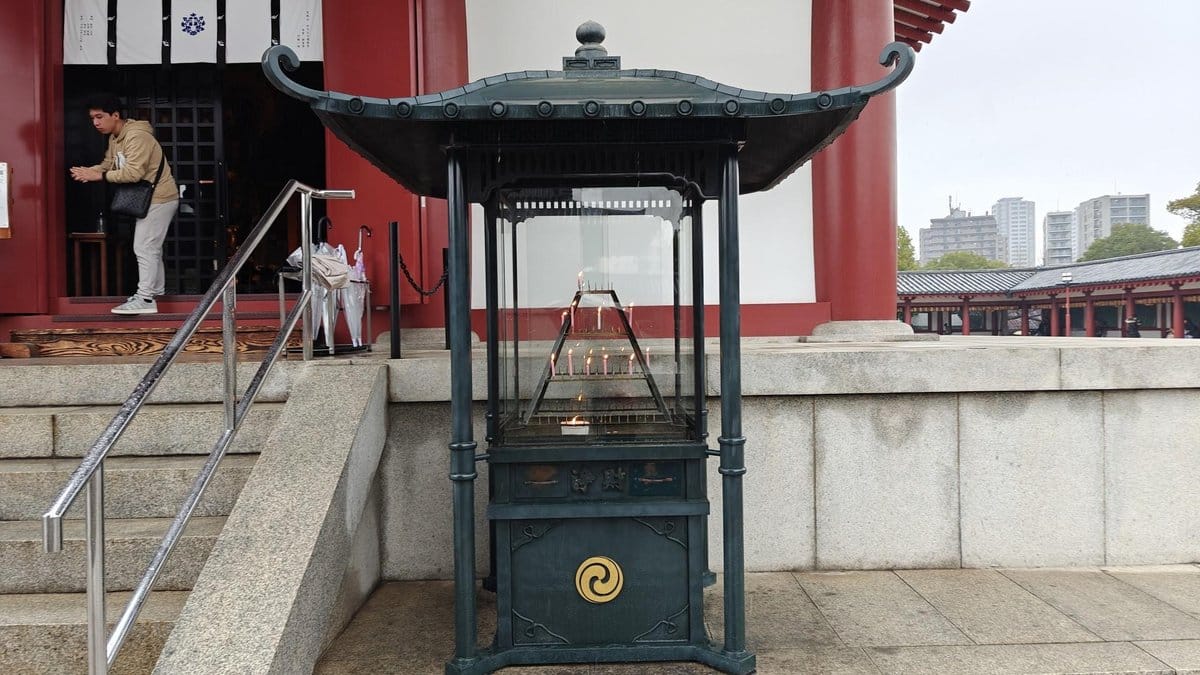
Going back to the Chushin Garan, here’s what part of the Kondo looks like up close. On the right side of the steps going up to the Golden Hall’s doors is this votive candle stand which has a different ritualistic function as an incense burner. Lighting a candle is said to be showing your merit to the Sanpo/Sanbo (Three Jewels) and respect to the Buddha.
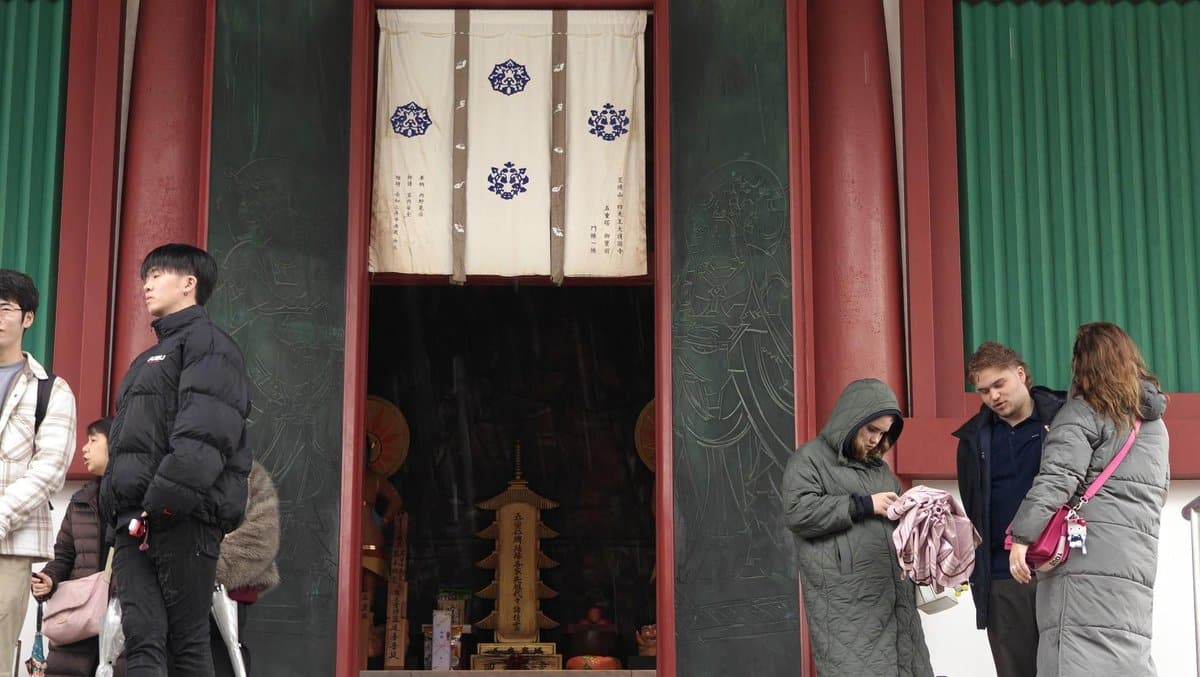
Opposite the entrance into the Kondo, you’ll find the “entrance” to the Gojunoto. Inside, there’s a display of what I think is a gorinto or a stupa of some kind that’s flanked by two of the Shitenno. Unfortunately, taking pictures of these up close was not allowed as the flash might damage the paint on the statues and the background.
You can also get inside to see the other two Shitenno and more heki-ga or murals/wall paintings.
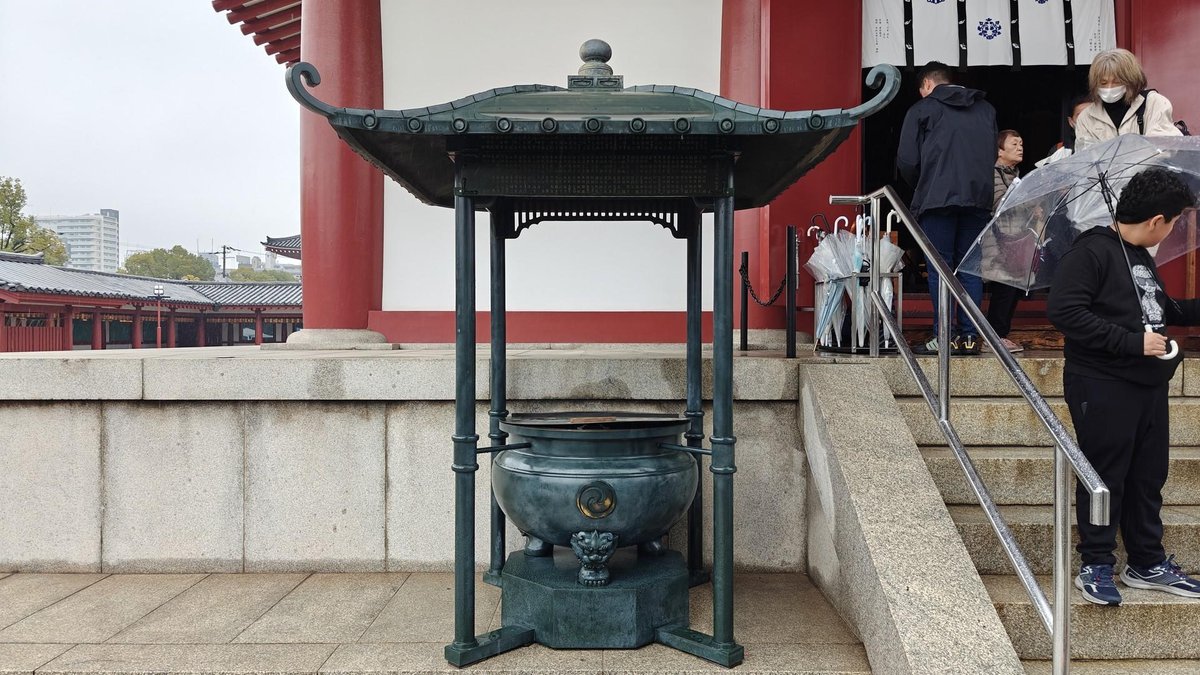
Back to the Kondo, this is the incense burner on the other end of the stairs (opposite the votive candle stand). While it might look similar to lighting a candle, burning an incense stick in the context of the Buddhist faith is actually not the same. While both actions show respect to the Buddha, burning incense’s primary purpose is for purifying the mind and body before a worshiper steps into a sacred place like the Kondo.
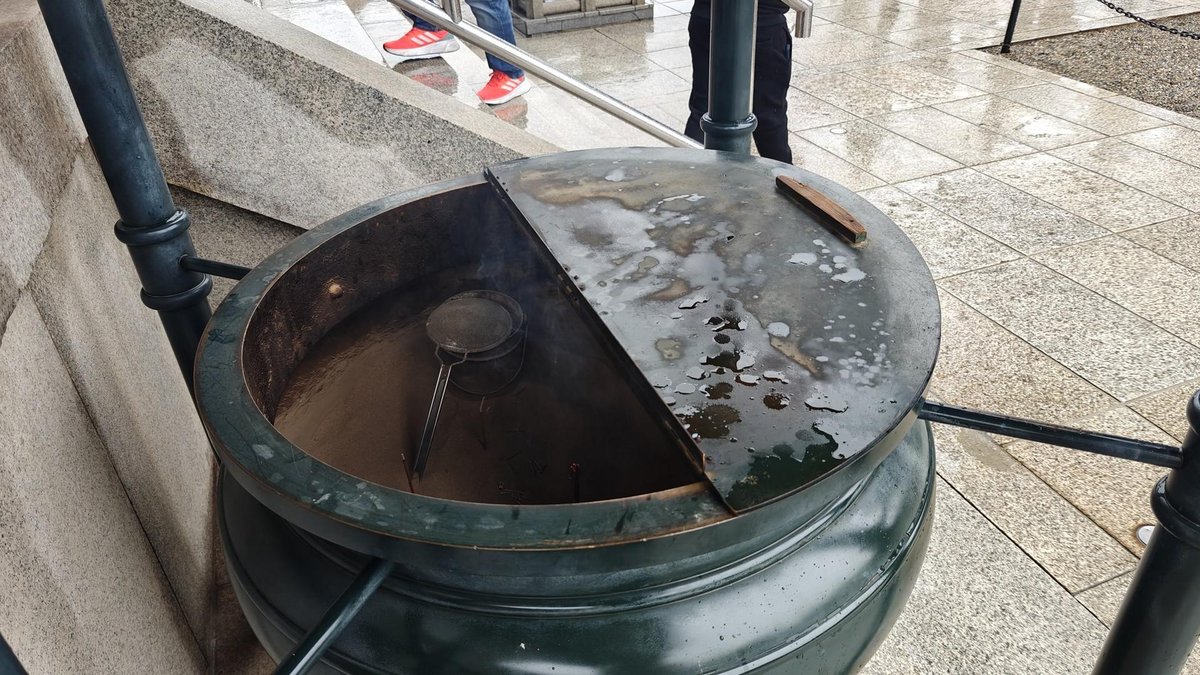
Like with a lot of the shrines and temples I’ve visited, burning incense or lighting a votive candle is not compulsory. That said, this also doesn’t mean that you’re not allowed to do these things even if you don’t hold Buddhist beliefs. I guess, so long as you’re respectful then participating in these rituals isn’t a bad thing.
As they say, “When in Rome, do as the Romans do”.
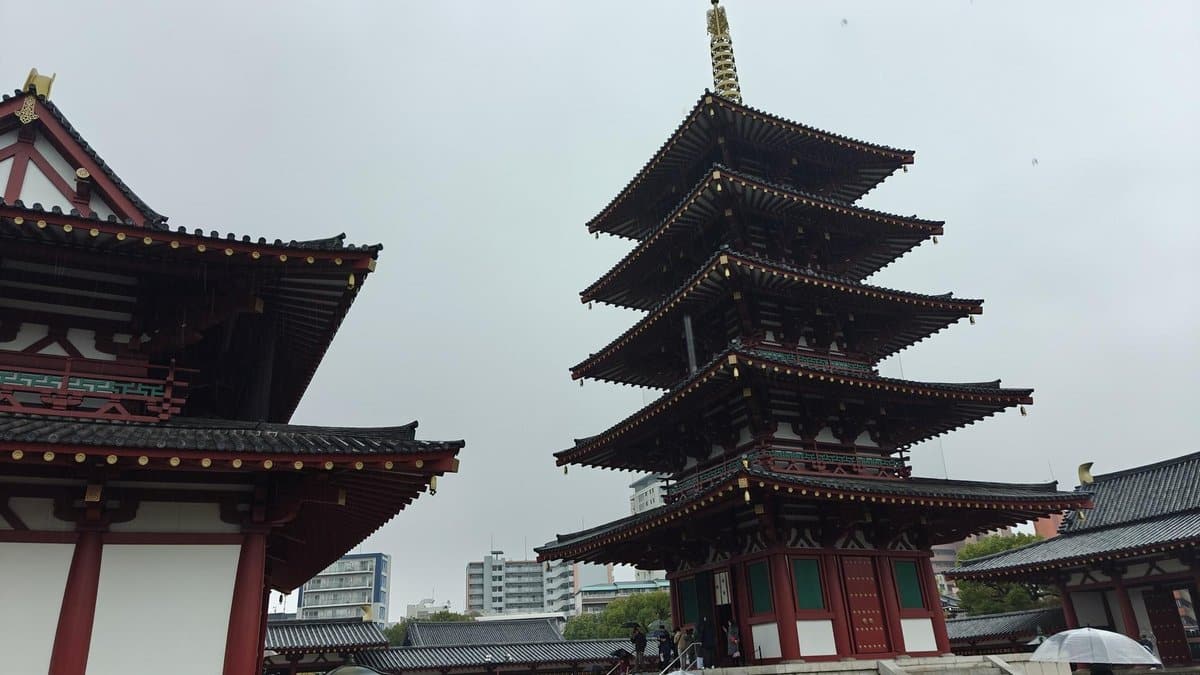
This is another shot of the Kondo and the Gojunoto from the area around the Saijumon. I’ll say this again but despite these buildings not being very traditional due to their use of more modern materials, they still look very nice. Like with Fushimi Inari Taisha and Kiyomizu-dera, the vermillion paint really makes these buildings stand out as well as giving them a sense of agelessness.
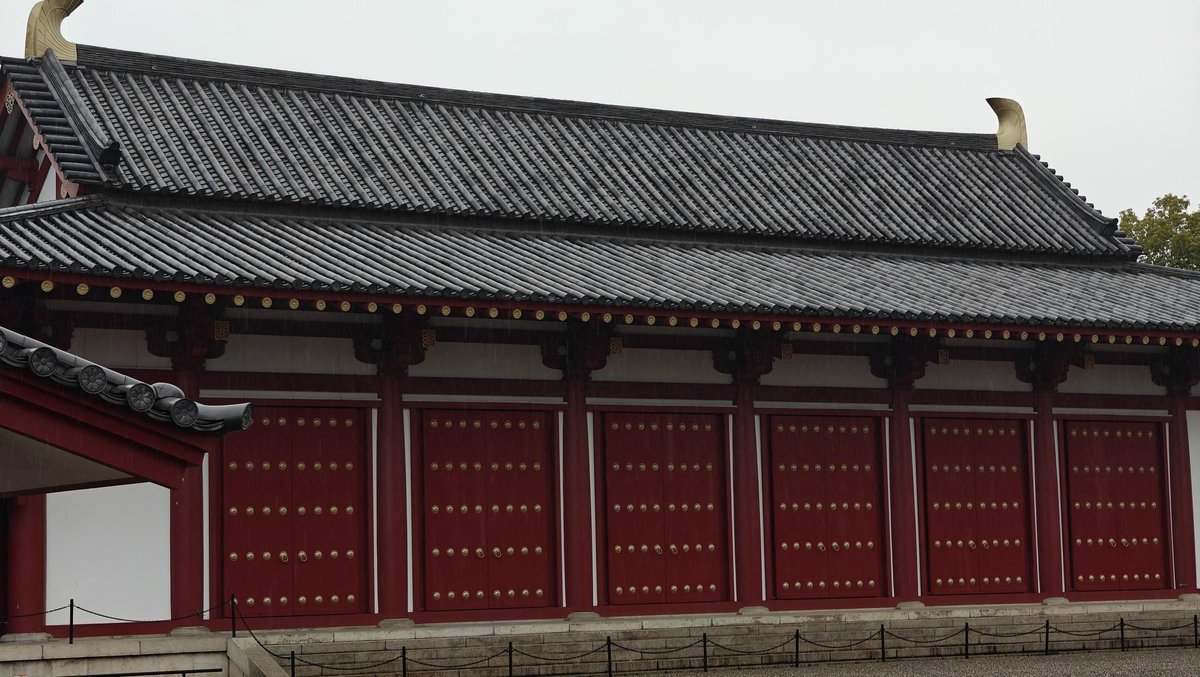
From the same area where I took the previous image, I turned to my right and got a closeup shot of the Kodo or Lecture Hall. Now I’m not too sure if the doors to the Lecture Hall facing the Kondo are ever opened. I do know though that there are doors to the side accessible through the kairo.
Since I wasn’t staying too long here though, I decided to hold off on exploring the Kodo.
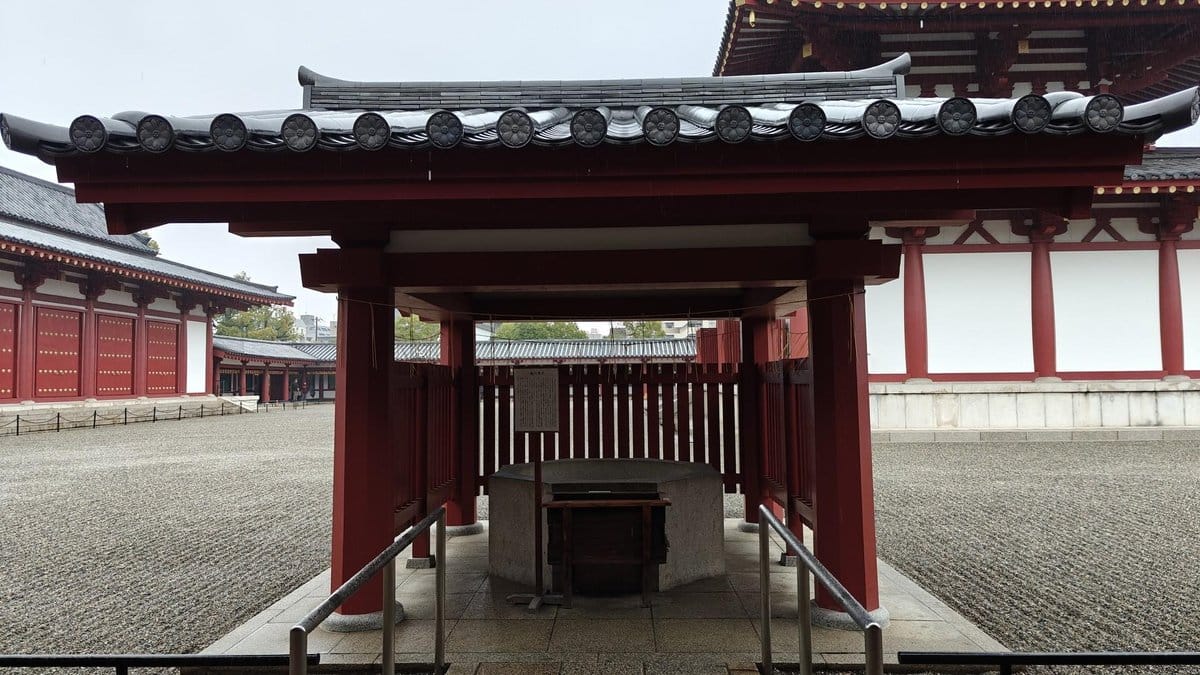
Still in the same area from earlier, I came across the Ryunoido. Also known as the Dragon’s Well, this was actually one of the more interesting landmarks that I came across here in the Chushin Garan. Initially, I thought it was just a regular old wishing well that you’d find in Shinto shrines and Buddhist temples here in Japan.
It turns out, the well actually has quite the lore and history behind it.
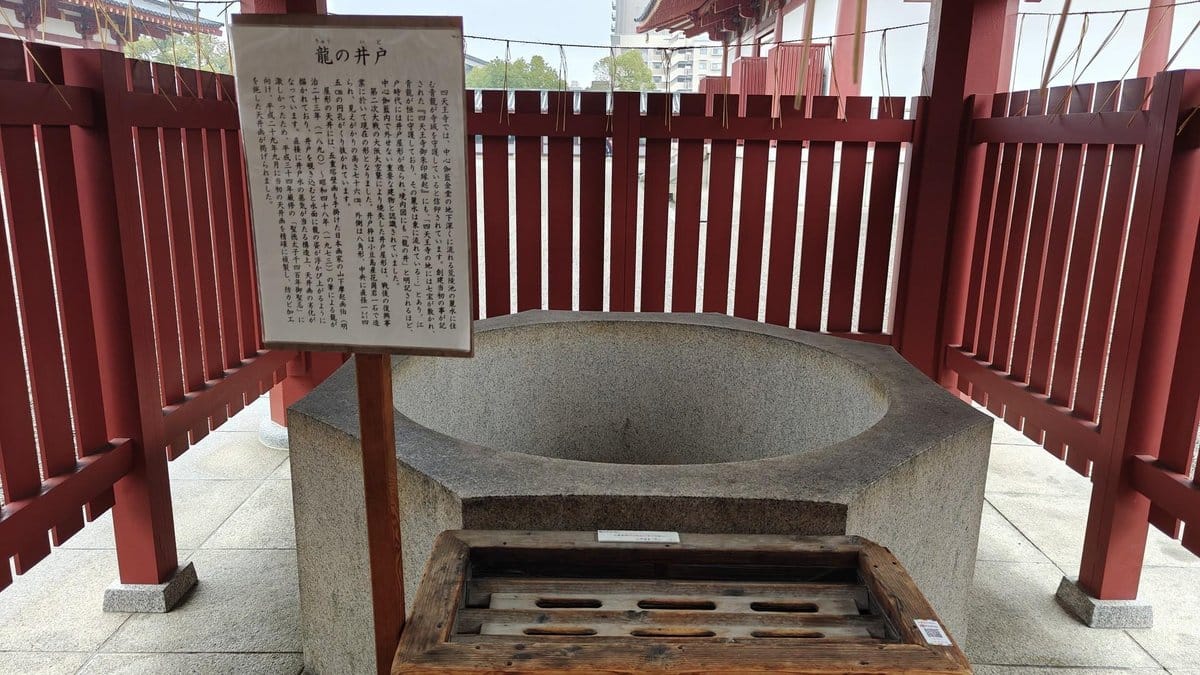
Beside the well is a post with a sign detailing its history as well as the lore of the Blue Dragon that is said to have guarded the temple’s grounds and its seven treasures (of which, the well as well as the Gokurakumon is actually included). The sign also talks of how, prior to the current well house, it was built some time during the Edo period and then was burned down during the air raids of the Second World War.
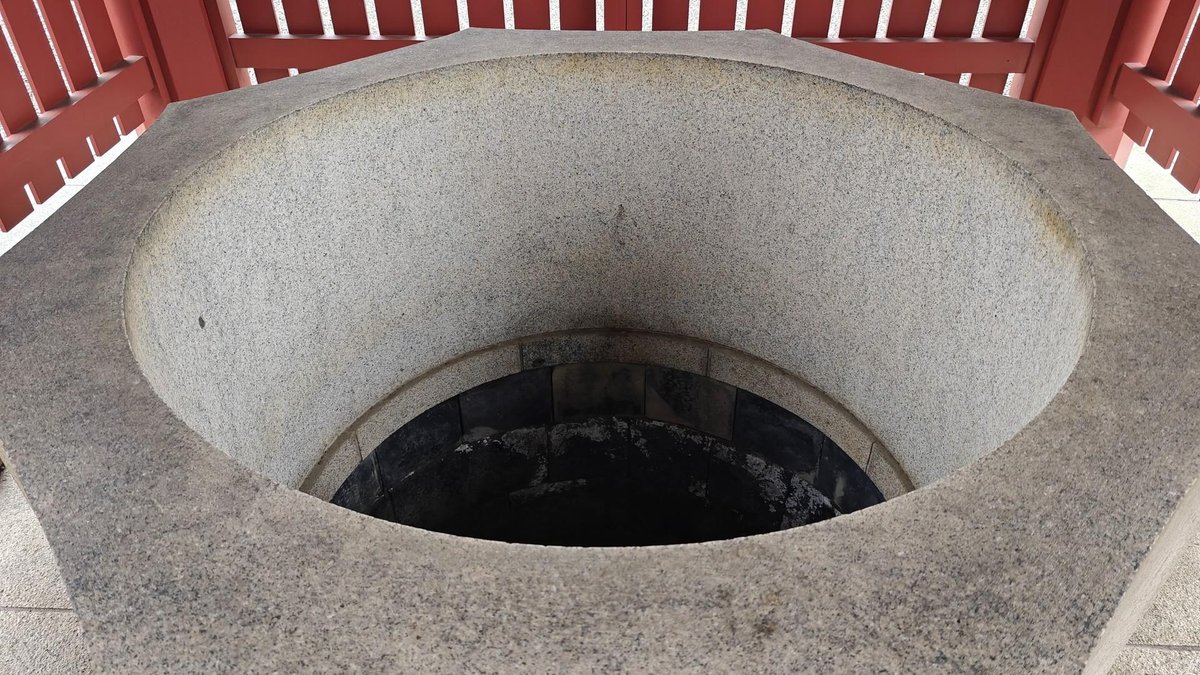
As for this current well house, it was part of the post-war reconstruction that resulted in the current Shitennoji Temple. The sign doesn’t talk about what was used in the old well’s construction but it does mention that the new one is carved from a single piece of Shodoshima granite (specifically the well frame). It’s also not shown but the ceiling of the pavilion actually has a painting of a dragon by Yamashita Maki, a painter who also worked on Gojunoto’s murals and wall paintings.
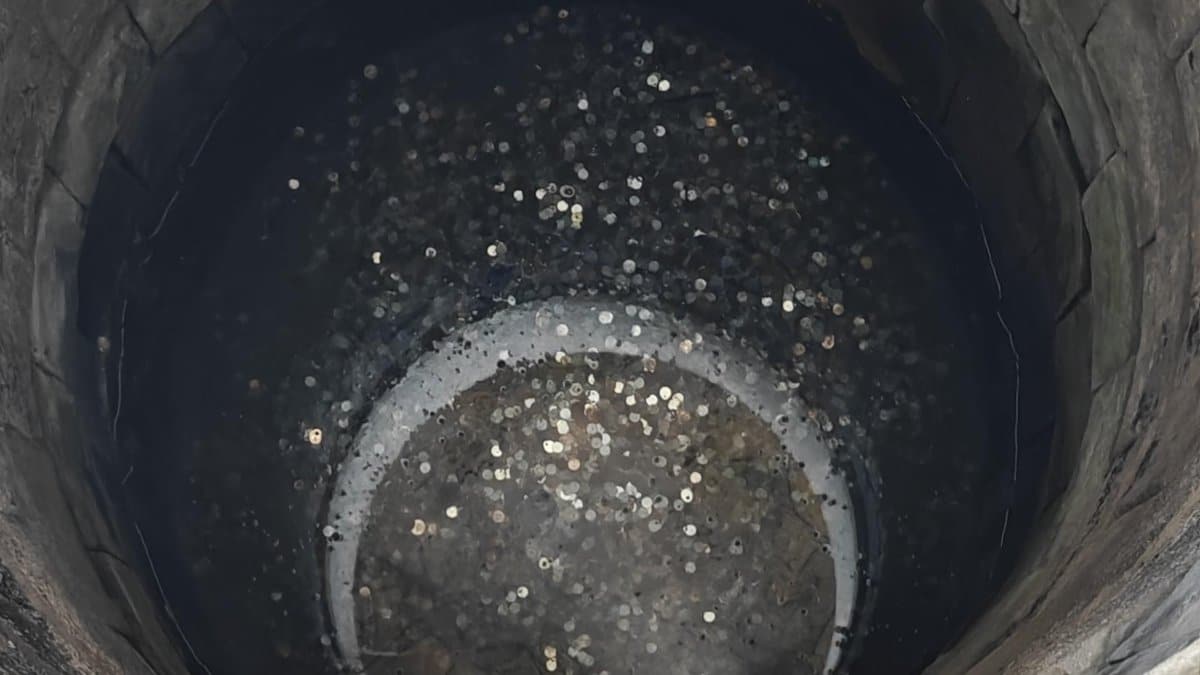
the water inside the well was surprisingly clear and you could actually see the accumulated coins at the bottom. I initially thought the water was just added in but there’s apparently a body of water underground that is its source. While trying to look up the well’s history I also came across sources online saying that it’s connected to a mystical pond in India called Munetsuchi.
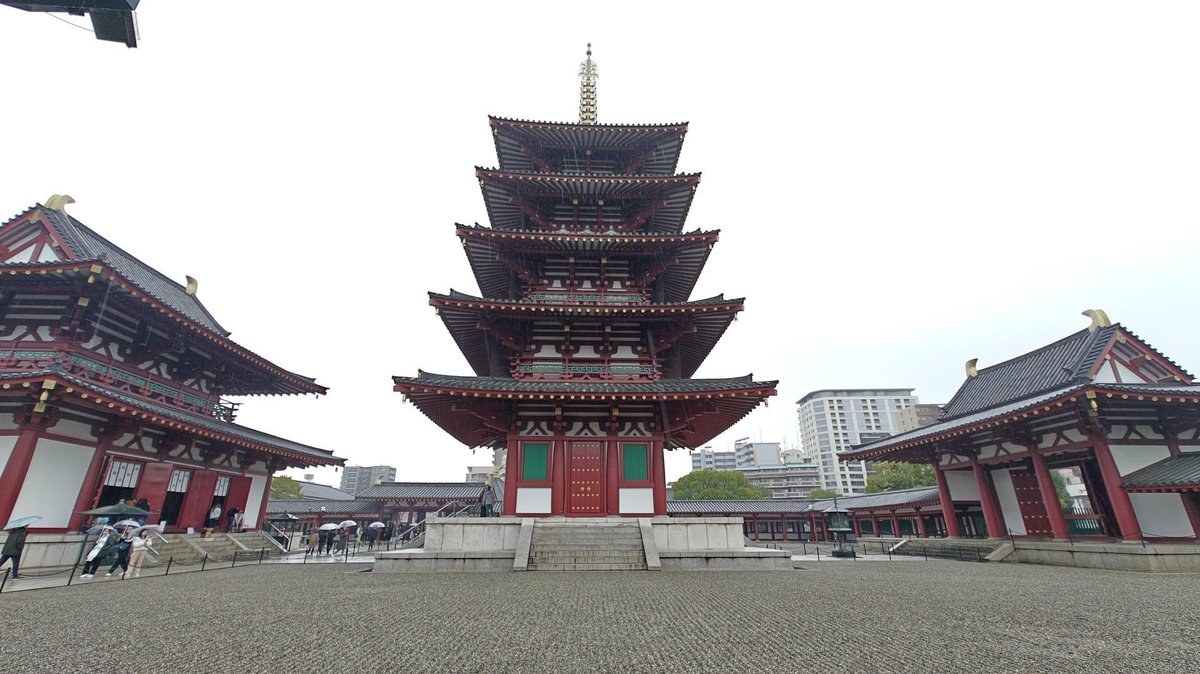
Here you can see how the Gojunoto looks from the western direction. Again, I think the view is kind of ruined a little by the presence of the buildings in the background. That said, they also add a certain charm and contrast to the views here that kind of grow on you.
At the time I took the picture I was still feeling a little elated by the views I saw on my Kyoto visit so I kind of thought this wasn’t living up to my expectations. Thankfully, I did get to eventually appreciate the views here.
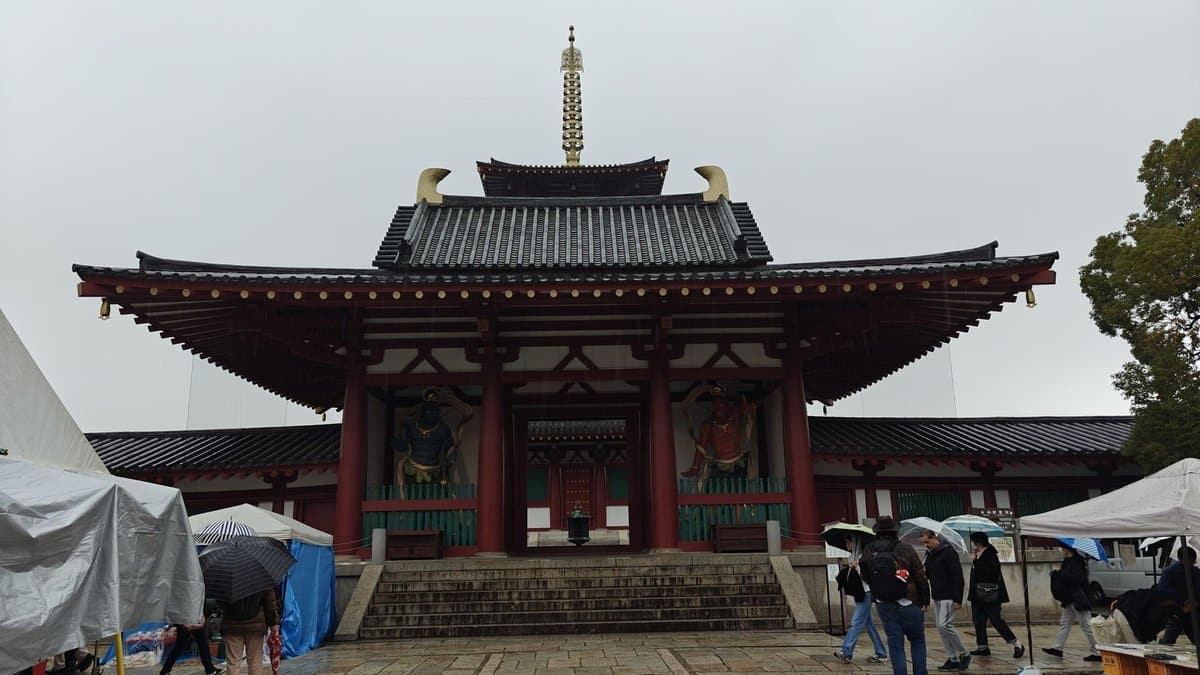
With the rain still going strong, I decided to exit the Chushin Garan through the Niomon or its southernmost gate. Now, I call it the southernmost gate but that’s only in the context of the Chushin Garan. When accounting for the rest of the temple complex, it’s actually the Middle Gate or the Chumon.
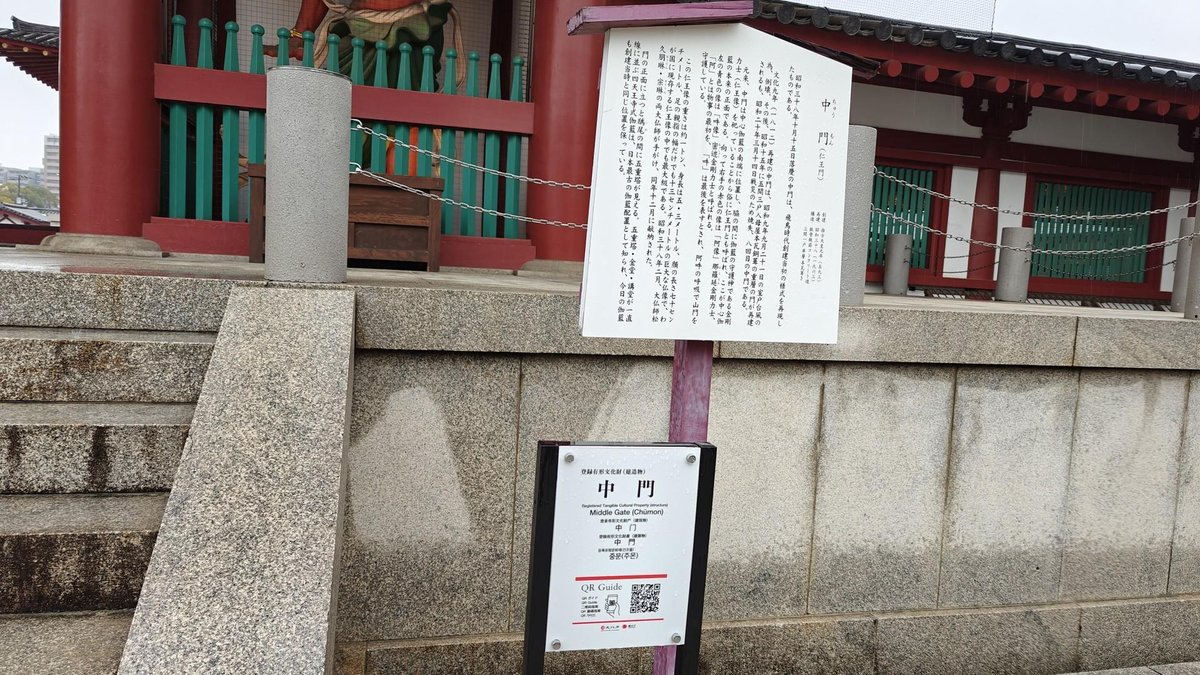
Here’s a sign detailing the Niomon or Middle Gate’s history. As its name implies, the gate features the guardian deities A-gyo and Un-gyo. Now I was actually quite surprised that the Niomon was situated in the middle of Shitennoji as most temples I’ve visited typically have it as the main gate.
Turns out, the temple’s layout follows the oldest style in Japan. Much like all the other buildings we’ve seen so far, this is also part of the post-war reconstruction.
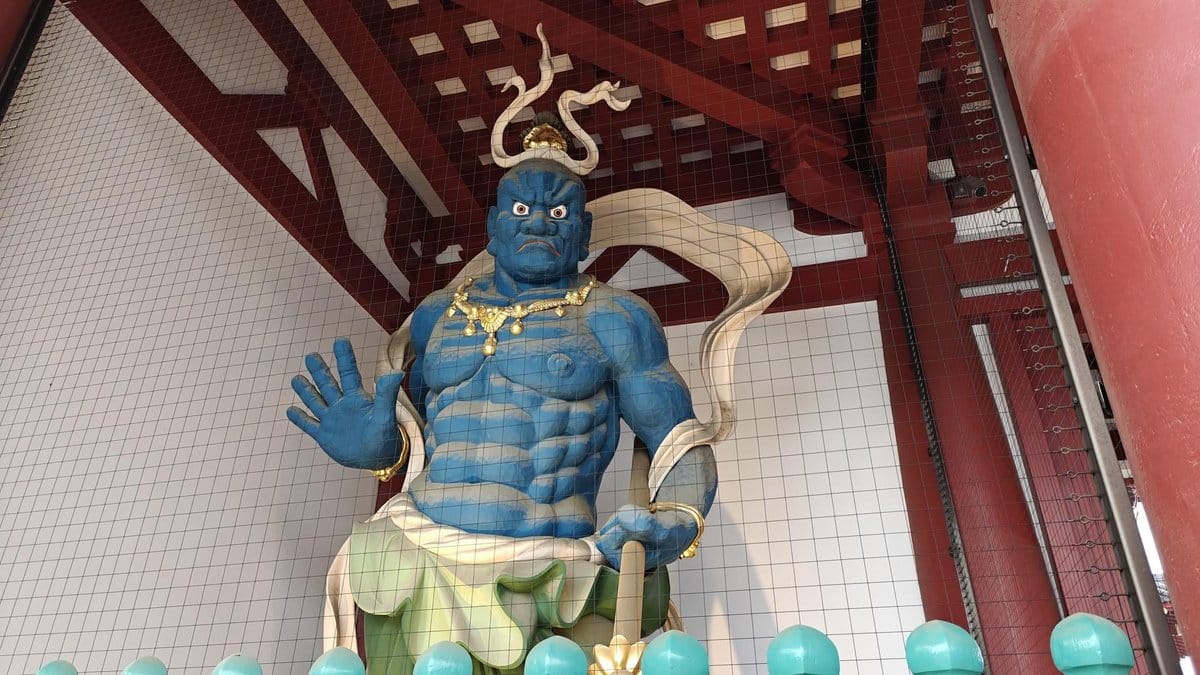
This is the Un-gyo statue. It’s typically situated on the left if you’re facing the gate and he is depicted as having a closed mouth. He is said to represent the end of the universe and honestly, it looks like he’s just about to do so.
Kidding aside, the statues are actually quite tall and I read somewhere that they’re listed as 5.3 meters.
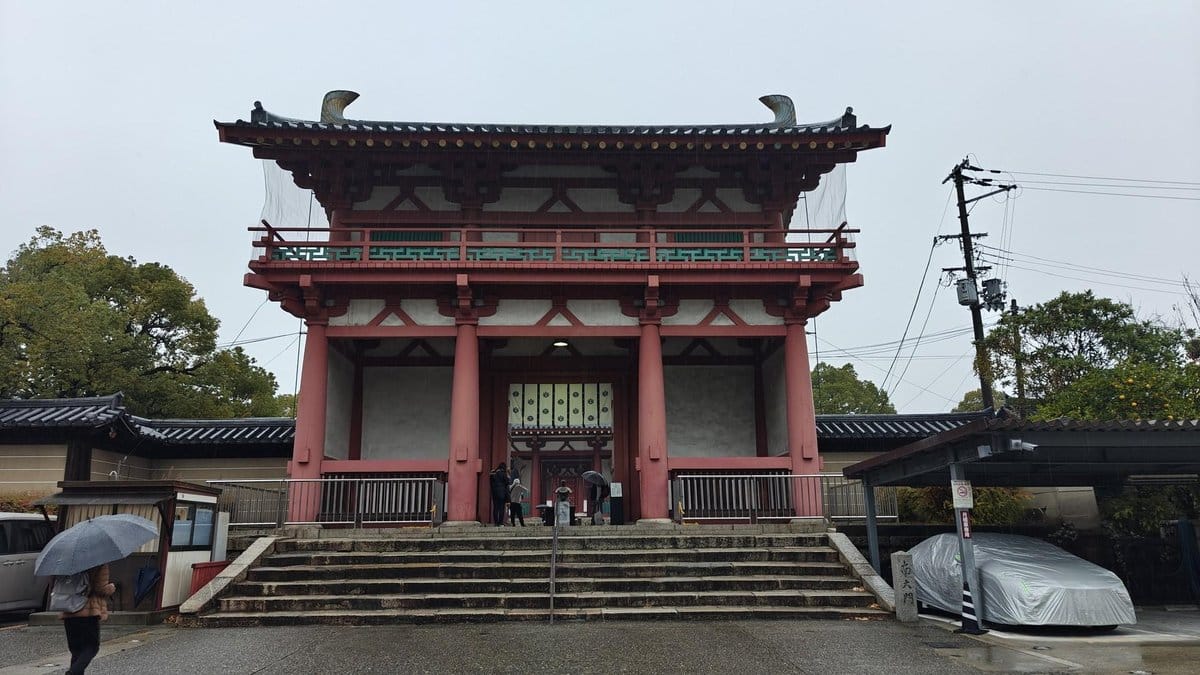
After checking out the statues, I then went outside and took a picture of the southernmost gate of the temple complex: the Nandaimon or Grand South Gate. So one thing that surprised me about this gate is just how pink it looked. Apparently, this is just natural weathering of vermillion paint.
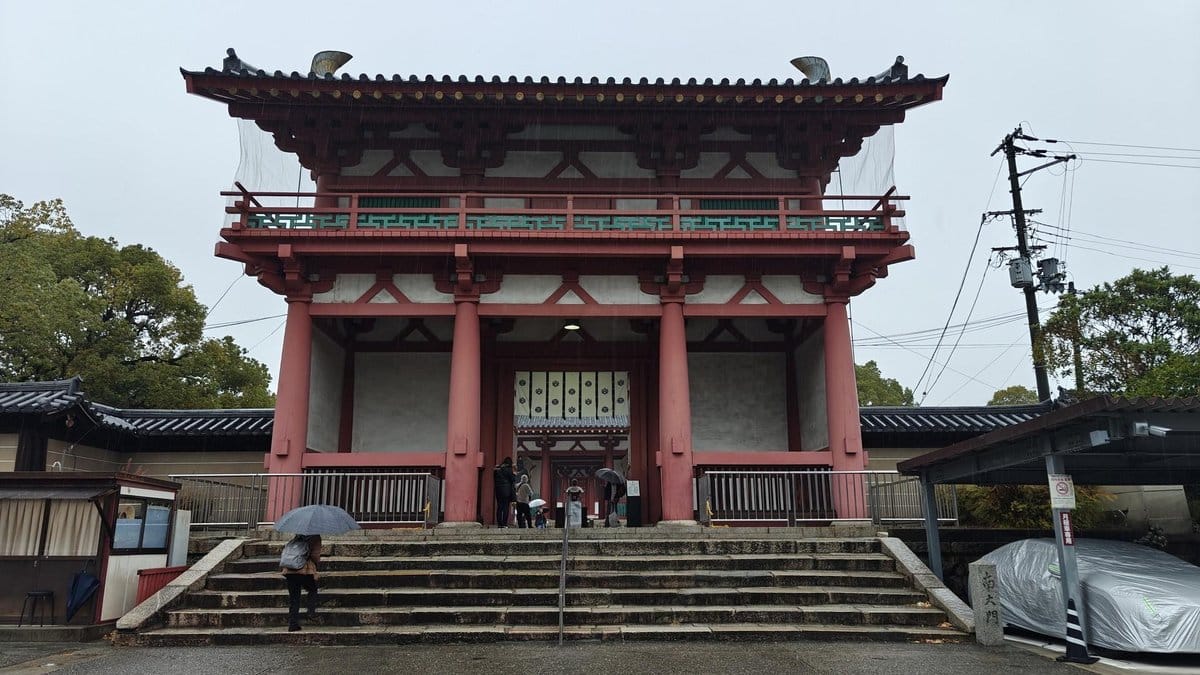
Thanks to the faded paint job, I actually thought the Nandaimon was an original structure. Unfortunately, the Grand South Gate is actually quite recent and is also part of the reconstruction in the 1960s. I wonder though if this was supposed to have Nio guardian deities as well considering the two large spaces bookending its entrance.
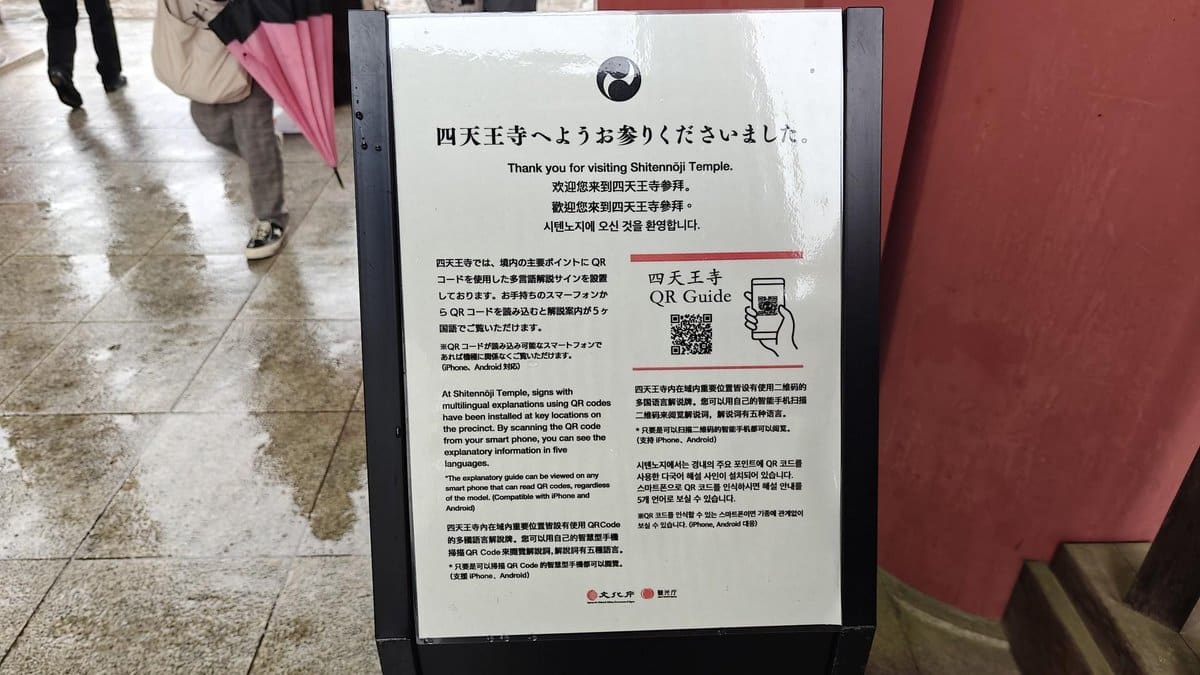
Speaking of the entrance, this is the welcome sign that greets visitors as they enter. It actually just reminds visitors that the landmarks here have signs that feature QR codes. Visitors can then scan these QR codes to get information about the landmarks.
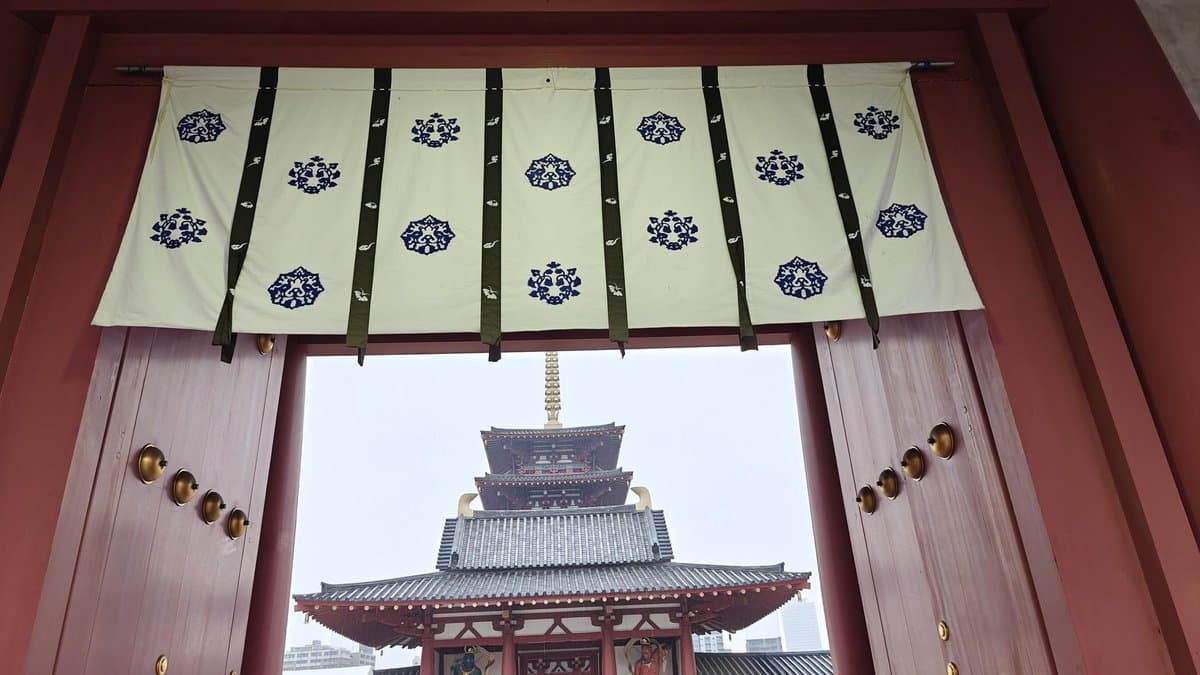
Perhaps the most notable feature of the Grand South Gate though is the view you get of the Niomon and the Gojunoto. Of course, you still get to see highrises in the background but I’d argue the view of the pagoda from this direction is one of the best. Looking back, I actually would recommend entering the temple through here instead of through the Gokurakumon.
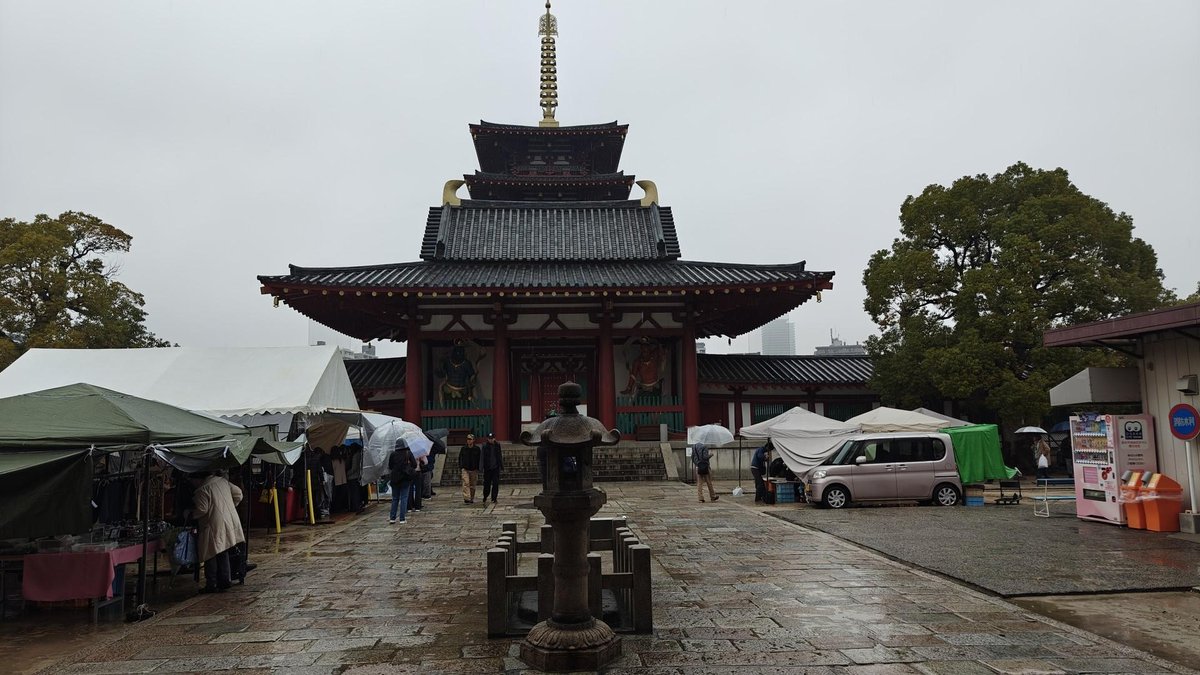
And that ends my visit to Shitennoji. I know it was a bit short but what can I do? The weather really wasn’t cooperating this time around.
Still, I think the visit was really worth it. If you do plan to come here, I would suggest looking into the Seven Wonders of Shitennoji and discovering them for yourself. Also, make sure that you pray that it won’t be as rainy like during my visit.
Kidding aside, the temple has a lot of history and nice views that are easily accessible thanks to affordable entrance fees. In some instances, you won’t even need to pay and you’ll still get to see the temple’s landmarks (e.g. you’re free to enter the area shown in the image above).What do you think about my Shitennoji visit? Did I convince you to include it on your Osaka itinerary?
If yes, then we’d be more than happy to hear about your thoughts and impressions of the temple down in the comments!