
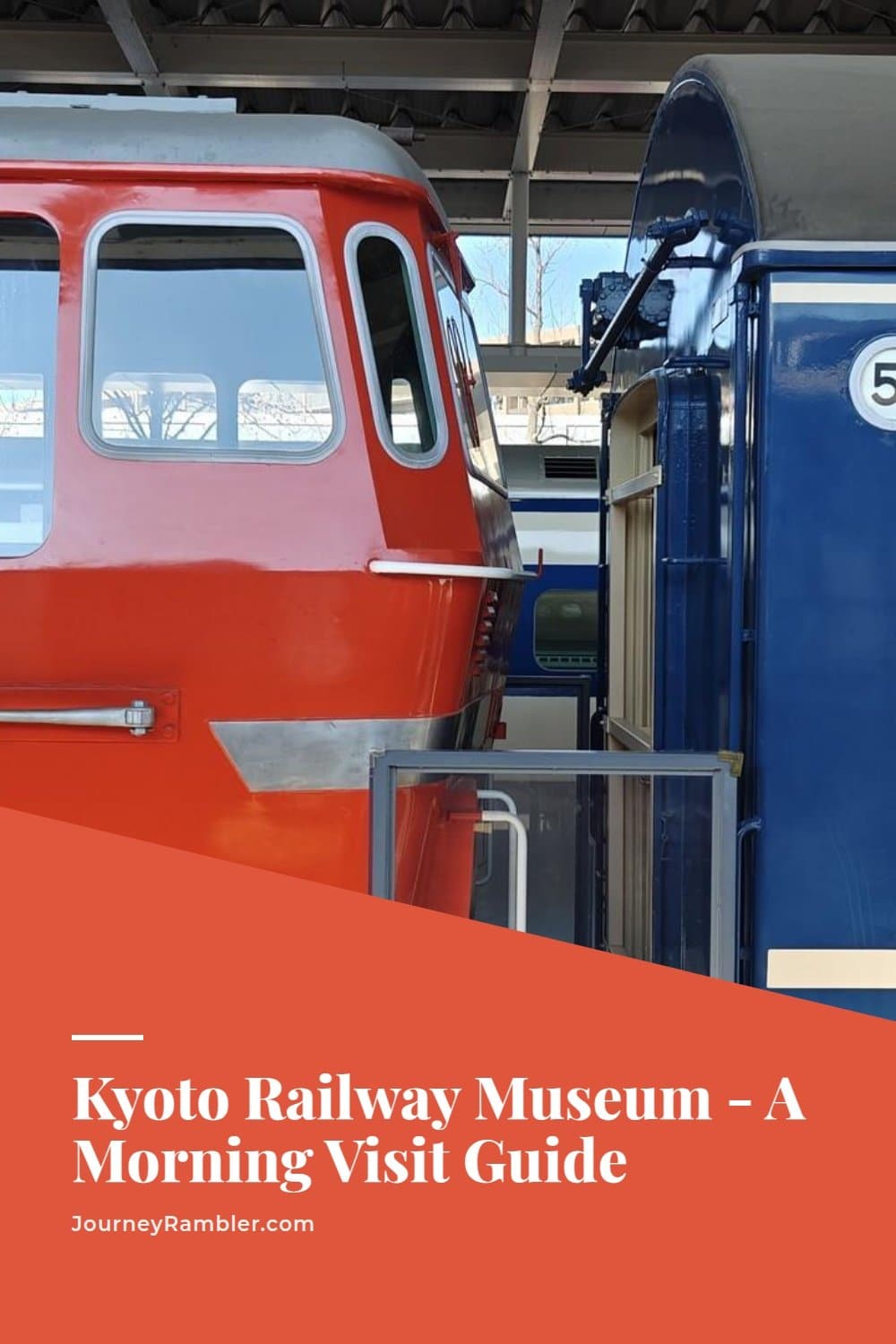
The Kyoto Railway Museum has to be one of the city’s most underrated landmarks. Often overshadowed by Kyoto’s historic temples and shrines, the museum is a great showcase of the city’s role in the long and colorful history of railways in Japan. I was fortunate enough to have visited the museum during my stay in Kyoto and I genuinely can’t recommend it enough.
Today, I’ll be showcasing some of the images I snapped during my visit as well as my thoughts on the railway museum.
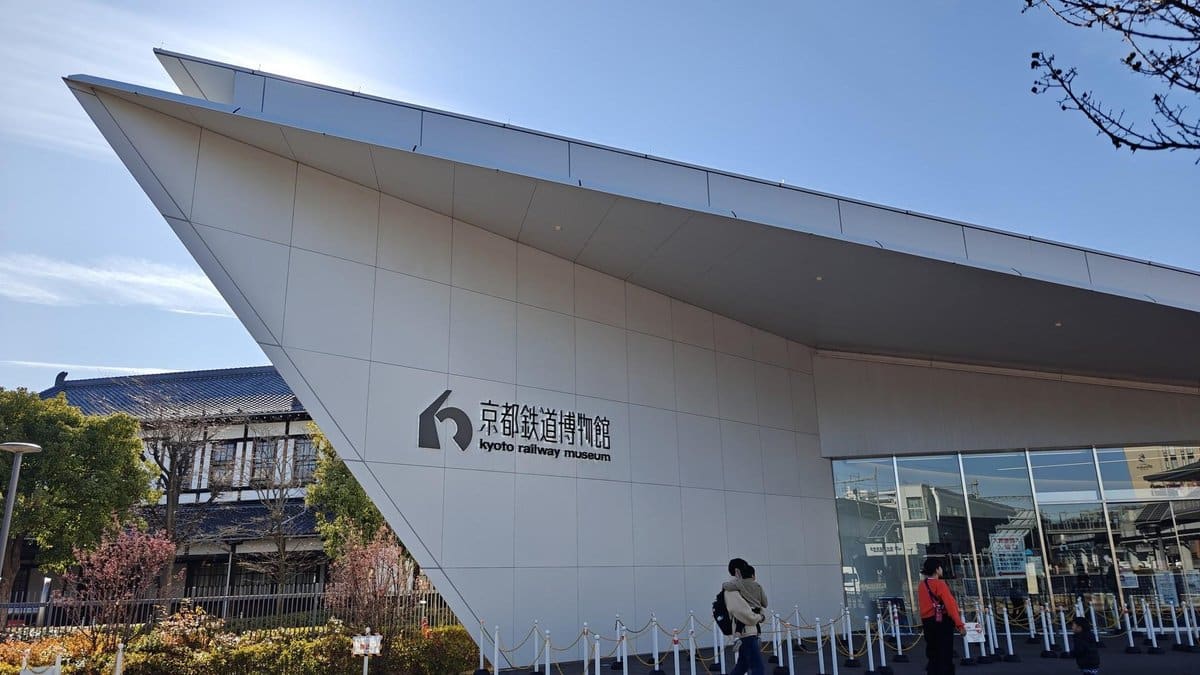
Getting to Kyoto Railway Museum should be relatively easy as it’s due west of Kyoto Station. From there you can just walk or take a bus to the Umekoji Koen bus stop. More often than not, people would visit the nearby Umekoji Park and Kyoto Aquarium first and then eventually find their way to the museum.
What to See at Kyoto Railway Museum
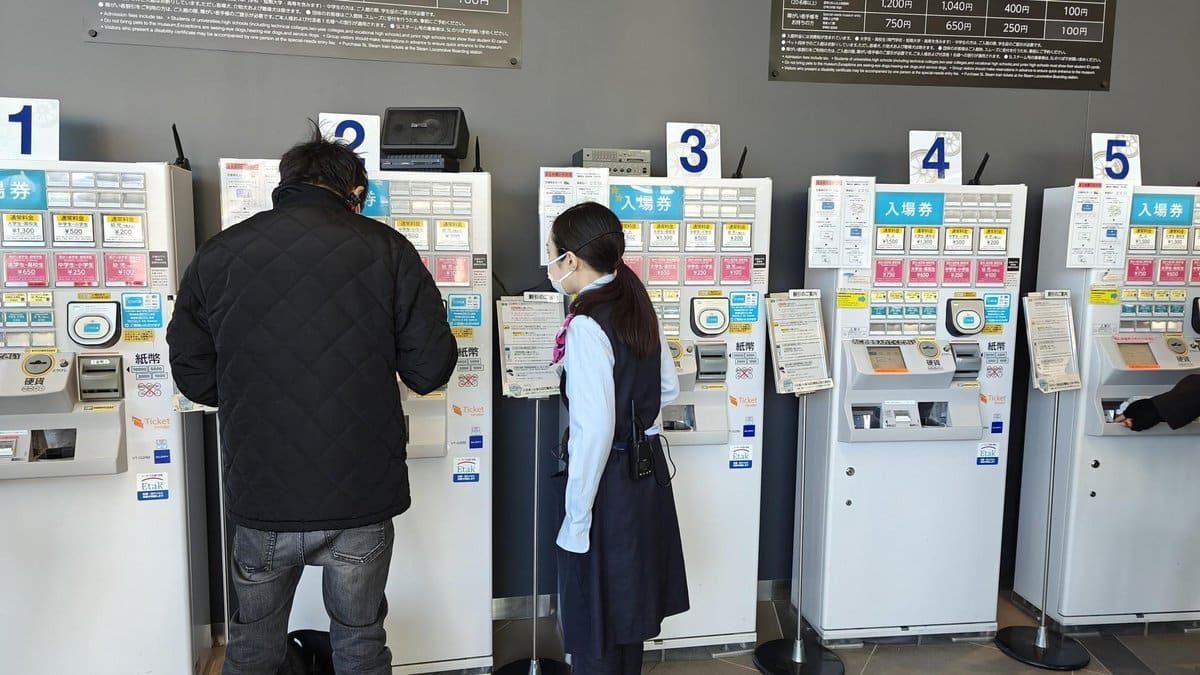
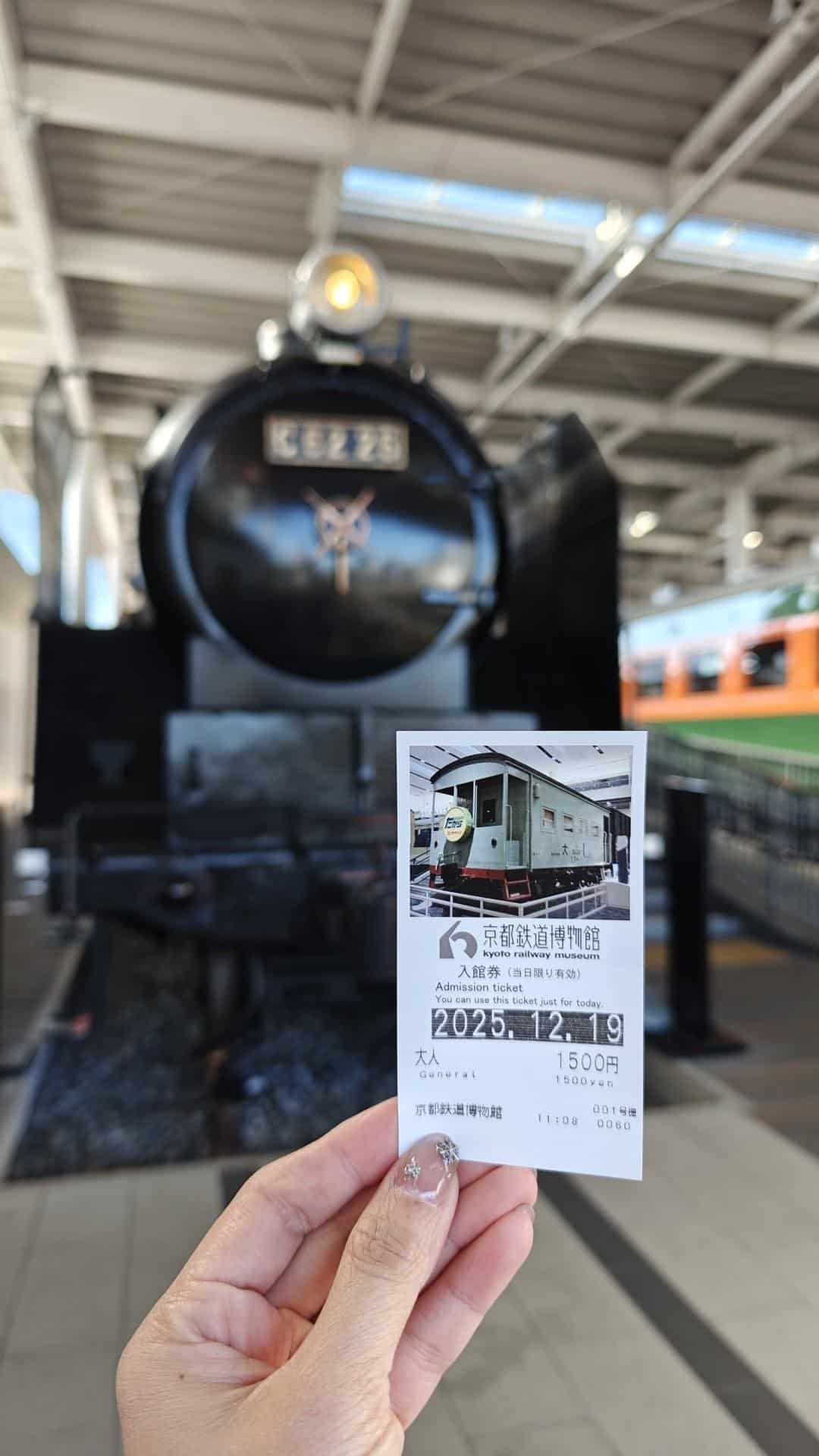
Once inside the entrance, you’ll need to purchase tickets from these vending machines. Sites like Klook also sell these so you can purchase from them in advance. That said, purchasing from these vending machines is relatively easy.
As for how much a ticket is, it was around 1500JPY when I visited. The museum opens at around 10:00AM so there’s no need to get here early.
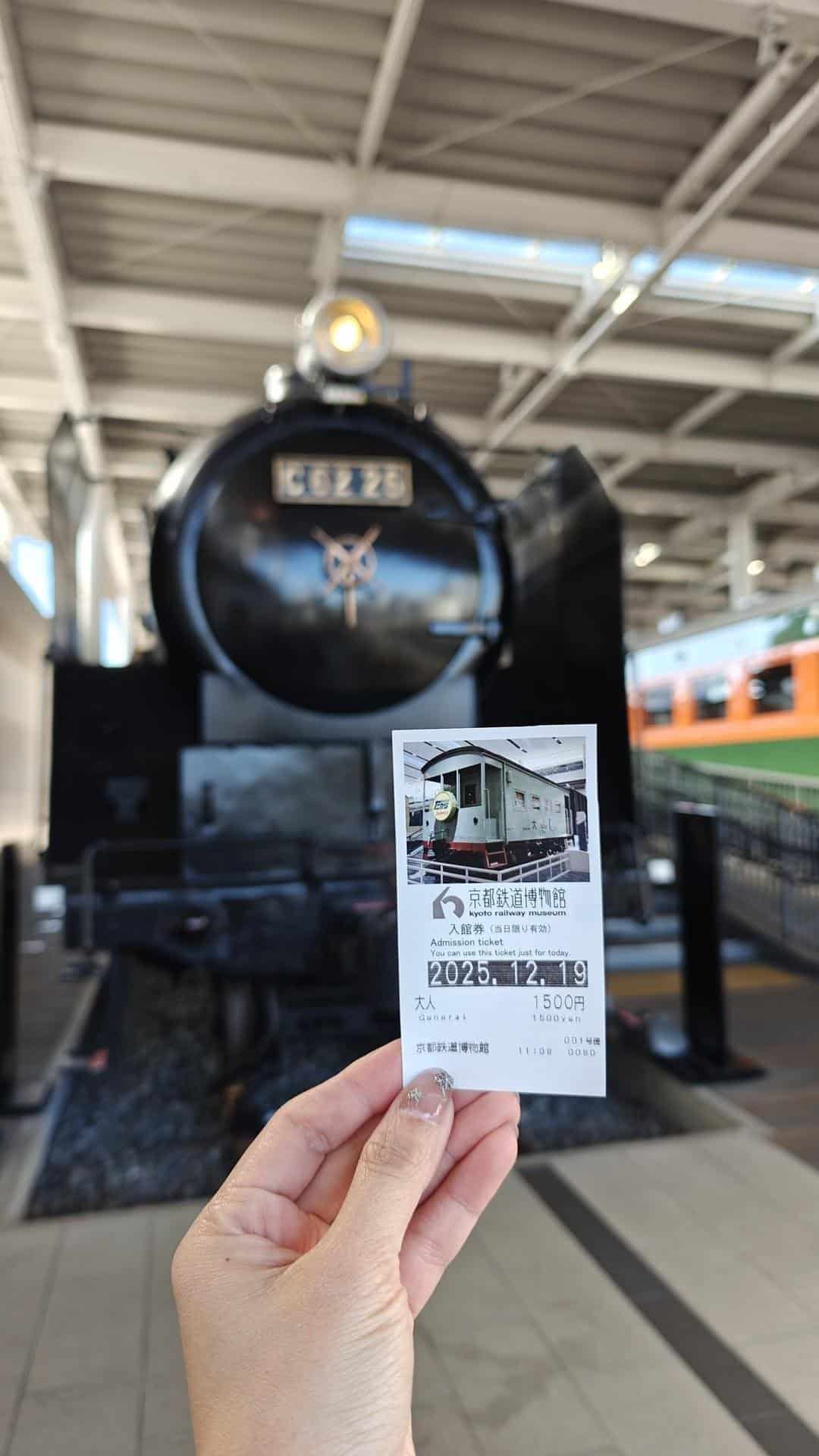
As you can see, my ticket features the date of my visit as well as the amount I paid. Early to mid December is off-peak season so there weren’t that many people here. Moreover, the Kyoto Railway Museum isn’t really as popular as heavy hitters like Kiyomizu-dera or Fushimi Inari Taisha so the crowds here (if there are any) typically won’t be as massive as in those locations.
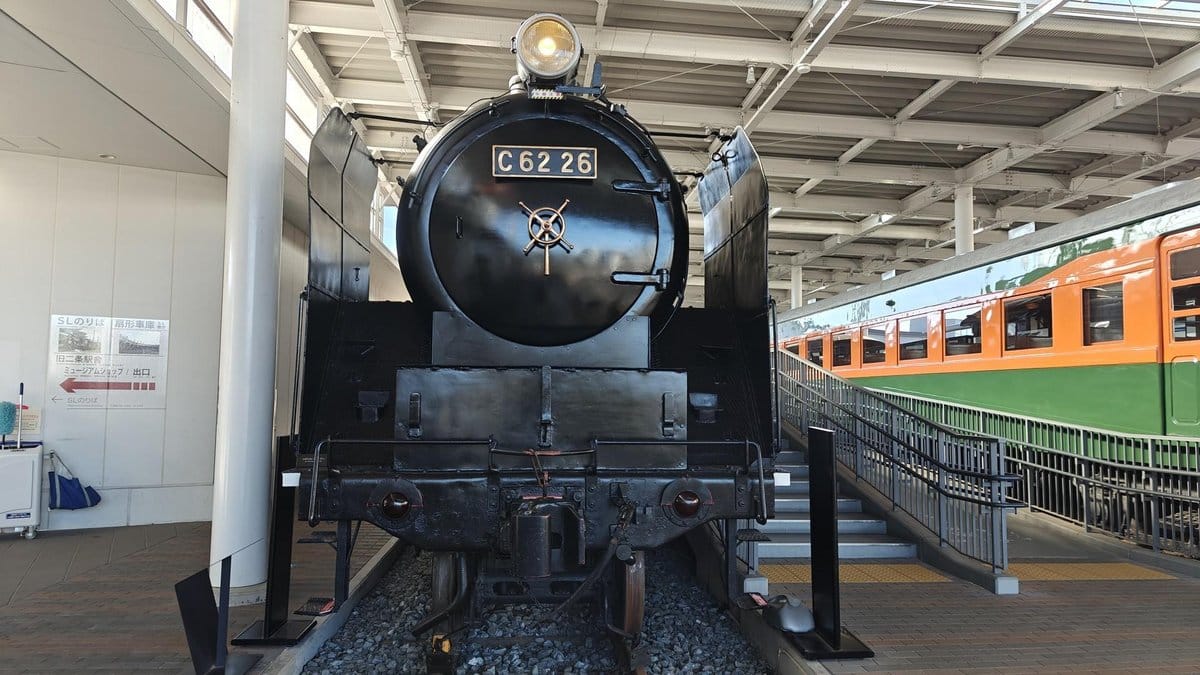
The first thing you’ll see as you enter the Promenade are these cabs featuring the three types of train technologies that have defined and plied Japan’s railway system. Left (shown in the image above) is a well preserved C62 4-6-4 “Hudson” steam locomotive. The 4-6-4 actually denotes the train’s wheel arrangement and from what I read, this class of locomotives could go as fast 129 km/h (a record for narrow gauge steam locomotives in Japan).
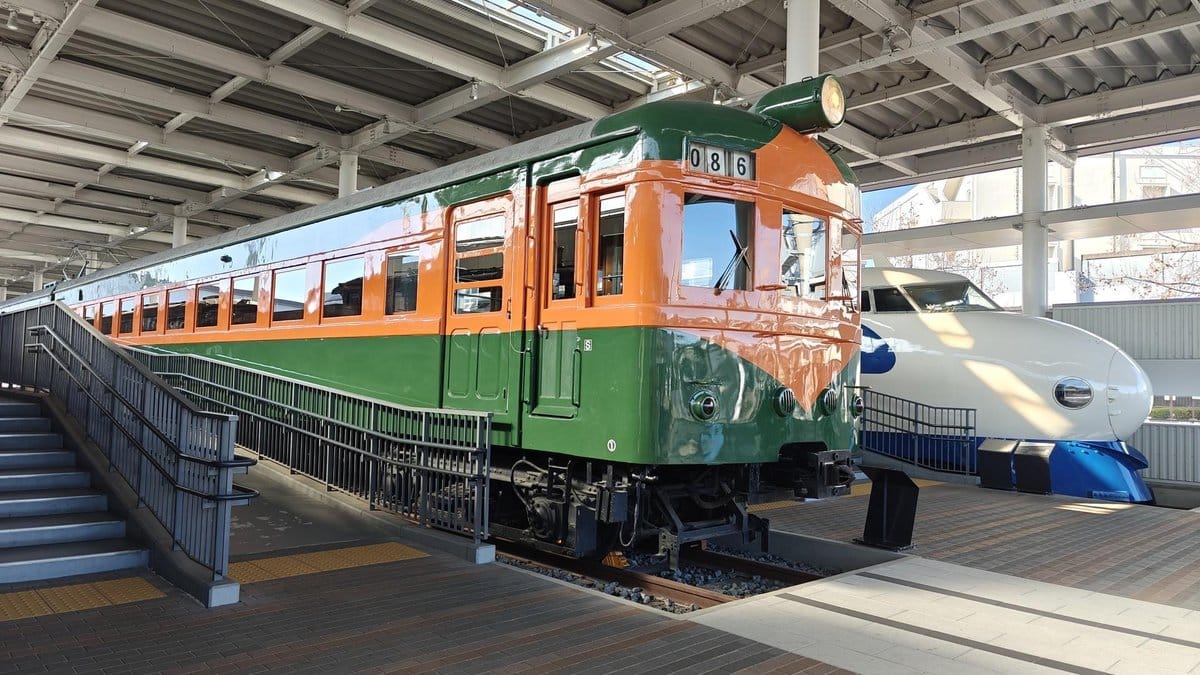
To the right of the C62 is a JNR 80 Series KuHa 86001. This specific cab is actually the very first made in this series. This is significant because of how this series of electric multiple units (EMUs) were the first high-capacity electric commuter trains that were designed for long distances.
Built in the 1950s, these were also some of the first to feature the “Shonan” styling (or the orange and green paint job).
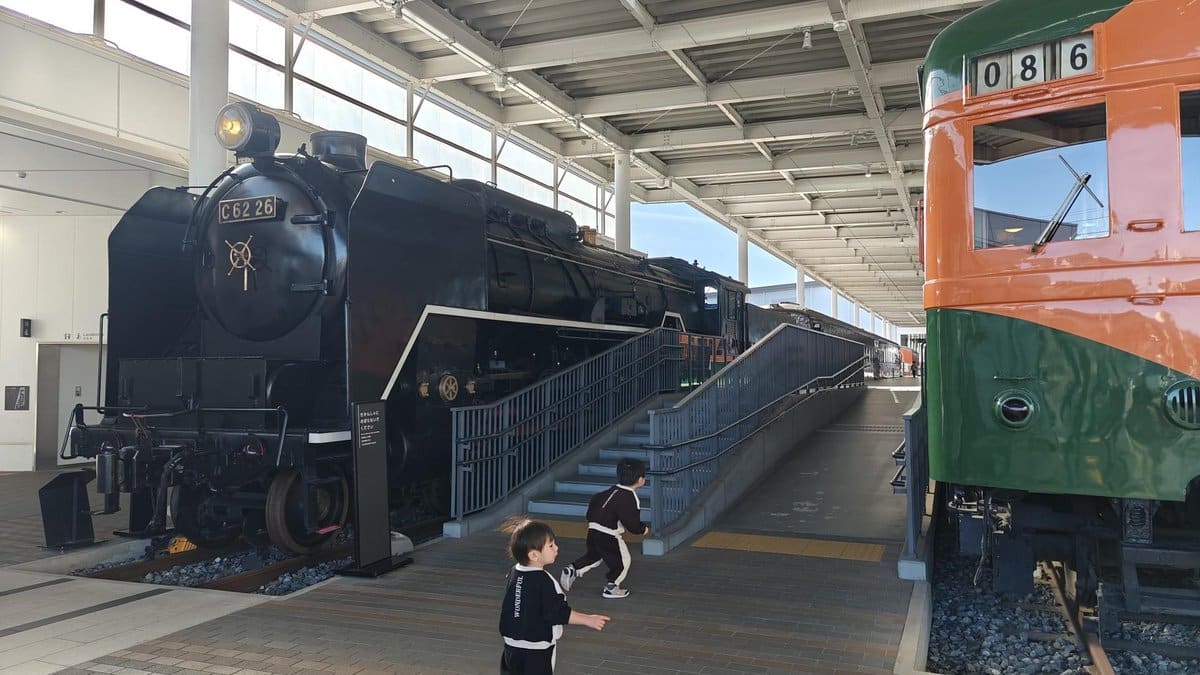
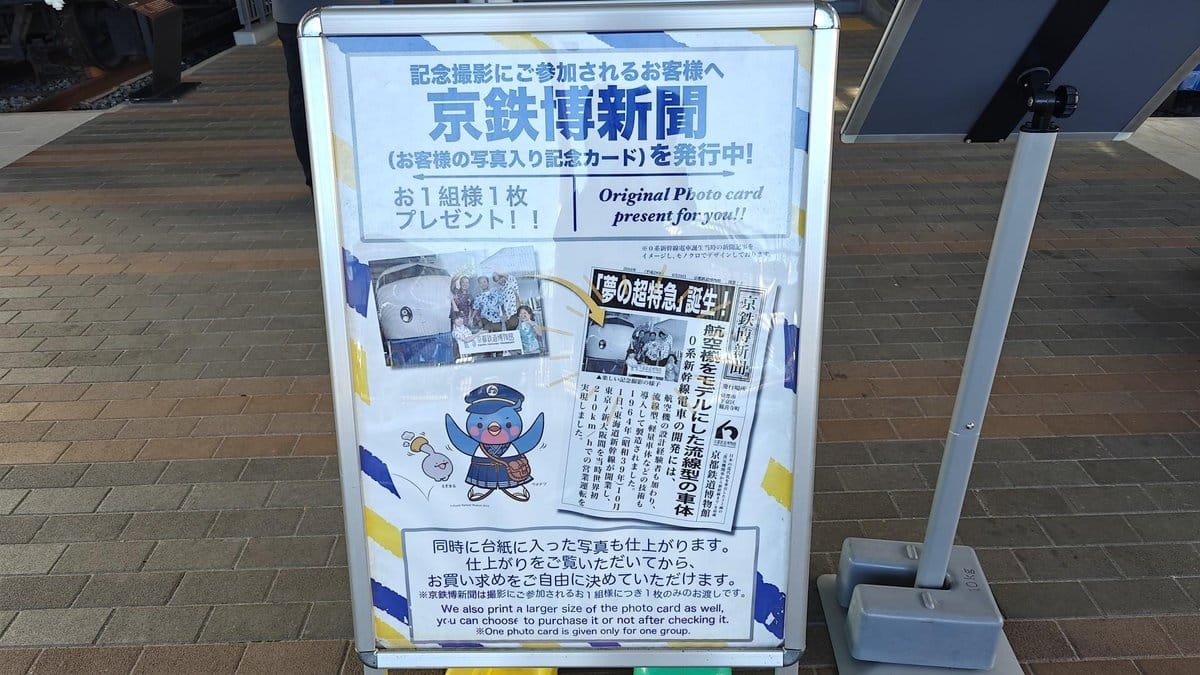
At the time of my visit, there was actually a commemorative photo service that was available for visitors. Essentially, you and your group could pose beside the 0 Series Shinkansen (which is to the right of the JNR 80 Series KuHa 86001) and get an original photo card present. This present will have the photo in the front page of the Kyoto Railway Museum Newspaper with the headline relating to the debut of the Tokaido Shinkansen on October 1st, 1964.
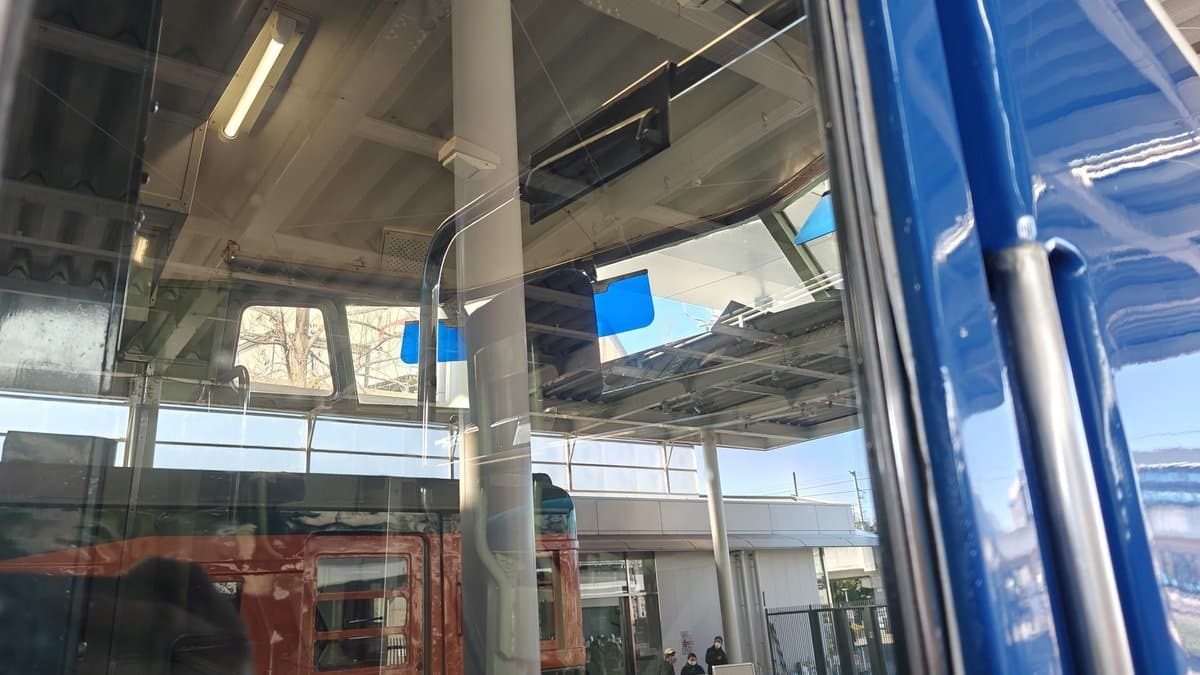
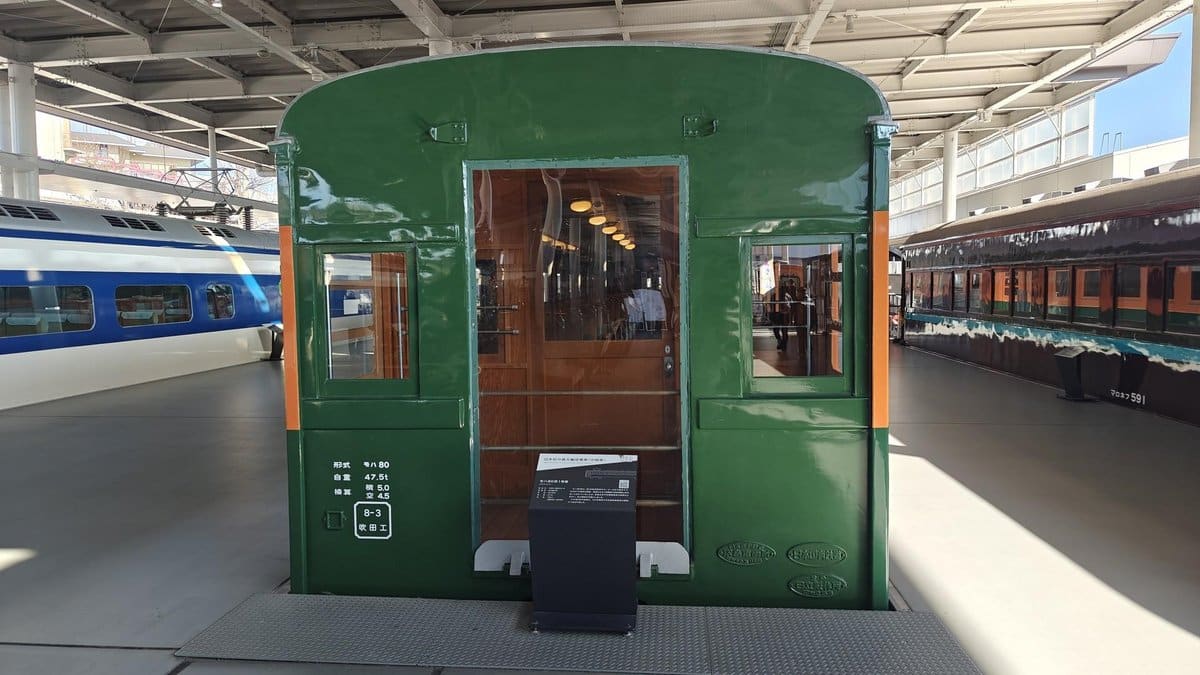
This is the back of the JNR 80 Series Kuha 86001. To its right and left (left and right if you’re coming from the entrance to the promenade) are the cars for the C62 and the 0 Series Tokaido Shinkansen. It’s not pictured but there is even a train car behind me (past a couple of benches) that doubles as sort of a coffee shop/resto that you can even go inside of to relax and eat.
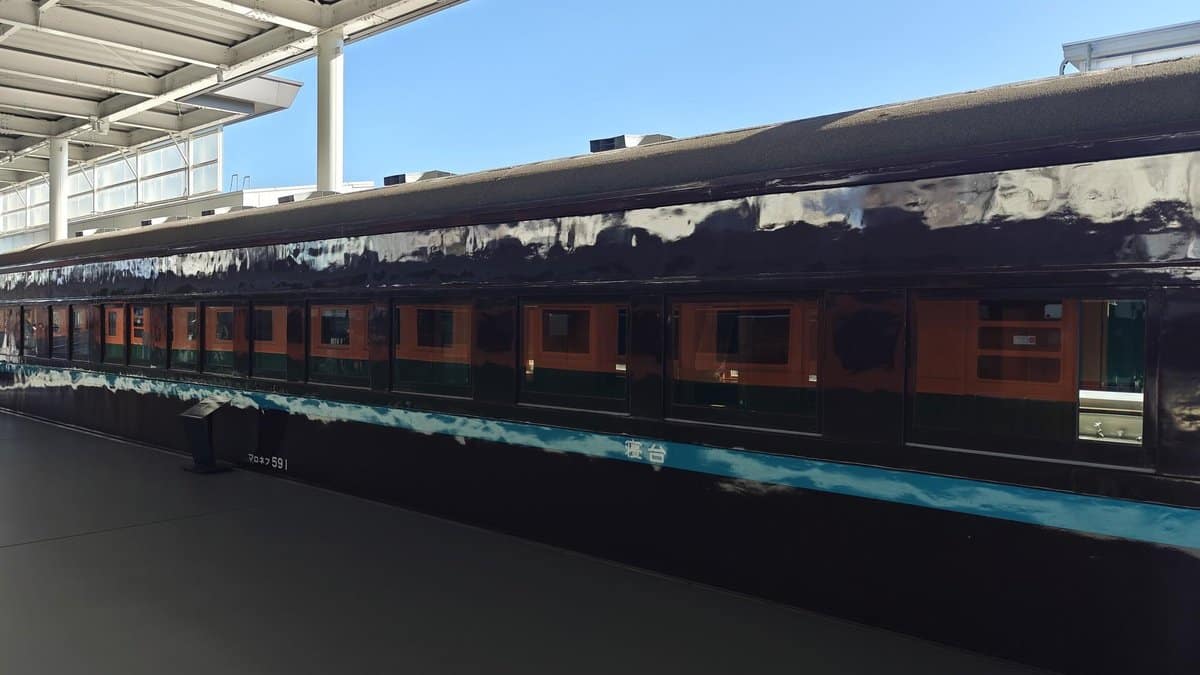
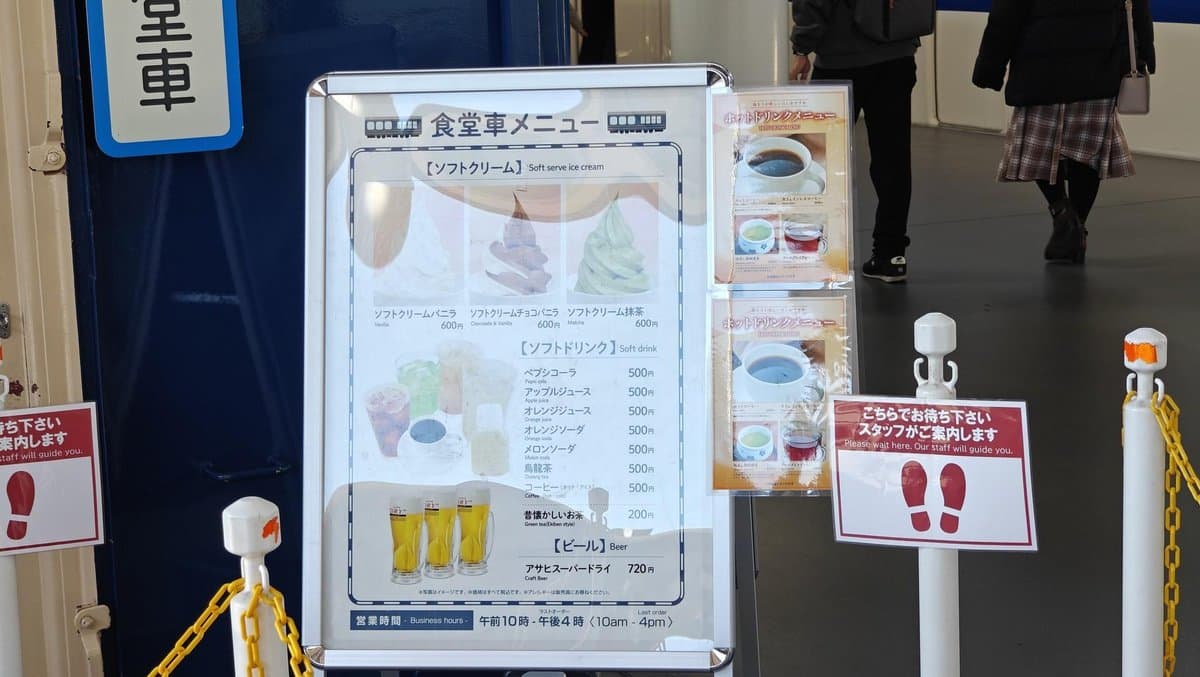
Here you can sort of see the entrance of the train car that I was talking about earlier behind some signs that feature the food and drinks that you could order. This is actually one of the Nashi 20 Series Dining Cars of which 36 were made and operated between 1958 to 1970. At that time, this series of dining cars were used to serve full meals for passengers on the overnight express “blue trains”.
The specific car here was part of the Hayabusa sleeper train that traveled between Kagoshima and Tokyo.
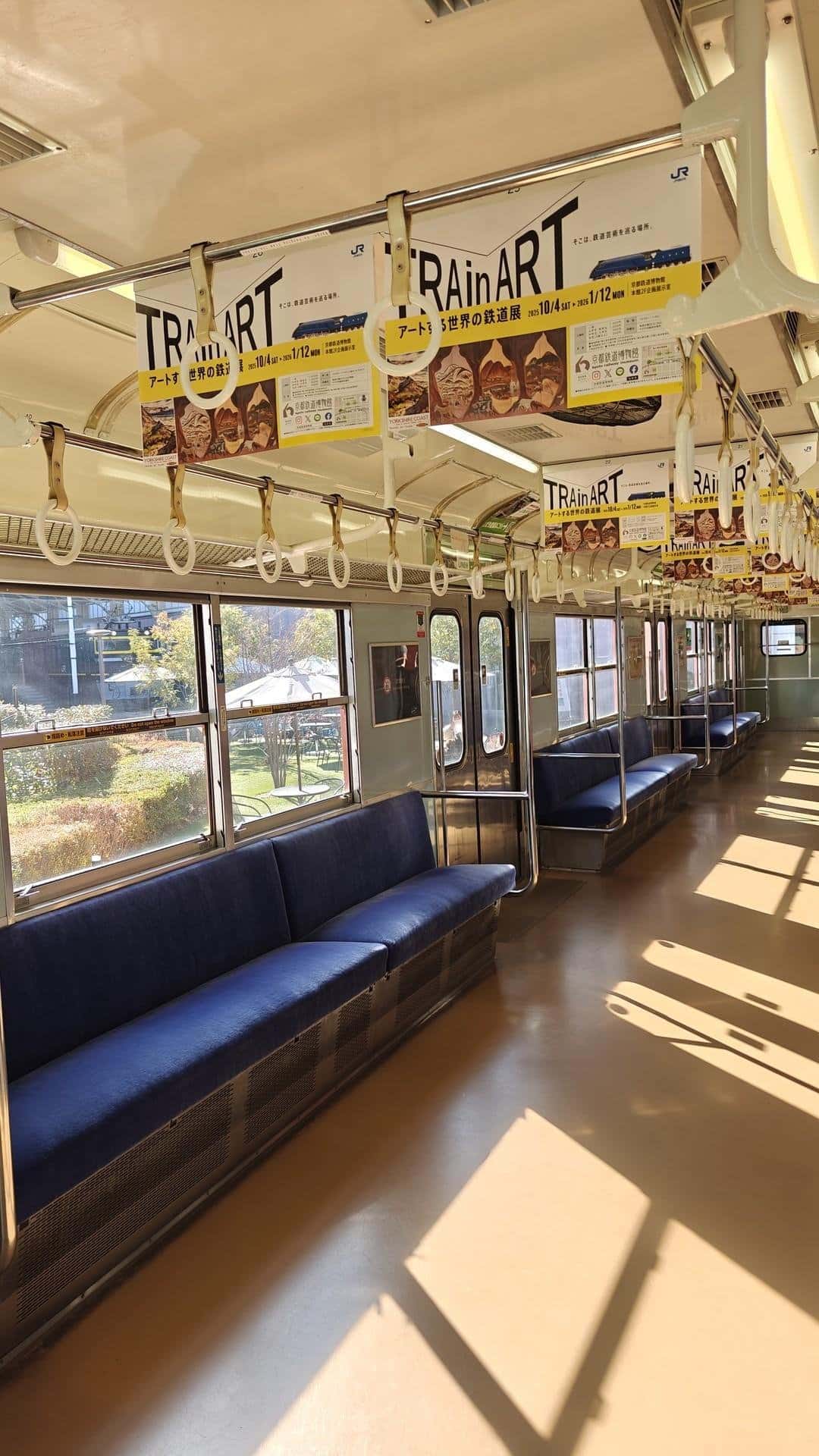
This is the interior of another Kuha train that debuted in 1964. Called the Kuha 103-1, this train featured flyers for an event called TRAin ART which ran from October 4, 2025 up until January 12, 2026. This exhibit was of course at the museum proper and it showcased about 150 items including a large scale artwork by an engineer and artist named Tadashi Ota.
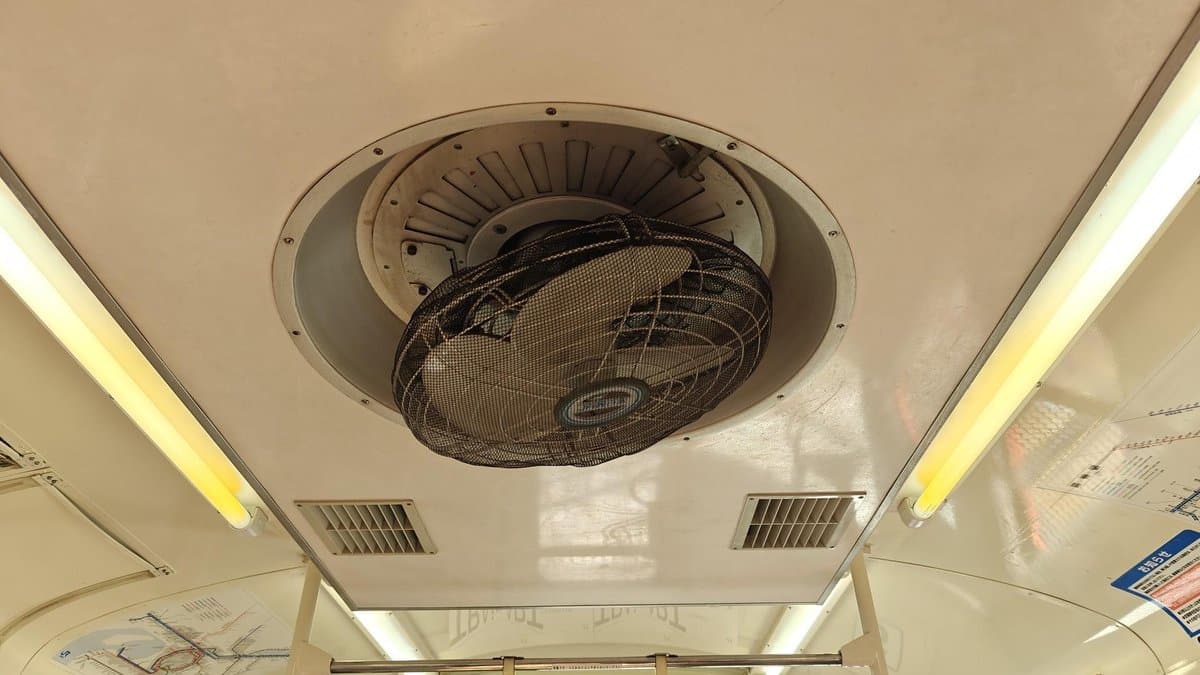
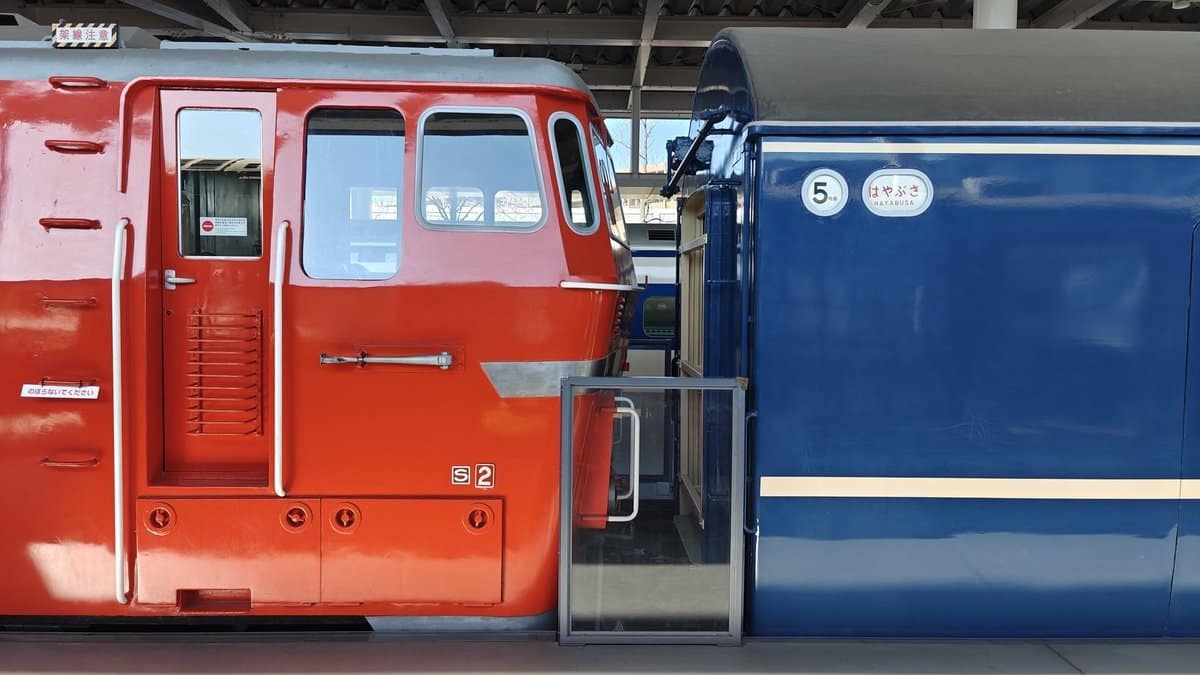
Remember the dining train from earlier? Well, here you can see the back-end (opposite the entrance from earlier) of the Nashi 20 Dining Car and the cab/driver’s compartment of a DD54-33. Now unlike the electric Hayabusa blue train which the dining car was a part of, the DD54-33 was diesel powered.
Made by Mitsubishi Heavy Industries in 1971, it featured an engine that was made in West Germany as well as a hydraulic transmission.
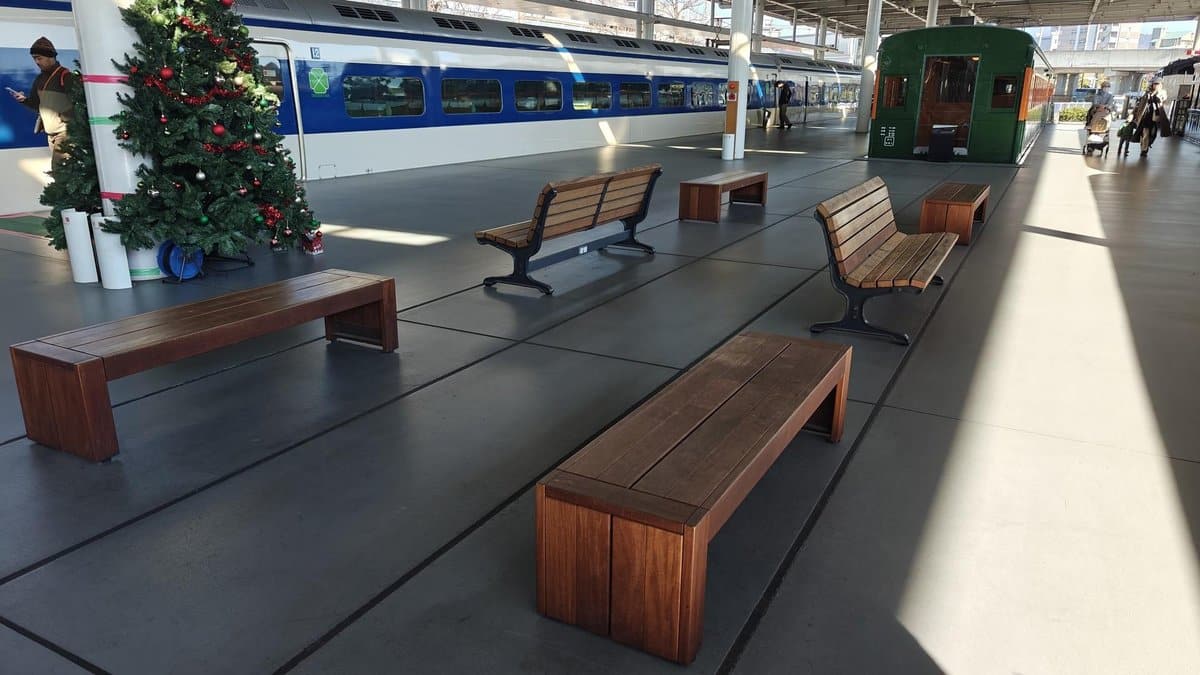
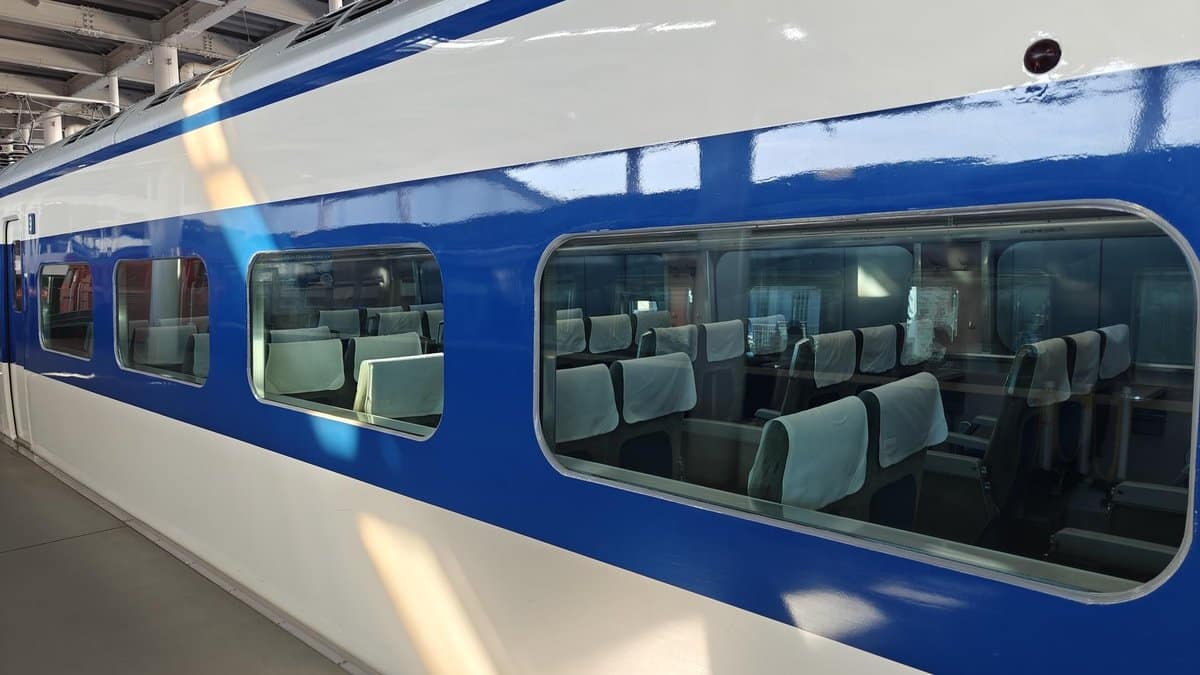
The last train that I checked out in the Promenade Area was the 0 Series Shinkansen. It was probably the most modern-looking of the trains here and honestly, I think you could put it on any Shinkansen track and it’d probably still work like a charm. That said, this is actually the first generation of Shinkansen or bullet train and it debuted (as I mentioned earlier) on October 1, 1964.
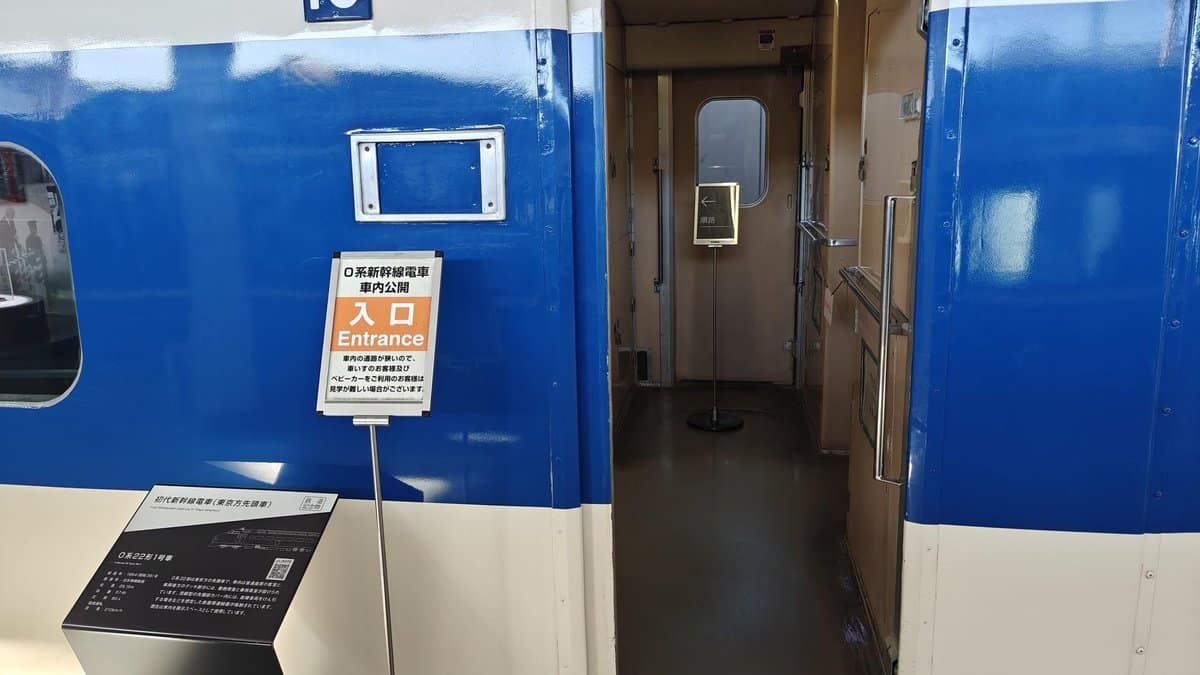
Right now, the 0 Series serves as an exhibit. Specifically, its front car (the 0-22-1) houses a display that features miniatures of its various cars in its interior. Aside from 0-22-1, there are three other cars that served a different purpose and were not accessible for visitors.
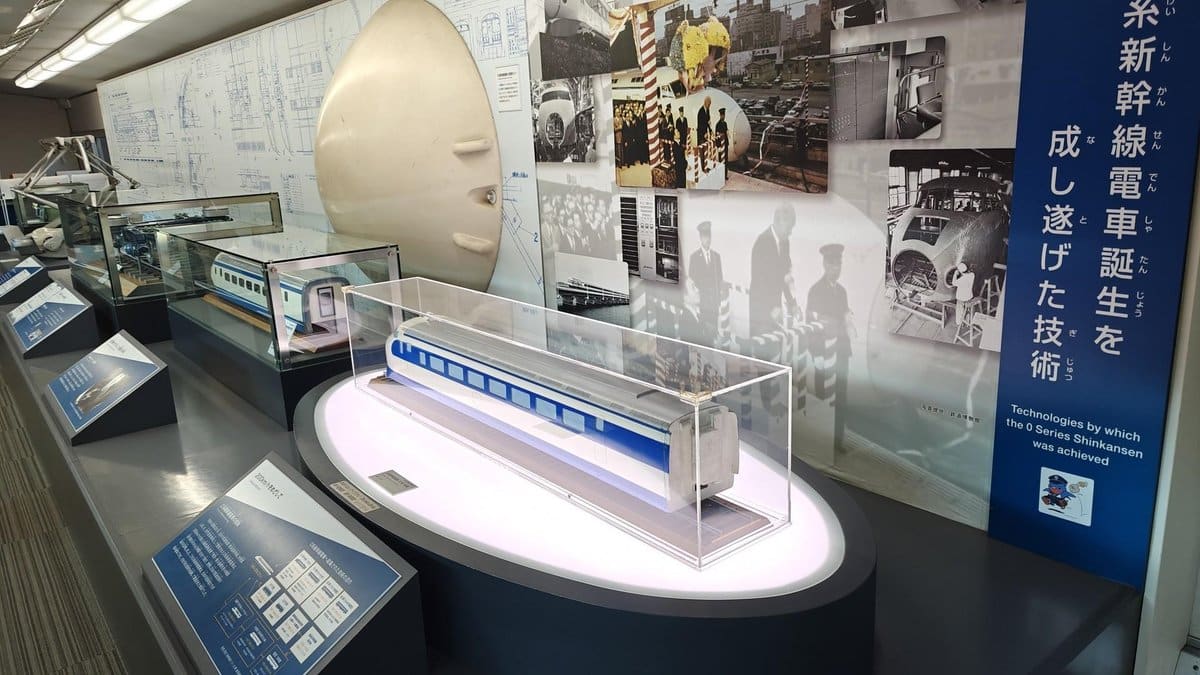
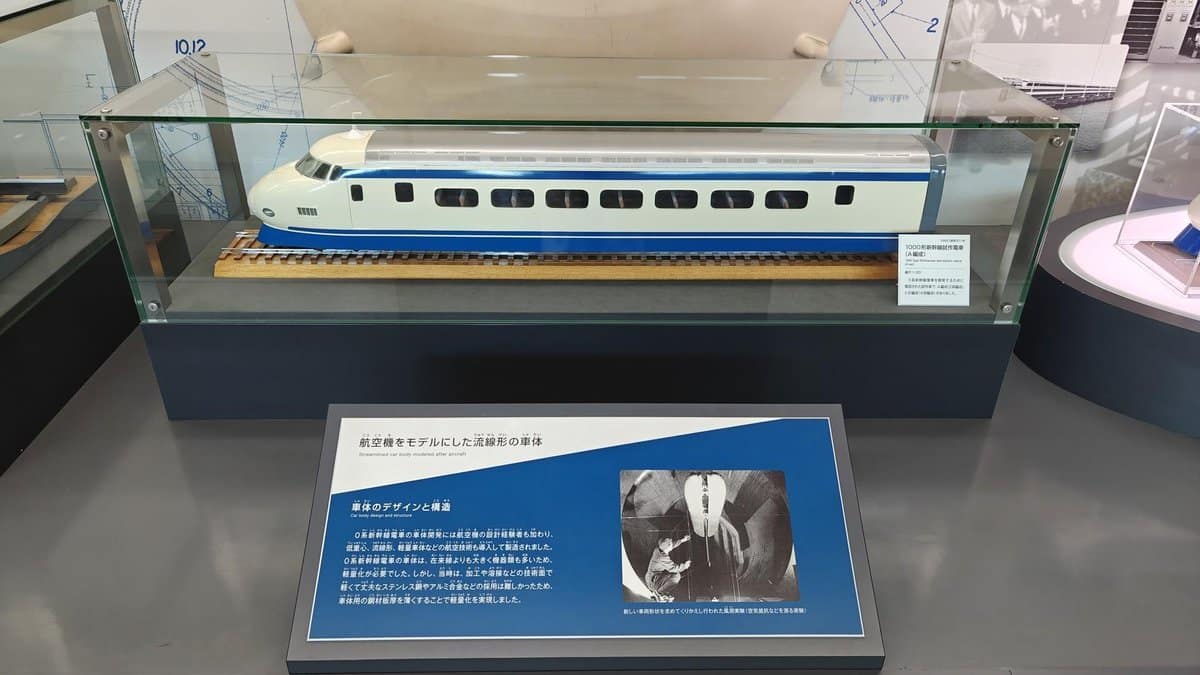
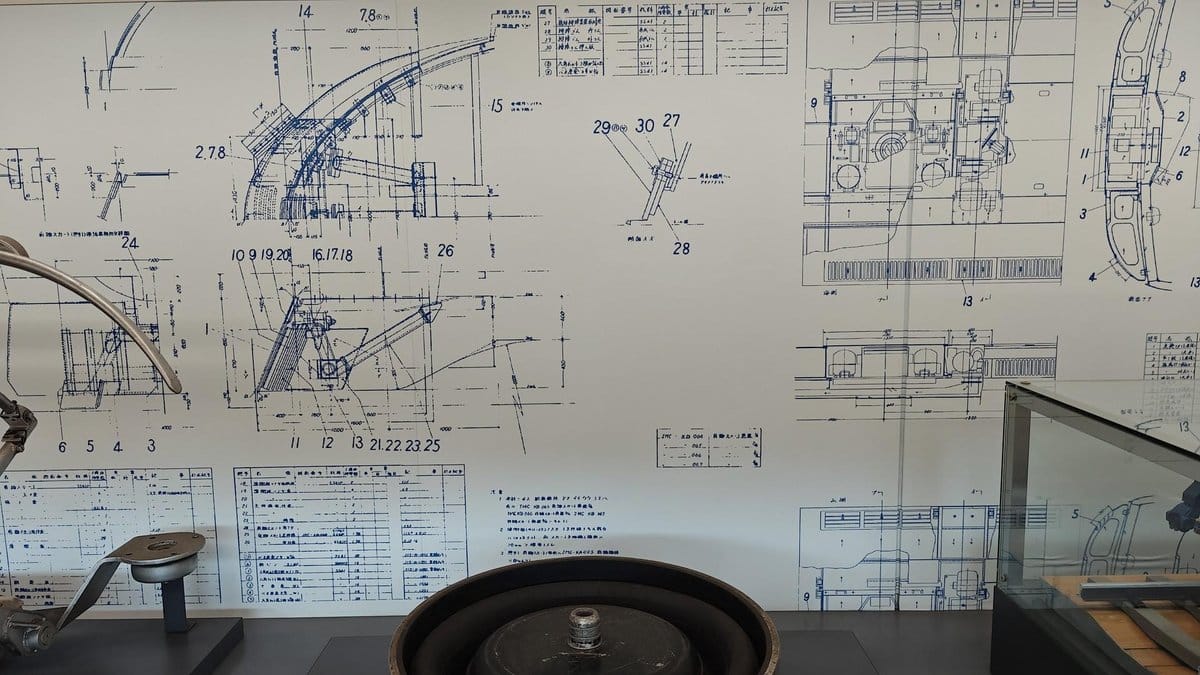
Inside the front car you’ll find these miniatures as well as copies of the engineering plans of the 0 Series on display. Now the miniatures (at least some of them) actually are of the 1000 Series which was the precursor/prototype of the 0 Series. These were used for testing and development and were never meant to be ridden commercially.
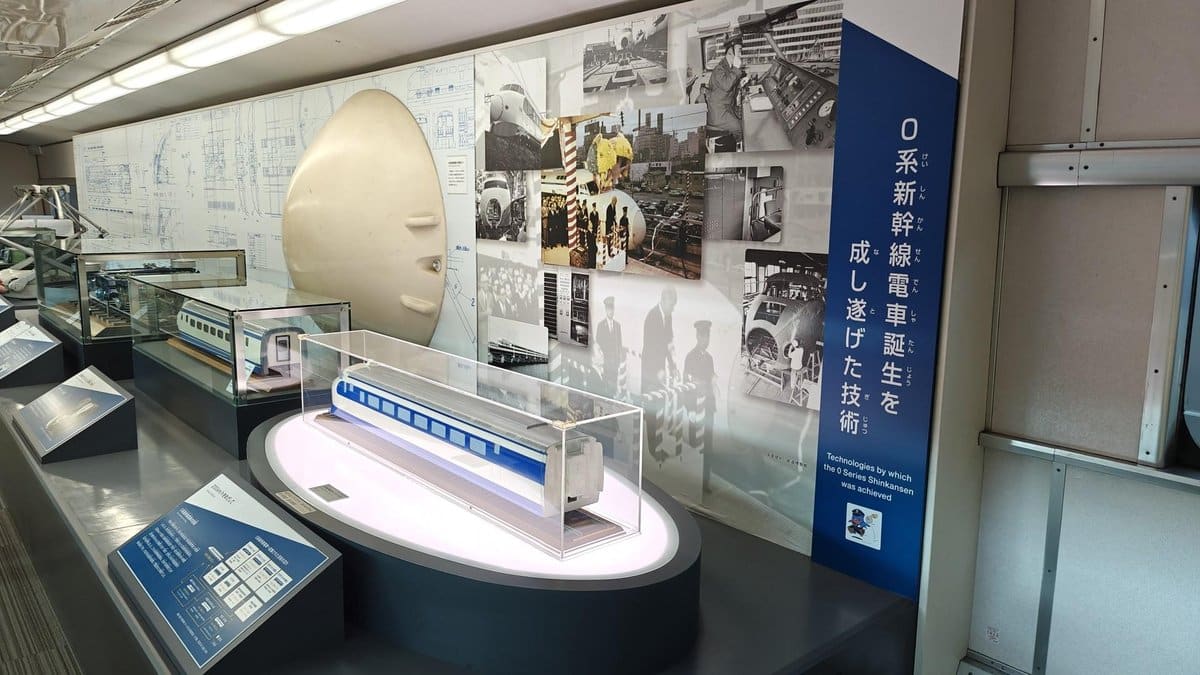
The development of the Shinkansen was quite possibly one of the most significant events in the history of public transport so it was kind of cool to actually see the displays here. One of the most surprising details I found out from translating the descriptions here was the contribution of aircraft design experts to the 0 Series’ development. Looking at the 1000 Series prototype cab miniature, you can actually see how it looks a lot like the nose of a plane.
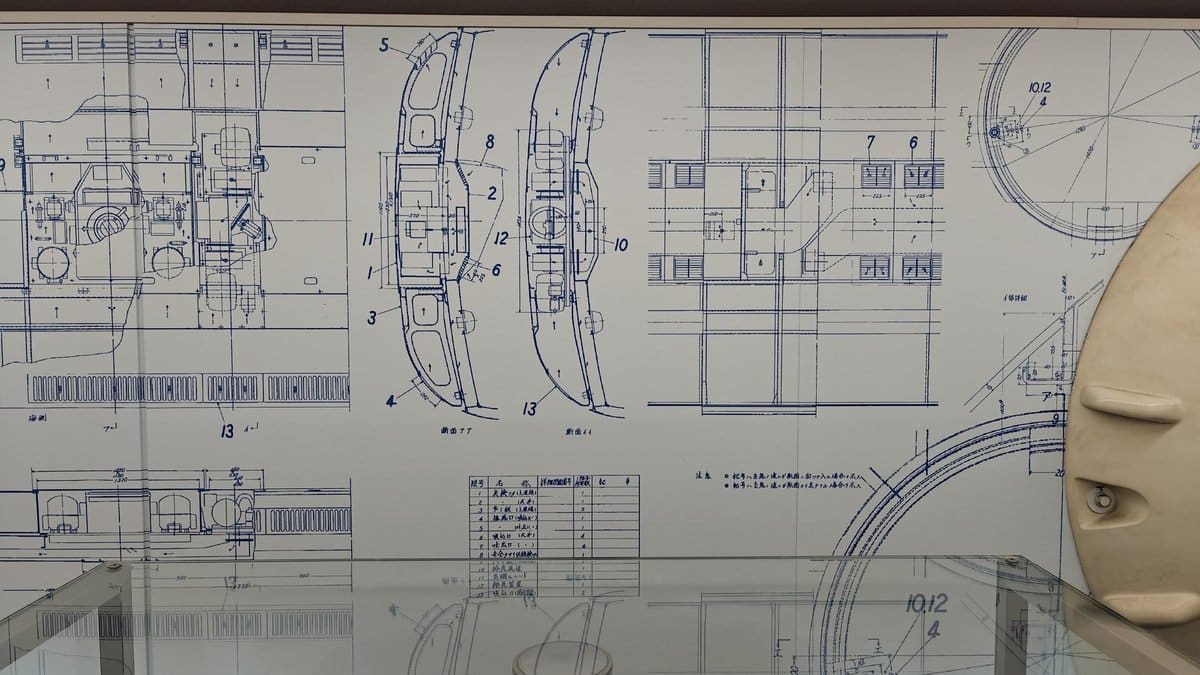
The engineering plans/blueprints were also quite impressive. If I’m not mistaken, these were made at a time when everything was still hand-drawn. Even with this limitation, these looked extremely detailed and most importantly, quite clean!
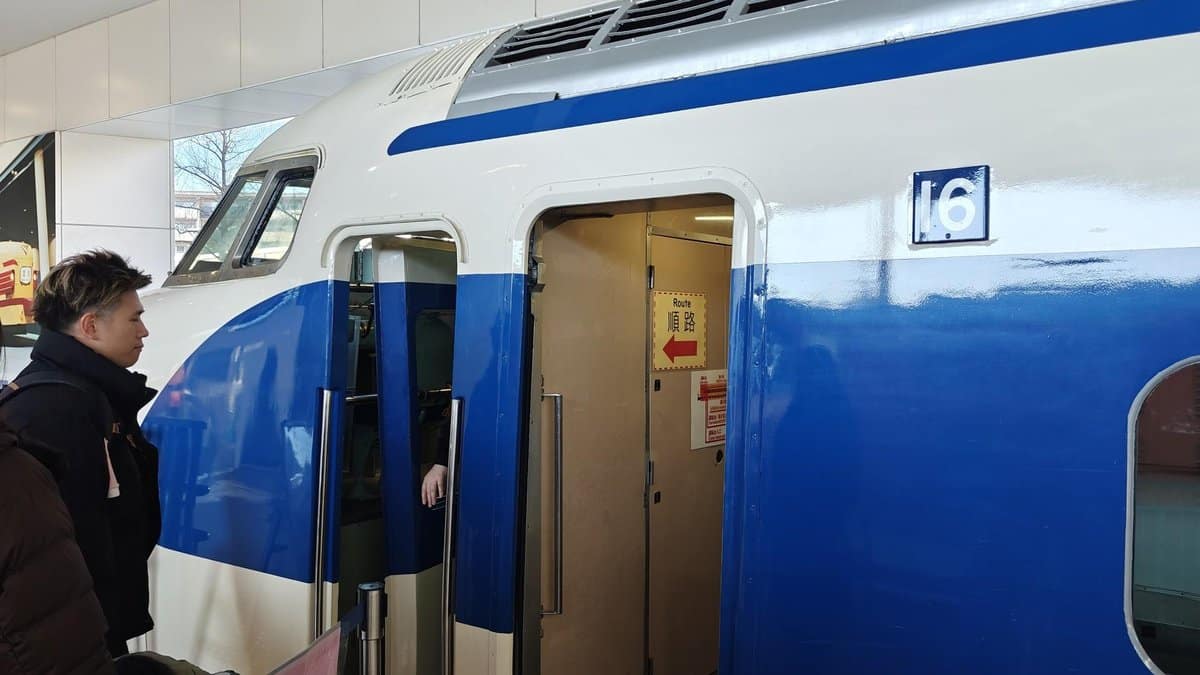
Viewing the display was relatively quick and I eventually found myself exiting the car. After exiting, there are still a number of things that you can do before proceeding to the Kyoto Railway Museum main hall. One of these is a photo opportunity inside the 0 Series driver’s cab.
There’s a dedicated photo spot inside the driver’s cabin that you can activate by getting a photo barcode by scanning a QR code on your phone. If you liked the photo taken, you then have the option to purchase it.
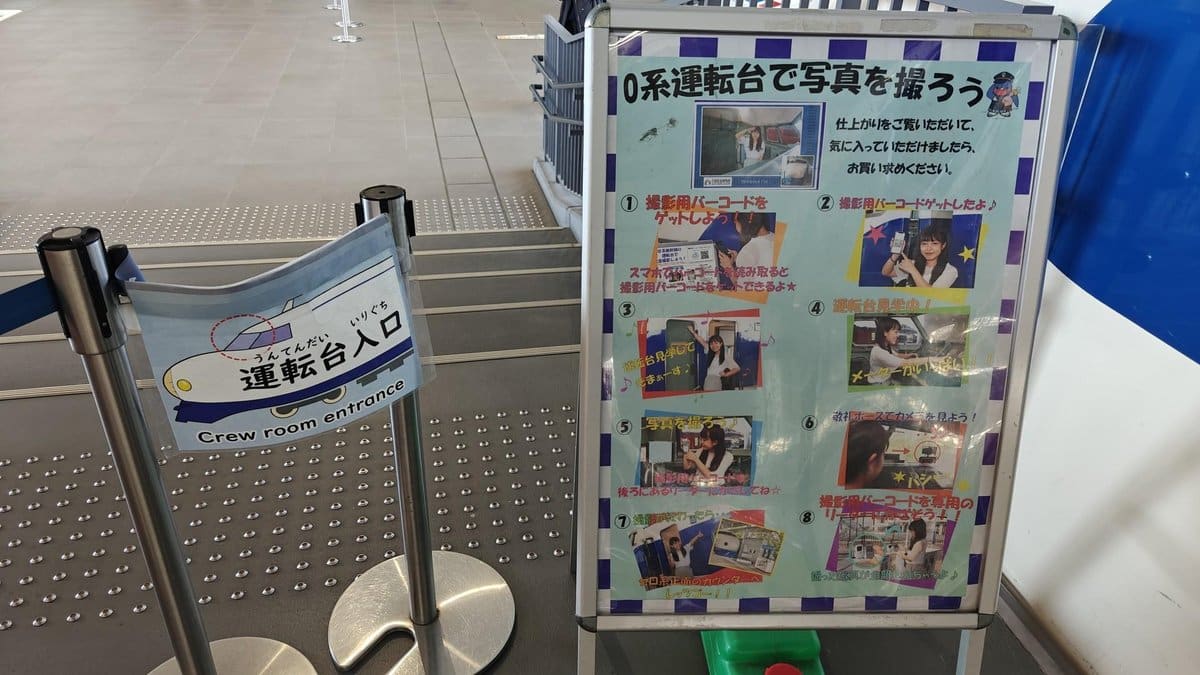
Here you can see the instructions for how to take photos in the 0 Series driver’s cab. People were actually lining up to get into the cab which I found surprising. Thankfully, I didn’t have long to wait before it was my turn.
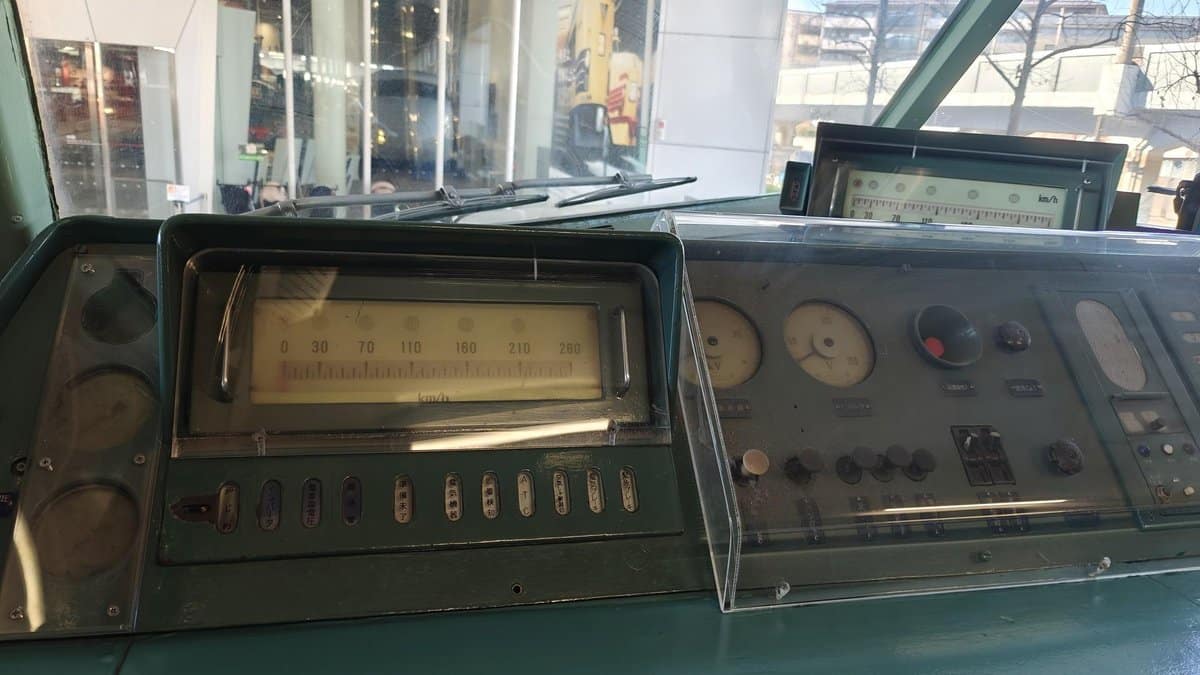
When I did get inside the driver’s cab of the 0 Series I was honestly awestruck at the instrument panel. Looking at the exterior of the train, you’d think it would have fairly modern equipment. Instead, the instrument panel here was fully analogue and kids of today might even be confused when they see this panel.
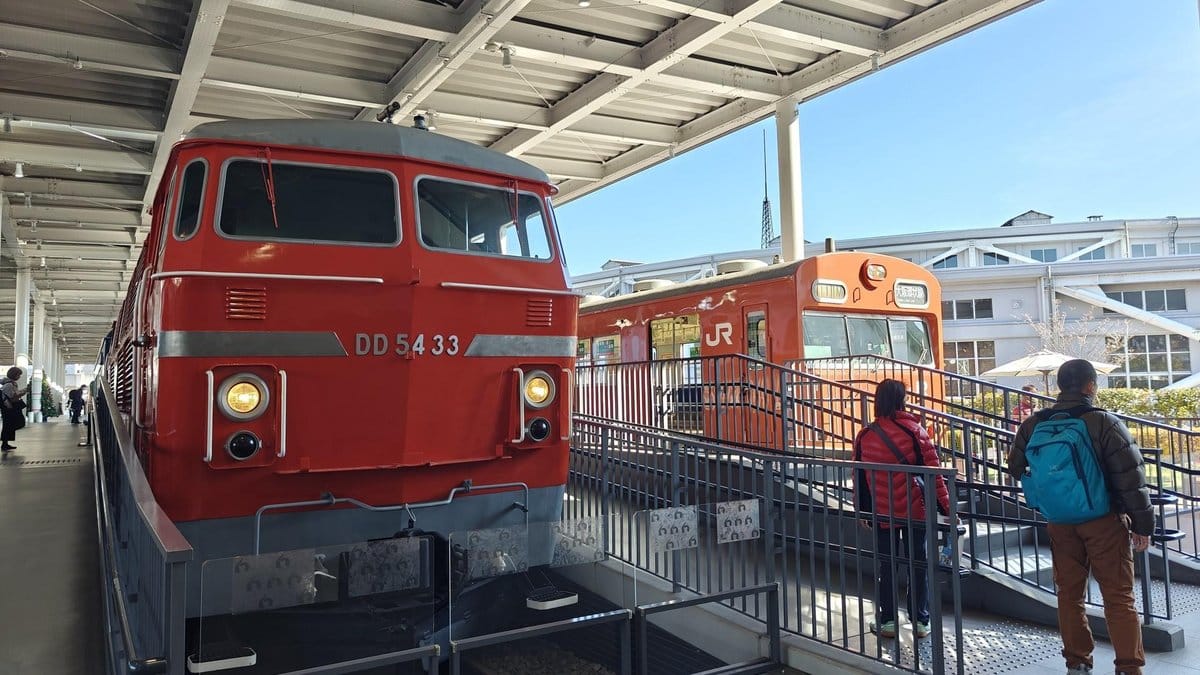
This is what the front/cab end of the DD54-33 and Kuha 103-1 looks like. It’s kind of crazy how both of these trains were still plying Japanese railways even when the 0 Series Shinkansen debuted. The DD54-33 were actually retired in 1978 while the last of the Kuha 103-1 had its final run sometime in 2017.
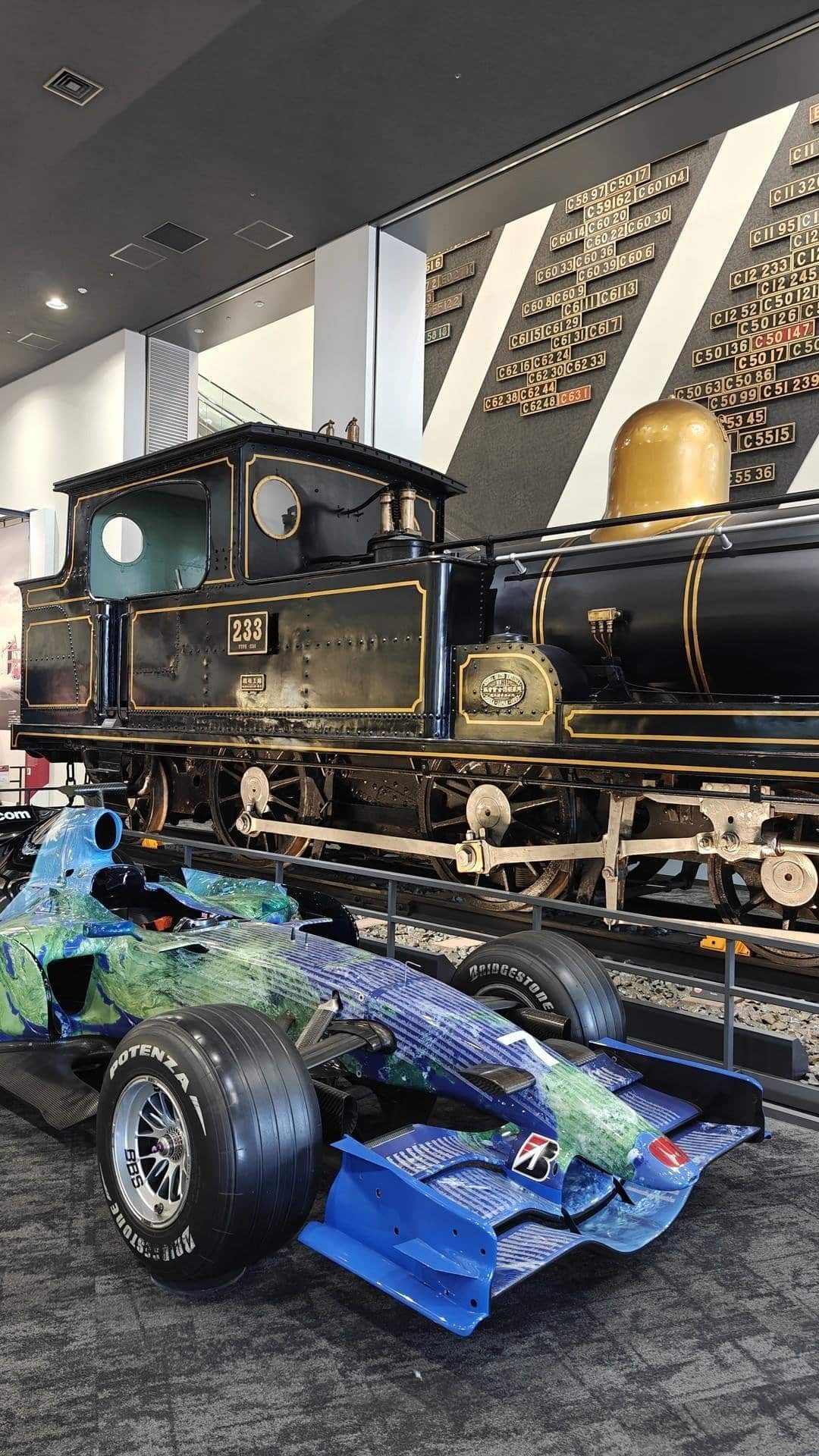
After viewing the trains in the Promenade, it was now time to head to the Kyoto Railway Museum’s main hall. I honestly didn’t know what to expect when I got inside so I was immediately surprised when I saw the interiors. Instead of a typical museum, it honestly looked more like a mall or a theme park with lots of trains and even cars on display.
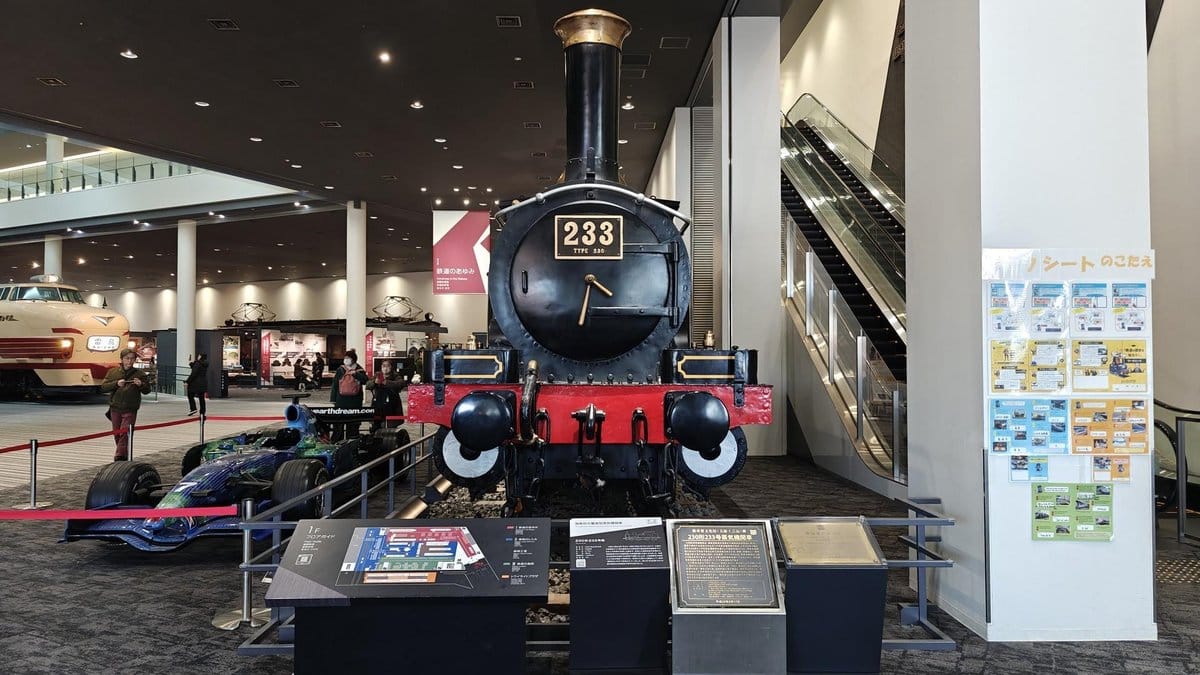
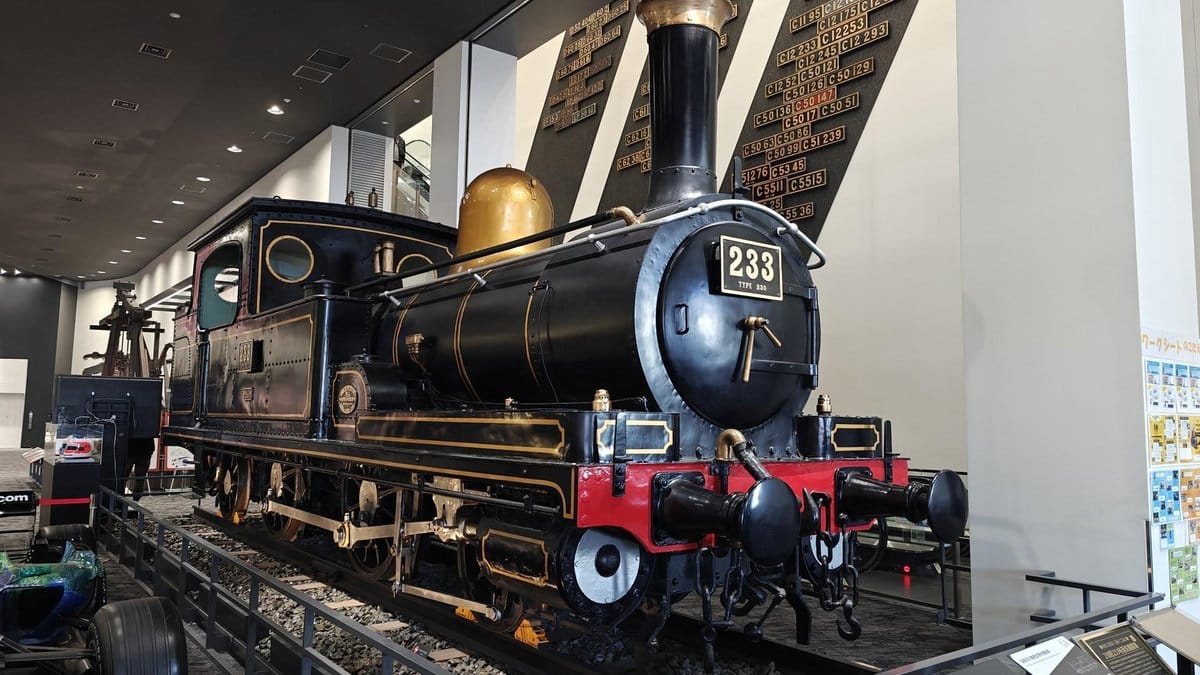
One of the first trains I came across when I entered was the 230-233. Honestly, I was more interested in the Honda RA107 F1 car beside it but then I tried to look up the train’s history and I was actually impressed. This locomotive is quite possibly one of the most important in the museum for how impactful its development was for the Japanese railway system.
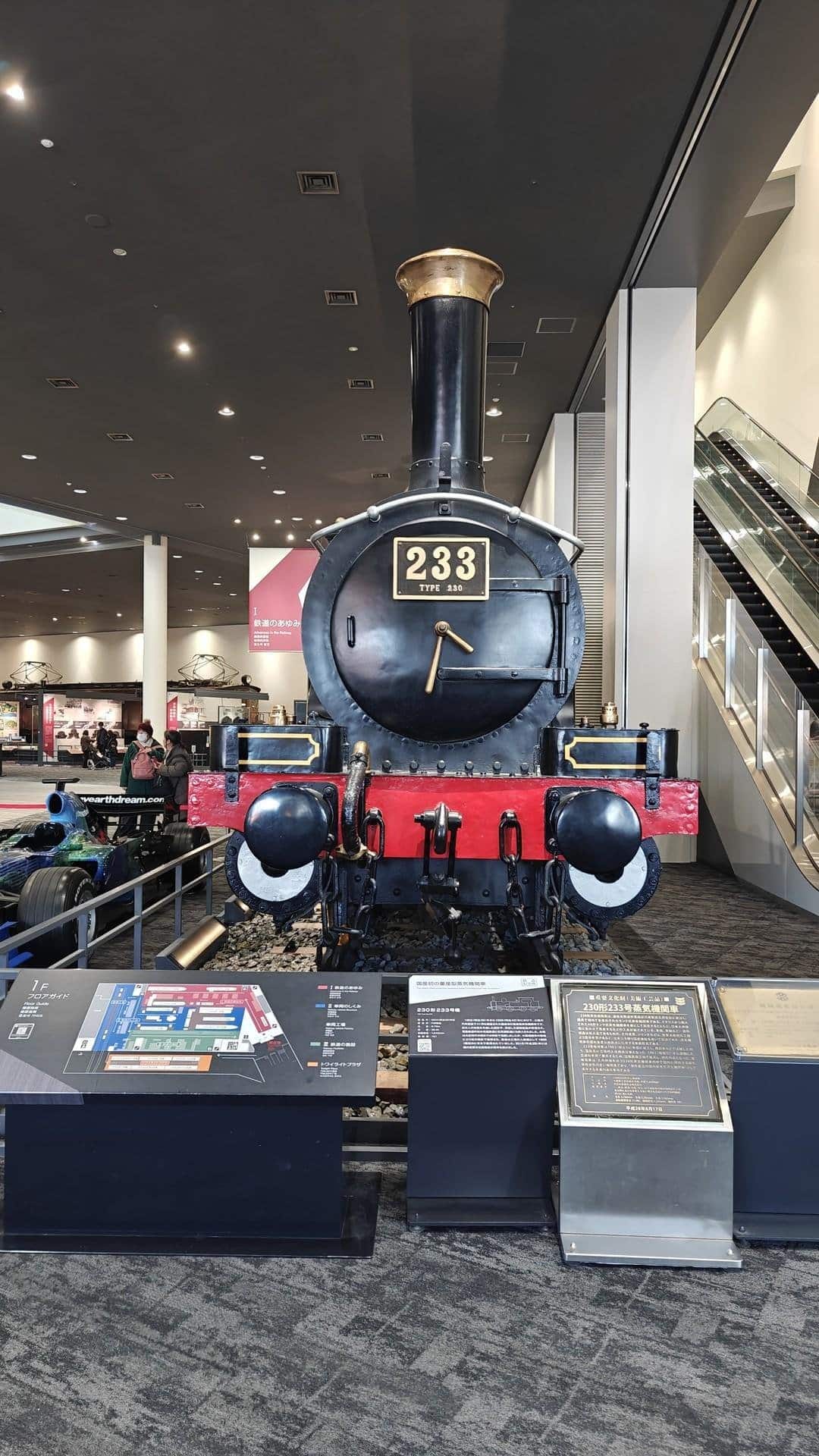
What makes the 230-233 such a significant train in Japan’s history is that it was the first to be mass-produced in the country. Based off of Britain’s A8 Series of locomotives, the train started mass production in 1902 and was built by a company called Osaka Kisha Seizo Kaisha.
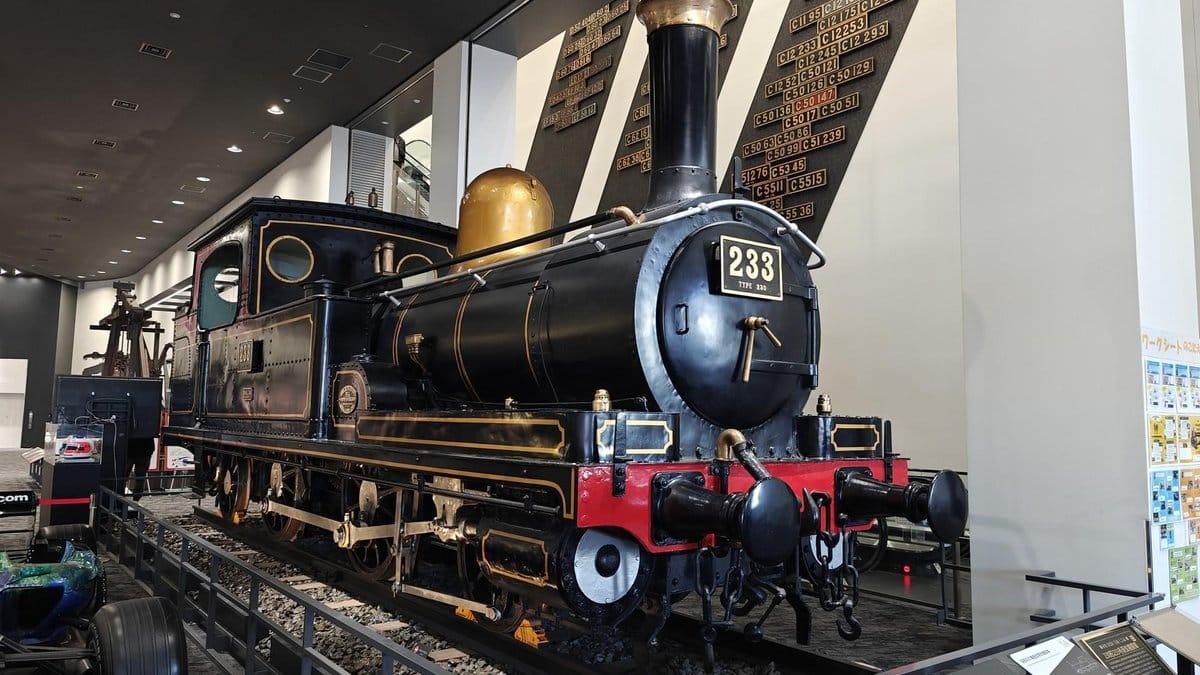
Production was eventually stopped in 1909 at 41 units though the trains still saw service up until the 1950s. I must say, the train’s aesthetics did grow on me as I continued observing it. Perhaps the most intriguing feature of the train for me was the steam dome just because of how prominent its shape was.
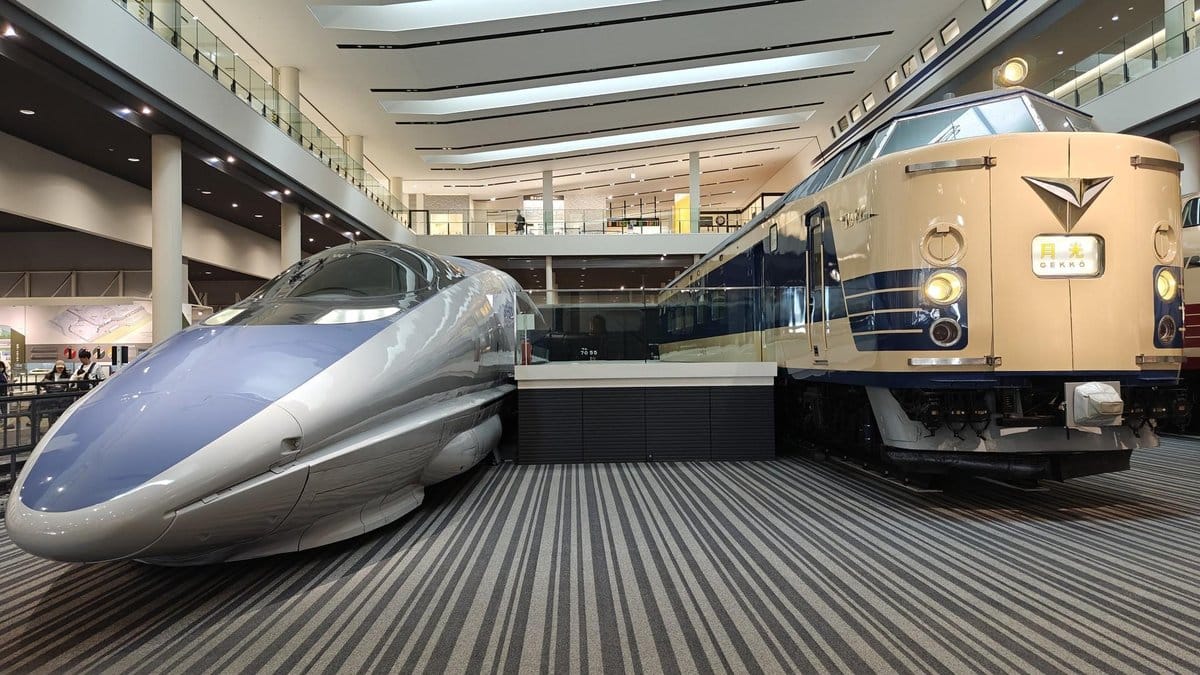
Speaking of prominent shapes, these were arguably two of the most striking trains in the main hall thanks to their silhouettes. On the left is the 500-521-1, a Shinkansen that debuted in 1996 and was said to be the fastest of its time. Right next to it is the Kuhane581-35 which started operating earlier in 1968 and is notable for being the first EMU that had sleeping berth convertible seats.
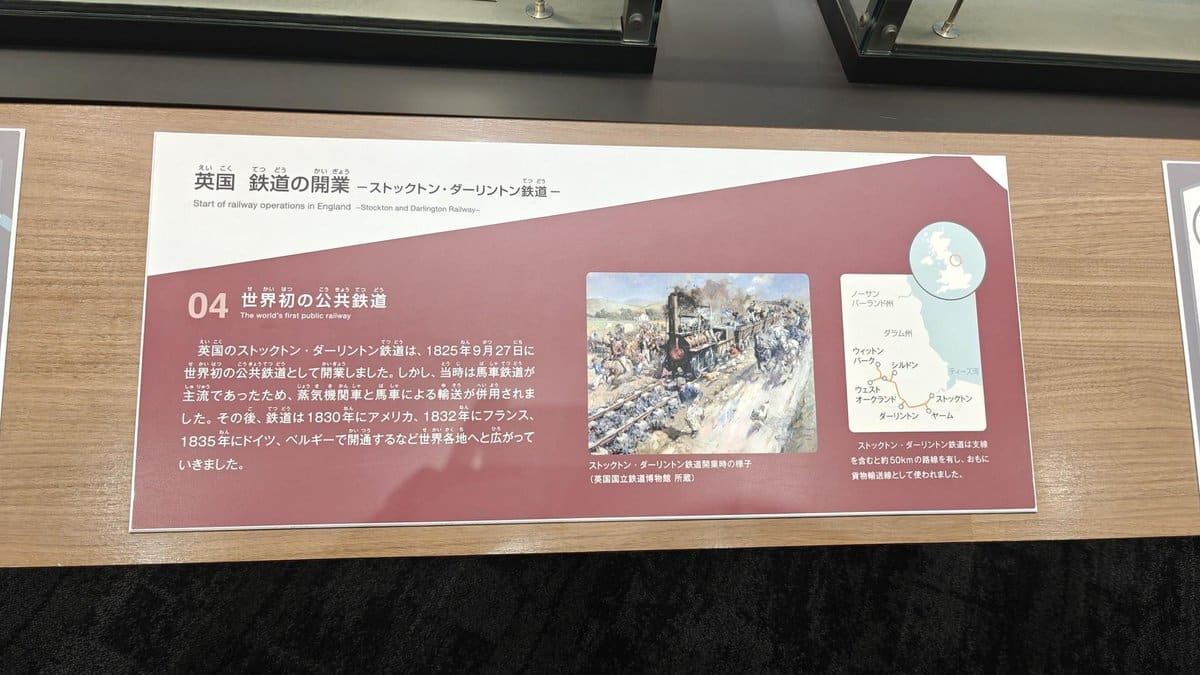
Here was another display that caught my eye. If you remembered earlier, I went inside the Kuha 1013-1 train that featured flyers for the TRAin ART exhibit. Well, this is part of that exhibit and it features a 1949 painting by an artist named Terence Tension Cuneo called “The Opening of the Stockton and Darlington Railway” which is perhaps the most famous depiction of the first public railway’s inauguration.
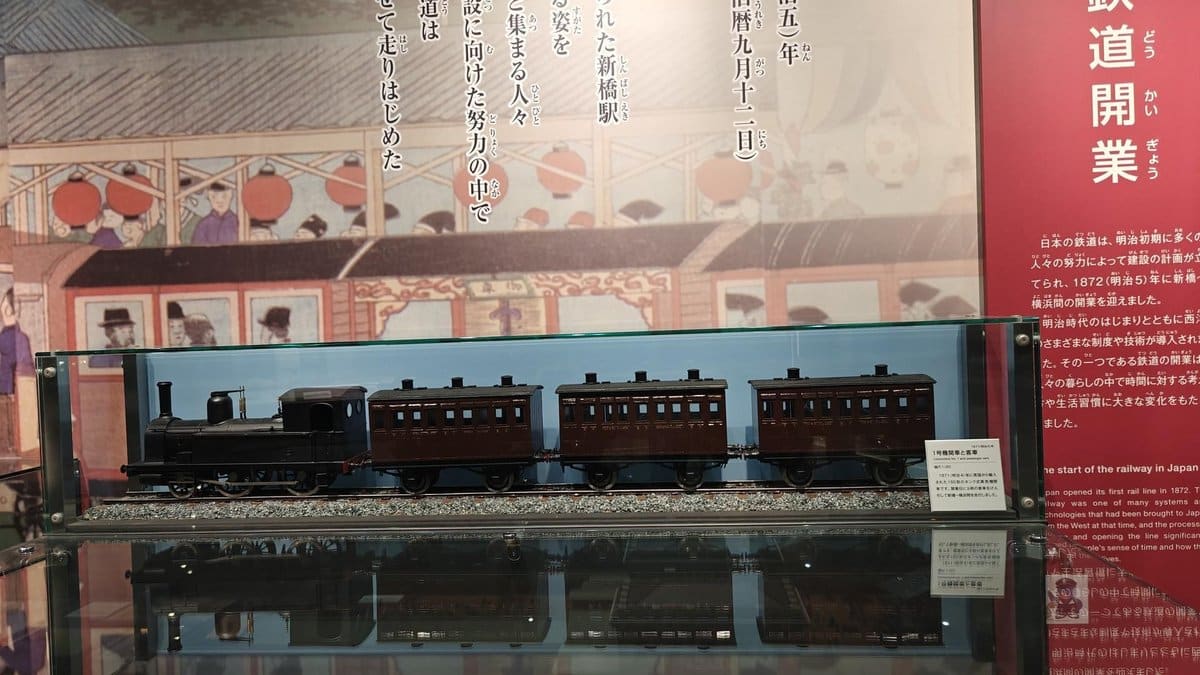
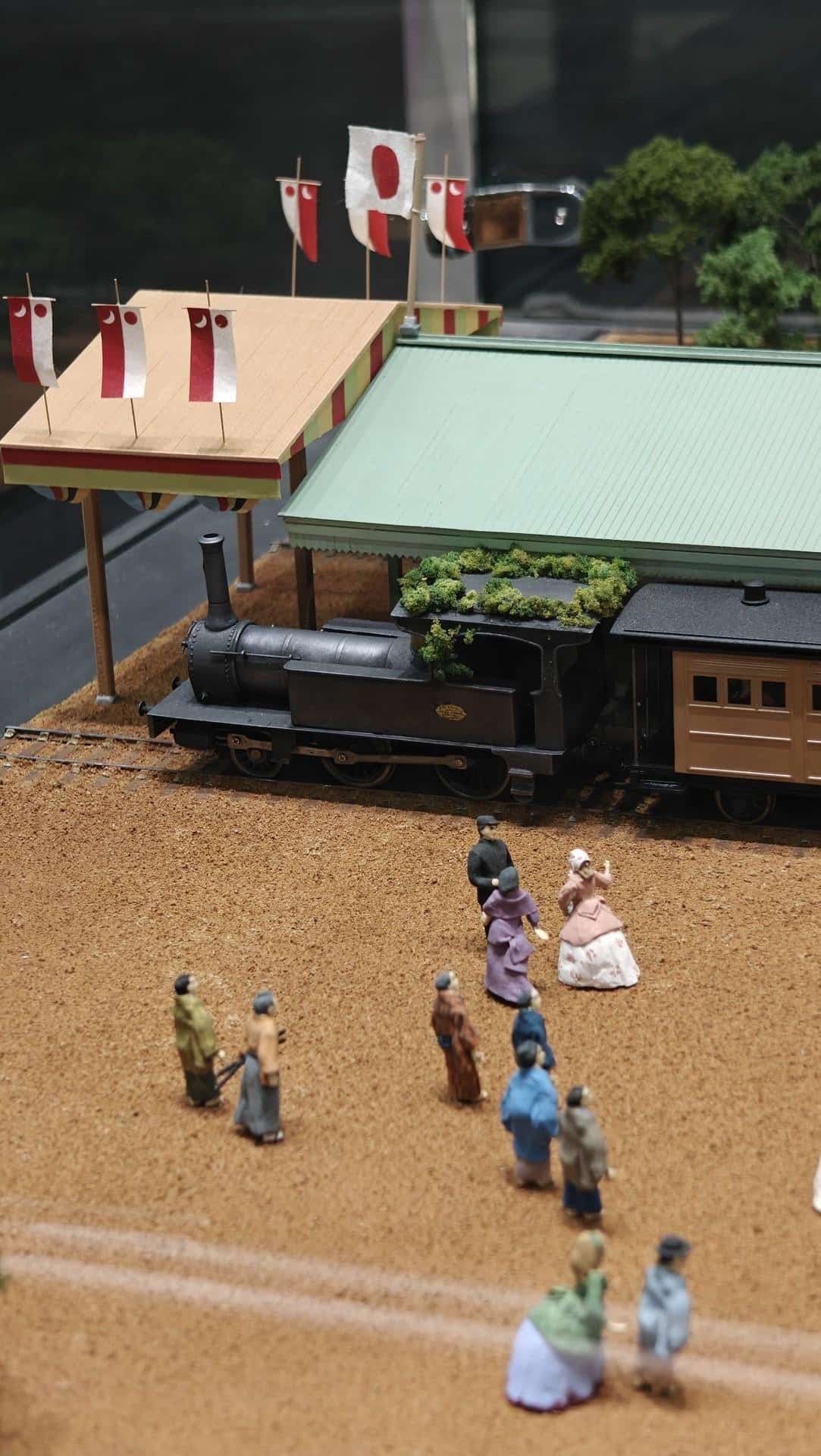
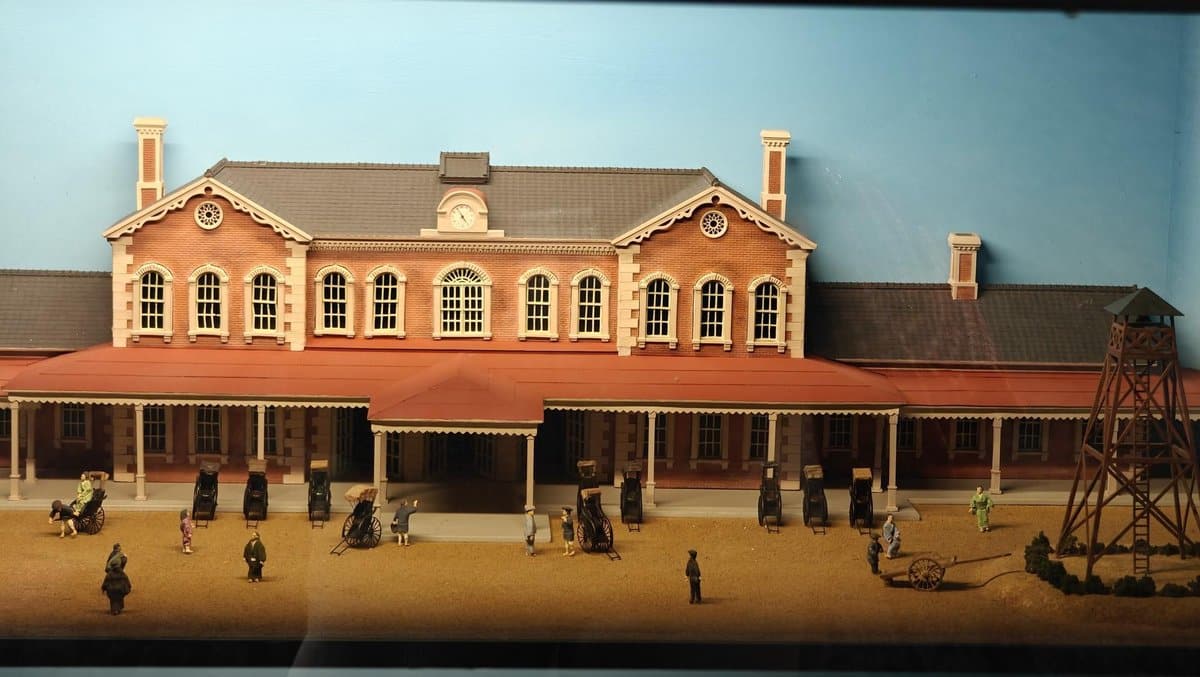
Aside from paintings, the museum also featured dioramas of Japanese railway stations during the Meiji period. I actually enjoy watching these so I ended up spending a bit more time checking out the details of the buildings and even the miniature people. That said, I think more people would have been checking these out if the model trains were actually moving.
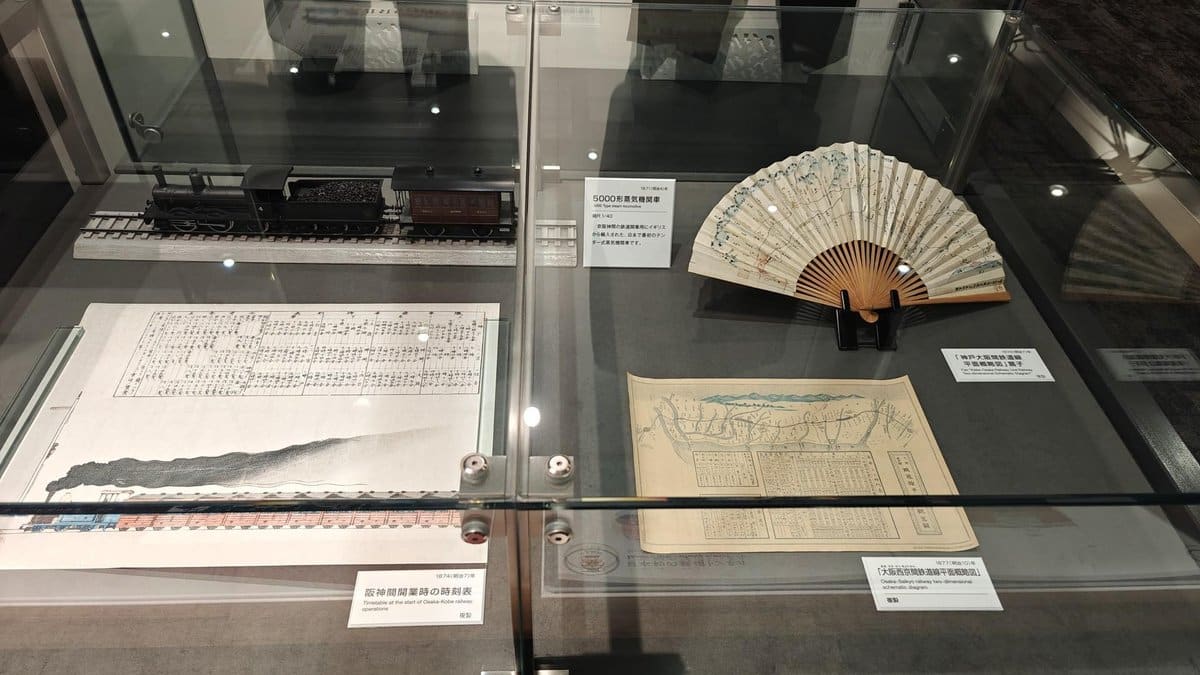
There were also a number of memorabilia and mementos of the railways during (what I thought was) the Meiji period. One that stood out to me was the fan that had a schematic diagram of the Kobe-Osaka Railway Line. Now, I’m not quite sure who used that but I must admit that the fan does look kind of cool.
From afar, you won’t even notice the diagram as it looks like a traditional design.
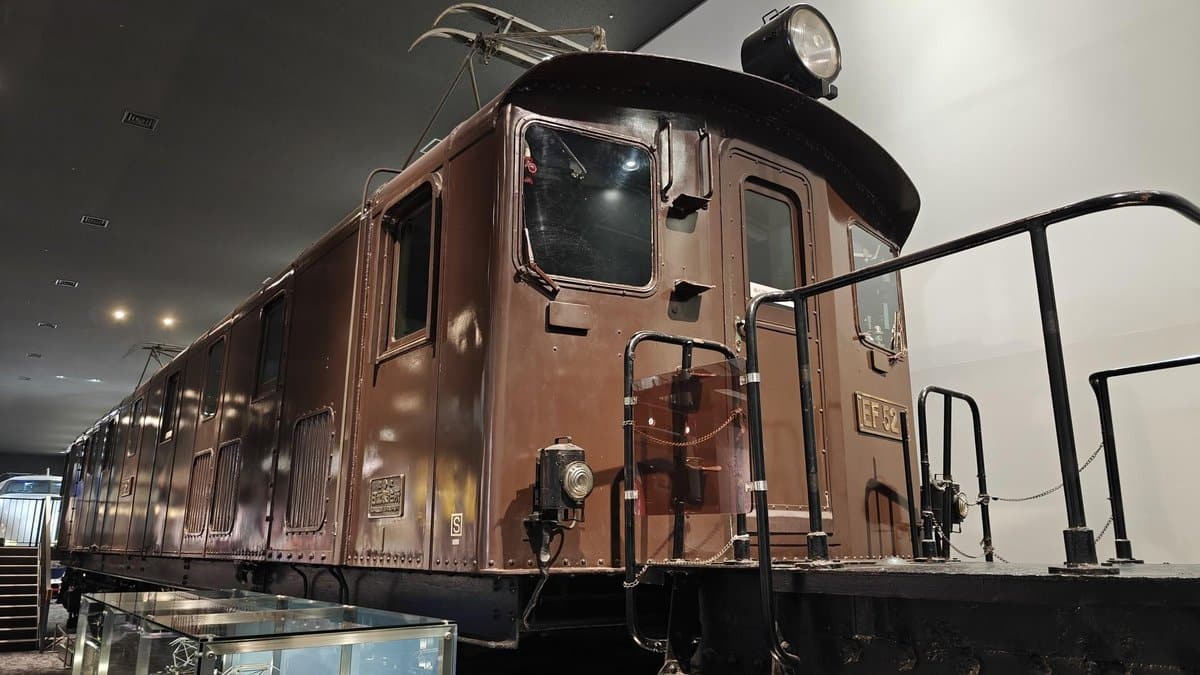
Here is another notable train that was manufactured in Japan. Called the JNR EF52-1, this large electric locomotive was the first of its kind to be manufactured in the country and that ran on DC. I initially thought that this was built sometime in the 1950s so you could imagine my surprise when I found out that Hitachi first made it in 1928.
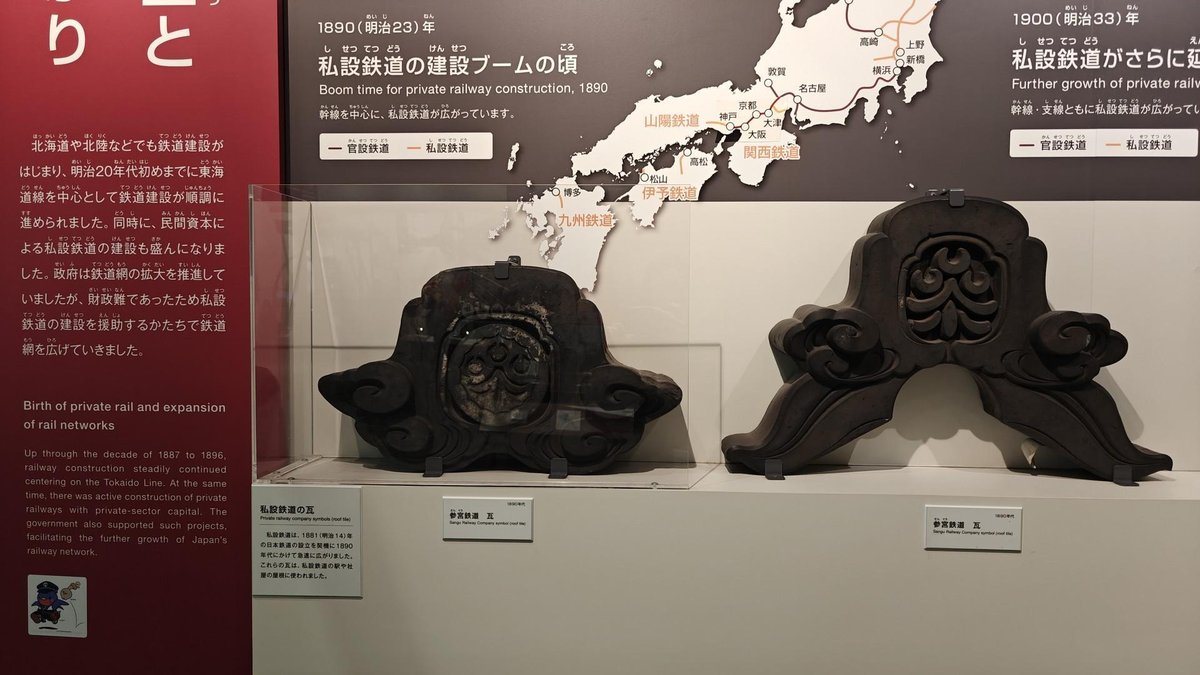
So here’s another interesting display featuring onigawara or traditional Japanese rooftop tiles. While the Meiji period was defined by its Western leanings, there were still traditions that persevered. The onigawara were notable holdovers just because of how deeply embedded they were in Japanese culture.
The examples here were taken from the railway stations of that time period.
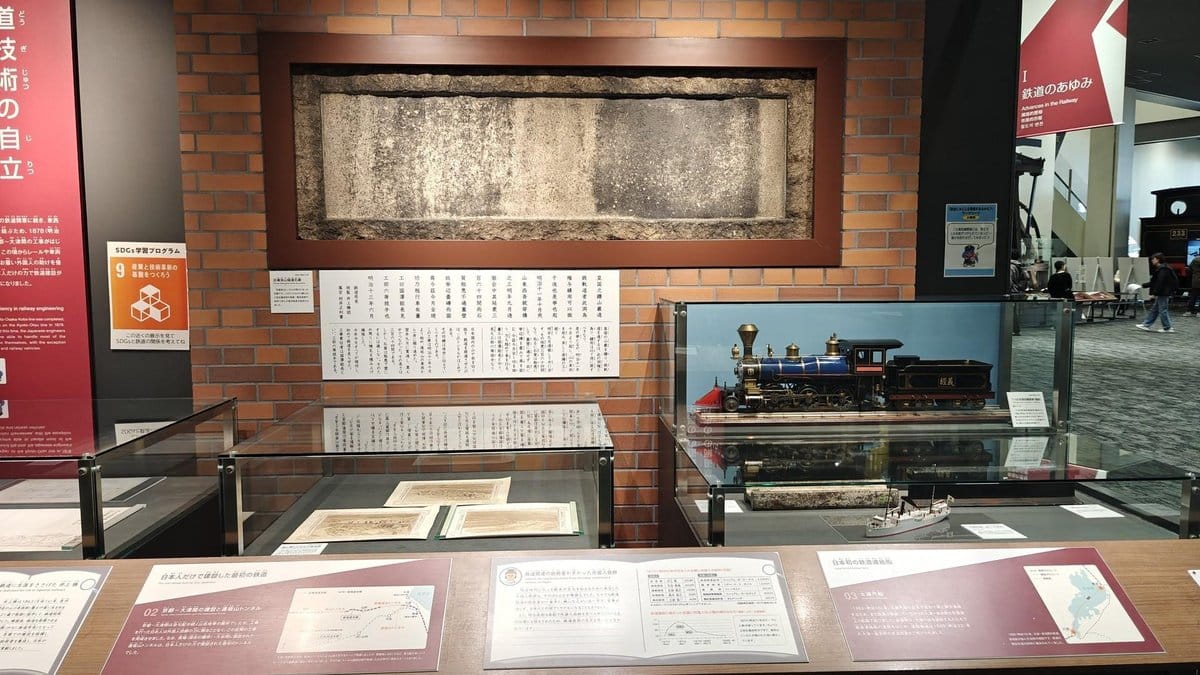
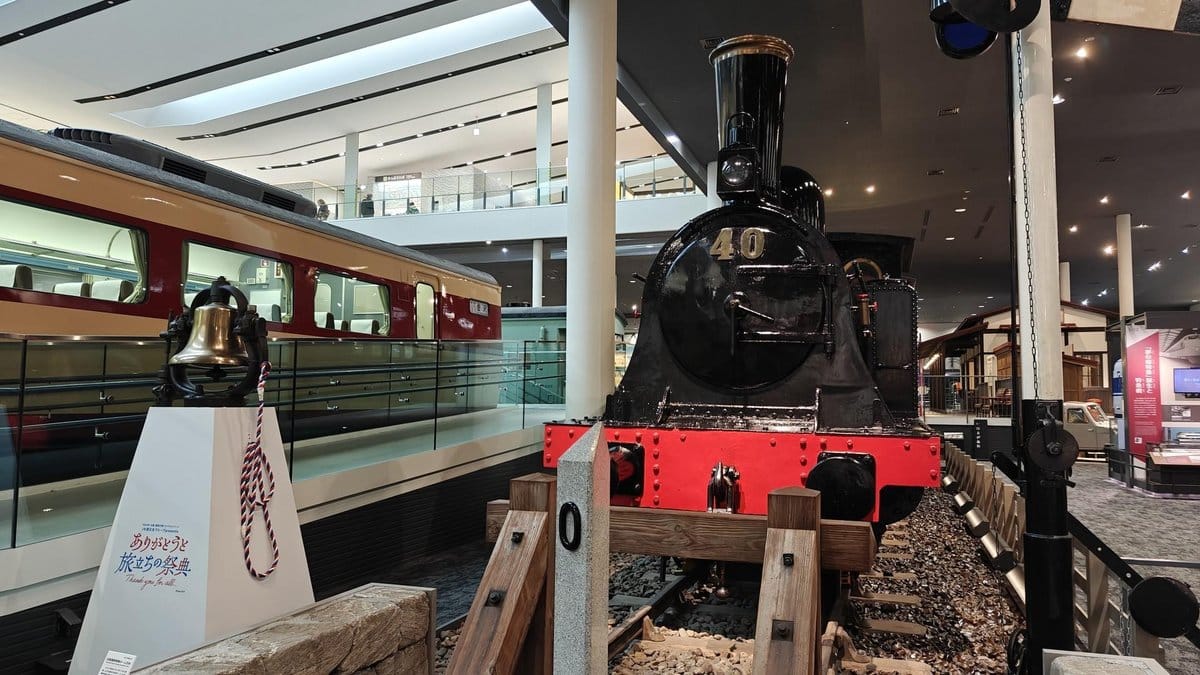
At some point during my walk here at Kyoto Railway Museum’s main hall, I came across this familiar looking train. My immediate thought was that this looked similar to the 230-233 that I saw earlier. Turns out, this is a different and much older locomotive called the 1800-1801.
Unlike most of the trains that I mentioned so far, this one wasn’t made in Japan and was rather imported from the UK in 1881.
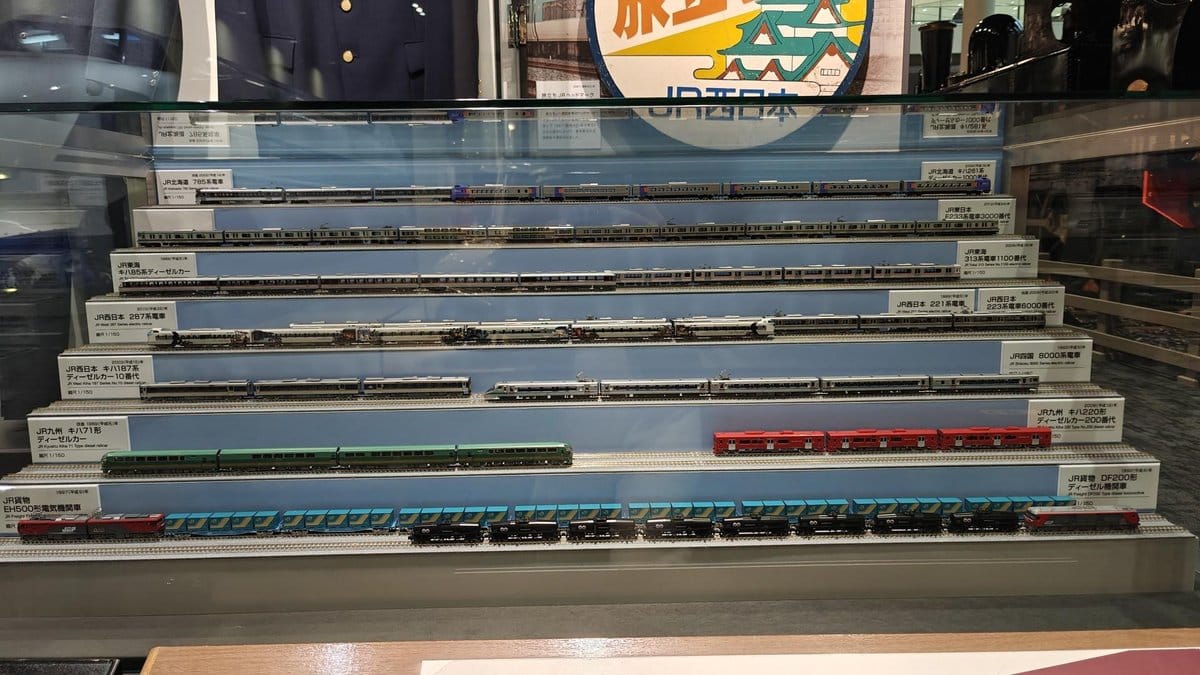
If I were to guess, Japan has manufactured hundreds of trains in its history and they simply couldn’t all be featured and displayed in the Kyoto Railway Museum. As such, there are displays that feature model trains like the one above that show the ones that aren’t physically here. These are replicas specifically from Japan Railways’ fleet (though I’m not sure if the real ones are still plying the railways) that are used for freight and commuting.
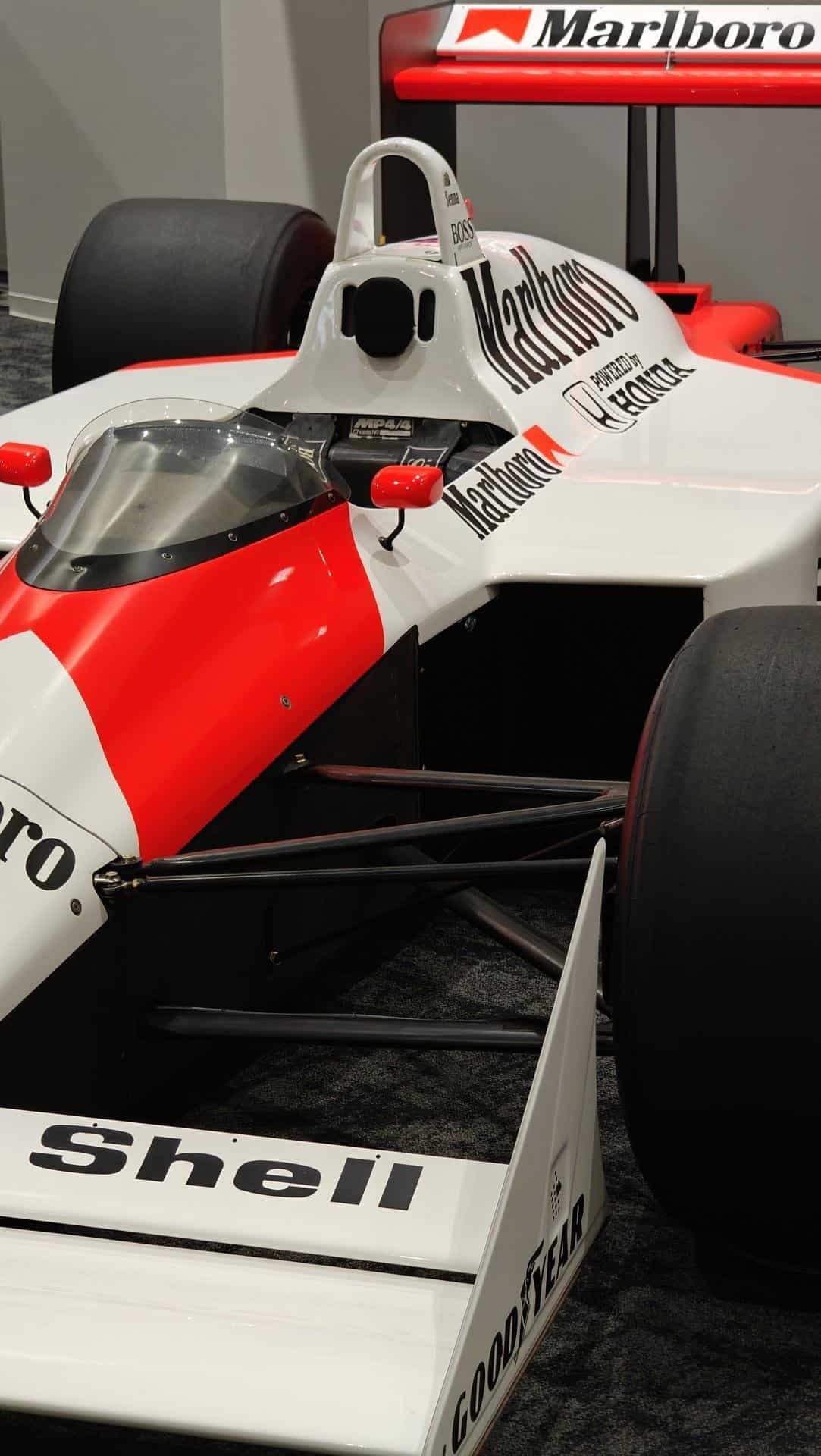
So one thing that really confounded me was the presence of F1 cars in a railway museum. You probably saw the Honda RA107 from earlier and now there’s this McLaren MP 4/4. This was actually another exhibit (similar to TRAin ART) that ran up until December 21, 2025.
Titled Racing and Railway History, this supposedly was a celebration of Honda’s racing history as well as featuring its shared evolution with train and railway technology.
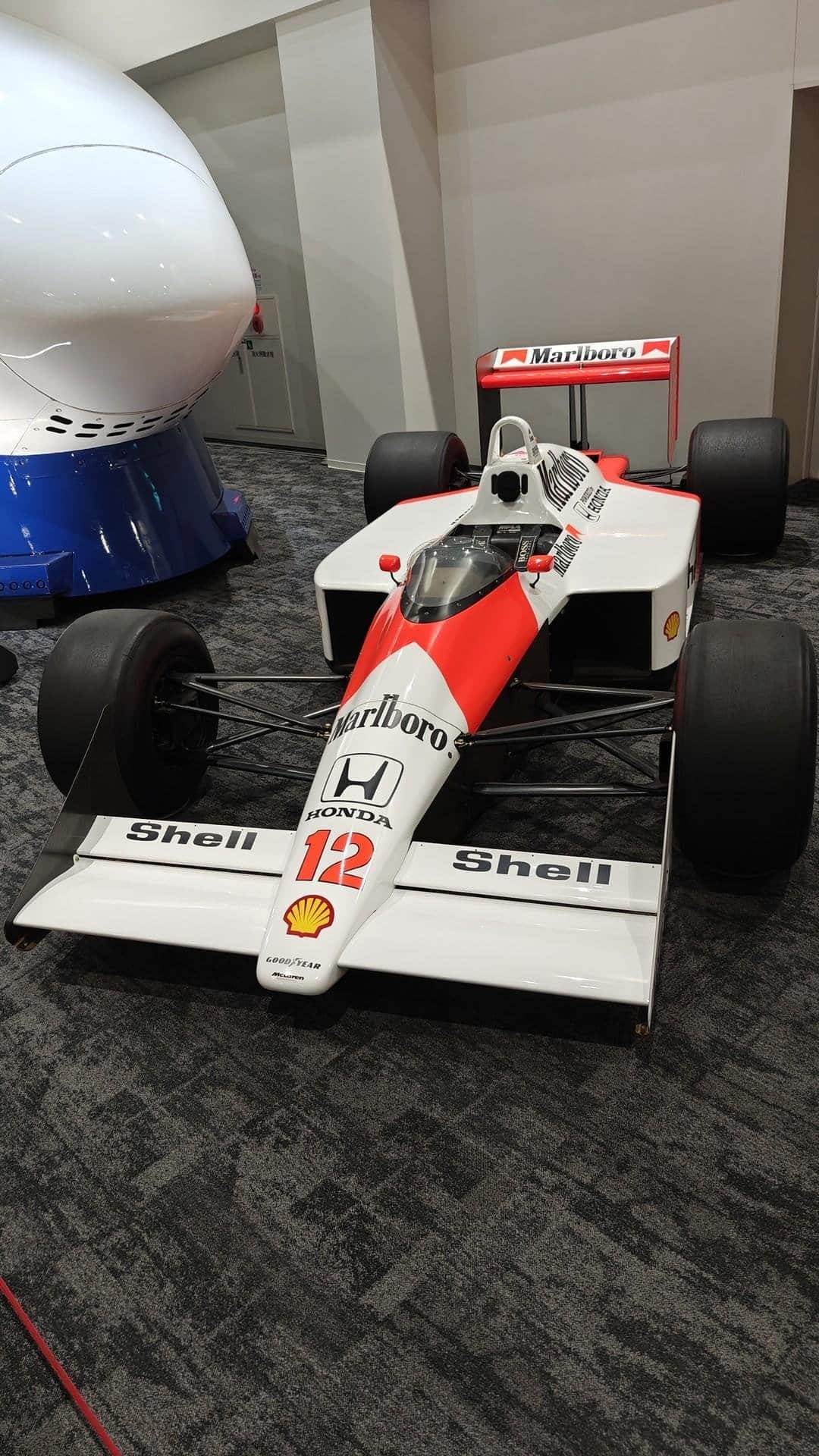
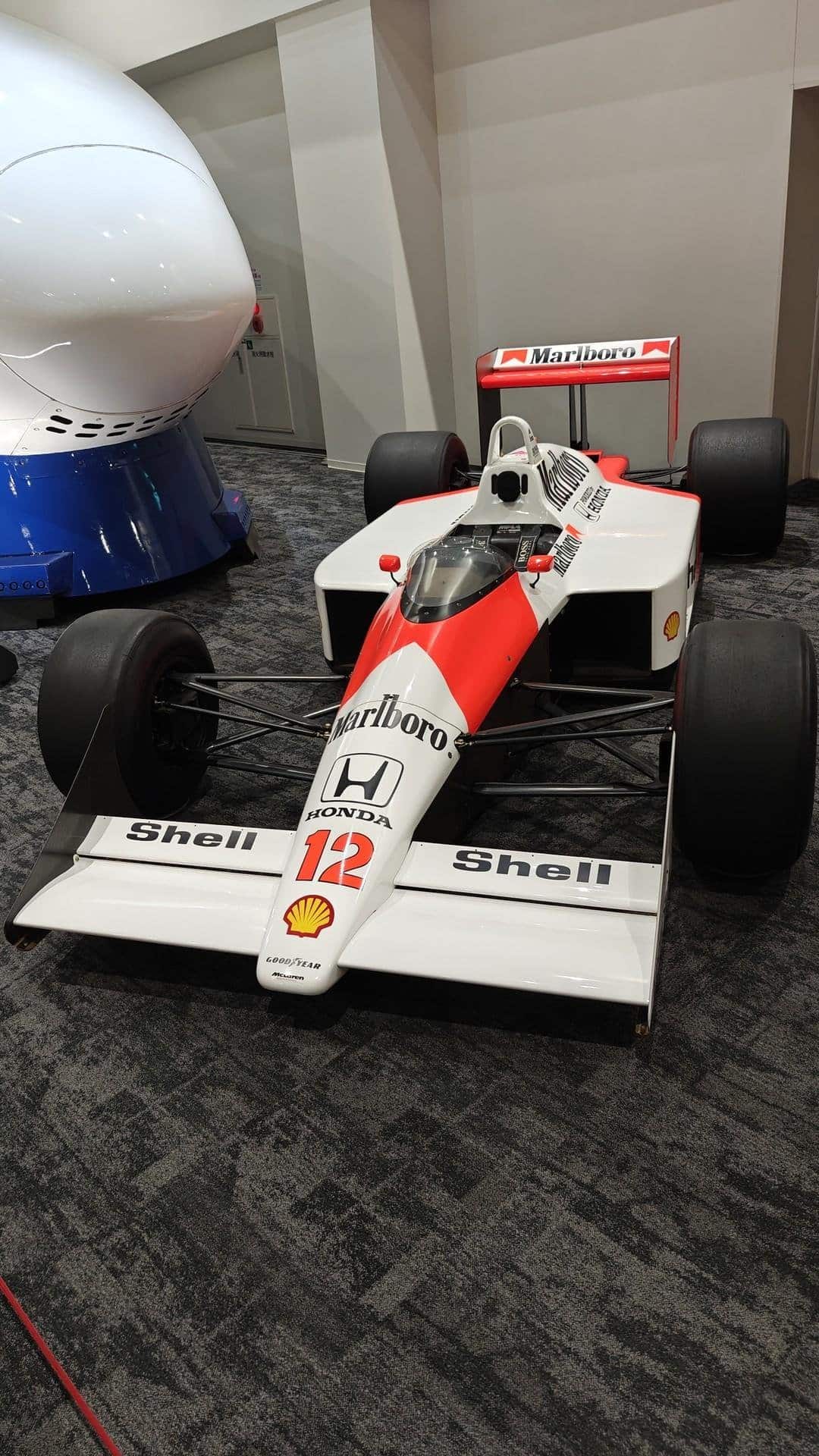
Now I was sort of familiar with the McLaren MP4/4 as it is pretty much a legendary car but I never really thought that it made use of Honda’s technology. Specifically, the car had a Honda RA168E engine which is said to have been instrumental in the MP4/4 winning a dominant 15 of 16 championships in 1988.
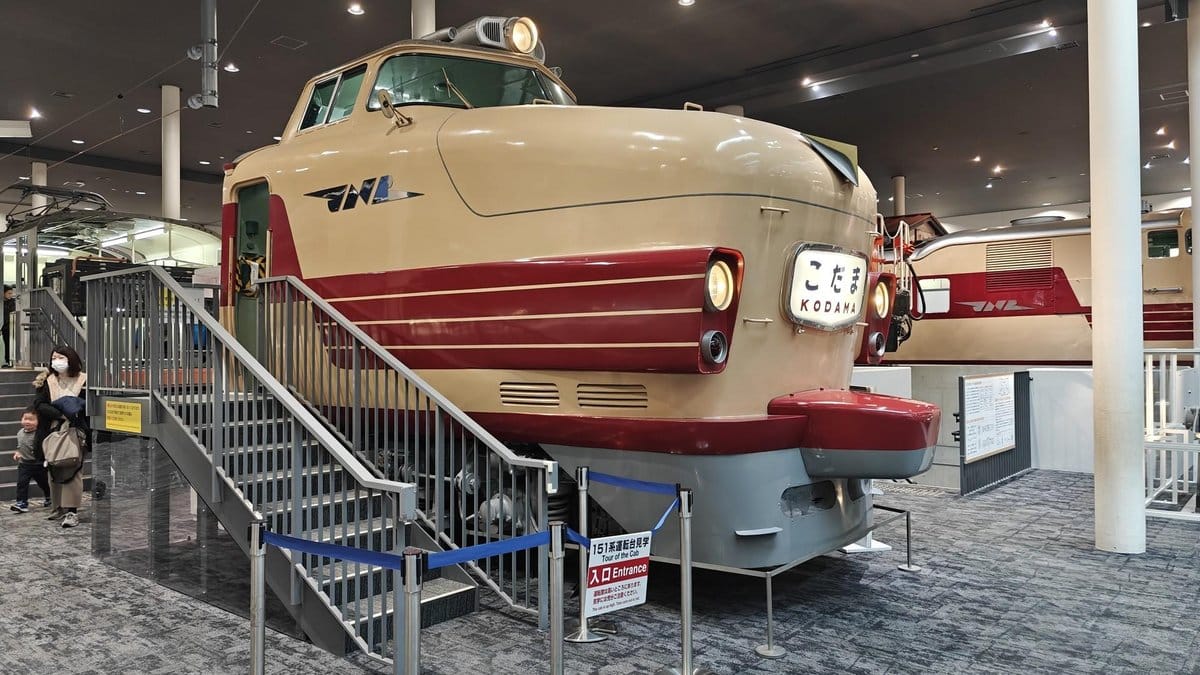
From the McLaren MP4/4, I found myself again at the area near the 500-521-1 and the Kuhane581-35 from earlier. Just beside the latter was a similar looking train that also had a really nice silhouette. Called the Kuha489-1, this is actually an iconic JNR train.
Manufactured in 1971, this featured a bonnet that covered where its electrical equipment was stored in its nose.
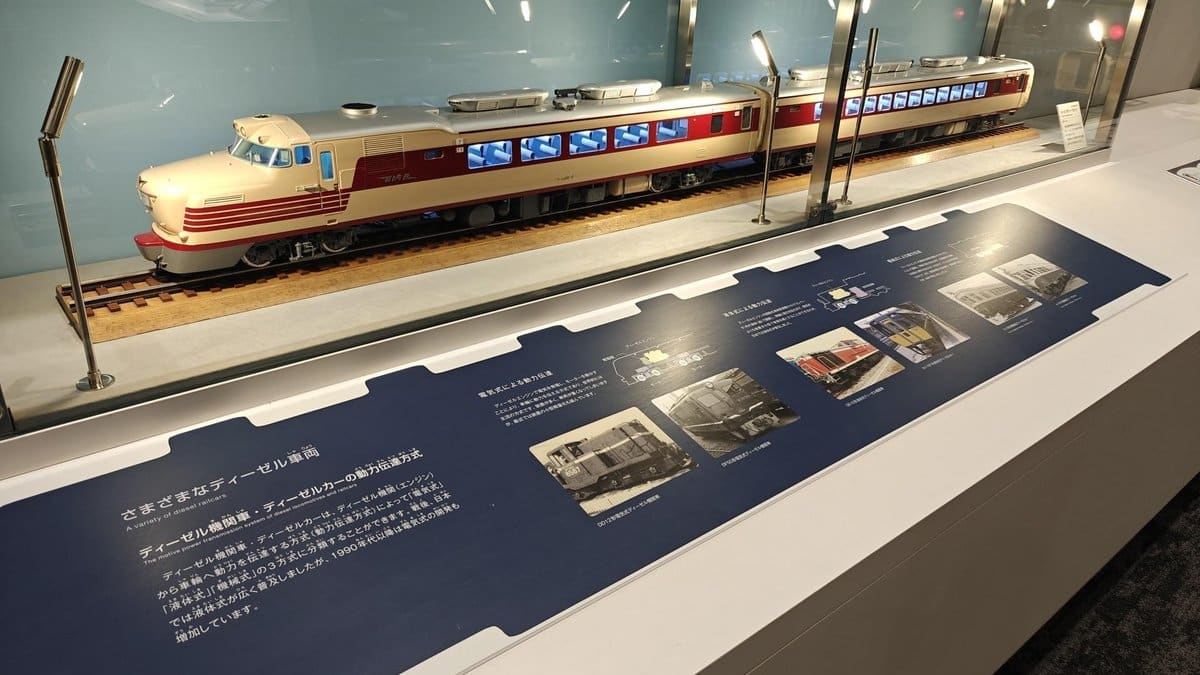
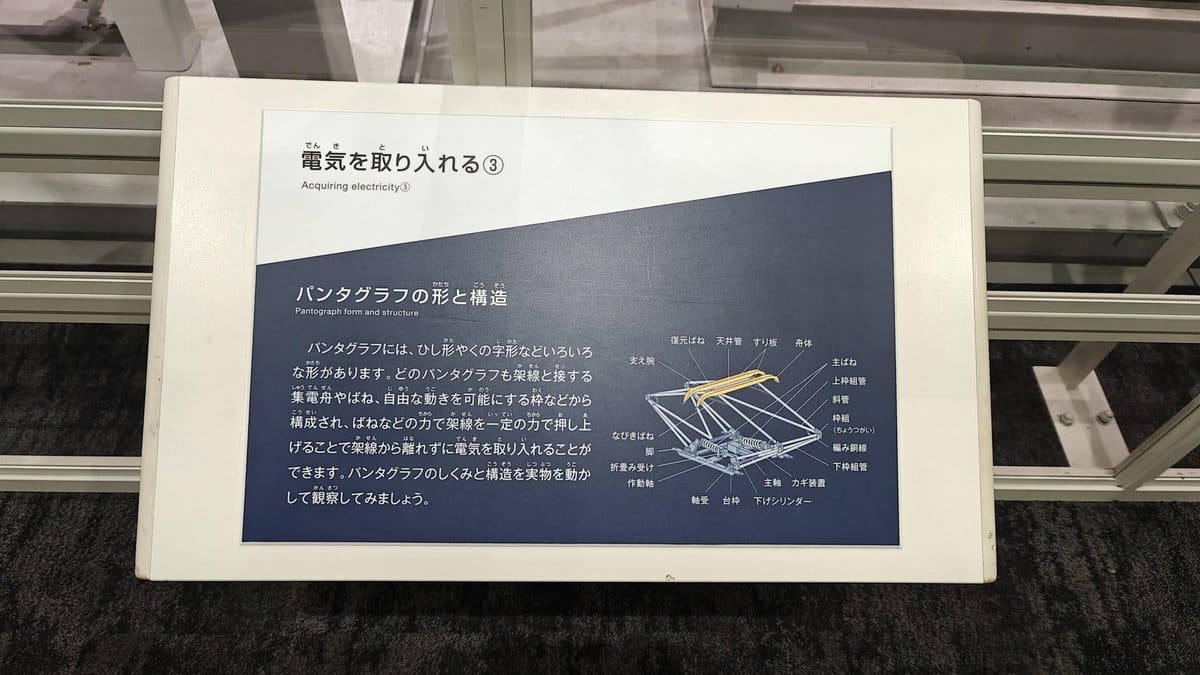
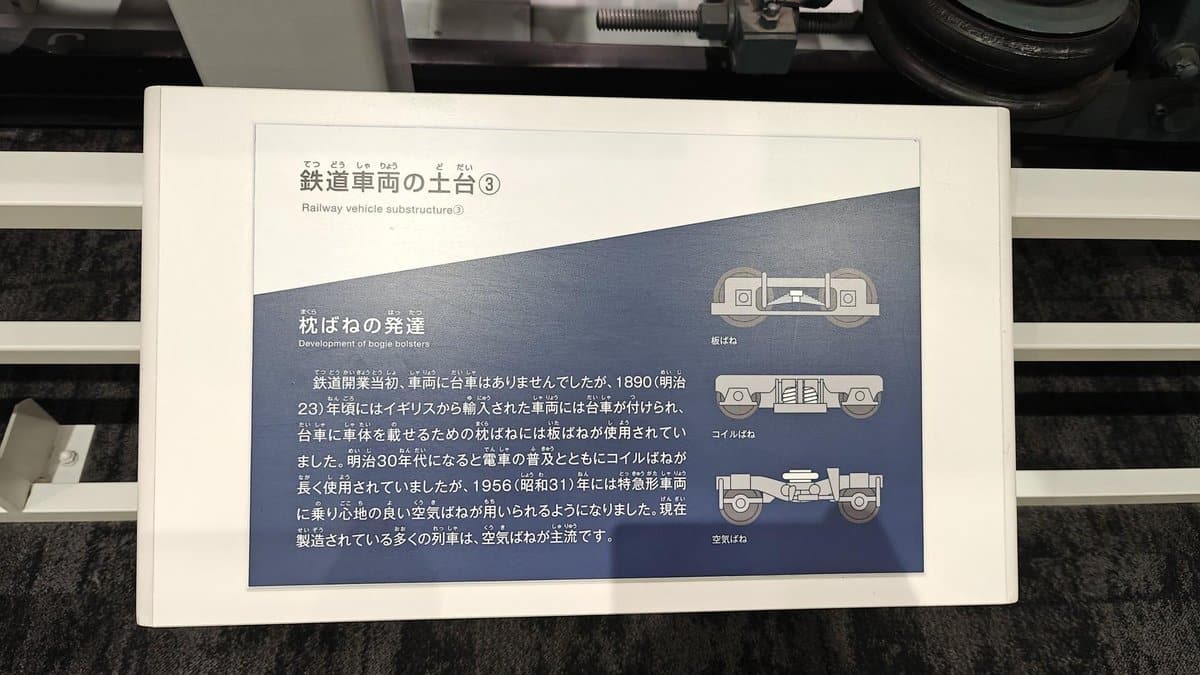
If you’re interested in knowing just how an electric train works then there’s also a section of the Kyoto Railway Museum where you can learn about pantographs and bogie bolsters. Pantographs (not the tools used for drawings) are the spring loaded arms installed on the roof of electric trains that transfer electricity to the engine from overhead catenary wires. Pantographs come in different shapes and sizes but all function in the same way by sliding along and maintaining contact with catenary wires using the force of their springs.
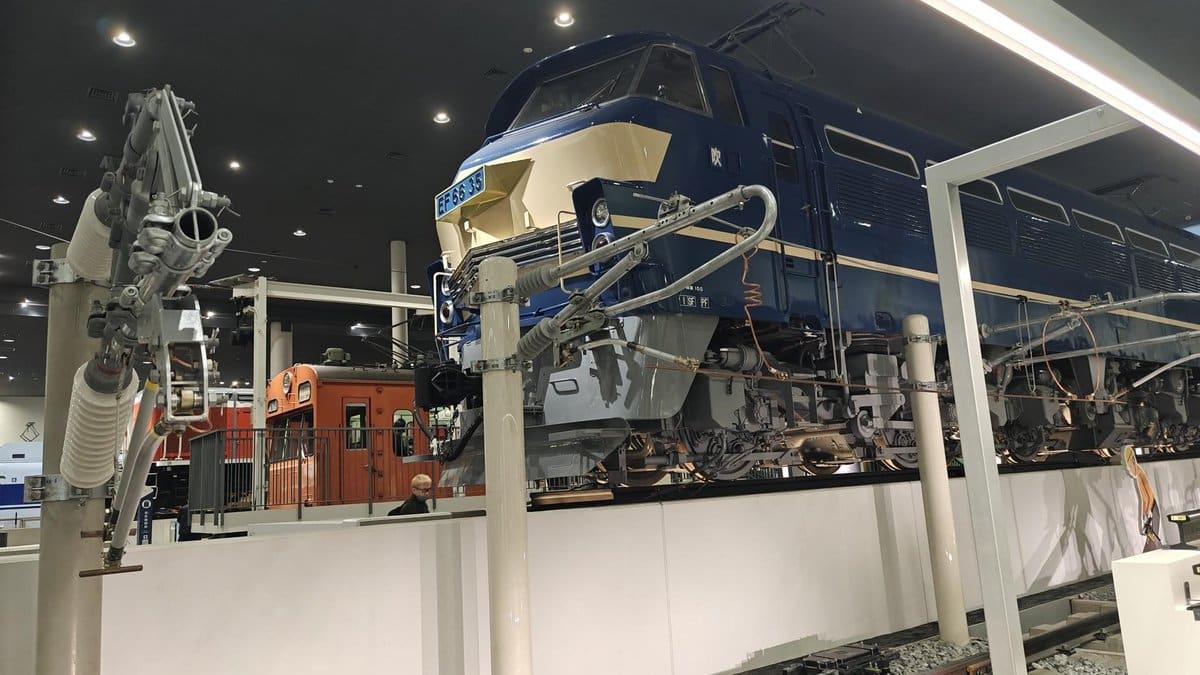
There are also displays here at the Kyoto Railway Museum where you can see the underside of the trains. In the image above, you’ll see the underside of the JNR EF66-35. I think this is one of the few trains here that was used mainly for pulling freight.
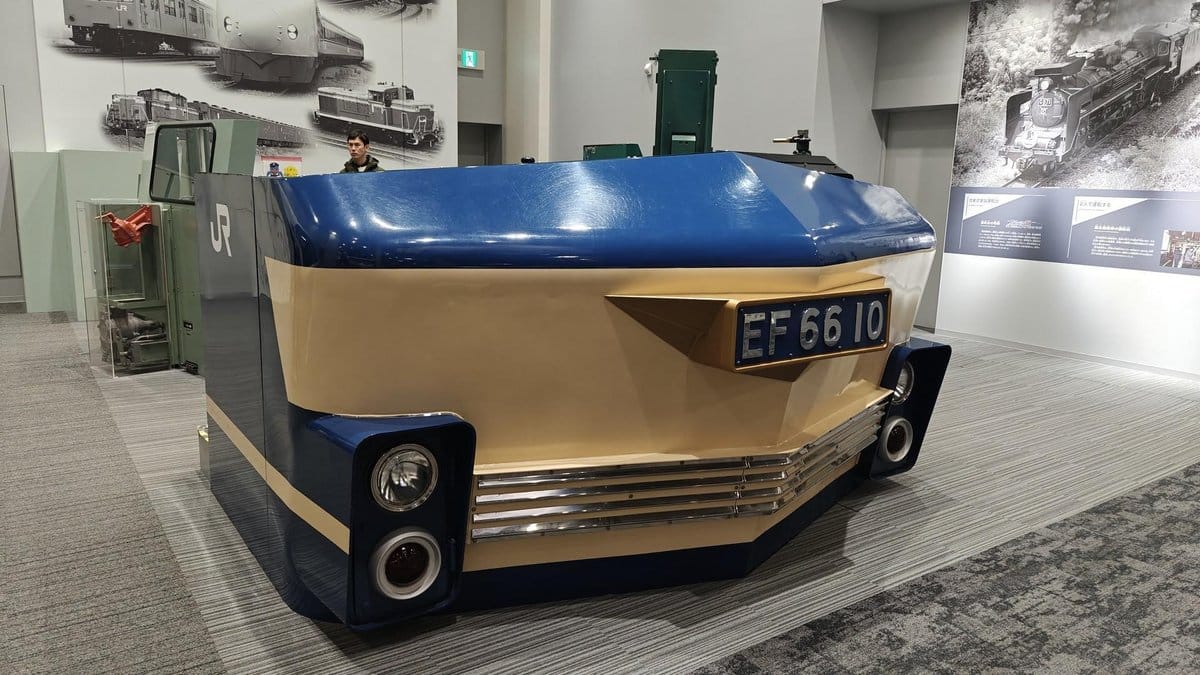
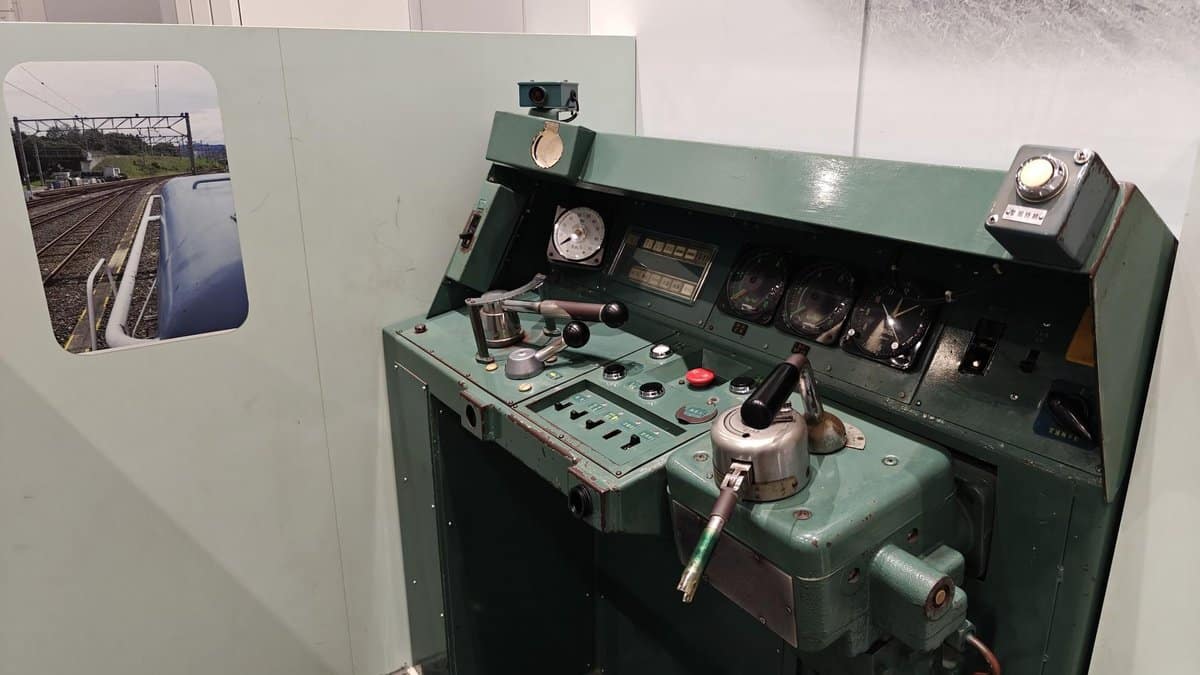
Here’s a part of the nose of an EF66-10. This is not the same as the EF66-35 in the previous image but both of them still belong to the EF66-0 Series production batch. Really, the main difference between the two is that the EF66-35 is better preserved.
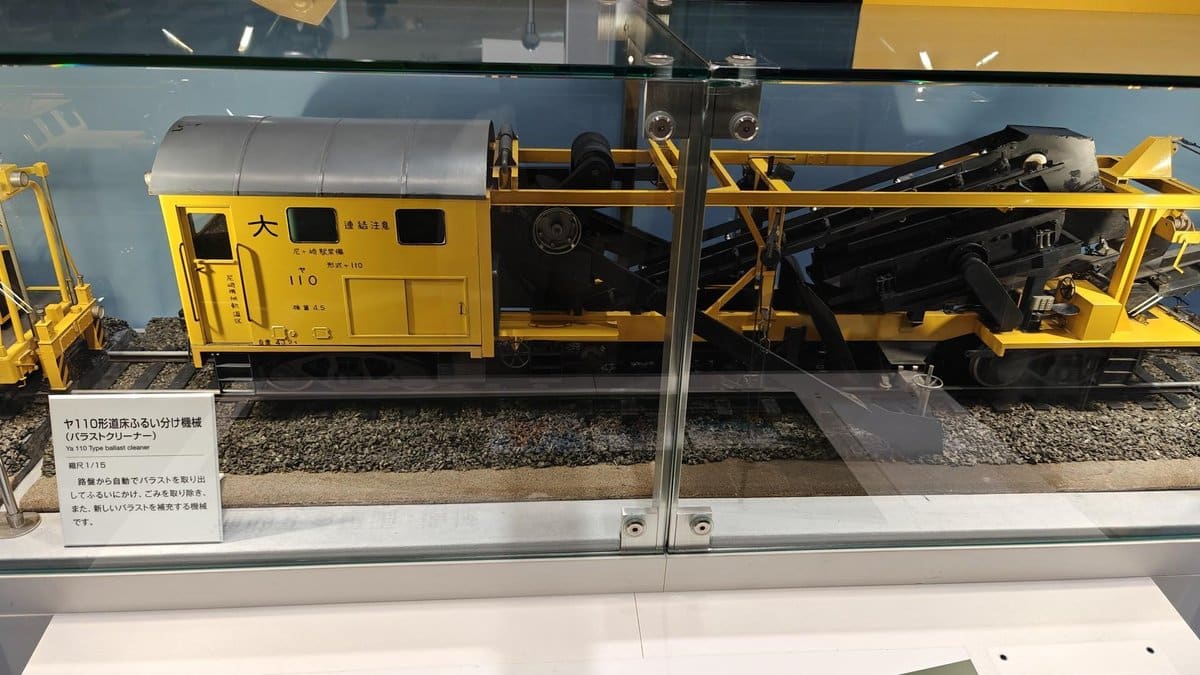
It’s not just freight or commuter trains that are featured here at Kyoto Railway Museum. I actually came across a display that shows a Ye 110 Type Ballast Cleaner. As its name implies, this specialized equipment is used mainly for removing and replacing ballast.
This is actually quite important as ballast needs to be replaced regularly so it’s able to drain water, keep tracks aligned, and support heavy loads.
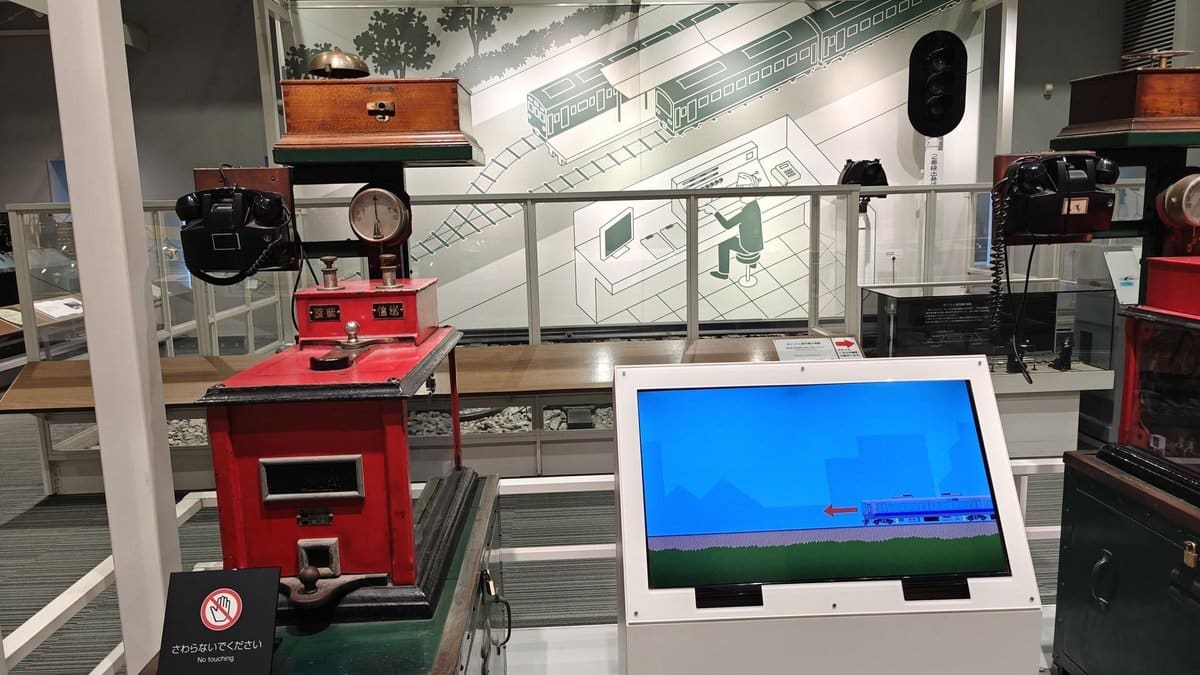
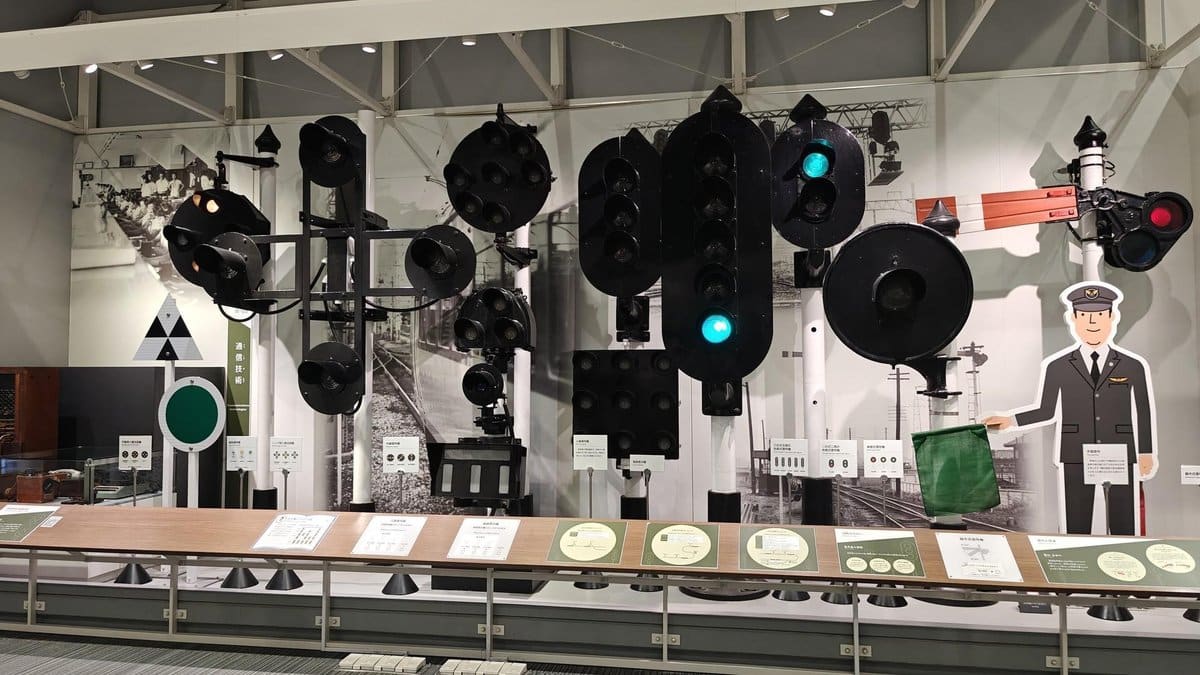
This particular section features equipment used by switchmen/signallers. The left most equipment in the image is a Tyers No. 7 Railway Tablet Instrument that was used to ensure trains were spaced safely on a single track line. Essentially, the equipment issued a physical tablet or token to a train’s driver to ensure that they have right of way on a section of a railway’s track.
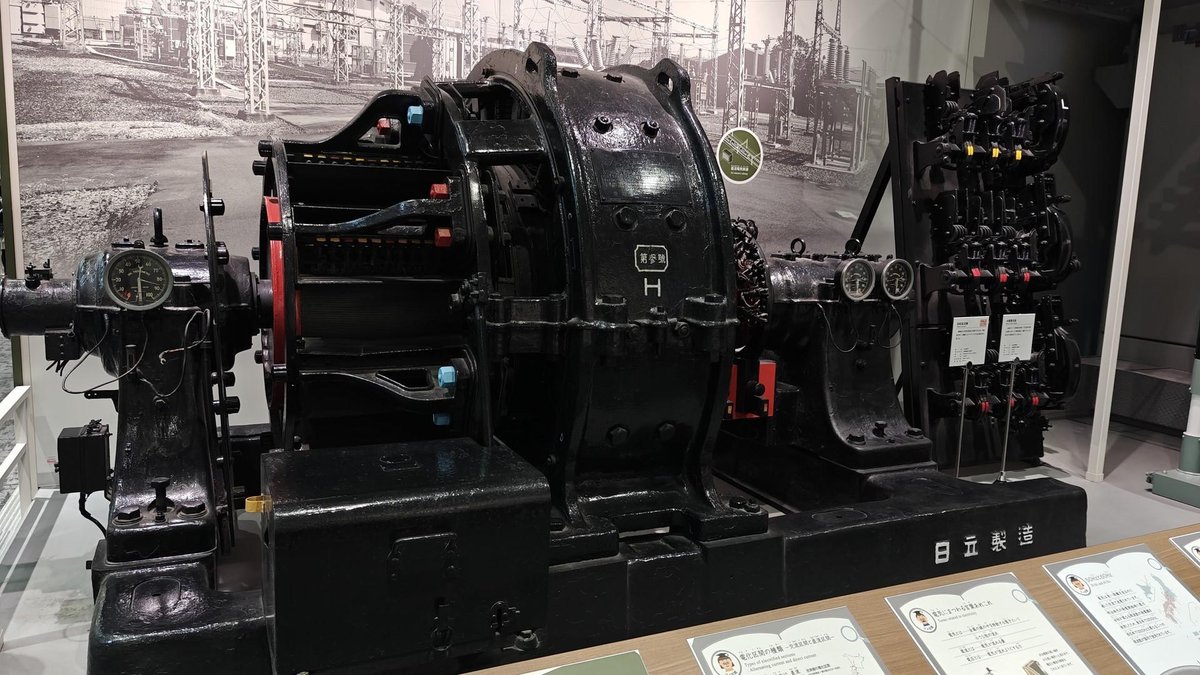
Another piece of equipment that really piqued my interest was this monstrous looking thing. Apparently, this is called a rotary converter and what it does is convert AC to DC which is the current that powers most trains nowadays. This was typically connected to a power line which uses AC to spin its rotors which then produced the DC current (at least from what I understand).
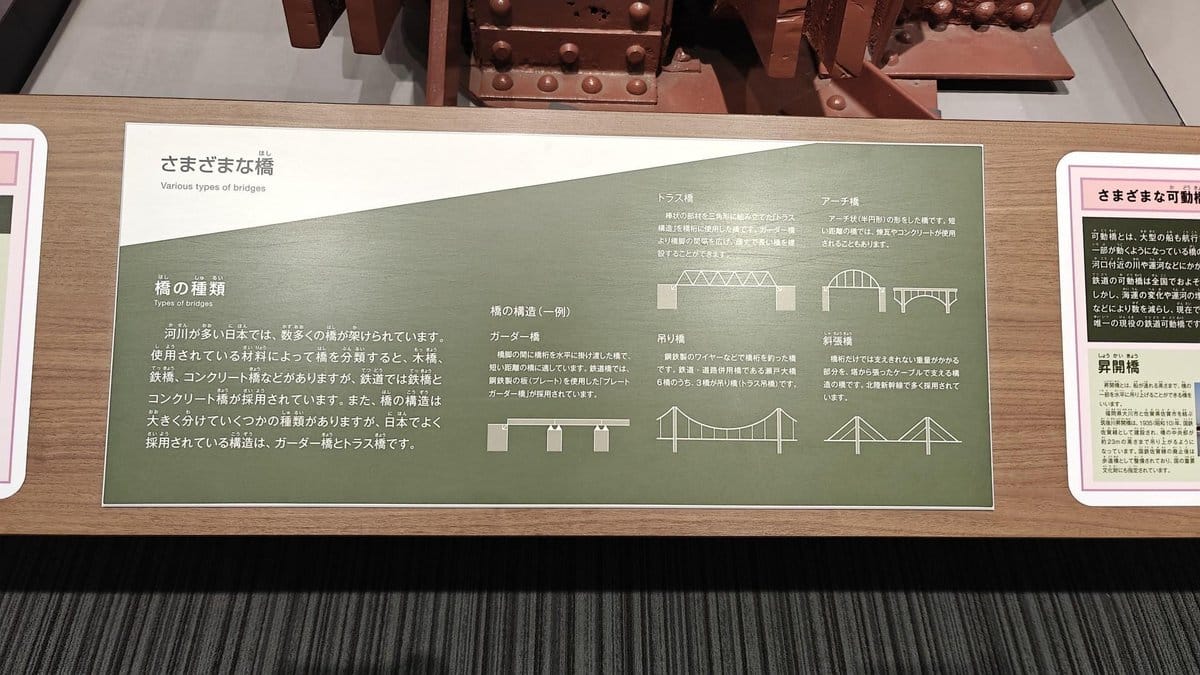
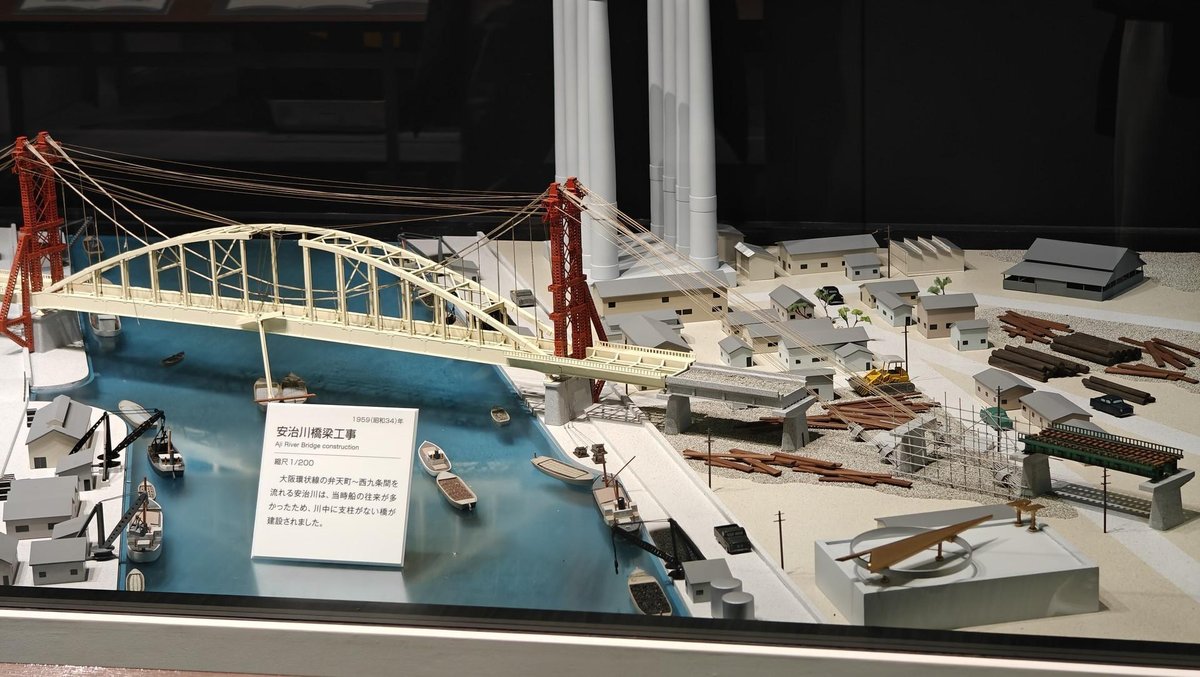
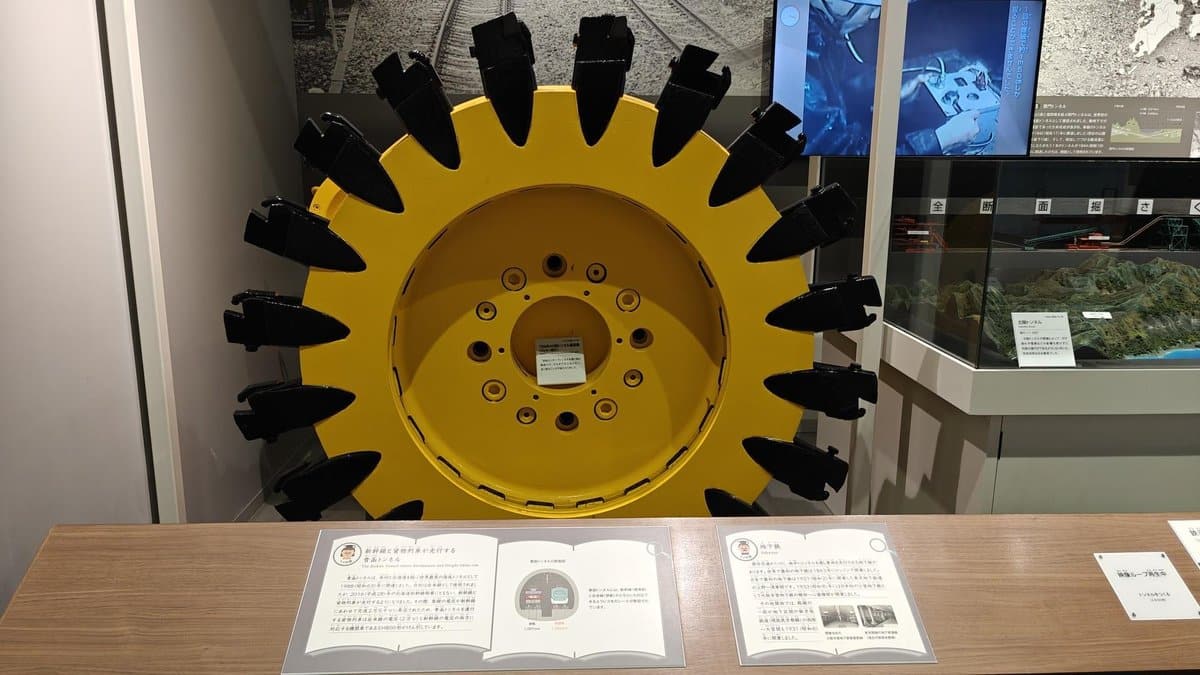
Bridges also played a huge role in the history of Japan’s railway system and they also happen to have their own displays with dioramas. The two that I managed to take pictures of are dioramas of the Aniji River and the Hokko Canal Bridges. There was also a miniature of a cutter head of a tunnel boring machine (TBM) that, as its name implies, is used for boring tunnels and subways where railway tracks can then be laid.
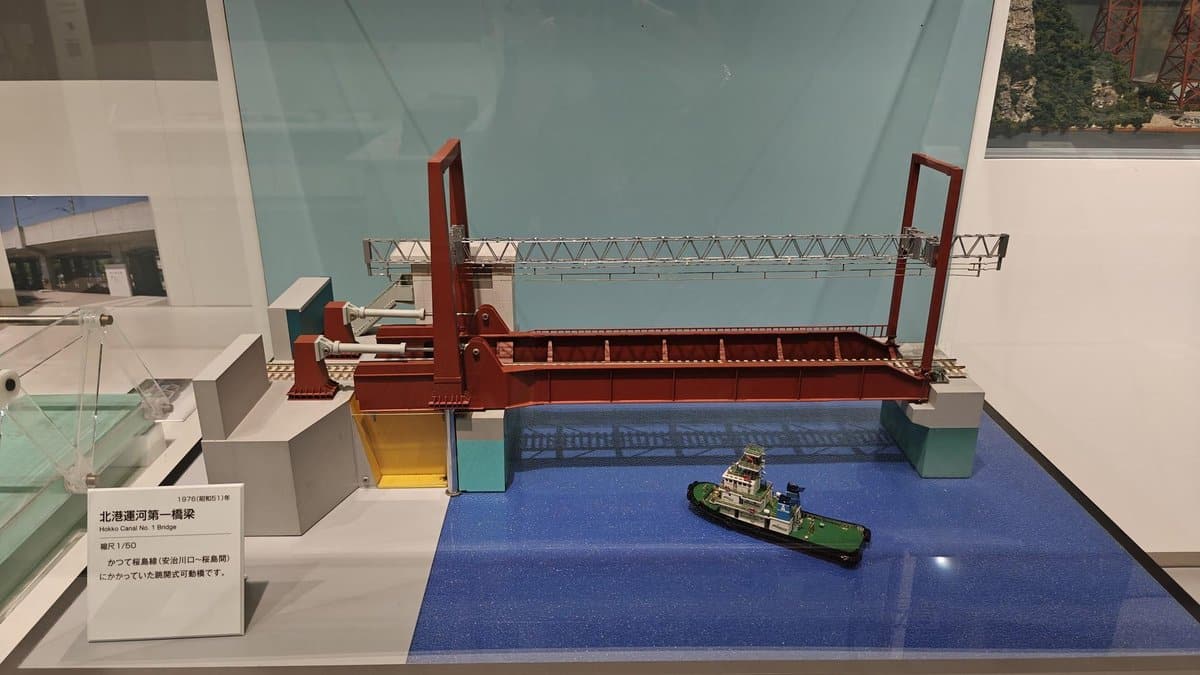
I finally ended my visit to the Kyoto Railway Museum with this diorama of the Hokko Canal Bridge. Honestly, I didn’t expect much when I decided to include this in my itinerary. Turns out, this was actually such a fun and educational place.
The trains looked really impressive and their histories made me appreciate human ingenuity. Walking around, there was this sense of awe at just the sheer number of trains that were on display. In fact, there were other areas that I wasn’t able to take pictures of like the Twilight Plaza and the Roundhouse that featured even more trains.
I think anyone will get to enjoy coming here but I would definitely recommend the museum for visitors who have children with them.Really, the only reason why you might not be able to visit Kyoto Railway Museum is the fact that the city has a near endless selection of landmarks that are arguably better than here (though not by much). Personally, I think this is a landmark in the city that’s worth checking out especially since it’s really close to Kyoto Station. Of course, at the end of the day it’s still going to be your decision if you visit or not.
Hopefully, this write-up helps in your decision to visit this place or not.Ever had the chance to visit Kyoto Railway Museum? What was the experience like? If you have time then we’d appreciate it if you shared your thoughts and experience visiting this iconic Kyoto landmark down in our comments section!