
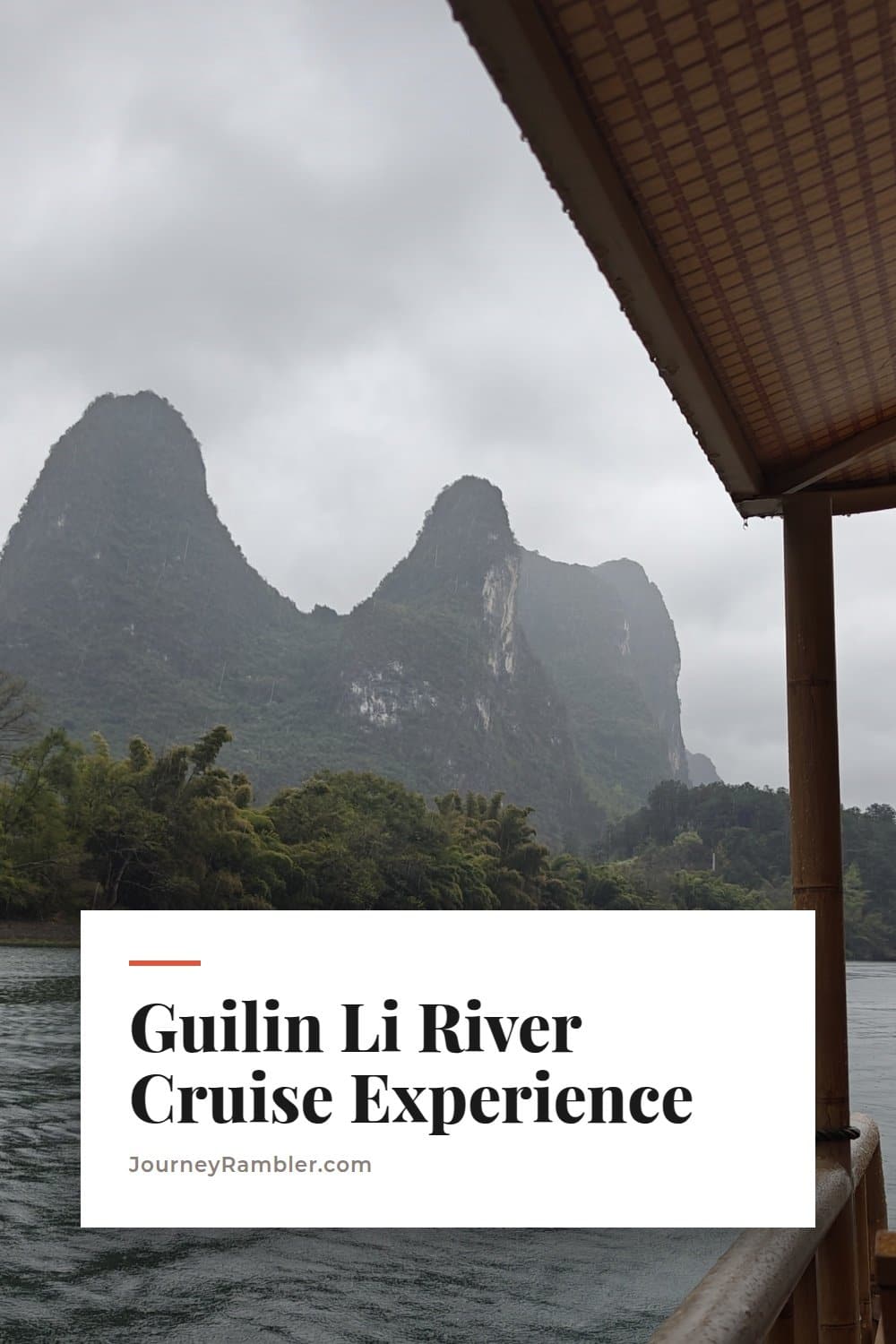
The Li River is one of the most beautiful places I’ve ever seen and I’m being totally honest. I looked at pictures of this river online before my visit and couldn’t believe how unreal they were. I actualy thought someone had Photoshopped them!
So I took a bamboo raft trip down the river from Yangdi to Xingping myself… and spent the next two hours gaping at these huge karst mountain standing up from the river, shrouded in mist and drizzle. Yep, just like the old scroll paintings, except now I was right there in the middle of them, quietly soaking wet as I floated along. What actualy happened on the cruise was that it turned out to be a slow, peaceful activity in which you spend hours just drifting by and watching scenery pass.
Here’s an overview of what the entire cruise was like, from buying tickets at a little booth near the entrance to cruising along some of the weirdest landscapes I’ve ever seen.
What to Expect on the Bamboo Raft Cruise
Li River Bamboo Raft Cruise
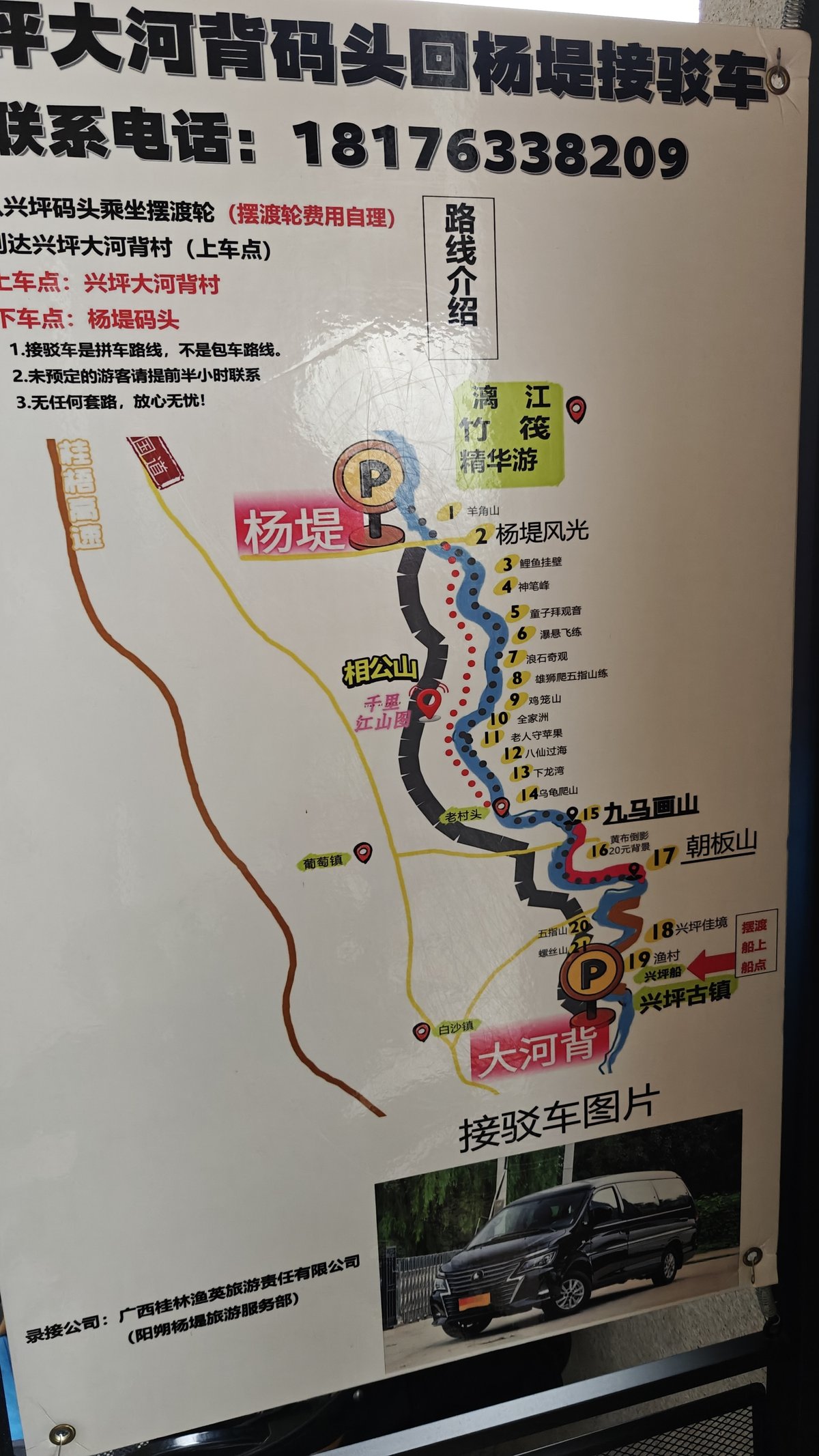
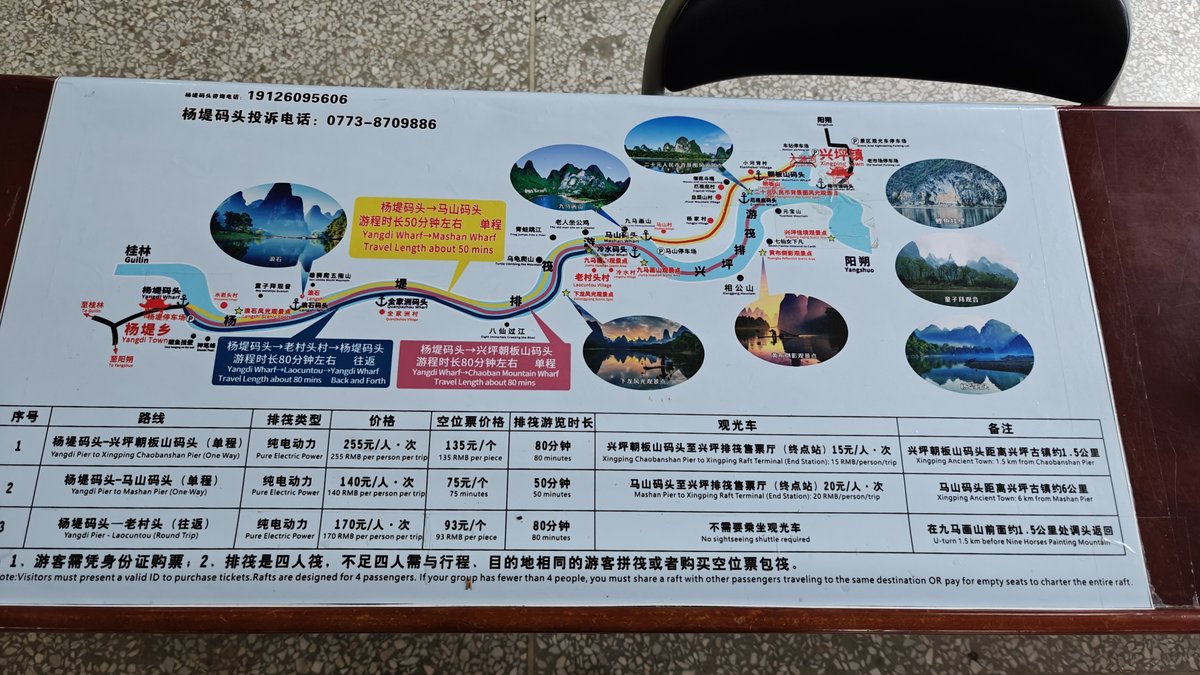
Our trip began from one of the primary docks where you catch bamboo rafts (the Yangdi dock). It had a price board listing various routes. We chose the Yangdi to Xingping portion, which is a roughly two-hour trip that passes through many of the scenic highlights, and then we waited for our raft number to be called.
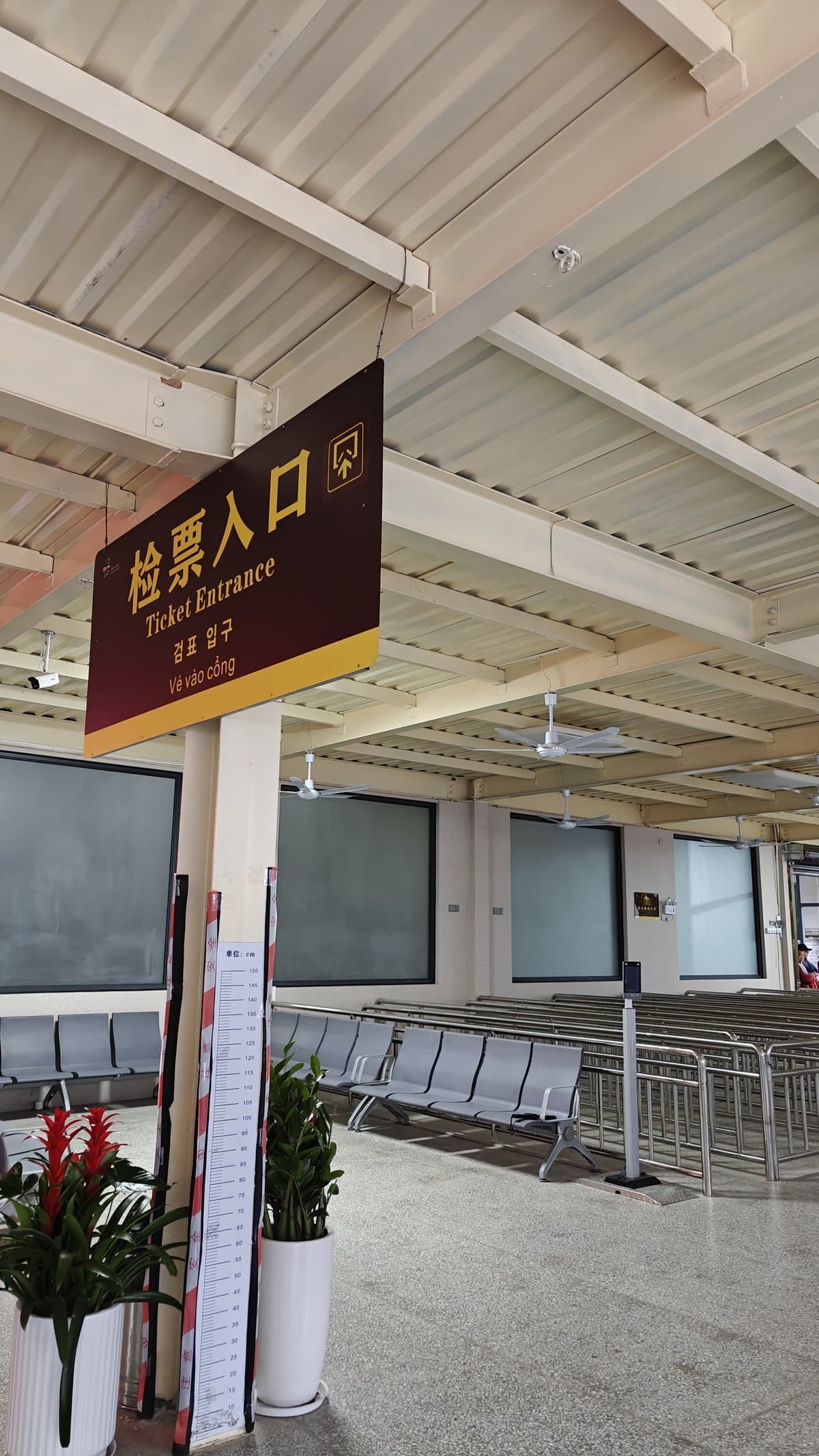
You buy your ticket at a little booth near entrance.
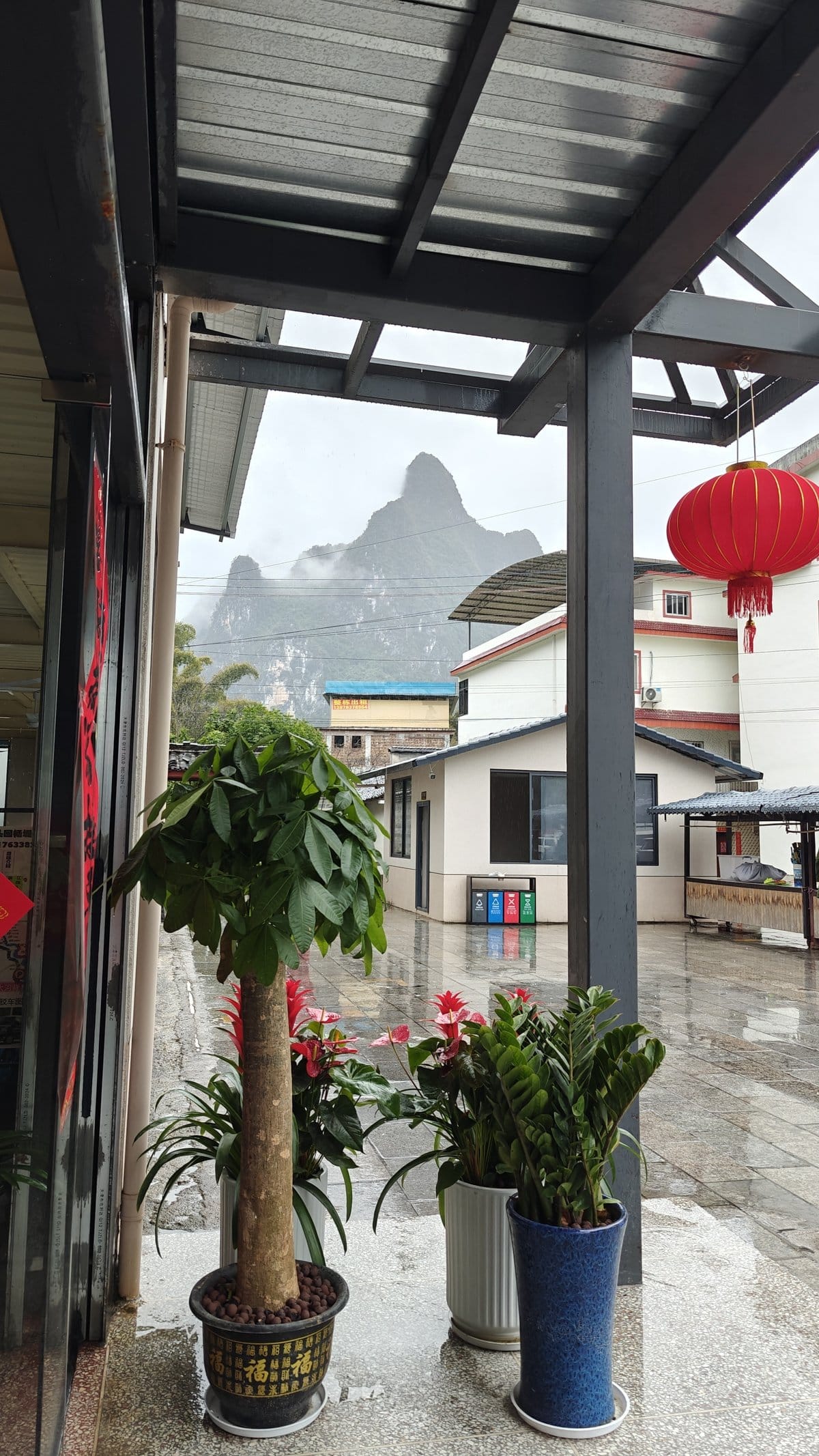
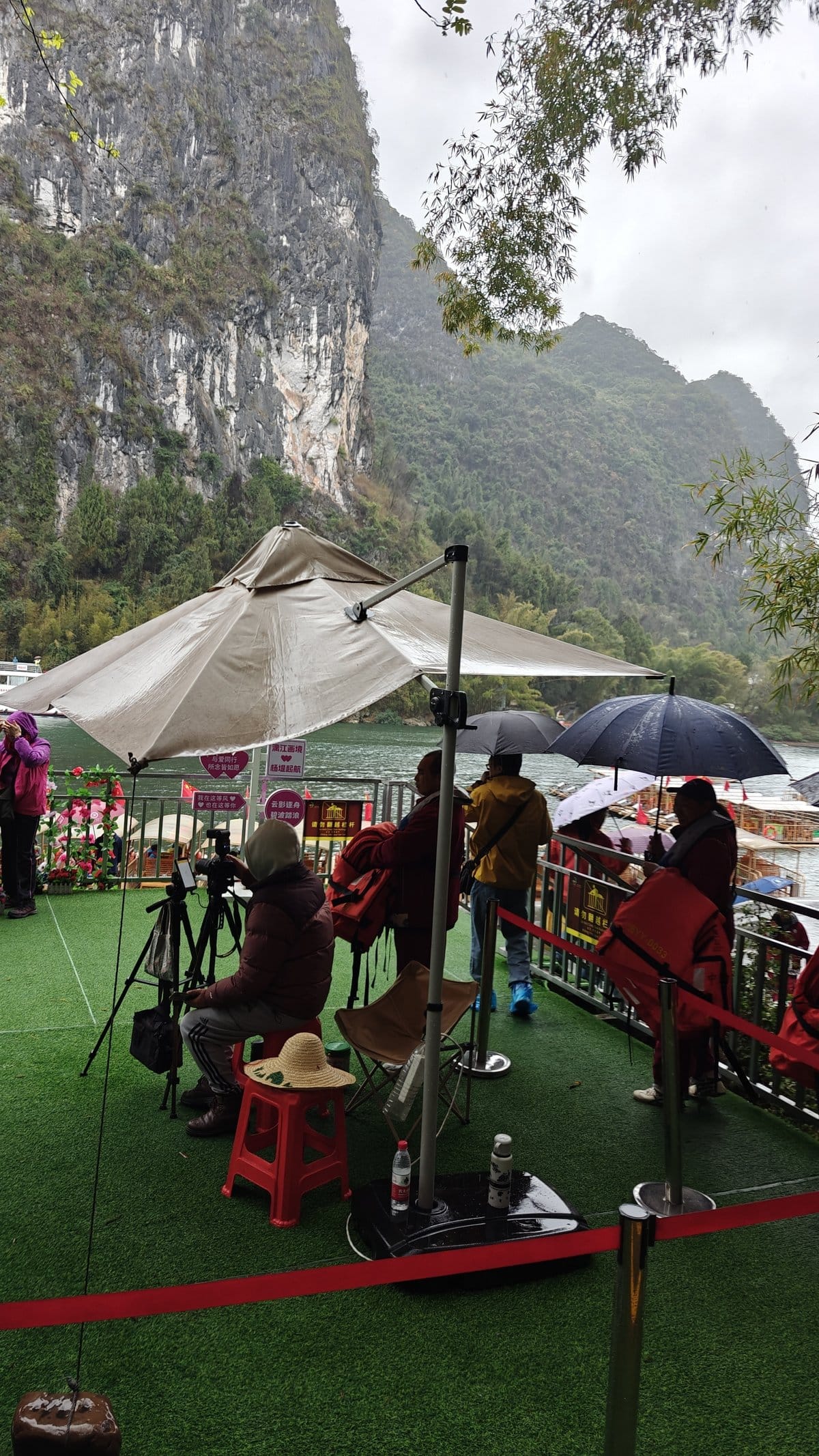
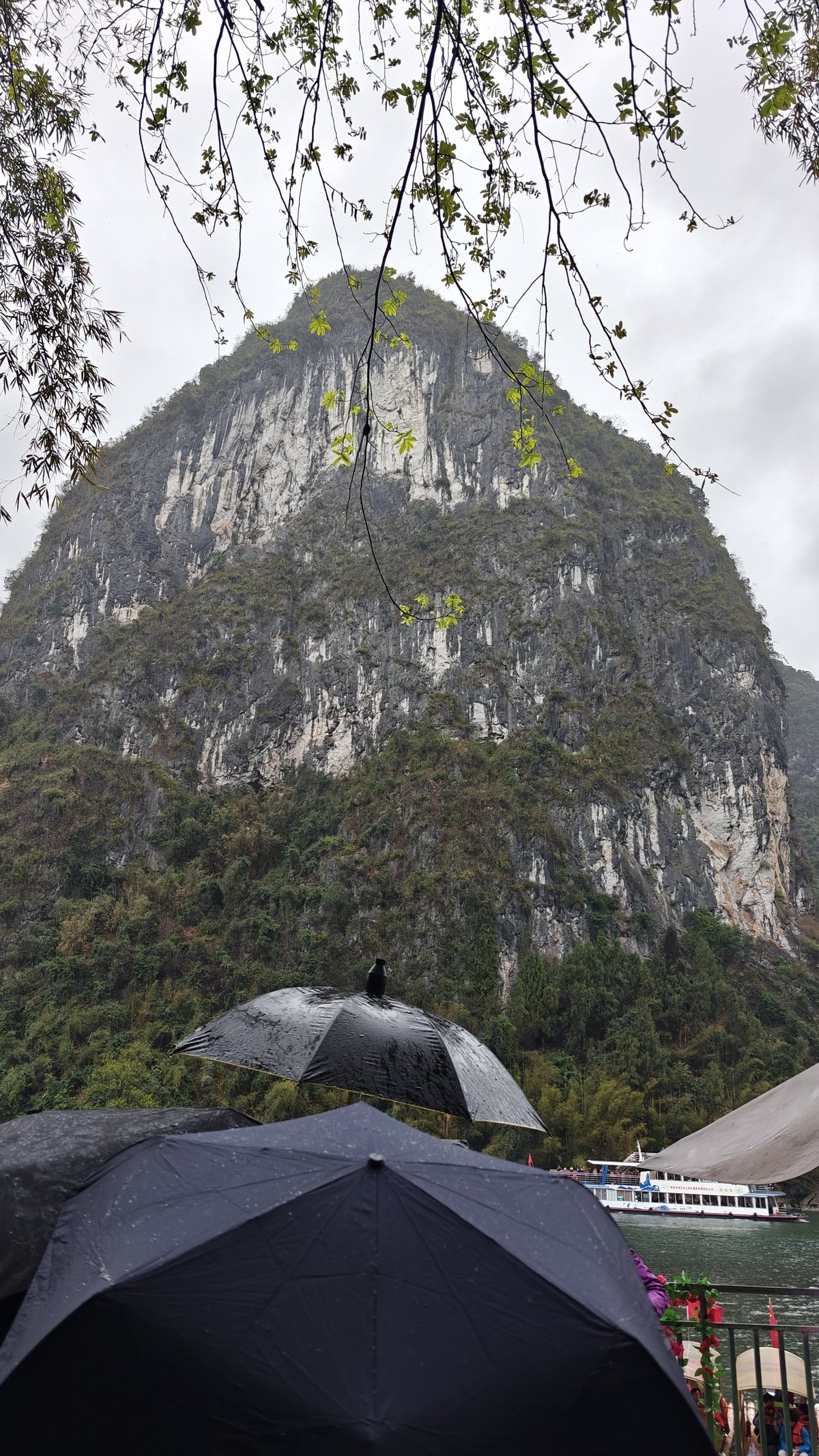
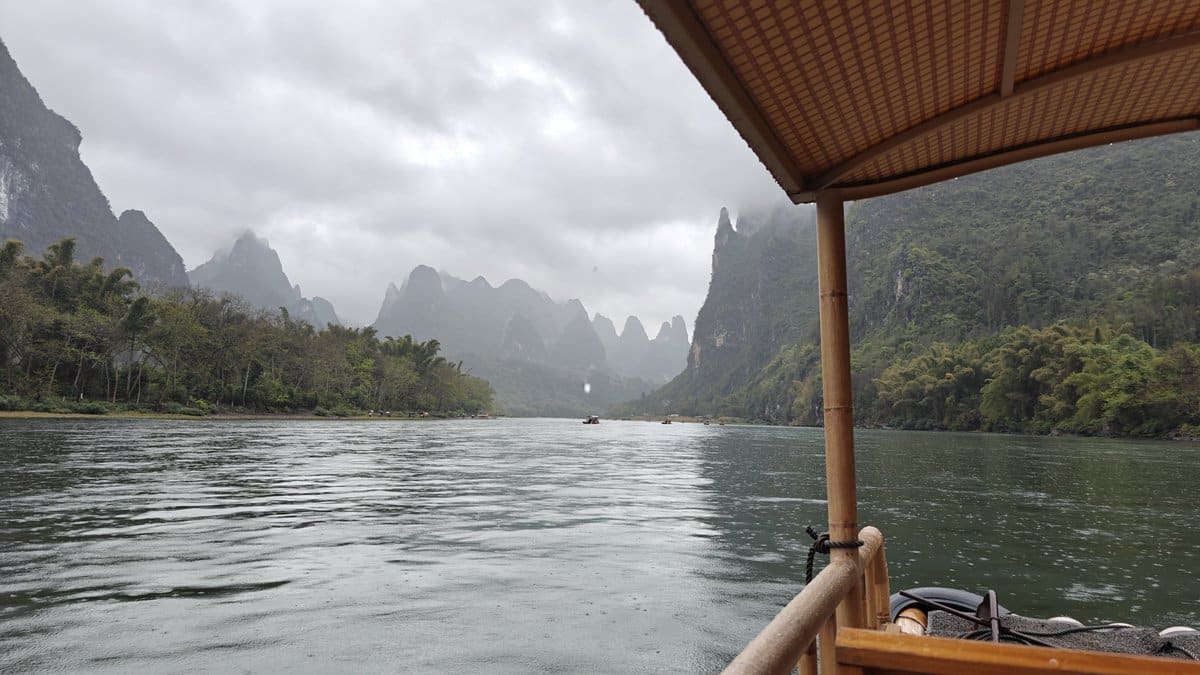
I’d been concerned that it would rain on me because the day I visited it was overcast and drizzly. But as it turns out, the mist just made everything look better. From the entrance of the dock, you can see these massive karst cliffs going off into low clouds.
Even just standing there, you feel like you’re in a different world, all quiet and a little unreal. Along the walk down to the water is several photo spots set up but honestly they all looked good that day.
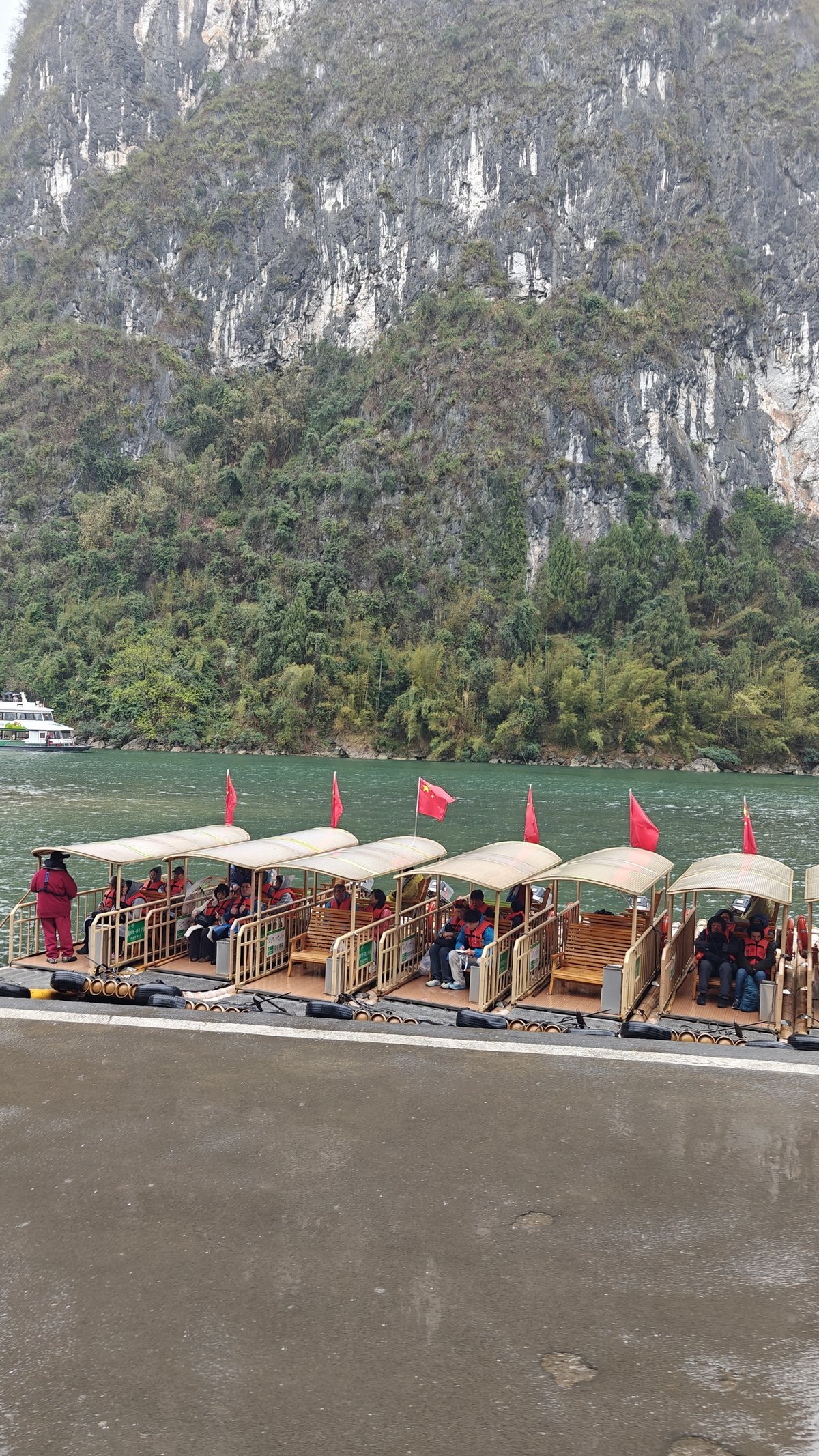
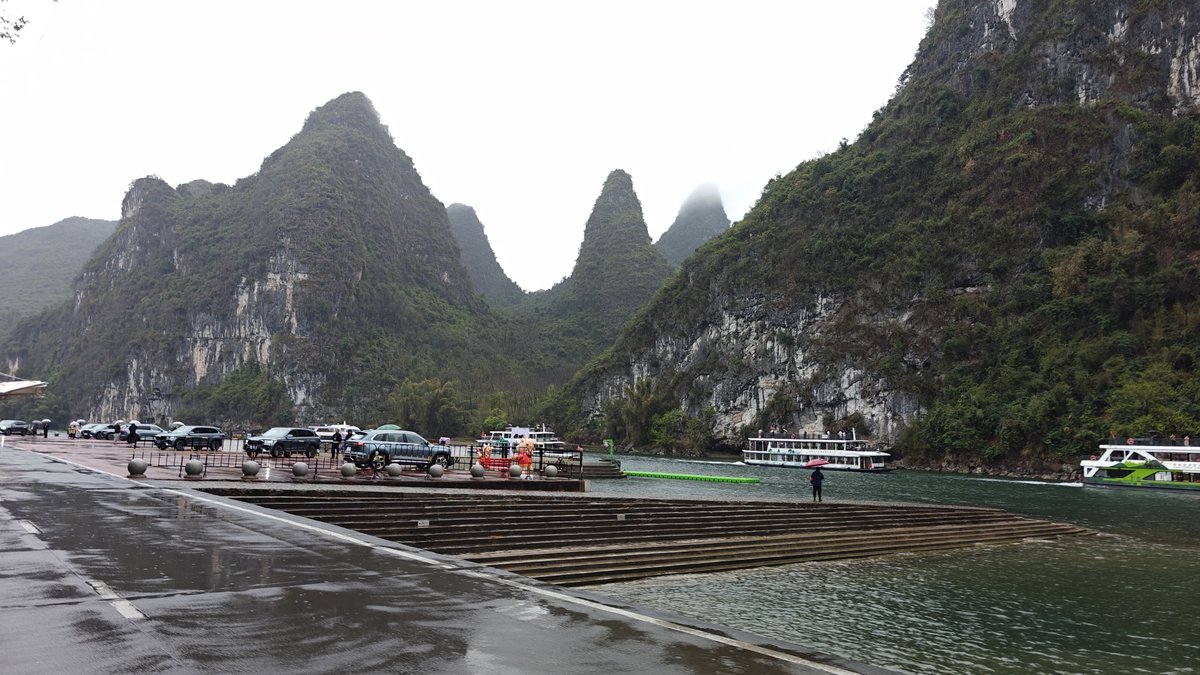
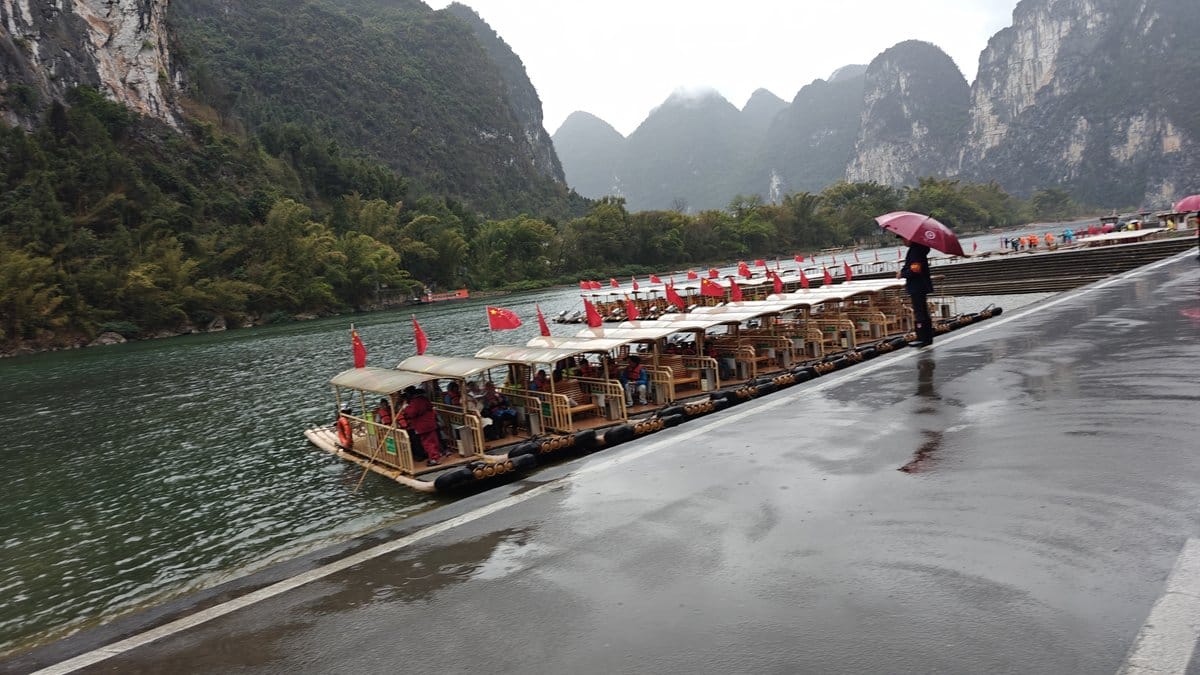
Dozens of bamboo rafts was tied up and waiting, lining the dock itself. Plastic chairs had been bolted onto the deck of each raft, along with a little canopy over them, not the most traditional set-up but very practical when it’s raining. Ahead of us, I could see other groups boarding their own rafts, everyone dressed in their life jackets and raincoats.
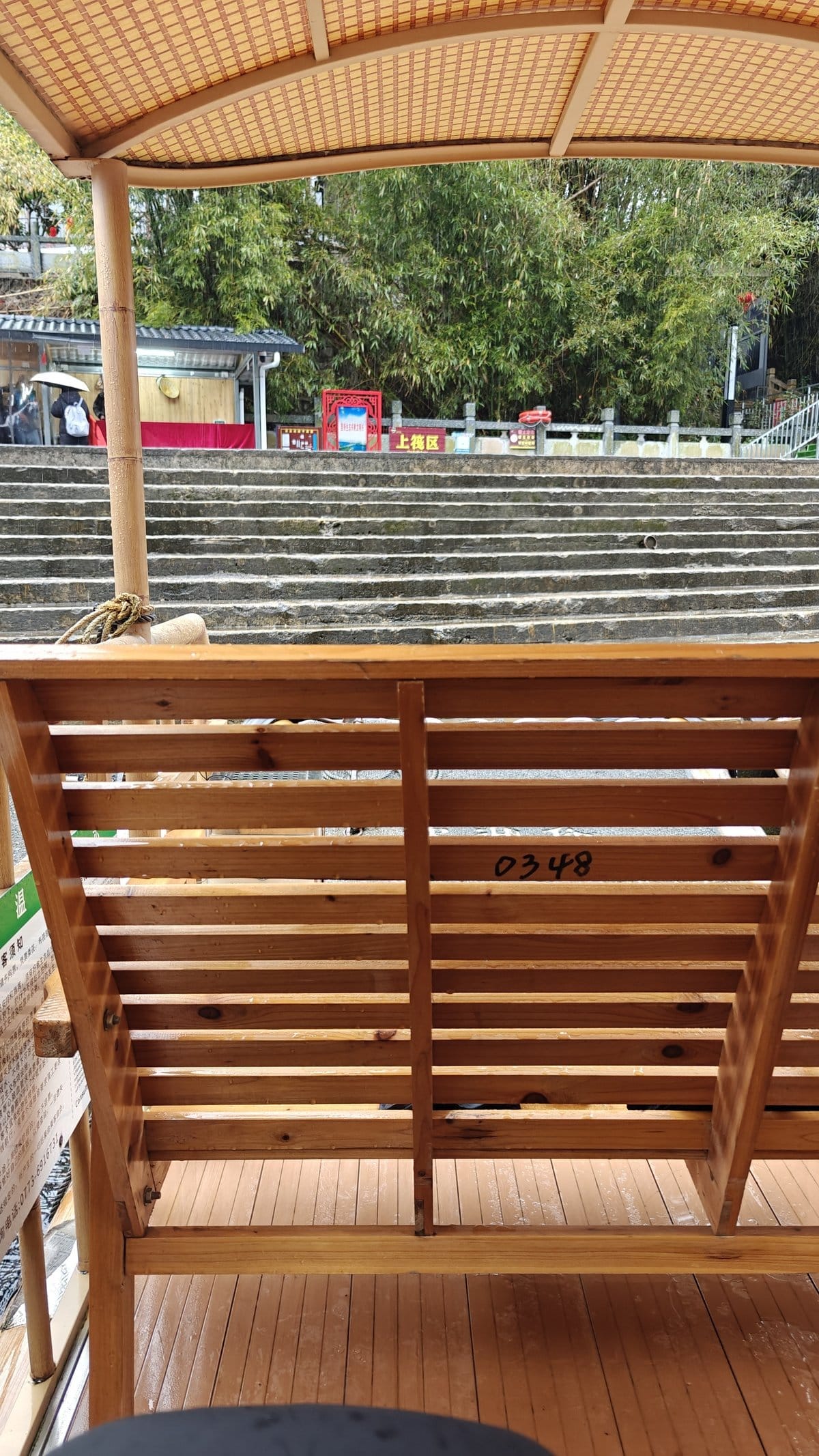
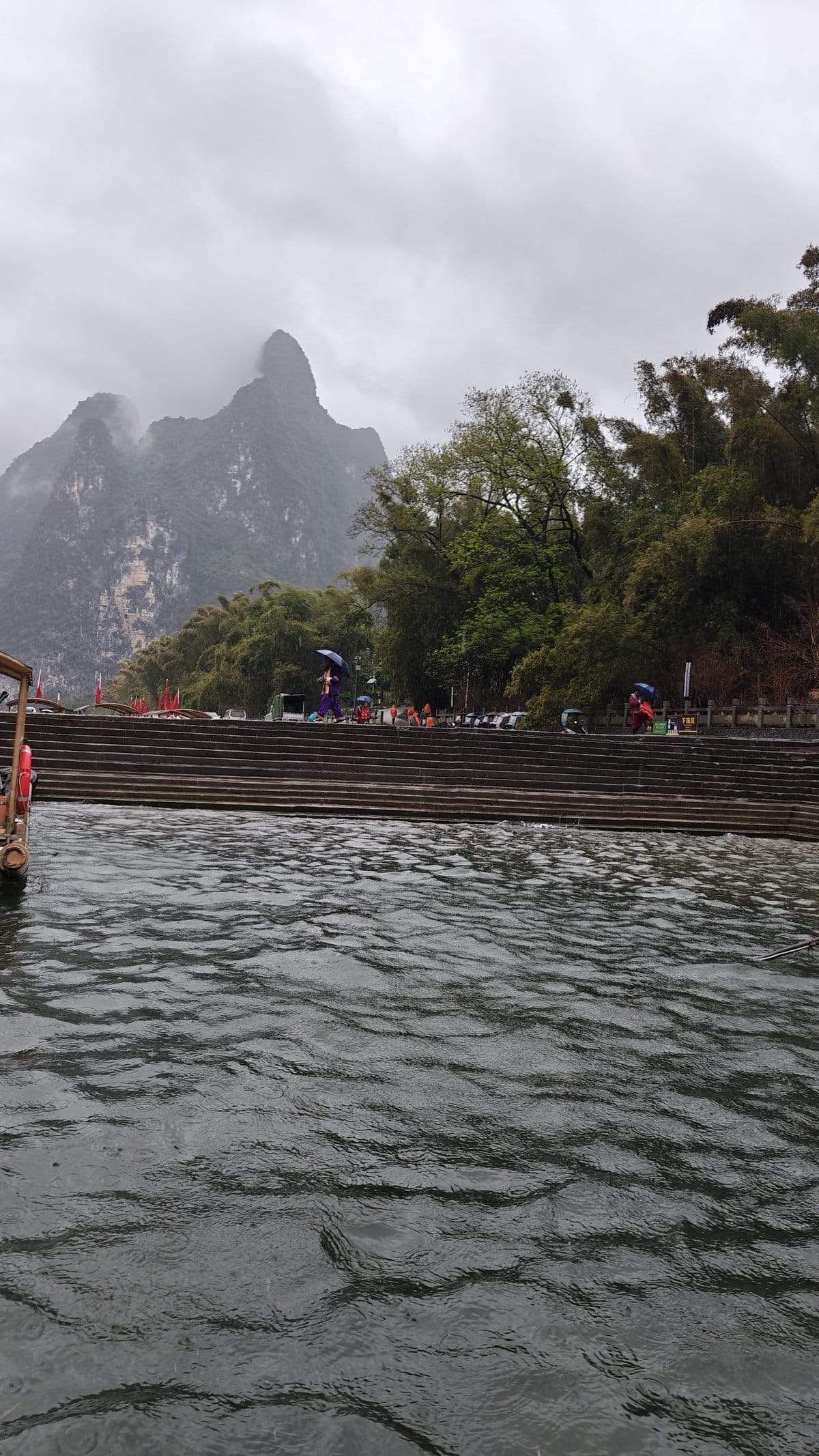
After getting in our raft and sitting down on the plastic seats, the boatman used his long pole to push us away from the dock. Out into current we floated and before we knew it the mountains was everywhere. The sound of the water and the rain made up most of the noise and the motor at the back of the raft wasn’t loud enough to ruin anything, it was nice and quiet.
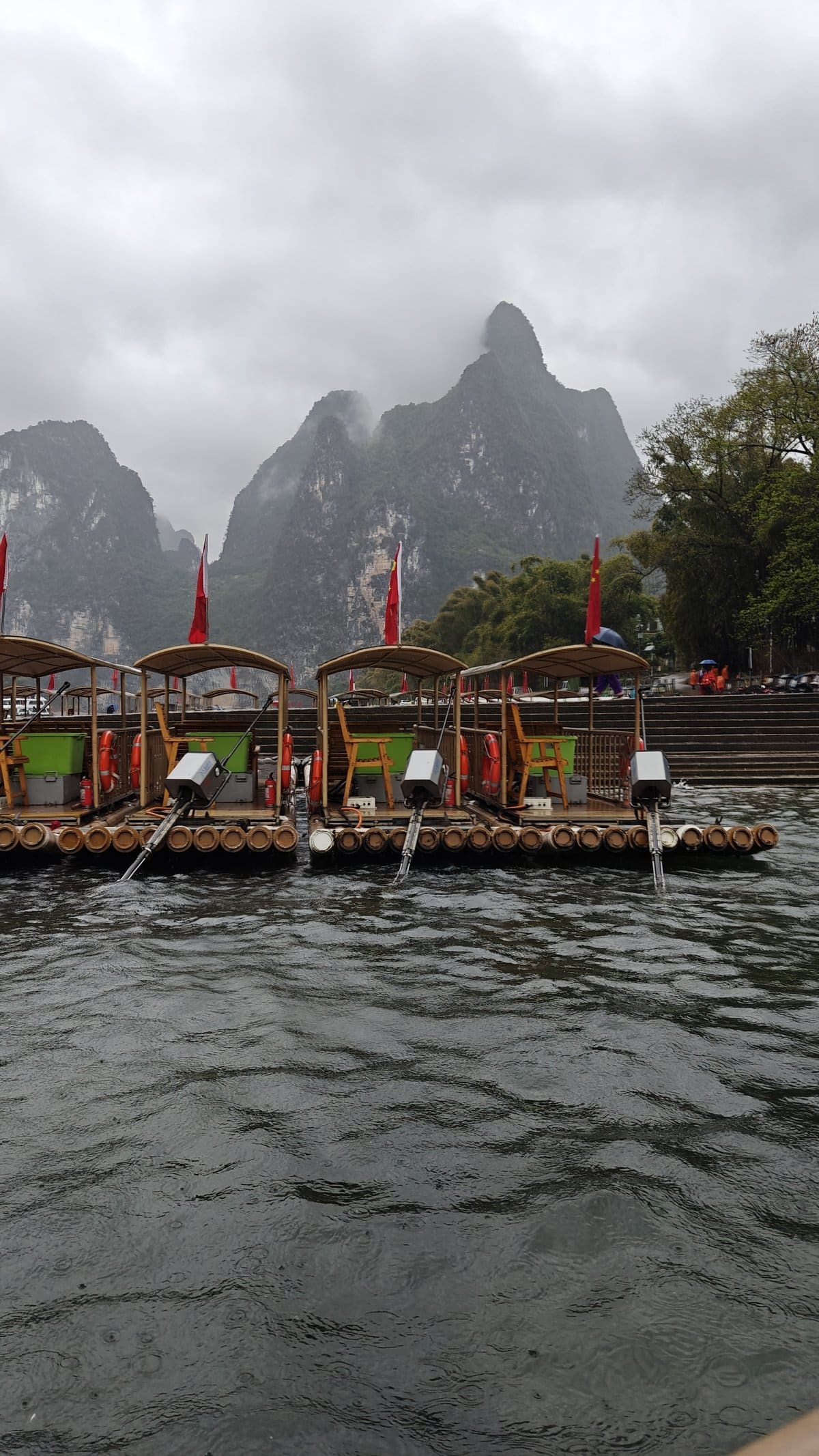
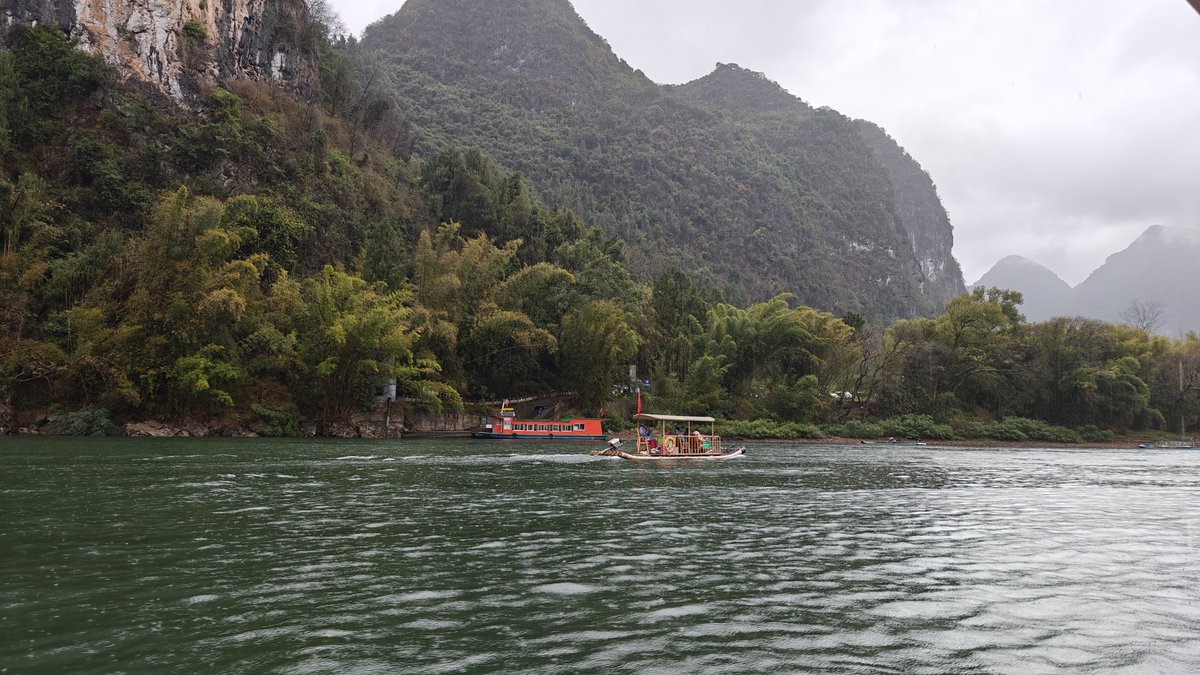
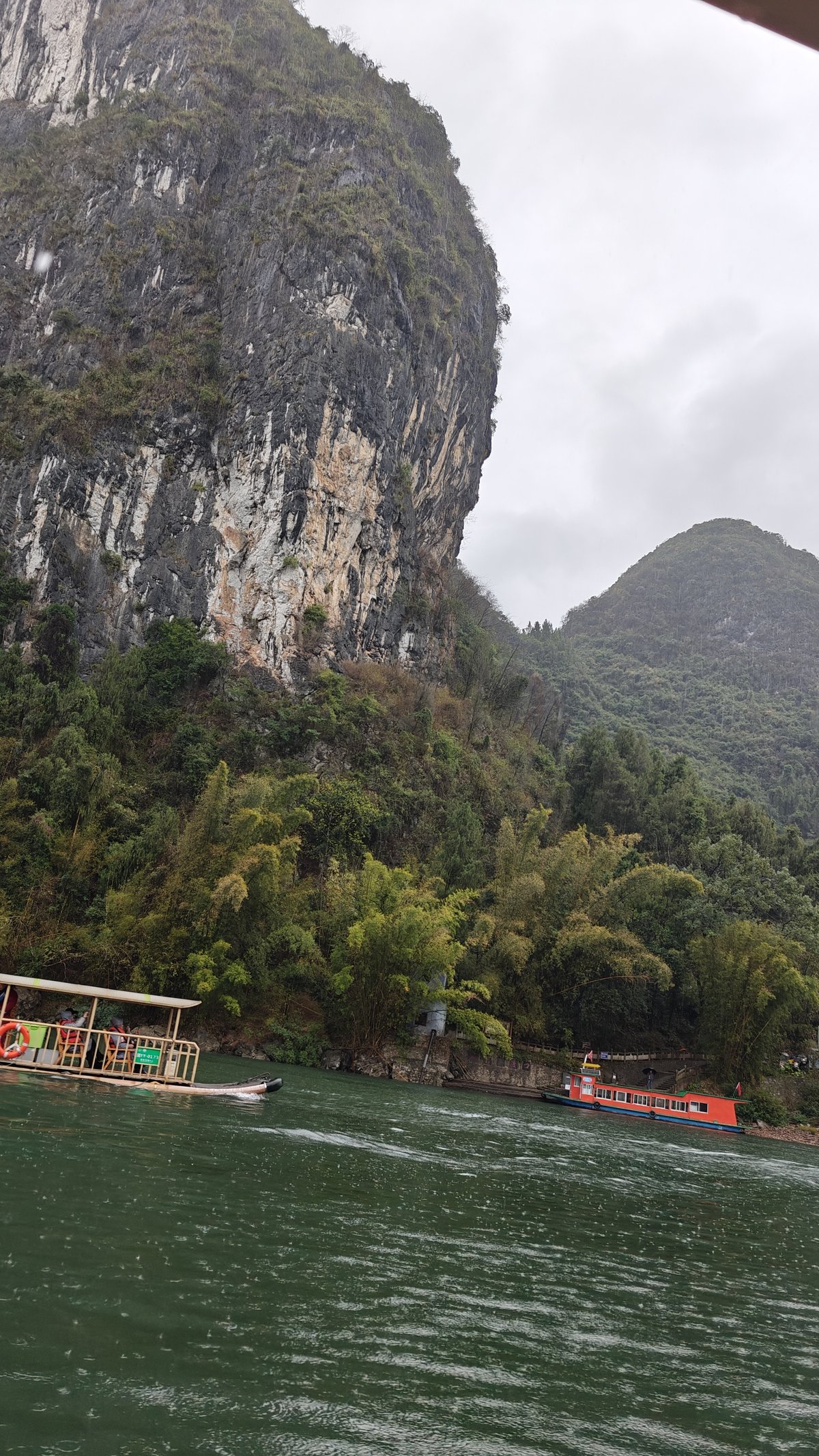
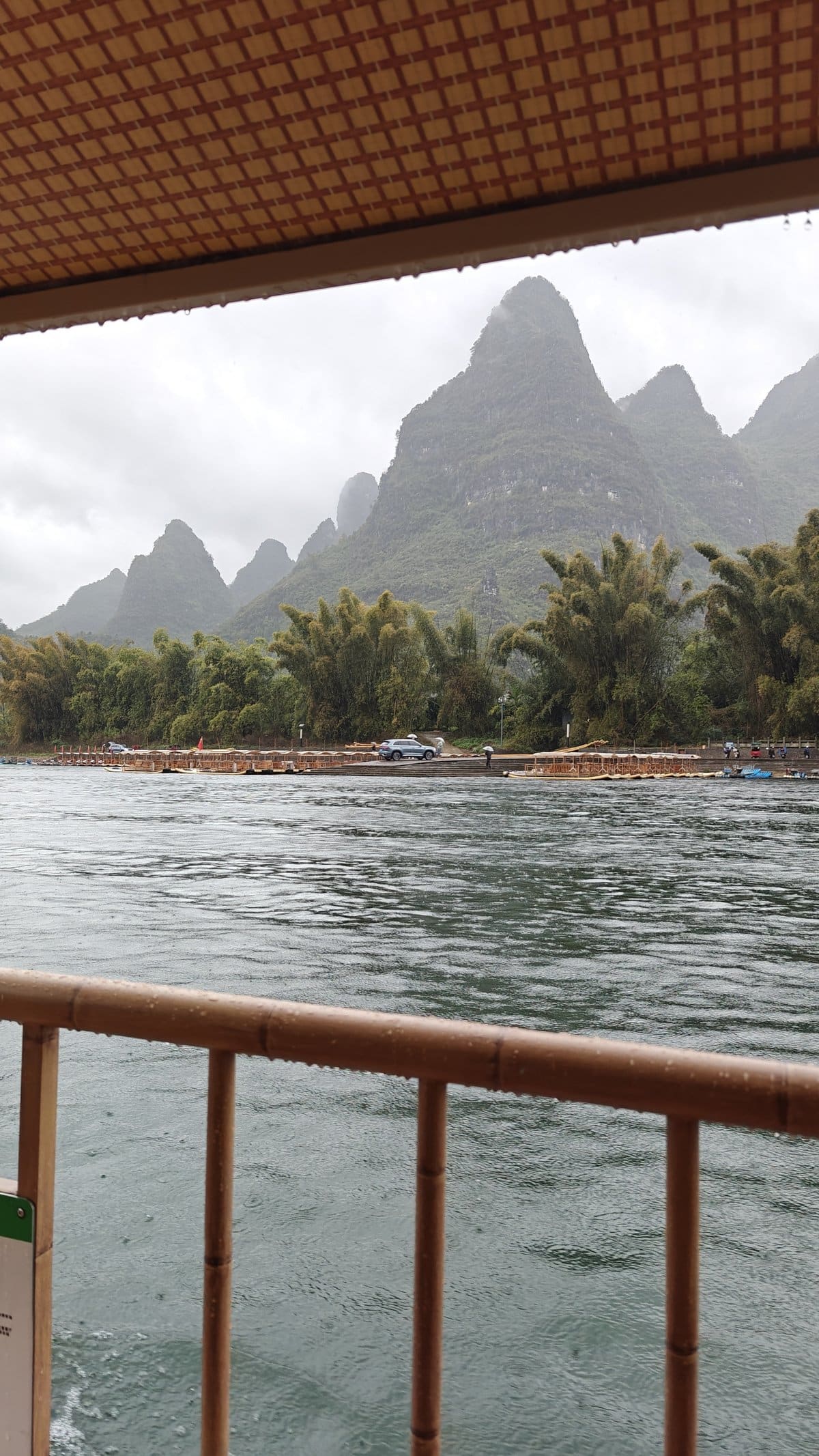
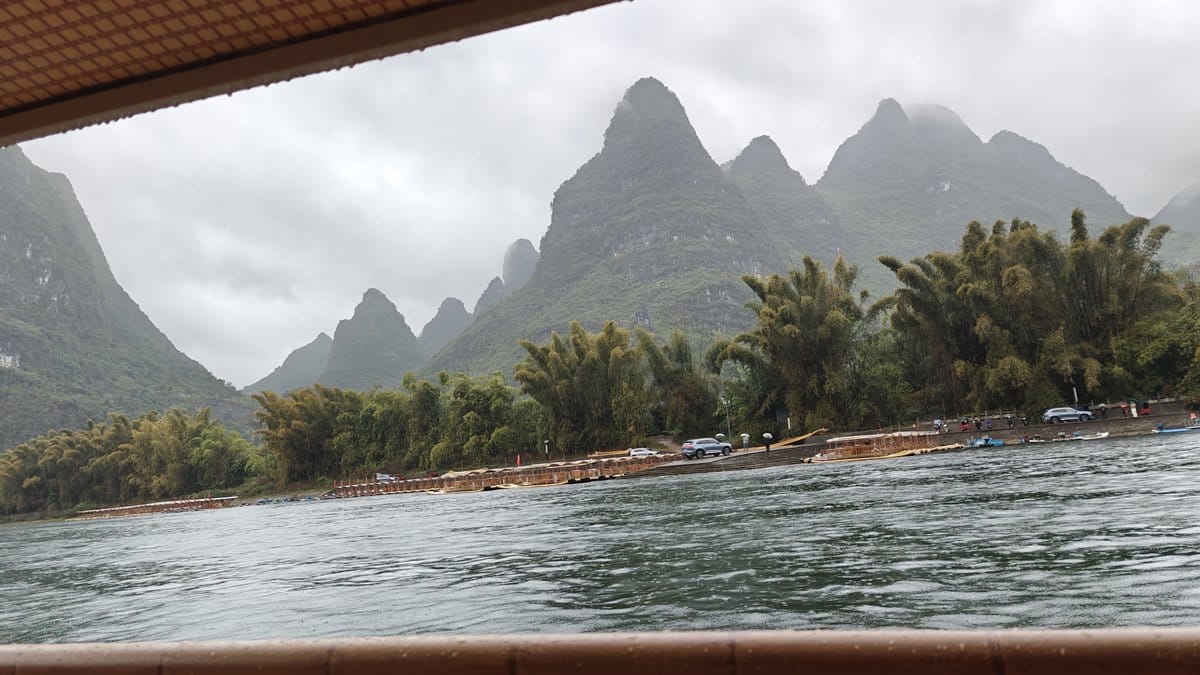
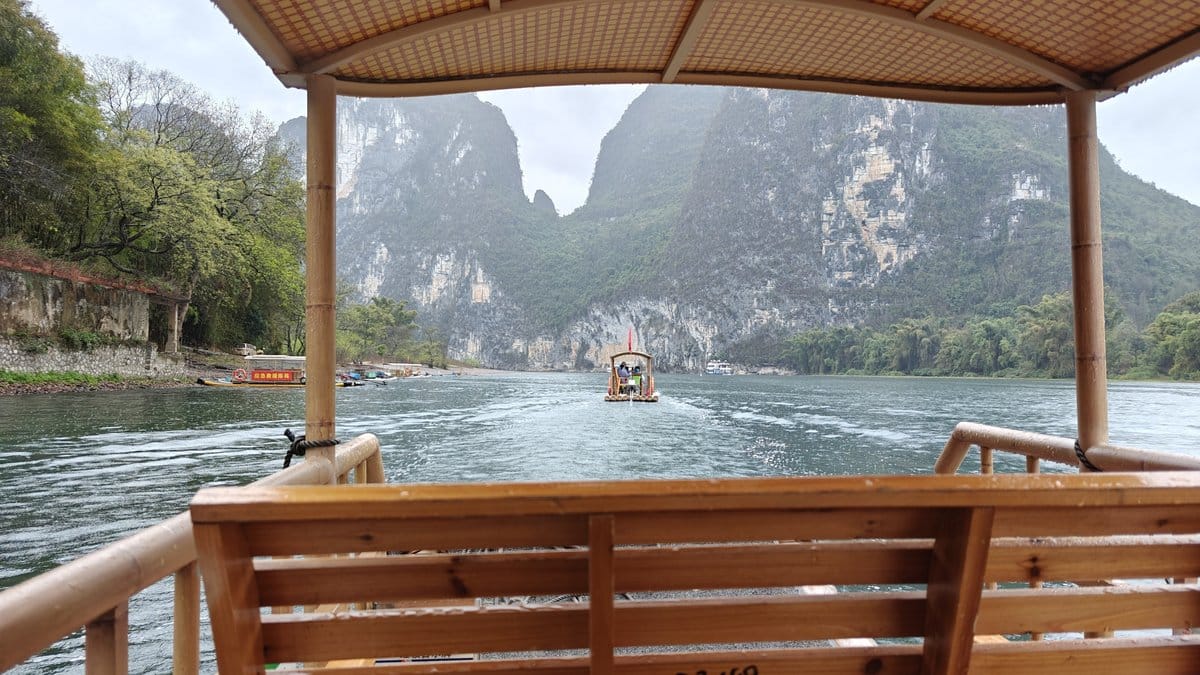
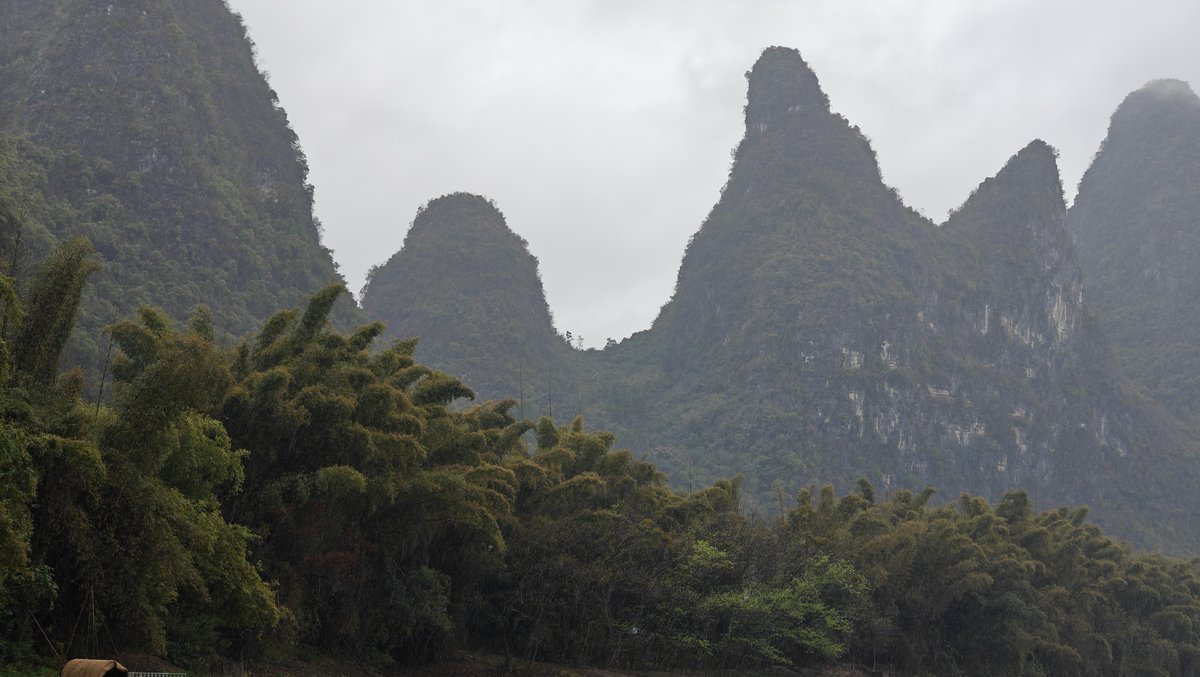
I spent the first twenty minutes or so snapping away, but soon I gave up because it’s basically the same scene over again with just a slightly different angle. Massive limestone cliffs popped out of the fog. Some were steep and tall, while others was rounder and layered on top of each other.
It was difficult to grasp the size. One minute you think it is just a hill, but then you see the little raft down below and realize it is twice the size you thought.
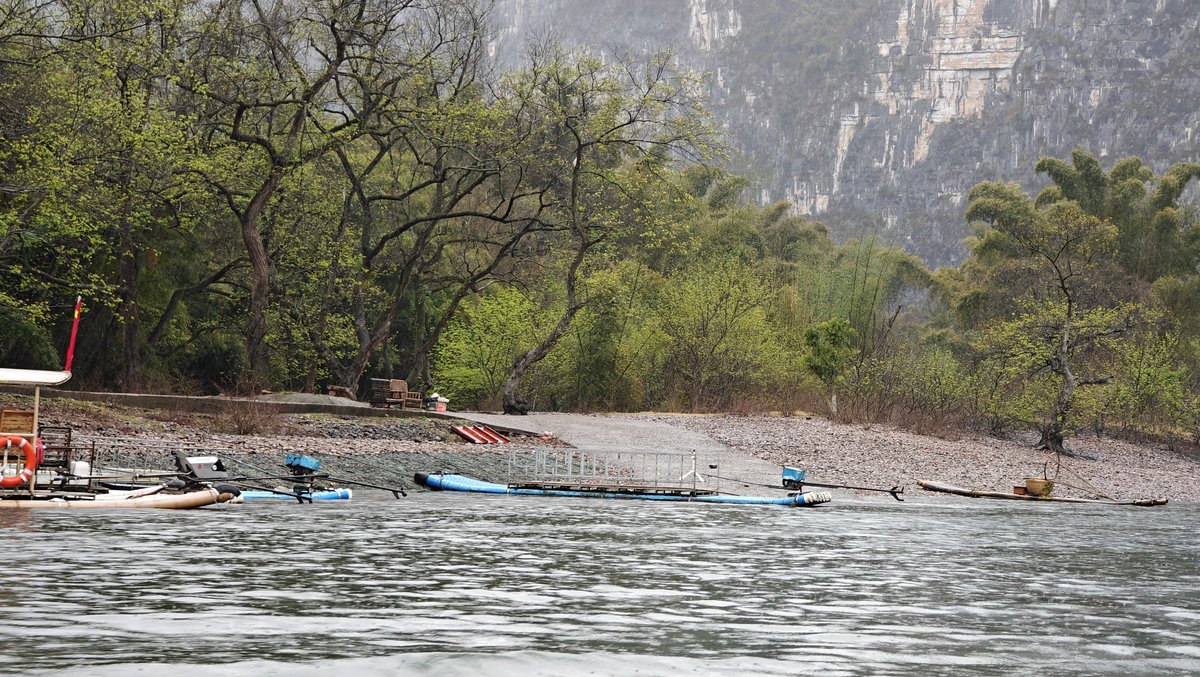
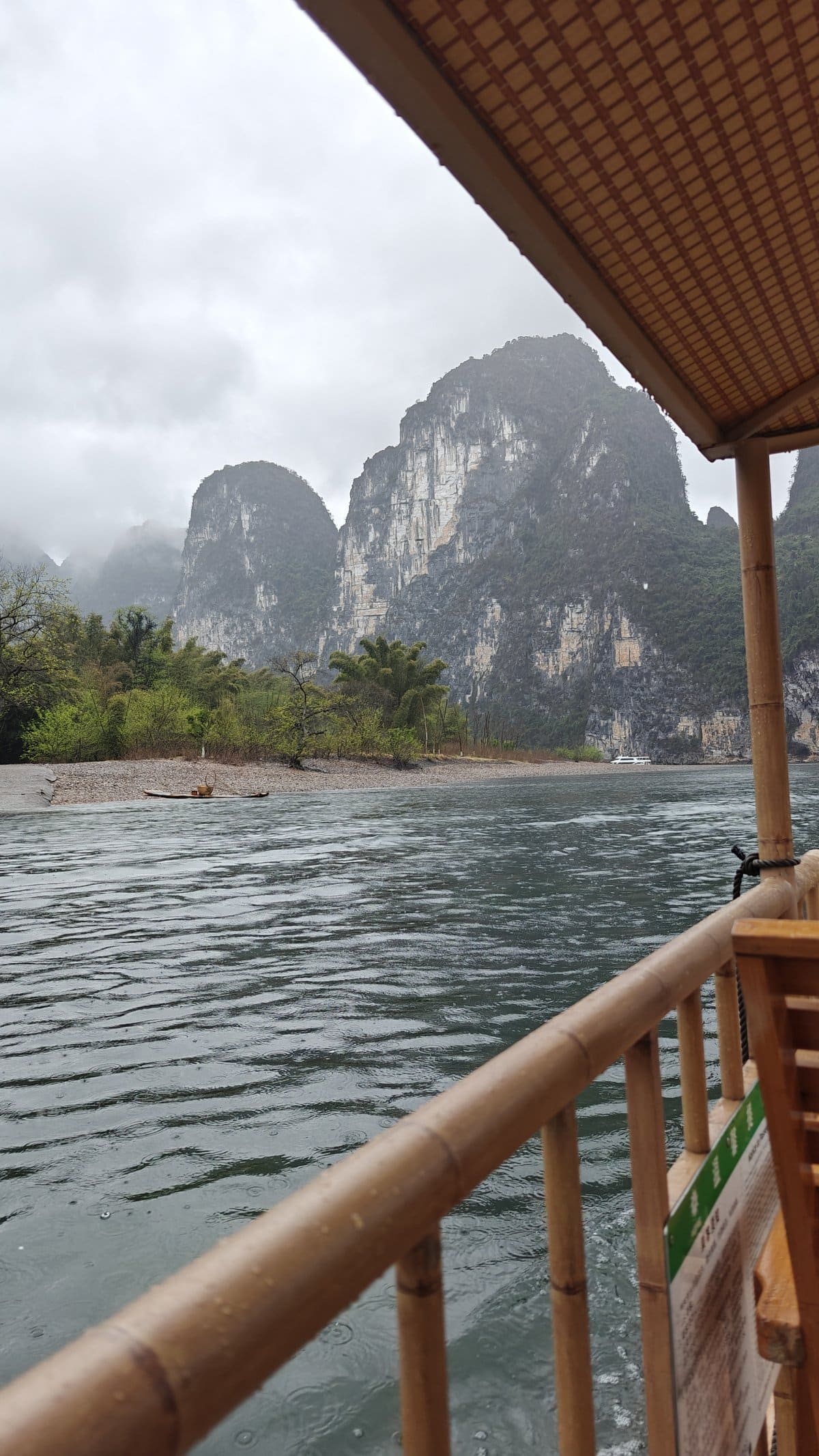
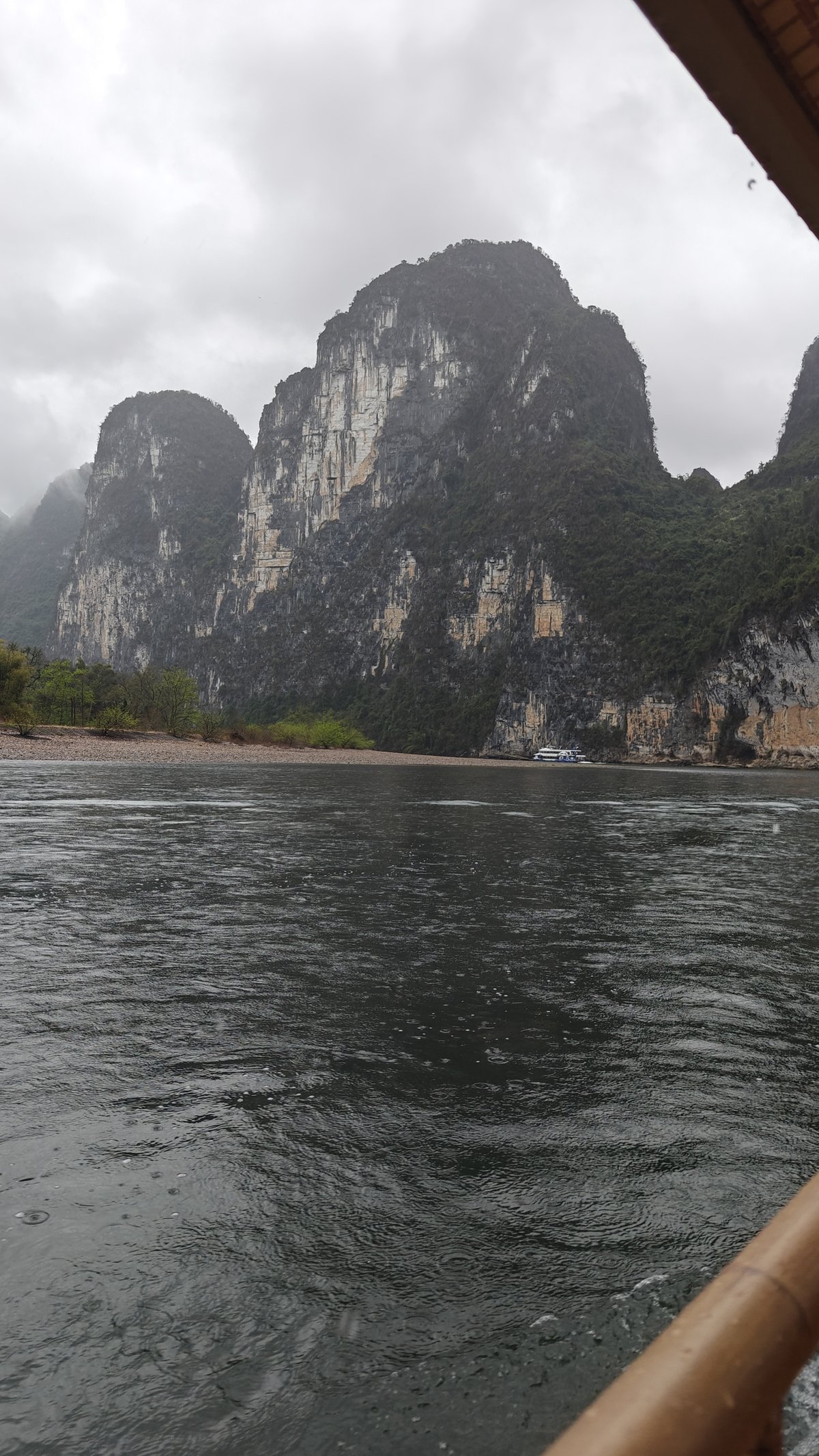
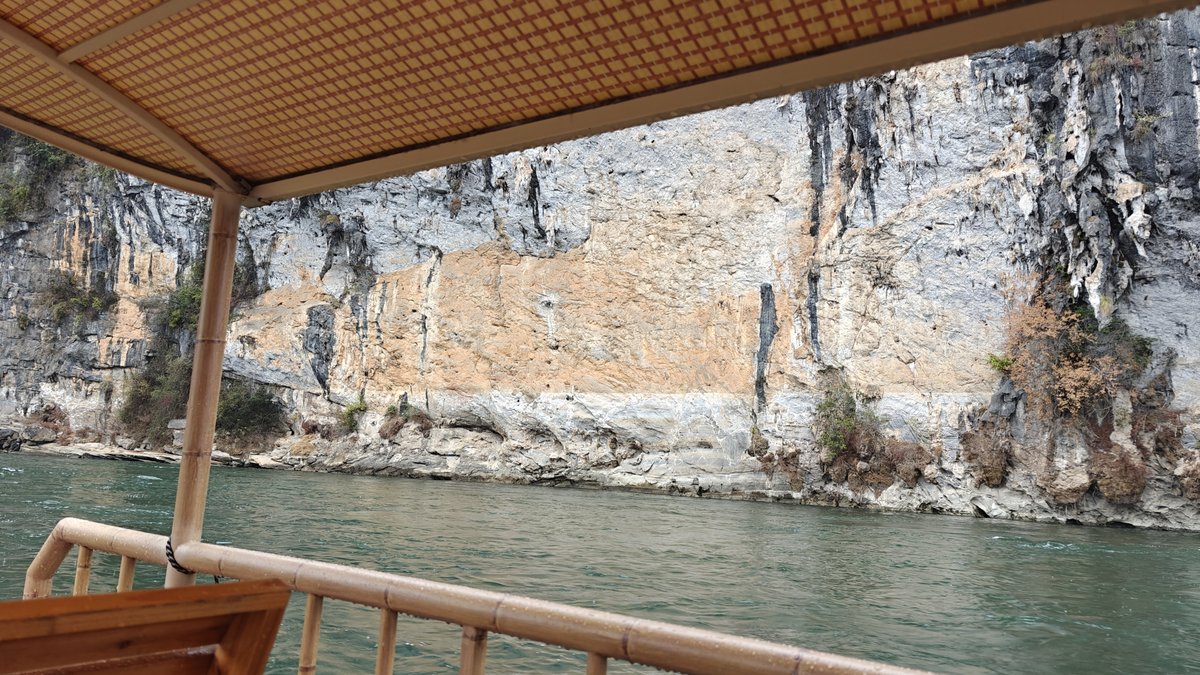
There were parts where we got right next to the water with the cliff literally coming all the way down, and parts with gravel banks. There was these grooves on some of the rocks that went deep into them; they was striated and you could tell that the rain was gnawing away at them for thousands of years. The fog moved in waves so that at times the peaks dissapears only to show up again closer than before.
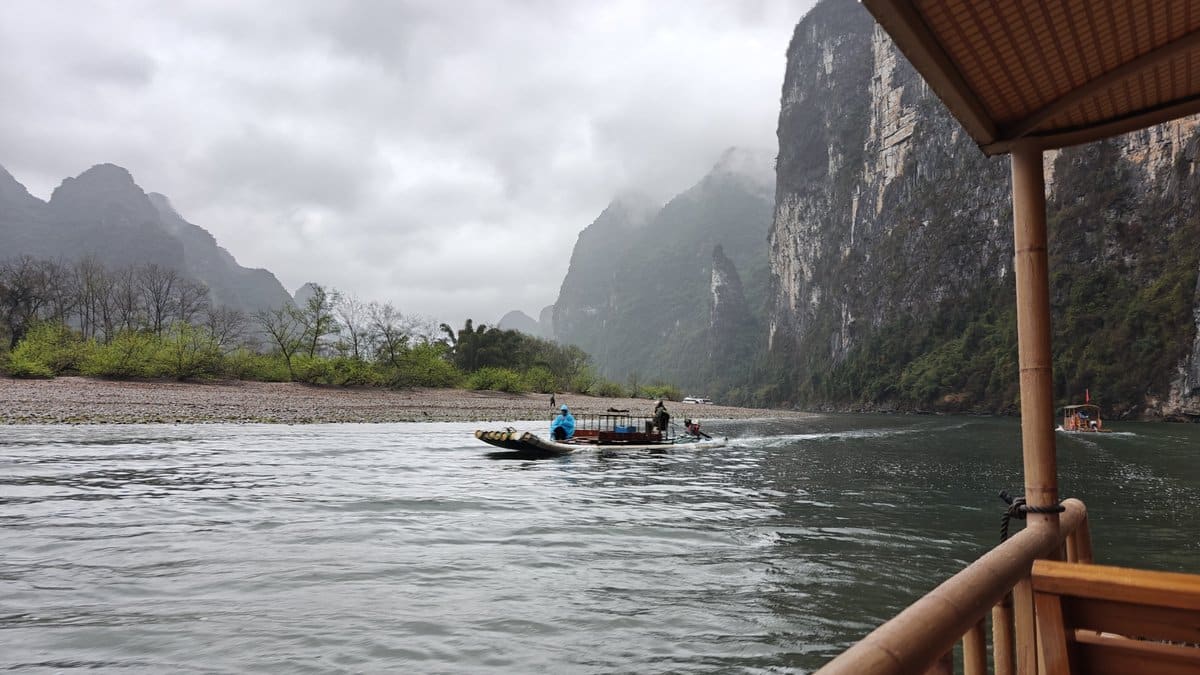
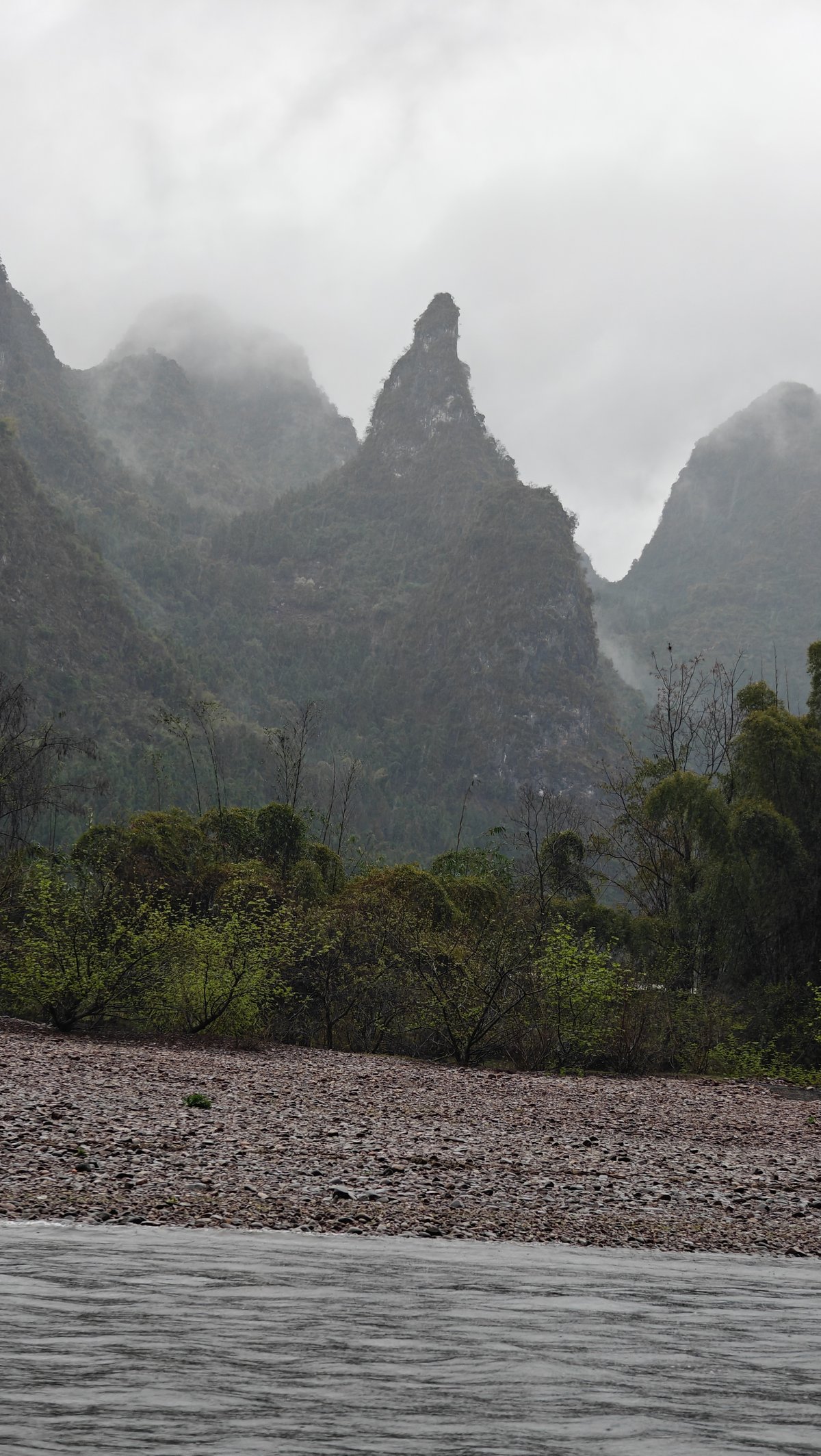
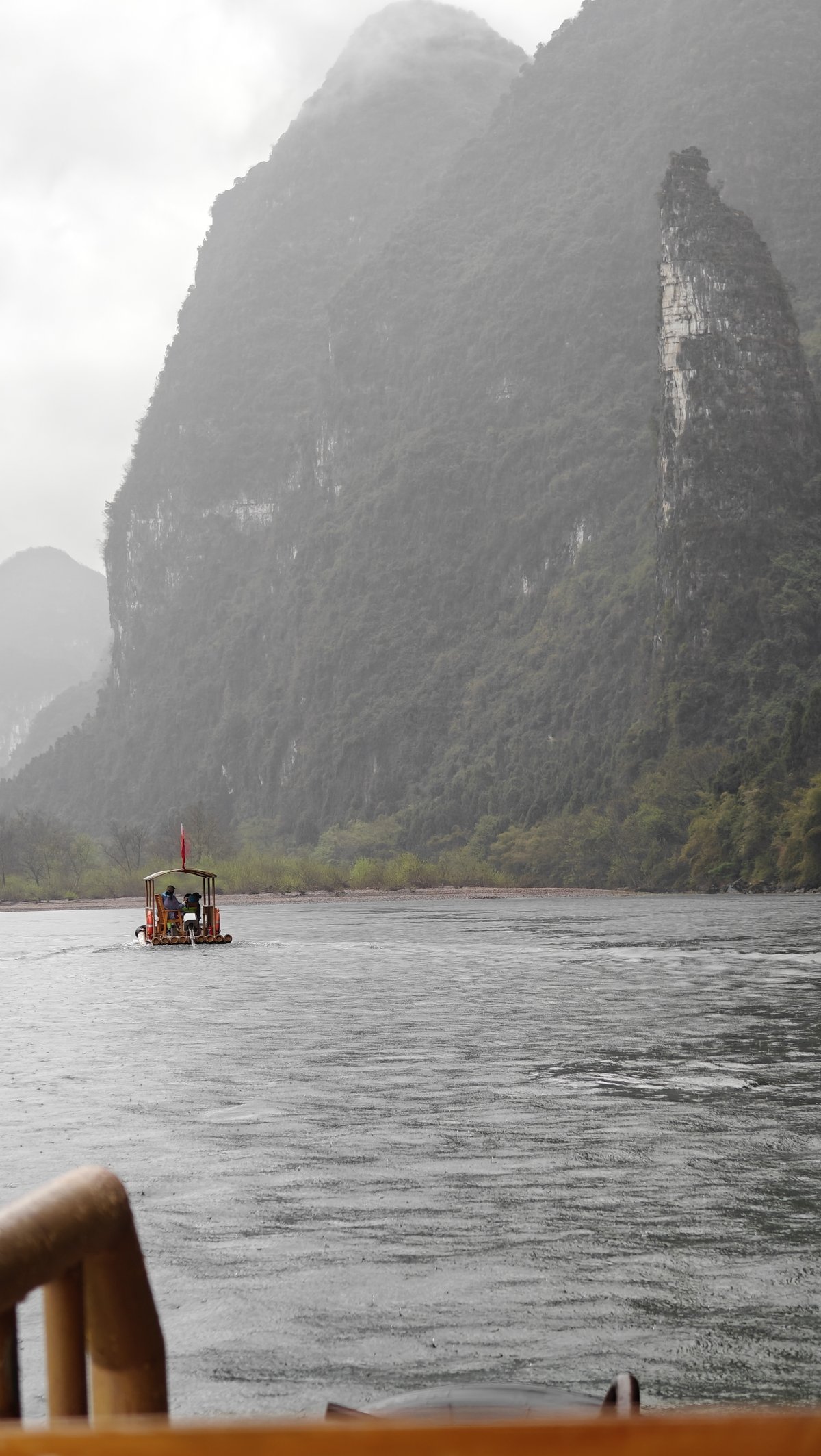
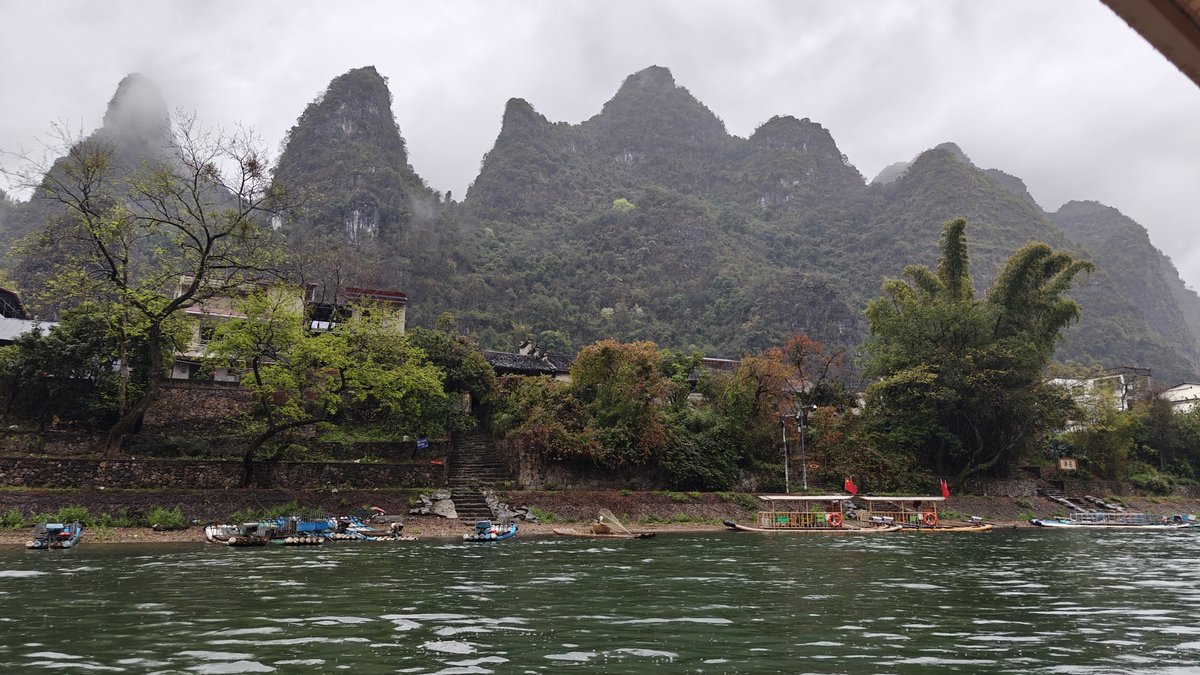
We passed other bamboo rafts now and again, and occasionally there was a single fisherman in one of the small boat out fishing. Now and then there was a village nestled on the banks of the river, just a handful of homes squeezed at the feet of the karsts. I thought how nice it would be to wake up to those peaks every day, after a while, though, I guess you’d get used to them.
I could never imagine that.
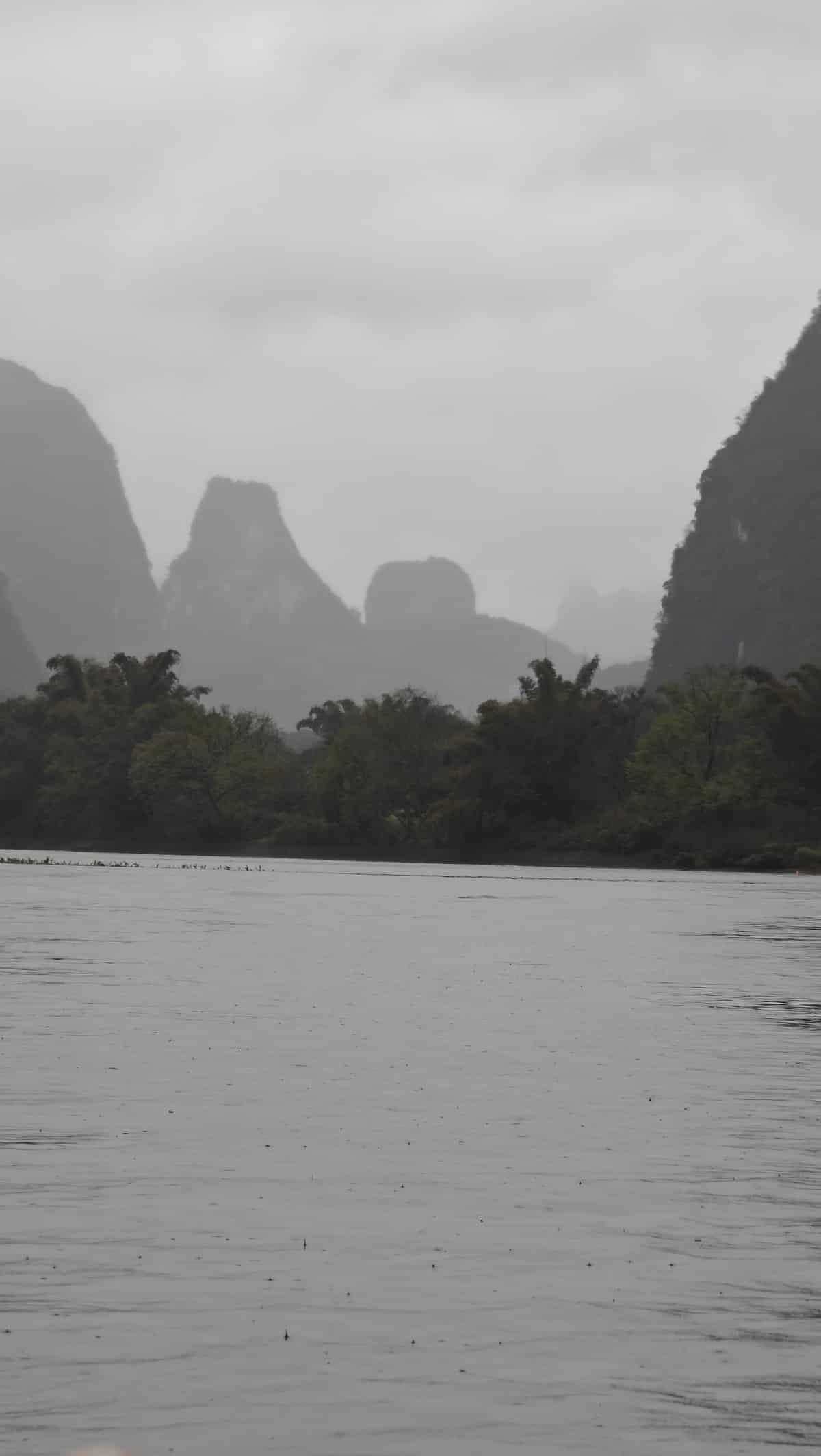
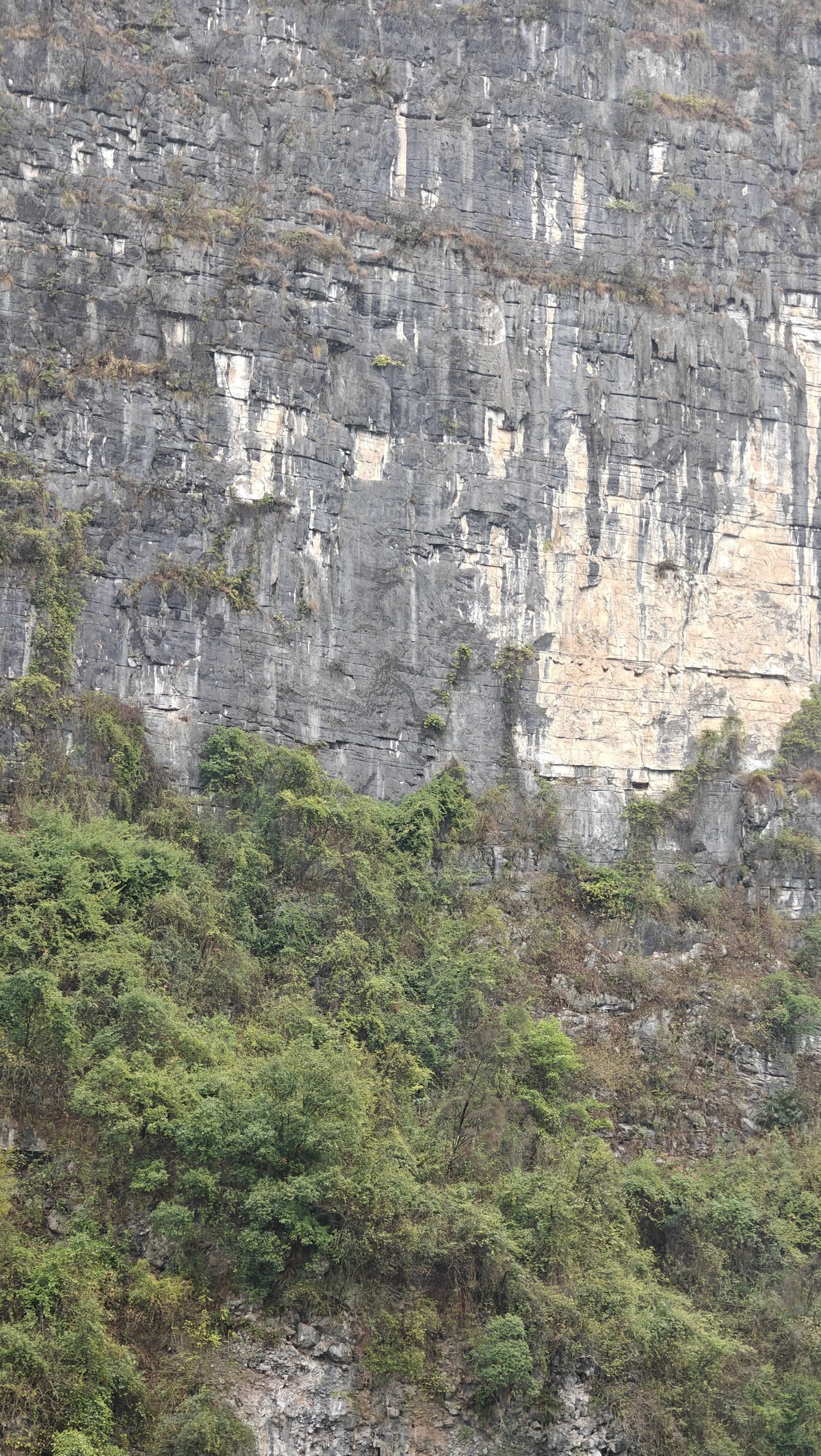
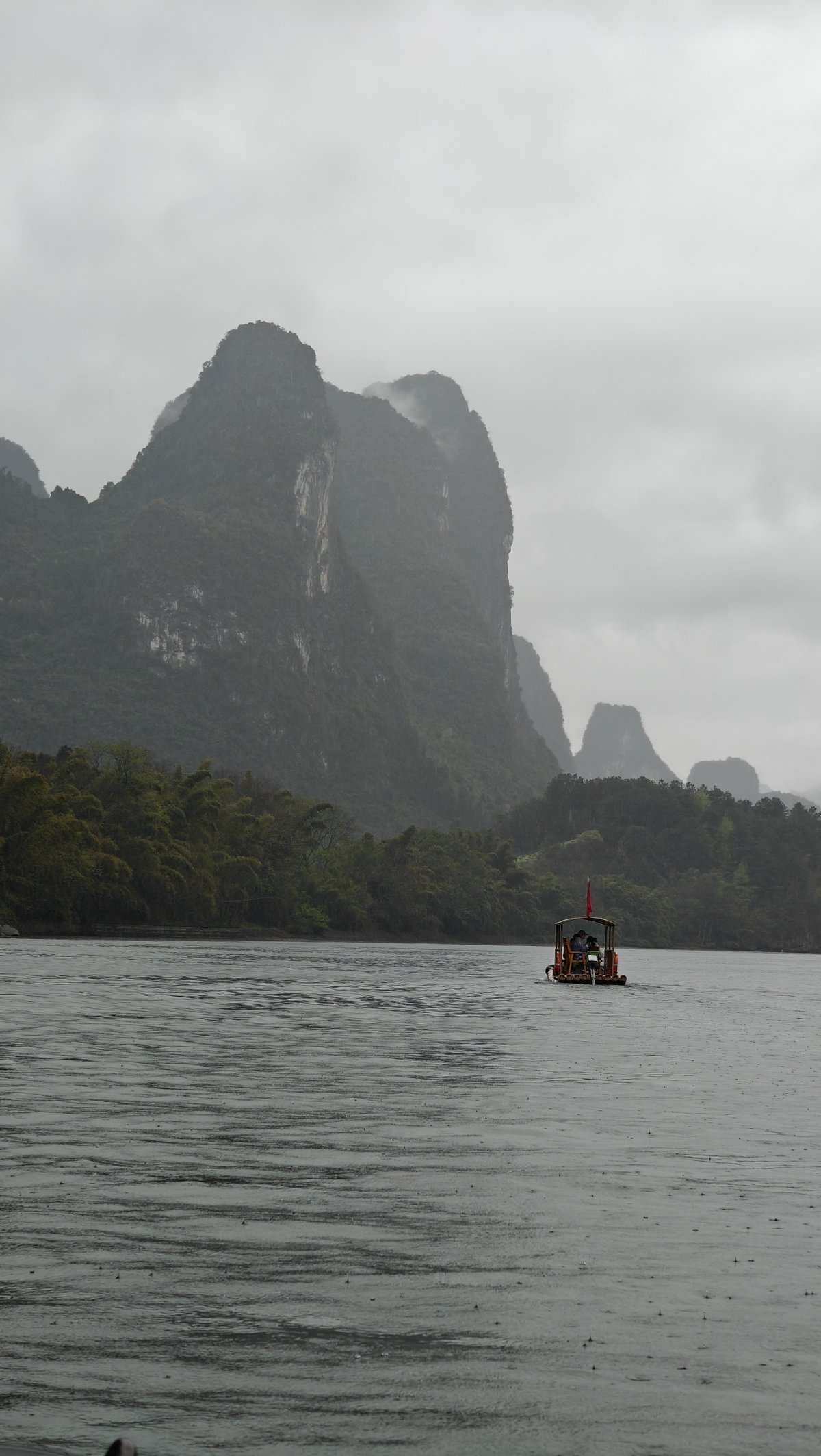
Nine Horses Mural Hill was one of the sights we passed on our way there. It is one of the stops along path that is said to have rock formations resembling nine horses if you squint really hard. Sorry, I didn’t see anything; but it was still an interesting place to stop, with a giant textured cliff wall.
Our boatman also slowed here for people to get some pictures.
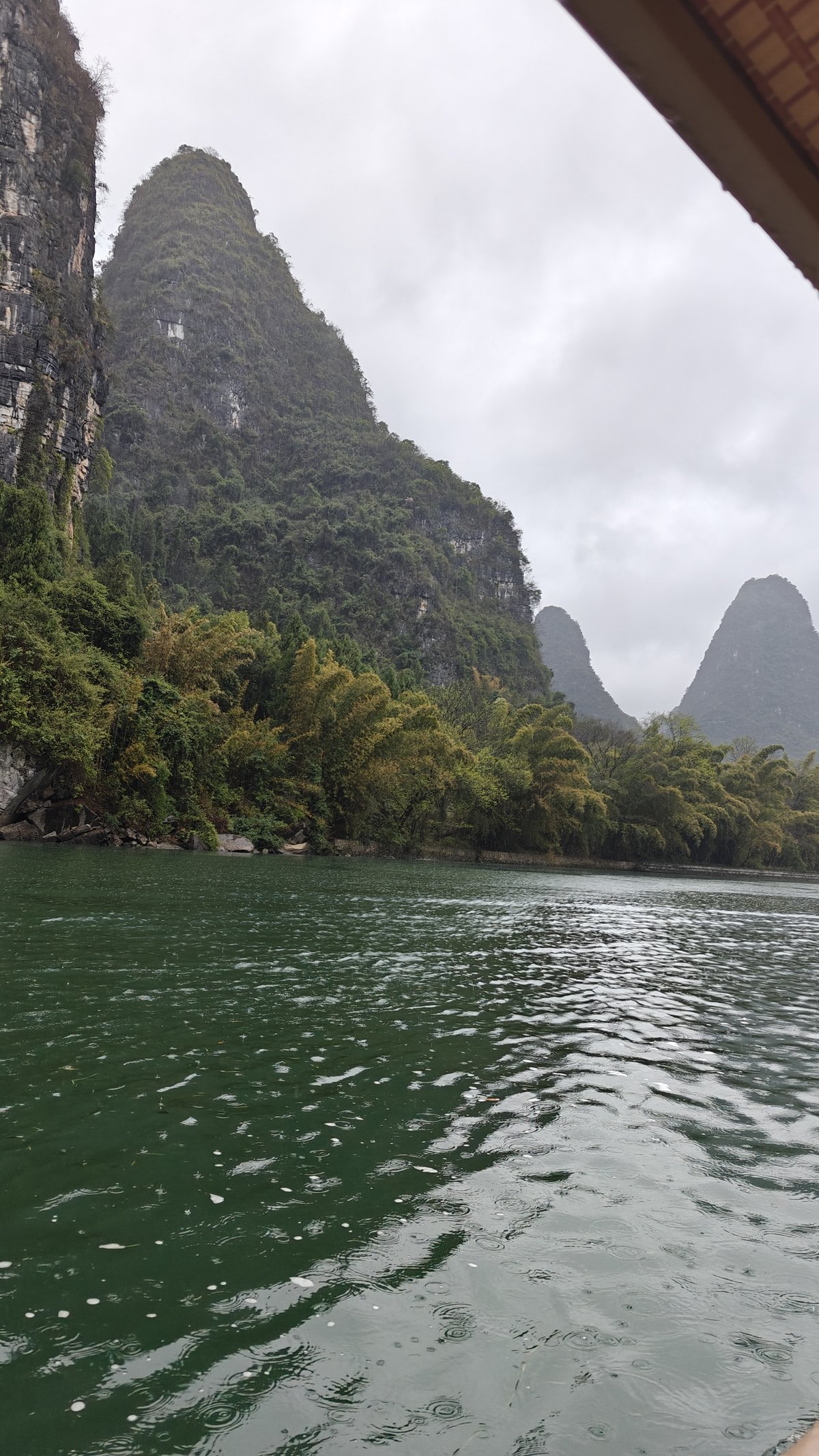
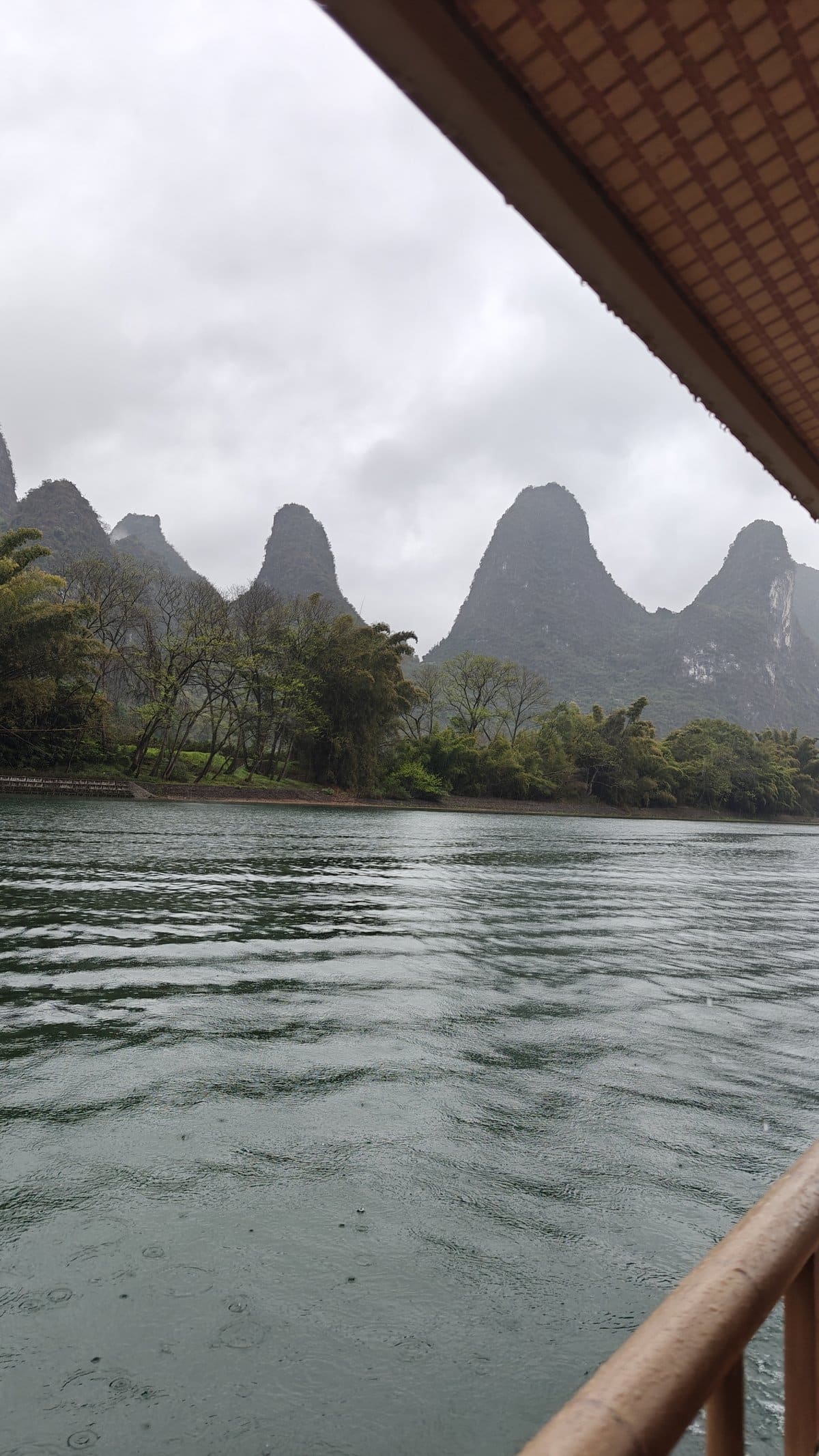
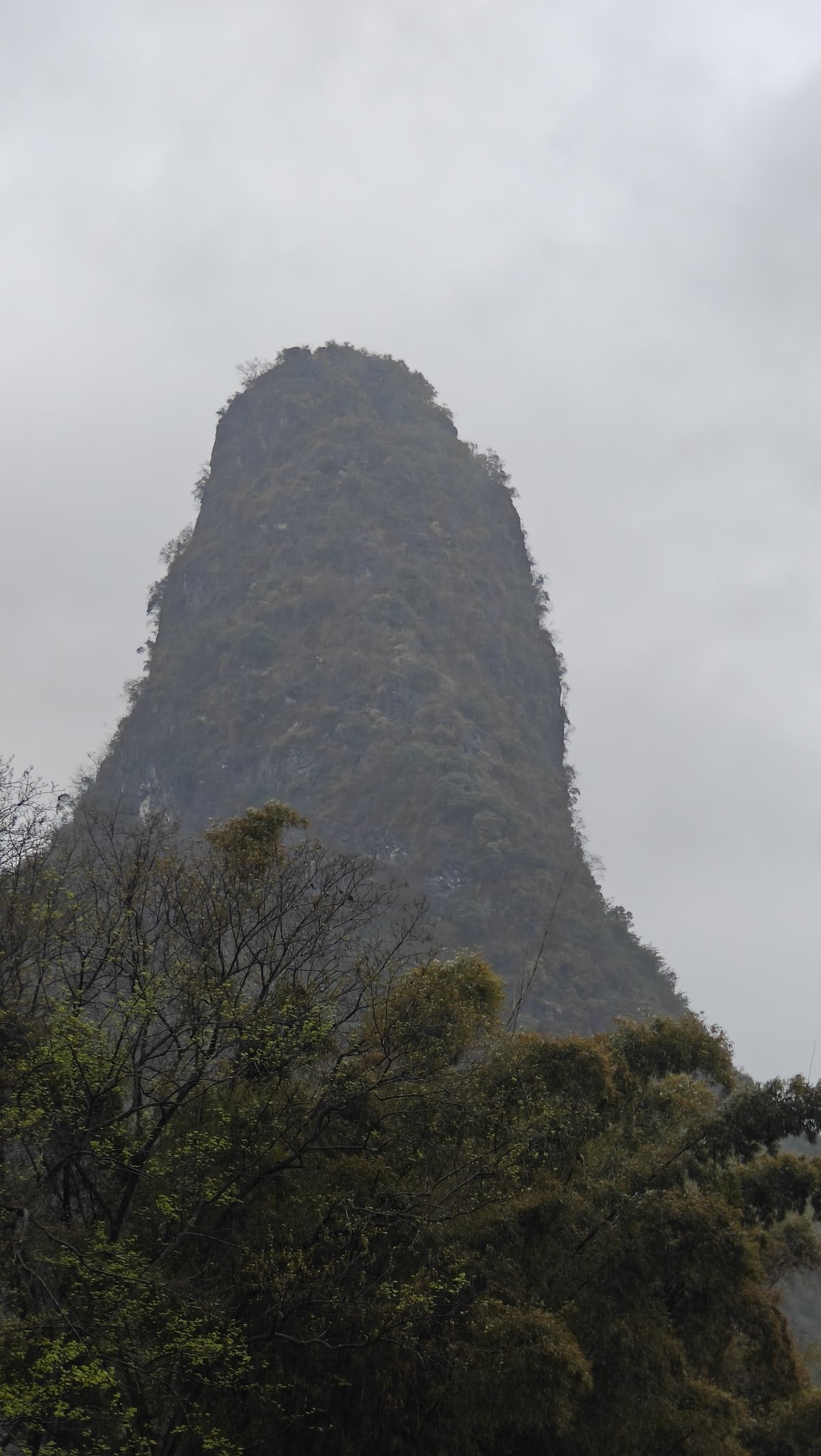
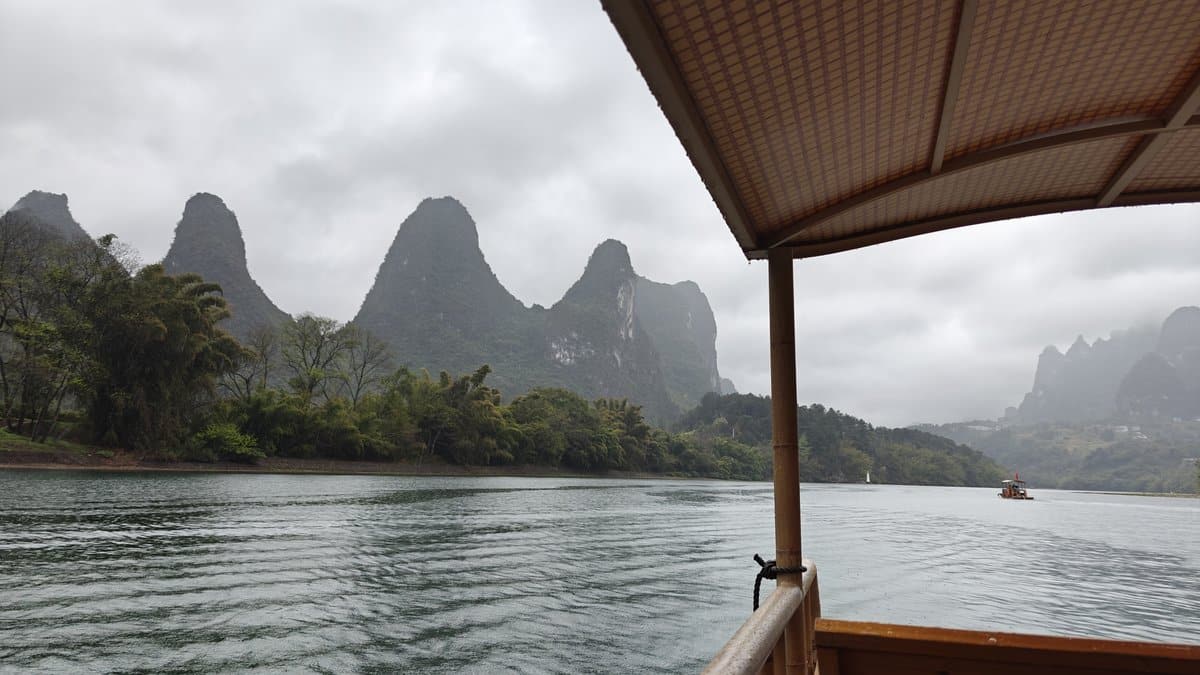
As we continued down river, the scenery opened up more and more. Some stretches had walls of steep greenery growing directly from the water. Other parts provided wide views of the entire valley stretching out before us.
The water also varied, one moment it was nearly green, another a flat gray beneath the clouds.
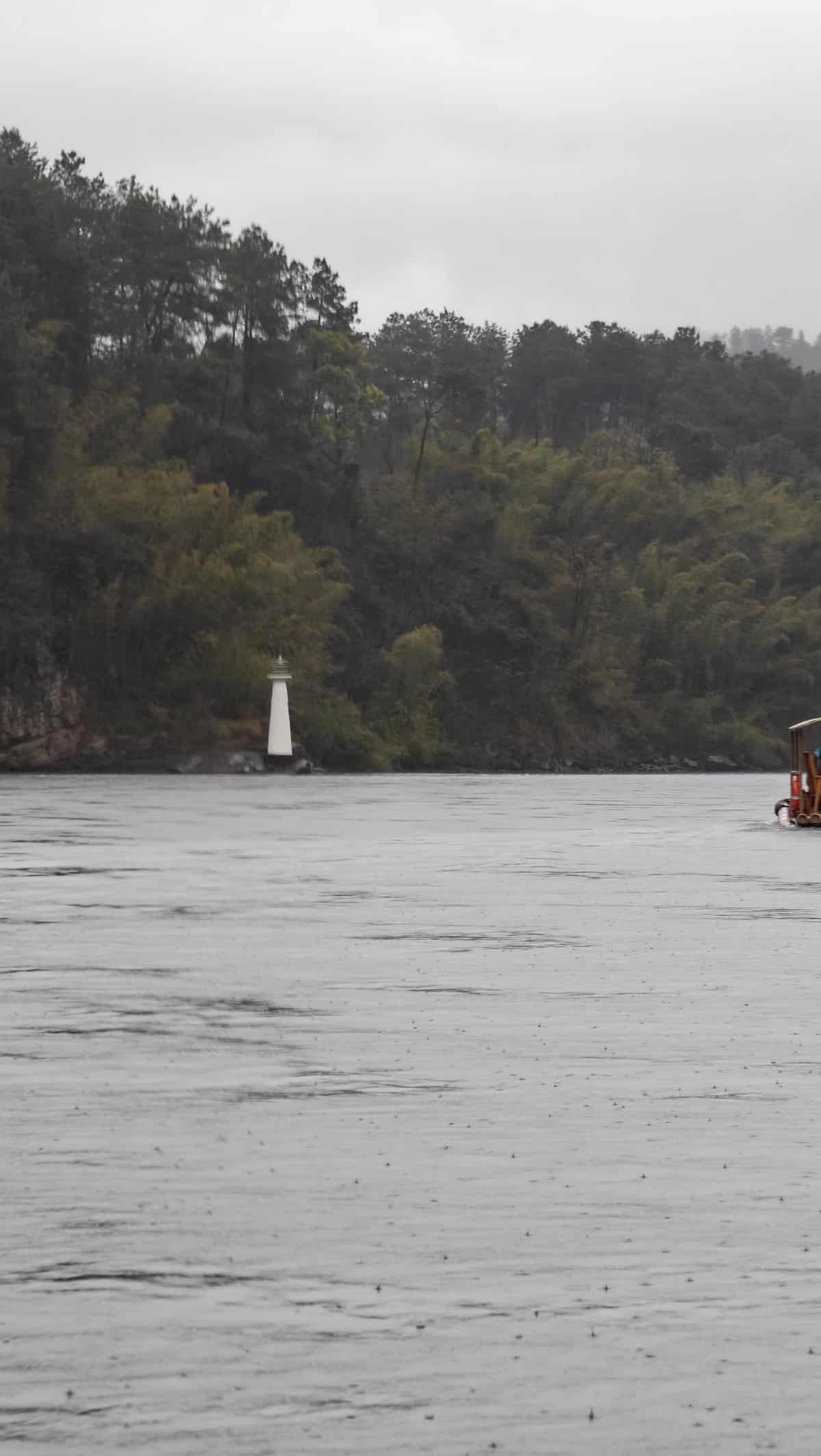
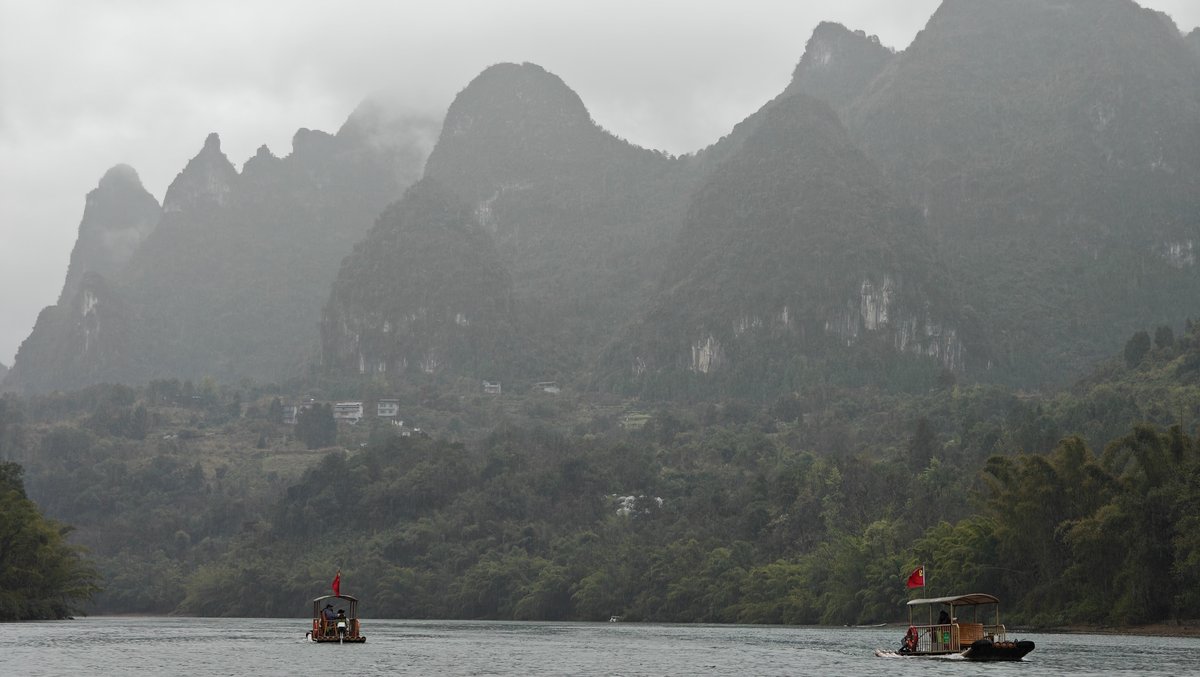
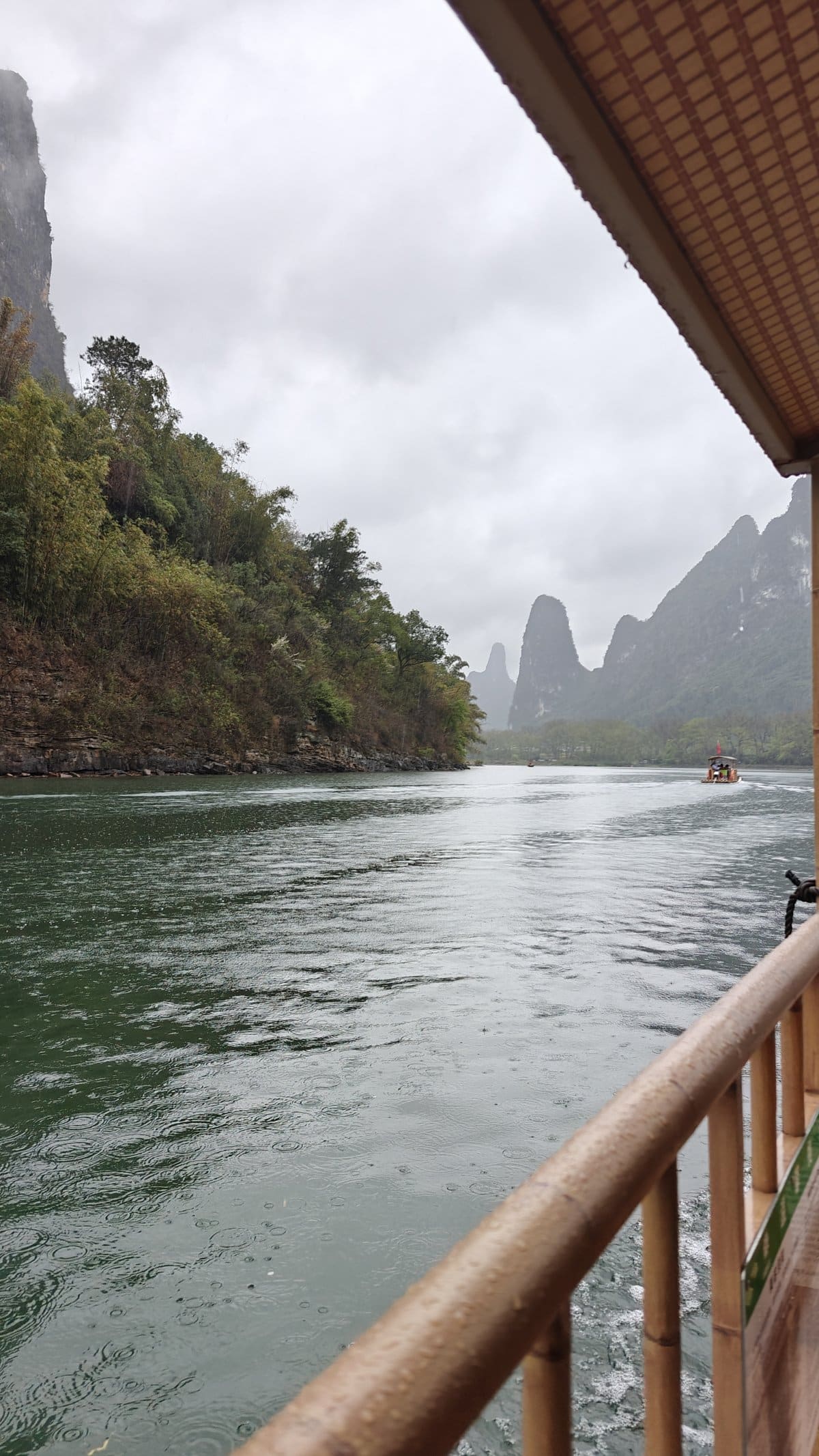
Throughout our trip we would pass some navigation markers (little white buildings set up on the shore, which I guess helps the boatmen orient themselves). You’d see other rafts up ahead, or behind. Giving you an idea of how big these mountains is by comparison.
It was all really pretty, with the karsts curving the river gently around them. You could barely see more than 100 meters in either direction before the fog came back in again.
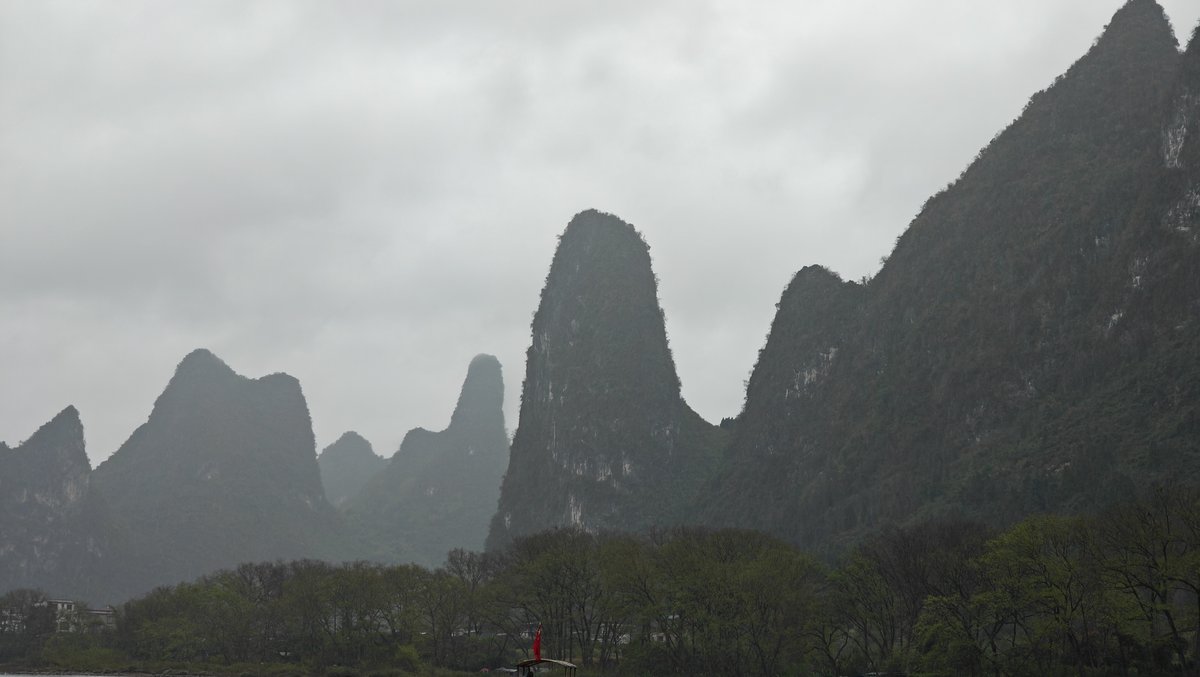
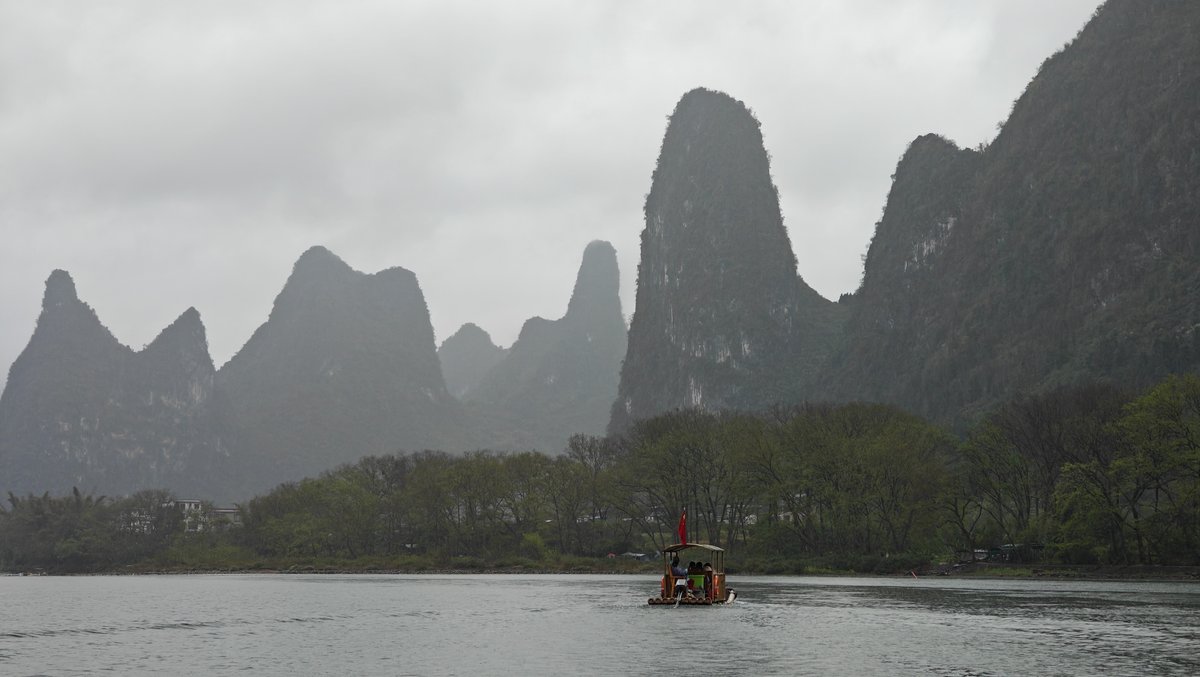
That part made me feel like I could of stepped right out of some of those old paintings. Each peak layered on top of the other and faded slowly into the distance until there was no more peaks. Mountains are nothing new to me, but not like this, so vertical and stacked up on top of each other with flat water separating them.
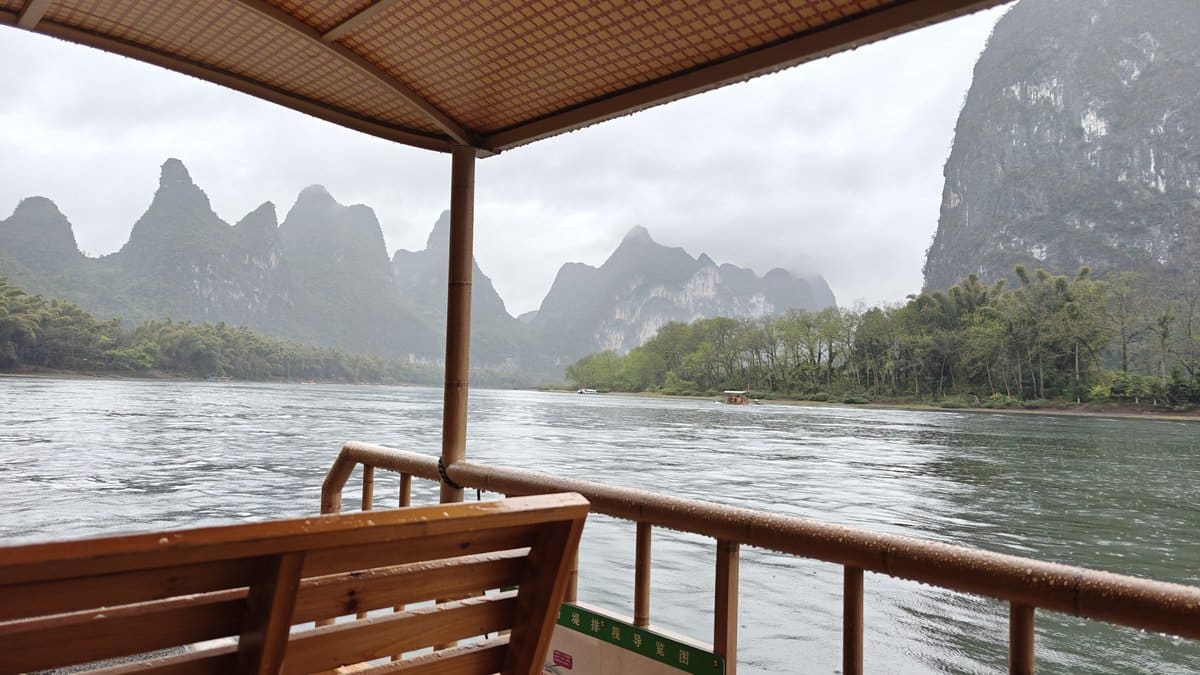
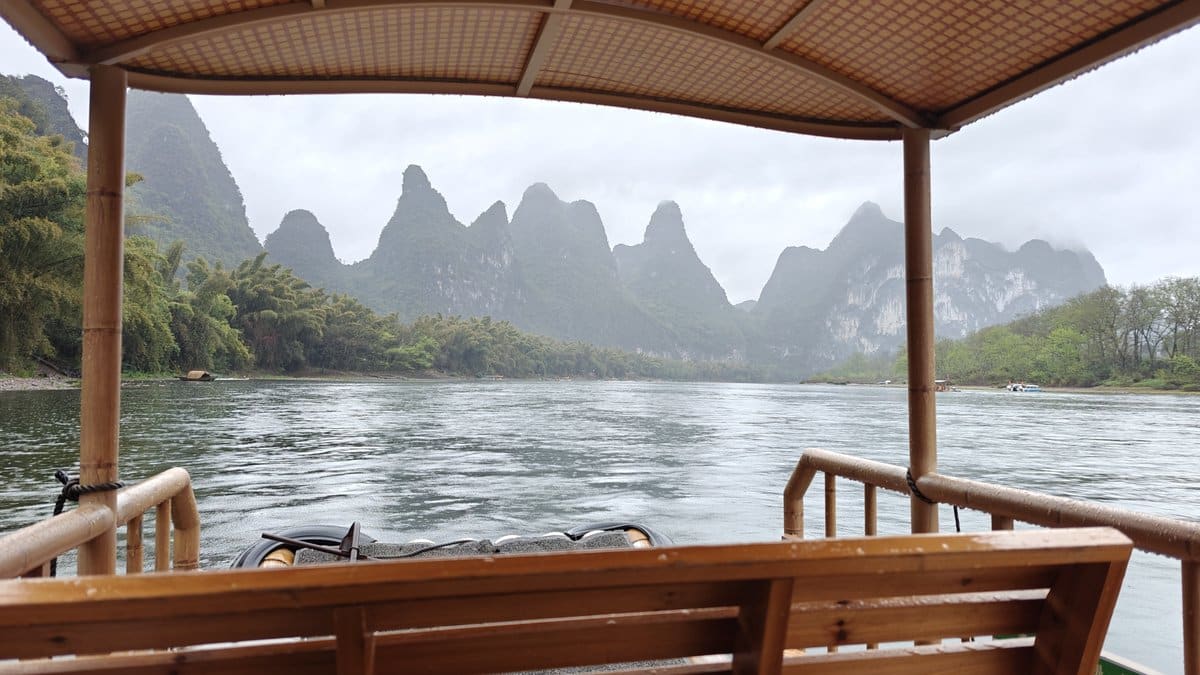
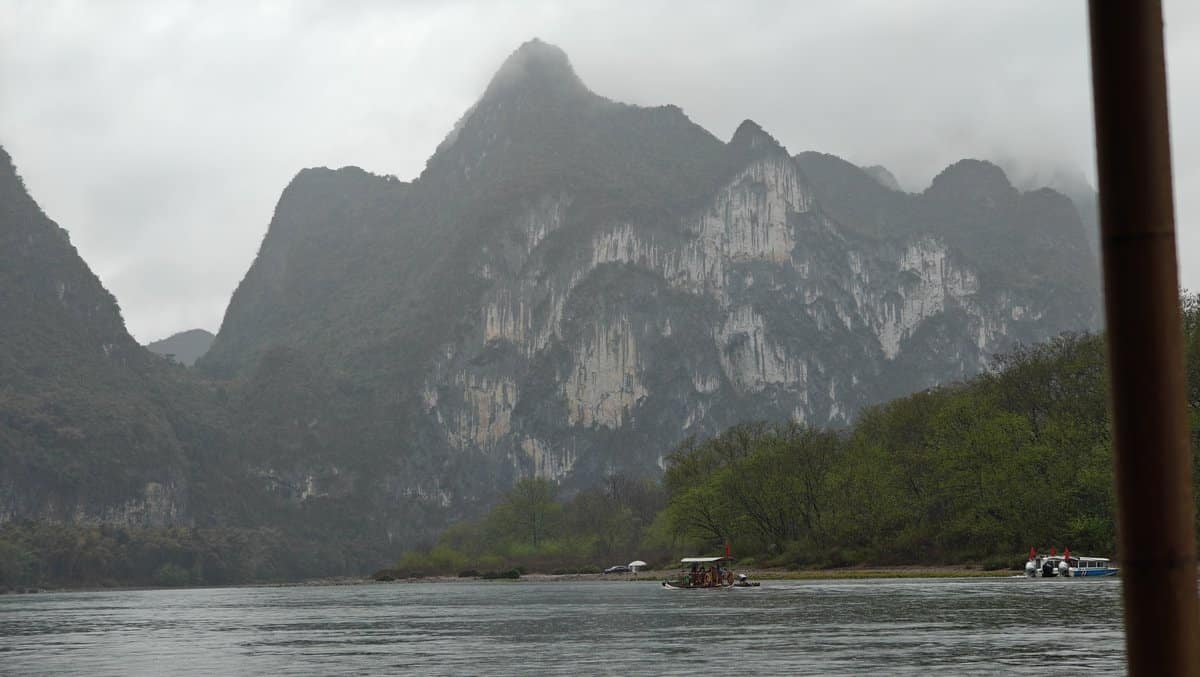
I was in heaven with a perfect frame from which to watch the world unfold below the raft canopy. As we floated along into tighter spots, the cliffs rose up on each side, some so white that they were nearly solid limestone. And I stopped worrying about water and cameras and simply watched it all slide past.
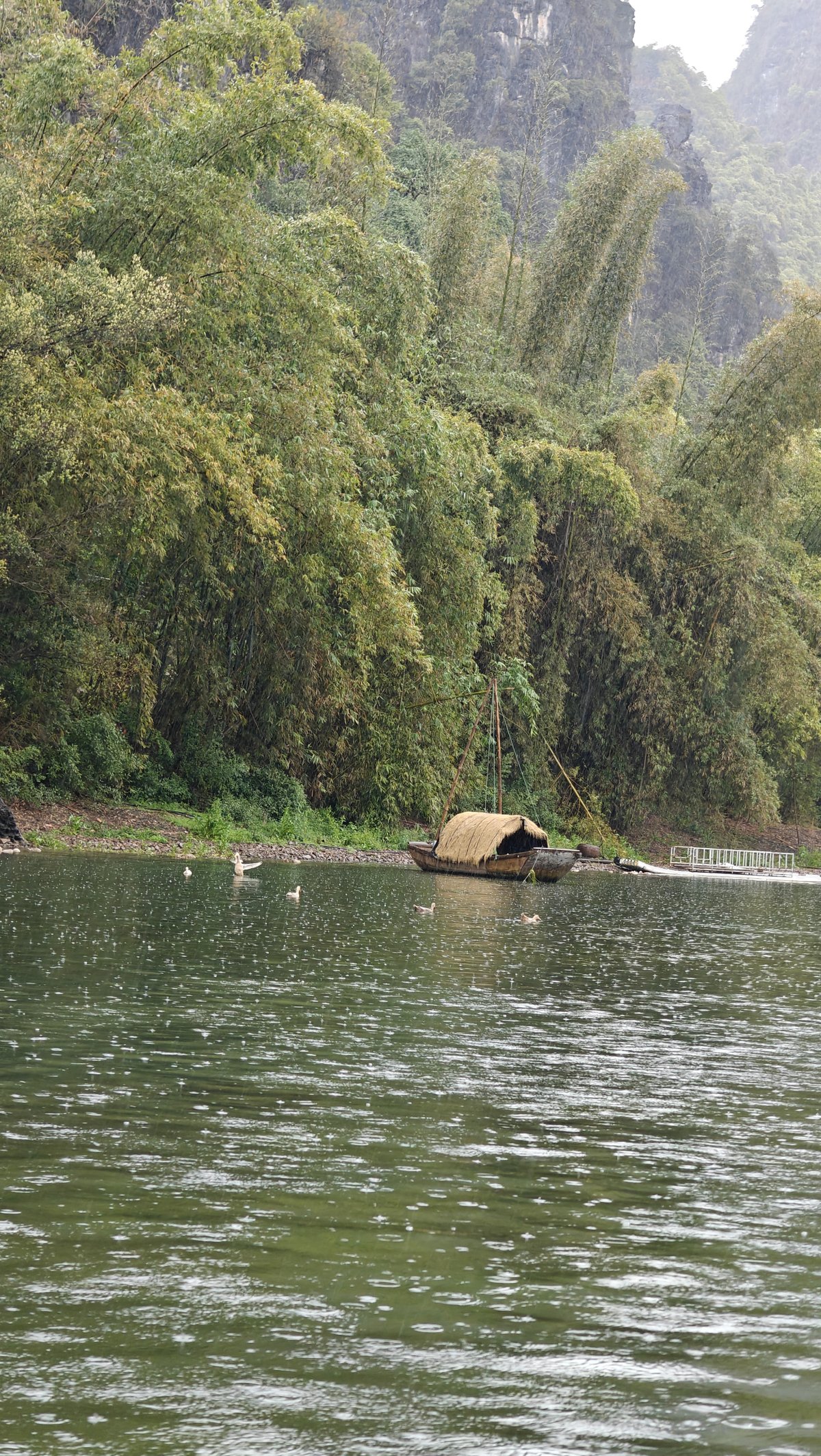
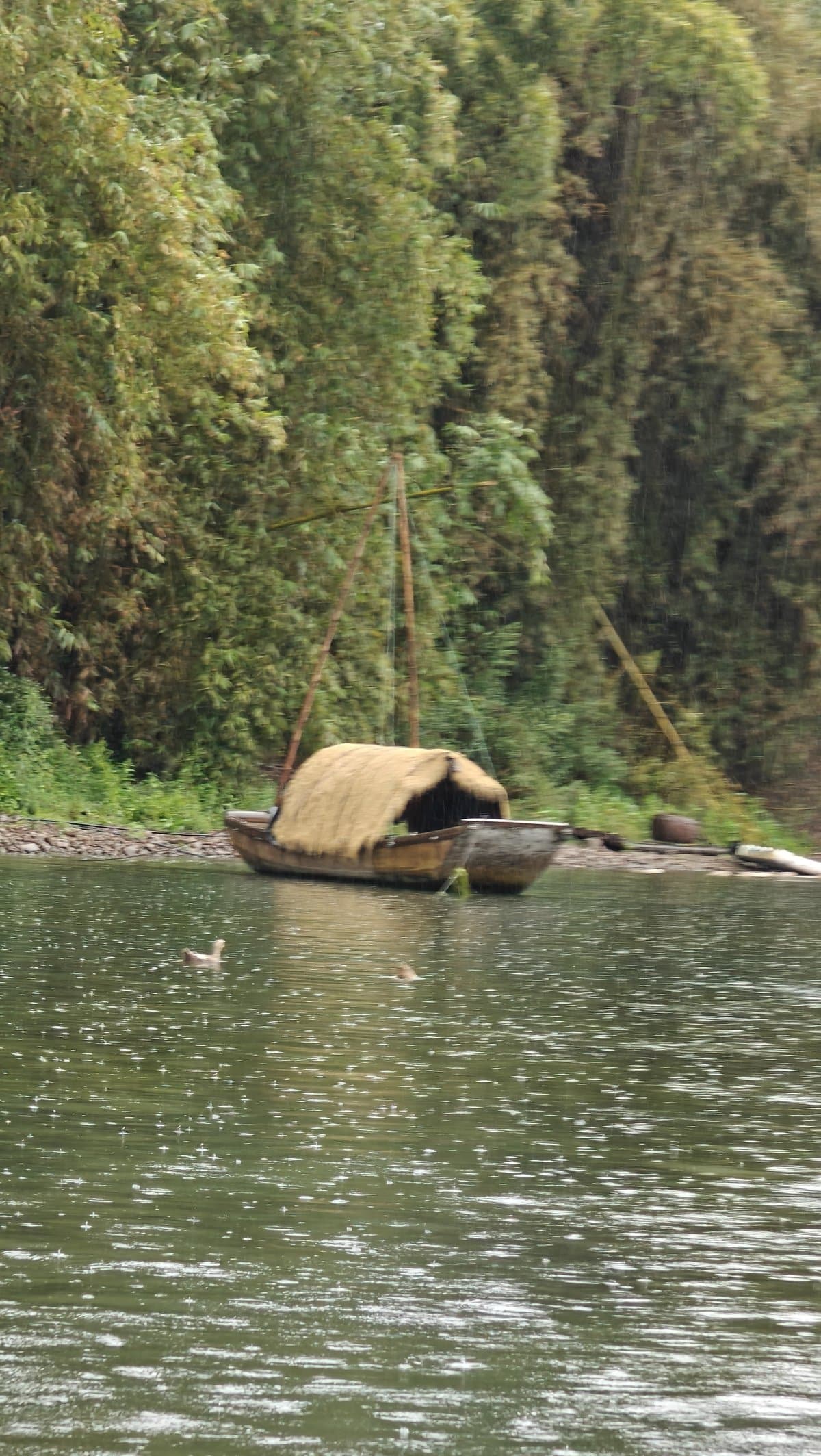
The closer to the end of our route we got, the more people we saw on the water. There was a couple traditional thatched fishing boats. I’m guessing they’re up there mostly for show these days rather than any serious fishing.
There was one with a duck swimming next to it, which was a cool touch. The scenery surrounding Xingping is supposed to be some of the most photographed in the region, and it wasn’t hard to understand why… The mountains there are especially dramatic and close together.
As we wound down the final stretch into Xingping, it all seemed a little anti-climactic. The cliffs smoothed out in the distance. The valley opened up slightly.
As we came to a stop by the dock, after two hours of sitting still I was glad to get up but also didn’t want to end the cruise. It is unusual to stare at something for that long without needing to do anything else with your eyes. I really recommend making time for this if you go to Guilin.
If possible, make sure you go on a drizzly/misty day, yes, I know it sounds backwards, but when the peaks are half-hidden, the atmosphere is totaly different. Bring your raincoat and don’t worry too much about getting any good shots, seriously, no camera really captures it right. Have you ever been someplace where it just didn’t look like it was real?
It felt so strange.