
I went to Shirakawa-go twice: In December 2023 (no snow) and again in January 2025 (when the entire village was covered in it). How different would each one be? Turns out they were as different than night and day!
I found that my winter trip gave me the classic postcard image people come here for, whereas my green-season visit found a quiet town where I could enjoy the valley and farmhouses without distractions. They’re both appealing in their own ways; hopefully this comparison will give you an idea of which is best for you if you are struggling with the decision. Shirakawa-go is known for these steep thatched-roof houses (gassho-zukuri farmhouses) which was built to withstand the heavy snowfall.
These are my observations from both trips.
Snow or No Snow: My Two Visits to Shirakawa-go
Shirakawa-go Without Snow
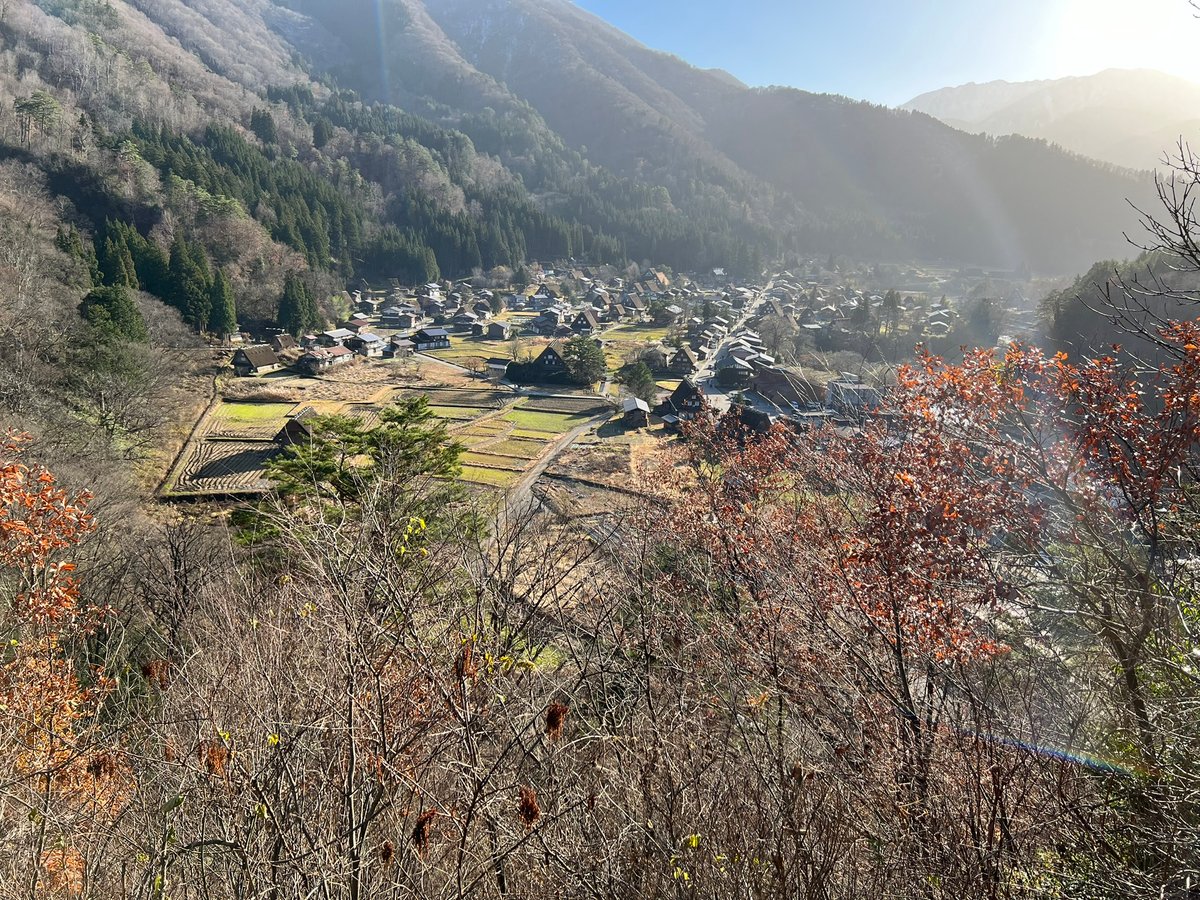

When I visited in December of 2023, there was no snow anywhere to be seen. There was not even a dusting. Instead, the valley lay blanketed with a carpet of nothing.
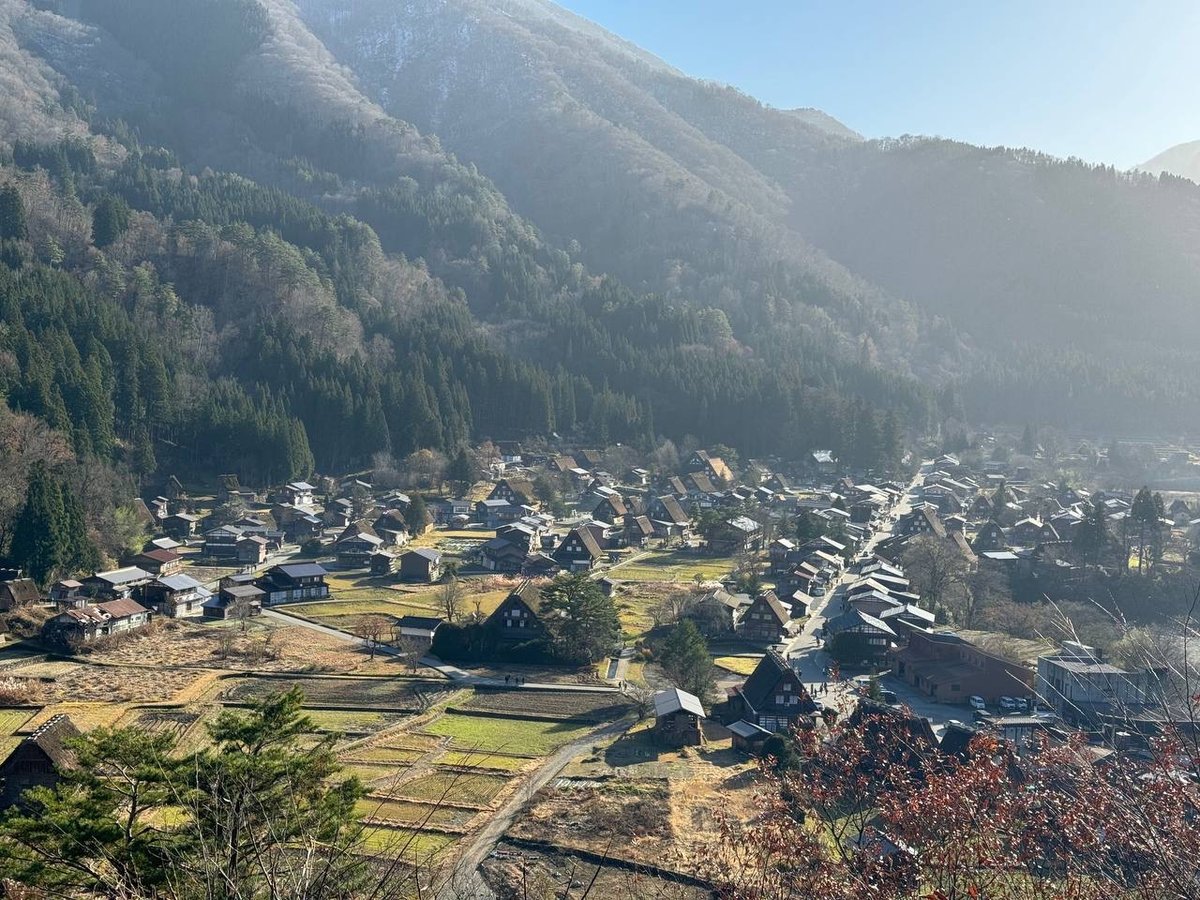
Mountains, still mostly brown and green, stretched off into the distance from the observation deck. Below me, I saw all of the village sprawled out. I saw gardens and rice paddies.
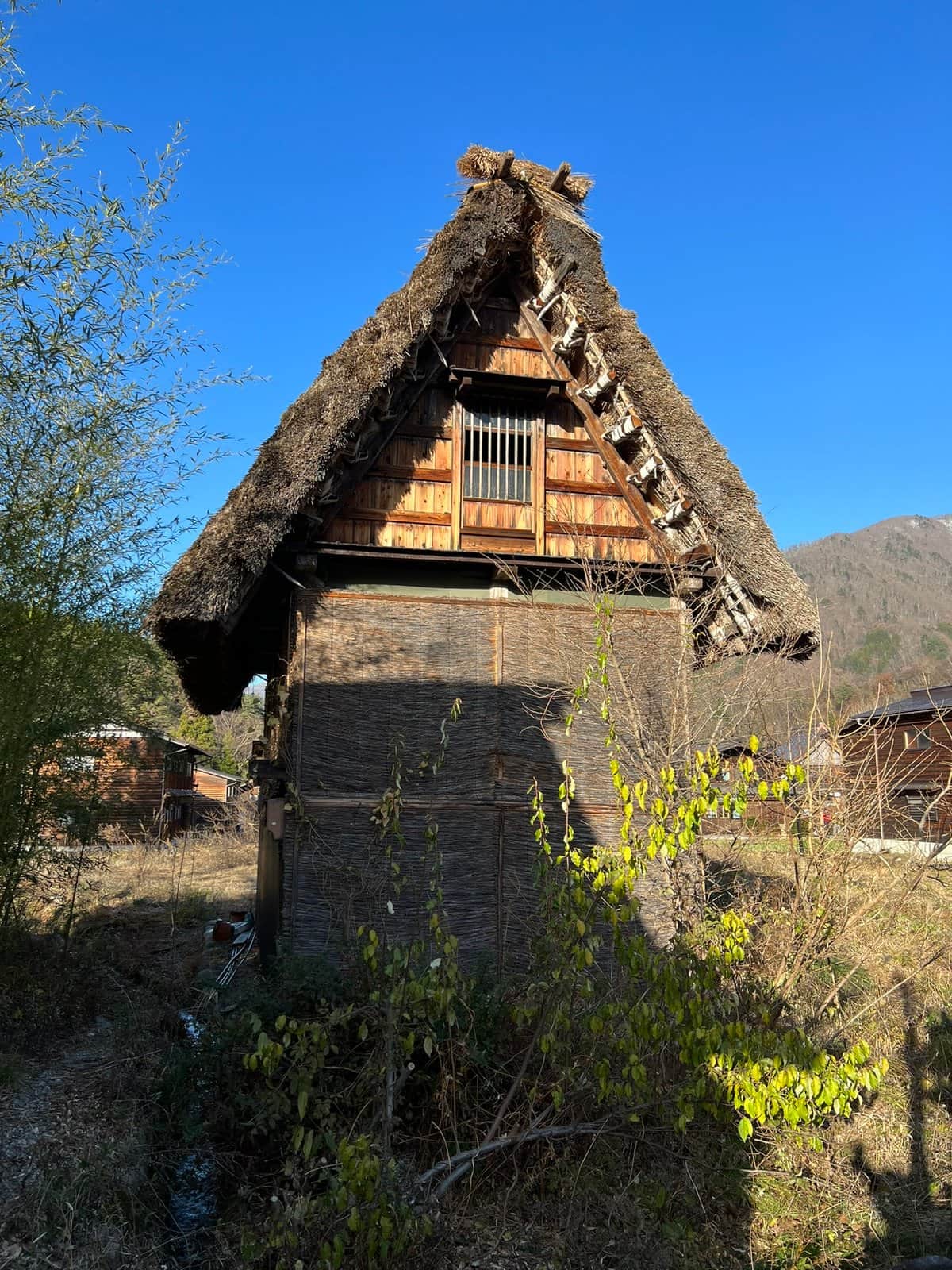
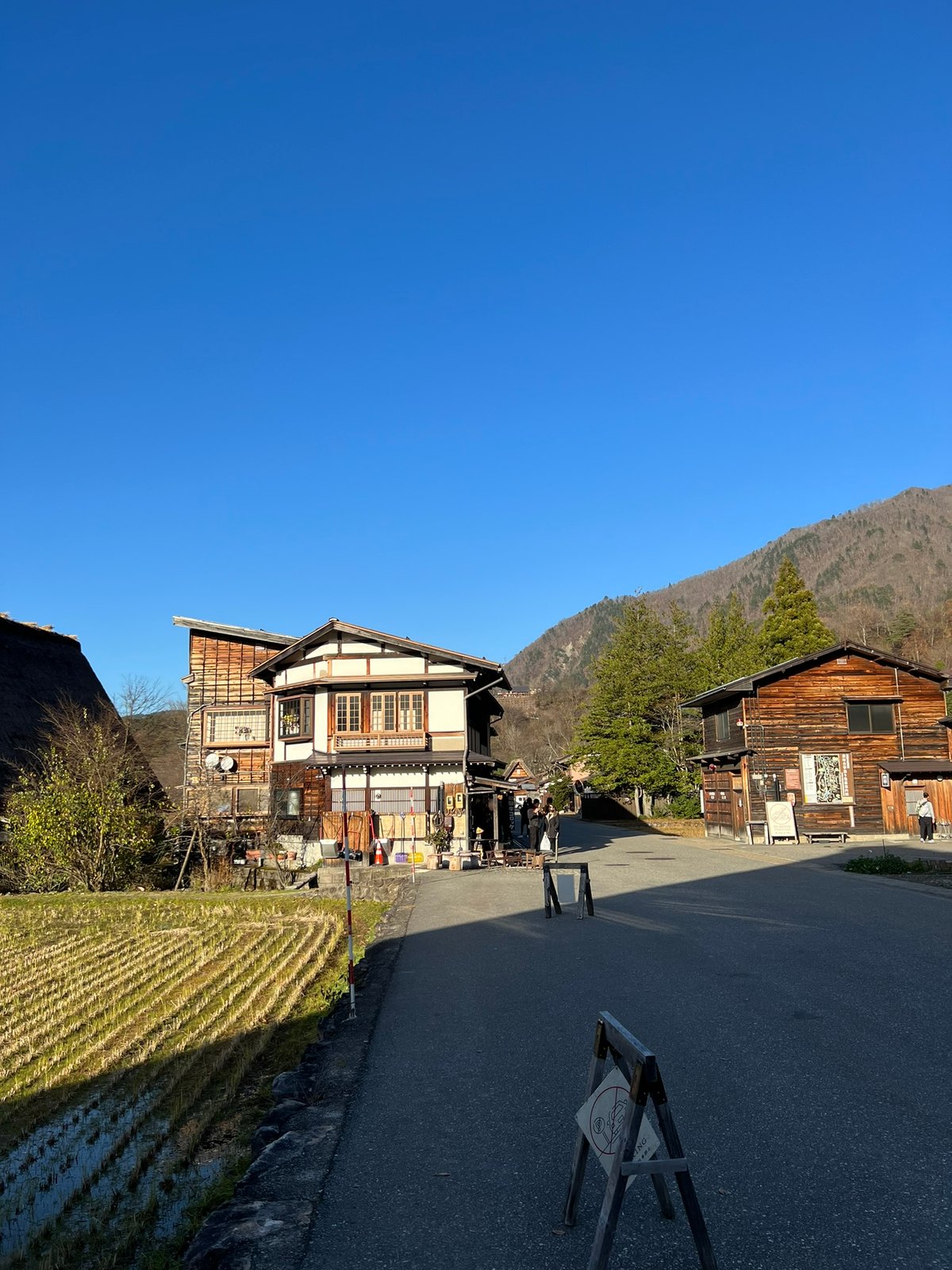
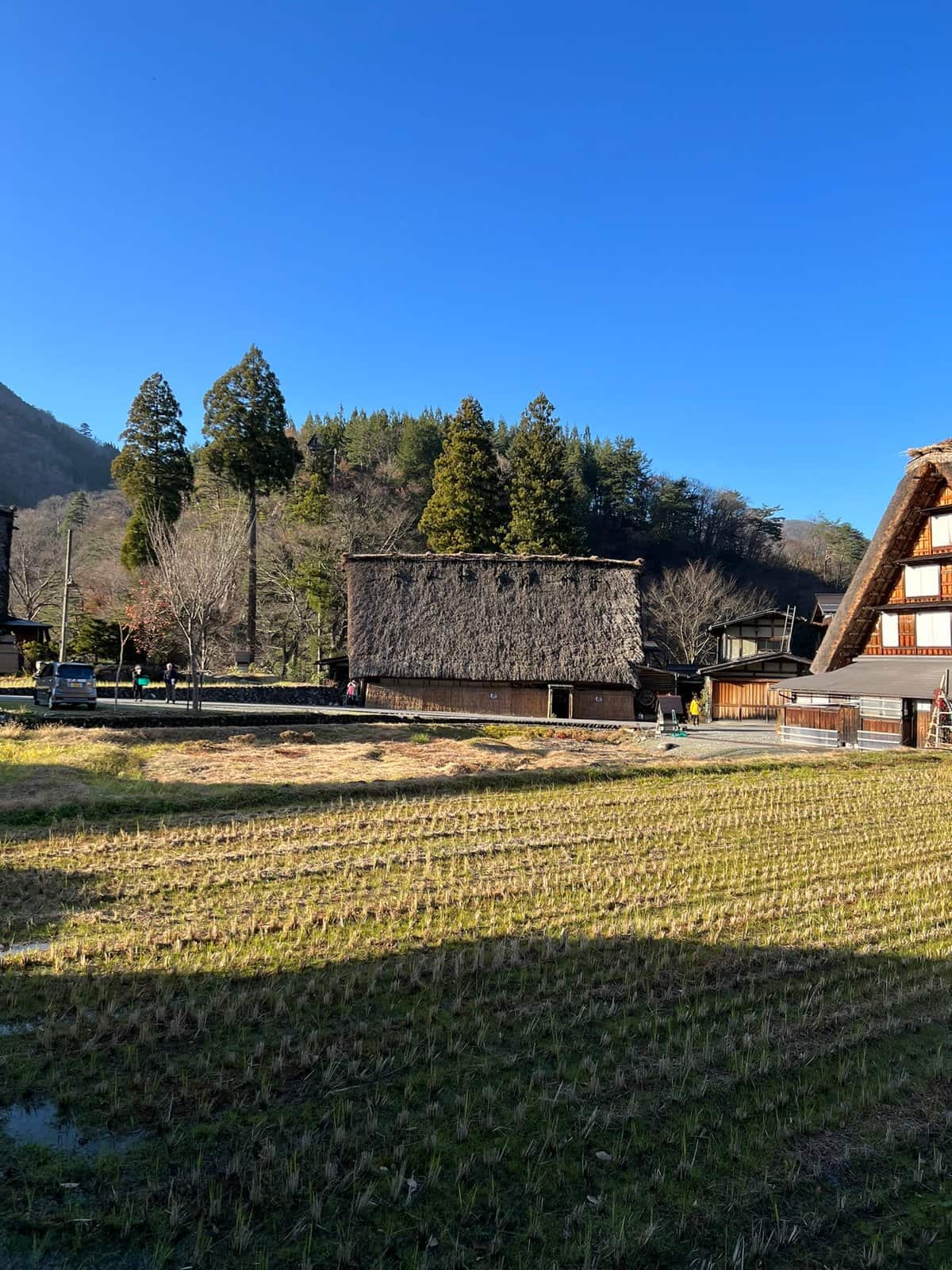
Farmhouses stood out from the rest. Everything looked hazy and soft. There was no drama, just peace (which is something I never expected).
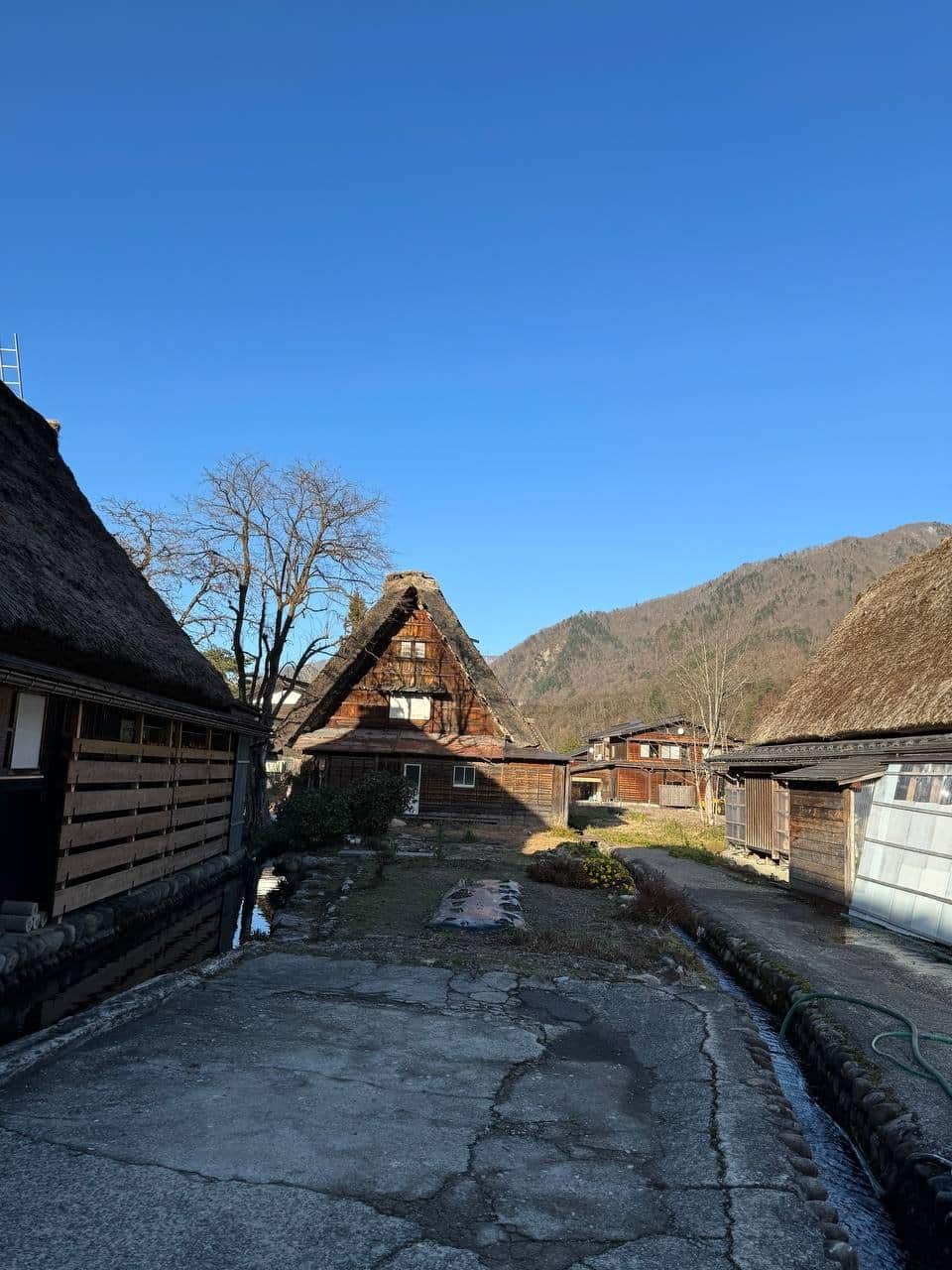
I walked around the village at my leisure. I was able to get close enough to look up at the thatched roof.

From up close, it appeared huge. I could see how it was made: the way the wood beneath support the layers of thatch and how the thatch is bound together.


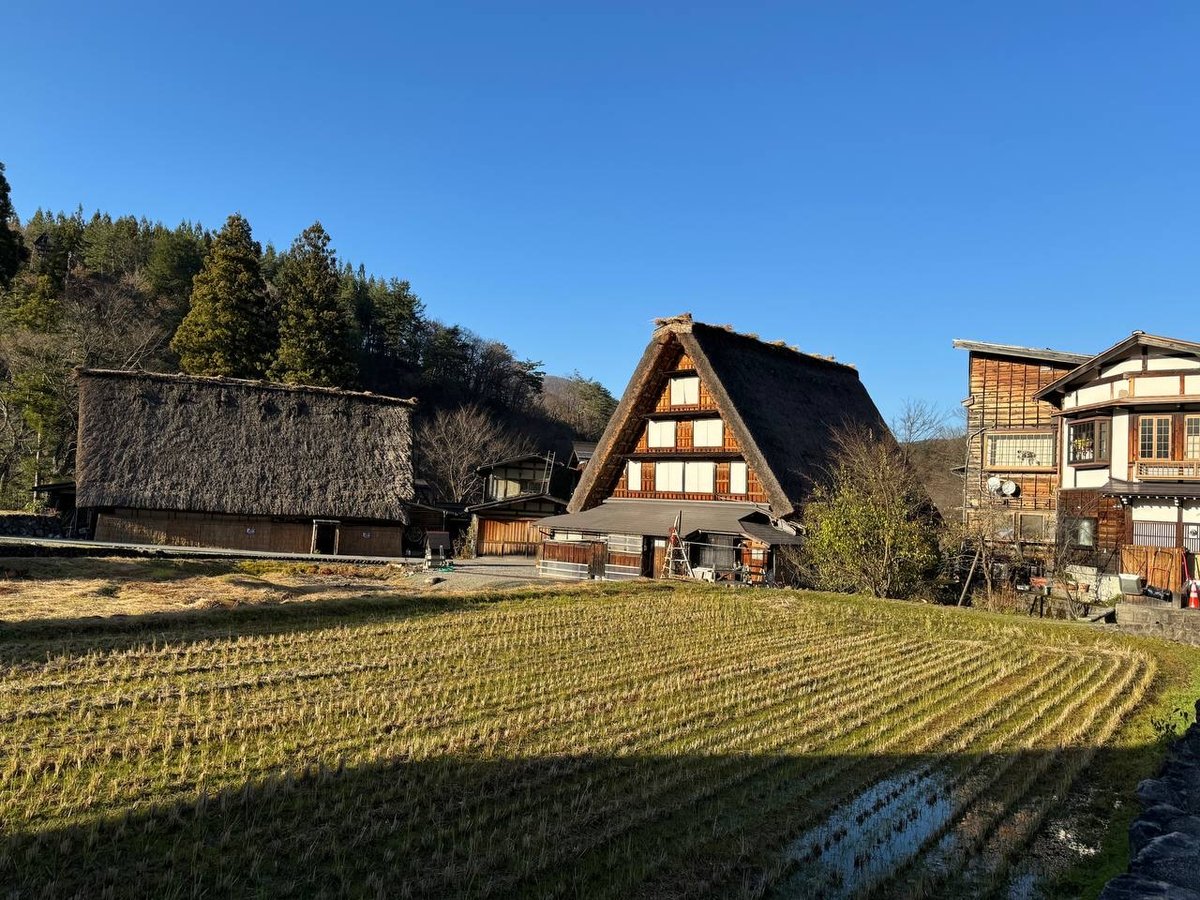
I saw the remaining rice terraces, some of them still an emerald color, and how they contrasted with the old houses and the fields where people are still farming: it’s not just a museum but still a living village. Getting up onto the observation deck was simple, and I found that I had most of it to myself. Everything was in plain sight, and I could see how the village was laid out and identify specific homes.
The World Heritage monument is close by, and instead of just taking a picture of it, you feel as if you are paying a silent tribute to why we should protect this place. The small alleyways connecting the homes led me down to the water channels that weave throughout the village. A couple of other tourists milled around, but that was about it.
The stone bridges echoed with the sounds of water passing under them, and the old wooden water wheel spun.
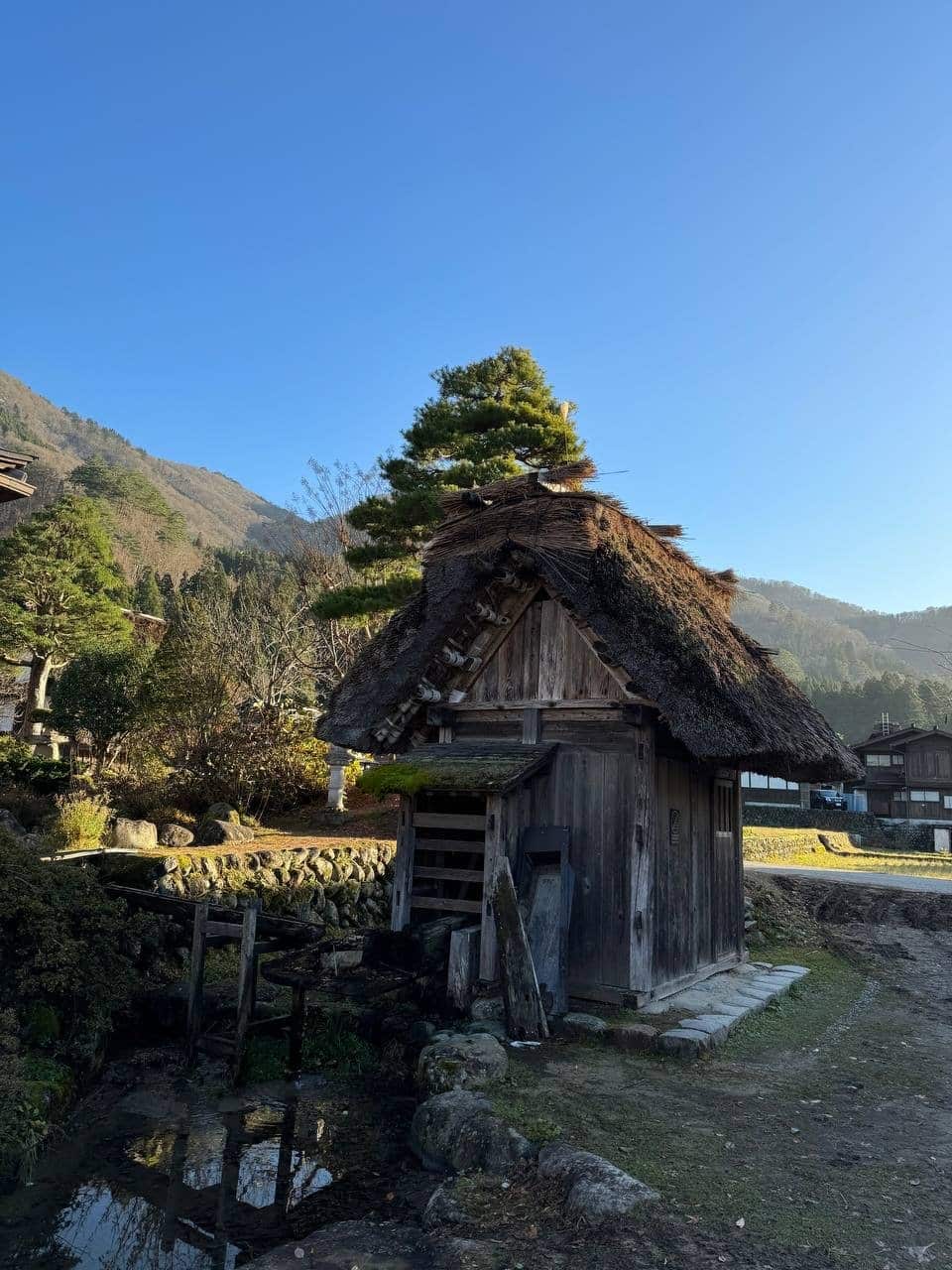
It all seemed lived in and working rather than staged.

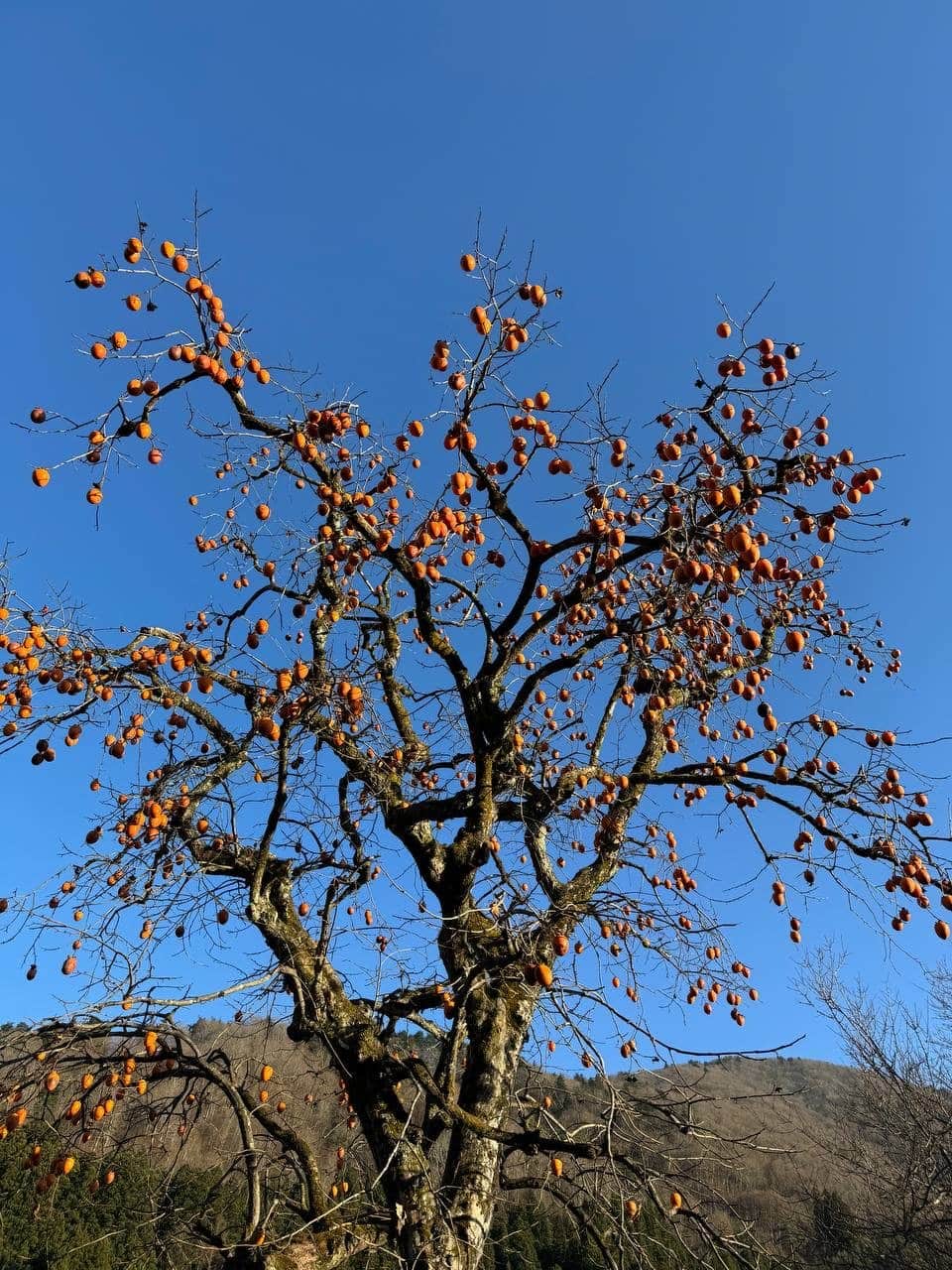
In December, however, the rice paddies were still brightly colored, and there was even a persimmon tree laden with fruit outside of one of the houses. There was an overall quiet, at-the-end-of-the-year feel to the entire village, and some of the farmhouses had manicured pine gardens leading up to them. While it wasn’t what I’d imagined from the pictures of Shirakawa-go, I liked that I could visit during the off season when it wasn’t so crowded.
I went into Kanda House, one of the available farmhouse for visitors. Entrance cost just a few hundred yen, and once I got inside I removed my shoes.
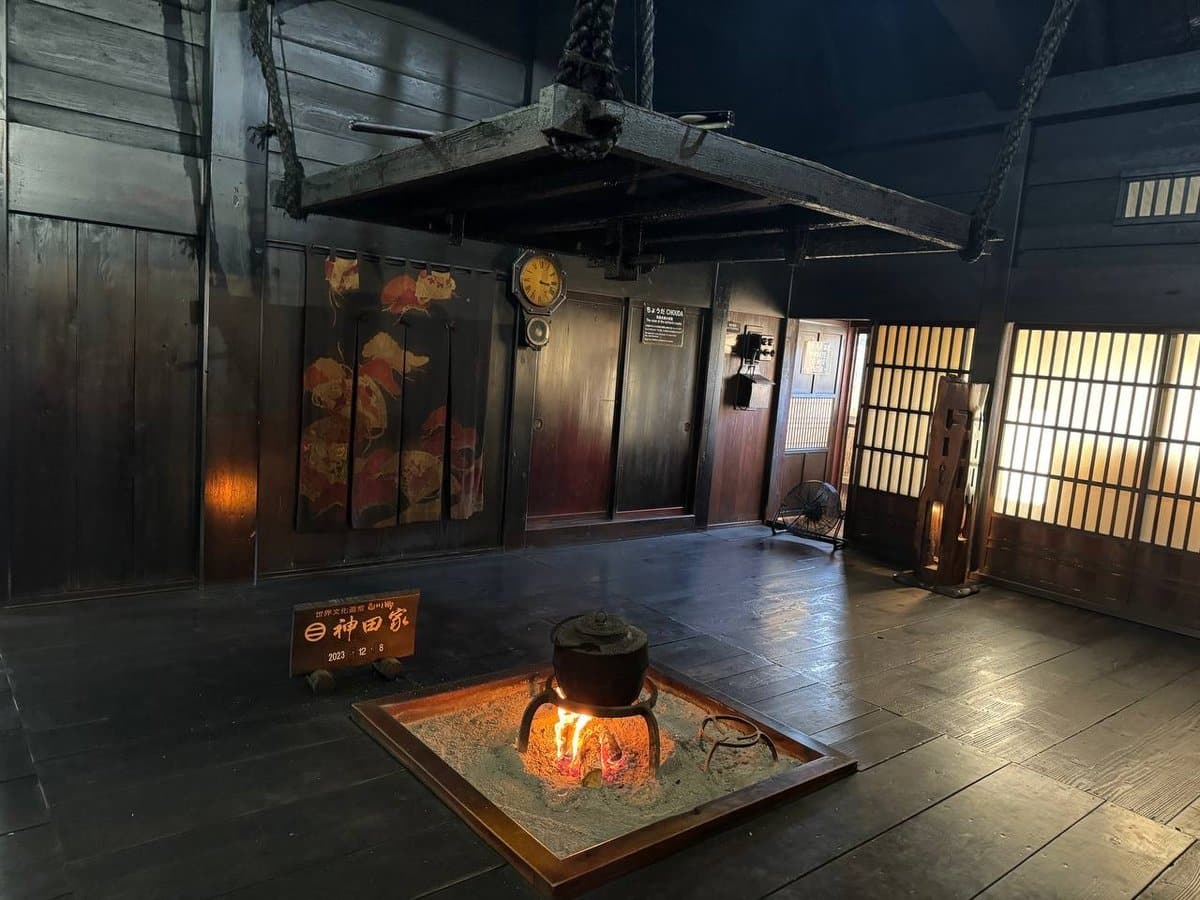
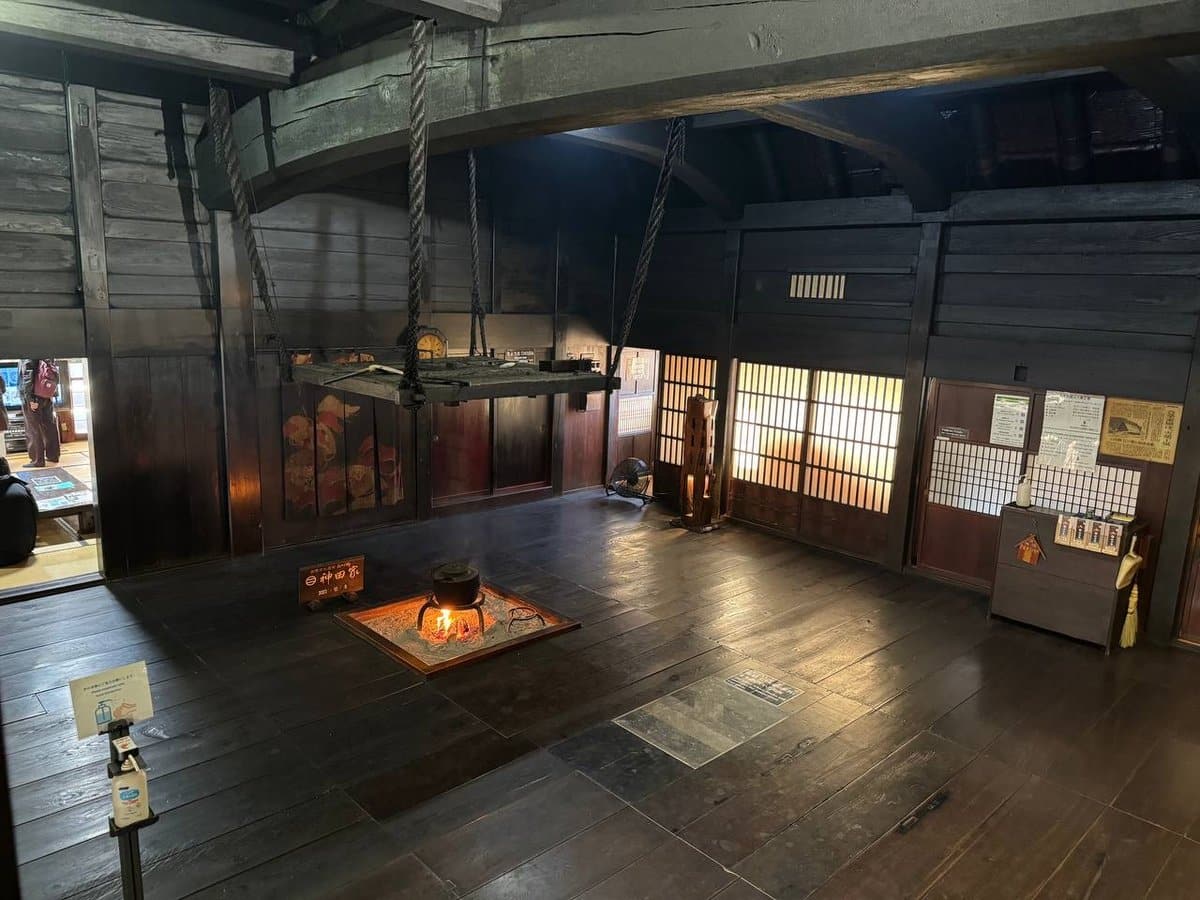
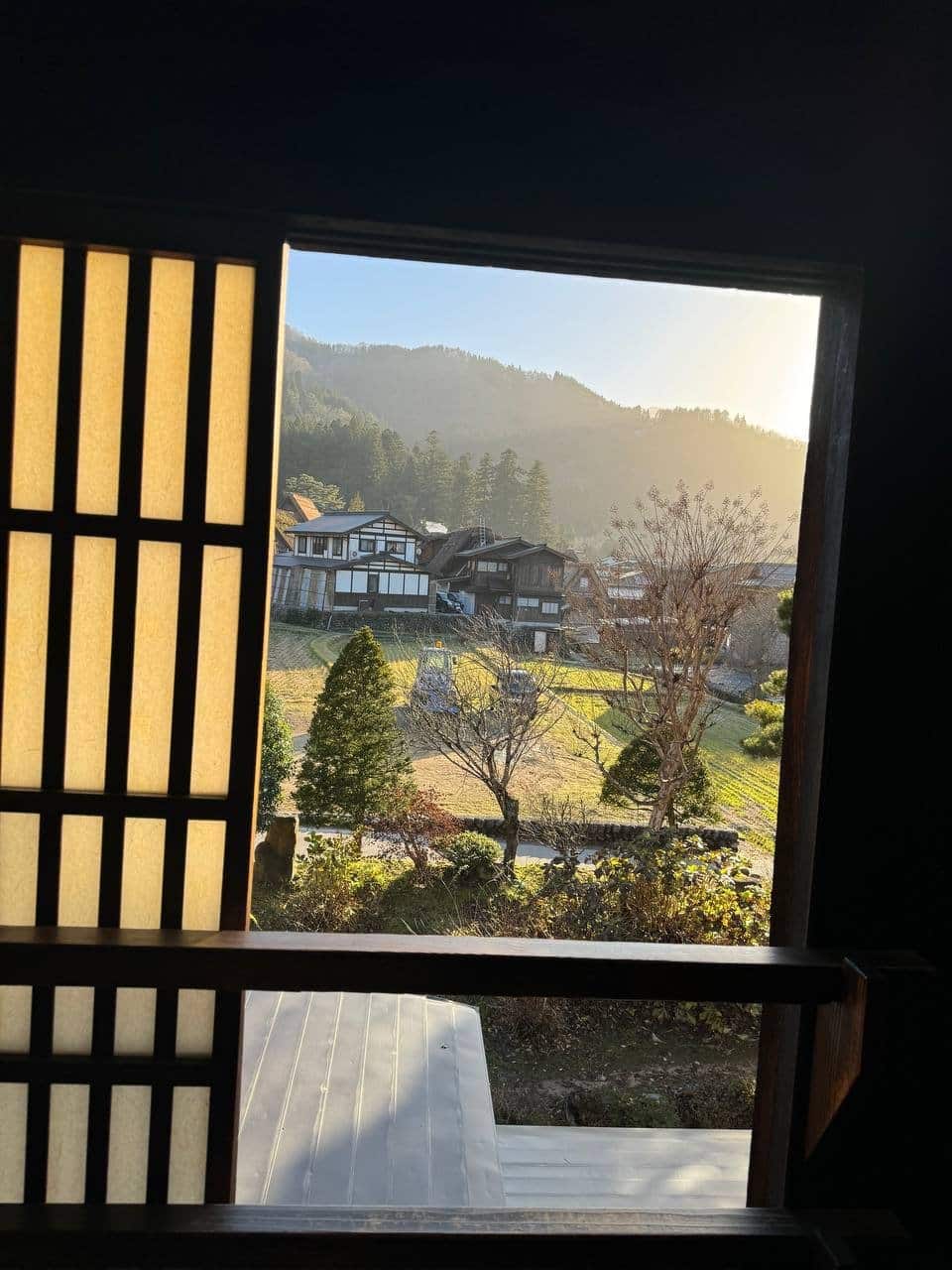
In the middle of the main room was the irori hearth, where a hook hung from the ceiling to hold cooking pots. Light poured into the room through the lattice windows and the wood floors creaked. From within, I could see across the rice fields.
It was an unexpectedly airy house; everything about it seemed very well thought-out, from its construction to how it controlled heat and smoke. The house was quiet, so I had time to explore each room and marvel at its design.
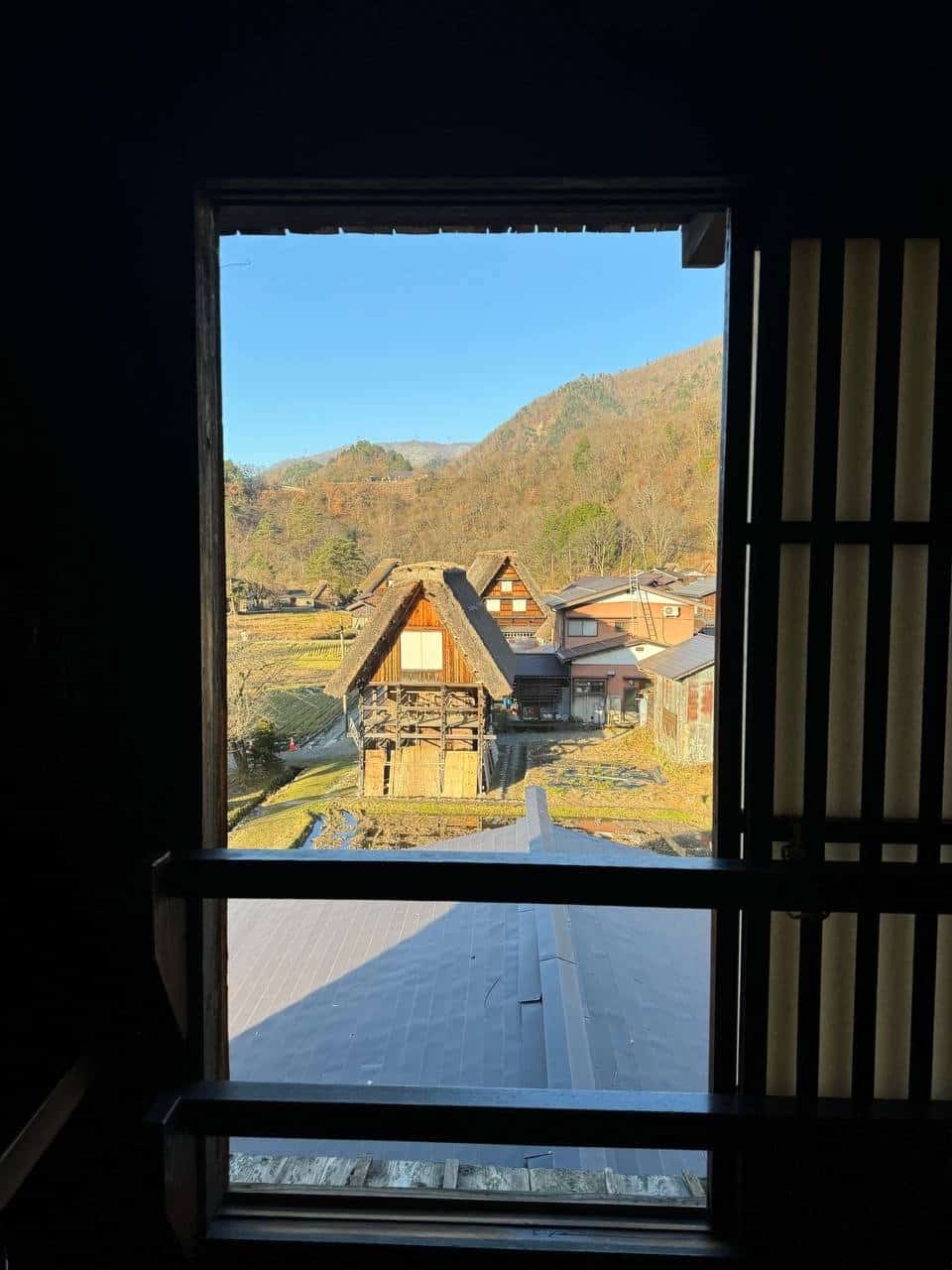

This is another view of the village from the hillside. Everything seemed normal during the day.
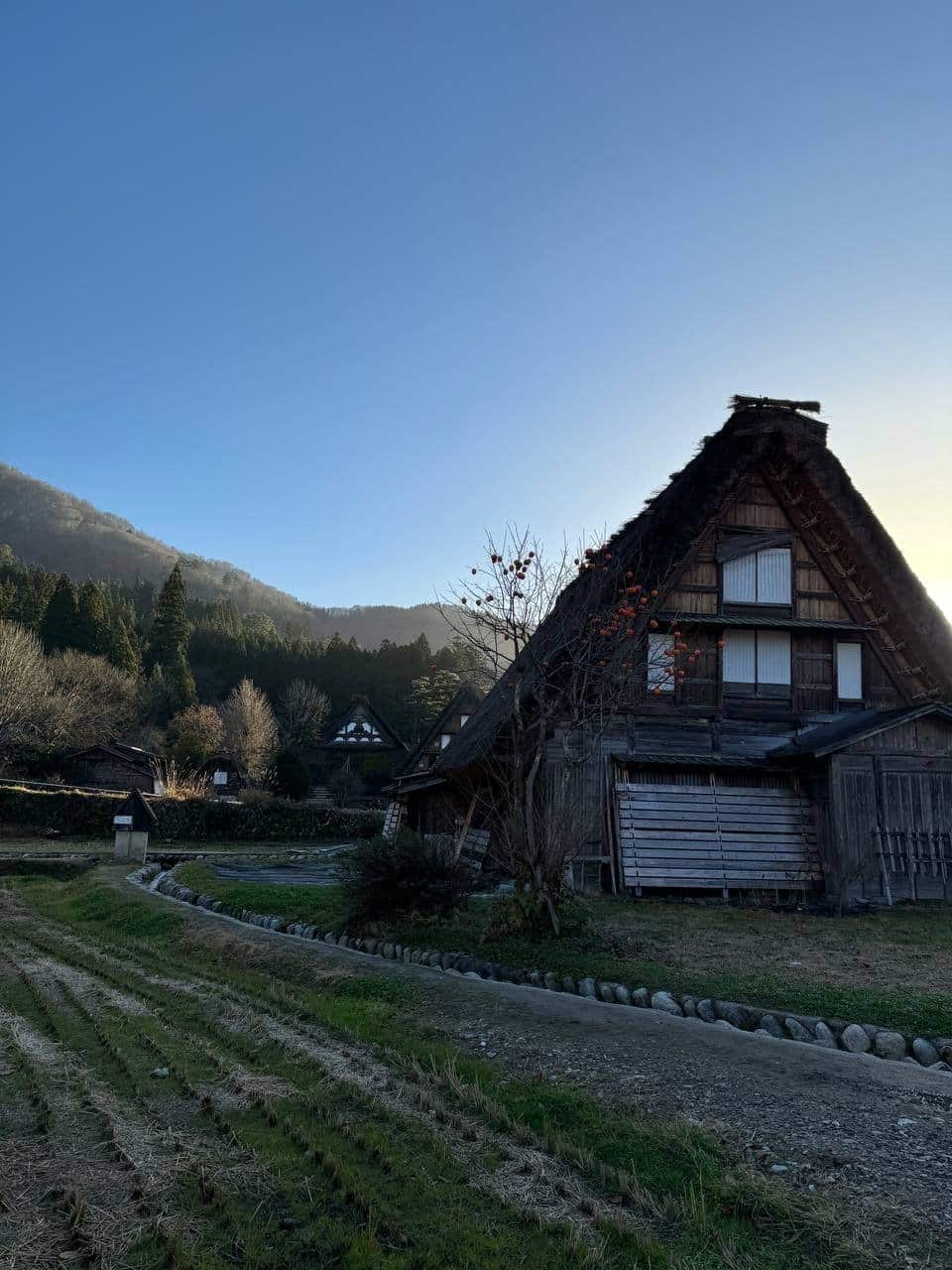
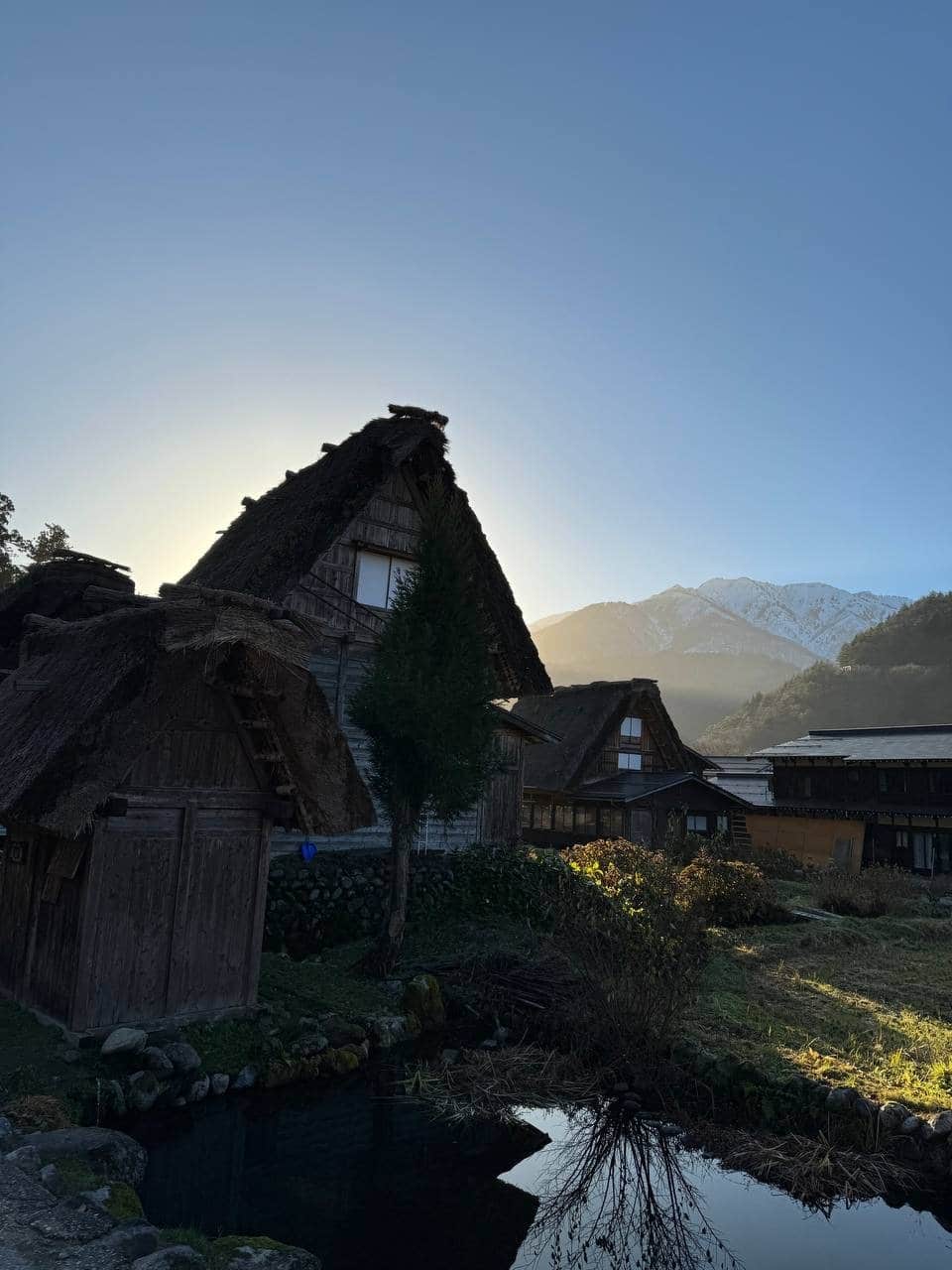

Houses were small relative to the valley. It was just a village out here trying to get by, nothing special (well, nothing more than that). I lingered into the evening, when the light transformed entirely.


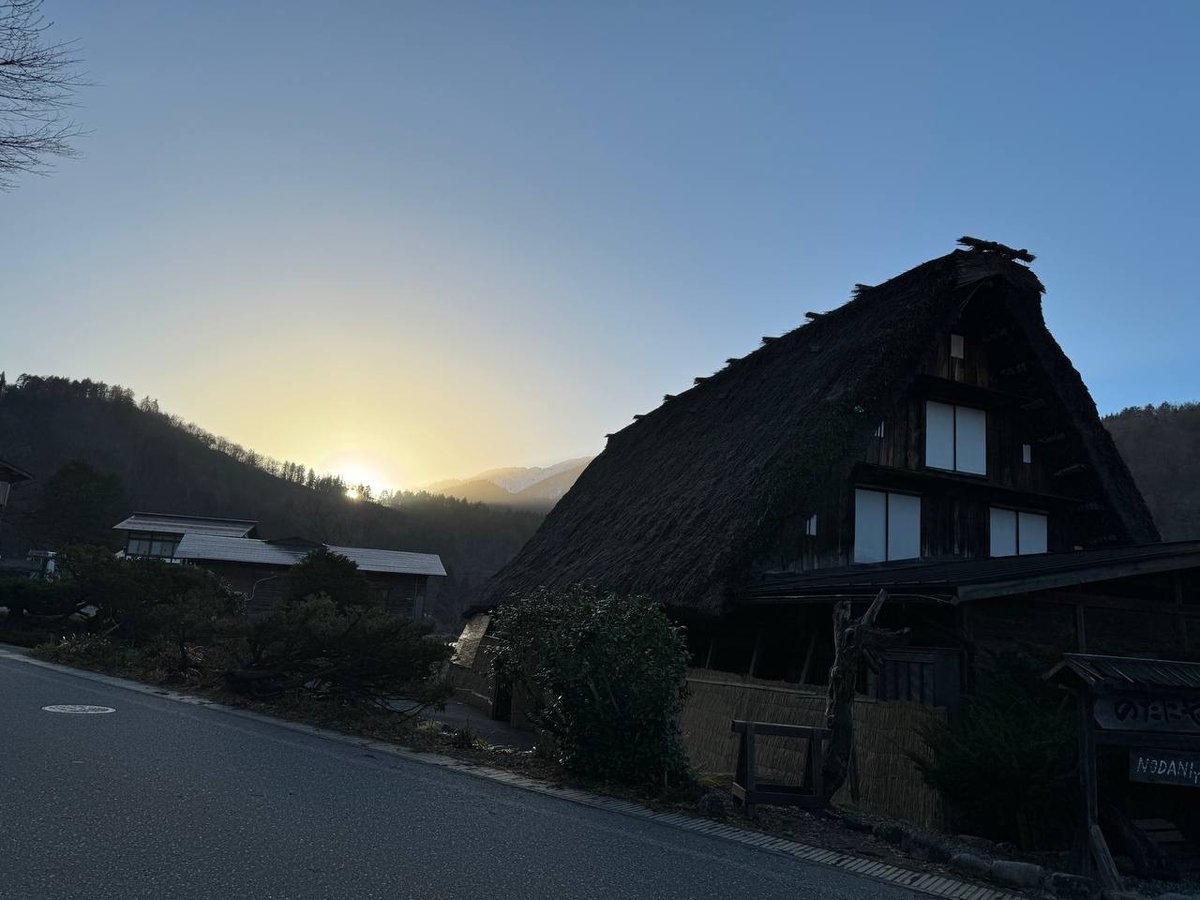
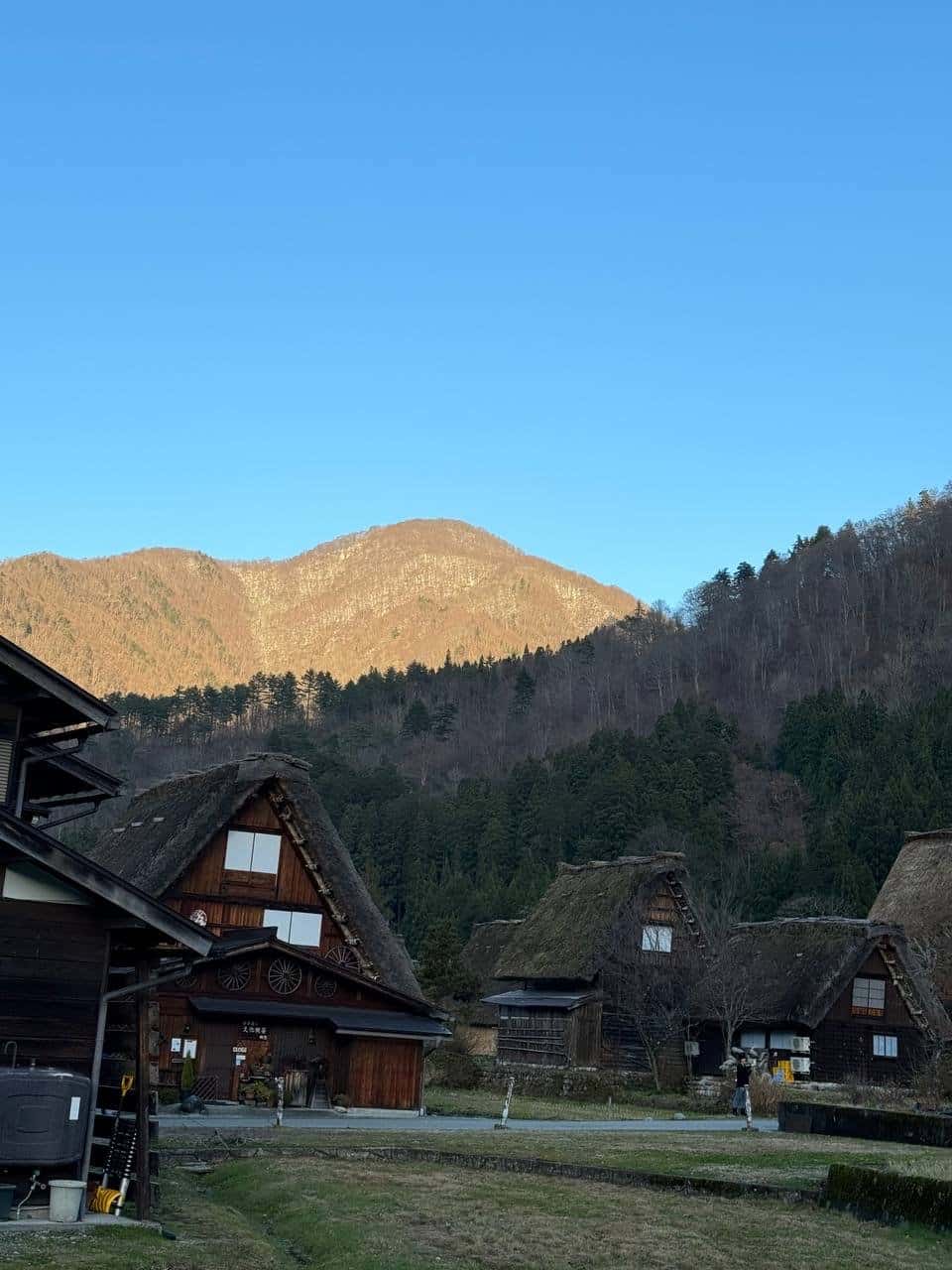
As the sun lowered, the farm houses began to glow and some were reflected off tiny ponds surrounding them. From my high position, I had a clear view of the rooflines set against the mountains. Finally, for the first time all day, the village began to seem slightly magical.
Before it became fully dark, I headed out to visit Myozenji Temple. Stone steps rose to a tiny torii gate, and the thatch-covered bell tower sat in a clearing all by itself. It was a quiet little place with a simple temple, and no one else were there when I visited.
As the sun went down, the mountains behind the village grew dark against the sky.

Houses along the hillside glowed in the fading sunlight, lighting the entire valley for around twenty minutes before the light disappeared. I watched it disappear, transfixed. I walked over Deai Bridge on my way out.
It was a solid, simple bridge, with a rocky and dried-up river bed far beneath it.
Shirakawa-go in Winter
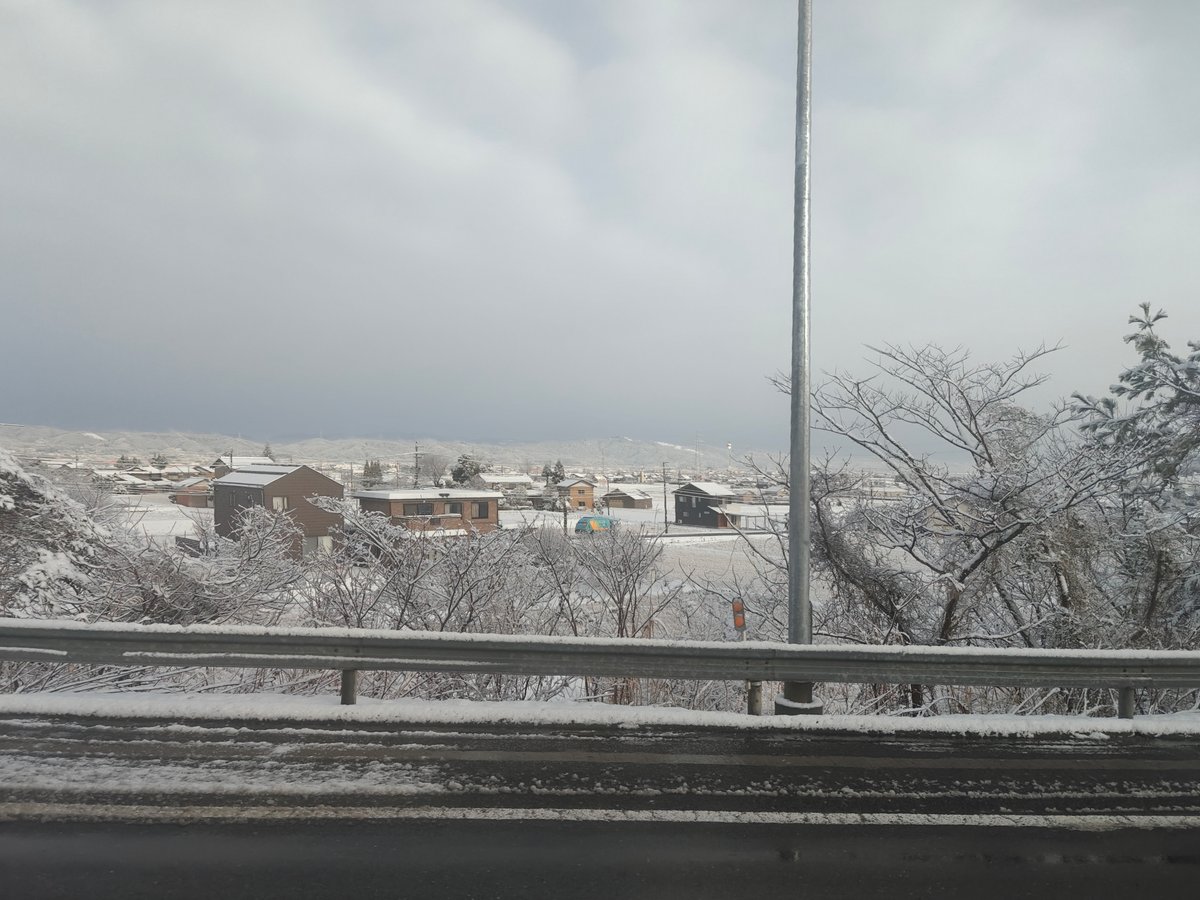
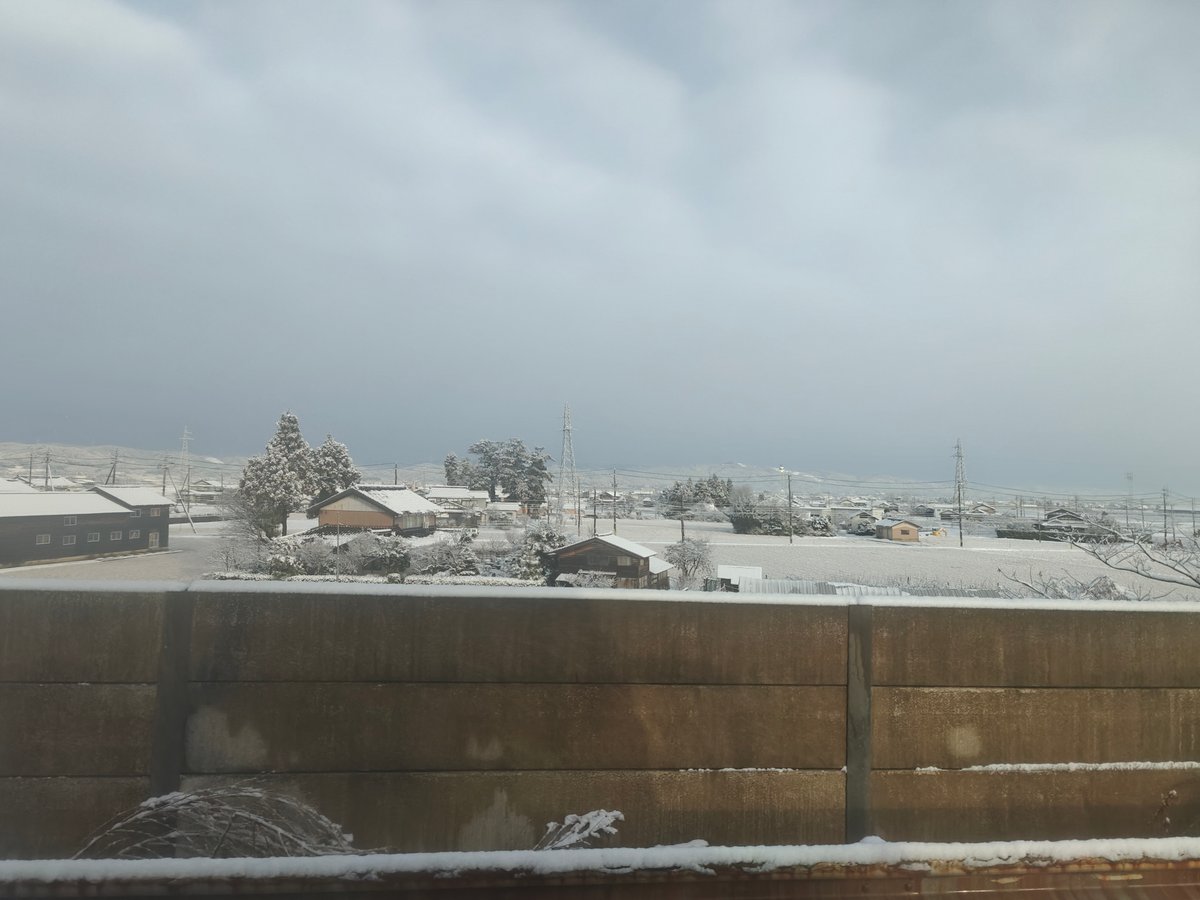
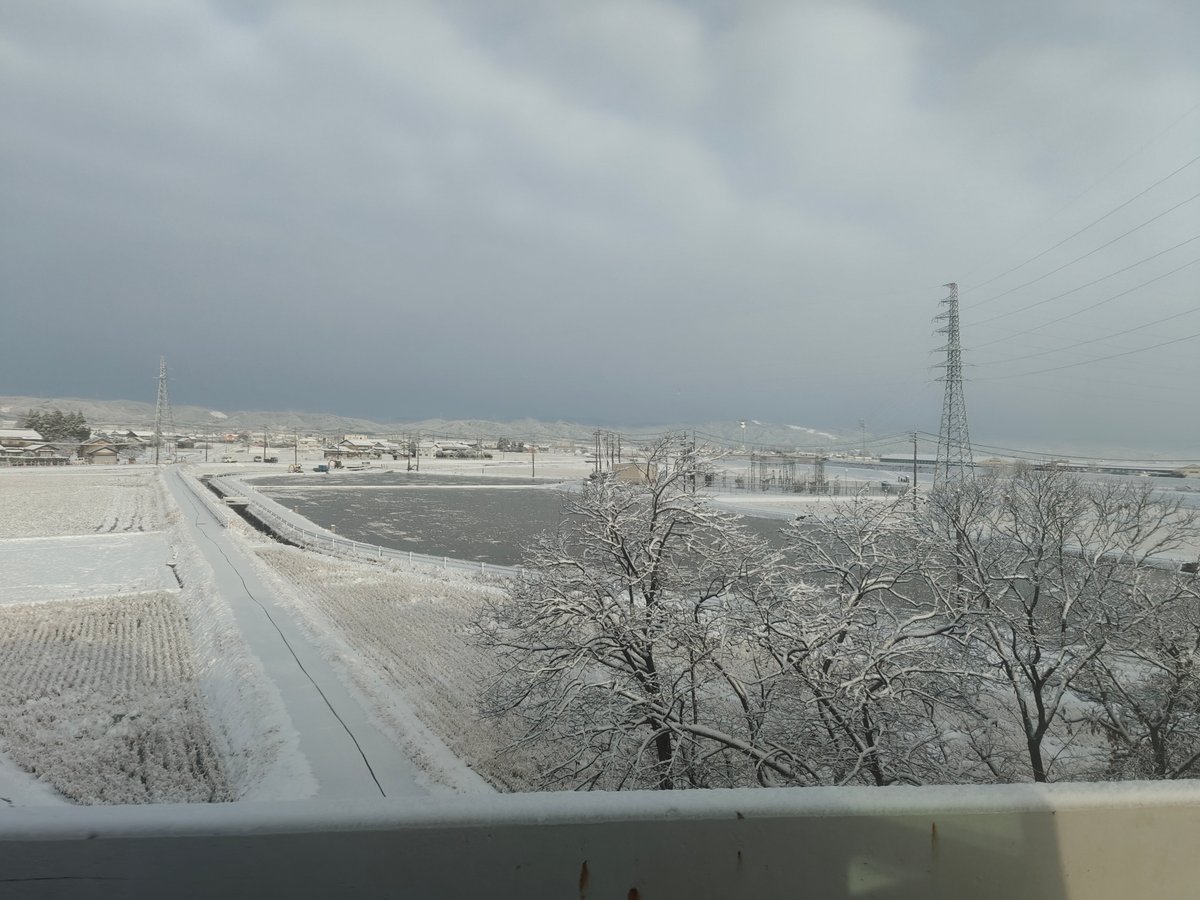
Nice walk…


It left me feeling like I’d seen a side of Shirakawa-go most people miss. Fast forward to January 2025 when I returned. It had snowed.
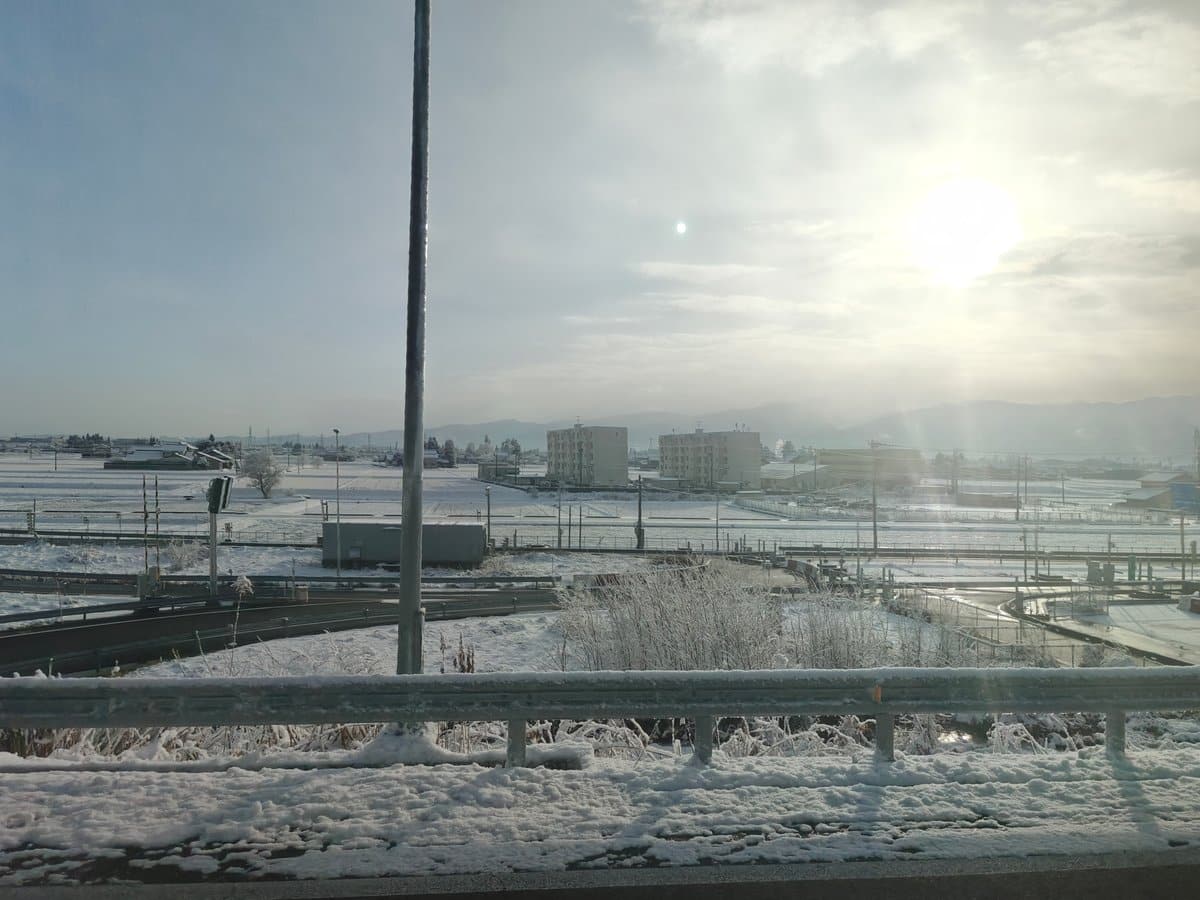
The snow was so deep that as I approached the village, the fields were covered and the distant hills were unrecognizable. Concrete barriers and electricity pylons remained, but they were softened by the snow. Everything was a lot whiter, the valley wider and quieter.
Then there were the snow-covered trees surrounding the torii gate that I’d previously spotted, and the frozen-over pond outside of one of the farm houses. The entire picture seemed bare and chilly in a way that was somehow pretty beautiful: the house reflected off the ice with more clarity than I would of imagined.


This time, though, there were lots of other tourists on the paths in the village. Everyone was bundled up in between taking pictures. The snow was so deep it slowed walking down.
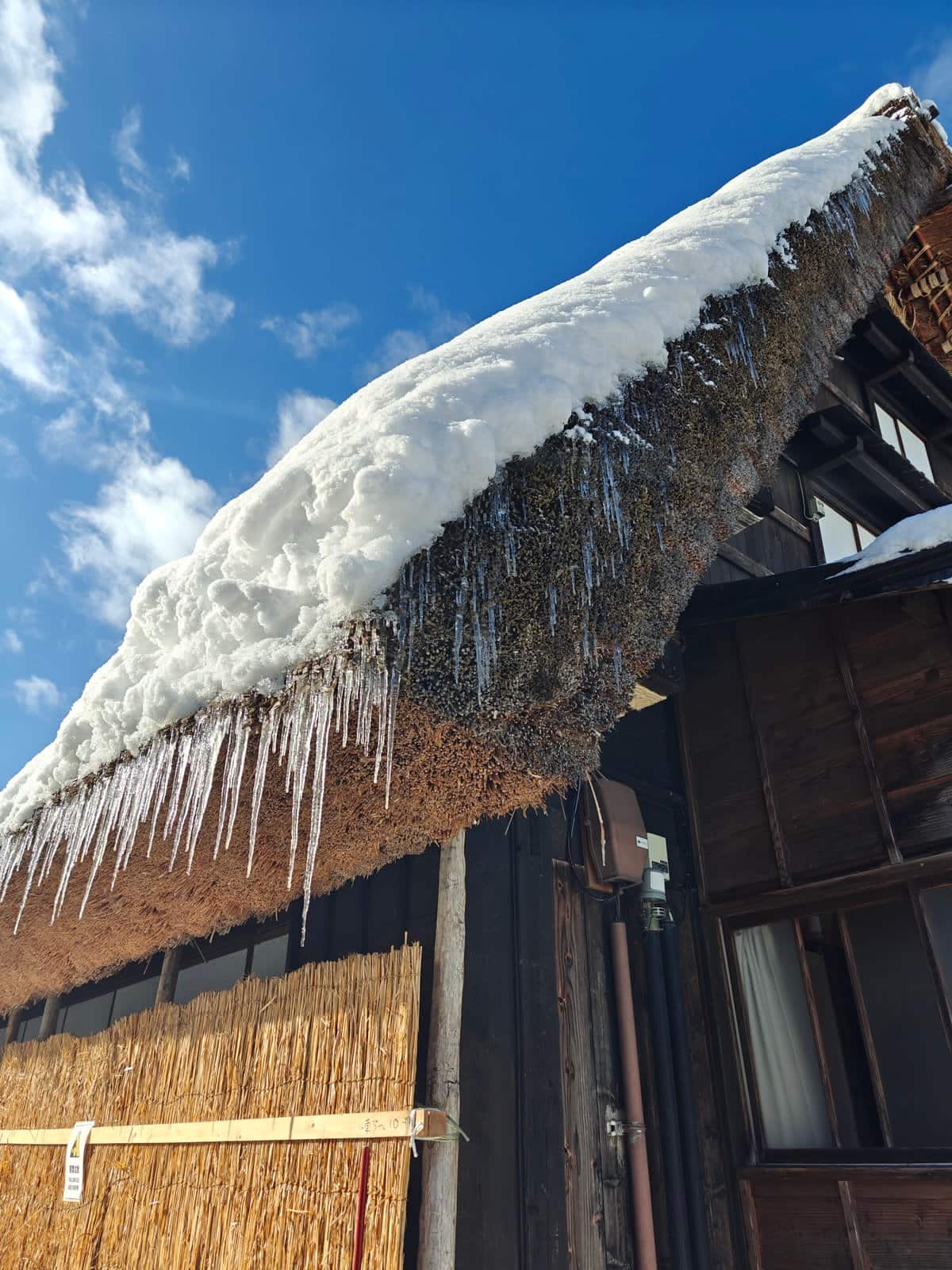
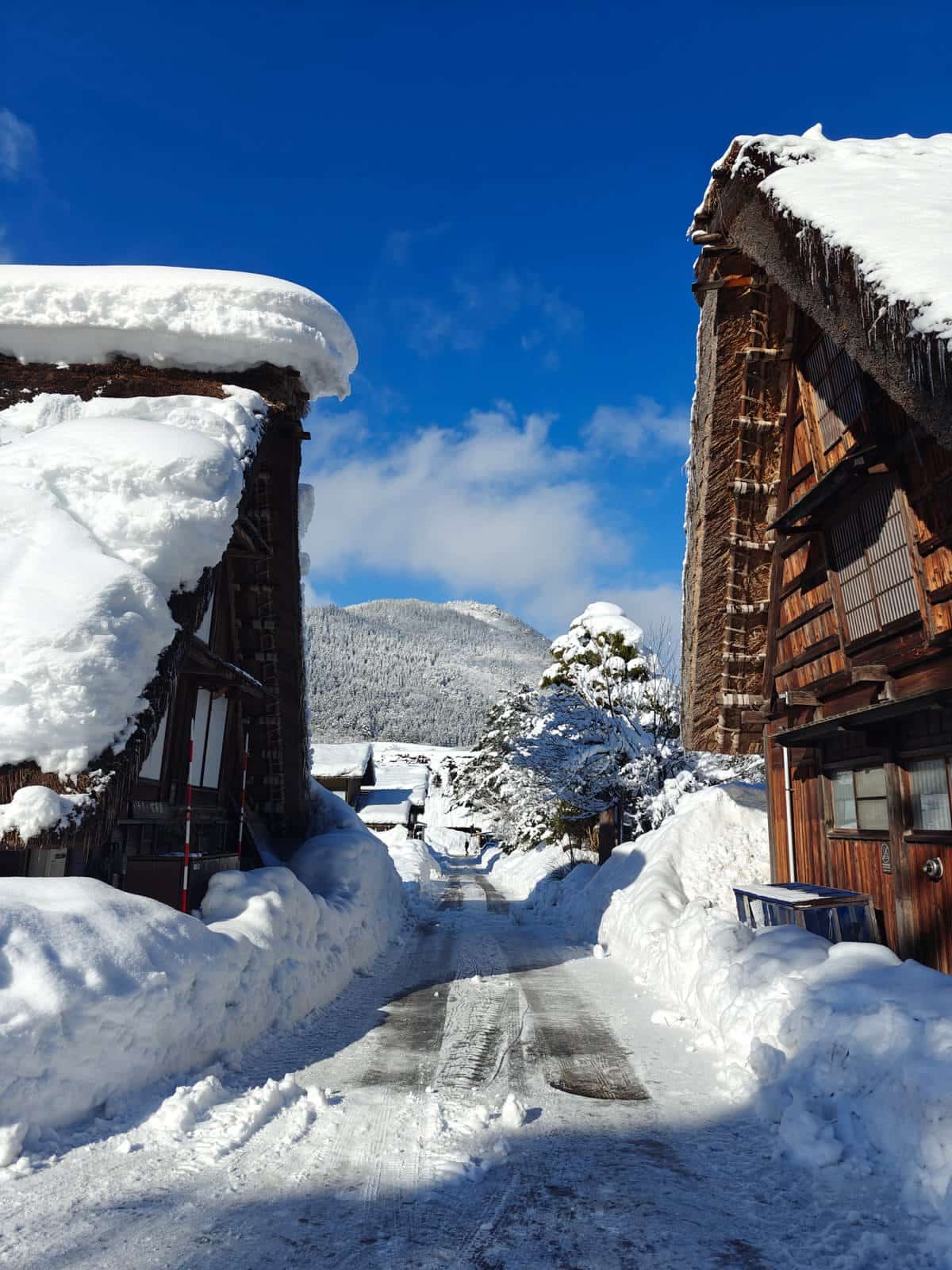

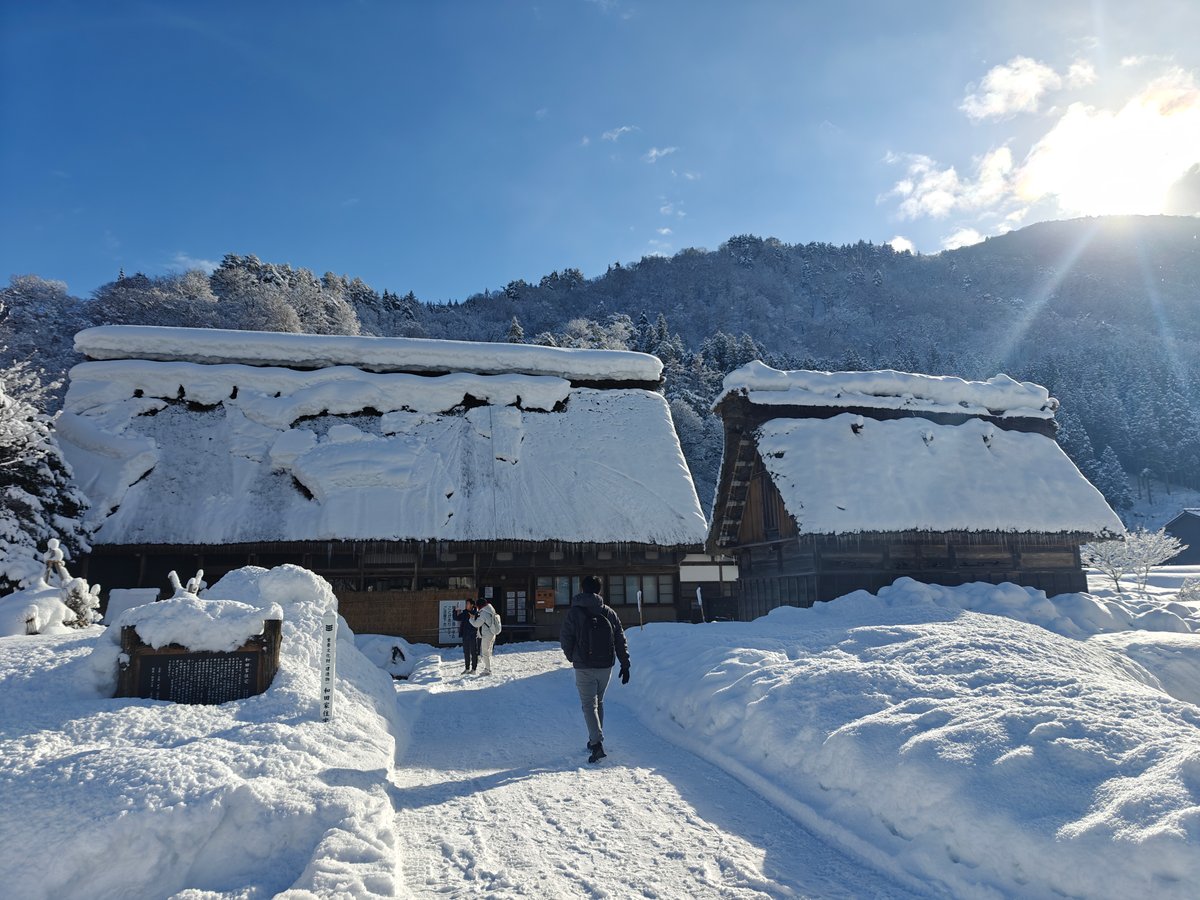
The thatched roofs were all piled high with snow. I could understand now why the buildings was made like they were, the steep pitch simply allowed the snow to slide right off. The blue sky stood out against the white roofs, and it was too much for my eyes to take in.

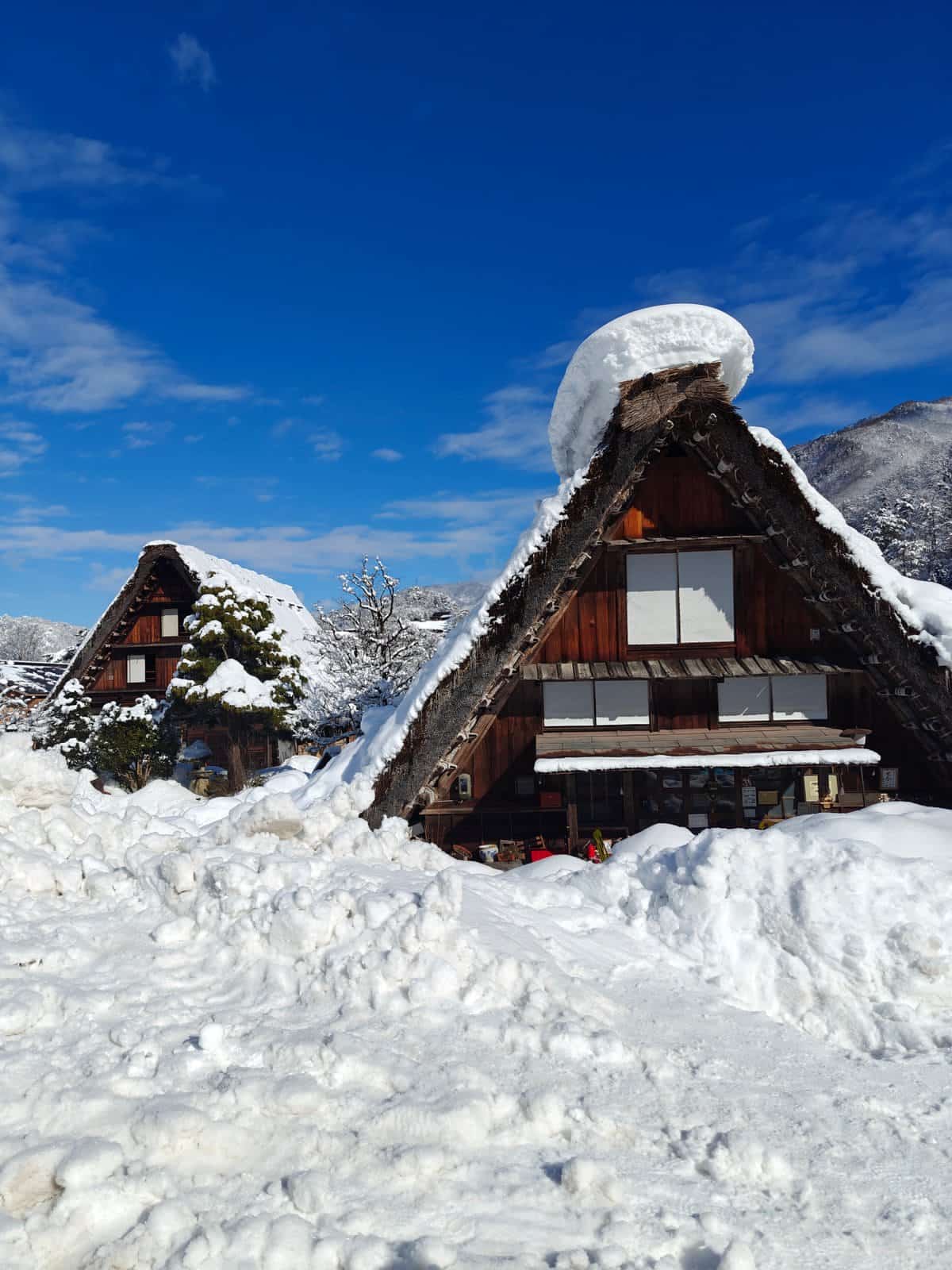
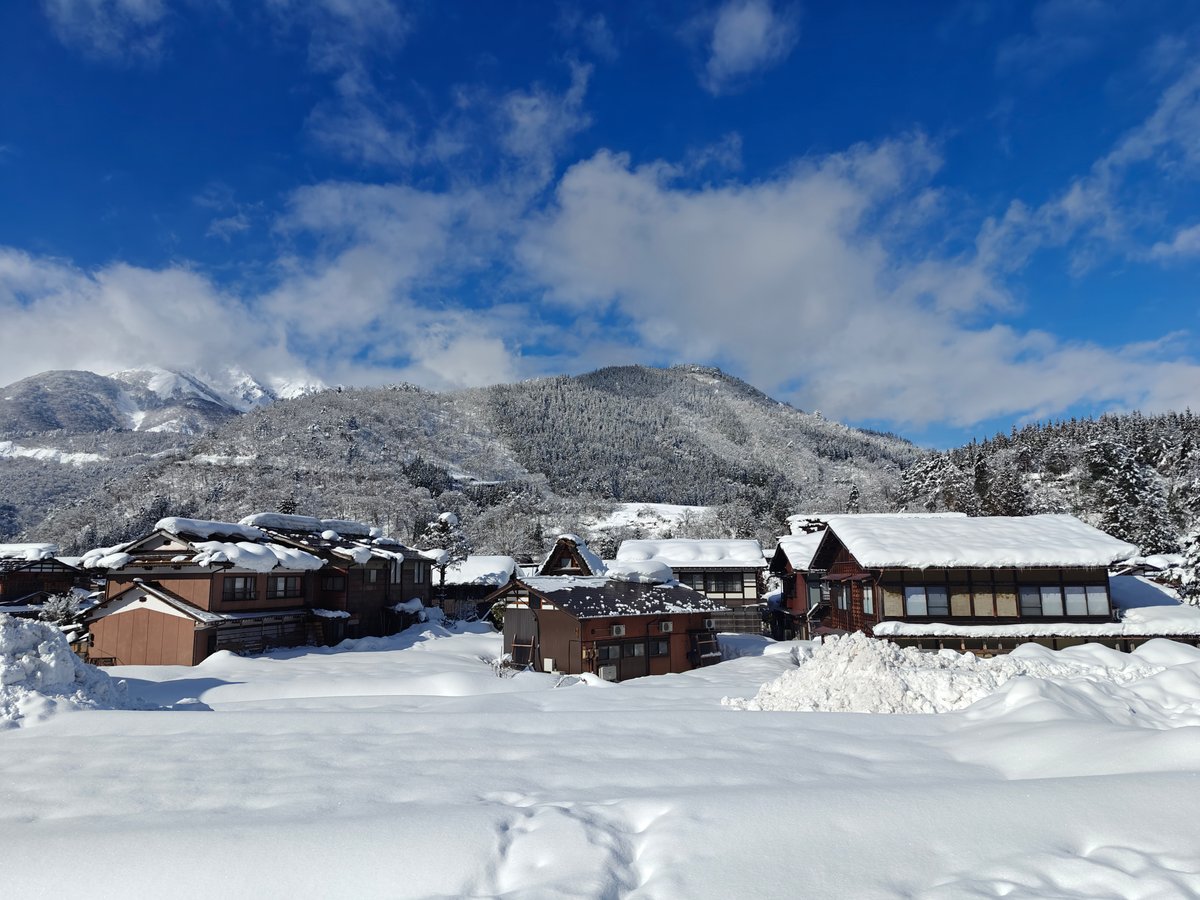
The town glowed as the sun caught it at just the right angle and snow dripped from all the trees. The paddies melded into the open fields in front of the houses, which themselves had been covered in snow, making them impossible for me to distinguish from the pathways leading through them. Some of the icicles hanging off the edge of those thatched rooftops grew longer than my arm.
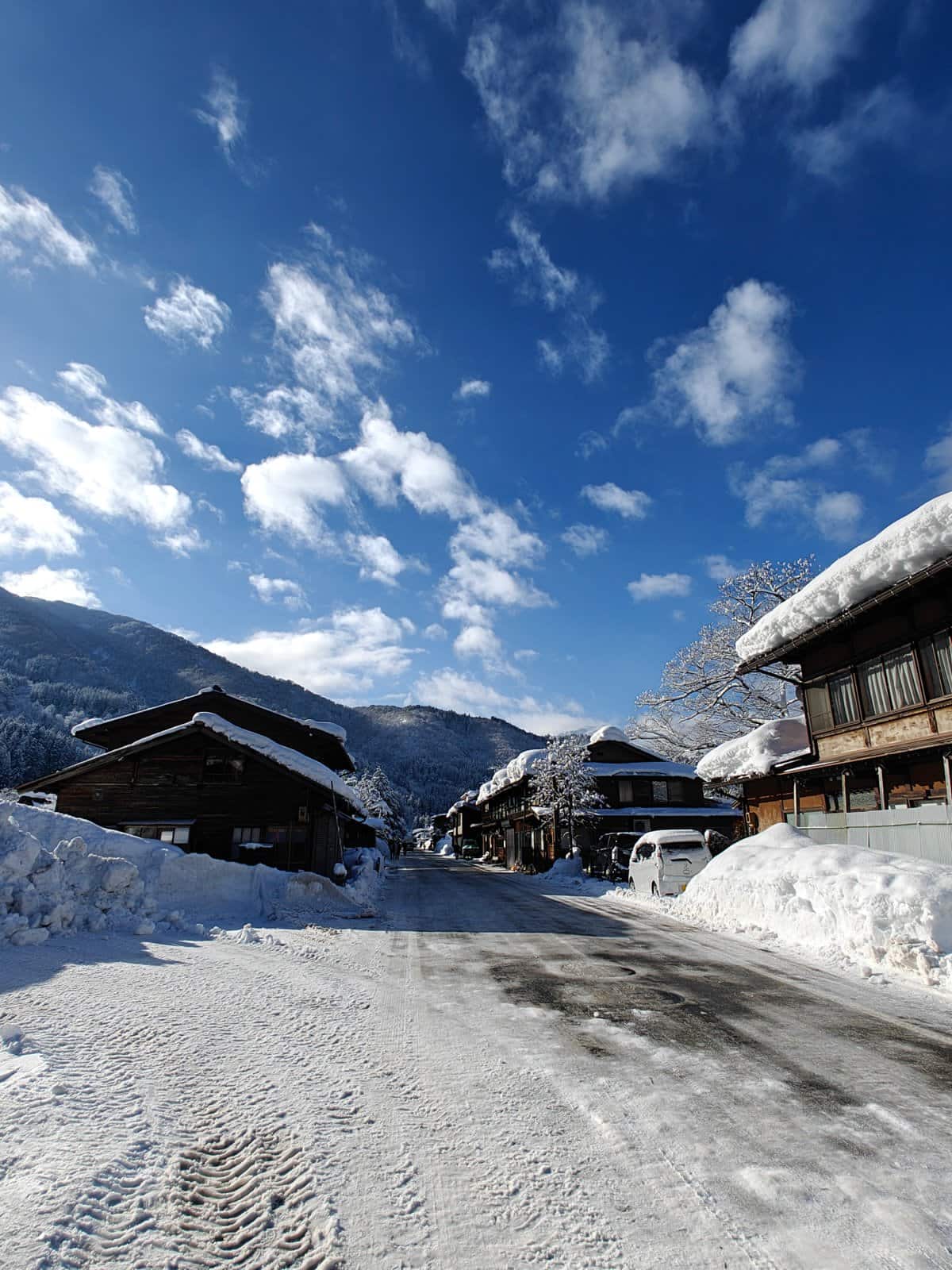
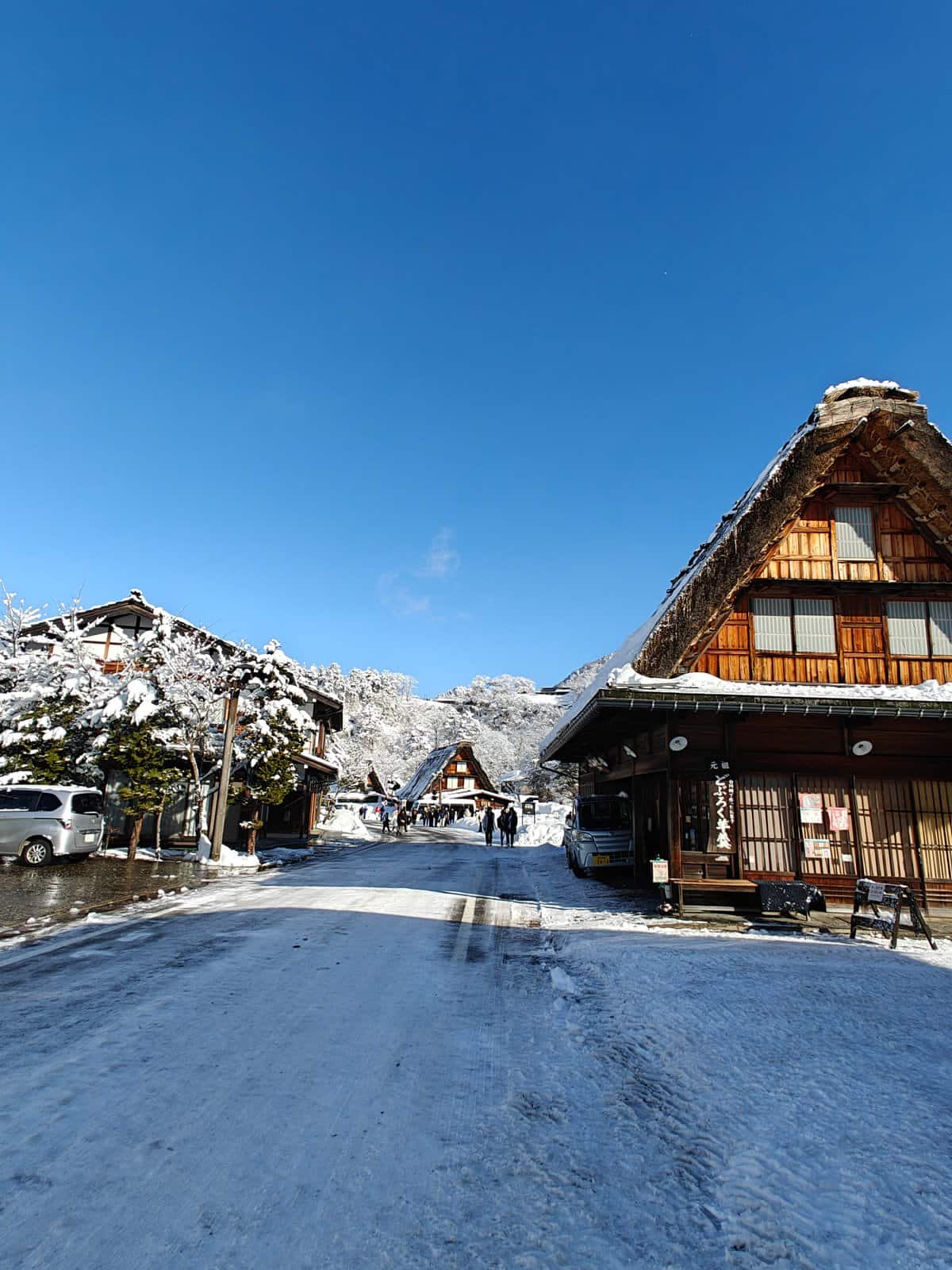
The mountains rose in the background. The roads to get around the village were narrow, lined by houses on either side. There were people everywhere: tourists, shuffling their way through the snow and taking a photo at every other meter.
It was busy but I can’t say I didn’t enjoy it.
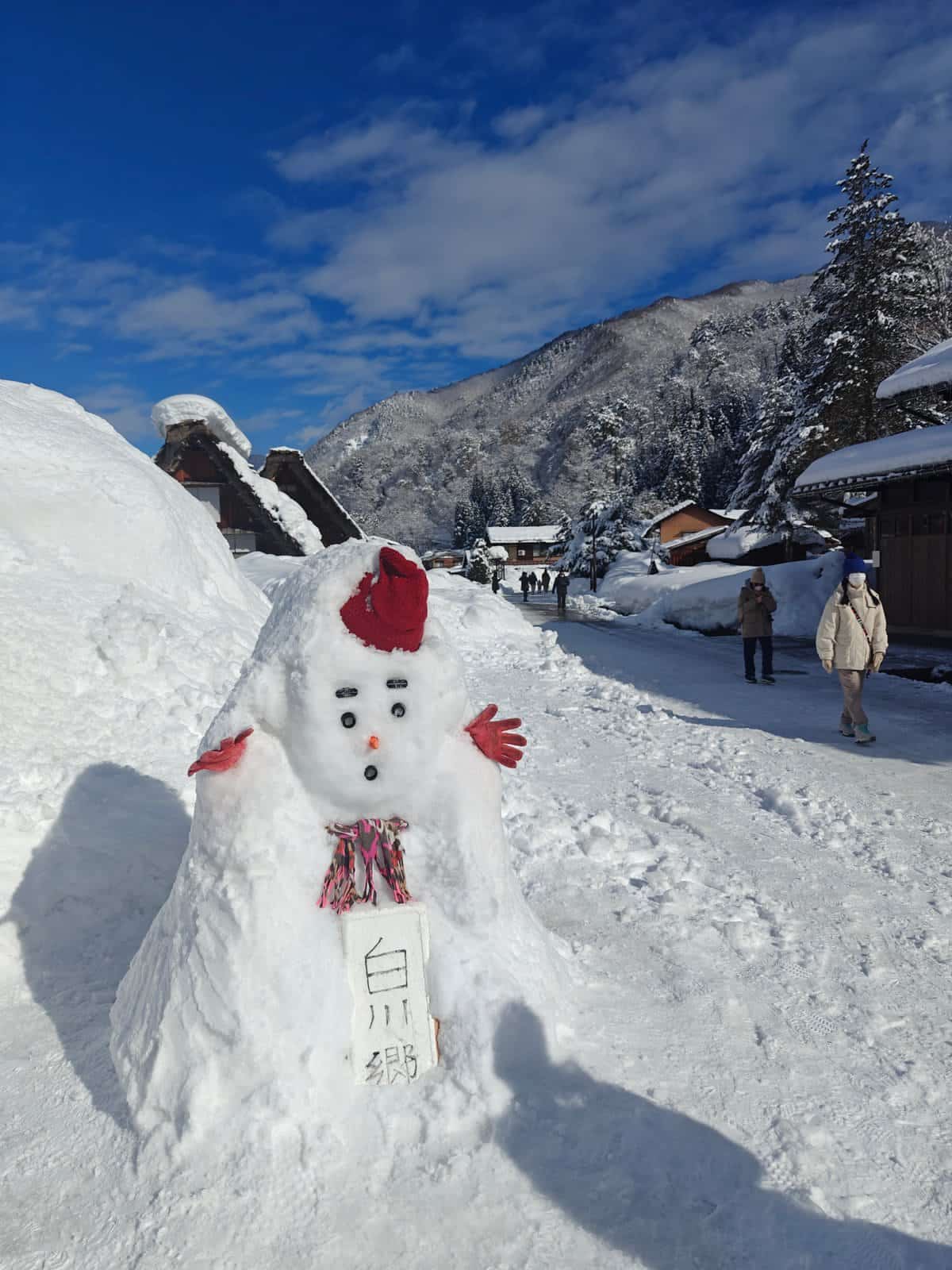

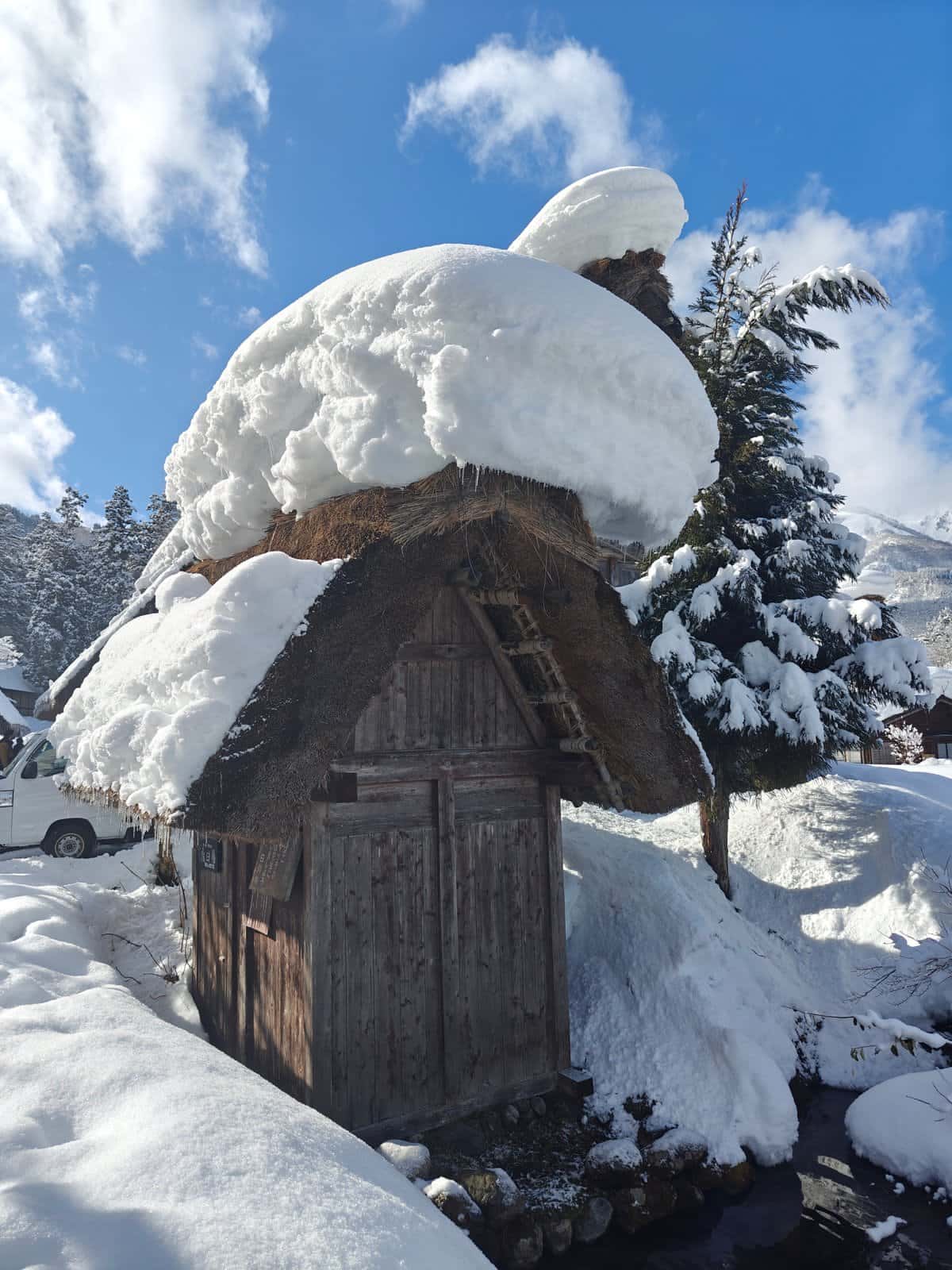
As you walked down the street, the sun would break through the tree branches covered in snow and light up the individual farmhouses. From all angles, the little cluster of villages looked like they could have been taken straight out of a postcard. And I got way too many pictures but, frankly, how could I not?
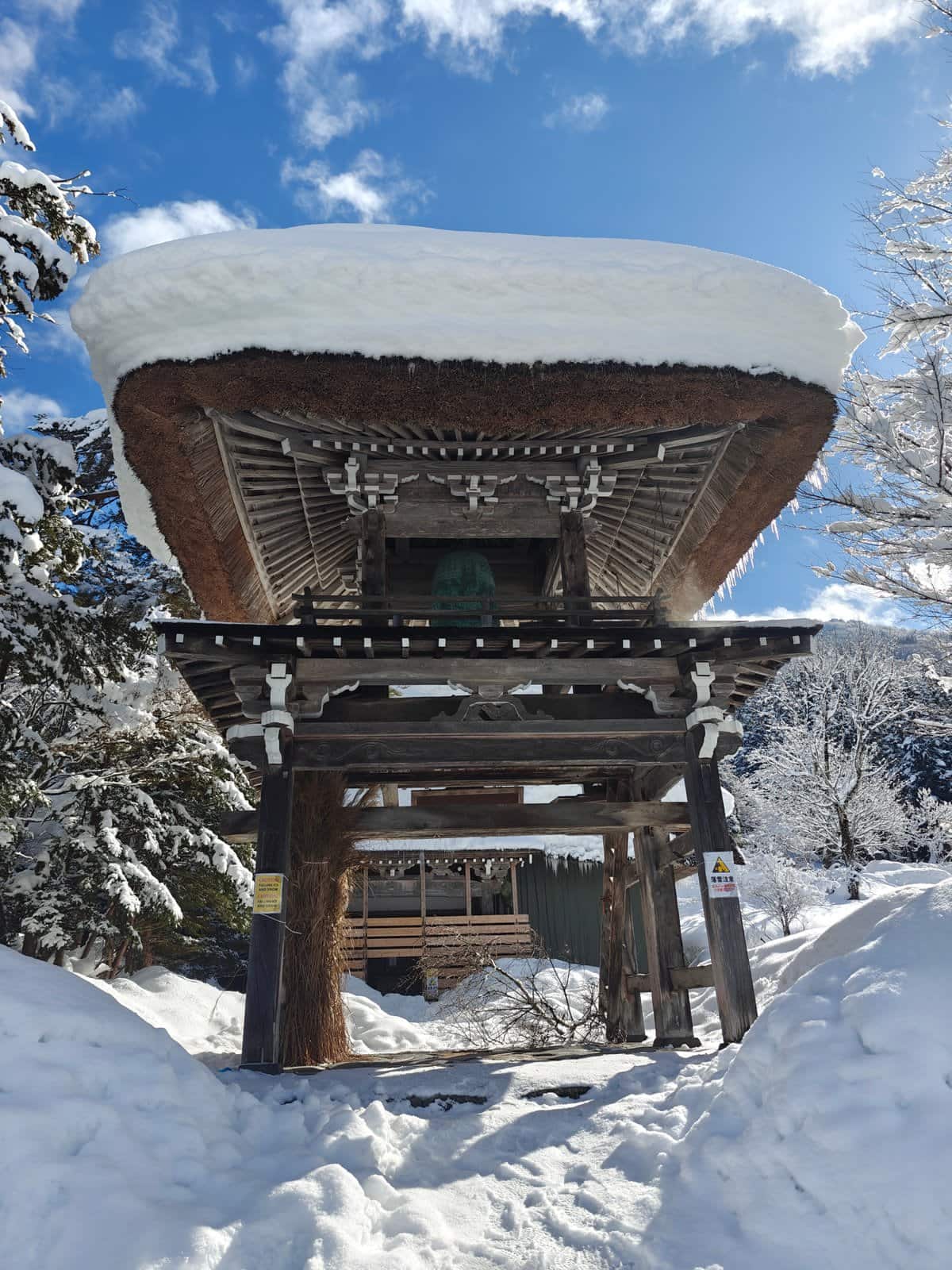


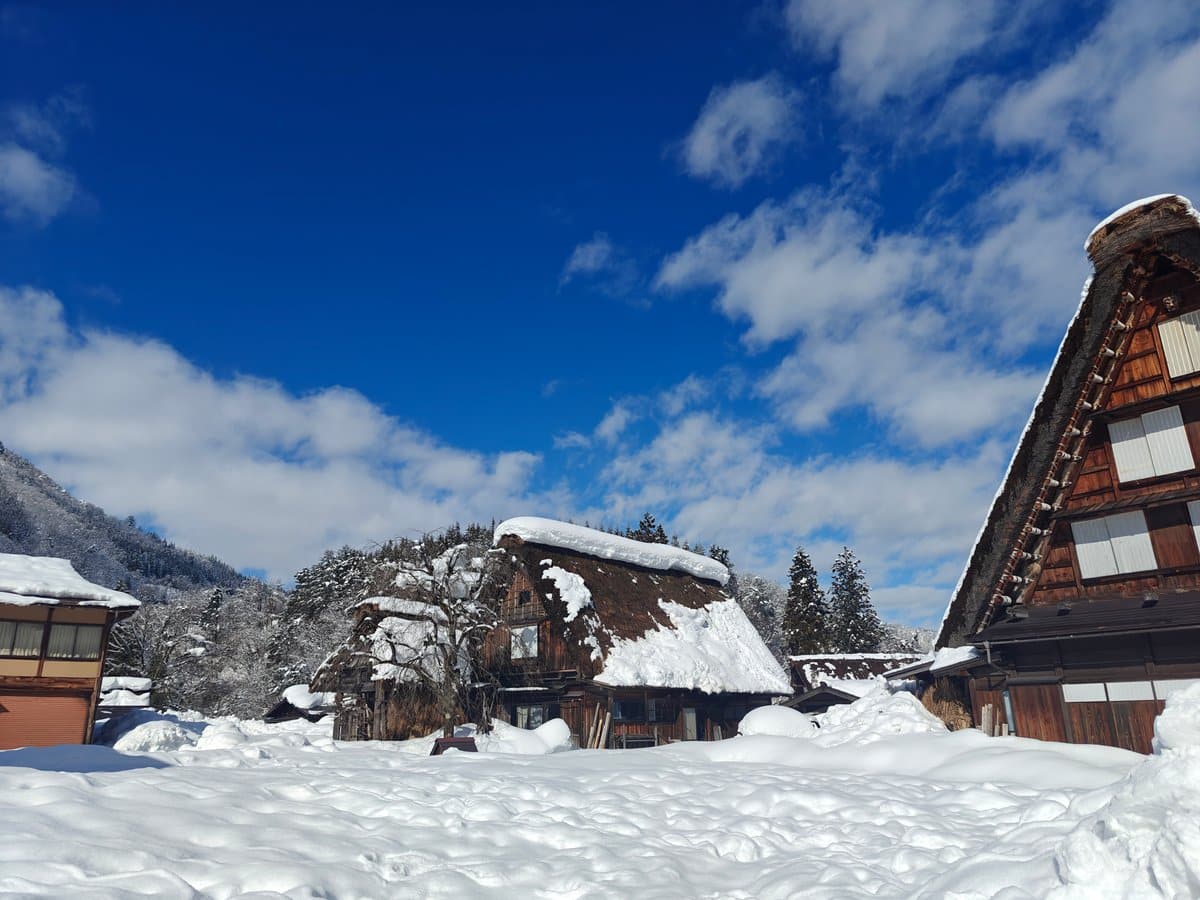
The water channels reflected the snow-covered rooftops. Some of the houses had dramatic snow overhangs that curled outward like frozen waves. Someone had even built a snowman with a scarf and red hat in front of one of the homes!
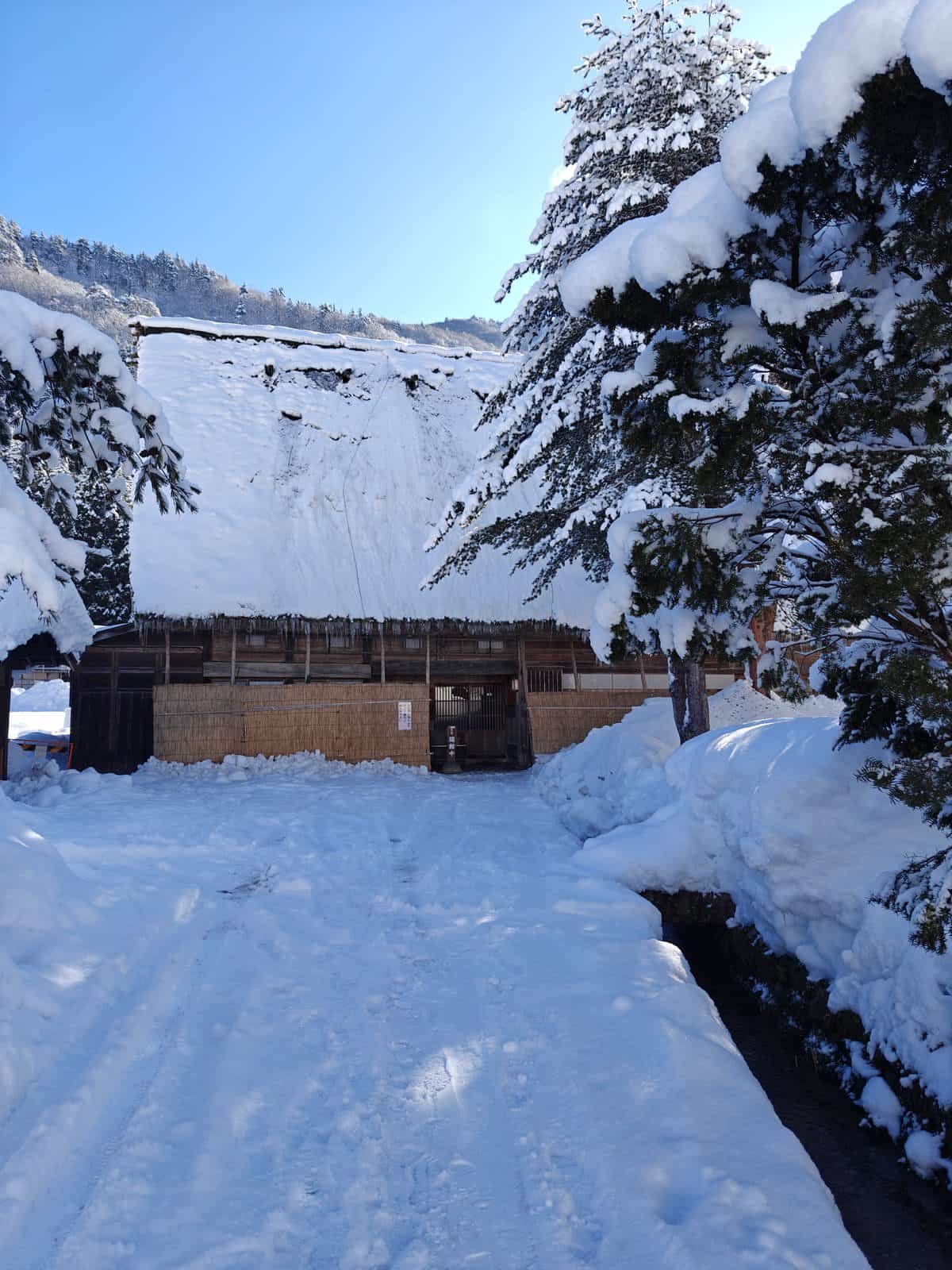
It was like the whole village had been set up to be photographed around every corner. Back at Myozenji Temple, the bell tower was covered in snow, as were the surrounding trees. Nearby is Shirakawa Hachiman Shrine…
Another shrine that featured a snowy torii gate and heavy sacred rope hanging from it.
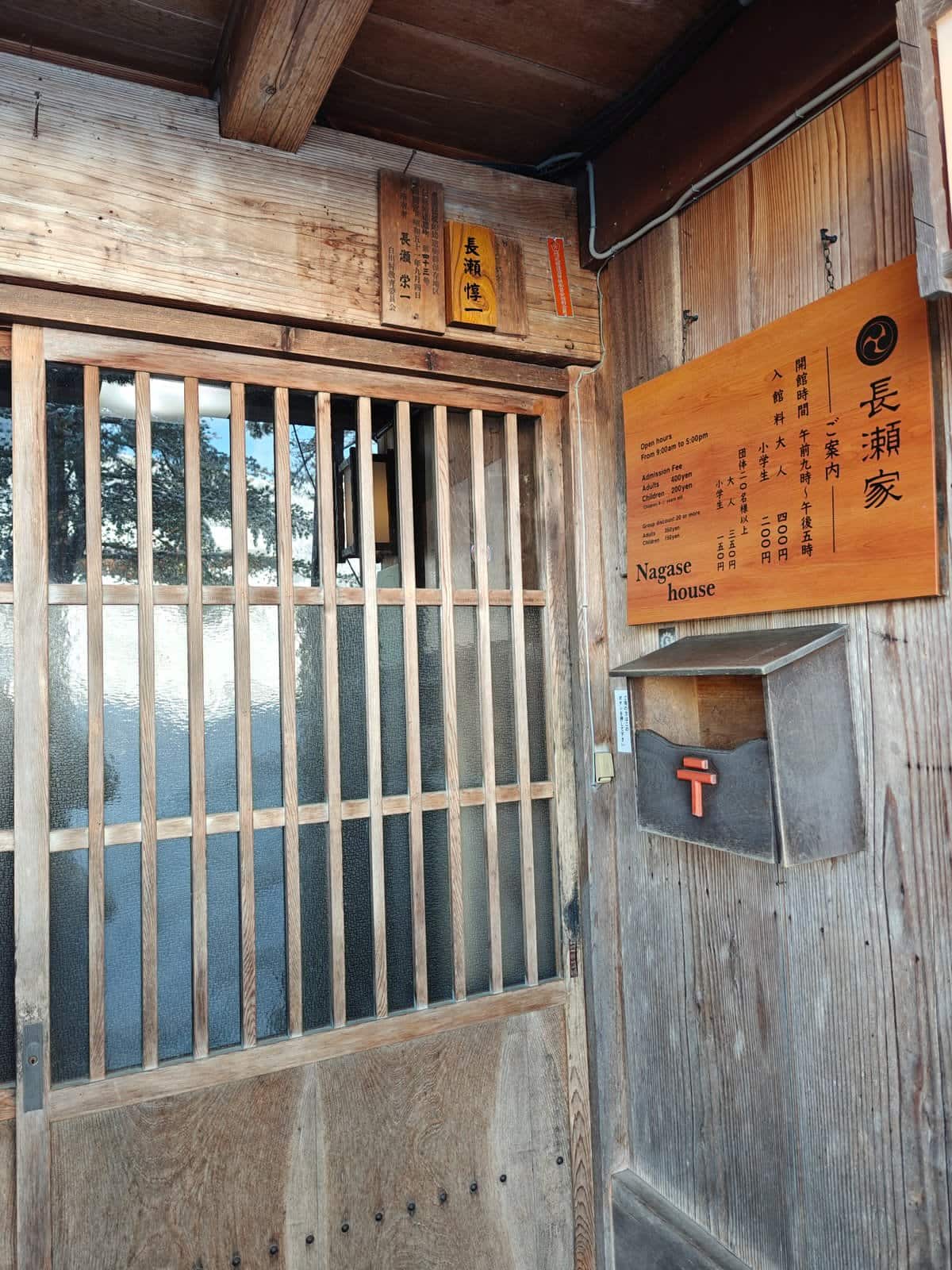
Nagase House


The roof of the shrine hall sagged with the weight of snow. It all seemed solemn and untouched. Then, under a deep blue sky, I saw two farmhouses set side by side; both had perfectly white roofs.
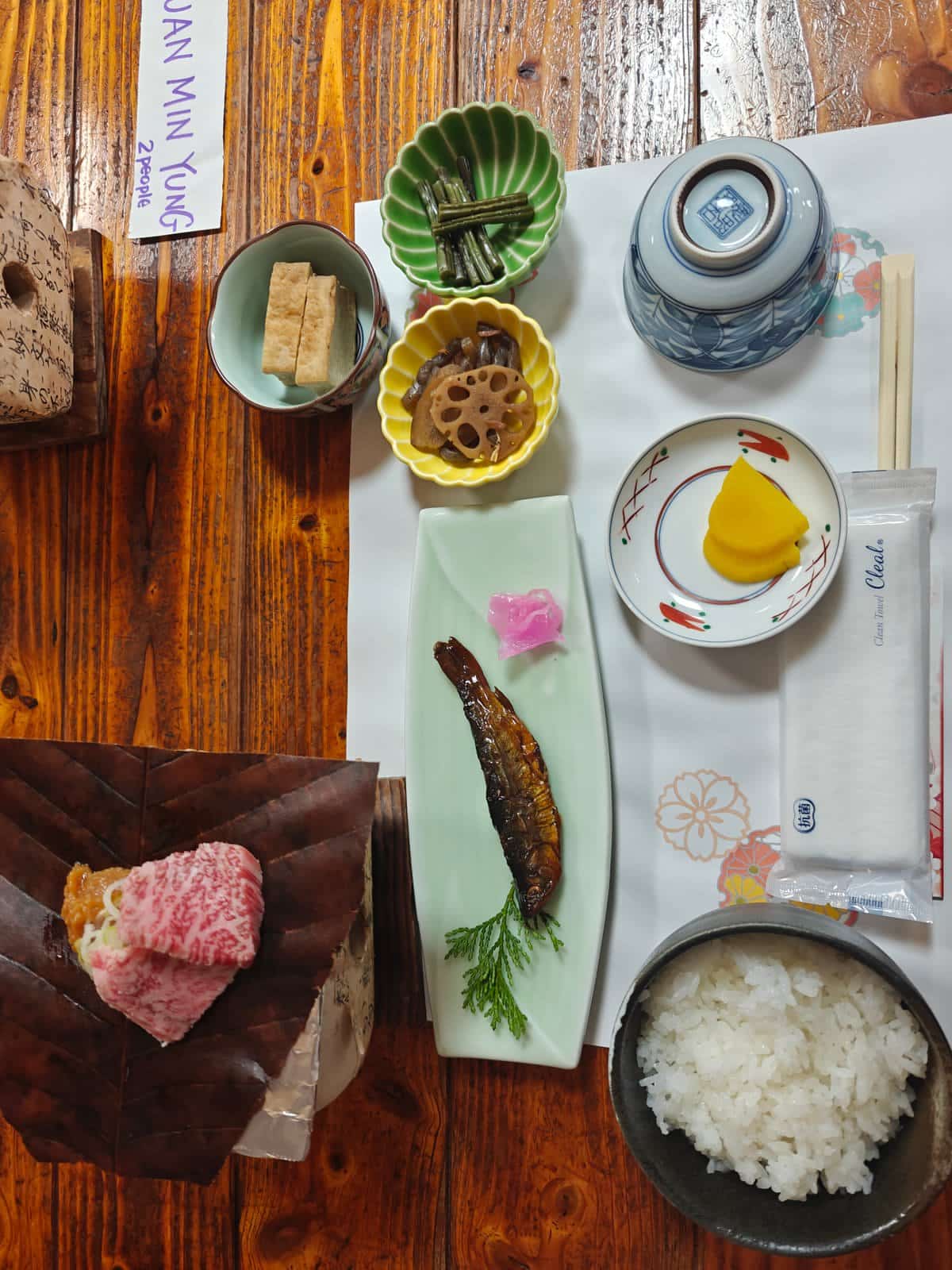
I simply stood there looking at it for a minute. After grabbing some lunch from one of the little restaurants in town (a classic grilled fish set including rice, miso soup, and pickles), I was glad to sit down and warm up for a bit.
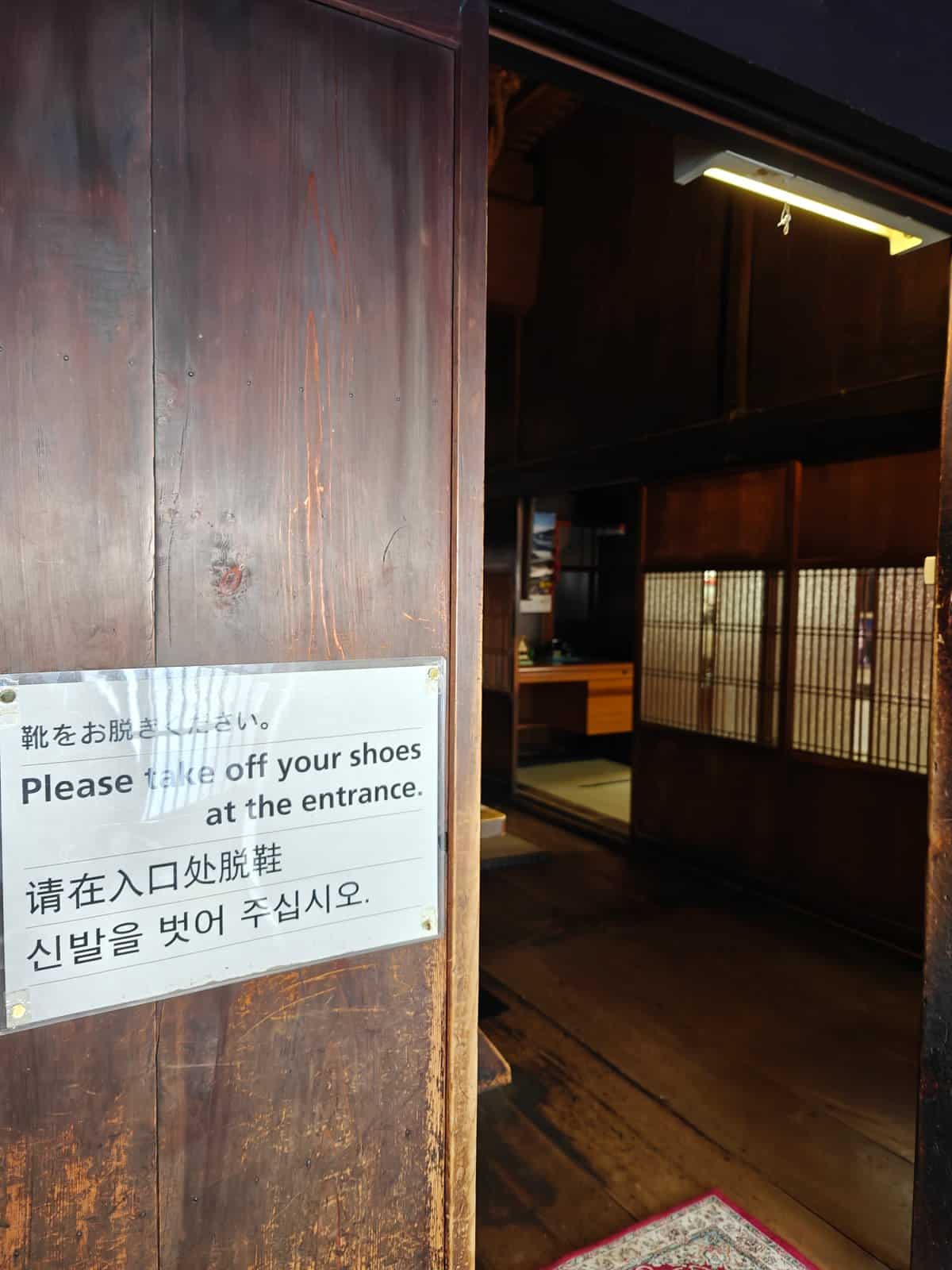
On this same winter trip, I made it to another house: Nagase House.


When I arrived, it was covered in snow with only the hint of a wooden sign outside at the entrance. A large wooden porch protected the doorway from the weather. I entered gingerly.
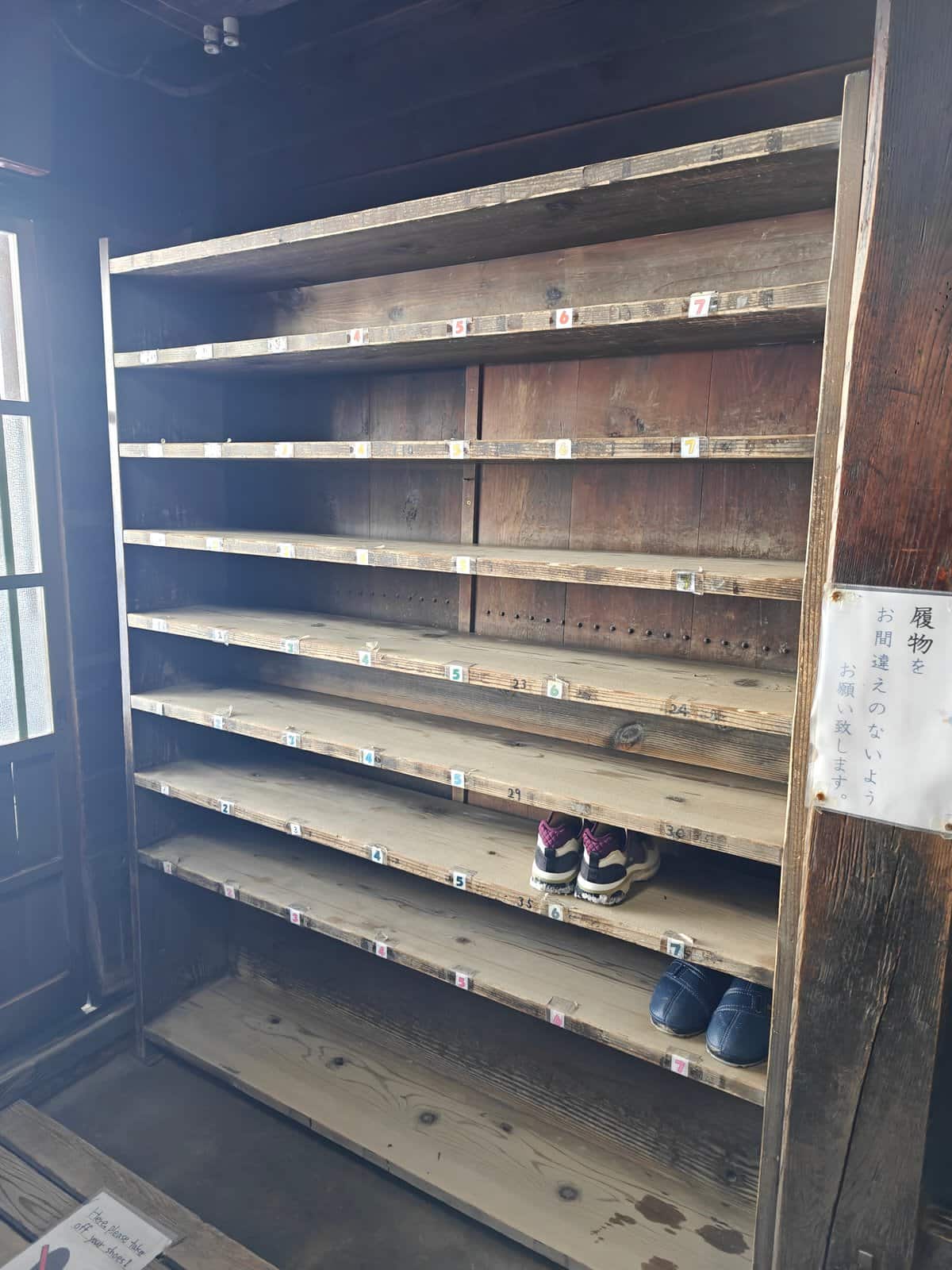
I took off my shoes at the genkan (which was chilly), then climbed up onto the wooden flooring. Just inside the door there was a high shoe rack that was beginning to get crowded with people’s footwear. Like Kanda House in December, the house was livelier now, but it was laid out in a similar fashion.
There were display cabinets along the walls full of old household tools and gear. In one corner there was a neat and shiny reception desk piled with pamphlets.


On the wall above were framed photos of the house across the seasons; one was even captioned in Japanese (caption: Nagase House in the snow-melt). It was fascinating to see the house in different conditions, especially after having visited twice myself.

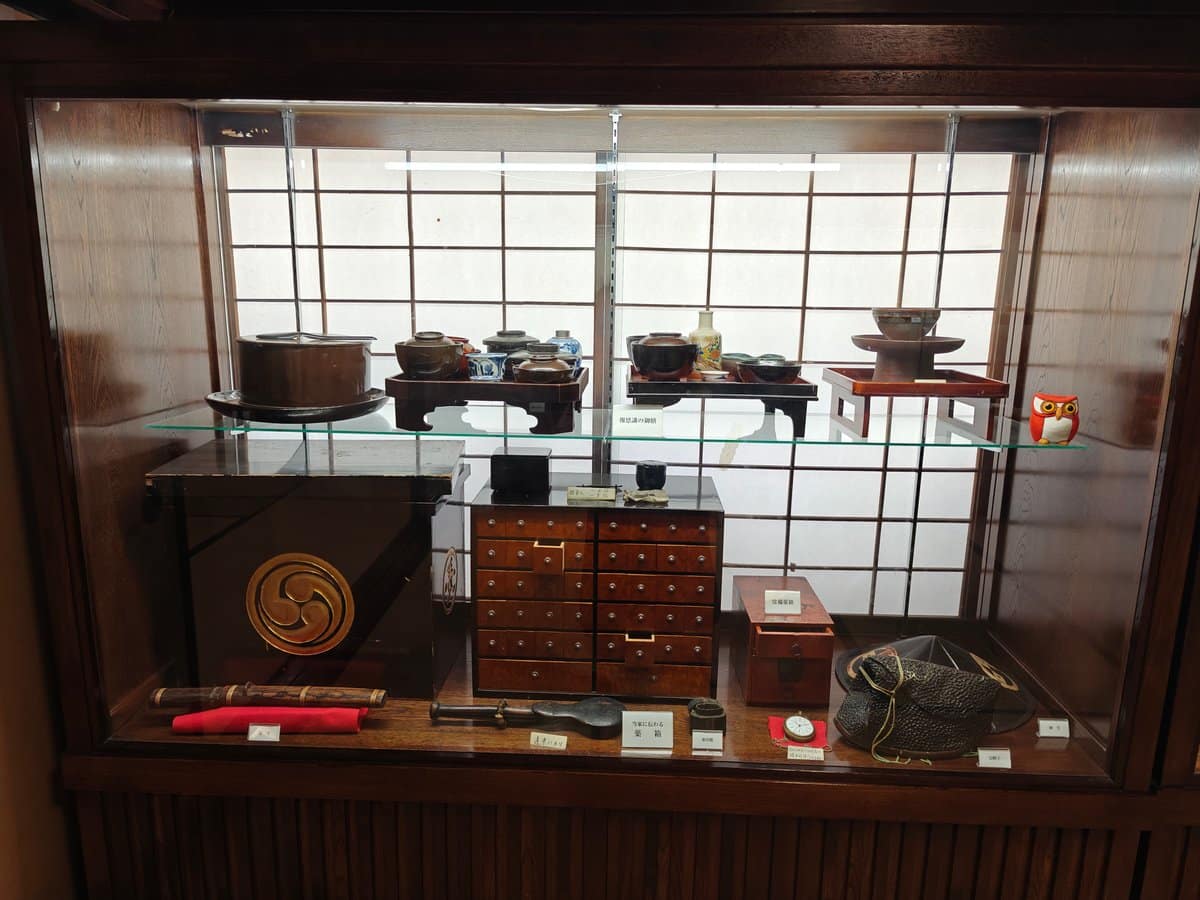
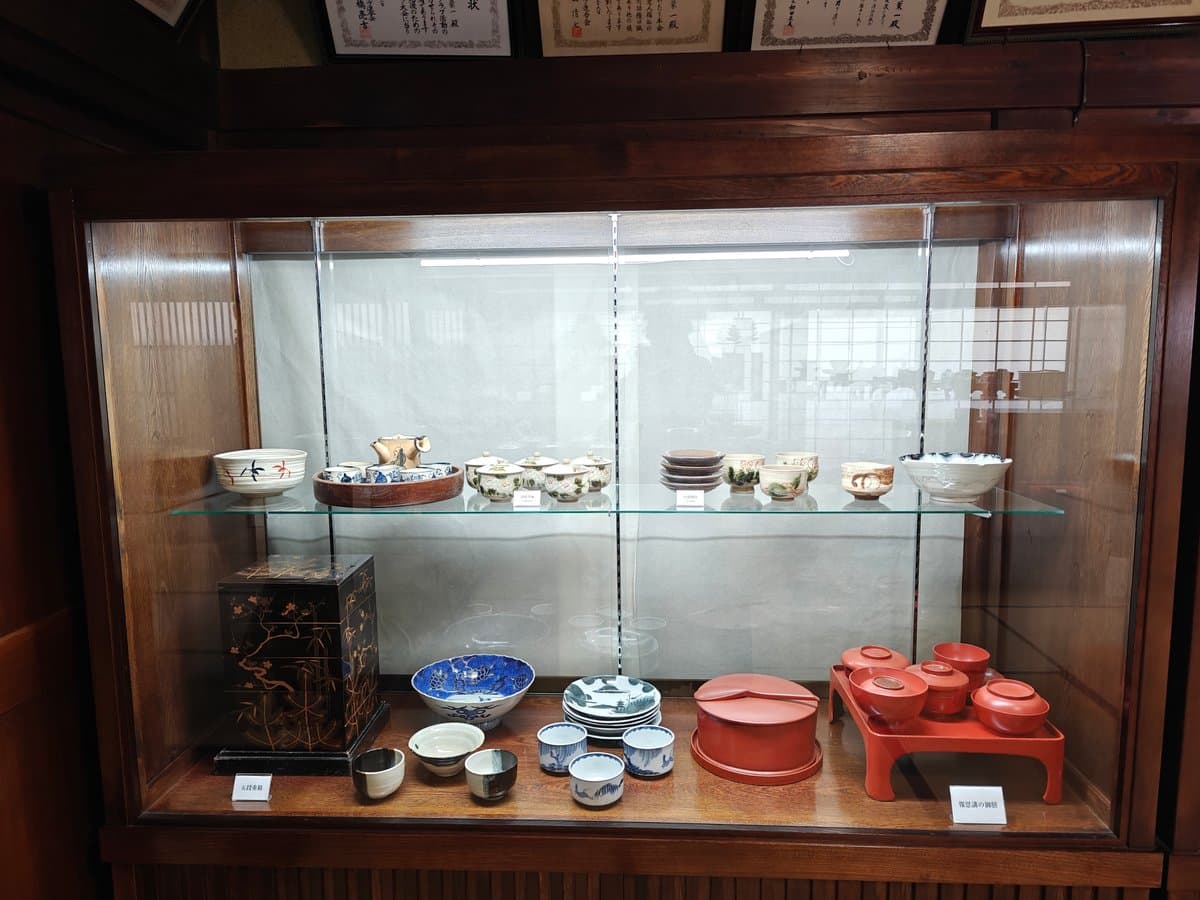
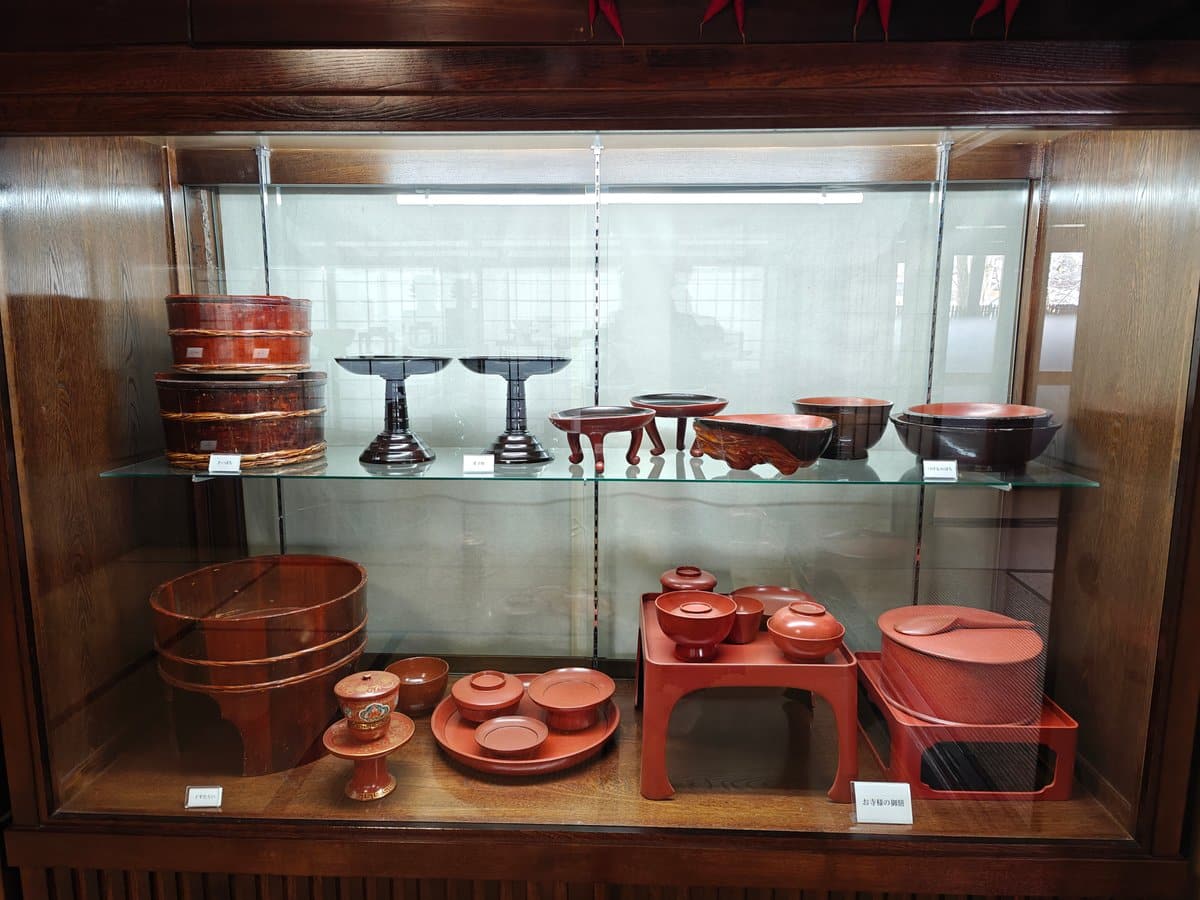
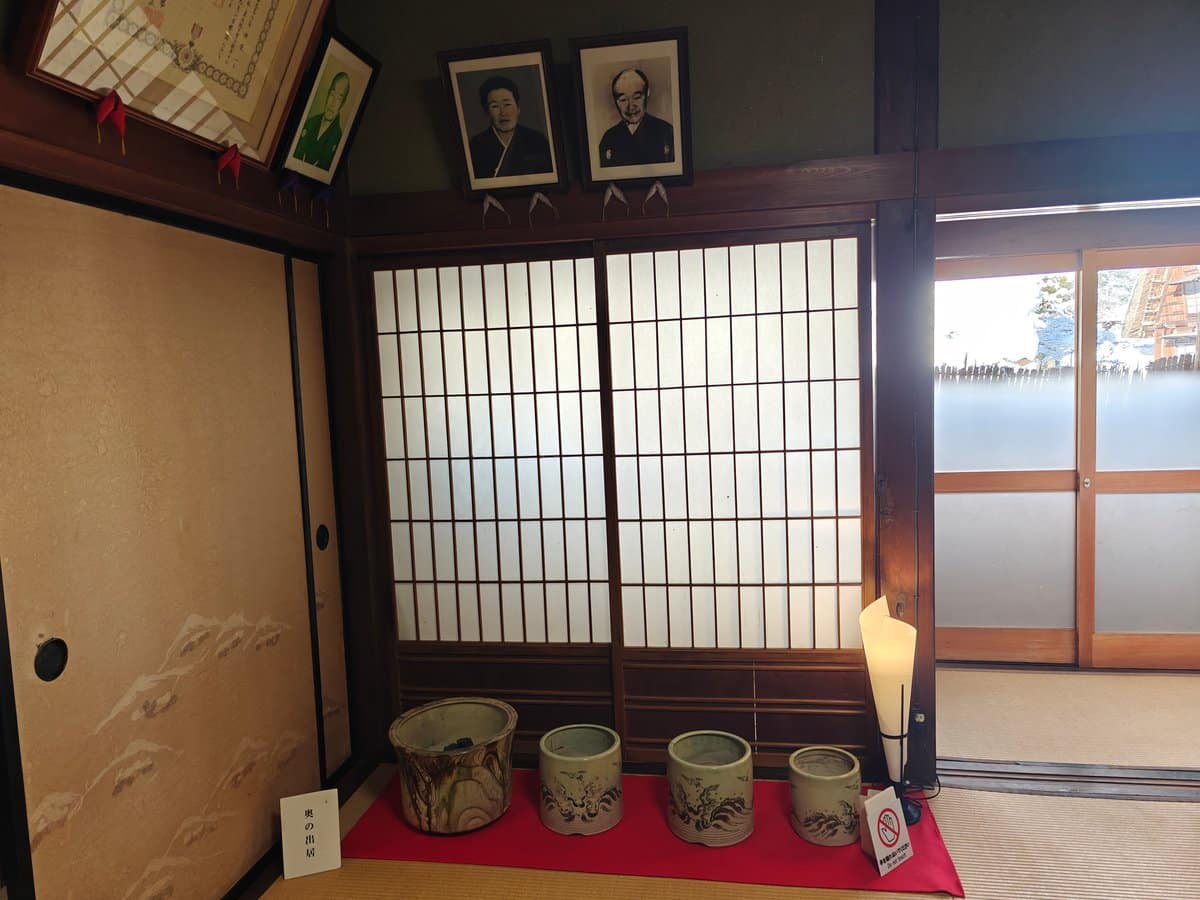
Additional display cases contained household goods, sake cups, rice bowls, footed offering stands… Along with lacquerware and ceramics. There was a lot here, and I kept pausing over the detail.
Everything was labeled (albeit in characters I couldn’t decipher) and well lit.
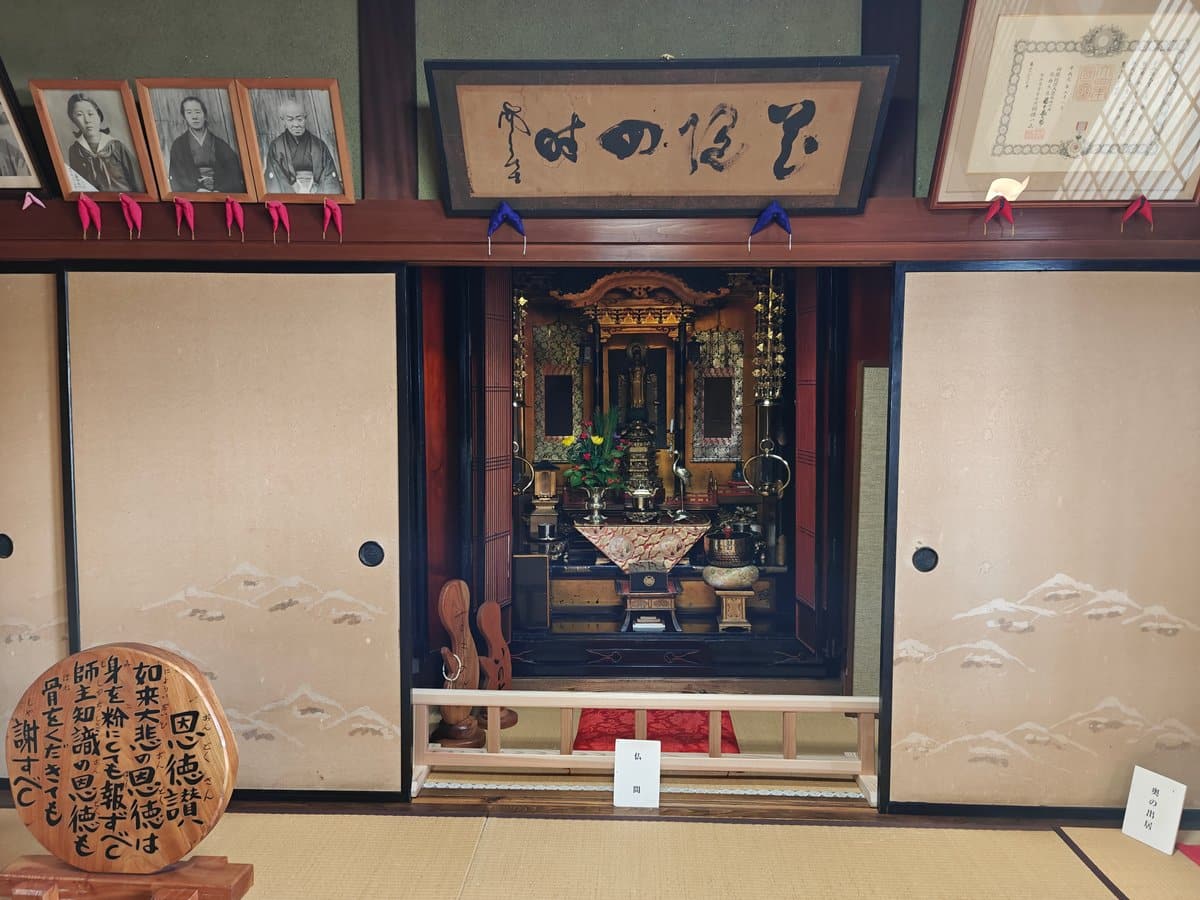
Moving through the house, I came into the darker and more formal butsuma or Buddhist altar room. Ornate, the altar in this room gave off the impression that it wasn’t simply on display, but still being used.
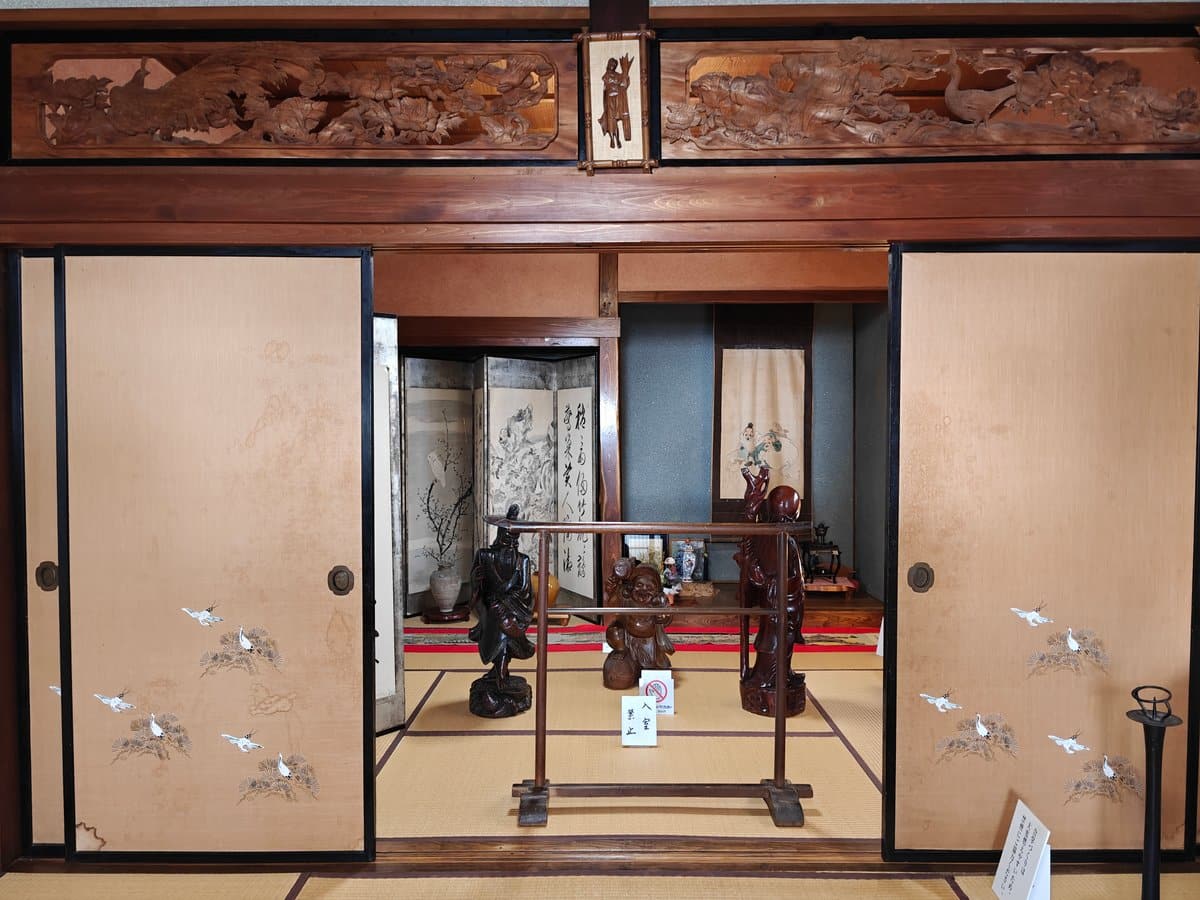
We entered one of the tatami rooms that were all open for viewing and had labels. There were some beautiful sliding doors and an ornate alcove in one of the more formal receiving rooms. The tatami mats appeared well maintained but old.
It was cold inside the house, and I wore my jacket throughout.
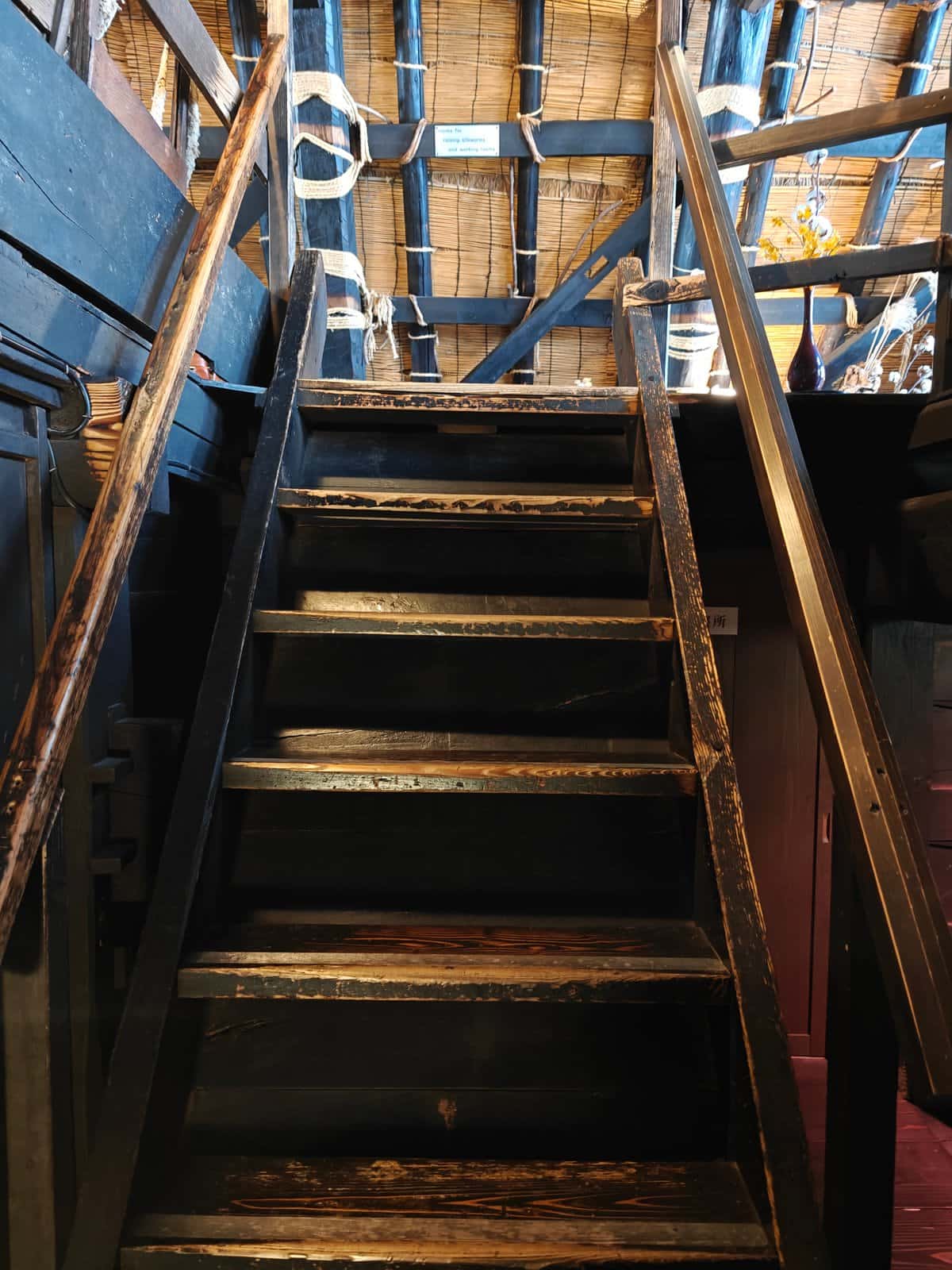
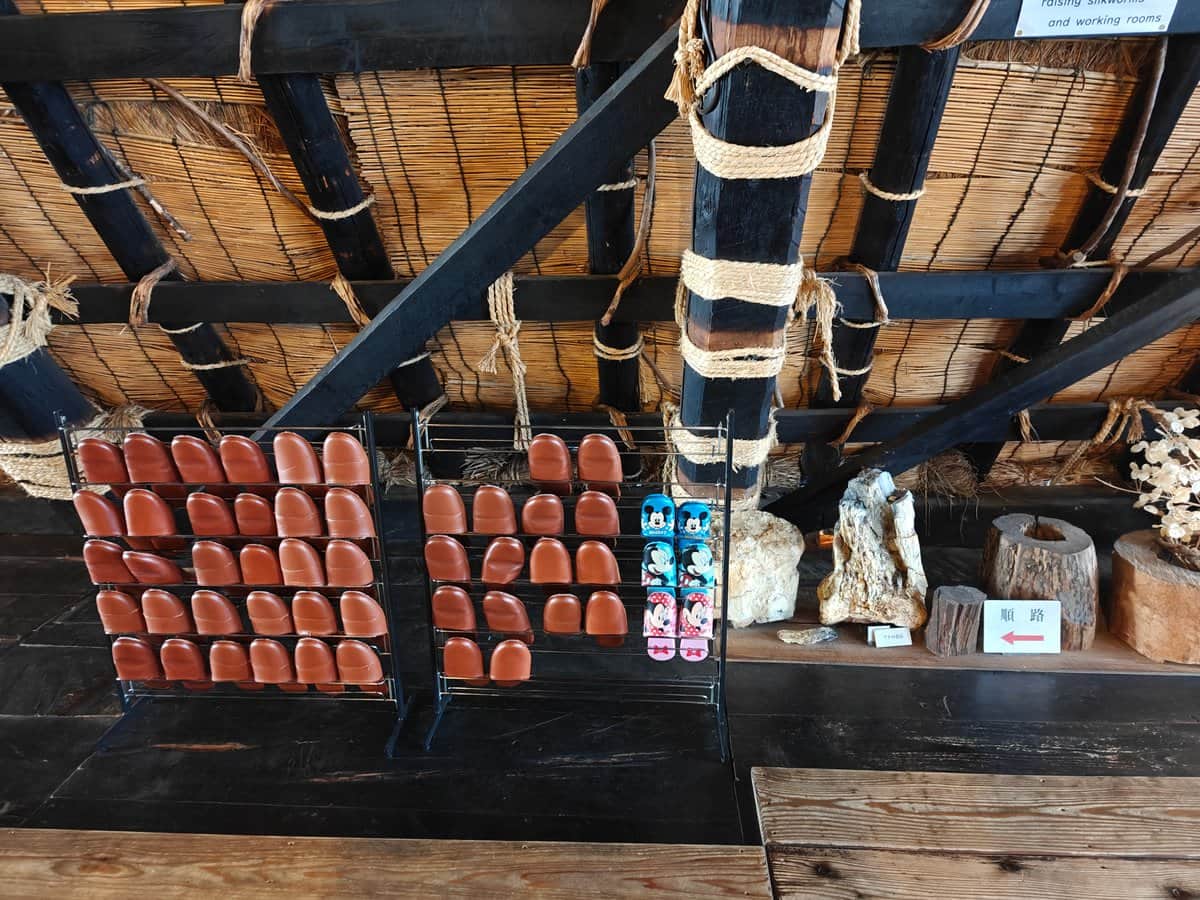
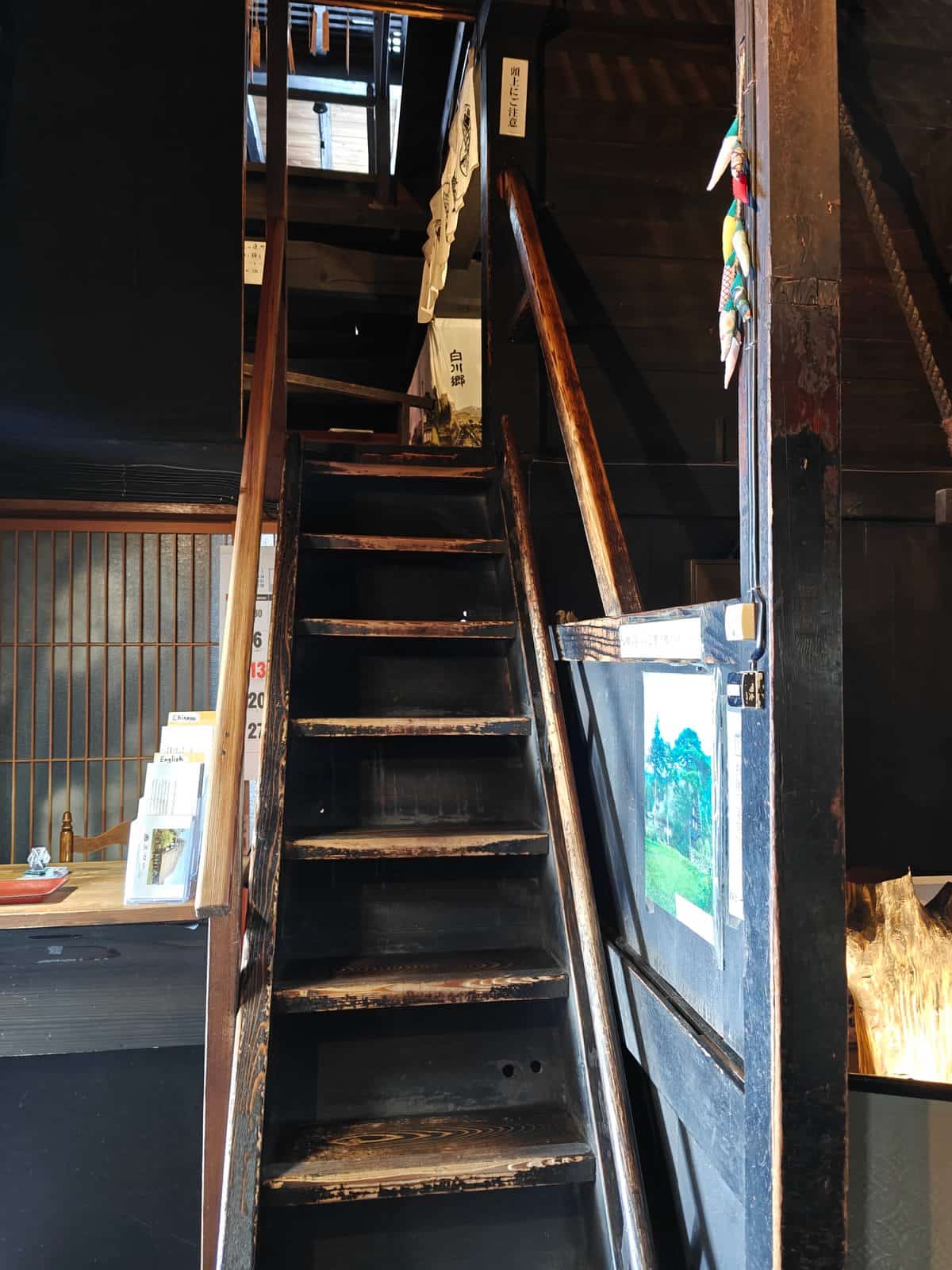
The wooden stairs leading up to the silkworm floors were narrow and steep; they were black from age. Cautiously, I grasped the hand rail and climbed.


I looked up at the thatch roof from within; there were still wire racks on the upstairs floor that used to be filled with silkworms. It was an amazing building. Big beams, close-woven thatch, everything dark and smoky with years of use.
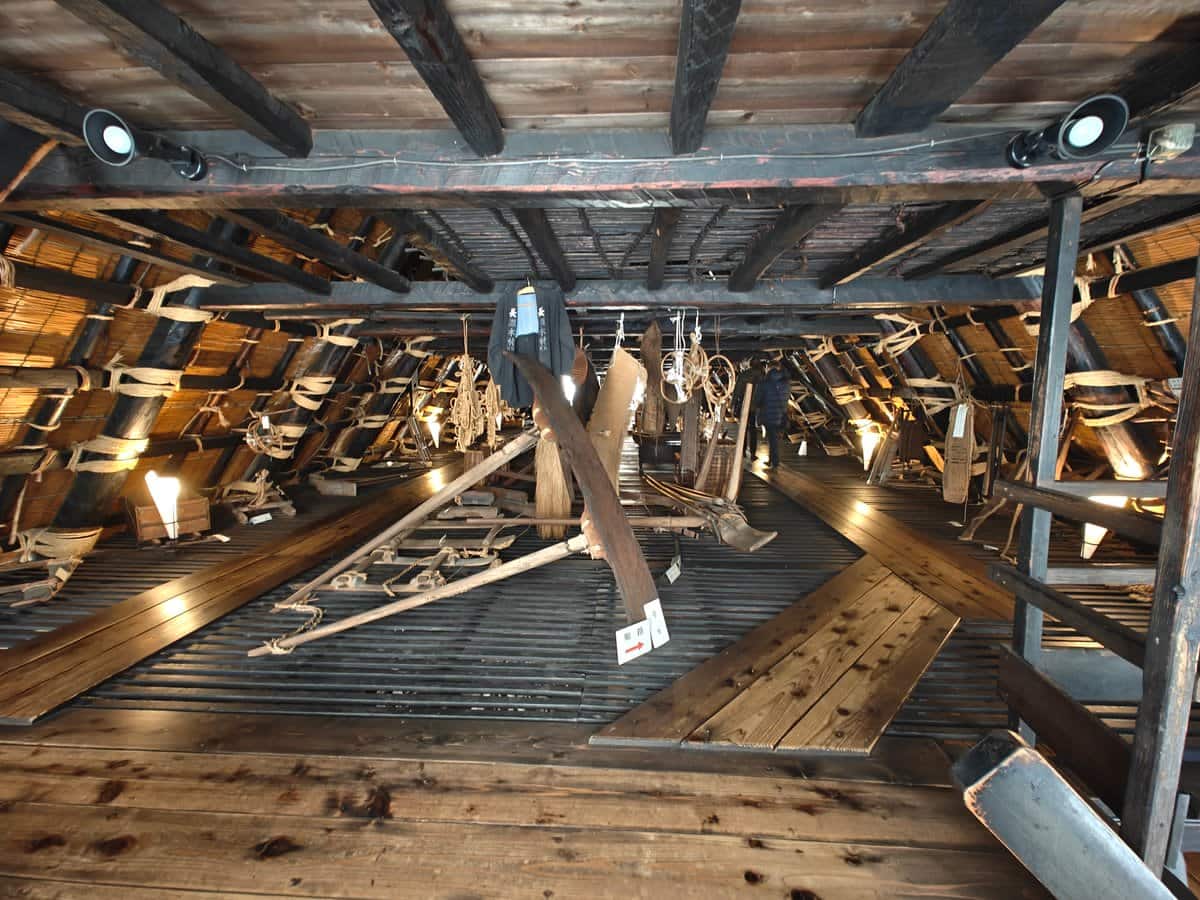
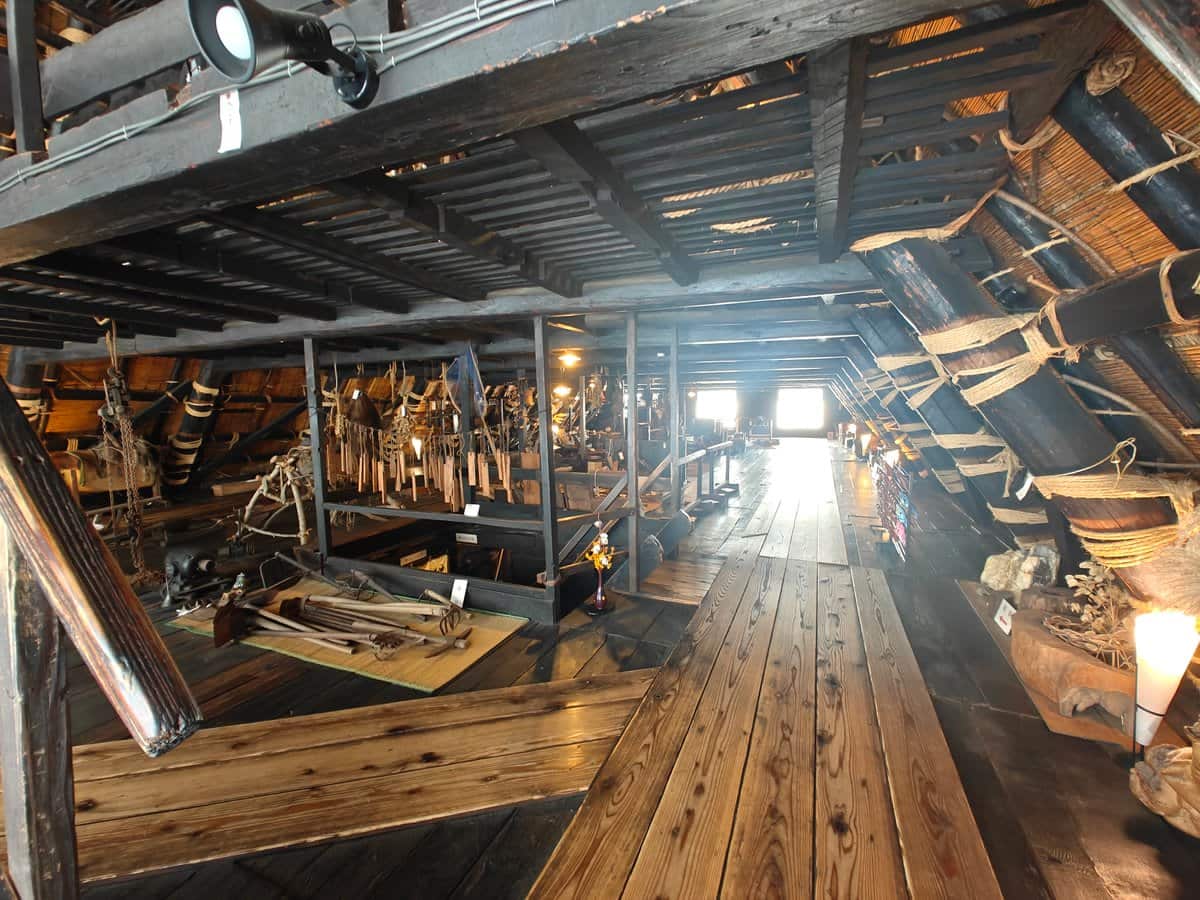
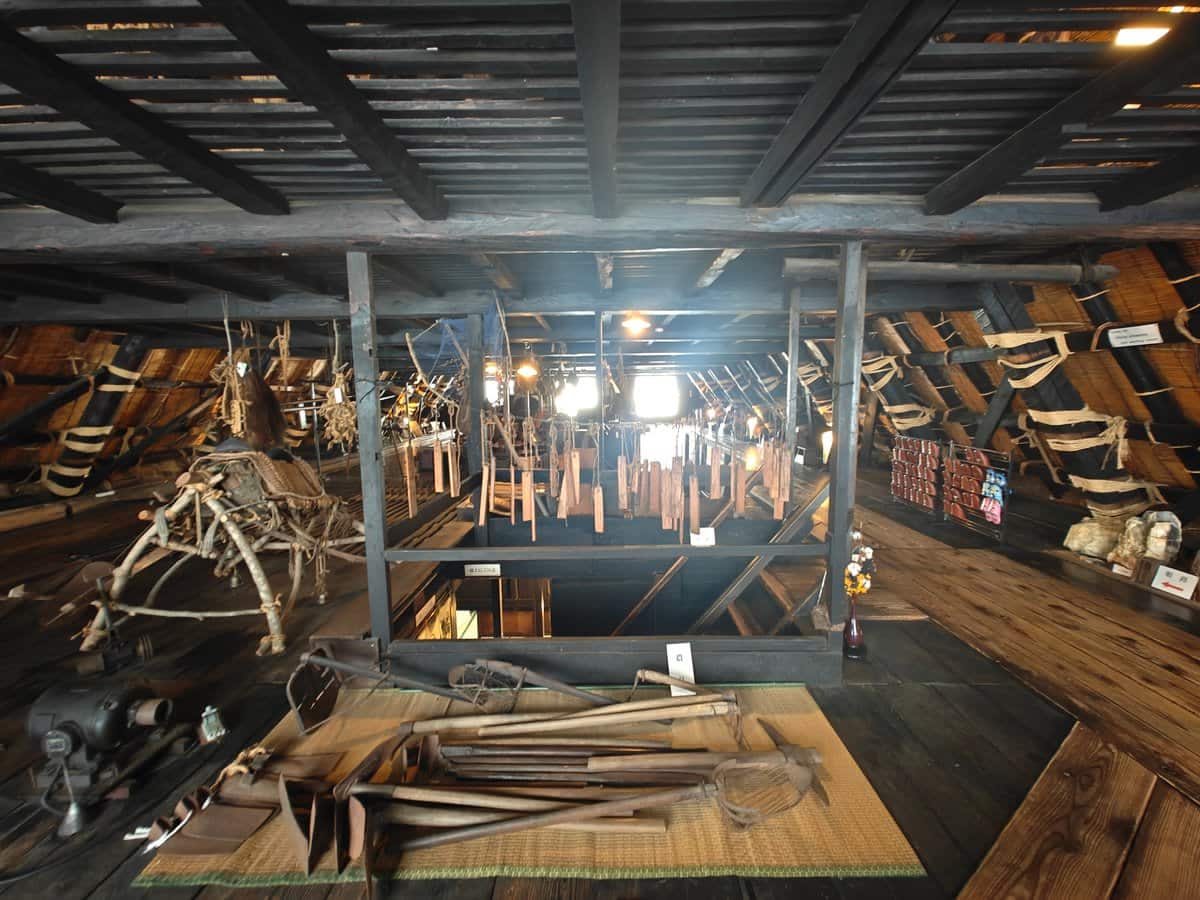
Upstairs we went again, this time to the highest level of the gassho rooftop, underneath its peak. Here the room was large and empty; enormous post-and-beam construction held it all in place. It was chilly up here but well-worth the trek for the inside look at the construction.
I could see the entire structure of the building, which explained how the roof supported the snow and itself. It made me value the workmanship even more. Which version of Shirakawa-go do you prefer, the one with the snow or the quieter one in December?
Both have benefits. In December, the village was more peaceful and easy to get around, plus I felt like I got a good feel for the place as a place. In January, I got my famous snowy picture, but at the cost of being cold and crowded.
If you can swing it, go during both months (as I did), because then you’ll see everything. But, if you’re only going to go once, then I think it’s fair to say that you most likely went there to see the snow, so expect to share it with other people! Have you been to Shirakawa-go?
Are you planning to go? Do you prefer to see it with or without snow?