
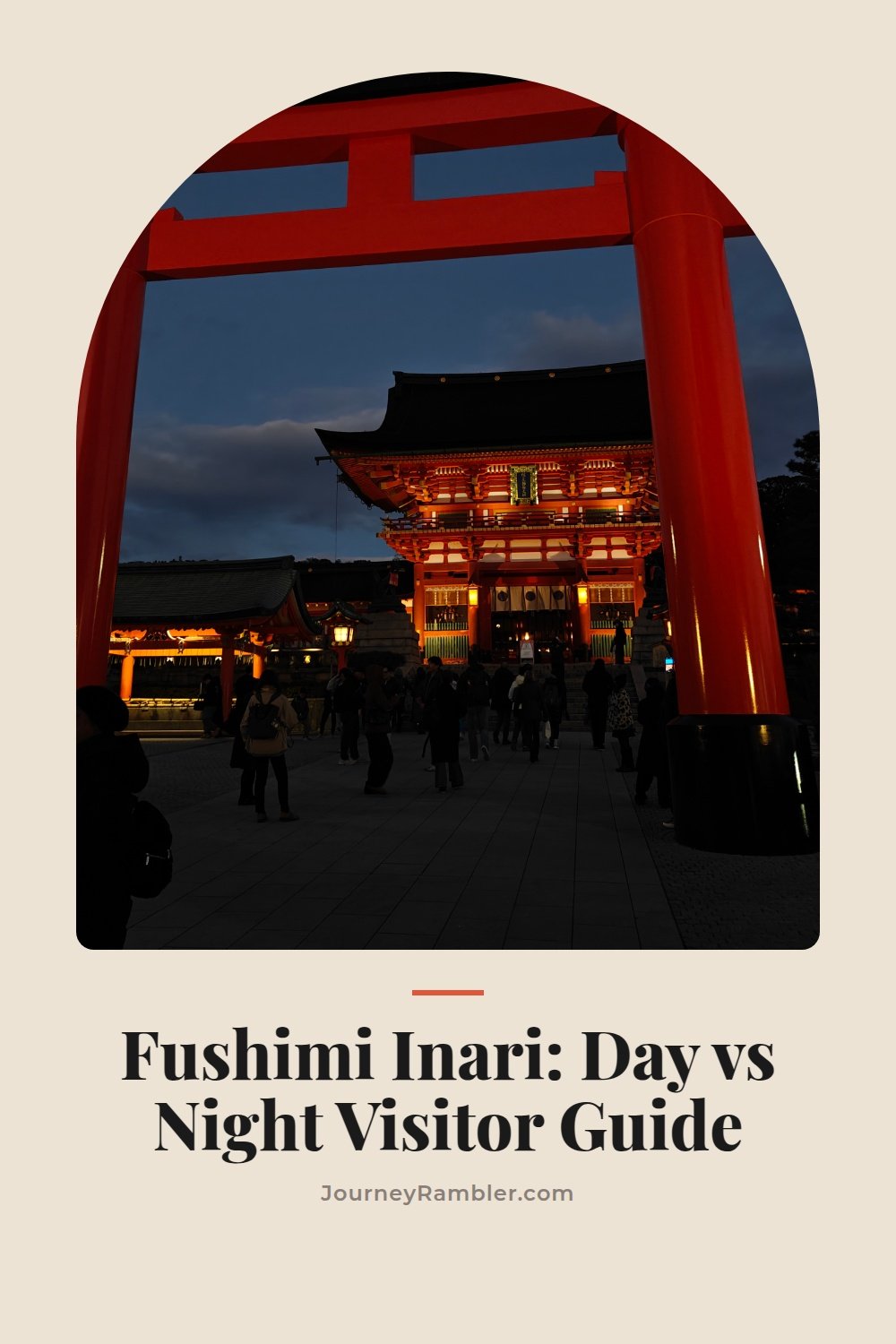
As for Fushimi Inari? A bit obsessive on my part… I walked the torii gates not just once but twice in a single day (once during the daytime, and again after dark).
I’d read too many differing opinions online about which time of day is best: day vs night. The only solution, I thought, was to try it out for myself. Spoiler: They are two entirely different moods.
Truth be told, I’m glad I saw them both. All that being said, though, I’m gonna have to choose one, yes, I know, it’s the entire reason for this article, so I’ll tell you which one won me over and why. Before I do, however, let me show you what each experience was realy like.
My Choice: Day or Night?
Fushimi Inari Taisha
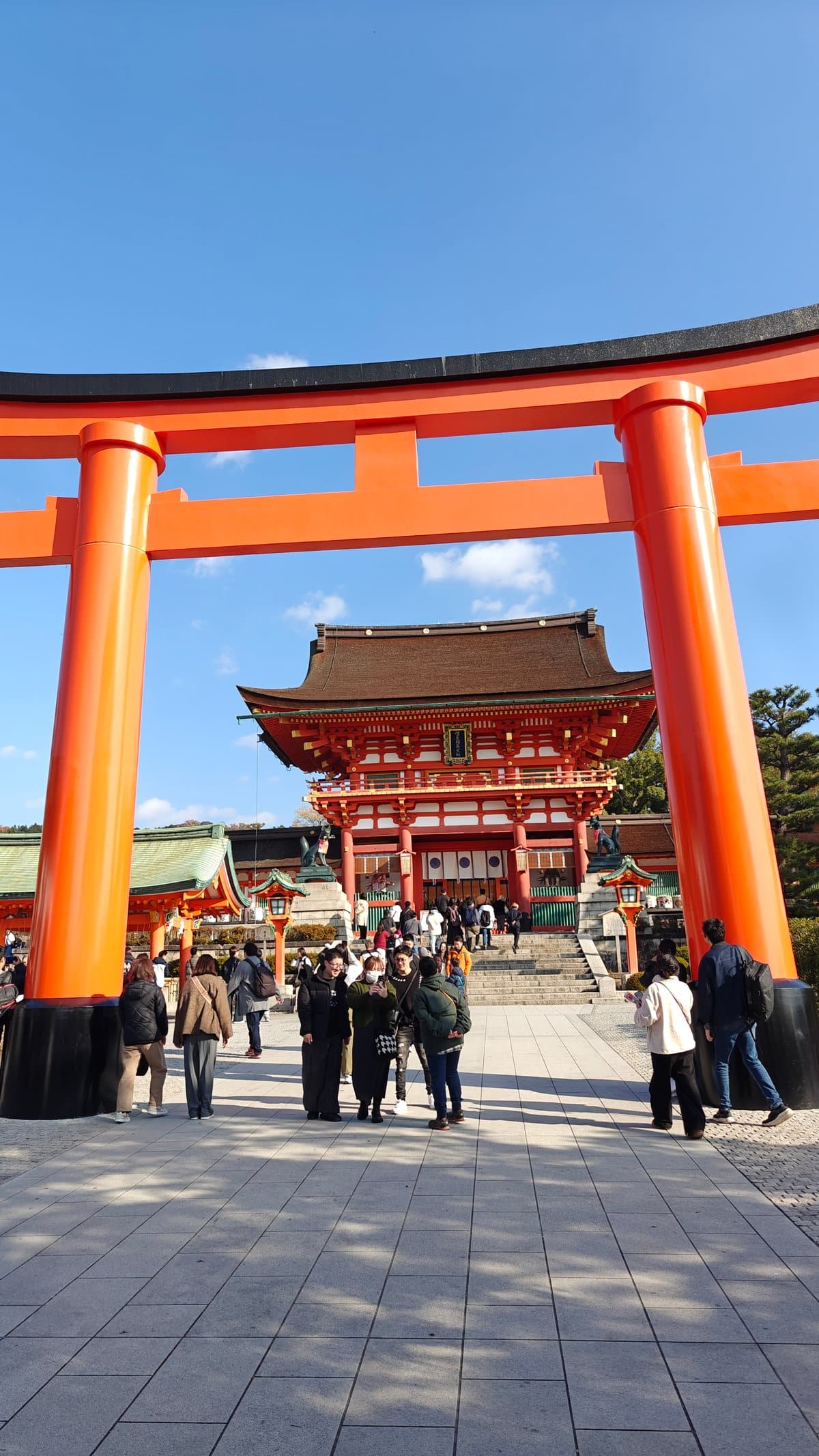
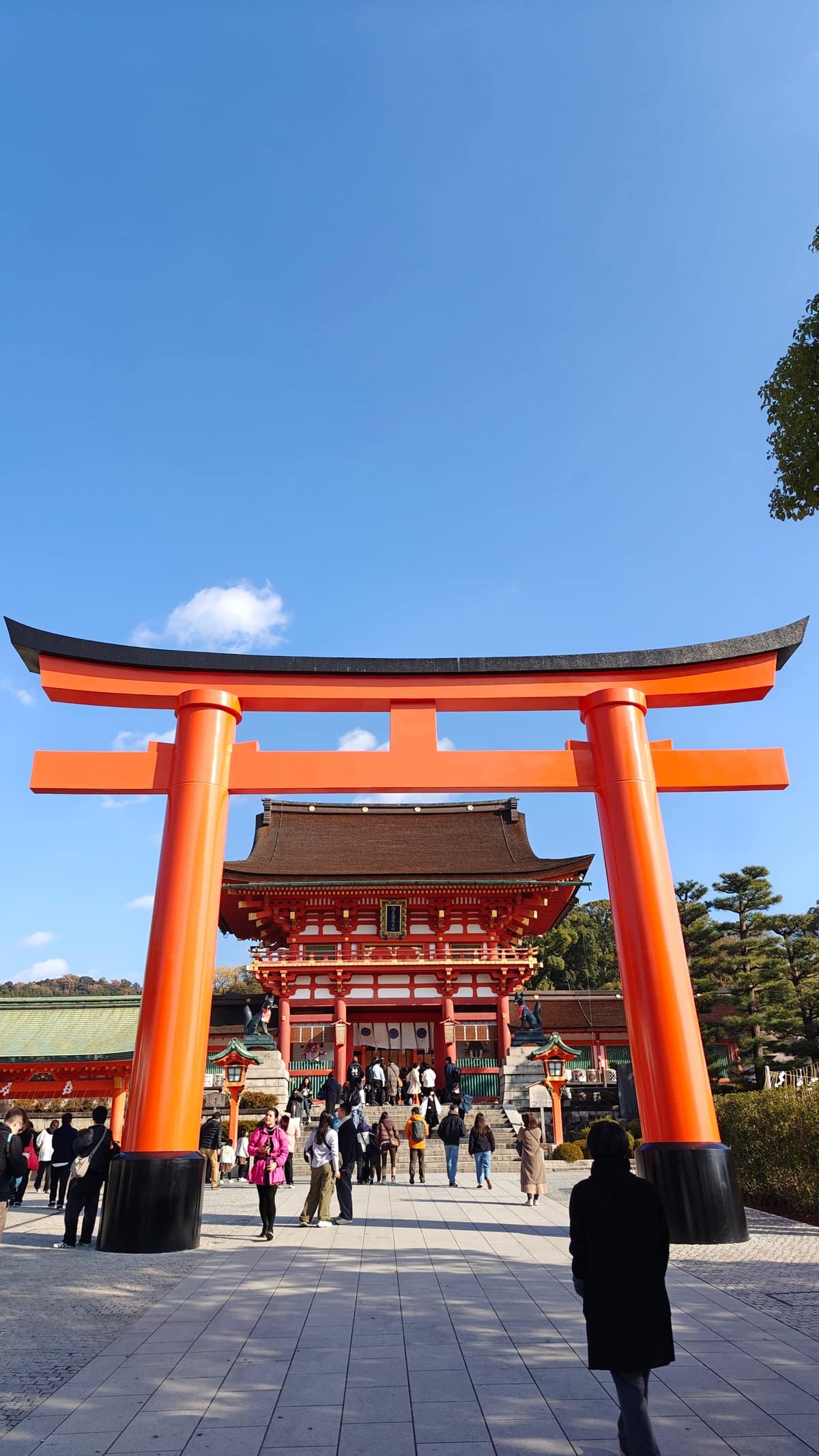
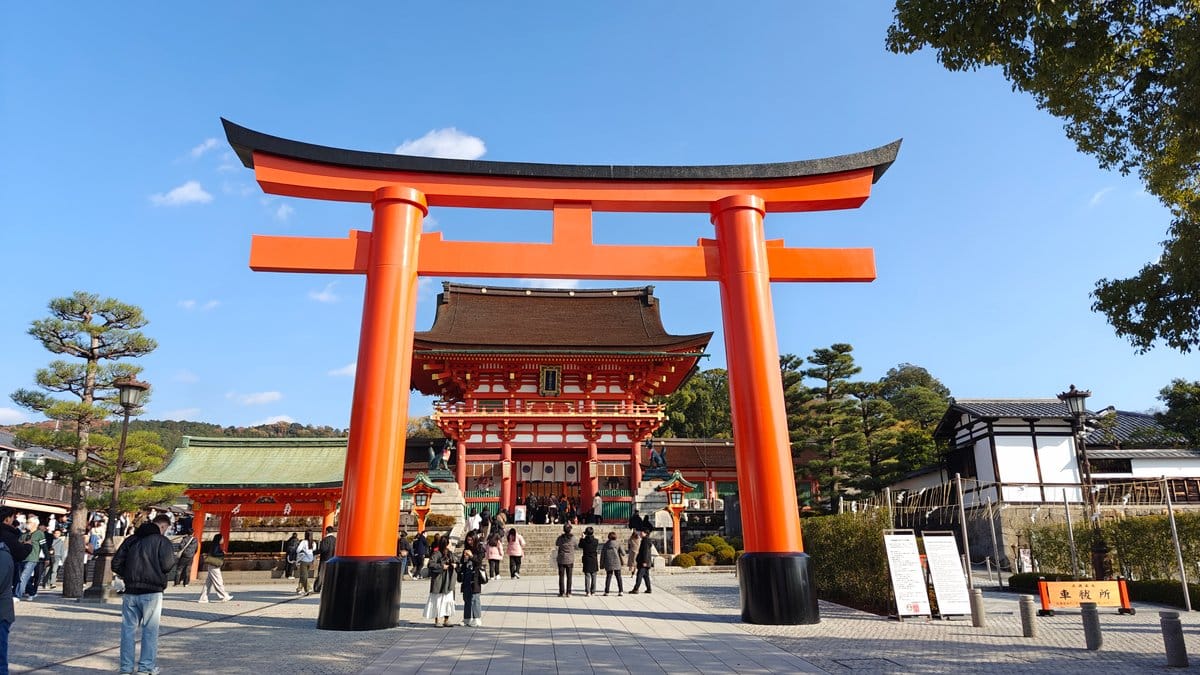

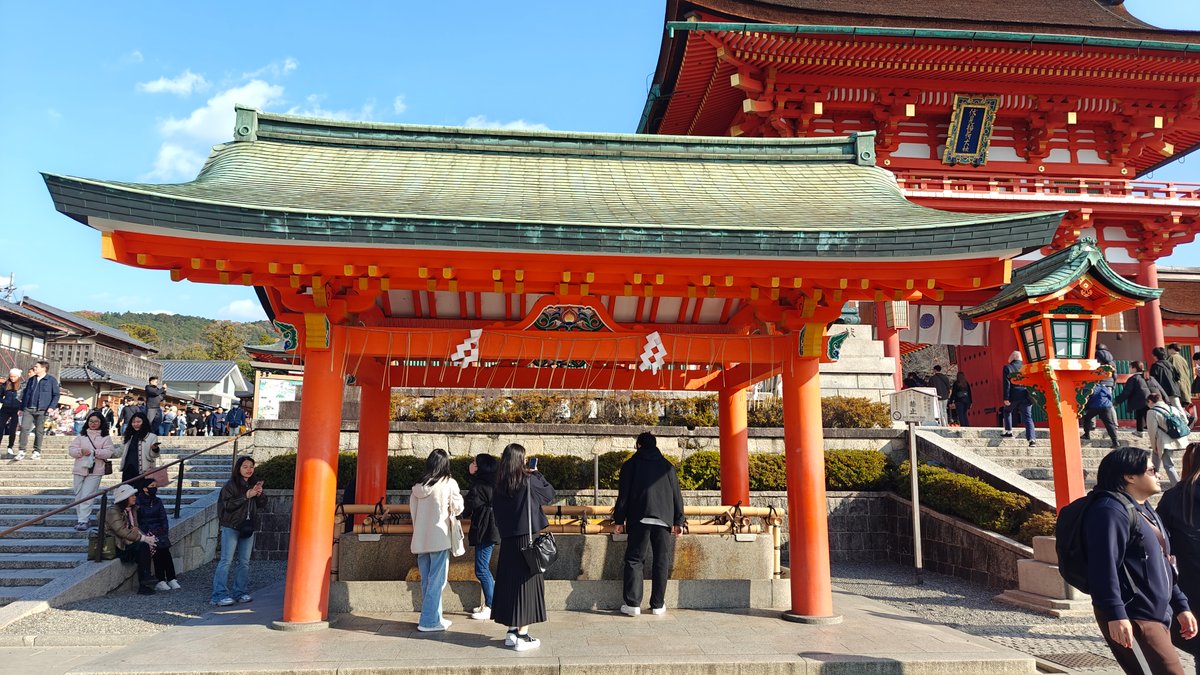


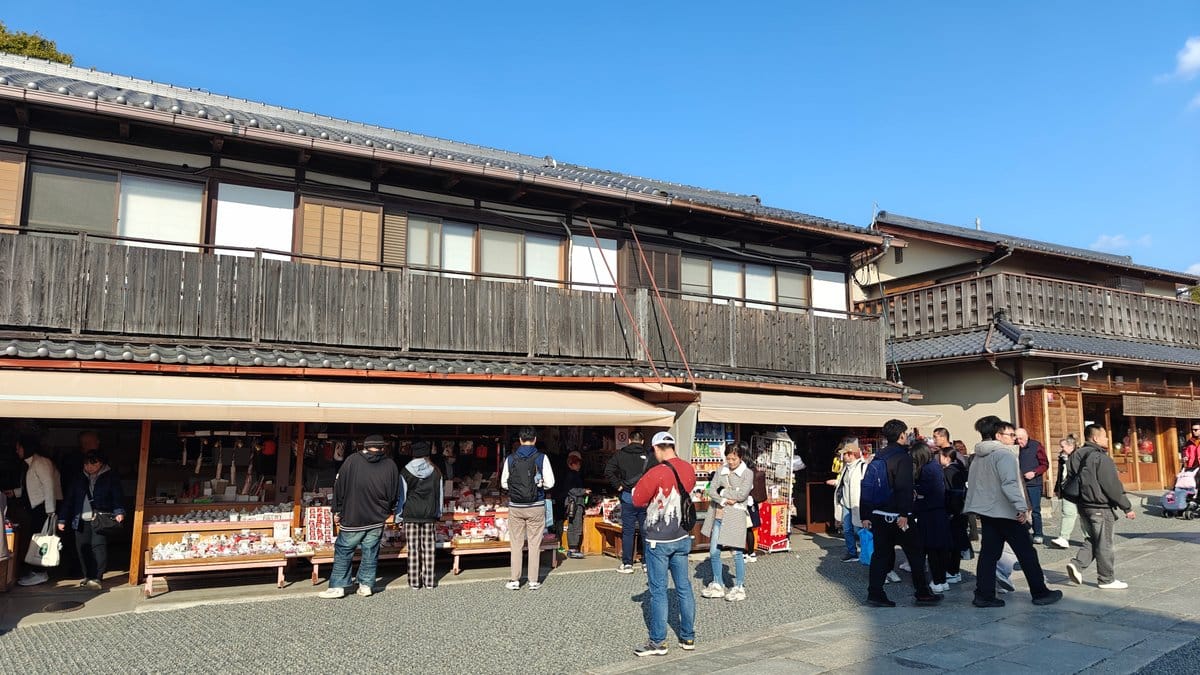
When I visited, it was during the week so things weren’t too crowded but it wasn’t dead either.
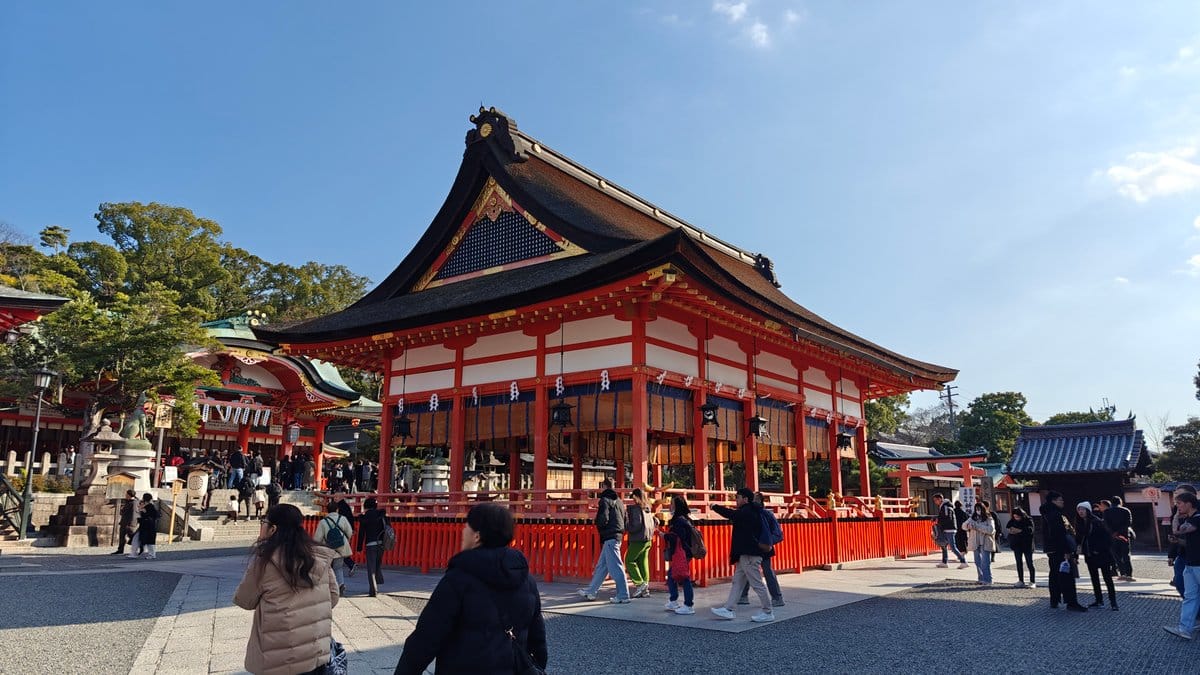
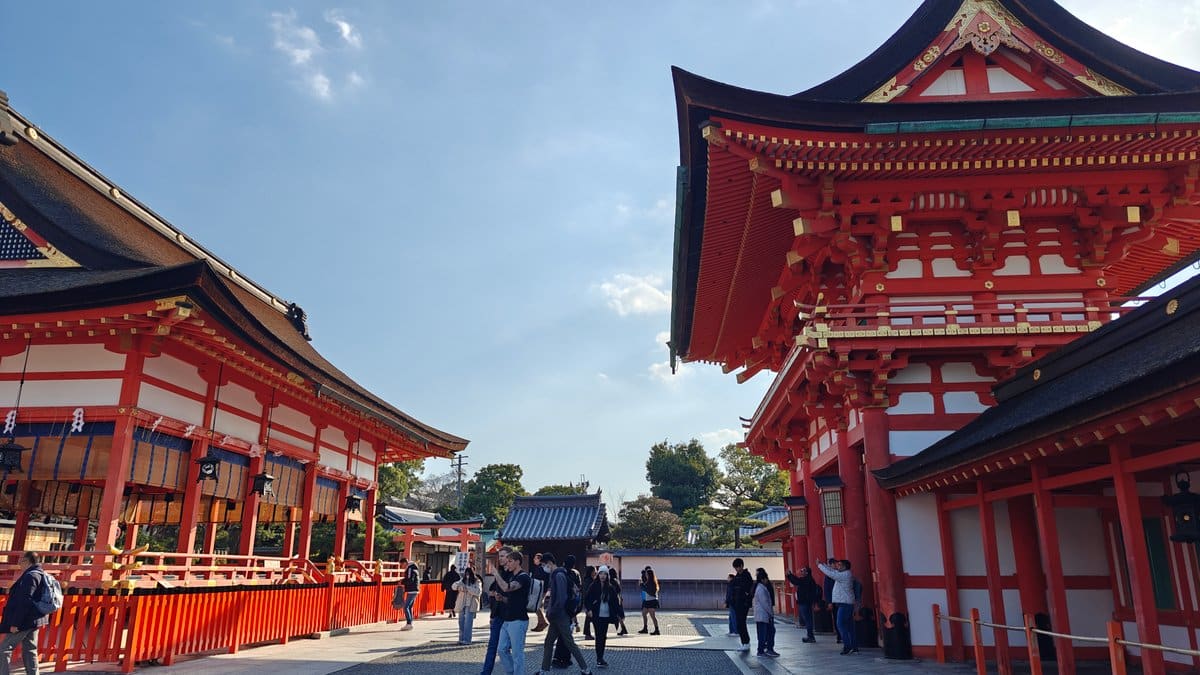
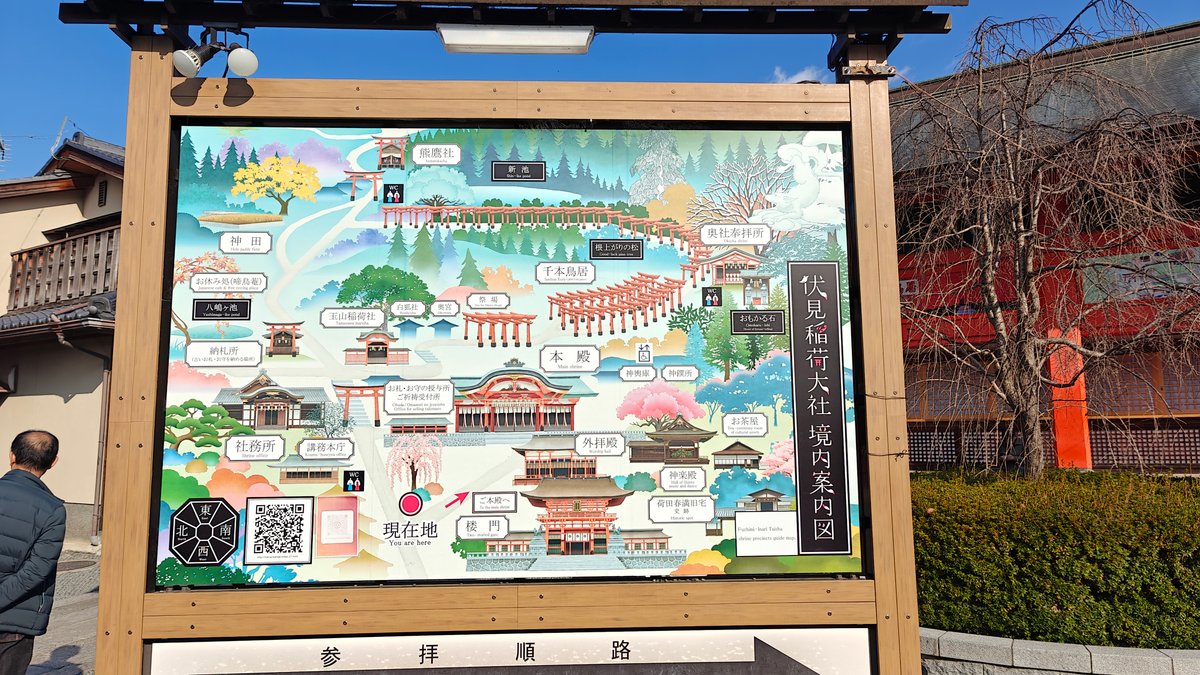
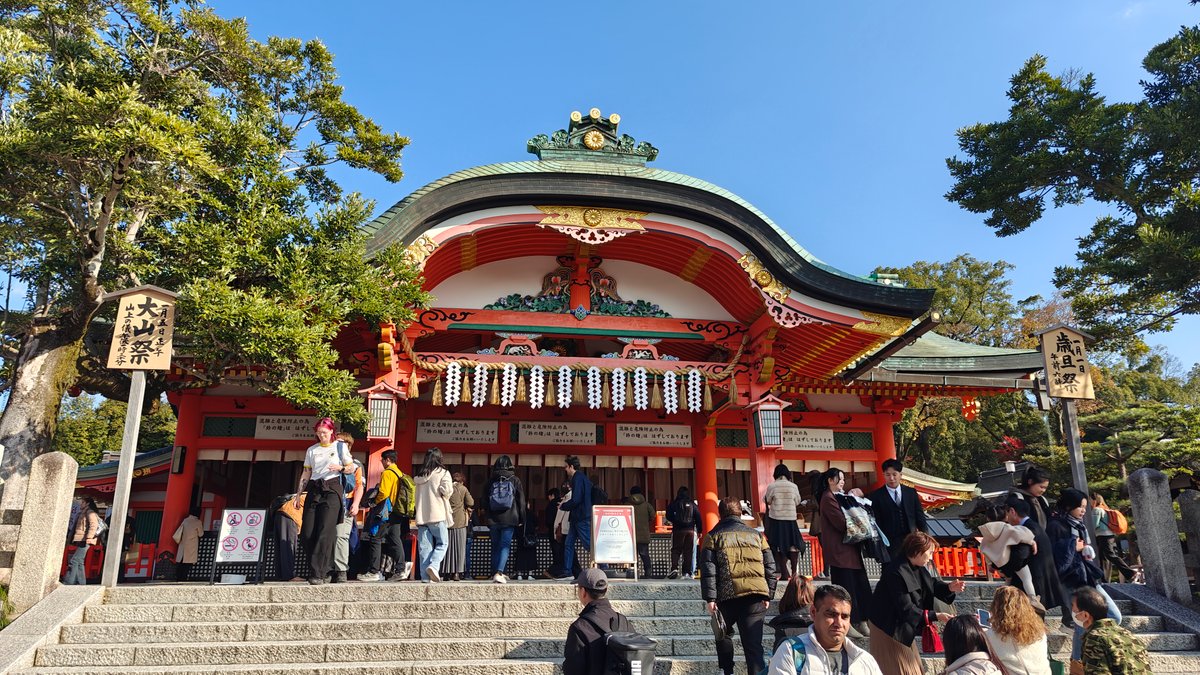

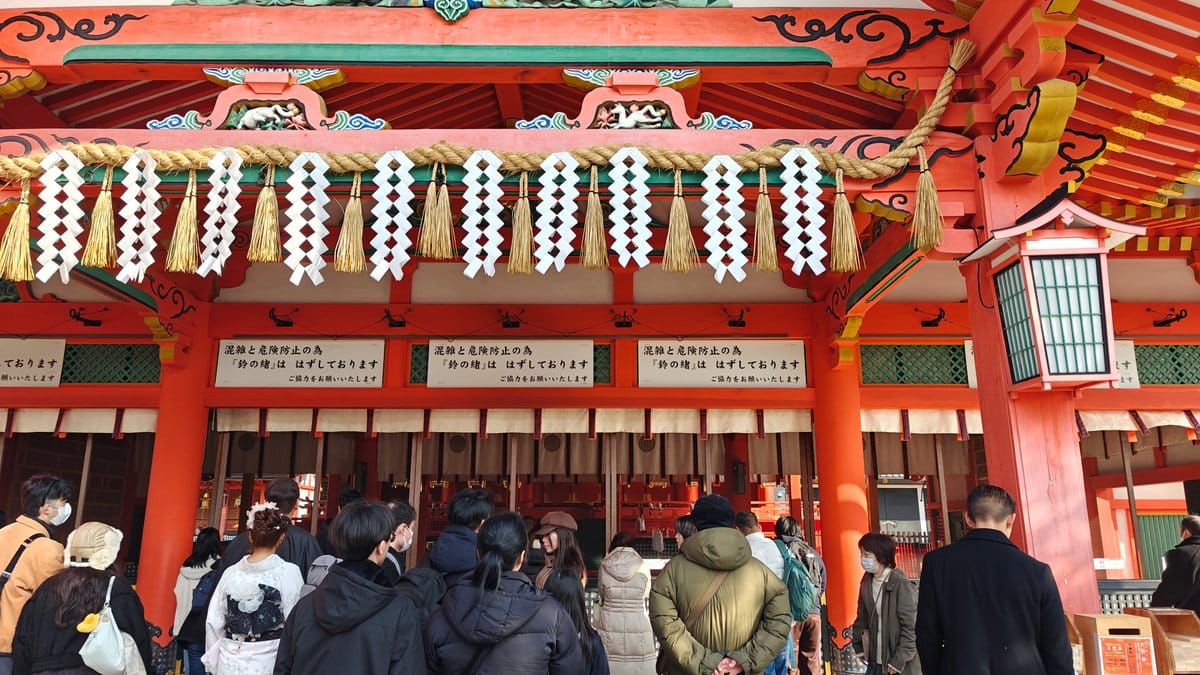
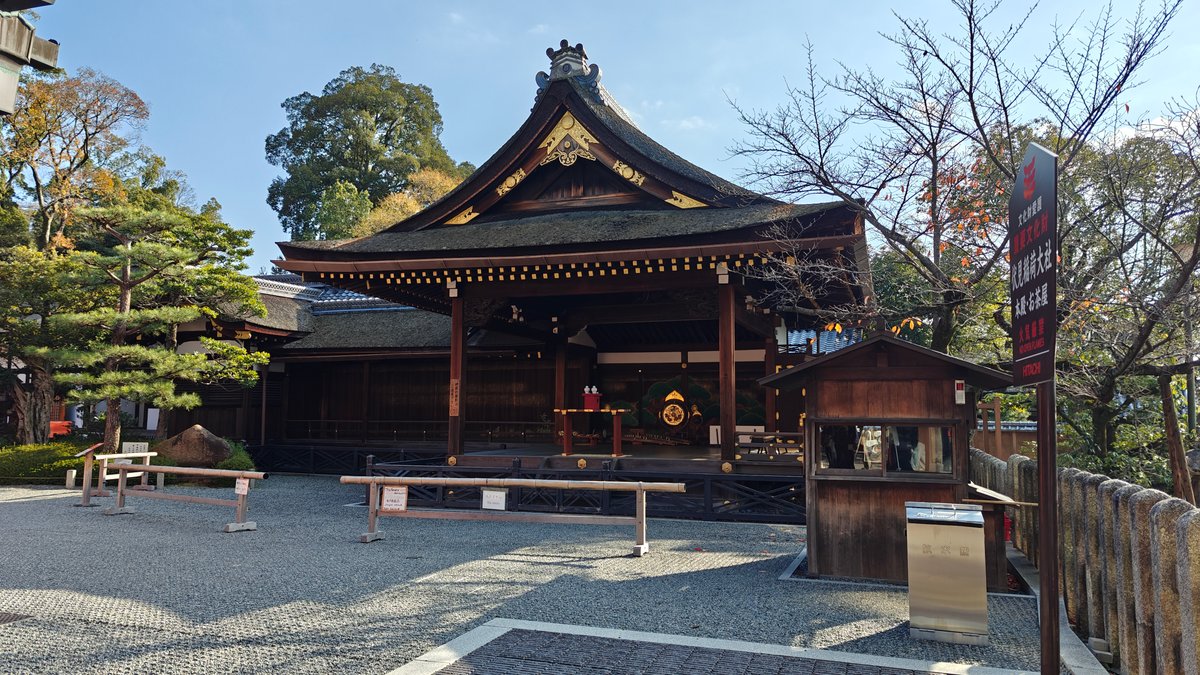
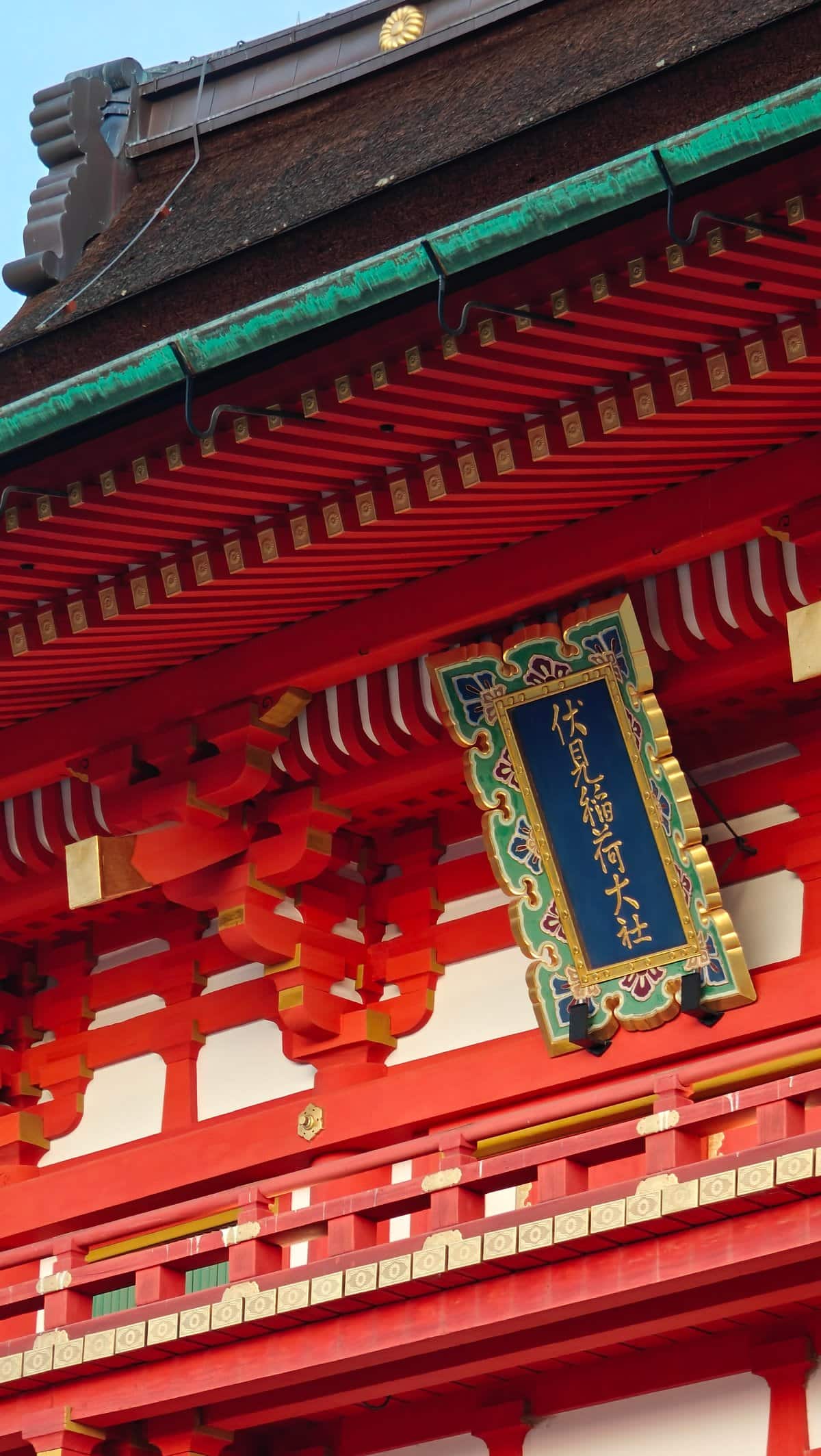
I went around mid-morning, and walking through those giant gates gave me a little thrill of excitement. It was more than I’d expected, the gates is larger-than-life compared to pictures, and the entire complex are spread out with enough room that it takes you a moment to get your bearings. I stopped at the purification fountain like everyone else, and then wandered through the approach area, which has some traditionals shops along the route.
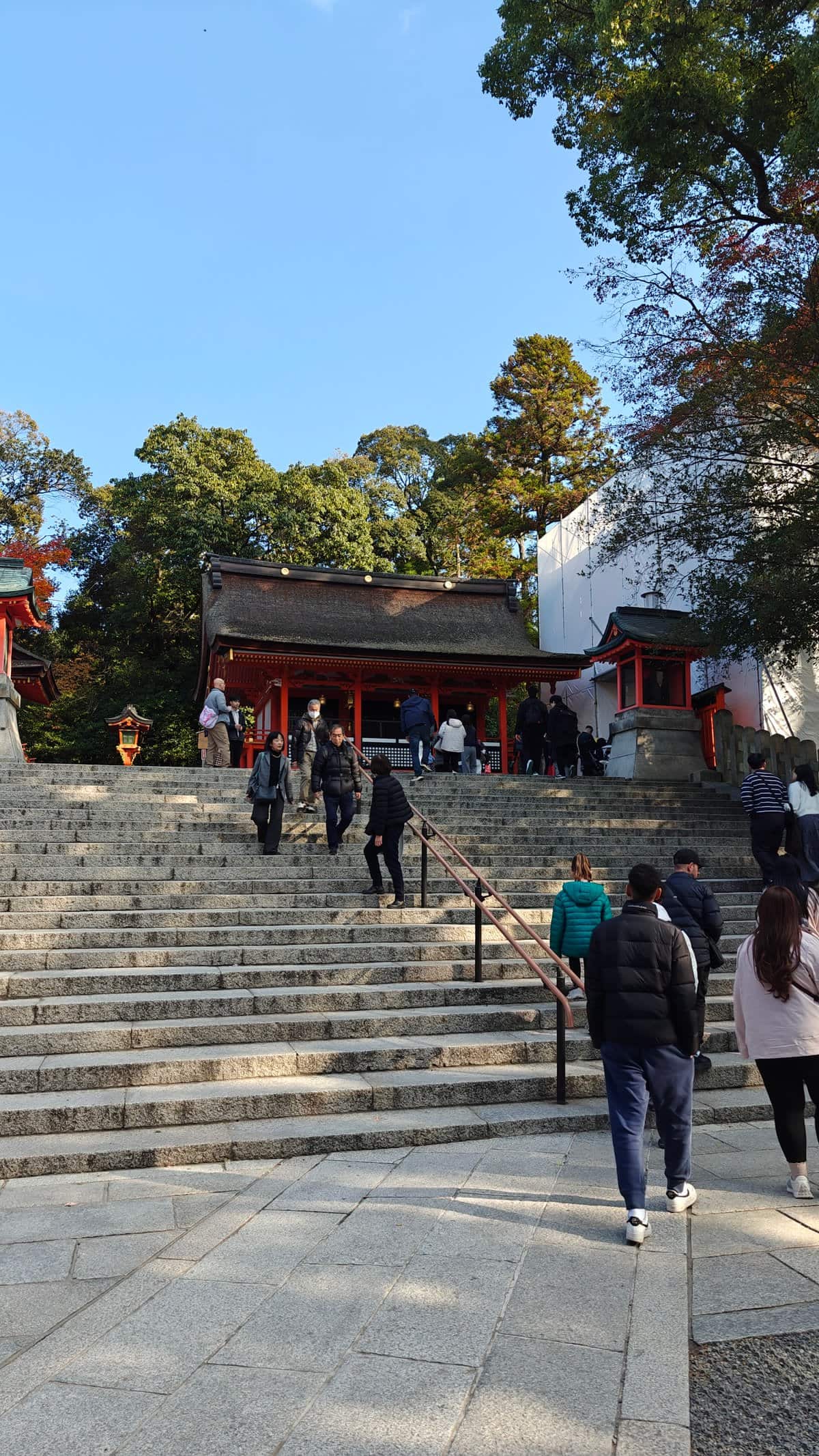
It was not anything overly touristy or pushy, just small, charming stores that has likely existed for generations. At the center of the lower shrine grounds is the main worship hall. Here, I simply watched people move around the space for some time.
People came and went; some went upstairs to pray while others stops to look. I glanced over the map board to see how long the actual mountain trail are (it was longer than I thought), stretching all the way to the top.
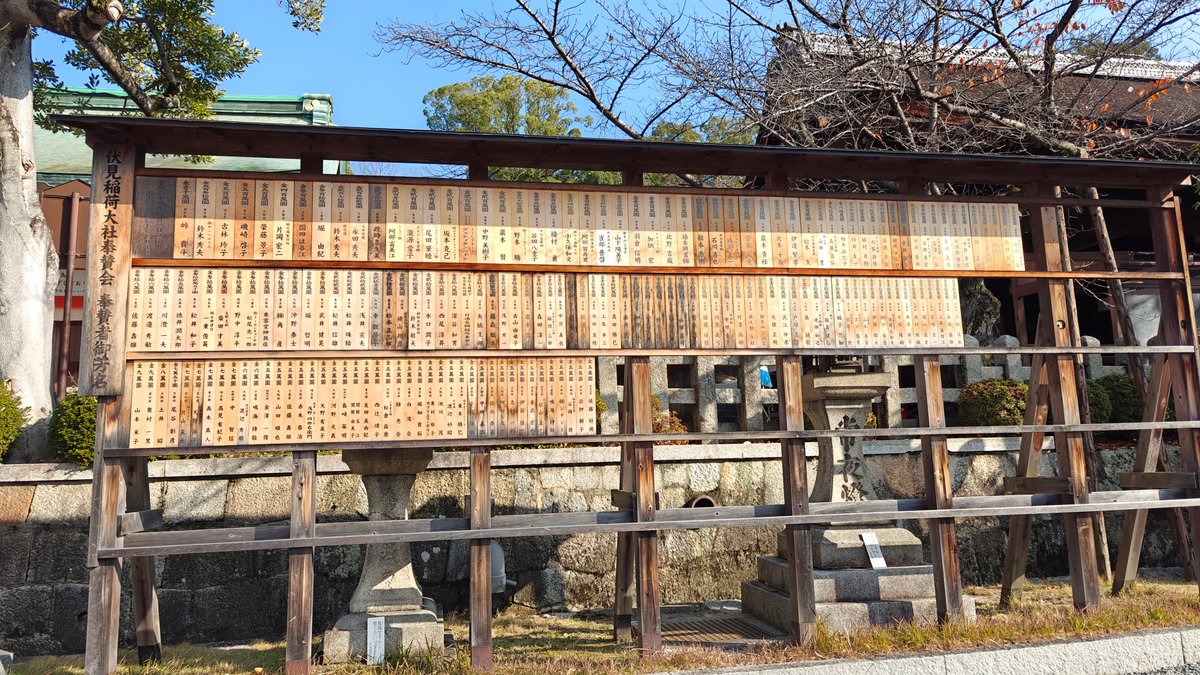
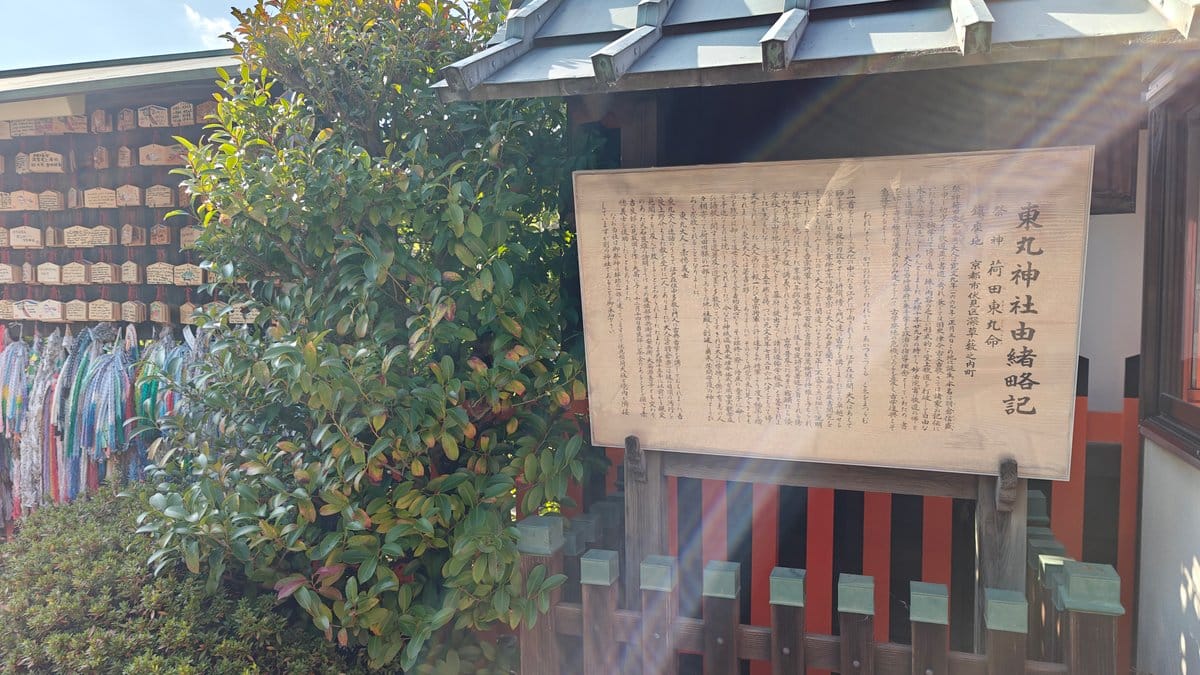

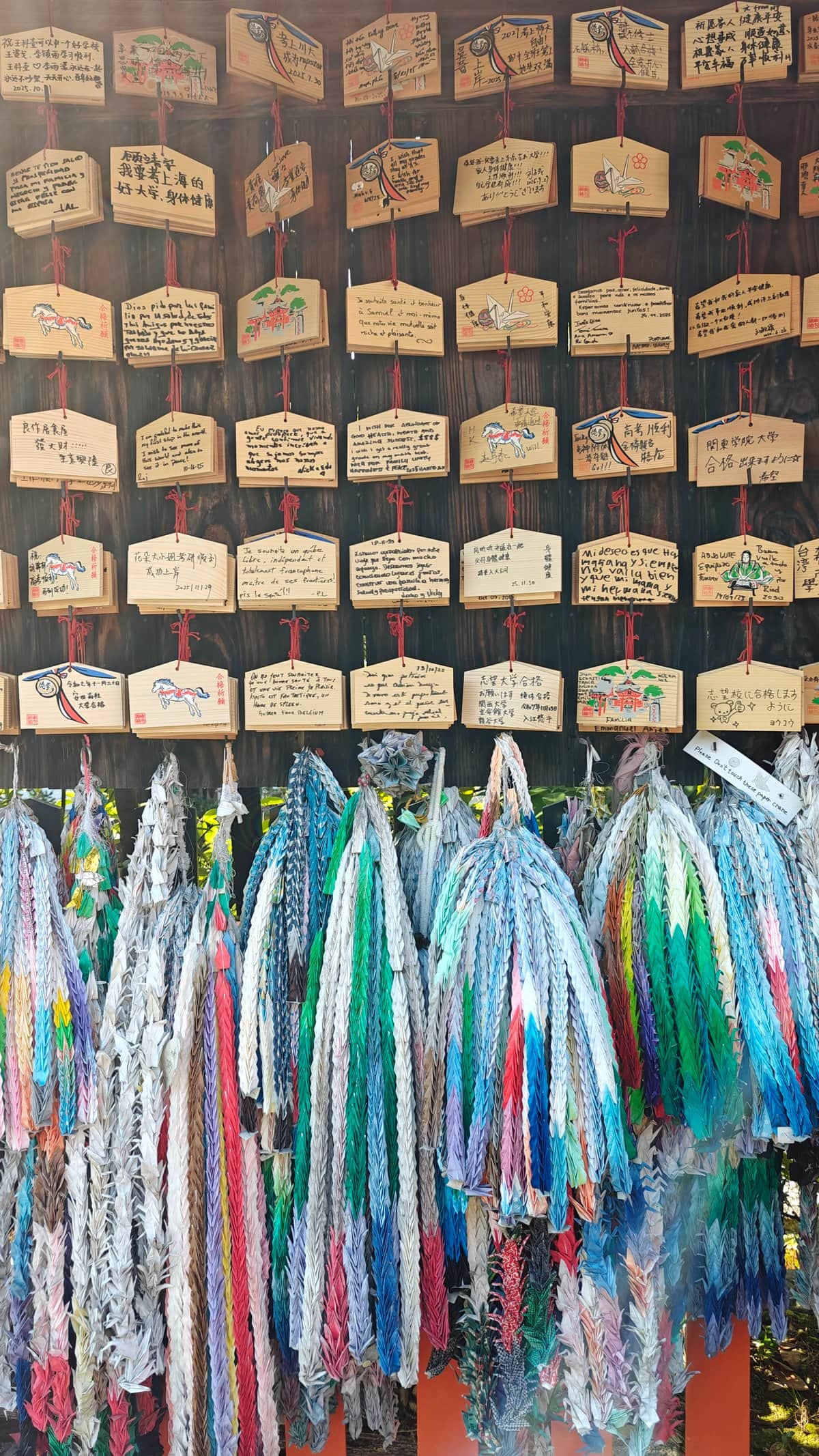
The wooden prayer plaques on the wall were another aspect I realy enjoyed. There were rows upon rows of folded cranes hung from strings. There were also wishes written by people and hung up too.
It made it feel so personal, which is hard for many tourist attraction. I stood there reading the hopes people had left behind and stayed for longer then I intended.


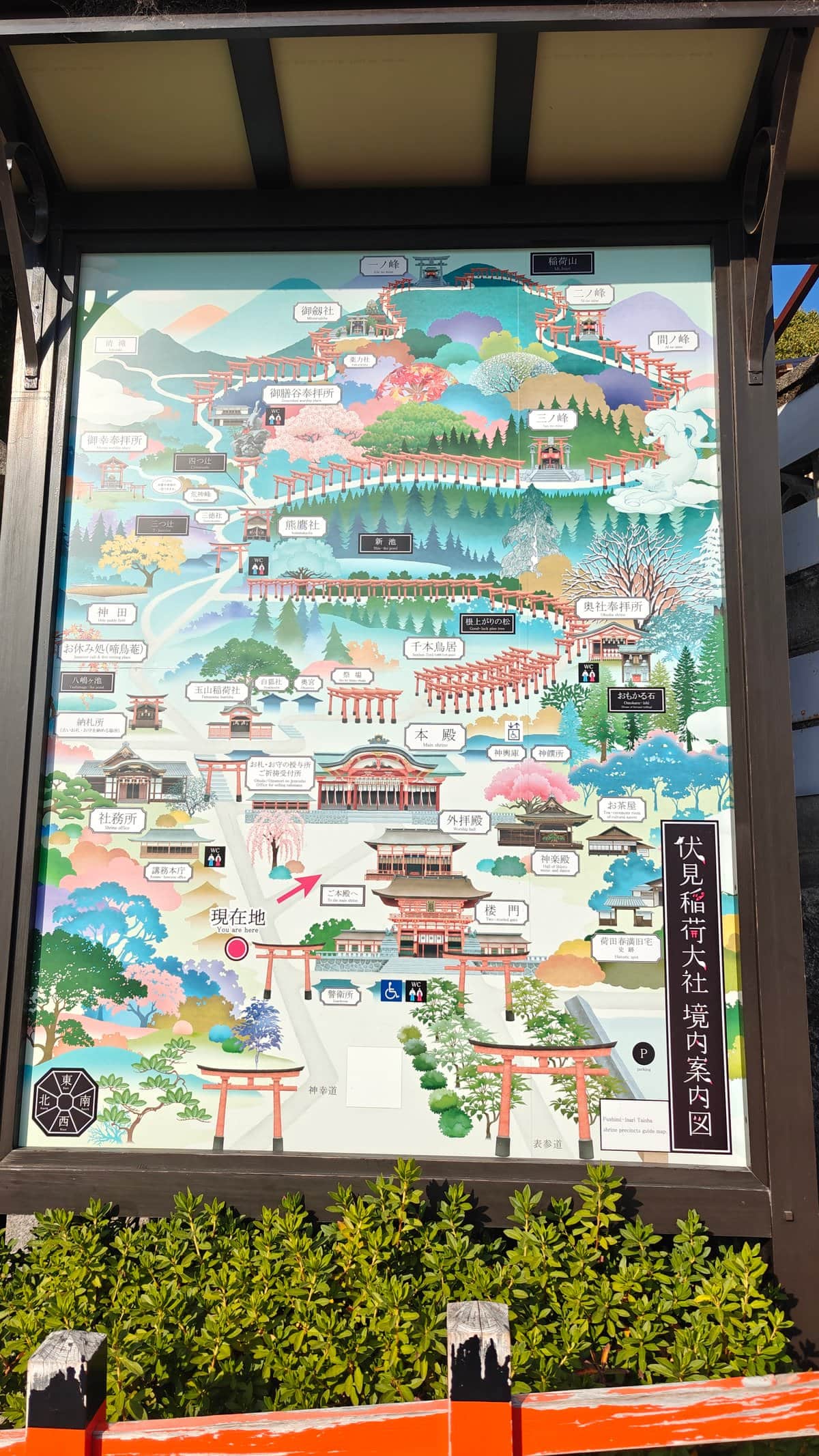


However, as I started heading toward the trail, I passed smaller shrines tucked into corners, directional sign pointing up the mountain, and those fox guardian statues that Fushimi Inari is known for. And it’s not hard at all to follow… By day, you can see what you are doing and exactly where you are headed.
This is comforting, because you’re about to commit to walking uphill for quite some time.

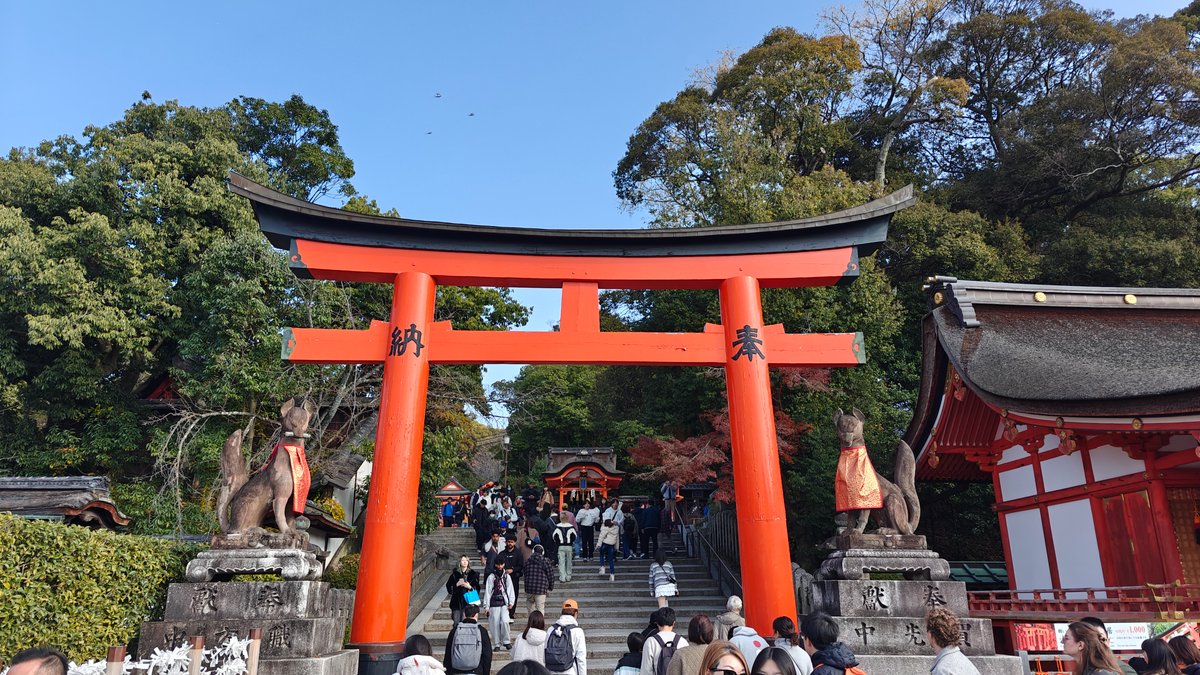
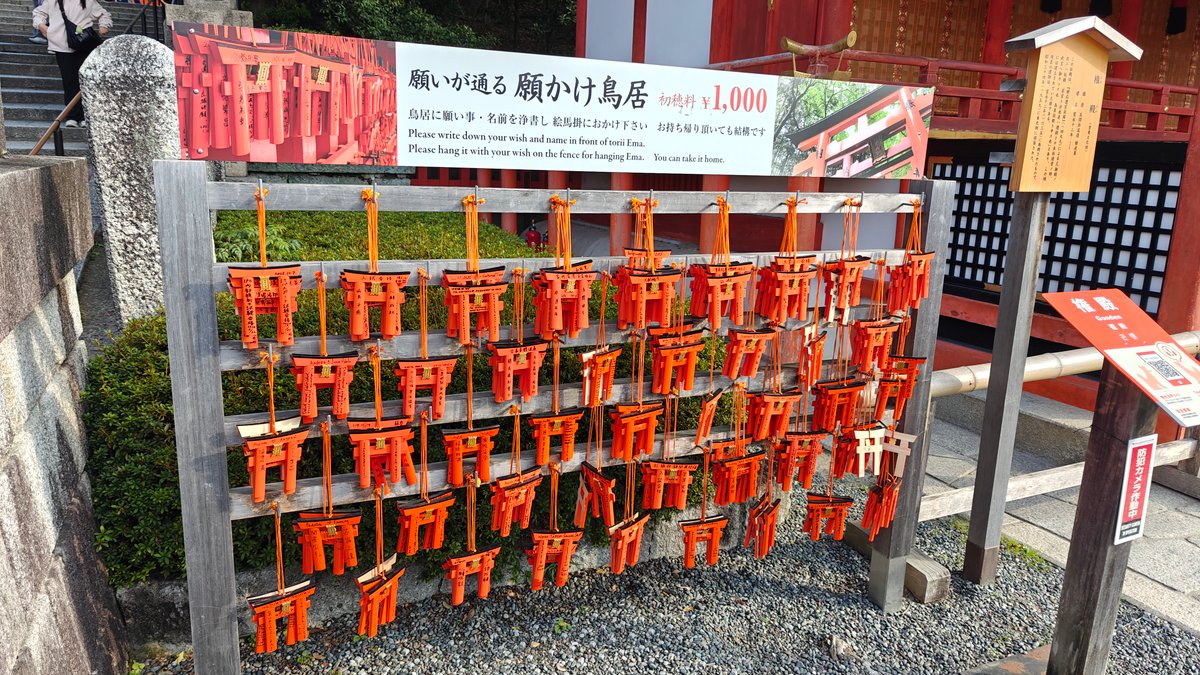
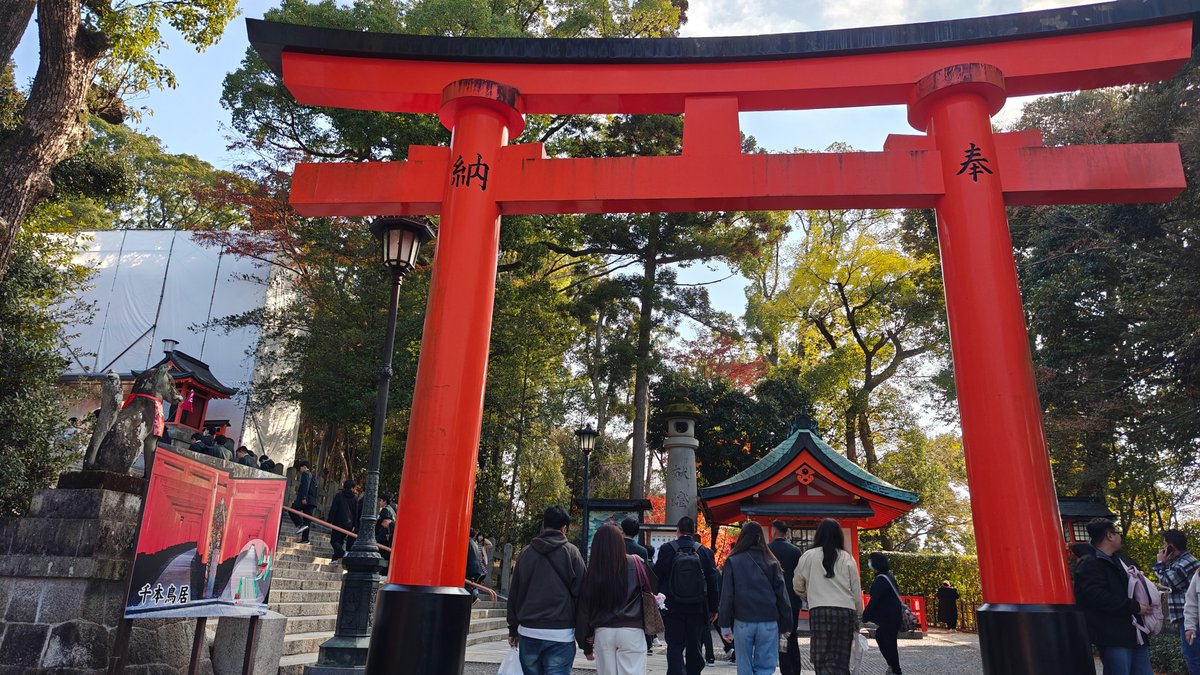
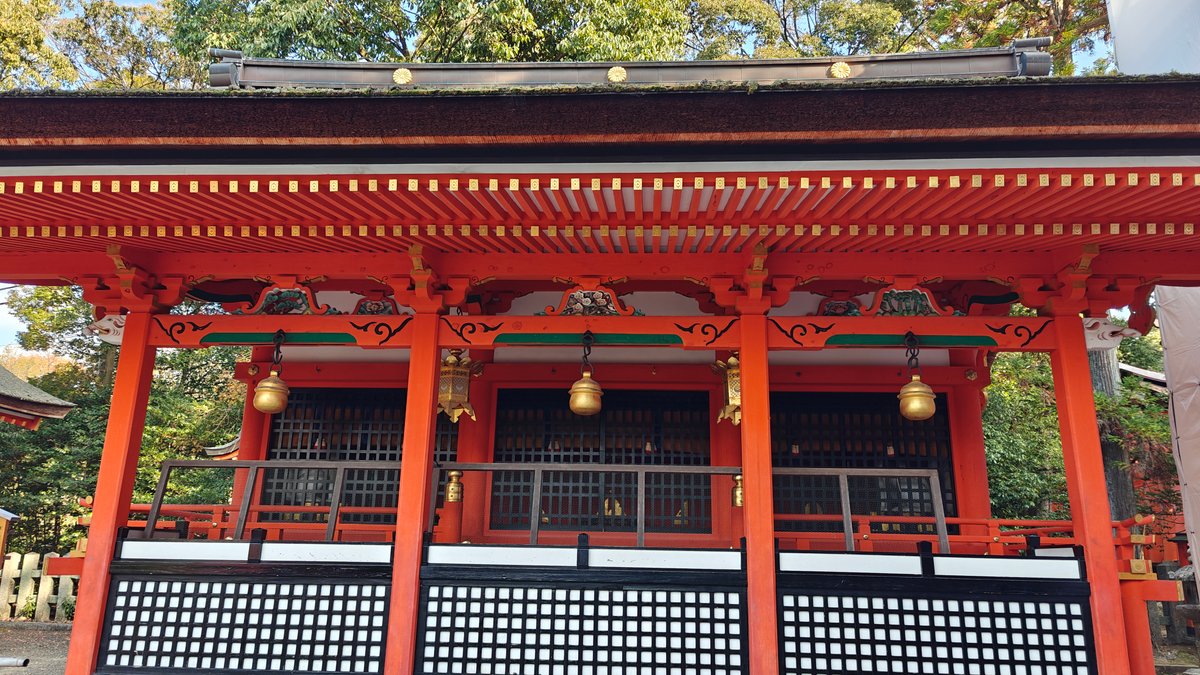
However, the torii gates begin in earnest after you pass the main buildings. They stands alone at first, individual gateways against the side of a hill, then become more spread apart. There were racks of smaller votive gates, with wishes written on them by visitors, all lined up and waiting to be granted, wish upon a star style.
The road continued upwards, gradually but steadily, with steps cut into the stone and worn smooth by centuries of feet.

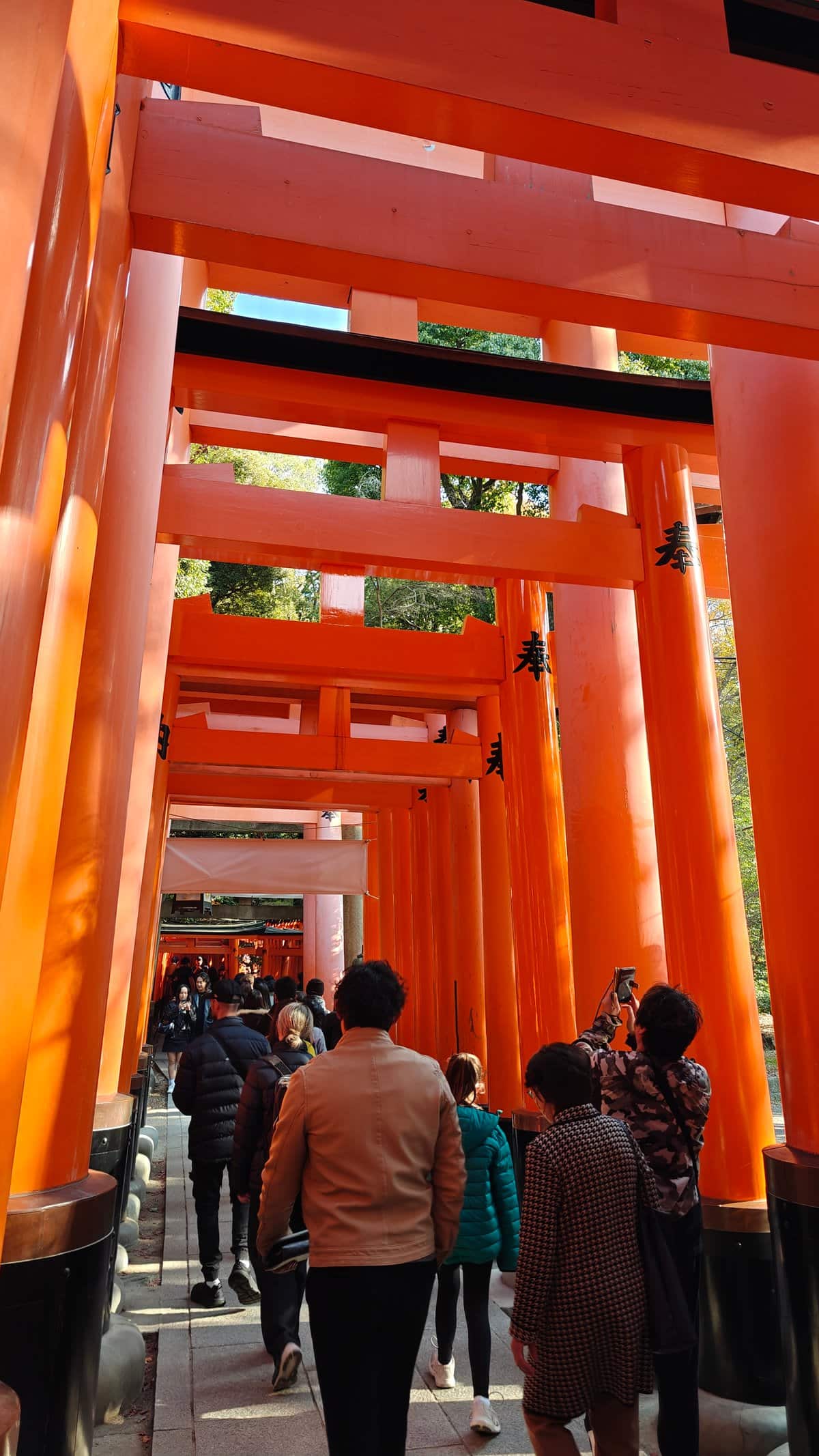
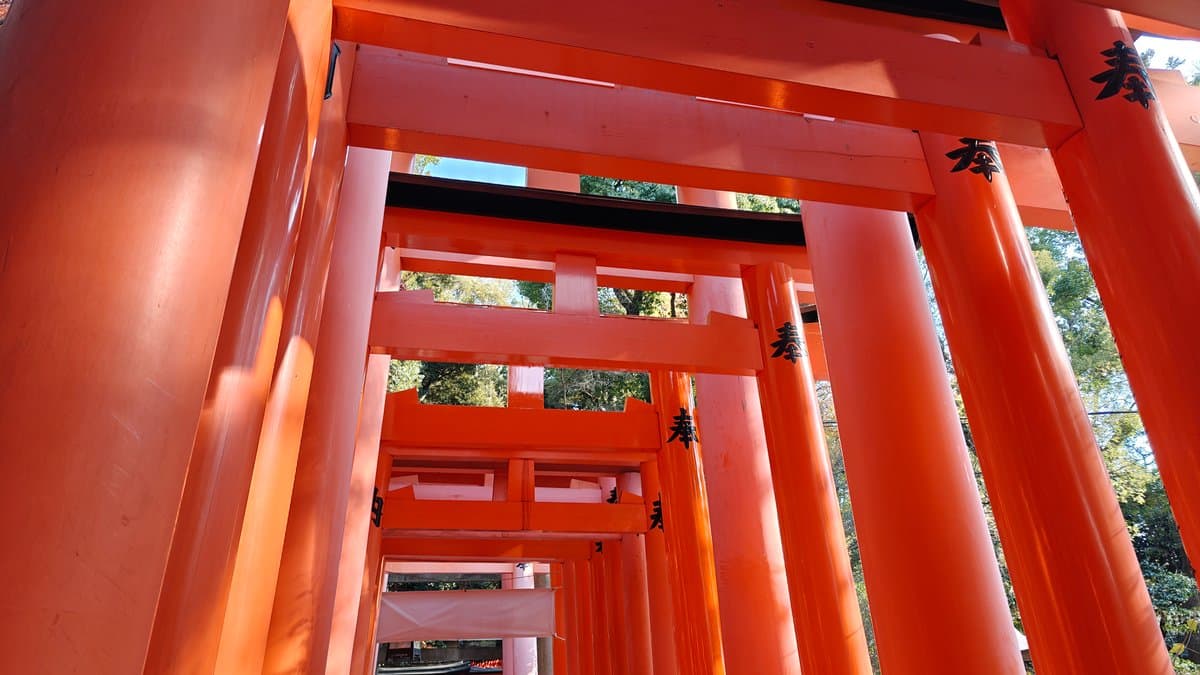
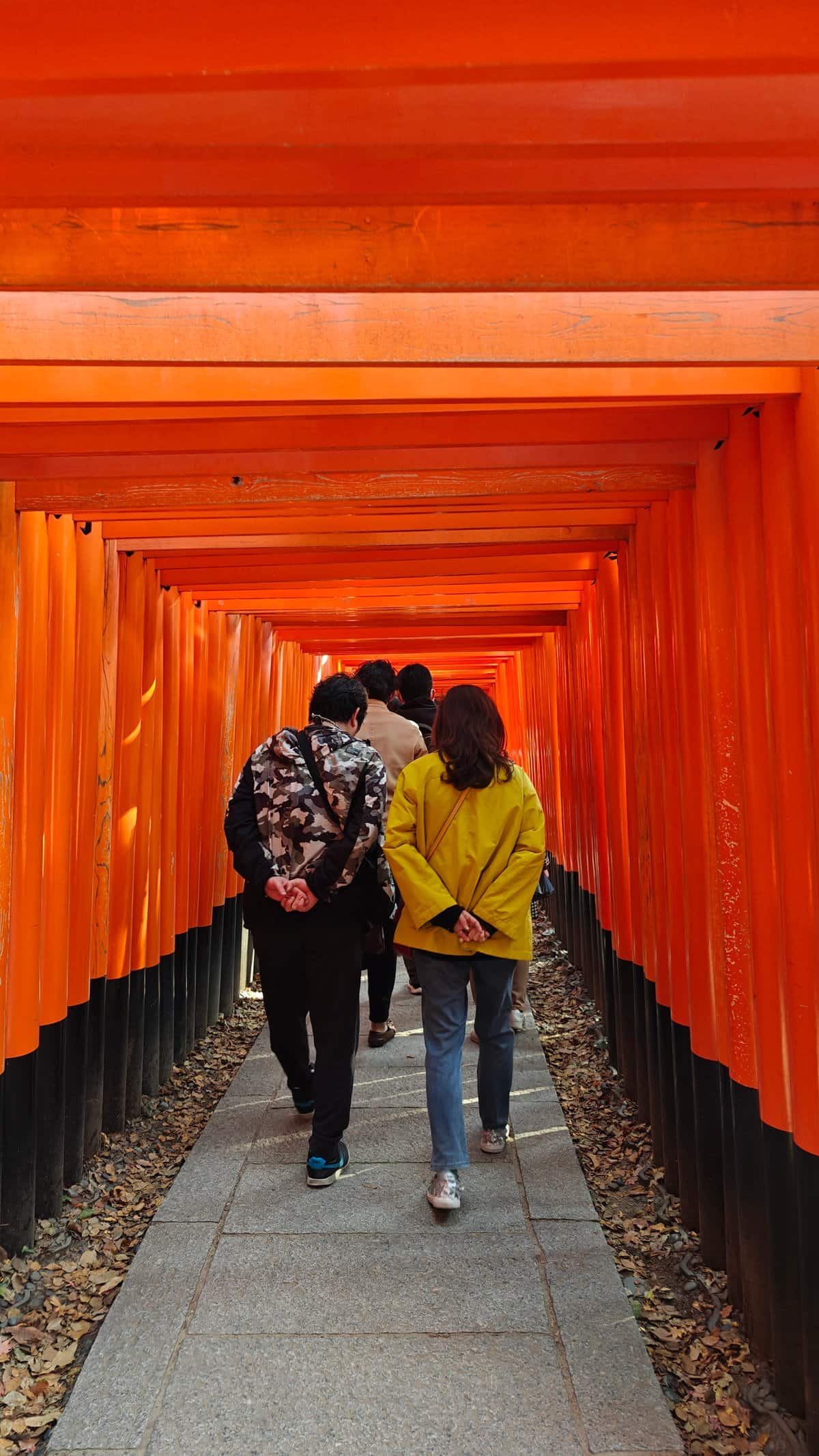
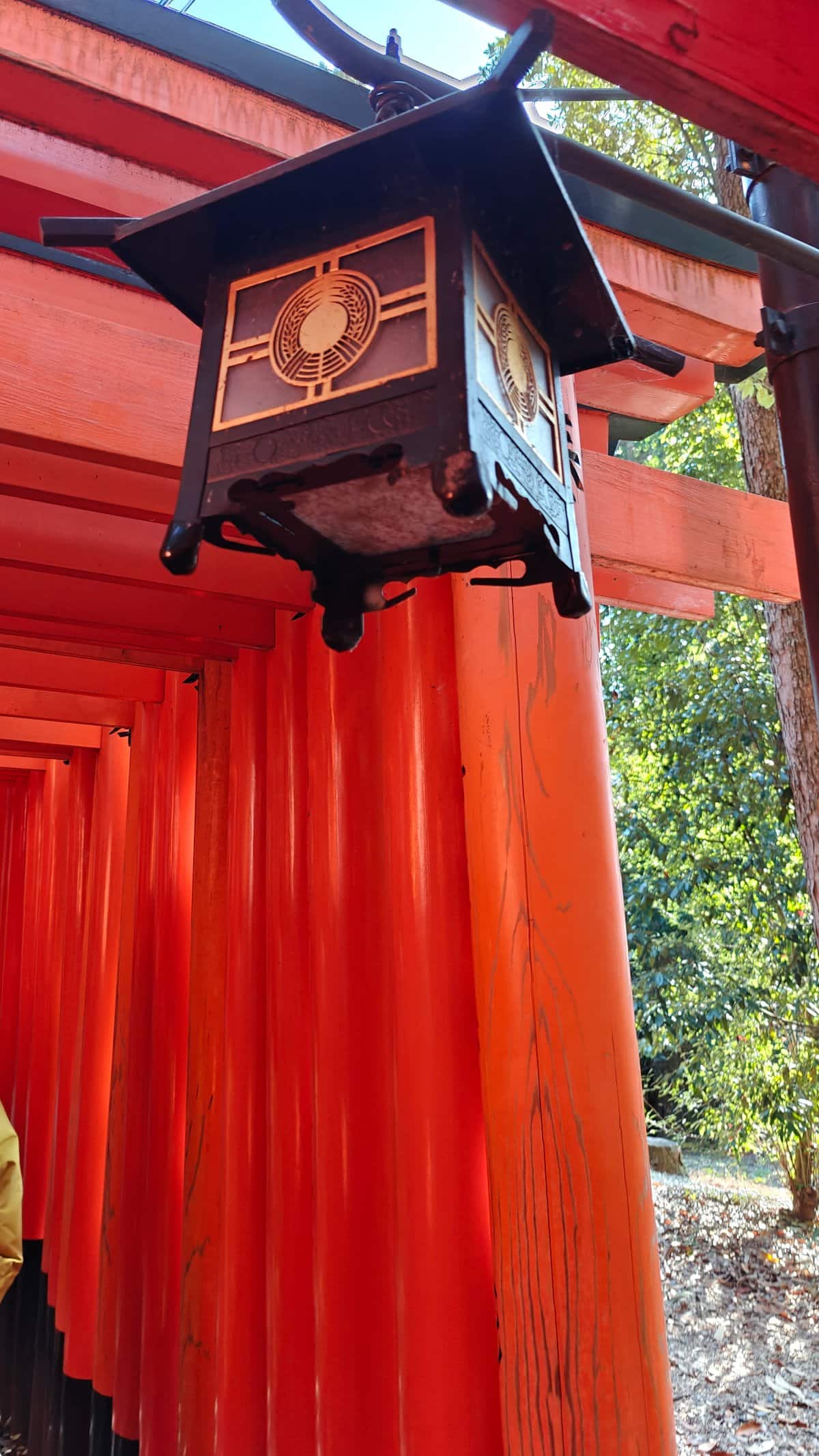
And then you reach the part everyone talks about, the tunnel, or Senbon Torii. The gates is all squished together so close they create a non-stop line of corridors. By day, you can see everything, the names of donor written in black along each gatepost; the patches of sun filtering down through the cracks; the random lanterns strung across the ceiling.
It’s impressive, there is no doubt about it. But it’s also crowded. There was always someone walking up behind me, and occasionally I had to stop to wait for someone else to move out of my picture.
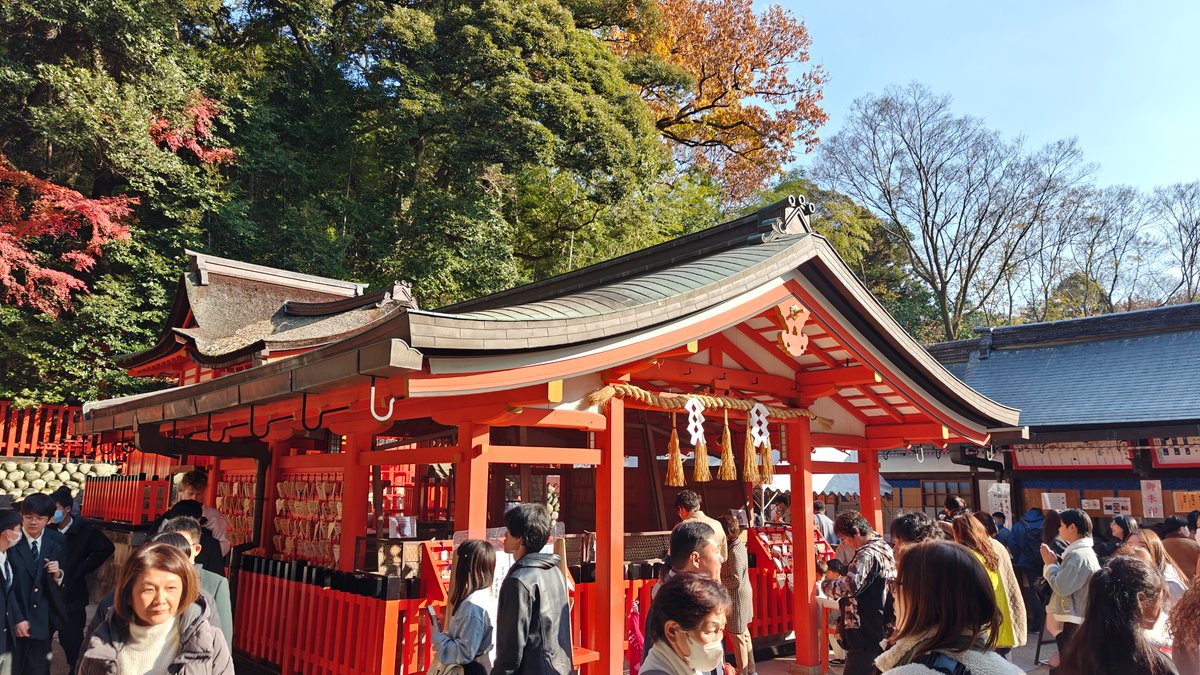


But the trail doesn’t end there. Beyond the tunnel is more. A lot of people stop here at this main tunnel.
I carried on to the Okusha section, which has a group of shrine building that is a common turn-around spot for many hikers.
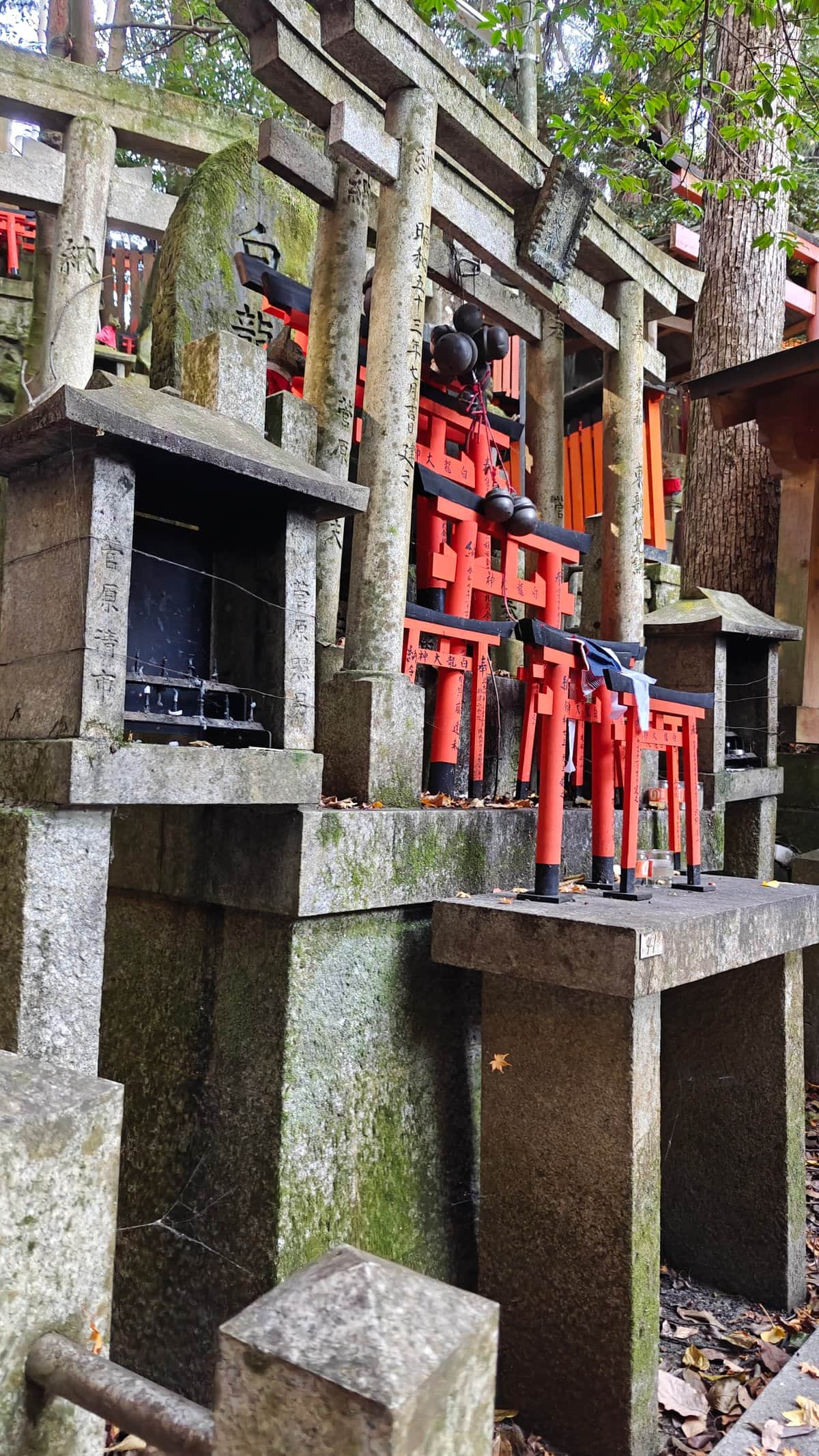


From here, the torii rise higher into the mountains, weaving through trees along yet more stairs of stone. As I walked further, I saw little shrines off the trailside and plaques at some of the gates. As you ascend, however, it quiets down.
There were sections where the gate became sparser and the forest seemed denser. Even small hills covered in moss contained tiny miniature torii offerings. Up here was peaceful and, frankly, where I felt the most connected to the space itself.
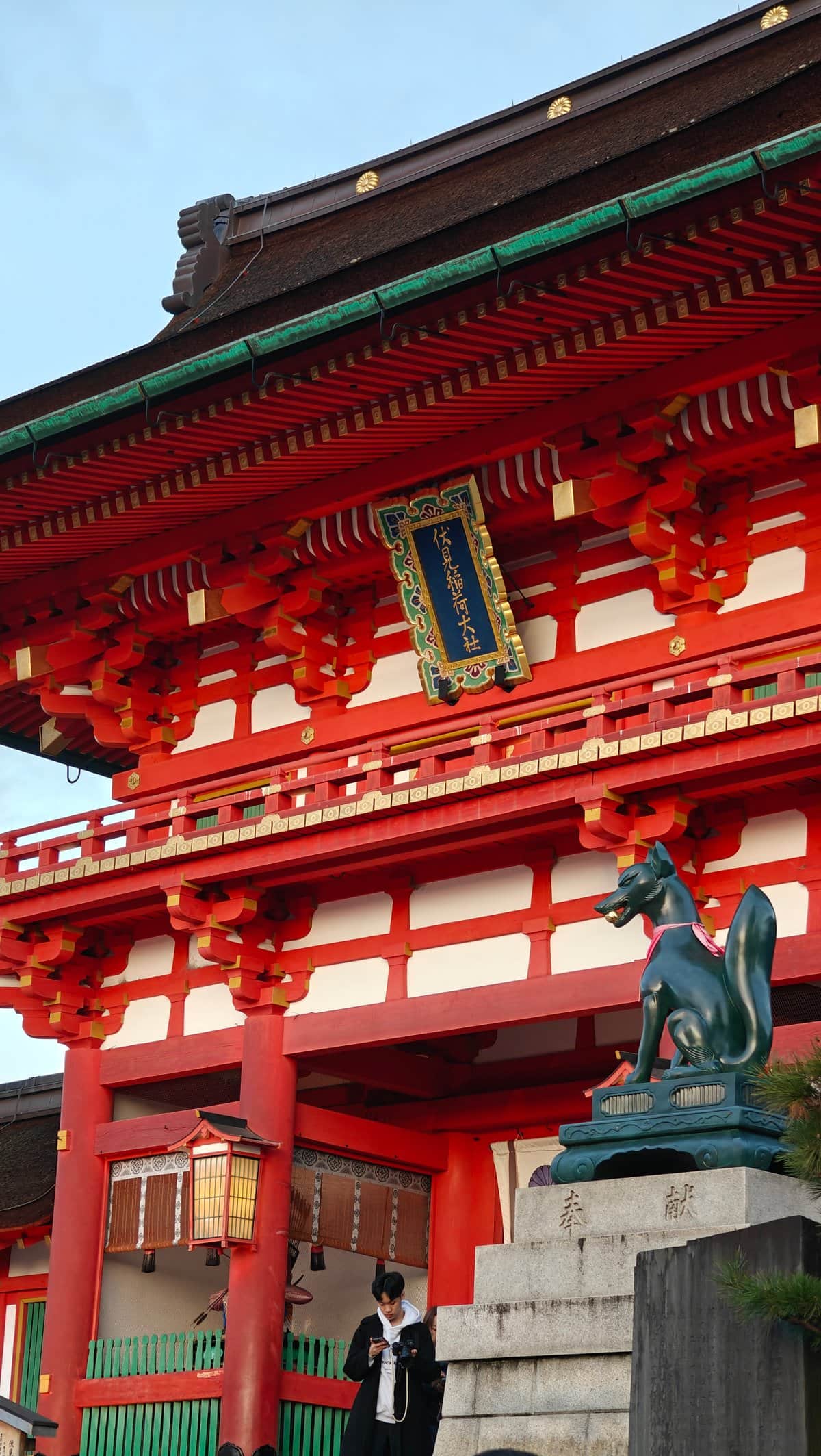


The light allowed me to really enjoy all the detail: how winding the path is through the woods; how rough the rock feels underfoot; the small offerings placed around each bend. Returning in the evening, I arrived just when the sky began to change.
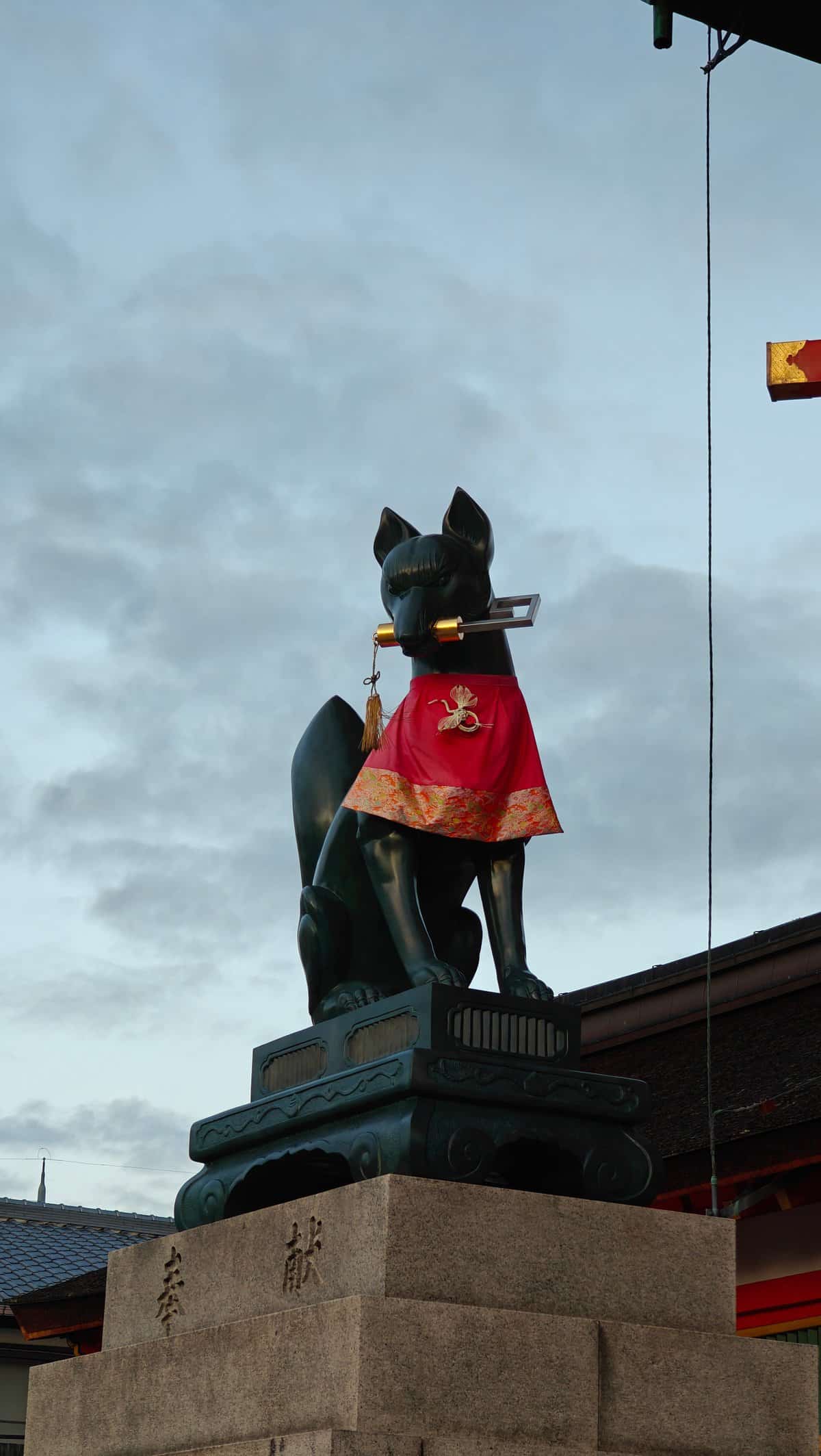

As I walked through the entrance, the plaza was totally transformed, quieter, with fewer people, softer light, and a sort of stillness it didn’t have during the morning hours. As the remaining sunlight seeped out of the day, the fox guardians seemed nearly still in silhouette.
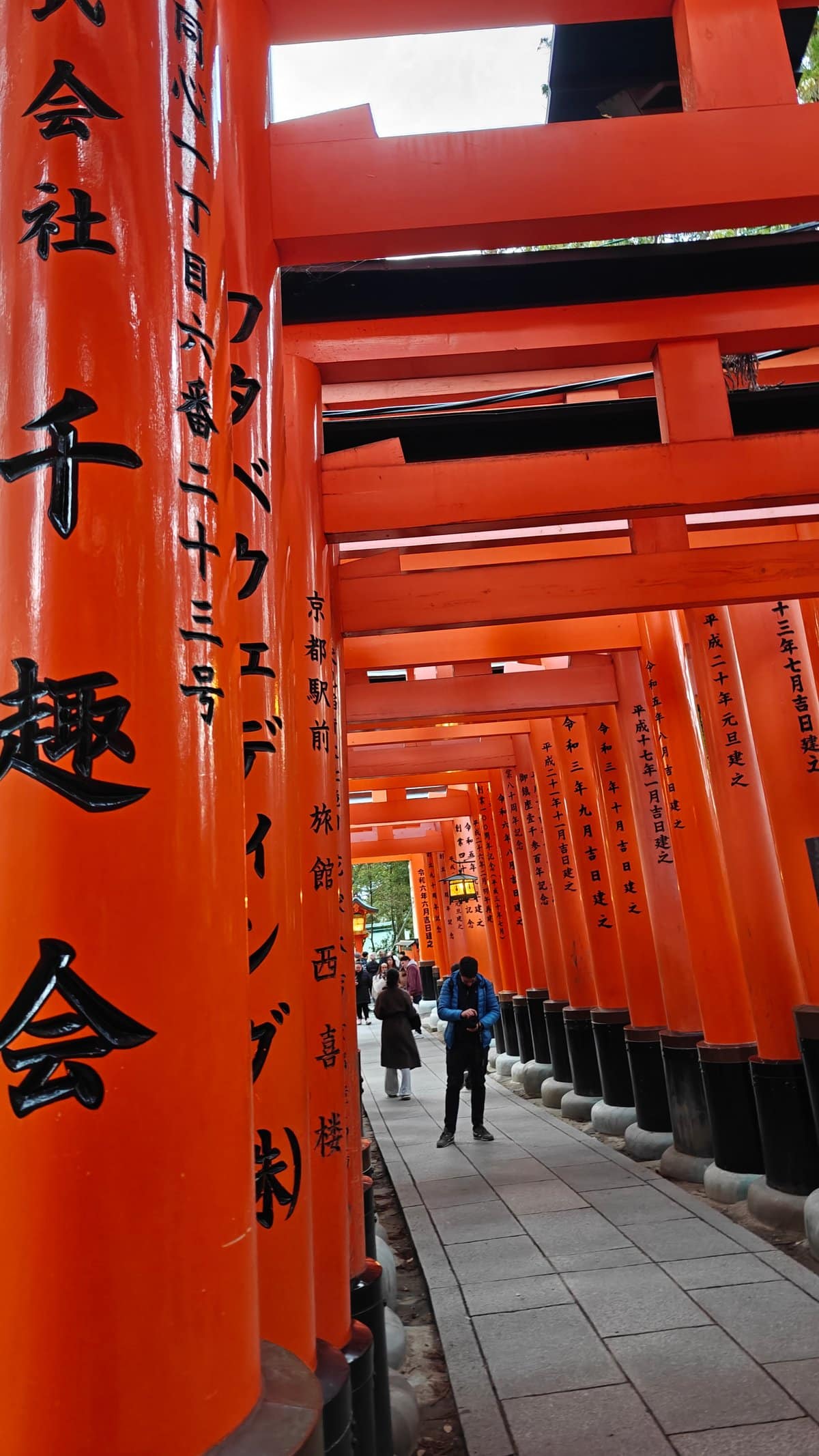
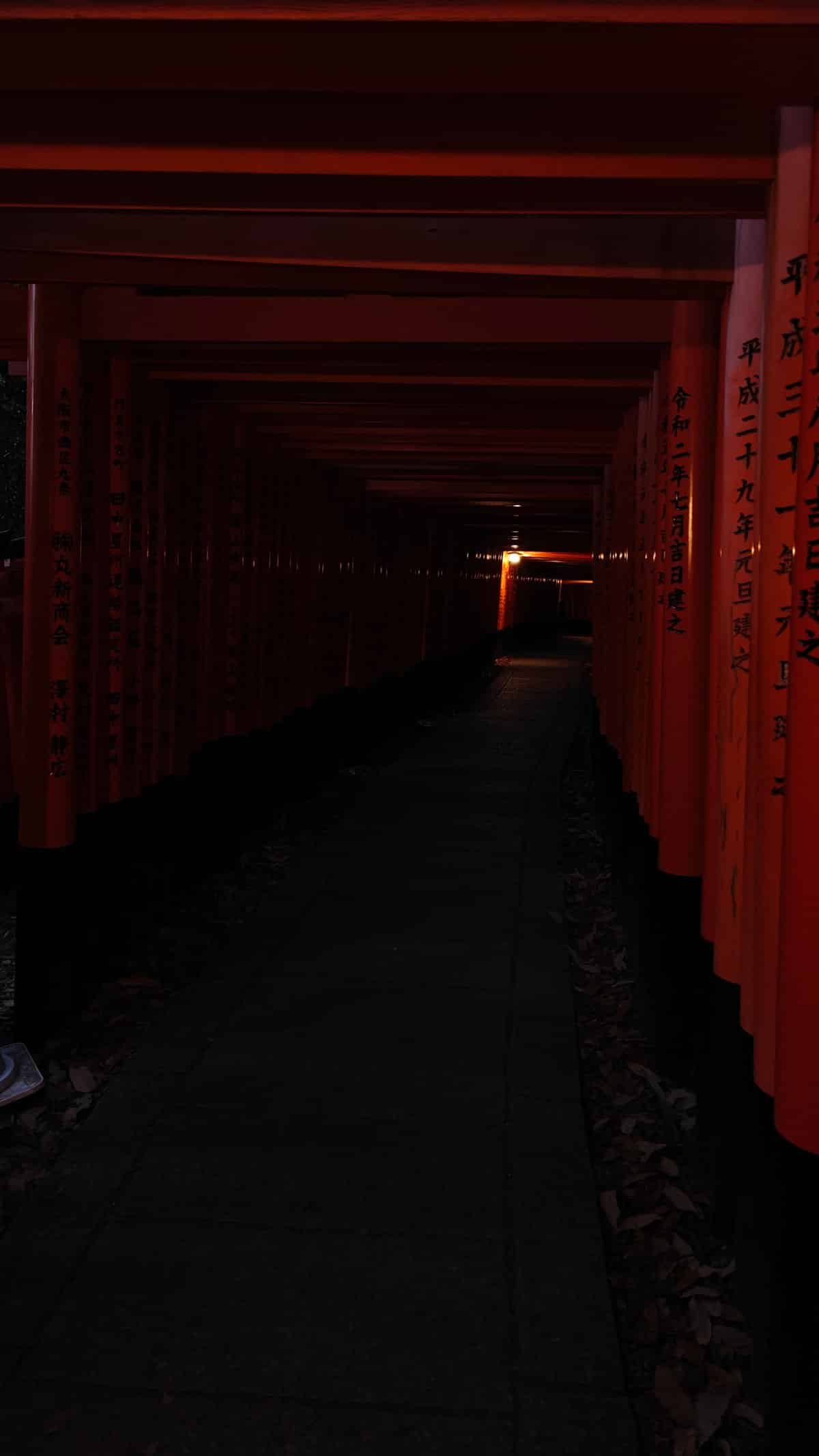
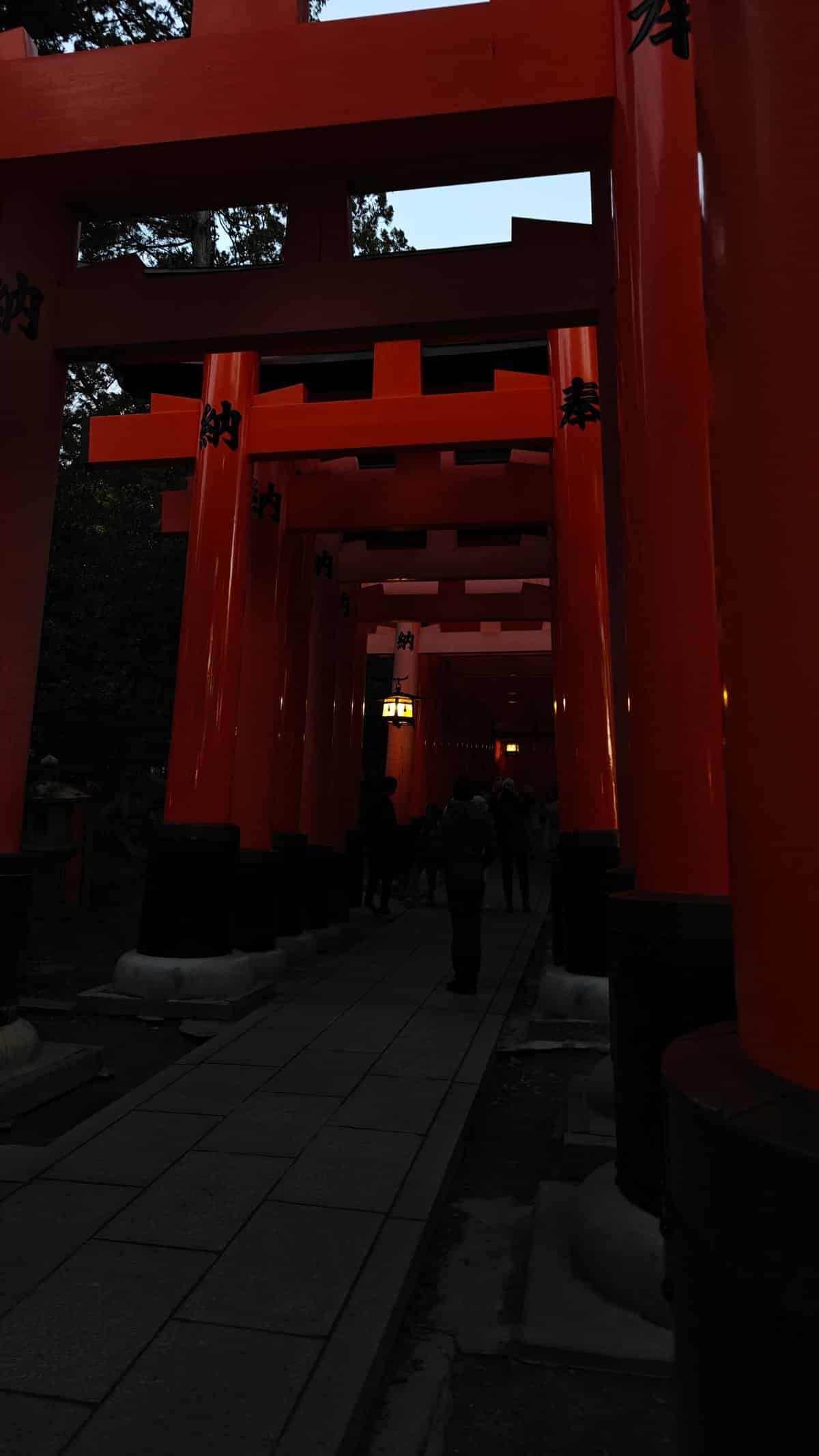
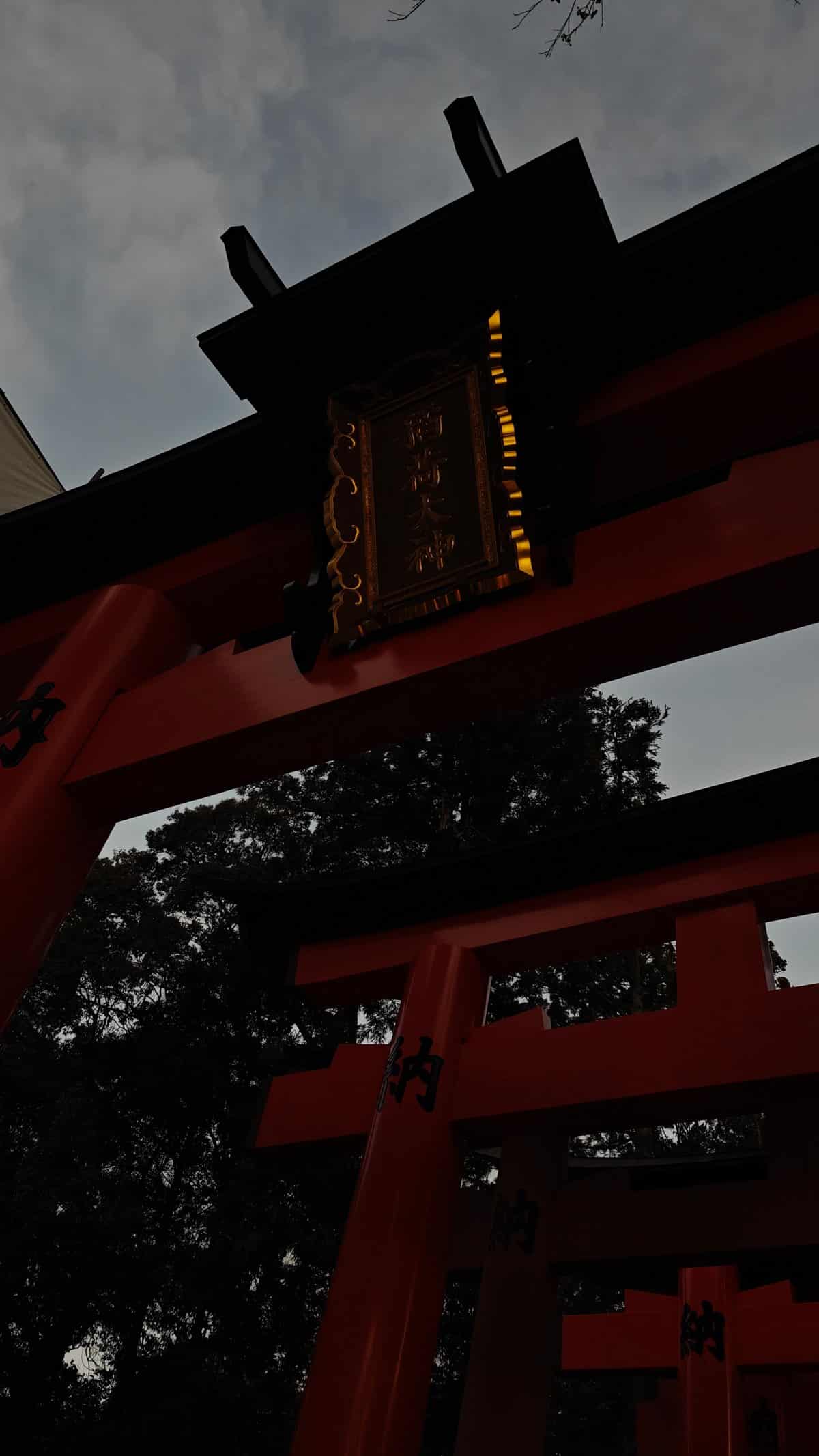
Sitting on the grounds of the shrine watching the sunset was a peaceful moment that felt almost meditative. I wasn’t expecting to feel so calm, but there’s something about the emptying plaza and the fading light that slowed everything down. After dark, though, I returned to the torii tunnels, which are realy where it’s at.
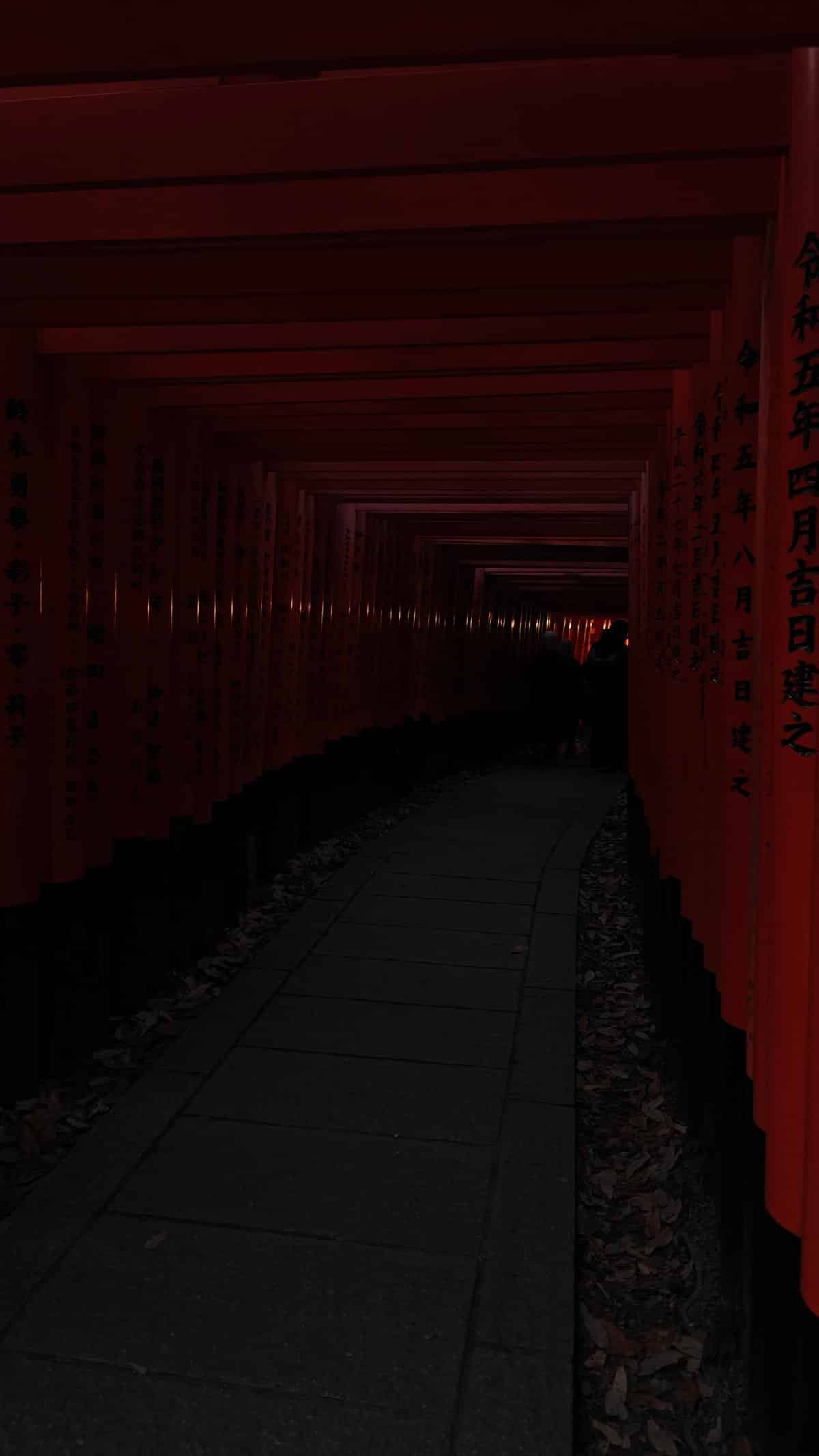
While they were busy and crowded with photographers in daylight, they transformed completely in darkness. The tunnels seemed deeper and more enclosed.

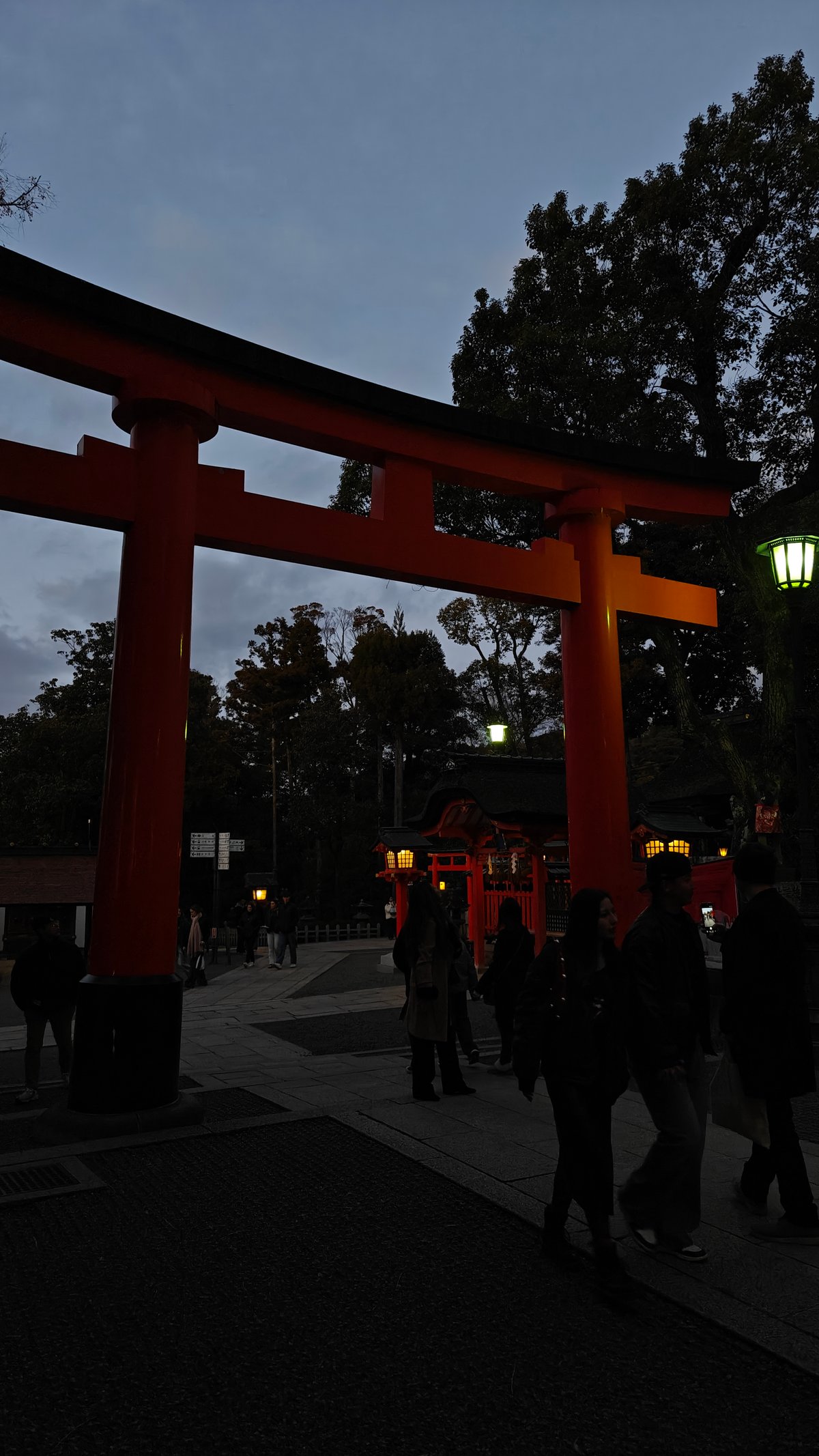
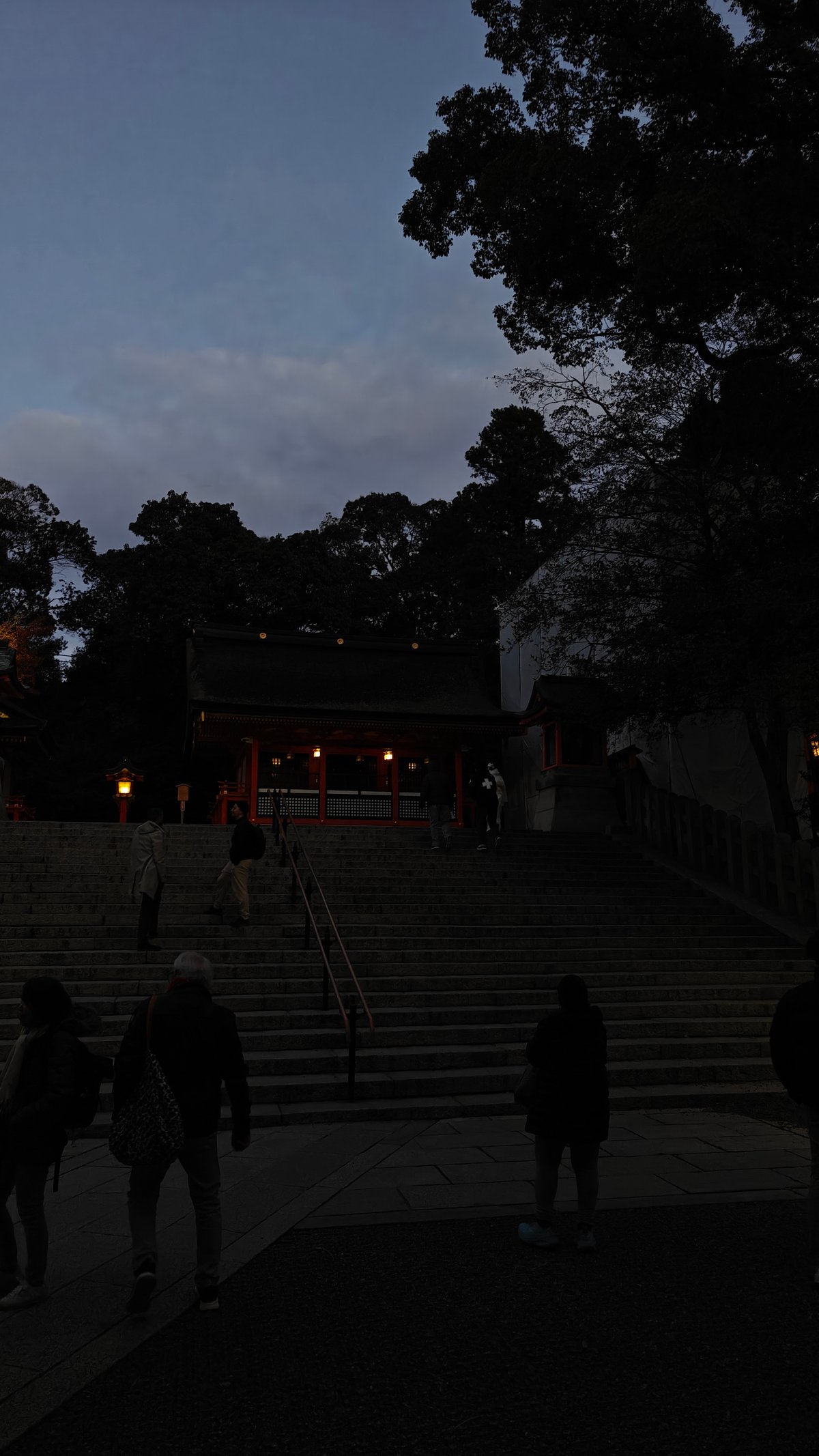
Just a handful of lantern lit my path. The spaces between the gates vanished into the shadows. Donor names on the gates blended into nothingness.
By nighttime, though, I had much of the main grounds to myself as I walked around in the dark. There were only a few other people about, the crowds has vanished. Everything was lit up with soft light from the stone lanterns, and the paths and steps that were well-defined during the day needed slightly more care to walk.
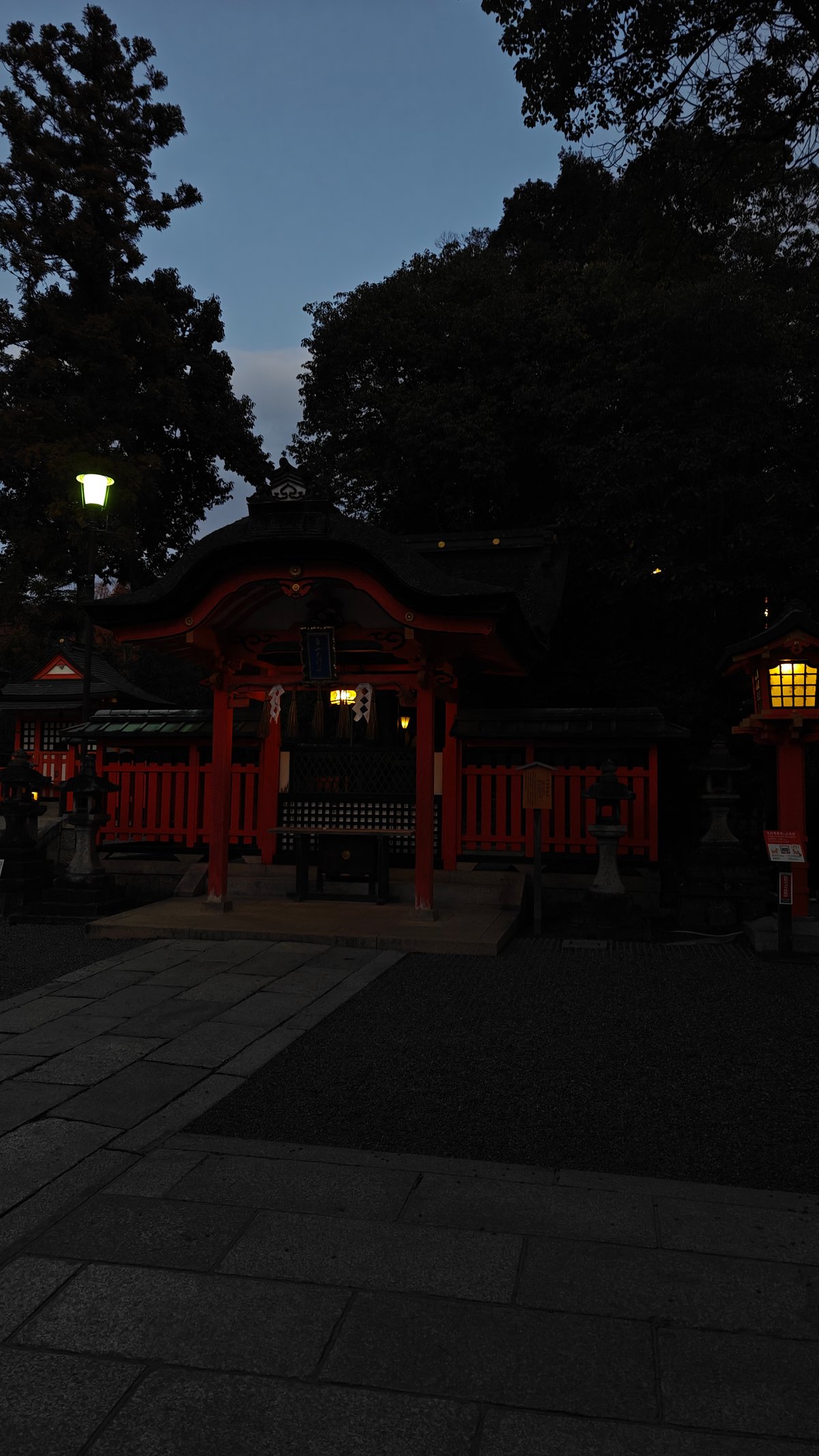
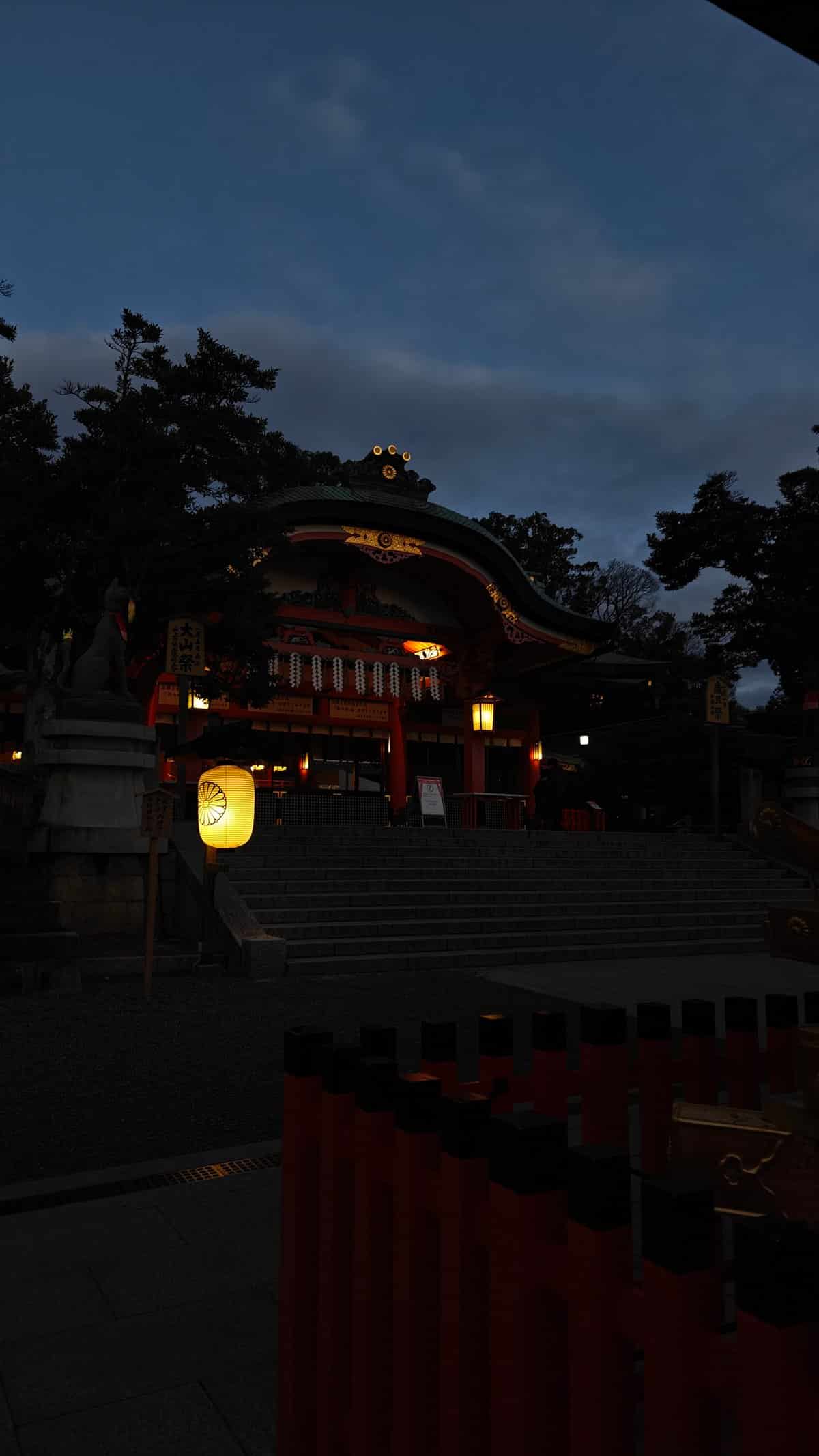
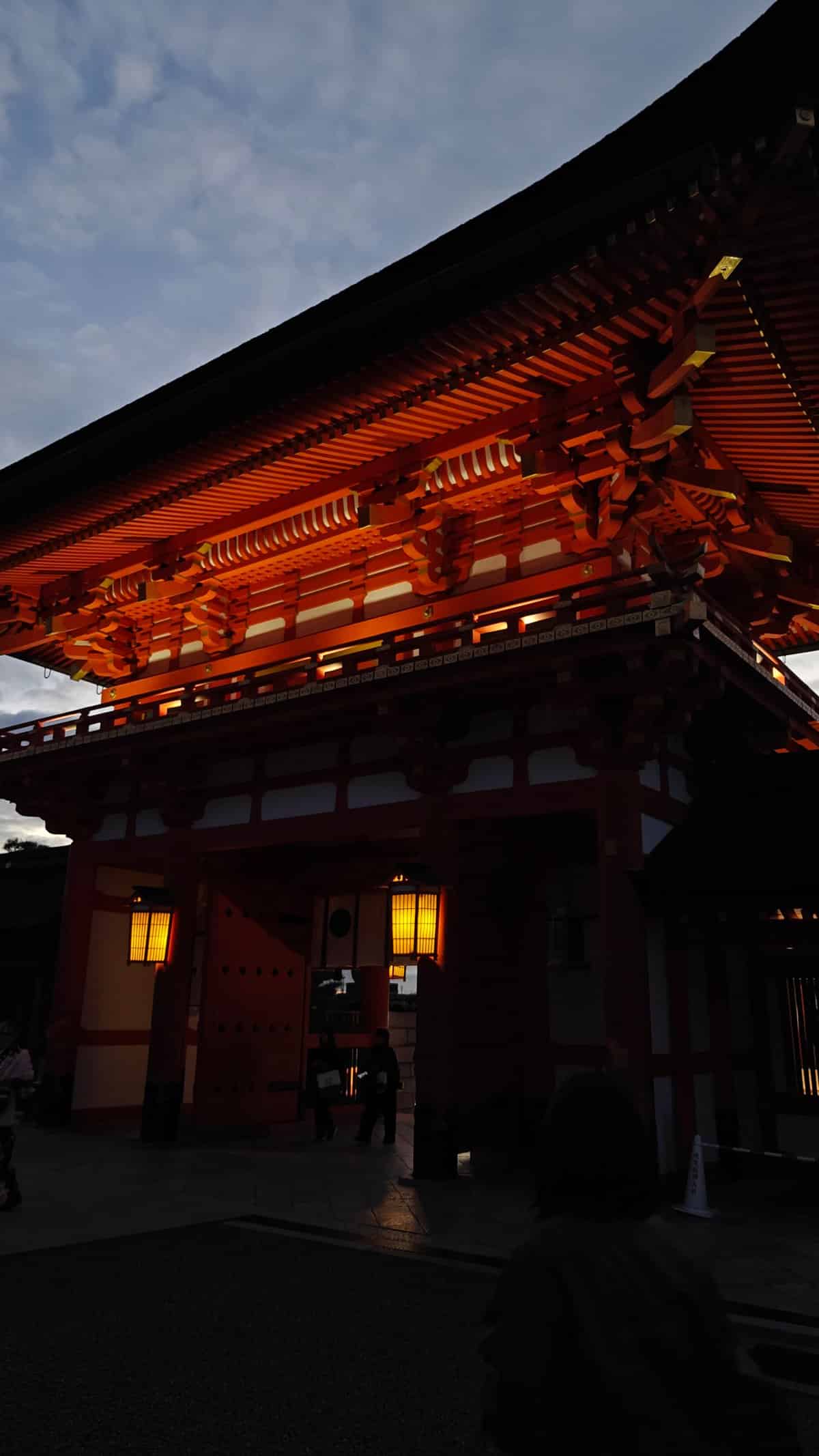
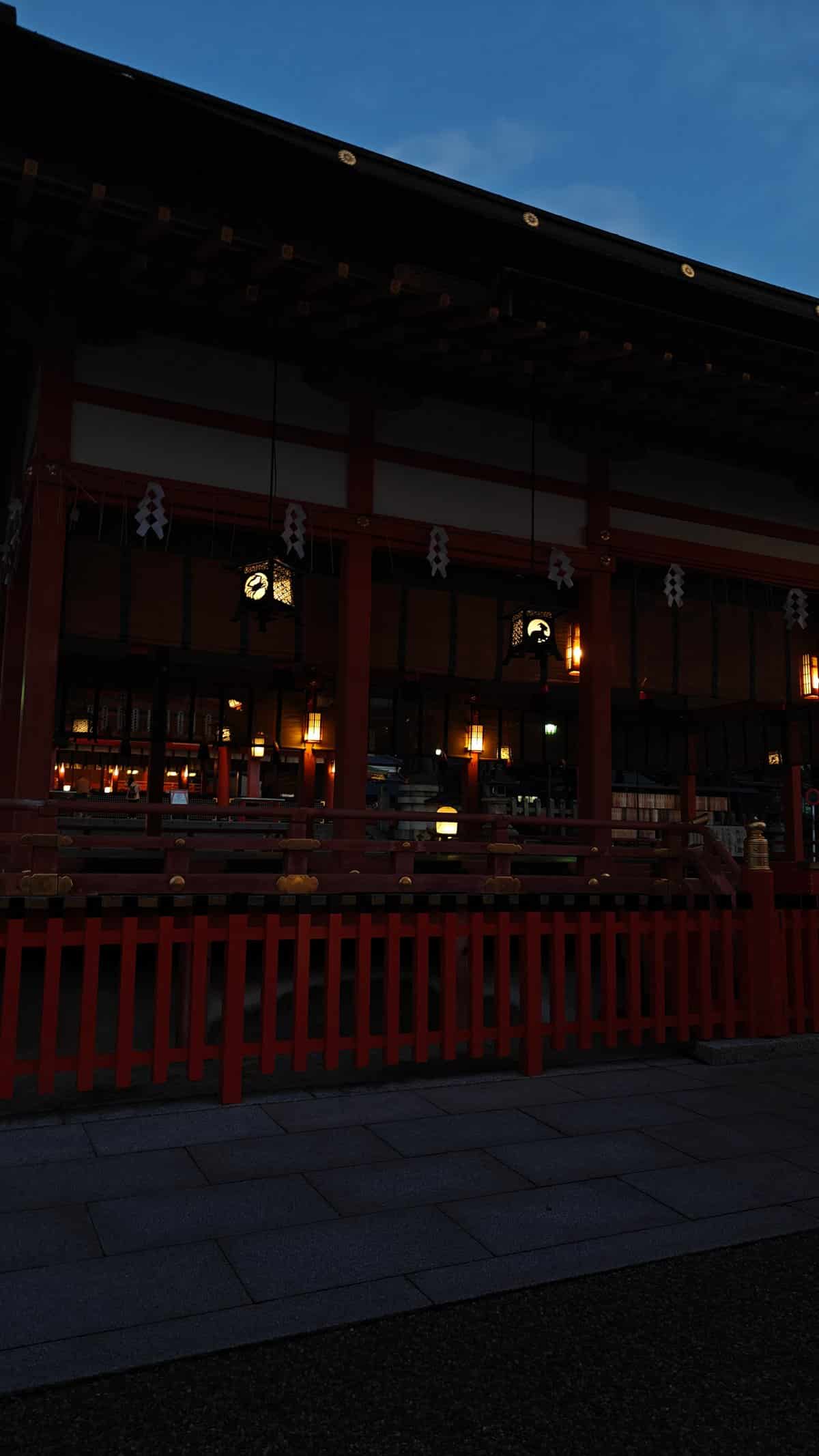
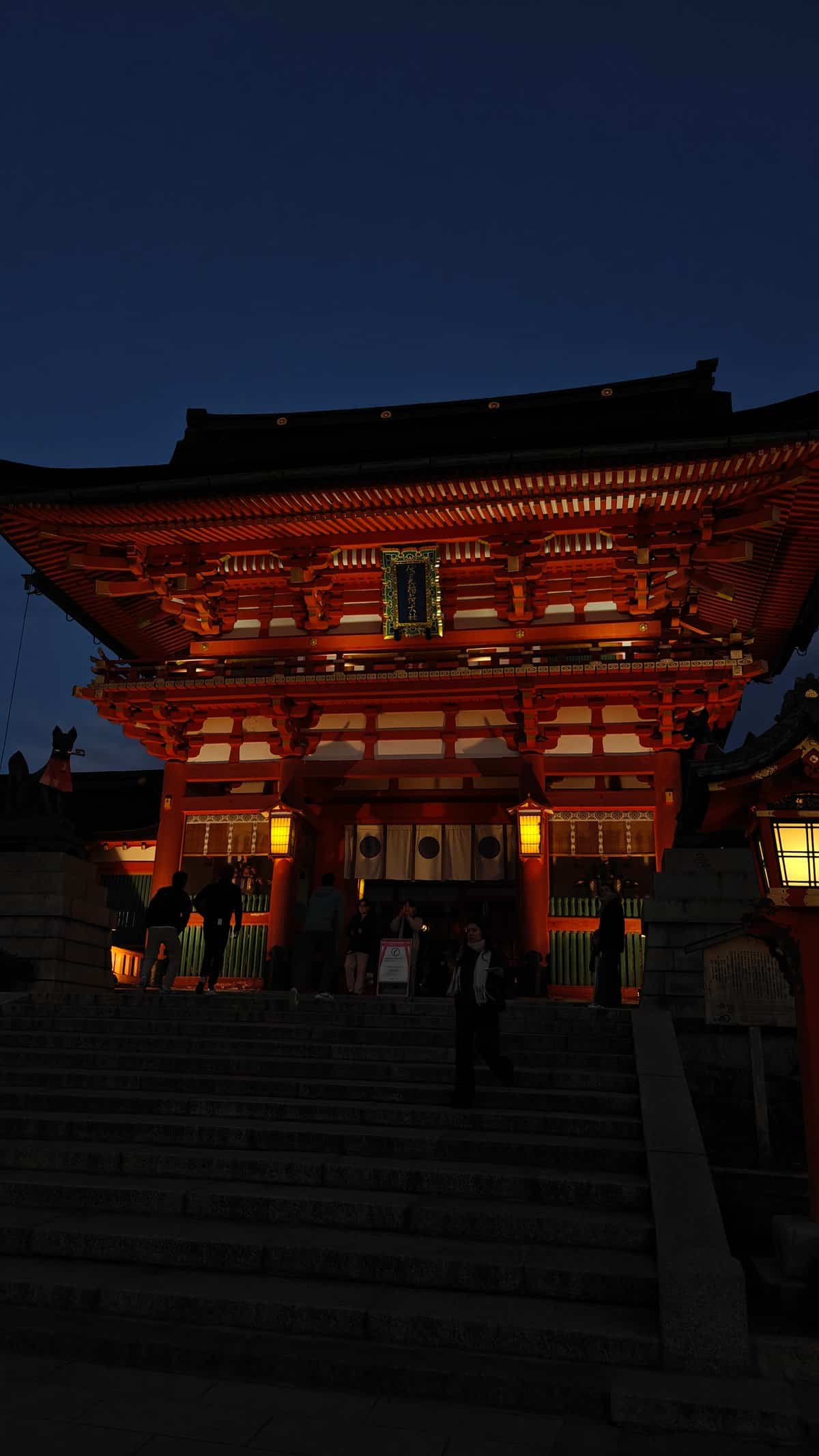
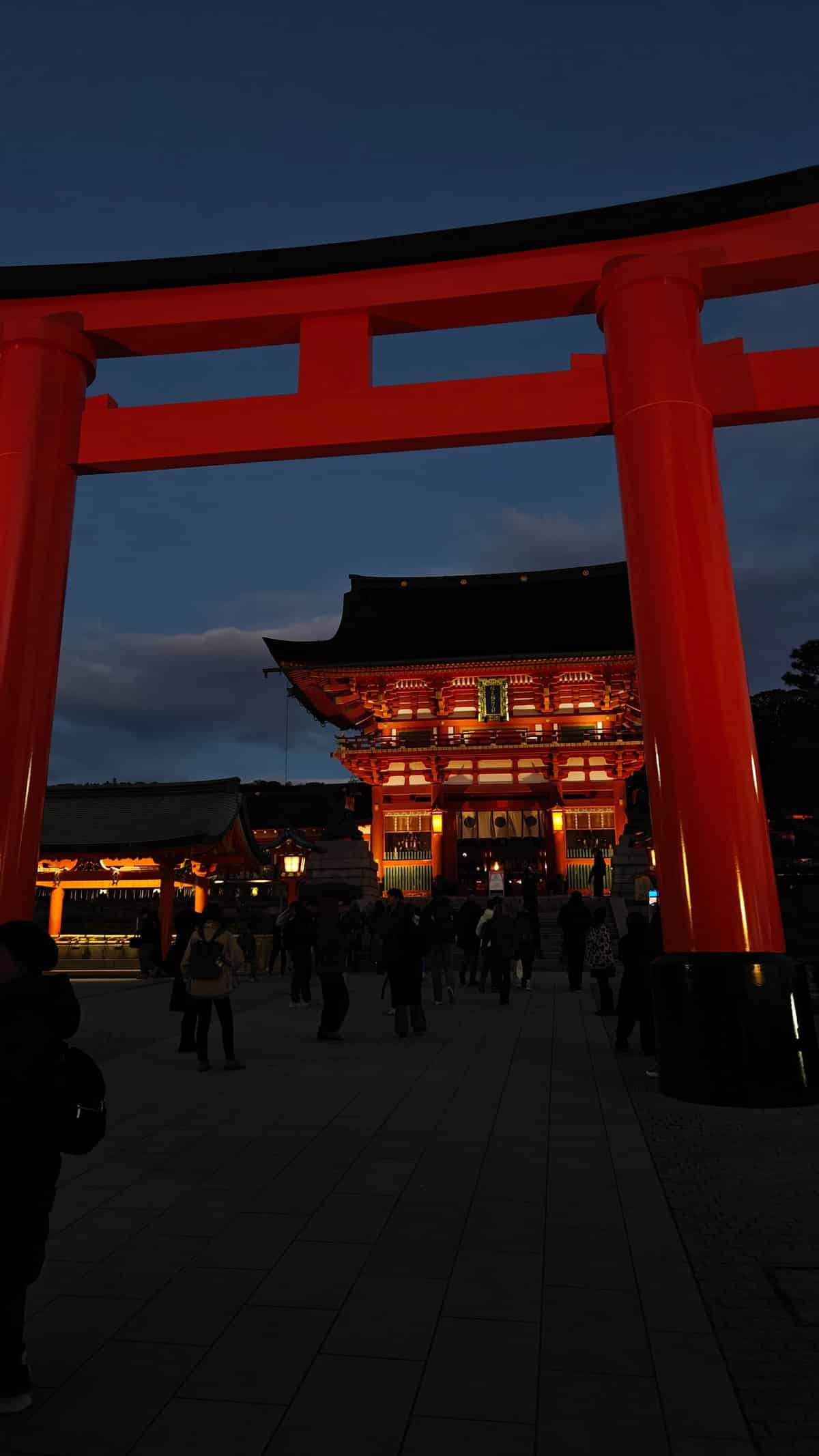
And when it was all lit up at night? Oh, boy! The shrine buildings themselves was completely transformed, illuminated against the dark sky.
Lanterns dangled from their eaves, illuminating only as much as was needed to define the architecture, without overpowering it. The Romon gate, through which I’d walked so casually earlier in the day, seemed downright dramatic by comparison. I stood there for some time, soaking it all in, realizing that it was this that had stayed in my memory about Fushimi Inari.
Regarding whether I recommend visiting at night or during the day, here is my response: Daytime is definitely the more practical option; it’s easier to get there, you can see things well, and it’s good if you’re exploring the upper mountain or hiking the whole trail. But what the night gave me that day wasn’t a sense of being on an adventure or discovery, a little peace and quiet, and a lot of atmosphere that made the torii tunnels feel almost private. You will miss out on some of the finer details (and you won’t get very far up the trail at night), but for that core experience…
Standing there under the weight of the gates and inside those tunnels, night takes the prize. Have you visited Fushimi Inari? If so, have you done it by Day or Night…
And what would you recommend?