
Japanese gardens in winter, from Kenrokuen to Sankeien. I spent a couple of days in some of Japan‘s best-known gardens in the dead of winter. What was I expecting?
To be honest, not much; this is hardly peak garden time, no autumn foliage, no cherry blossoms. But everyone had told me that Japanese gardens was beautiful in their quietness, when everything else withers away. And you know what?
They totally are. It was so different from the typical garden experience, in a great way: the carefully trimmed pine trees, the moss covered in frost, the bare branches… I visited three of them (Sankeien in Yokohama; Manyou Botanical Garden in Nara; and Kenroku-en in Kanazawa), and they were each unique and still quite stunning despite not being at their peak bloom or color. They was each unique, and still quite stunning despite not being at their peak bloom or color.
Winter’s a worthy time for a trip to Japan if you haven’t already seen the Japanese gardens there in spring/autumn.
Beautiful Japanese Gardens in Winter
Kenrokuen Garden
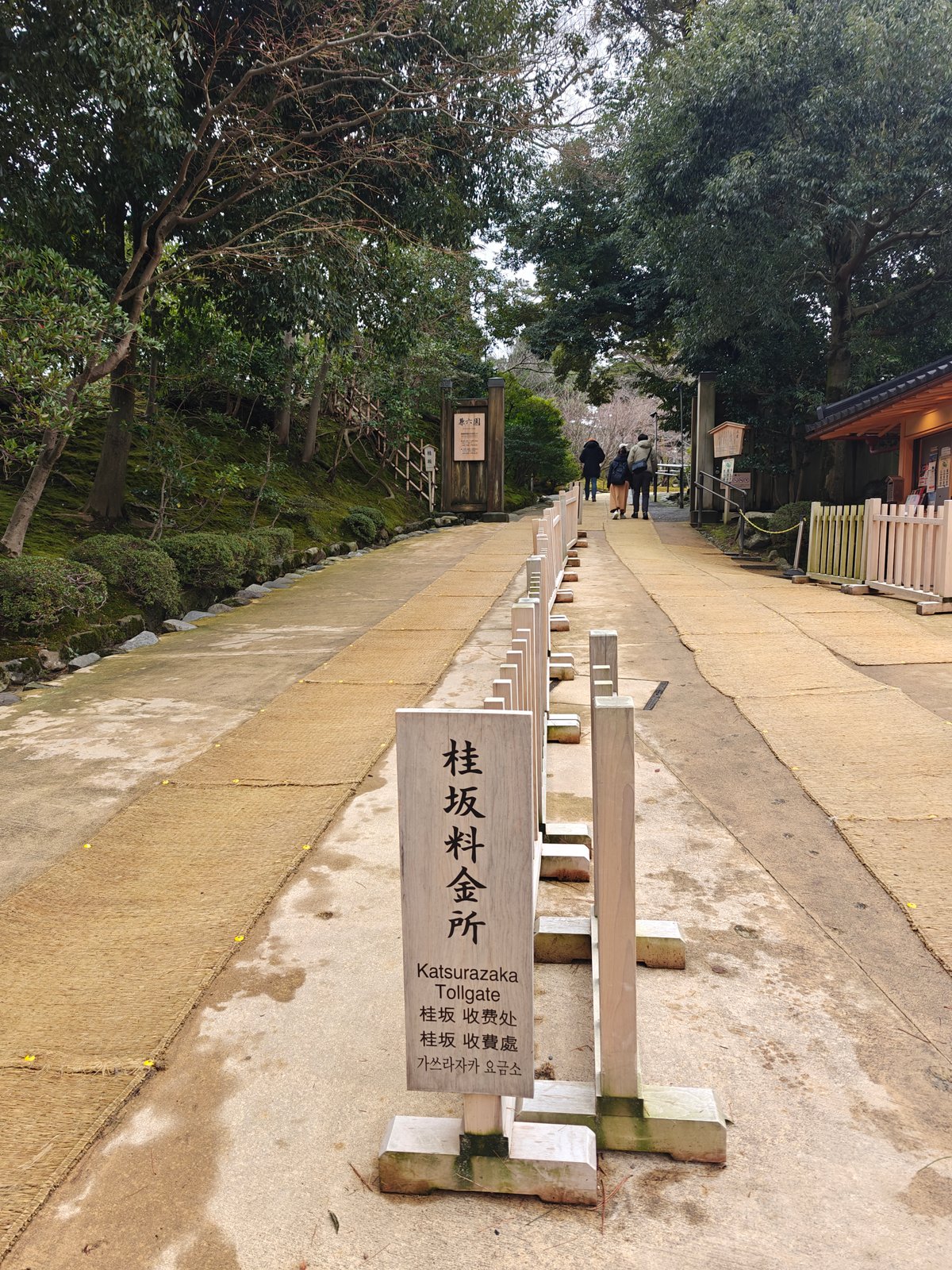

On a chilly day in Kanazawa when the sky remained flat and the air bit just a little, I came to Kenrokuen. It’s a famous garden all year round, but it’s in winter that they sets up the yukitsuri; those great big umbrella-like things that hold up the pines against heavy snows. I’d seen photos beforehand, but this time, I walked through.

free Kanazawa itinerary
Visiting Kanazawa?
Get my original 3 day, 12-page Kanazawa itinerary in PDF format, based on my real trip, with many photos, hotel, and food tips. Enter your email to receive it free.
We won't send you spam. Unsubscribe at any time.

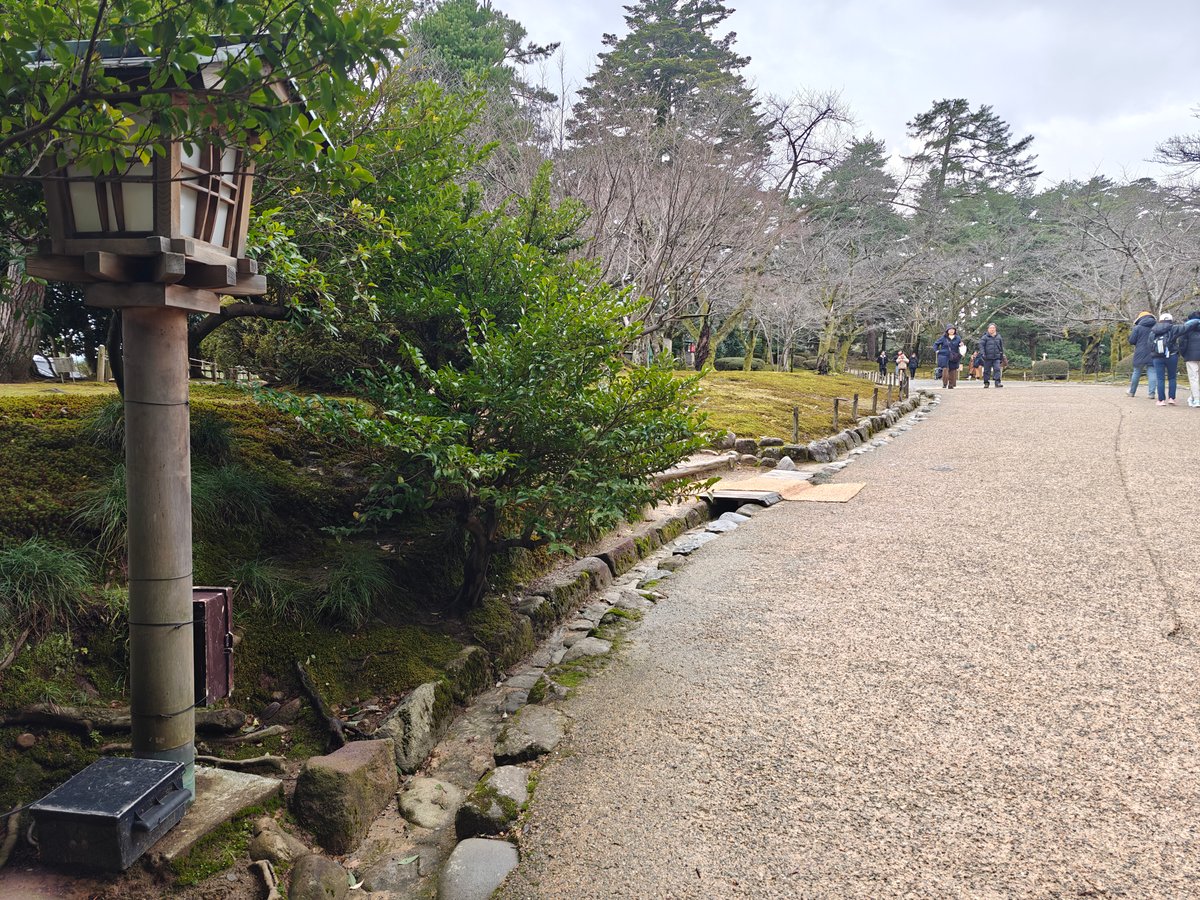


Then there were all the old trees and moss along twisting pathways, which was carefully tended to, cut, and shaped without looking manufactured. No hordes of tourists here, no sea of flowers (it wasn’t that busy). Instead, I found myself paying attention to little things I wouldn’t necessarily notice; the care each gardener took placing rocks, the way the moss grows on the stone stairs.
I heard nothing but crunching gravel beneath my feet, along with scent of moist earth and clean, damp air.


I walked farther and farther through the garden: past pines whose branches had been trained in a careful way and others held upright by aged-looking wooden supports. The paths were always turning this way and that, so you never had a clear view ahead. This was presumably the whole point of this kind of garden, as if we are meant to find things out slowly instead of all at once.


There were streams throughout part of the garden. Some had little fountains that presumably relies on natural water pressure from surrounding hills. It was all very crisp and clean, and things growing in and around the water, clipped shrubs, rocks, seemed to have been carefully arranged with a pair of tweezers.
Fountains are not something I normally stop to photograph, but this whole set-up was so calm and precise.


Then there was the old tree. Its trunk was so huge that it had to be propped up with wood, which I marveled at as I walk past. Next, I crossed another stone bridge topped with straw mats, presumably placed for traction in icy weather.
All of it was mossy enough that it seemed nearly furry. How many winters must it have witnessed?


Next I arrived at the center of Kenrokuen: the star of the show, Kasumigaike pond. Here you find the most famous pine tree of them all, the Karasaki Pine… Completely covered with yukitsuri cones fanning out from the top of it.
The branches are twisted and thick, and rest atop wooden props as the tree fans across the water. I crossed the stone causeway that juts into the middle of the pond and simply stood there awhile. It’s a carefully arranged scene, as if each element had been placed to create maximum effect.


There were even more stone lanterns and pines around the edges of the pond. One was the Kaisekito lantern (apparently an icon in these parts). It is a two-legged lantern design that rests directly on the water’s edge, and it’s easy to see why so many people snap photos of it.
Its proportions were perfect.

A thatched teahouse was tucked into the trees across the pond. The type of place you’d sit down and watch snow fall if you were lucky enough to visit on the right day. Which I wasn’t.
But even without snow, the garden felt complete and purposeful in a way that’s hard to describe without sounding over the top. It is very well done.
Manyou Botanical Garden

Unlike Kenrokuen, Manyou Botanical Garden in Nara isn’t nearly as well known or large, but I am happy that I visited. It has a slightly different vibe, it’s more of a botanical garden with a focus on types of plants referenced in the Manyoshu, Japan’s oldest book of poems.


It’s technically fall here (as in, late fall) and yes, there are still a few maple trees that hadn’t dropped their leaves yet when I visited. The filtered light through the canopy was quite pleasant as I wandered underneath it, but otherwise, the majority of the garden had really gone to sleep for the winter.
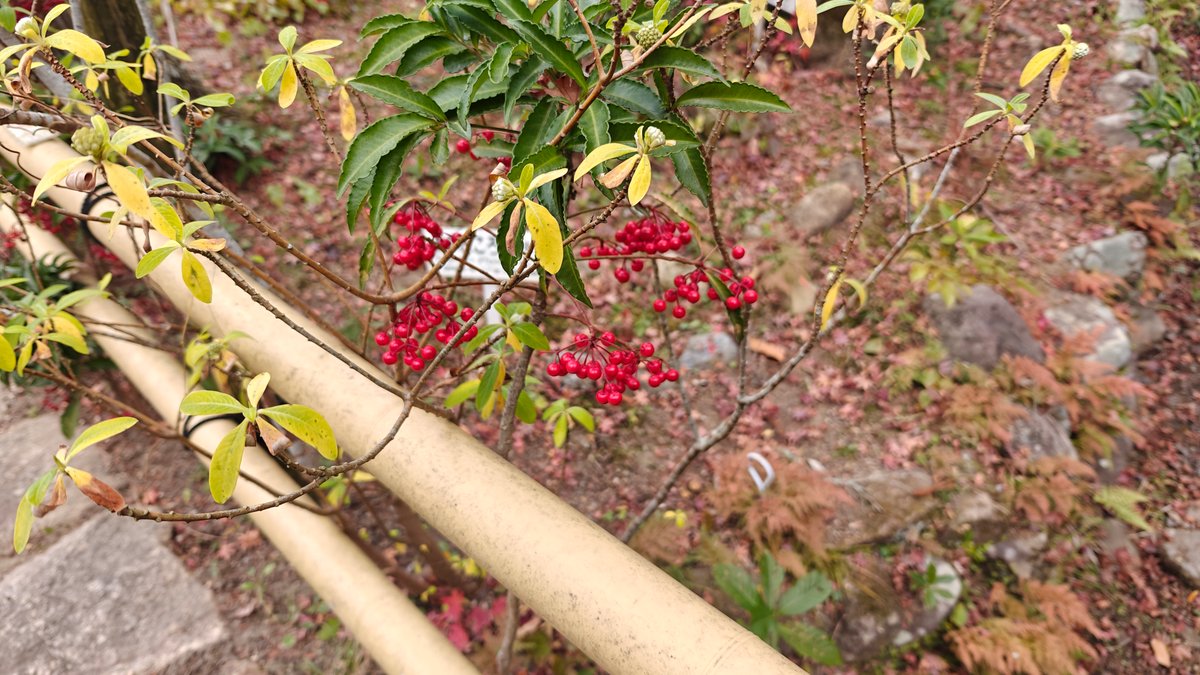


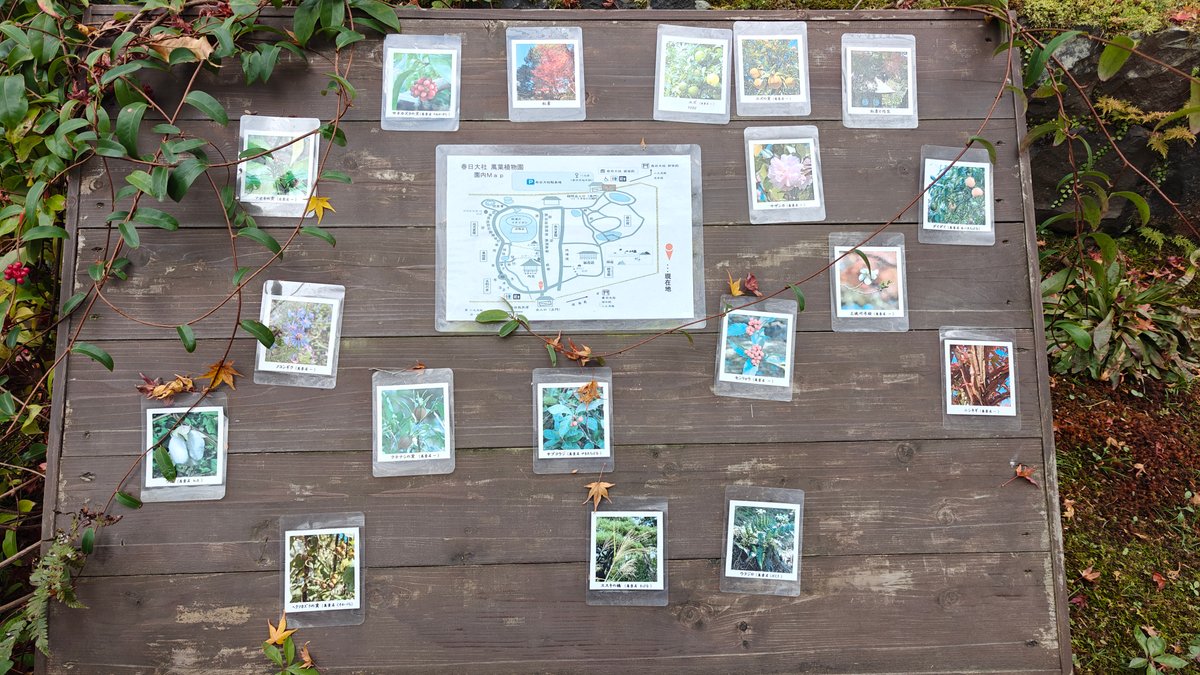
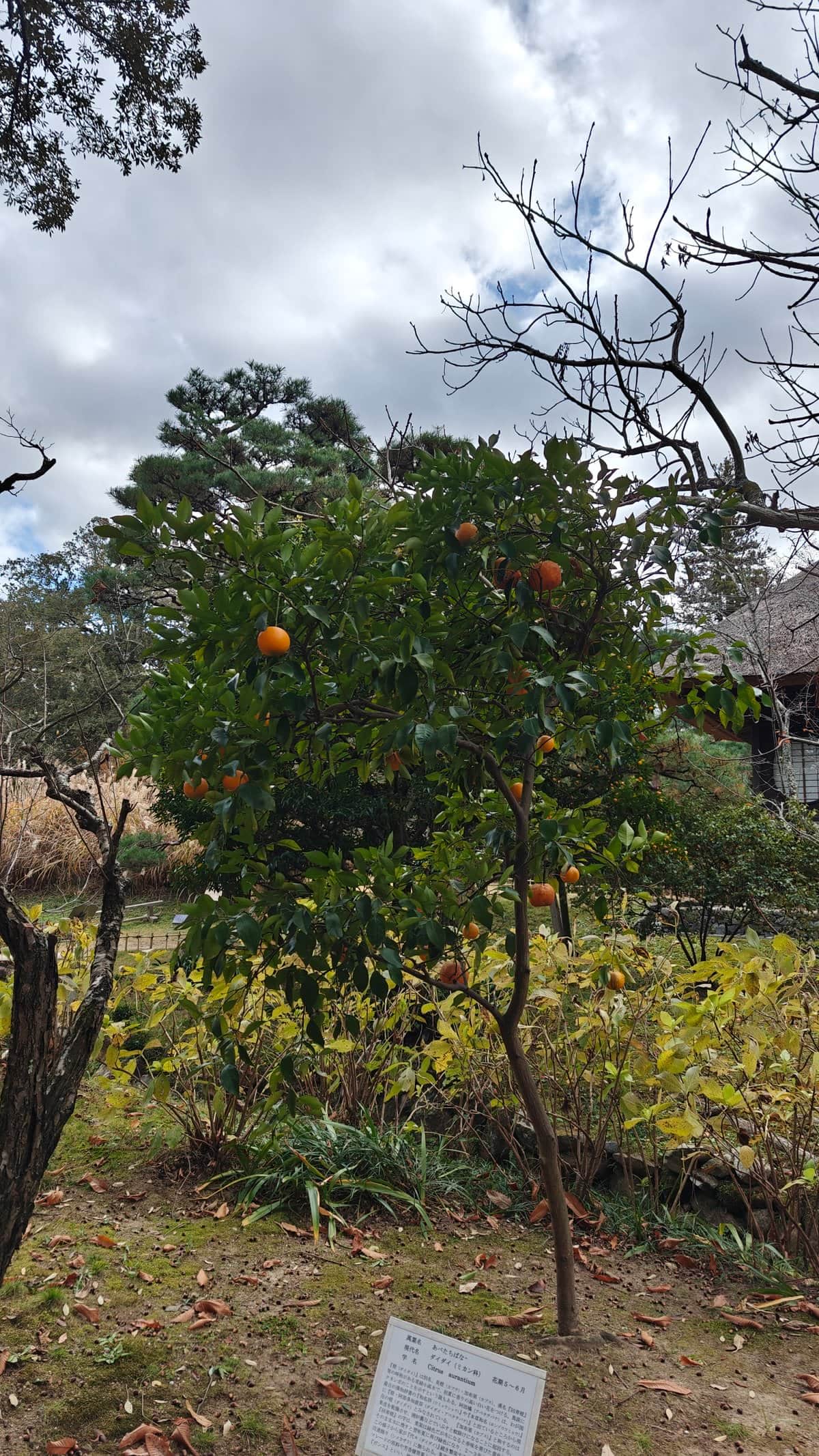
Plant beds are marked by little wood stakes that label each one for its species, not my strong suit. But as an educator, I admired how they did it. There were some late-season flowers in bloom.
They were nothing showy, just little things. A few berry bushes here and there added interest.


Bamboo fences divided up the sections, and information boards lined the paths. Most of the beds were either dormant or looked bare, which was fine; it made the space feel quiet for the time of year, and real instead of disappointing.


Near the center of the garden was a small pond, with a tiny waterfall trickling down mossy rocks and a stone lantern next to it. The water wasn’t running so fast you couldn’t see yourself in it, and the whole corner felt peaceful and tucked away.


On one part, there was a huge old wisteria trellis. Its trunk was so massive and twisted that I felt as if I were walking through a fantasy book. There were no leaves on the vine yet, but it must be gorgeous in May when the blossoms droop down from the wood.
Even here in winter, it was all about the structure. These ancient vines had shapes twisted into their last acts.


From there, other areas of the garden opened up to little clearings filled with tall cedars, and even a tiny grove of bamboo. The bamboo was still green, as you might imagine, and moved slightly in the breeze. It was a nice contrast to all those bare deciduous trees.

I also ran into this deer lying on the trail at some point. He was totally unconcerned about my presence. There are obviously deer everywhere in Nara (duh), but I never thought it would be one right in the center of the garden.
He didn’t even bother to glance up as I passed by.


More colored foliage-lined paths led by a thatched pavilion perched upon a grassy mound. I liked it all. It felt less like a showplace and more like a teaching garden, with more space to wander around and learn something (less “wow” and more “hmmm”).


At the edges, trails split off into the woods where little streams bubbled under ferns. There was no drama there, just a nice and easy stroll while listening to the sounds of birds and the stream trickling along. It was nothing else, just quiet.
Sankeien Garden


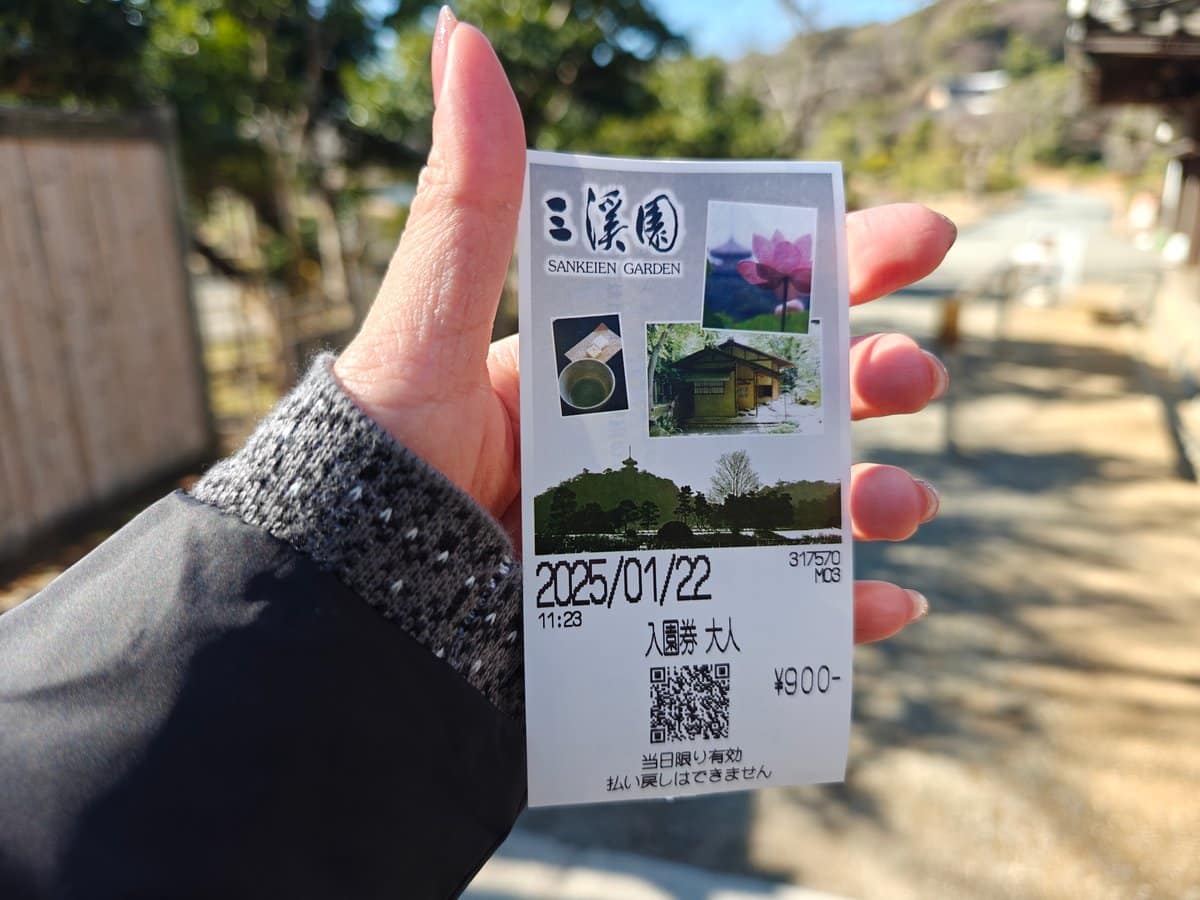
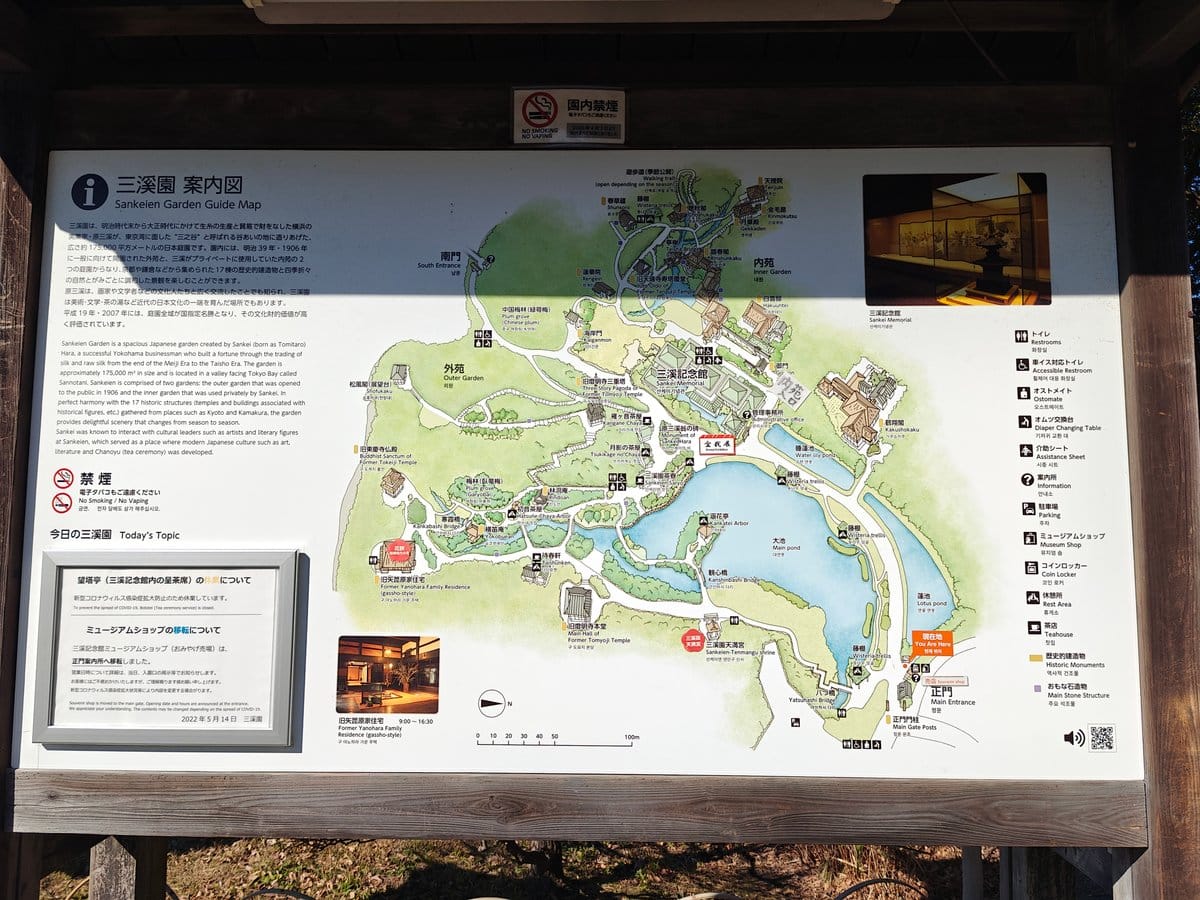
The Sankeien Garden was created in the early part of the 20th century by a silk merchant who collected historic buildings from across Japan to create this expansive garden in Yokohama. It is filled with historical buildings. I got my map, which came in handy because the gardens are larger than they appear.
Then I went to get my ticket and entered the grounds.

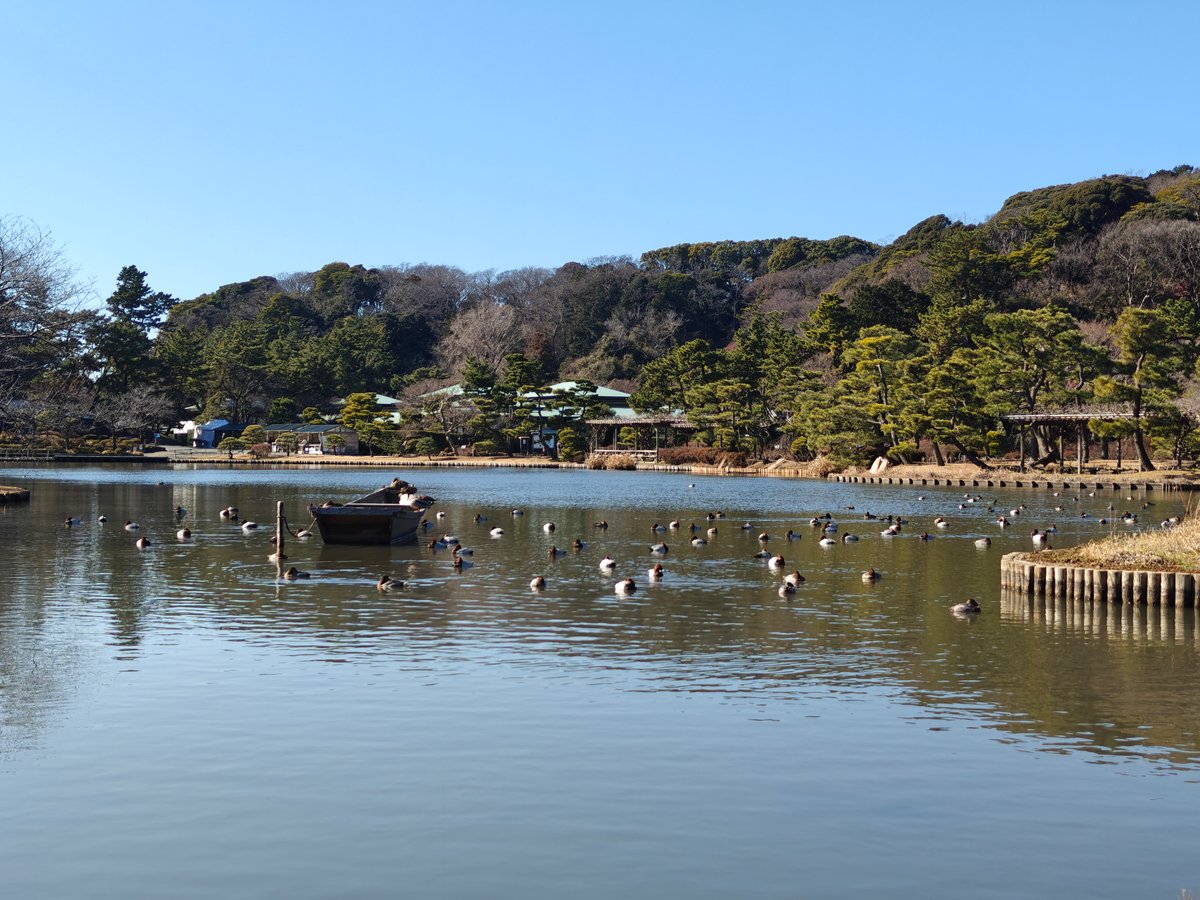


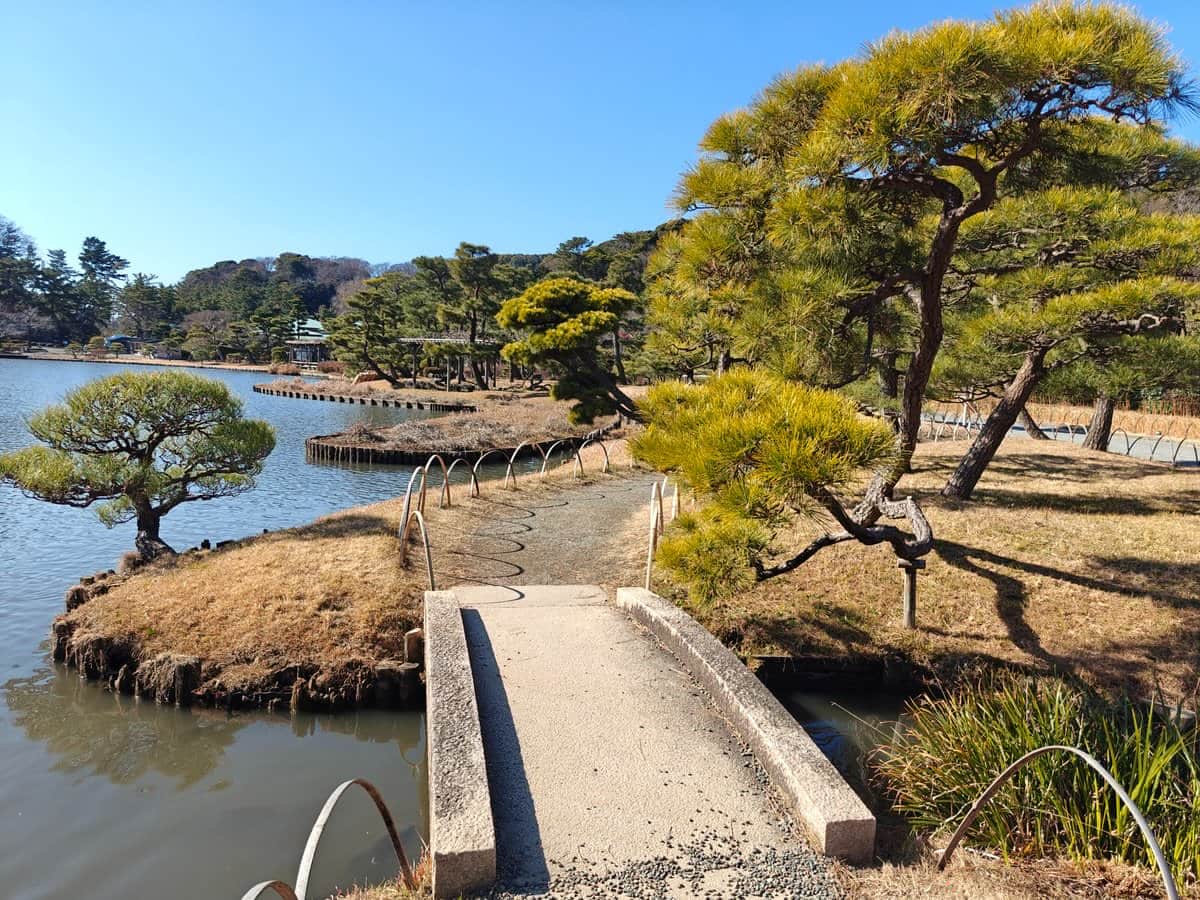

It’s all built around the great pond, and immediately the three story pagoda high atop one of the hills overlooking it caught my eye. The pond itself is huge and still. Leaning pines surround it, framing stone bridges that connect little islands in the middle.
As I followed the path, the vista changed at each few feet, there’d be the pagoda peering through the trees, then gone, then peeking back again from another direction. It was carefully planned to offer you varying views.

Inside the inner garden, smaller and feeling more intimate because of it, was another wooden gate I went through. Here the buildings were older but more elegant.


Across the lawn is Rinshunkaku, a villa with long wooden verandas and elegant stepped roofs. The craftsmanship is amazing; the cypress-bark roofs are beautiful. It’s an easy place to walk about, admiring the craftsmanship and slowly exploring the villa’s interiors (you can go into some of them).
What really interested me was their placement in the landscape. They are like pieces of a very large composition, each one located so that it could be seen from particular angles.
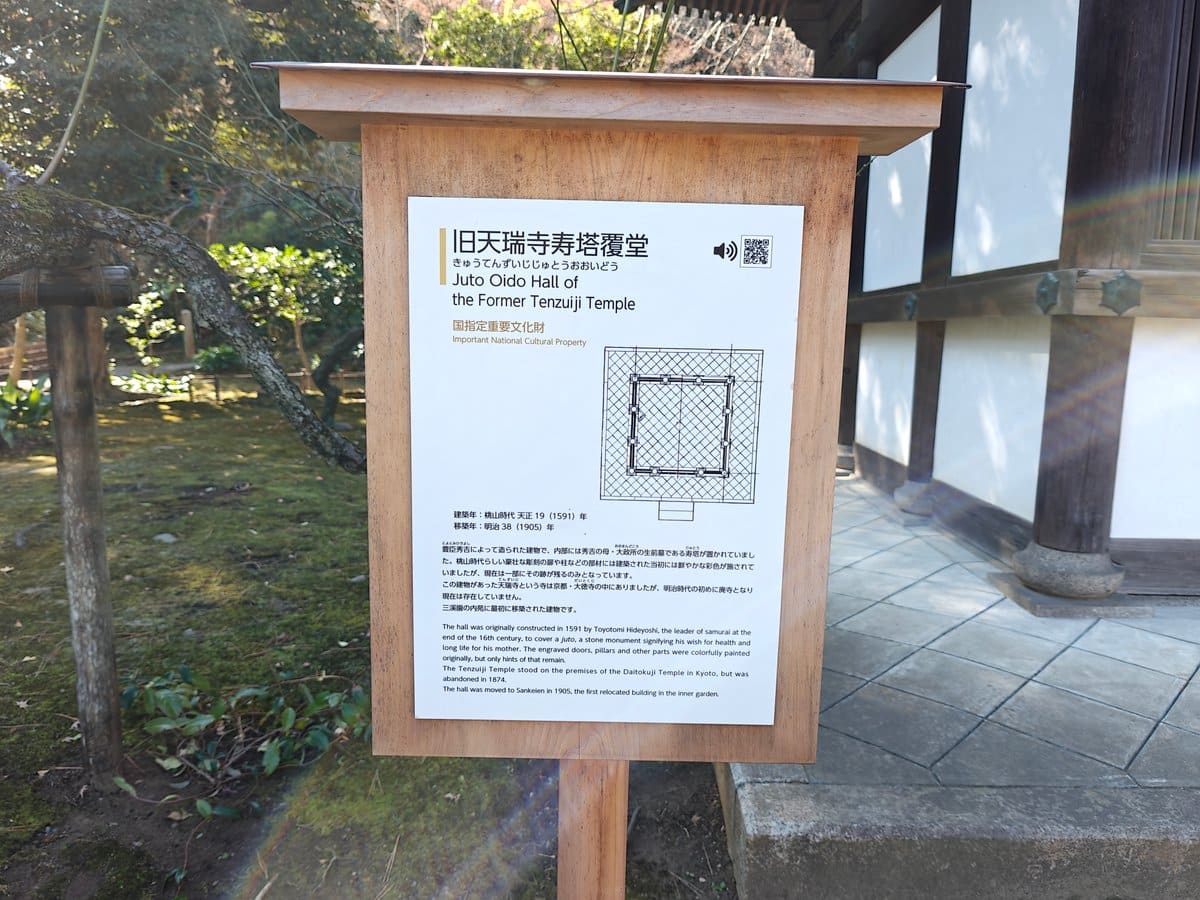

Not far from the bridge is Juto Oido, a well-preserved-looking building, as well as a carved stone stupa. All of this is collected in the garden, which gives the place a slightly artificial feeling like you’re exploring an open-air museum, but it’s not too much so, and it’s done well.

Another historic building, Choshukaku, overlooked one other part of the garden. They each have their own personality; some are rustic, others refined, and I ended up wandering around them for quite a while.


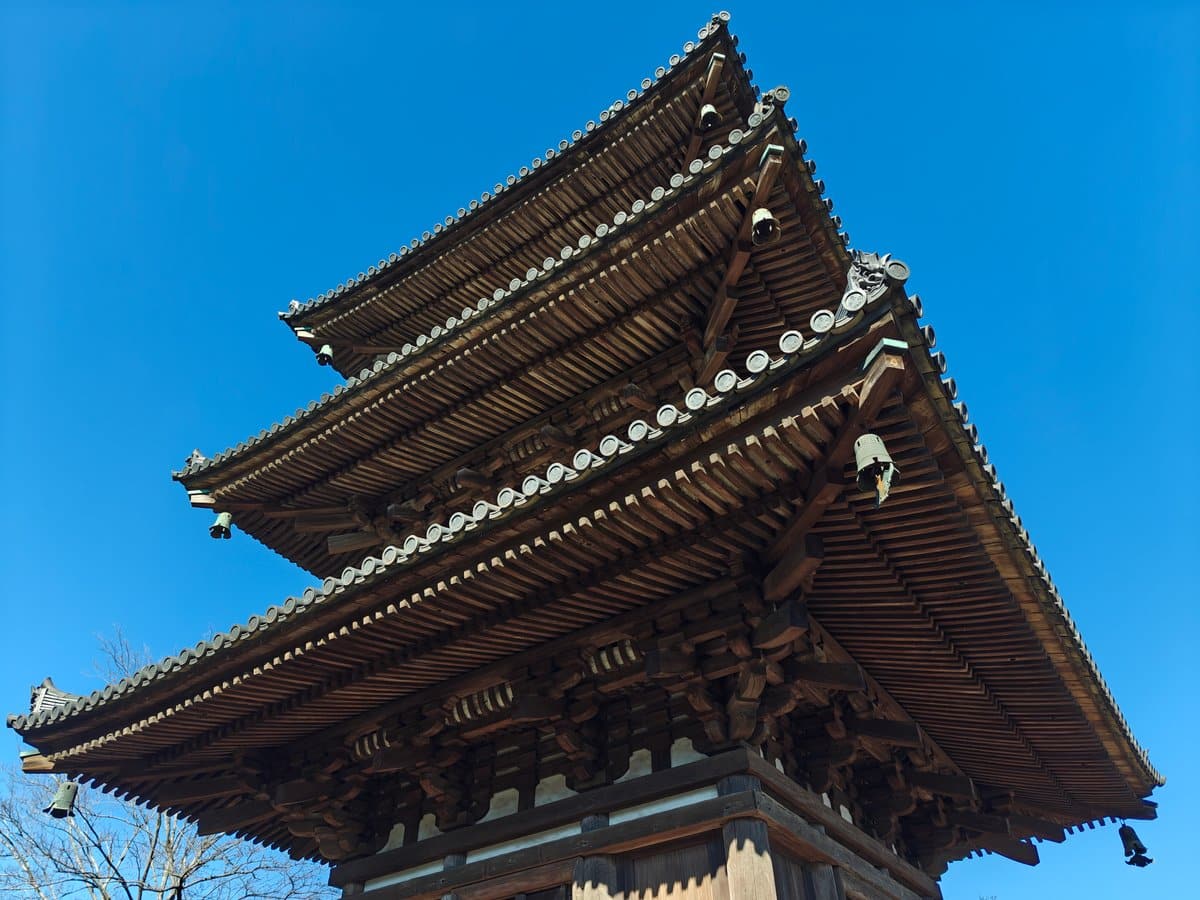
Atop the pine-covered hill is a three-story pagoda. It’s impressive for sure, especially when you look up through all those stacked eaves. It is old, the map says that it was moved here from Kyoto.
And worth climbing up to see. Just standing beside it gave me a sense of how big it was. It also showed me how detailed the woodwork was.


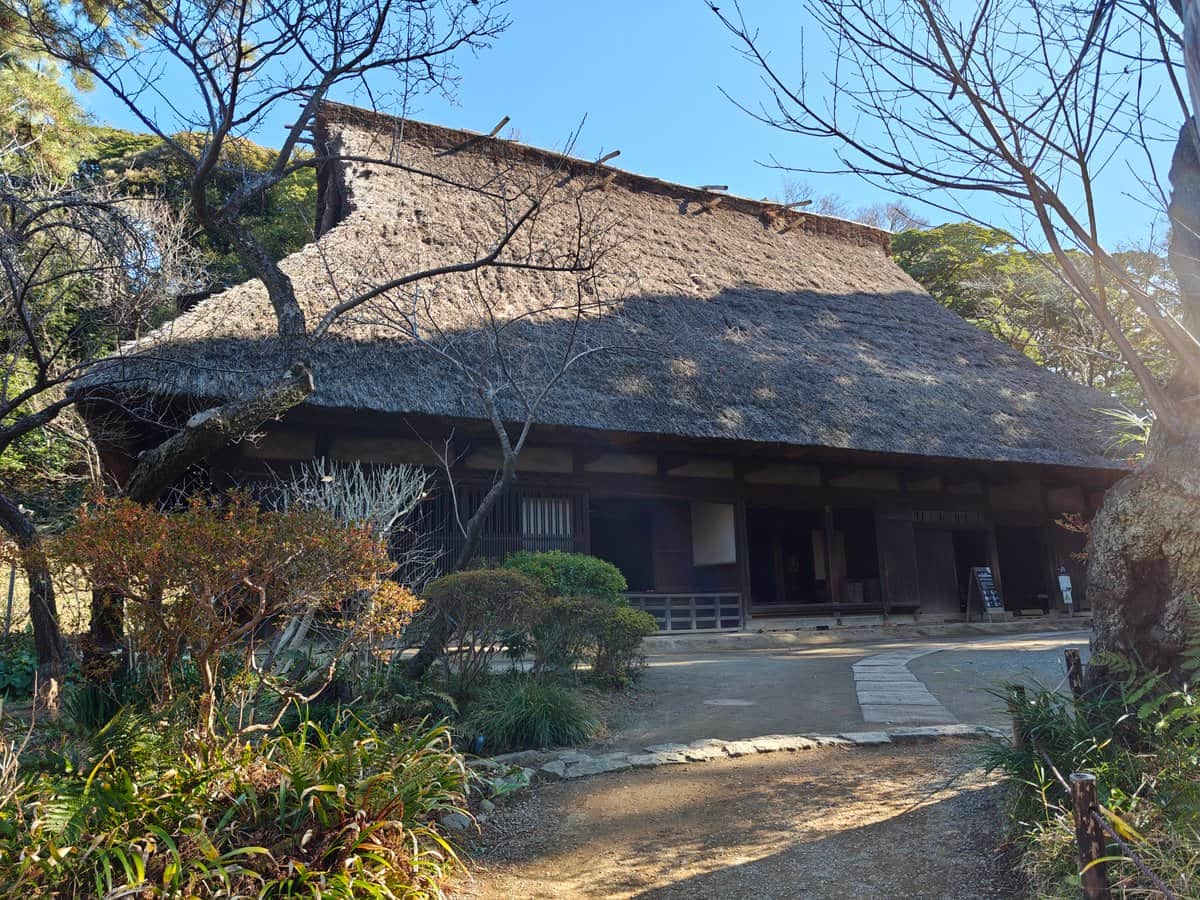

Further back down the hill I came across some other relocated buildings: an old temple’s main hall, a huge gassho-style (steeply thatched-roof) farmhouse, and a rustic thatched hut. They are each a distinct part of Japanese architectural history, and to have so many in a single garden is pretty unusual. It can be a bit theme-park-ish for some, but I thought it worked, these old buildings give the garden a sense of history and depth, and the garden gives these old buildings a second life.


From there, I returned to the granddaddy of them all: the great pond. Some waterfowl swam around the trimmed-out pines, and I watched the pagoda from afar. Unlike Kenrokuen, with its elegant restraint, Sankeien is more varied, more ambitious, and part of what makes it appealing.
This is a garden that wants to show you everything. And in winter, when the crowds are thinner and the bones of the place can be seen, that ambition is clear. While everyone talks about visiting Japan in the fall and spring, they are also well-known for their gorgeous gardens in winter.
And those proved to be no less worthwhile than the rest of the year but in a completely different manner: the calm, the form, and the fact that all the important parts remain once the decor has come off; moments that are truly memorable. Have you visited one of these gardens in winter? Or do you have tips for other gardens in Japan during cooler weather?
Let me know what you think in the comments!