
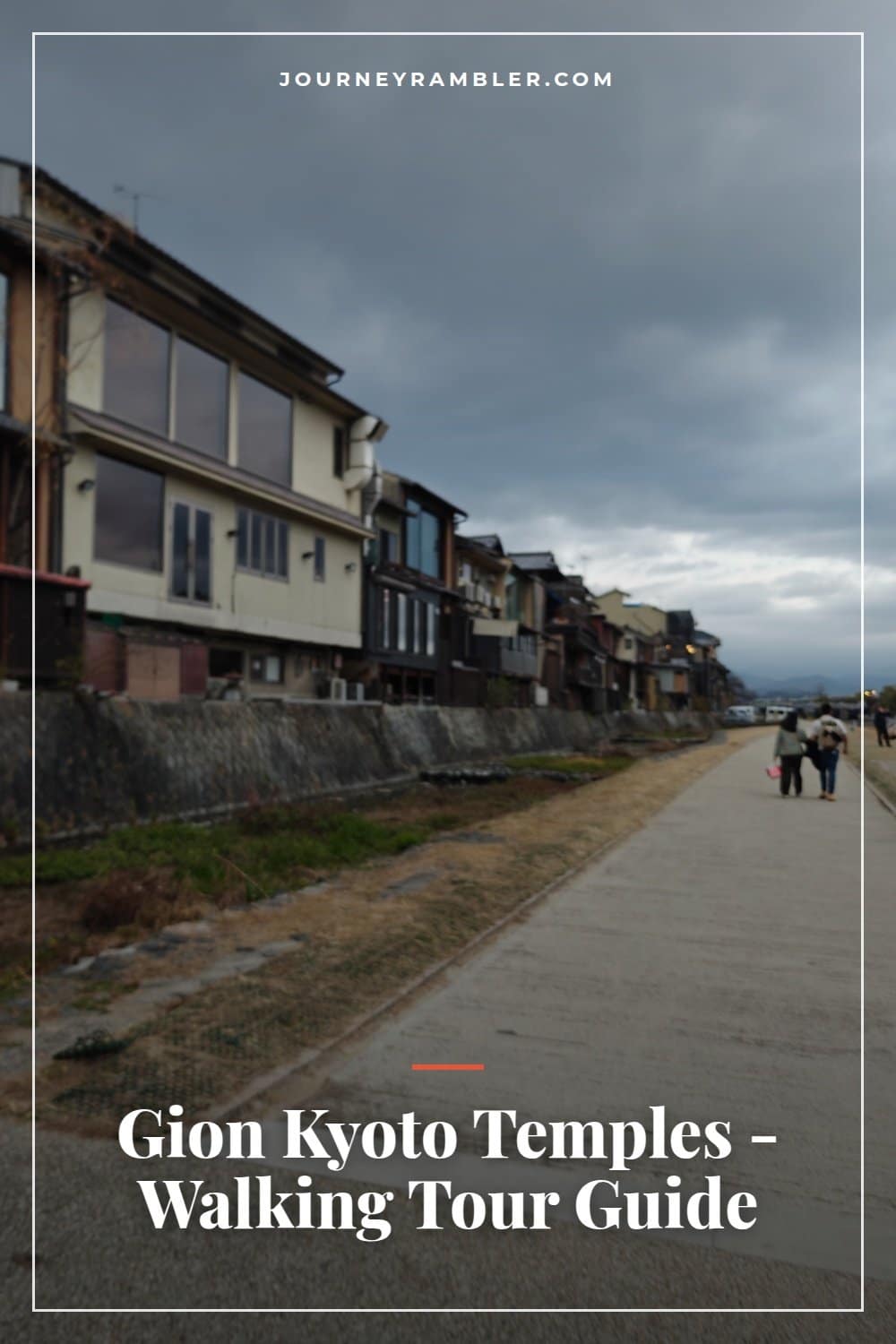
Kyoto is exactly the type of city where you want to spend time wandering slowly, and that’s what I did for several days, strolling through Gion, then into the eastern hills of the city. There’s something about the area: quiet temple courtyards, steep lanes filled with old wooden buildings, riverside paths, and enough corners to turn that you’ll never run out of places to poke around. It’s got a great pace to it, I didn’t feel like I was ticking off a checklist as much as letting one thing naturaly lead me to another, which turned out to be the best way to see it all.
Kamo River: The river walk is pretty nice, as I mentioned earlier, and there are a few shrines and temples along it (each with its own feel). There’s also the famous photo spot overlooking the city from the steep hills leading up to Kiyomizu-dera. Nothing revolutionary here, but perhaps something you’ll find helpful if you’re planning to walk around this section of town.
A Walk Through Gion and Kyoto Temples
Kamo River

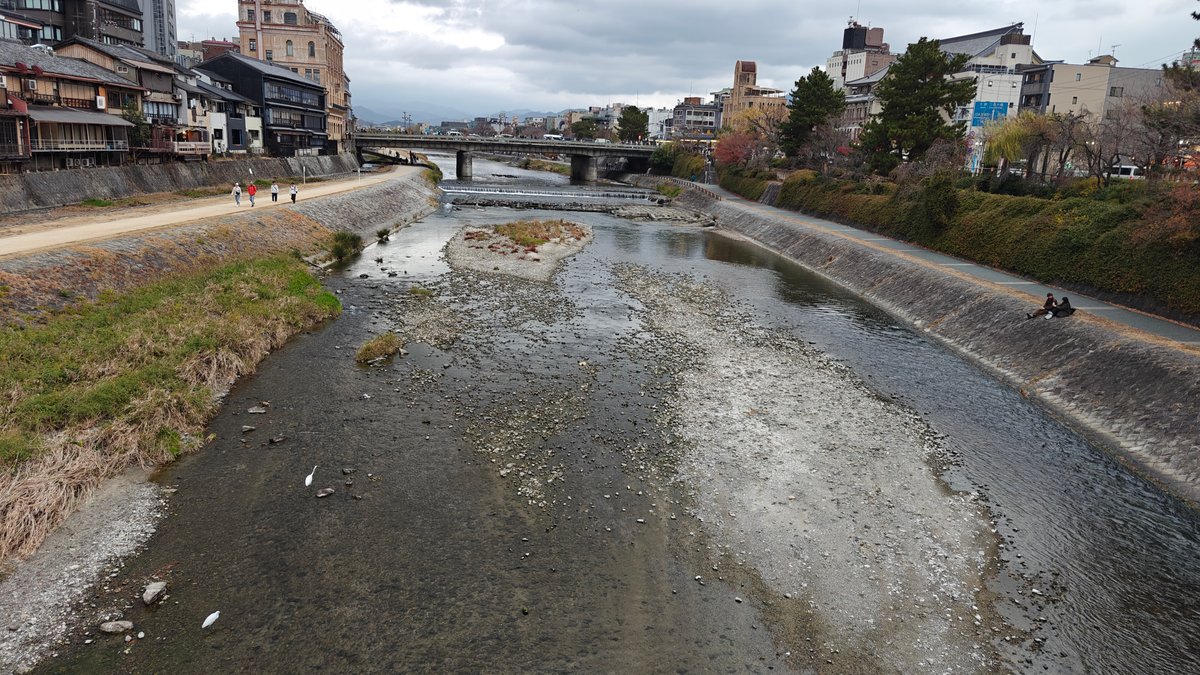

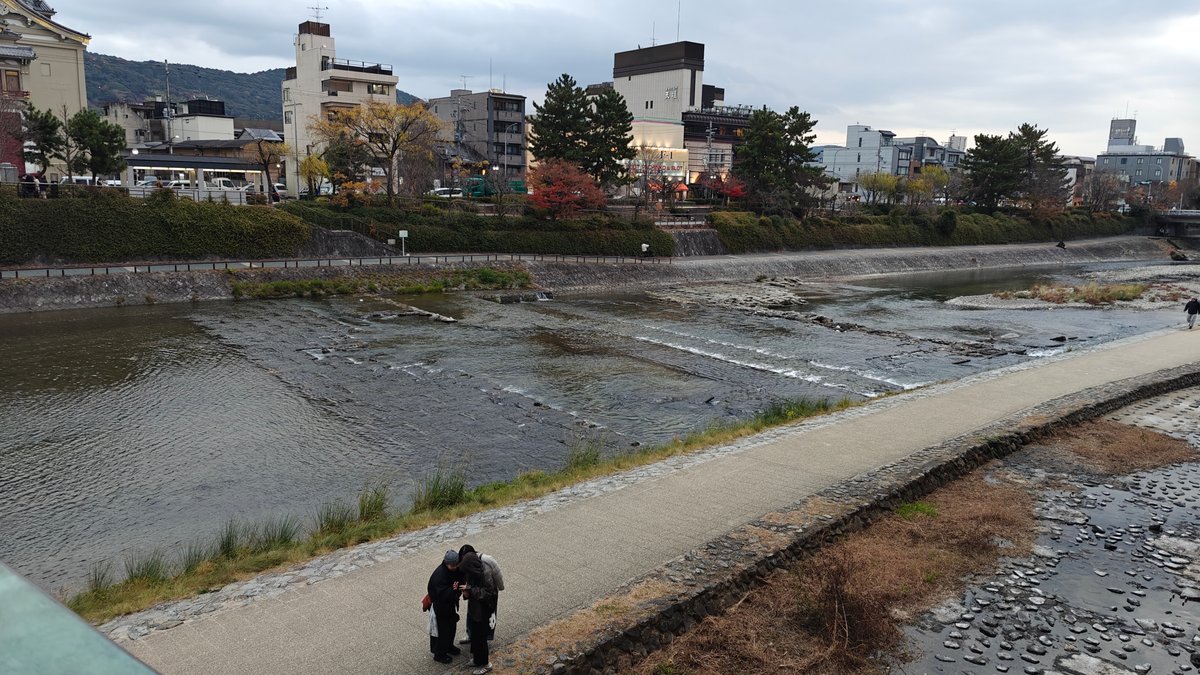
The river itself is the Kamo River, which winds its way straight down the middle of the city (it makes for a nice flat stroll). It was quite chilled out. People jogged past, couples lounged on the broad stone banks, and it was all very relaxed.
After crossing at Shijo Bridge, there’s a stone marker there if you’re into that sort of thing, I wandered around for a while, admiring the low buildings across the water and just general watching the river flow by.

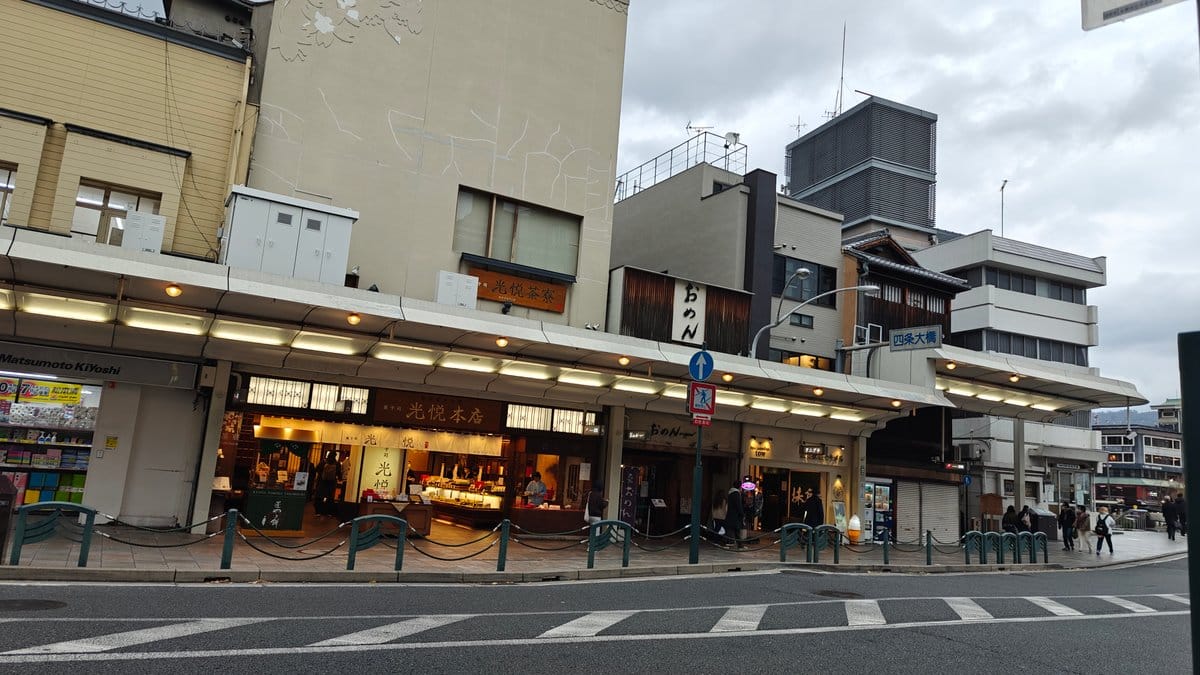
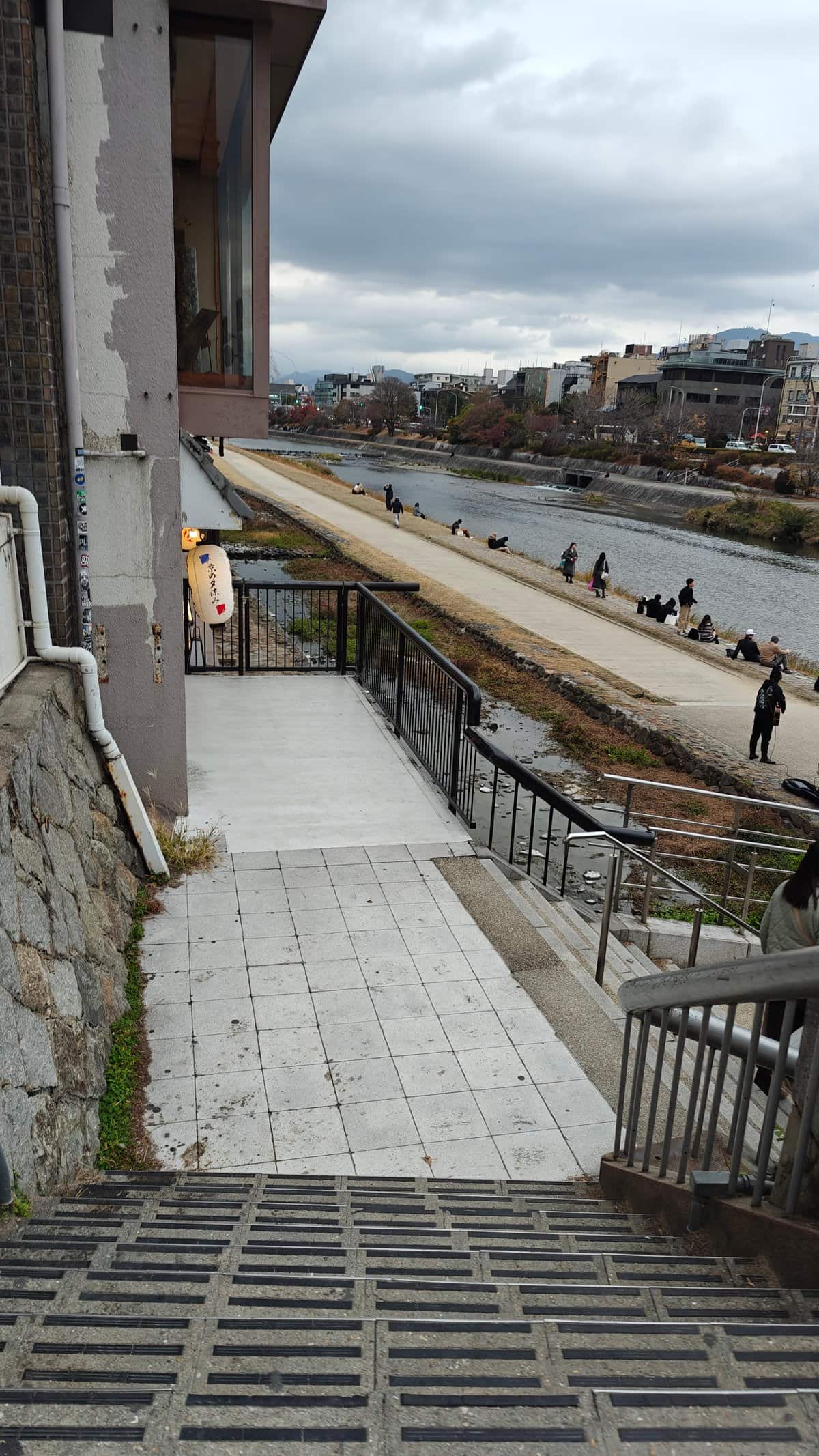
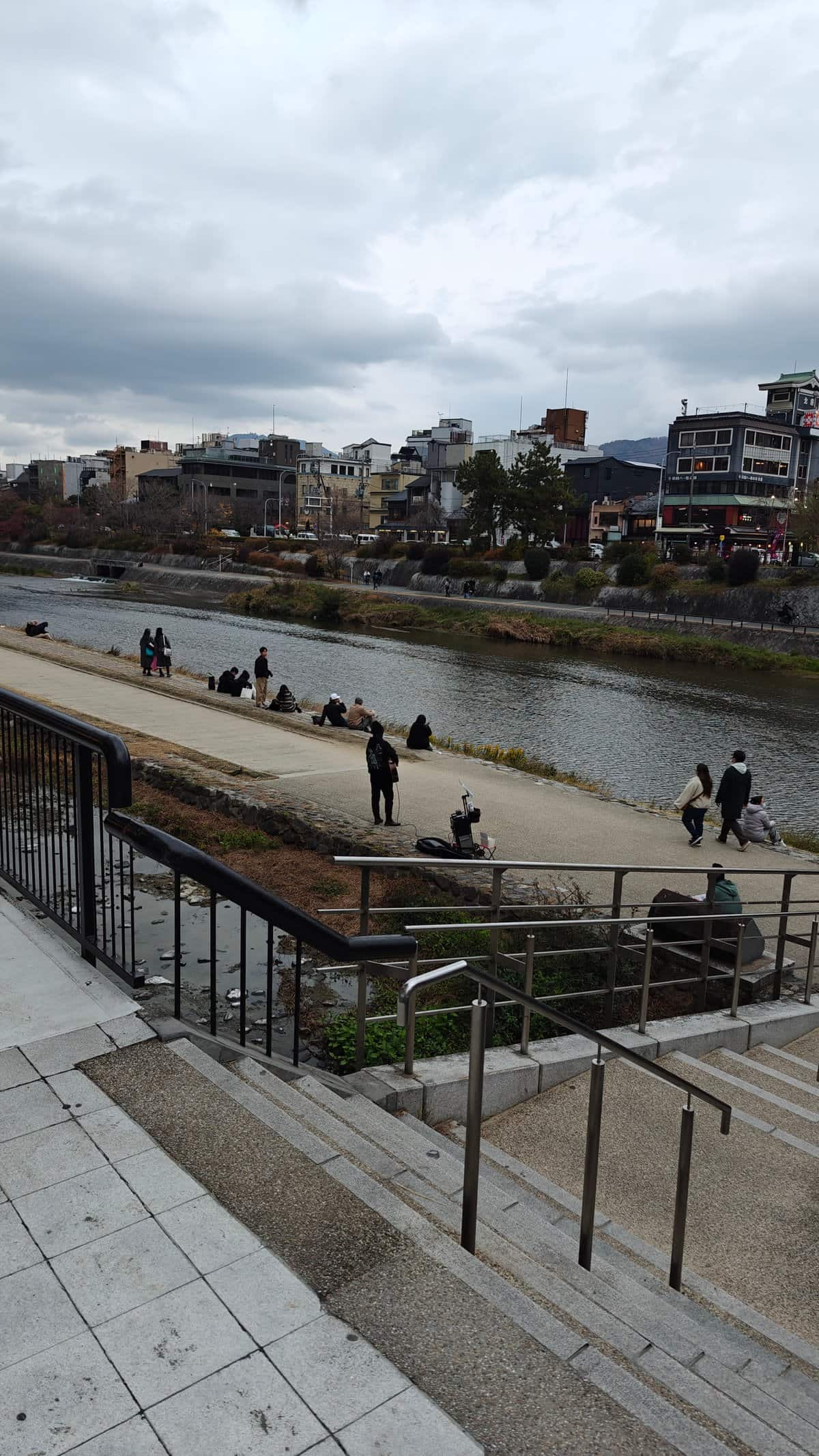
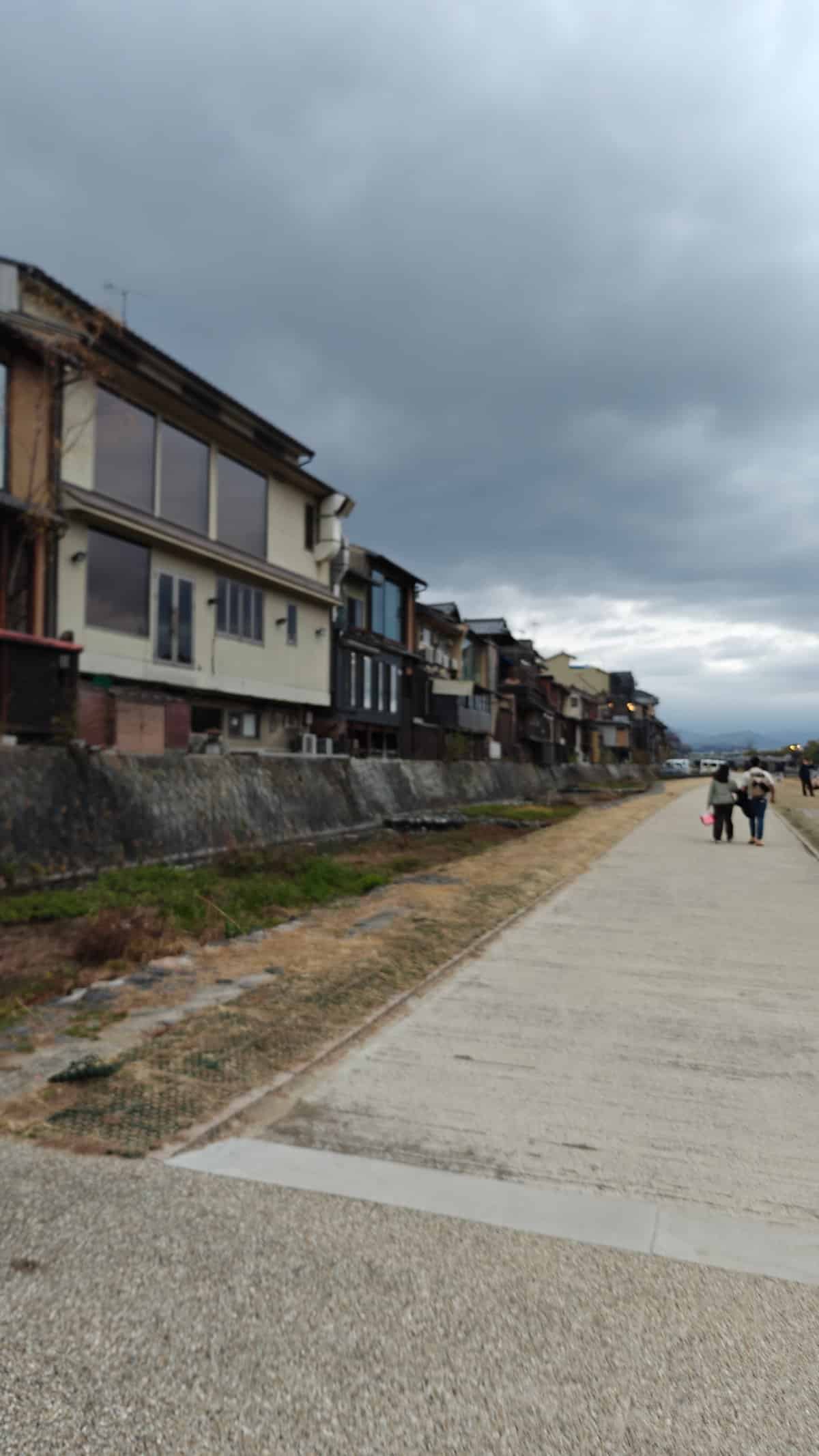

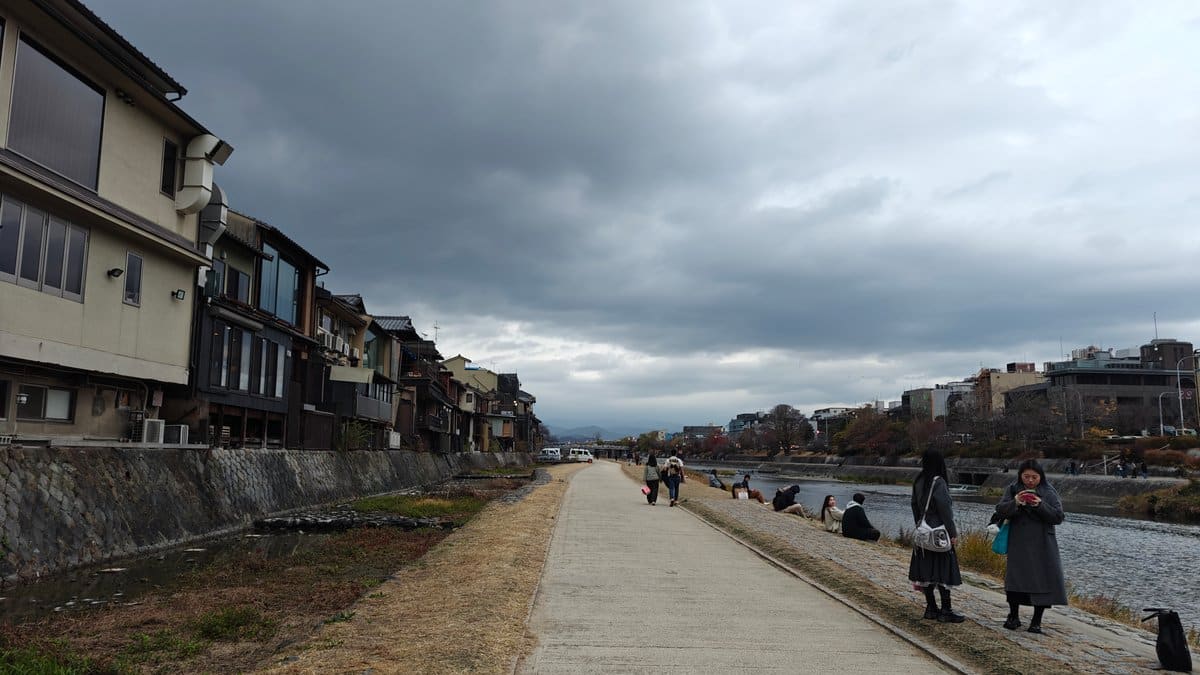
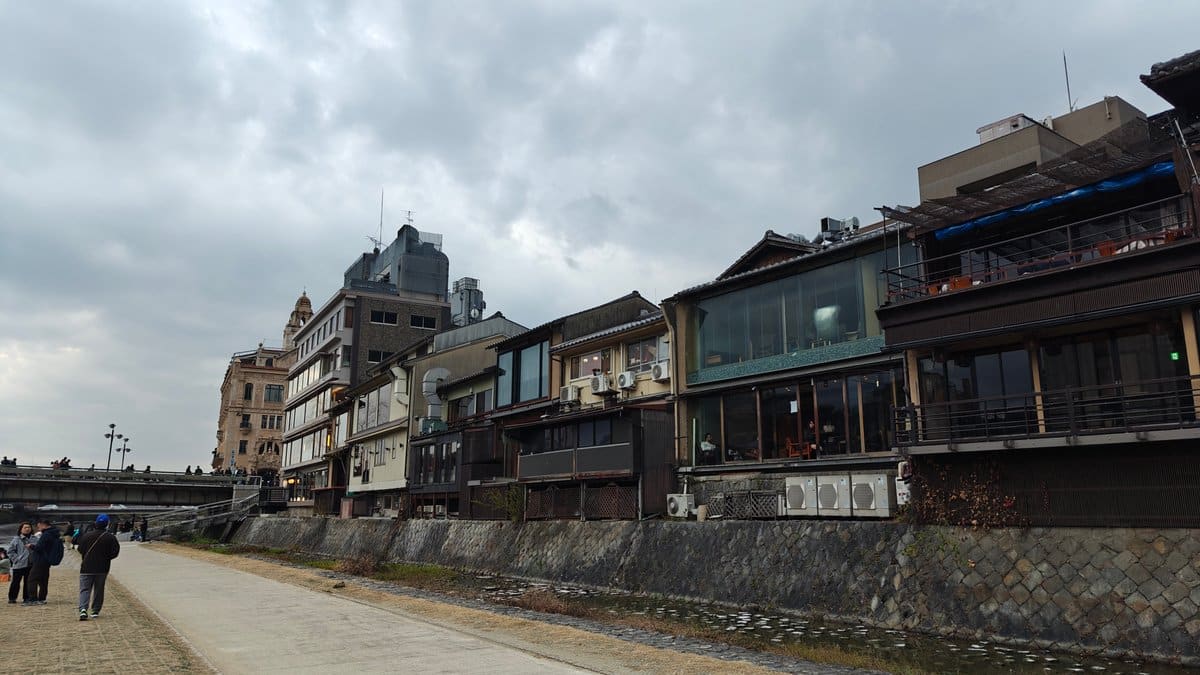
All along the river there are covered shopping arcades and crossings which lead directly down to the water, making it easy to duck in and out of the streets. There were steps down from the street to the riverside path, which I took and walked along for a while. Even when there were others on the path, it didn’t feel crowded at all as there is plenty of room and railings.
Parts of the route are lined with traditional wooden buildings and I enjoyed that the city simply sit right next to the water without any fuss. If you’re looking for something nice to walk after easing into the day before visiting the busier temple areas, this is a good one.
Yasaka Shrine
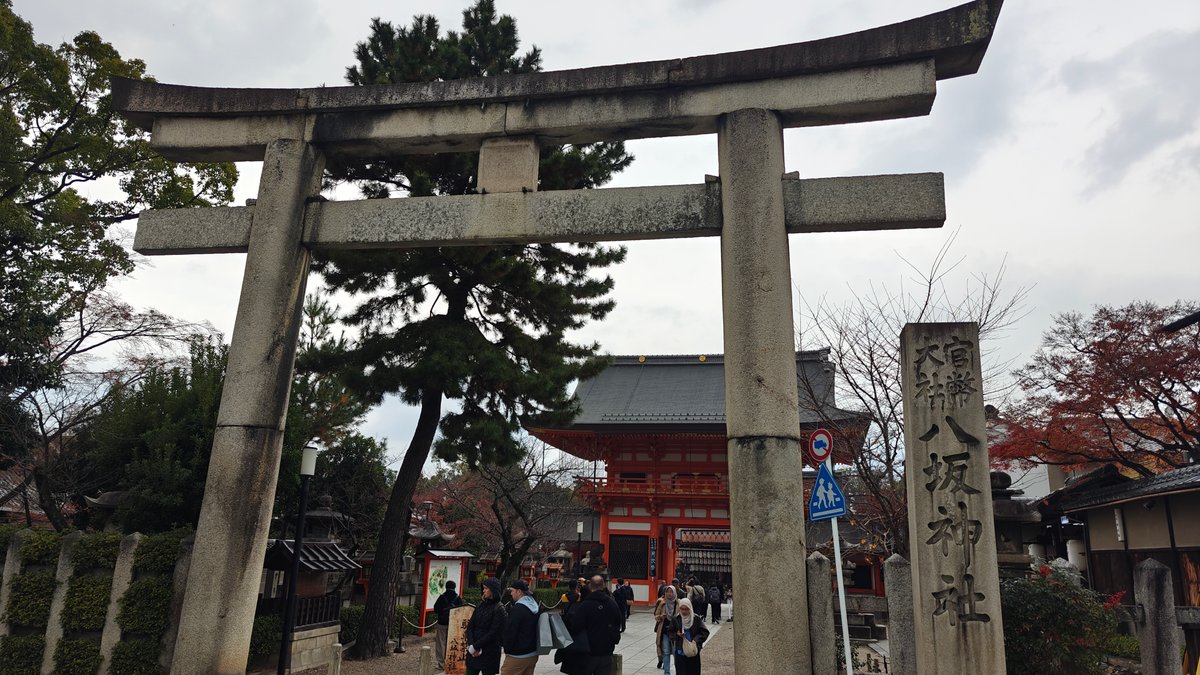
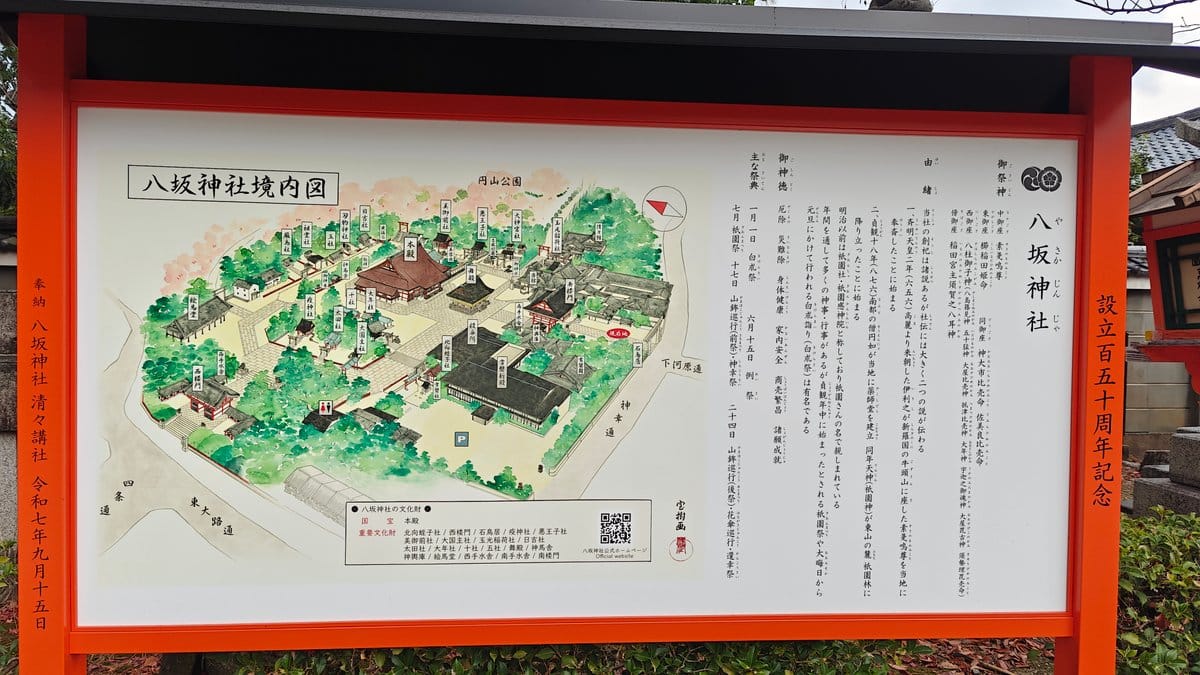
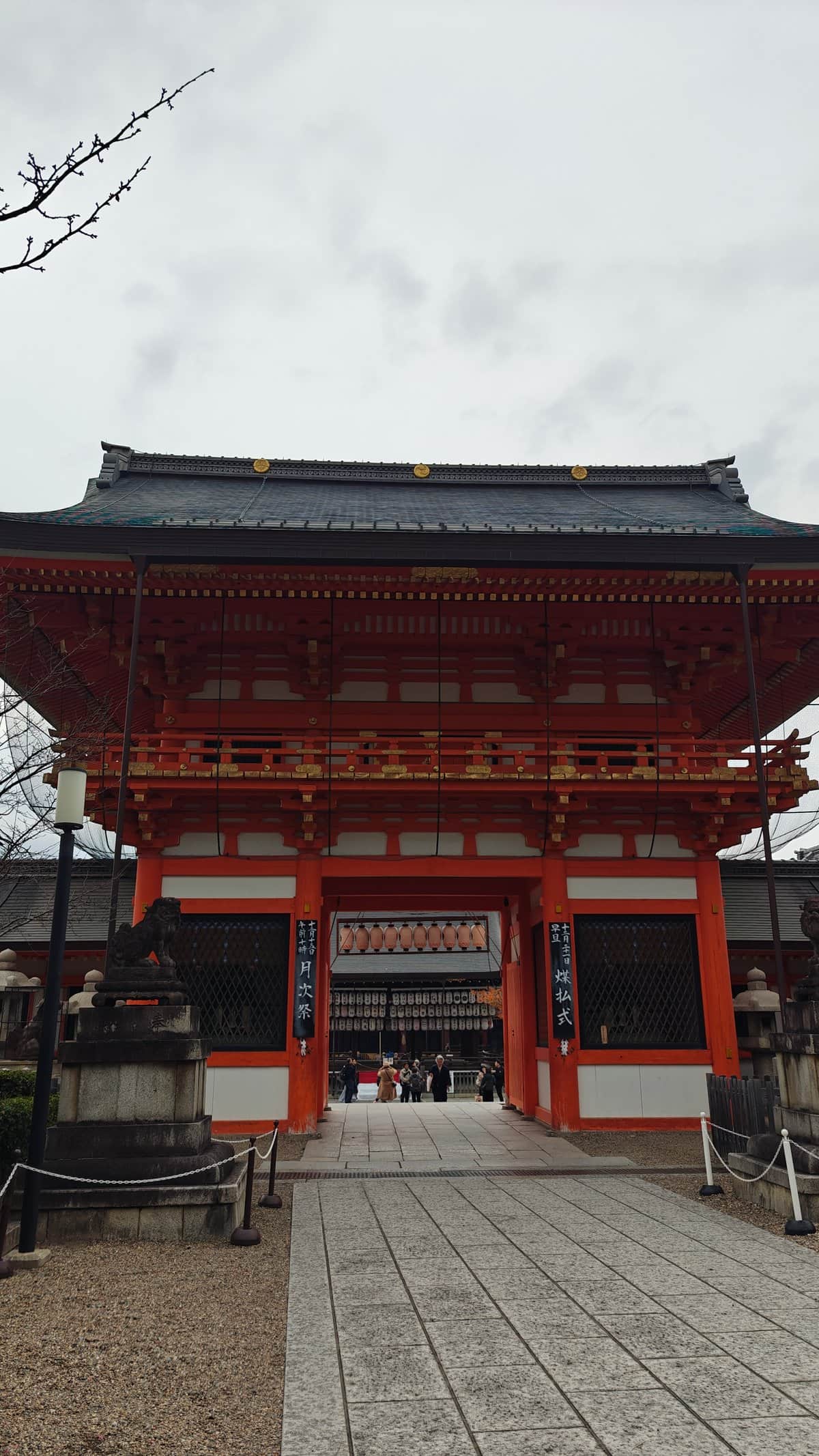
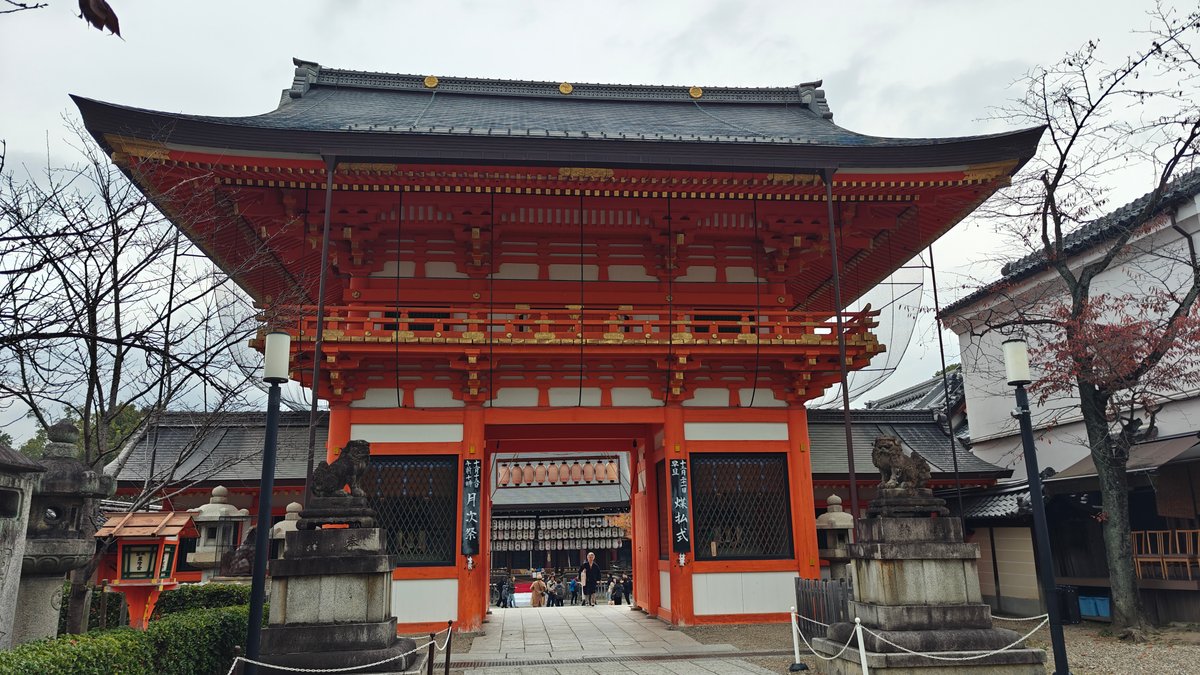
Continuing along the river, I headed out of Gion without too much difficulty to Yasaka Shrine, located on its outskirts. It has a simple but sturdy-looking stone torii at the entryway and a map board for those who need their bearings. The path winds up to the main gate, which is large and opens directly into the shrine grounds.
Impressive but not over-the-top, it didn’t disappoint when I entered via the south side. The shrine itself consist of a central plaza and some halls inside.

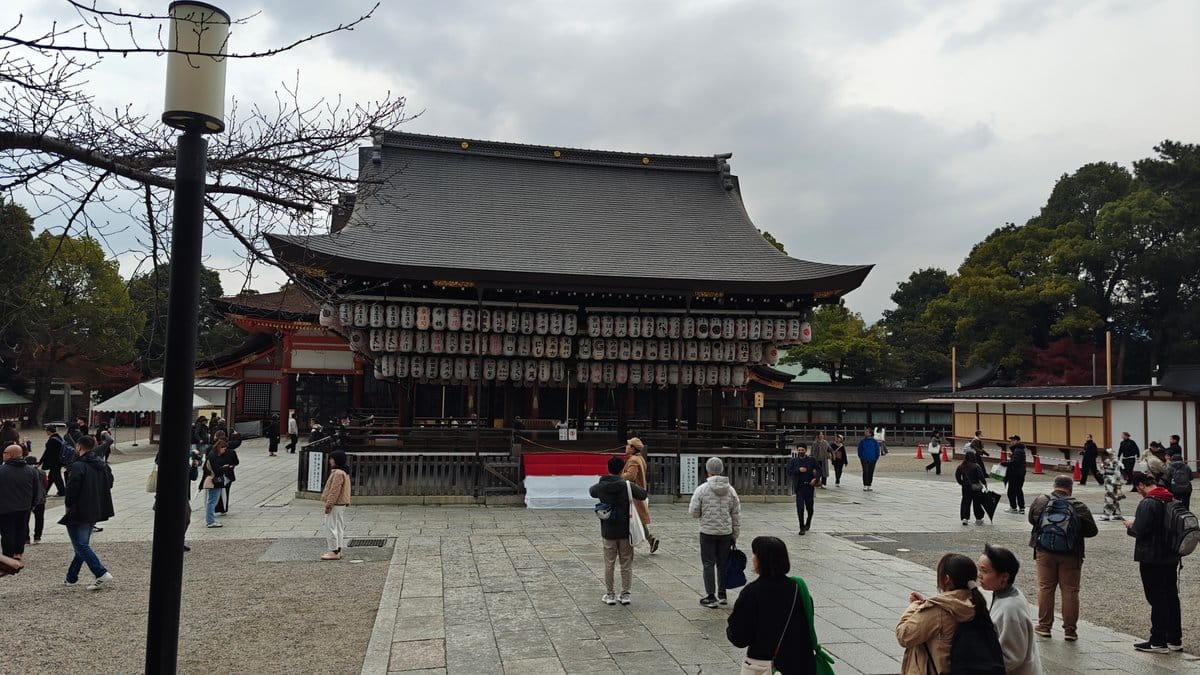
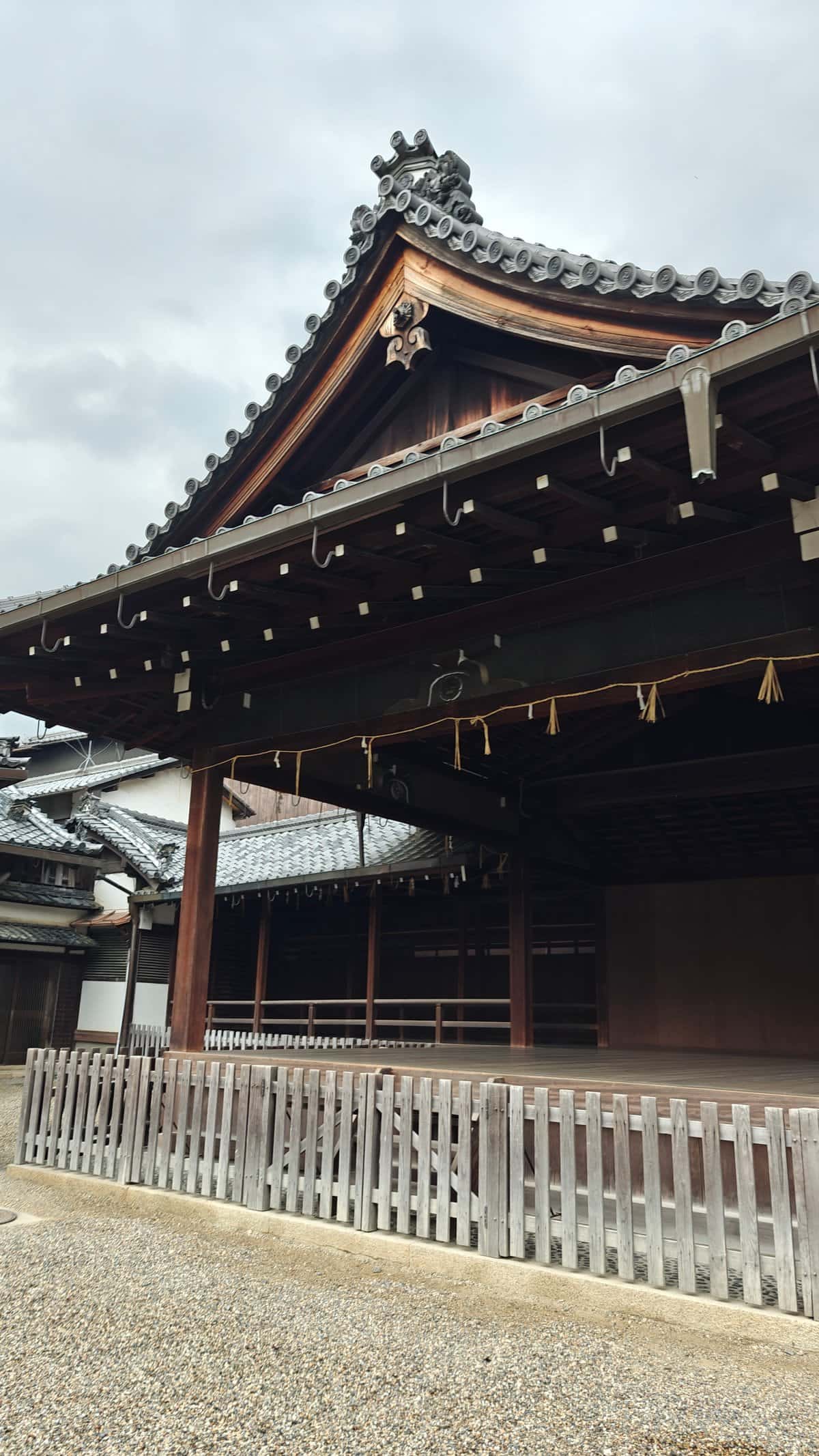
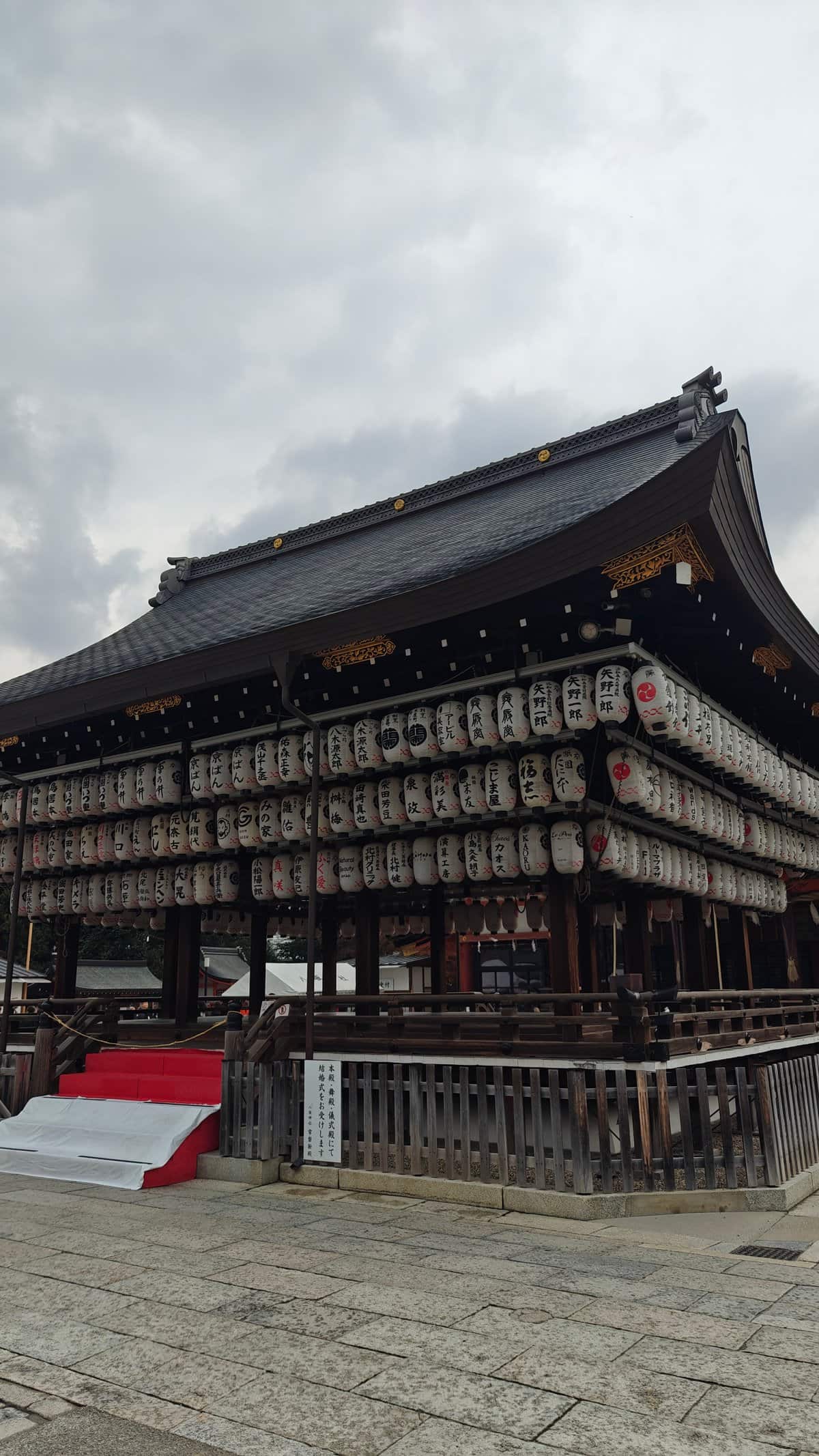

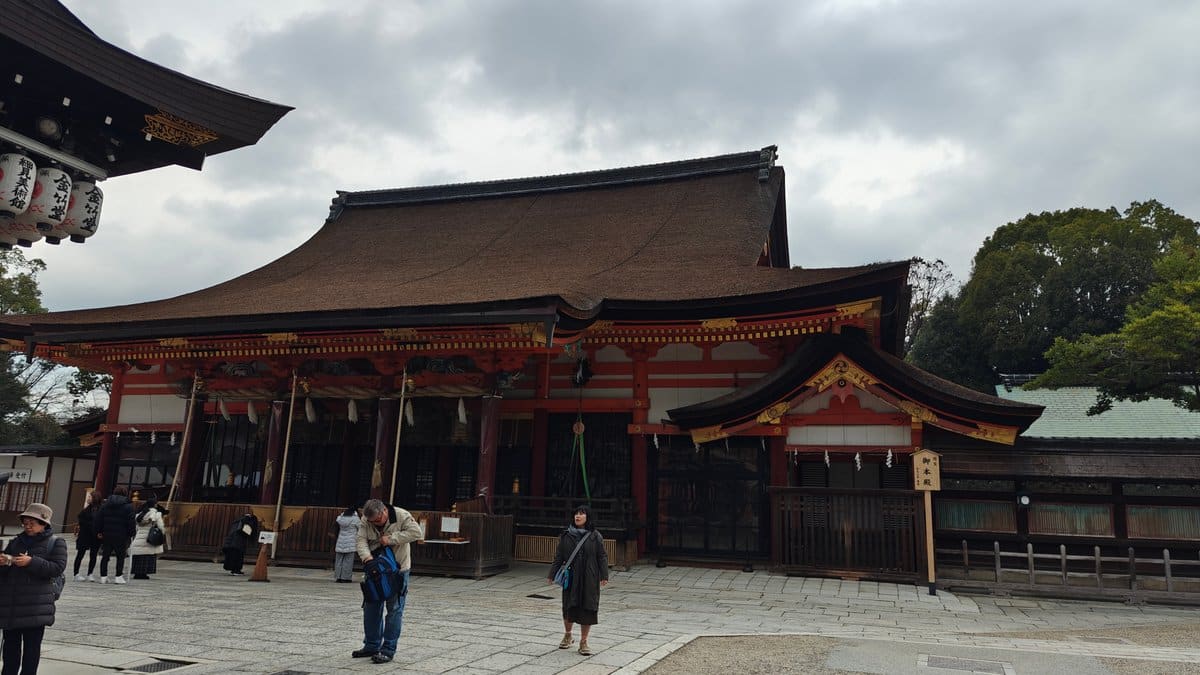
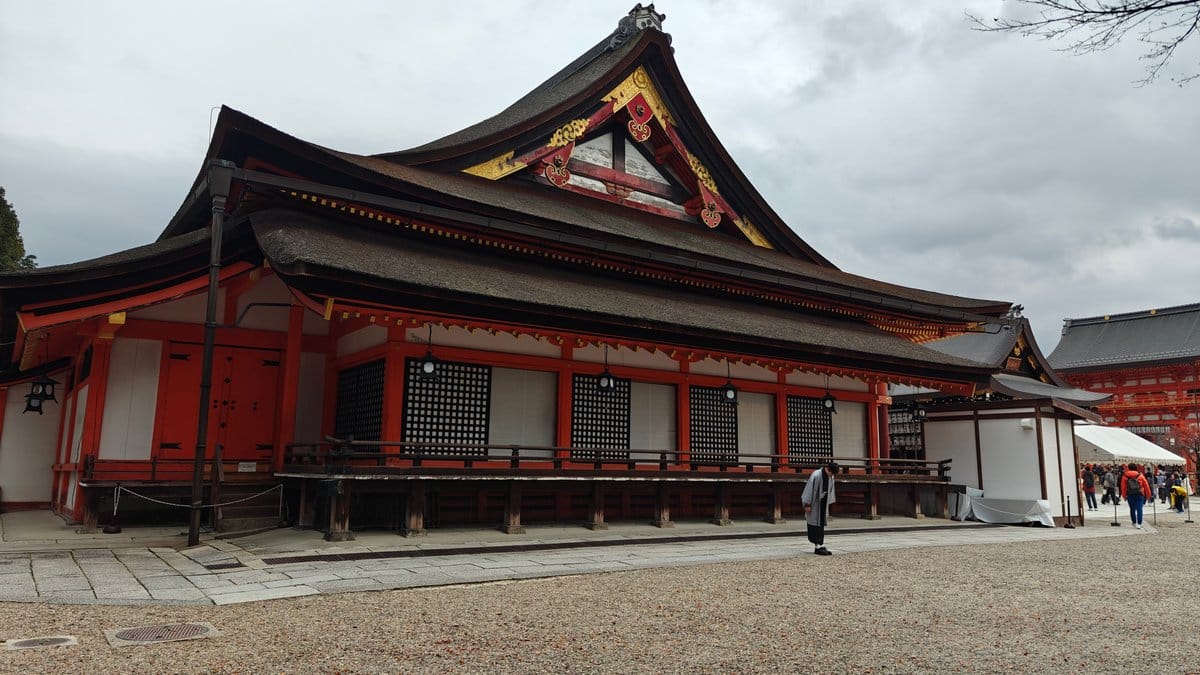
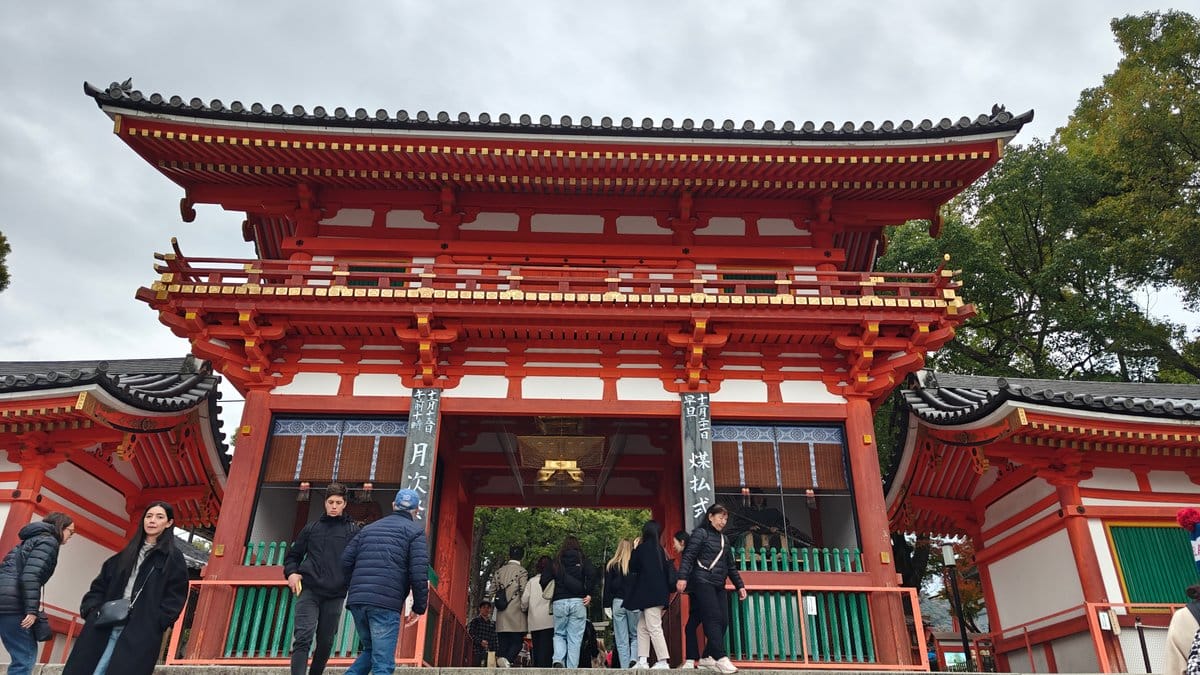
Everyone there is milling about, taking photos, and performing the customary offerings and prayers. One of the buildings had rows of hanging lanterns from its eaves, and I just stared at all the details for a while, how it all fit together, the timber construction, the tile work. There’s also a monument with a clock tower which sort of looked out of place but whatever.
The main hall is tucked away a little so you can walk around it and view it from various angles. After exiting through the west gate, the crowd dissipated and it was as if I’d stepped back into the normal neighbourhood. Near Yasaka Shrine (it’s actually directly behind it) is Maruyama Park.
Not sure why I went in there, but I did. There were tree-lined streets and broad walking paths.
Maruyama Park
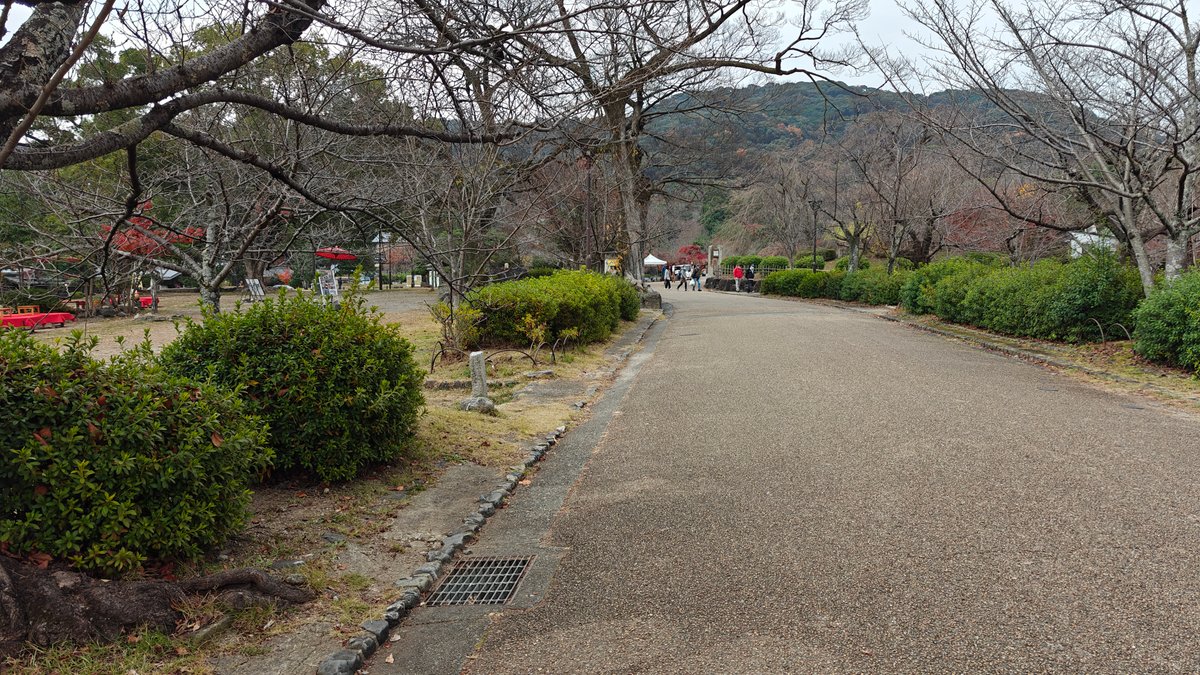


Half the trees were bare and half had autumn leaves hanging on. It was not quite peak season, which was actualy good. There were fewer people, it was quiet, and it was easier to stroll and reflect.

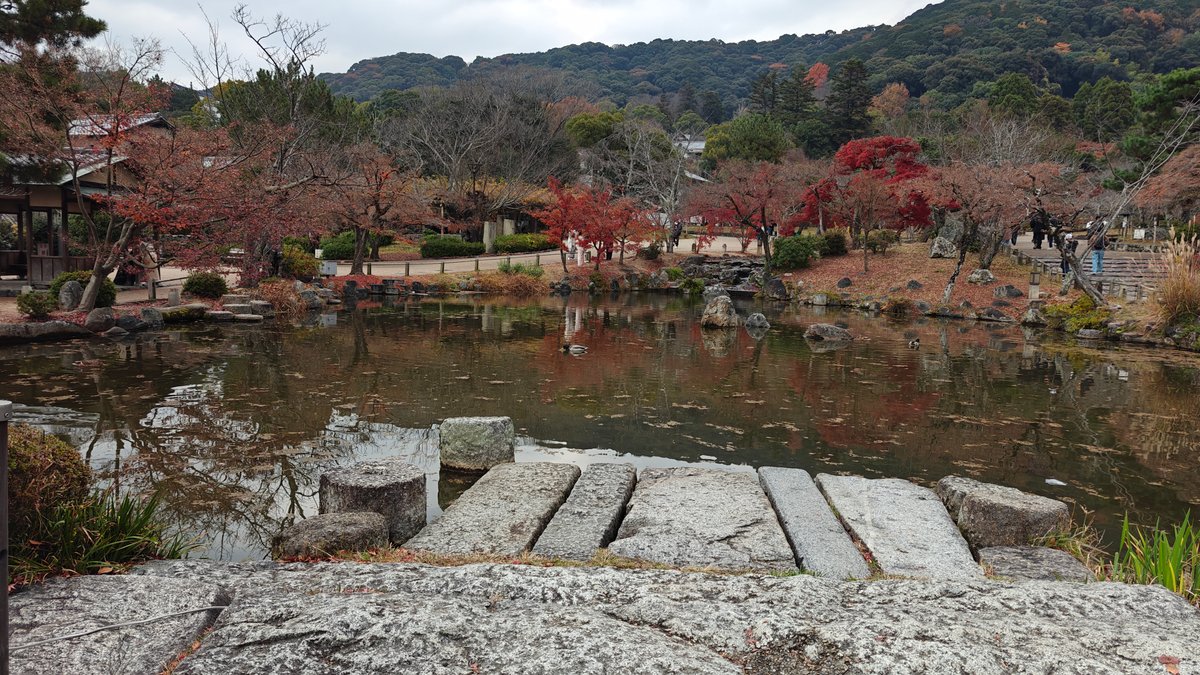

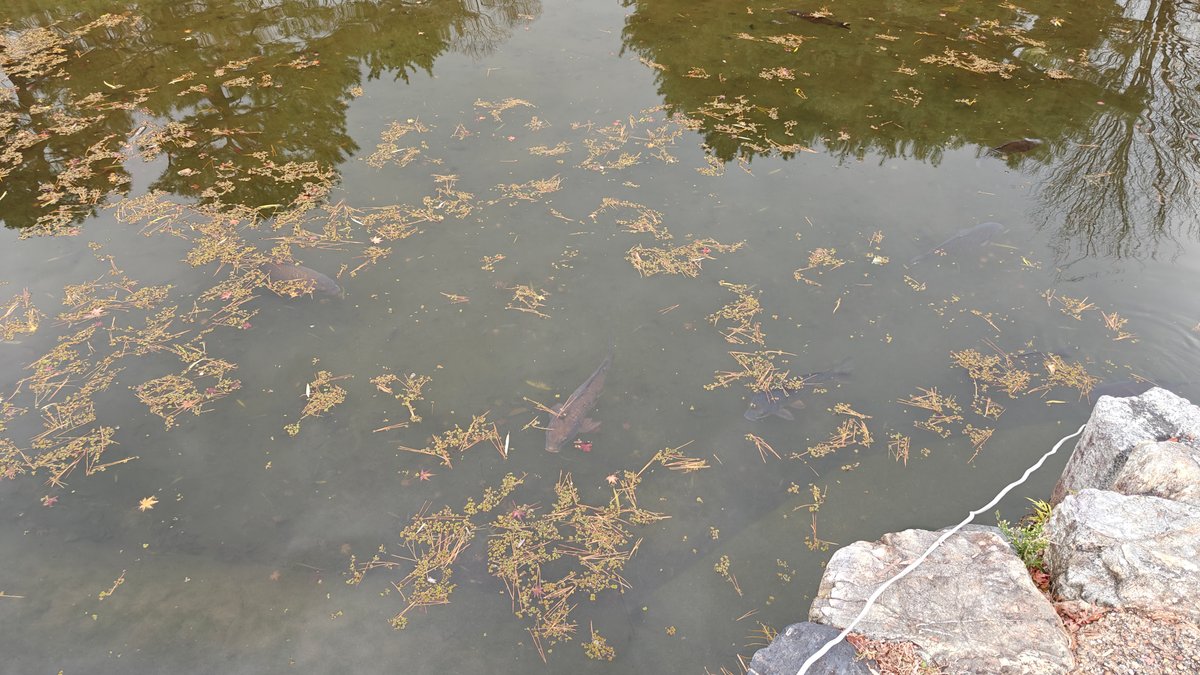
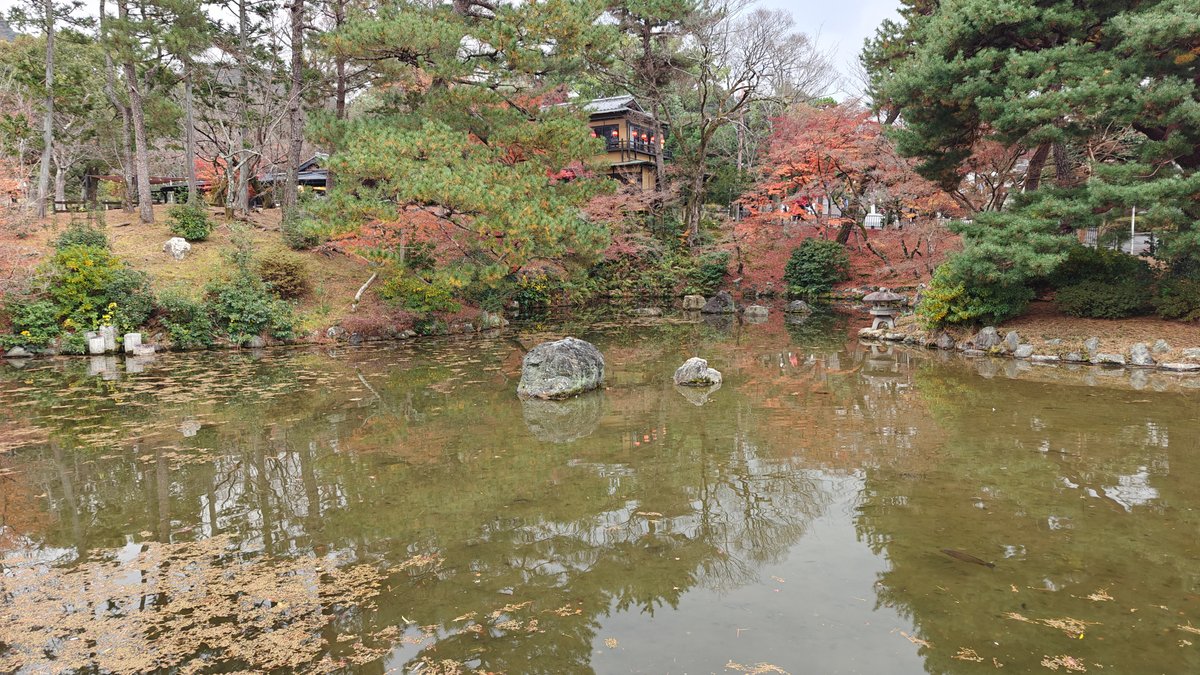

In the center of this there’s a pond with a tiny bridge across it. When I walked through, all the leaves had fallen from the trees, covering its surface. Pines and maples framed the water; willows drooped over the edge.
It was all set up like a park, one of the most park-like ones I’ve been to. I found a spot to sit and watched people stroll past. There is also a statue of Sakamoto Ryoma, a historical figure I must admit I’d never heard of, and a memorial clock.
Apparently, it is just a place people come to see.


Chion-in Temple
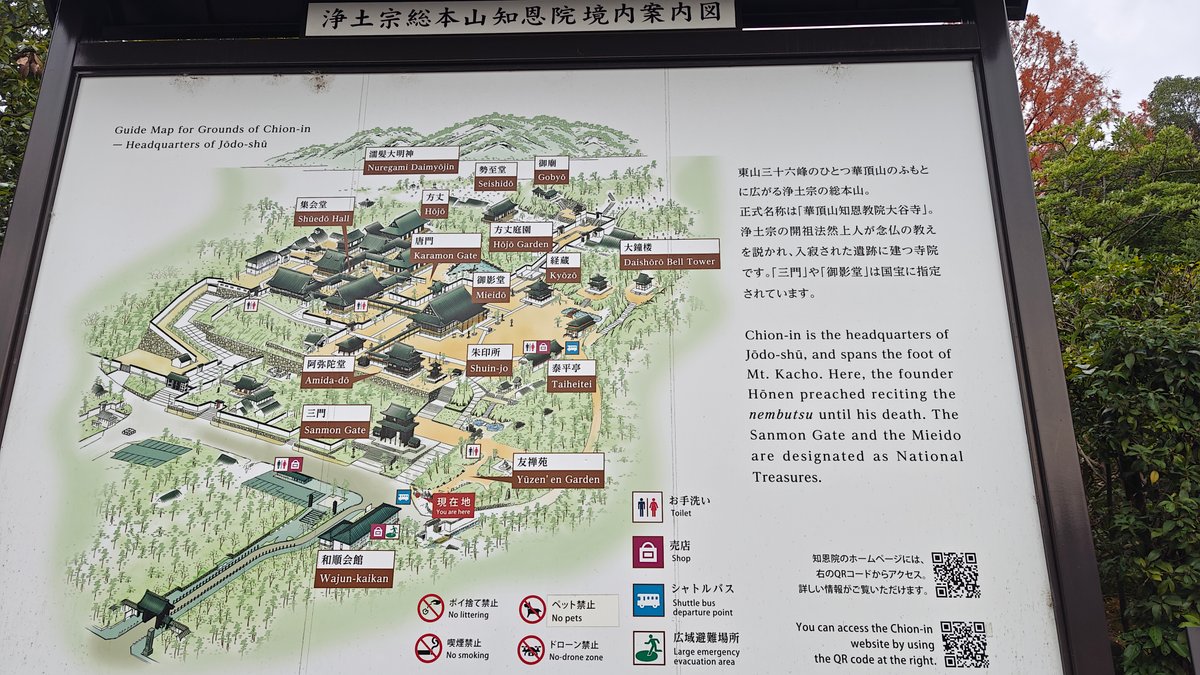
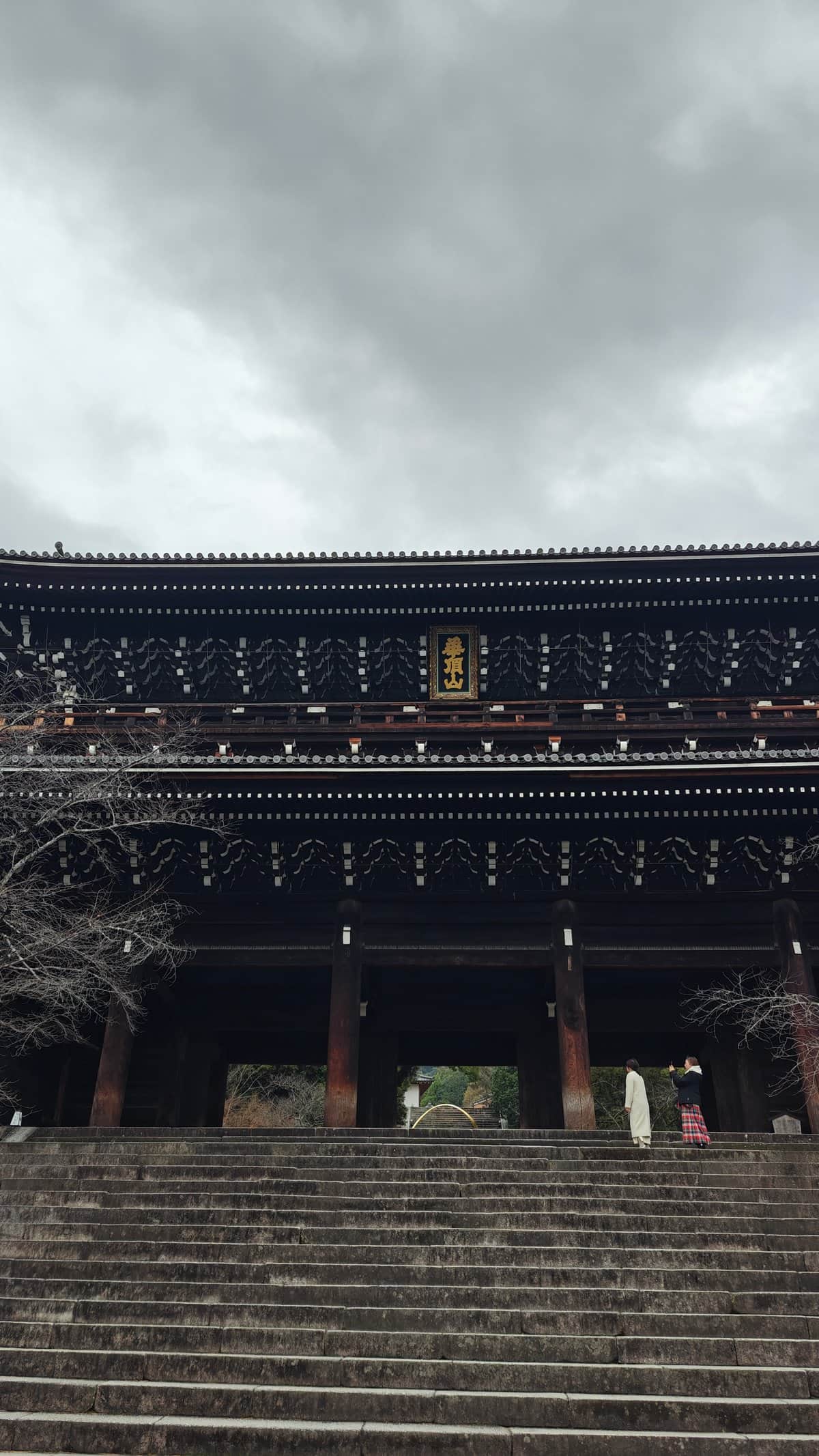
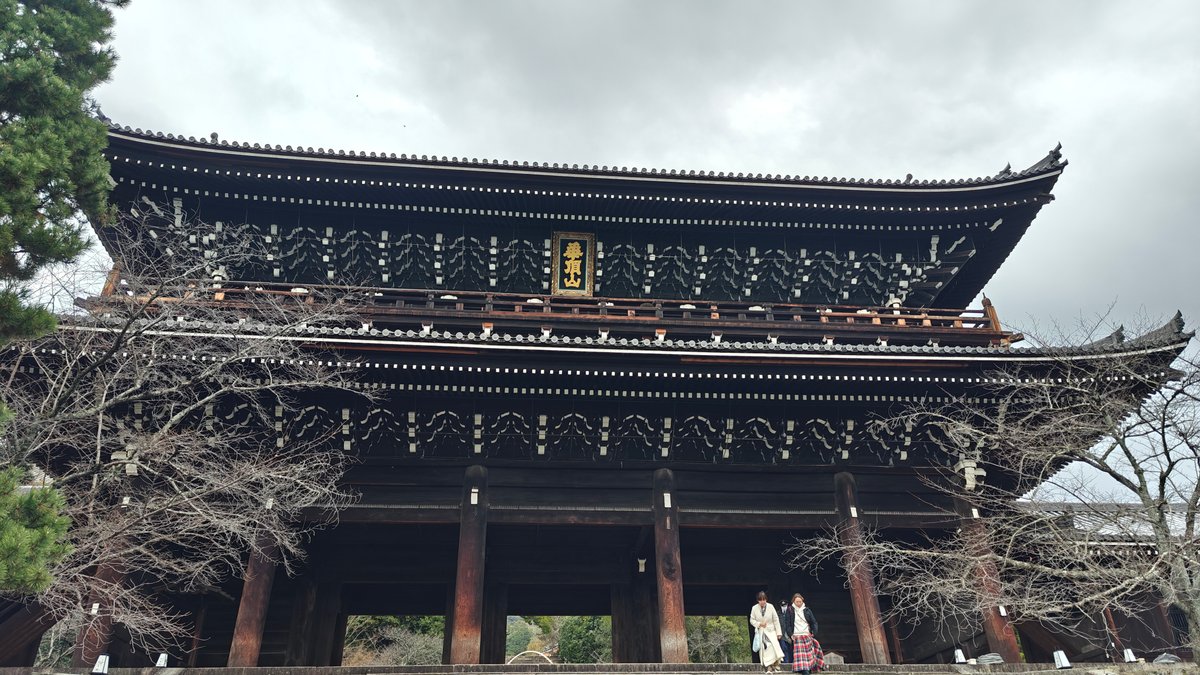


Chion-in is one of the bigger temple complexes in Kyoto, and the gate alone will tell you that. The Sanmon gate is massive, you climb a long staircase to reach it, and standing underneath you really get a sense of the scale. It’s made out of thick, dark wood.
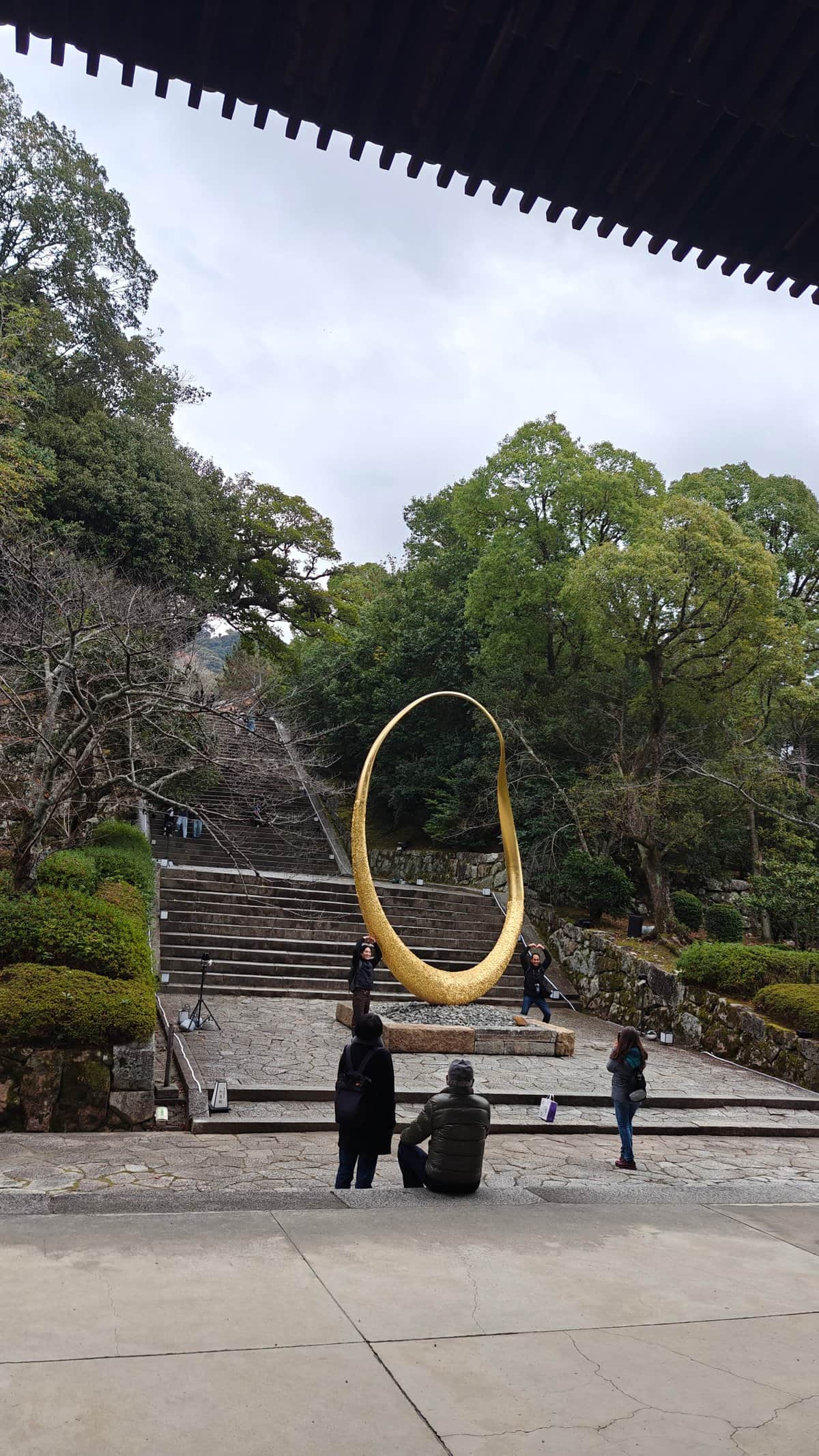
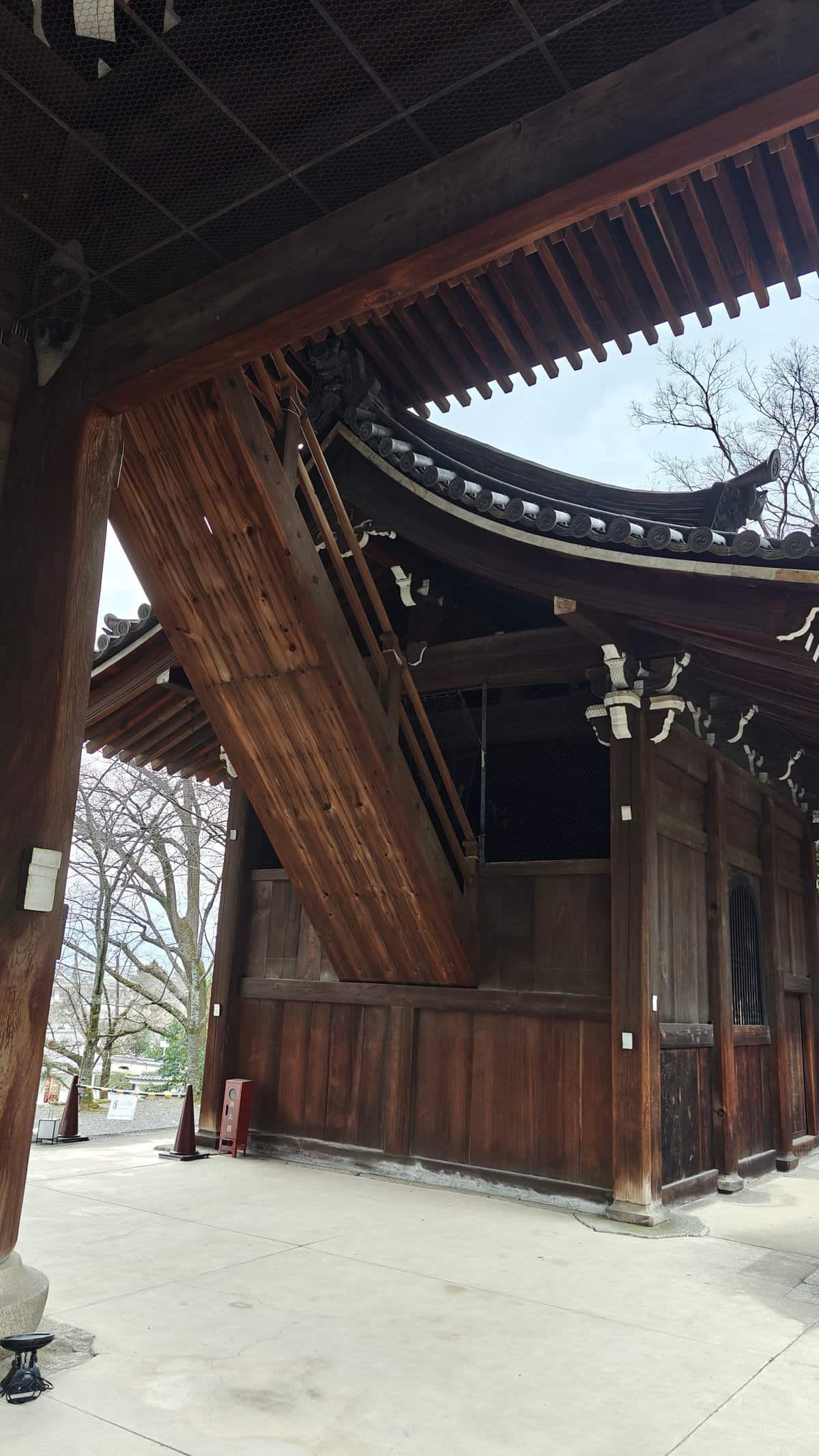
It has thick eaves and wooden beams. I spent a minute just staring up at the joinery. Beyond the gate, there’s a large sculpture in the courtyard.
It is a kind of moddern art piece, I guess. It felt like an odd choice, but it’s there.
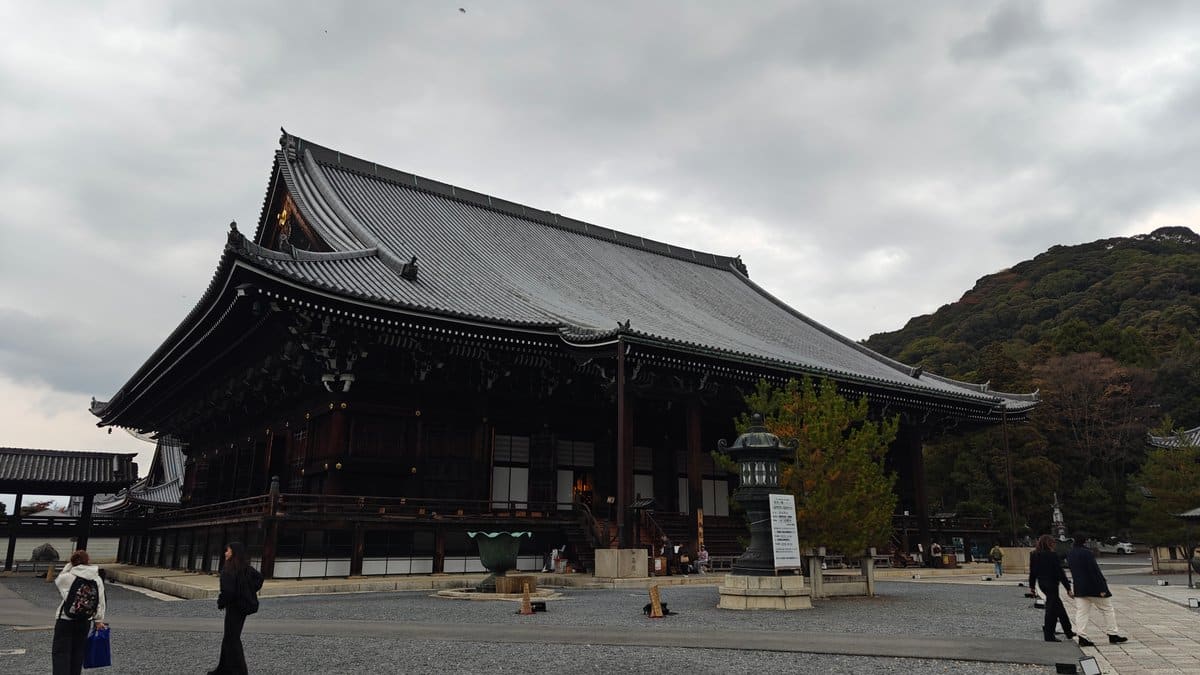


Beyond the gate, however, are the buildings that make up the main hall and stretch throughout the grounds. I wandered through courtyards, around smaller buildings and stone markers, until I stumbled upon a small garden with a covered walkway and tiny arched bridge. It was a neat picture, and the maples were still holding onto some colour.
Chion-in is large enough that you can wander for an hour and still not see everything; in fact, there are corners you will likely miss entirely.
Kenninji Temple
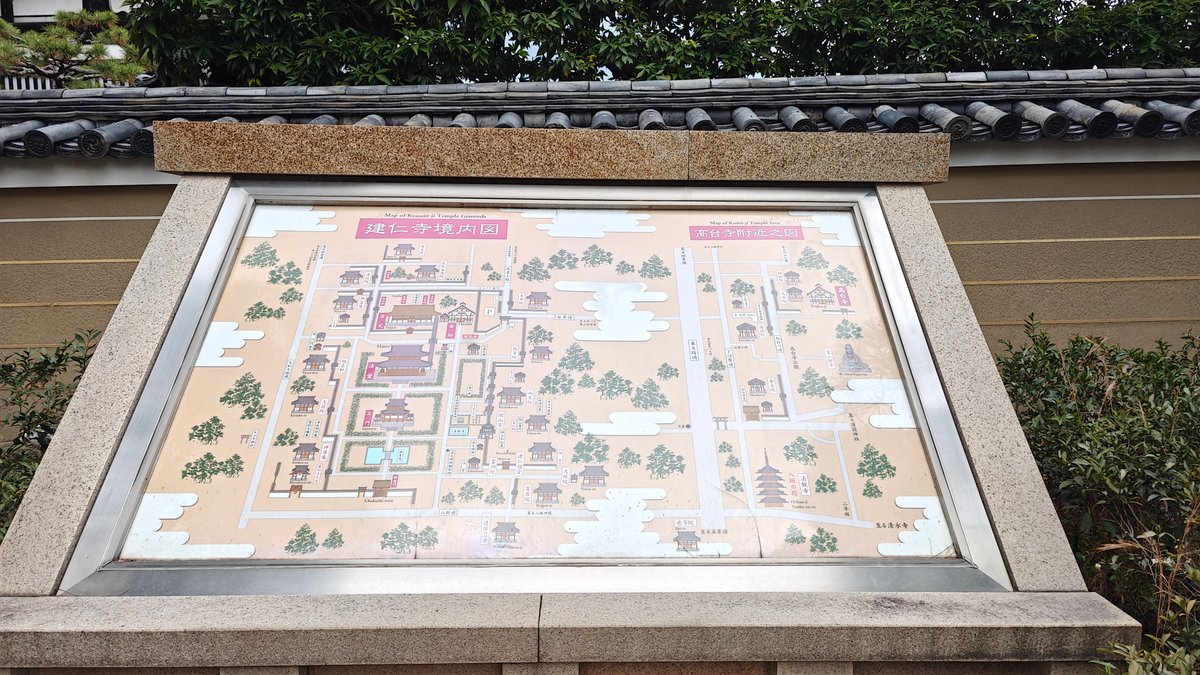
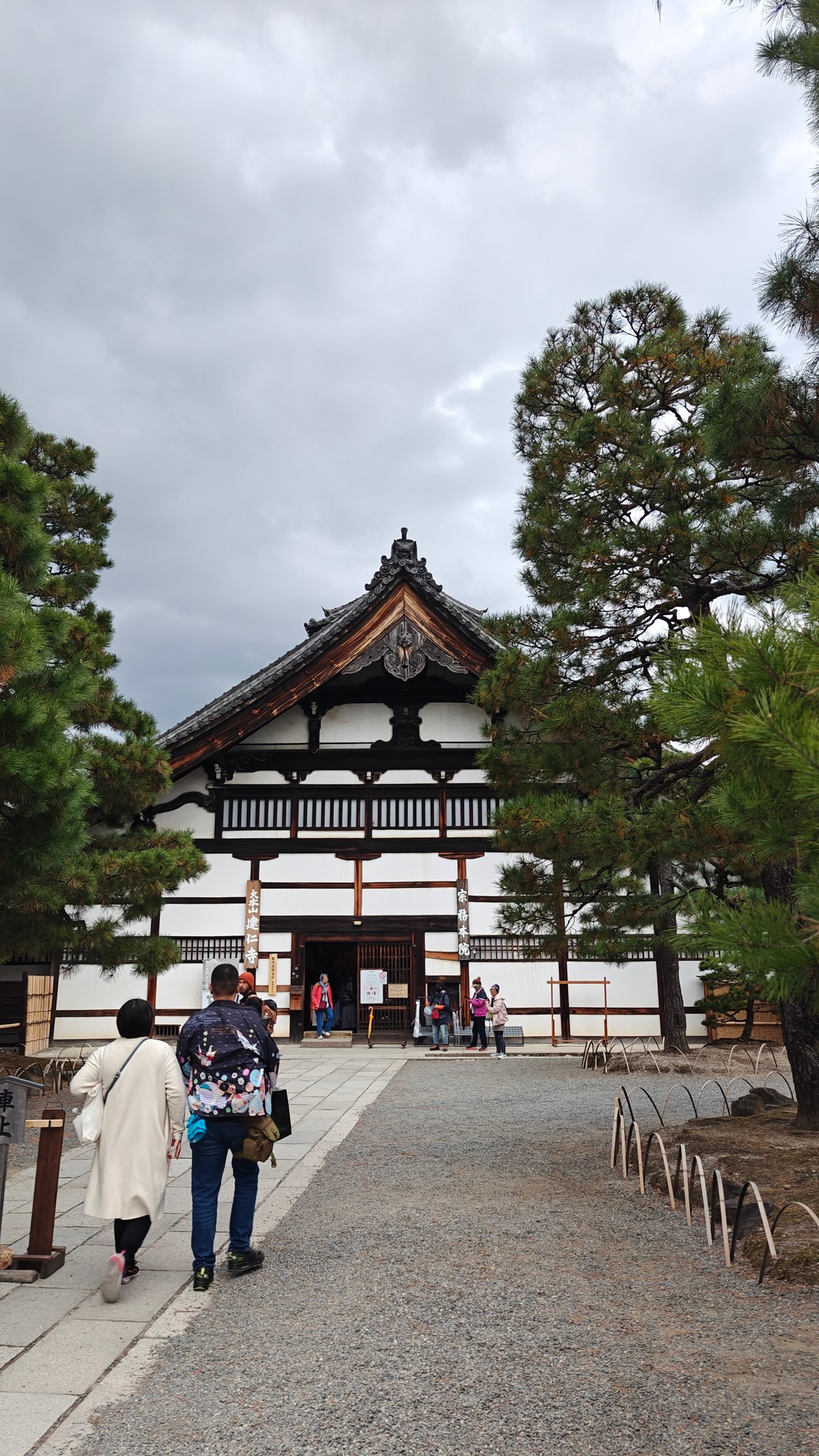

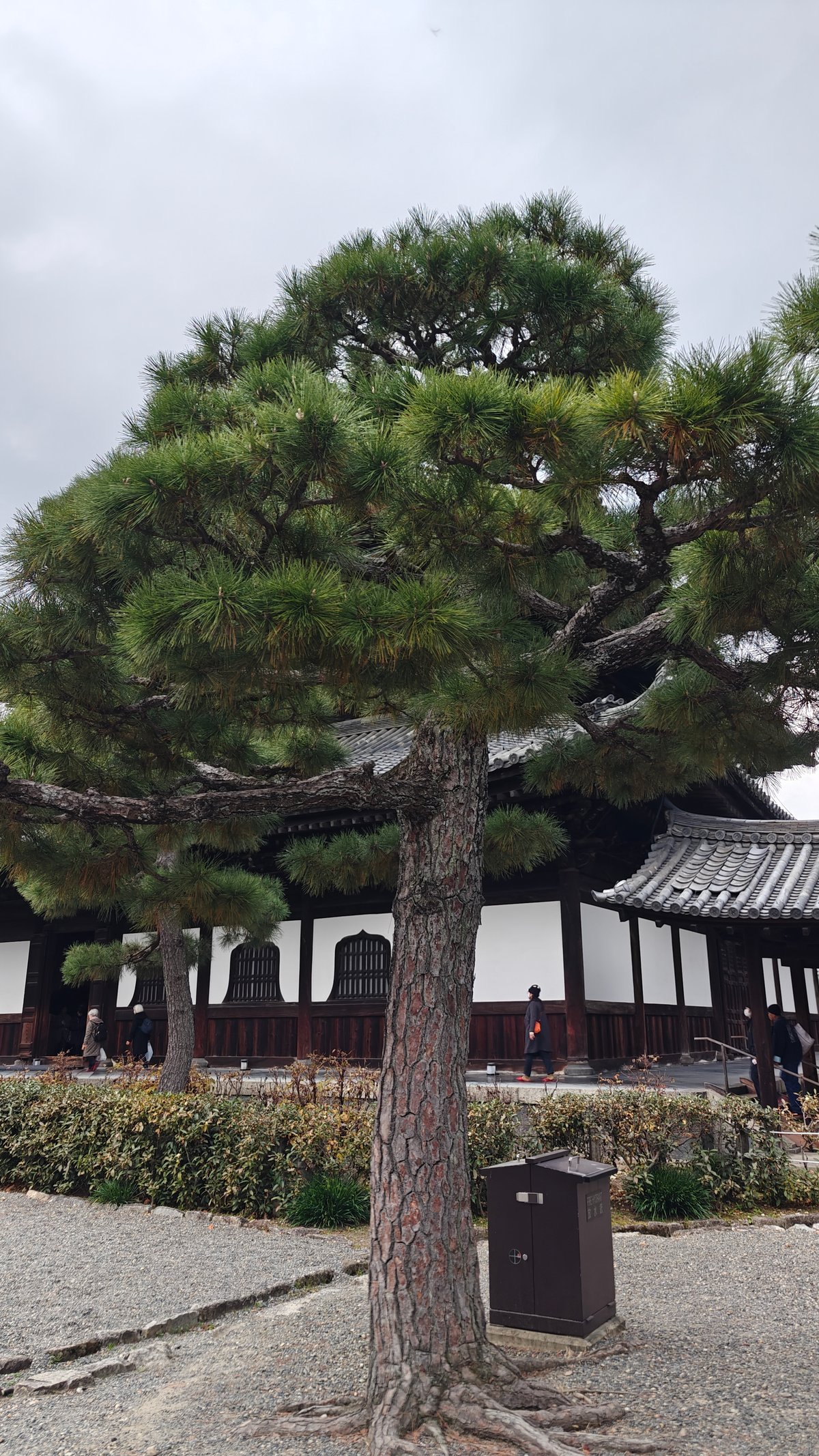
While other temples are noisy and bustling, Kenninji Temple is quieter and somewhat hidden away. After wandering past the administrative buildings and checking out the map board inside the entrance, I headed into the temple grounds. Old pines surround the bell tower, making it look both purposeful and natural.
The entire compound feels grounded, perhaps because it is one of Kyoto’s primary Zen temples.

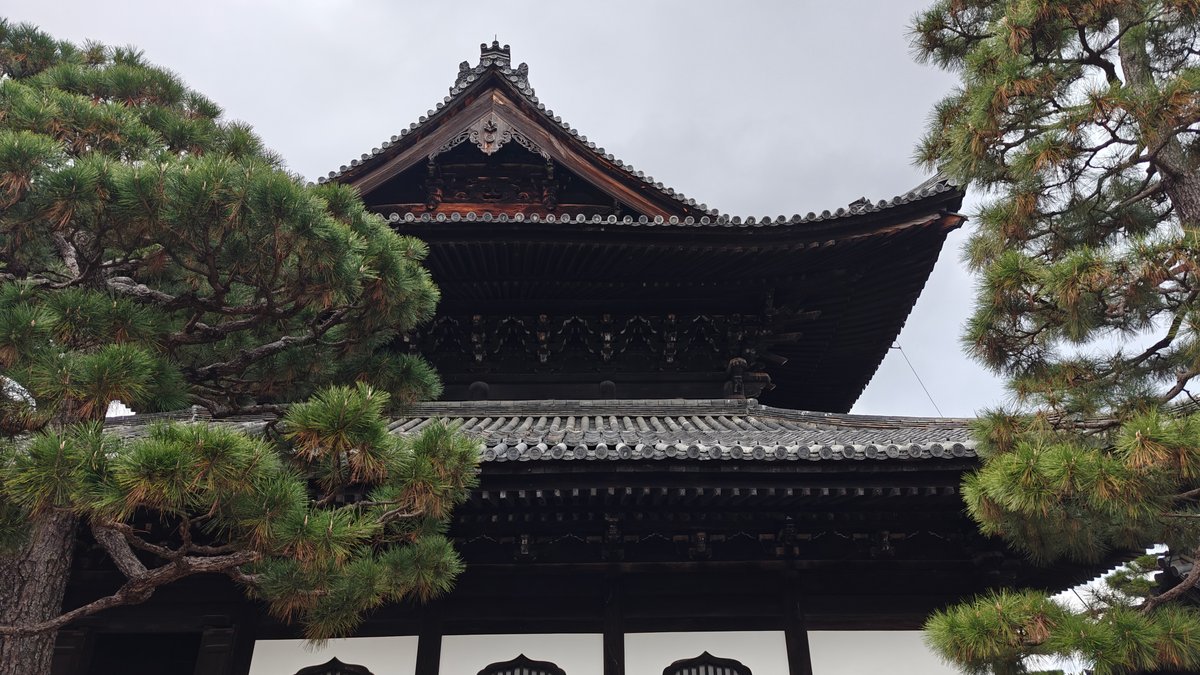
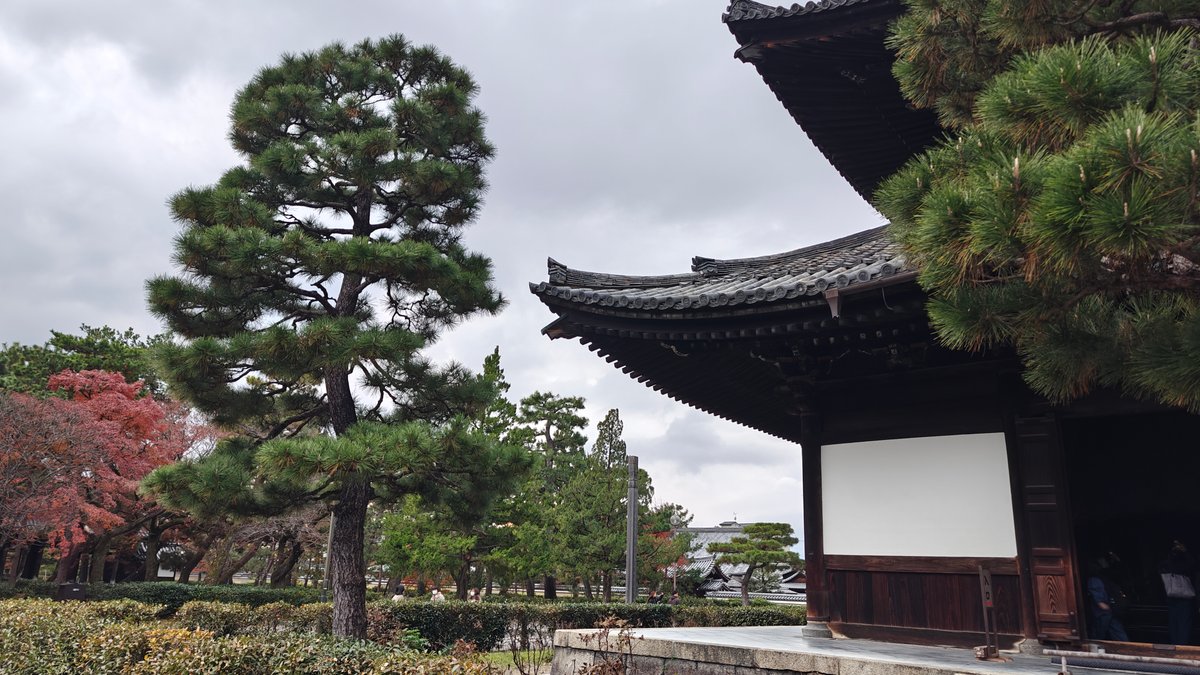
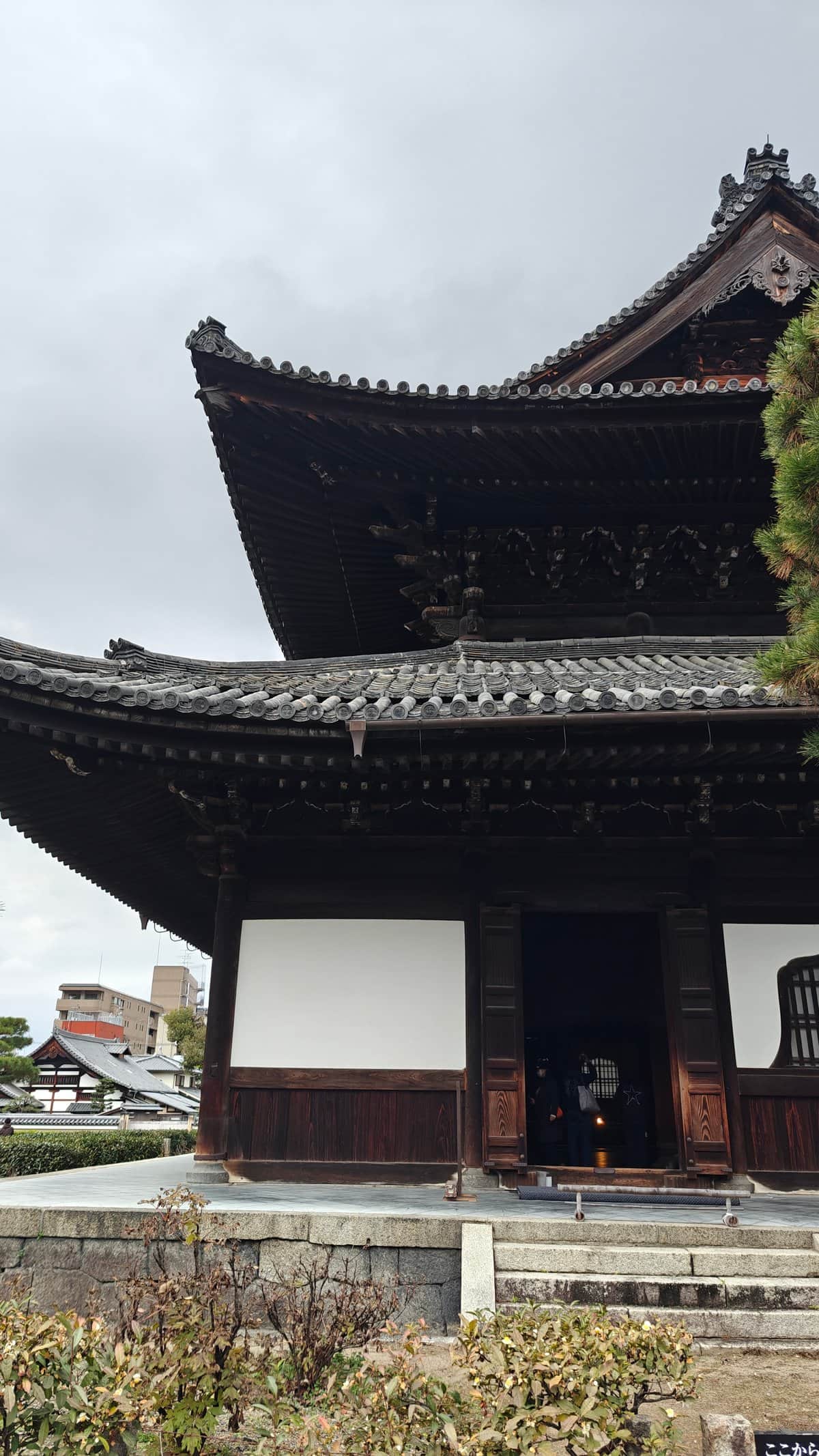
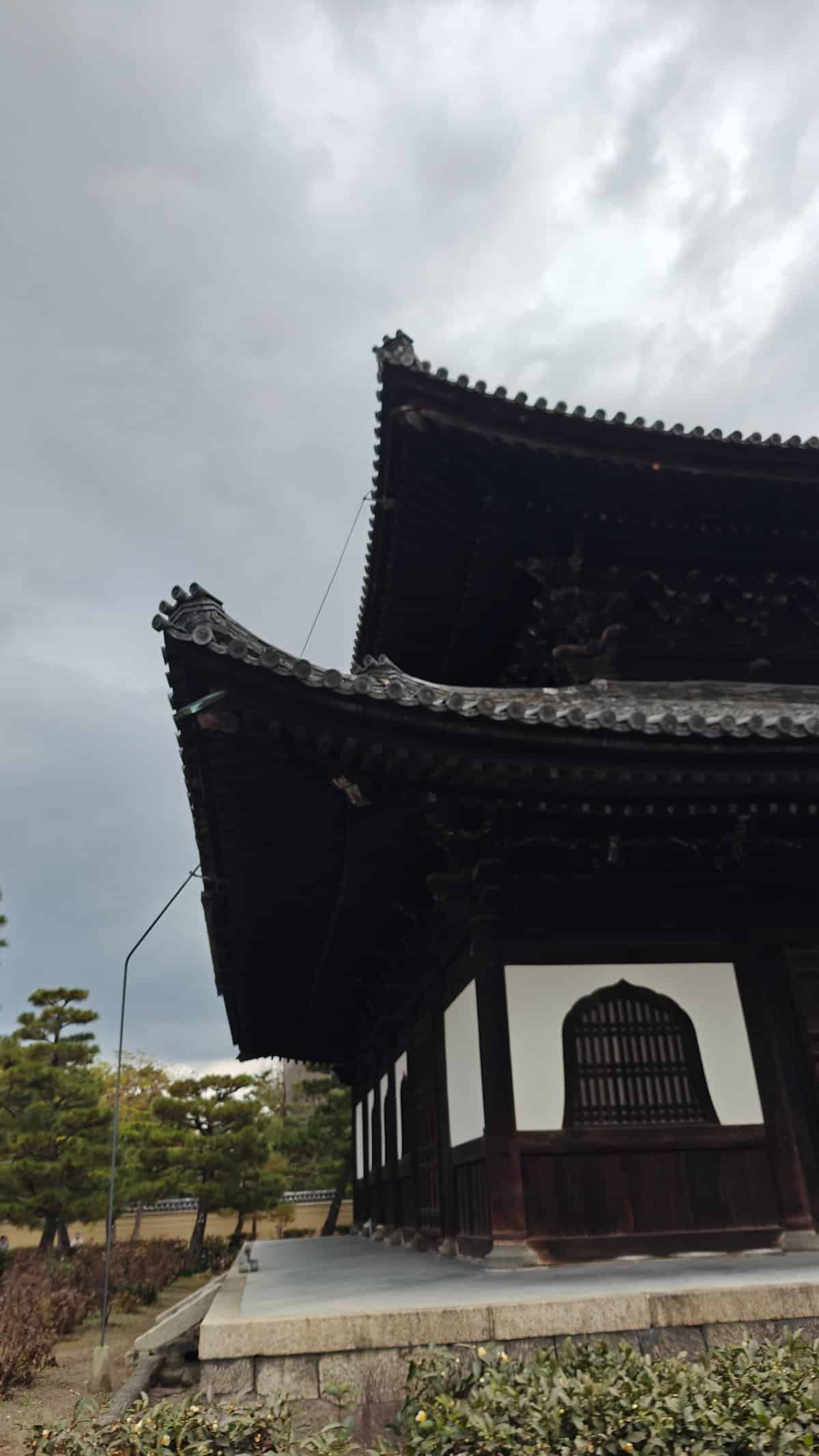
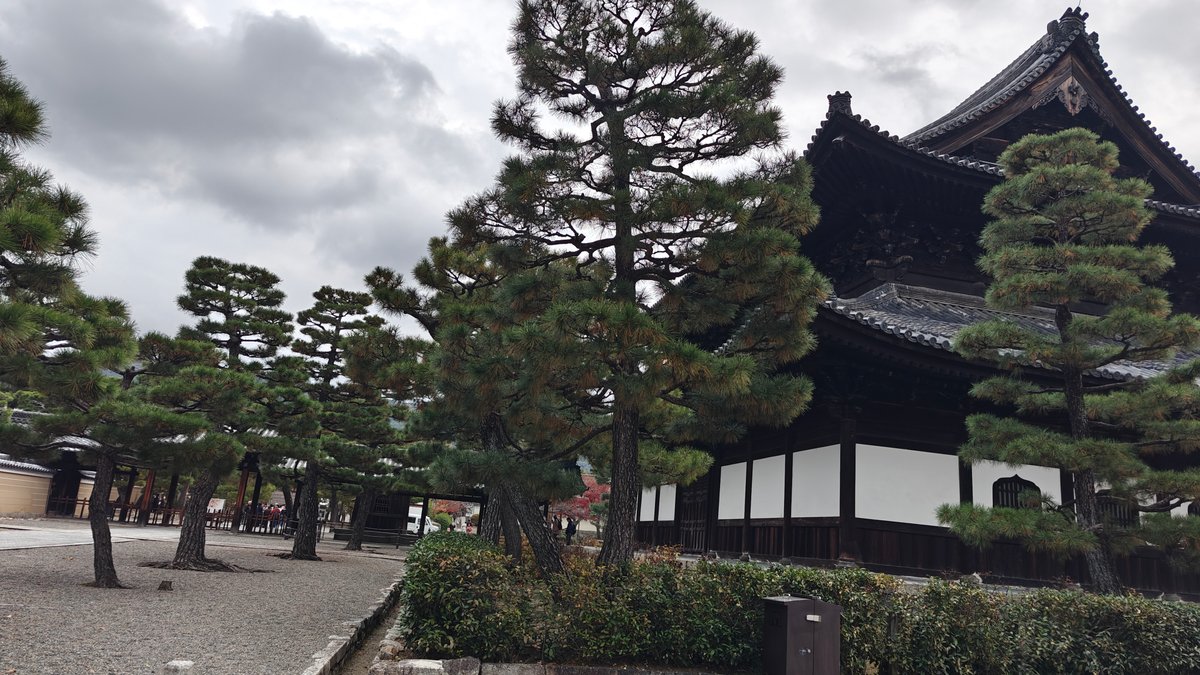
At its heart is the Dharma Hall, a large wooden structure positioned on a wide expanse of gravel. I circled the exterior to examine the roof detail and the eaves. I also looked at the doors opening into the interior.
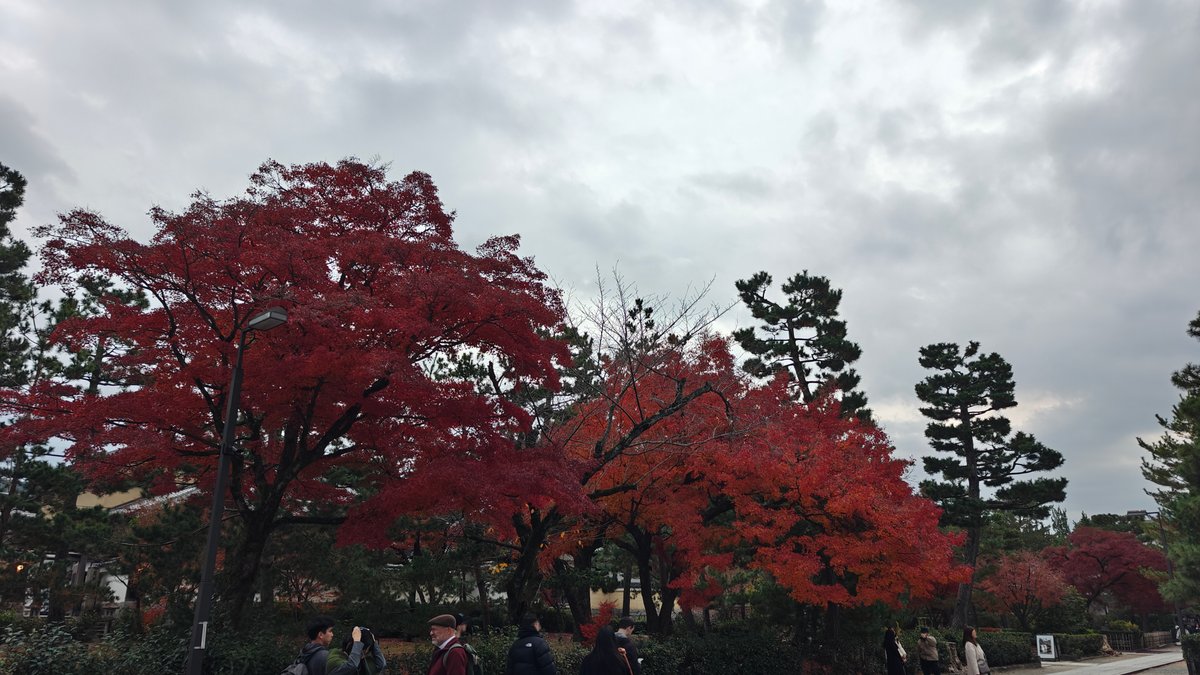
Inside, some visitors sat, and I took a seat with them for a moment or two. As it happened, I visited during a moody, overcast day, so the entire space felt all the more contemplative. The grounds feature a few maples and pines, and the effect of those trees against the darker wood was nice.
This isn’t a showy temple by any means, though that’s what I loved about it.
Sannenzaka Ninenzaka

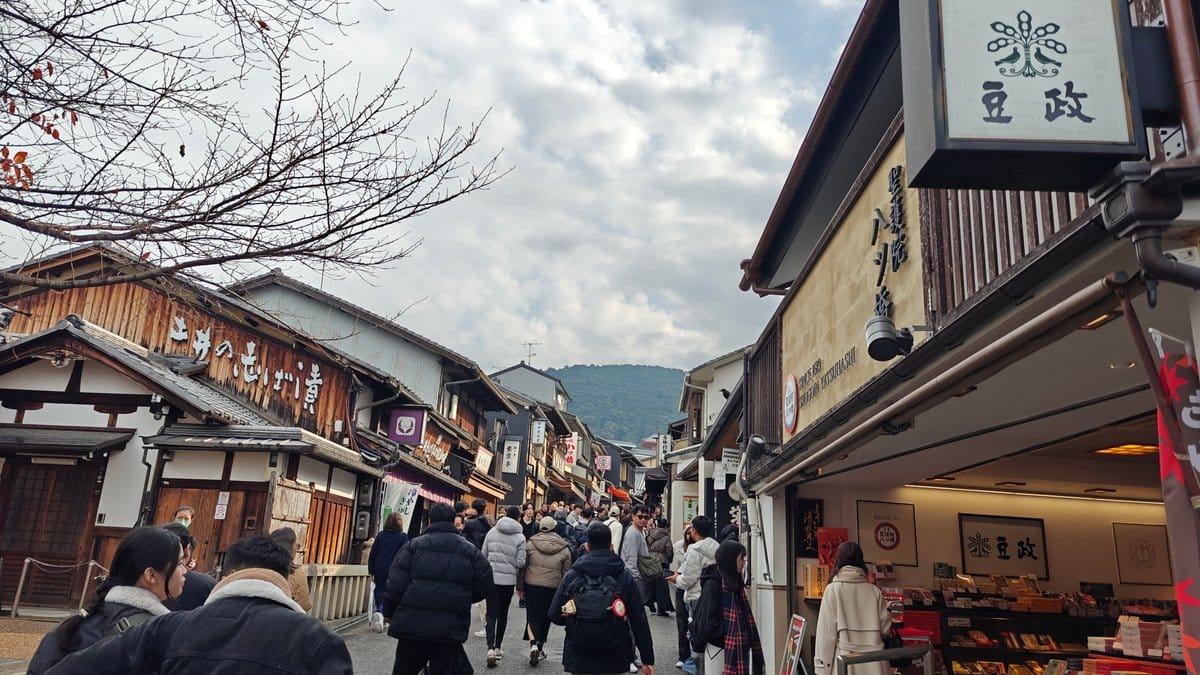
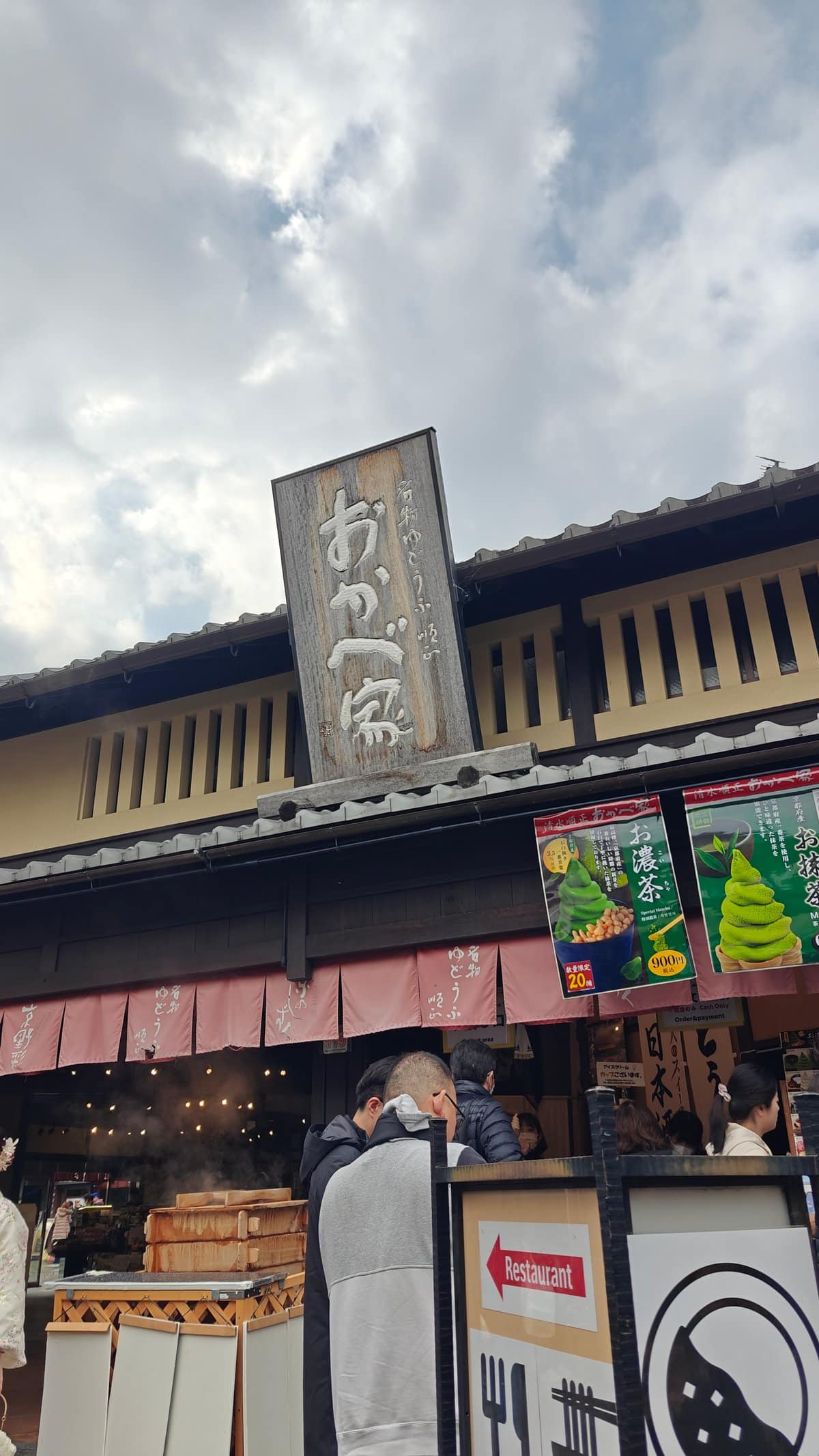
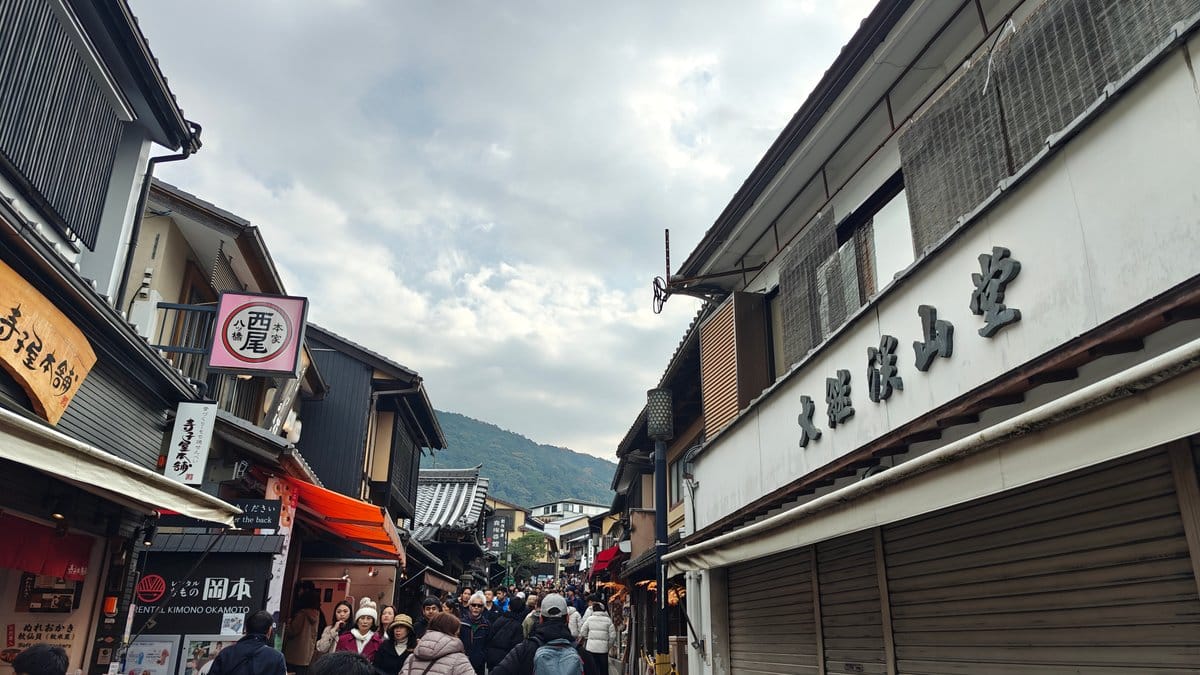


The streets connecting Kiyomizu-dera (the ones that go up to it), Sannenzaka and Ninenzaka, are crowded with tourists and shops and cafes. It’s all very old-school with wooden machiya-style buildings. Every second store is a craft shop, snack shop, or souvenir shop.
There’s a stand where I picked up some grilled something-or-other, don’t know what it was called, but it was hot and tasted okay. You’ll see lots of shelves of local sweets, plush toys, figurines, that typical stuff inside the shops.
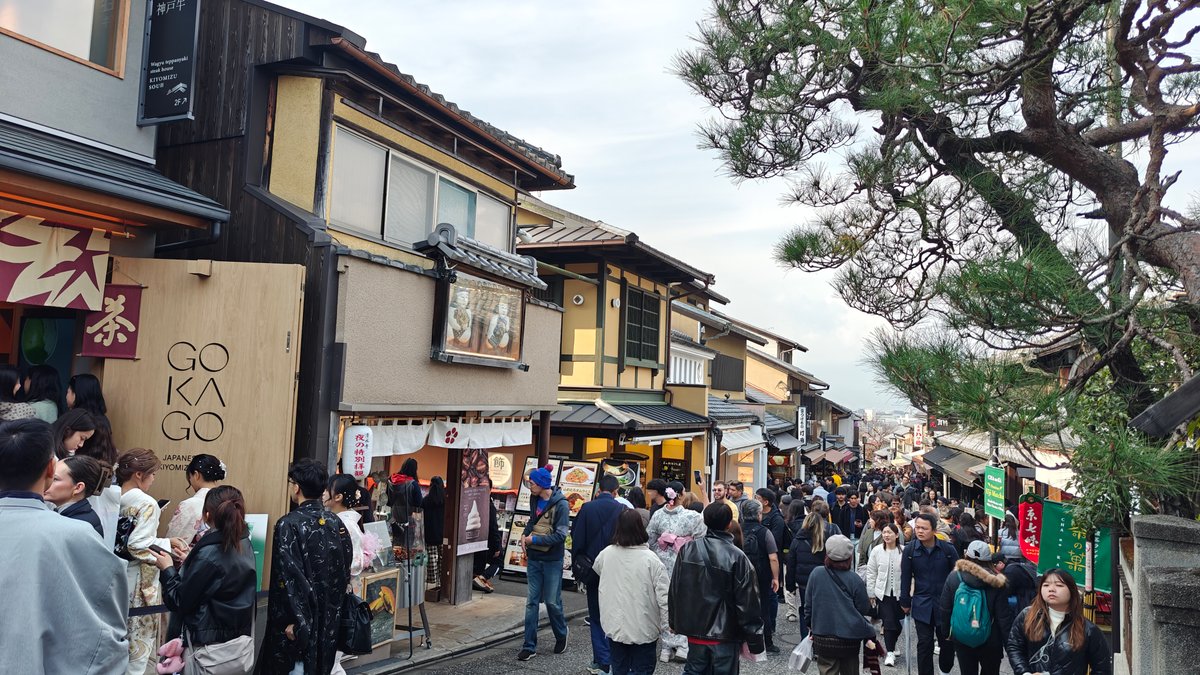
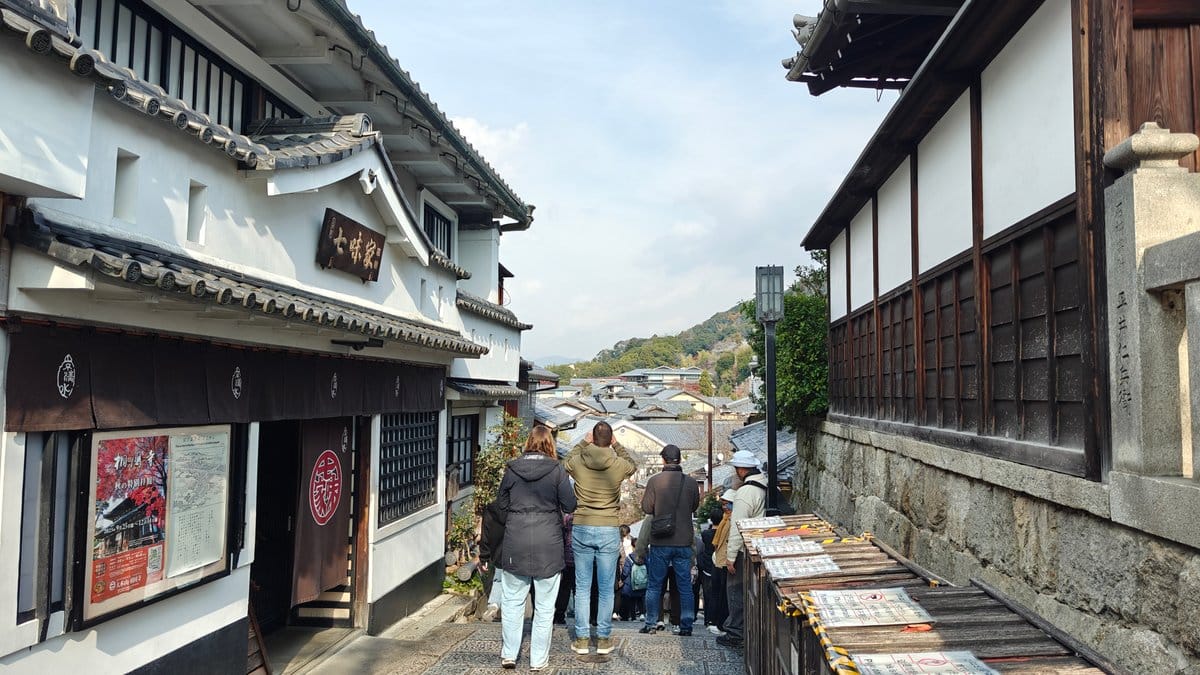
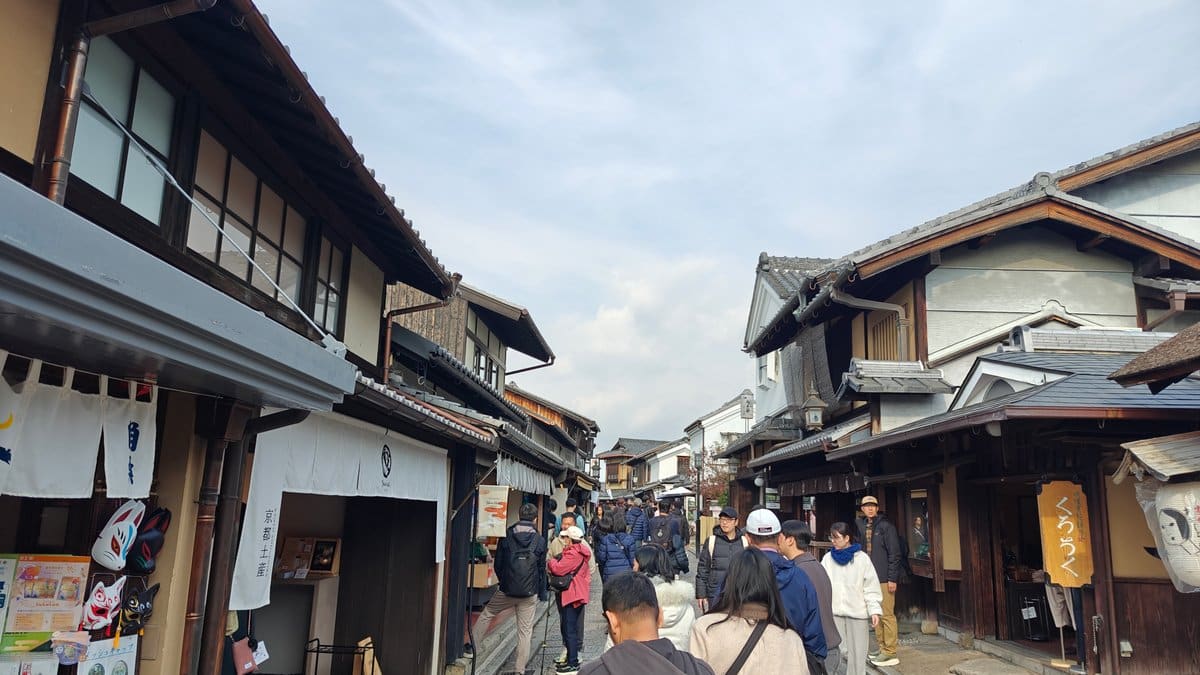
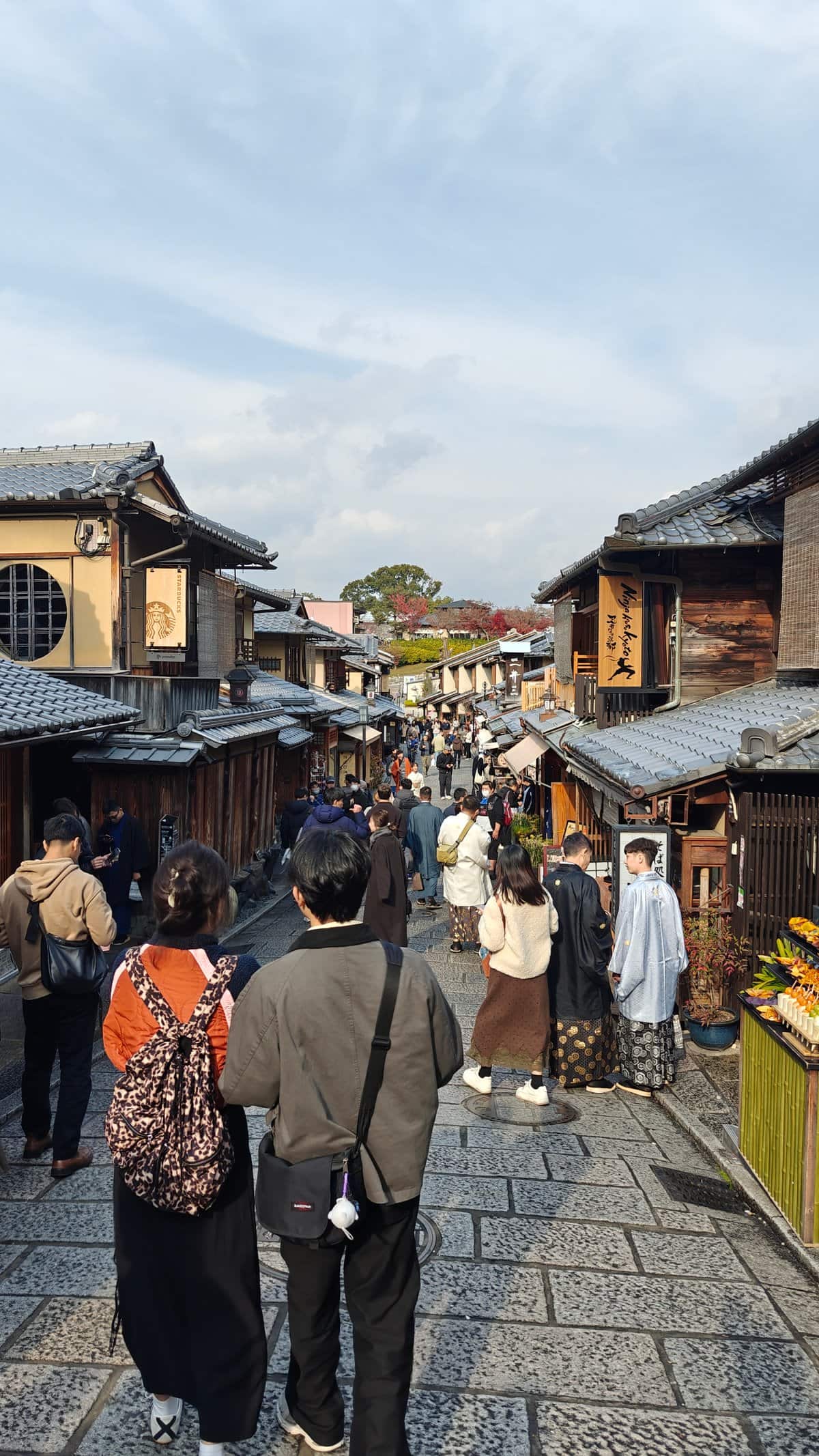

There were steep sections where the streets was paved with stone, and from there I had a view out toward some other parts of town. Crowded? Yes.
But it wasn’t too bad, people were moving through, so it never felt like a jam. What’s here is all about the architecture: the buildings, the signs, how the street curves around. I just strolled along, taking my time climbing up.
You will likely end up on these streets if you go to Kiyomizu anyway (whether you intend to or not).
Kiyomizu-dera
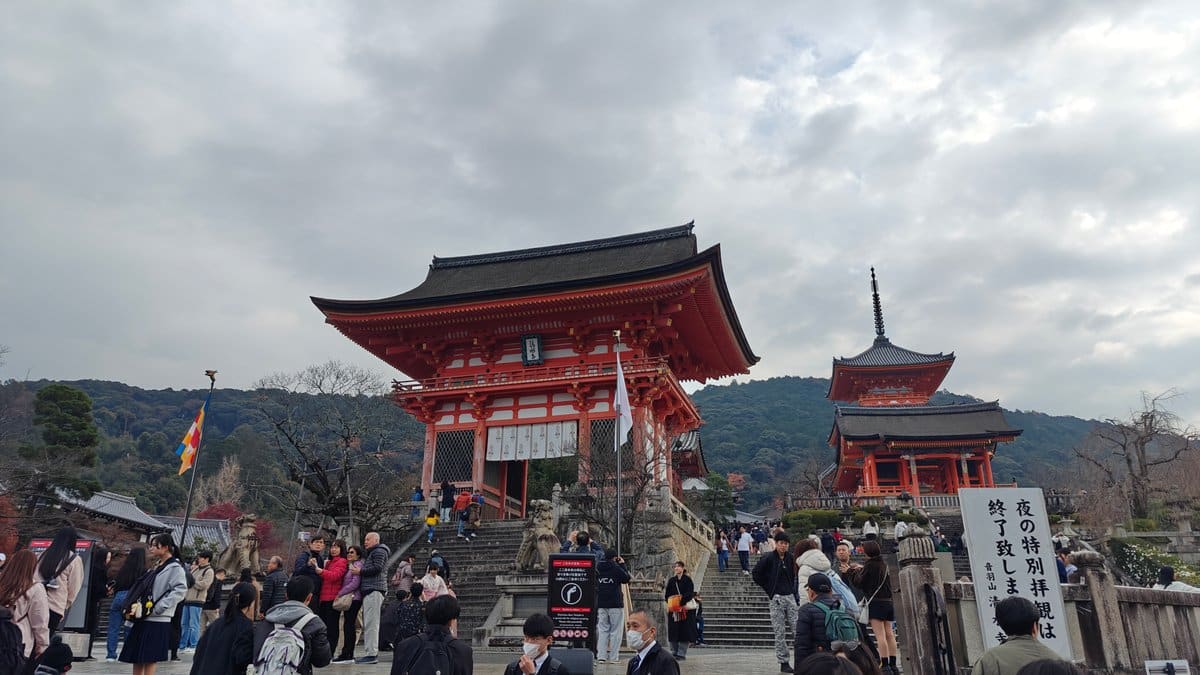
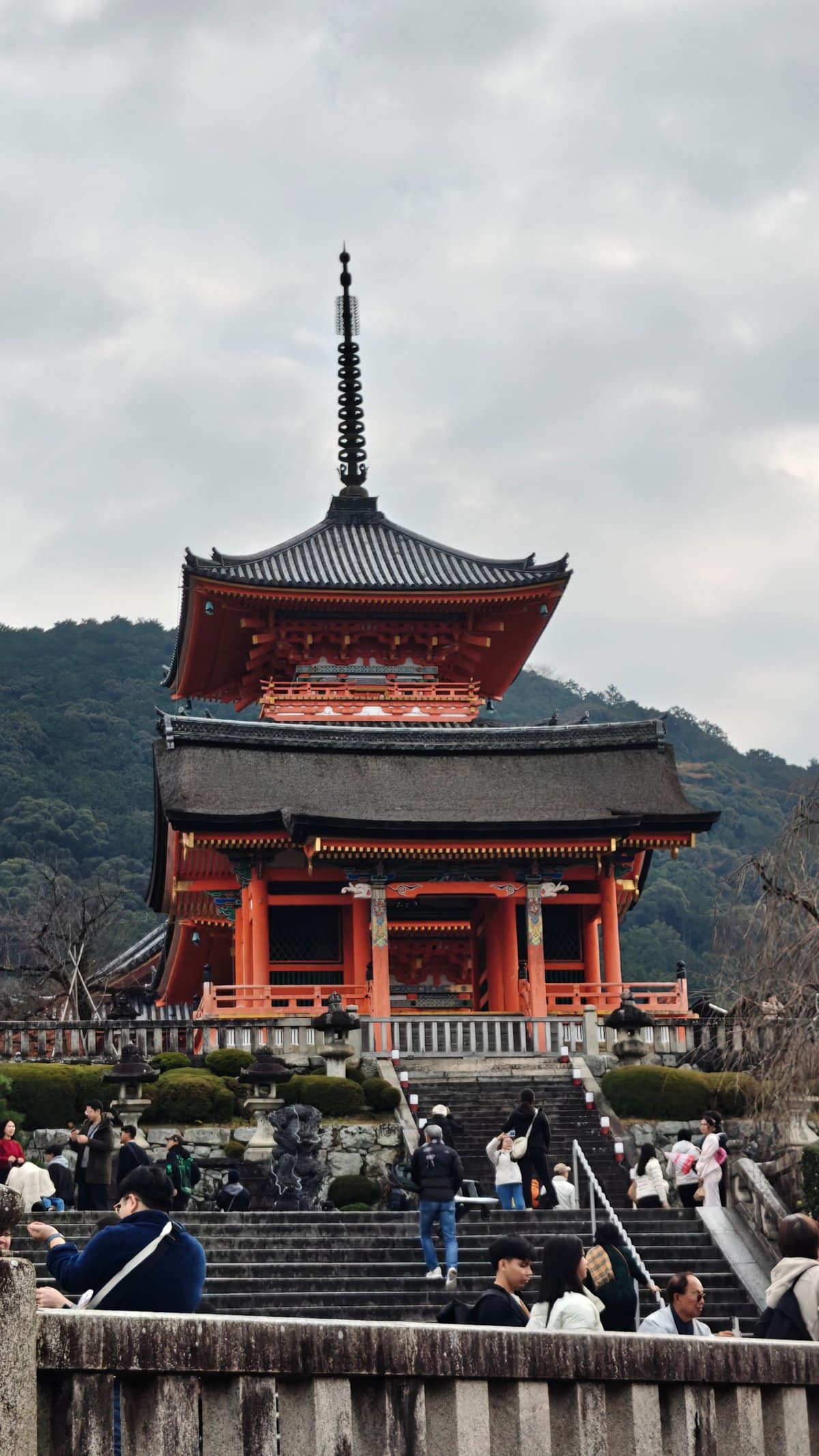
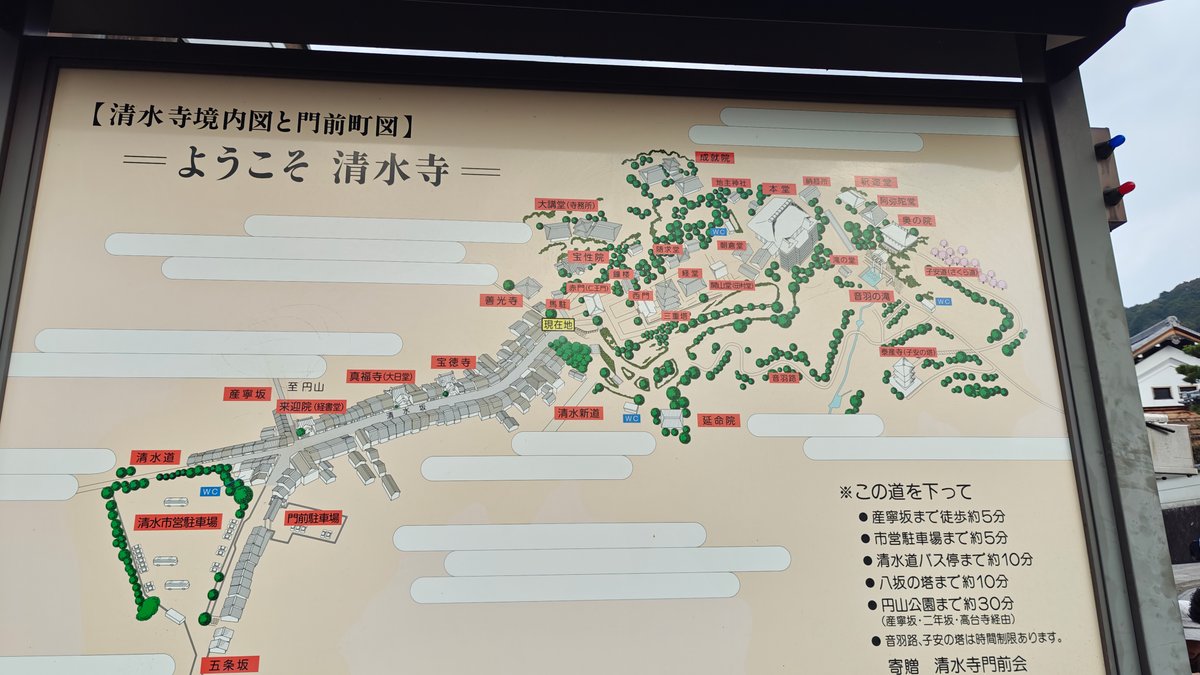


One of those temples everyone goes to, Kiyomizu-dera didn’t disappoint. From the bottom of the stairs, you can see a three story pagoda as well as the gate that marks its entrance area. Even on a grey day, it was striking, so I walked through the gate and up past the pagoda.
If you’re wondering how everything fits together, there’s a map board near the entrance. Honestly, though, the place is set up in a way that kind of funnels you through.
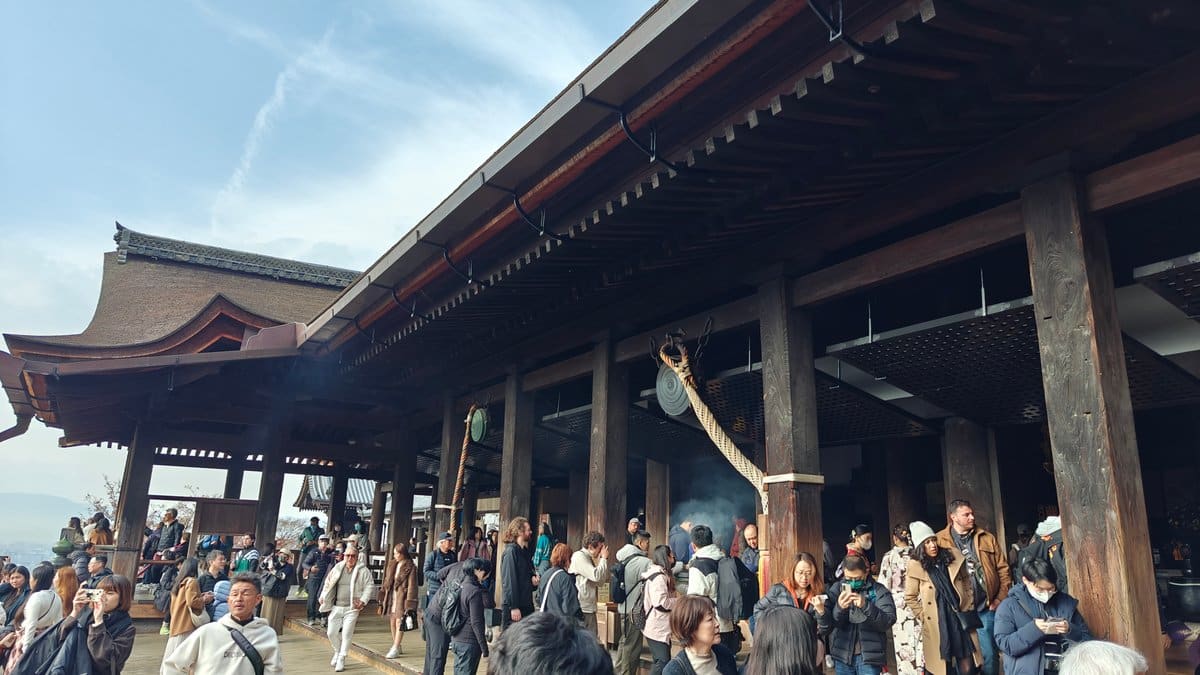

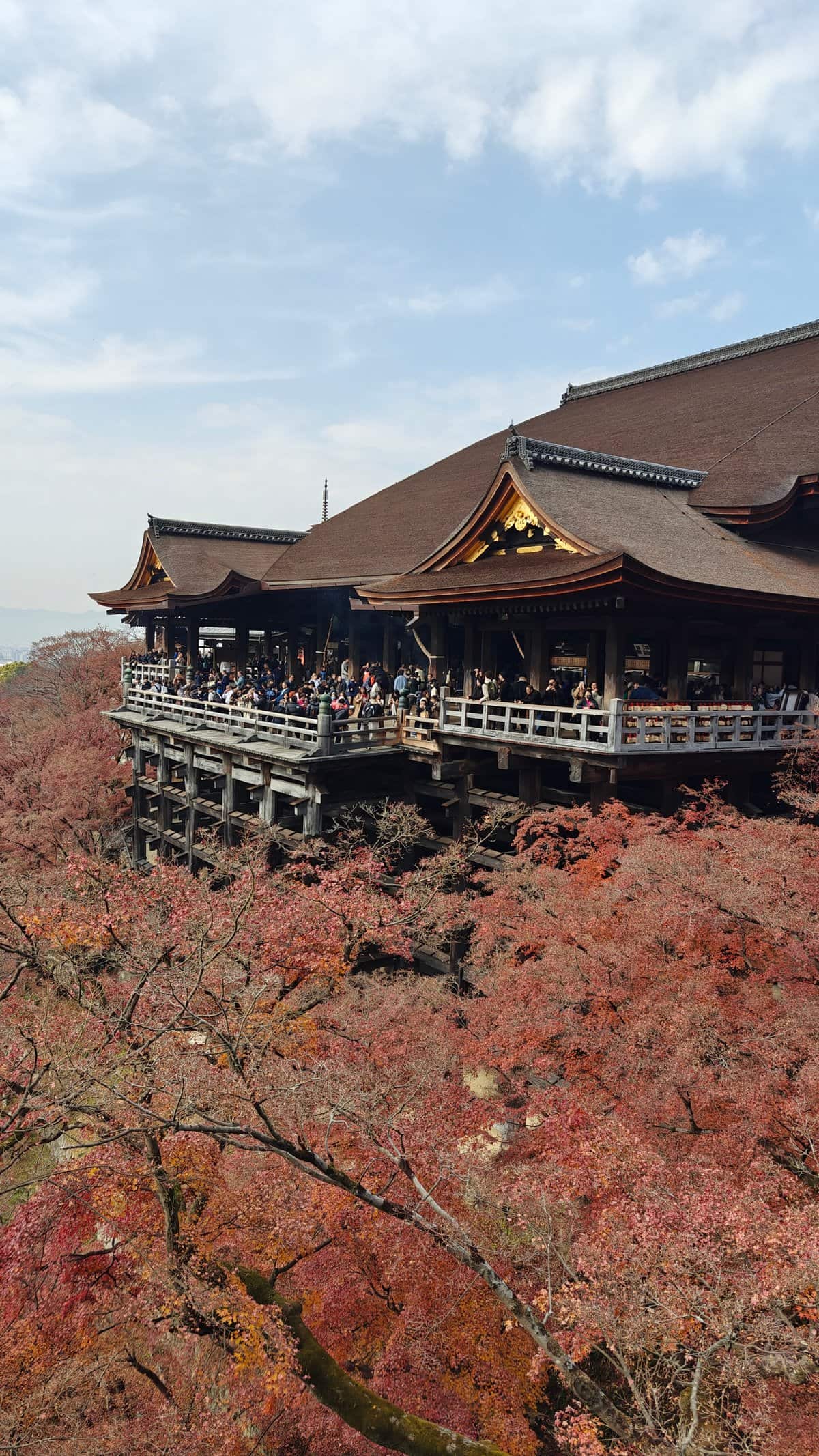

It has a huge wooden stage extending from the side of the hill. Supported on high pillars, this was the main draw. I strolled out onto it, looked down, it’s pretty high up there.
When you look at the framework from underneath it’s also some impressive engineering. The view overlooked a valley, and since there were still a few patches of autumn leaves left when I visited, it was a little more interesting to look at. Apparently, the whole thing is built without nails but I didn’t check that for myself.
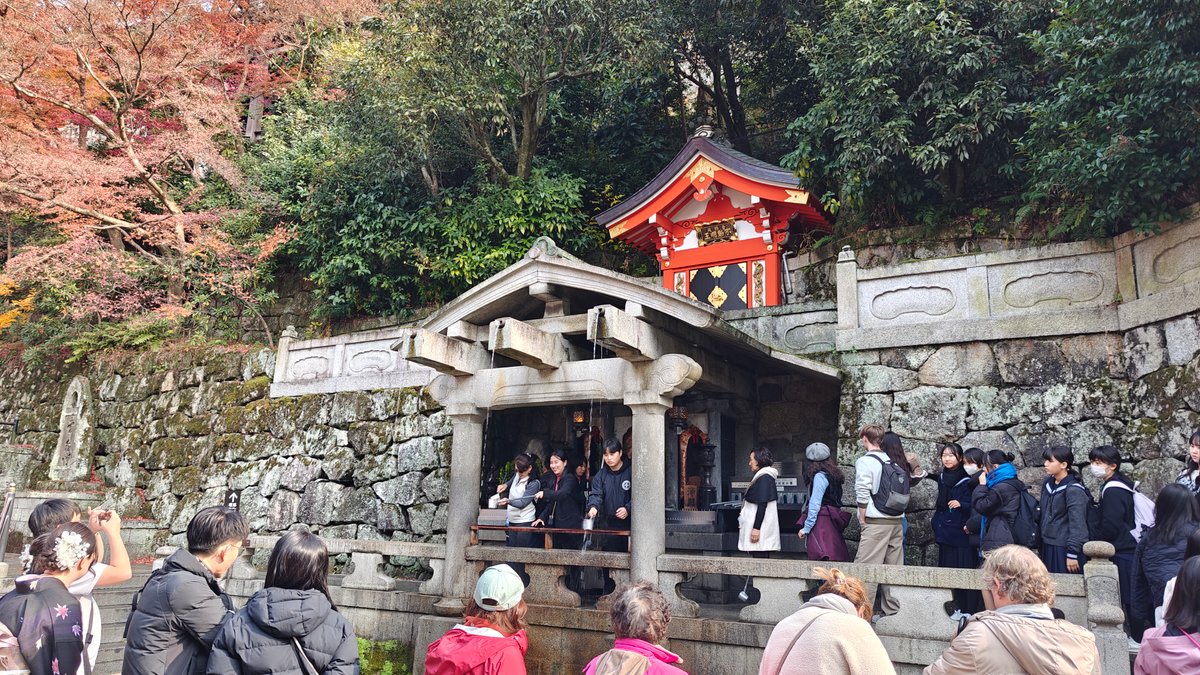

Otowa-no-taki is a waterfall located below the stage where pilgrims form lines to drink from using long-handled ladles. The queue was long, so I observed it for a while but didn’t join. I didn’t think this supposed benefit would actually work, and the line was long.
If you take the lower path, you’ll have a great view of the pillars holding up the stage, which really shows you how they holds the whole thing together. Yes, Kiyomizu-dera is touristy. But, it’s also really interesting if you’re into temple architecture and aren’t too bothered by having a couple hundred other people around you.
Kyoto (particularly Gion) delivered for me, some of the things I love most about Japan: old temples, quiet walks, steep streets, and enough variety that each day felt different. No rushing around, no attempt at seeing it all, and I left feeling as if I had spent real time there instead of passing through. What was your favorite corner of this walk if you’ve been here before?
I am curious what stayed with you.