Here are photos of everything I ate in Chengdu and Chongqing: Sichuan cuisine. For an entire week, I bounced around between Chongqing and Chengdu with one thing in mind, to consume as much Sichuan food as possible. To say my mouth was on fire during that week would be an understatement and I loved every minute of it.
They really take their spice seriously here and, after learning this lesson pretty quick, I realized that when they say mild, it’s not actualy that mild. Here’s a rundown of all the food I consumed. Ranging from hole-in-the-wall noodle shops to three-hour-long hotpot marathons.
I didn’t hold back and you shouldn’t either if you ever find yourself out here.
All the Spicy Food I Ate in Chengdu and Chongqing
Chongqing food and drinks

free chongqing itinerary
Visiting Chongqing?
Get my original 4–5 day, 13-page Chongqing itinerary in PDF format, based on my real trip, with many photos, hotel, and food tips. Enter your email to receive it free.
We won't send you spam. Unsubscribe at any time.
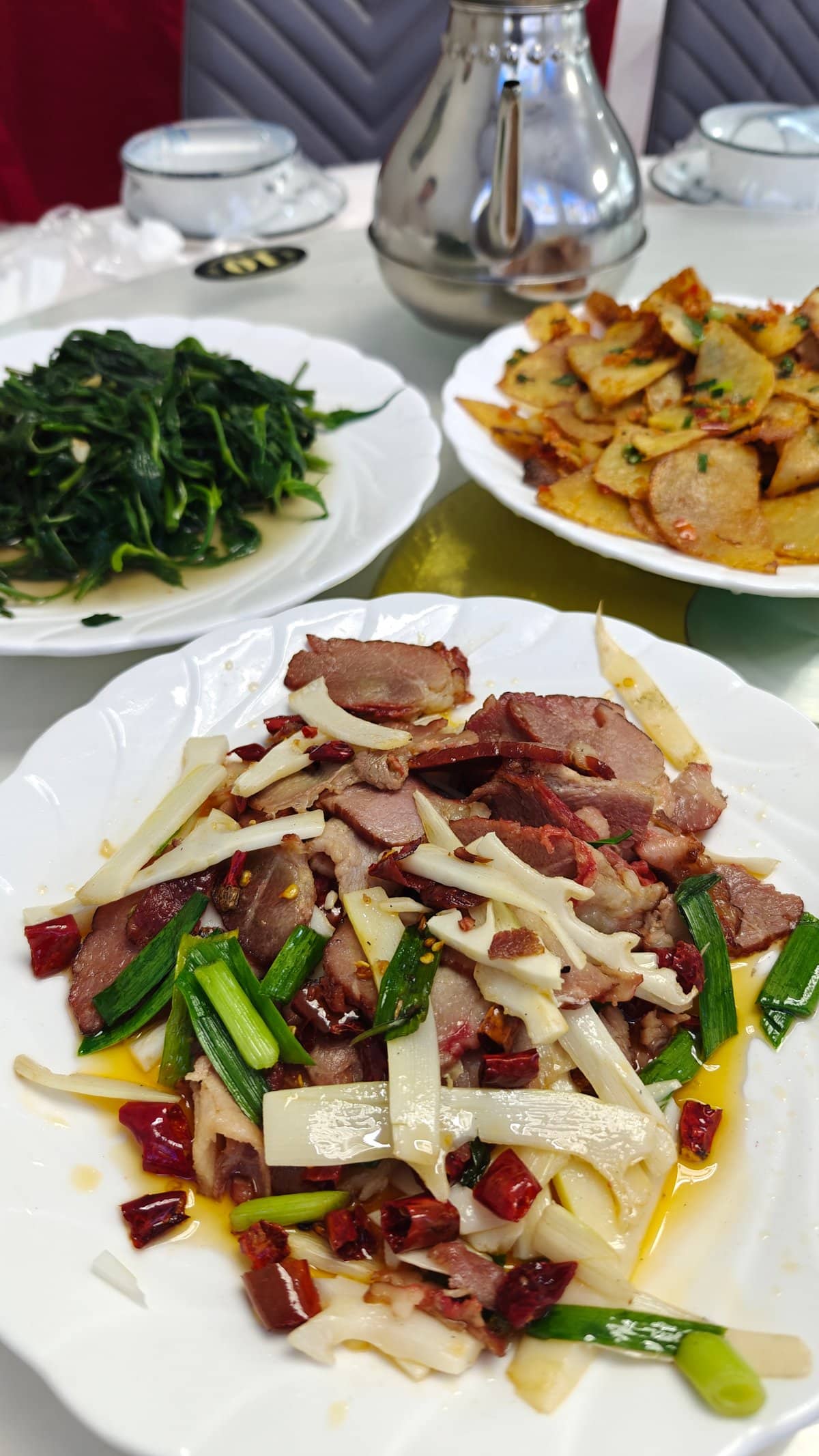
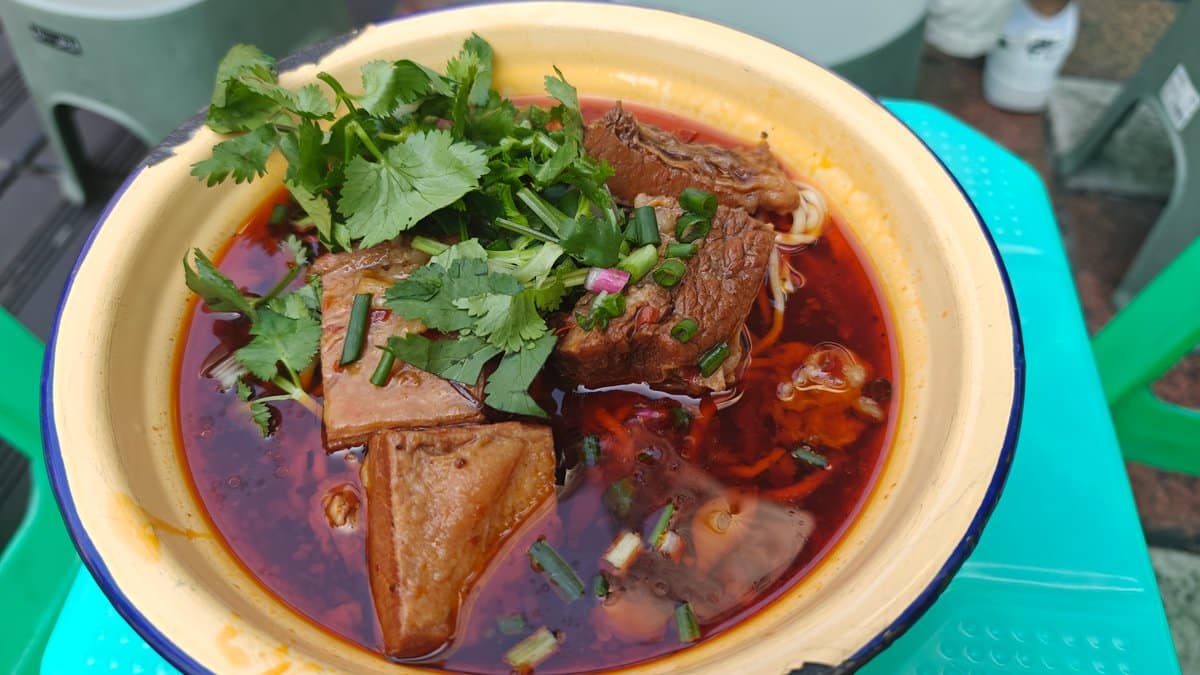
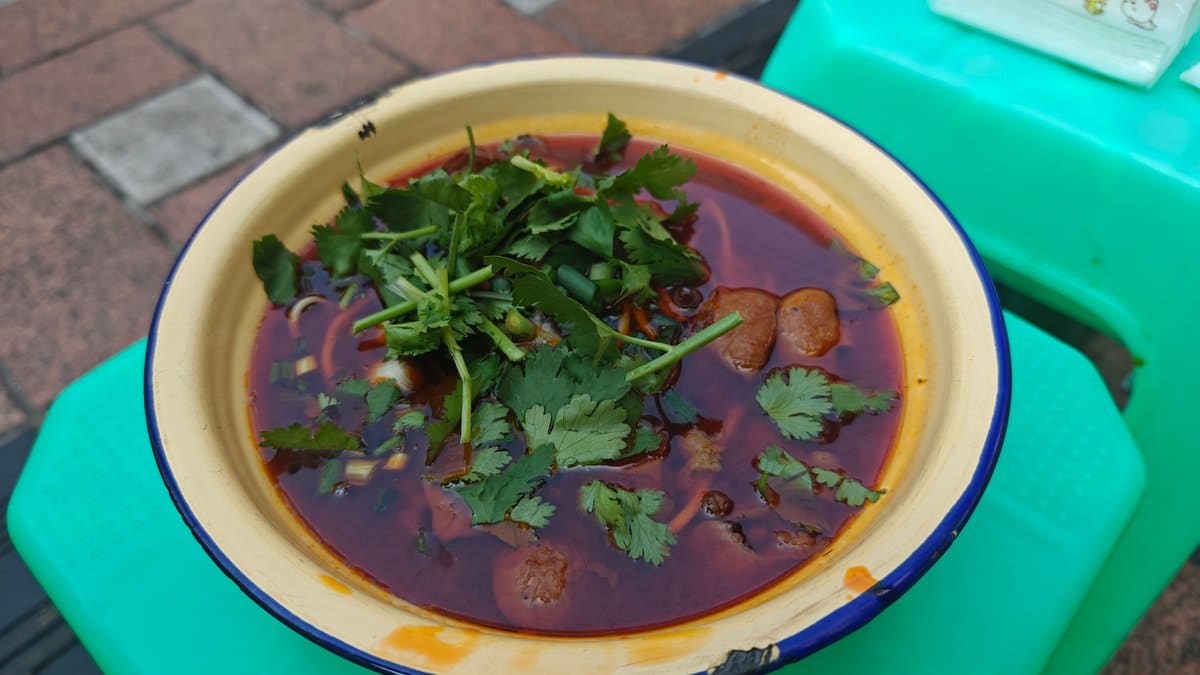
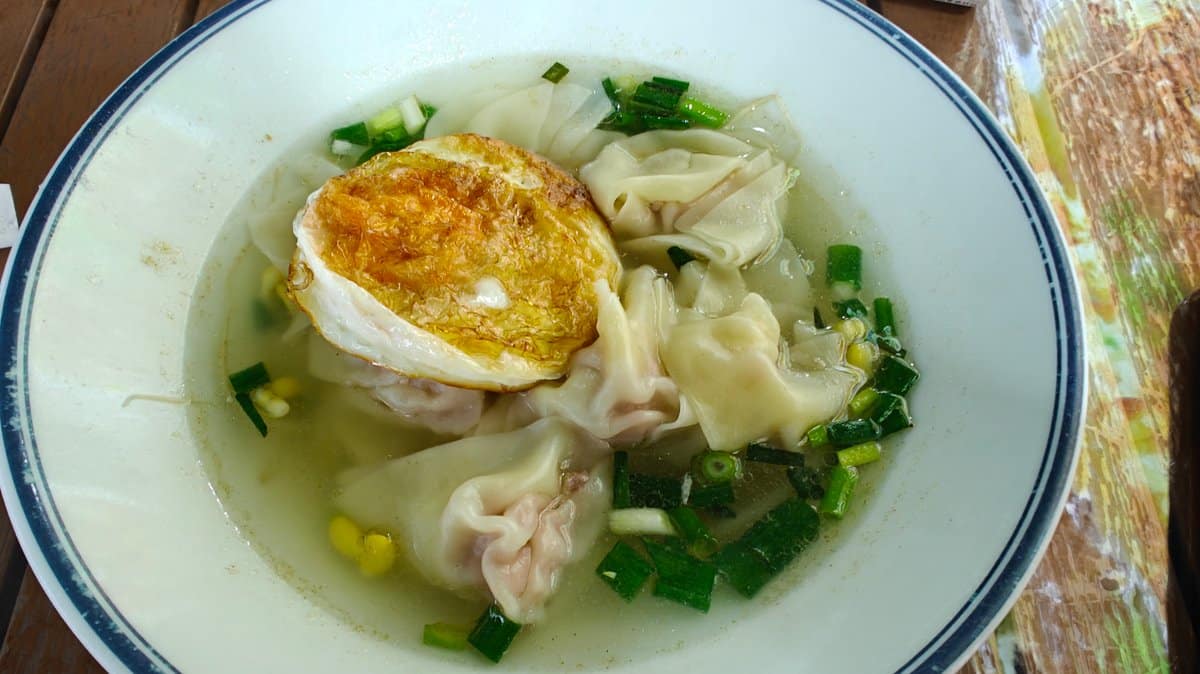
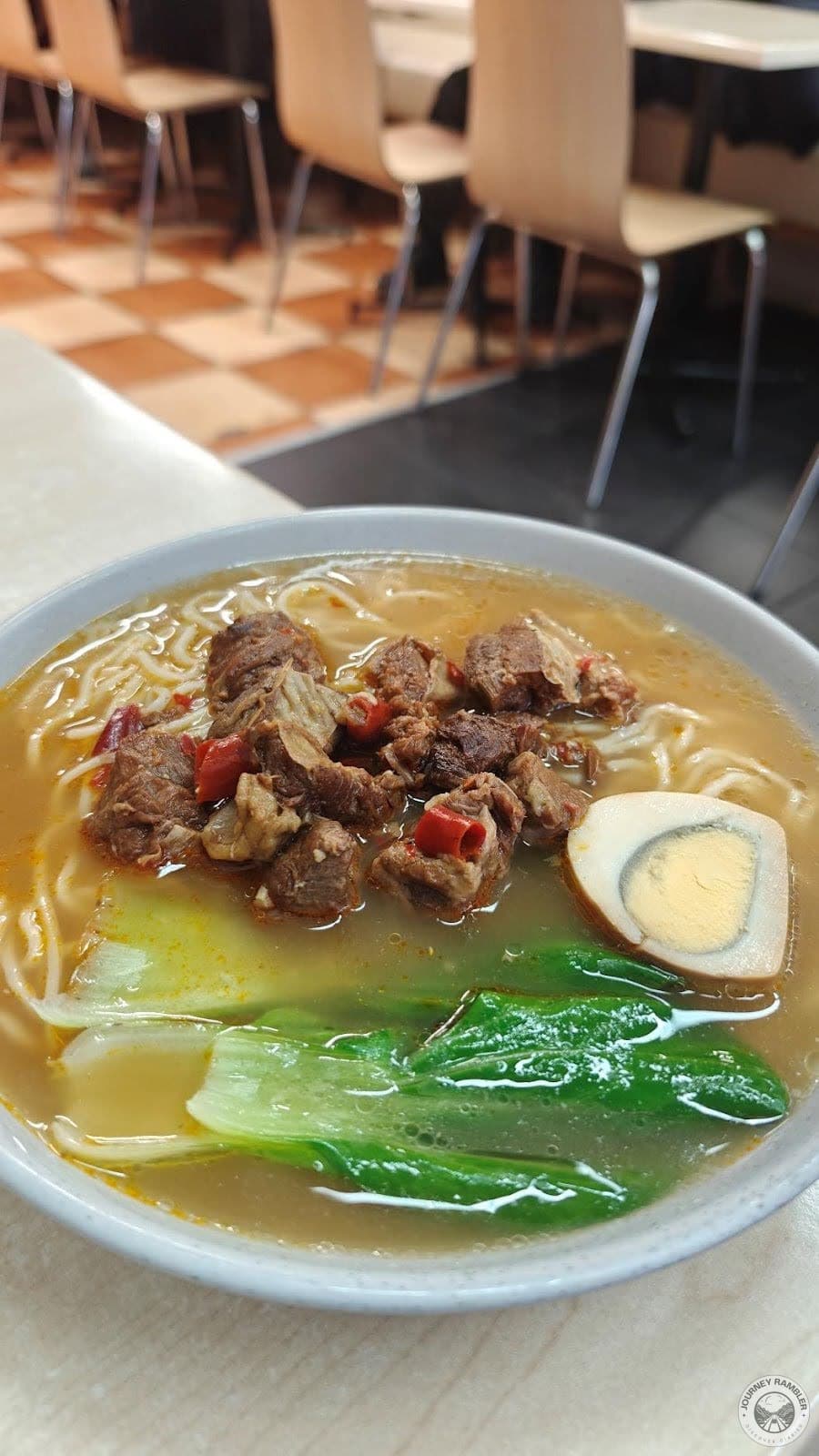
In Chongqing I gobbled up breakfast, lunch, and dinner, each occasion catching me by surprise with the heat they packed. The red-braised beef was harmless enough in its bowl but after two mouthfuls my nose was running. Wonton soup was supposed to be a break; but it had more than enough chili oil floating atop it to have me sweating.
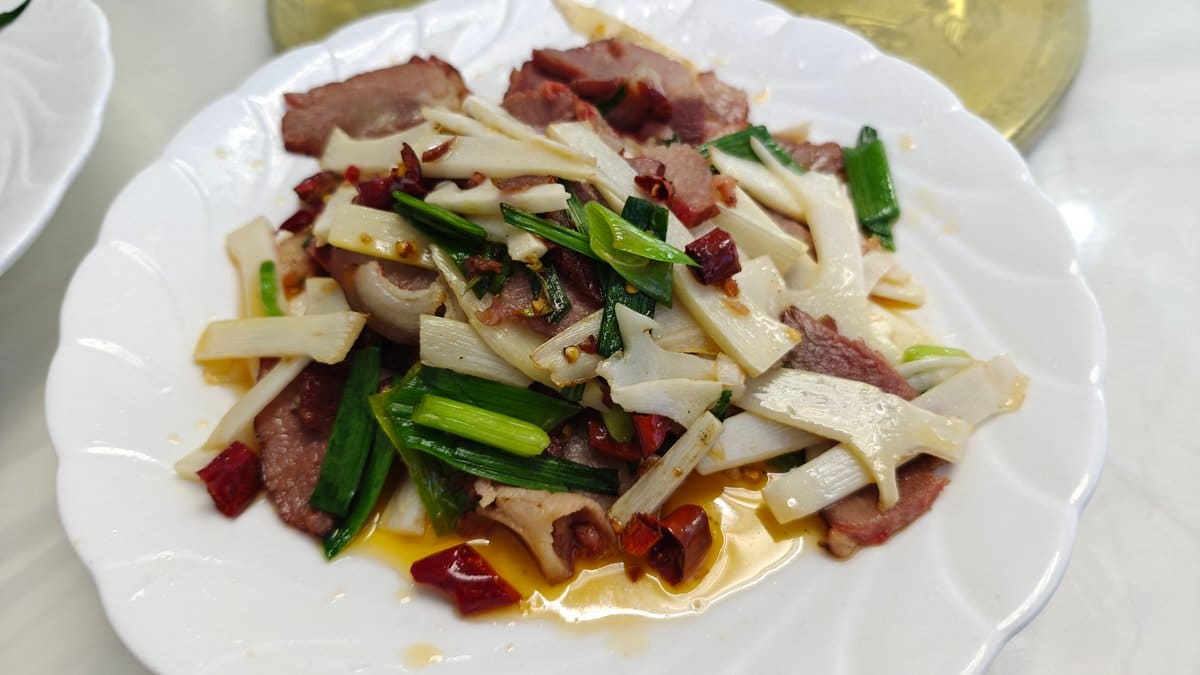
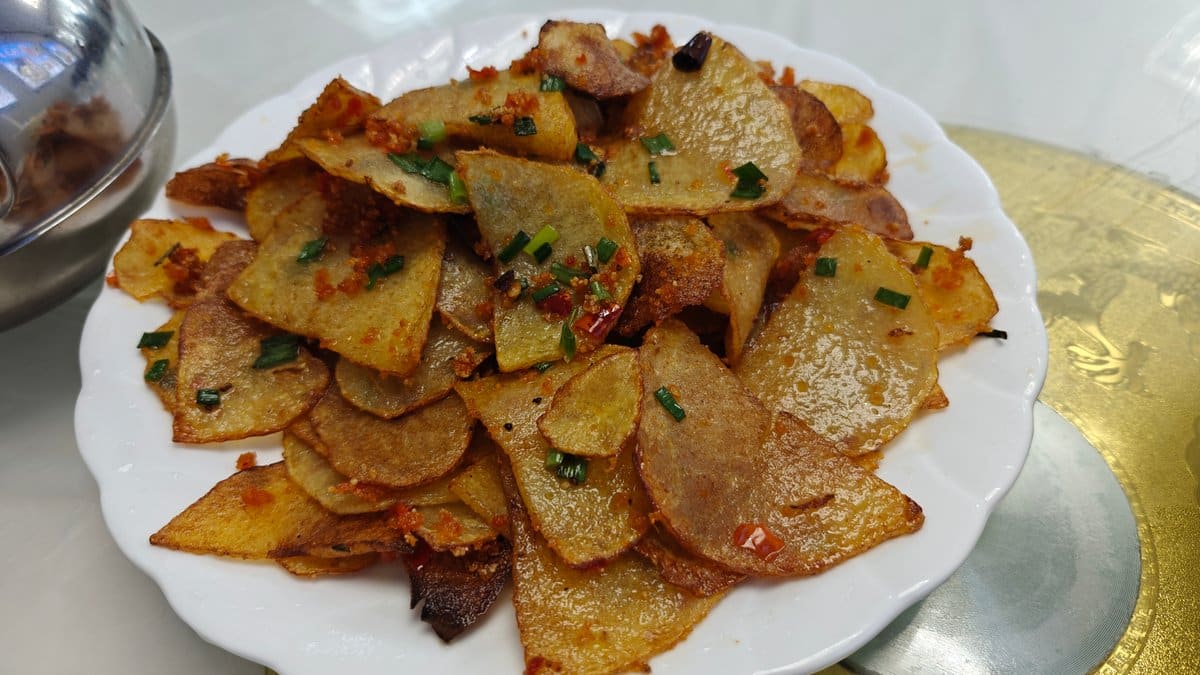
Beef noodle soup was rich and savoury, full of Sichuan peppercorns that tingles my tongue for the next hour. There were crispy panfried potatoes piled high with dried chilies. Other small places served stir-fried veggies and meats, with home-style dishes galore.
Each restaurant was an experience; by the end of each, every table resembled a battlefield.
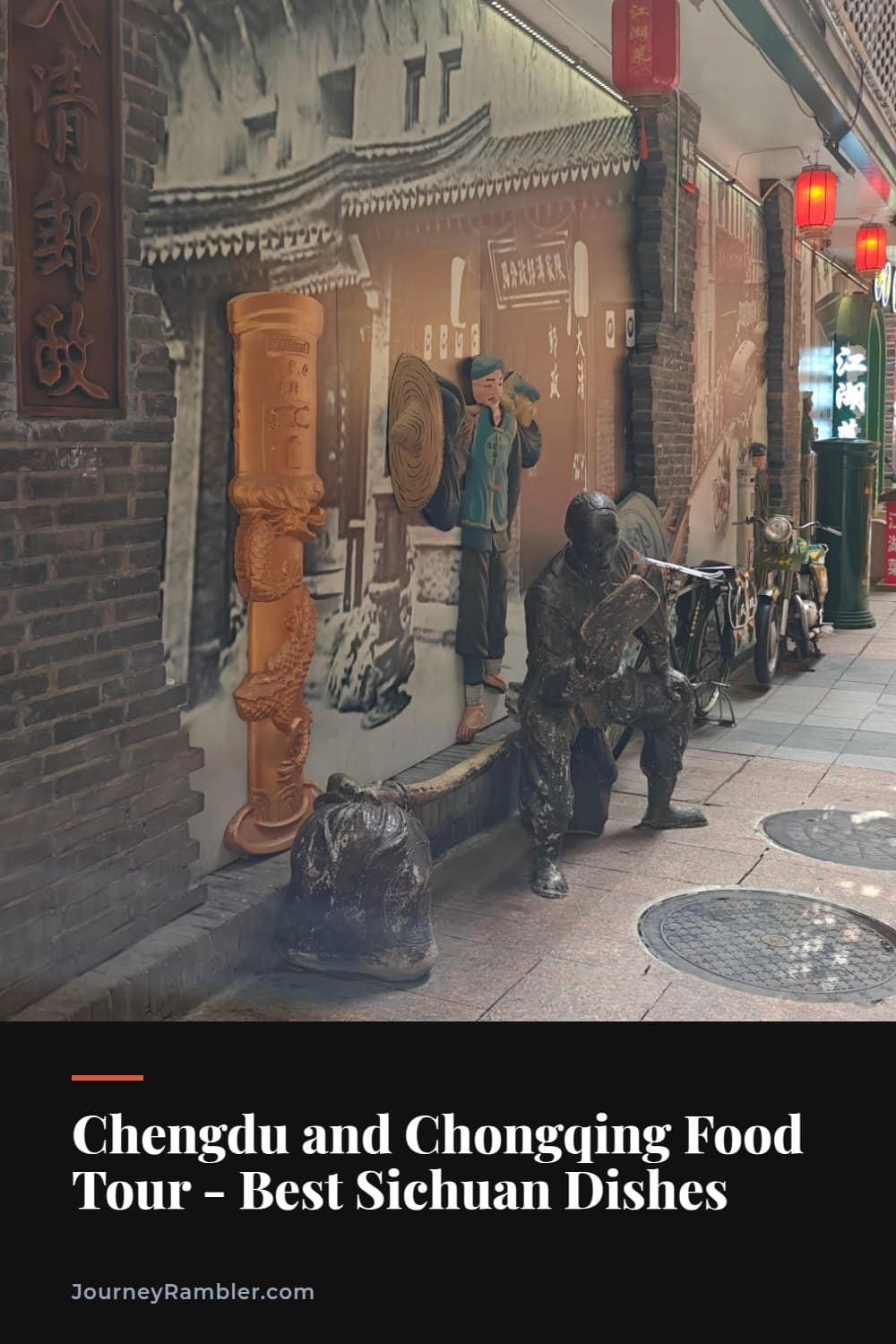
Bayi Food Street
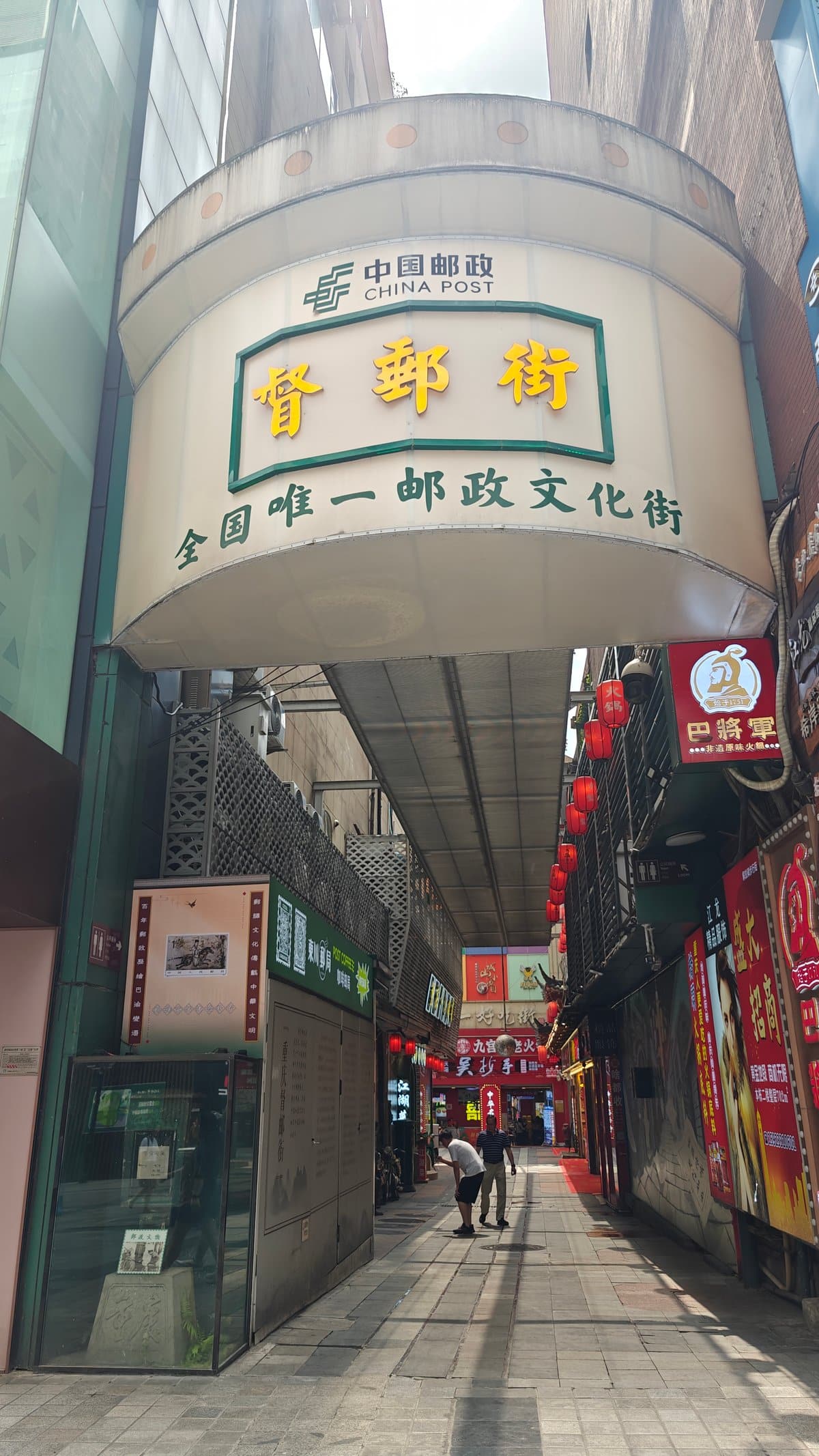
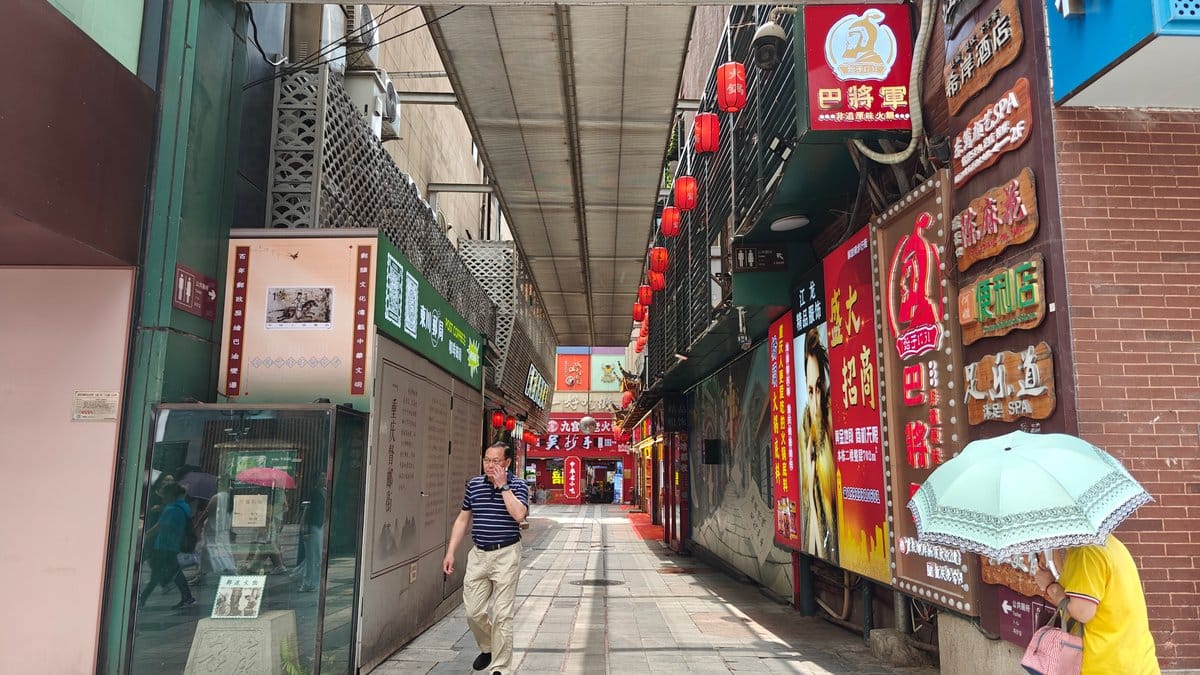
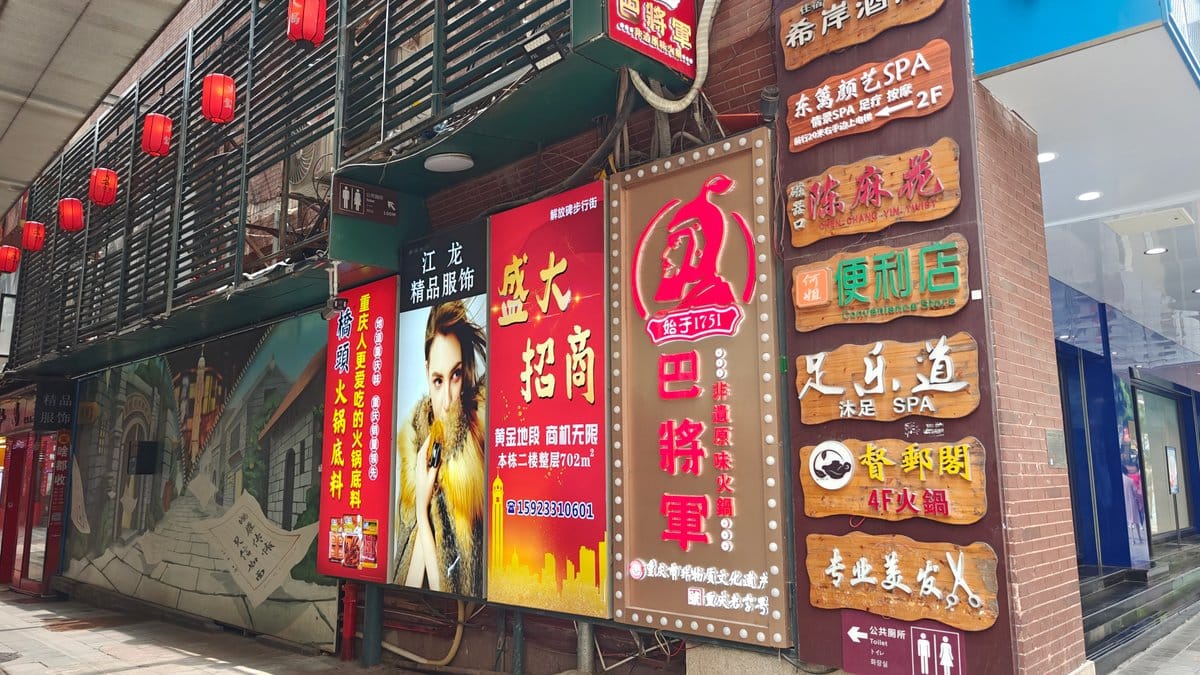
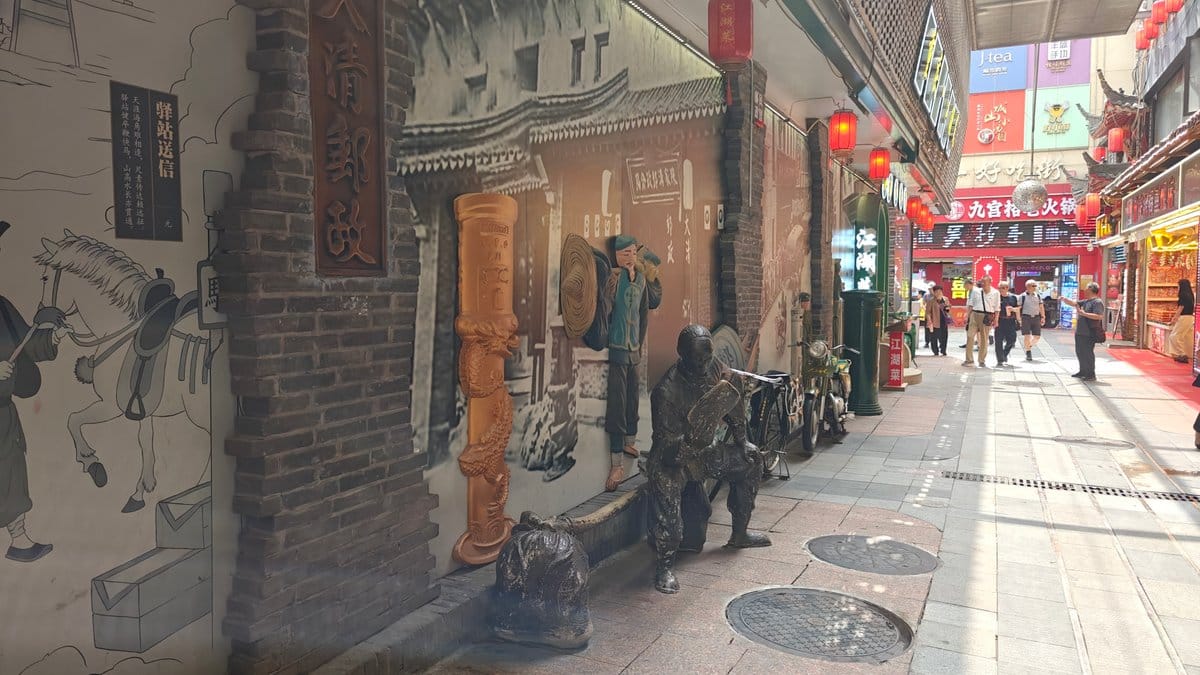
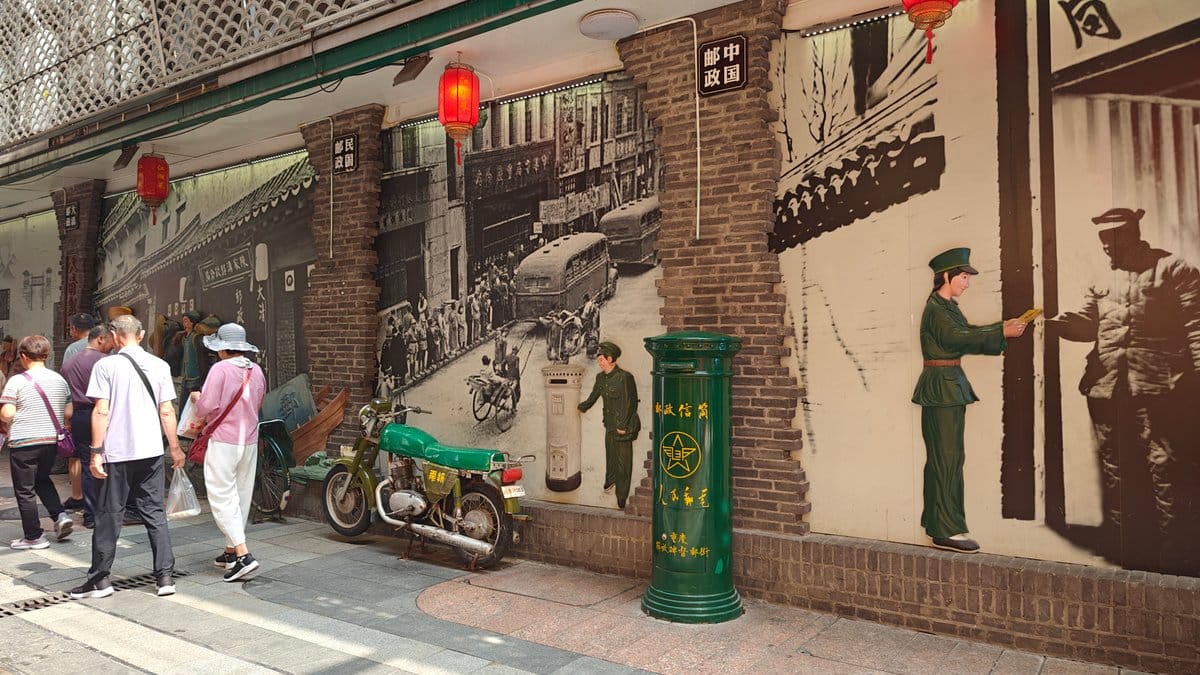
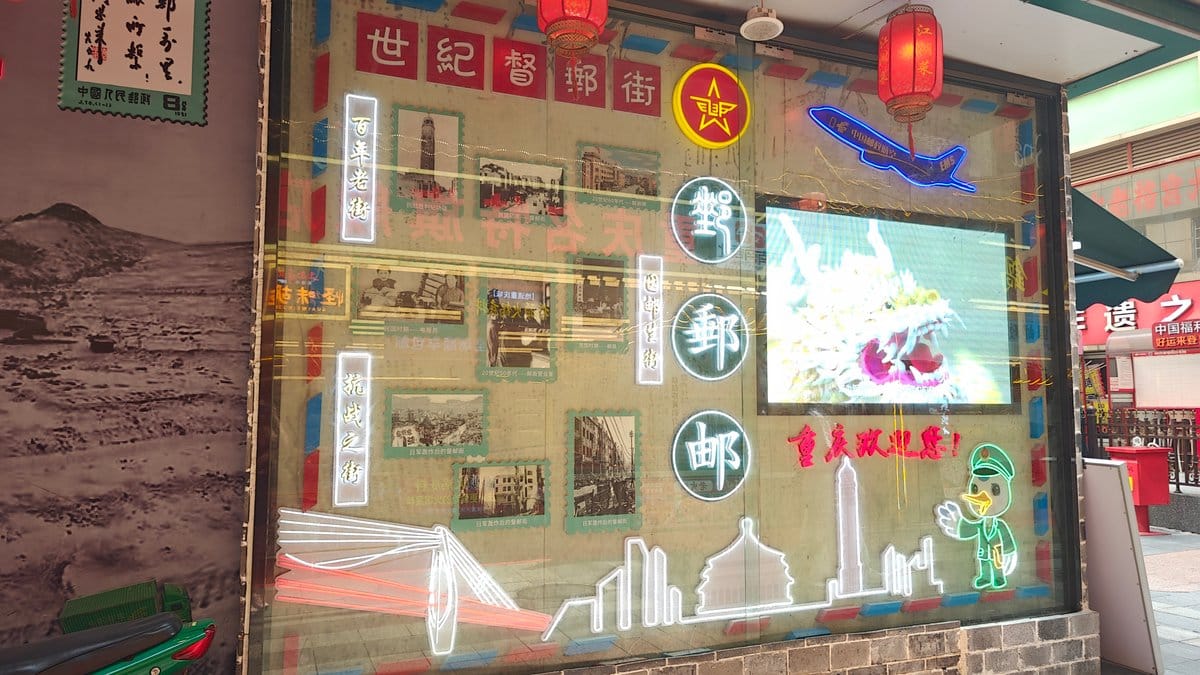
It ended up being Bayi Food Street, a covered lane hidden away in the middle of town, filled with old postal memorabilia and retro murals lining the walls. After wandering in one afternoon, I spent an hour poking around. There are little restaurants and food stalls everywhere along the lane, packed under a roof hung with lanterns.
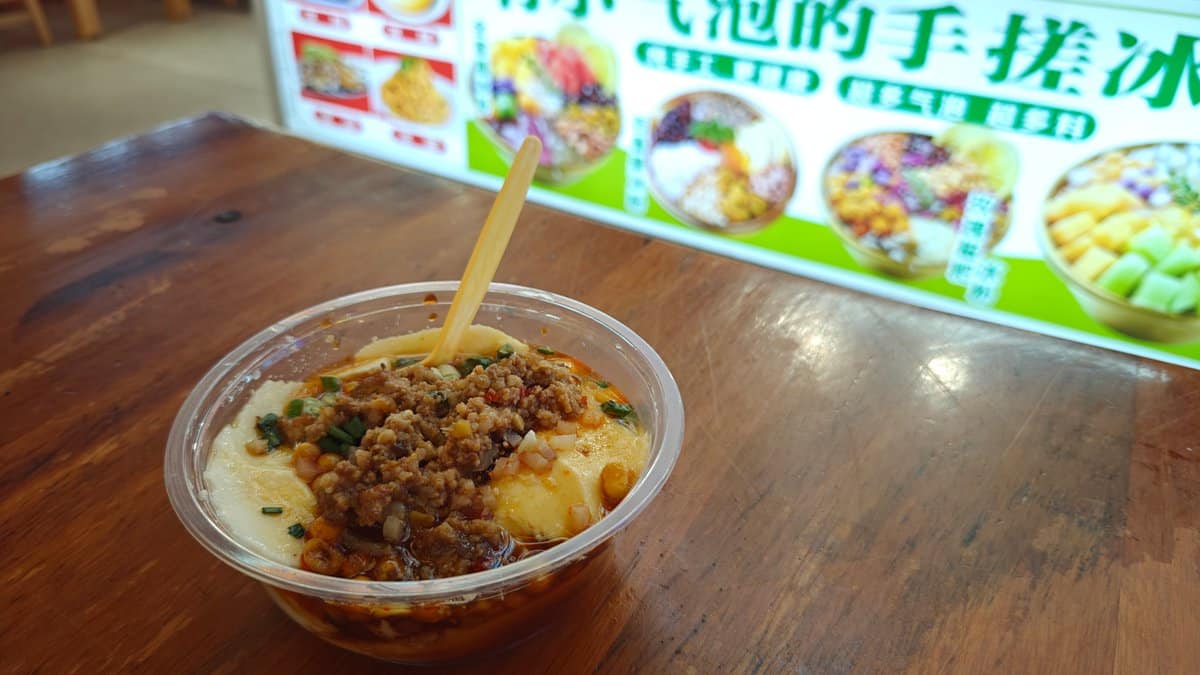
Old postal workers from decades past and scenes of old streets in Chongqing fill the murals, giving it a very nostalgic feel, despite the fact that most of what’s being sold there is quite moddern. I had a bowl of silken tofu pudding, which was smooth and barely sweet, a welcome reset after all that chili oil I’d been eating.
Testbed 2 Erchang Hotpot
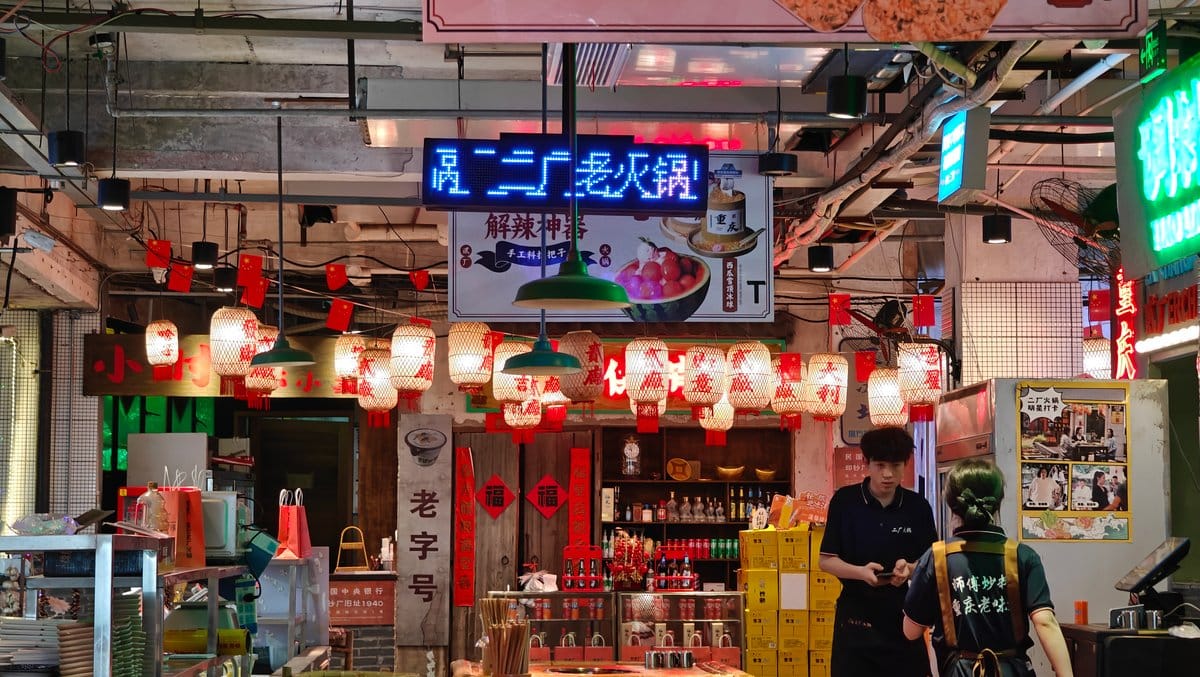
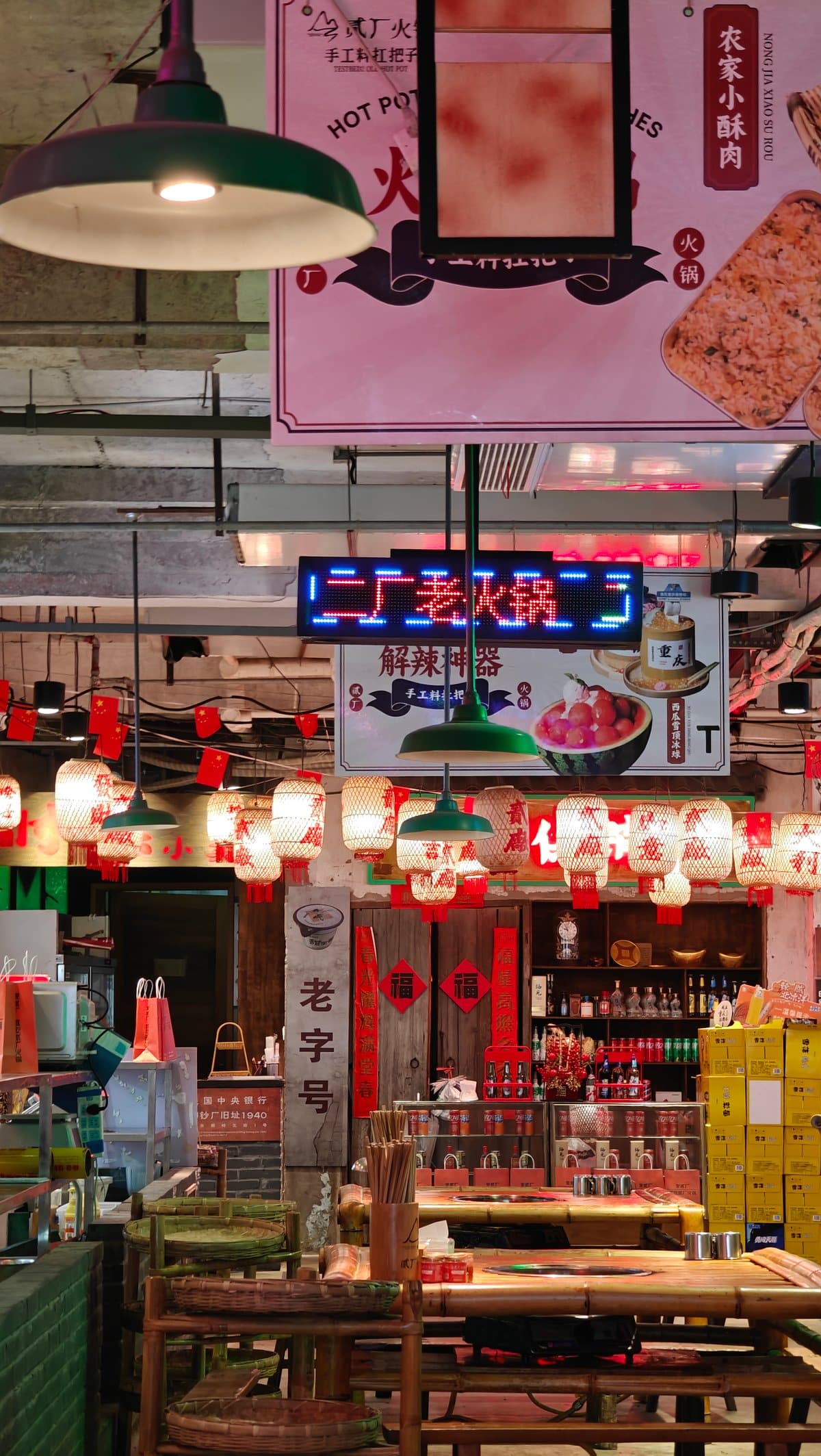
My first real hotpot experience in Chongqing was at Testbed 2 Erchang Hotpot, which had already set the bar high.
Inside, the retro-industrial decor is all steel and concrete with a few touches of neon. This time, I opted for a divided pot (meaning I got to have both the mild and spicy broths), but even the mild side was pretty spicy when compared to anything that’s normal.
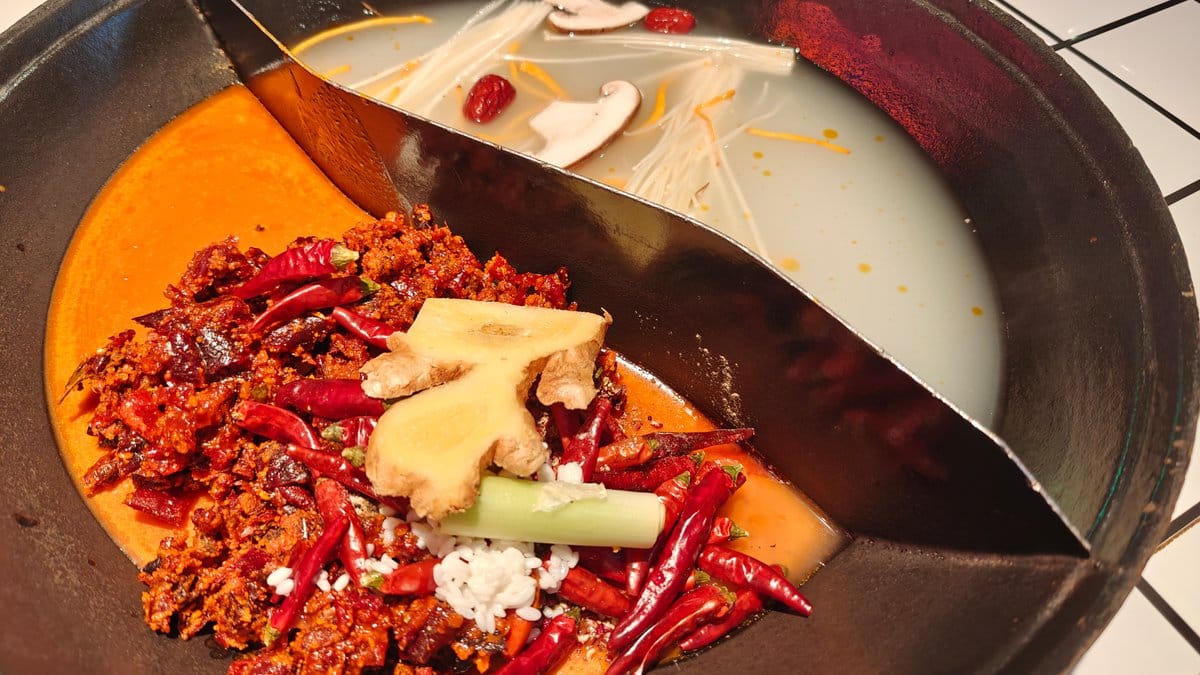
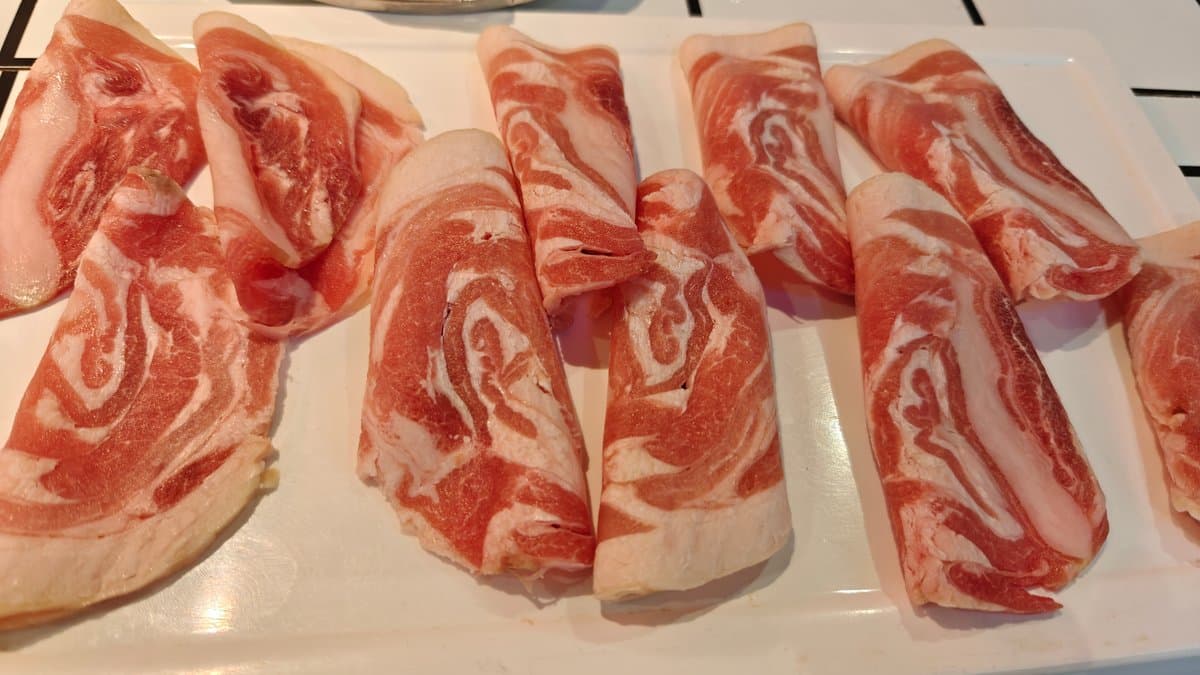
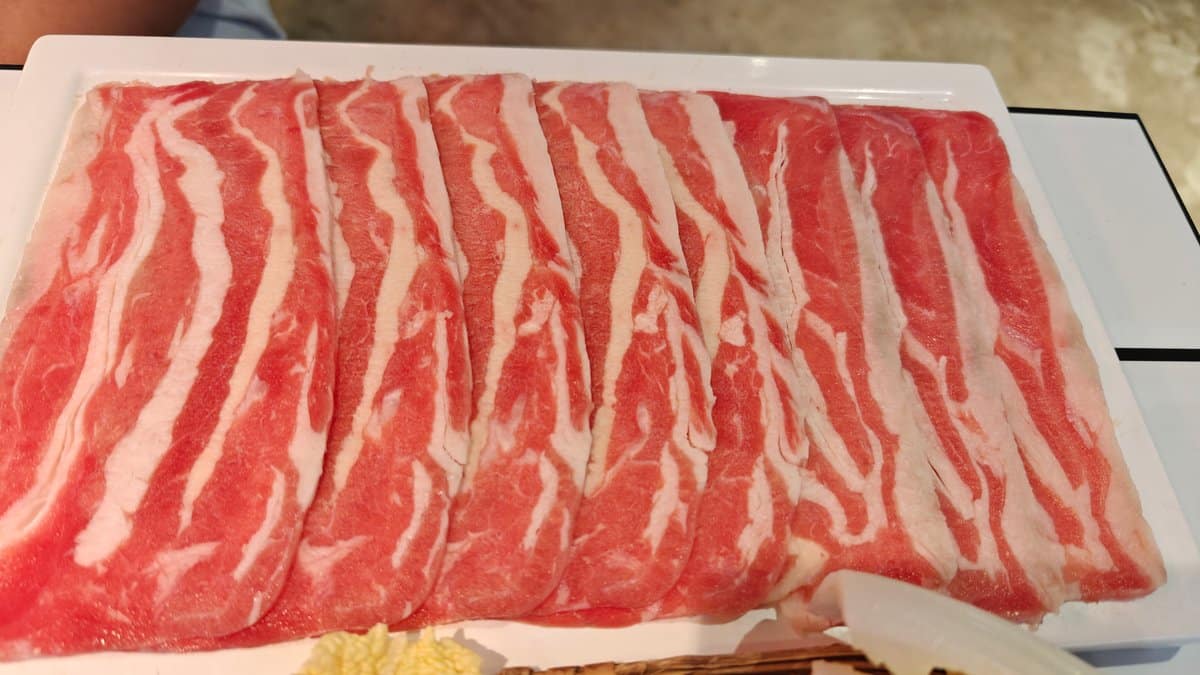
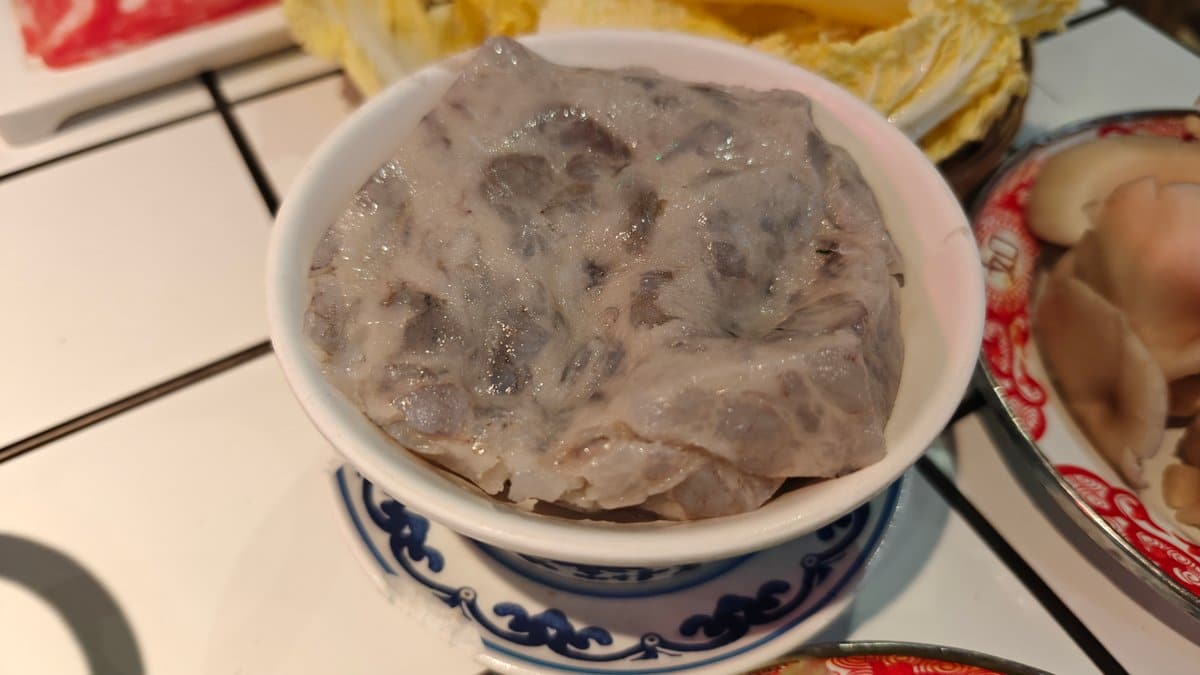
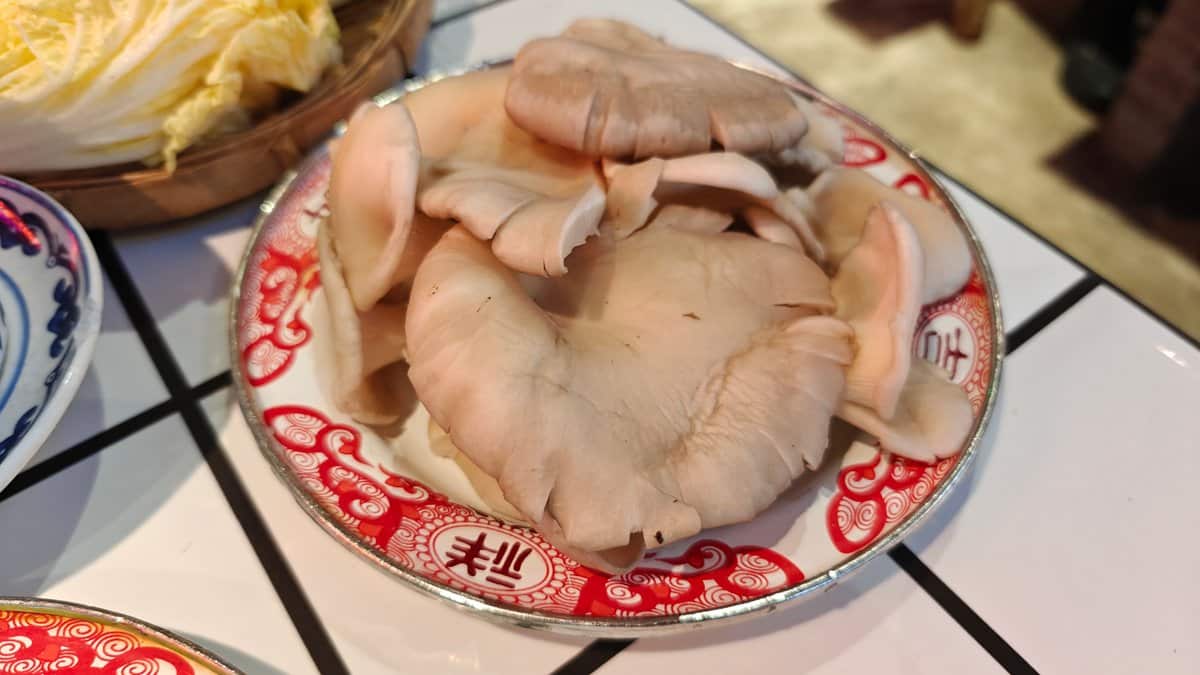
A mound of fresh oyster mushrooms, some beef tripe that came out translucent and slippery, and thinly sliced pork belly followed. The red oil bubbled away hypnotically while the meat cooked. It soaked up the numbing spice and the edges of the pork belly crisps up.
I had twice as much as I should of, but I don’t regret it for a second.
Zhoushixiong Hot Pot
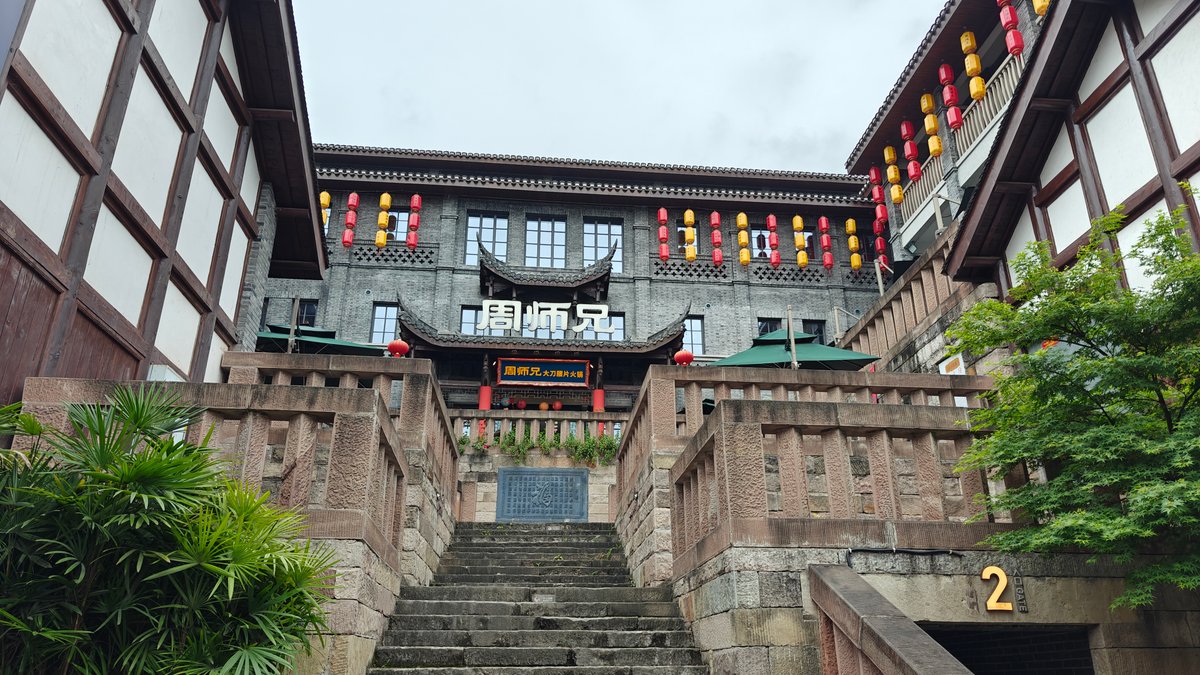
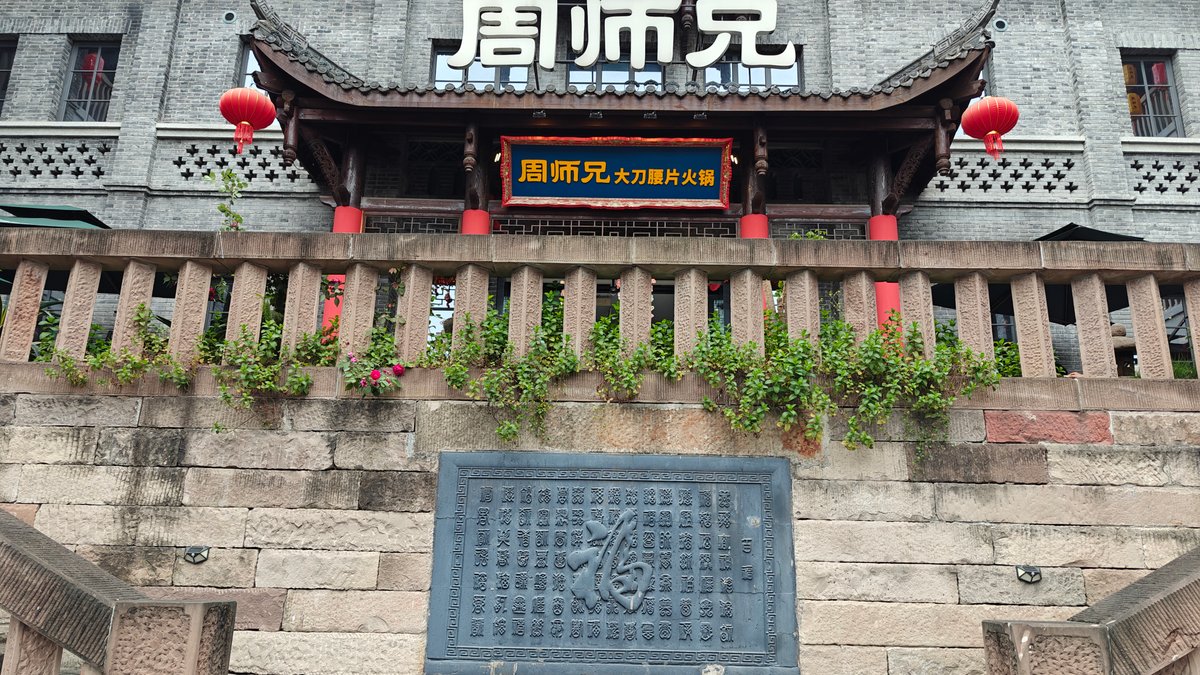
And speaking of not having regrets, I regret nothing about eating at the Chongqing branch of Zhoushixiong. This place is a big chain. It’s packed on a week night.
From the moment you see the storefront (all sleek signs, with a line of customers waiting outside) you know: this thing is serious business. It was a real feast.
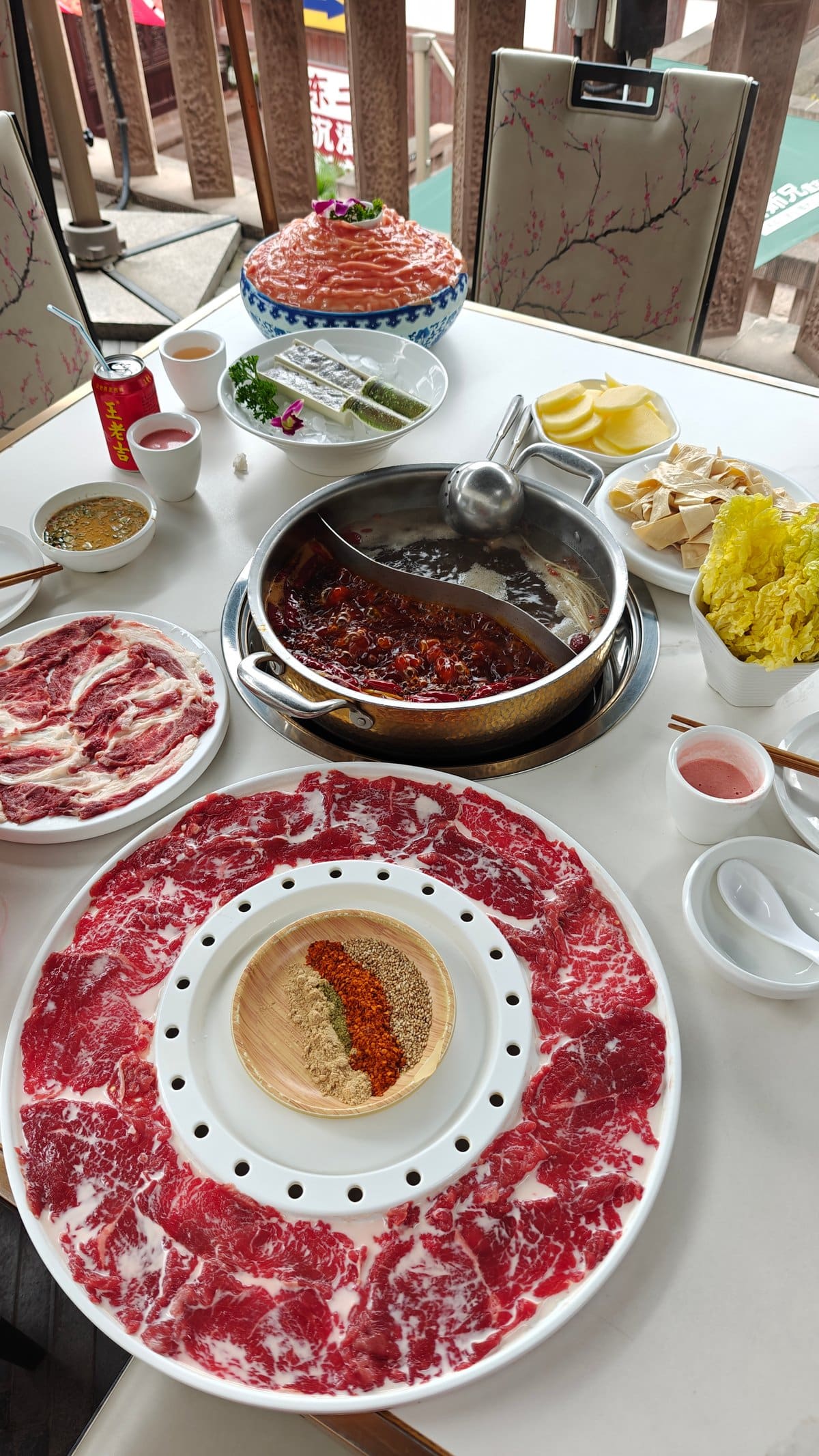
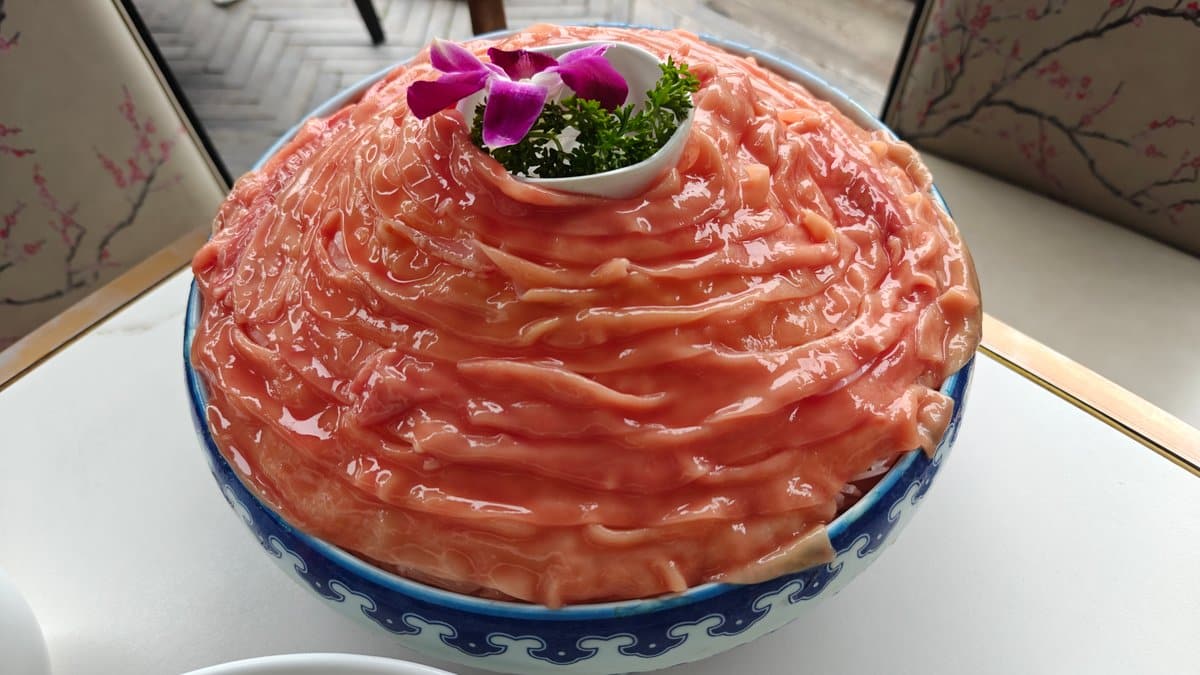
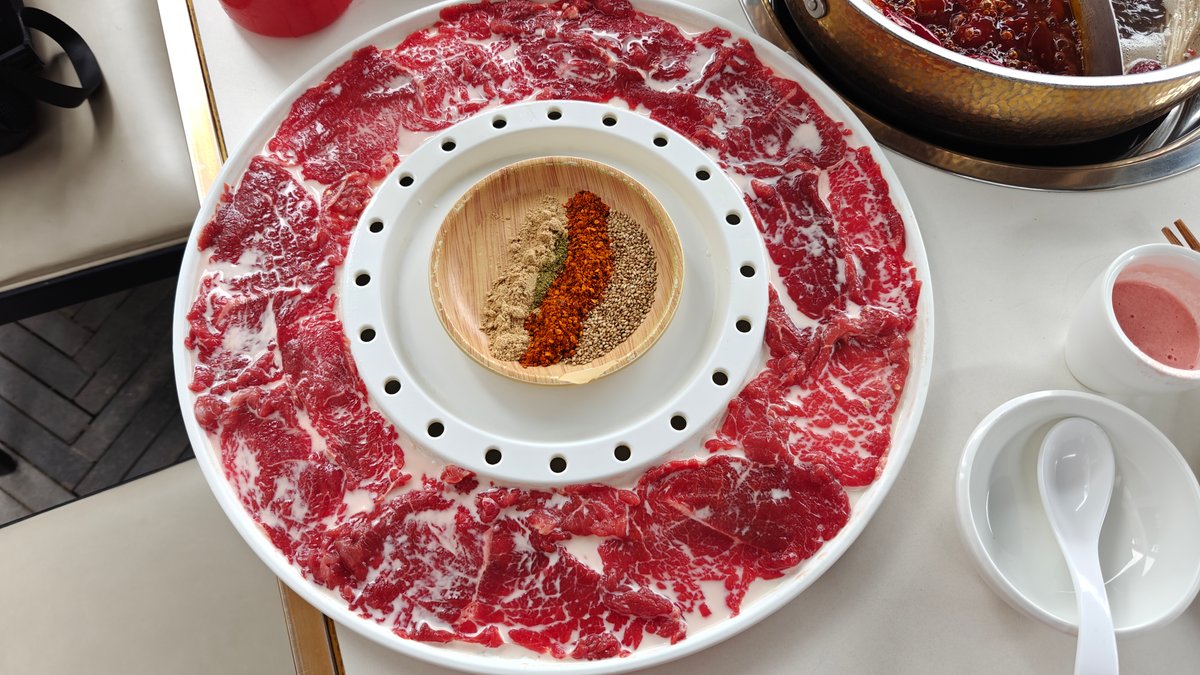
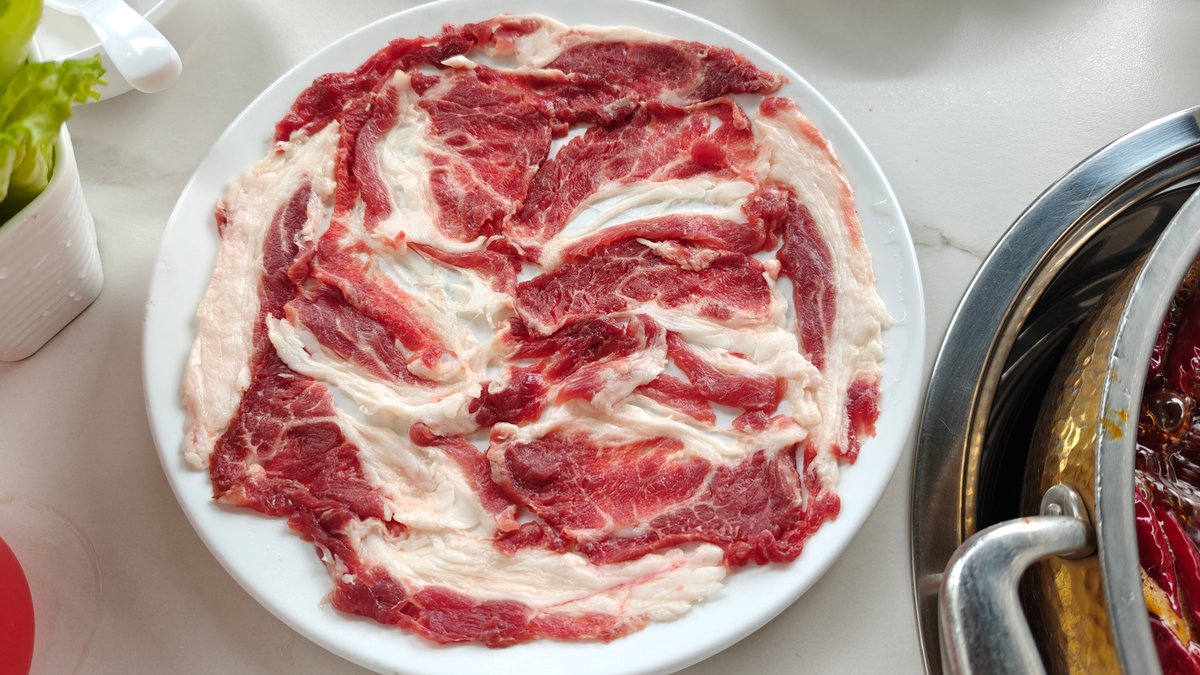
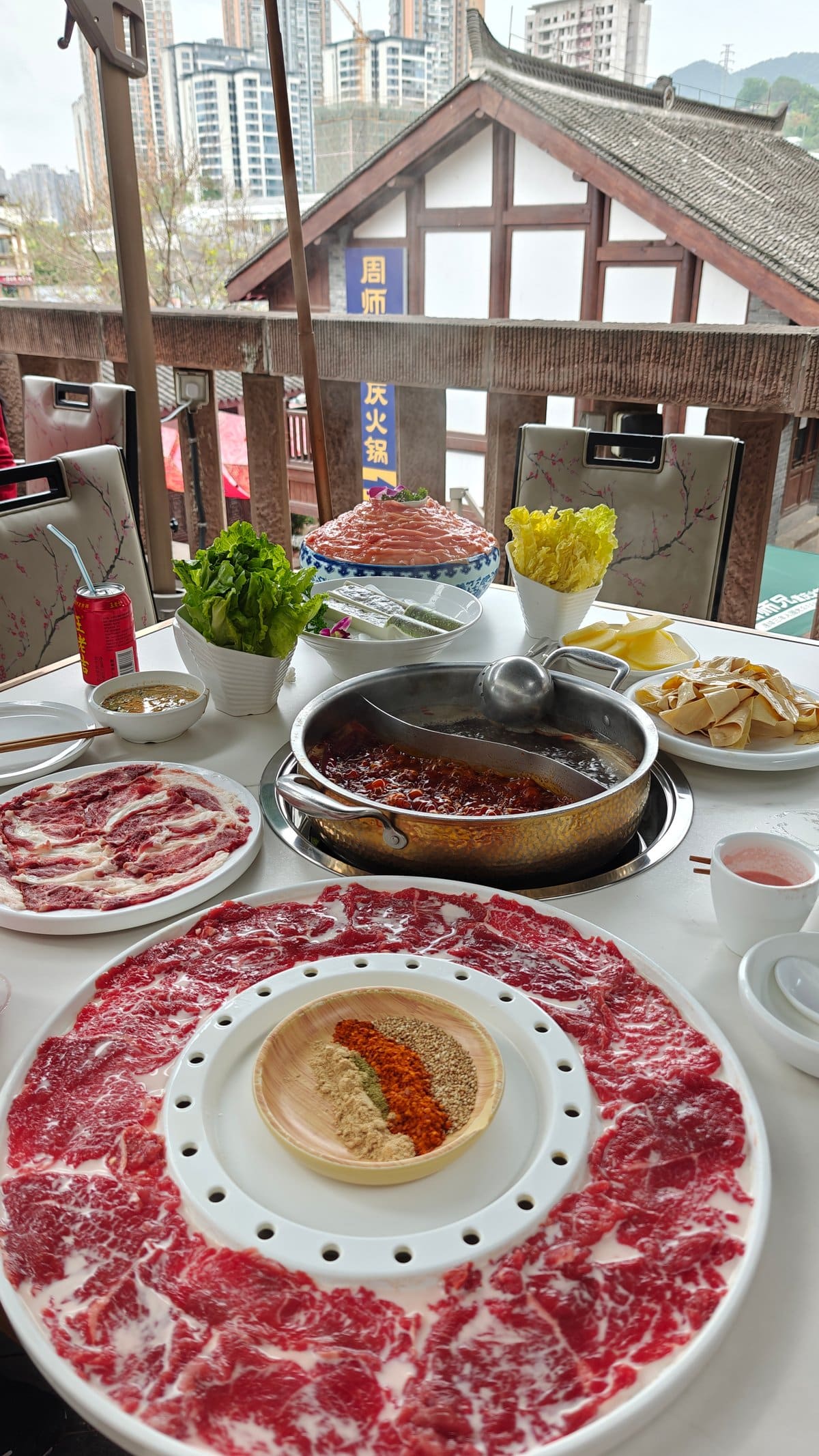
They brought us some kind of sliced, marbled beef that melts in your mouth, some thinly sliced pork kidney that wasn’t nearly as gamey as I thought it would be, and lamb belly (I believe). They put everything on these nice platters and then we all threw it into this pot that was literally boiling over with peppercorns and chili oil. After a couple of attempts getting the timing down, since the kidney turns rubbery if left in too long; I found my stride and it was delicious.
The table was completely lined with empty plates by the meal’s conclusion and I could hardly walk from being so stuffed.
Banquet in Ba Kingdom
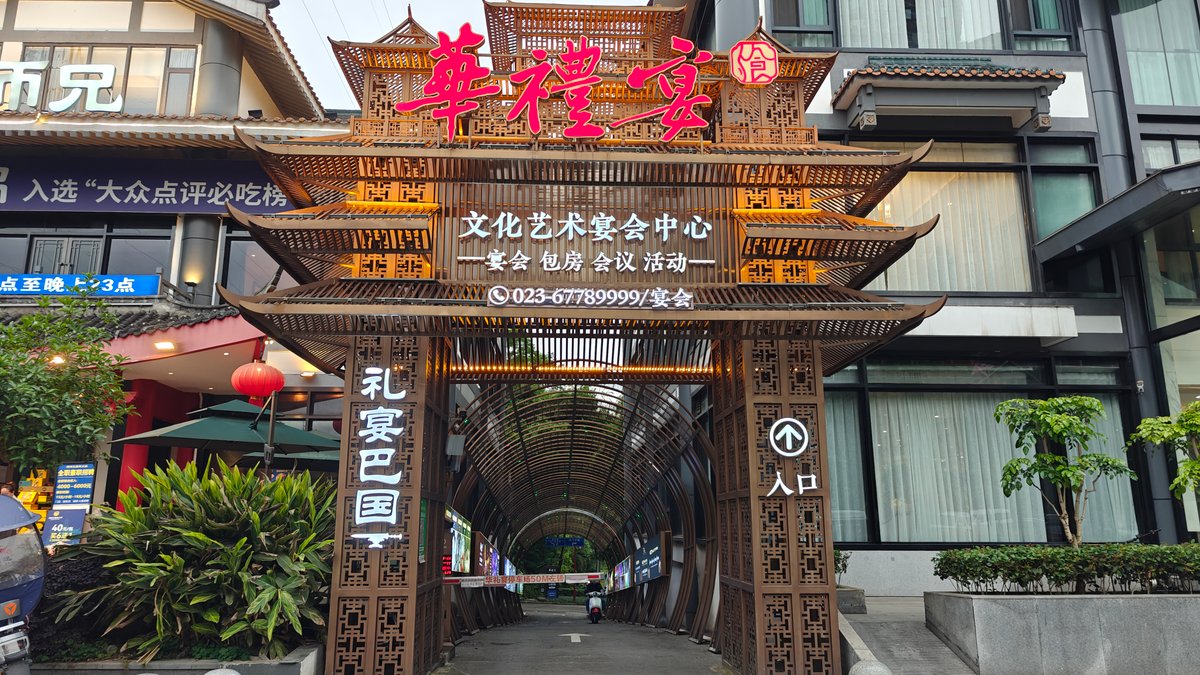
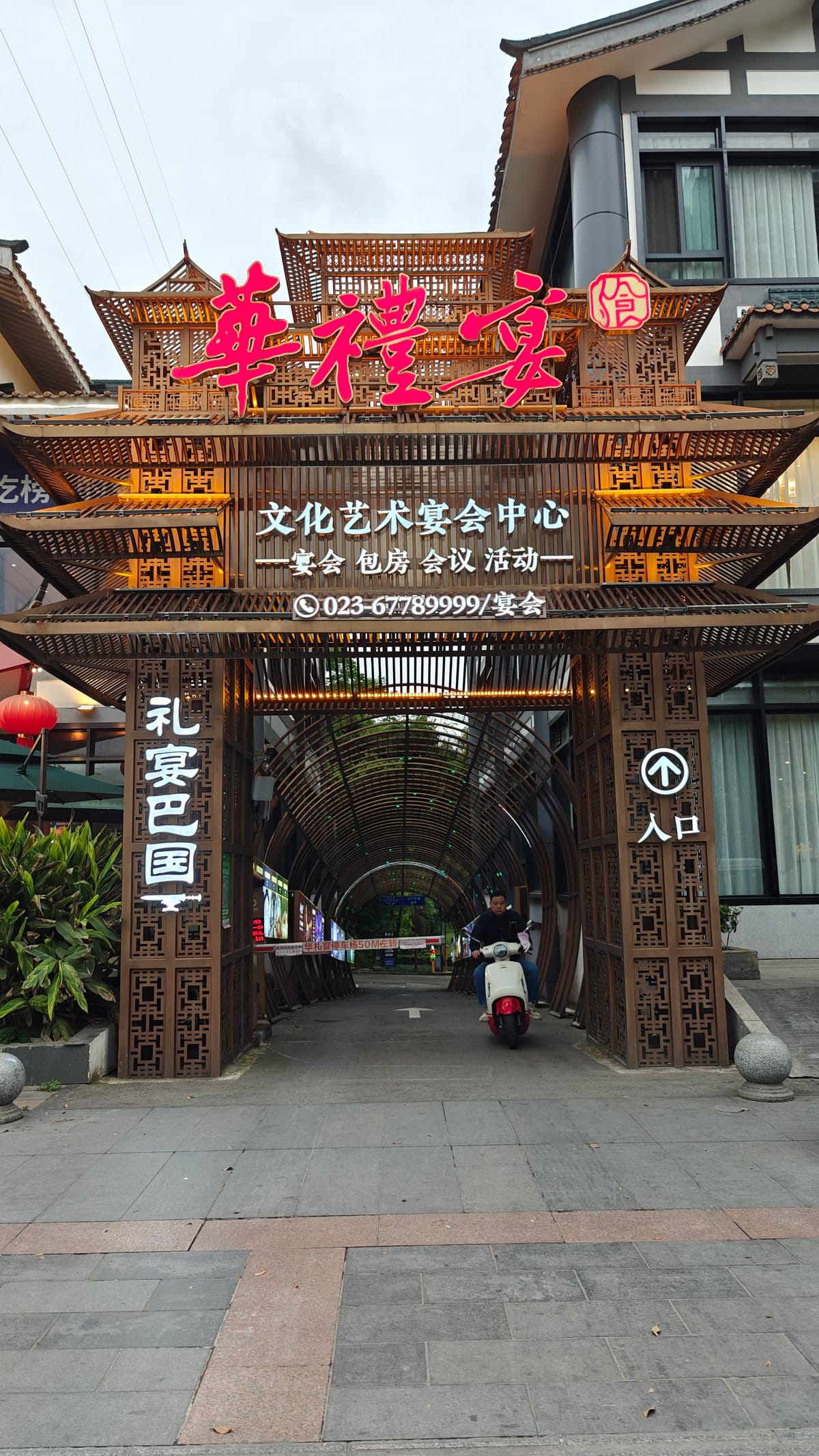
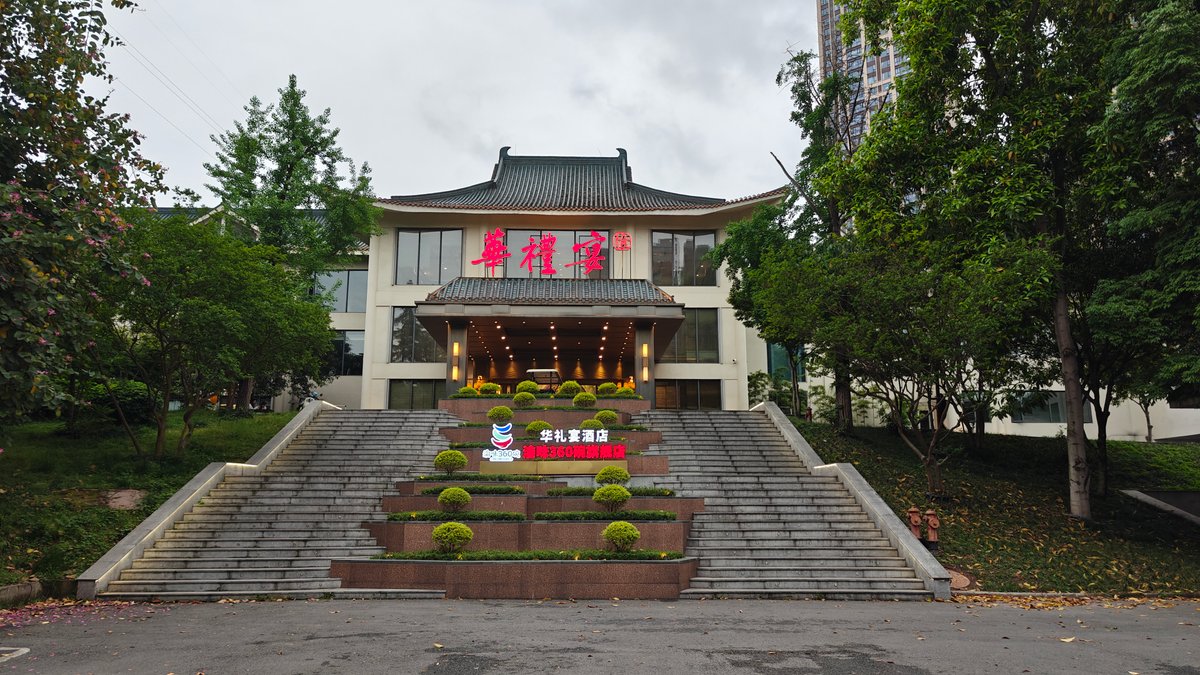
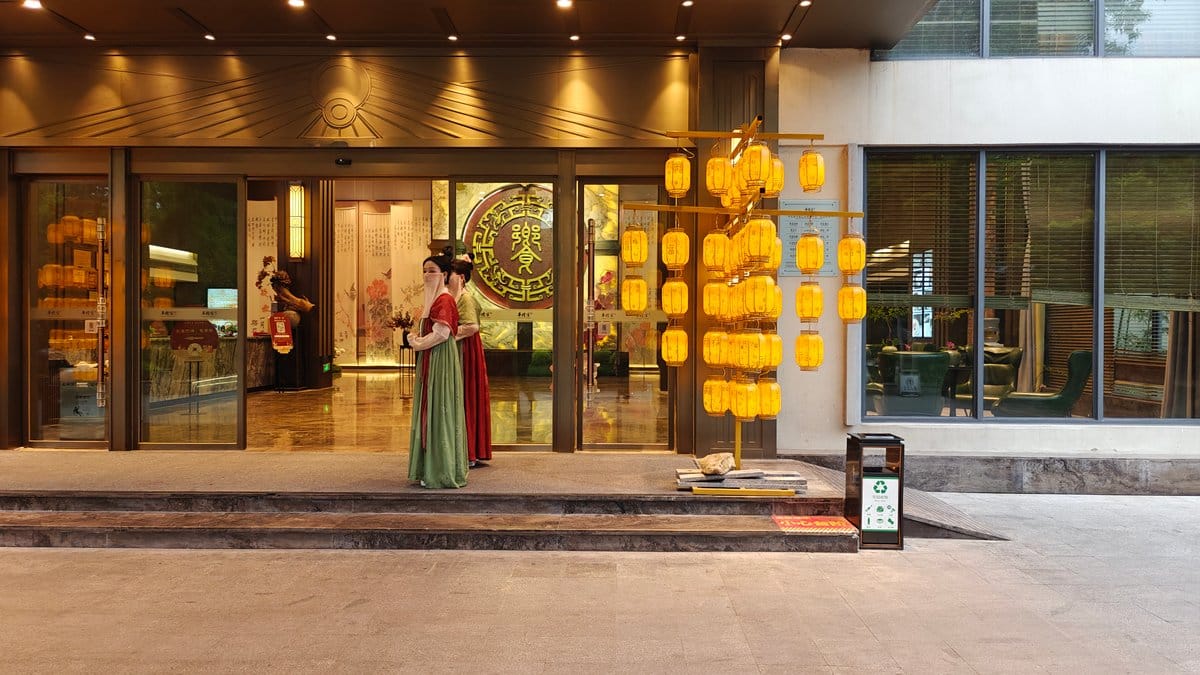
Banquet in Ba Kingdom was the fanciest meal I had in Chongqing.
Outside there’s a massive wooden gate straight out of a period drama. There is also another long flight of stairs up to the restaurant.
Inside is a traditional-style building with carved eaves and a costumed hostess by the entrance. I felt underdressed as I walked in.
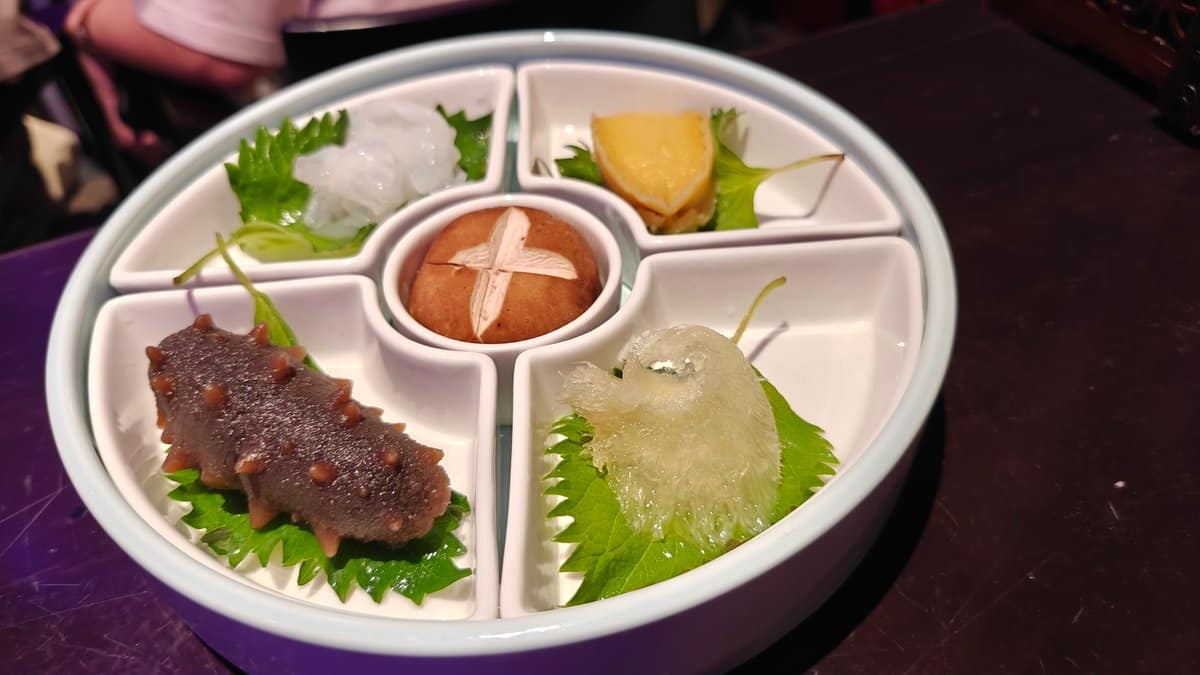
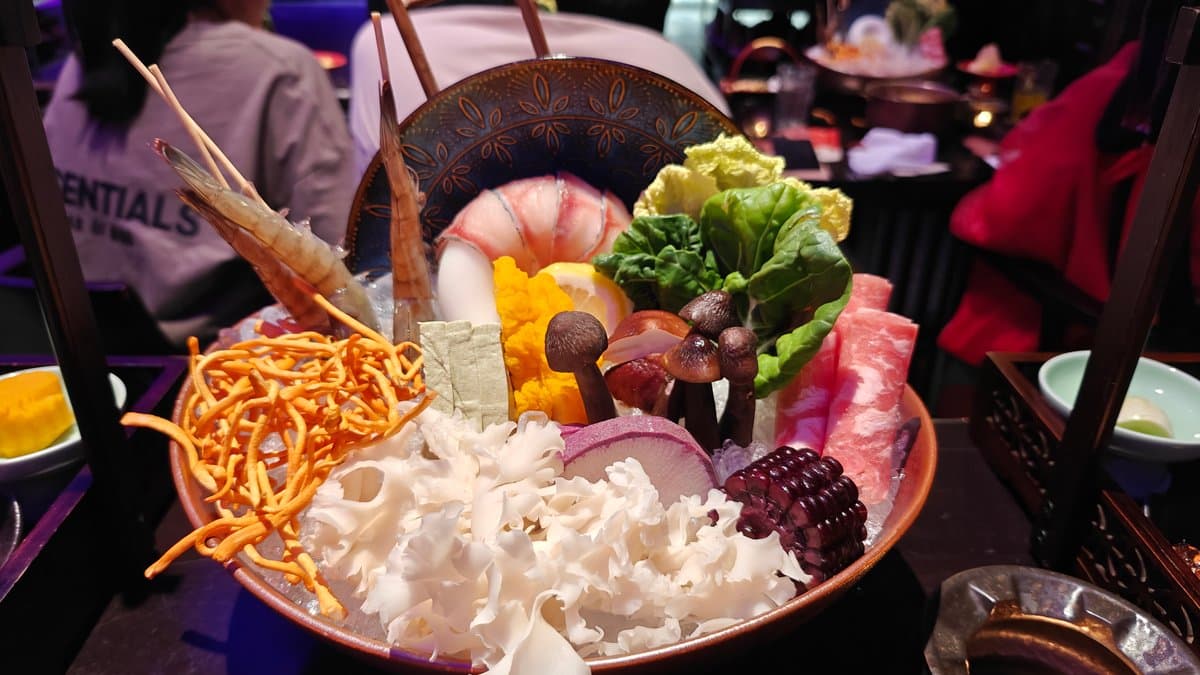
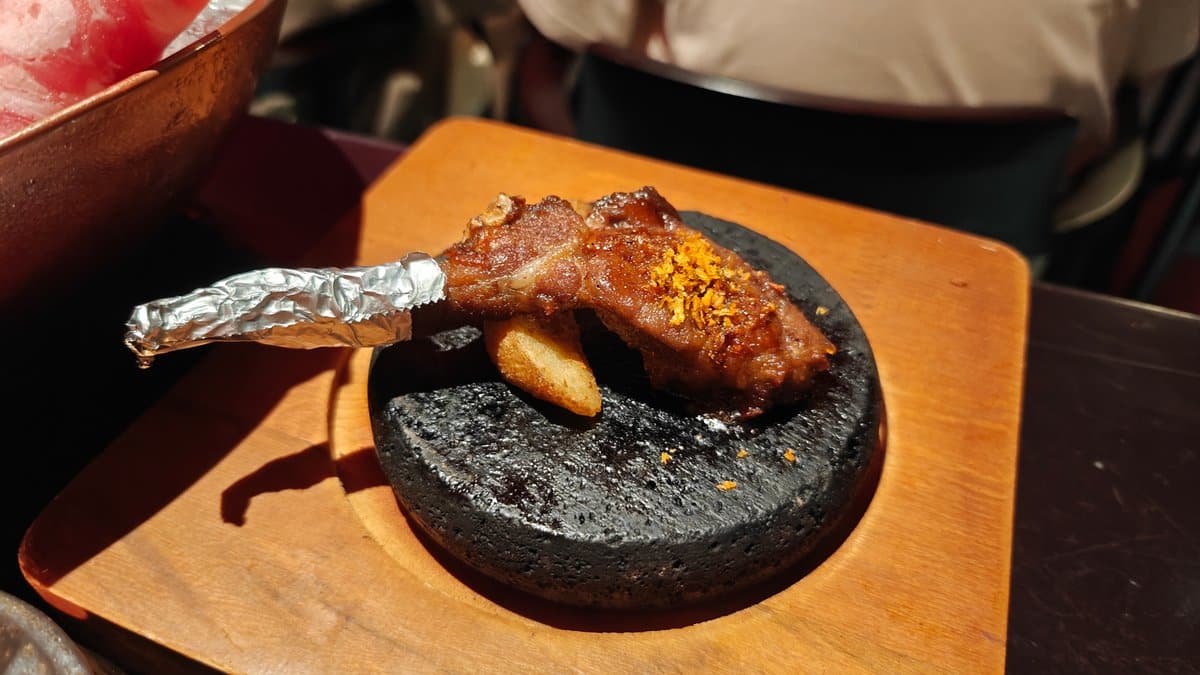
First up were a large cold appetizer platter filled with assorted spiced and pickled veggies/meats. After that we had a shared hotpot set-up, complete with loads of thinly sliced veggies and meats. We also received a grilled lamb chop delivered on a hot stone while it was still sizzling.
It was seasoned heavily with cumin, which I think is typical of western Chinese food; it was also juicy and well-charred. There was just so much happening: it felt like a banquet and I guess it was supposed to feel like one.
Miao Long Table Banquet
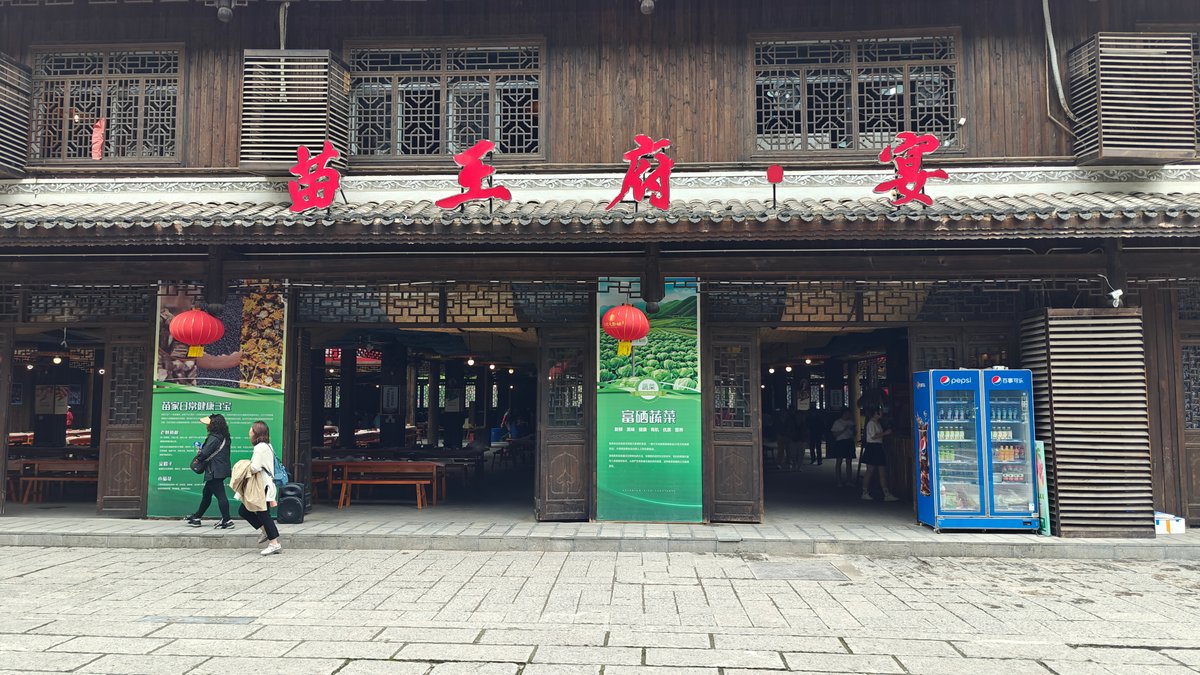
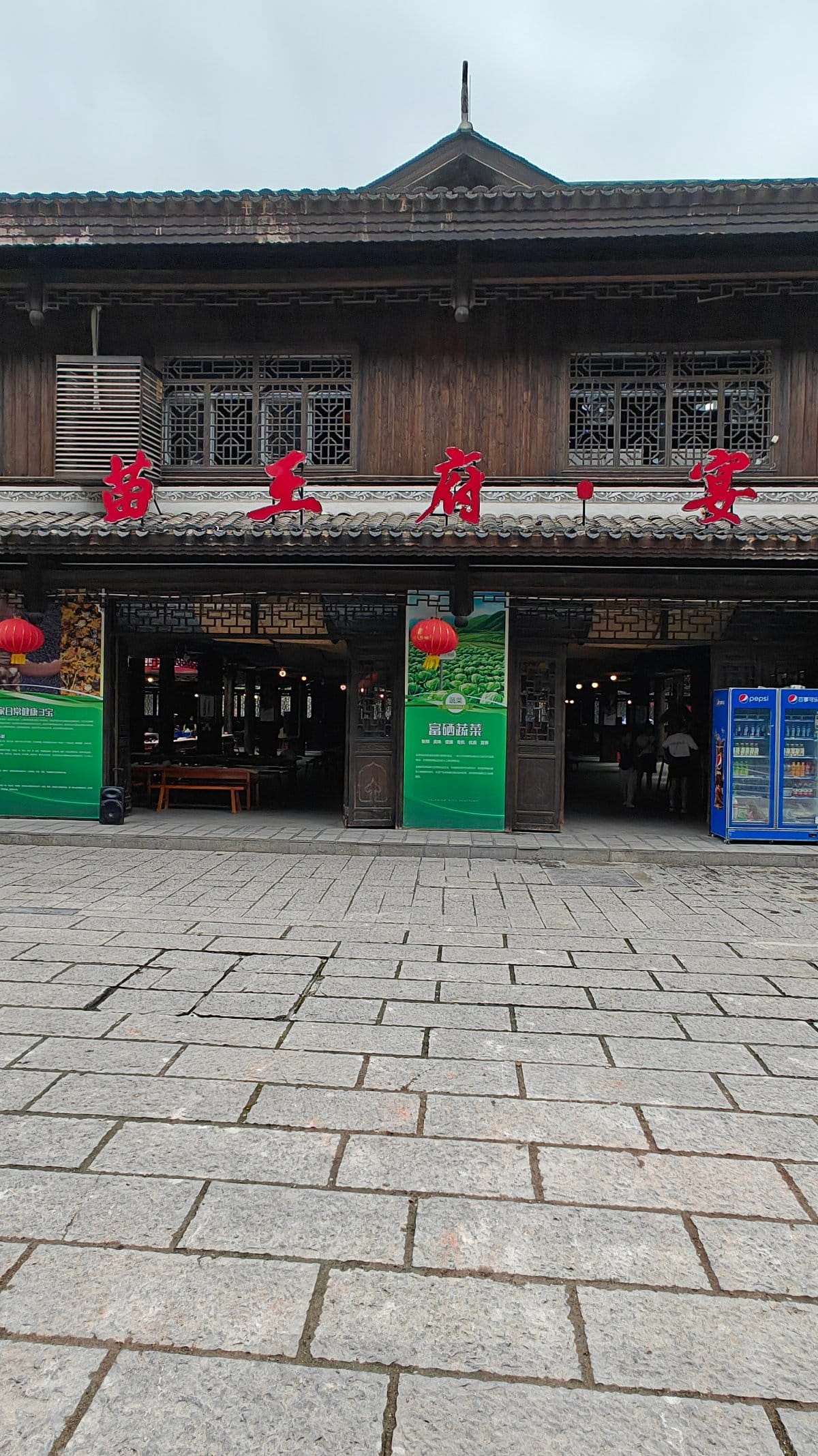
Then there was Miao Long Table Banquet. This was an entirely different experience. The whole restaurant is themed after the Miao minority culture.
They host long-table banquets, which is where the name comes from, where diners sit at many long wooden tables running down the middle of the dining hall. traditional decoration hung from the walls of the storefront, which was also decked out with banners.
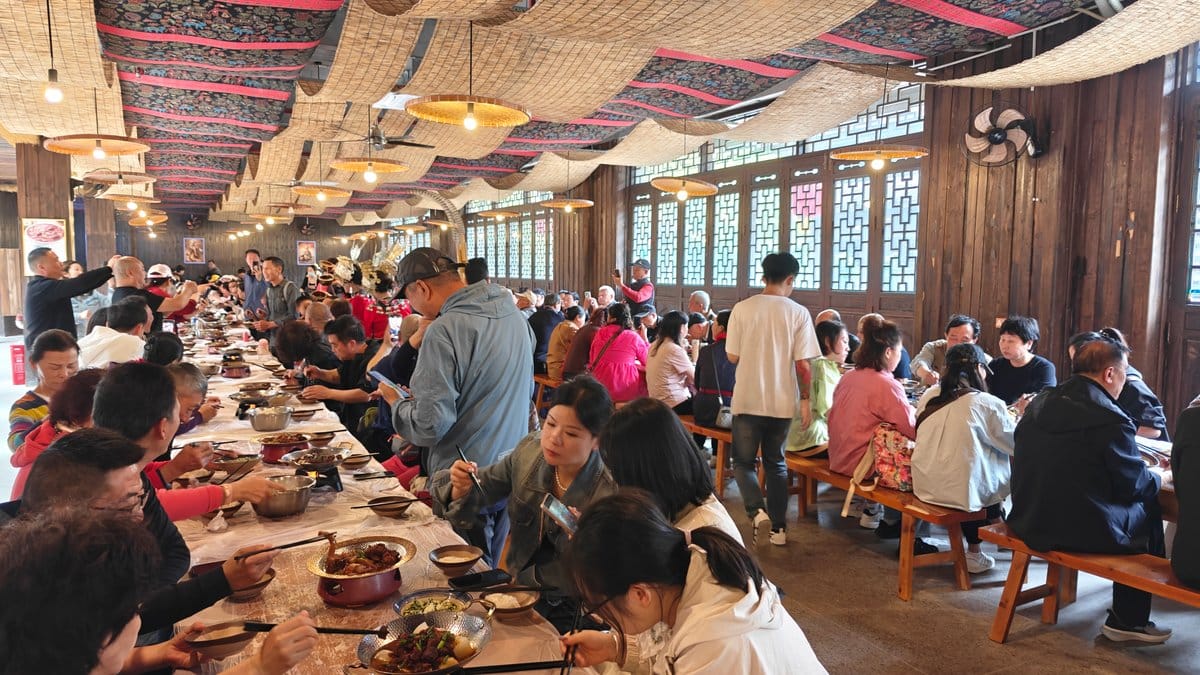
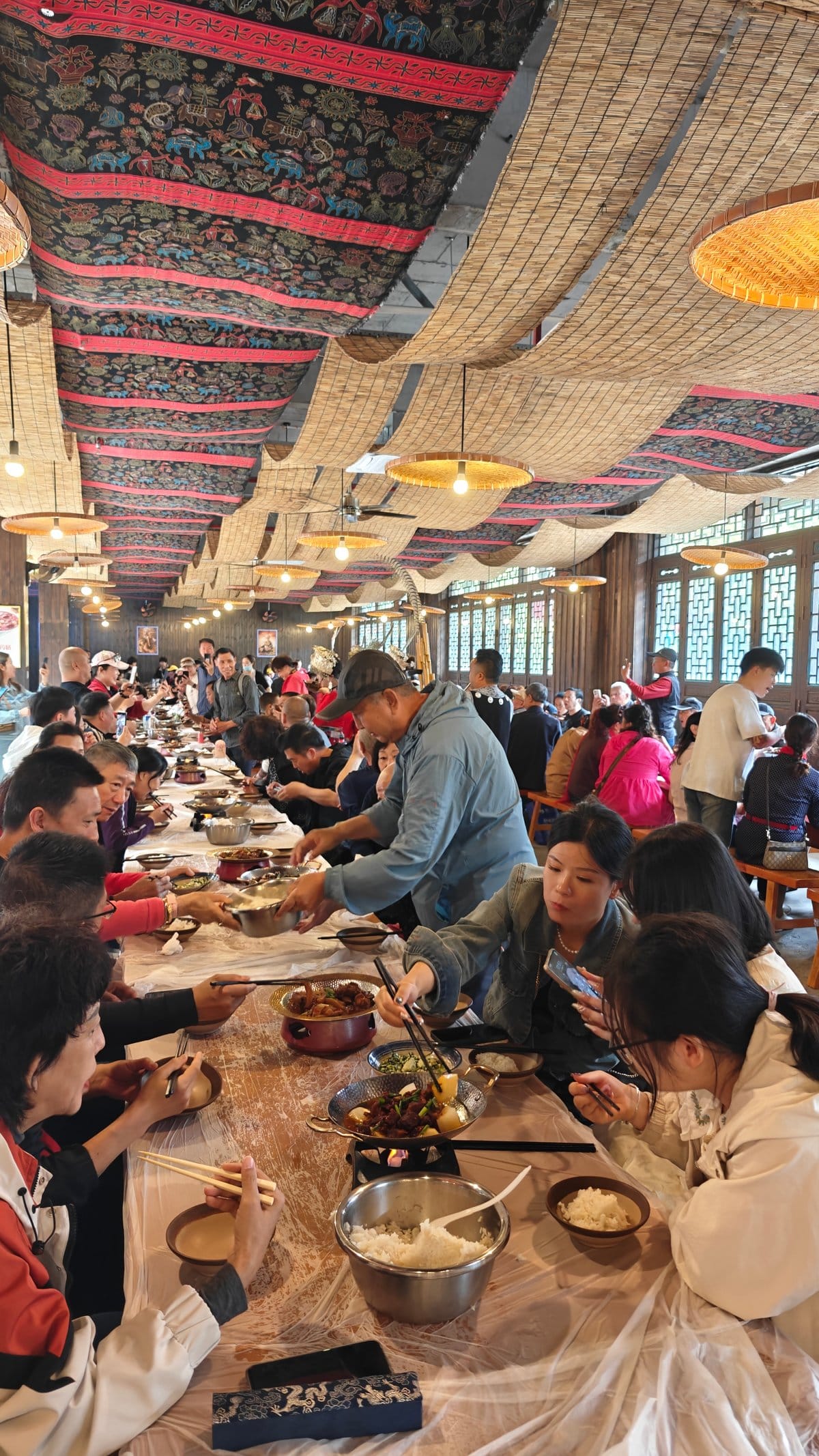
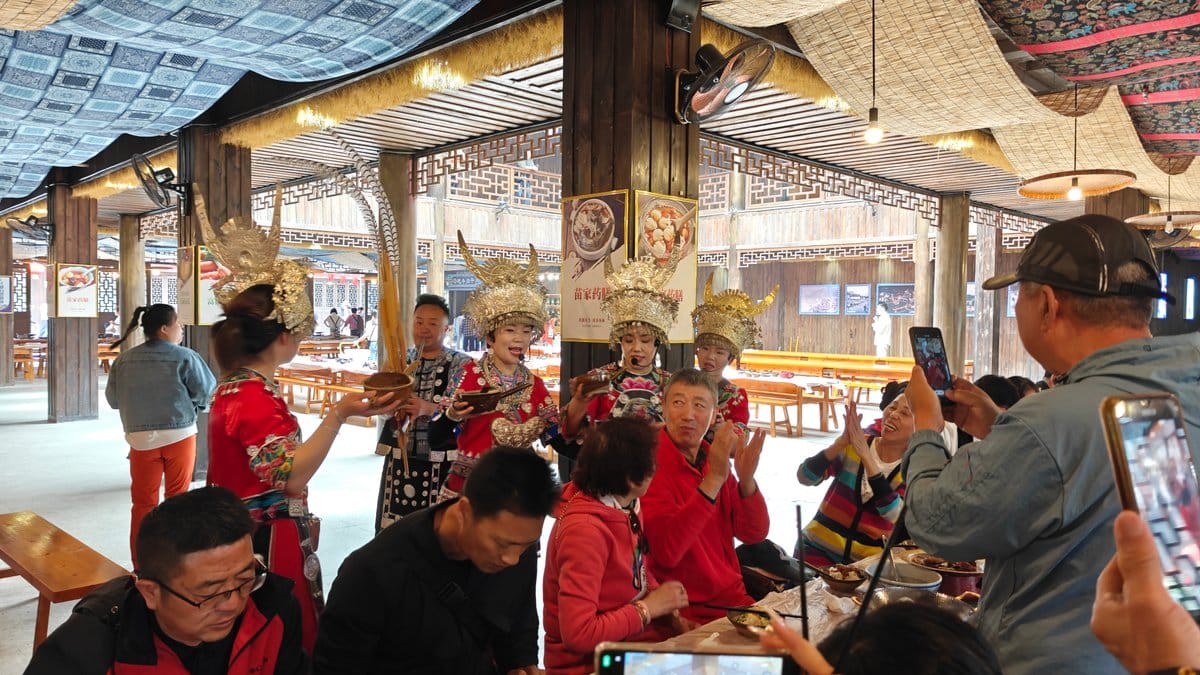
During our meal, some of the staff and even some of the other diners toasted and sang to us while wearing traditional Miao dress. It made for an atmosphere that was loud and festively fun. To be honest, it felt like more of a party than a dinner.
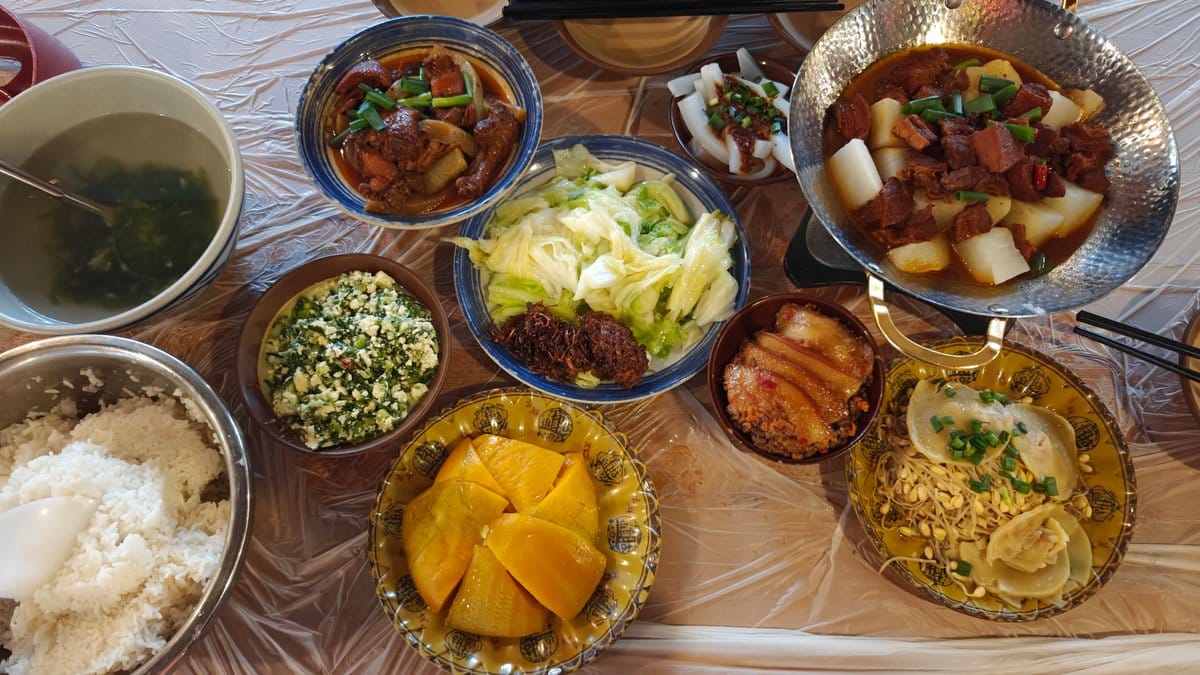
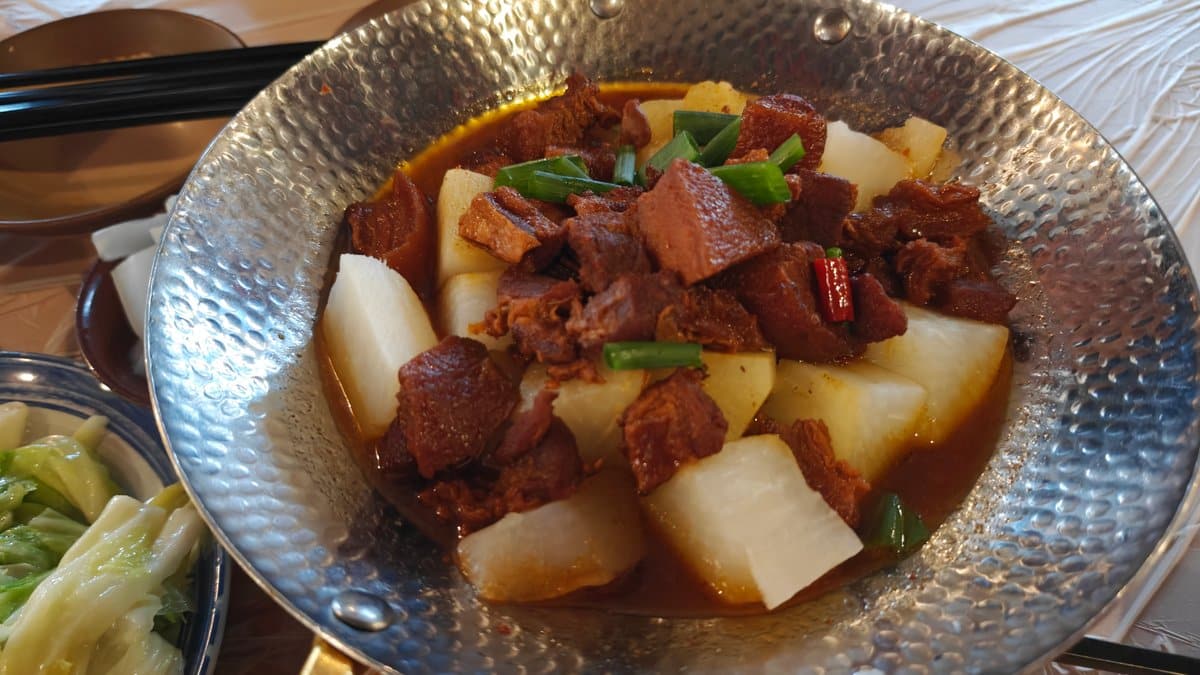
And then there’s the food, it is homestyle and hearty. There was braised pork with radish that was slow-cooked so that the meat fall apart, along with a bunch of other shared dishes. The concept is to pile up your bowl and reach across the table, eat it family style.
It was fun, and chaotic. I left full to bursting.
Bashu Dajiang Hot Pot
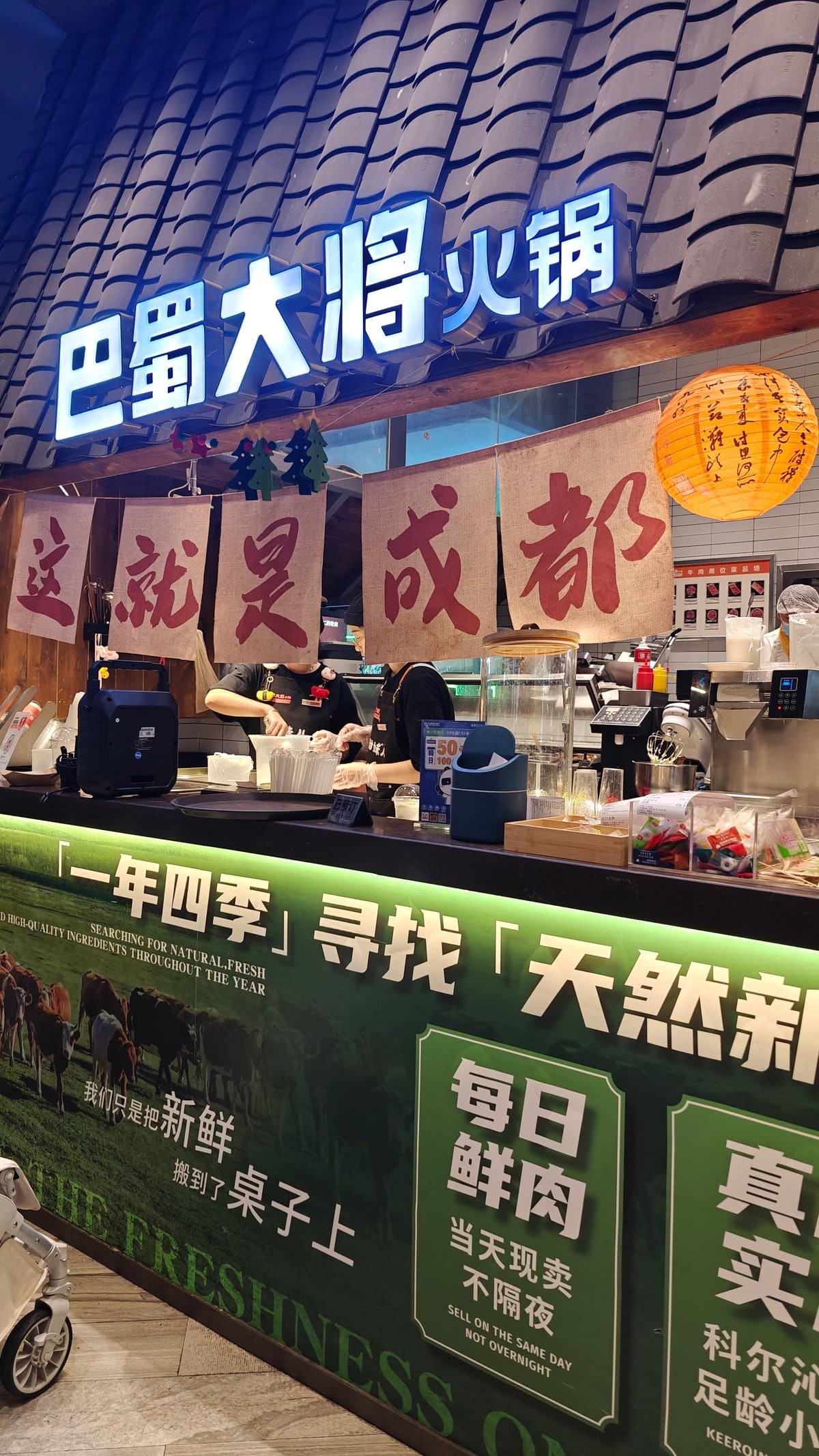
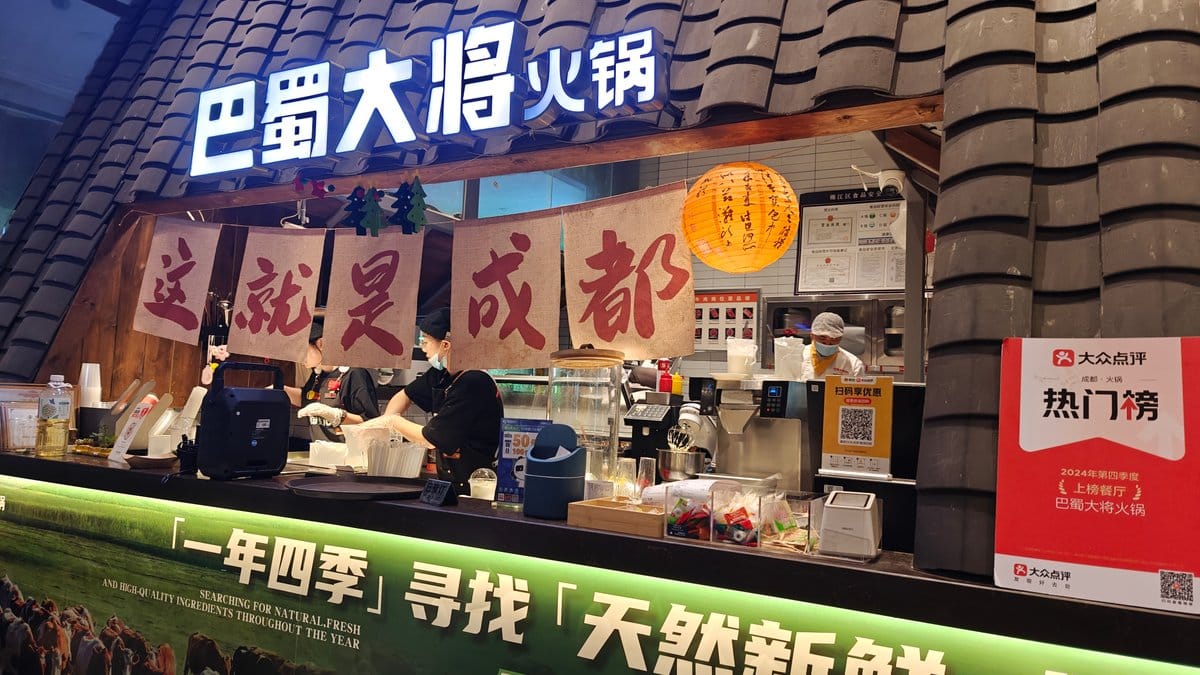
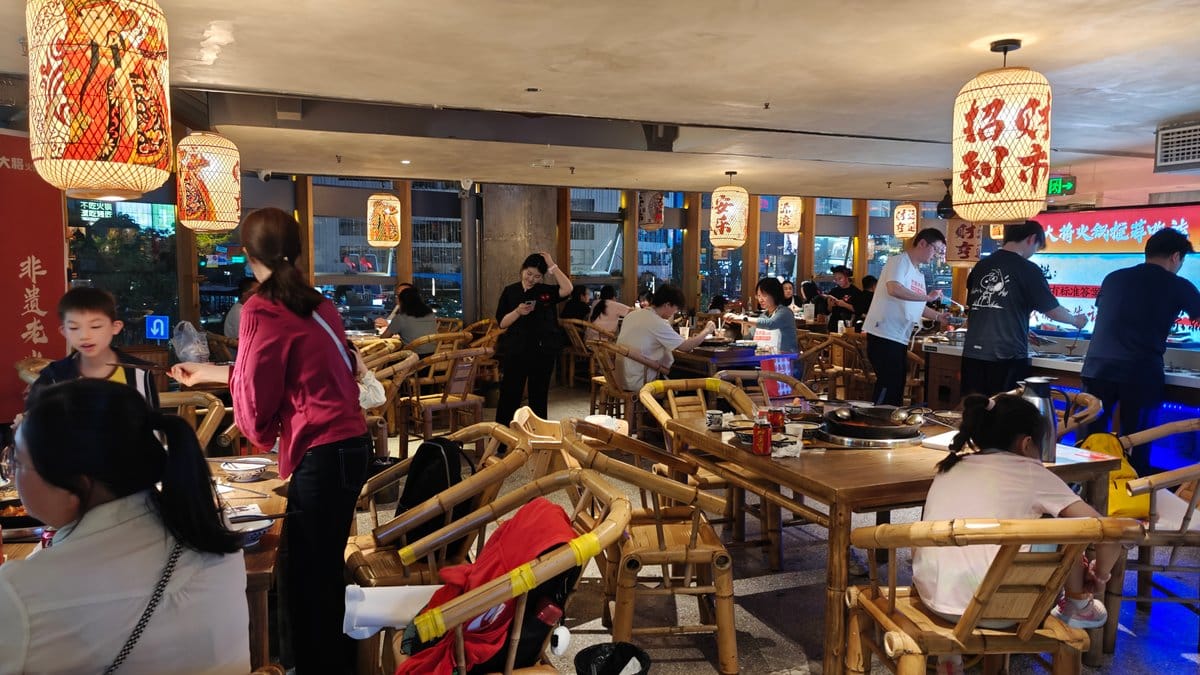
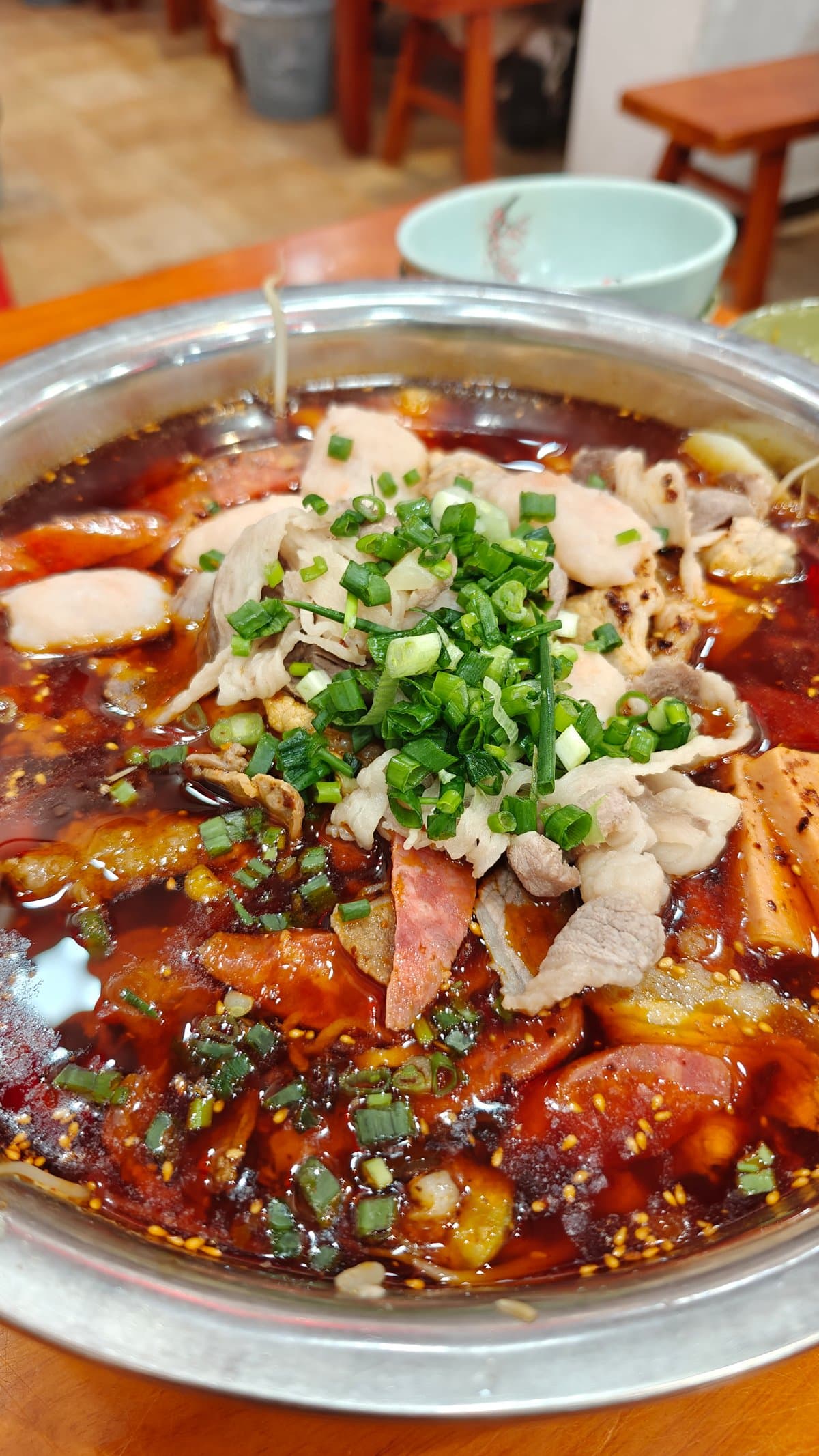
I’d first tried Chengdu’s hotpot at Bashu Dajiang Hot Pot. It was the first time I’d seen a hotpot shop that was all lit up, and crowded out front, as people milled about waiting for a table. The restaurant’s interior was jamed, and there were pots boiling on each table, and it was so filled with steam and chili fumes you could hardly breathe.
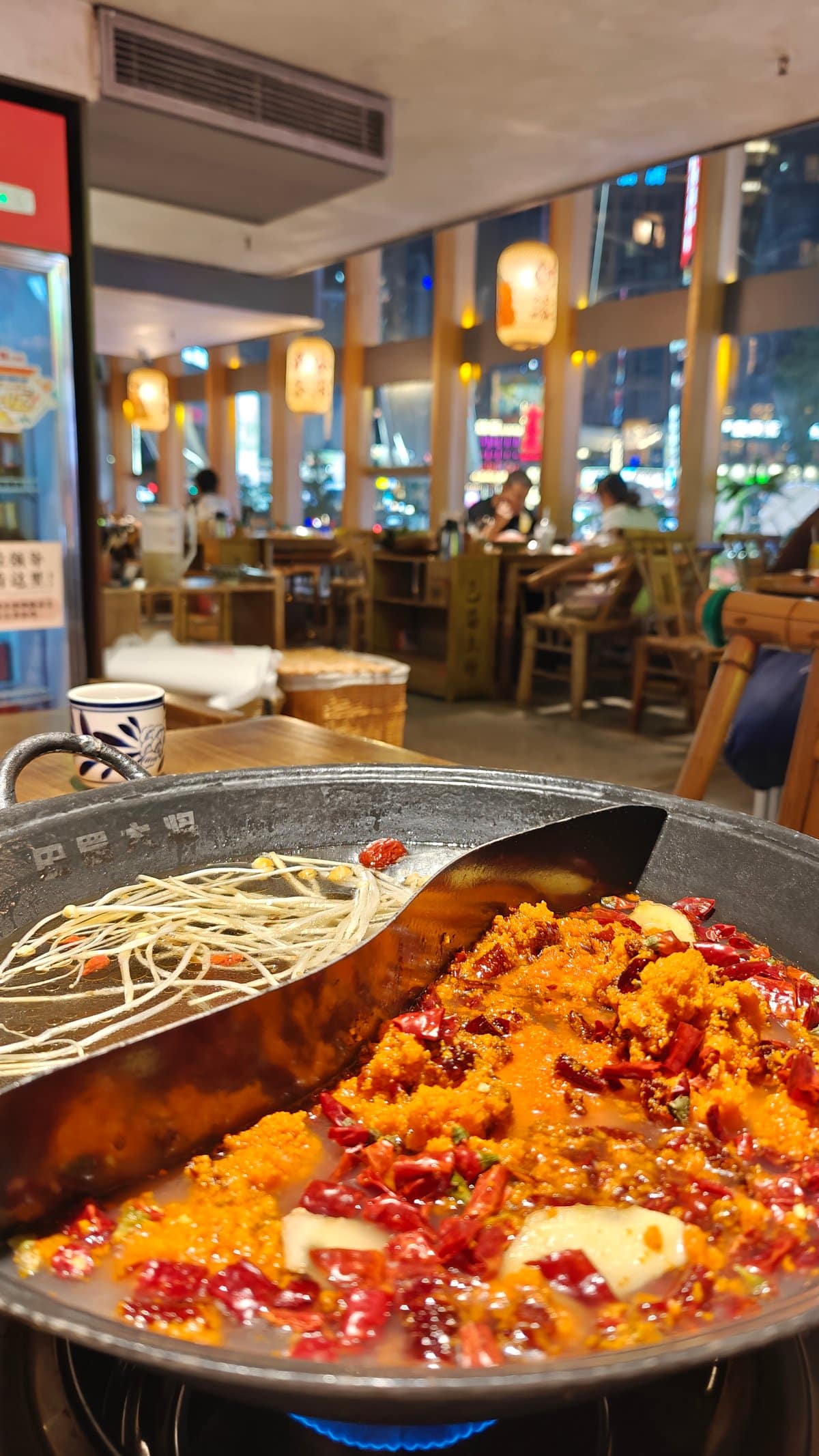
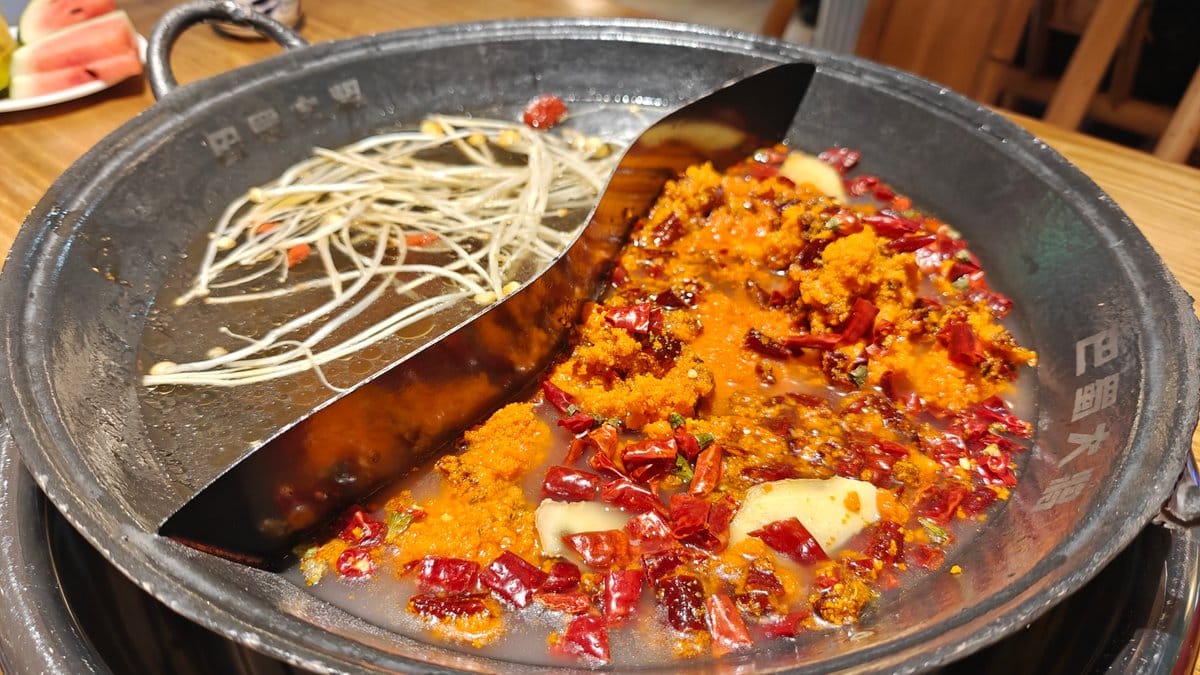
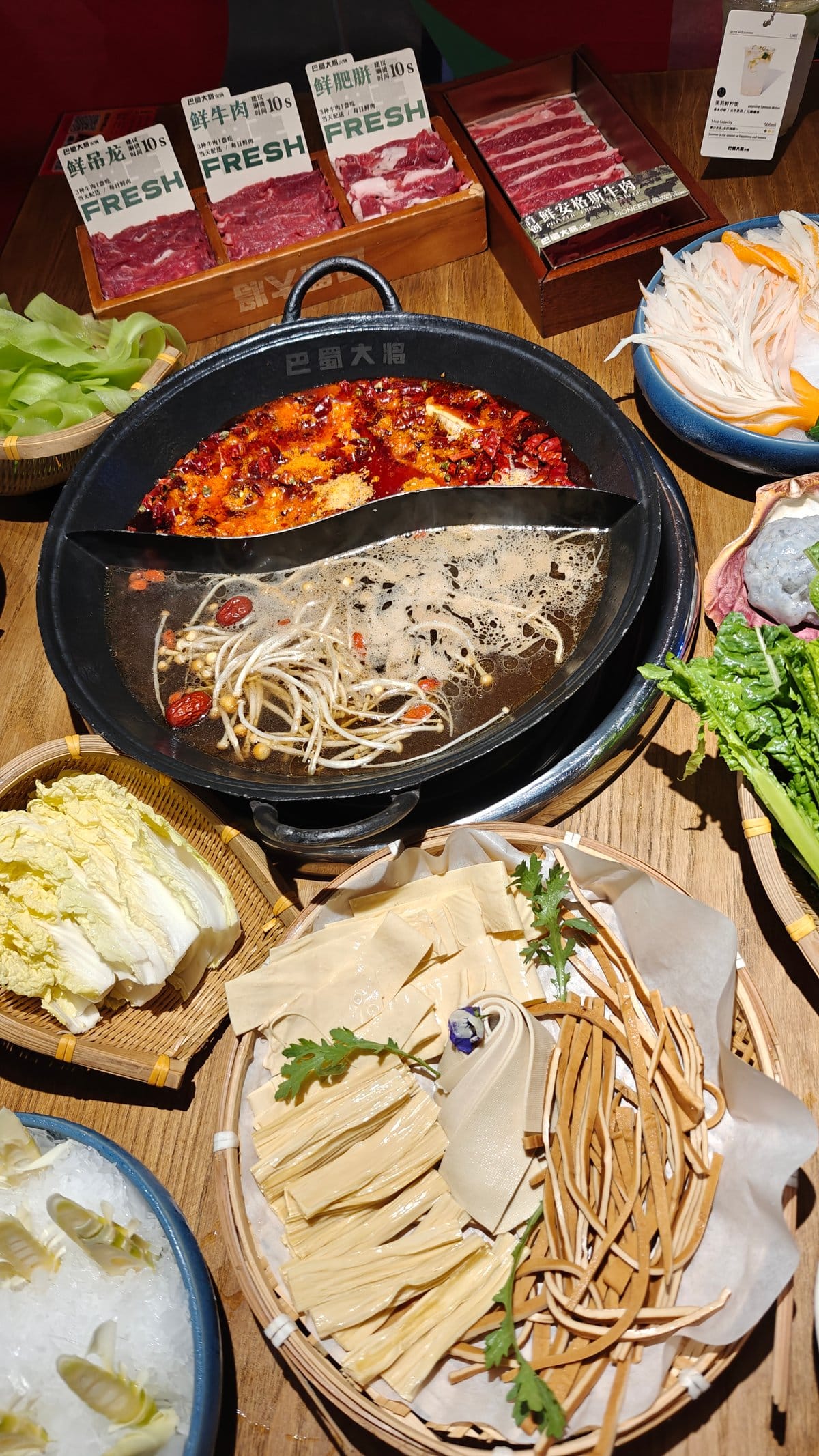
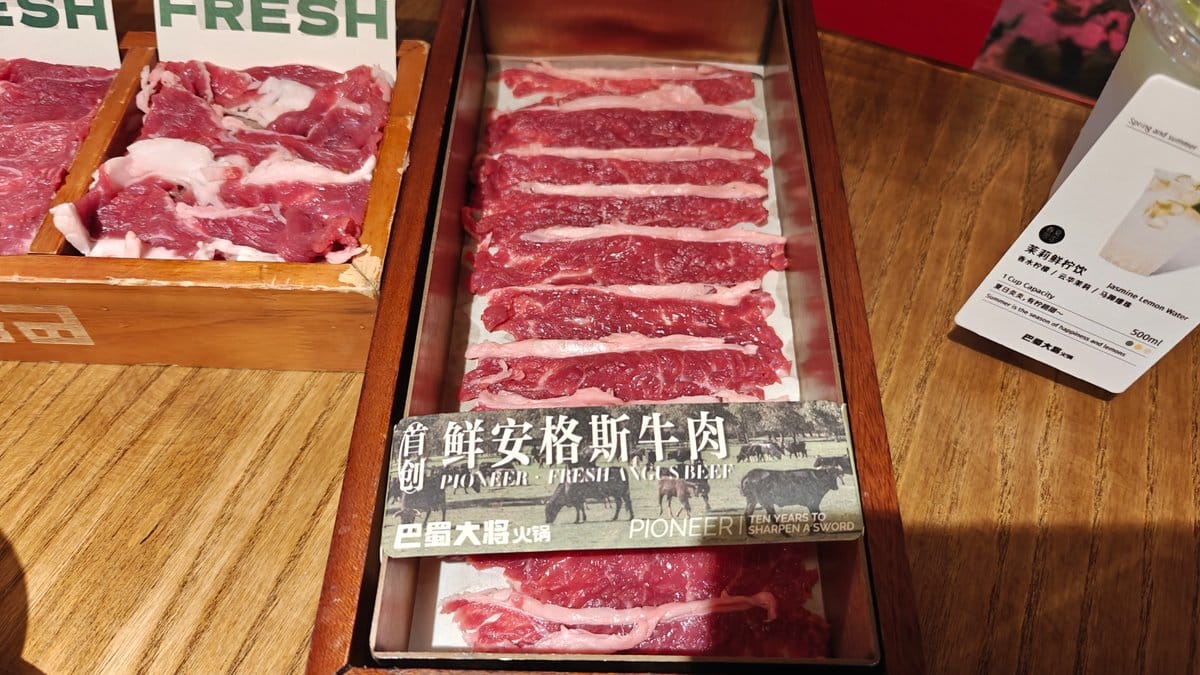
I loaded up on ingredients once more and went back to the divided pot. Here the broth was darker, spicier, and oilier; the chili oil sat like a thick red blanket atop it all, bubbling furiously. Marbled Angus beef sizzled seconds before emerging buttery and rich.
Plates of dipping sauce, veggies, noodles… soon the table was full. I stayed for over two hours and still barely made a dent in everything we ordered.
Chengdu Food and Drinks
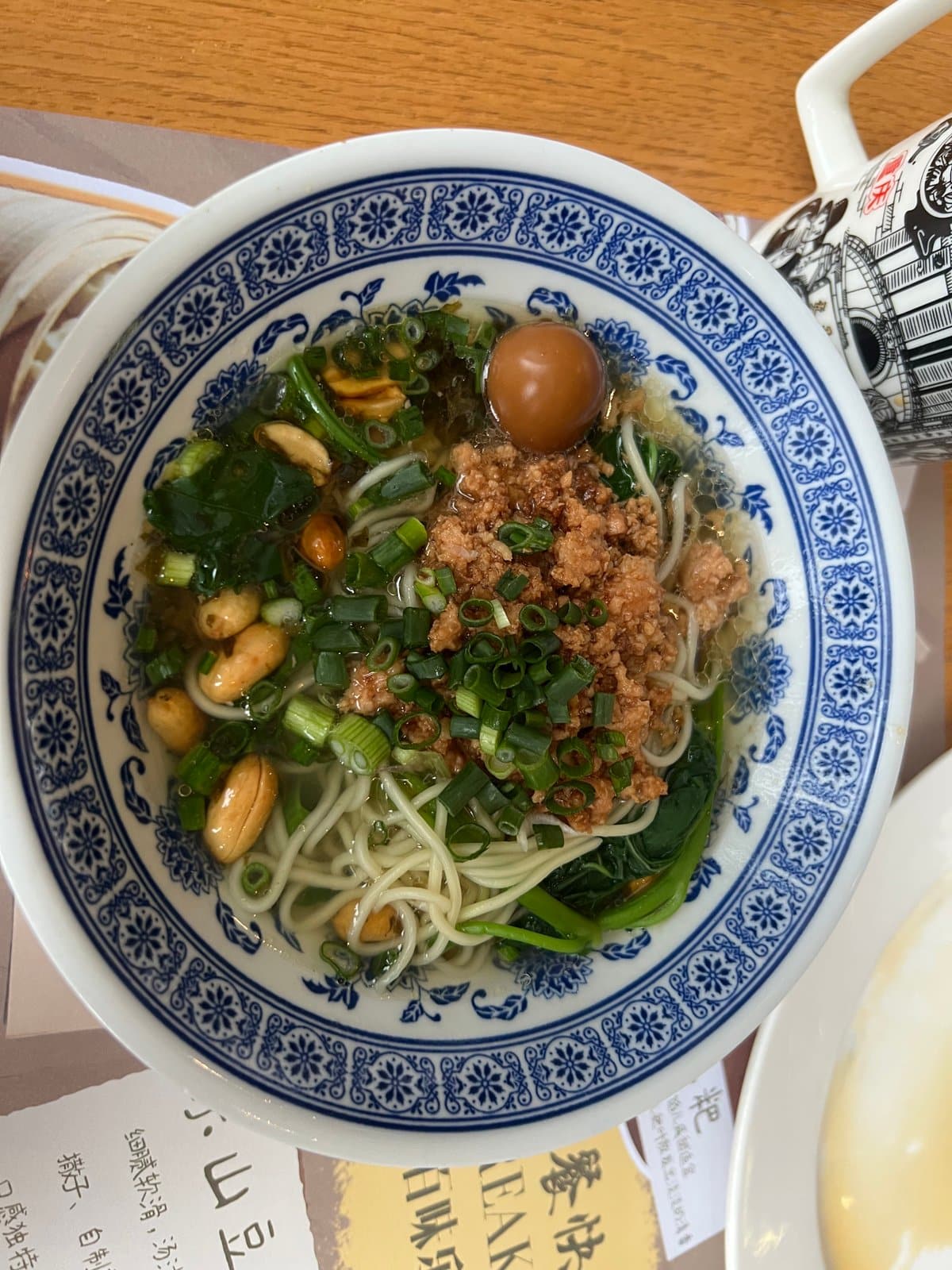
We cover casual restaurants and street food. Done. Dandan noodles featured heavily, consisting of a piping-hot bowl of slicked-up strands in a rich, oily, nutty sauce with a hell of a chili burn.
There was boiled sliced pork, swimming in pools of red oil with crushed peppercorns on top. My mouth went numb.
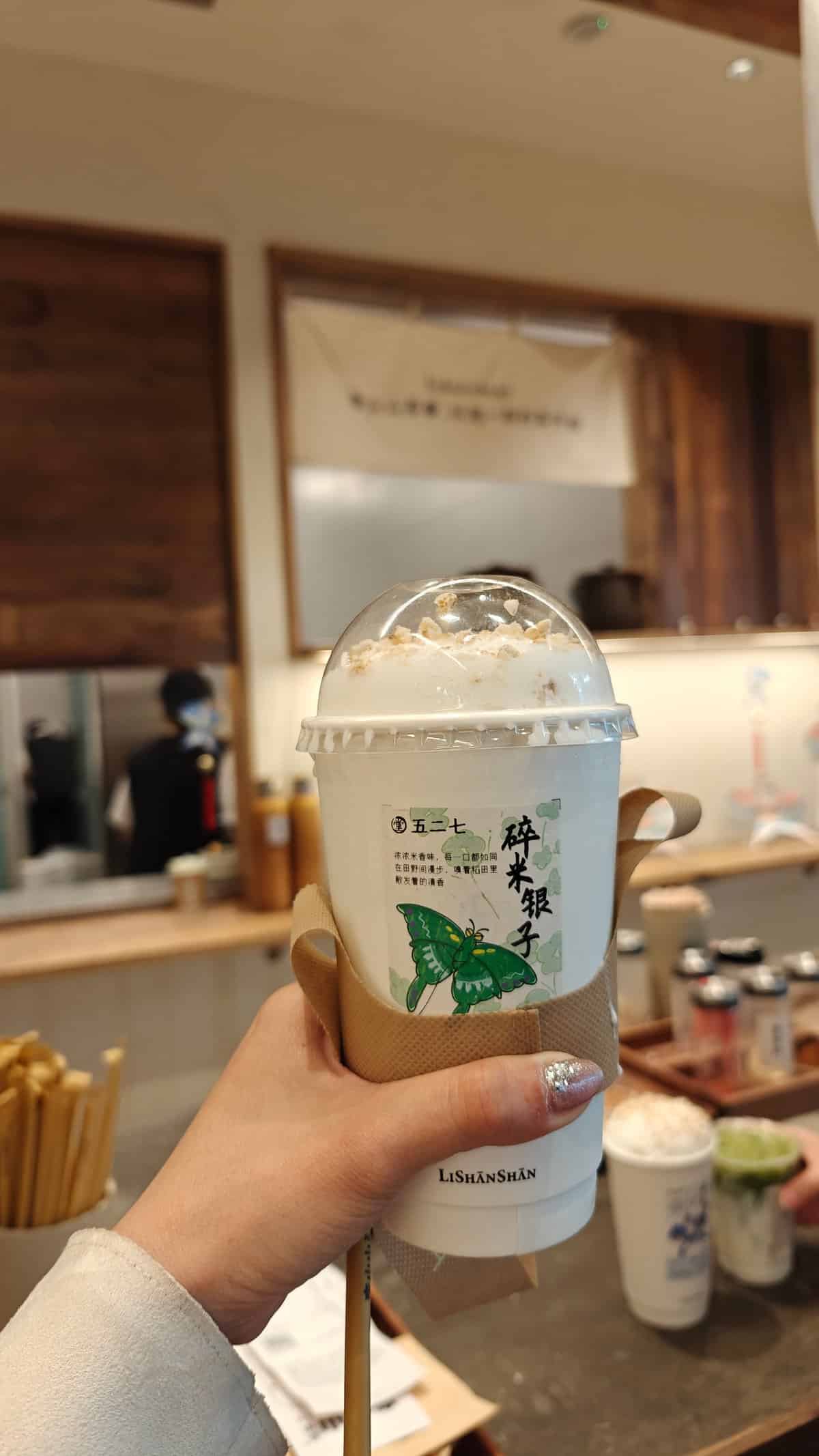
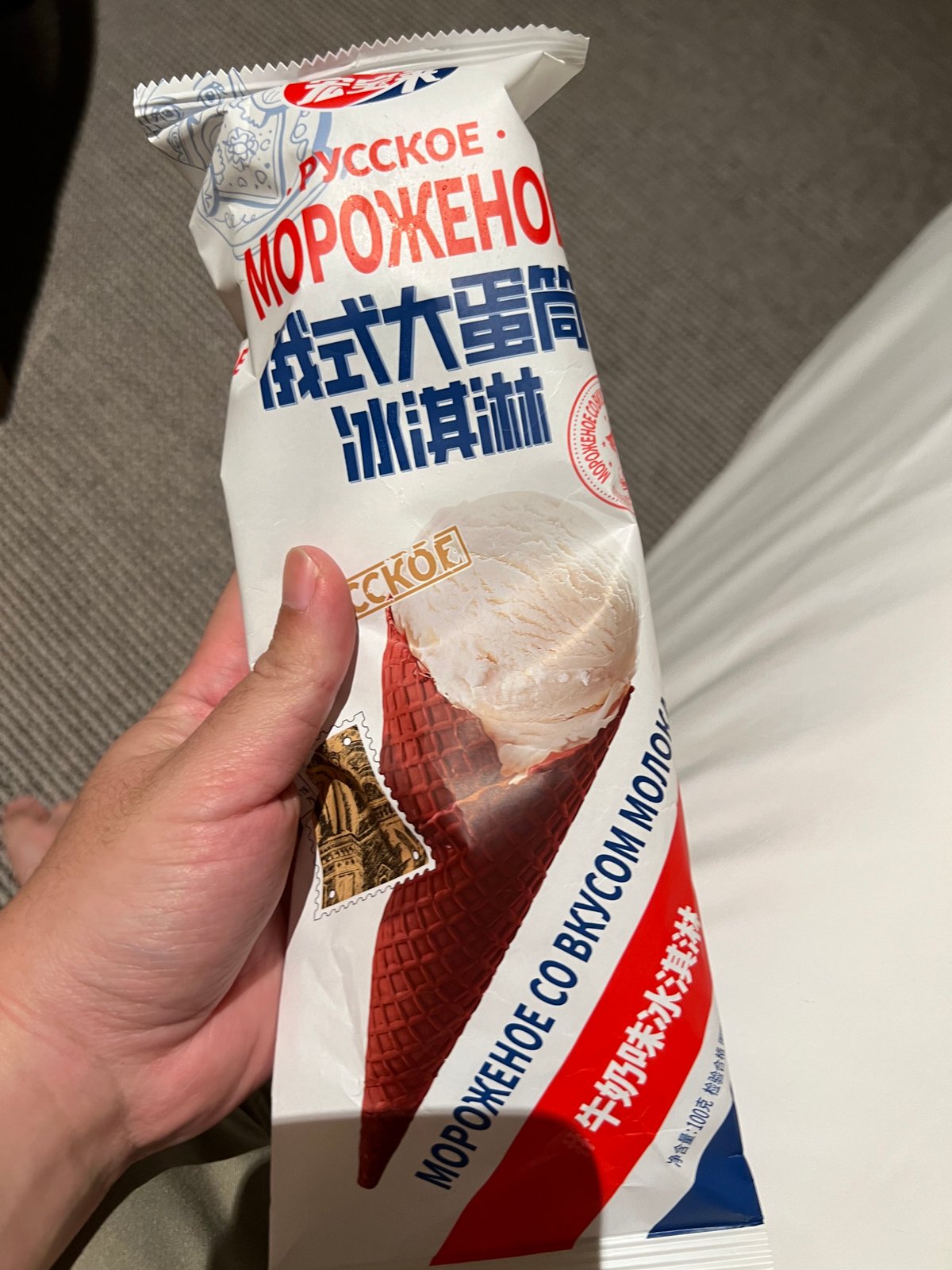
In between meals, I ate whatever I could get my hands on. There was this milk-rice drink in a domed cup that was cold, sweet, and creamy (a snack I grabbed one afternoon). And there was a random stall with Russian-style soft-serve cones, a welcome change to all the spice.
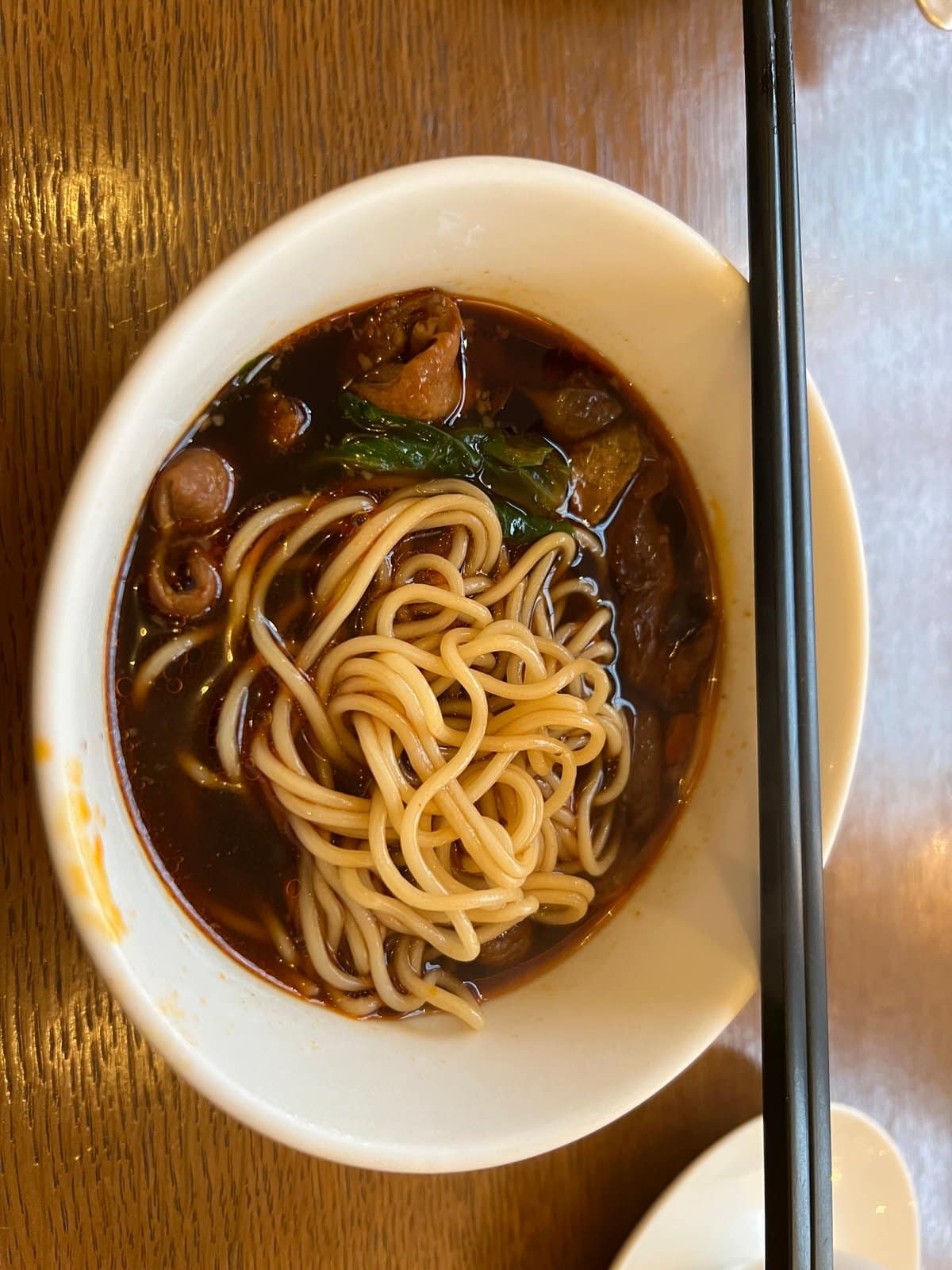
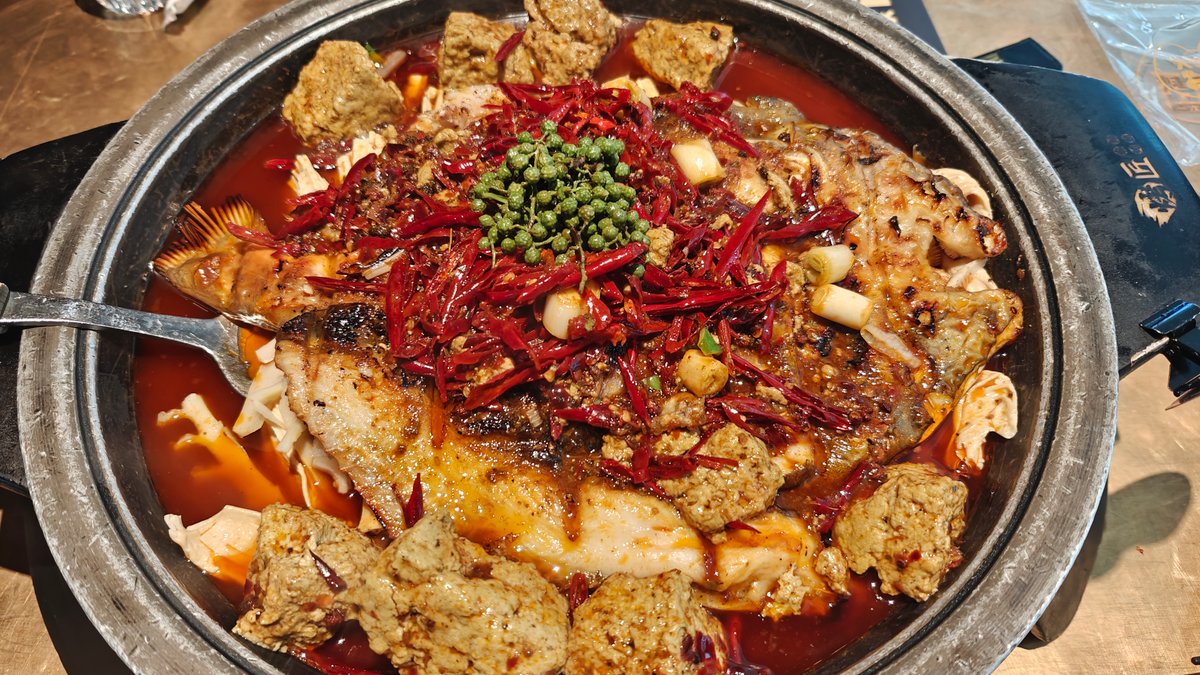
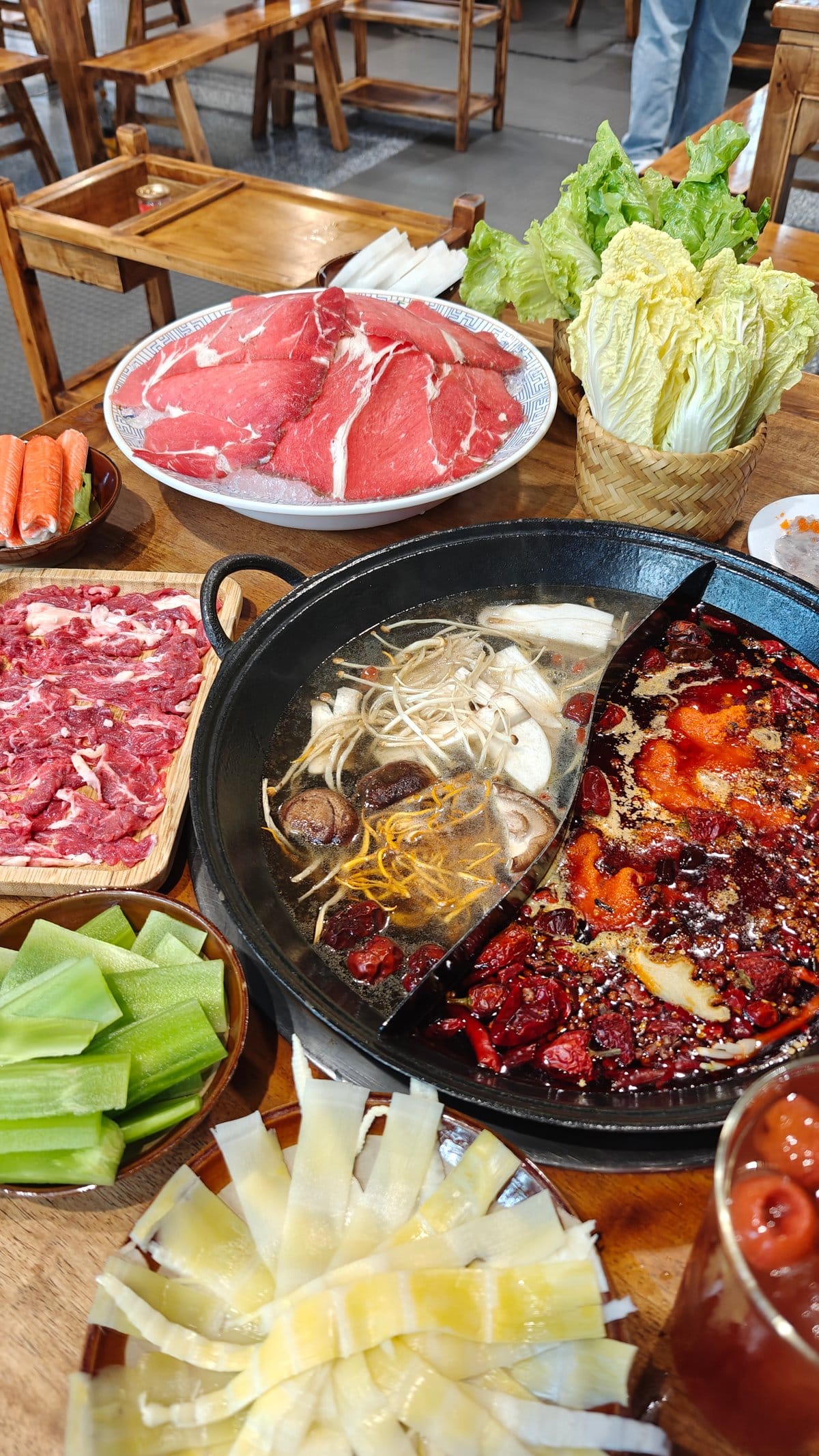
There were clay pots full of boiled fish covered in mountains of chilies, and another hotpot set up with two types of broths and more noodles in the dark braised broth. I lost track of the number of noodle bowls I had. Every street corner seemed to have a favorite spot, and I attempted to visit as many as possible.
Tao De Casserole
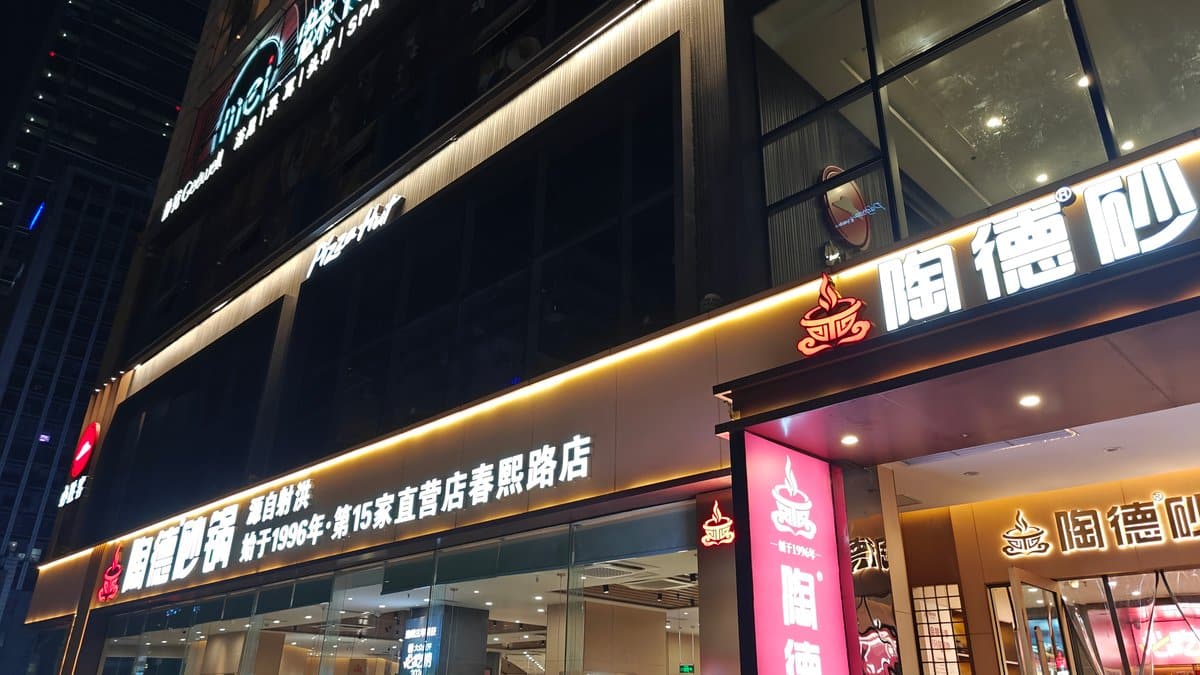
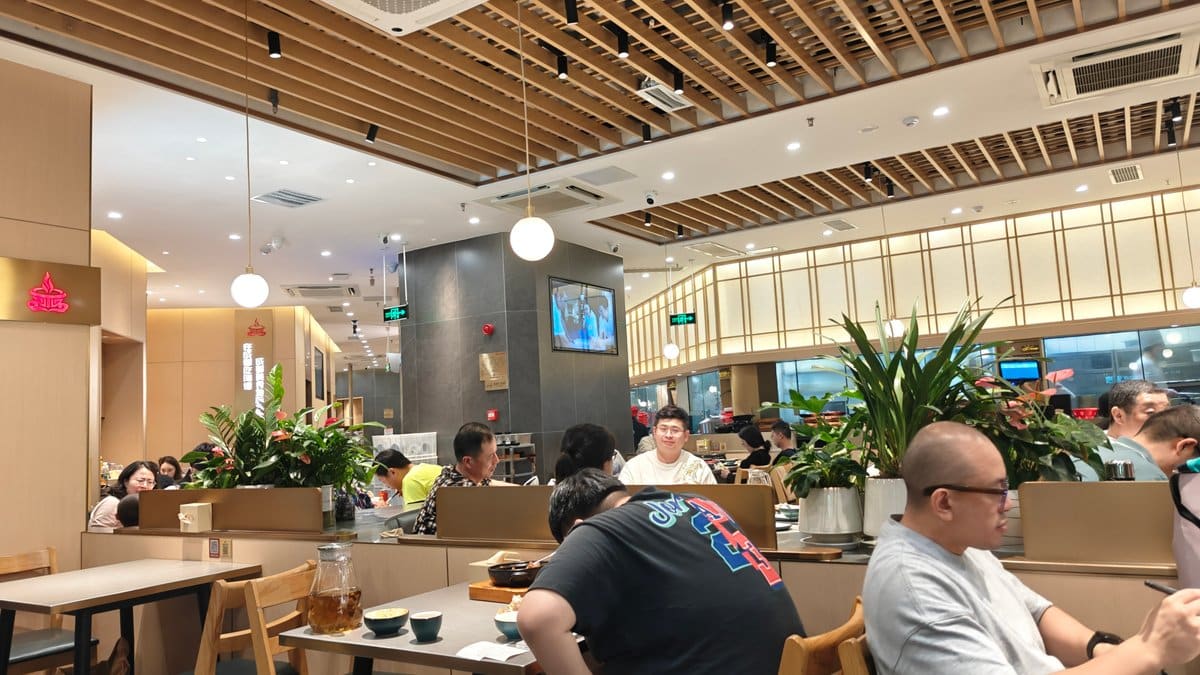
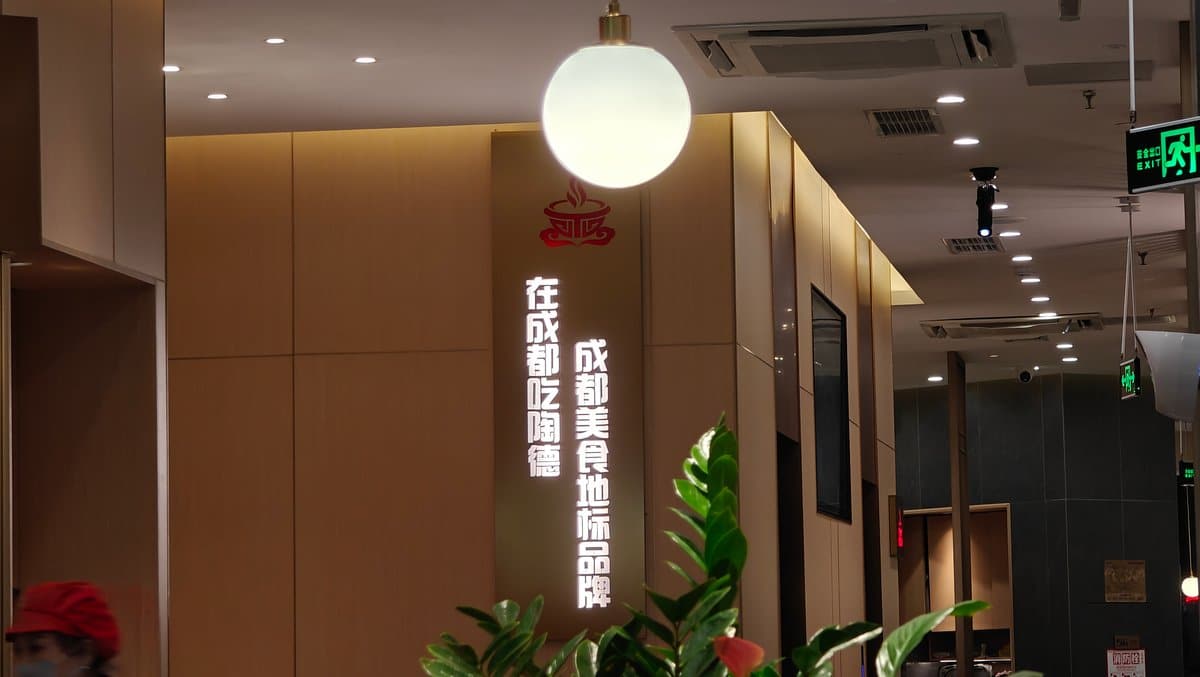
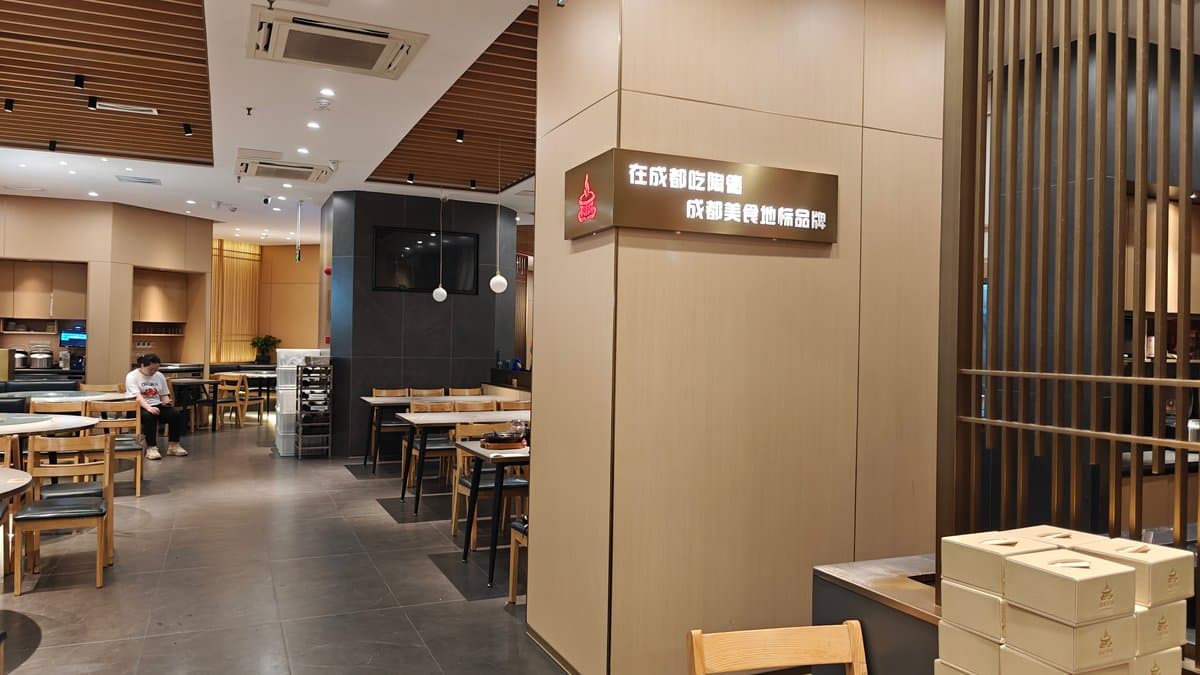
Tao De Casserole specialises in clay-pot dishes, and the Chengdu branch had a cosy, dimly lit interior with wooden tables and hanging lamps. It was pretty busy when I visited on one evening and the smell of garlic and braising meat filled the entire room. And then we had some other things.
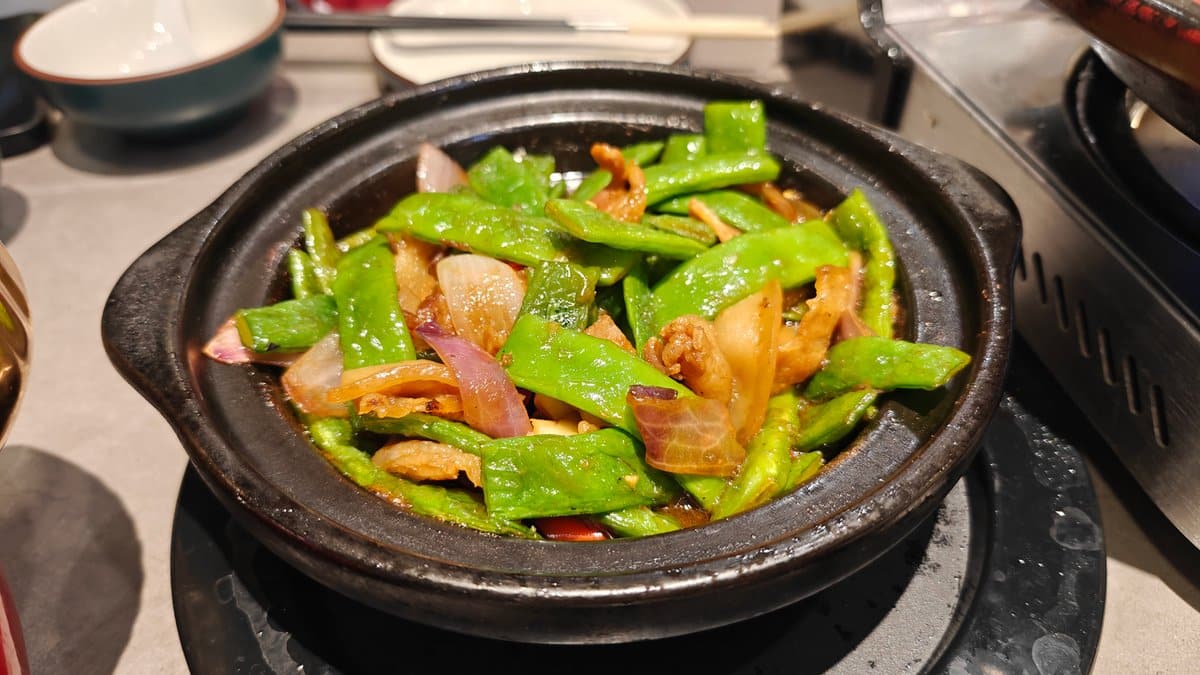
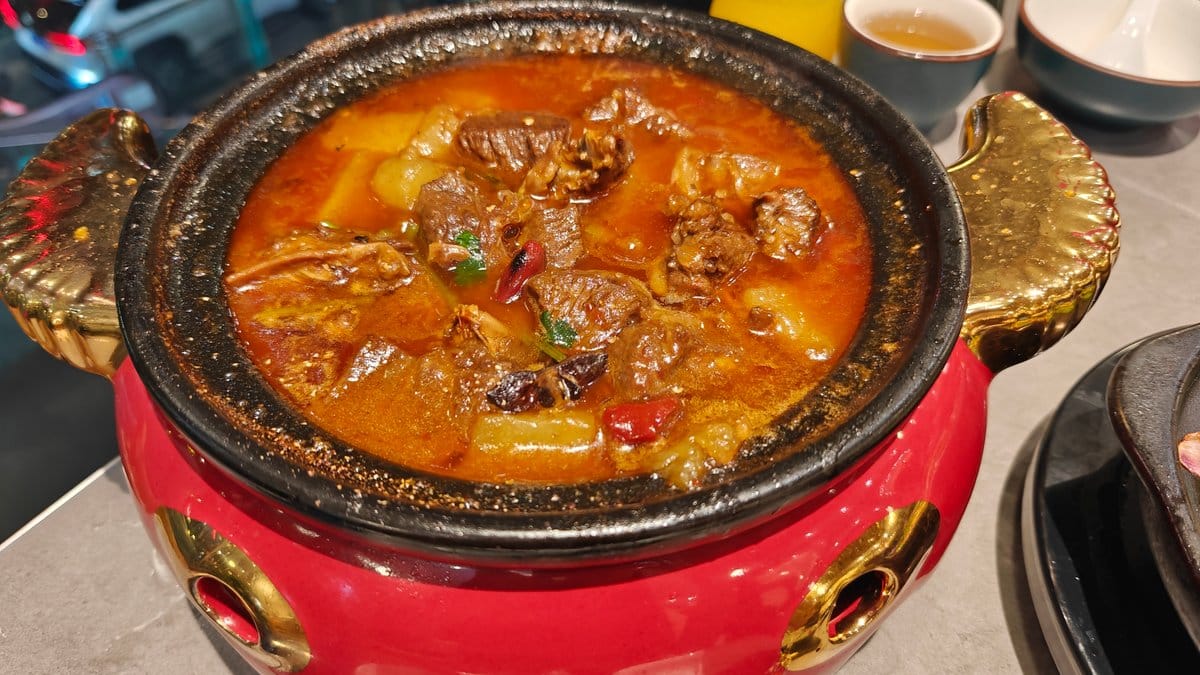
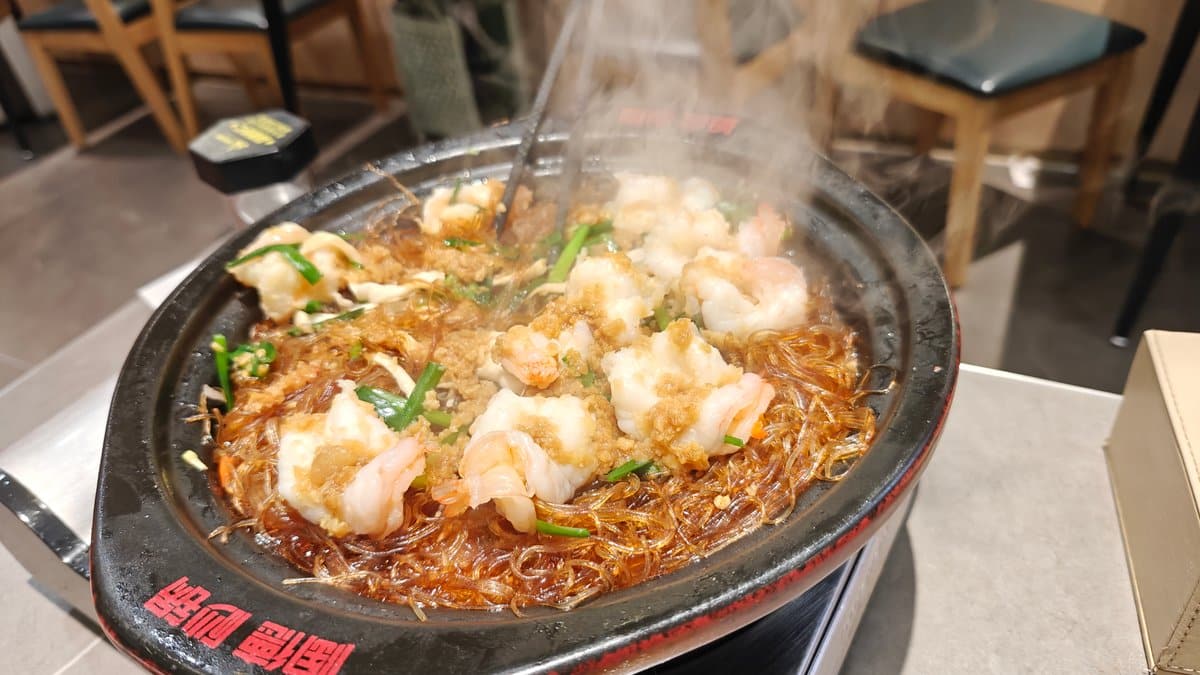
Some were still-crunchy, charred and smoky blistered green chilis, stir fried with pork. A braised beef and potato casserole arrived bubbling hot in a clay pot, with the beef falling apart and the potatoes absorbing every last drop of sauce. And then a glass-noodle and prawn claypot that was delicate and fragrant alongside all the rest.
Everything arrived in clay pots, so it stayed hot throughout and portions were generous.
Xie Man Lou Crab Roe Noodles
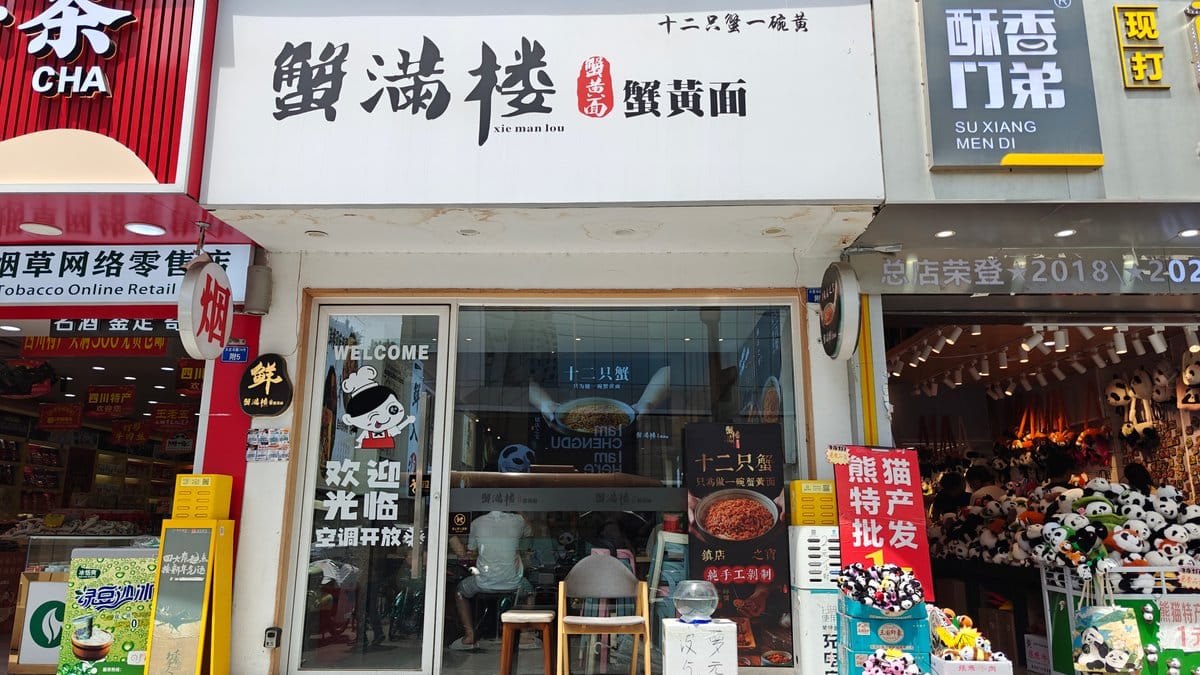
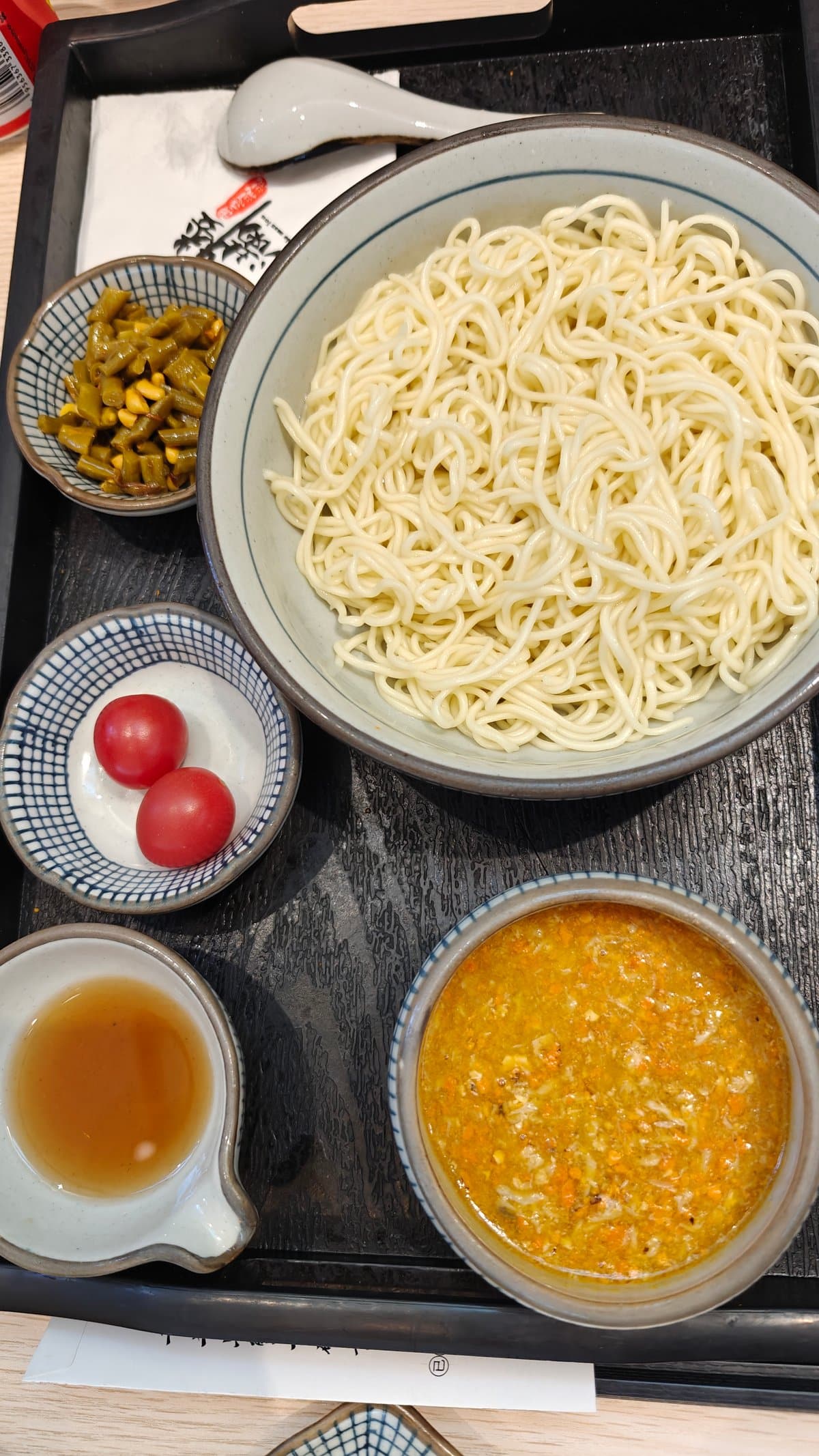
I’d also heard of Xie Man Lou and they are famous for their crab roe noodles. They were famous enough that I figured I needed to go try them. It’s a no-frills storefront.
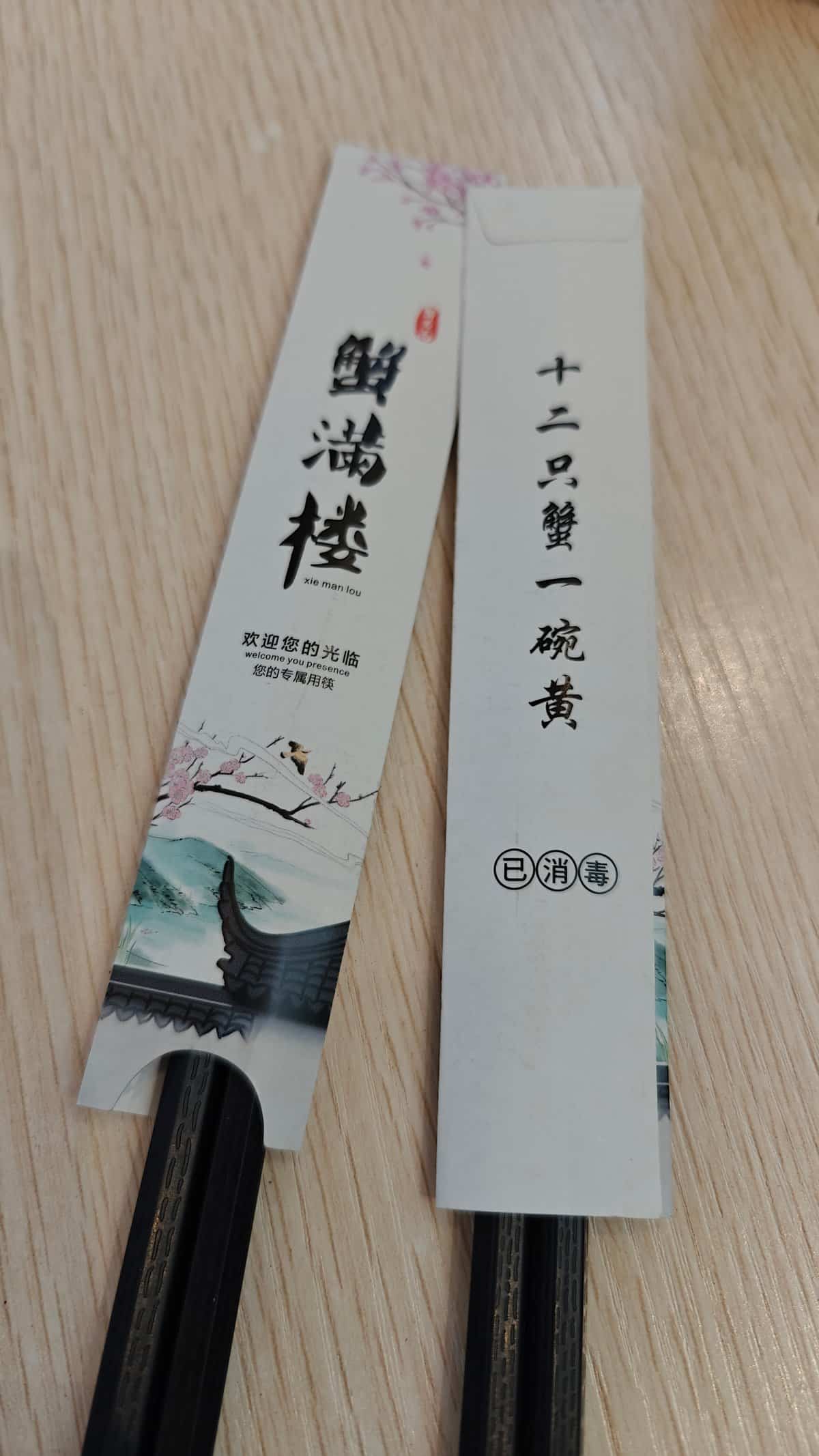
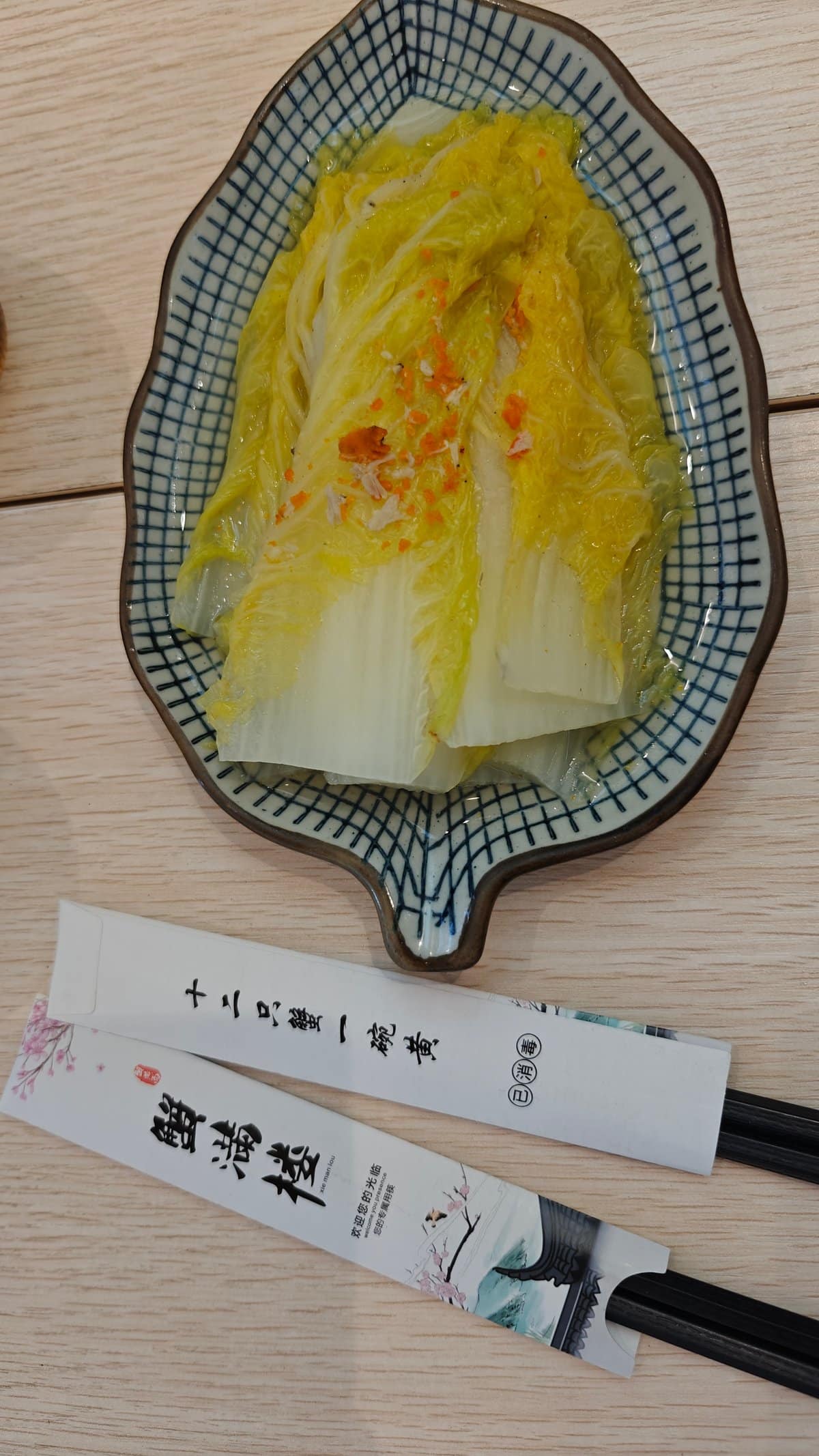
There were people in line at lunchtime. We were given a little dish of steamed cabbage as a starter along with our branded chopsticks. My signature noodle set arrived in its own bowl, the thin noodles with a giant heap of crab roe and some sort of minced pork on top.
The rich, salty flavor was quite different than the spicy dishes I’d been having all week, making it a welcome change.
Chengdu Street
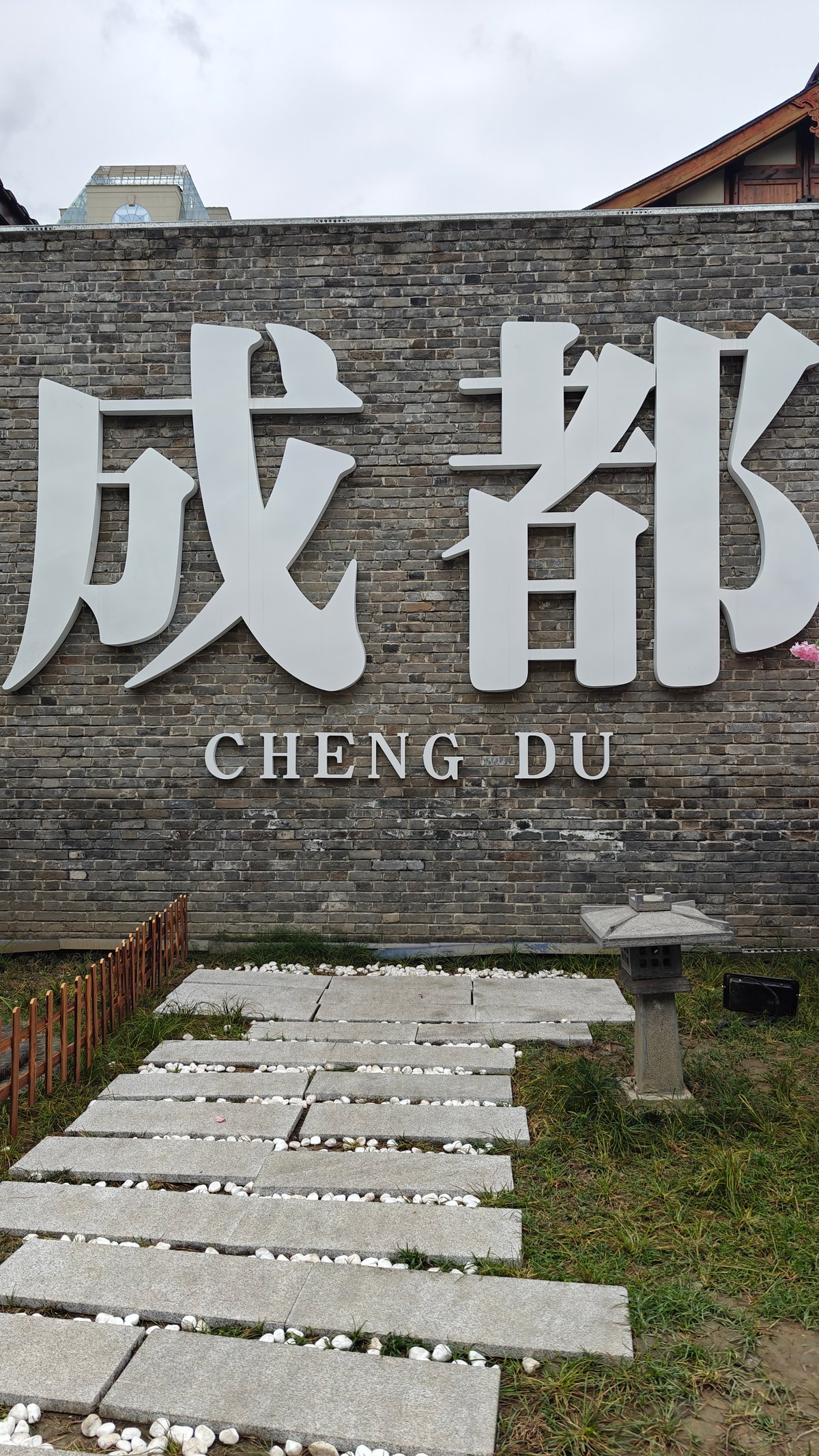
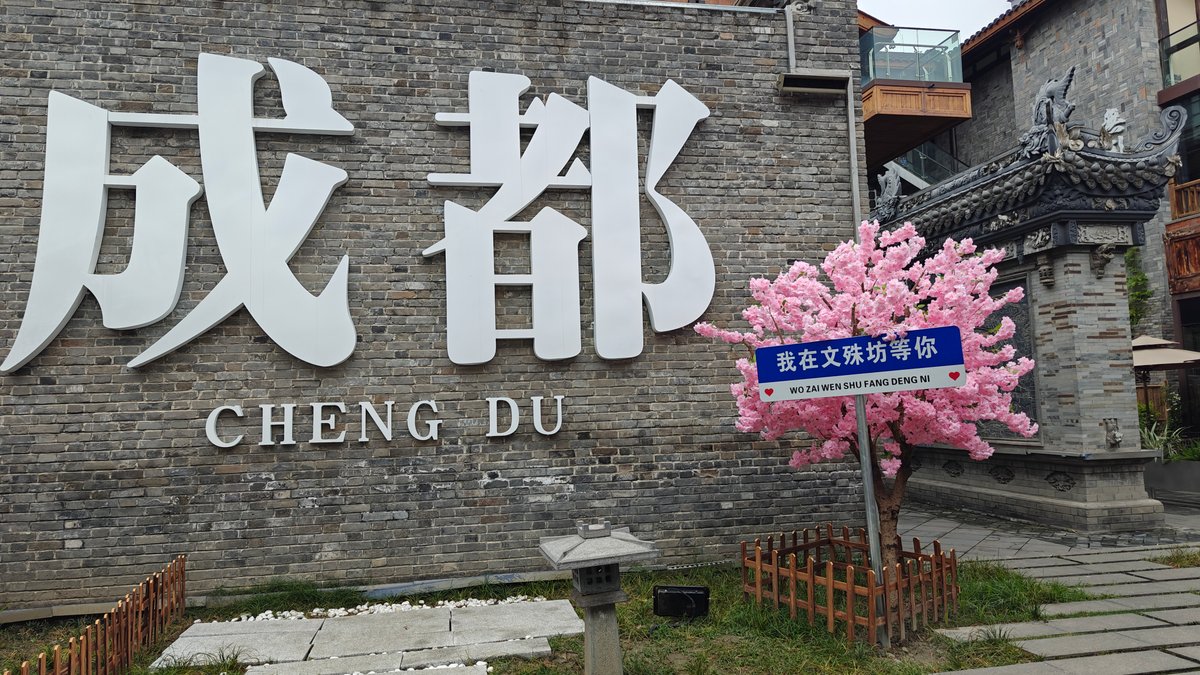
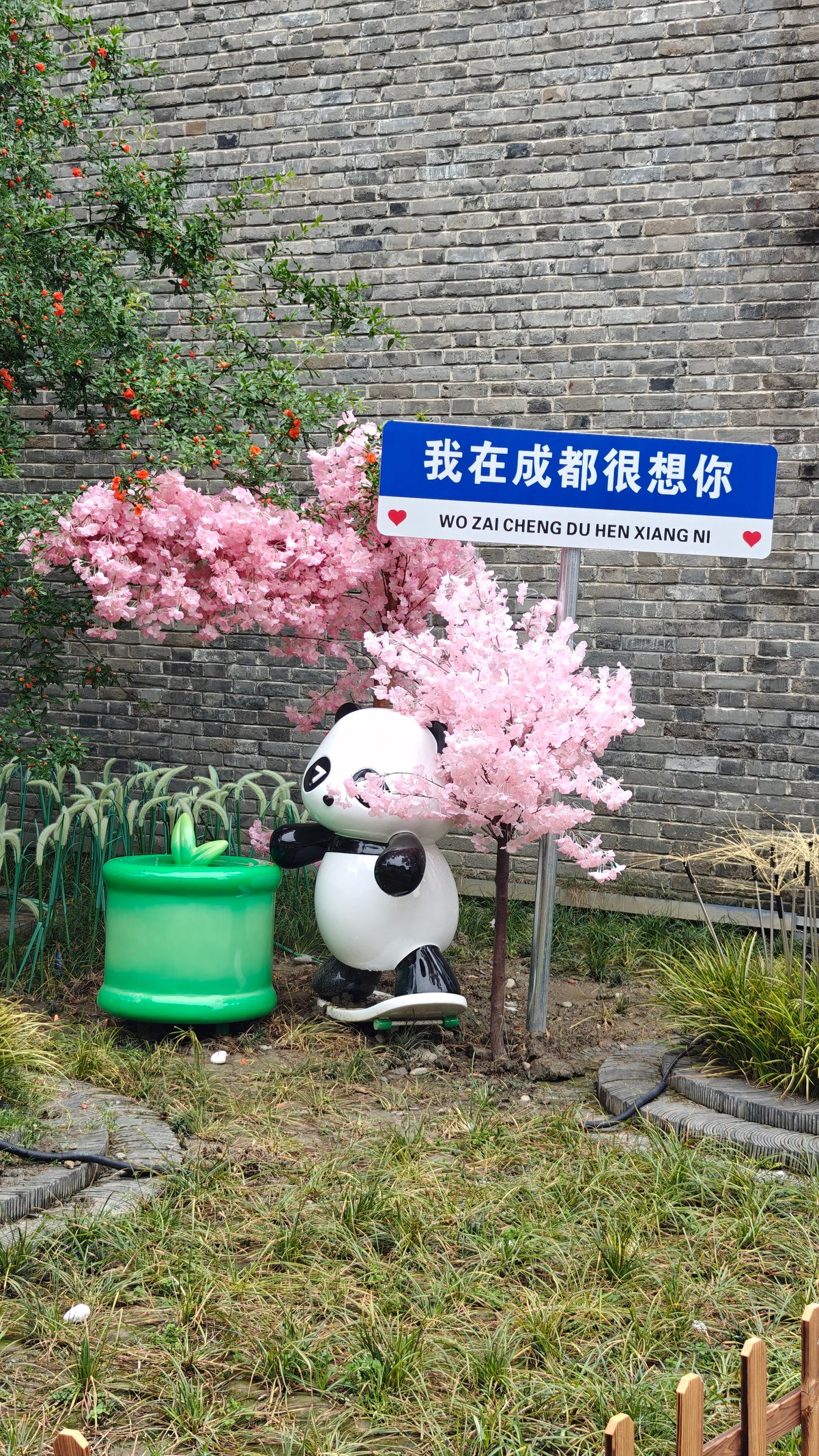
While wandering around the streets in Chengdu, I happened upon this massive sign made of giant silver letters that spell out the city’s name. It’s quite an impressive sight and tourists lined up to have their photo taken in front of it. Nearby is this sculpture of a panda lying under a cherry blossom tree.
It is a bit kitsch, but also very Instagrammable. That’s me taking a picture (of course).
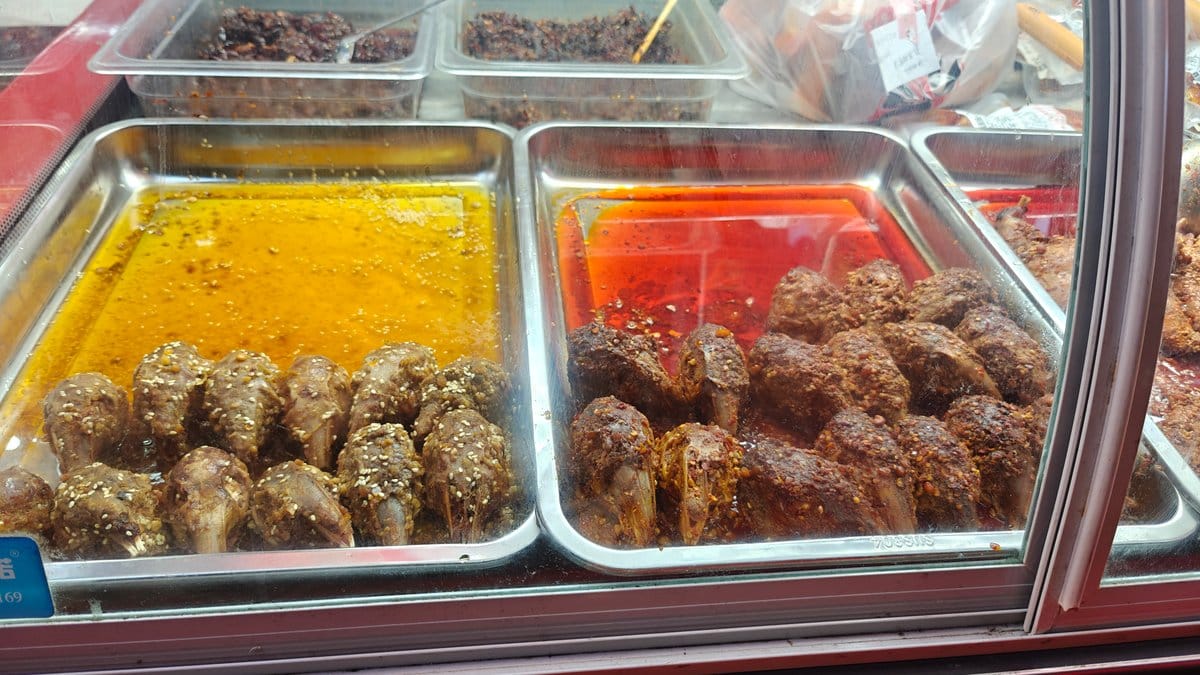
Around the corner is this stall selling braised rabbit heads, which apparently is a local snack. I didn’t try them but I liked the dedication.
Eastern Suburb Memory
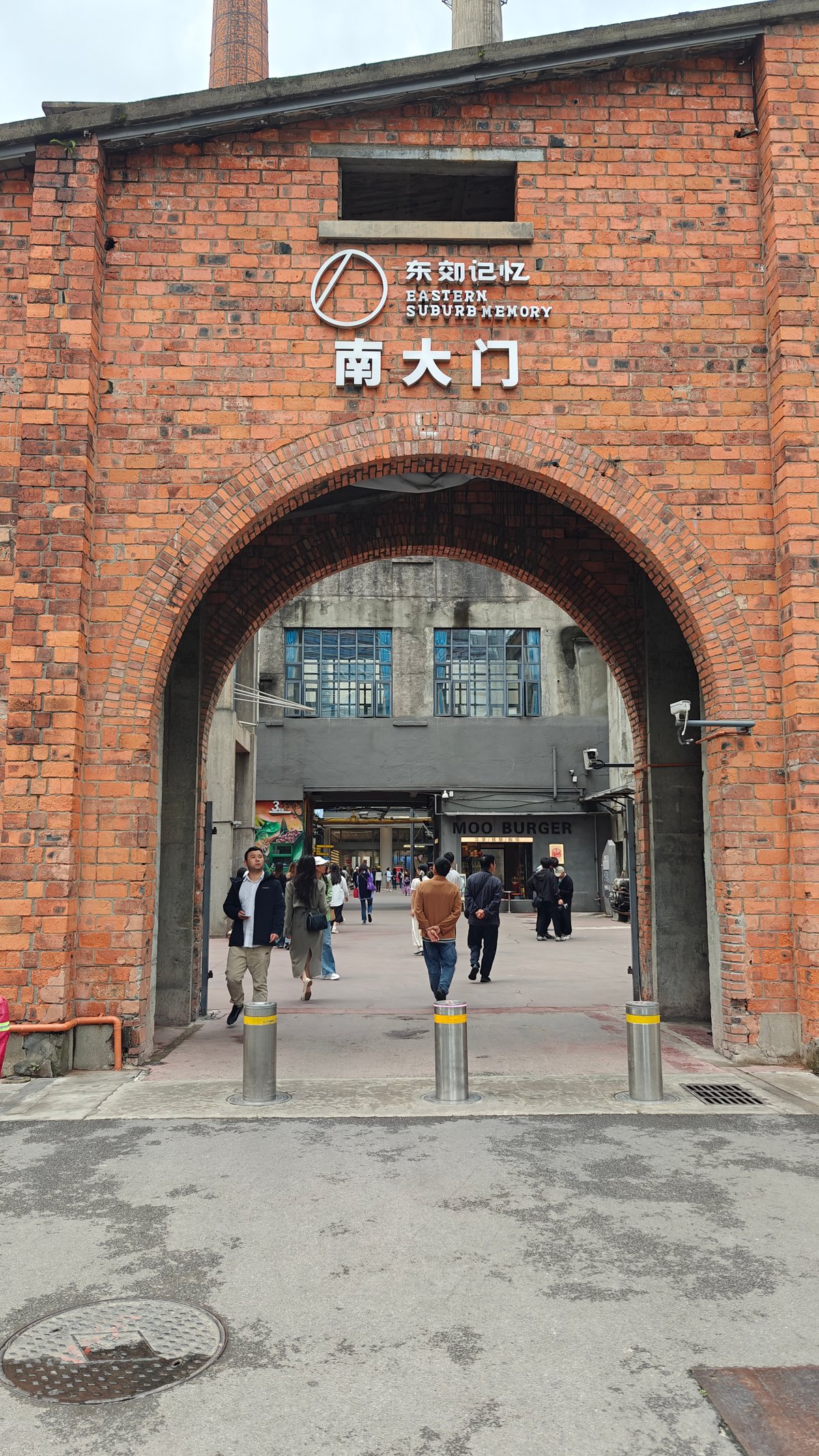
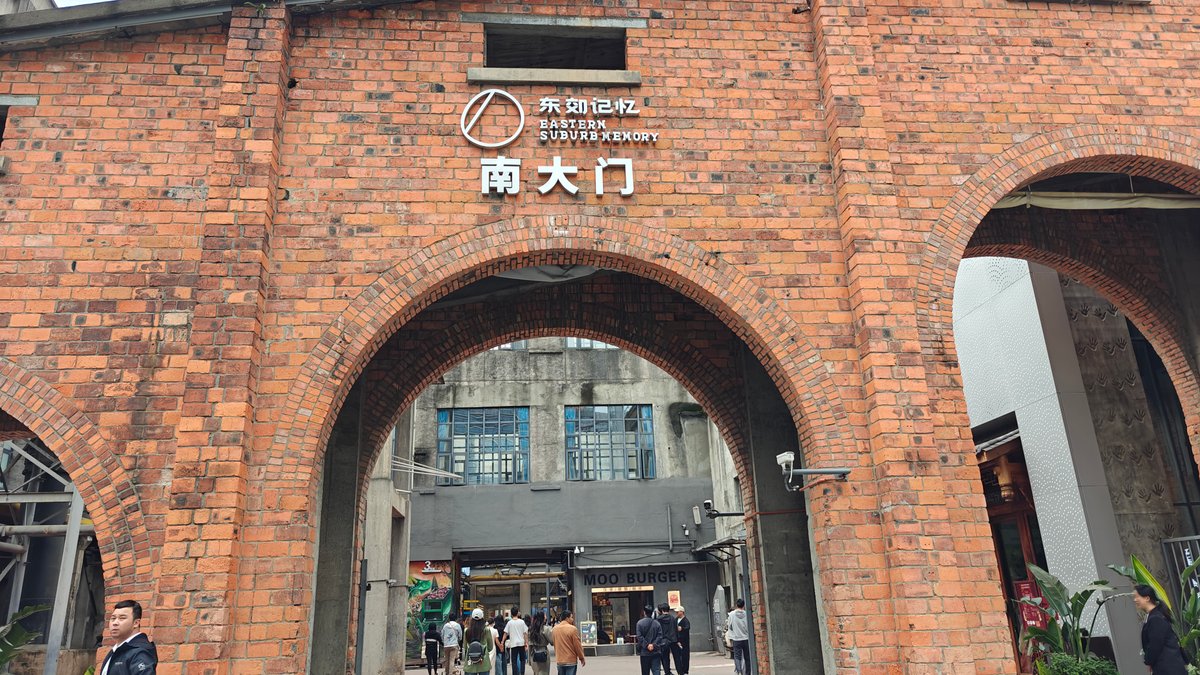
This is Eastern Suburb Memory, an old industrial park that they’ve converted into an arts and cultural district.
I entered from the south gate (the big brick archway, which still retains some of that factory feeling).
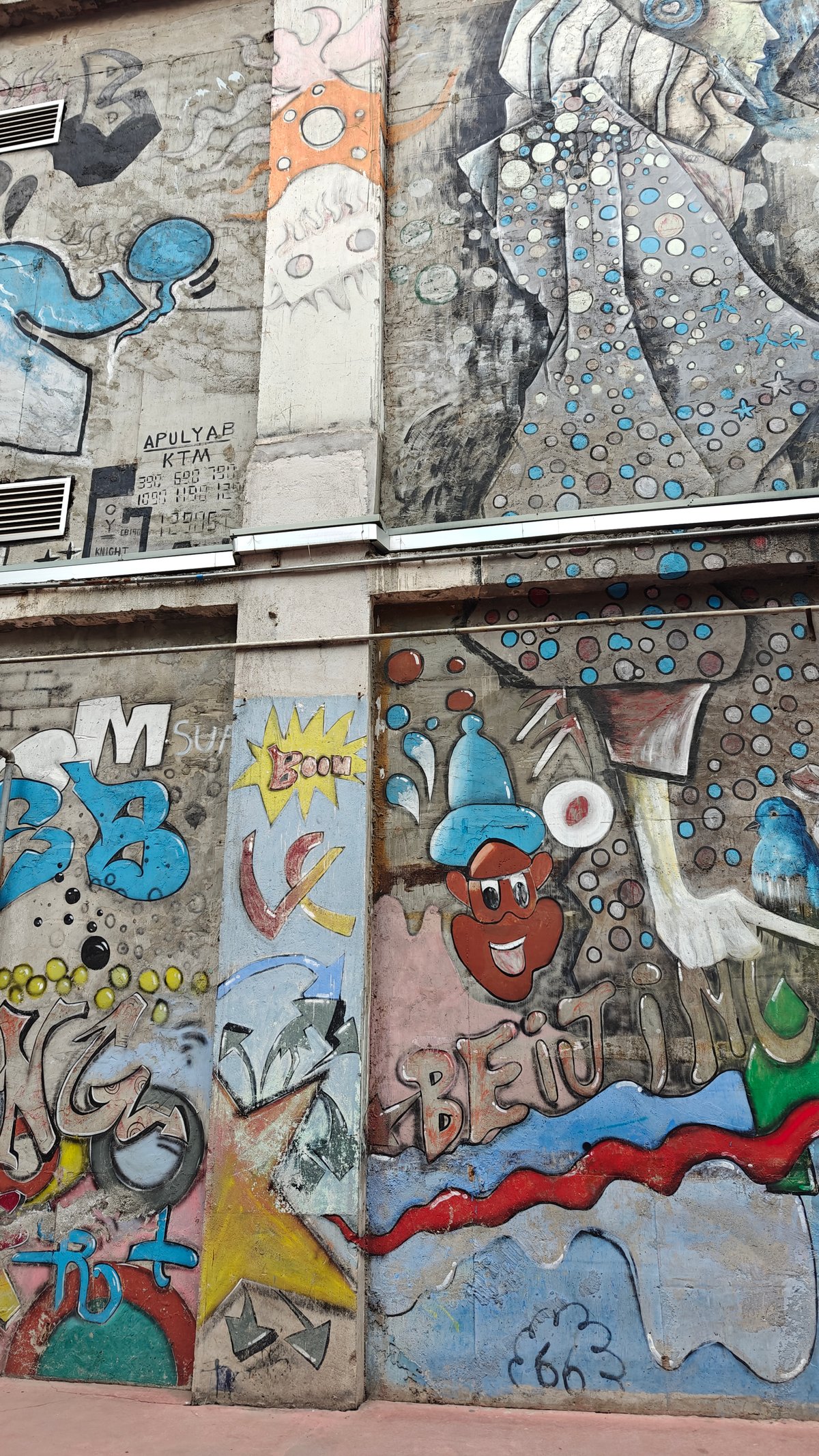
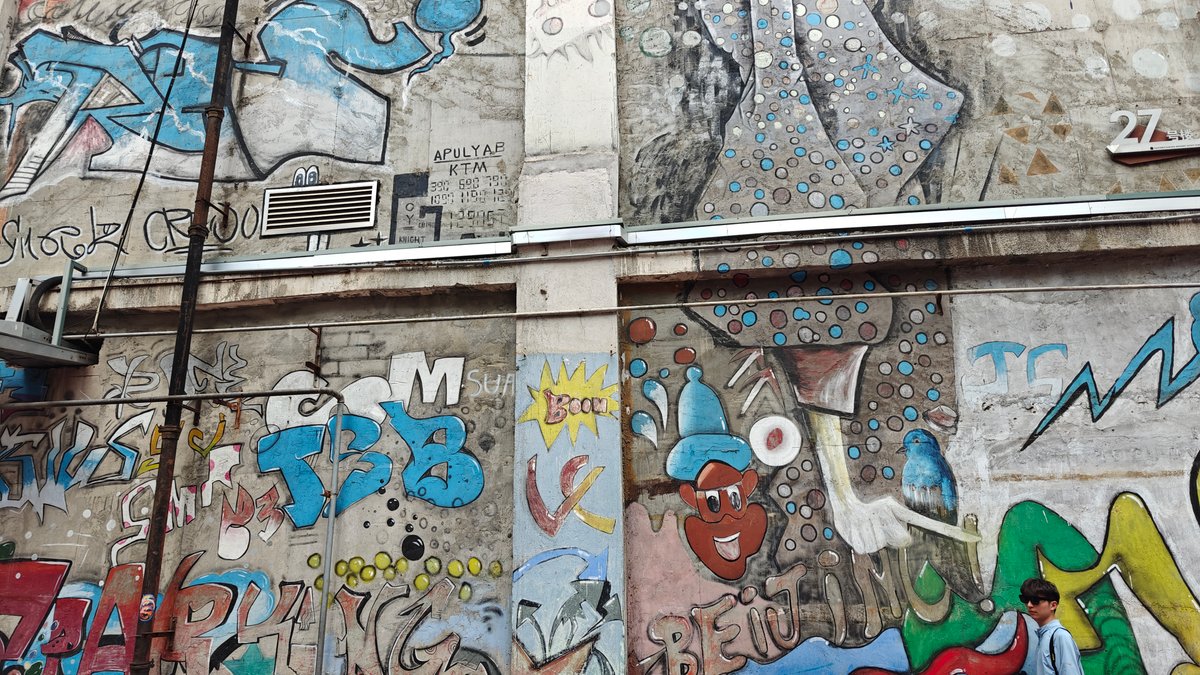
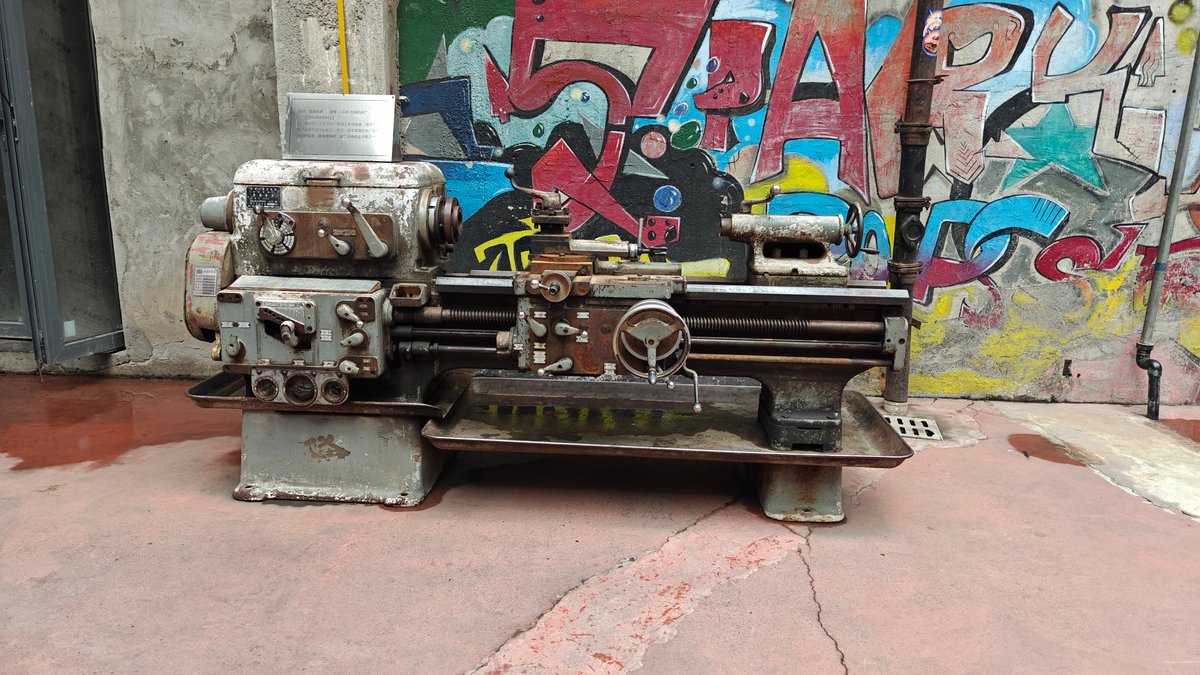
Along its length run colourful, chaotic murals that cover the inside of old buildings. Old, rusty bits of machinery, the remnants of the site’s industrial past, are exhibited on plinths as though they’re public artwork. It was a combination of street culture and history, and I loved it.
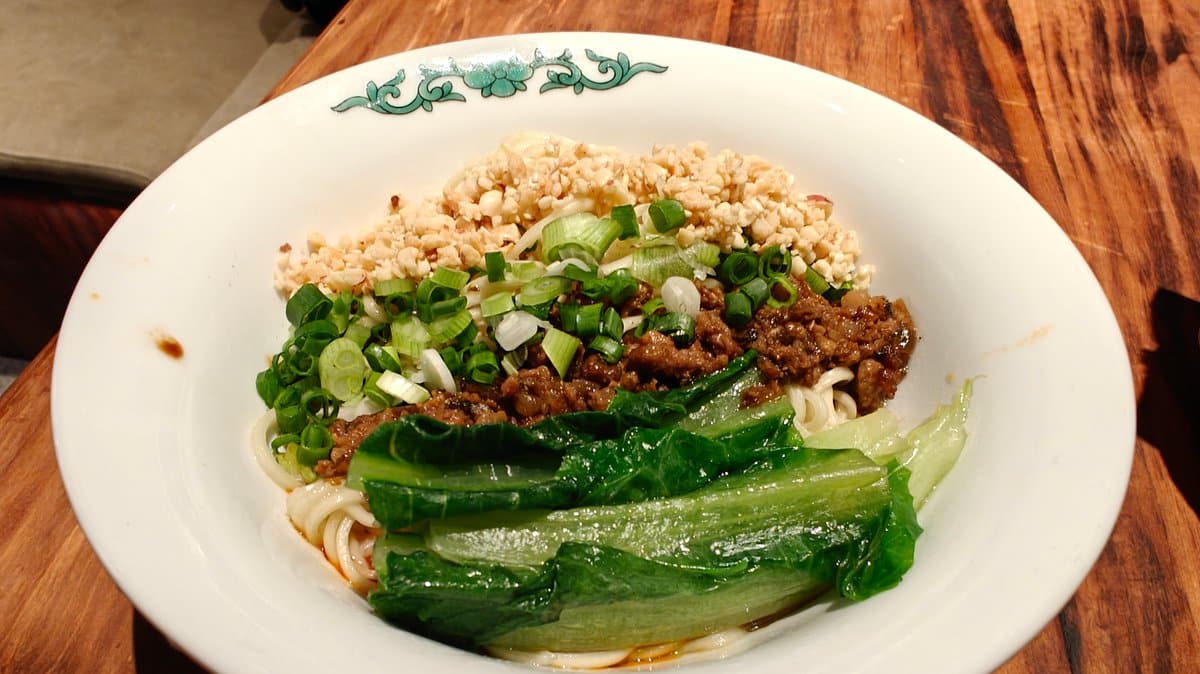
After walking about all day I had a simple yet satisfying bowl of noodles at a stall as the sun set over the park. It was empty in the evening and nice to have a place to sit and eat without crowds. I got exactly what I came for…
Too much food and too much spicy food. I spent a week recovering from my stomach, but it was totally worth it; every hotpot and every bowl of noodles. These two cities will keep you fed and happy as long as you can continue eating (and handling the heat).
What is the spiciest thing you’ve ever tried? Tell me about it in the comments.