
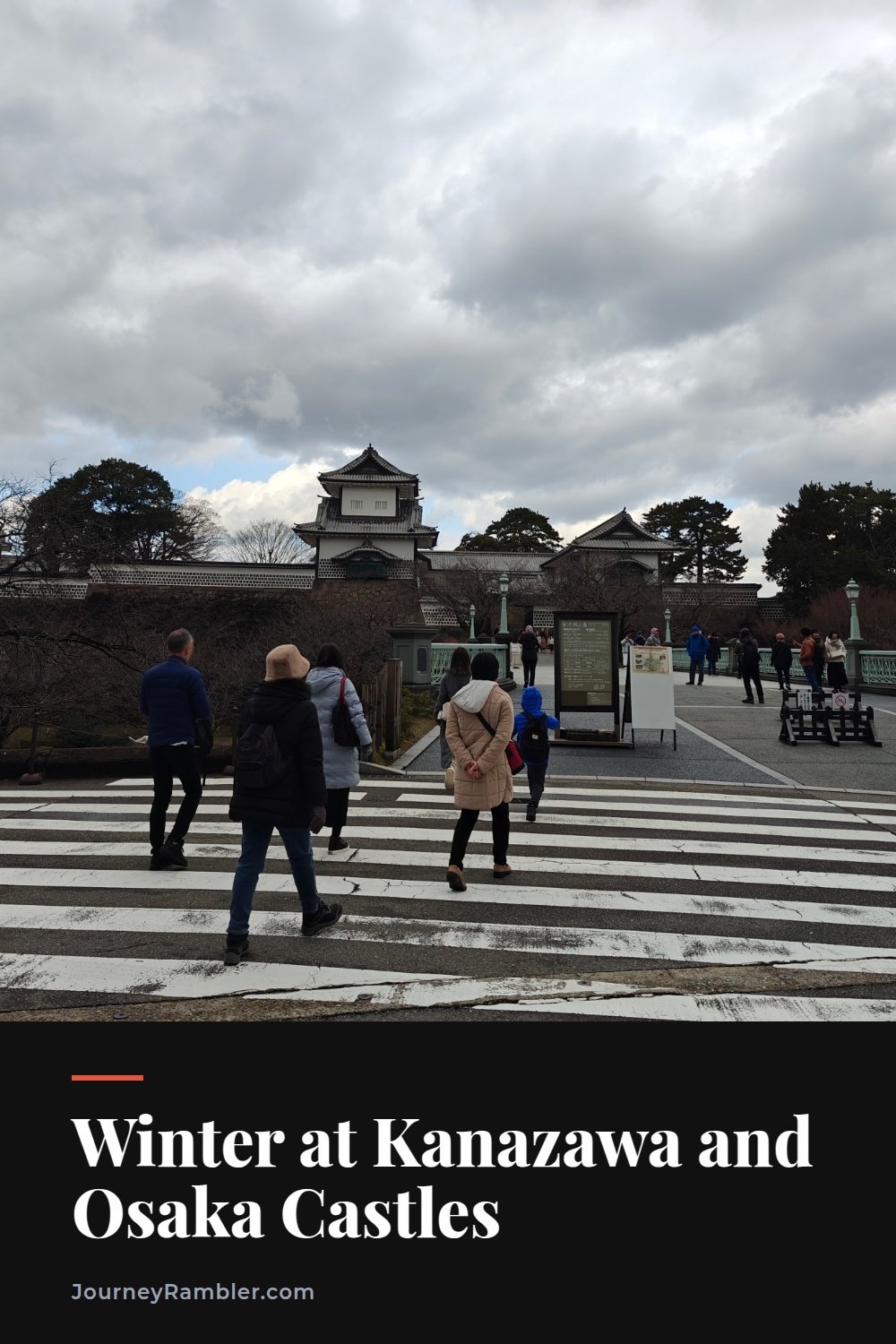
My two Japanese castle adventures in Osaka and Kanazawa during the winter. Two castles, two winters. I’ve seen several Japanese castles in my day, but there’s something about seeing them both in winter that made it feel like a different experience.
With the bare trees and chilly air, everything got pared down a little, and I noticed myself looking closer at all the wooden gates and stone walls. Rather than the blossoms of cherry-blossom season, Kanazawa Castle was quiet but studious, complete with a really well-done museum in one of its restored buildings. Osaka Castle was more full of life (and people), with that unmistakable tower you see in every picture of Osaka.
They were both worth visiting, even if they gave me two very different experiences. Here’s what I saw at each castle; and some practical tips I picked up along the way.
Two Very Different Winter Castle Trips
Kanazawa Castle
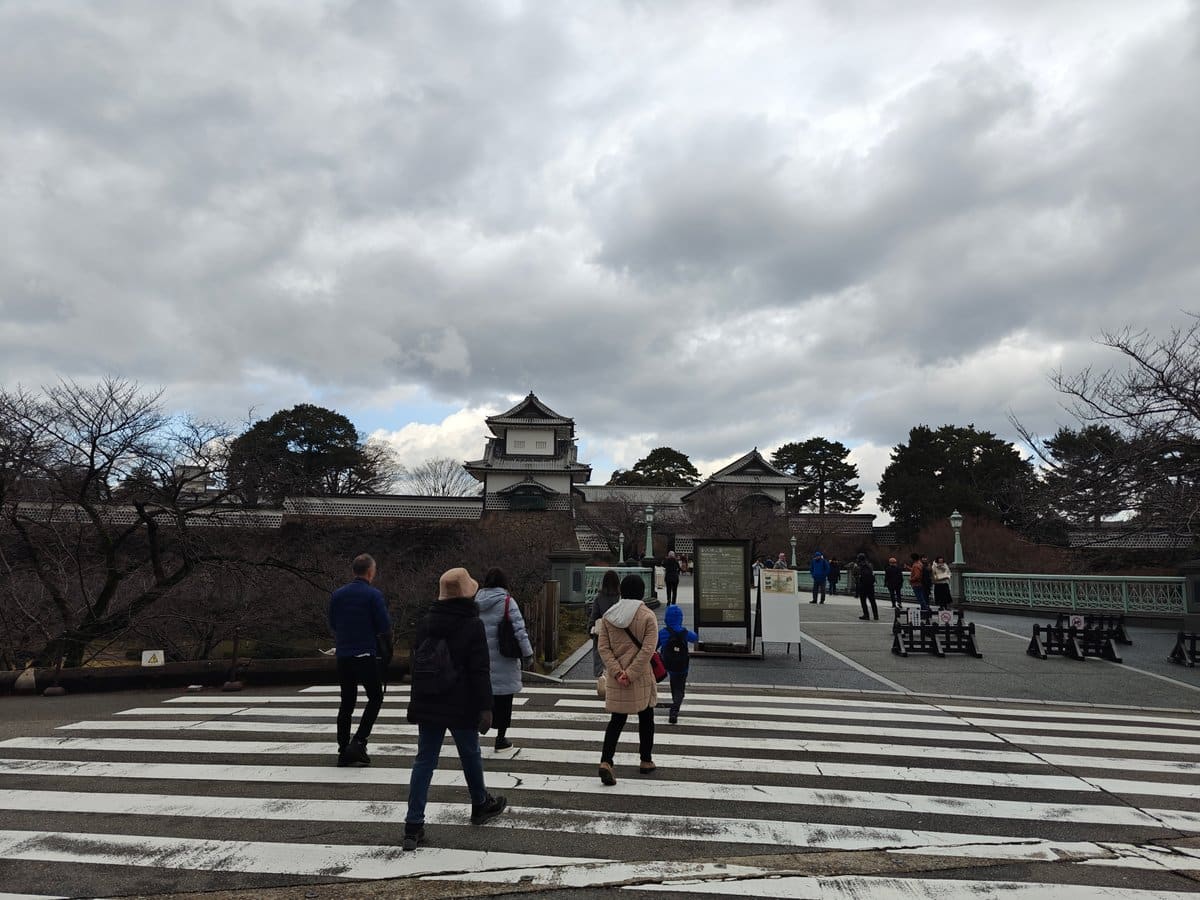
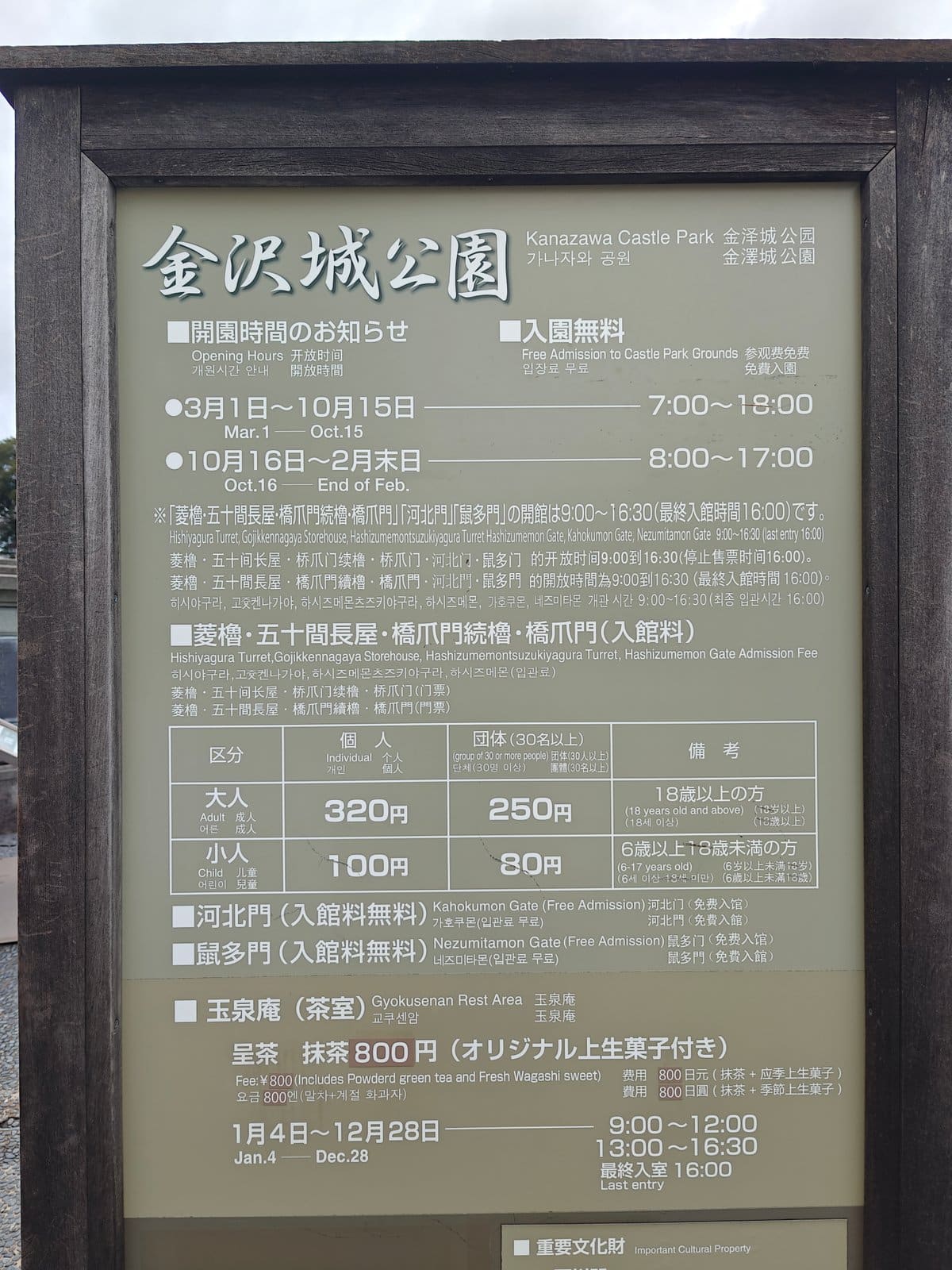
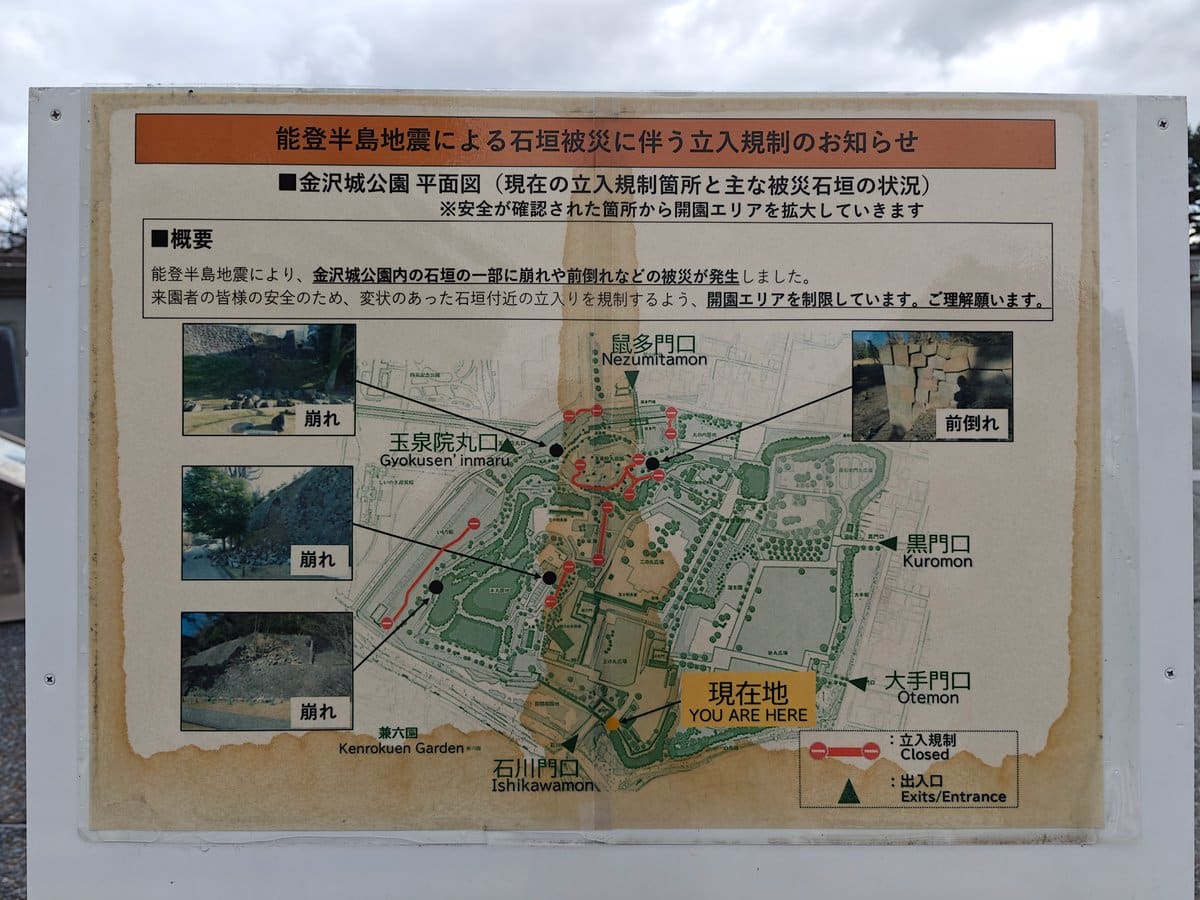
The castle is located in a large park so I walked through there after crossing the road from the station on a bright winter’s day. There were a few information boards near the gate. One explained that repairs was done on some of the stone walls after the earthquake, so they are no longer open to the public.
free Kanazawa itinerary
Visiting Kanazawa?
Get my original 3 day, 12-page Kanazawa itinerary in PDF format, based on my real trip, with many photos, hotel, and food tips. Enter your email to receive it free.
We won't send you spam. Unsubscribe at any time.
It is a good reminder that these spaces is still cared for and are not invulnerable.
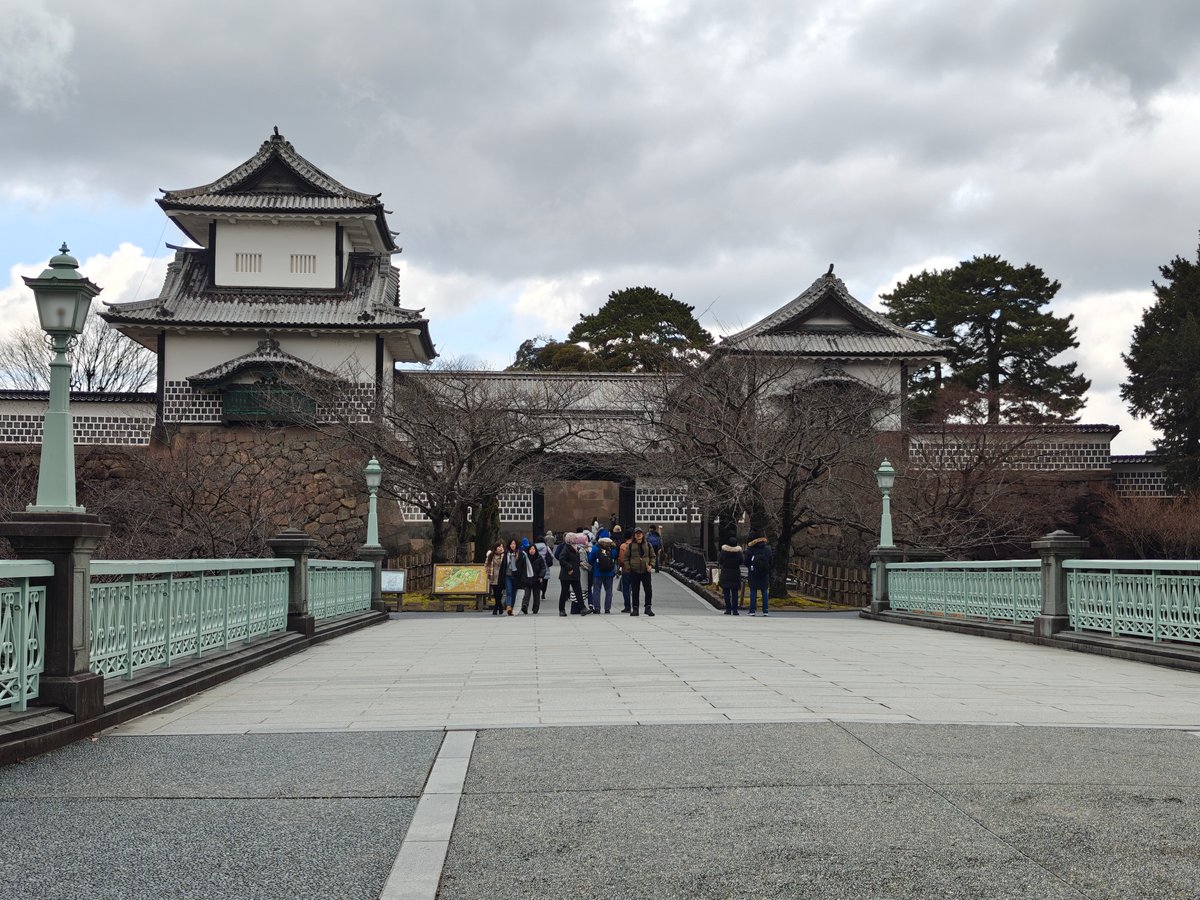

However, I first really saw the castle from the Ishikawa-mon gate. It’s just the sort of structure where you can’t help but slow down. After crossing the approach bridge, I paused for a moment to admire the sheer size of it all and then passed through.

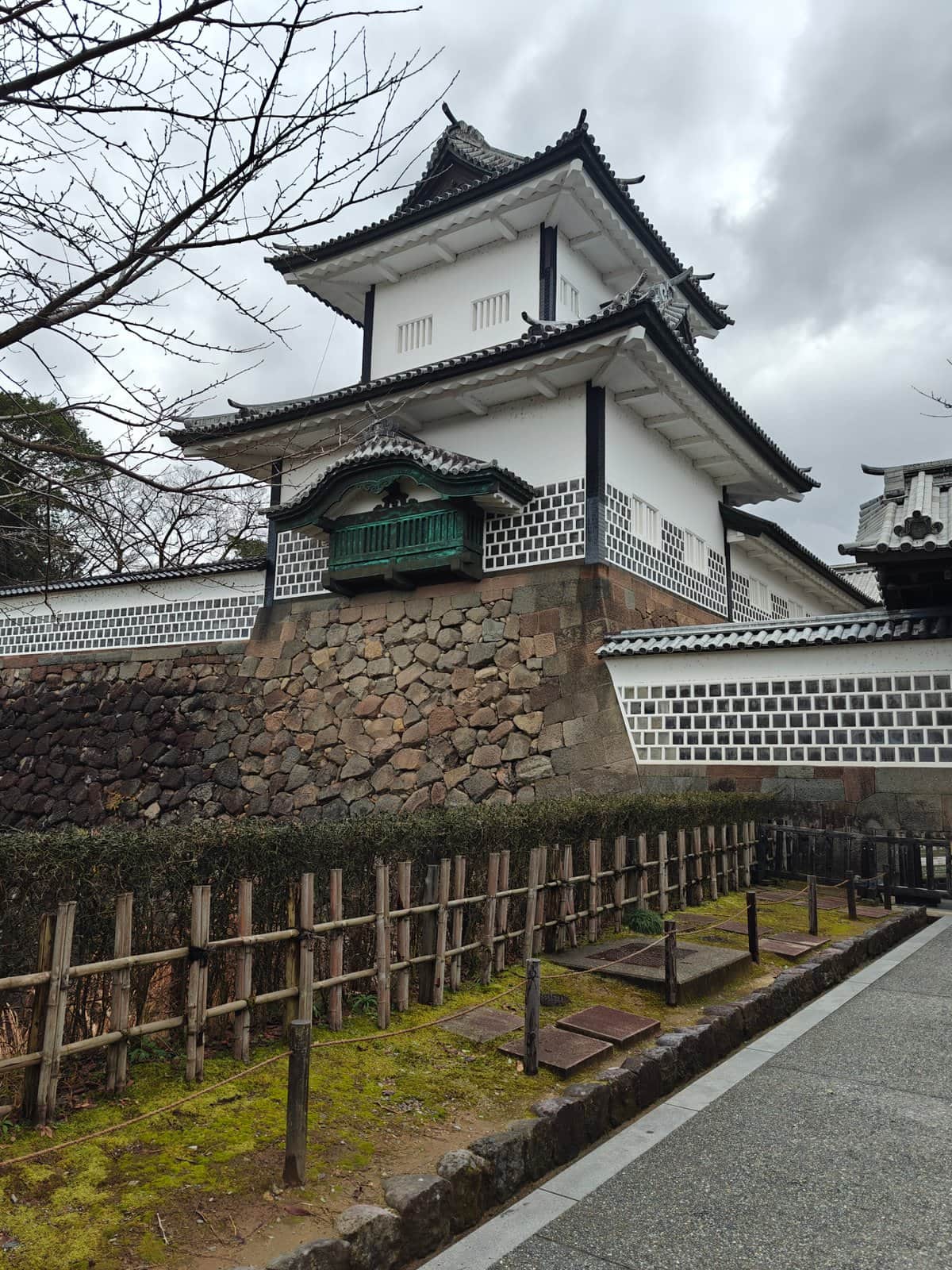


As I walked in, I saw that the paths had been lined by bare cherry trees, and there was a turret sticking up over the stone walls in the distance. After passing through the entrance area, where a no-smoking sign stood and a wooden signboard marked the transition from outside the park to within it, I made my way deeper into the park itself.
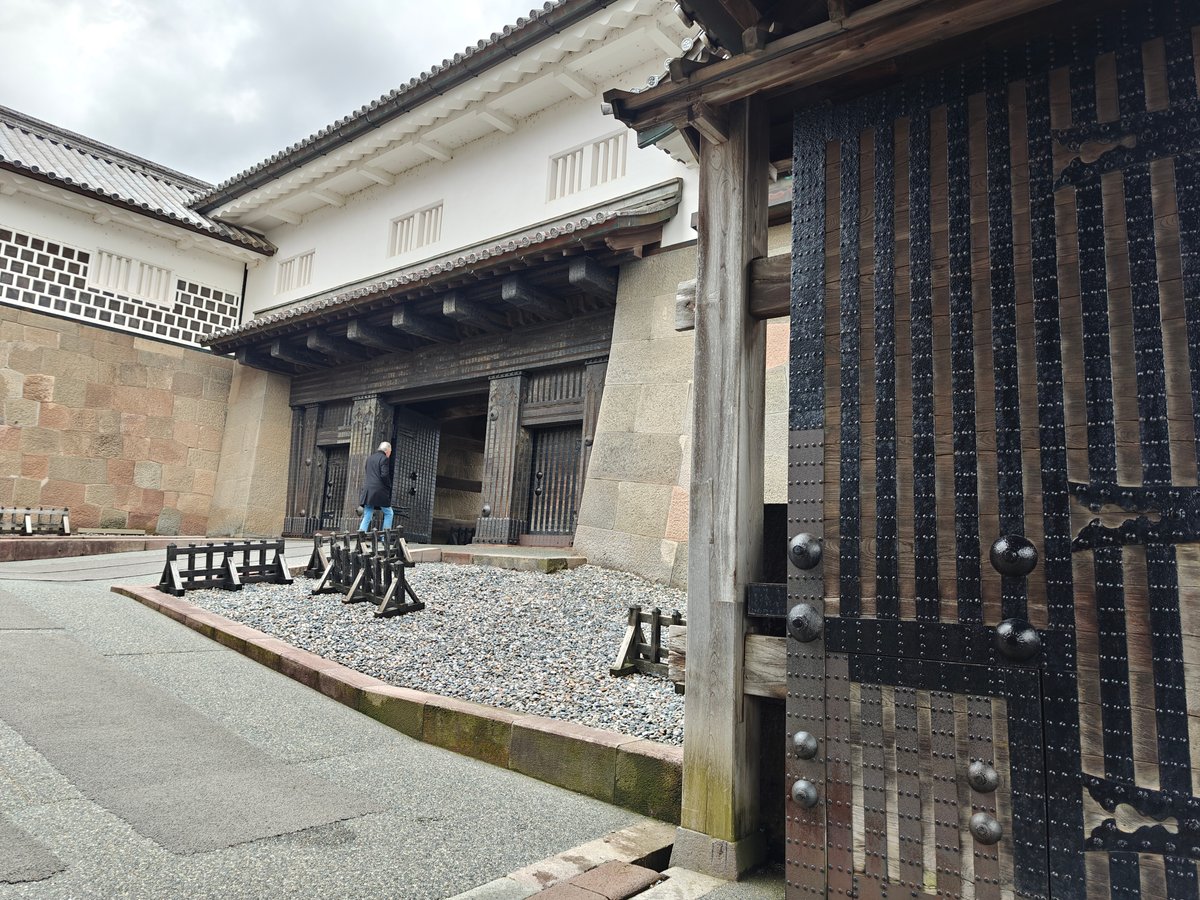

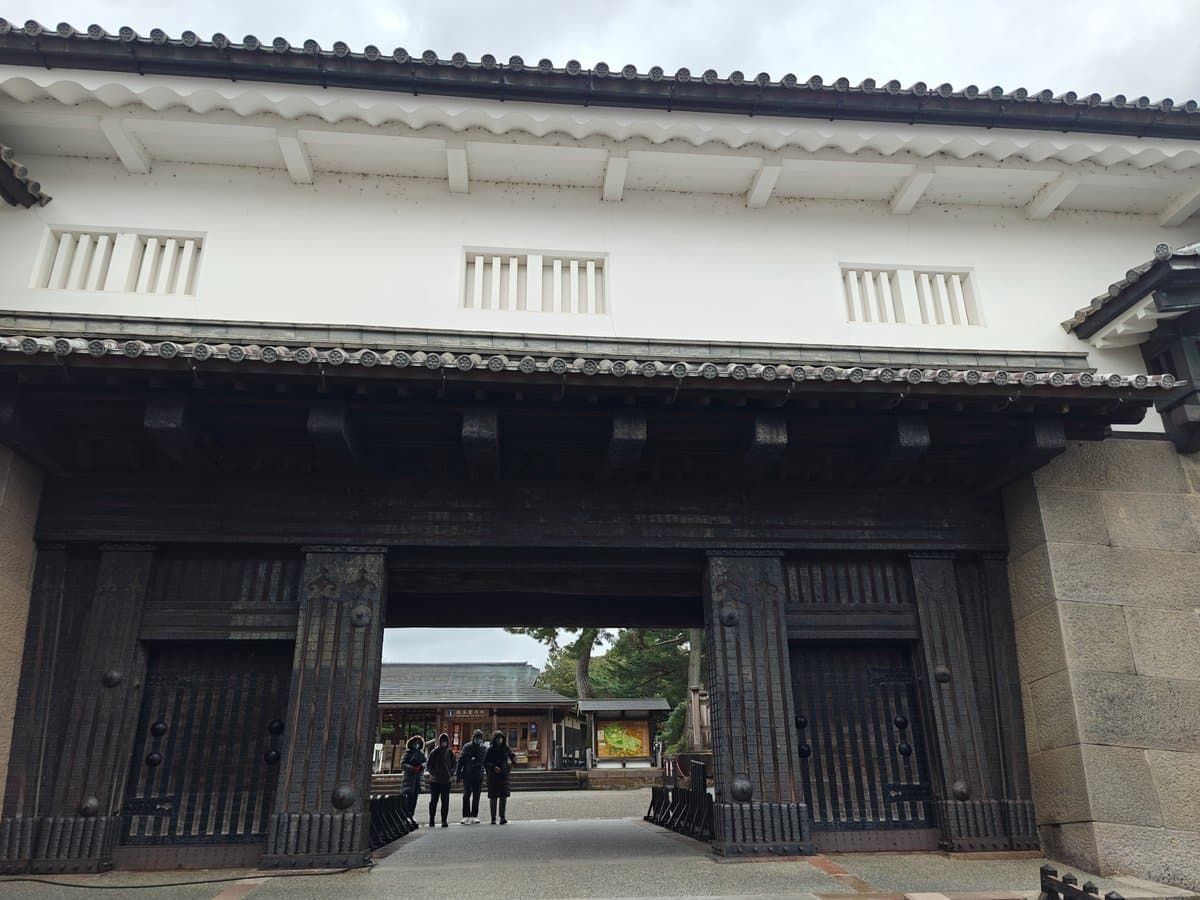
On Ishikawa-mon, the namako-kabe walls were really something up close. I stepped into the masugata courtyard from the dark timber passage. Looking back and peering out across the grounds beyond, I could see why this was a good defensive layout and what it was like to be inside.
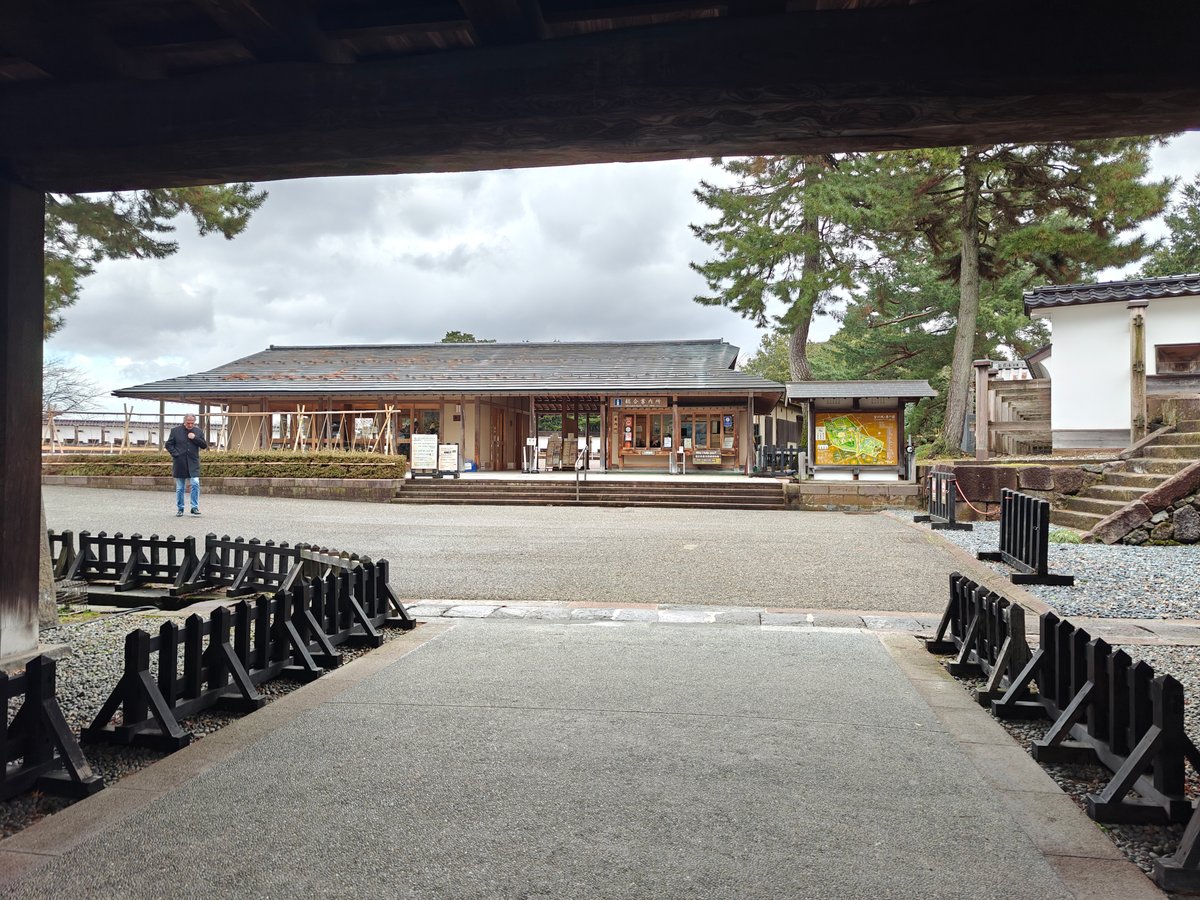
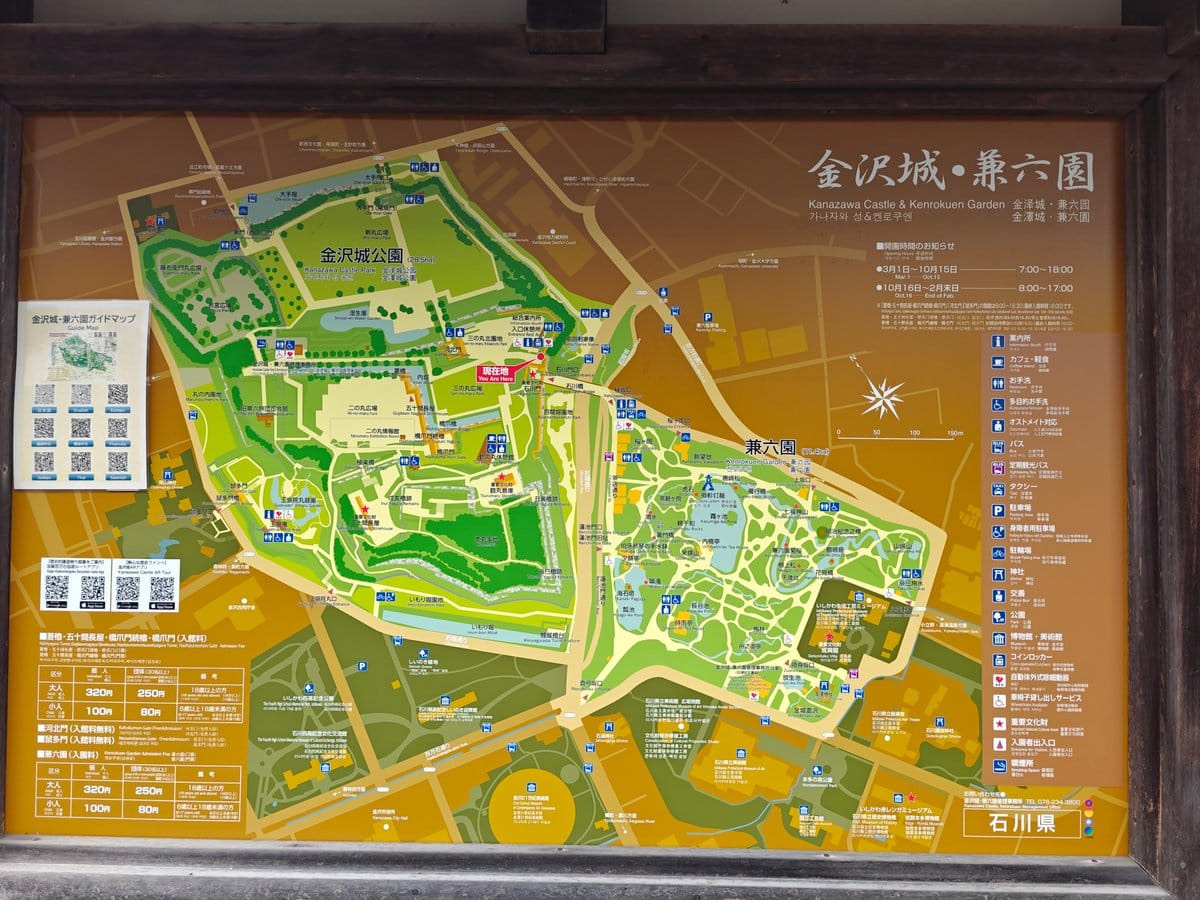

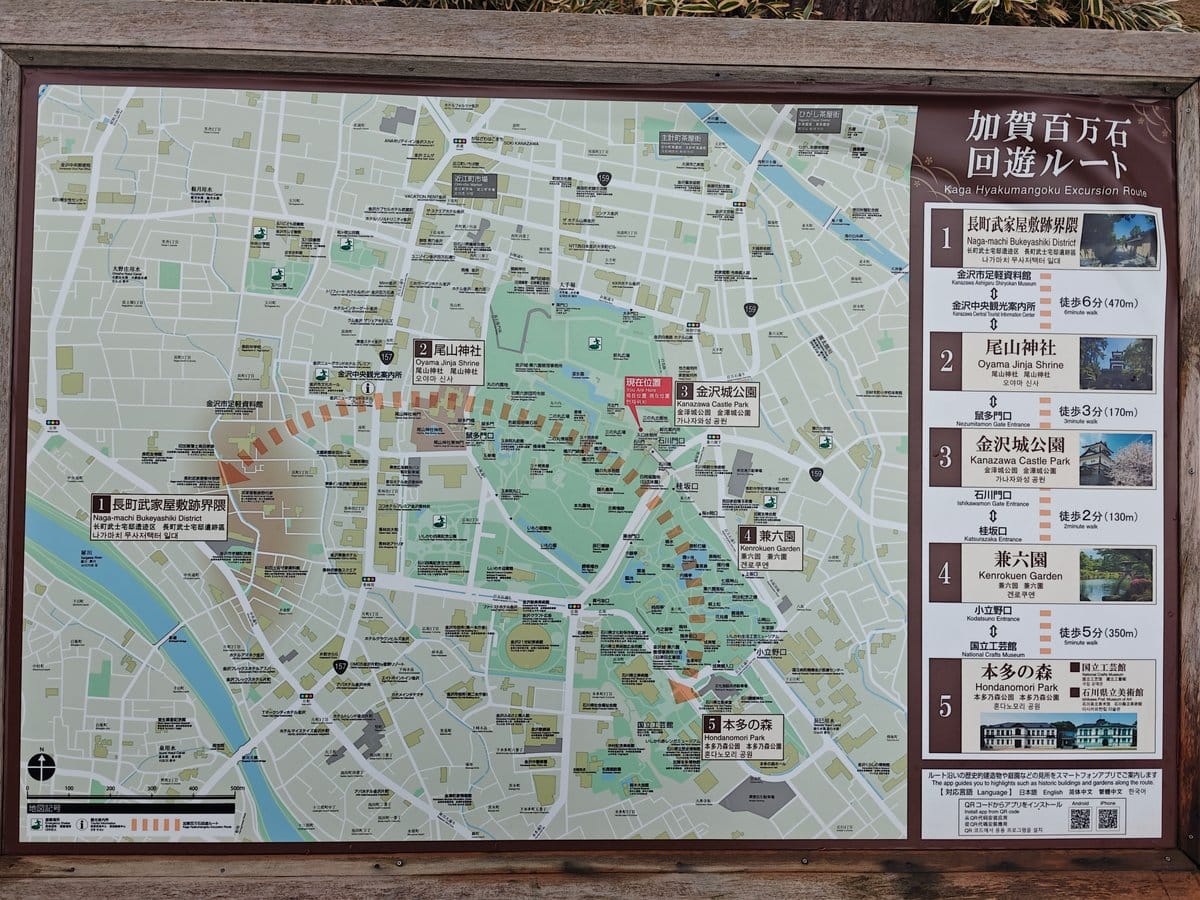
In front of me lay the Sannomaru area, an expansive gravel plaza surrounded by buildings and walls. I paused for several minutes to examine the illustrated guide-maps and piece together what I was seeing. I tried to figure out how it all fit with the nearby Kenrokuen Garden, and then I began my visit.


I crossed the plaza to see Hishi-yagura better, then went back into the wide-open space of Sannomaru. It wasn’t busy at all that early in the morning, with only a few other visitors walking about. The lawn featured one stand-out tree: an old pine reaching for the sky, its arms supported on wooden scaffolding.
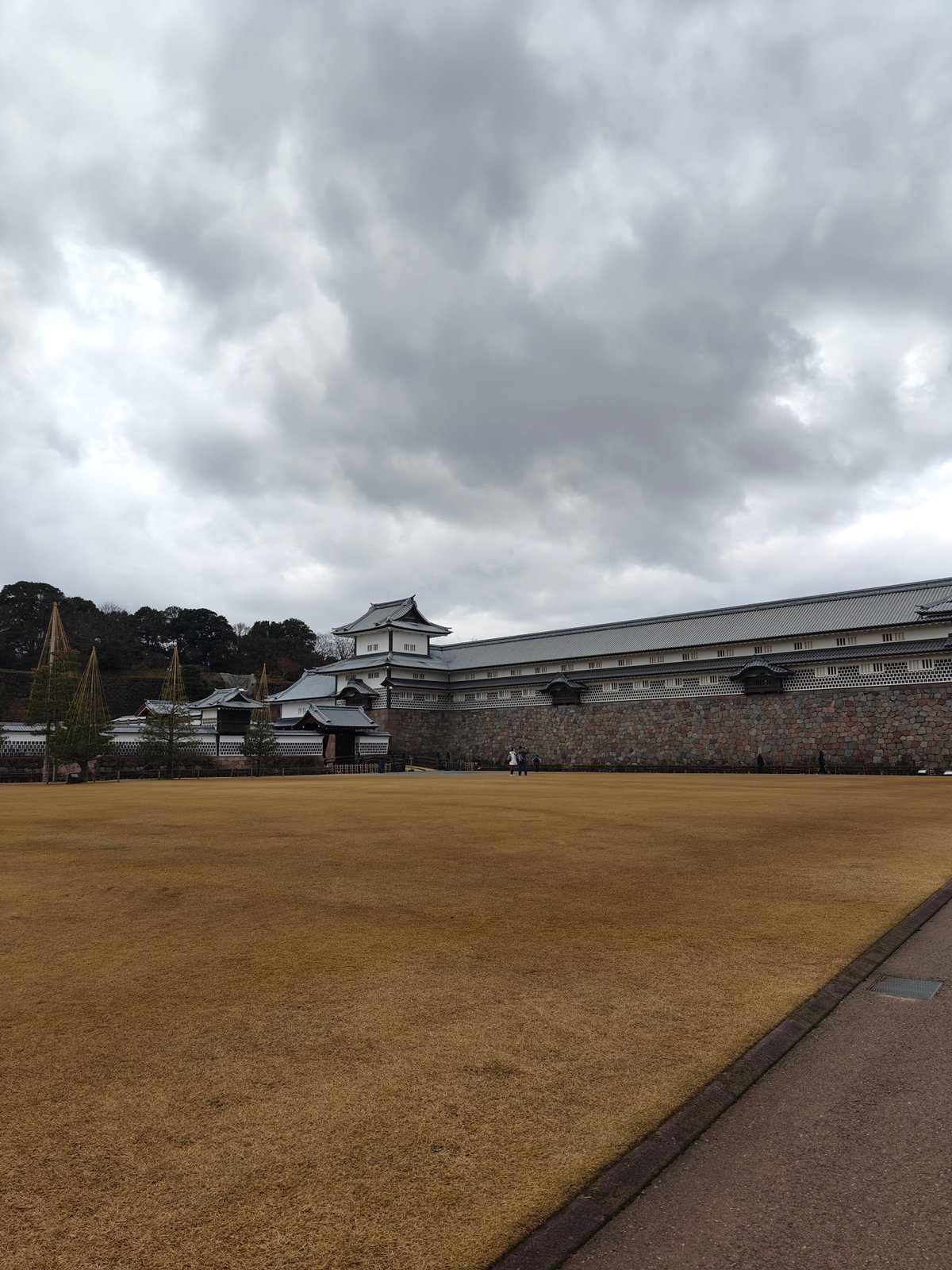
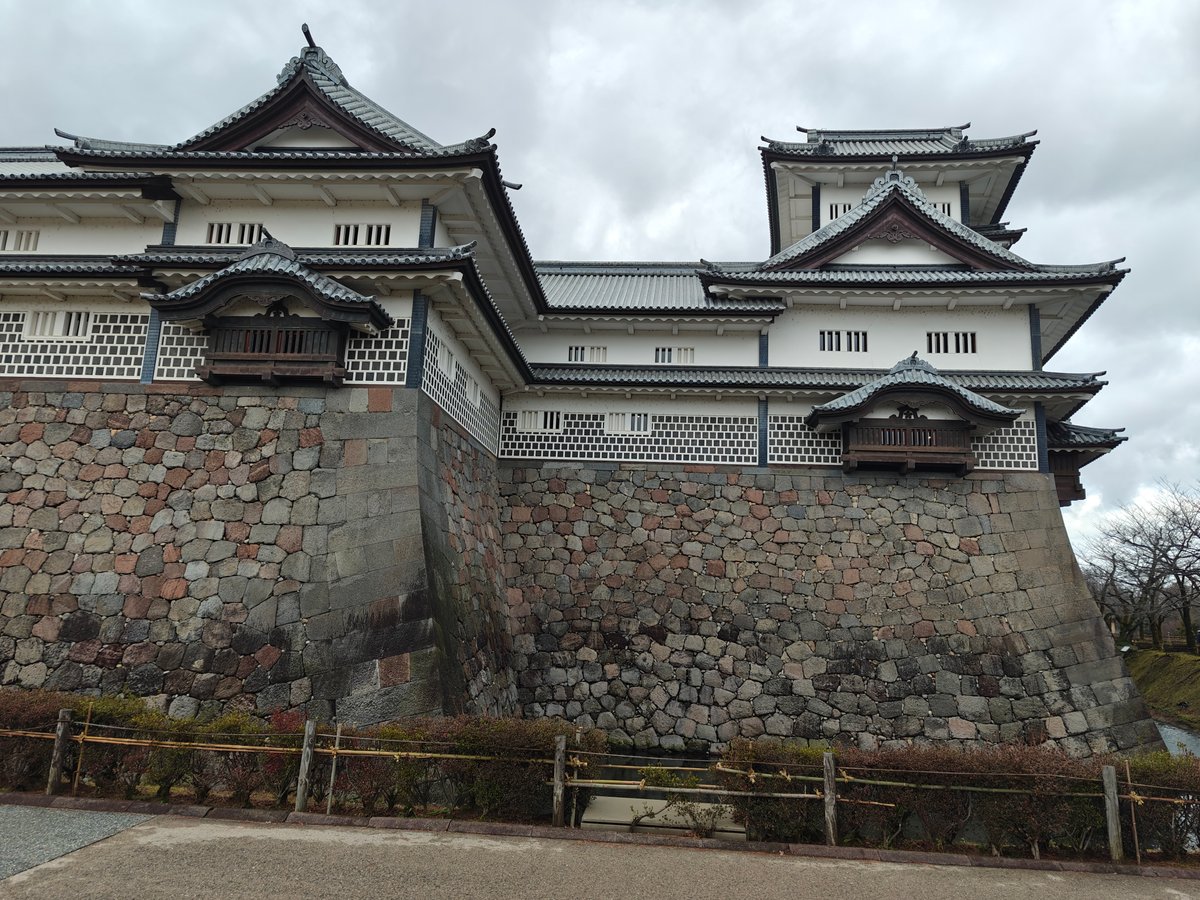
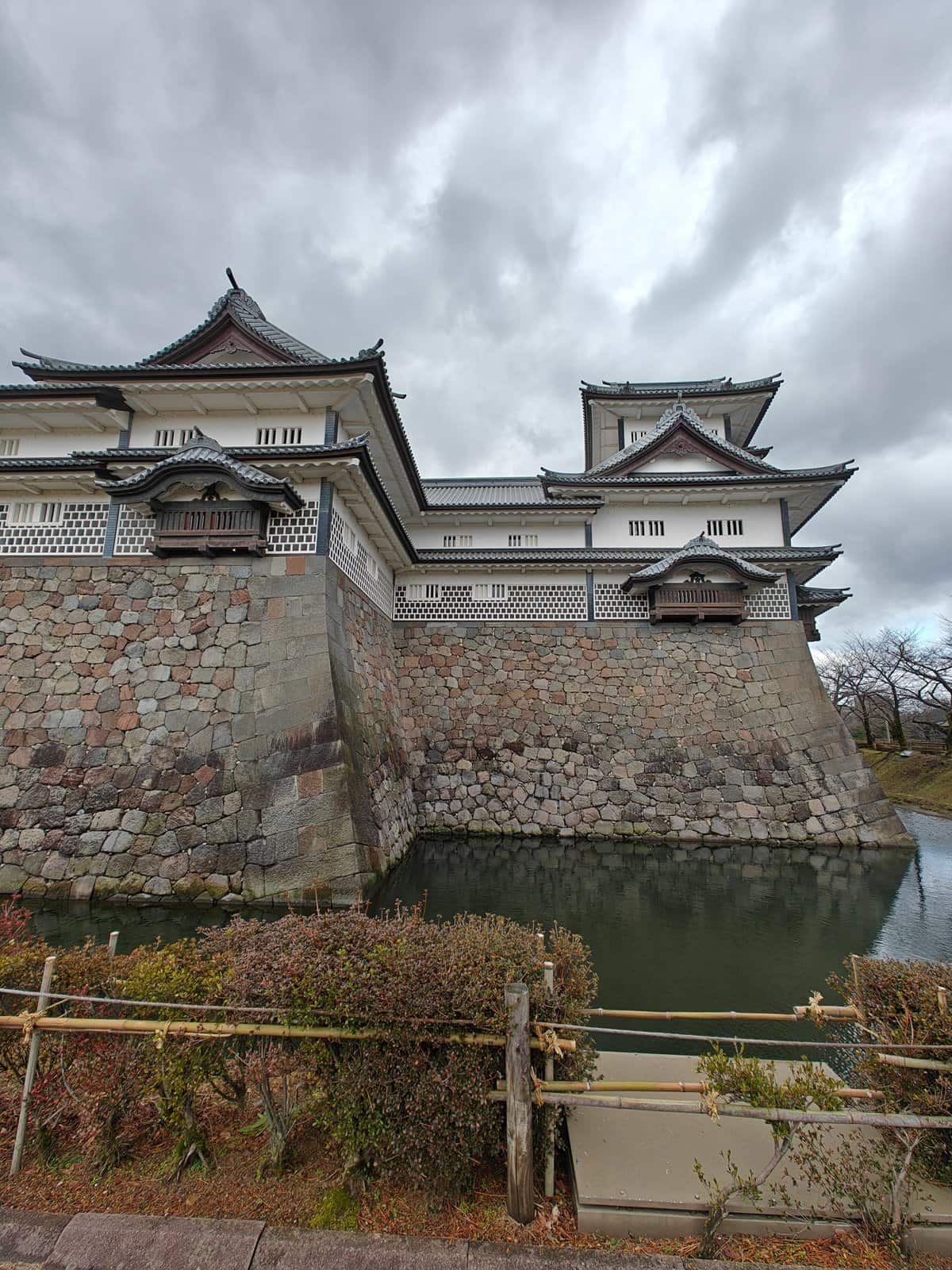
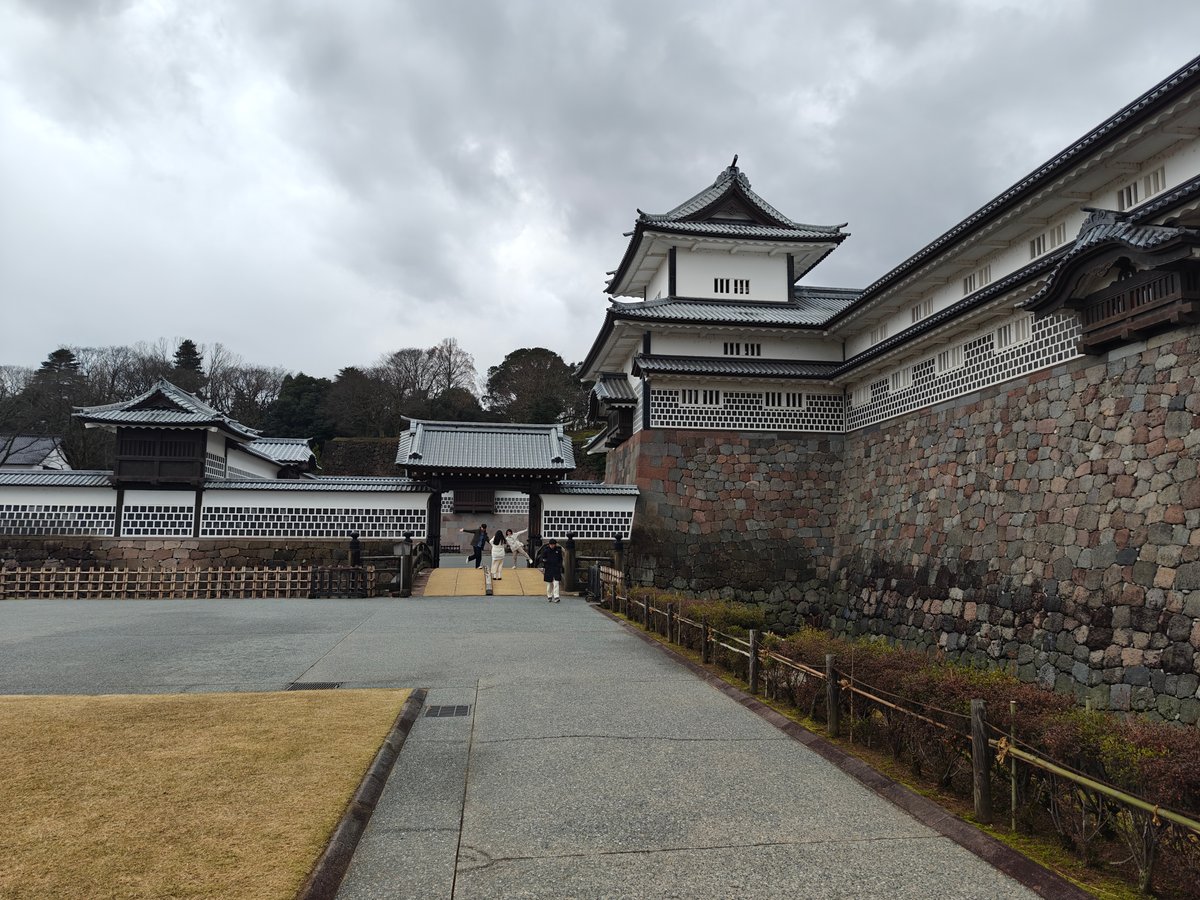

Going around to the moat side, however, revealed the stone ramparts and turrets at their best. What impressed me about the castle architecture is how the buildings was positioned above the water and how long those stone walls were. It’s no wonder these castles was designed as they are.
As impressive as it was, it wasn’t all for show.
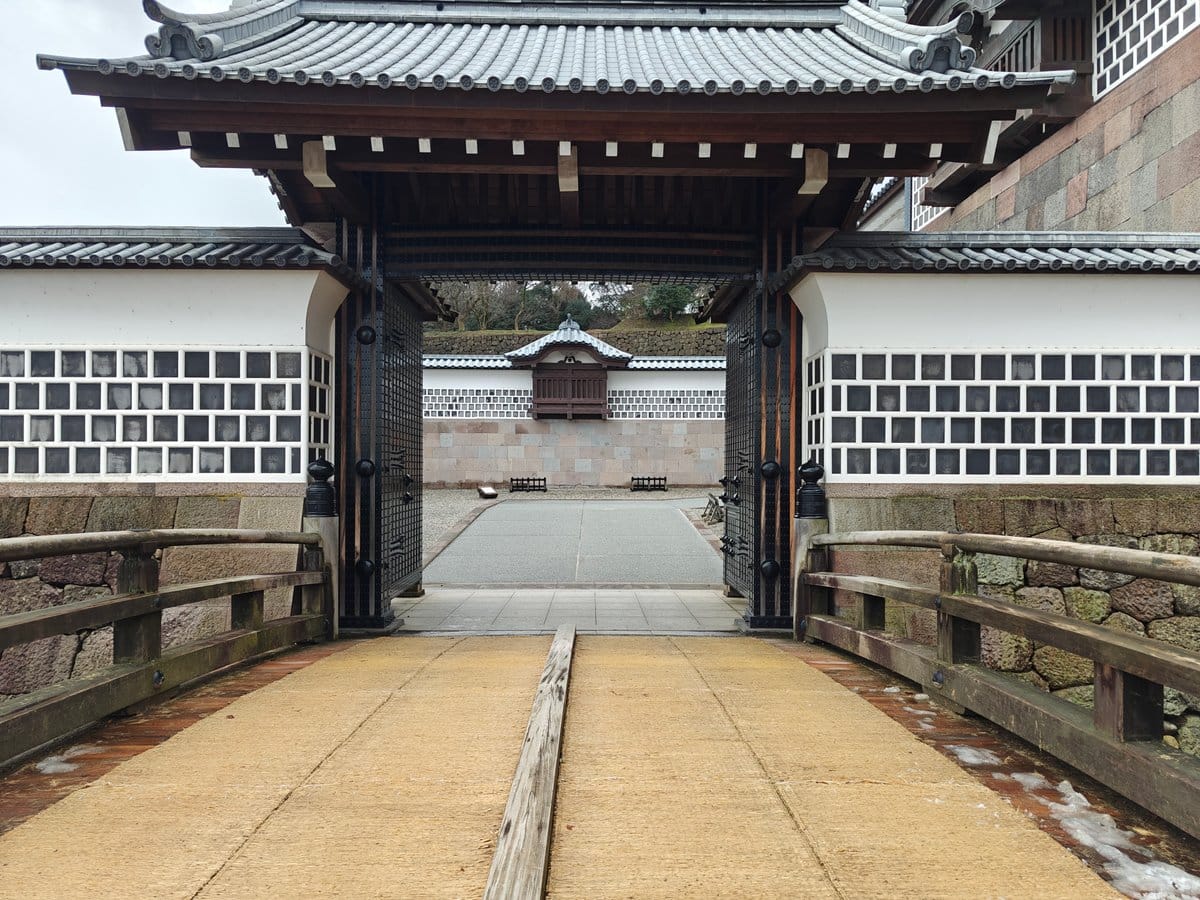
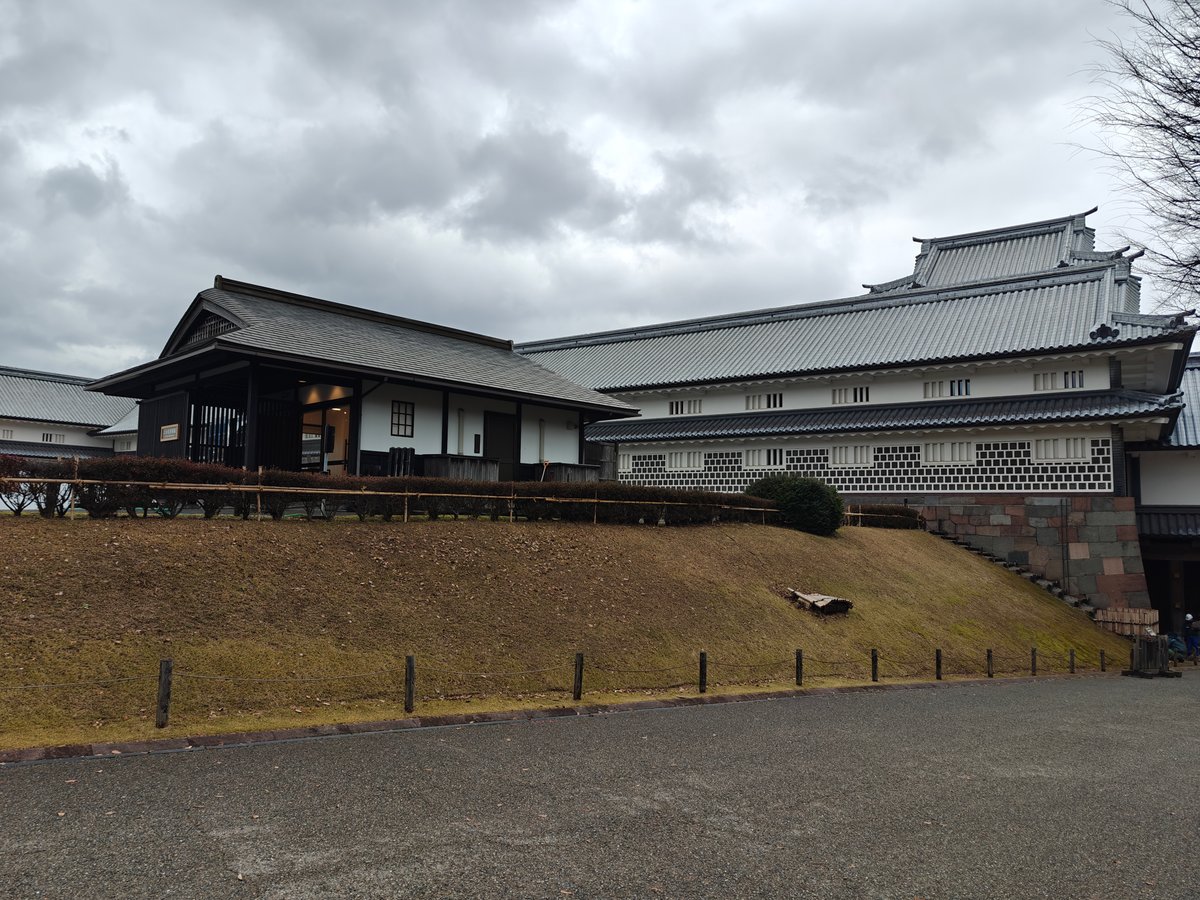

Past the Hashizume-mon gate and the long stretch of Gojikken-nagaya, a white storehouse building running along one side of the grounds, was Gyokusen-inmaru Garden; however, in winter, it was little more than gravel and bare branches.
Gojikken Nagaya
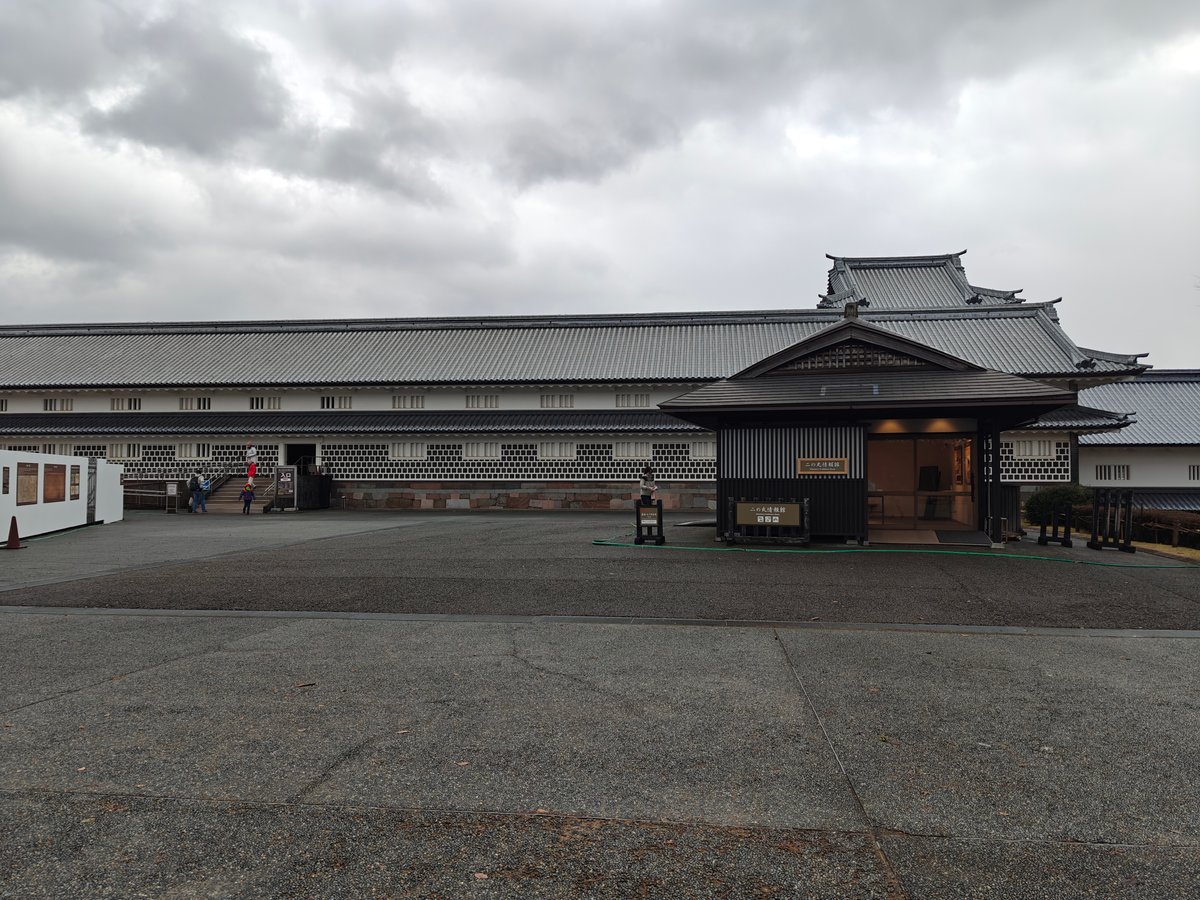
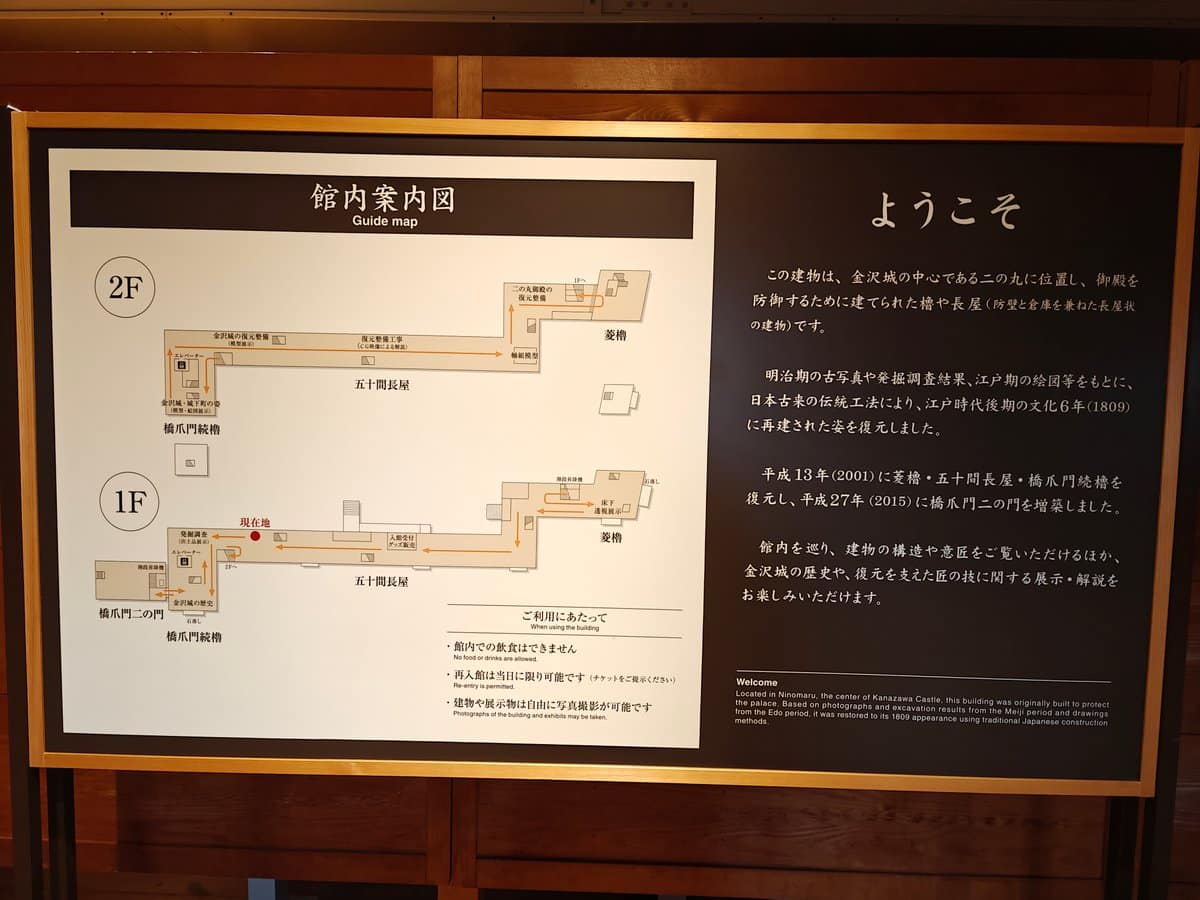
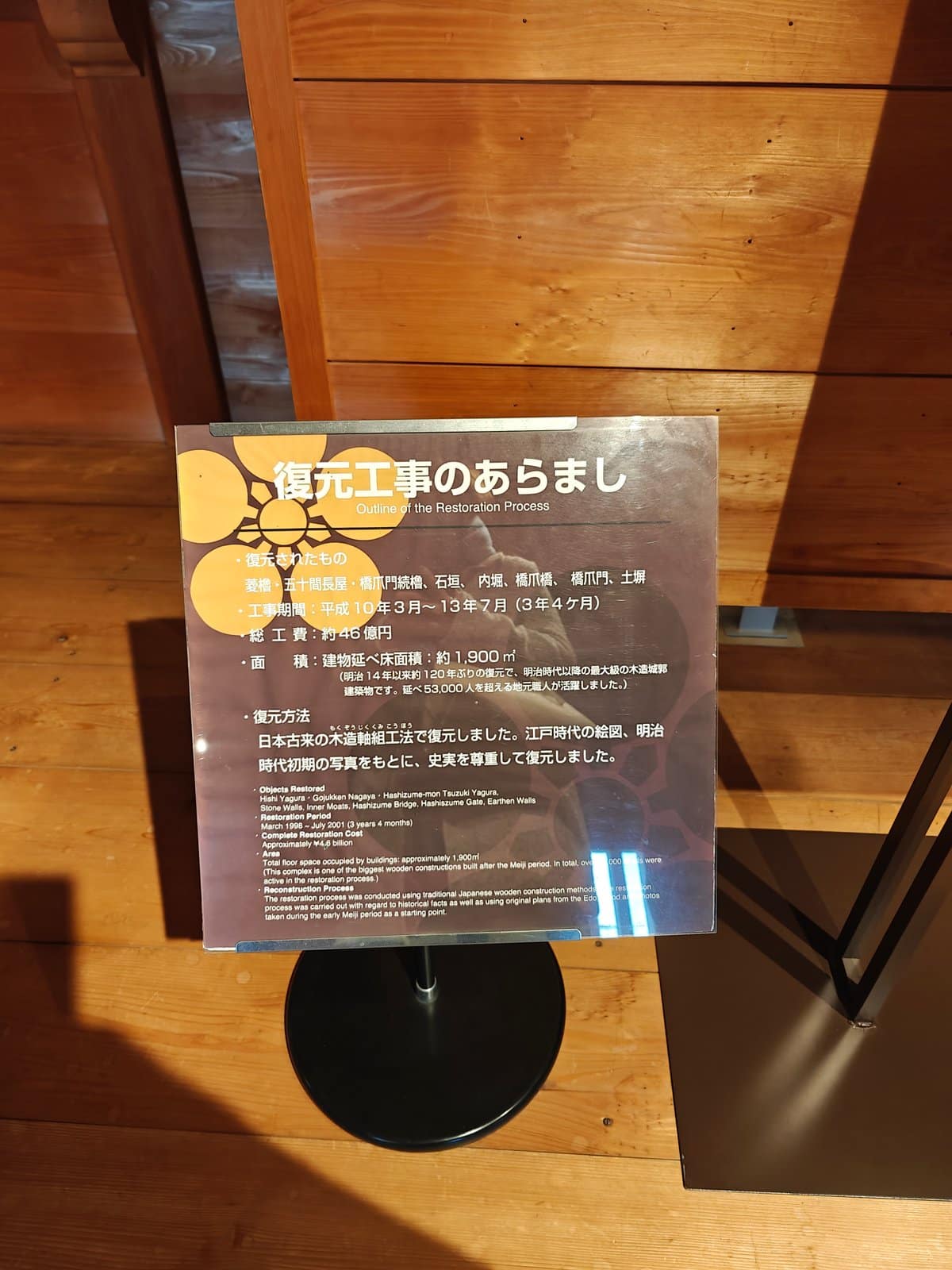
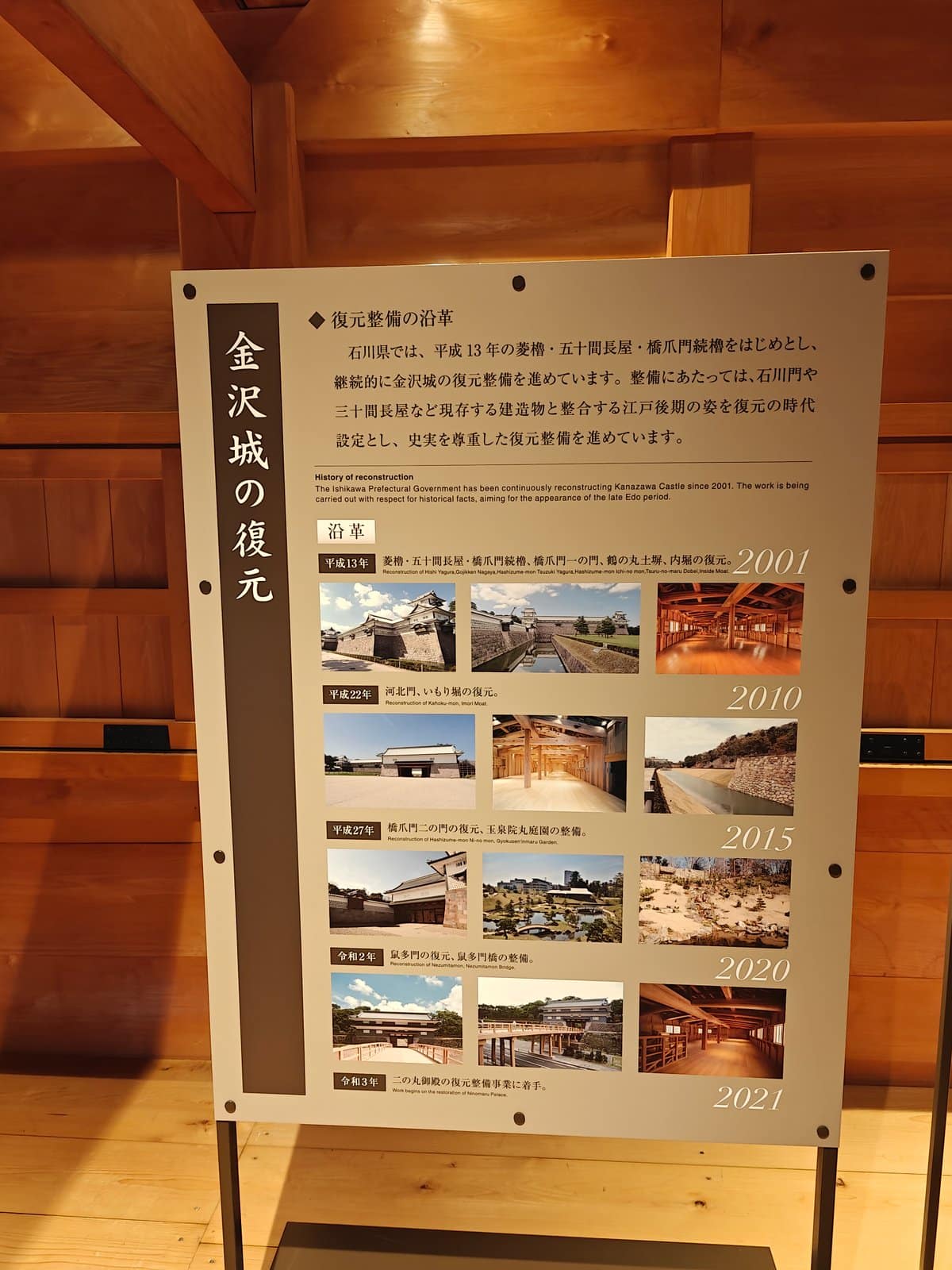
Inside is the Gojikken Nagaya. This was also restored and converted to a museum detailing the reconstruction of the castle. At the entrance there is an outline of how it was all put back together along with a welcoming display which, I’ll be honest, I found more interesting than I thought I would!
It wasn’t overdone but explained everything clearly.
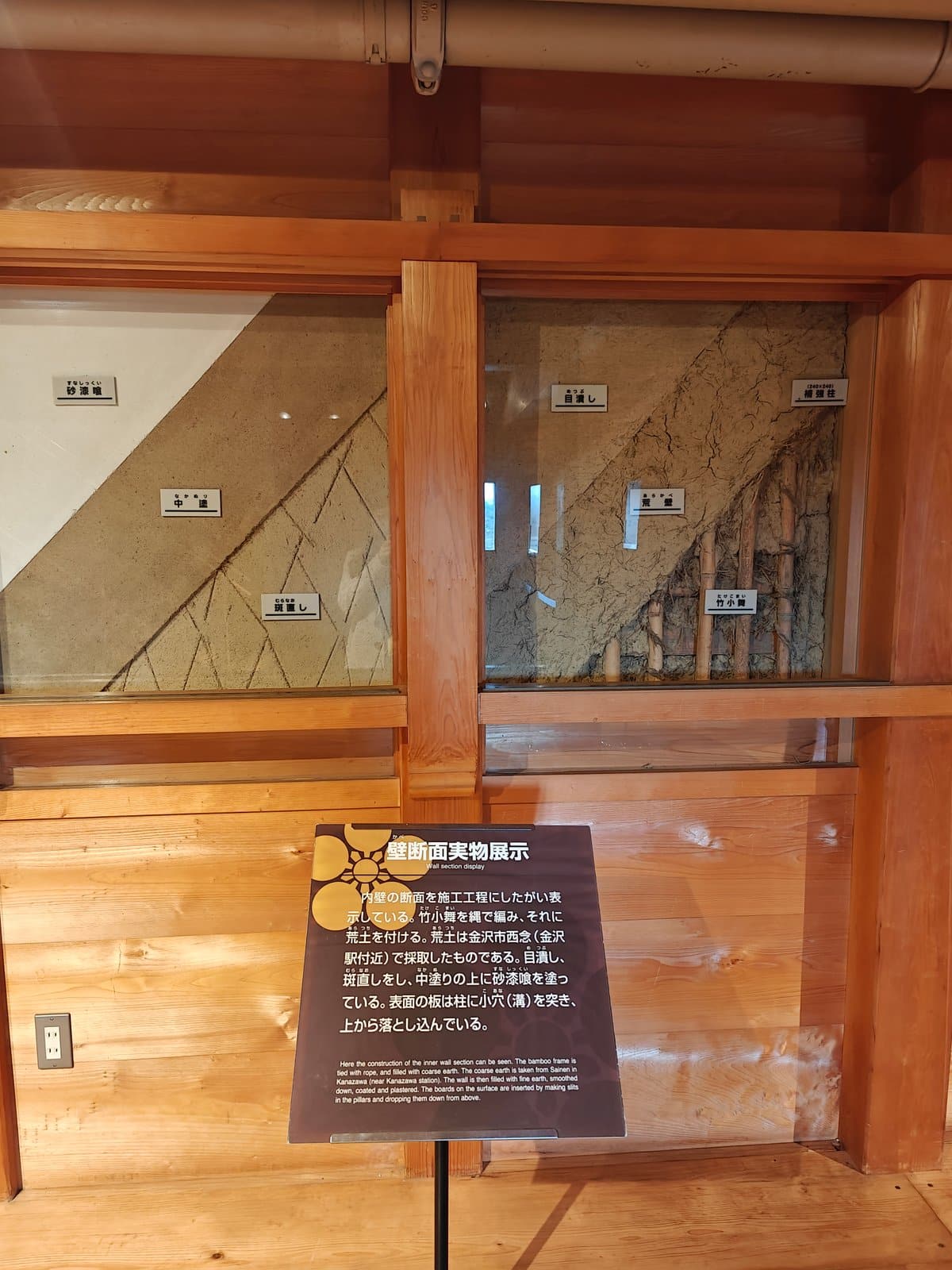
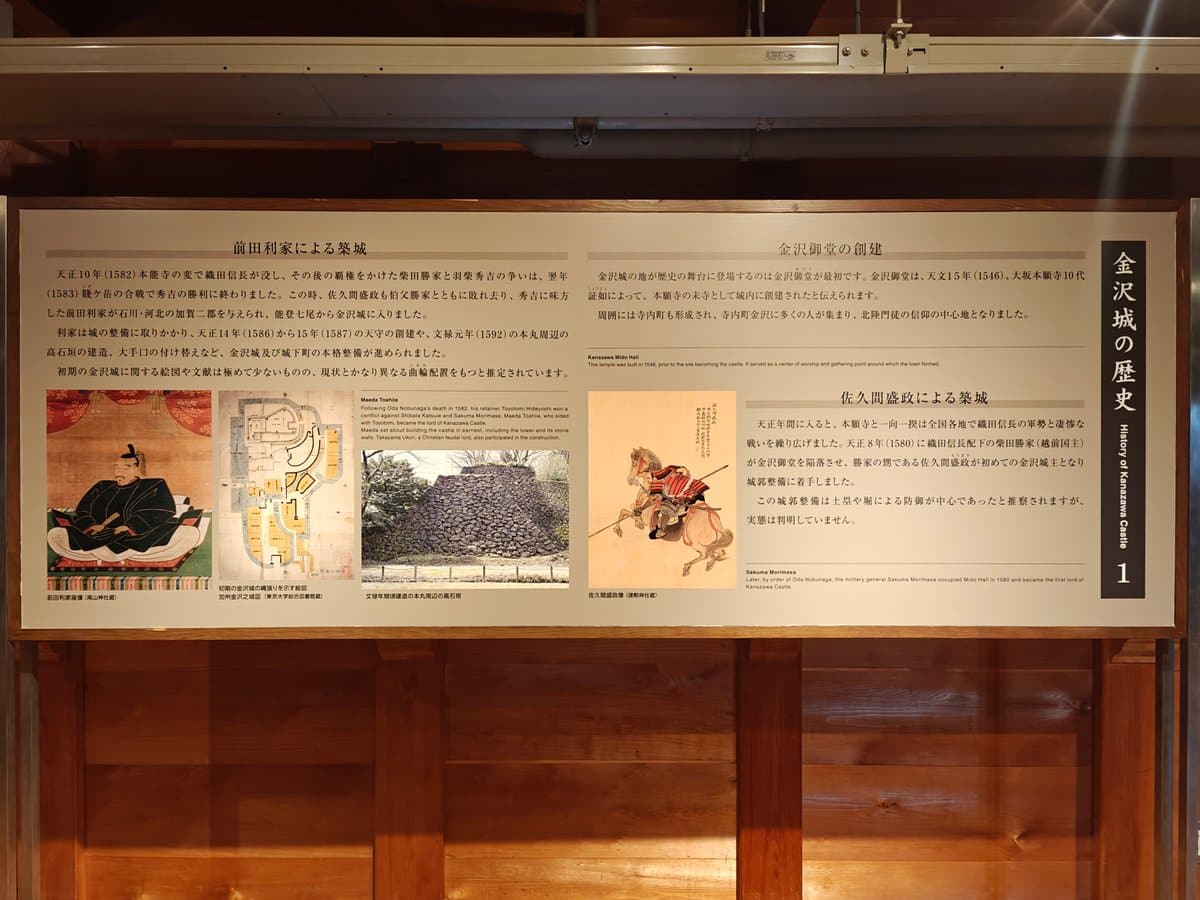
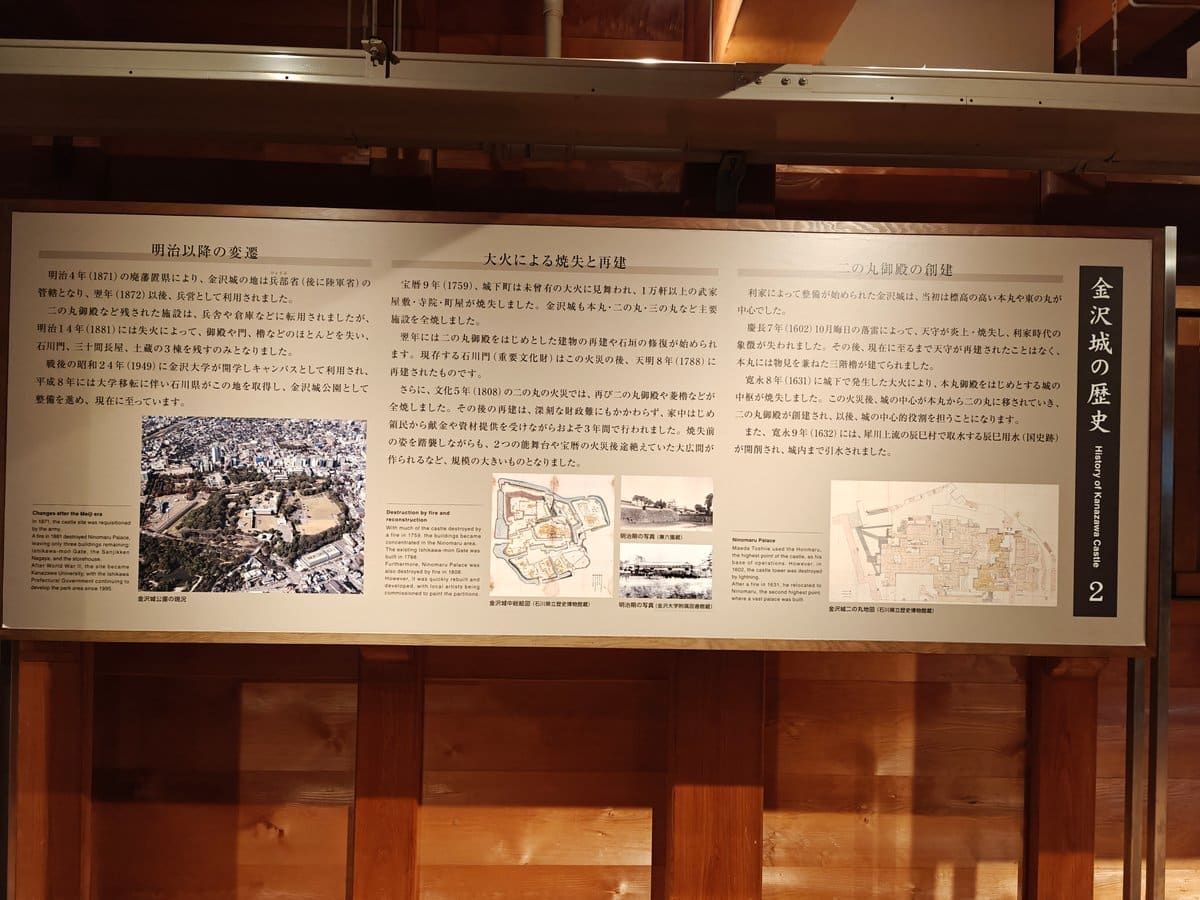
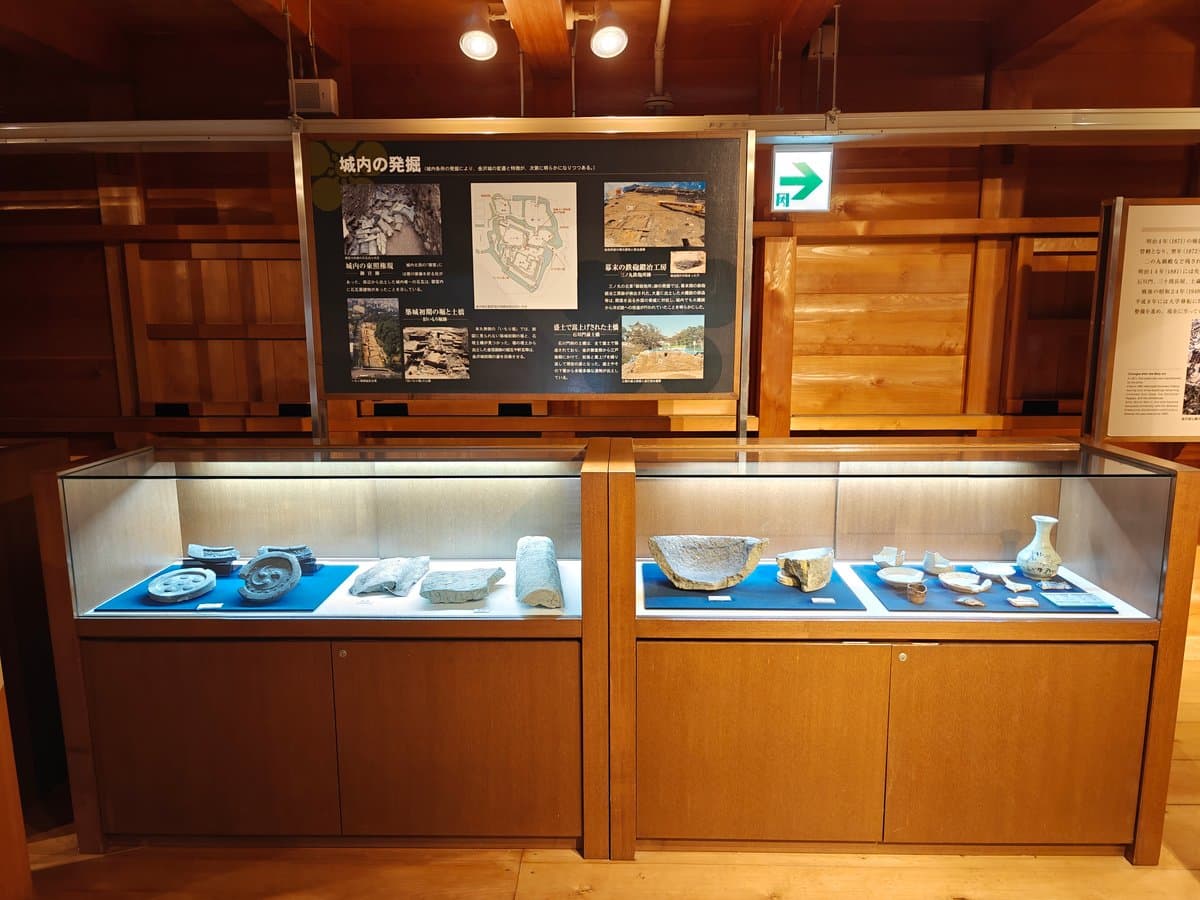
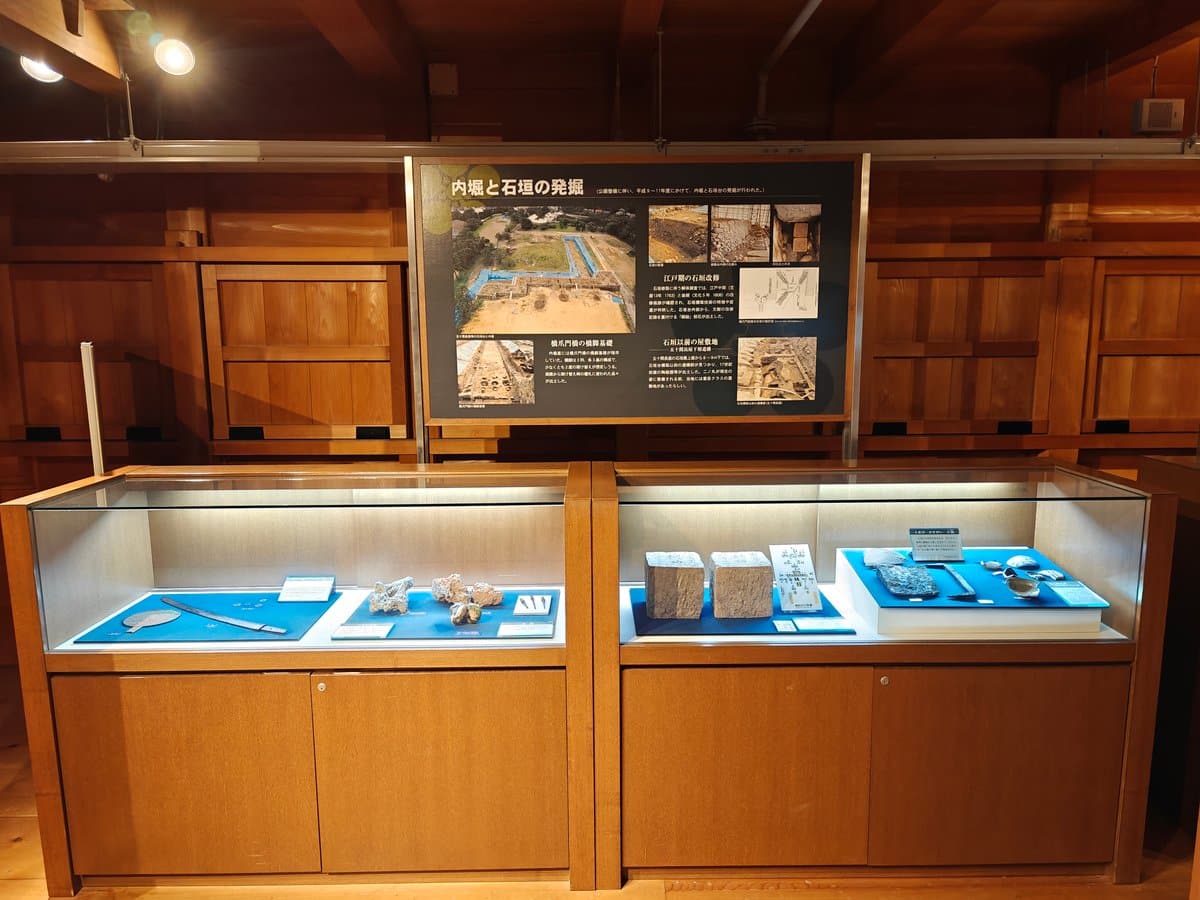
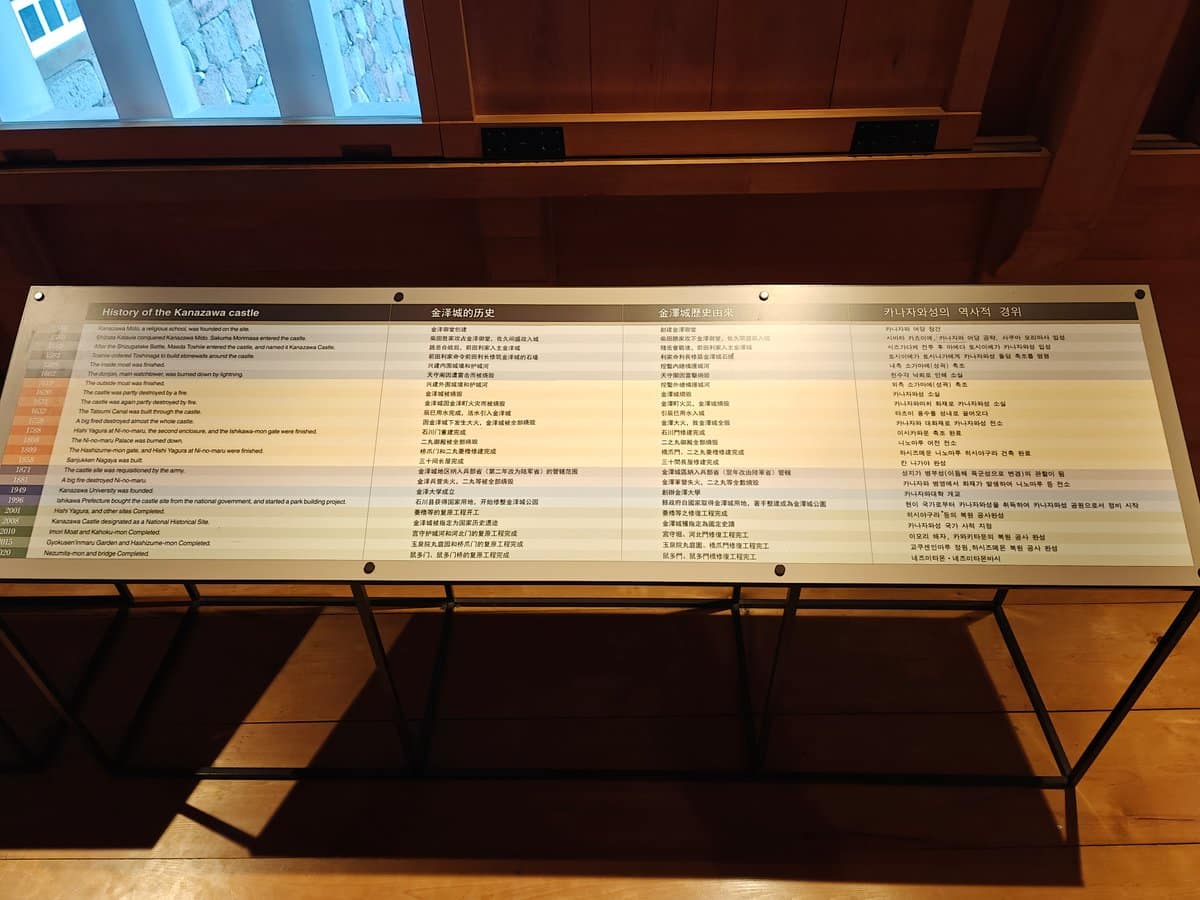
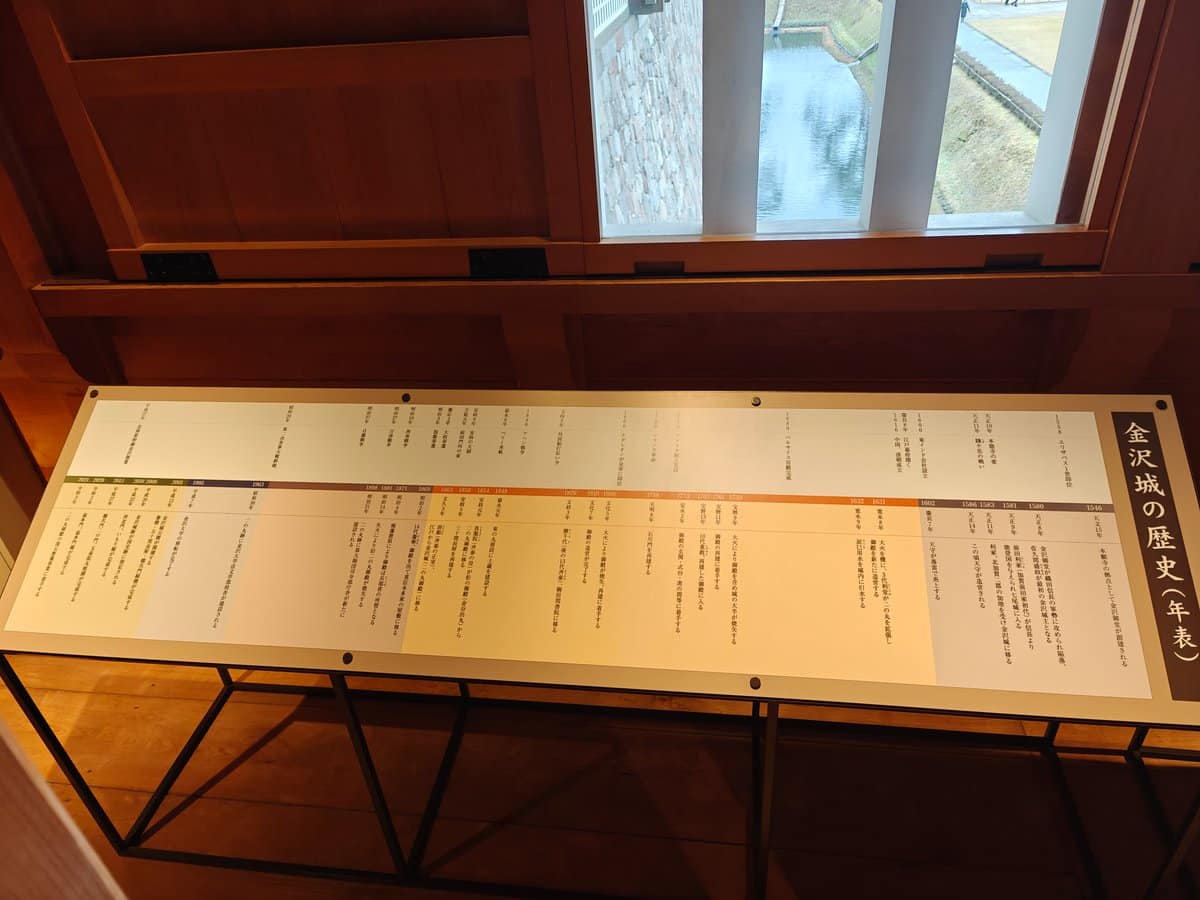
There was a timeline of events and a series of history panels. There was also a cross-section display of the timbers and plaster walls. Finally, there were many artifacts found during restoration, like stone blocks, roof tiles, and iron fittings, all kept in glass cases.
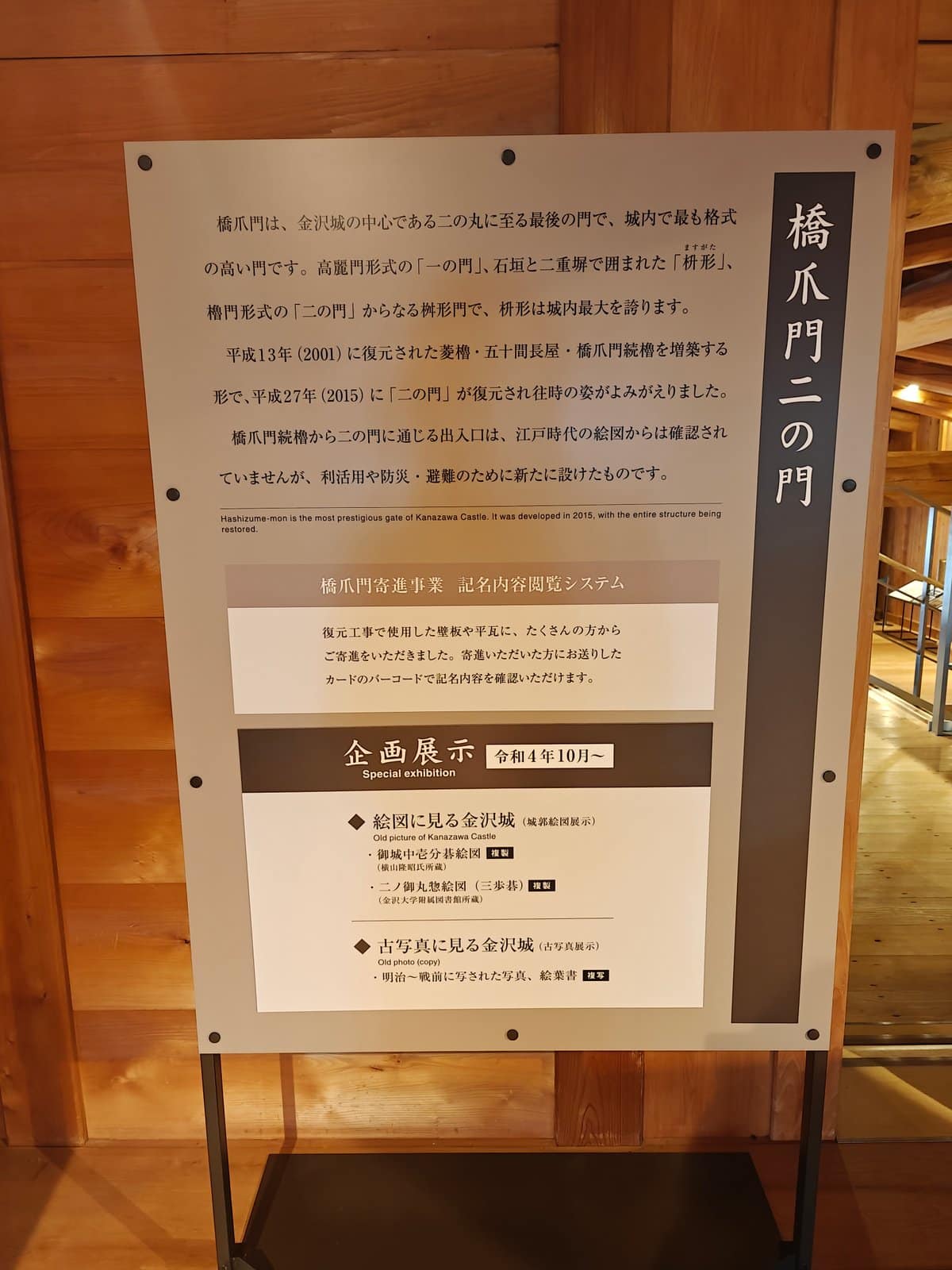
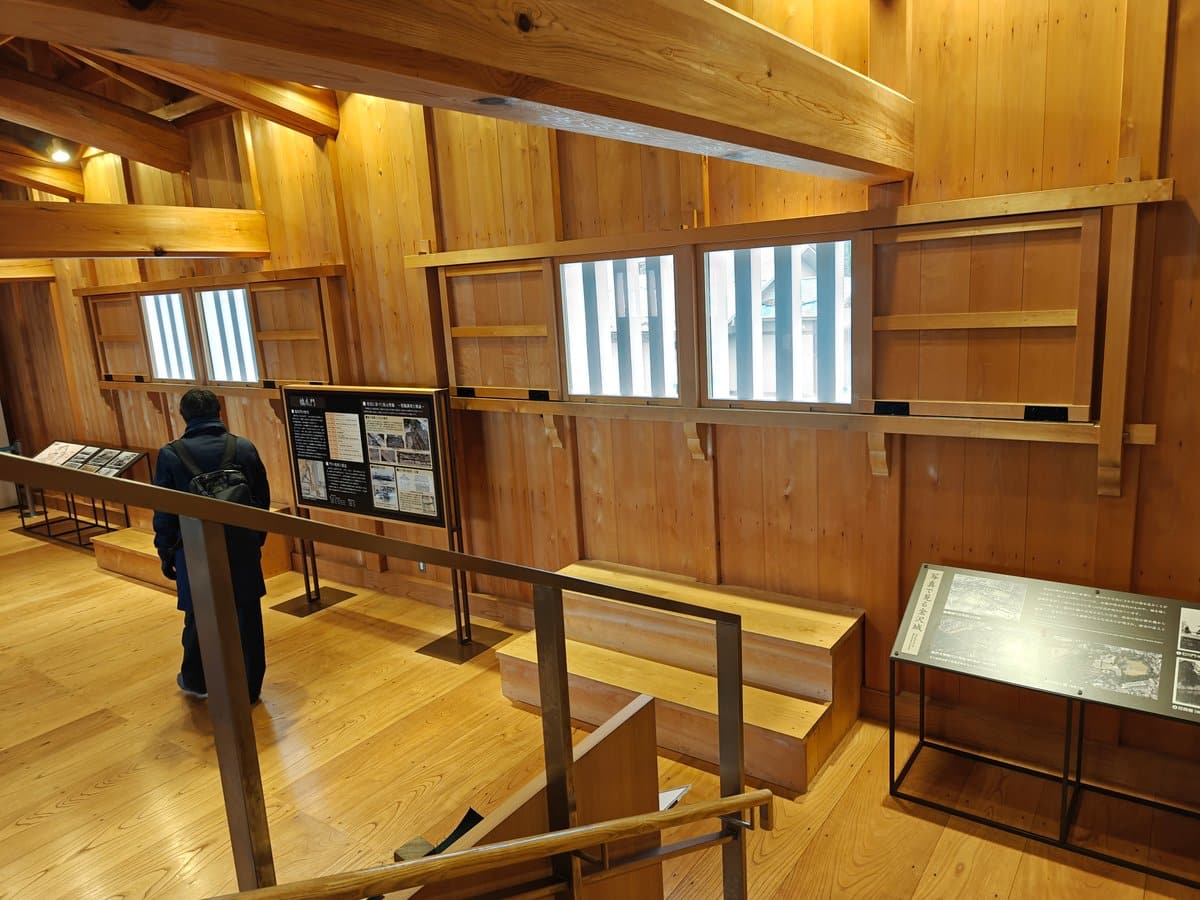
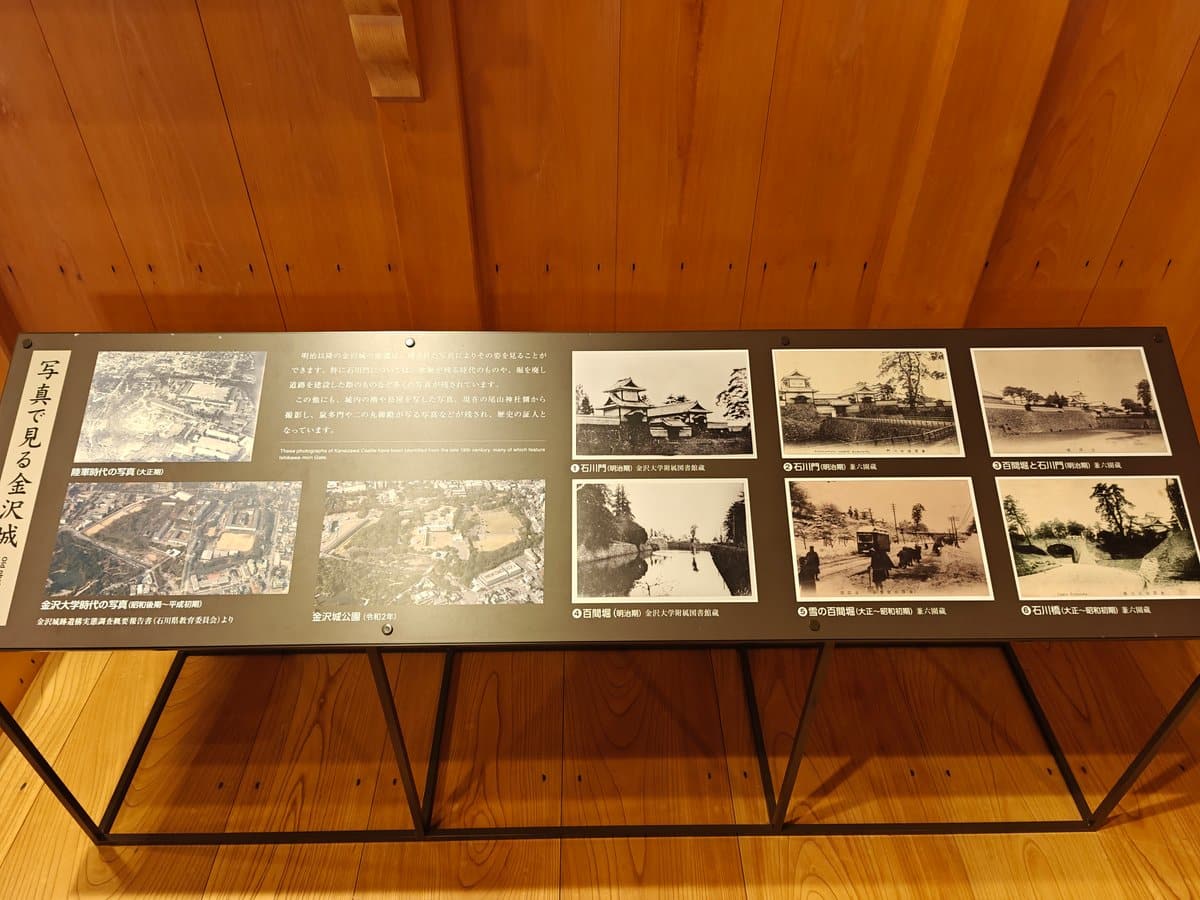
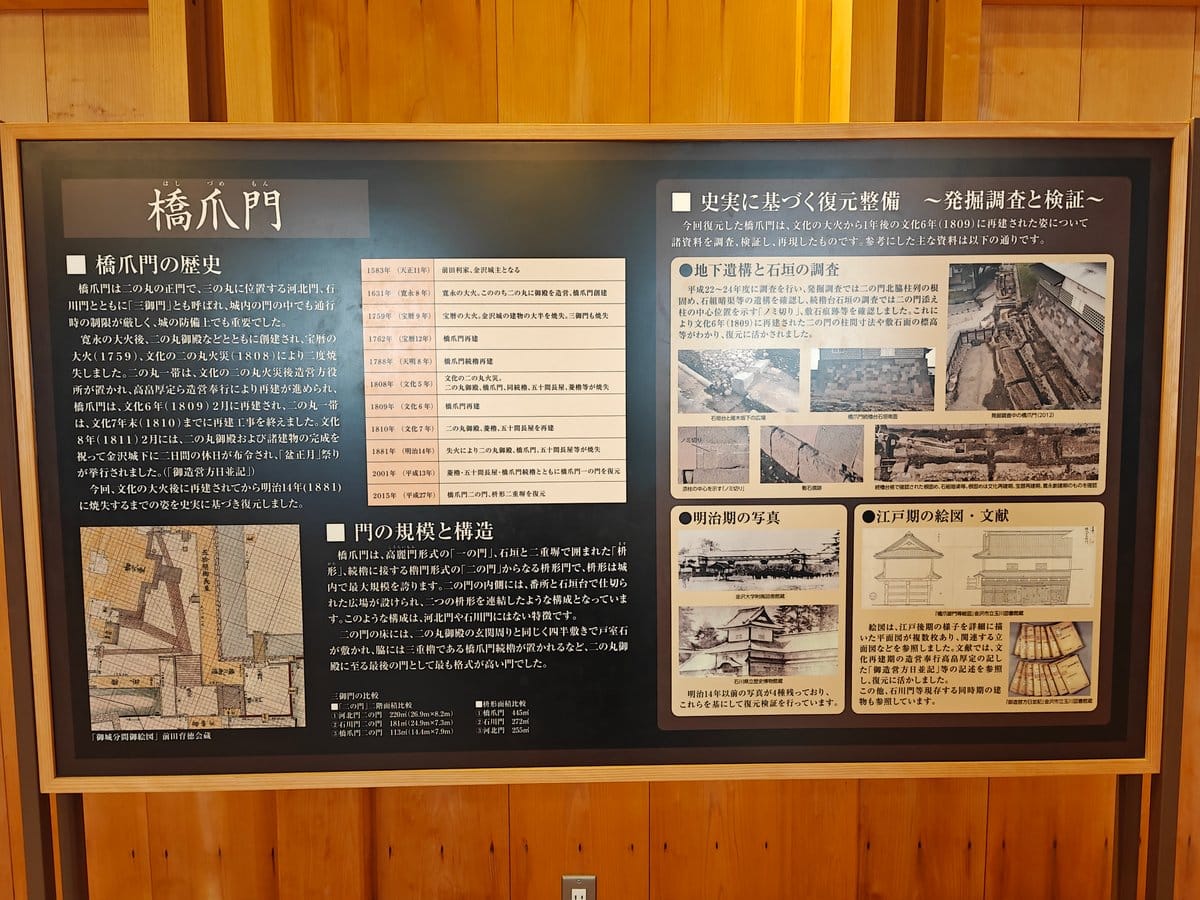
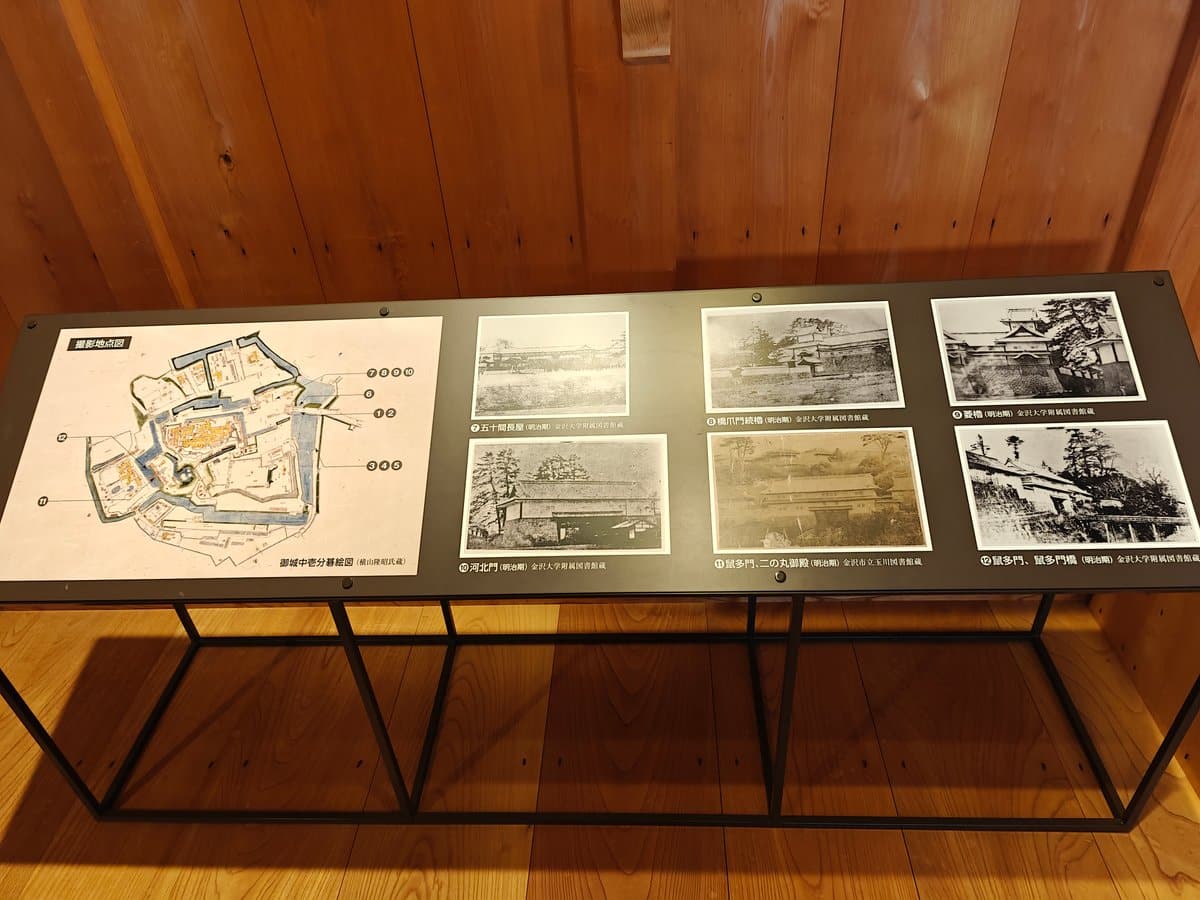
It’s also well-lit and warm inside the hall, with a collection of older photos of the castle and information about the Hashizume-mon gate. I took some time to look at these and compare them to what I’d just walked past out front.
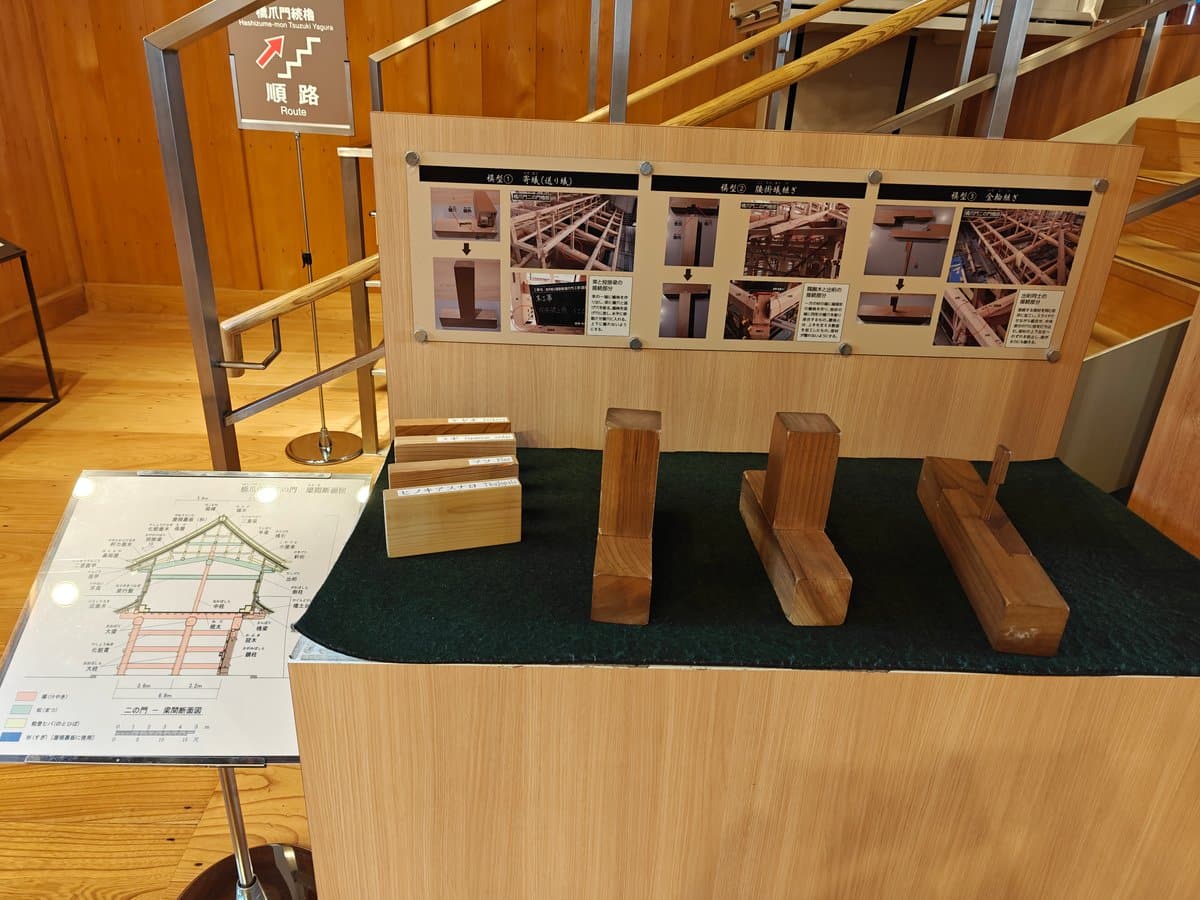
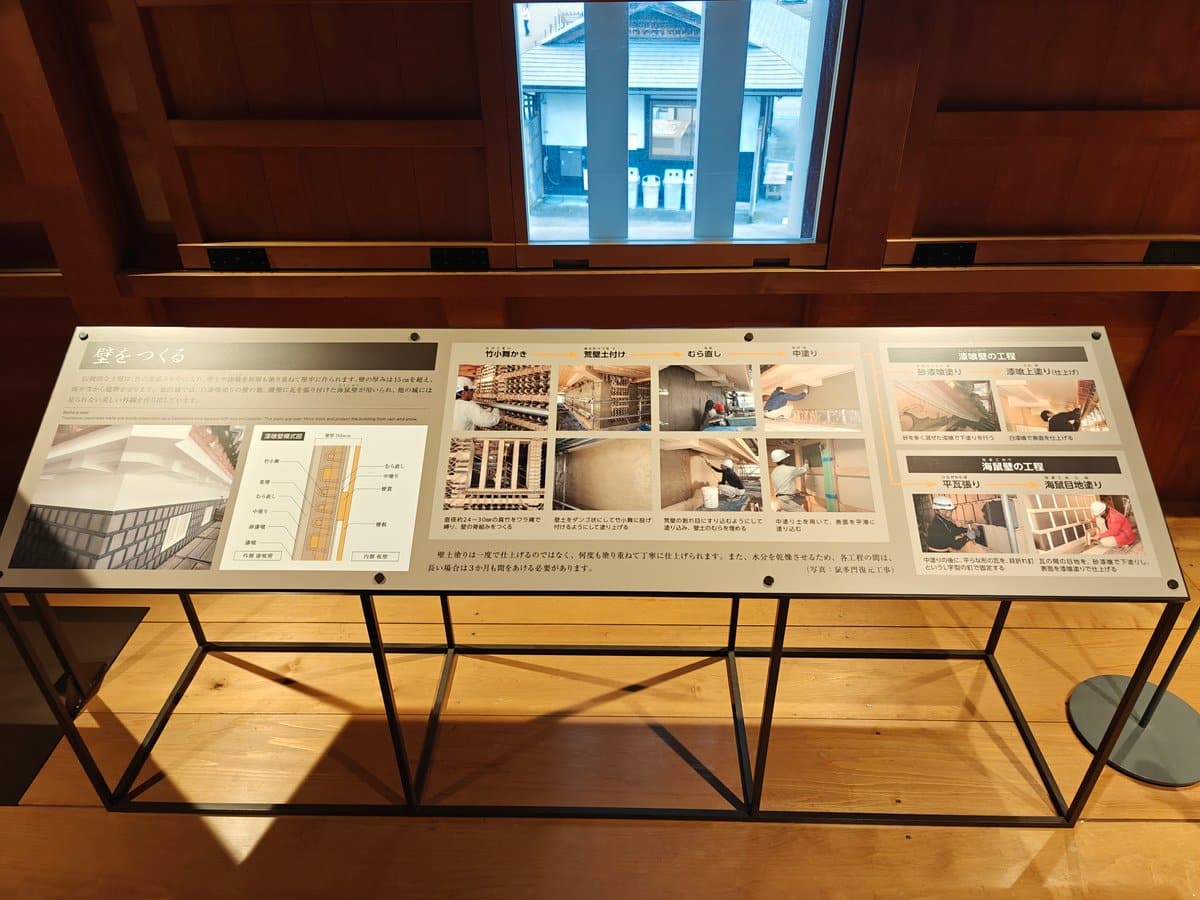
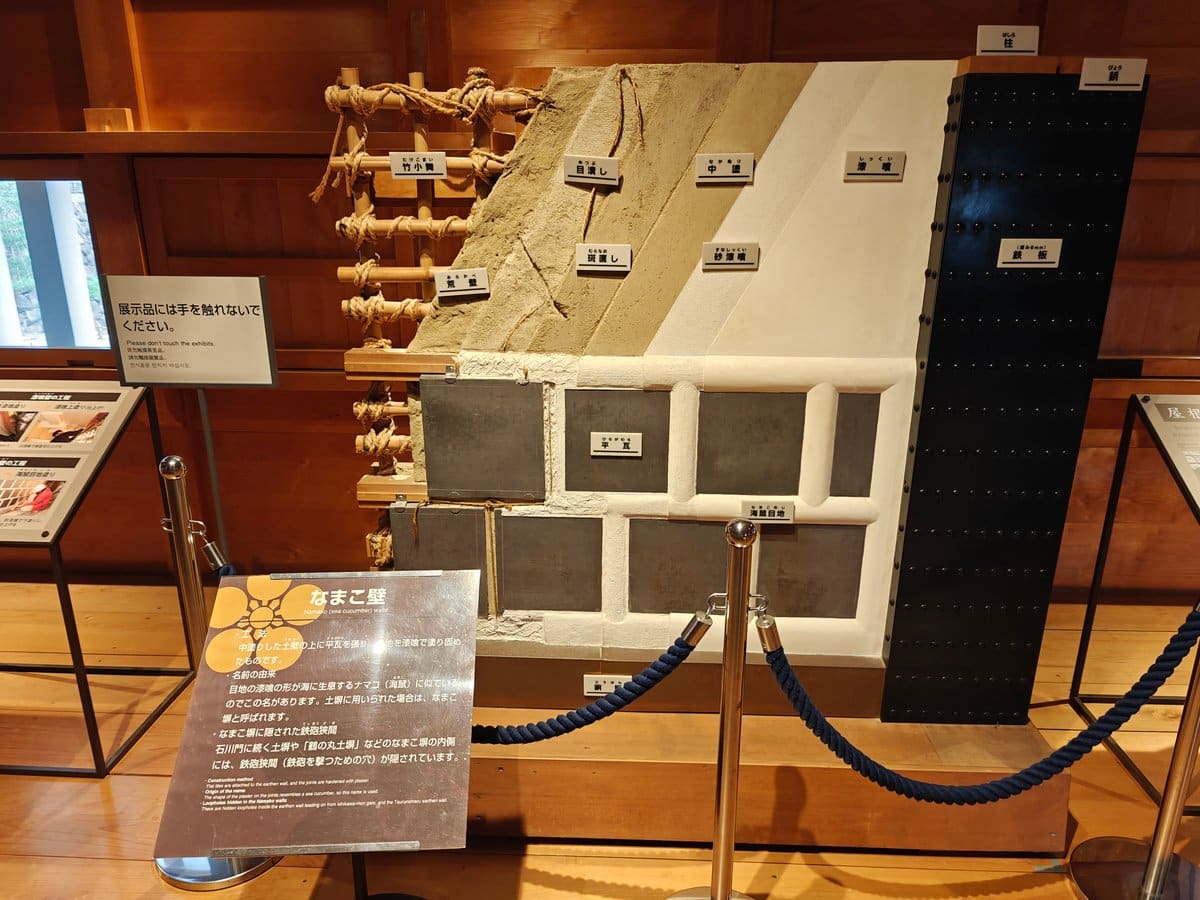
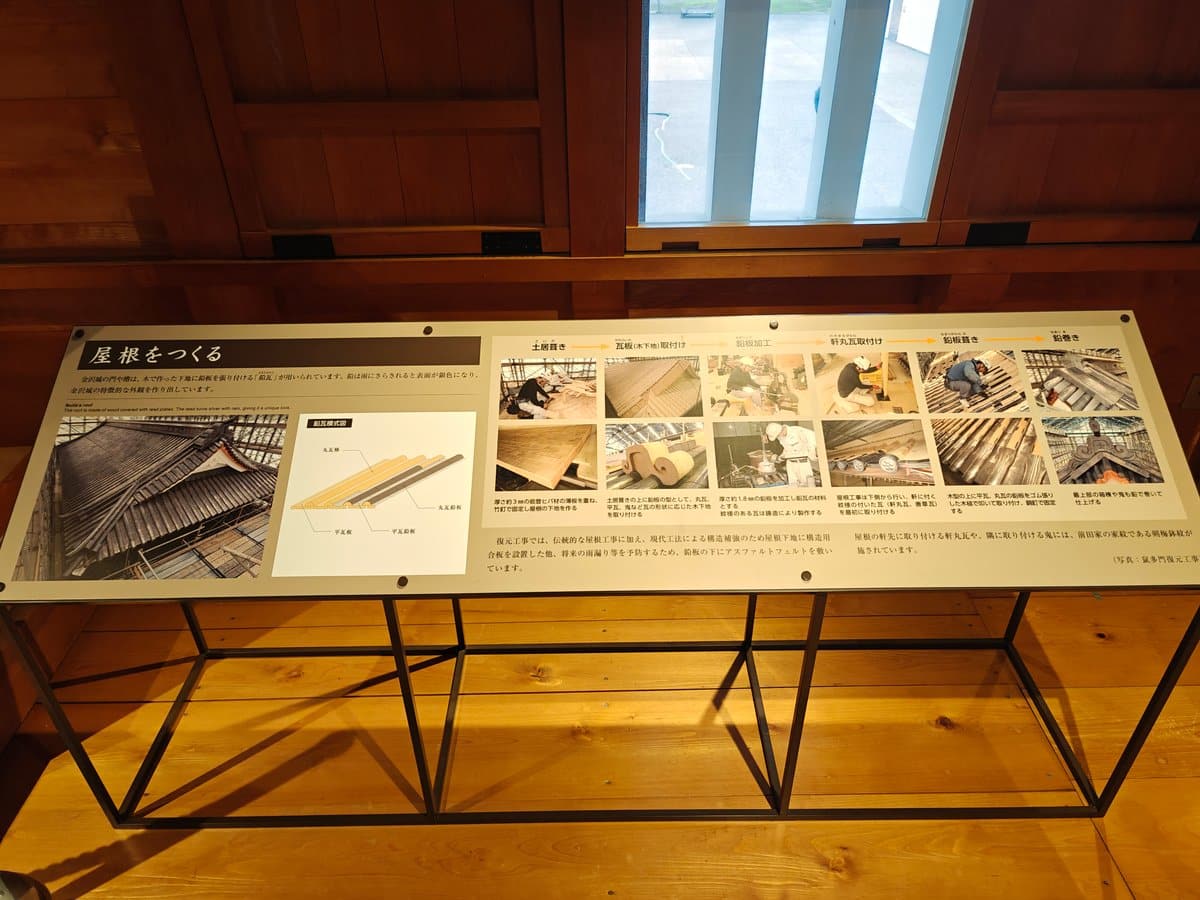
But what really stuck with me were the hands-on exhibits. There was a full-scale cutaway of the namako wall illustrating its construction, a bench where you could touch the wooden joint models, panels describing how the lead-tile roofs and walls was made, and my favorite part: getting to see everything up-close.
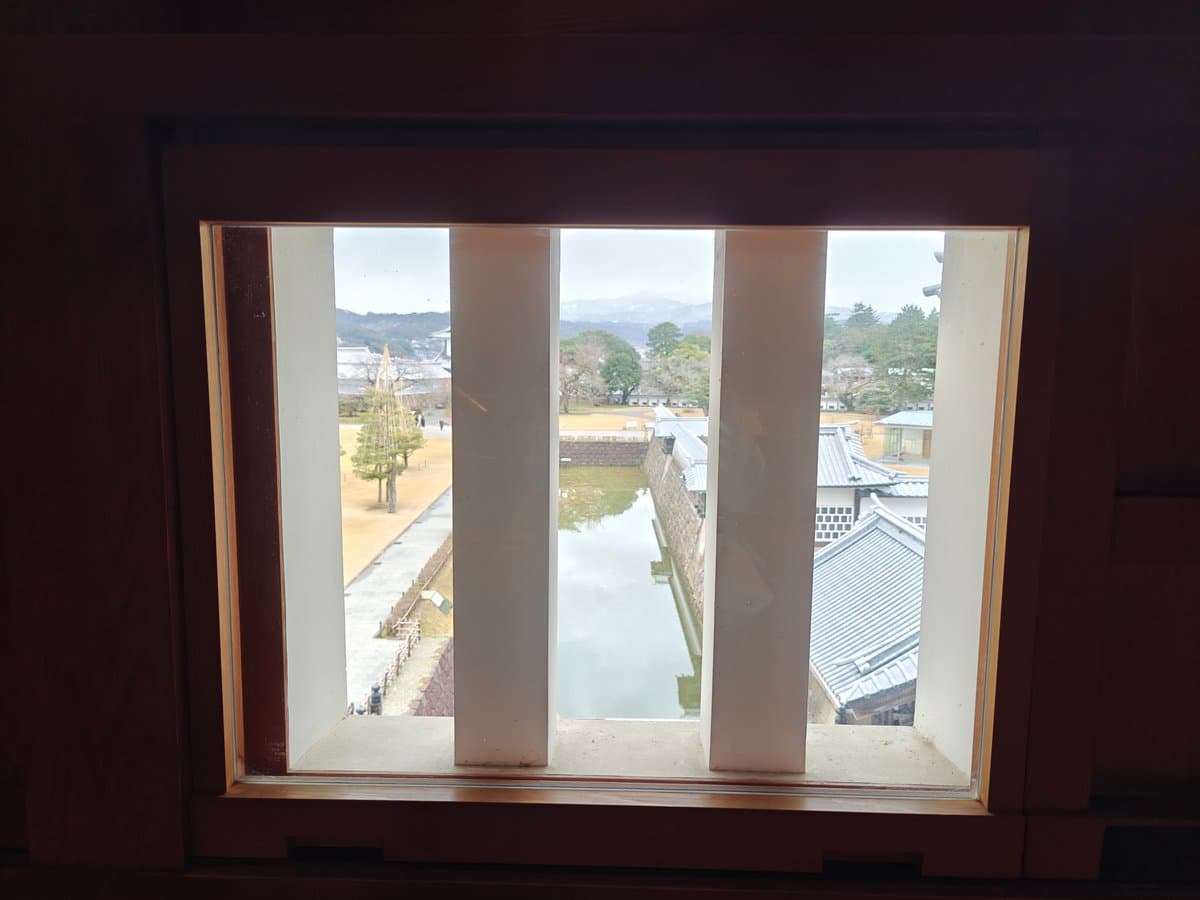
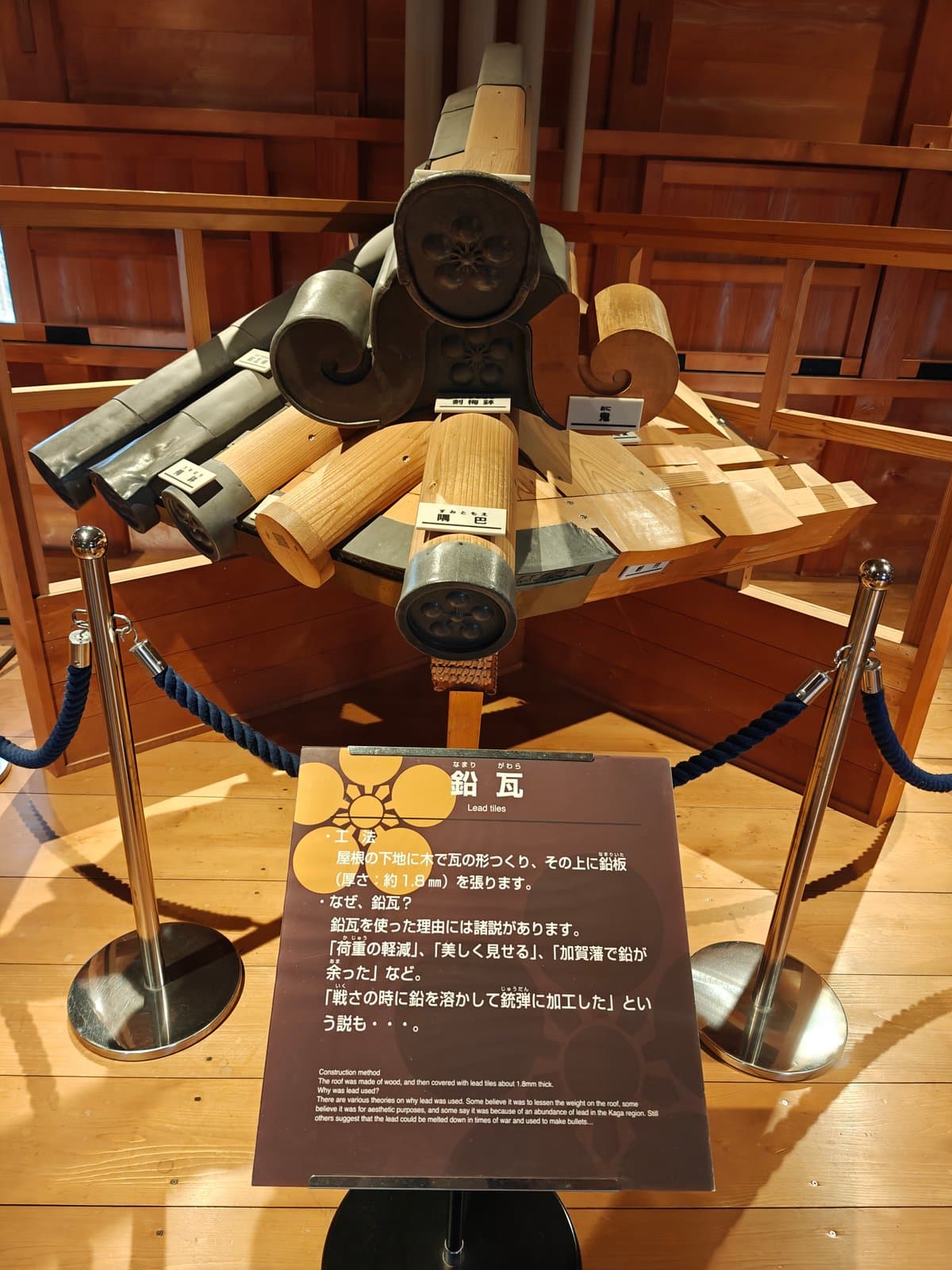
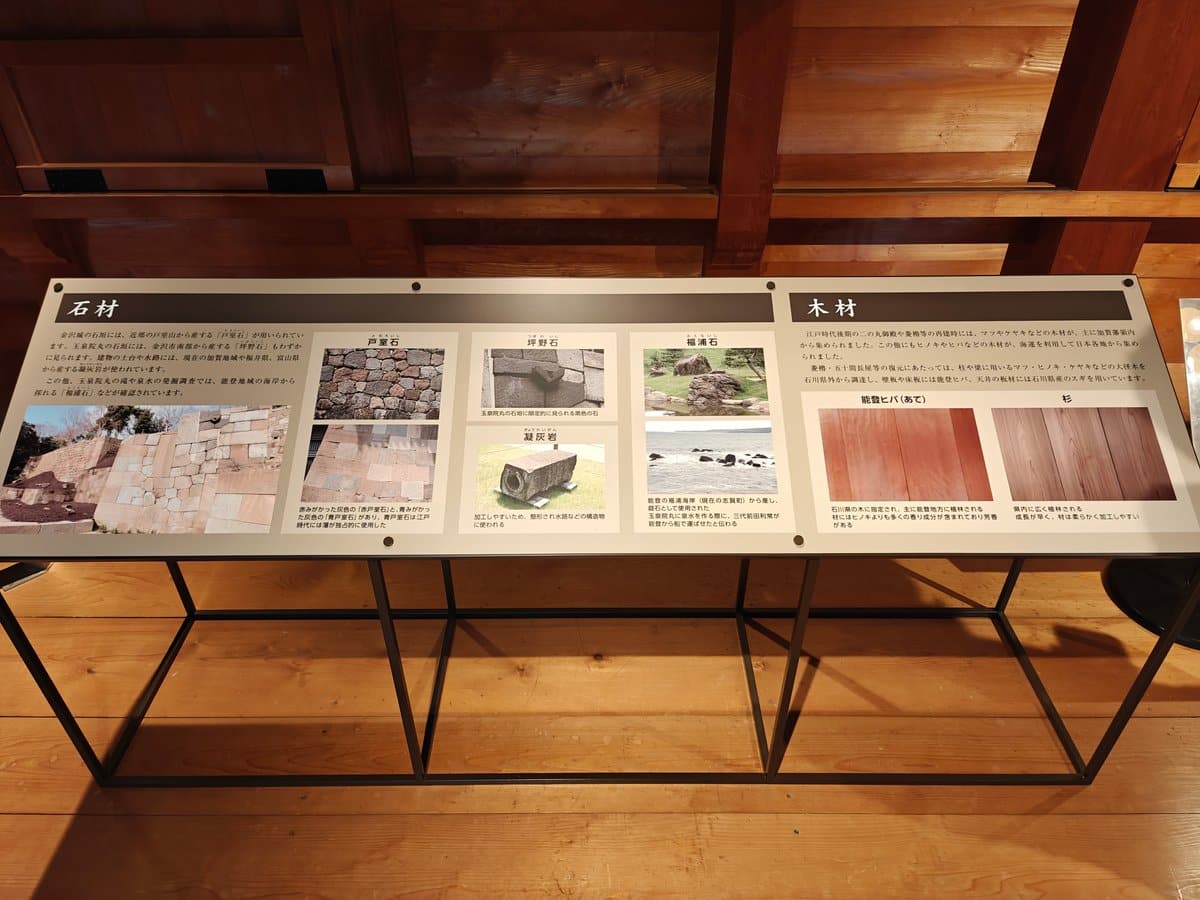
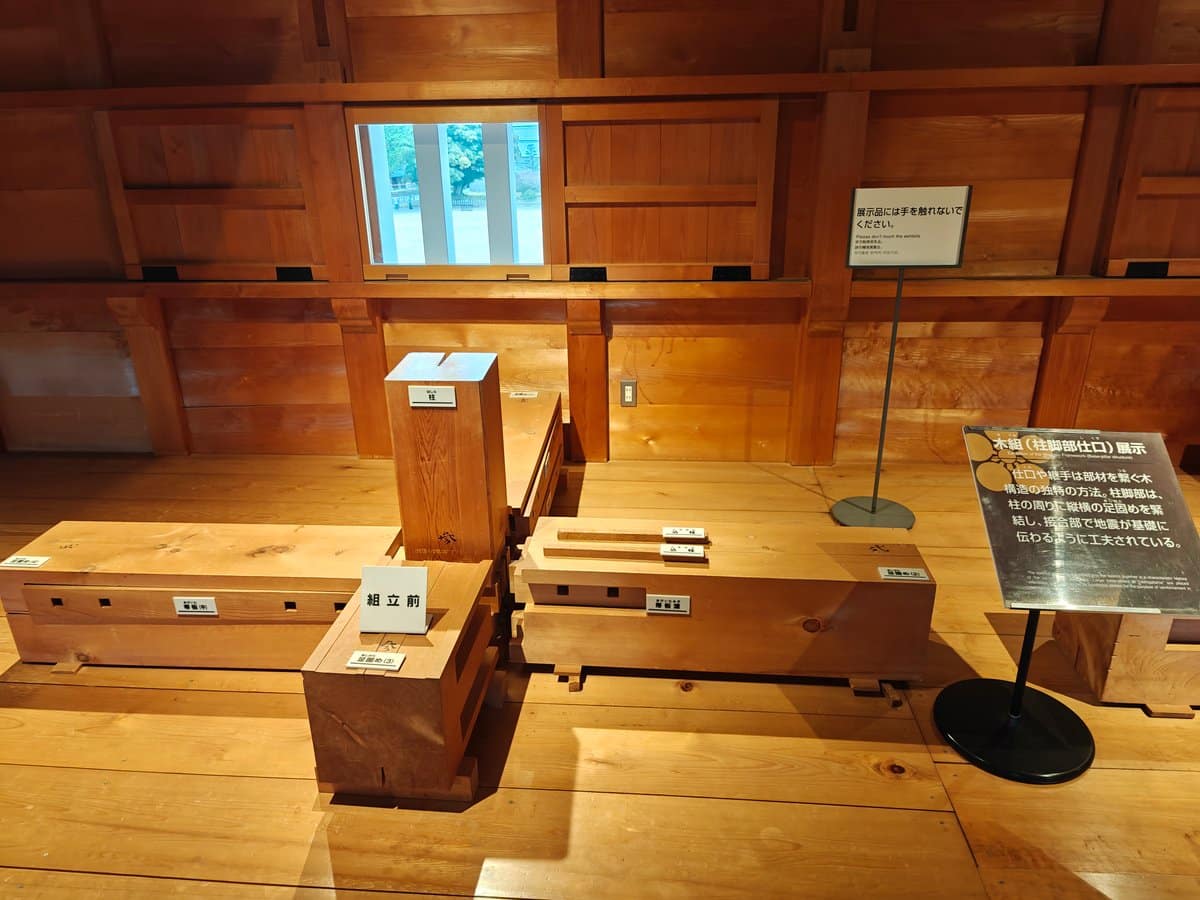
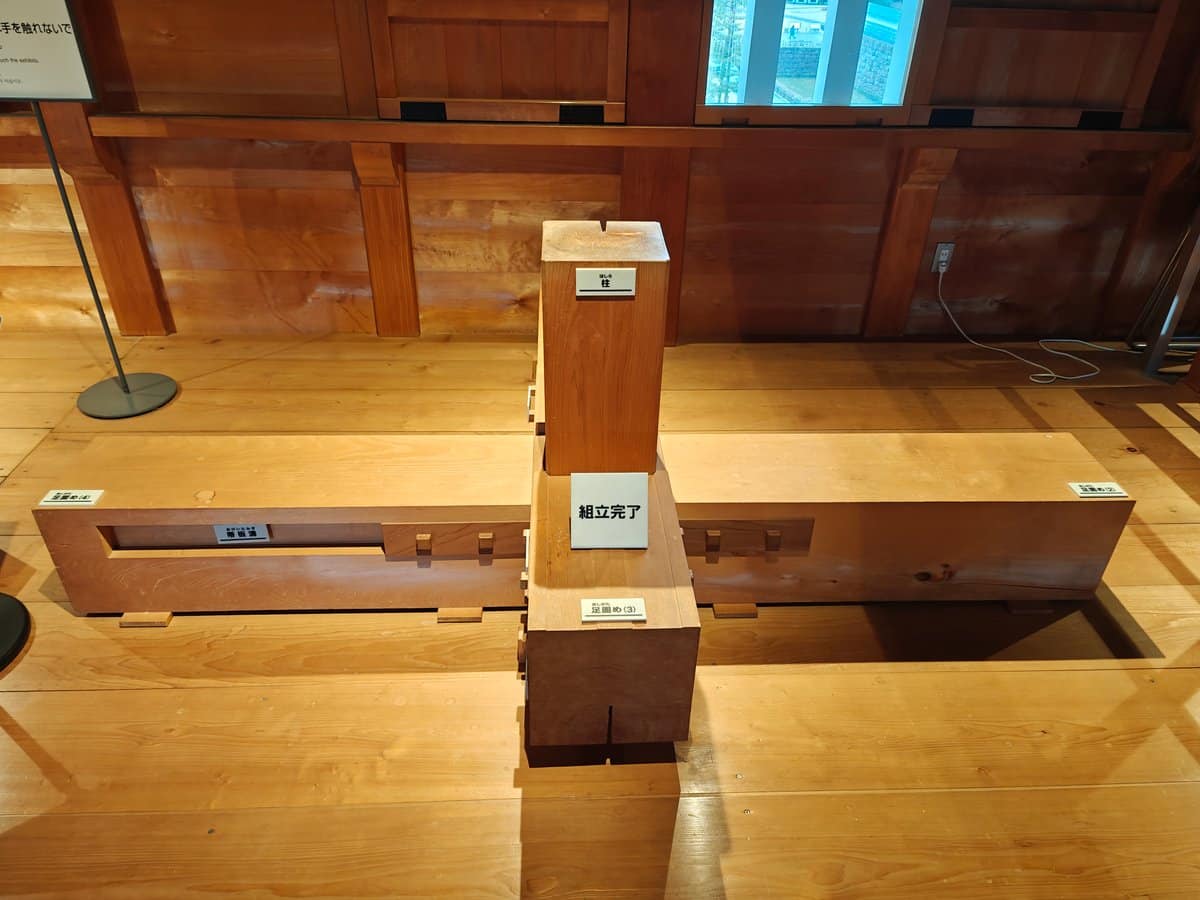
Looking from the turret windows down at the winter grounds, there was more. There were pillar-base joinery displays showing the same joint both before and after assembly, samples of materials used in the building (metal, wood, different kinds of stone), and more.
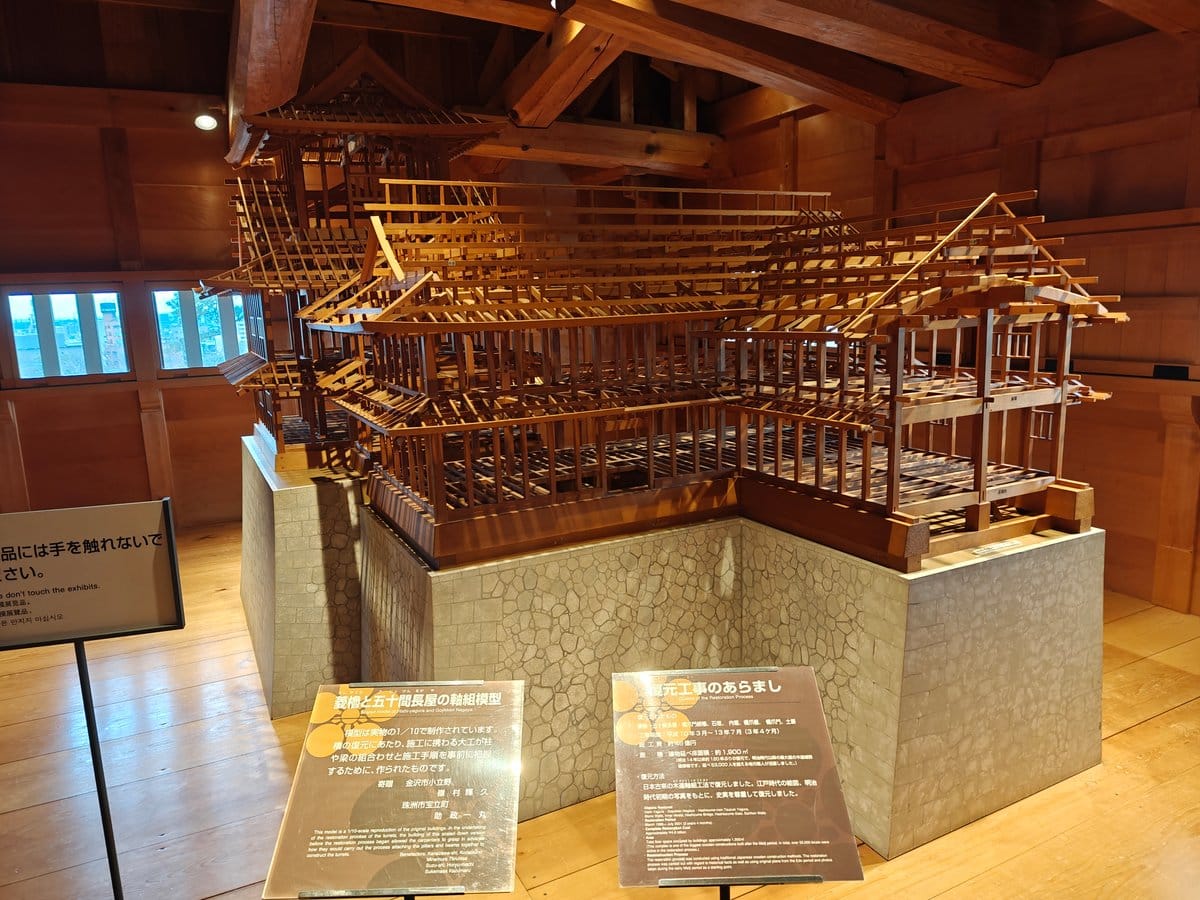
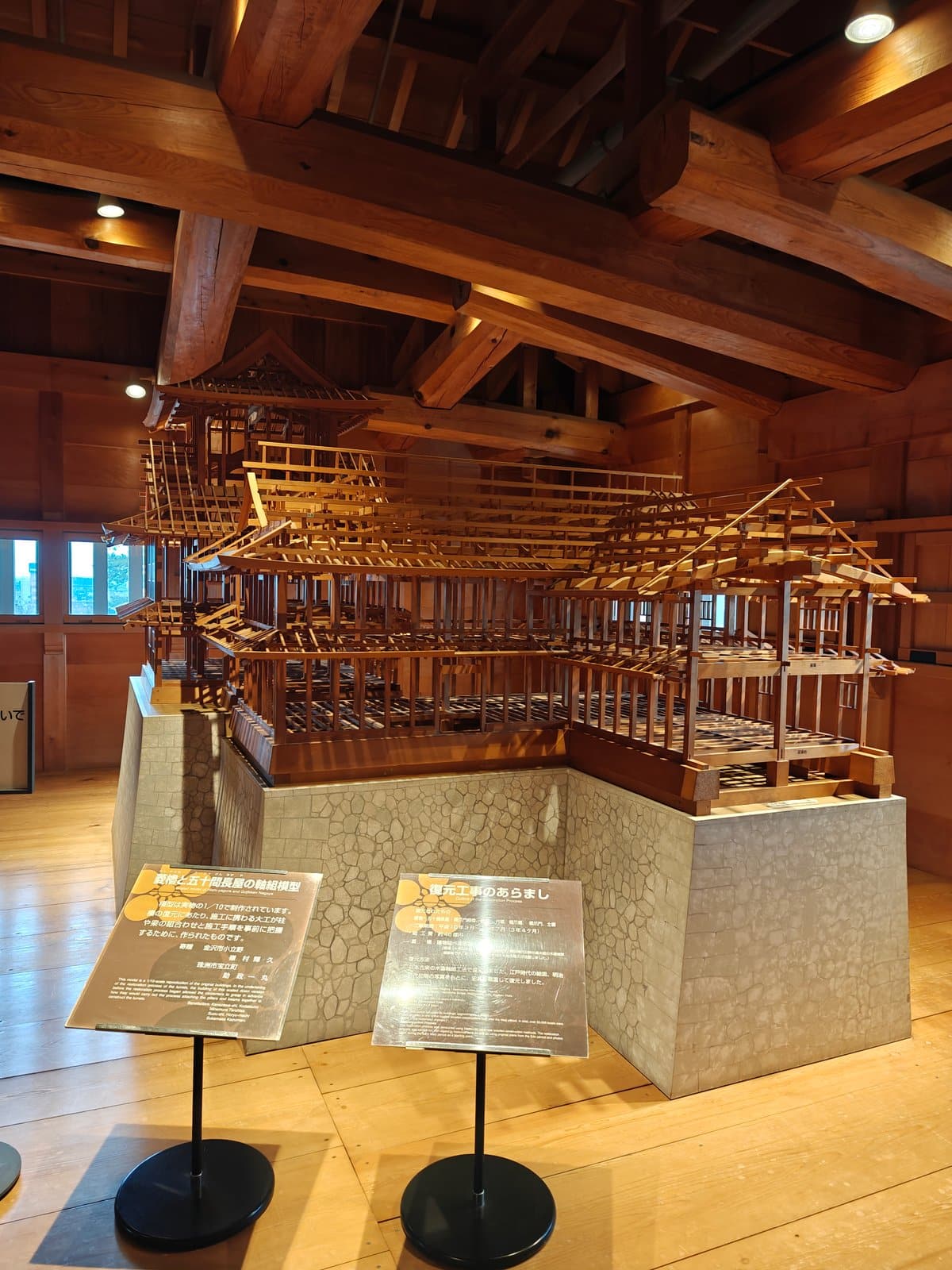
A giant framework model of Gojikken Nagaya and Hishi-yagura was the centrepiece, displaying the skeleton, the posts and beams, of what holds everything up. As I wandered around it a few times, I tried to piece it all back together in my mind. To have seen this as an entire restored building from the exterior would of been something else.
But to see its bones like this really helped me grasp the artistry behind it all.
Osaka Castle Park
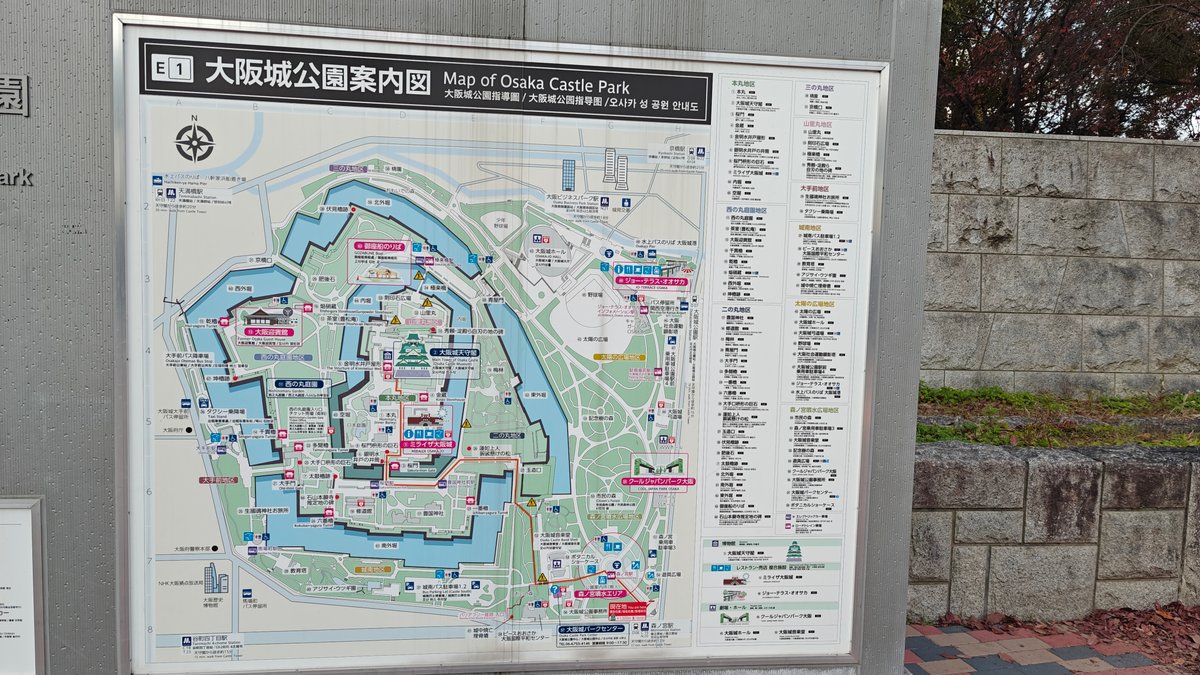
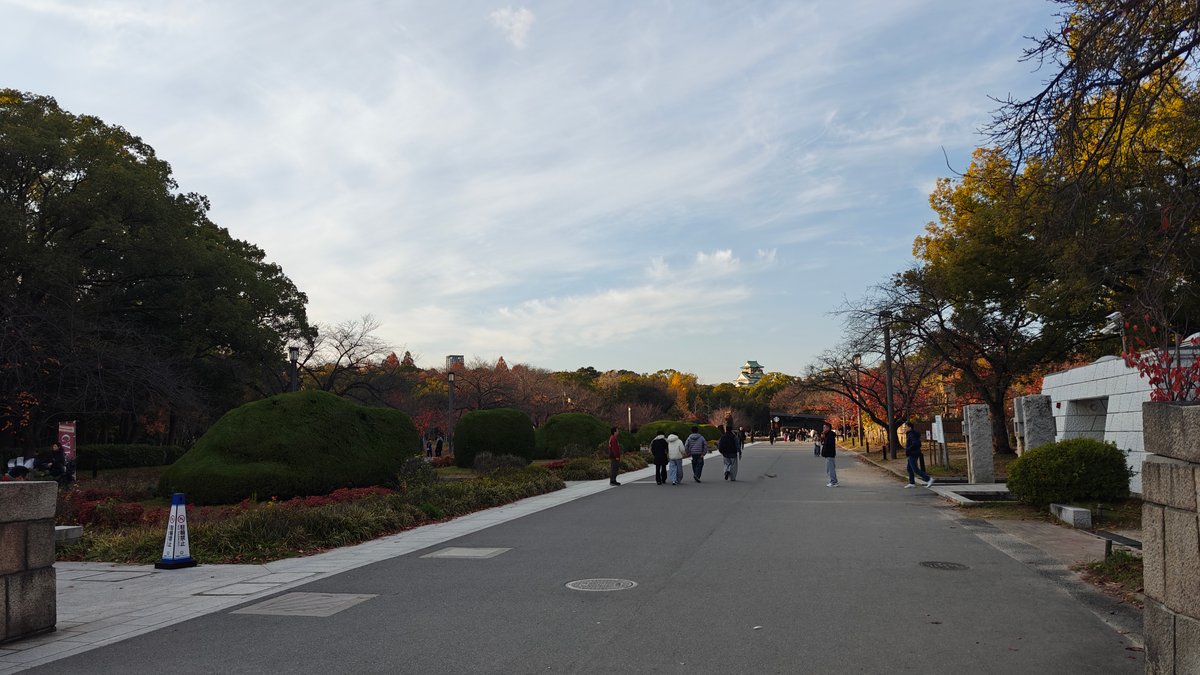
Then, Osaka Castle Park was a whole new ball game. After getting to one of the information maps in the park, I just followed the wide walking paths towards the castle, which you could spot from quite far off.


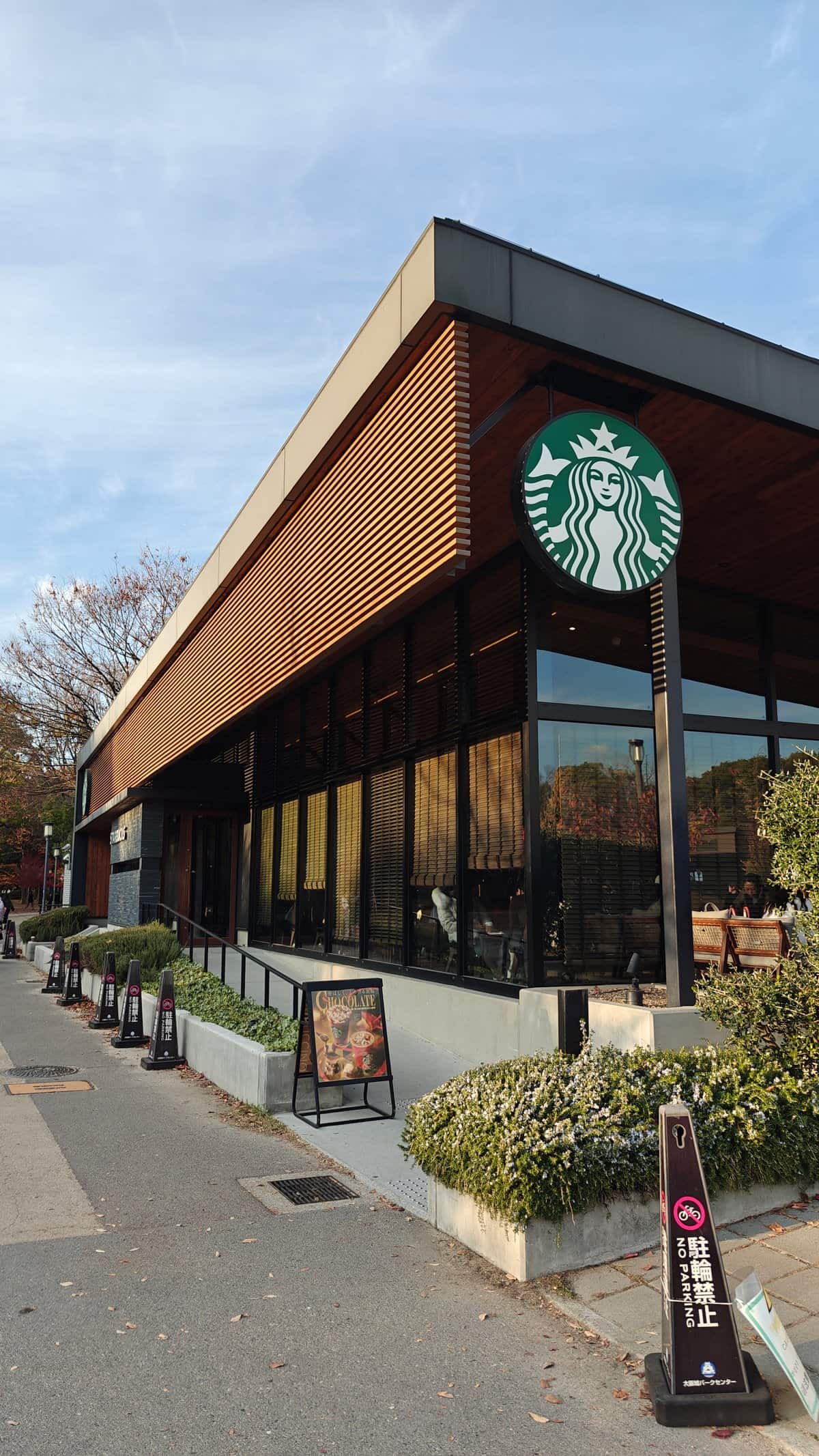

The park is huge, featuring not only a Starbucks hidden amongst the trees but also a fountain and some beautiful garden pathways. Walking down a line of trees whose branches cast long shadows on the paved path beneath, I soaked up the final bits of autumn colour.


The maples had yet to lose their leaves, and the quiet winding pathways were without the crowds of people on the main roads. While I knew the castle was the star of the show, I lingered here.


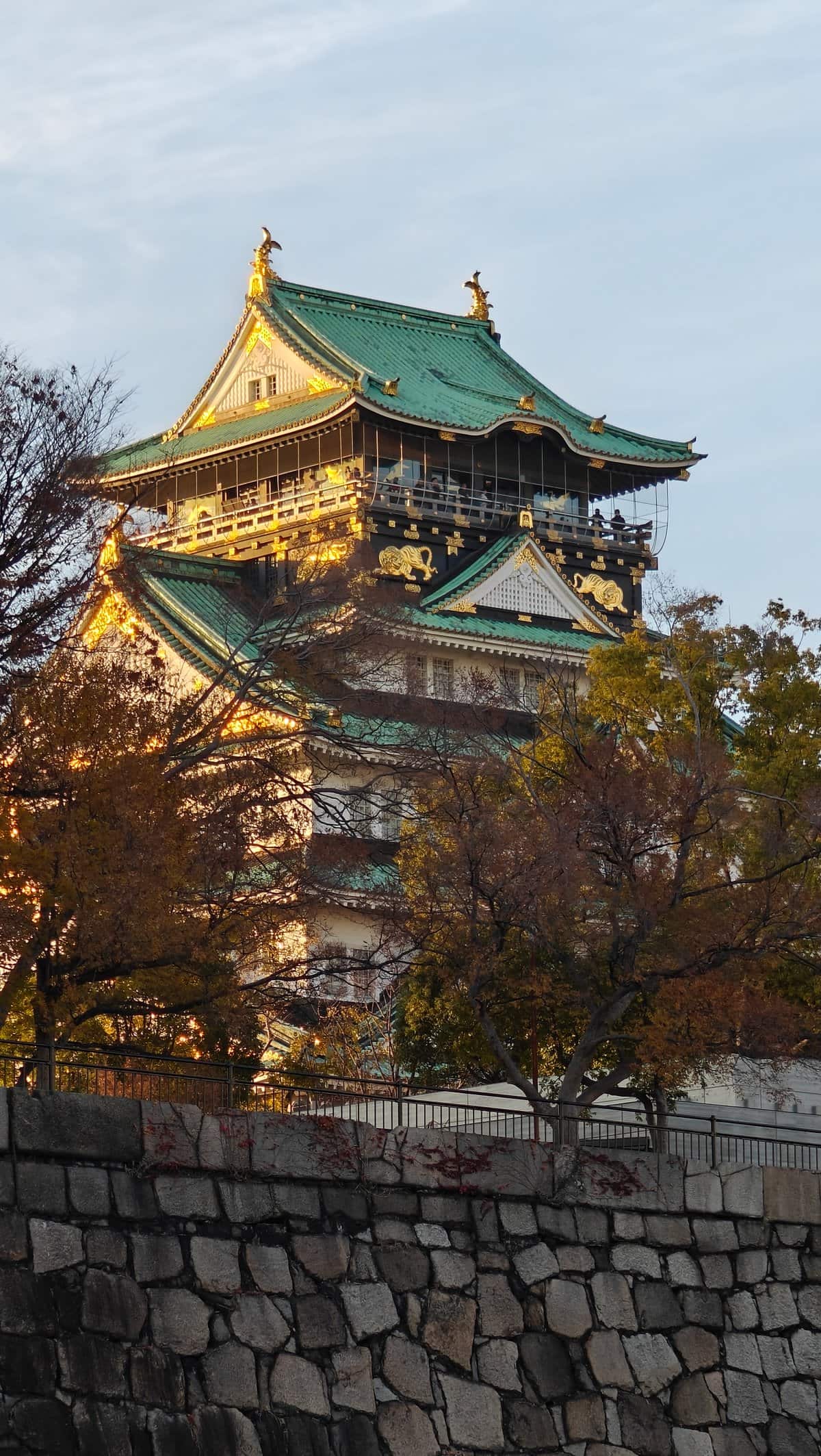
The surrounding moats are vast; you can see the buildings of the city in the distance past them. Passing nearer the inner moat, I saw the castle tower come fully into view between the trees.
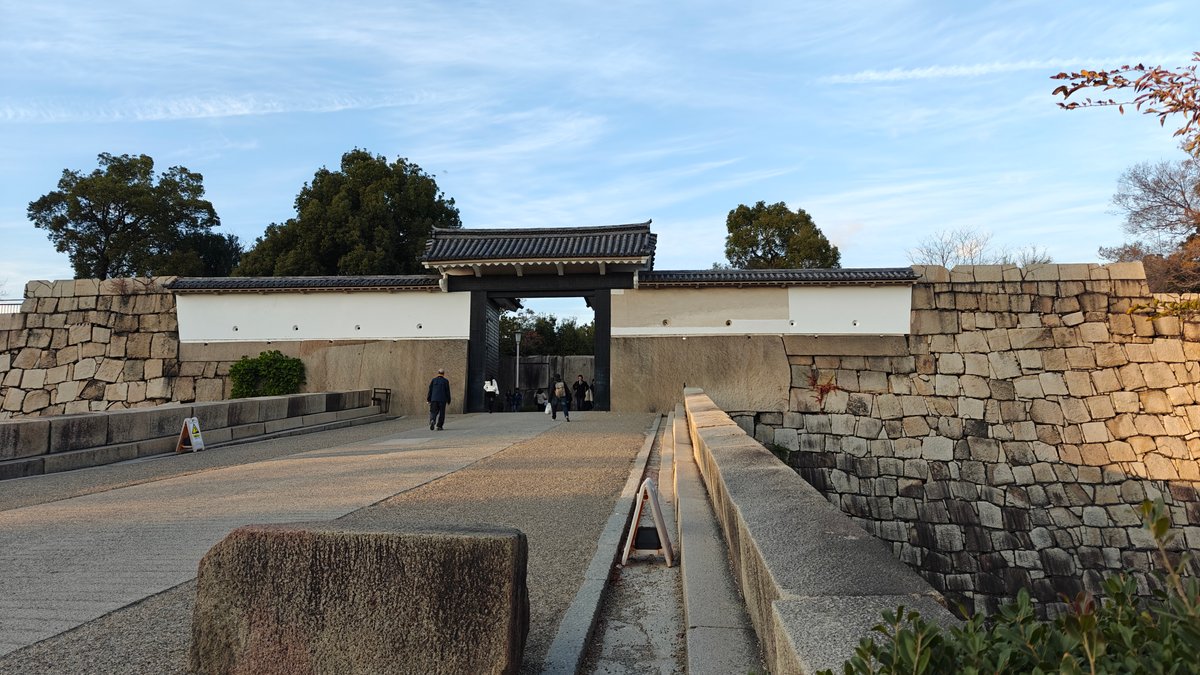
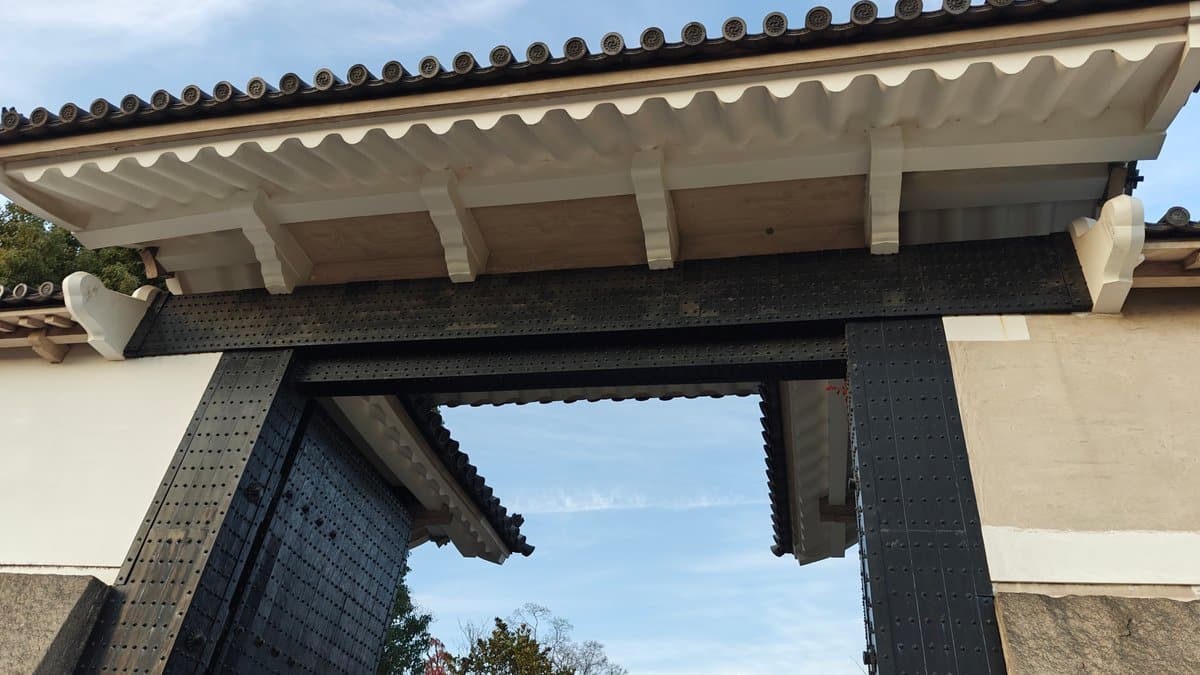
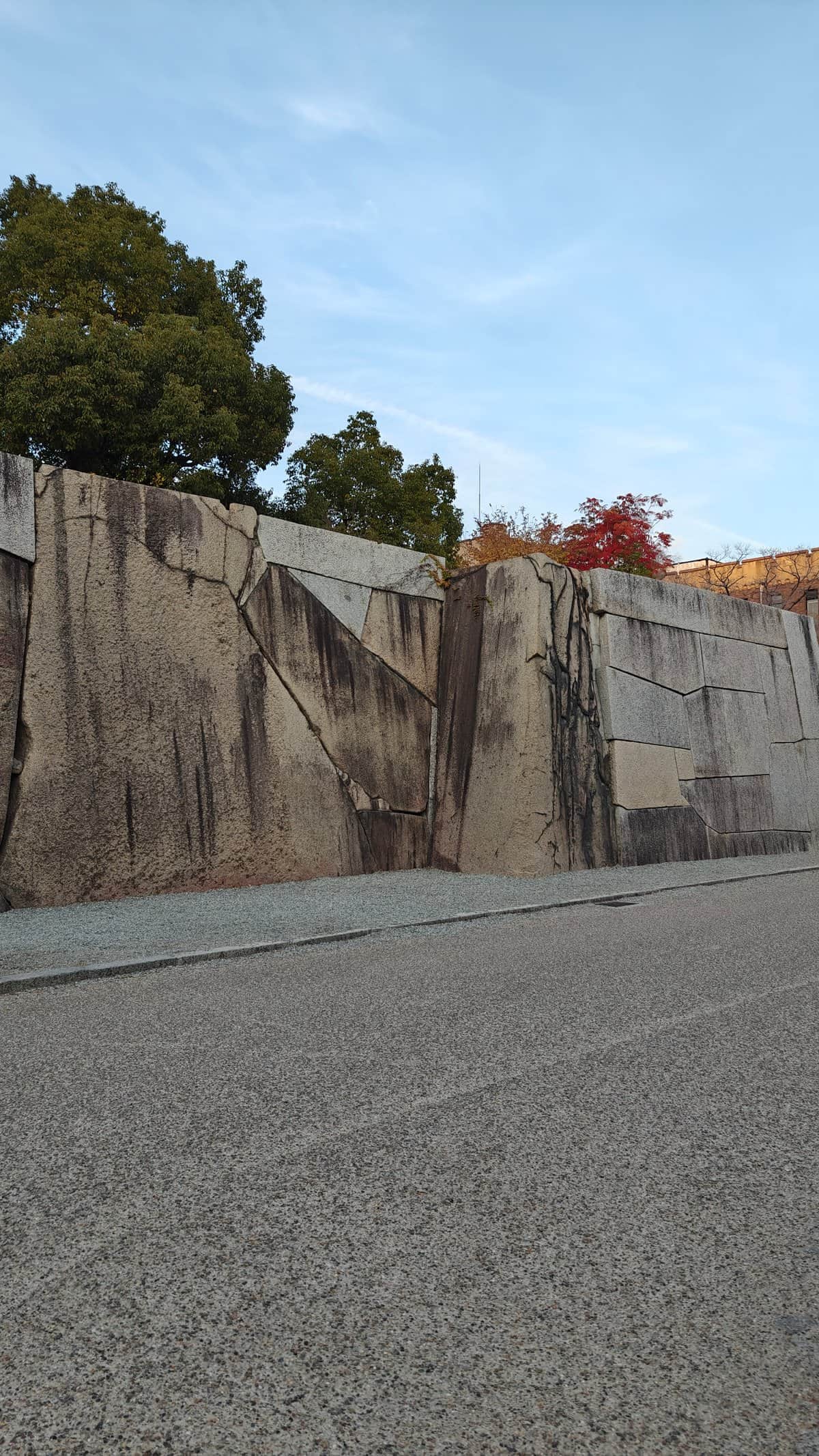
Crossing the entry bridge, I gazed upward at the stonework above me as I passed underneath the gate. Each of the foundation blocks was immense, obviously set in place with great care and skill.
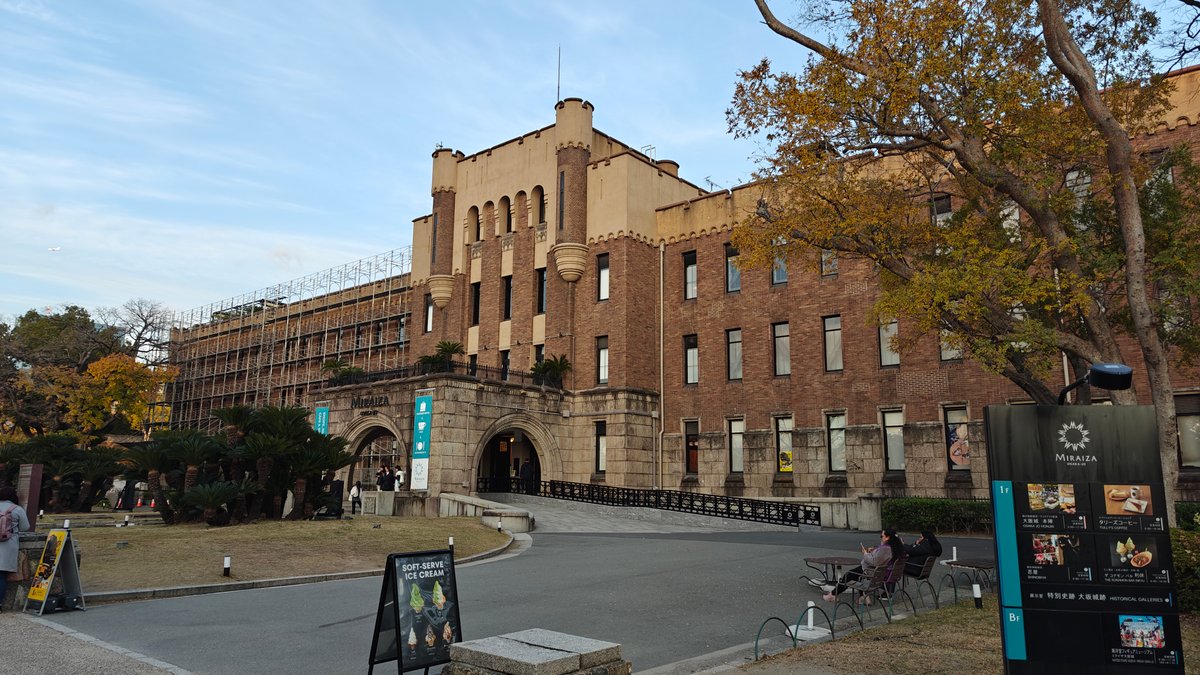

Walking back toward the castle, just inside the grounds I passed the old 4th Division headquarters building (now a shopping and dining complex called MIRAIZA Osaka-jo). And there it was, straight ahead: the castle itself, surrounded by a plaza filled with people snapping pictures.


The golden ornaments on the roof caught the light as I gazed up. As the afternoon wore on, I took a walk around the castle to view it from multiple angles.
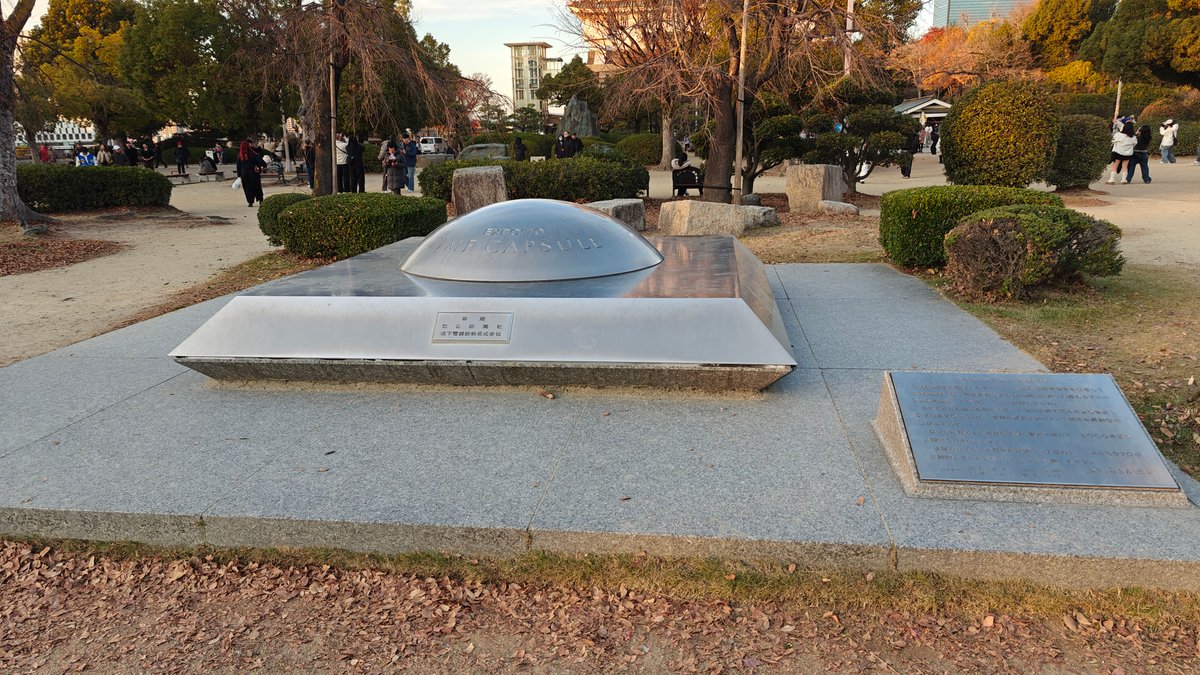
There’s a monument to the Time Capsule EXPO ’70 buried until the year 2000, a dome with plaques describing its contents. I found it odd how appropriate this seemed, sitting next to a building that has lasted hundreds of years.
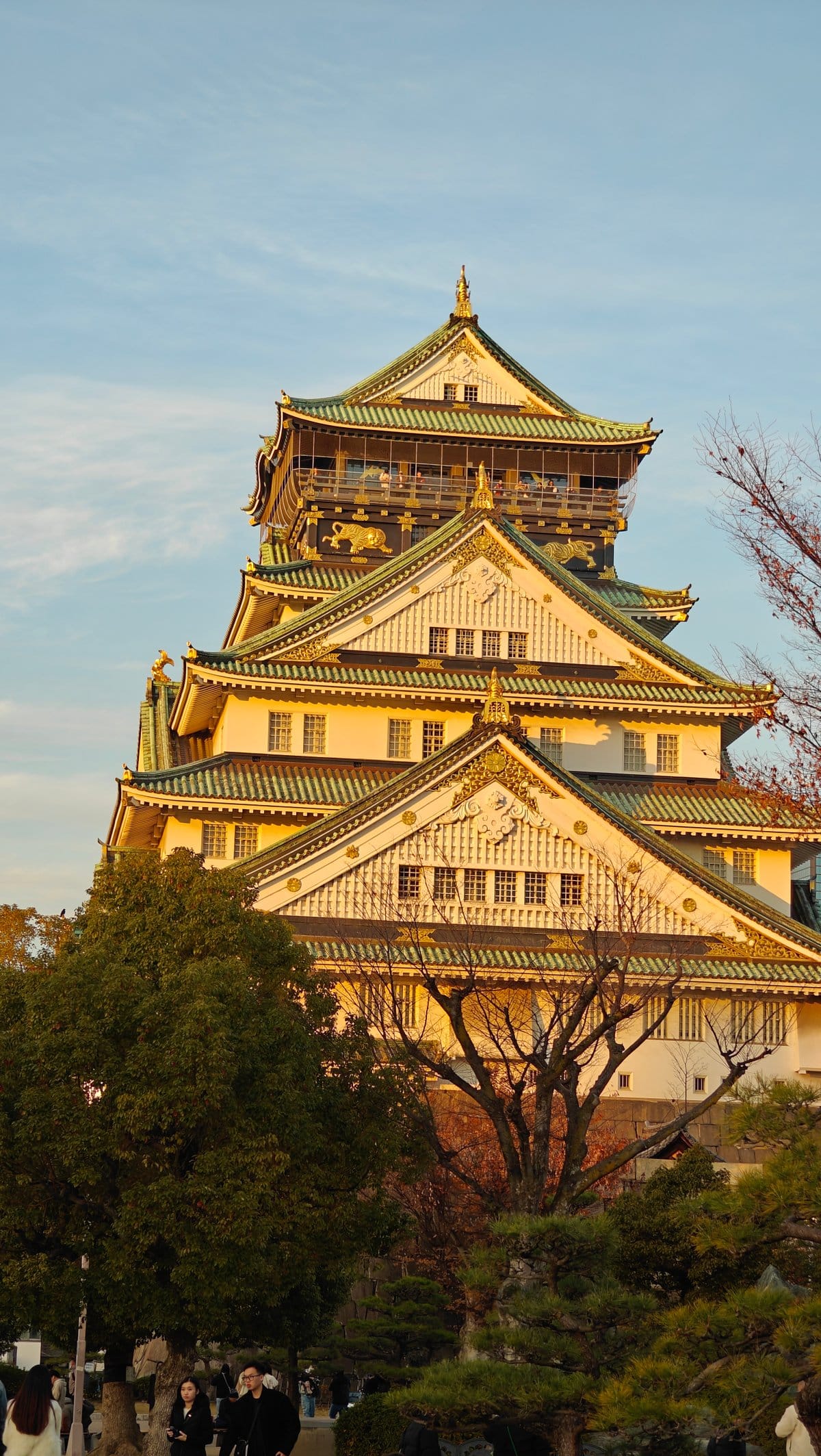
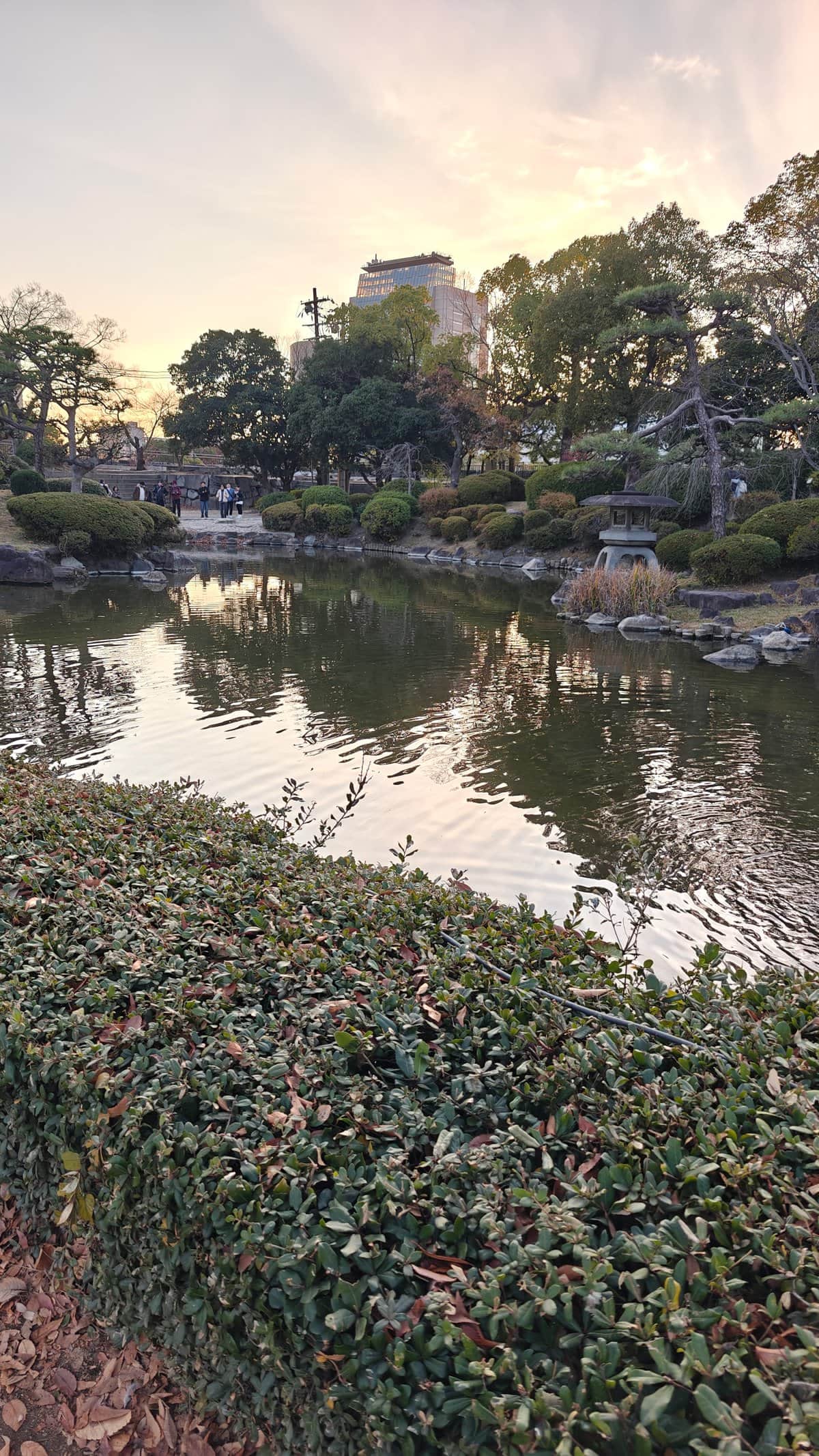


As the day progressed, the light improved. I circled back around to view the castle through the trees in the plaza, and even over the top of the garden pond. At sunset, it glowed best when seen from the top tiers.
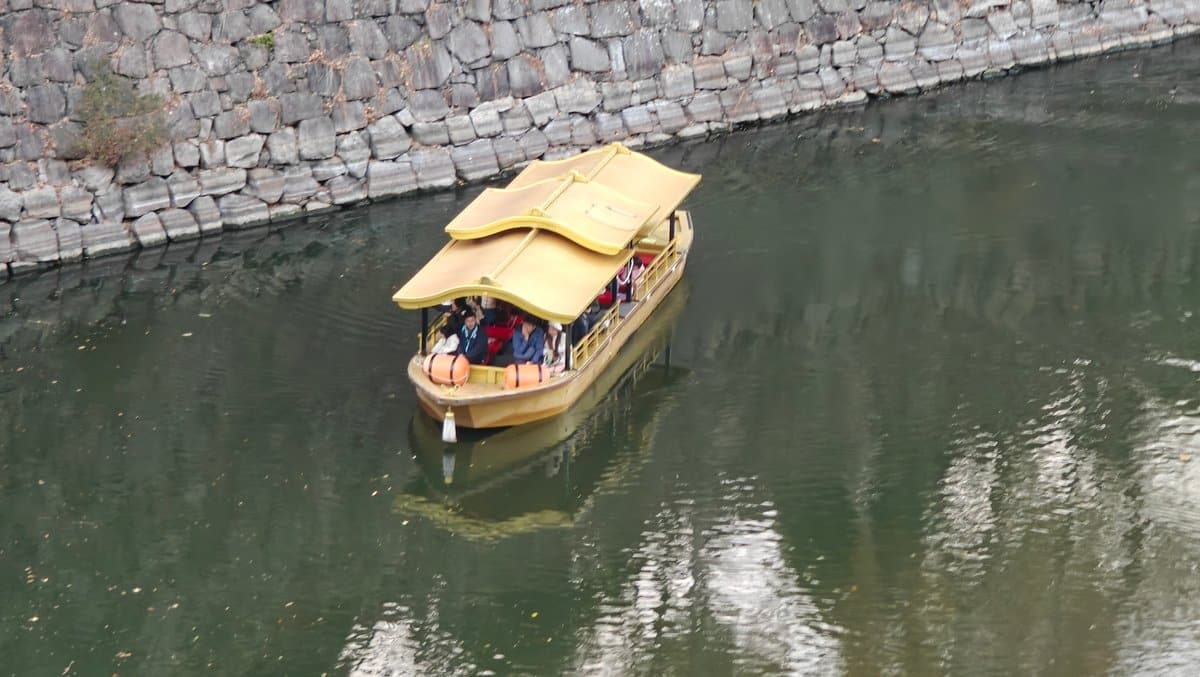
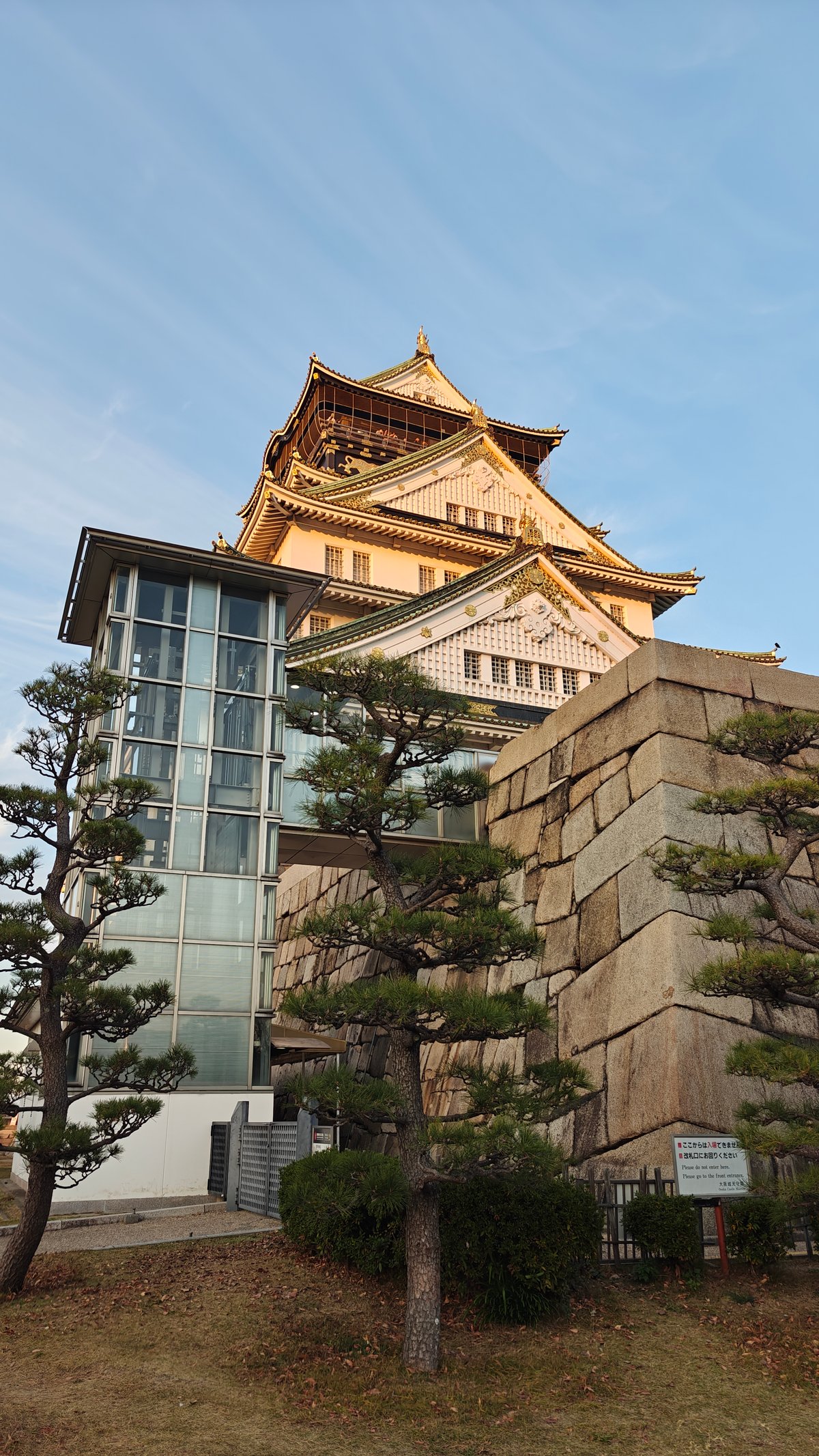
One of the gold-roofed tour boats on the moat caught my eye as I left, and I paused to take one final shot of the base of the castle, framed perfectly between the stone and a Japanese pine. I found I got something different out of each of the two castles. I enjoyed the intimacy of Kanazawa and that great museum within Gojikken Nagaya.
Osaka was larger, bustlier, and perhaps slightly more photogenic, but I appreciated the contrast. Turns out winter is a good season to see them both: less people, cleaner air, nothing distracting from the buildings themselves. Have you visited one or both of these castles?
What did you find memorable about it/them? Do you have a favorite castle in Japan? I’d love to know.