
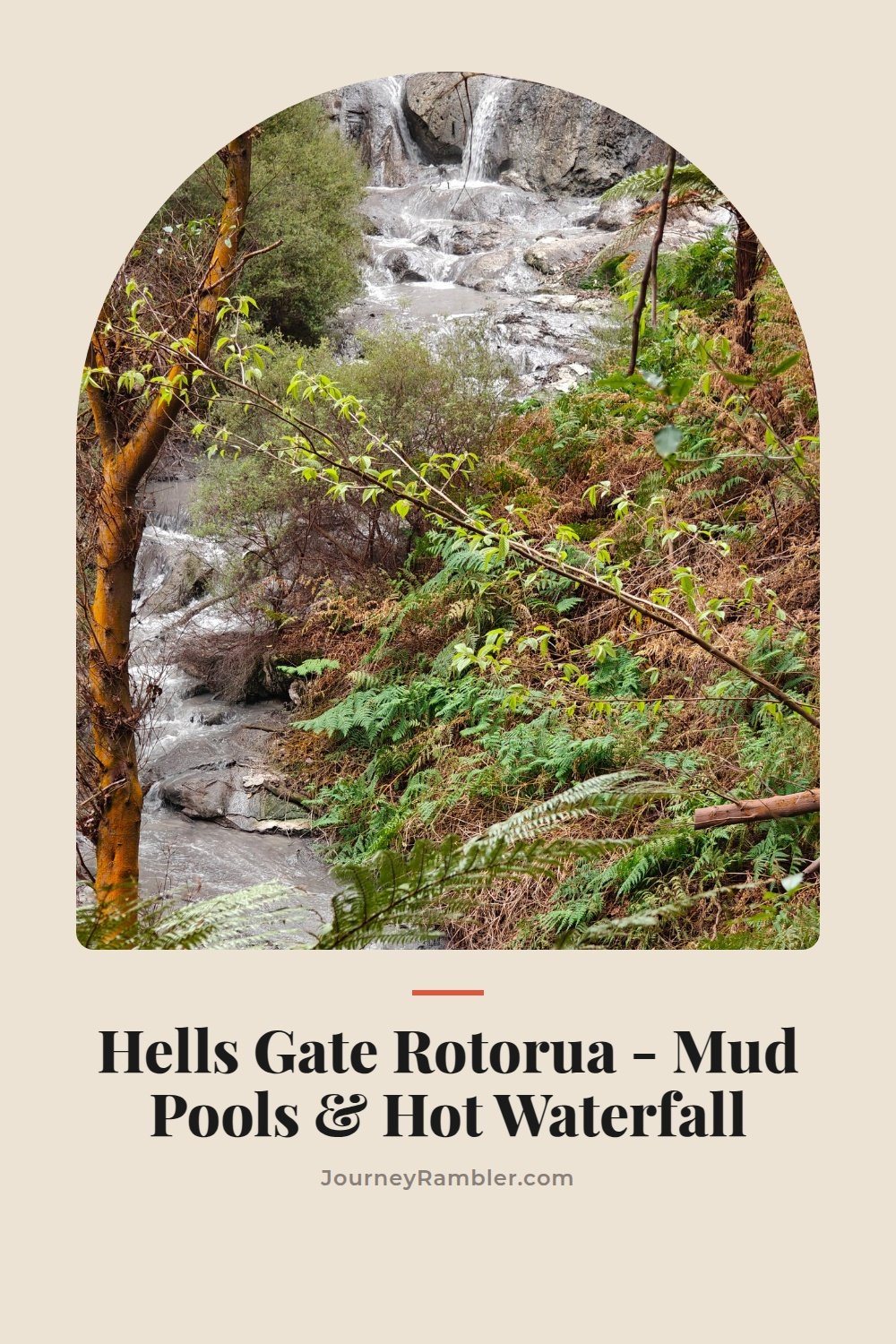
As soon as you get into Rotorua, it stinks, but in the best way possible. It literal is rotten eggs! Sulphur is just a fact of life here; the entire city lie over a huge geothermal field.
If you want to see some of the most active thermal spots around, then head out to Hells Gate. And yes, it lived up to it name. There’s steam everywhere and bubbling mud pool.
There is even a hot waterfall where you can walk right up to it. I didn’t expect it to be so alive and raw. The reserve has a loop you can walk around which we spent a morning doing.
It’s both fascinating and just a little bit unsettling: everything is steaming and hissing and you half expect the ground to crack open beneath your feet. From the mud pools to the bush walk (and that waterfall we didn’t expect), here’s what it was like.
What to See and Do at Hells Gate
Hells Gate
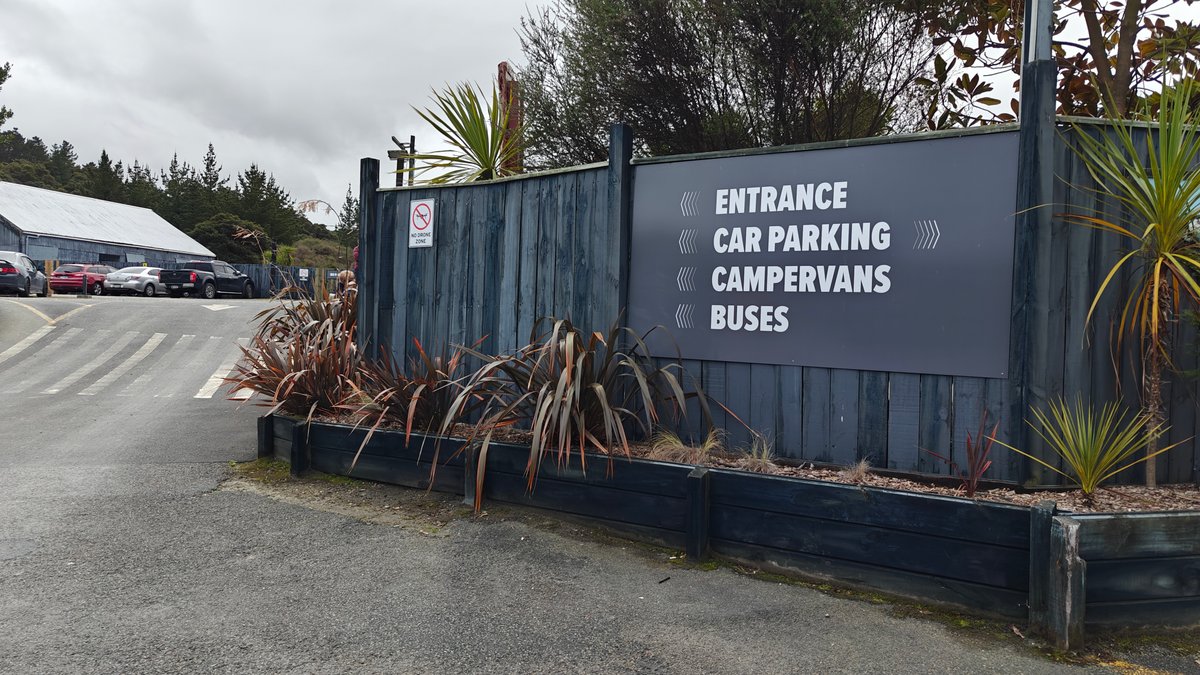
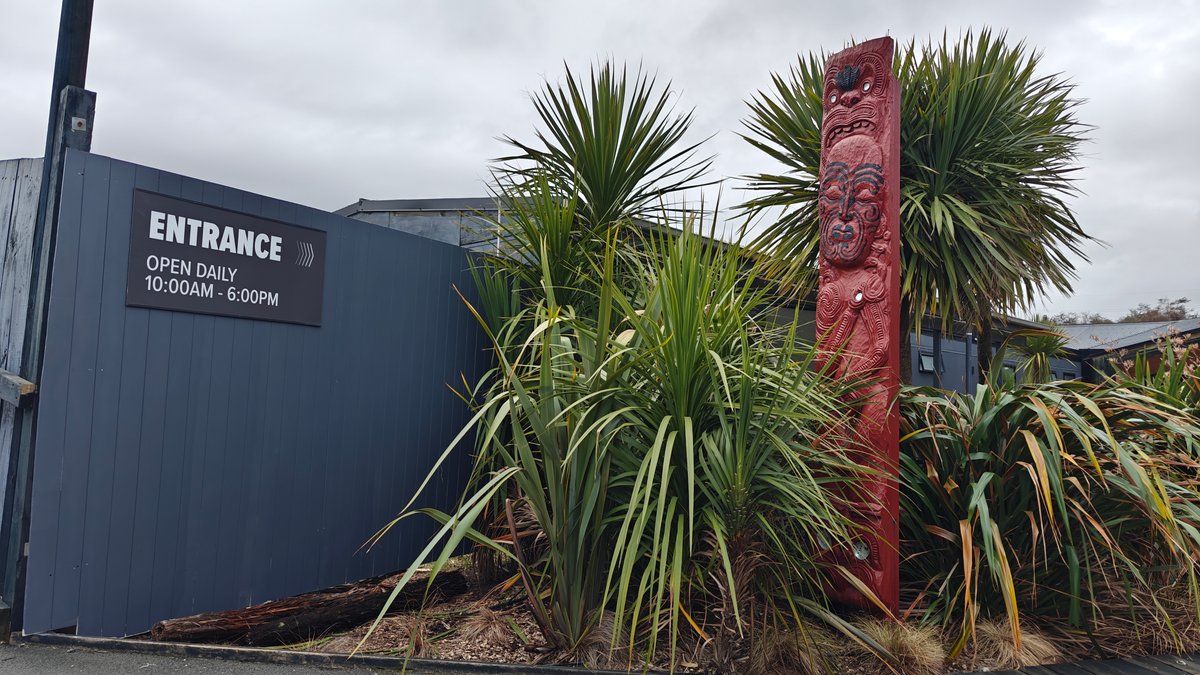
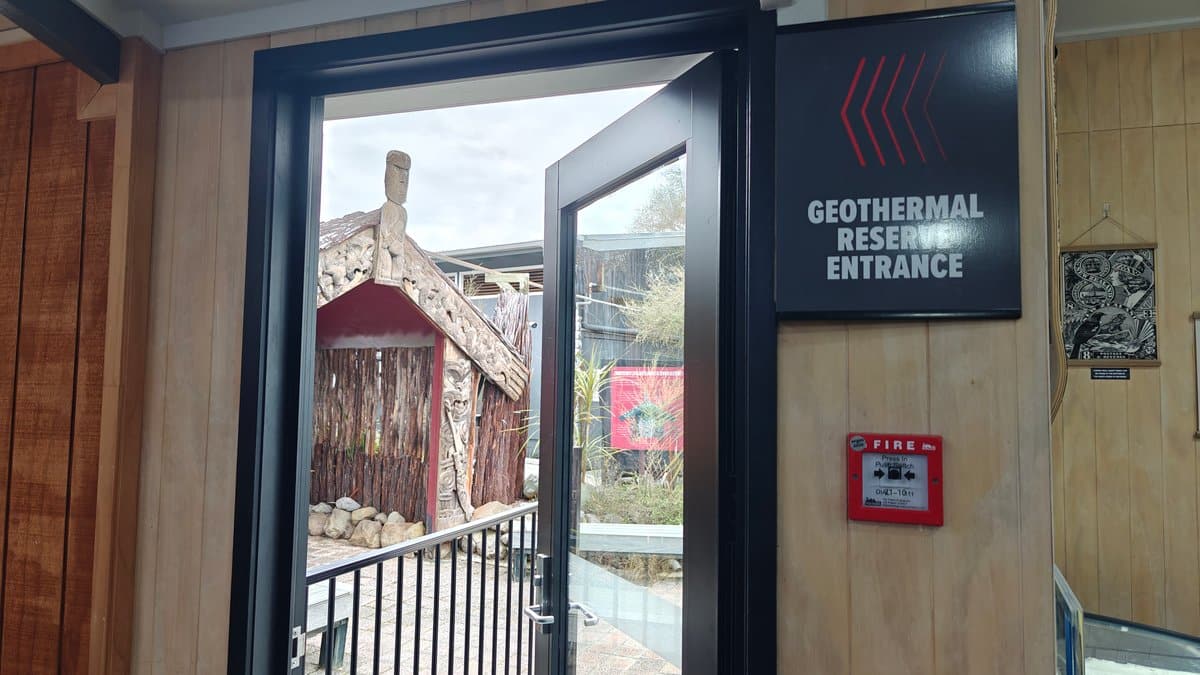
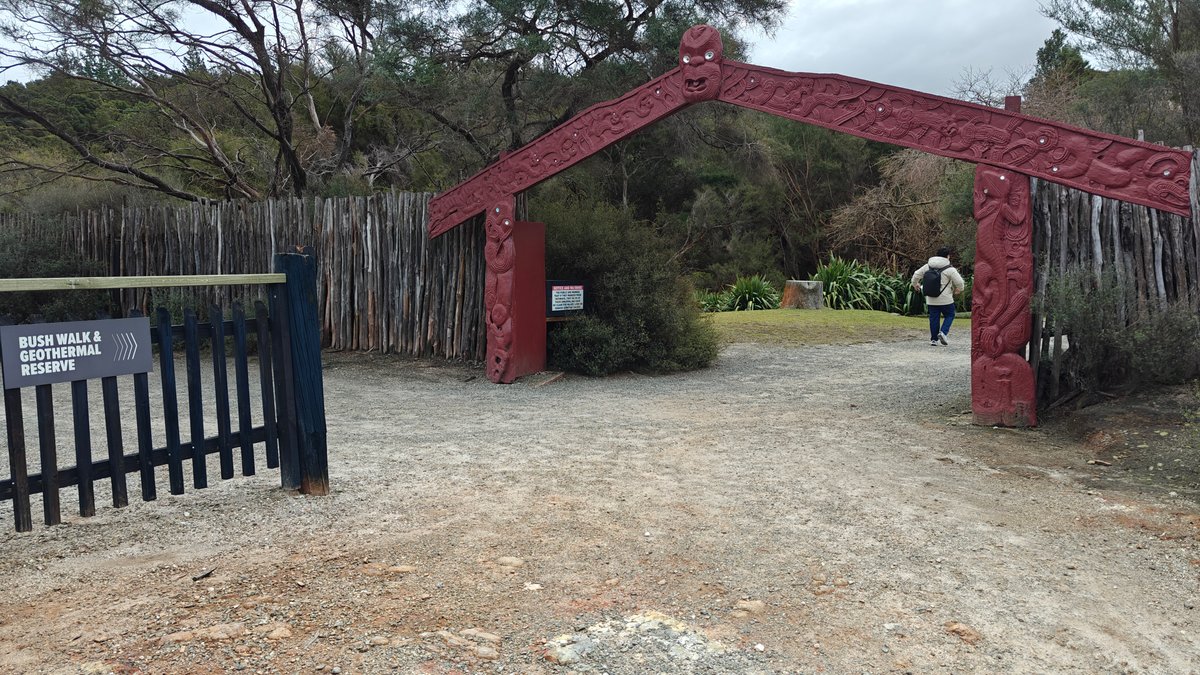
As we drove up to the entrance on the main road, I could already see steam rising over the fence. It sets the tone… There’s strong Māori heritage here.
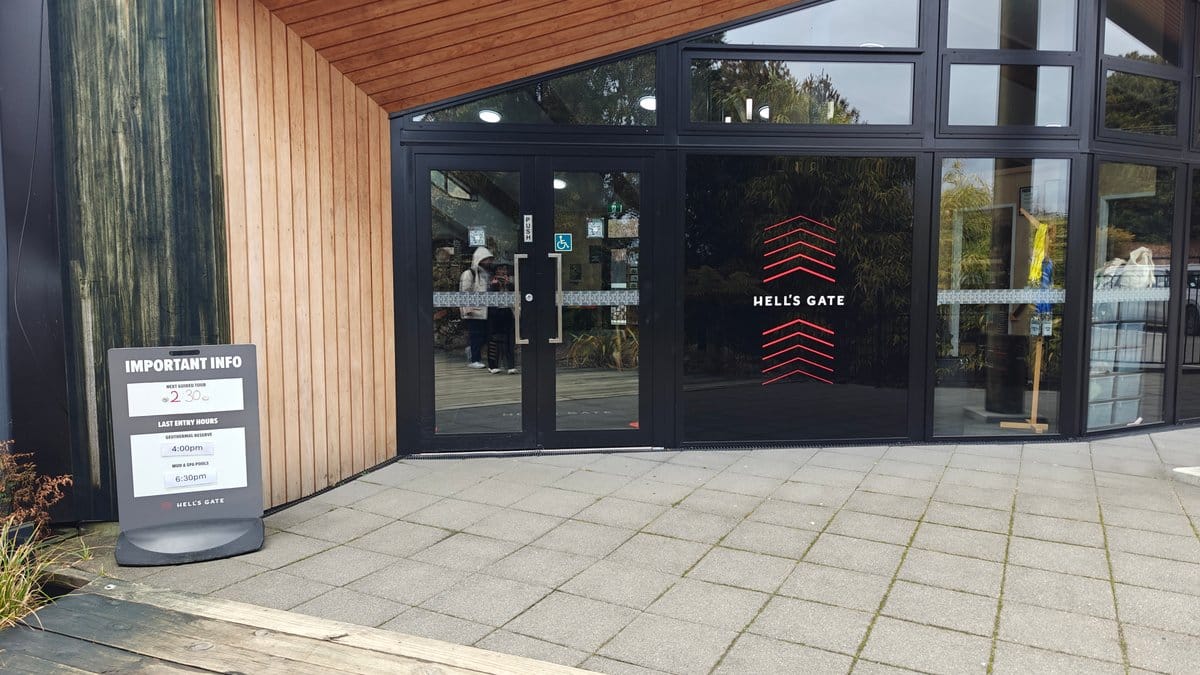
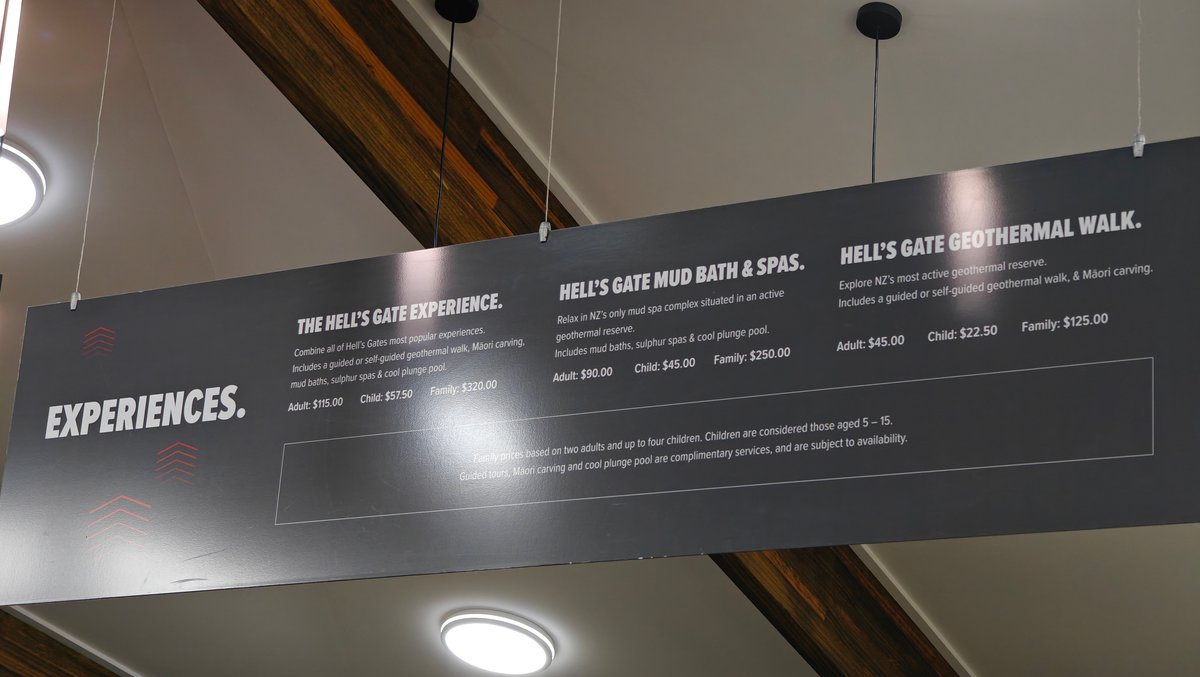
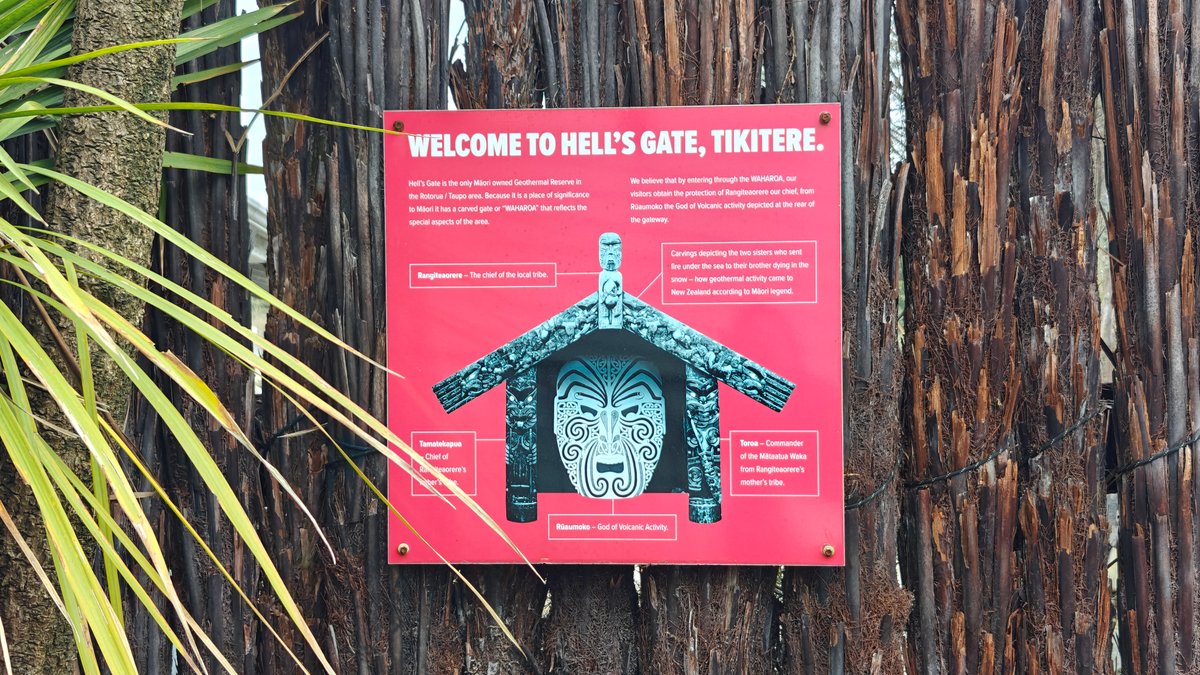
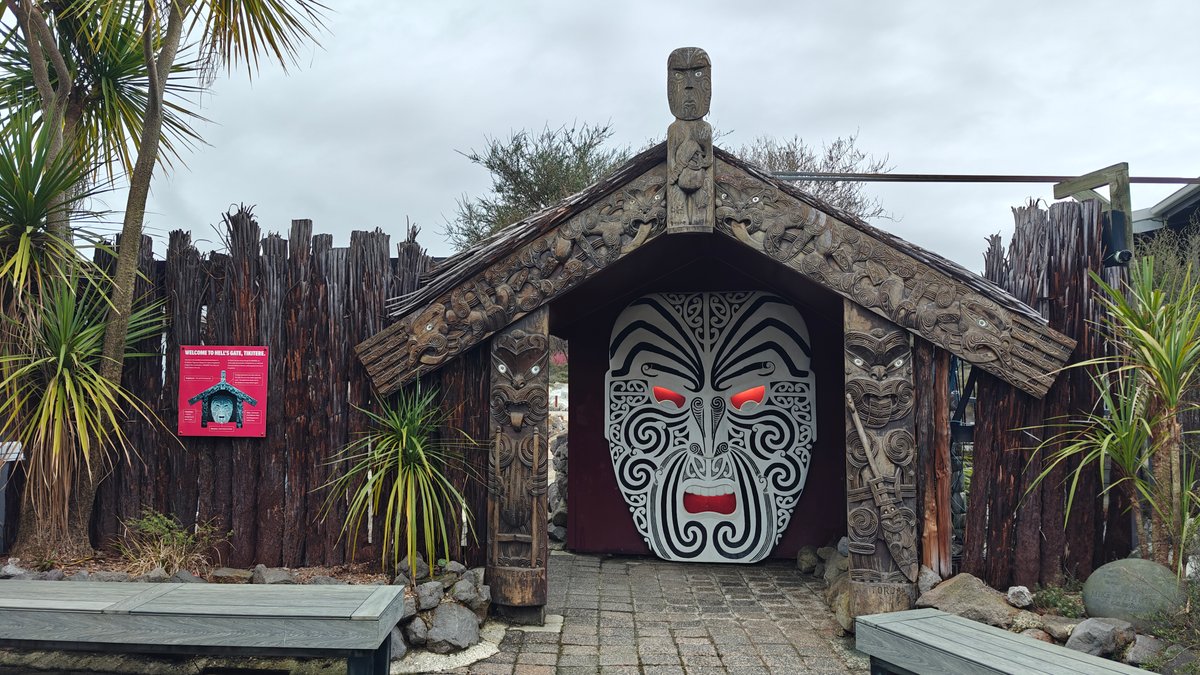
The entire reserve are on Tikitere land that has been geothermally active for centuries, and the carved gateway shows it.
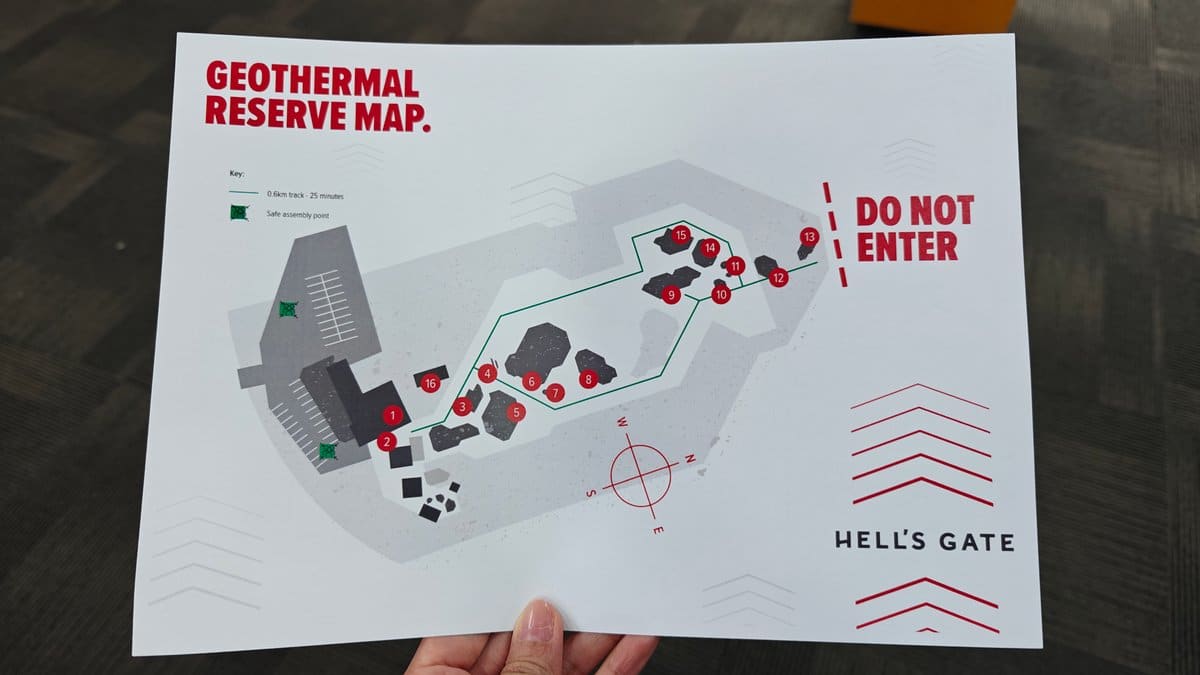
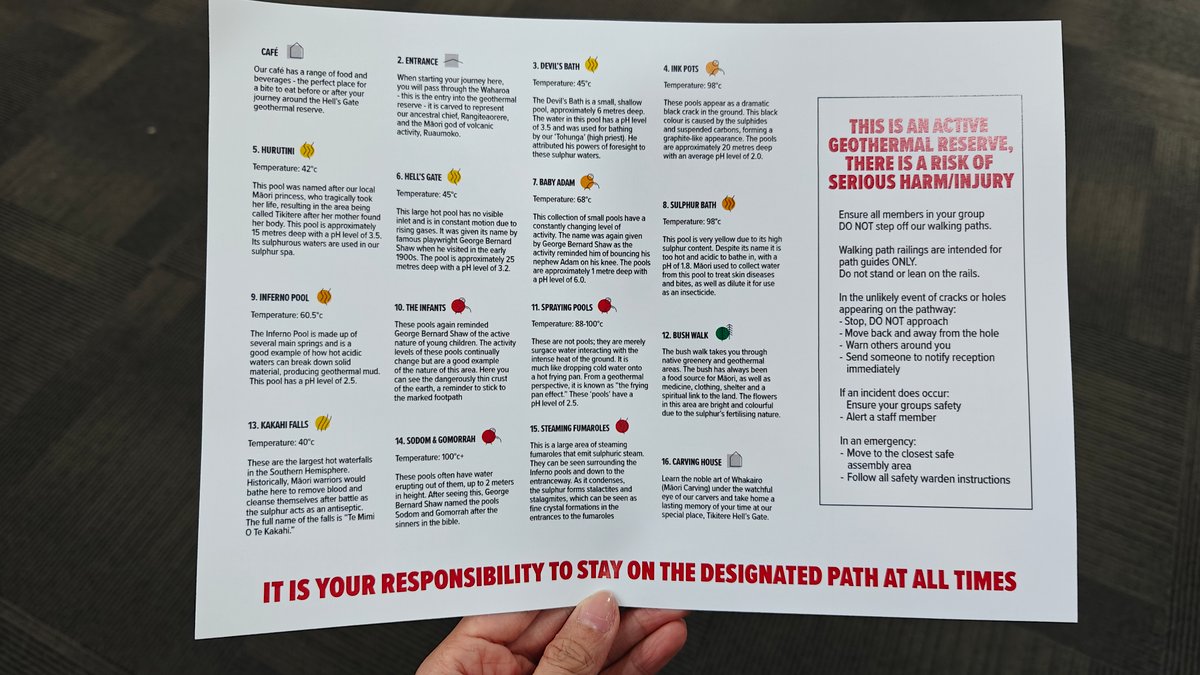
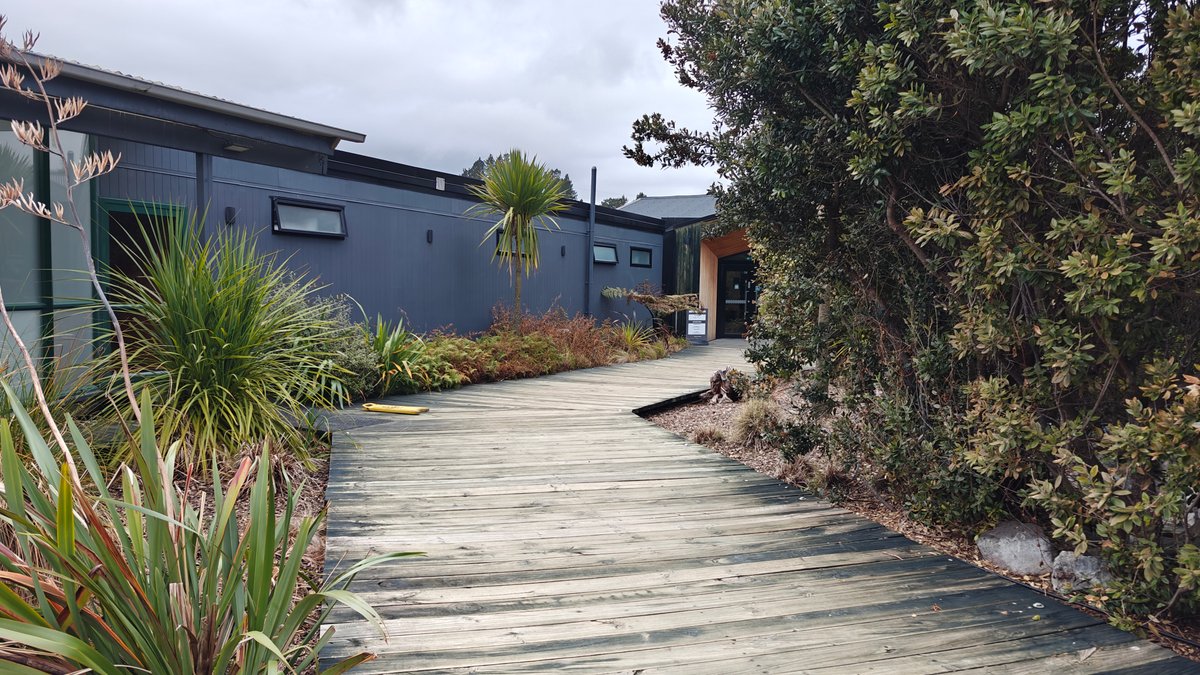
At the head of the reserve is the visitor centre where you collect your map and pay. They also has a few printed guides for sale (I got one) which proved very useful. They number everything and name all the features.
This lets you follow the guide around and know exactly what you are looking at.
Everything from the Ink Pots to the Inferno Pool is on the map, in fact I didn’t know what half of it was till we got out there! On the reverse side is all the details about each numbered stop that I kept flicking back to while walking. As soon as we entered the actual reserve area, though, we were assaulted by the smell.
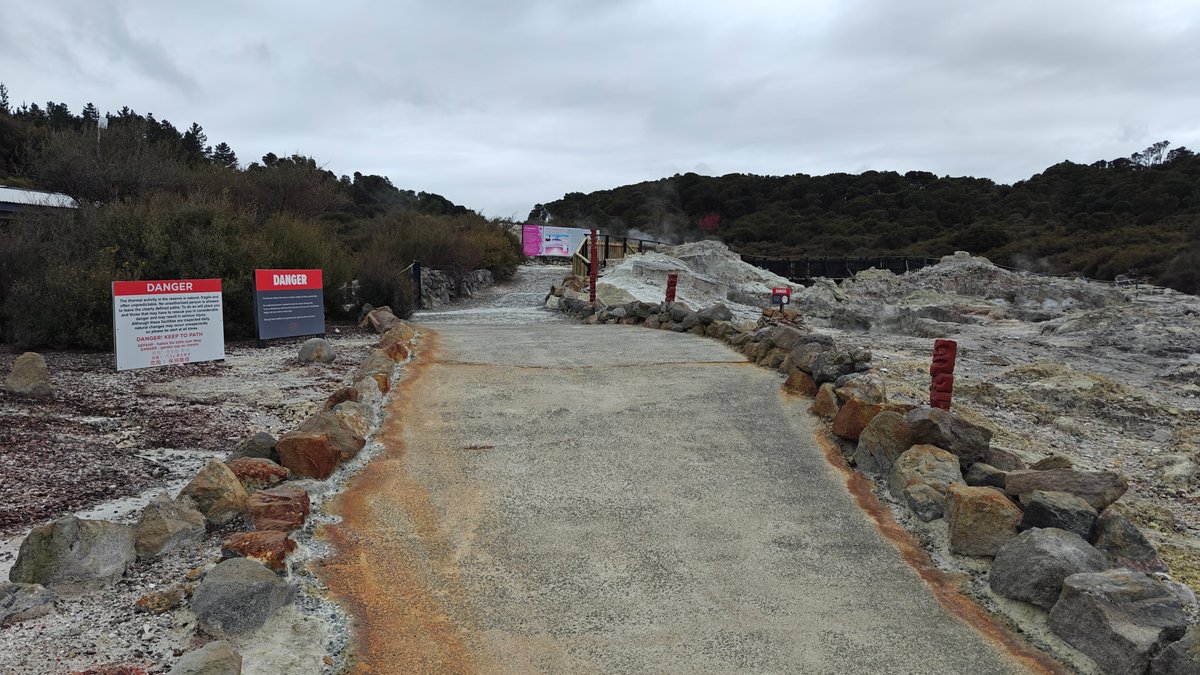
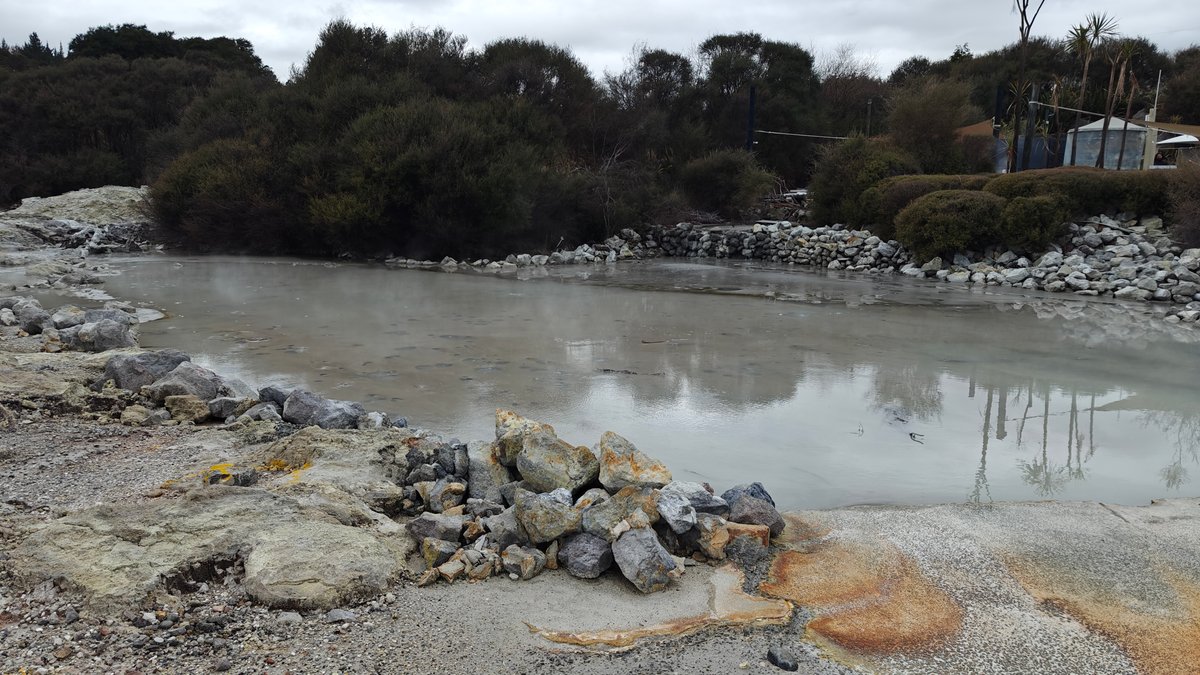
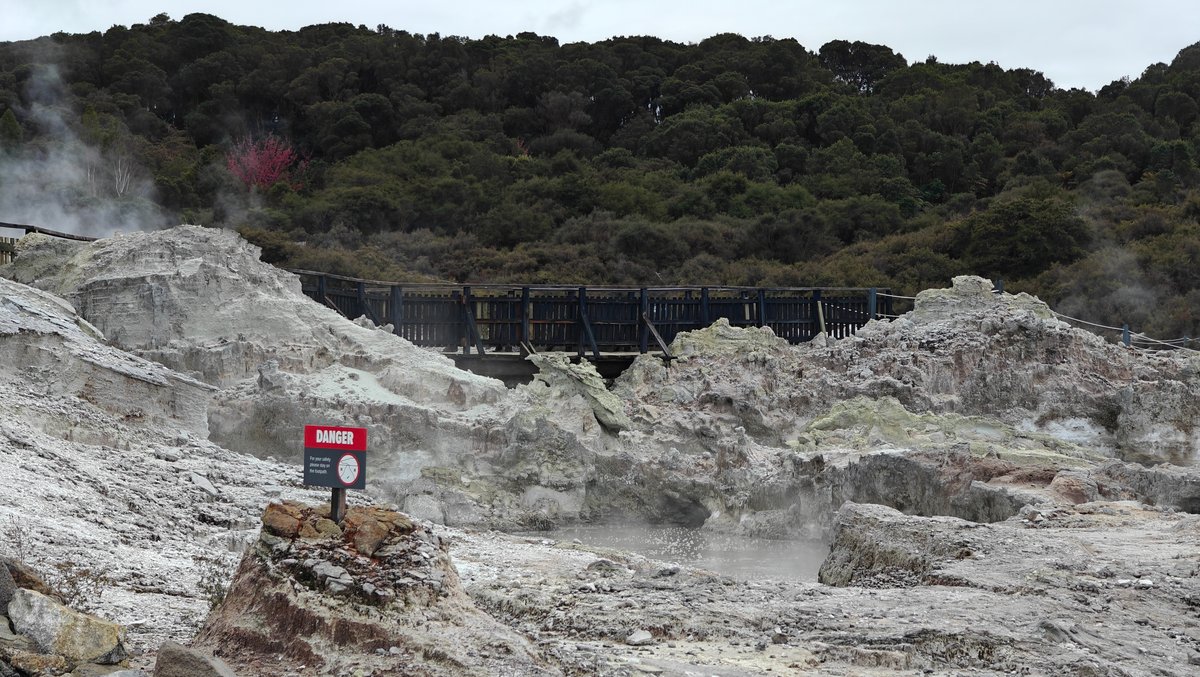
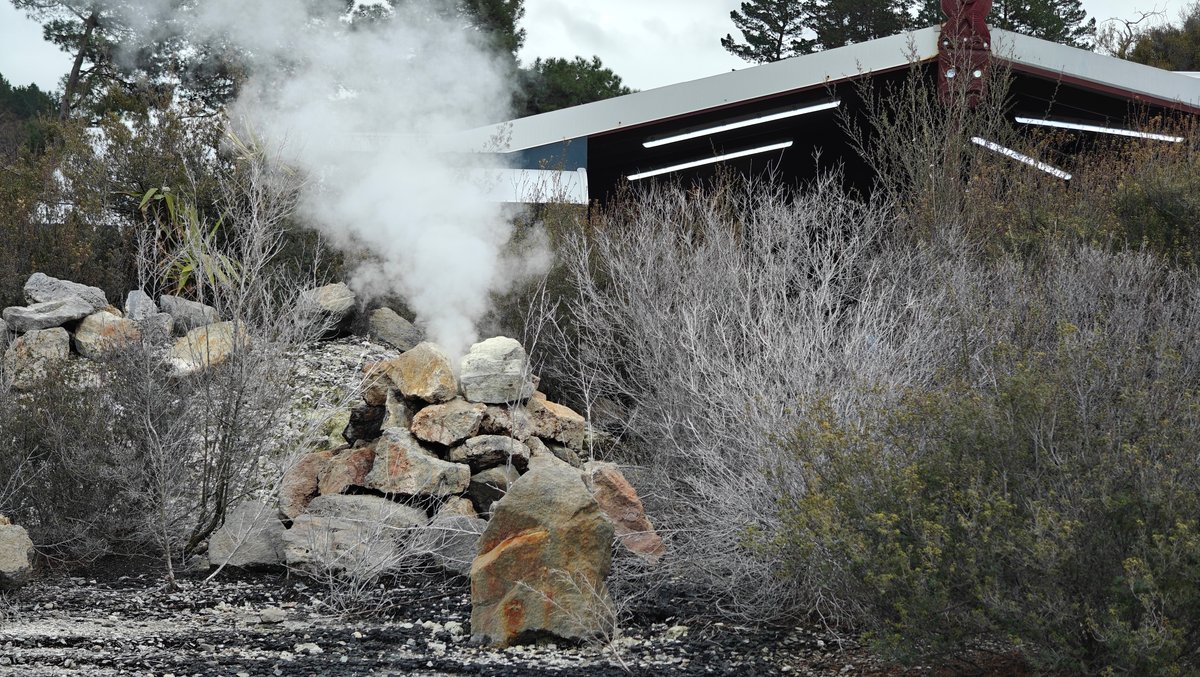
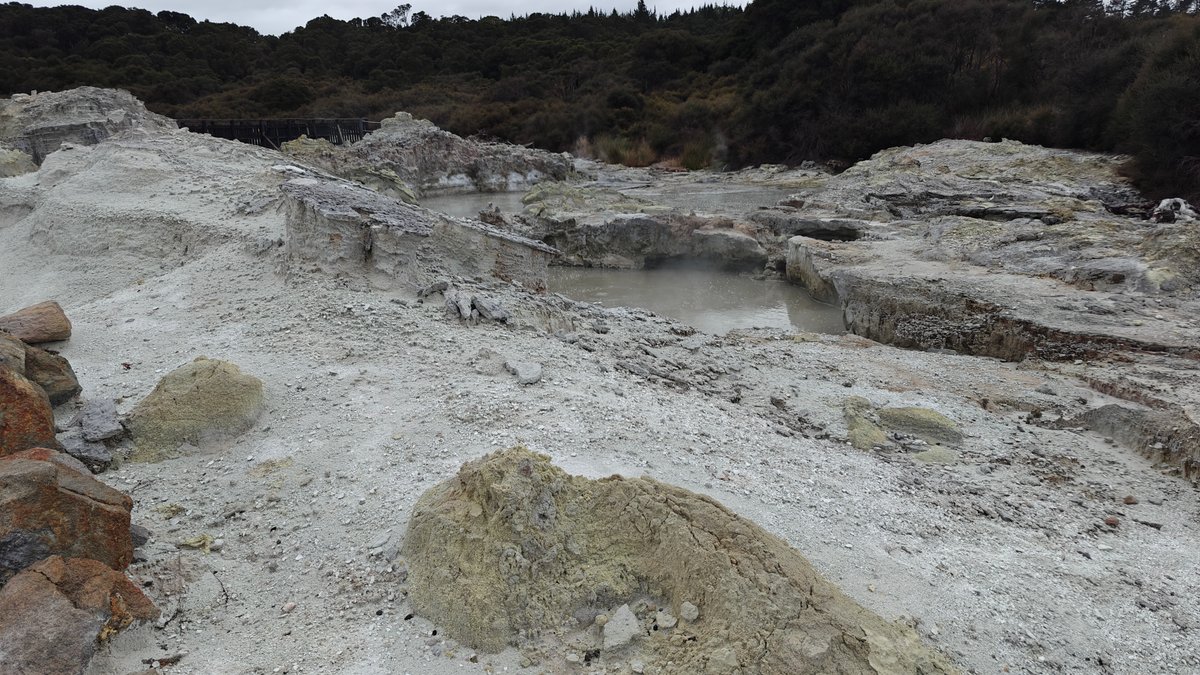
It’s sulphur, and they don’t mess around here: it’s that pungent, egg-smelling scent you can’t shake off. The red-eyed face in the carved gateway we had to pass under before entering was appropriately dramatic.
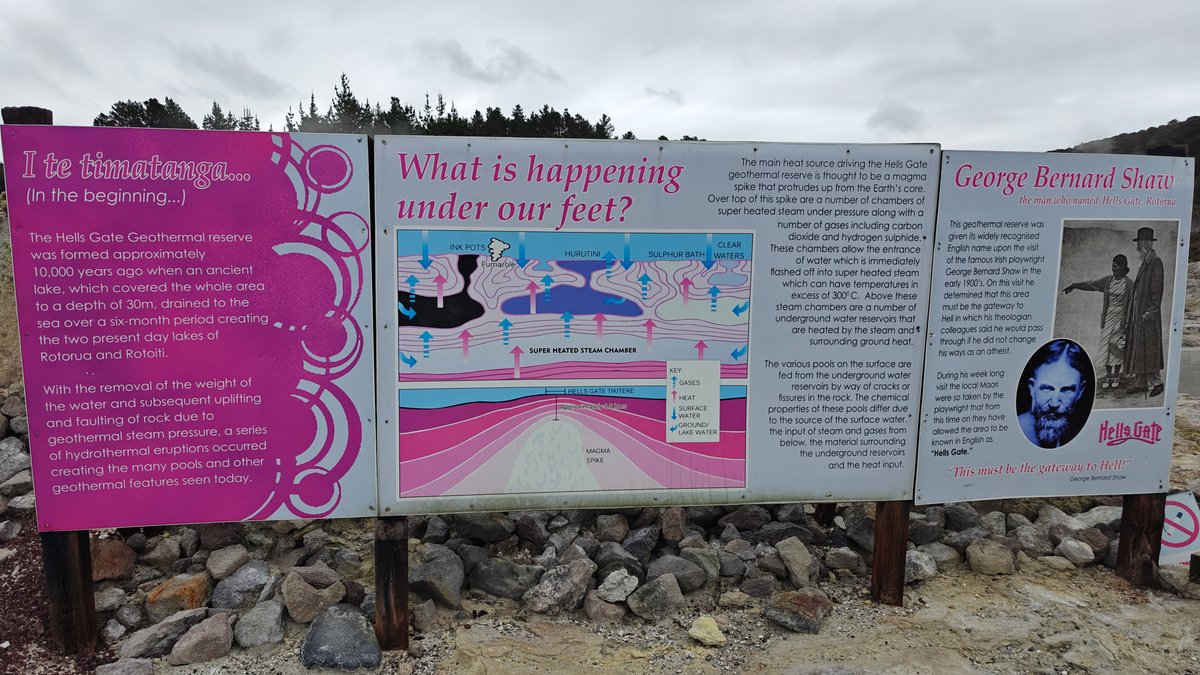
I liked that there were illustrated panels explaining the history and geology on the way through, as otherwise it’s just mud and steam with no real explanation. There was one about the traditional uses of the hot pools, another about the volcanic activity underfoot, etc. I paused to read some.
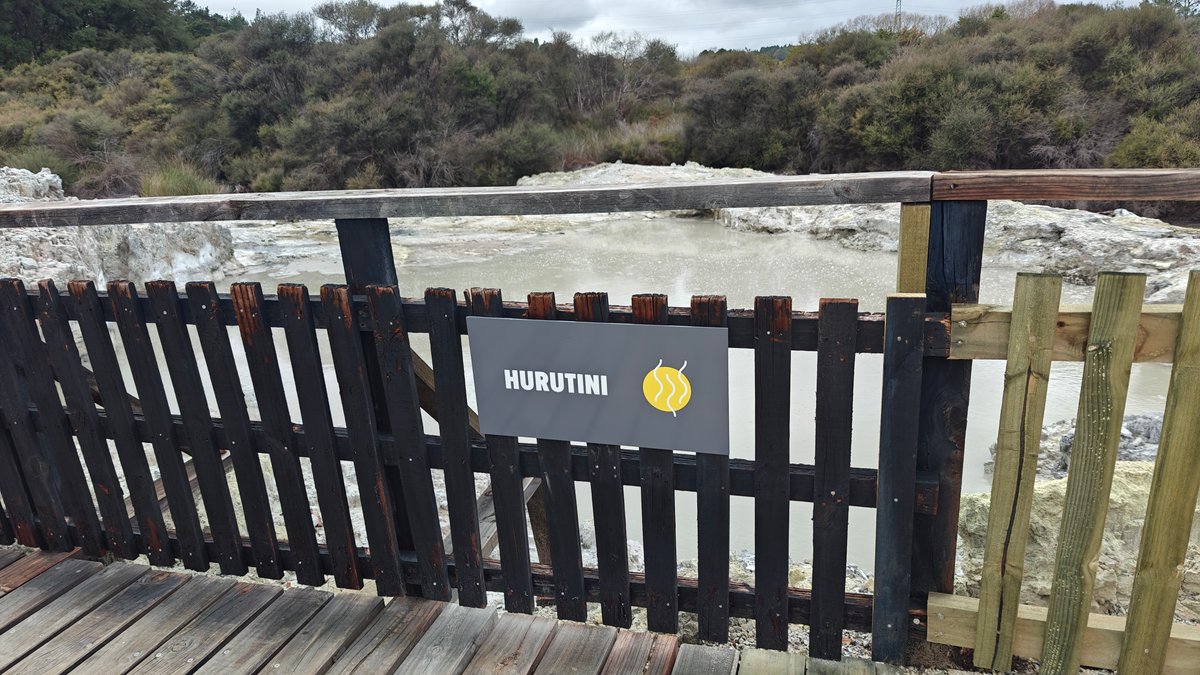
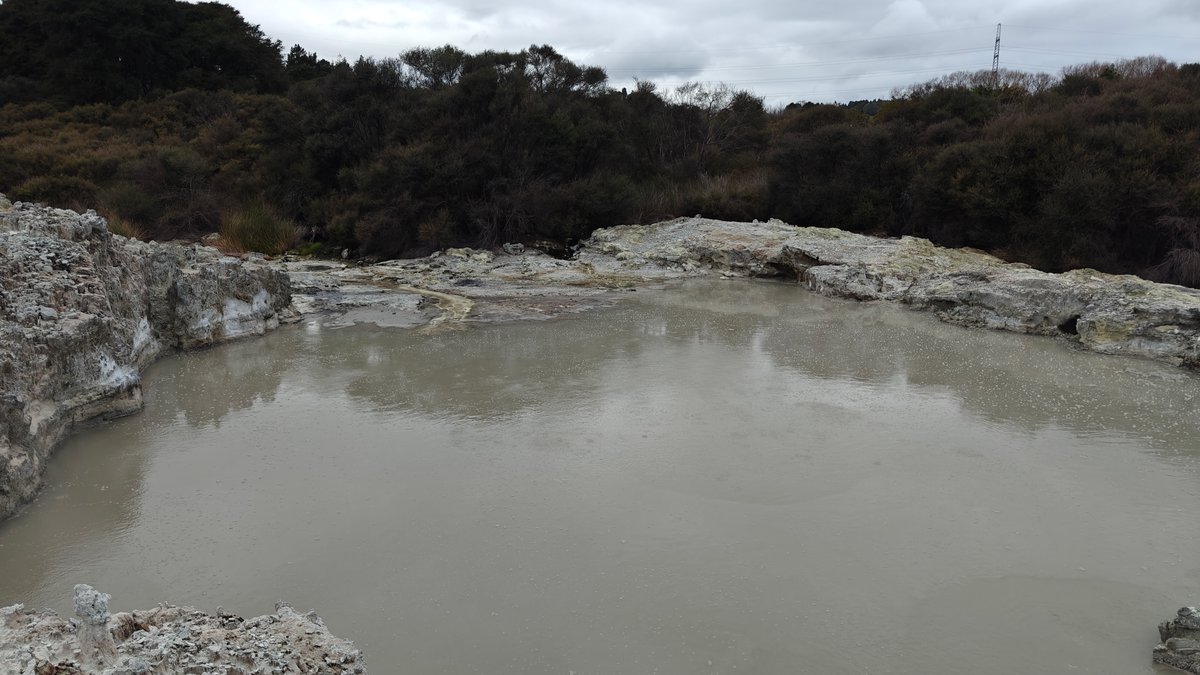

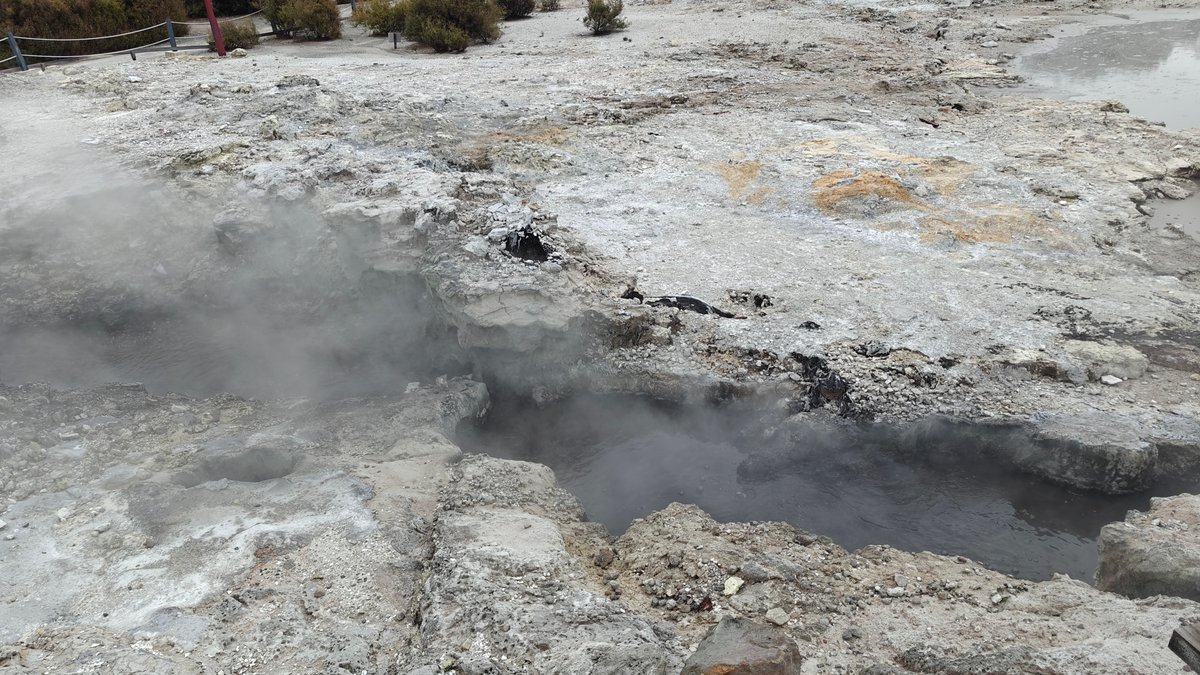
As you start walking around here, you realize just how active this area is. The ground had vents spewing out steam; the mineral pools is quite strange looking… Grey, flat, and completely still with the exception of the heat shimmer rising off them.
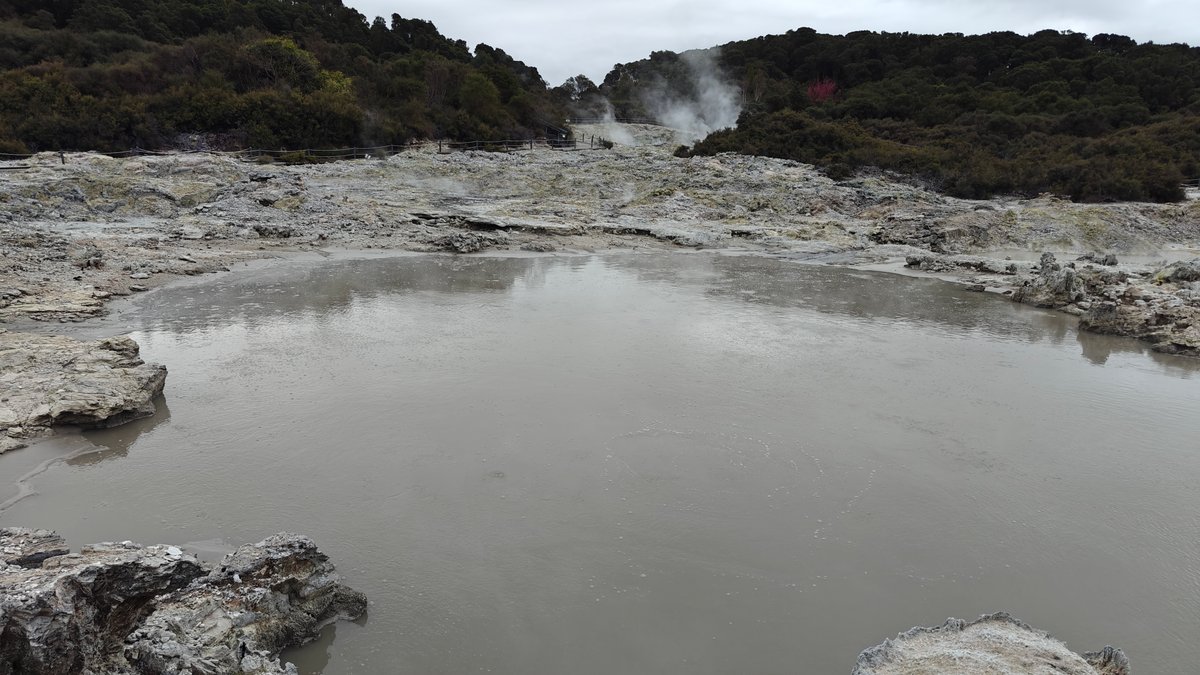
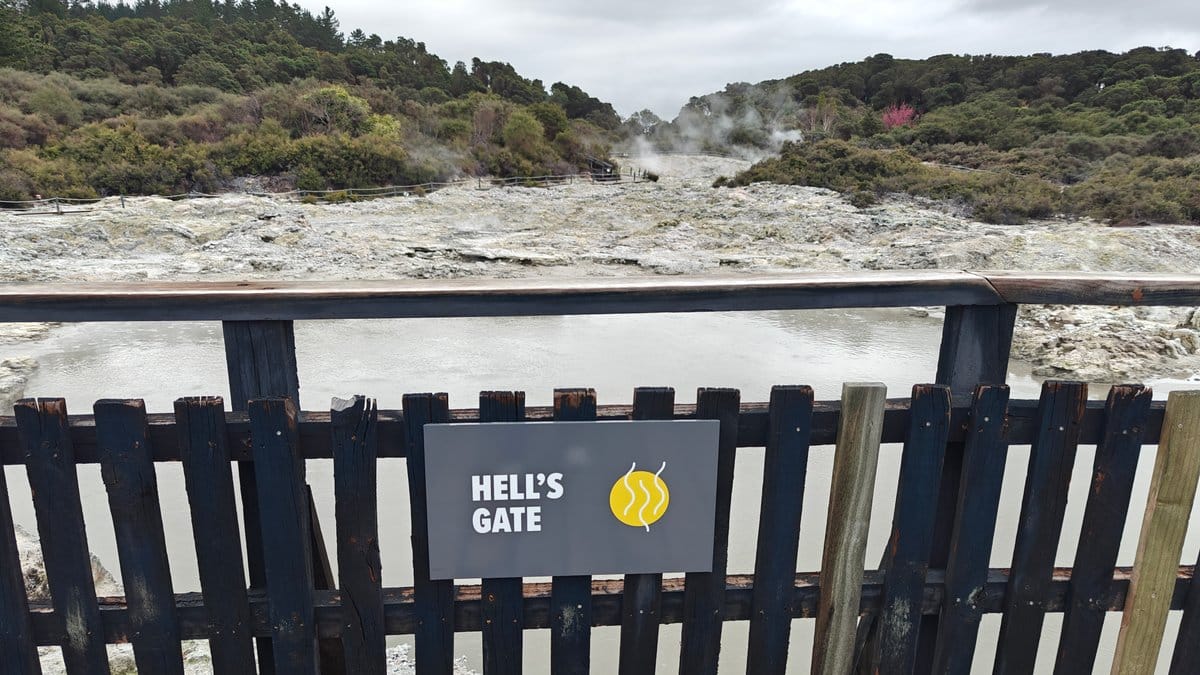
There were some vents that was throwing up so much vapour we had to wait until the wind shifted again so we could see the path properly. An interpretive board broke down the geothermal activity in simple terms which gave me an understanding of why some pool just steam while others bubble. Its temperature, mineral content, depth.
It all plays a part.
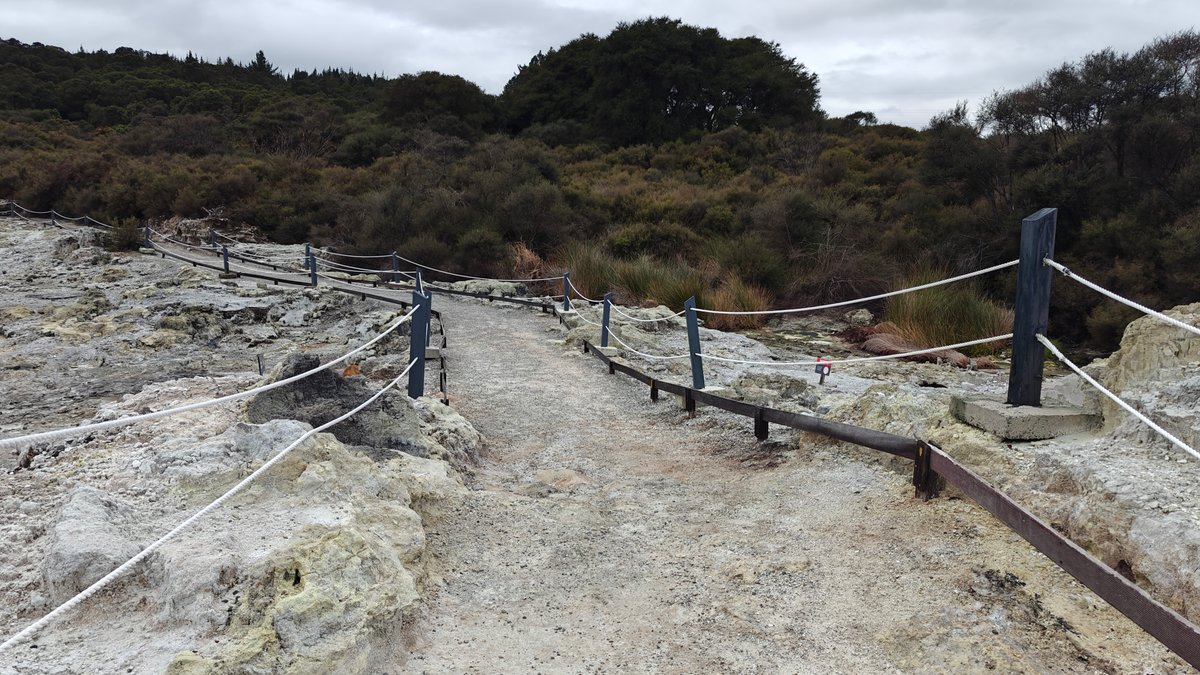
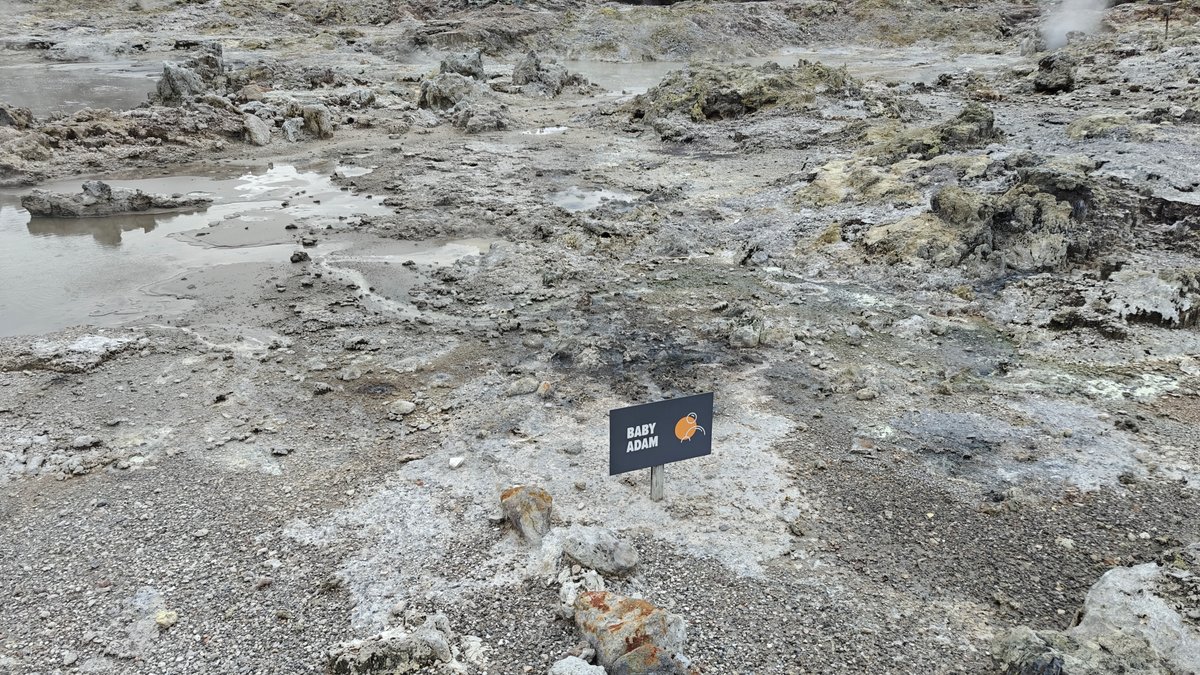
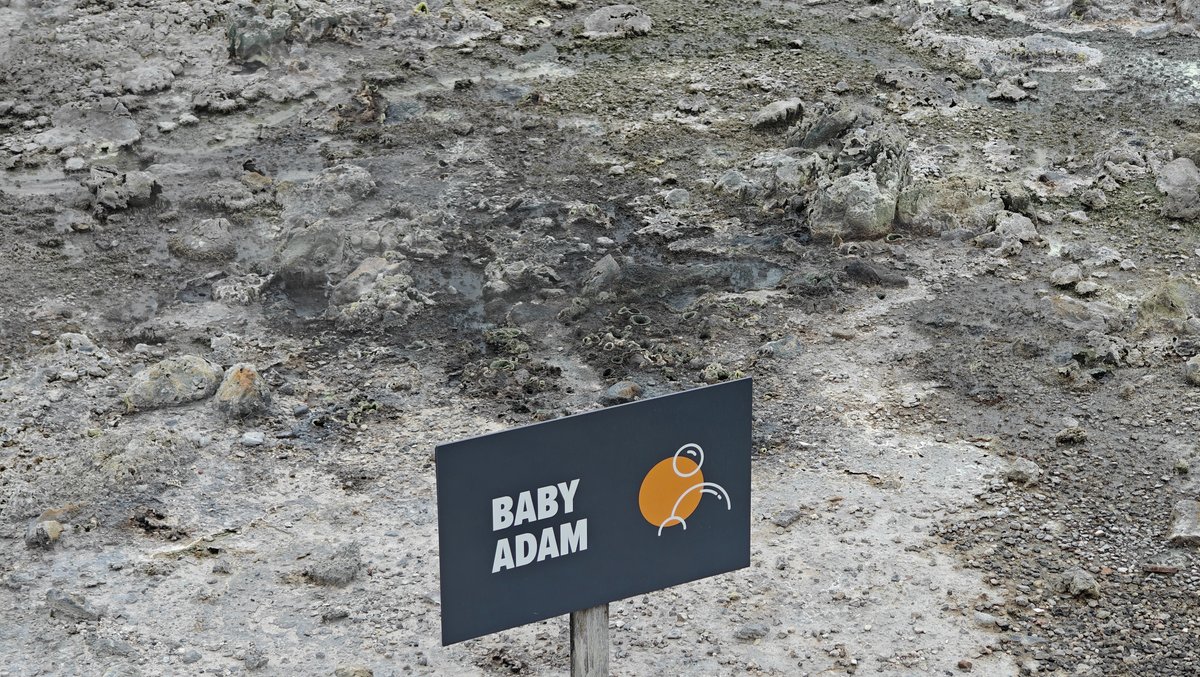
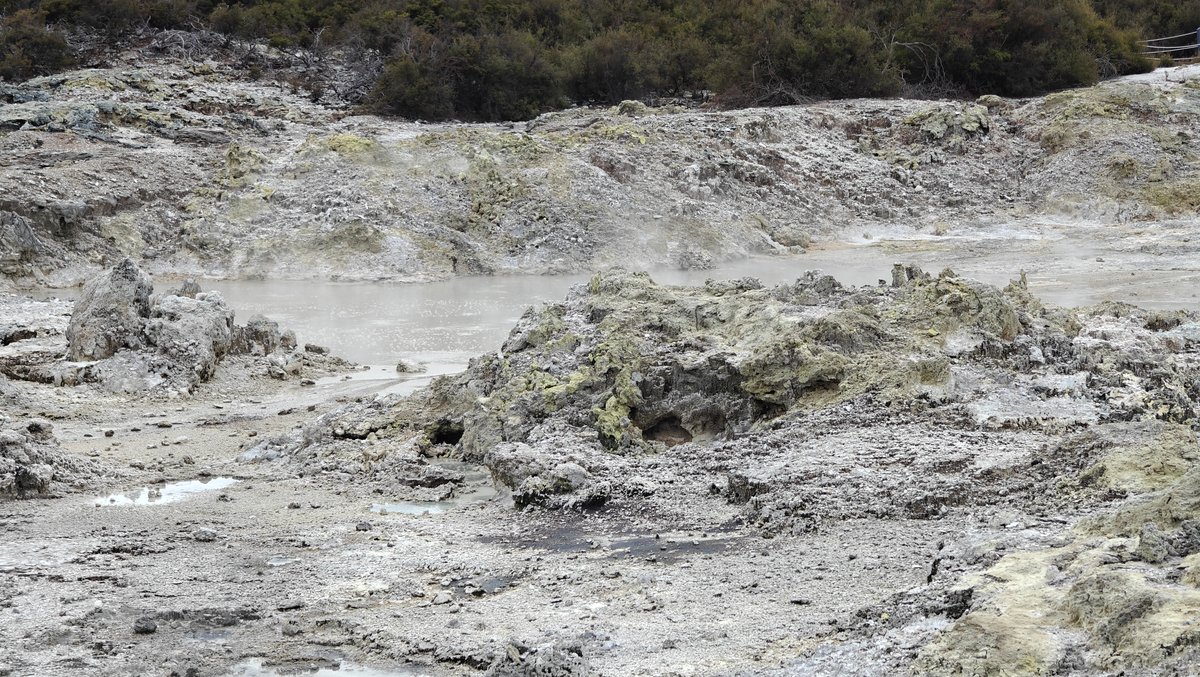
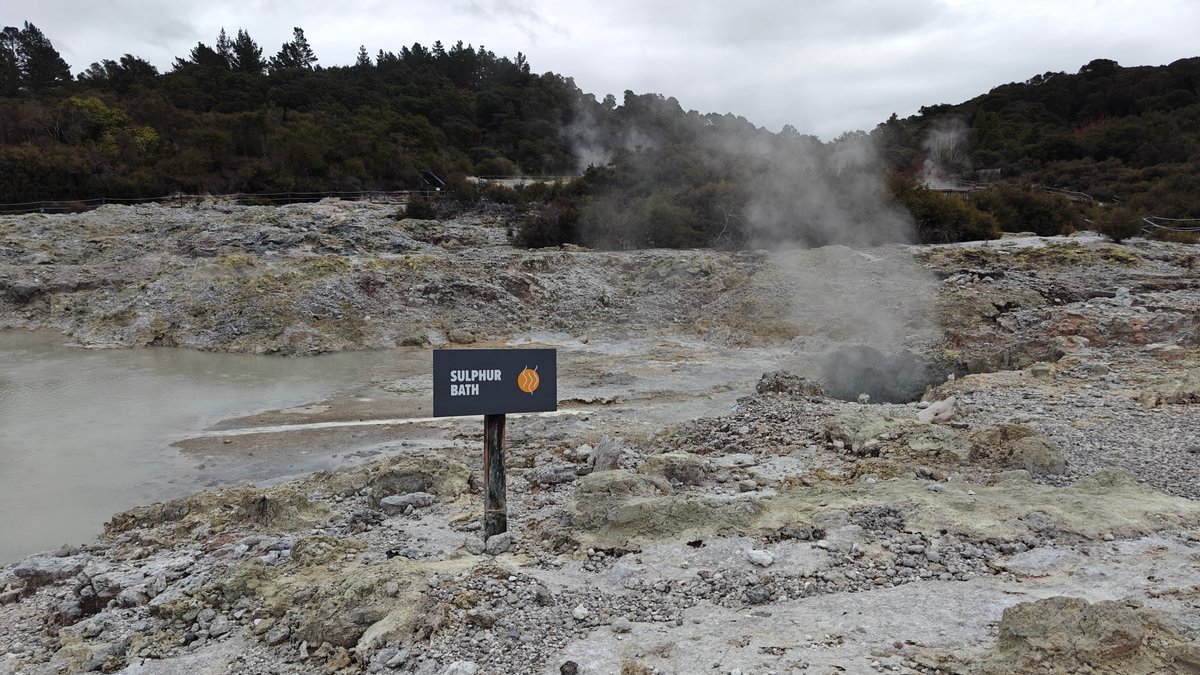
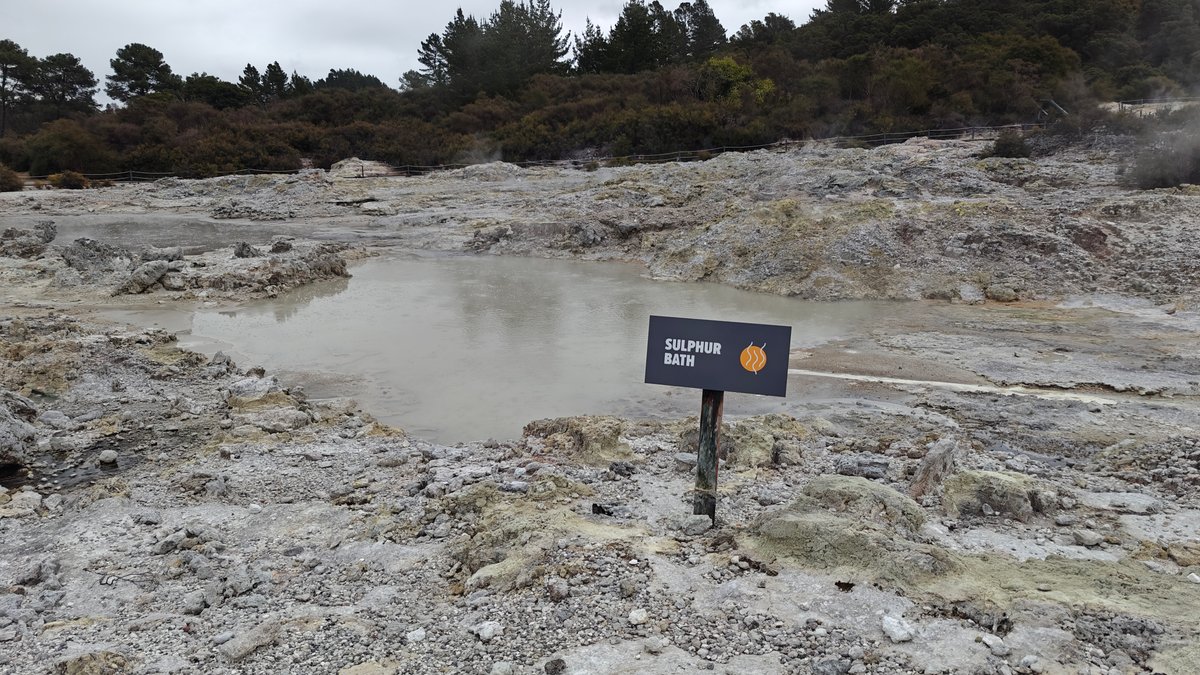
Eventually we made it to the Hurutini pool and a couple of other named ones (each marked by their own small sign). The Ink Pots was smaller than I imagined, but once I laid eyes on them, I could see why they earned their name… Dark, murky little pools that resembled spilled ink against the pale ground surrounding them.
And then we moved on to the main mud pool itself, which is the reason most visitors visit. This is where you’ll find the thick plops of mud rising to the surface every few seconds.
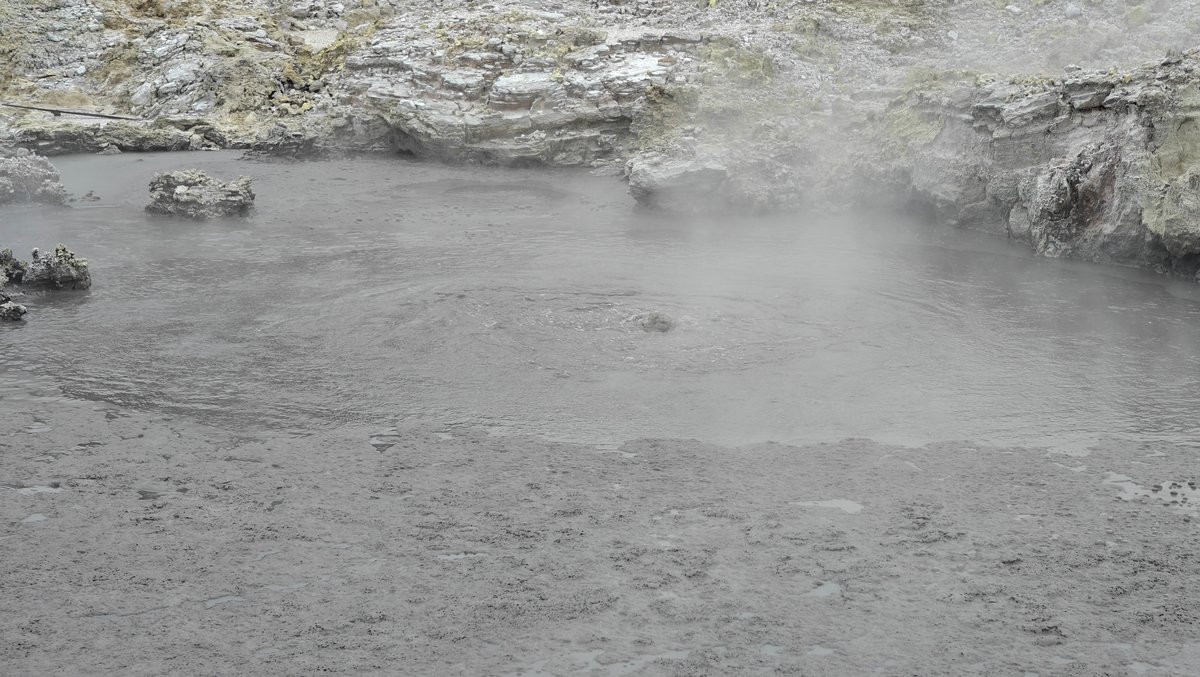
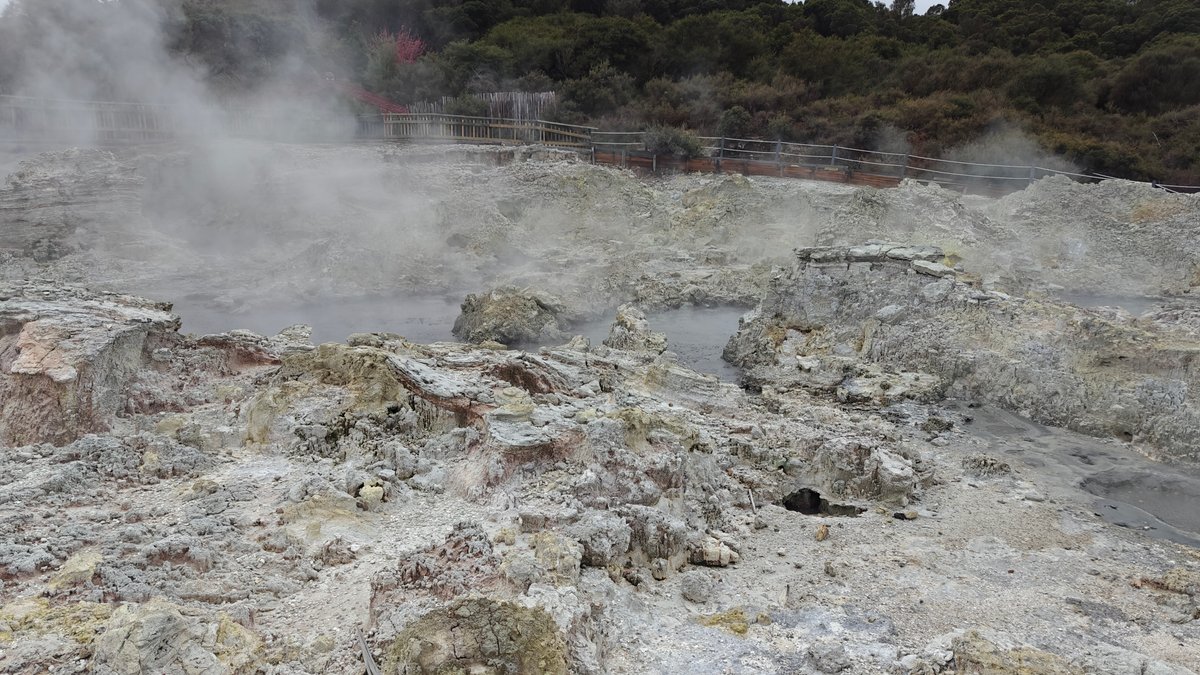
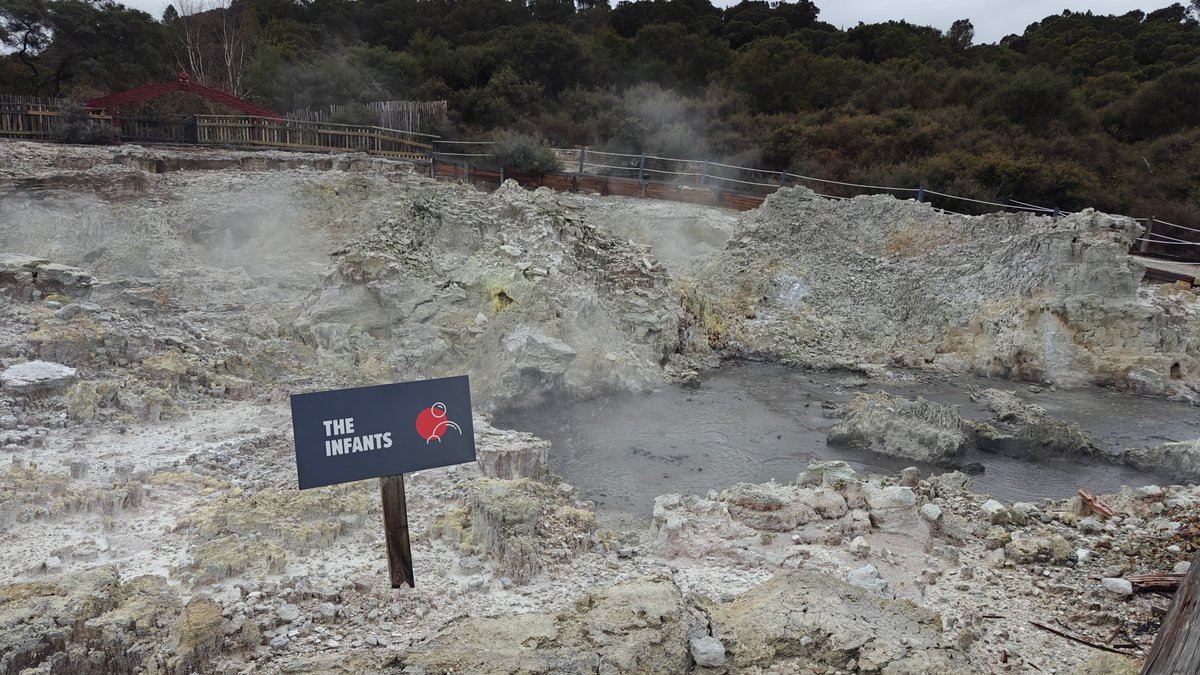
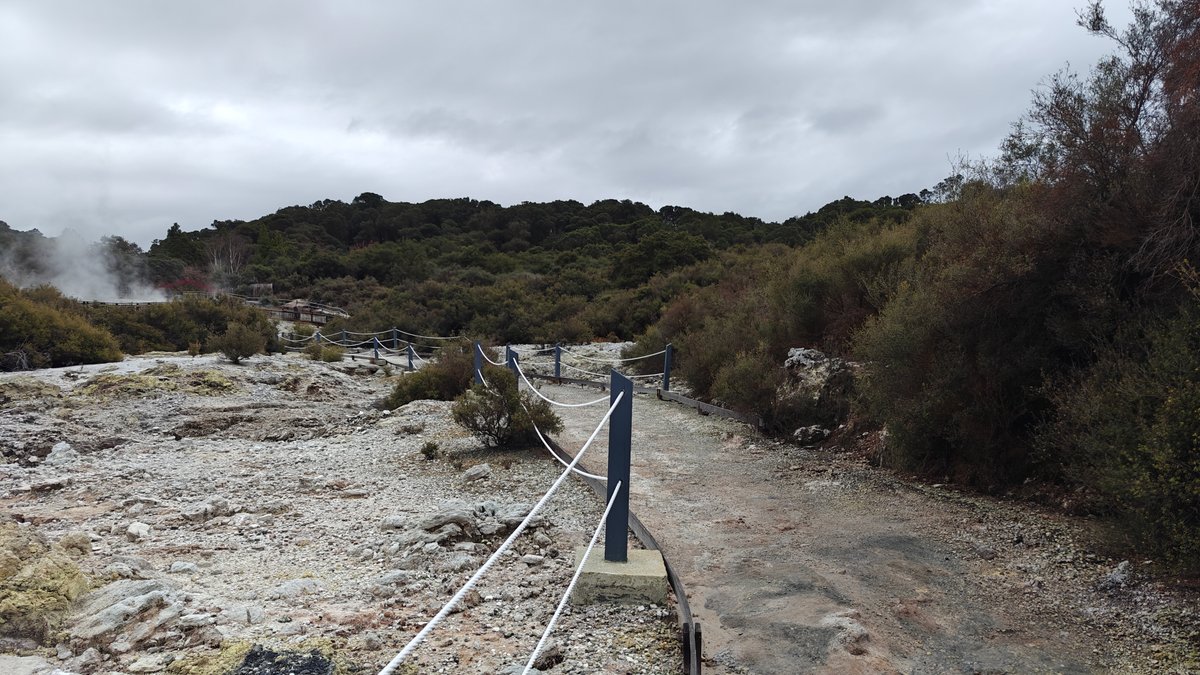
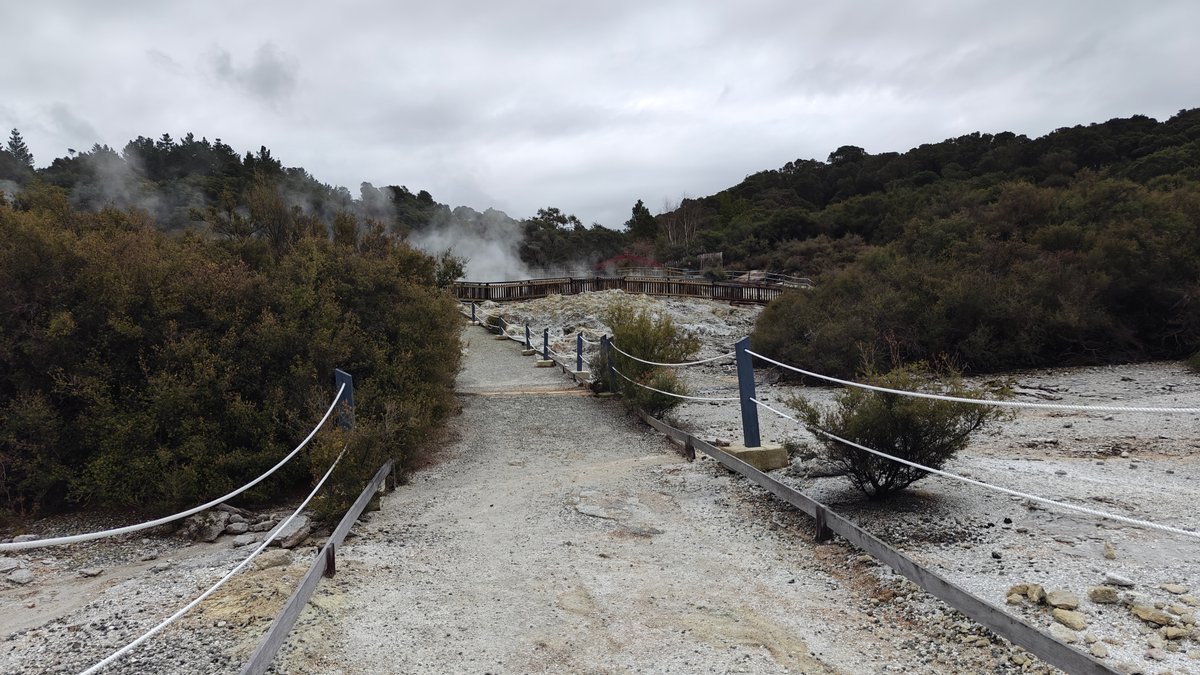
You will see the bubbling and the wide expanse of grey. I spent a good few minutes just standing and watching it, the smell here was especially intense, and there’s something hypnotic about its rhythm. There is also a roped-off trail that winds throughout the entire reserve.
There are a number of vents and pools along the way (some named), including more steaming terraces and a couple of pools where we saw Baby Adam again.
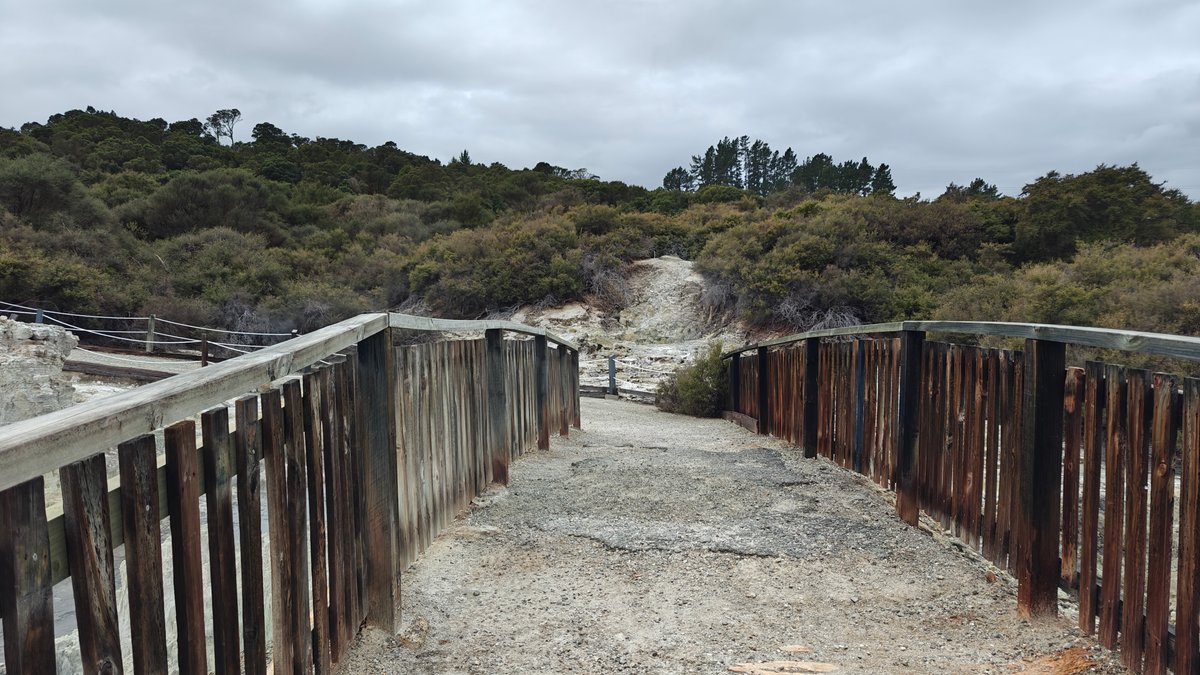
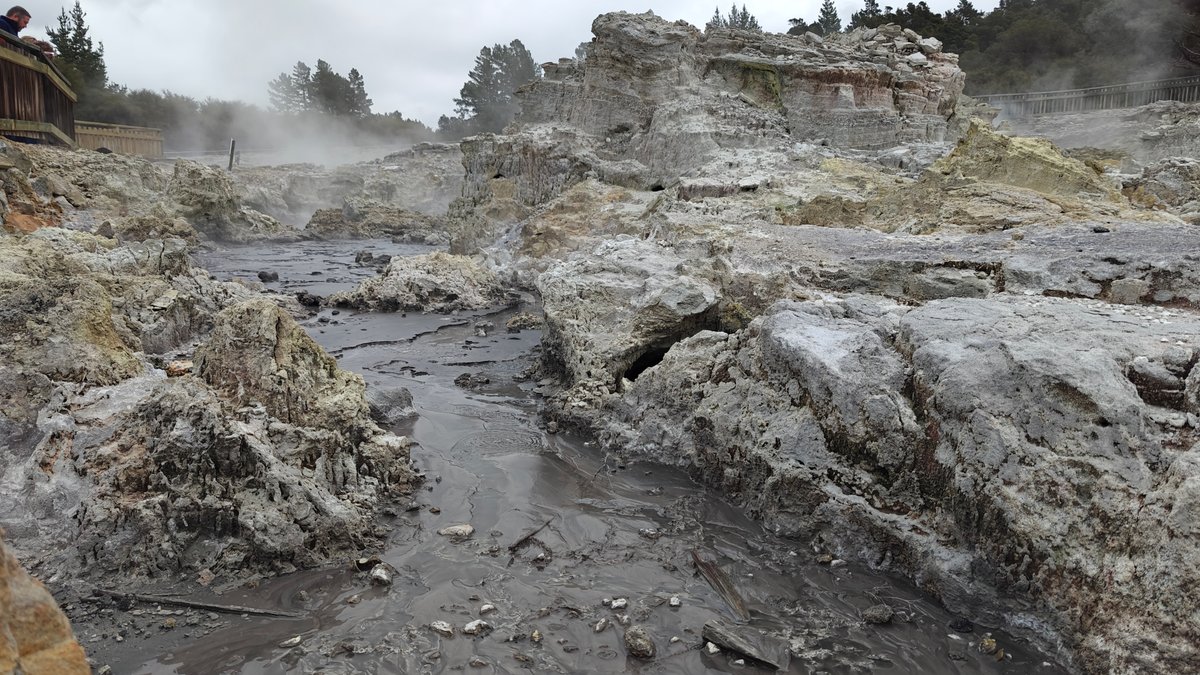
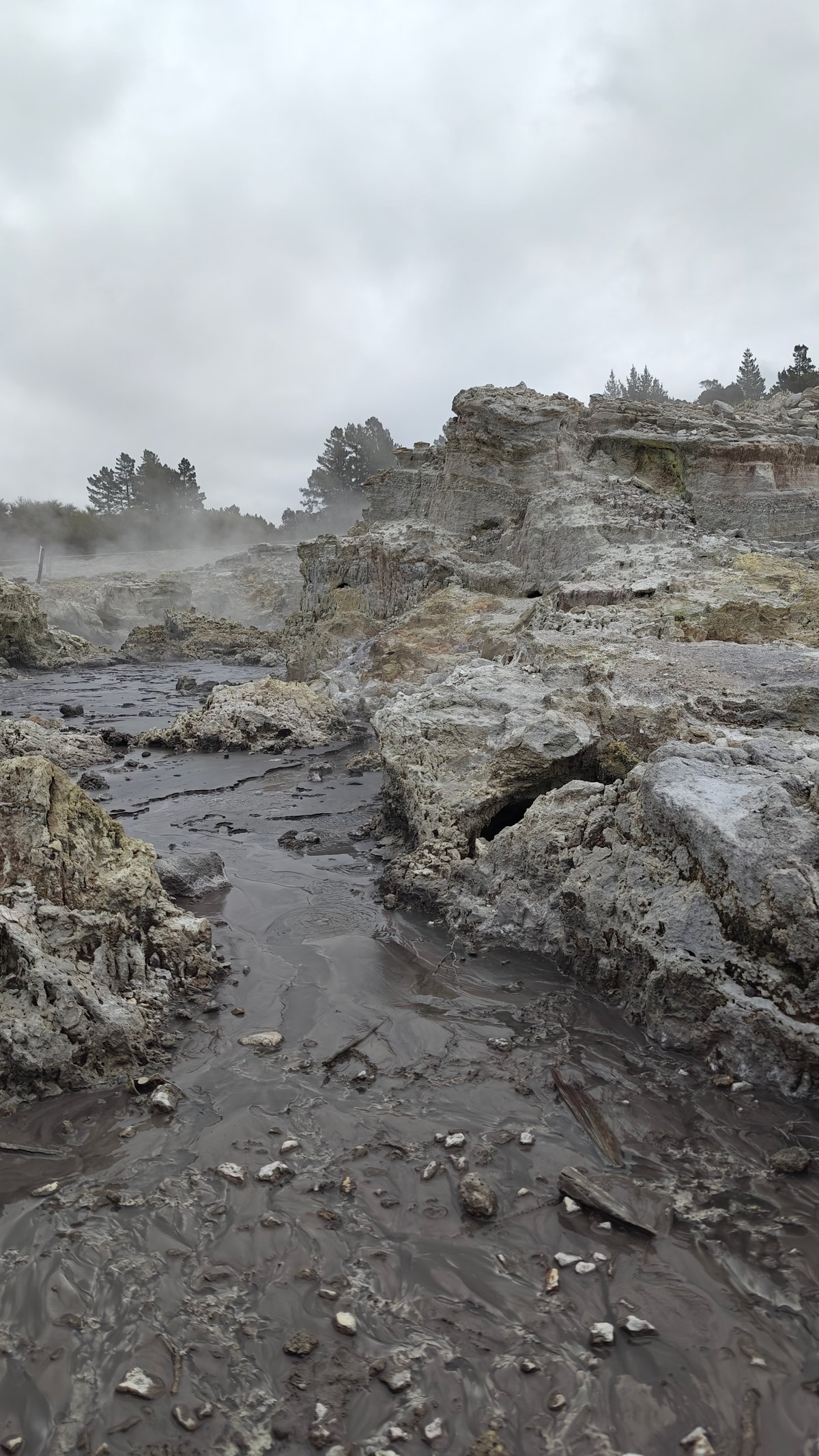
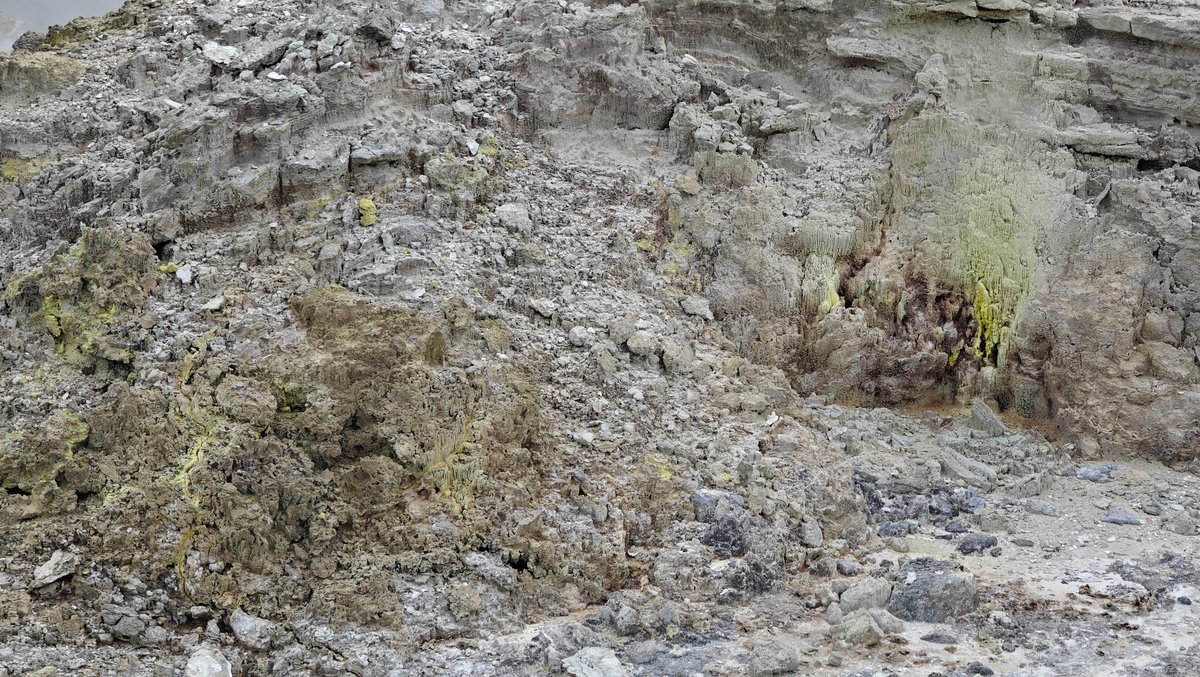
Every pool had a different feel to it, some bubbled and hissed while others were quiet and still. In spots the ground was pale and cracked and crusty with minerals, looking fragile.
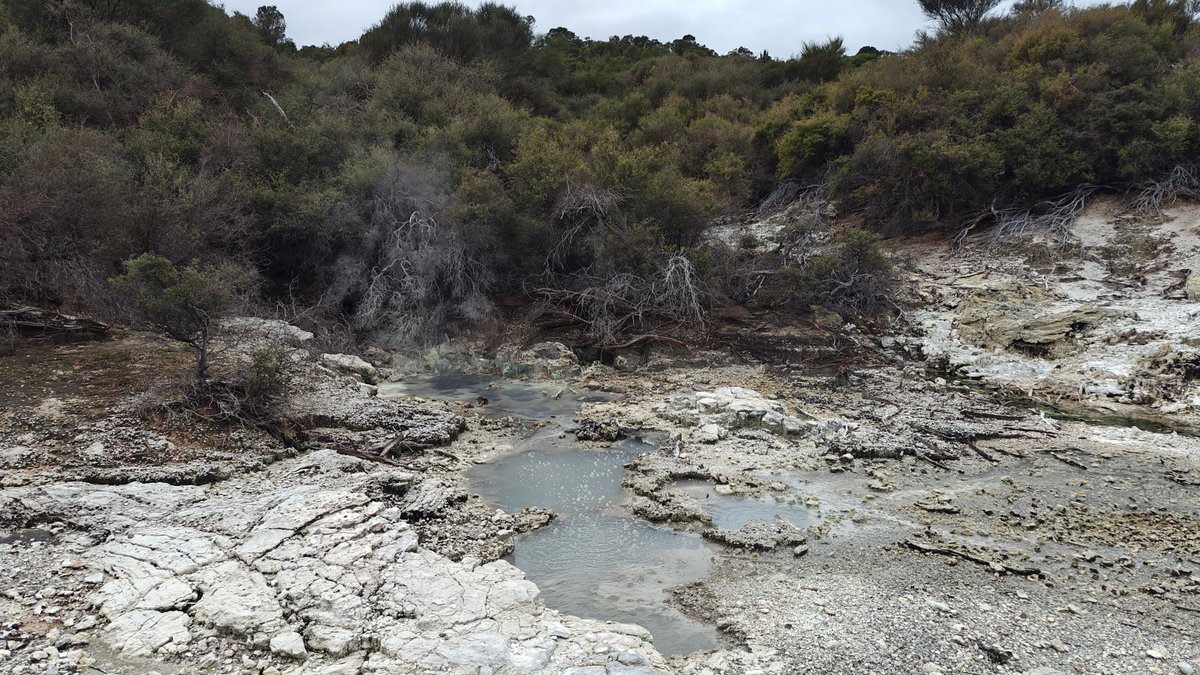
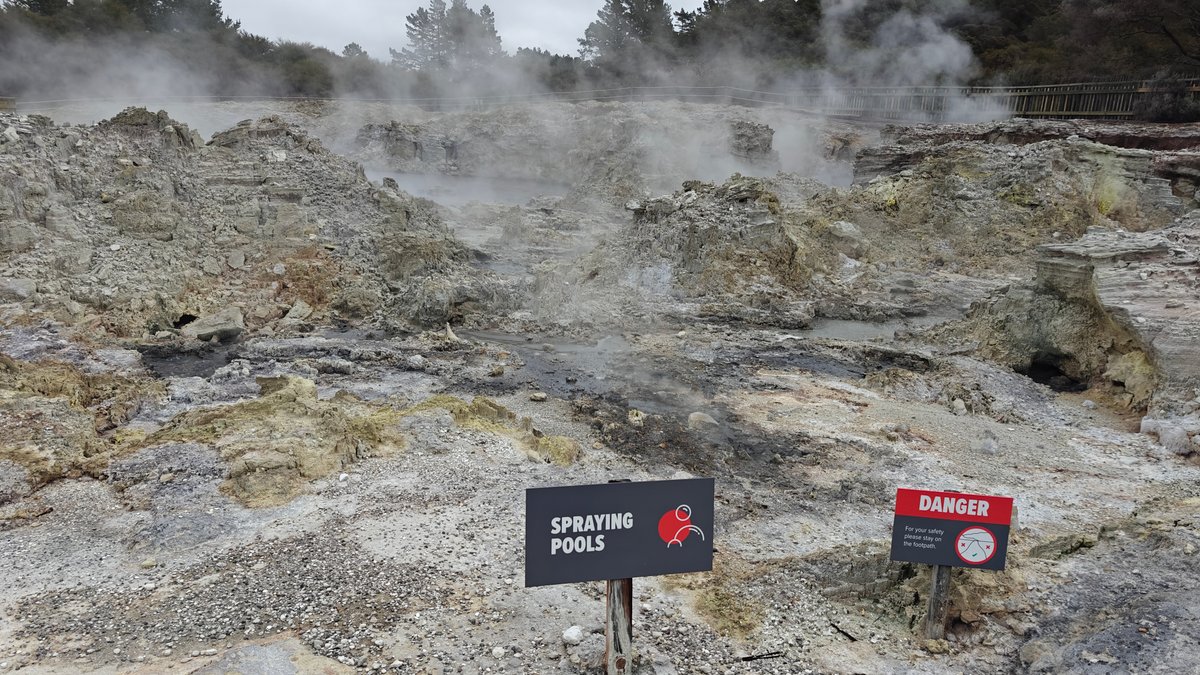
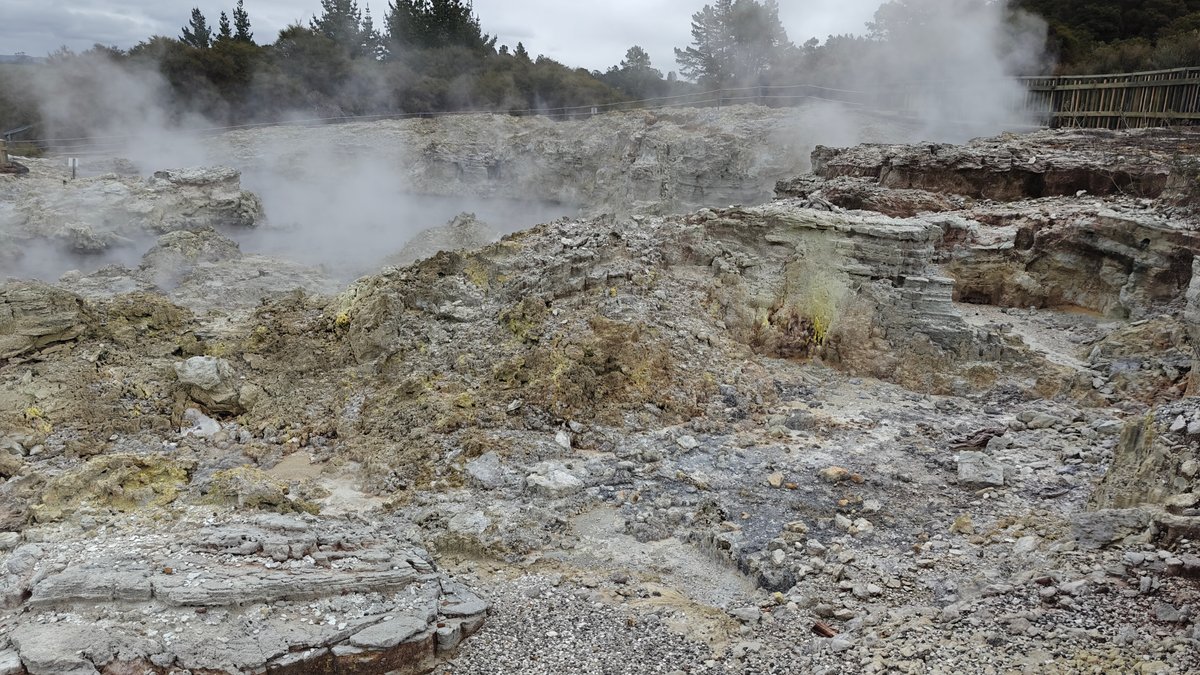
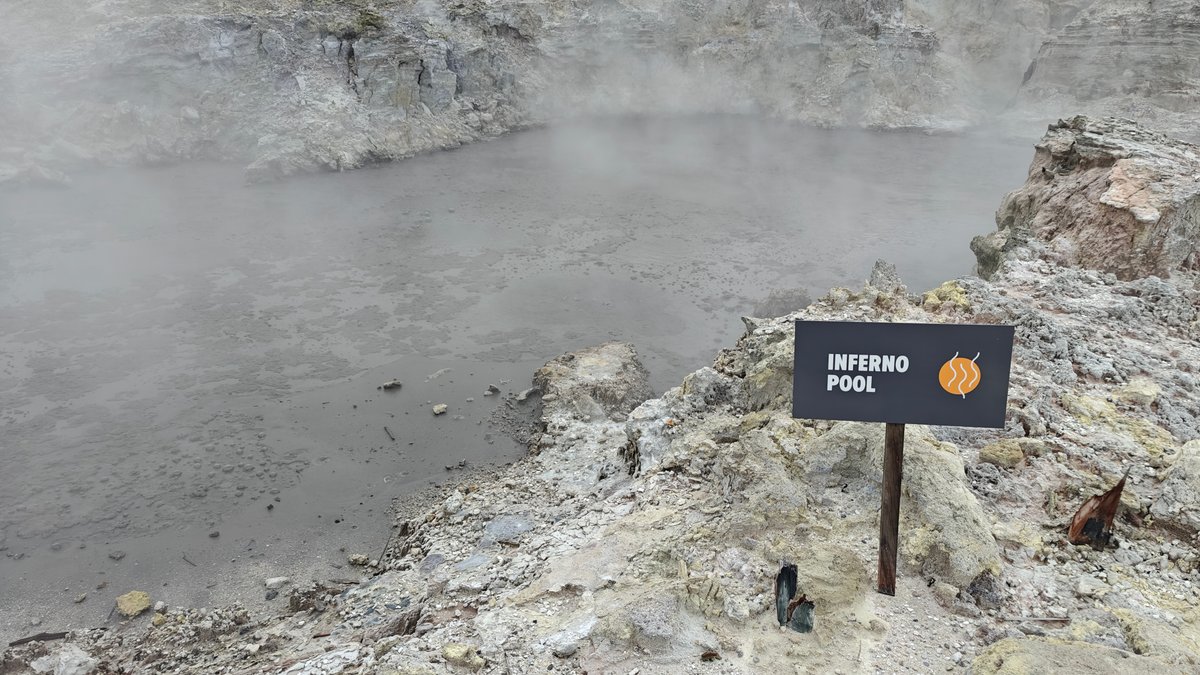
We couldn’t even make out the Inferno Pool because it was completely covered in steam, but we could hear it bubbling below. Nearby was another group of pools called the Infants, which were also covered in a blanket of steam and simply churning away all day long. Some of the warmer areas (where it’s too hot for walking on) has been covered by a boardwalk.
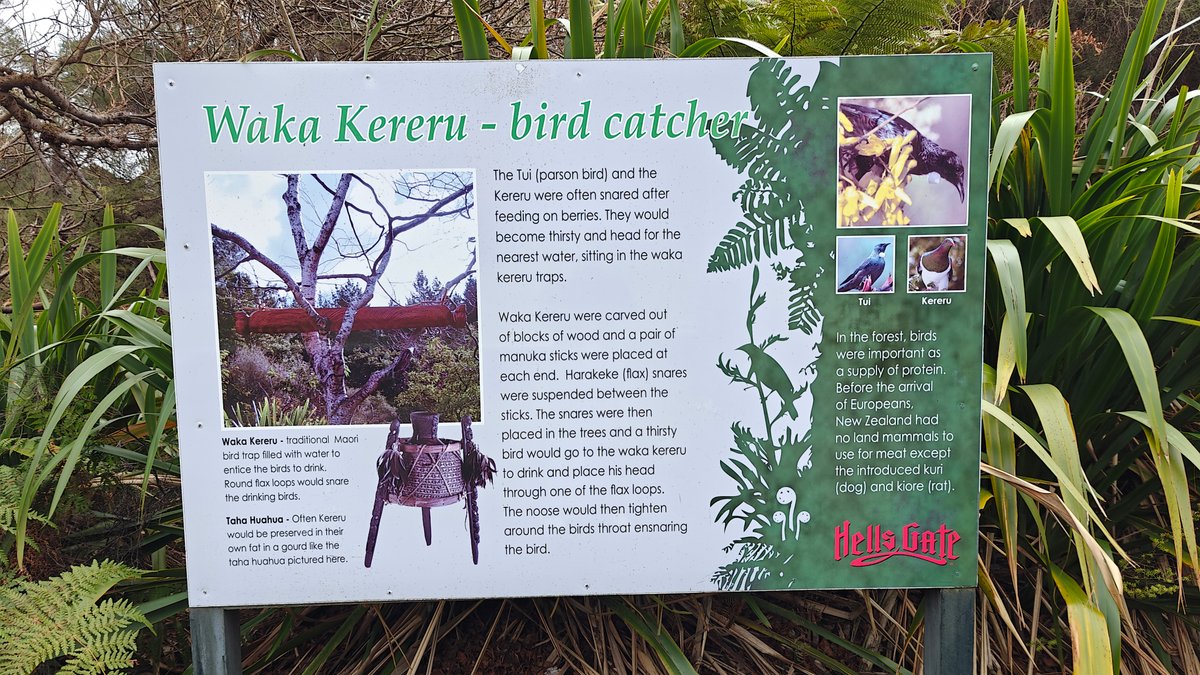
There are also spots where the mineral deposits has formed little terraces, and other parts where the mud is steaming, wet, and dark. And everything is always changing: according to the ranger at the visitor centre, new vents open up and the pools moves around fairly regularly. Continuing on we passed a stream running through the reserve (which seemed perfectly ordinary by now), and then we hit the Spraying Pools with their danger signs, reaching the sinter field that was steaming so much you’d think the entire place was on fire.
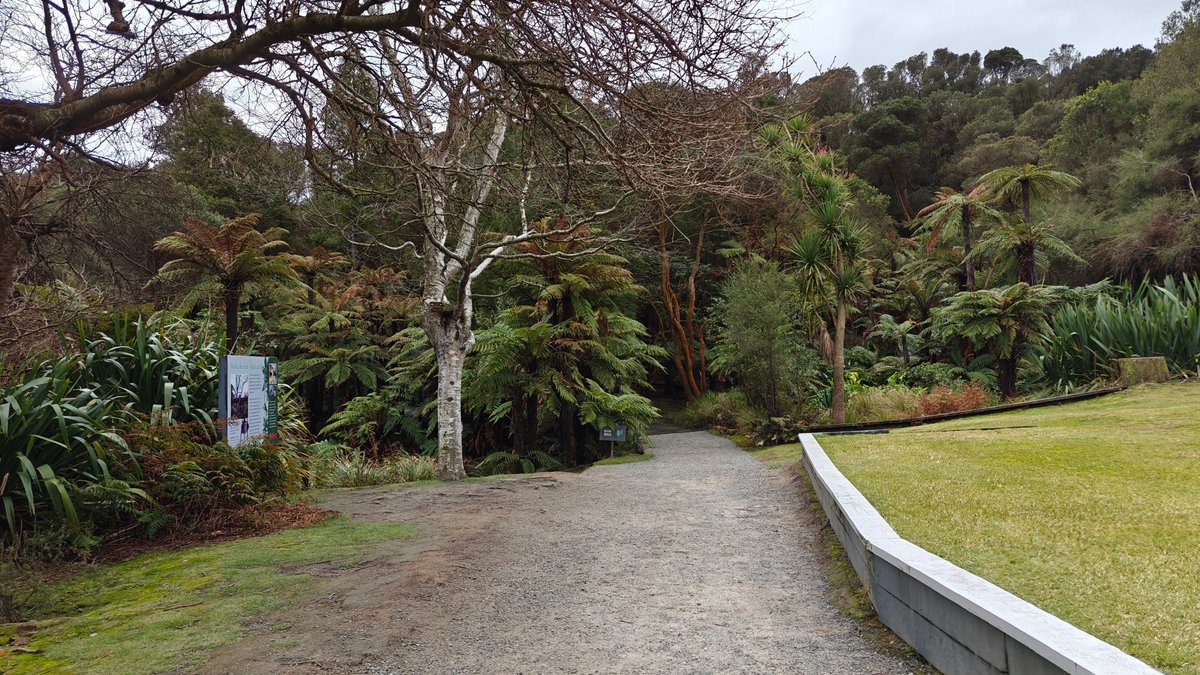
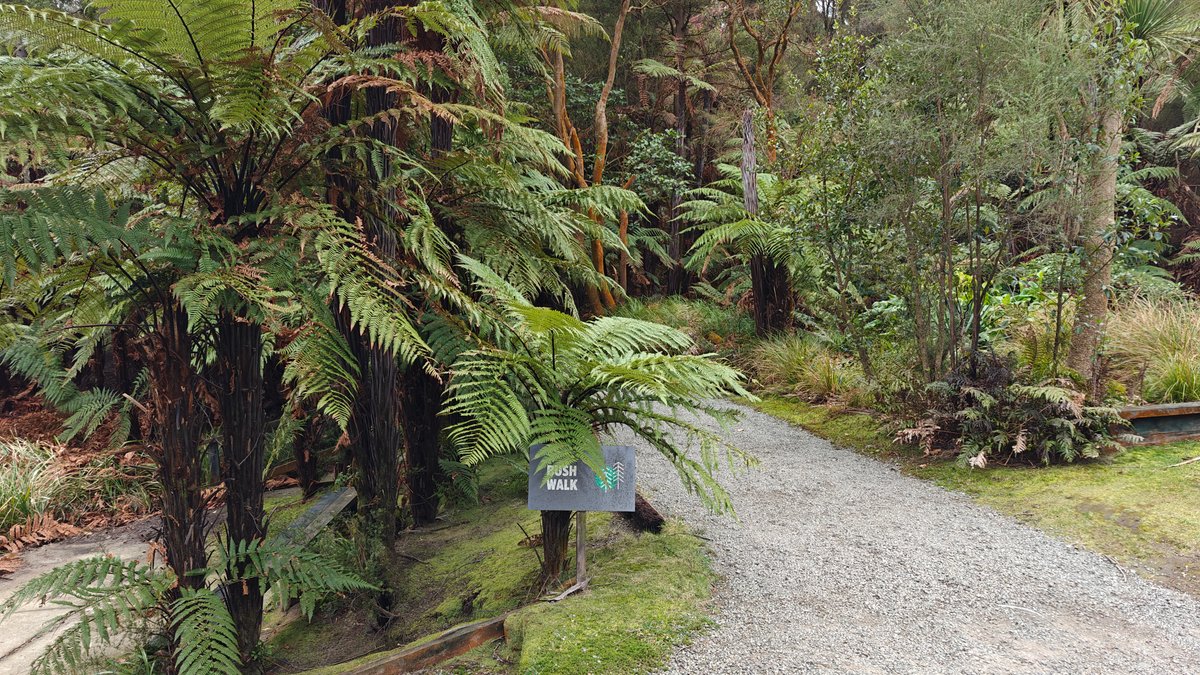
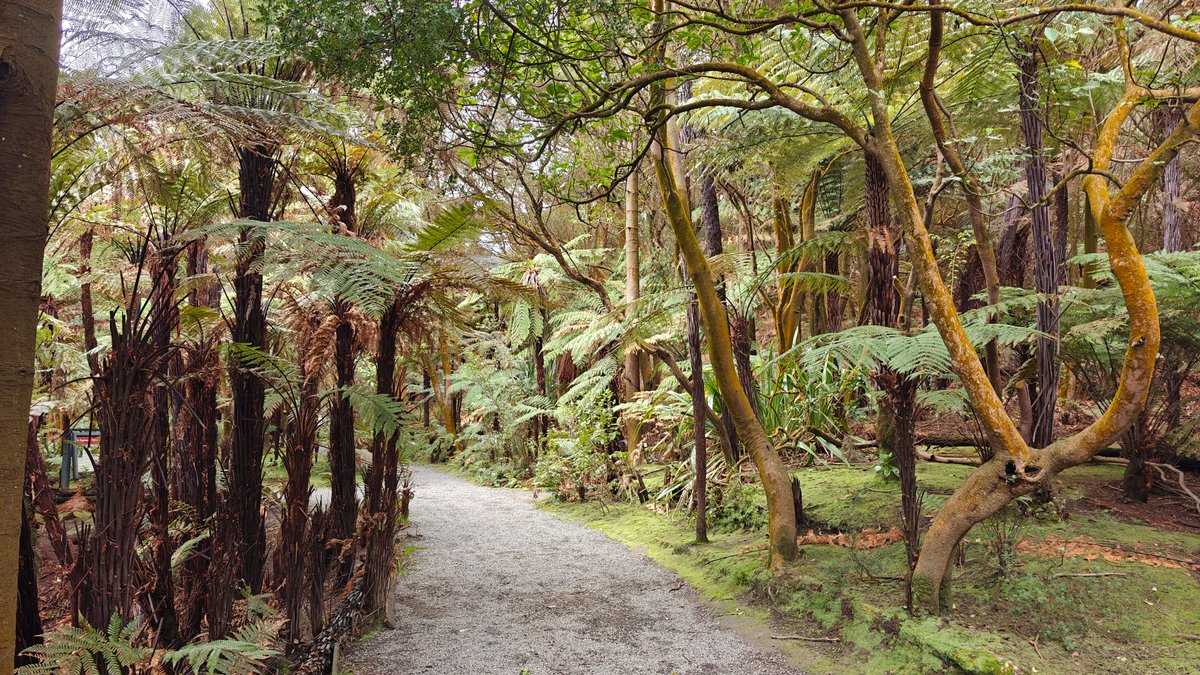
The sulphur had stained the rock faces yellow and orange in this stretch of the route, and the smell here was the most intense of the entire loop. Eventually we emerge onto some bush, a relief after all that barren, steaming ground. The air cooled considerably as we passed beneath towering nikau palms and tree ferns.
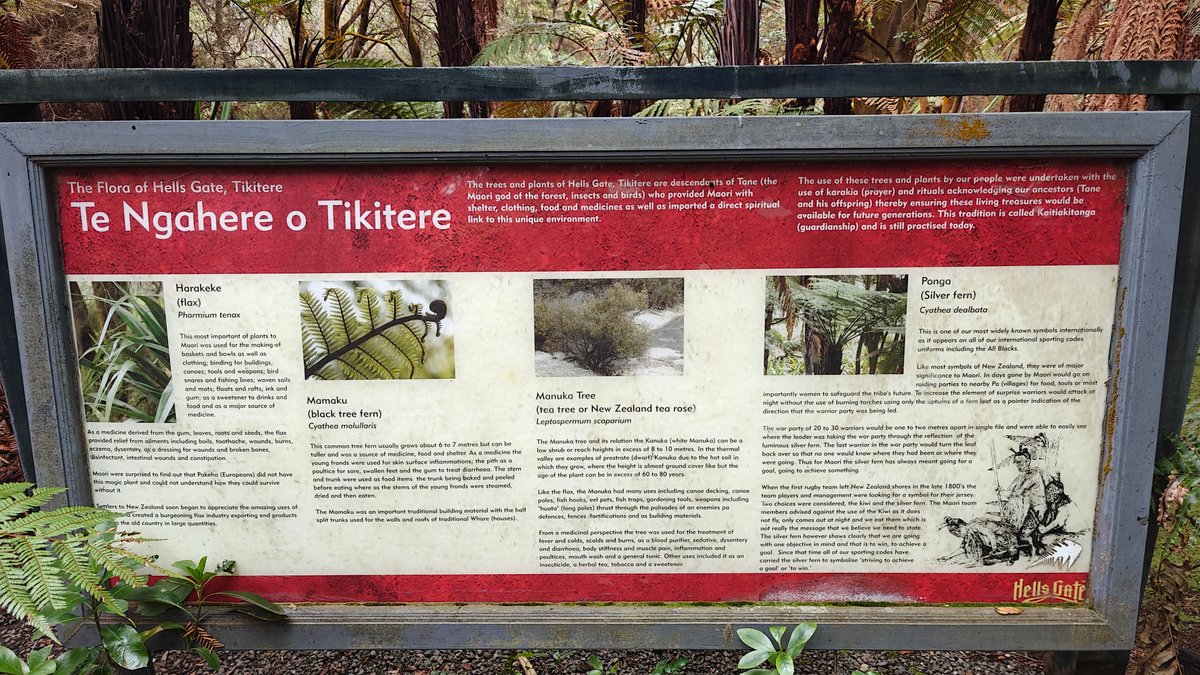
There are a few interpretive boards here explaining the birdlife and native plants (it’s called Te Ngahere), the forest walk, around here in the reserve.
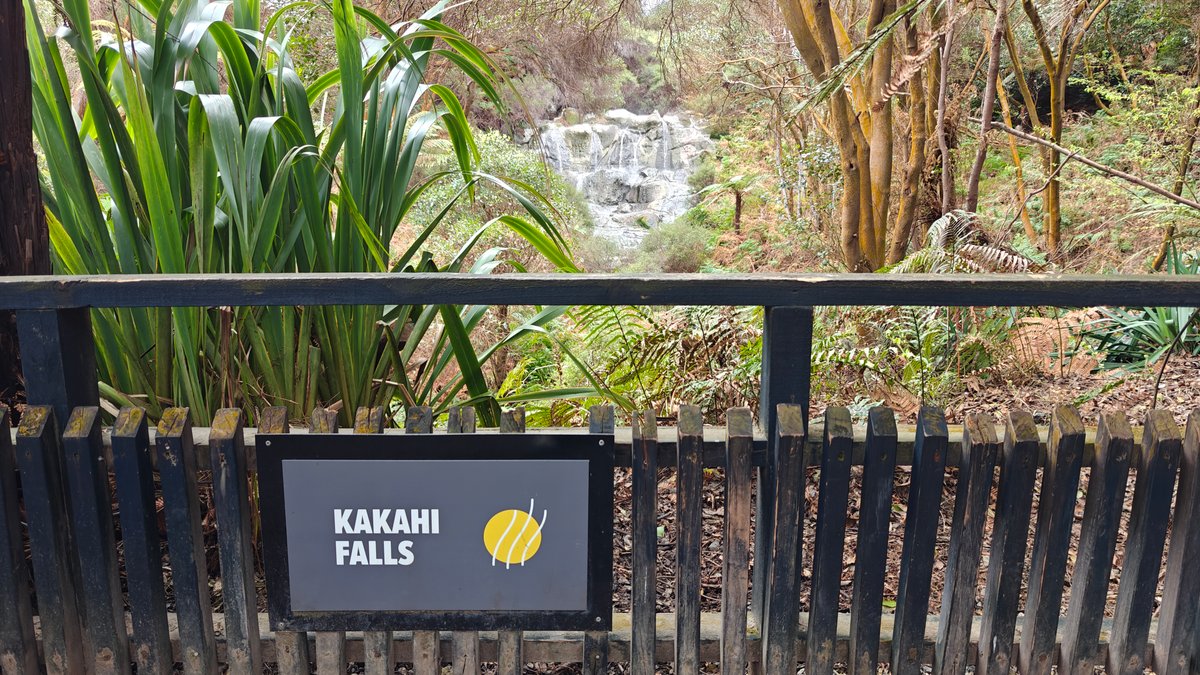
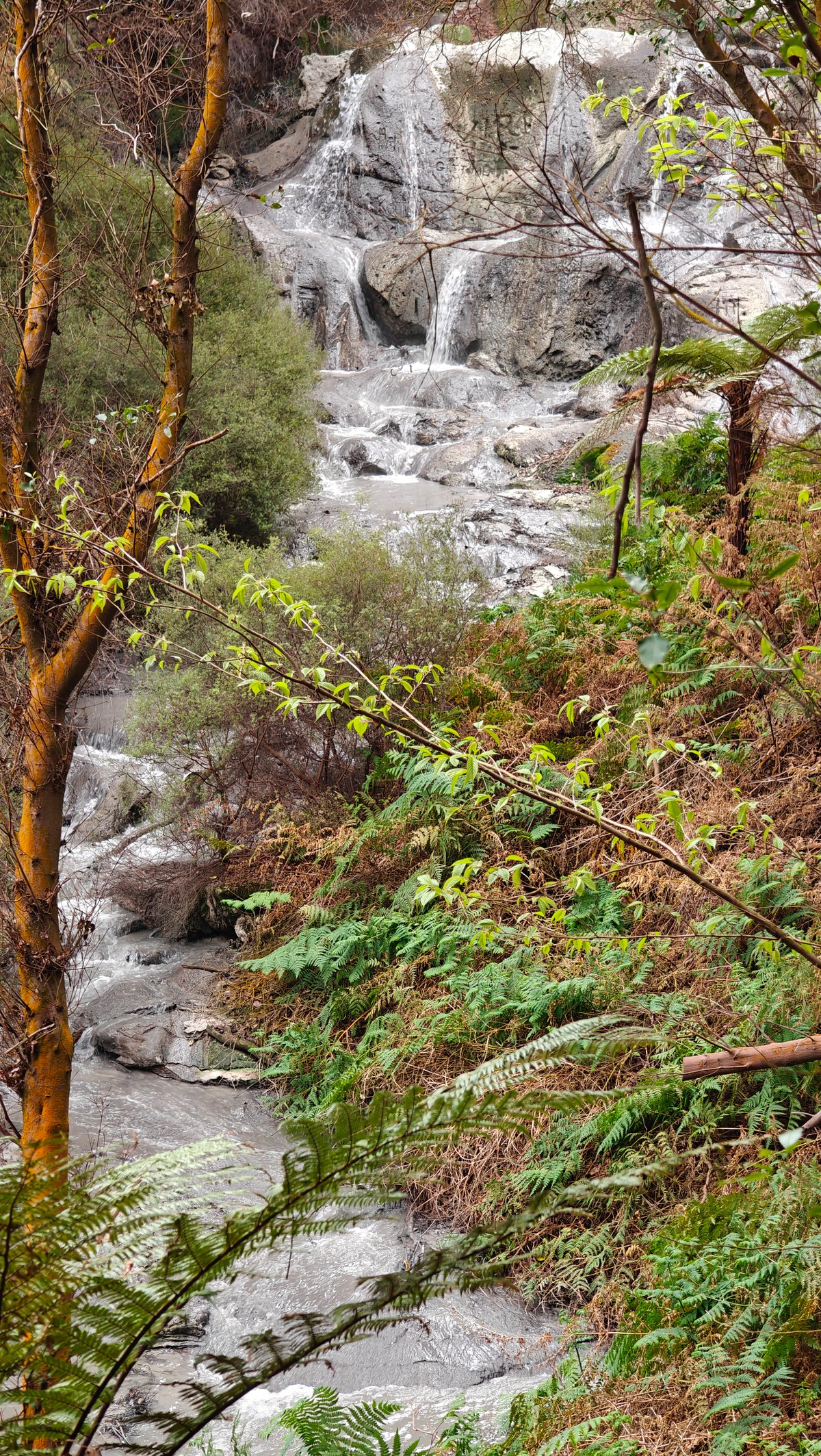
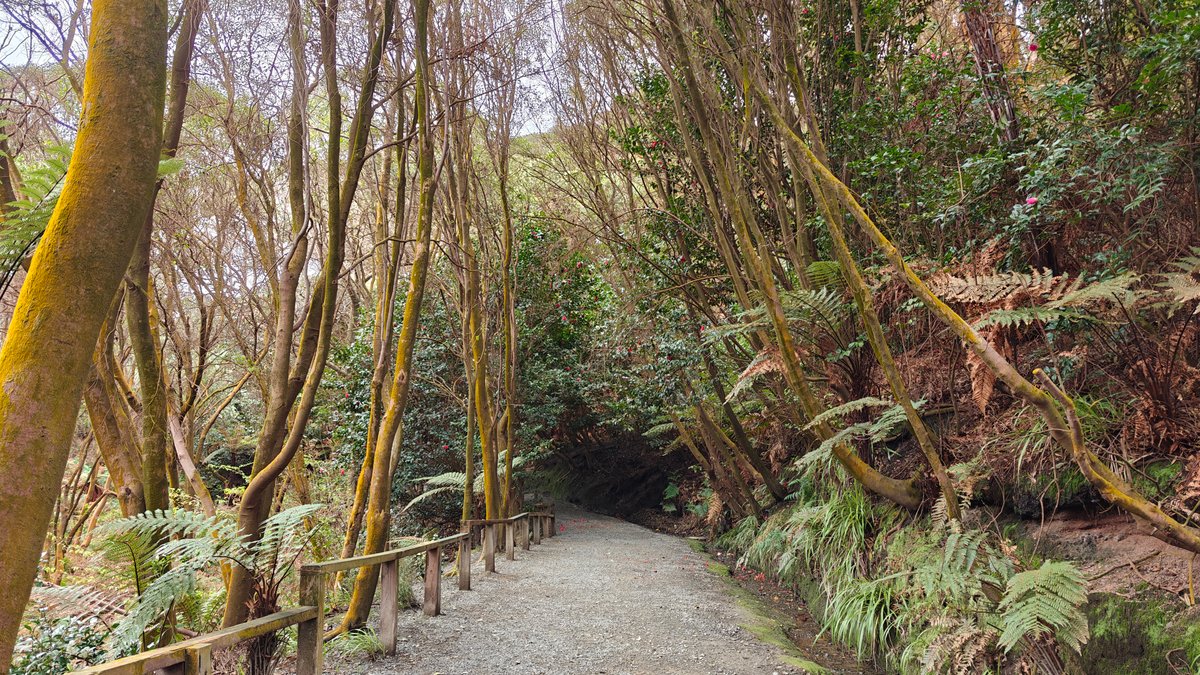
Next up was Kakahi Falls, which for me is the true highlight of the entire trip. It’s a naturally occurring hot waterfall, supplied by geothermal water that is warm enough to bathe in. And it’s super-accessible, you can just walk straight down to it.
While we didn’t get into it (plenty of other folks did), they have an entire spa experience here where you can soak under the falls. Steam rise from it as the water falls down over the rock, and truthfully, it’s one of the oddest things I’ve seen.
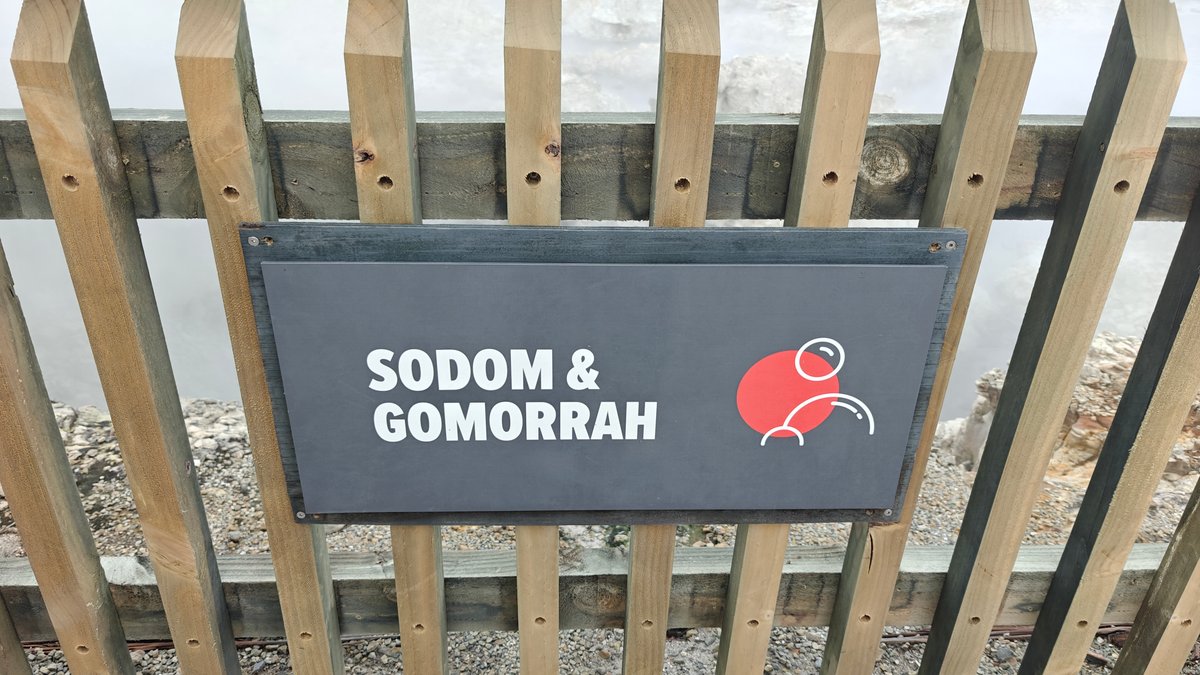
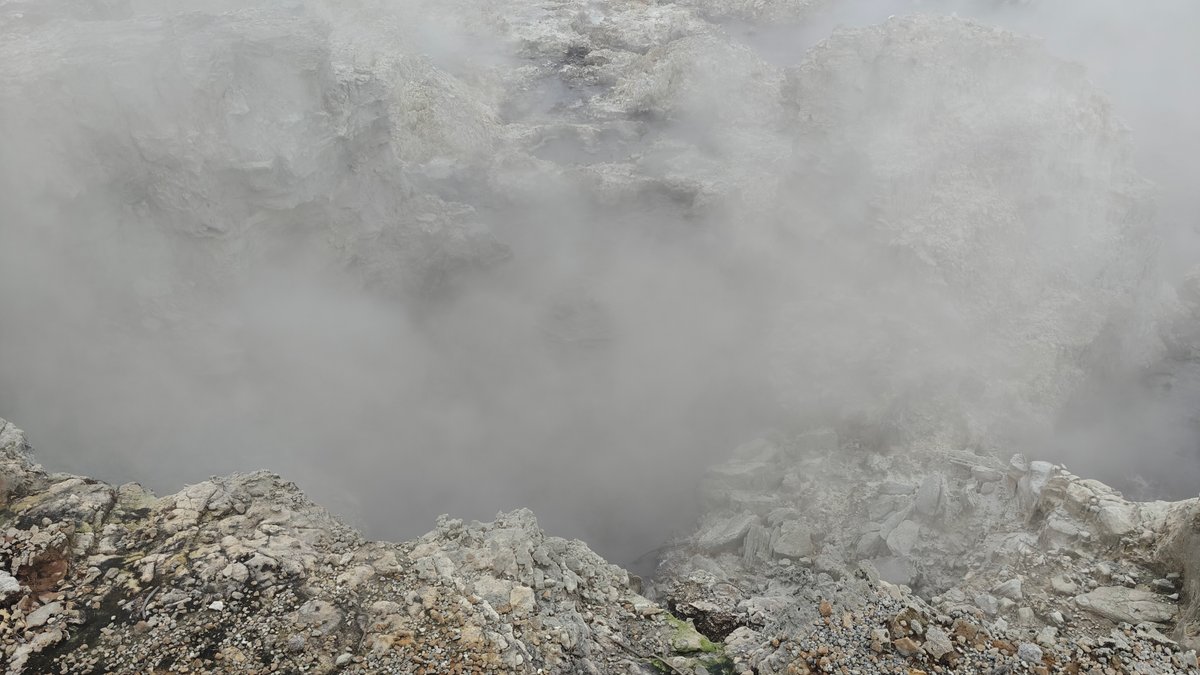
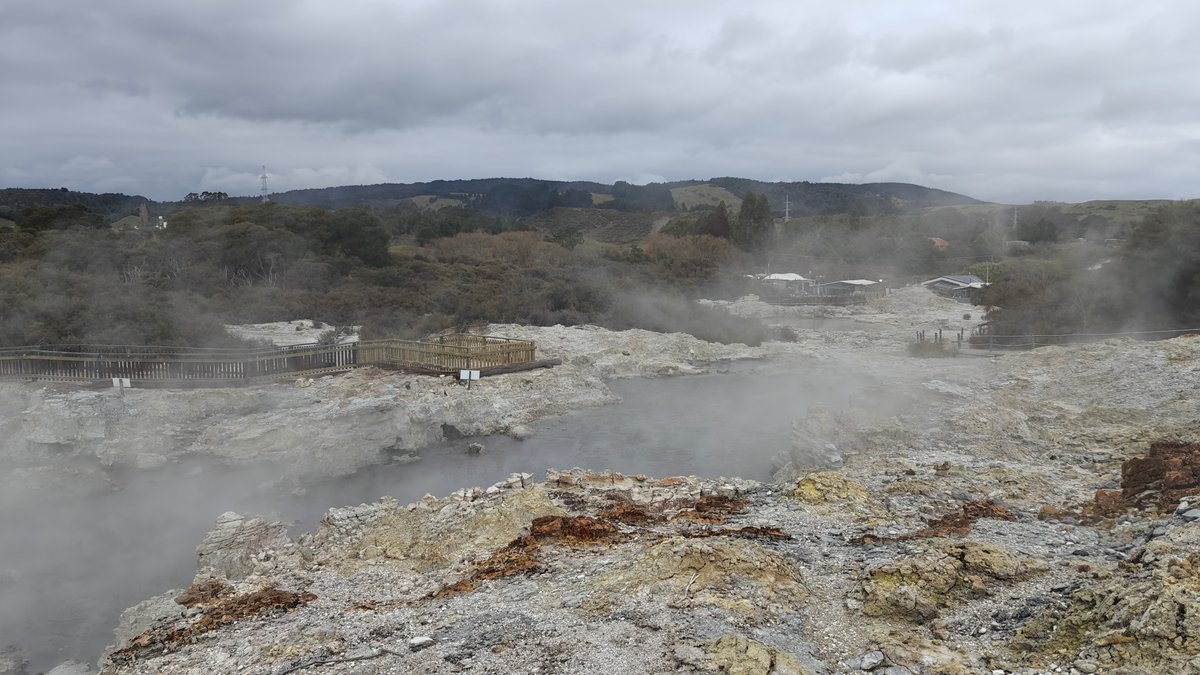
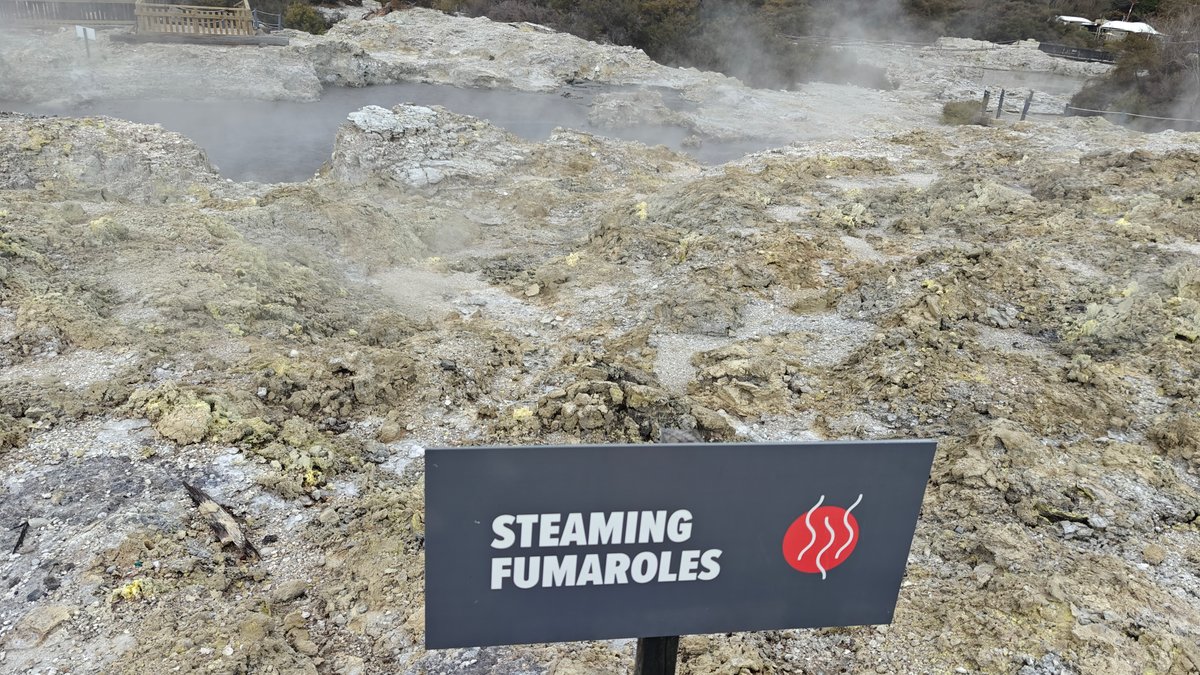
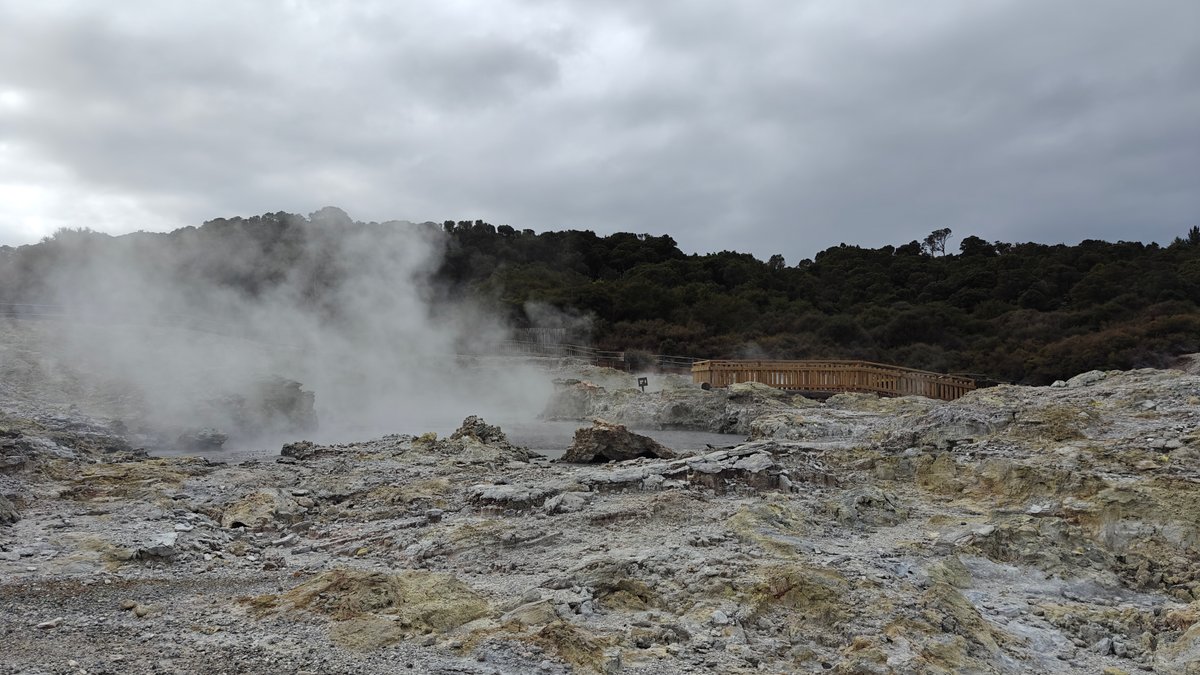
We passed through more of the steaming areas that covered almost all of the ground. It was so thick you could hardly see the ground at all, like Sodom and Gomorrah. Occasionally the steam would come over the trail and we’d have to plough our way through it, warm, moist, and oh, what a stench of sulphur!
Through the haze we could make out the distant hills.
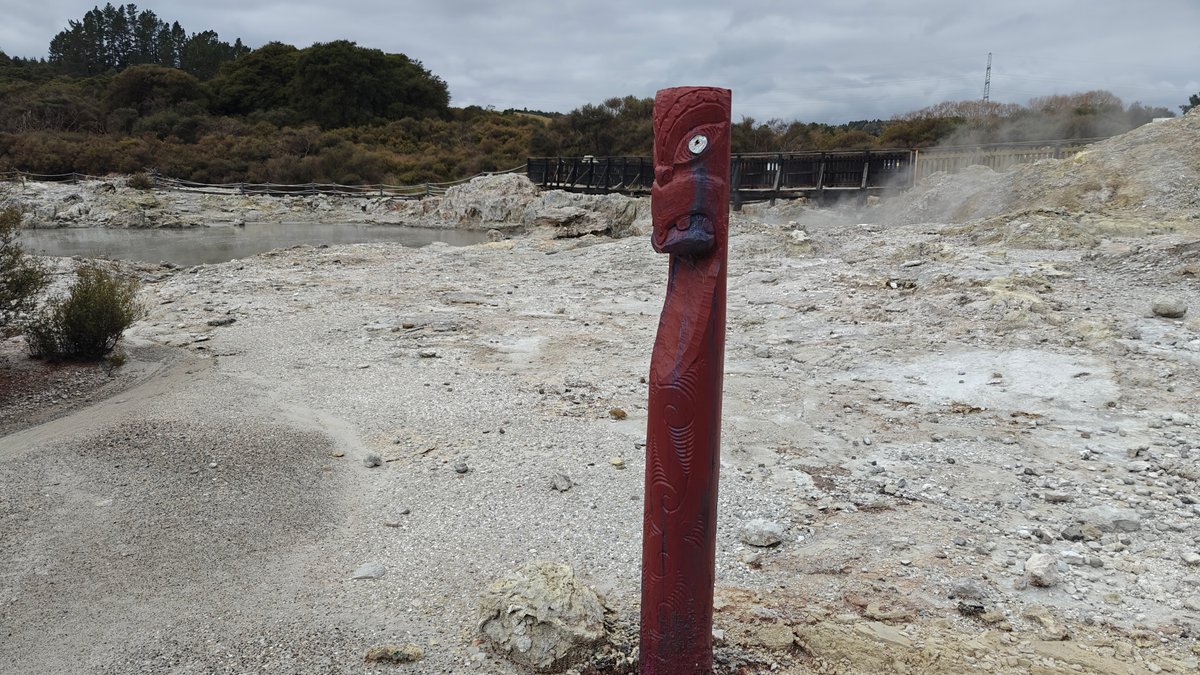
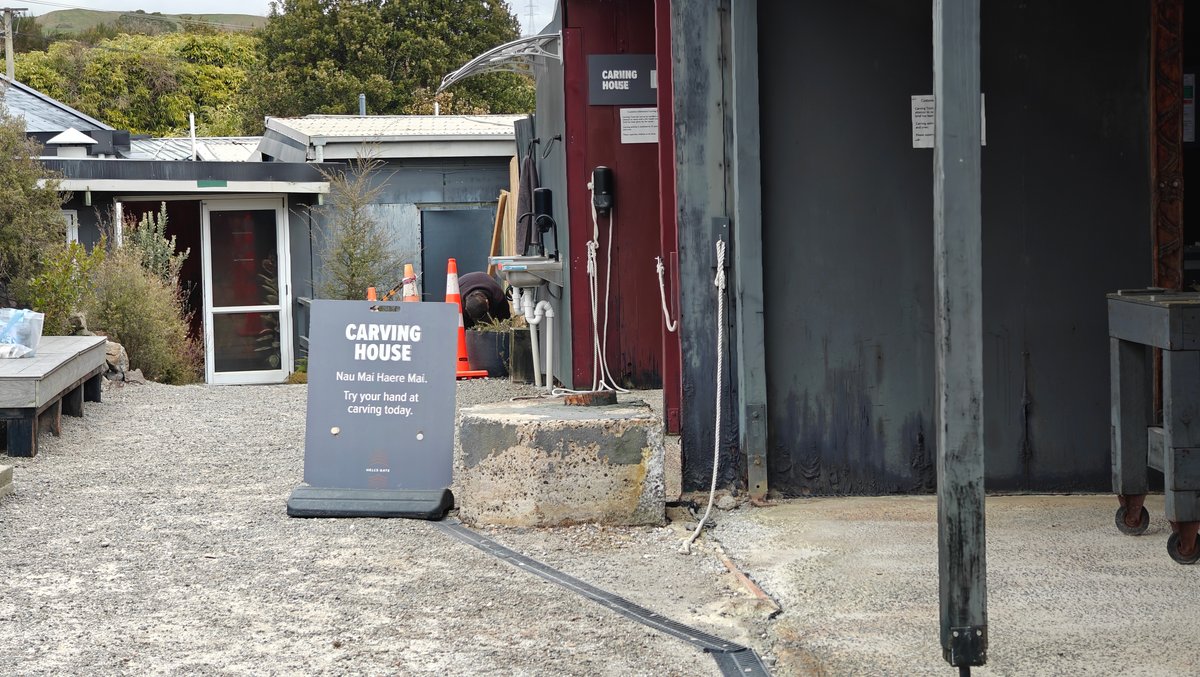
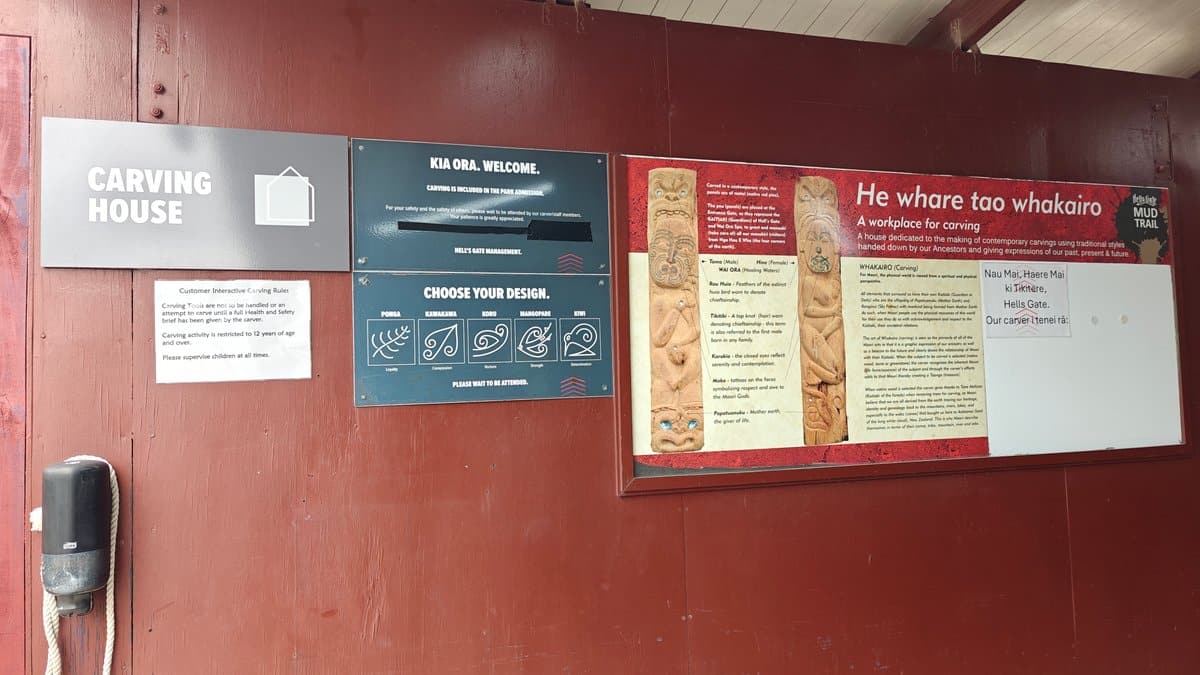
Towards the end of the walk is a carved pou that stands on the grey sinter; a little further along is a carved house where you can see artisans at work. We just poked our head in here. The interior panels explain the significance of the design and the techniques used to carves them.
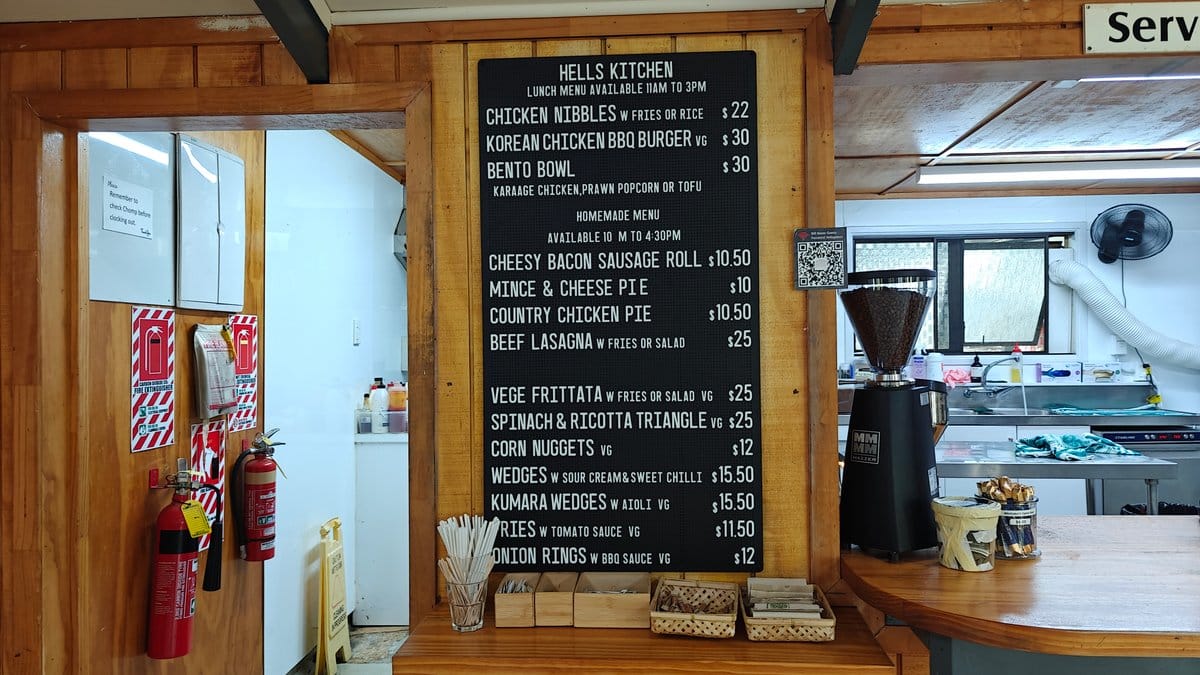
There’s also a little servery back near the visitor centre called Hell’s Kitchen, which I thought was a nice touch. The menu board advertised the usual café stuff, sandwiches, pies, coffee, but we didn’t eat there.
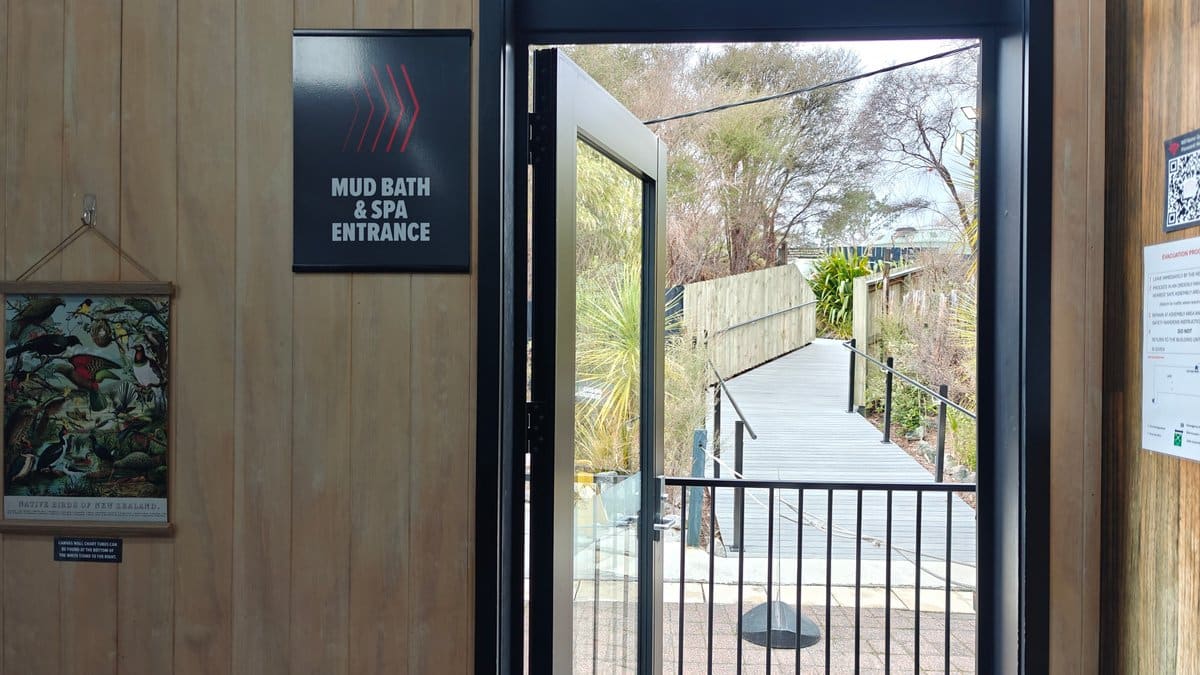
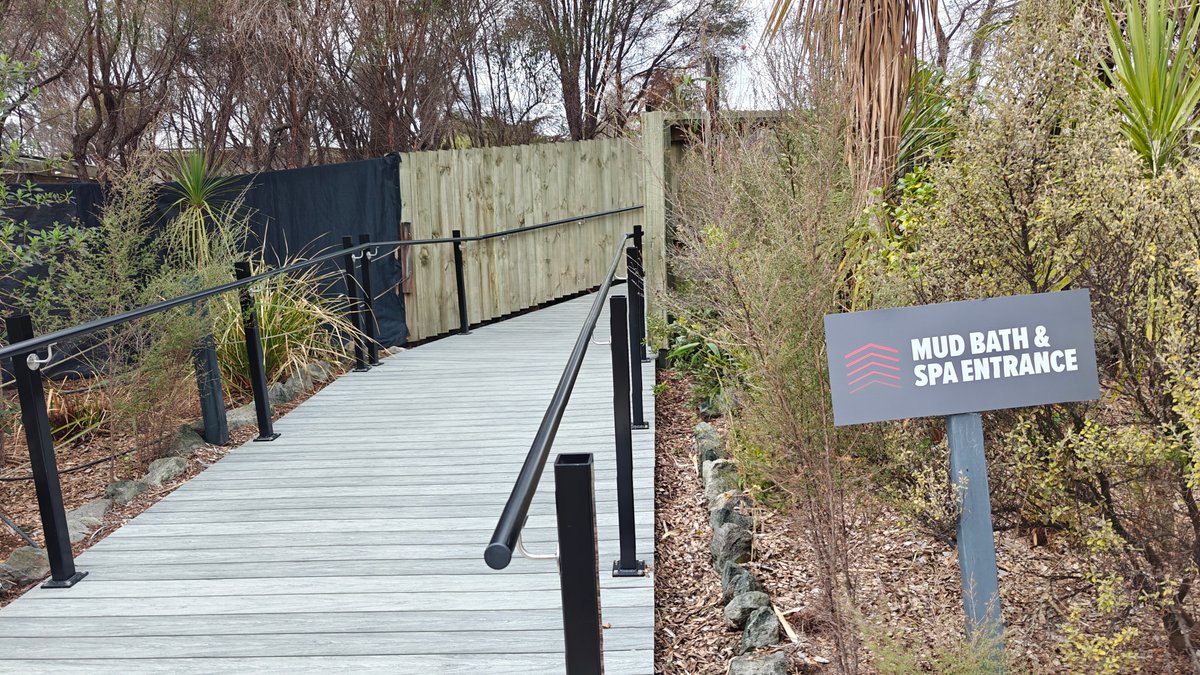
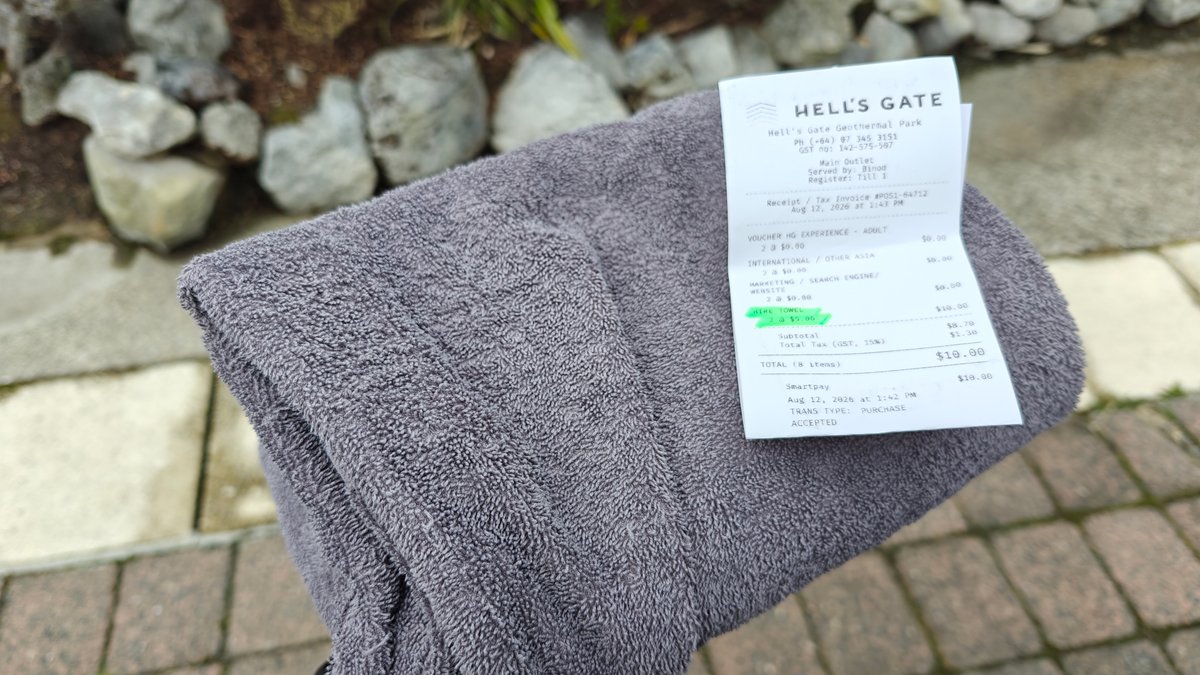
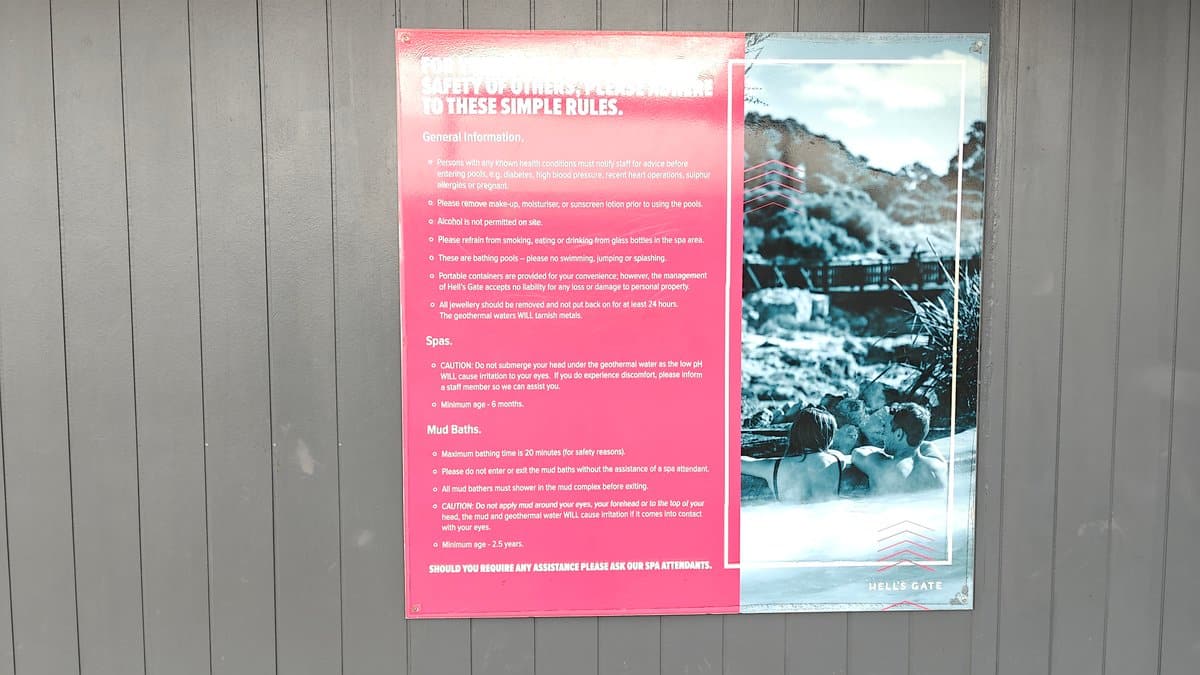
Just outside the main reserve, there’s an entrance to the spa and mud bath (we didn’t do it). They’ll give you towels and everything you need, and you can book a private mud bath or a soak in one of their sulphur spa pools. There are three simple rules, which were on the notice board at the entrance, I didn’t read all the details but I guess they’re mainly about keeping the noise down and not making a mess.
If you’re visiting Rotorua and looking to get up-close-and-personal with some geothermal action without trekking for miles, then Hells Gate is definitely worth checking out. At a leisurely pace, we did the entire loop in around an hour, which included a visit to that hot waterfall, lots of steam vents, and some mud pools. It was quite a memorable morning!
Just be sure to prepare yourself for the smell, it’s strong but that’s all part of the experience. Have you ever been to one of the geothermal parks in Rotorua? Is Hells Gate on your list?
If you’ve been, I’d love to know what you thought.