
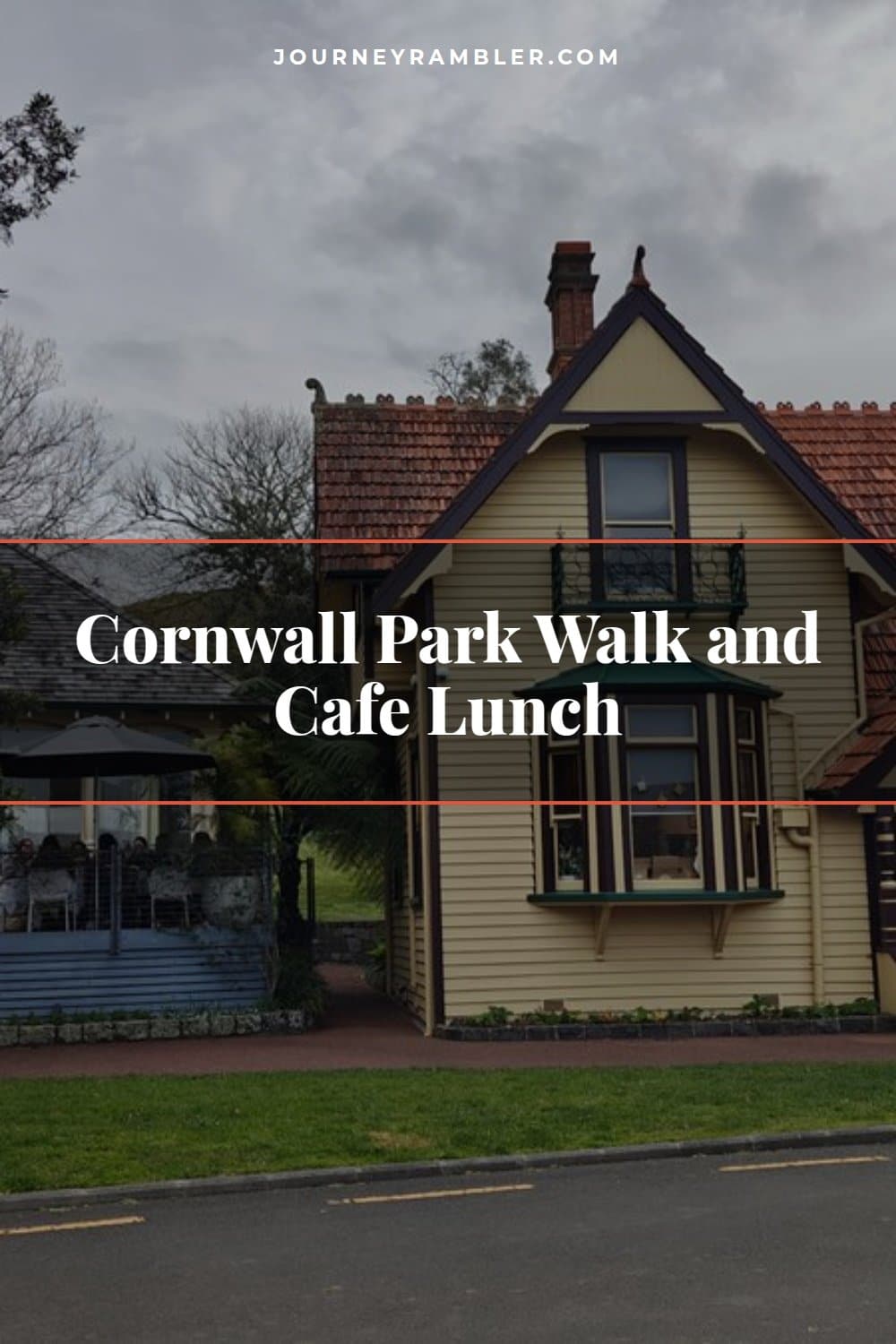
Cornwall Park, Auckland This is one of those walks where you set out for an hour but end up spending a couple of hours in old trees with grazing cows and enough open space that you almost forget you’re still in the city. That was how I found myself at Cornwall Park after a morning’s walk through the park. Ready for some food and a good place to sit down by the time I circled back, I headed across to Cornwall Park Cafe.
It’s a really big park, and they’re pretty relaxed about people wandering around as they please; there are actual pathways if you desire them, but lots of patches of grass and field with paddocks in between where you can simply choose a direction and meander along. Afterward, I had lunch at their cafe, which was exactly what you’d hope for after a walk like this.
My Walk and Lunch at Cornwall Park
Cornwall Park
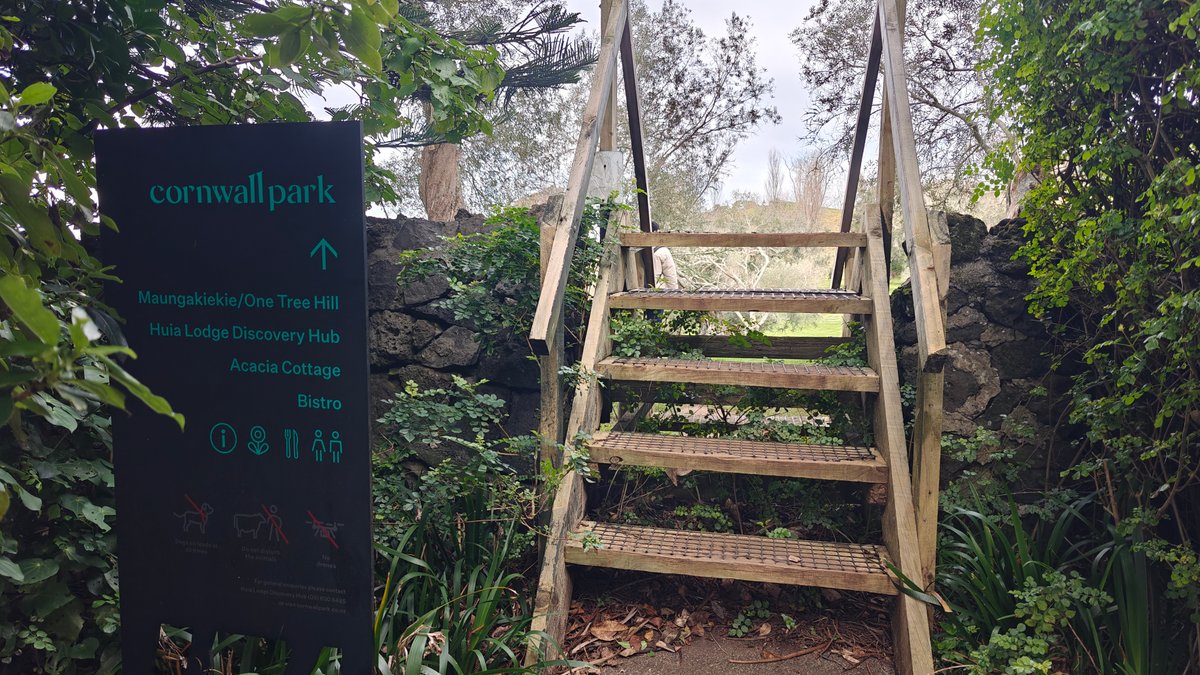
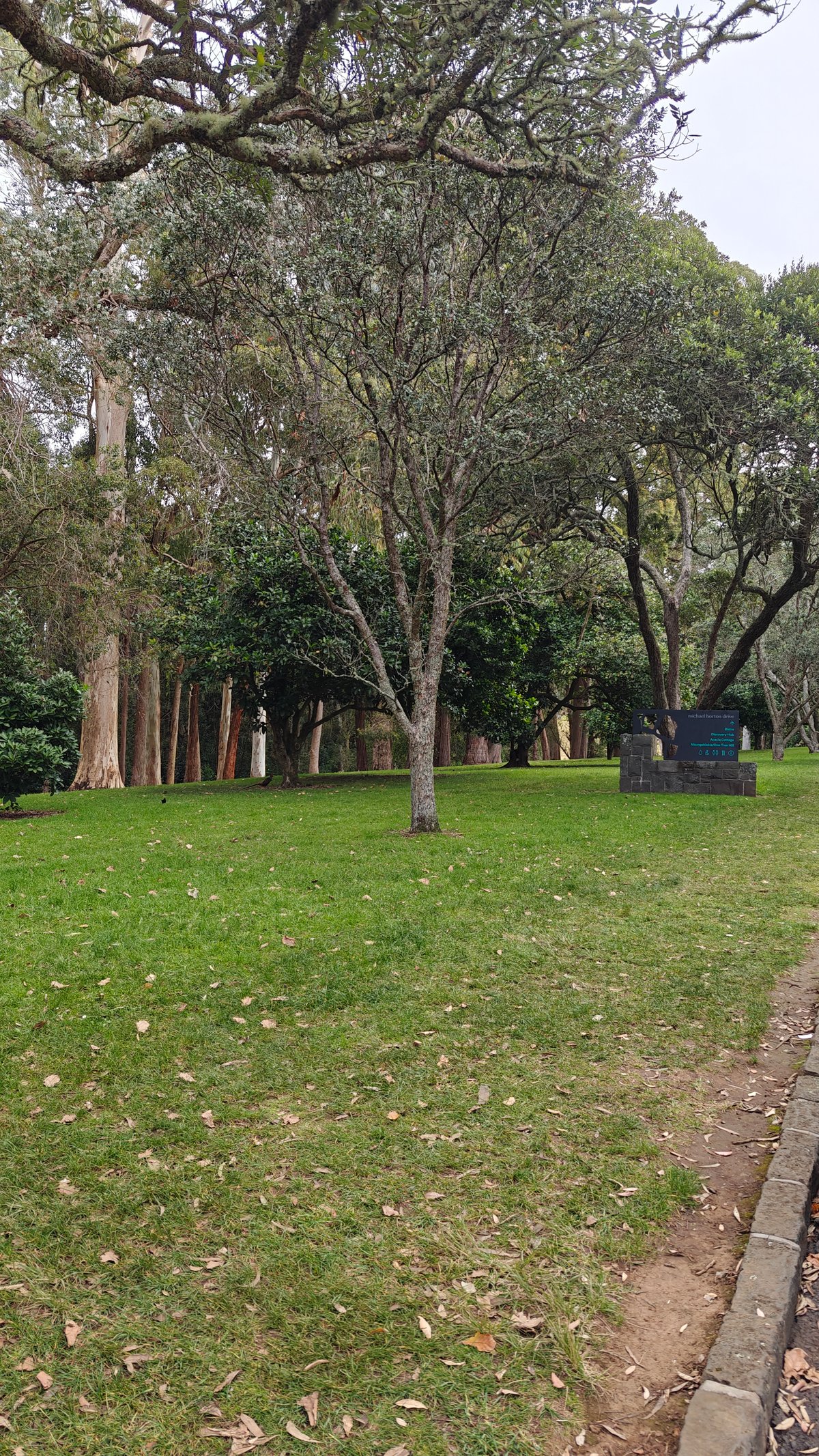
Following the signs to the larger loop trails, I began off of one of the primary access points. The signage is clear enough that it’s easy to follow, but I found myself making some detours as well. Mainly because I wanted to know where certain other trails went.
Part of the draw with this trail system is that you can stay on track or get off of it and still find something cool to look at.
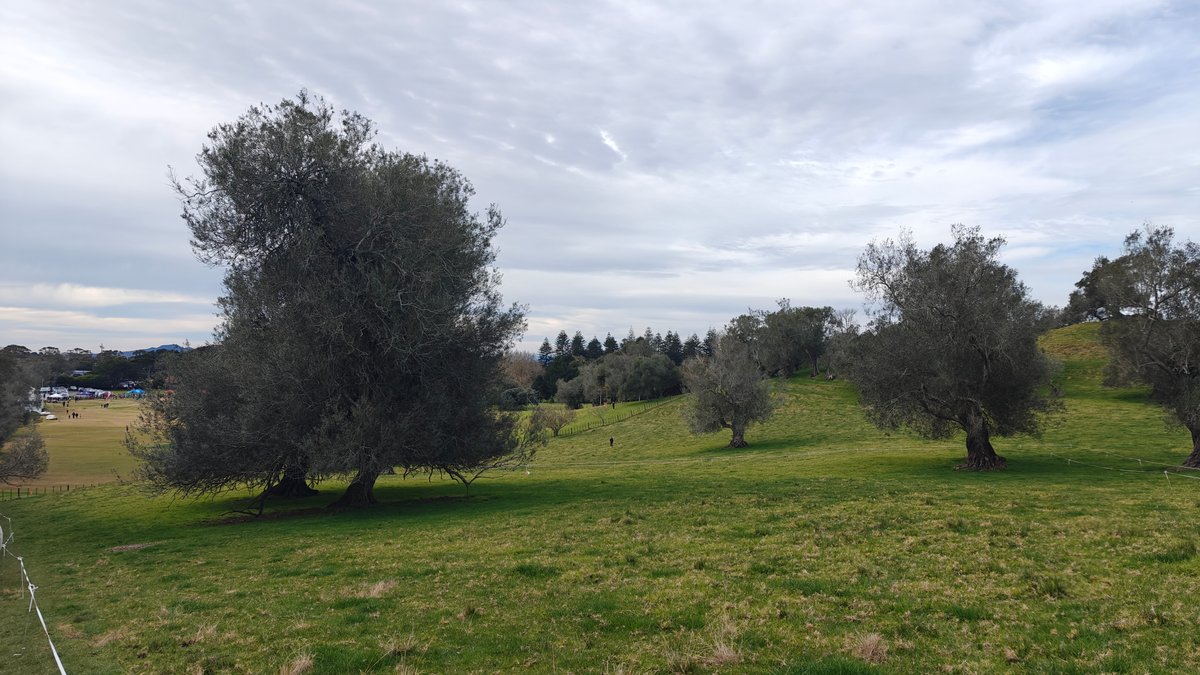
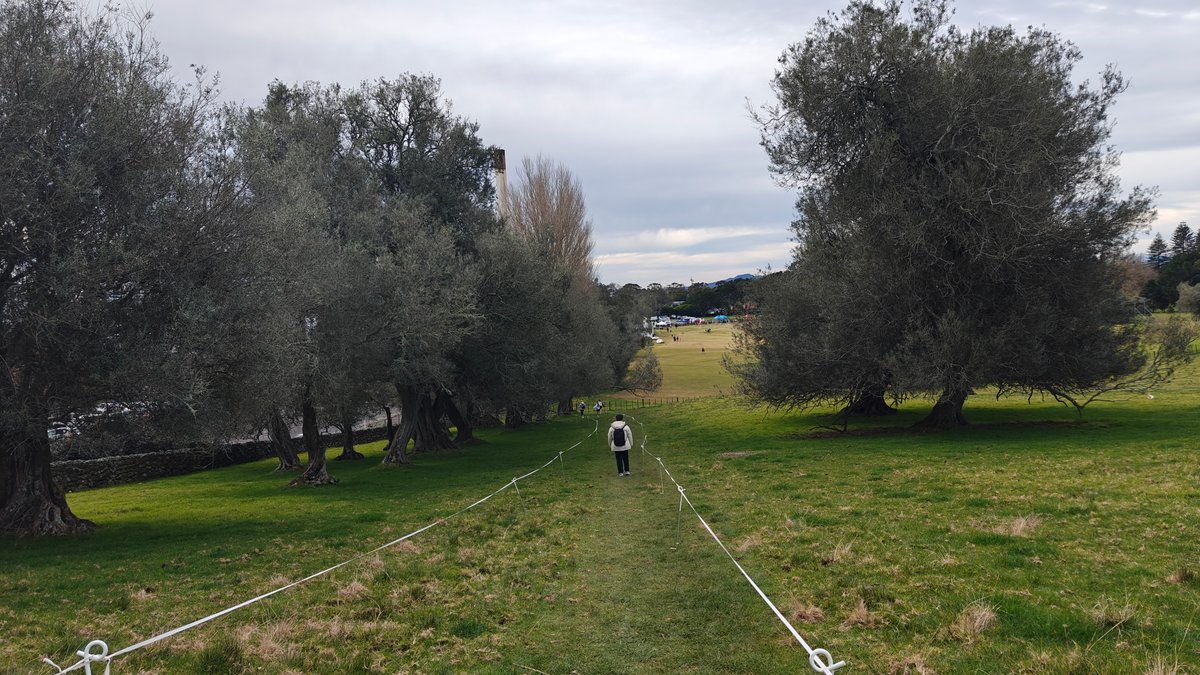
These rows of olive trees sticking up in the middle of the open paddock caught my eye early on. The avenue they form is a pleasant shady walkway during sunny days, and they have a sort of weathered, gnarly appearance. I saw some folks reading books underneath them.
That sounded like a good way to pass an afternoon.
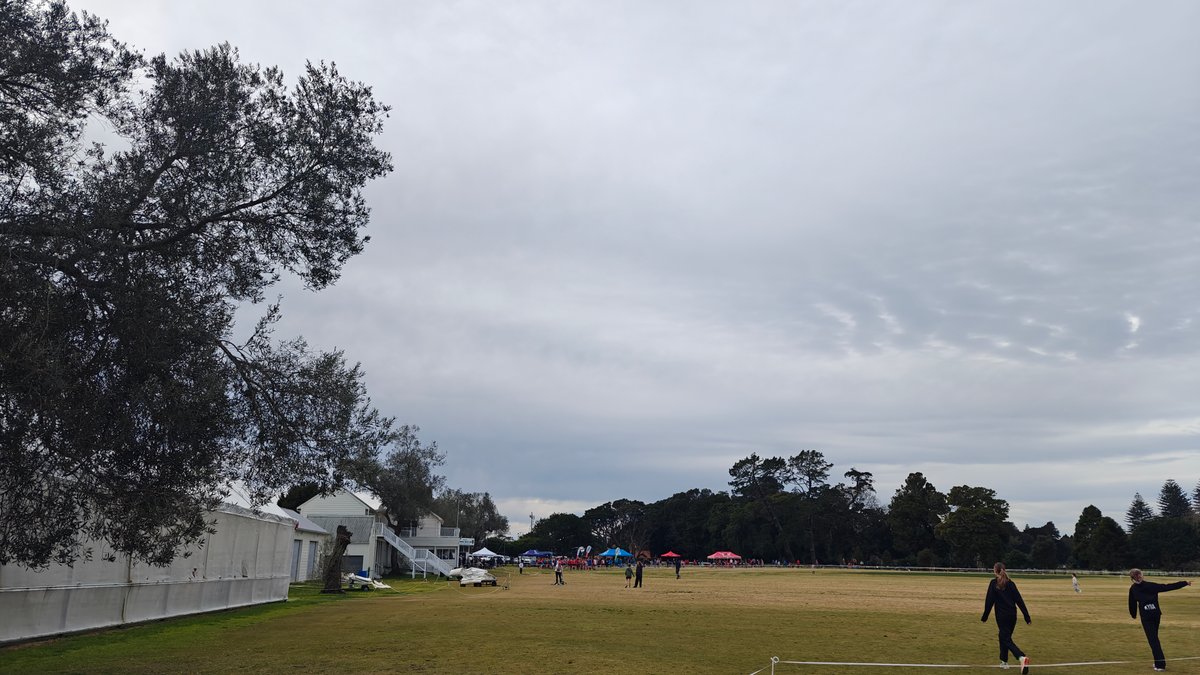
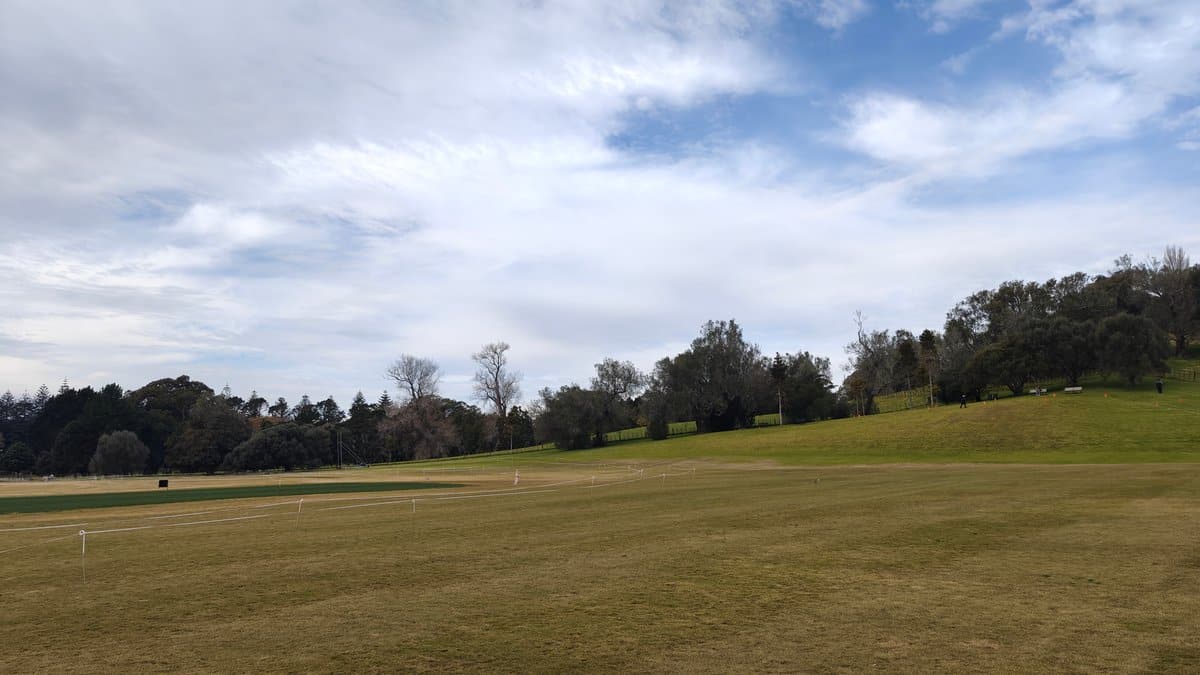
And then there was this large sports field further on, a little tatty here and there but obviously still used. At one end someone had erected a marquee. Presumably for some sort of event later in the day.
The grass was fairly well trodden down in parts: that combination of dirt and tread you get when people regularly play games on it. It was not over-manicured, which made it all the more lived-in.
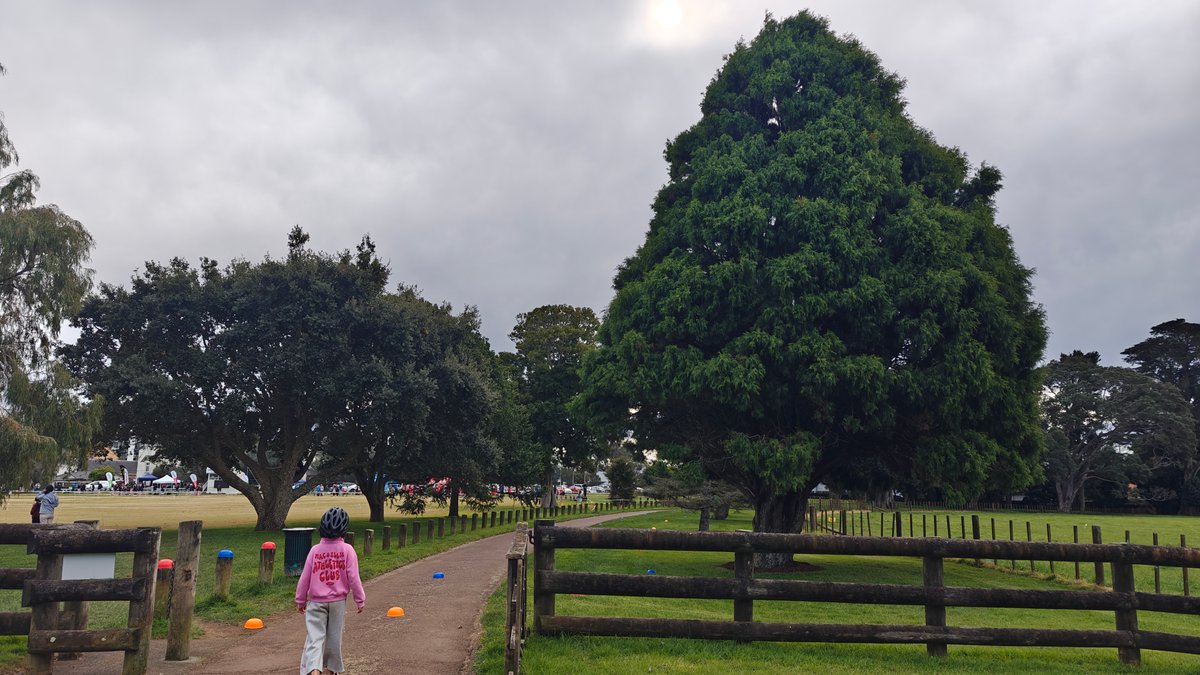
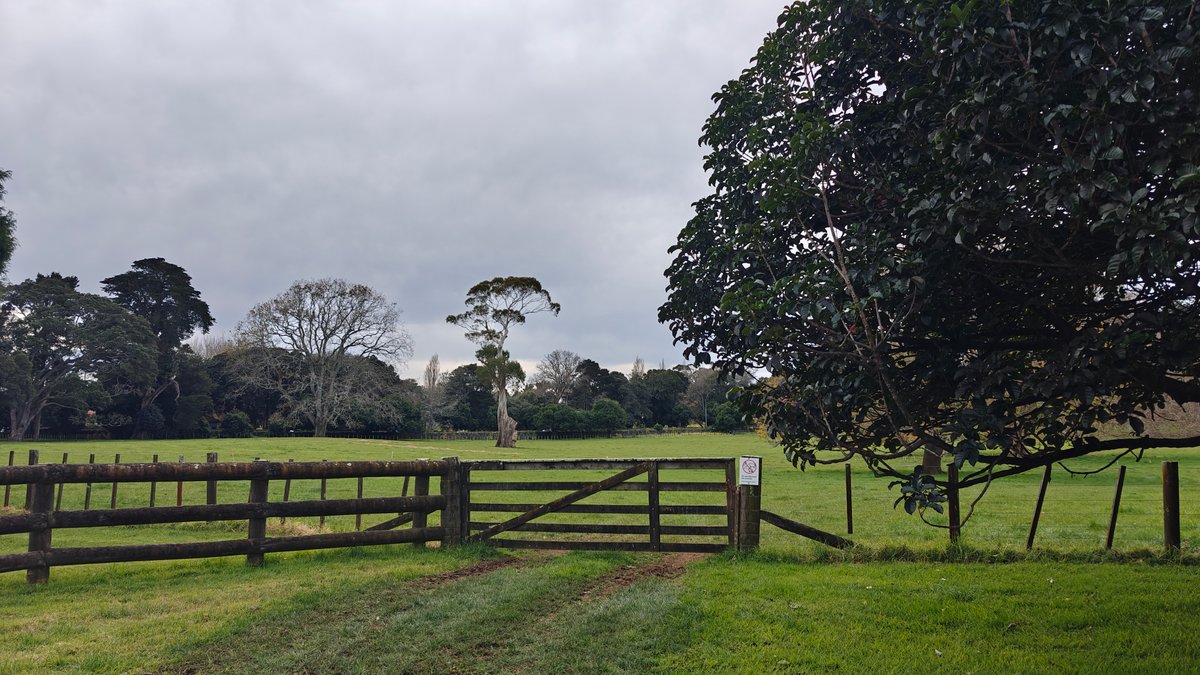
The trail I took was adjacent to a post and rail fence. You know, the type that would be found on a working farm. It was simple and functional, with gates in the fence line here and there.
And that’s the thing about the entire park: it has this working pastoral feel to it. It is unusual for something so close to the city centre.
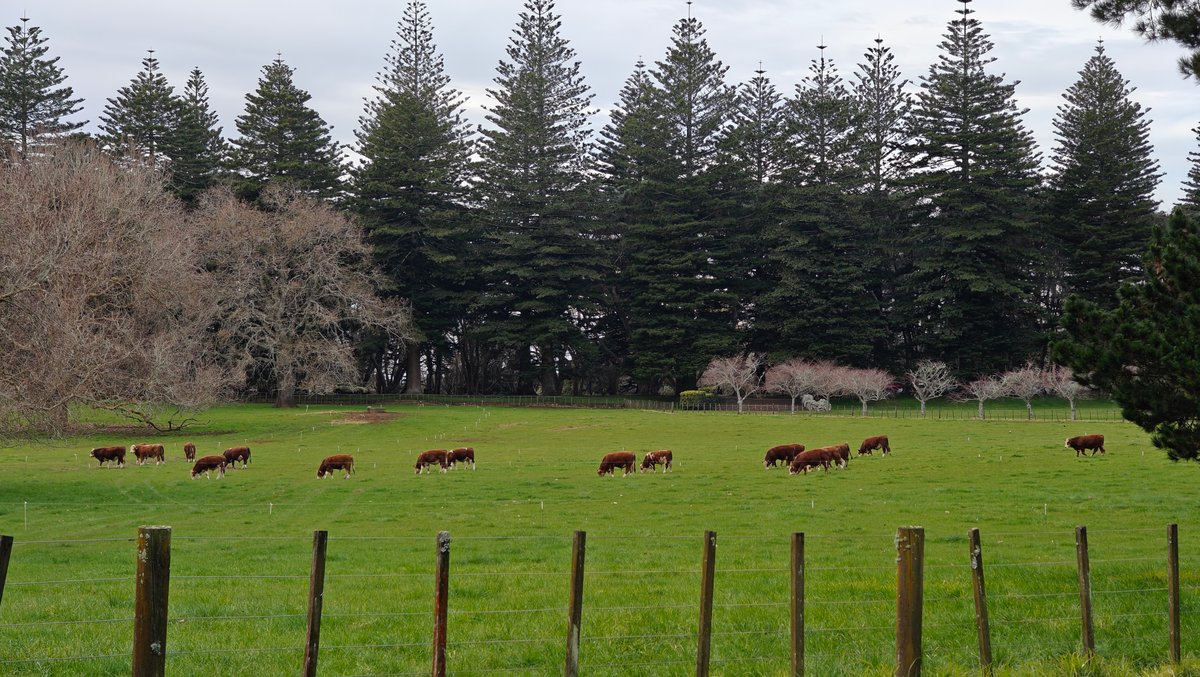
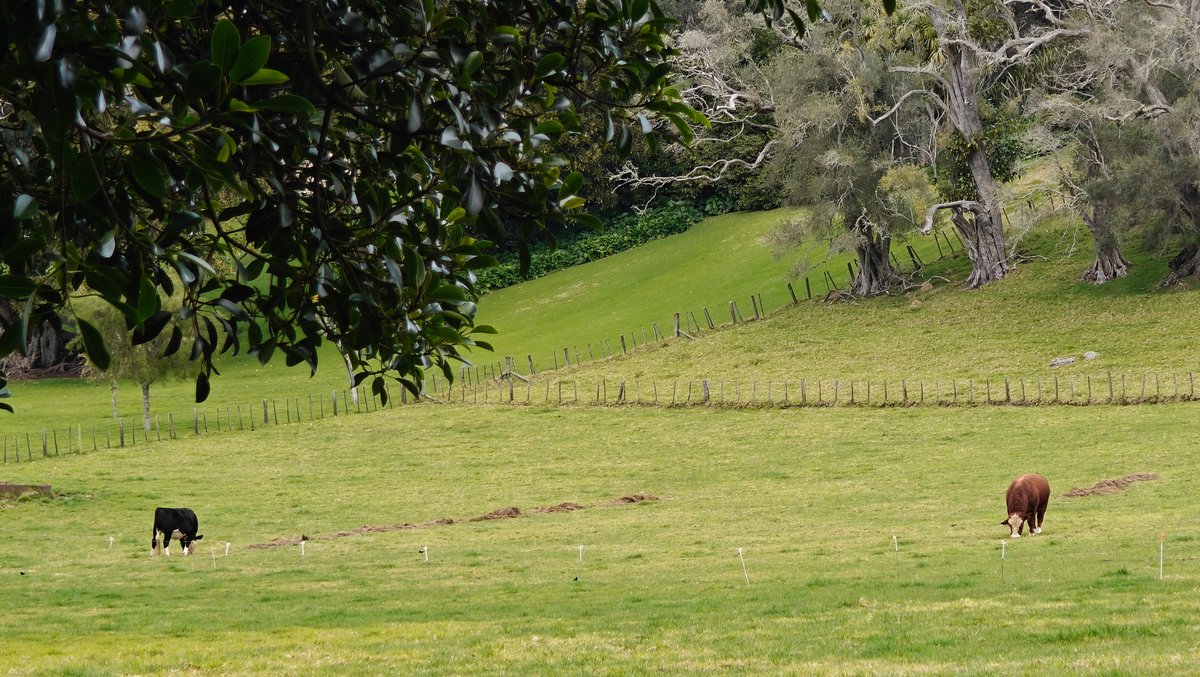
Pretty much all I could see was cattle. They were mostly Herefords, just going about their business in the paddocks and under the trees. It was strangely soothing to walk along the tree-lined lanes with cows all around, occasionally they’d look up at me, but otherwise they didn’t seem to mind too much that I was there.
There were mixed herds of brown and black cattle in some paddocks, and I noticed more olive trees on little mounds scattered throughout the landscape. It is really amazing here, the trees.
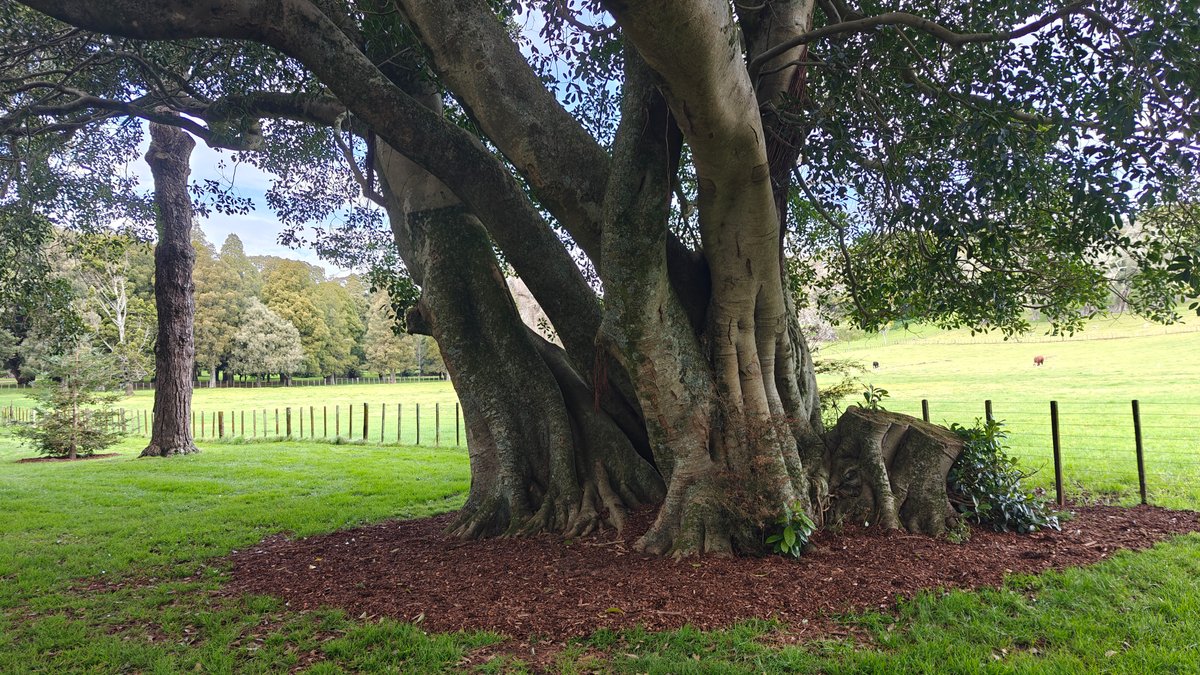
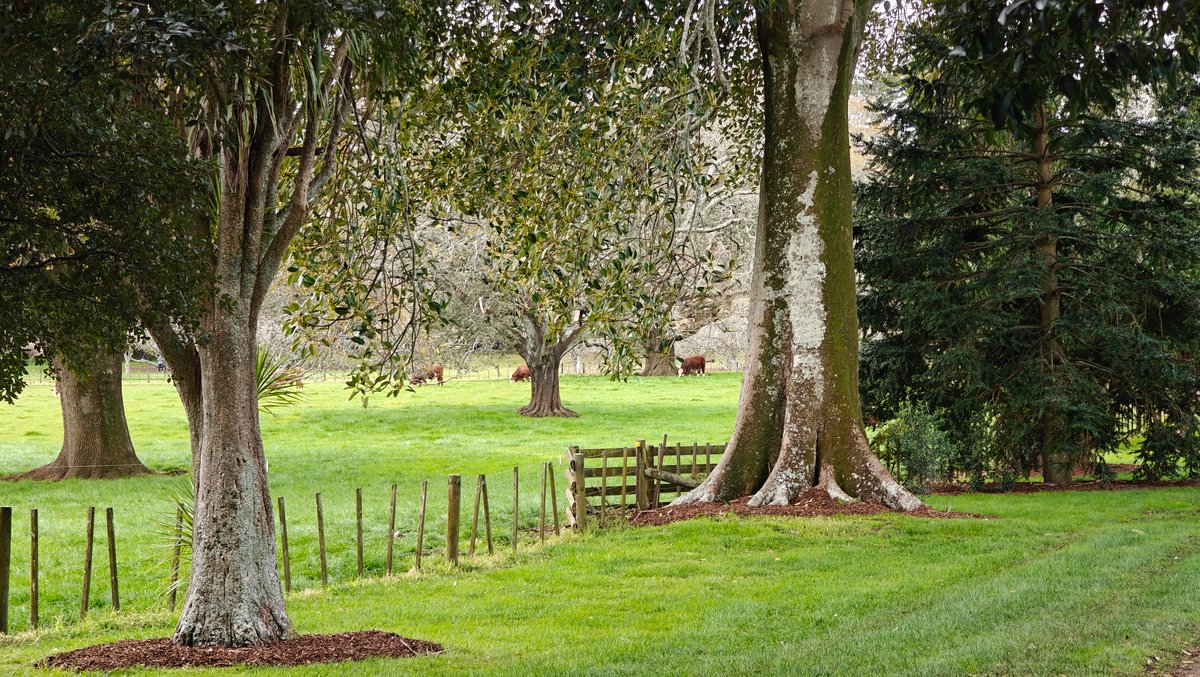
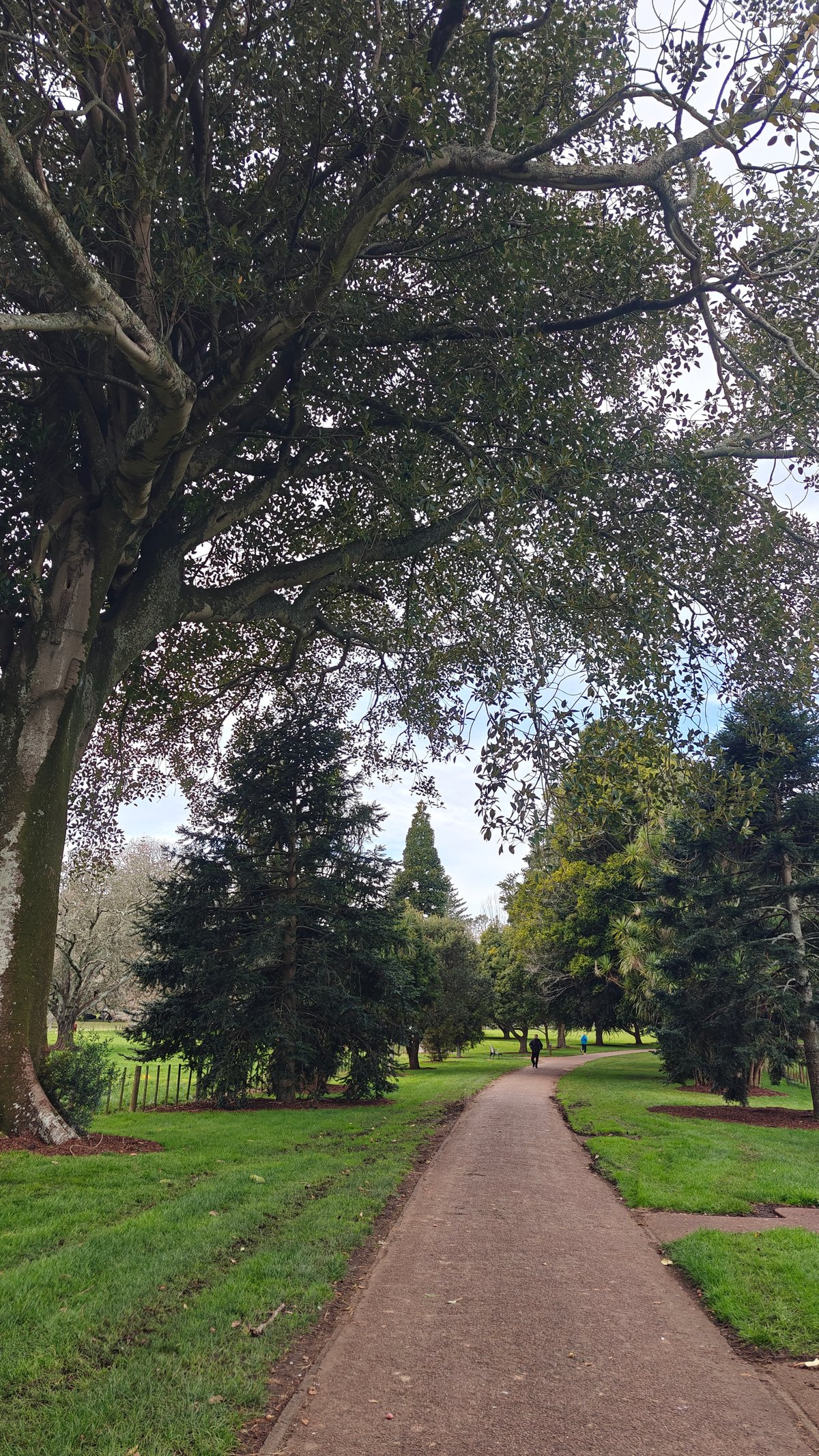
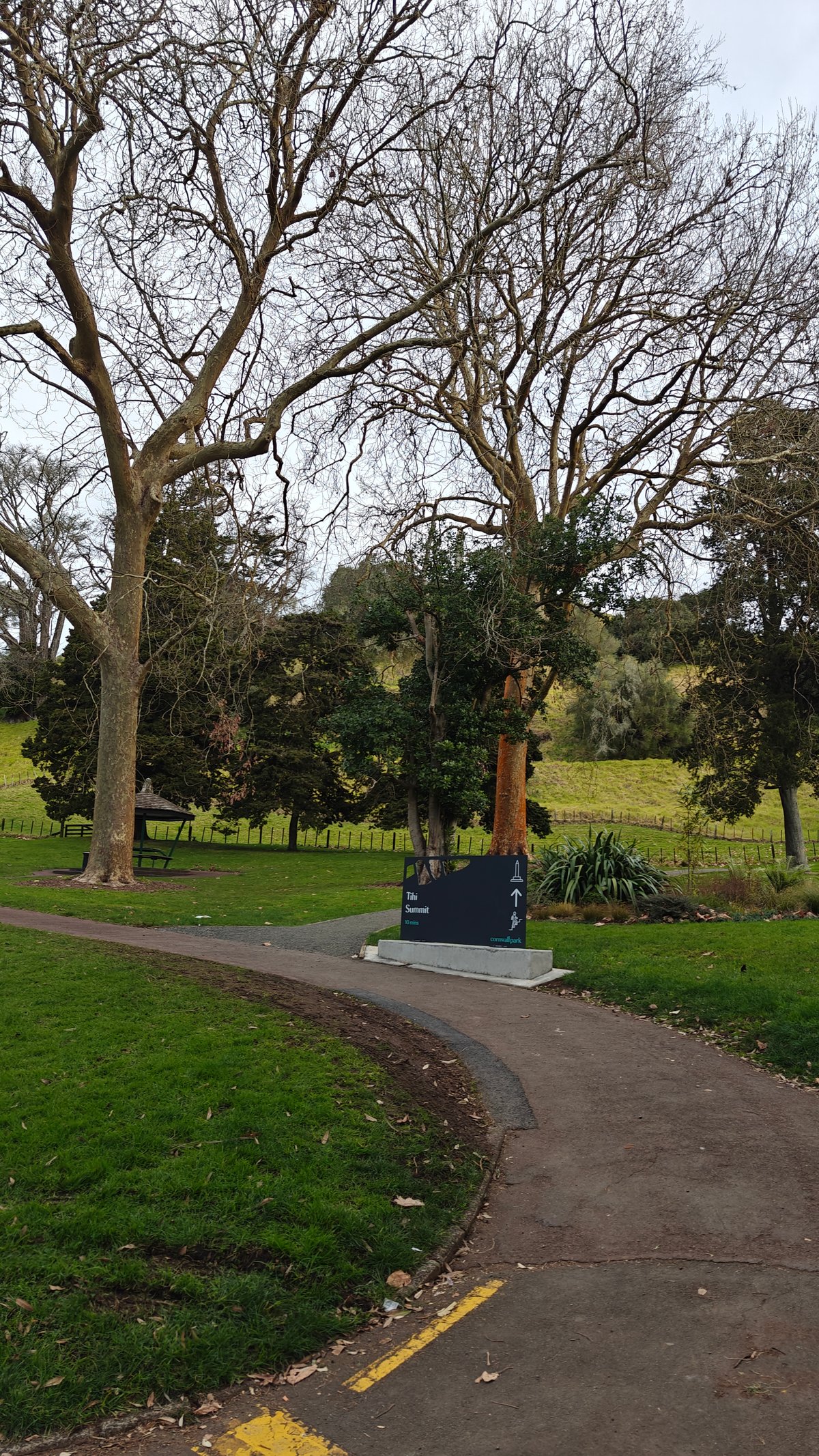
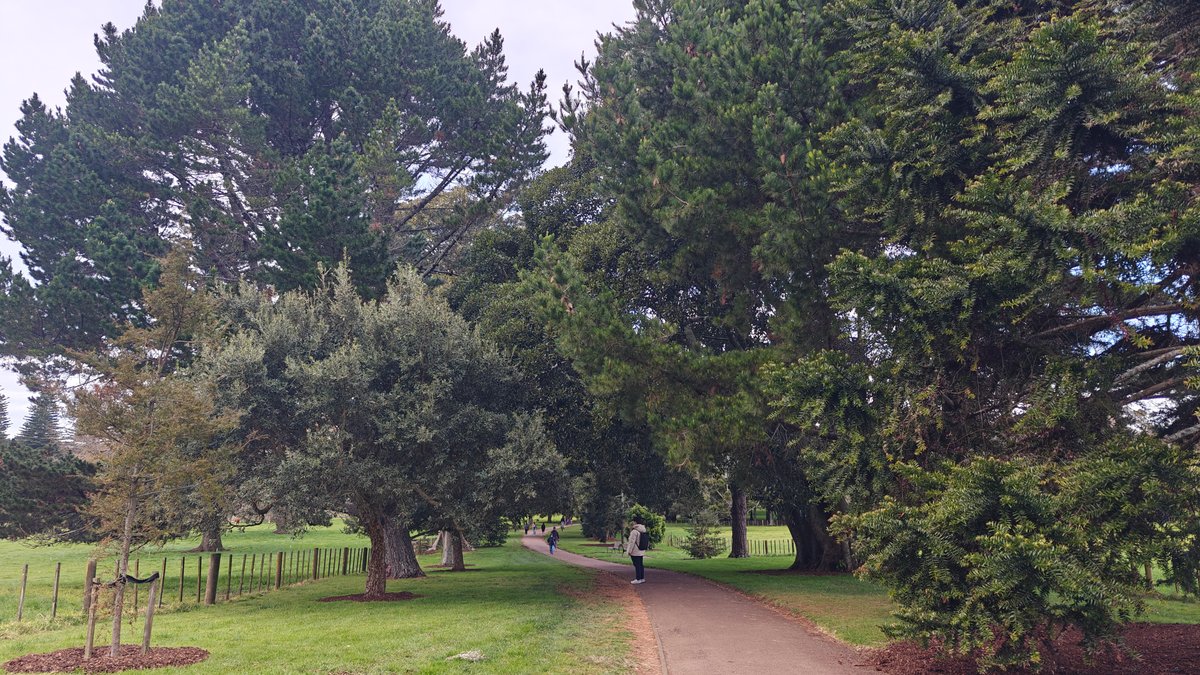
At one end I passed underneath an enormous Moreton Bay fig. It is the sort of tree that demands attention because of its sheer size and how it spreads out. Many of the larger ones is protected with a fenced in ring of mulch set into the lawn to guard their root system. In several places benches is hidden beneath the canopy where I noticed people sitting and just observing the park unfold before them.
It all felt so settled, as if it had always been there, with winding pathways beneath the outstretched limbs of spreading branches.
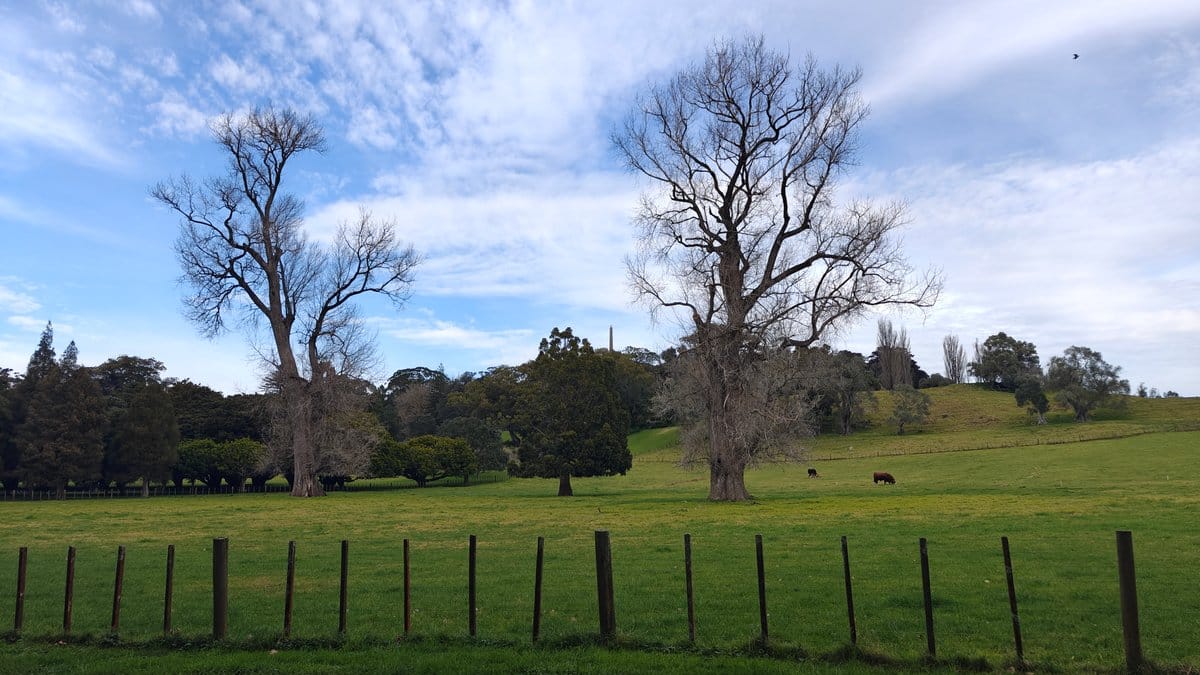
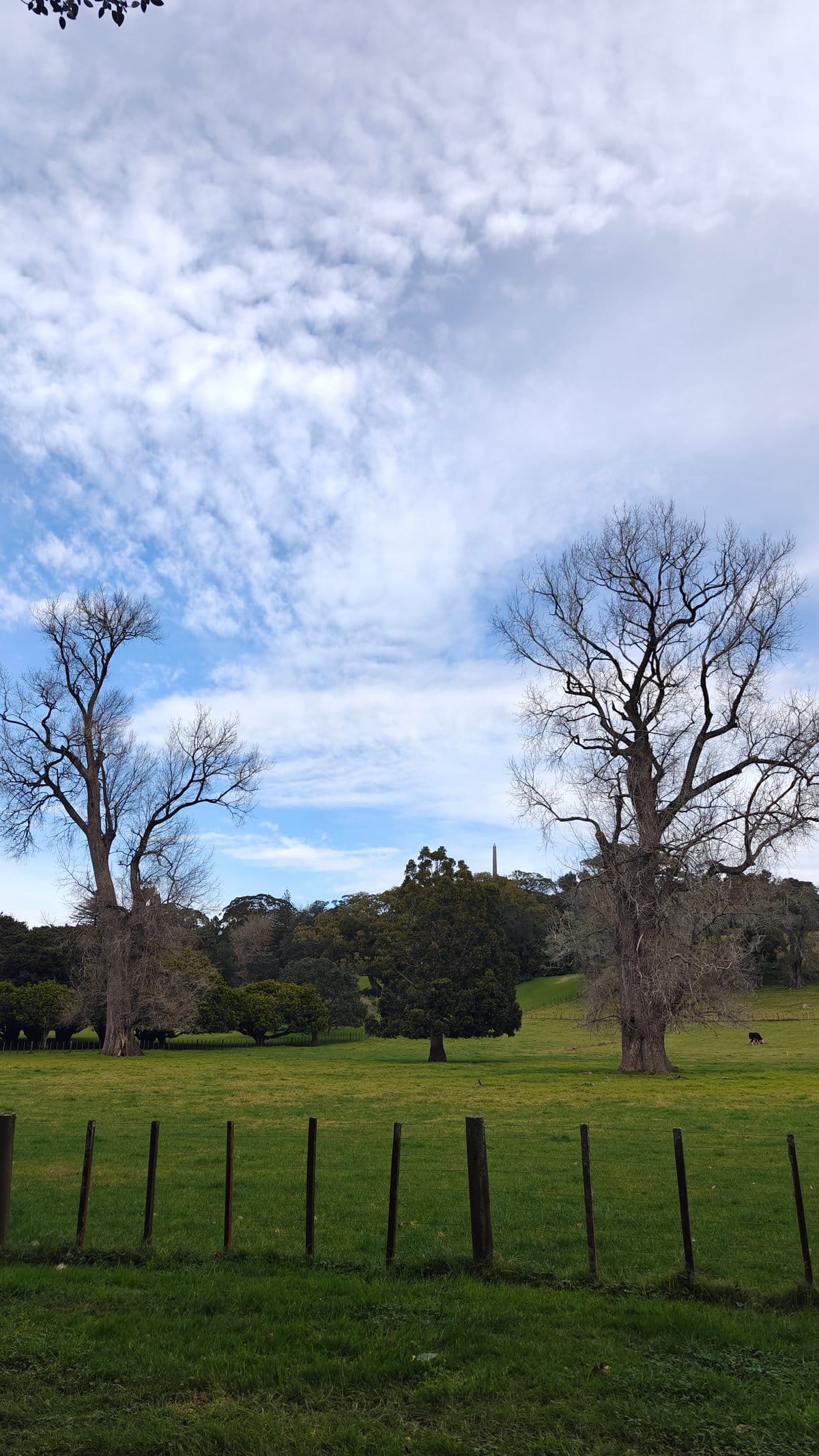
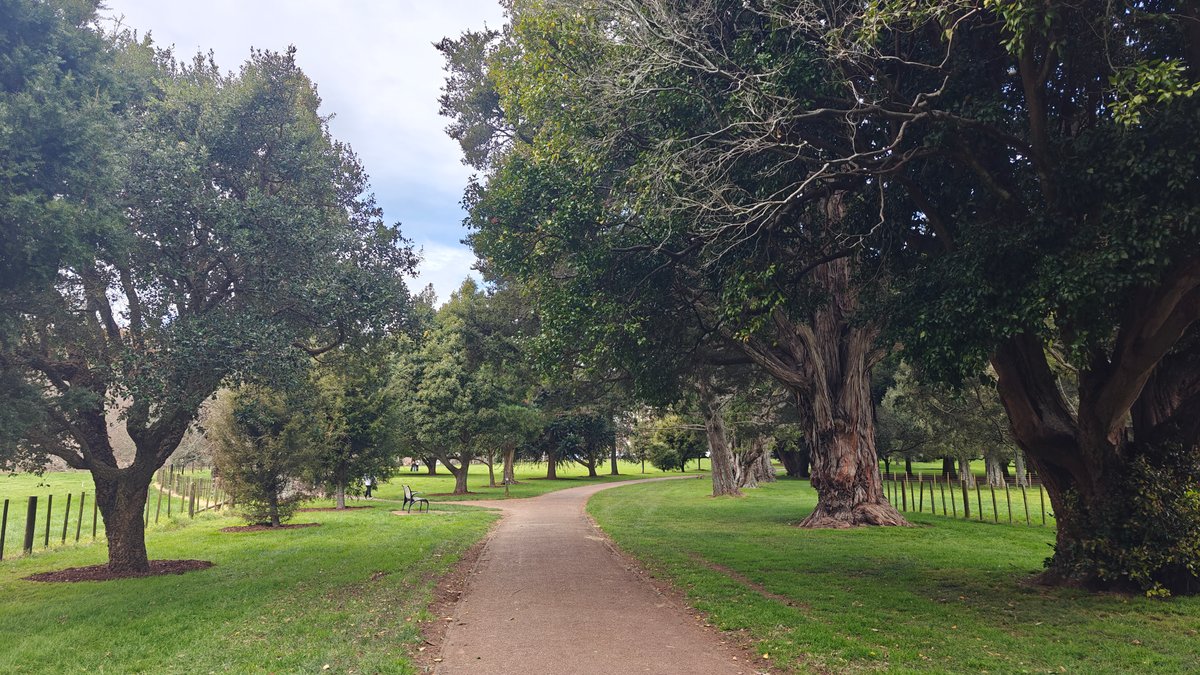
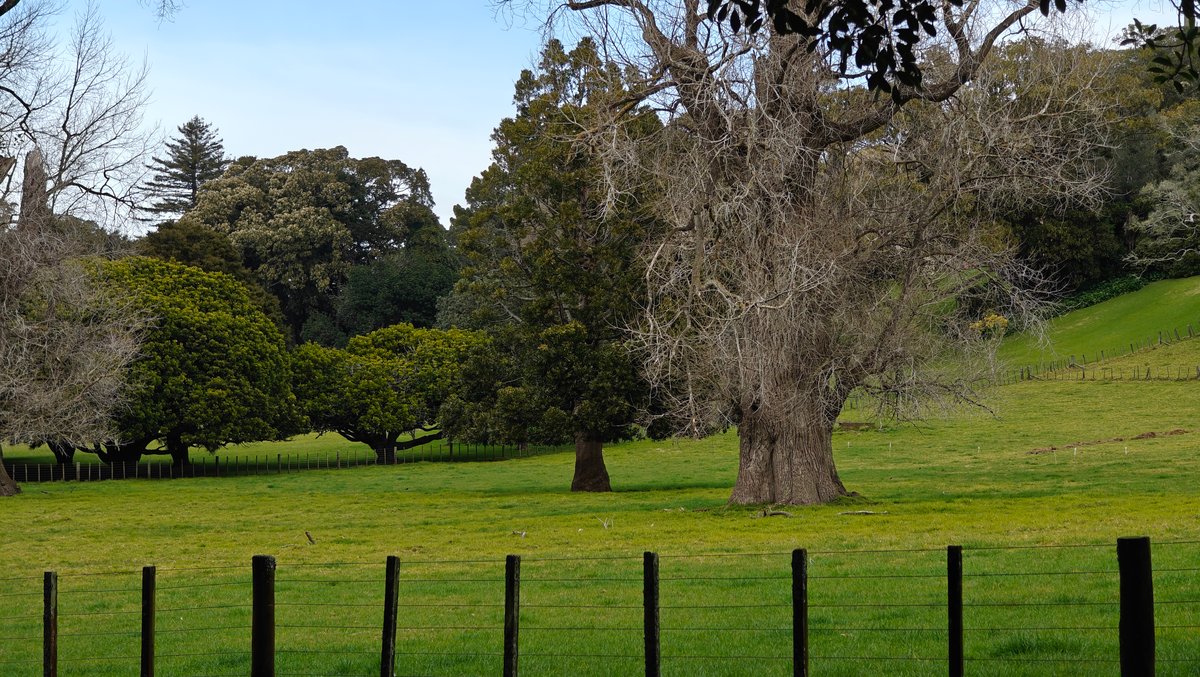
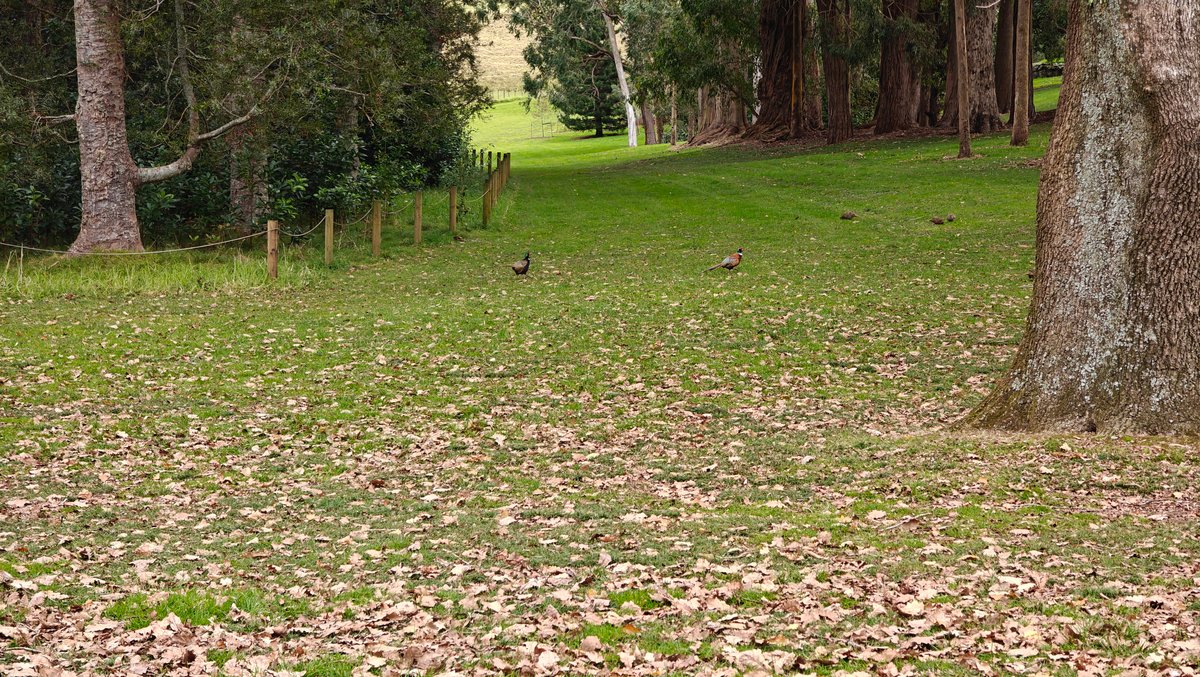
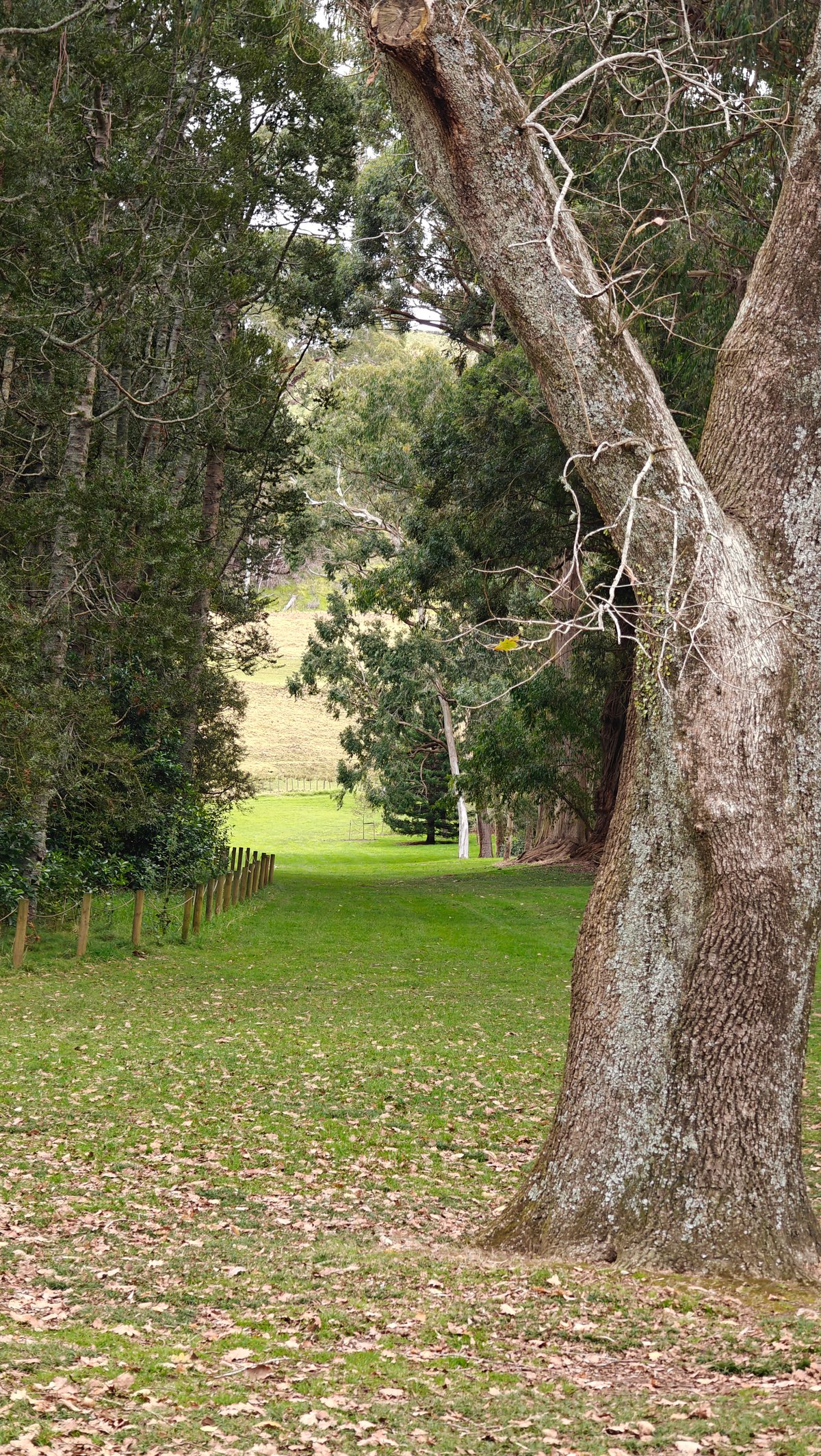
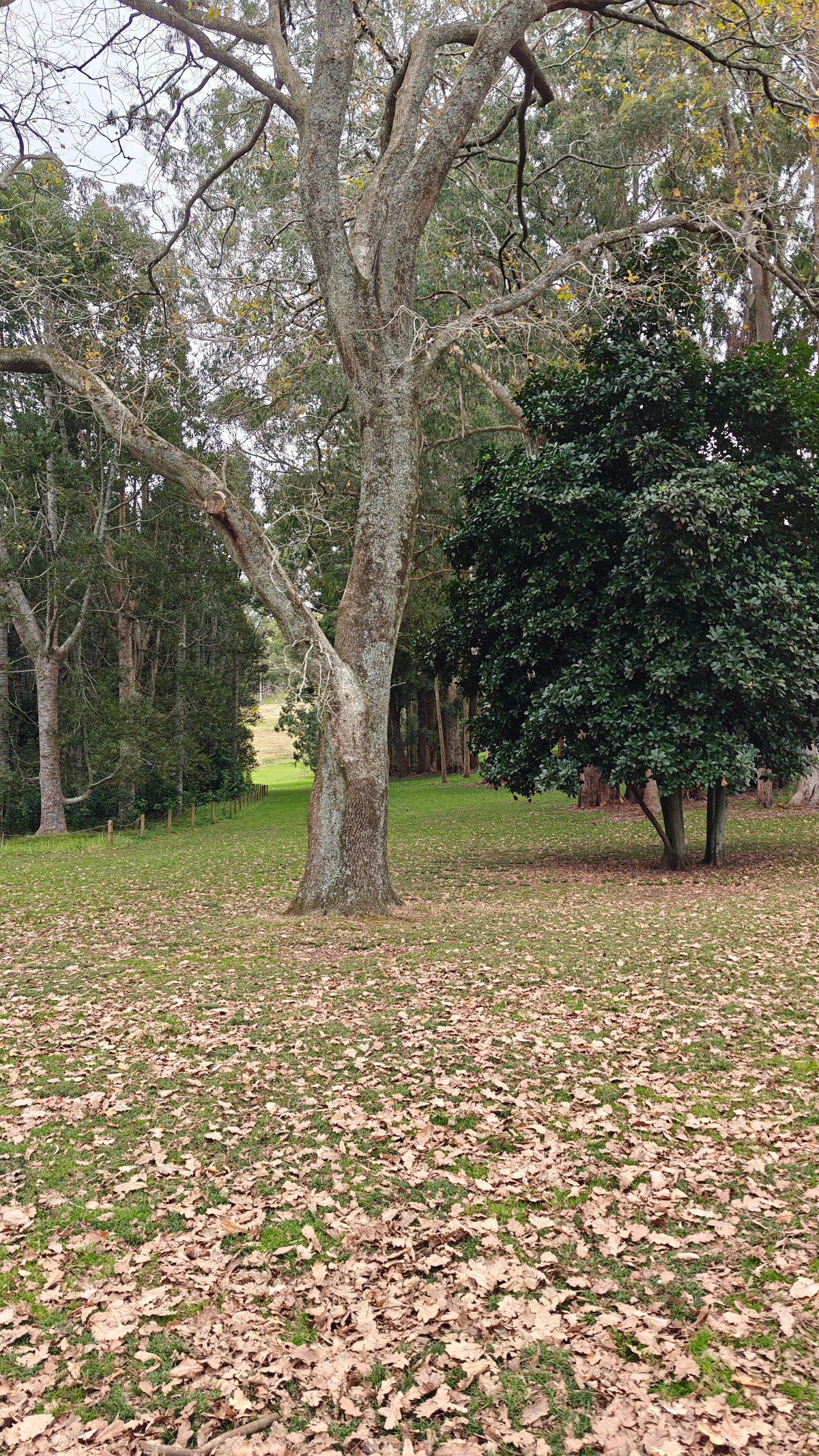
When I went some of the trees were leafless, their arms splayed open to the sky. Even without leaves they made quite a statement. The avenues of mature trees formed natural tunnels along the walking paths.
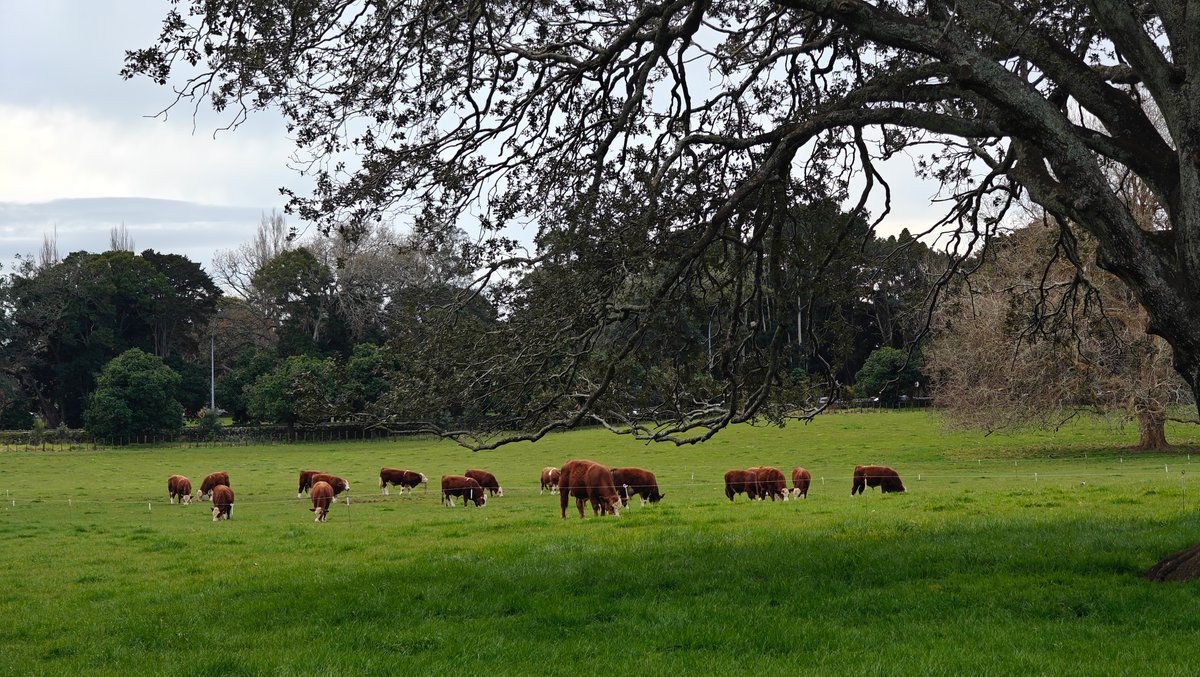
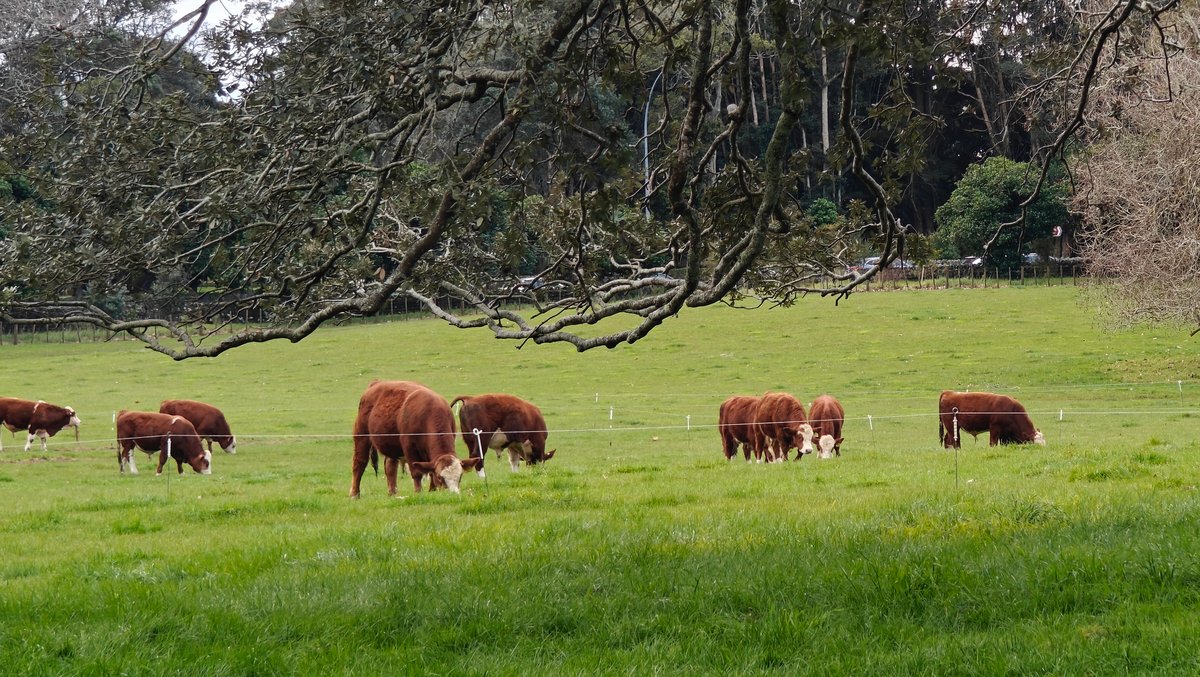
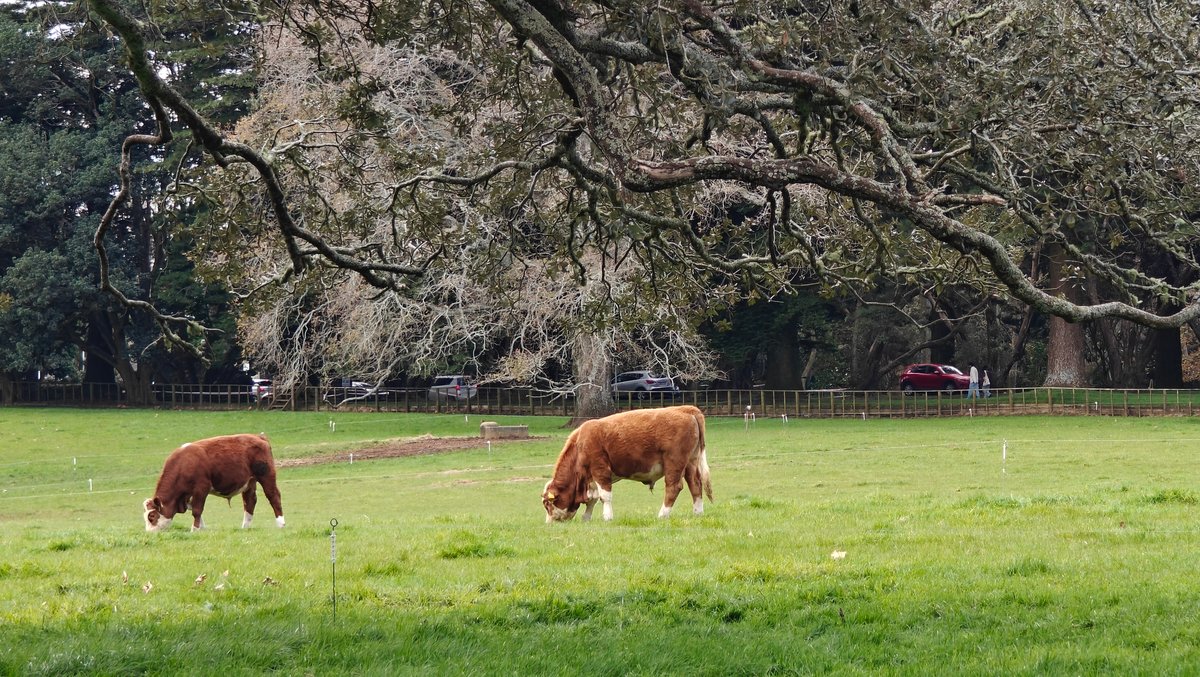
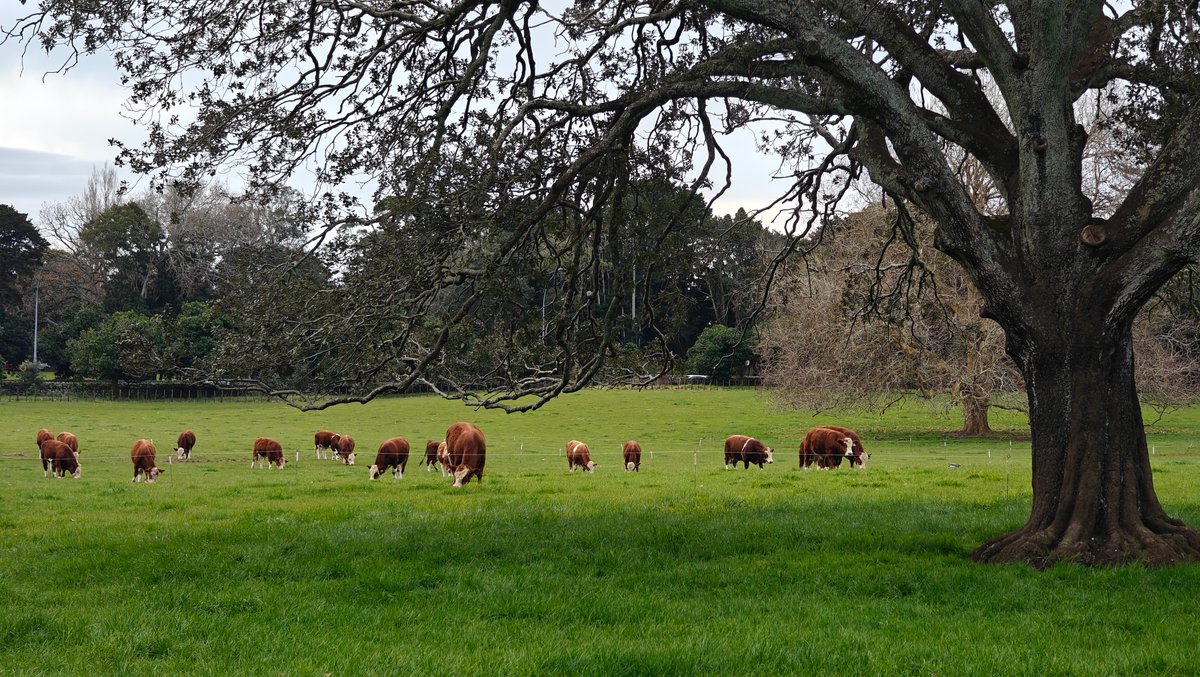
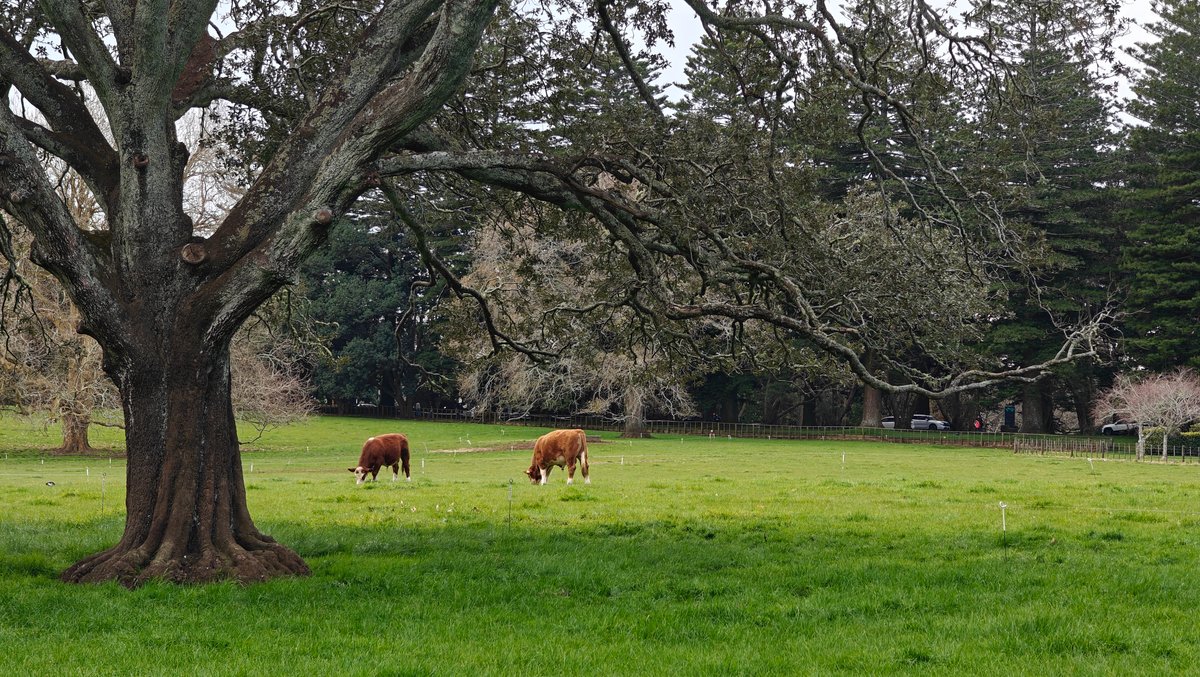
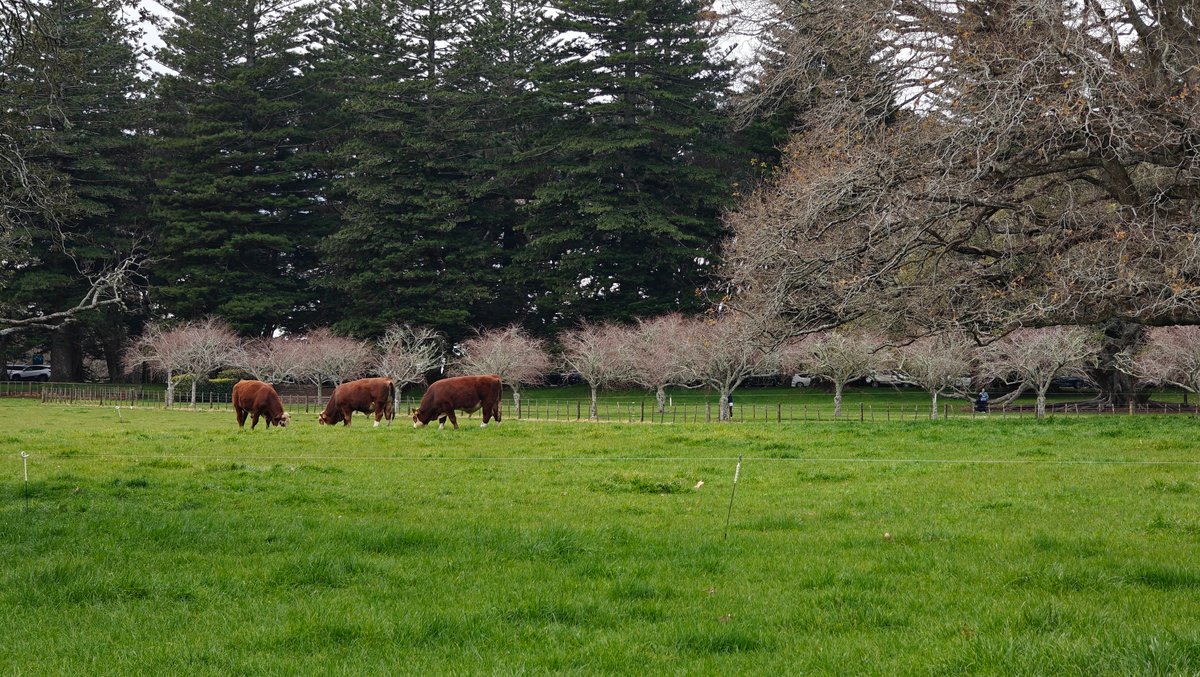
Wherever I went, there they were (the cattle), clustered around trees in flower, or grazing under the big spreading trees, Norfolk pines rising high above them. I watched them for quite some time, they’re just so unusual to see in what is, after all, a public park. There was a pair of Herefords slowly making their way across a paddock beside one of those giant trunks, paying no mind at all to passing joggers and walkers.
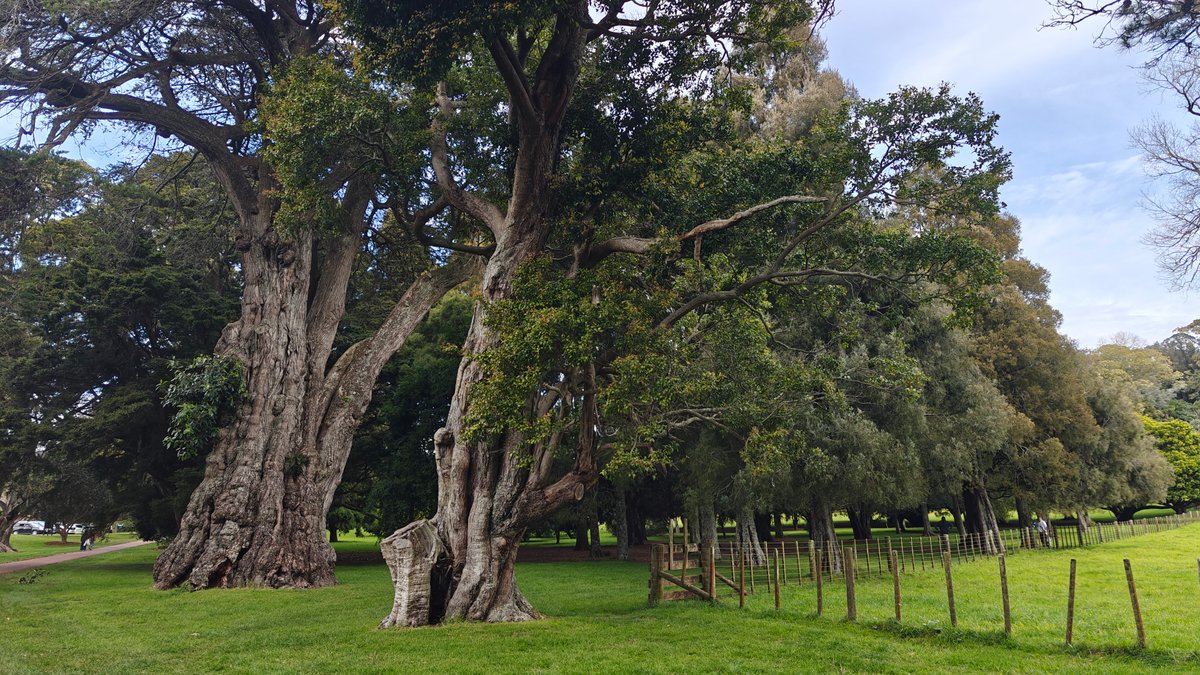
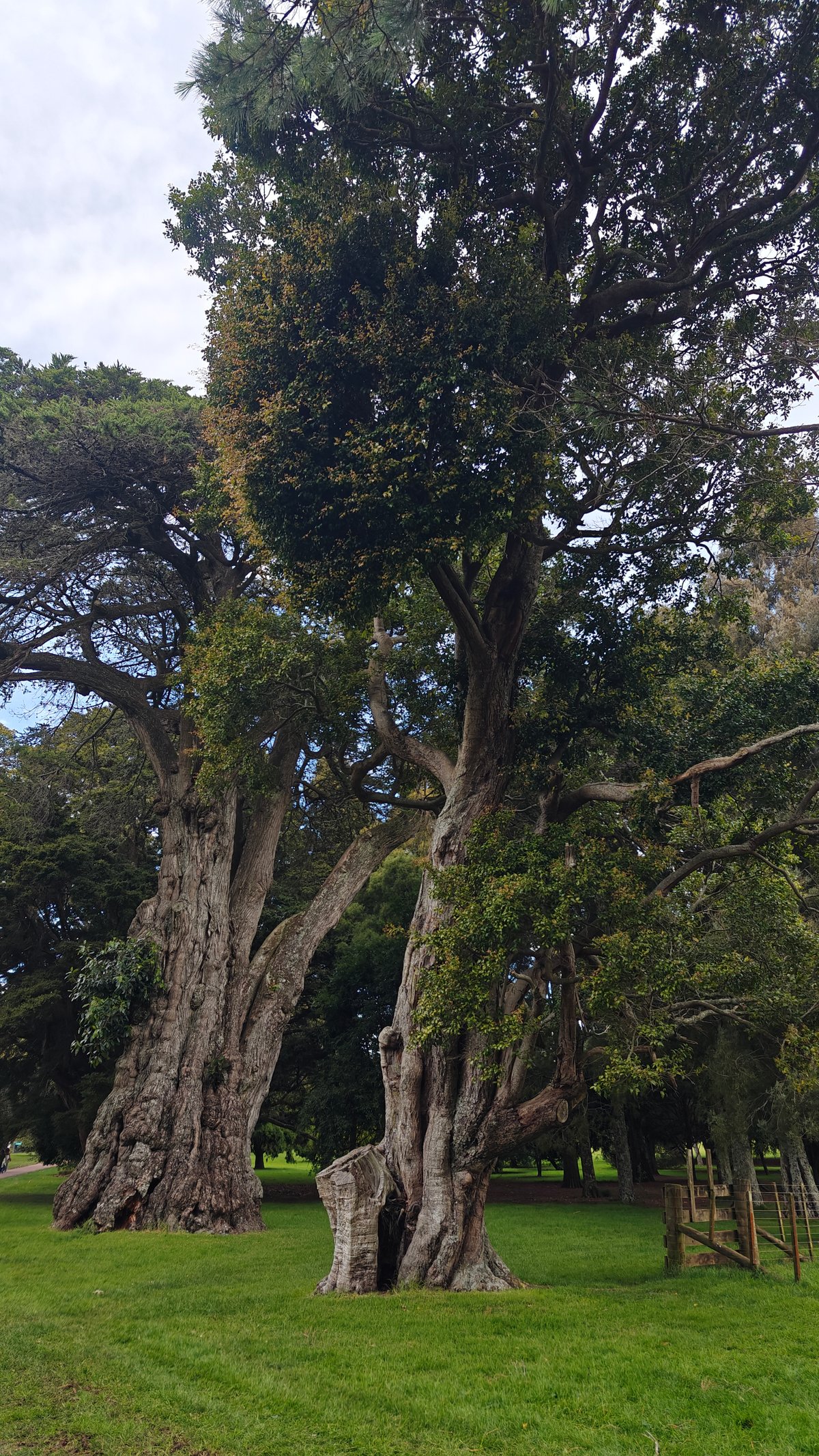
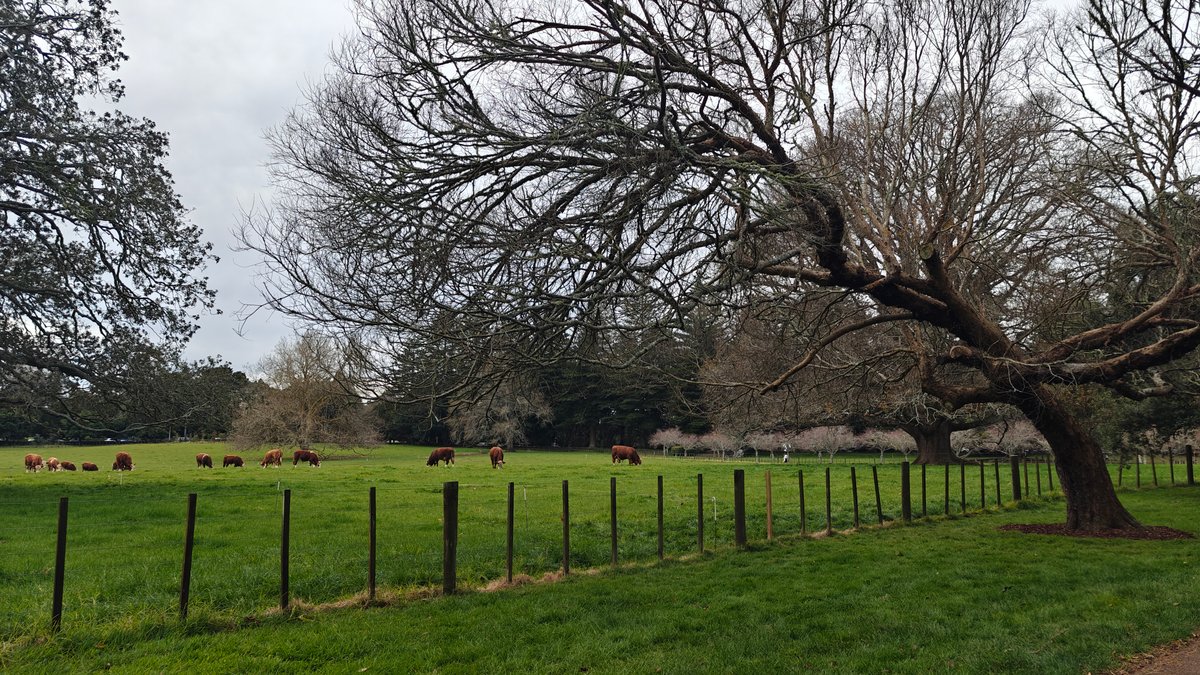
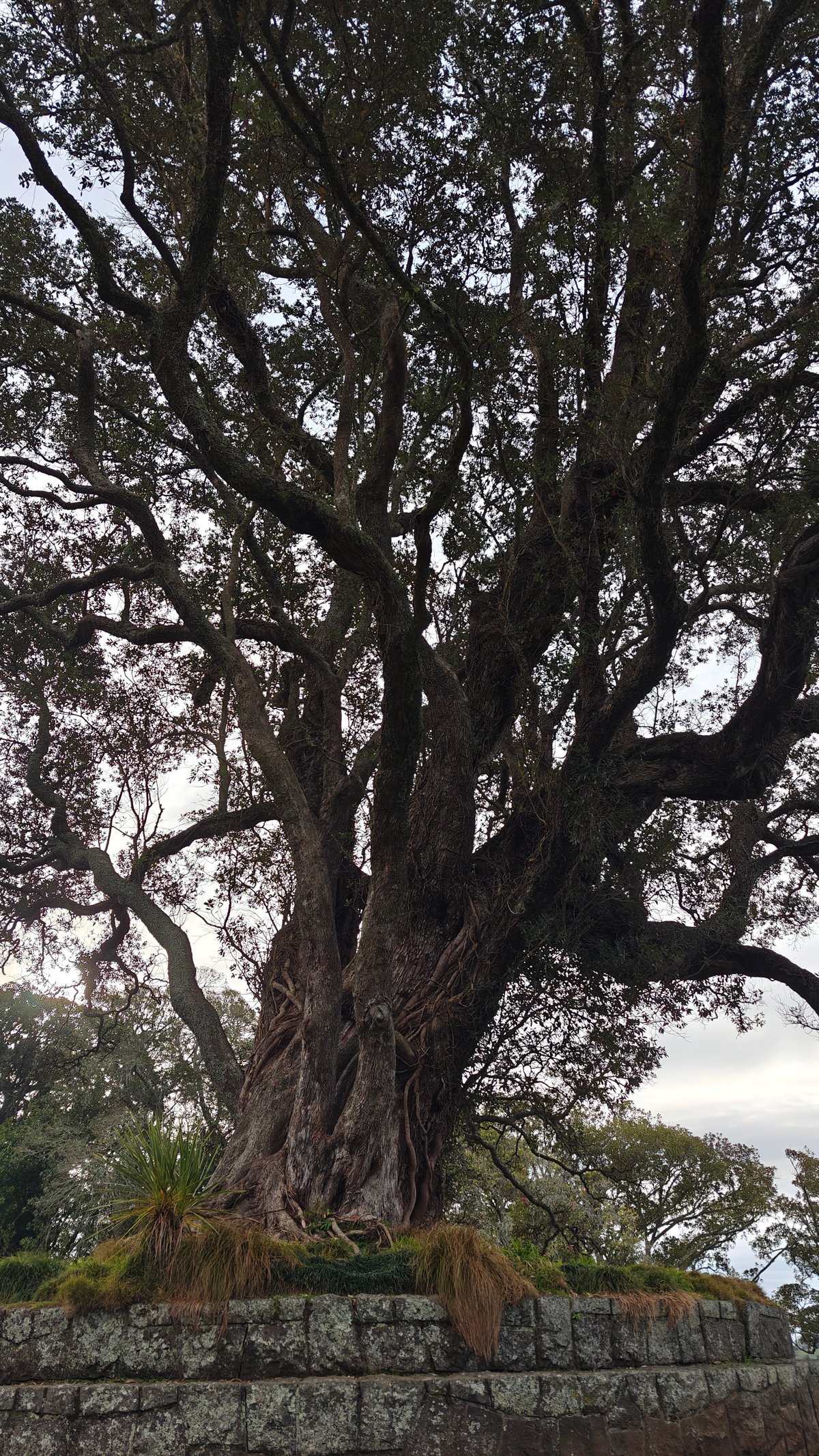
A single tree stood out to me. A large, leaning one whose twisted trunk appeared to have been sculpted by decades or more of wind. Its branches opened wide in every direction when I stood beneath them and gazed upward.
You could pass this tree a hundred times and still see something different about it.
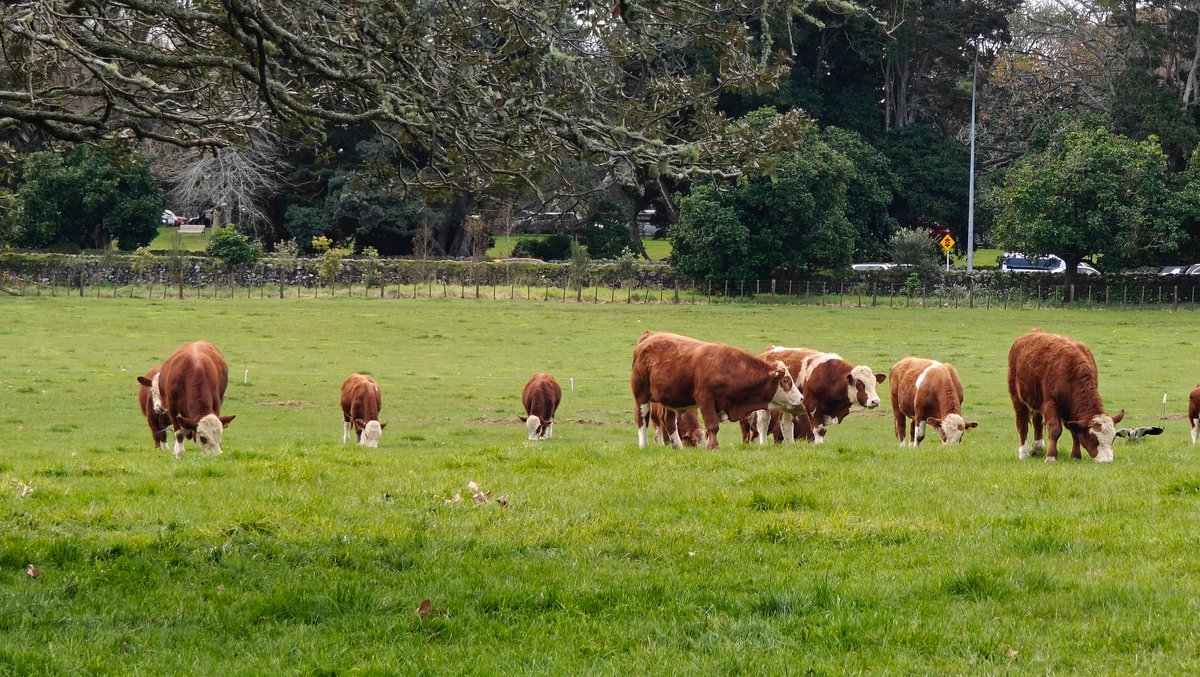
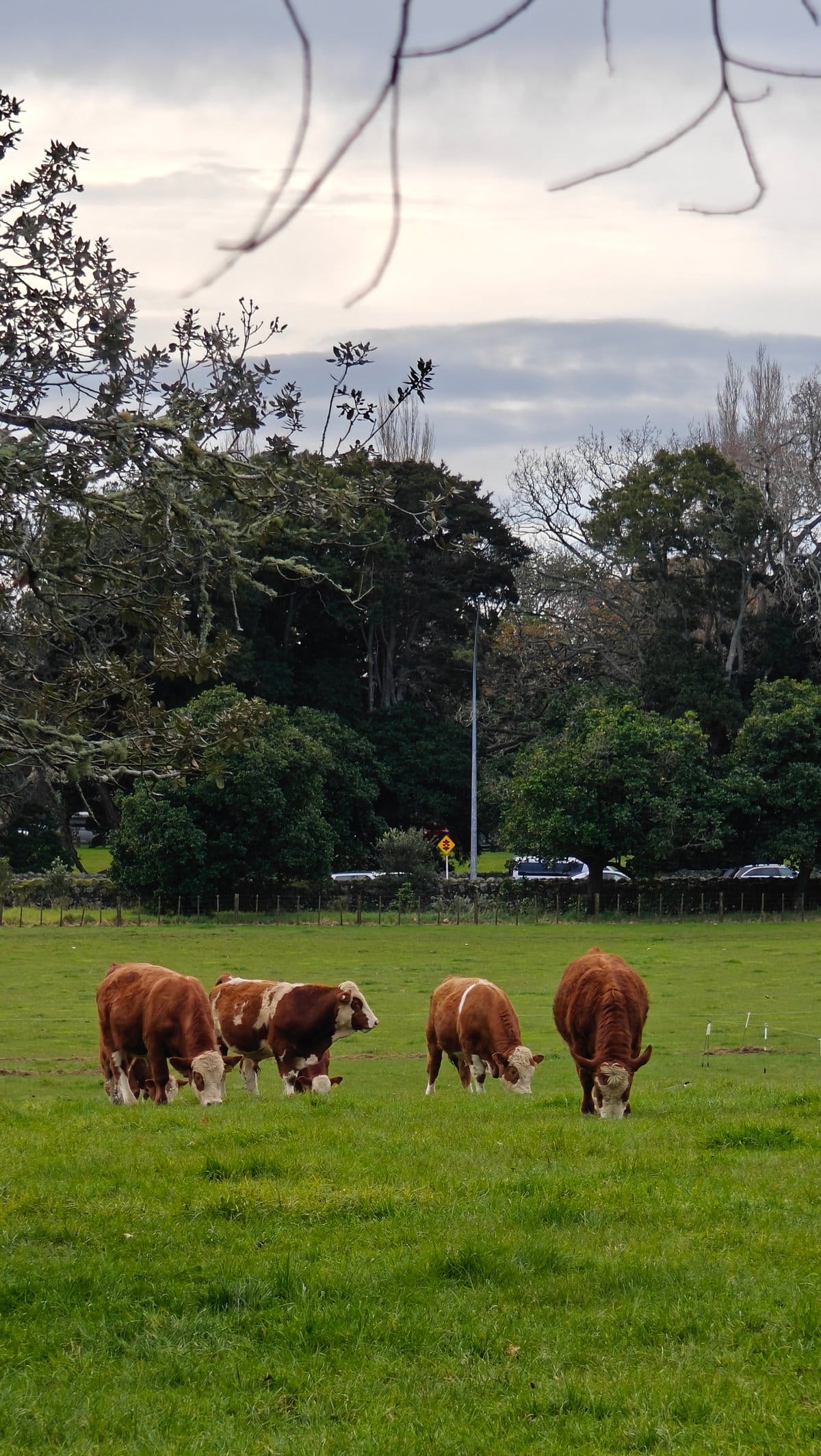
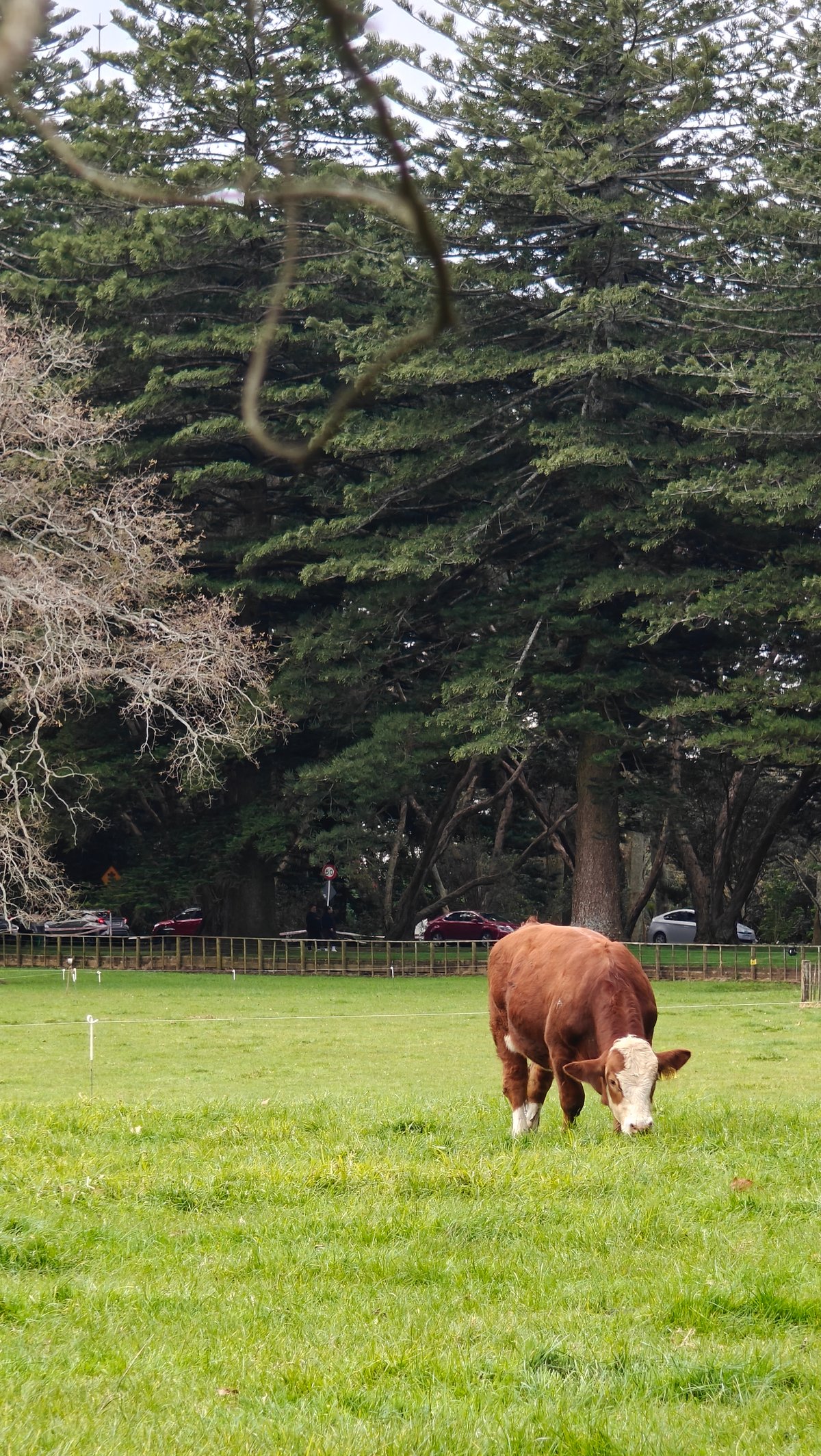
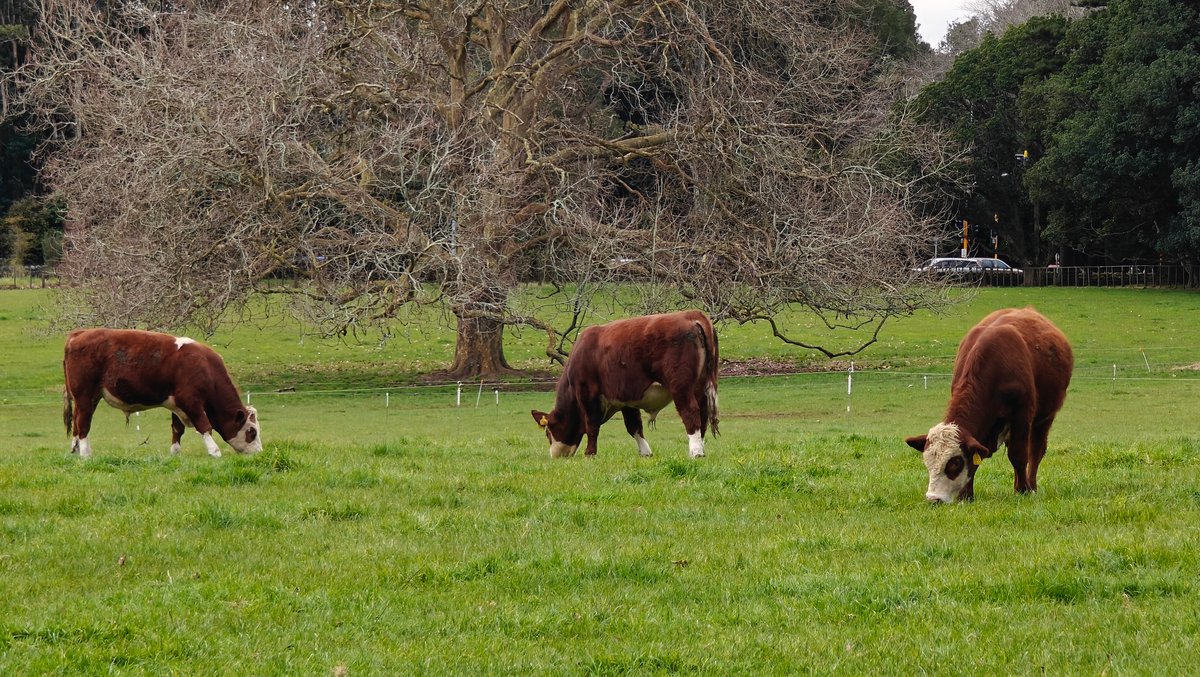
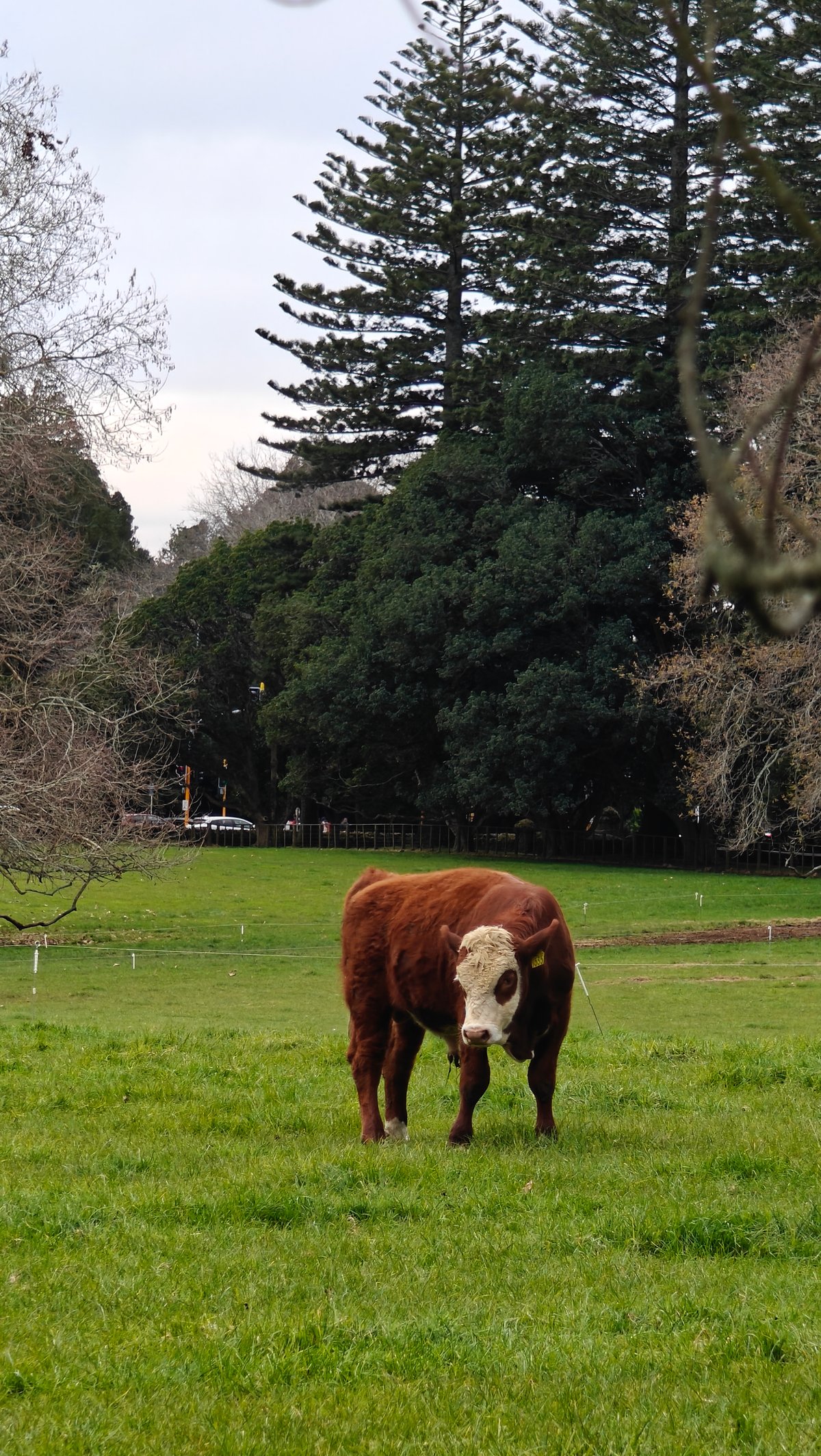
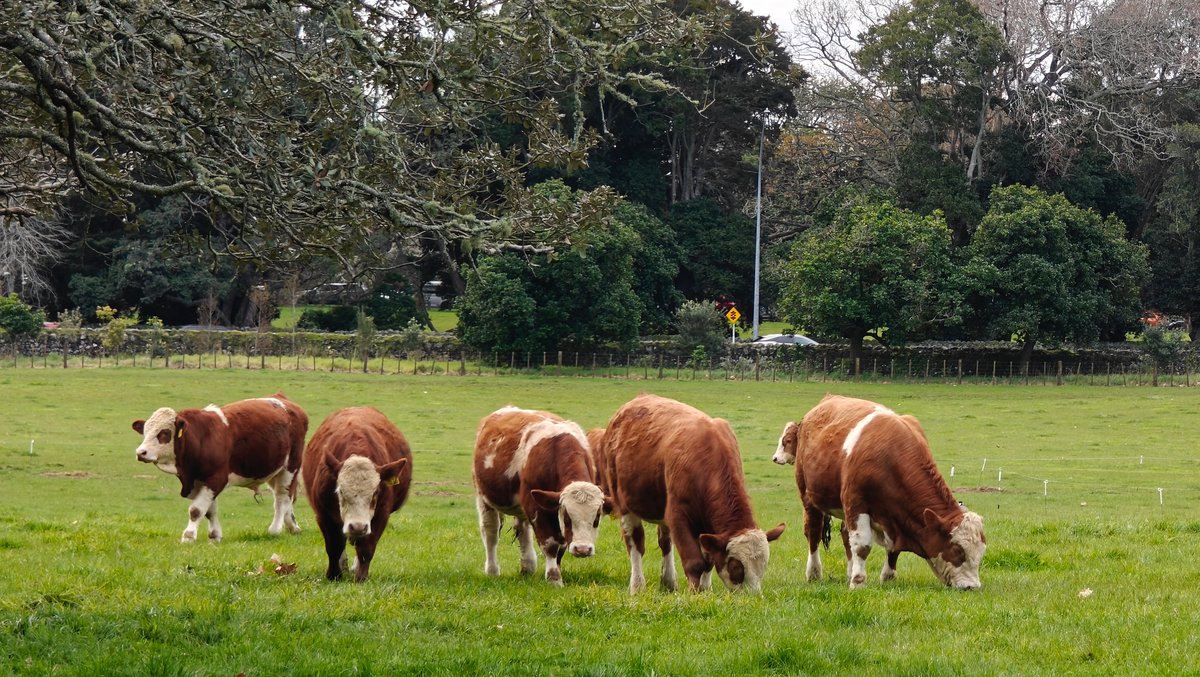
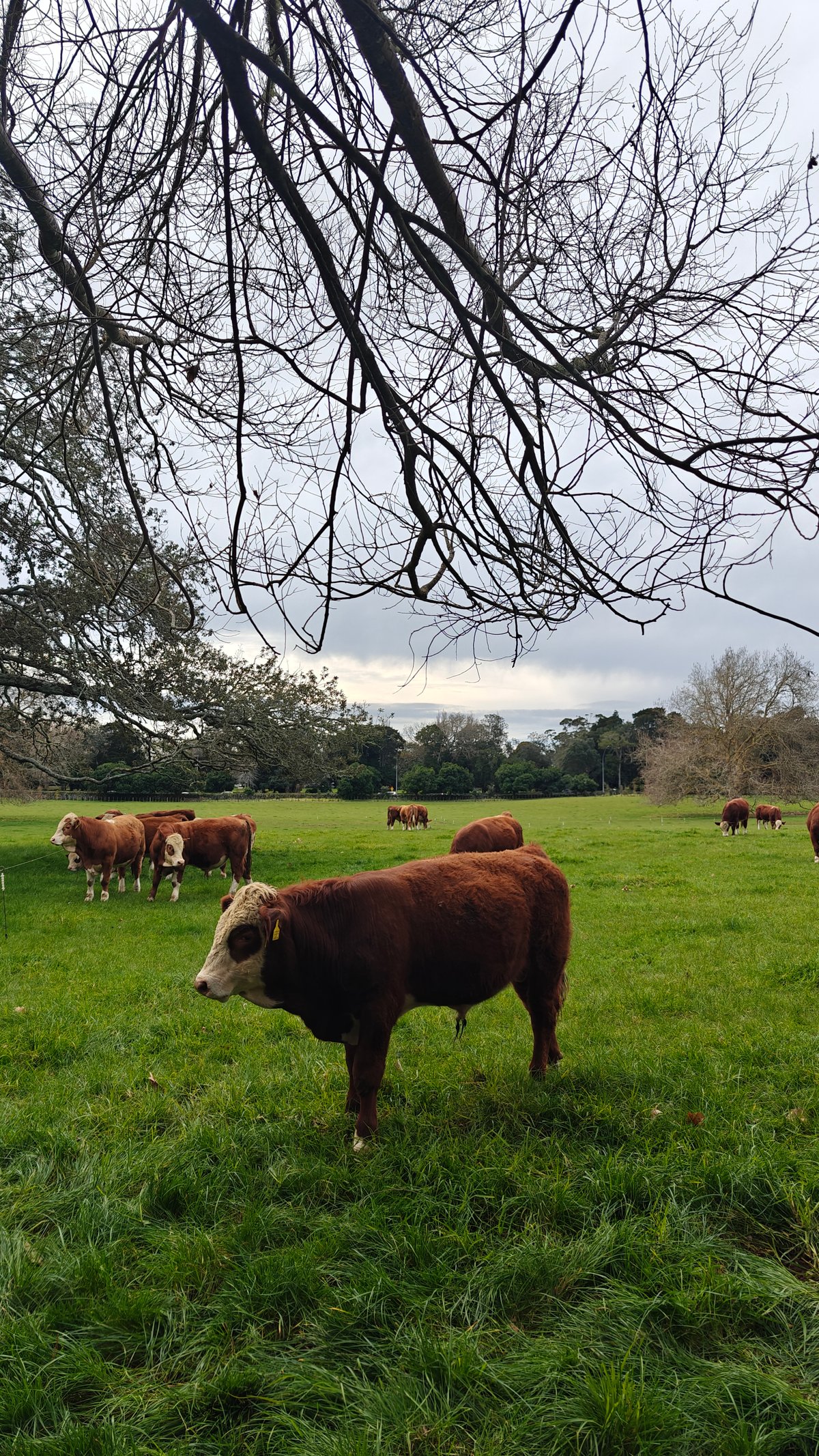
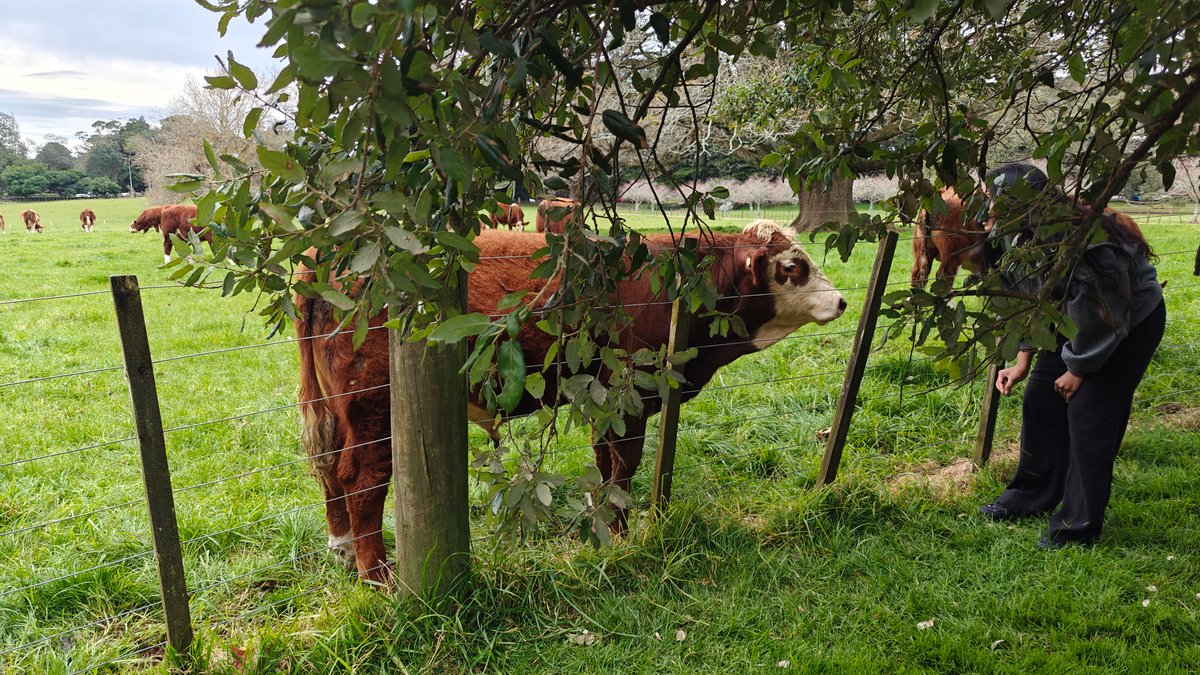
Everywhere I looked, there were Herefords, sometimes alone under a Norfolk pine; sometimes in little groups huddling together; sometimes in long lines grazing across the open paddock. And they all appeared pretty content. A couple of them even looked as if they knew they were part of the scenery.
They were just standing there in the middle of the paddock, completely still and staring off into the distance.
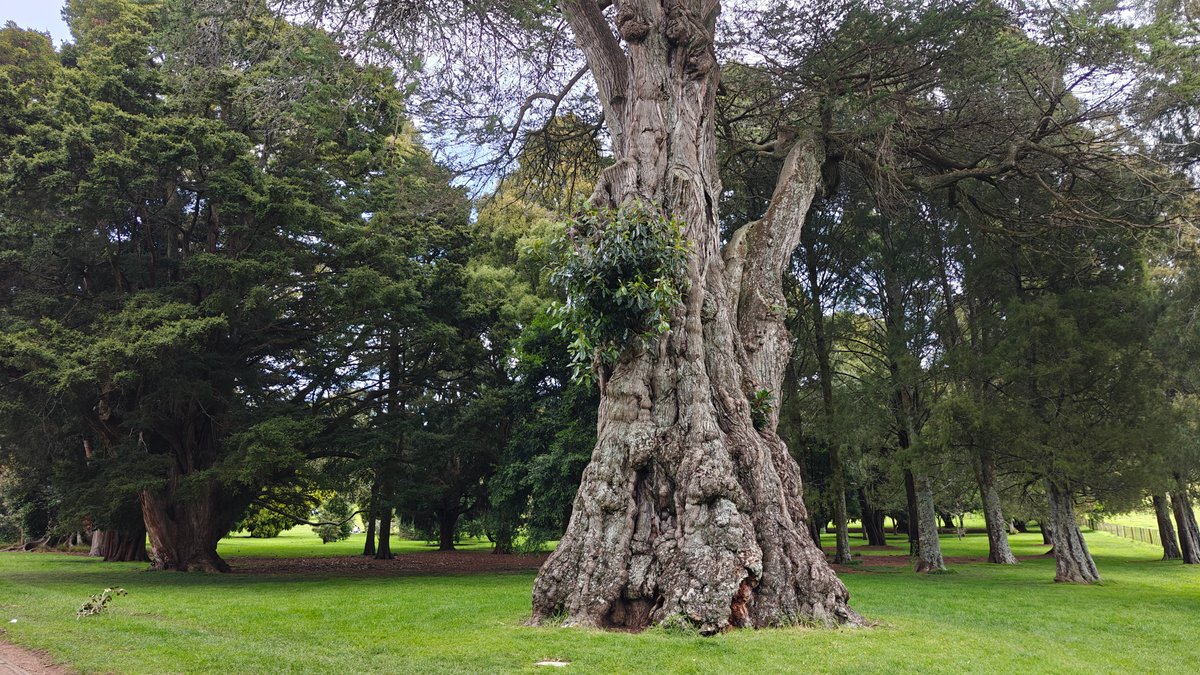
I ran into another visitor at some point who was having a moment with one of the park Herefords. She had come right up to the fence and seemed happy to stay for a while to greet them. That’s the kind of place it is…
Open and relaxed, where you can say hi to a cow if you want.
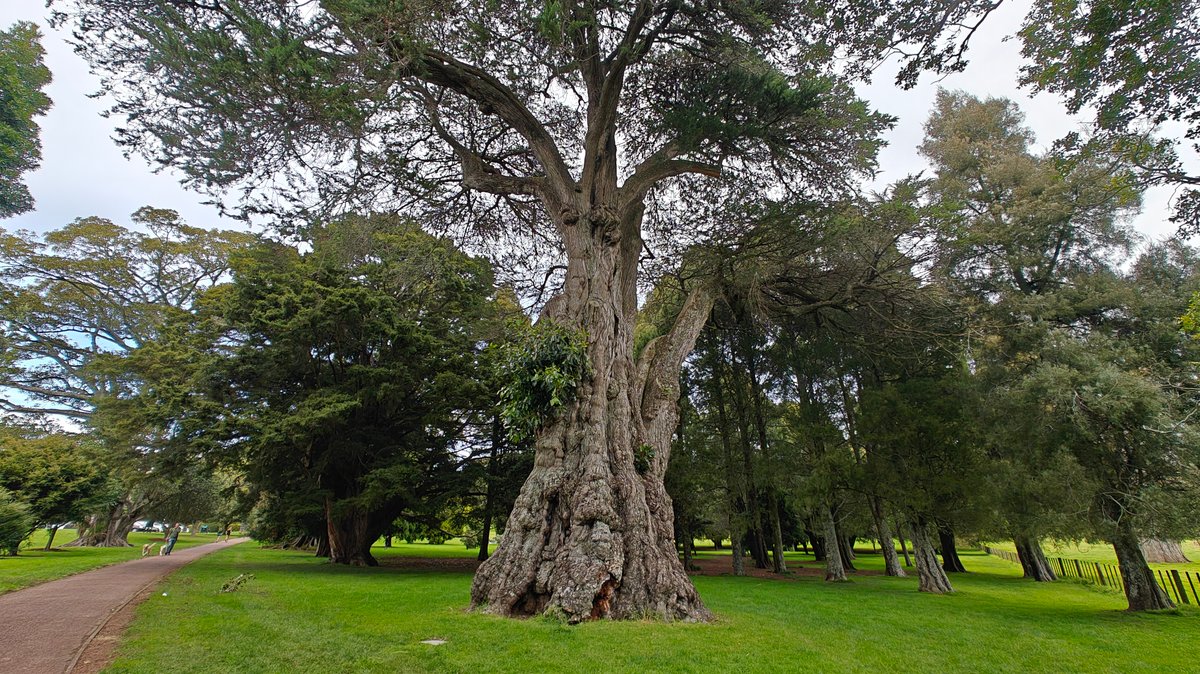
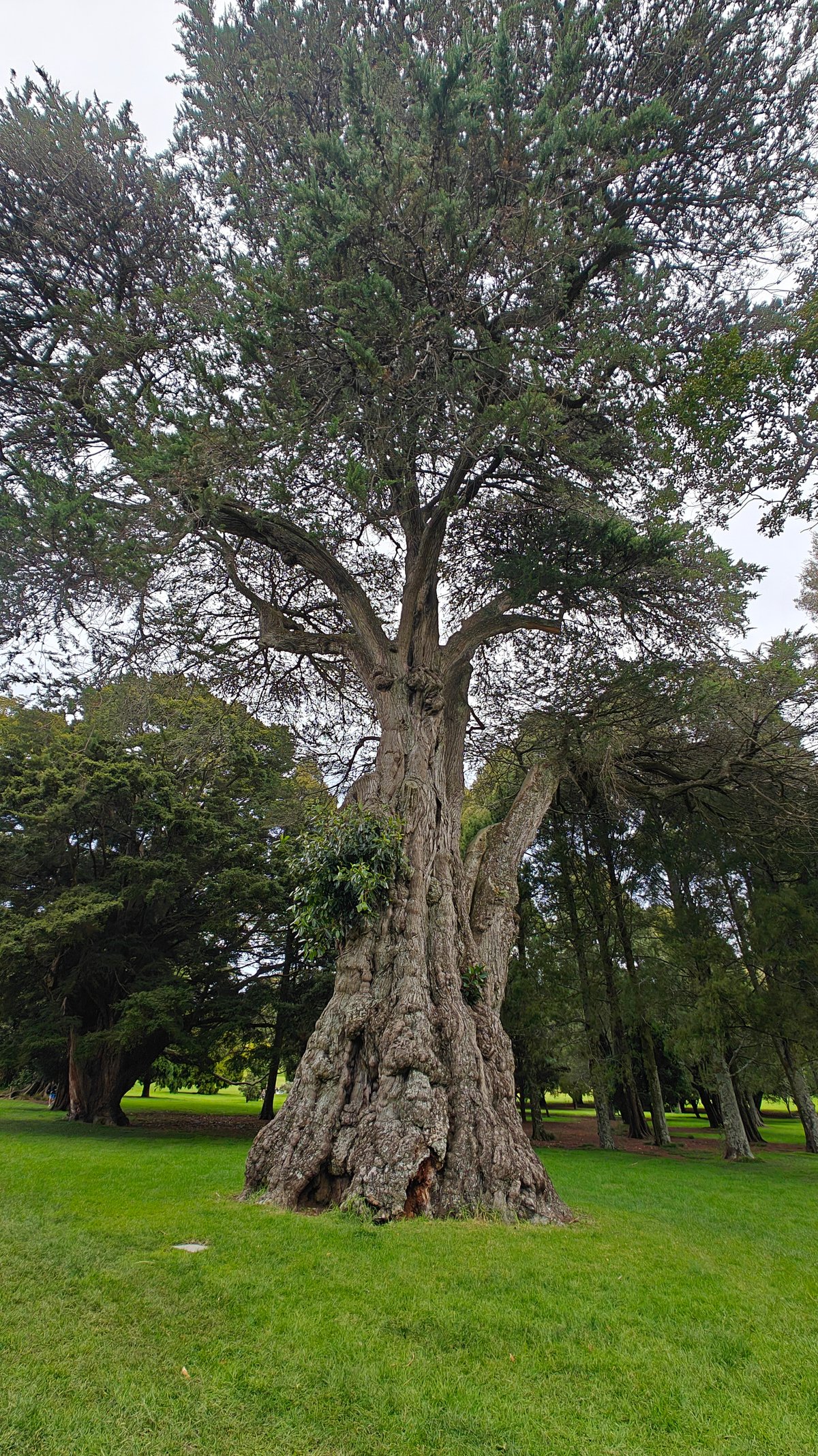
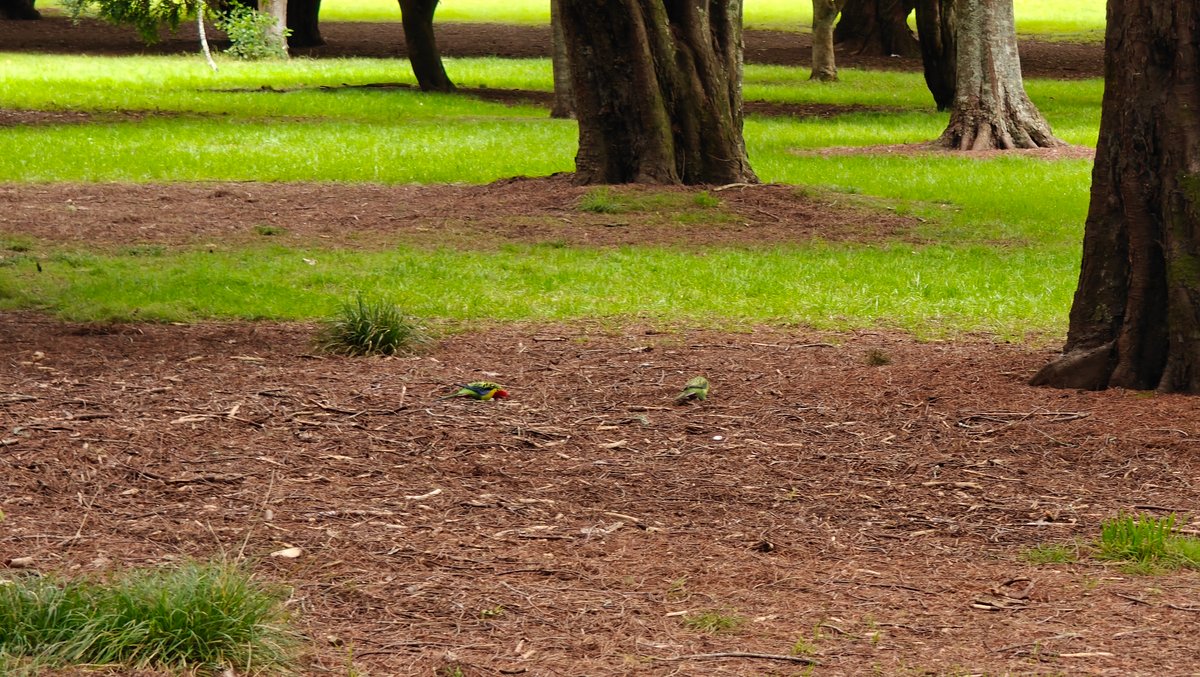
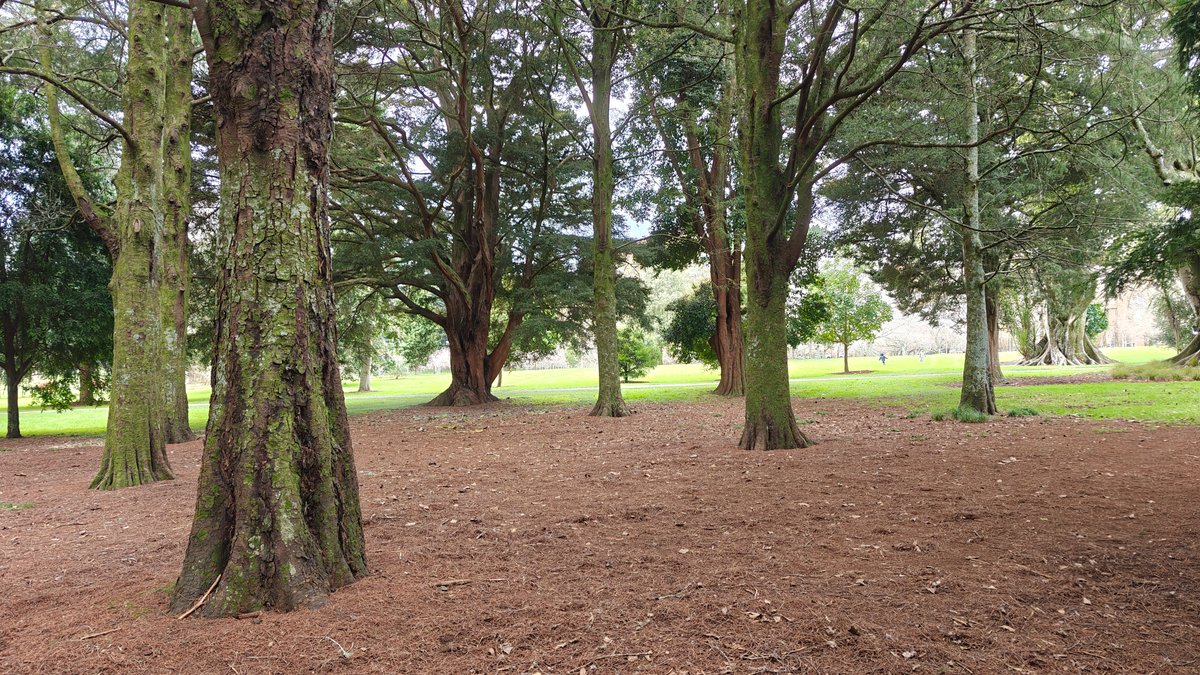
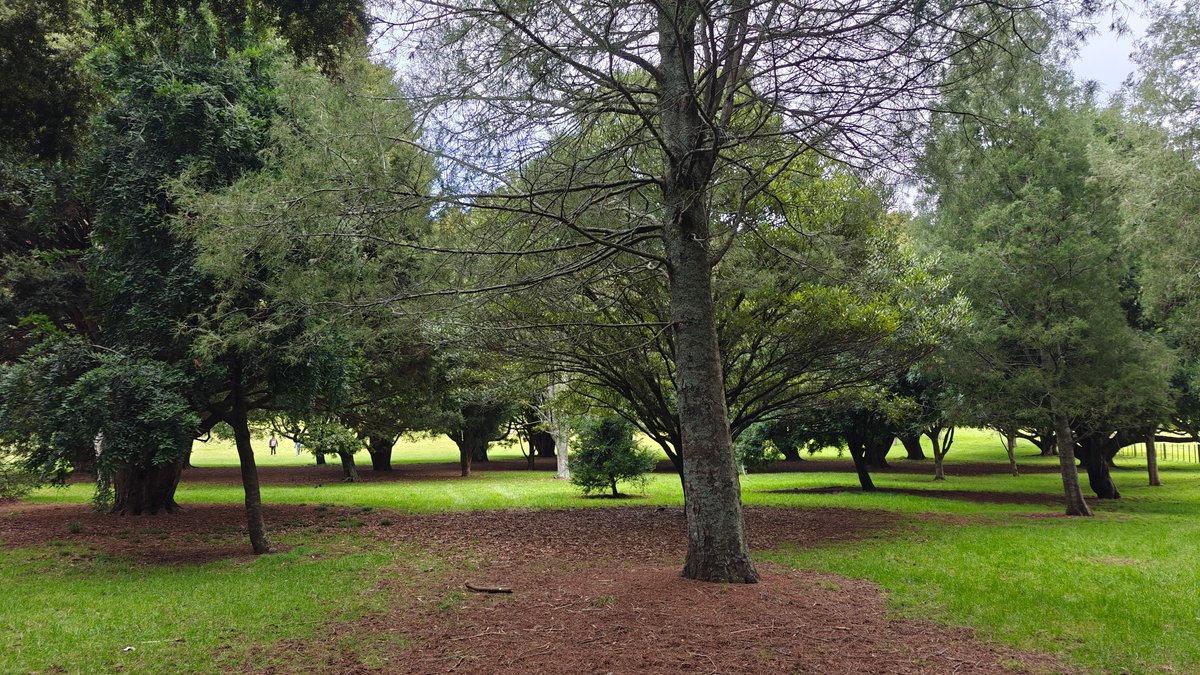
Some have huge buttressed roots spread out at the base; others are hung with air plants. All have amazing trunks that get bigger as they go up. They’re all set in a big open parkland, with the old trees creating an arching canopy to walk under.
I was struck by the care taken with the ground around the trees, where mulch rings keep the grass clear so the trees’ roots can do their thing.
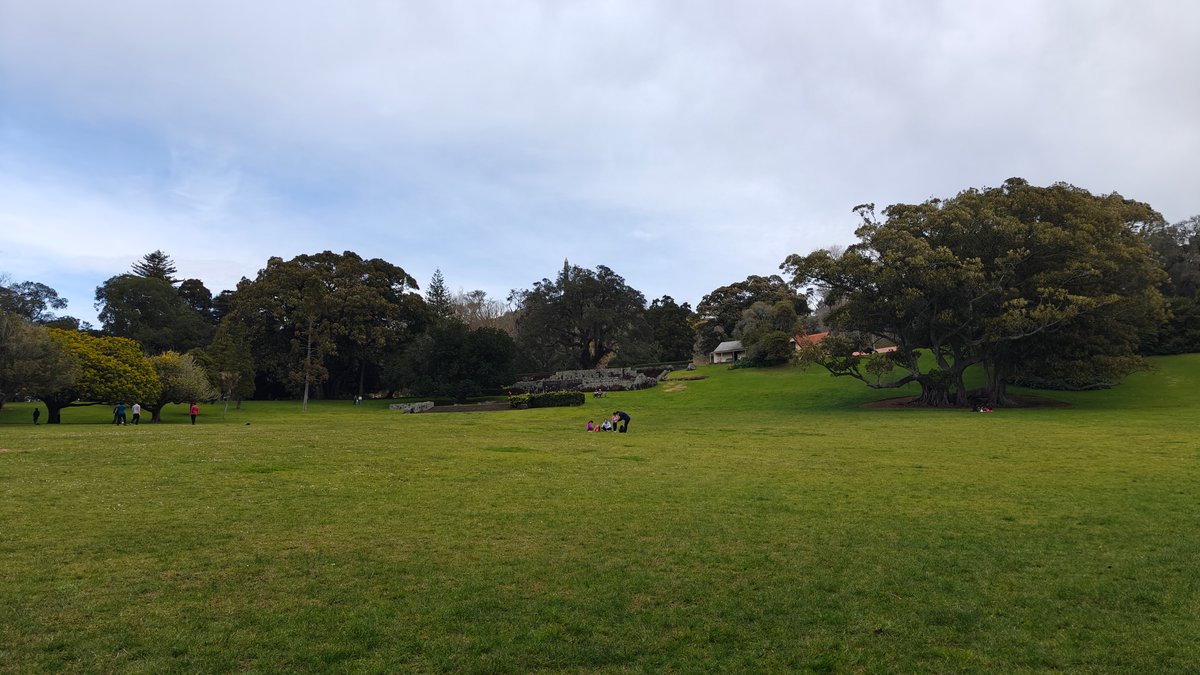
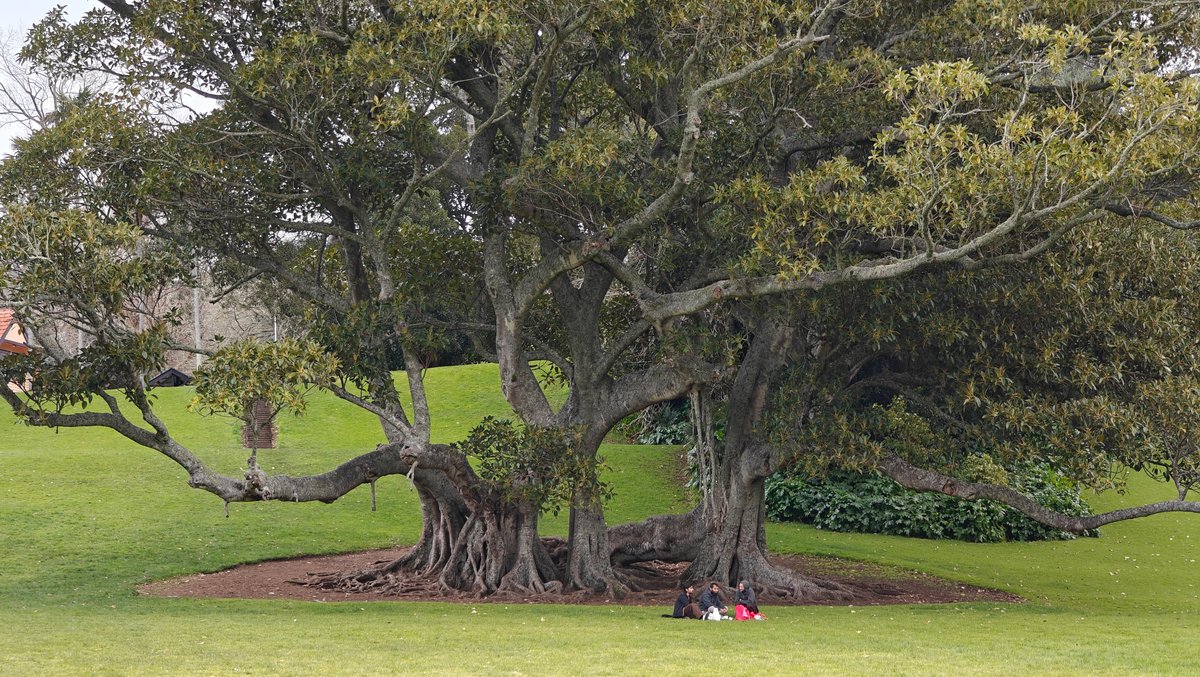
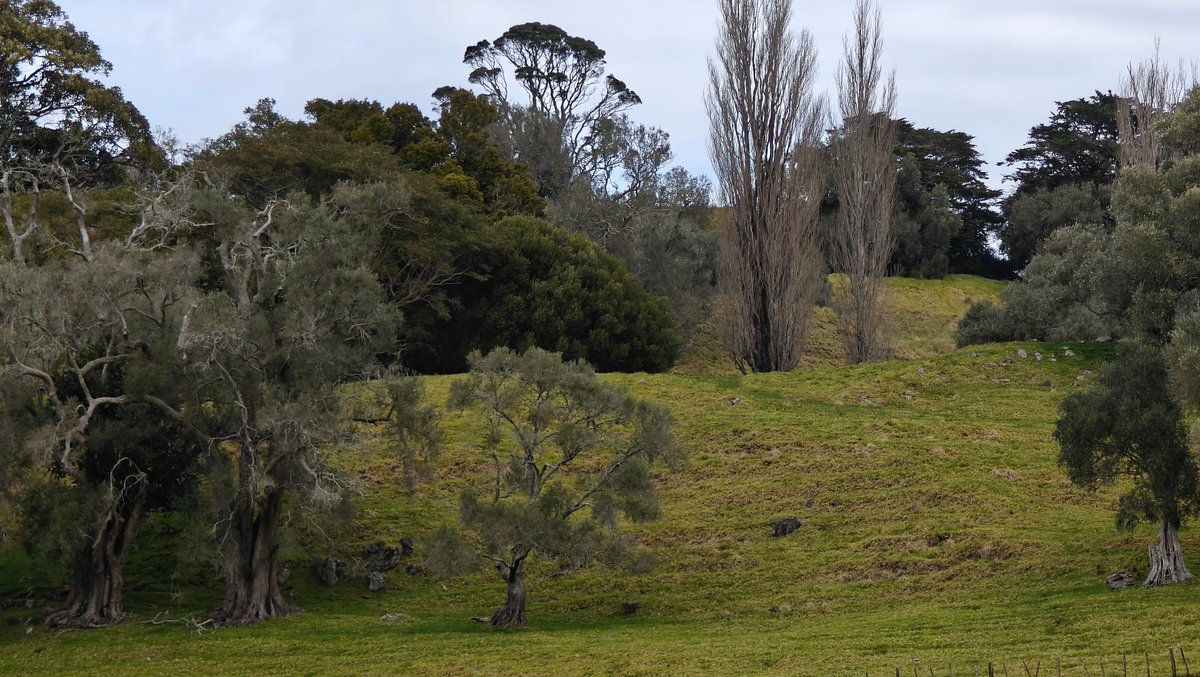
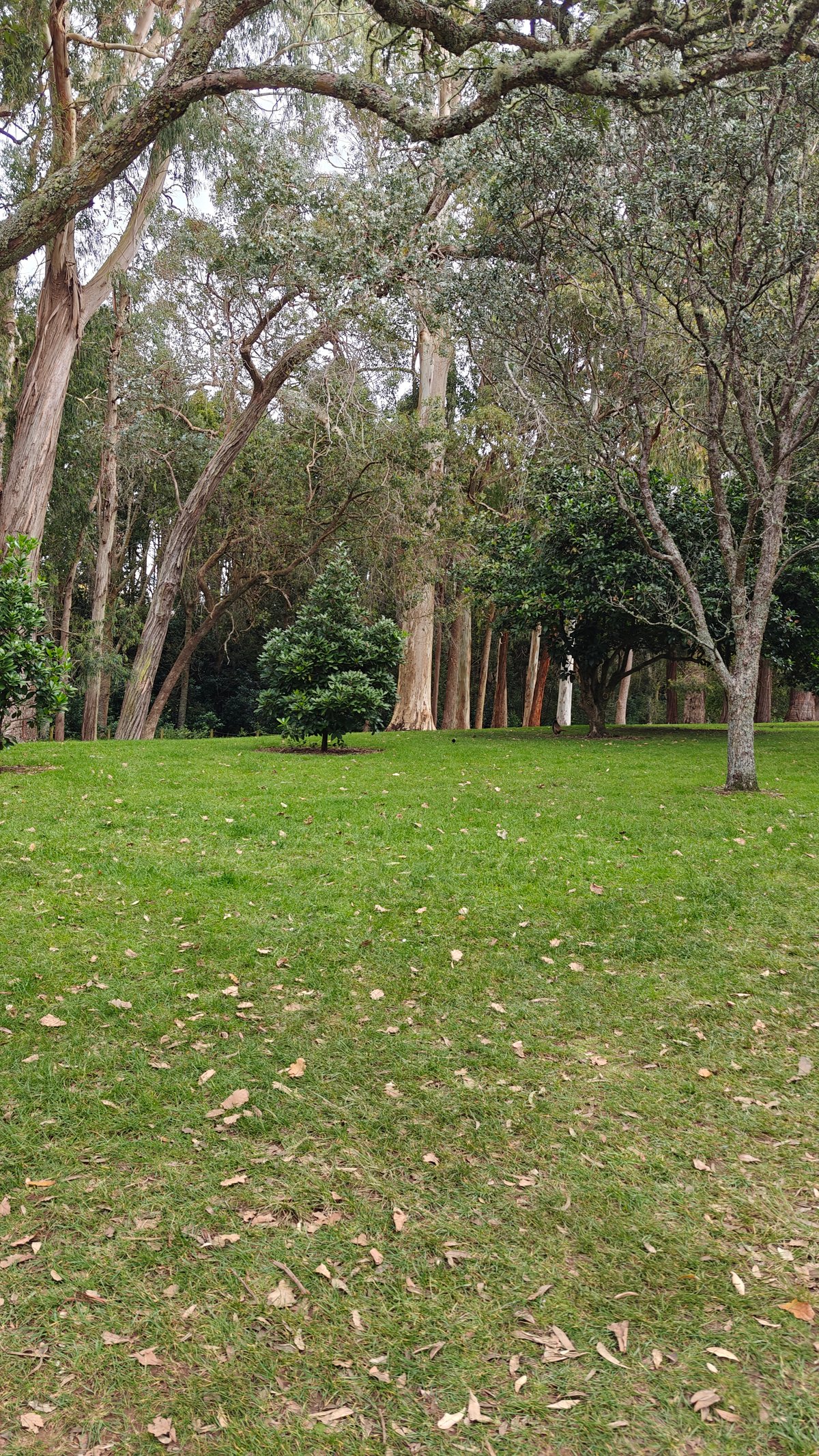
The park is dotted with a series of grassy rises, some with rows of trees along the top, others with just one or two off by themselves. They give you something to look at while walking around. They add some shape where it might have been flat land.
They all make things interesting.
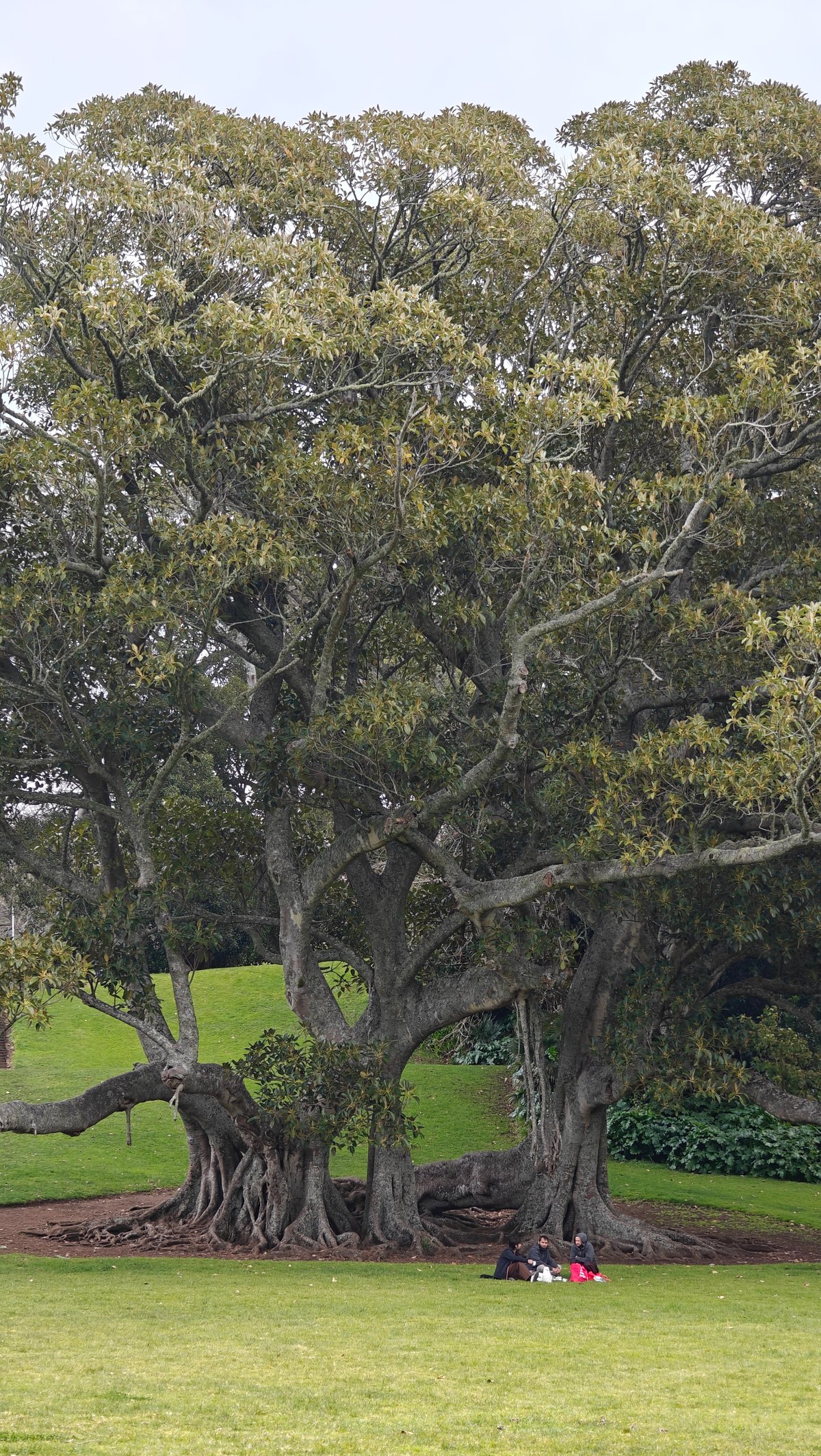
Another Moreton Bay fig stood nearby; I circled back past it to have a better look. This time I noticed its buttress roots. They were shaped like buildings or statues, splaying outward from the trunk like natural flying buttresses, spreading and widening until they reached the ground.
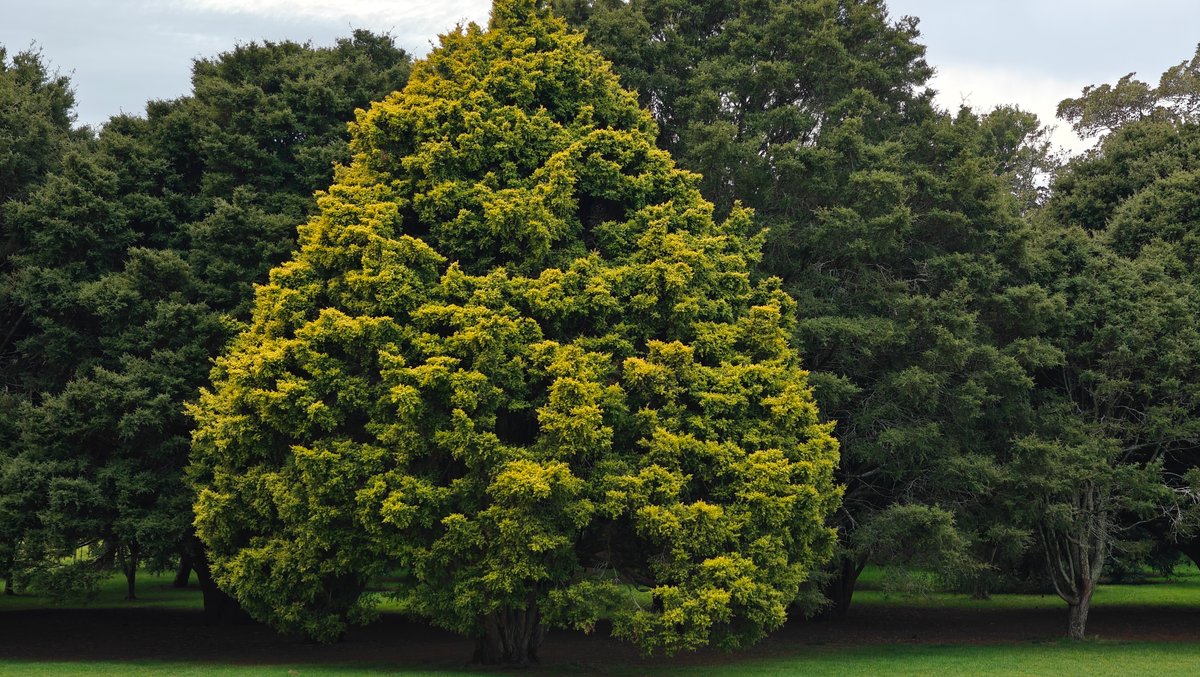
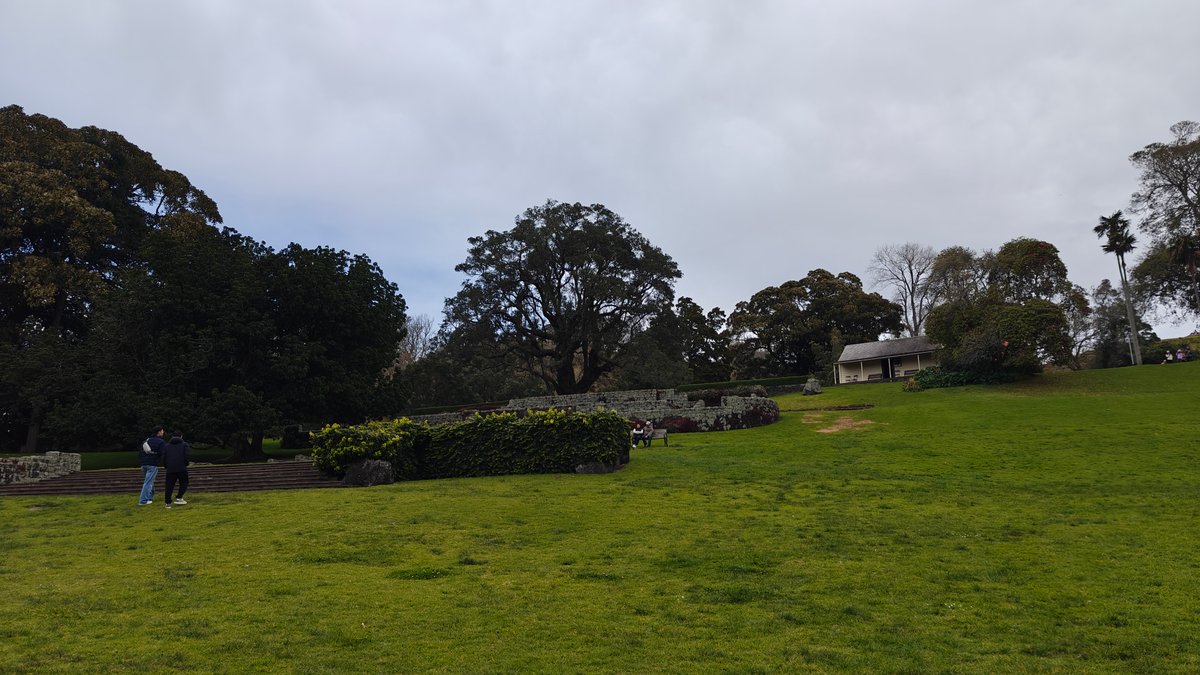
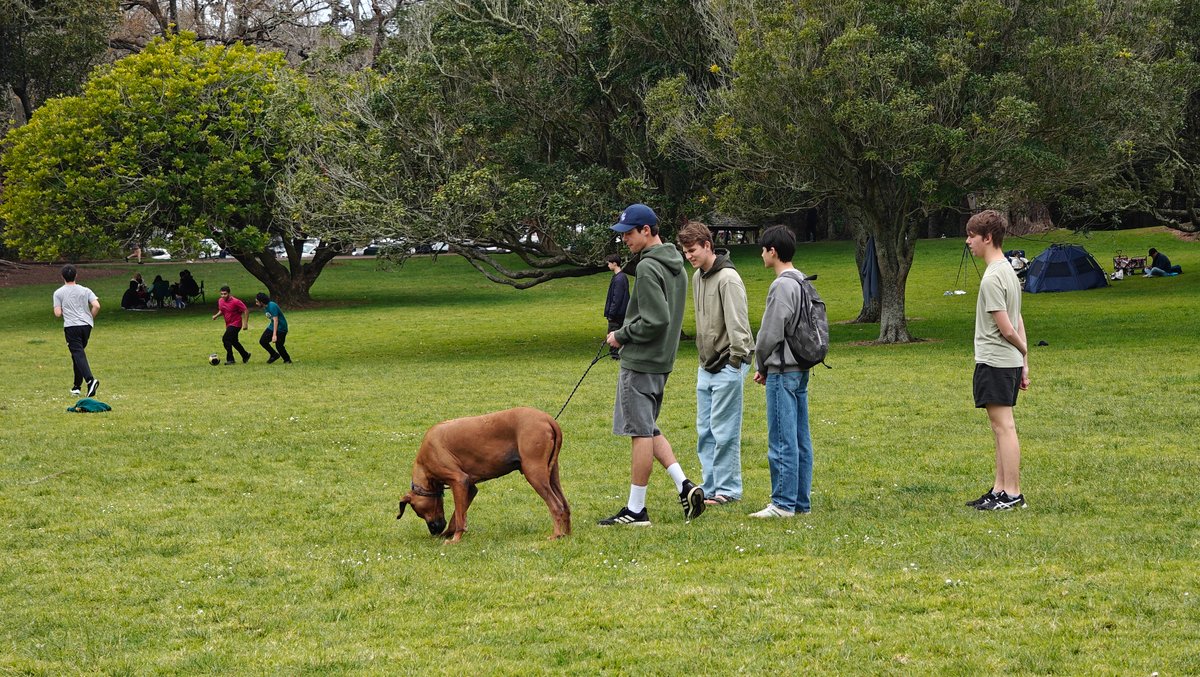
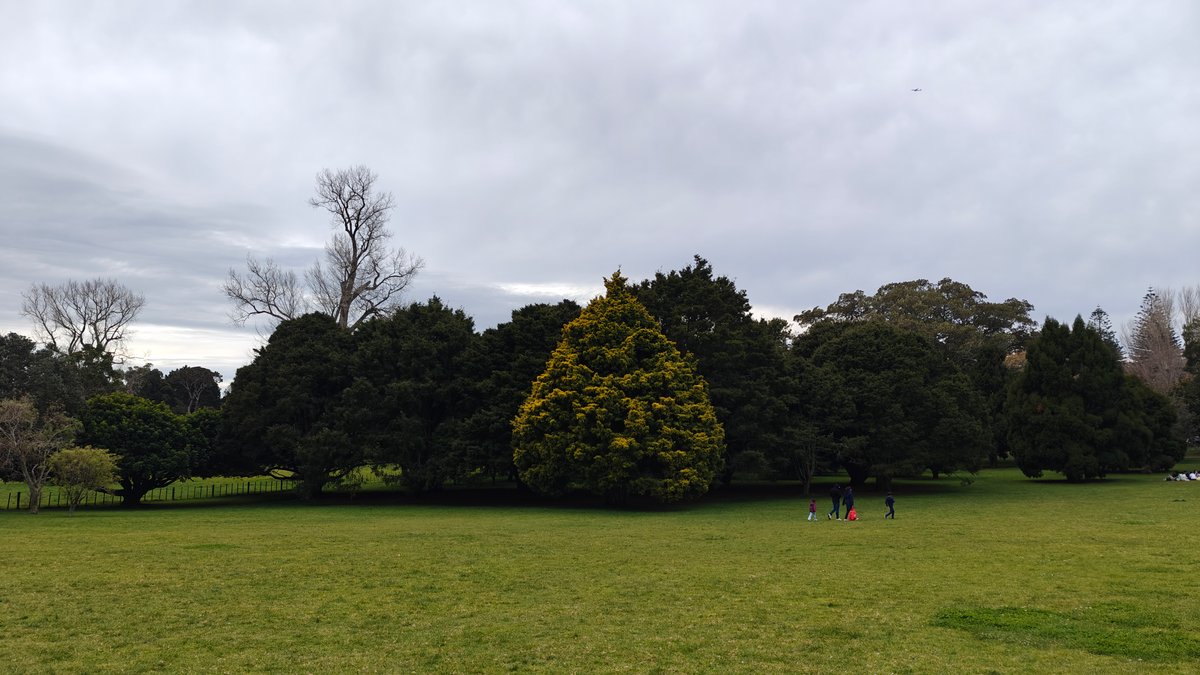
A couple of folks had staked their claim under the tree for a picnic, and the canopy overhead was broad enough to shade a good-sized patch of lawn. As you get closer to the cafe end of the park, the landscape opens up into wide lawns marked out by hedges and conifers. Here, there are groups of people out with their dogs, using the open space.
It all feels like a weekend afternoon, even on a weekday.
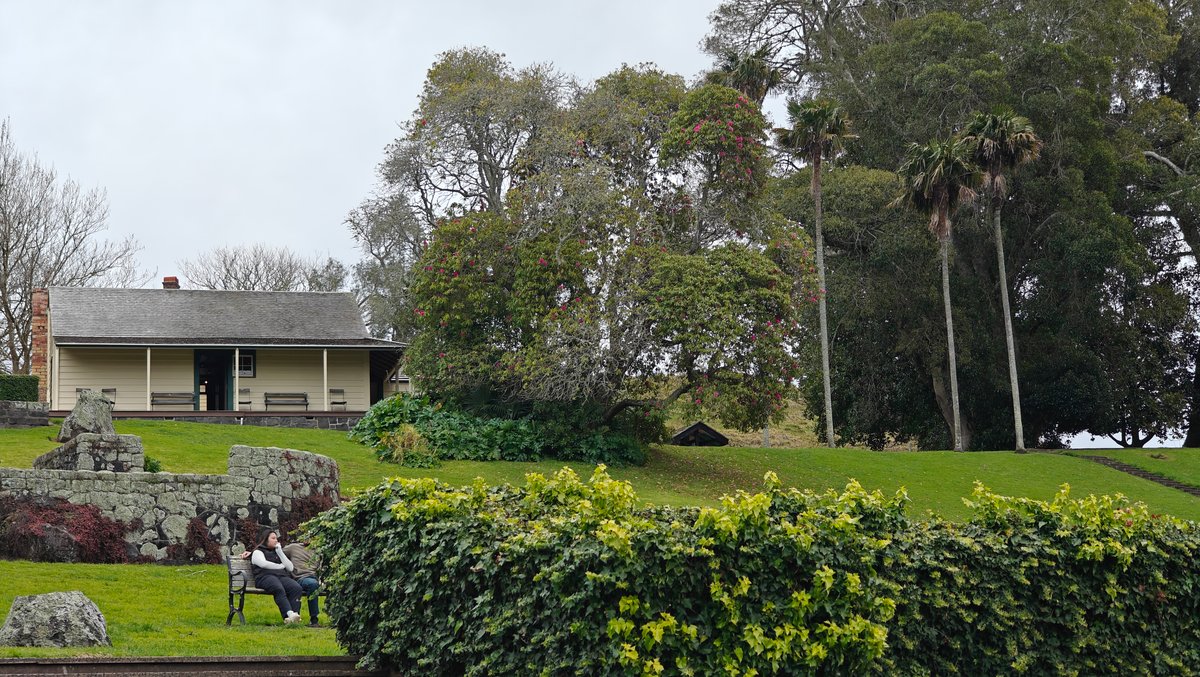
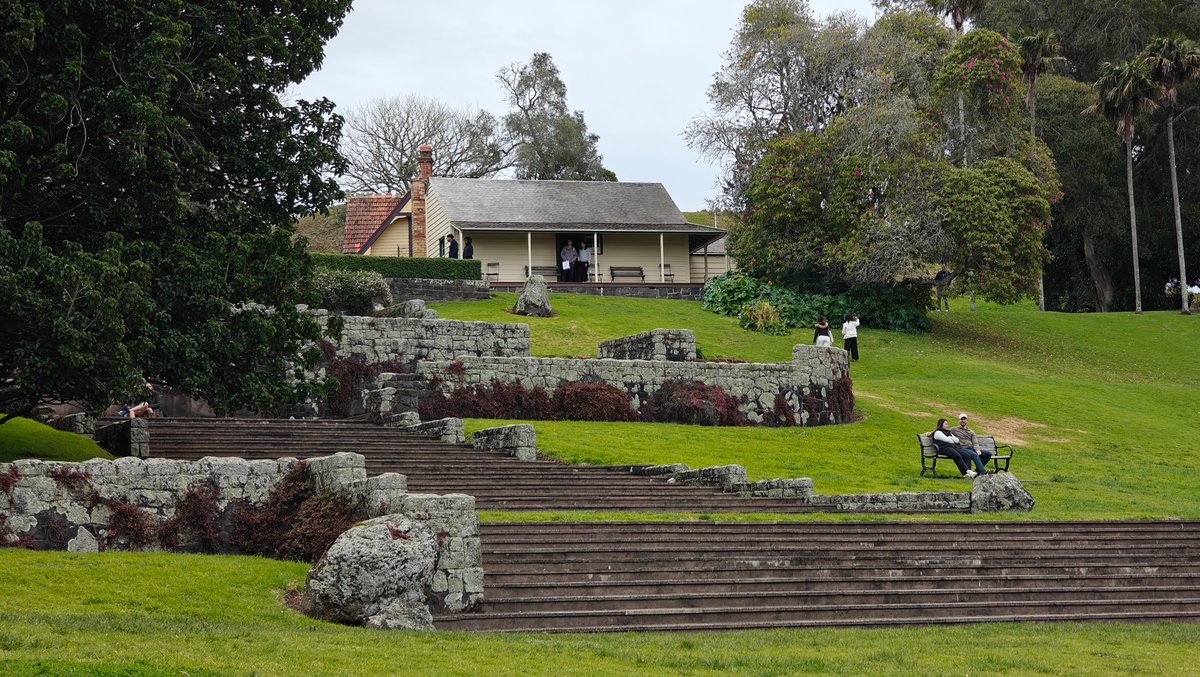
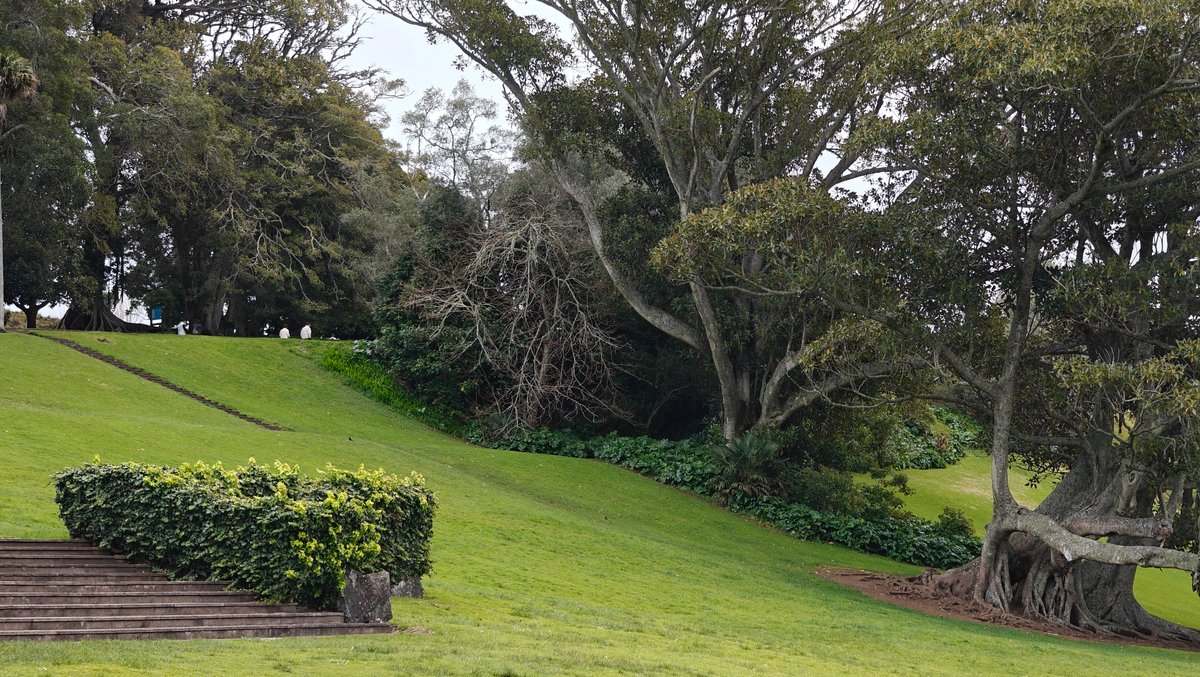
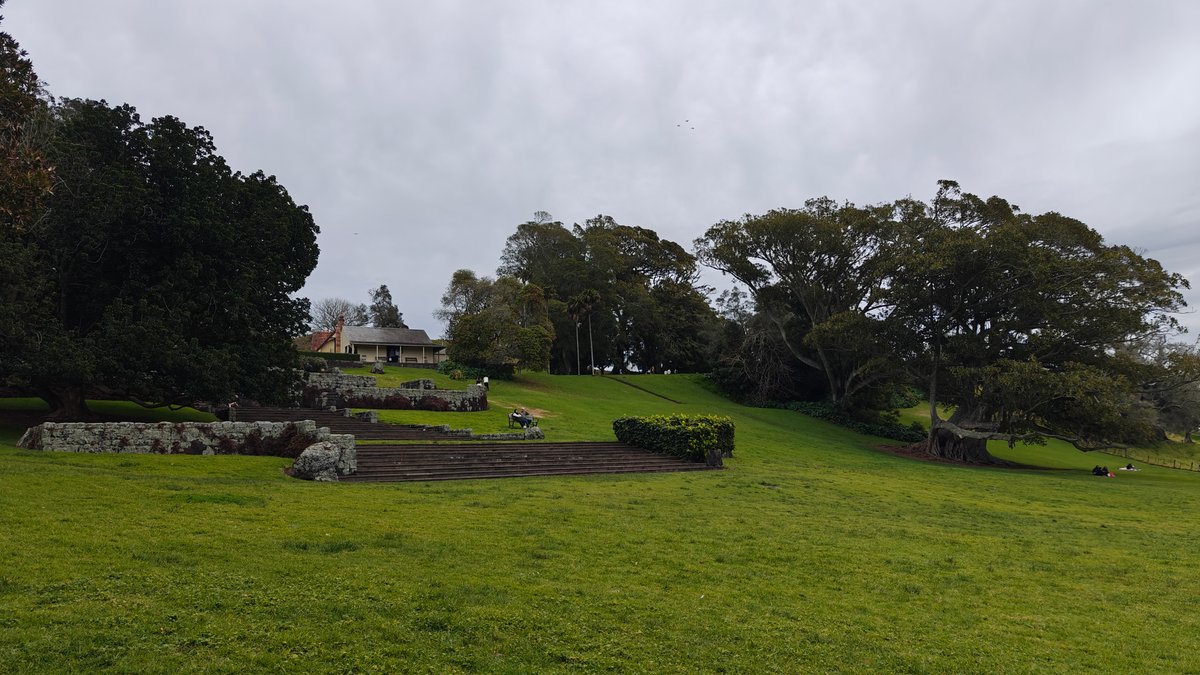
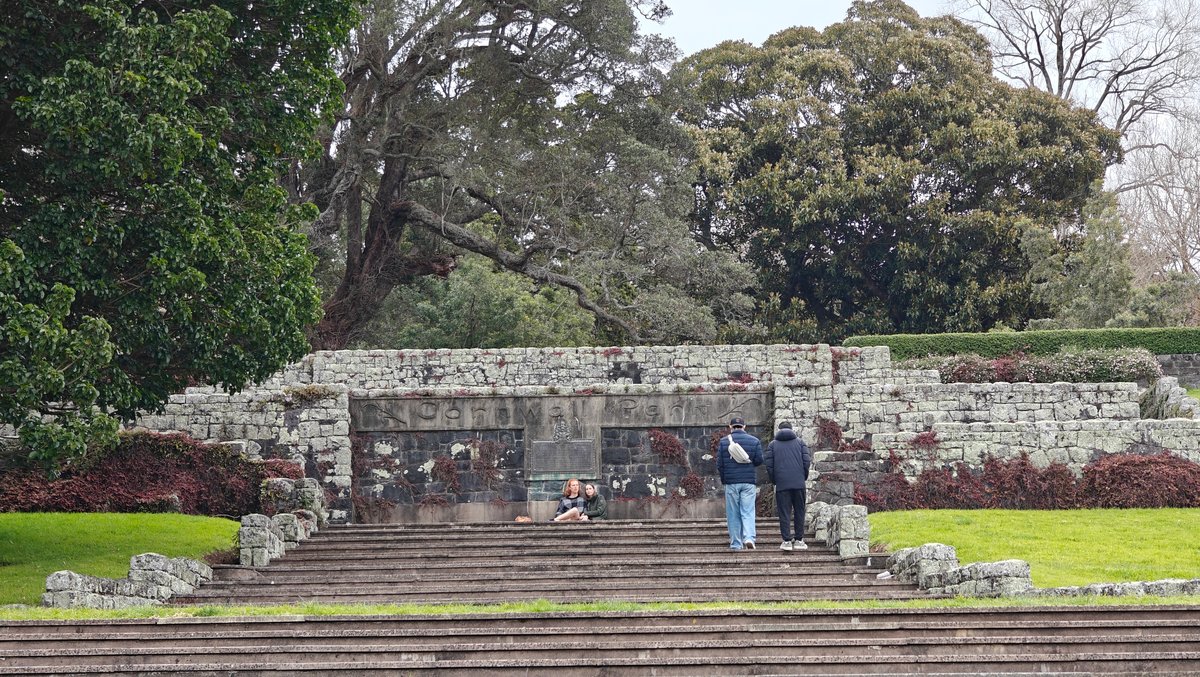
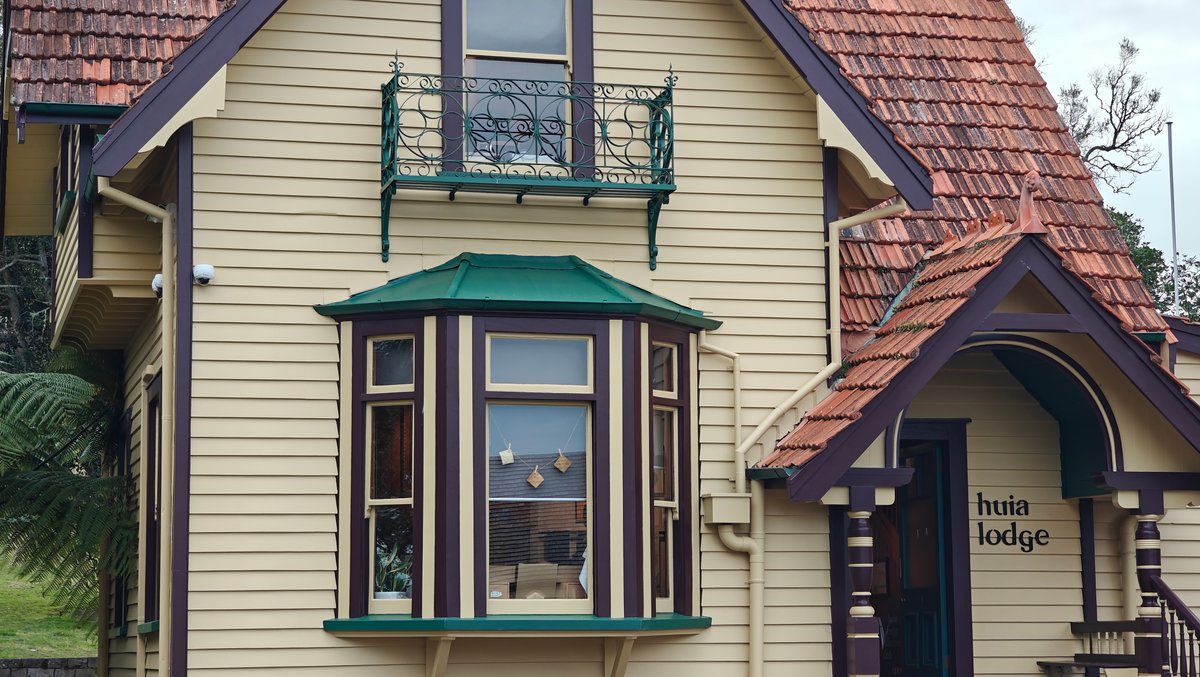
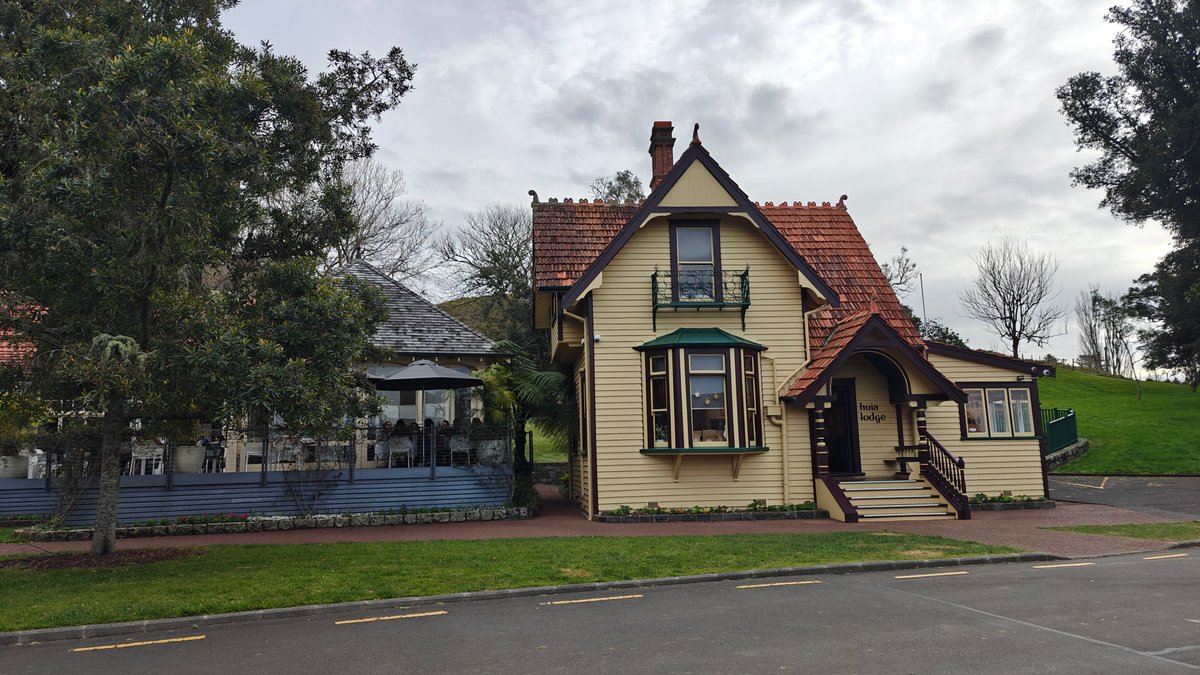
Further along I discovered some stone steps and terracing snaking their way up the hillside near one of the heritage cottages. It’s the kind of colonial-style cottage you find here, well maintained and sitting atop the stonework. Someone had clearly gone to a lot of effort on this set of steps and stone walls, which add a touch of formality to what is otherwise an informal park.
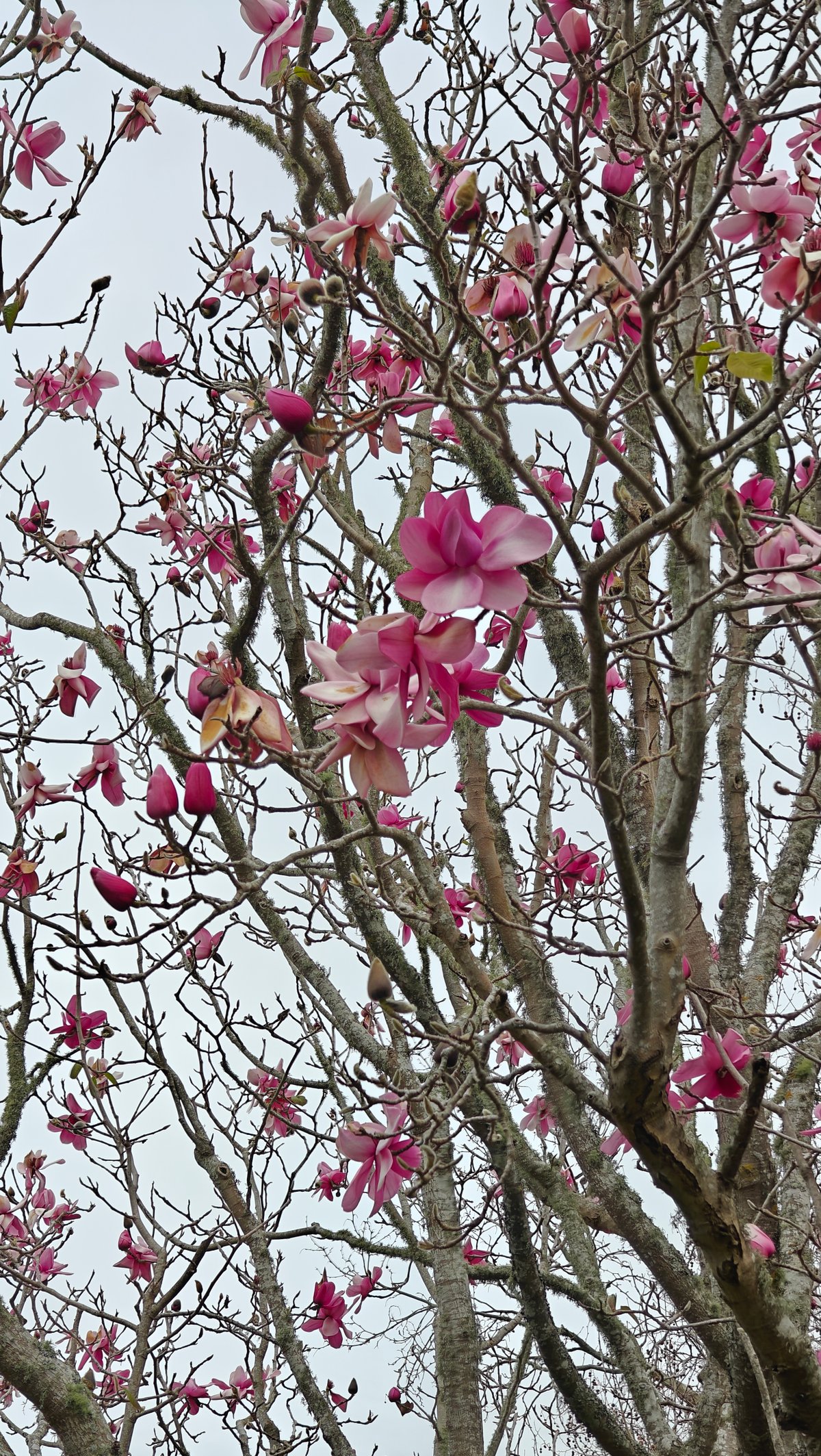
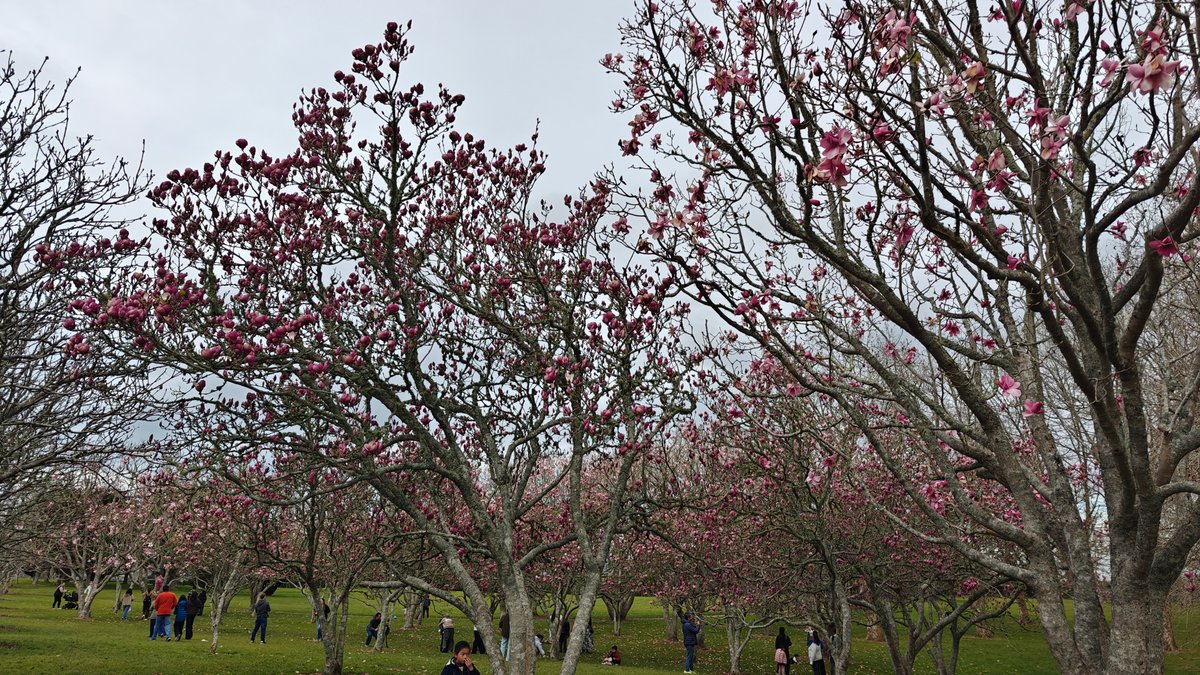
When I went, a magnolia was in peak bloom, its branches completely naked except for flowers. Below the tree, the ground was carpeted in leaves and fallen petals. Everything felt like spring is here but will be gone again in a flash.
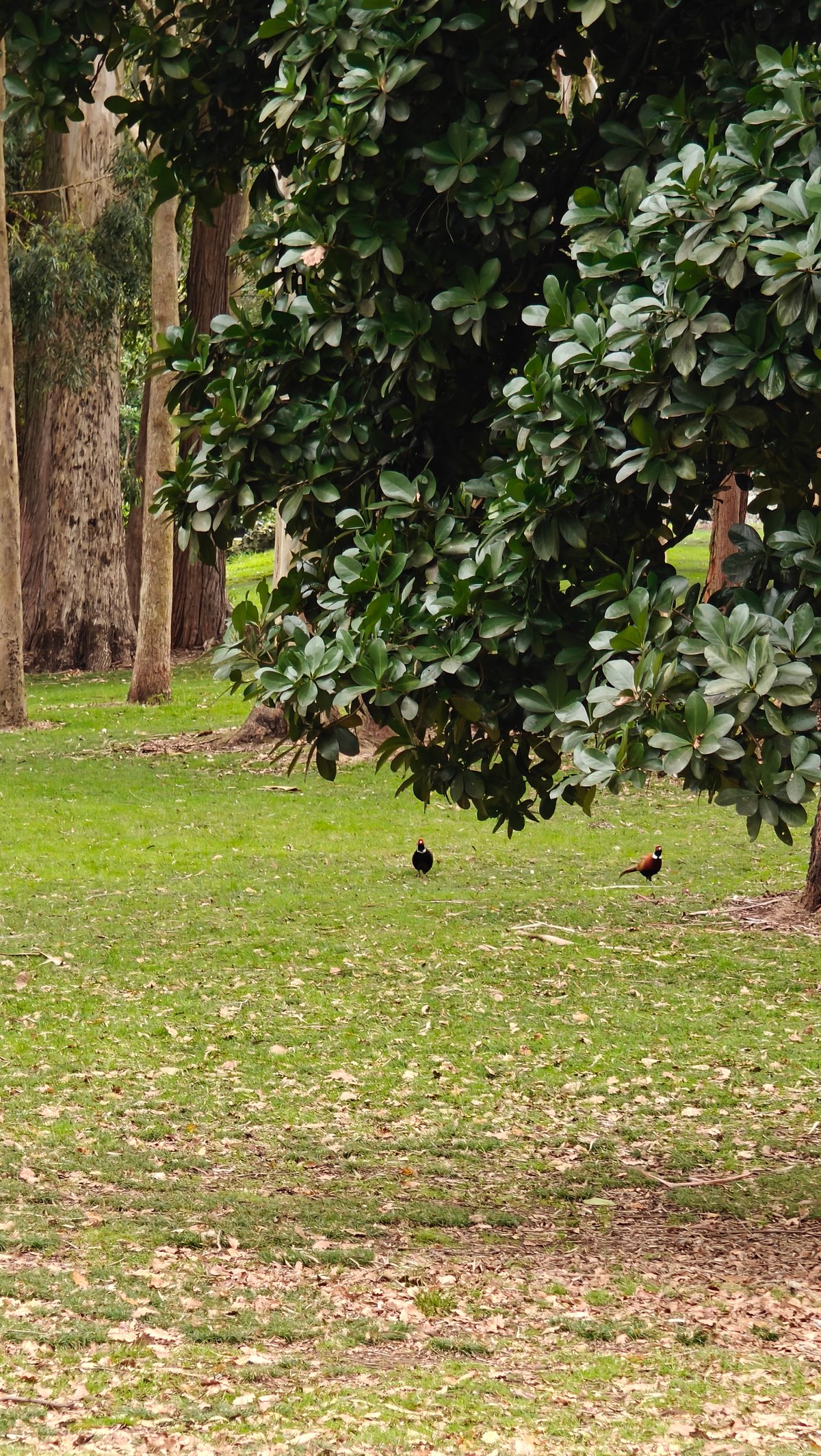
Just wait a week or two.
Then I walked around some of the more open areas with benches tucked away at the edge of the lawn against big tree trunks that anchor the space.
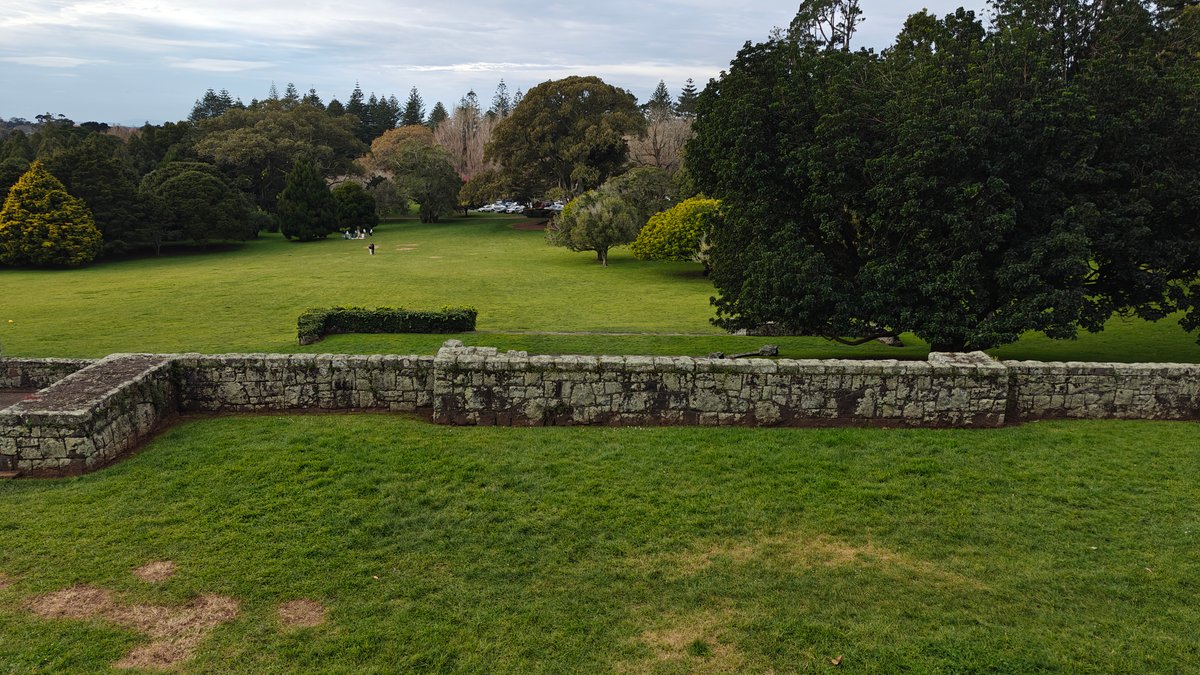
There are no really hard transitions or barriers between areas; each seems to flow into the next, and the park just keeps going on and on. You can easily lose track of time here. I eventually returned to the cafe and car park area.
Near the road, there’s a big old tree that’s grown right through a stone wall; its roots are wedged between the stones as though it’s always been there, longer even than the wall. It probably has.
Cornwall Park Cafe
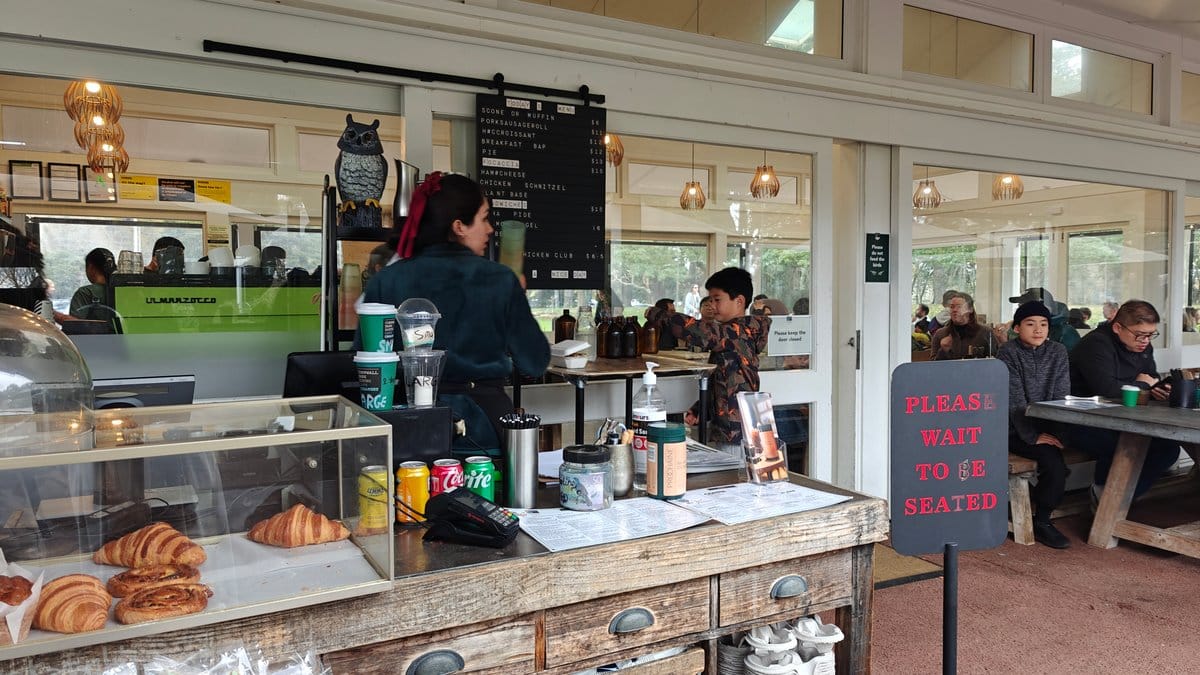
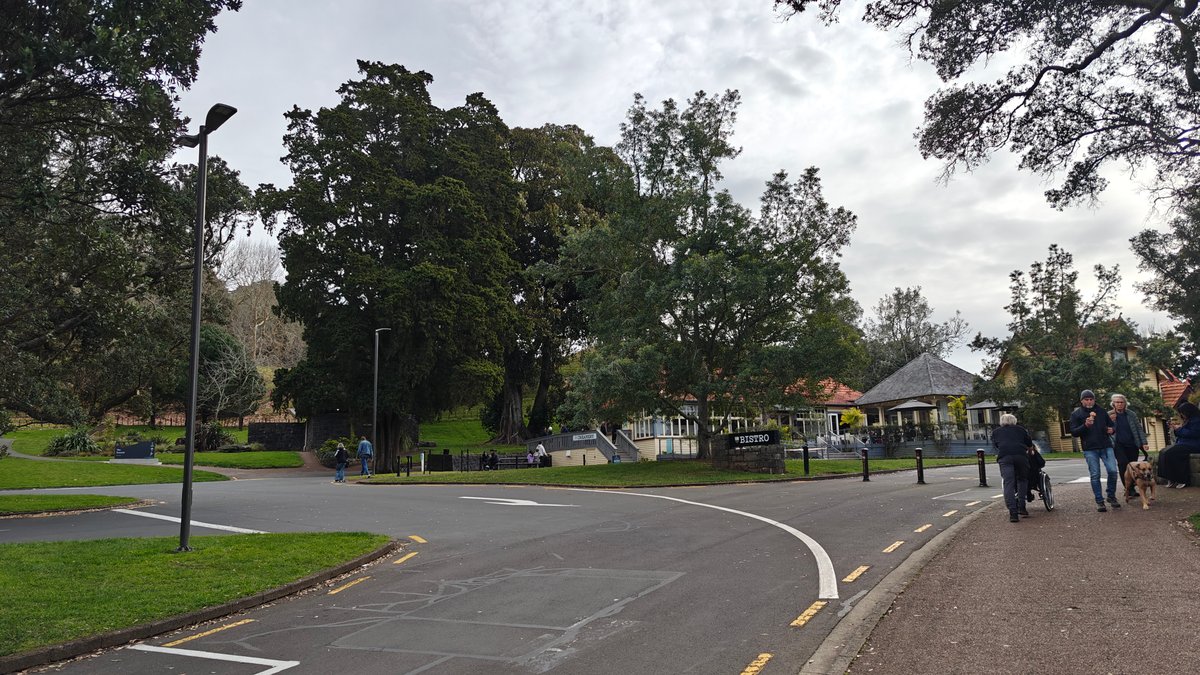
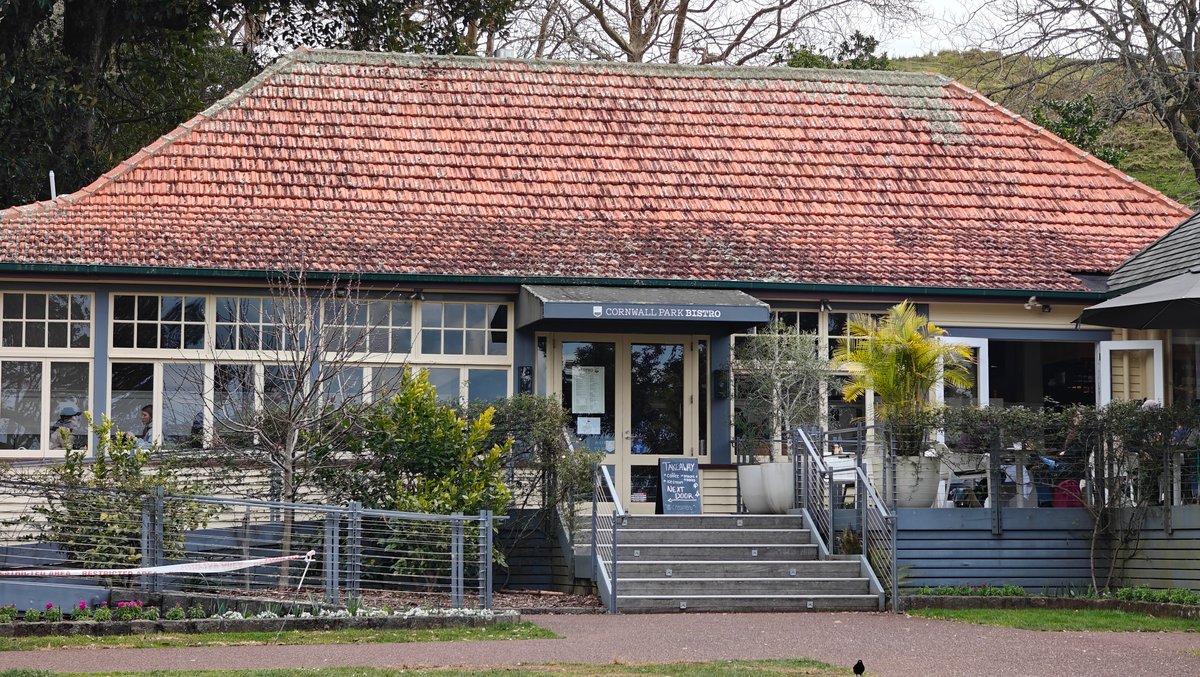
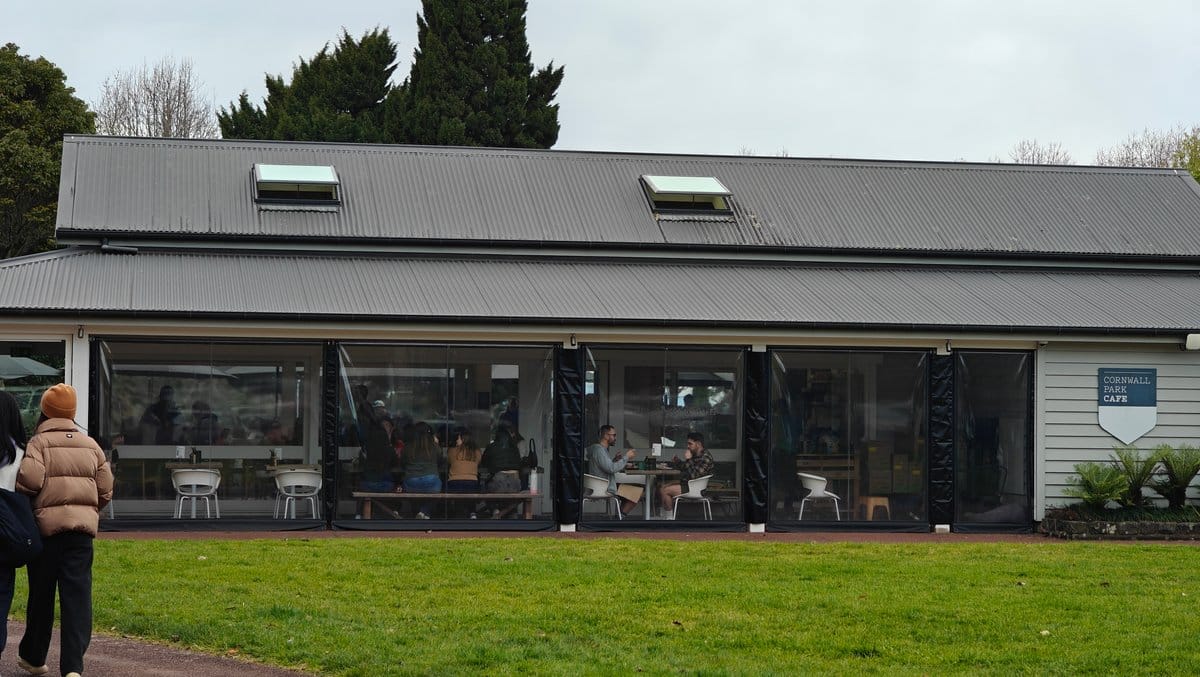
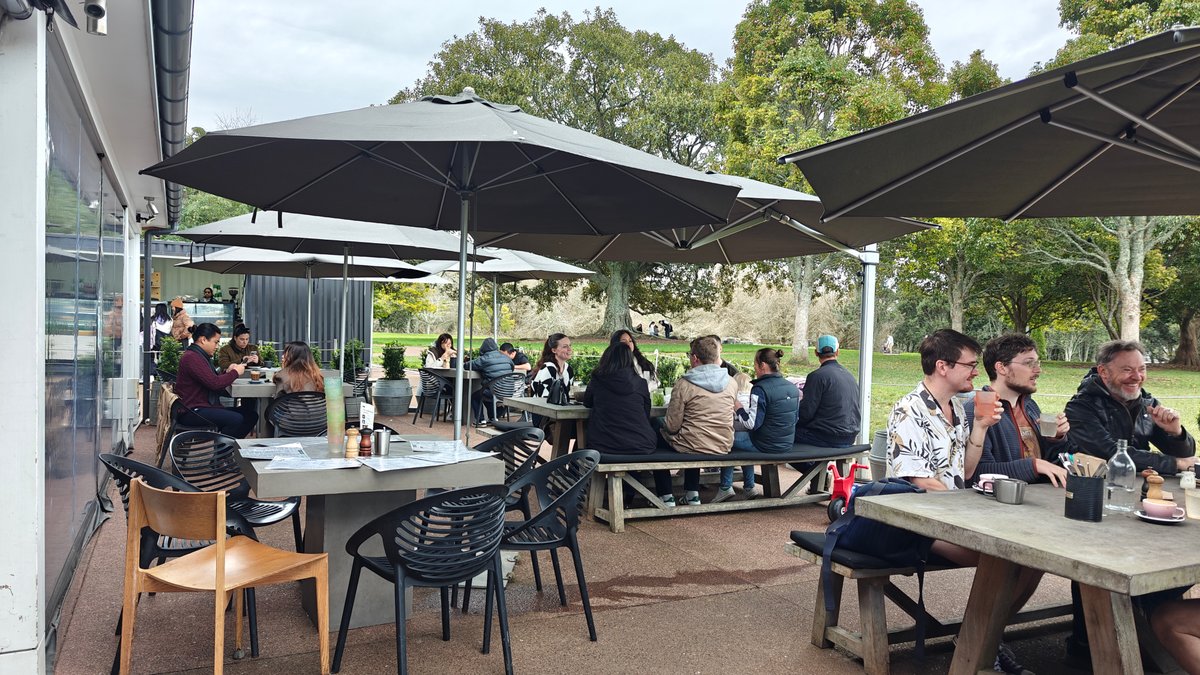
I knew as I neared the cafe that the heritage house next door would be decorated with fancy trim and bay windows. The cafe itself is newer but fits in nicely with the other buildings. One side is lined with a dry stone wall and beyond that stretches the parkland.
It’s a nice place to end a walk. From the trail, you can easily spot Cornwall Park Cafe right near the edge of the park. By then I was happy to plop down, and the timing could of been better.
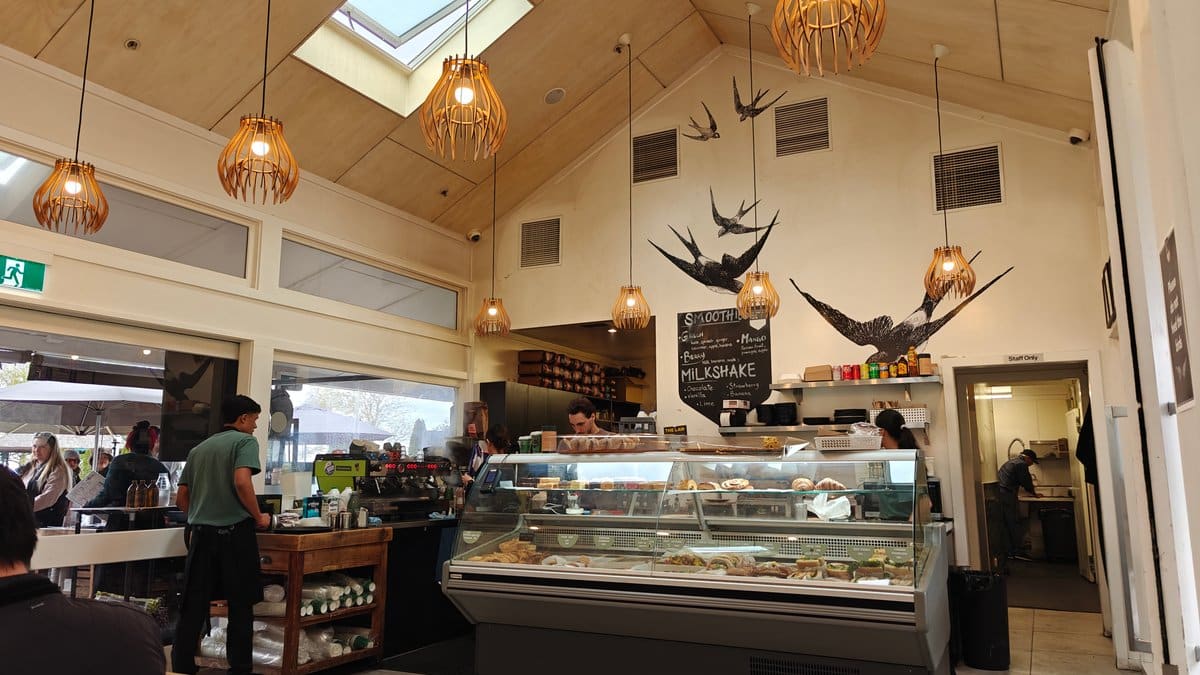
The interior is simple: a standard coffee counter and servery arrangement on one side, with a high, pitched ceiling. There are some tables inside. It wasn’t crowded despite being busy.
It feels light and airy and not too small for its size. I ordered at the counter and grabbed a number.
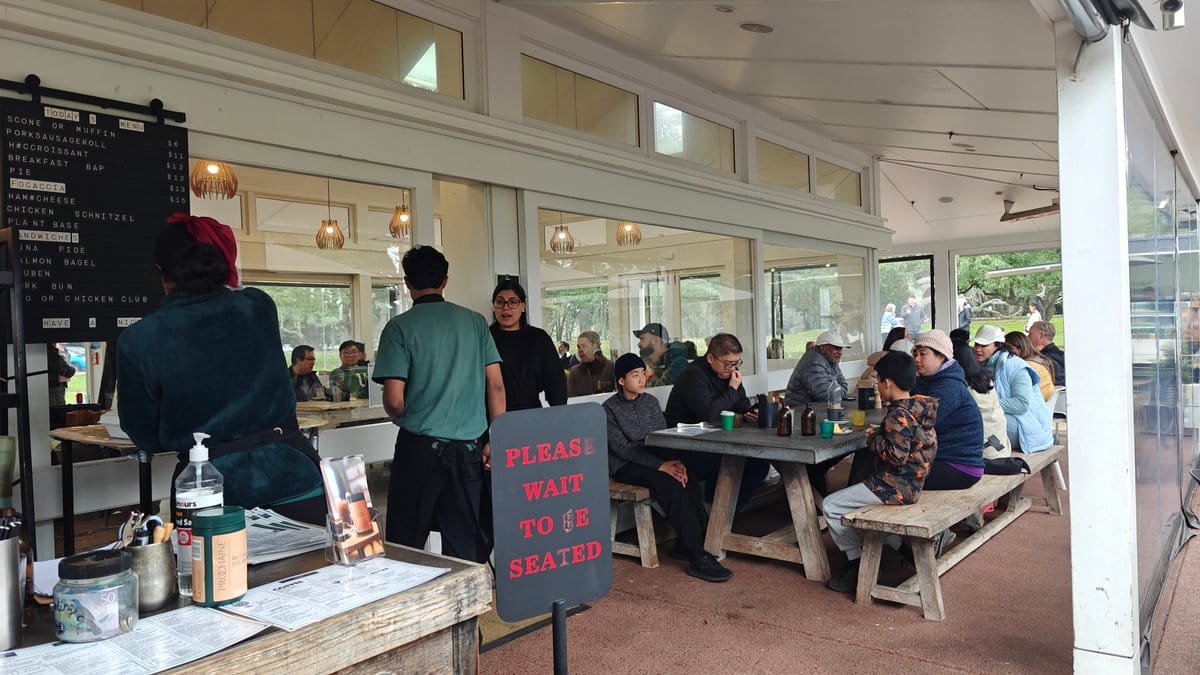

At this point I sat down at one of the shared tables outside on the covered canopy. There was already a couple of other groups sitting here. This is the sort of place that you can end up chatting to the person next to you (though everyone looked happy enough doing their own thing).
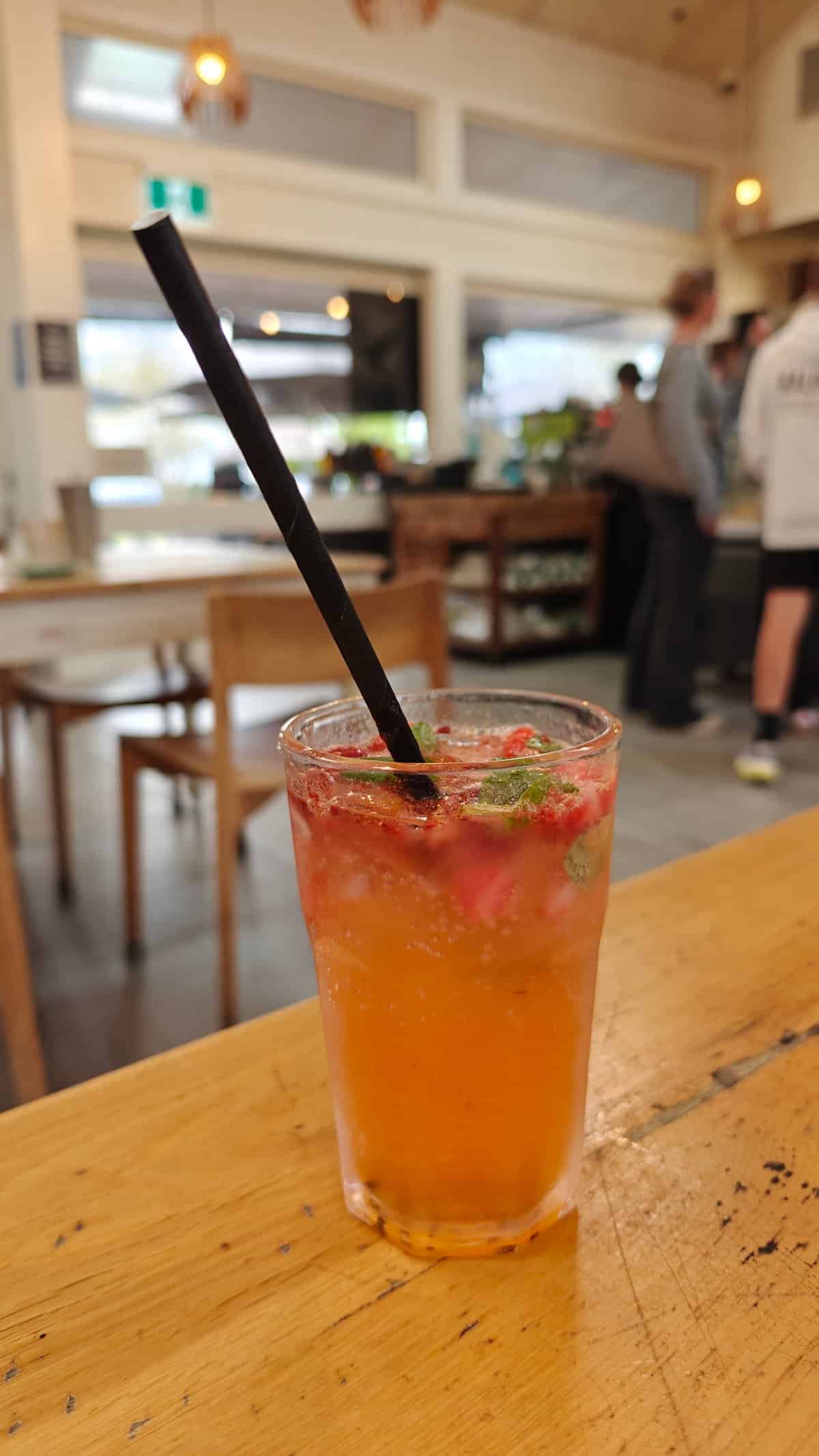
After a few hours in the sun, I ordered an iced drink, cold, sweet, and just what I needed. With a view back out over the park, it was easy enough to zone out for a while and watch people come and go.

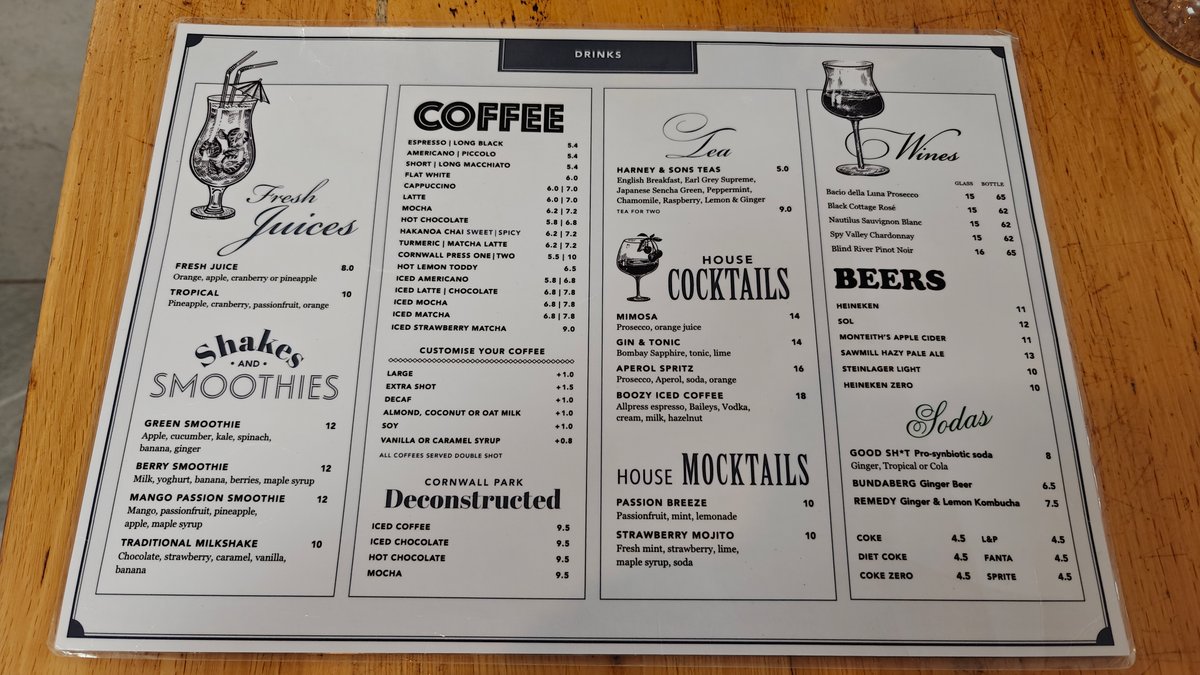
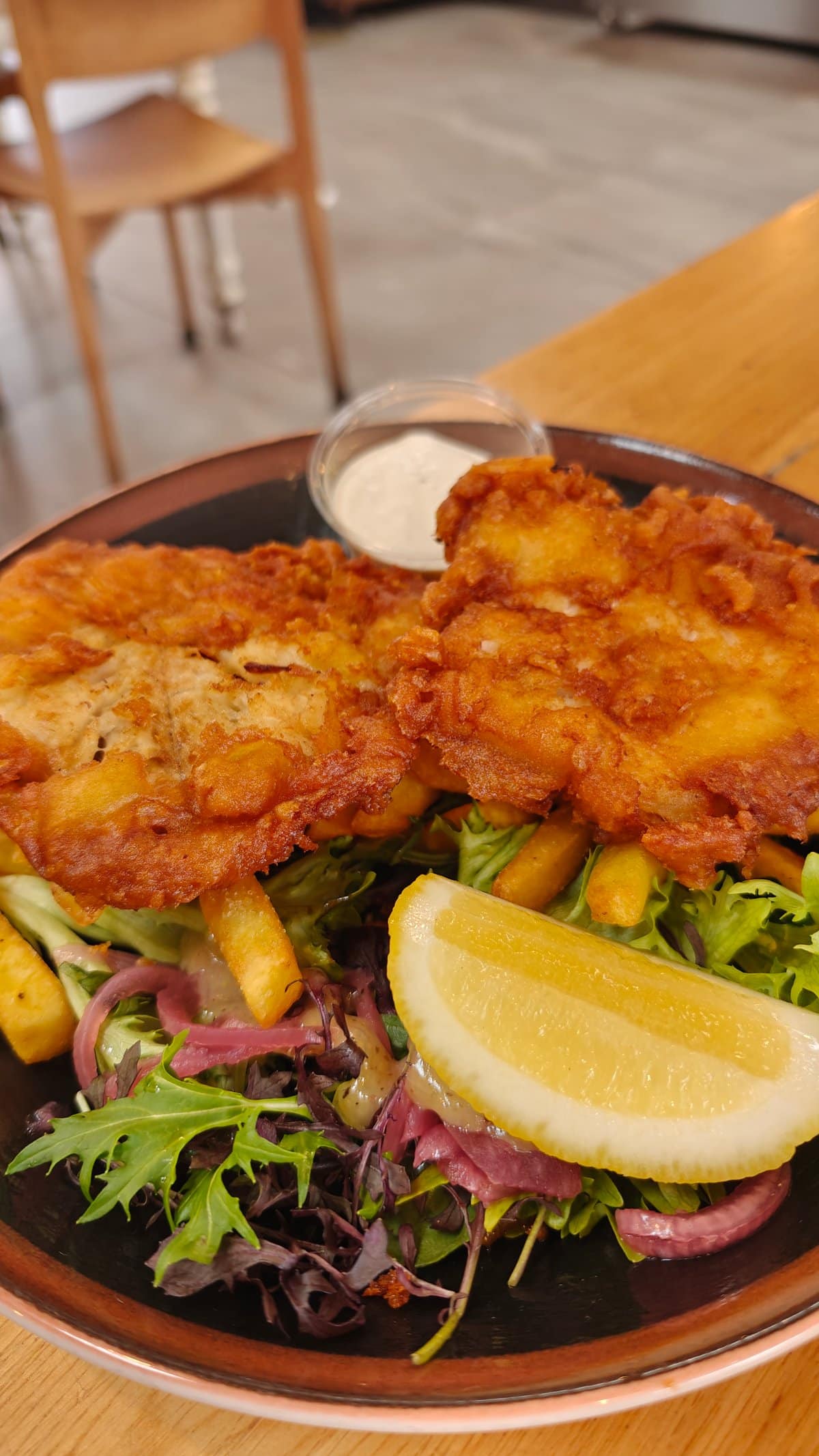
I had the battered seafood plate, served with a side salad. It was generous (but not ridiculous), fresh and the batter was crisp. My partner had a tomato sauce pasta dish that sounded simple but hit the spot.
Both dishes was neither trying to be fancy nor anything more than solid cafe food done well.
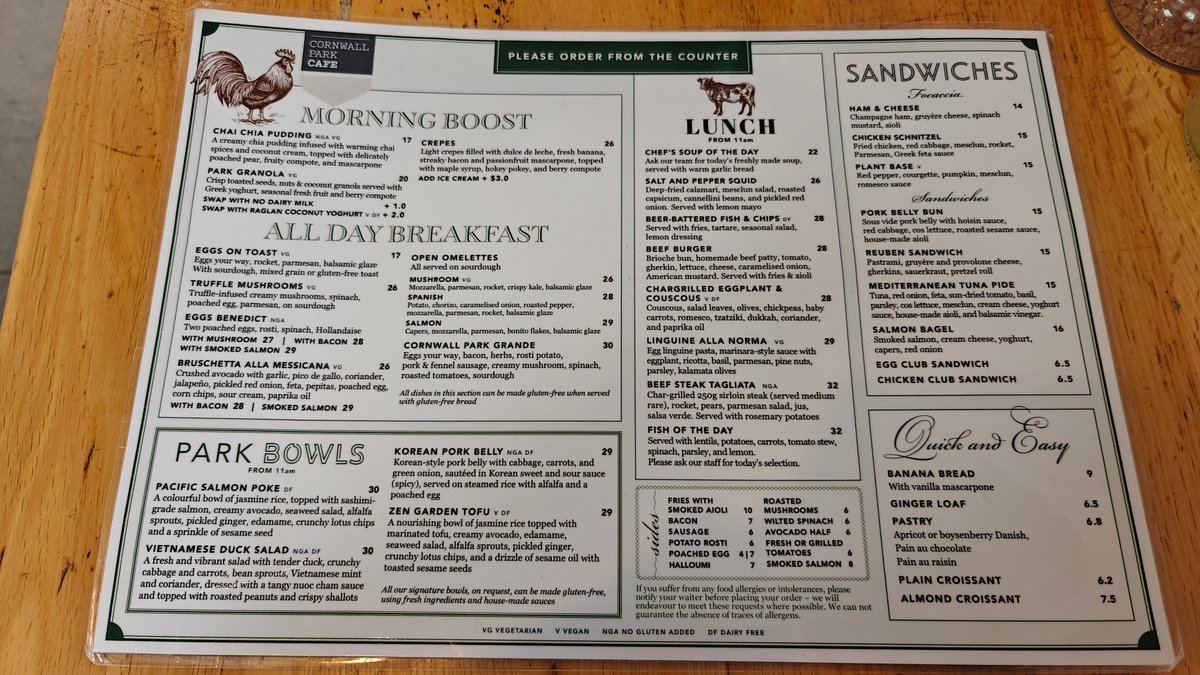
Drinks on one side, food on the other, the menu boards are up on the wall. A decent range; cabinet food, cooked meals, coffee, cold drinks, and the prices looked fair enough for what they were. The sort of menu that works whether you’re after a coffee and a slice or a full lunch.
A stop at the cafe was a fitting conclusion to the walk, and I found myself enjoying my time here in Cornwall Park, it’s a really nice place to spend a morning. It has that kind of character that most urban parks lack: grazing cattle, open paddocks, and old trees. It’s definitely worth visiting if you’re in Auckland and looking for some green space within the limits of the city.
Do you have a favorite park cafe spot in your city? Have you visited Cornwall Park?