
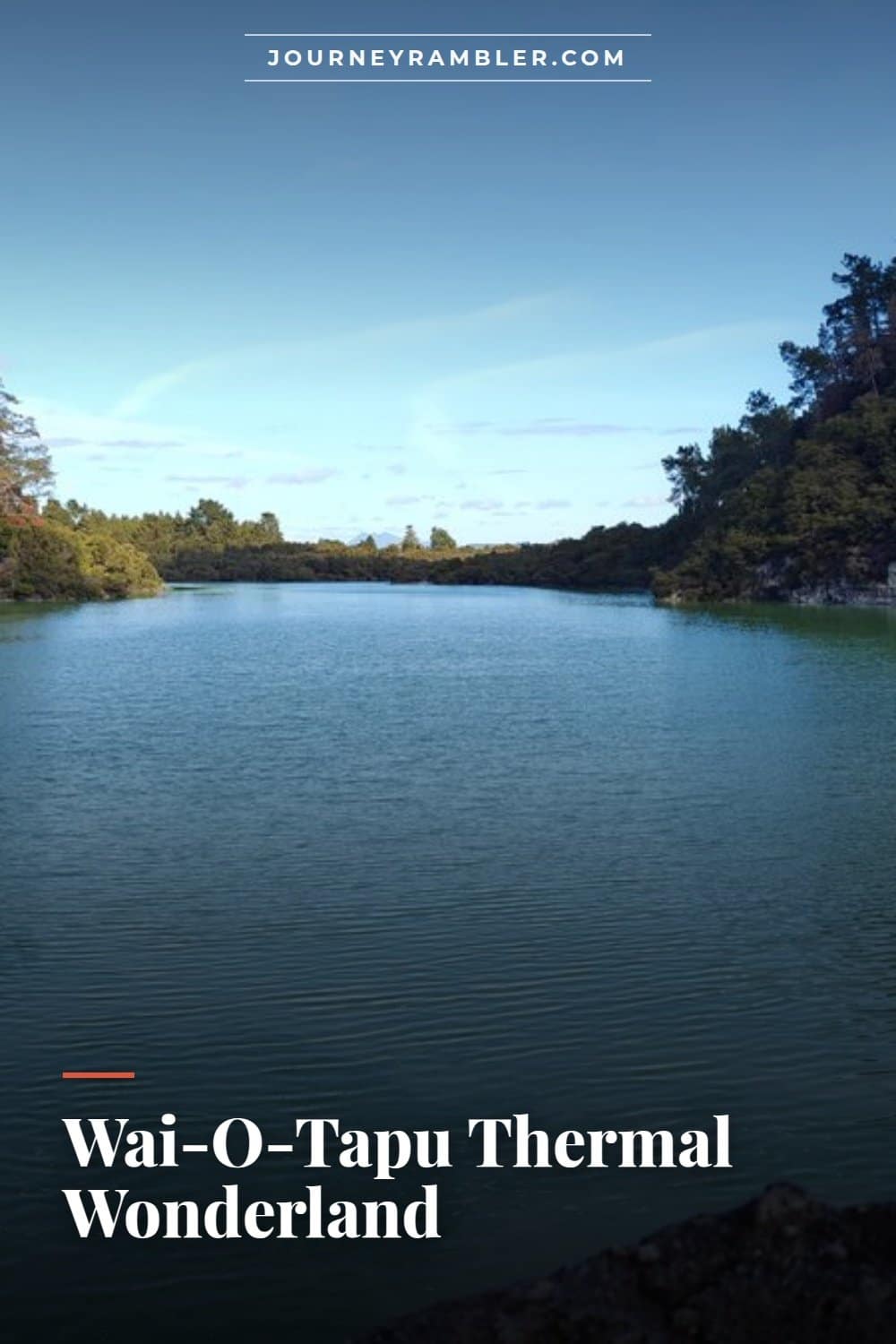
Wai-O-Tapu Thermal Wonderland in Rotorua was the strangest place I have walked through yet, and the first where it seemed as if the earth itself were performing a show. Mud bubbles away in pits, steam gushes from craters, and the water and rock are stained every color I never knew existed except at a paint shop. It’s unsettling and surreal, but once you step onto the boardwalks it’s difficult not to be swept up into the strange and alive feeling of it all.
This is what my walk around the reserve was like. A good few hours following the loop track.
My Walk Around Wai-O-Tapu
Wai-O-Tapu Thermal Wonderland
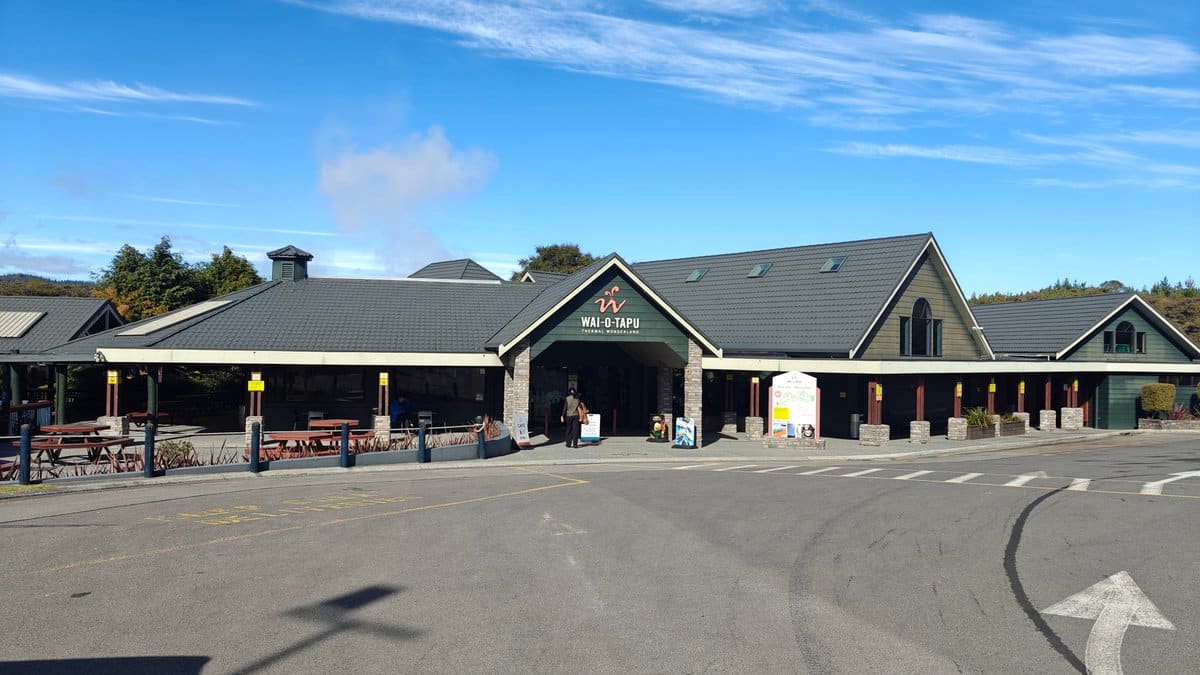
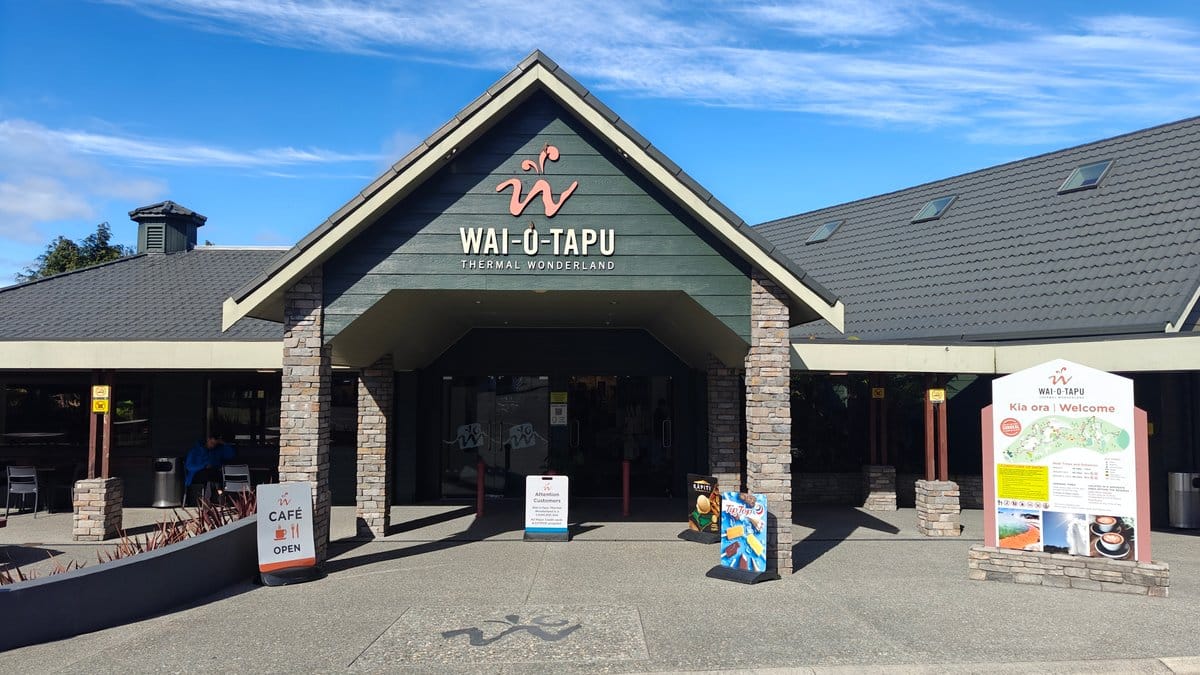
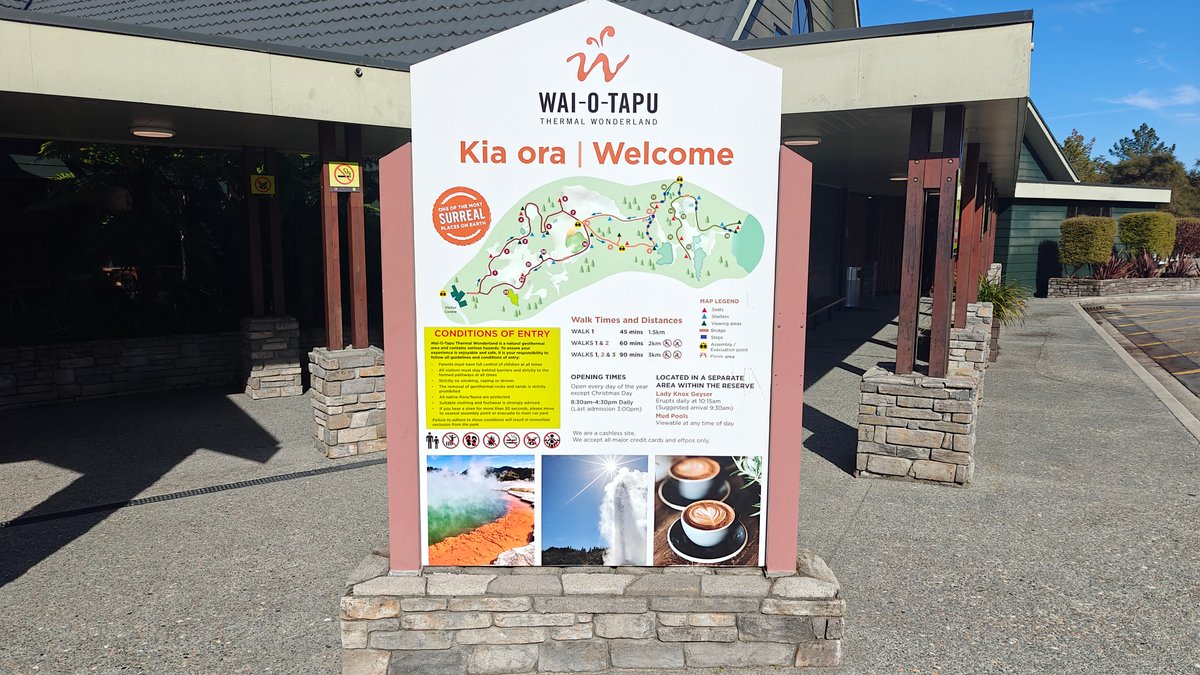
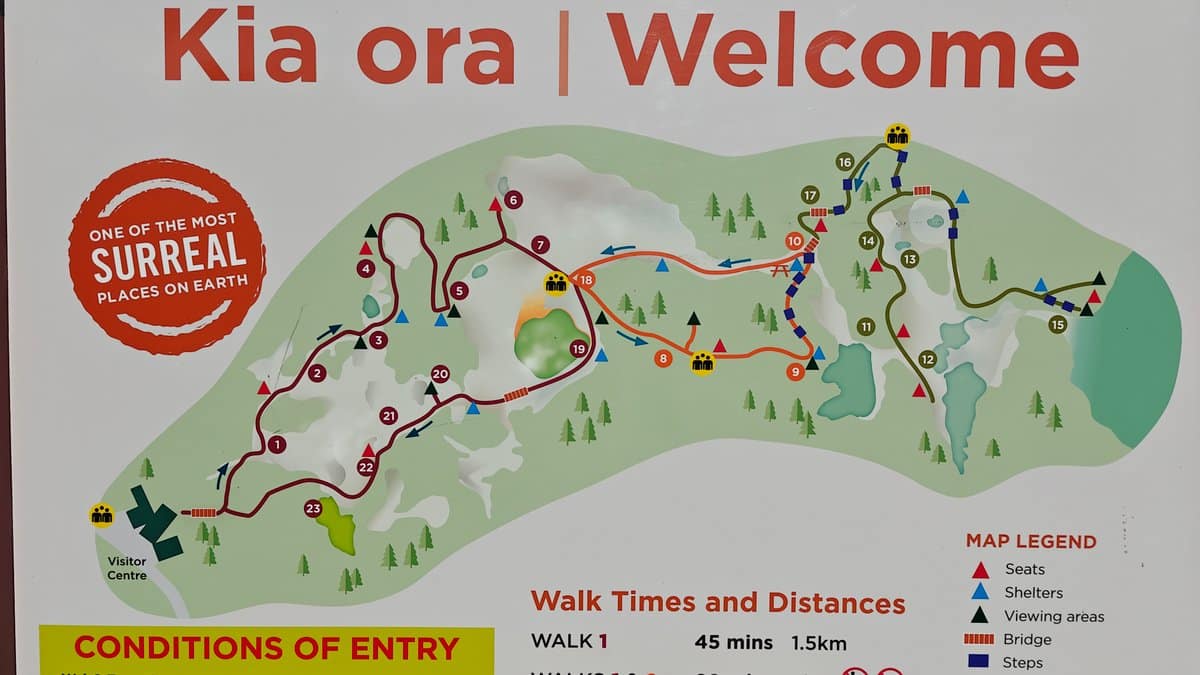
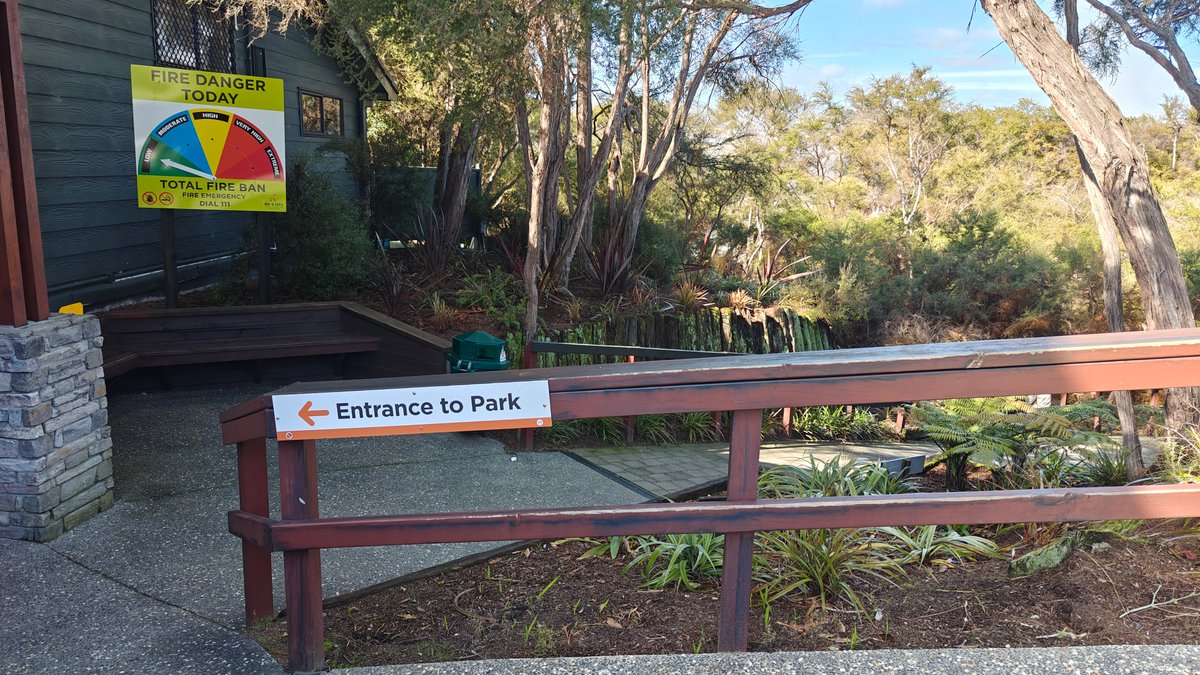
From here I drove into the park proper, stopping first at the visitor centre where I parked up and then grabbed myself a map. It’s all very well organised with toilets, a little shop, and loads of information boards that explain what you’re seeing. This was good because, let’s be honest, without them I wouldn’t have known what I was looking at half the time!
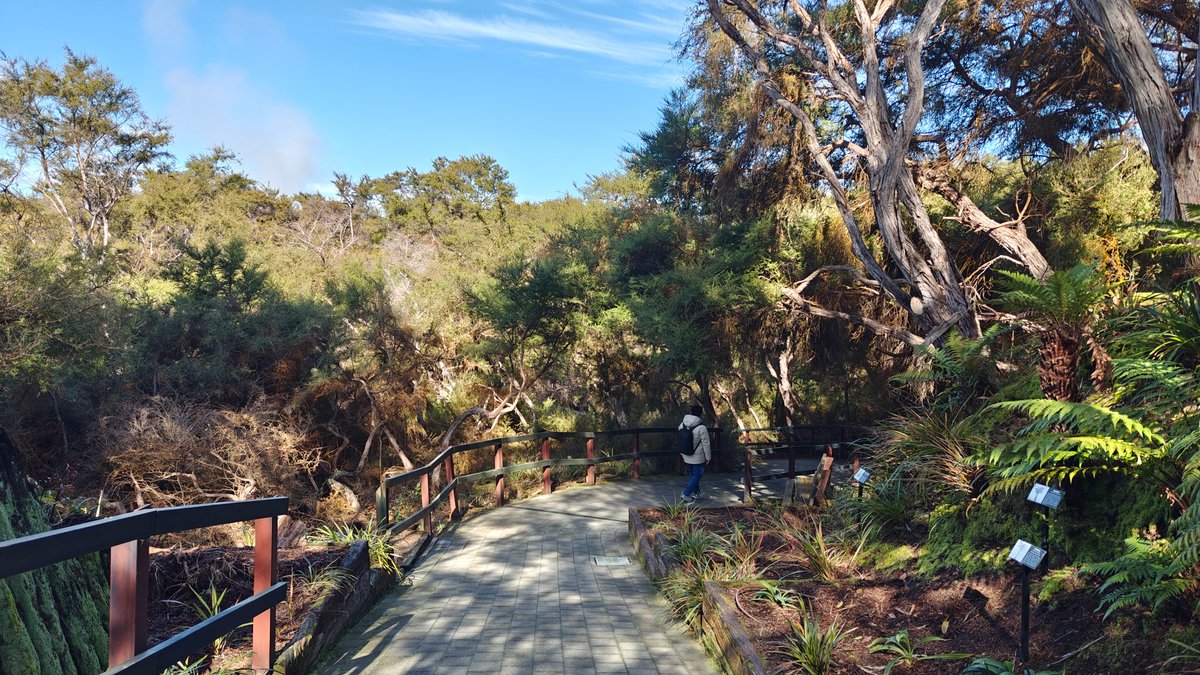
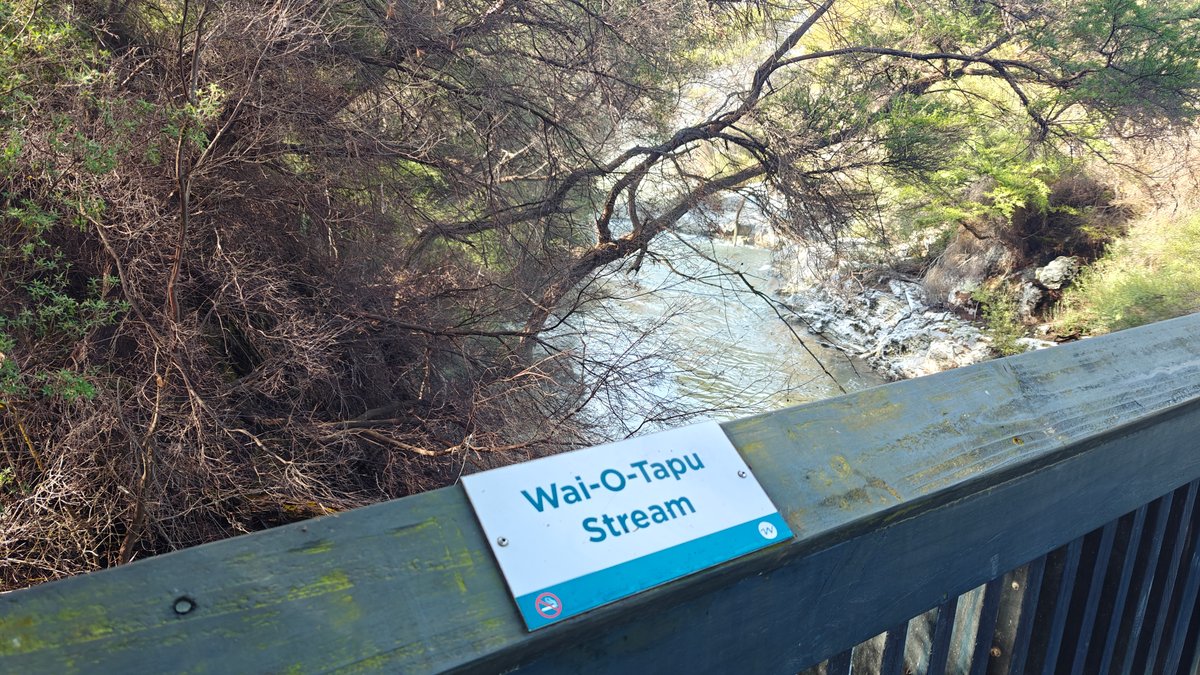
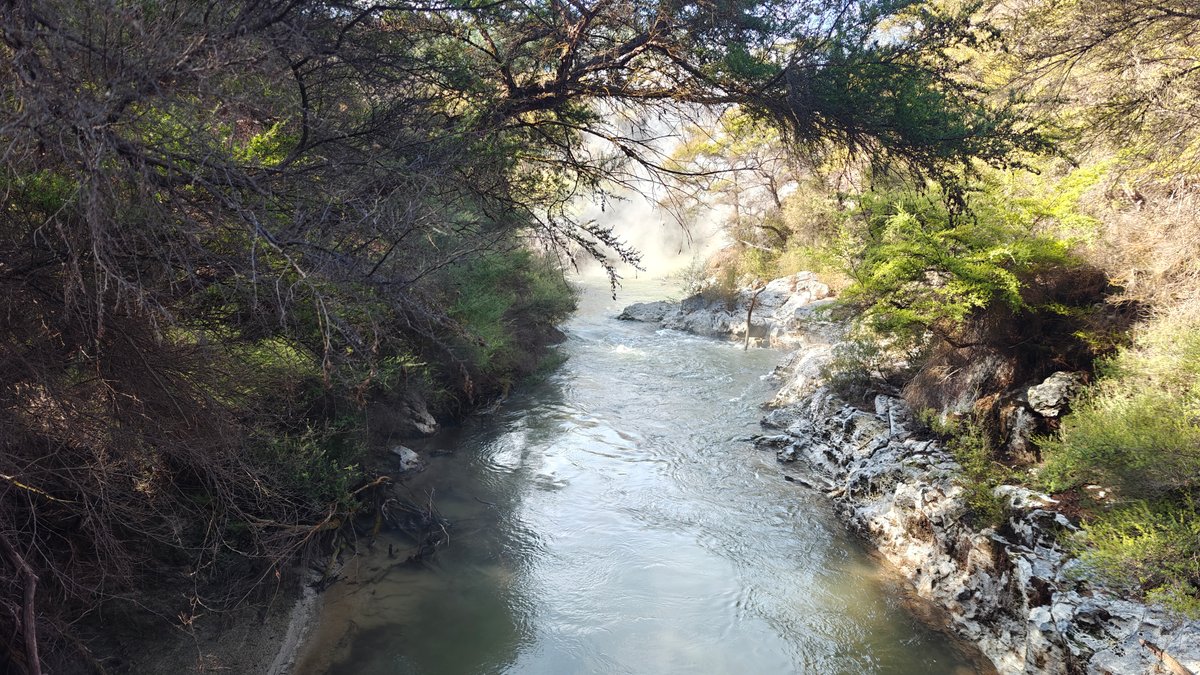
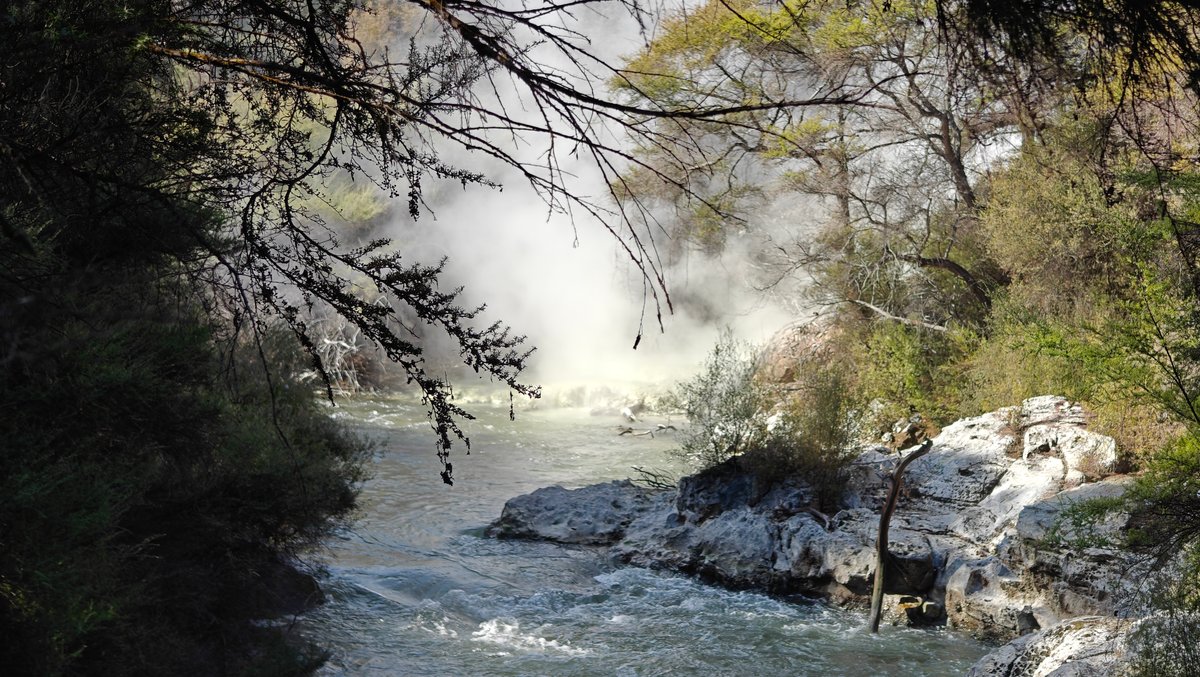
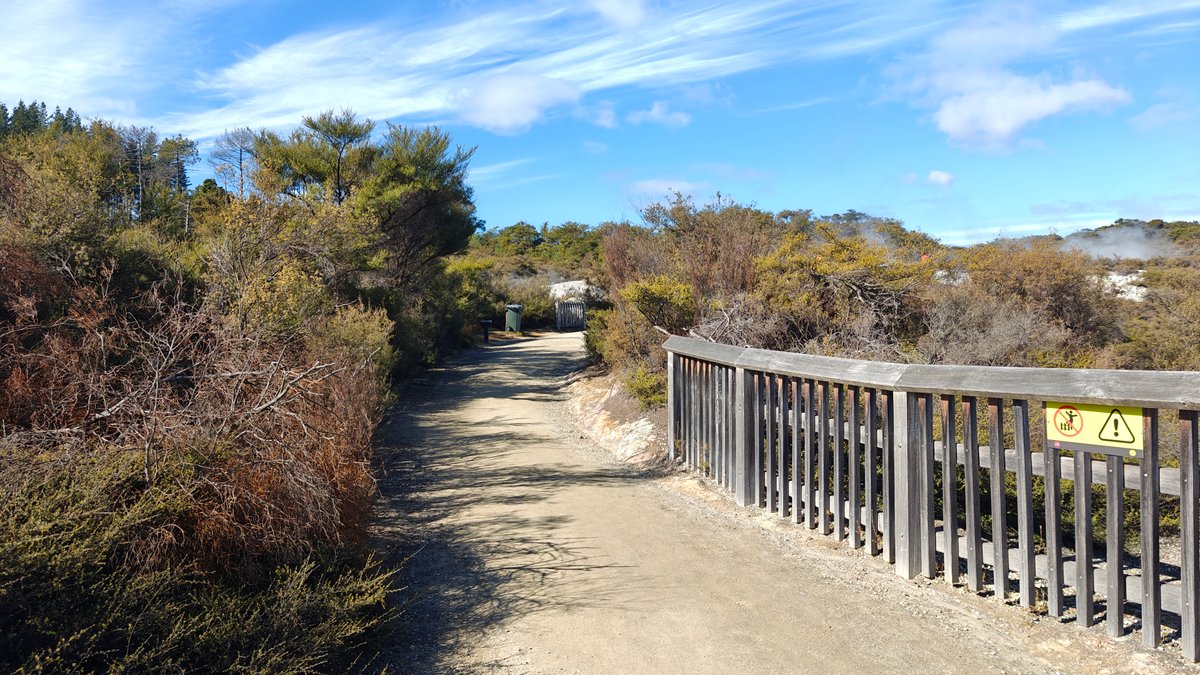
At first the walk is gentle. It winds through scrubby bush and along timber boardwalks. My first real clue that this place was heating up came when I crossed a stream that was already steaming at the edge.
Soon after, the smell hit me, that eggy sulphur tang that you either get used to or you don’t. I fell somewhere in the middle.
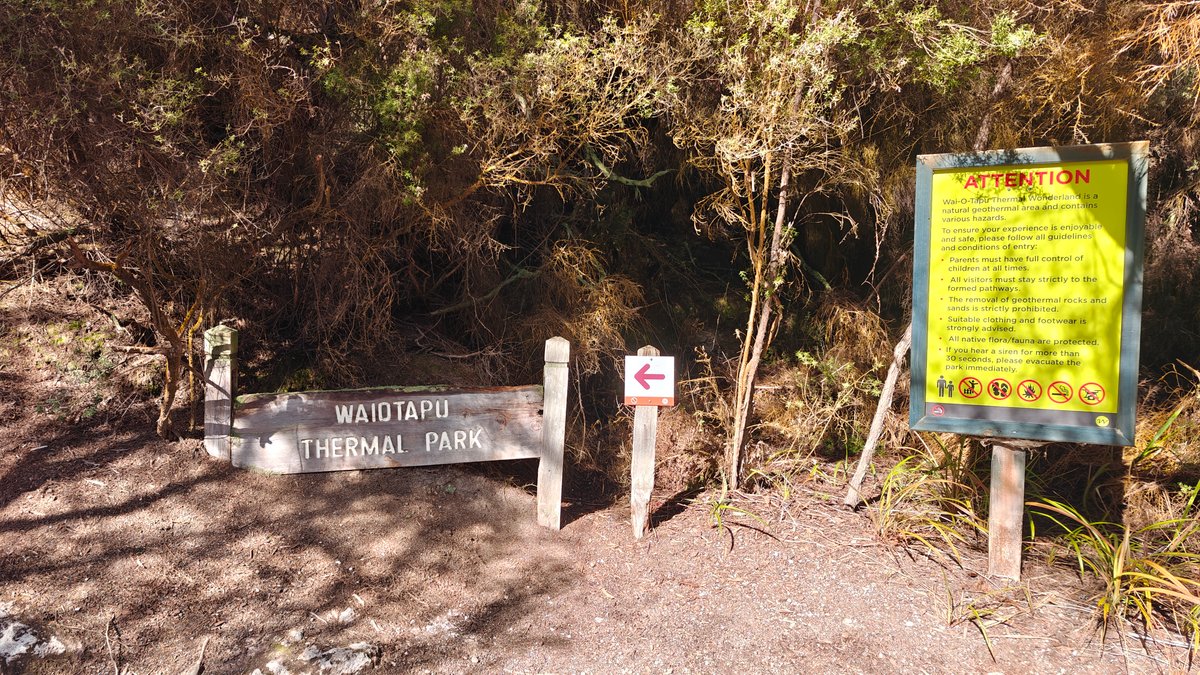
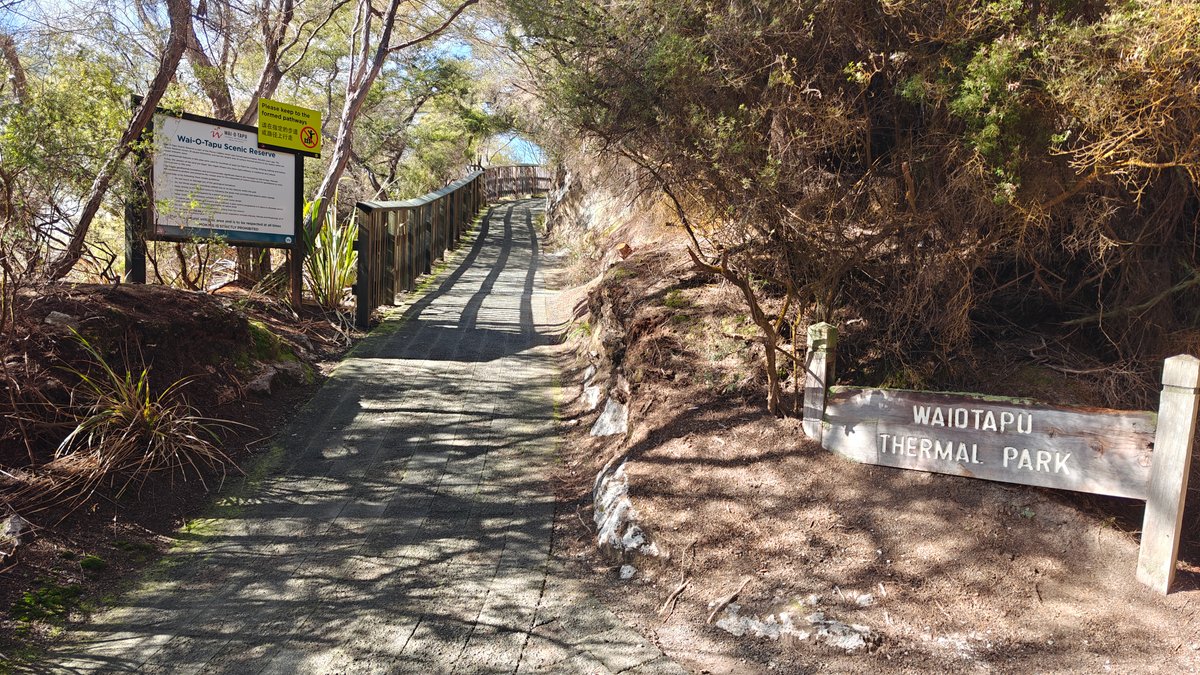
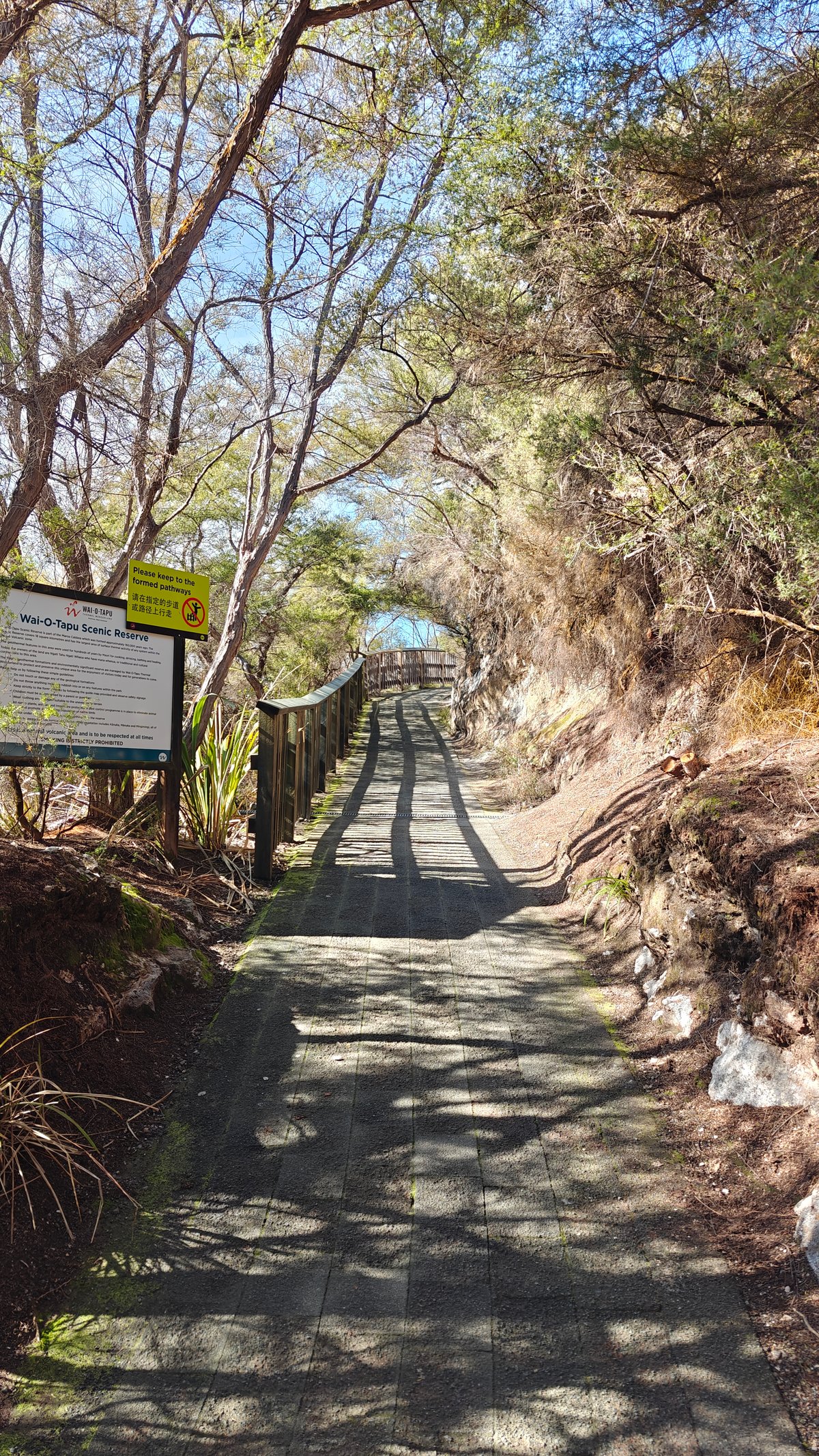
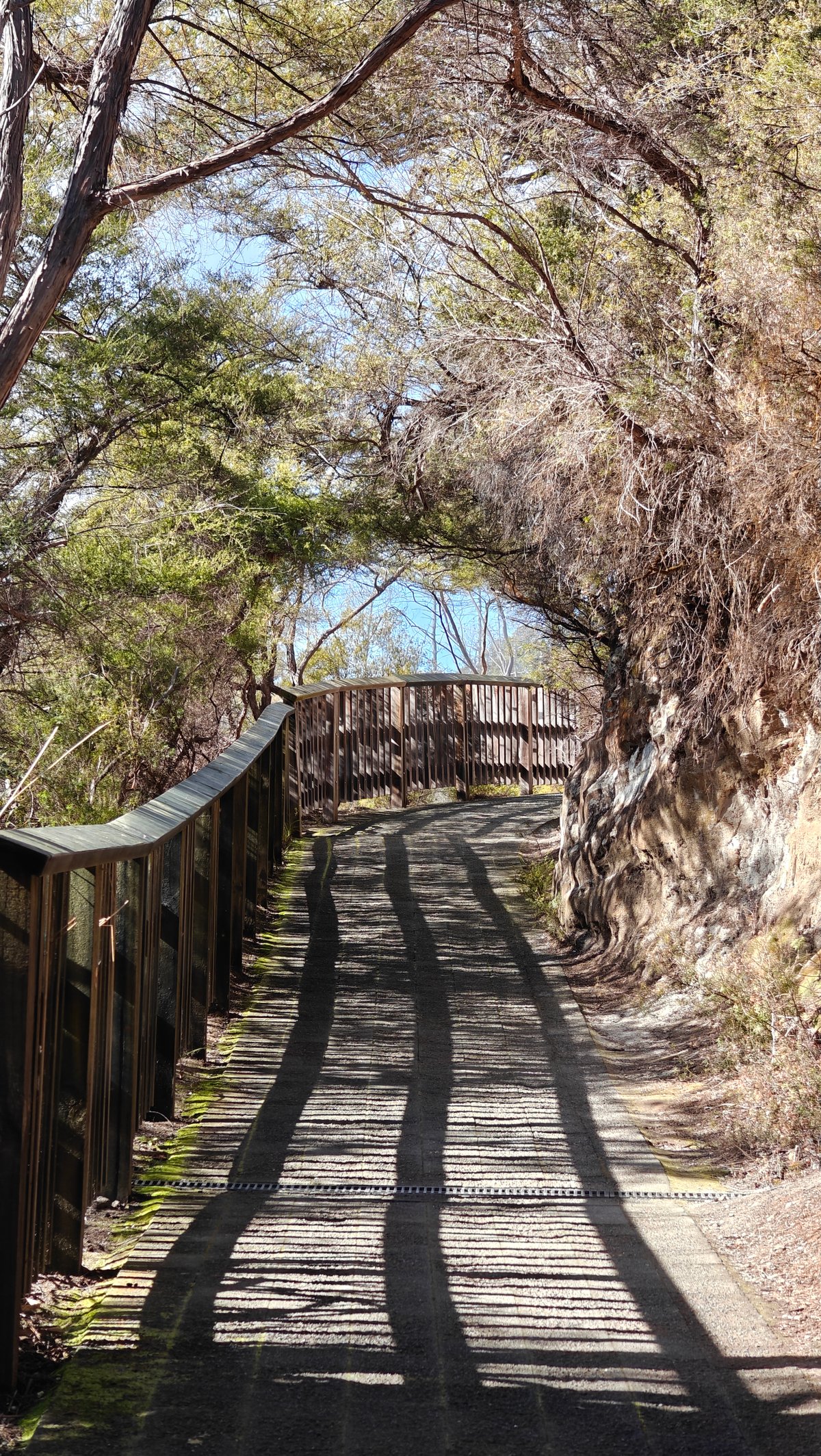
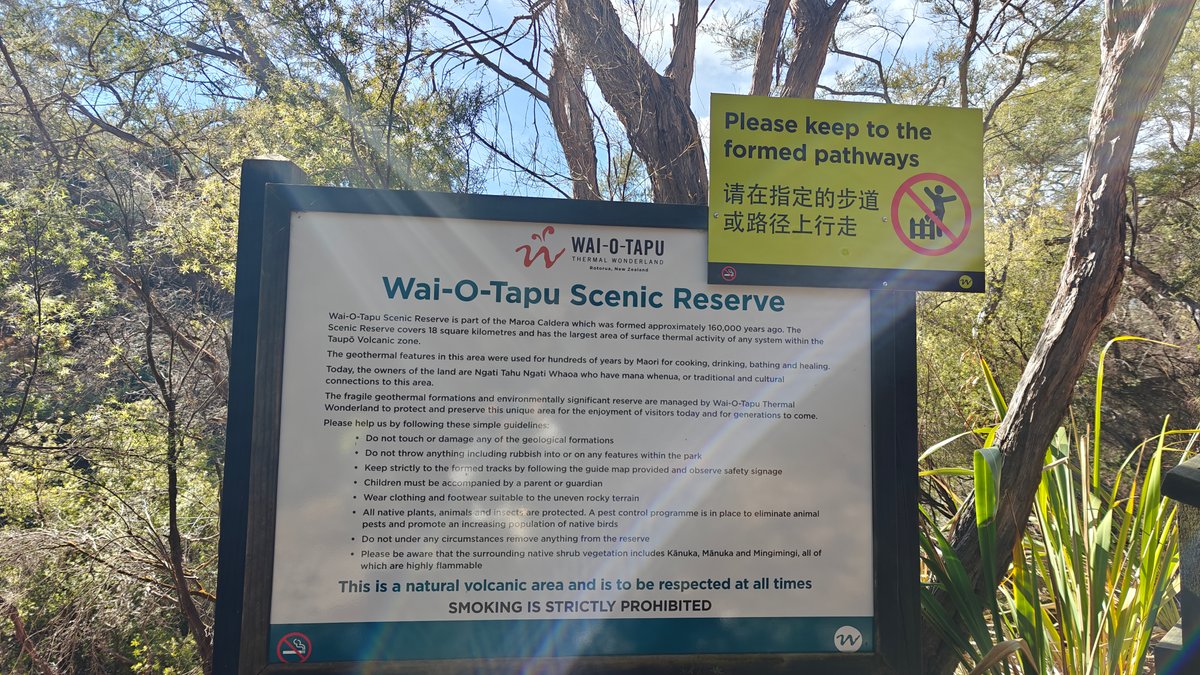
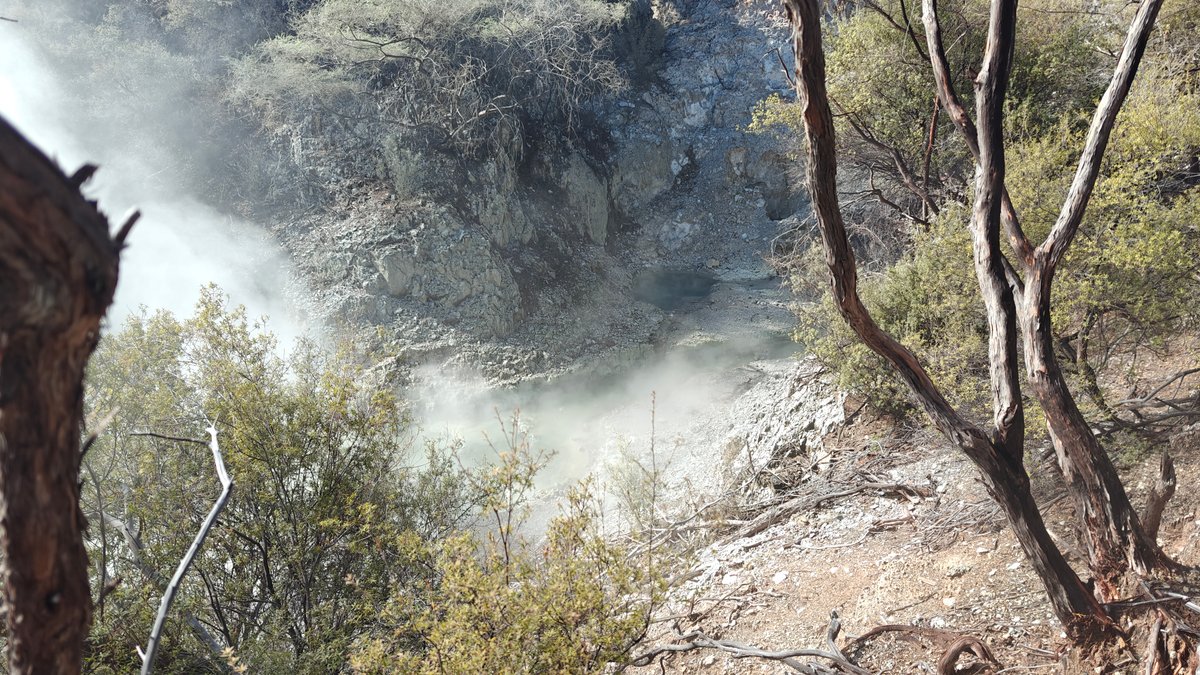
Beyond the Waiotapu Thermal Park sign is another gate, and the boardwalk descends further into the steam, which gets serious now as you pass more scrub. Ahead I heard bubbles and hiss; then the path widened and there I stood: in a field of craters. It was quite a moment.
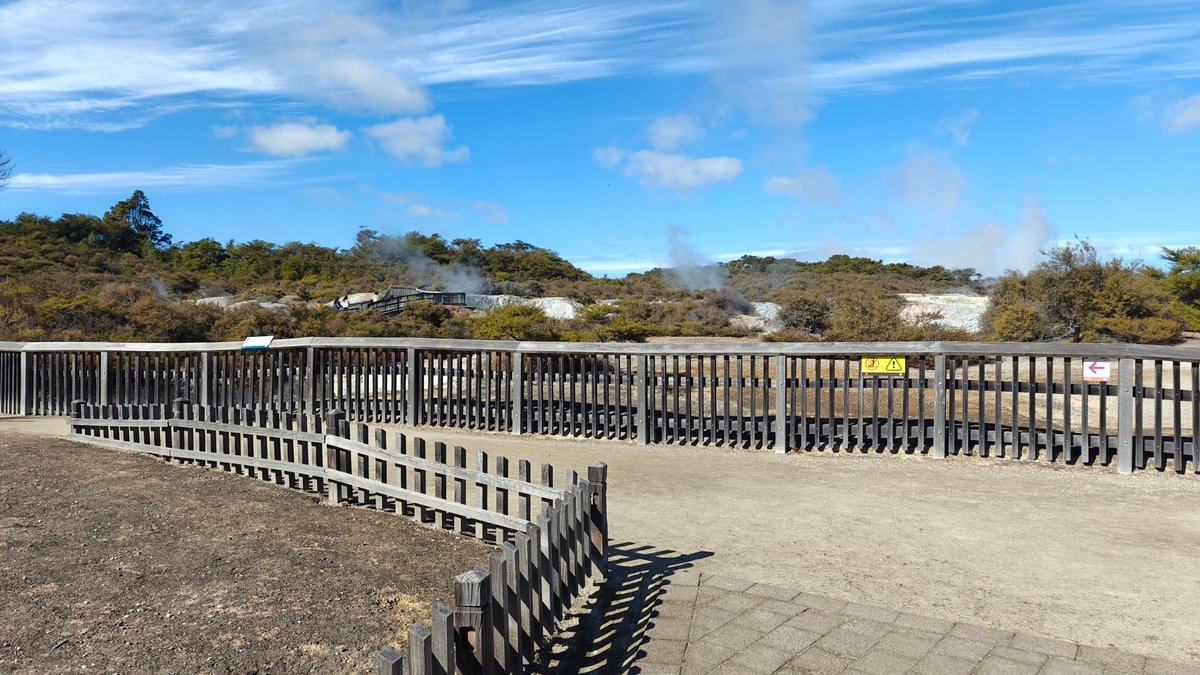
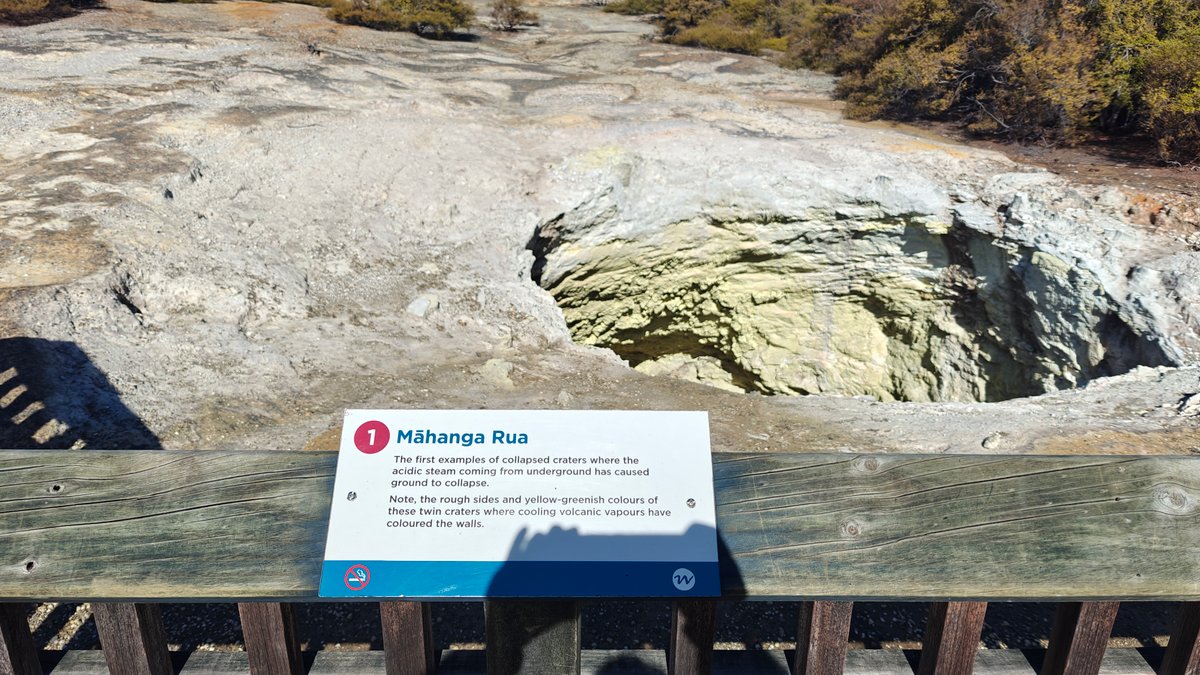
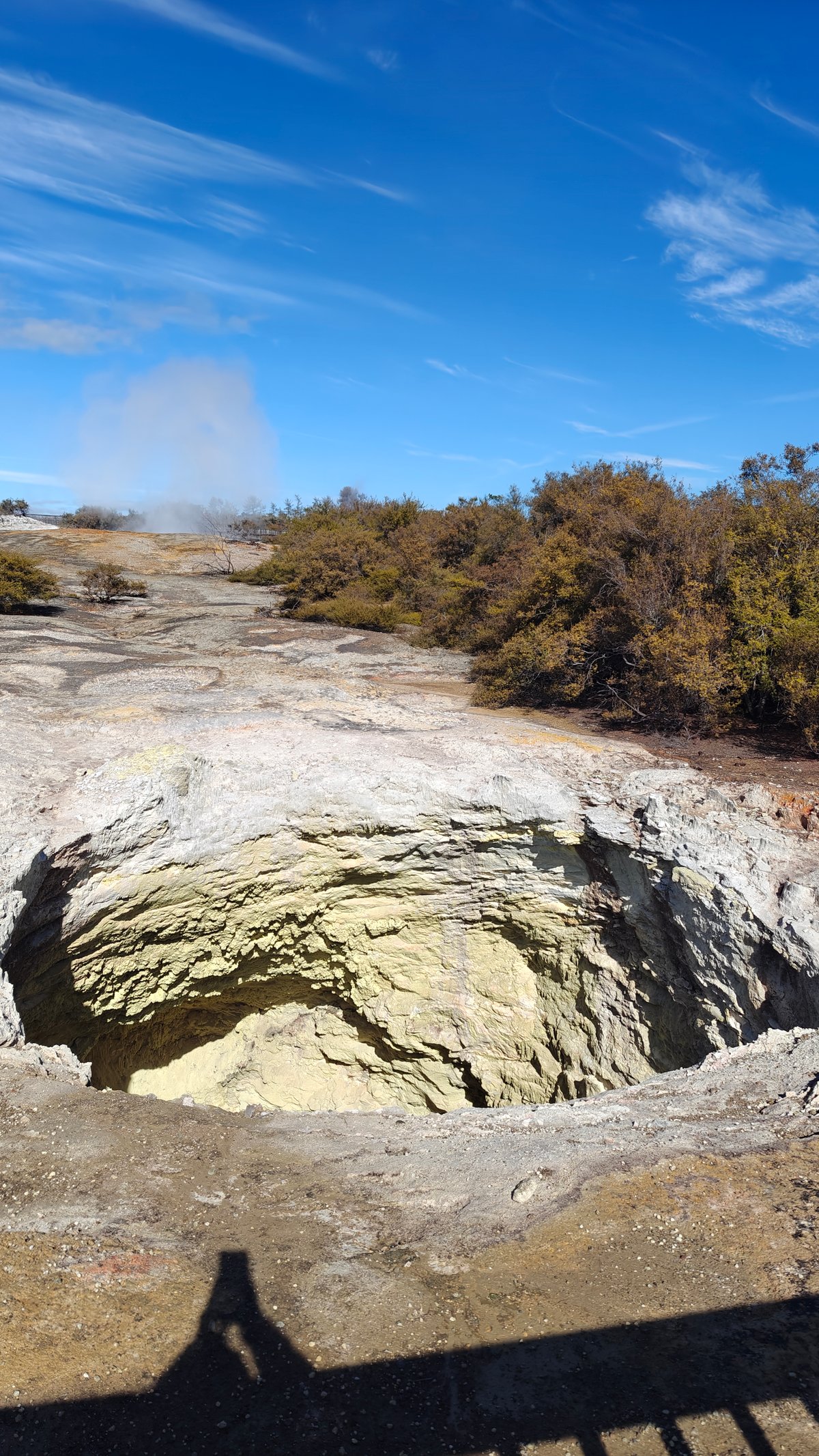
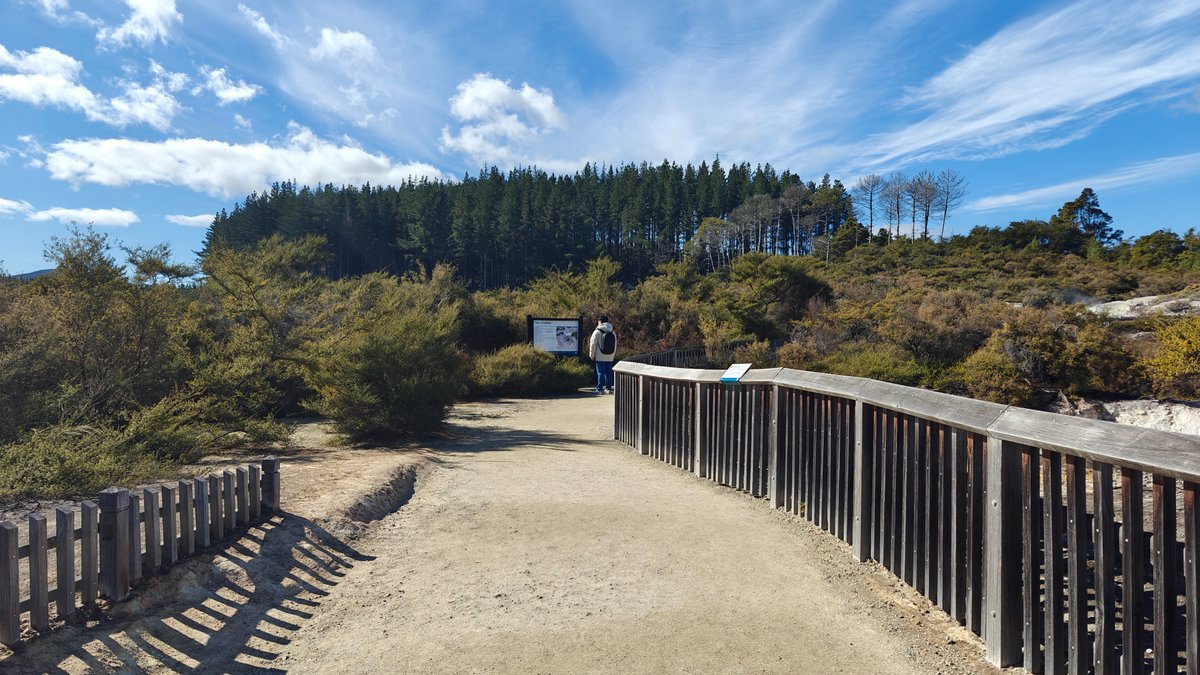
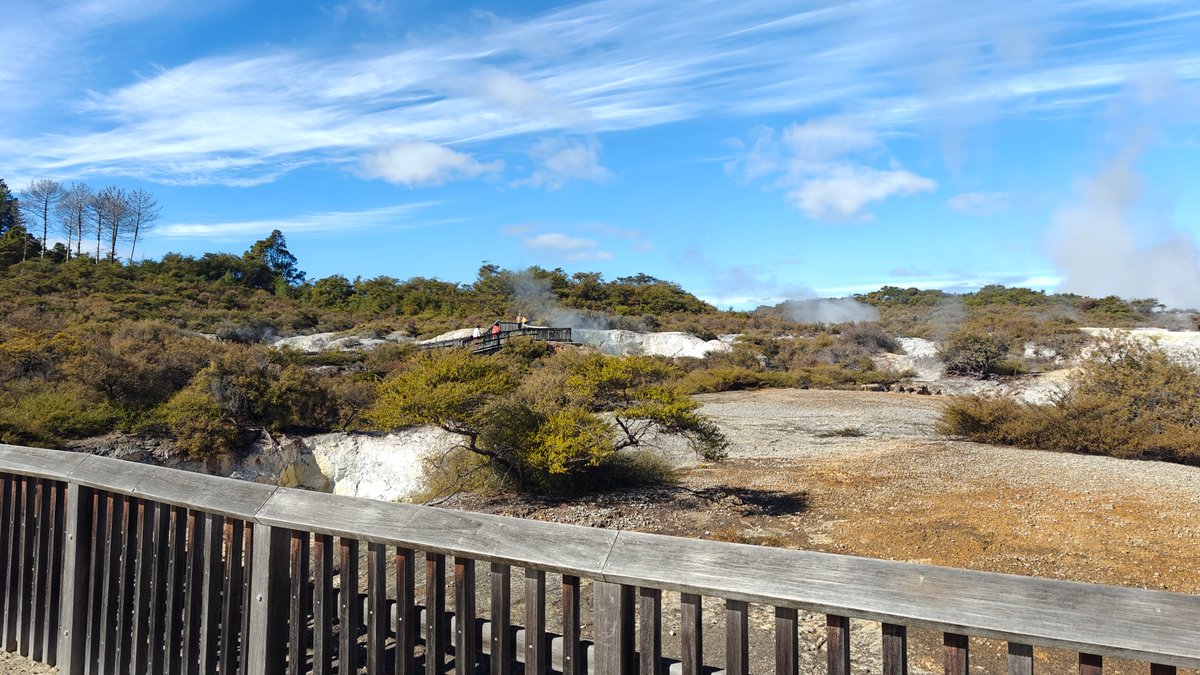
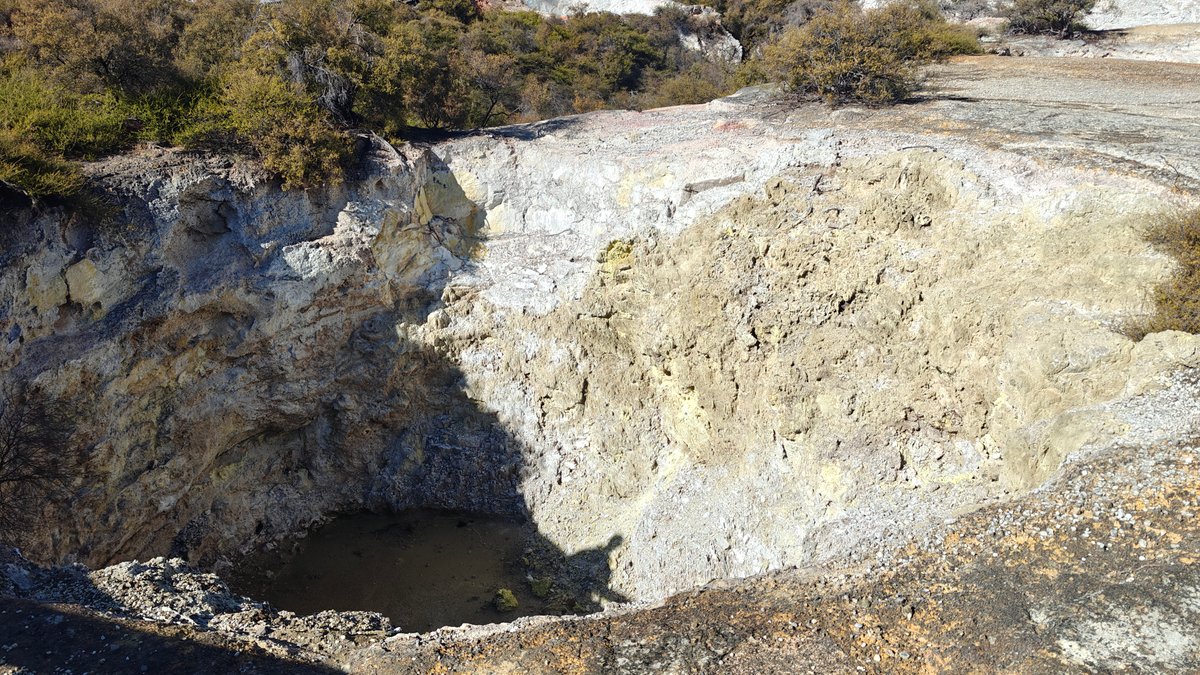
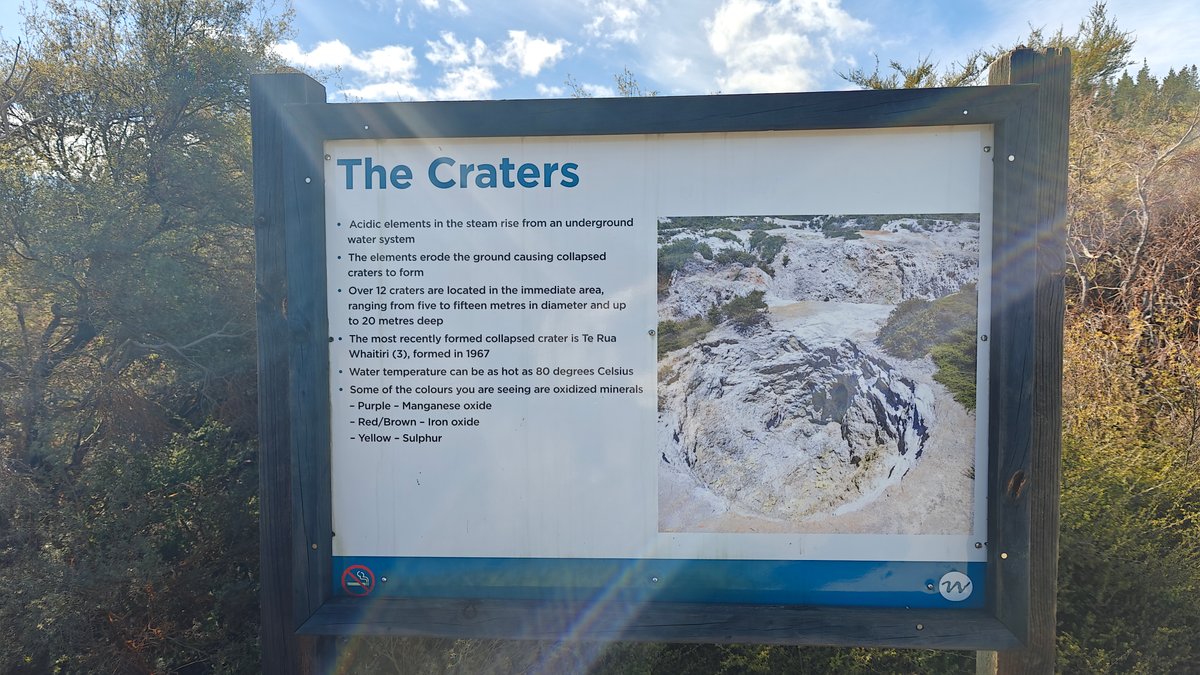
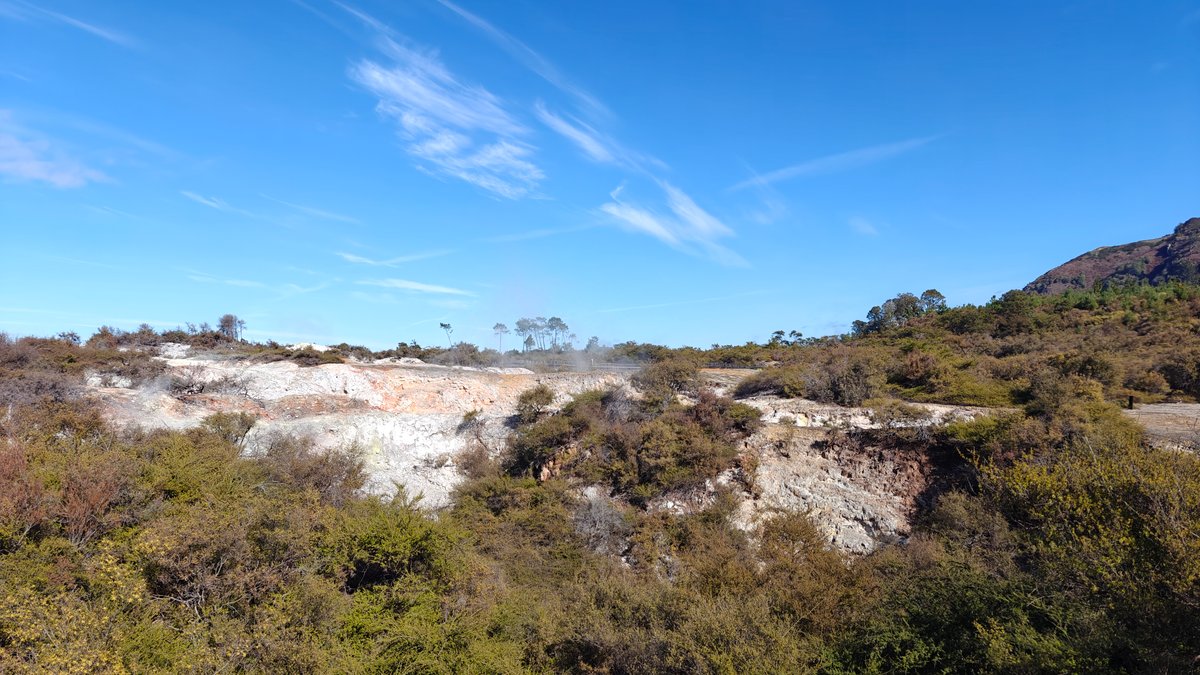
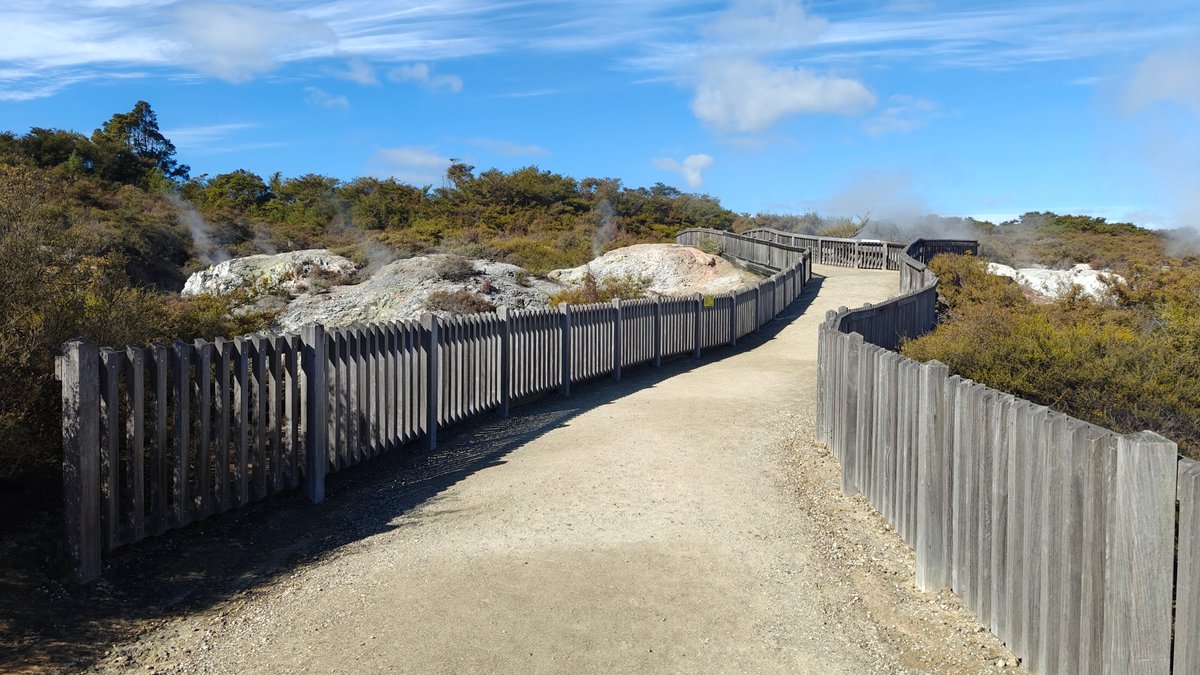
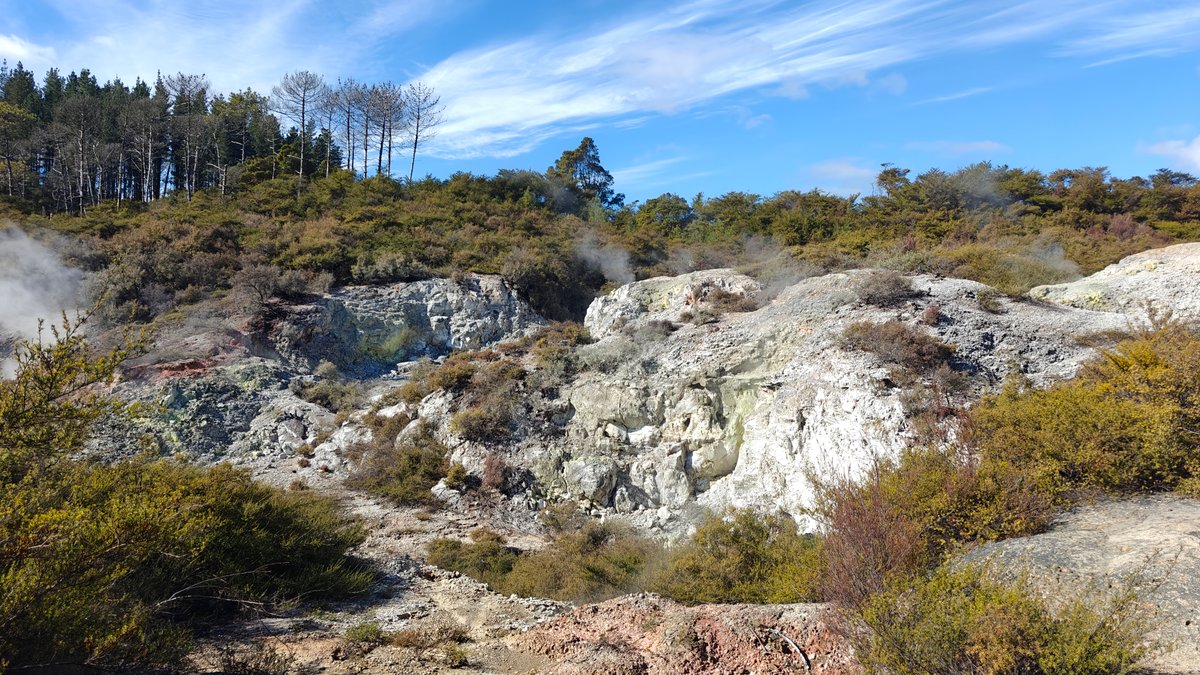
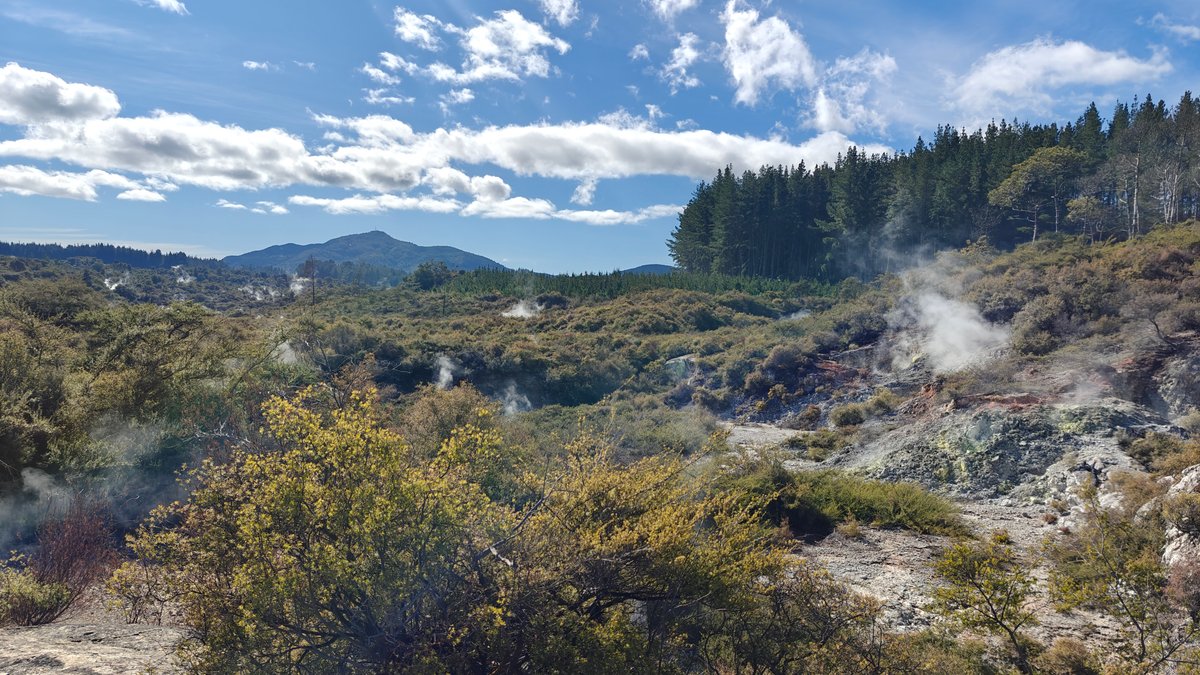
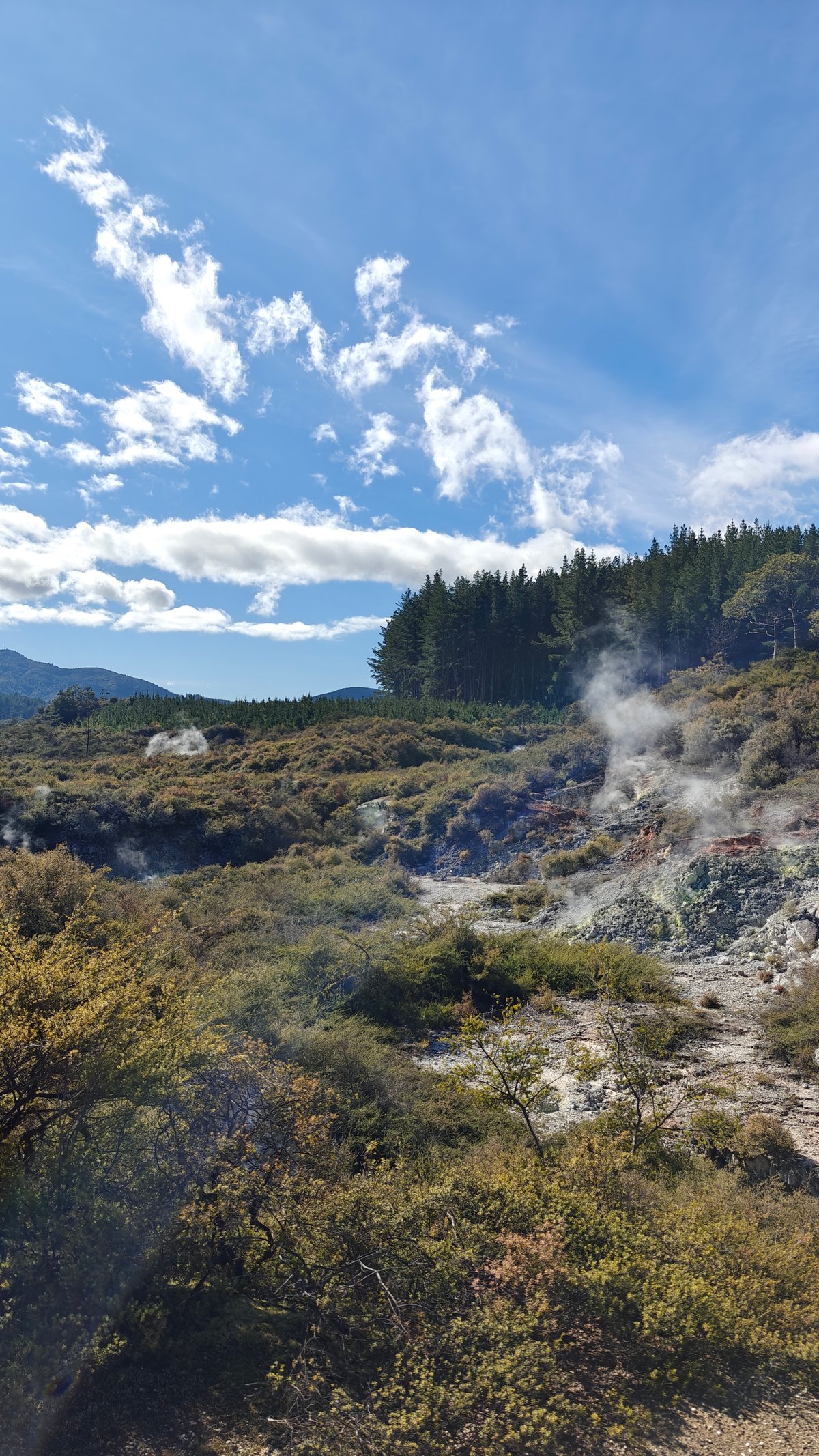
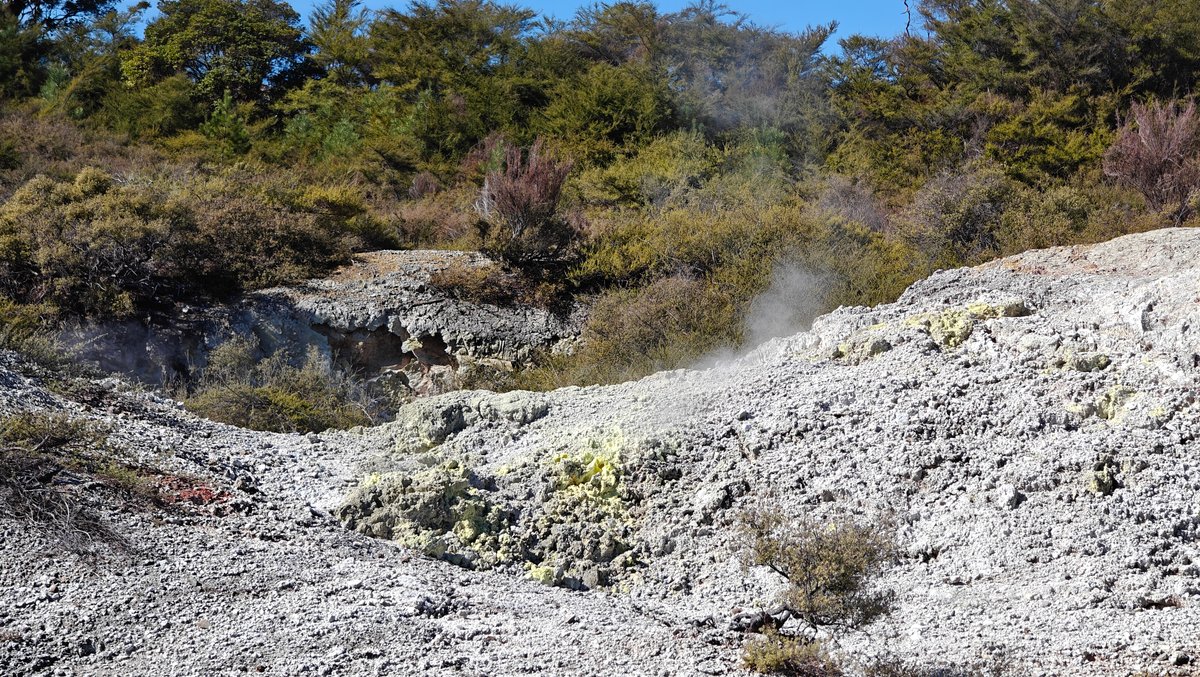
The Craters reminded me a little of being on another planet, walking from one to the other. A couple were nothing more than vents belching thick clouds of steam; some were shallow pools; others were deep pits with walls encrusted in minerals. There are also interpretive panels that do a pretty good job of explaining the geological goings-on here, but I mostly just walked slowly and stared.
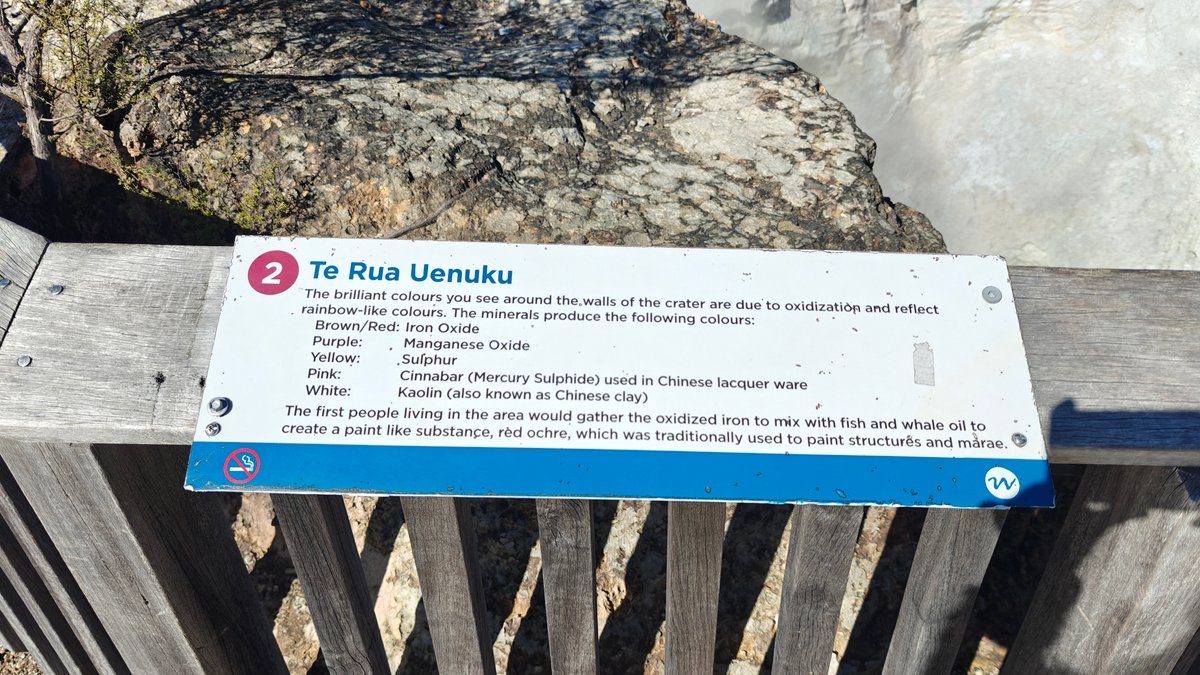
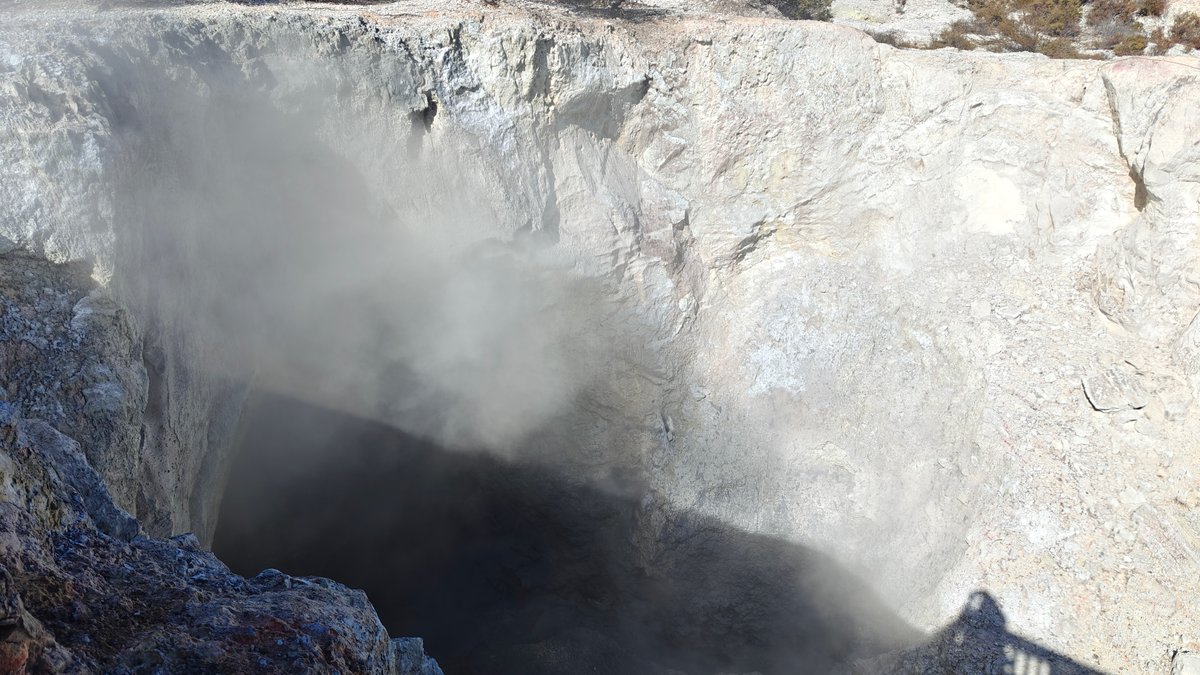
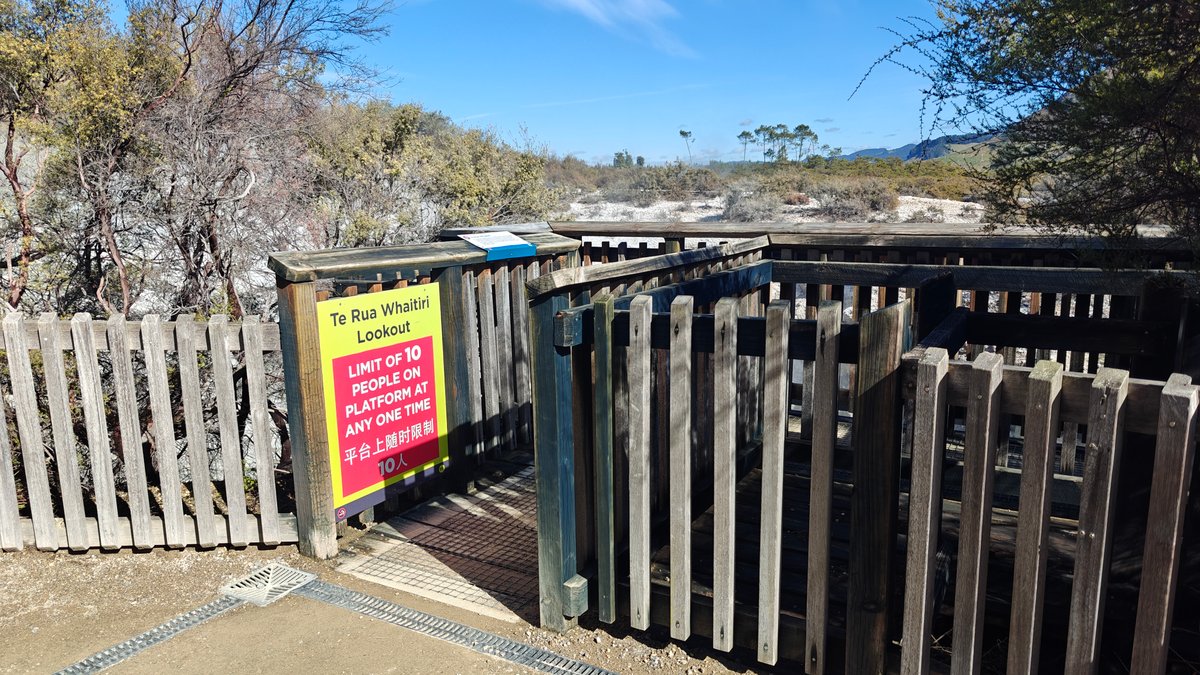
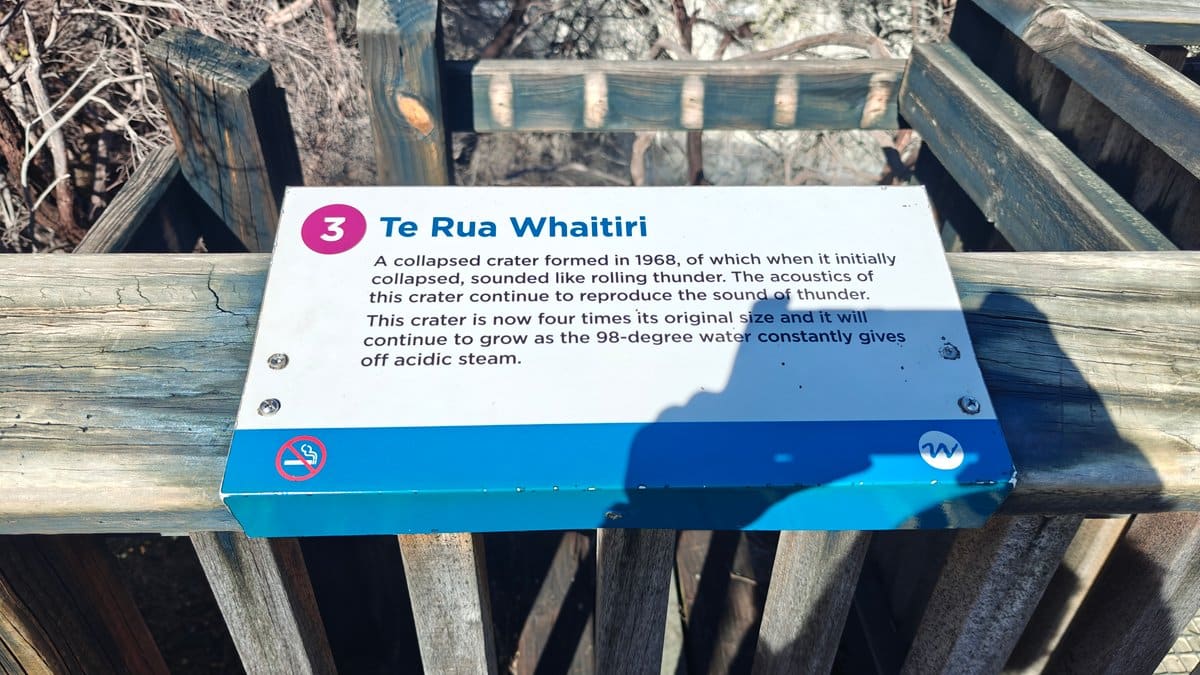
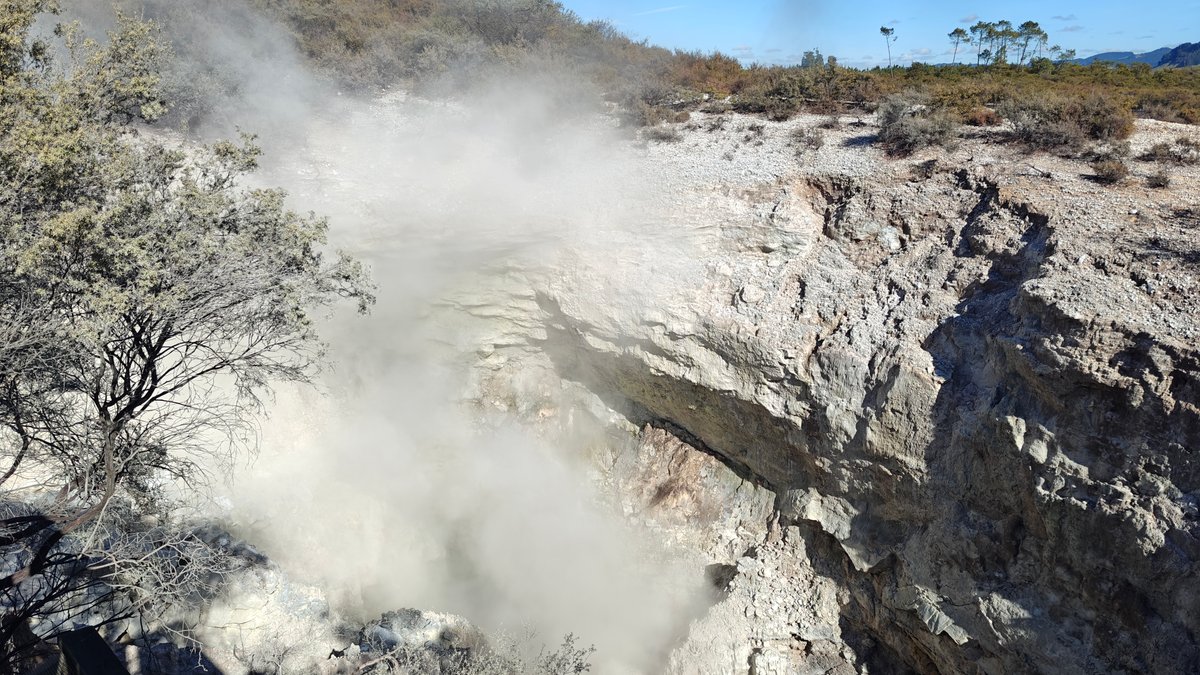
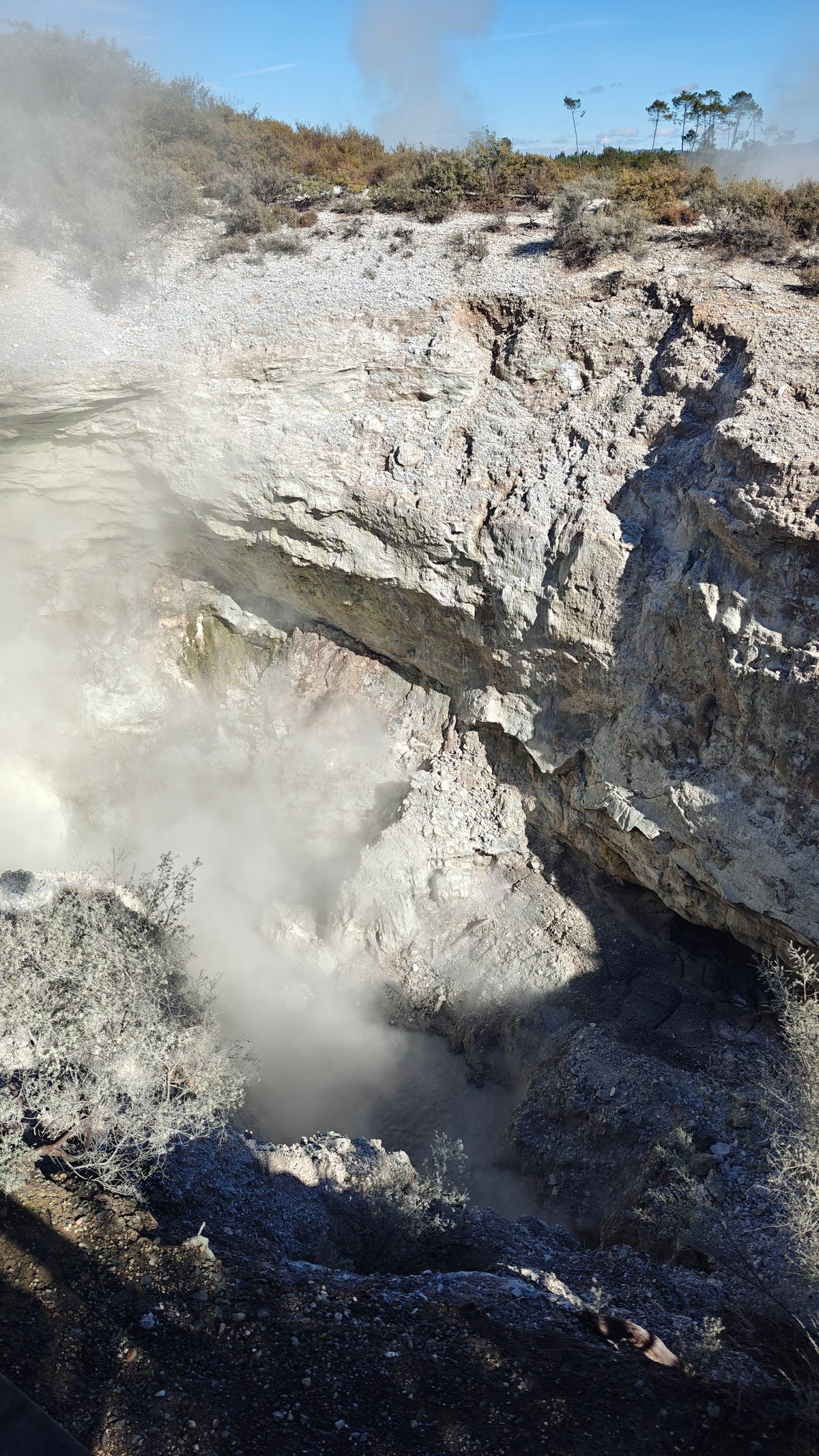
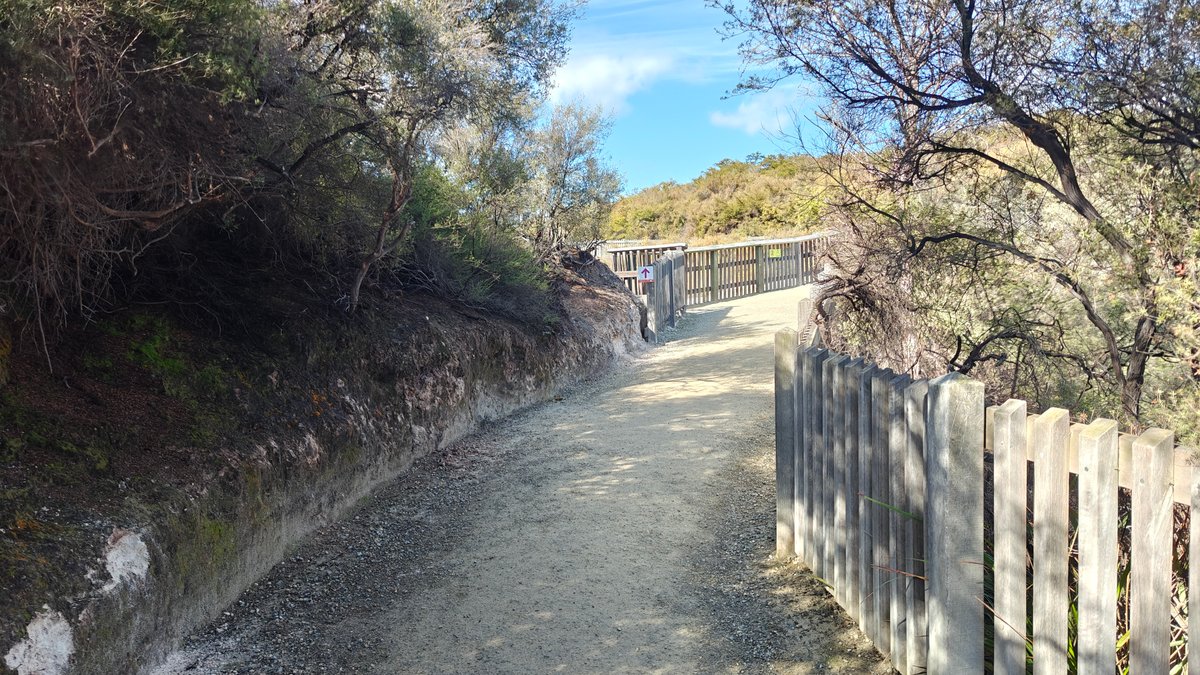
) The craters were not all the same. Some were quite active. One had steam pouring out so much that I could barely see what was below, and the surface felt warm beneath my feet when I stood on the viewing platform.
The ranger I spoke with said things can change from day to day as conditions shift underground, so what you experience during your visit may be completely different another time.
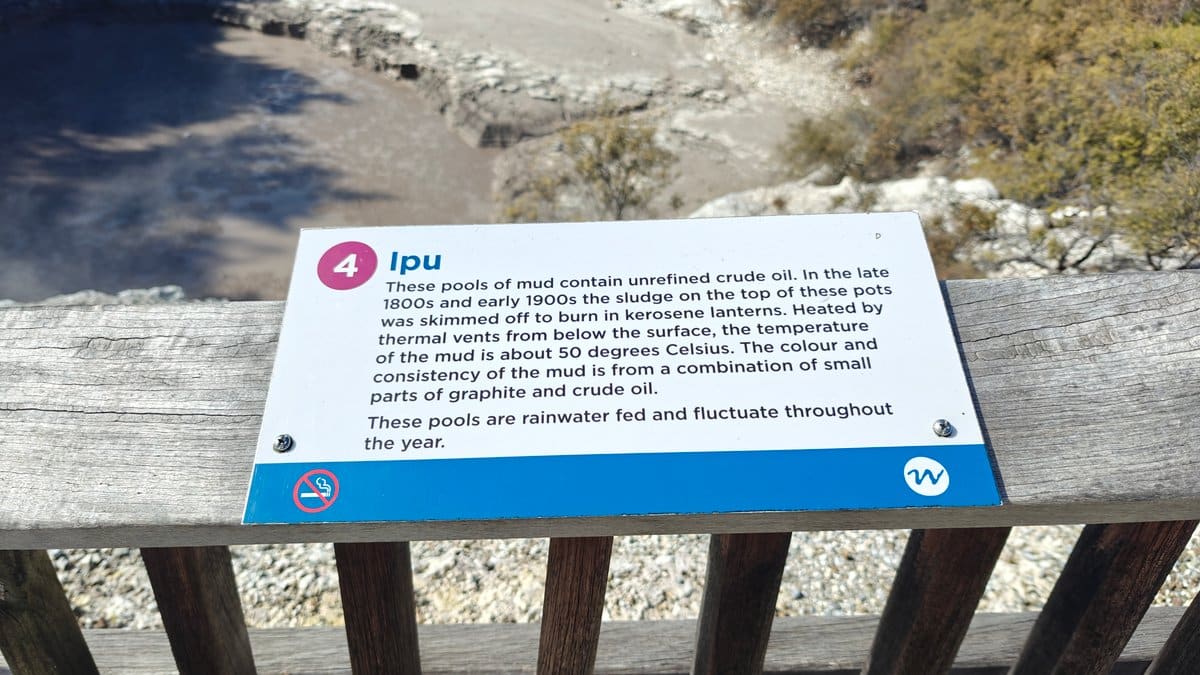
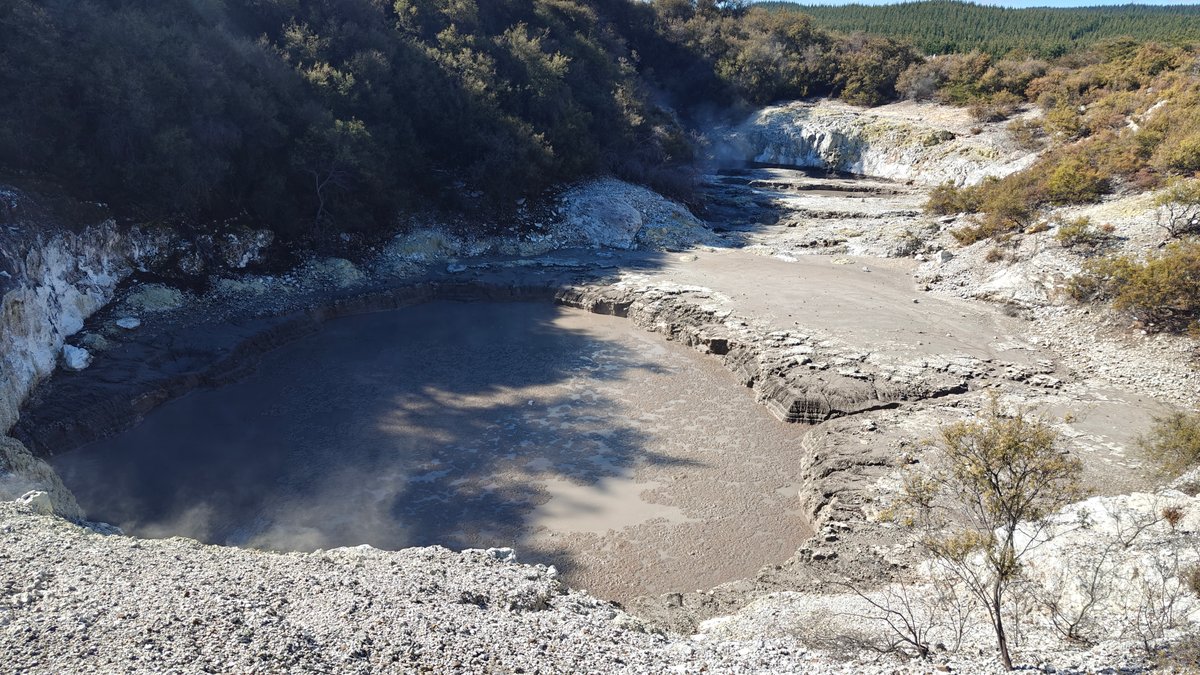
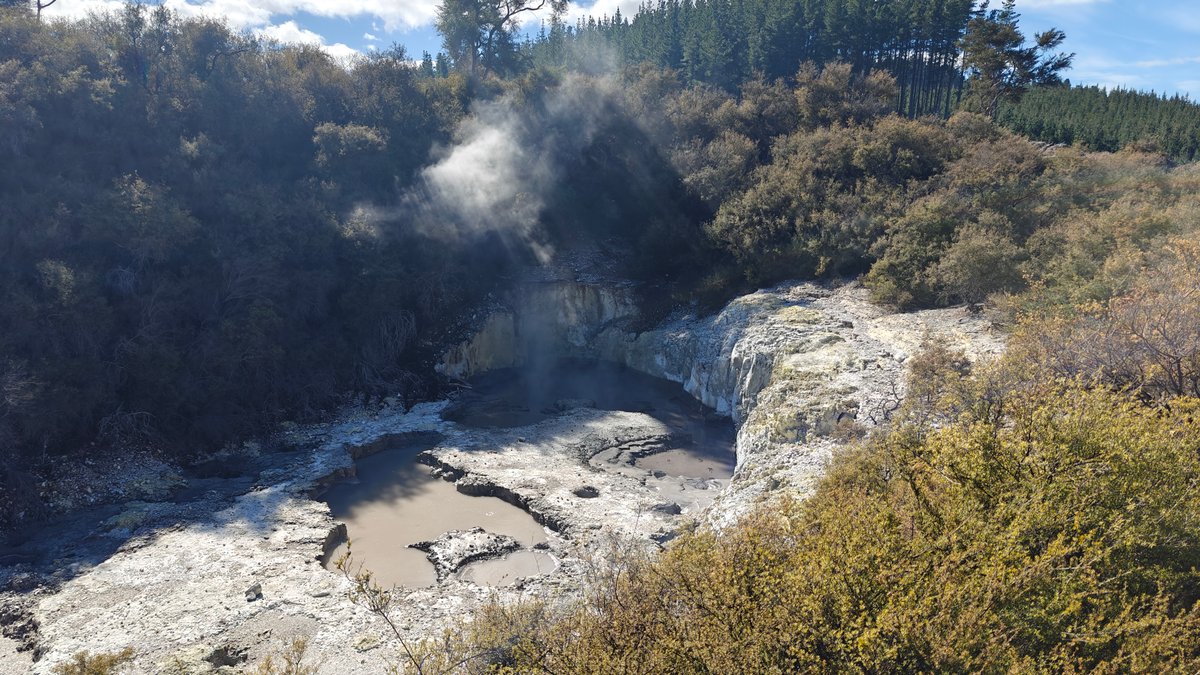
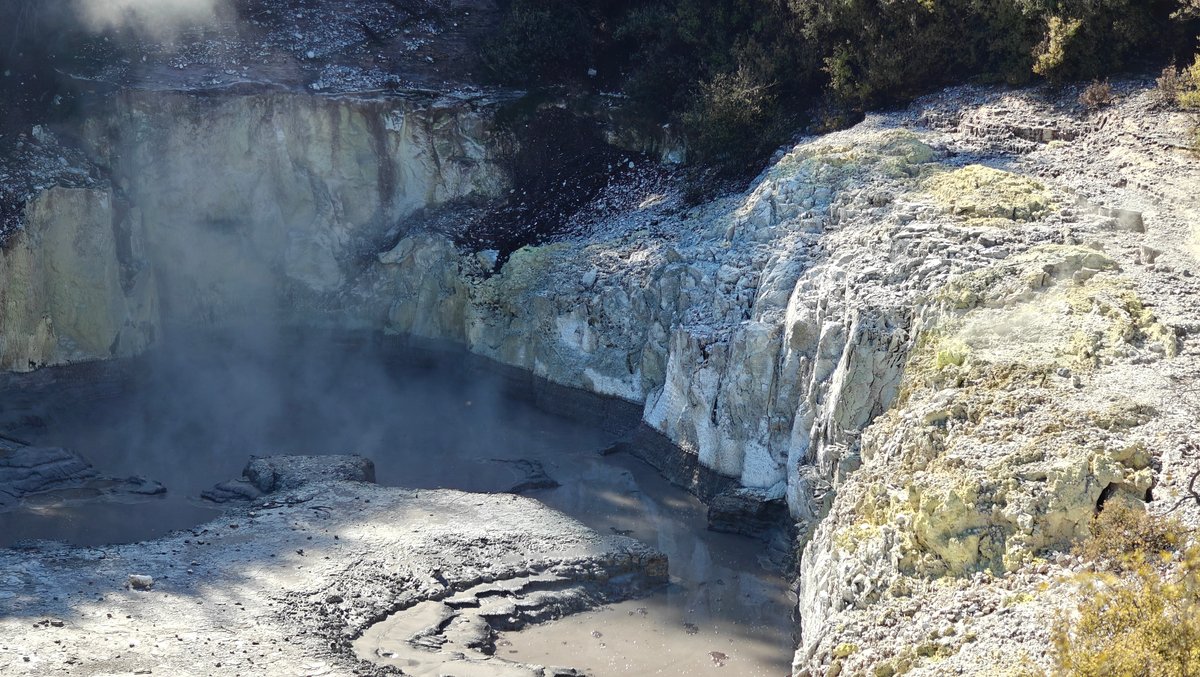
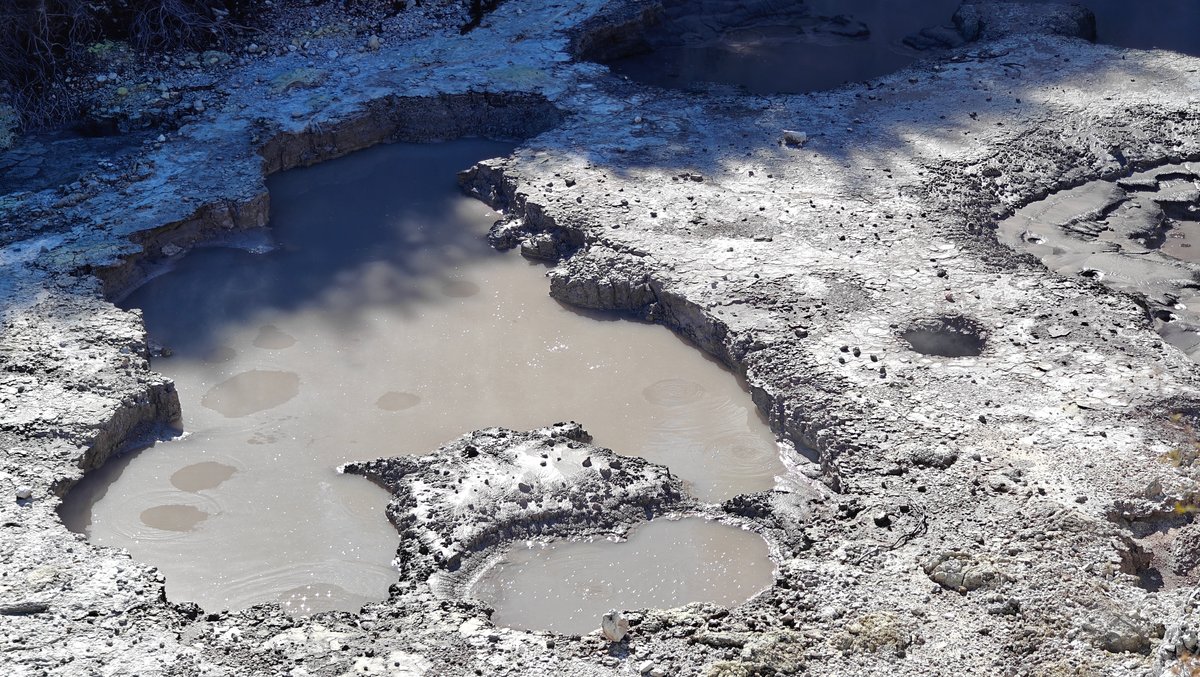
The mud pools were weirdly hypnotic. I stood at one for longer than I probably should of, just watching it bubble and plop. The thick grey sludge move slowly, and every now and then a big bubble rise and bursts with a satisfying splat.
There wasn’t much more to say about it really, but I couldn’t look away.
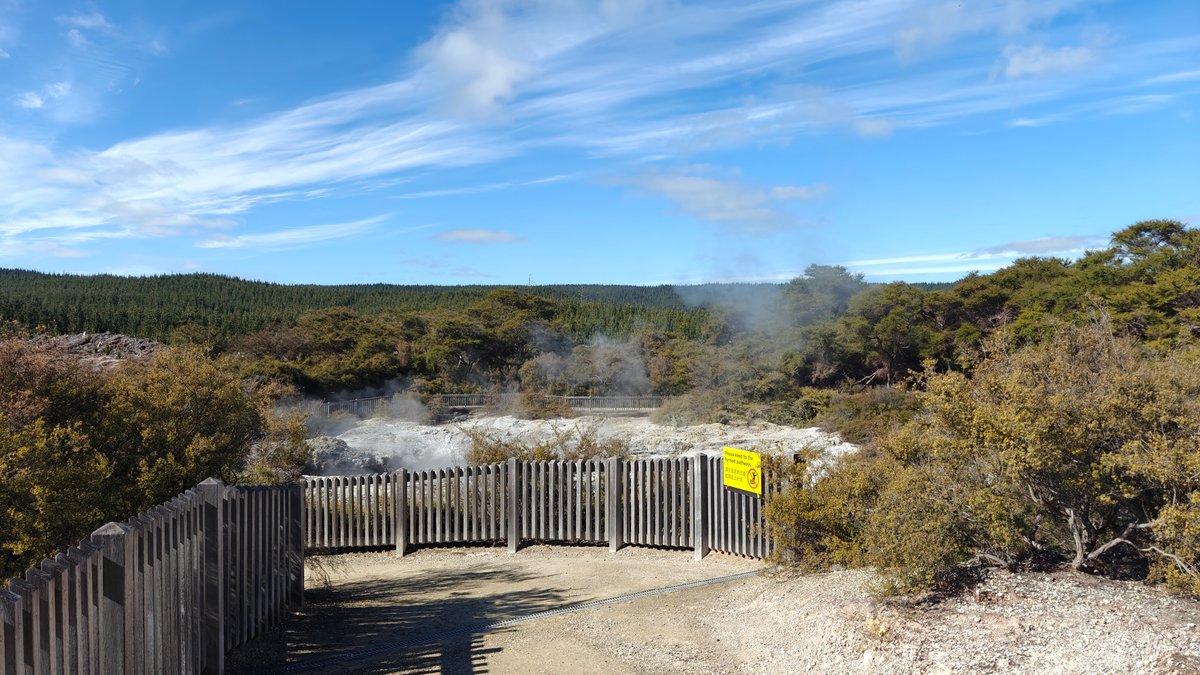
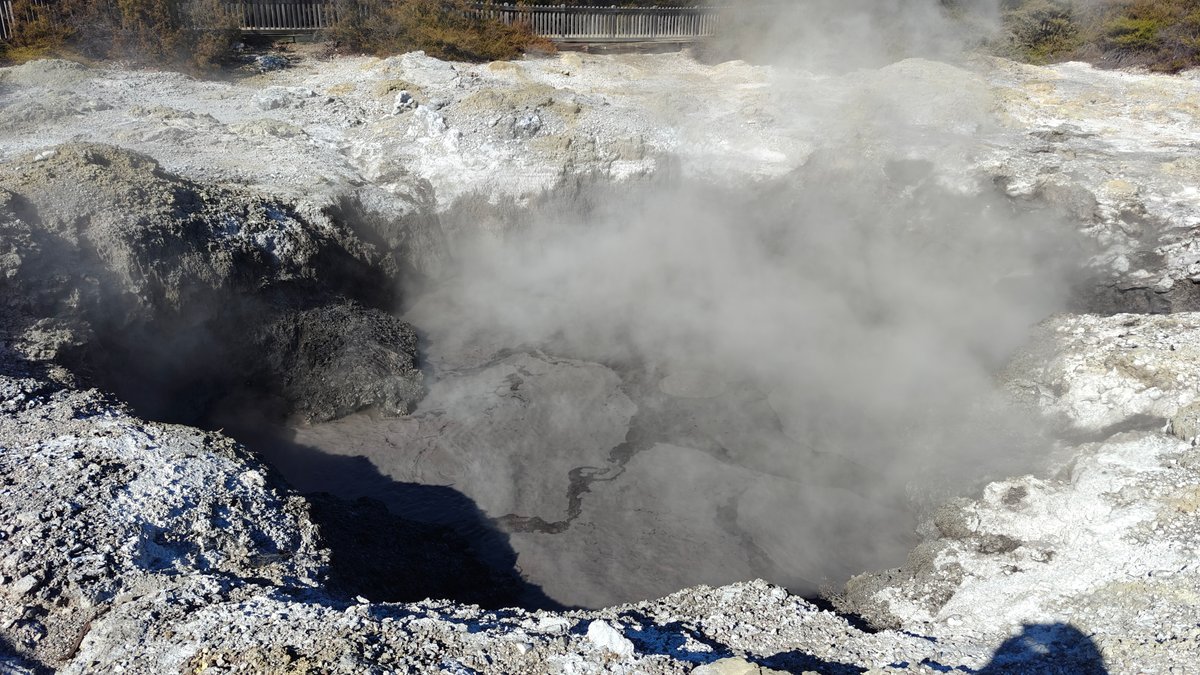
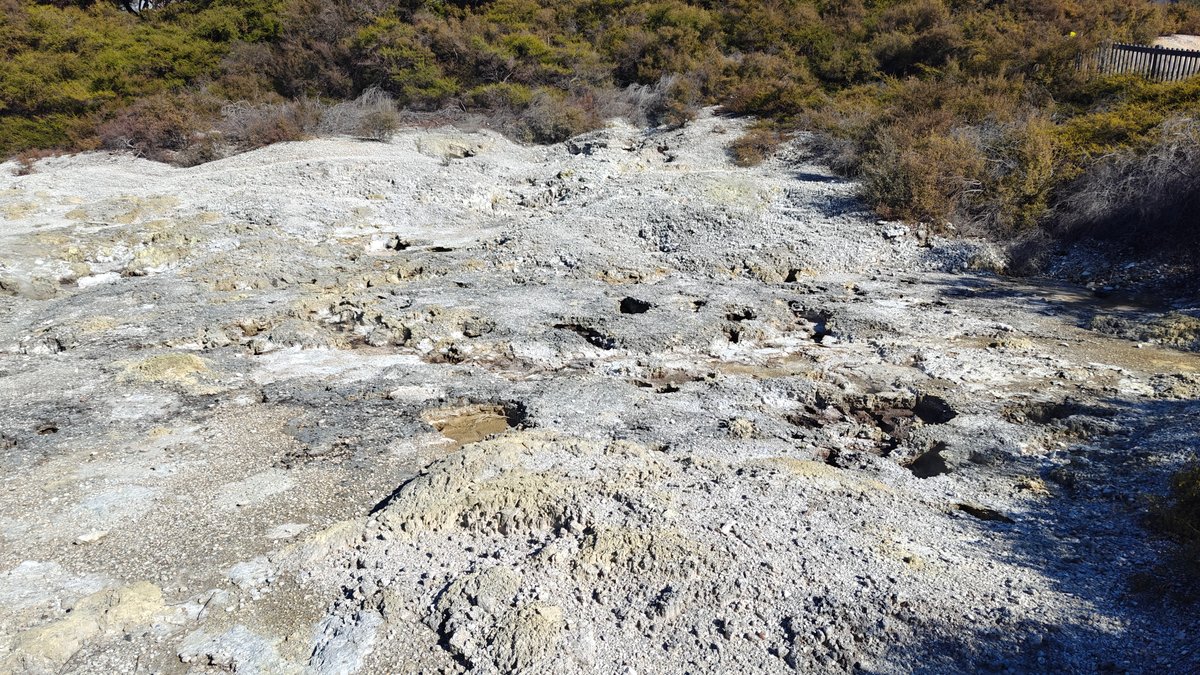
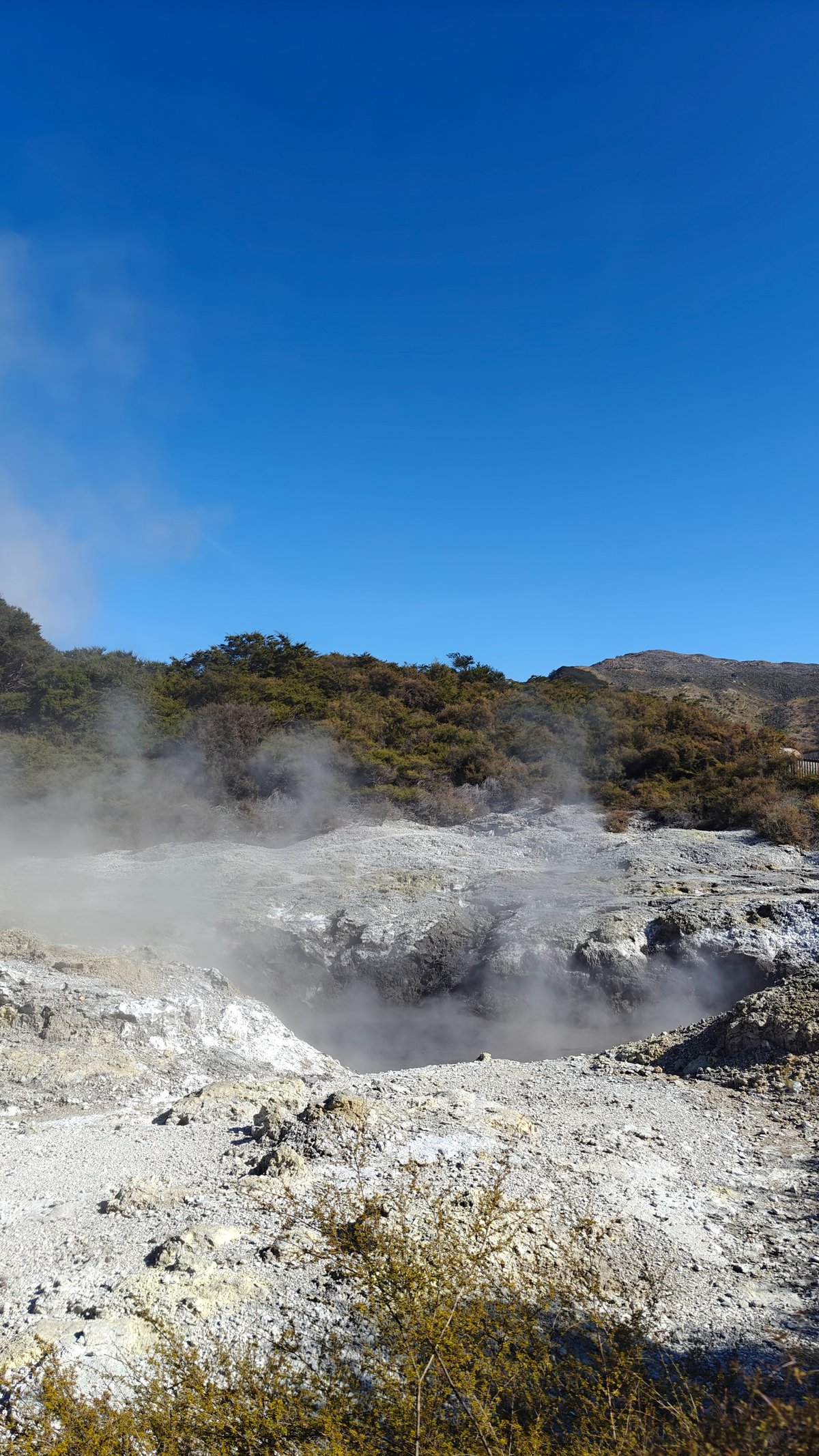
In spots, there is steam rising from the trail, which by the way reflect sunlight in a fairly lovely manner. On a clear day such as mine, the juxtaposition of the deep sky and pale mineral ground was striking.
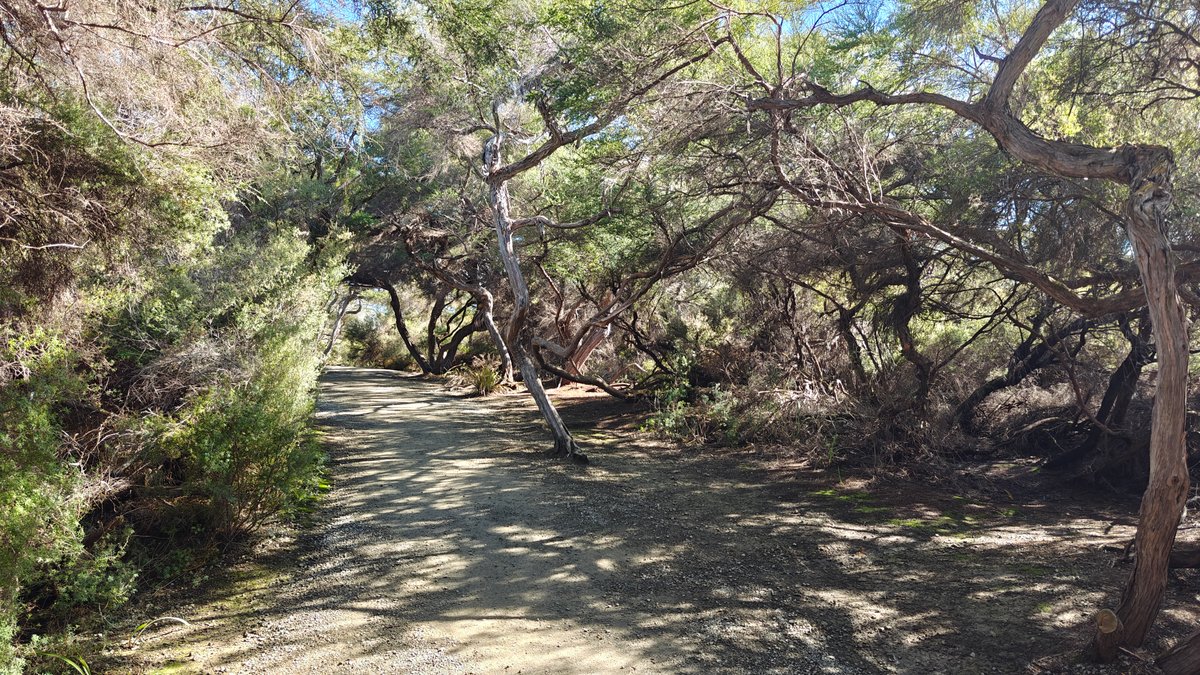
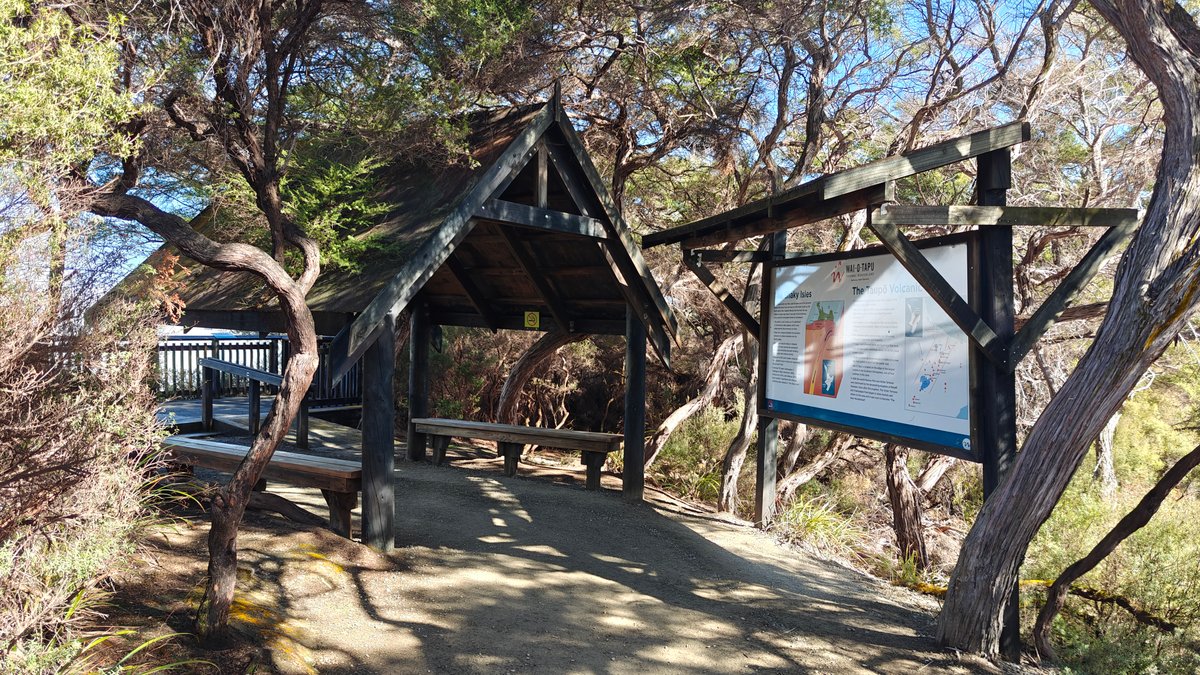
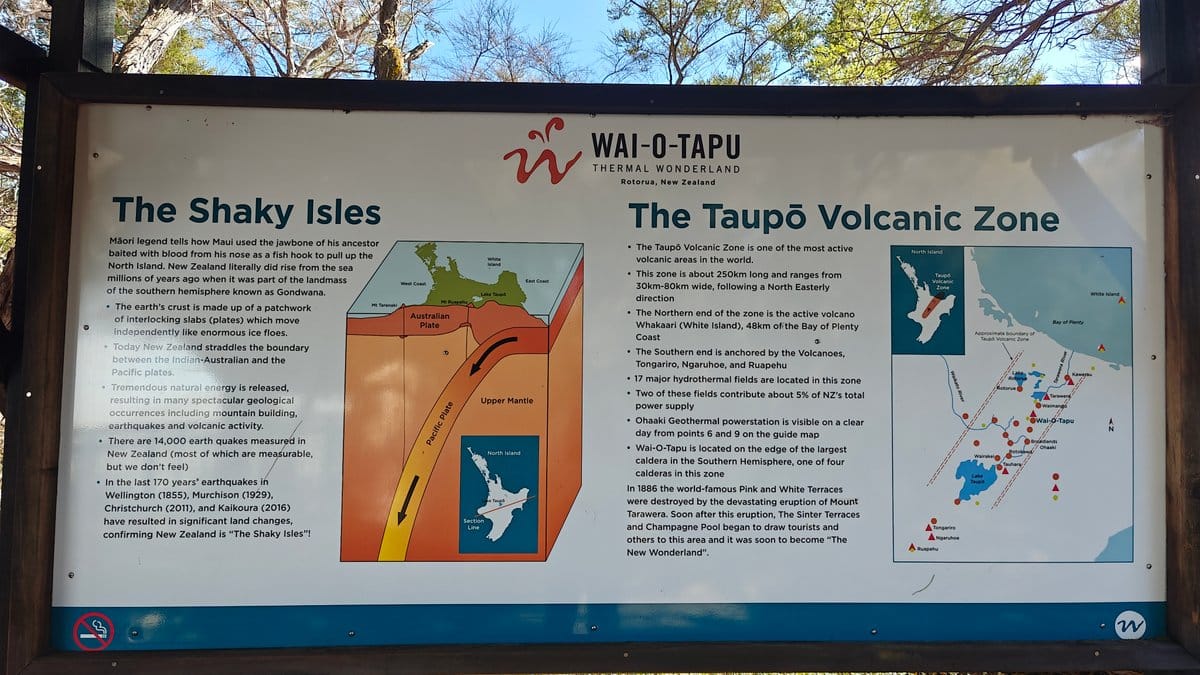
It ducked back into the bush for a while, which was a welcome relief from the smell and the heat. There is a little shelter here that has further interpretive boards on the geothermal activity of New Zealand and volcanoes in general. I cooled off and had a drink there then continued on to the next section.
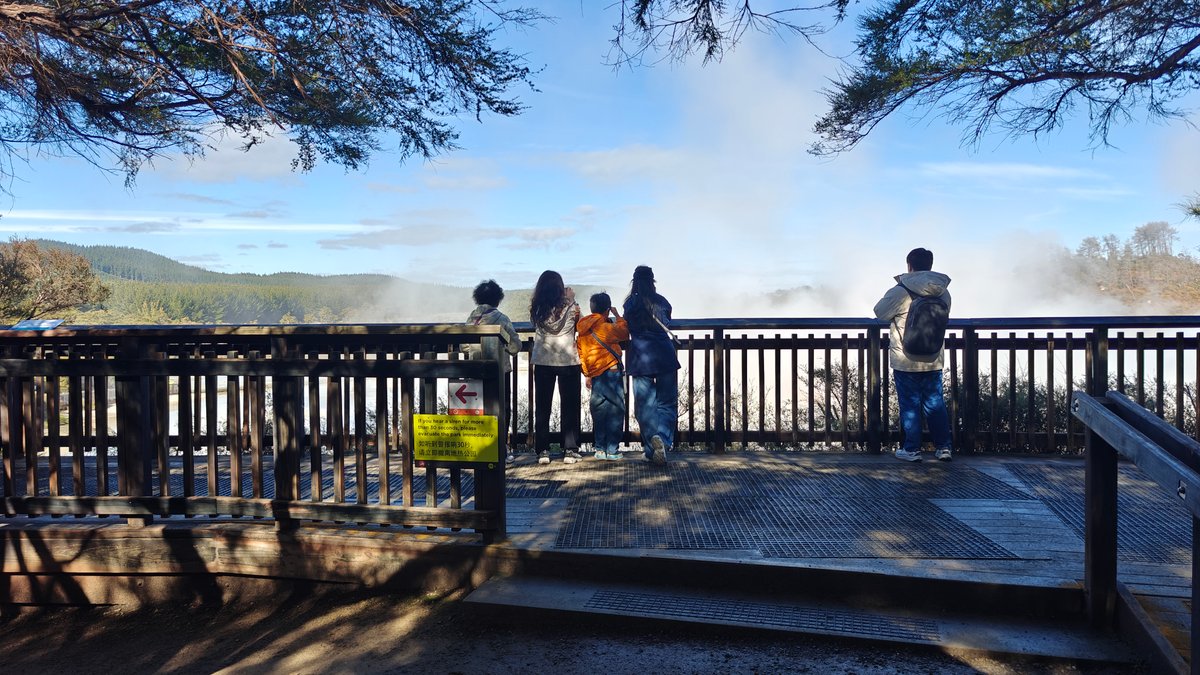
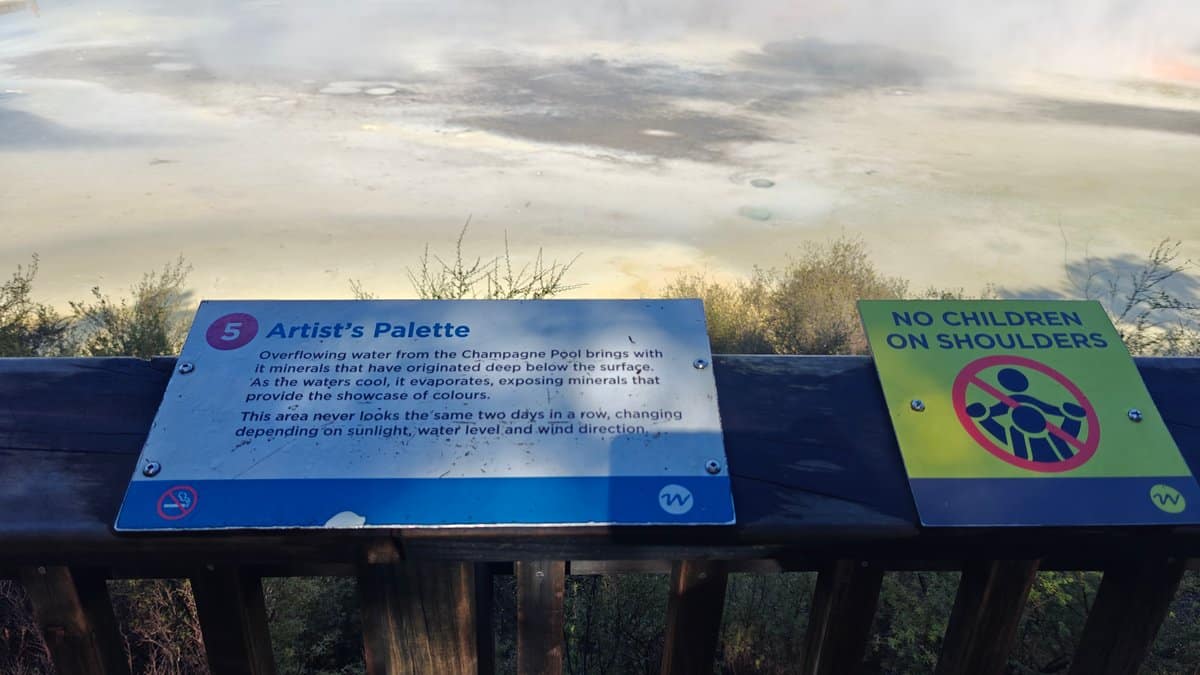
The next stop, Artist’s Palette, is one of the first truly colourful areas on the trail. From the viewing platform you can take in the entire area spread out beneath you. There are mineral deposits at the bottom that cause all the patches and streaks along the floor of this shallow pool.
The sign warned against putting kids on your shoulders due to the low roof. This seemed like good advice, as there was quite a bit of jostling for position here.
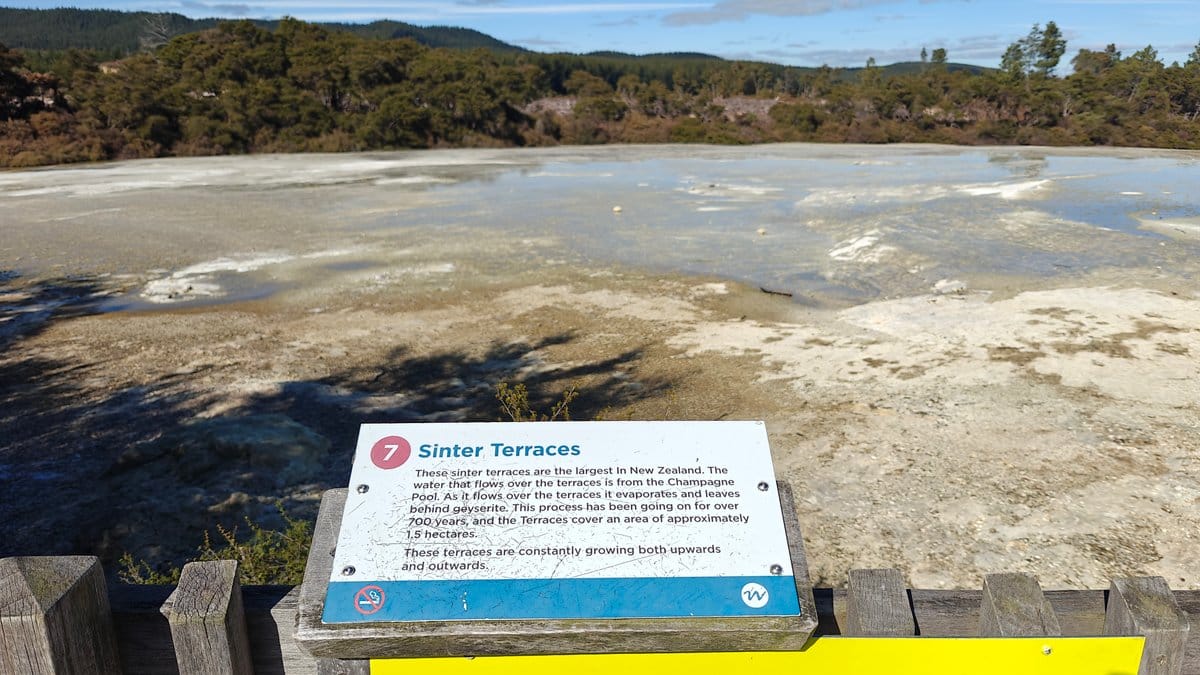
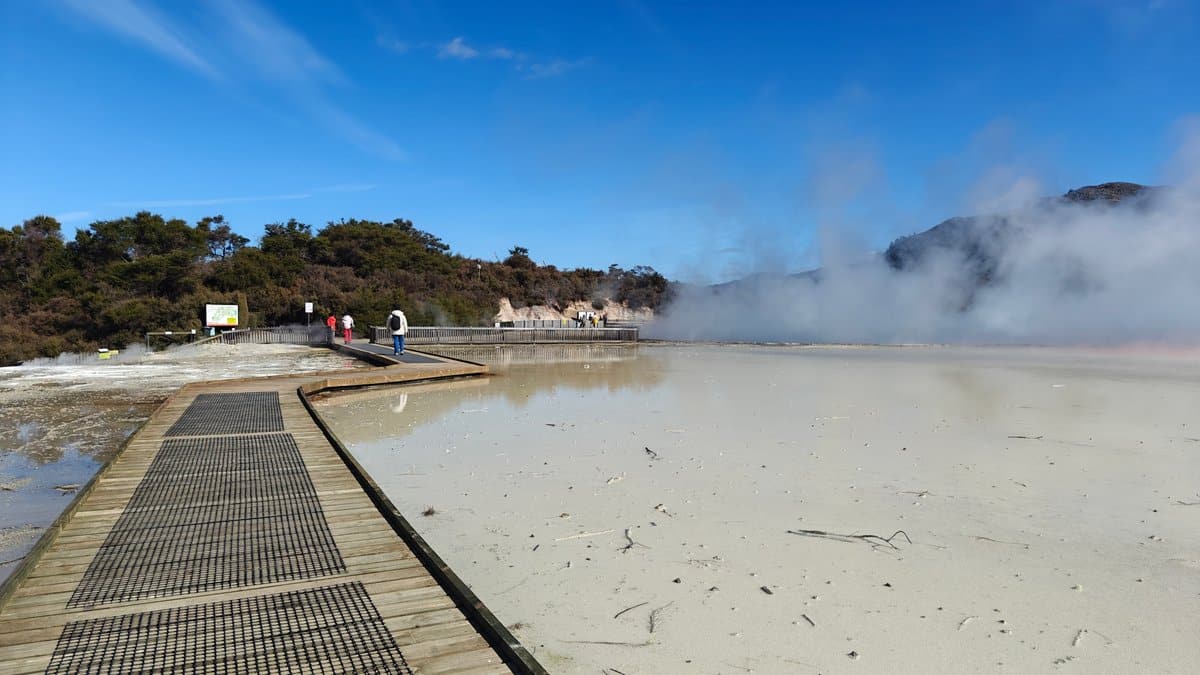
Here, the Sinter Terraces were pale and rippled, with wisps of steam lifting from them. A boardwalk ran directly over the top of it, and I strolled along. The whole thing felt crusty and fragile beneath my feet, although it was solid enough as a structure.
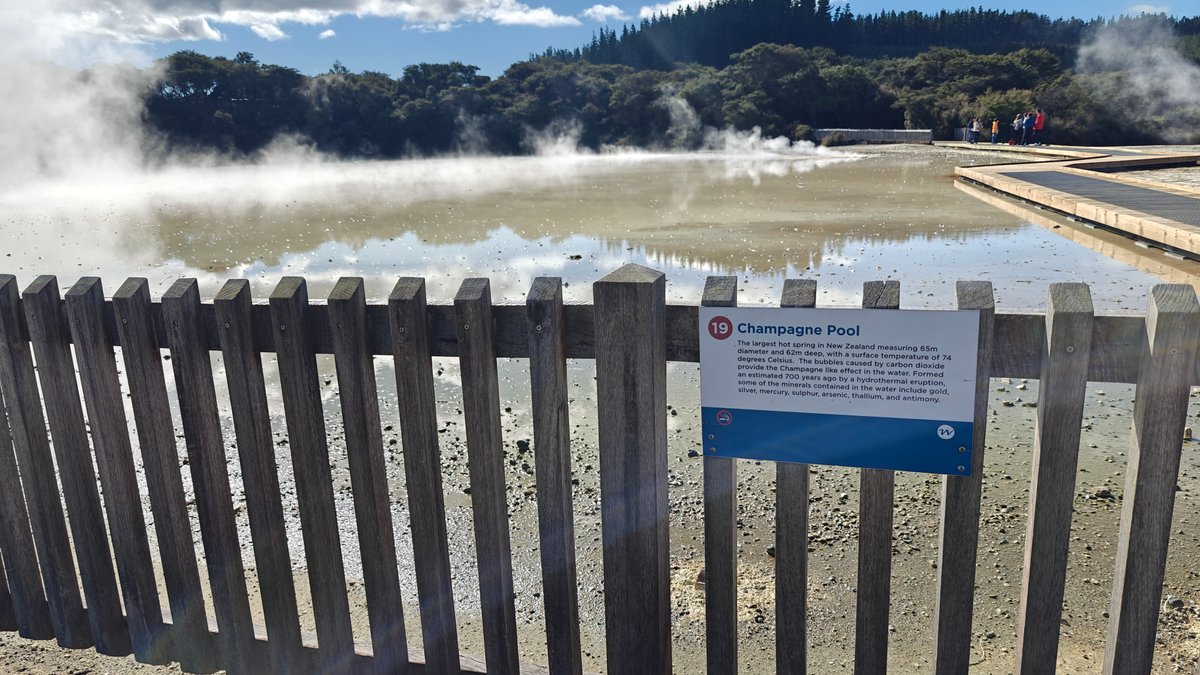
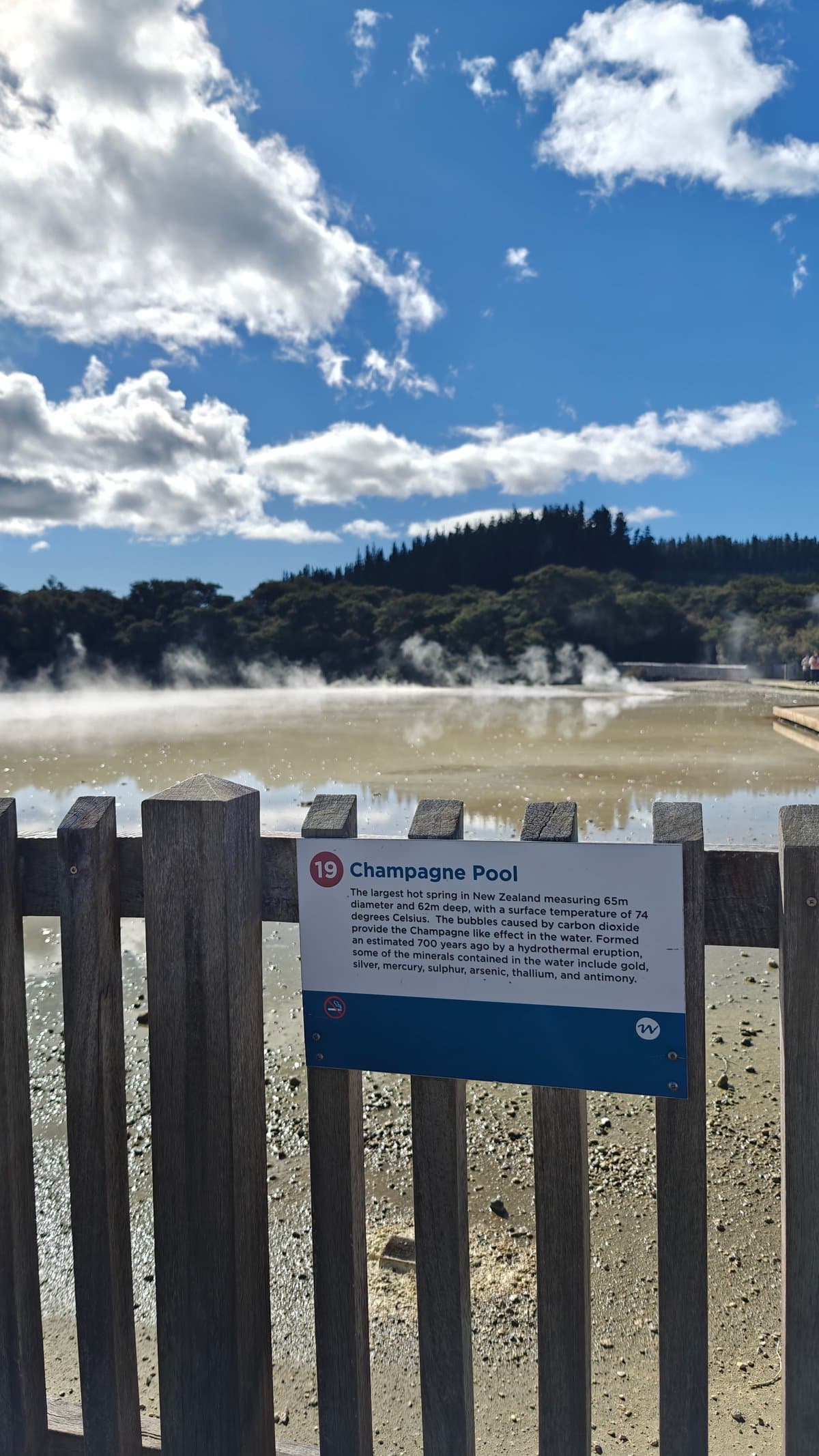
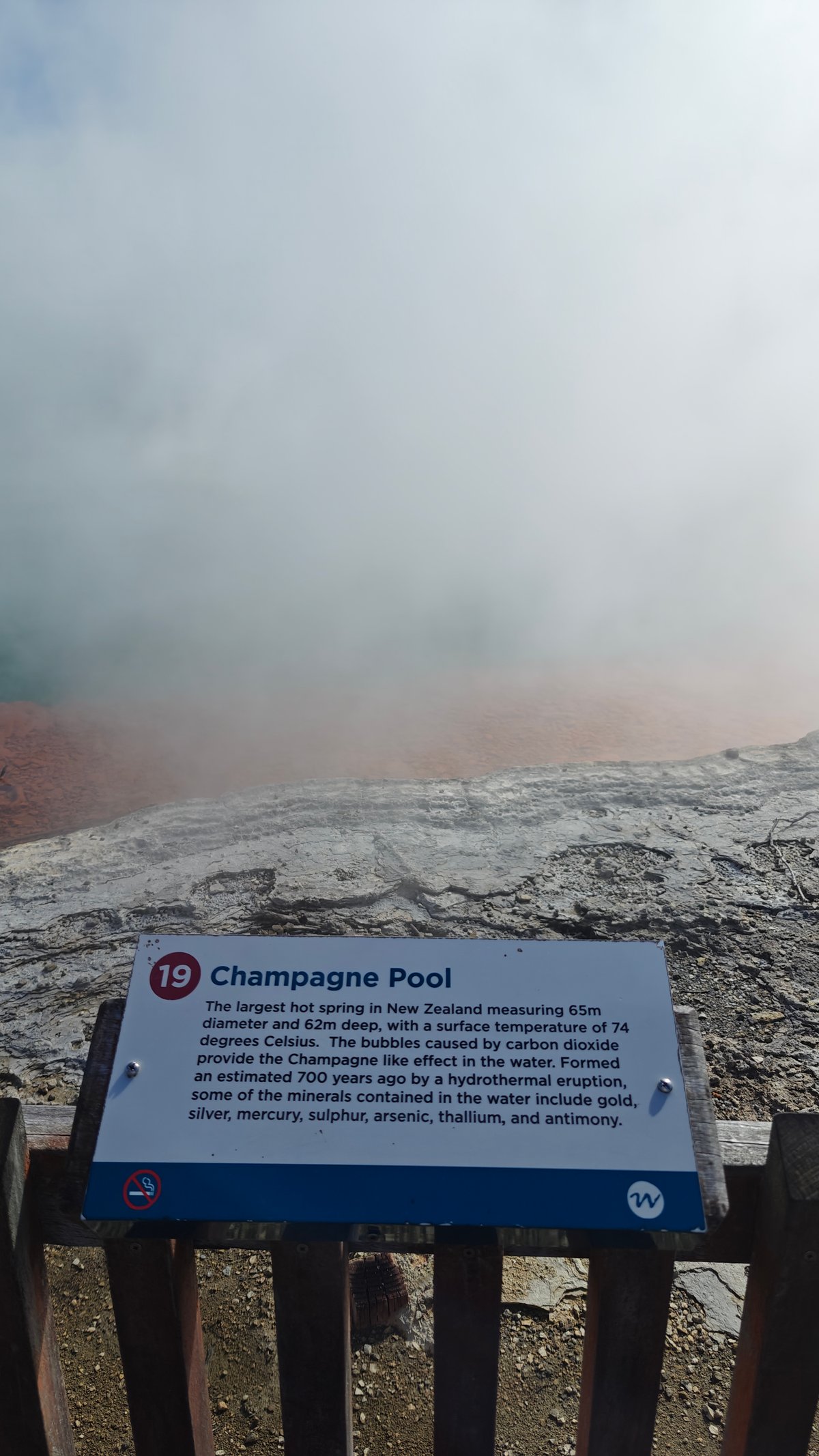
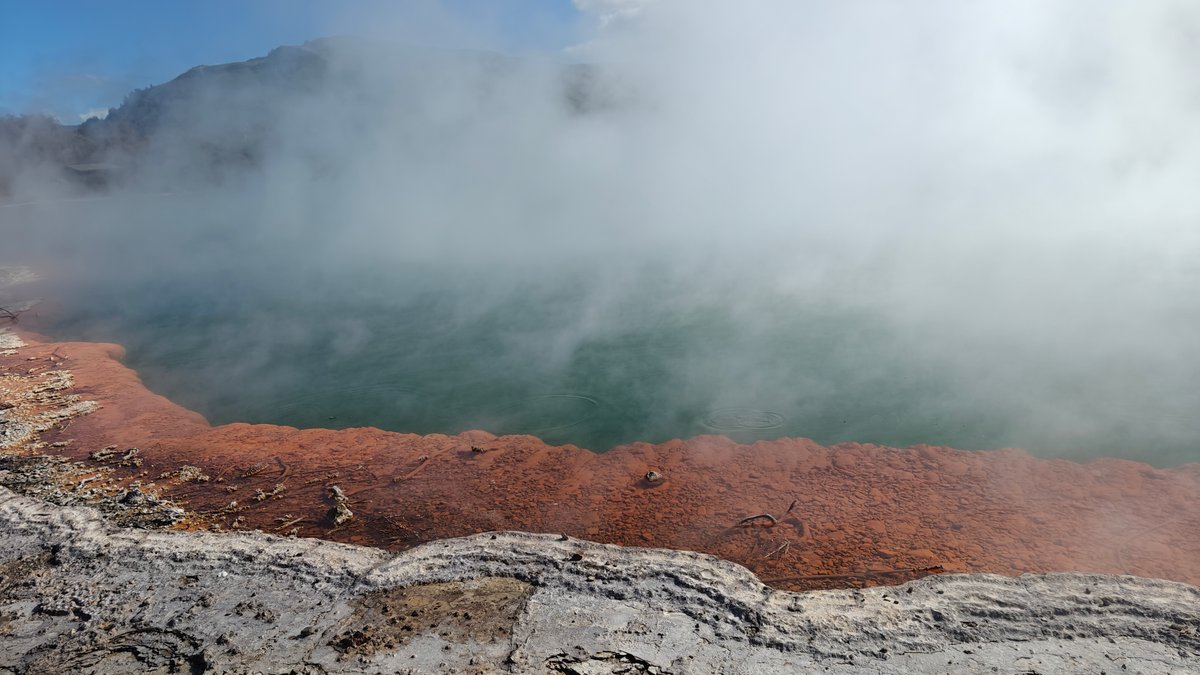
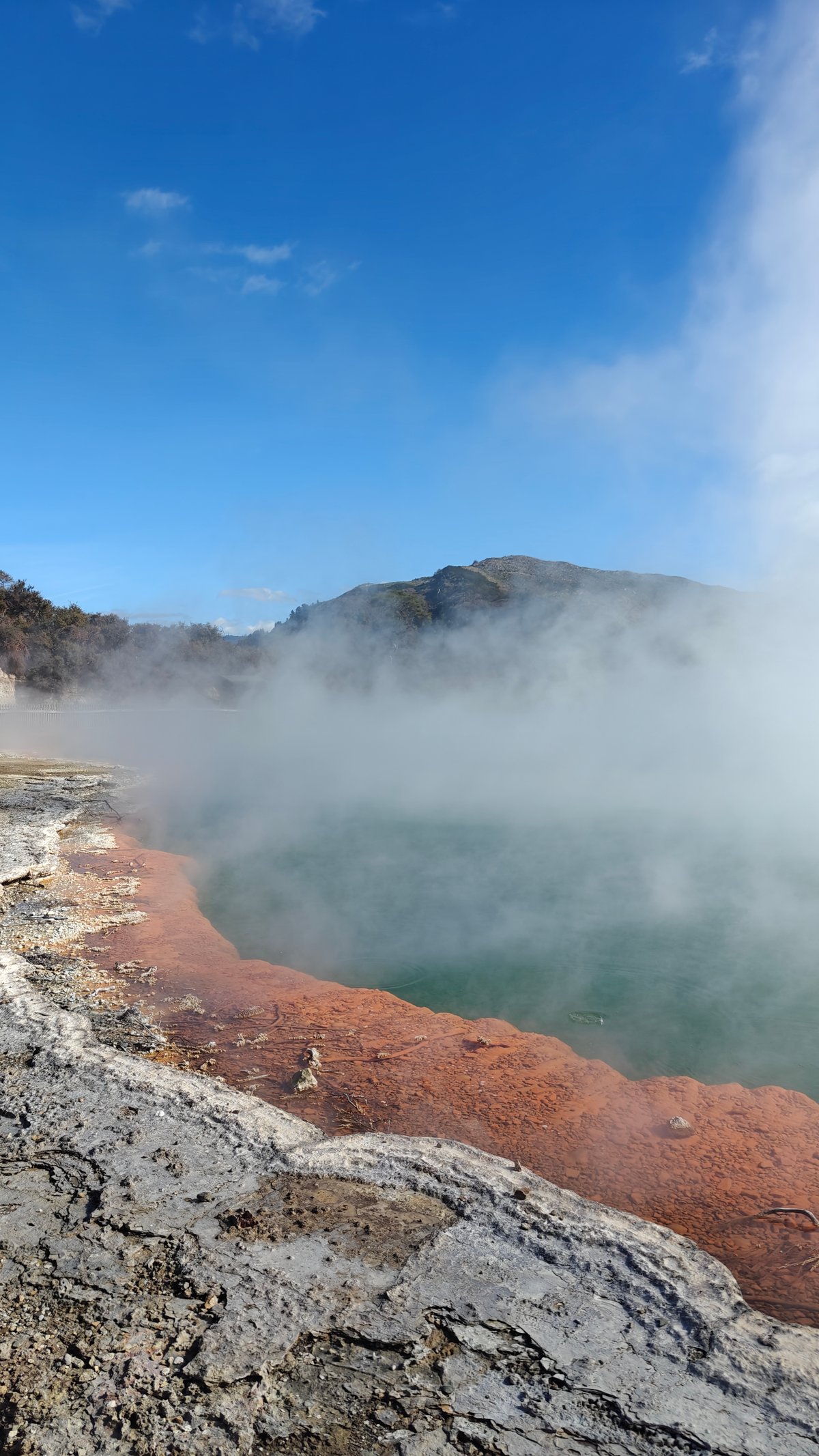
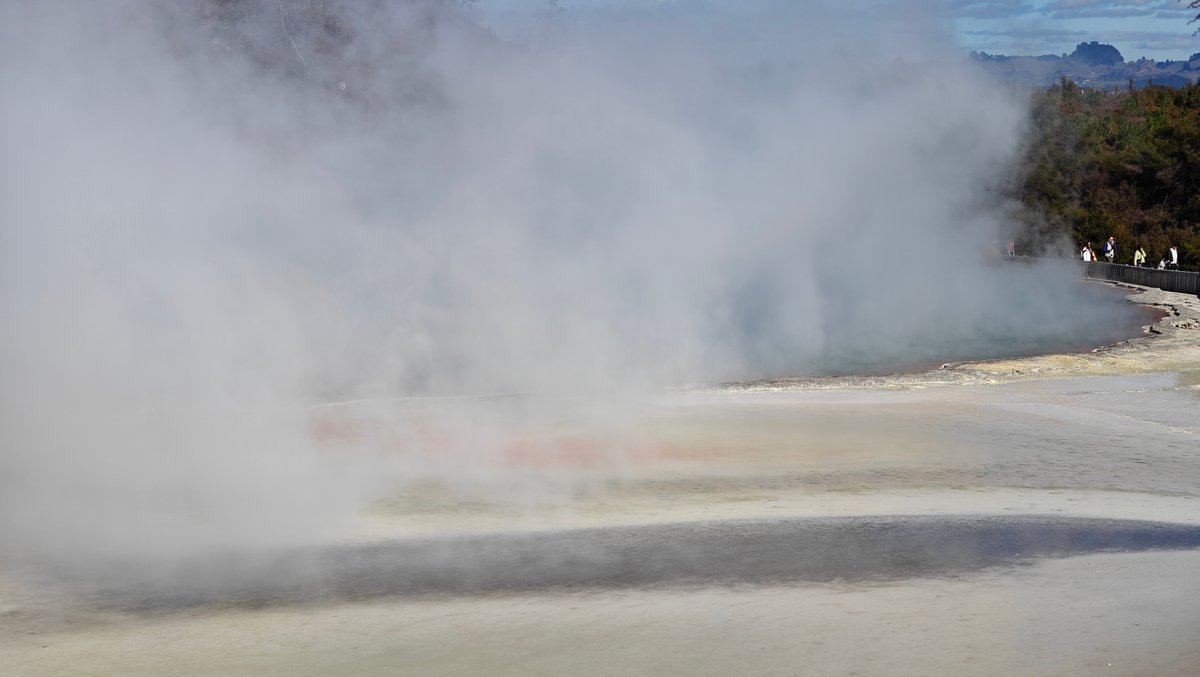
The big kahuna is Champagne Pool, and it doesn’t disappoint. As I rounded a corner, there it was, this massive hot spring with steam billowing from it and its rim coated in what appears to be a layer of rust. It was created when a volcano erupted hundreds of years ago, and it’s currently sitting at roughly 74 degrees (way too warm to even consider dipping a toe).
Carbon dioxide bubbles rise up from the bottom but, despite the name, I couldn’t spot them through the steam from where I was standing.
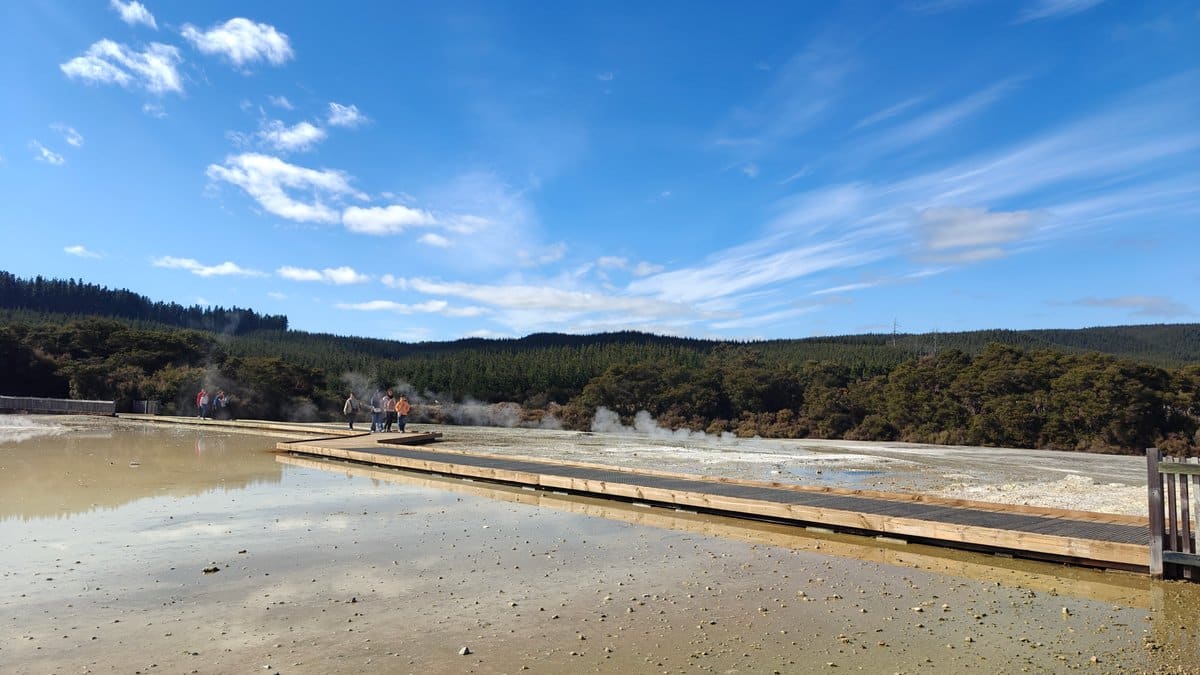
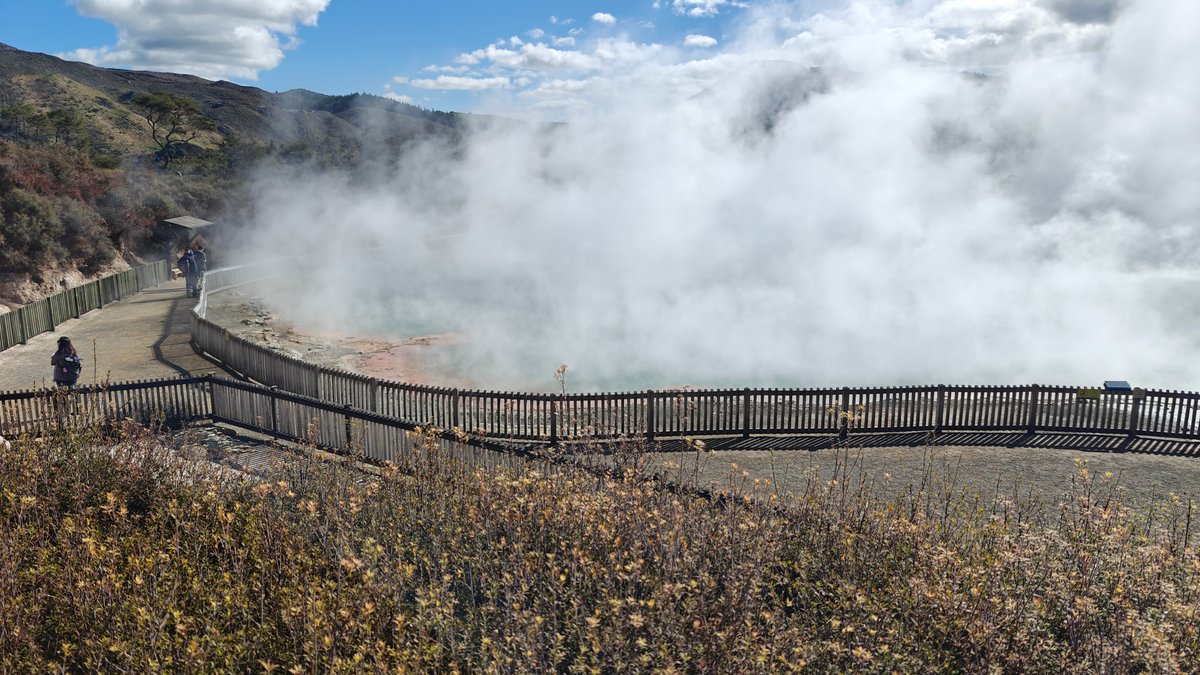
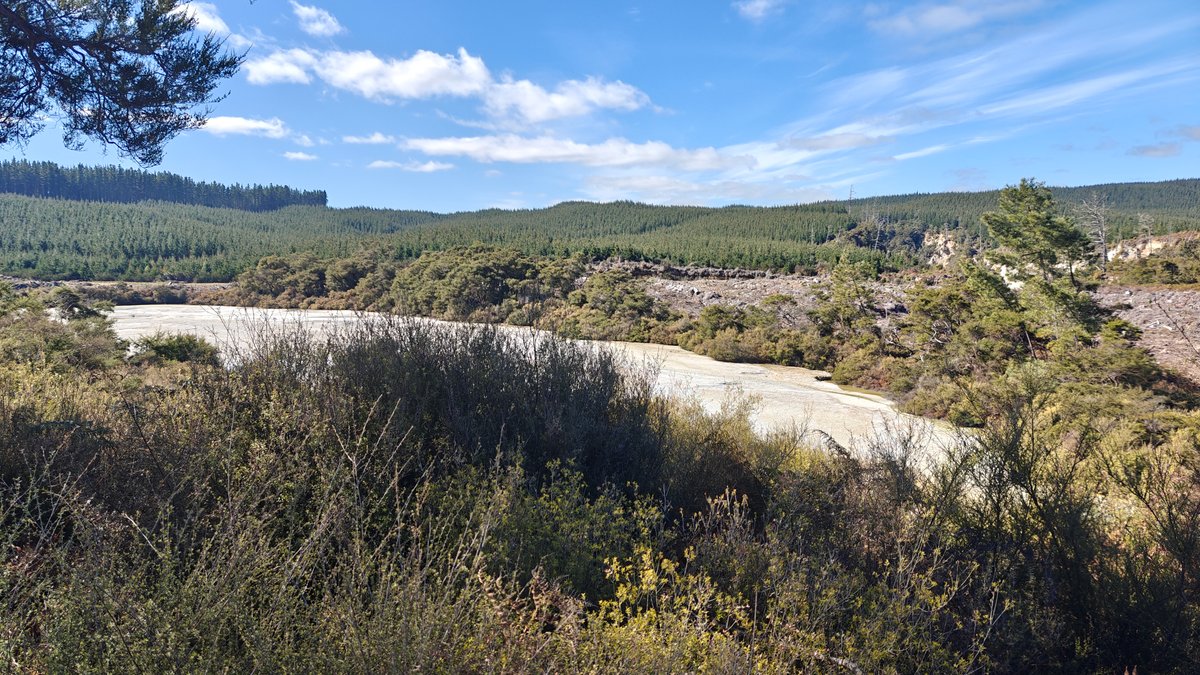
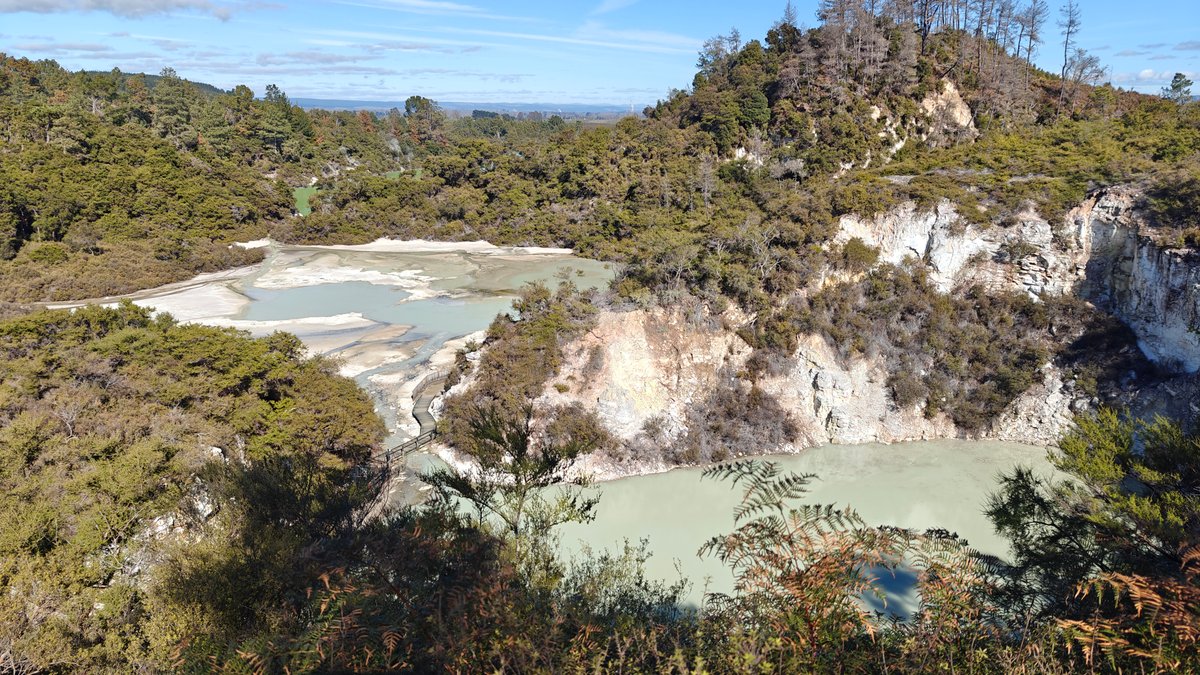
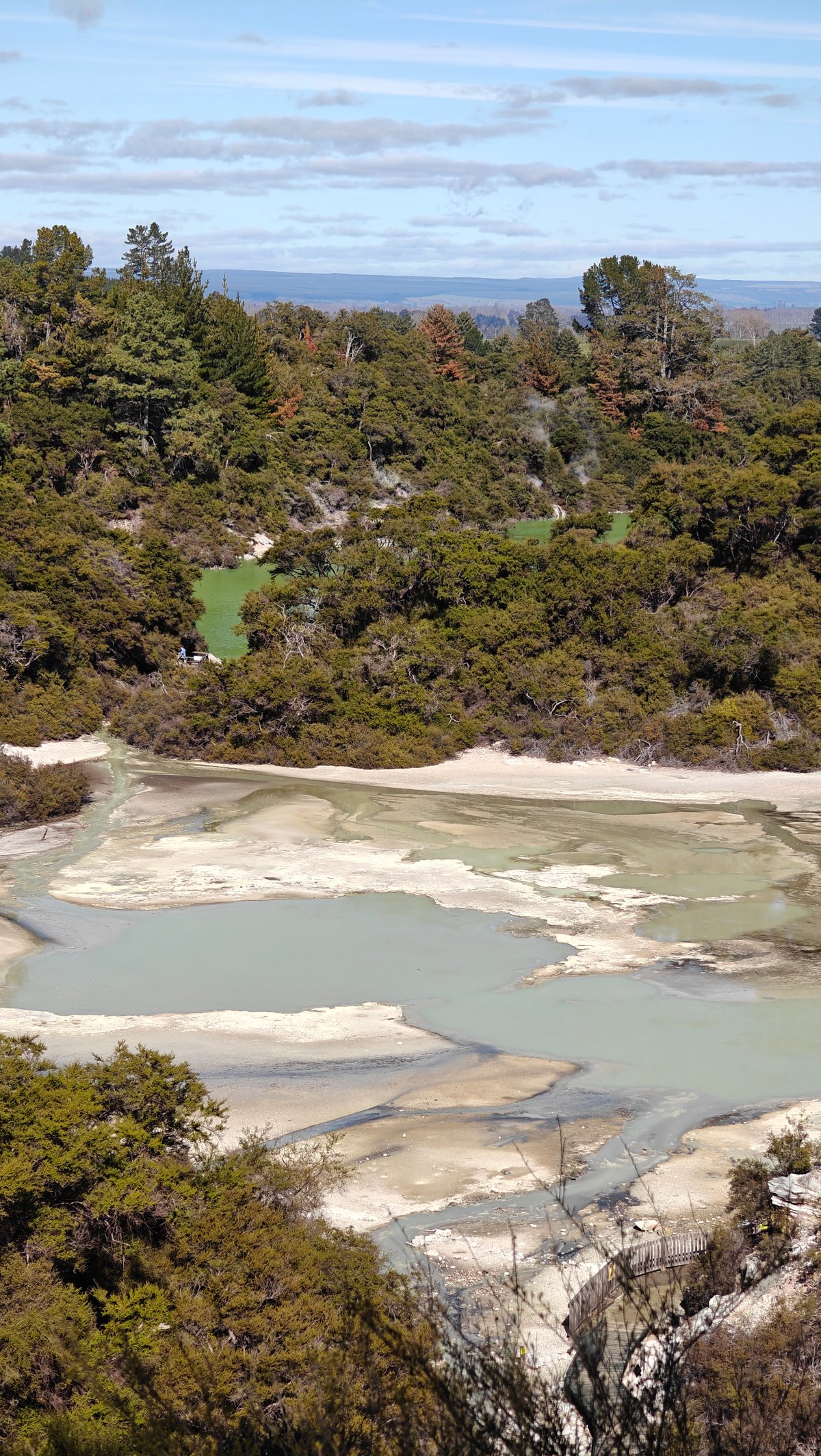
There’s a series of sinter formations all along out here heading towards the hills; on the way back, we stopped at Champagne Pool, Primrose Terrace, and then from the lookout platform got a whole sweep of them, as well as a view of the steam vents and geysers. it was one of those moments when you just stop and take it in for a minute.
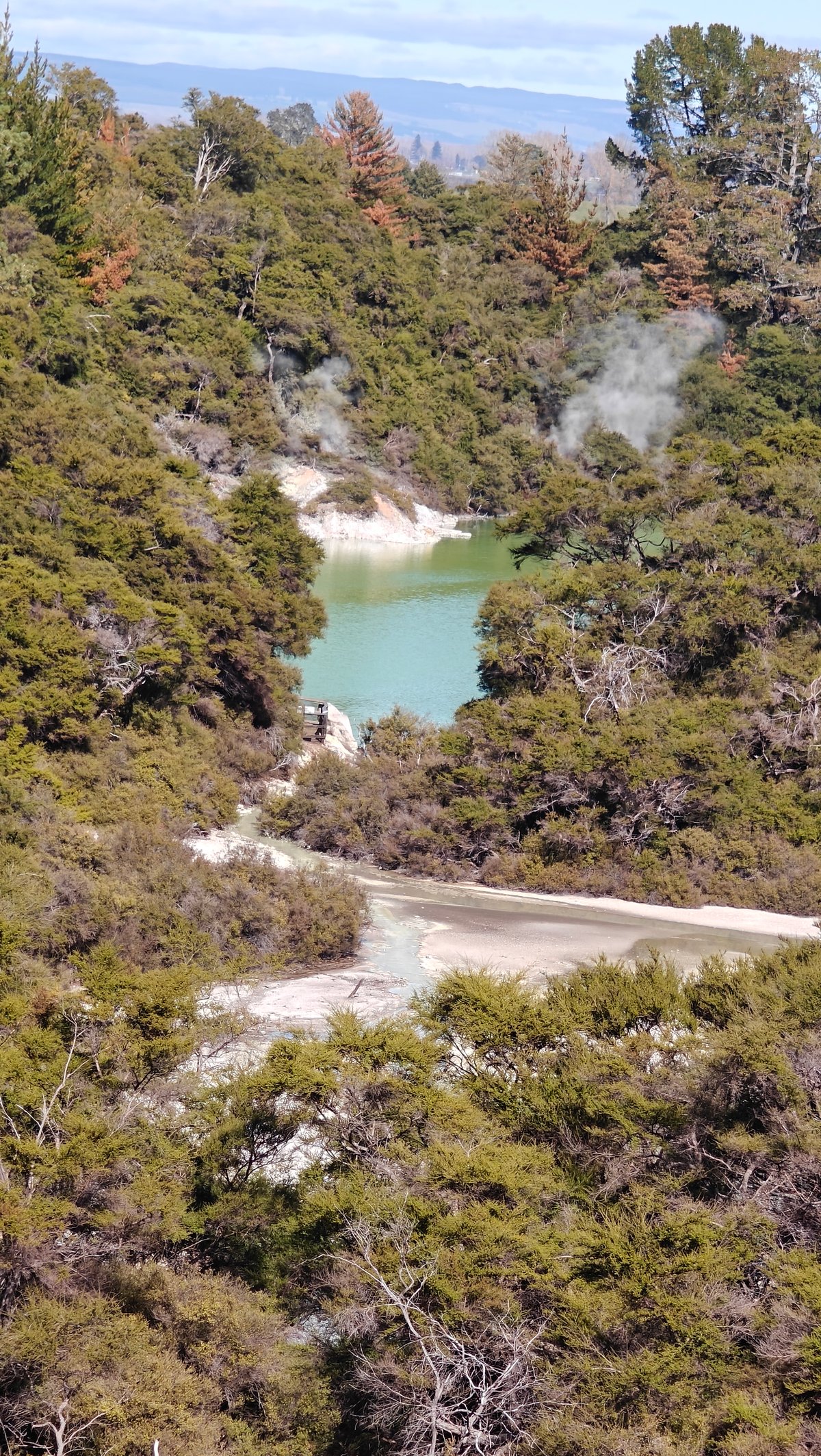
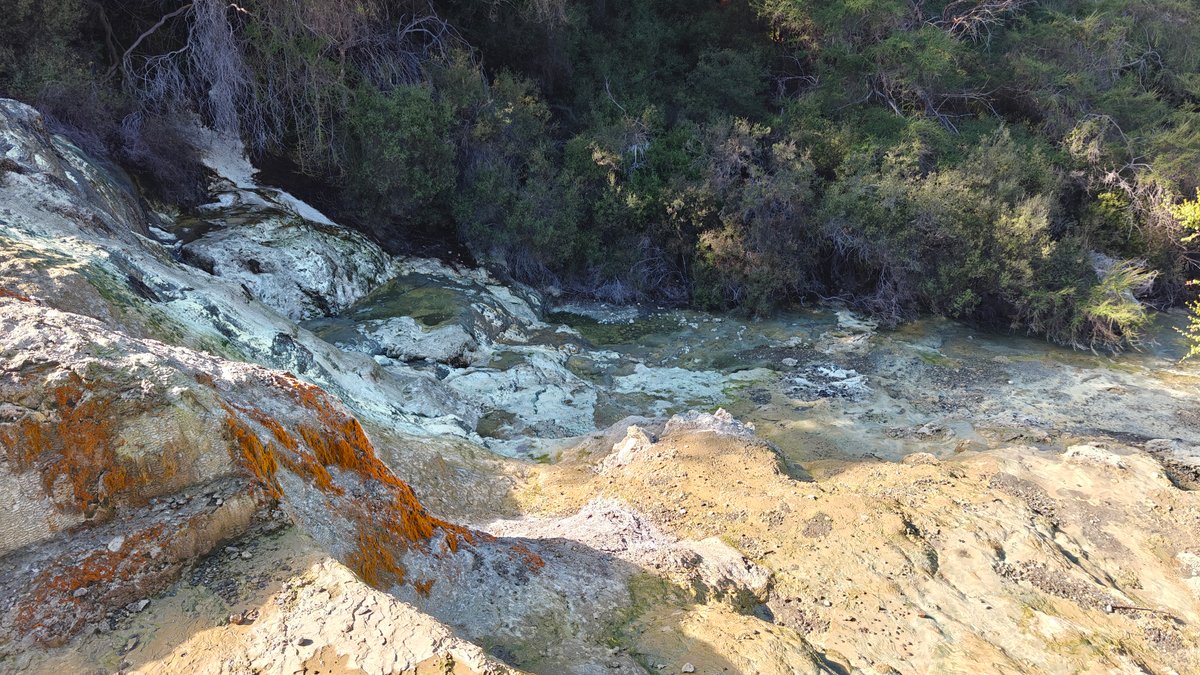
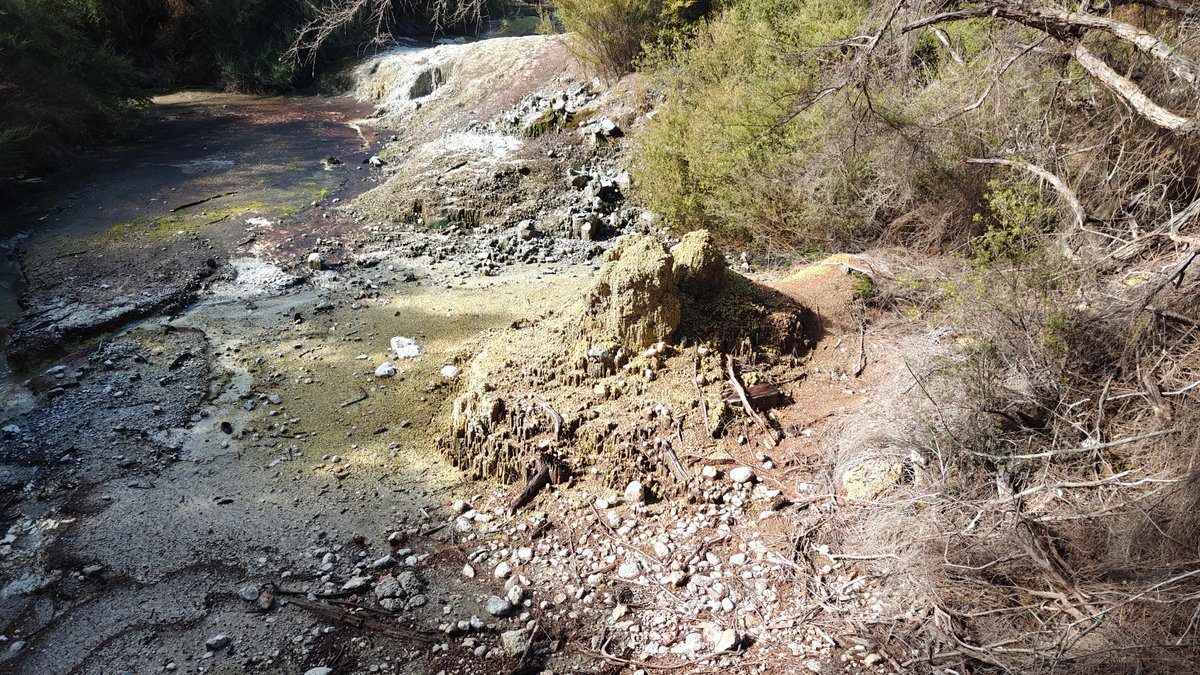
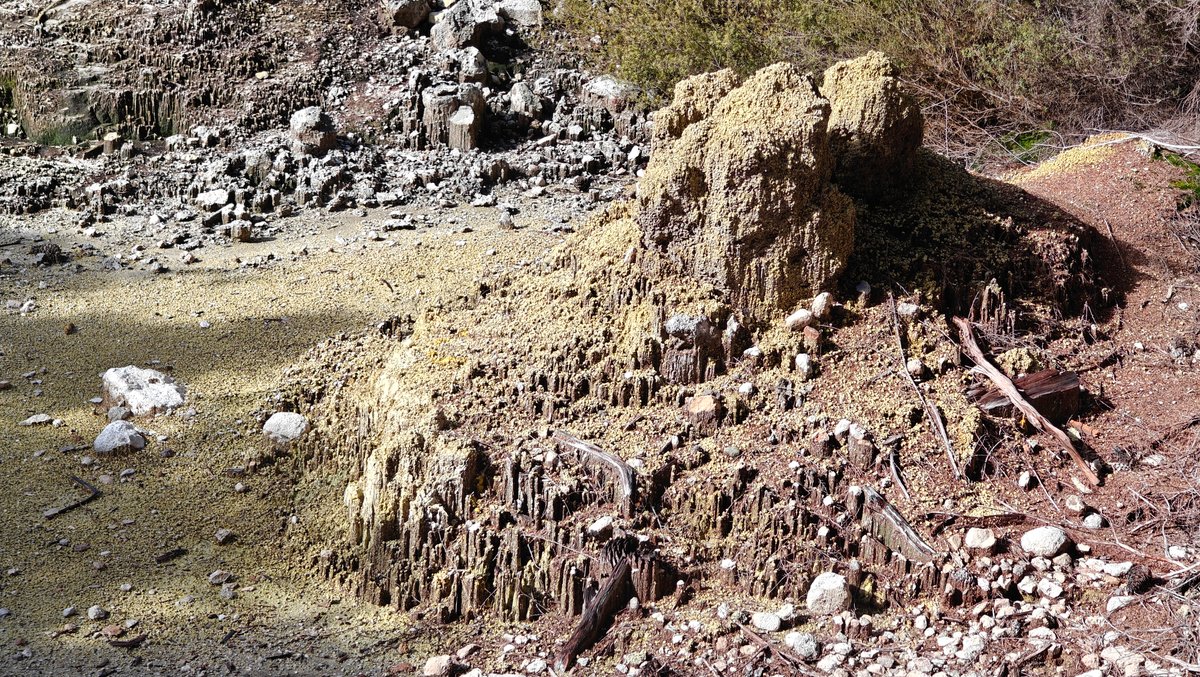
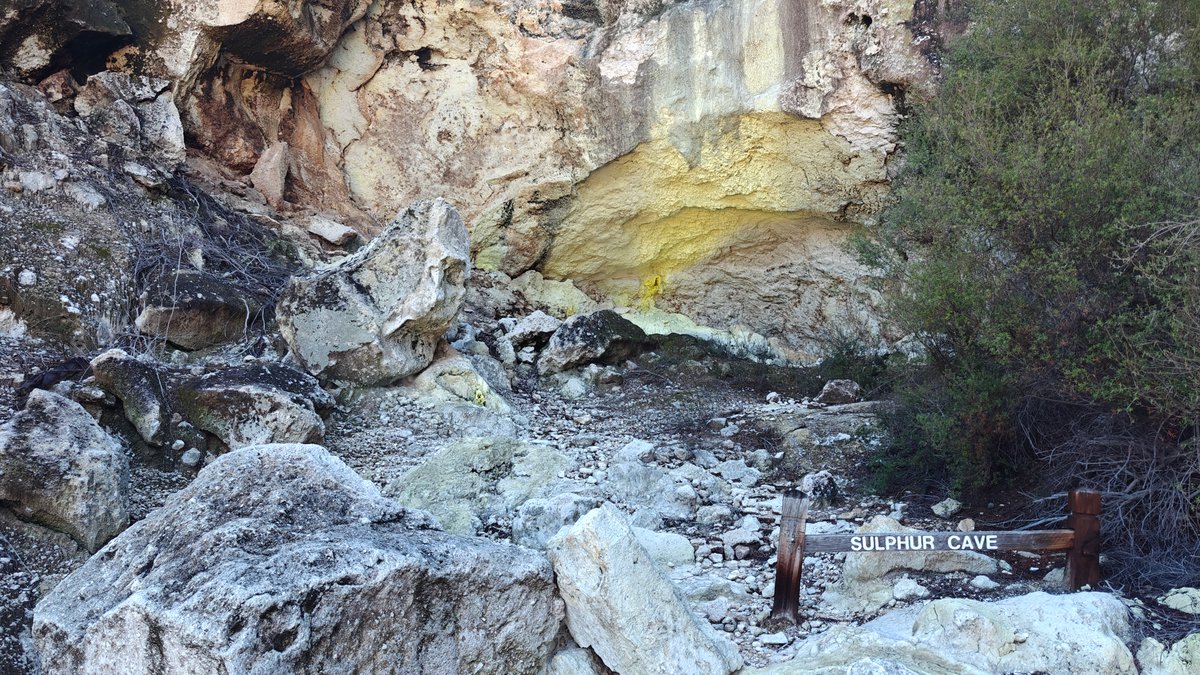
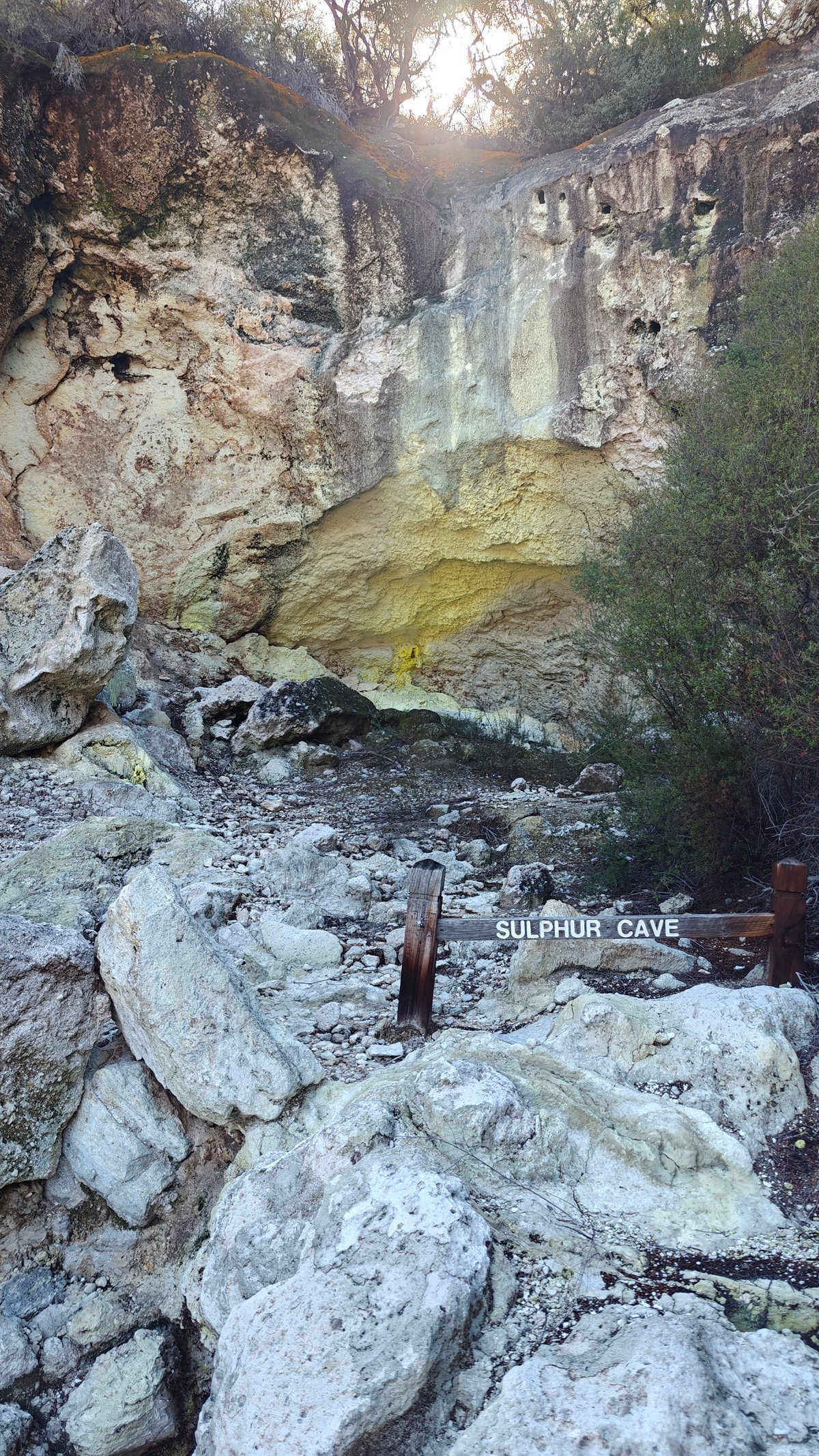
The track then winds past more craters, over mounds of pure sulphur (which looks like someone has spray-painted the rocks), to Past Champagne Pool. Even on the boardwalk, the ground crunched underfoot; some of the formations were smooth and glossy, while others were jaggy and crusty. And in the fierce sun I experienced, it all looked even more intense.
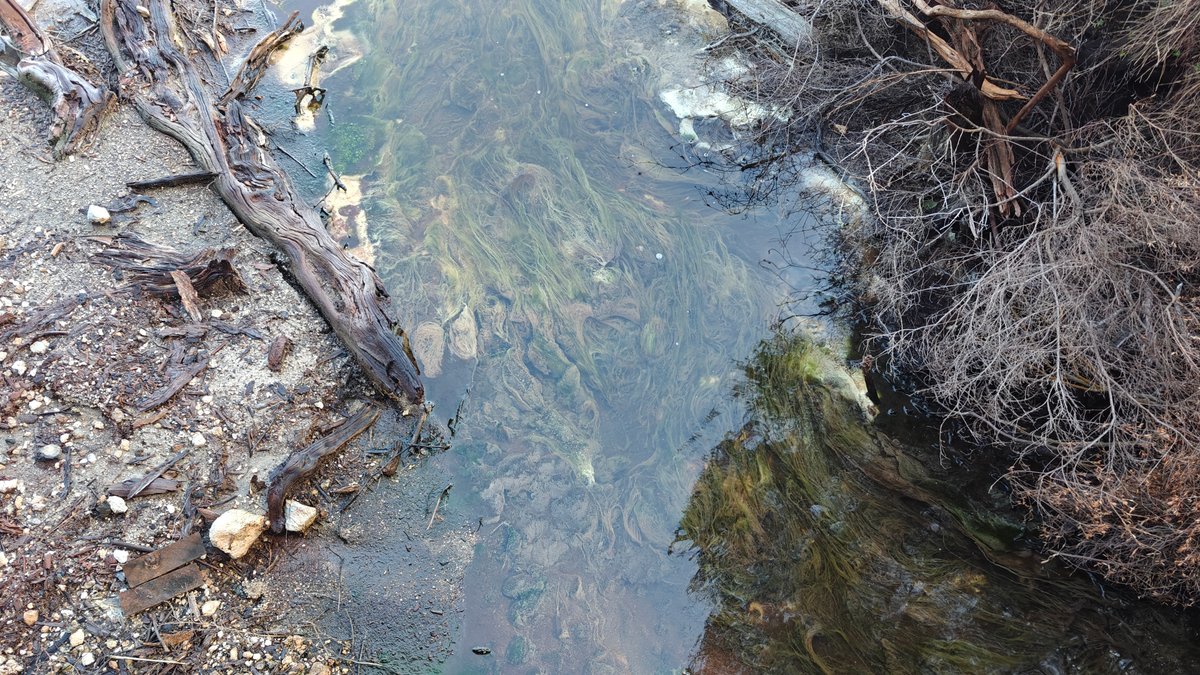
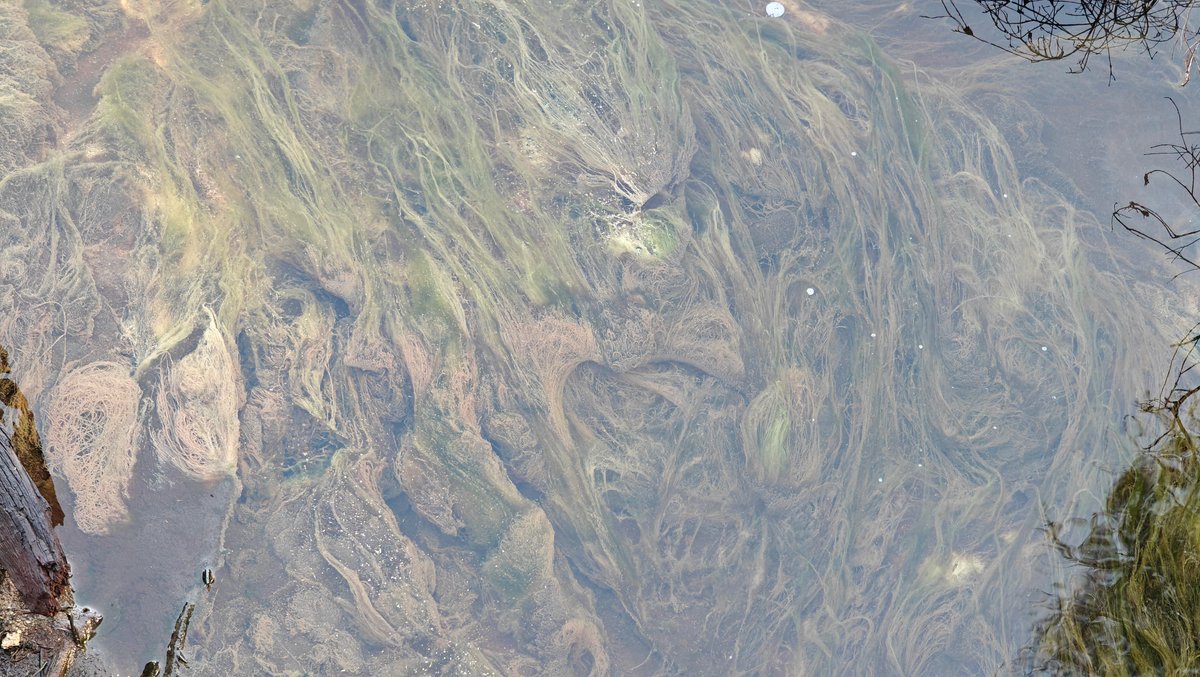
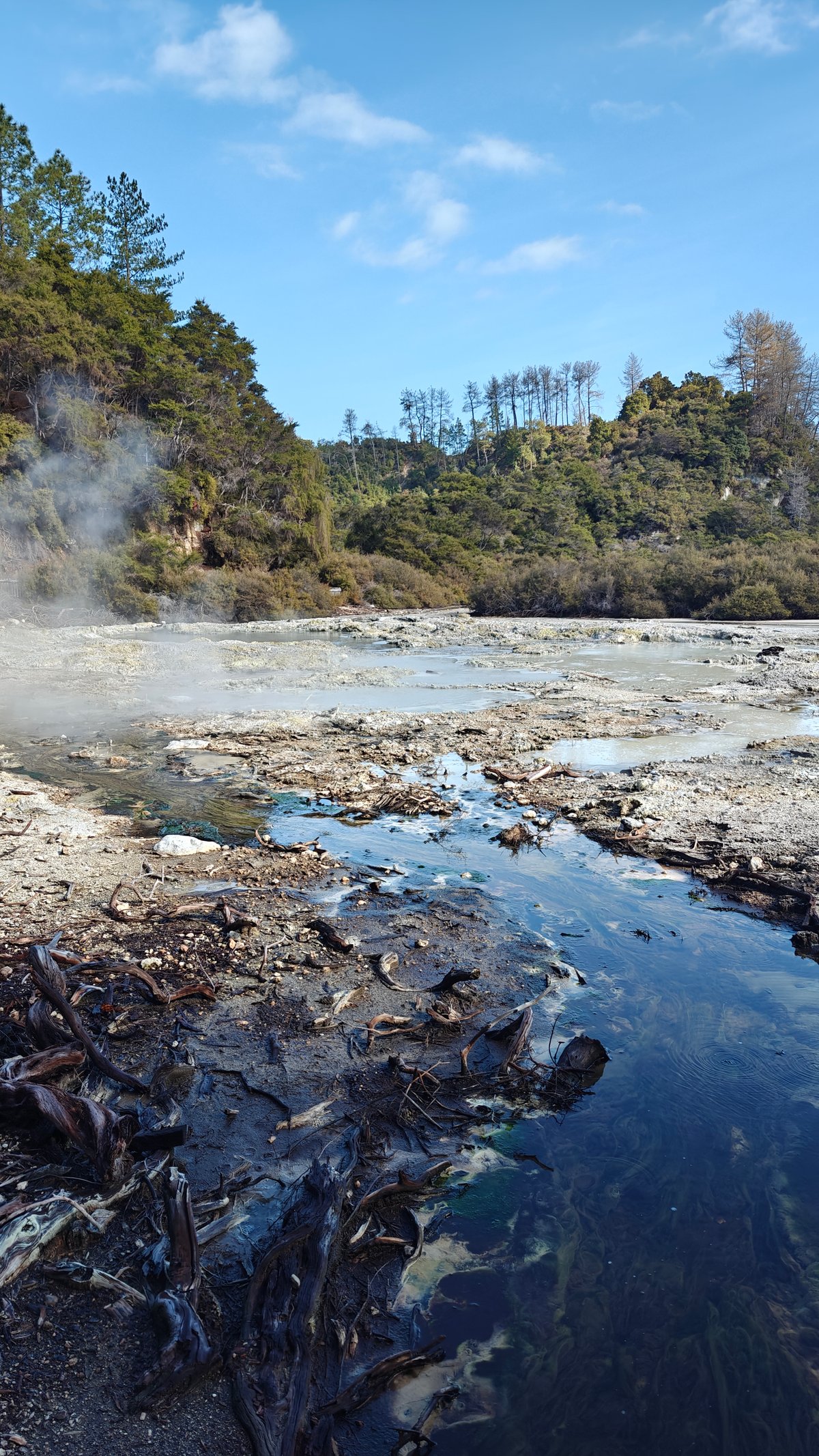
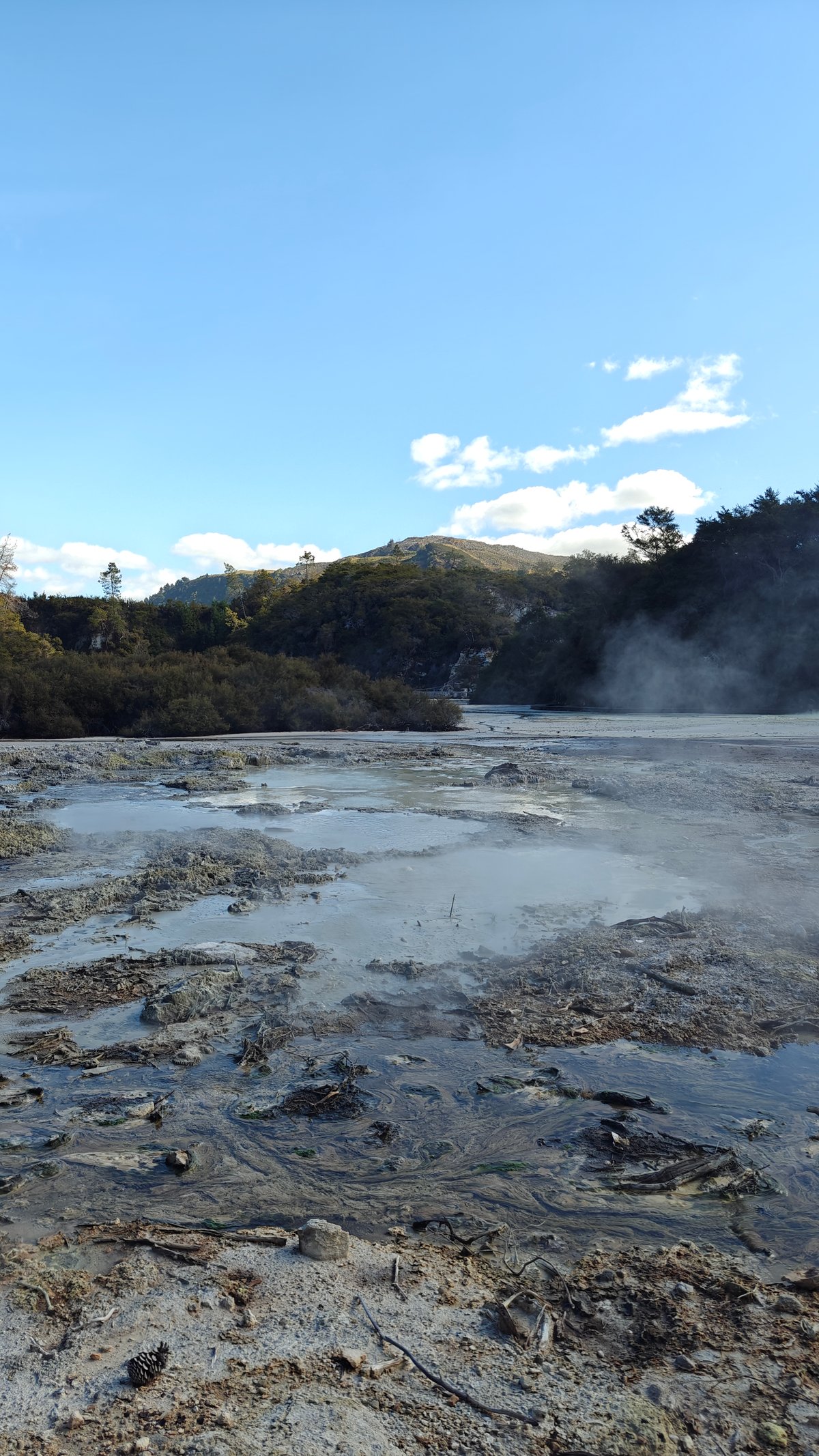
There’s also a stream that runs through the sinter flats further along and it’s lined with algae that thrive in the hot water. Depending on the minerals in the water and the temperature, the colours change and if you get close enough you can see the different growths and textures clinging to the rocks. For somewhere so harsh, it’s surprisingly delicate.
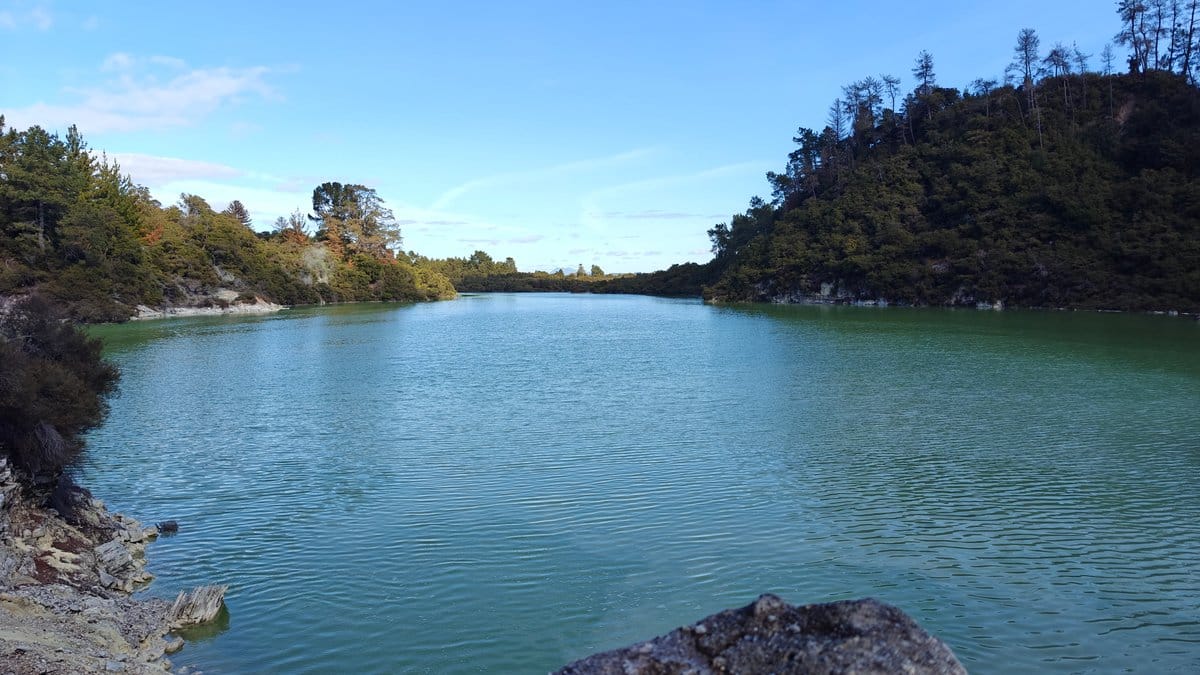
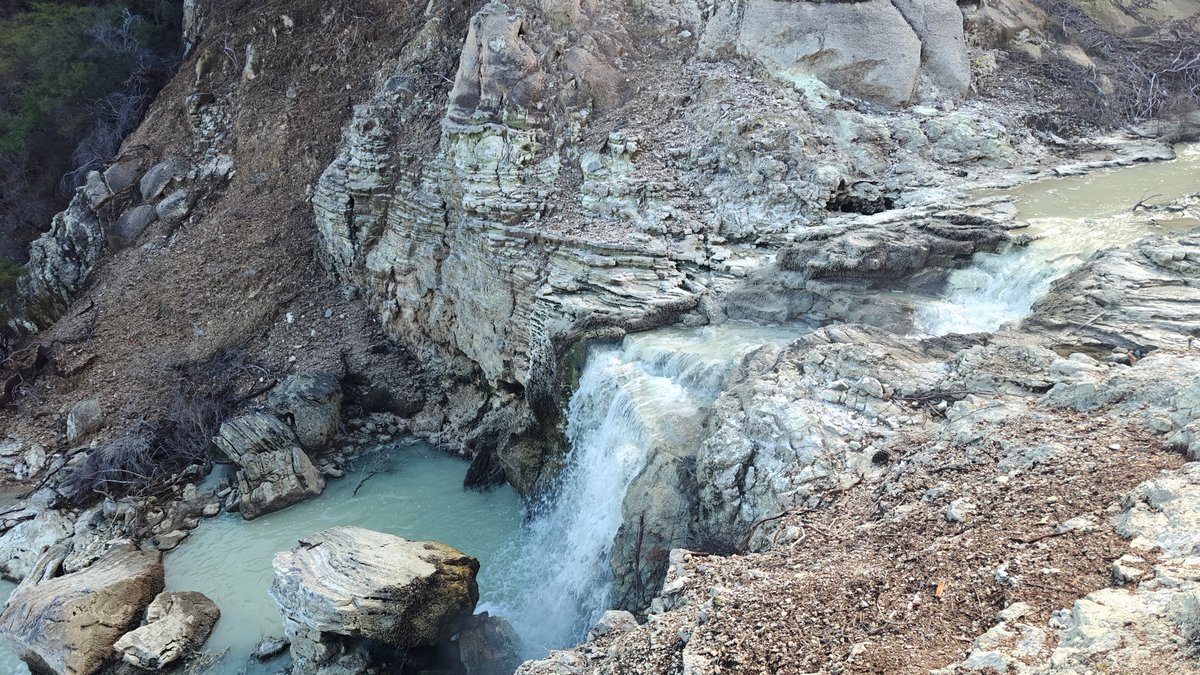
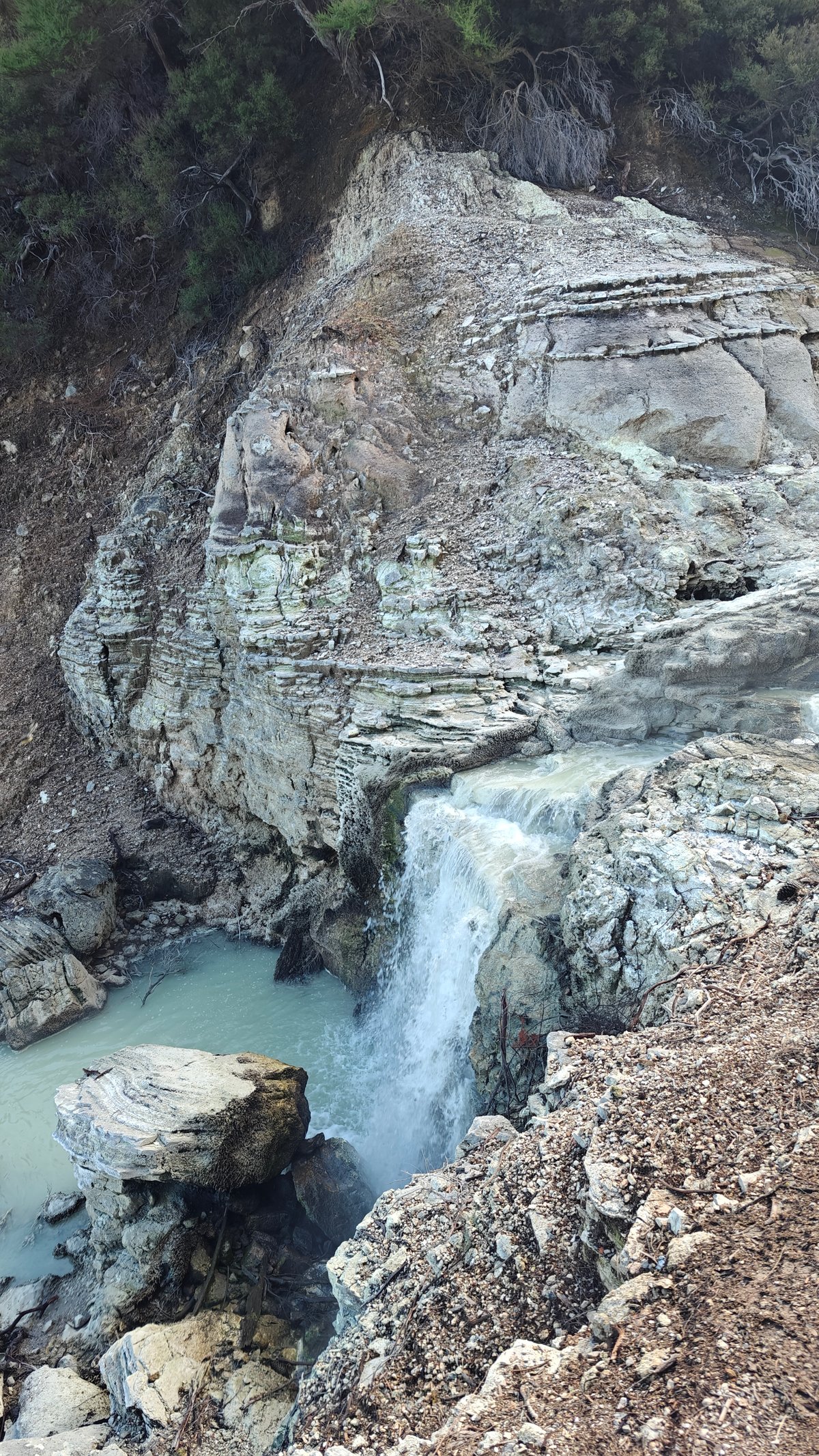
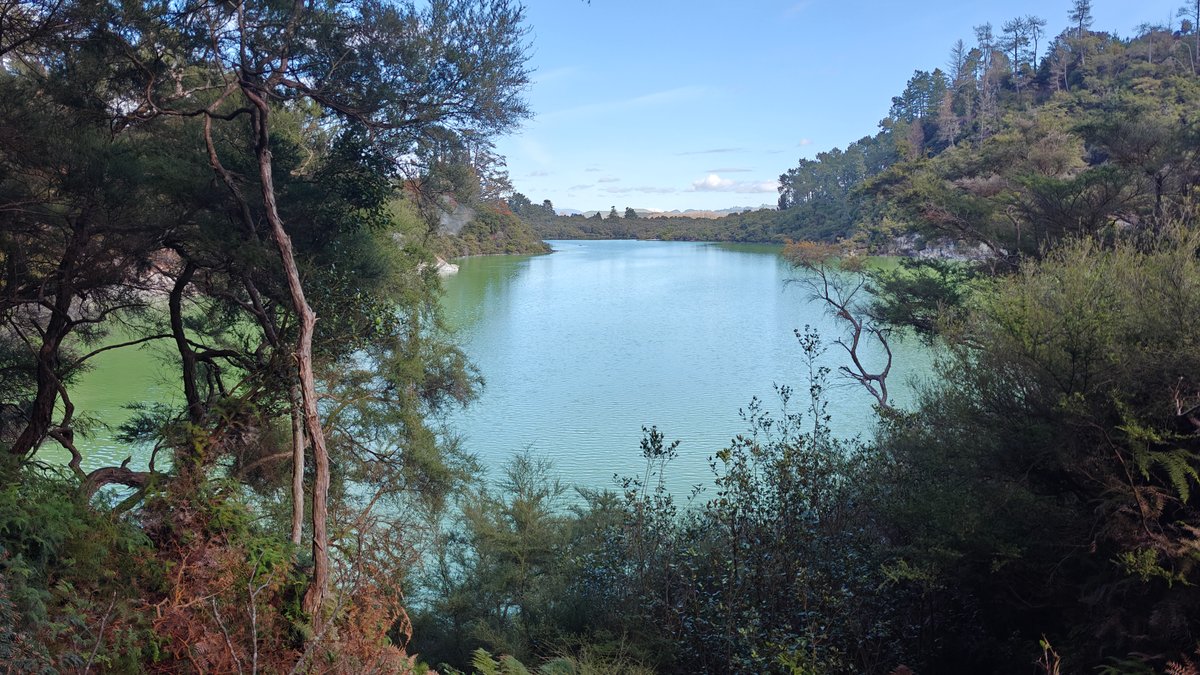
At the other end of the loop is Lake Ngakoro. It’s much more peaceful than the start. A little waterfall falls into the lake from the surrounding cliffs.
The water itself is still, with trees reflected in its surface. It was nice after all that bubbling and steaming to be able to stand somewhere quiet and green for a bit.
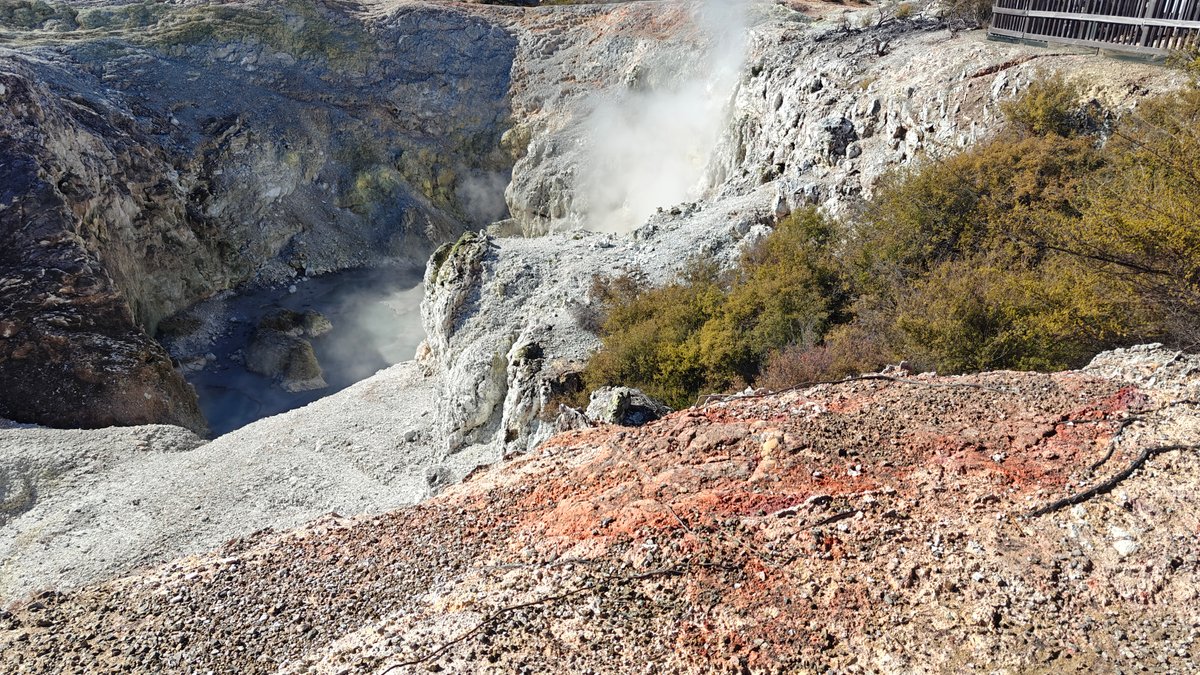
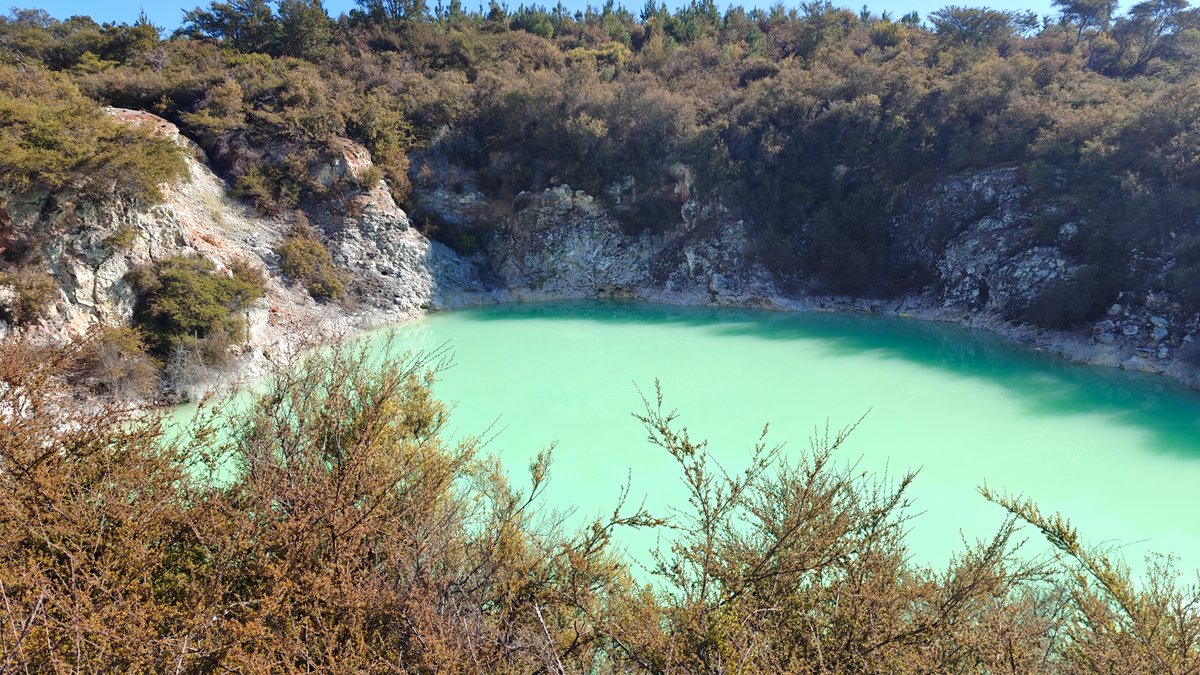
From there I continued on through some additional craters (one had such bright green water that I wasn’t sure if it was real) before looping back around to the visitor centre, exhausted, slightly stinky, and truly impressed. While not an enormous park, Wai-O-Tapu fits a whole lot of stuff into the walk and I would suggest budgeting at least a couple of hours for this hike. Bring water, wear solid shoes, and perhaps avoid wearing your favorite coat; the sulfur odor sticks.
Have you visited Wai-O-Tapu or other geothermal parks? Tell me what you think in the comments.