
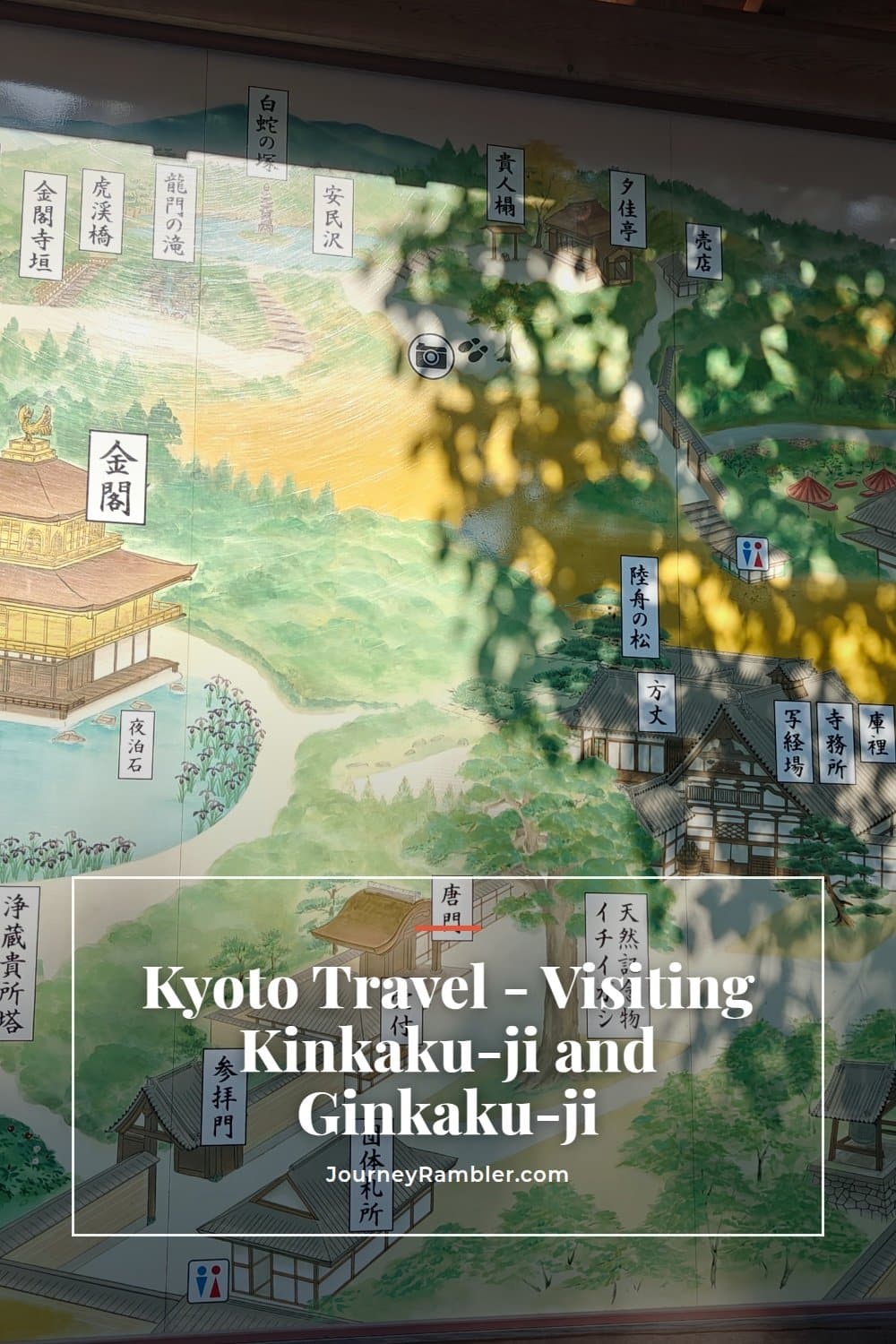
During my visit to Kyoto, I was lucky enough to see both Kinkaku-ji and Ginkaku-ji. And while it might sound silly to say that one is better then the other…in some ways it feels like asking if you prefer sunsets or sunrises. Both are temples built by members of the Ashikaga shogun clan.
Both have perfectly manicured garden surrounding them. Both really should be seen. But, also, they are totally unique experiences, and I came away from each with entirely different emotions.
My Trip to the Golden and Silver Pavilions
Golden Pavilion Kinkaku-ji
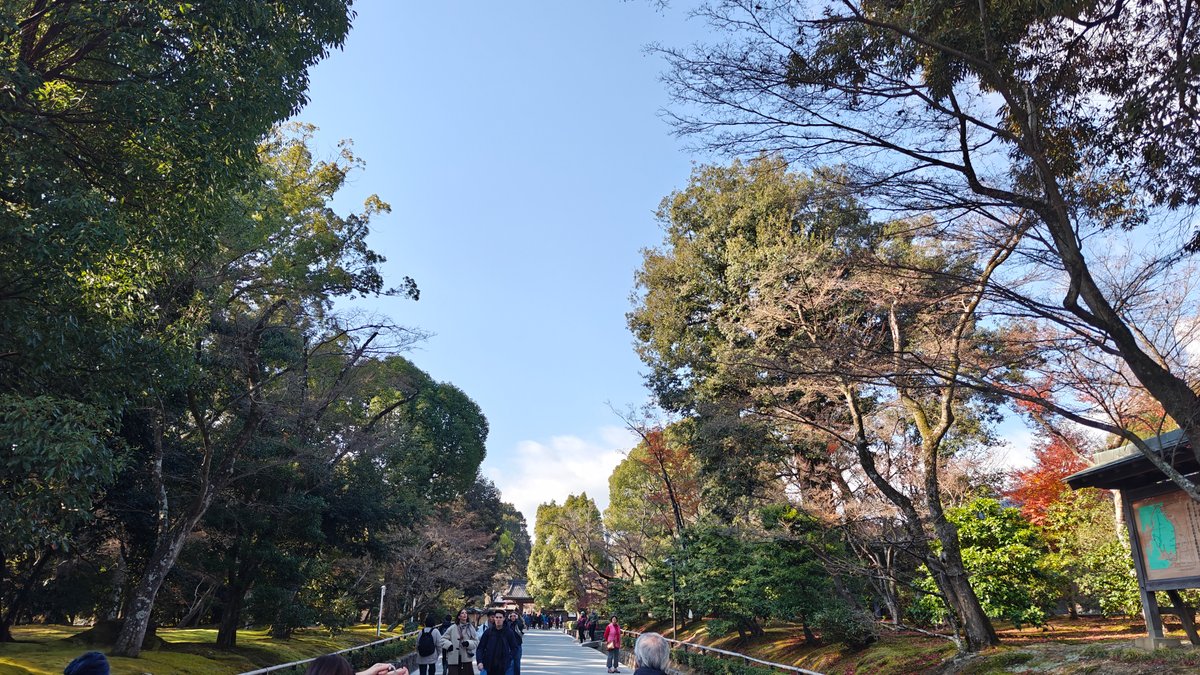
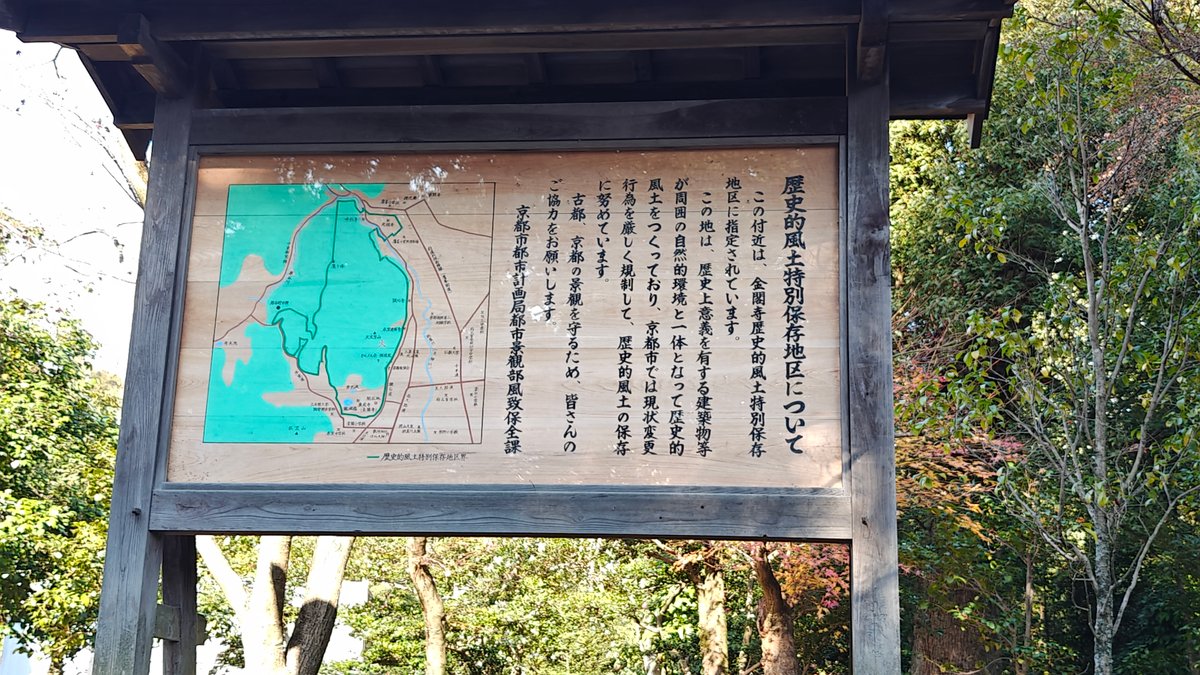
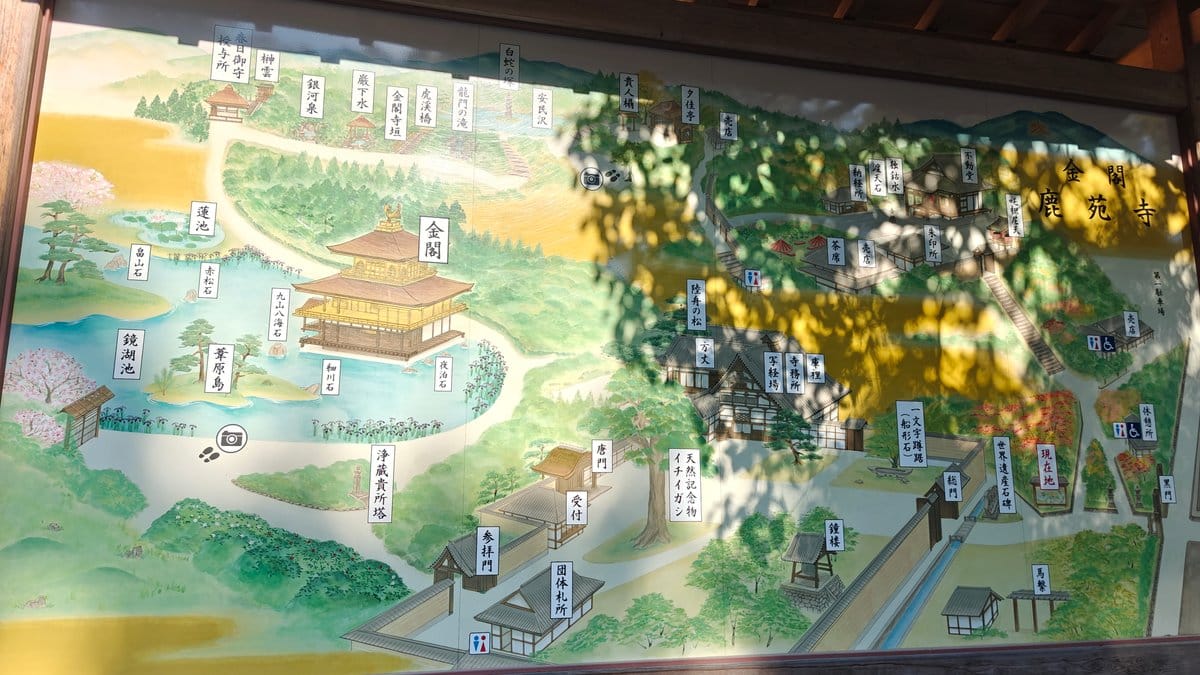
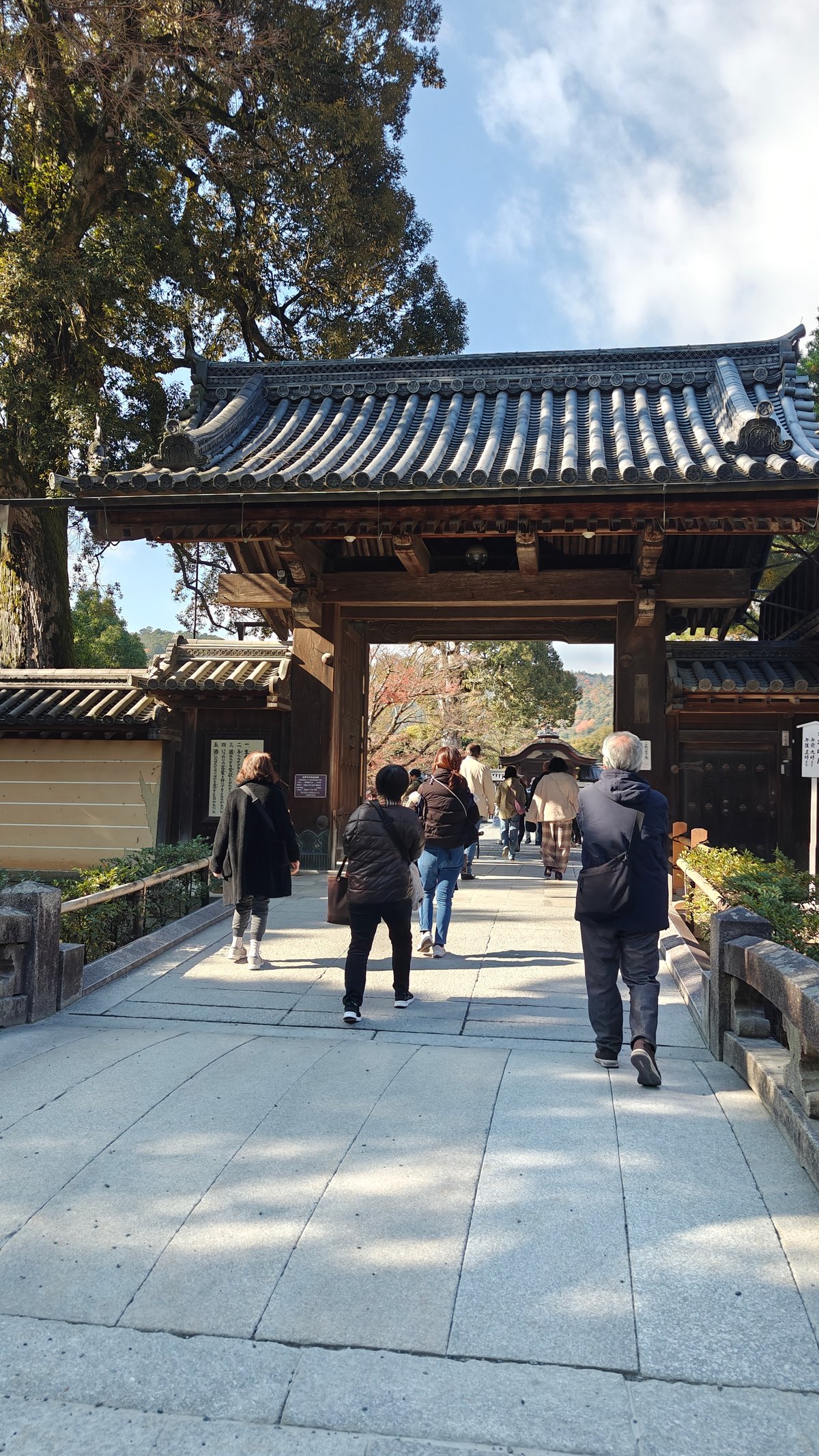
I arrived at Kinkaku-ji mid-morning. Walking along the tree-lined road leading up to the gate, I found that it was already packed with people and knew that this would be a more crowded visit than some of the other lesser-visited temple I’d been to. Close to the entrance is a few info boards and map illustrations that let you know how everything is laid out (though there’s only really one way to go around, so not too much chance of getting lost).
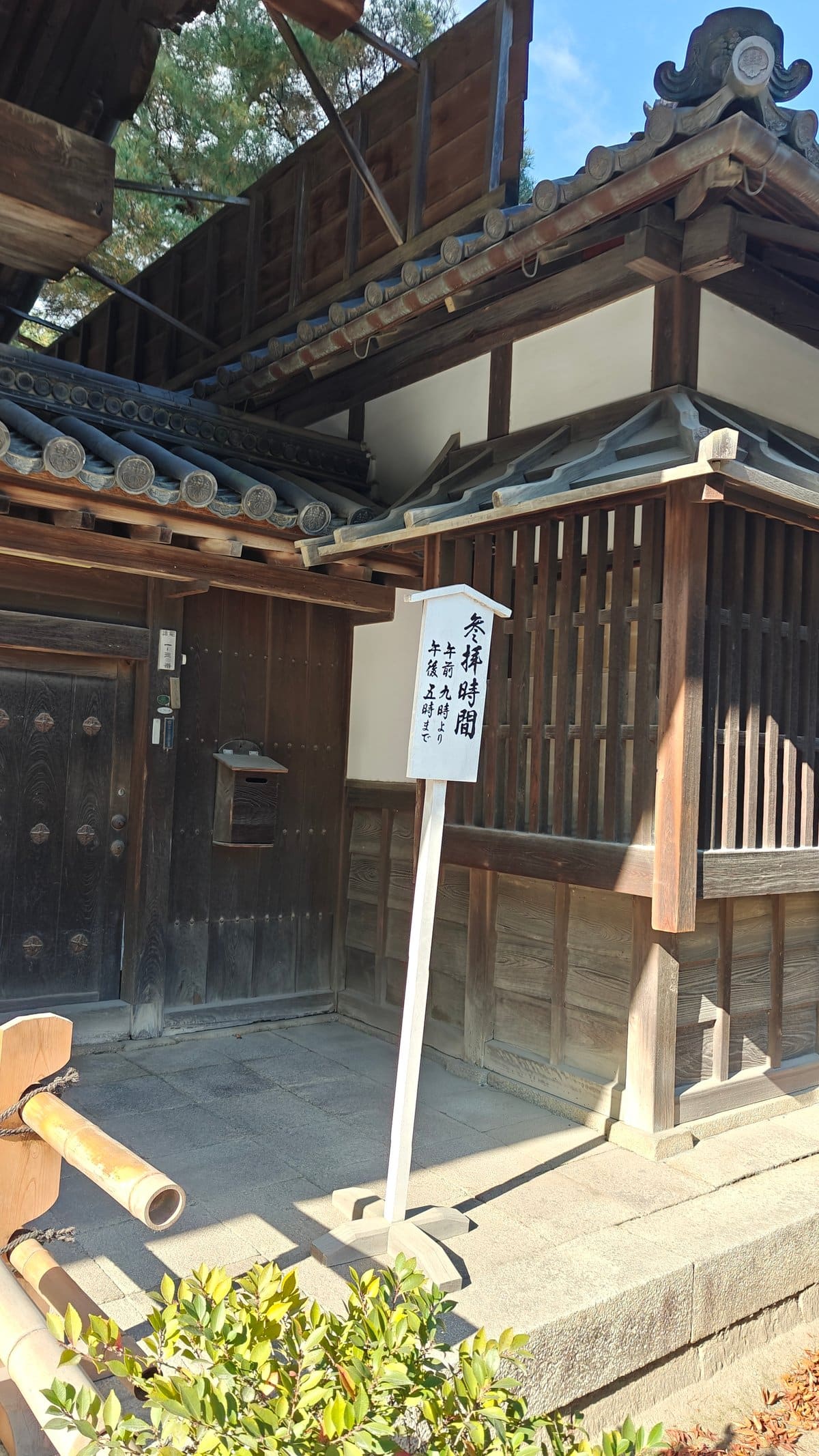
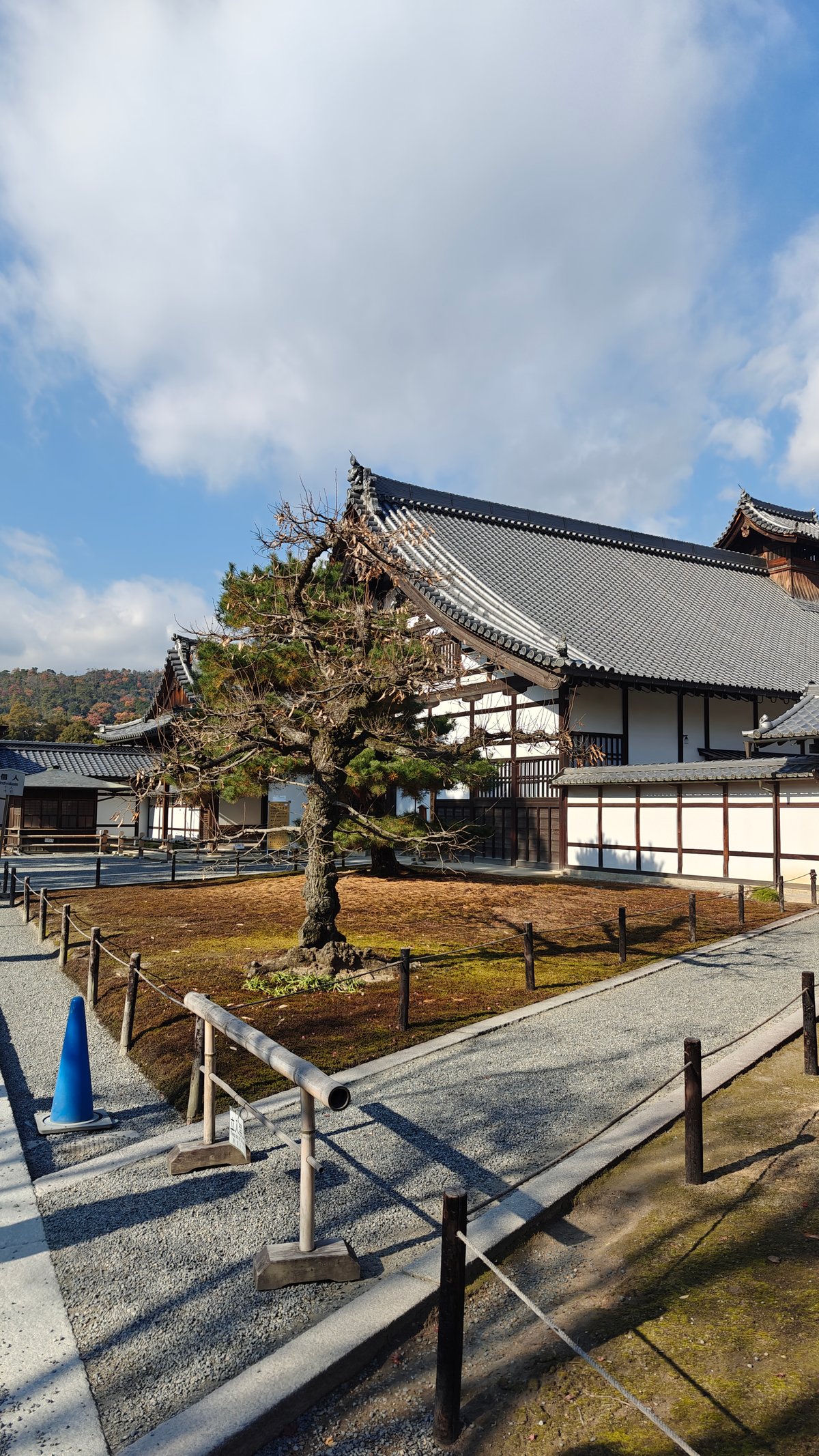
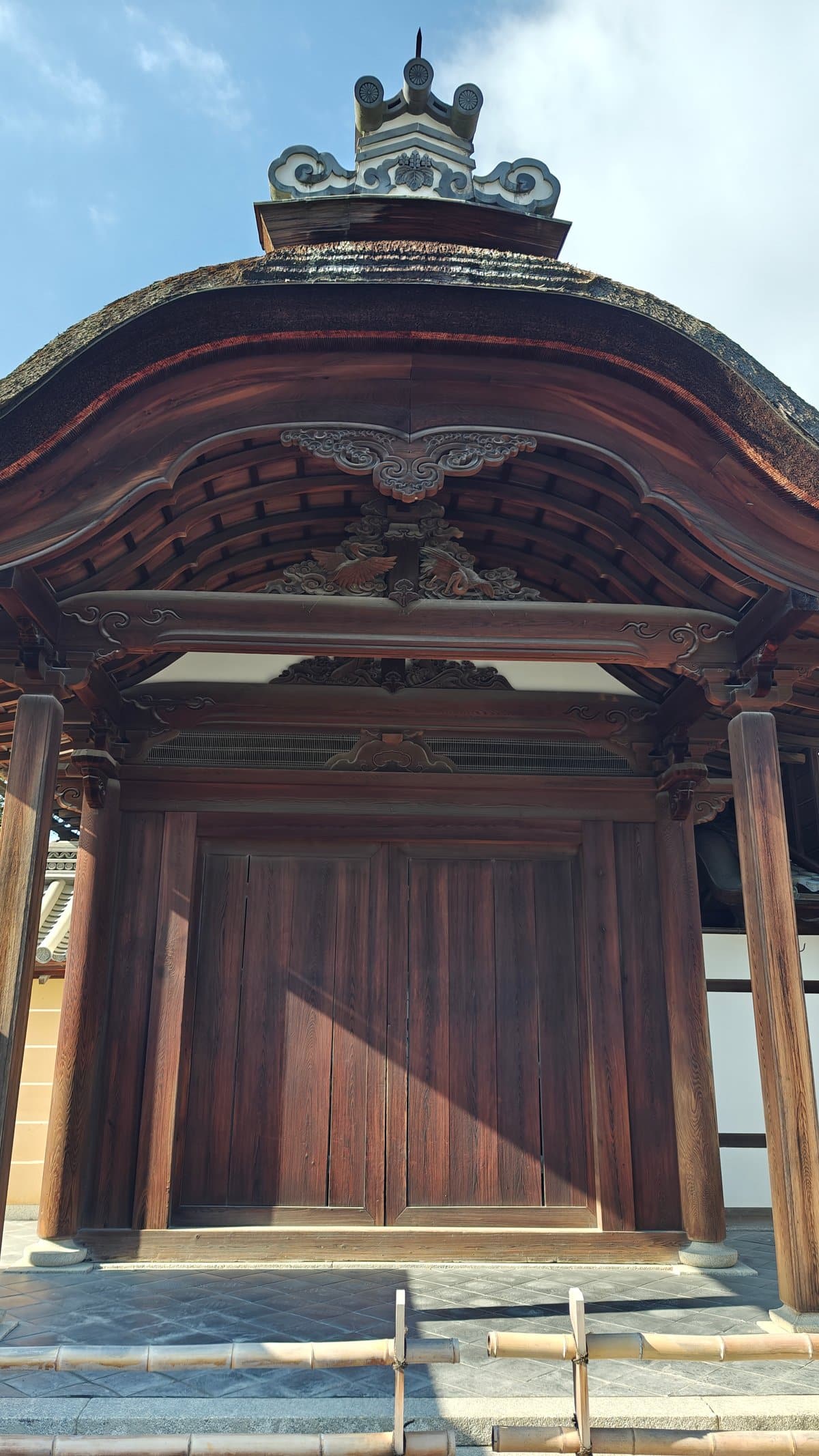
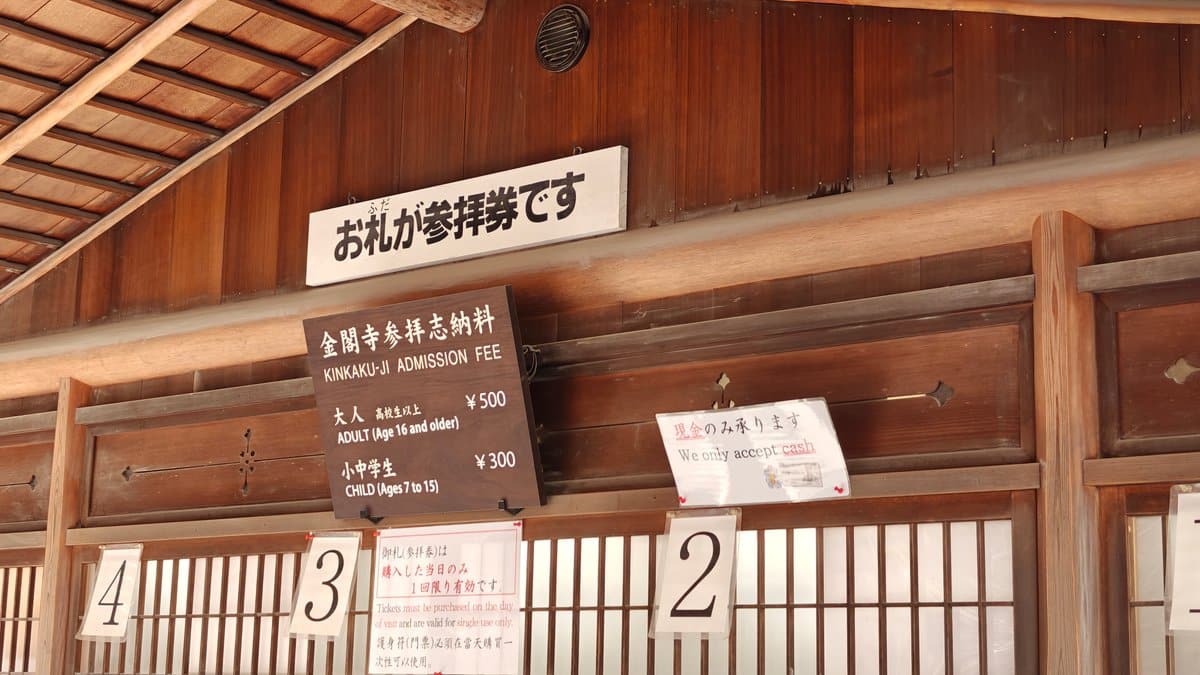
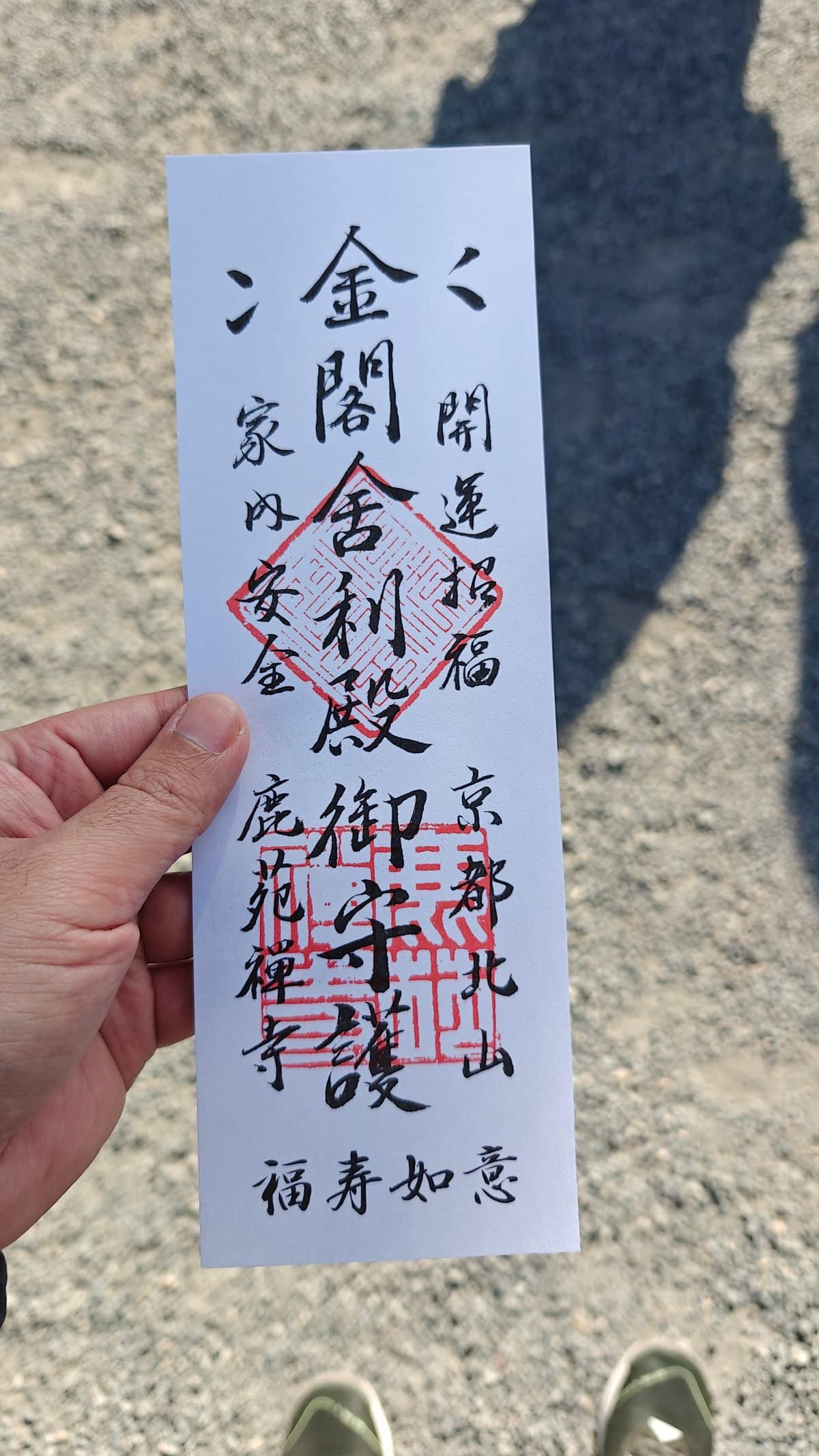
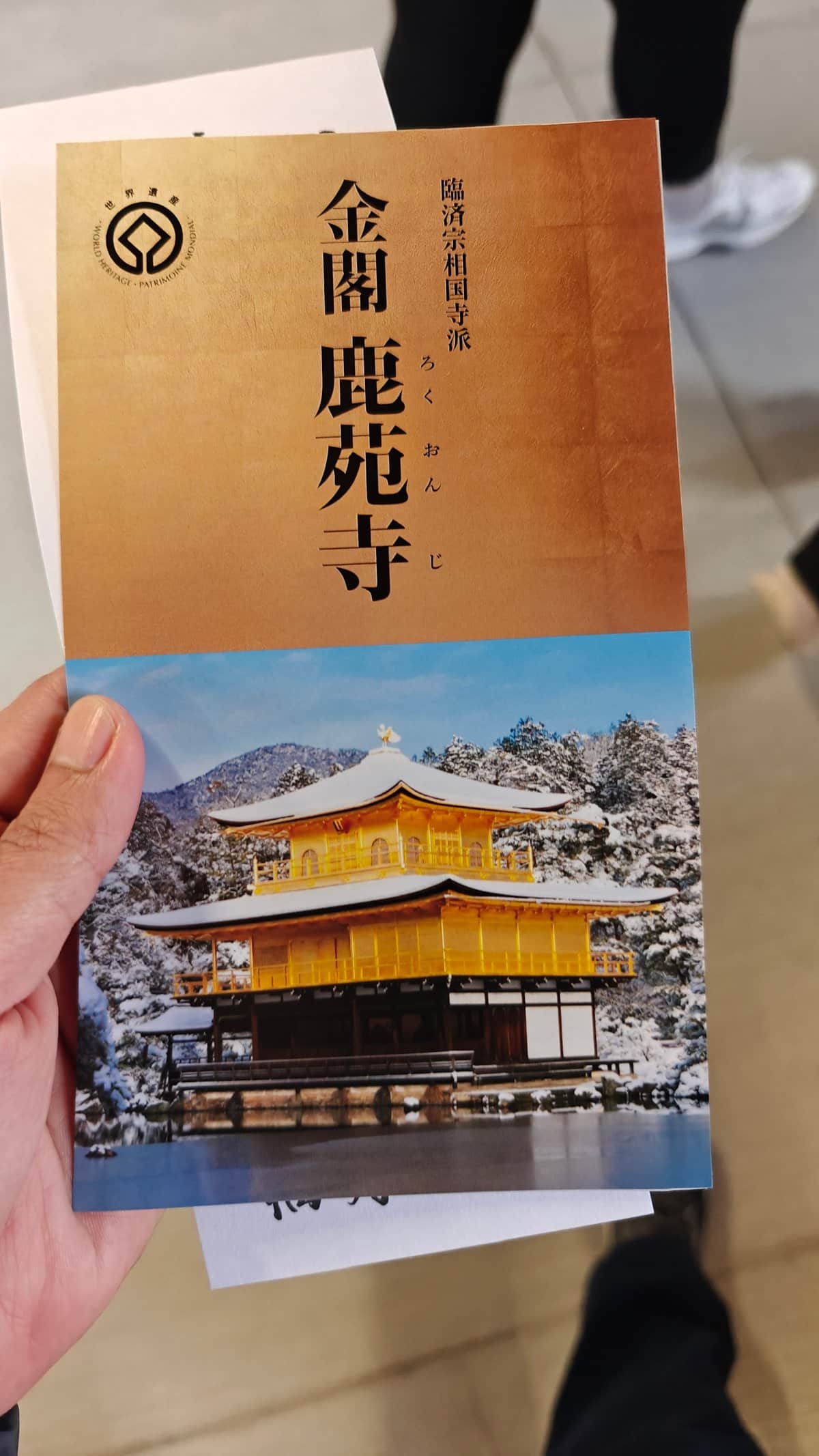
At the ticket counter, I recieve a paper amulet instead of a regular ticket, which was a nice touch! They also gave me this really cool pamphlet with an illustration on the cover. I shoved it in my backpack to read later.
After going through the gate, you pass some more small garden and halls, and then you reach the main pond: But then I saw the pavilion itself, and suddenly I knew what attracts the crowds here.
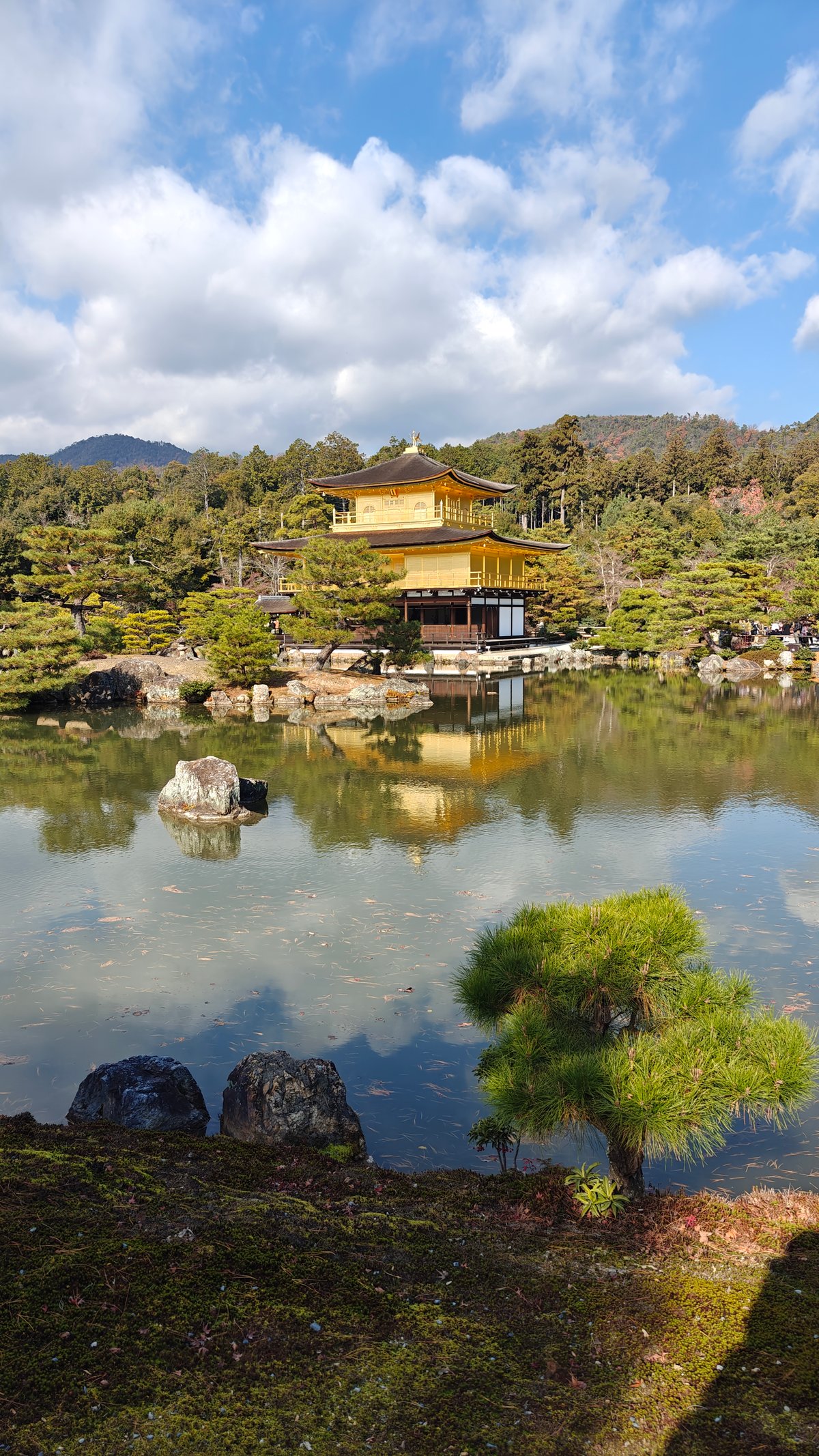
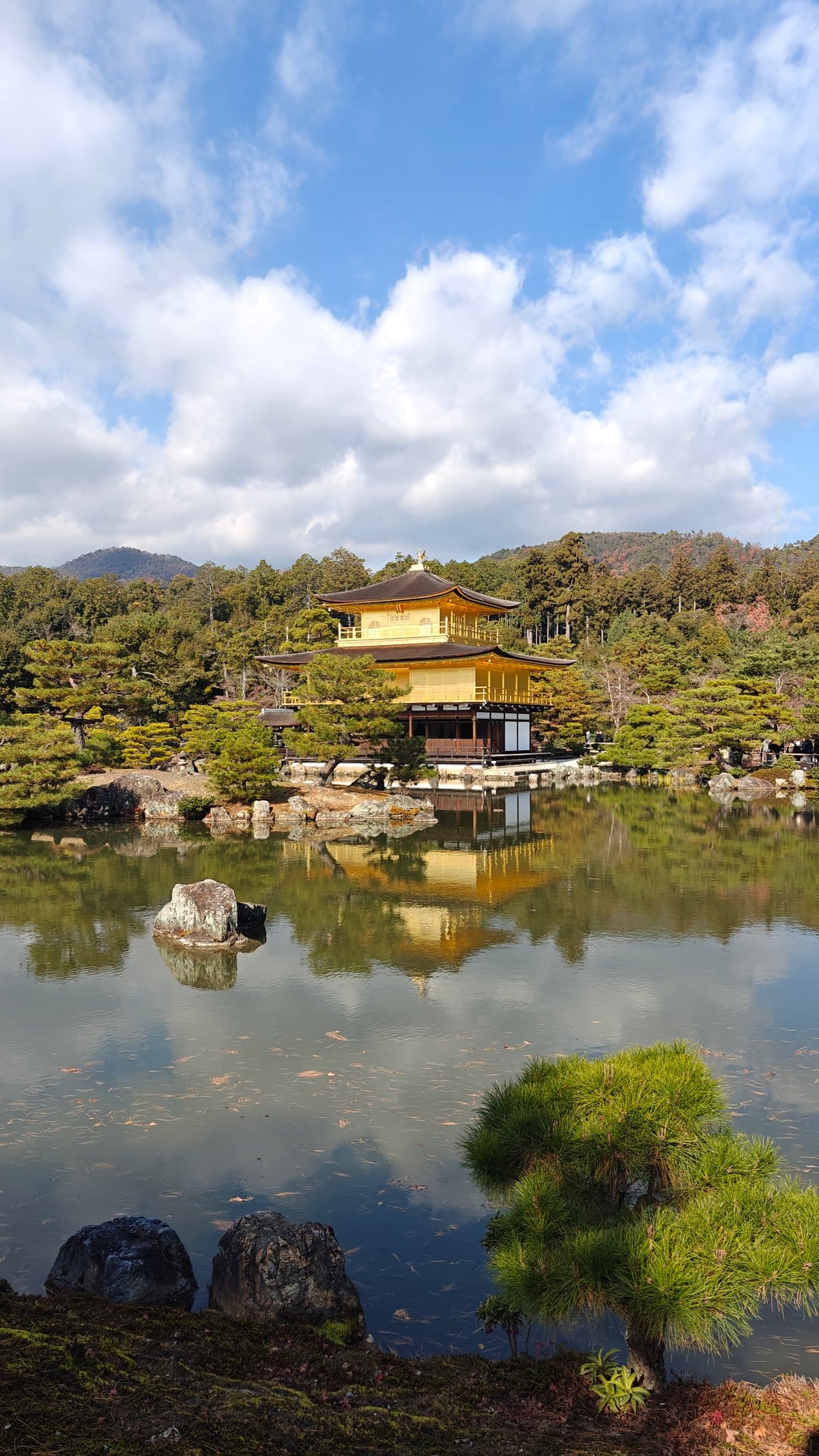
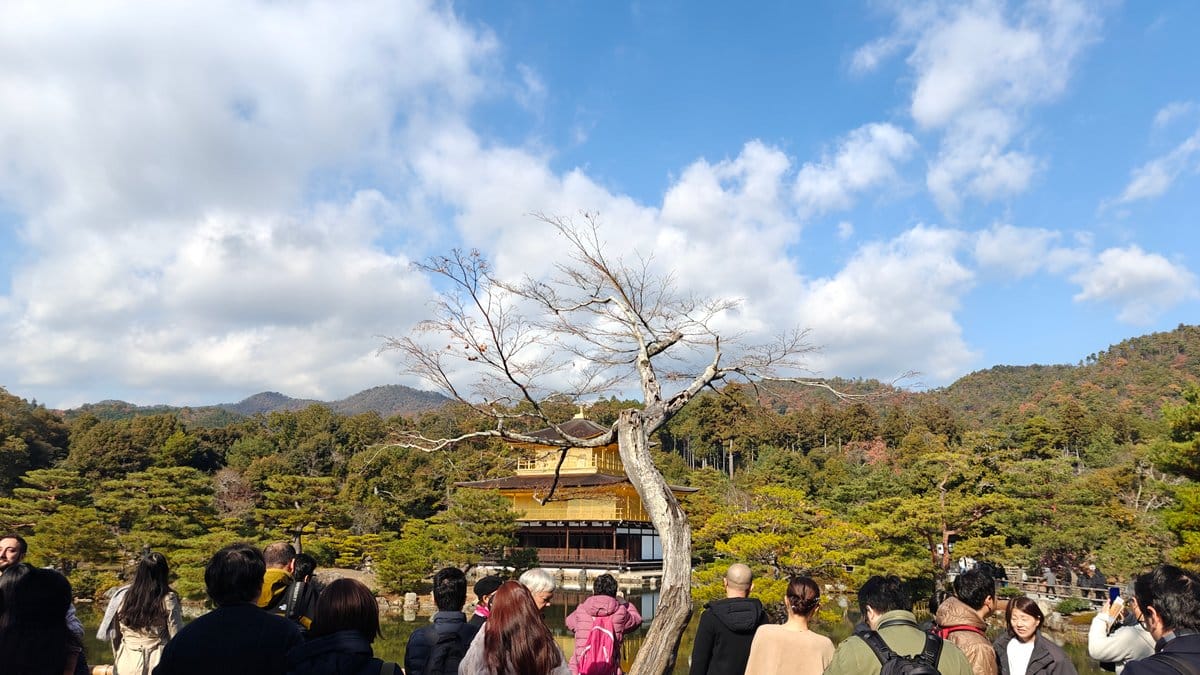
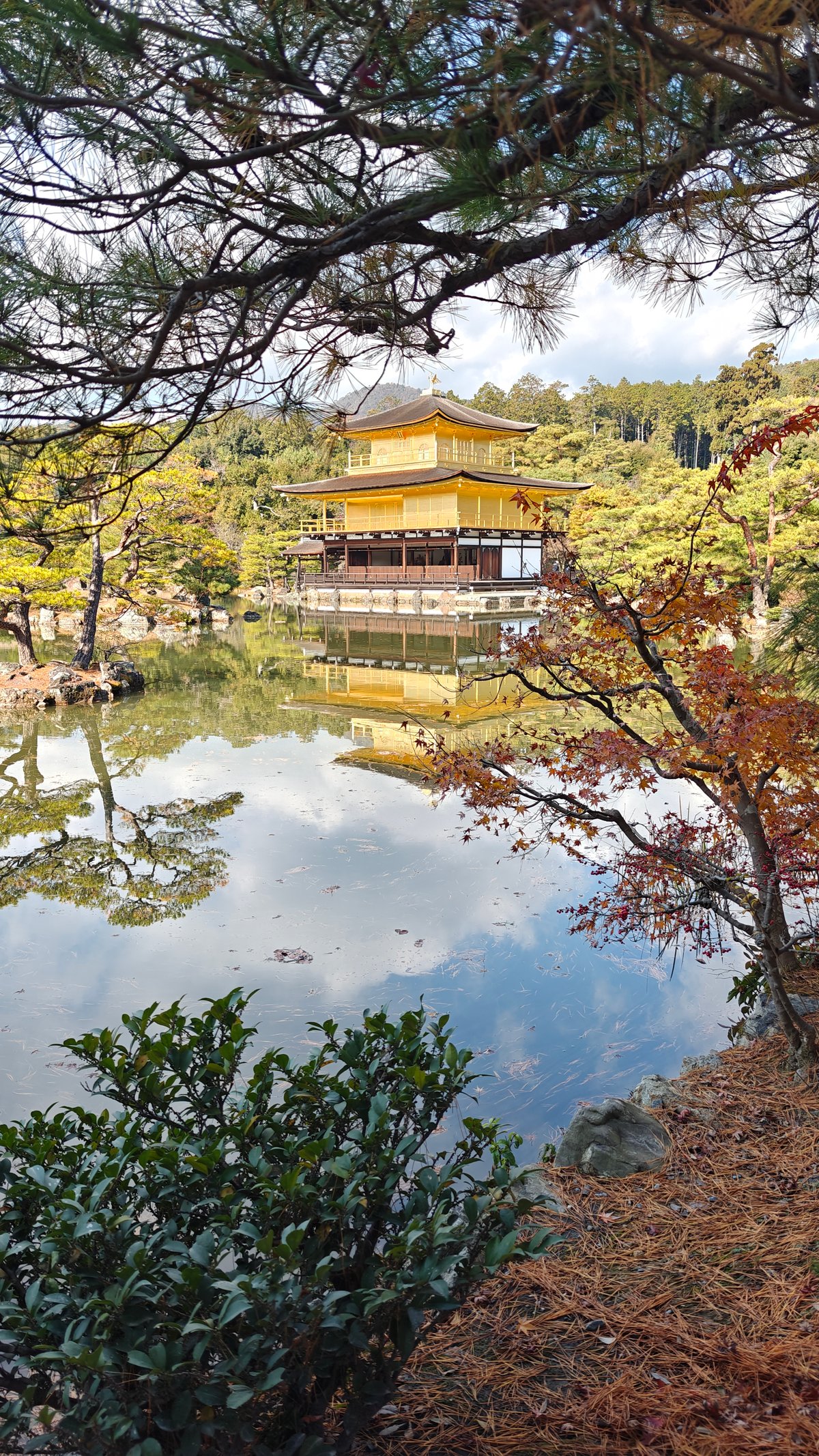
On a clear day, you can see a near-perfect reflection in the water, as the building is positioned smack dab on the edge of the pond. Alongside dozens of others, I stationed myself at the primary viewing spot, everyone attempting to capture a good shot while avoiding another person’s elbow creeping into their picture. The pavilion isn’t quite as large as I imagined, but the canopy of leaves certainly catches the sunlight and makes it hard to look away.
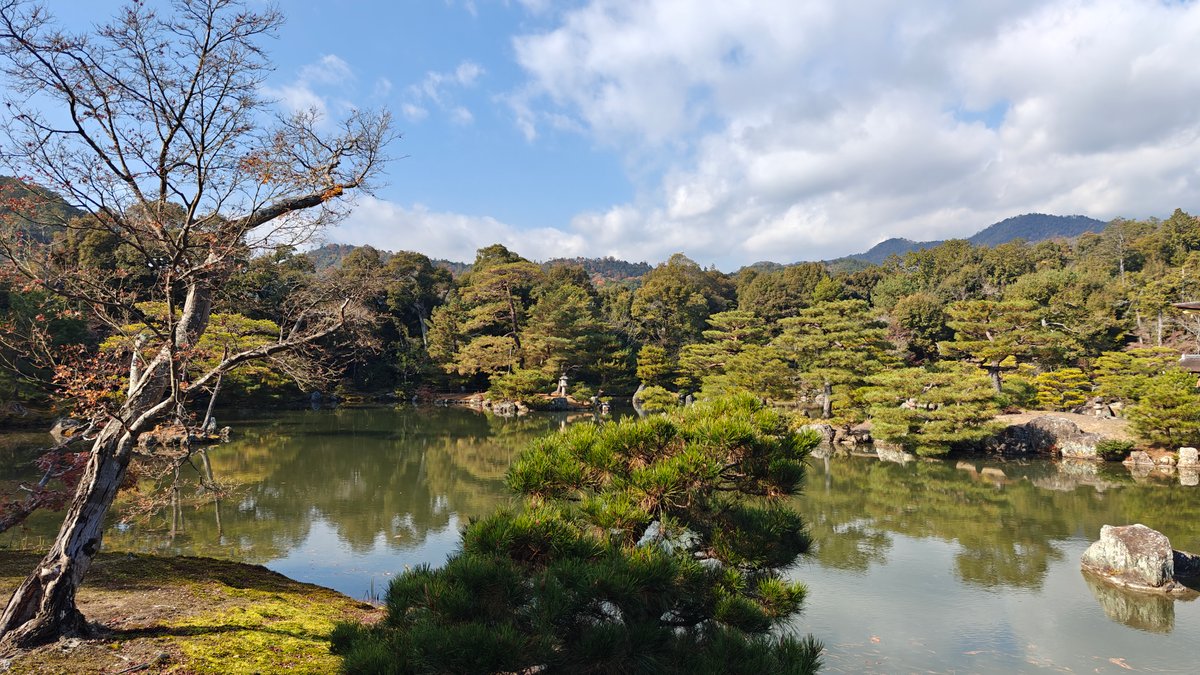
From nearly any direction, you’re surrounded by pines framing the vista, and the tiny island dotting the surface of the pond further layer the scene.
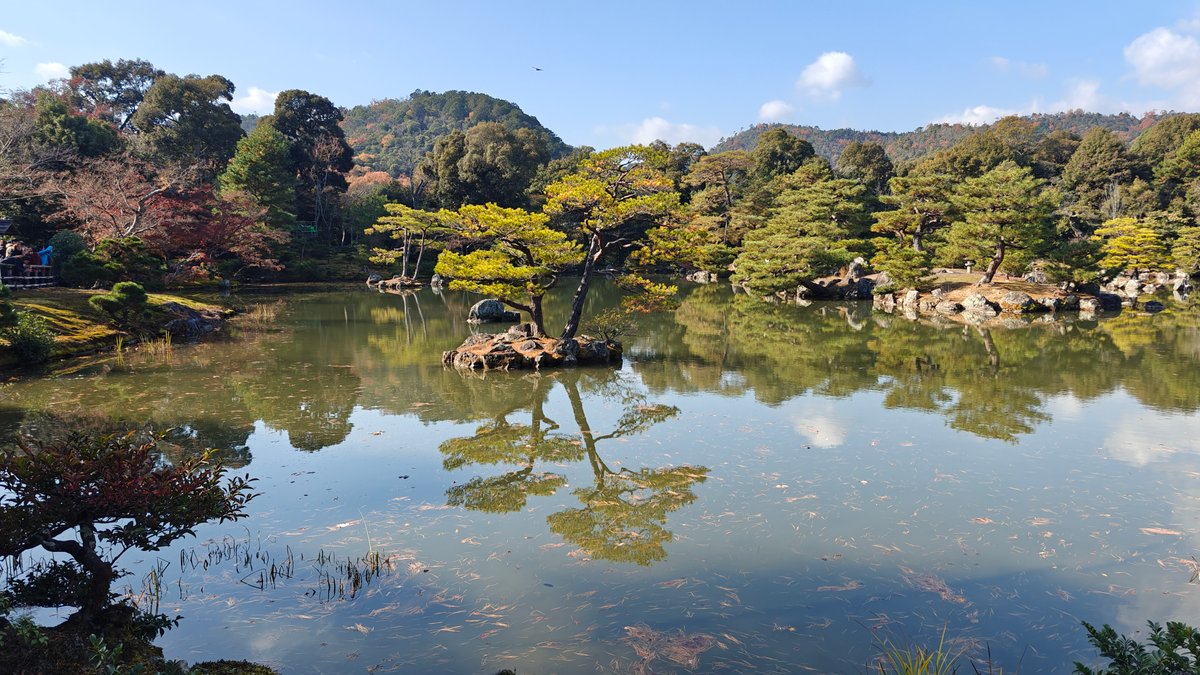
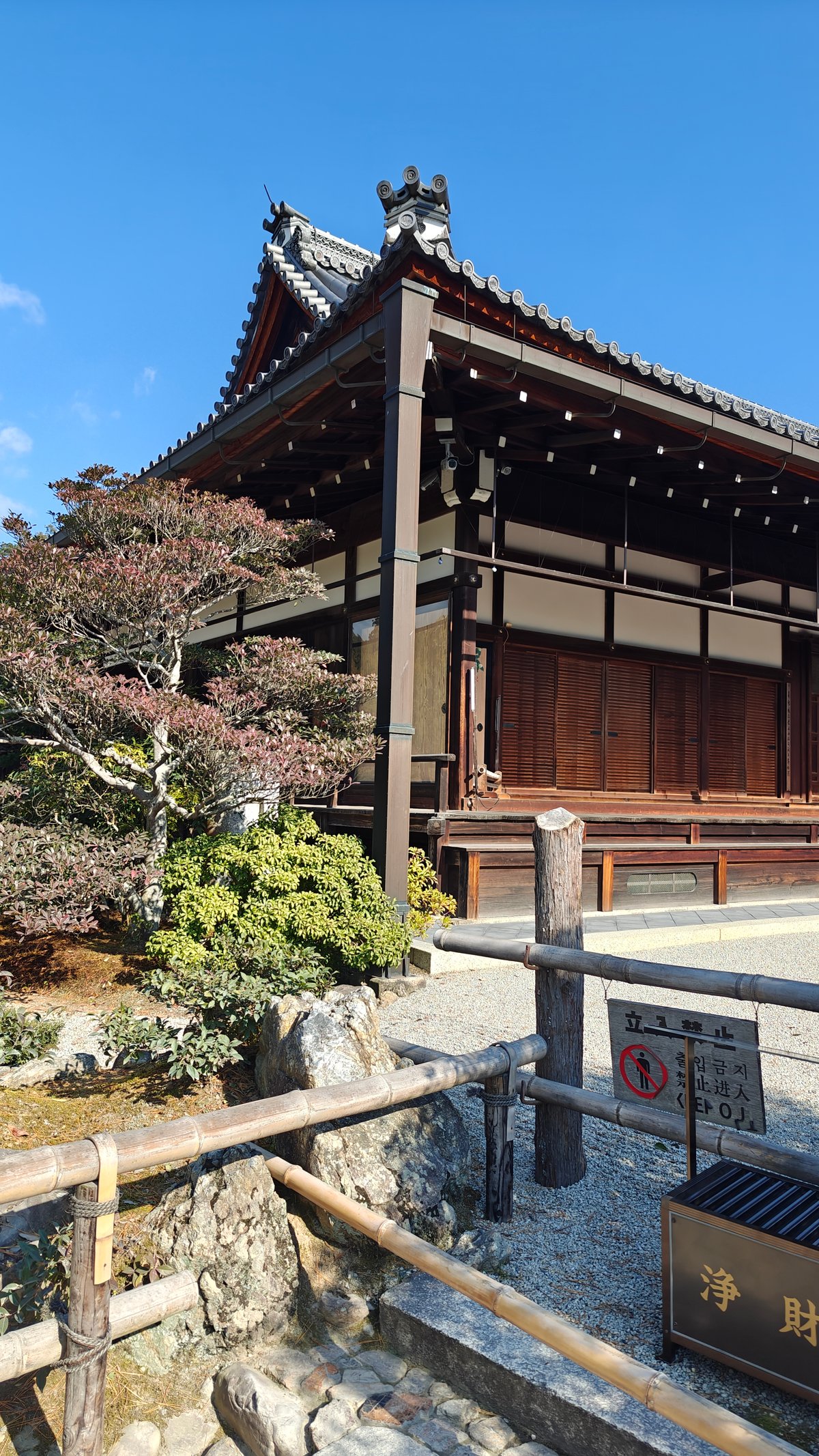
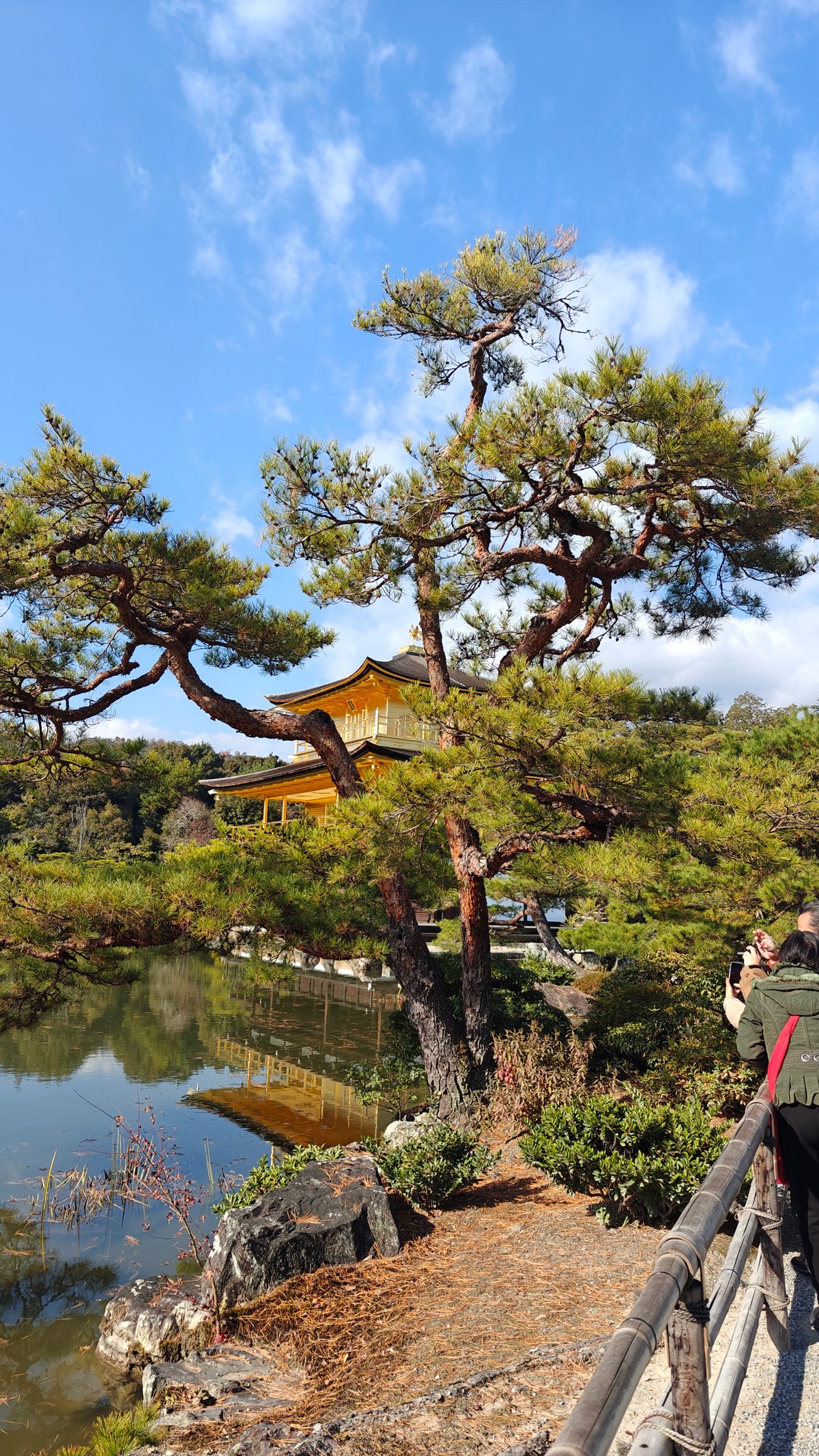
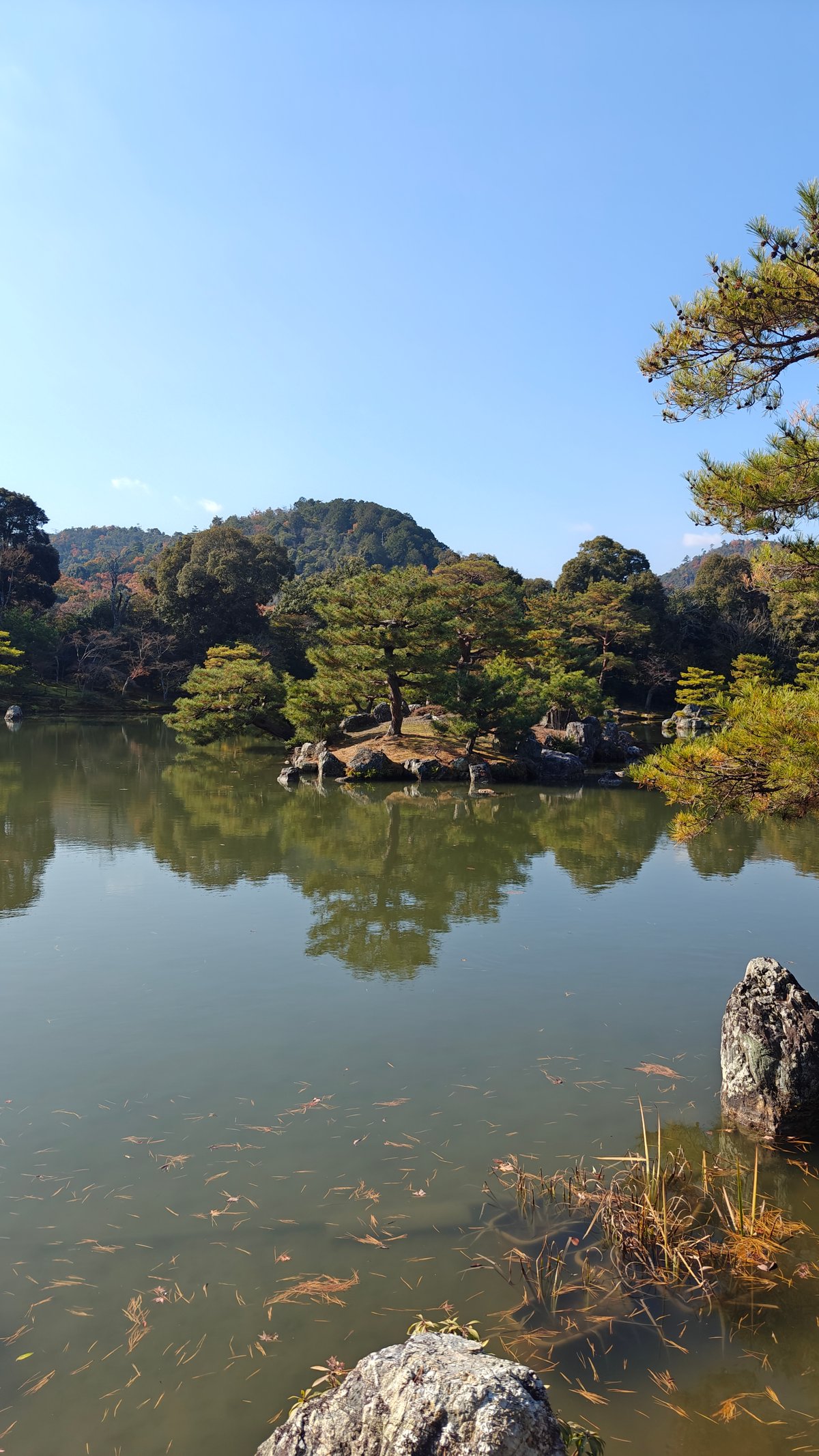
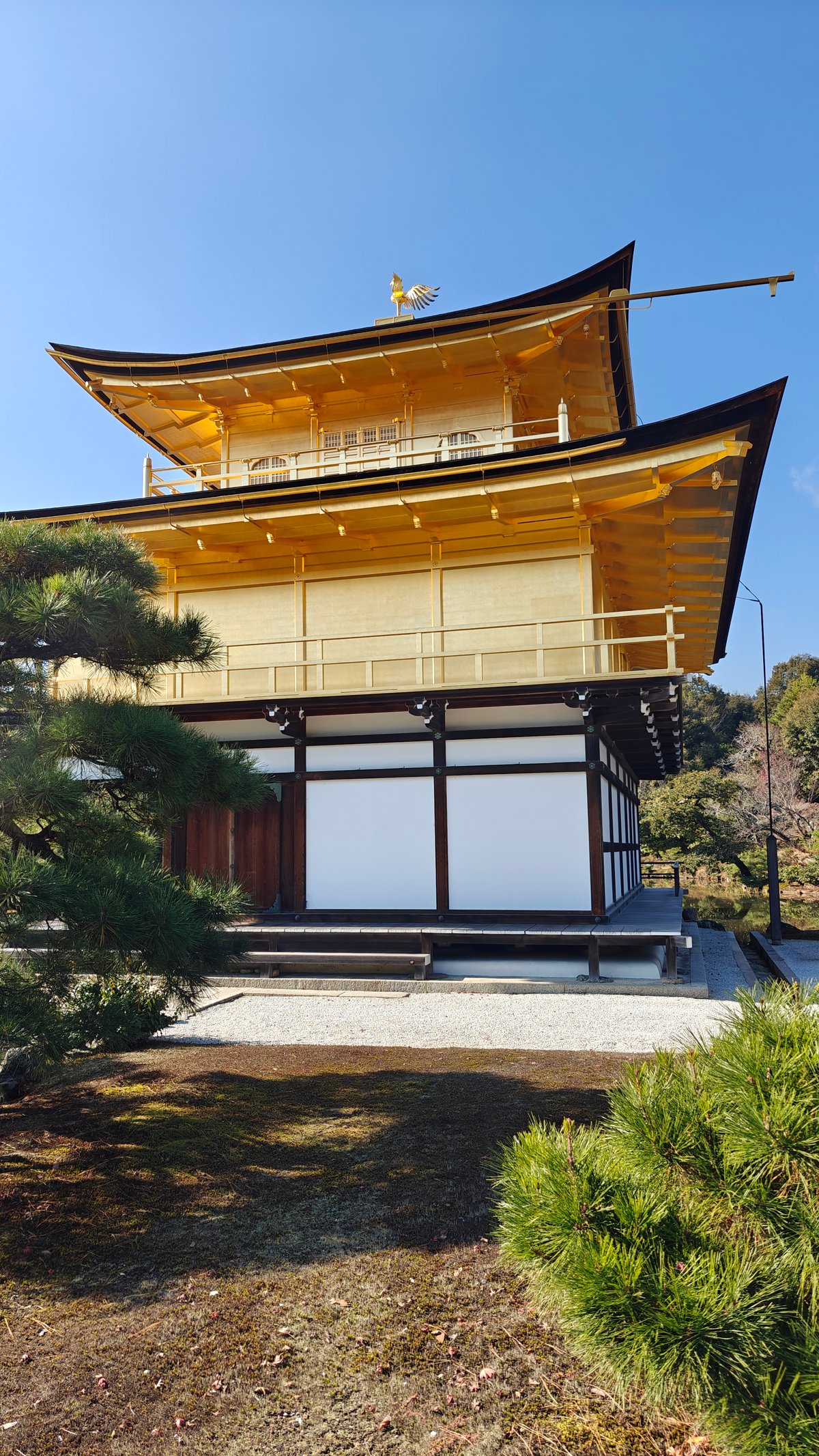
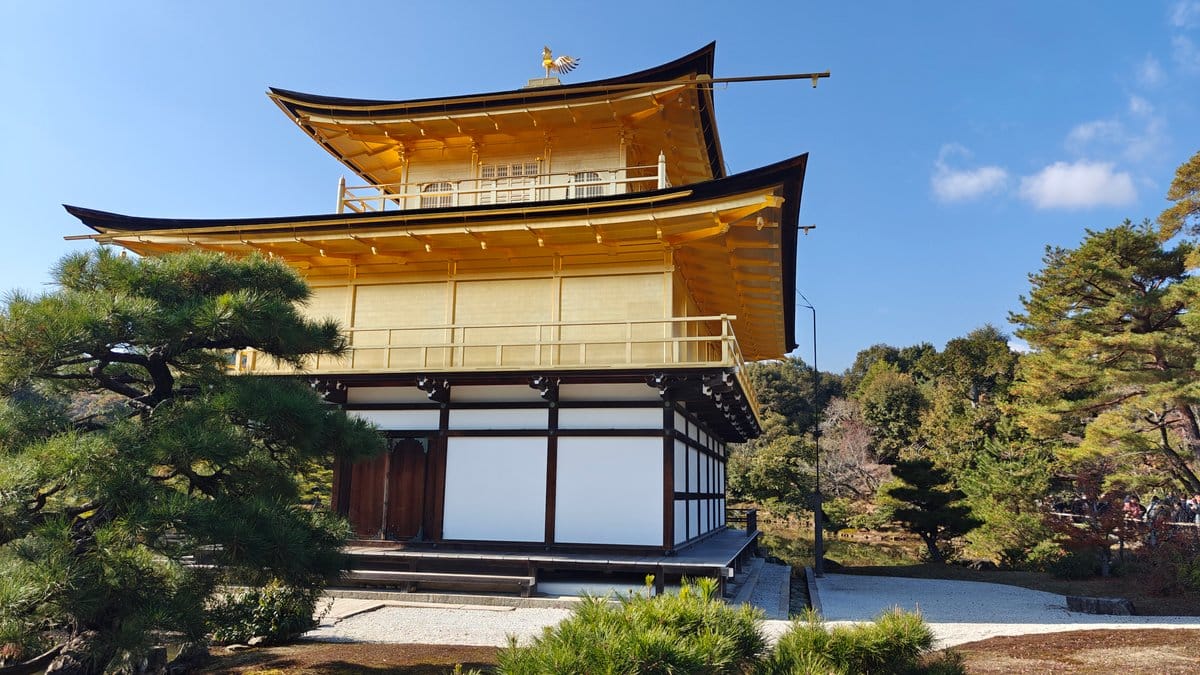
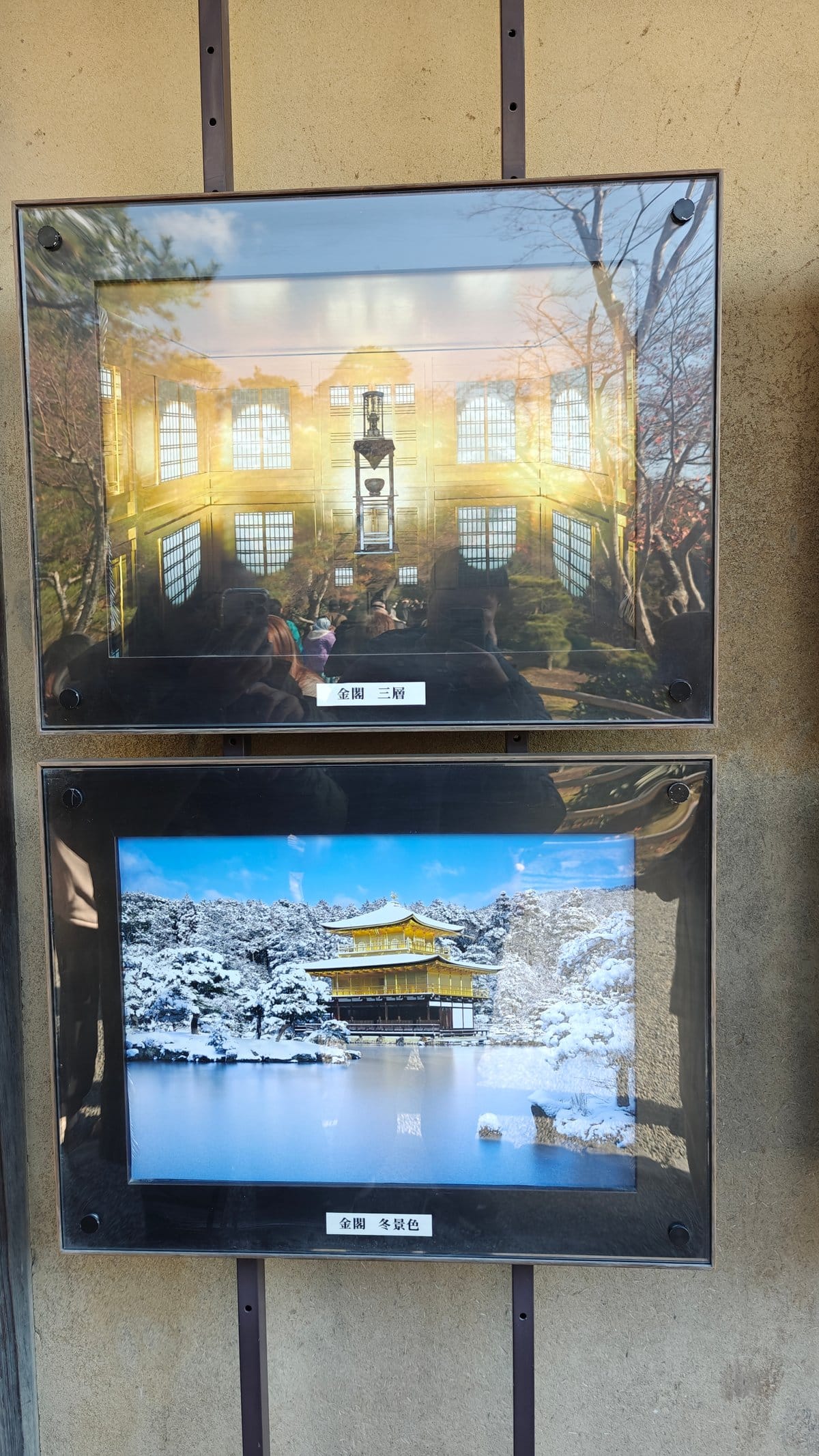
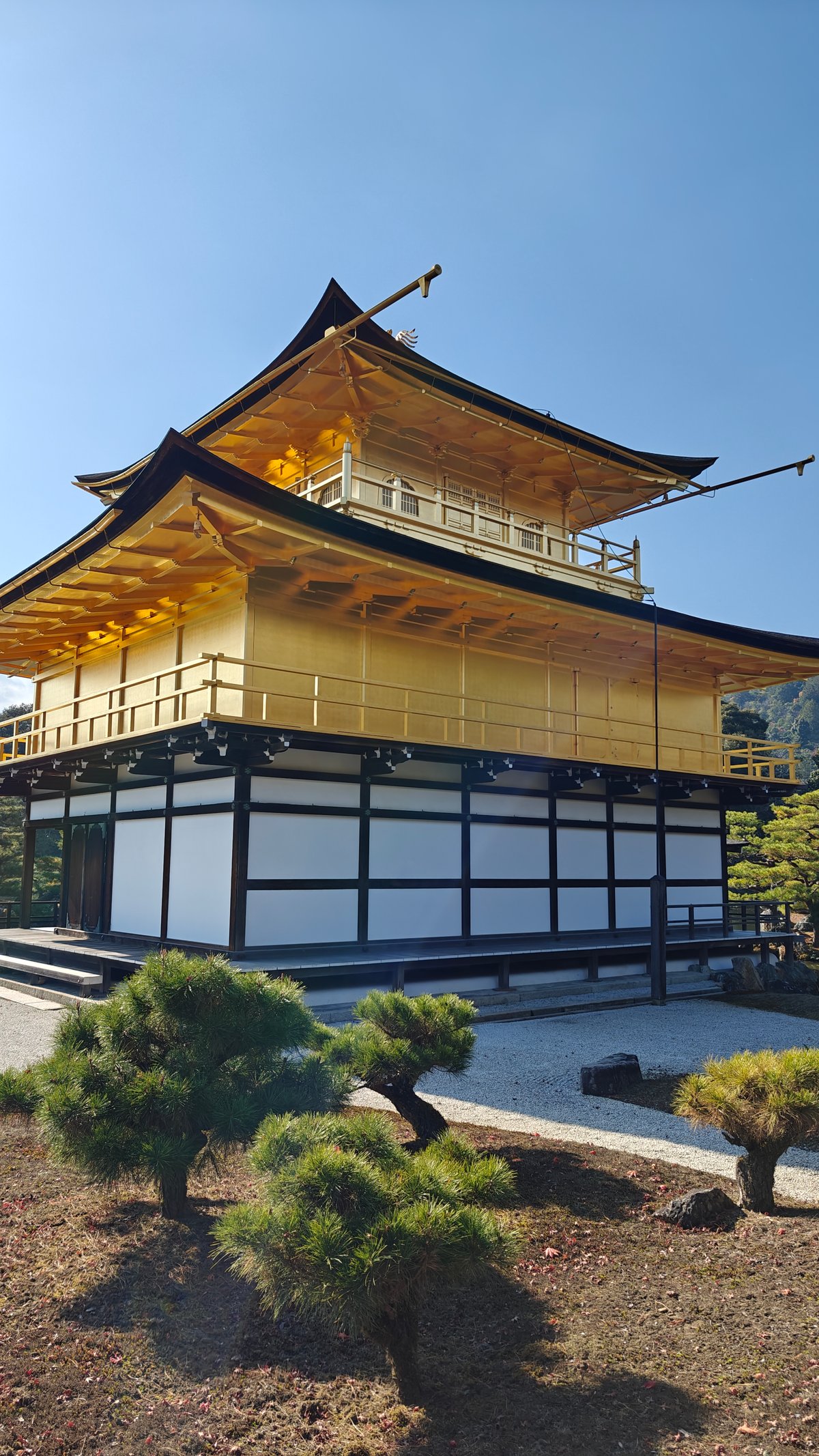
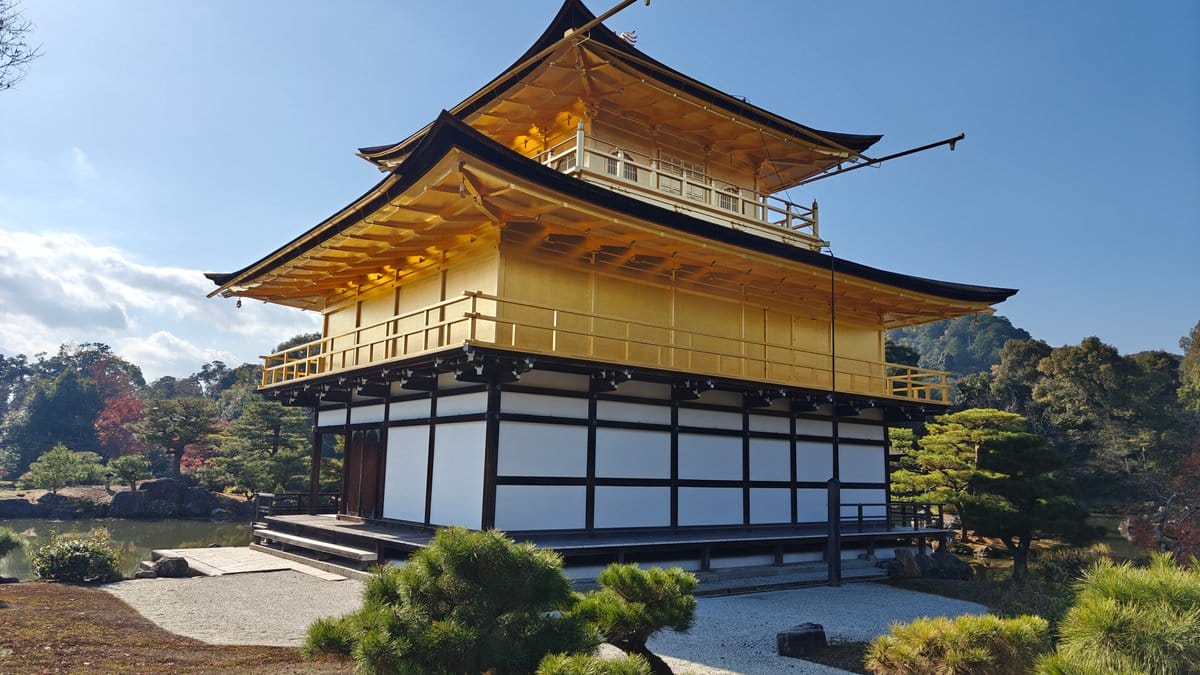
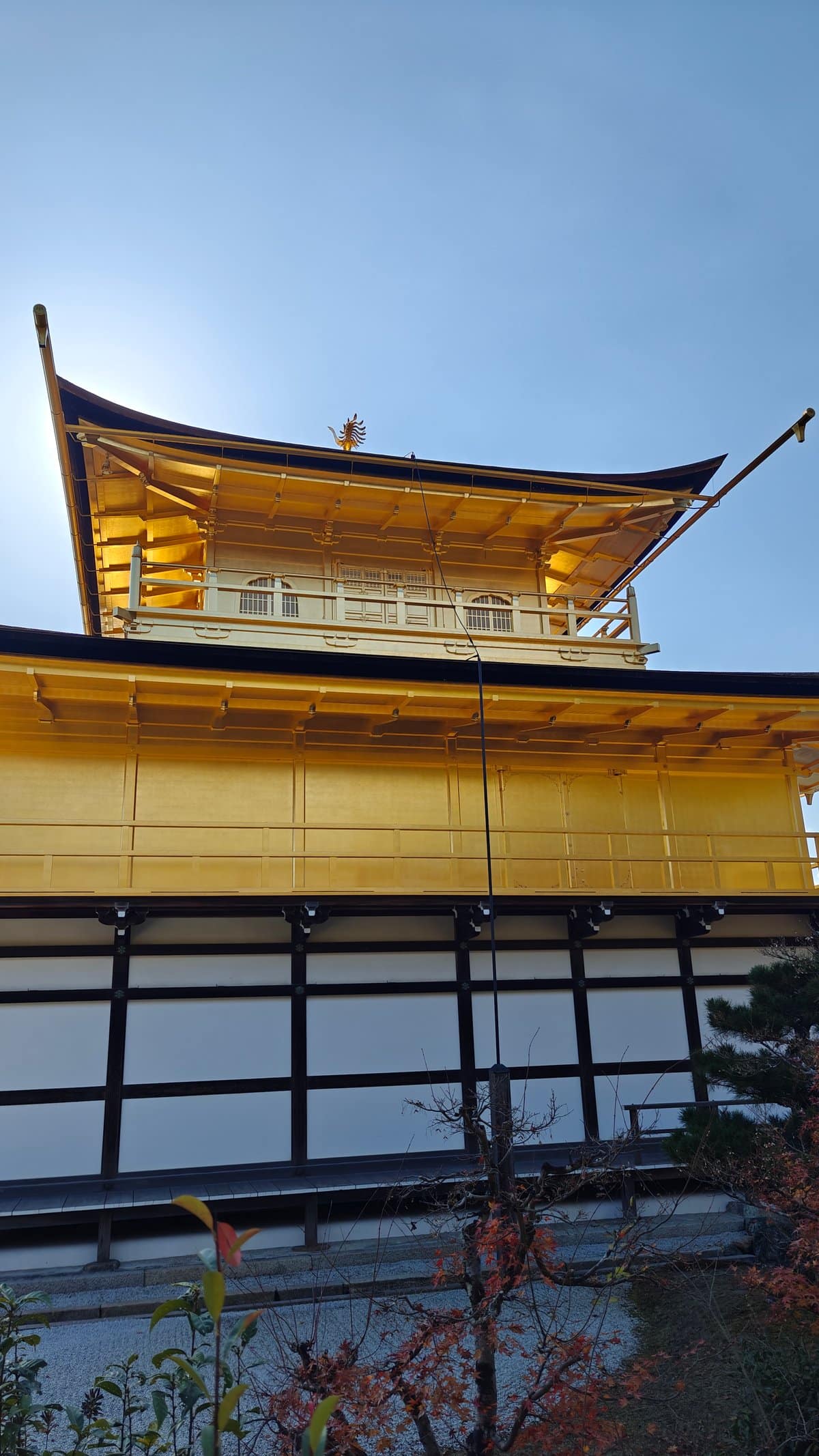
Back by the pond, the path continued parallel to it, giving me other views into the garden, as well as views of the pavilion itself. There was a display board featuring old photographs of how the building had looked throughout the years. From some angles, I could see the skillfully crafted upper floor better, or spot the phoenix ornament on top of the roof more easily.
It all seemed so carefully thought-out. Every single tree and rock there has been put there with the sight lines in mind.
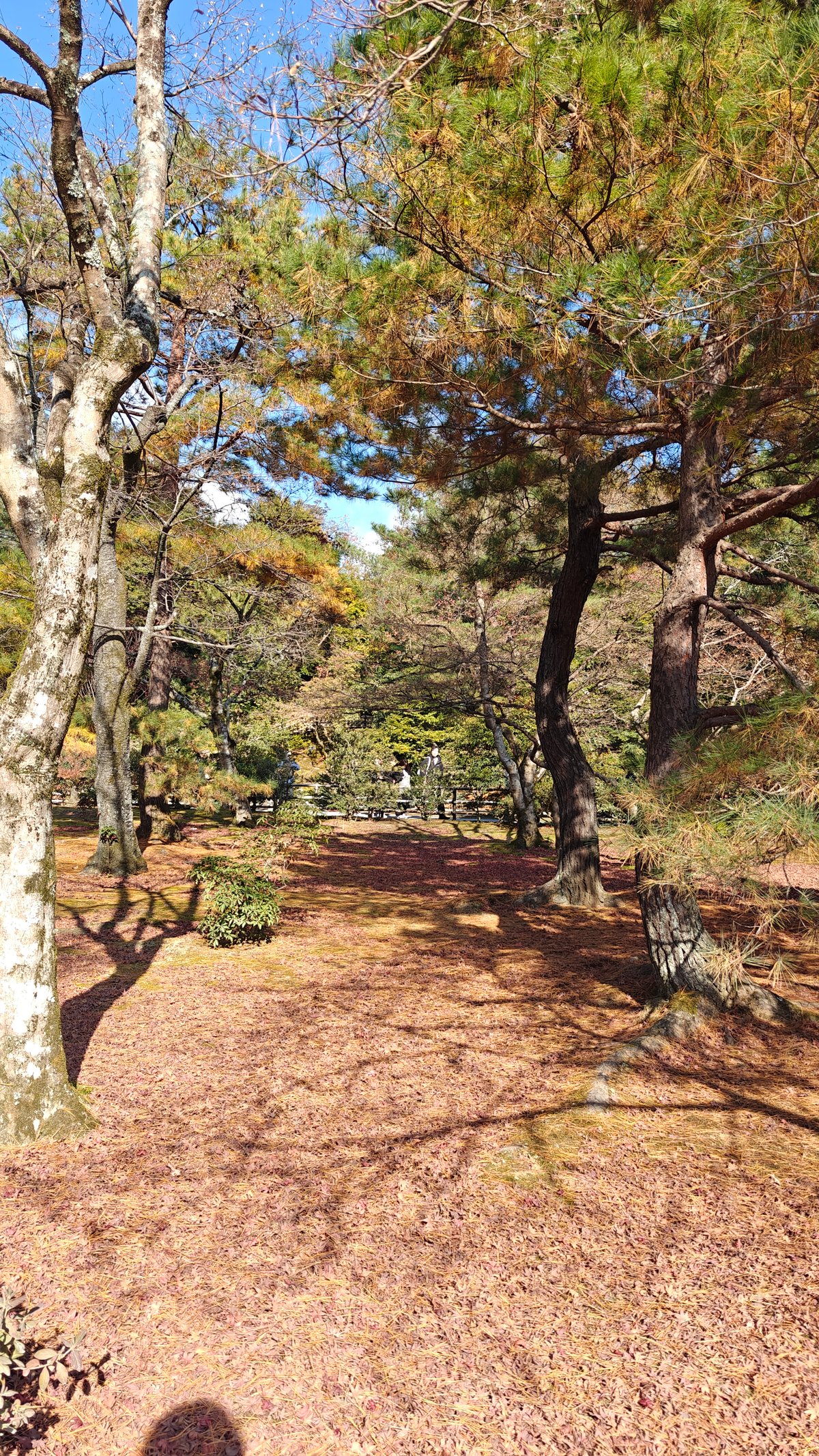
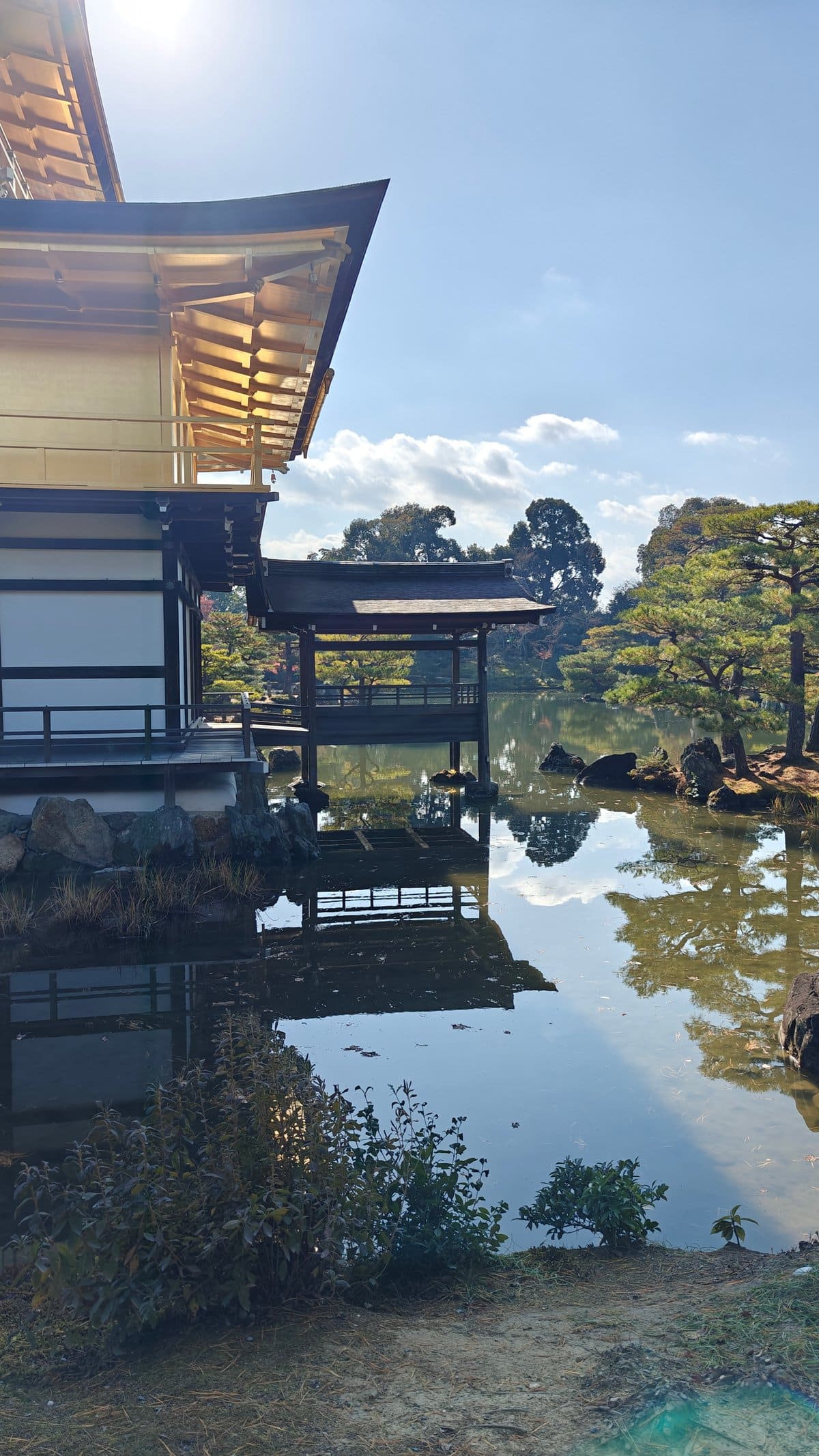
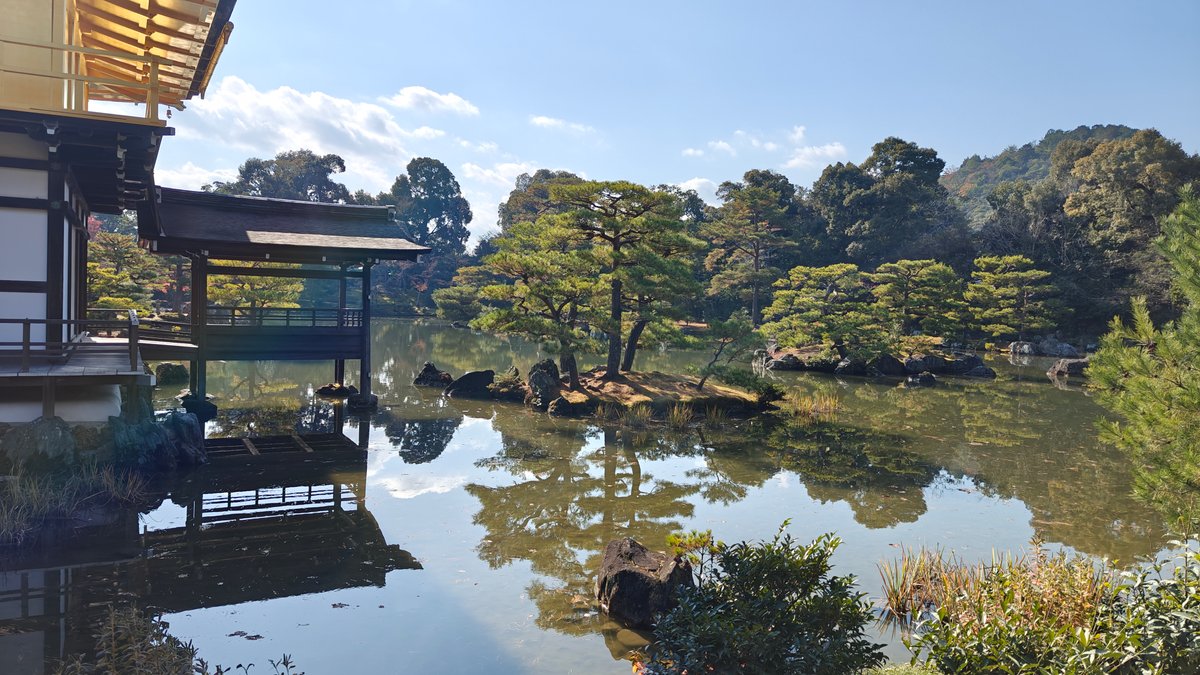
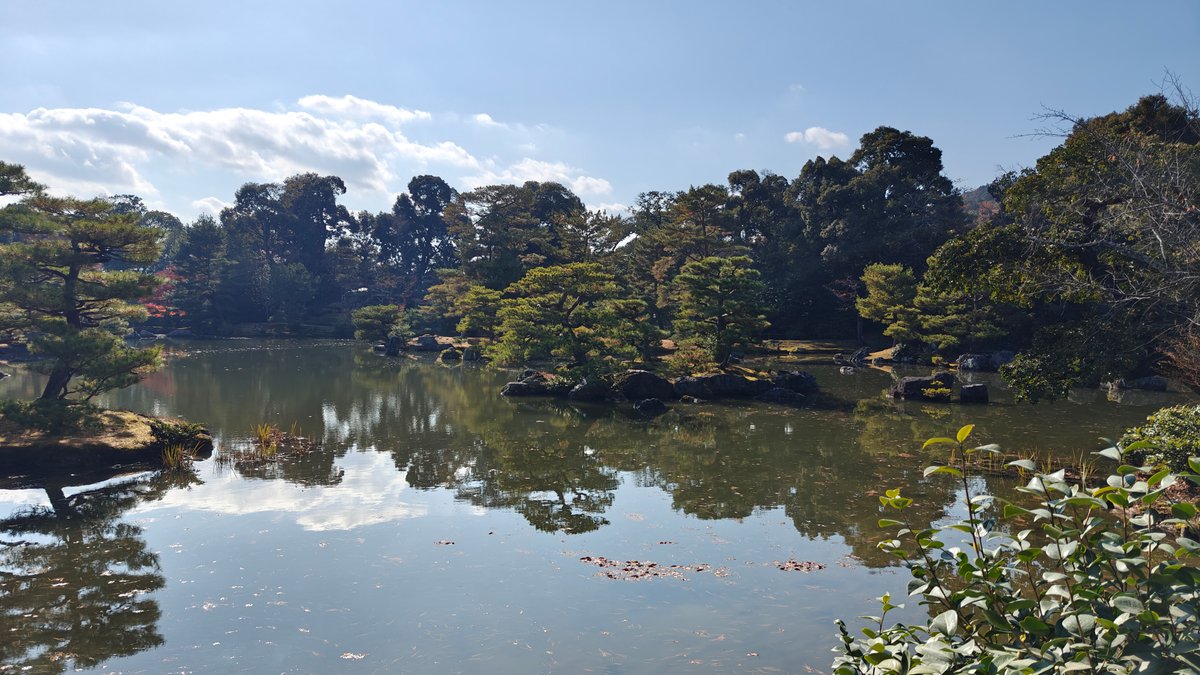
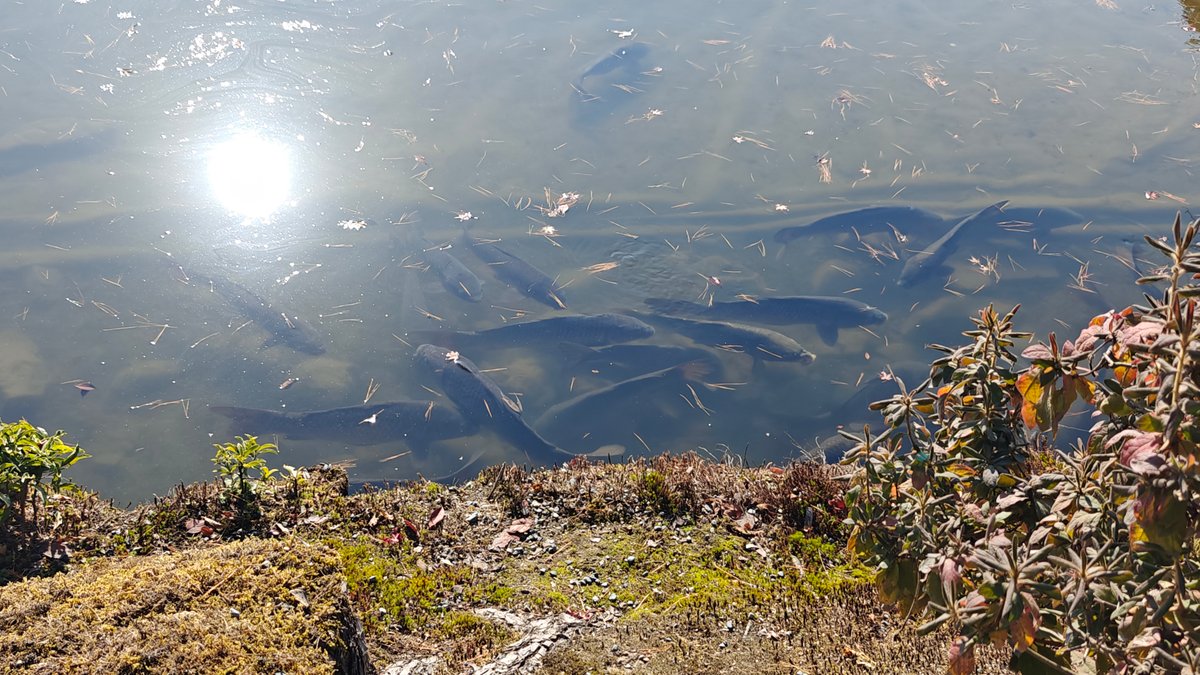
From there it rose gradually into the forest behind the pavilion, where I paused to gaze down across the pond again. The carp were swimming lazily beneath me; the branches of the trees above let patches of light dapple the surface. Looking out from this vantage point, I could see farther across the temple grounds and the hills beyond.
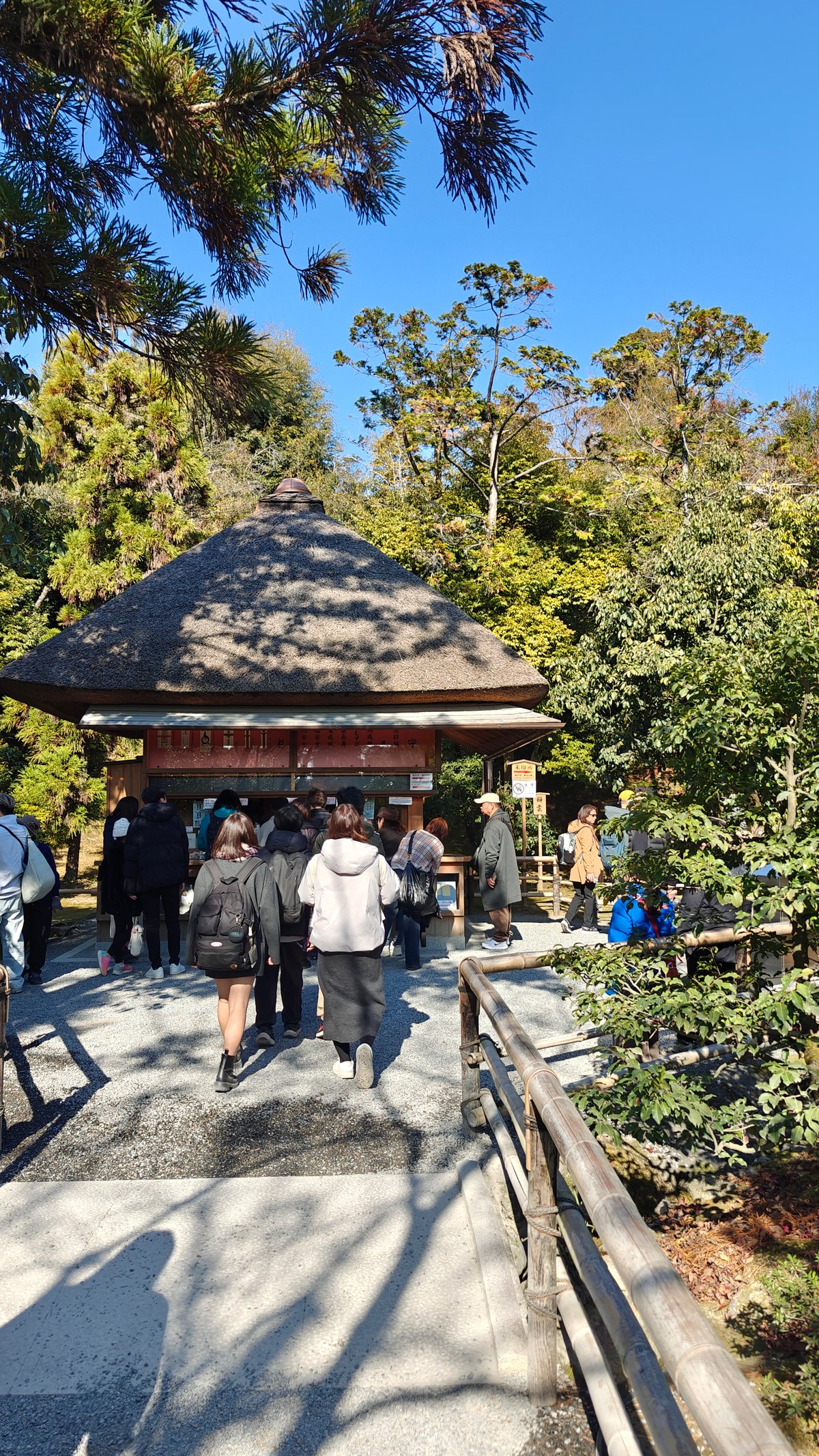
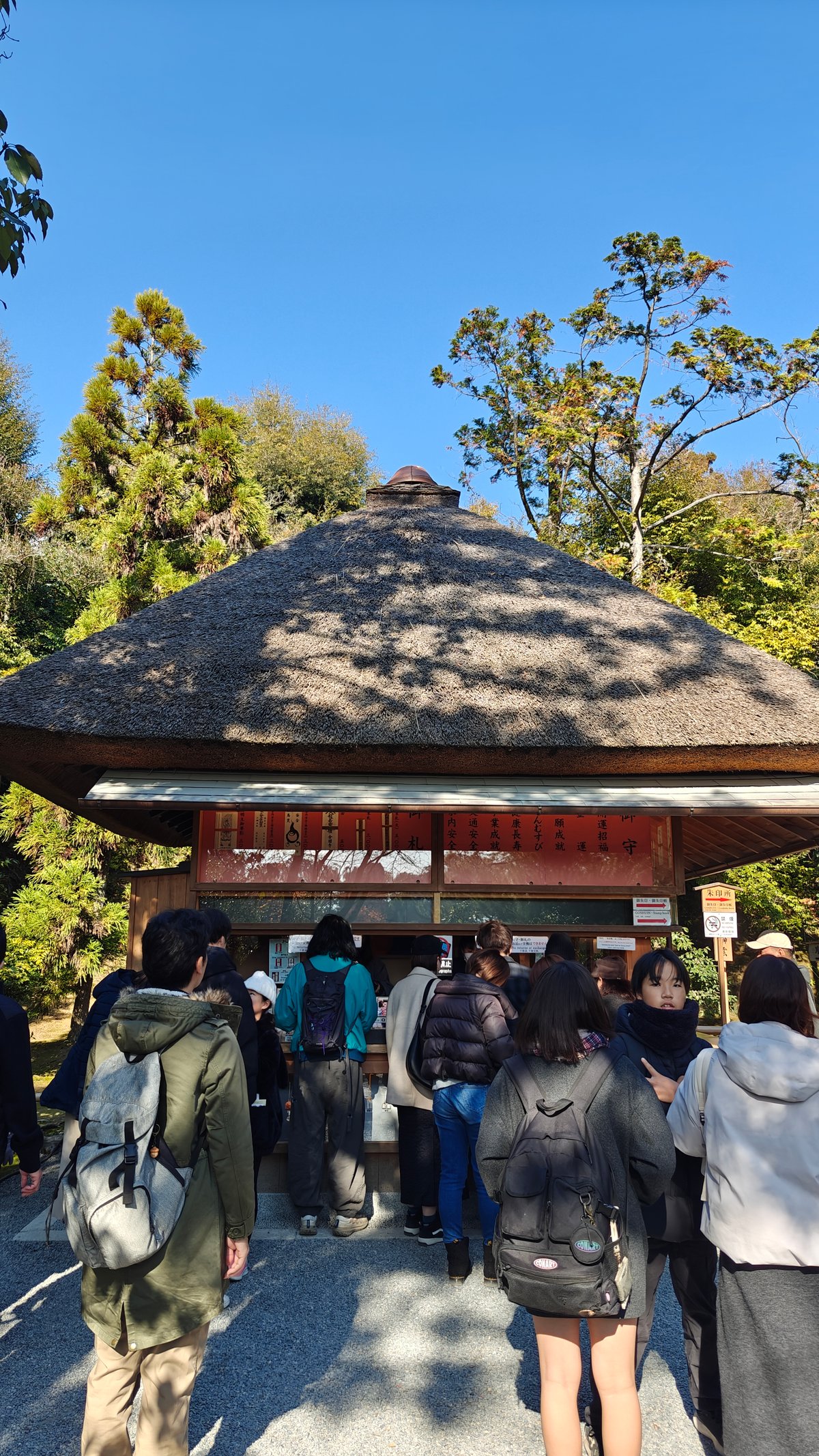
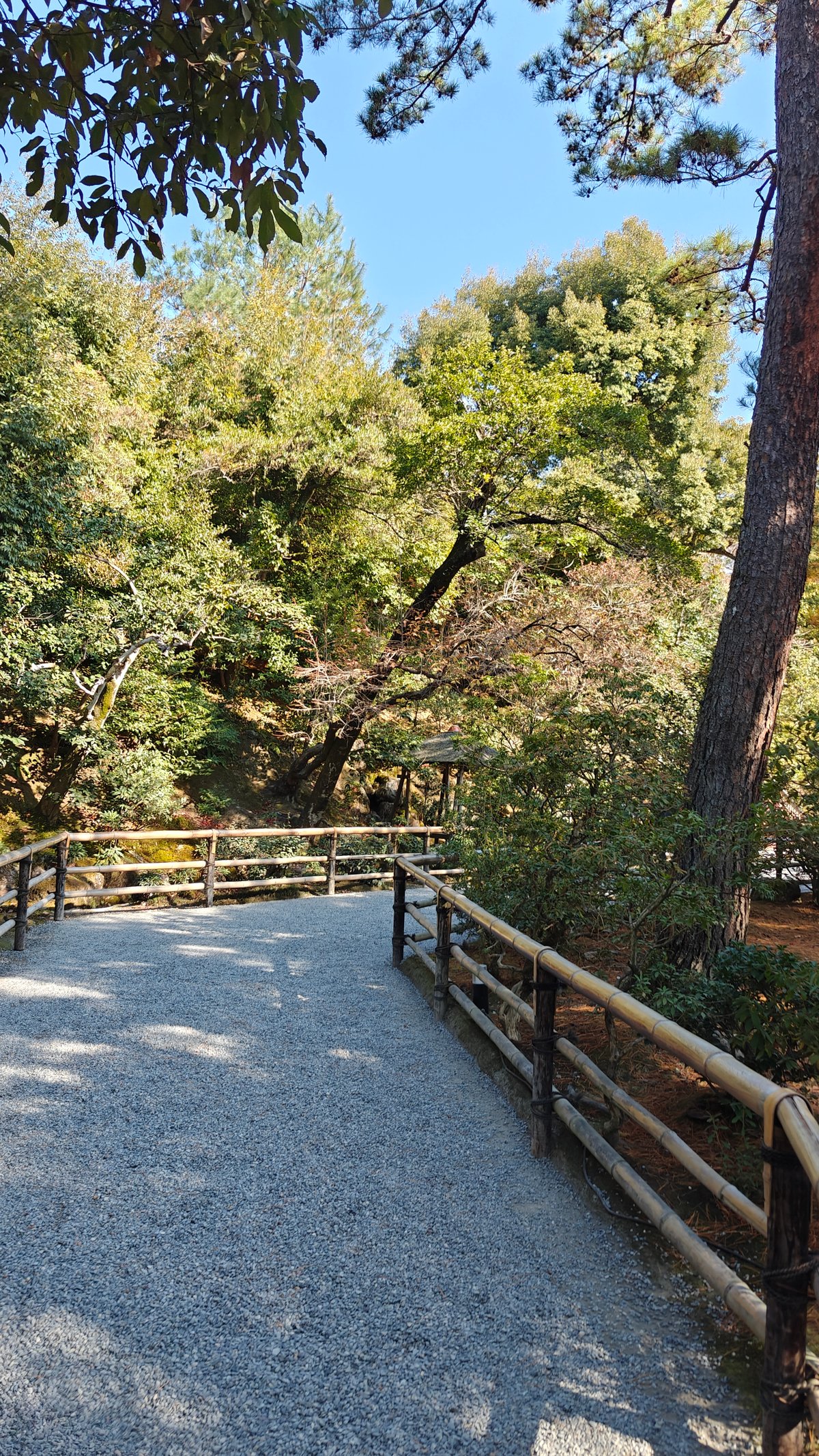
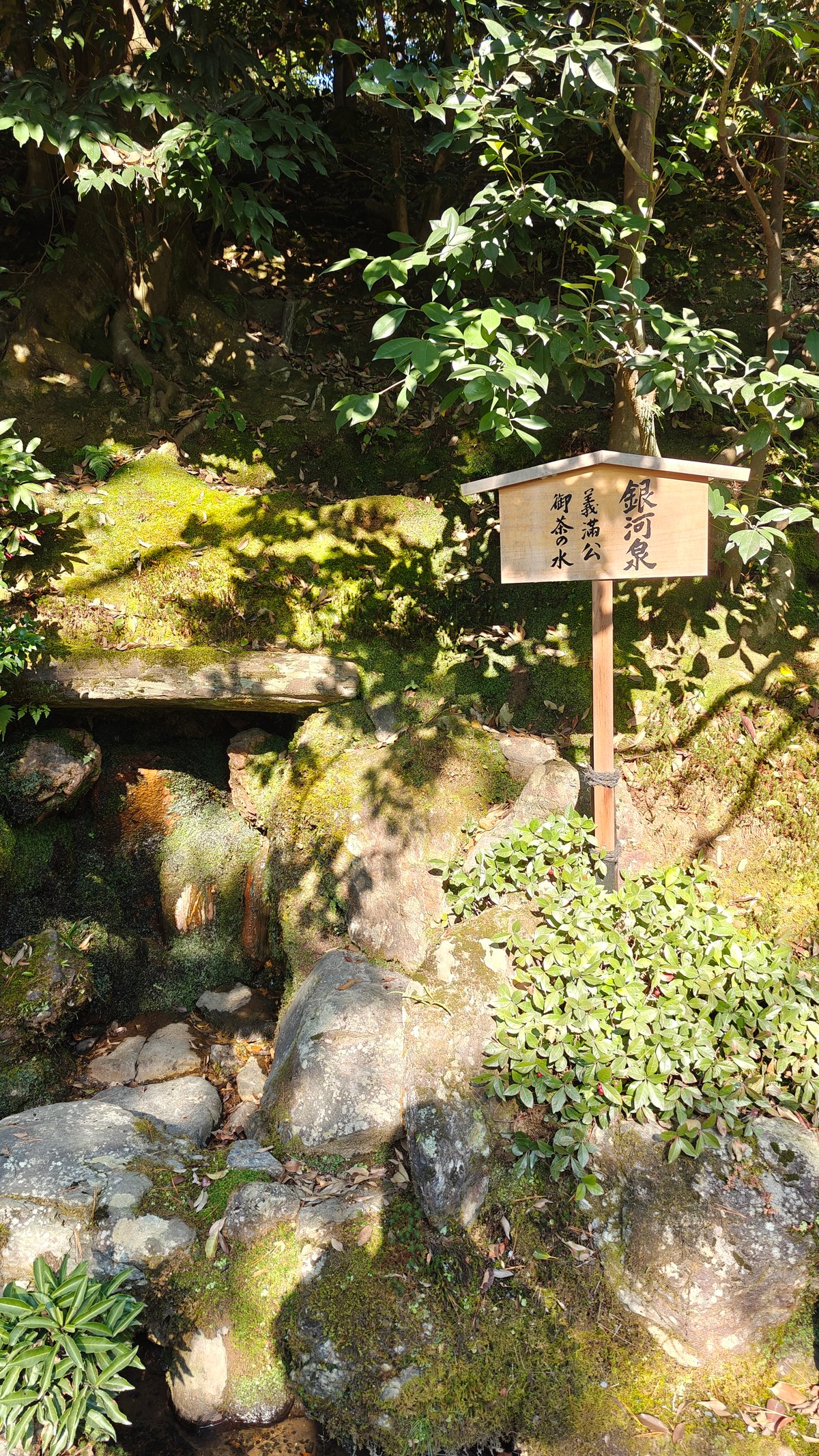
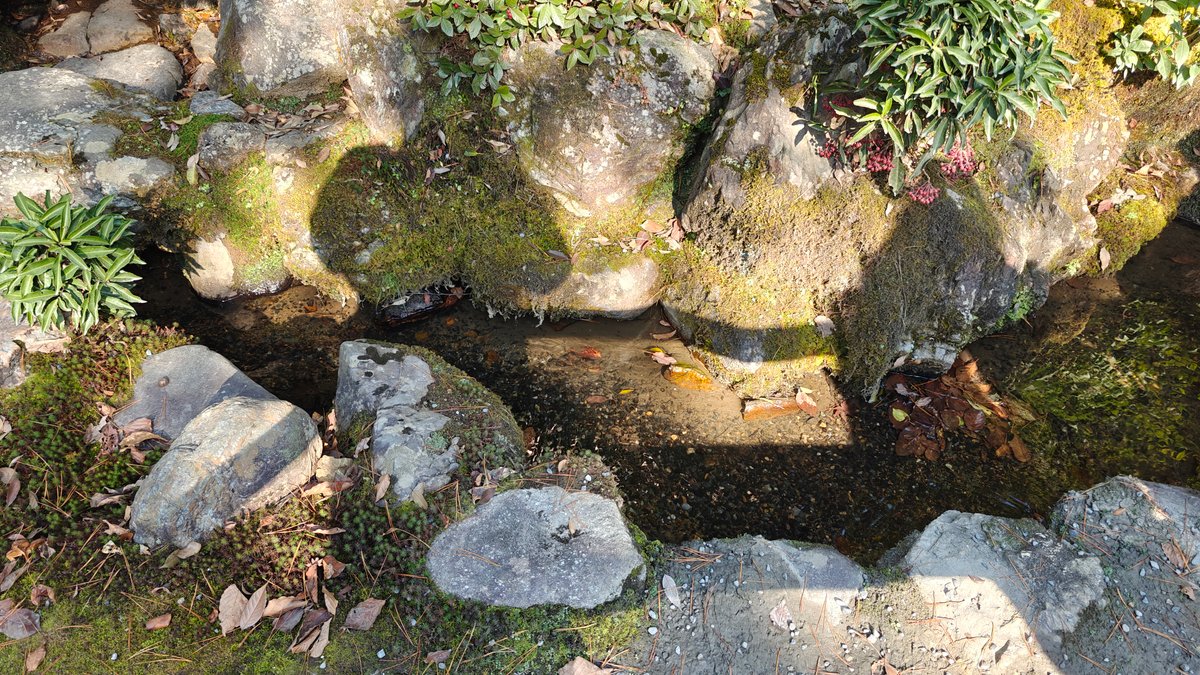
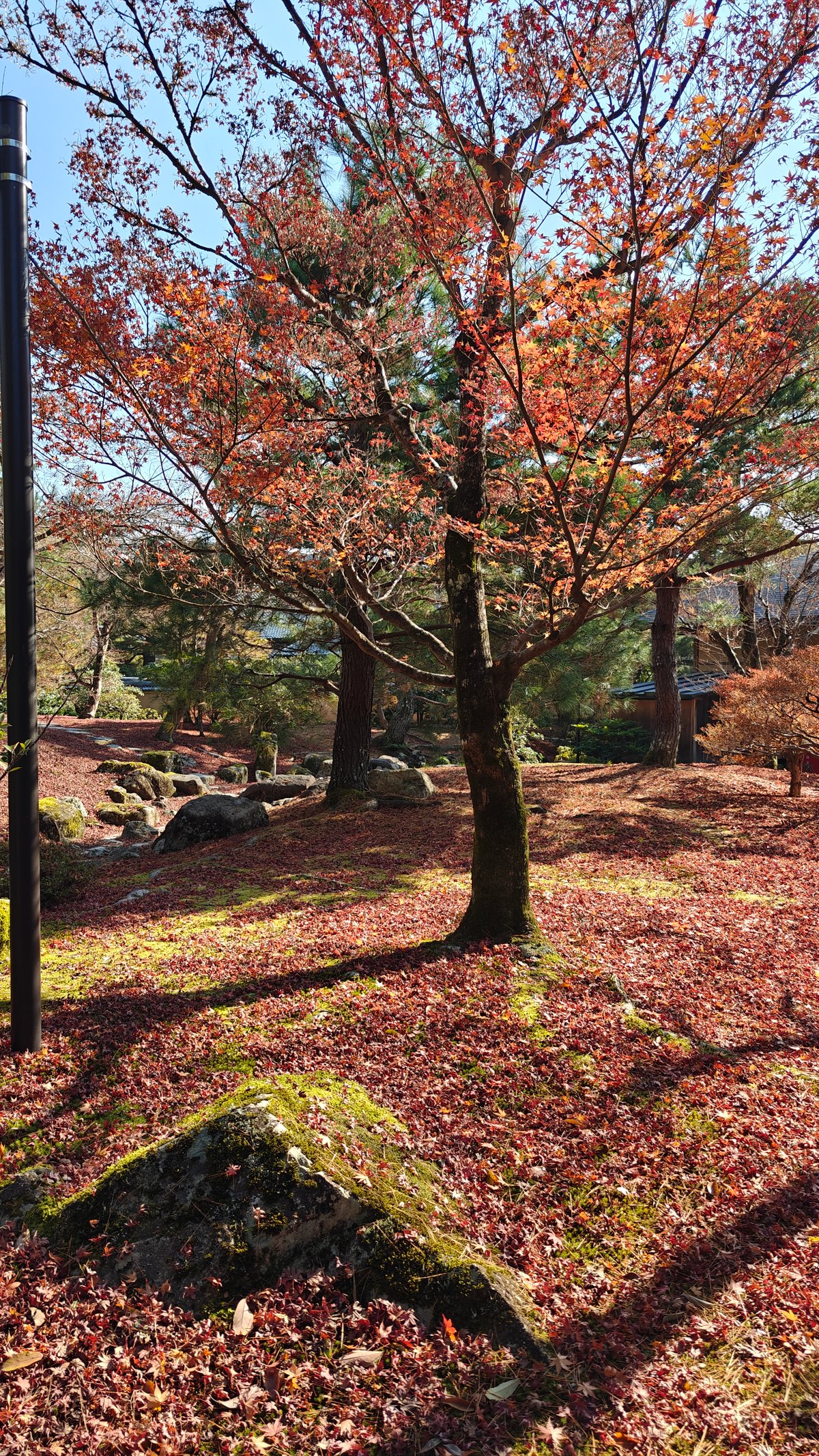
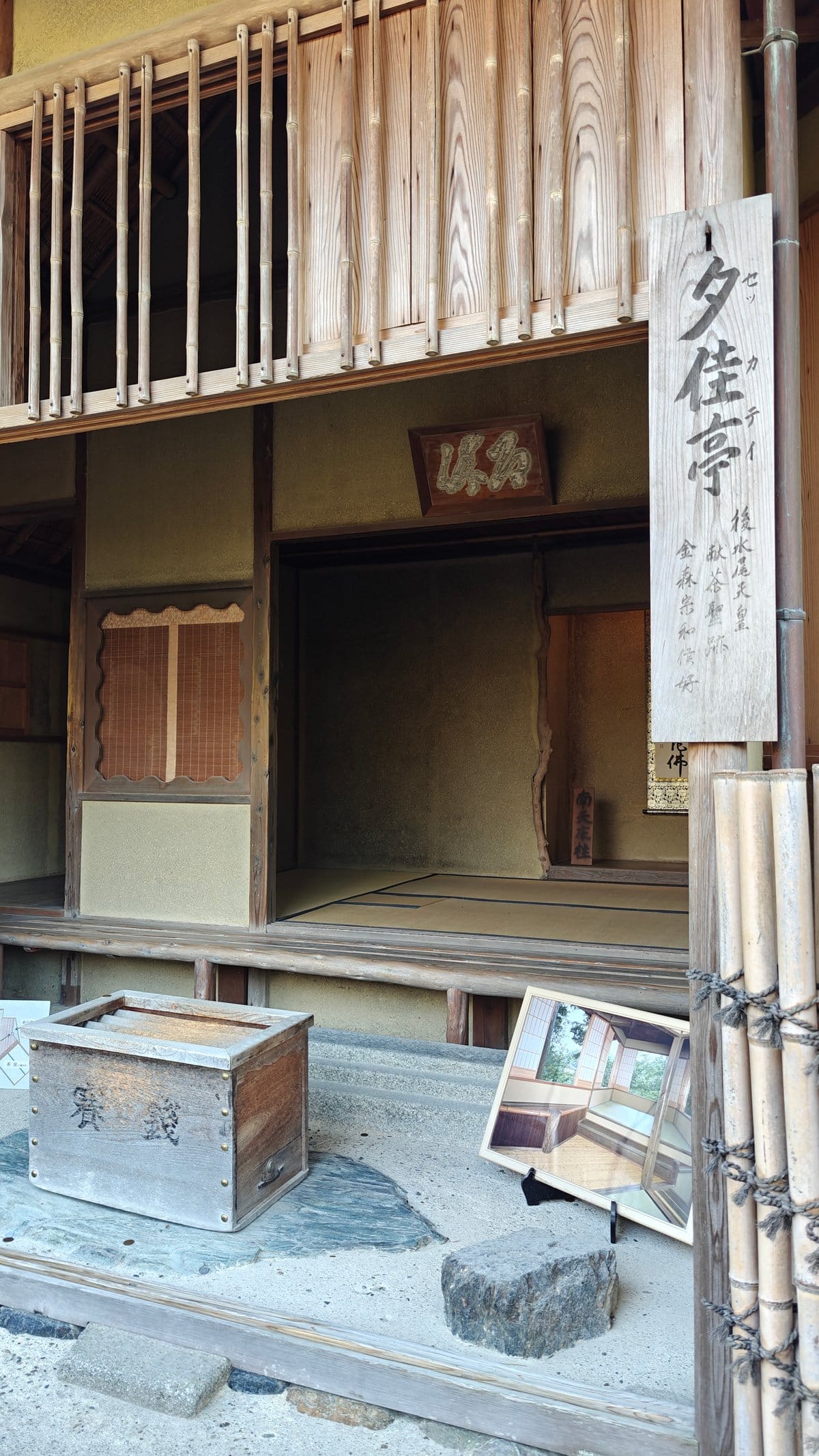
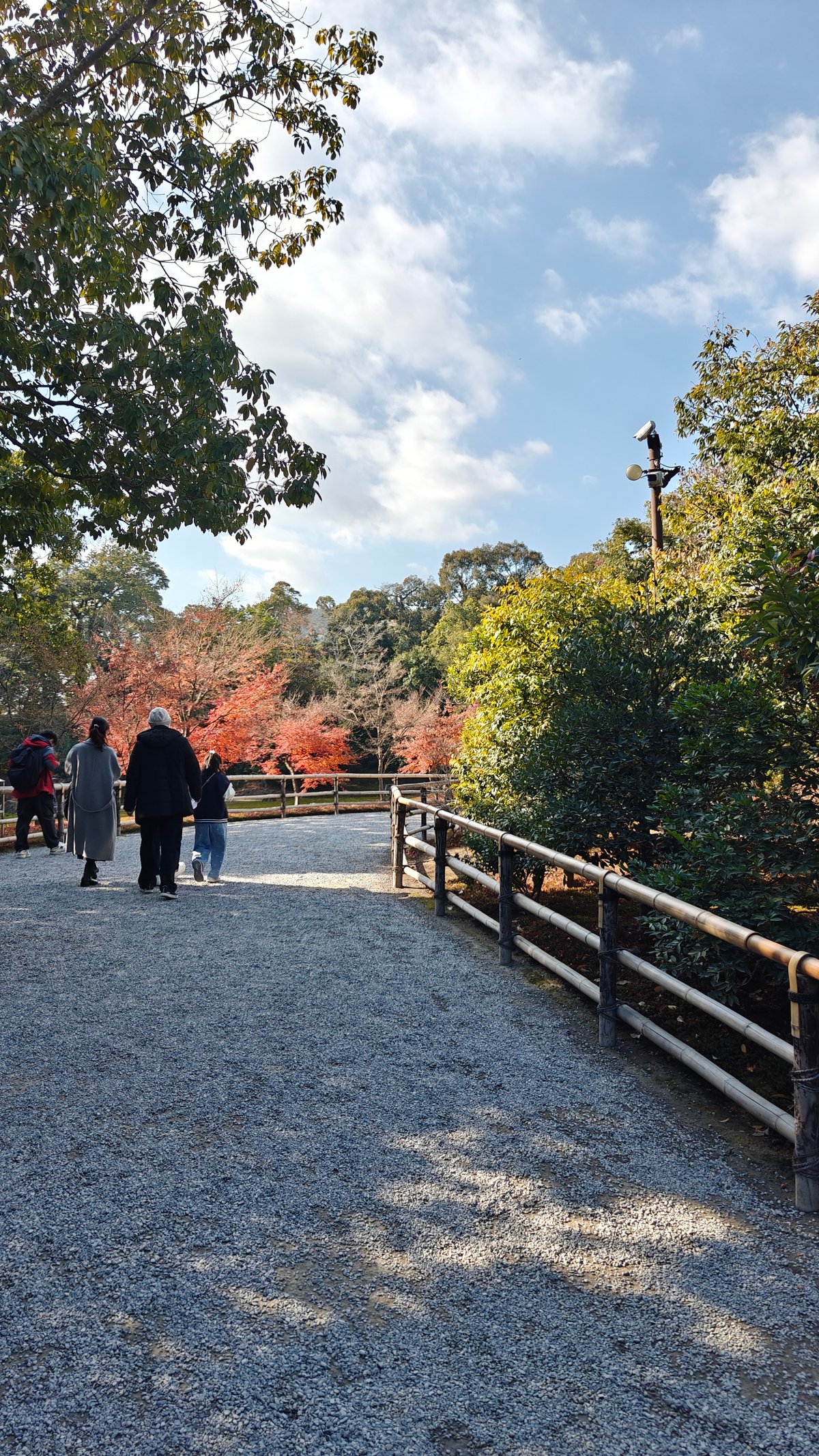
Continuing on, I came across a small teahouse (Sekkatei) nestled within the gardens as well as this thatched rest area. A little stream, some fallen leaves, and moss lined the trail, which then looped around to lead back towards the entrance. If you’re not stopping for long, the whole circuit might only be half an hour or so, whereas I had more like an hour since I kept pausing to take in all of the details.
Something to know: despite how beautiful it looks, you cannot go inside the pavilion, it’s all about seeing it from the outside and wandering around the garden. While I was there, the crowds never seemed to thin much, but the garden is big enough that it never felt crowded except near the primary view.
Ginkaku-ji
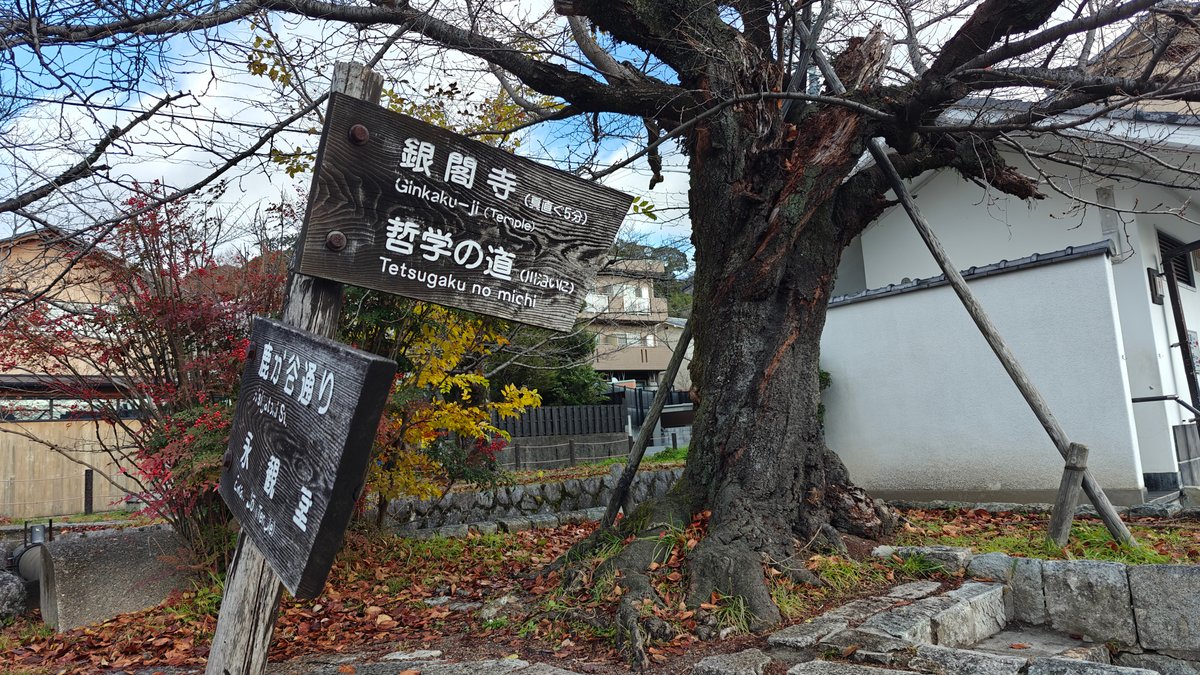
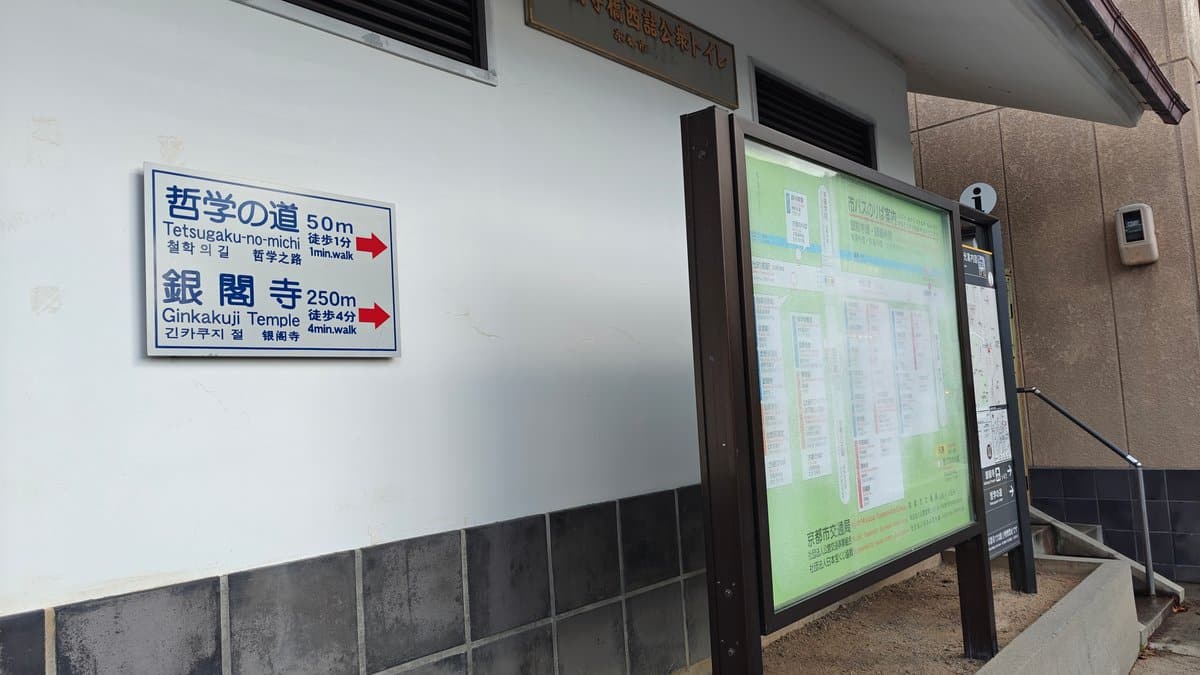
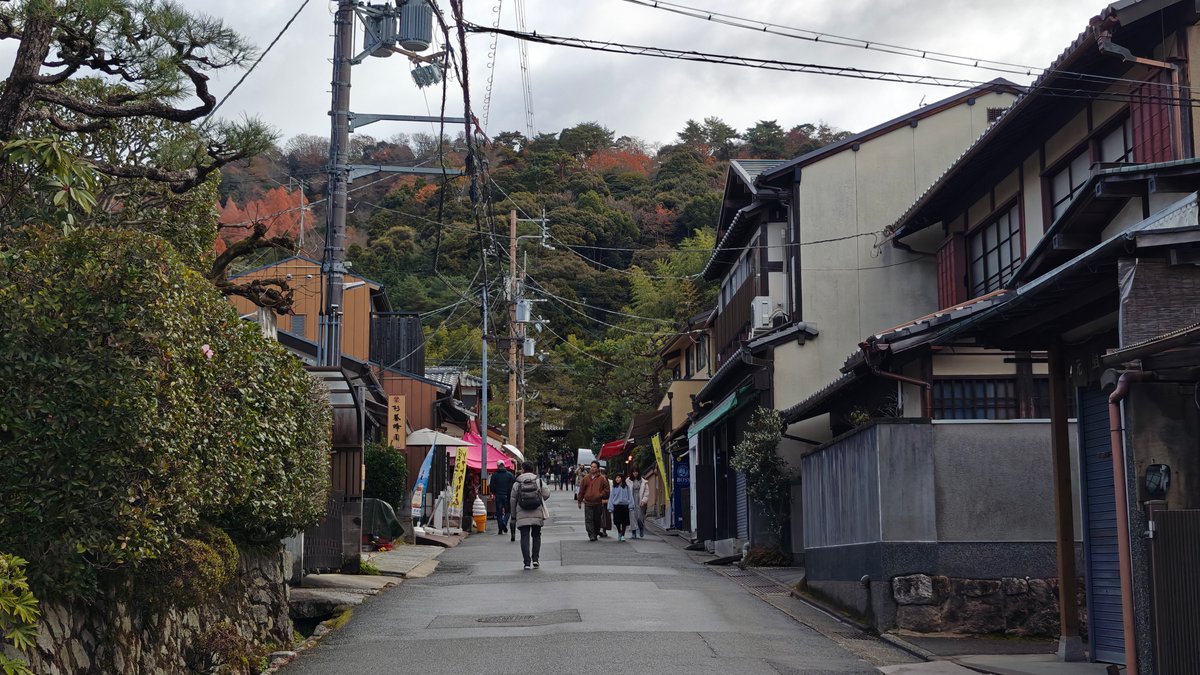
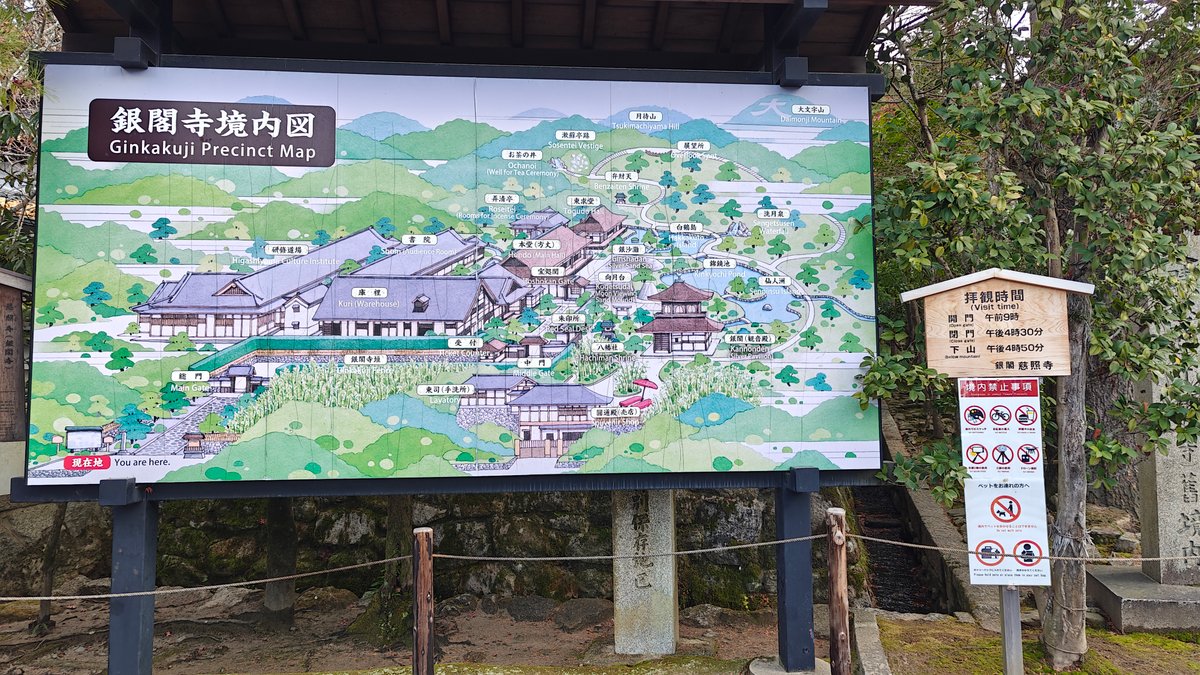
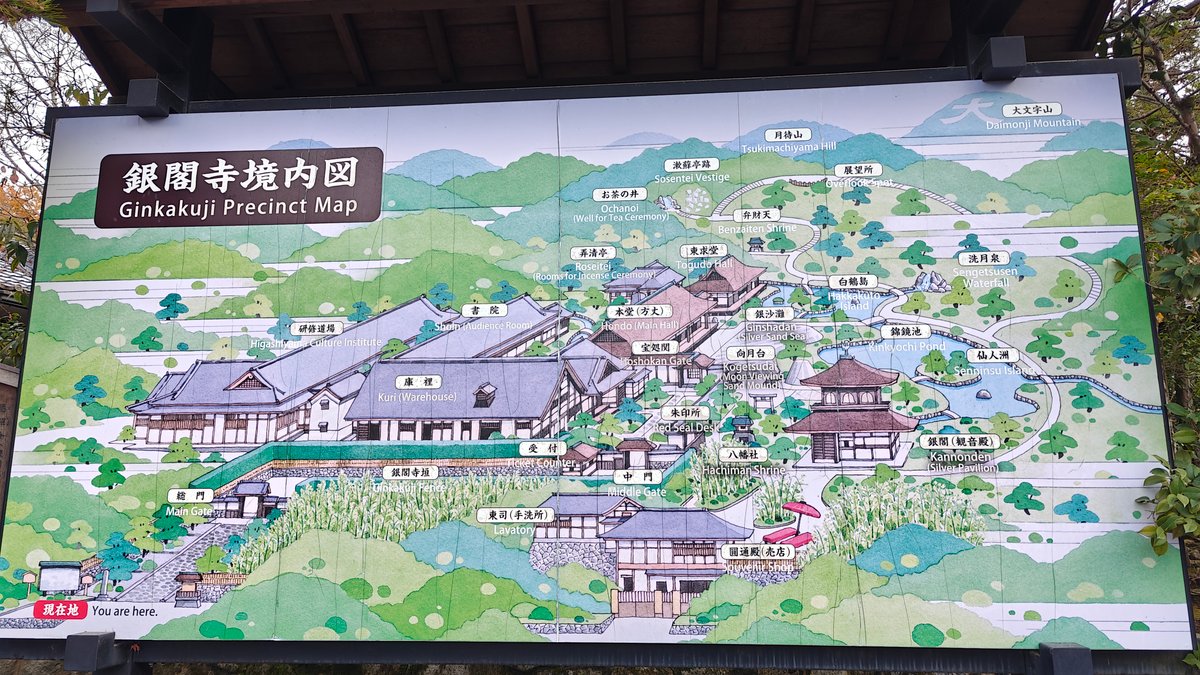
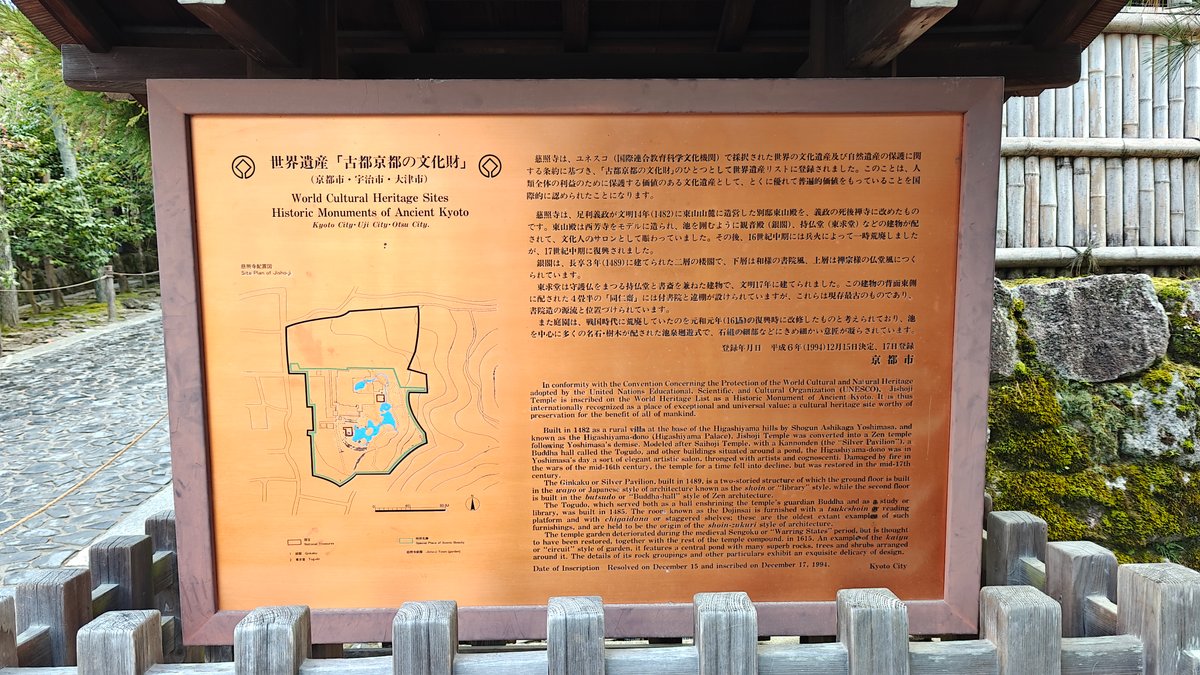
As I wandered around the neighbourhood, I saw the wooden signs directing pilgrims to Ginkaku-ji (which are the ones leading up the Philosopher’s Path). It was much more residential and quiet than the path leading up to Kinkaku-ji. Souvenir and snack shops lined the approach street.
Just inside the entrance, there was an information board with a drawing of the temple grounds layout. I also read the bronze plaque reminding me that Ginkaku-ji is part of the World Heritage listing for historic monuments in Kyoto.
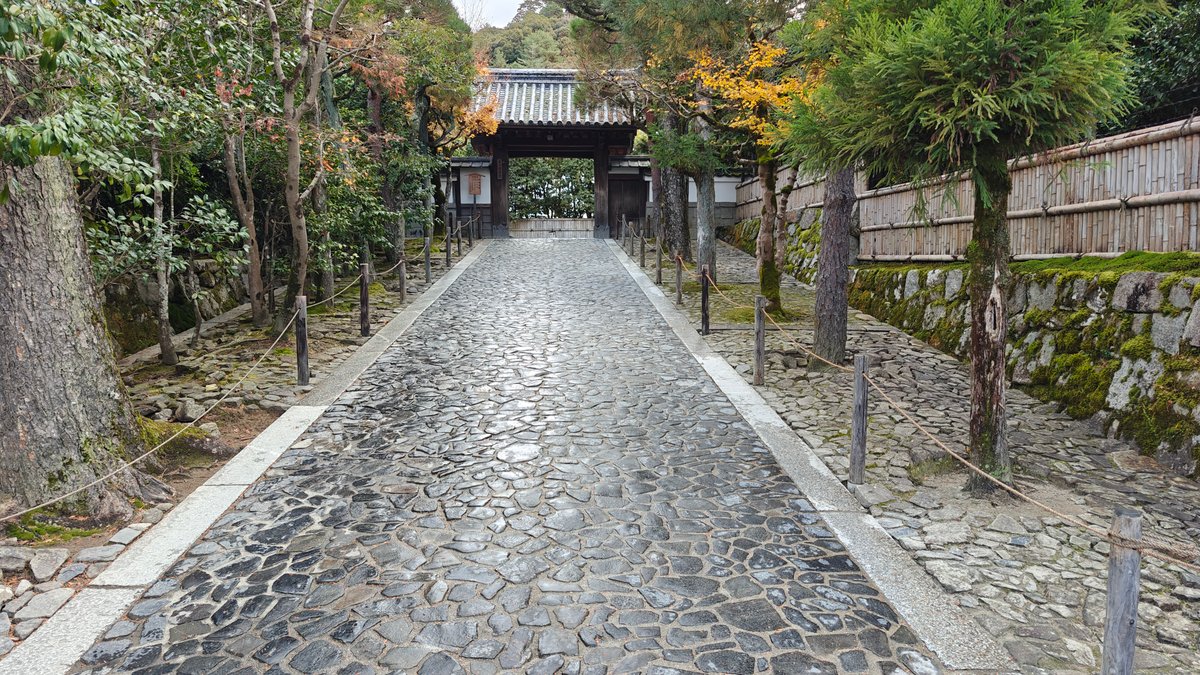
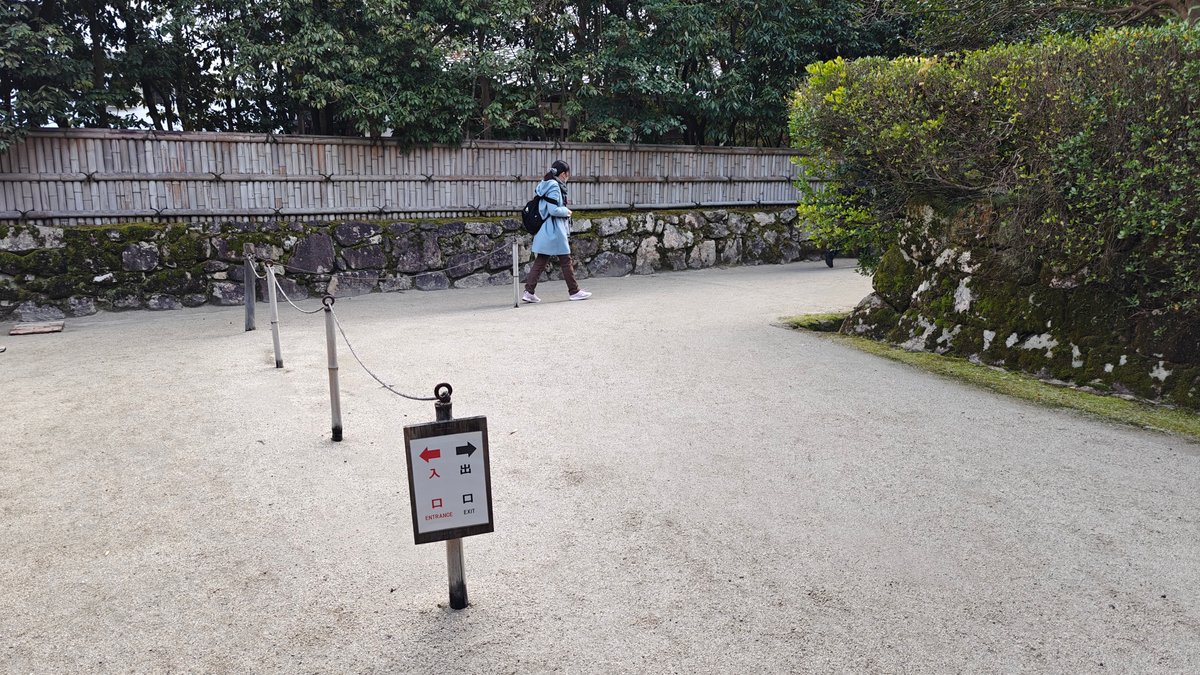
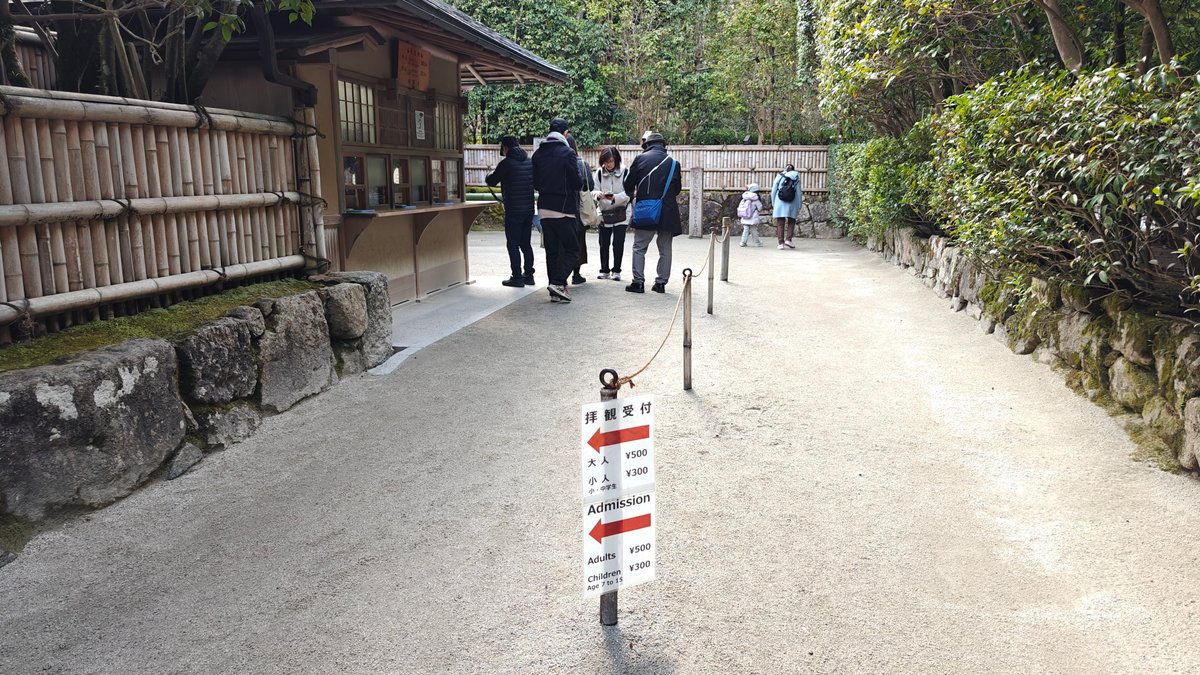
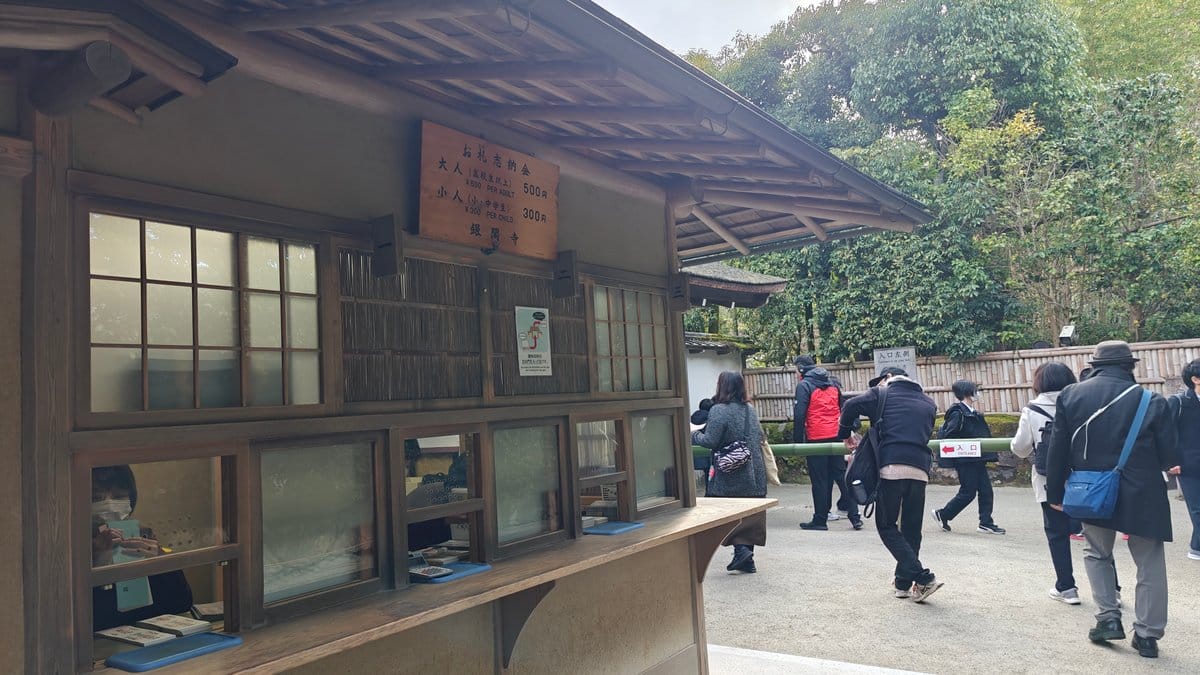
This temple has an unusual entryway, a long alley lined with very high, neatly manicured hedges leading visitors past the ticket booth. After getting my ticket, I grabbed a pamphlet, saw the goshuin (temple seal) office on the side, and was ready to go.
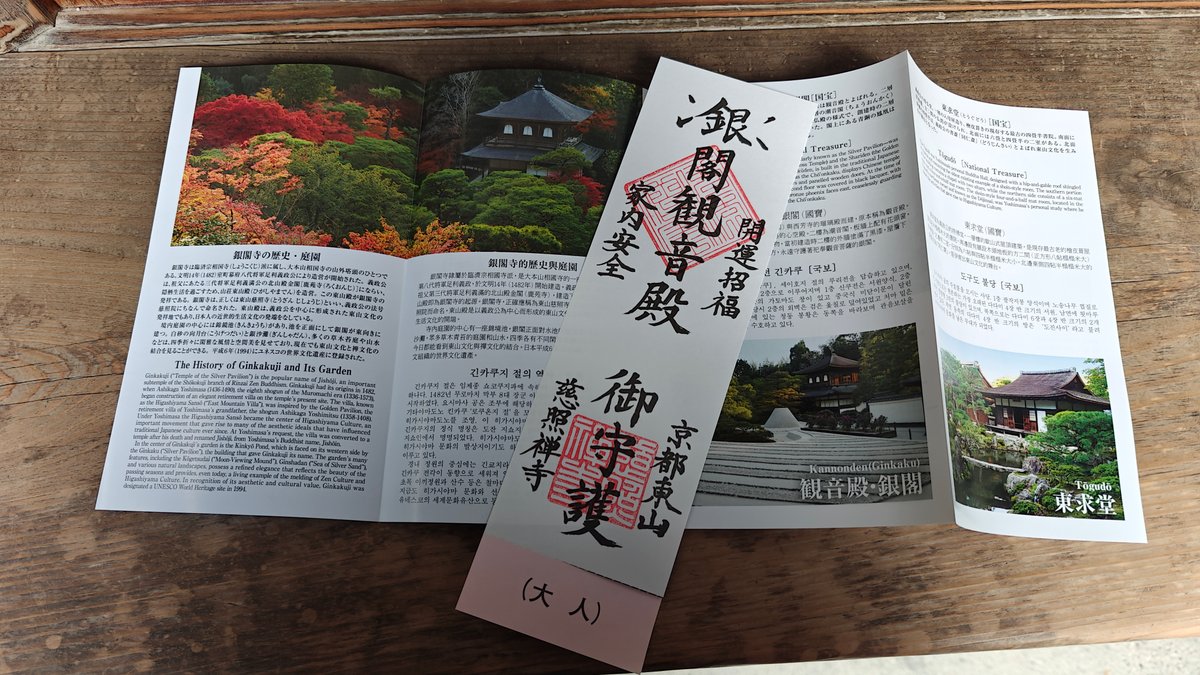
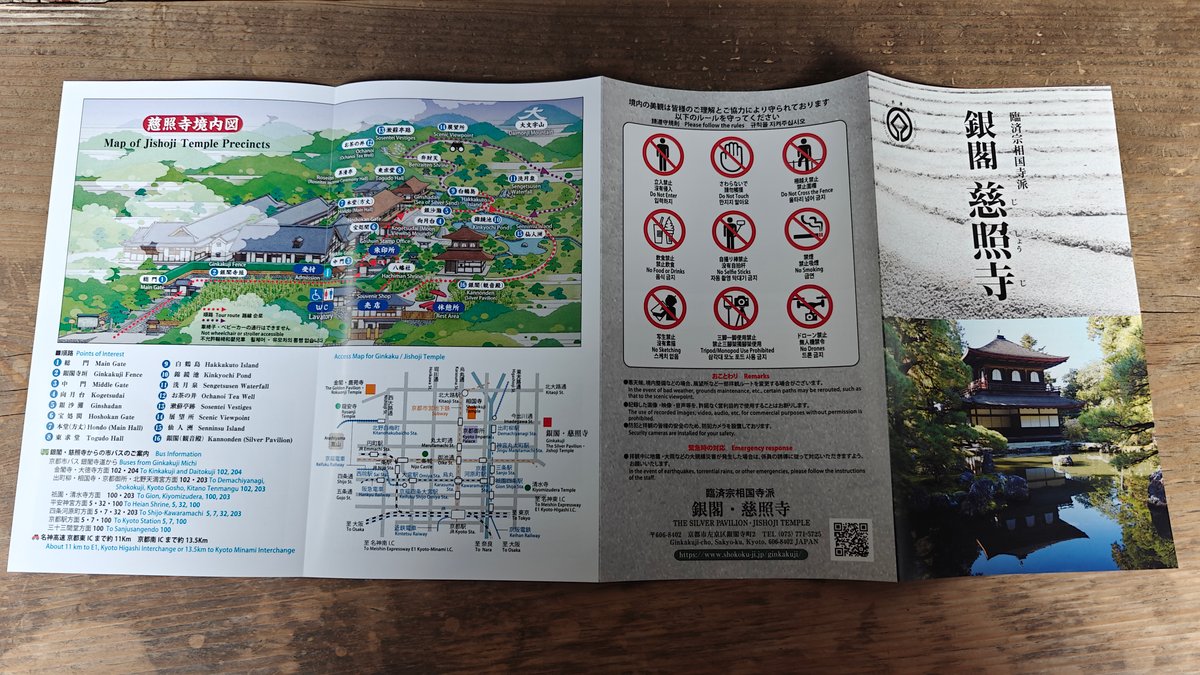
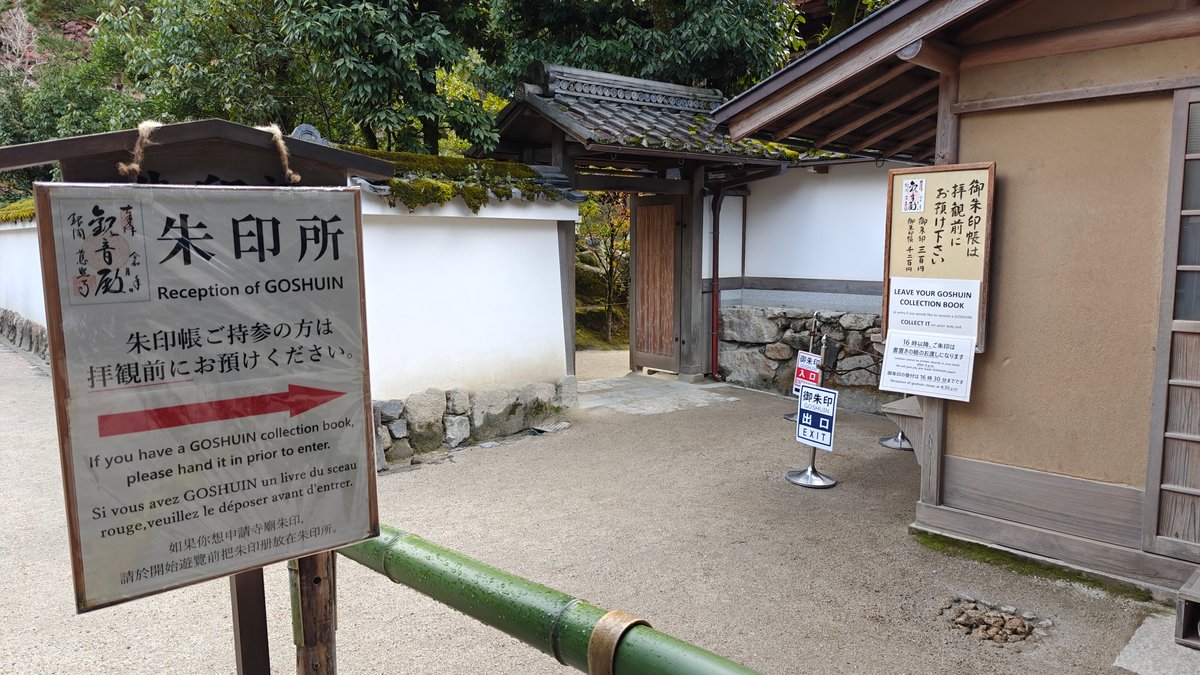
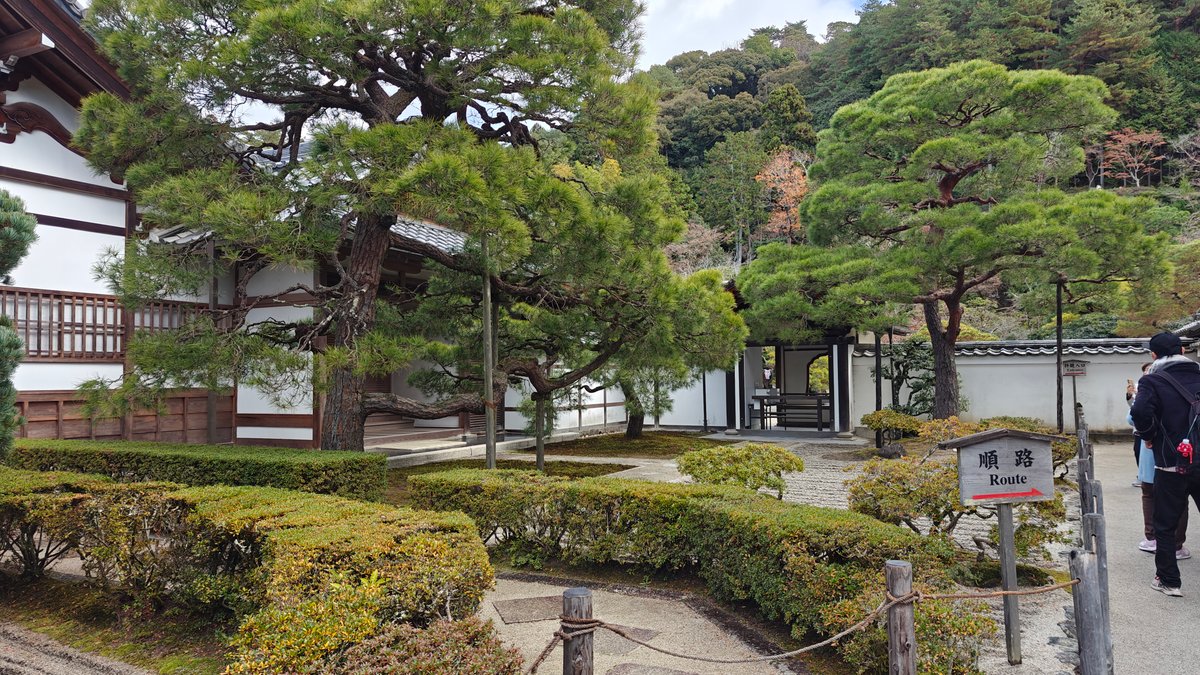
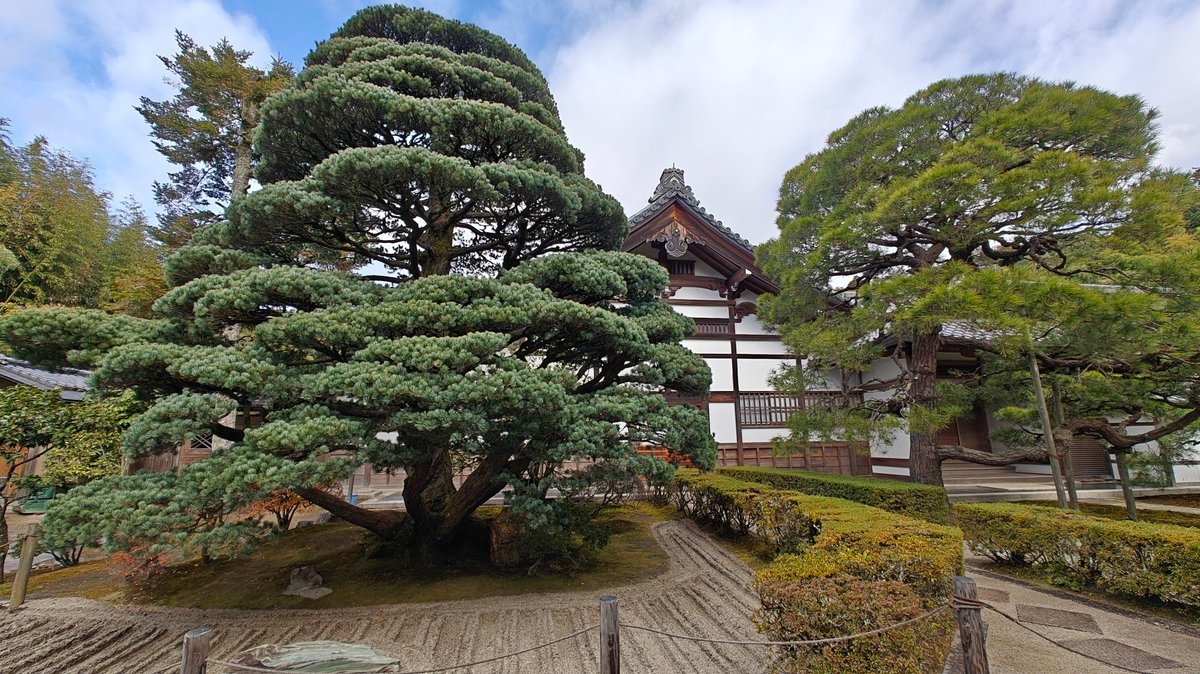
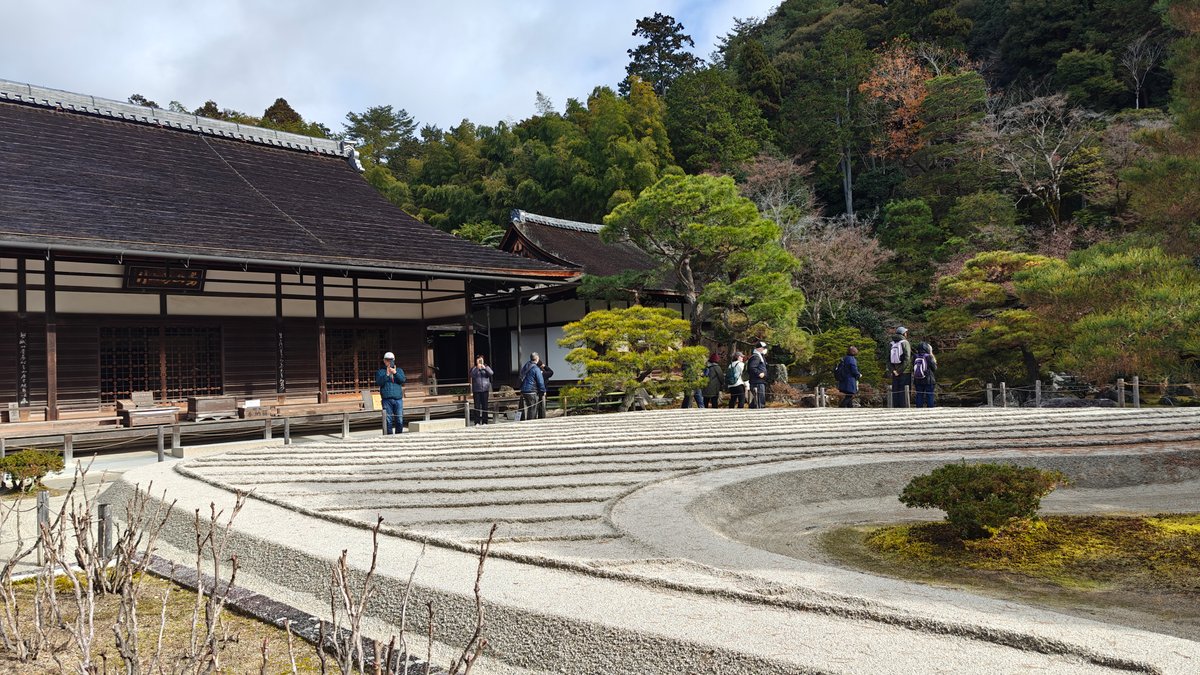
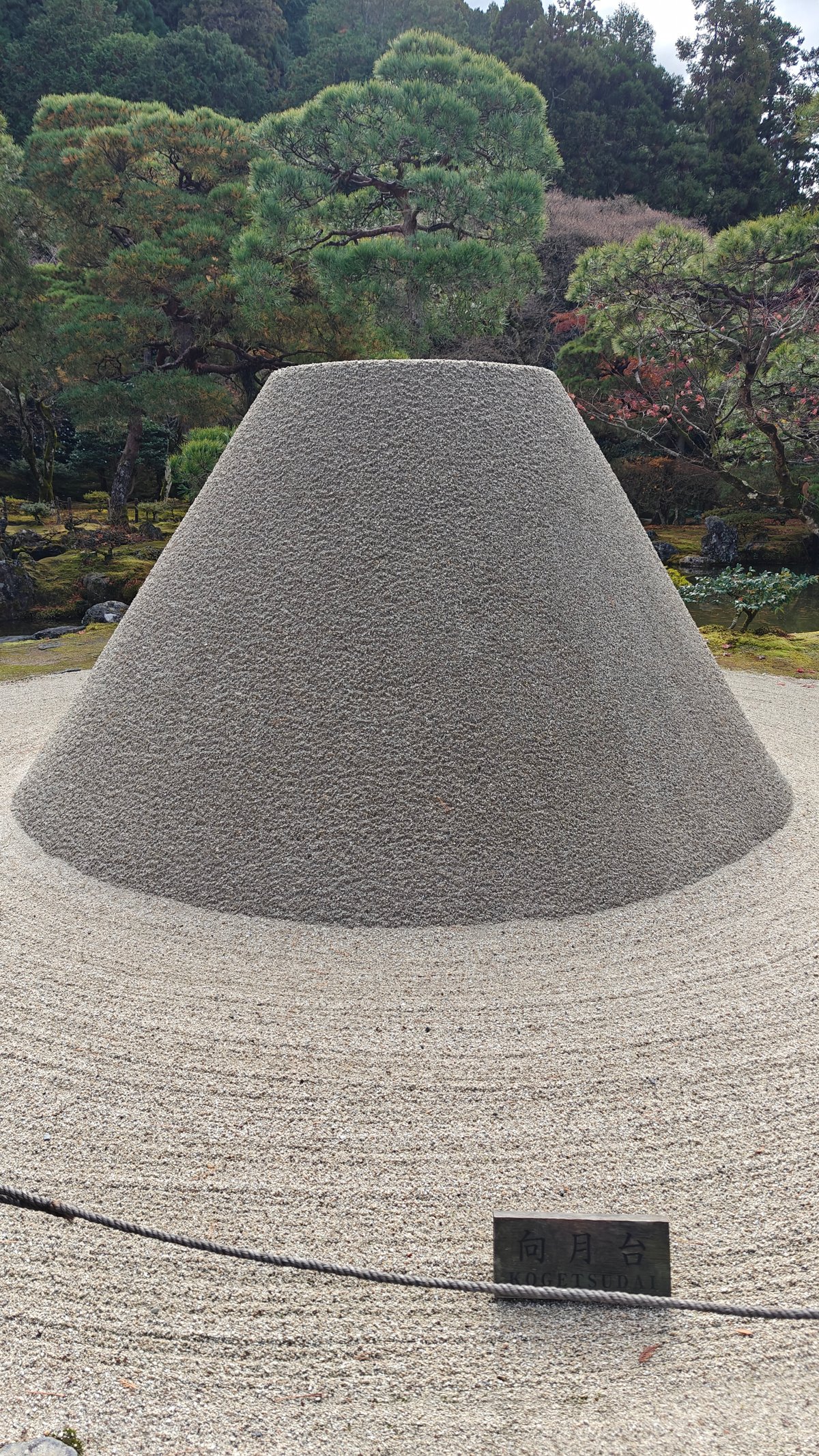
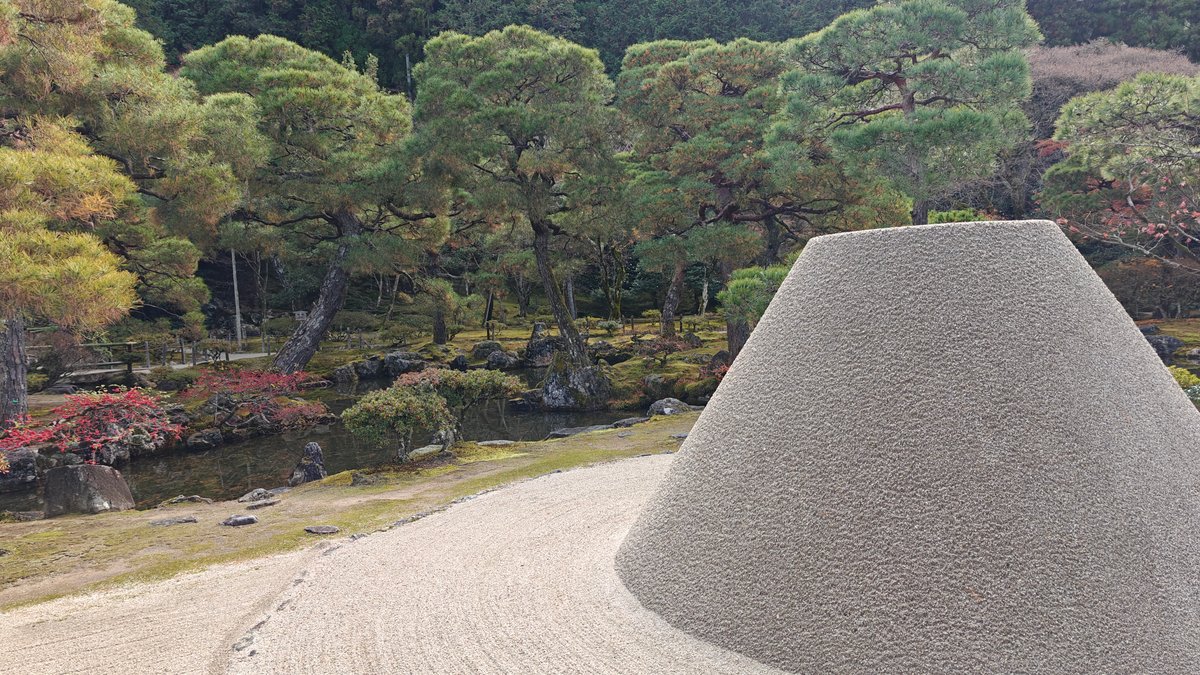
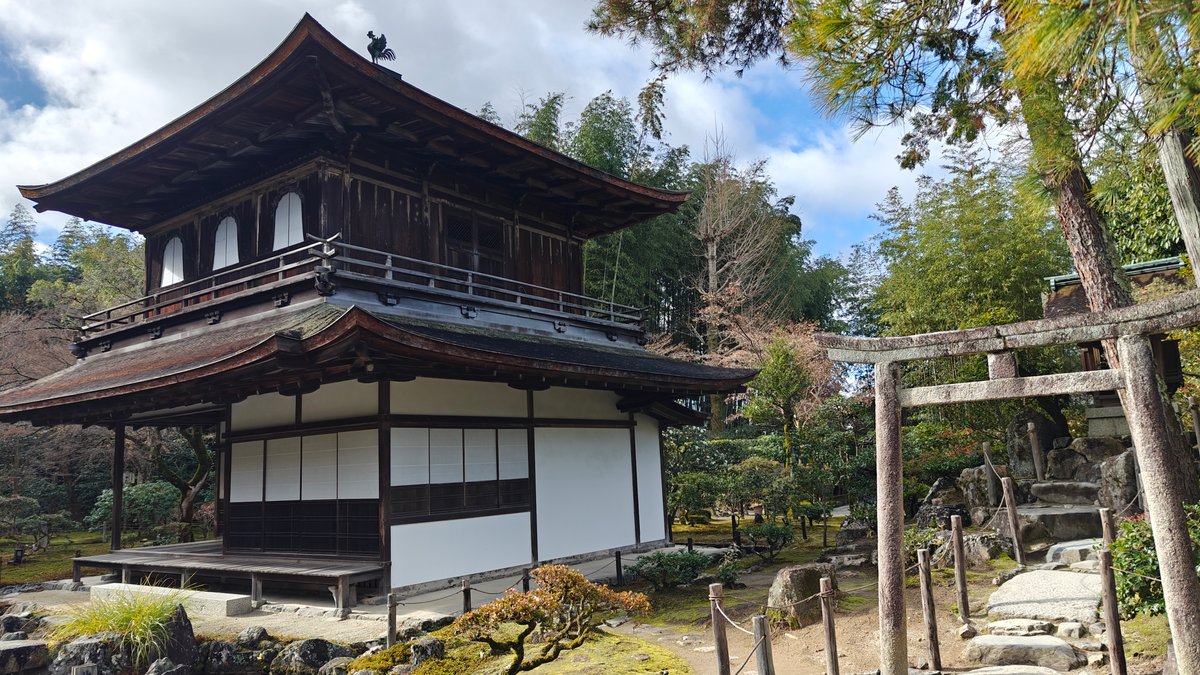
Stepping in, however, I found the garden to be a far cry from Kinkaku-ji. The first sight was a large field of raked gravel called the Sea of Silver Sand, laid out in perfect circular lines. Next to this was a towering cone (Kogetsudai) used for watching the moon.
Across the garden lay the Silver Pavilion itself, which isn’t really made of silver at all (it’s just darkened by weathering).
It all felt slightly plain and restrained, and I enjoyed how quiet it was, after all the crowds and shimmer of Kinkaku-ji.
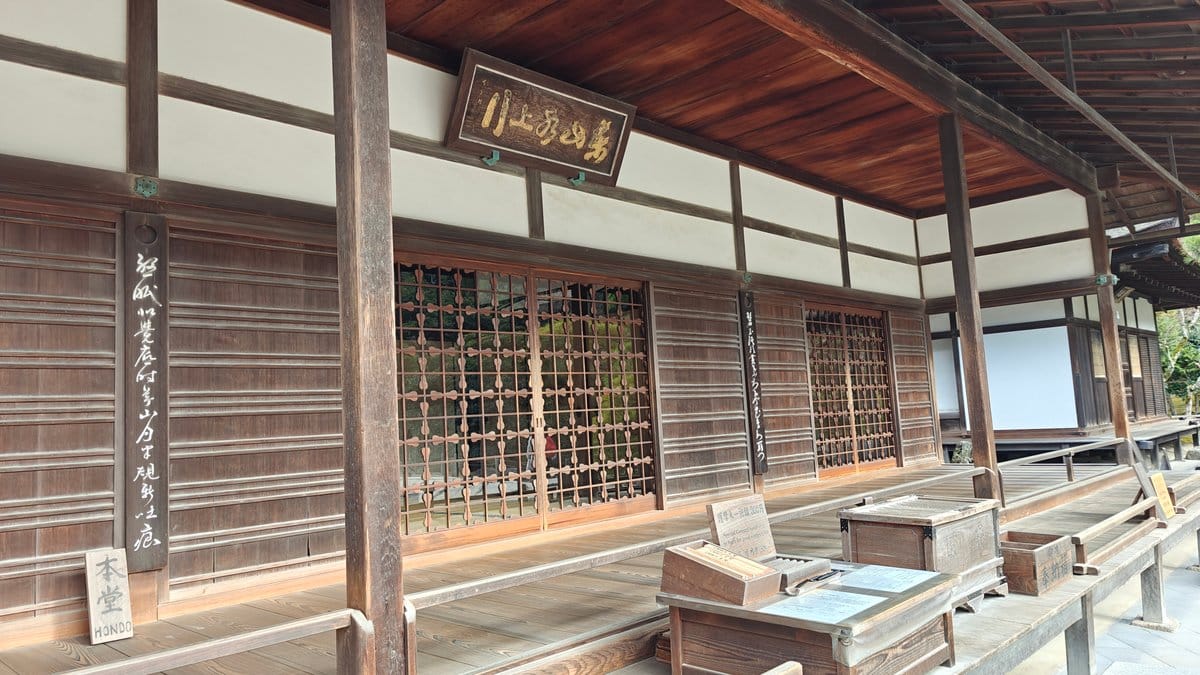
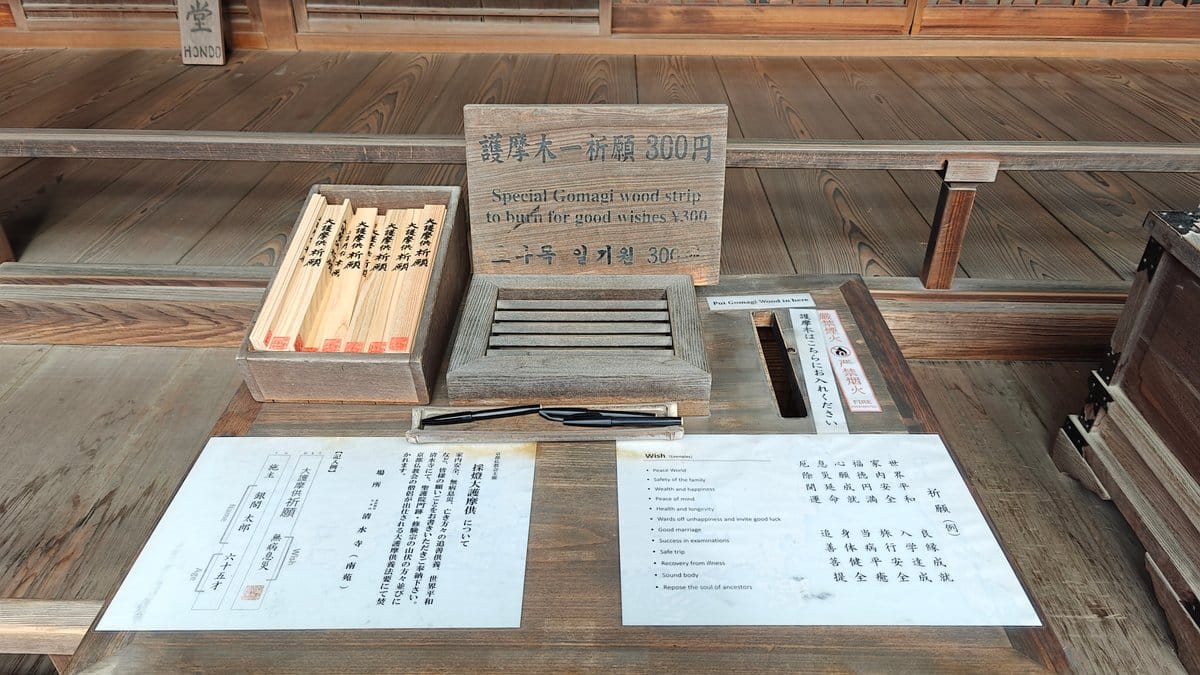
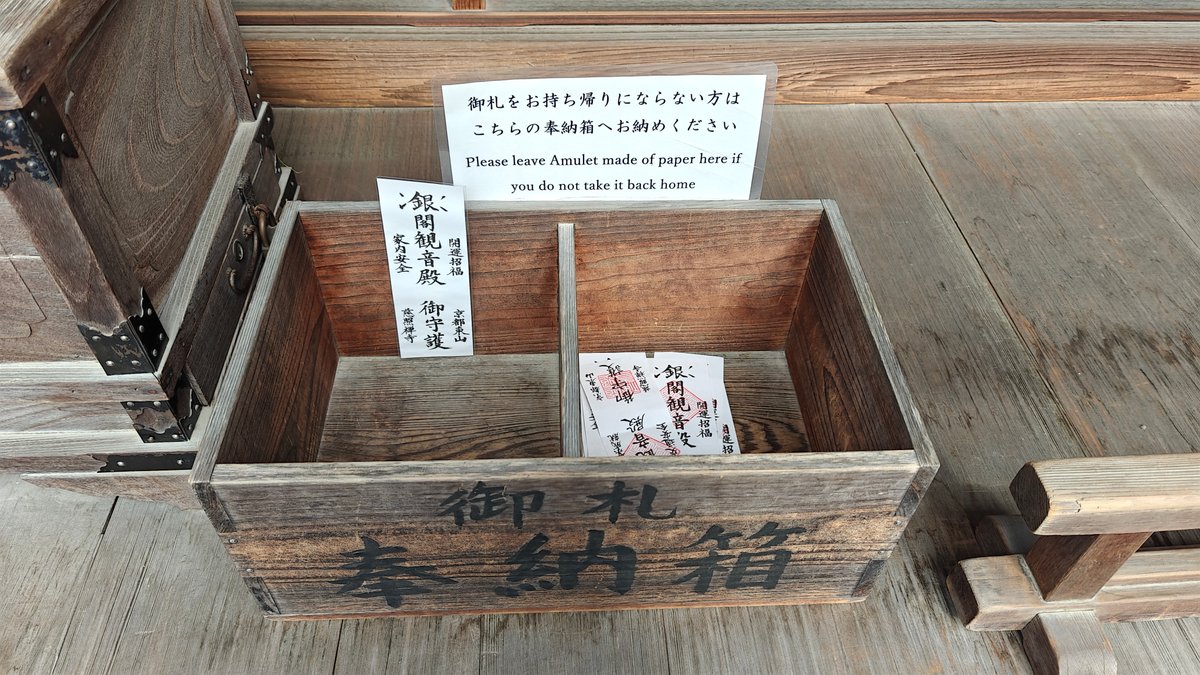
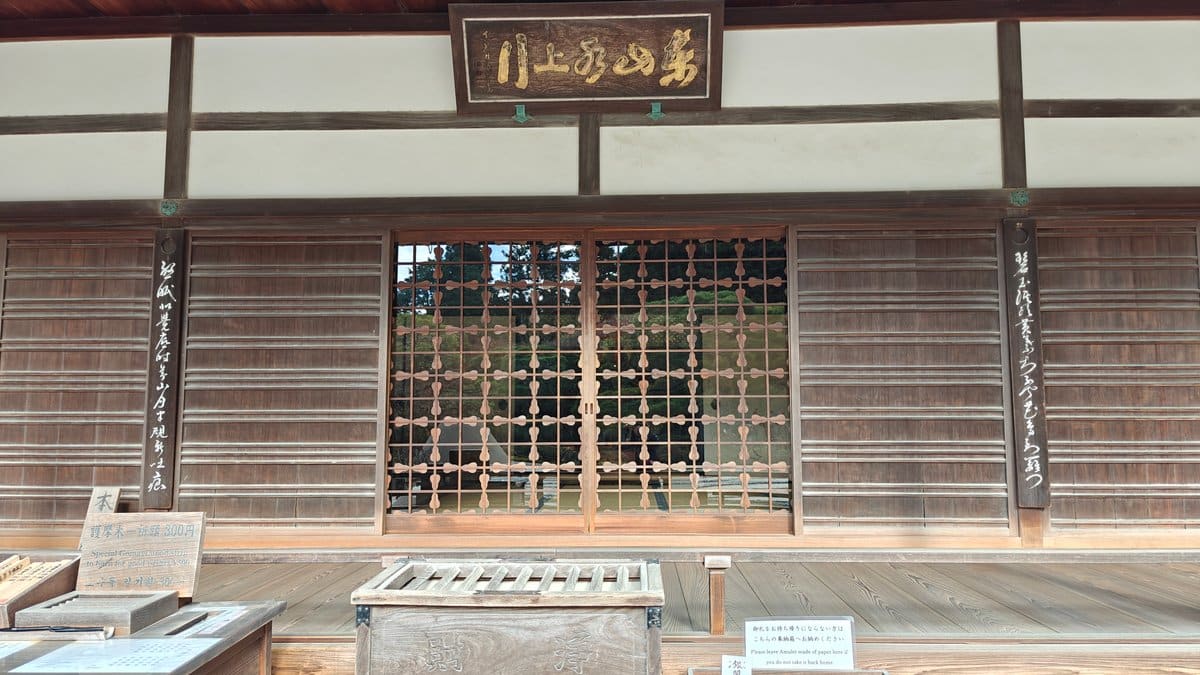
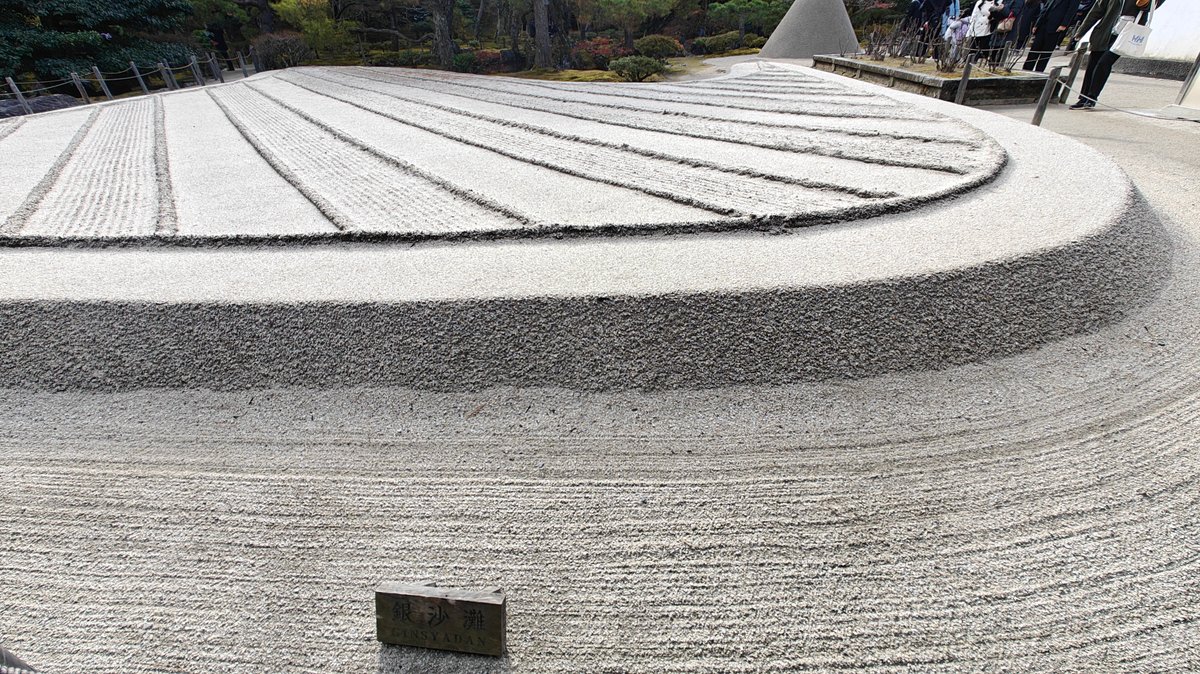
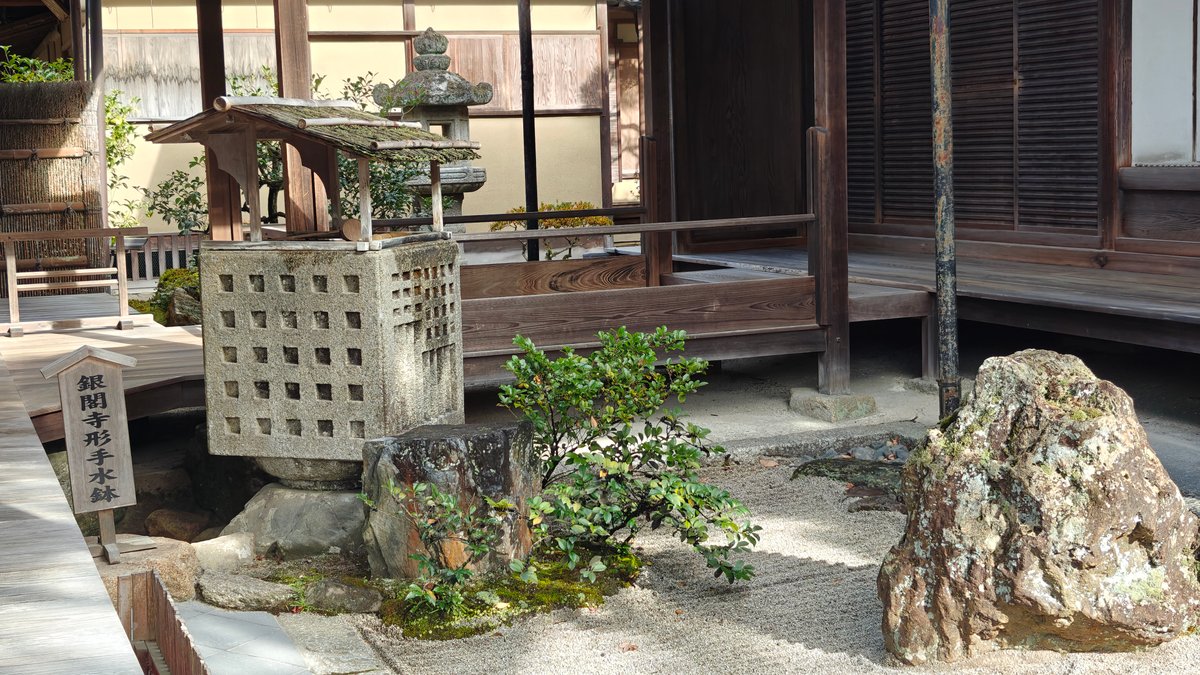
The main hall had a row of open corridors and tatami floors that you could peer into. There was a desk at the front where you can write your prayers on a stick and a wooden box where old ones were returned. The raked sand appeared to be far too perfect to be authentic, which made me wonder who keeps it looking so good, and how often they have to do it.
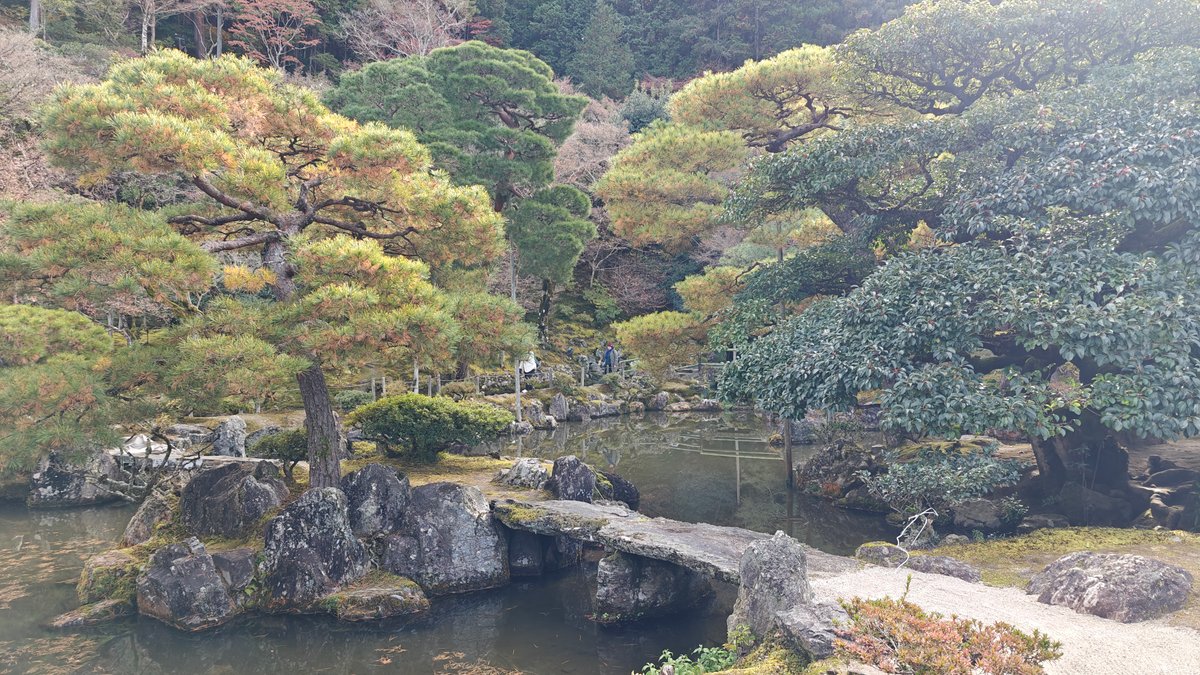
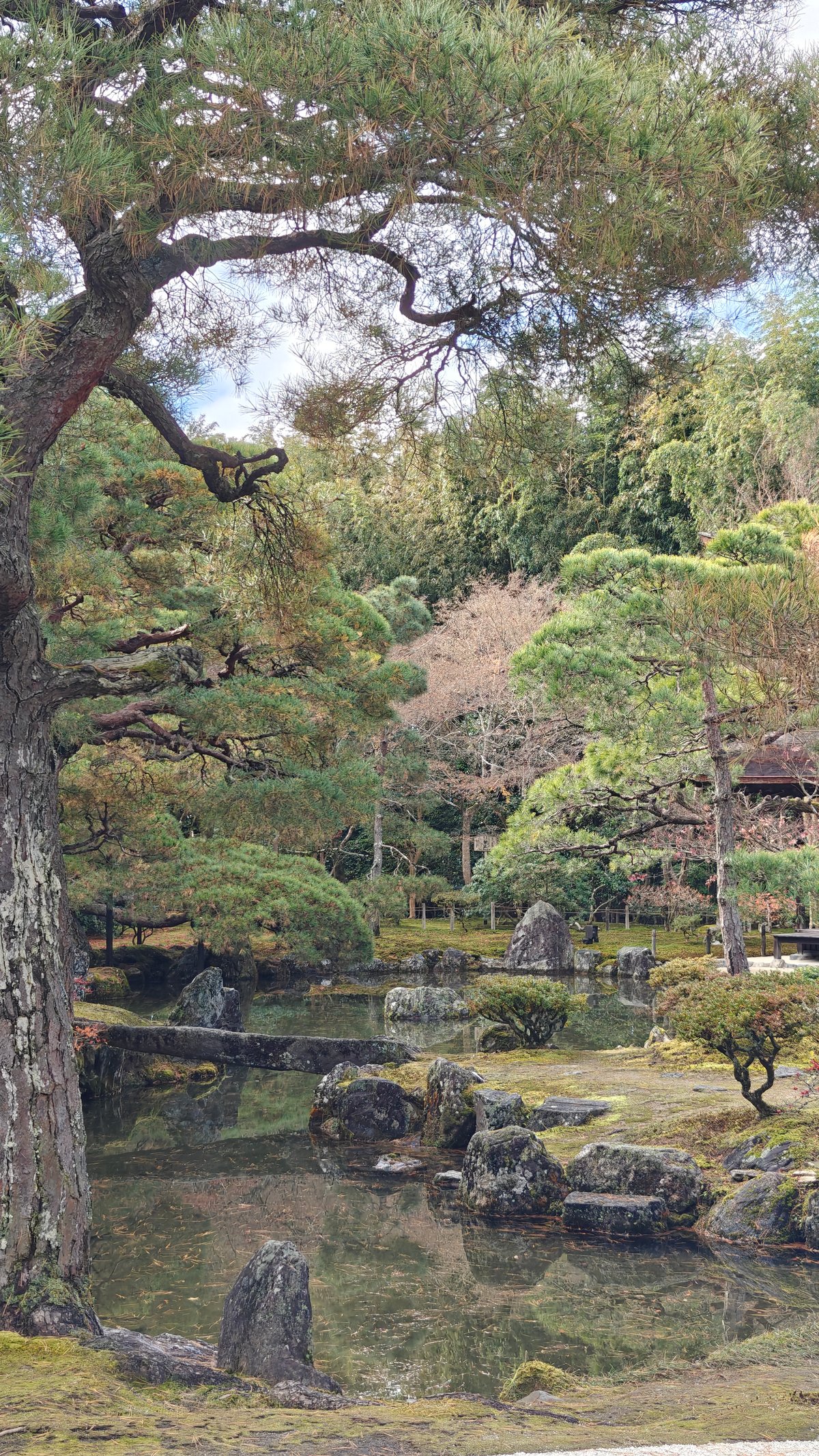
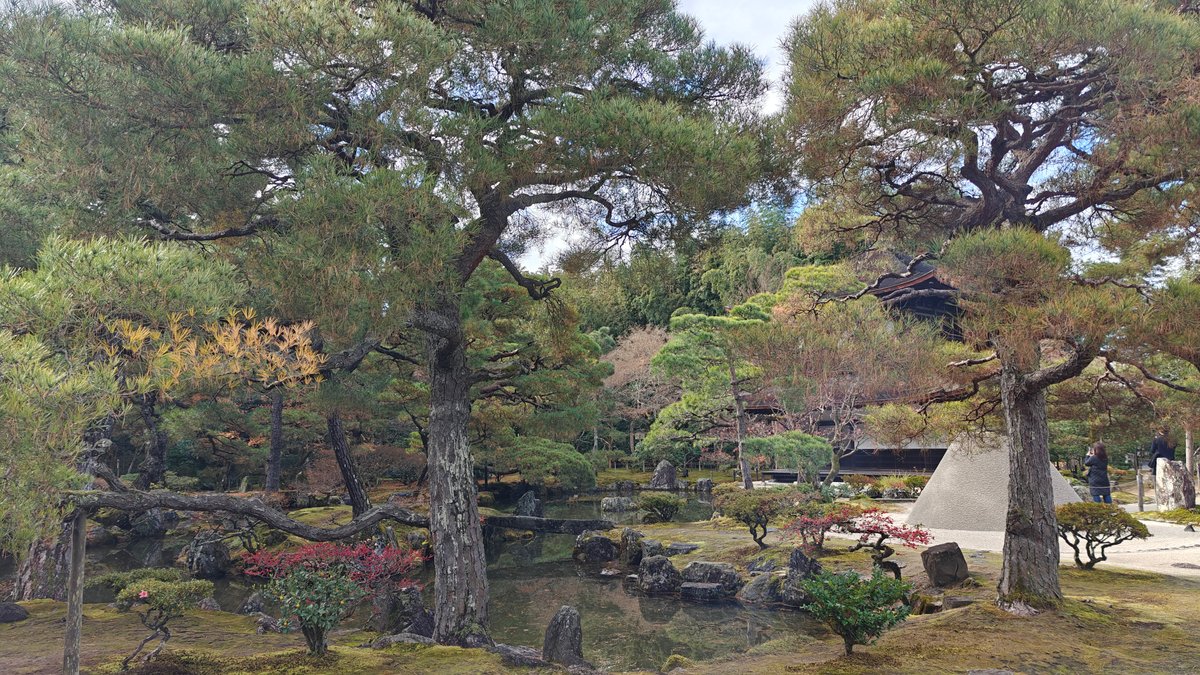
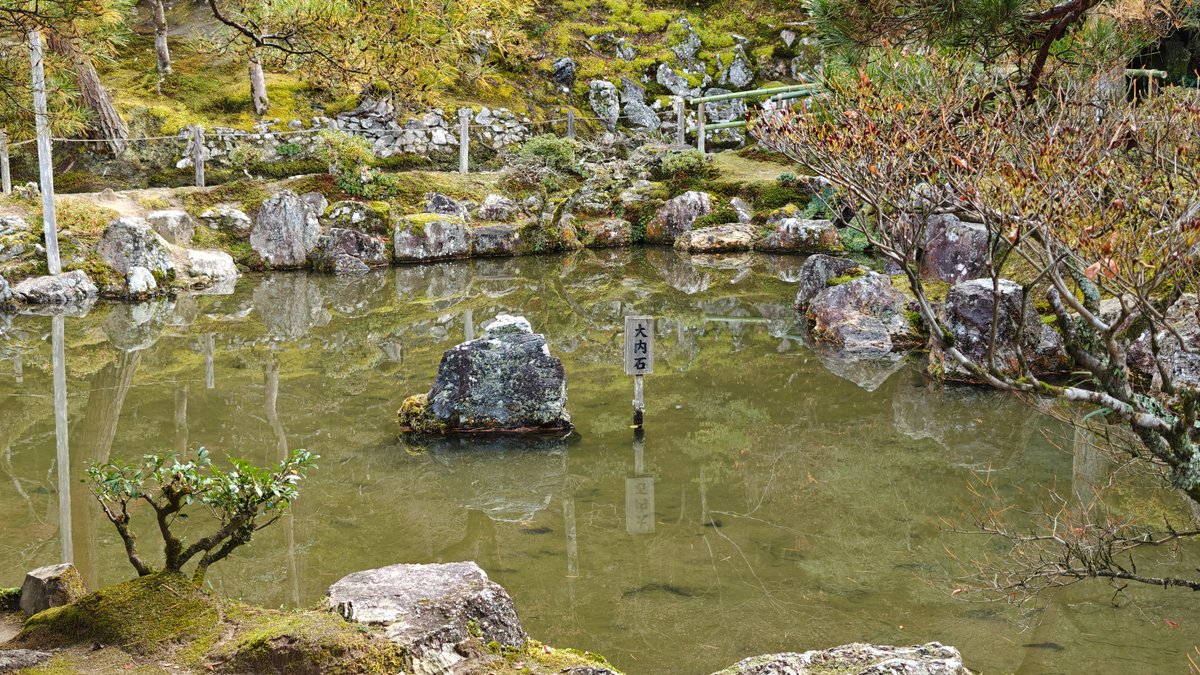
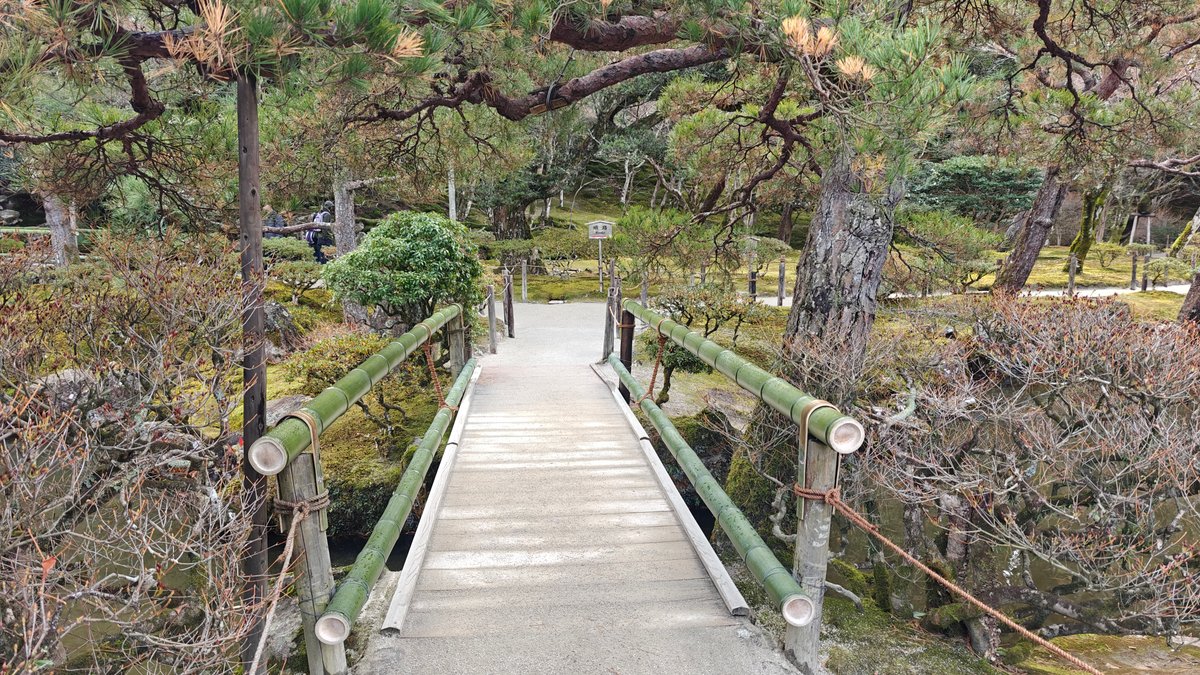
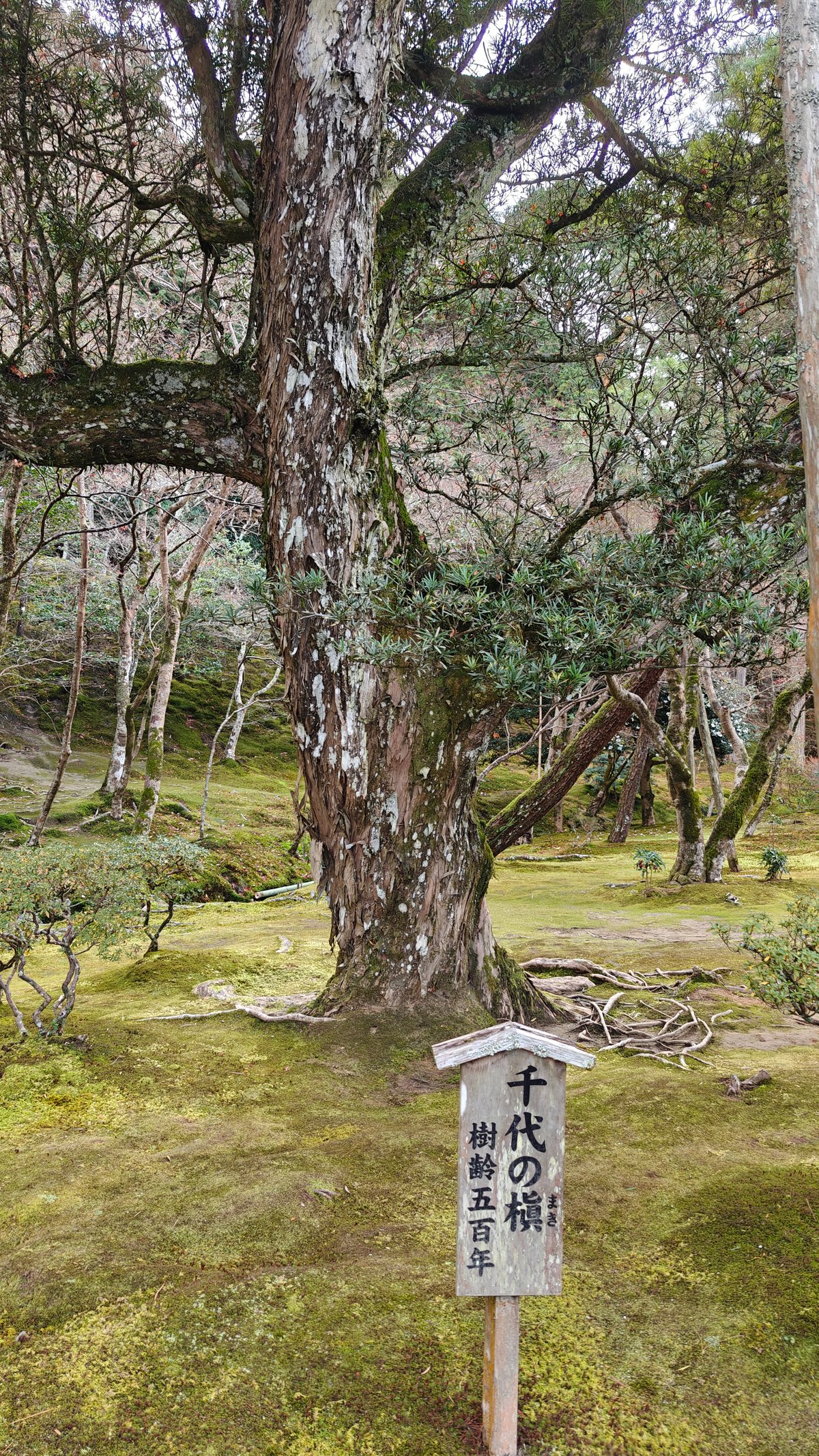
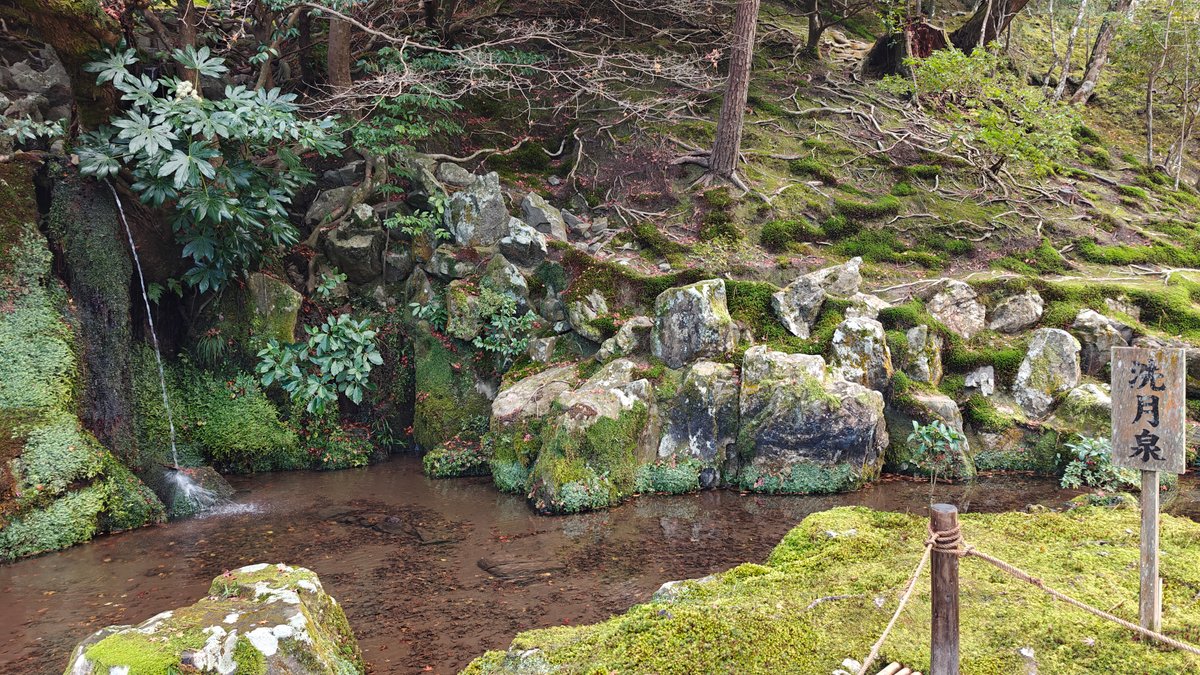
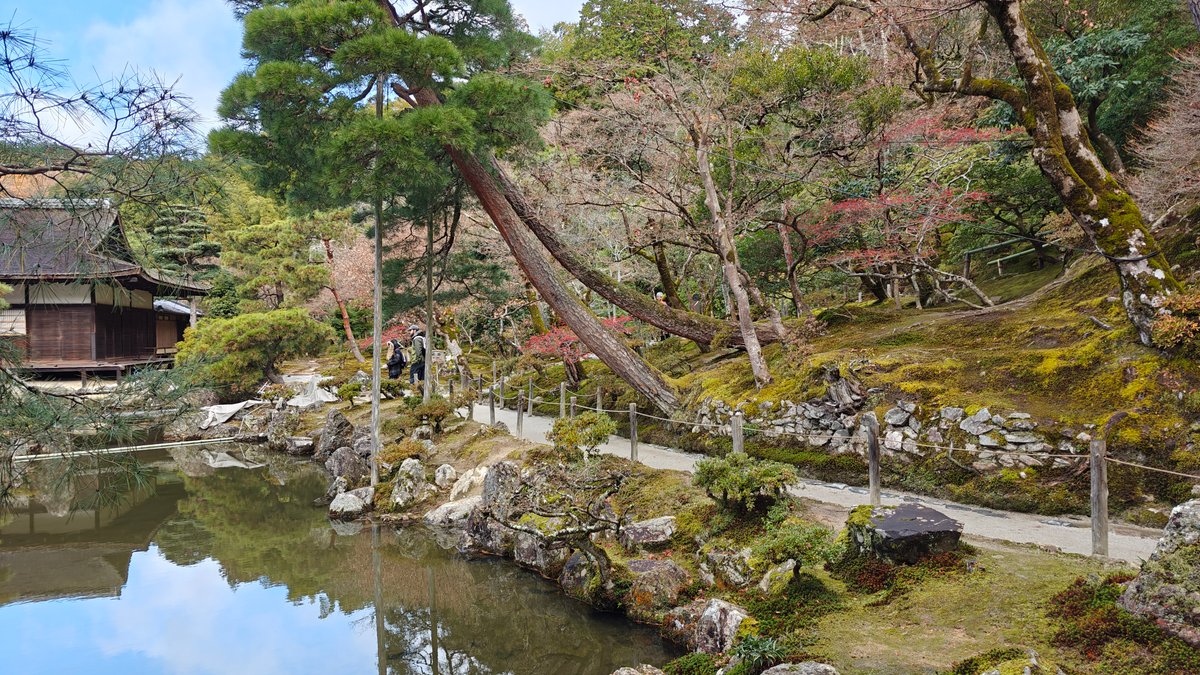
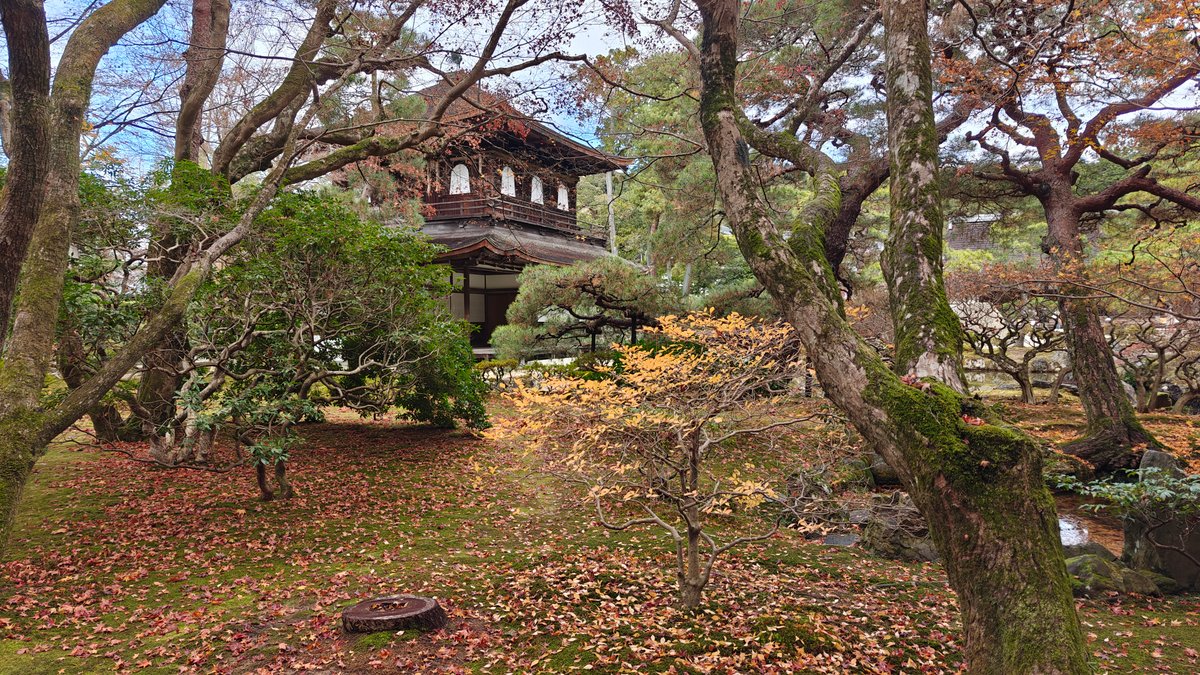
The path continued into what they call a “pond garden,” which is not really like any other pond I’ve seen (there’s no fish or running water), just trees hanging out over the still water, rock islands, and a little wooden footbridge that crossed a stream. A sign told me the age of an old maki tree, and I paused to examine it. The entire space was far less manicured and more natural feeling than the pond at Kinkaku-ji.
There was a quiet waterfall and the rocks surrounding it were covered in moss. And again, there was the pavilion reflecting in the water, but this time the reflection was soft and subtle.
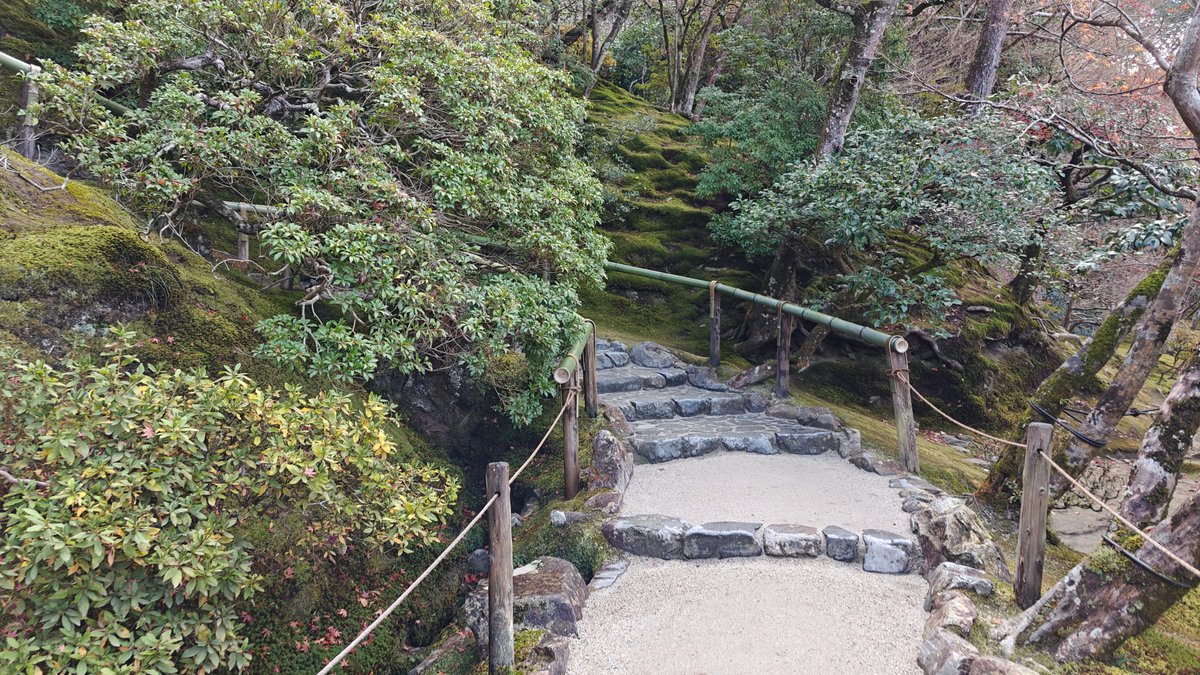
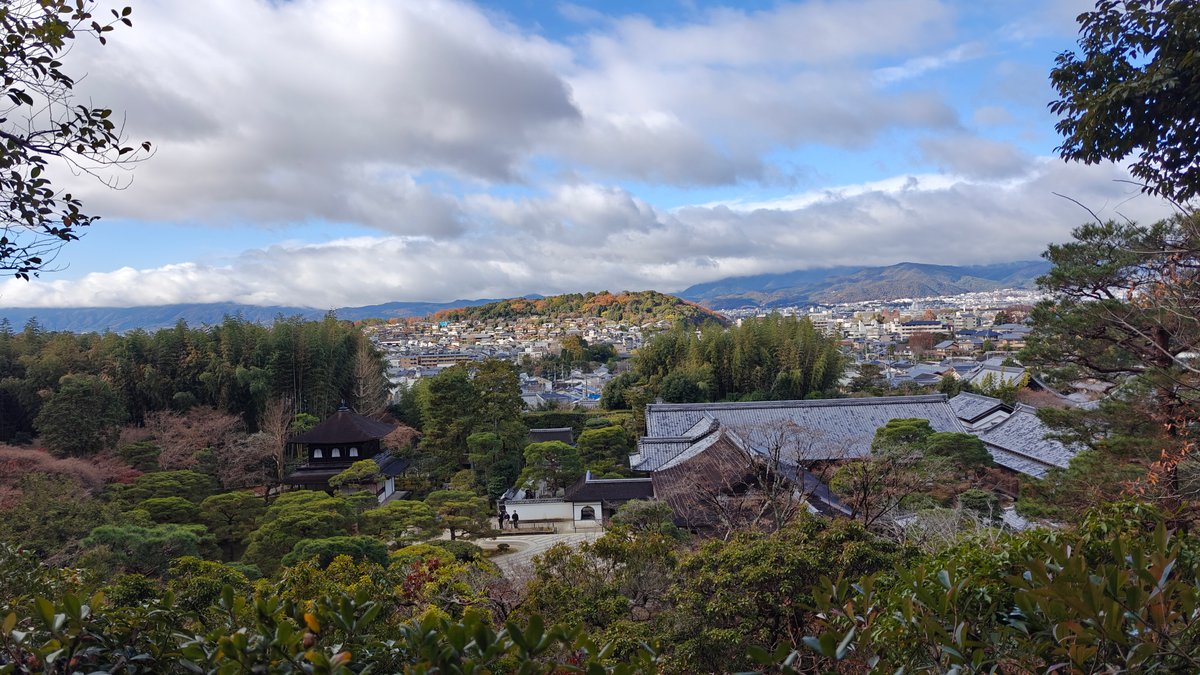
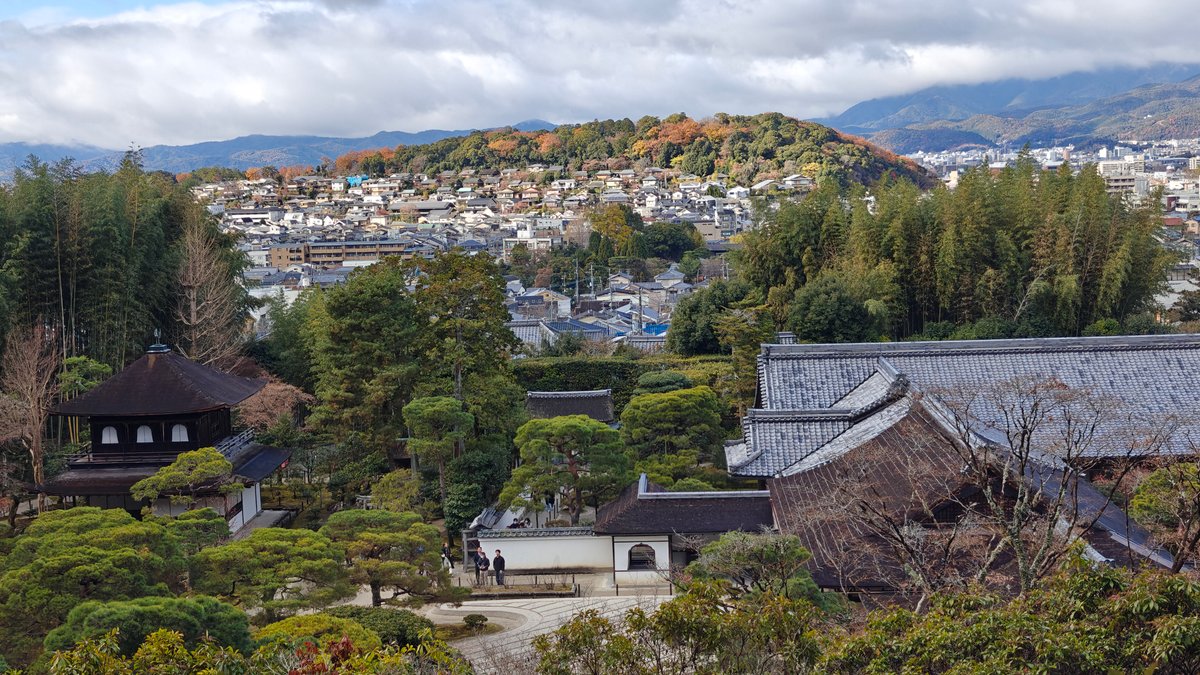
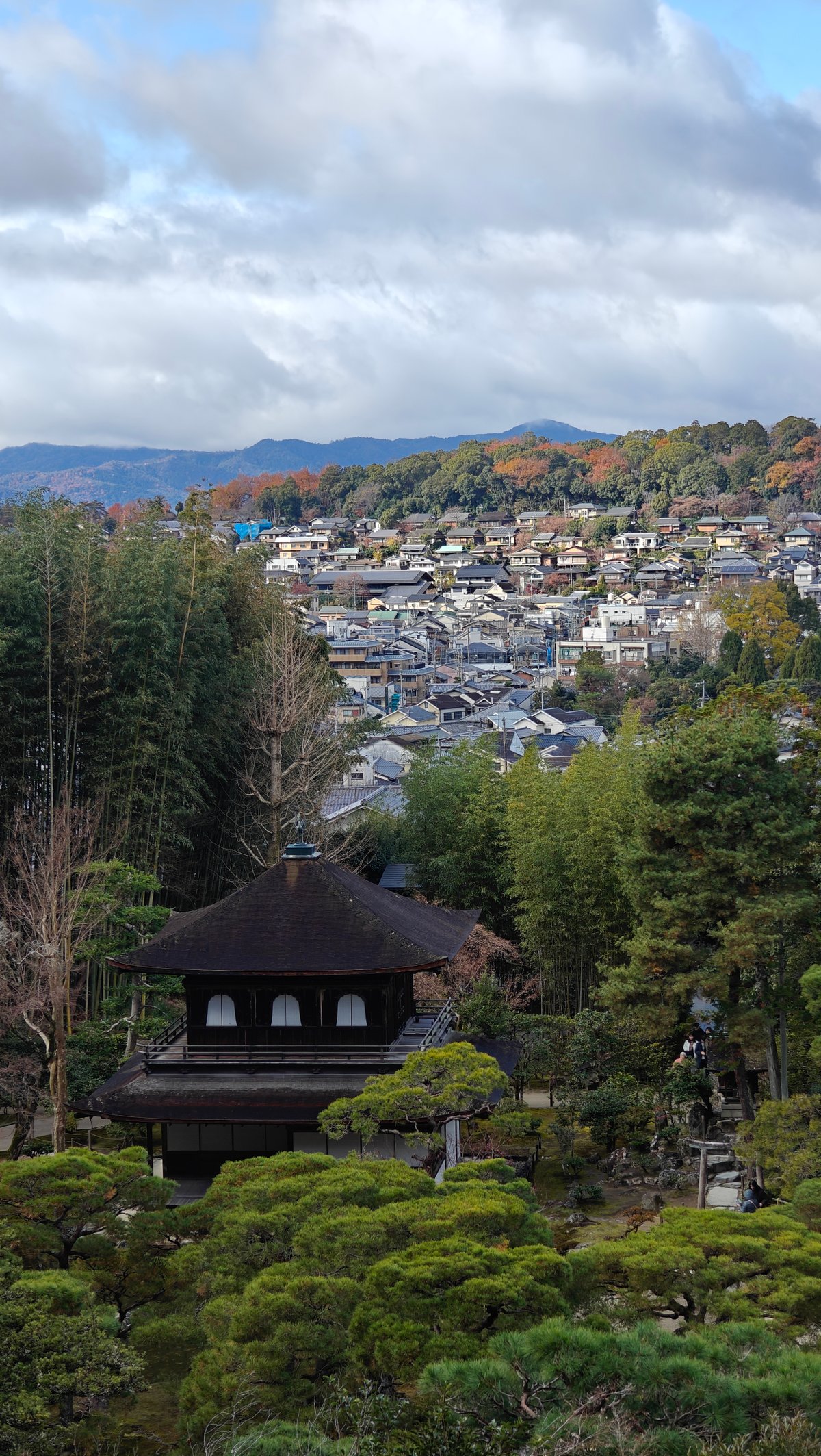
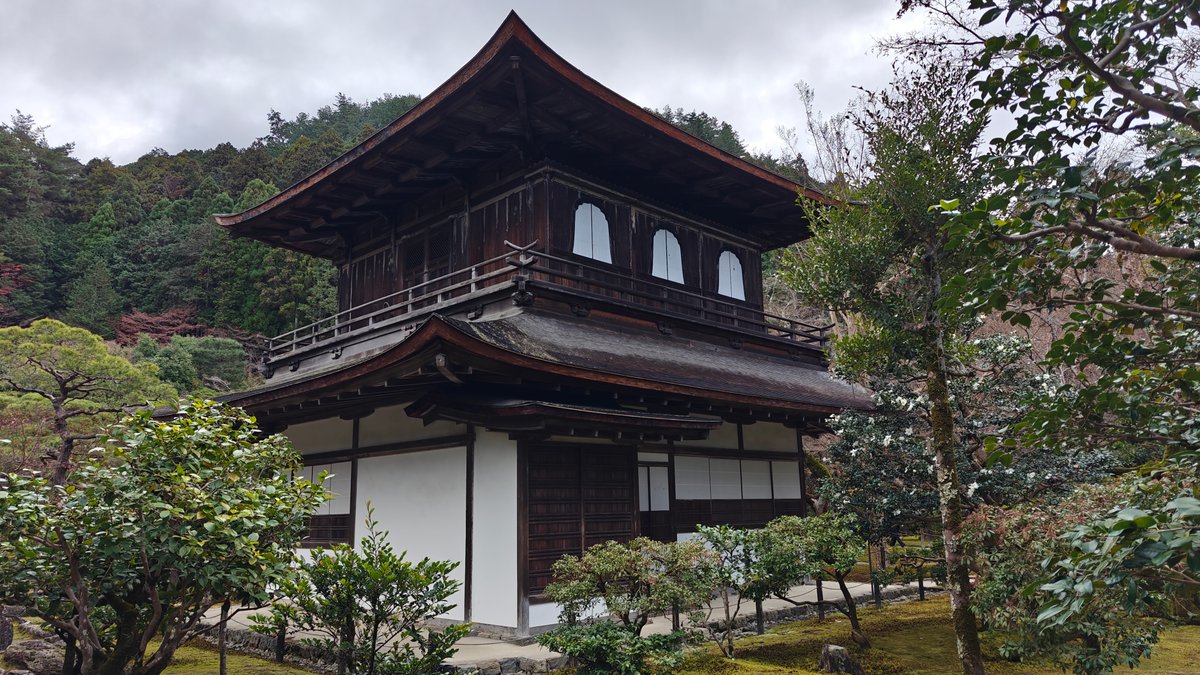
Then we walked back out and up some stone steps into the hillside garden where the path wound its way past bamboo and trees until you reached another lookout point that overlooked the city. Up here I had a better understanding of how the entire layout worked; from here you can see all the way down to the roof of the Silver Pavilion. It’s less crowded up on the path too, as not many people make the effort to go up, so it was quiet there.
It was a good half-hour or so trip up and down again. As we came back down, I got one last look at the pavilion from above before the path circled back to the entrance. All told, my visit lasted a little over an hour, and it felt much more like walking through a natural garden rather than being guided through some structured viewing experience as in Kinkaku-ji.
Which should you go see? If you’re short on time and can only choose one, my vote would be for Kinkaku-ji (it’s more photogenic and dramatic), and most visitors will be happy with that choice. However, I found myself pleasantly surprised by how much I liked Ginkaku-ji, it was less crowded, and I really loved the understated mood and walking around the hillside.
If you can manage both, though, I’d say go for it: they complement each other in a way that made me appreciate the purpose of each. Have you visited either of these temples? If you plan to visit sometime, are you struggling to choose between them?