
My visit to the Umeda Sky Building and its Kuchu Teien Observatory was not only memorable but well worth the time and money. I managed to visit during the busy Christmas season and while it was crowded, there were also plenty of amazing sights that seriously made my jaw drop. If you enjoyed my visit to Kyoto Tower then make sure to scroll down to see the pics I snapped of this iconic Osaka landmark as well as to read my thoughts pertaining to this experience.
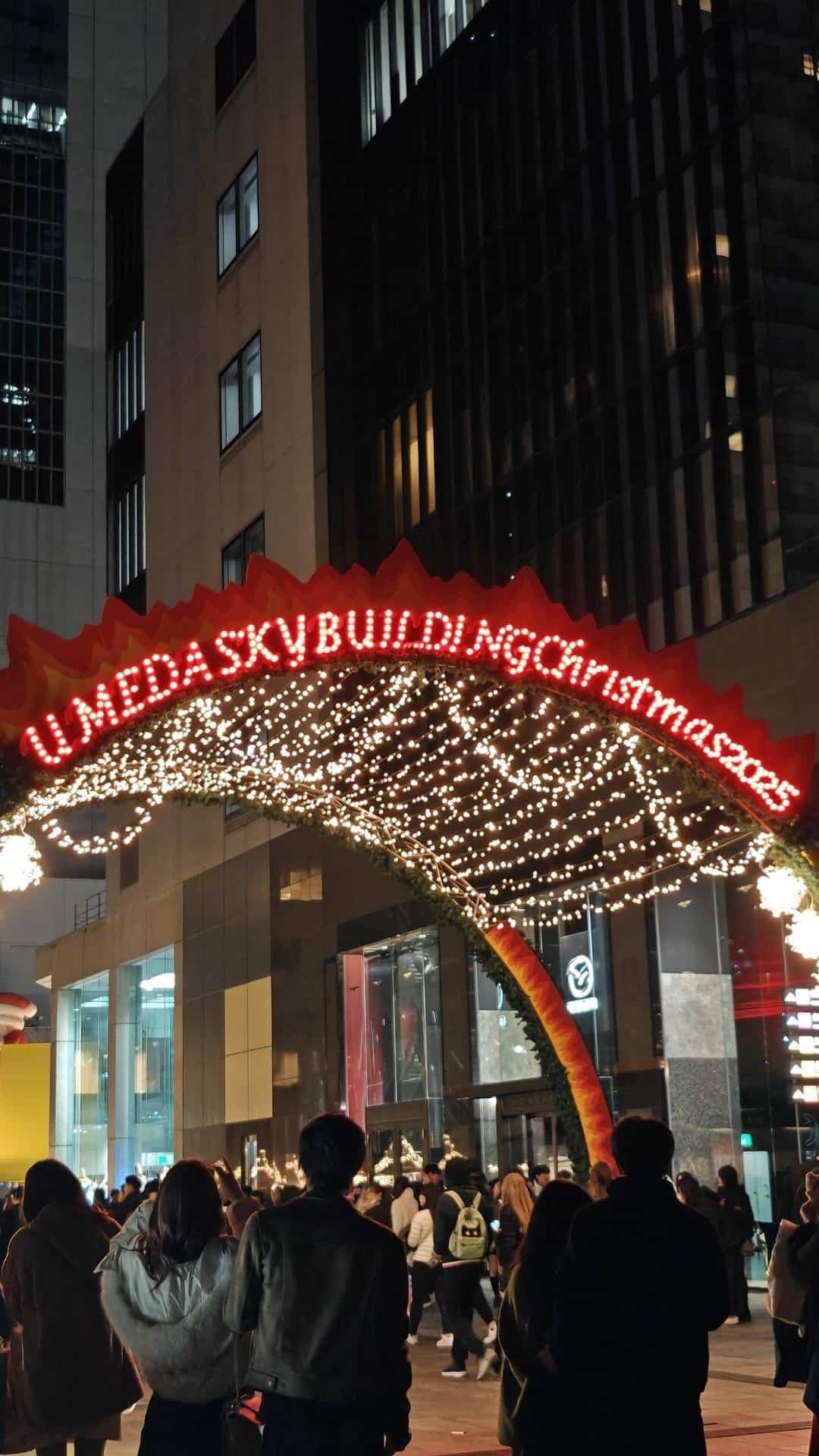
So getting to the Umeda Sky Building is going to be relatively easy. It’s walking distance from three of the major stations (JR Osaka, Osaka Metro, and Hankyu Osaka-umeda Station) in the area. Of course, you can always take taxis to get there but your best choice is really the stations considering how expensive a cab ride can get (especially if you’re by yourself).
Should You Visit the Umeda Sky Building and Kuchu Teien Observatory?
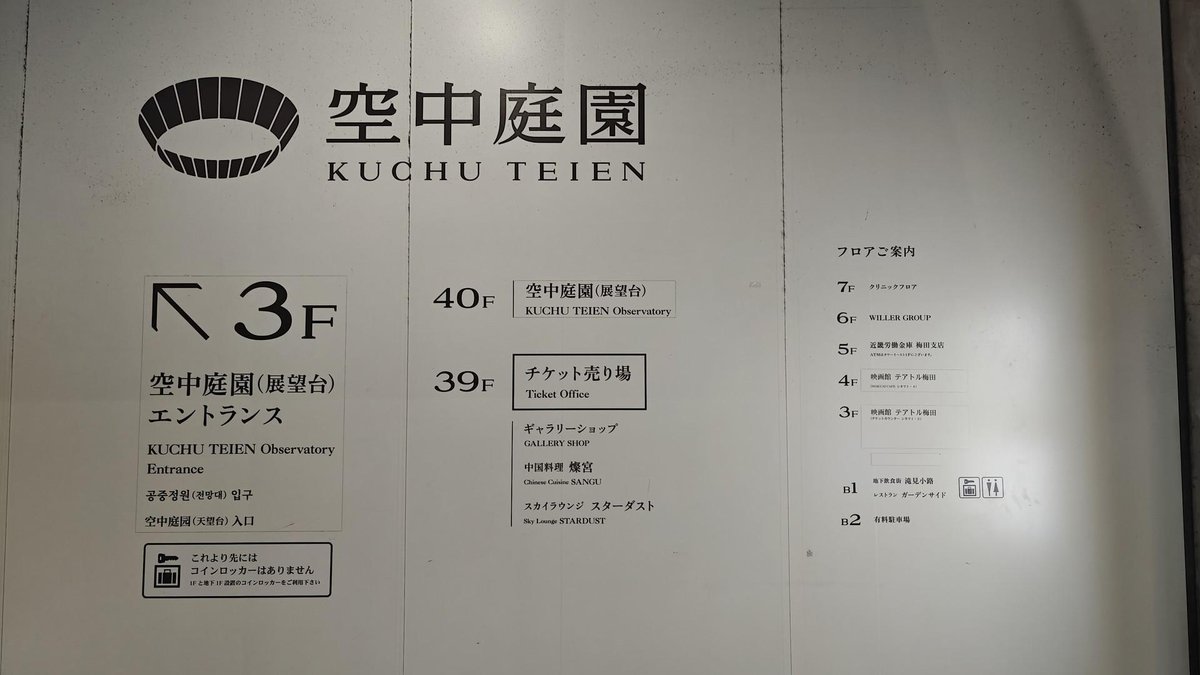
So the main reason why you’re visiting the Umeda Sky Building is the Kuchu Teien Observatory. Make no mistake, there are a number of other activities that you can do here but the observatory is the building’s main attraction. Here you can see a sign pointing to how you can get to the observatory.
Basically, you’ll need to get to the elevator and ascend to the 35th floor. You then will need to take the building’s famous sky escalators (officially called Midair Escalators) until you get to the 39th floor where the observatory’s ticketing booths are.
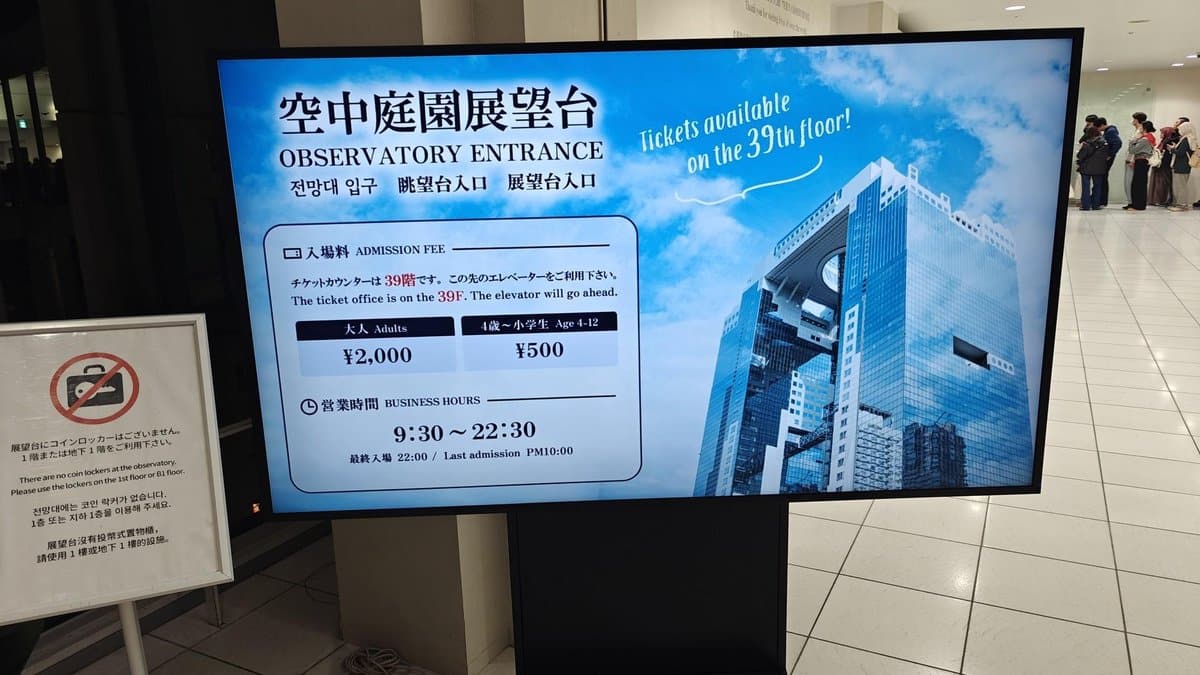
This is another sign showing the building as well as additional details for the Observatory Entrance on the 39th floor. As you can see, the price of admission is at 2000JPY. Now compared to a shrine or temple visit, this is honestly not as cheap.
As you’ll see later on in this writeup though, it is still going to be more than worth it.
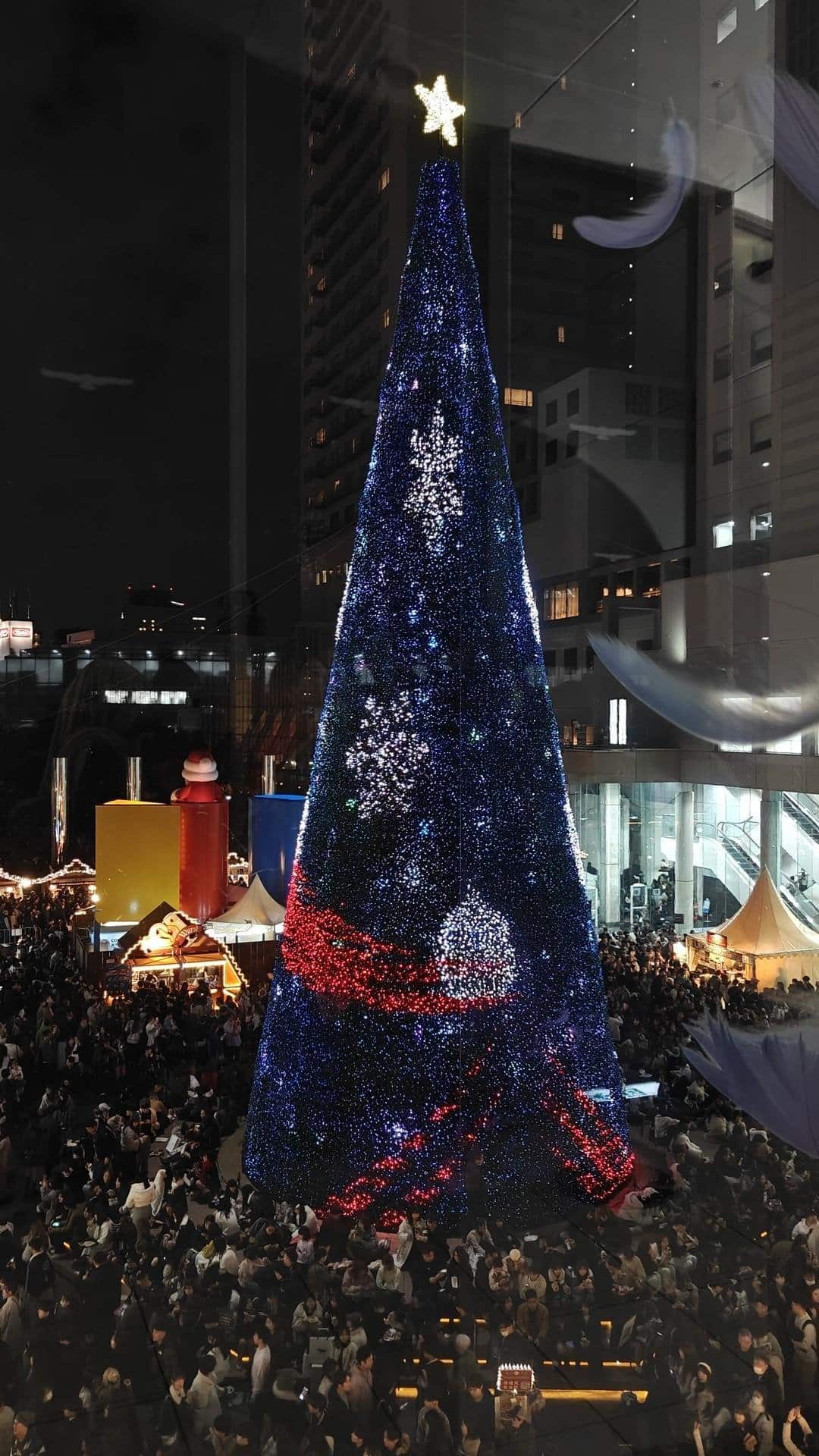
Now I said earlier that I visited Umeda Sky Building during Christmas time and in this image you can see just how busy Wonder Square is. This area is where the Wonder Christmas Market is usually held with the Christmas tree serving as the centerpiece. It’s not as noticeable due to the crowd but you can sort of see some of the stalls in the background.
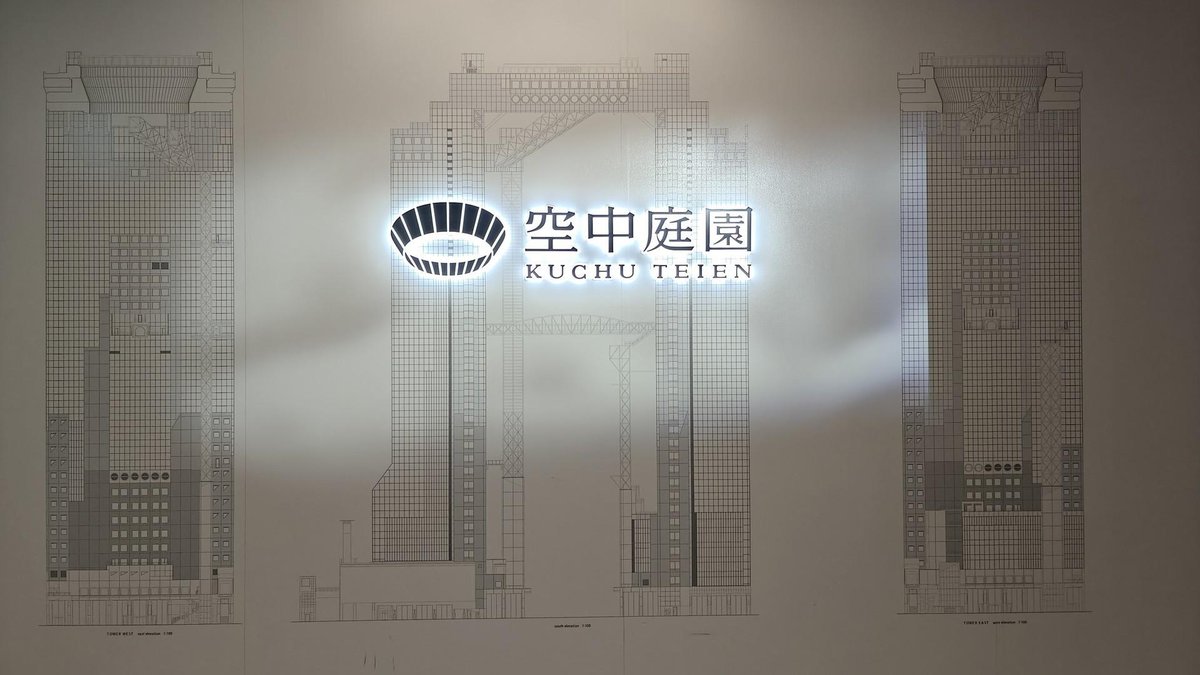
So I forgot to mention this, but Umeda Sky Building is composed of two 40-story towers connected at their uppermost levels by the Kuchu Teien Observatory. The only way to access the Observatory though (at least for visitors) is via the East Tower. This sign features the facade of the two towers and how they’re interconnected.Anyway, you can opt to get your tickets either through vending machines or at the main counter on the 39th floor.
Once you’ve gotten your tickets, you then will need to hop on one of the escalators to take you up to the 40th floor.
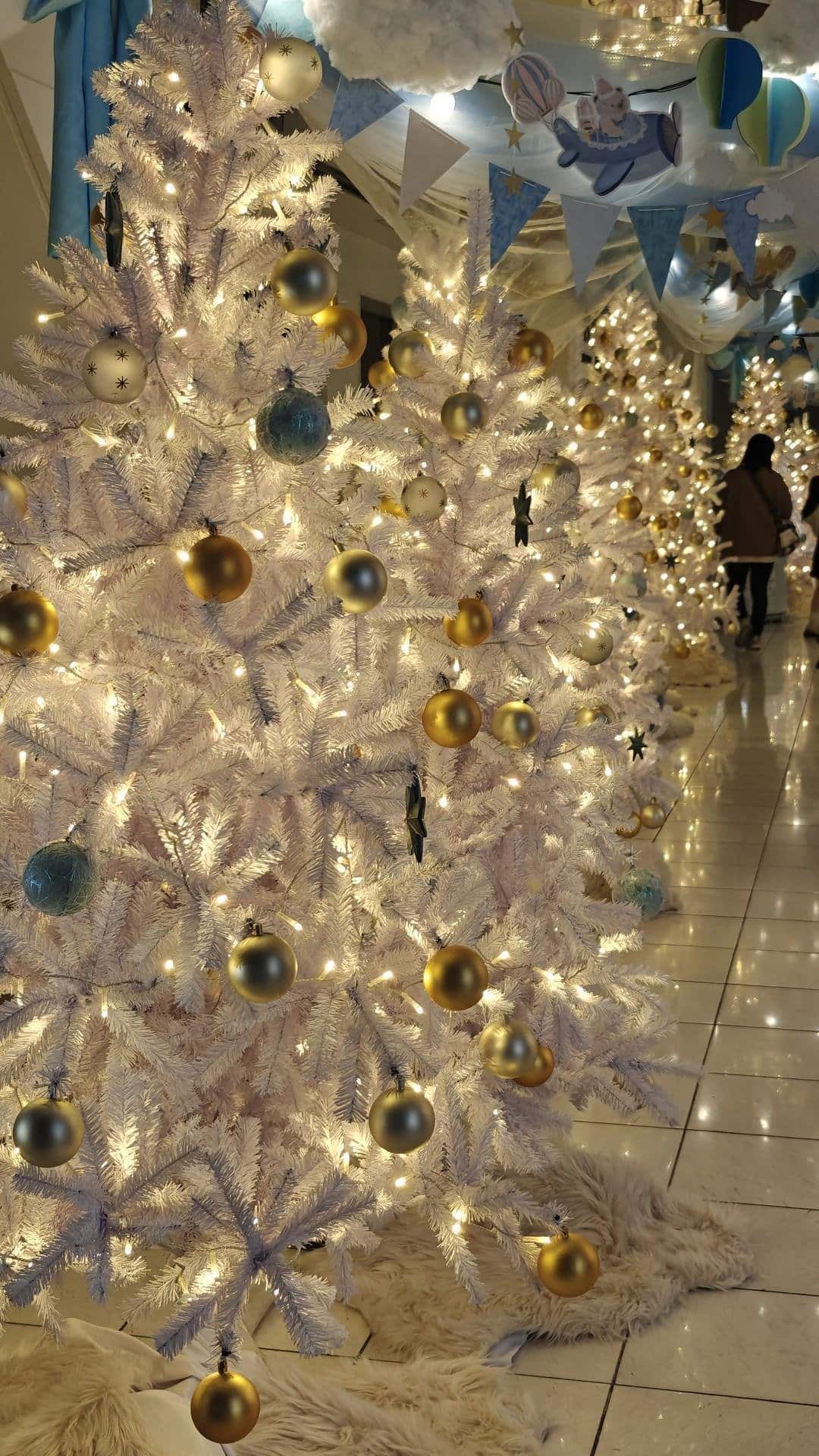
After getting off the escalator, I then had to walk through a hallway that featured a dozen or so of these Christmas trees. To describe the atmosphere here as “festive” is definitely an understatement. The buildings as well as its Wonder Square plaza (which you caught a glimpse of earlier) are both known for being the best destinations here in Osaka to celebrate Christmas.
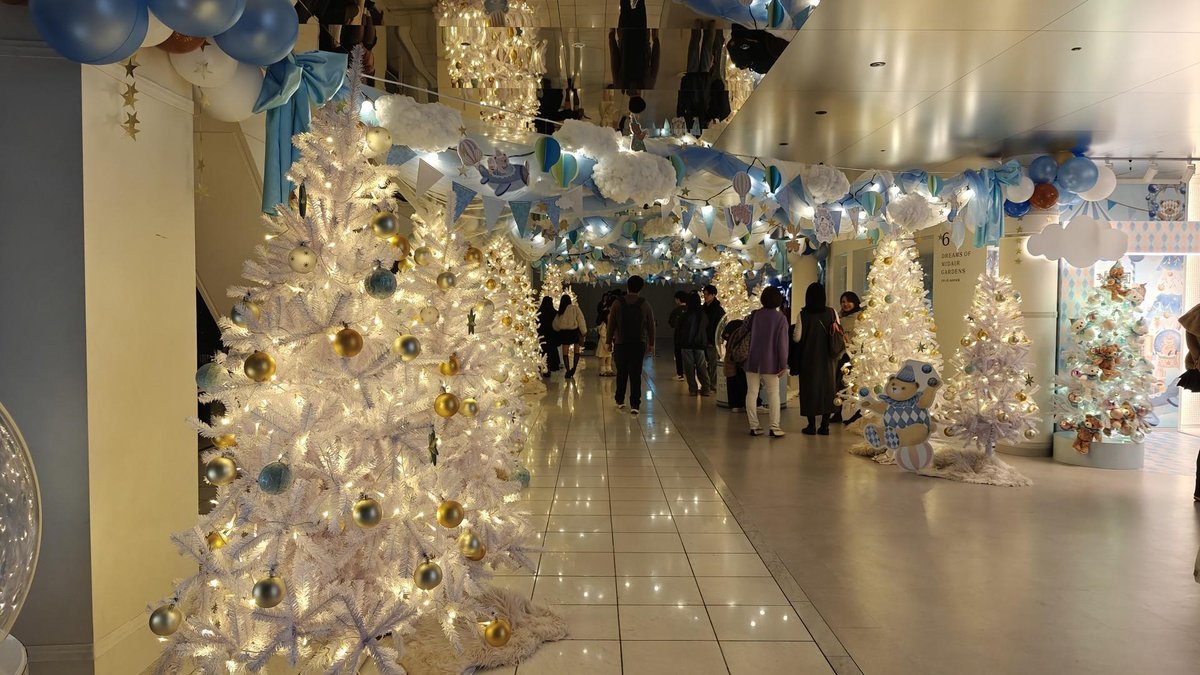
Here’s a wide angle view of the hallway and the Christmas trees that are seemingly in every corner of it. Now these trees are actually part of something called the “White Forest”. Much like the Wonder Christmas Market, this has been a permanent fixture of the Umeda Sky Building’s Christmas festivities.
From what I’ve been told, these displays start from late November and stay up until Christmas day.
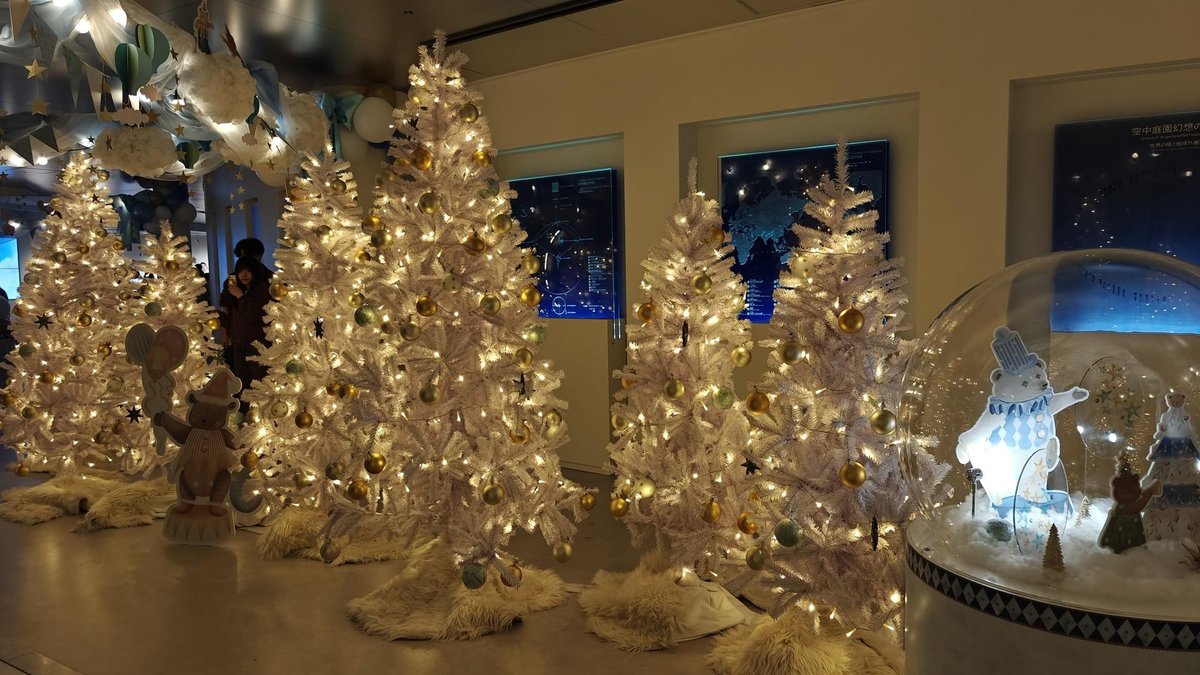
Aside from the Christmas trees, the hallway also features a number of small statues and even a snowglobe. On its walls are infographics about the observatory that I honestly wasn’t able to check out since I was a little excited at the thought of getting up the Sky Walk. Now I did say the Umeda Sky Building and Kuchu Teien Observatory is known for its Christmas activities and festivities so are they still worth visiting outside of the yuletide season?
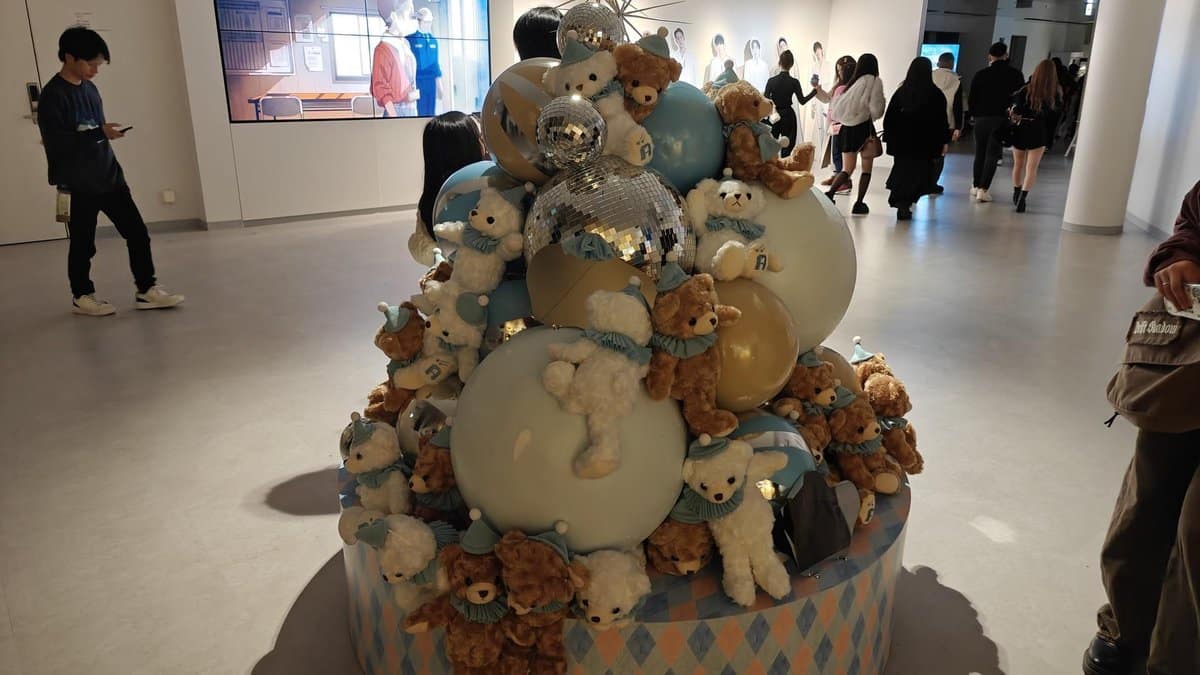
The short answer to the question from the previous paragraph is a simple yes. While installations like the one in the image above are nice to see, they really are just icing on the cake that is the Kuchu Teien Observatory. Even outside of the yuletide season, I think the observatory is well worth visiting just because of how amazing the views on its deck are.
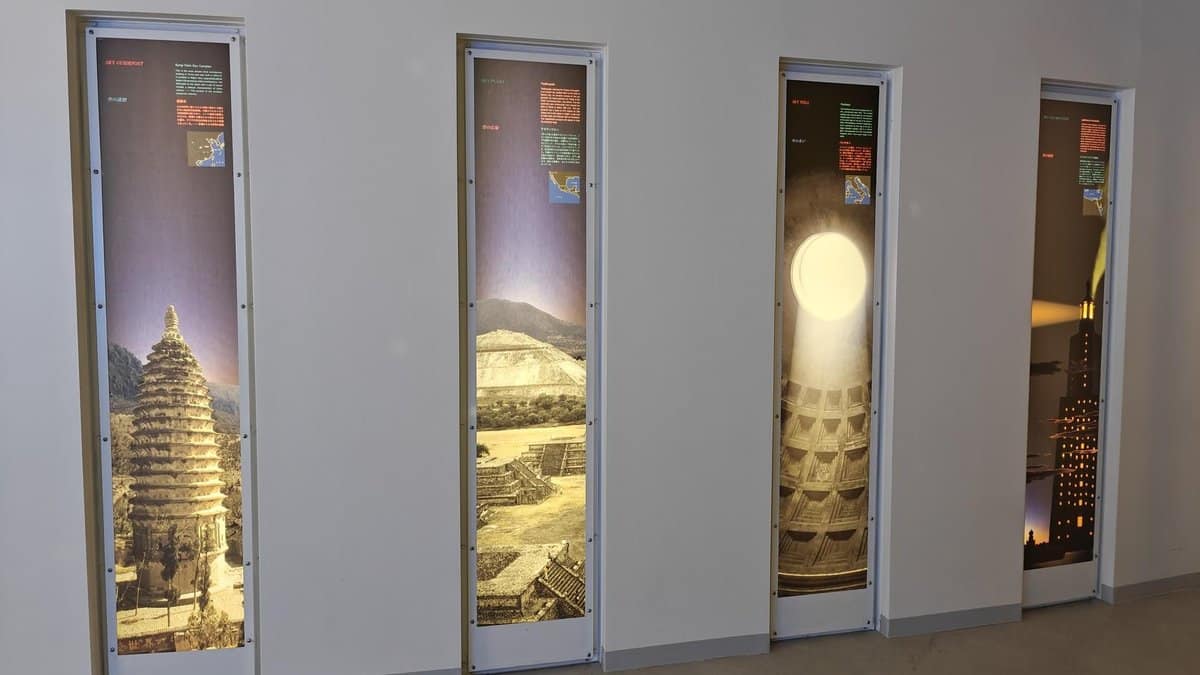
Speaking of observatories, here are posters showcasing some from antiquity (and one that’s more recent). Much like the infographics from earlier though, I neglected to read through these. That said, I do recognize some of them.
The leftmost is called the Songyue Pagoda which isn’t an observatory per se but it is quite close to one (the Dengfeng Observatory). To its right is a poster featuring the Pyramid of the Sun in Teotihuacan which is an ancient observatory.
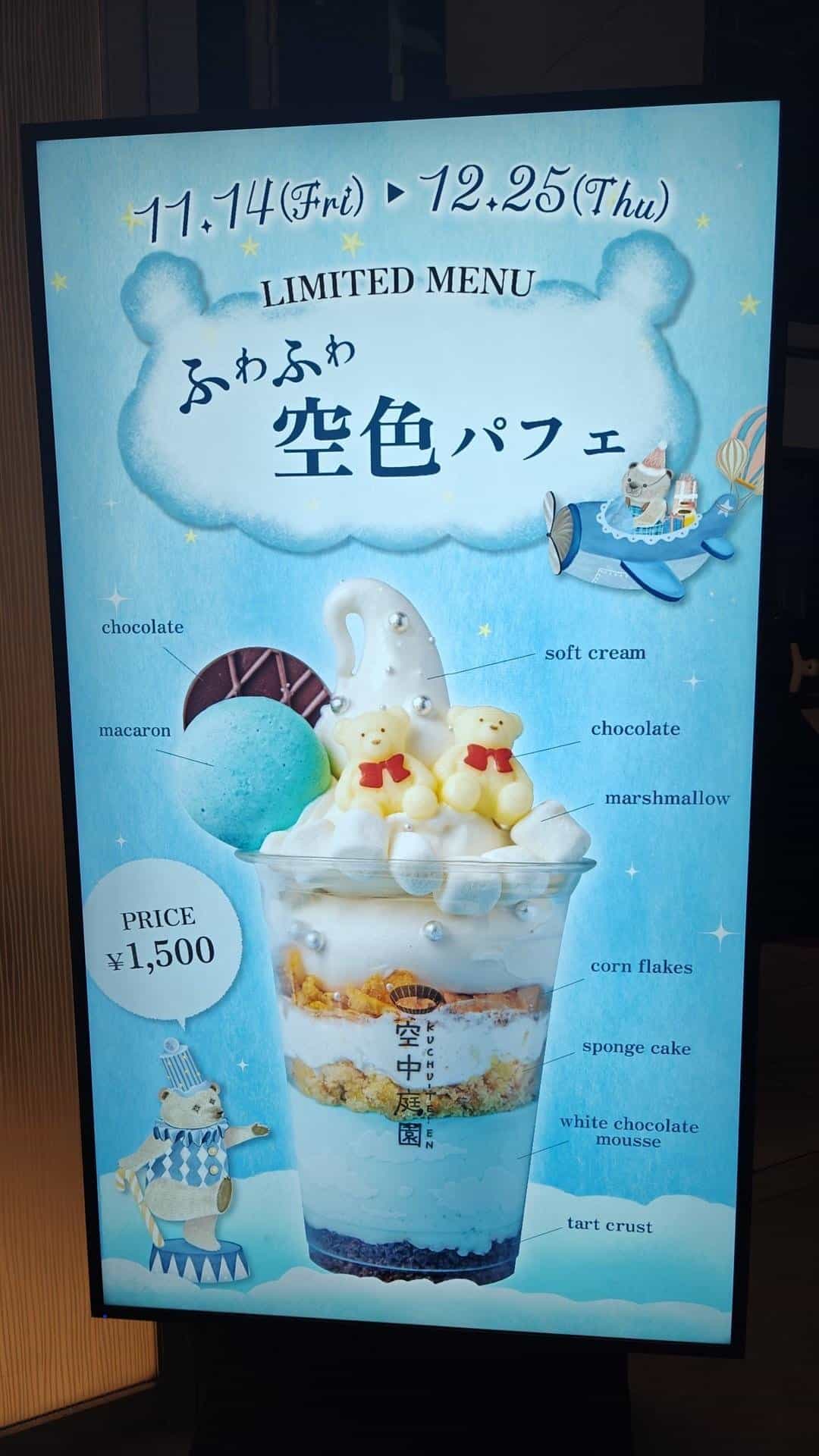
As I was headed to the Sky Walk, I came across a cafe and bar called Cafe Sky 40. This was still at the 40th floor past the hallway with the White Forest Christmas tree installations that you saw earlier. Like a lot of Japanese establishments, it has “gentei” or limited items that you can only enjoy during certain seasons or events.
When I was there, it was this Fluffy Sky-Blue Parfait that costs a fairly reasonable 1500JPY per serving.
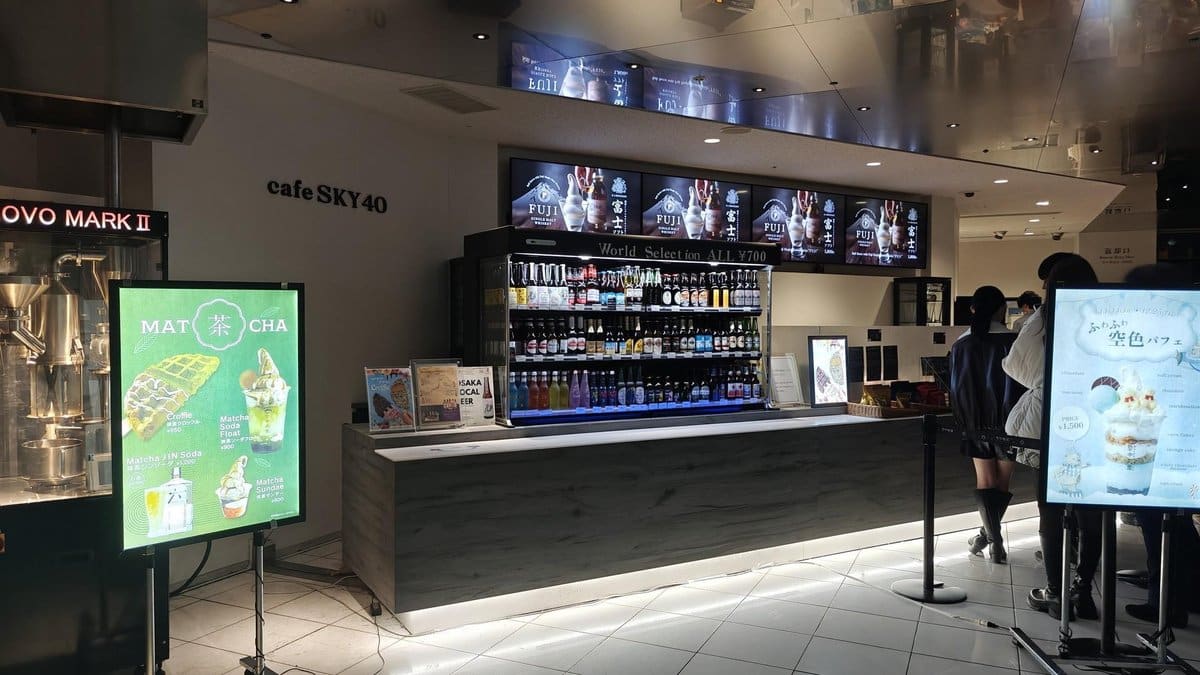
Other than the parfait, there are other items here that you might also want to check out. There’s a Matcha Soda Float that you can pair with a Matcha Croffle or you could also just get a local beer. Now if you are looking for a proper meal then you’ll have to head back to the 39th floor.
There you can check out Sky Lounge Stardust or Chinese Restaurant Sangu.
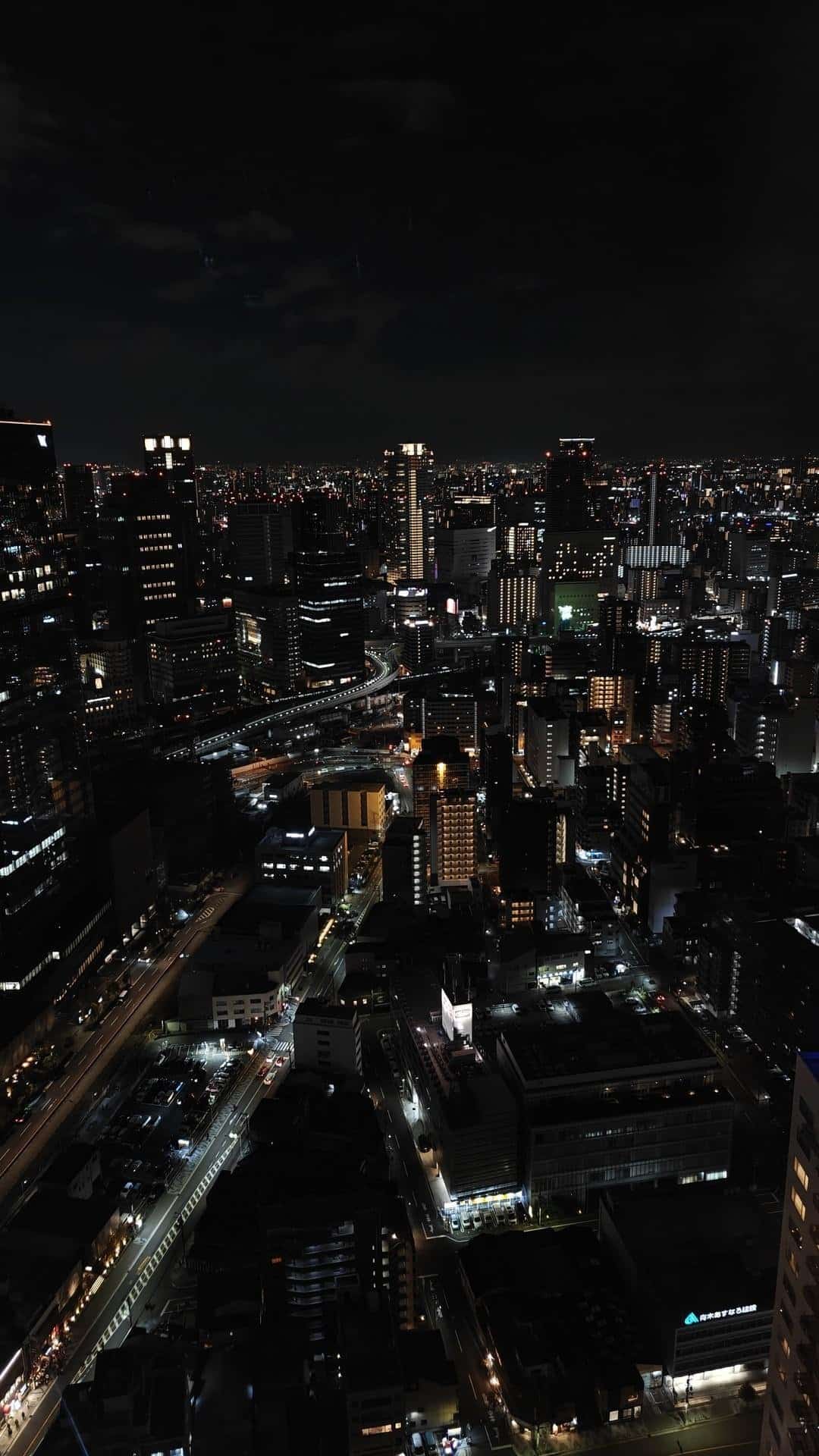
Eventually, I did find myself at one of the glass windows and boy was it a trip to be standing here while soaking in the view of Osaka’s skyline at night. Now this isn’t the first tall building that I’ve been on top of for this trip. I’d already gotten high up Kyoto Tower and that was a memorable experience to say the least.
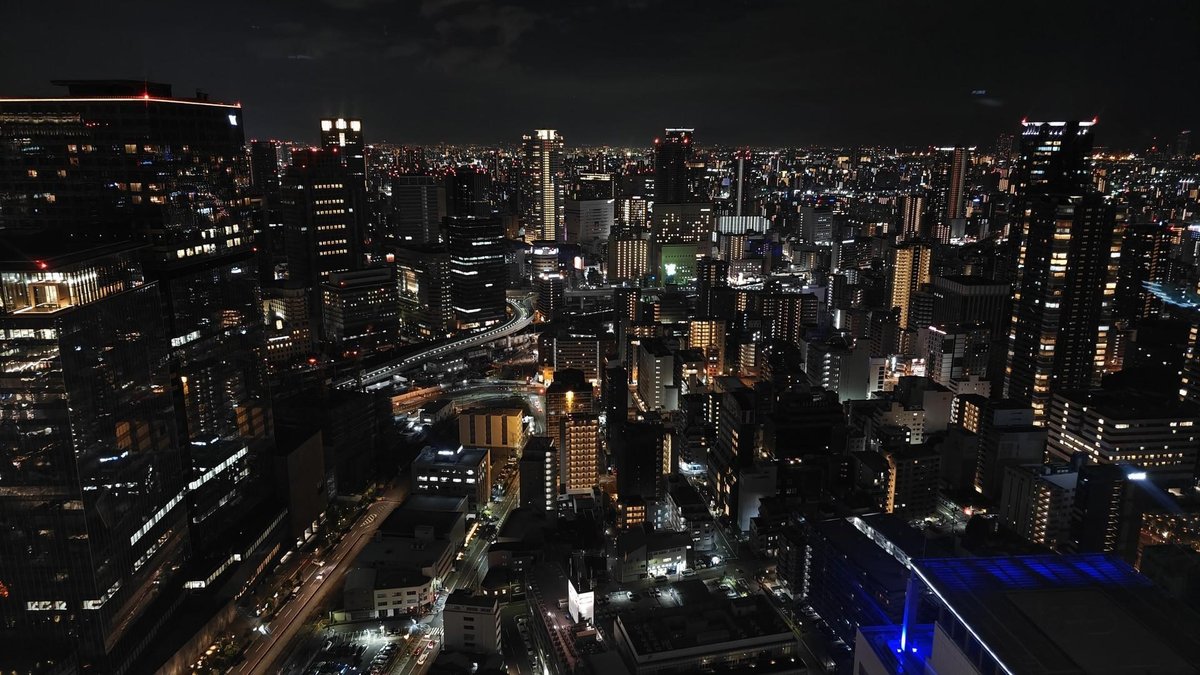
The major difference between Kyoto Tower’s Observation Deck and Kuchu Teien Observatory’s 40th floor is their respective city’s skyline. While it is considered a modern city, Kyoto doesn’t really have that many high rise buildings due to how strict its government is with its building codes. On the other hand, Osaka has fully embraced modernity and it’s very evident when you’re here at the Sky Walk.
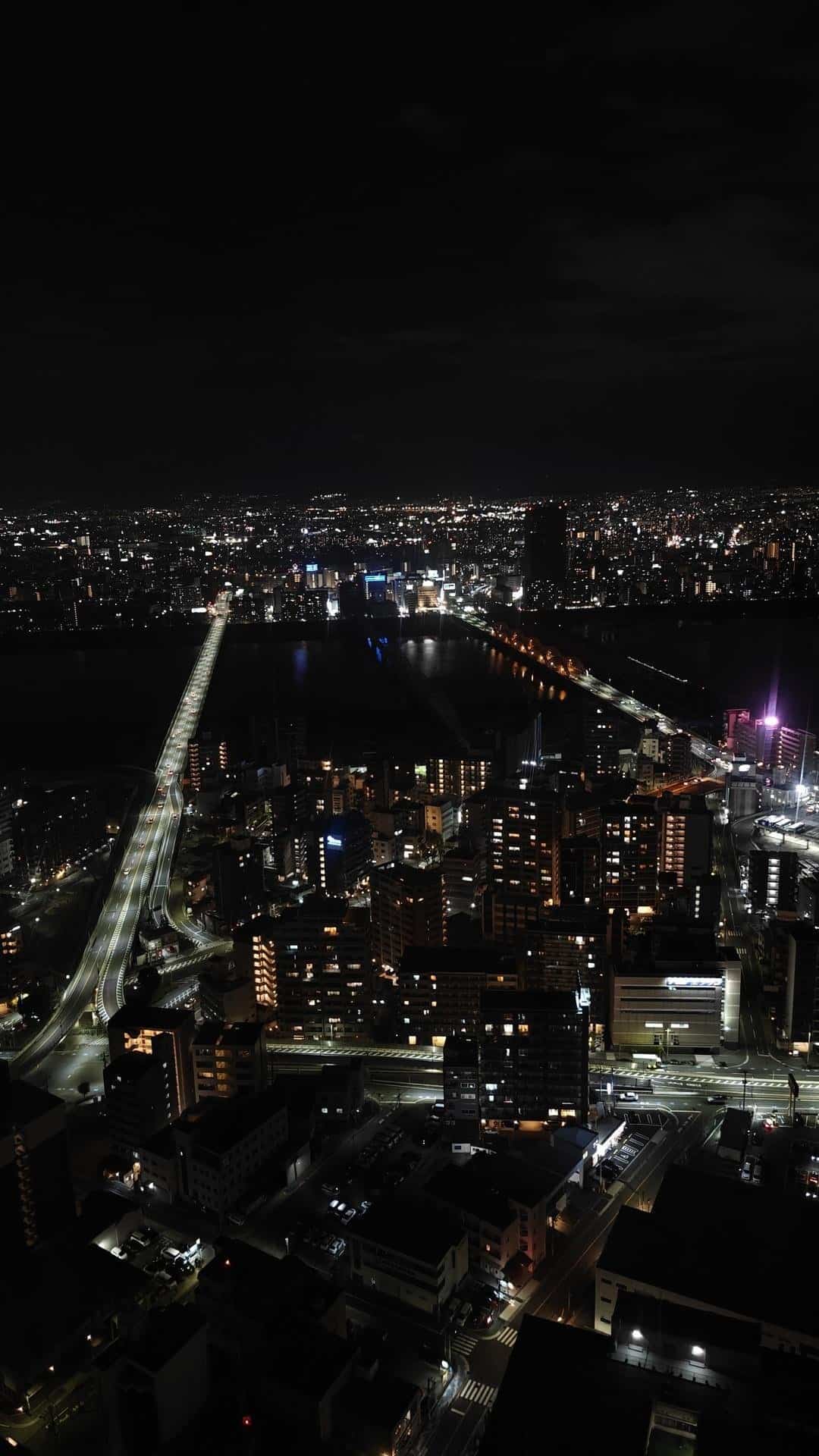
It’s kind of crazy that the view here is already this good and I’ve yet to even get up the Sky Walk! Anyway, here you can see the Juso and Shin Juso (you might have to squint to see this) Bridges as well as the Hanshin Expressway Route 11 Ikeda route which are all northwest of the Umeda Sky Building. The bridges aren’t really considered historically significant but they are quite important landmarks that connect Osaka’s Kita (where the building is located) and Yodogawa wards.
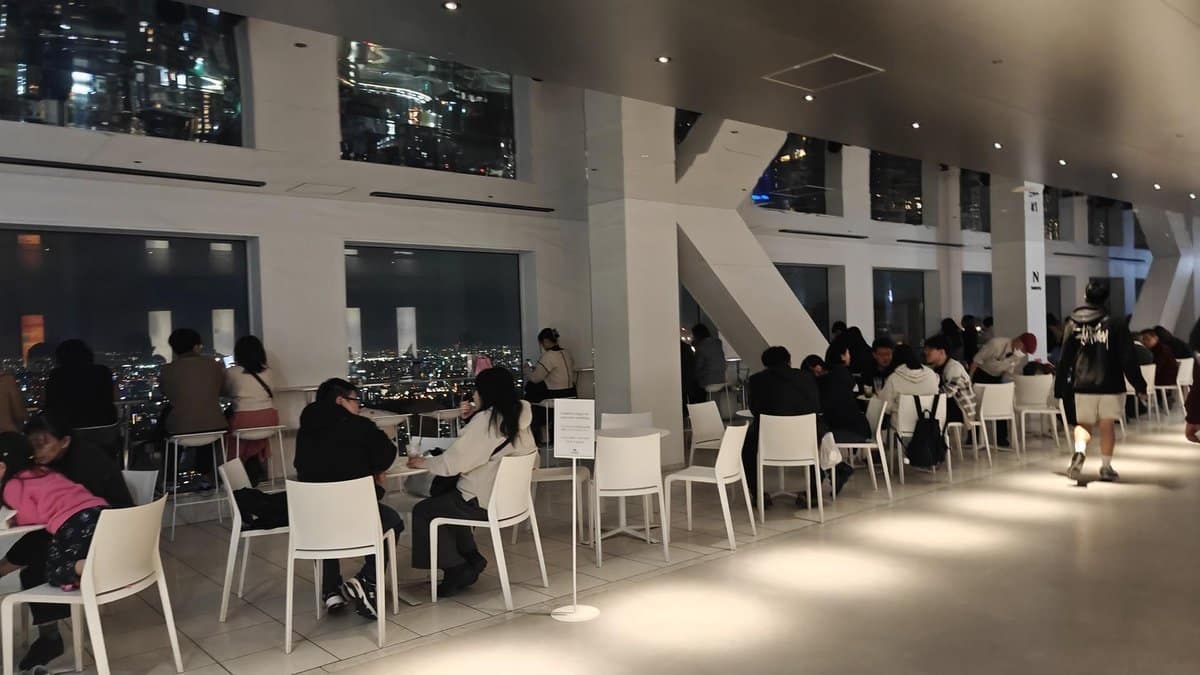
There are plenty of tables here for you to sit on once you’re done paying, you can then bring your orders to this dining area. As you can see, you’re guaranteed to have a view of Osaka’s skyline from here. I understand that not everyone might like the Sky Walk so this area is actually a great way to still see stunning views while not having to go out to the observatory’s open-air roof area.
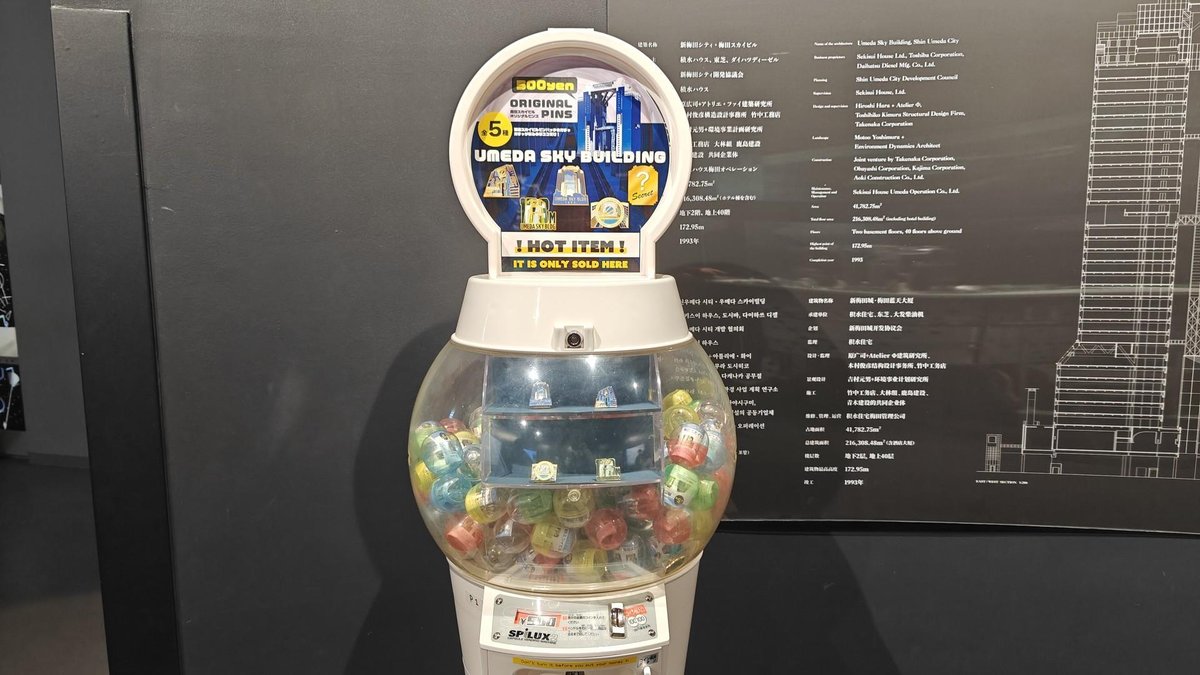
Like Kyoto Tower, Umeda Sky Building also has a gachapon vending machine for pins. Drawing a gacha capsule is worth 500JPY but you’re not guaranteed a unique pin for every draw. With about 5 pins to collect, it can get a little expensive especially if you’re not that lucky at the draws.
I’m not sure if it’s possible to seek help from staff if you’ve already spent a lot and still haven’t gotten the pin you want. I remember some arcades do this for their machines but it didn’t seem like it would be possible here.
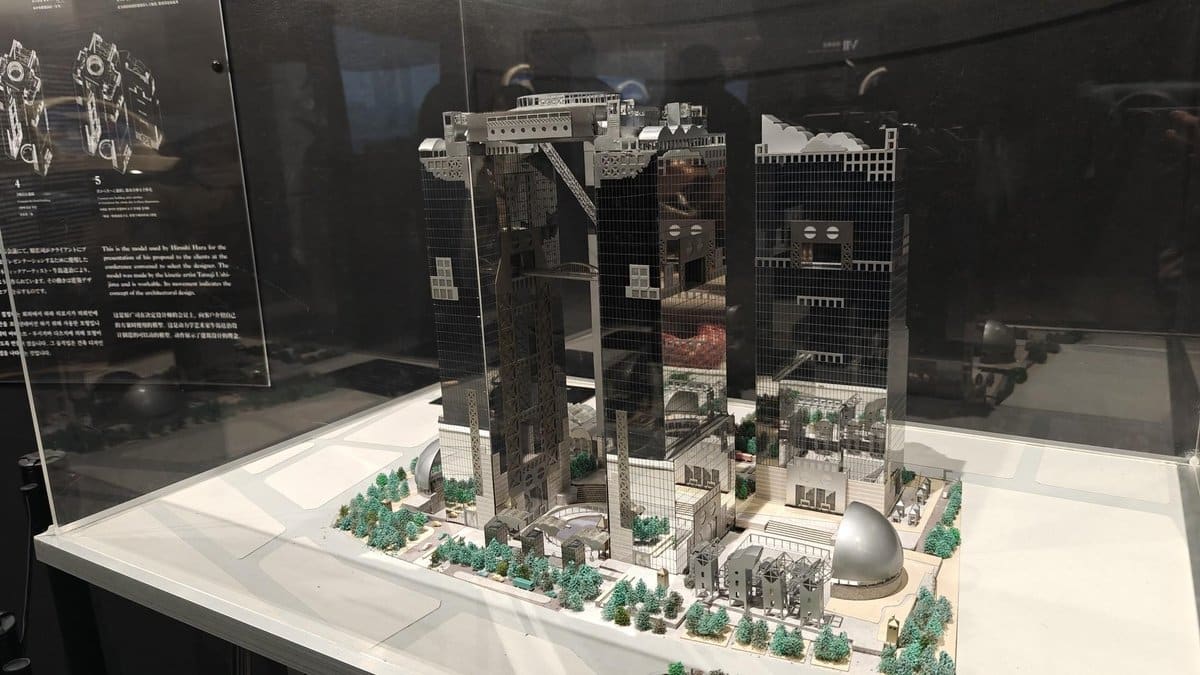
Here you can see a diorama of the Shin Umeda City Complex which features the Umeda Sky Building. Initially I thought the building beside this was the Westin Osaka but this guess ended up being very wrong. Anyway, if you’ve been following my writeups then you’d know that I really enjoy dioramas like these so it’s no surprise that I took a pic of this one.
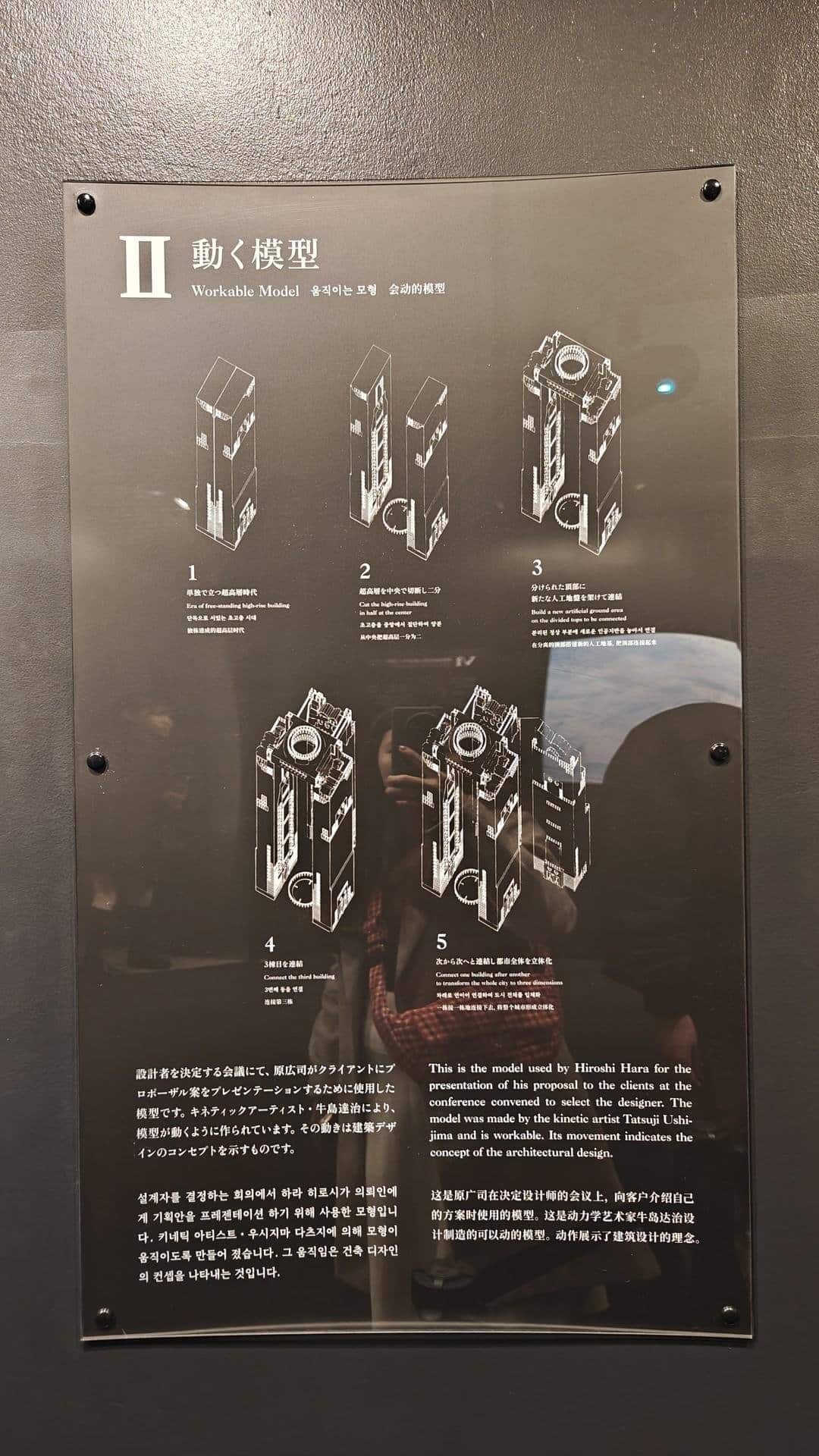
Just beside the diorama is an infographic talking about its history. Apparently, this very same diorama was what the designer of the building (a man named Hiroshi Hara) used for his proposal presentation to clients. What’s really interesting about the diorama is that the model for the building is actually workable/movable.
It’s a shame though that visitors aren’t allowed to touch/play around with the model.
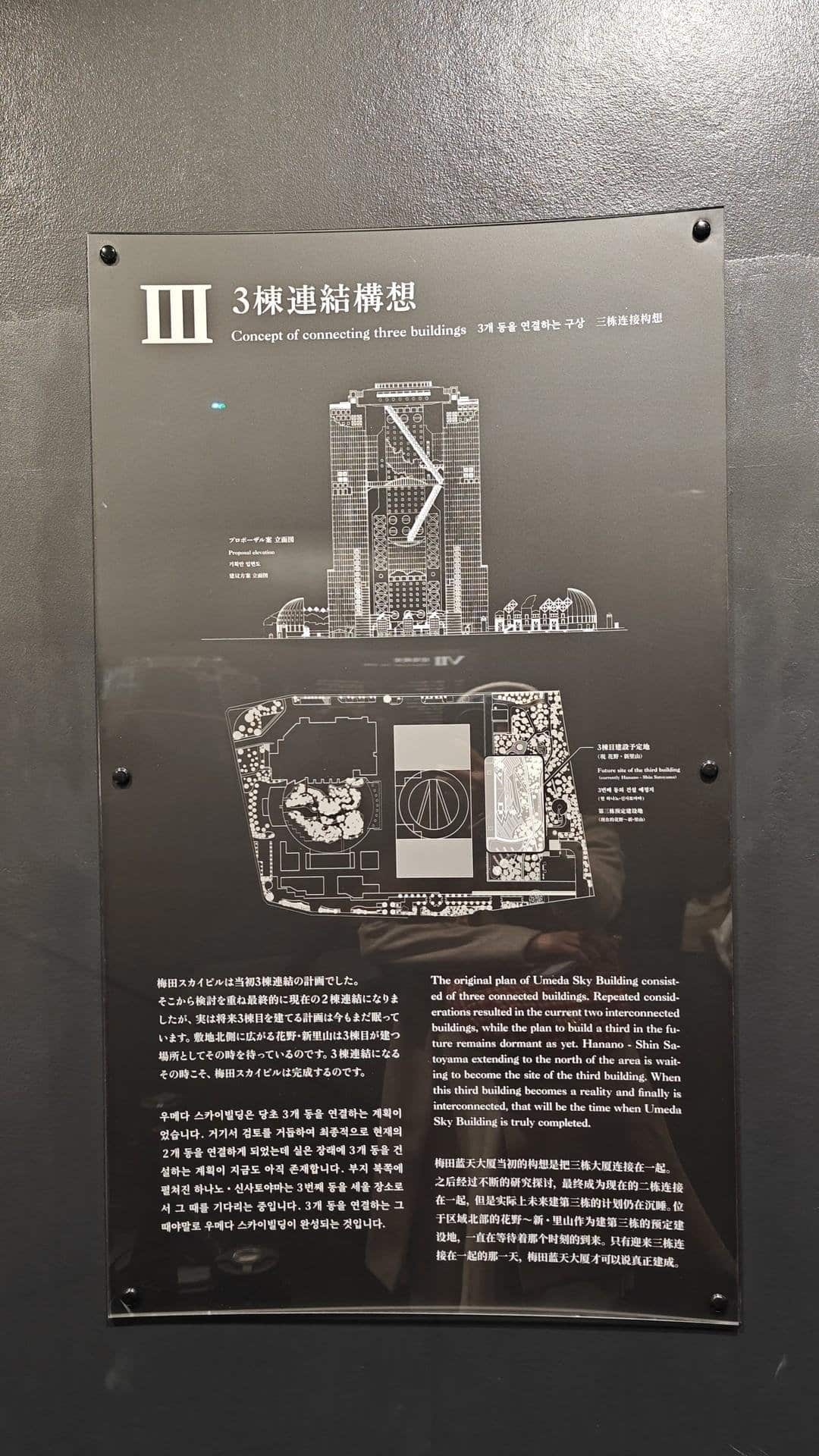
This is a plaque talking about how the Umeda Sky Building was supposed to feature three interconnected buildings. The third building would have supposedly been situated to the north of the current two that are standing. As such, the Umeda Sky Building that is around as of this writing is considered to be incomplete.
Unfortunately, it’s likely going to stay that way for a while considering the costs the construction of a third building would entail.
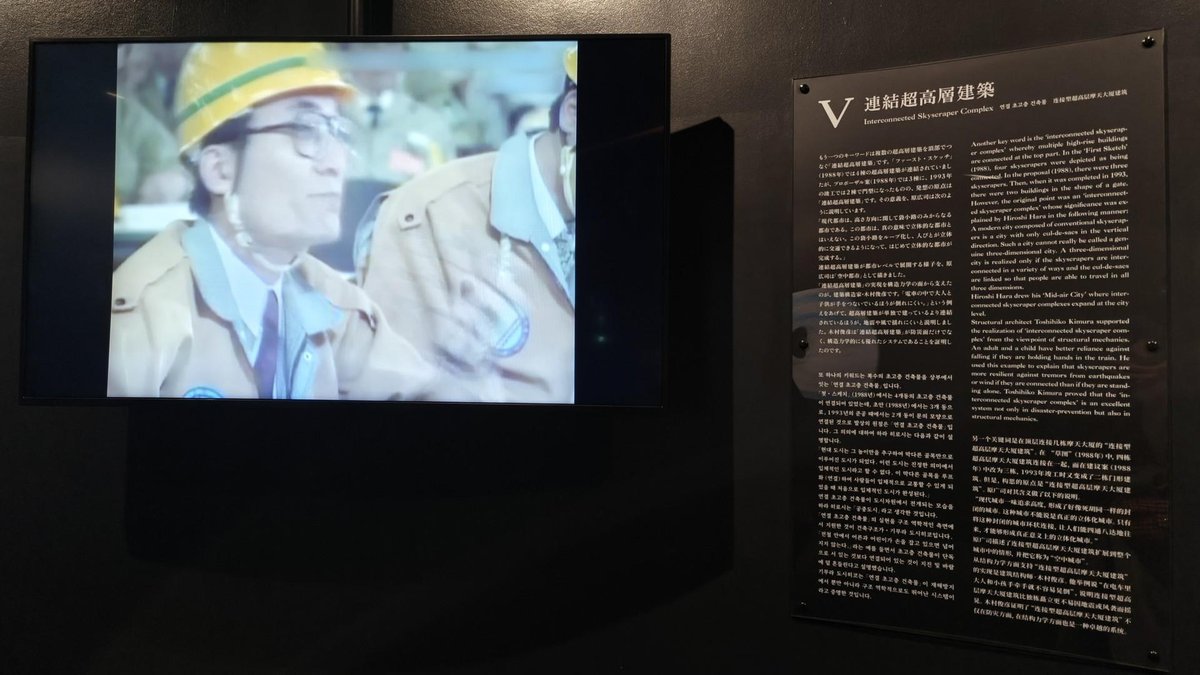
Reading this particular display, I kind of realized just how ambitious this project was. So according to this, the original plan for the Umeda Sky Building was that it was supposed to feature not just three but four buildings that were all interconnected. The plan was made at the height of Japan’s economic strength in the late 1980s when it seemingly led the world in innovations and technology.
Unfortunately, this strong economy fell in the early 1990s and so did the dreams of the “City of Air” that the Umeda Sky Building was supposed to be a centerpiece of.
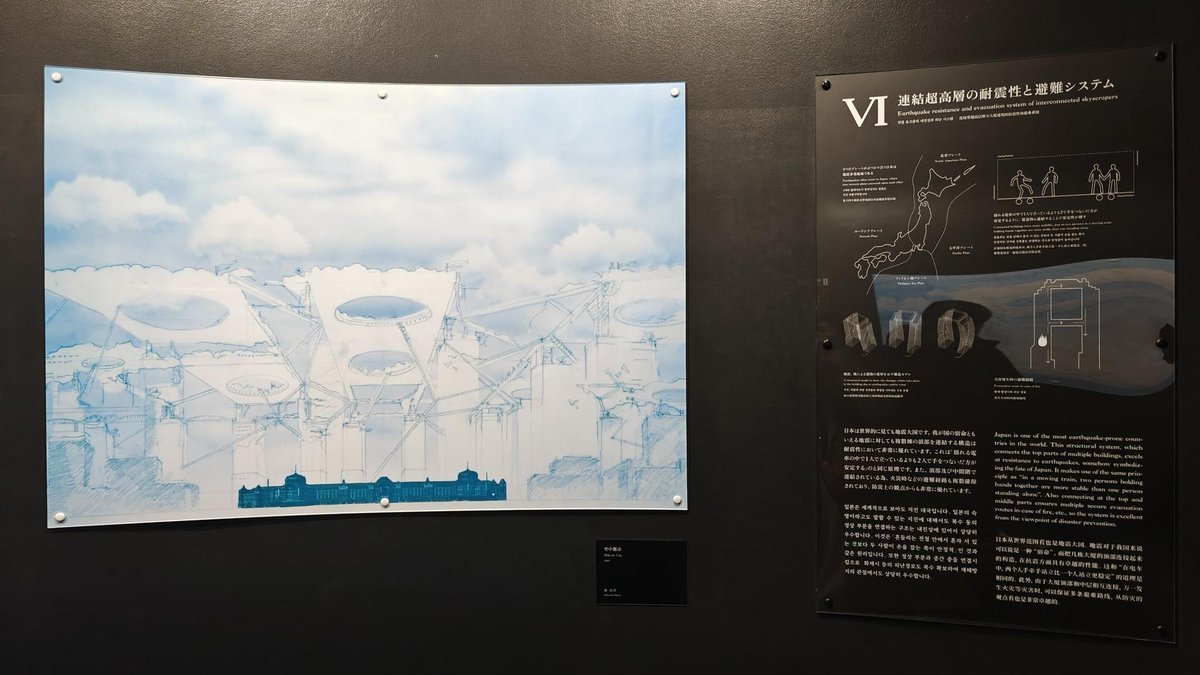
Here’s the concept sketch for the “City of Air”. It doesn’t seem to look like much from afar but it’s absolutely stunning up close. The details and the sketch reminded me a lot of the kind of high-tech worlds that you’d typically see in anime and video games.
Seeing this actually made me wonder how Umeda Sky Building would look had Japan’s recession not happened.
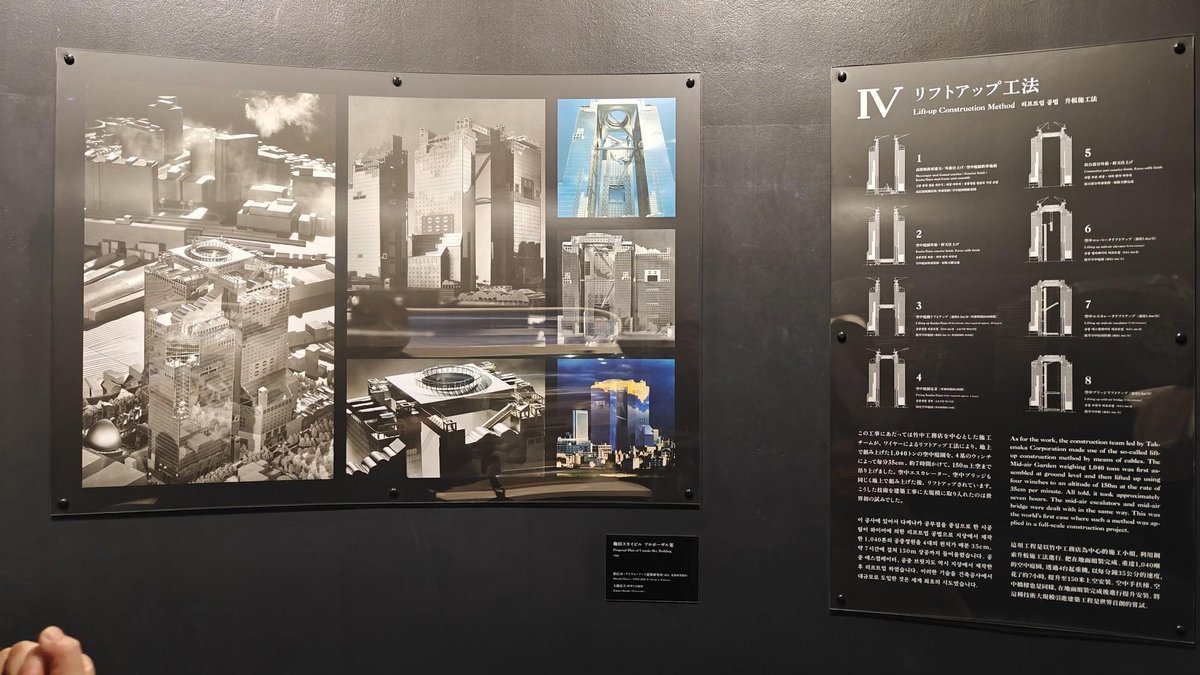
From concept, the next set of displays featured how the current buildings were constructed as well as what I think are their CAD mockups. So from what I understand, the buildings themselves were completed using known construction methods at that time. It was how the Kuchu Teien Observatory (the very same structure that this display was on) was completed though that was innovative.
Rather than continue construction at the top of the buildings, the observatory/bridge was first completed at ground level and then hoisted up using hydraulic elevators/jacks.
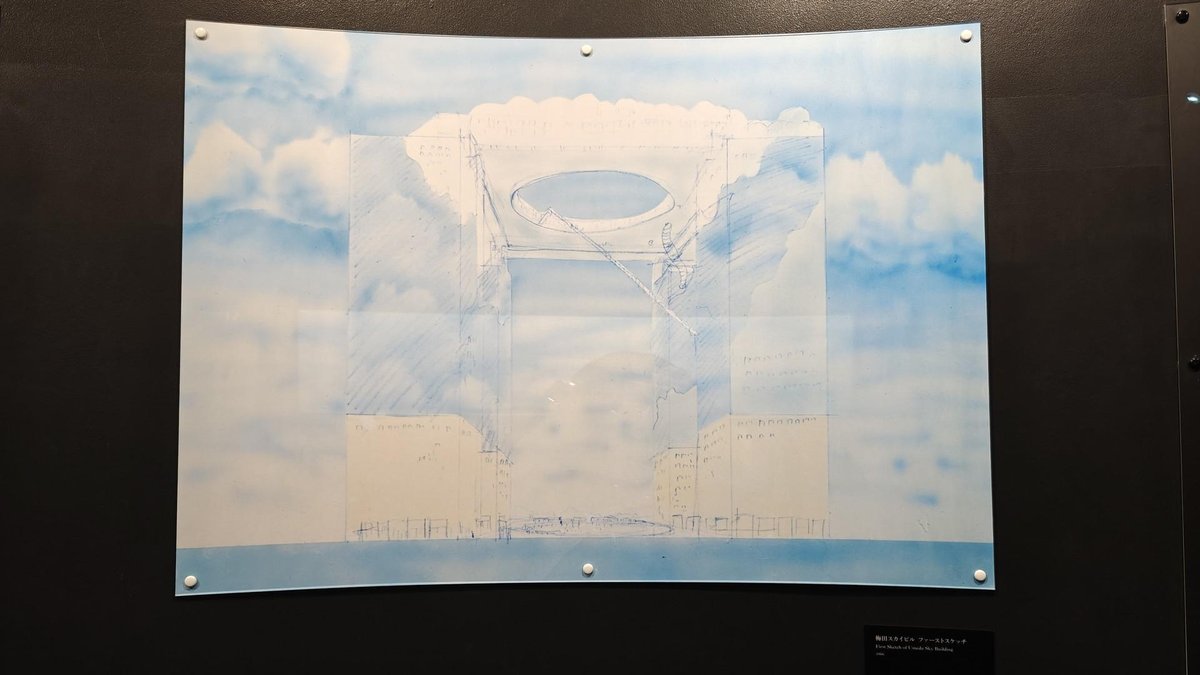
This is another sketch of the Umeda Sky Building that I particularly found cool. If you look closely, you can see the original four buildings design that I talked about earlier. I also noticed that the Sky Walk/roof deck in this sketch looks much larger, likely due to how it had to cover four buildings instead of just two.
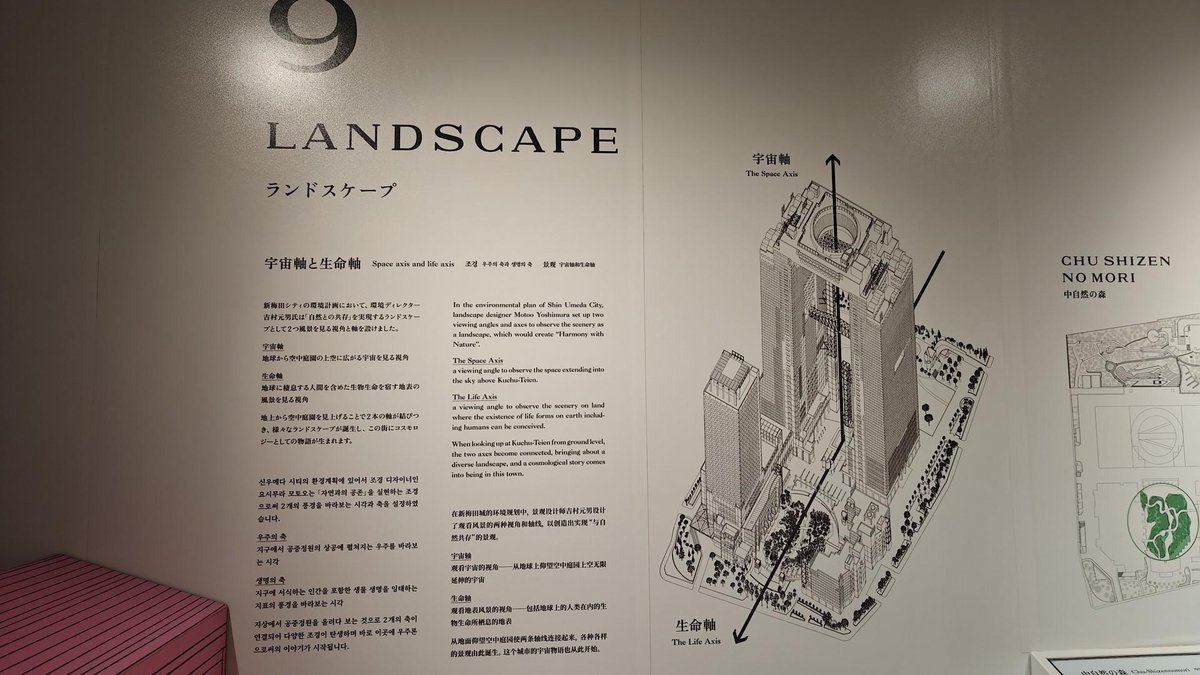
The Umeda Sky Building is actually just a part of a larger area called Shin Umeda City (which I also happened to mention earlier). This display talks about how this complex was planned around the Space Axis and Life Axis. According to this, the Space Axis was the observable area that extended from the Wonder Square up above the Kuchu Midair Crater of the Kuchu Teien Observatory.
On the other hand, the Life Axis are the views extending horizontally to the south and north of the Wonder Square area.
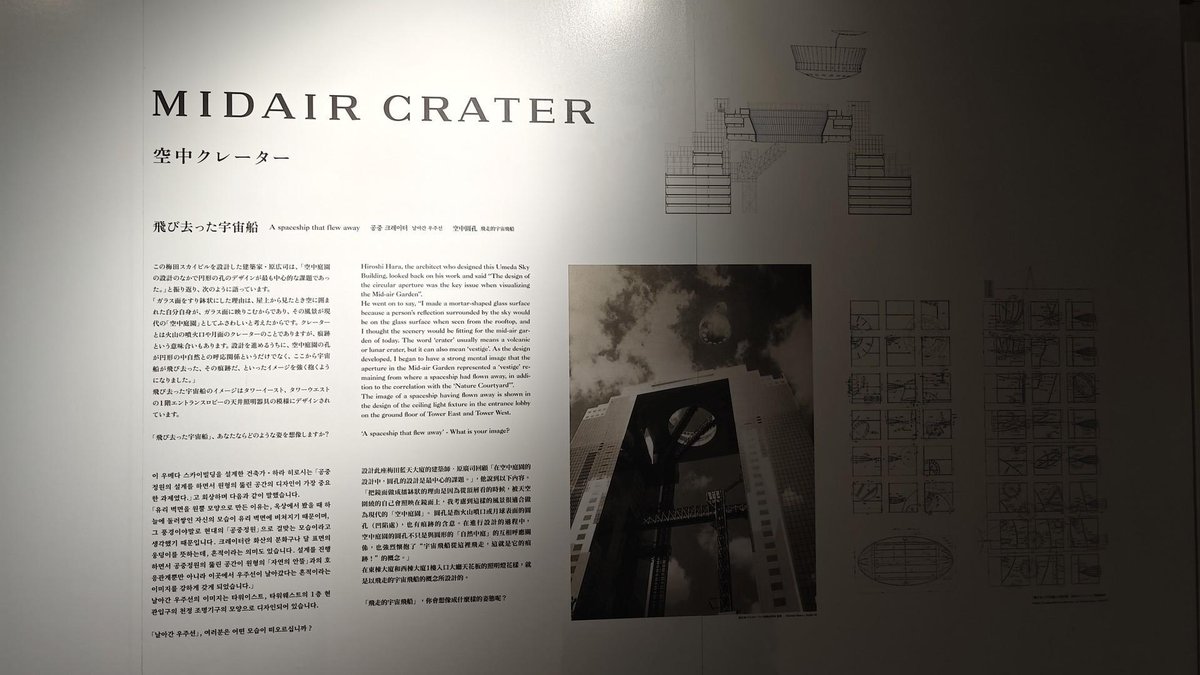
Speaking of the Midair Crater, here’s an explanation as to why Hiroshi Hara (the building’s designer) decided to incorporate it into the Kuchu Teien Observatory’s design. What I found really interesting with this choice was how Hara thought the aperture made it seem like it was what was left after a UFO or spacecraft lifted off (which was even included in the drawing/graphics shown in the image).
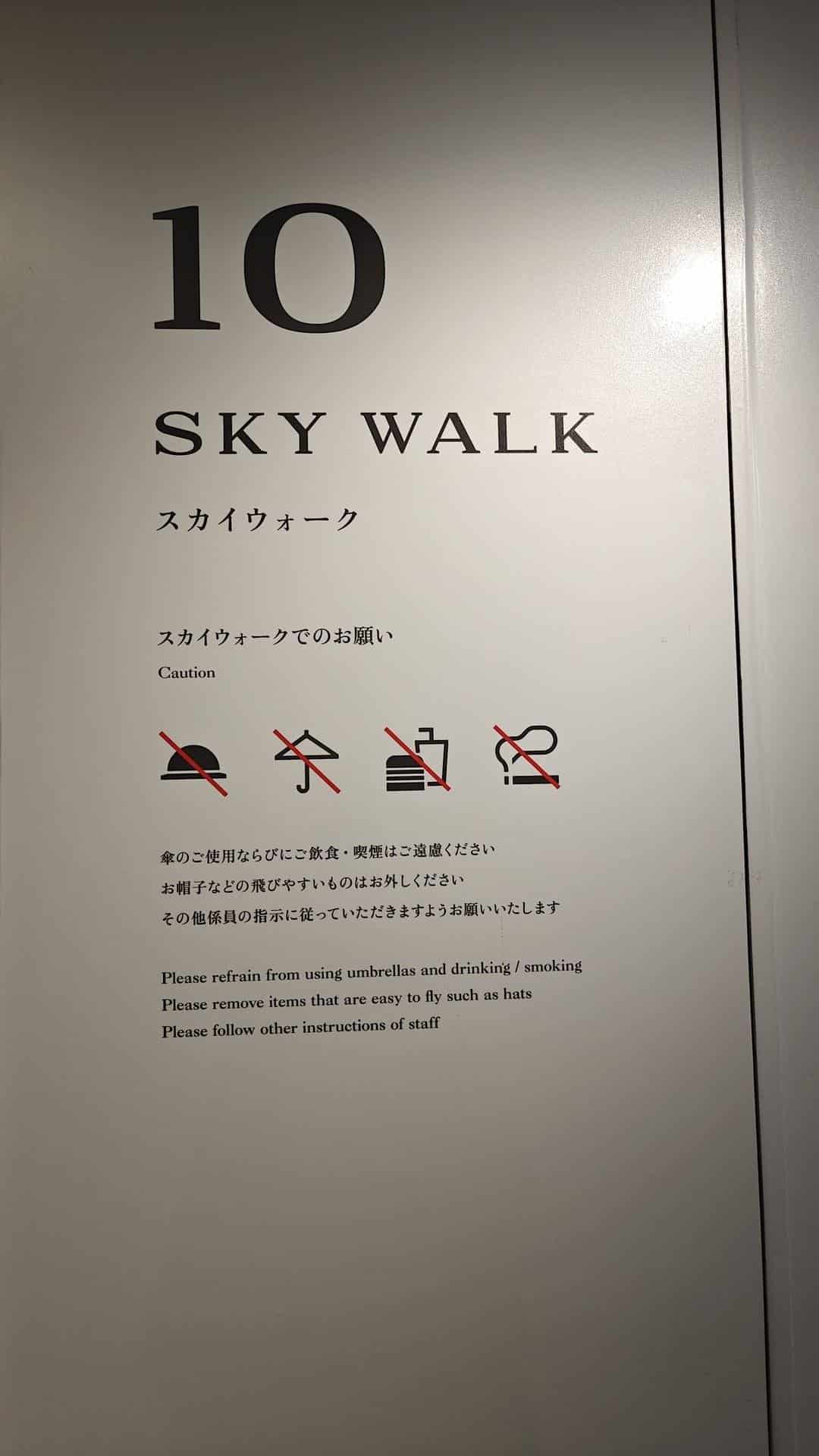
After briefly checking out the displays, it was now time to head to the Sky Walk. Before going up though, I ended up taking a picture of this warning aimed at visitors. It essentially warns against bringing food/drinks as well umbrellas, caps, and hats since these can easily fly off thanks to the strong winds.
Aside from being open-air, this area is 173 meters up in the air so calling it windy up here is an understatement.
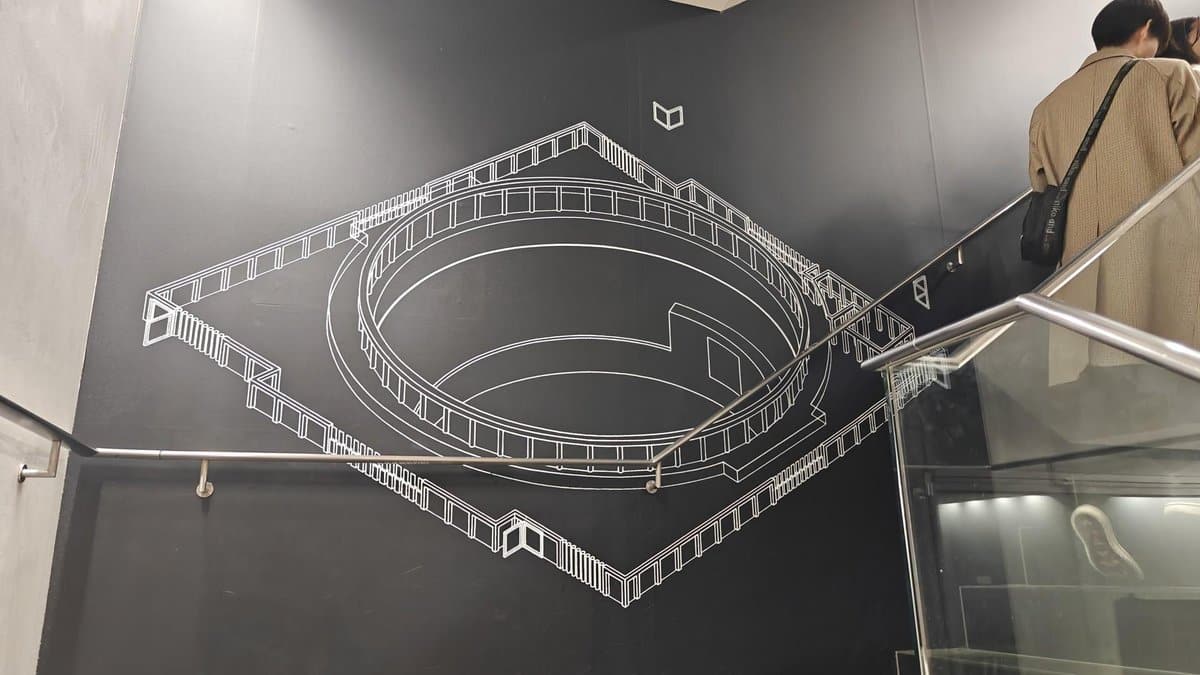
So these are the stairs going up to the Sky Walk area. On the walls of the landing, you’ll notice a diagram of the area with the aperture featuring prominently. The diagram doesn’t mention it but the Sky Walk does have two areas.
The area surrounding the aperture is slightly elevated from the area surrounding it that extends to the deck’s edges.
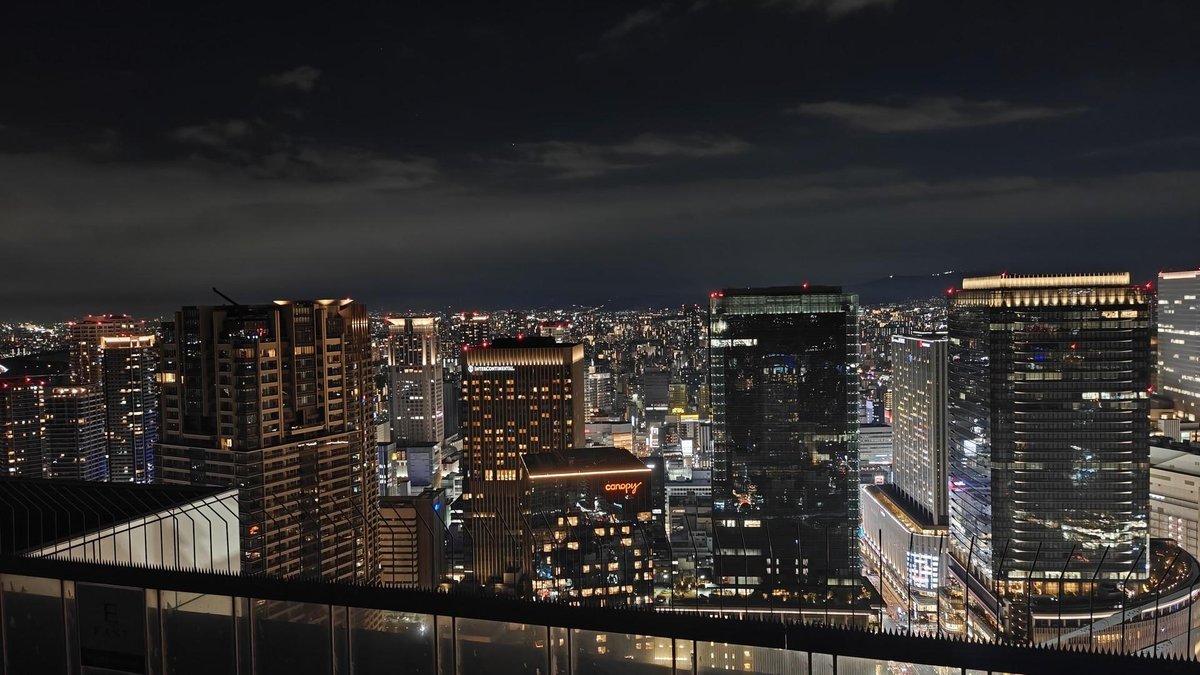
I eventually managed to get to the Sky Walk and boy was I in awe of what I saw. The view here of Osaka’s skyline at night is just on another level. Again, I couldn’t help but compare it to Kyoto’s and just how the city is on another level in terms of energy.
Now I’m not sure if it was just the season but I think this view alone is well worth the 2000JPY I spent.
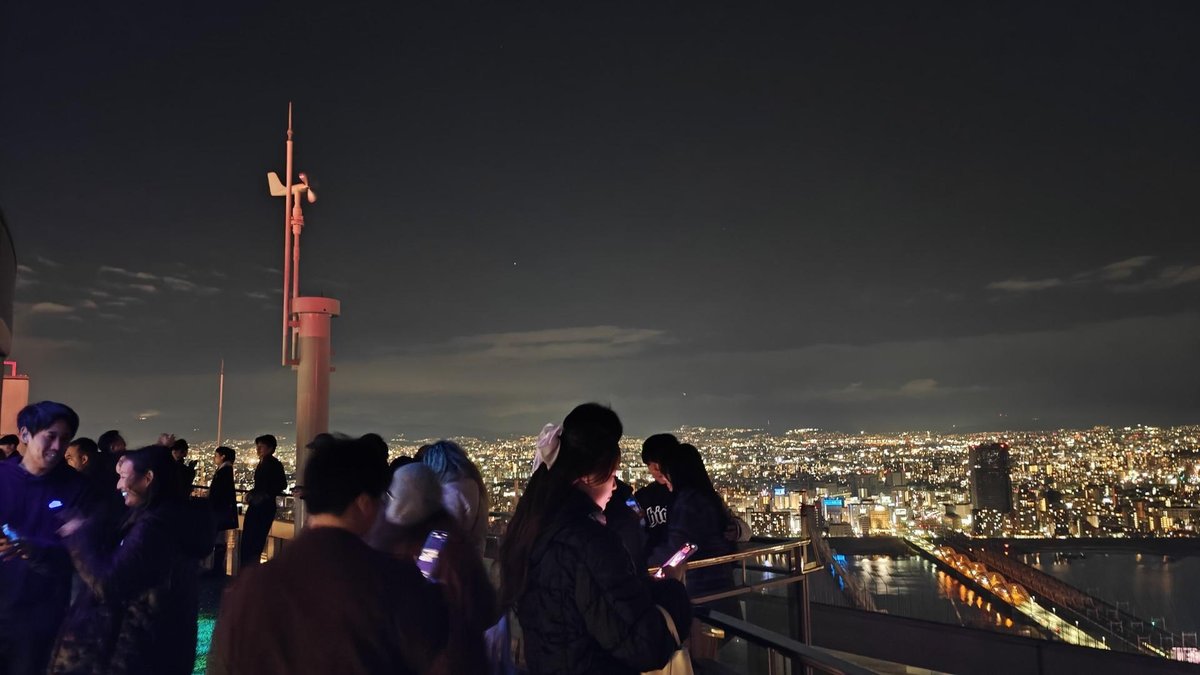
It was still a little early in the evening so there were plenty of people still here enjoying the view. One thing you’ll have to consider when coming here is the crowds. It’s not as crowded as places like Kiyomizu-dera but you can always expect people to be here.
Another thing you’ll have to consider is the noise which again, is to be expected when you have crowds.
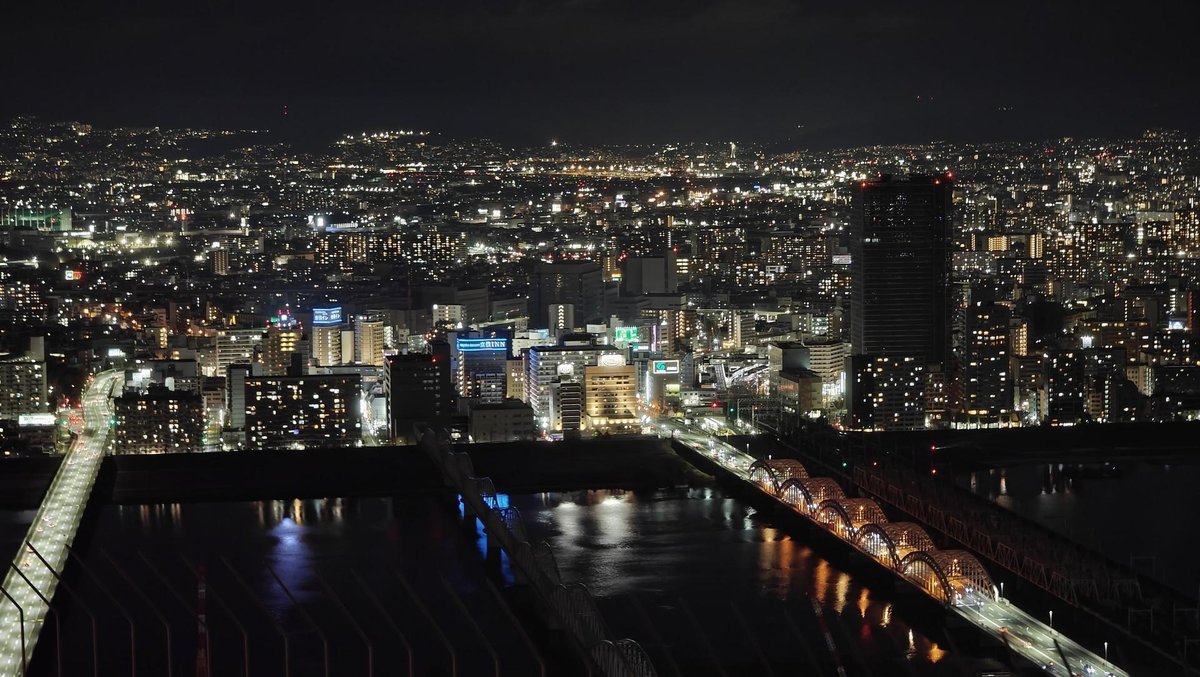
This is another look at the Juso and Shin-Juso Bridges along with the Hanshin Expressway Route 11 Ikeda Line. Unlike the first image of these bridges from earlier, you can now actually sort of see the outline of the smaller Shin-Juso Bridge. I’m not quite sure but it seems like it’s not supposed to be lit up at night unlike the two other bridges that sandwich it.
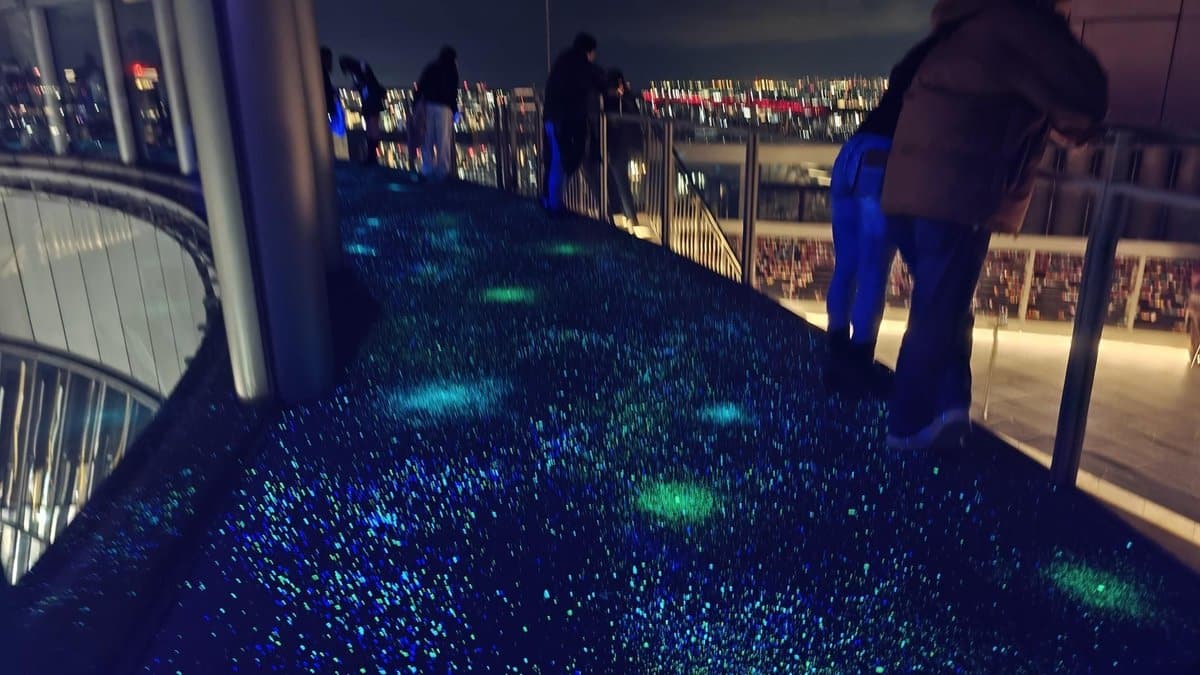
The walking path in this area of the Sky Walk had what I initially thought were glitter. Turns out, these were actually phosphorescent stones that absorb light during the day and then glow during nighttime. From what I understand, this area (called the Lumi Sky Walk) was meant to make you feel like you were walking through the Milky Way.
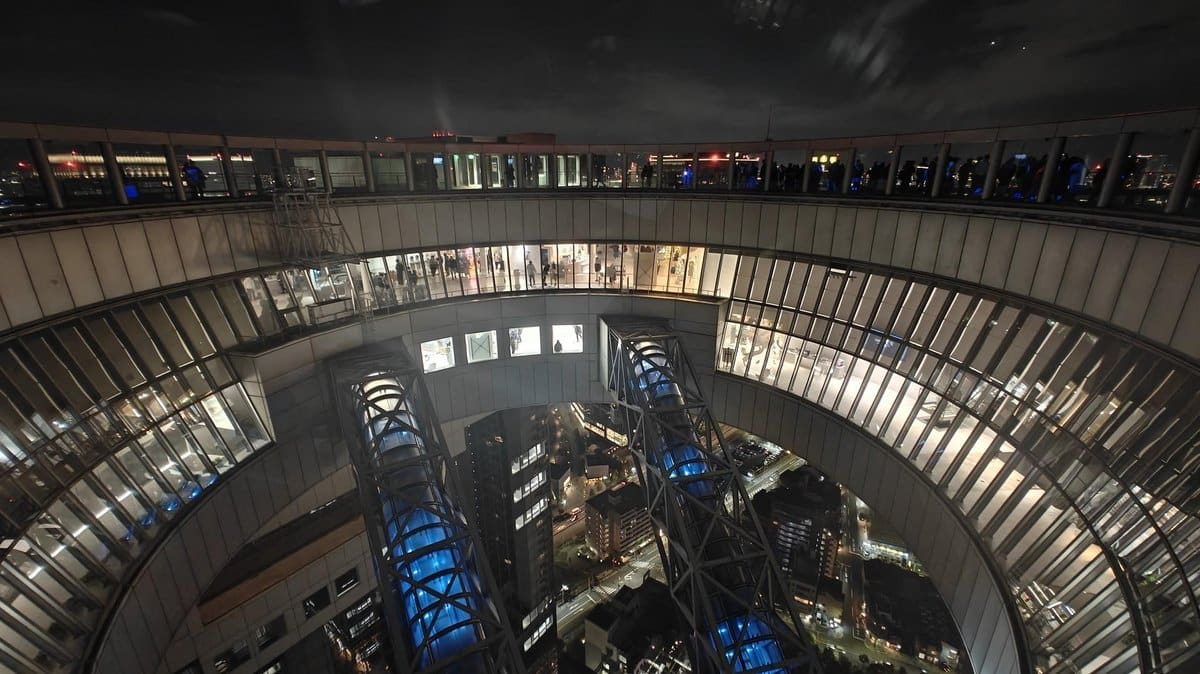
Here you can see the Midair Escalators as well as parts of the area directly under the Sky Walk’s aperture. I’m not going to lie, I did feel a little queasy looking down here. Unlike Kyoto Tower’s observation deck, this isn’t enclosed.
Not sure if it was just me and my paranoia but I did think “what if the glass gave way and I actually fell through?”
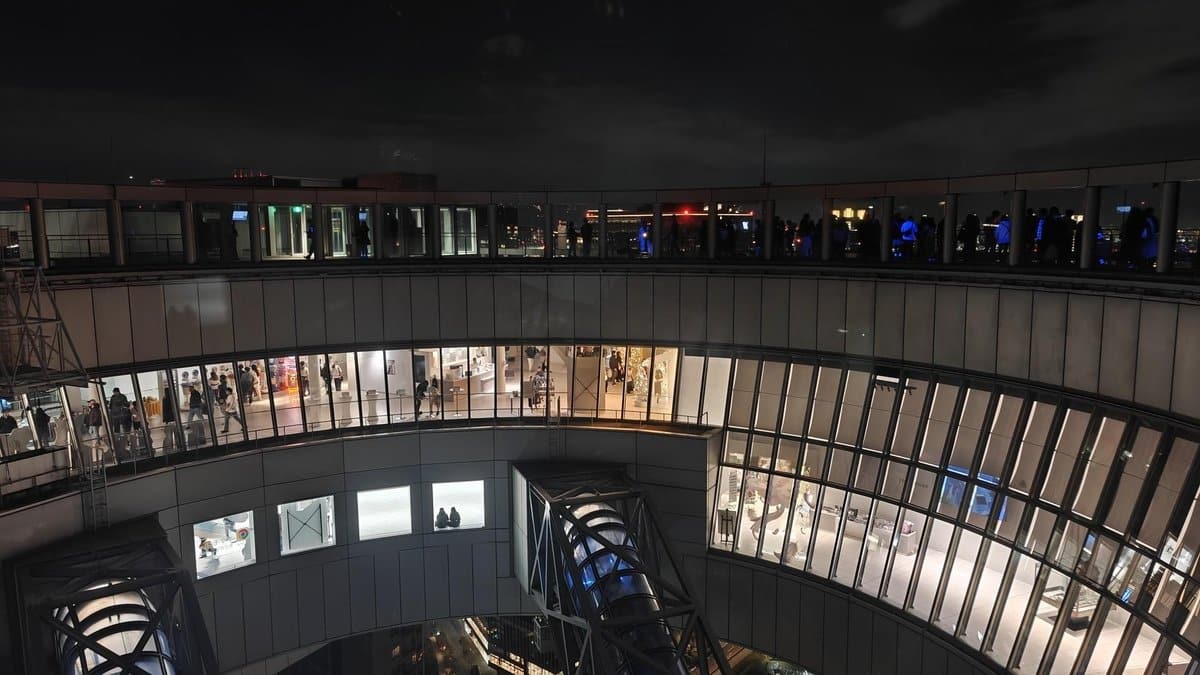
Thankfully my paranoia was just that. The Sky Walk is relatively safe with the glass partition being high enough that someone would have a hard time going through it even if they tried. And while there have been incidents of people falling from the Umeda Sky Building, those all happened in the lower floors.
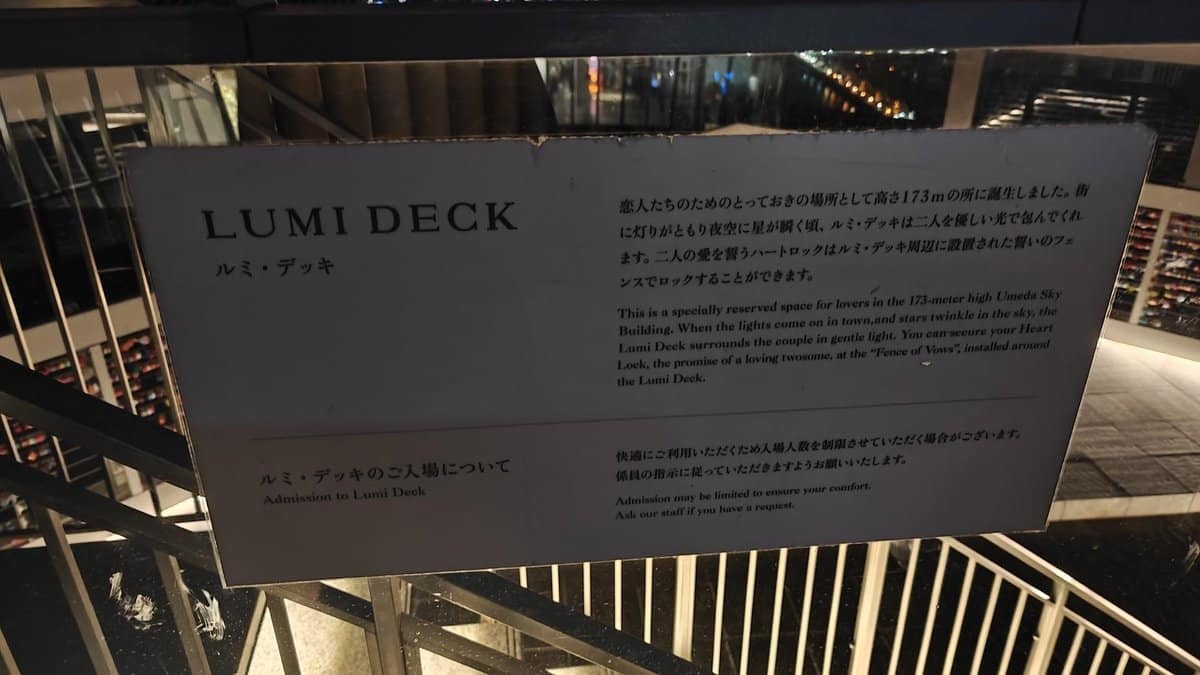
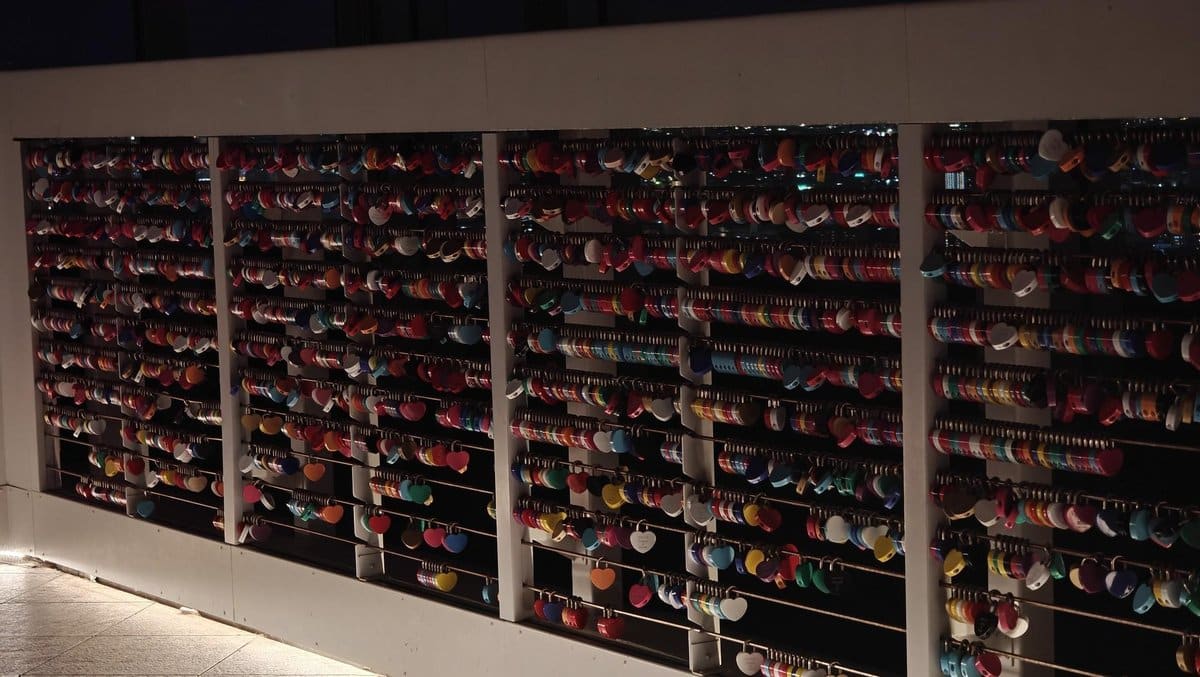
If the walkway surrounding the aperture is called the Lumi Sky Walk, then the area surrounding it is known as the Lumi Deck. It doesn’t have the phosphorescent stones lighting up but it does have areas where you and your significant other (if you brought them with you) can secure a “Heart Lock” on the designated “Fence of Vows” to signify your promise of love to each other.
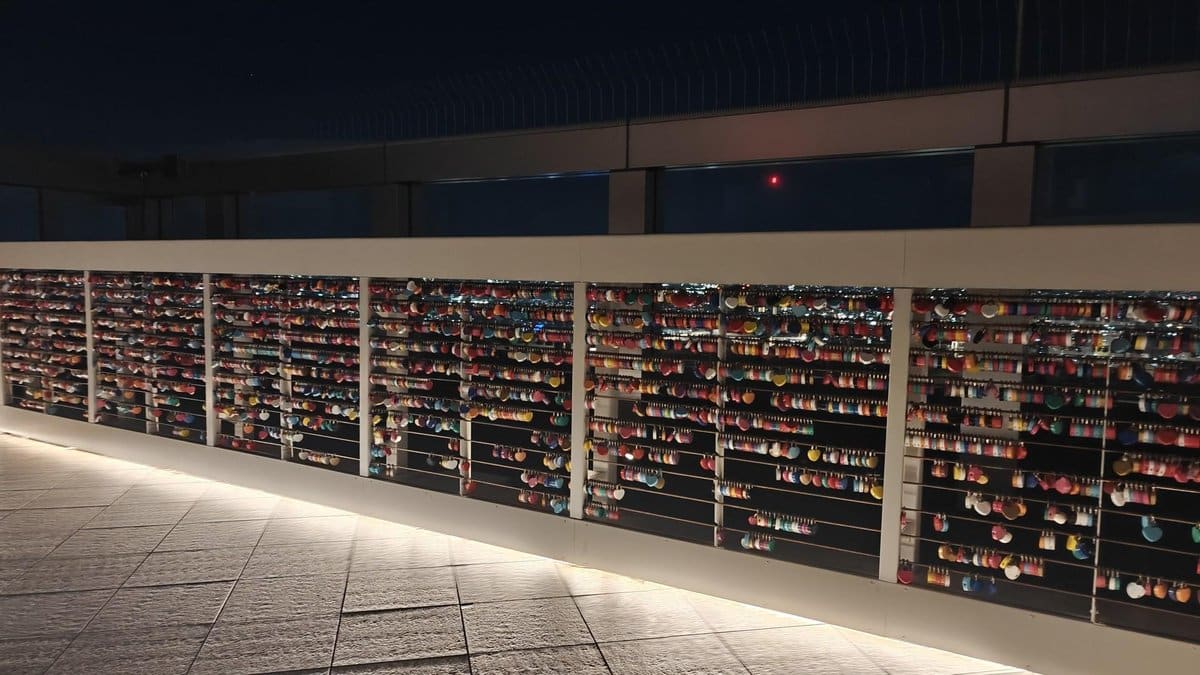
The reason why this is called the Lumi Deck has to do with the soft light from under the “Fence of Vows” that gives off a gentle illumination. For me (and probably a lot of other couples as well), this really was a conducive atmosphere for a romantic evening.
Speaking of evening, is it better to come here at night? Technically speaking, the views here stay great regardless of the time of day. That said, a night visit is just more scenic and romantic.
Now you could still come here late in the afternoon as the sun is setting and then stay up until the evening if you want the best of both worlds.
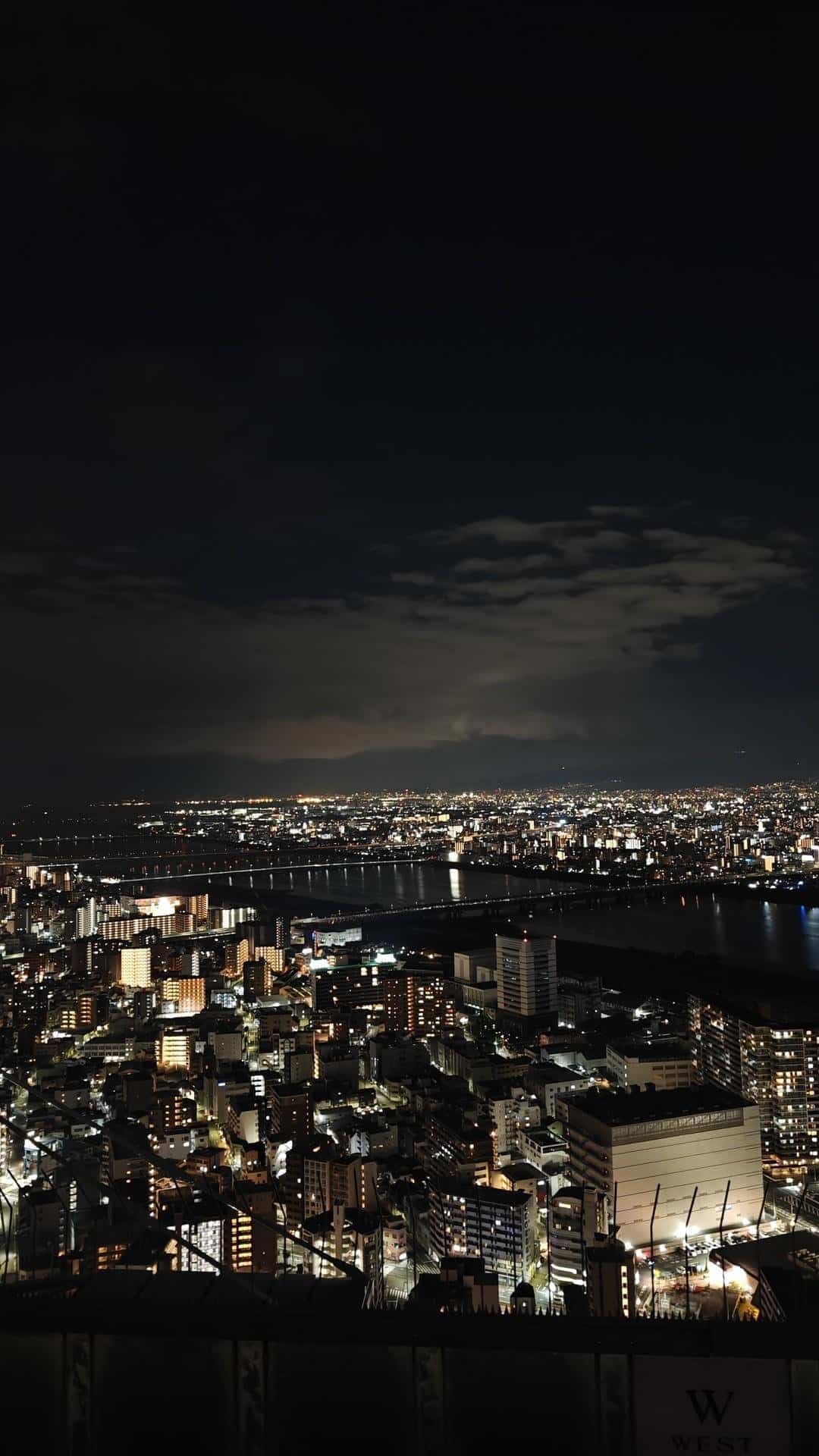
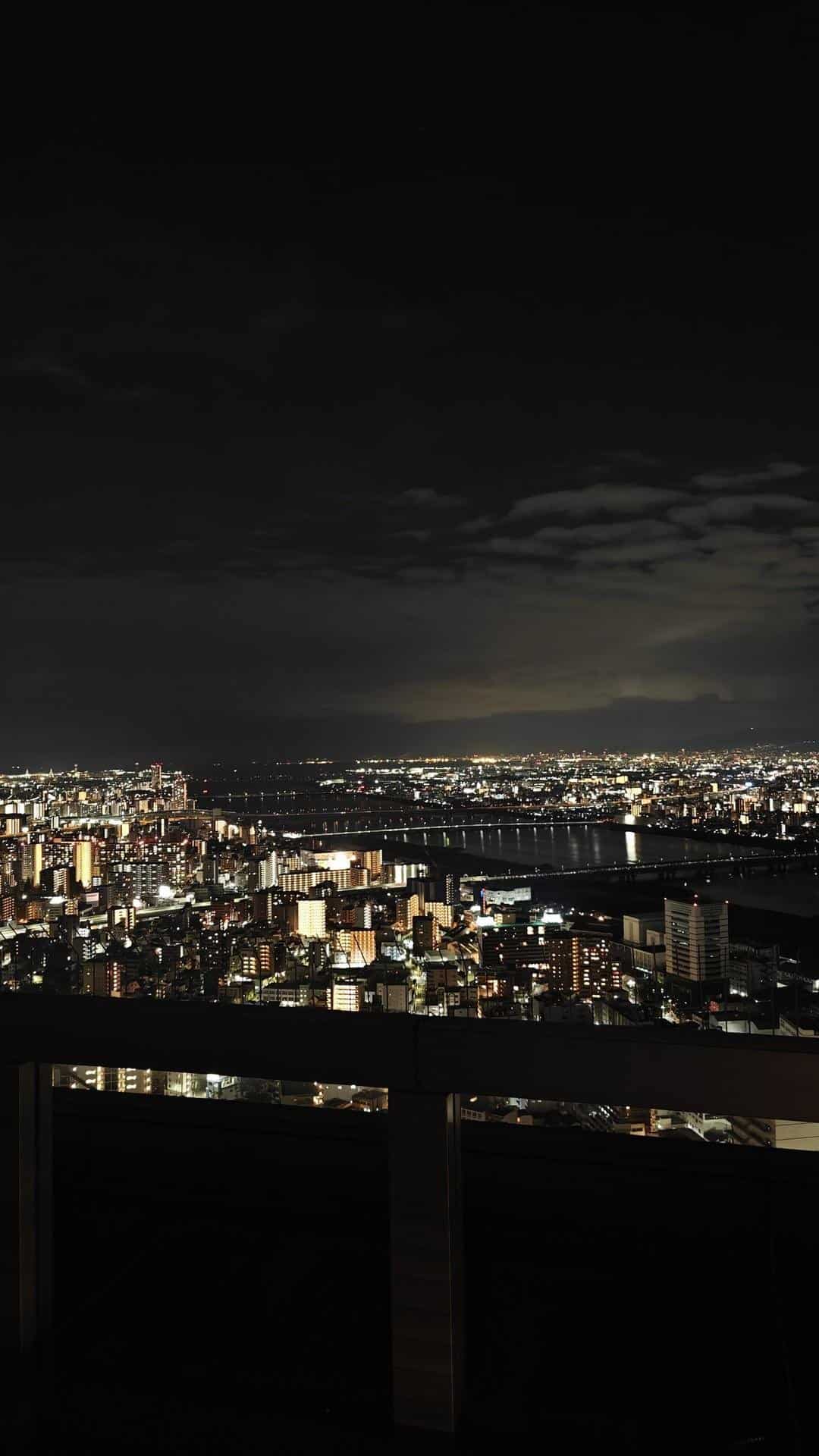
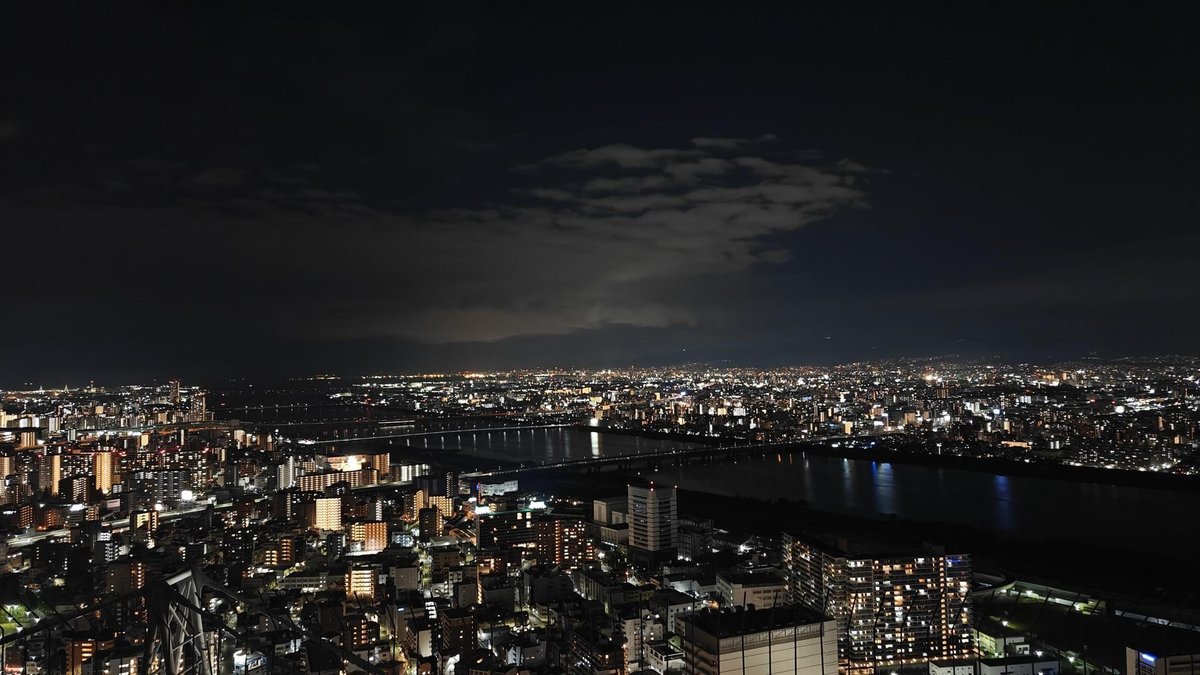
Now, this is what Osaka’s skies look like at night. I was disappointed that I couldn’t see any stars here but considering how strong the light from the buildings are, it’s kind of expected that you won’t see the Milky Way from here. Despite that though, I’m still of the opinion that this view is more than magnificent.
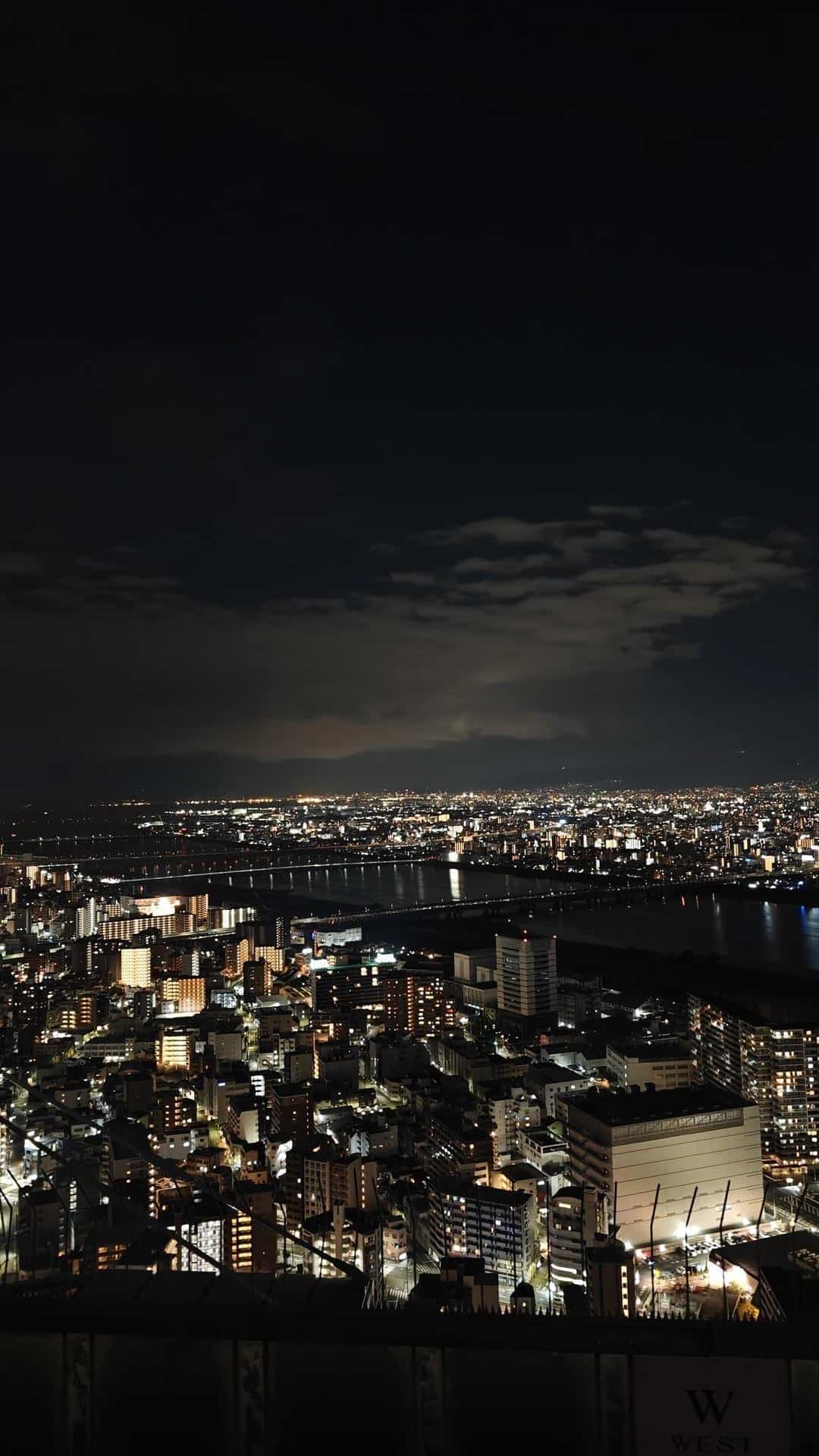
This ends my visit to the Kuchu Teien Observatory at the Umeda Sky Building.
Again, this was an unbelievably memorable experience that I would one hundred percent recommend to anyone visiting Osaka. It has arguably some of the best views in and of the city and it’s only going to set you back 2000JPY.
Other than the cost of admission and the views at the Sky Walk, you’ll also find plenty of unique experiences here. The Umeda Sky Building itself has notable attractions like the Koji Kinutani Tenku Art Museum as well as the Wonder Christmas Market if you happen to visit in December.Now if you do plan to come here, I would highly suggest a night visit. Don’t get me wrong, visiting during the day is still great but the views are much better at night.
And if you plan to bring someone special on your visit then it’s imperative that you do so at night as it’s much more romantic.So would you consider Umeda Sky Building and Kuchu Teien Observatory as an item list on your itinerary? If yes then we’d be happy to hear you share your thoughts about this Osaka landmark with us and our community down in the comments section!