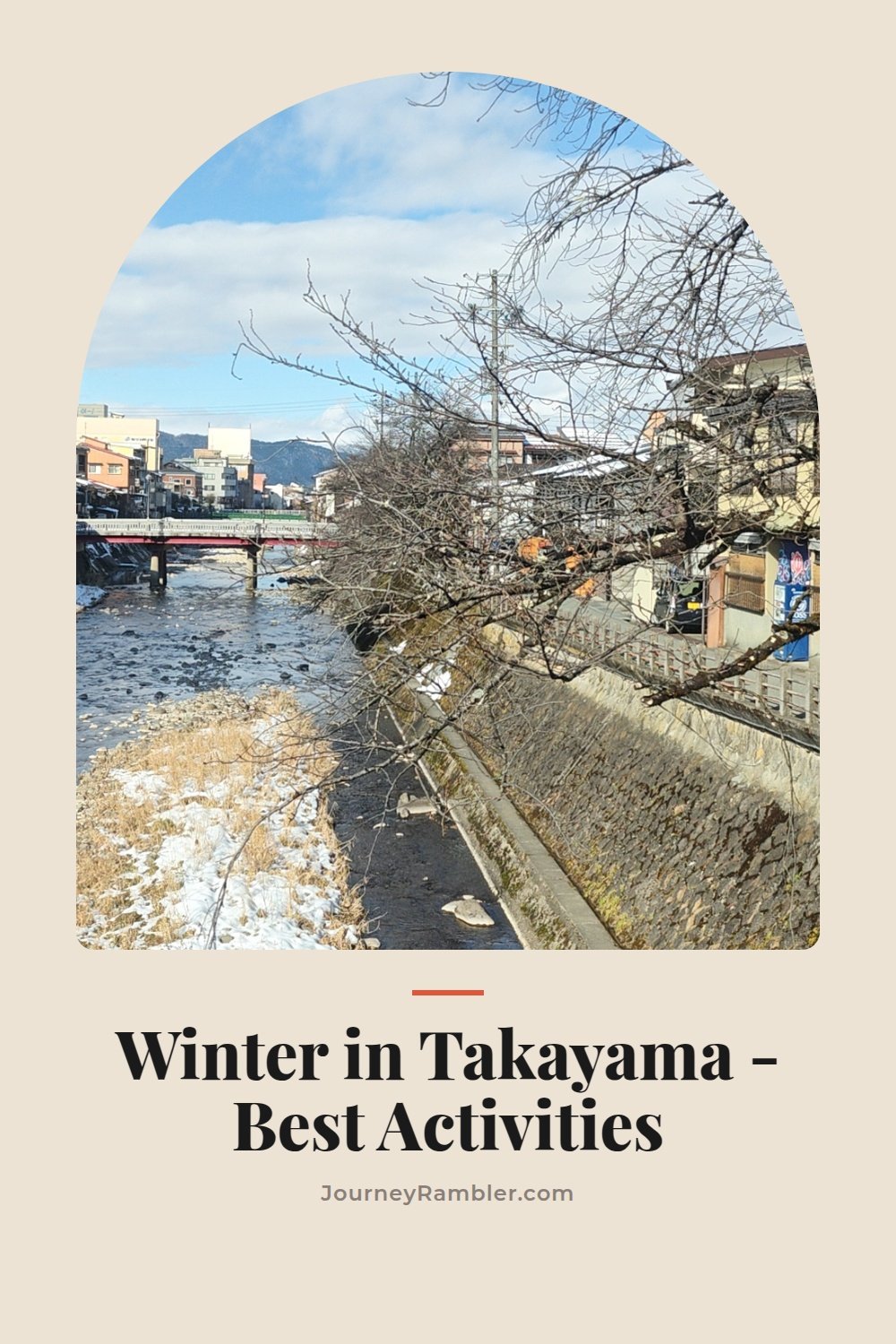
I was really unsure about visiting Takayama during the winter. Most images I saw online showed it dressed up for its famous fall and spring festivals, so I didn’t know if it would be too quiet or cold in the colder months. As soon as we got into town, though, all those fears went away.
It’s an incredibly picturesque town with a bit of a dusting of snow on the old buildings; and it’s not like you run out of things to see and do when the festival crowds aren’t around! The best part was the ability to wander for an entire day with no real plan. There are tiny little craft stores to poke around in.
There is a surprisingly cool local museum where we spent a rainy hour. You can eat lots of Hida beef and even find a few vending machines that dispense sake to try right on the spot. Here is what we did.
What I Did in Takayama in Winter
Old Street
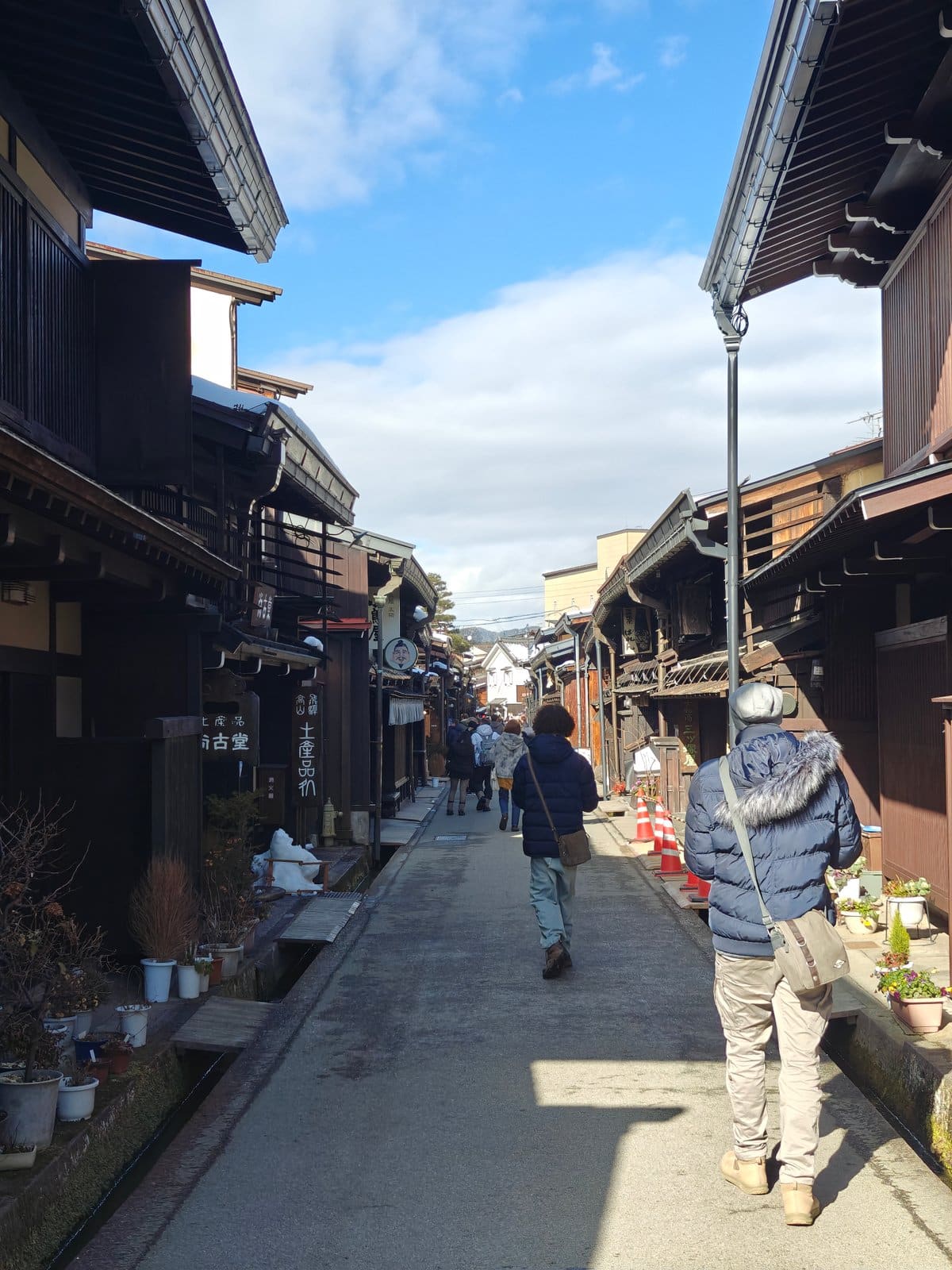
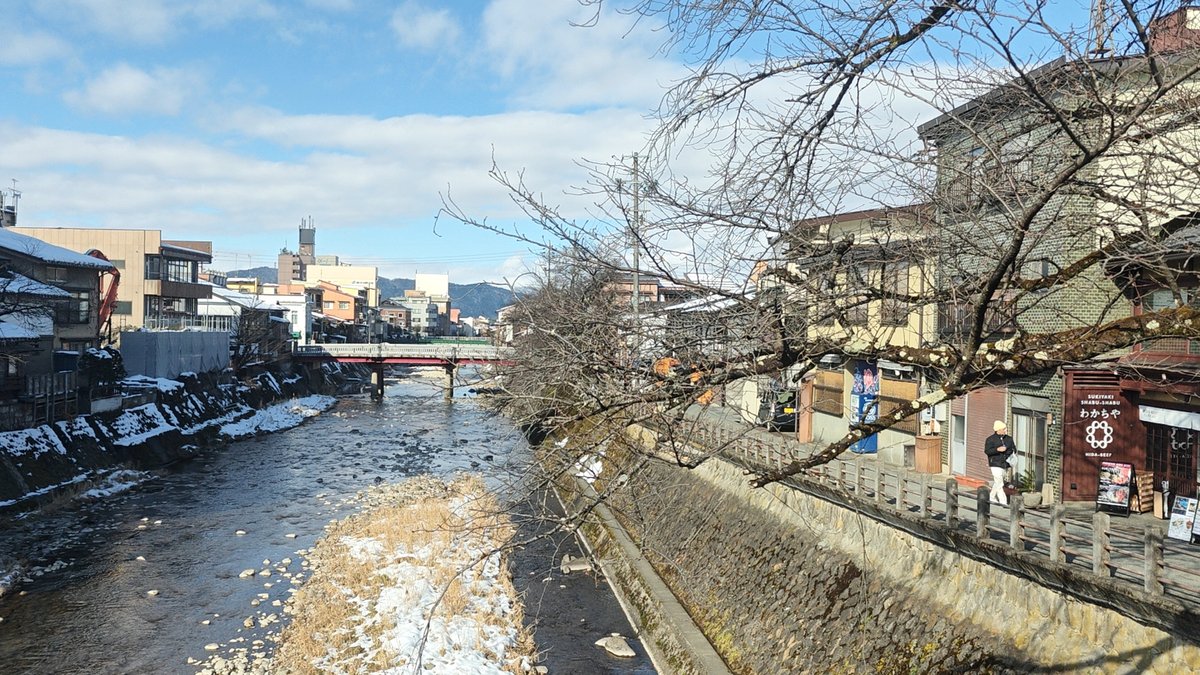
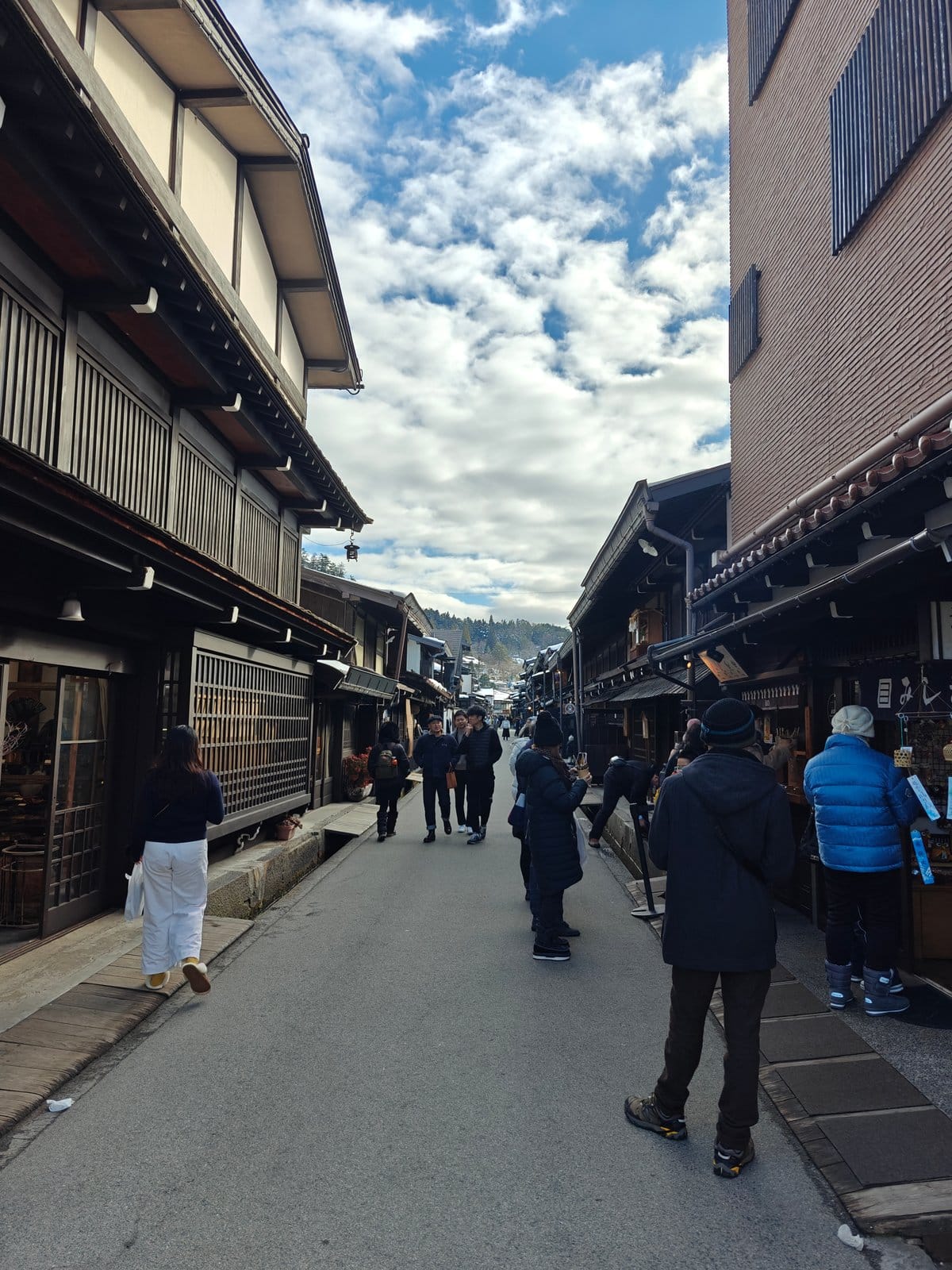
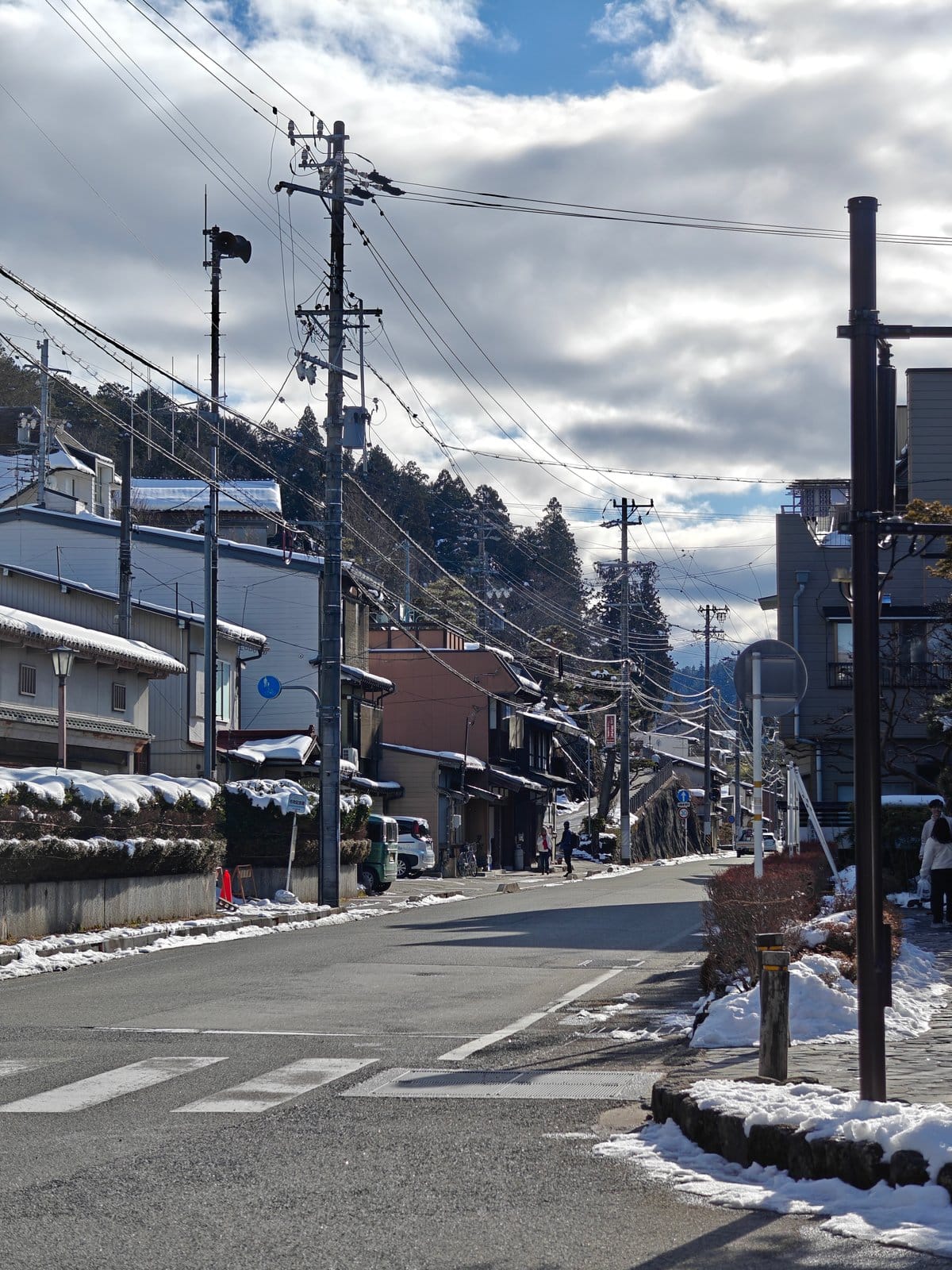
In winter, walking around the preserved merchant district was really peaceful. In the early morning, we pretty much had the narrow lanes to ourselves. The wooden buildings sits beside the river and looked great against the grey sky.
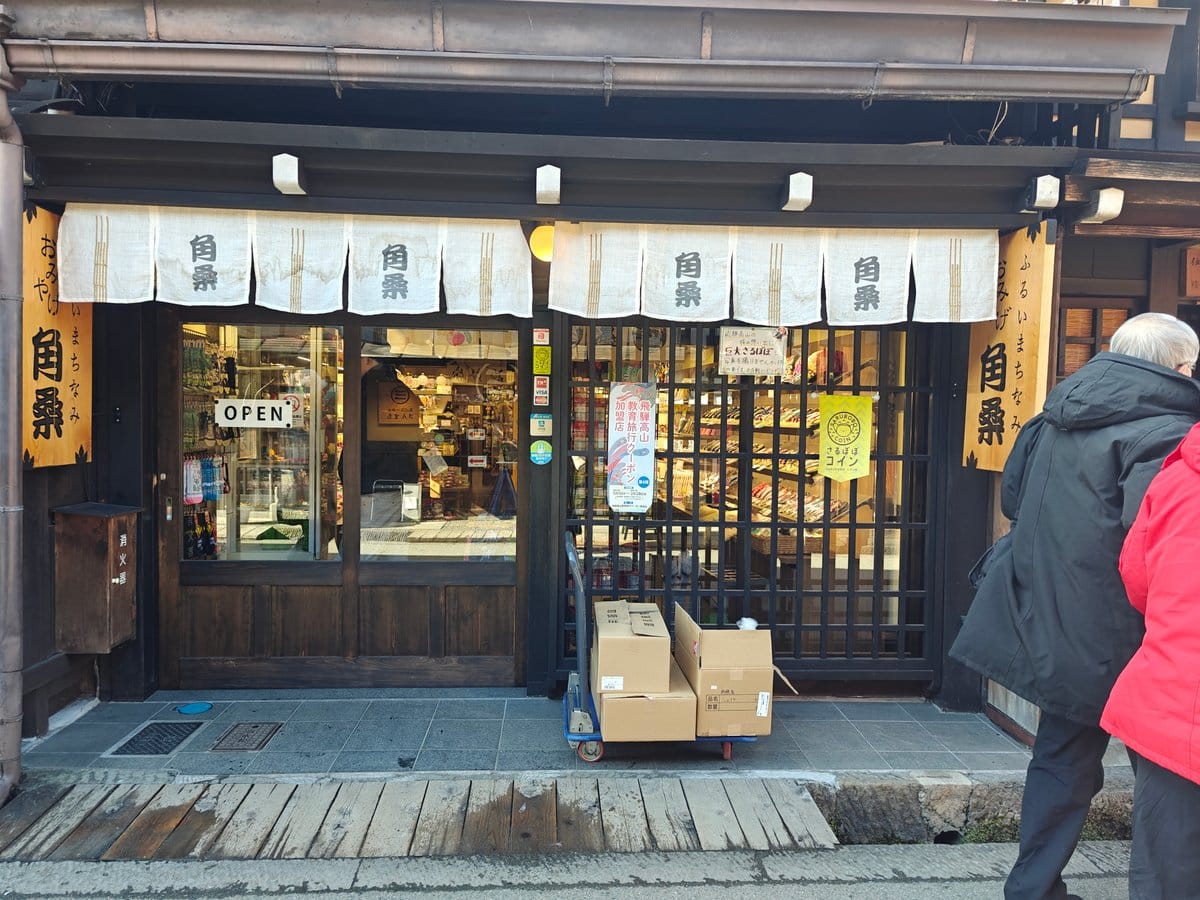
I kept stopping to look at storefronts, some were still traditional but others surprisingly moddern.
free Kanazawa itinerary
Visiting Kanazawa?
Get my original 3 day, 12-page Kanazawa itinerary in PDF format, based on my real trip, with many photos, hotel, and food tips. Enter your email to receive it free.
We won't send you spam. Unsubscribe at any time.
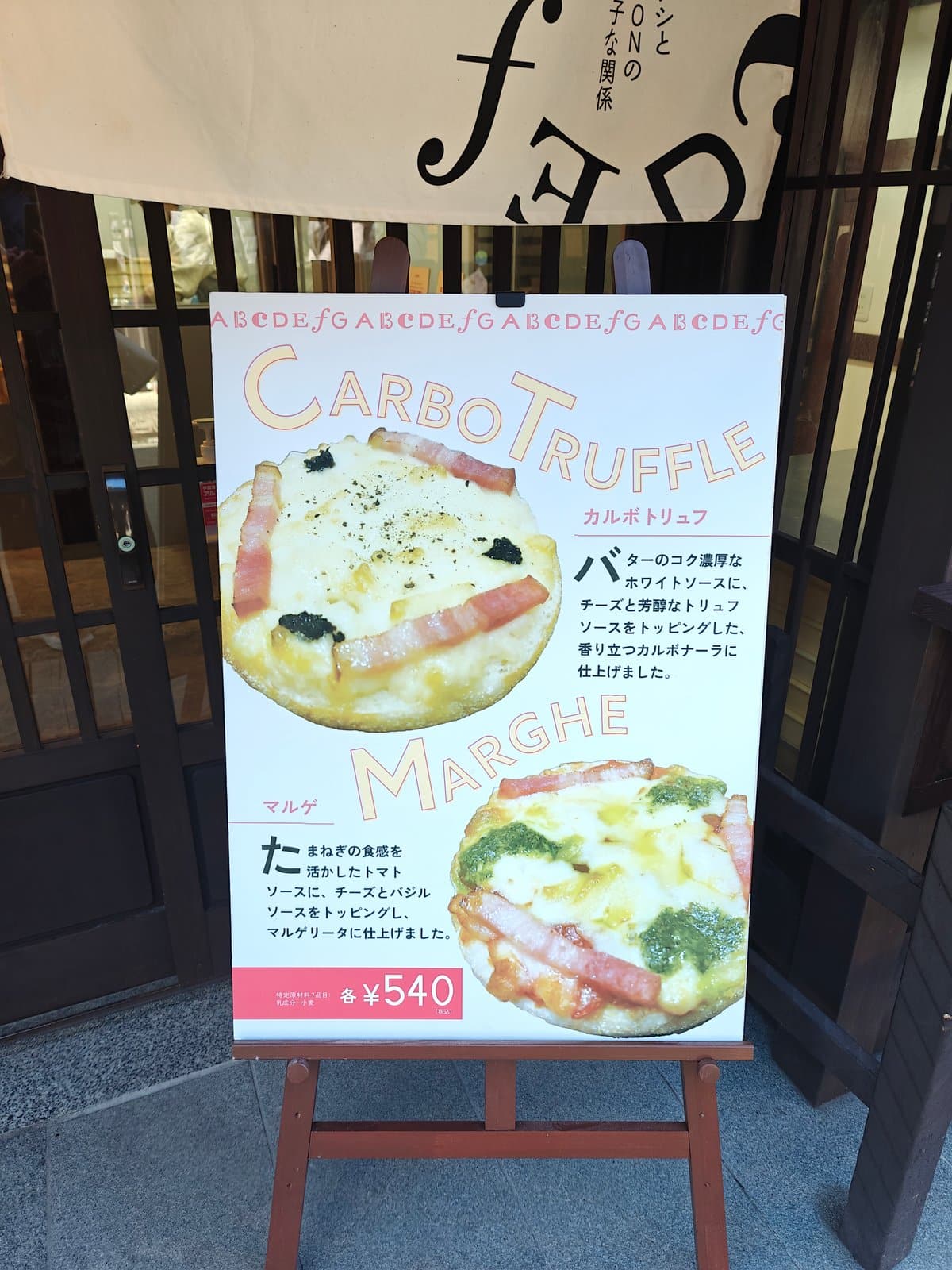
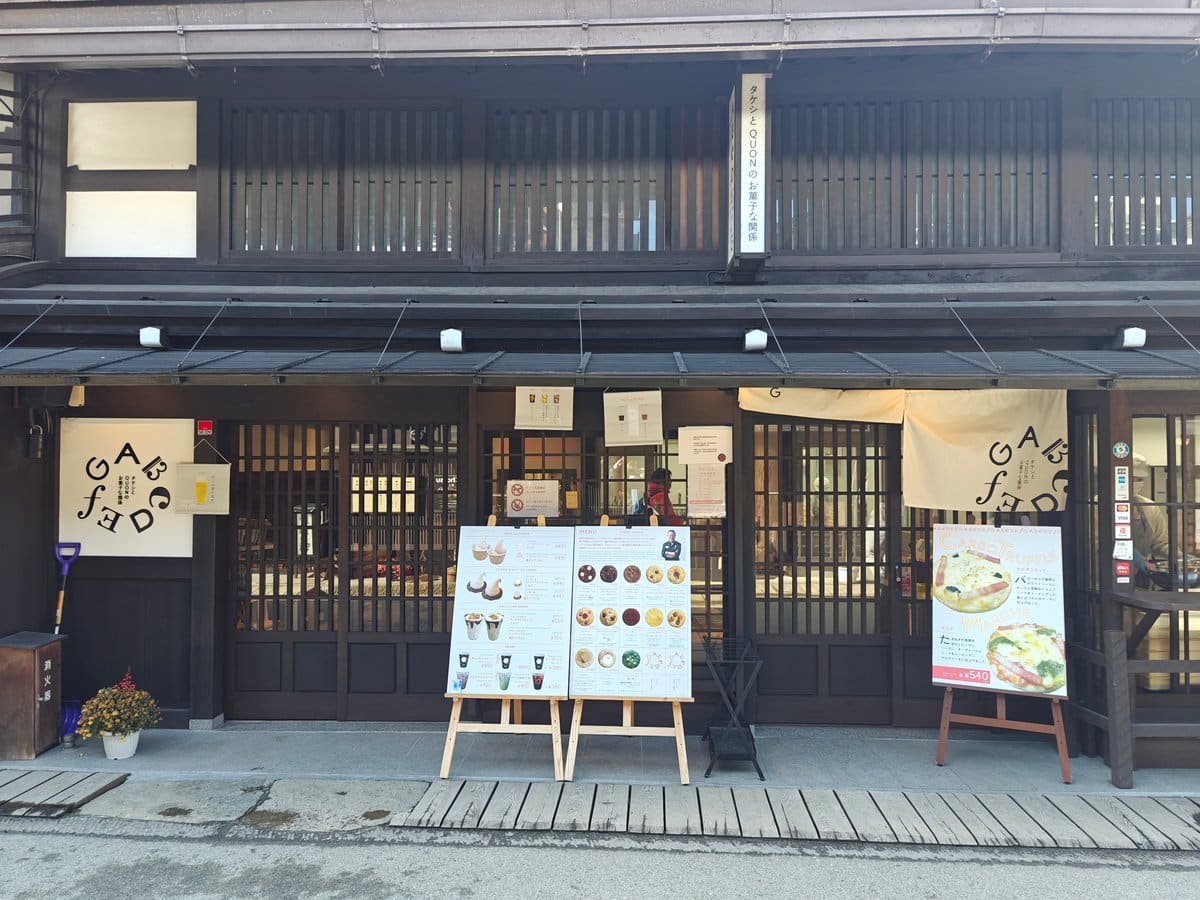
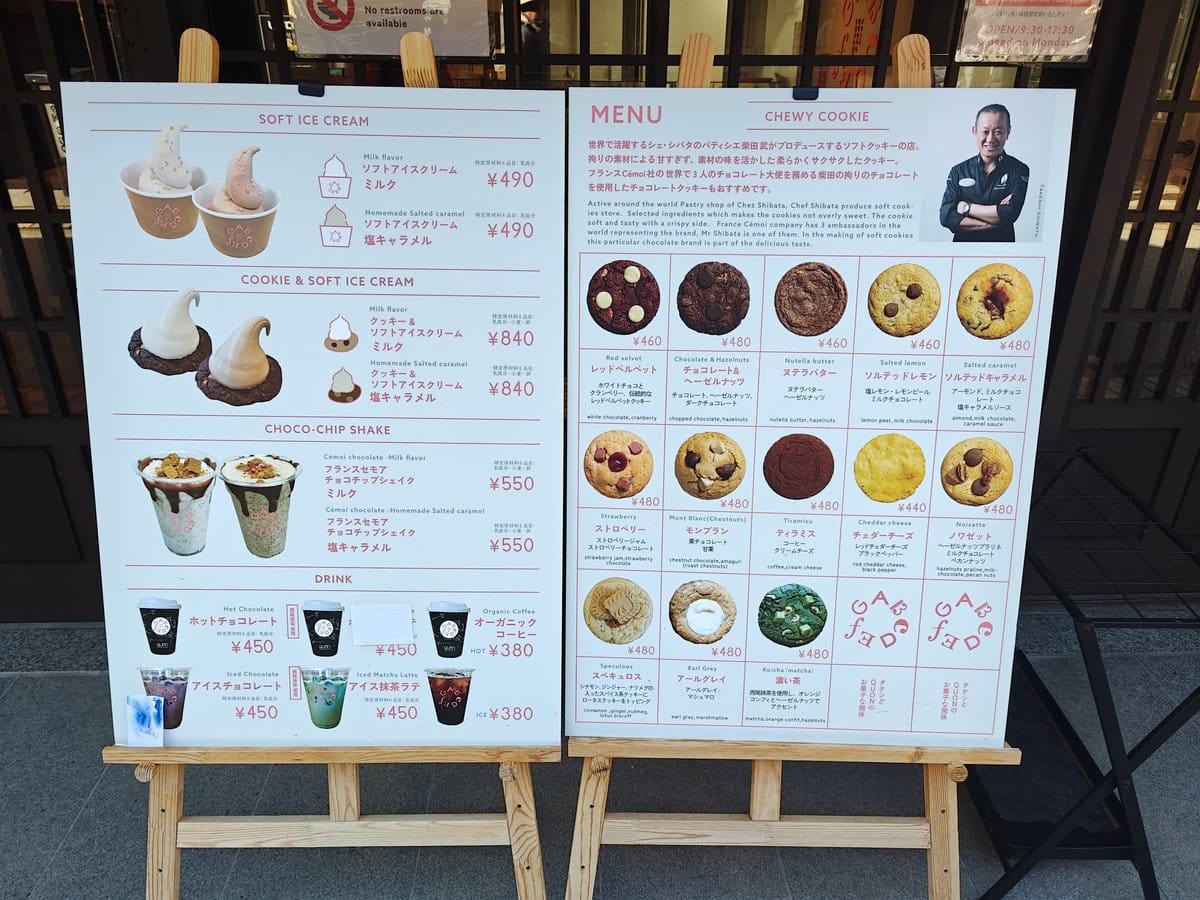
As we walked past, a cafe advertising soft-serve ice cream and cookies with pizza on the menu sounded weird but it looked popular. The mix of modern cafe food with old architecture is all over Takayama; while I didn’t get to try any, it sounded good!
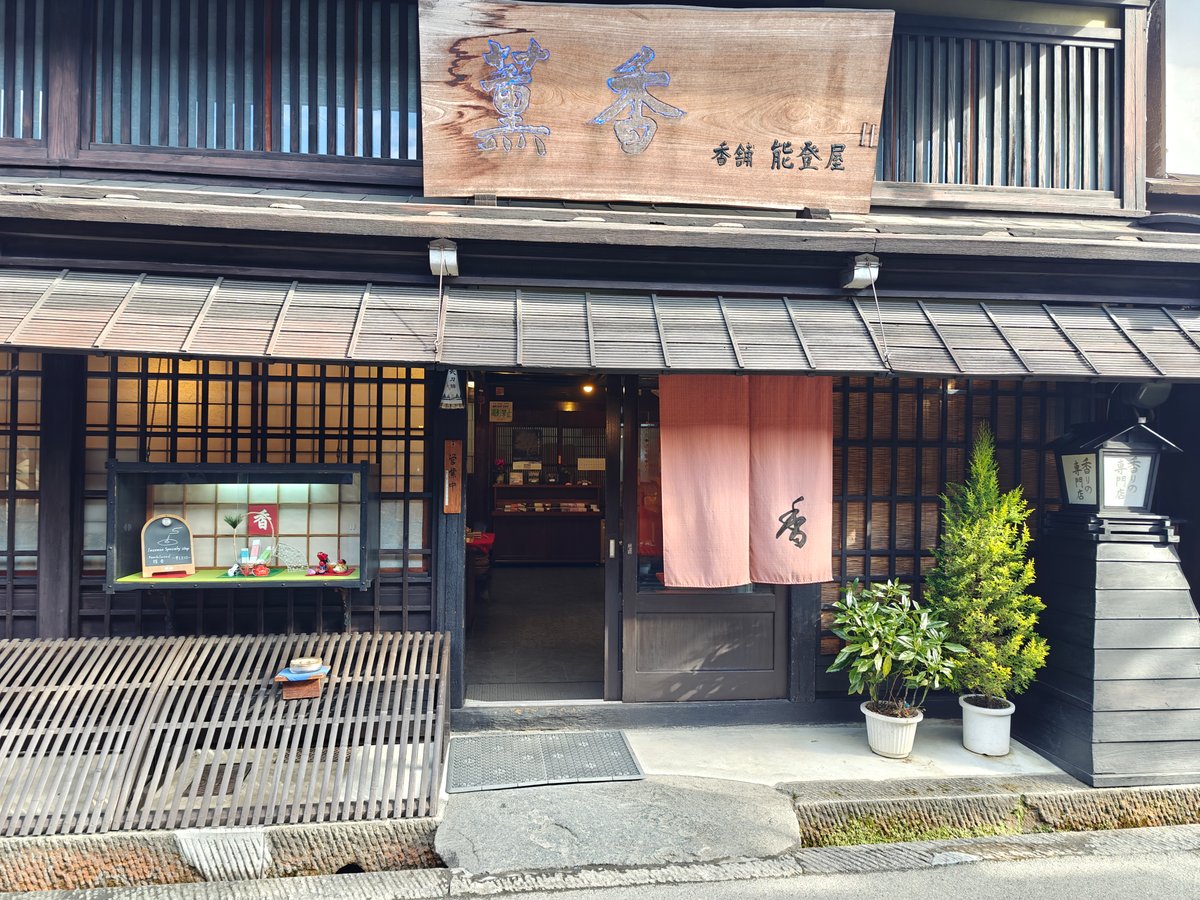
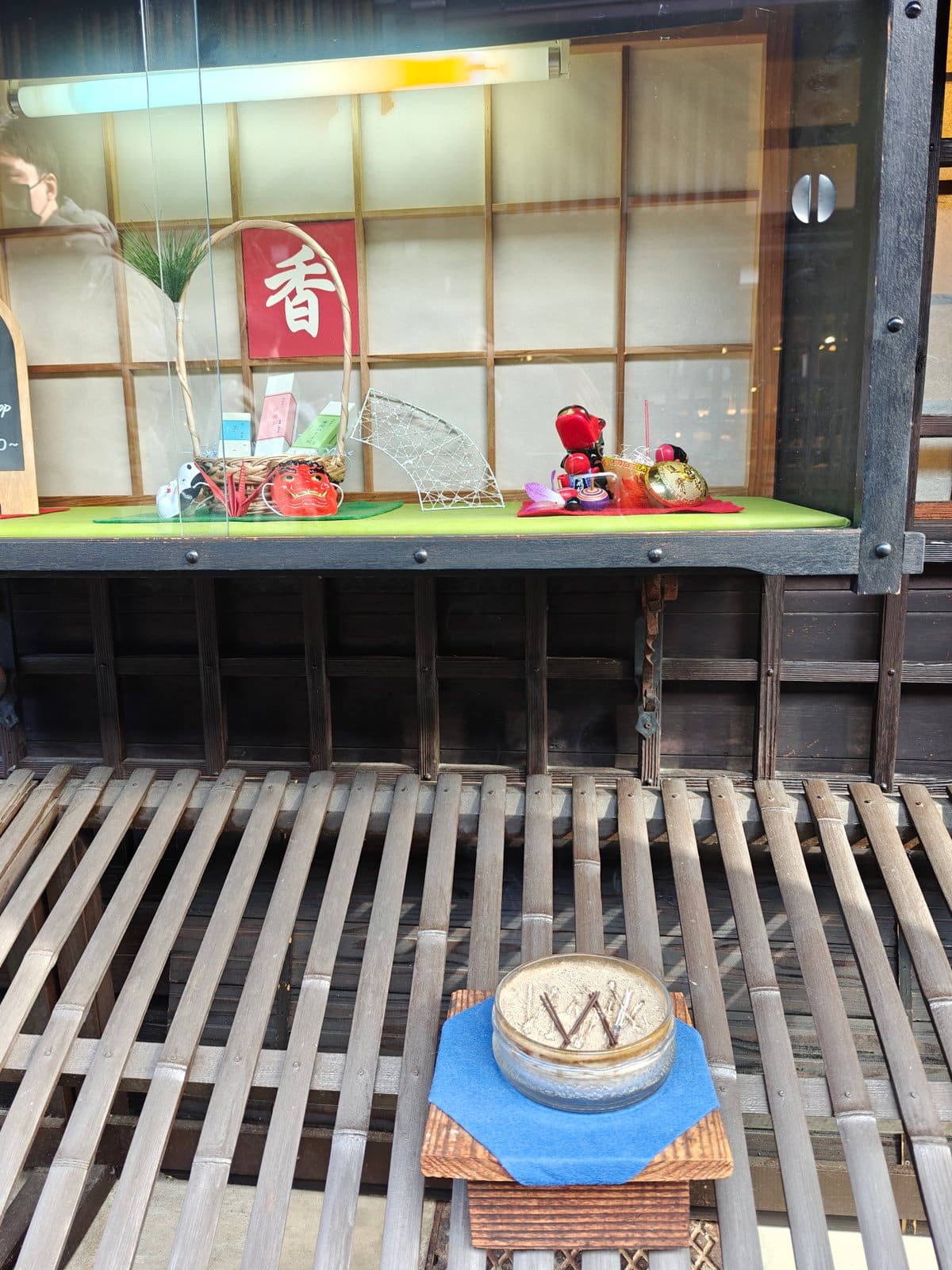
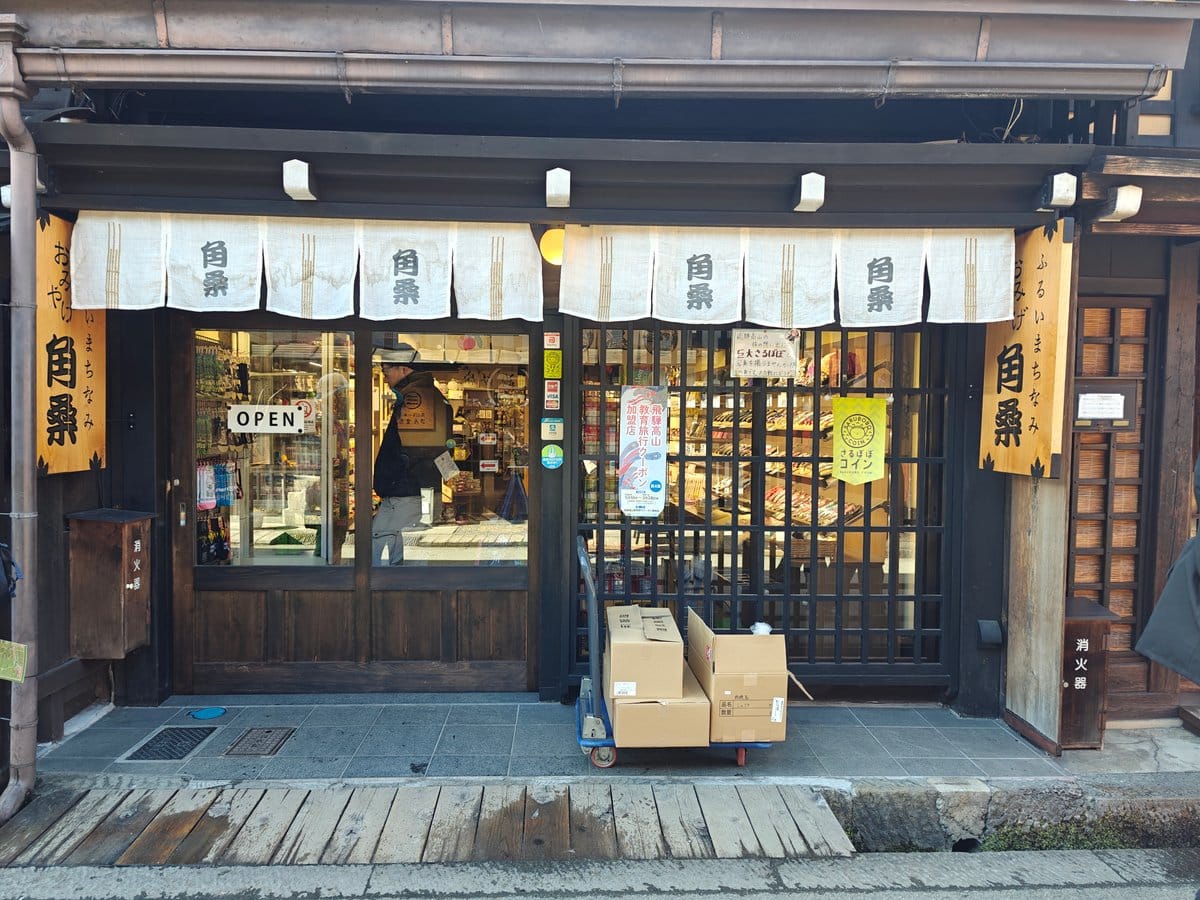
One of my favourites was all the craft shops. There was a whole store devoted to incense with lovely displays in the windows. I spent ages looking around but had no idea what half the stuff was for!
They had really good traditional products, not the kind of souvenirs you find at tourist trap stalls.
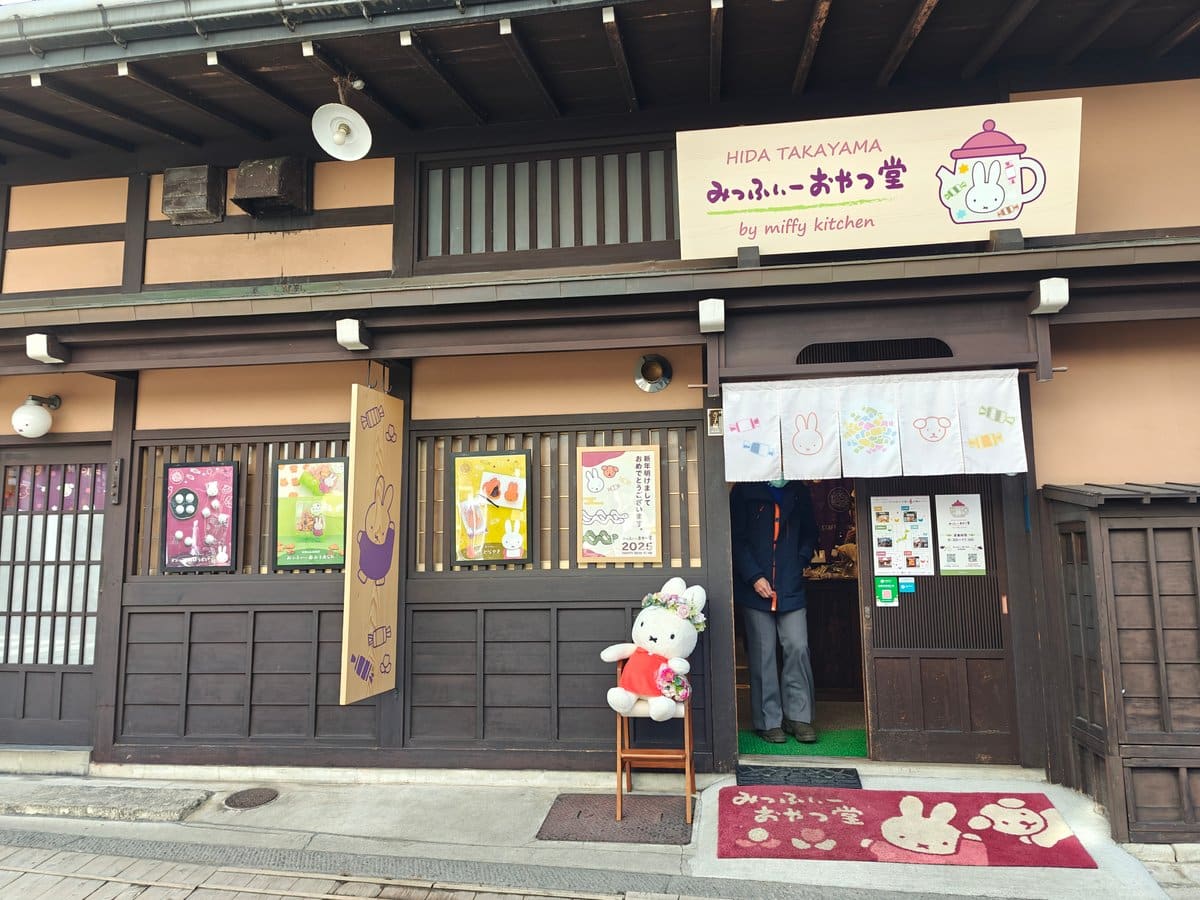
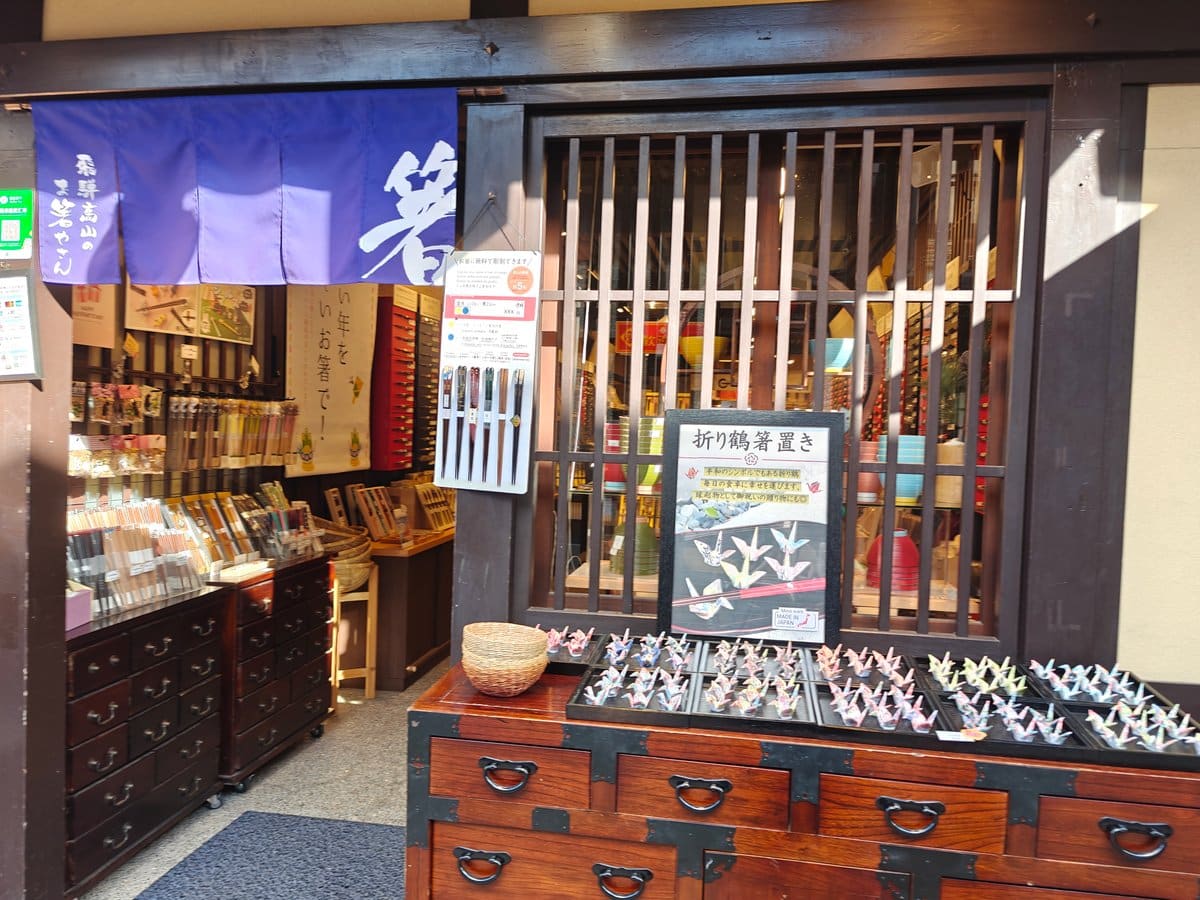
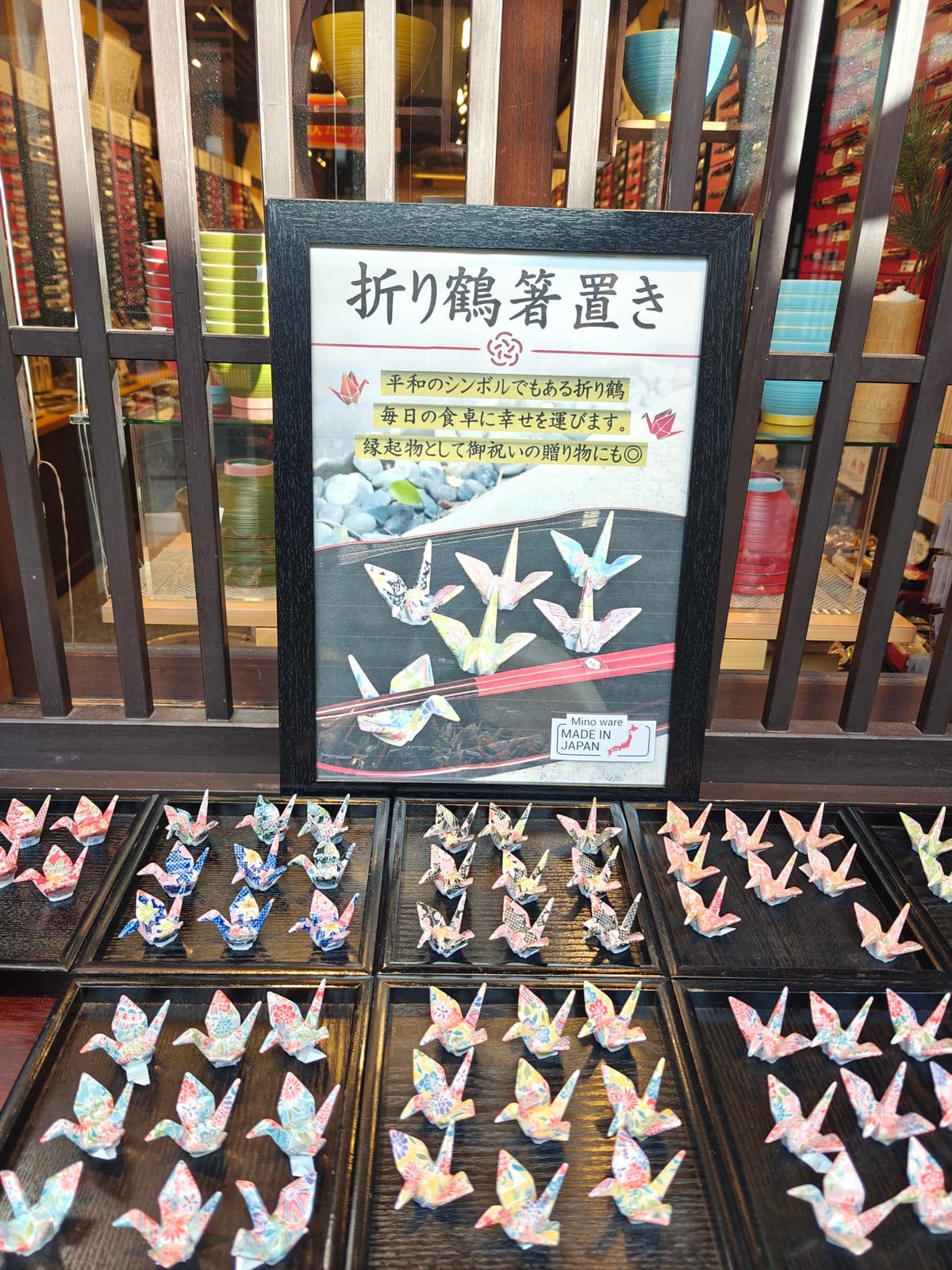
There was a chopsticks specialist with miniature origami crane chopstick rests that I nearly bought. There was also a Miffy-themed snack shop. The range of small stores kept us entertained for hours.
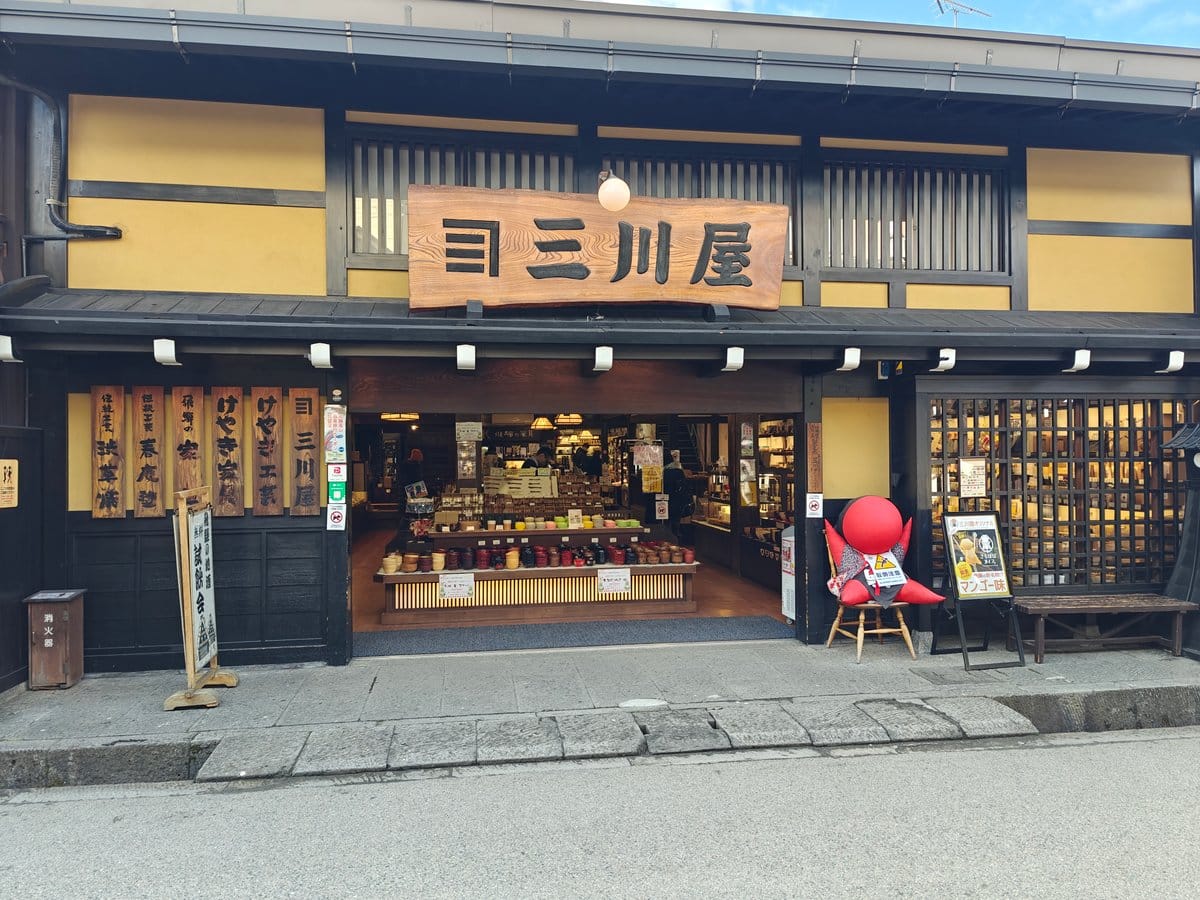
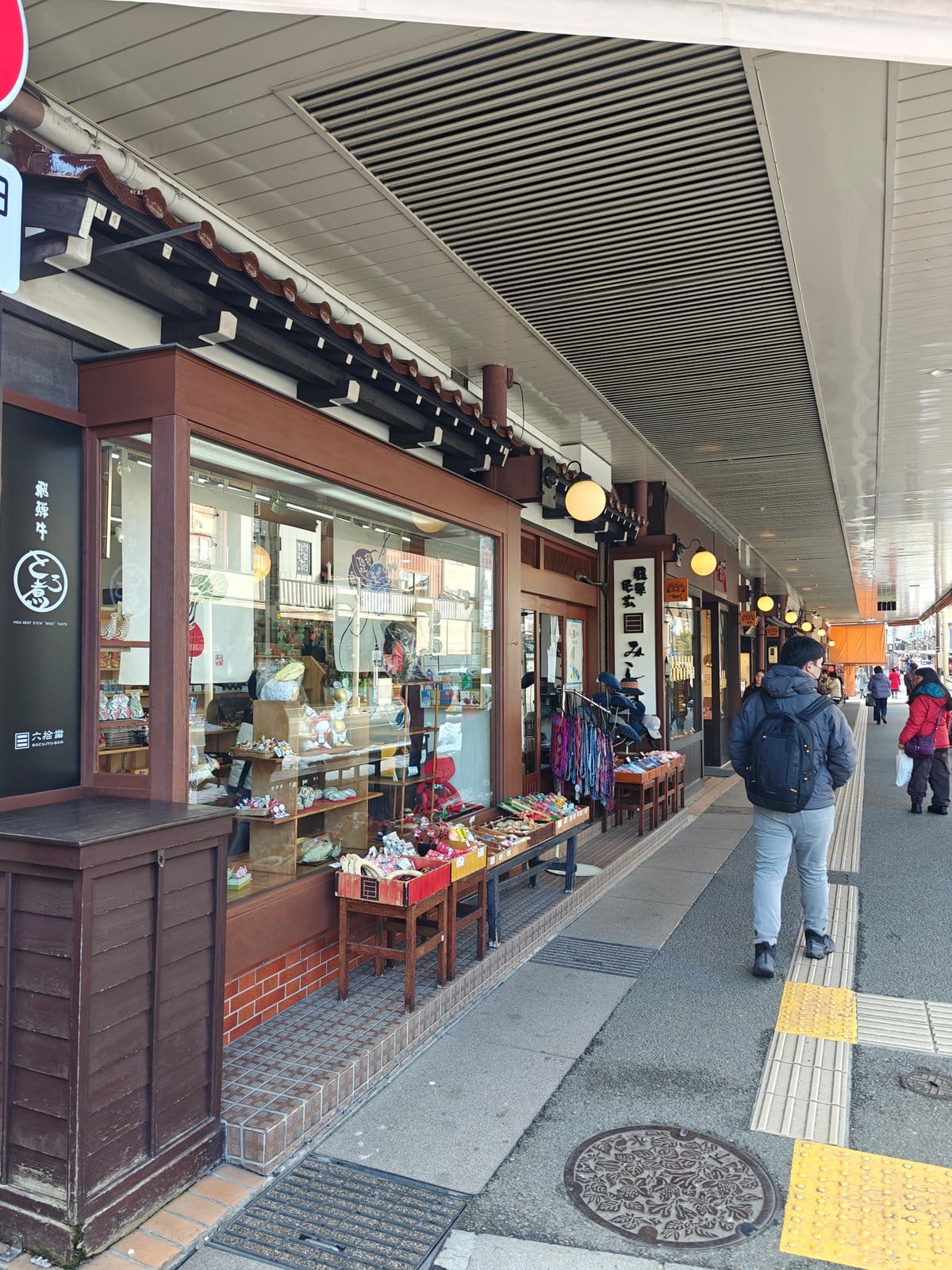
Another traditional crafts shop called Mikawaya caught our eye.
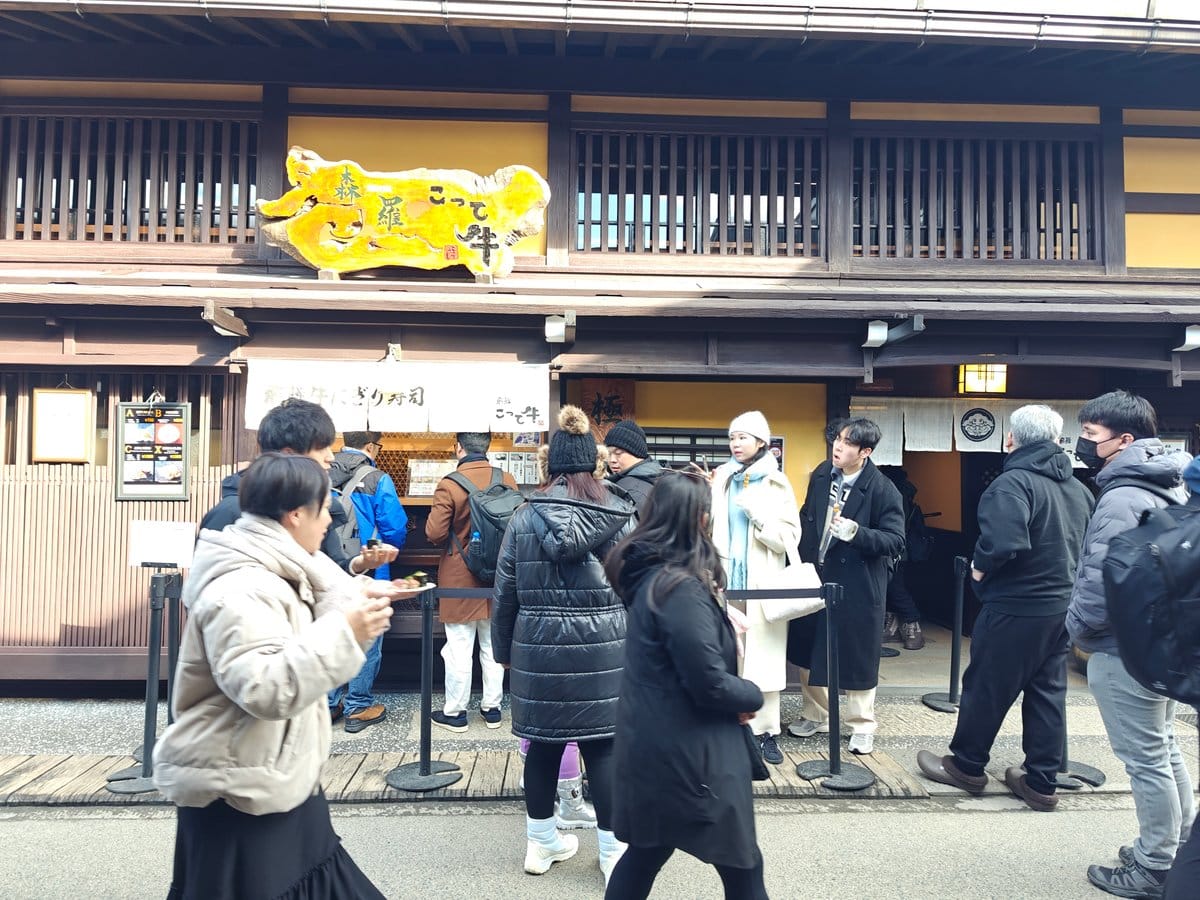
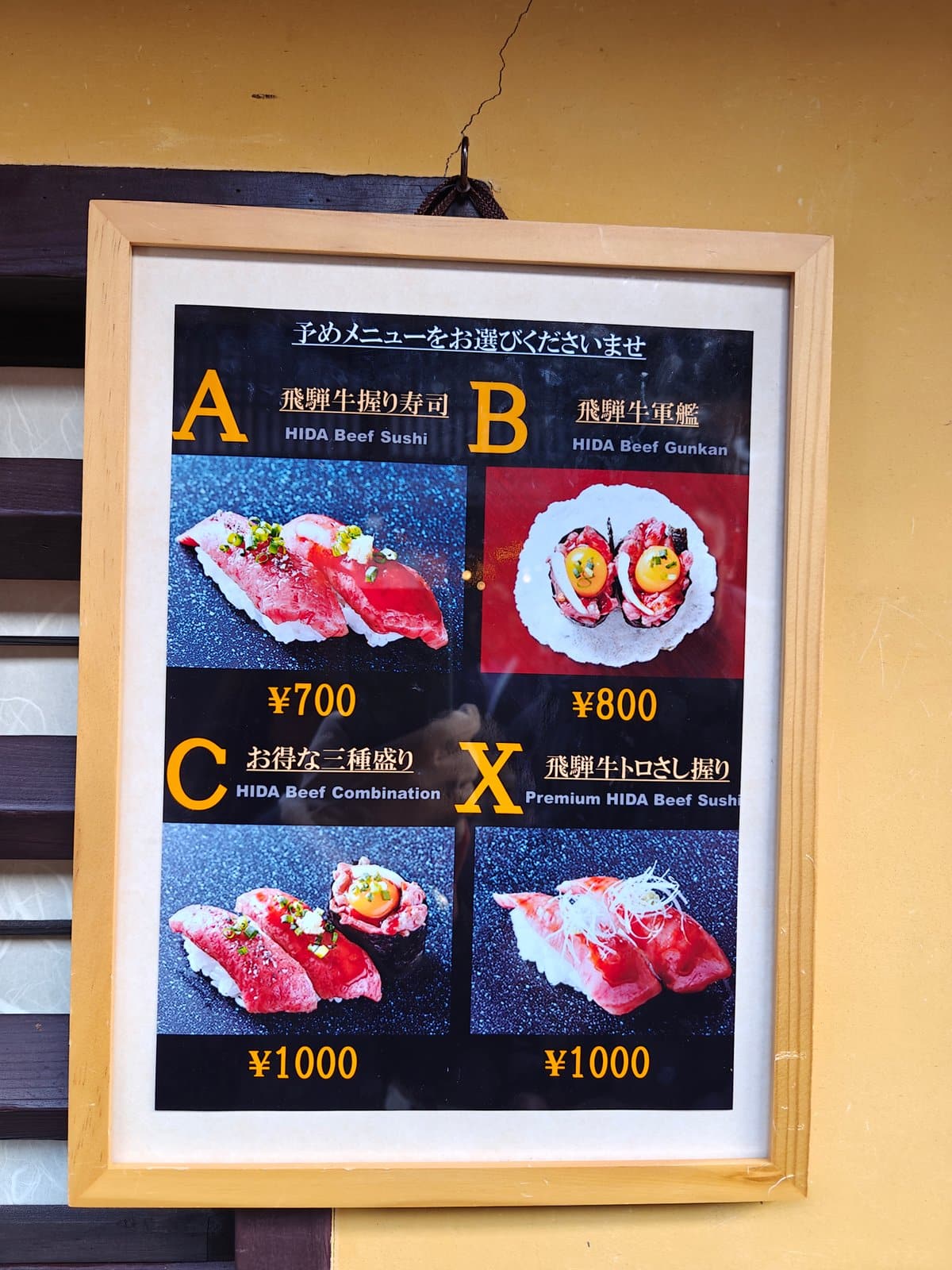
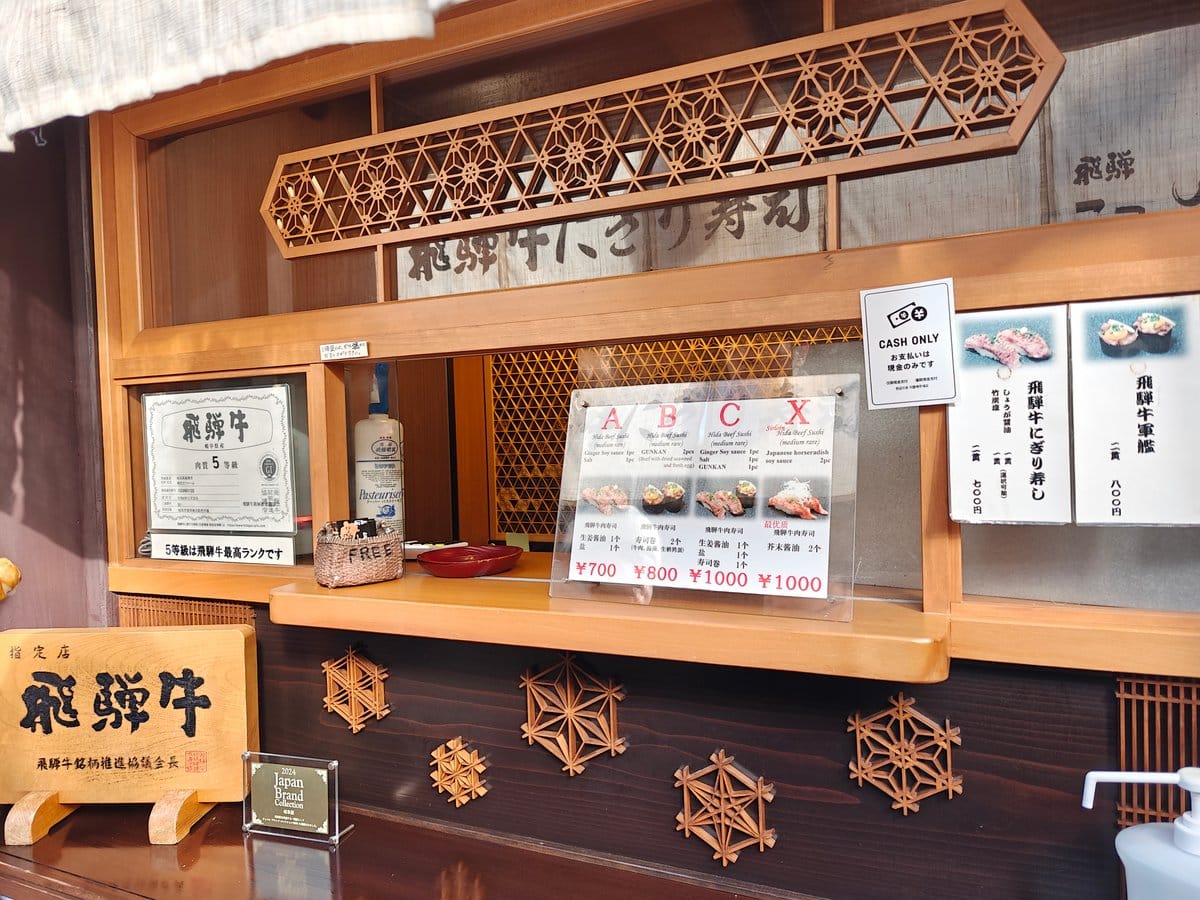
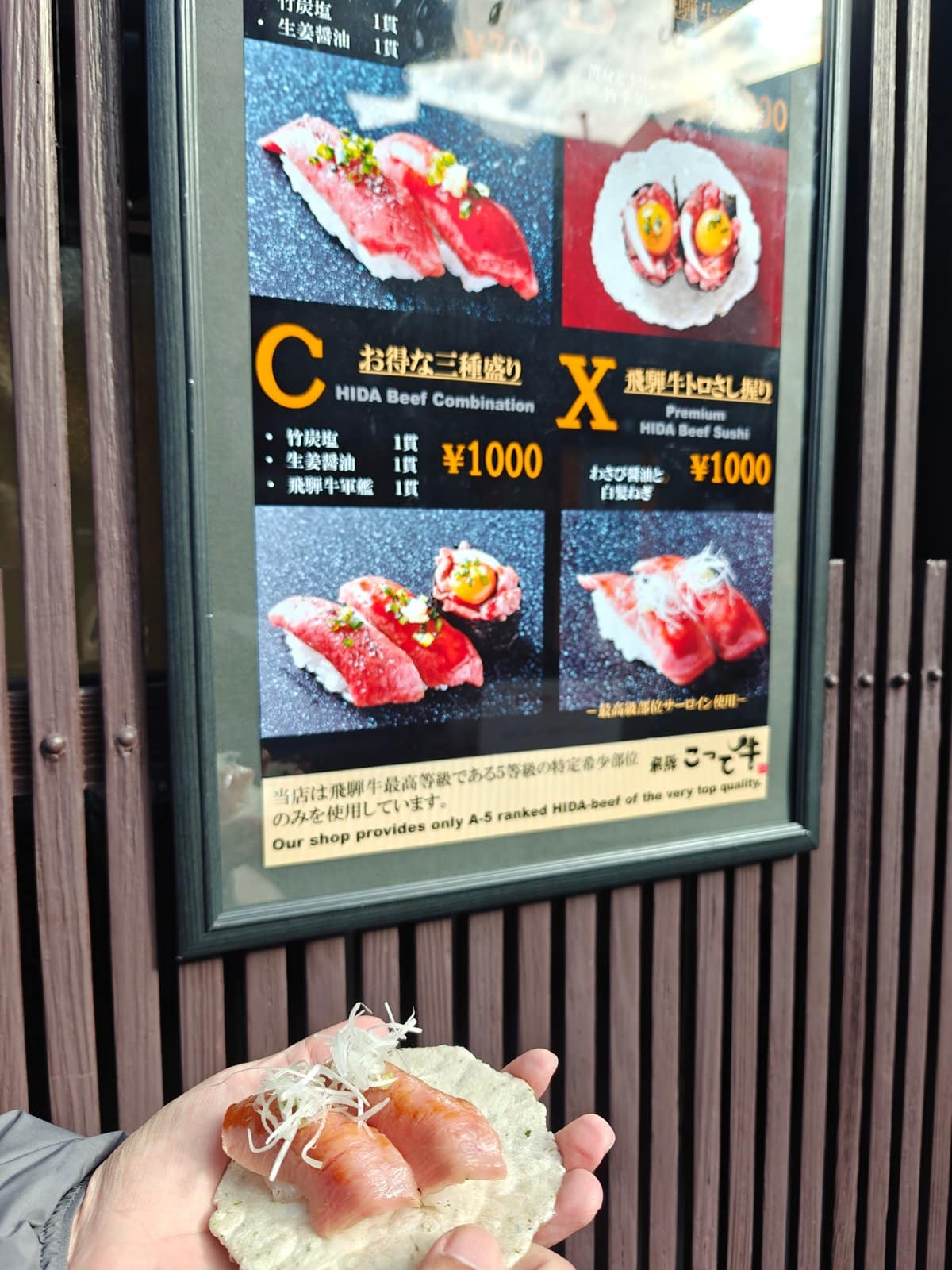
But by now, I was getting hungry rather than in the mood for more shopping, and I was feeling pretty cold. But then we stumbled upon the Hida beef sushi stand. They had some freshly cooked, lightly-seared nigiri (on rice) which I had to get a couple of and eat standing up on the street.
Really good and simple, the beef just melted in your mouth. Totally worth what they were charging. This is the one street food item to try if you try just one in Takayama.
There are long, narrow stretches lined with machiyas, which felt like the old Japan you imagine in your head.
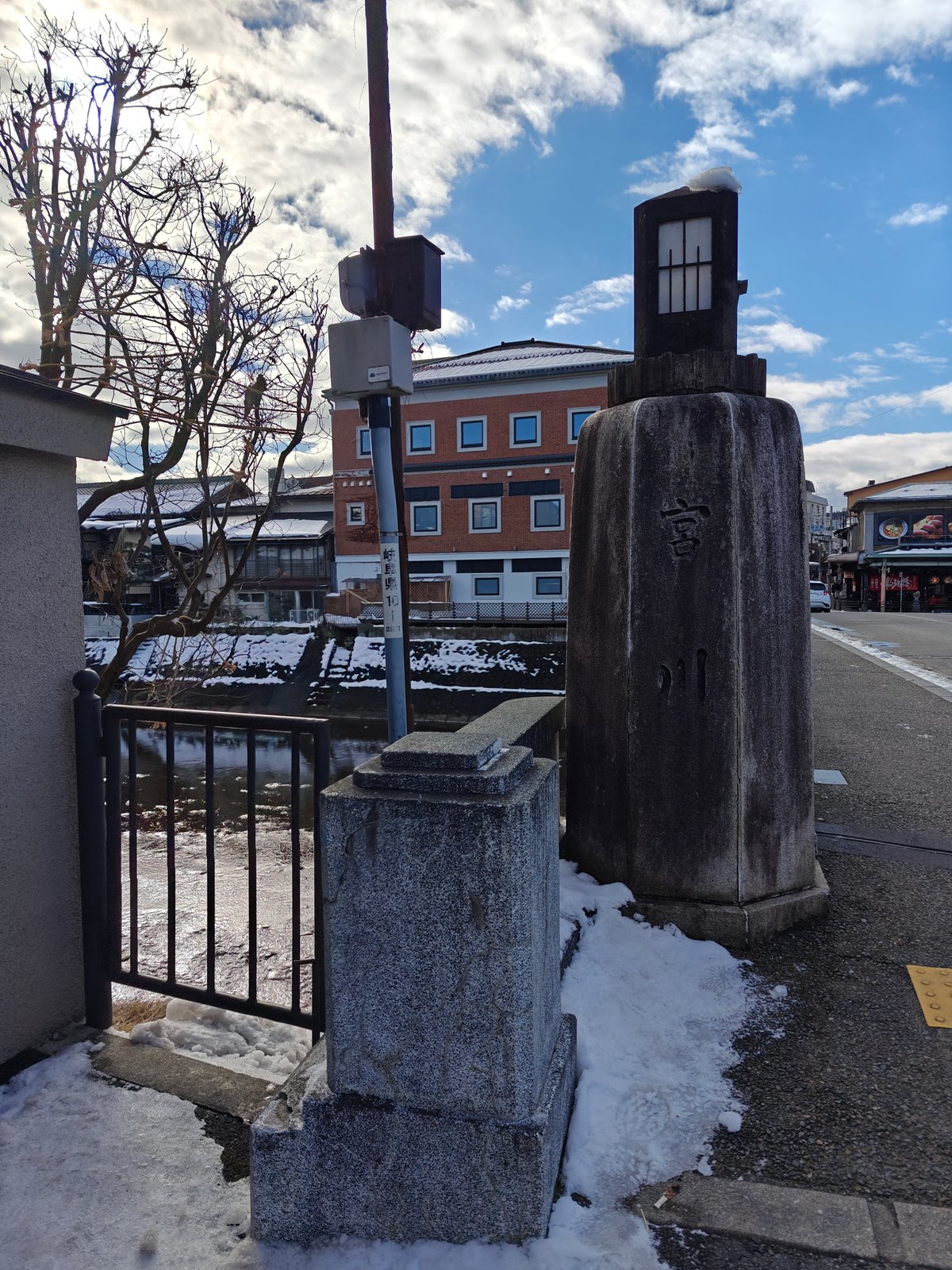
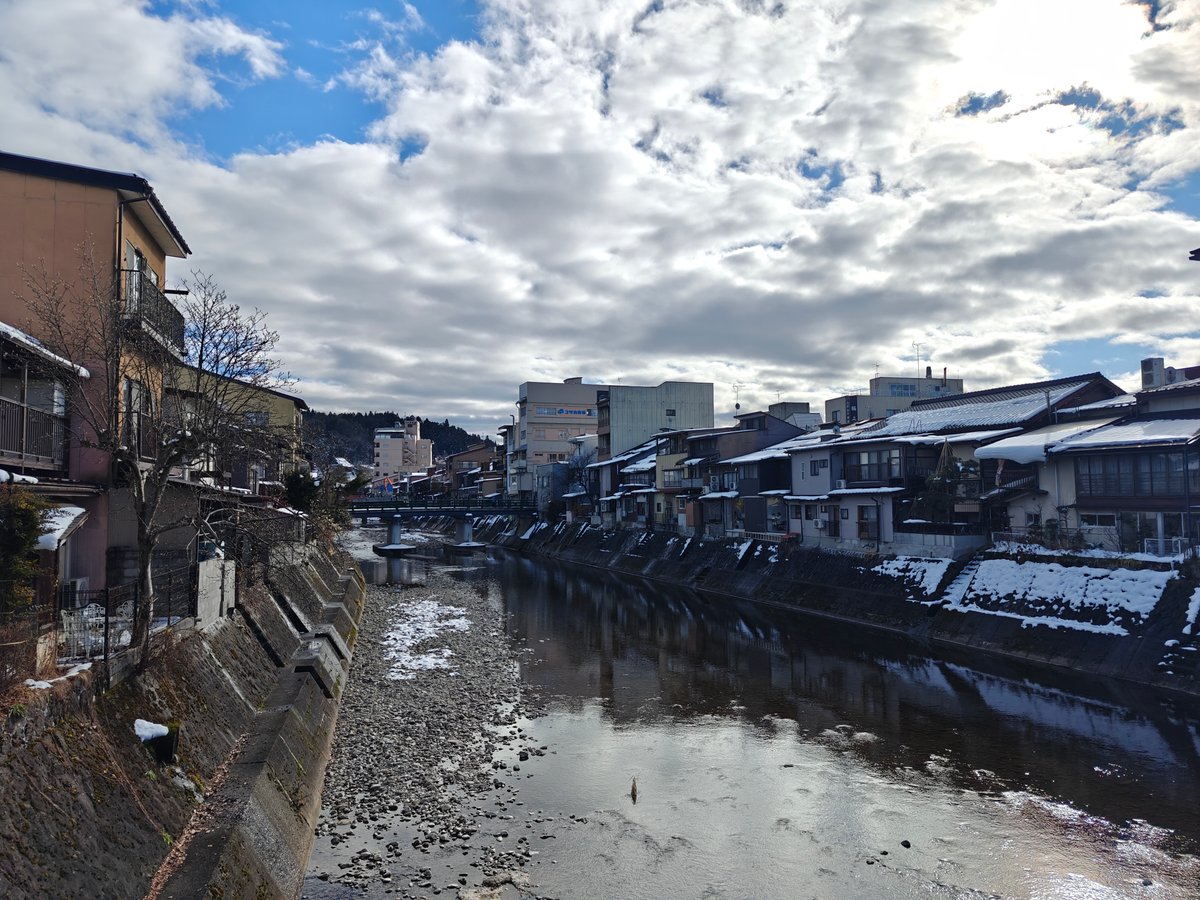
And then there are the covered arcade parts, which provided a welcome respite from the wind. It wasn’t like a theme park at all; this stuff is real. People actually live here, and work here.
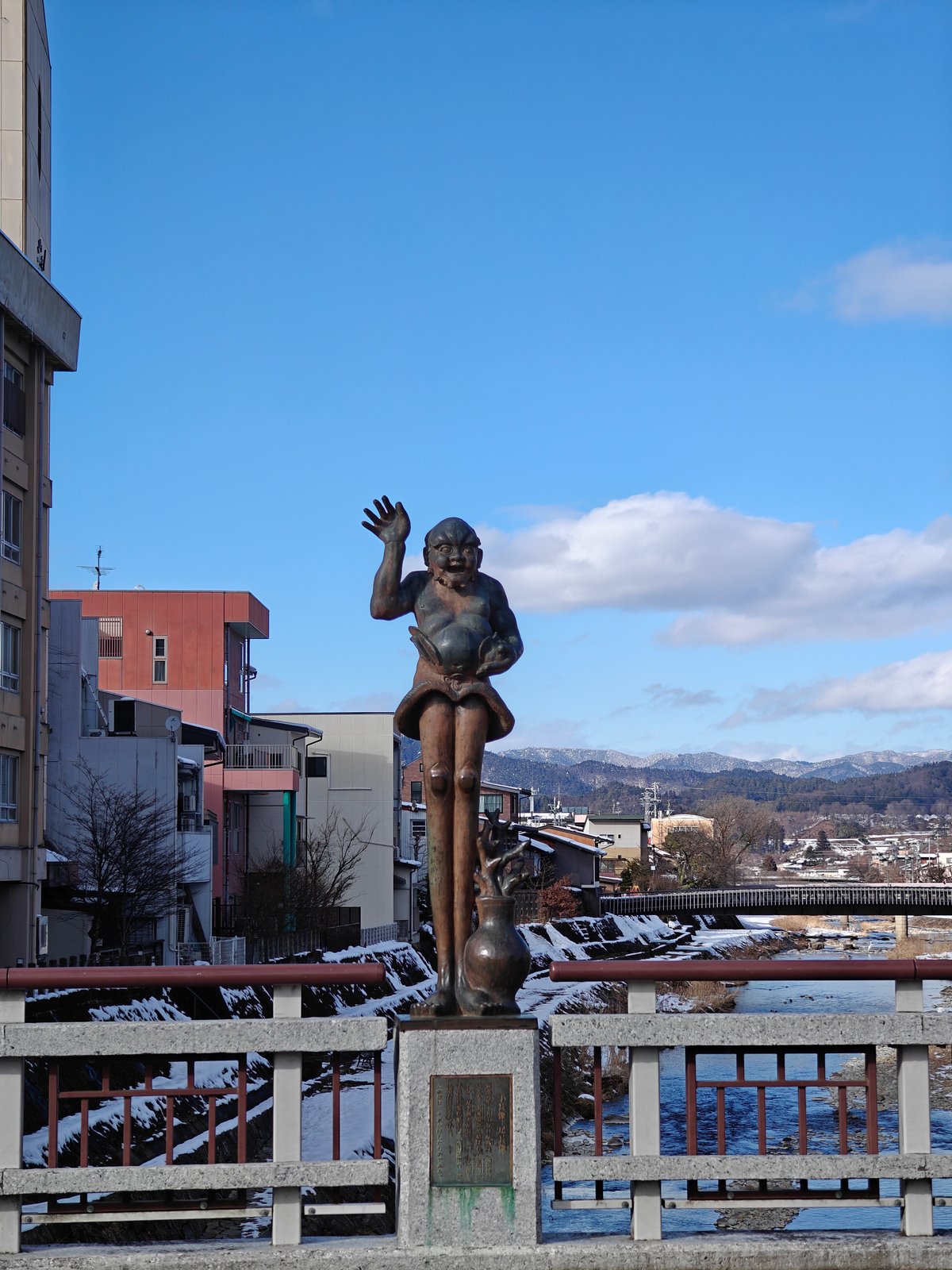
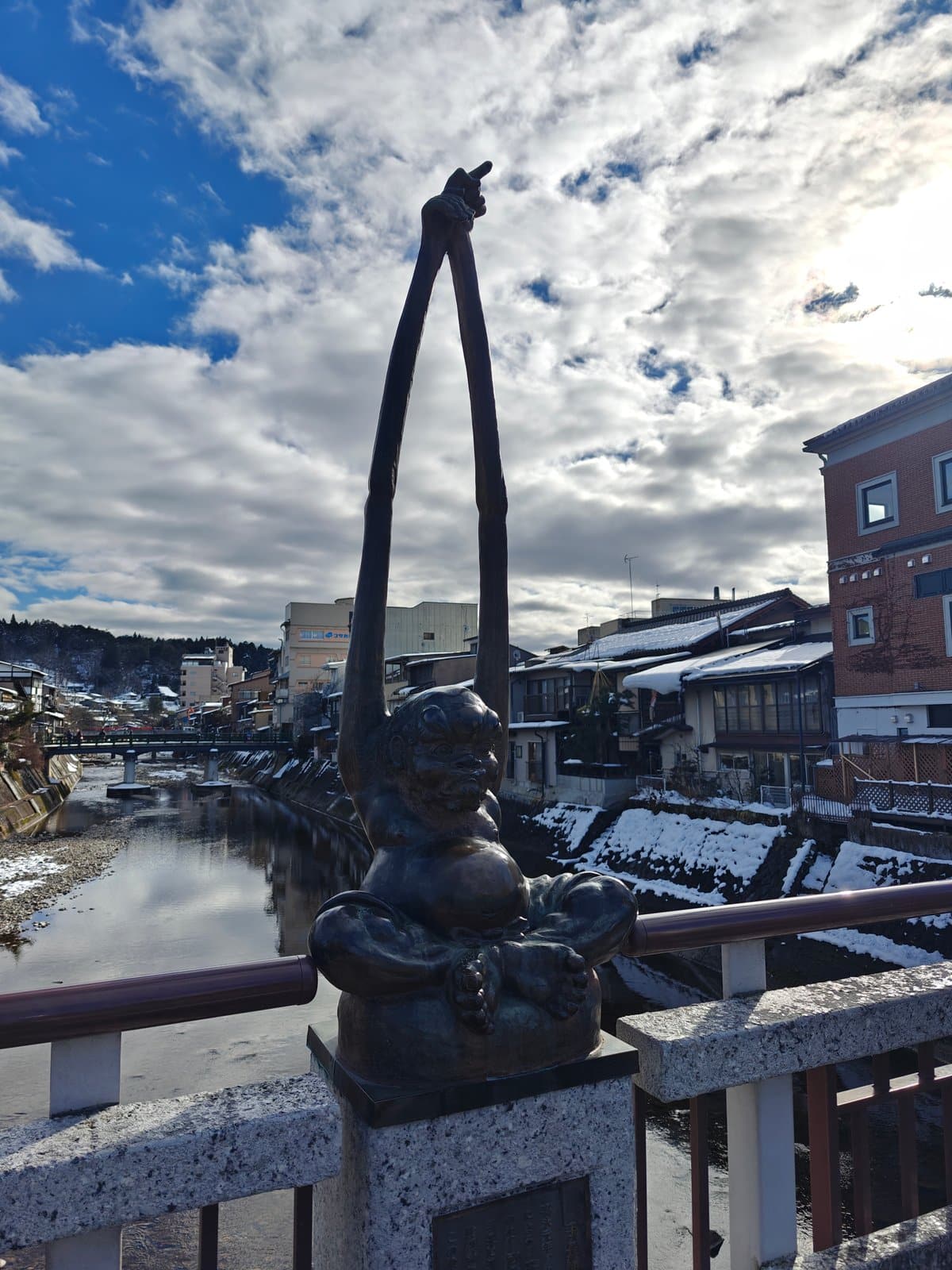
The point is that it never once felt touristy. A couple of times we walked across the Miyagawa.
In winter, the bed of the river was mostly low water and pebbles, quiet and unremarkable but I didn’t really mind. The bridges had those bronze statues, yokai and other folk figures…
That I only spotted for the first time on my second pass. If you’re going over one, it is worth a glance.
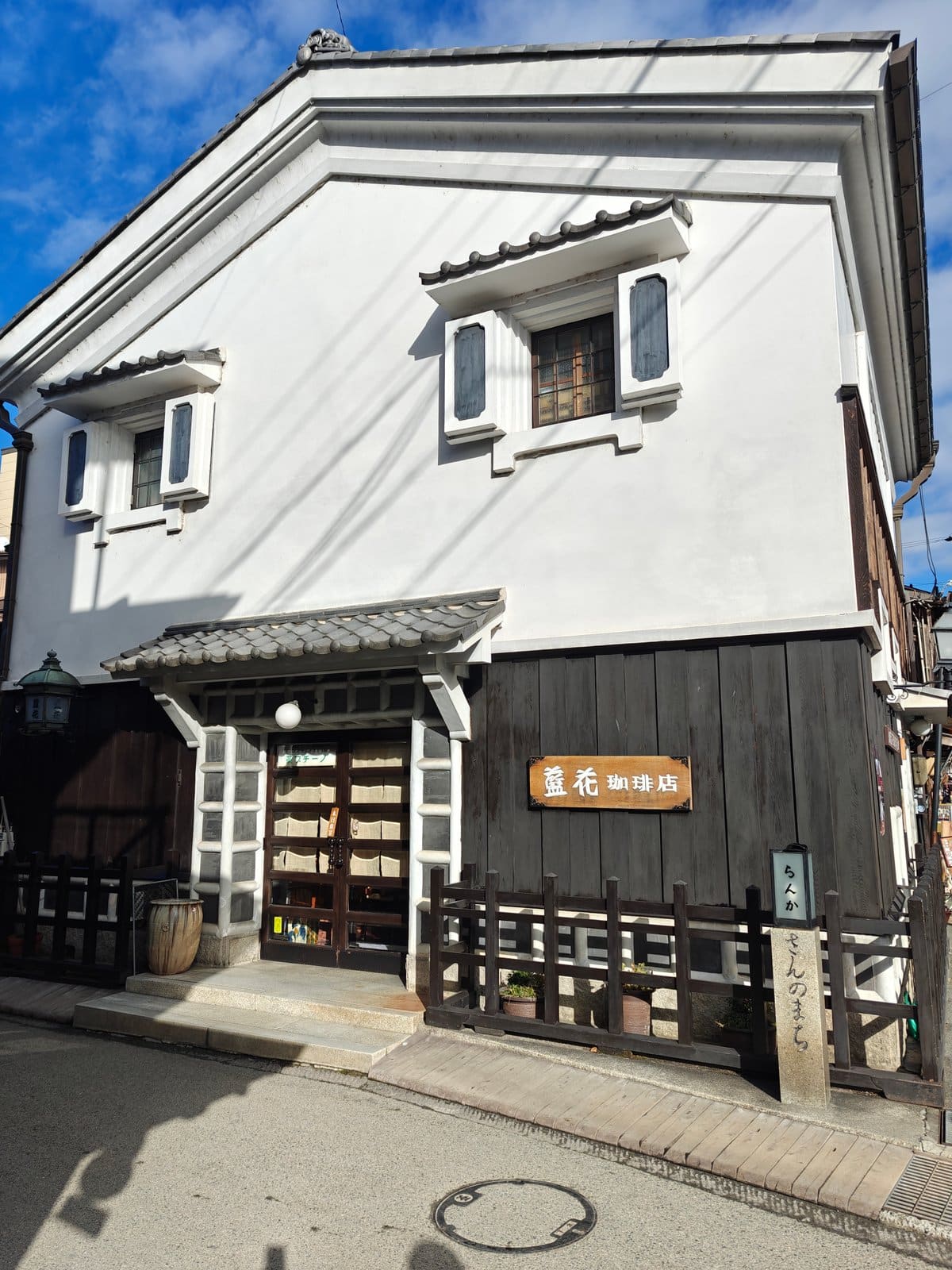
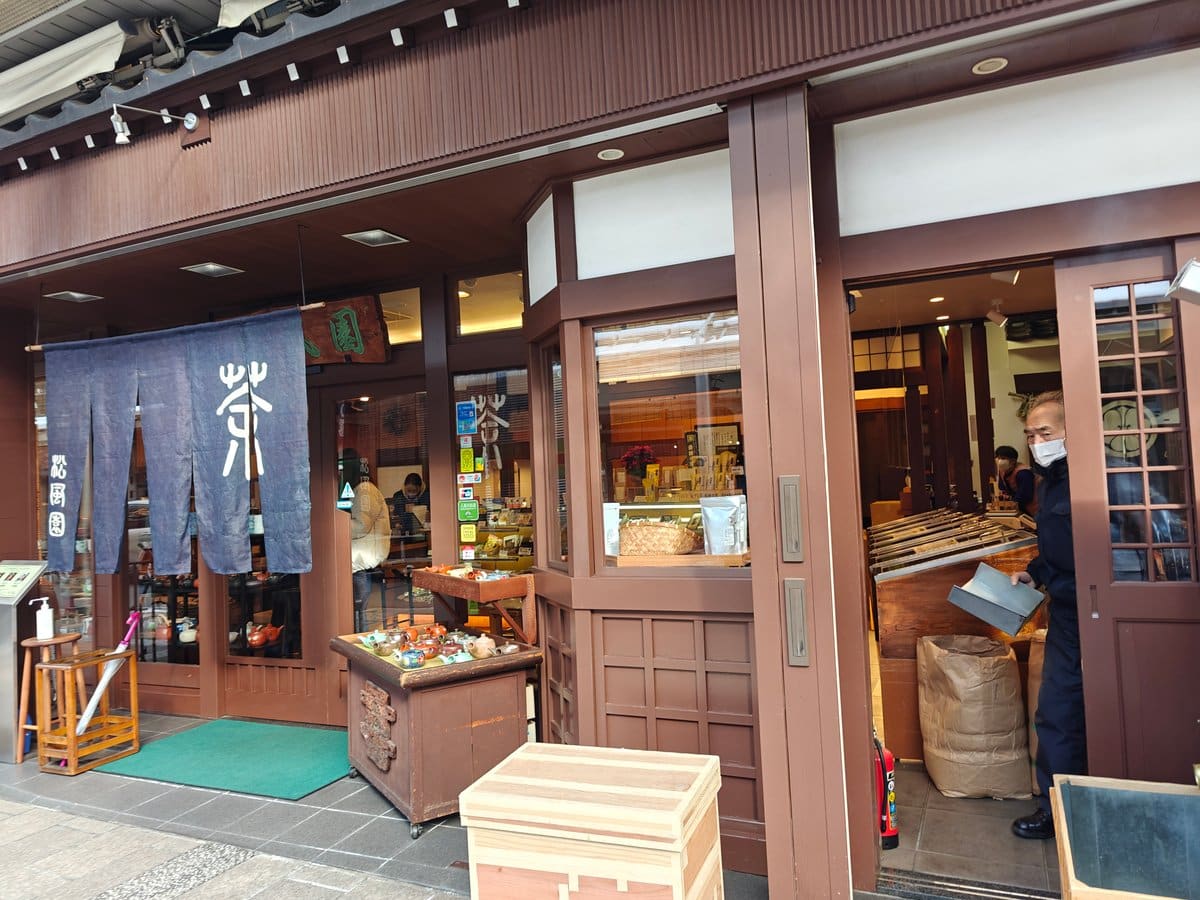
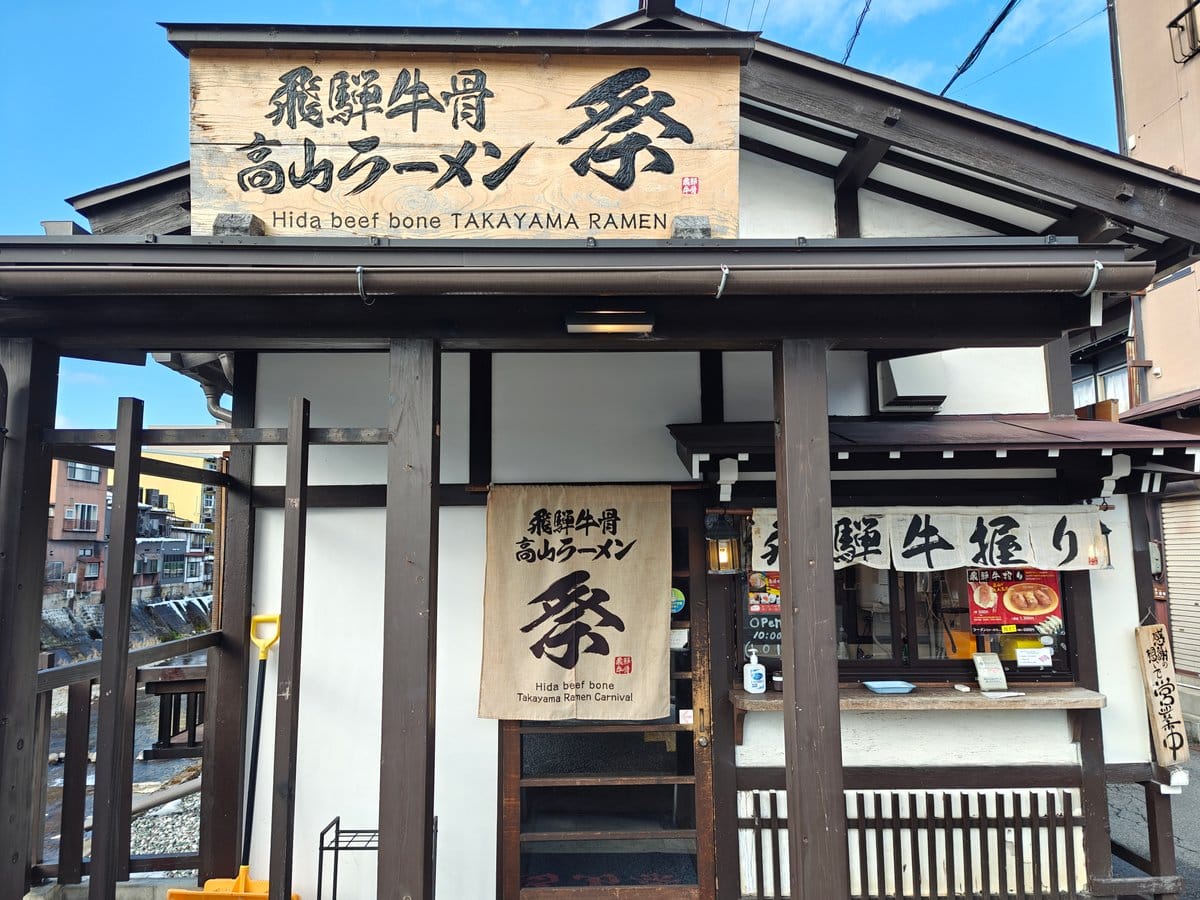
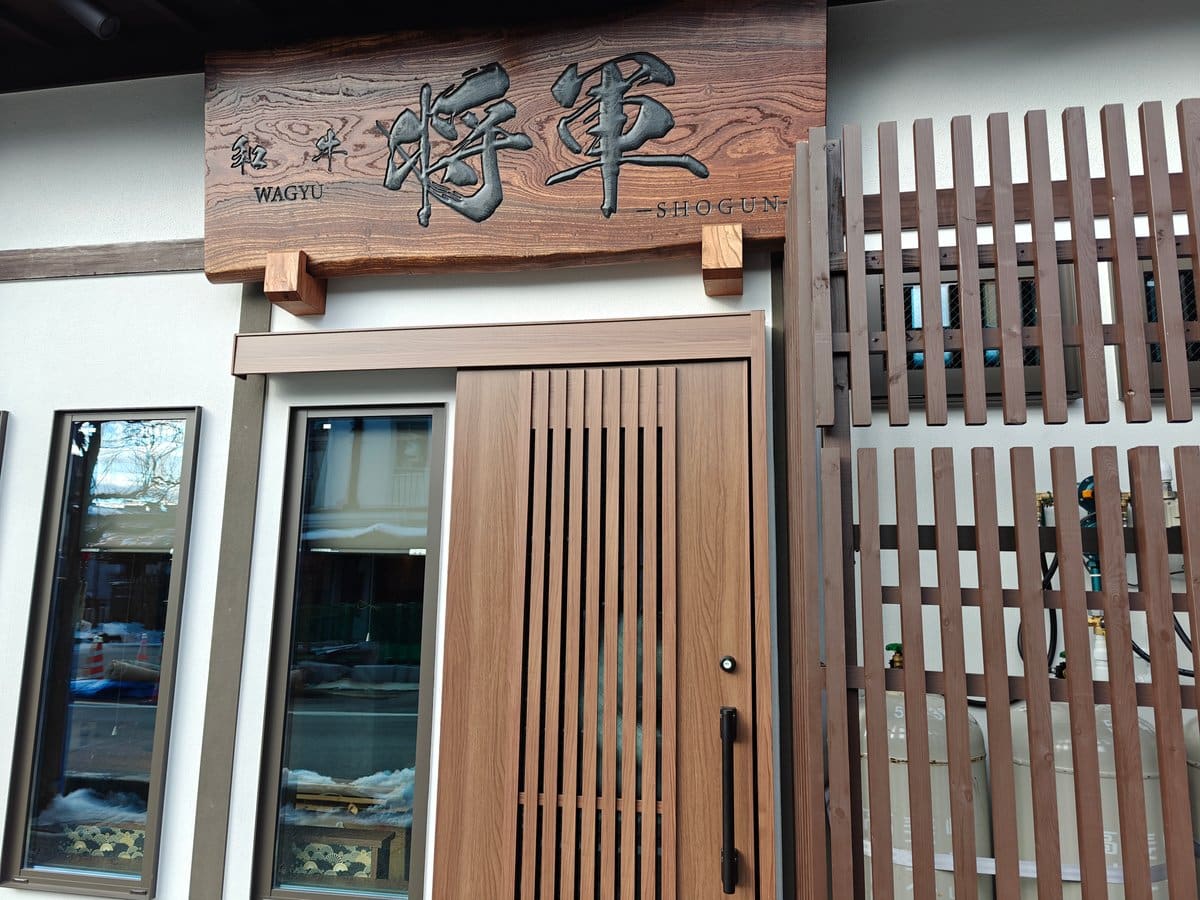
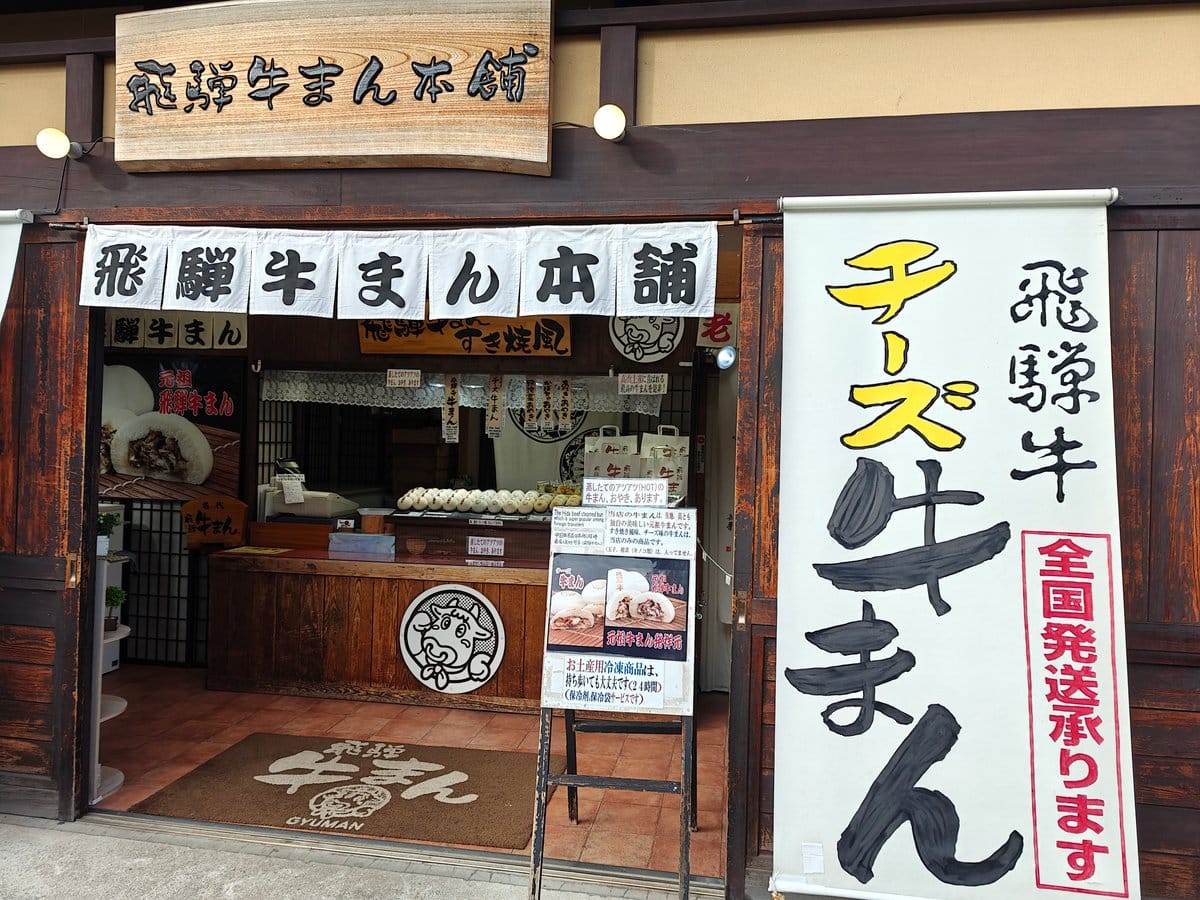
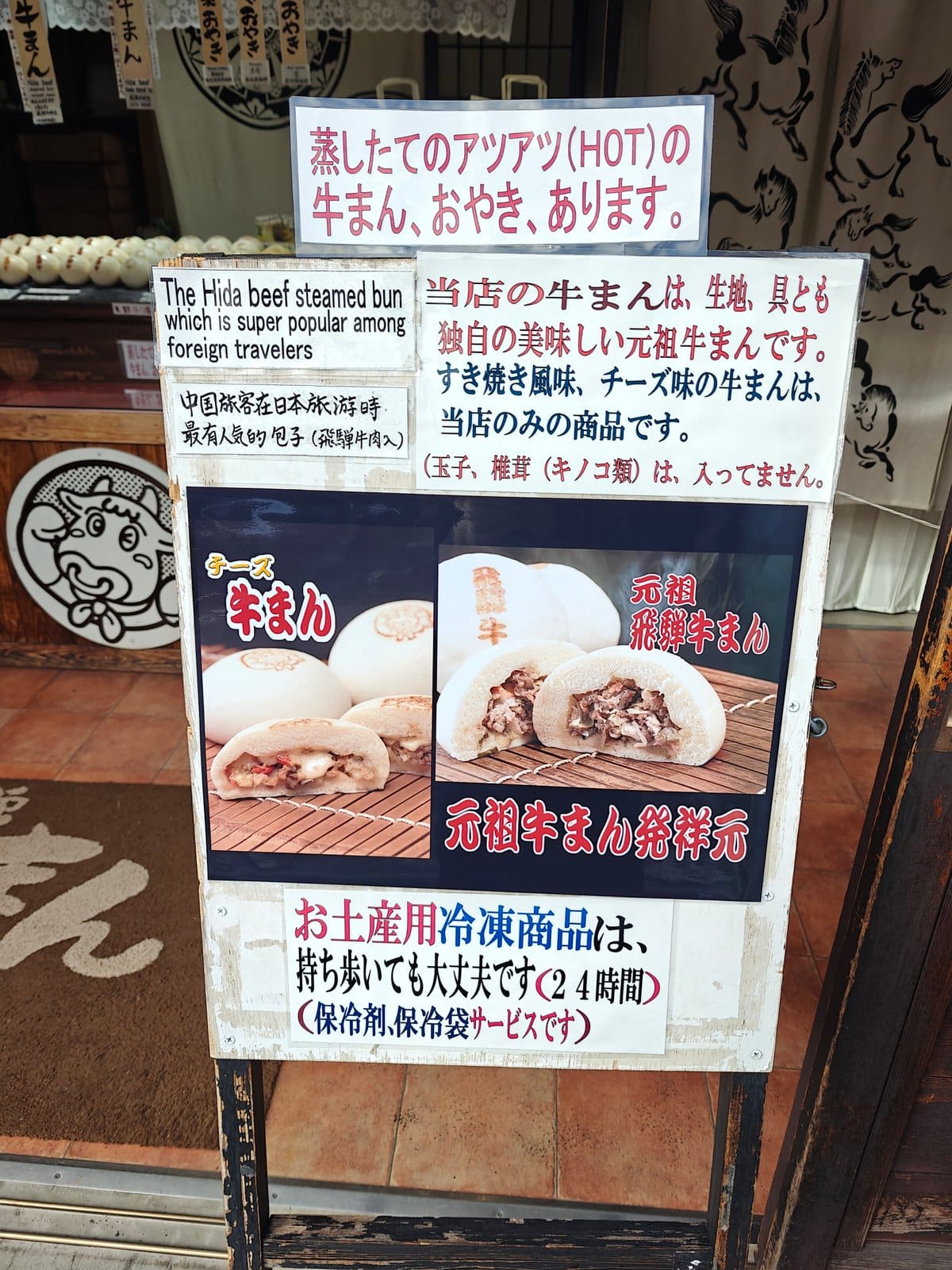
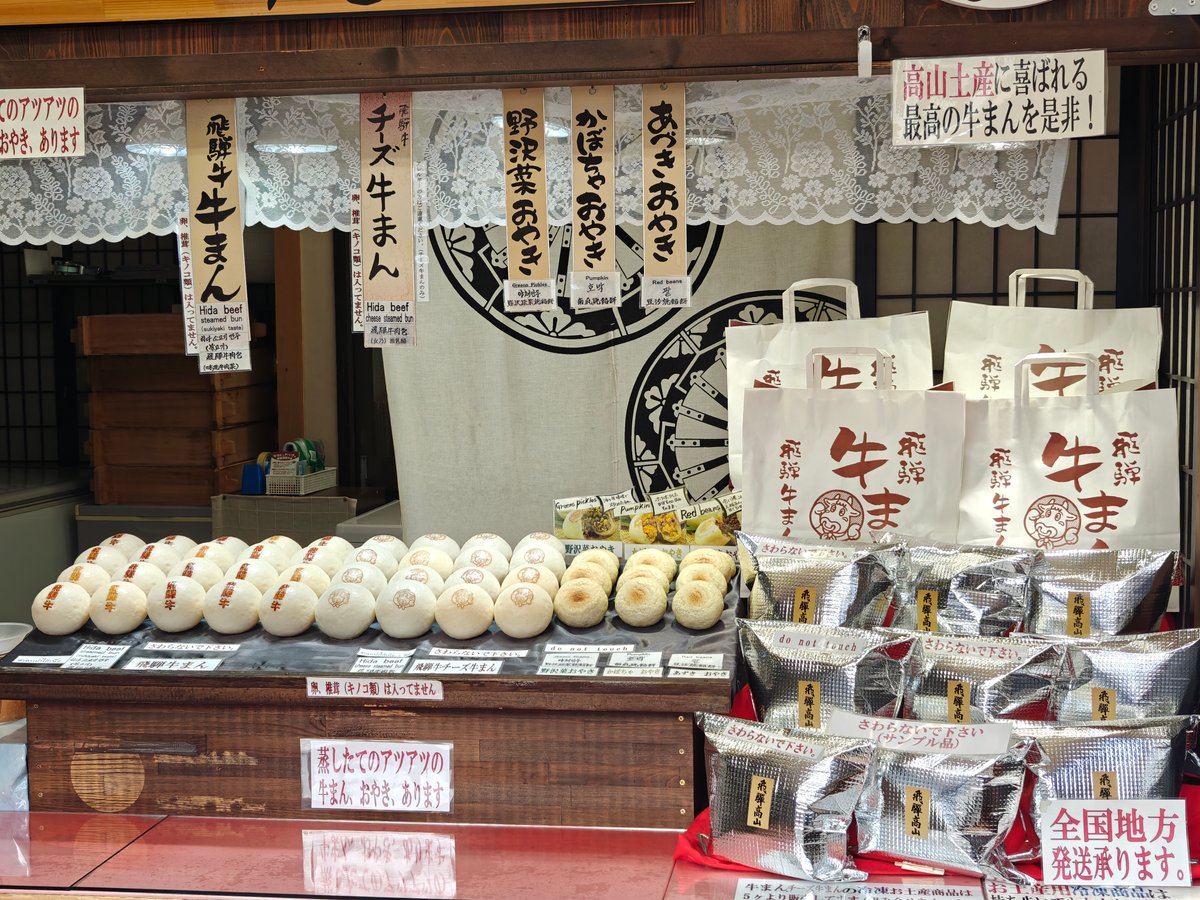
There were some shops along the river too: a ramen place, a tea specialist, and an unexpected, modern wood-fronted shop that fit right into the scene. We didn’t stop in too many of them, we simply kept walking and absorbing everything. At this point, however, we stopped in at a steamed-bun shop selling Hida beef buns.
They were hot and cheap, and just what I craved on a cold afternoon.
The fillings was generous and the buns were fluffy. If I ever get a chance to return, I’d eat here again.
Sake Vending Machine
The side streets got even quieter as it began to snow lightly. We walked by the Historic City Memorial Hall. This is somewhere else we returned to later.
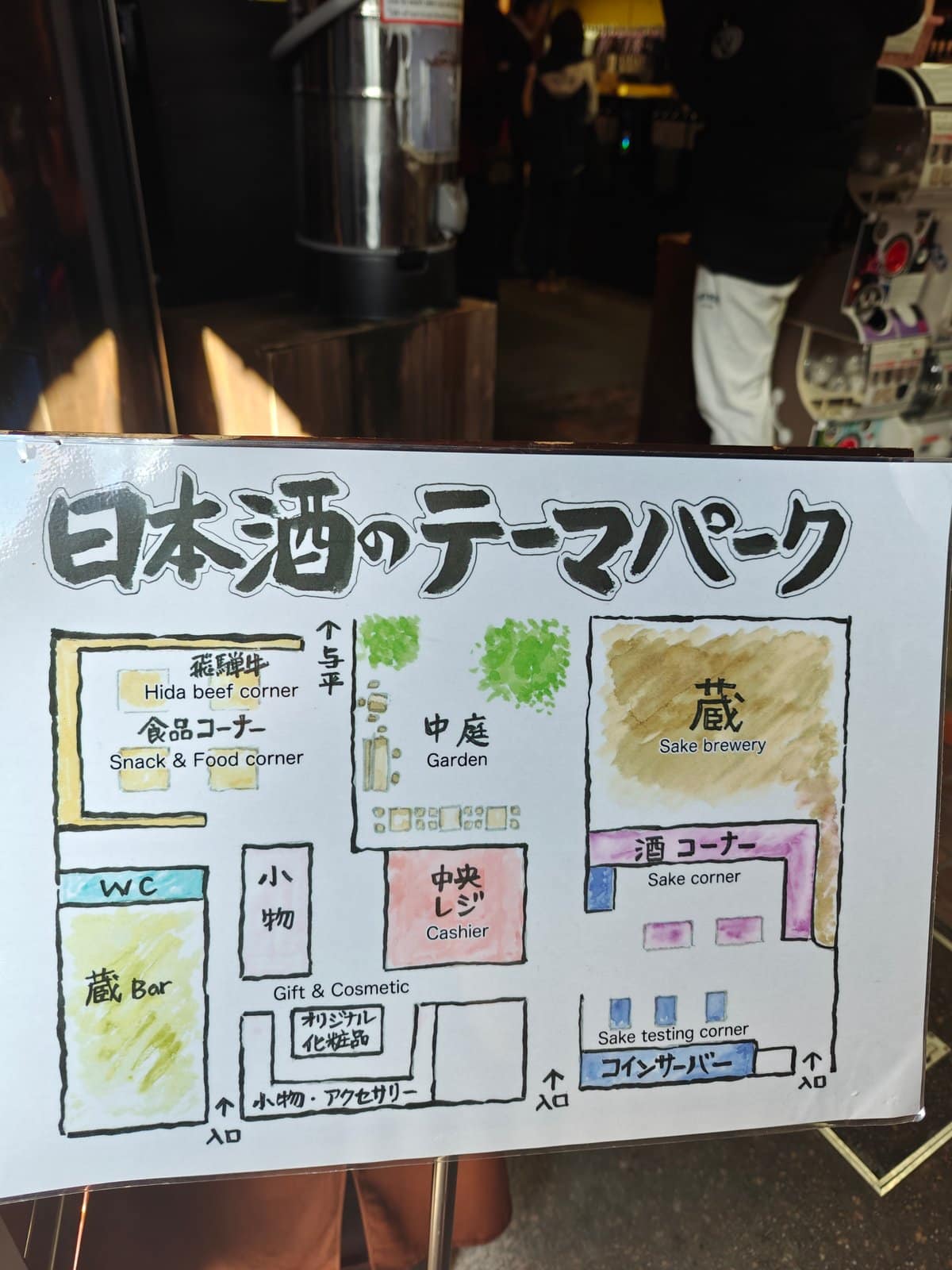
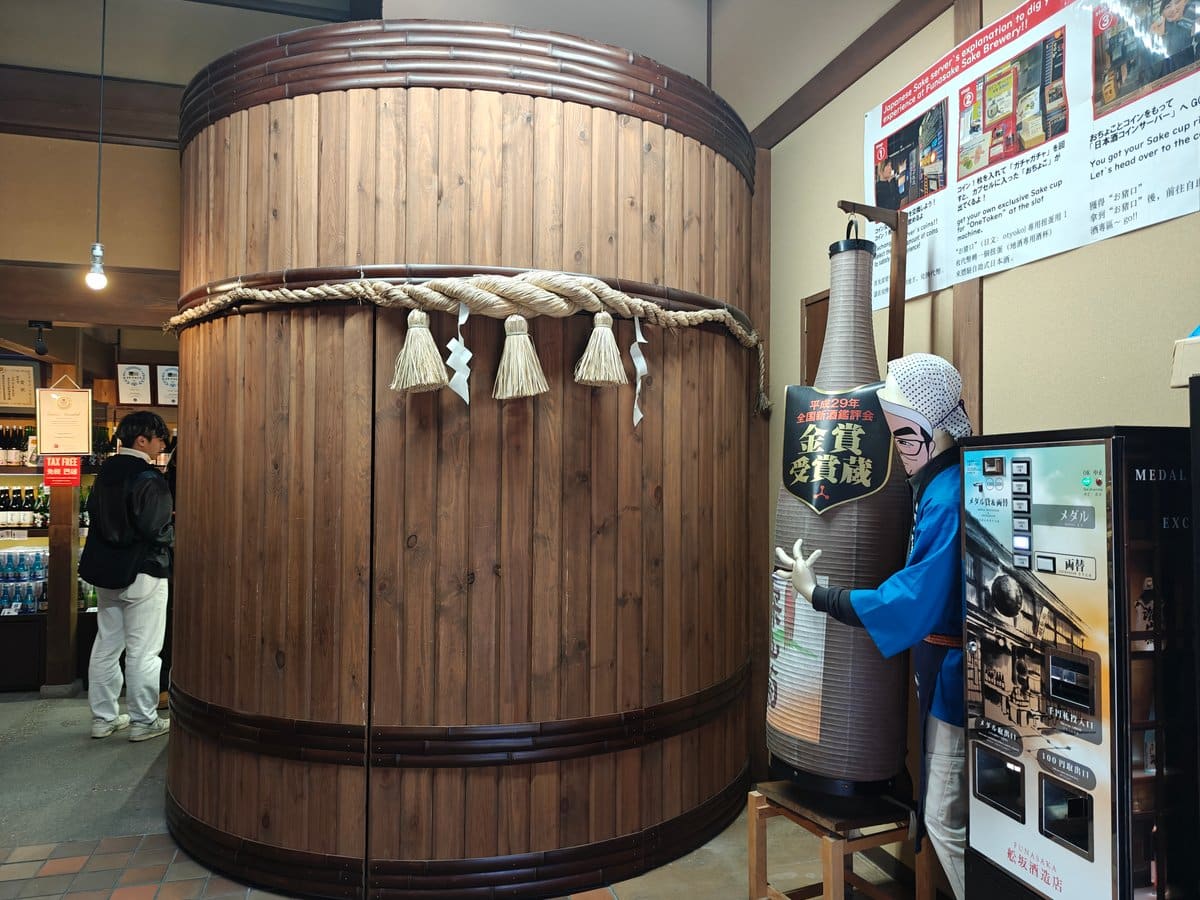
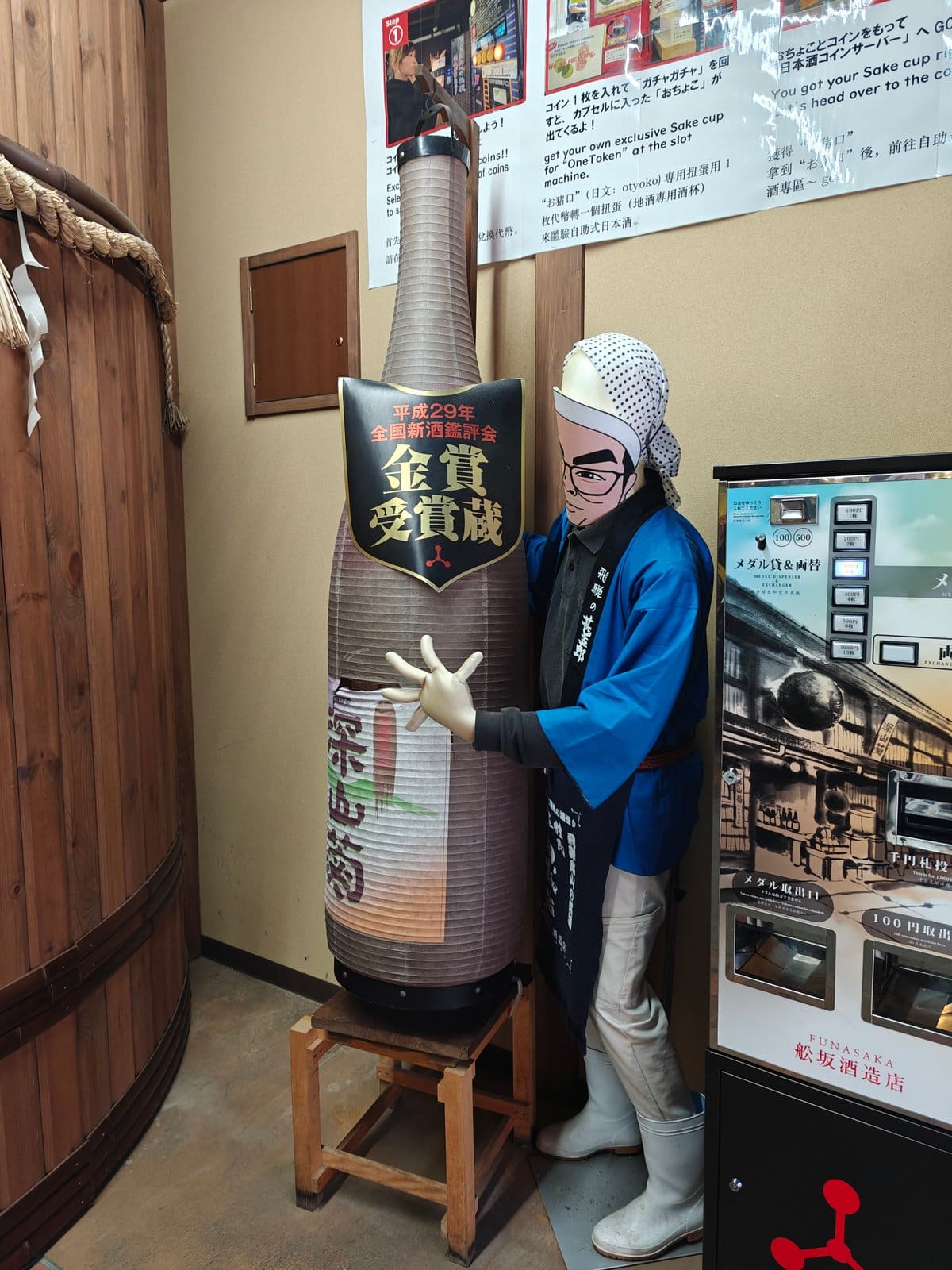
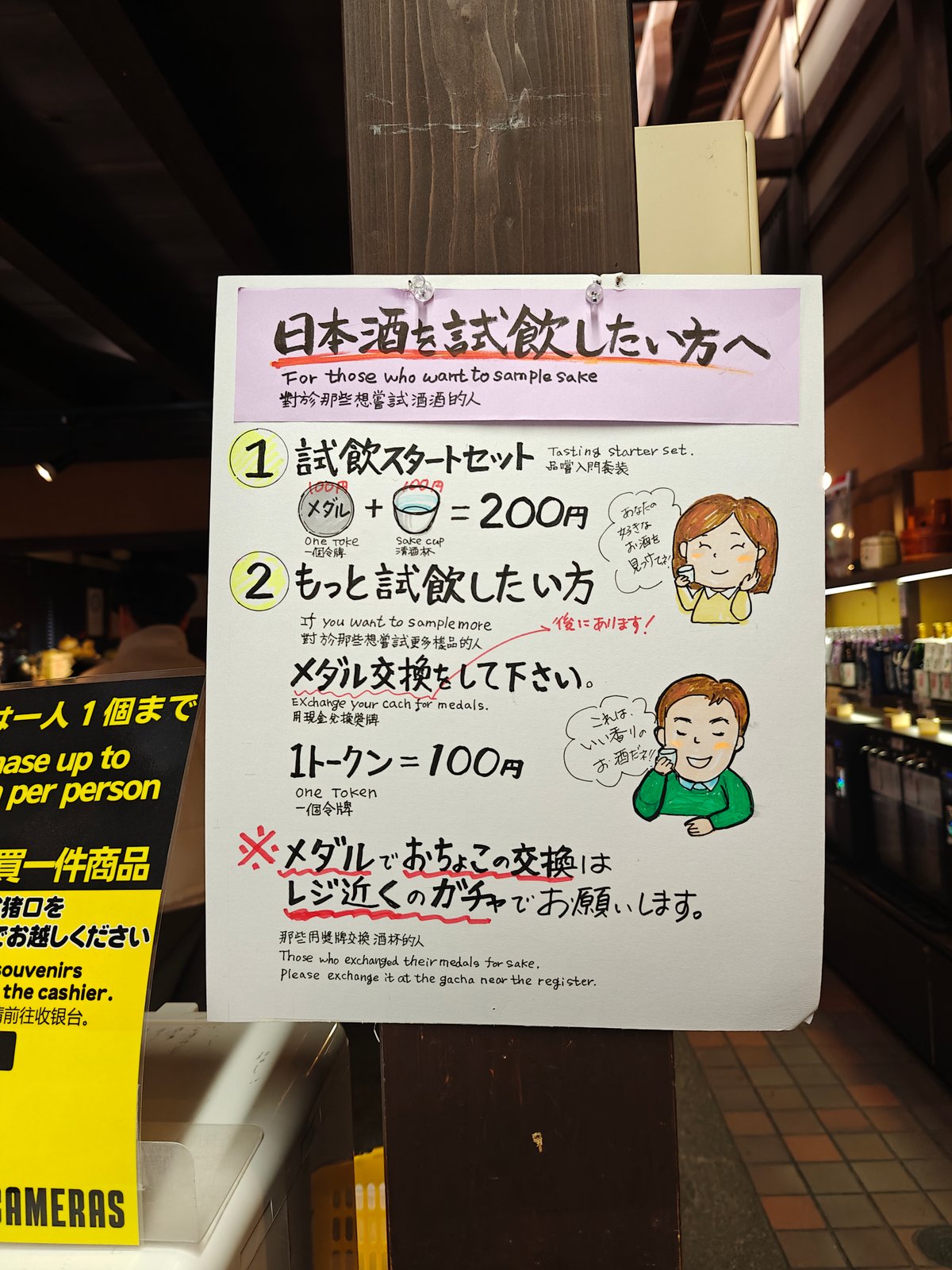
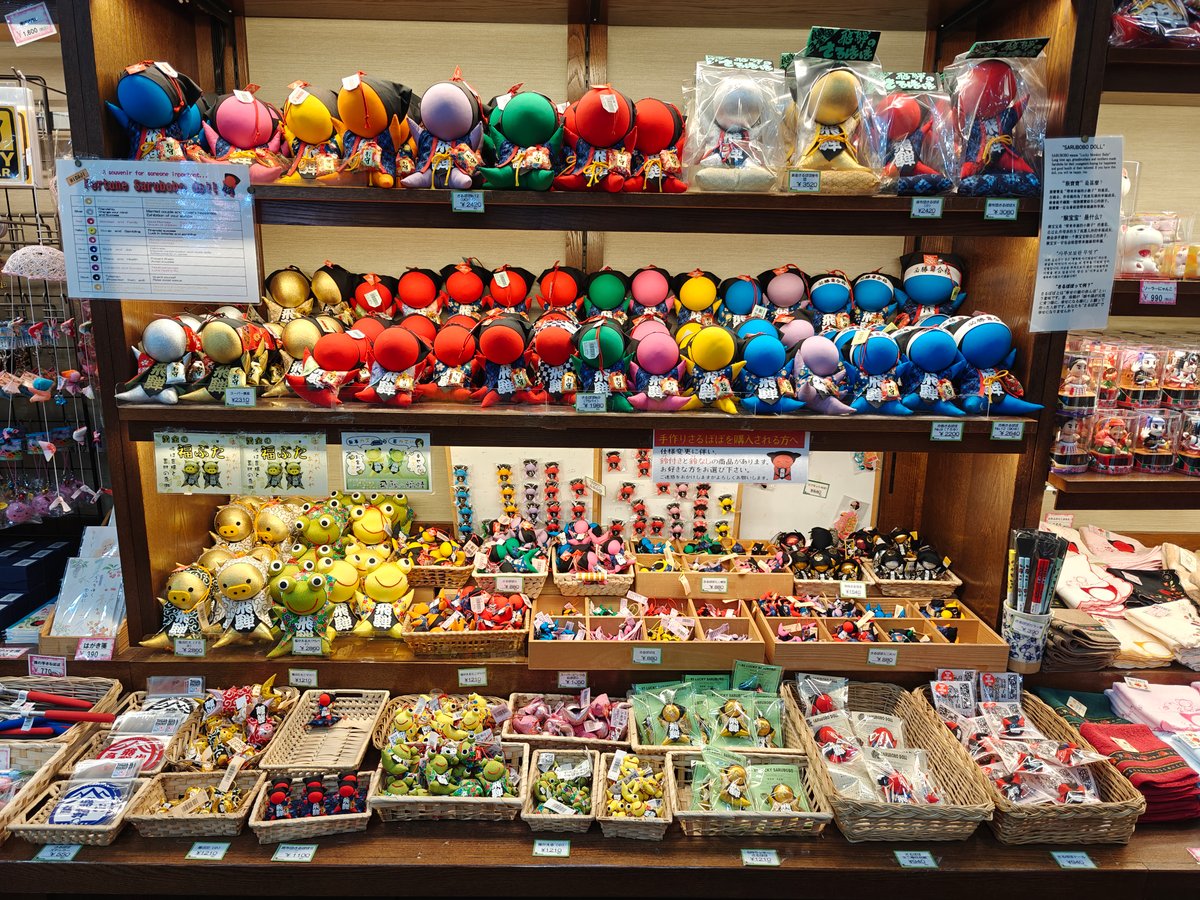
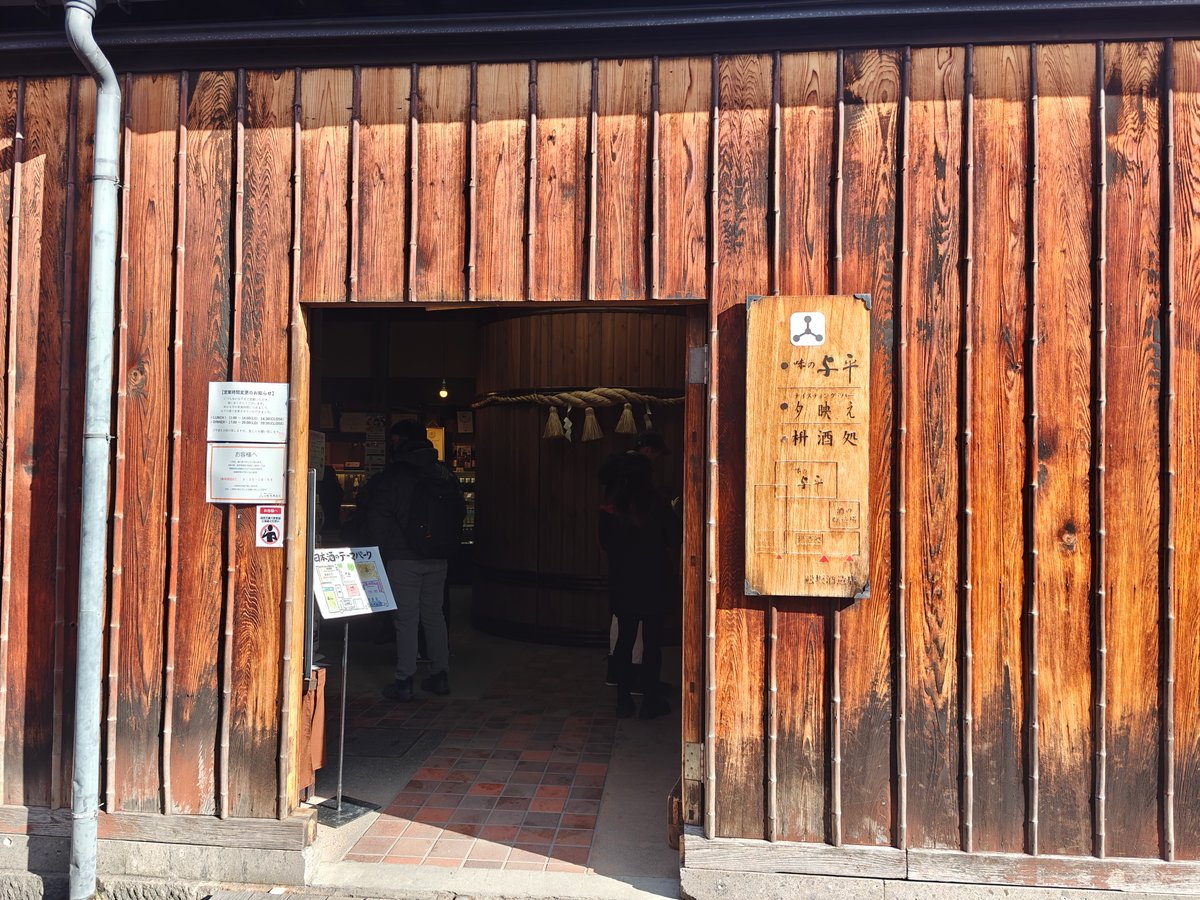
Everywhere you turned, there were shelves filled with sarubobo dolls, those little faceless folk charms that Takayama’s famous for. Hard to miss, but no, I didn’t buy one. Tucked down one of the main old-town streets we found Funasaka Sake Brewery.
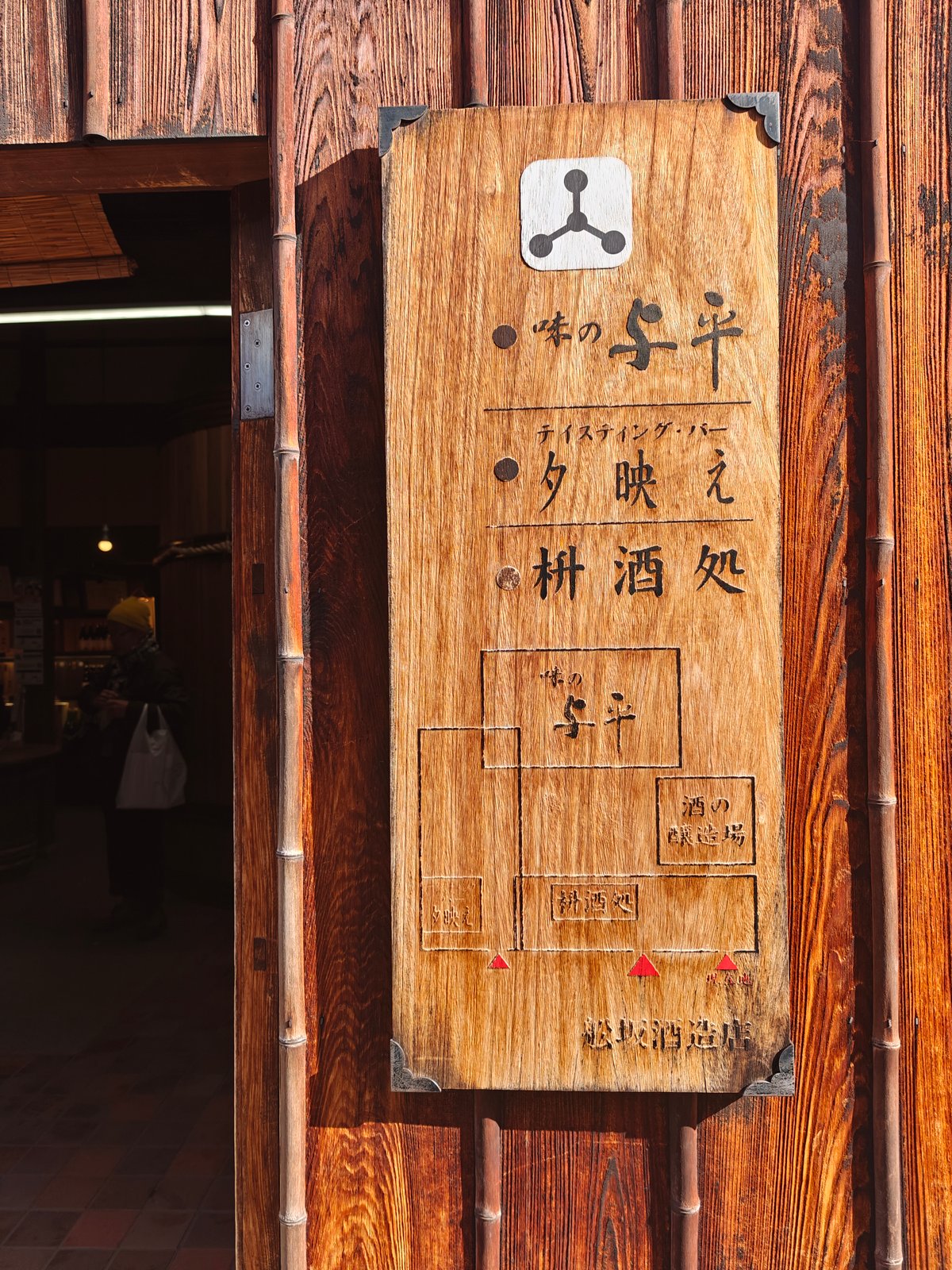
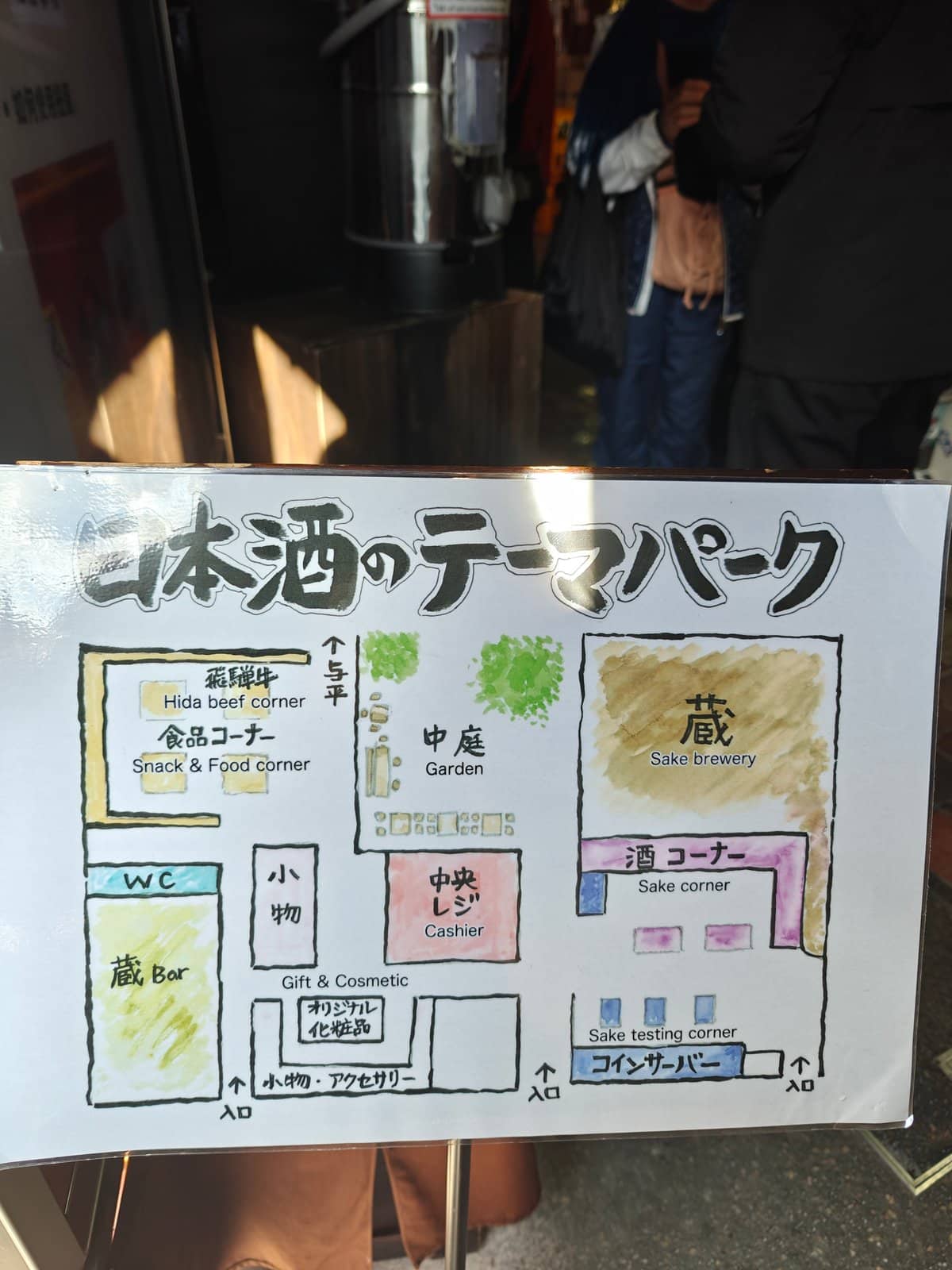
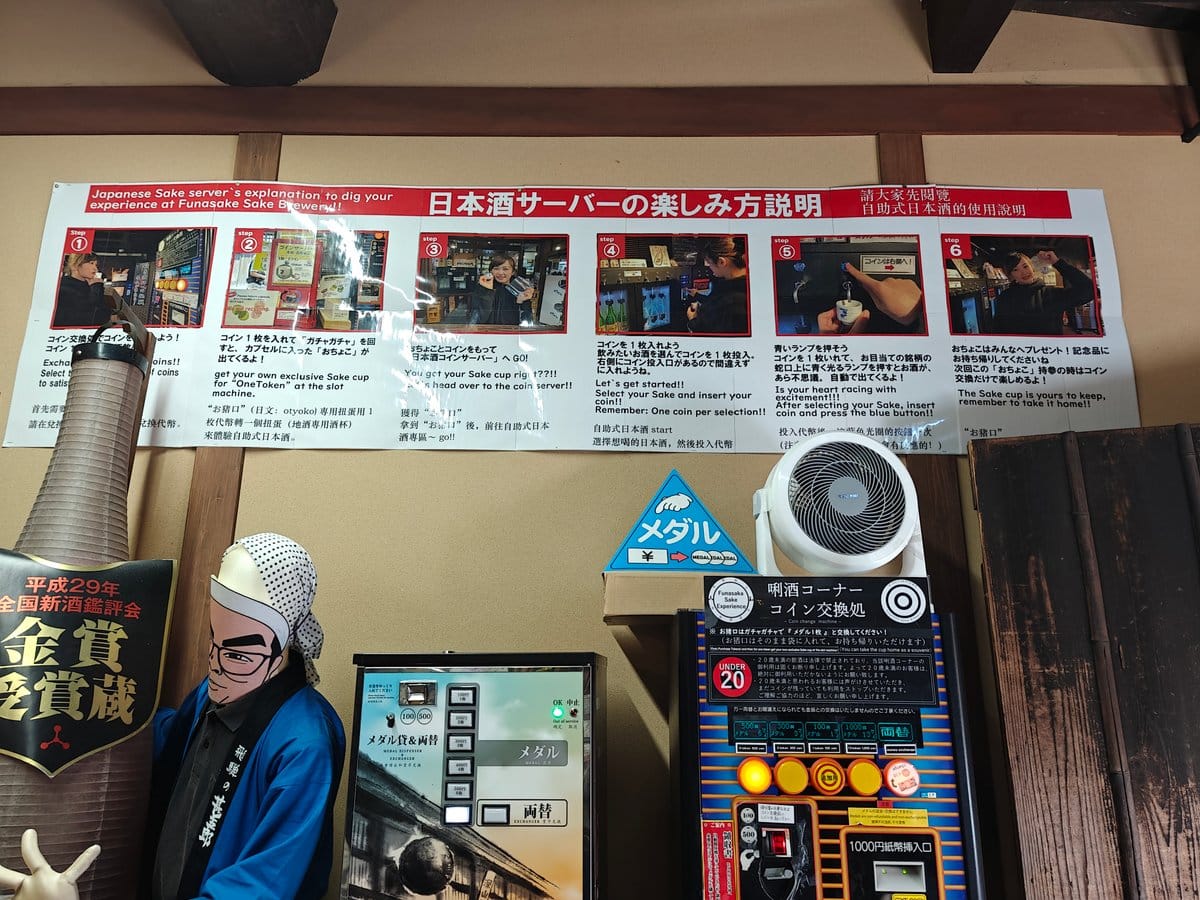
First I noticed the carved cedar sign outside and then I spotted the painted floor map touting that it was a sake theme park. We expected to do nothing more than a quick tasting and leave, but we ended up spending nearly an hour here. Inside the tasting room there was this giant vat and massive decorative sake bottle and all these hand-painted posters and maps explaining how everything worked.
In a good way, it felt homemade and enthusiastic. Everything were posted.
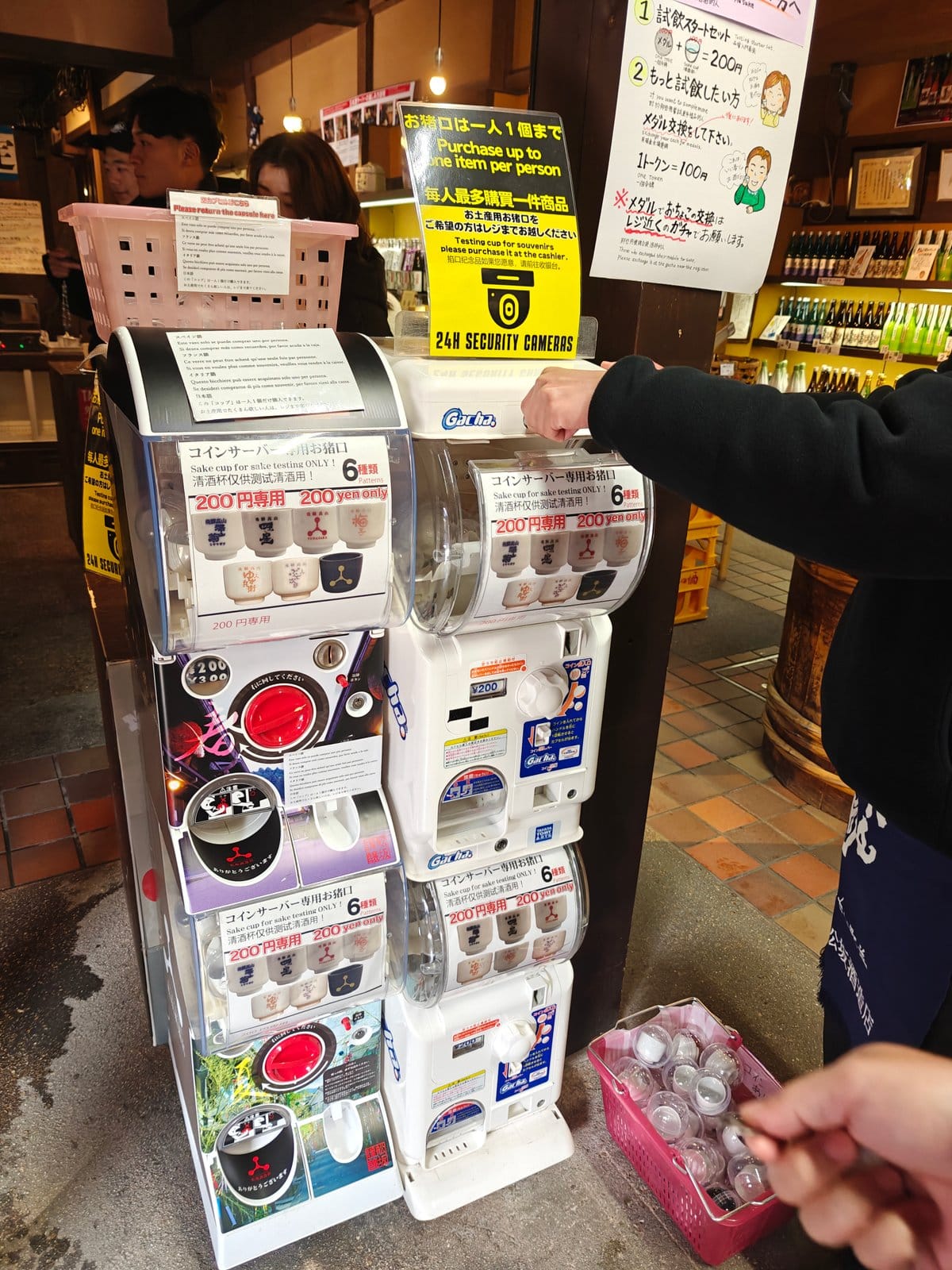
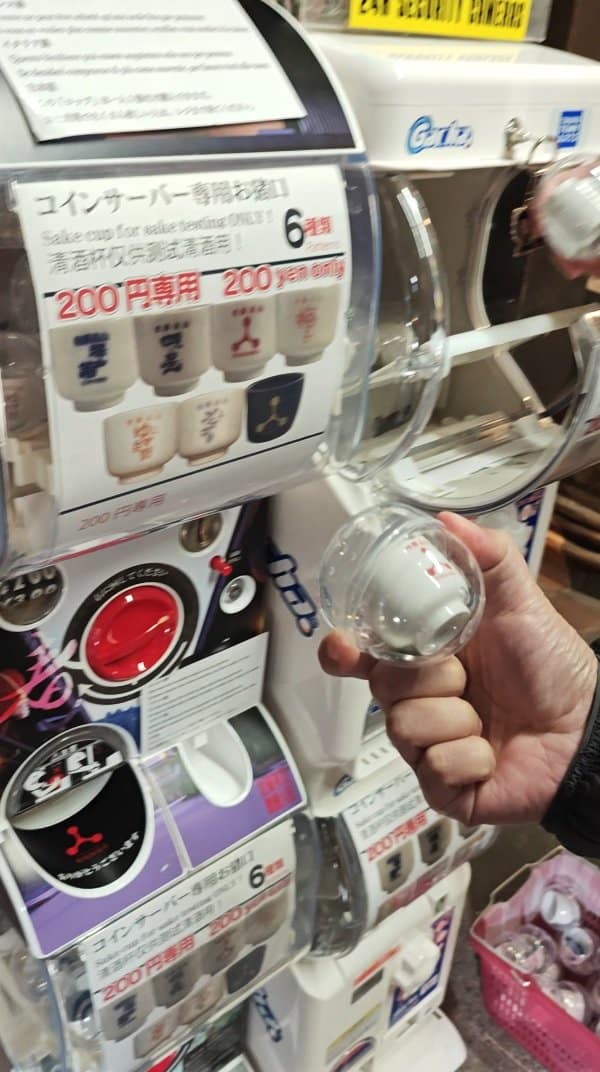
Here are the instructions: basically, get a tasting cup from a gachapon machine, select your sake from the vending machines, and pour yourself some samples. Easy enough. I used the gachapon and recieve a little ceramic cup inside a capsule.
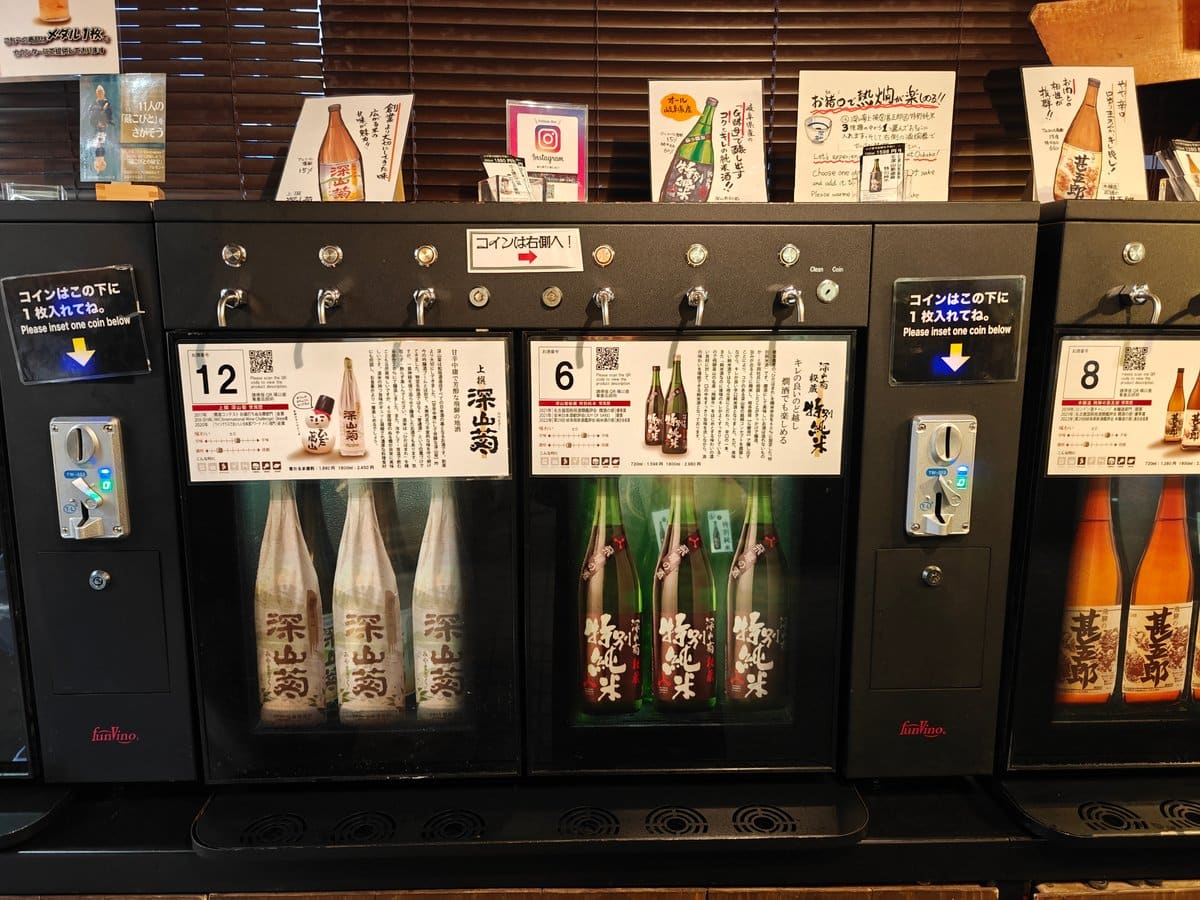
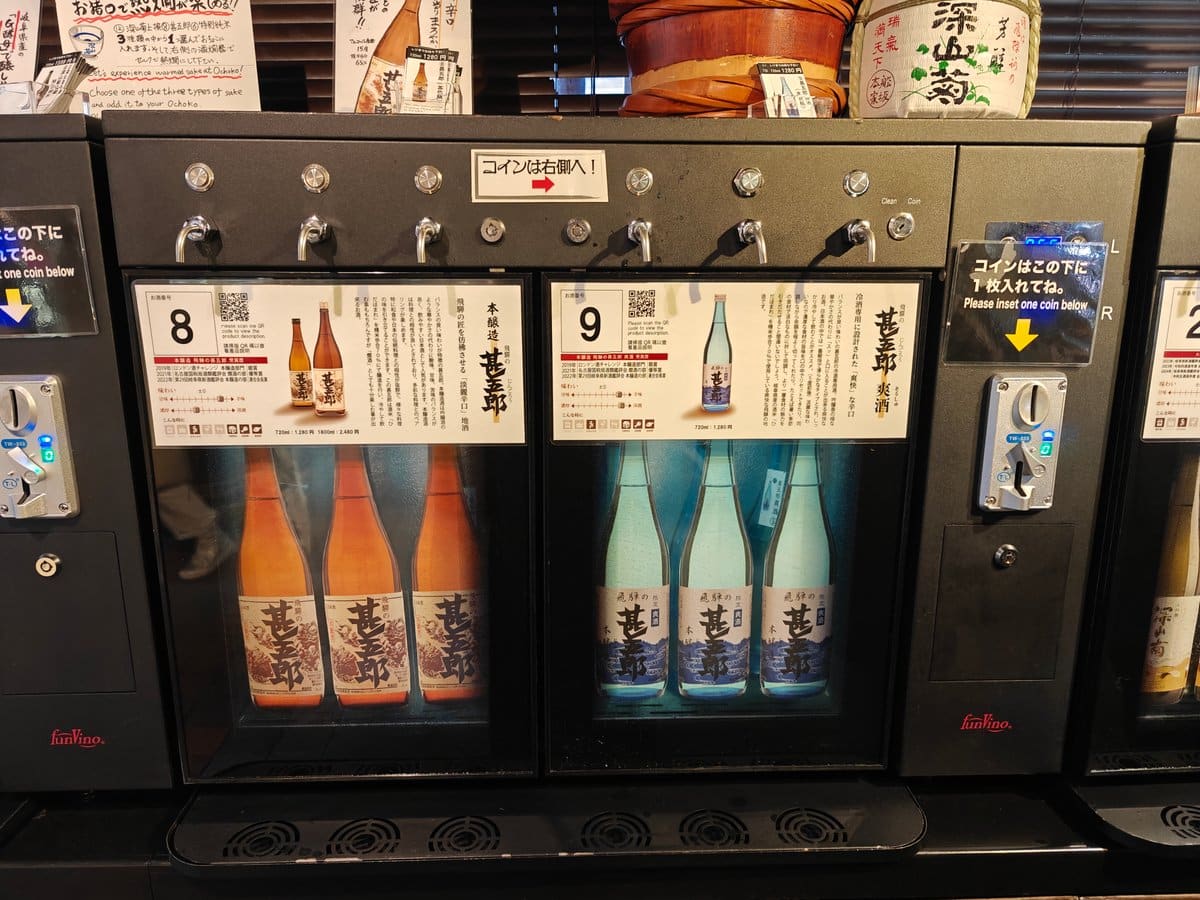
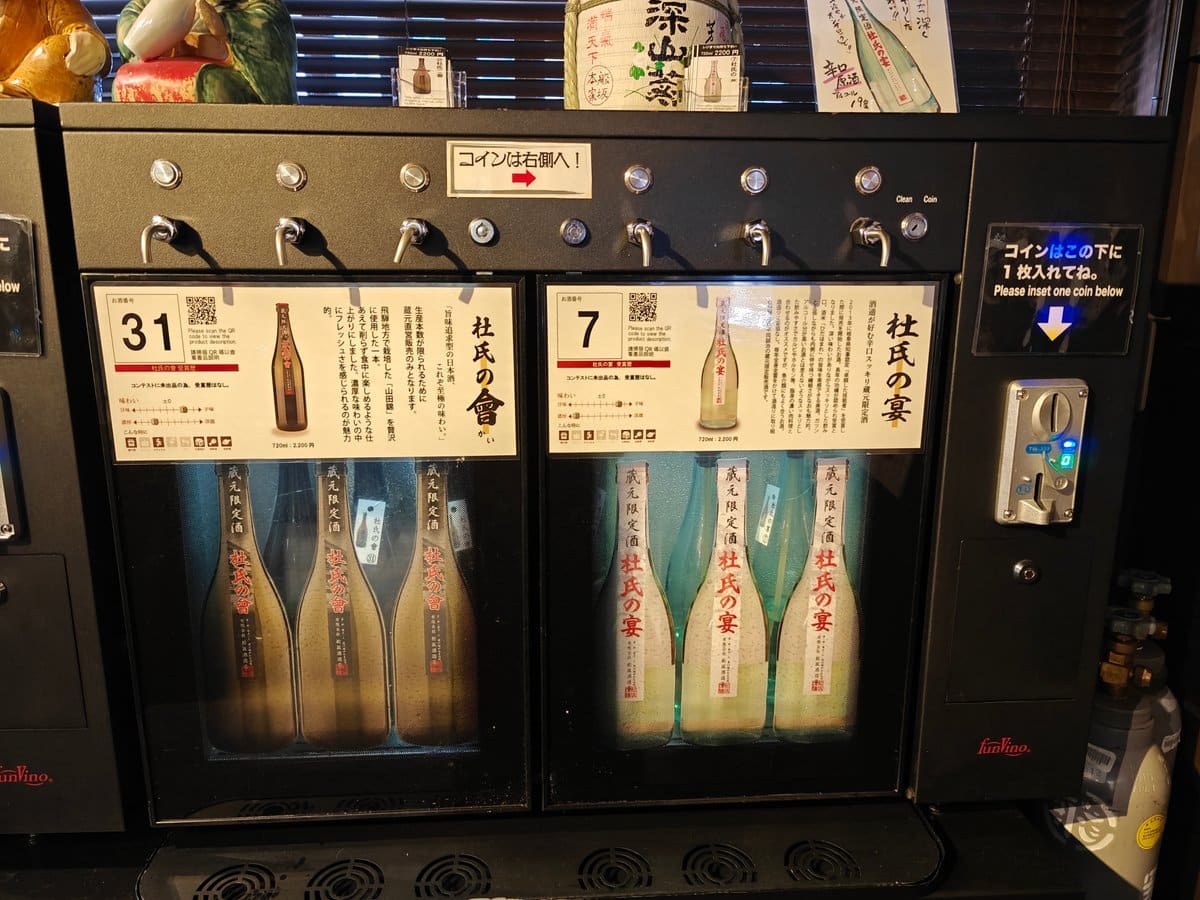
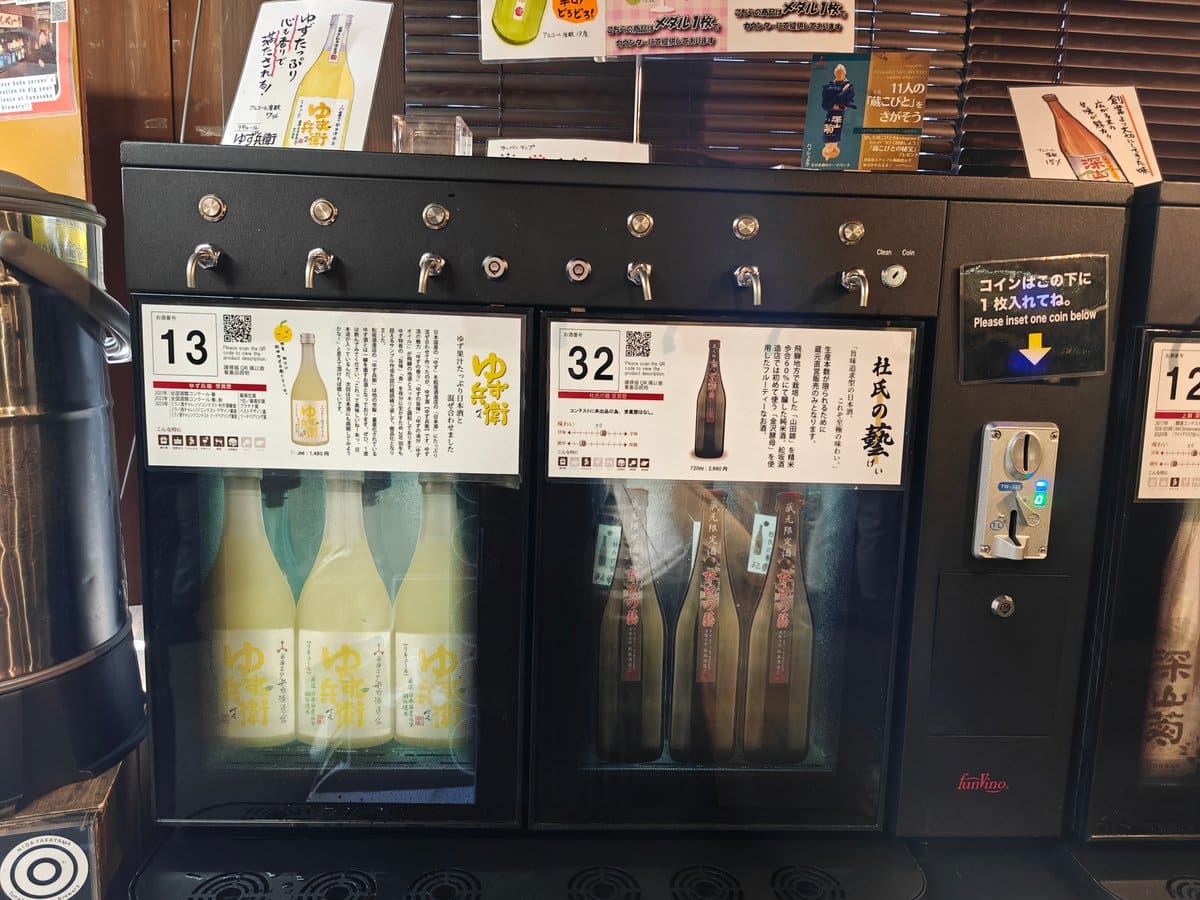
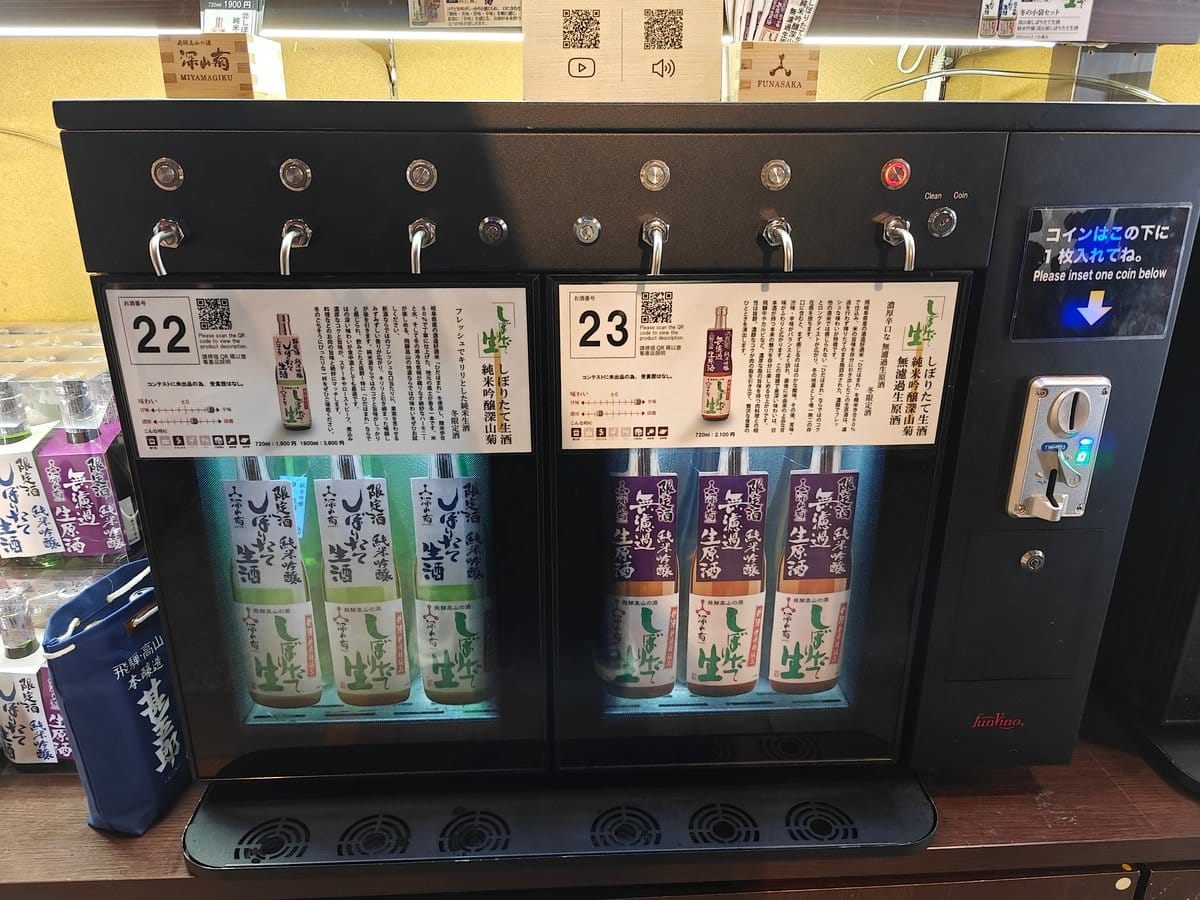
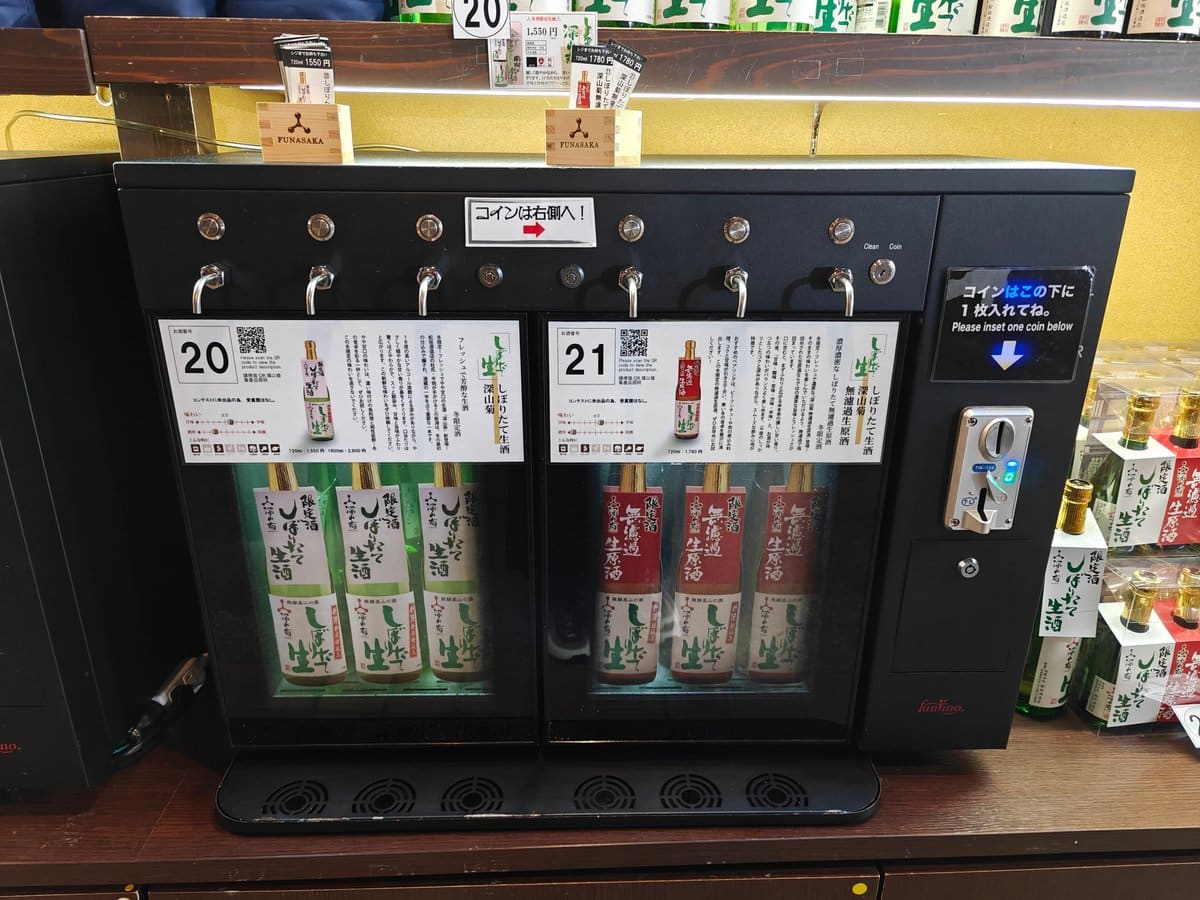
You need it to taste anything and it’s a nice souvenir too, so everyone does it. There’s a big selection, winter only shiboritate nama sake, yuzu liqueur, limited brews, honjozo, but with no limit on how many (or few) you can have from the machines. I had a smoother junmai and a couple of the seasonal ones.
Some were sharp and dry, others sweet. I didn’t particularly enjoy a few of them.
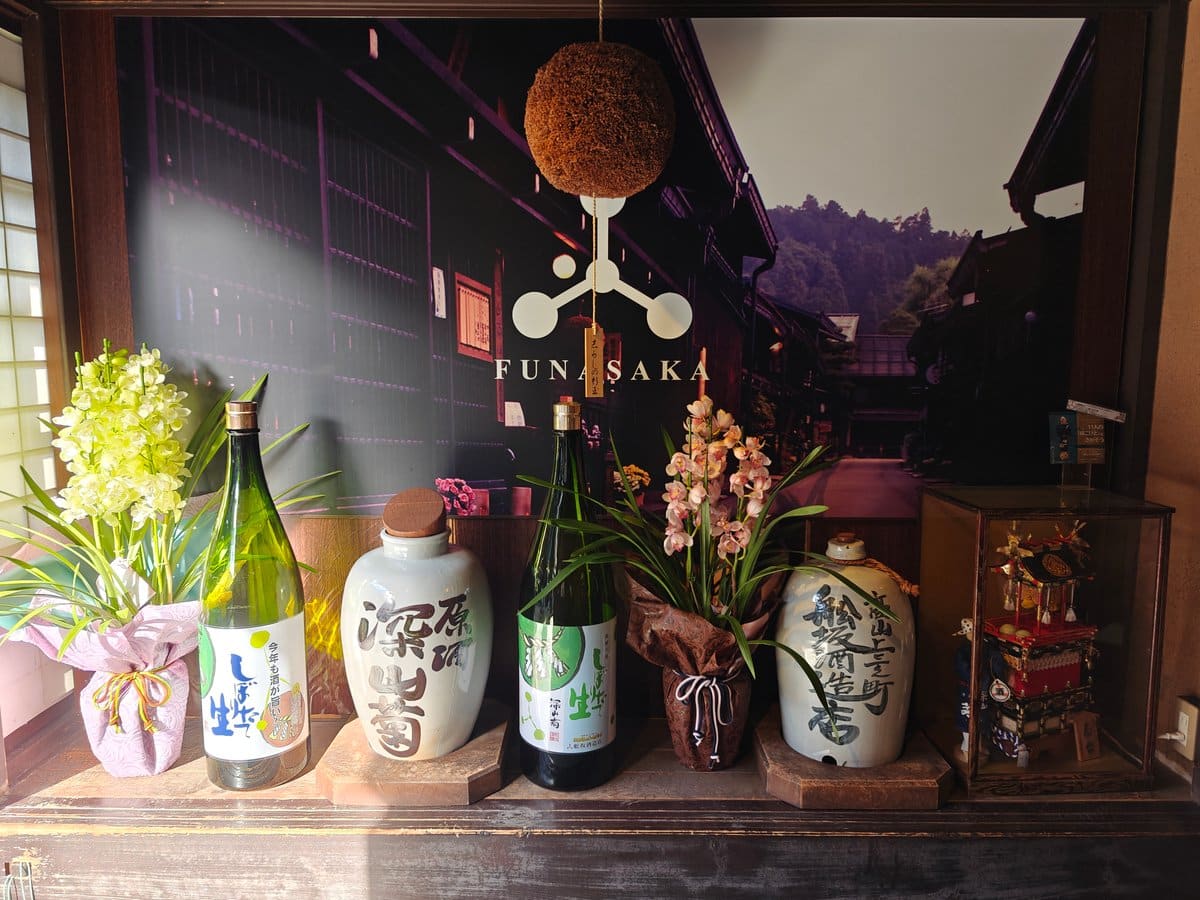
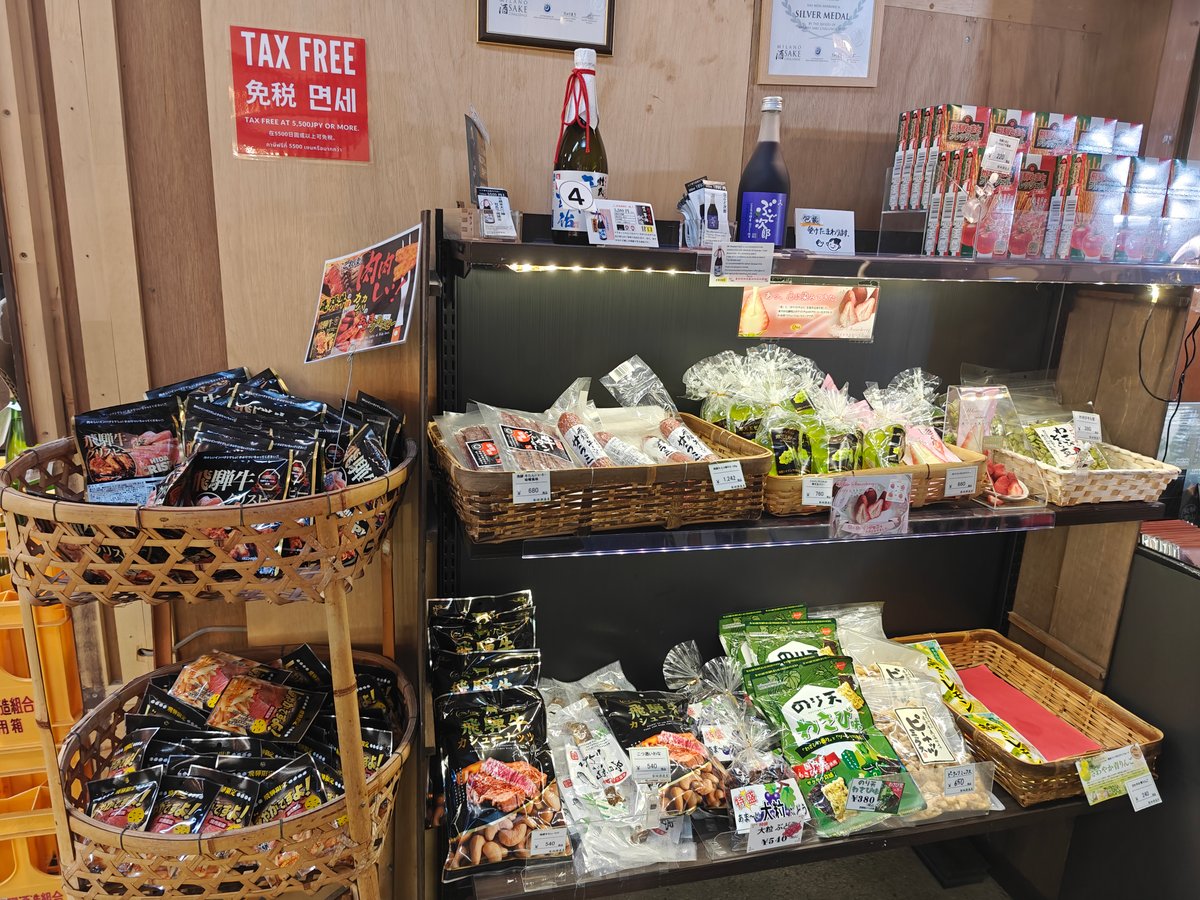
But it was fun to experiment without having to commit to a whole bottle. The decor had a relaxed, help-yourself feel, with snacks set out in the back and a cedar ball hanging from the window. It’s not fancy; if you like sake (or just want to try something new) this is a really good time though.
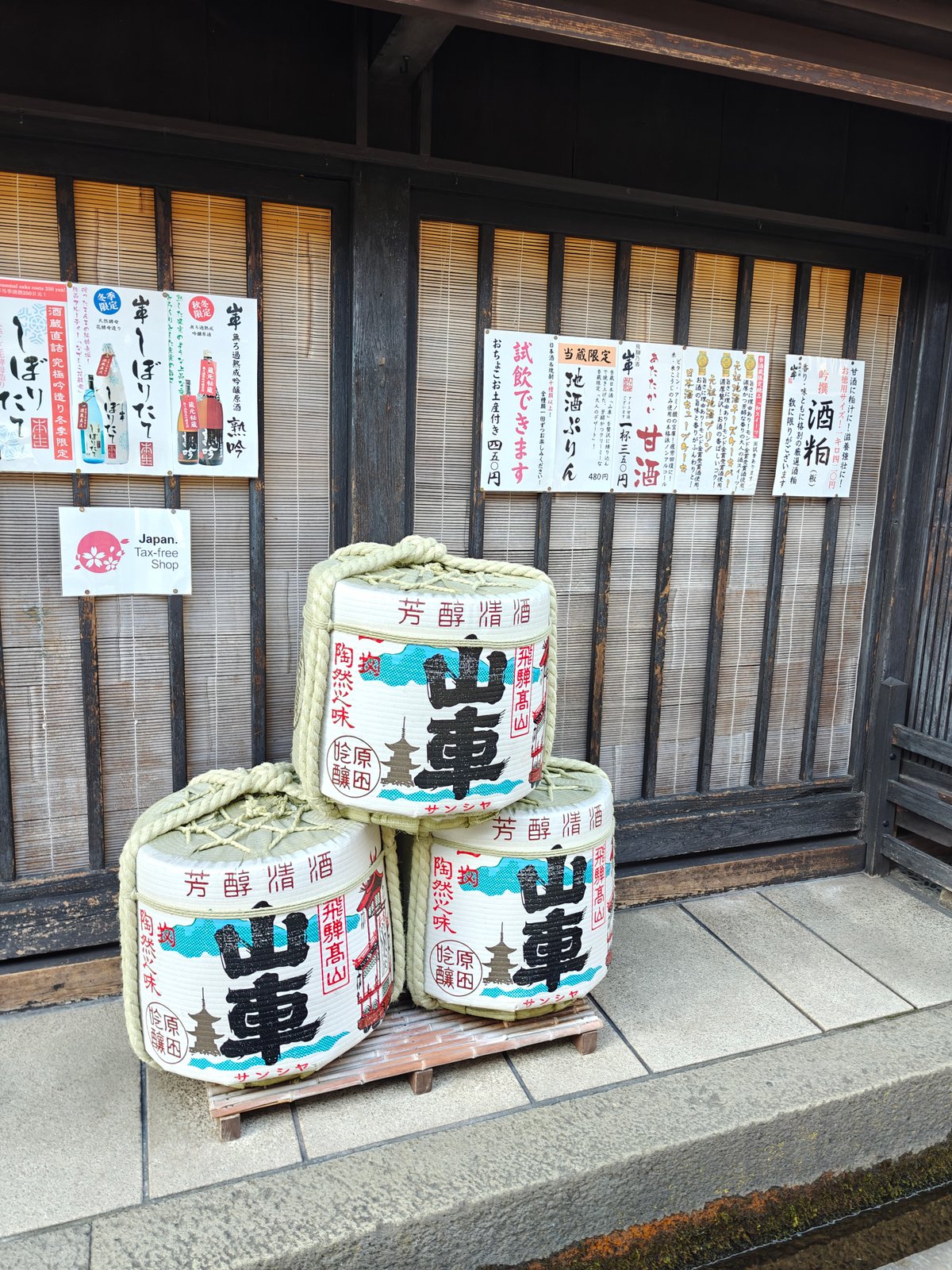
On your way out there are some decorative barrels stacked up that make for a nice photo background.
Hidagyu Maruaki
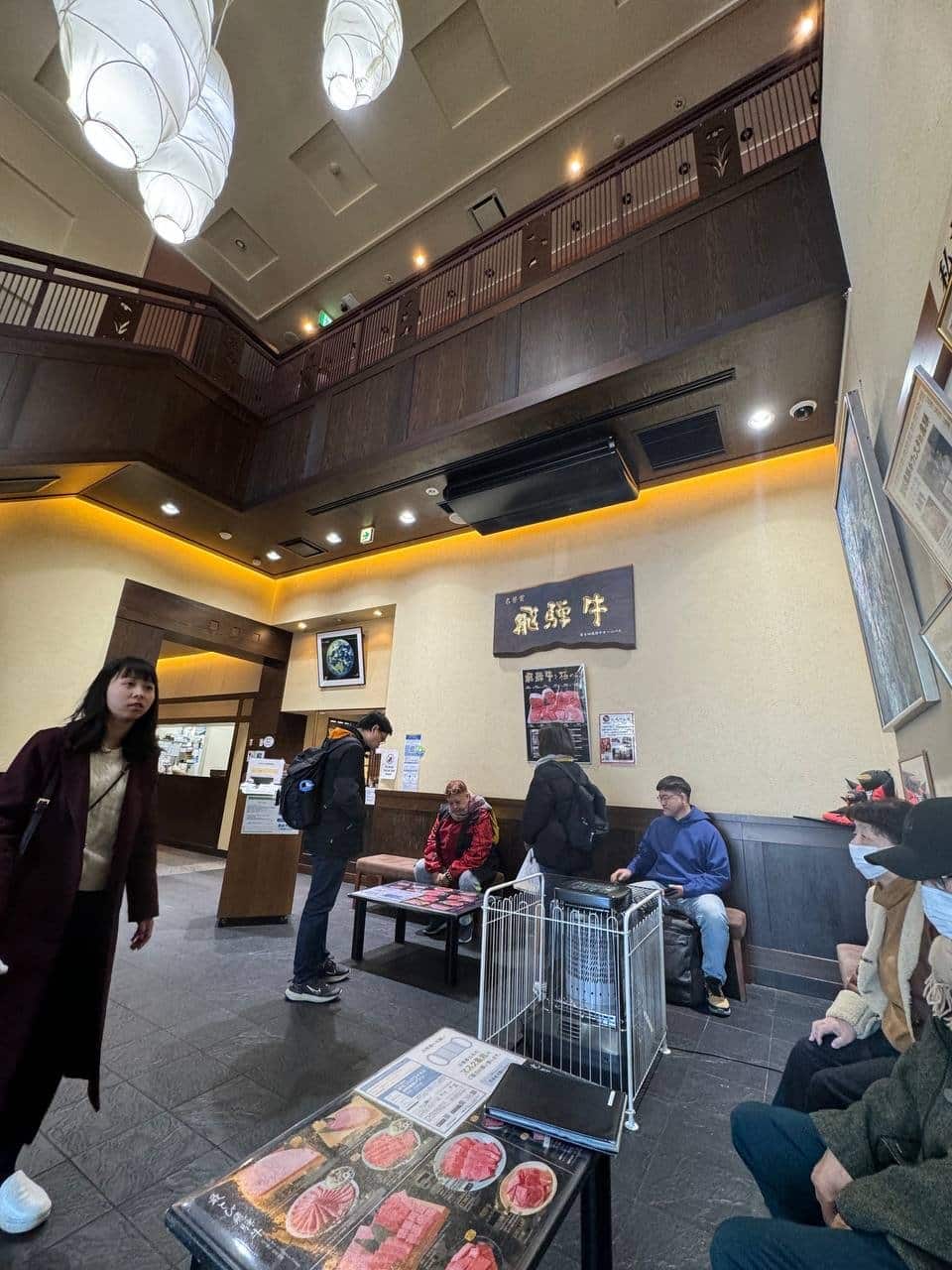
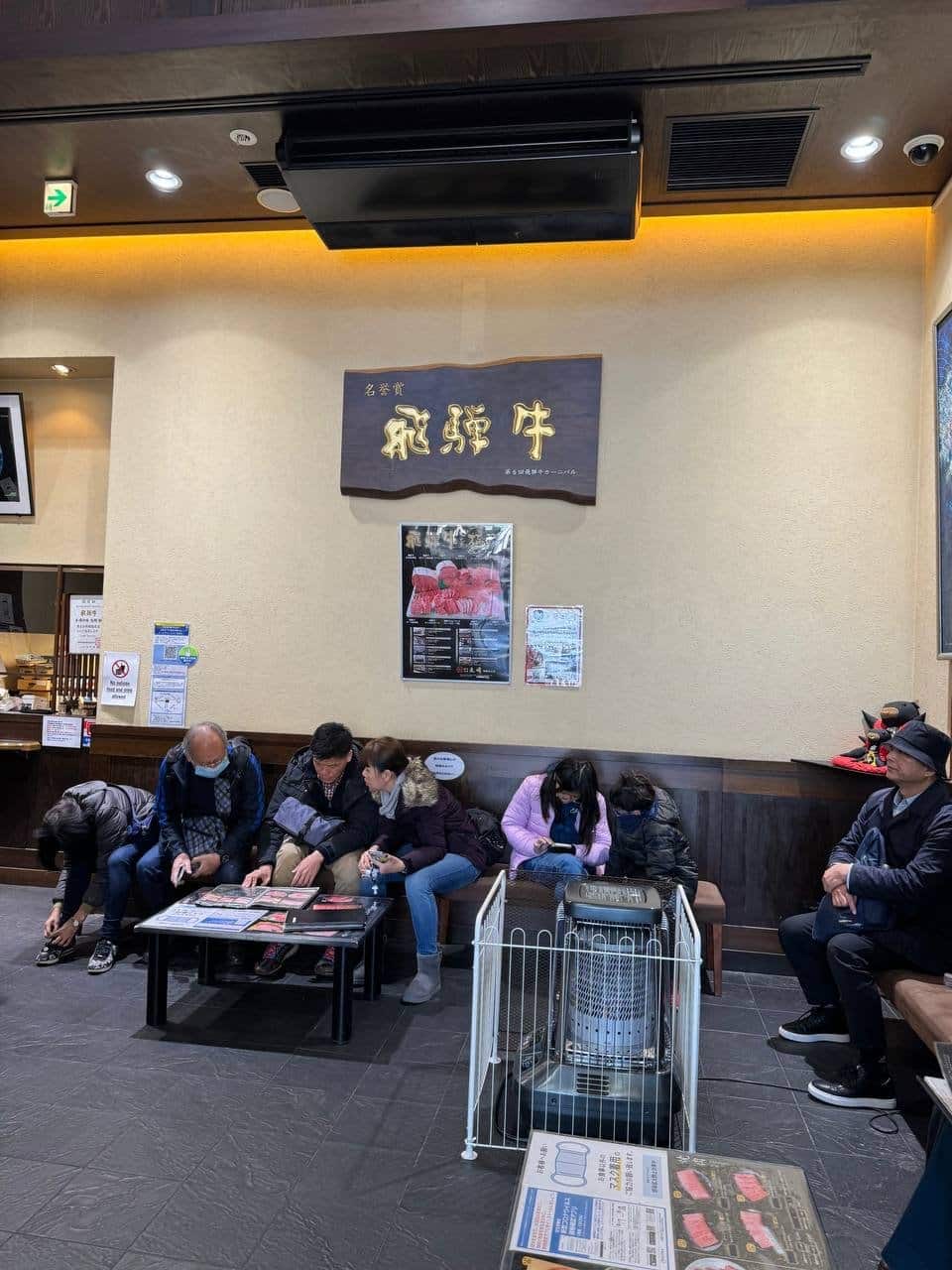
We booked a table at Hidagyu Maruaki for dinner and I am glad we did… It proved to be one of the best meals of the trip.
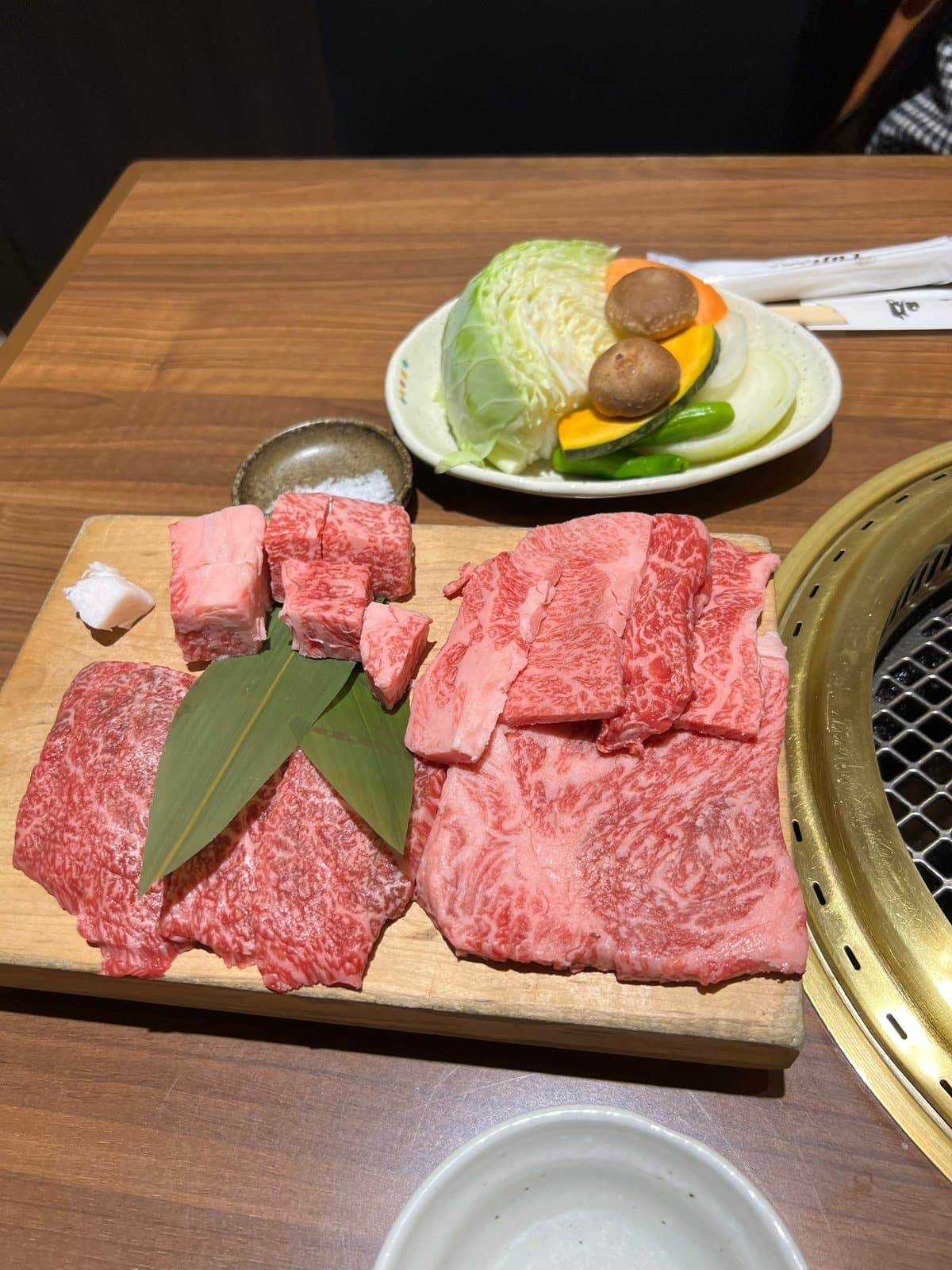
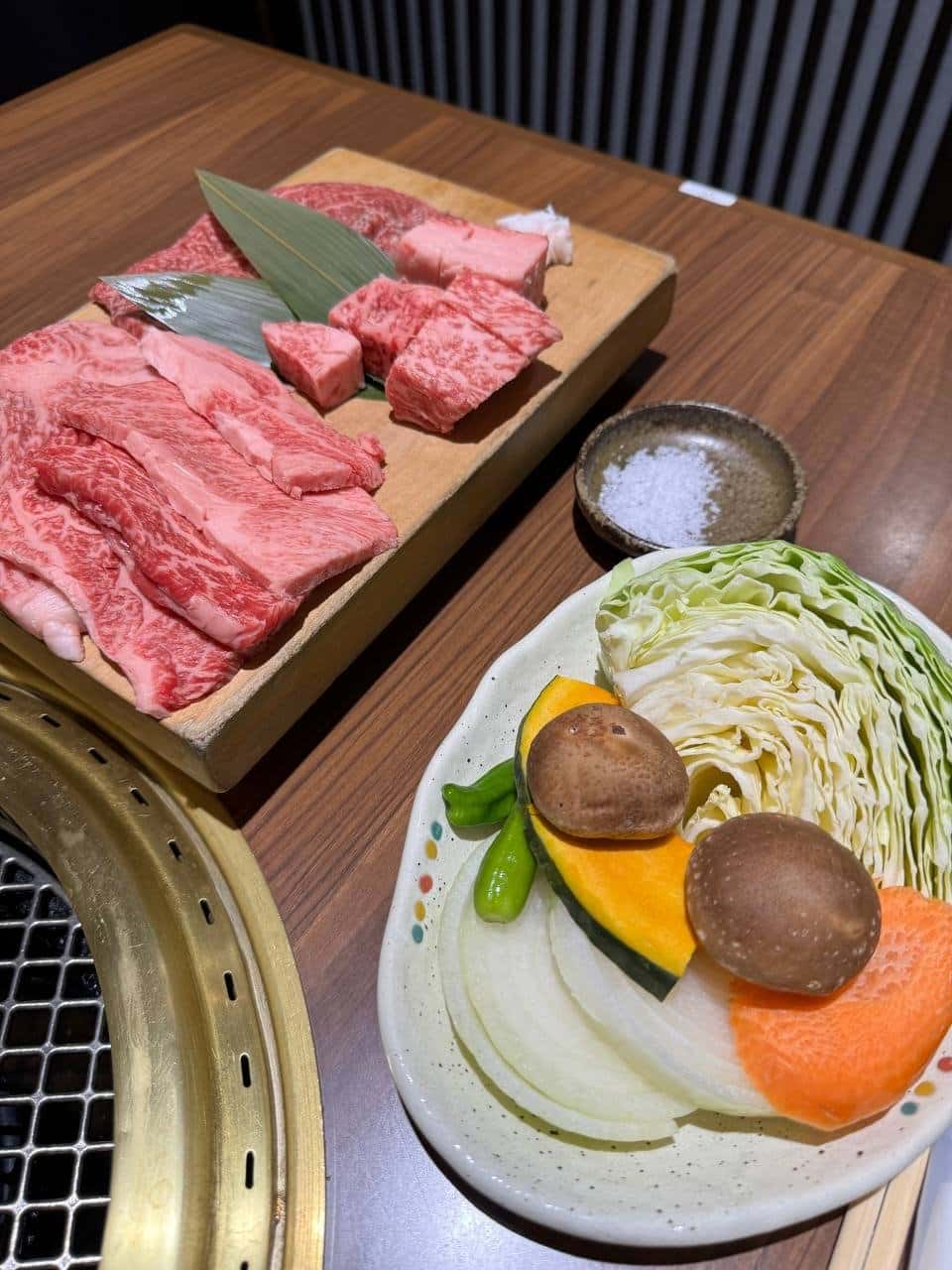
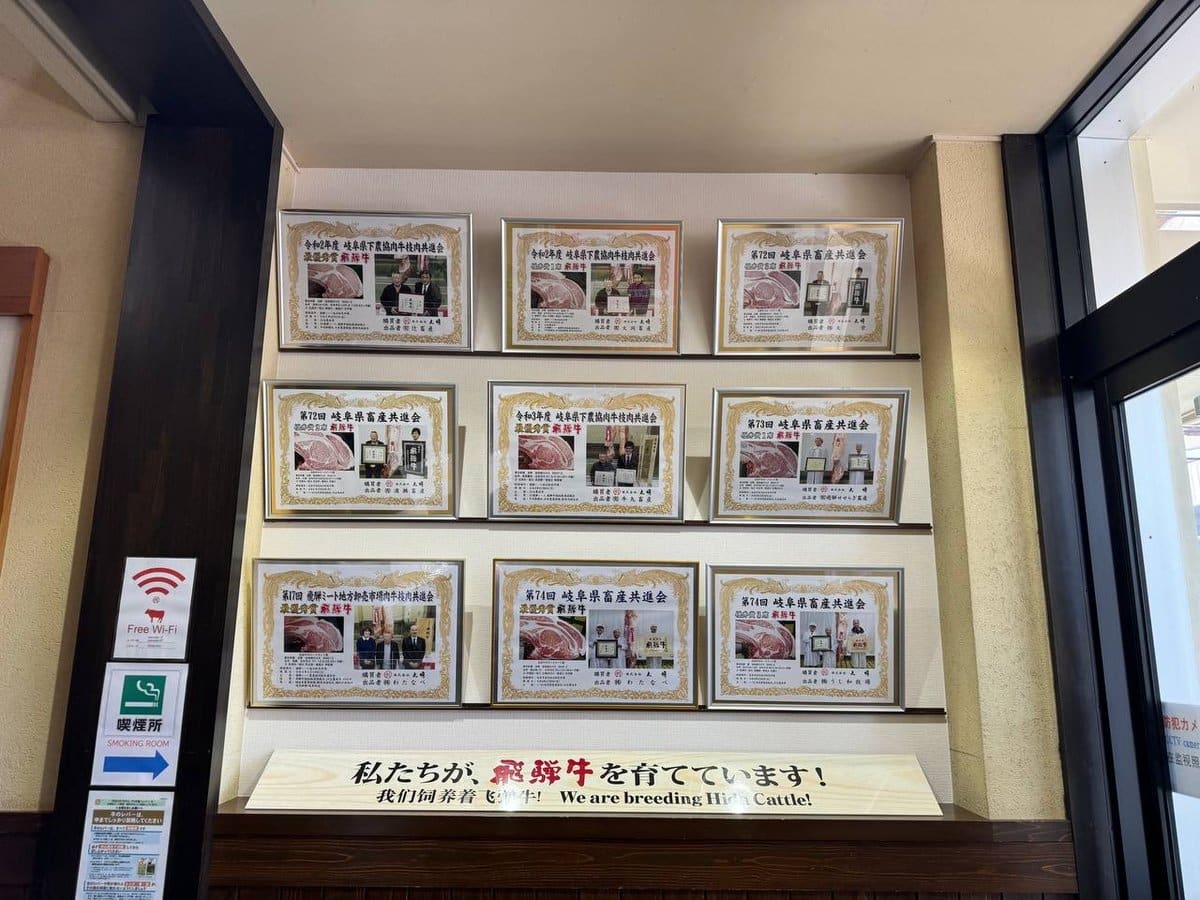
Specialising in Hida wagyu, the restaurant has a wall full of award certificates to prove it. Inside, the space is simple and calm, with wood everywhere and a small waiting area near the entrance. We was shown our A5 wagyu before it was cooked so we could admire its marbling.
It was almost too pretty to eat, but we managed.
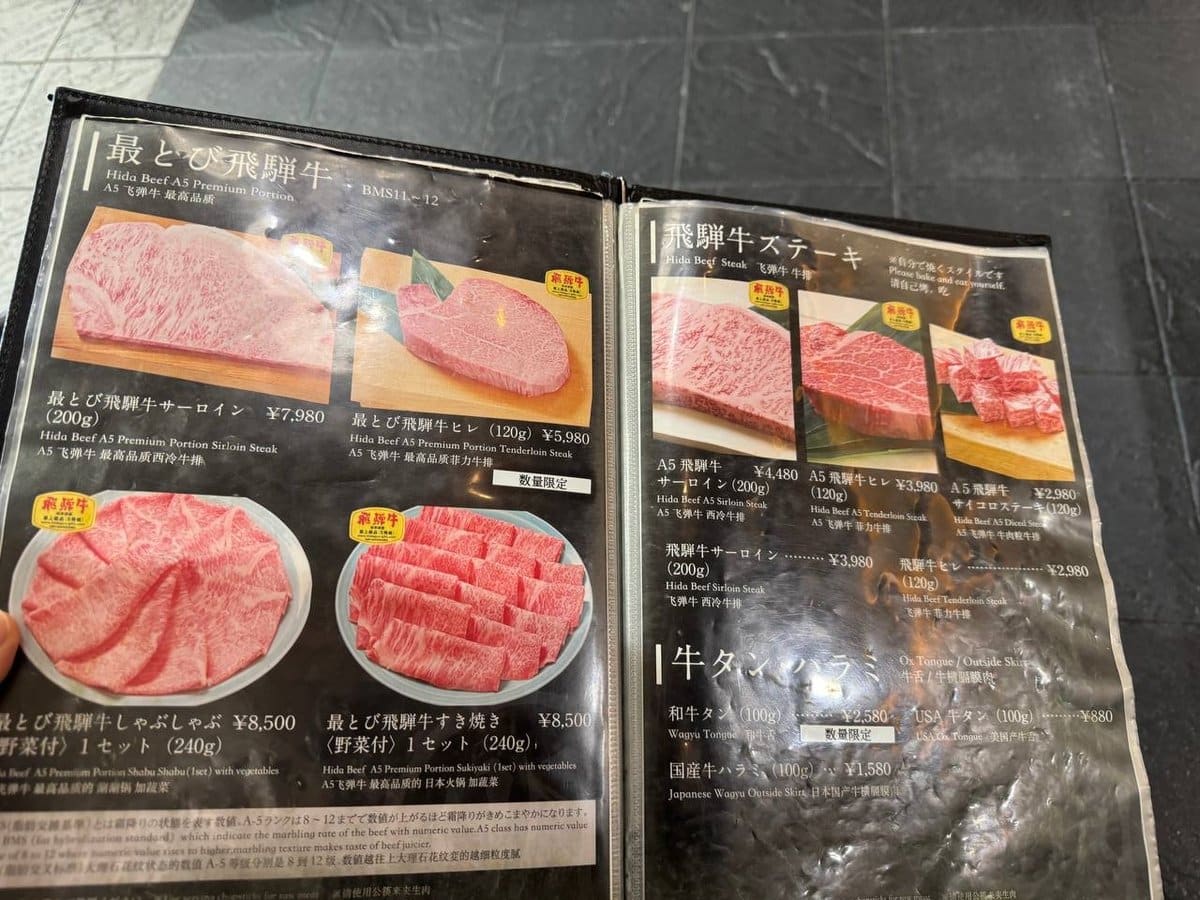
Prices were clearly marked on the menu and there were various sets available. There’s even a card provided that explains how to eat hitsumabushi (a rice bowl dish with multiple steps) which we ended up ignoring because we ordered the beef instead. It turned out to be helpful!
And an indication that they care about your experience. The beef was absolutely incredible. It was perfectly cooked, tender, and rich.
I think I probably ate too much of it but I’m not regretting anything. If you’re going to splurge in Takayama, do yourself a favor and do it here.
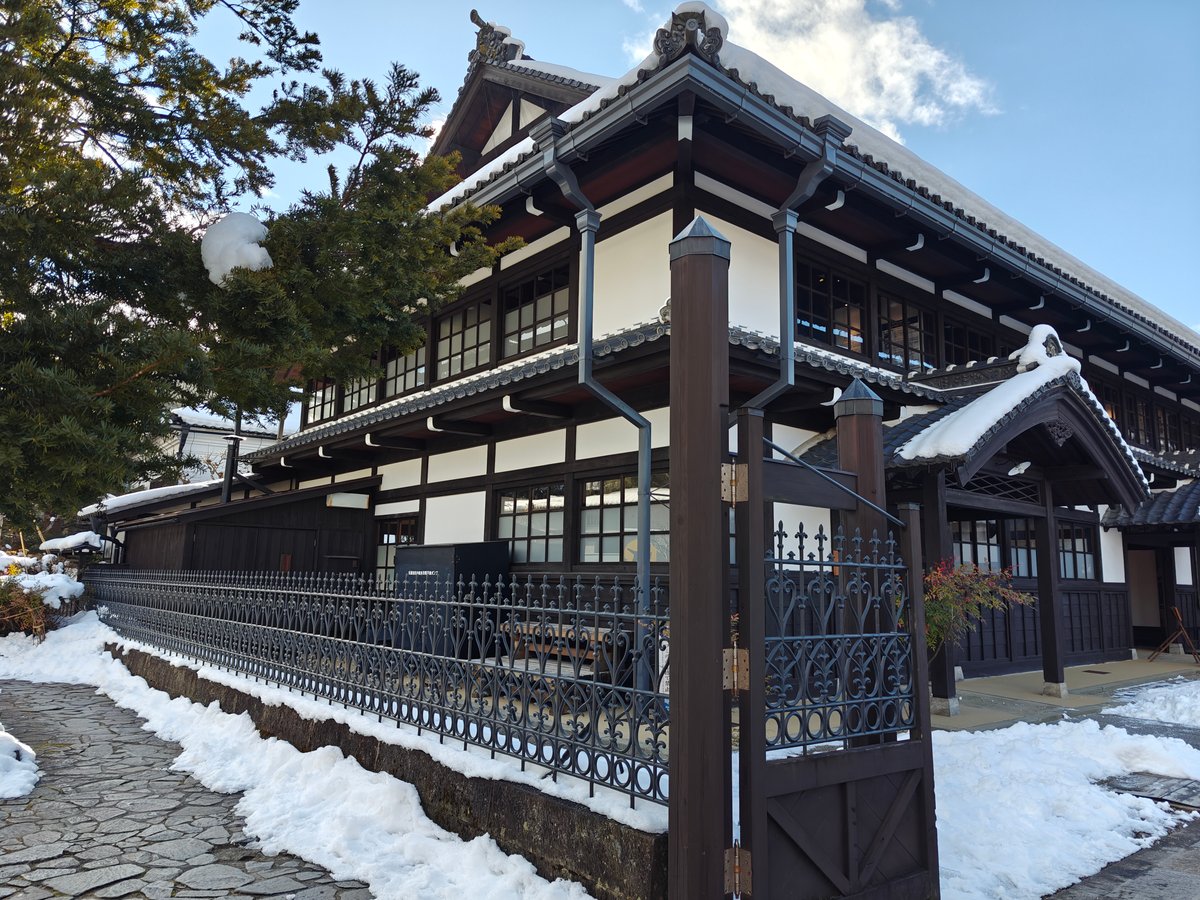
Takayama City Archive Museum
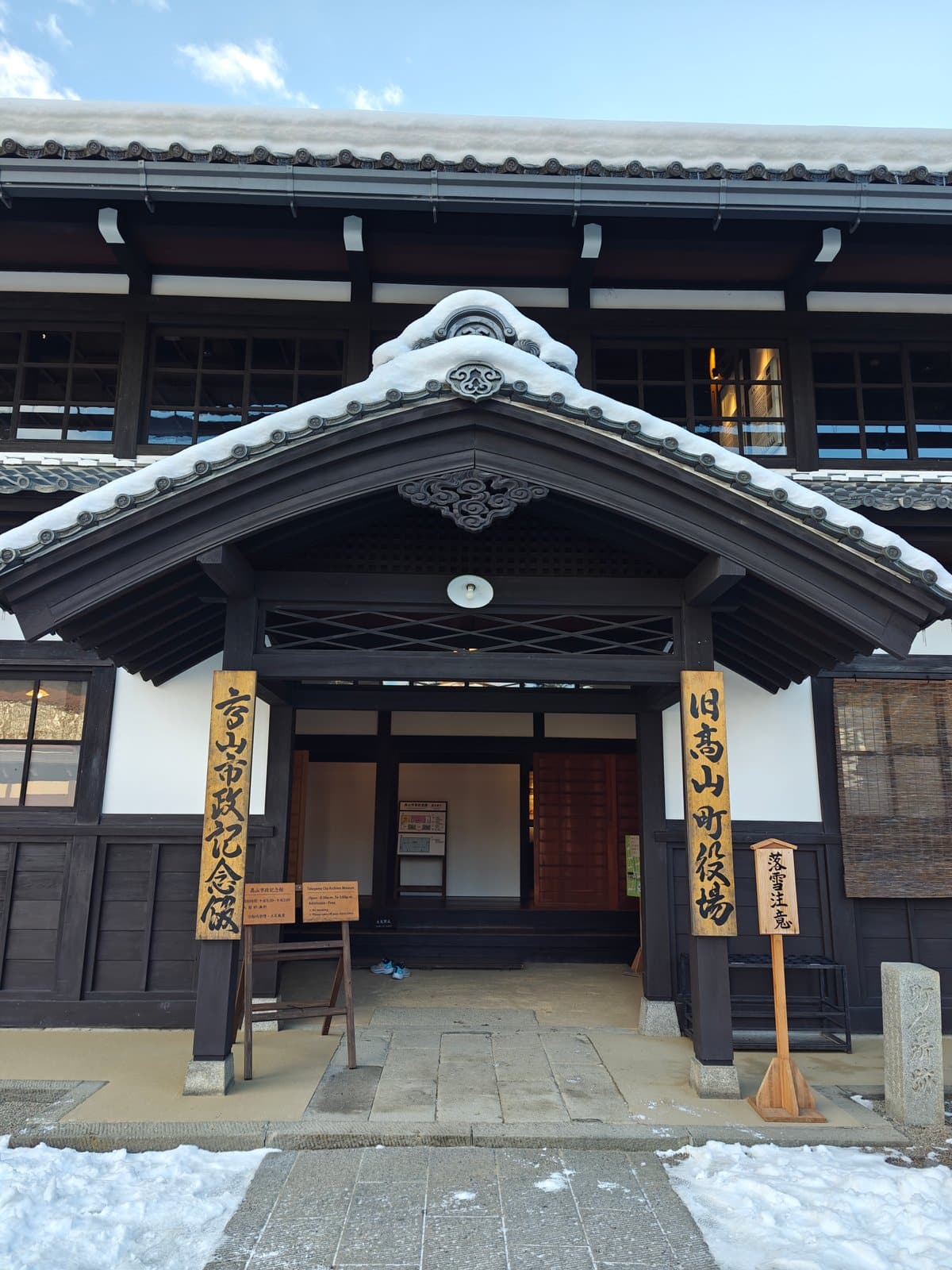
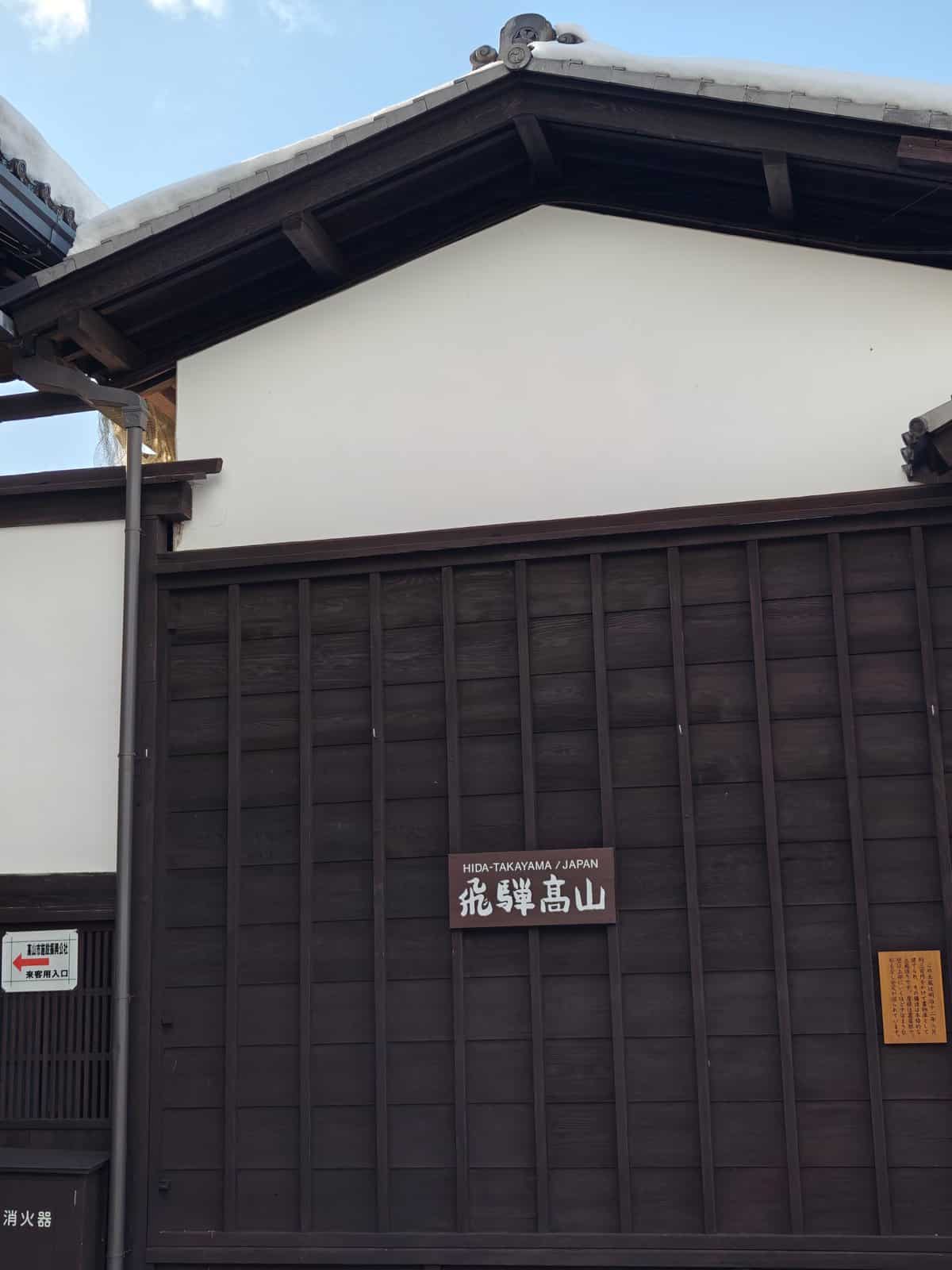
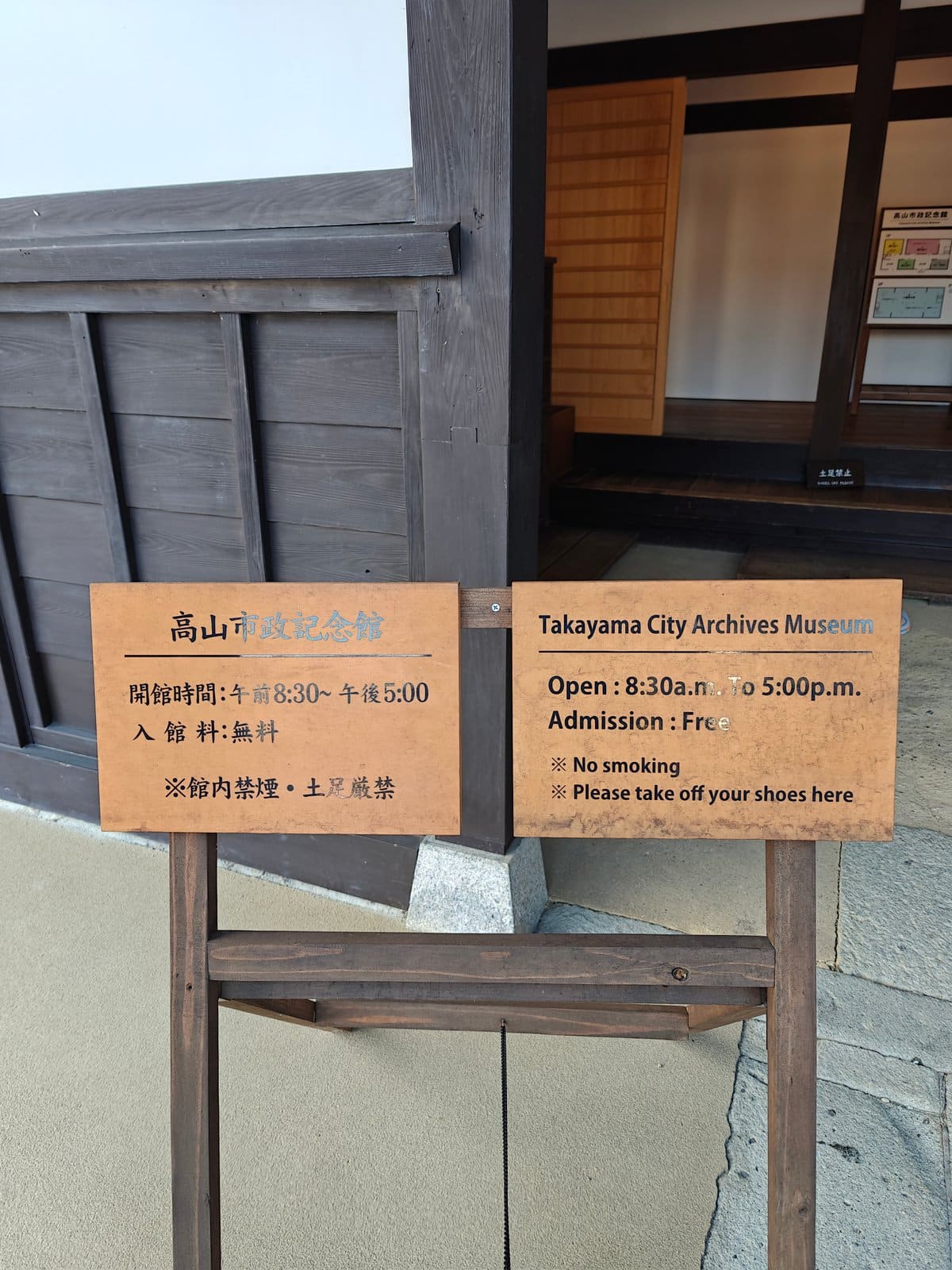
Our final day in Takayama it rained, so we went inside the Takayama City Archive Museum. It was free, and we were not expecting anything special; it was simply a rainy day activity until our train.
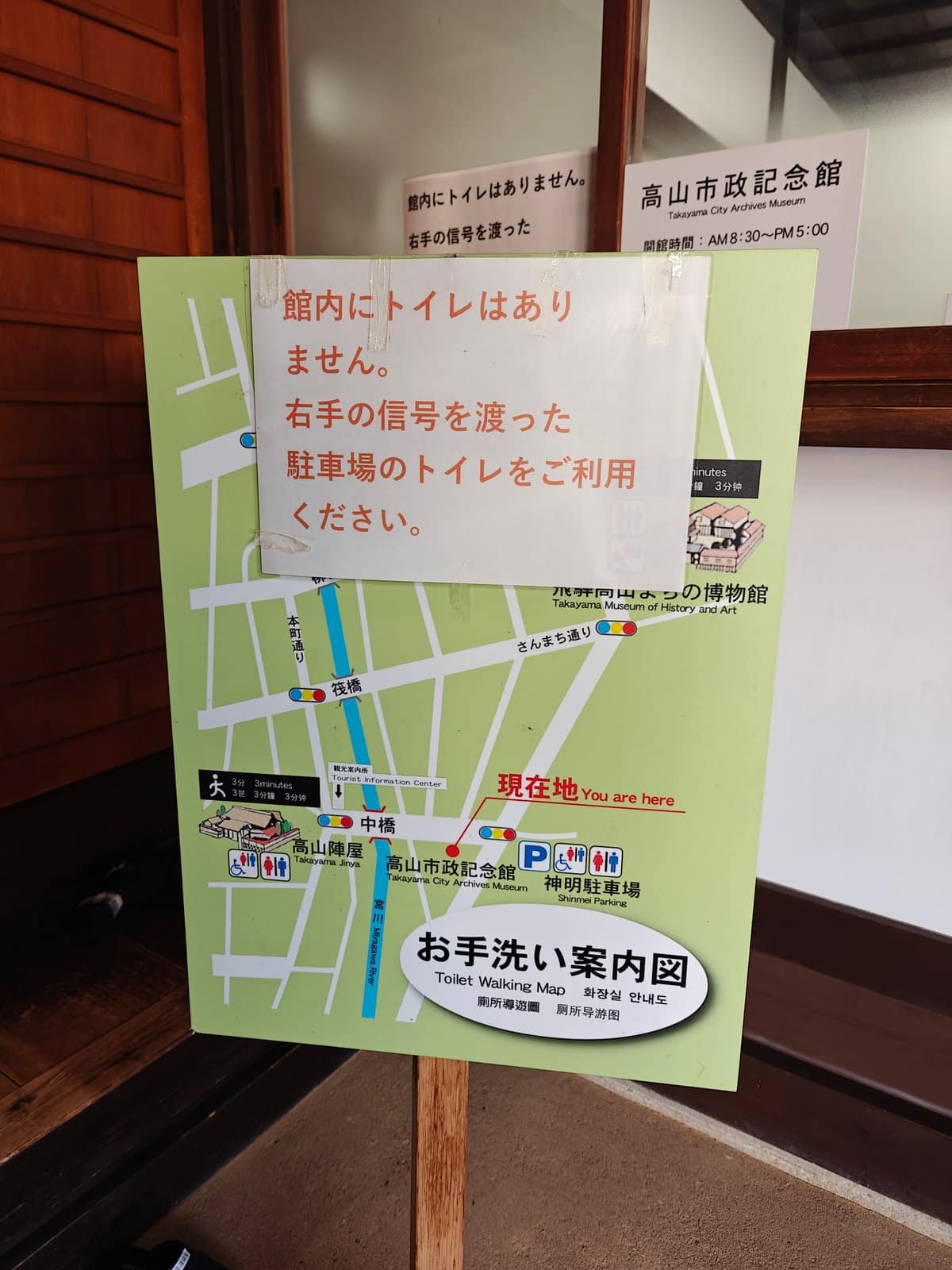
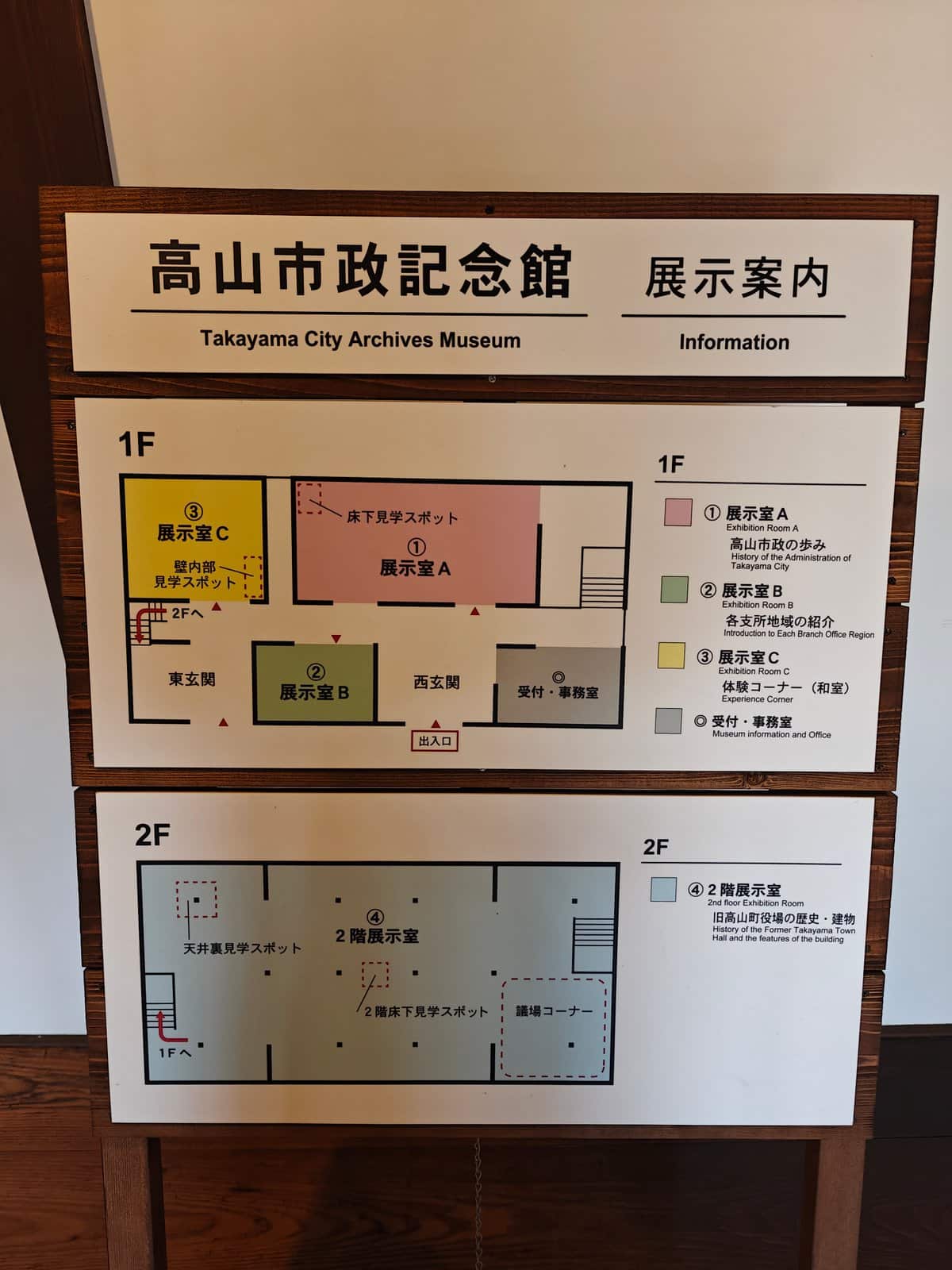
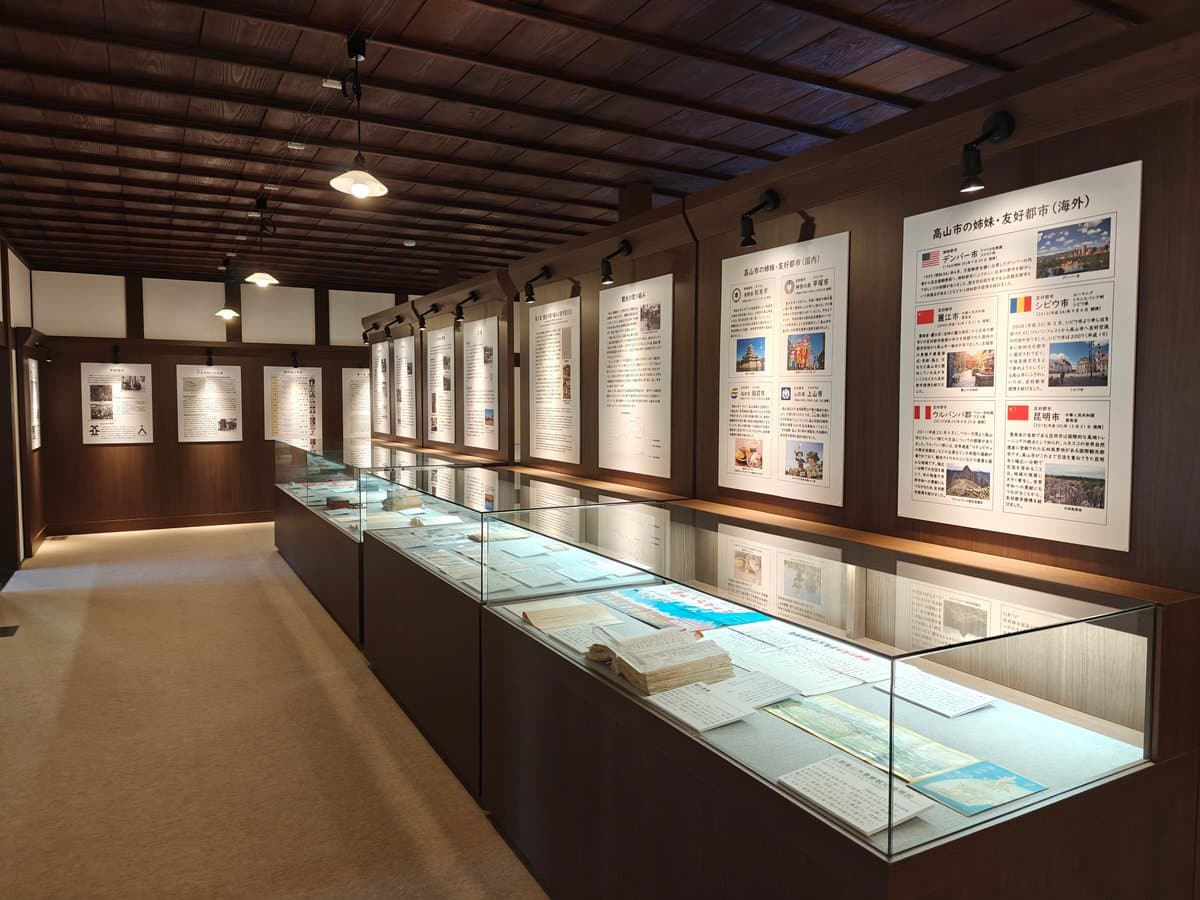
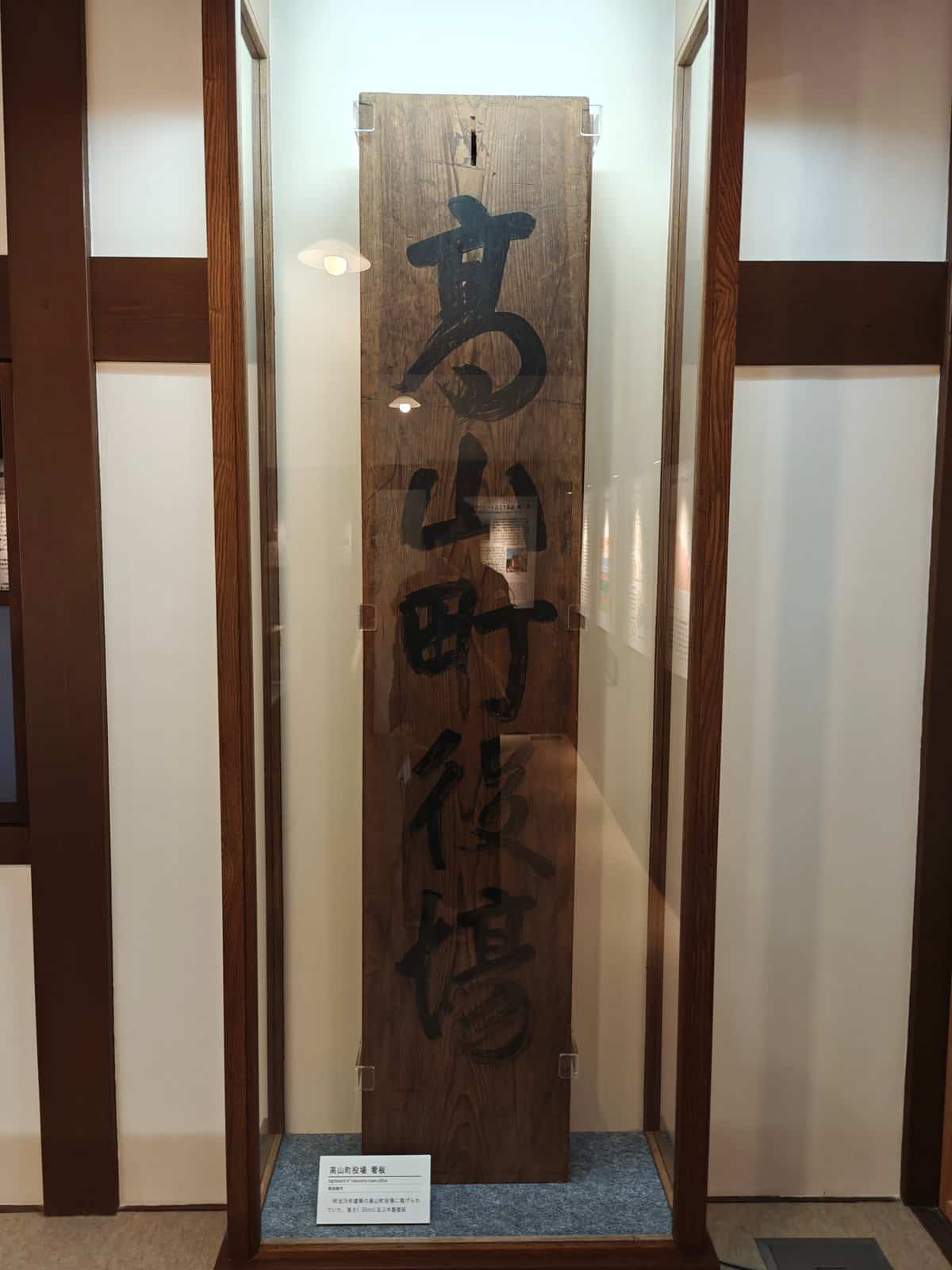
However, this was one of my favorite things about Takayama! It’s also worth visiting just for the building, an old structure kept up that has high ceilings and exposed wood throughout. They have a floor plan and exhibit layout map located near the entrance.
This also includes a toilet map, which I wasn’t expecting at all from such a small local museum.
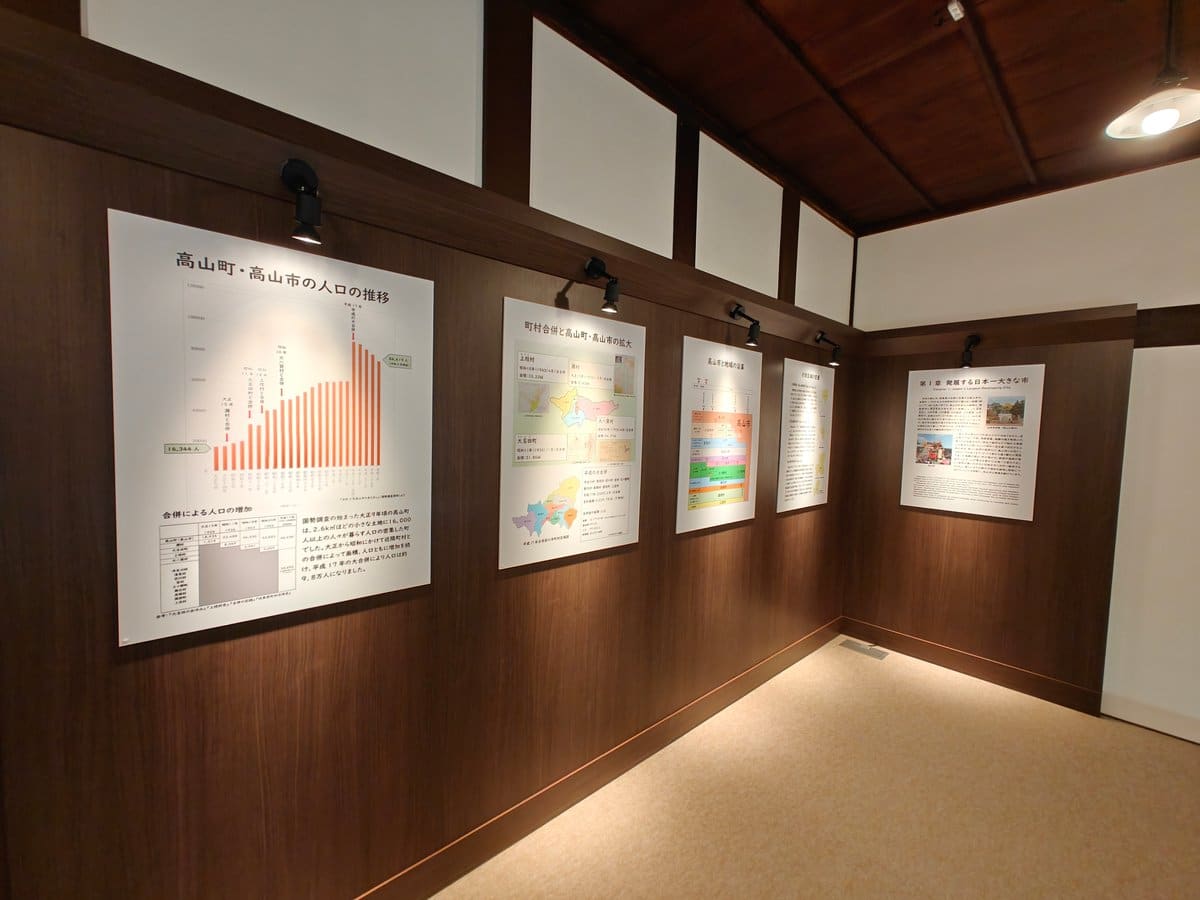
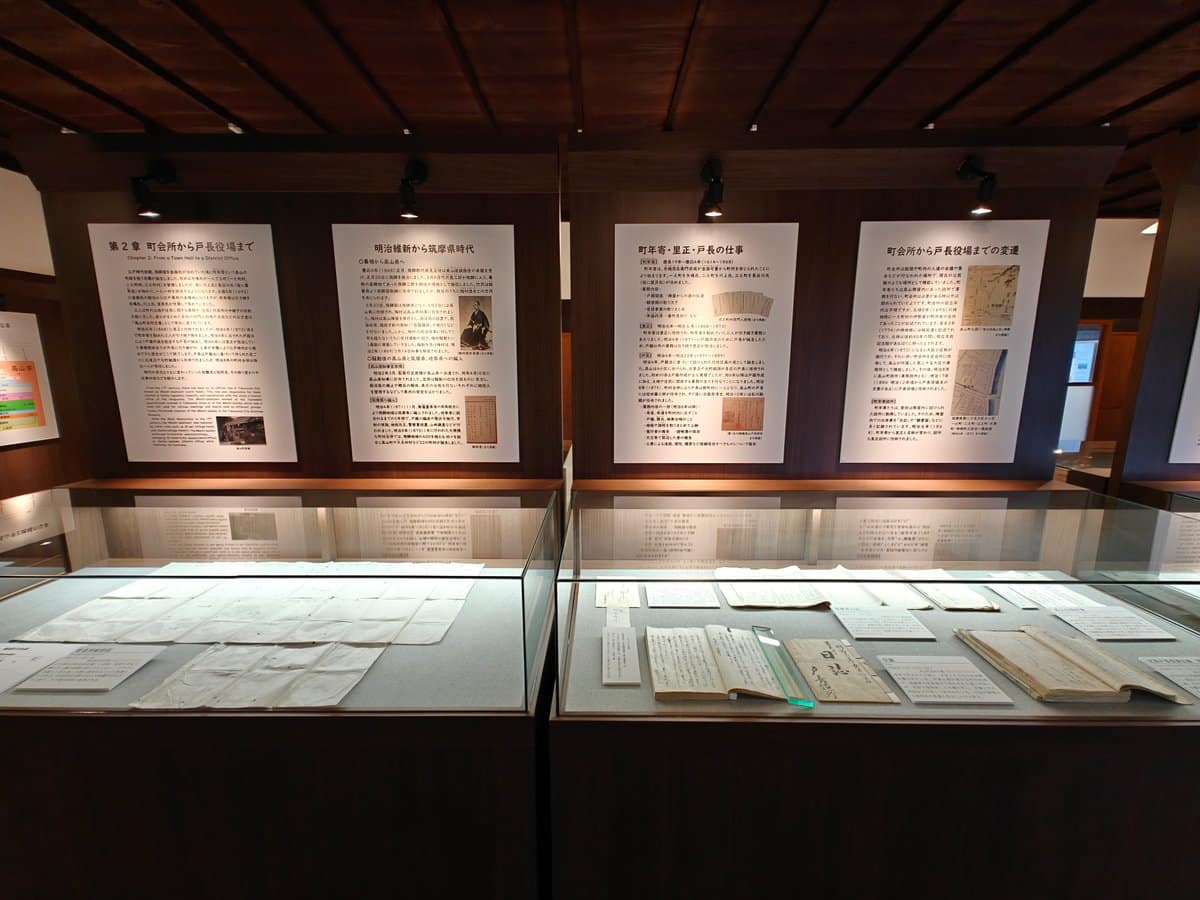
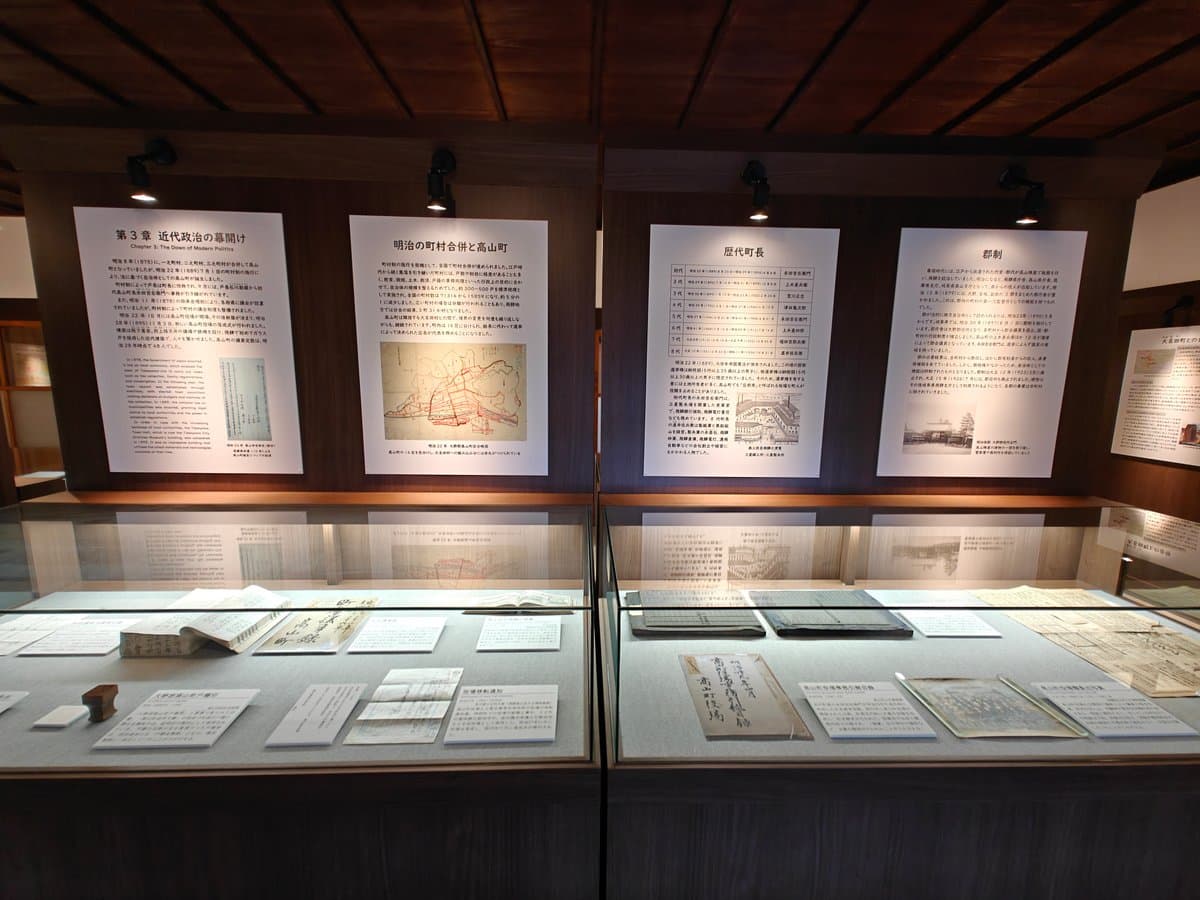
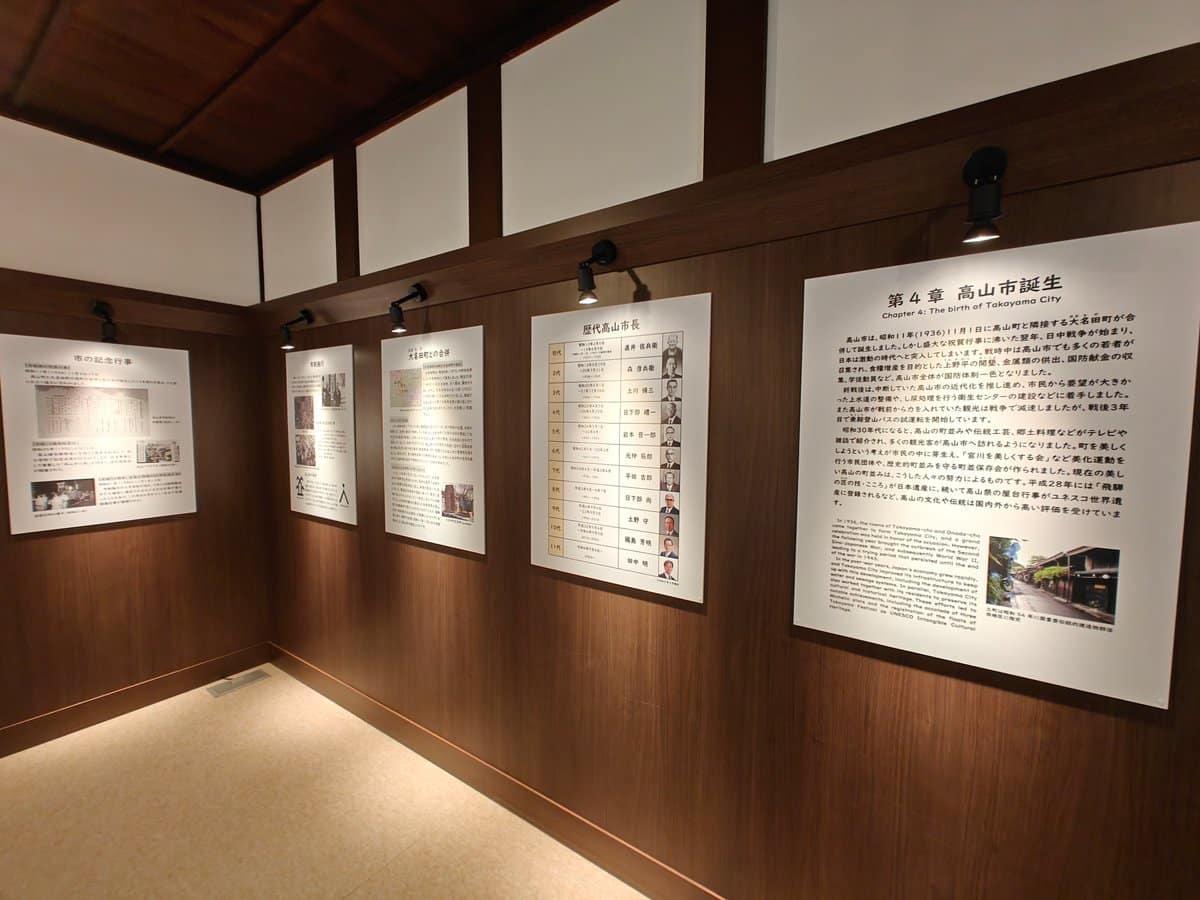
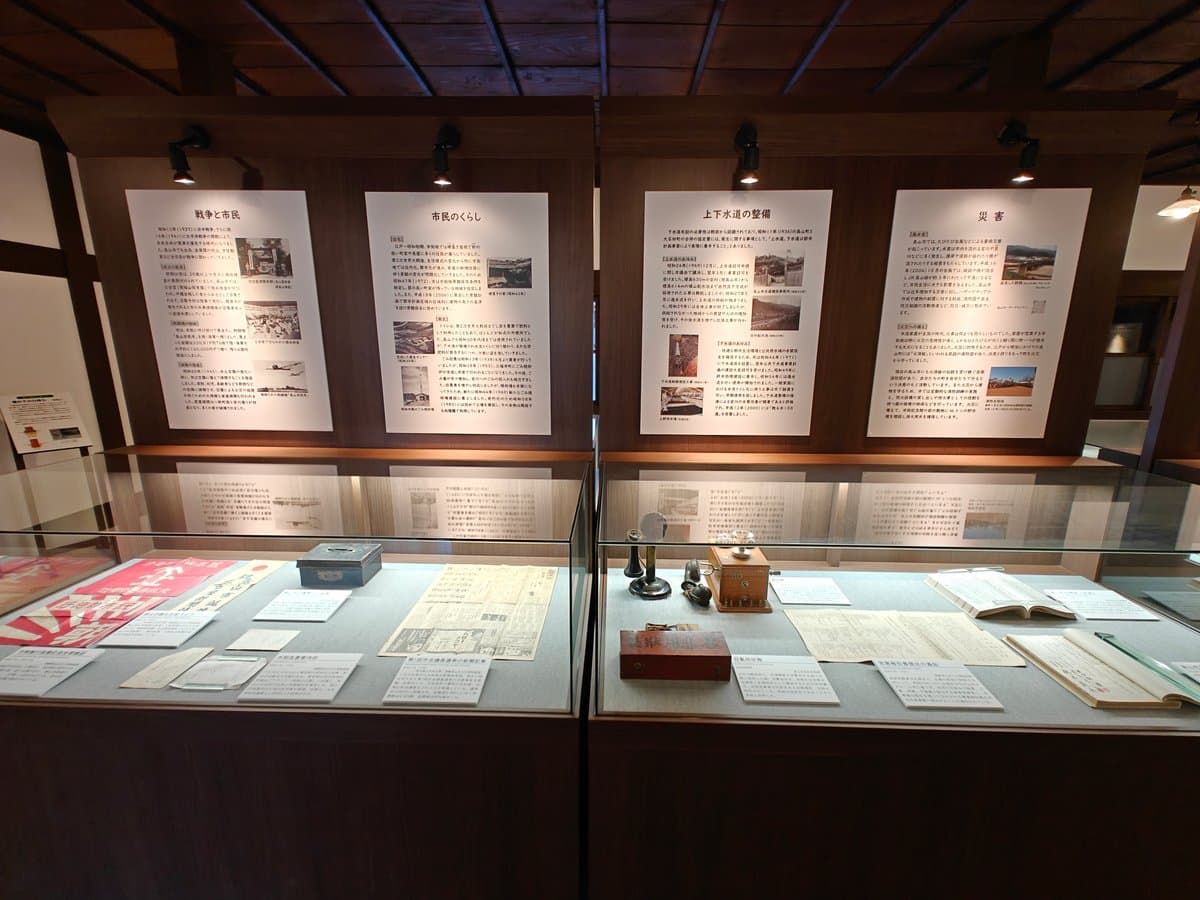
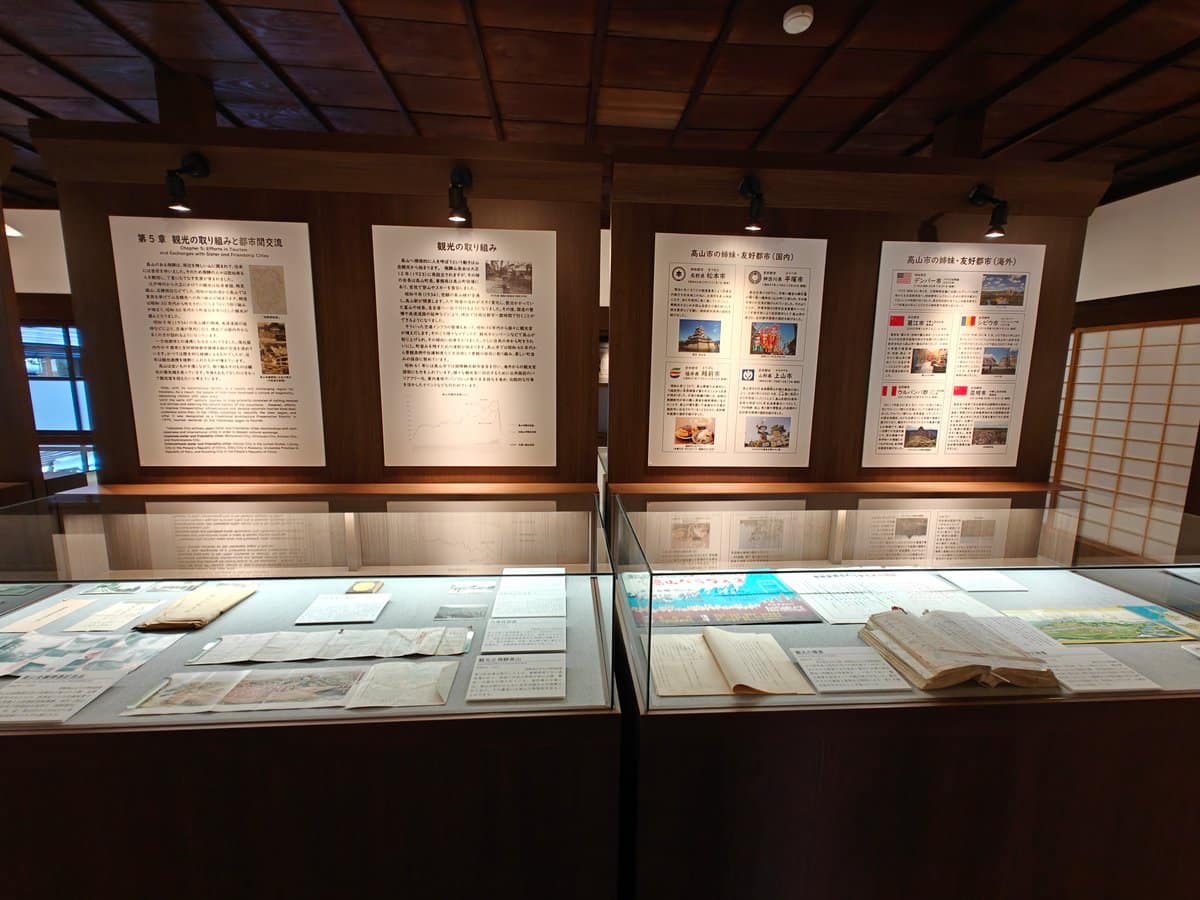
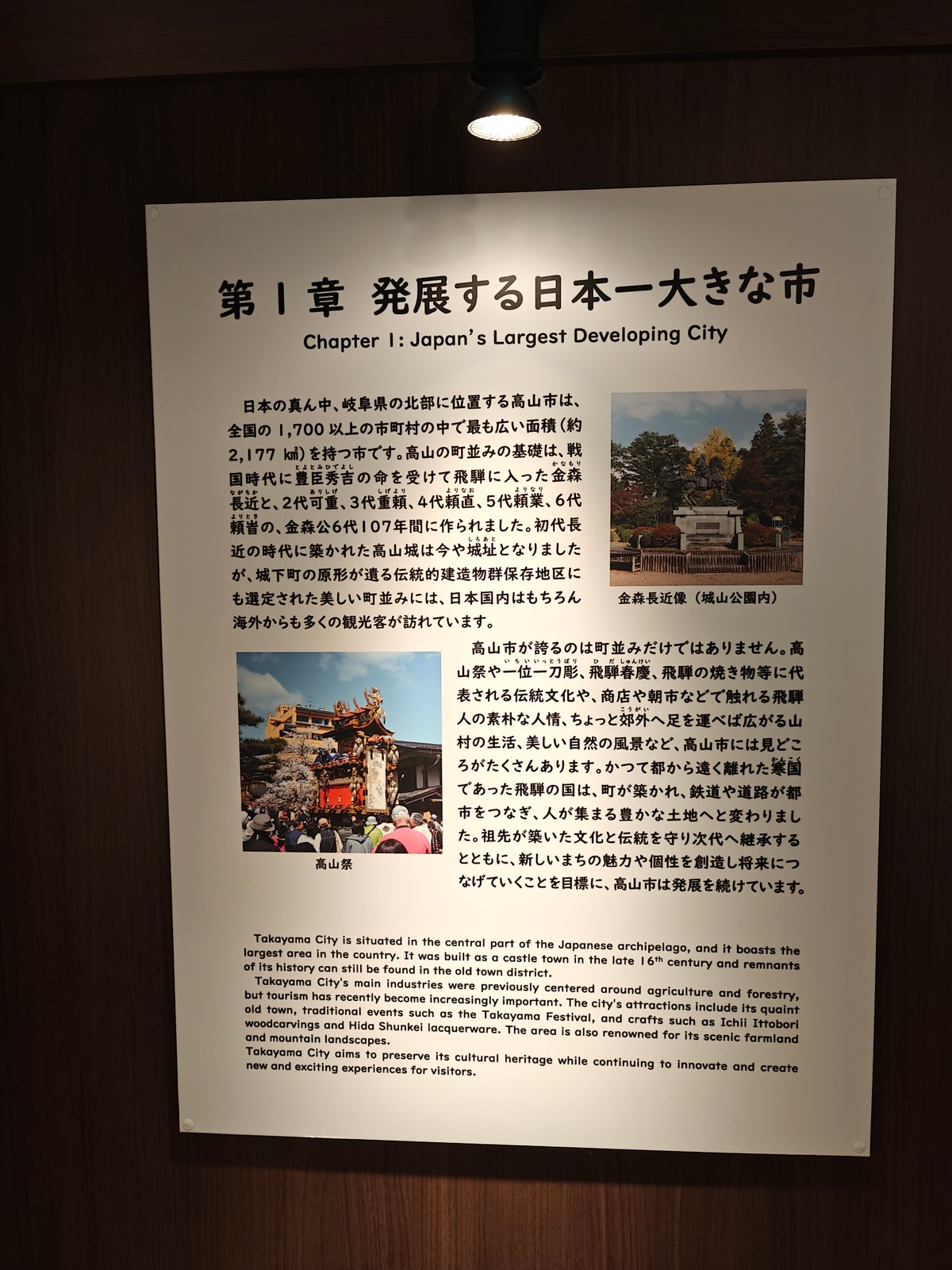
In terms of what they show, it covers Takayama history. It ranges from its growth into one of the largest municipalities in all of Japan based on land size, to how it plays a part in day-to-day life and moddern politics.
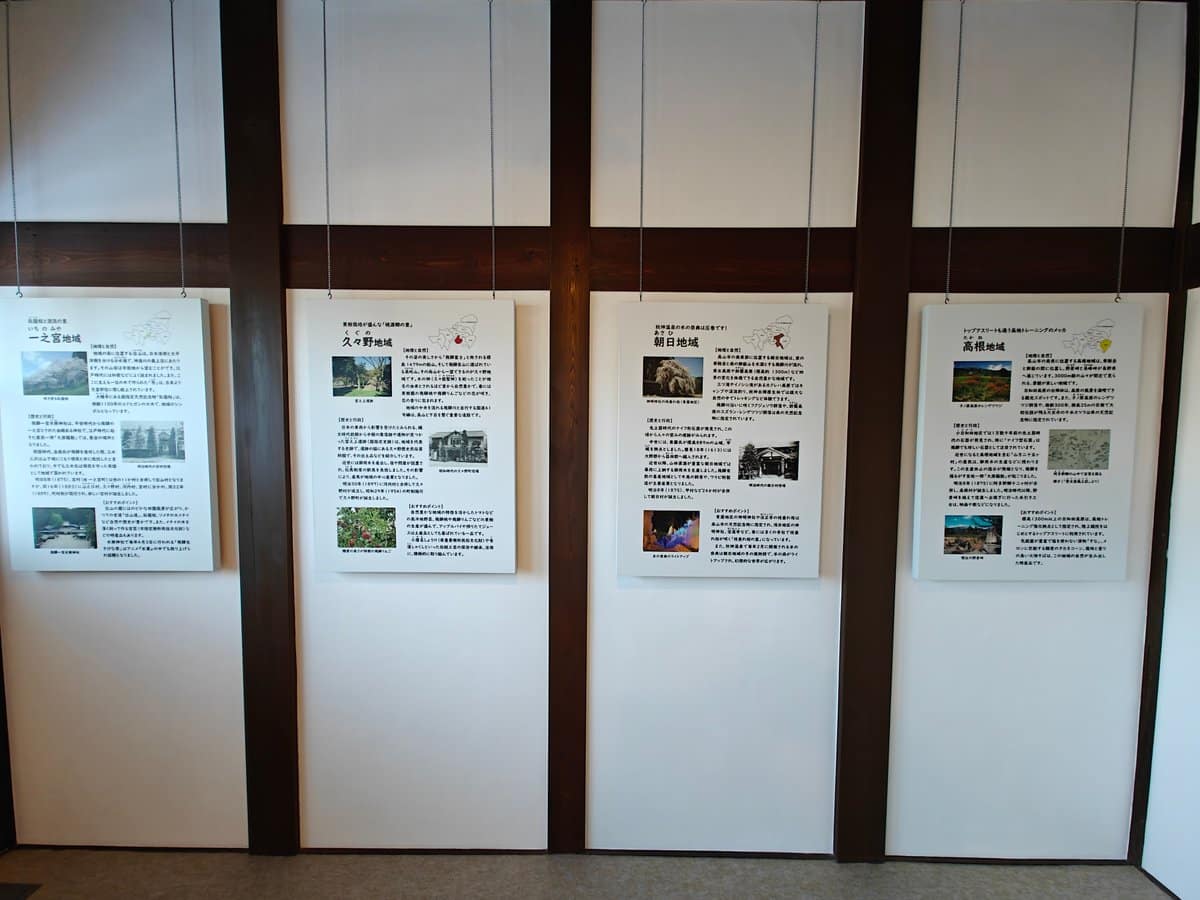
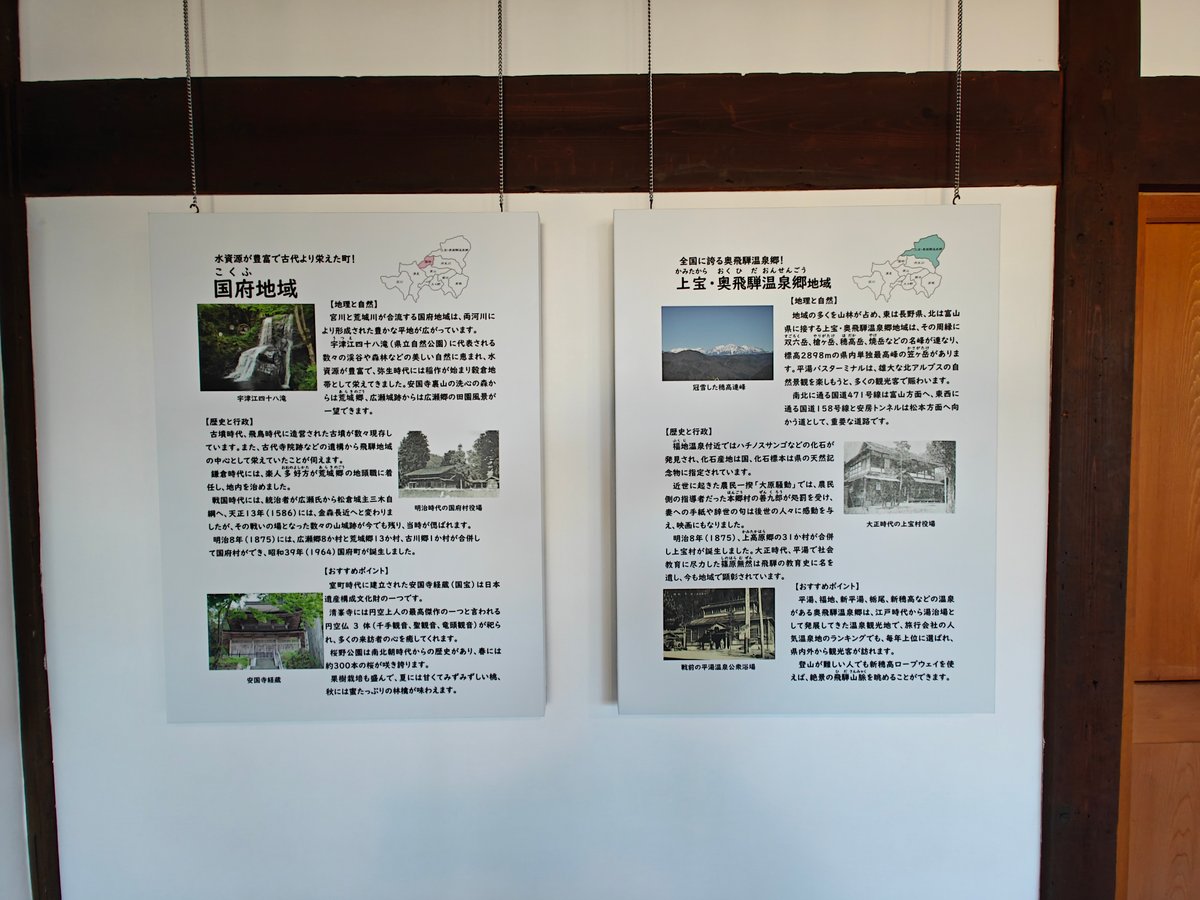
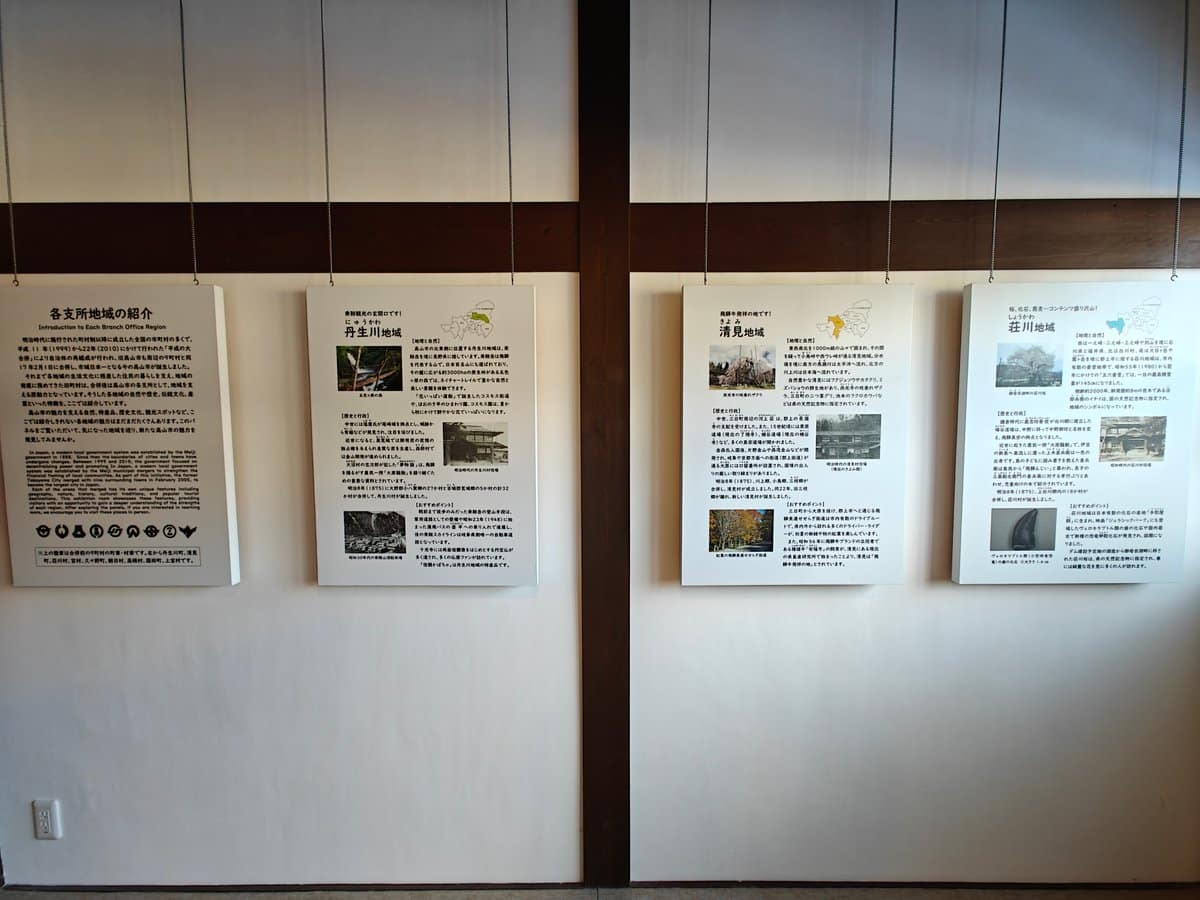
Wall panels explained each time period, along with some photos, documents, and old wooden signs. There are two galleries. One (Exhibition Room A) featured panels on daily life, the history of sister city exchanges, tourism efforts, and the war years.
The other (Exhibition Room B), talked about each of the various regional districts that eventually combined to form greater Takayama. Each region had their own panel hung up with descriptions and photos of each area.
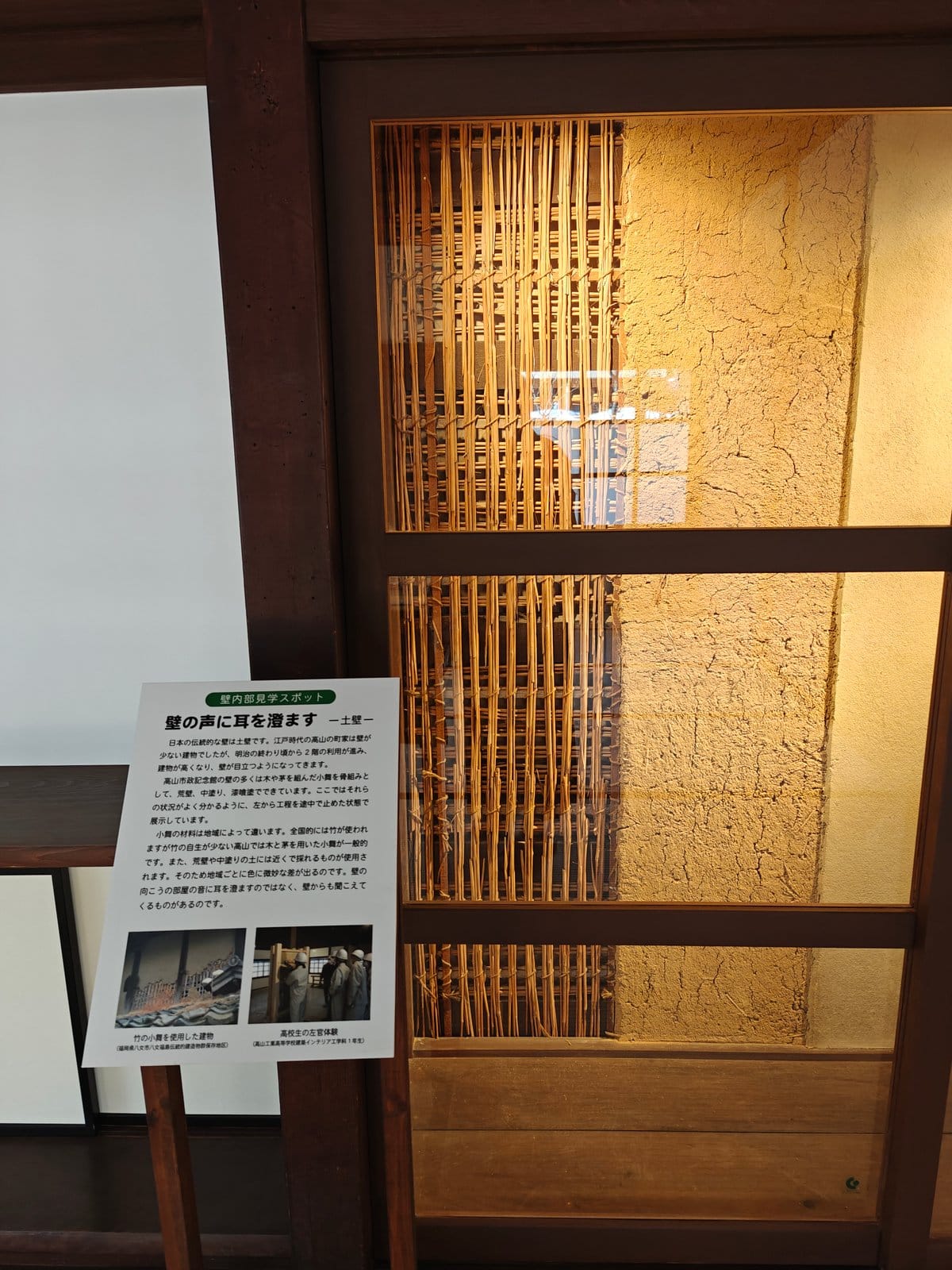
And there was a nice touch with a cutaway of the traditional construction method for buildings!
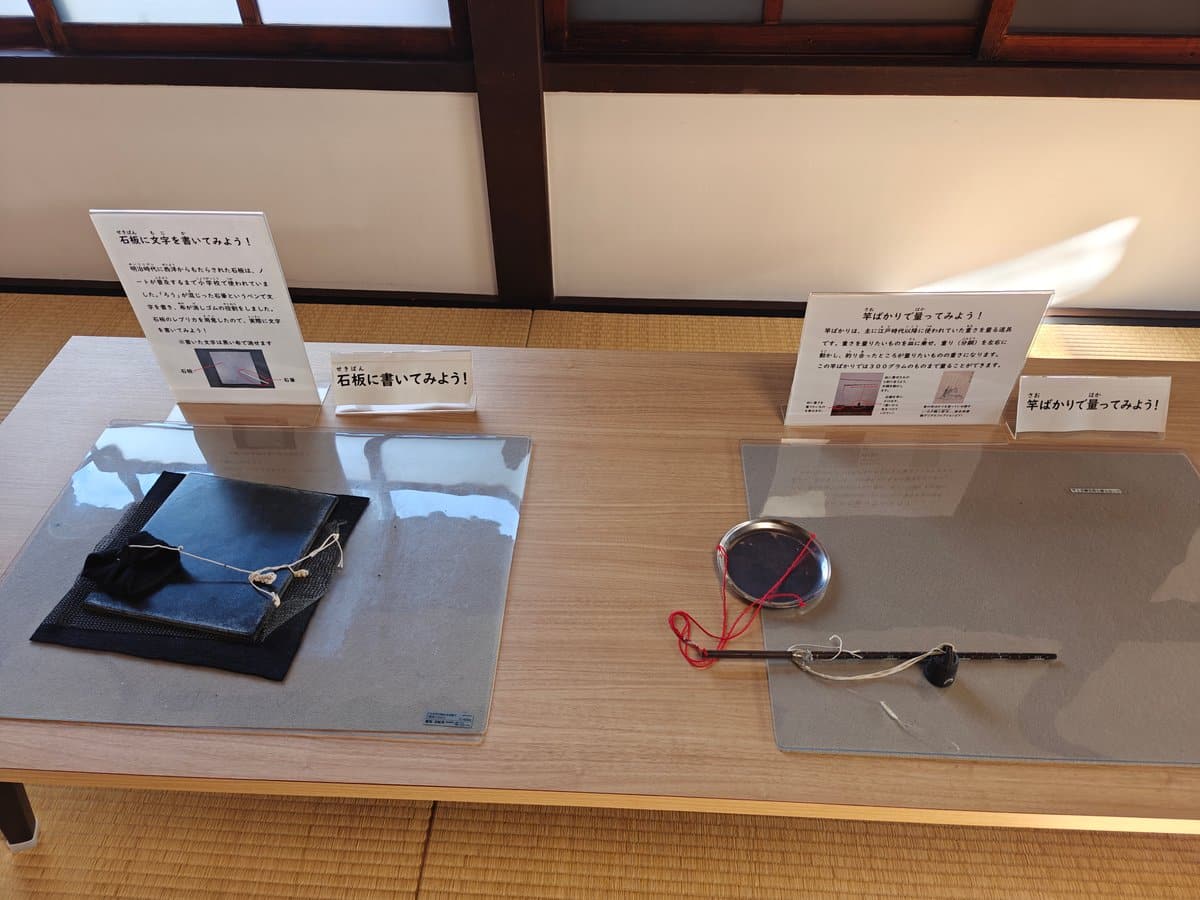
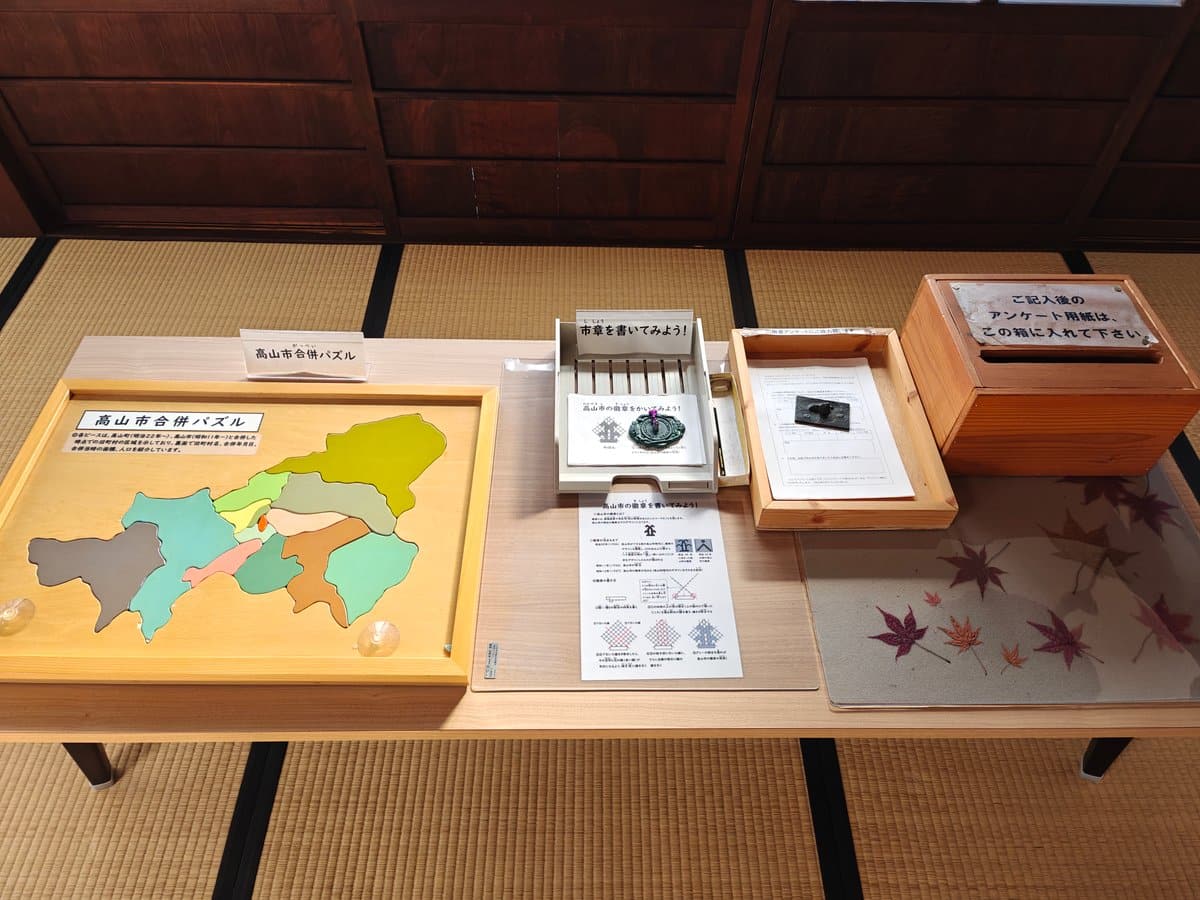
There’s also a hands-on corner at the rear with replicas of tools used in feudal Japan. They’ll also let you try on some old clothes, and there is even a low table on tatami here. We didn’t do any of those activities, but as we walked past, a couple of kids were having a great time.
As it turns out, Takayama in winter was just what I had needed: a quiet town with good food and things to discover on foot. And since there were no crowds to contend with, we could take our time, and the chilly air made each cup of sake and bowl of ramen even tastier. With or without a festival, I’d happily return.
If you’ve ever visited Takayama in winter, I’d love to hear about what you did or if you’re considering visiting.