
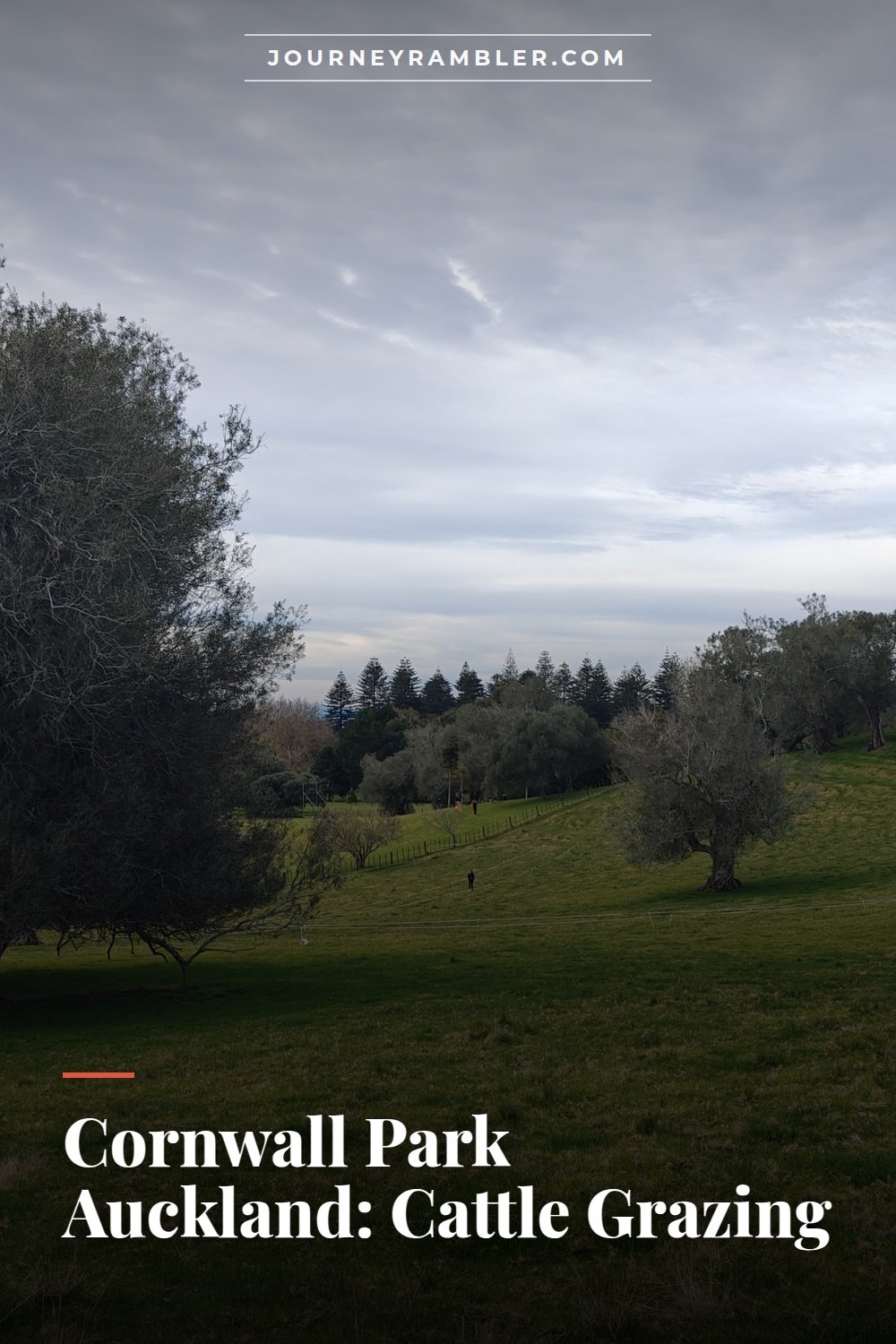
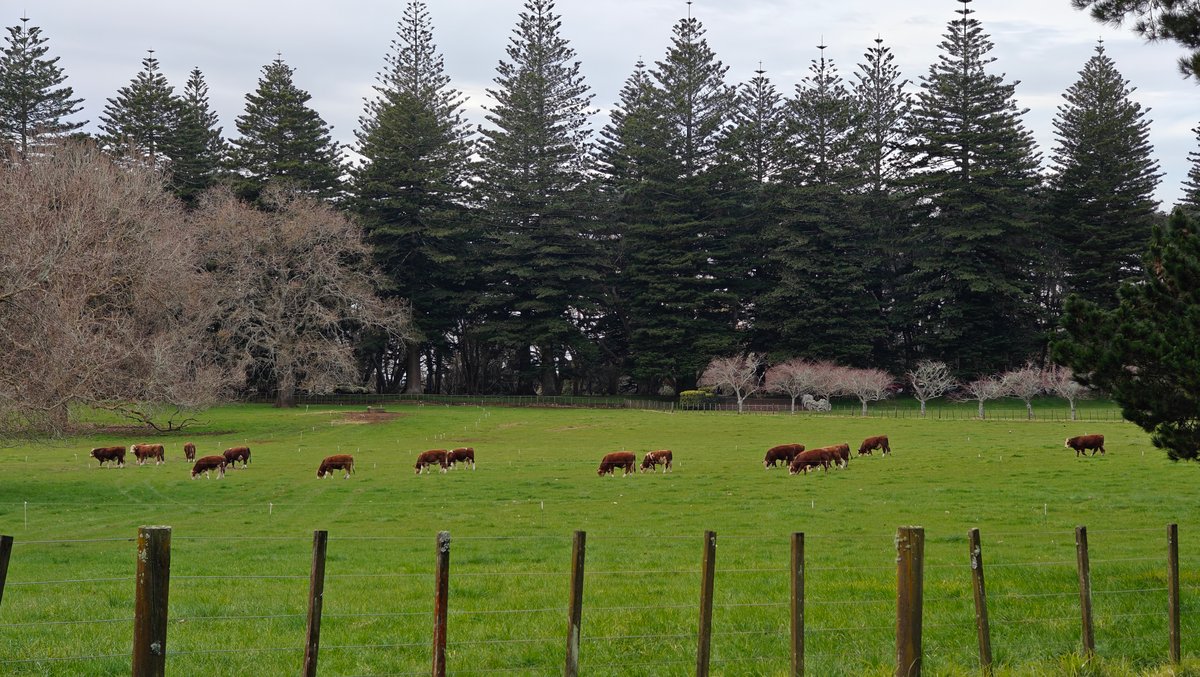
Cornwall Park: Who knew there was working farmland in Auckland? I certainly didn’t, until I set out searching for a park and found it. Cattle graze on actual pasture in the heart of the city.
People walks down paths running parallel to paddocks filled with Herefords. It is a combination of real agriculture and urban green space, weirdly normal yet totally unusual all at once. There’s a ton of space in this park.
I spent an afternoon just wandering around it. It’s got everything from formal gardens and sports fields to some seriously impressive old trees and even some cattle paddocks.
Cows and Nature in the City
Cornwall Park
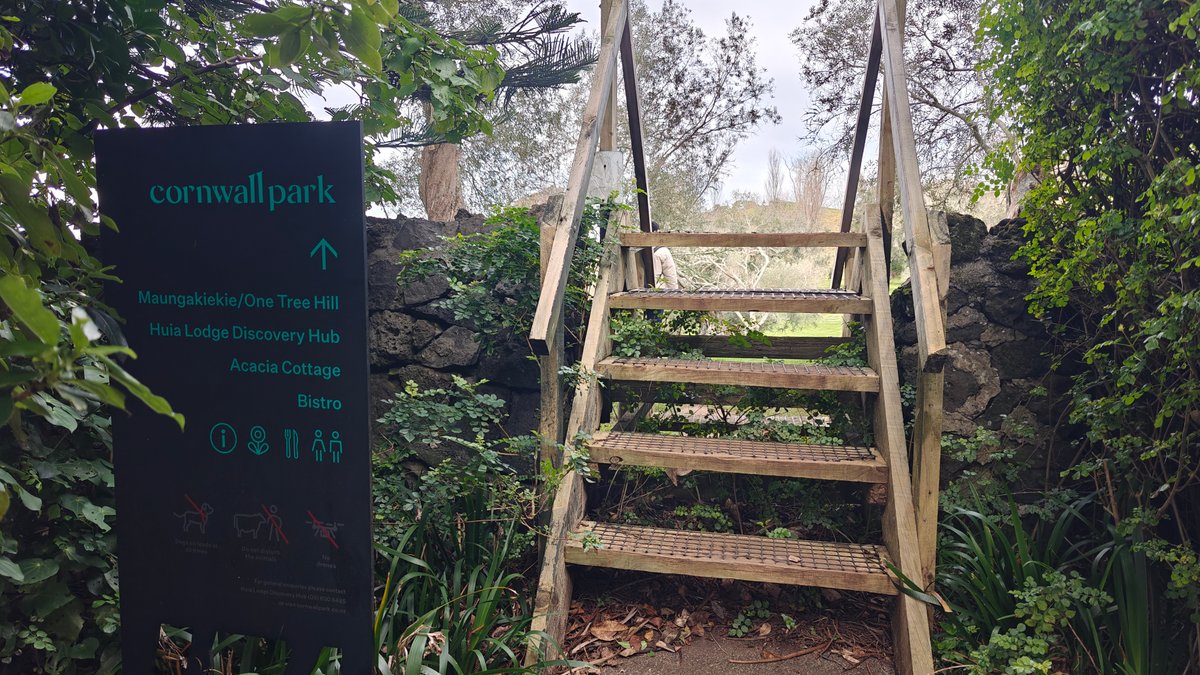
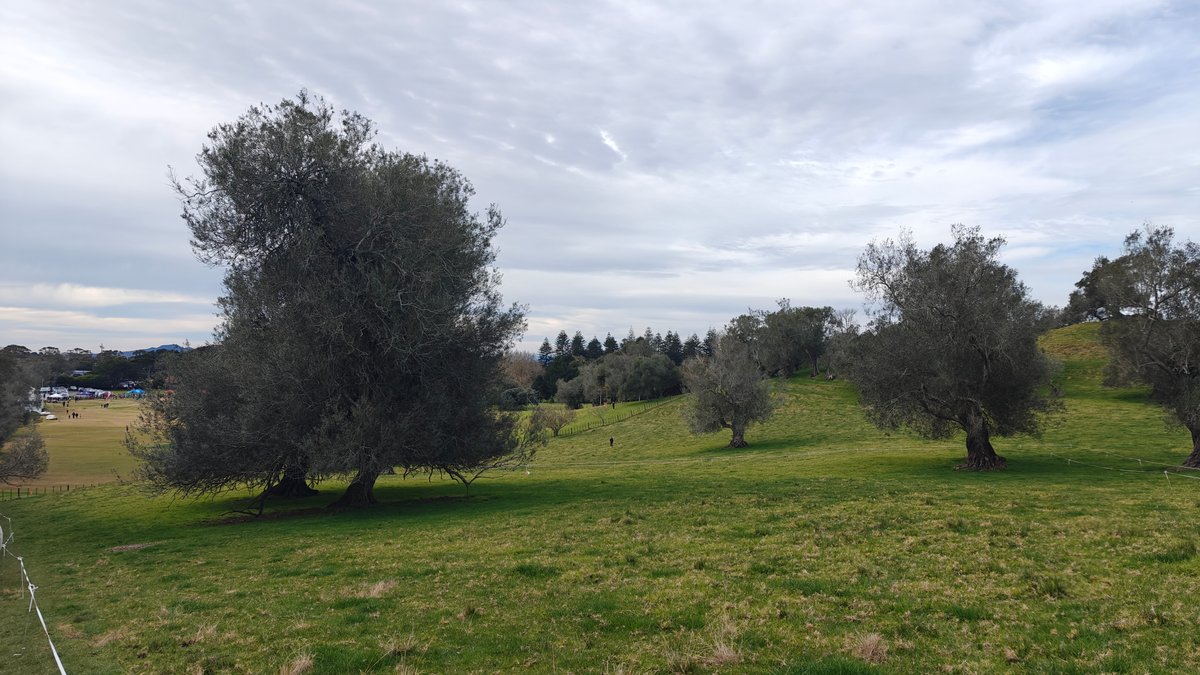
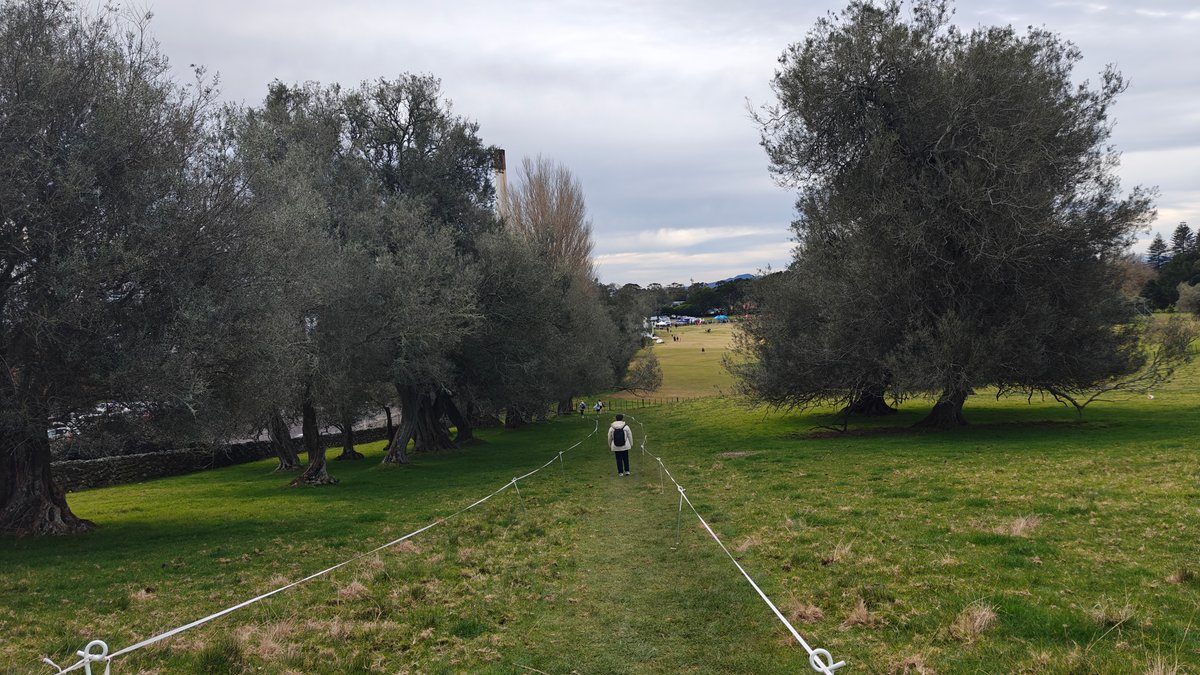
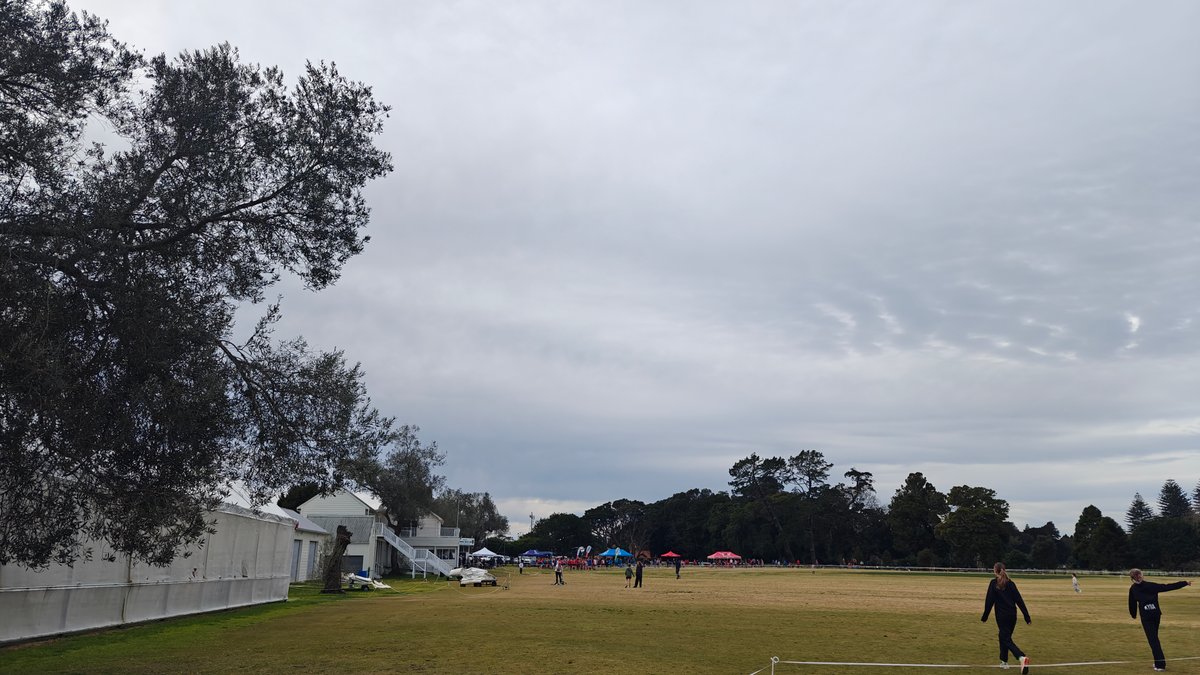
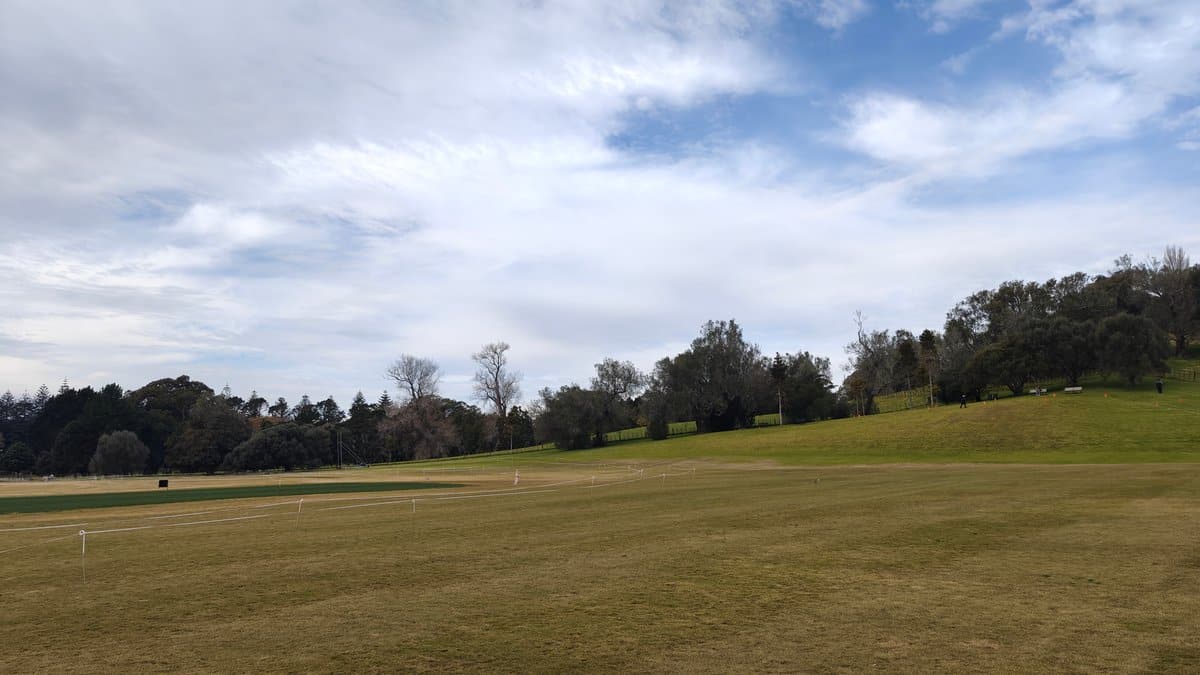
What stuck out the most to me is that it’s spread across a serious amount of ground. Beginning at the sports fields, the terrain here spread out into wide open grasslands interspersed with olive trees. It was all very rural-looking, more so then I’d imagined for such an urban location.
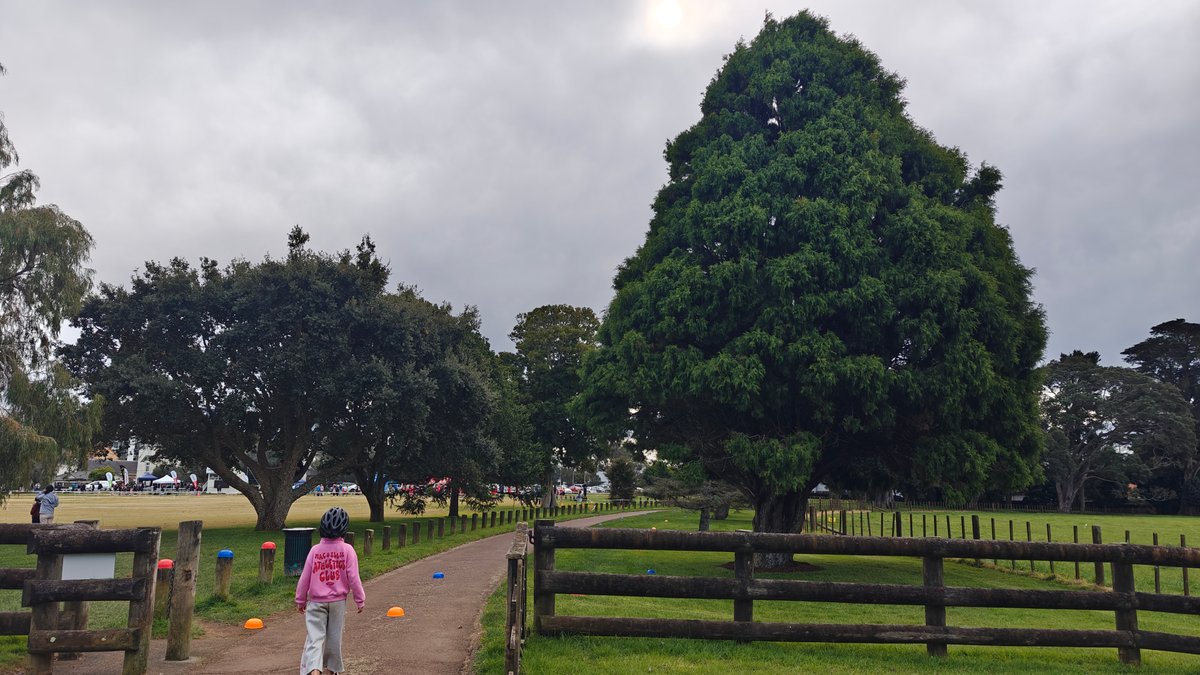
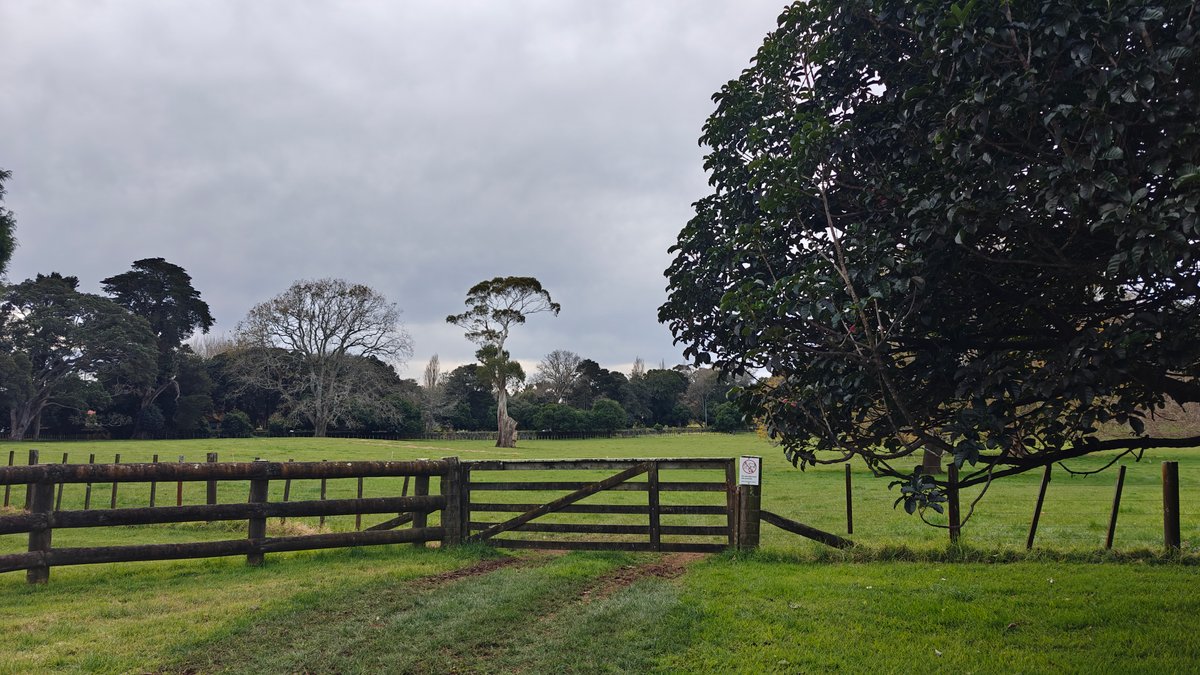
Someone had even cut straight lines between the rows of olives as if they were a proper grove.
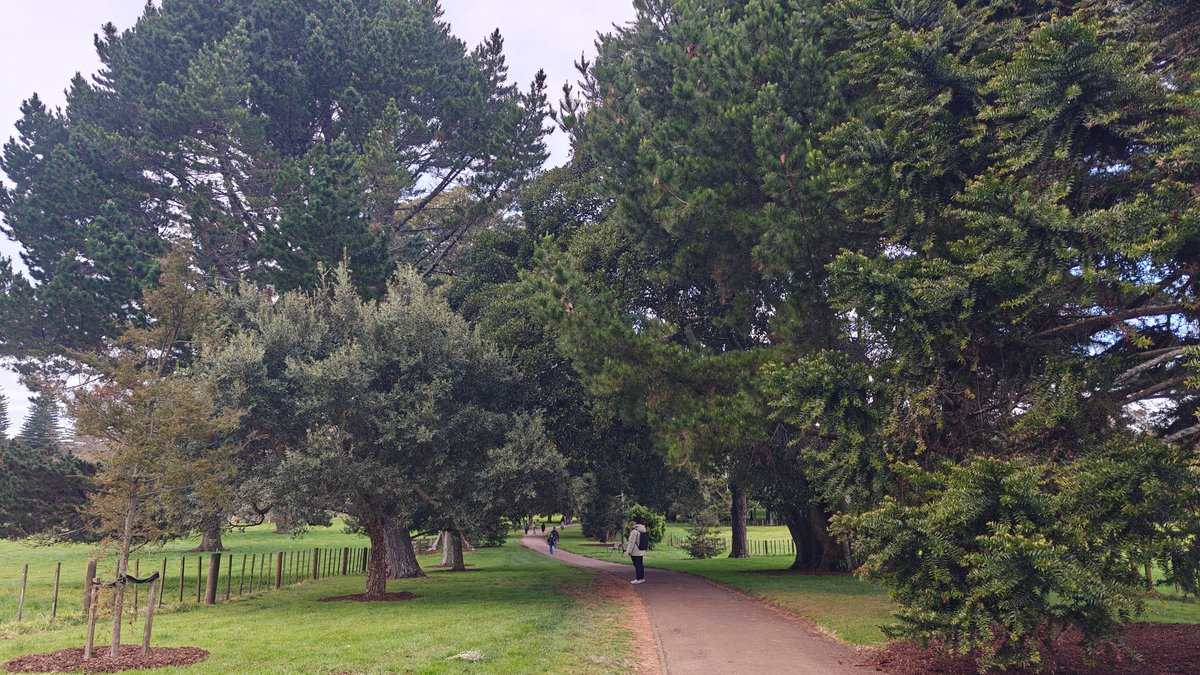
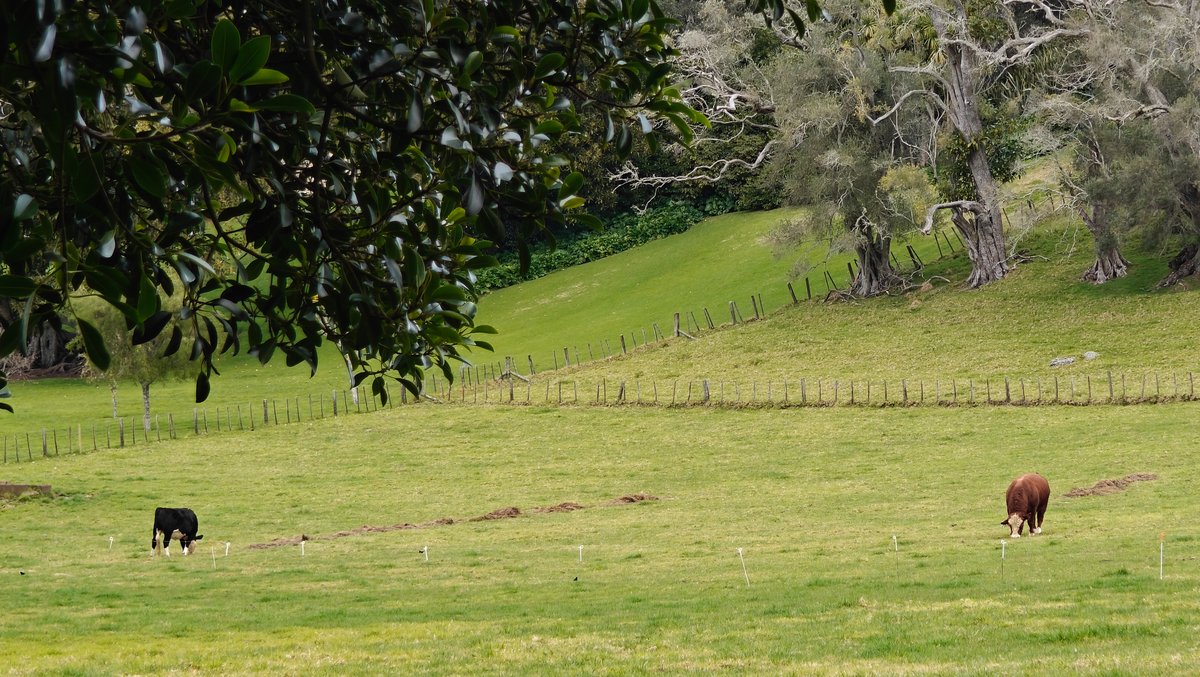
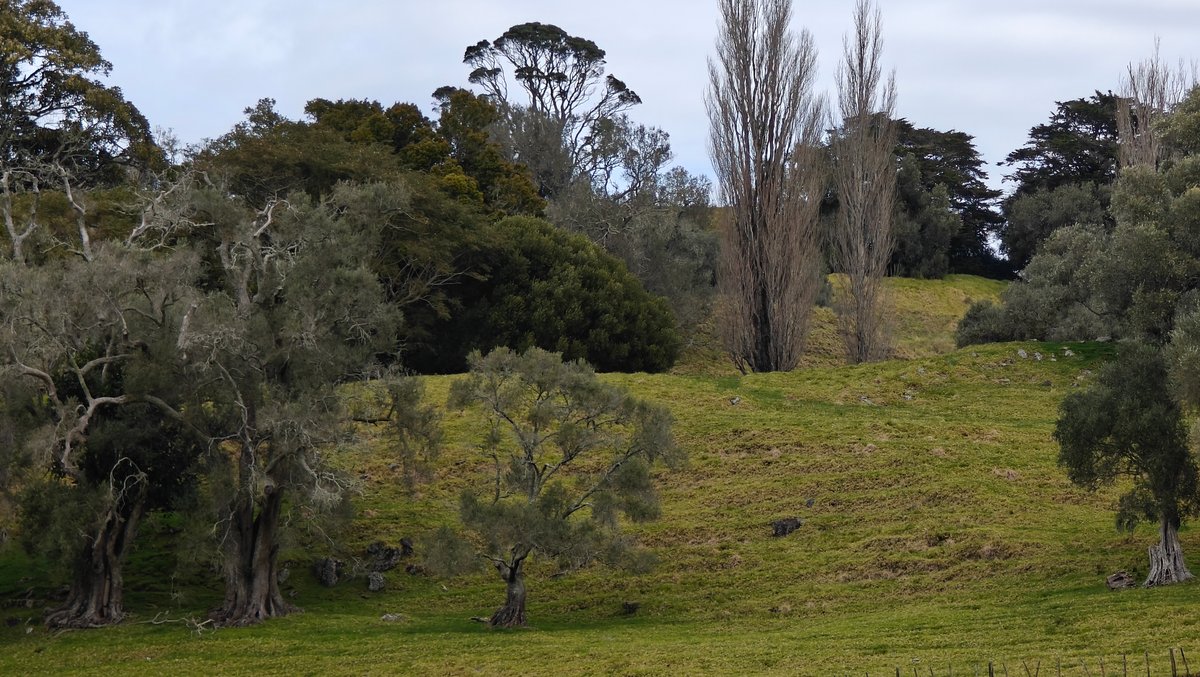
It was like a set of neat little avenues. The playing fields themselves were slightly scuffed up and brown in patches, the sort of thing that happens when people actually play games on lawns instead of merely looking at them for show. Continuing further into the park, we walked along trails that paralleled post-and-rail fences like those you’d find on a farm.
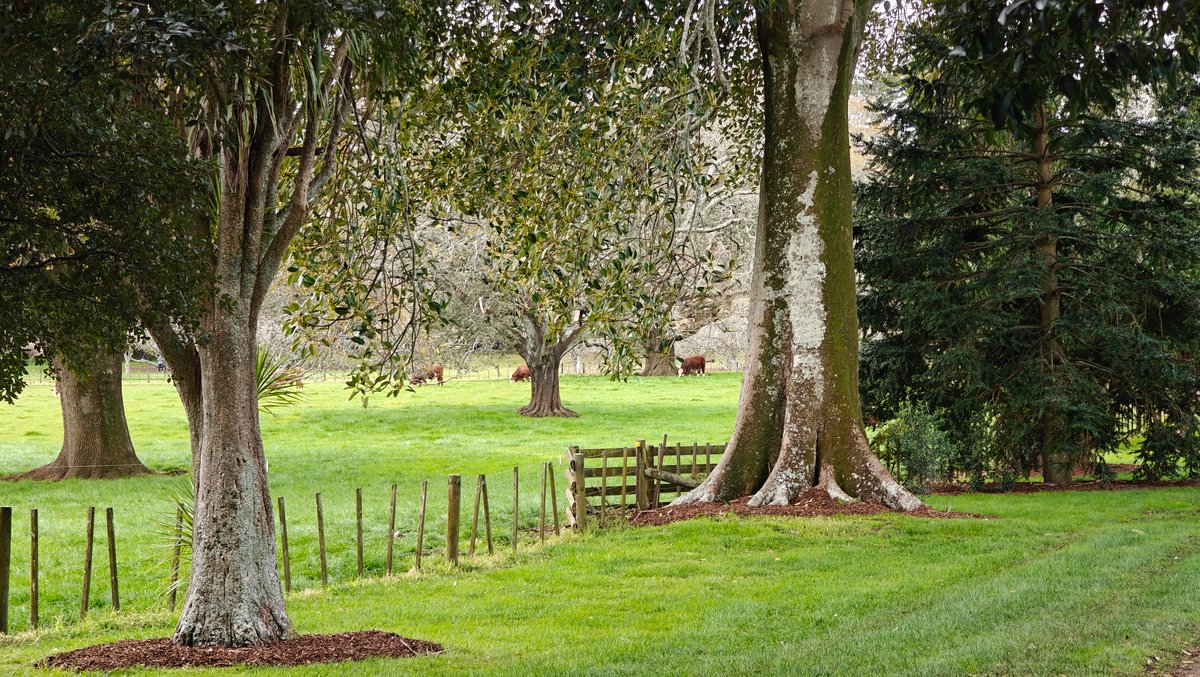
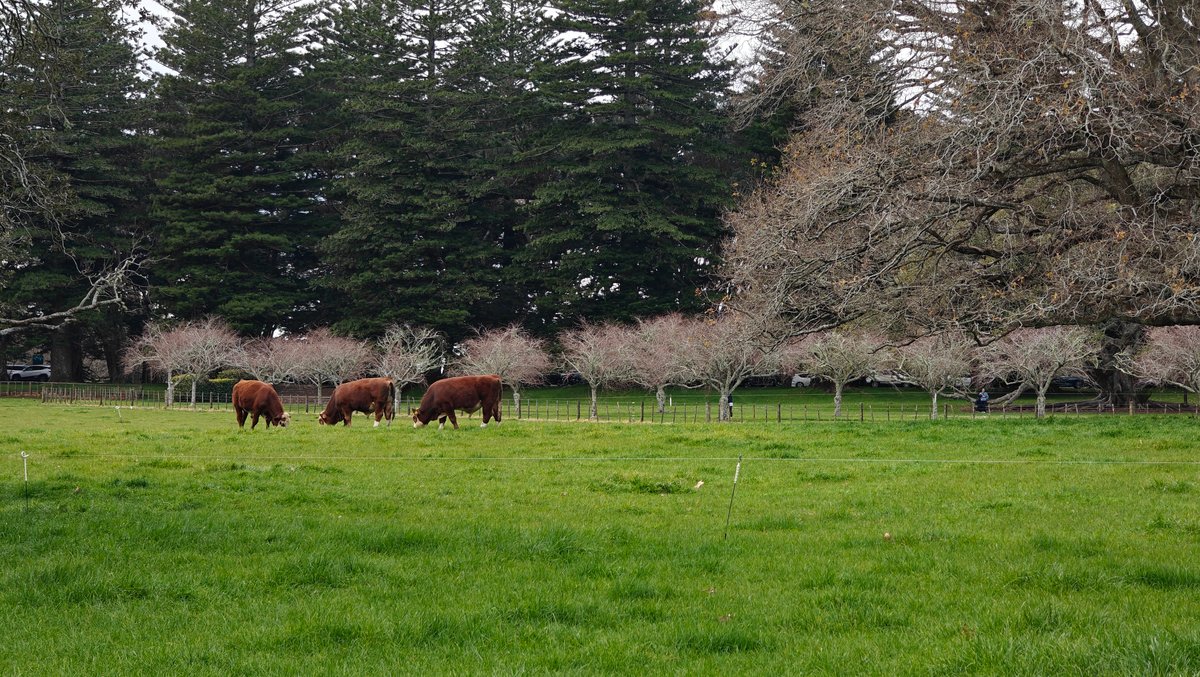
Real farm gates led from one section of the park to another, showing that these aren’t just decorations in a park. And then there they were: Herefords, simply grazing beneath the Norfolk pines and sprawling out in the paddocks as if this were nothing unusual at all.
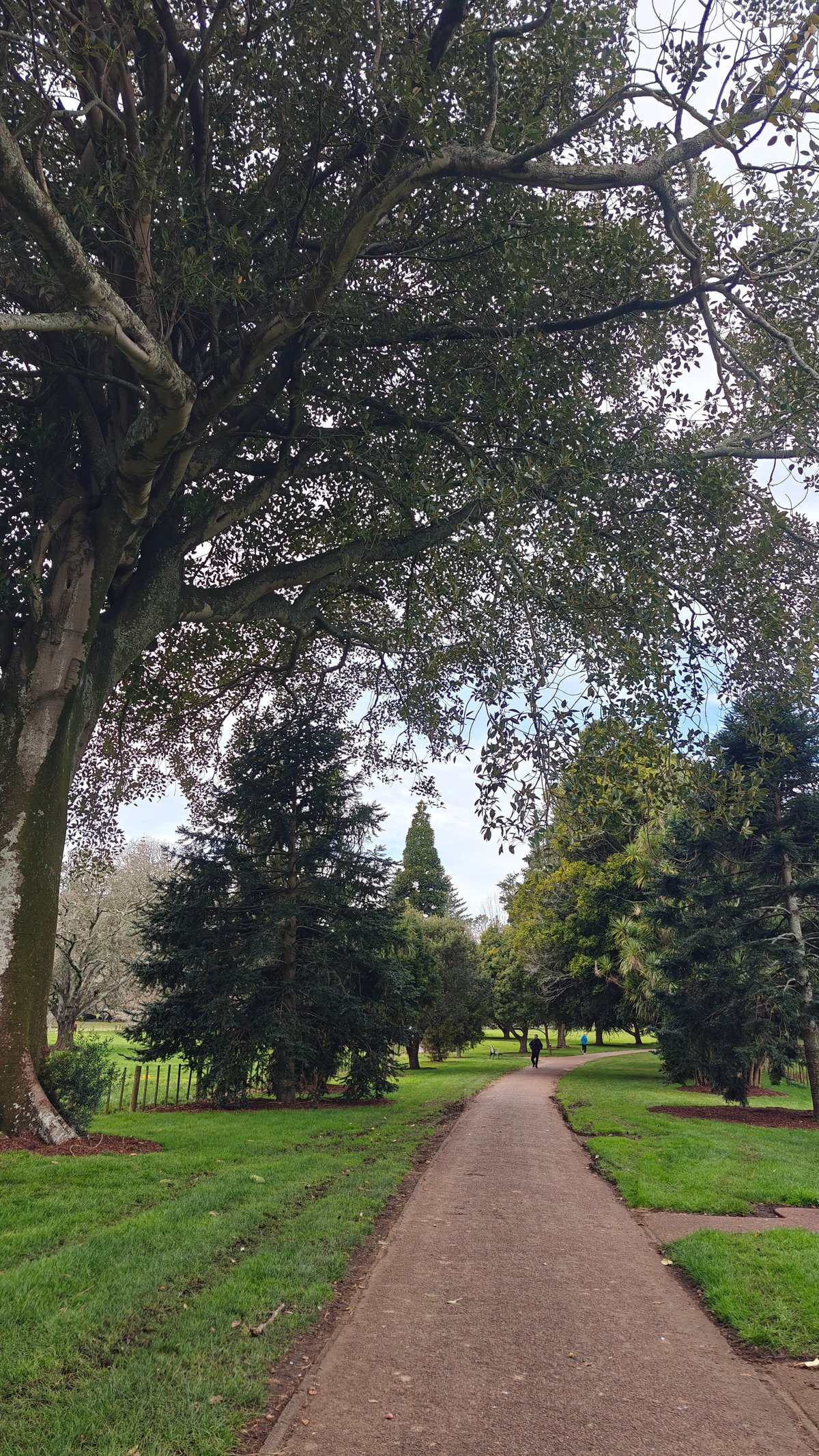
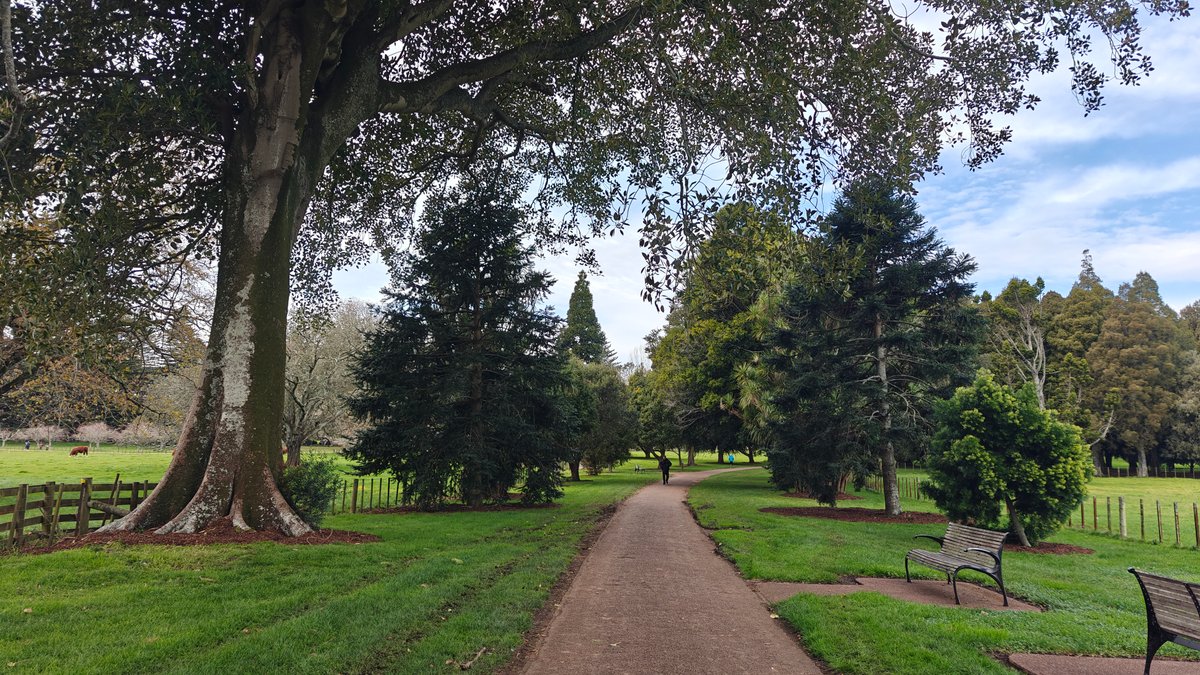
There were other people walking along tree-lined paths, and no one looked too shocked that cattle were present. I stood at the fence and watched them for a bit. It was so peaceful.
They didn’t even notice me; they were just getting on with their lives on the mown grass.
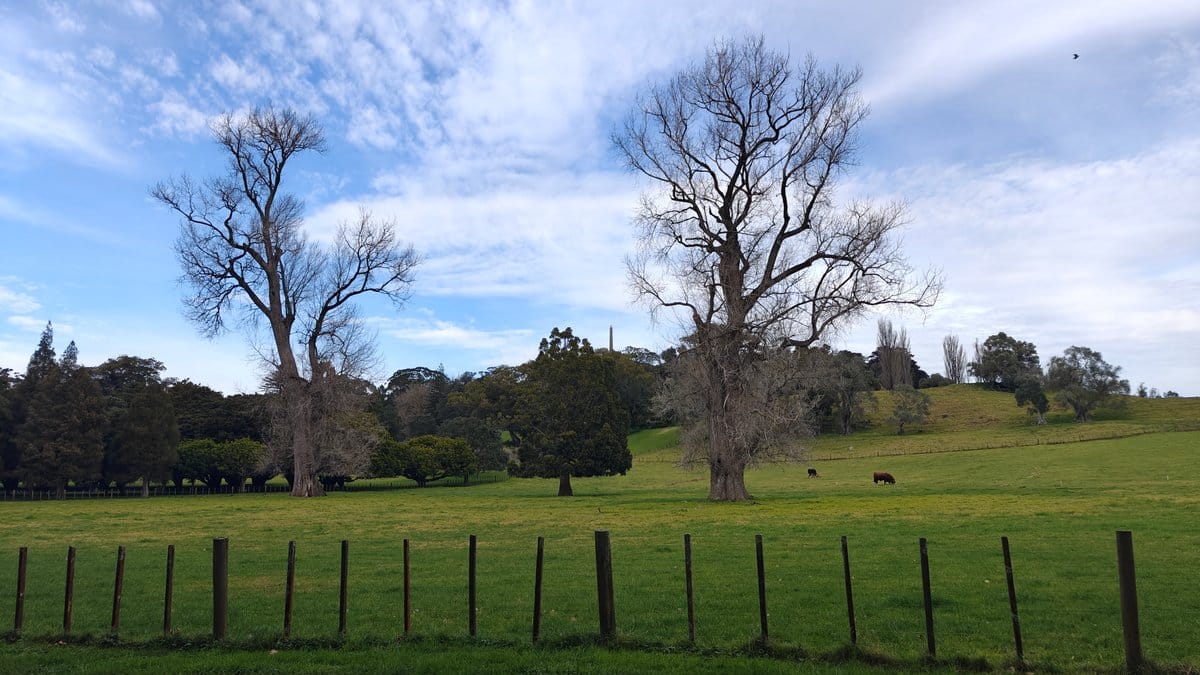
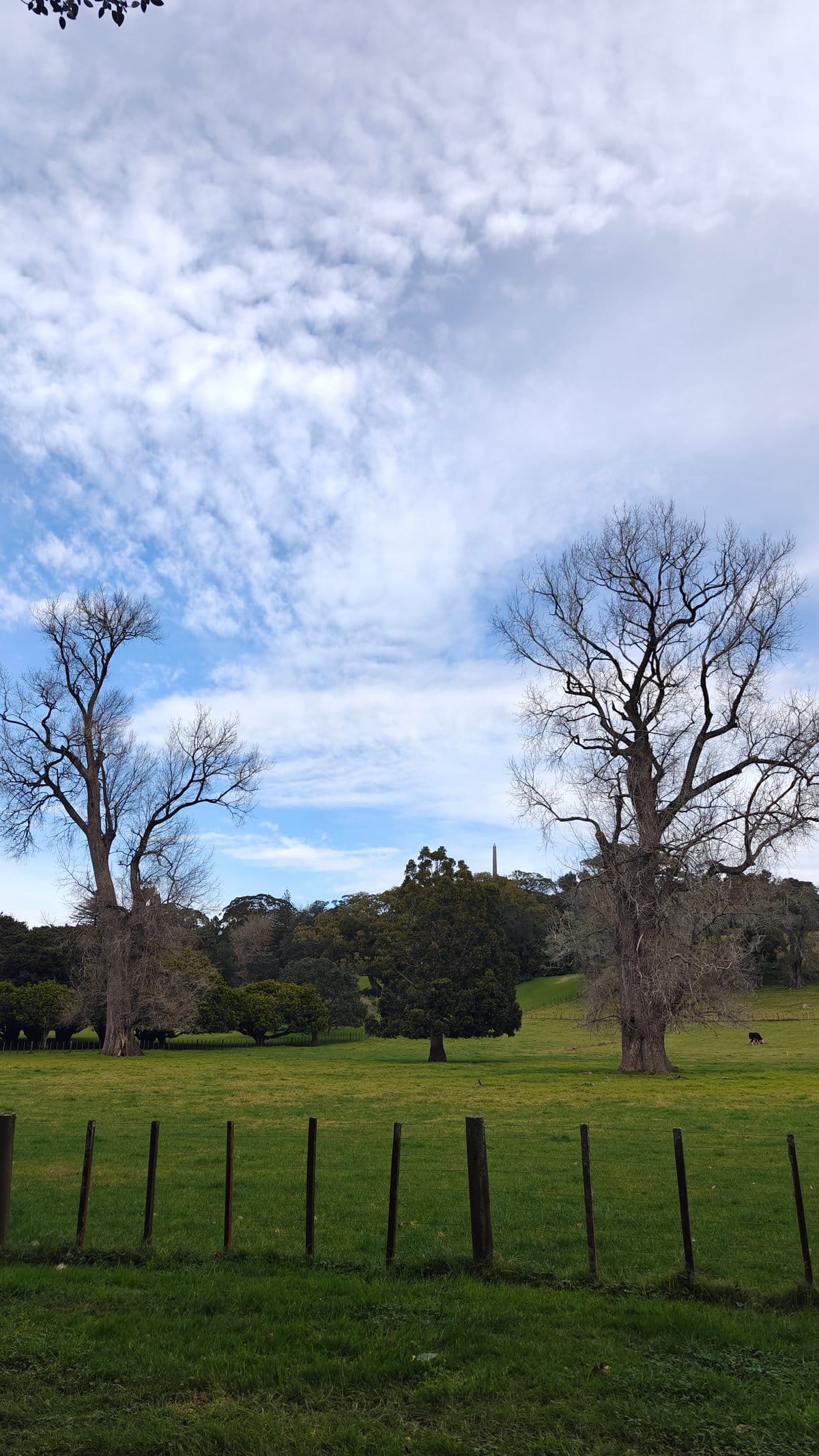
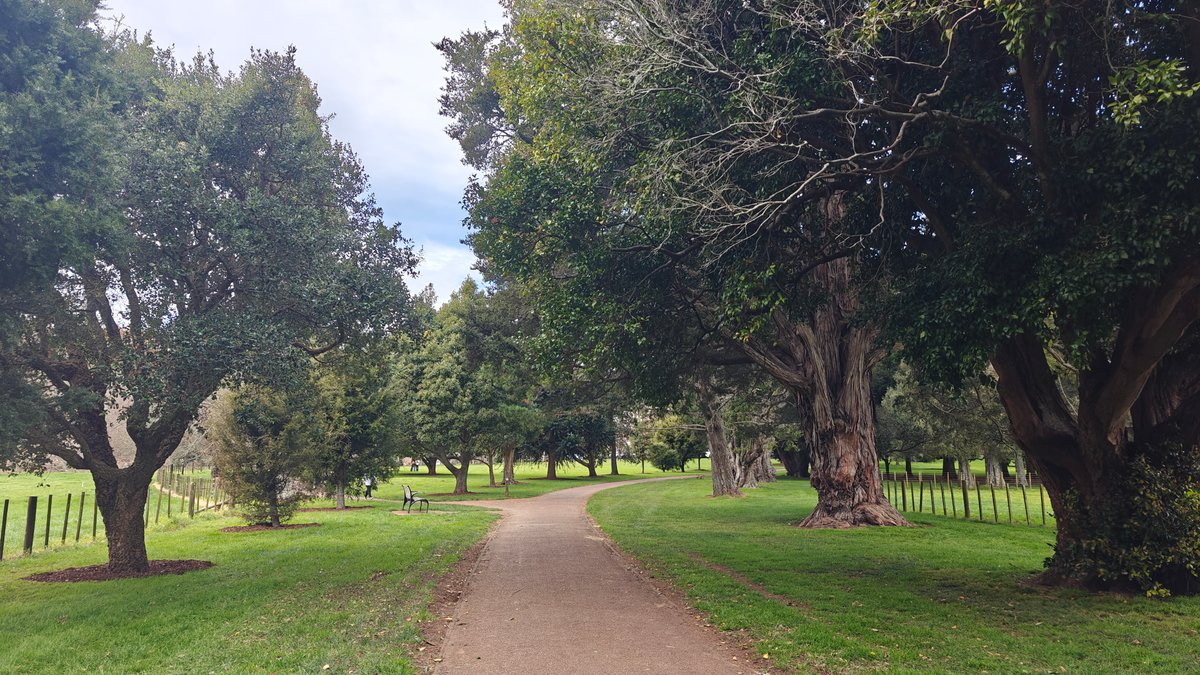
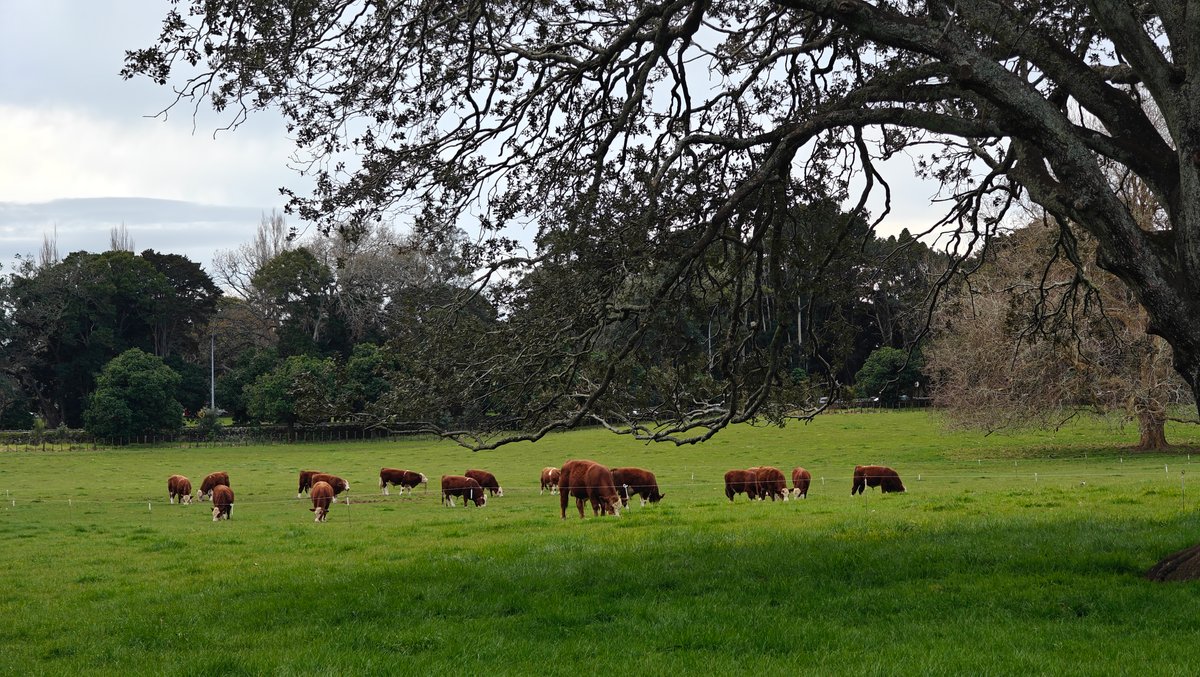
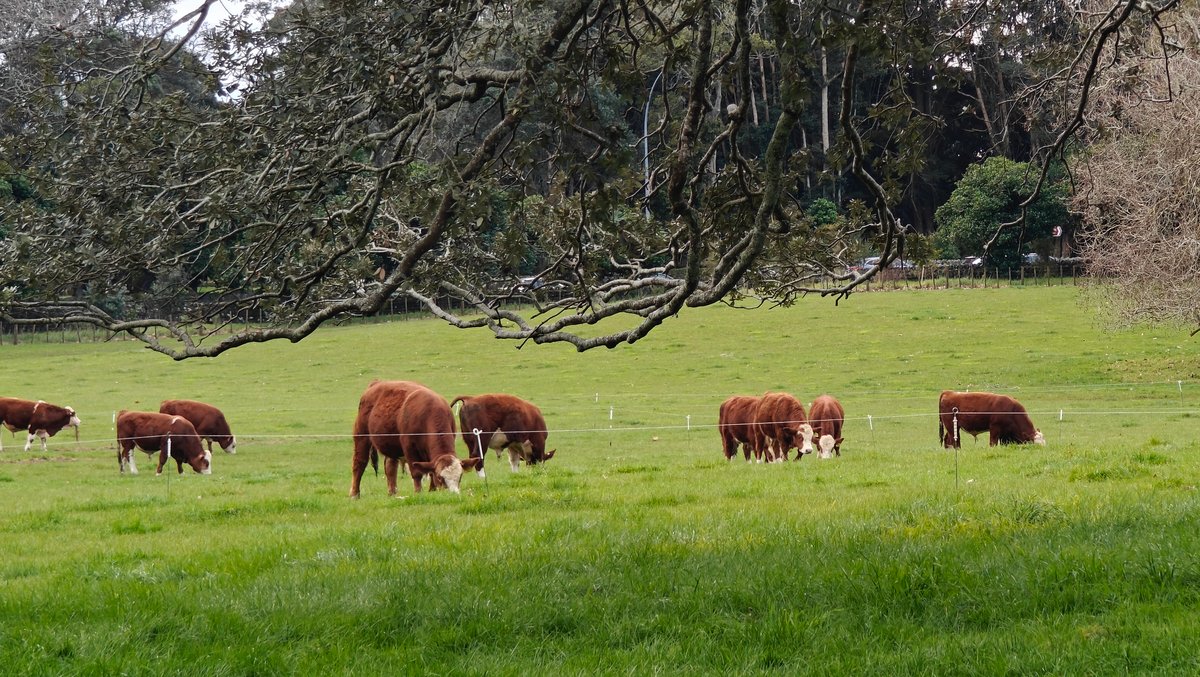
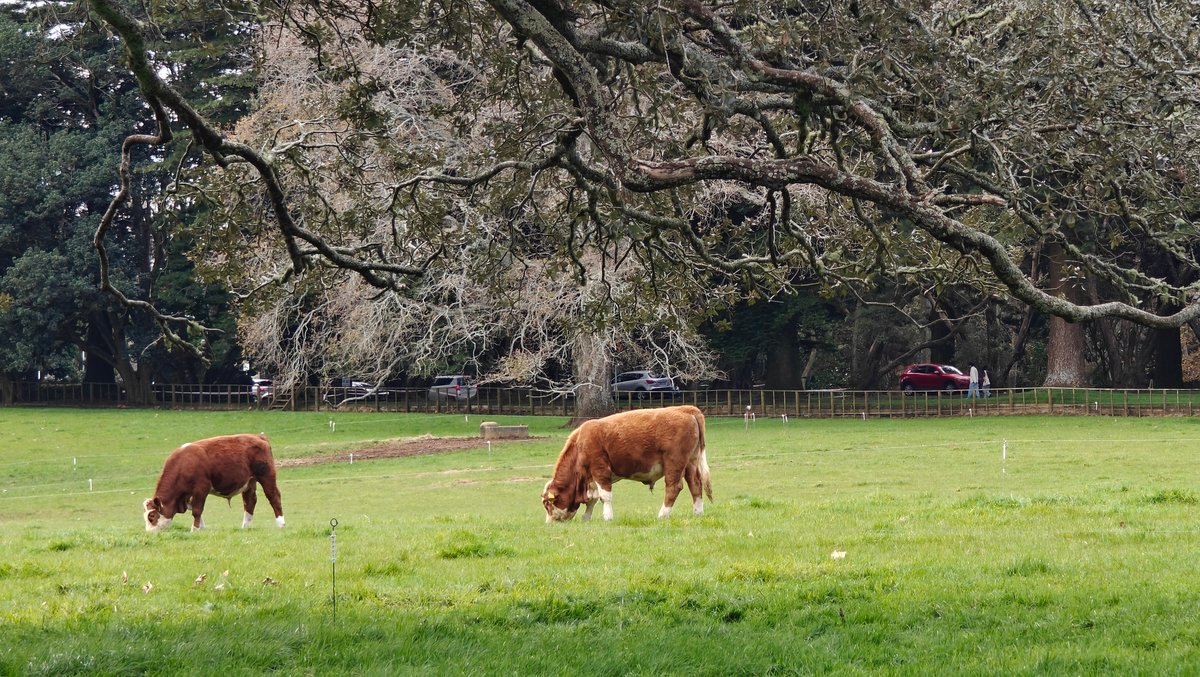
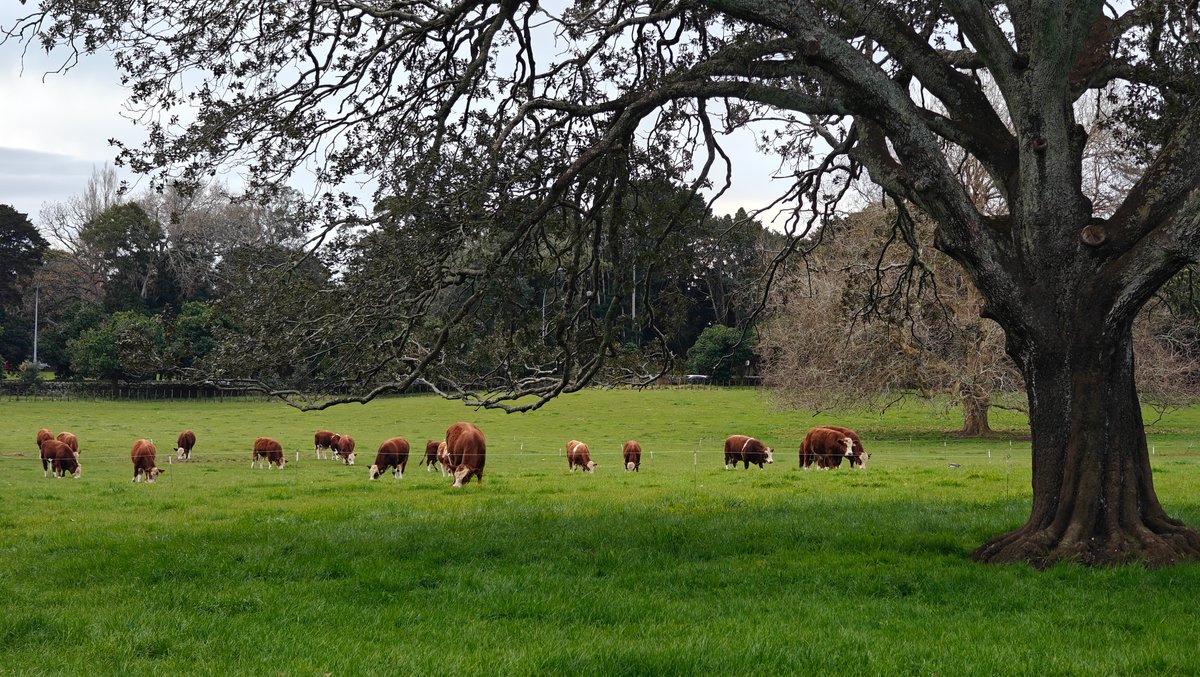
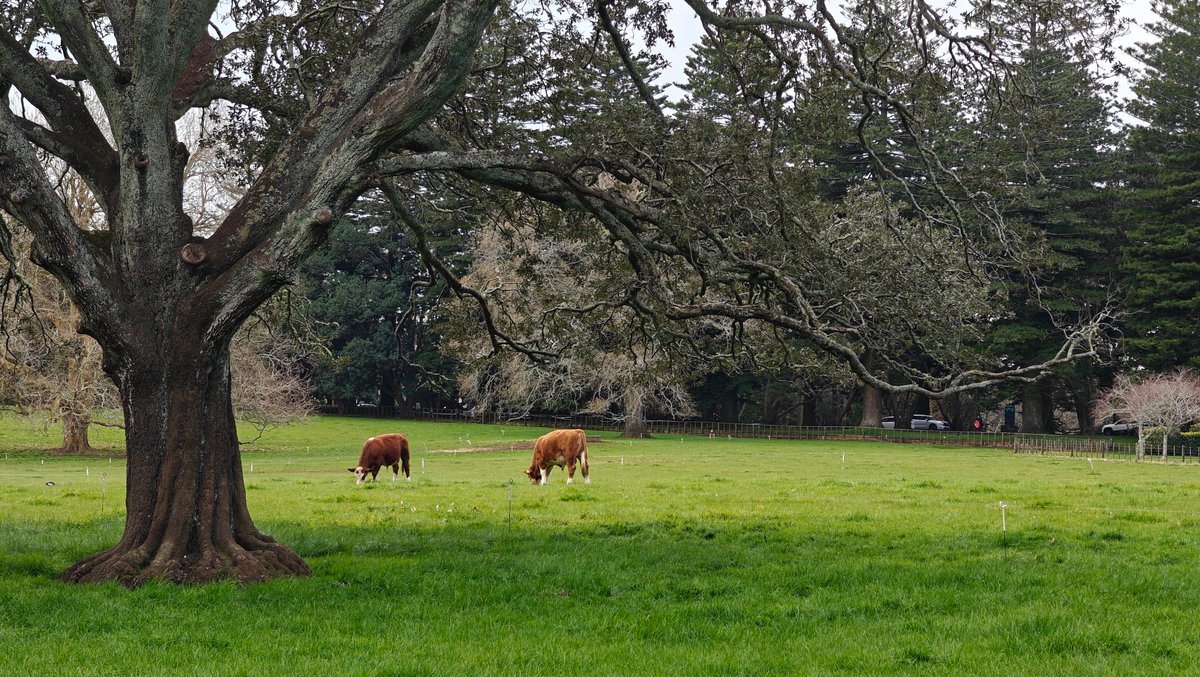
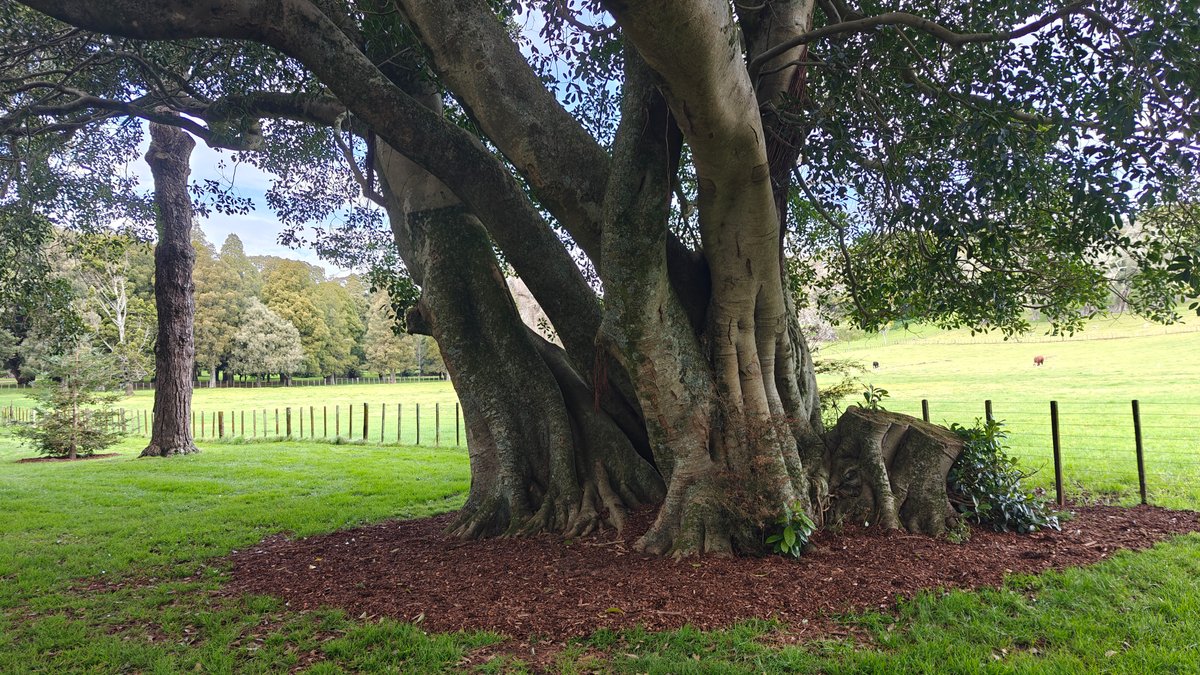
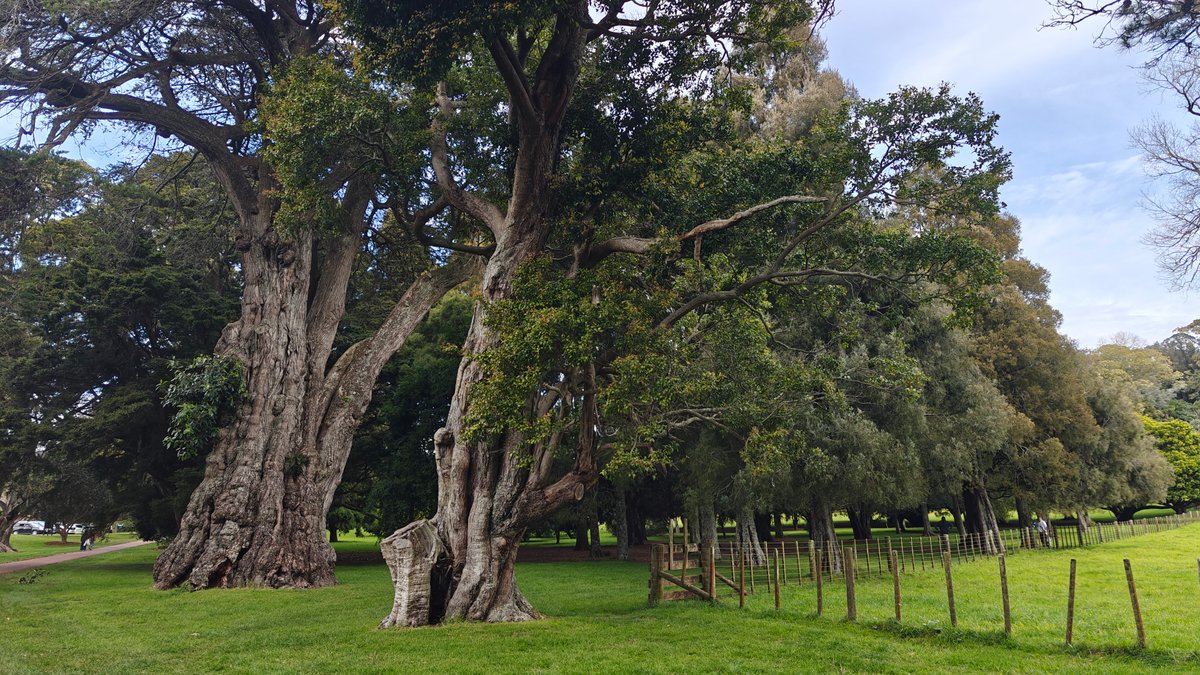
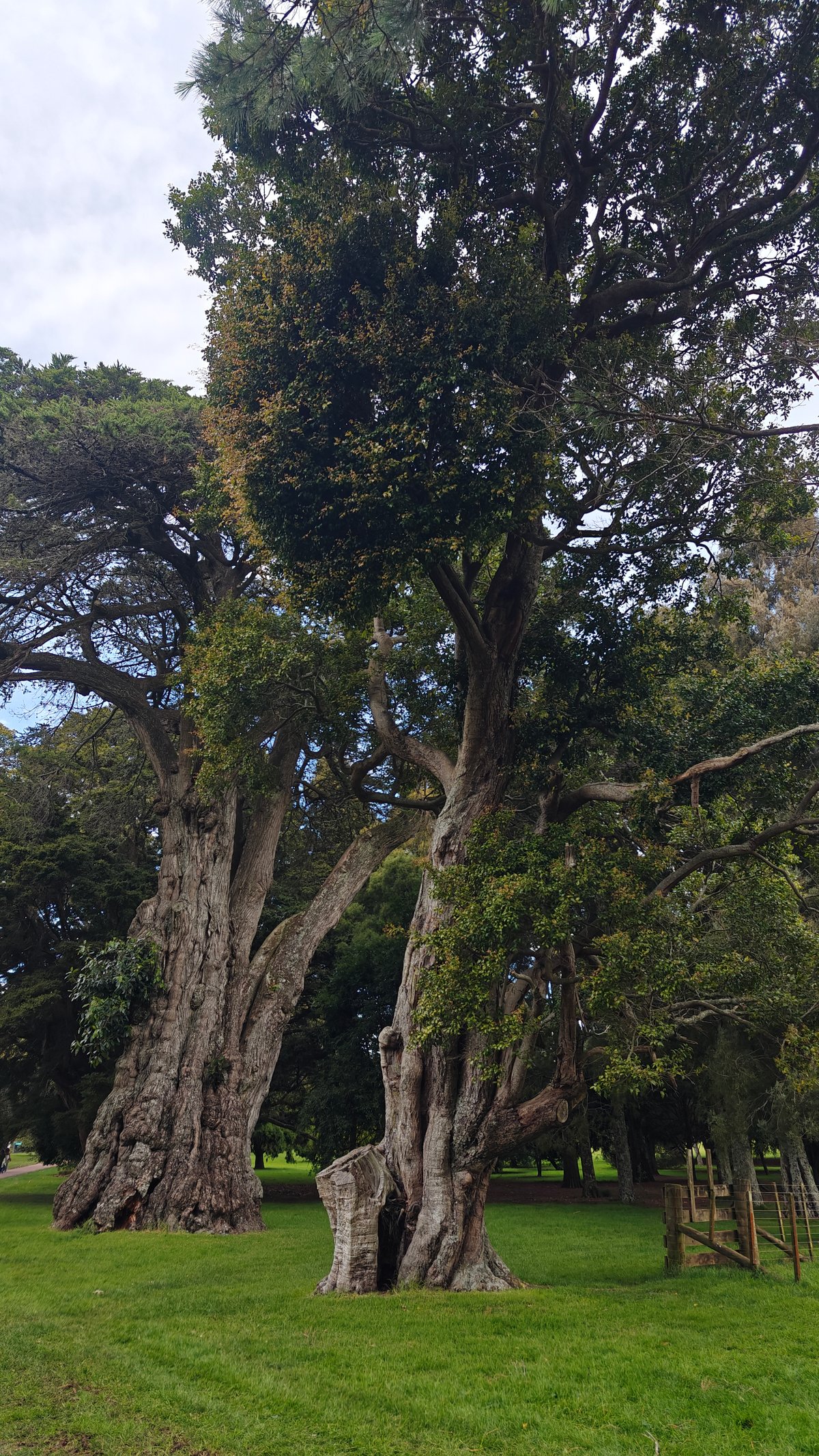
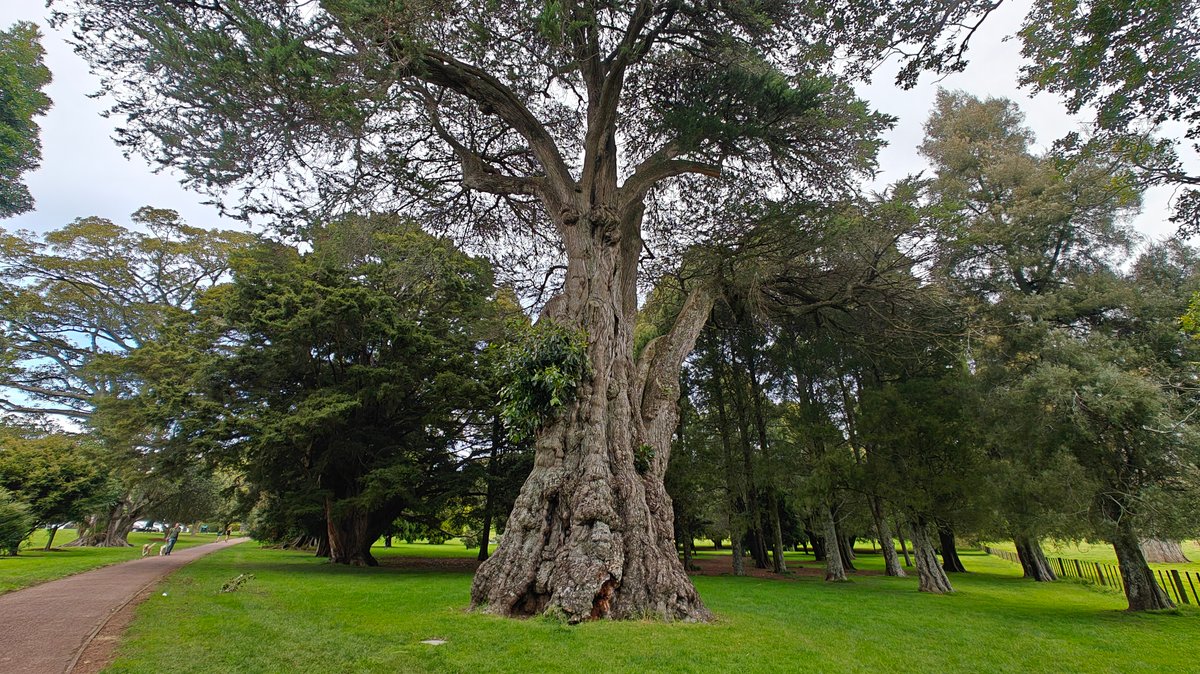
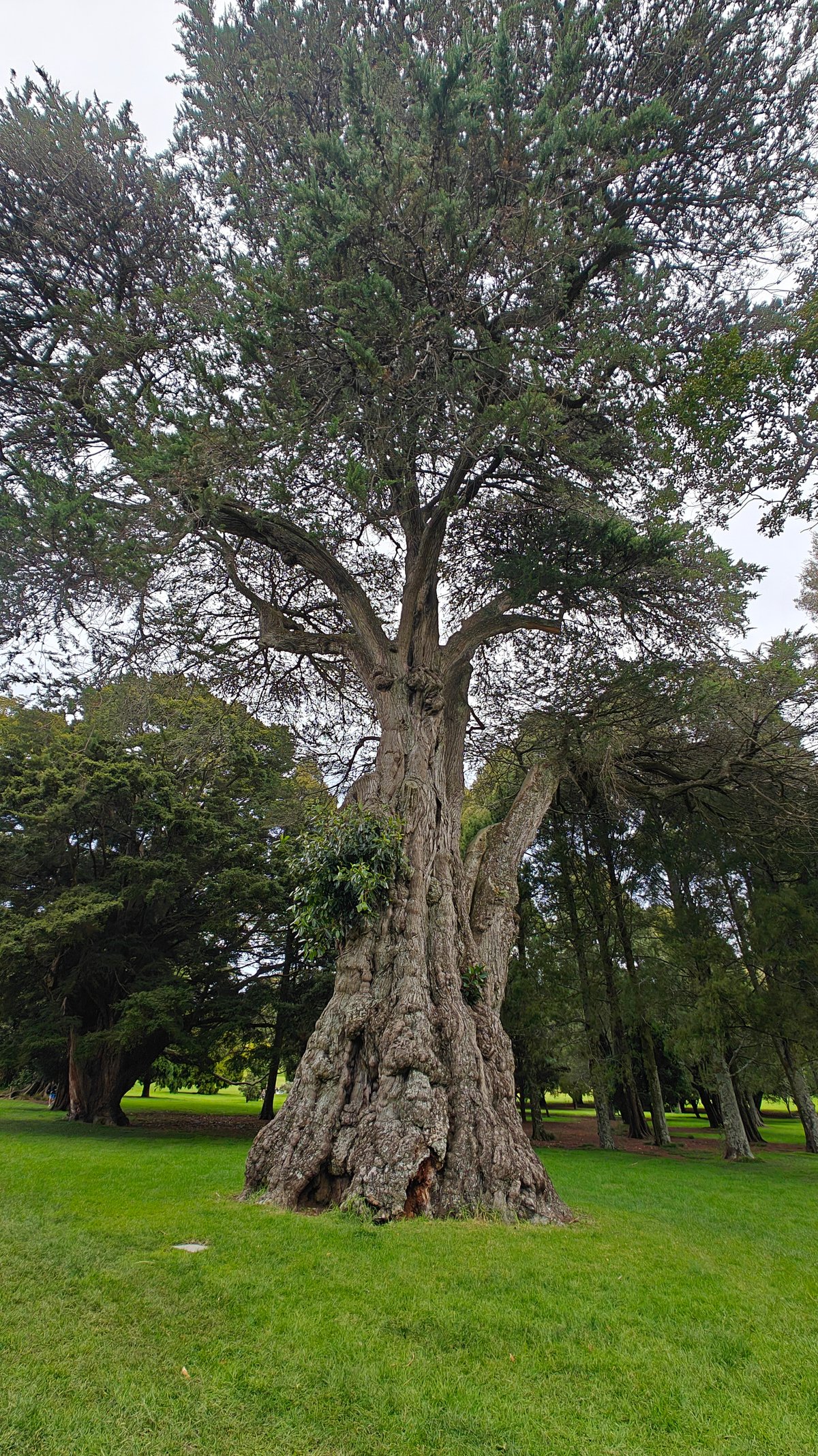
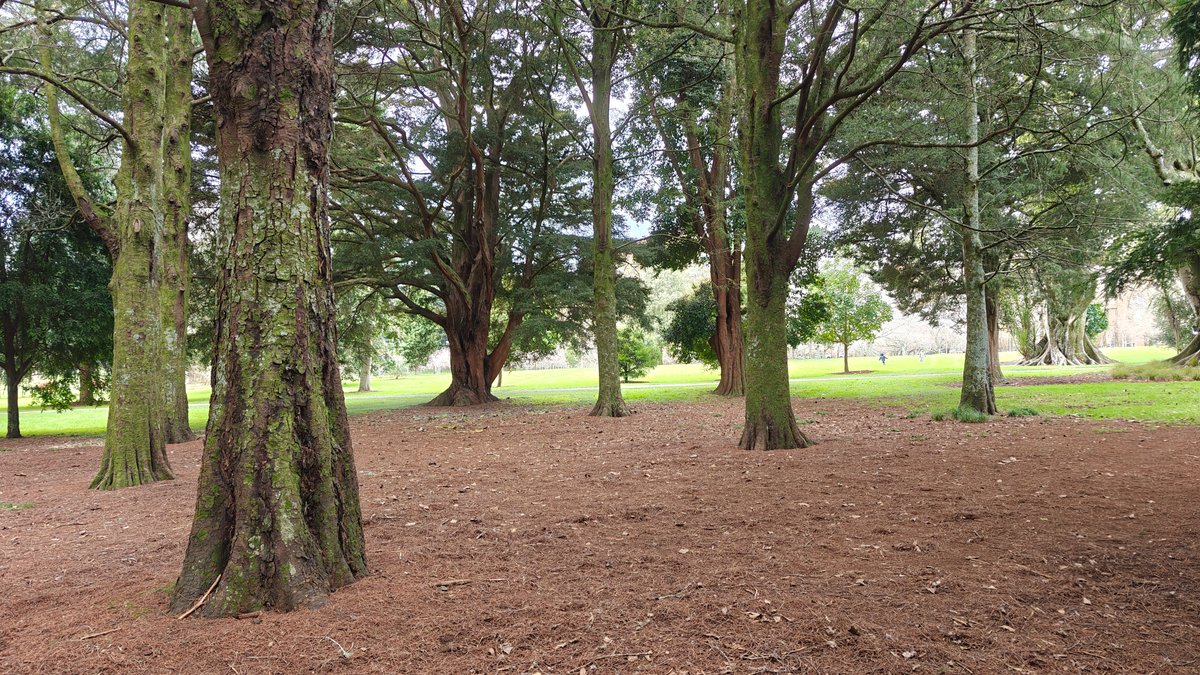
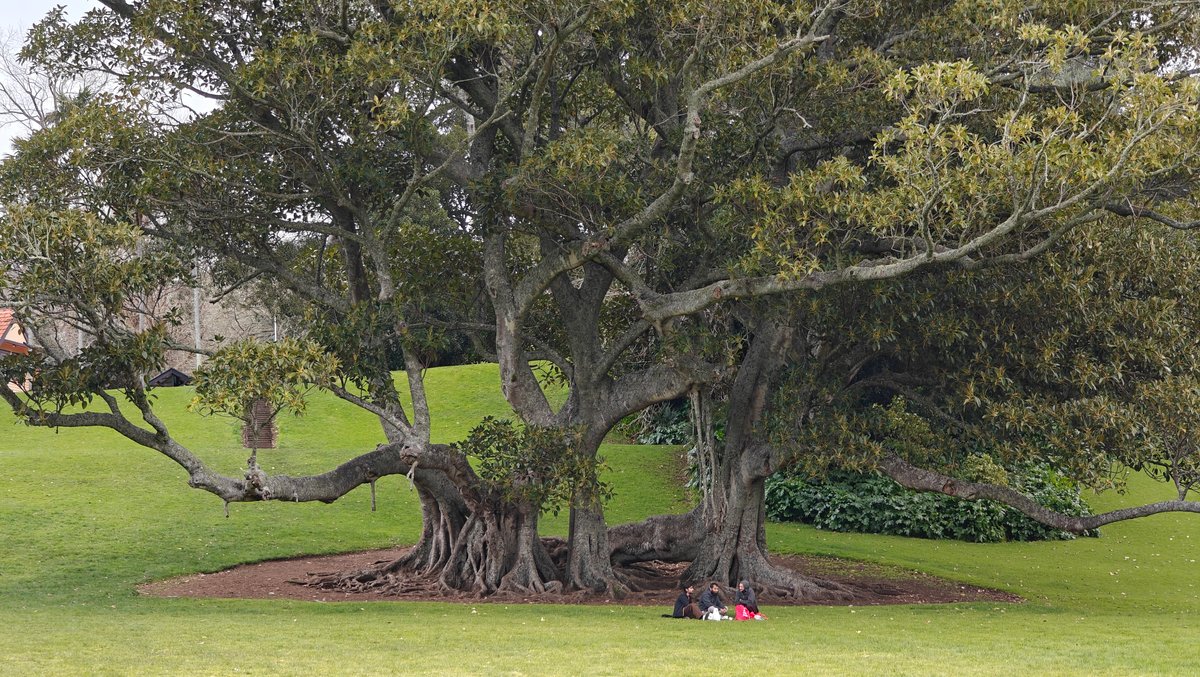
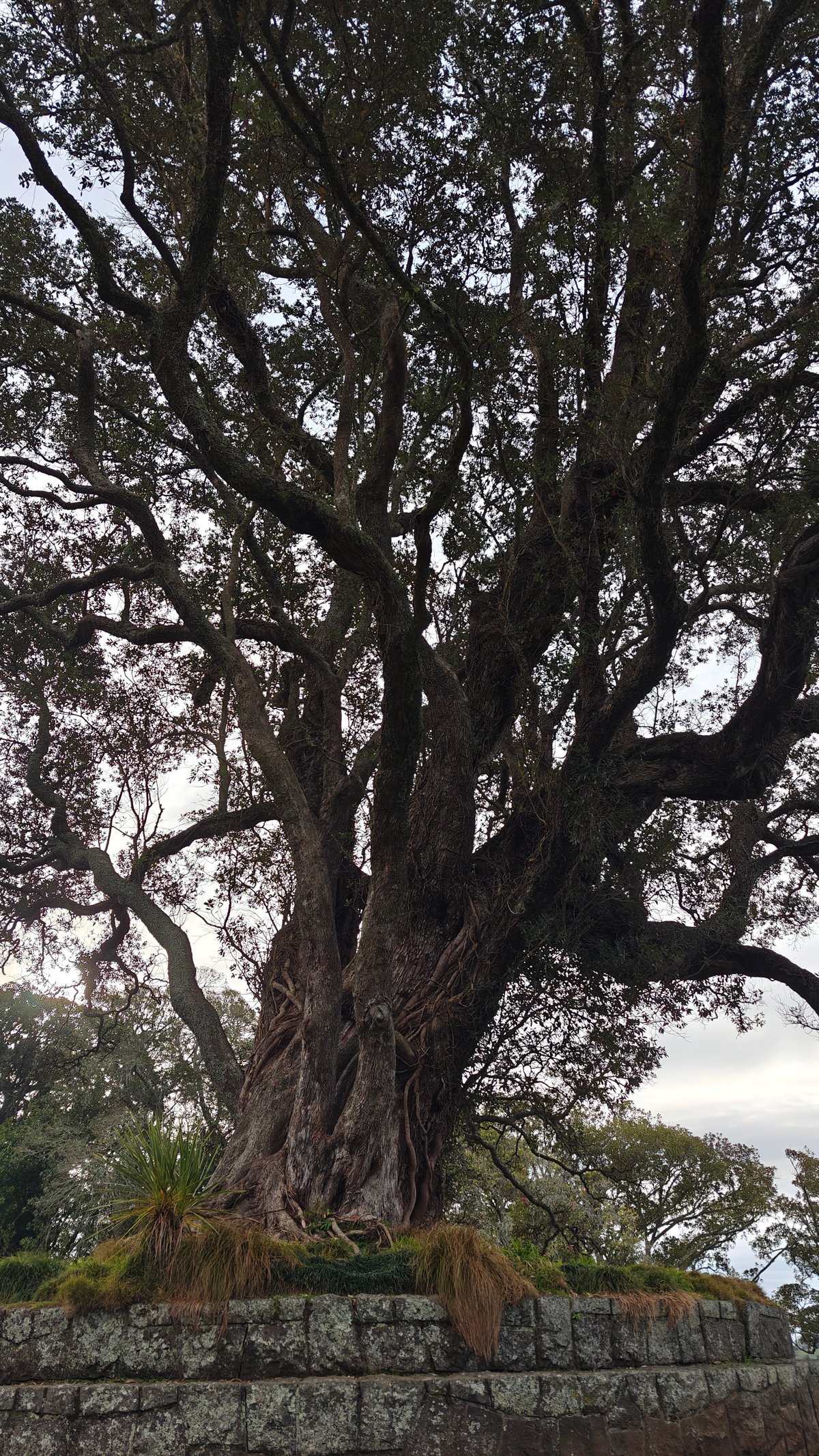
And then there’s the trees. There were so many old ones that had their own mown mulch ring around them. I even saw one giant Moreton Bay fig whose buttress roots spread out into crazy natural shapes.
The paths under their enormous canopies winds through them. ” You could spend an hour just reading, and who wouldn’t?
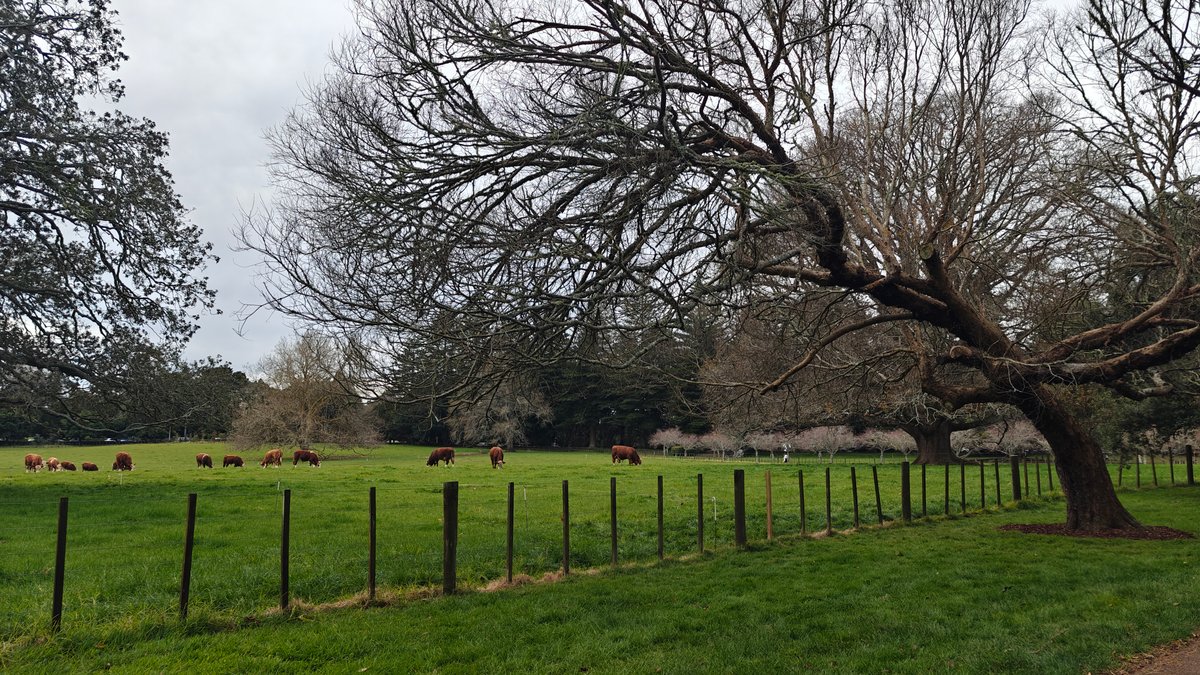
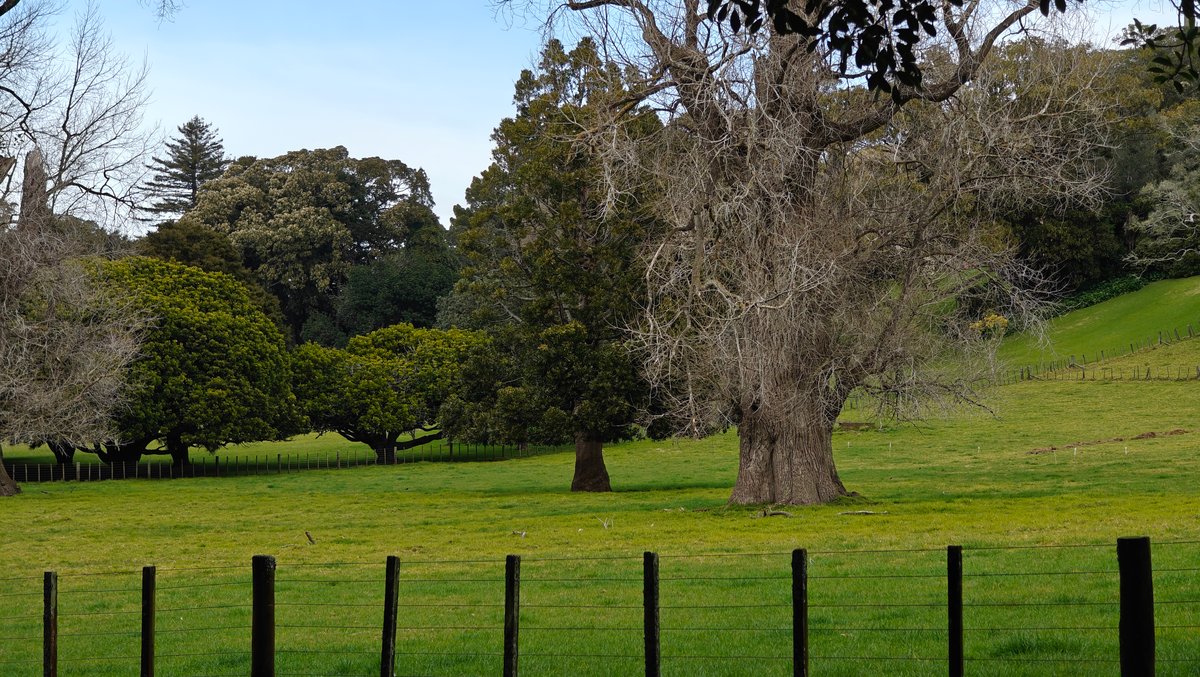
And so we continued on, passing more and more cows. They clustered together underneath some spreading canopy, grazed through bare branches, or meandered among blossoming trees.
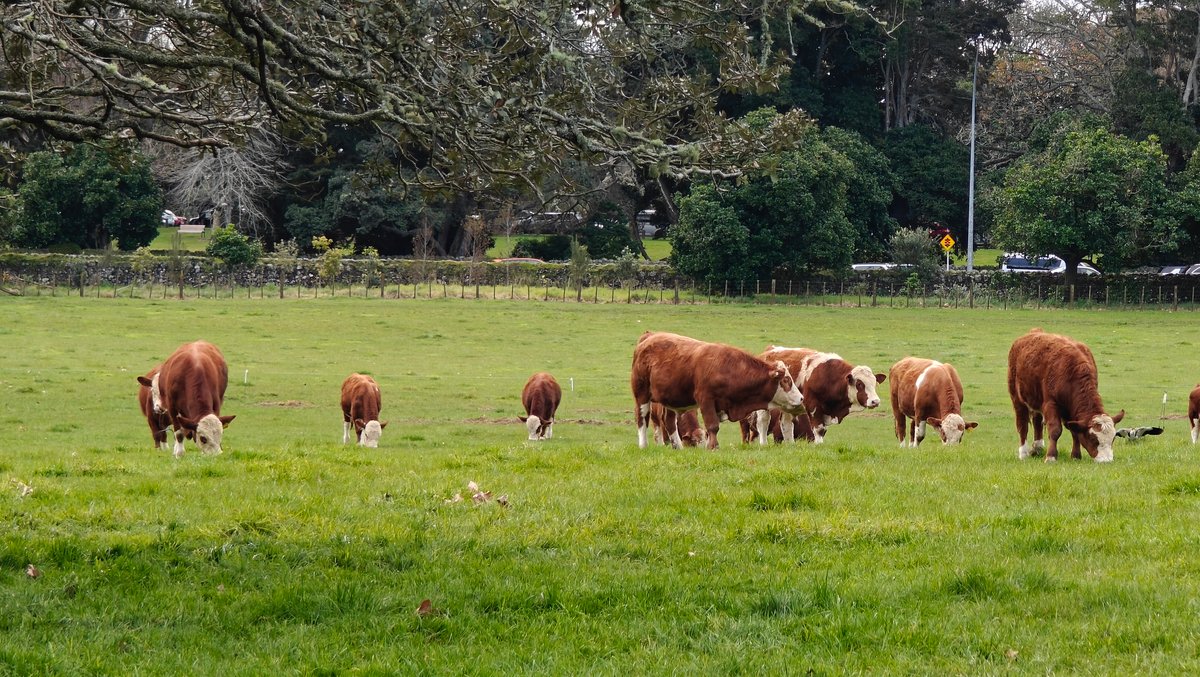
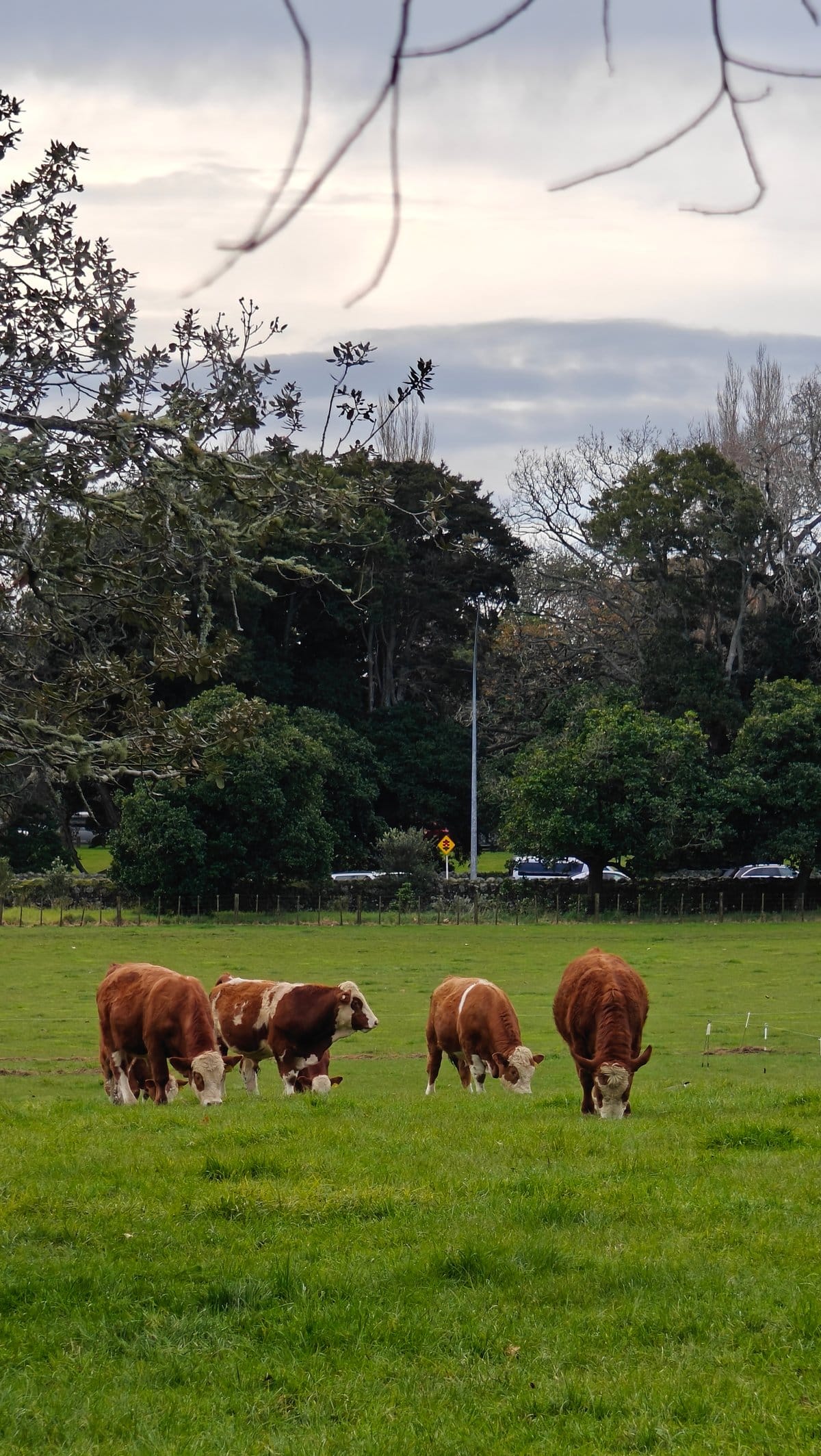
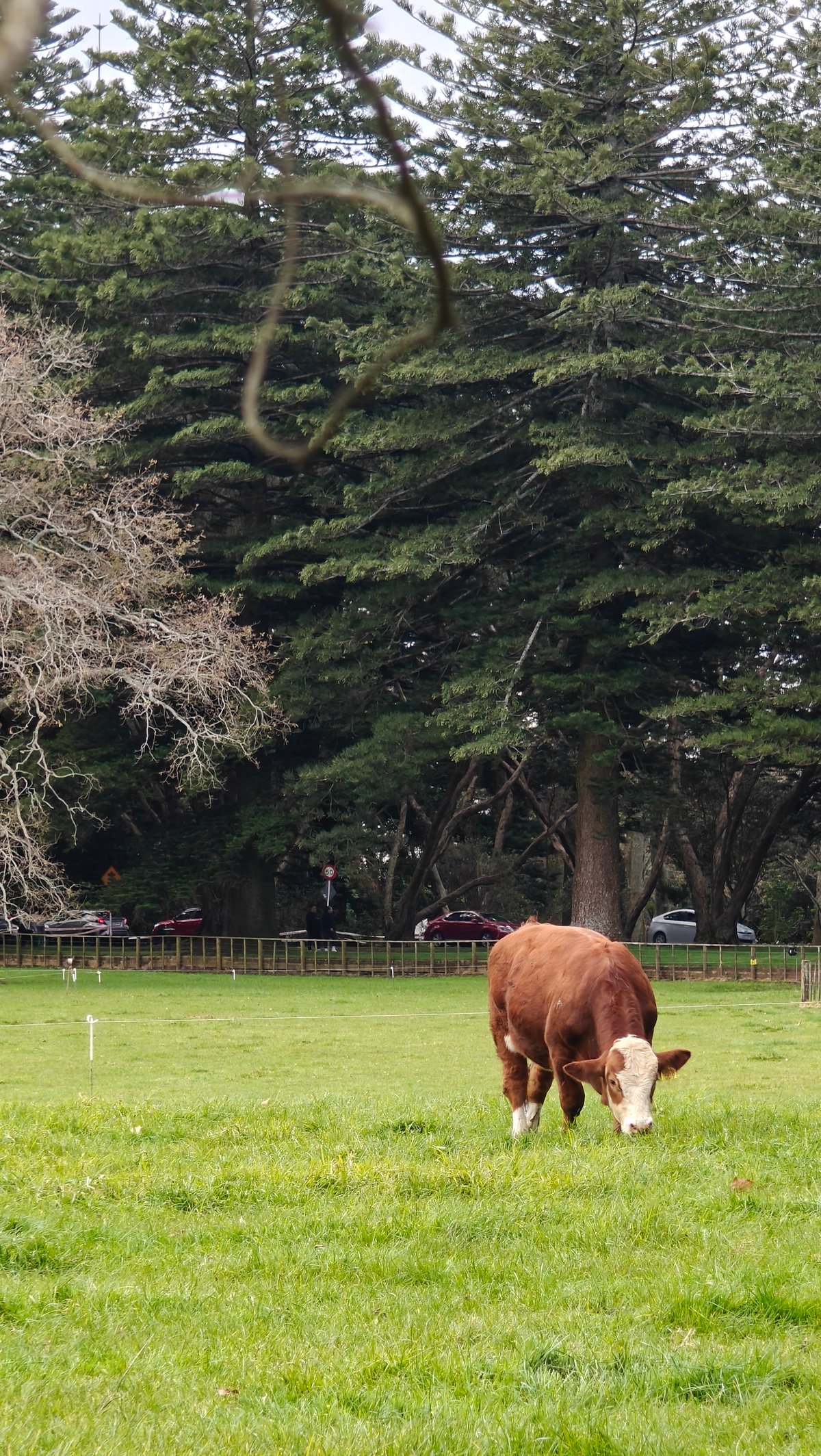
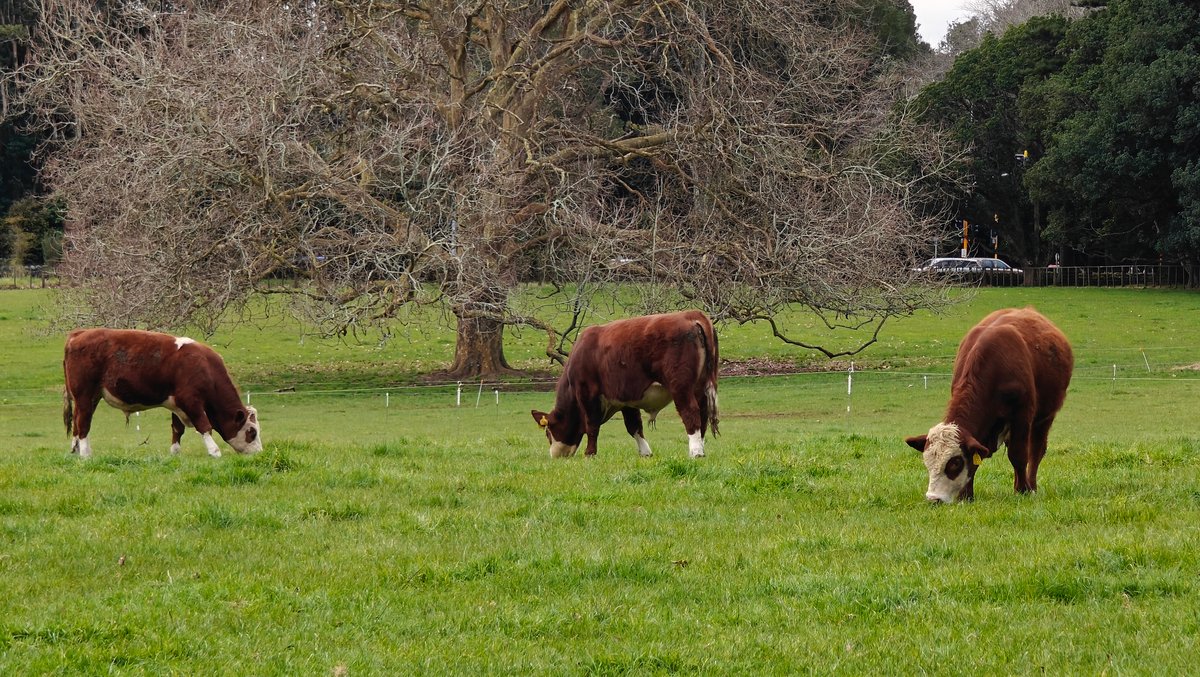
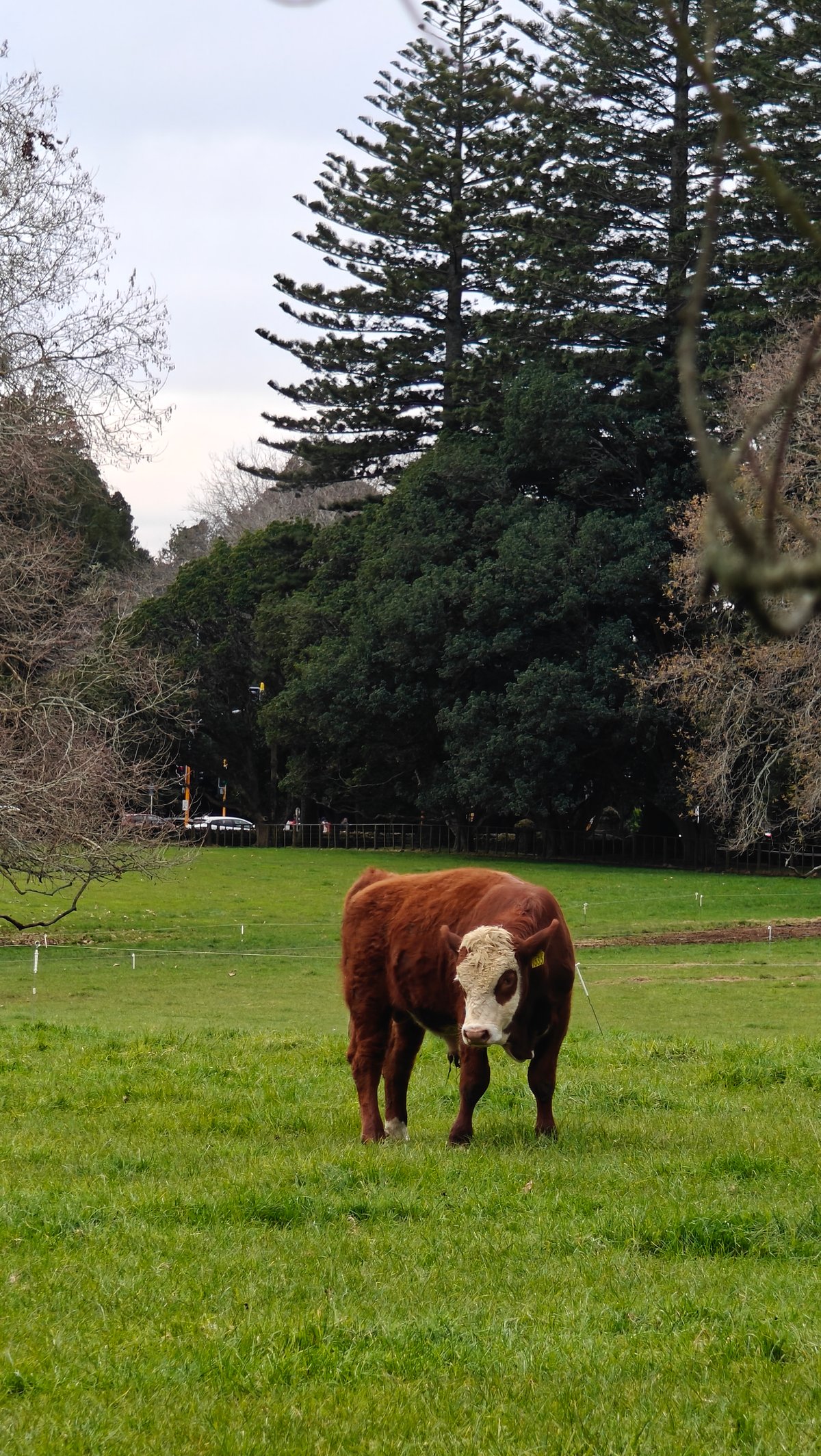
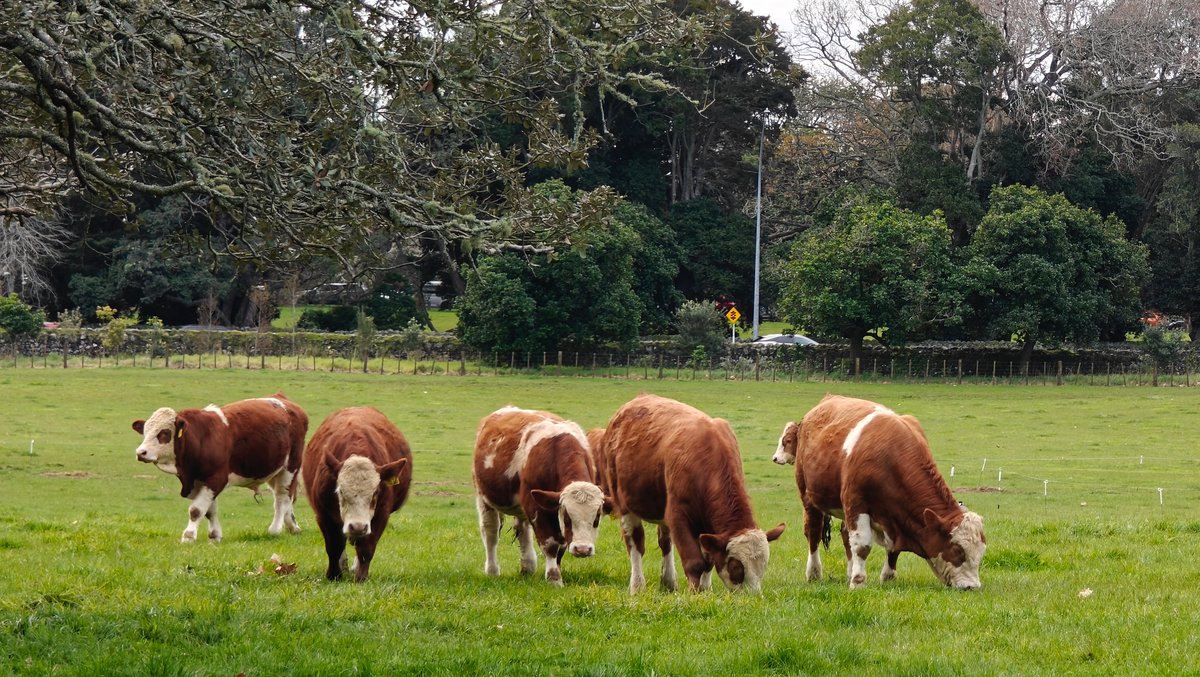
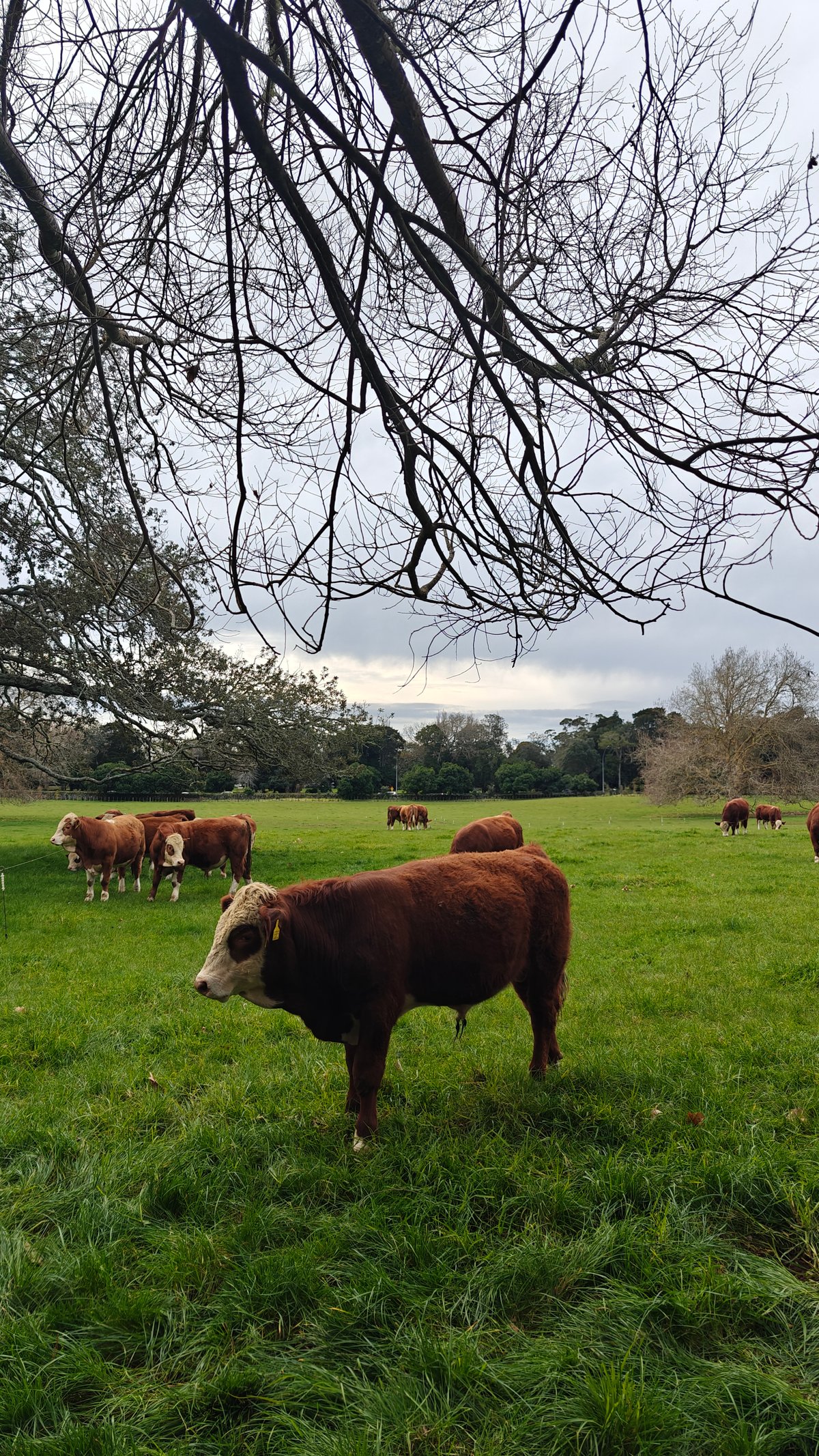
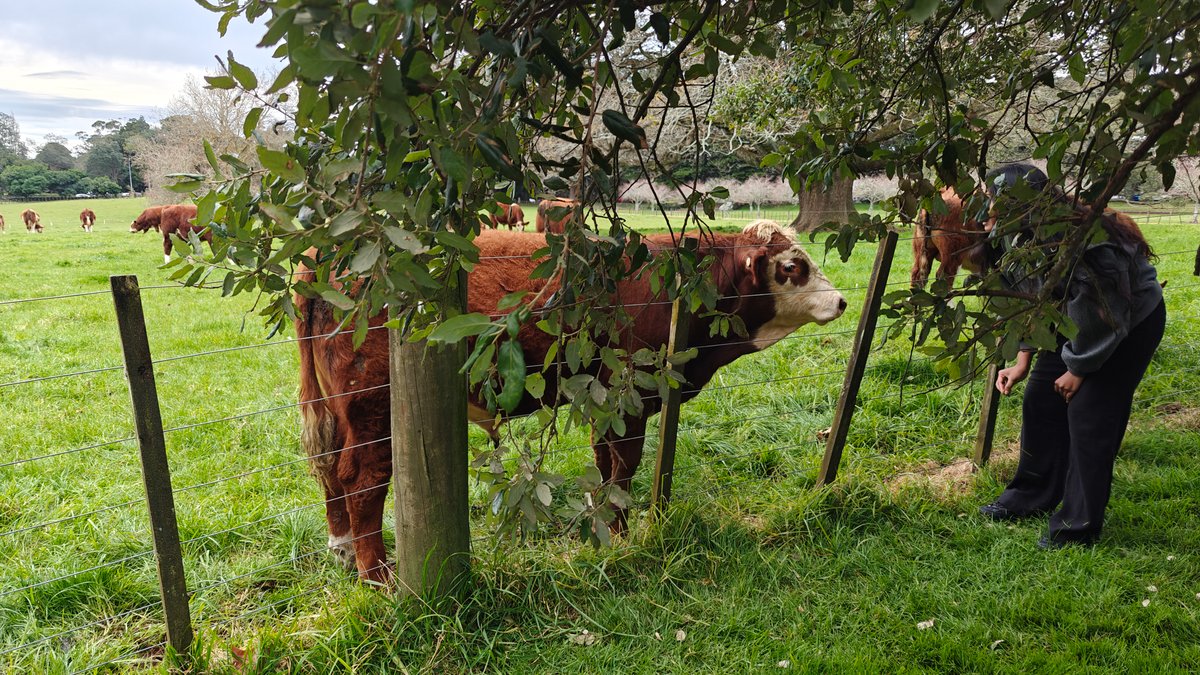
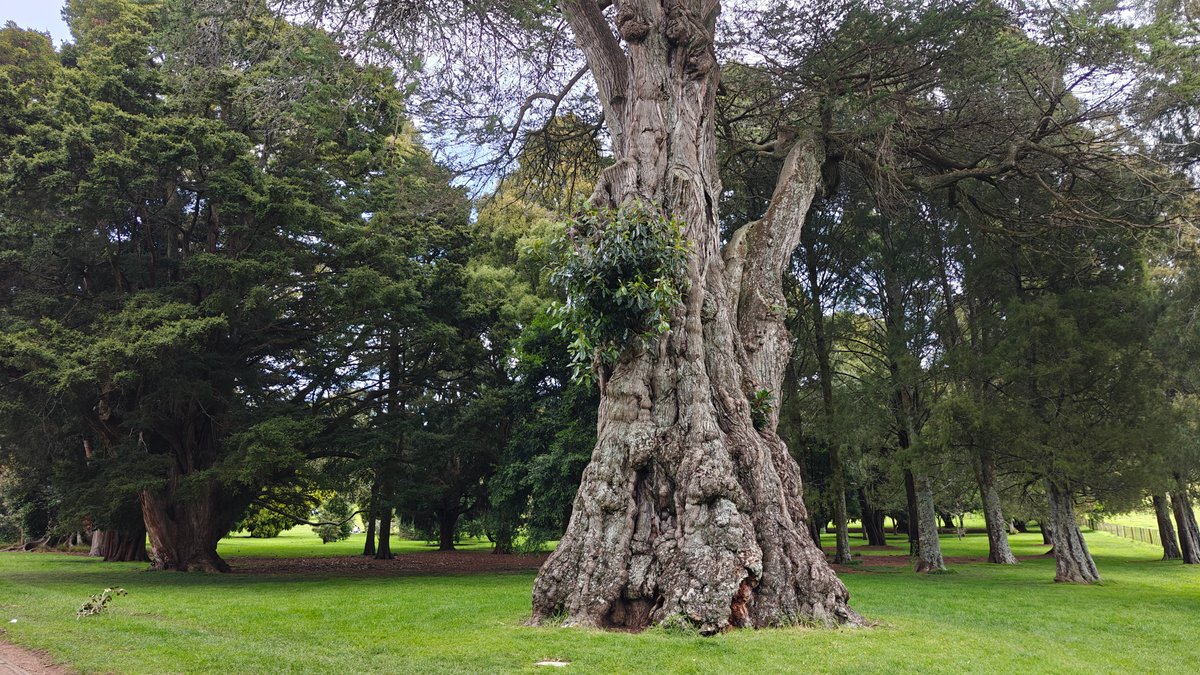
These big, placid creatures set against an open sky and framed by the park’s trees never grew tiresome for me. Sometimes they were near enough to the path that you could really take a good look at them, with massive tree trunks providing a bit of a screen between the walking routes and the paddocks. Then there was one that leaned over, its trunk twisted and angled in a way that had surely taken decades to grow like this.
Nearby was the fence line, and further off I spotted more cattle grazing steadily across the paddock.
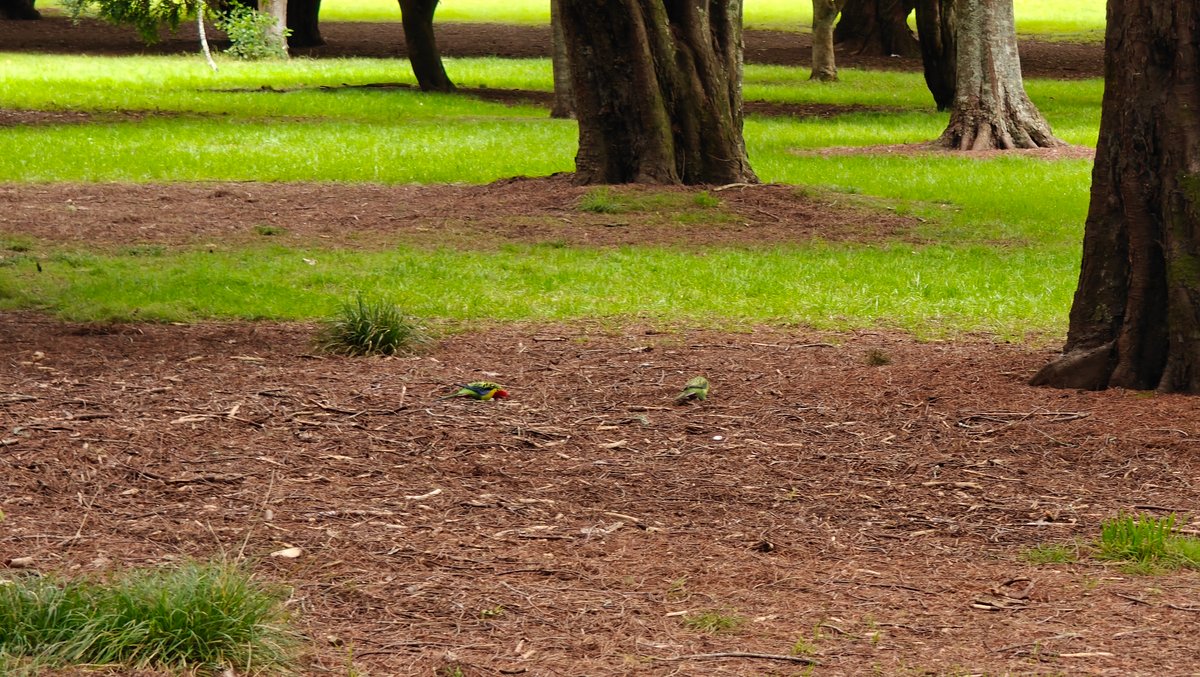
The Herefords were even more photogenic as the afternoon light began to fade, grazing in little groups under the pines or standing in line out on the open ground. One just stared directly at me, square as could be, without being bothered at all. I watched another stand there while somebody leaned over the fence to get a better look; the cow tolerated the attention.
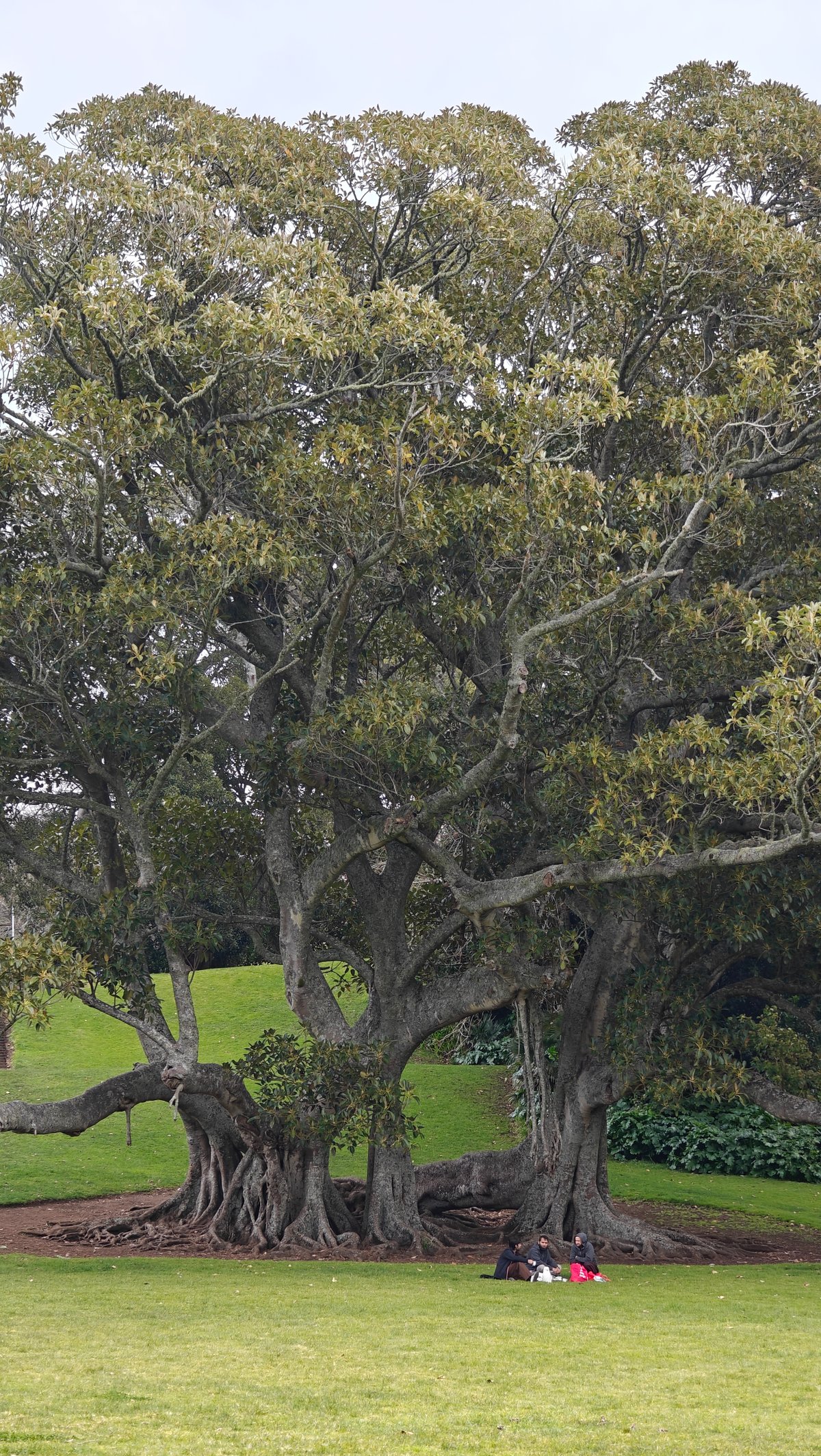
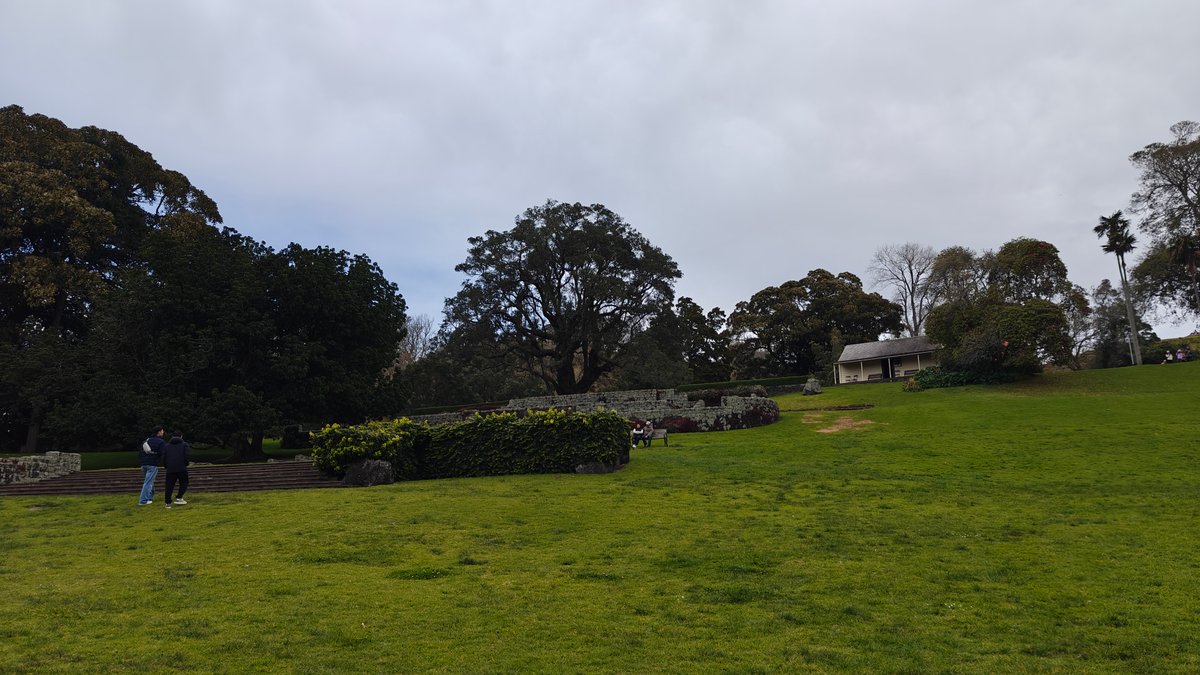
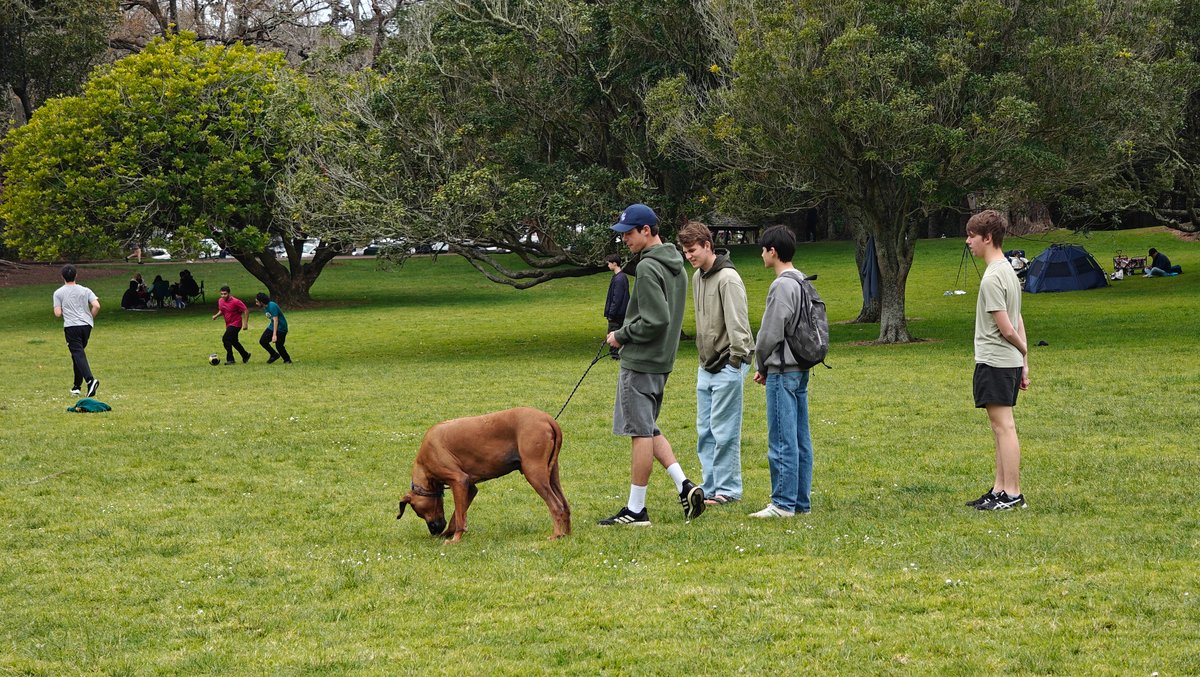
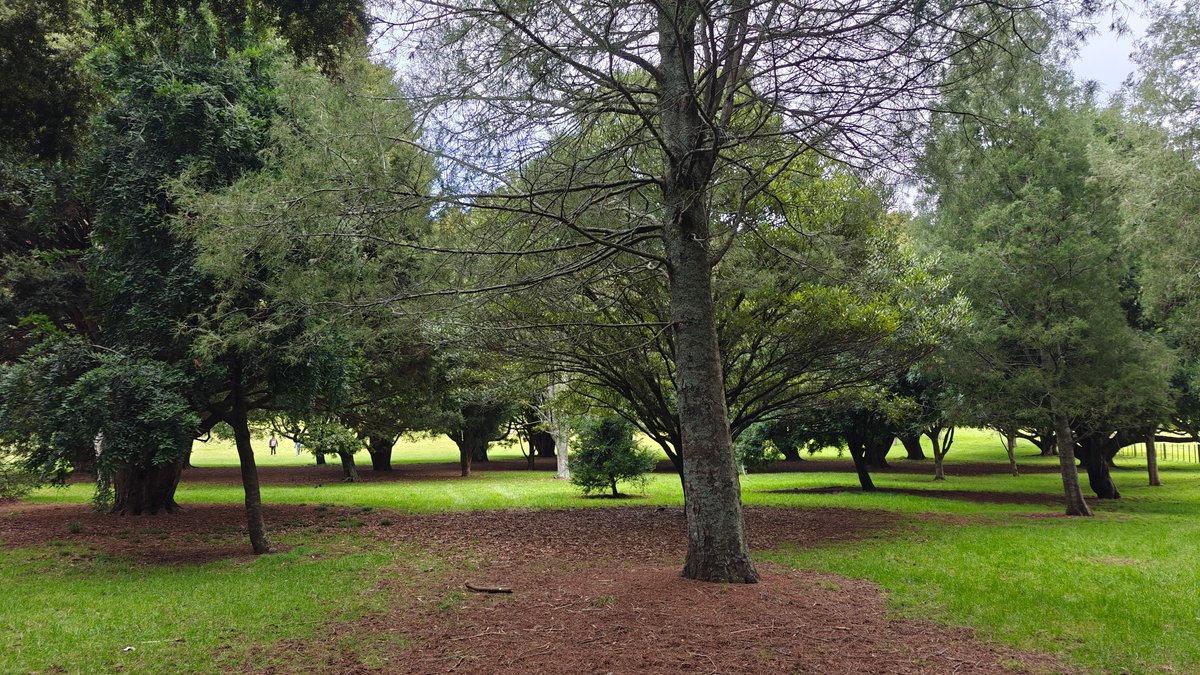
You don’t expect to have such a close encounter with farm animals in an urban park, but here it’s just part of the experience. And so I wandered about some more: more parkland sections, all different. Big buttressed trees grew up from carefully kept mulch beds, with gnarled trunks covered in epiphytes and trees spreading wide overhead along the walkways.
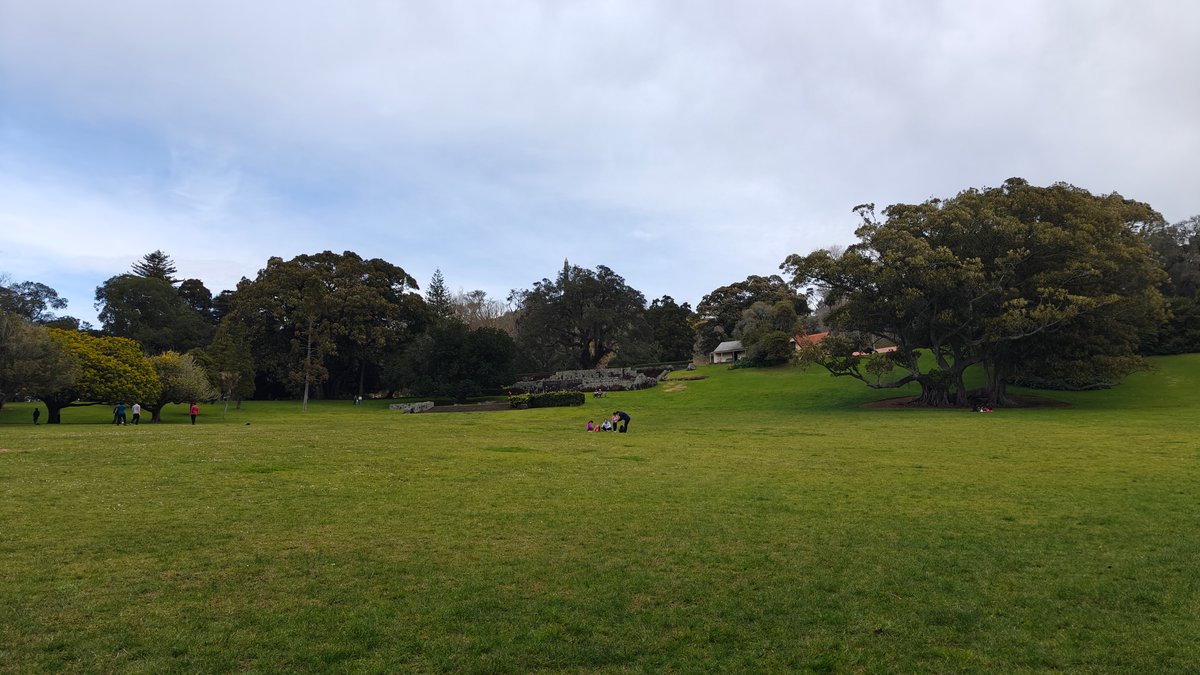
They were in neat rows across the land, or on a grassy rise here and there, standing out. Everything was mulched and fenced and obviously cared-for; it’s serious business when it comes to keeping up the grounds here. Those giant figs have their canopies draped over close-cut grass on the formal lawns, which are perfectly kept.
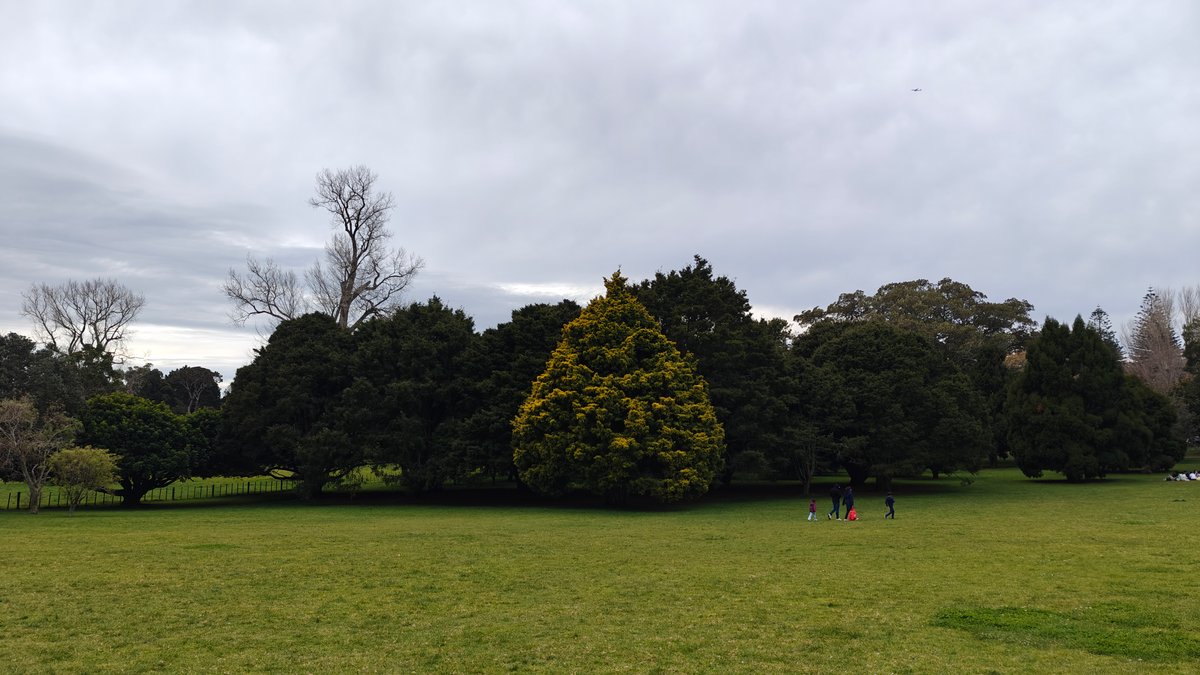
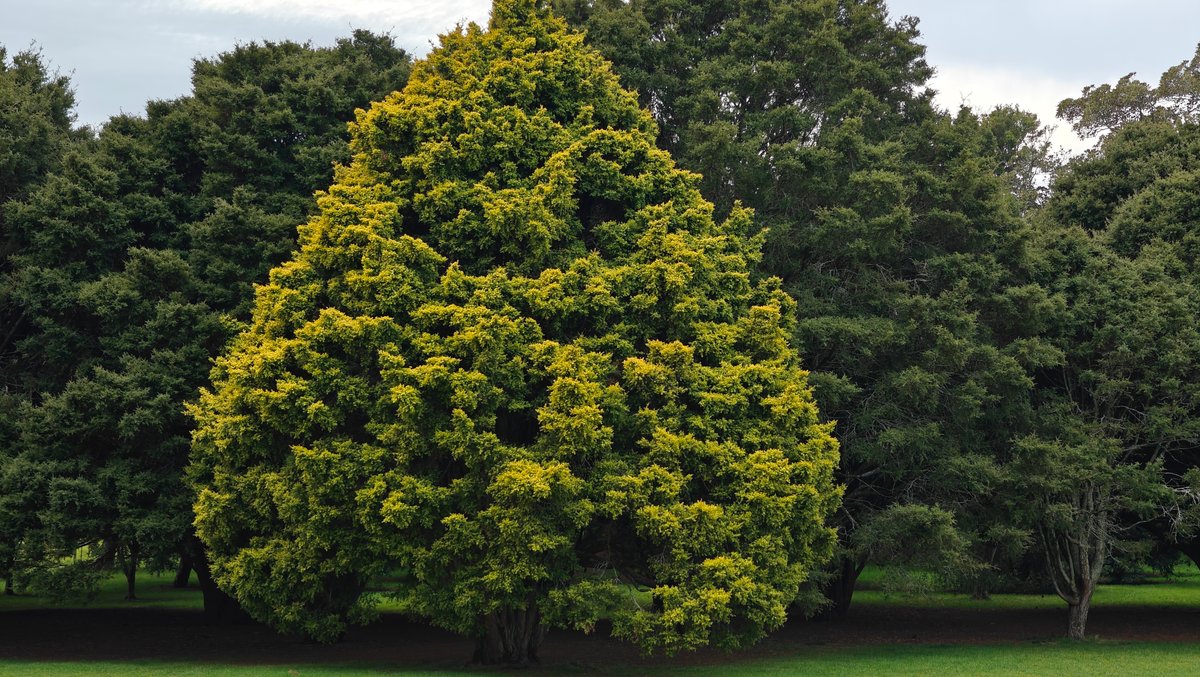
There are people walking their dogs out here, enjoying the open space, conical conifers and clipped hedges. It’s not just for show; it’s proper park use.
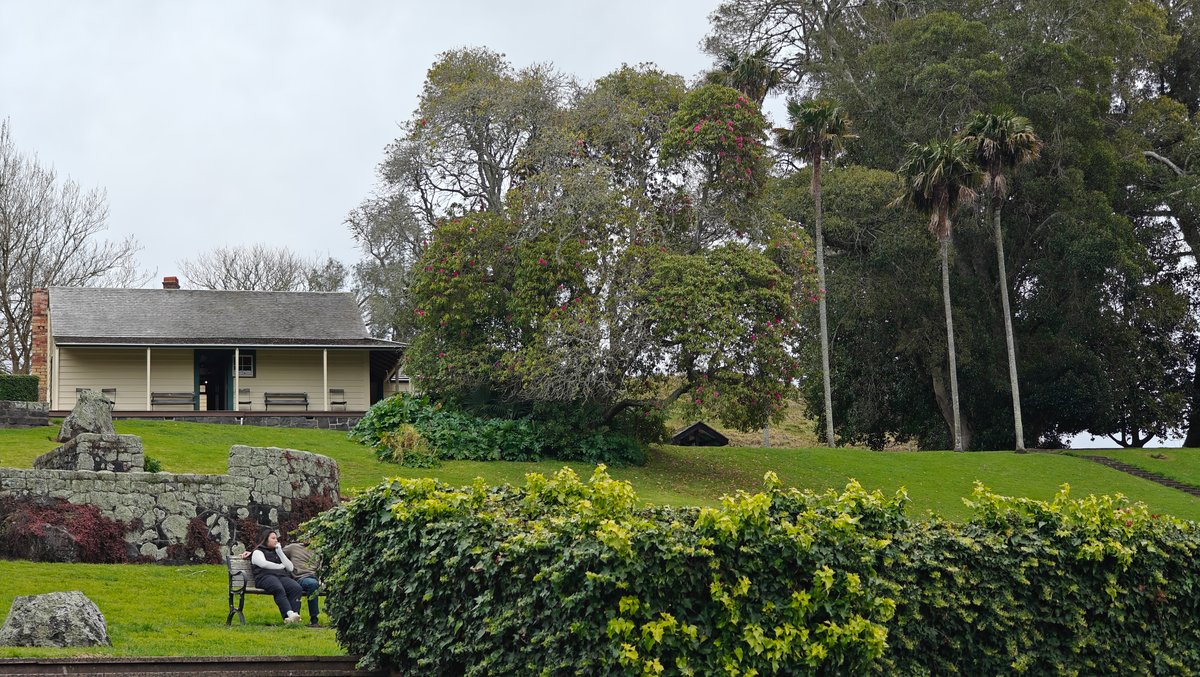
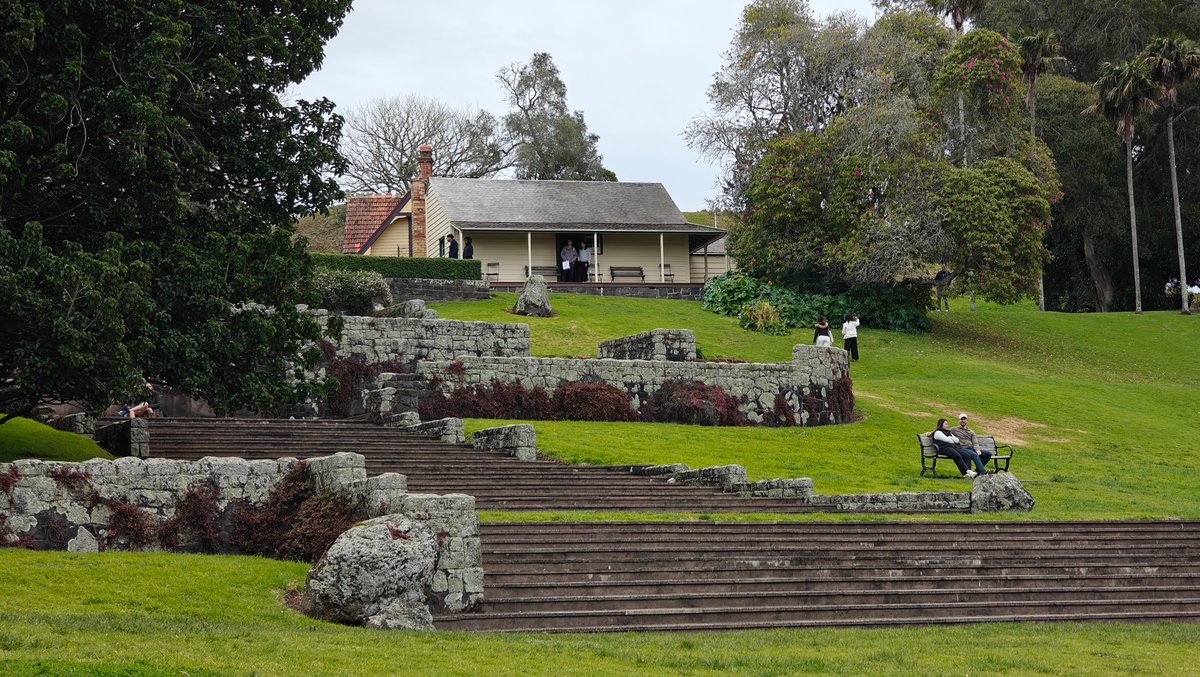
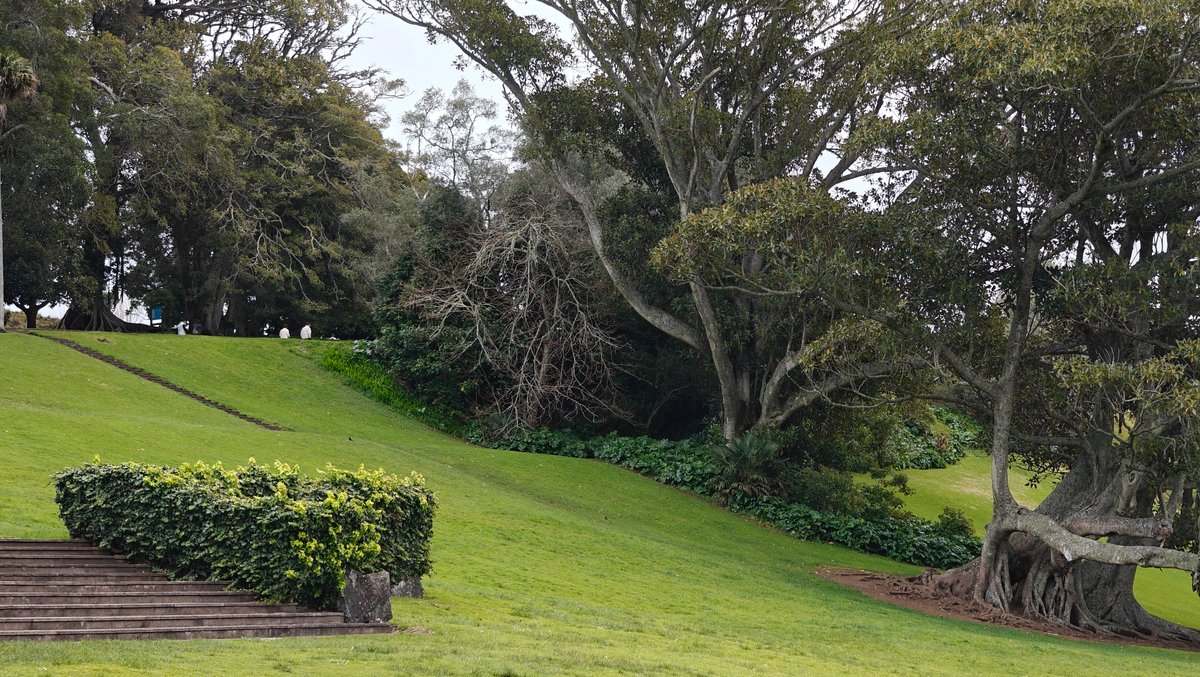
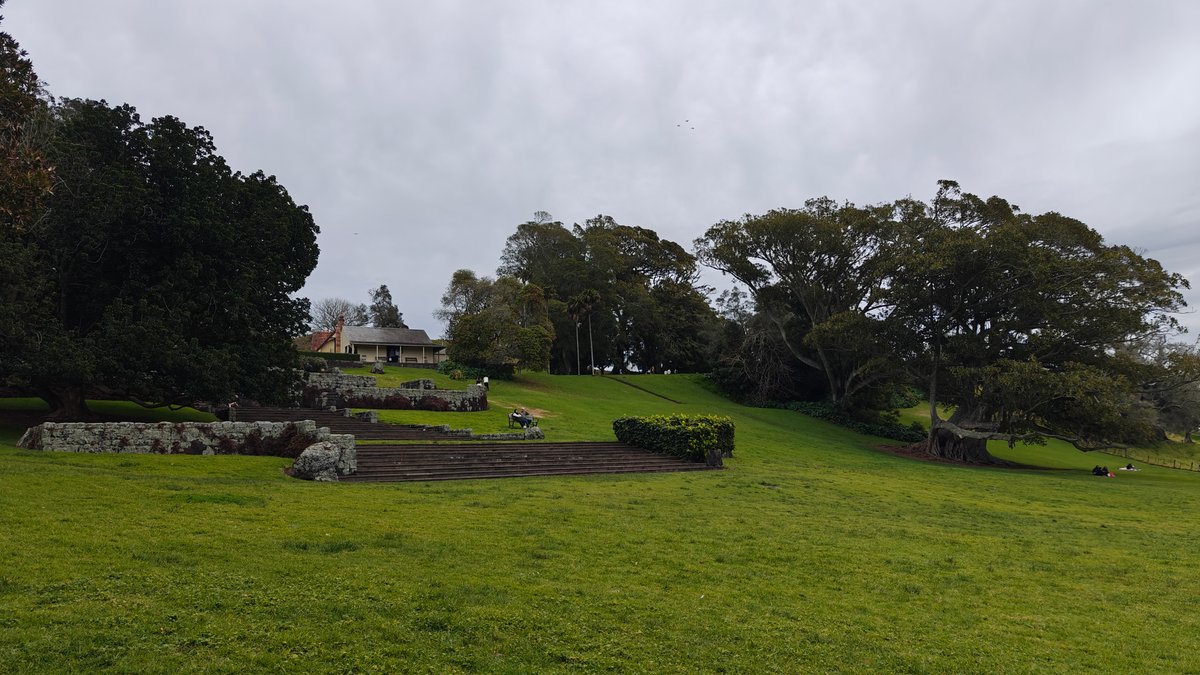
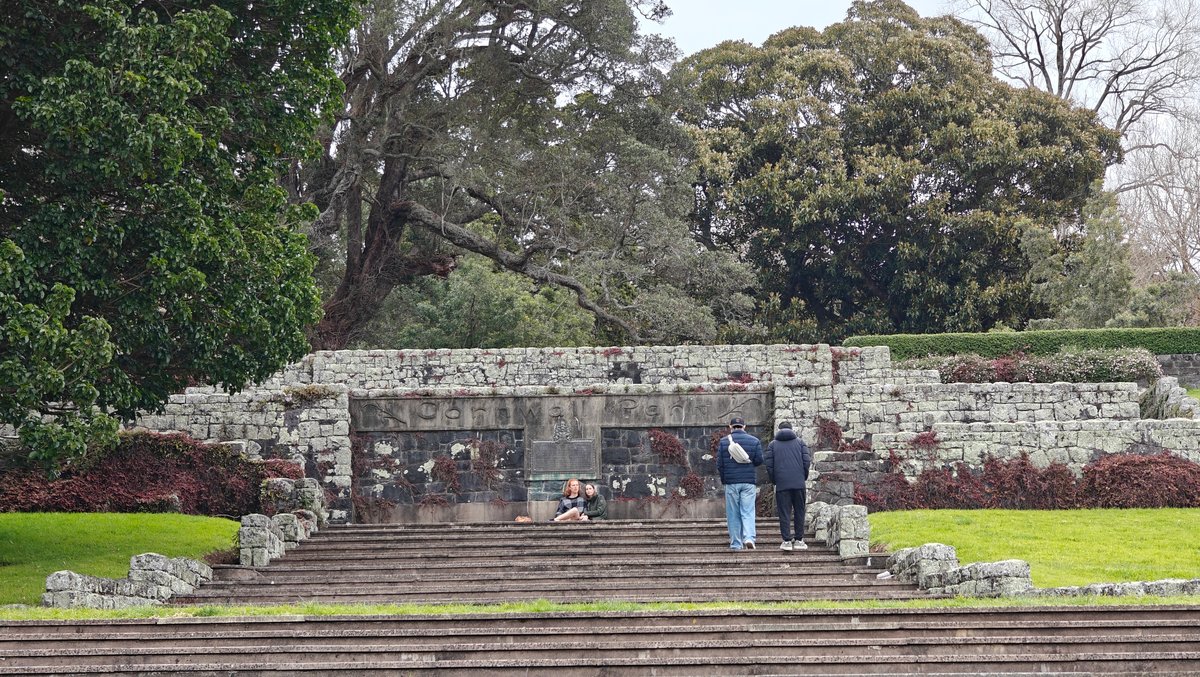
Further down, near one of the heritage cottages, stone terracing goes up the slope in a series of formal retaining walls and steps. Hedges and garden beds surround it all; the old colonial building rises above. It’s well-preserved, the sort of thing that makes you feel like this land has been set aside for public use for ages.
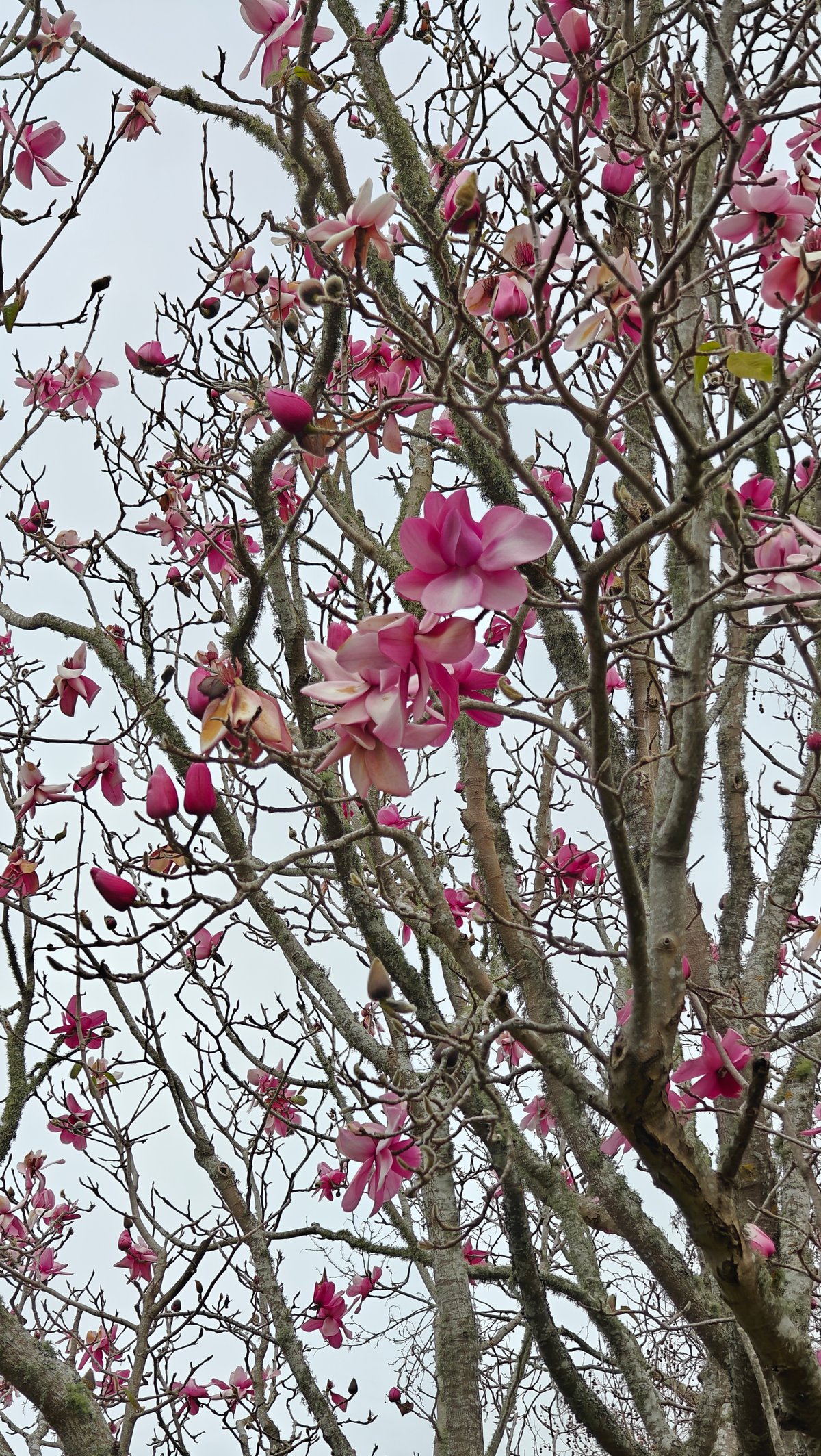
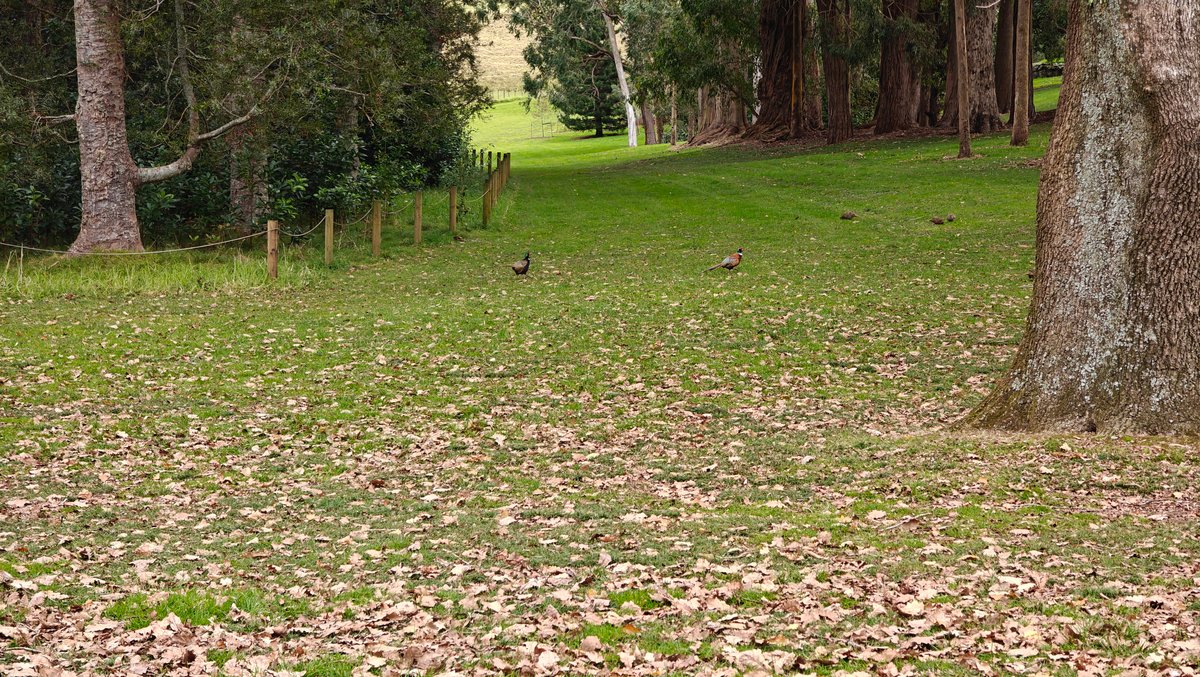
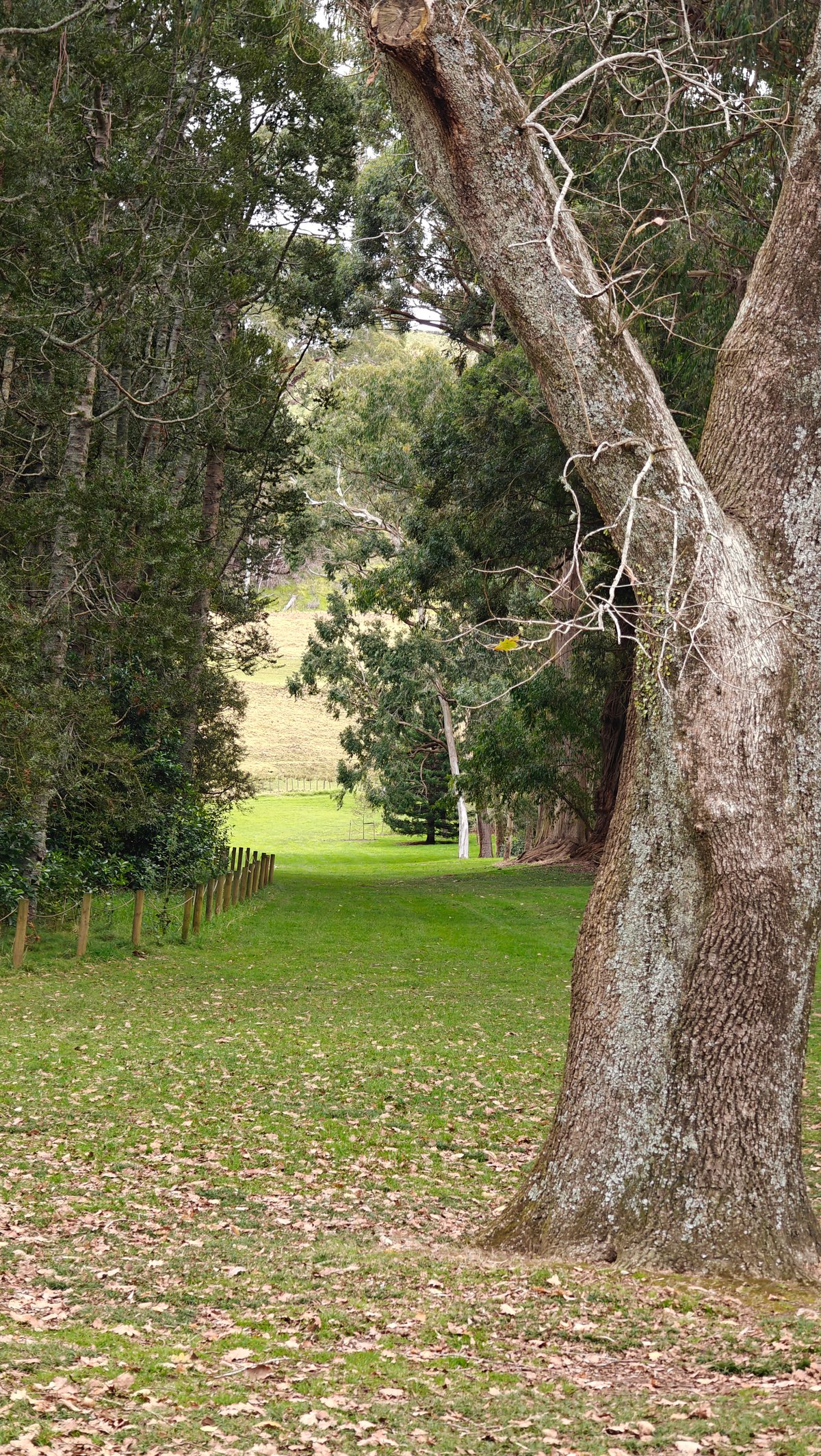
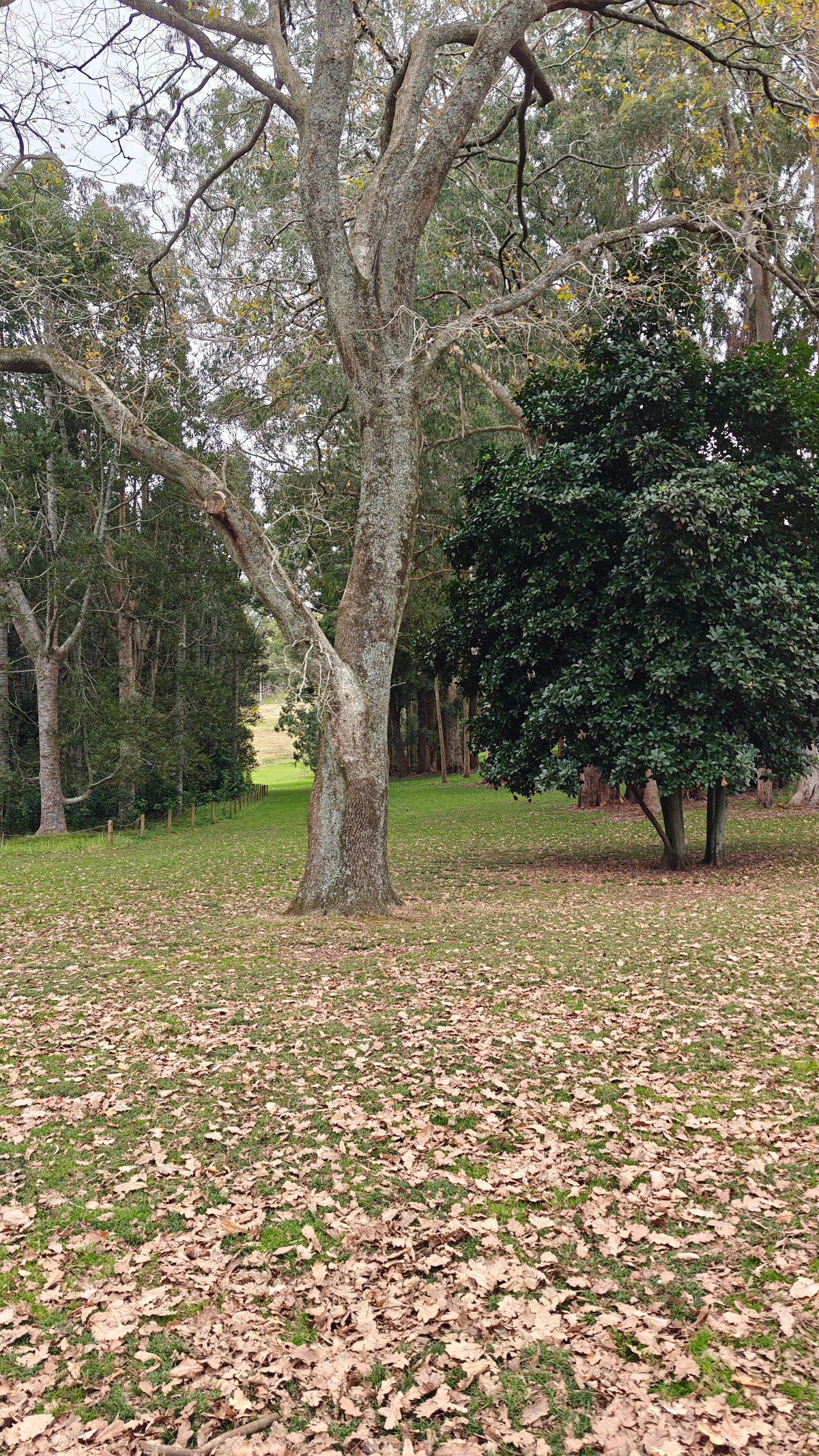
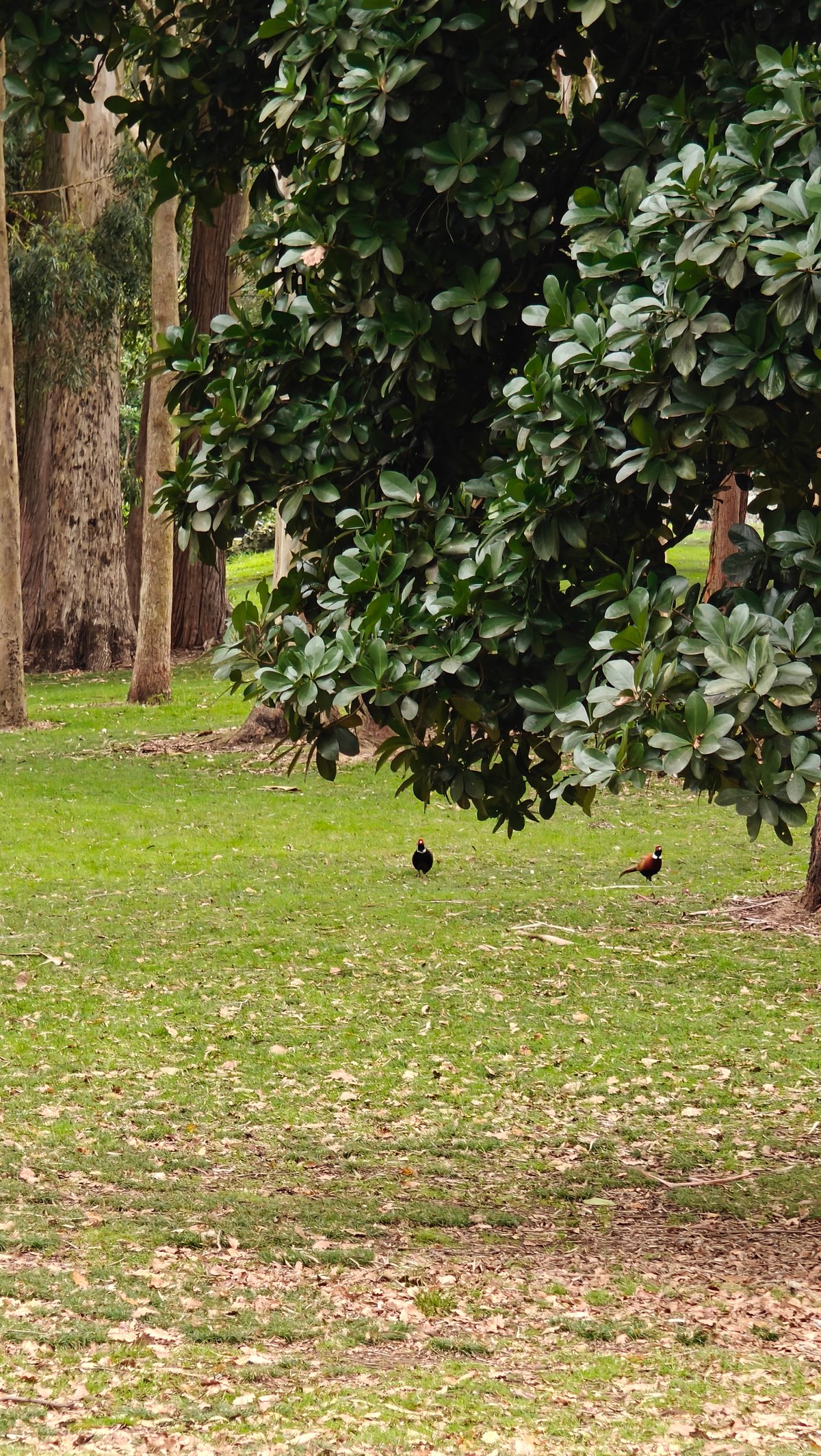
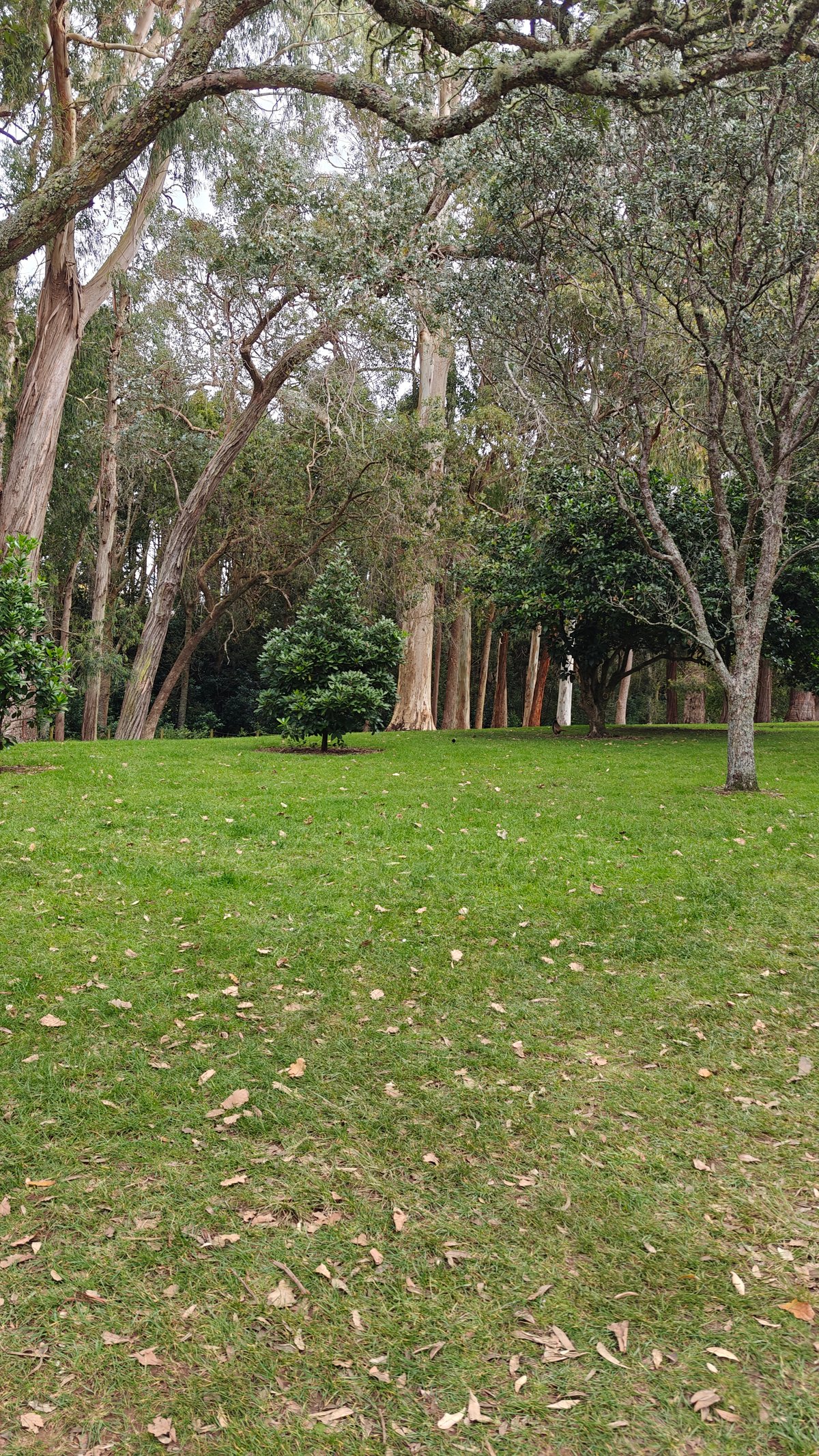
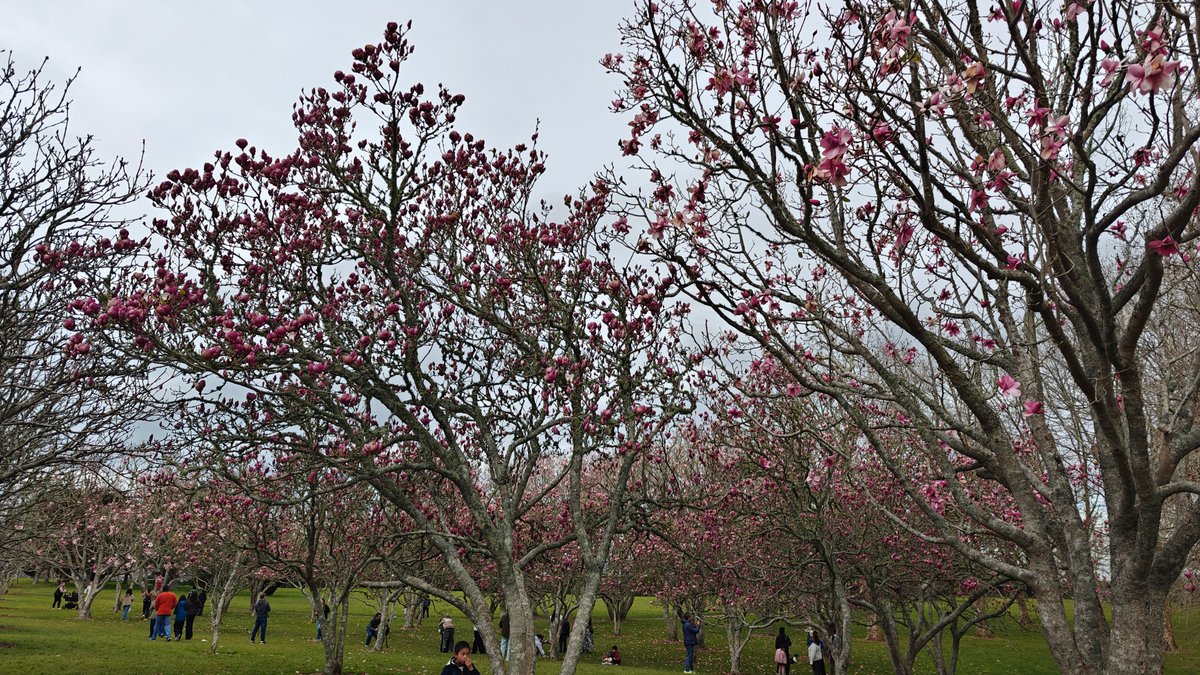
It was spring when we visited, and the magnolias were blooming. ), but it was hard to miss all those fat flowerheads against the blue sky. Beneath several of the trees, the ground was covered in deep leaf litter.
The entire park had that kind of rough-around-the-edges early-season appearance, as if nature hadn’t quite gotten around to straightening things out yet.
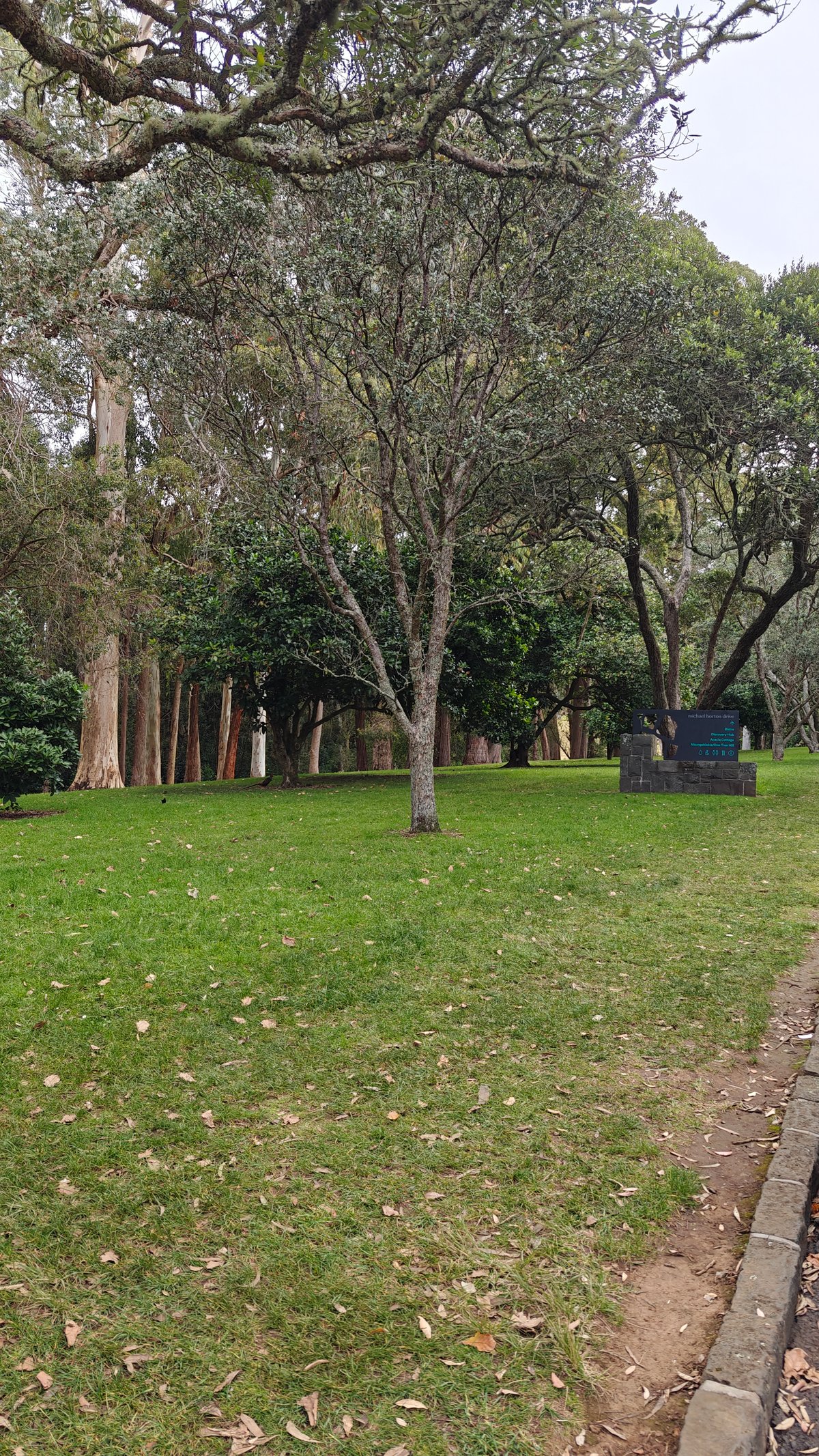
Under partly cloudy skies, more spacious meadows extended, dotted with benches for passersby to pause and enjoy the passing scene. Other visitors walked along the park roads, taking their time as they moved from section to section.
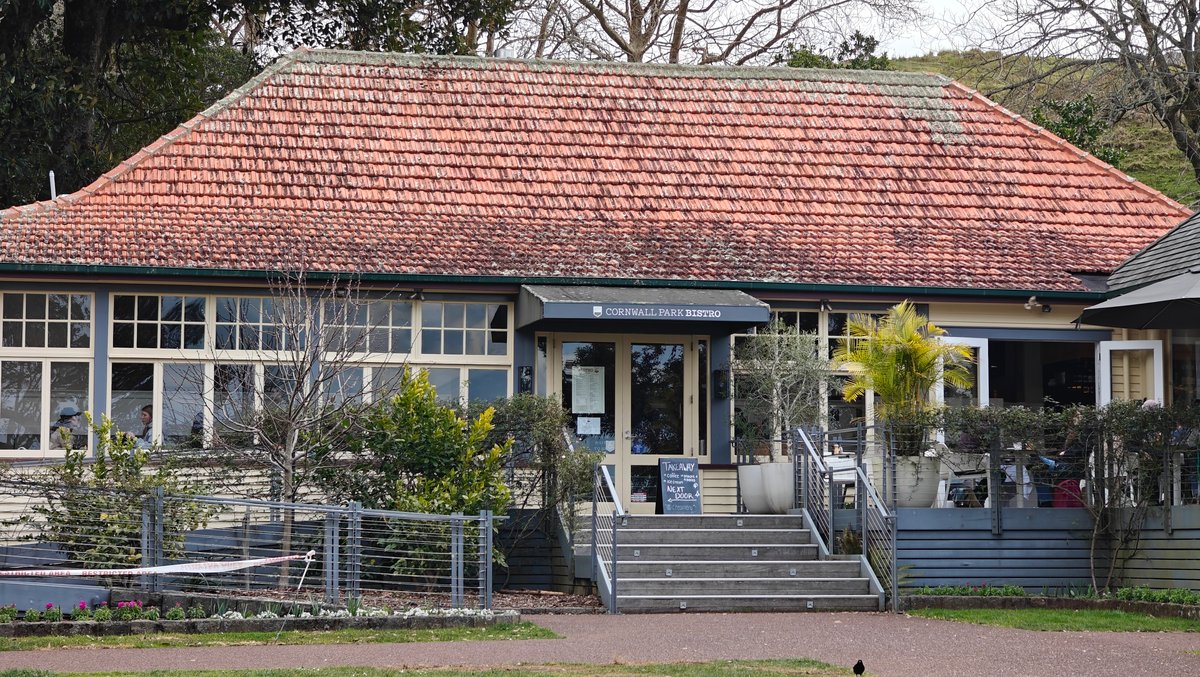
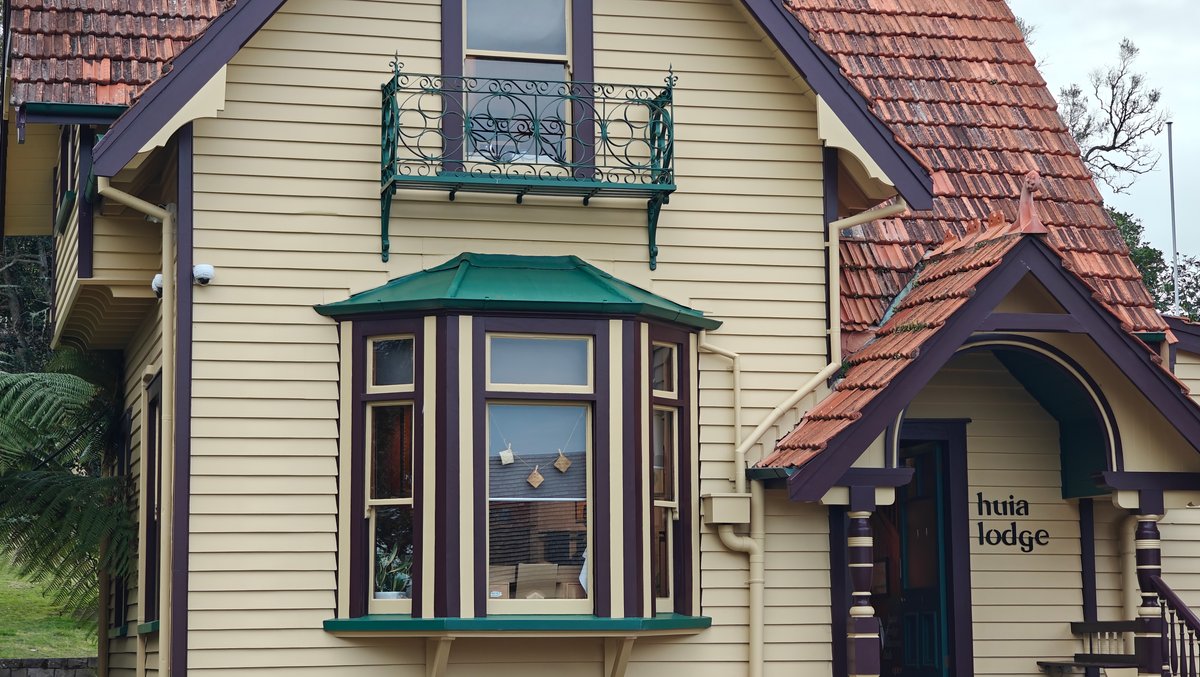
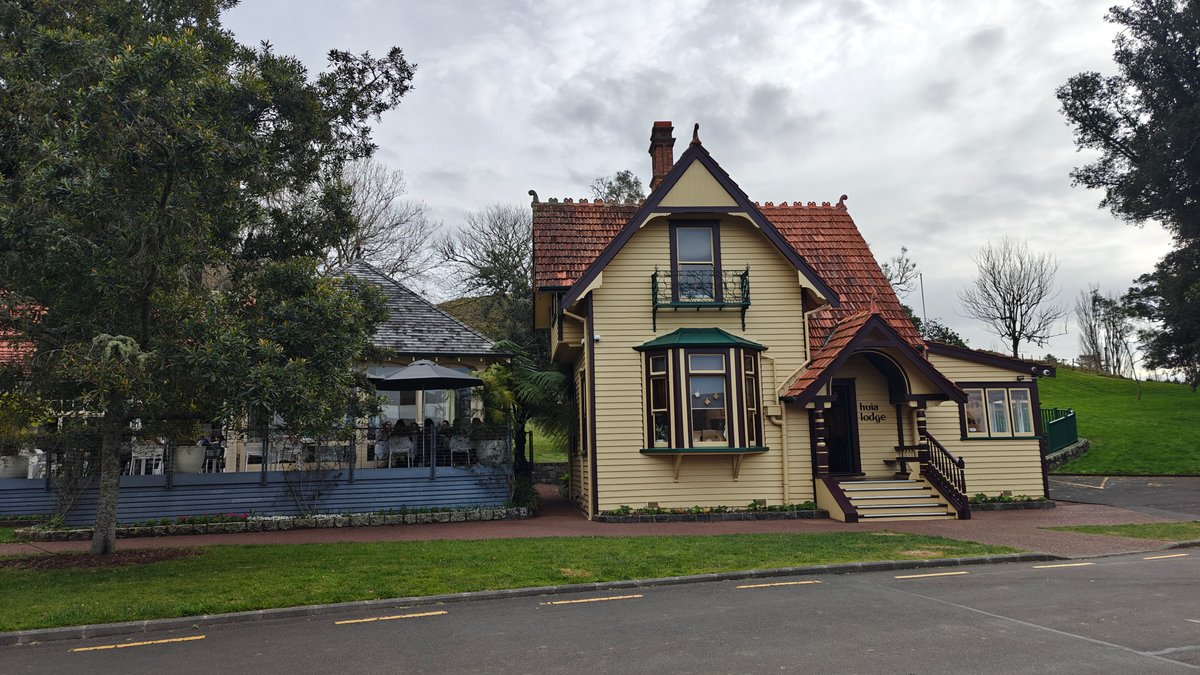
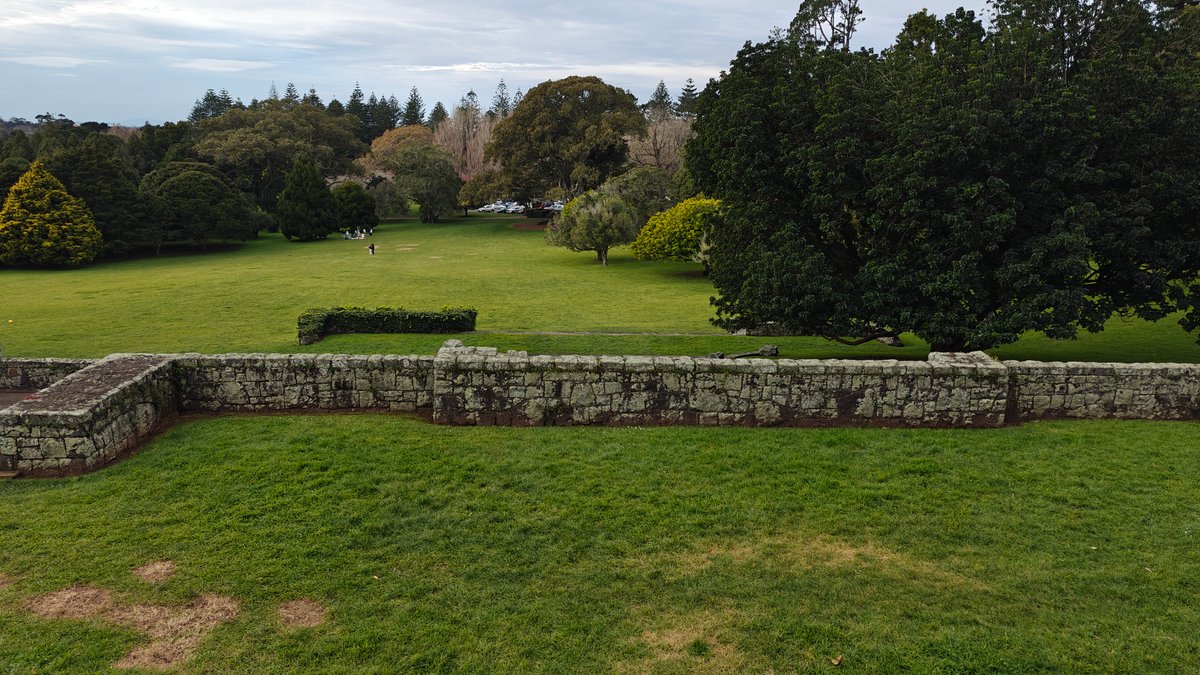
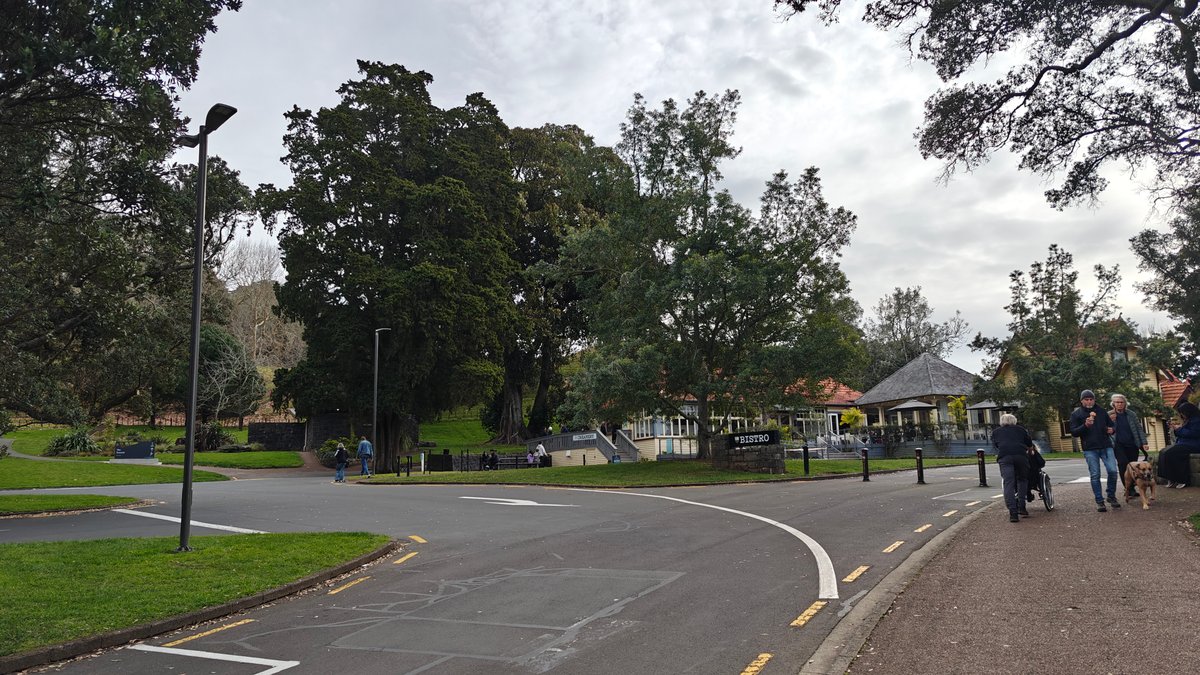
Near the middle of the park is a heritage cottage and a cafe building. The two are both in that classic colonial style, with tiled roofs and bargeboards everywhere. The cafe looked busy enough with people coming and going, so we didn’t stop in.
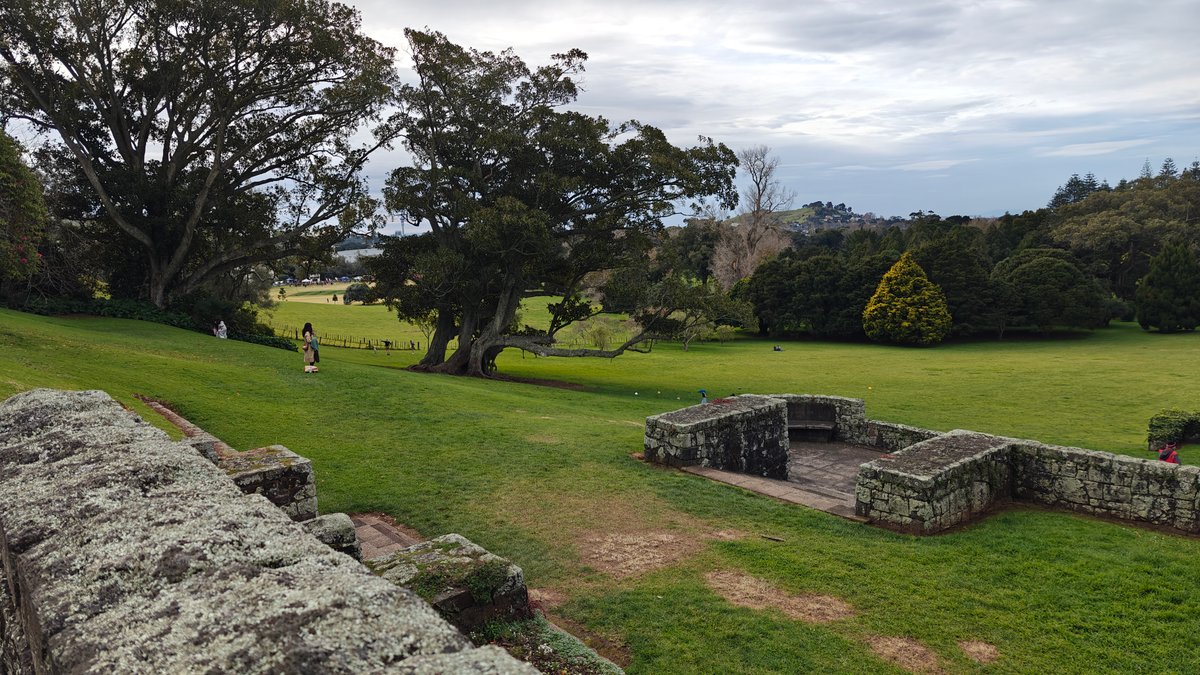
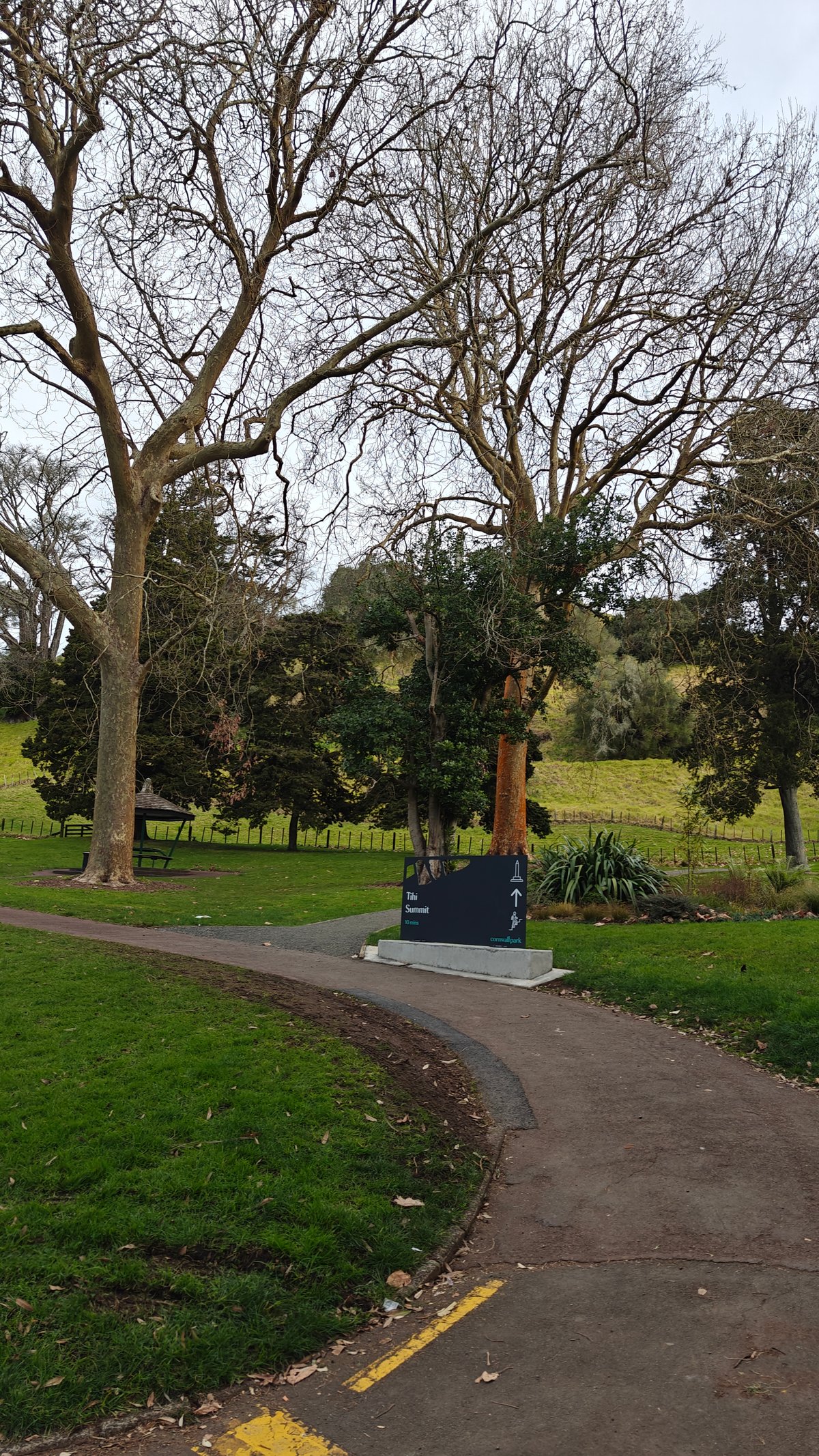
As we left, we walked past more of those stone terraces I’d spotted earlier and dry stone walls that criss-crossed the parkland. One of the tree-lined paths was in use by someone out for a stroll. That’s the thing about this kind of park: there is always something else around the next corner to explore, so it’s the kind of place people keep coming back to.
I was taken by surprise by Cornwall Park. When I visited, I expected some pleasant green space. Instead, I found that, plus a lot of important heritage trees and working farmland.
Cattle were even grazing where most people would of had playground equipment and mown grass. A weird mix, but it works. Ever been to a city park that’s still being used as a farm?