
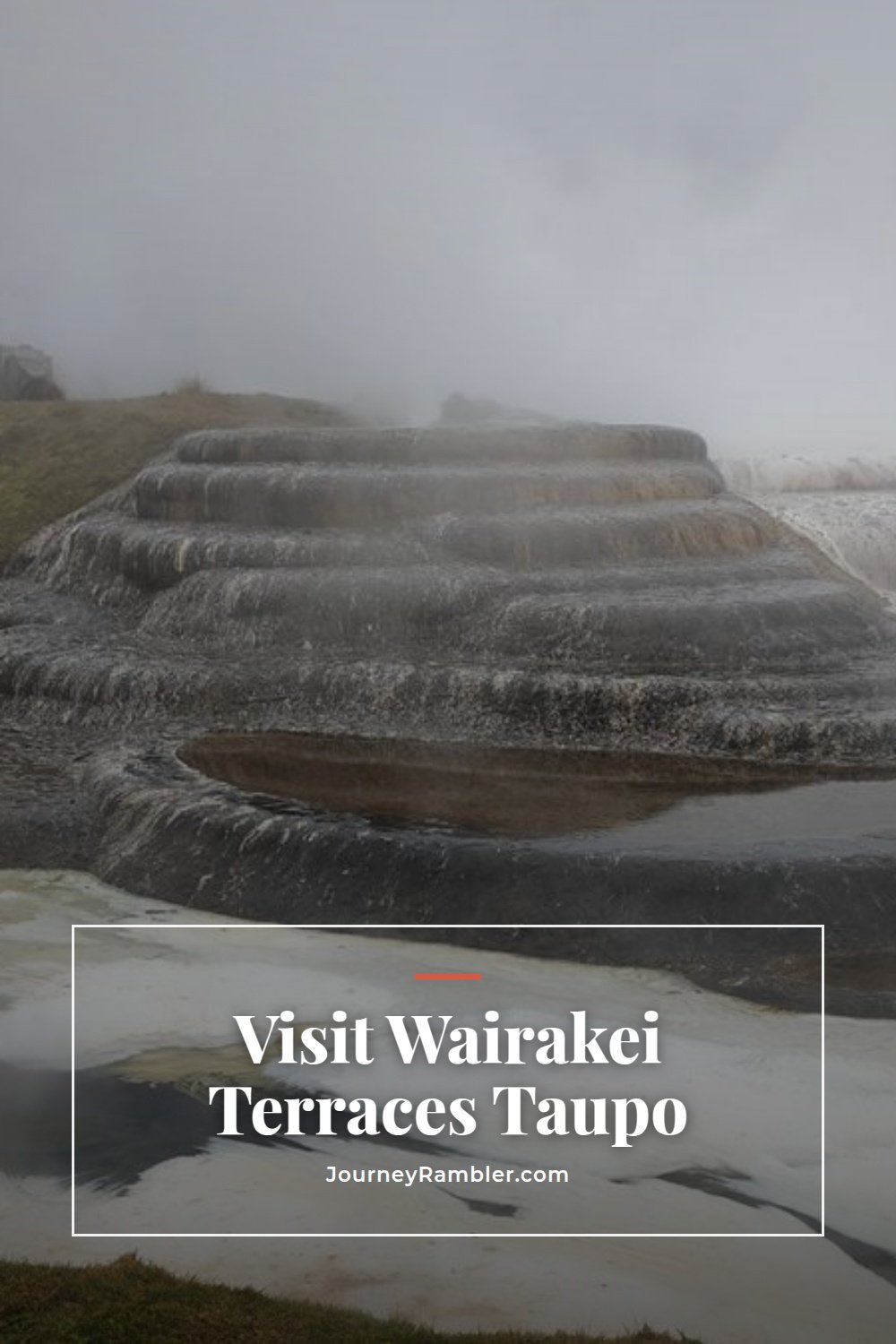
The Wairakei Terraces in Taupo include a Maori village and silica terraces. Wairakei Terraces (near Taupo) are also silica terraces made from diverted geothermal water, but I was interested because I’d read about the famed Pink and White Terraces destroyed by the 1886 eruption. Here, the terraces is mixed with a thermal spa and Maori cultural village, and I enjoyed spending a couple of hours exploring the bush and steam-filled walkways.
Compared to some of the larger geothermal parks around Rotorua, it’s a quieter, smaller operation, which was perfectly okay for me. Instead of the spa pools, we chose the terraces walk, and I am glad we did not see the pools. It’s a pretty relaxing experience overall: there are some nice paths winding around active geothermal areas, and then a reconstructed Māori village that doesn’t seem too touristy but does a decent job of explaining how they lived back in the day.
What to See at Wairakei Terraces
Wairakei Terraces & Thermal Health Spa
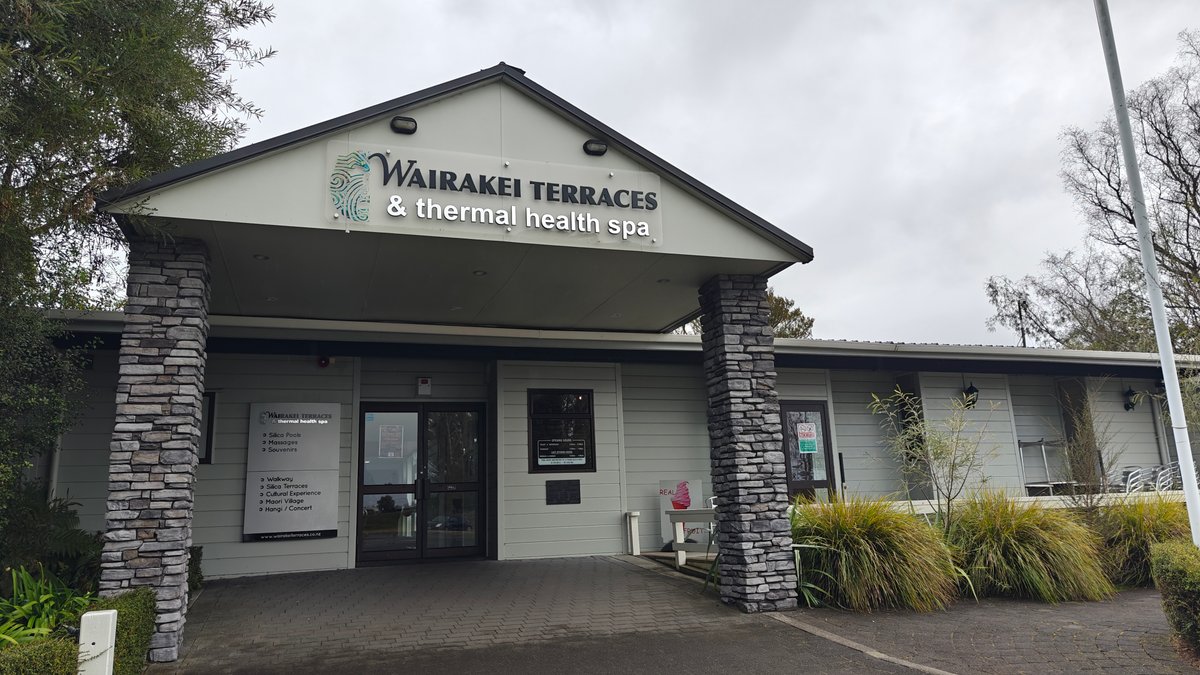
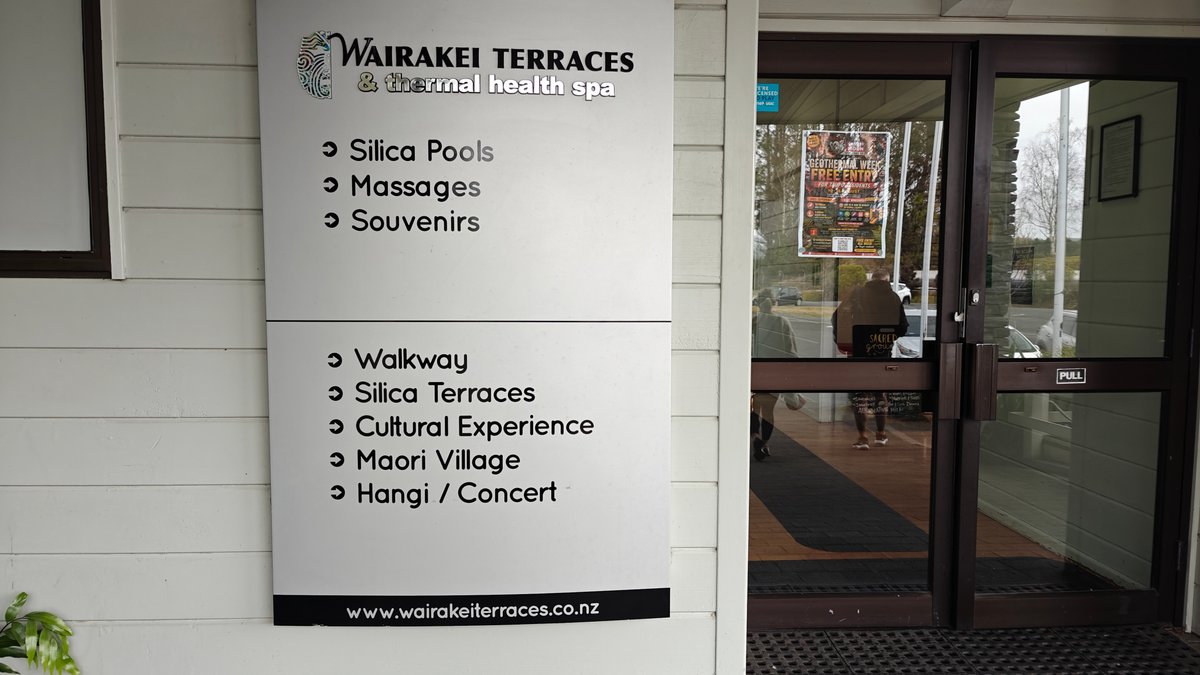
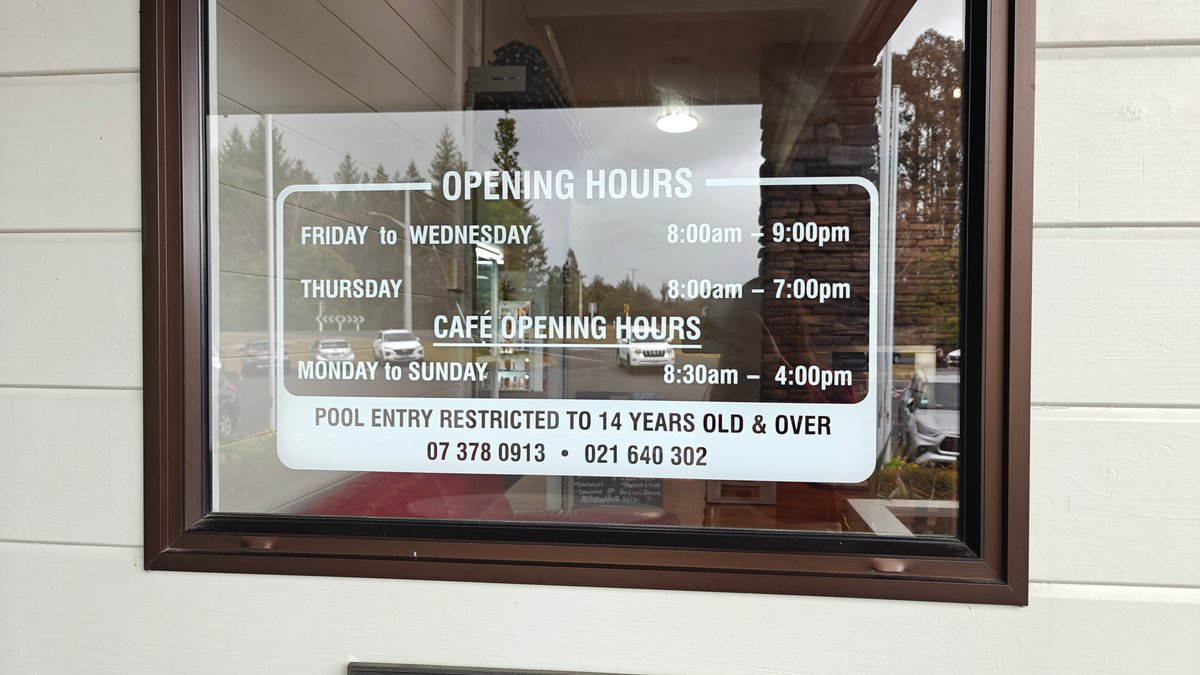
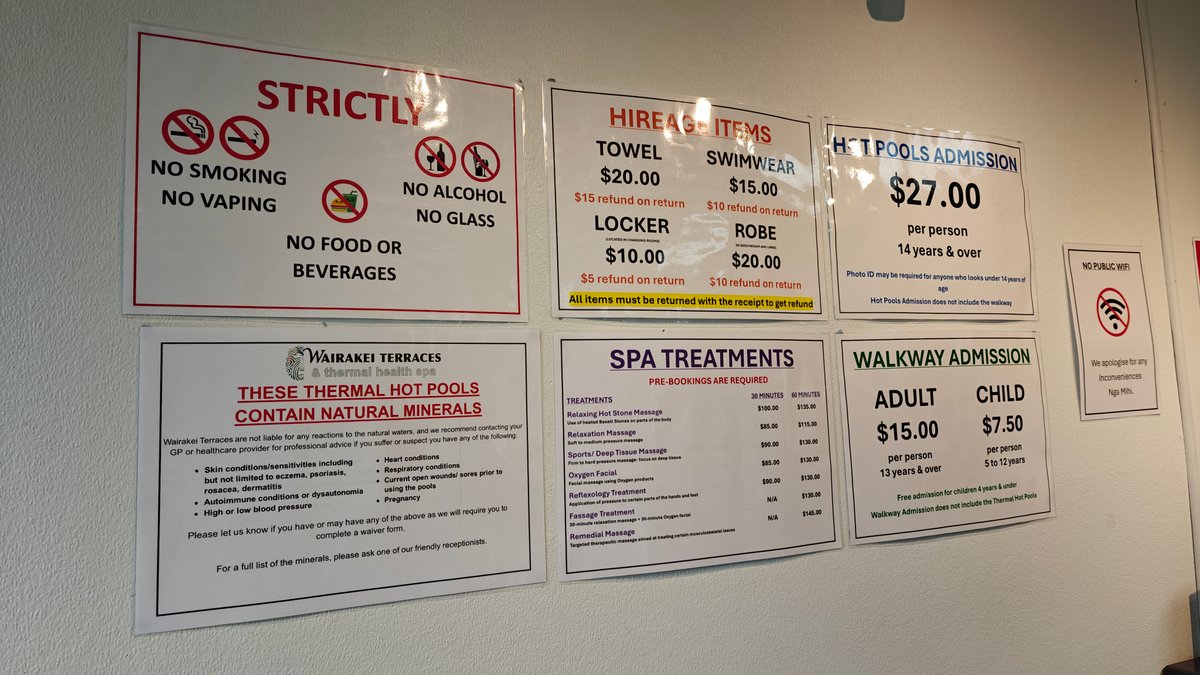
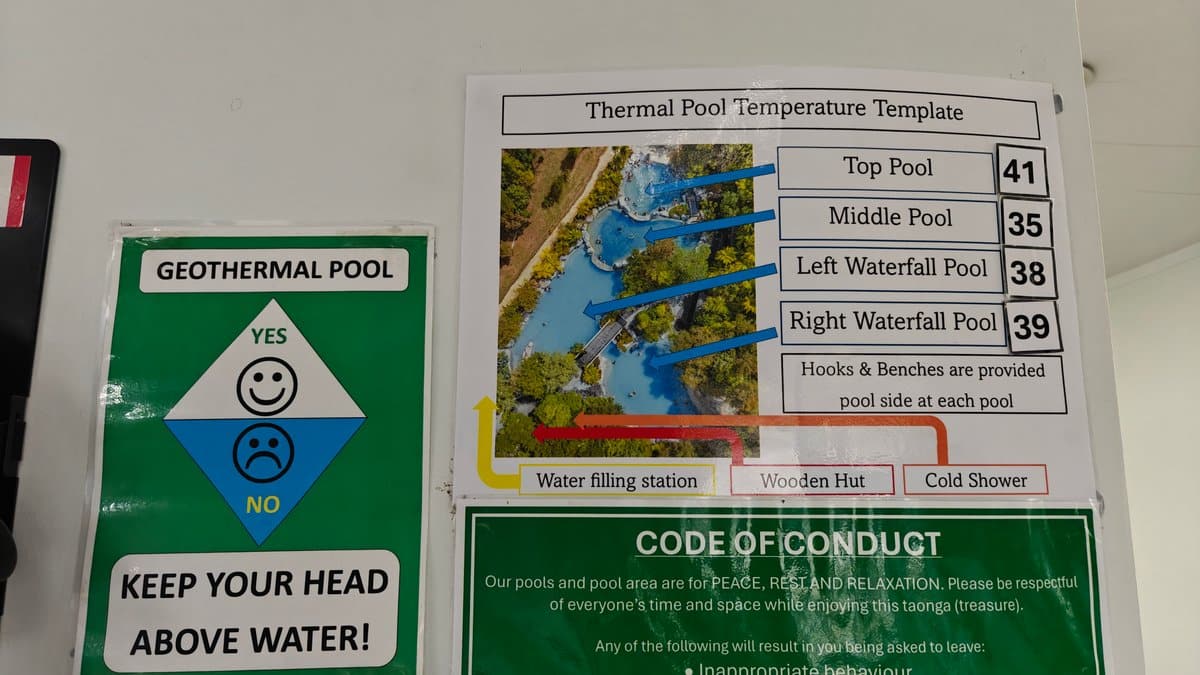
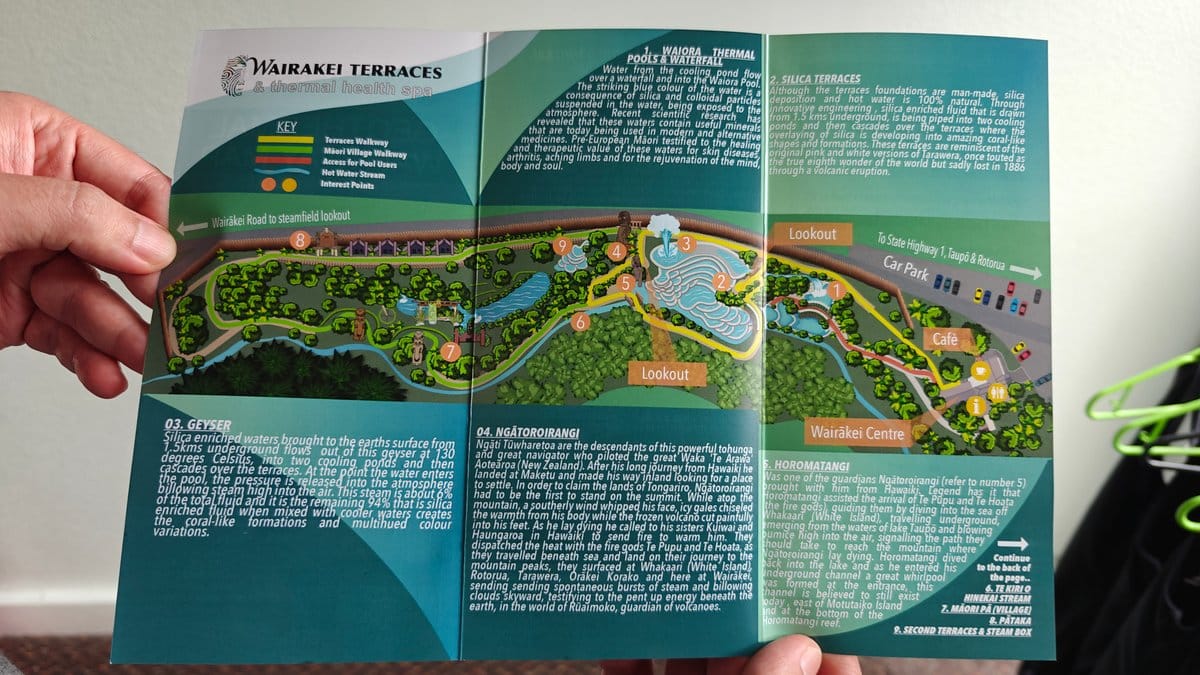
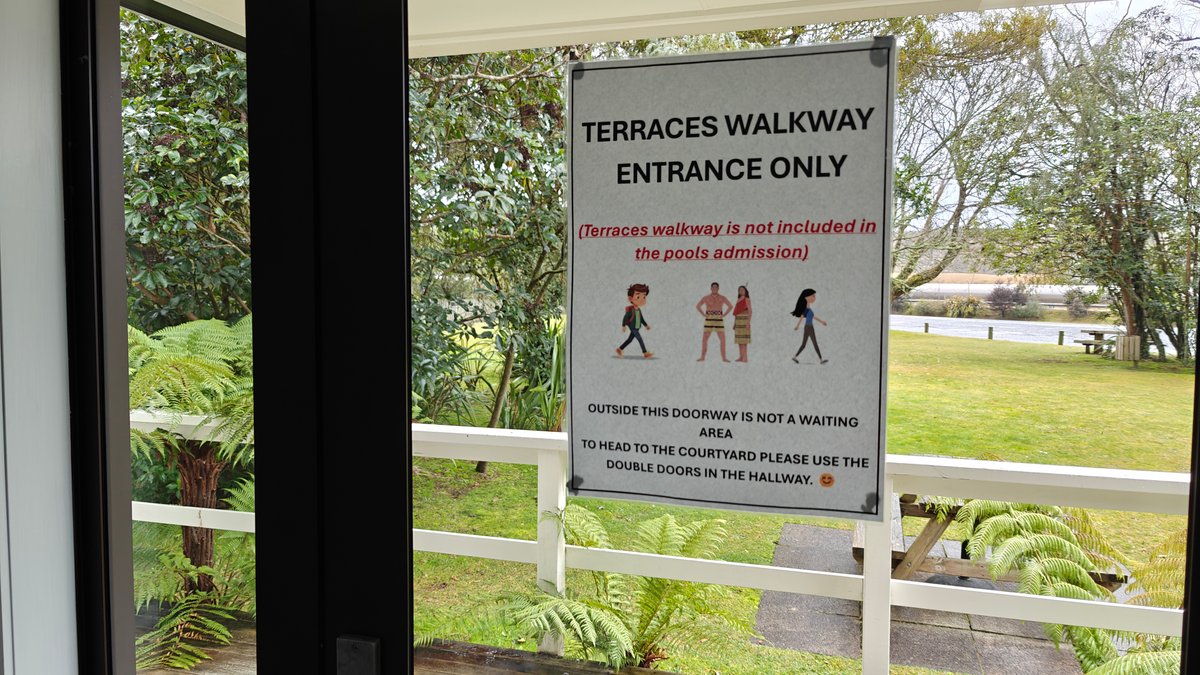
To orient myself I picked up a brochure at the entrance. Depending on your ticket, you can visit one, two, or all three: the thermal spa pools, the village section, and the terrace walk. We visited mid-morning on a weekday and the paths were mostly ours; it added an atmosphere that made the whole experience even better.
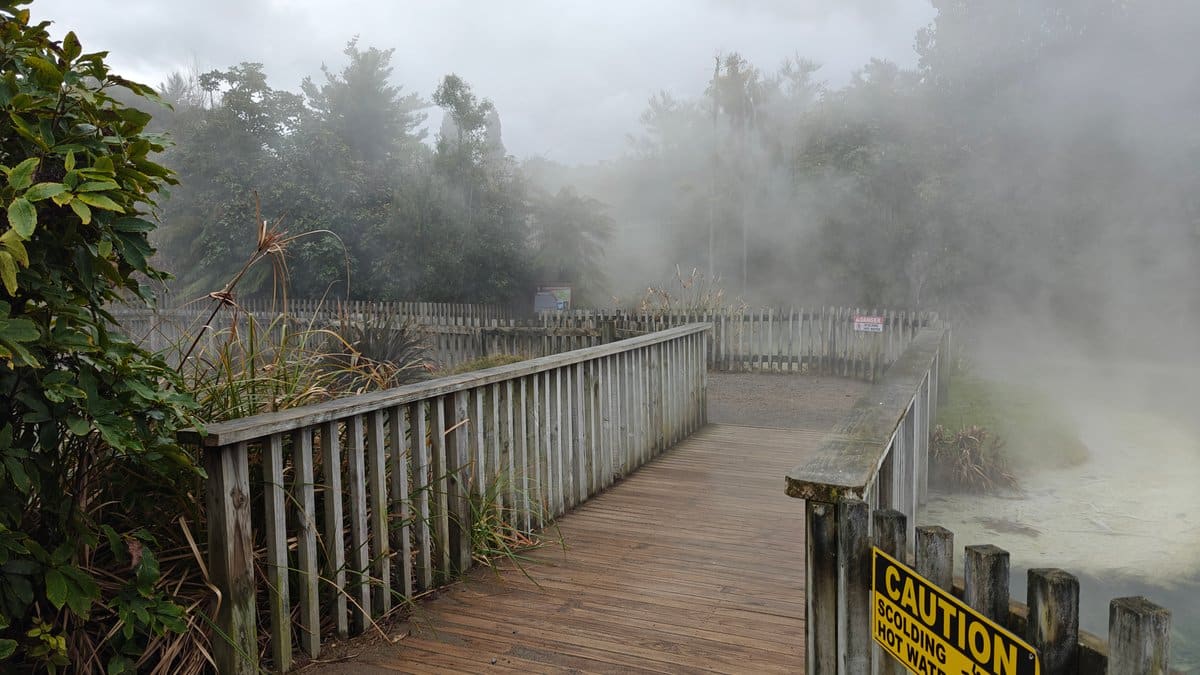
Steam rose from pretty much everything, and the signage was pretty thorough with instructions not to touch the hot water and keep your head out of the pools… which seemed sensible.
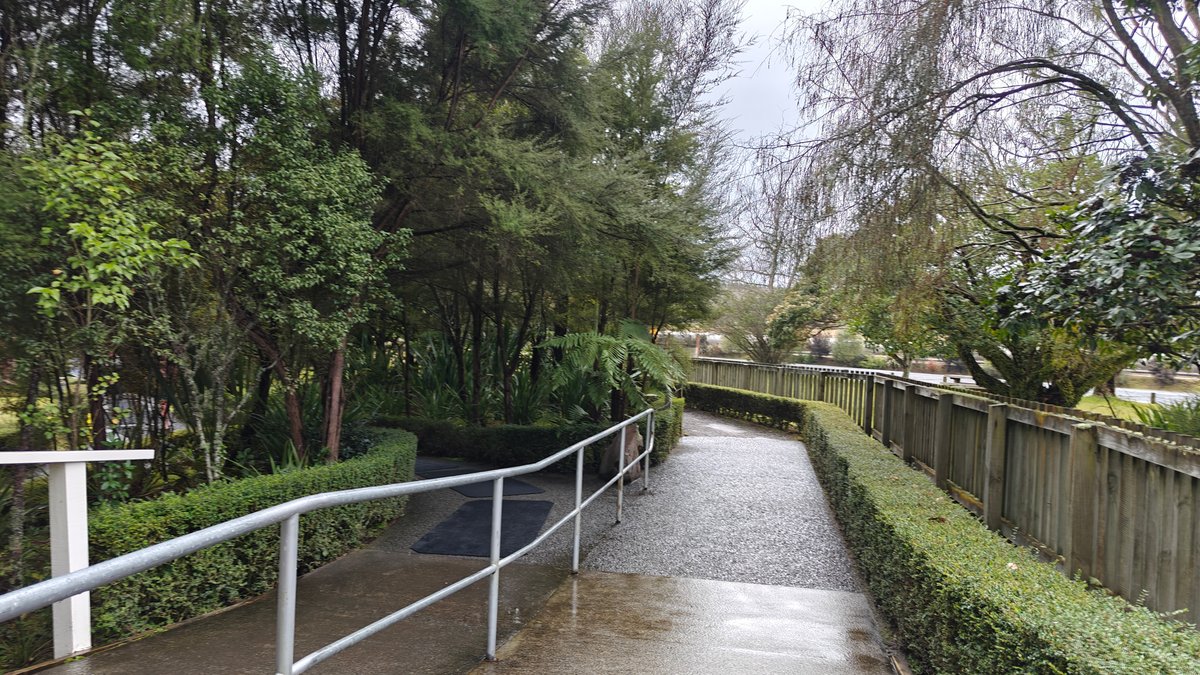
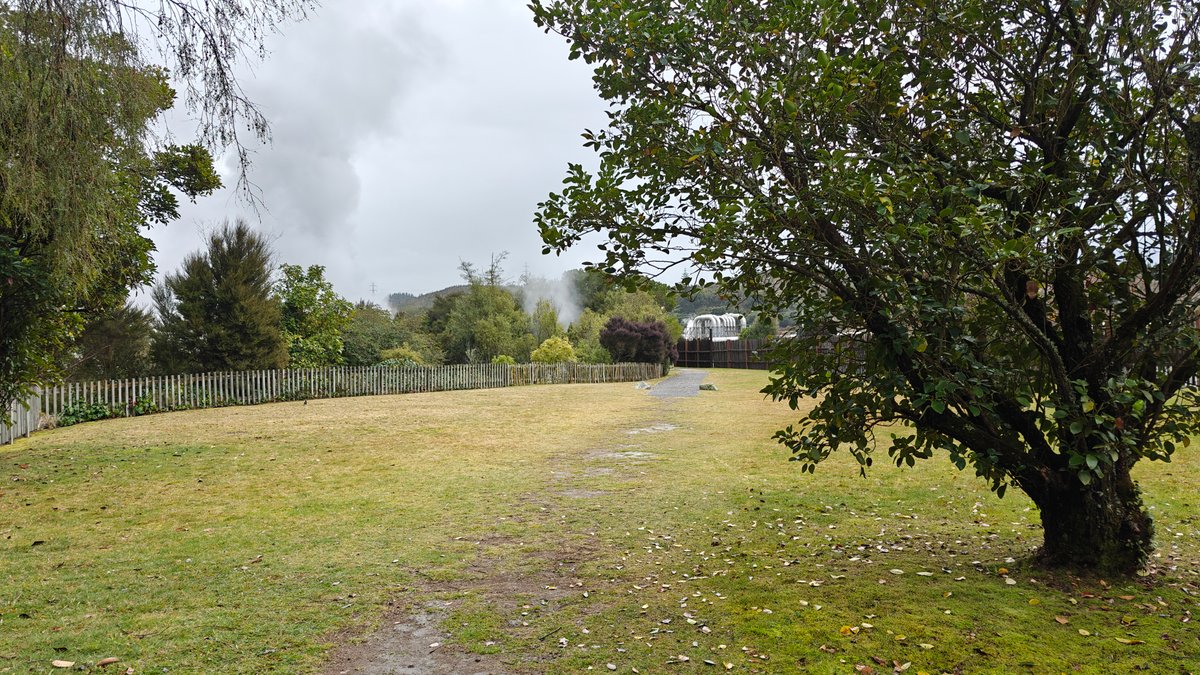
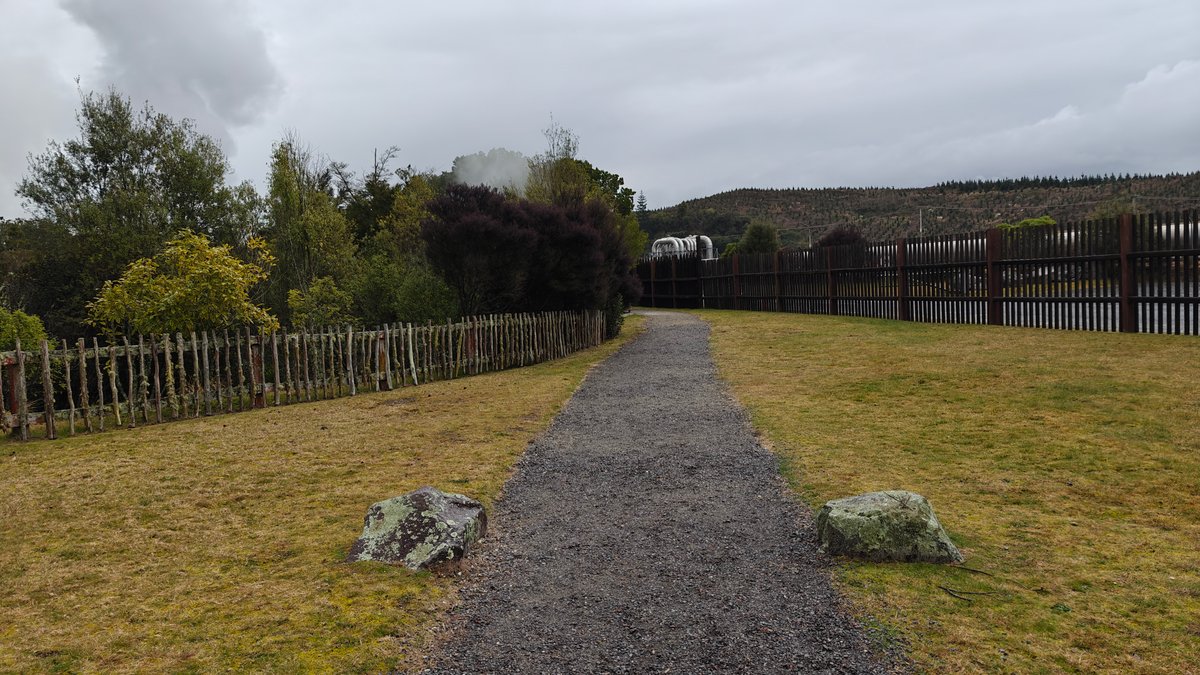
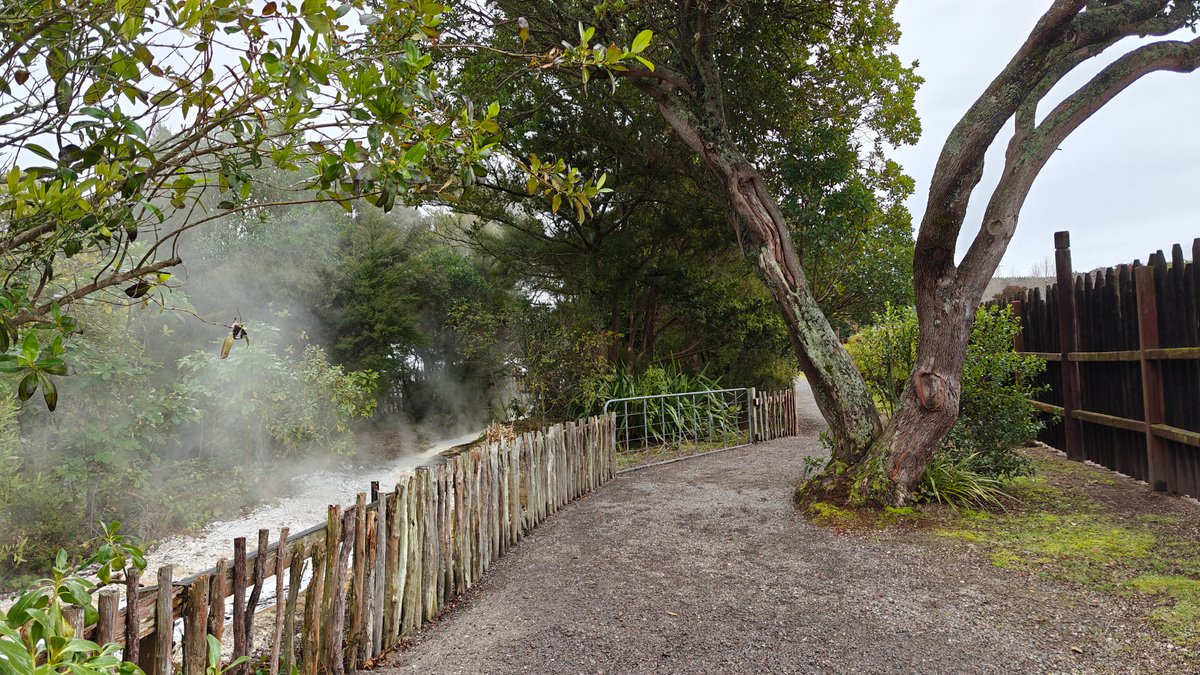
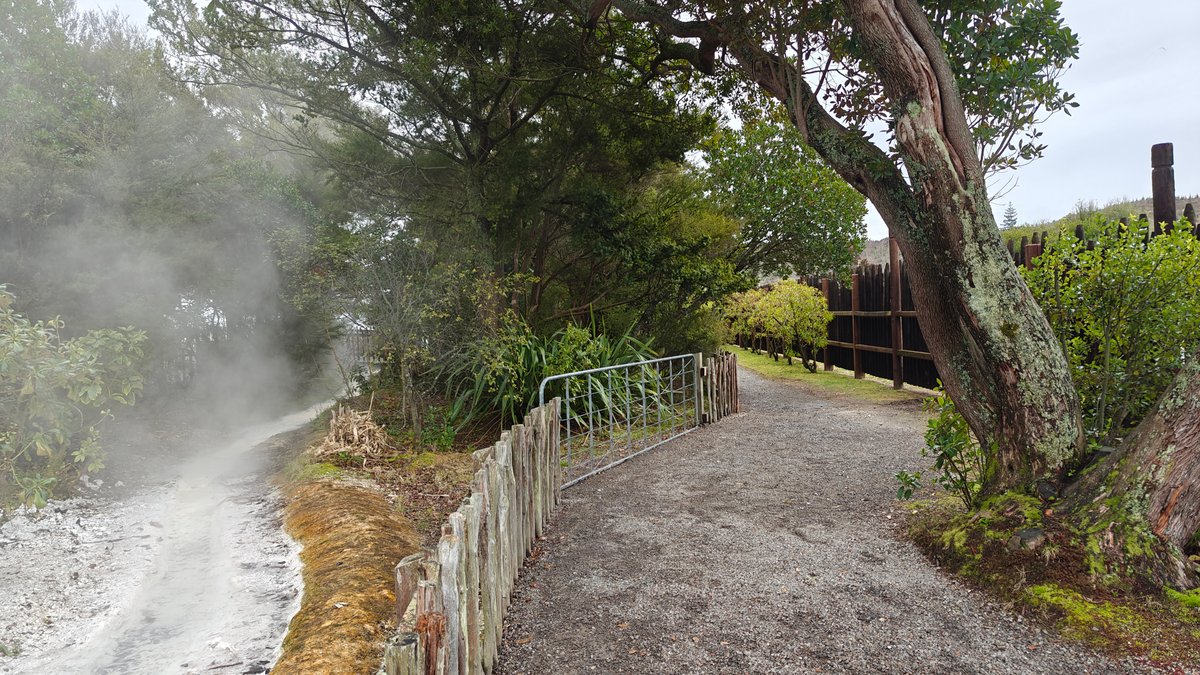
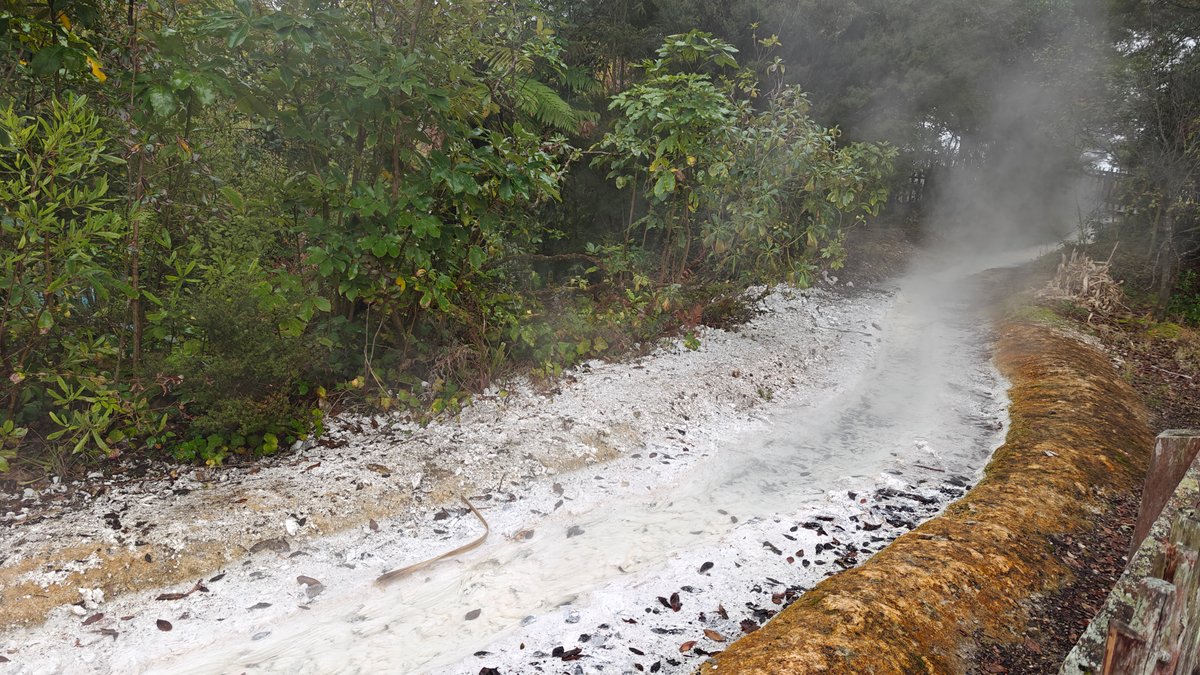
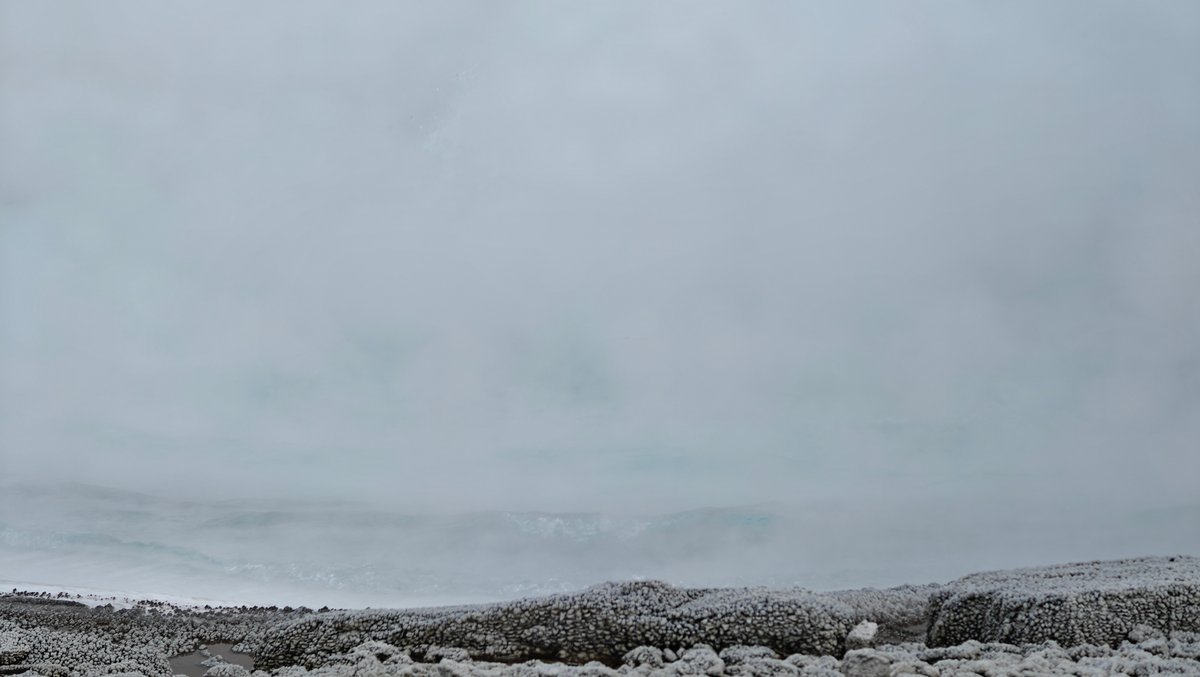
From there it’s onto the walkway which begins over mown grass but quickly descends to a true geothermal zone with thick clouds of steam drifting over the gravel pathways. Before I really saw anything, I could hear the water hissing and bubbling, and although there was a faint whiff of sulphur (not overpowering), the air had that smell. Depending on the breeze, the steam will come and go; at times you’ll be walking through fog, other times you have a clear view of the streams and pools.
It is properly hot around the water features, and I was happy I wore layers I could remove.
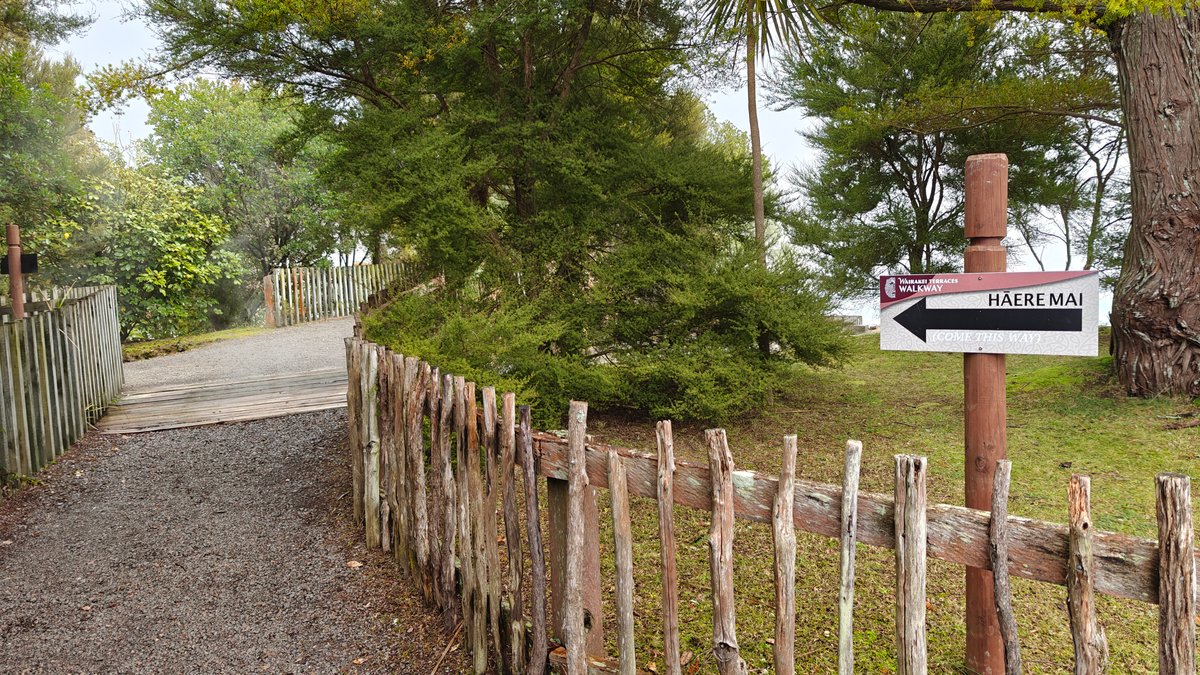
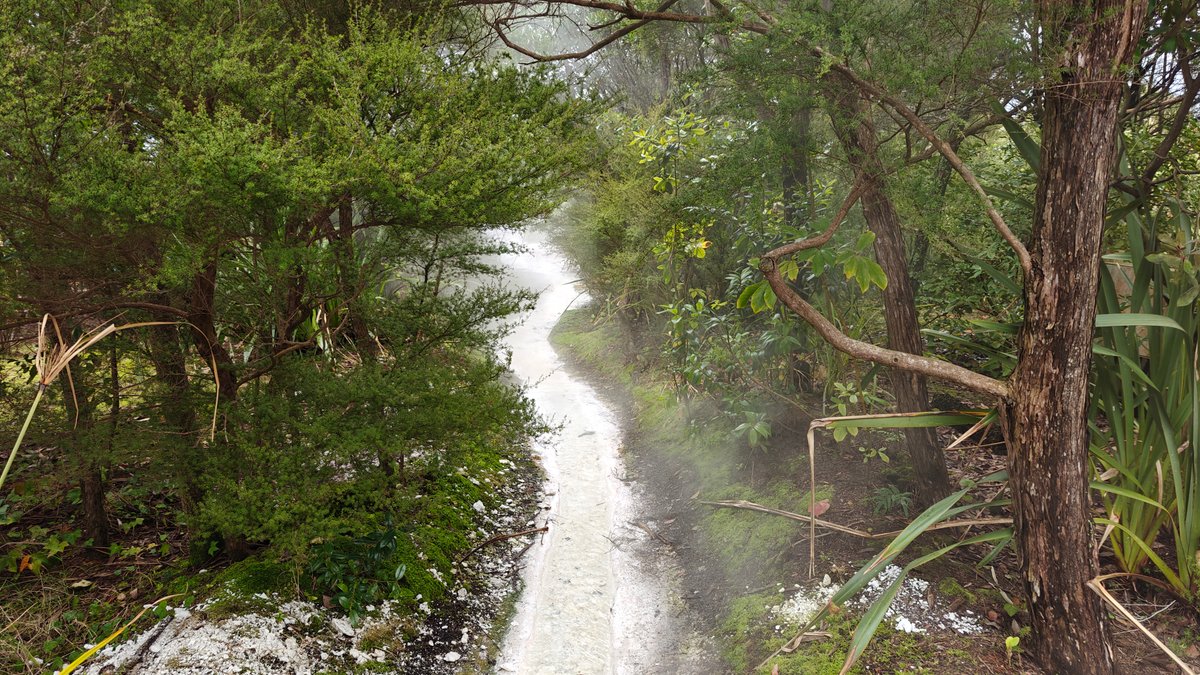
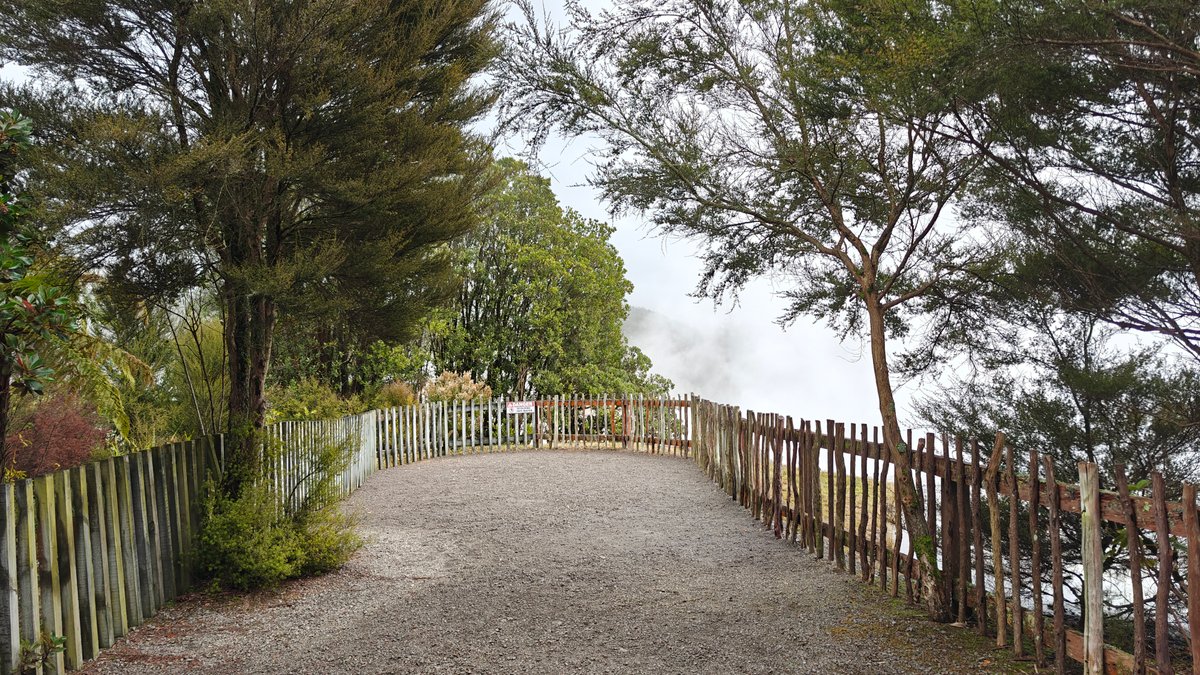
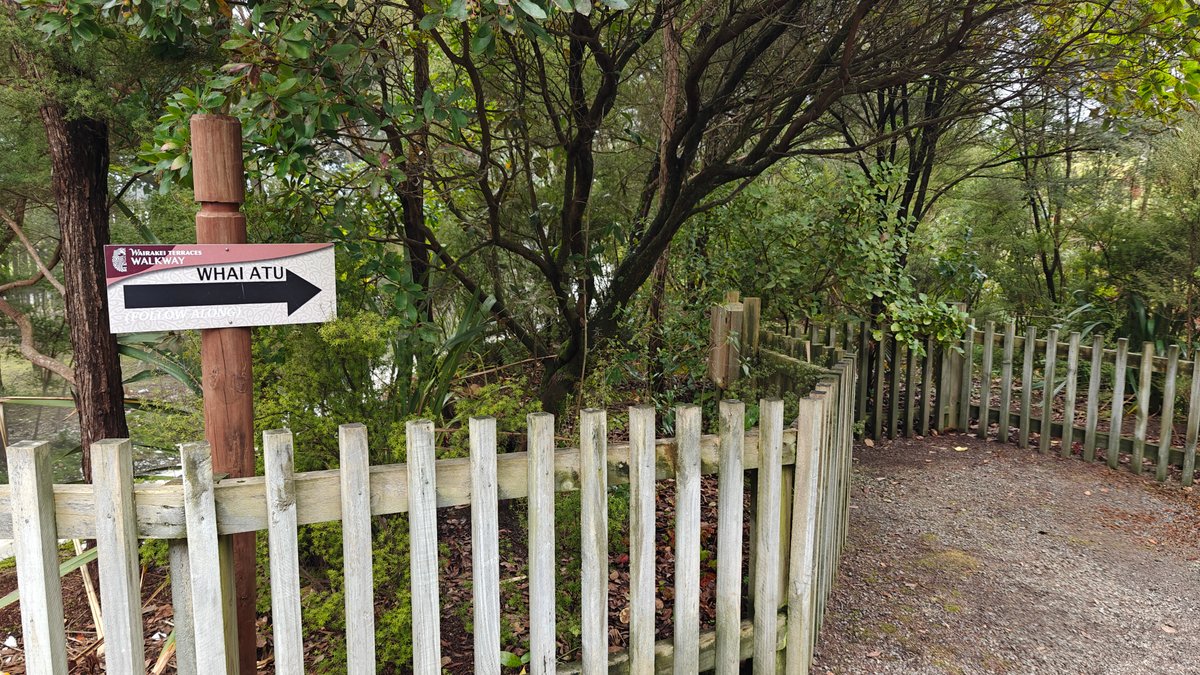
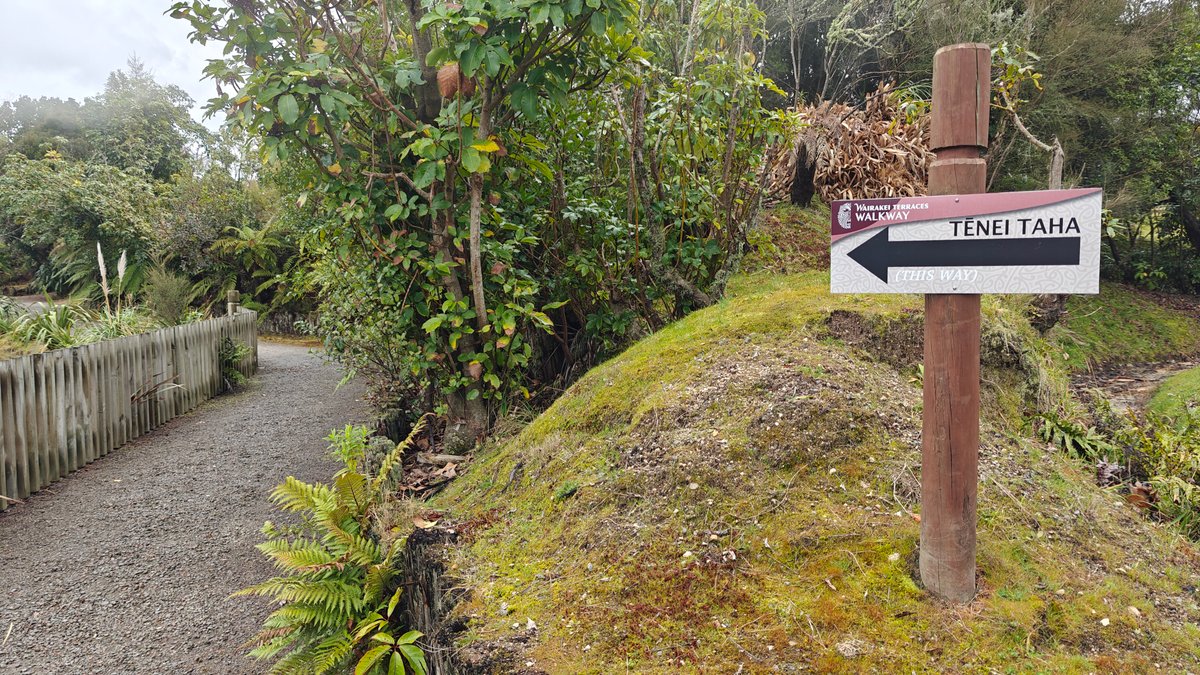
The trail passes several thermal features and winds around native bush with carved wooden direction posts along the way. It’s an easy trail to follow, although some parts are quite muddy and the wood portions of the trail can be slippery due to the steam. I stopped as often as possible when the view opened up and took my time.
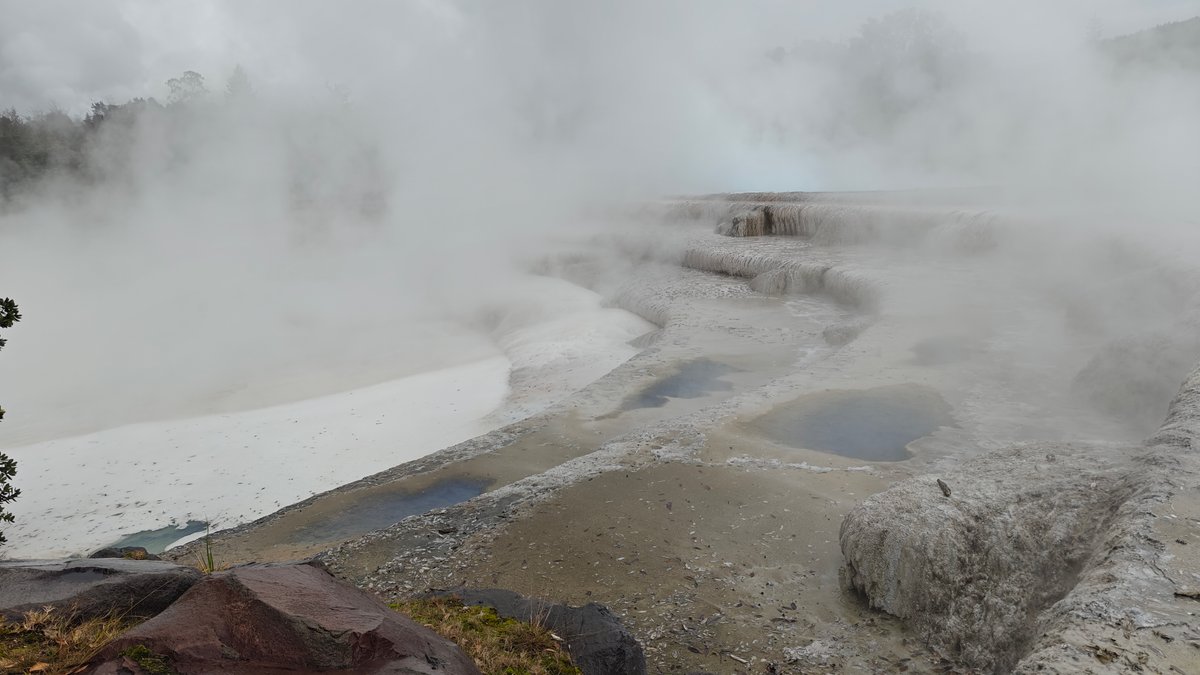
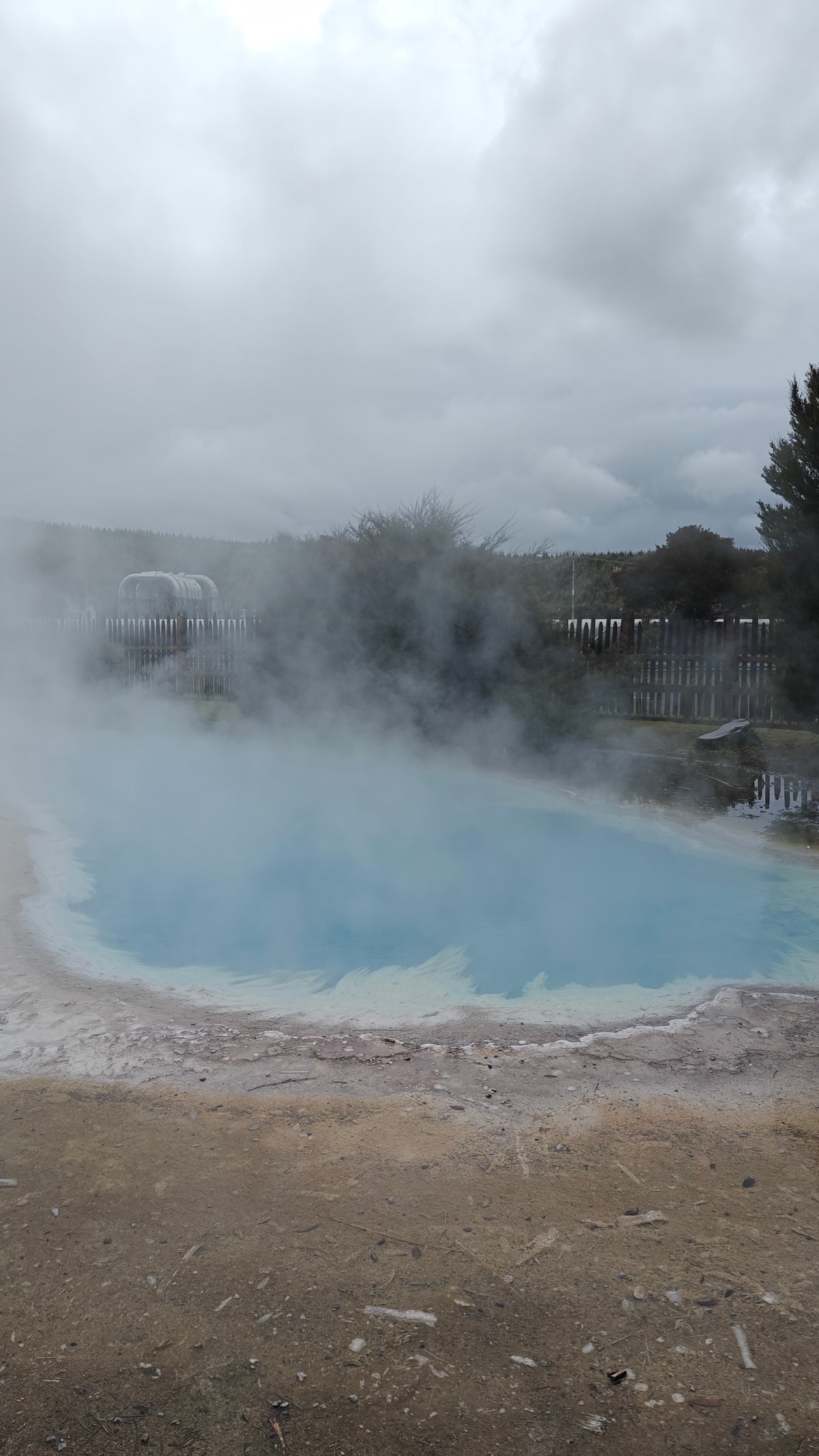
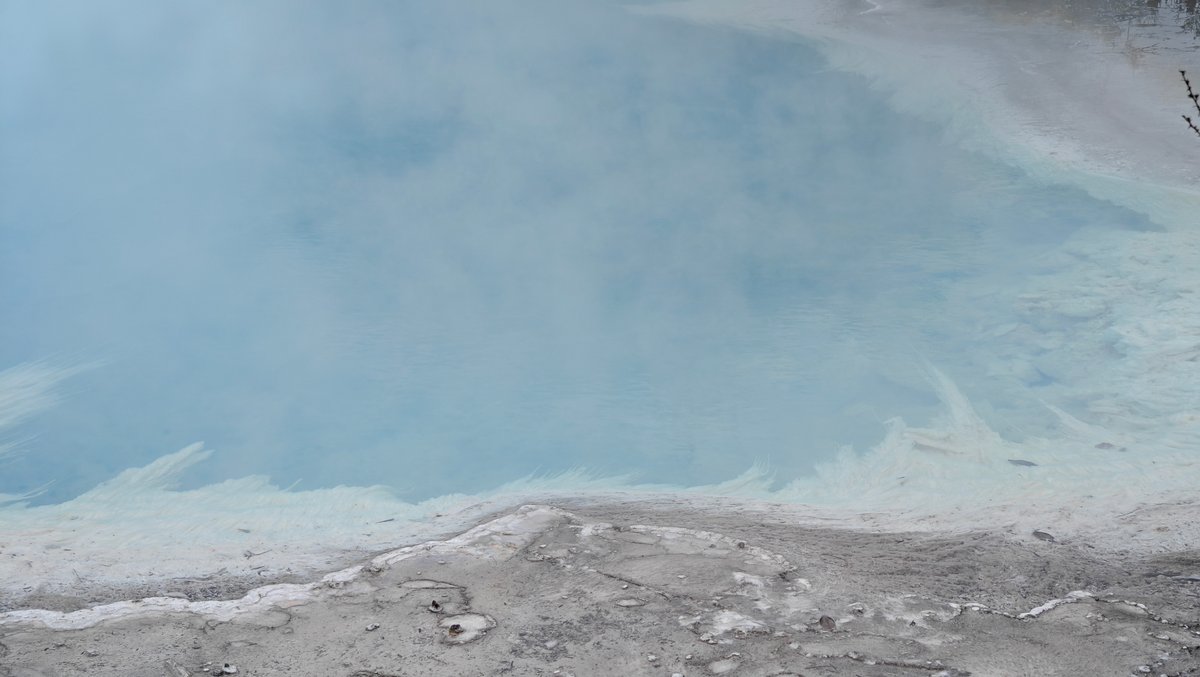
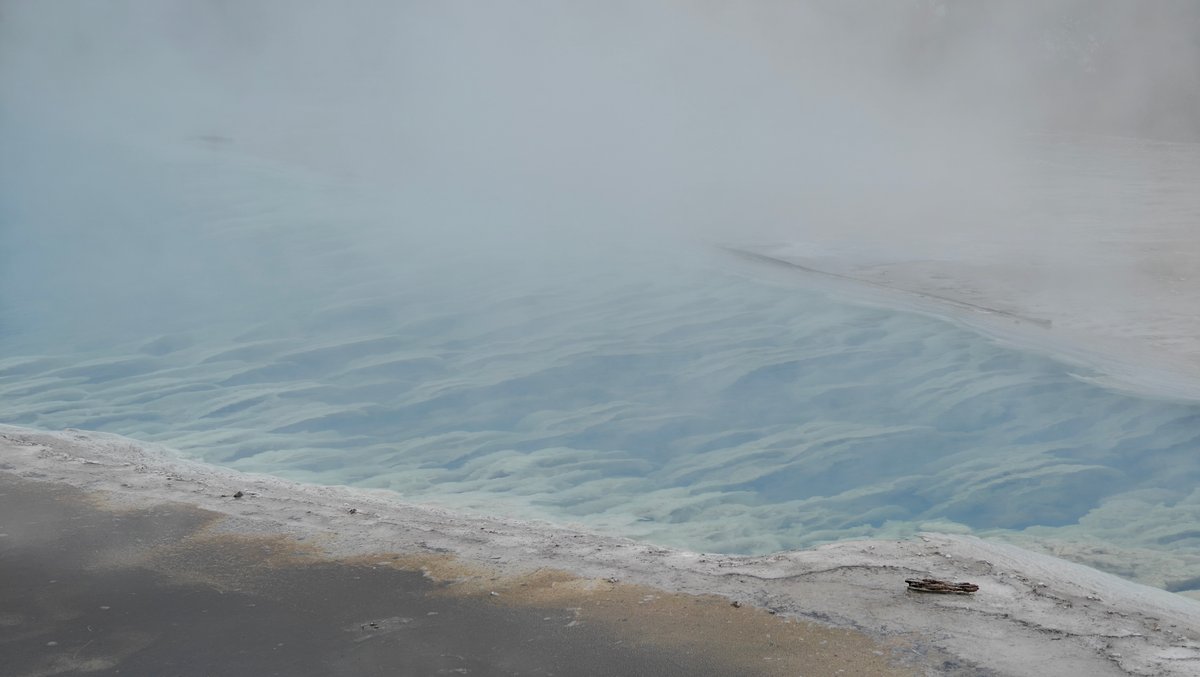
And then you get to the actual silica terraces, which are pretty darn cool. They’re stacked on top of each other like steps, formed from mineral deposits, and the pools themselves are this unreal shade of pale turquoise (it’s almost milky). The terraces were created by humans because they’ve rerouted the geothermal water so that it creates the same effect again, but the sinter formations is real and continue to grow.
It honestly all just looks otherworldly, particularly when the steam rolls over it and you can only catch glimpses through the mist.
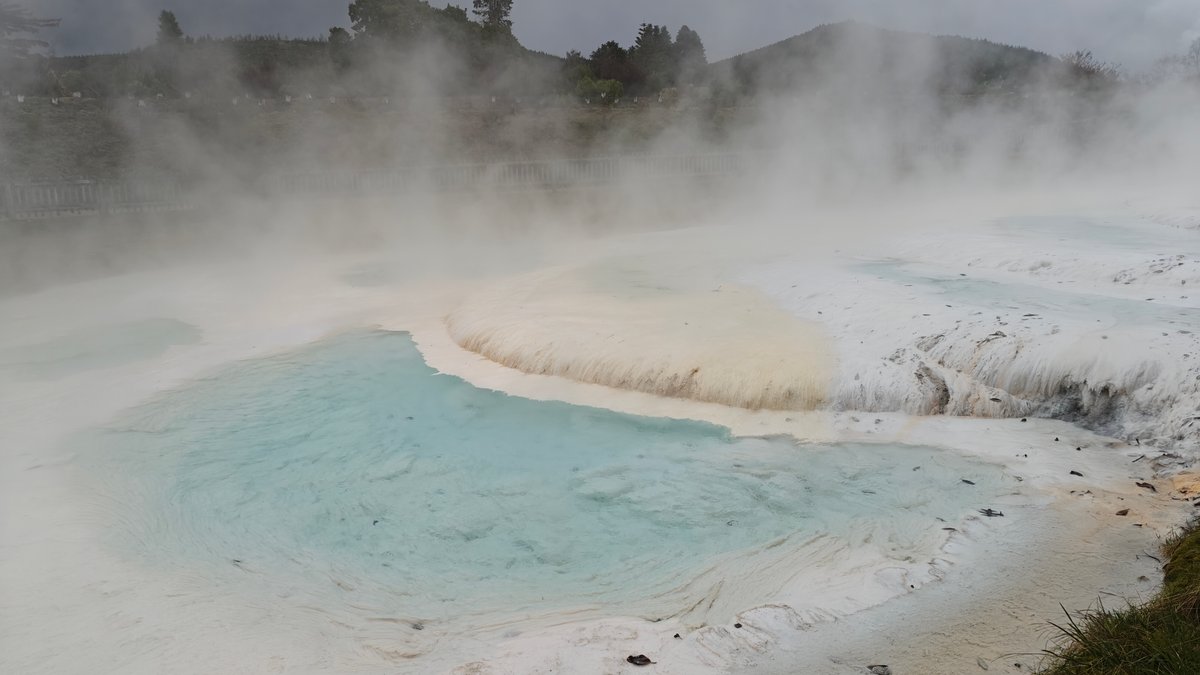
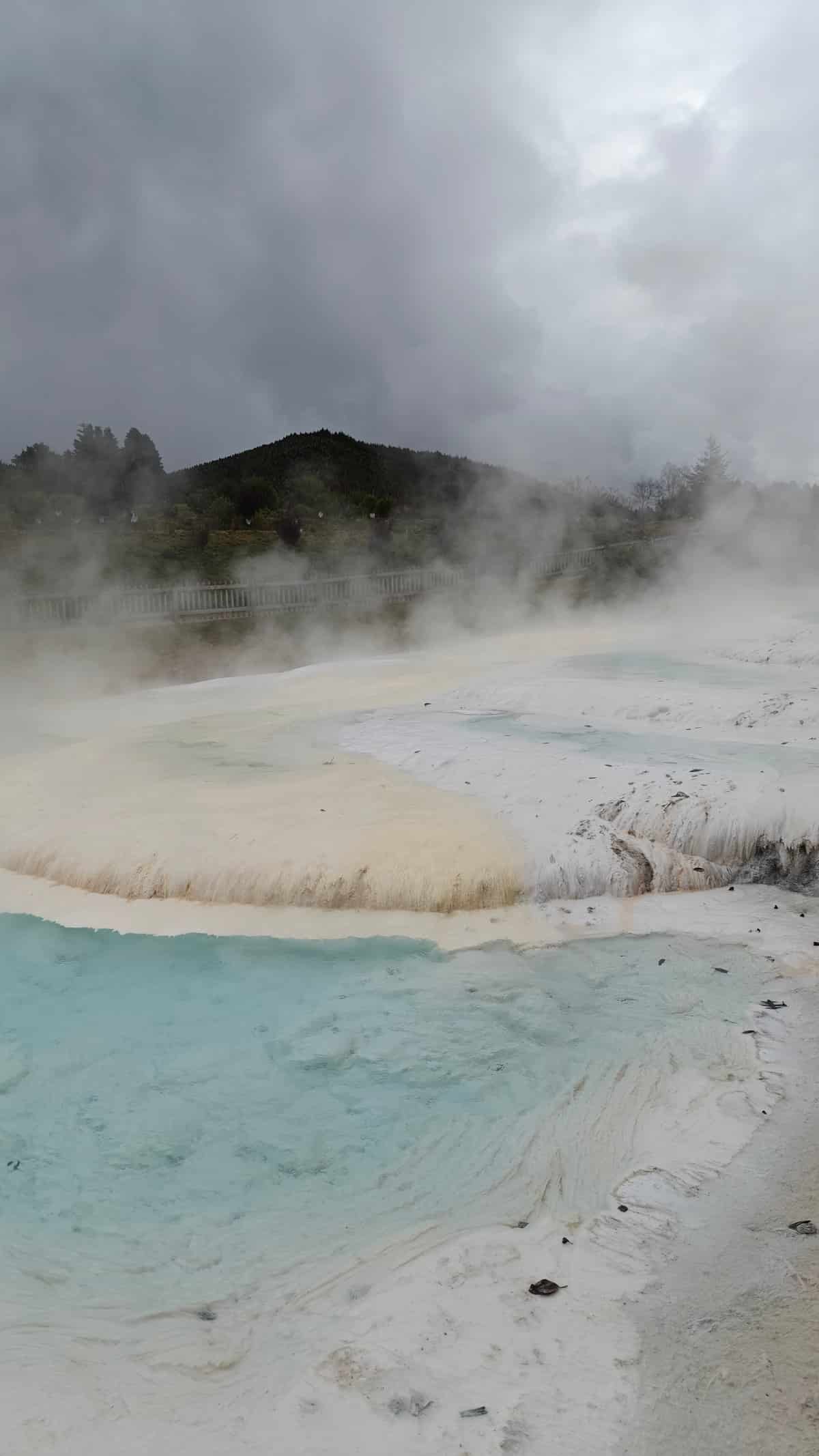
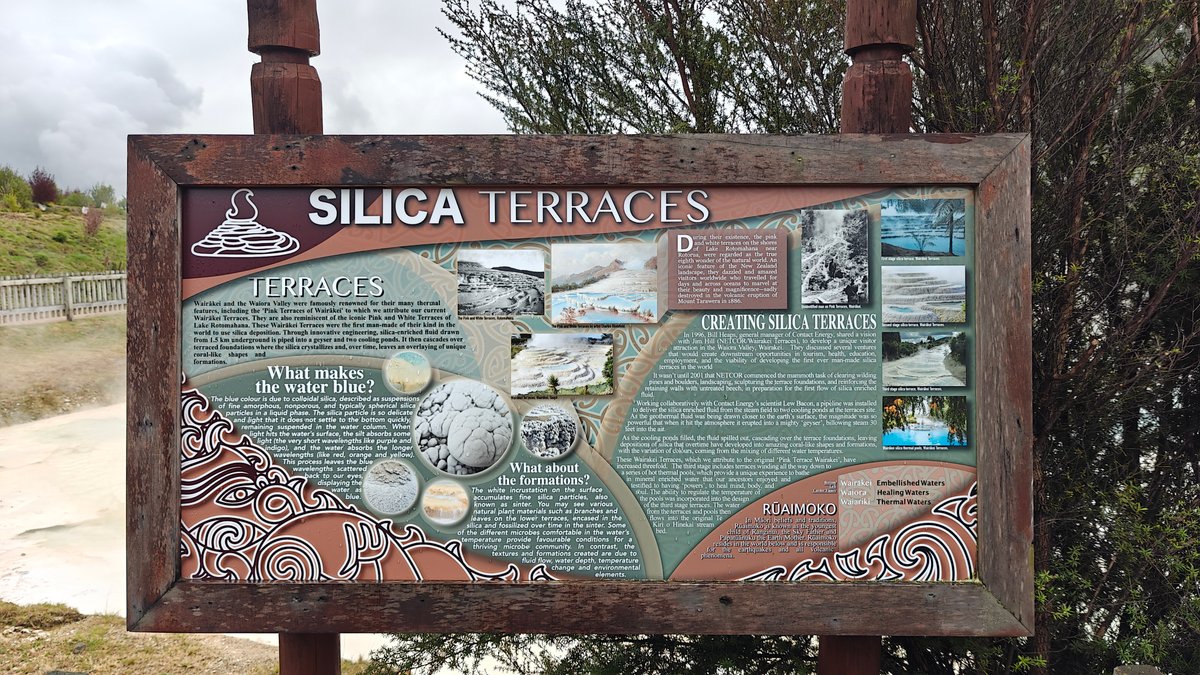
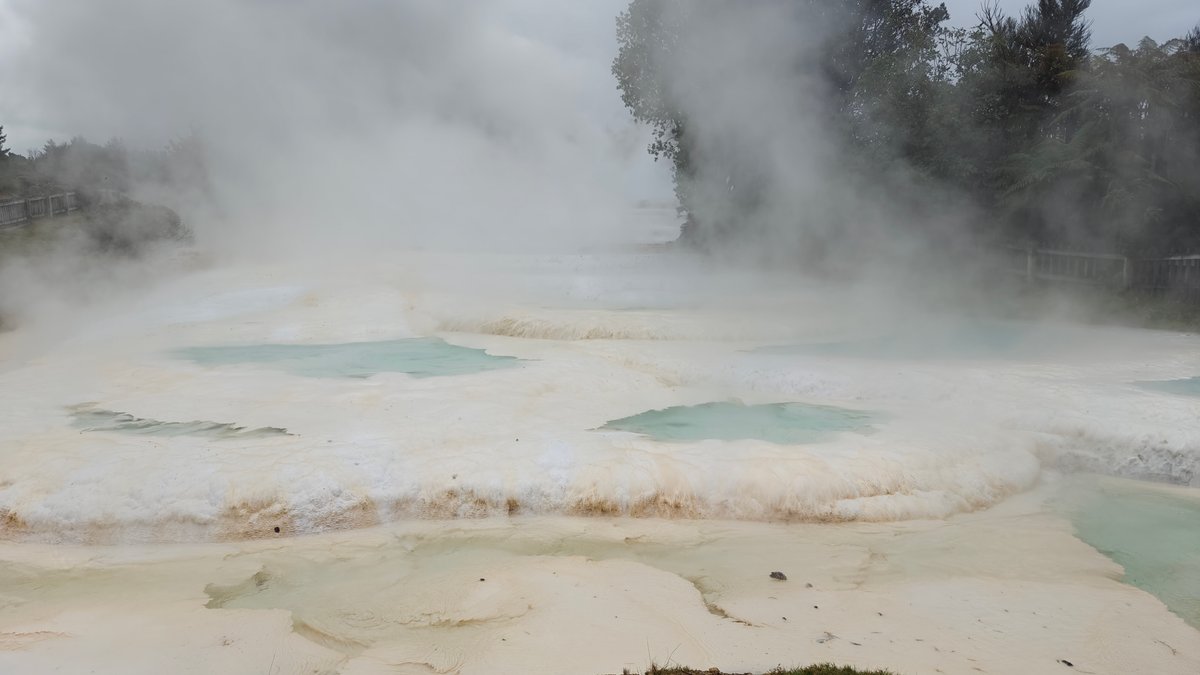
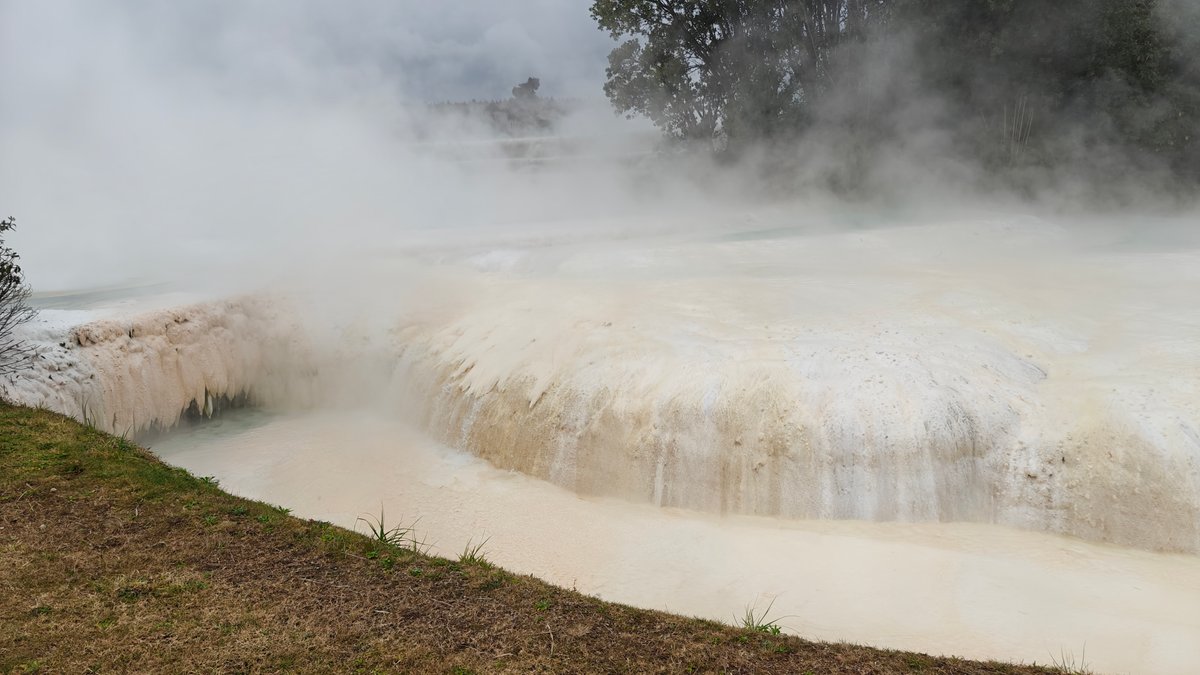
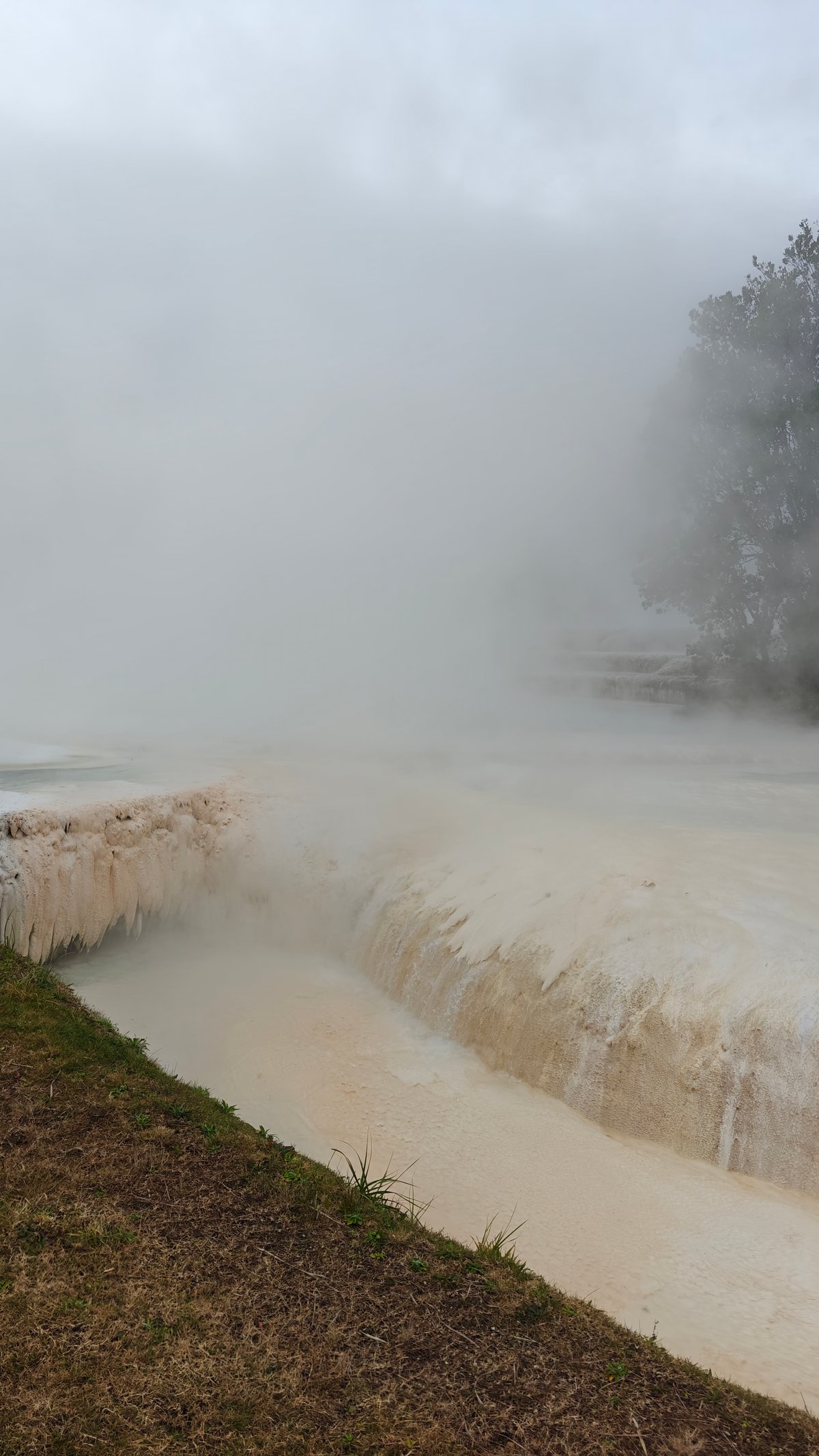
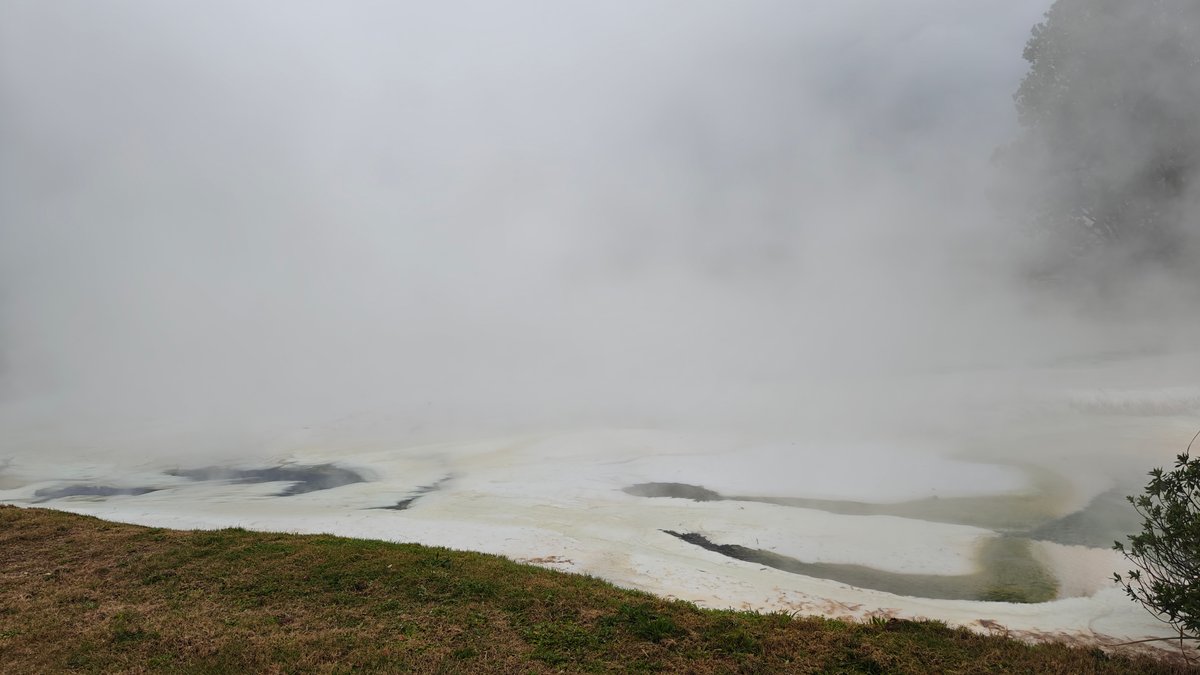
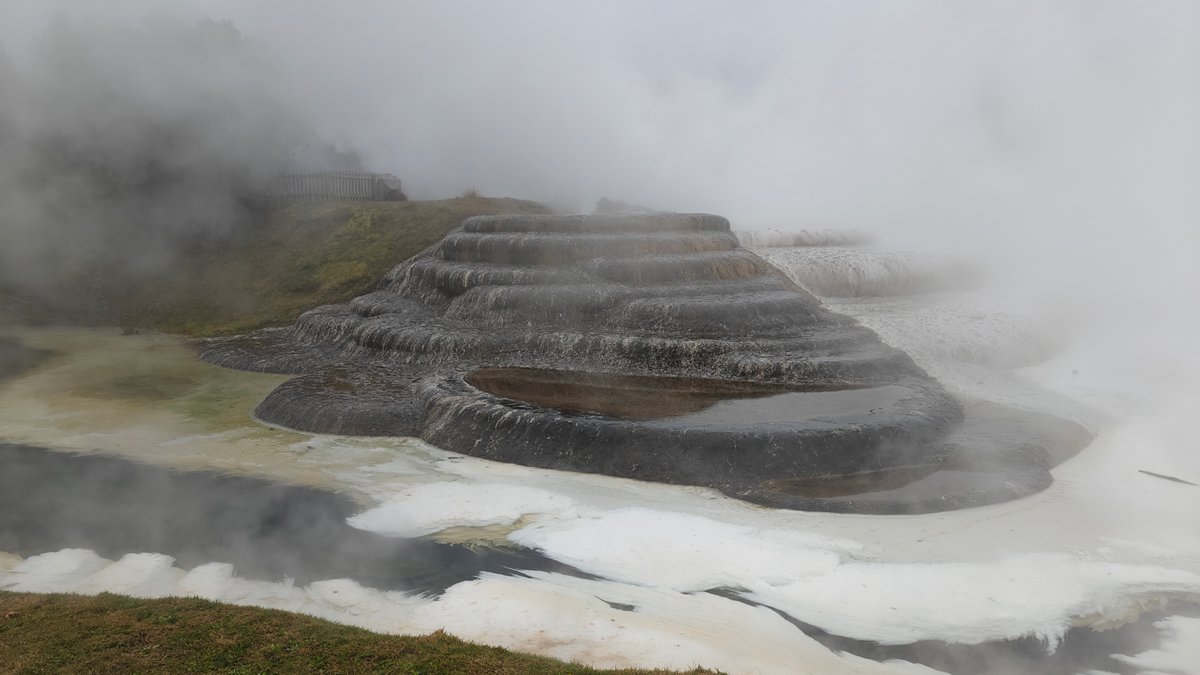
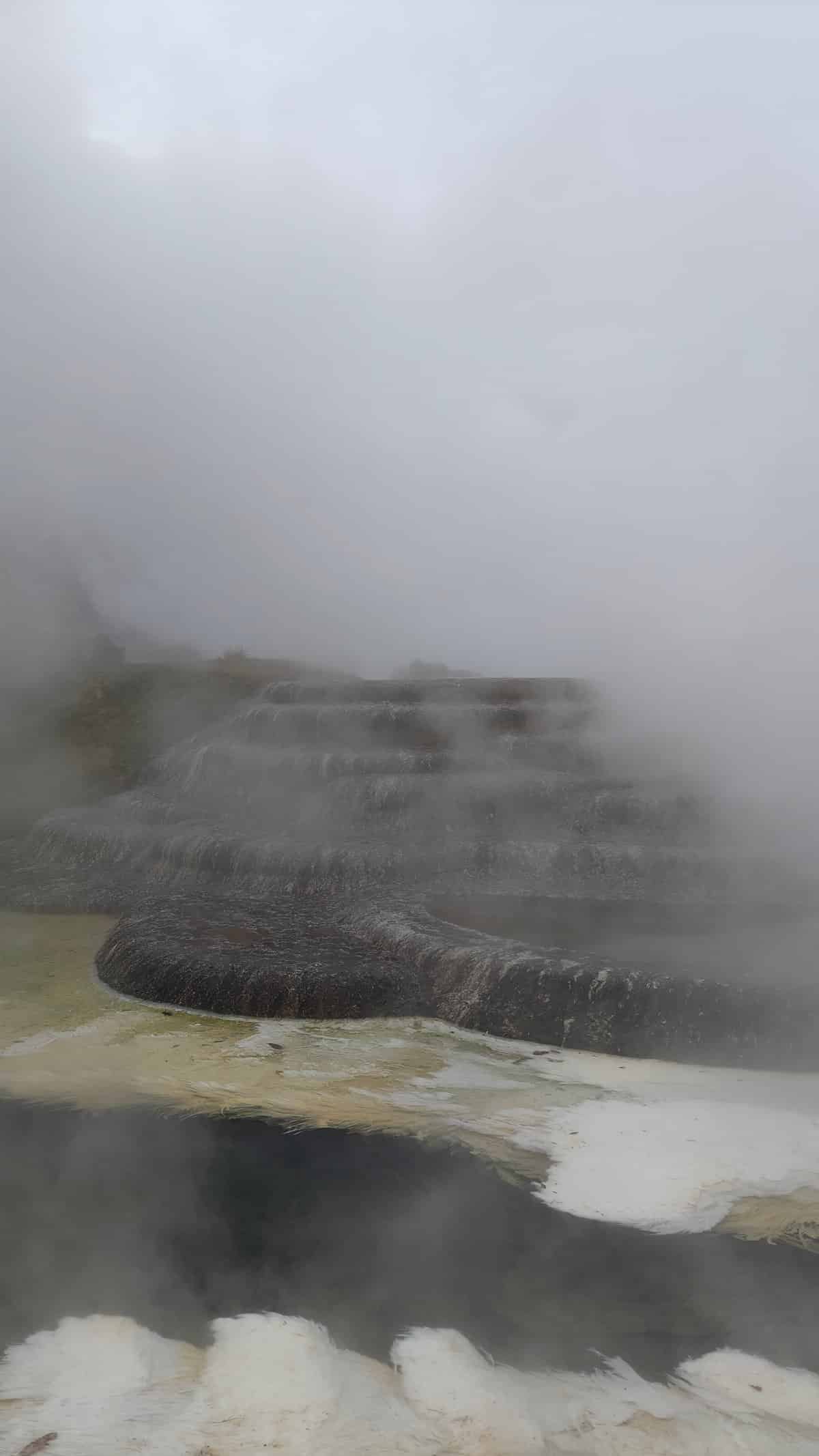
As you can see from the information boards, the terraces are formed by the silica dissolved in the hot water. When the water cools down, the silica precipitates out of the water and forms layers of terraces. We hung around for quite awhile admiring the way the water trickles over the sides into the small pools.
It was really cool and there were some very great views with all the white minerals on top of the pools. I think I took too many pictures but they were so pretty!
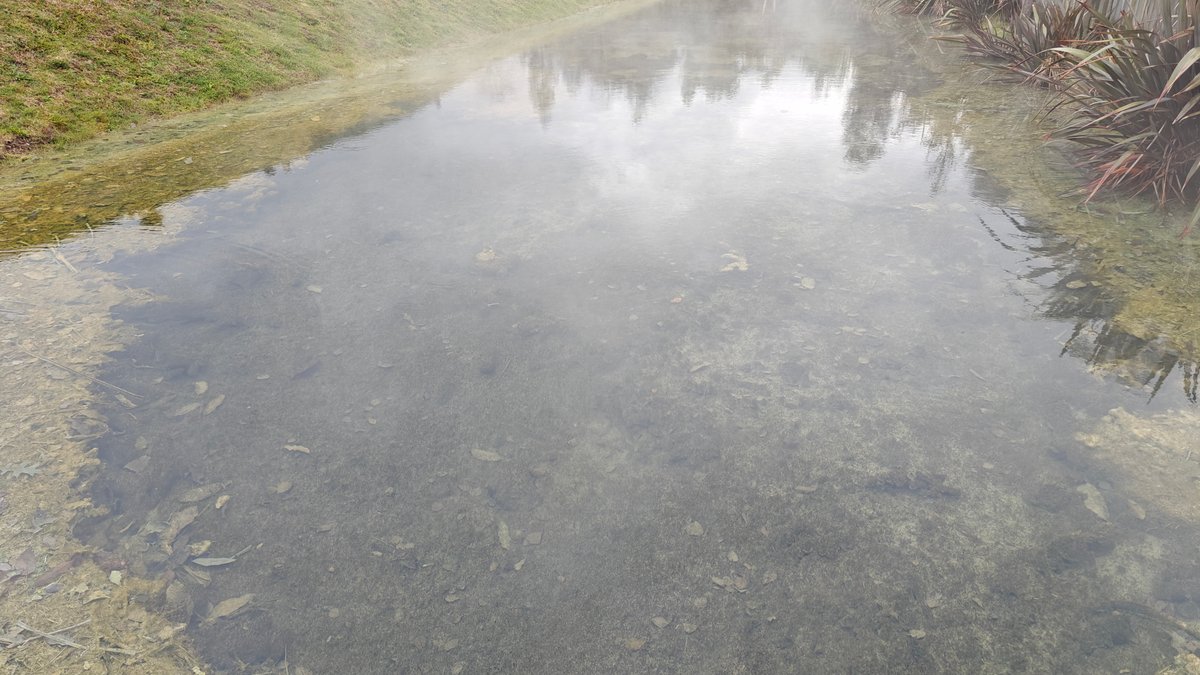
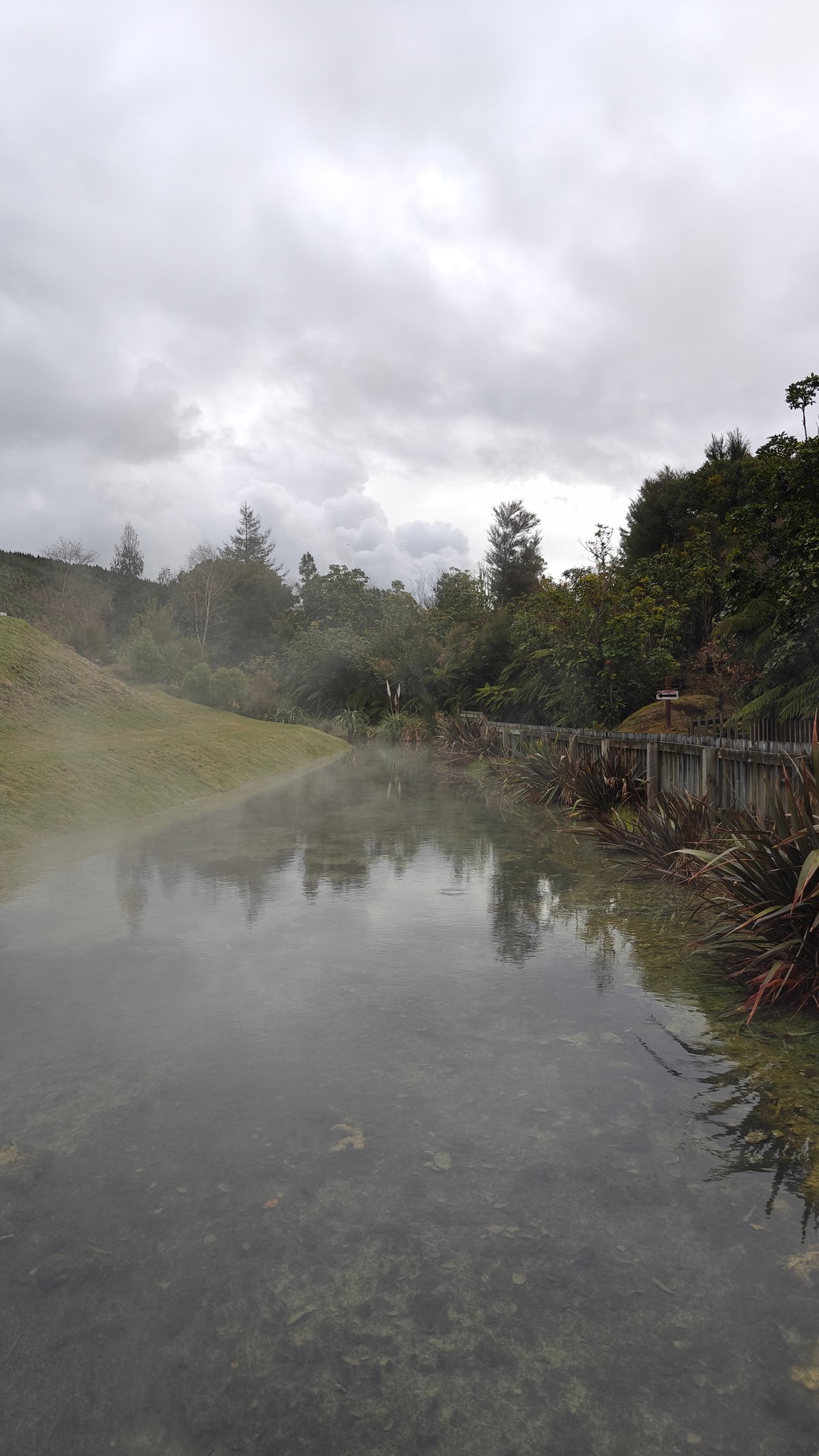
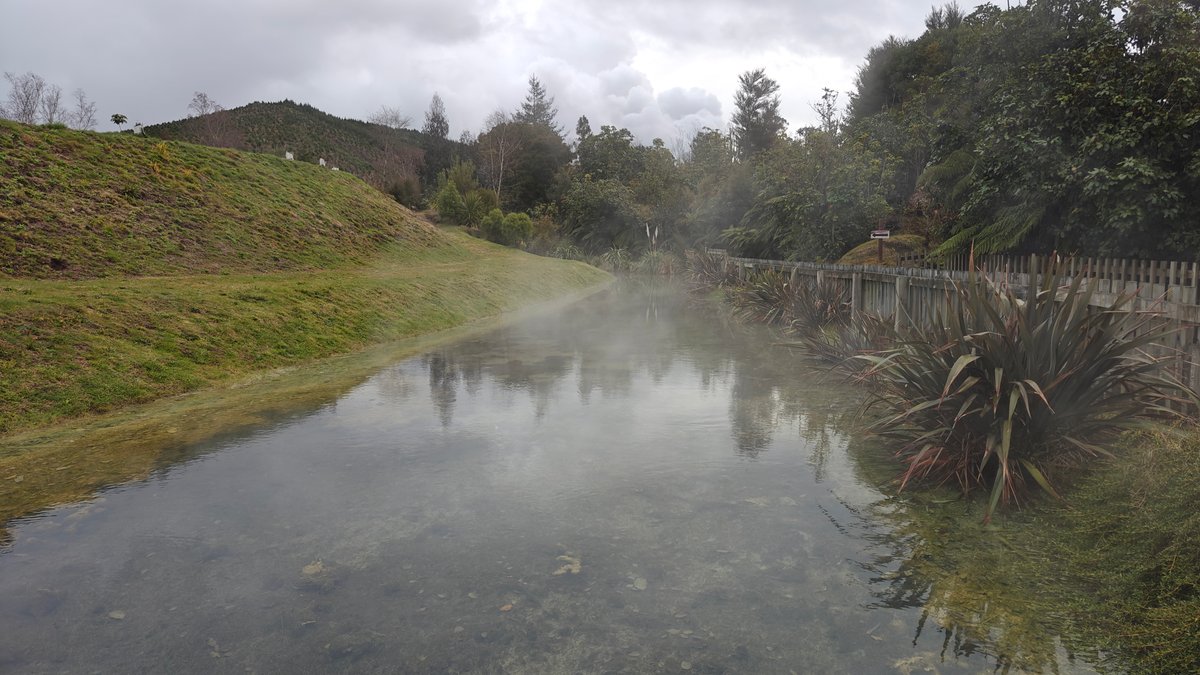
Further on, the boardwalk winds its way past bigger pools fringed with flax and grass. These are deeper, and look more settled, backed by bush and reflecting the sky if the water’s calm. It all feels quite ancient: the native plants crowding in, the steam and the heat.
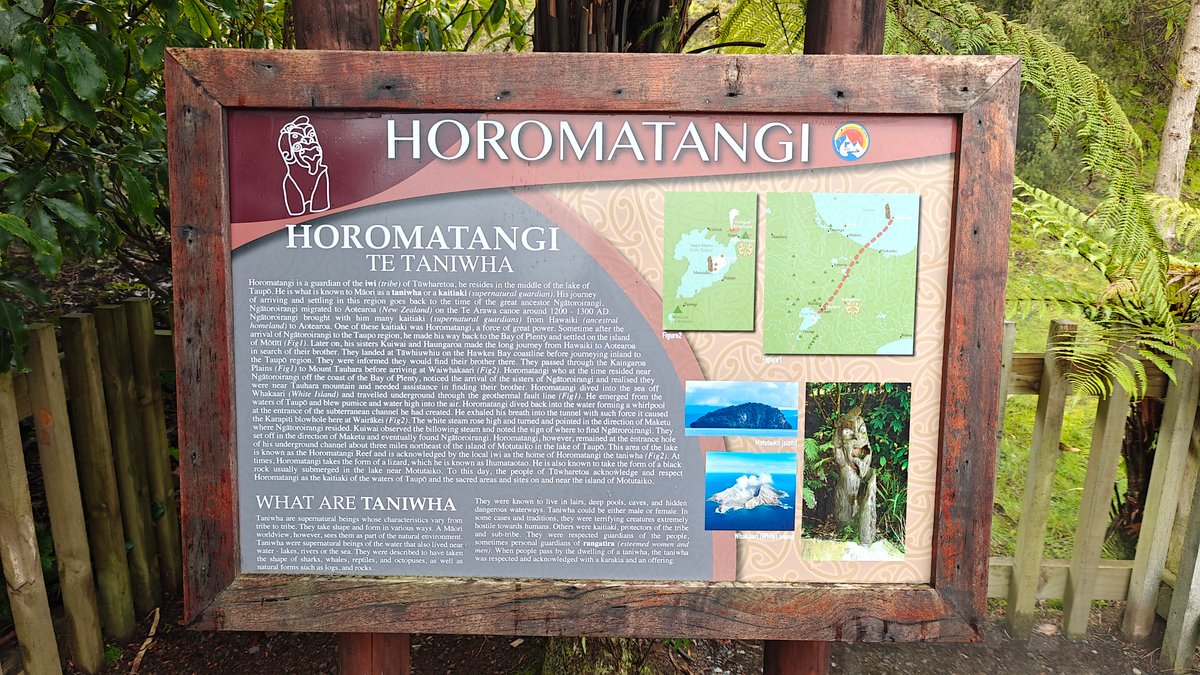
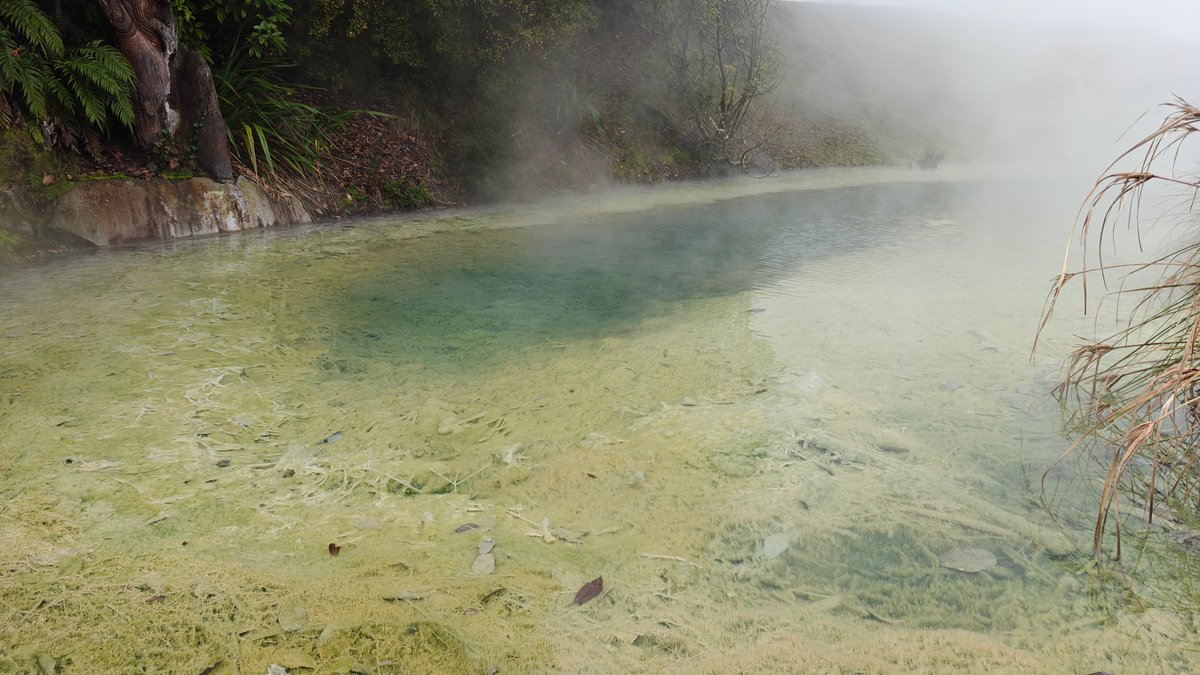
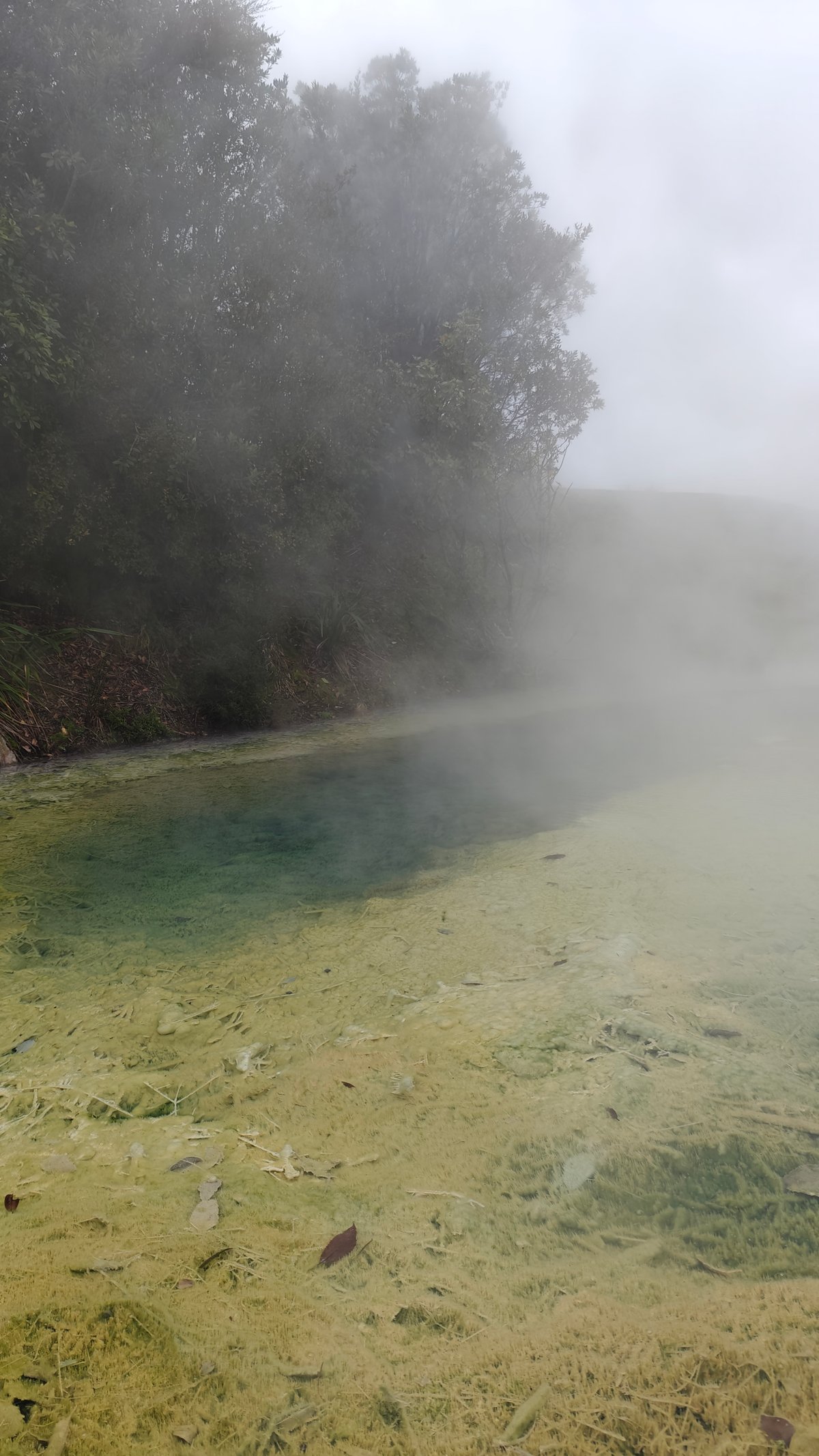
There’s a legend about the taniwha (water monster) called Horomatangi who inhabits Lake Taupo, which is told on one of the interpretive panels. Rather than focusing solely on geology, I liked how they put the local stories into it as well. All manner of bacteria and algae flourish in the hot waters surrounding the pools, creating all sorts of patterns in the mineral staining along their edges.
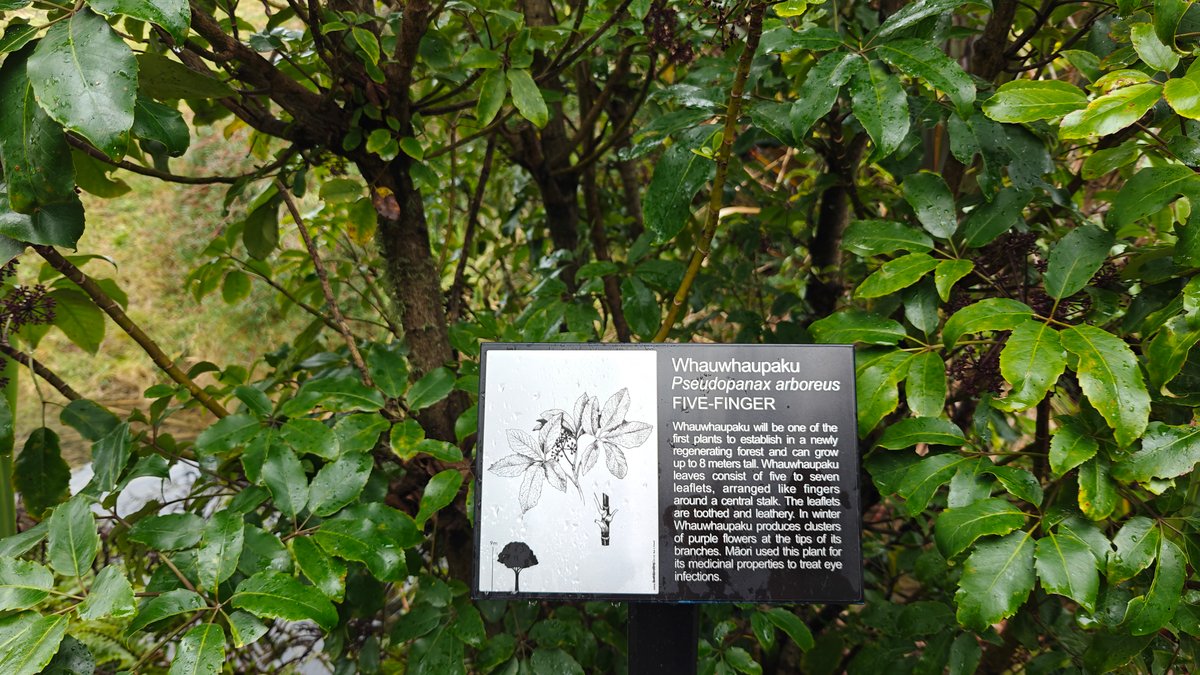
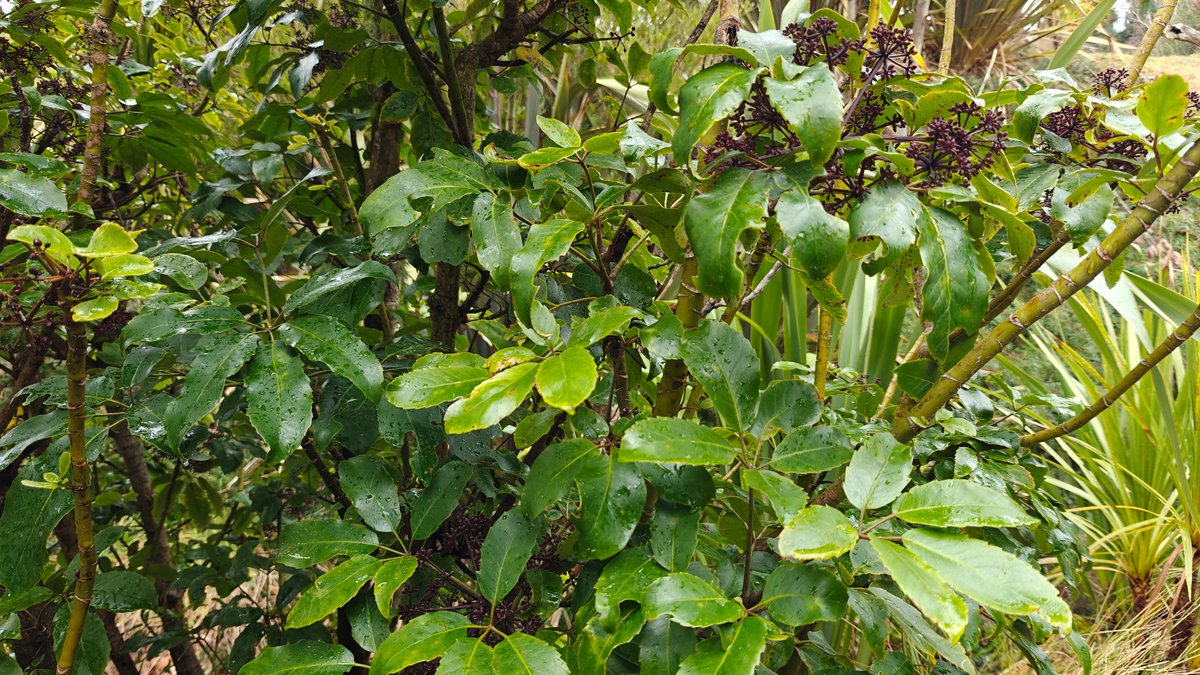
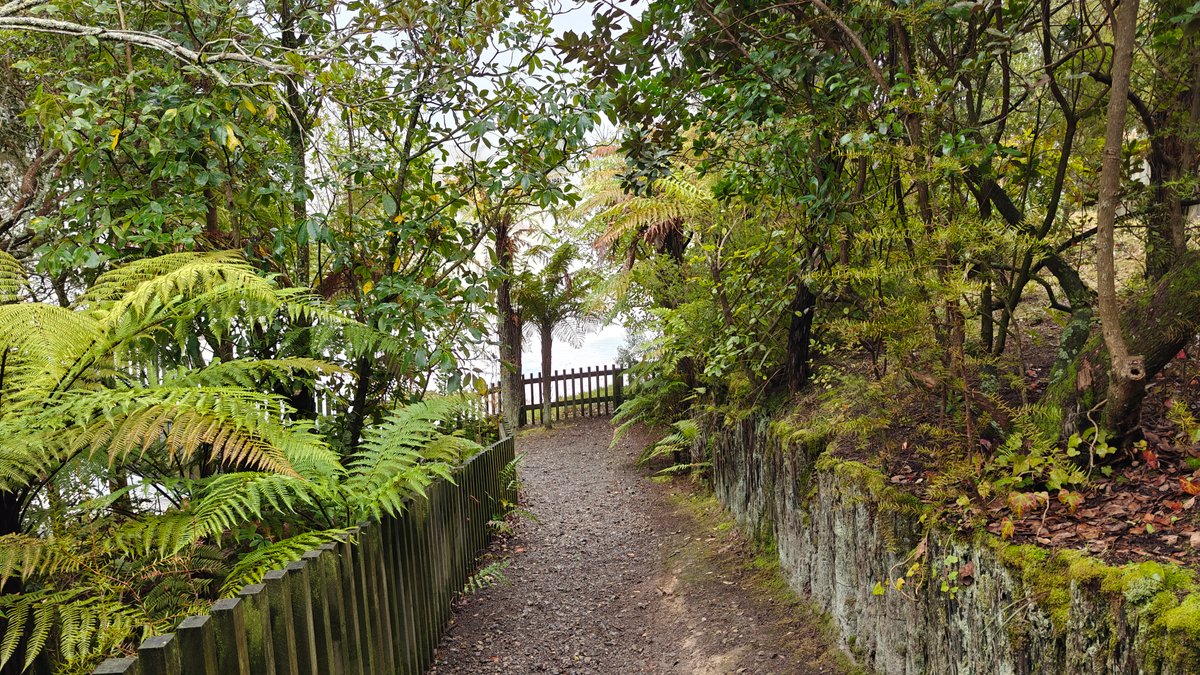
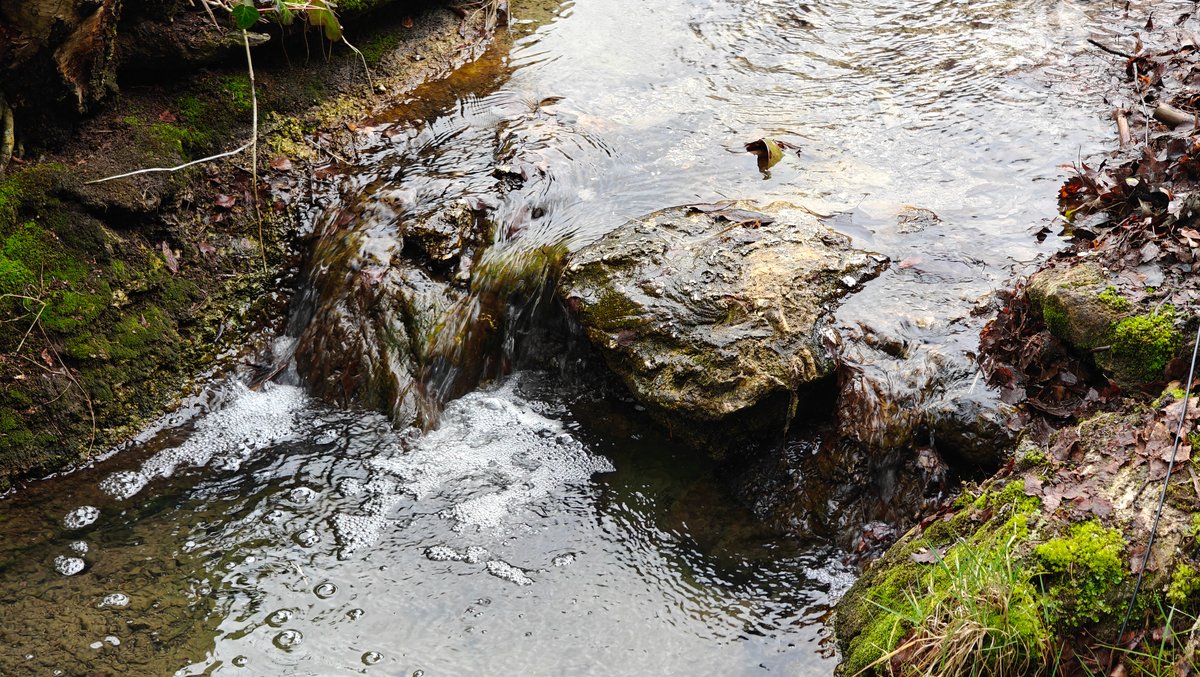
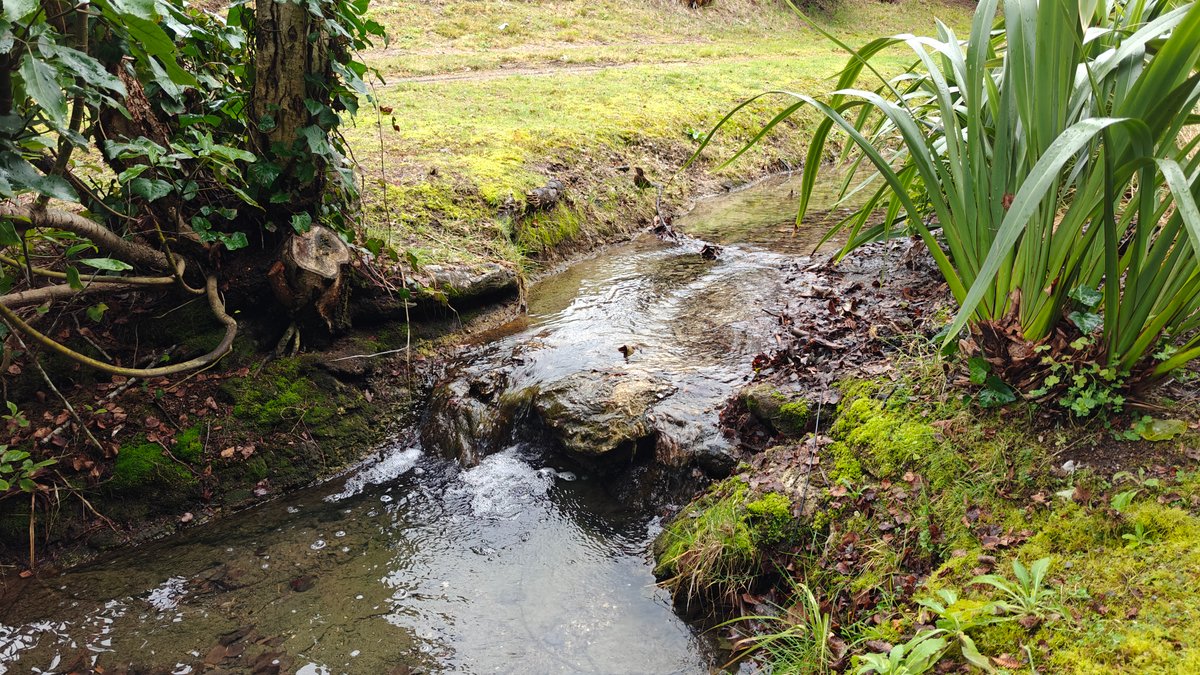
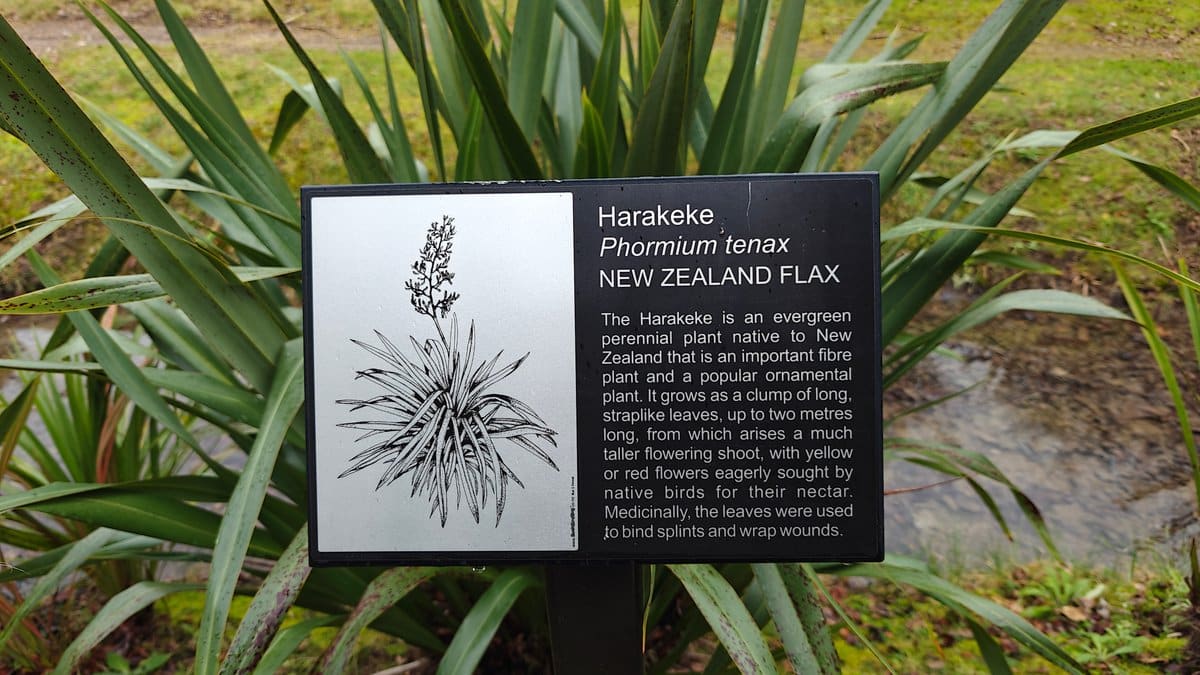
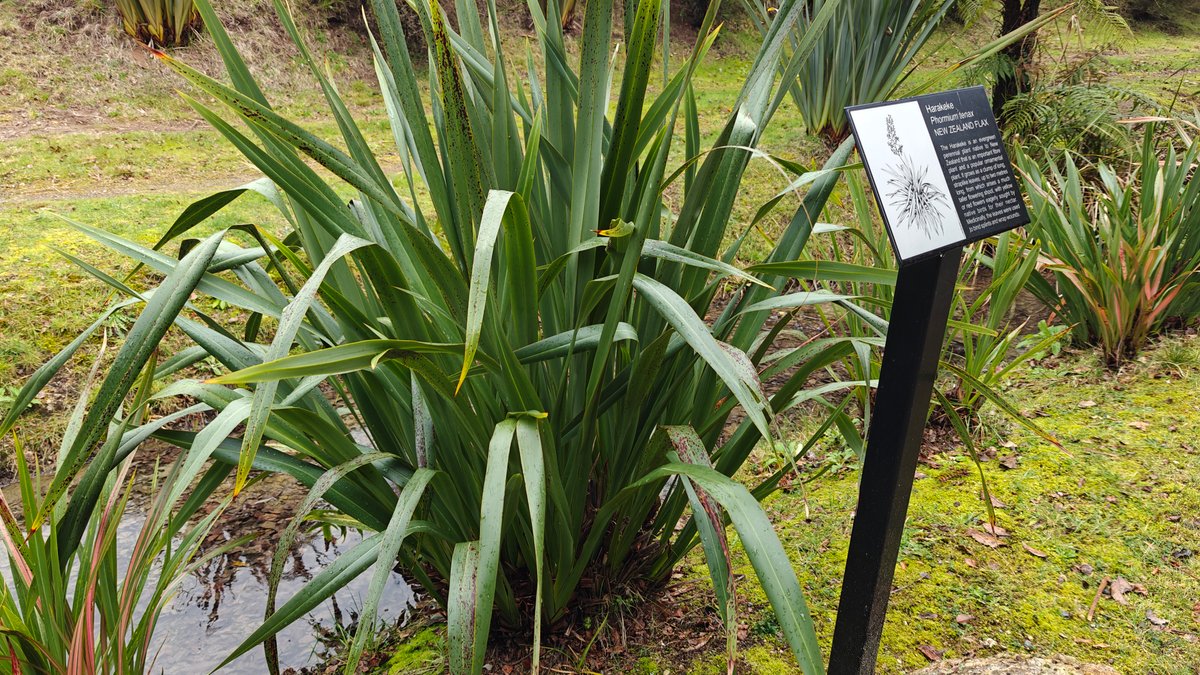
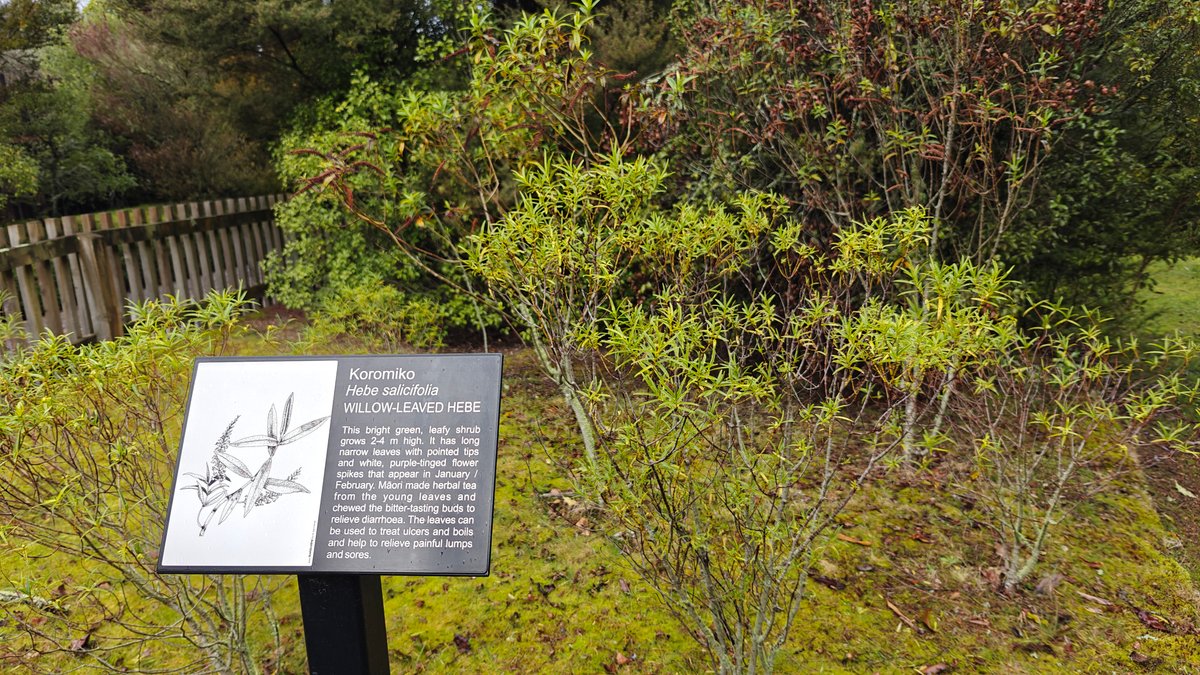
We wind back into the proper bush, past native trees and plants with tiny labels explaining what they are. Not being a great fan of botanical walks as such, this was more interesting: a combination of native forest and geothermal activity. The streams was mineral stained and still steaming in parts.
The scent changed from sulphur to greenness and damp earth. There was flax growing in them.
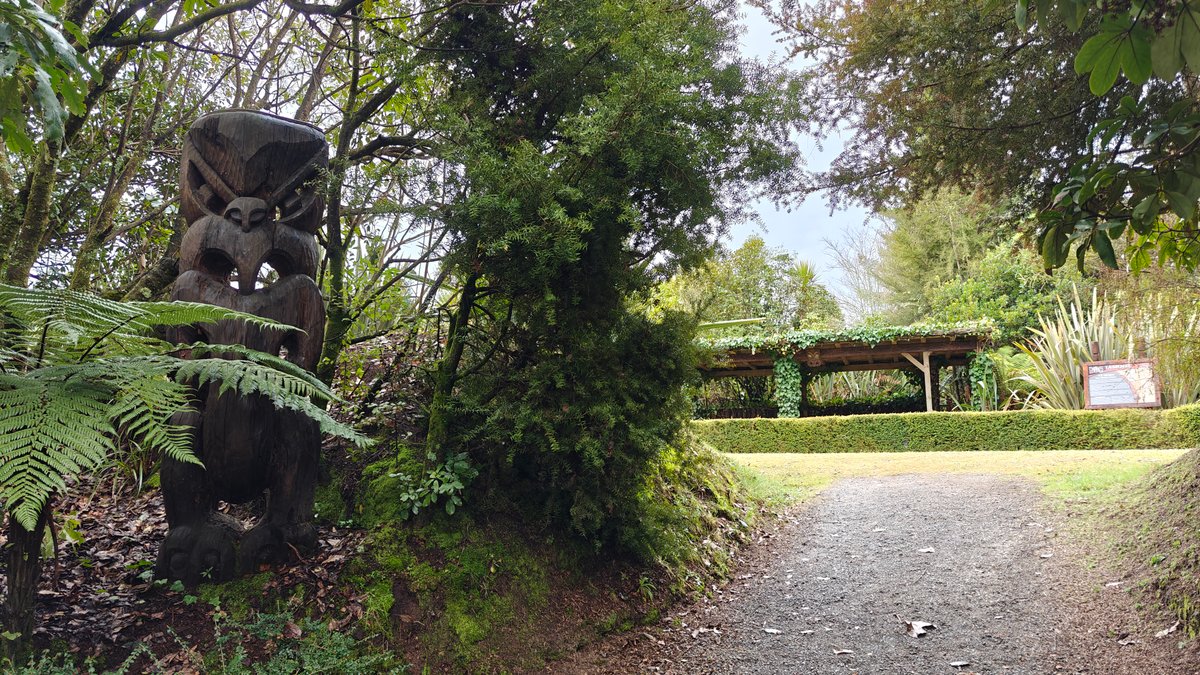
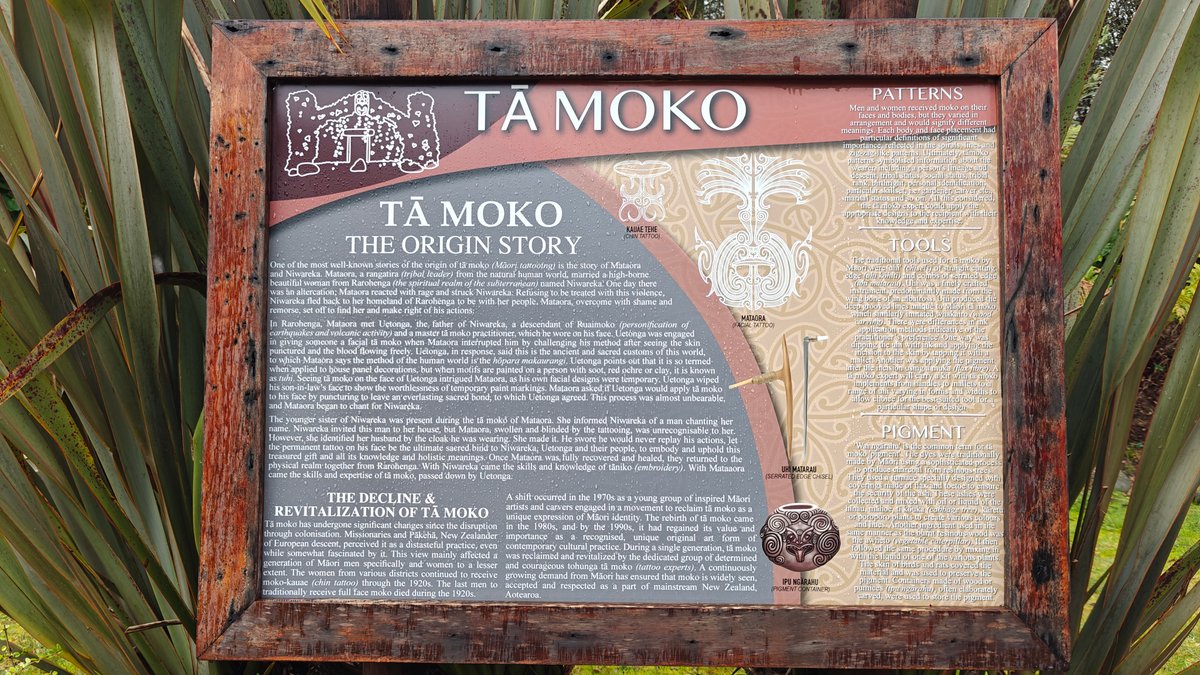
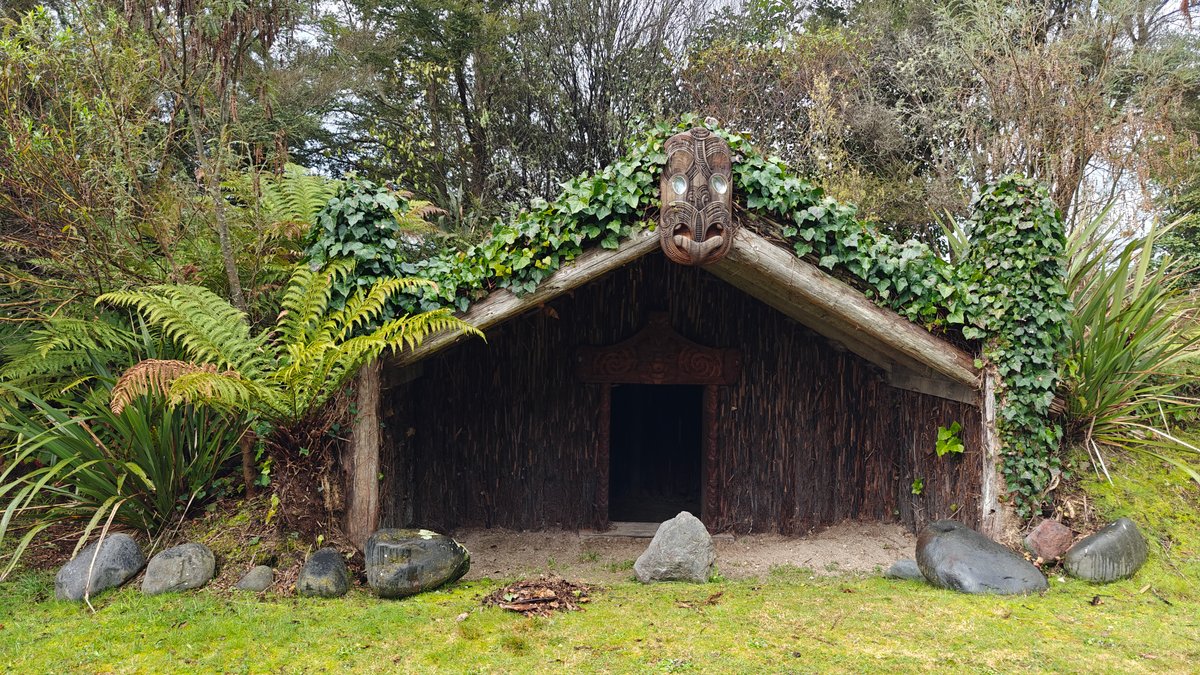
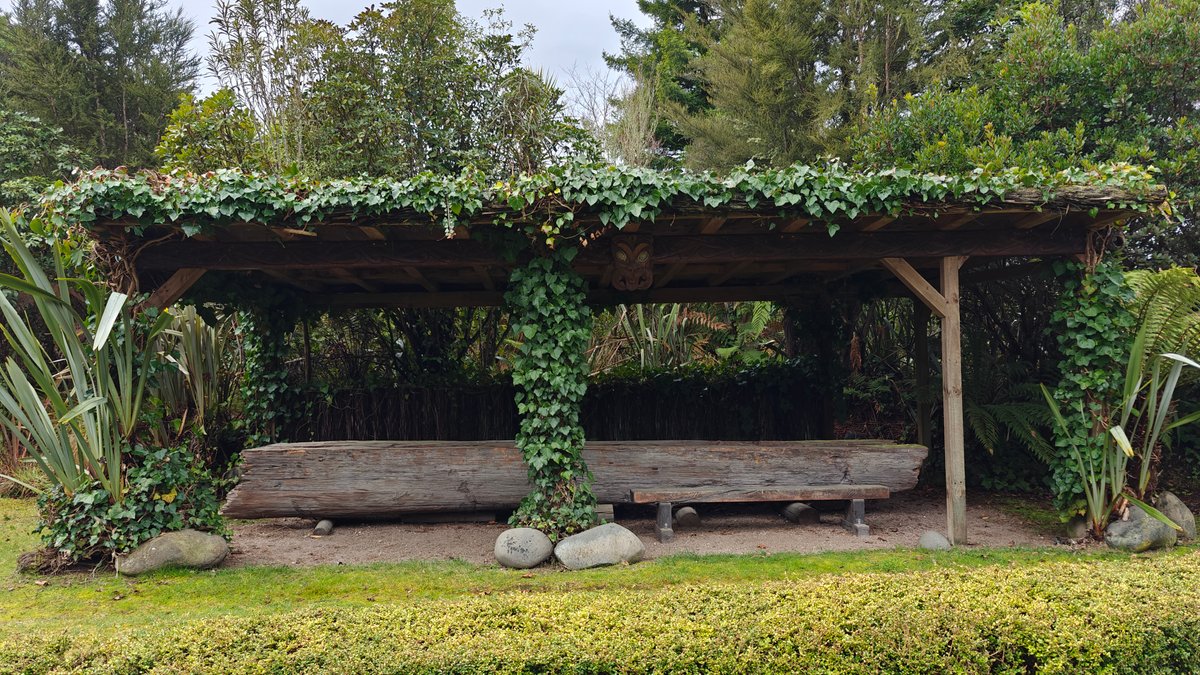
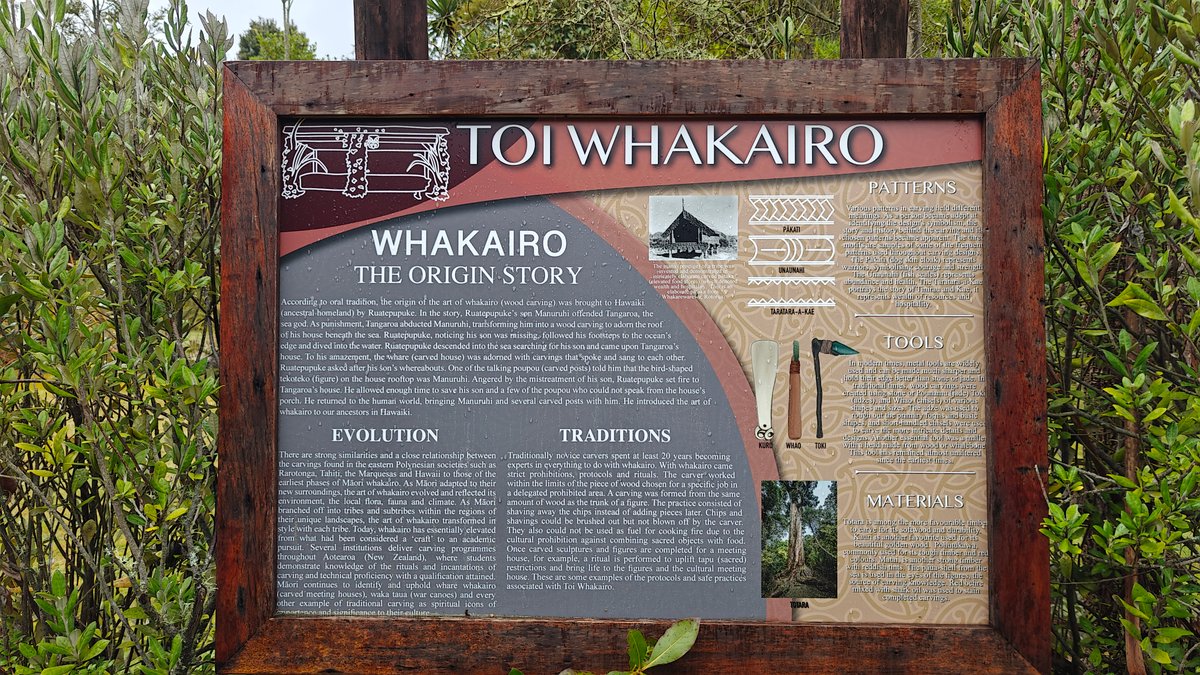
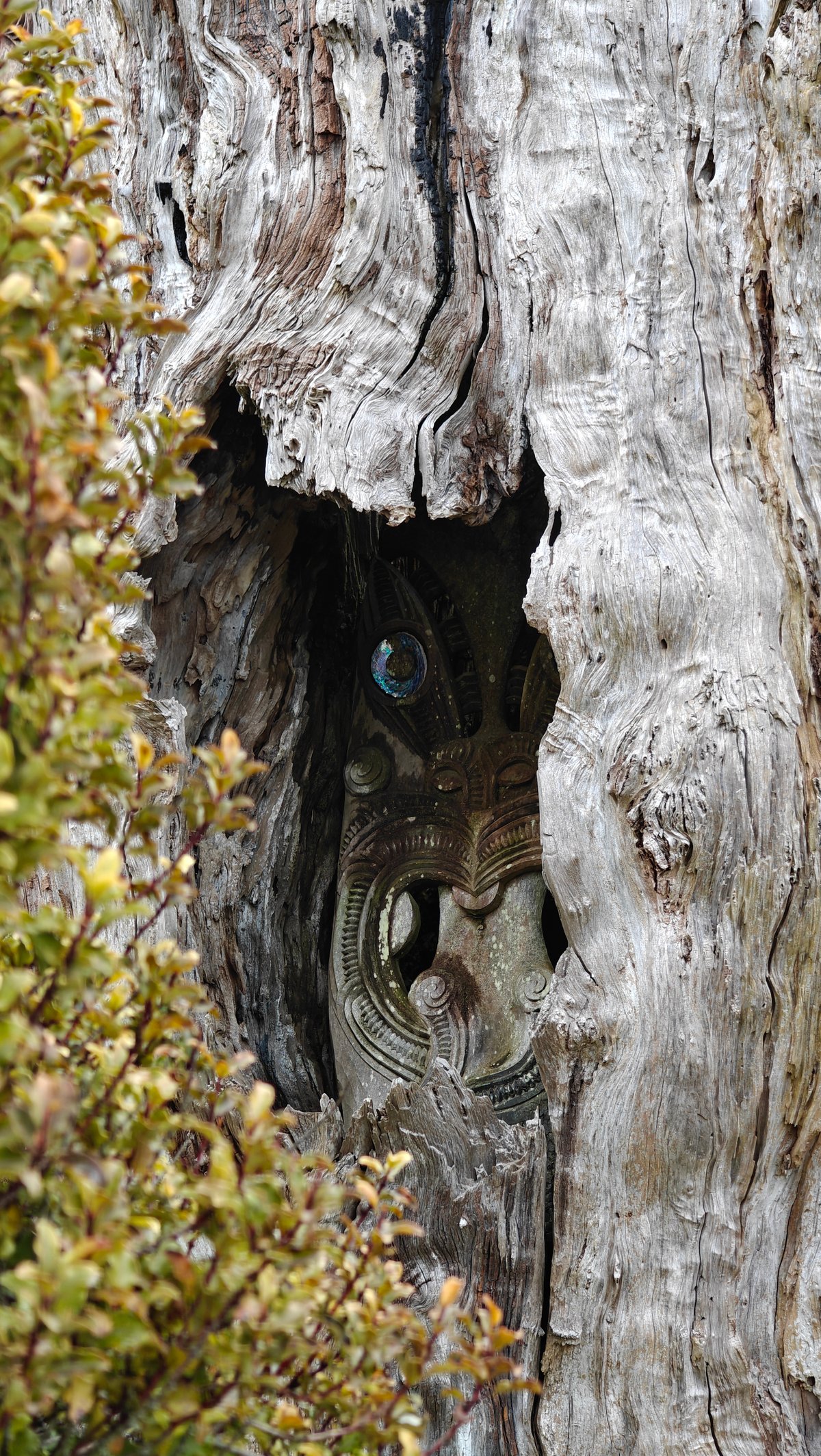
On that same loop is the Maori village section. Here we wandered through whare and pou with elaborate carvings on their bargeboards that were built in a traditional style. There were interpretive panels explaining everything from whakairo to tā moko, and though clearly geared toward tourists, it was also respectful without feeling gimmicky.
These whare are replicas, but good ones, and provide a glimpse into what a traditional Maori settlement would of been like.
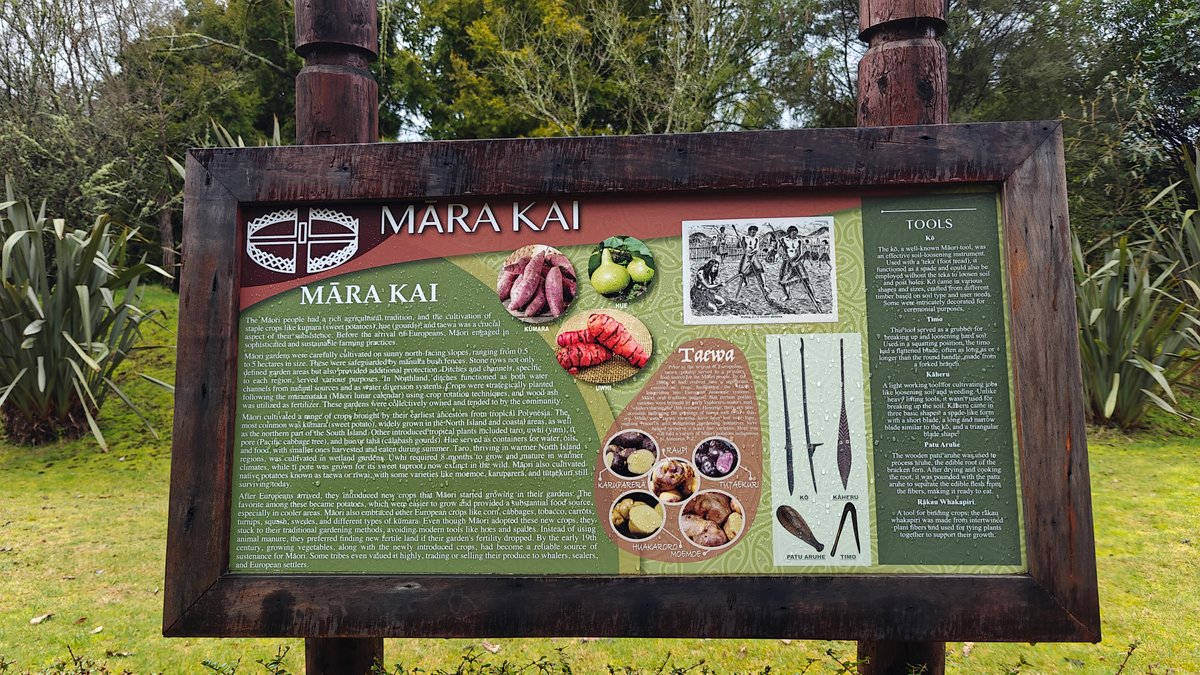
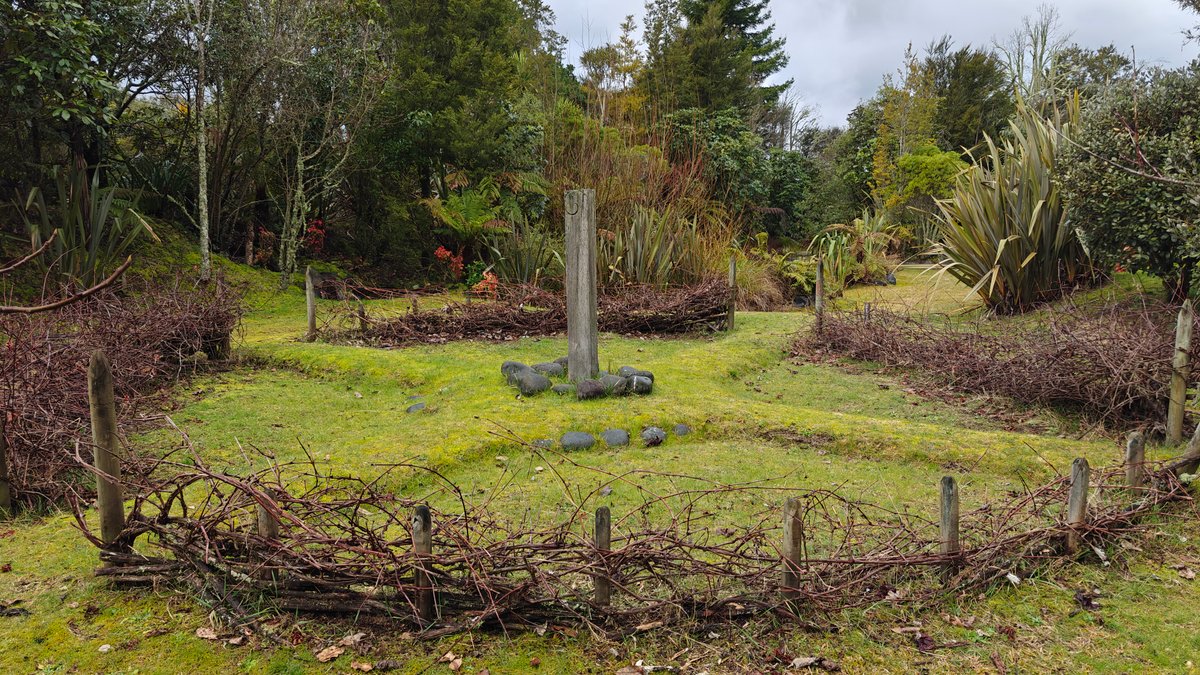
The mara kai garden featured a fence made from woven panels showing their traditional food plants. They’d included some practical information on how people really live (not just ceremonial) which I liked. It was all a mixture of native food plants, medicine, and other materials.
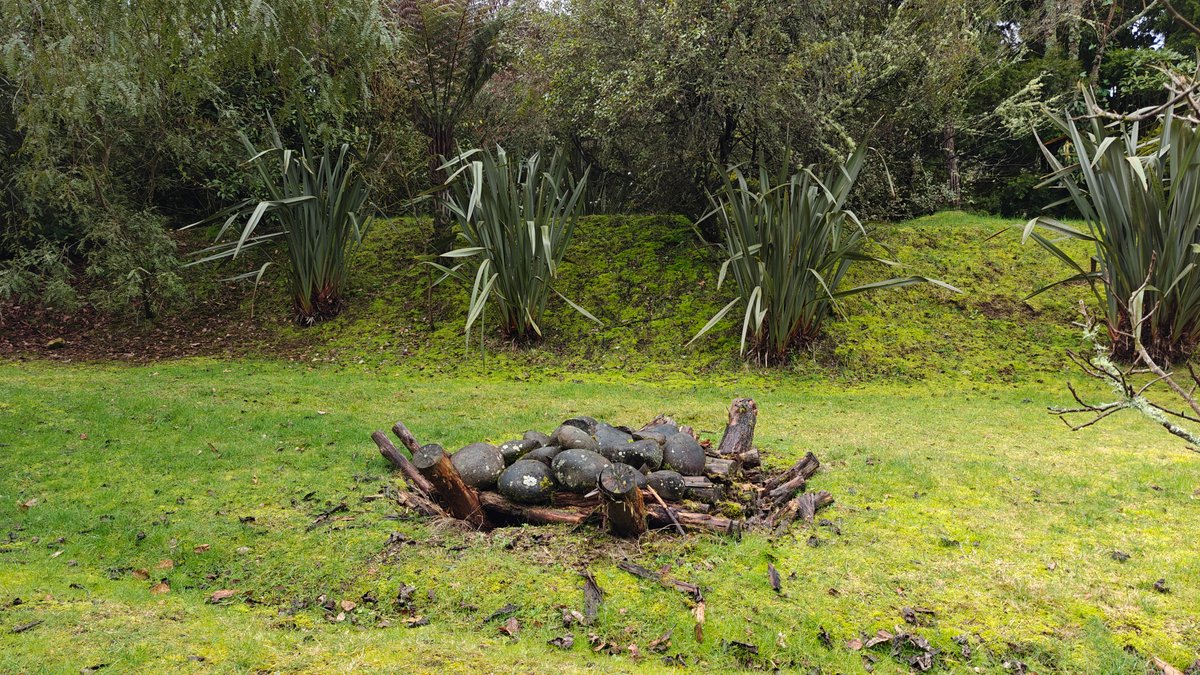
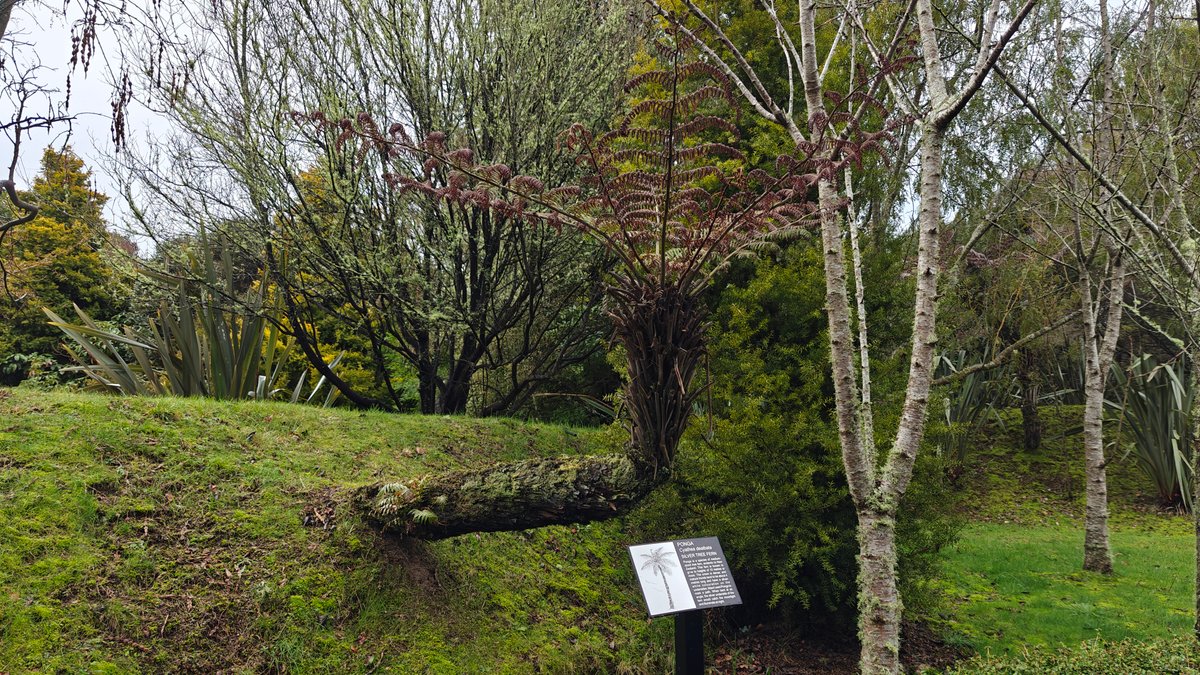
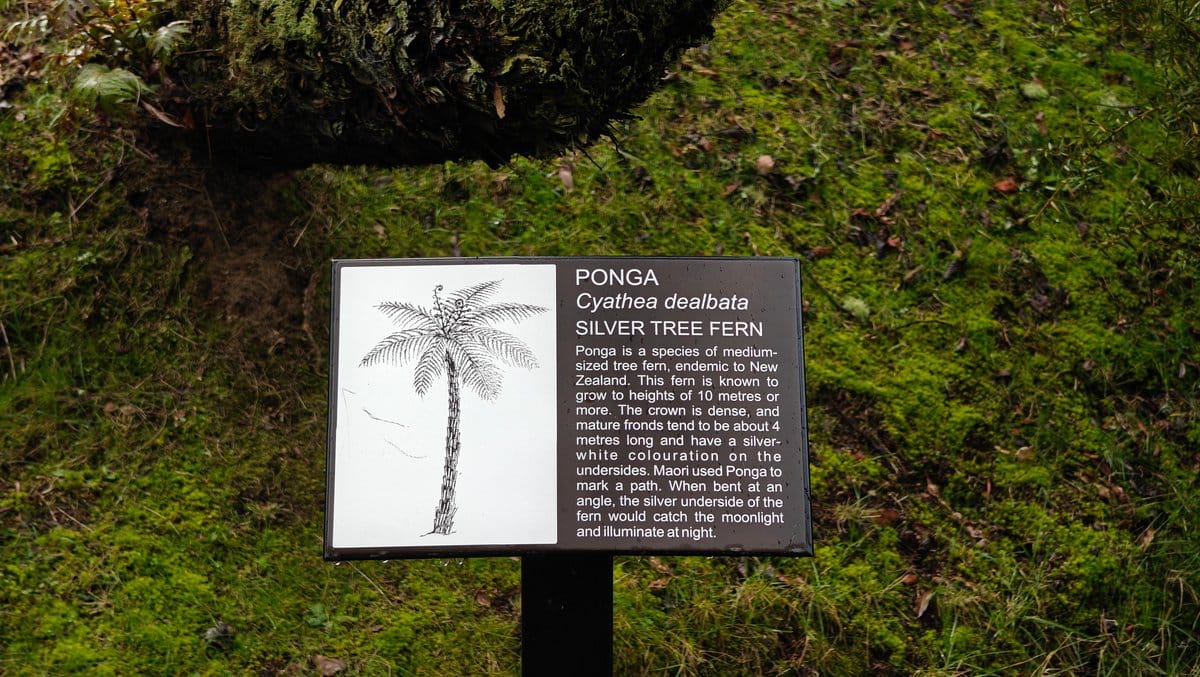
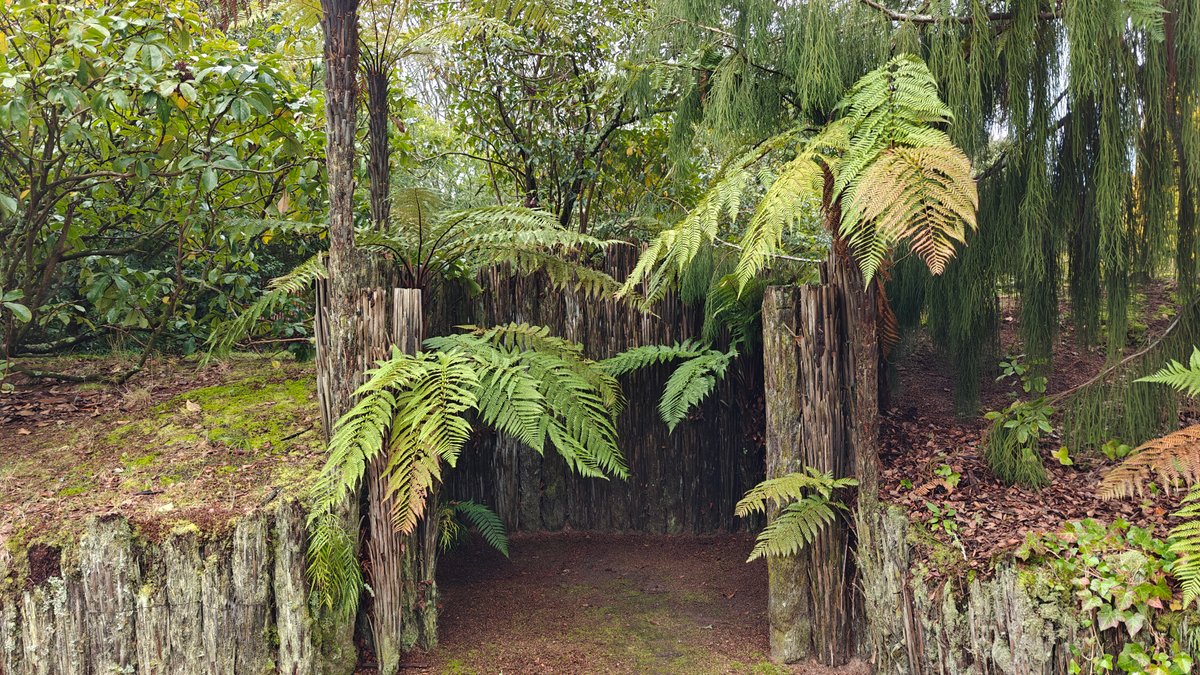
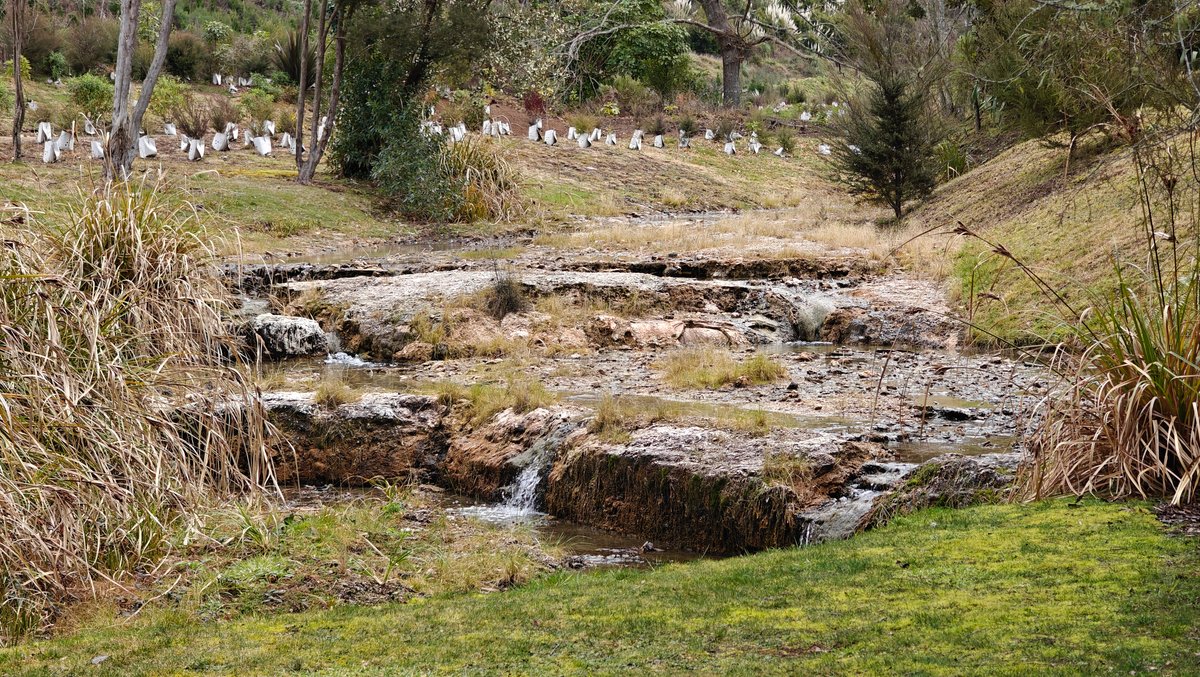
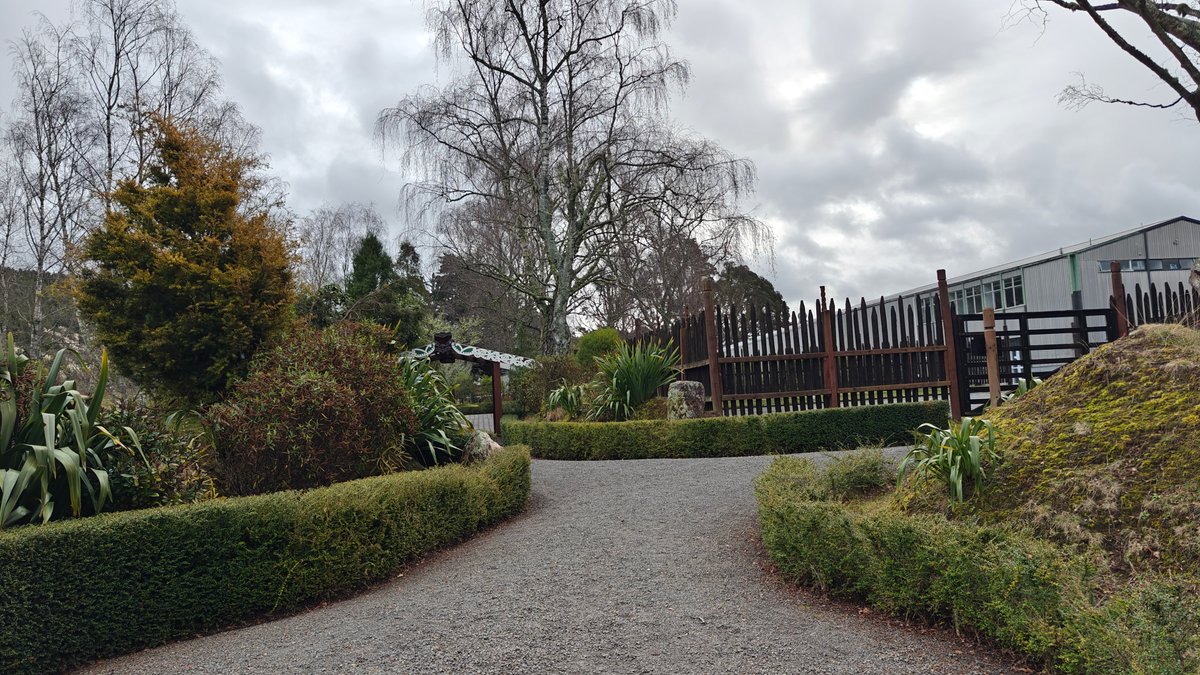
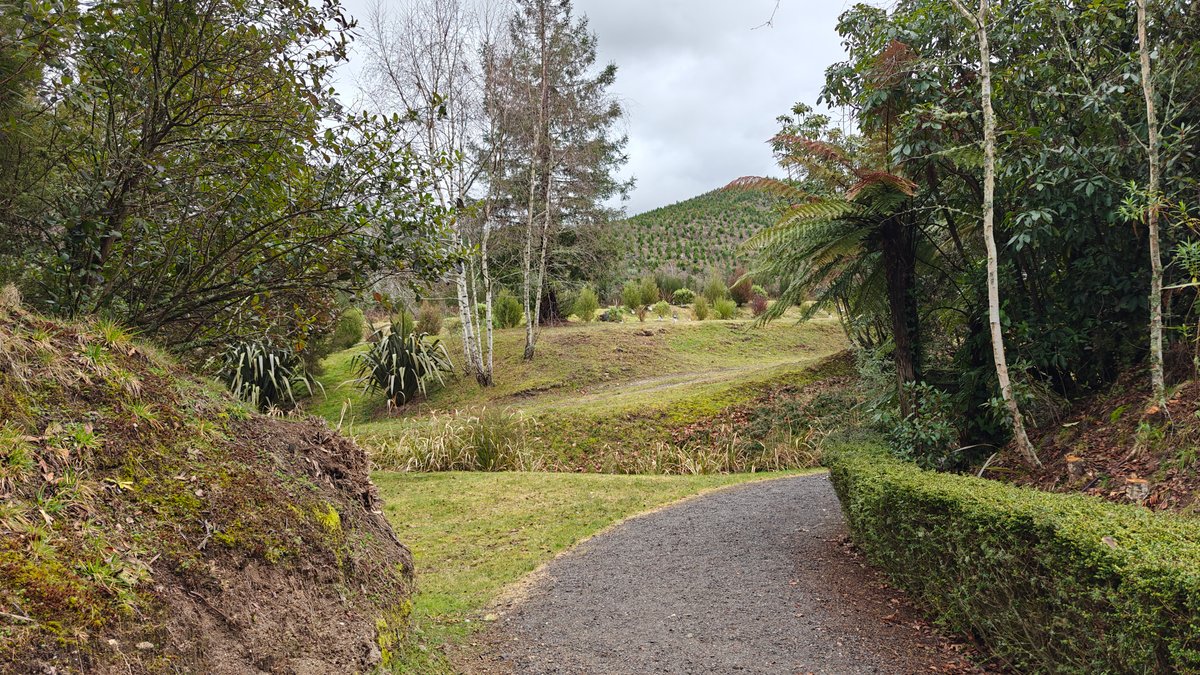
It winds its way around the grounds of the village, past more carvings and tree ferns. It’s not just plonked down but seems fairly integrated with the rest (a small stream runs beside it, for example, and there is a palisade fence). Over time, the planting has obviously matured, too, which helps.
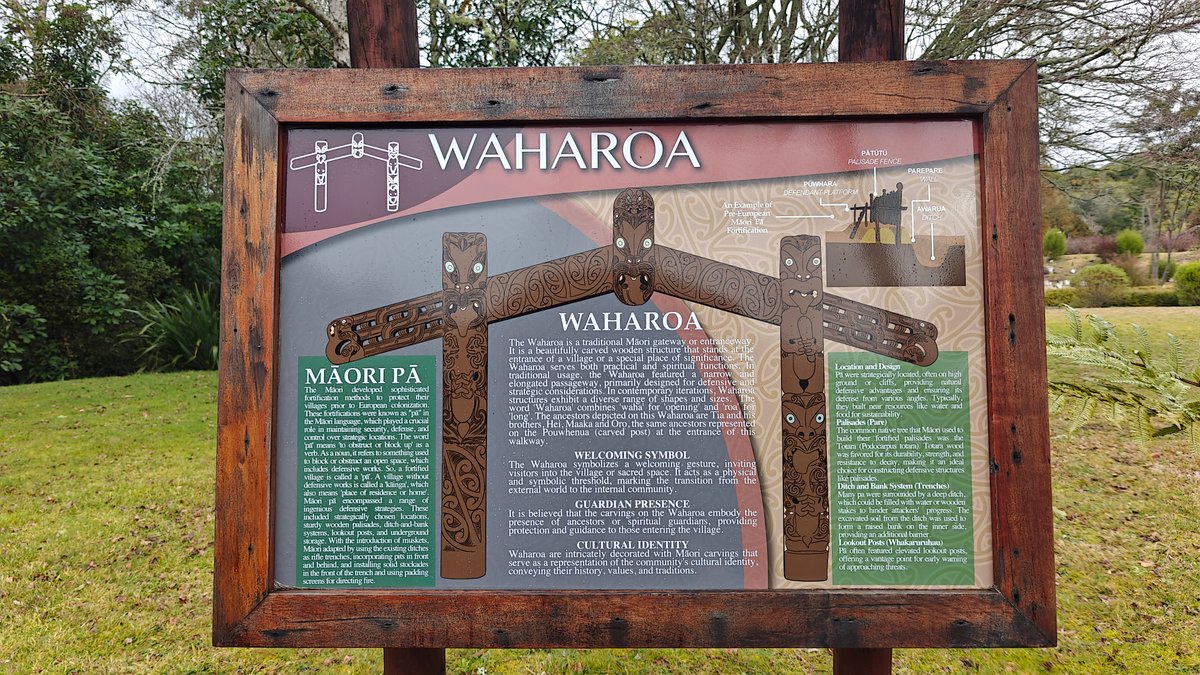
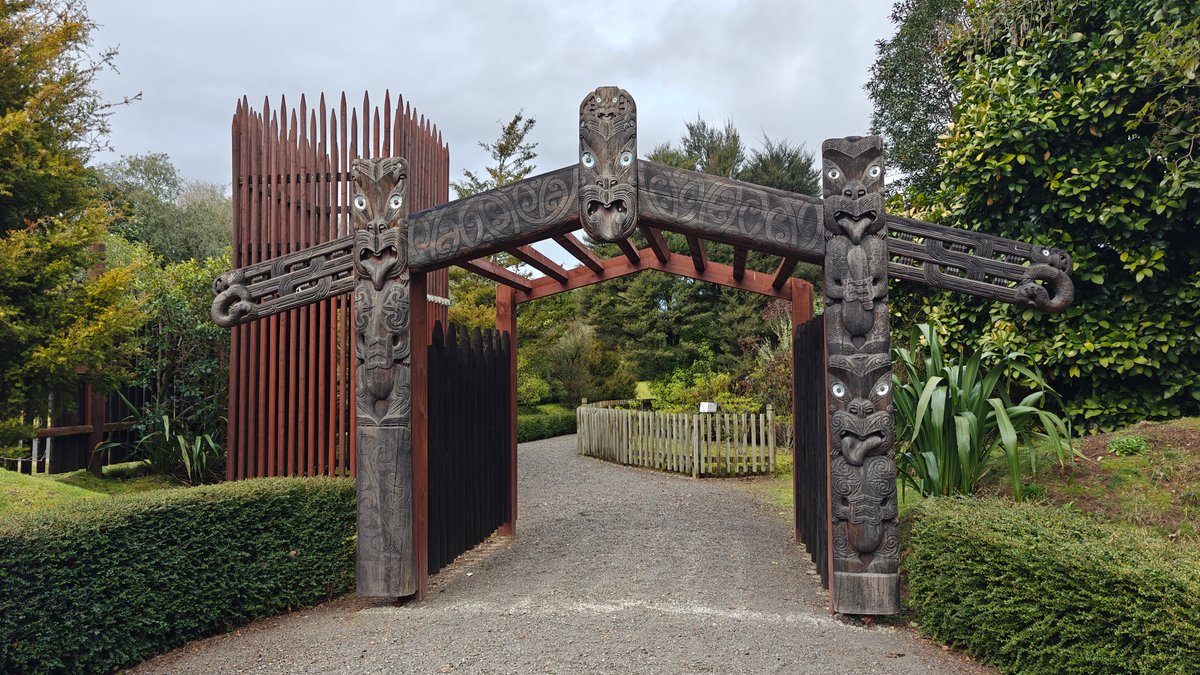
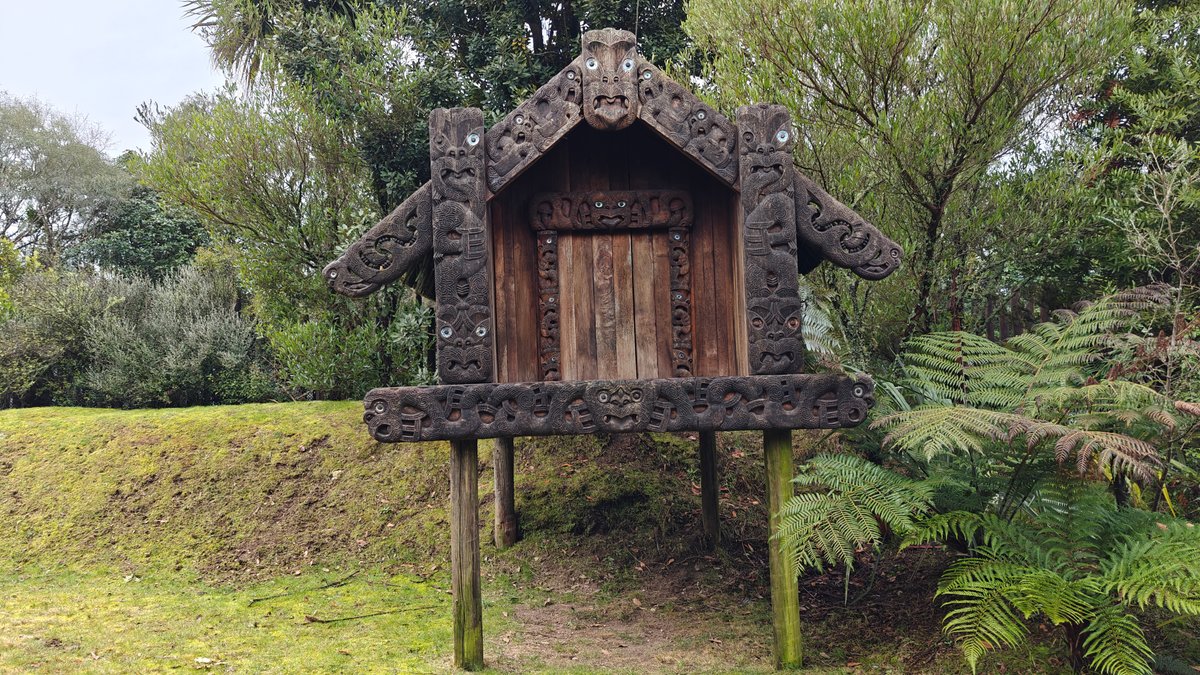
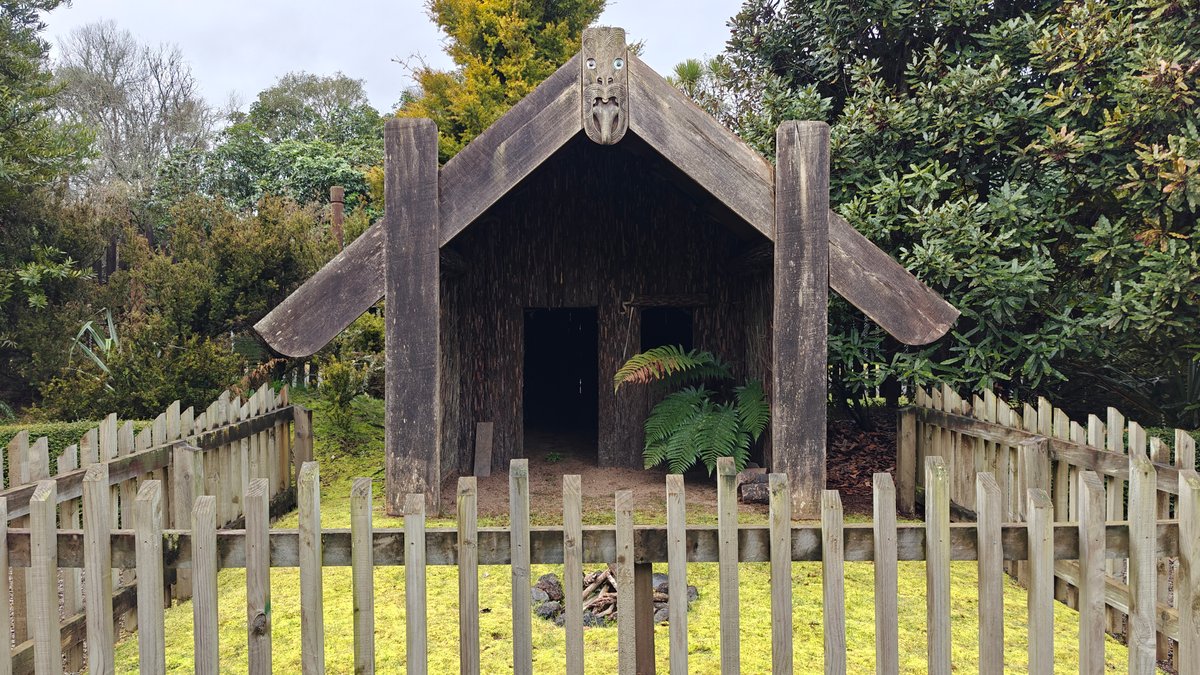
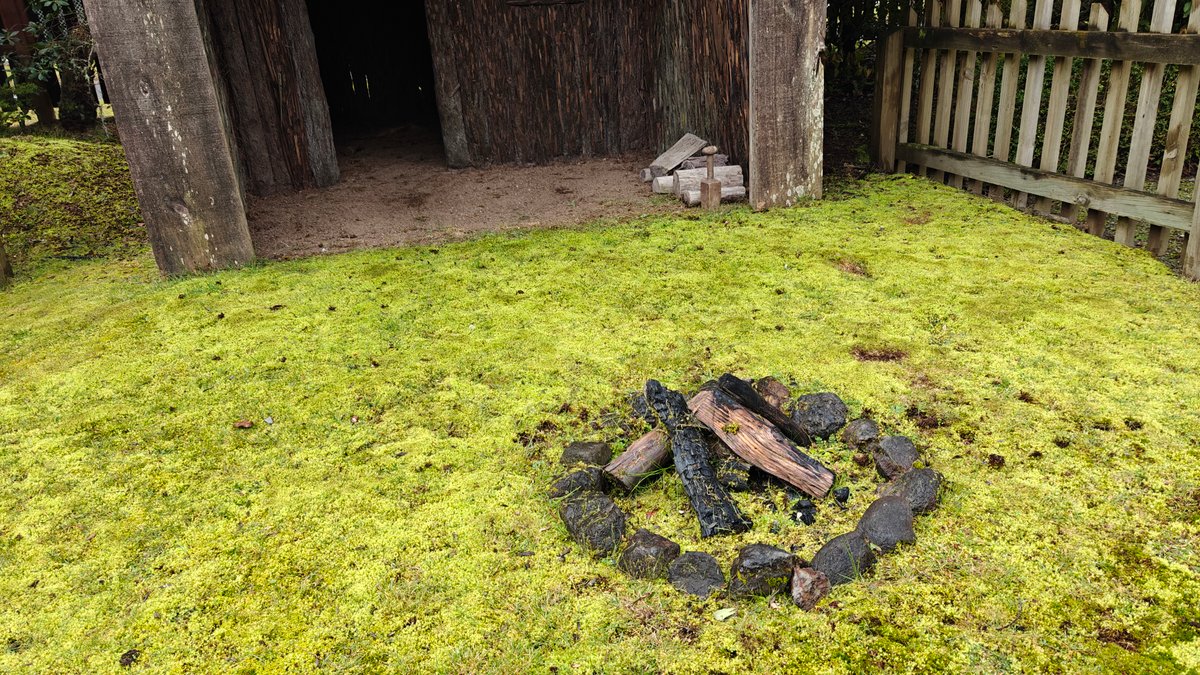
At the formal entrance of the village is a carved waharoa gateway, with other whare (houses) and a raised pātaka storehouse out front. There are plaques explaining their use and meaning. We looked around for some time, reading the boards and admiring the detail in the carvings.
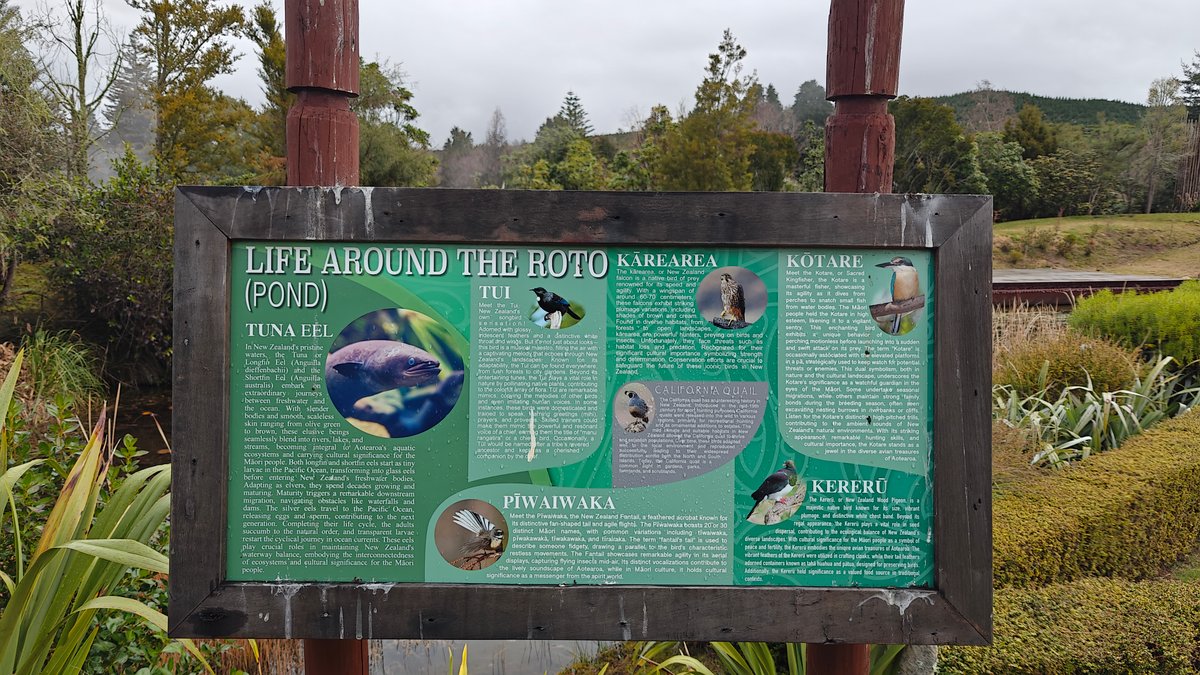
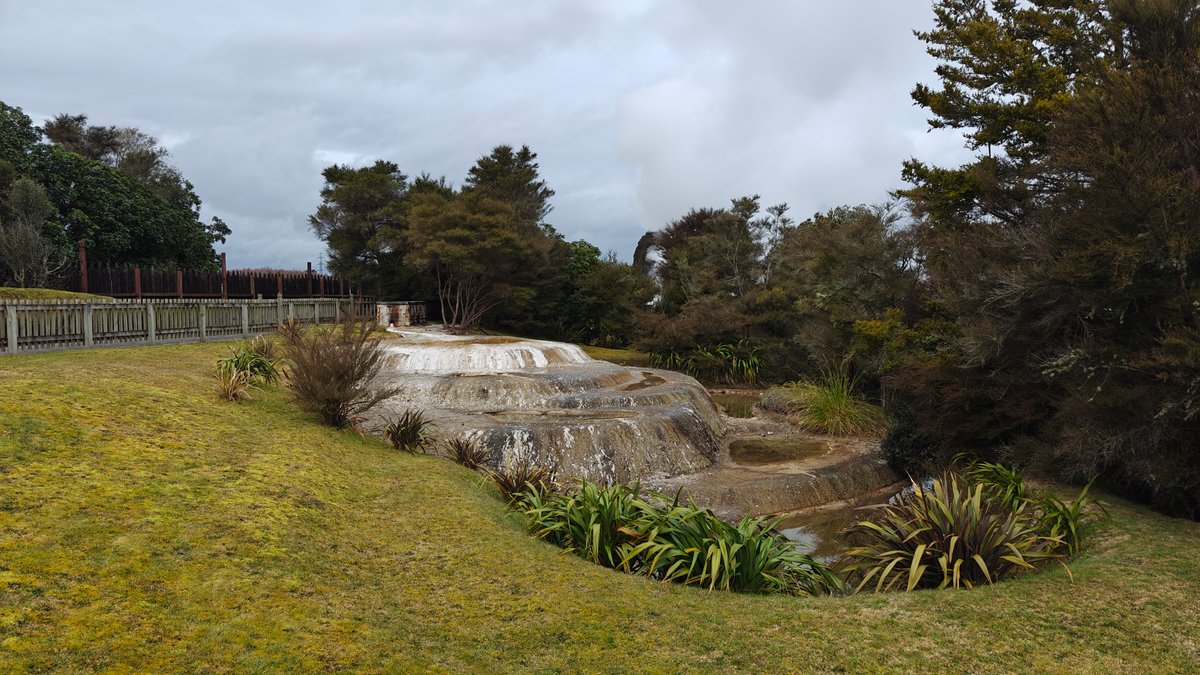
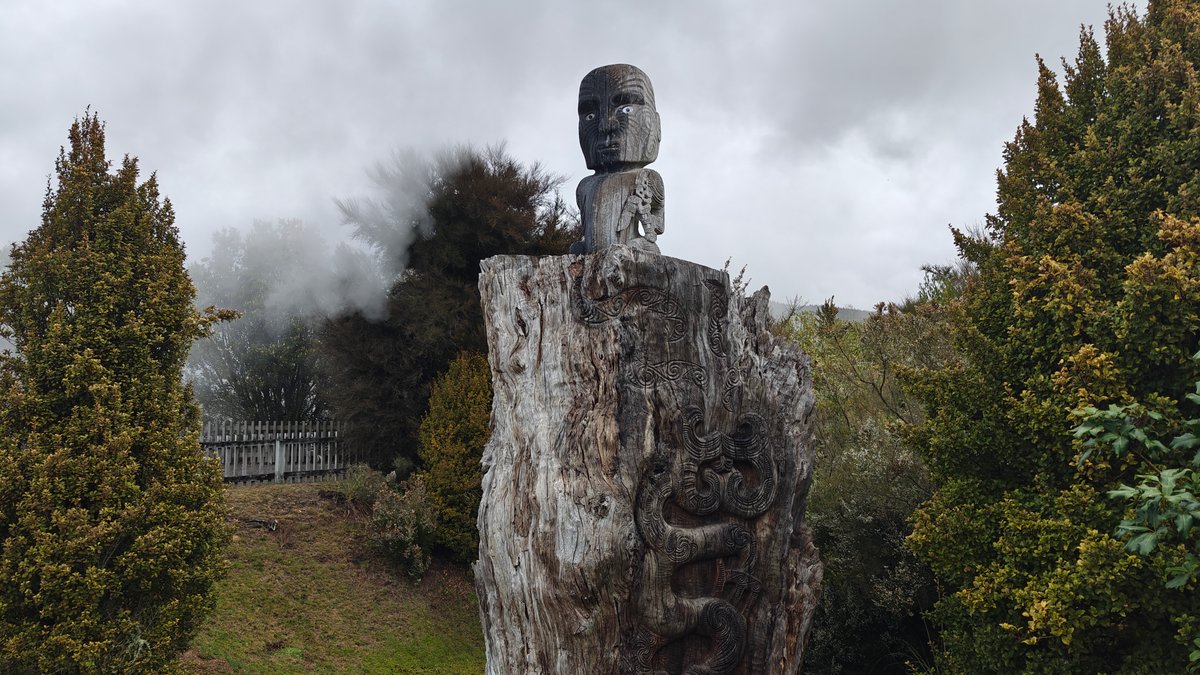
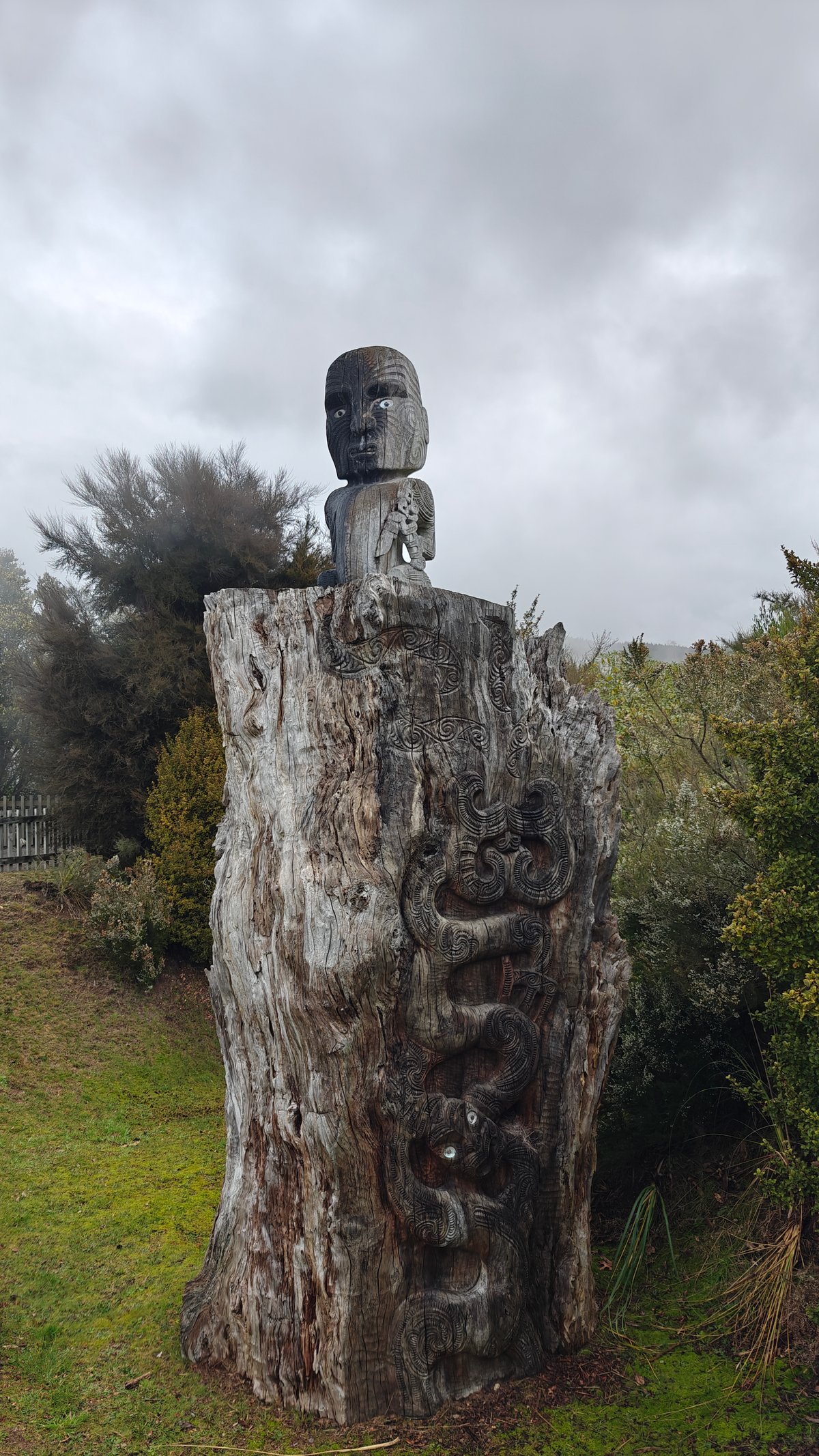
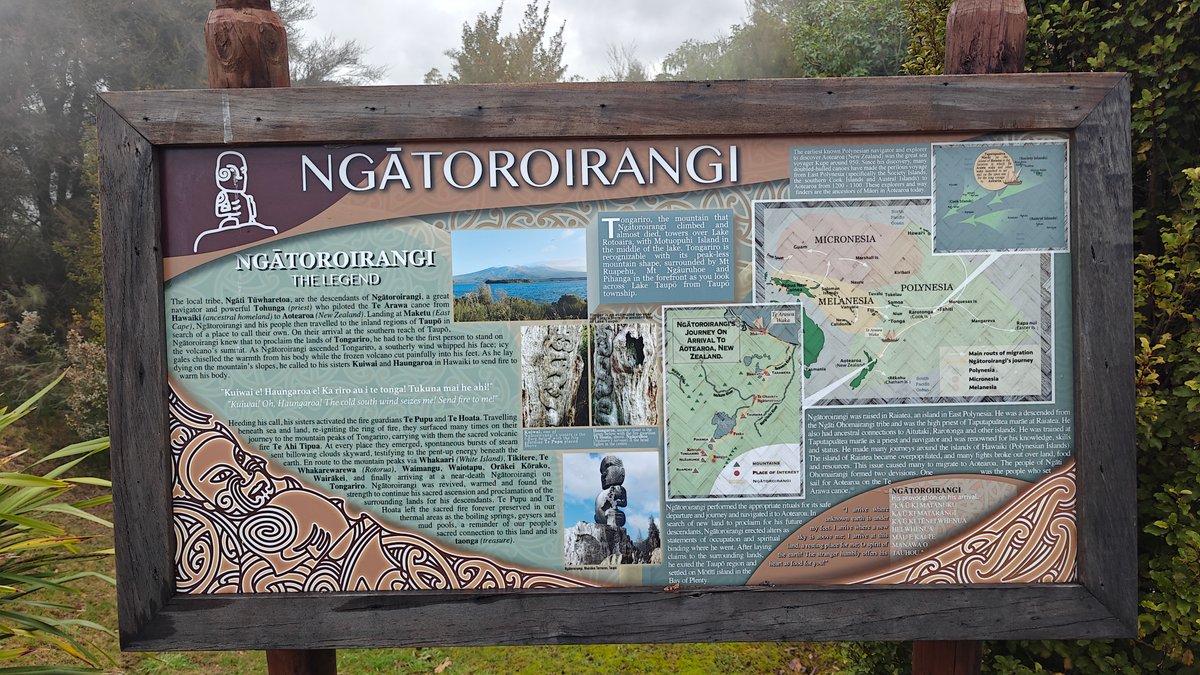
Further along there are some more carved posts, guarding the waters near the pond, with steam rising in the distance. The story boards describe how the geothermal activity relates to the tales of Ngātoroirangi, a navigator who summoned his sisters to bring fire from across the Pacific, which erupted through the ground right here in the middle of the North Island. We continued around the loop past some more pale formations half-buried in vapour and steaming pools.
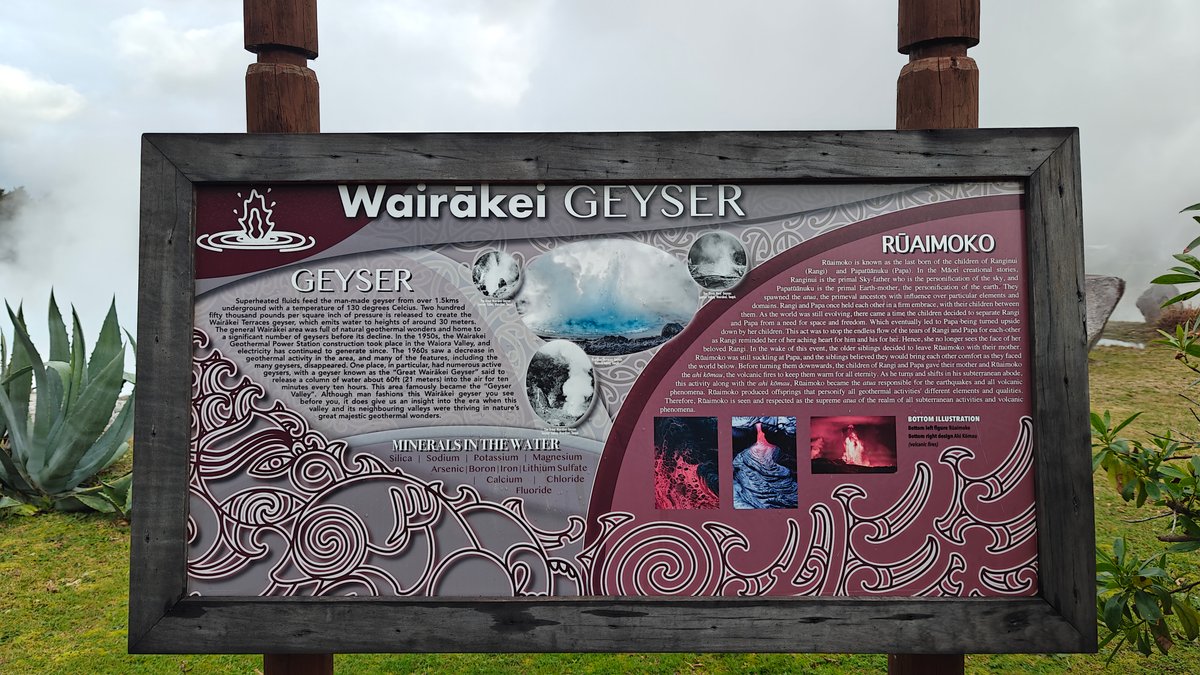
We finished up at the old Wairākei geyser. It is covered by one board, but it once shot water into the air until the geothermal power station changed the underground system. All up it was about an hour and a half of walking (at a leisurely pace with lots of stopping) and we were done.

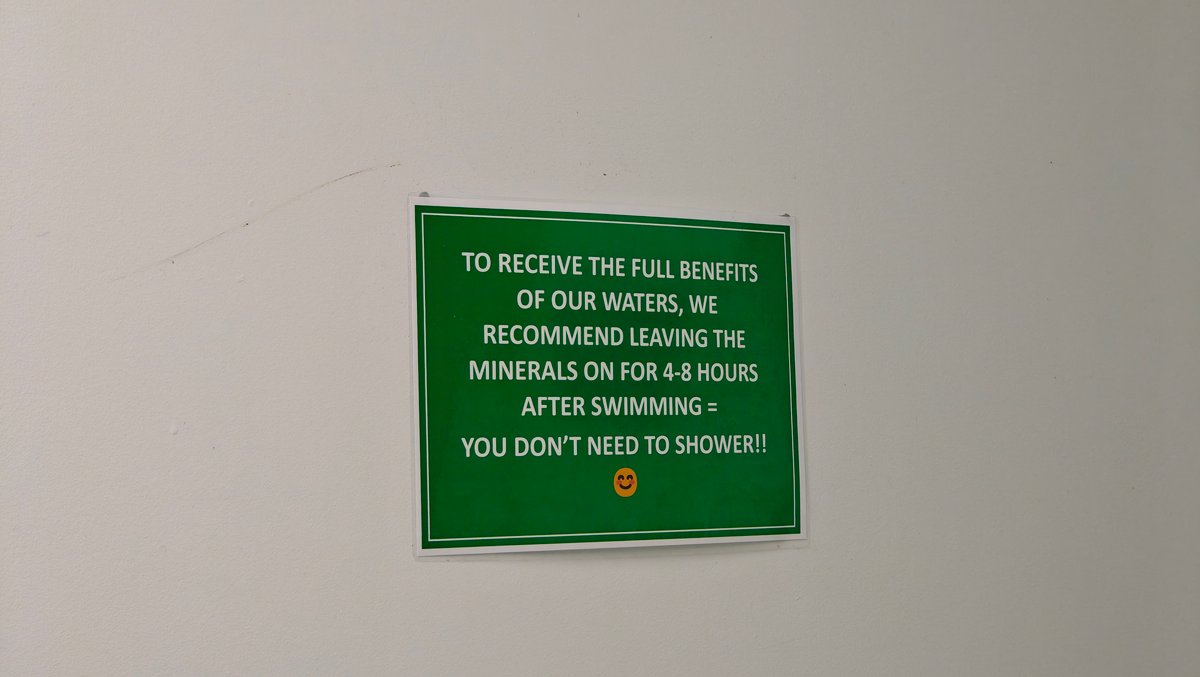
If you want to visit the spa pools (which we didn’t do this time), there are coin lockers located back at the entrance building. Otherwise, the entry fee was reasonable for what you receive, and I thought that with the combination of the cultural village, the geothermal features, and the terraces, it made for a solid half-day outing. While it isn’t as dramatic as some of the other thermal areas in the region, it felt calmer and less crowded, and the silica terraces really are worth seeing.
Wairakei Terraces is a nice change of pace if you’ve had enough of the usual lake stuff in Taupo. It has a good blend of culture and natural geothermal features to give it a bit more than just gazing into the hot pools. It’s all well set up for a relaxed wander and a chance to learn a bit more about what you’re seeing.
Have you visited any of the geothermal parks around Rotorua or Taupo? And did you get a favourite?