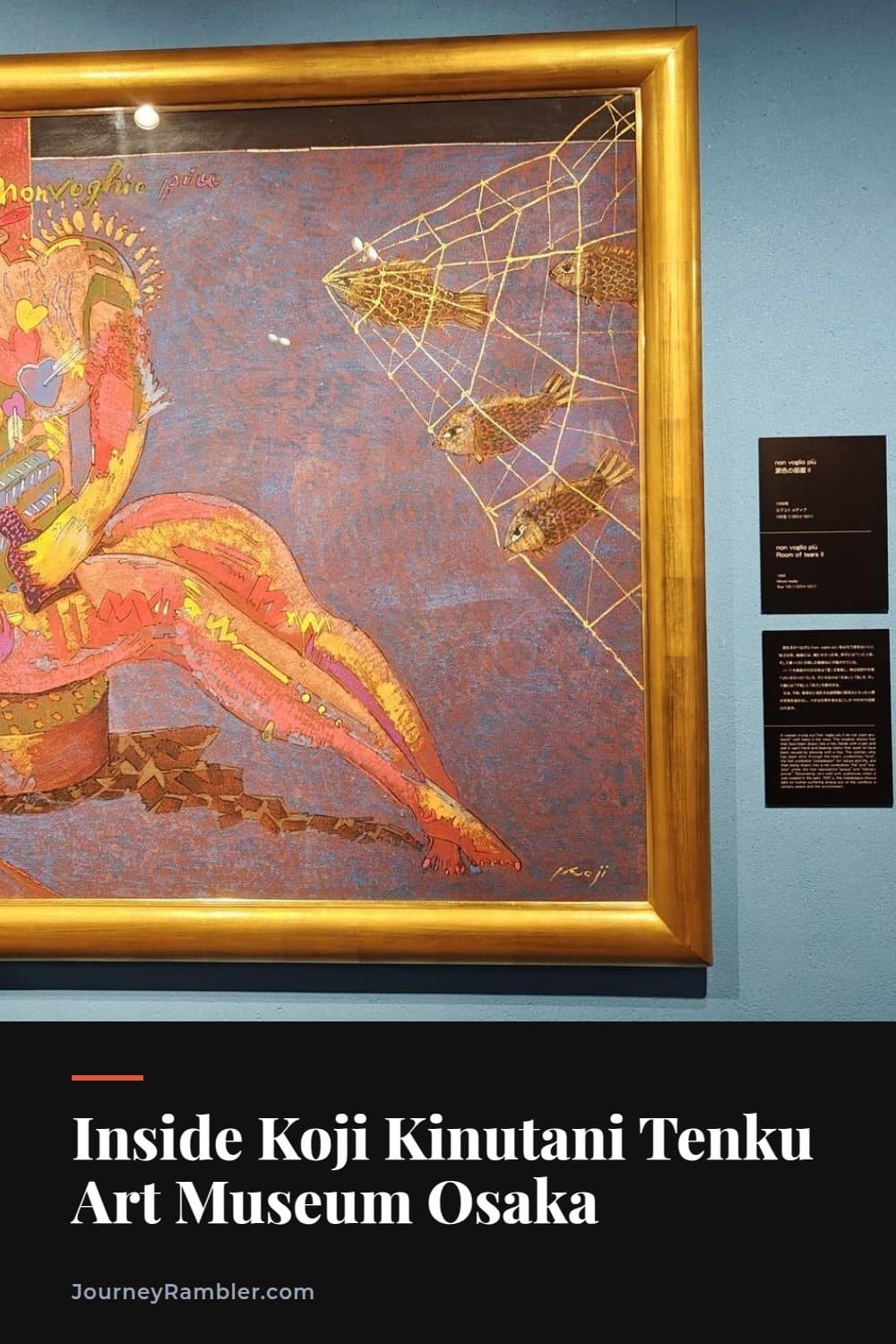
If you happen to be visiting the Umeda Sky Building in Kyoto then I think you’d do well to check out the Koji Kinutani Tenku Art Museum. I was lucky enough to have had the chance to go here and it was quite the experience. Initially I thought this was going to be a snobby art gallery with plenty of abstract pieces but it actually is more than just my admittedly mistaken first impression.
If you’re interested to know what I saw as well as my thoughts about the museum then make sure to scroll down.
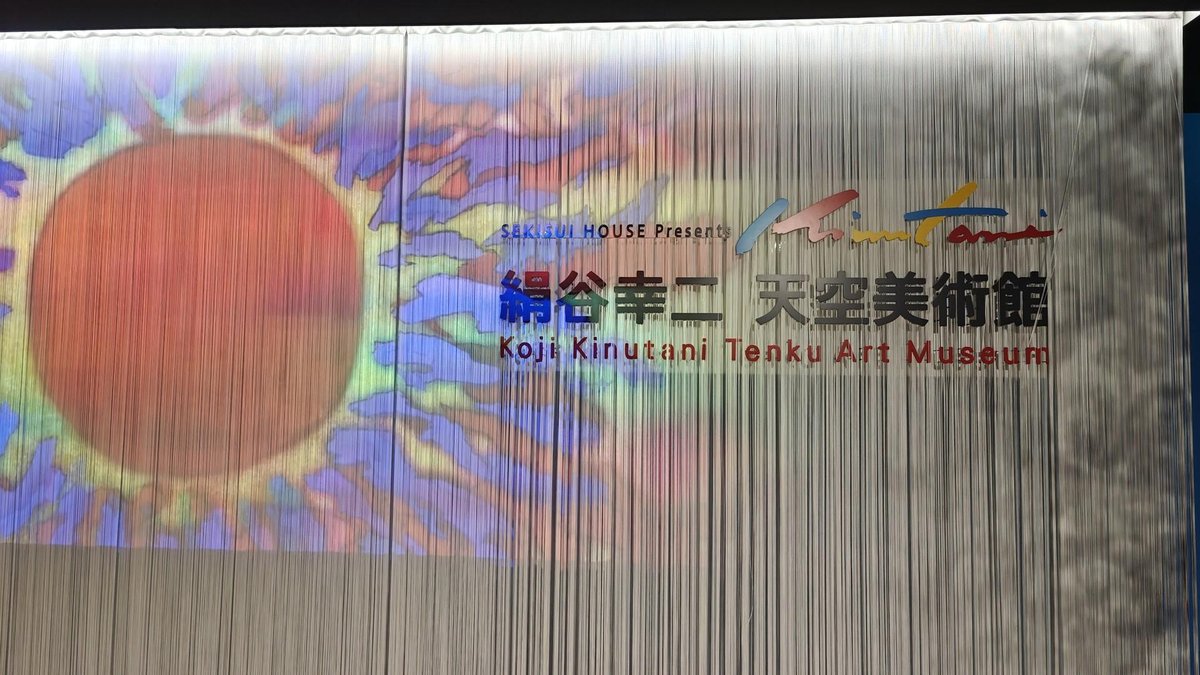
Like I said earlier, the Koji Kinutani Tenku Art Museum is on one of the floors of the Umeda Sky Building. Specifically, you’ll be able to find it on the 27th floor of the building’s Tower West Side. Take note though that you will need to pay before you can enter the art museum.
You can opt to purchase your ticket/s online through platforms like Klook (among others) or you can get them from the museum’s ticket counter/reception which is just in front of the signage shown in the image above. A ticket for an adult guest is priced at 1300JPY while students can enter for 800JPY.
What to See Inside the Koji Kinutani Tenku Art Museum
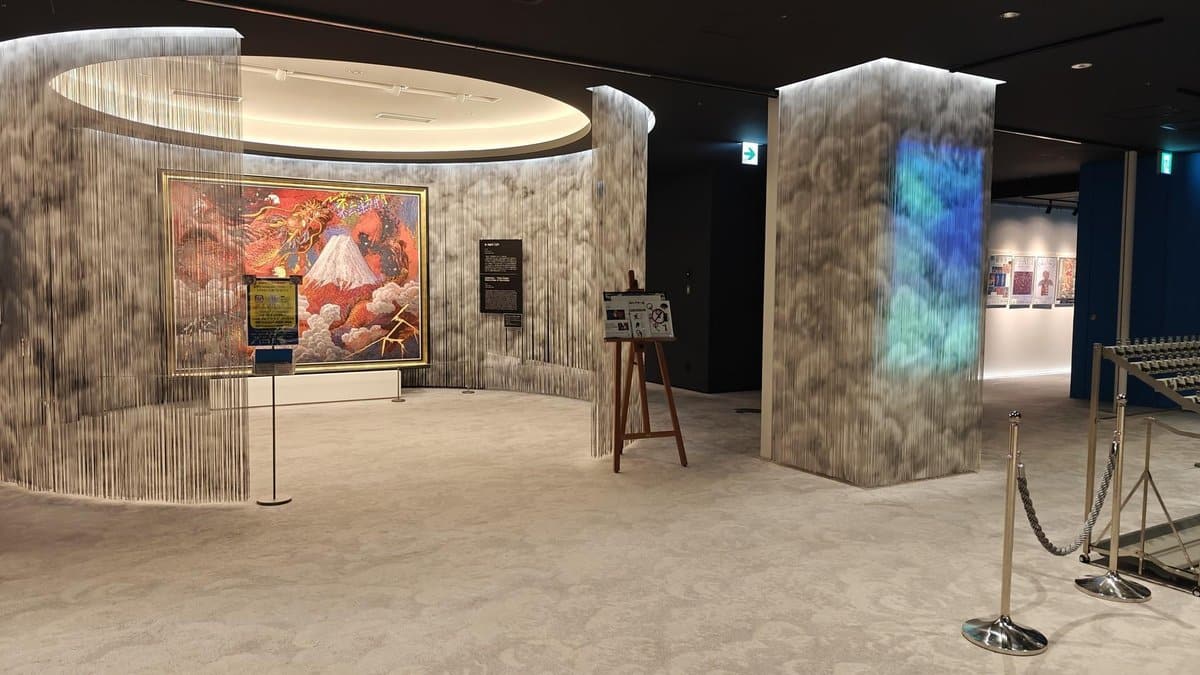
Unlike most art museums that feature works from various artists, this one only has the paintings and sculptures of the artist that it’s named after. As such, the museum really isn’t that large in terms of floor area. In fact, I think it won’t take more than 10 minutes to walk around it.
That said, I’m pretty sure I spent more time than that just admiring the art on display here.
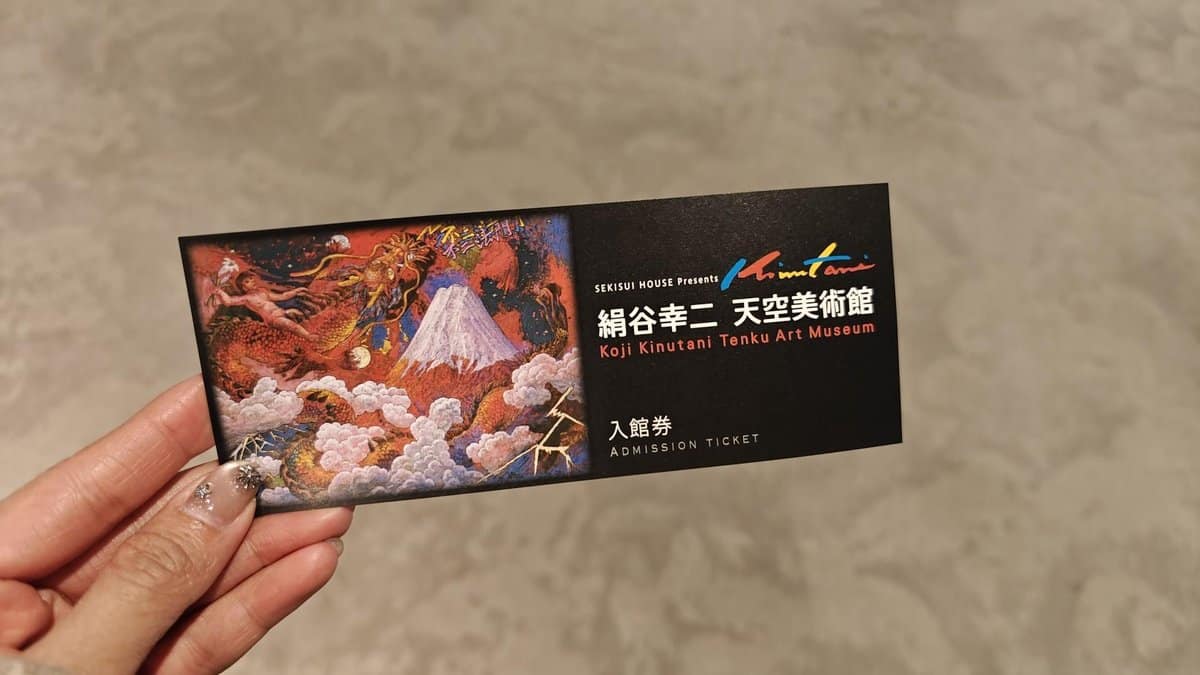
So this is what the ticket looks like. Now you’re probably wondering, is it better to purchase a ticket online or on site? While the Koji Kinutani Tenku Art Museum does boast of a steady flow of visitors, it’s definitely not as crowded as most of the notable landmarks here in Osaka.
Heck, it’s definitely not the main draw of the Umeda Sky Building. As such, I don’t think you’d do wrong just purchasing your ticket on site.
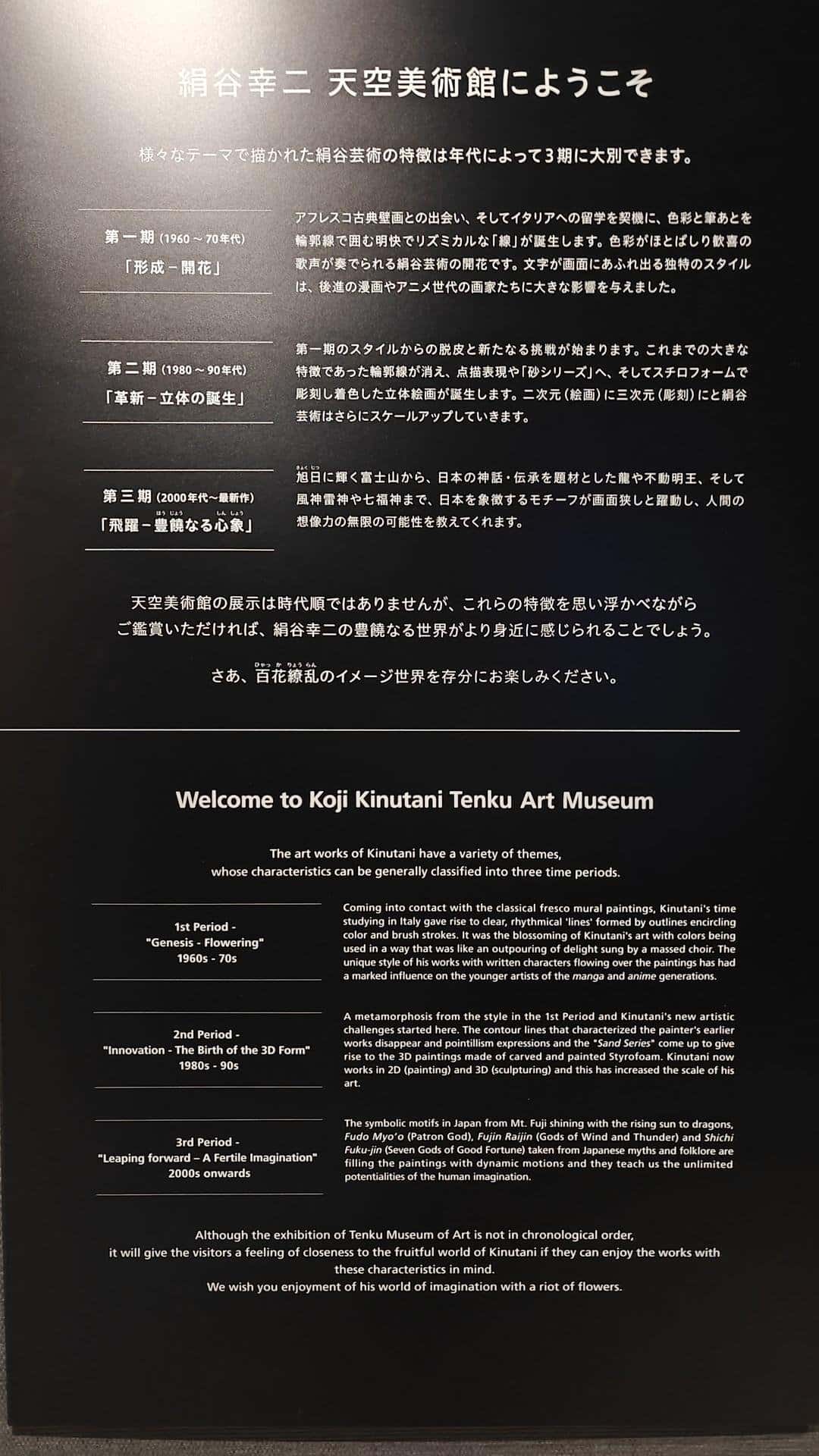
After purchasing my ticket, I found myself checking out this sign detailing the themes of Koji Kinutani’s artworks that are displayed here. It was actually surprising that a lot of the works here are quite old. Looking at them, you’d think they were relatively new due to how modern they seemed (more on this later on).
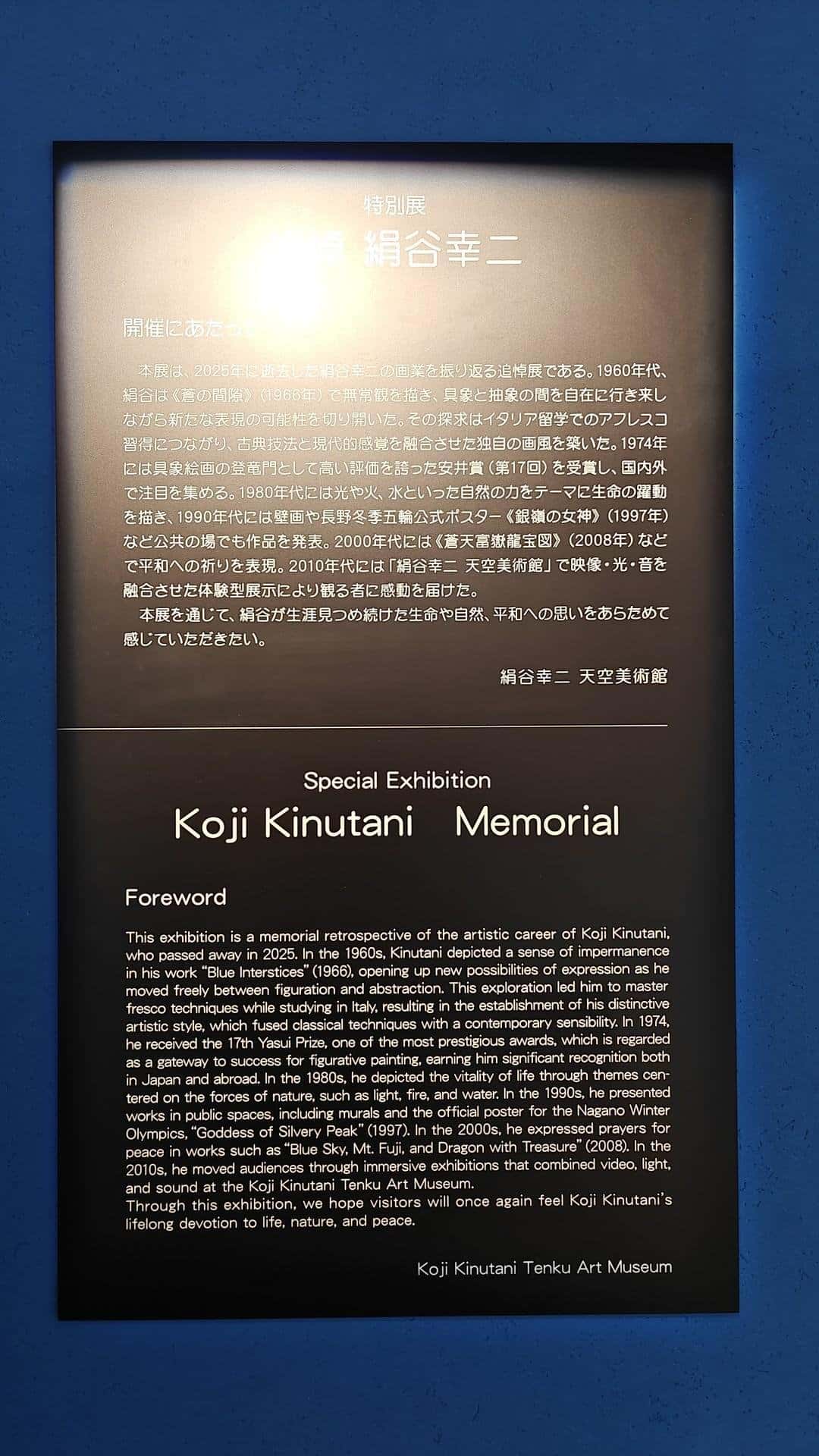
There are two main exhibits in the museum that feature Koji Kinutani’s works based on their inspirations. The first of these that I checked out was the Exhibit Zone Blue. Here, the focus is on works by Koji Kinutani that were heavily inspired by his time in Italy.
It’s important to note that while Kinutani is mostly known for his frescos, he was also a prolific mixed media artist who painted on canvas (among other mediums).
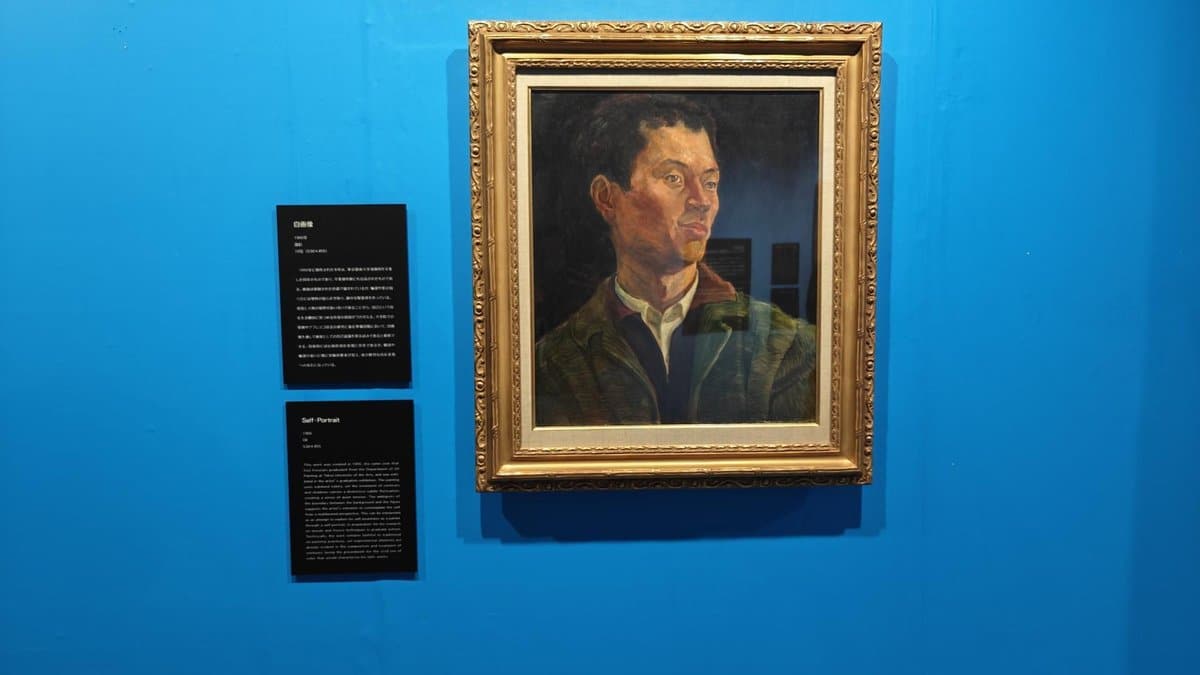
Here you can see a perfect example of one of his paintings on canvas. According to the accompanying sign, this is actually a self-portrait that he made in 1966. This was notably the year he graduated from Tokyo National University (which at that time was still known as Tokyo National University of Arts and Music).
One thing that stood out for me was how the painting’s colors seemed really muted when compared to his later works.
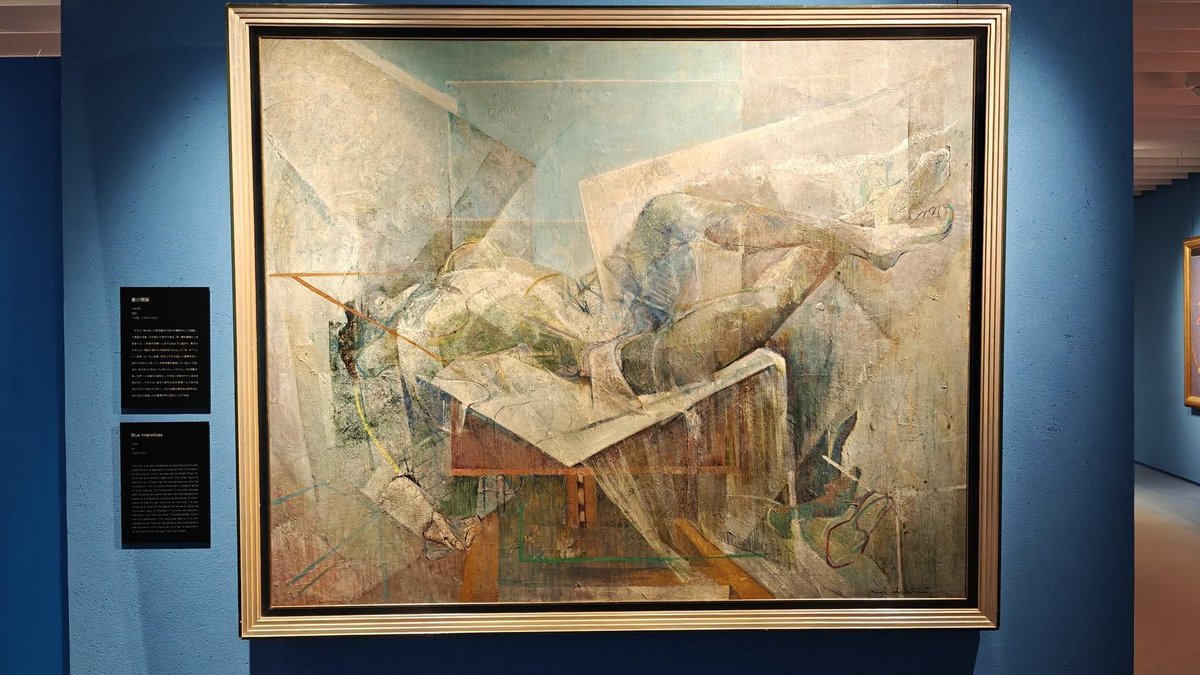
This is another of Koji Kunitani’s earlier works. It’s called “Blue Interstices” or “Gap of Blue” and it honestly looks like an abstract painting and a classical/Renaissance fresco combined. The subject for this painting is a male human figure who is collapsed on what seems like painting canvases with a blue backdrop behind them.
This was made around the same time frame as the self portrait from earlier and is said to have been an early exploration of the abstraction that is quite noticeable in his works later down the line.
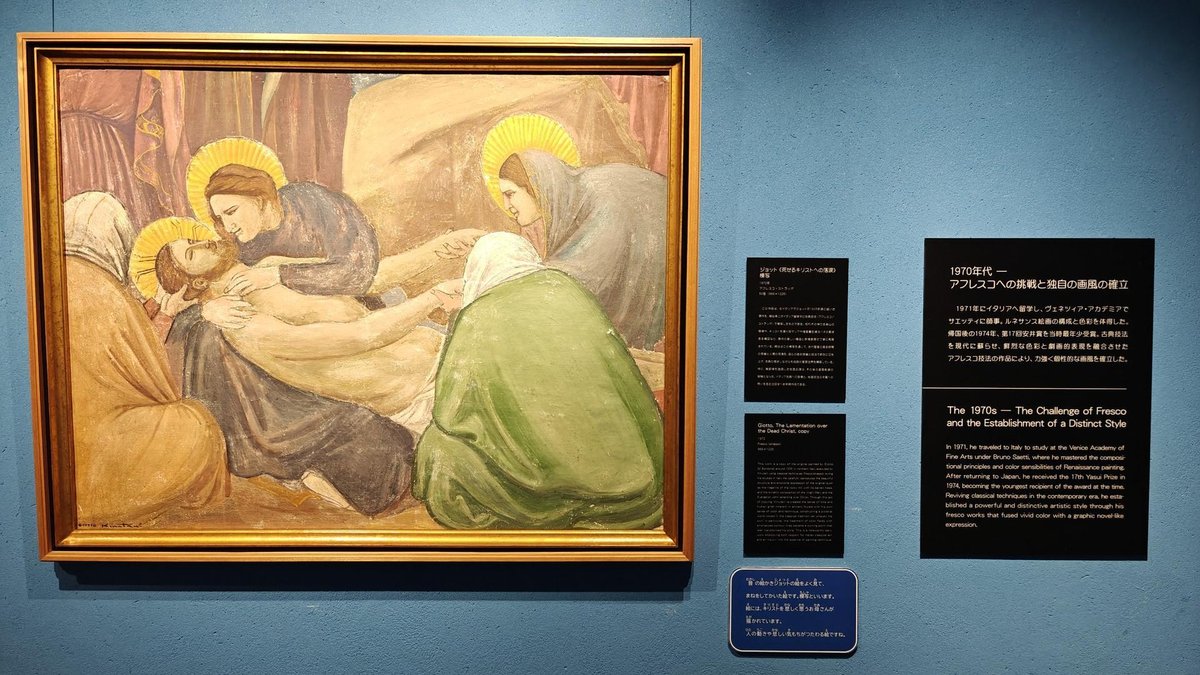
This is another of Koji Kinutani’s early works here in the Exhibit Zone Blue. I initially thought that this was an original work but apparently, it’s a copy of Giotto’s “Lamentation over the Dead Christ”. Now that I think about it, it’s kind of understandable that he copied Giotto as the Italian artist was considered one of the most notable and influential fresco painters of his time.
The copy was one of many artworks that he completed in the 1970s.
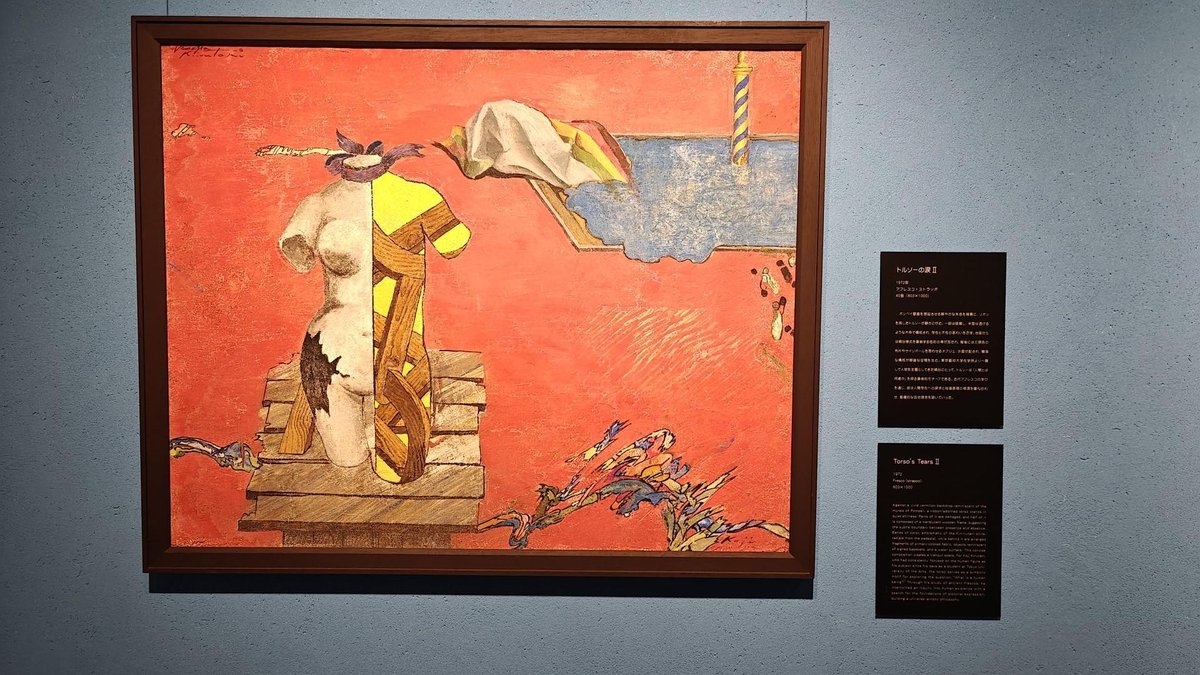
Speaking of the 1970s, this was the time when he was gradually developing his style. This painting, called “Torso’s Tears” was another of the pieces that he worked on and completed during that time. While it might seem like another generic abstract painting, this work is significant because it was made using a classical technique called “affresco strappo”.
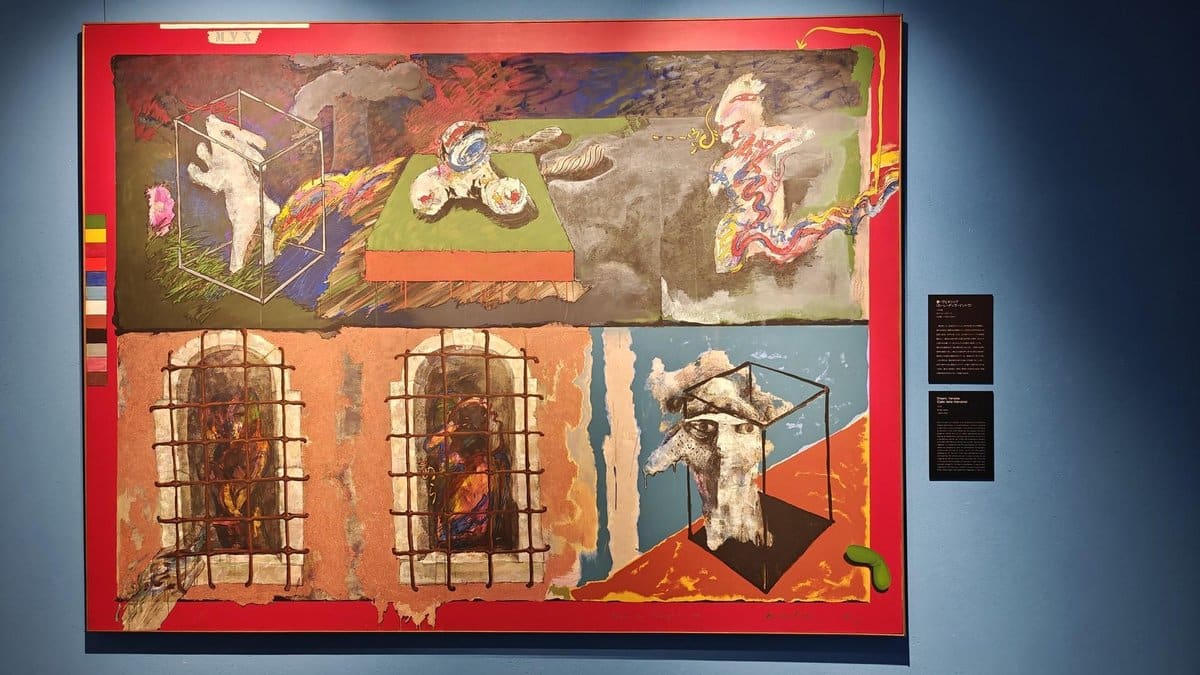
Also made in the 1970s (specifically 1978), this artwork is called Dreams of Venice. This painting is also made with traditional fresco techniques and looks quite abstract. You could say that it looks quite similar to (or has the same vibe as) the Torso’s Tears painting from earlier.
From what I read, the specific technique used here is called “buon fresco”.
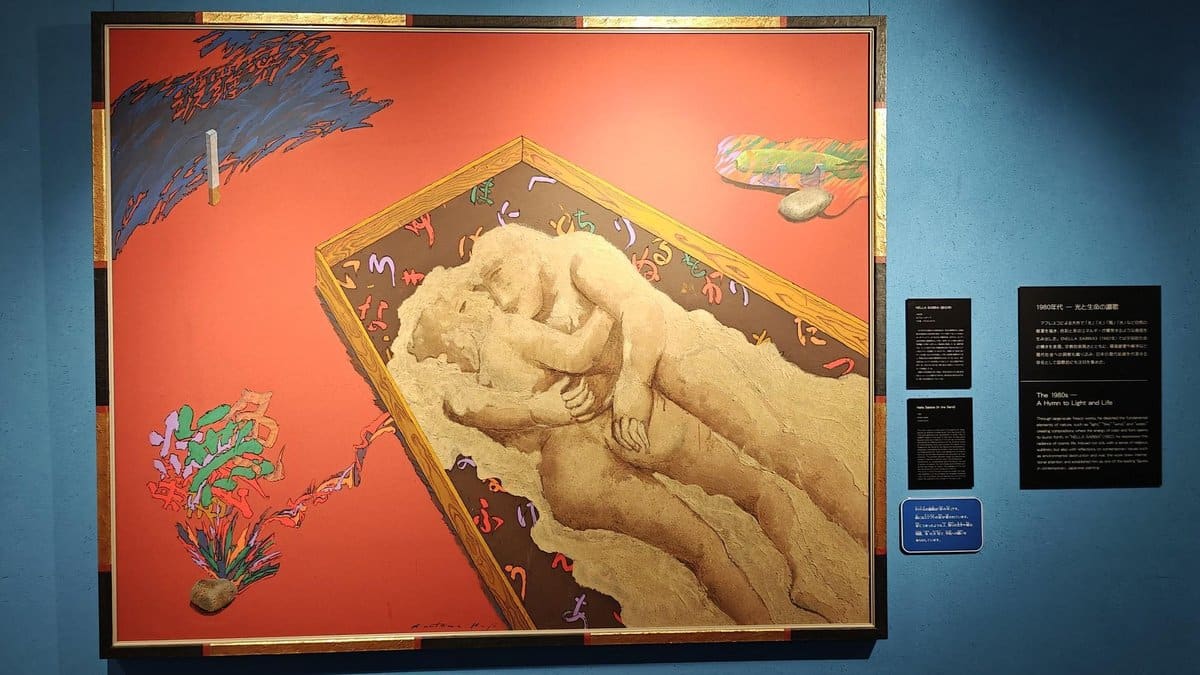
While his work in the 1970s was all about developing his style, the 1980s saw a more drastic evolution that incorporated more modern styles from later eras of art history. Painted in 1982, the artwork in the image above is called “Nella Sabia” or “In the Sand”. It’s said that this represented a huge departure from his 1970s pieces and you could sort of see why.
This is even more surrealist than his previous works though it still incorporates Japanese symbolism (in the form of Japanese characters in the sandbox). As you’ll notice in the succeeding pages, he features Japanese symbolism prominently in the works he completed after returning from Italy.
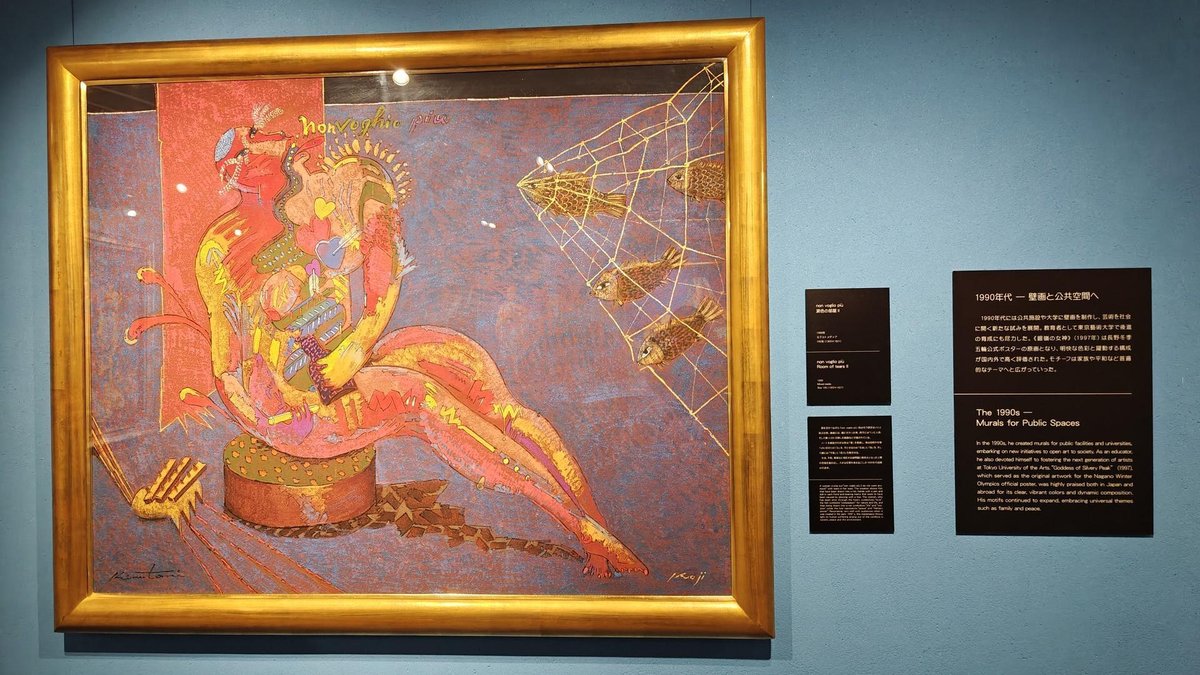
The next set of paintings that I came across were the ones completed in the 1990s. This decade was arguably the height of Koji Kunitani’s productivity and the first of his works from this time period that stood out to me was this painting called “non-voglio piu – Stanza delle lacrime II” (I don’t want to anymore – Room of Tears II). I found this rather striking because of how intense his use of red and its shades. It’s a far cry from his other artworks before and during this time period.
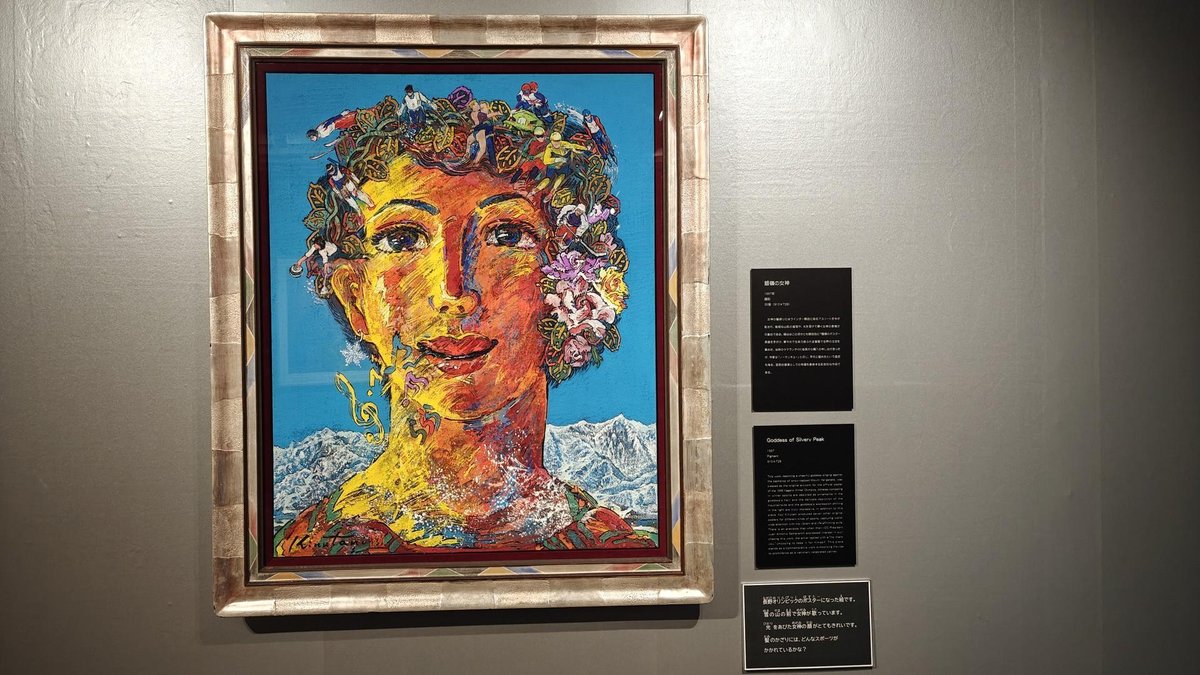
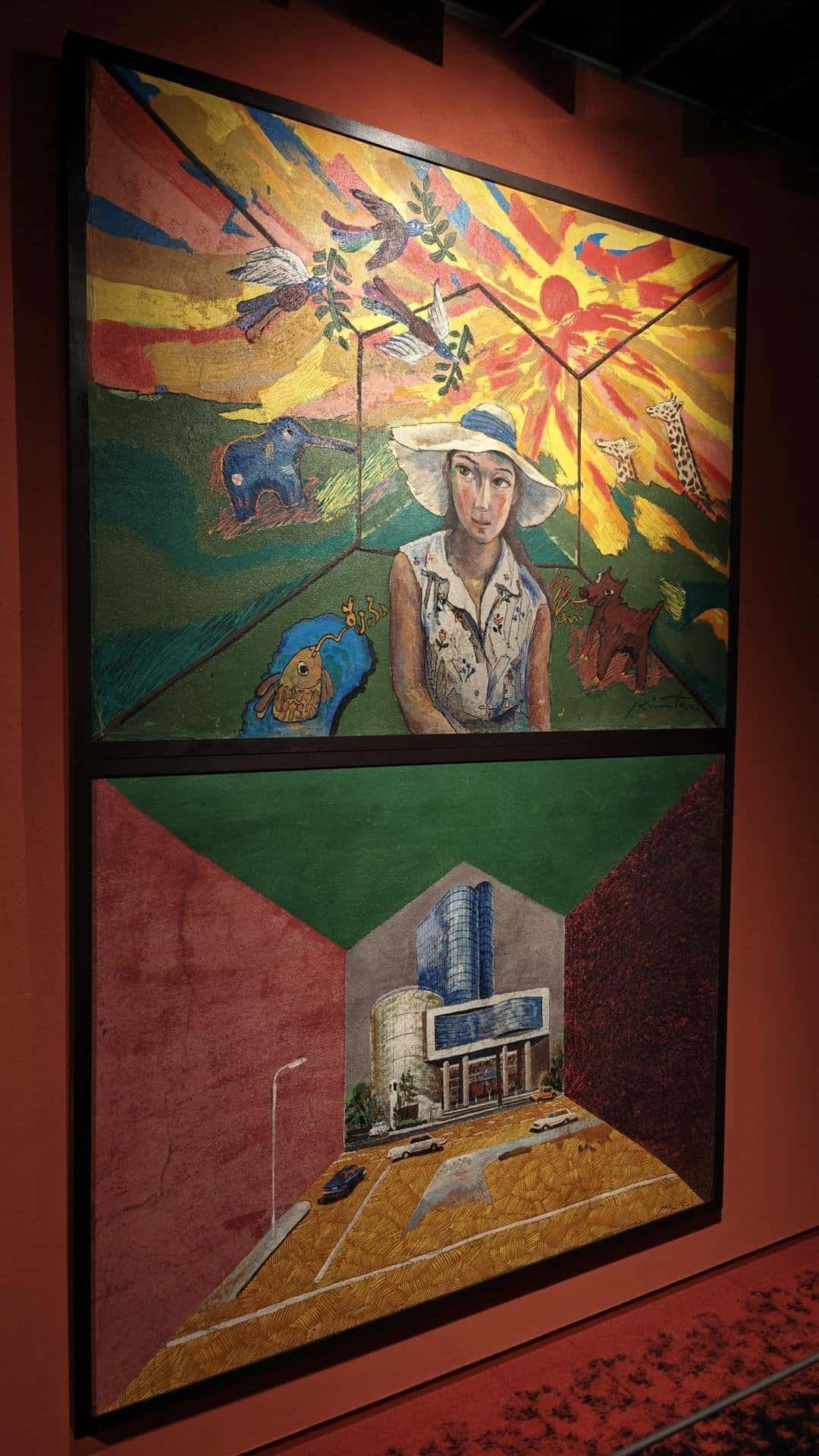
Arguably the most important of his artworks in the 1990s was this one called “Goddess of the Silver Peaks”. Used as the official poster image for the 1998 Winter Olympics in Nagoya, this painting is easily his most recognized commercial work. Interestingly, the abstraction and surreal aspects of the rest of his work from this time period is noticeably toned down for this painting.
What I liked about this is how seemingly detailed it is though you’ll have to really be up close to see its intricacies.
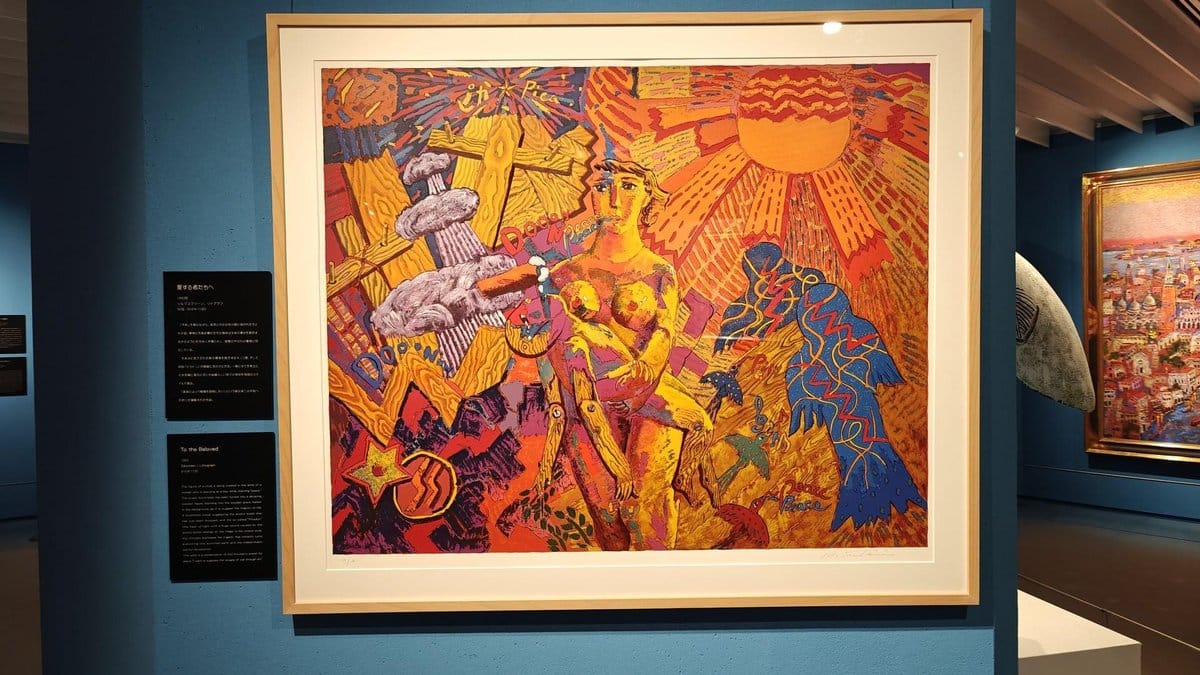
“To The Beloved” is another striking painting that Koji Kinutani came up with in the 1990s. Completed in 1993, this was uncharacteristically one of his more chaotic works. Whereas his earlier paintings that I took a picture of typically had negative spaces where you could rest your eyes, the same couldn’t be said for this particular piece. The colors he uses are rather intense and this is then complemented by his use of varying shapes and symbols.
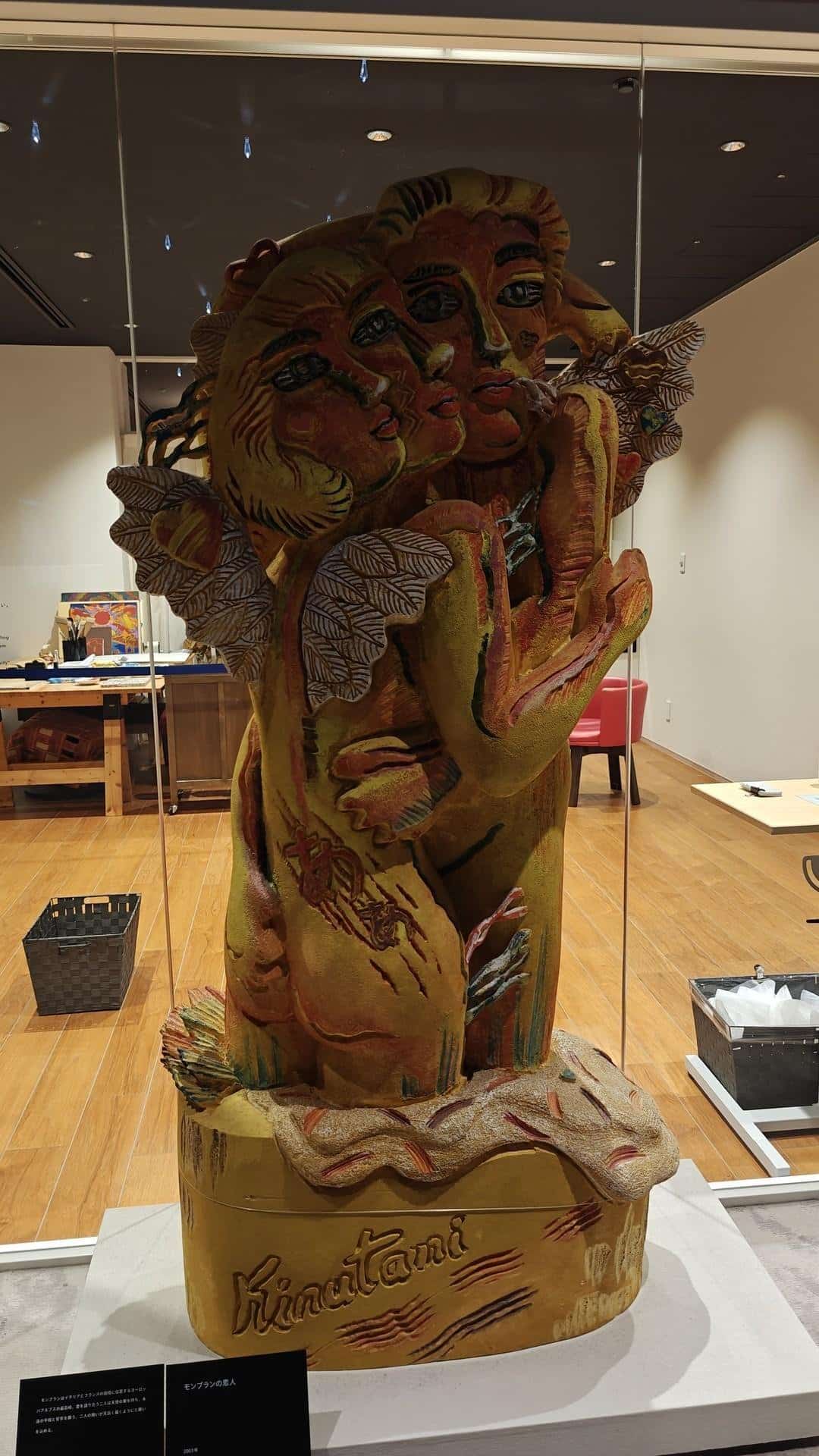
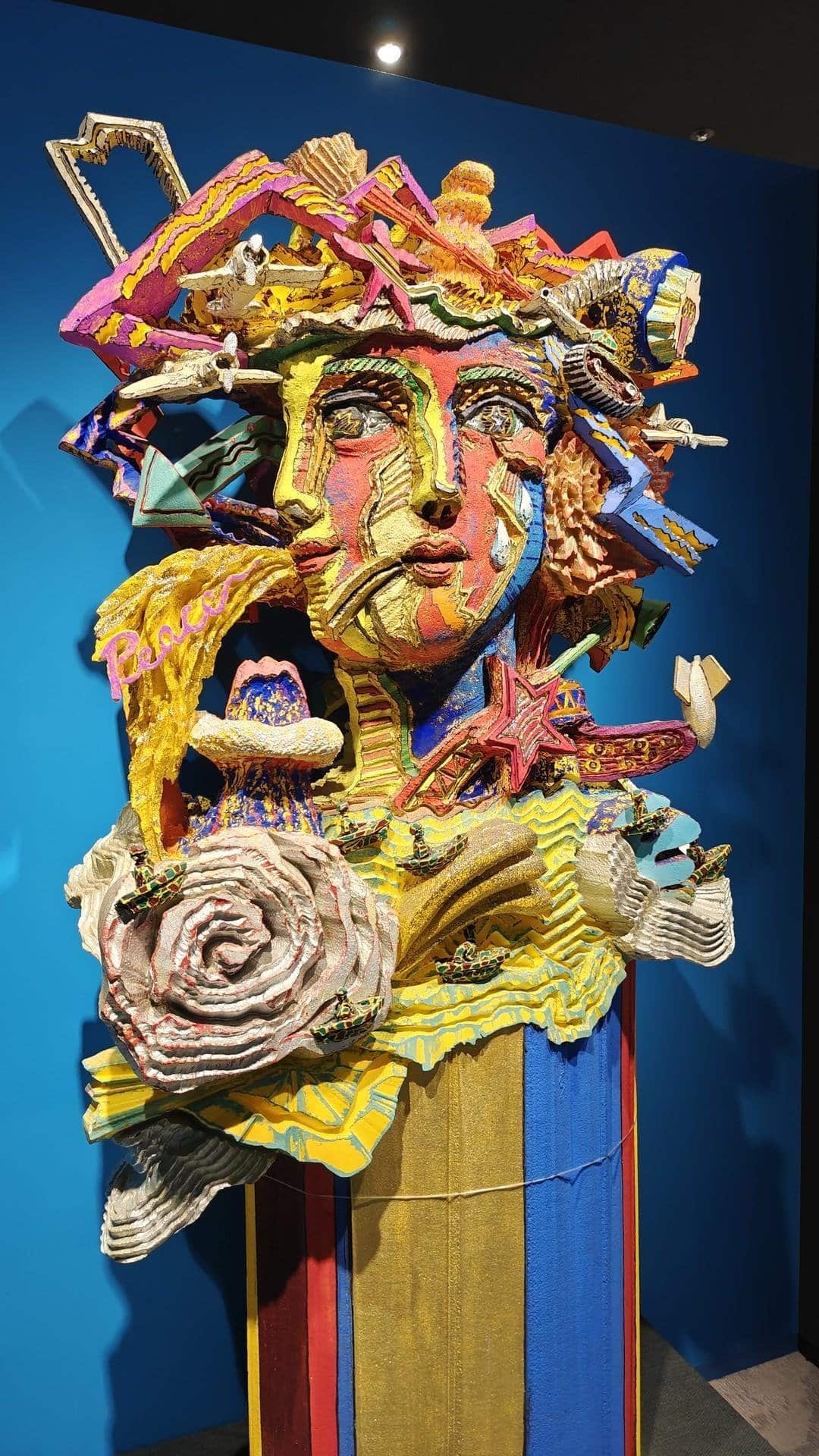
It’s not just paintings that you’ll see here at the Koji Kinutani Tenku Art Museum. During the 1990s the artist began doing mixed media pieces with An Angel in New (shown above) being one of the more prominent of his works during this time period. Completed in 1998, the mixed media sculpture featured plenty of symbolism pertaining to war, grief, and peace.
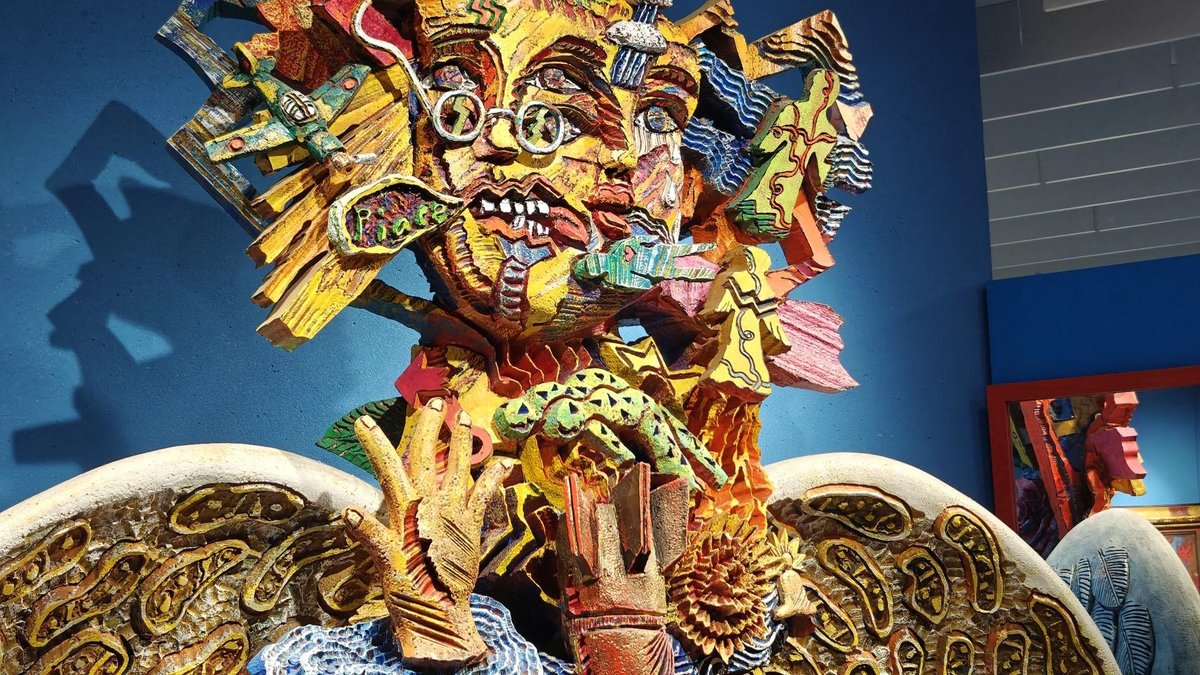
If you look closely at the sculpture up close you’ll see symbols for bombs, war planes, as well as tanks. The faces also express grief with one even showing tears. The sculpture is still abstract and surrealist but the expressions and its intent is quite clear.
If I remember correctly, this decade was still marred with wars with the piece seemingly made to convey Koji Kinutani’s sentiments that these conflicts were all follies.
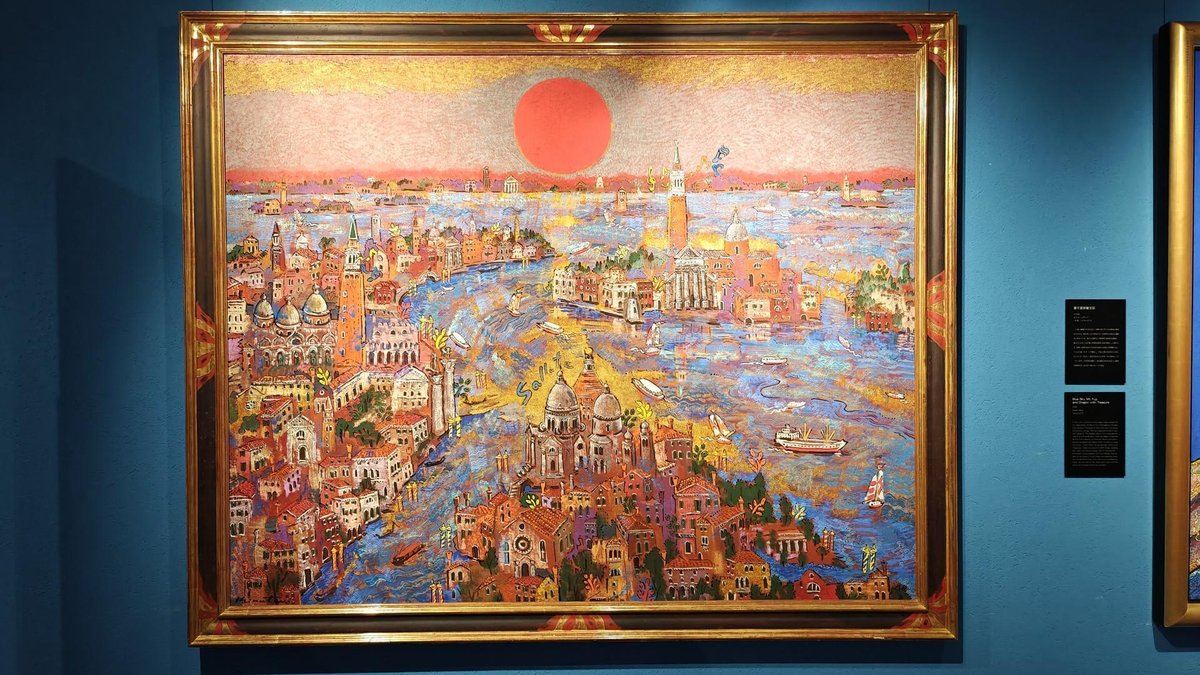
Finally I got to the area of the Exhibit Zone Blue that featured Koji Kinutani’s works that were made in the 2000s. One of the things that I noticed with these was that he seemingly got back to more grounded and fundamental styles. This painting is called “Venice Morning Sun, Hope” was completed in 2006 and it features a landscape view of the city where he spent the early years of his career.
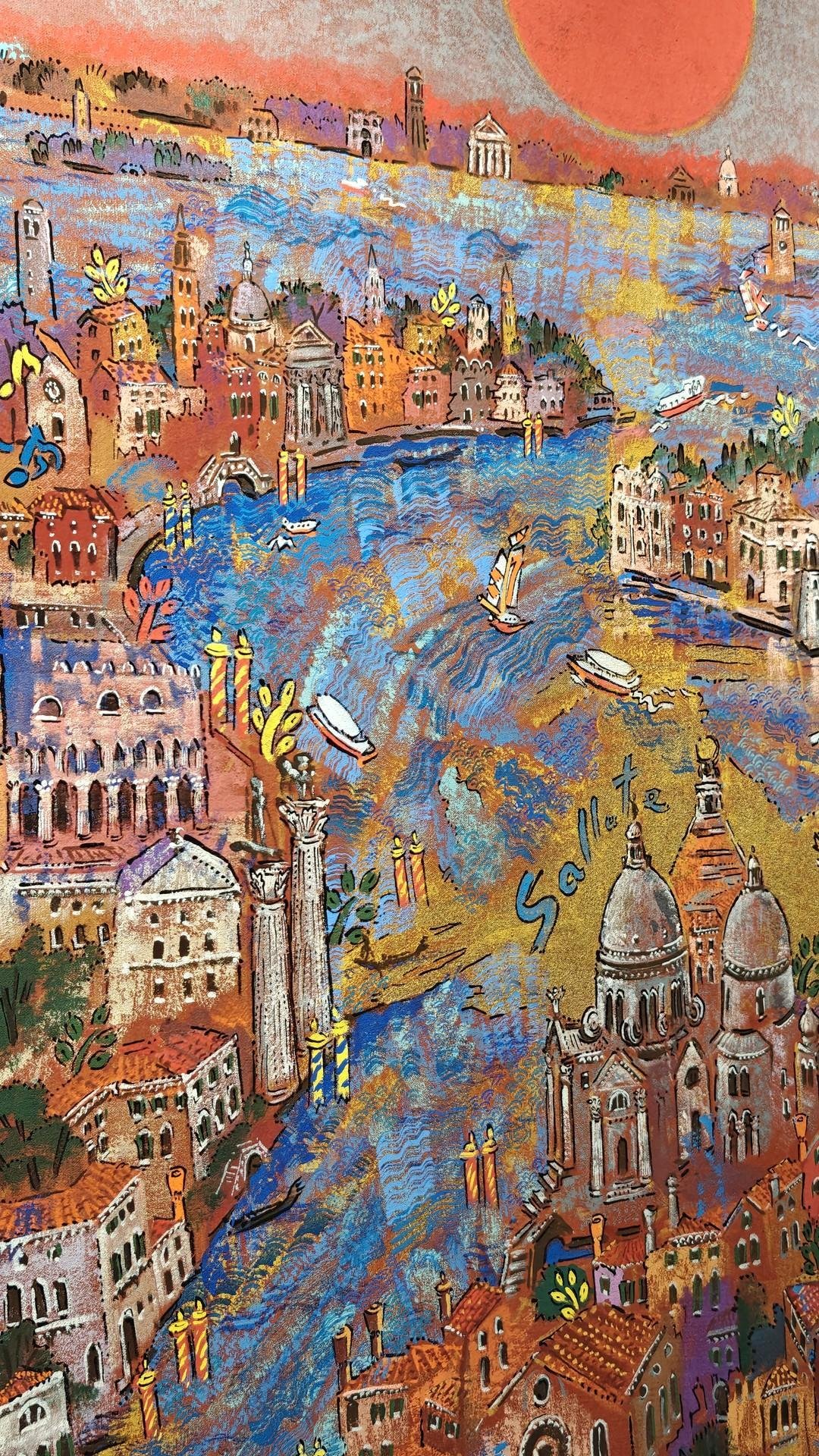
This is what the painting looks like up close. Unlike some of the stuff from the 90s, this one is a lot more balanced when it comes to his color choice. There are still colors that pop like red/orange red but it doesn’t dominate the composition.
I also liked the wavy brush work for the water in the canals which reminded me a lot of impressionist masters like Monet and Seurat.
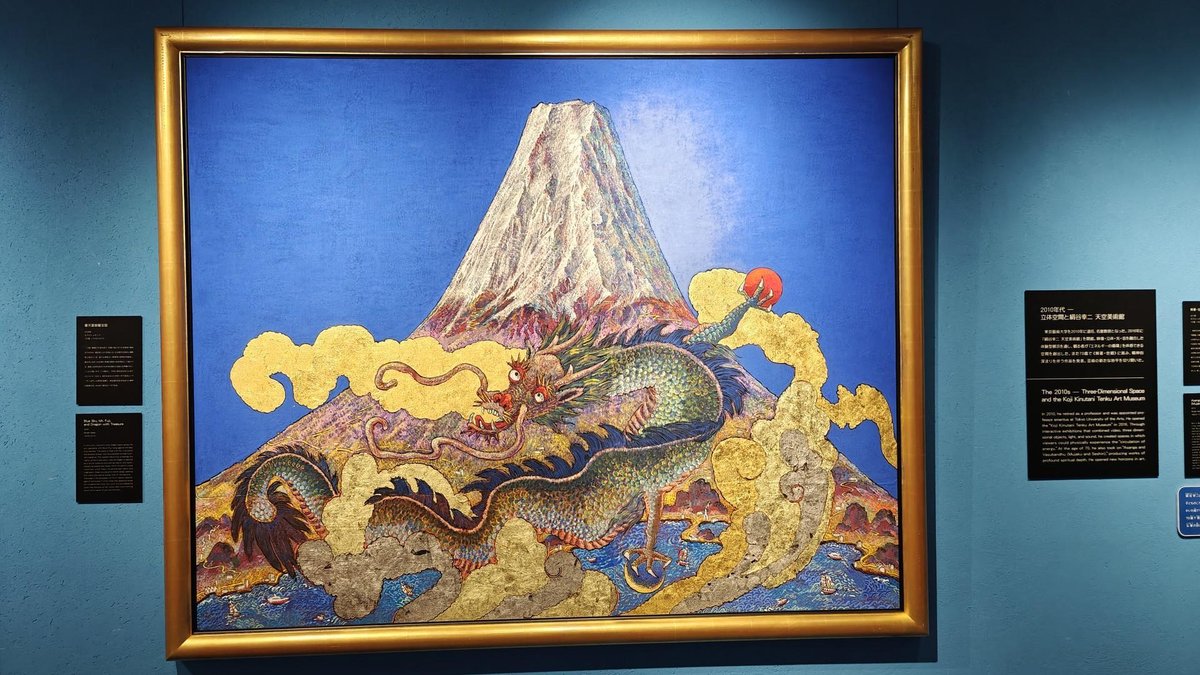
Arguably one of the most impressive pieces in this museum for me is the painting shown in the image above. If translated to English, the painting is called Blue Sky, Mt. Fuji, and Treasure Dragon. Much like the Venice Morning Sun painting, this is a noticeable step away from his older abstract style.
It’s still stylized but you can clearly see how the style is a lot more realistic. This is particularly noticeable if you look at Mt. Fuji with how it has a 3D effect that makes it seem like it’s floating in front of the background.
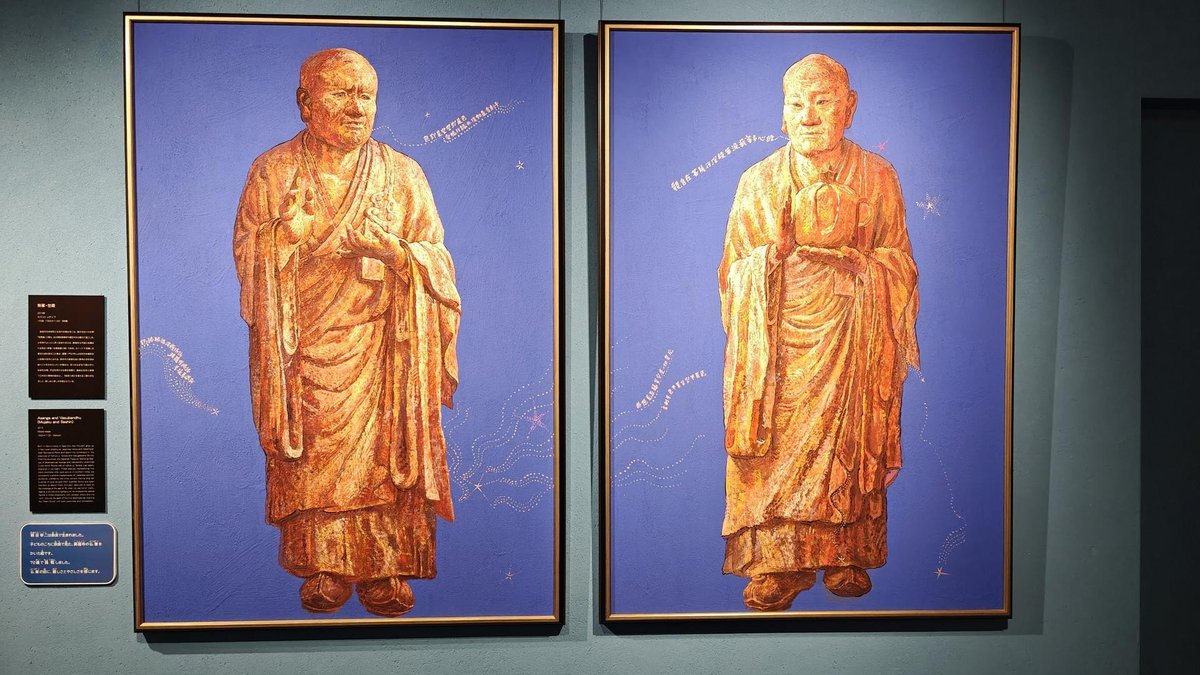
Speaking of realism, here is a pair of paintings of Buddhist monks called “Mujaku and Seshin”. From what I’ve read, these are interpretations of the wooden sculptures housed in Kofukuji Temple in Nara of two 4th century Indian monks (Mujaku’s sculpture being the painting on the right). A lot of Koji Kinutani’s work has plenty of Buddhist symbolism, he surprisingly was NOT a strict adherent of the religion.
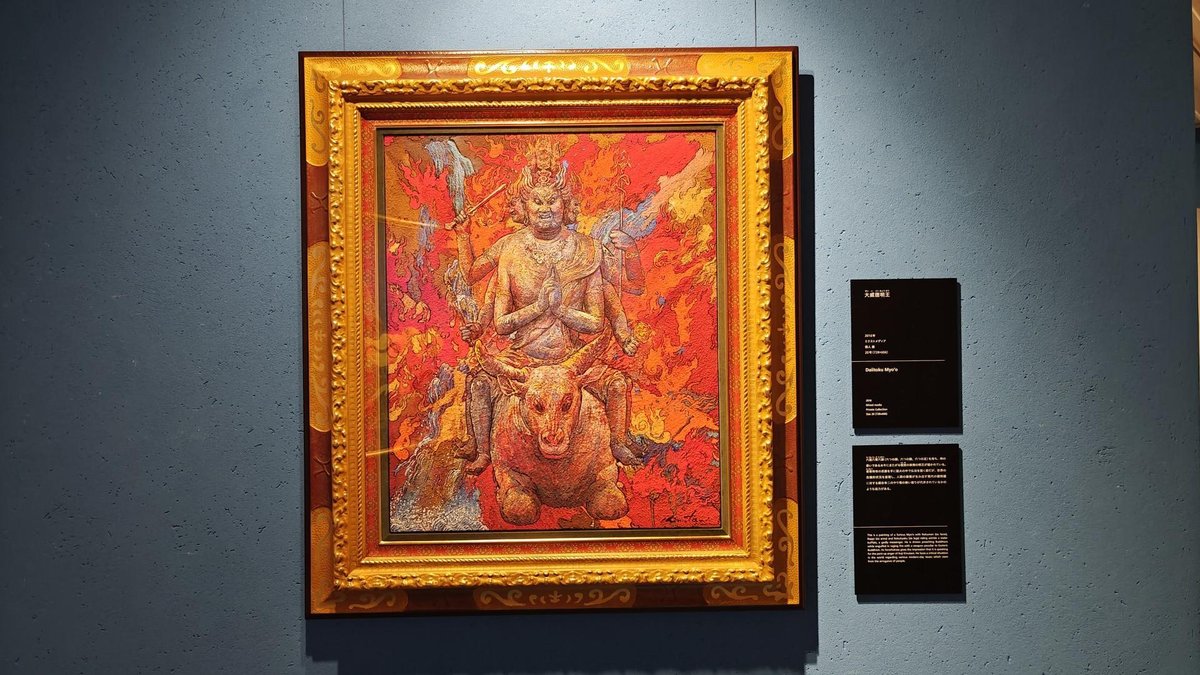
Speaking of Buddhist symbolism, this is another artwork that features a deity from that religion. The title of the painting is “Daiitoku Myoo”, which is also the name of the Buddhist deity depicted on it. Also known as the Wisdom King, this deity is said to be tasked with guarding Buddha’s teachings as well as vanquishing evil.
What’s notable about the painting is that it’s relatively new (completed in 2021) and is one Koji Kinutani’s last works before he passed away in 2025.
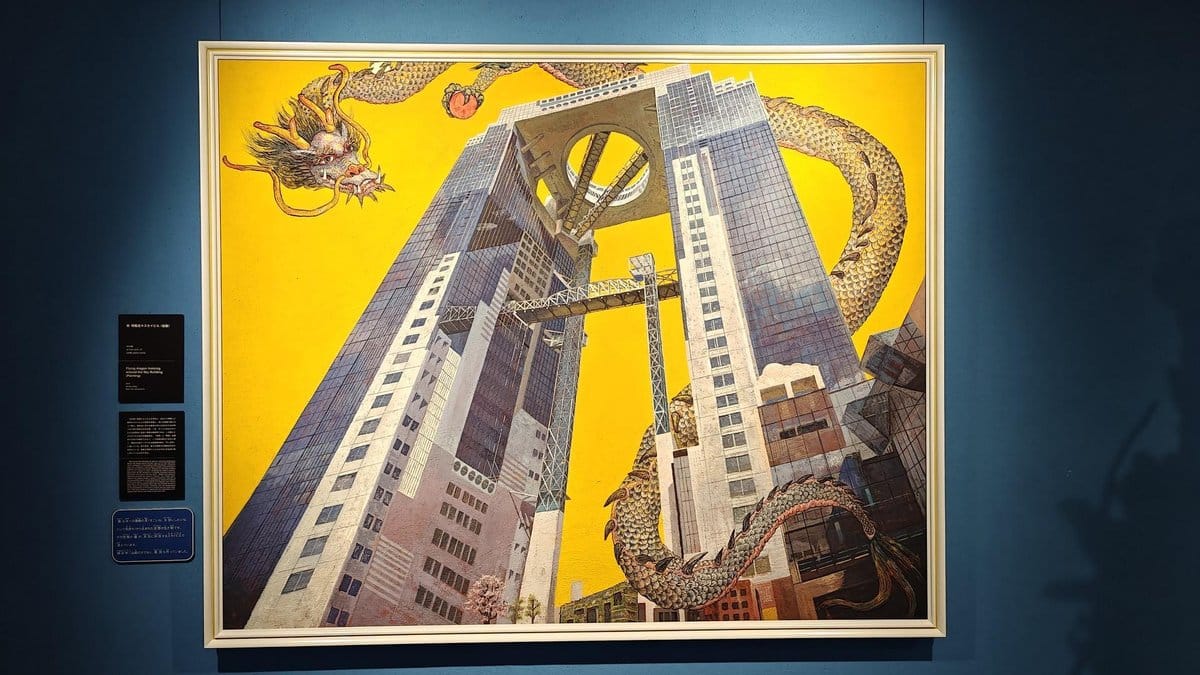
Aside from Buddhist motifs and symbolisms, another of Koji Kinutani’s favorite subjects is the dragon. A lot of his artworks feature this mystical creature and one that caught my attention in this exhibit was this painting entitled “Flying Dragon frolicing around the Sky Building”. What I found notable about this drawing was how fundamentally sound it looked.
The perspective was on point and the Umeda Building looked quite detailed.
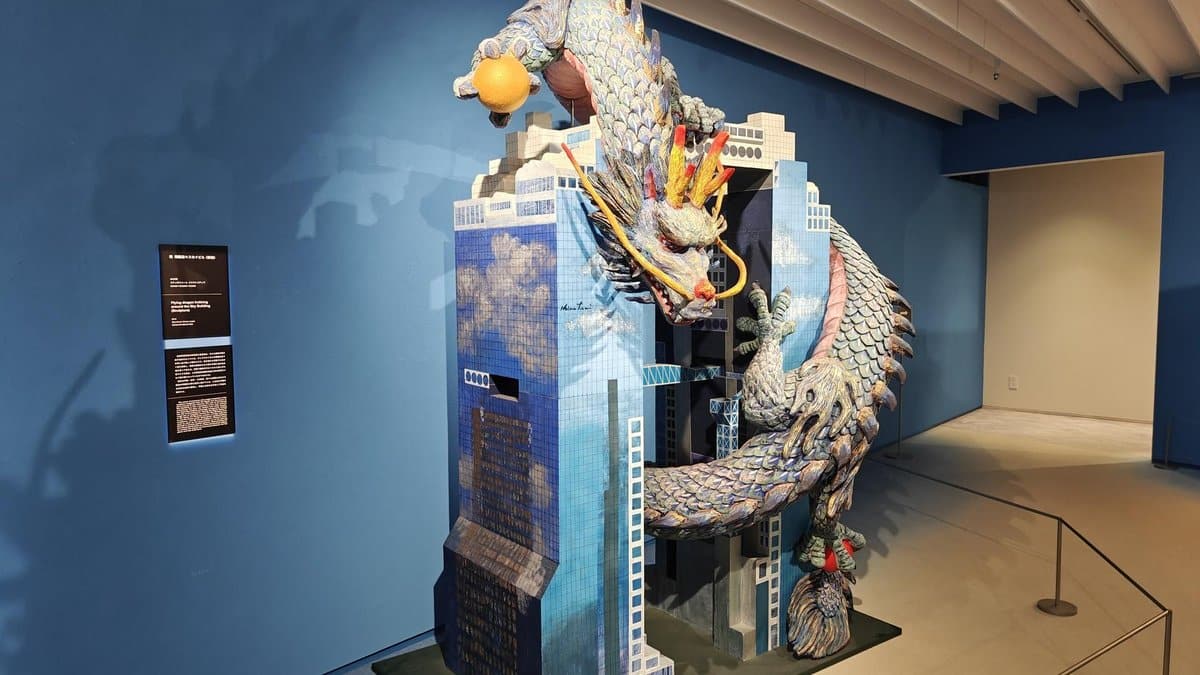
A couple of feet from the painting in the previous image is a sculpture of it that’s also made by Koji Kinutani. Titled “Celebrating the Flying Dragon frolicing in the Sky Building”, the sculpture is actually massive. The dragon is extremely detailed from its scales to its features.
Considering the fact that this was completed in 2013 when he was already advanced in terms of his age, it’s actually quite impressive.
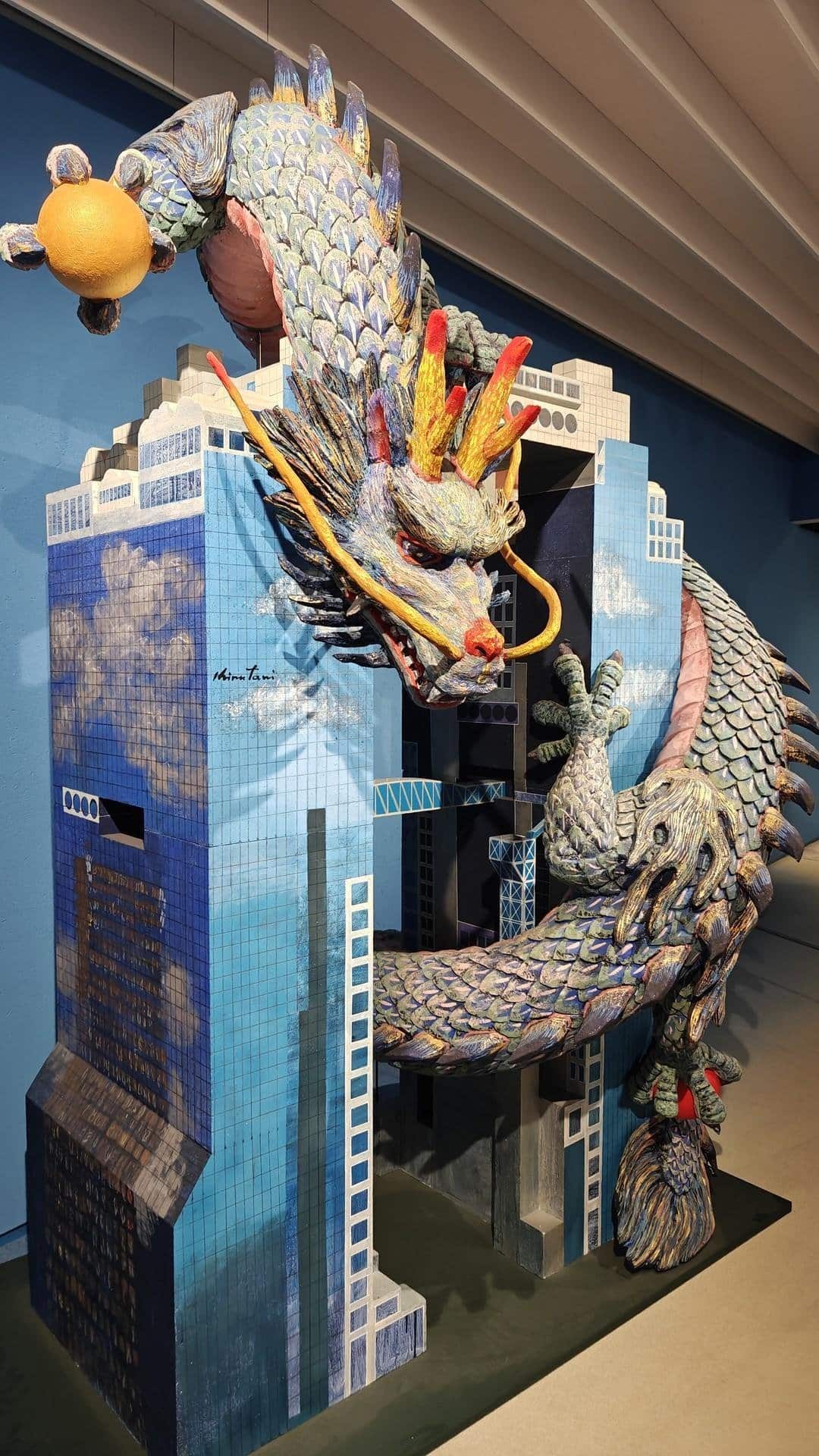
Here you can see a closeup of the sculpture and just how detailed it is. Another feature of the sculpture that impressed me was how the building was painted. I really liked how the reflection of the sky, clouds, and even a neighboring building was painted.
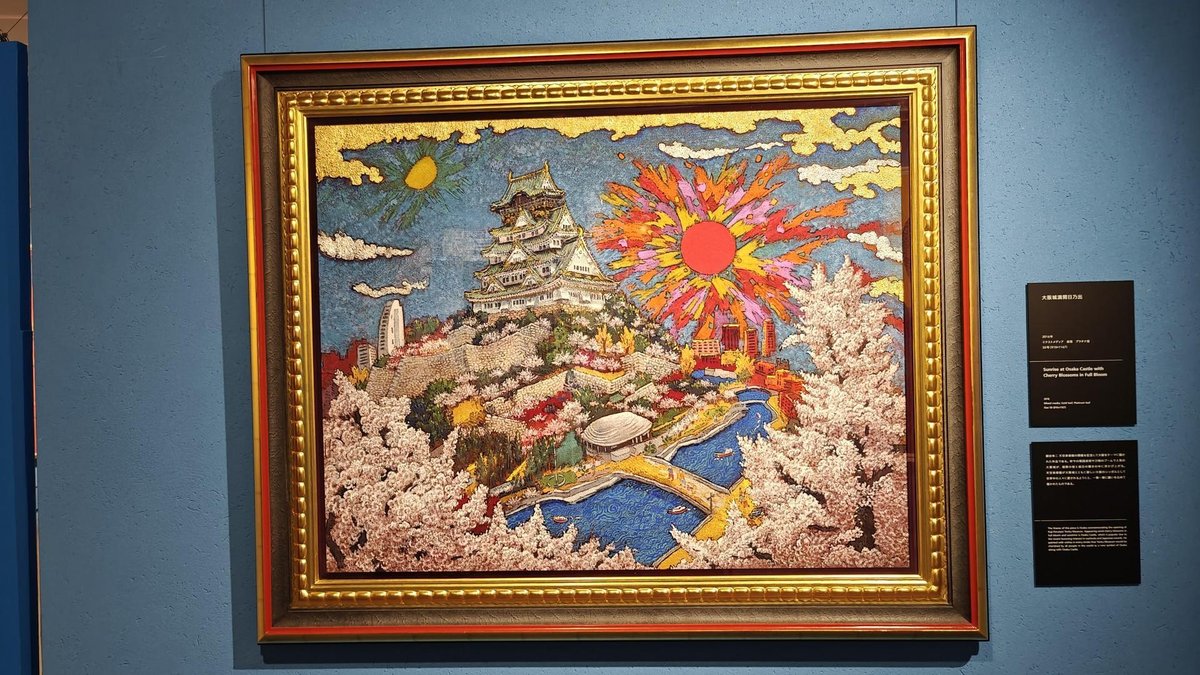
This is another of the artworks here at the Koji Kinutani Tenku Art Museum that was completed in the 2010s. Now this painting was immediately familiar to me since I’d actually been to the place depicted in it. Titled “Osaka Castle with Cherry Blossoms in Full Bloom”, this painting beautifully captures what the castle looks like during the spring season.
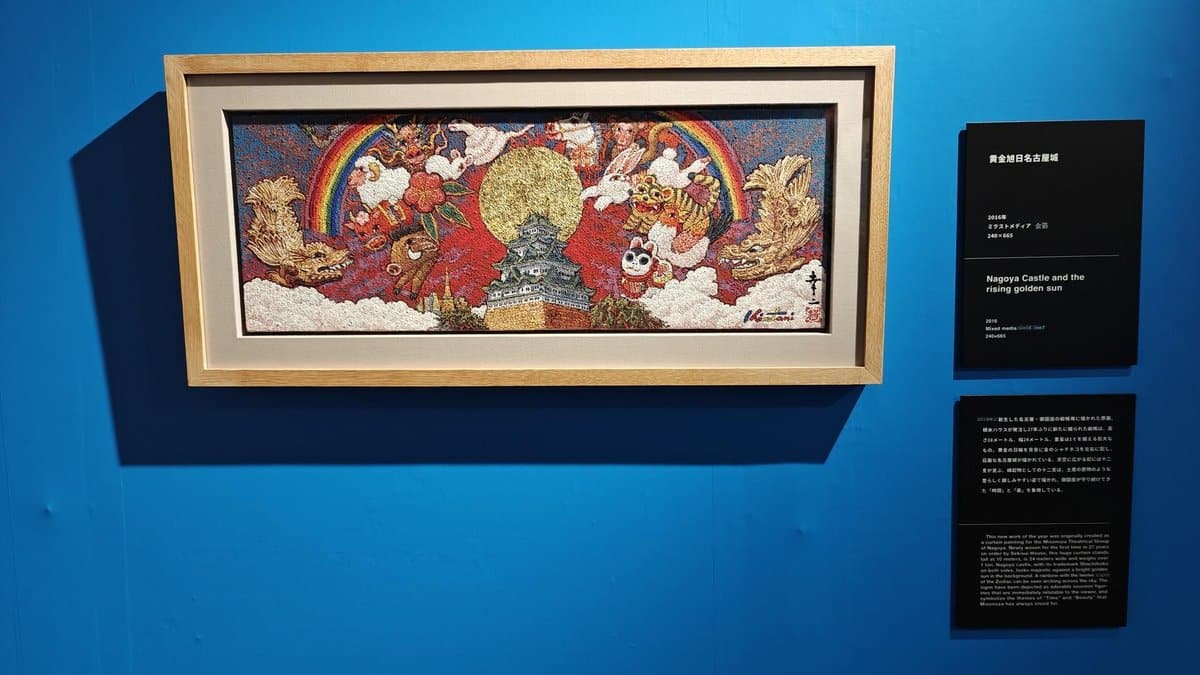
This is one of the smaller paintings in the exhibit called “Nagoya Castle and the Rising Golden Sun”. Now despite being small, this is actually quite detailed. I’m not quite sure but I think it also makes use of impressionist techniques that kind of give it this “pixelated” (for lack of a better term) look.
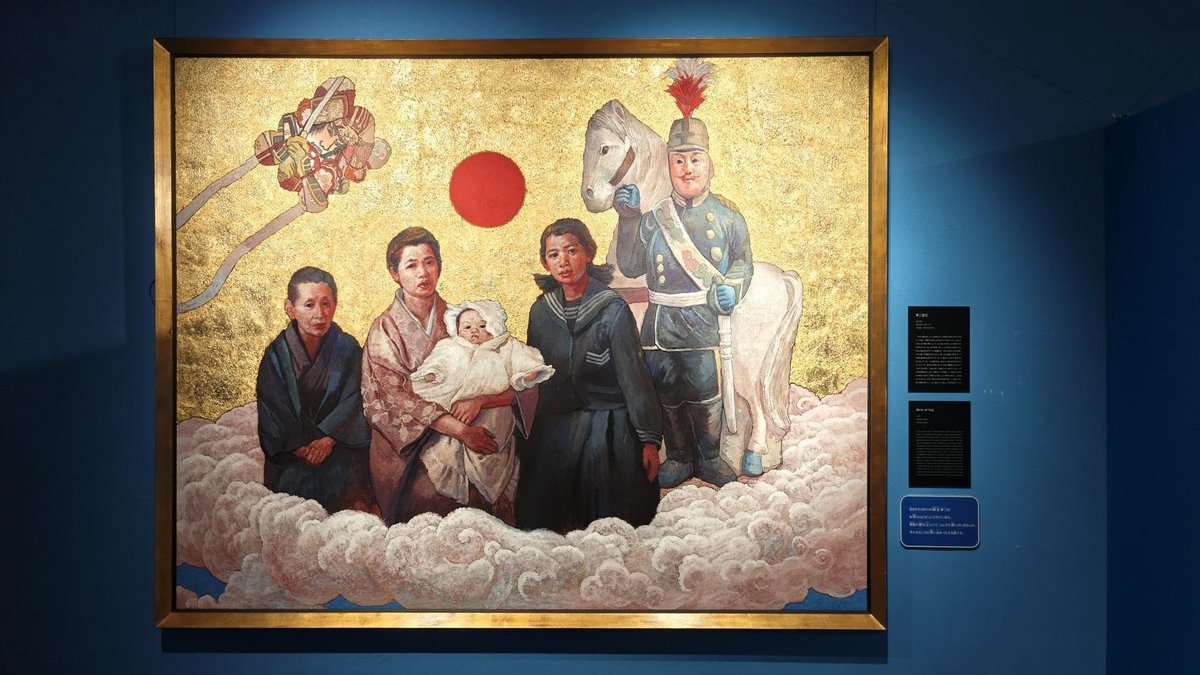
Now this is probably one of the most impressive paintings that I’d seen up until this point. Completed in 2021, this painting is called “Koji’s Birth” and it depicts Koji Kinutani as a baby surrounded by his family. It’s an extremely far cry from his abstract works though it still retains a lot of his signature surreal style.
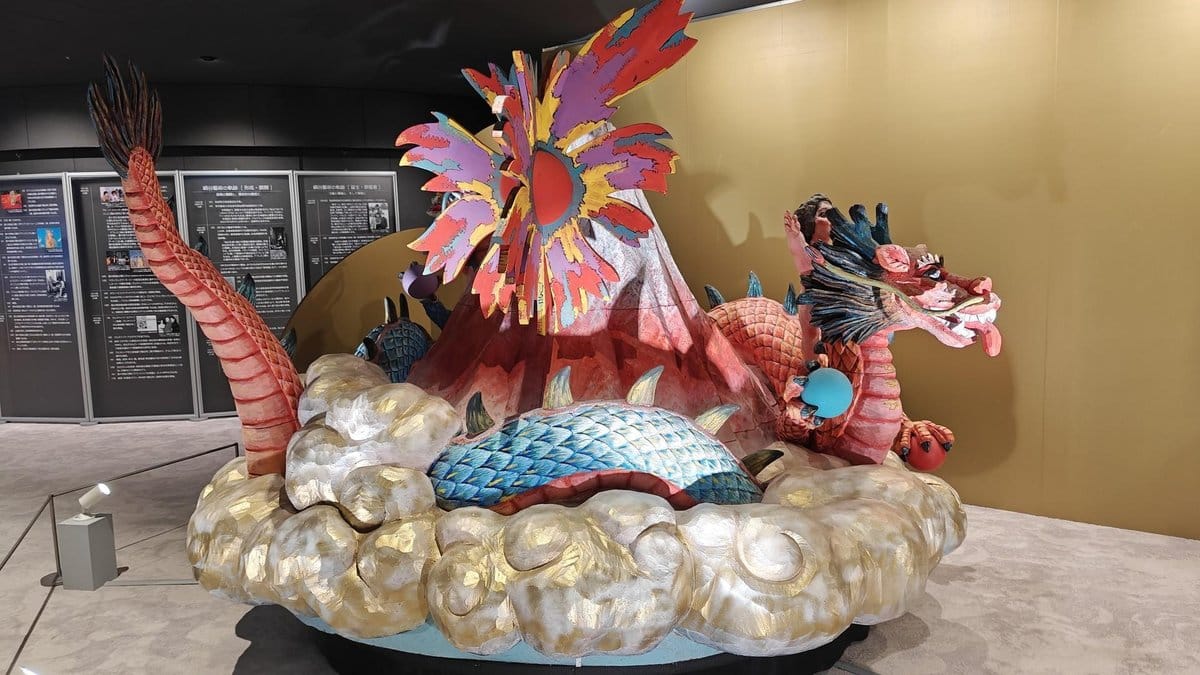
So remember the “Blue Sky, Mt. Fuji, and Treasure Dragon” painting from earlier? Much like the painting with the dragon and the Umeda Sky Building, it has a sculpture that was also made by Koji Kinutani. This specific sculpture isn’t as tall but it’s definitely wider and larger.
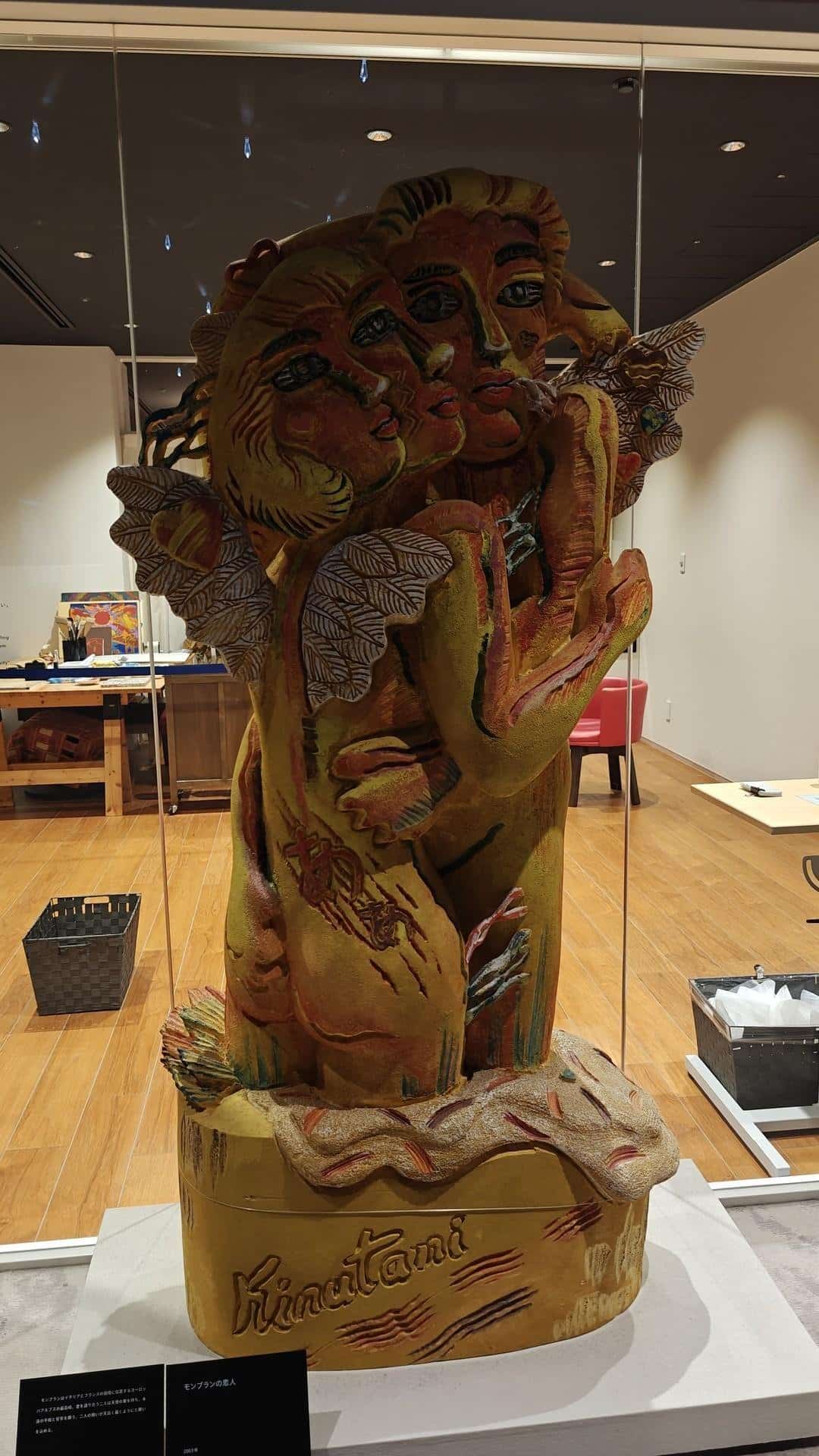
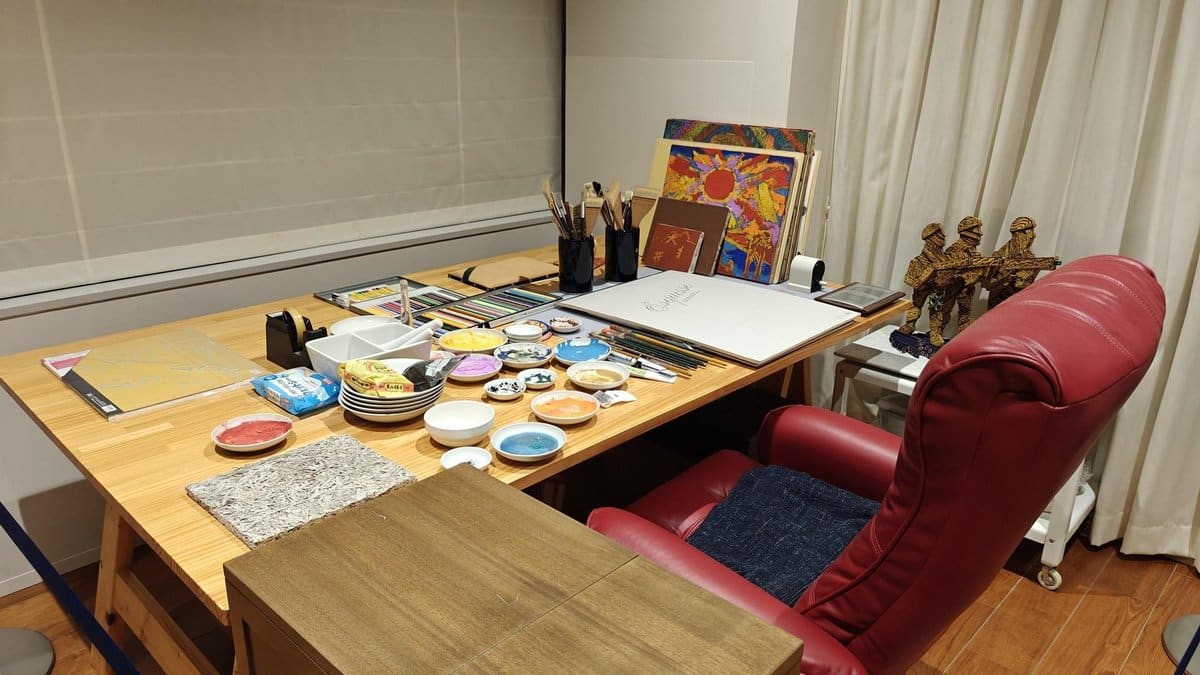
From the Exhibition Zone Blue, I then found myself at an area called the Koji Kinutani’s Studio. As its name implies, this features the artist’s studio equipment, tools, as well as completed artworks. There’s actually a VR Video Experience here which allows you to tour the museum virtually (through a VR headset) with a recording of the artist serving as your guide.
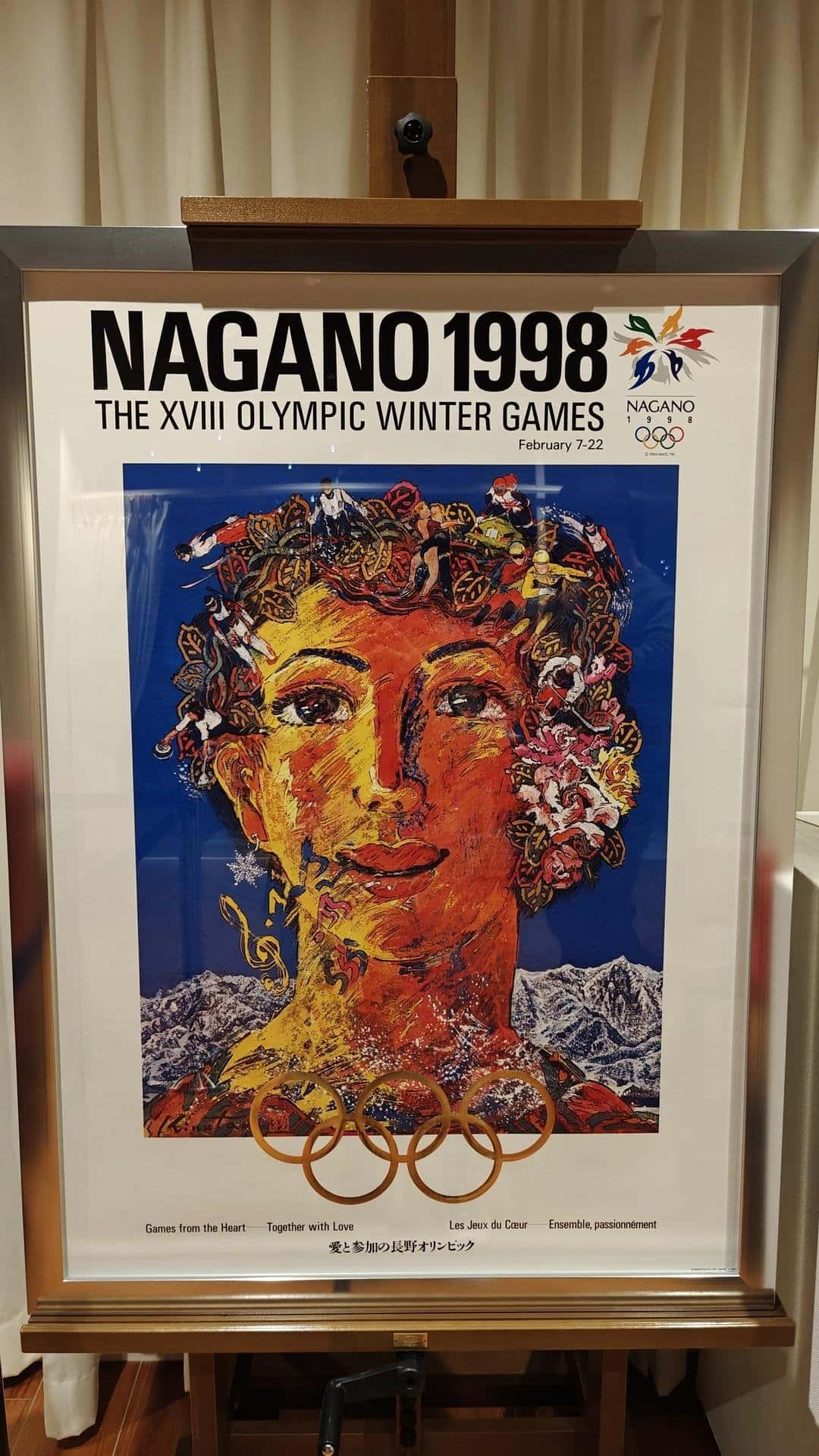
This is a framed poster of the 1998 Nagoya Winter Olympics that features the “Goddess of the Silver Peaks” painting from earlier. I actually came across this while going around the studio. Aside from this, there are also plenty of completed sculptures here.
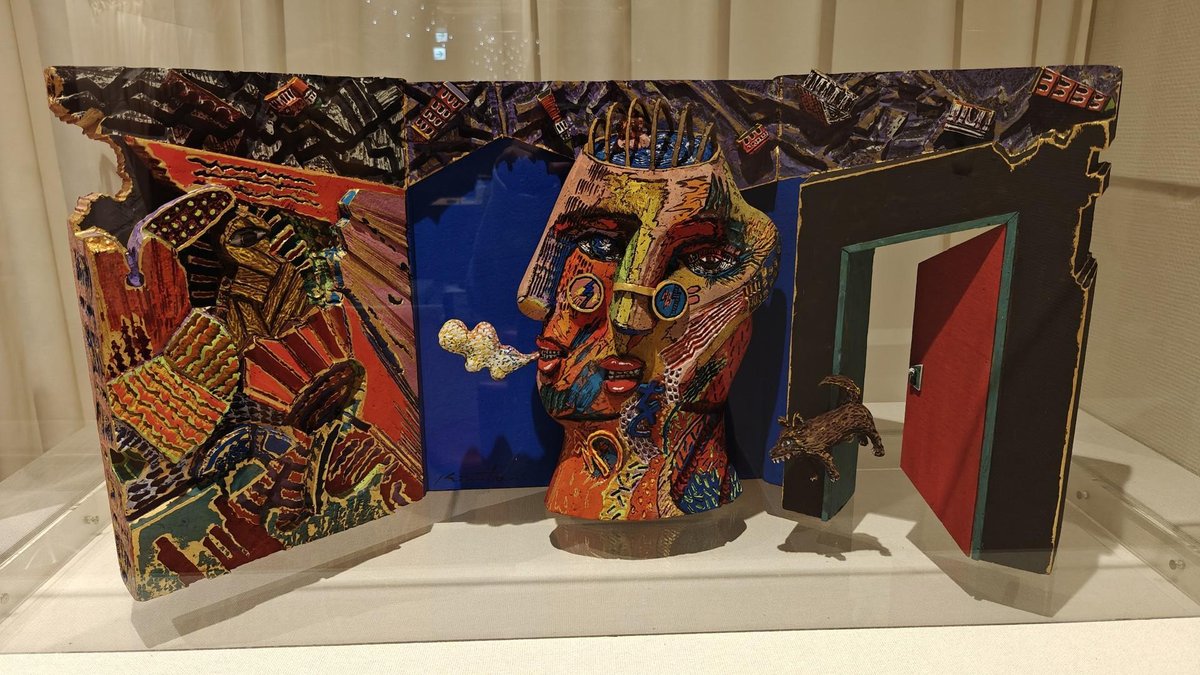
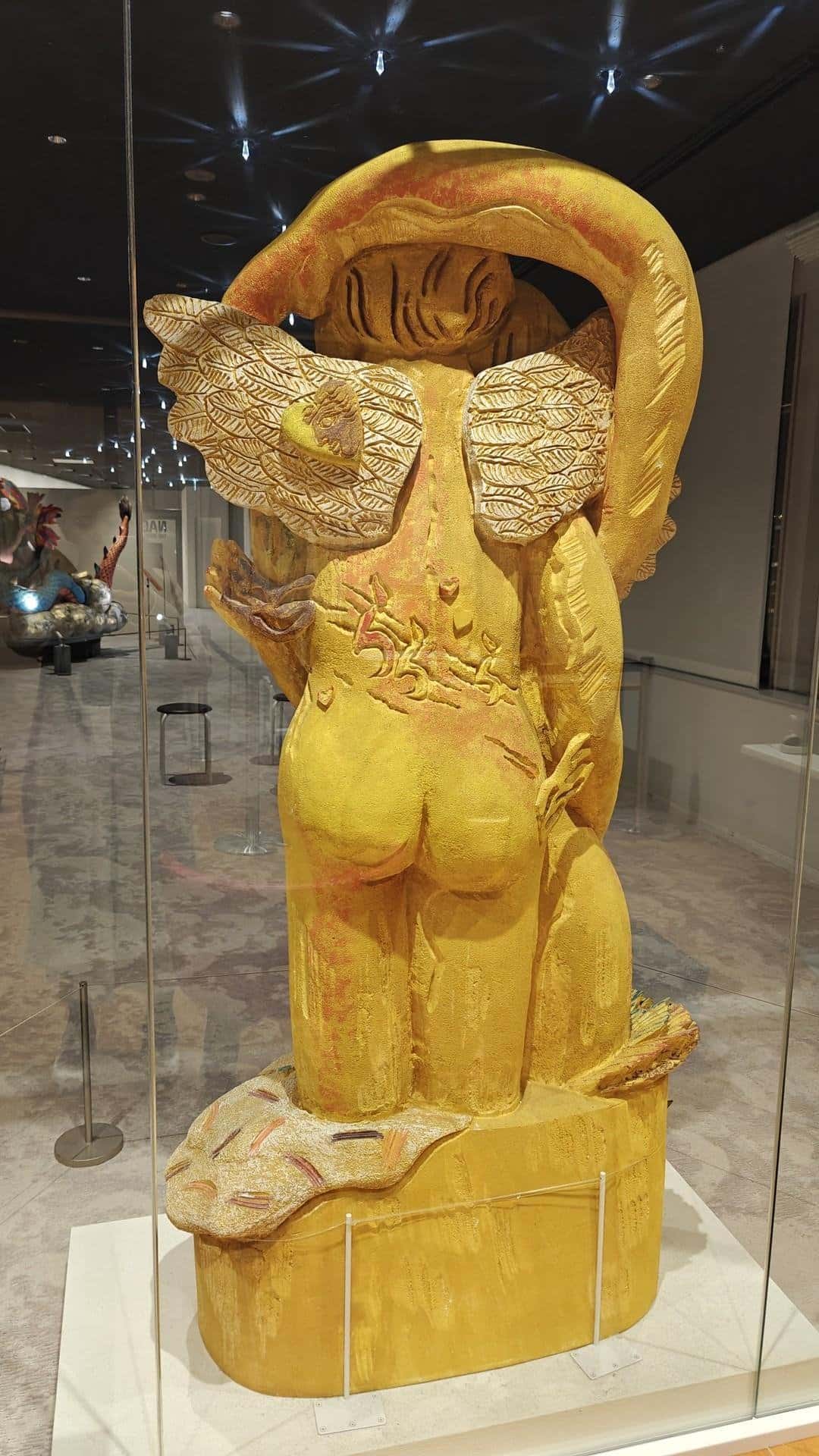
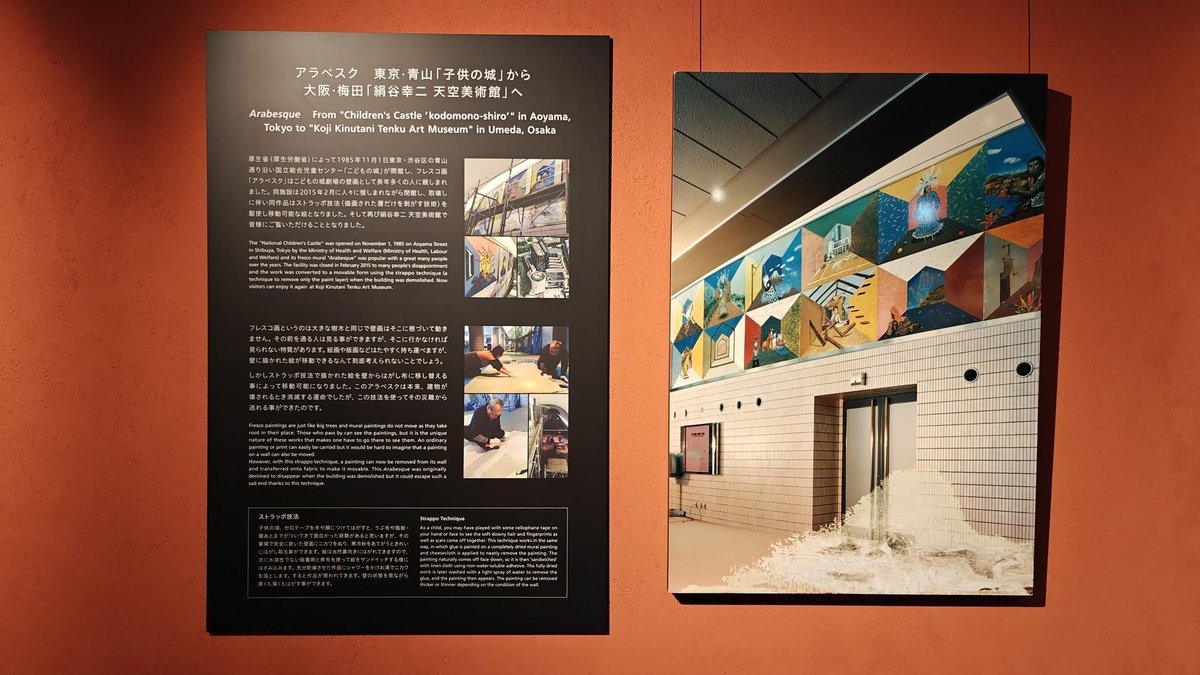
Opposite the Exhibit Zone Blue and adjacent to the Studio is another major area of the museum called Exhibit Zone Red. Now the area is advertised as exhibiting works by Koji Kinutani that feature Japanese and Asian themes. That said, there are still plenty of pieces here that also feature Western themes similar to the artworks you’ll find in Exhibit Zone Blue.
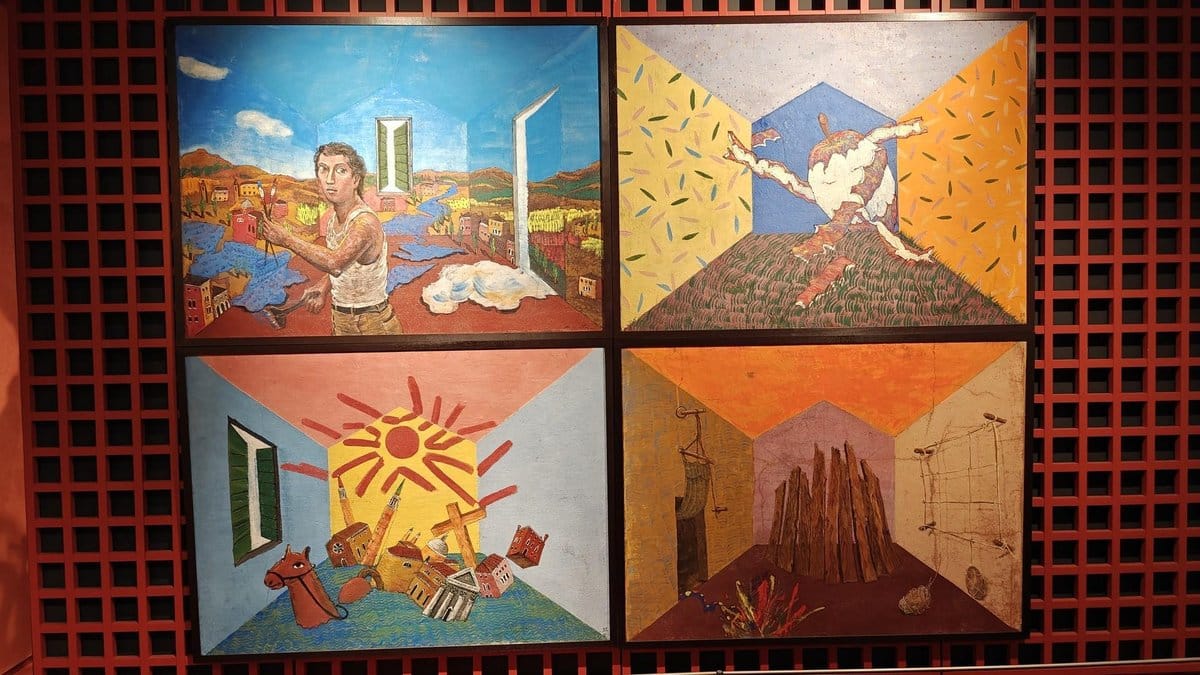
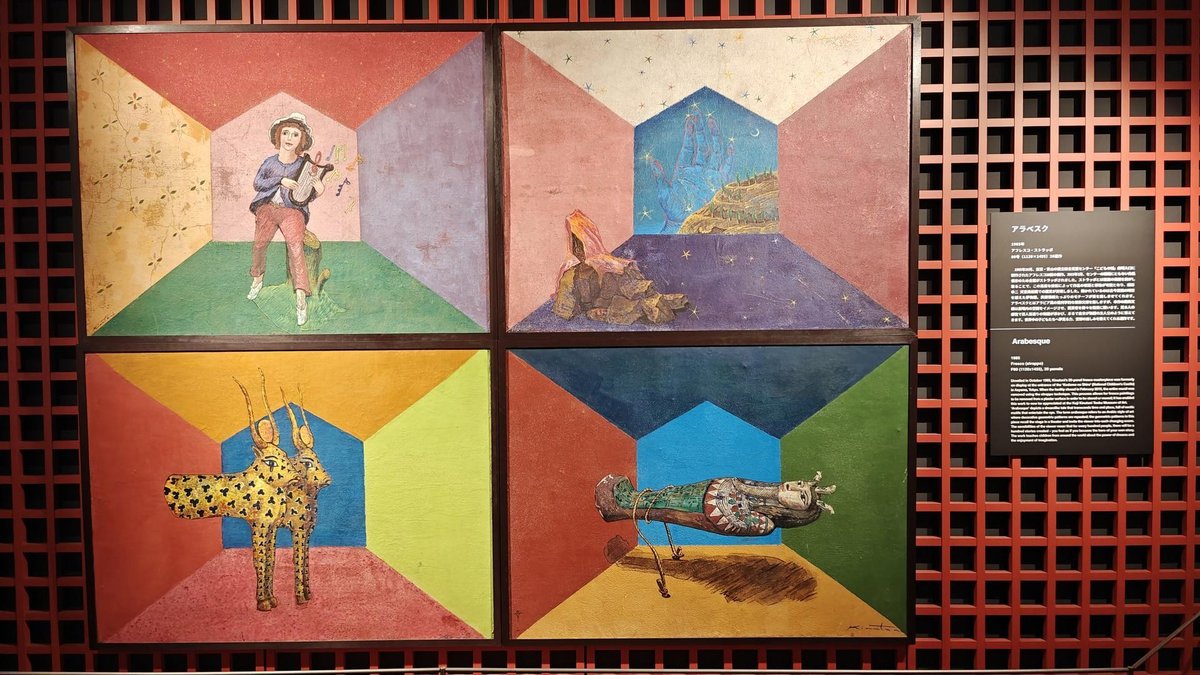
“Arabesque” is one of the largest frescos that Koji Kinutani has worked on which feature an aggregate of paintings (total of 20 panels) with different subjects. Before the paintings were transferred here, they used to adorn the entrance of a theme park in Aoyama called National Children’s Castle. The fresco was completed in 1985 with affresco strappo being the technique used for it.
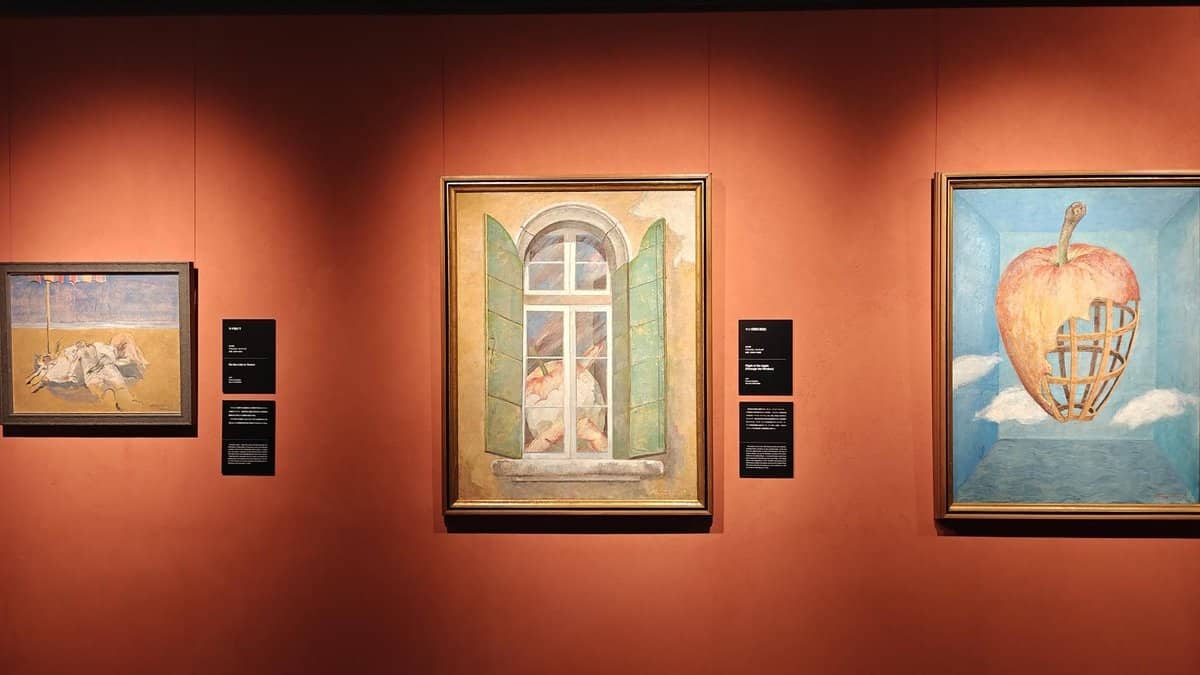
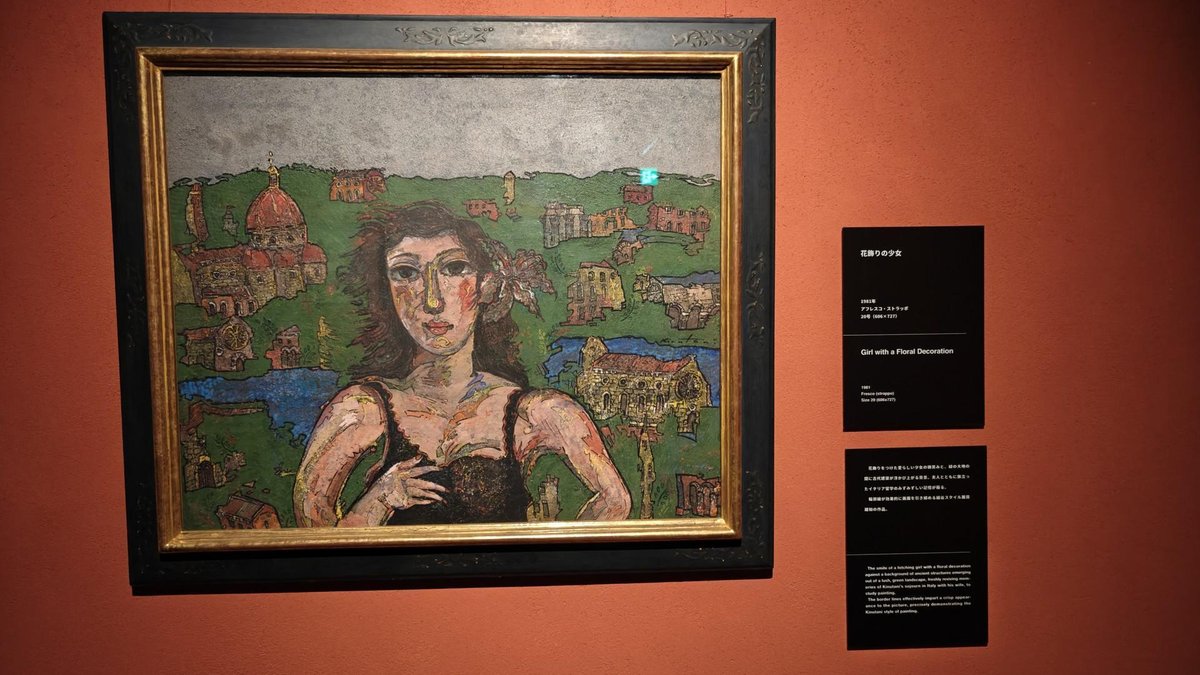
As mentioned earlier, there are also some whimsical and surreal paintings here that don’t make use of Japanese and/or Asian themes. From left to right in the image above are paintings titled “On the Lido in Venice”, “Apple Flight (By the Window)”, and “Flight of the Apple”. Below is a piece titled “Girl with a Floral Decoration” that was completed in 1981.
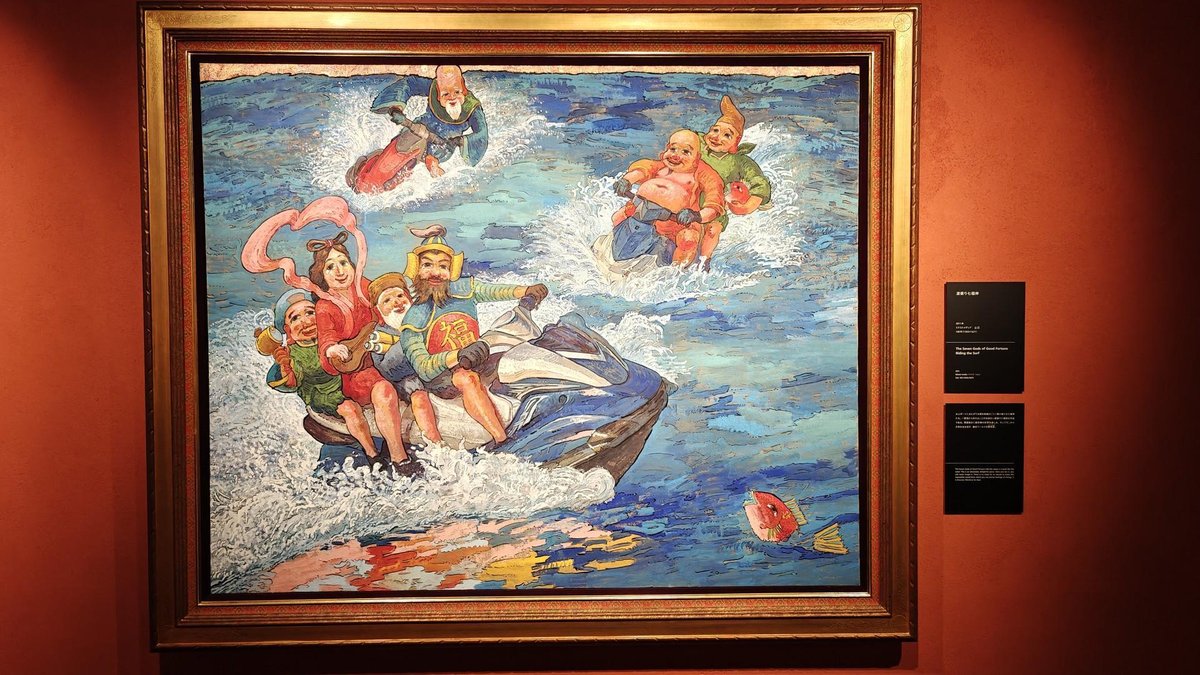
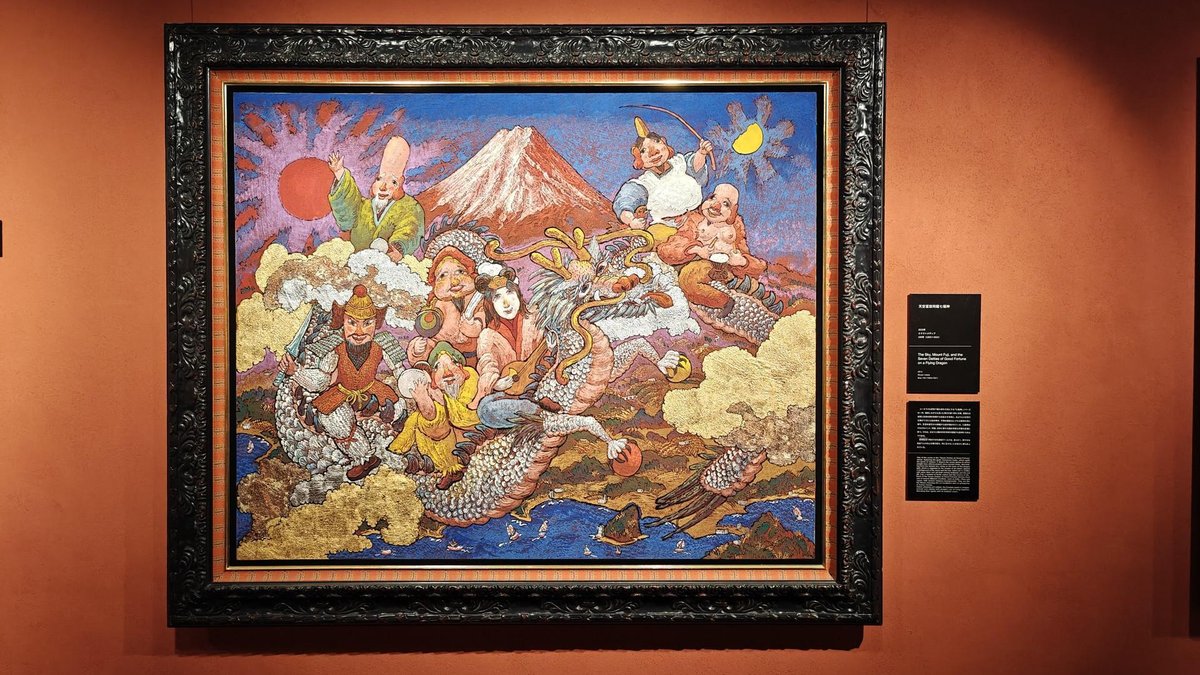
As for the Japanese and Asian themed paintings here, these showcase a relatively realistic art style that still retains a lot of his surreal charm. In the image above, the painting shown is called “Wave-Riding Seven Gods of Fortune”. The same seven gods are also featured in another painting called “Blue Sky, Mt. Fuji, and the Seven Gods of Fortune Riding on a Flying Dragon” (which is actually a mash-up of one of his works that you saw earlier).
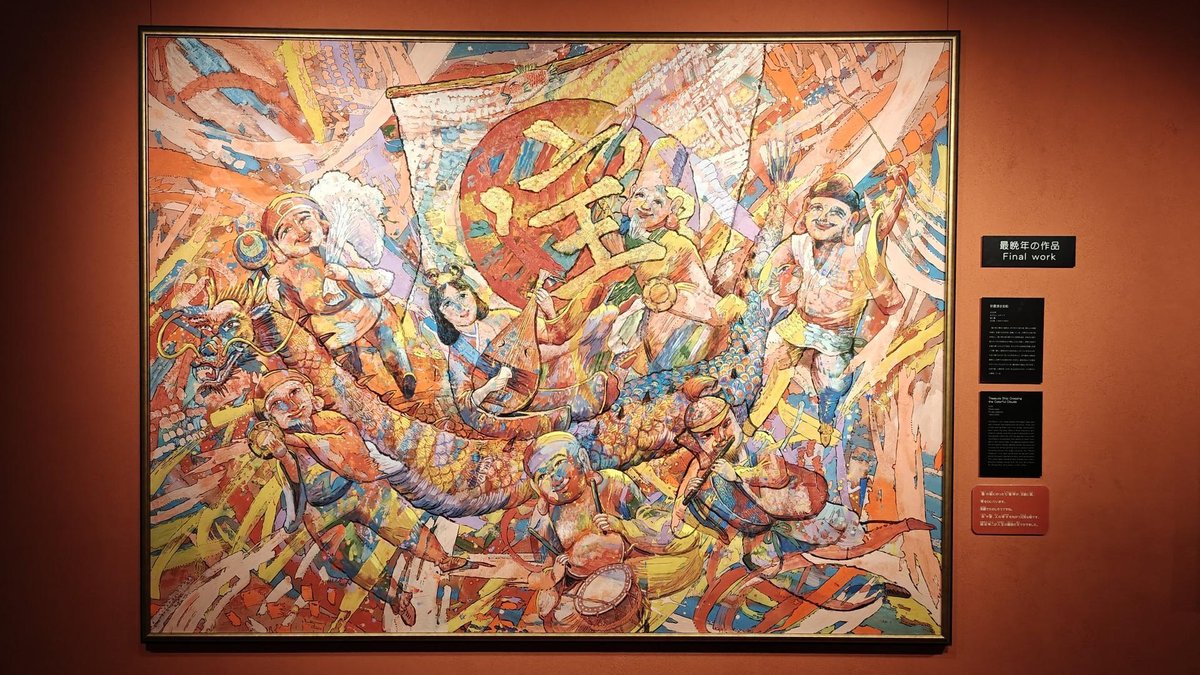
Another notable distinction between Exhibition Zone Blue and Exhibition Zone Red is the scale of the artworks on display in the latter area. Aside from “Arabesque”, there are paintings here like “Treasure Ship Crossing the Clouds” (see image above) that are quite large. There is even a painting called “Energy – Gods of Nature” that absolutely dwarfed me due to how wide and tall it was.
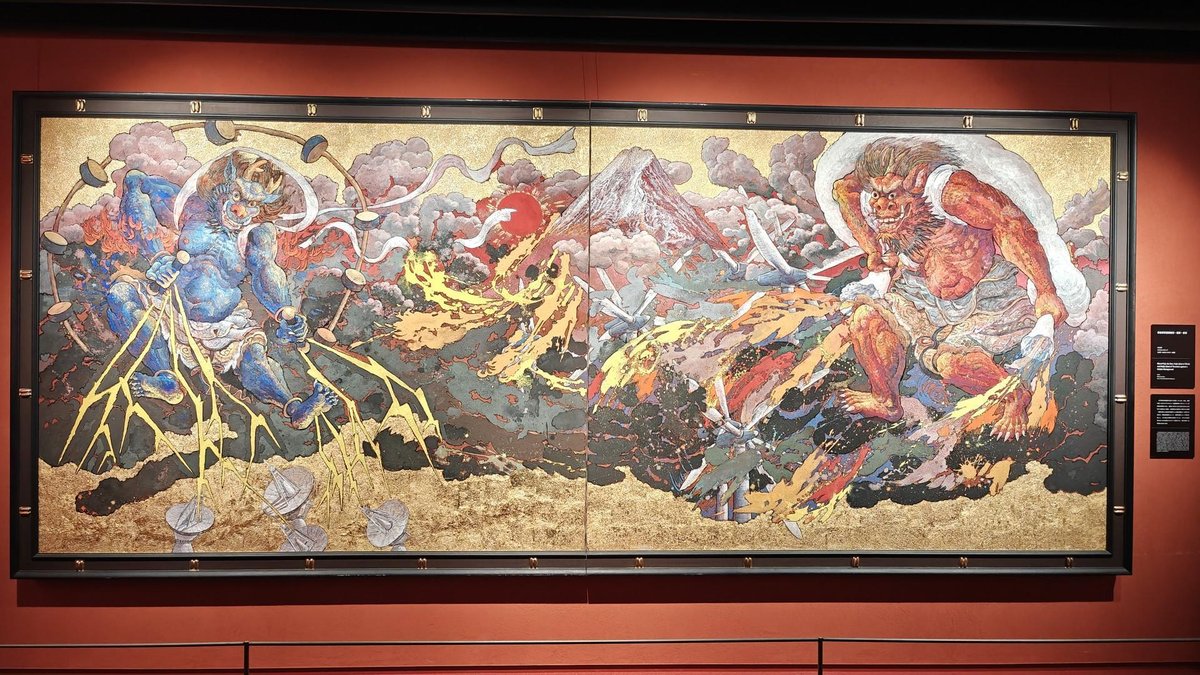
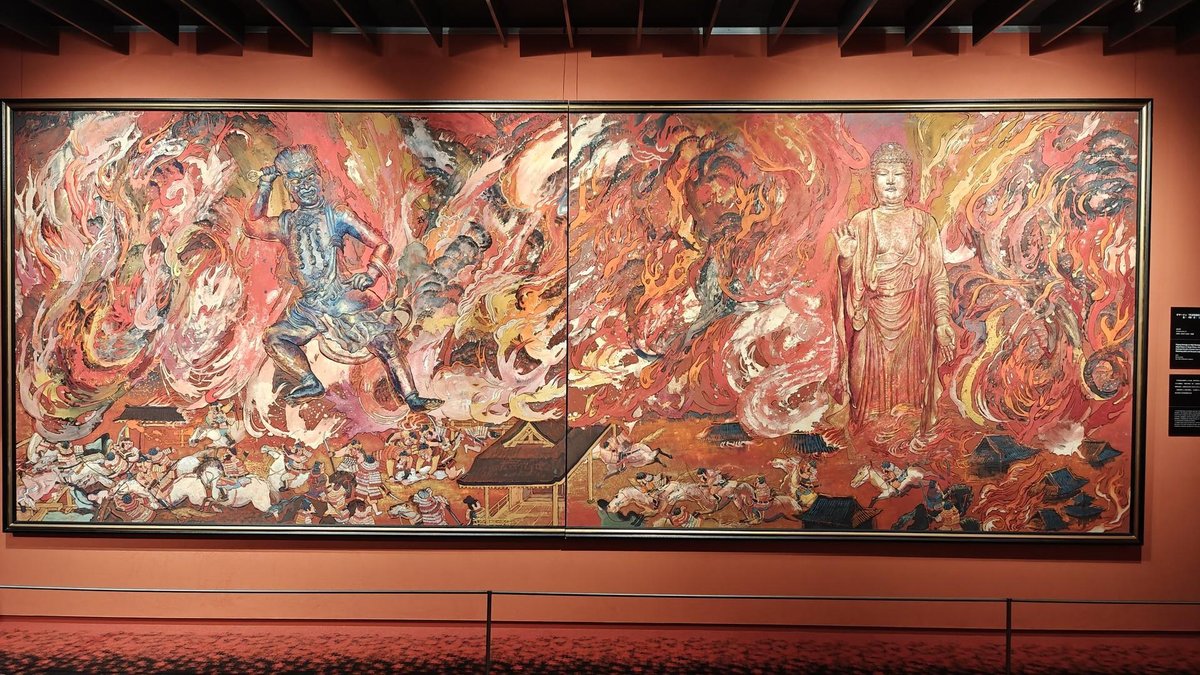
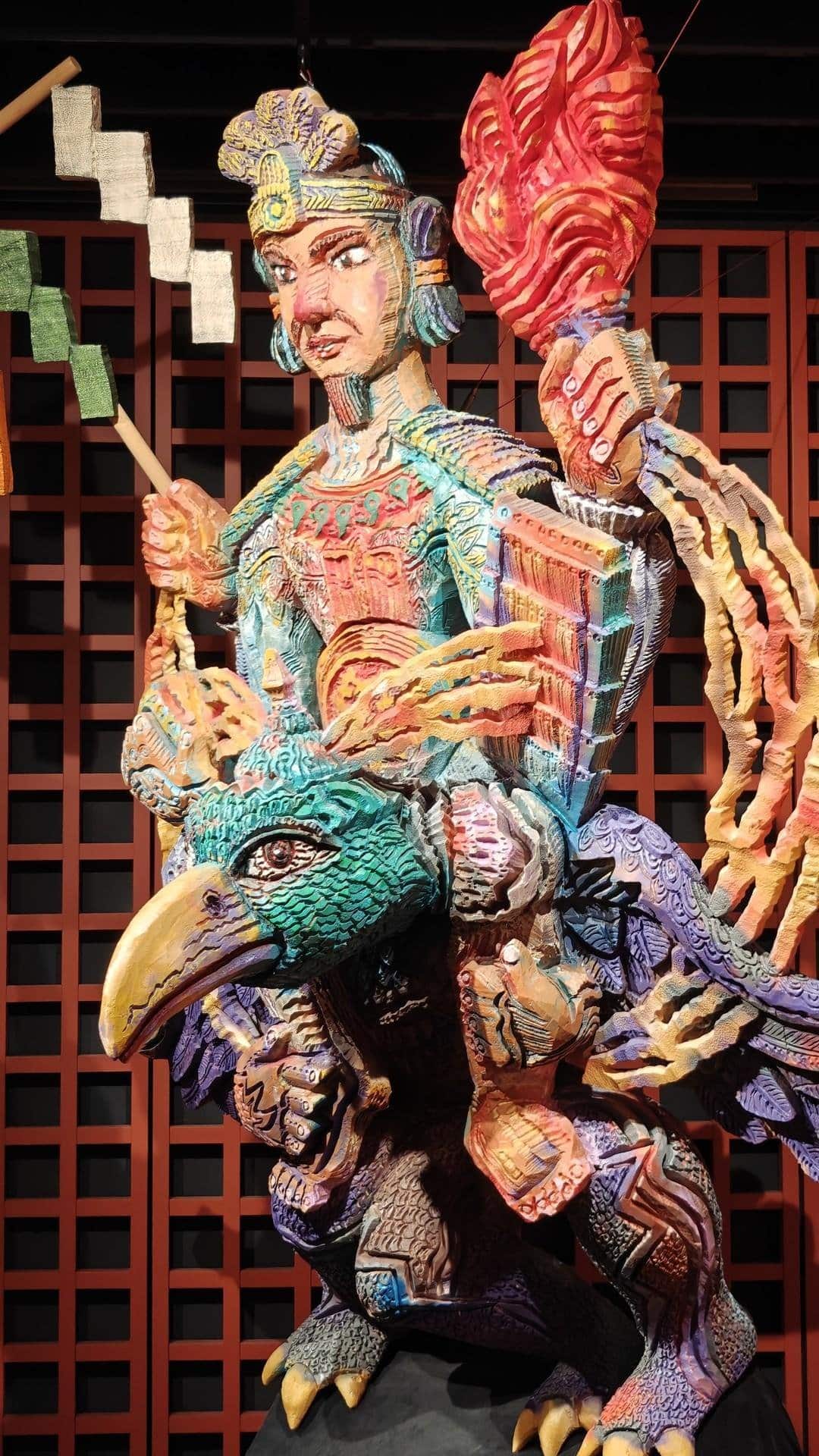
Aside from paintings, there are also sculptures here. The image above shows one of these called “Messenger of the Sun” or “Jinmu Yatagarasu”. If I’m not mistaken, this is a being from Japanese mythology who was sent by the sun goddess to guide an Emperor named Jinmu through some mountains which then resulted in his founding of Japan.
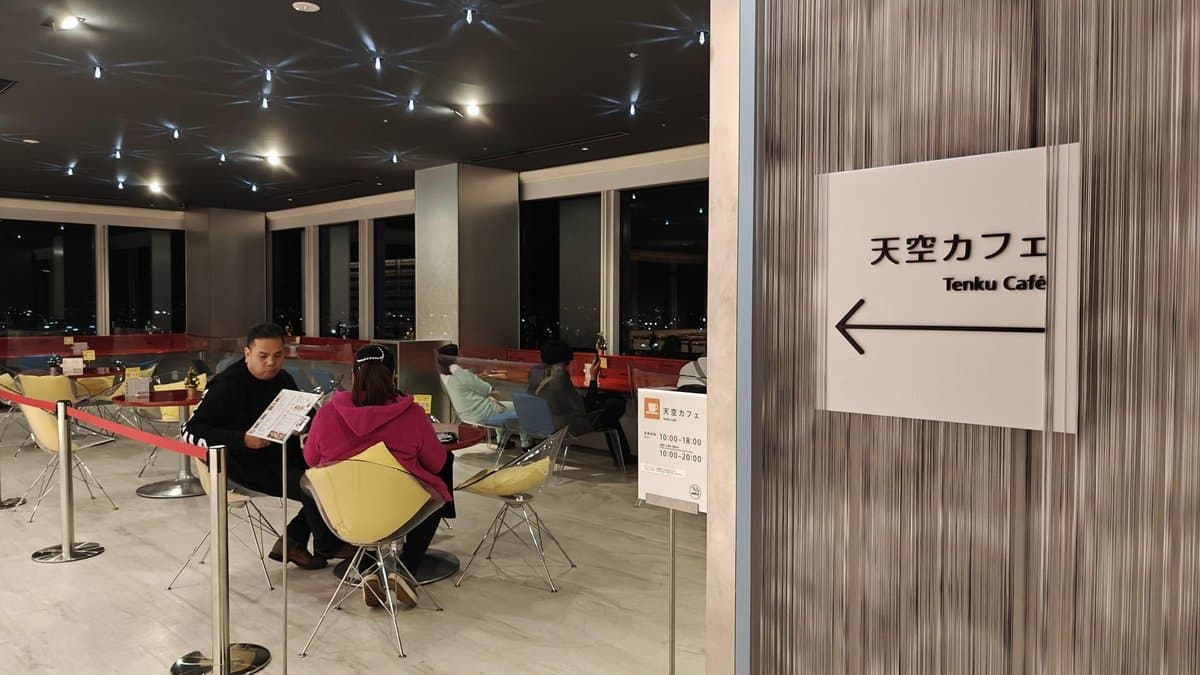
From Exhibit Zone Red, I then went to the Tenku Cafe area. If you’re feeling hungry after checking out the exhibits then this is where you can rest as well as order food and drinks all while enjoying the view of Osaka through the windows. Much like the art museum, the cafe opens at around 10:00AM and closes at 6:00PM from Sunday to Thursday and 8:00PM on Fridays and Saturdays.
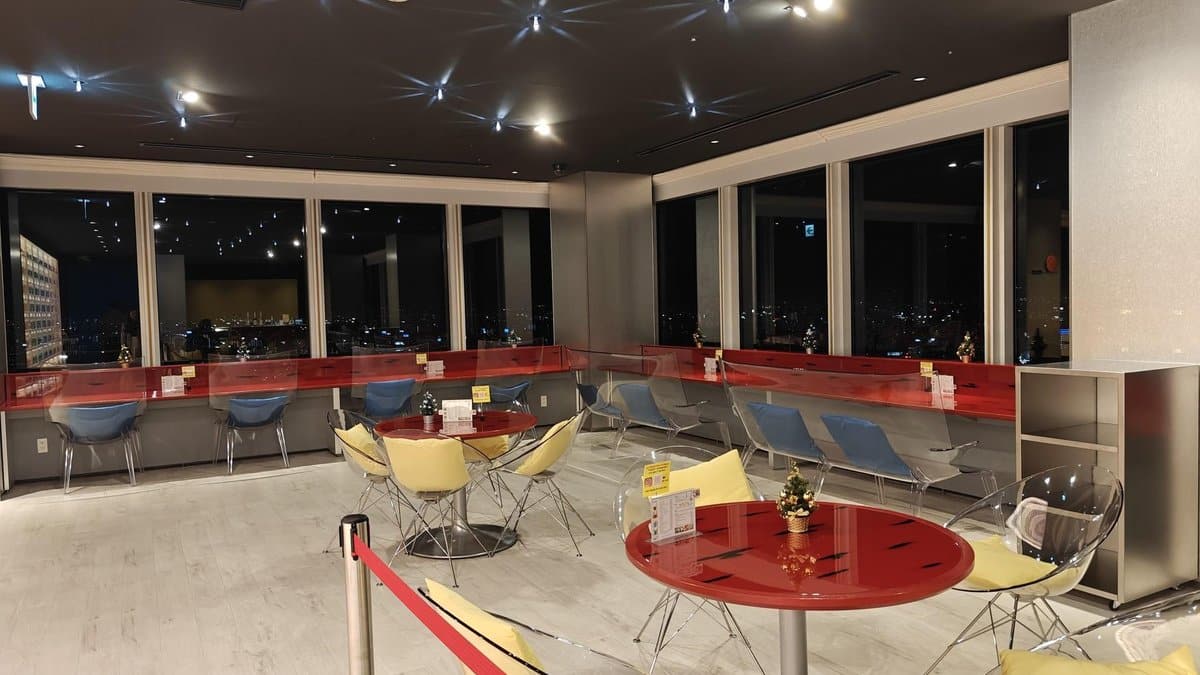
The cafe is relatively cozy though I wouldn’t necessarily say that it’s a must try. In fact, it only has average ratings on platforms like TripAdvisor. Still this shouldn’t be an issue as there are plenty of dining options here at Umeda Sky Building.
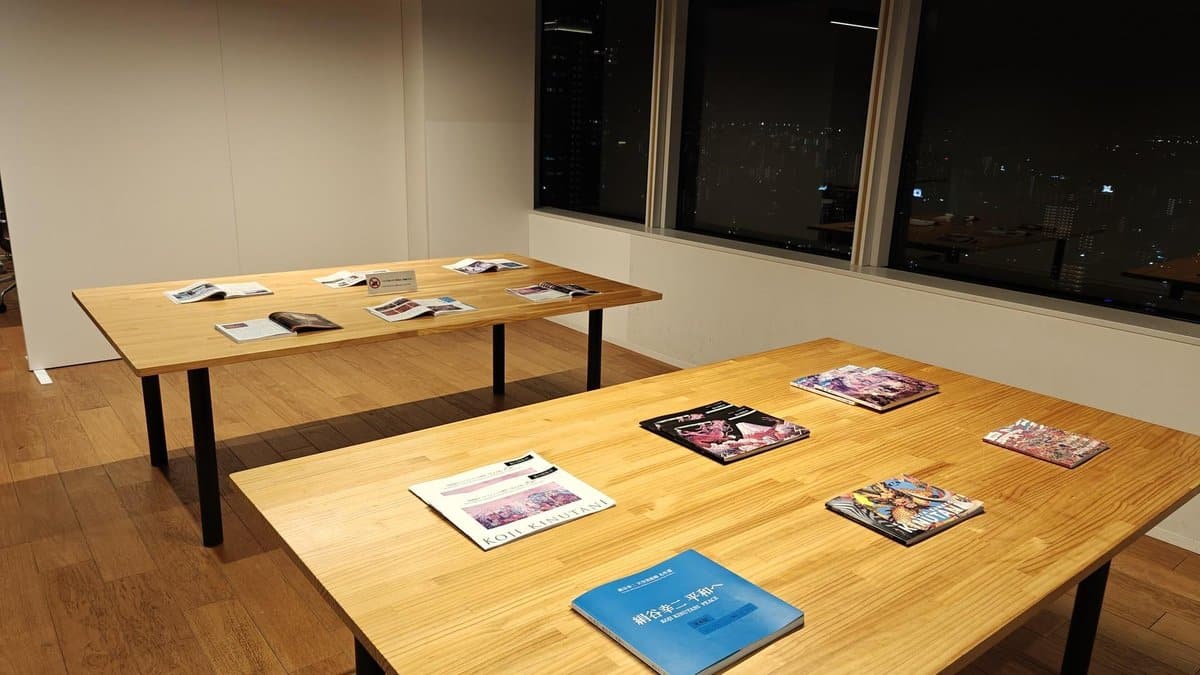
The final area that I came upon was the Workshop Space. As its name implies, this is where the museum holds the workshops for fresco and mural painting that it hosts regularly for guests. Unfortunately, there is no set schedule for these workshops so you’ll have to reserve in advance through the museum’s official website.
With this, my visit to the Koji Kinutani Tenku Art Museum ends. I must say that while short, this was still a memorable experience. As for whether I’d recommend it, I’m not actually sure.
I ended up enjoying the experience because I am genuinely interested in art. That said, you might not feel the same way. If you’re someone like me who enjoys making and appreciating art then a visit here is definitely going to be right up your alley.
Otherwise, you might want to skip this and check out other landmarks and destinations at the Umeda Sky Building instead. Price-wise, admission is affordable though it is relatively high compared to tickets for most shrines and temples. Overall though, I was able to get a lot of value from that 1300JPY admission fee.What do you think of my visit to the Koji Kinutani Tenku Art Museum?
Do you think it’s actually worth checking out or are you of the opinion that it’s not? We’re definitely interested in hearing about your thoughts on this hidden gem in the heart of Osaka down in the comments section!