
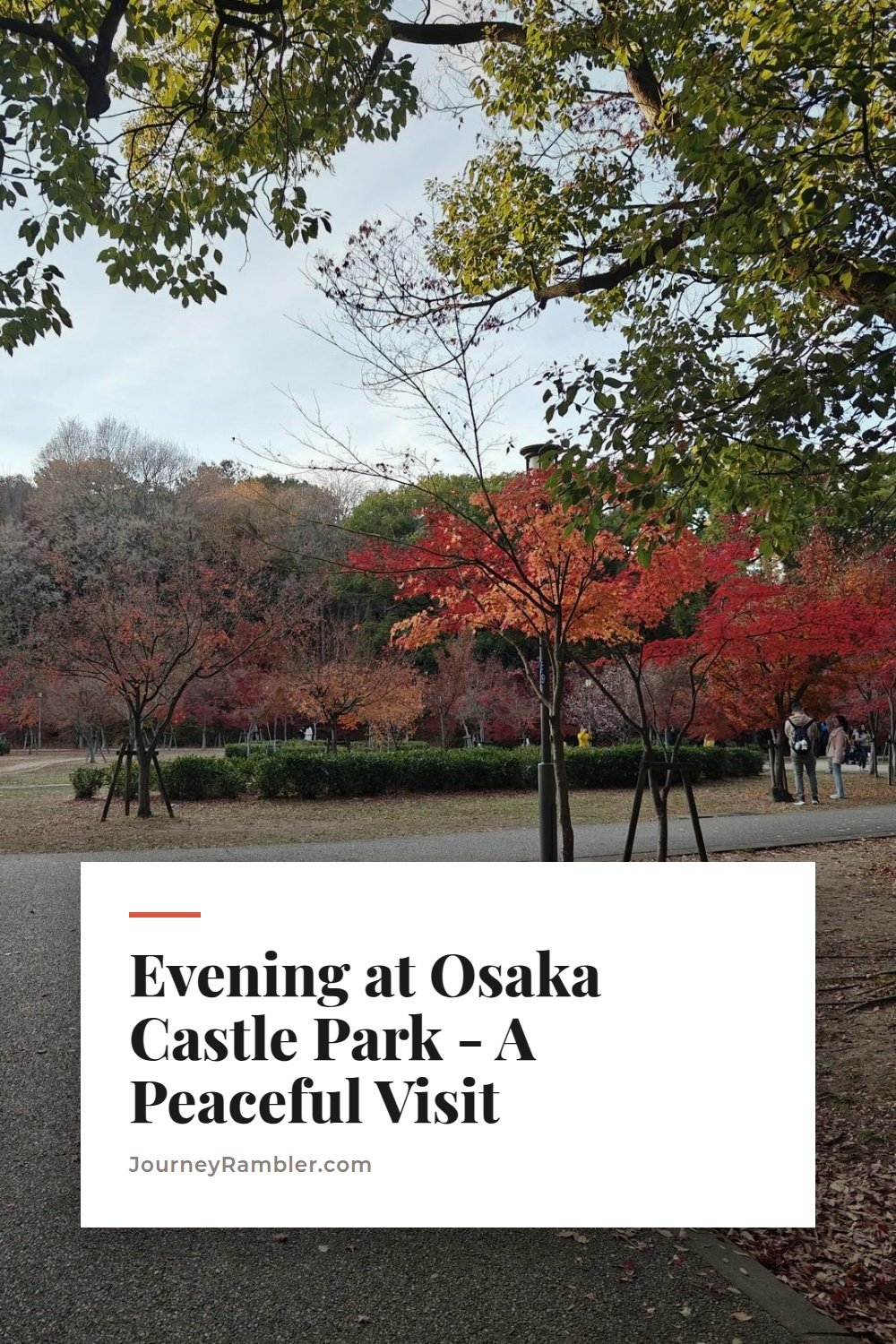
If you’re looking for a spot to just relax in Osaka then I think you’re going to love Osaka Castle Park. I was able to spend the early part of the evening (very late afternoon) when I was in the city and I totally felt at peace here. This massive park is relatively easy to get to and I’d recommend scheduling a day’s end visit to really get the most of what it has to offer.
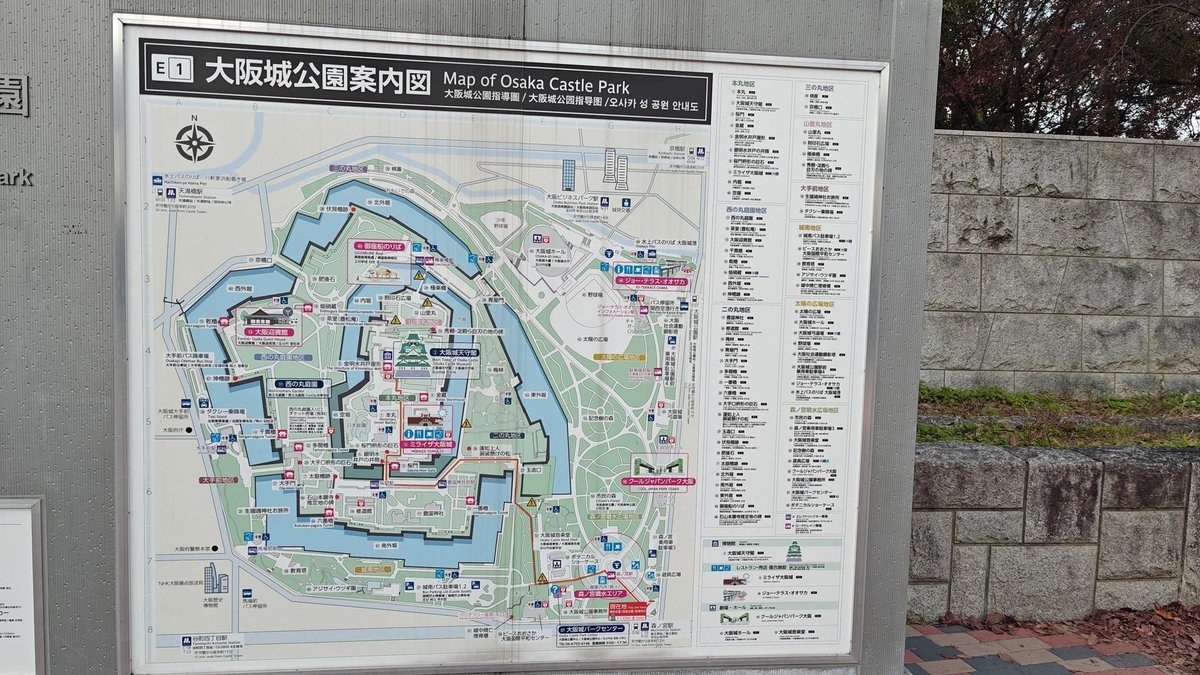
The easiest way to get to Osaka Castle Park will be via the subway. There is literally a subway exit for the Morinomiya Station (part of Osaka Metro) at its southeast entrance. If you’re on the above-ground Osaka Loop Line then there’s an Osakajokoen Station that’s walking distance from the park’s northeast entrance.
In my case, I ended up on the southeast entrance which had this guide map of the park which also featured a route that you can follow if you wanted to go to Osaka Castle.
Peaceful Evening Walk at Osaka Castle Park
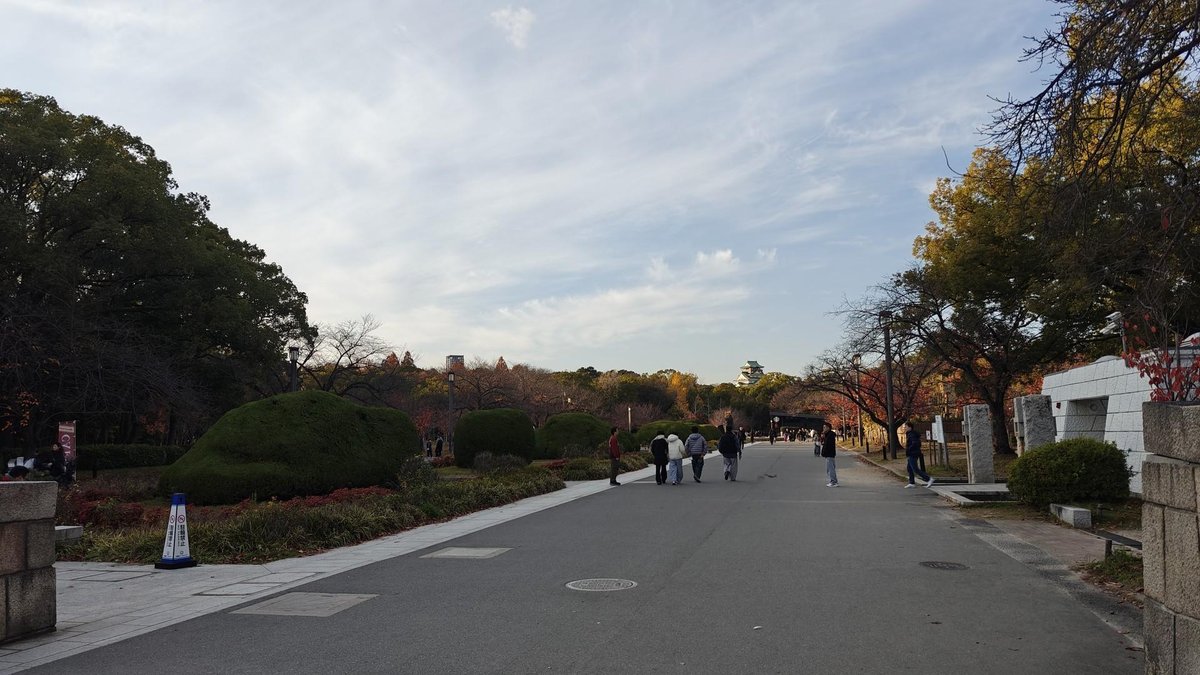
This is the path that leads to the park’s fountain area. Since this was during the early part of winter, the foliage on the trees here looked very uninteresting. There were some that still had their fall foliage but the sakuras here were completely denuded.
I’ve read that in the spring though this area completely comes alive with the sakuras in bloom.
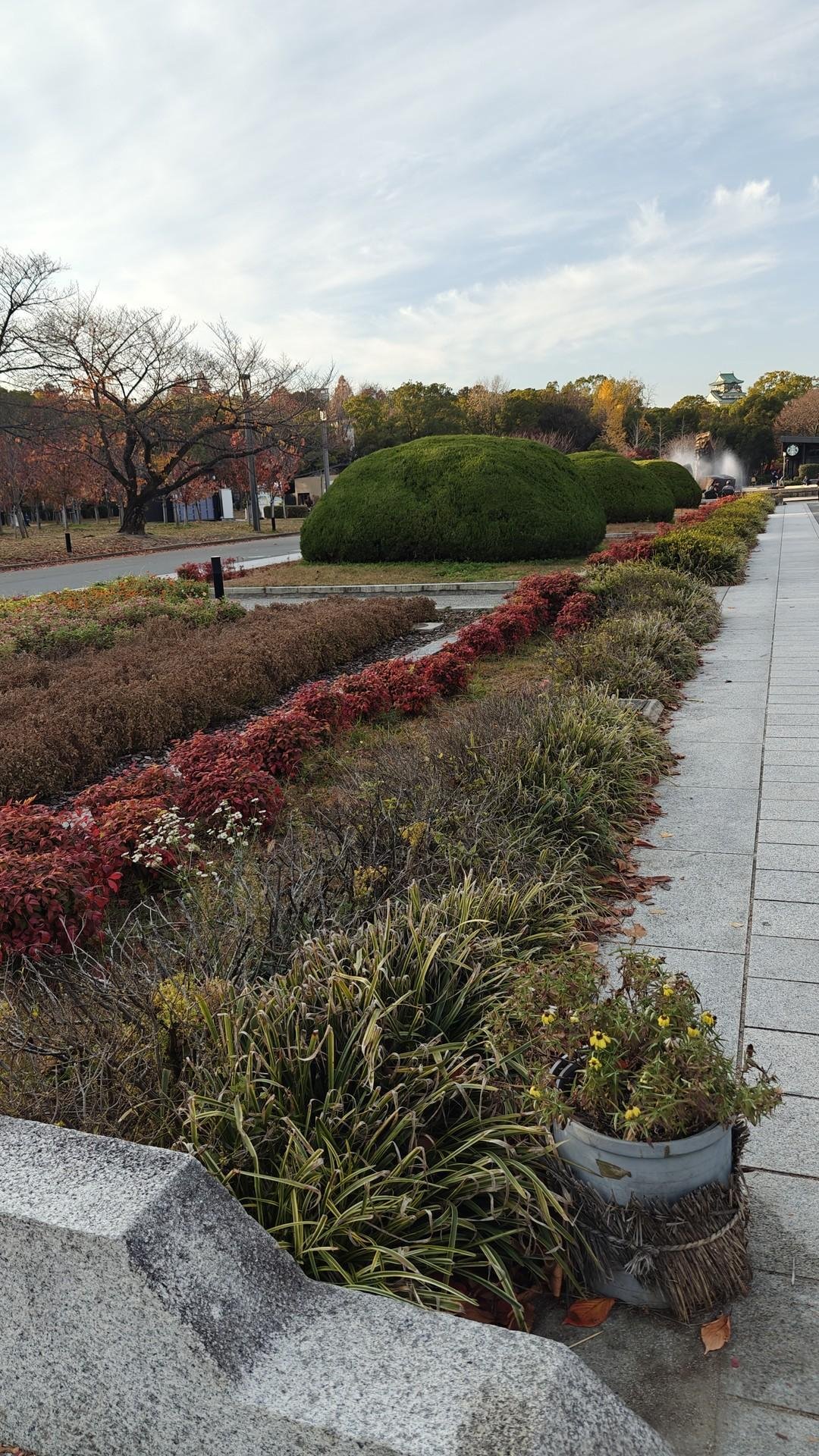
This is midway through the path leading up to the Osaka Castle Park Fountain (which you can actually see in the background). What really stood out to me here were the shrubs that looked like mounds. I’m not quite sure what these were but what I was sure of was that they were quite eye-catching.
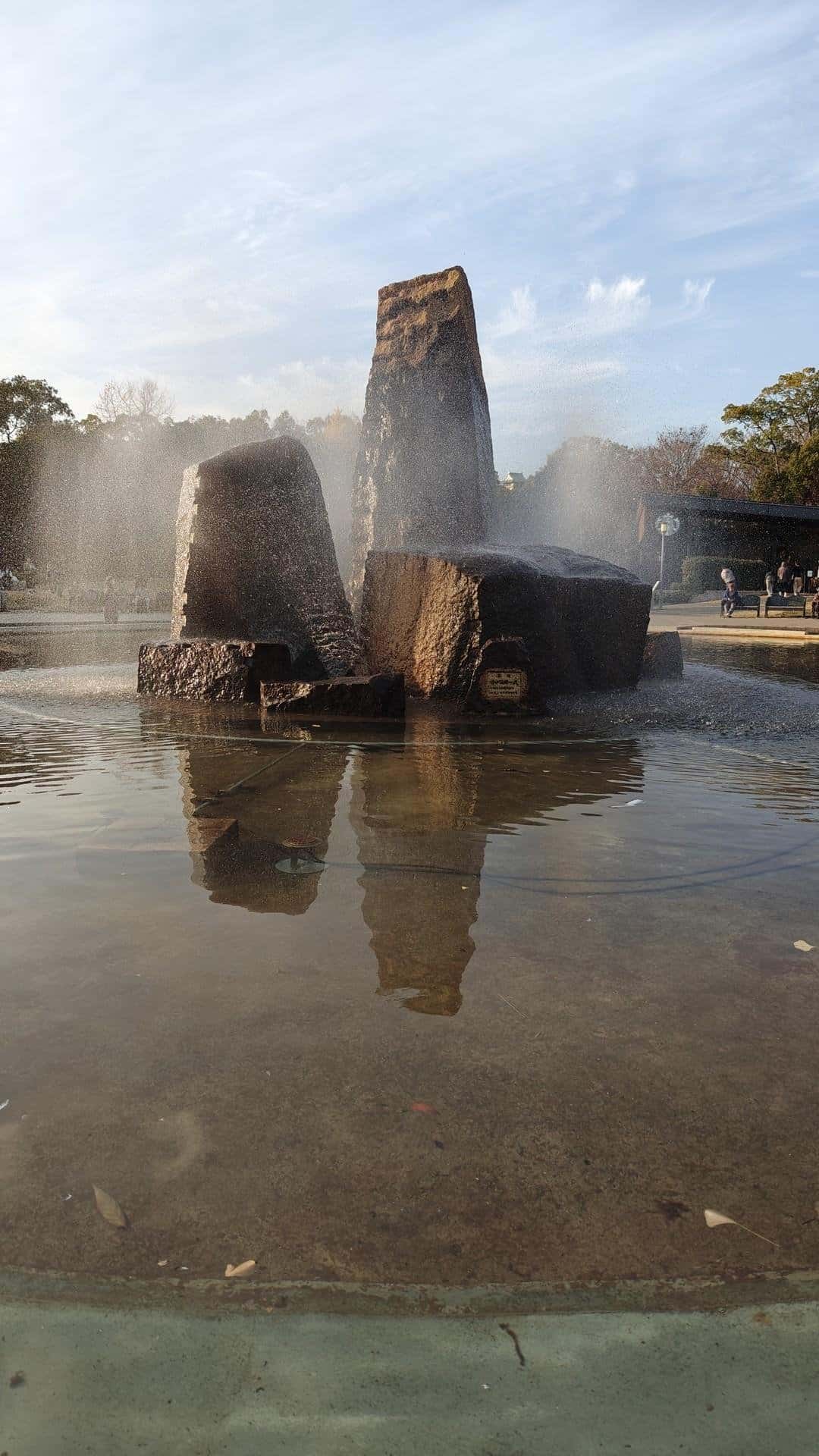
Just a short distance from where I took the previous picture was the Osaka Castle Park Fountain. I was expecting a more traditional looking fountain but what greeted me was something more abstract and modern. When I looked it up, I found out that the fountain (as well as the park itself) is relatively new compared to the shrines and temples that I’d visited in Kyoto.
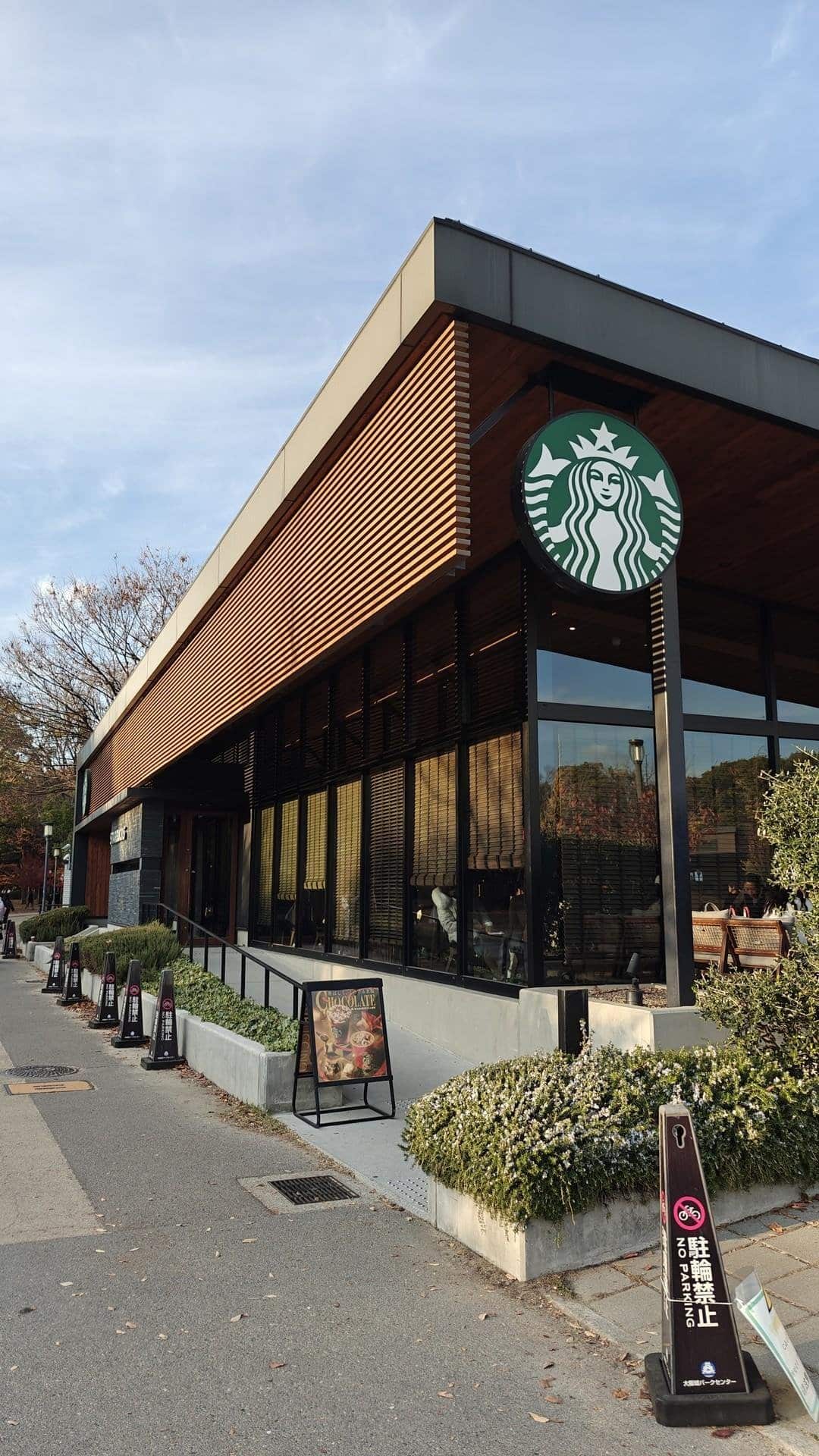
Speaking of modern, there’s actually a Starbucks branch here. It’s just a short walk from the fountain and its interiors look quite cozy. While you can enter Osaka Castle Park 24/7, this Starbucks branch is actually only open from 7:00AM to 9:00PM.
If you’re looking for a coffee fix at night then unfortunately you might have to look elsewhere.
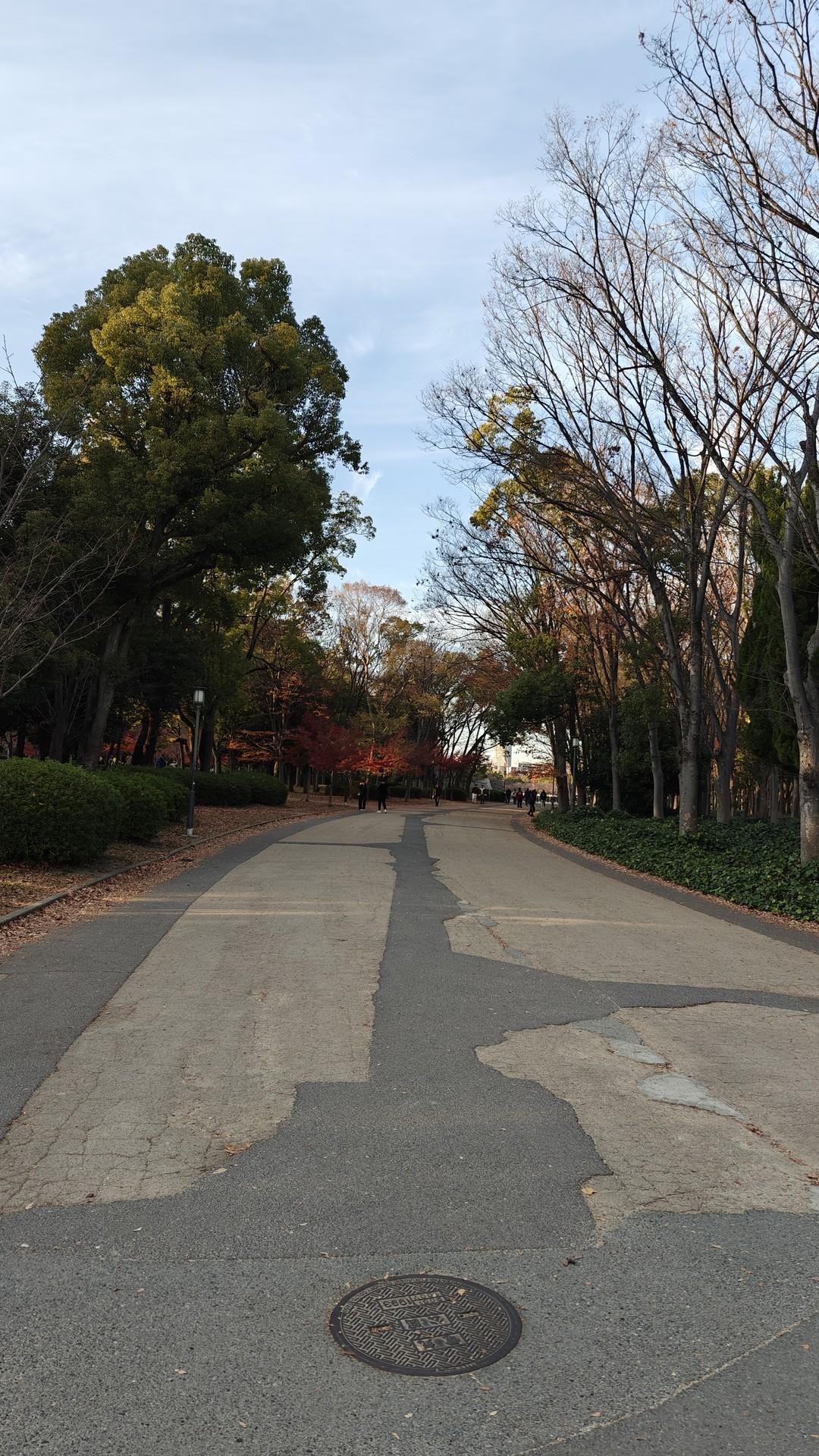
Walking past the Starbucks branch, I soon found myself on this path. To the left is the area where you’ll find the park’s Autumn Garden. Following this path straight north will lead you to the Forest of Memorial Trees and an area of the park that is famous for its wisteria.
Since I planned to go see Osaka Castle though, I decided to stick to the route that I saw on the guide map from earlier.
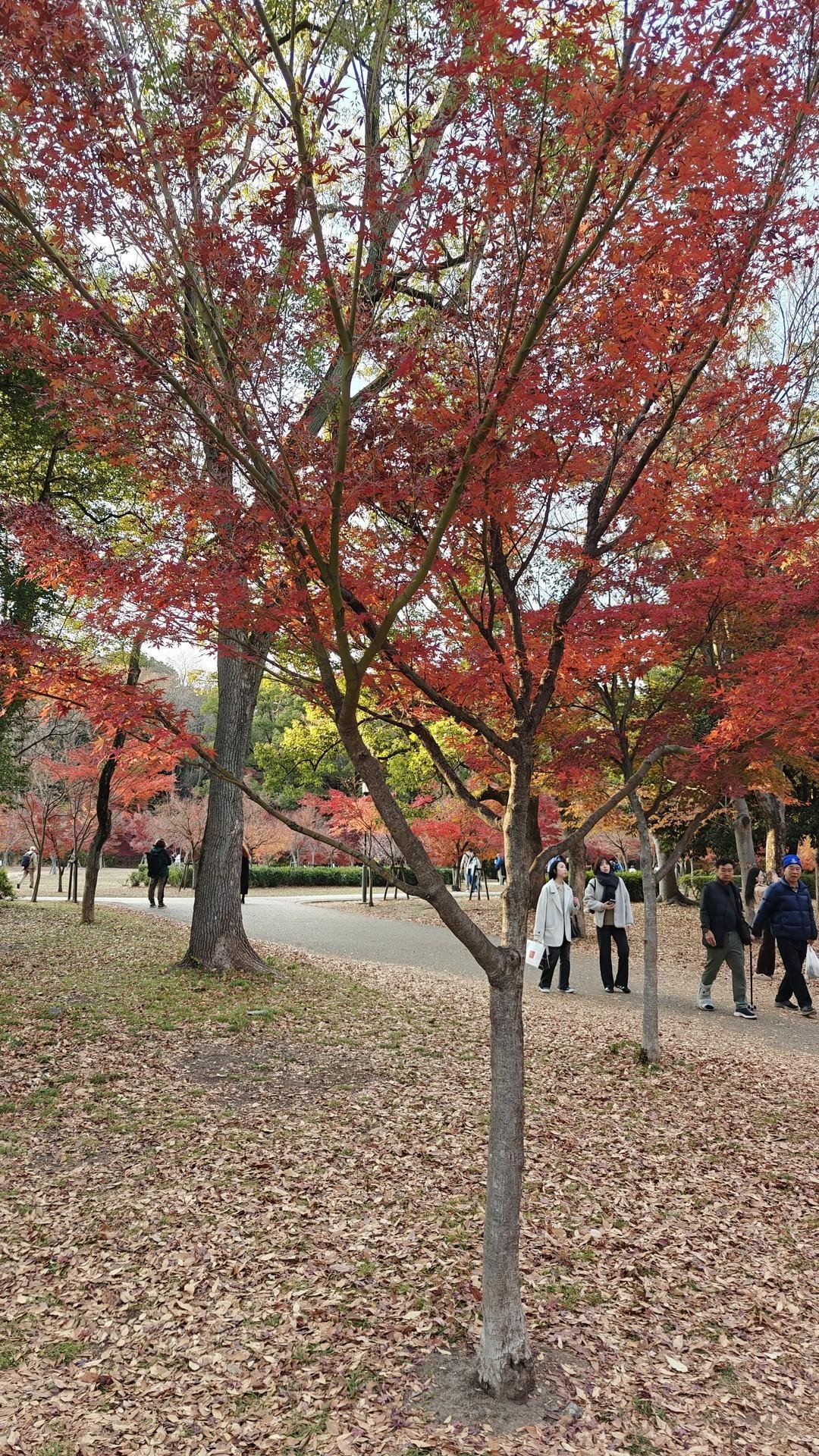
Now I said I stuck to the route but I also kind of was interested to see the Autumn Garden. Here’s a glimpse of it from the path I was on earlier and you can actually take a detour here if you wanted to. There’s actually another path here that would allow you to get back on the route.
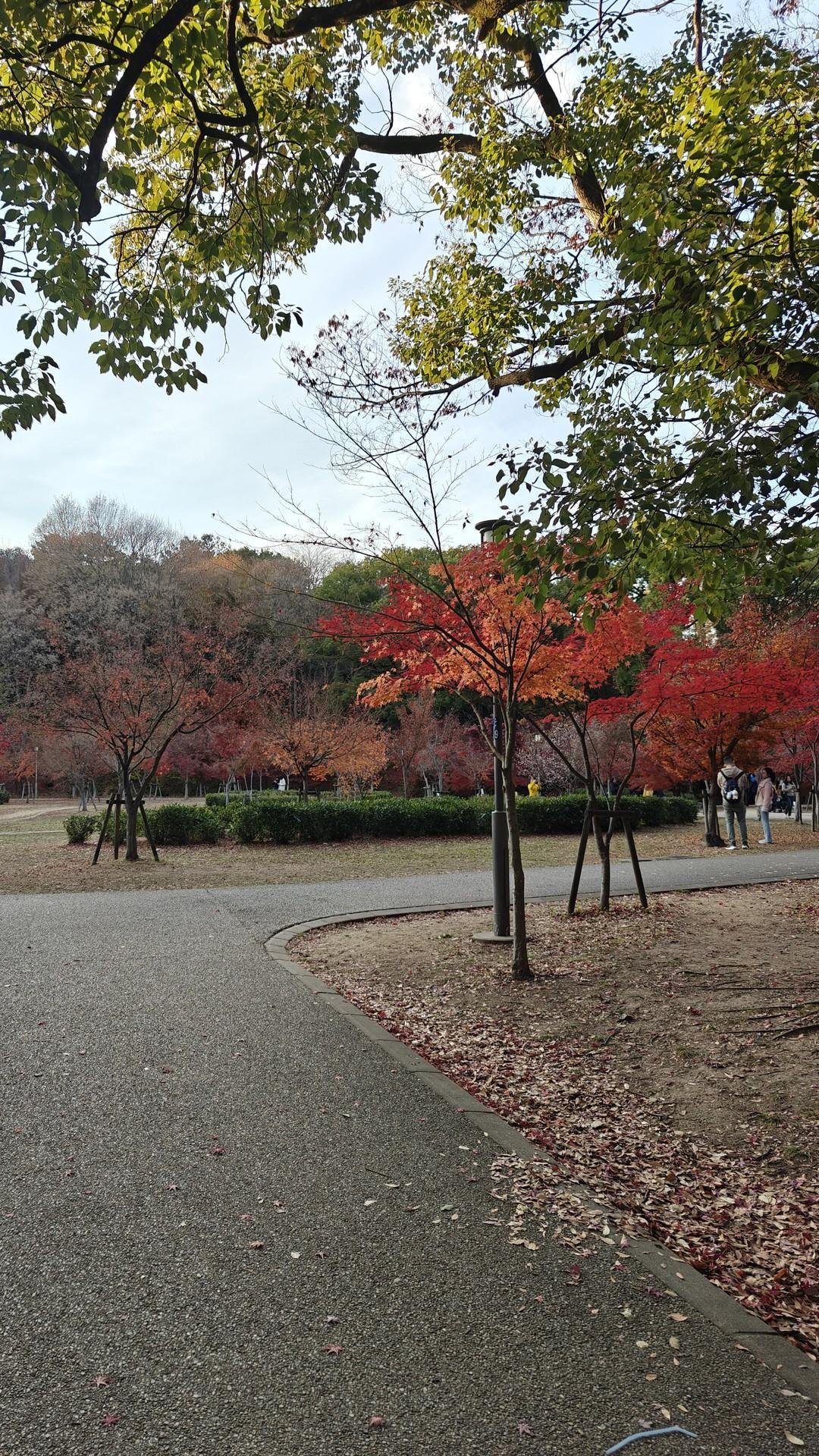
So why would I go out of my way to visit the Autumn Garden? It’s actually a popular spot here at the park thanks to its Japanese maples or momiji. I was fortunate enough to have come here when the trees still had their fall foliage.
Typically, you want to time your visit for late autumn or early winter for the best experience. Had I come here two or three weeks later then I might not have caught a glimpse of the trees’ striking red foliage.
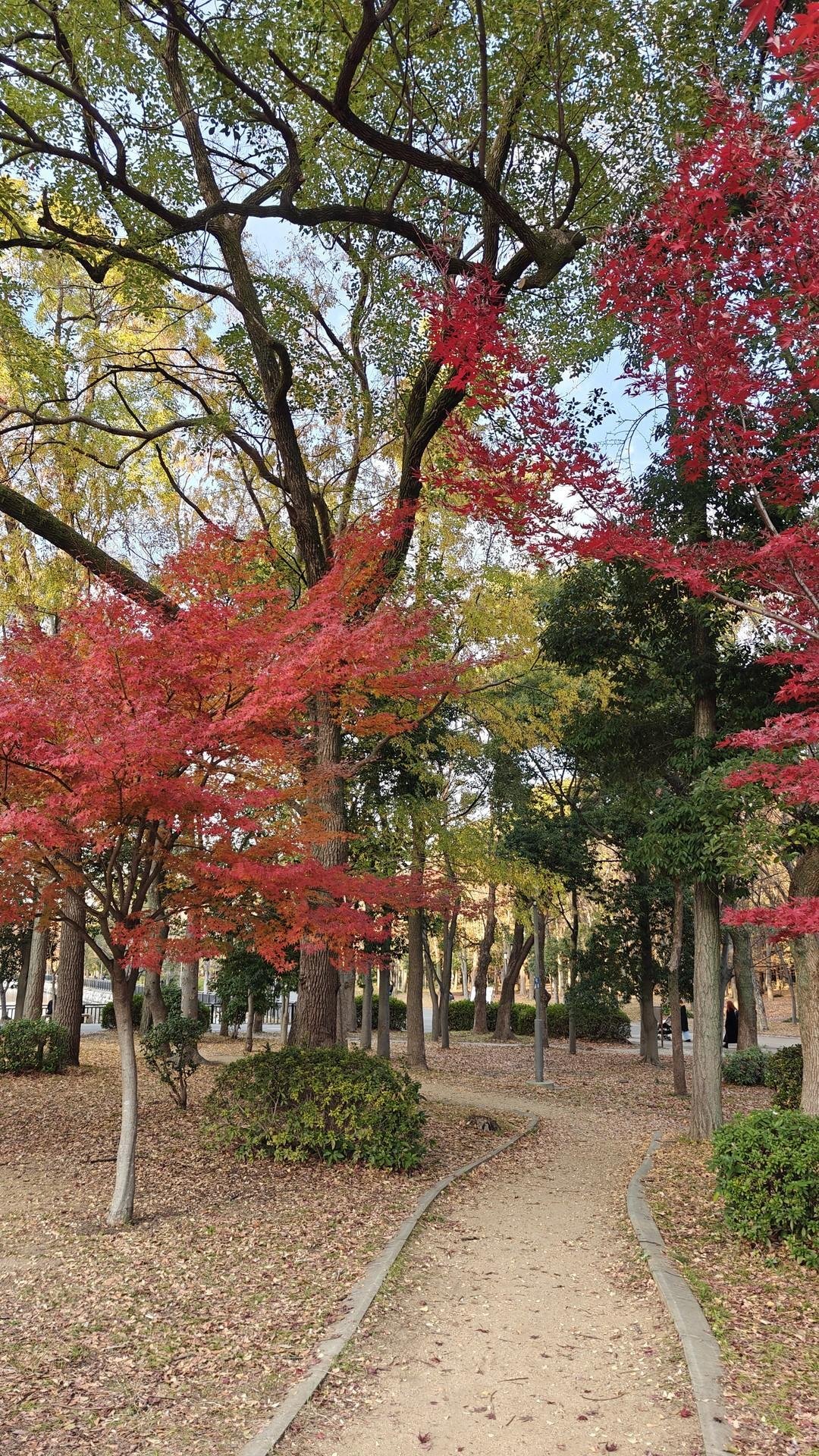
This is one of the footpaths that leads back to the route to Osaka Castle that I talked about earlier. From here you can sort of see the railings with a view of the East Outer Moat. As for the area surrounding this footpath, I’ve read that this is a popular spot for picnics especially during the peak of fall foliage season.
If I remember correctly, the term for this activity is called momijigari.
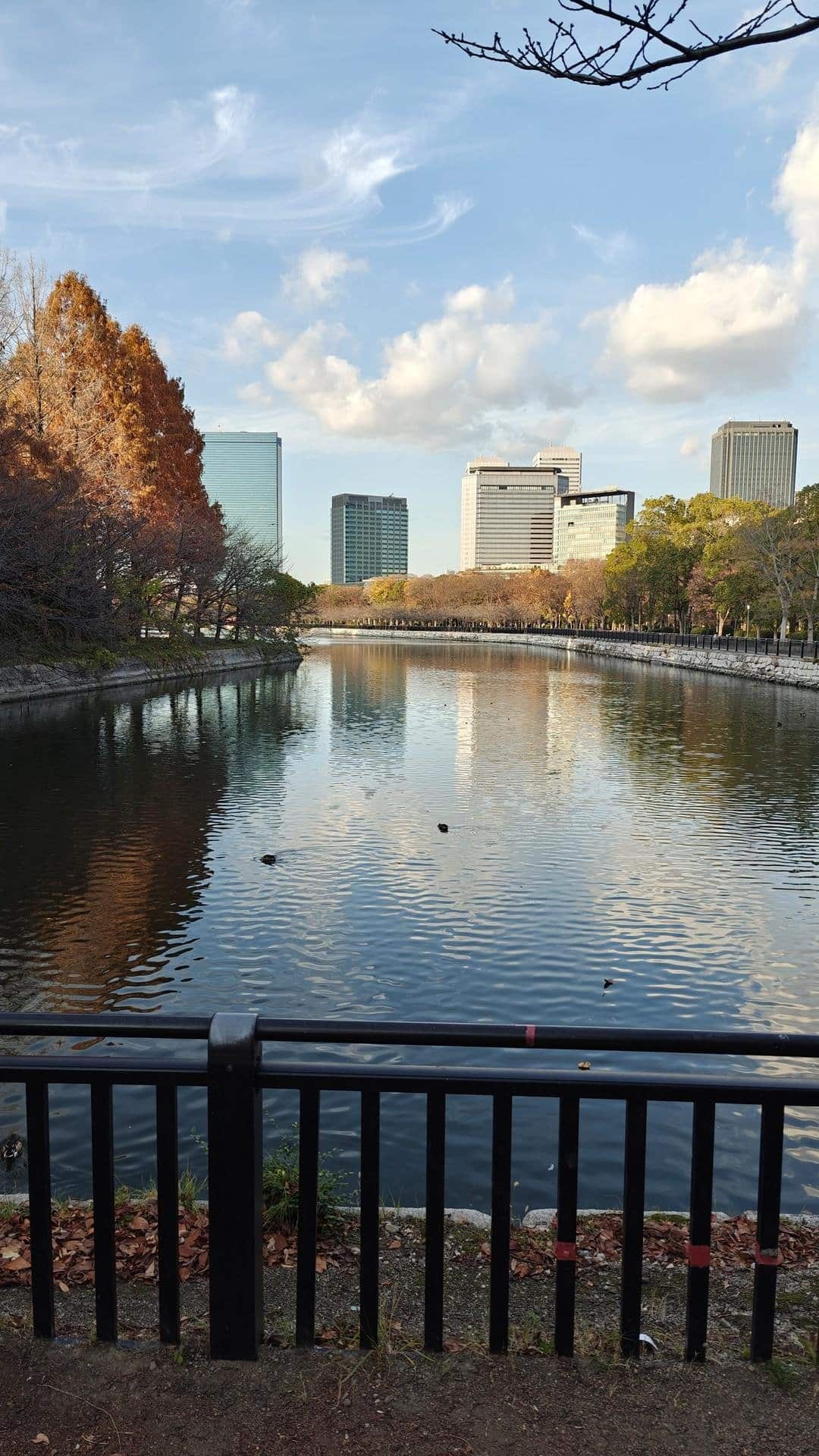
This is the railing that is overlooking the East Outer Moat. I actually thought this was just a run-of-the-mill pond so I was surprised to find out that this (or at least parts of it) was 10 meters deep. If you’re wondering how deep that is, that’s about the height of a 10-story building.
I’ve read that this actually was filled back in 1916 but was then restored just recently in 1997. Arguably what makes this East Outer Moat popular though are the sakura lining its sides. Similar to the Autumn Garden, people also hold picnics under the sakura tree on its banks during spring season.
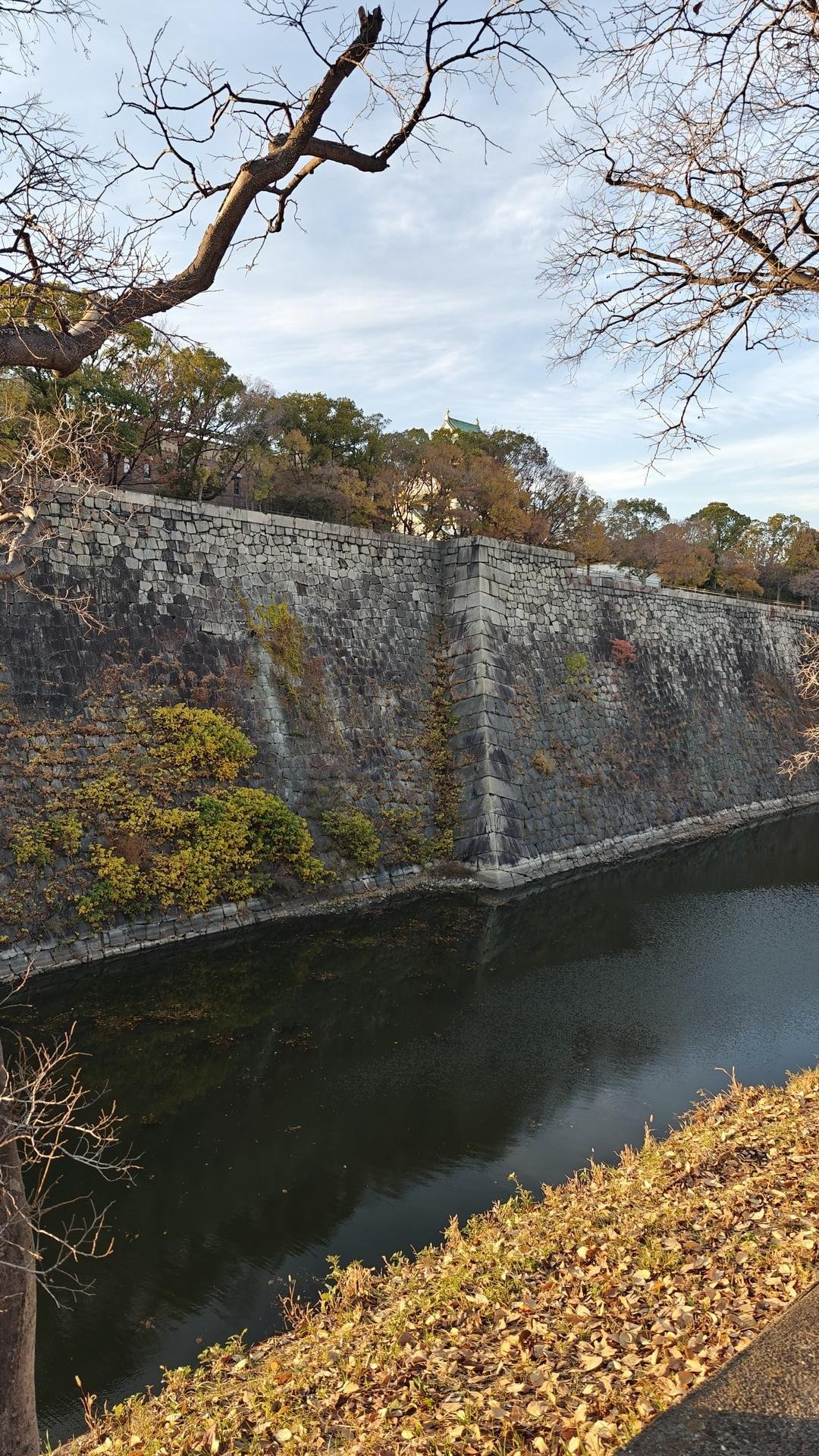
Following the path towards Osaka Castle, I climbed up a flight of stairs and found myself facing the South Outer Moat and the massive walls protecting the castle compound. Seeing this reminded me of my visit to Kanazawa Castle last year. For some reason though, the walls here look much more imposing.
I actually looked up how old the walls are and I was surprised to find out that these have been up since the 1620s.
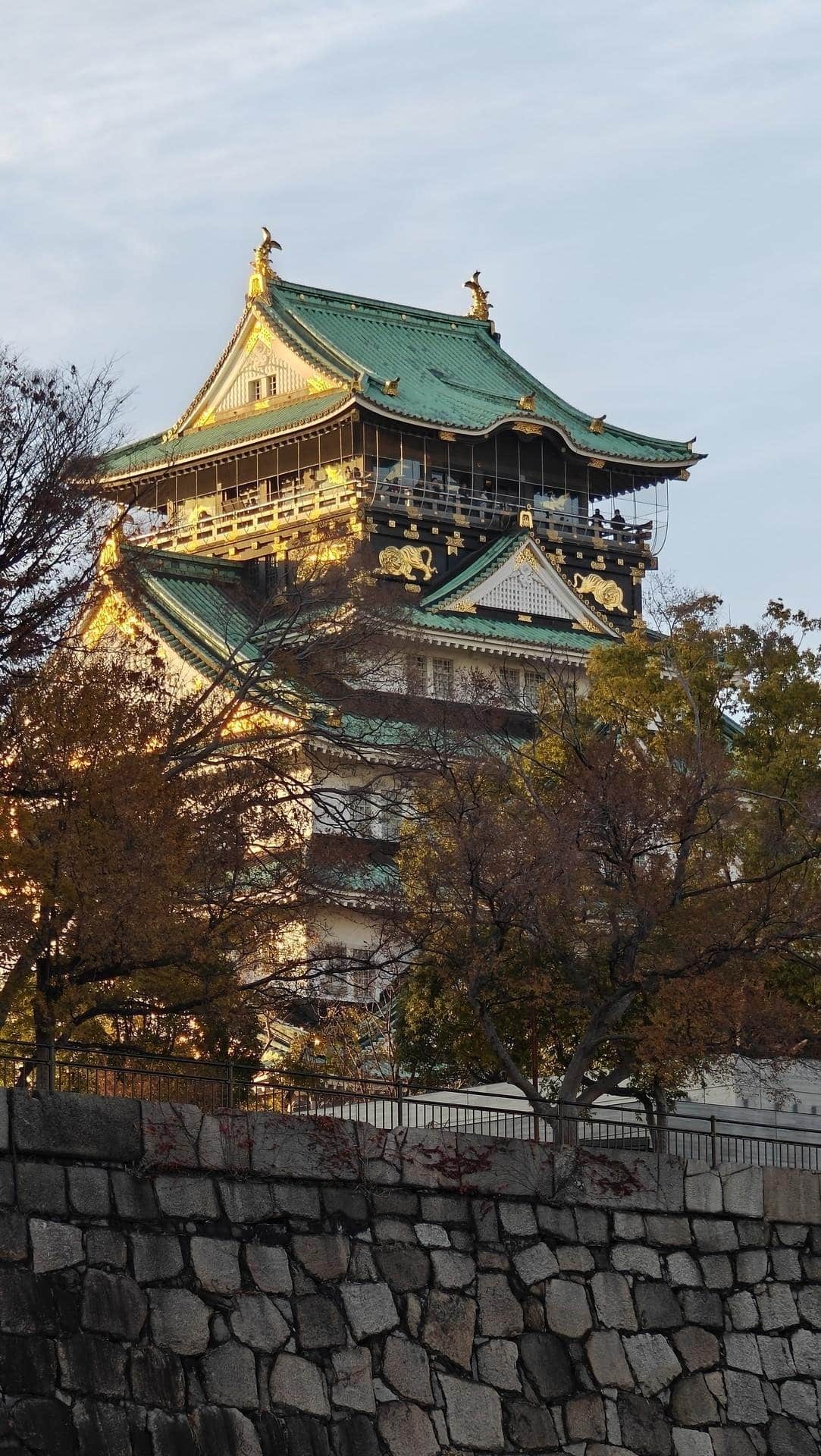
As I walked further along the route, I eventually caught my first glimpse of Osaka Castle. I was somewhere along the eastern side of the Inner Moat when I took this picture and the way the afternoon light illuminated the castle’s gold details reminded me of Higashi Hongan-ji Temple in Kyoto. I tried looking it up and Osaka Castle is actually taller than Higashi Hongan-ji’s Goei-do or Founder’s Hall.
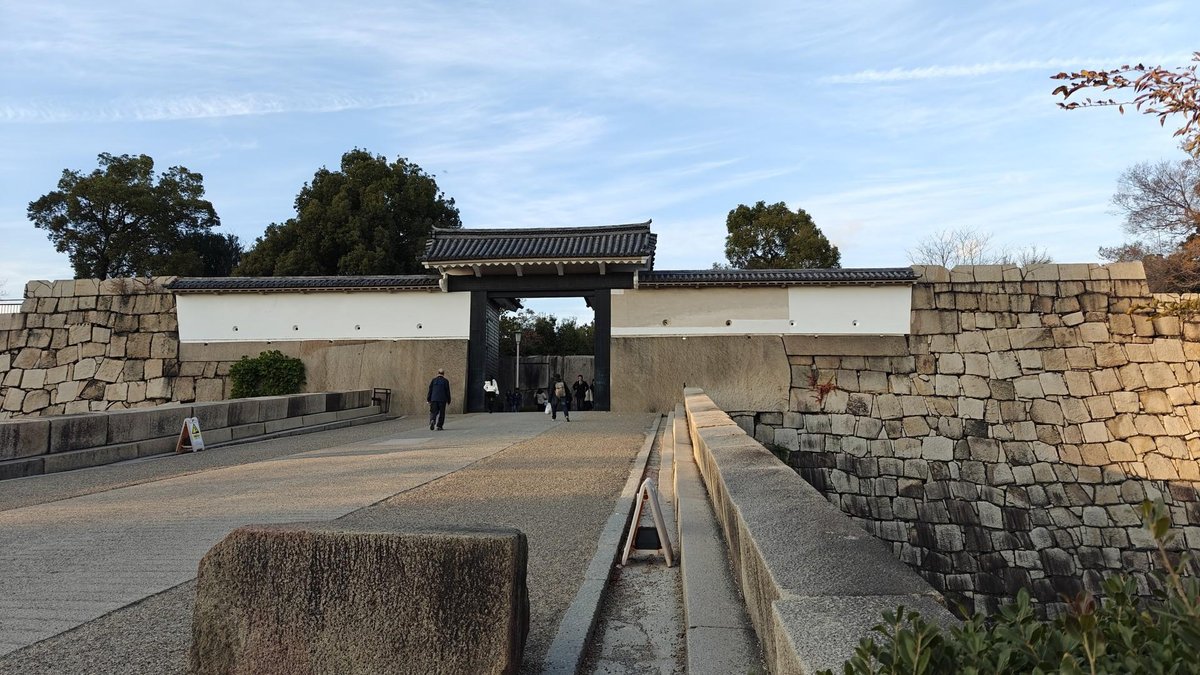
I finally reached the bridge that serves as the approach to the Sakuramon Gate. From the vantage point in the image above, the gate doesn’t look that impressive. In fact, if I was to have been magically transported in front of it for the first time I wouldn’t have thought anything of it.
In actuality though, the gate is quite special. In fact, the gate is only a reconstruction but it’s still considered an Important Cultural Property.
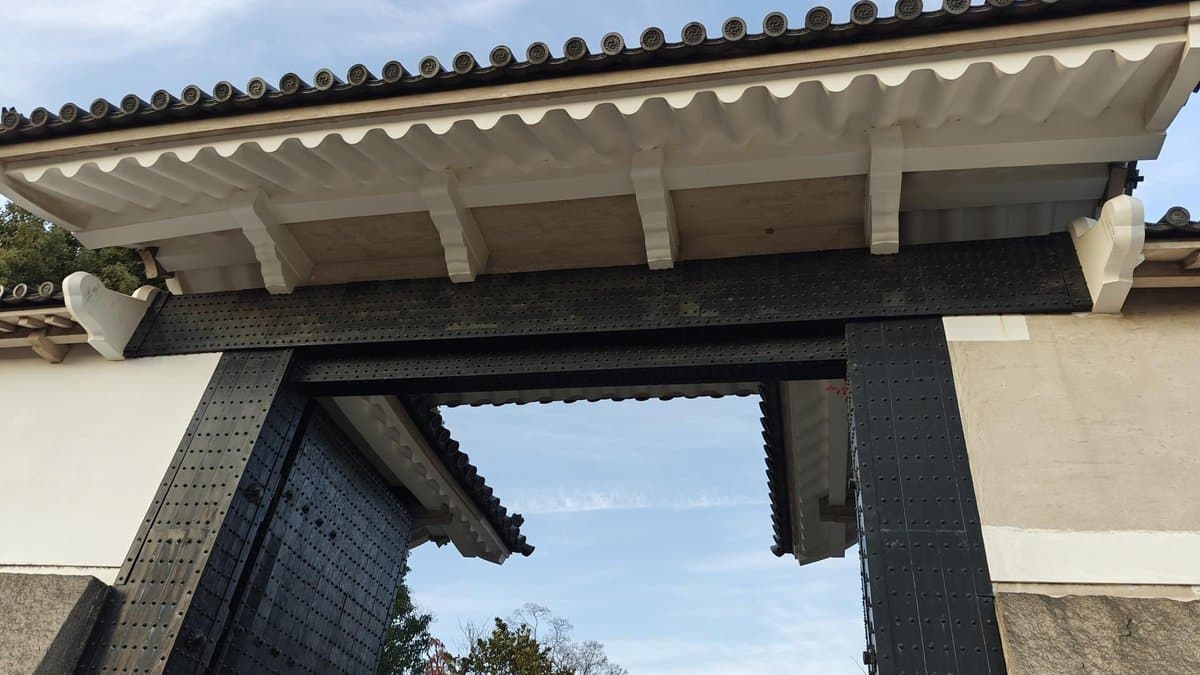
Up close, the gate is massive. It’s not as ornate as some of the gates that I’ve passed through during this Kyoto and Osaka trip but I’d be lying if I wasn’t impressed by its size and scale. Moreover, the iron plates on the gate also looks like it could survive any traditional military projectile (arrows, spears) you’d throw at it.
The original gate burned down in 1868 and so it was rebuilt the next year. It stood for more or less a hundred years until it was repaired and restored in 1969.
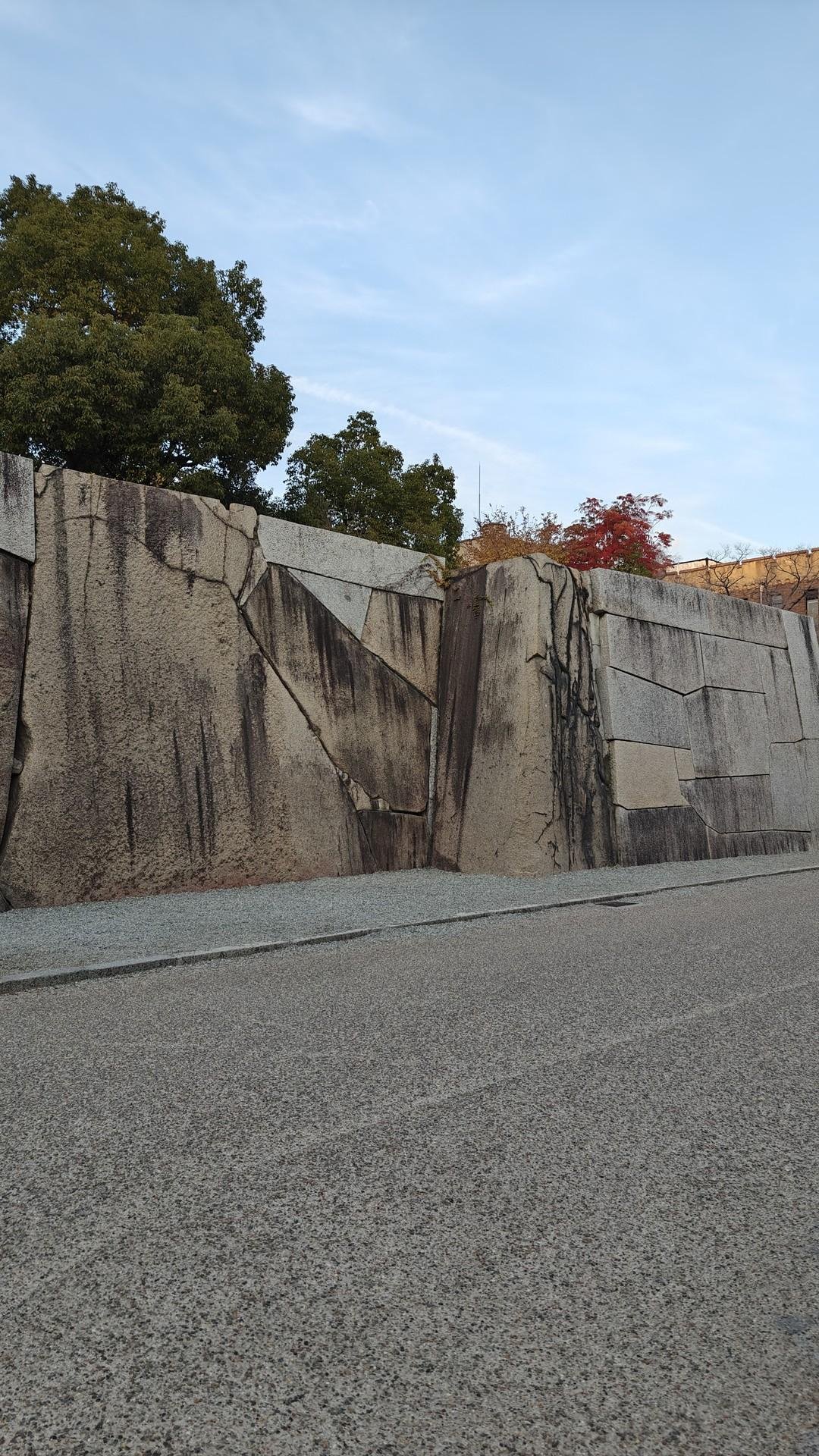
Entering the gate, I was then greeted by this wall made of large stones called the Takoishi. From what I understand, guards would typically be found taking defensive positions on top of these. The gate is an example of a masugata-mon (similar to some of the gates in Kanazawa Castle) and these stones effectively box in any advancing force.
Once an advancing force is in this courtyard, gunners and bowmen on top of the stone walls can easily rain destruction on them. As for friendly forces, they can just proceed to the inner gate which, in the case of the Sakuramon Gate, used to be on the right of this courtyard (if you’re facing the castle/northern direction).
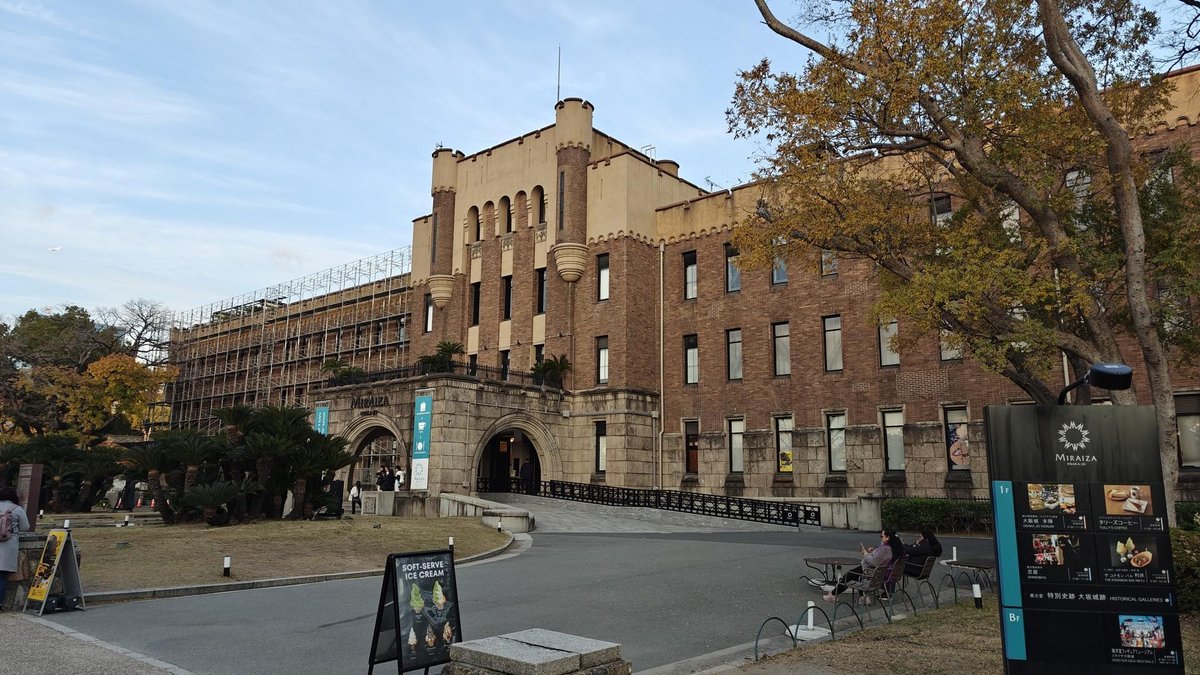
After passing the inner gate, I’m now in the Honmaru or Inner Bailey area of Osaka Castle. Still following the route, this was the first building that I saw. The building is called Miraiza Osaka-jo and it’s a relatively new addition to the castle complex.
Built in 1931, the building served as the military headquarters of the 4th Division of the Japanese Imperial Army. Eventually it served as a museum and now it’s become a hub for dining and lifestyle establishments.
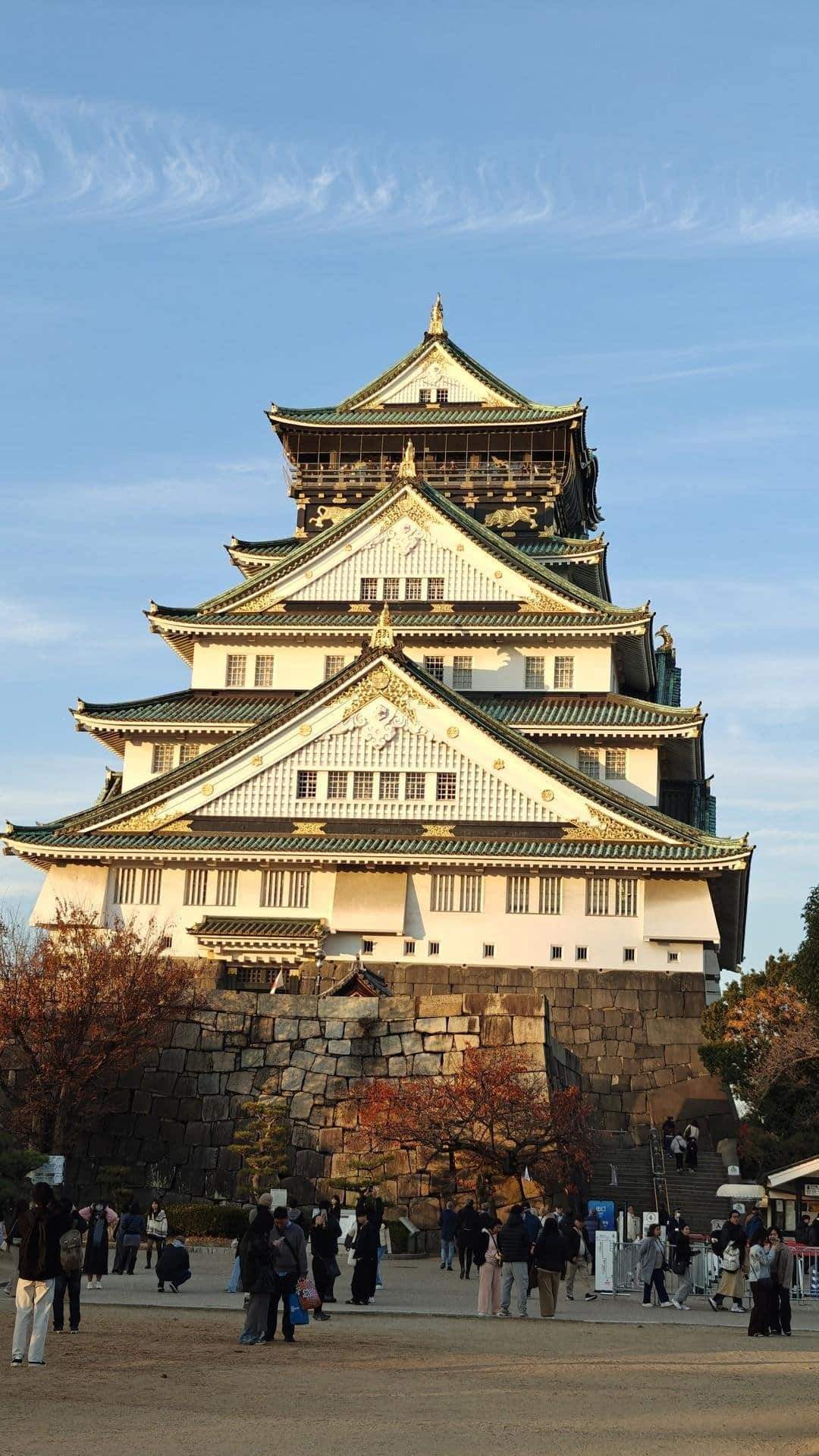
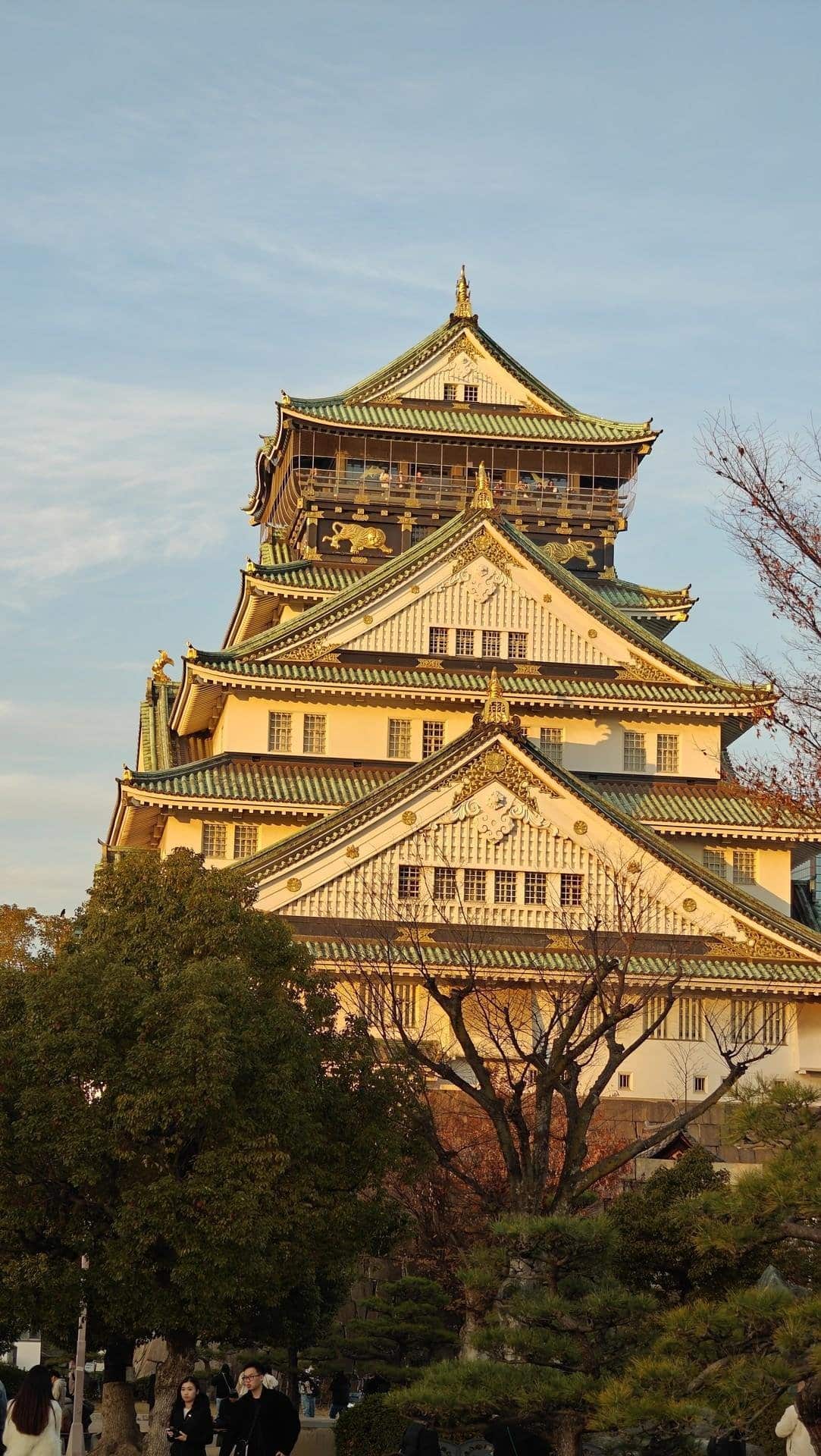
Much of the Honmaru or Inner Bailey is an open space much like a plaza and I’m guessing that’s to highlight Osaka Castle itself. I must say, the castle looks absolutely stunning from where I took this photo. I’m not quite sure with its looks at other times of the day but it’s definitely mesmerizing with the afternoon light.
Like I said earlier, the castle’s gold details has this glow to them that’s further accentuated by the majority white color scheme of the castle.
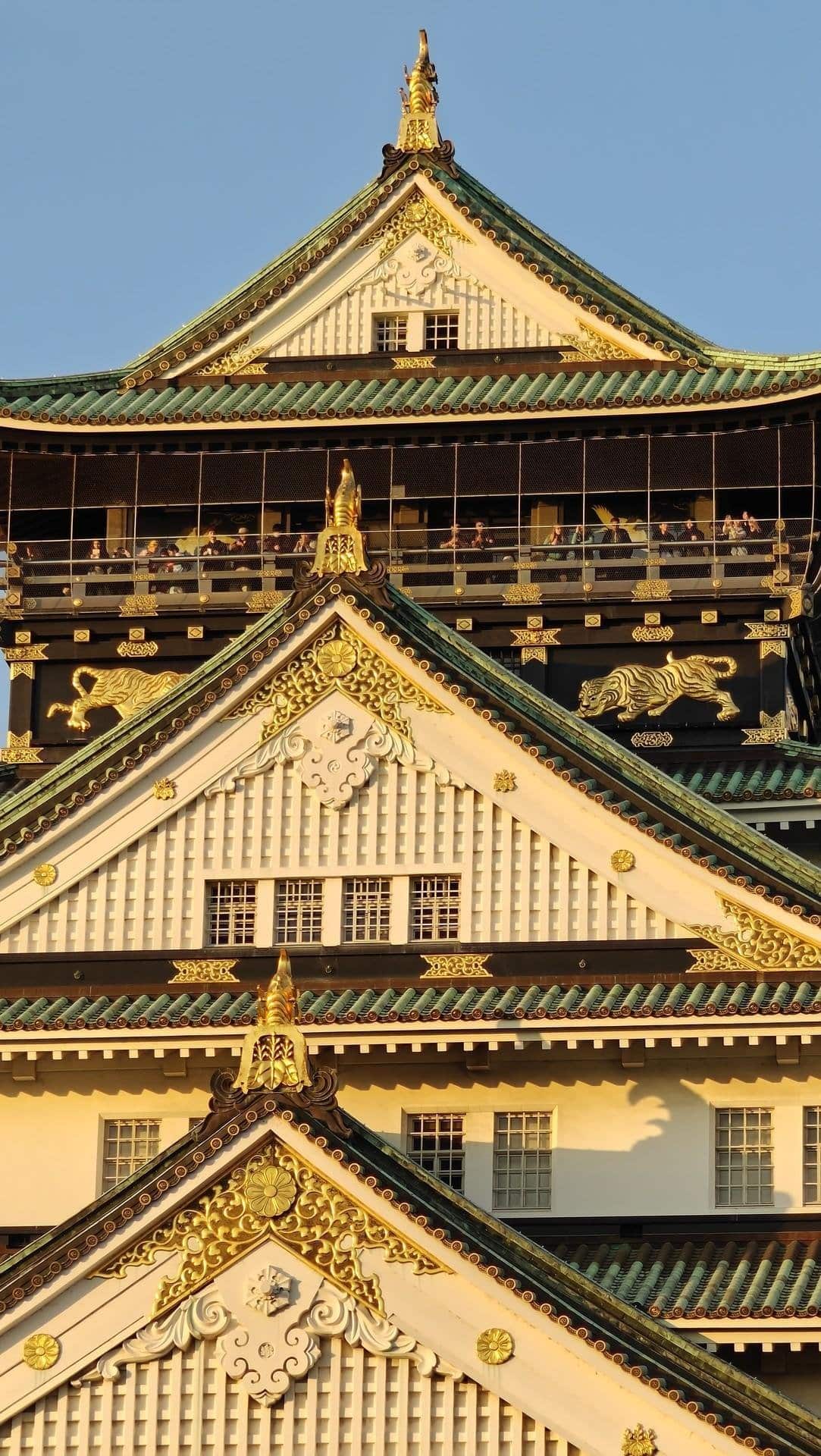
The Tenshukaku or the Castle Keep/Tower was perhaps the most notable part of the castle. It’s the topmost part of Osaka Castle and as you can see in this zoomed-in image, there’s an observation deck there. Admittedly, I was surprised that there were people at the top but this has been the case since the castle’s reconstruction in 1931.
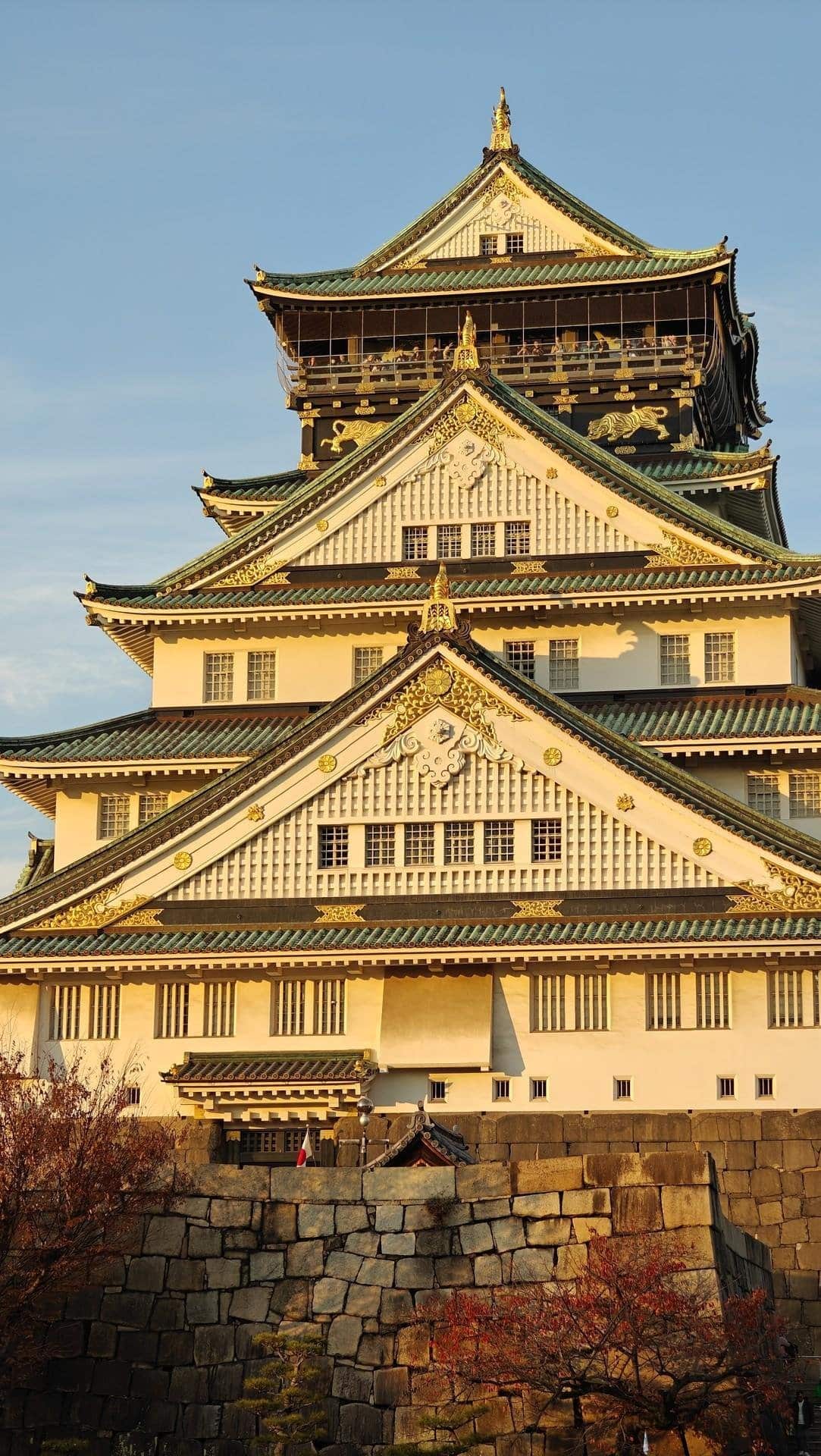
Much like a lot of the buildings and landmarks here at the castle complex, Osaka Castle itself is just a modern reconstruction. Instead of a traditional wooden structure, the reconstruction opted to go with steel-reinforced concrete to make the castle more resistant to fire. If I’m not mistaken, the previous times the castle fell were all thanks to fire damage.
Using modern (for 1931) building materials also meant lesser skilled labor and the reconstruction would go faster (which is what eventually happened).
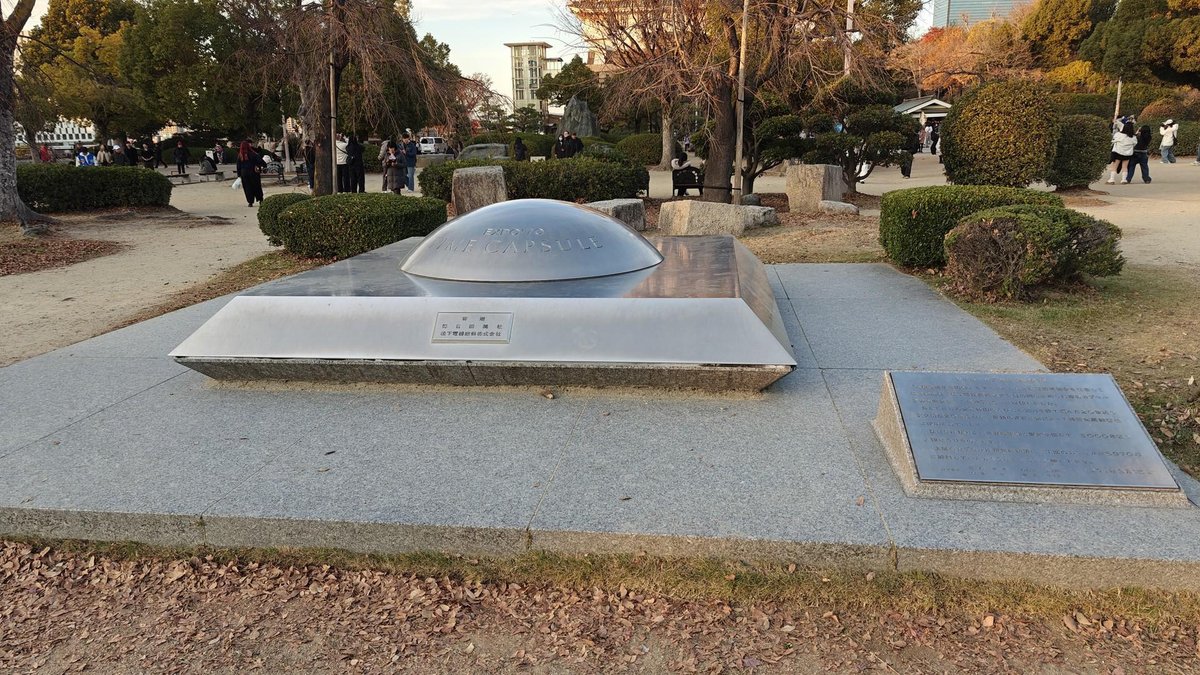
Here you’ll see one of the landmarks found on one of the lawns on the Honmaru. This is a memorial from the Expo ‘70 World Fair held in Osaka in 1970. Well, memorial is kind of a stretch as this is really a time capsule with two parts.
The first is the exposed part you see in this image which sort of acts as a memorial/monument. Underneath this is the main time capsule which is said to have 2068 items from that time period and is supposed to be opened every 100 years from the year it was buried.
So what was particularly interesting for me was the crowds here at Osaka Castle Park. It’s one of the few places that I found to still have plenty of visitors even during the off-peak tourist seasons. The crowds weren’t as large as Kiyomizu-dera in Kyoto but it was still pretty busy with people still around late in the afternoon and even early in the evening.
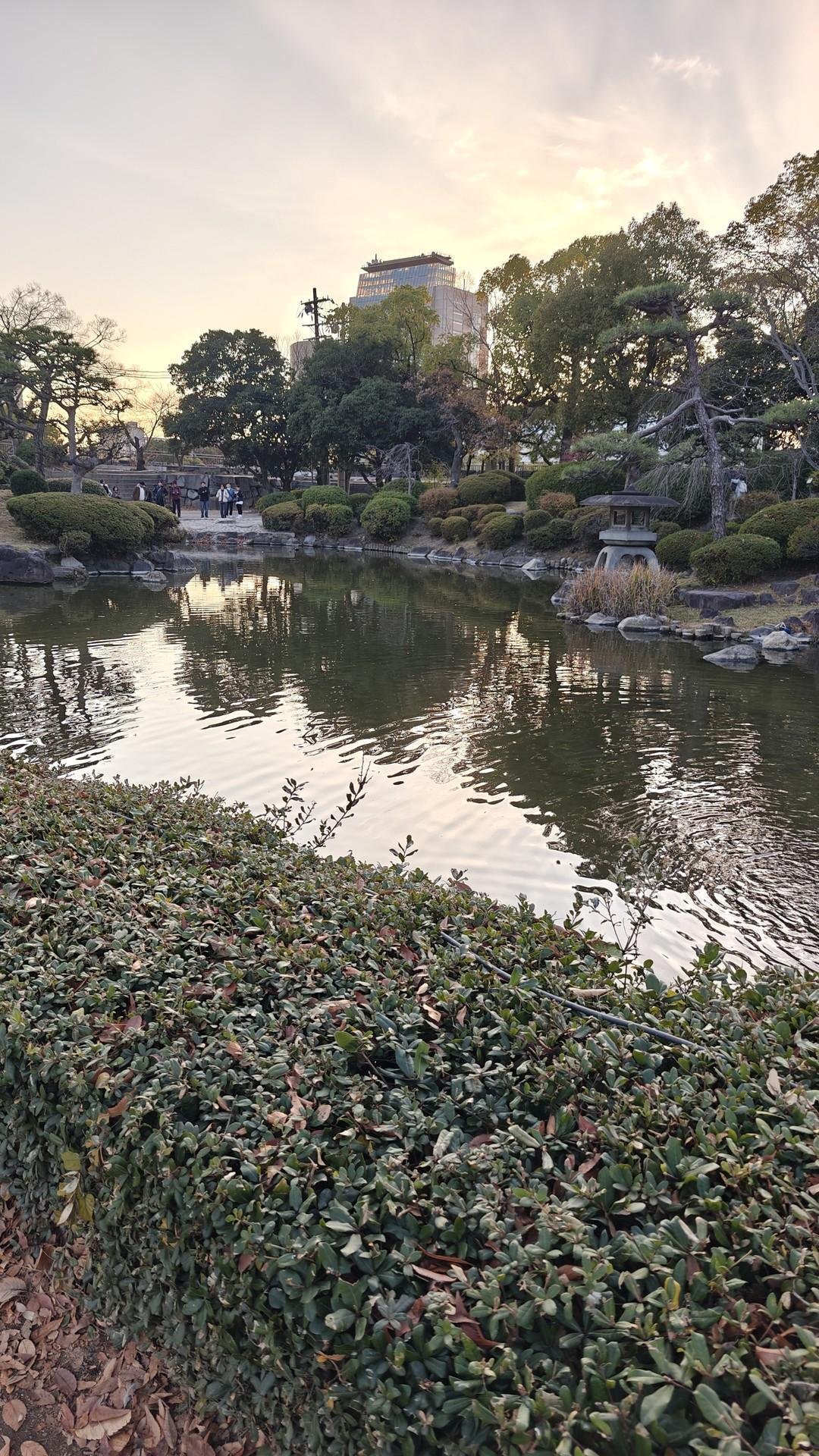
In the eastern side of the Honmaru you’ll find a traditional strolling garden with a pond as its centerpiece. Interestingly enough, the garden doesn’t have a formal name and is simply called “Japanese garden” in the map. I’m also not quite sure what type it is but it does feature plenty of the things and plants you’d find in a typical Japanese garden.
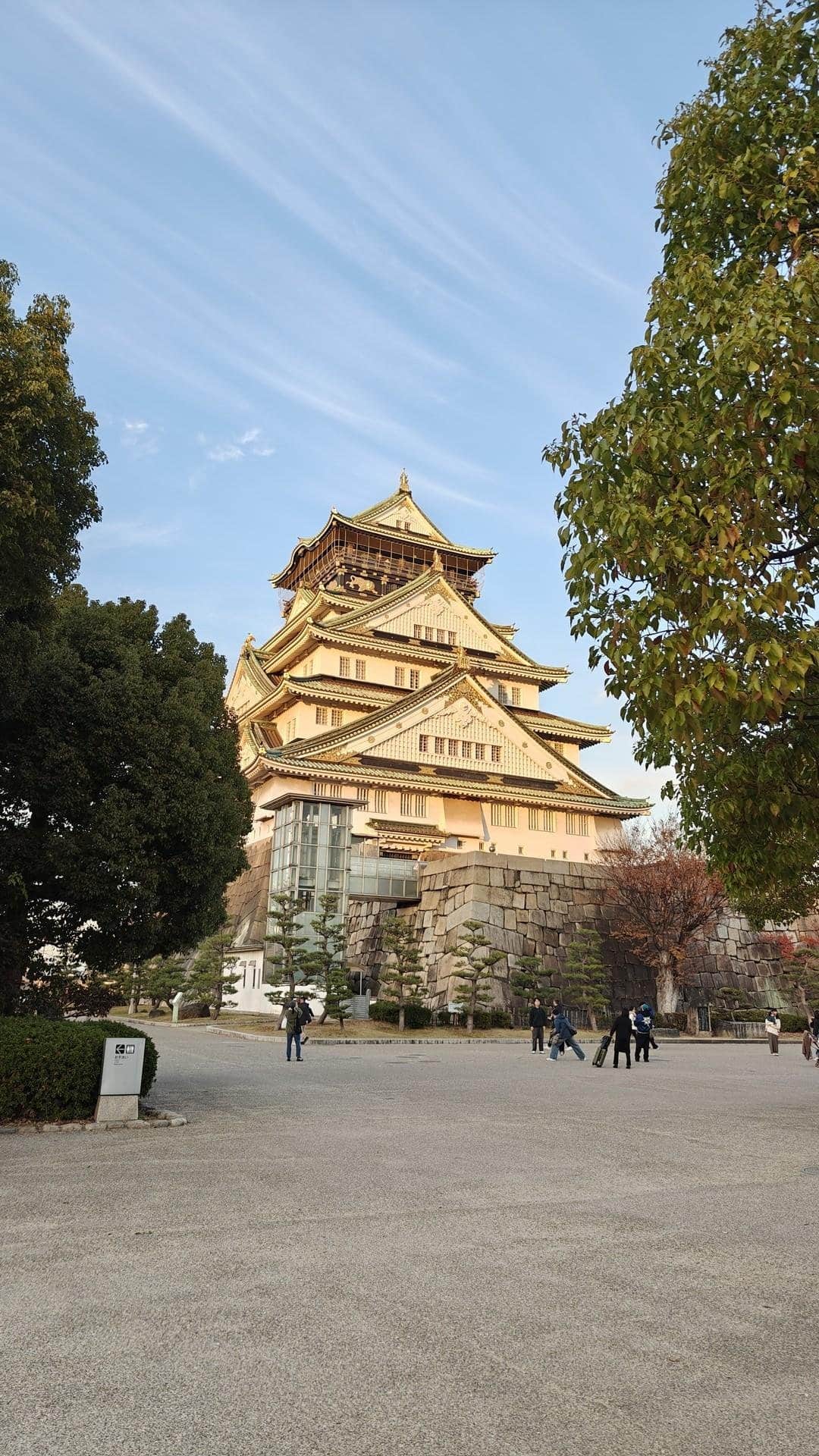
This is the view of Osaka Castle a couple of steps north of the garden area. Here you can clearly see a modern structure that houses the elevator that takes people down to this level after they’re done sightseeing at the castle. I personally think that this is actually such a good feature since this allows people with limited mobility to get up to the castle’s upper areas (the Tenshukaku included).
This isn’t really something that you’d find in most traditional shrines and temples.
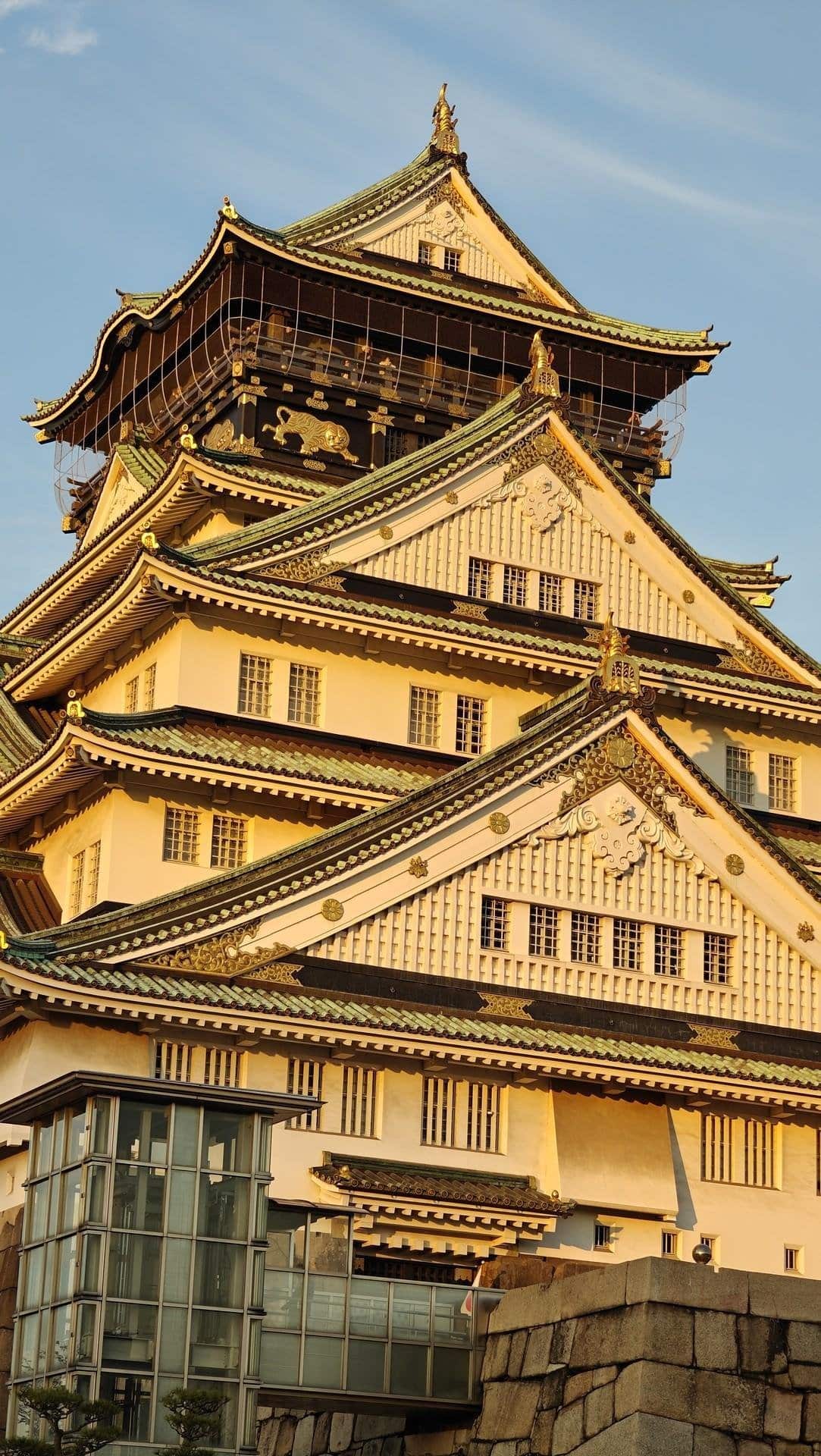
While Osaka Castle Park is free to enter, the same can’t be said for the castle itself. If you want to get up to the Tenshukaku or Castle Keep/Tower then you’ll have to fork out around 1200JPY. This is actually a bit more expensive than the entry for most shrines and temples.
Would I still recommend entering?
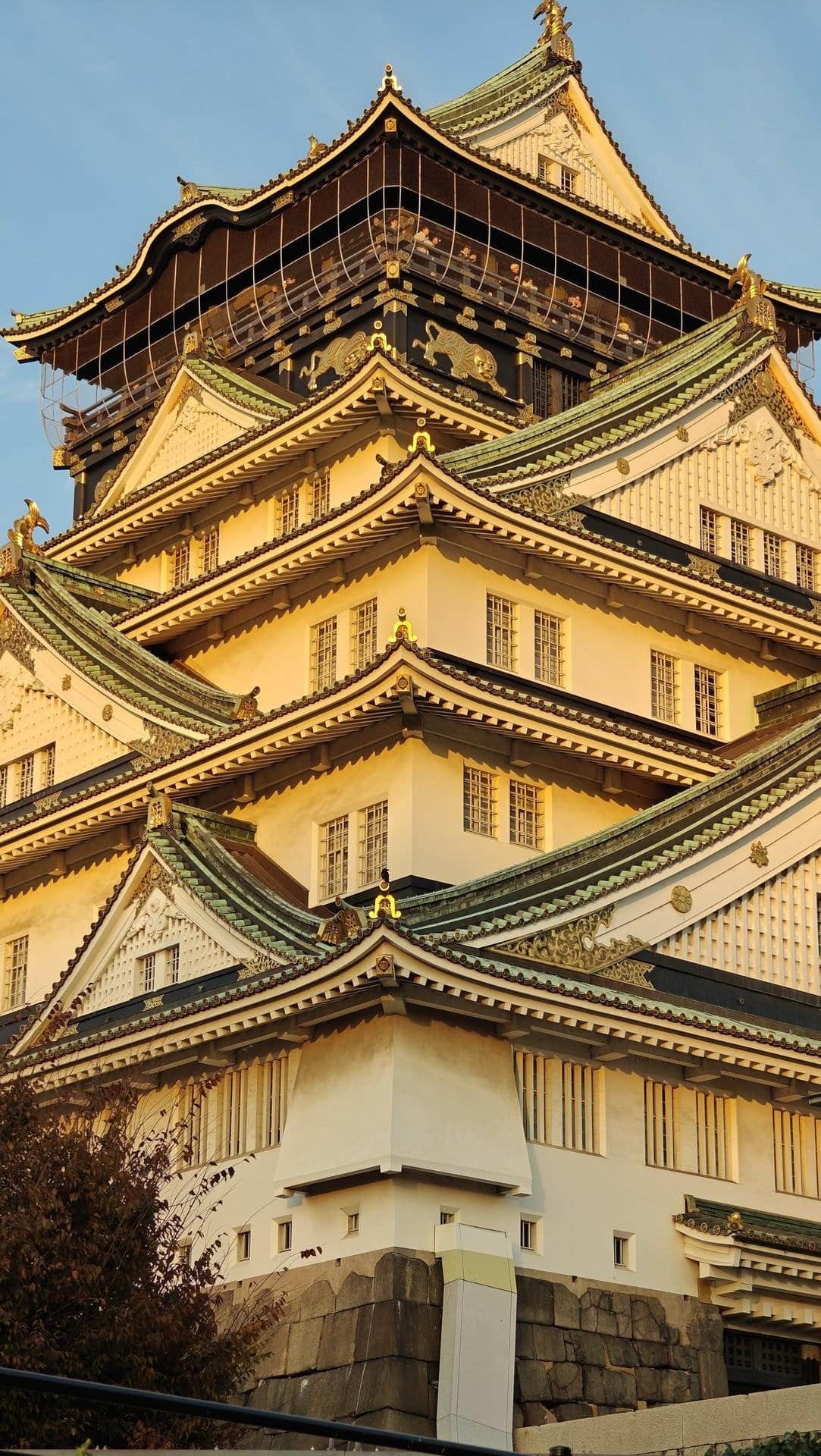
Now, there’s actually more to Osaka Castle than just the view at the top of the Tenshukaku. Its eight floors actually function as a museum as well. Showcased here are historical artifacts that range from weapons, samurai armor, letters, and even dioramas of the battles that were fought during the Siege of Osaka.
There are also films and multimedia screens with details of the castle’s rich and admittedly dramatic history.
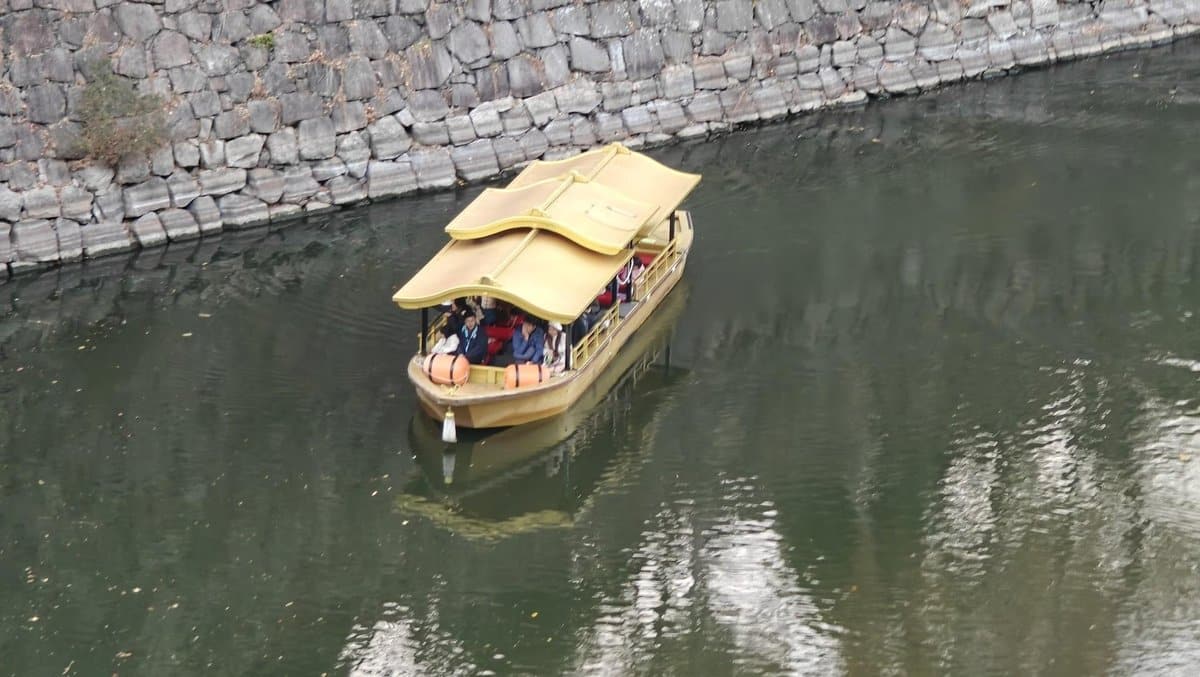
Another paid activity that you might want to look into is the Osaka Castle Gozabune. This is a boat ride on the inner moat that costs 1080JPY. To get to the boarding area for the boat ride, you’ll need to go to the back (northern part) of the castle and cross the Gokuraku-bashi Bridge to then get to the Gozabune Ticket Office.
From there you can then walk on over to the Gozabune Pier once you have your tickets and wait for the ride to commence.
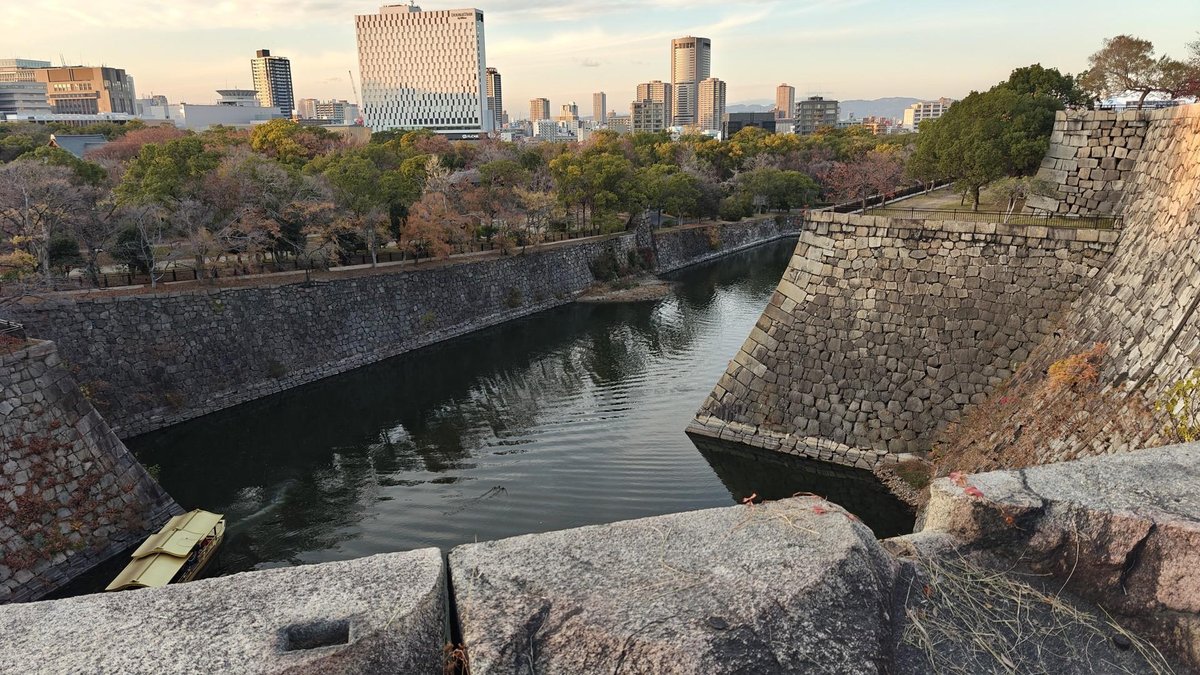
In case you were wondering, the Inner Moat is actually quite large. From up here on the walls of the Honmaru you can actually see just how massive the moat looks. Much like the Outer Moats, these are also quite deep.
It’s interesting to note though that the Inner Moat used to surround the Honmaru area. That’s not the case right now though as the lower area of its western side (which you can see here) and the entirety of its southern side (the area where the bridge leading to the Sakuramon Gate is) are filled up.
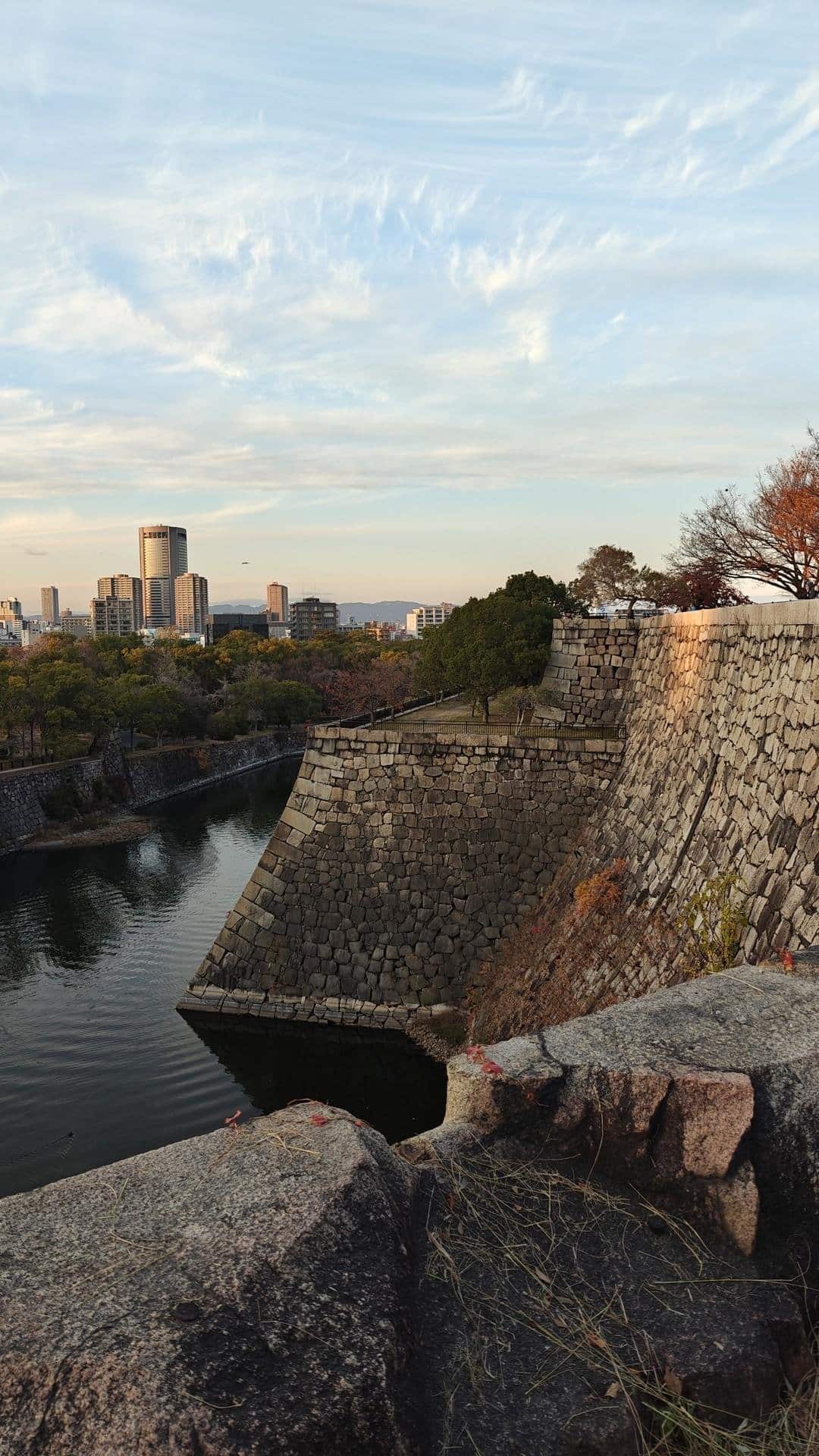
With the sun already setting, the atmosphere here in the Honmaru area became a lot more relaxing. If I was residing here in Osaka then you’re probably going to see me strolling here at this time daily thanks to how peaceful it is. Considering how fast-paced Osaka is, it’s great that there are places like this where you can slow down and unwind without having to fork out a single penny!
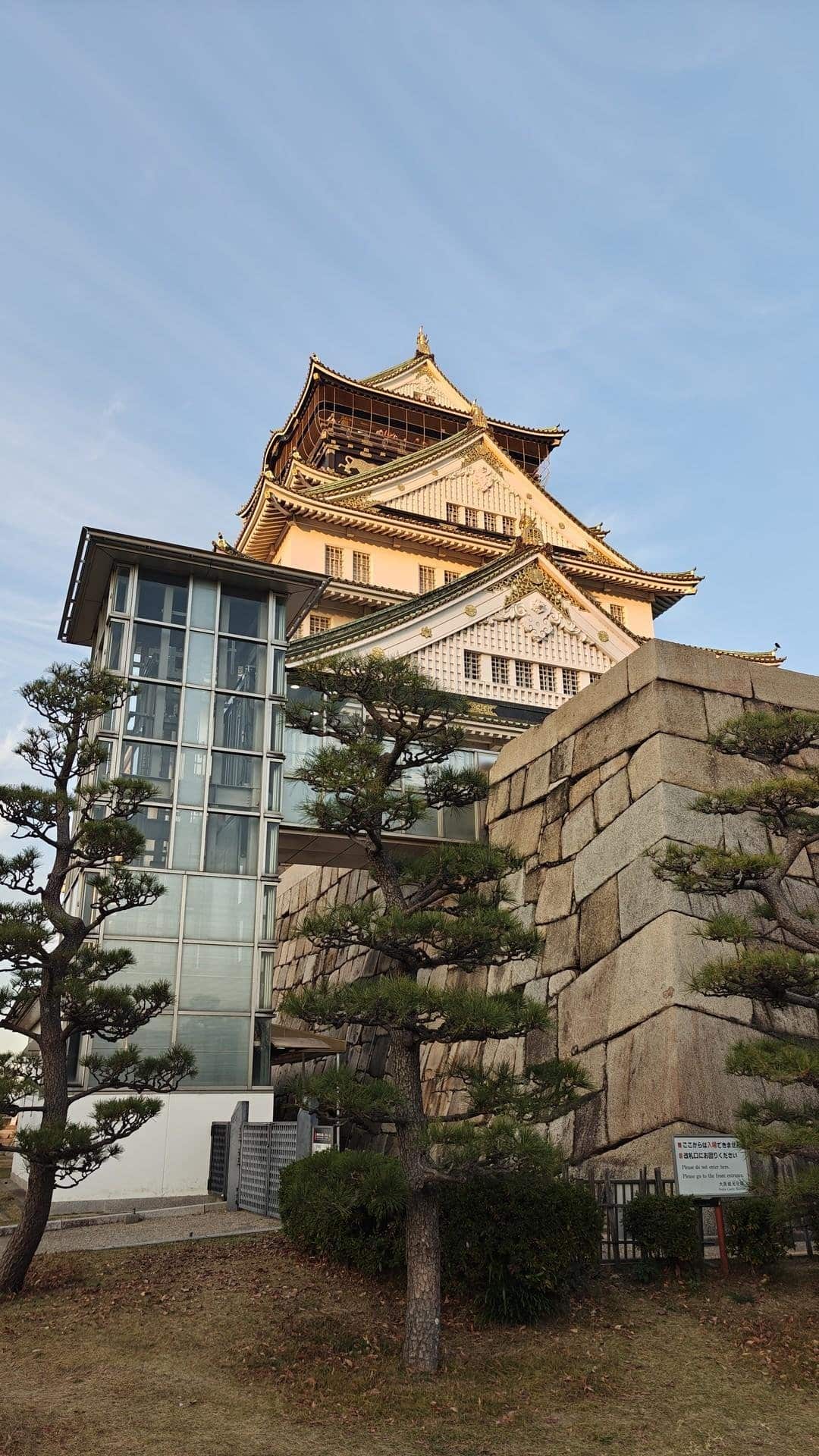
Now speaking of spending, is the 1080JPY for access to Osaka Castle actually worth it? Personally, I don’t think it’s a must to get to the top of the Tenshukaku or check out the museum. That said, there’s still value going here especially if you’re someone who enjoys Japanese history (especially the Warring States era).
At the end of the day, I think it’s going to boil down to if you have the time, budget to spare, and interest.
This is the view west of Osaka Castle. It’s not noticeable in the picture but you can actually see the Osaka Prefectural Government Office from here. I personally think that it’s kind of cool that the old and historical seats of government are this close together.
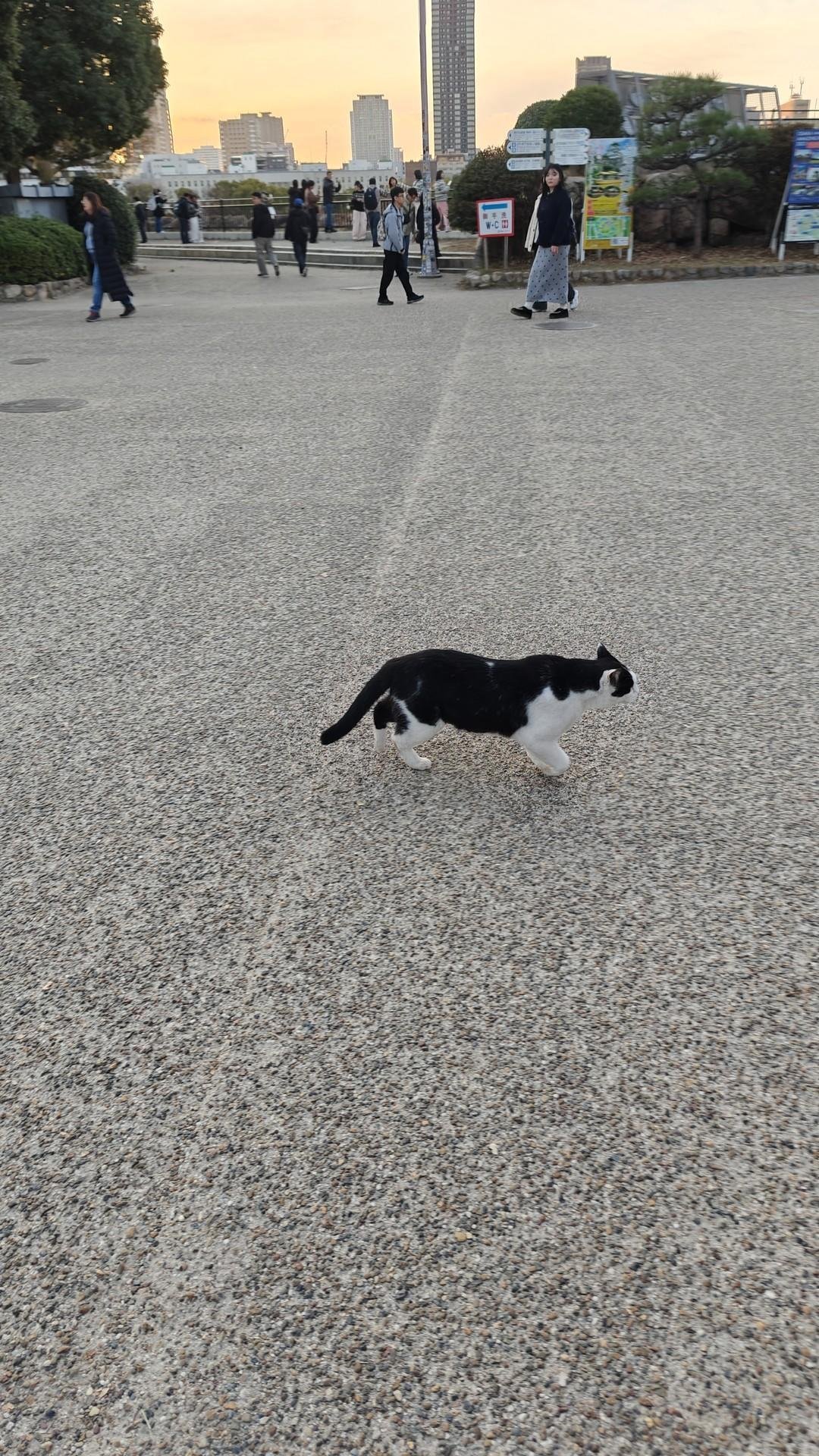
Oh, and I also forgot to mention that there are a number of stray cats around here like the guy (or was it a girl?) in the image. The cats are friendly though feeding them is discouraged.
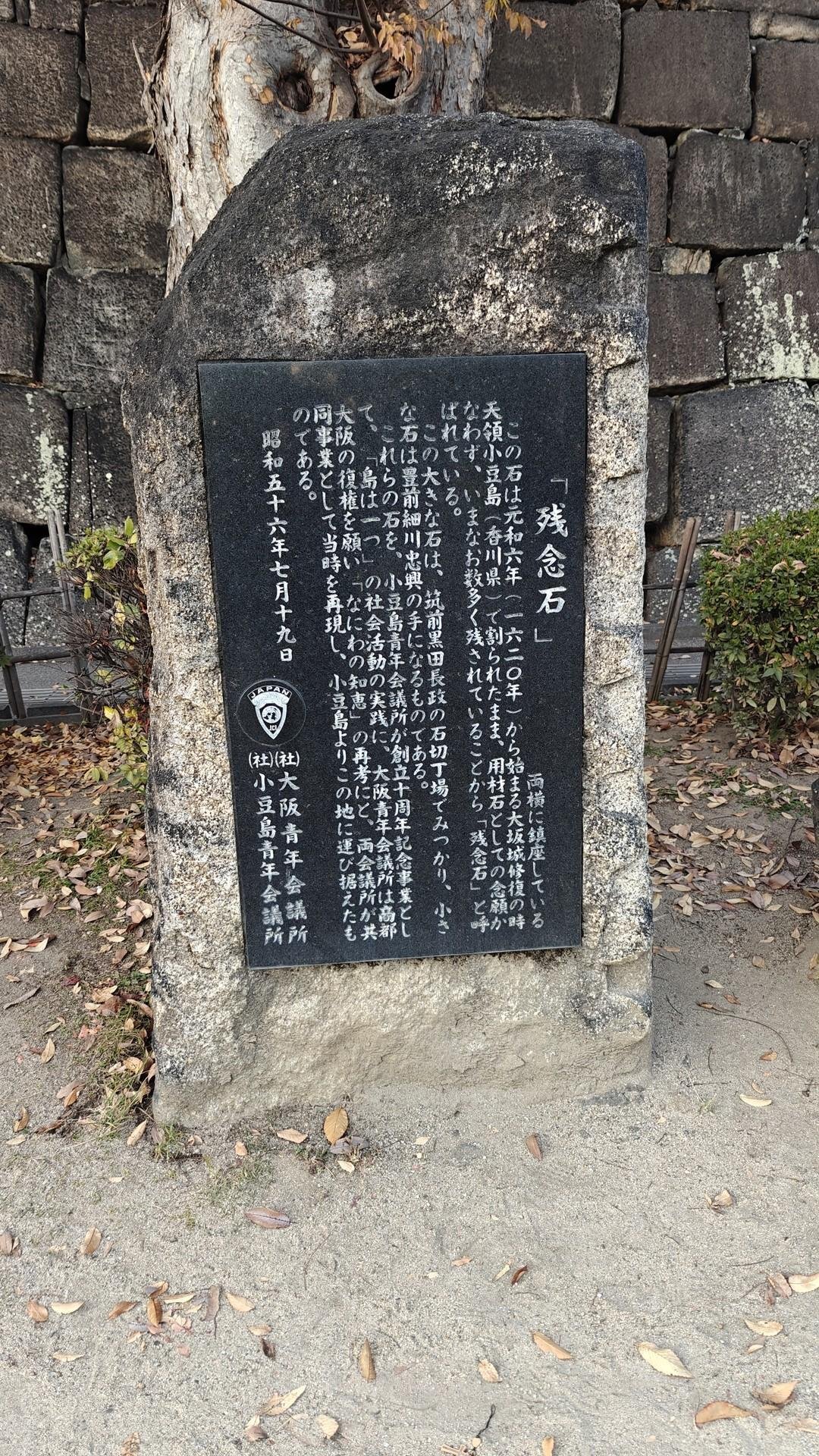
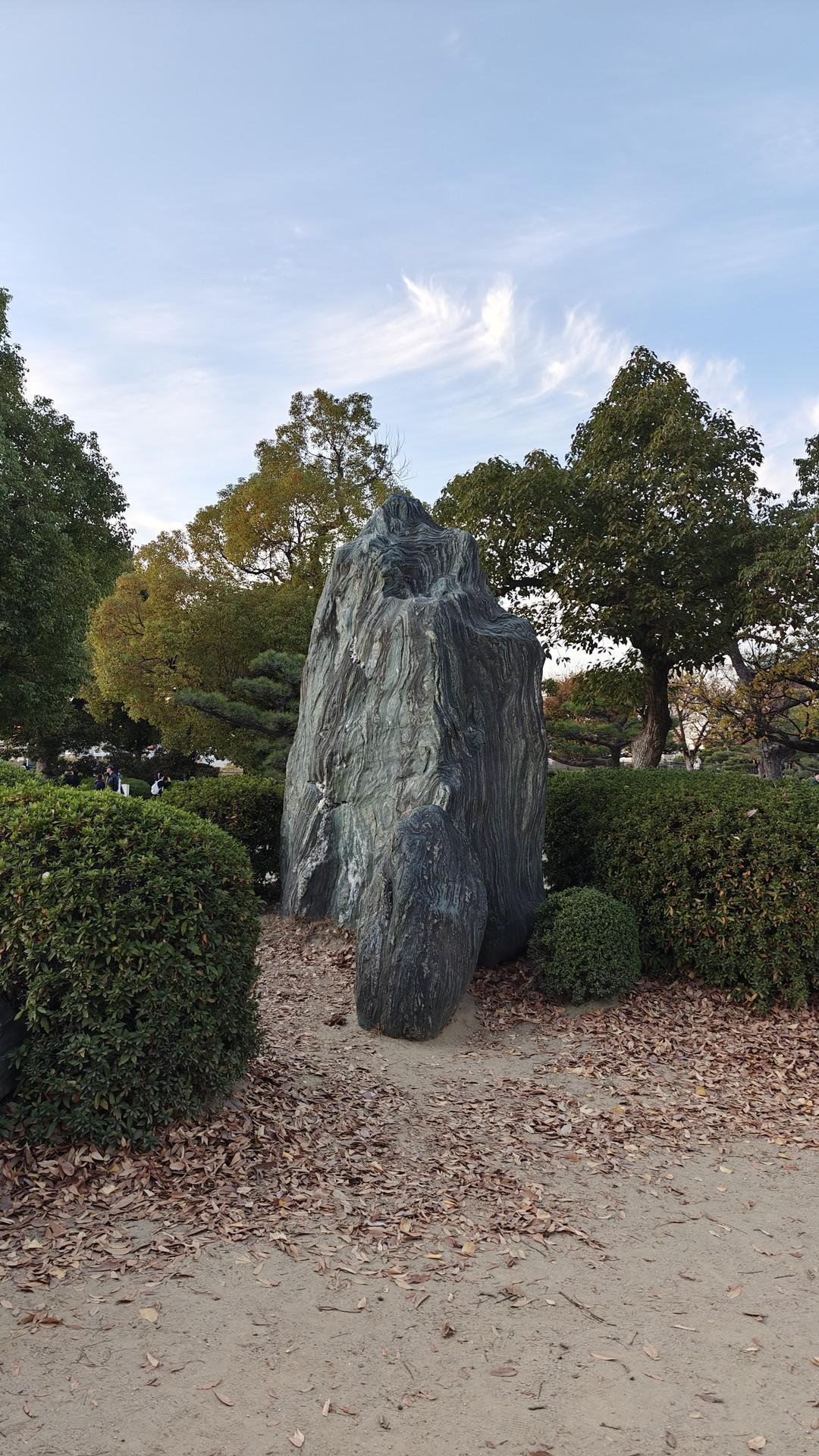
In front of the castle is this plaque talking about the history of the Regret Stones or Zannen-ishi. These are a pair of stones beside the plaque that were left over from the construction of the castle in 1620. The stones were actually quarried from an island in Kagawa Prefecture called Shodoshima.
To commemorate the island’s connection with Osaka, the plaque was then erected here in 1981.
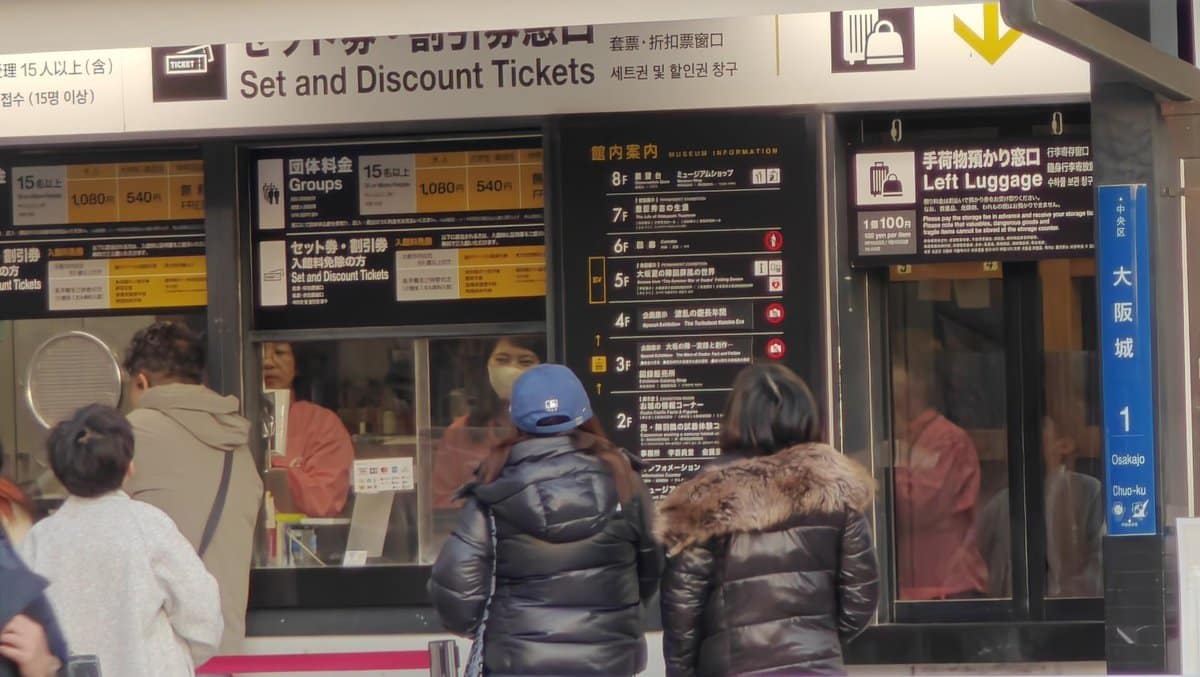
A short walk east of the Zannen-ishi is the Castle Keep Entry Ticket Office. This is where you go if you want to purchase tickets to enter the castle. Once you’ve paid, you just need to turn left (if you’re facing the ticket counters) and you’ll then find the gates where you present your ticket to then enter the castle.
Based on my observation, you wouldn’t need to wait in line for long as the ticketing officers were relatively quick in processing payments. Take note though that unlike the park, the castle isn’t open 24/7. Depending on the season, its business hours end at around 5:00PM or 6:00PM.
So that ends my visit to Osaka Castle Park. It was definitely worth it and a visit here is something that I’d highly recommend. The views are amazing especially during spring and autumn.
Outside of those seasons, the park still has a number of activities that will keep you occupied. Unlike more traditional parks and gardens, there are plenty of dining and lifestyle establishments here. Crowds might end up being an issue especially during peak tourist seasons but the park is so large it typically ends up being bearable.
Some activities and landmarks might also require payment for access though the rates for these are relatively affordable and I consider them to be generally worth spending on.Want to know more about Osaka Castle Park? Don’t hesitate to shoot your questions about this iconic and historic Osaka landmark down in the comments section!