
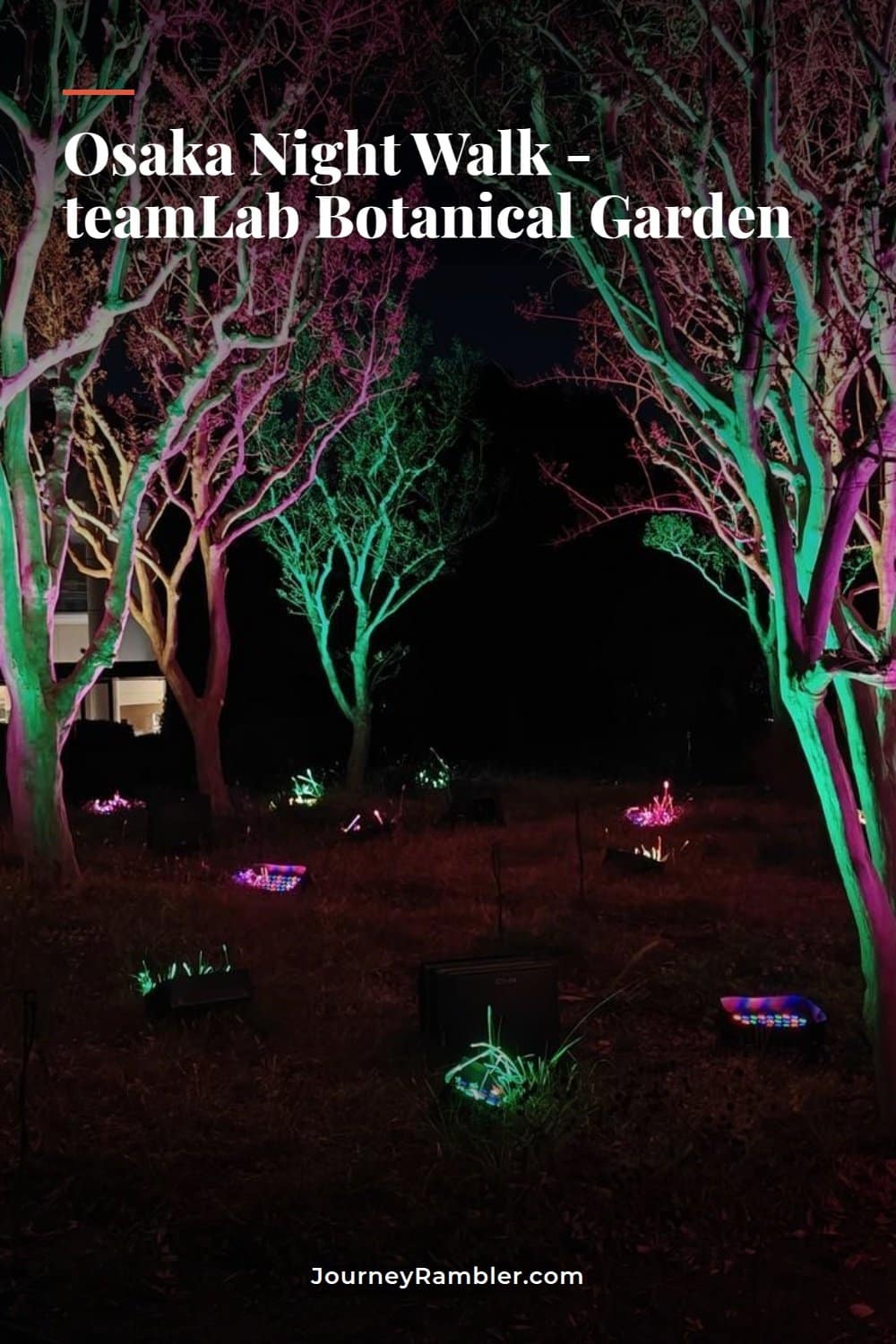
I would argue that there’s no landmark in Osaka that best exemplifies its exciting mix of tradition and modern sensibilities than teamLab Botanical Garden. While it calls itself a botanical garden, the truth is that it’s more than just an area of Nagai Park. Open only at night, it’s actually more of an open-air light installation that makes use of the plants and trees here to give life to Osaka’s cold winter evenings.
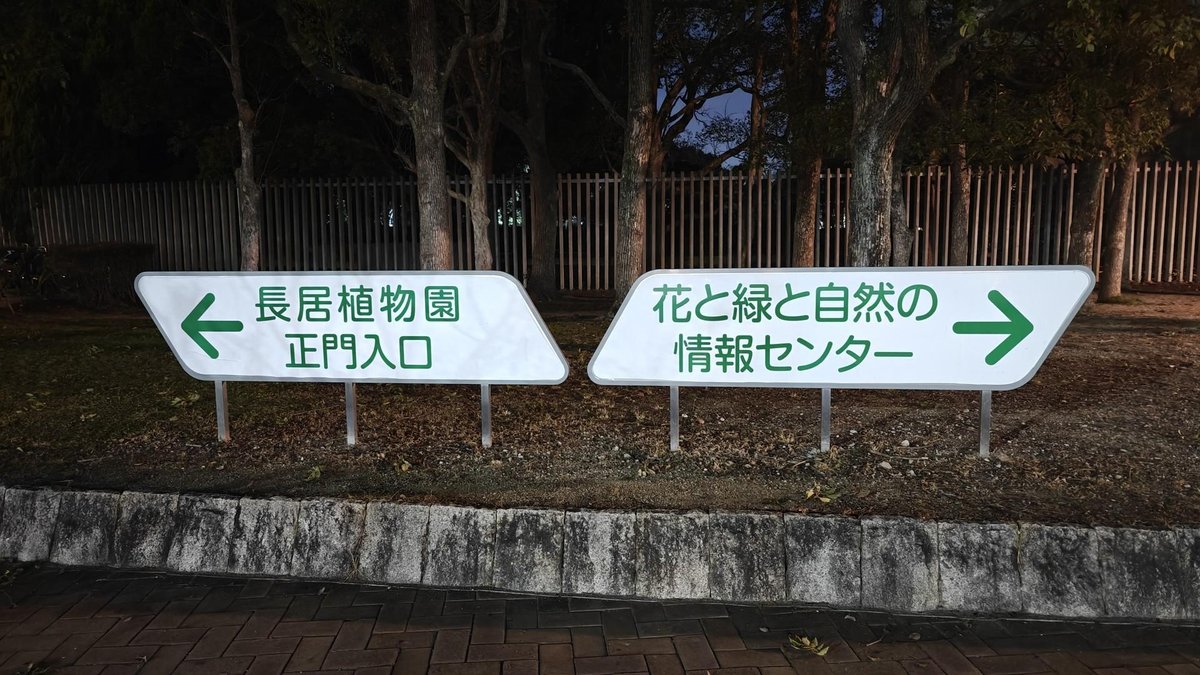
Getting to teamLab Botanical Garden should be relatively easy.
It’s in Nagai Park which is in Osaka’s Higashisumiyoshi Ward. From Umeda Station, it’s going to take a 19 minute ride on the Osaka Metro Midosuji Line to get to Nagai Station.
From there, you can take the subway exit at the Southwest section of the Park and you’ll have to walk your way east to get to the entrance of the Nagai Botanical Garden (the sign on the left in the image above).
A Beautiful Night Walk at teamLab Botanical Garden
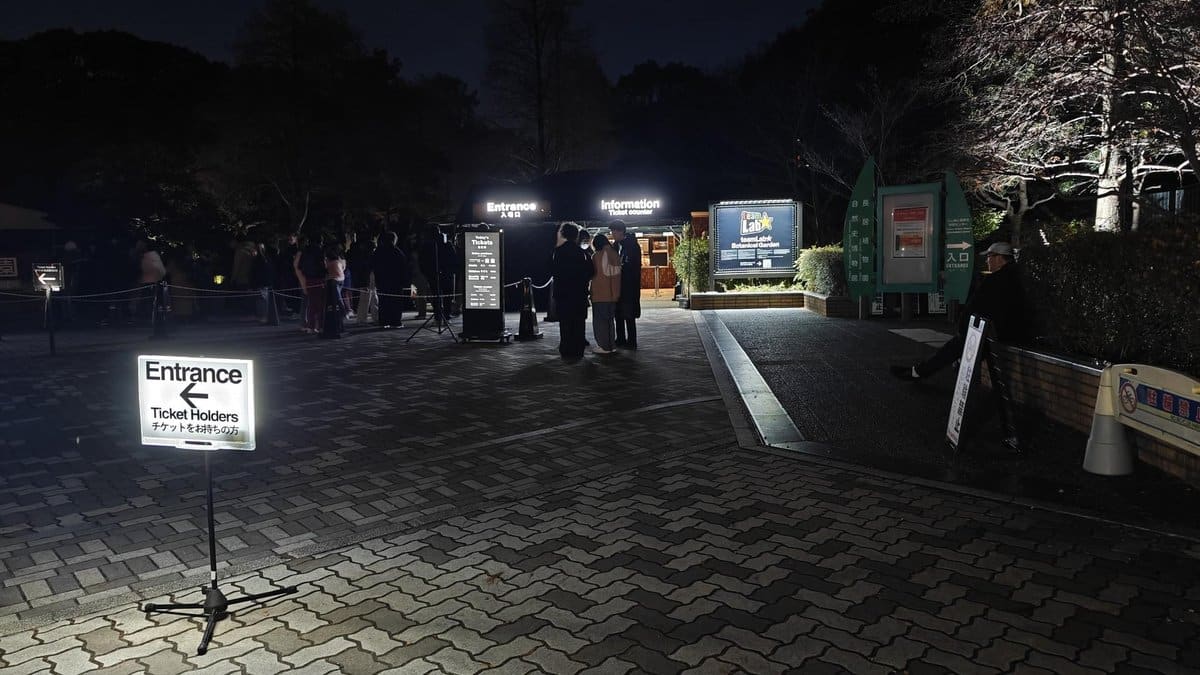
Now you might be wondering, “shouldn’t I be heading to teamLab Botanical Garden and not Nagai Botanical Garden?” Well, the location of these gardens are one and the same. At night, it turns into the former while in the day it stays as the latter. Anyway, it’s advised that you reserve tickets online.
You can check out the official teamLab website for this or you can visit sites like Klook to secure your reservation. You can then just line up on the date you reserved and show the QR code or e-ticket sent to your e-mail.
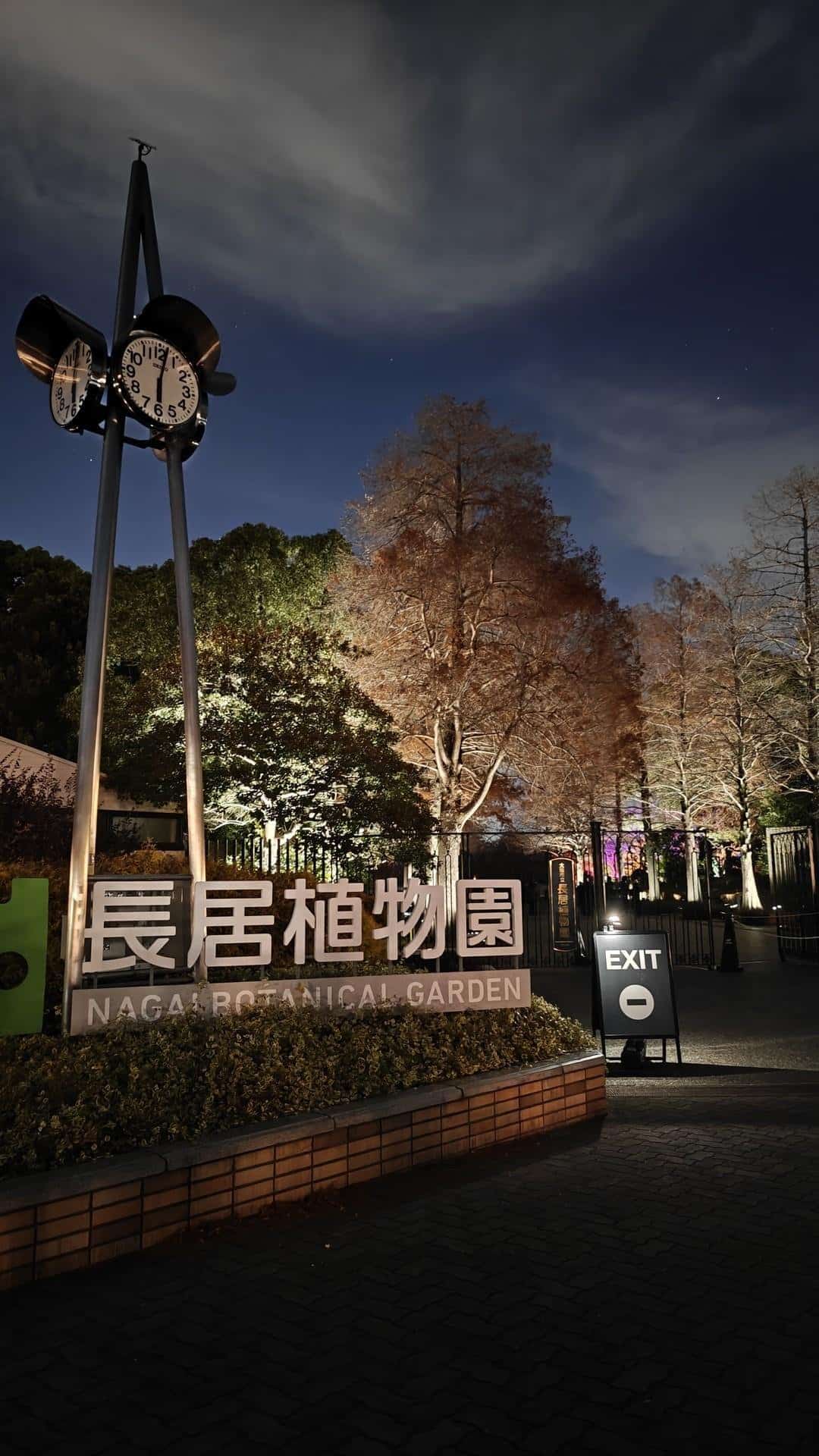
Here’s another look at the entrance area. So the route for the outdoor exhibit is essentially a loop with this area serving as both the entrance and exit. From here, I could already see the trees being lit up and I was honestly quite excited.
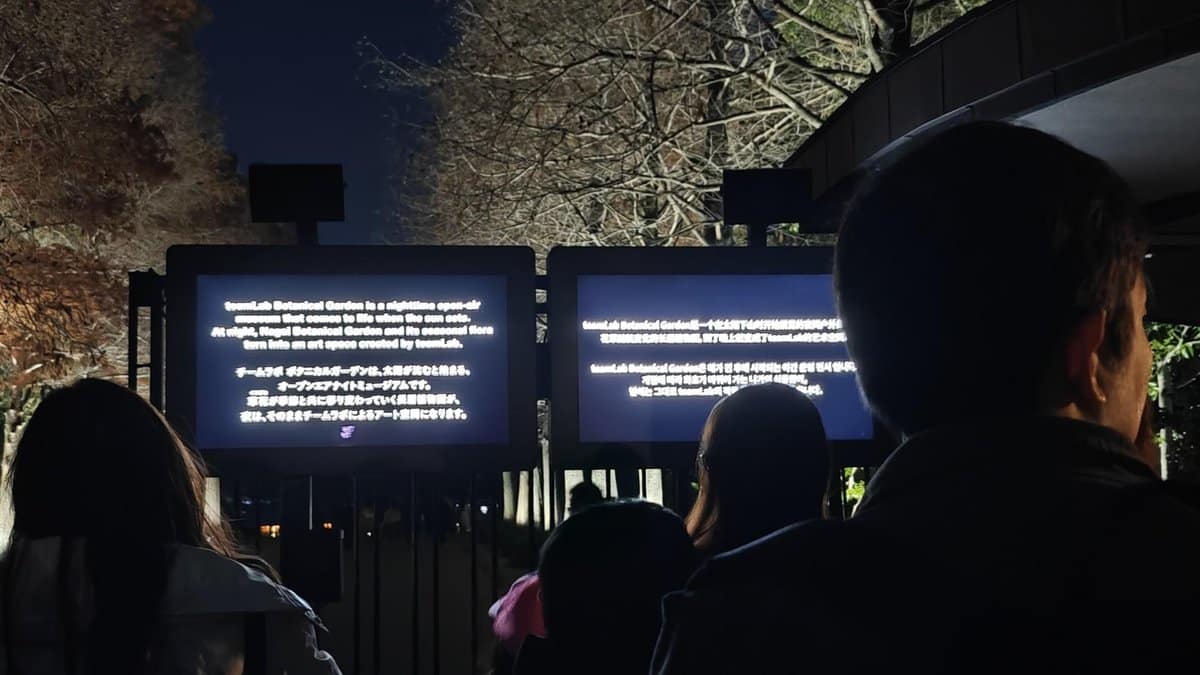
While lining up to get inside, there were these screens that gave a primer of what teamLab Botanical Gardens was all about. If you’re going into the exhibit blind then I’d recommend watching this presentation to know a little bit more about this art space. Anyway, the wait to get inside was relatively quick but you’ll need to remember that this is a relatively popular landmark so expect a little bit of a crowd when you do get here.
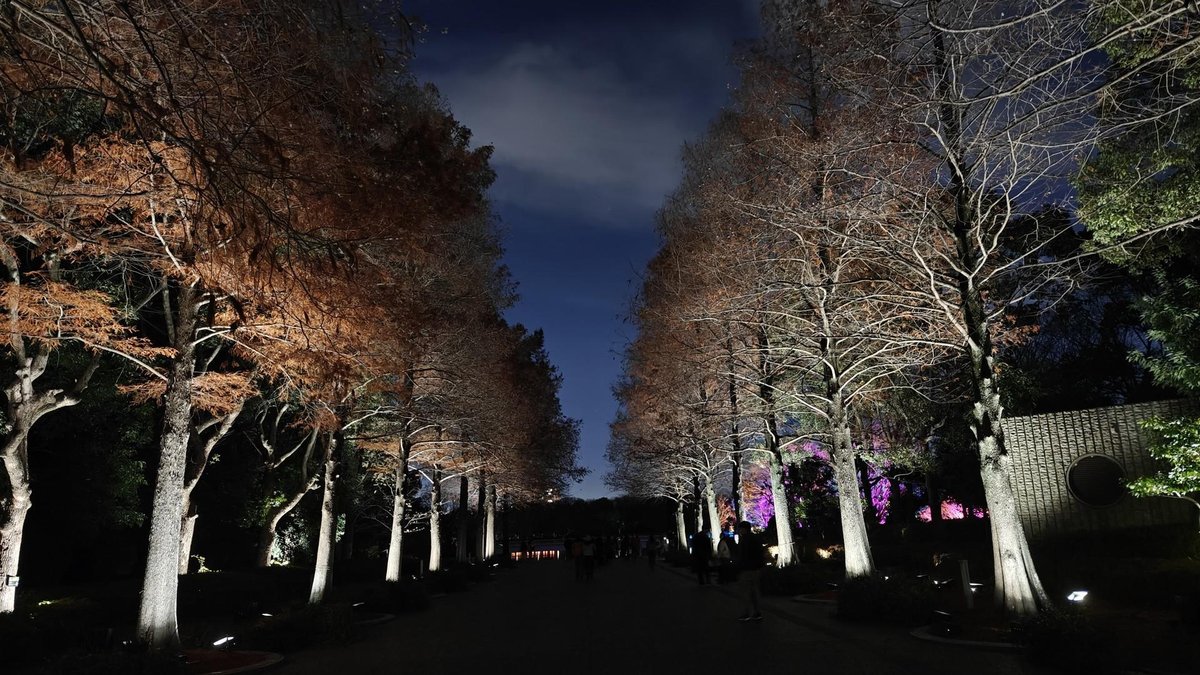
You know what else you should expect? An absolutely ethereal vibe that’s magical while at the same time eerie. That’s exactly what I felt when I first got inside and it was honestly one of the most unique views that I’d ever experienced.
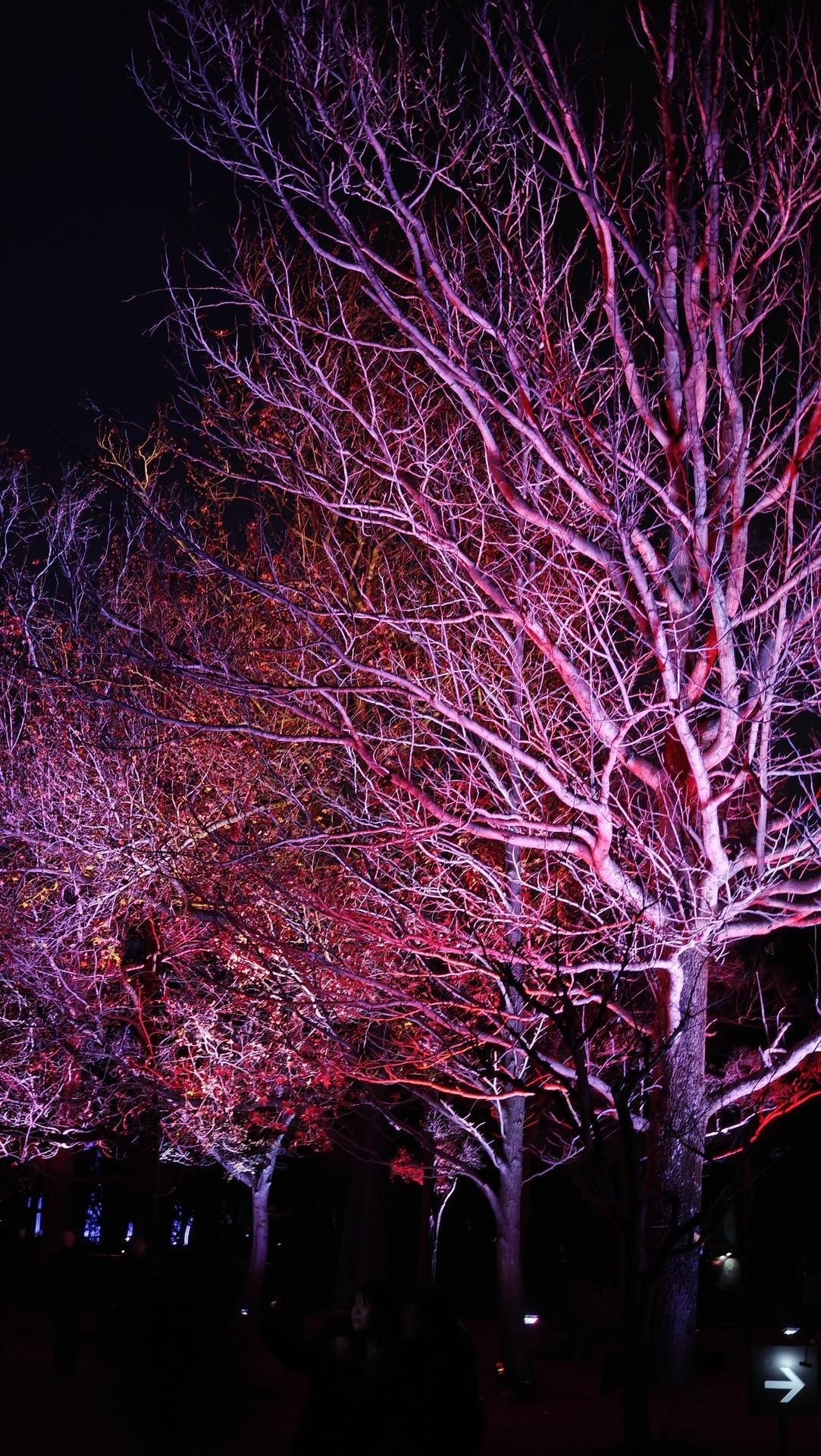
The trees here are called bald cypresses and the area is aptly called the Avenue of Cypress Trees.
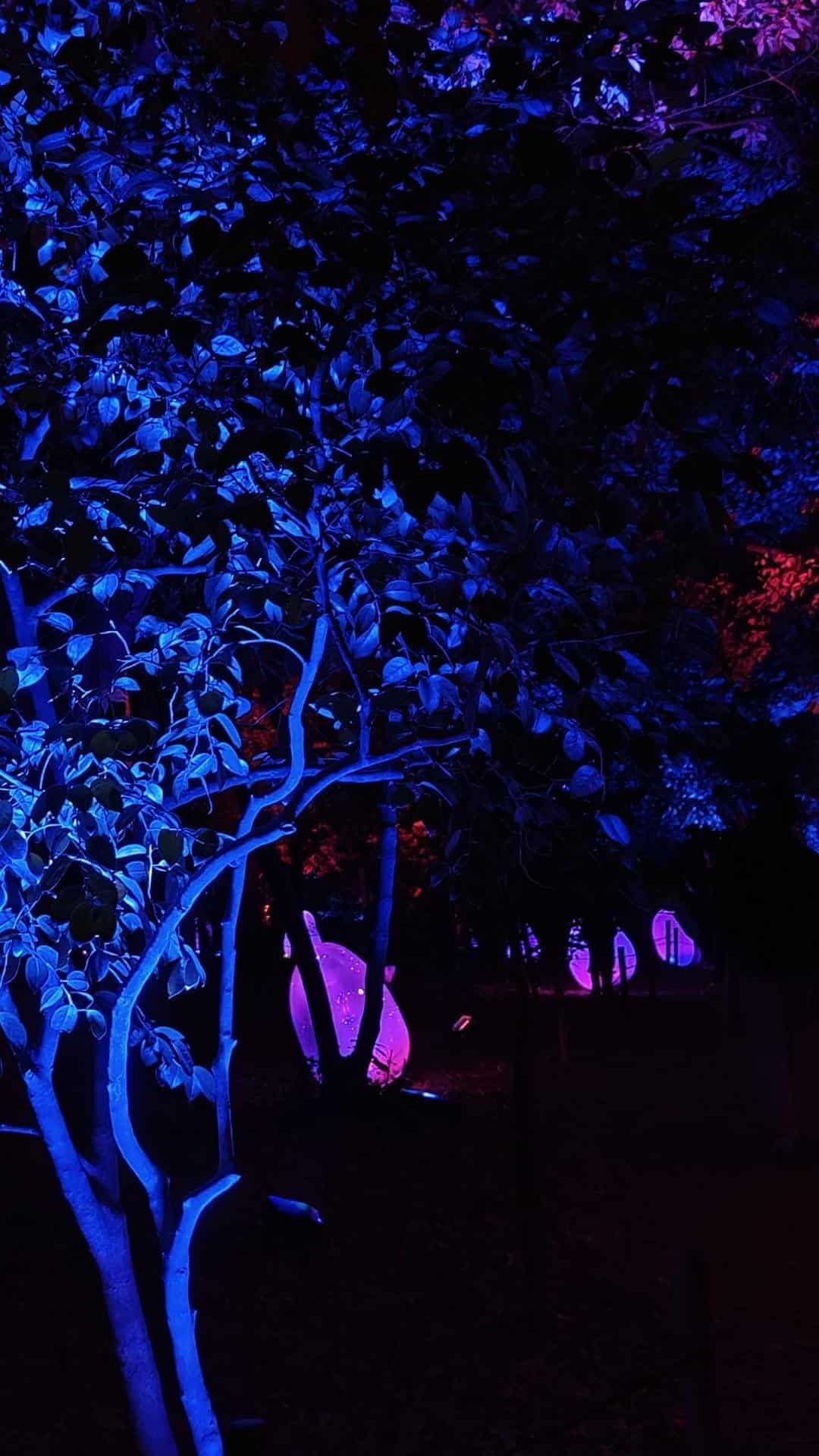
I’ve been to night-time art installations and outdoor exhibits that featured bright lights but what I saw here was probably the prettiest and arguably the most colorful. You’ll find these trees near the Flower Greenery Nature Information Center and the Osaka Museum of Natural History. If I remember correctly, the green and gold lighted trees in the background are called Crape Myrtle.
As for the trees in the foreground, those are zelkovas.
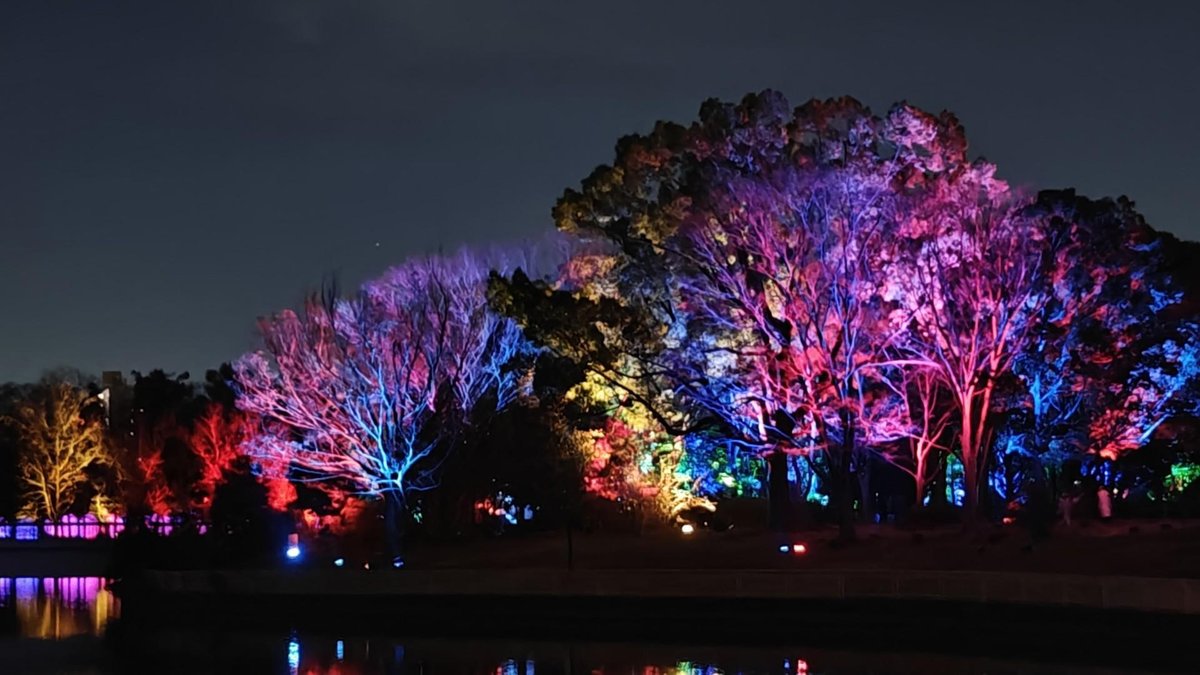
So you might have noticed by now that one of the focuses of the botanical garden is its trees. The teamLab exhibit at night kind of draws attention to these with the spectacular lighting. This ties in to the exhibits goal of exploring how to safely transform nature into an artistic expression with the use of technology.

I said earlier that the exhibit is a loop and here you’ll see the landmark that you’ll be “looping around”. Essentially, you’ll be following a route that will lead you around the Oike Pond. It’s the central landmark here in the garden and it’s great at reflecting the lights from the various installations and areas here.
Also, you’ve probably noticed the sign urging you to download the teamLab App. It’s actually a good companion app for understanding the exhibit’s numerous installations.
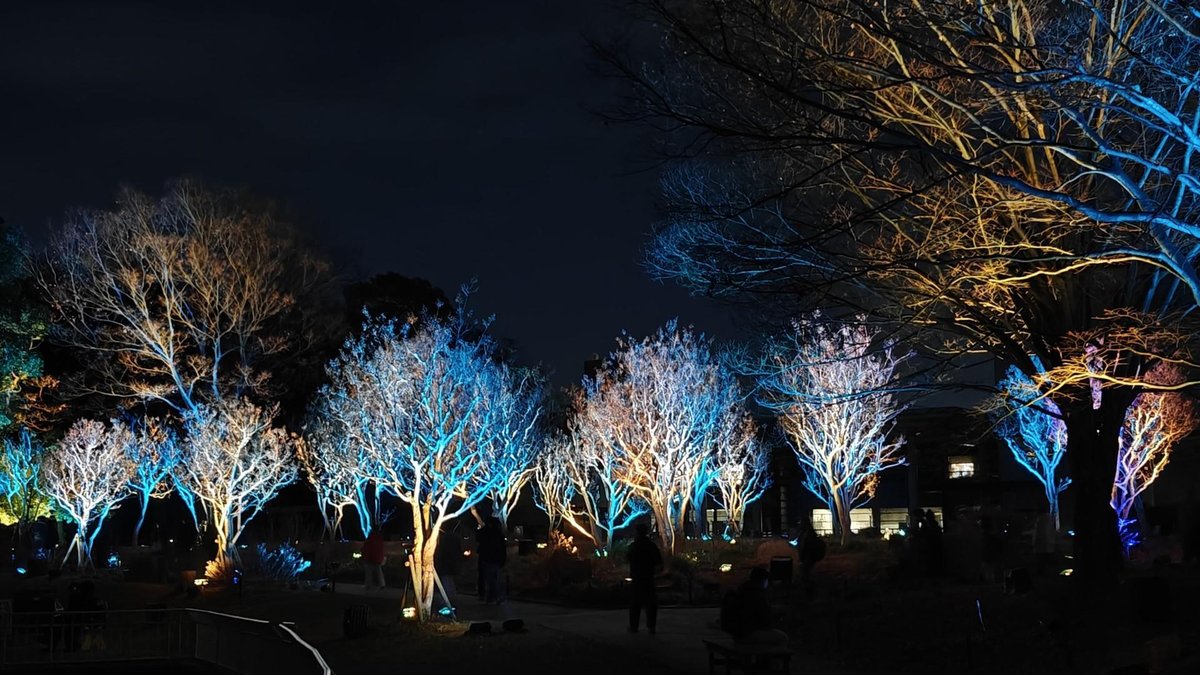
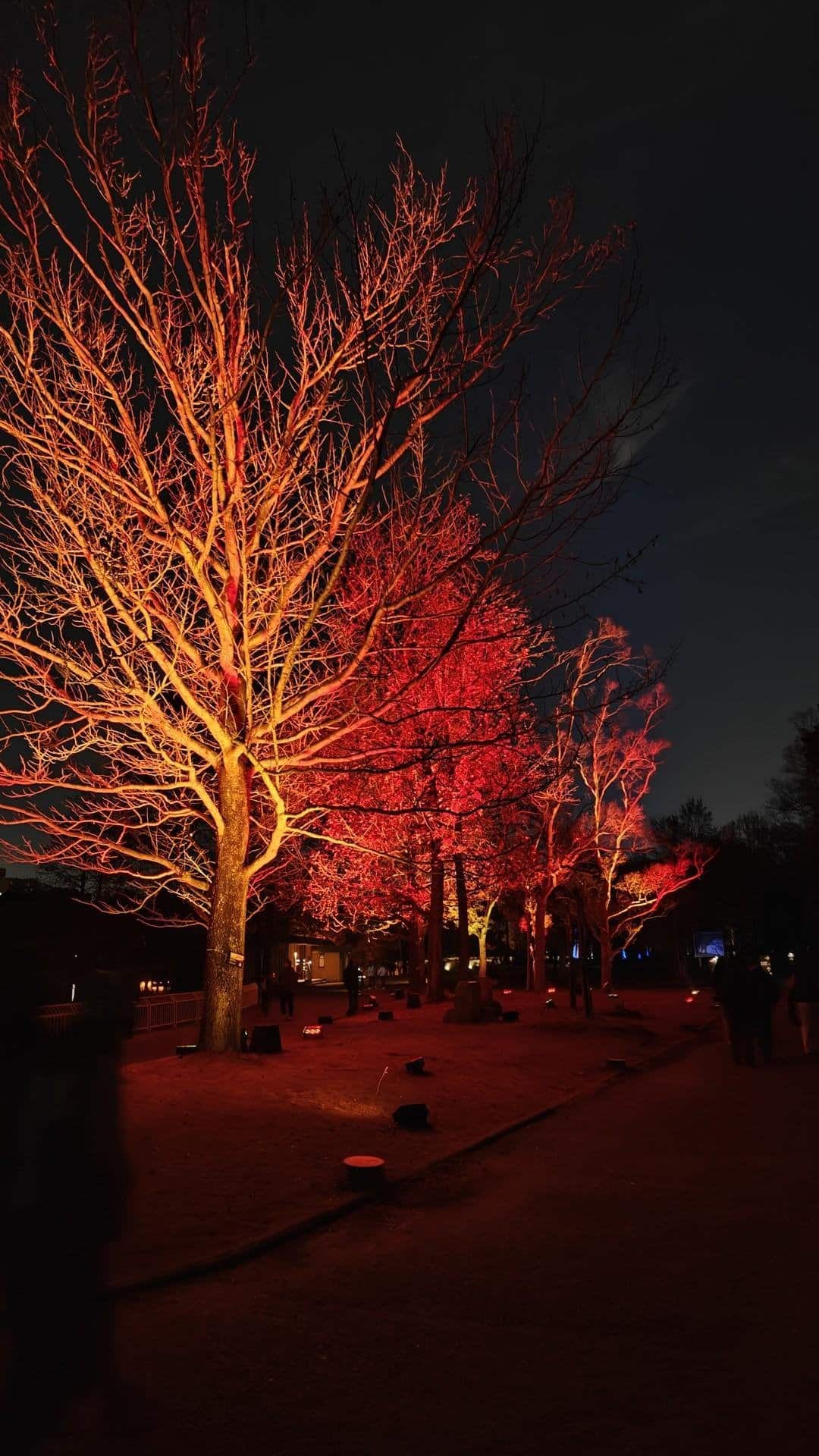
Speaking of installations, here’s a closer look at the grove of Craple Myrtle trees that I talked about earlier. Officially, this is part of the area called Resonating Trees and it was honestly one of my favorites thanks largely to the colors of the lights. Interestingly enough, I think they actually only used three lights per tree but the lighting has this effect where it seems like a number of colors appear (more on this later).
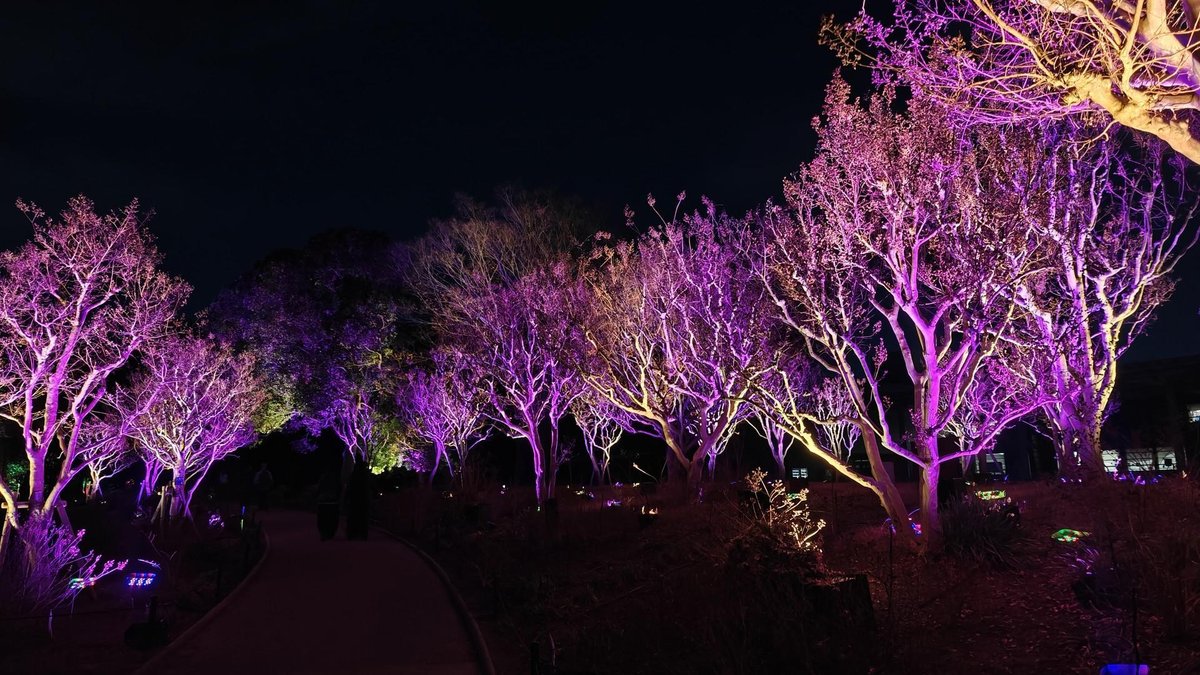
The lights typically oscillate and change every couple of seconds as you move past them. According to the app and sources online, there are sensors here that detect when you or an animal walks by and this then triggers the change which then spreads out. What I liked is that the change is very atmospheric and feels so natural.
If I were to describe the effect, it would be that it feels like the trees are breathing which gives this illusion of them being alive (I mean, they are alive but with the effect, you can sort of “visualize” that they are).
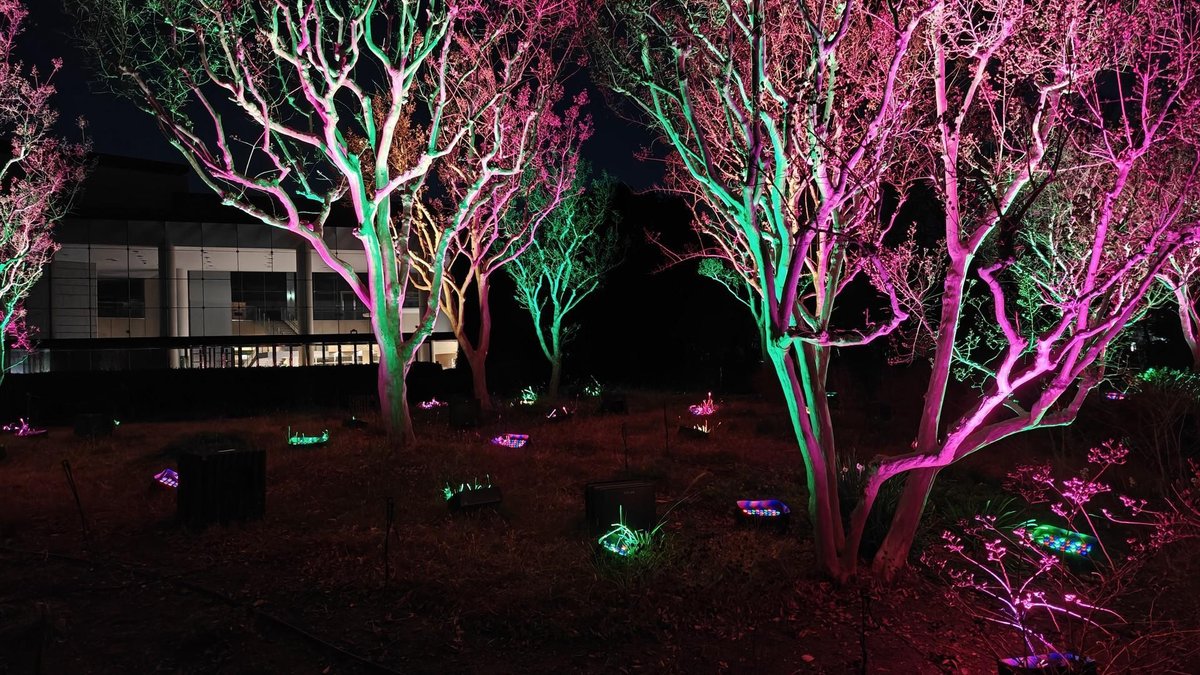
Here you can see the lighting instruments responsible for the effects. Now you might be tempted to get close to these but unfortunately, going into the lawn is actually not allowed. That said, it’s not really an issue and I think you’re still going to enjoy your walk through the garden’s various areas.
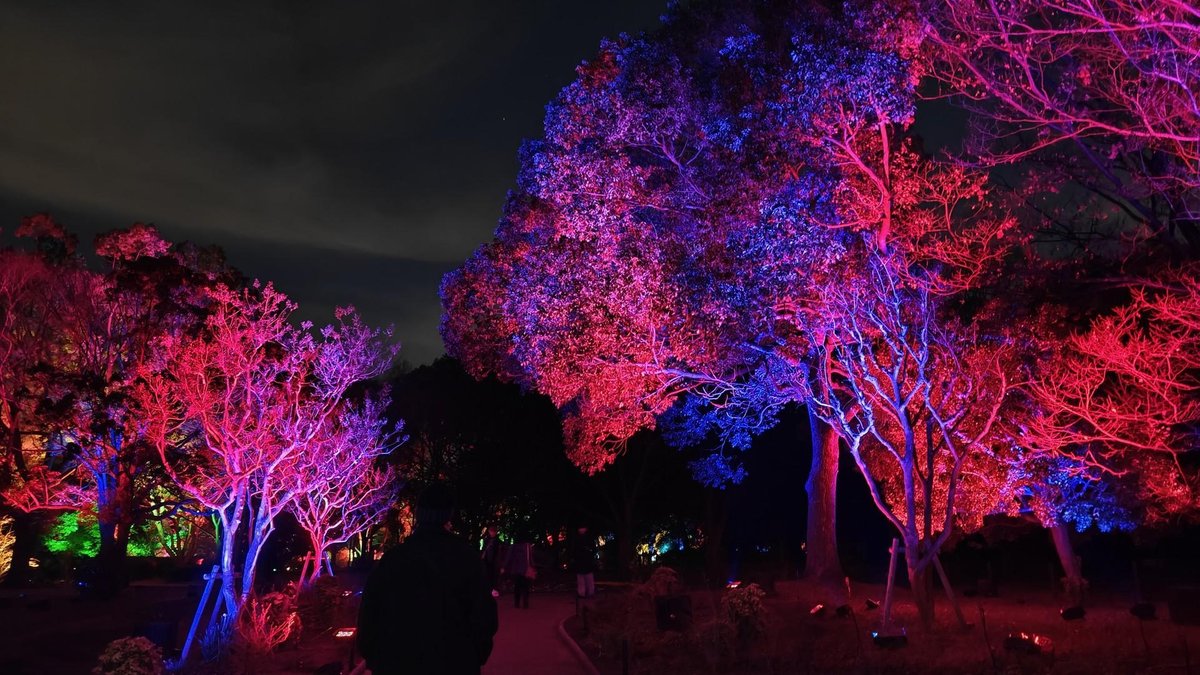
This is towards the end of the Crape Myrtle grove of the Resonating Trees area and the lights here were just so striking. Now a word of advice for people who suffer from epileptic seizures, while the lights here aren’t really that garish and aren’t exactly flashing multiple times a second, they can still be pretty intense. The transitions might result in seizures so it’s probably better that you exercised caution.
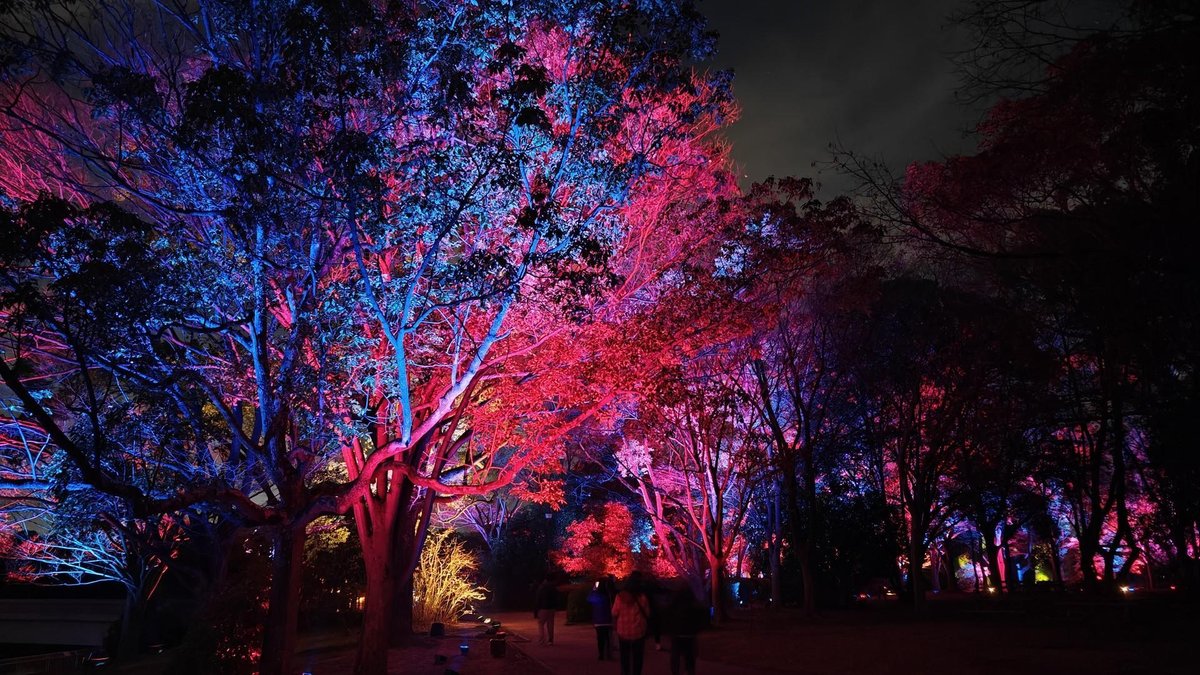
With that being said, the pictures that I took during my visit really don’t do justice to the views you’ll find here. This botanical garden is probably one of the few landmarks that I’ve visited here in Japan that perfectly encapsulates the term “see to appreciate”. Anyway, it might seem like it’s quite dark here but the lights actually illuminate the way and it was pretty easy to keep on the right track for the duration of my walk.
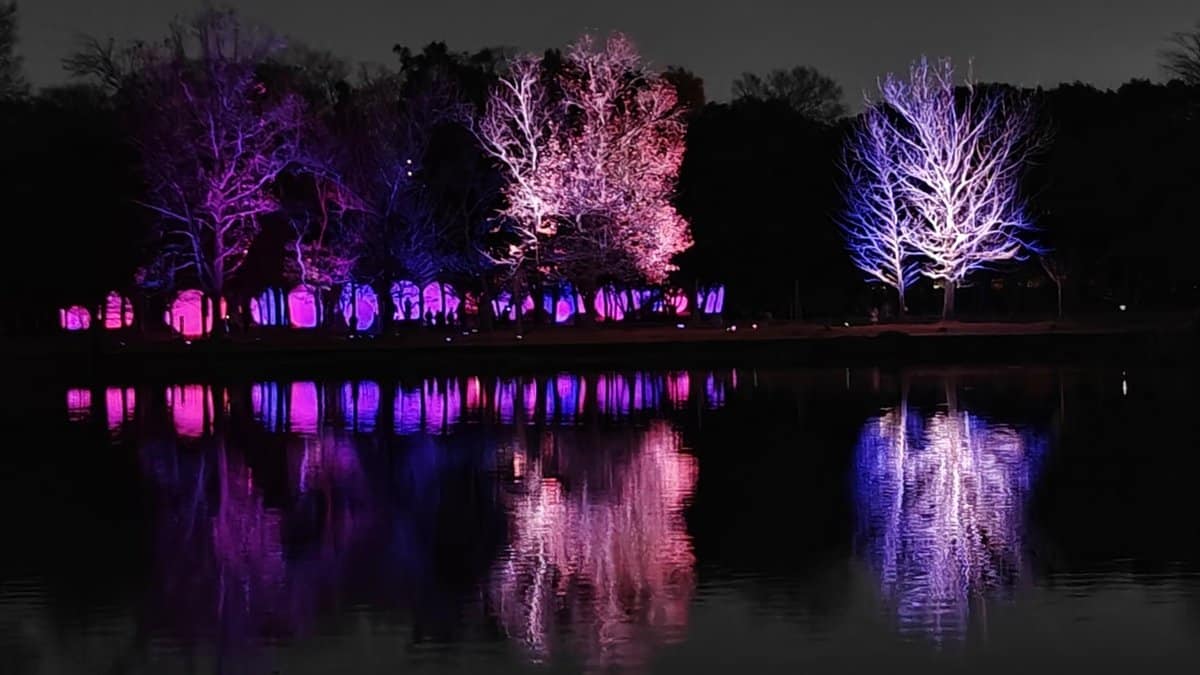
This was one of the more mysterious installations that I saw from the Resonating Trees area. It was way up ahead and it looked super eerie and alien. The area where it’s at is the Eucalyptus park and the installation is called the Forest of Autonomous Resonating Life.
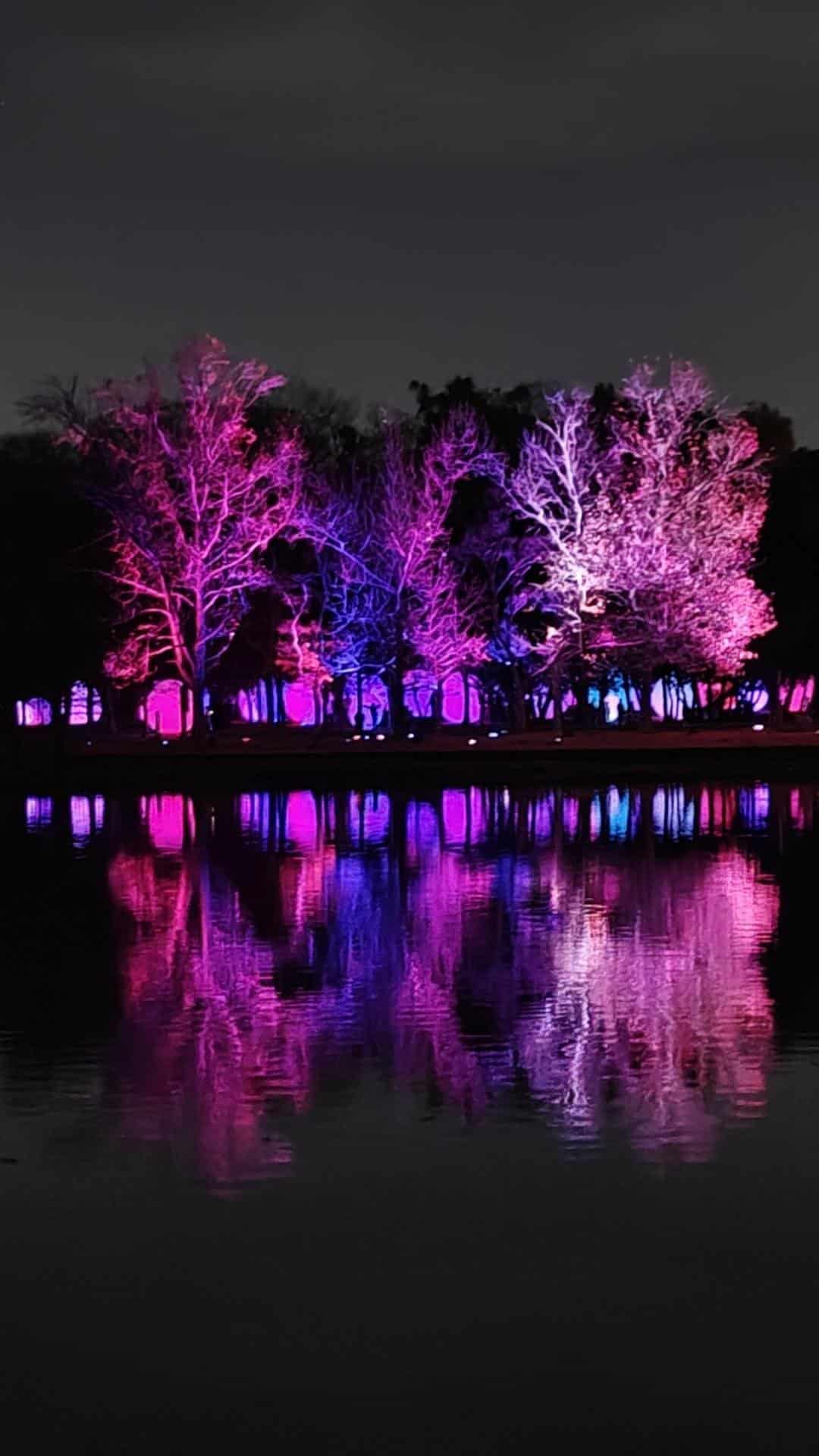
As you can see, the installation is rather eye-catching. I thought the eucalyptus trees towering over the orbs of light painted a striking picture from the area I was viewing them. Seeing this actually made me excited even more to see it up close.
Of course, before going there I still had to go through the garden’s other areas and installations.
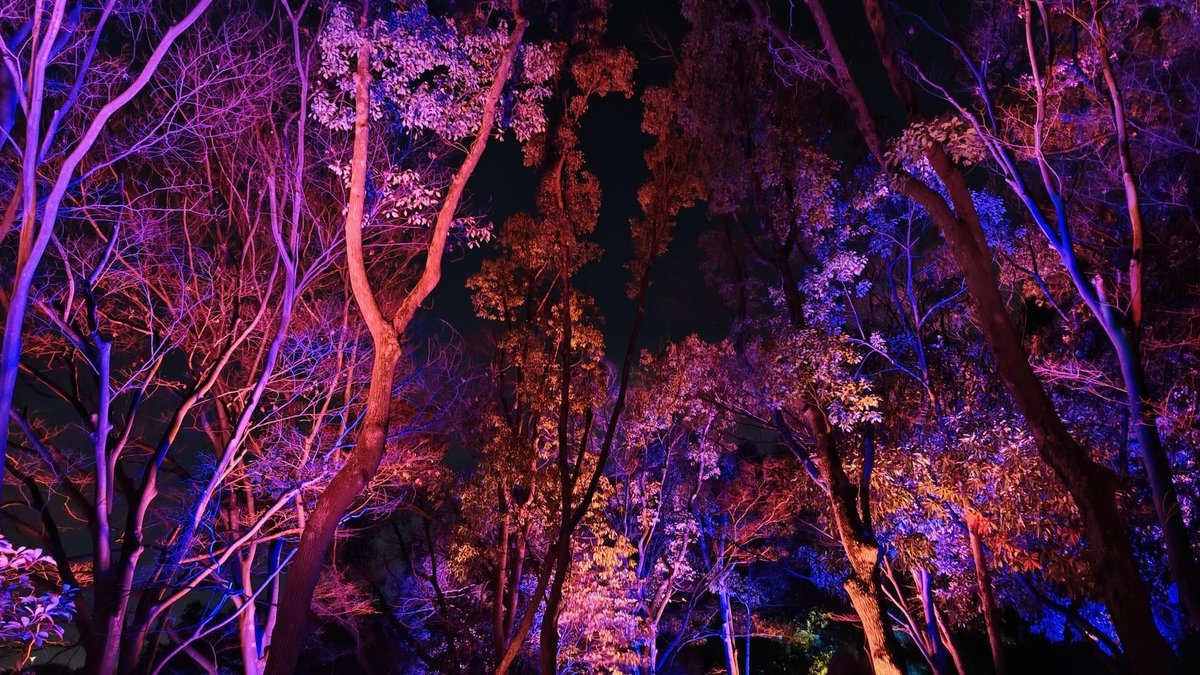
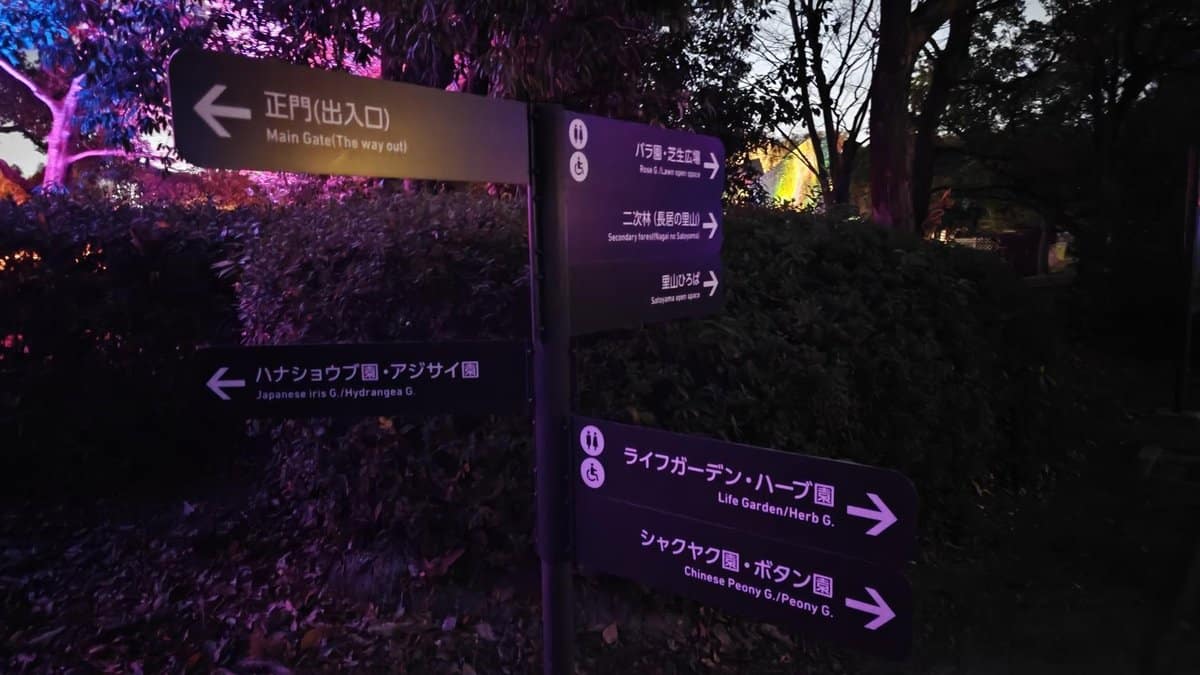
So I said earlier that you’d have a hard time getting lost here even though it’s night time. Aside from the lights illuminating the path, there are also plenty of signs pointing to the notable areas of the Nagai Botanical Garden.
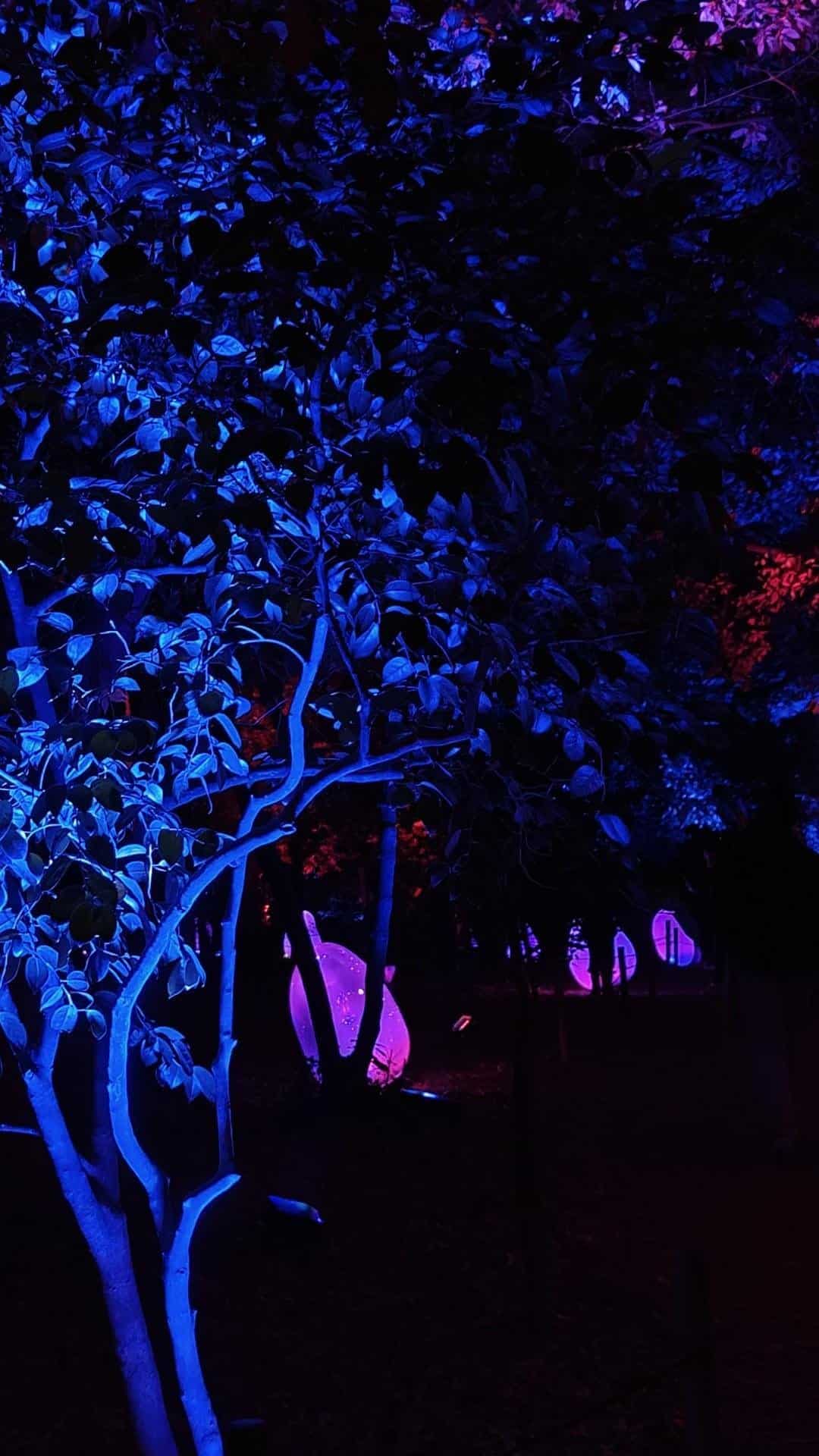
So the area where I’m currently at when I took this picture (and the previous two) is called the Camellia Garden. Well, at least that’s what it’s called in the morning. Under the teamLab Botanical Garden exhibit, its name is switched to “Resonating Microcosms in the Common Camellia Garden – Liquified Light Color, Dusk to Dawn.” I’m not going to lie, the name is actually a handful so I’ll just refer to it as the oval light show garden.
Anyway, this is one of the few areas where you can actually get close to the installations and touch them. Interacting in this manner also results in the oval shapes (they’re actually called ovoids) changing color and emitting a tone (much like the Resonating Trees when you’re walking close by).
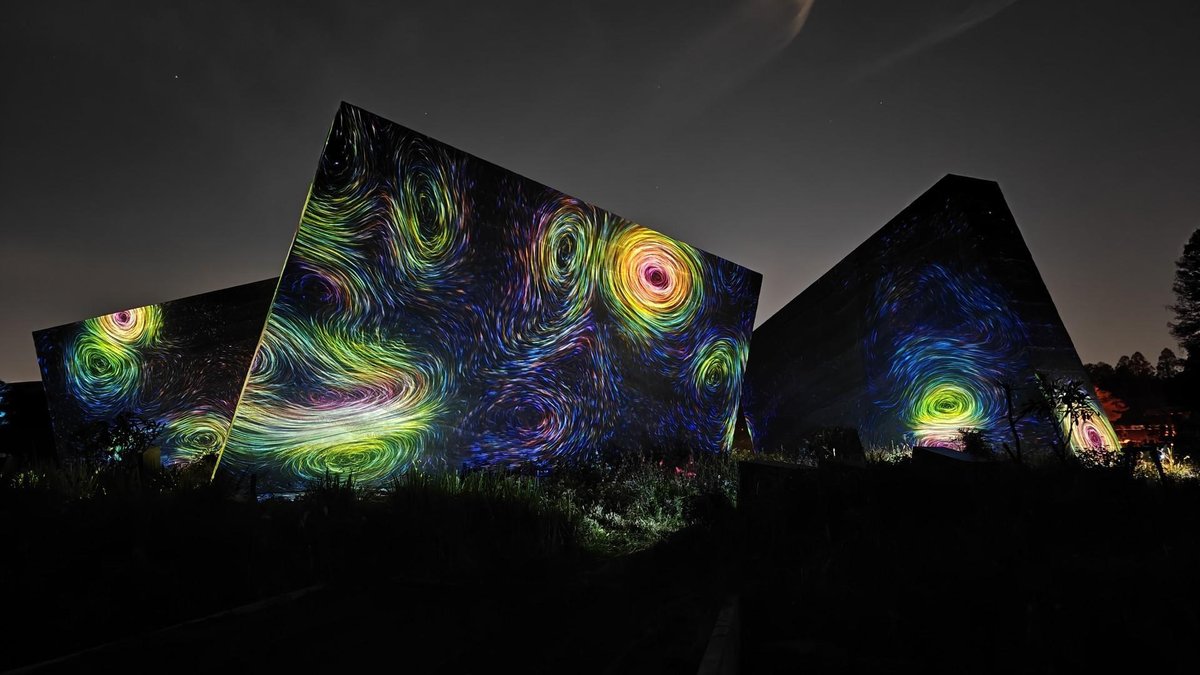
Opposite the Camellia Garden is another of the memorable installations here at teamLab Botanical Garden. Called the Sculptures of Dissipative Birds in the Wind, this installation reminded me a lot of Van Gogh’s “The Starry Night”. These sculptures are actually on the largest island in the Oike Pond.
So it’s not quite evident in the picture but there are actually birds flying around here and the sculpture somehow detects their movements which then results in its whirls changing color and moving.
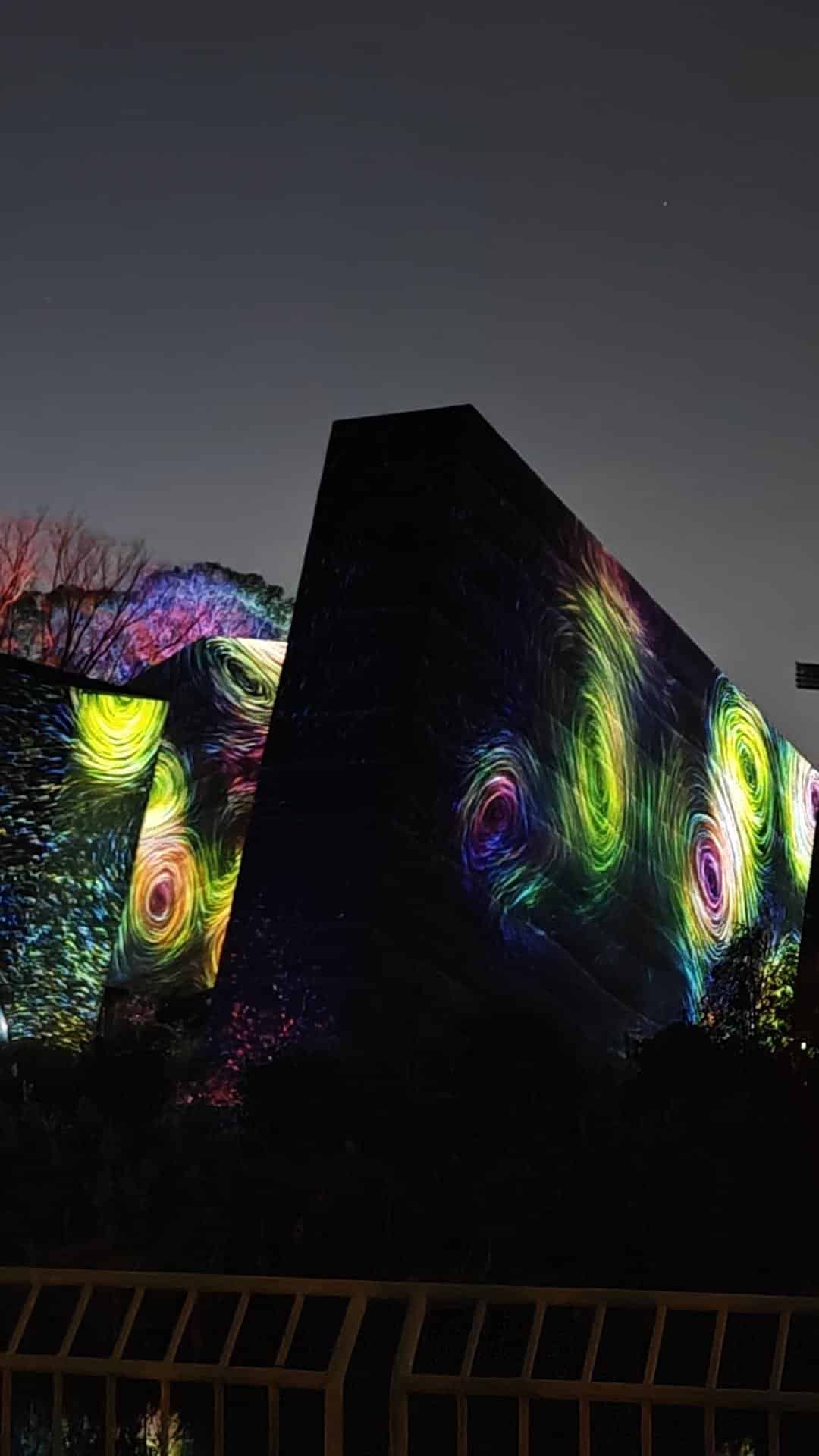
What’s really unique about the artwork is that the whirling lightshow stops whenever there aren’t any birds flying around it. To get them to stay in the area, the island was planted with flora that attracted insects which then became food for the birds. It’s an ingenious way of allowing the birds to create art just by existing and doing their thing.
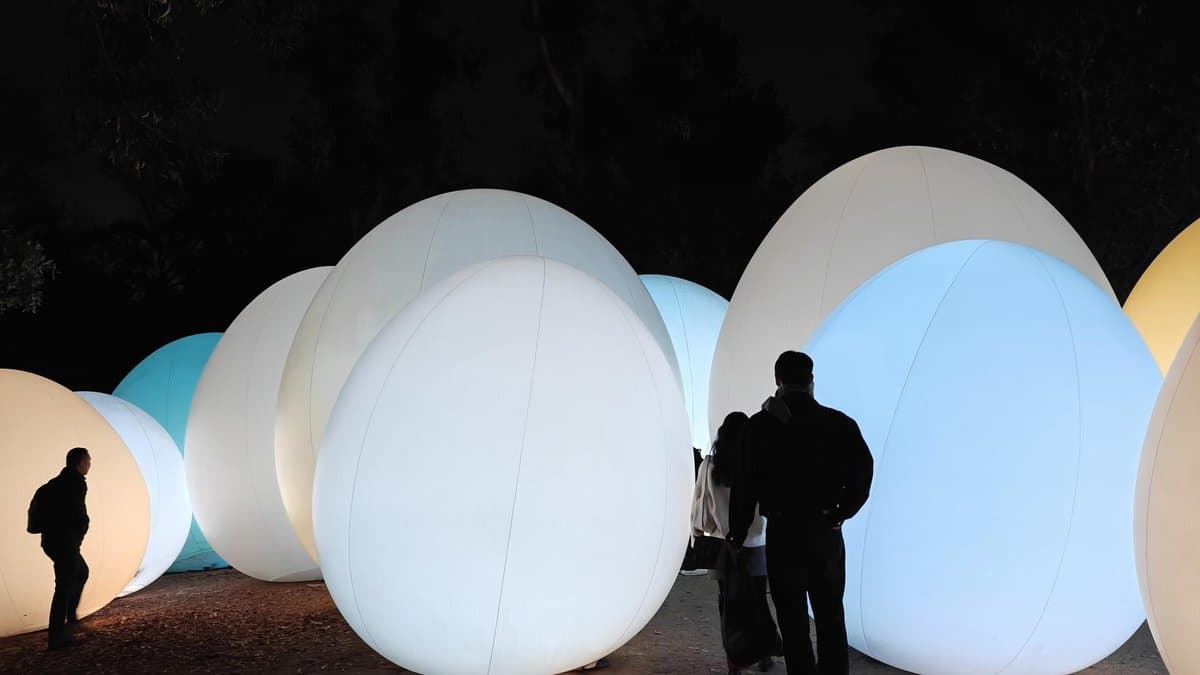
After a short walk, I finally found myself at the eucalyptus park. Let me just say that I didn’t think the ovoids here would be so large. From afar they looked small which probably has to do with the fact that the eucalyptus trees here dwarf everything around them.
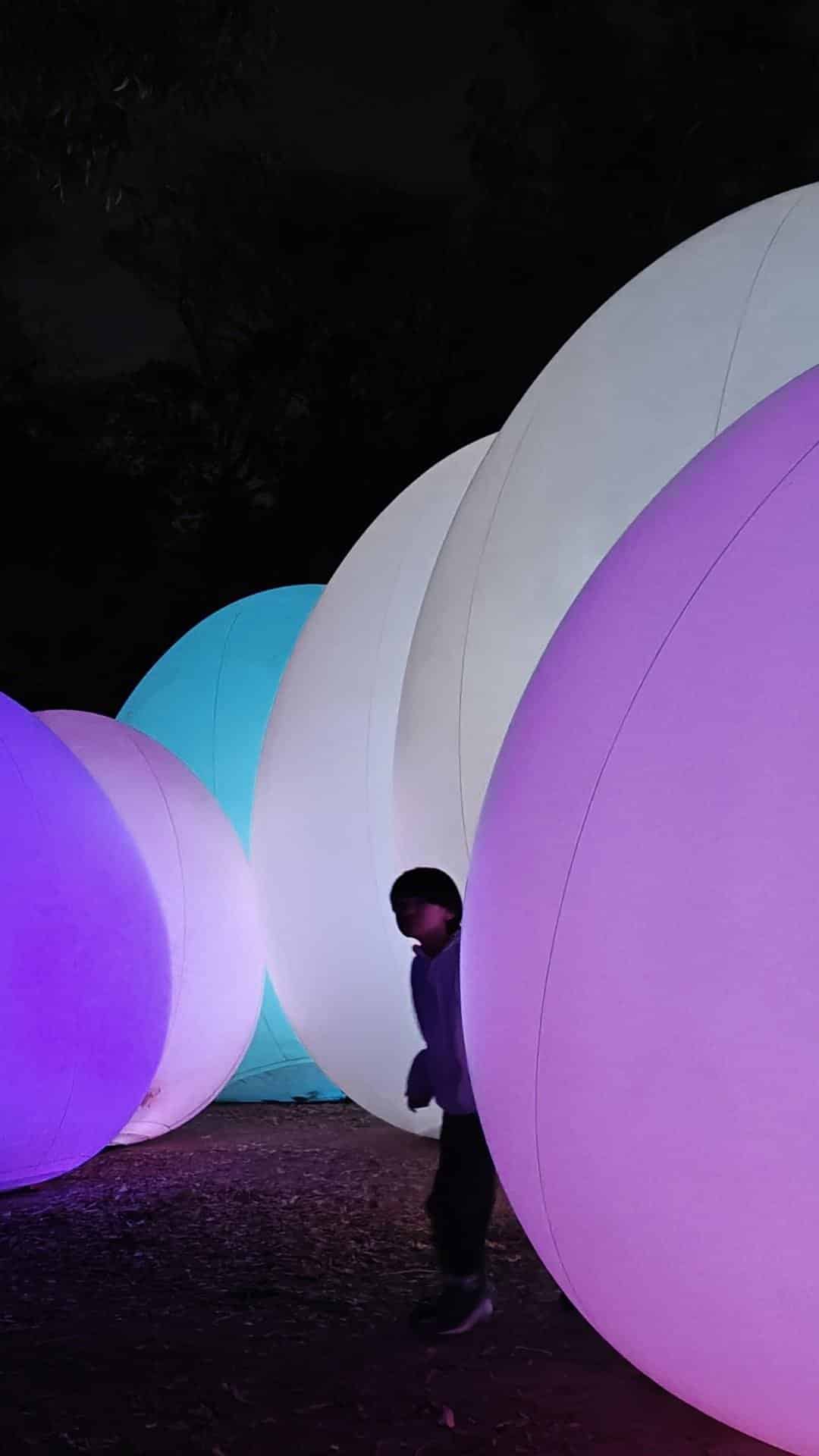
As I said earlier, the installation here is called the Forest of Autonomous Resonating Life. The reason for this naming has to do with how the ovoids behave when they’re pushed over or blown by the wind. They automatically revert back to their original position and their colors then change.
Along with the change they then emit a tone which then resonates with other ovoids that then copy the color and tone of the ovoid that emitted it.

The thing about the ovoids is that it’s quite hard to not knock them over or down. To ensure that they go off, they were designed to be really close to each other. This forces visitors to then move in between them which then triggers the tone and color resonance.
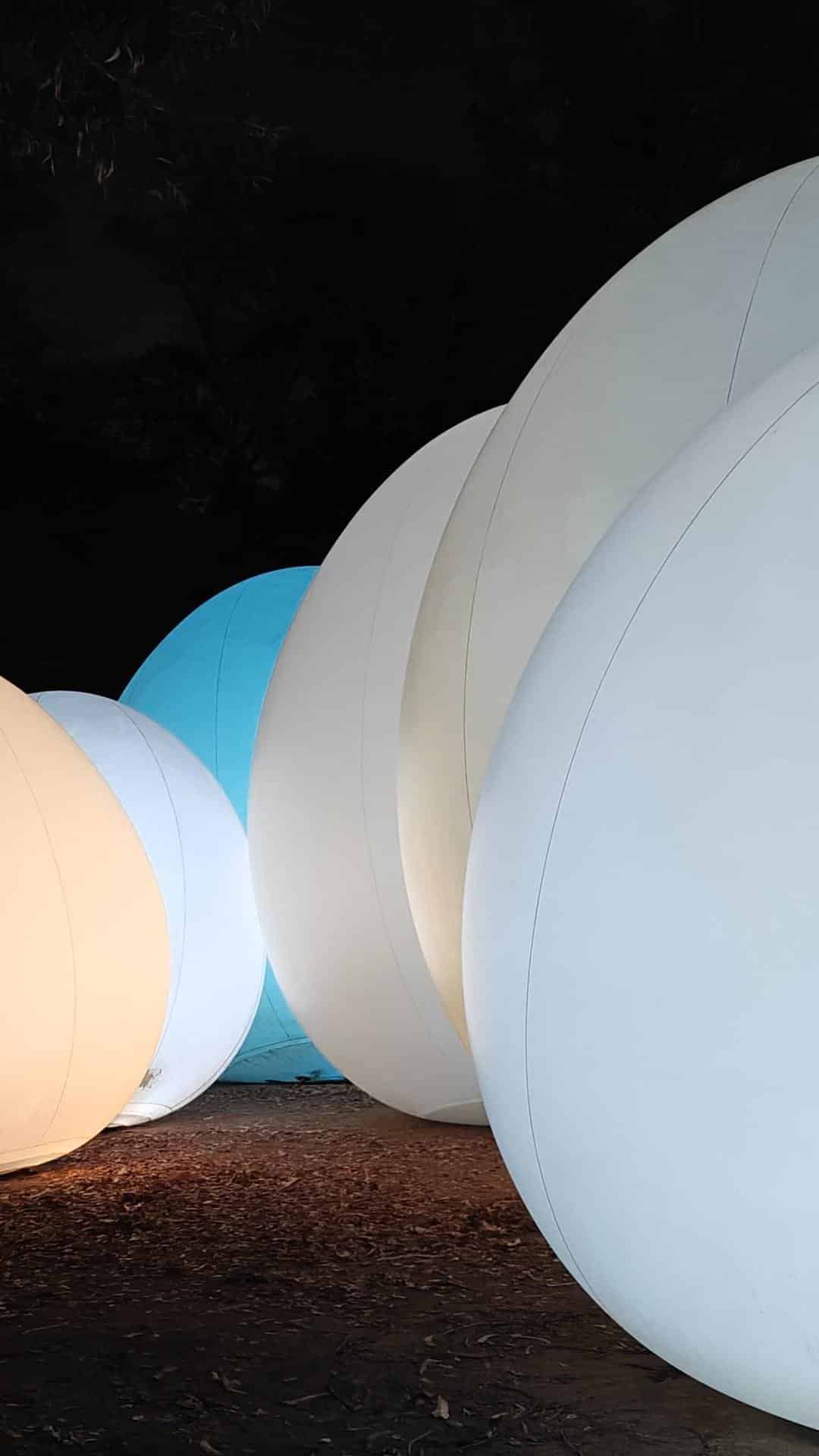
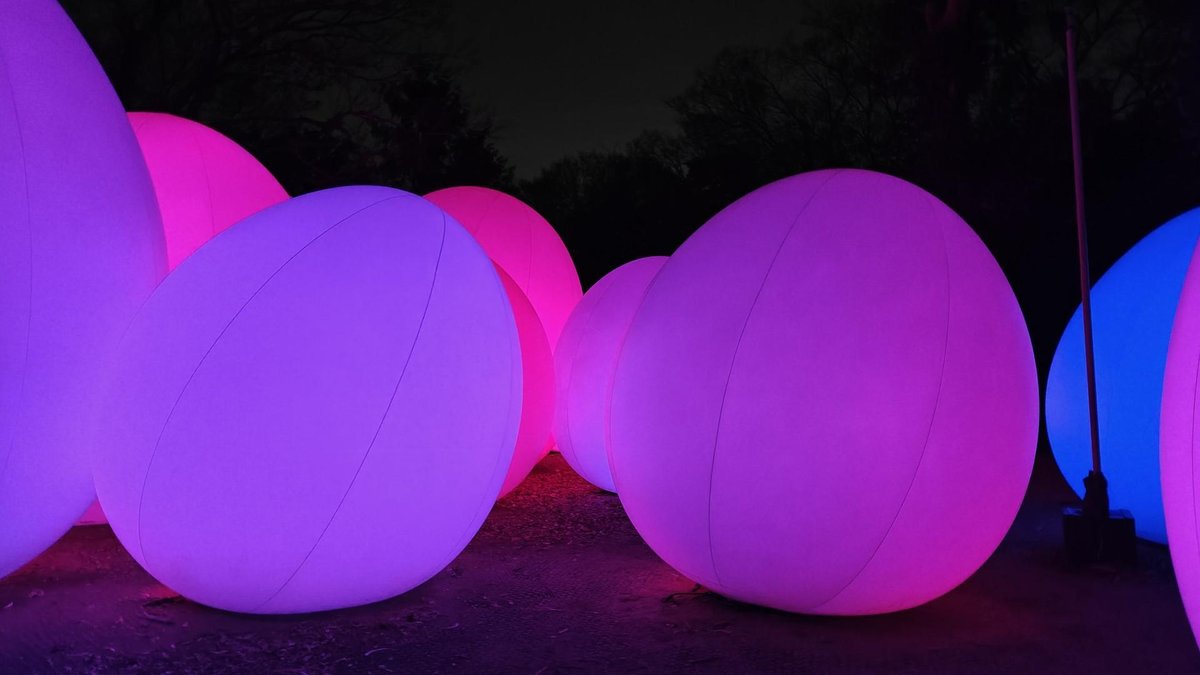
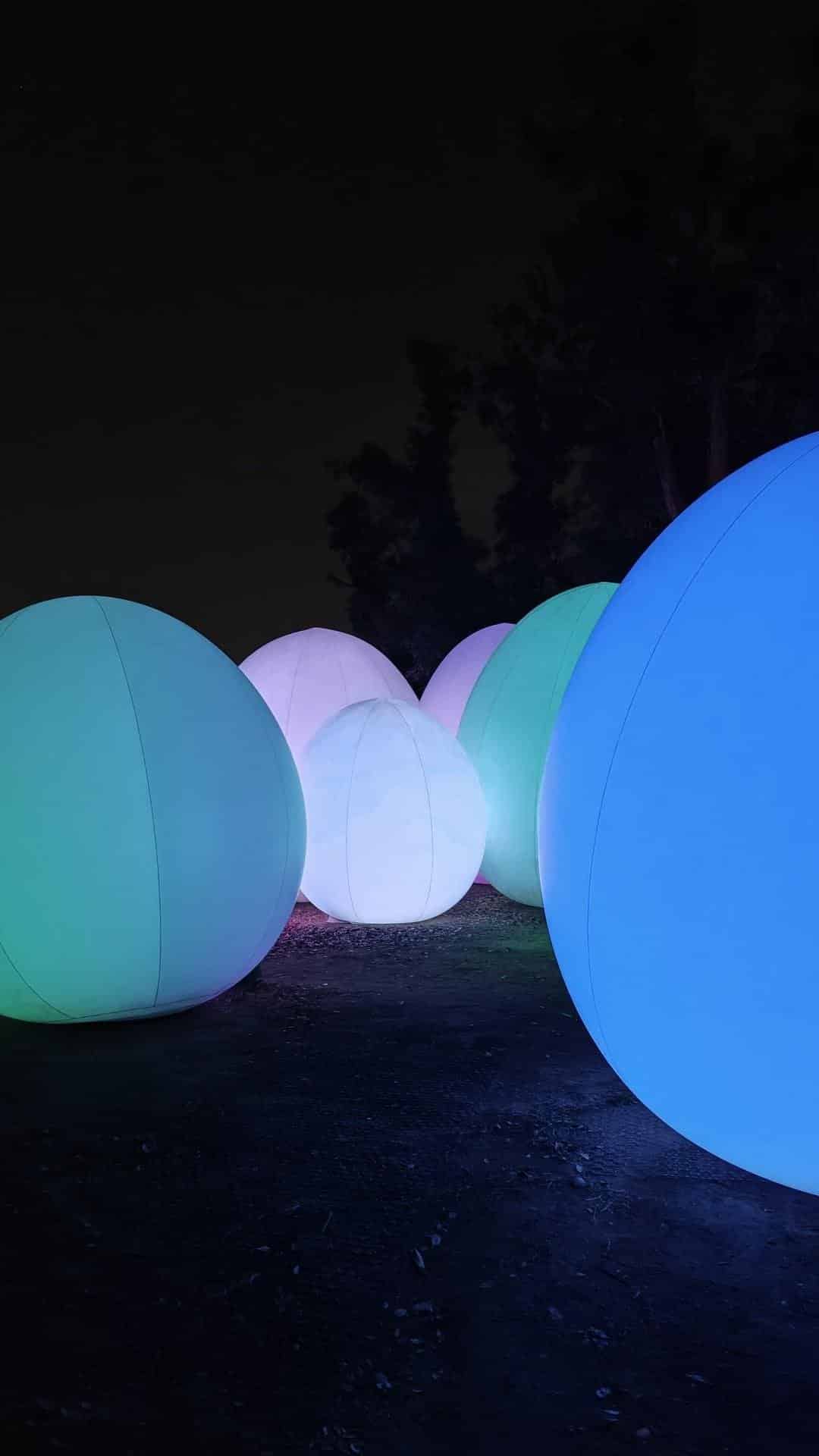
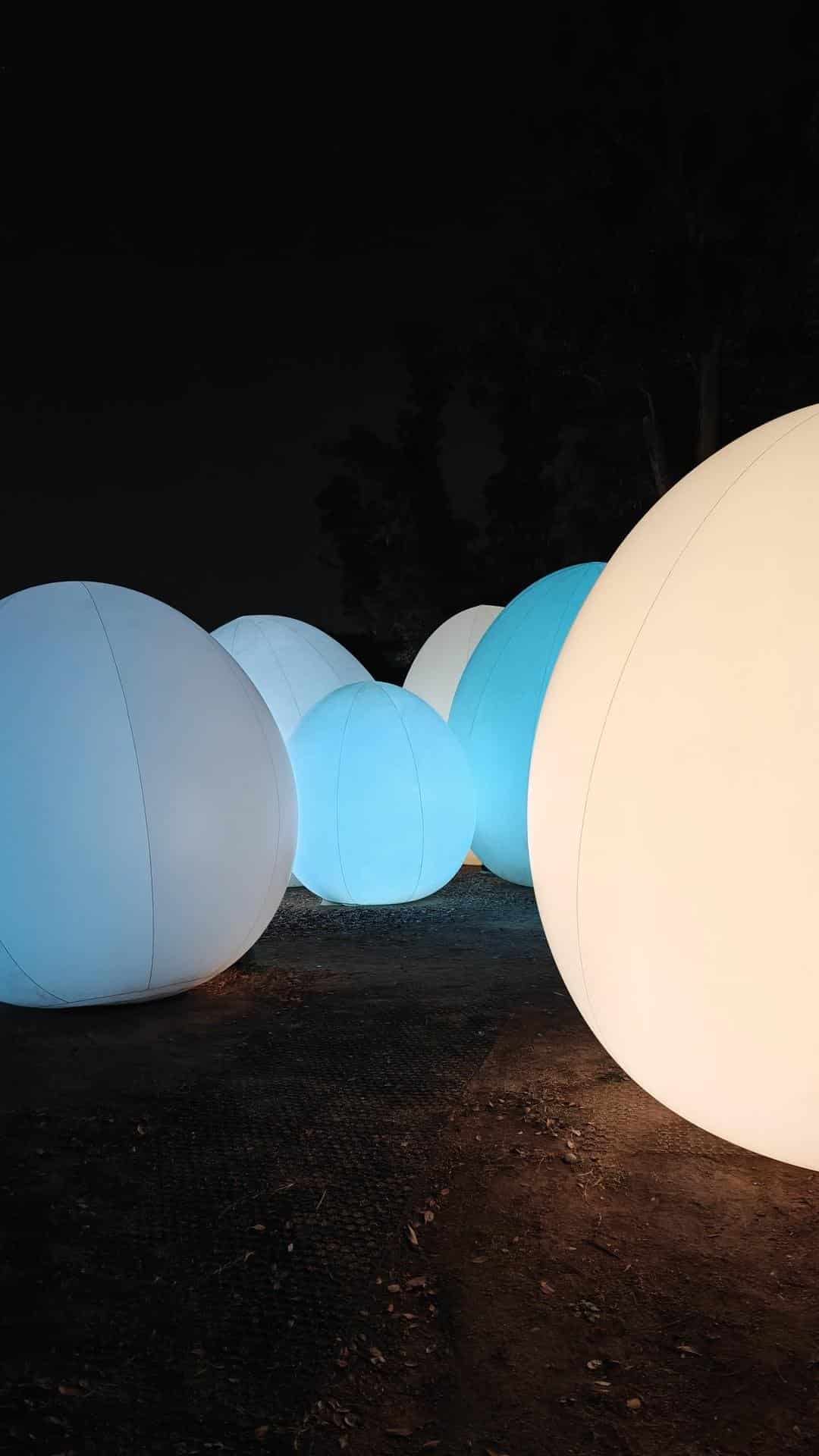
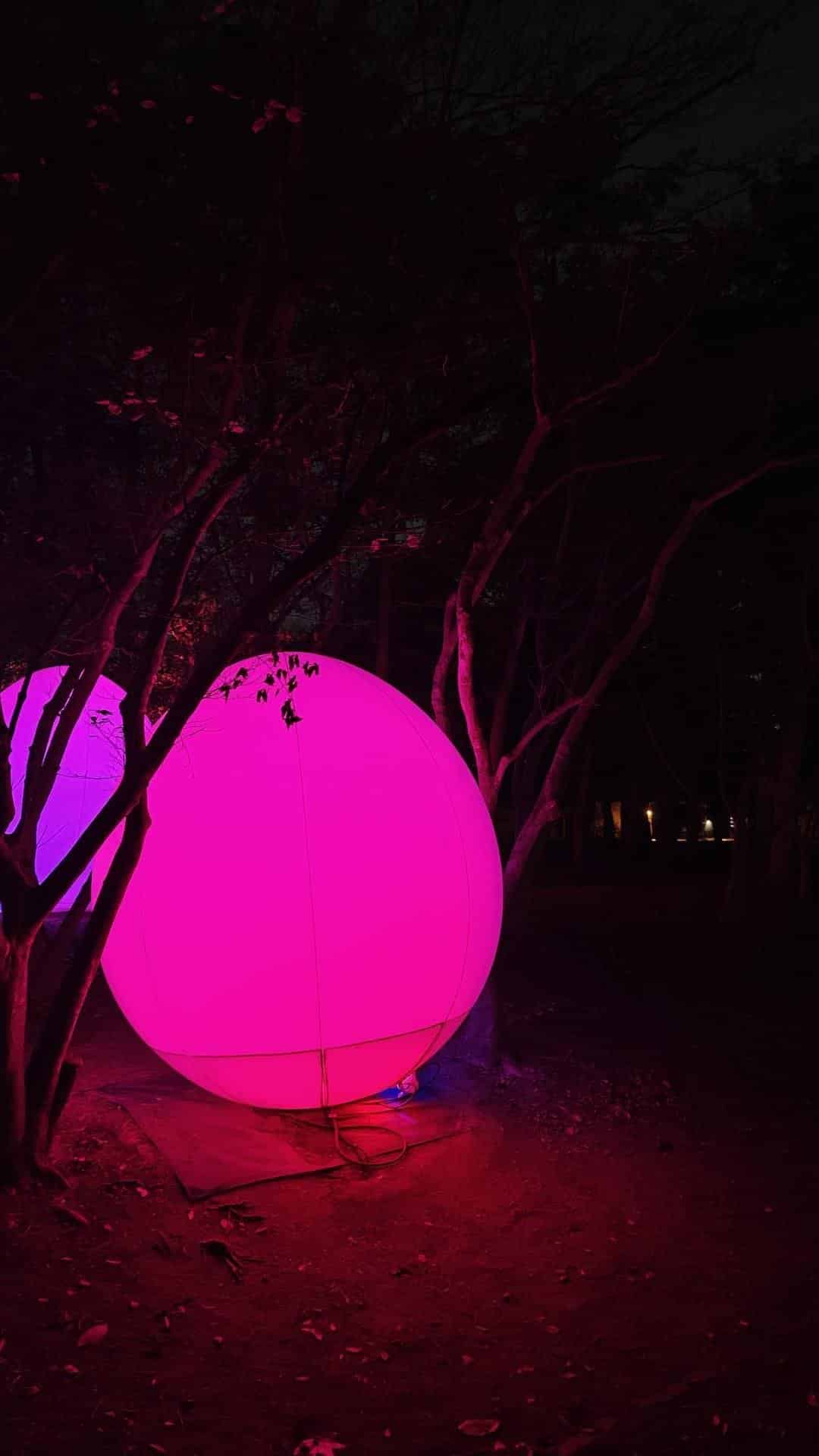
Here you can see one of the ovoids in action. In the previous image it started out red and then turned to a lavender color when it was touched. Of course, constantly touching the ovoid will result in it changing colors more often.
What’s great about this installation is that visitors are actually encouraged to interact with these ovoids and you end up feeling like you’re in a sea of lights when you’re here.
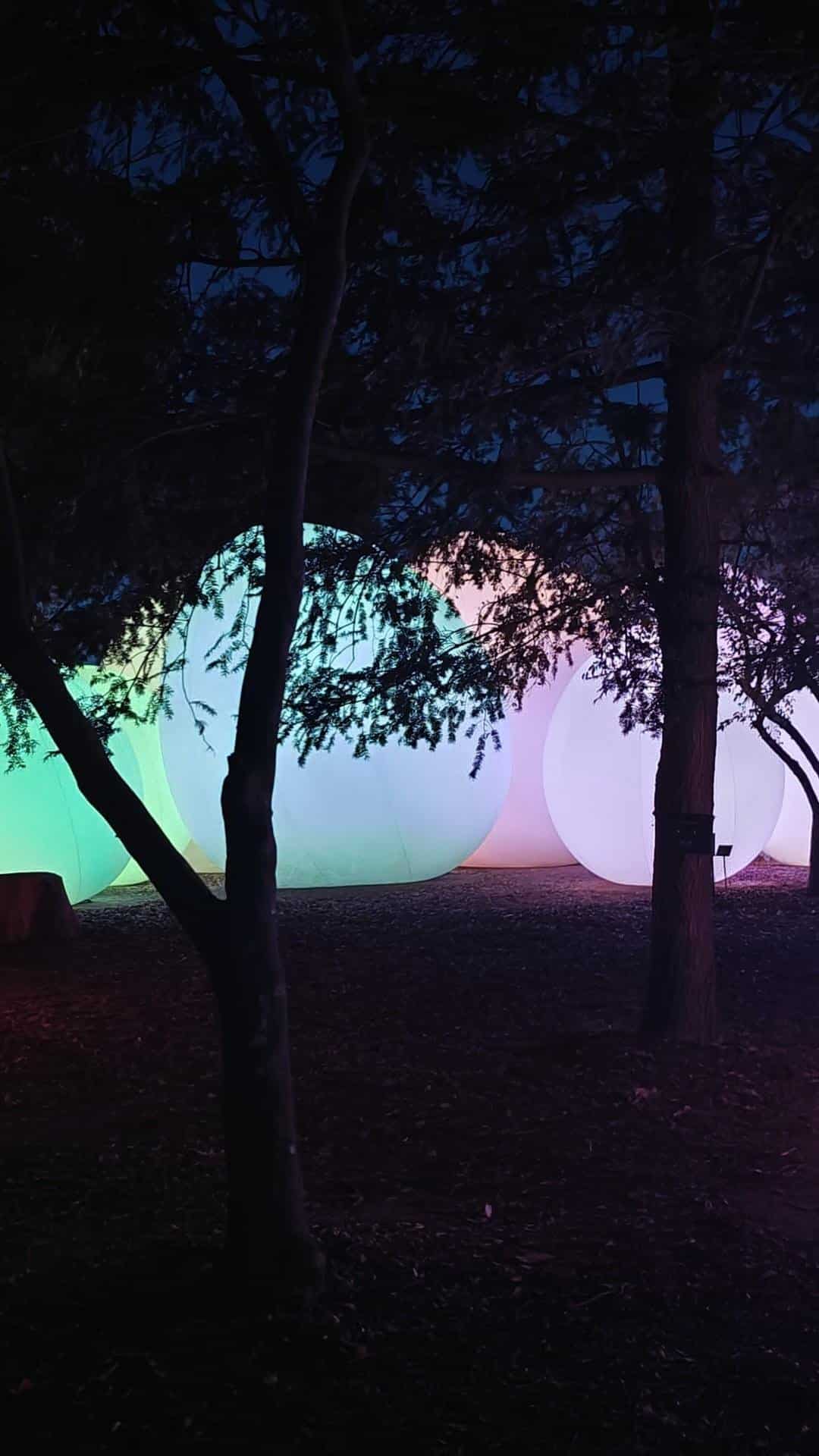
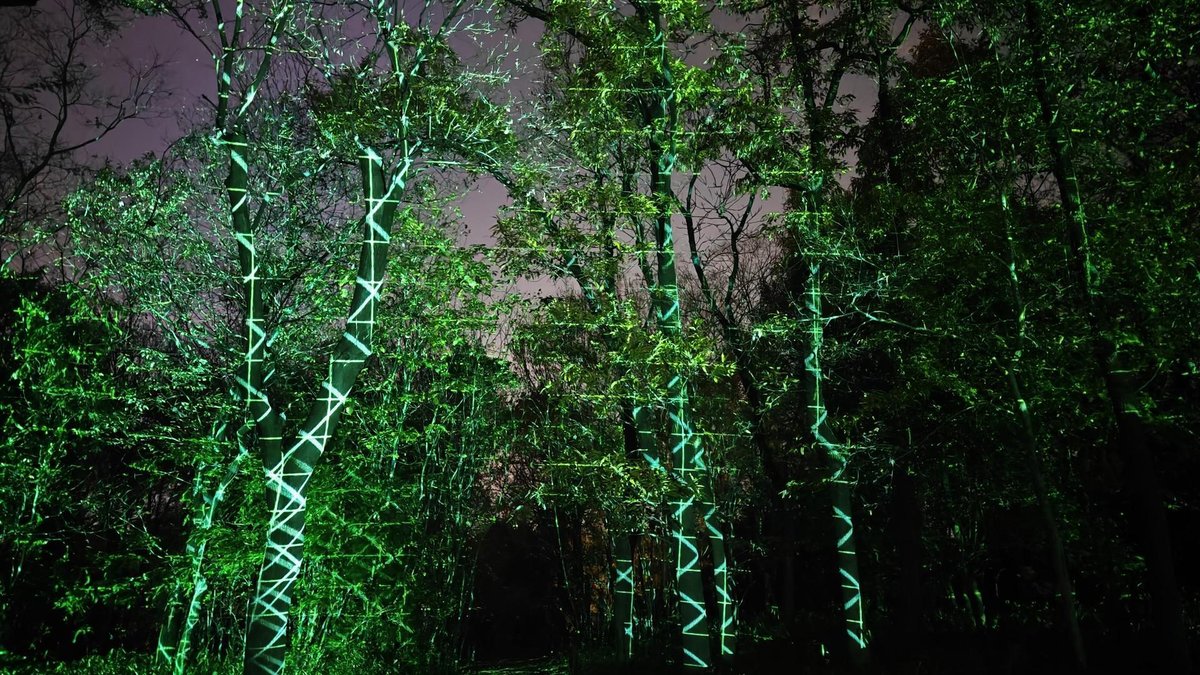
Adjacent to the eucalyptus grove is the Secondary Forest area. In the context of the teamLab Botanical Garden exhibit, it’s the next area that features outdoor installations. What makes it different though is that unlike other areas, it has three installations for you to encounter and marvel upon.
The first of course is what you see in the image above and is called Concrete and Abstract.
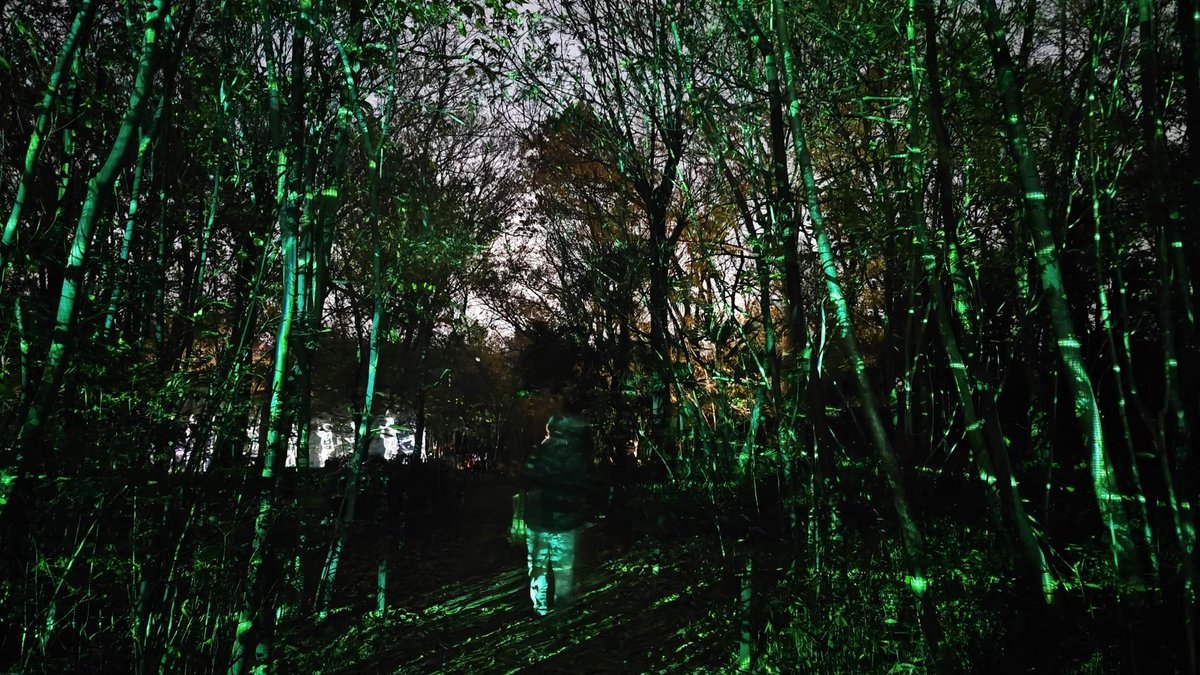
In a lot of ways, the installation reminded me of the Digital Rain effect in the Matrix movies just because of the neon green color of the light show. I think this is probably one of the more hit or miss of the installations here. As for how it works, the lights are essentially green lines and anytime you step inside the entrance they are replaced with a new set that spreads across and in some instances forms what seems like a brick wall pattern (hence the concrete in its name).
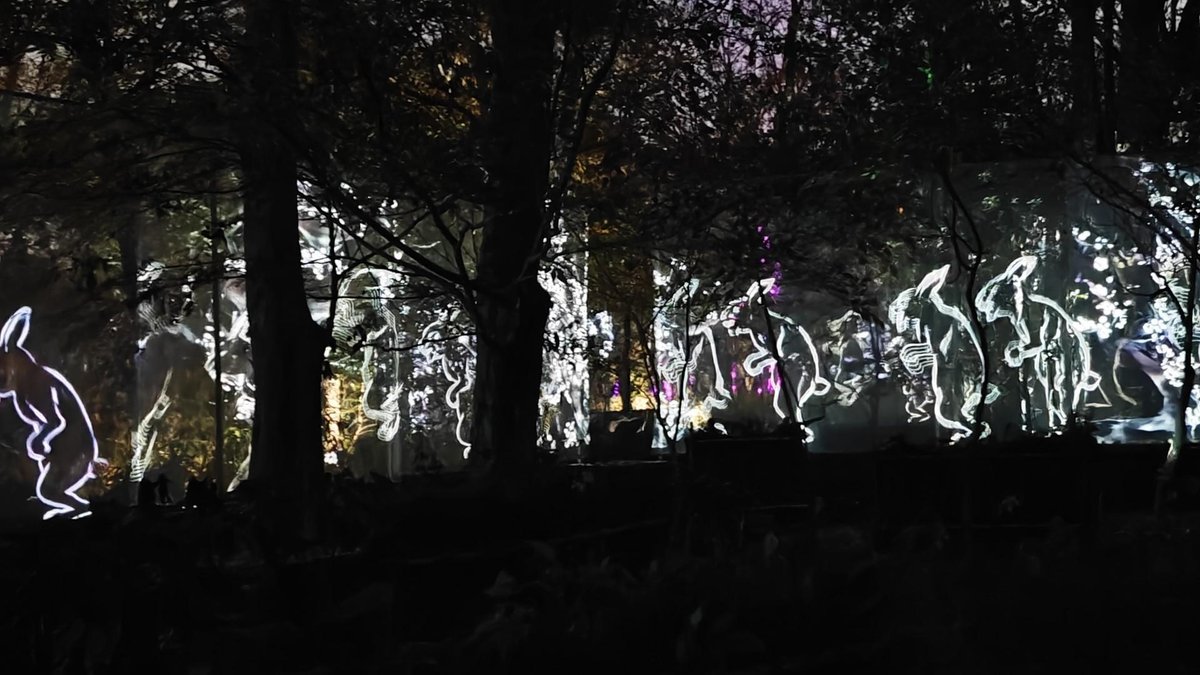
I said earlier that there are three installations in the Secondary Forest area and the second one is actually quite close to the first. This installation is called Walk, Walk, Walk and you can actually see it from the entrance. Now this was probably one of the more straightforward yet still ethereal installations I saw here.
It’s definitely the highlight of the Secondary Forest area and you really kind of forget the Concrete and Abstract installation once you see this.
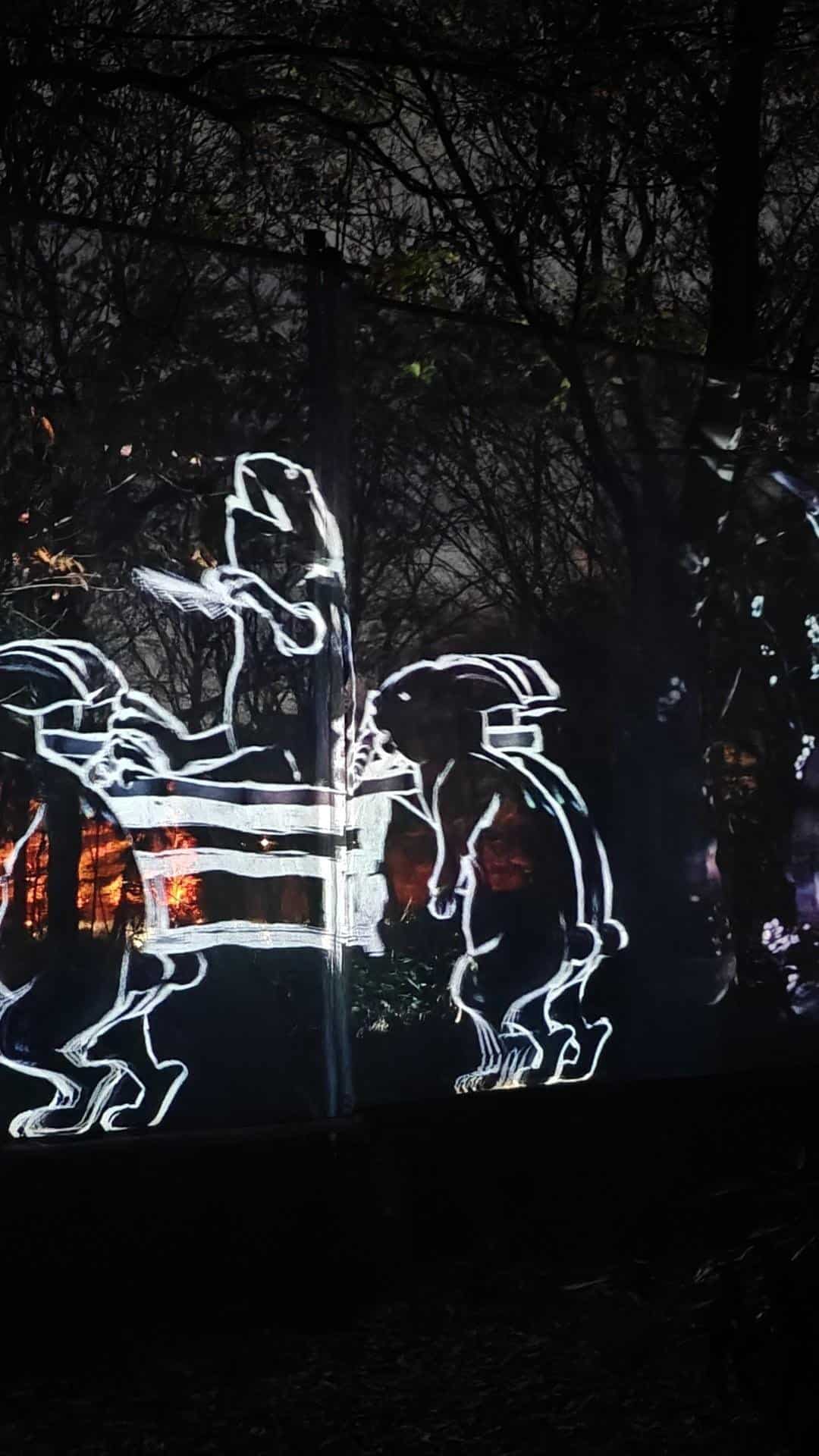
As its name implies, the installation features a number of figures seemingly walking endlessly through the Secondary Forest. From what I’ve been told, the installation got its inspiration from an expression in Zen called “Hoho kore dojo”. This roughly translates to every step you make is an opportunity for you to learn.
The figures in this installation (ranging from hares and other animals to humans) are shown walking endlessly with the trees acting as the decisions they’ll have to go through in their journey.
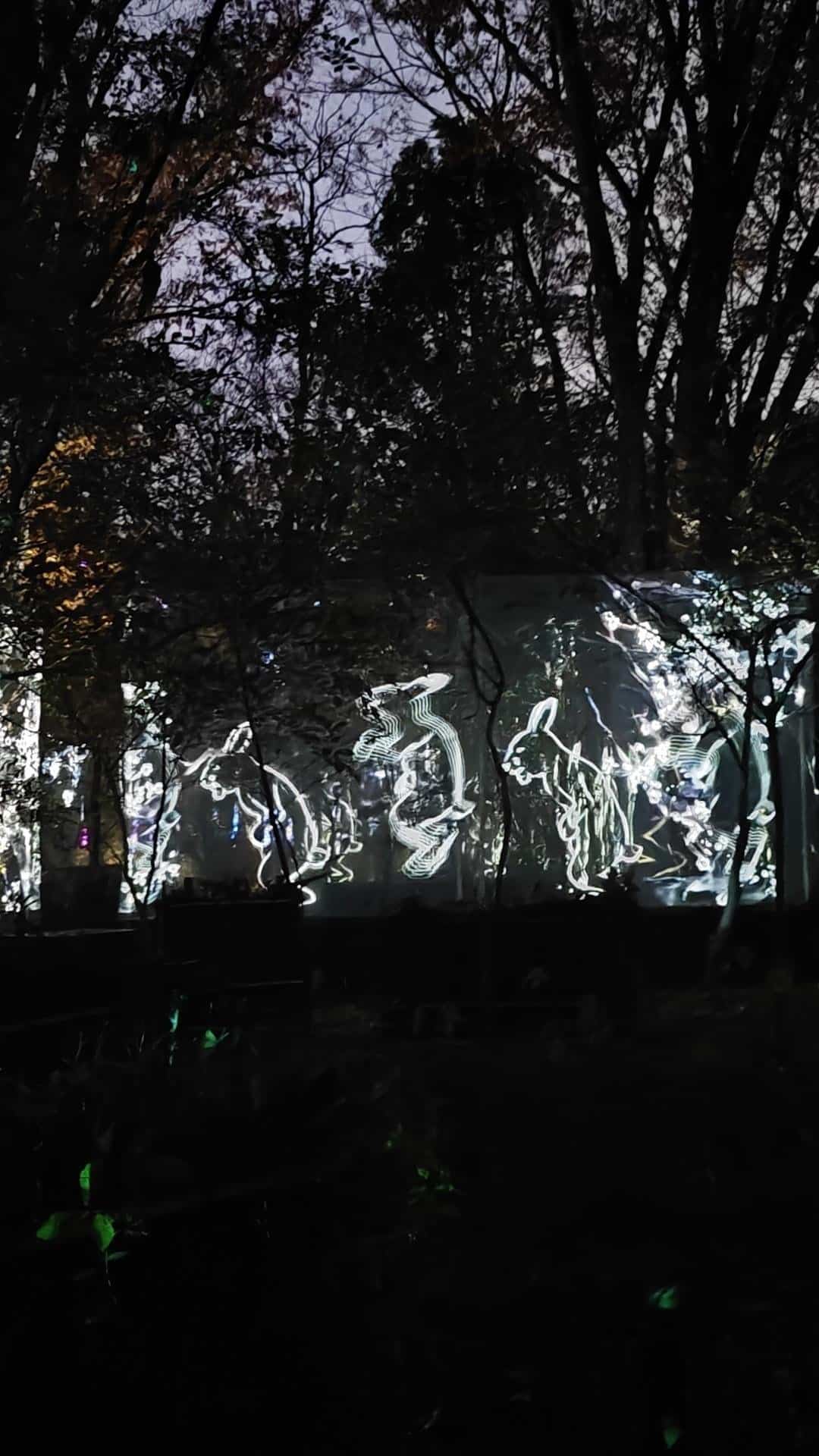
I’m not going to lie, this was probably the most profound of the installations here because of how universal its symbolism is. So it’s not just beautiful but it also imparts a little knowledge and wisdom which I think is missing in a lot of art nowadays. That said you don’t really need to philosophize to enjoy the installation.
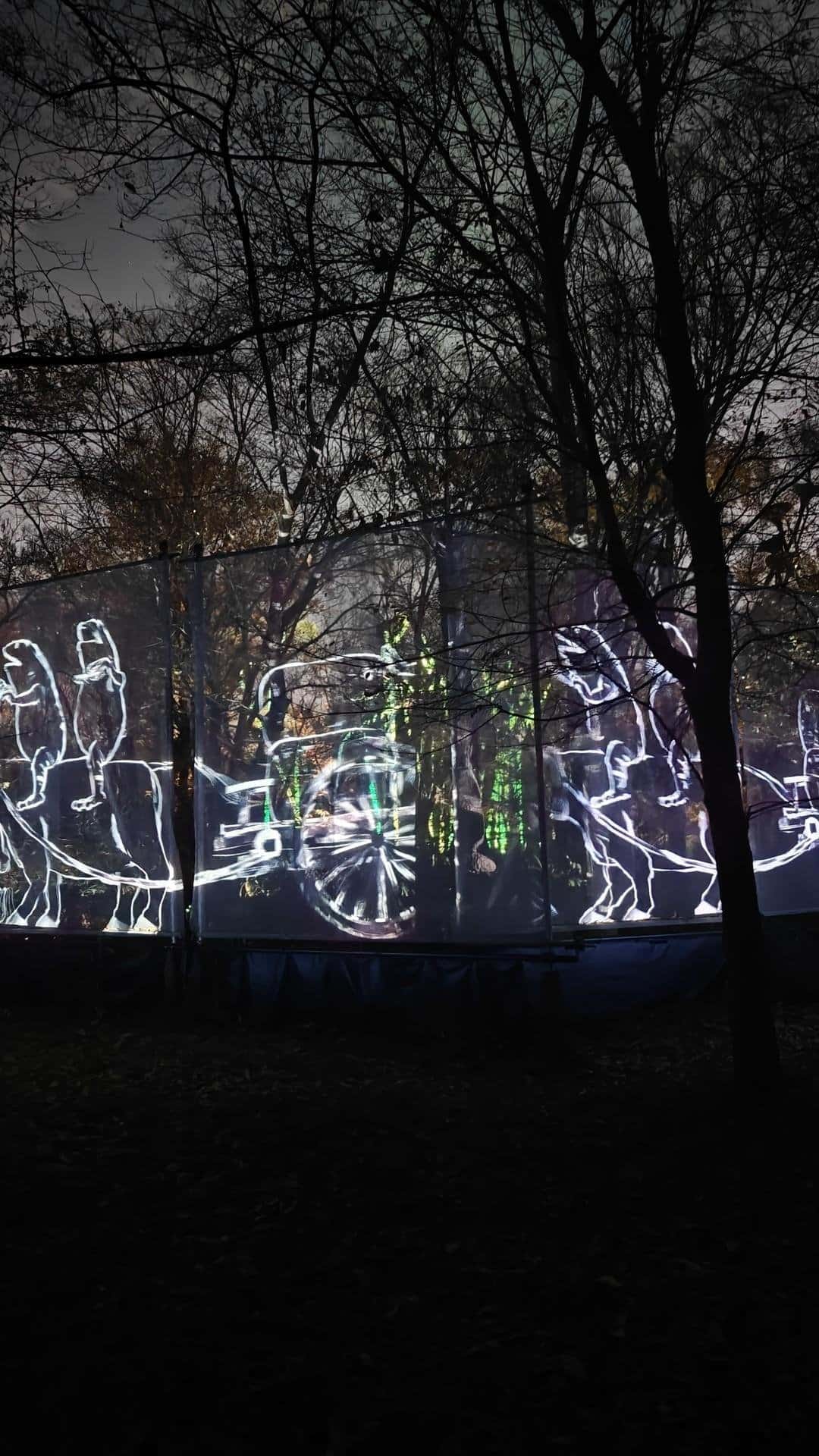
This applies to other installations here but you could just enjoy them for what they are: art that’s meant to awe and entertain. Moreover, they can be open to interpretation which actually makes them really great for deep or even unserious conversations. I can definitely see why most people consider this a great date spot because of the conversations that can be had from these installations.
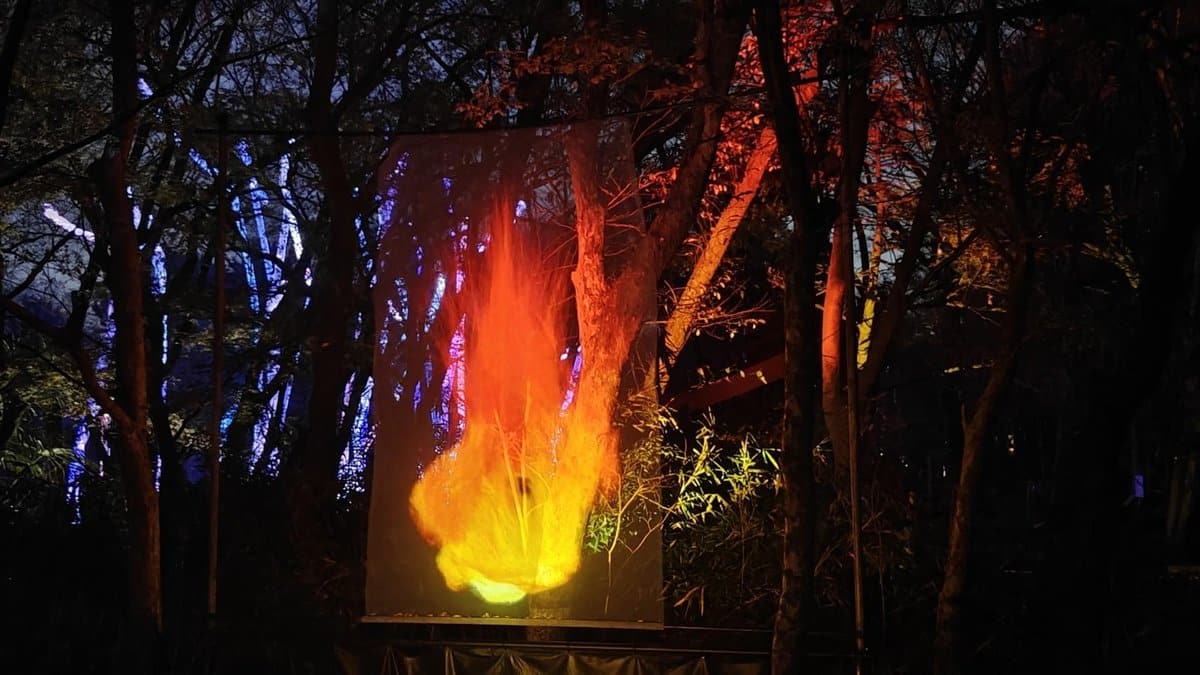
Speaking of conversation starters, this installation definitely qualifies as one. It’s the third installation here at the Secondary Forest and is definitely one of the eeriest and coolest. It’s called the Universe of Fire Particles in the Forest and from afar it looks like a St. Elmo’s Fire.
In terms of interactivity, you can actually download an app called Distributed Fire and open it near the flame. What this does is that it transfers the flame on your phone and if you’re with people who also have it (the app) then you can go near them and use your phone to light theirs as well.
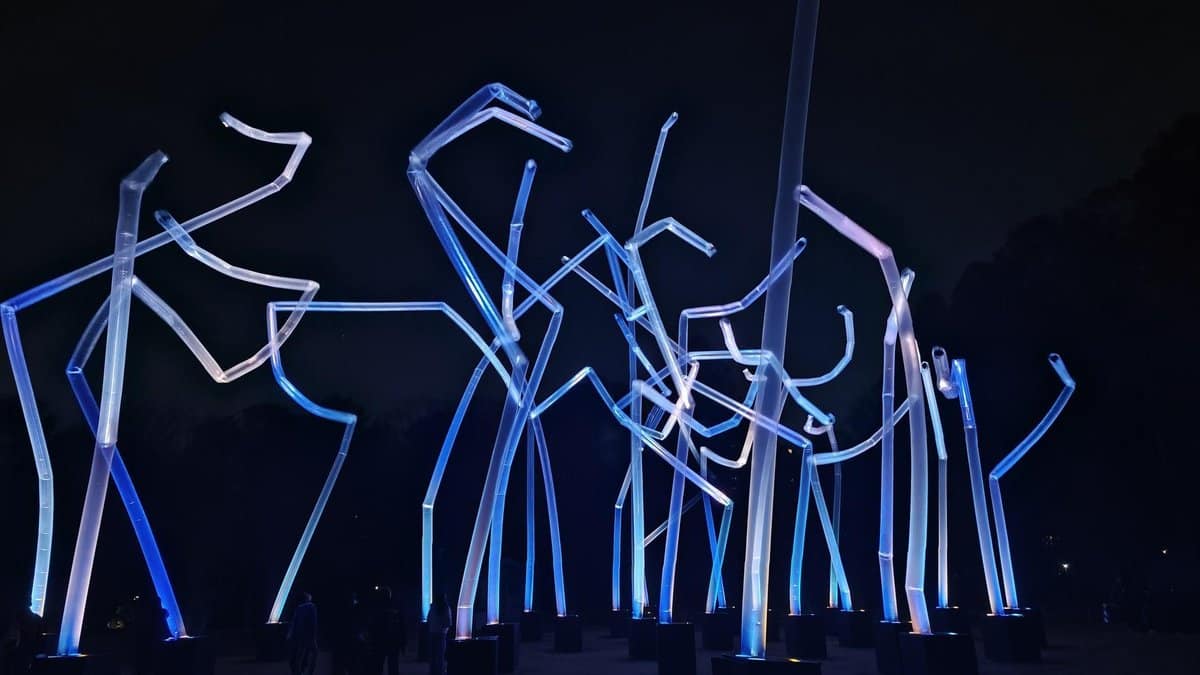
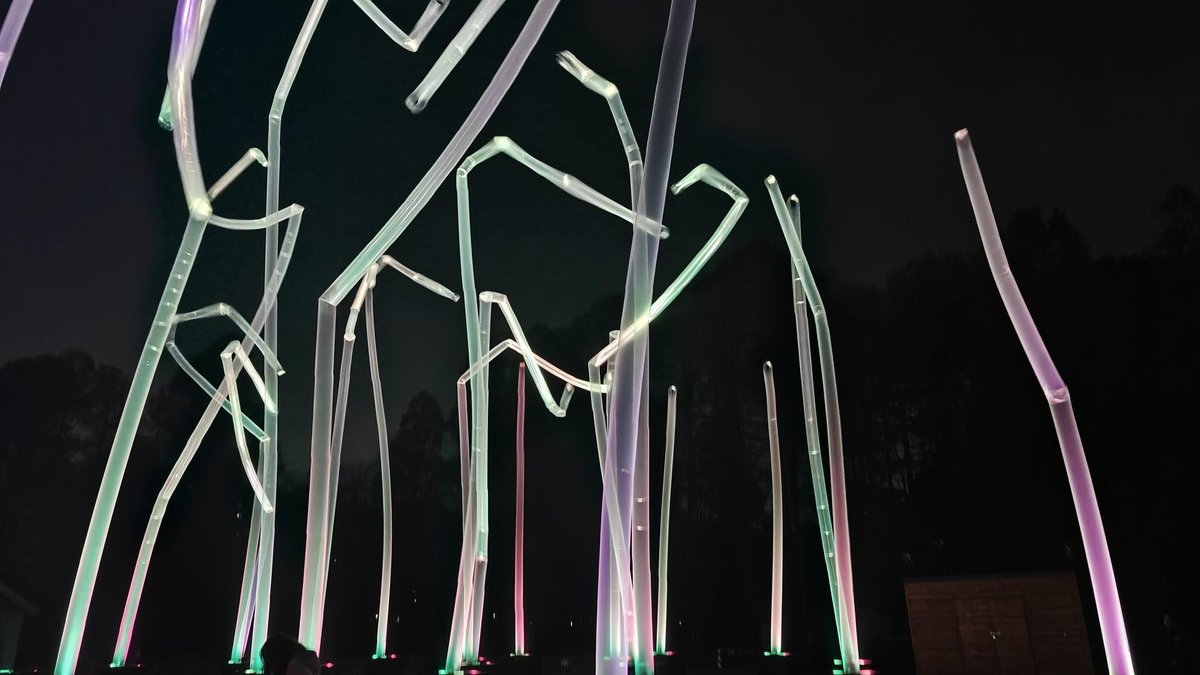
Now just outside the Secondary Forest is another installation that’s quite hard to miss. These dancing balloons are called Pillars that Dance with the Wind and the area they’re on is called the Satoyama Square. I guess what makes this different from your typical dancing balloons you can find in the mall is that they’re also interactive.
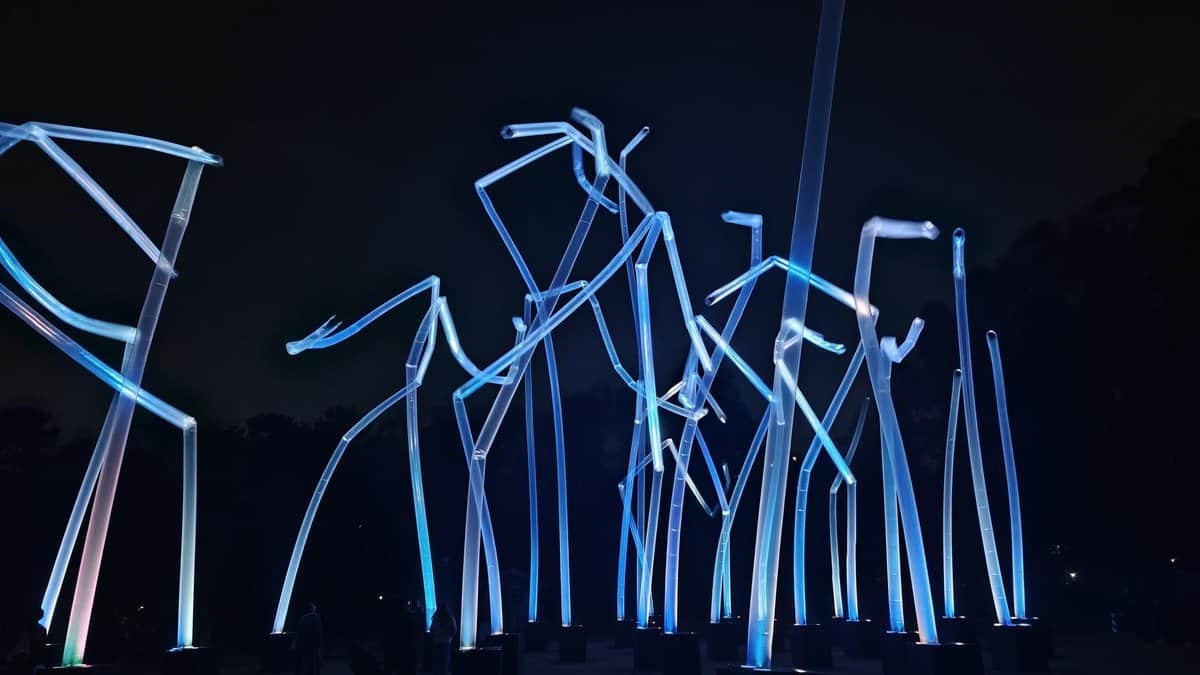
Like a lot of the installations here, the Pillars that Dance with the Wind also reacts to people getting close by. This manifests in the change in their color as well as how they move. In addition, the installation also is influenced by environmental factors such as rain and even wind.
That said, the installation won’t be up all the time. I’ve read that it typically isn’t exhibited when there’s strong winds and/or heavy rains.
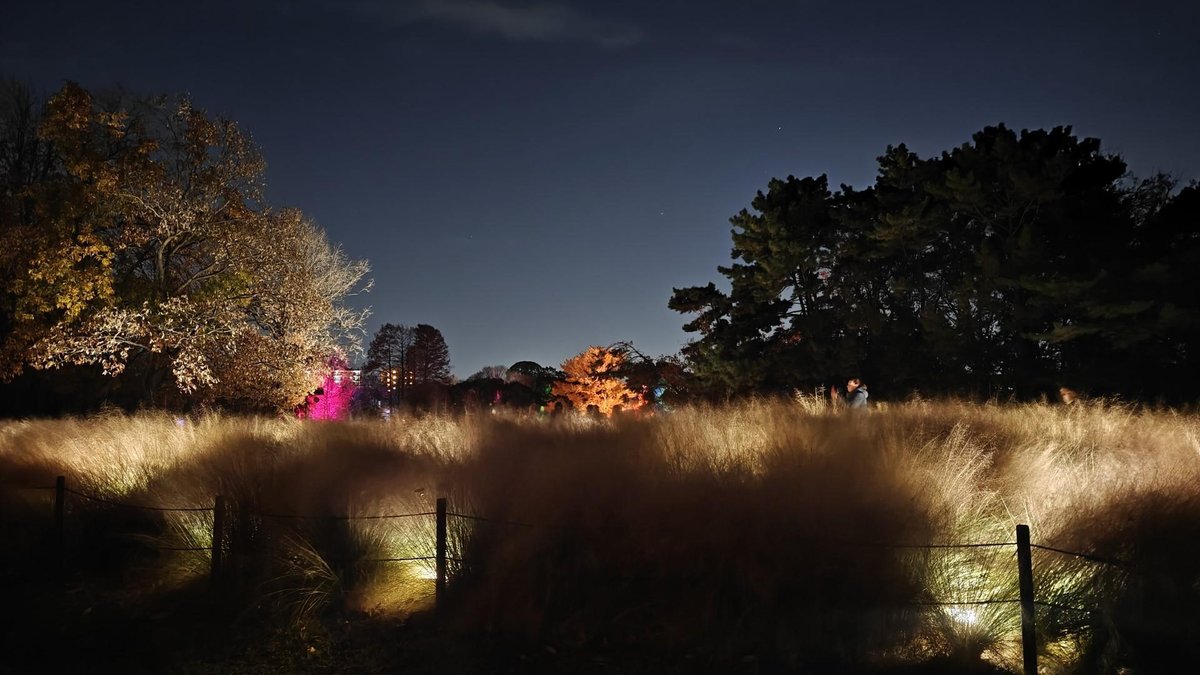
Now the next installation I was headed to is probably the most scenic. Before I could get there though, I had to go through this grassy area that is also a sort of installation on its own. I’m not quite sure what type of grass this was (it was probably Capillaris) but its lighting was quite scenic as well.
As for the name of the installation, it’s called the Field of Light Color.
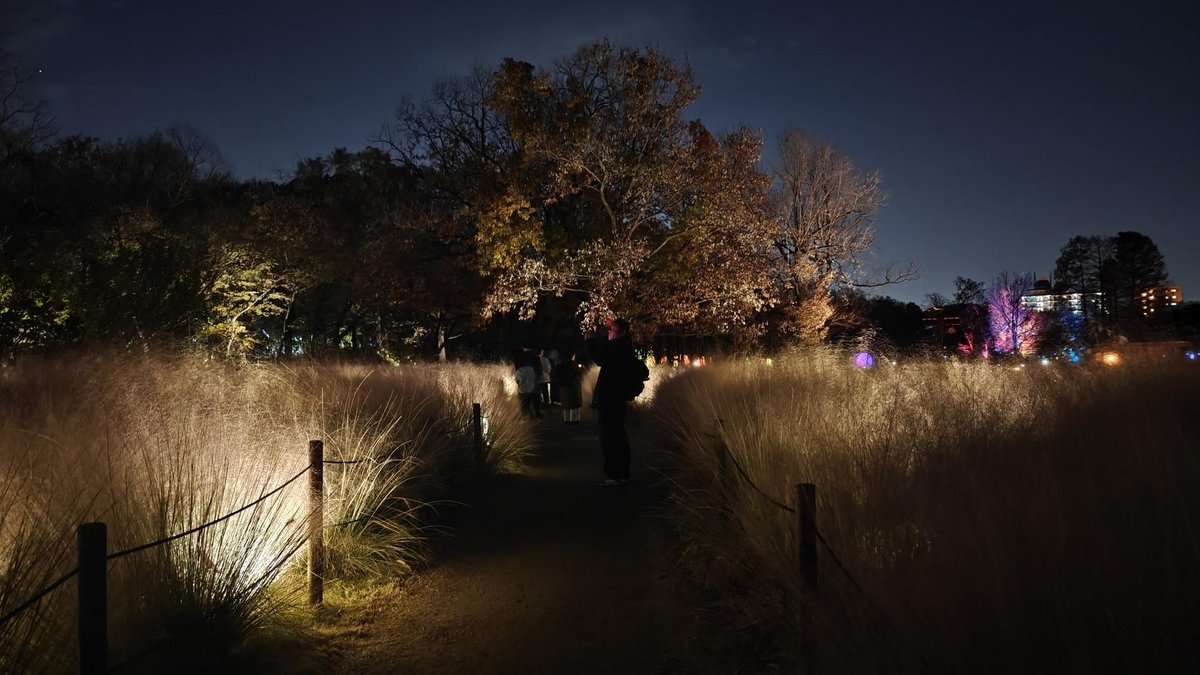
Unlike most of the light installations I’d passed through though, these weren’t really interactive. Rather, I think their purpose was more to light the path leading to the next installation that I was talking about earlier. Still, this area definitely was worth staying a couple of minutes or so just for the views.
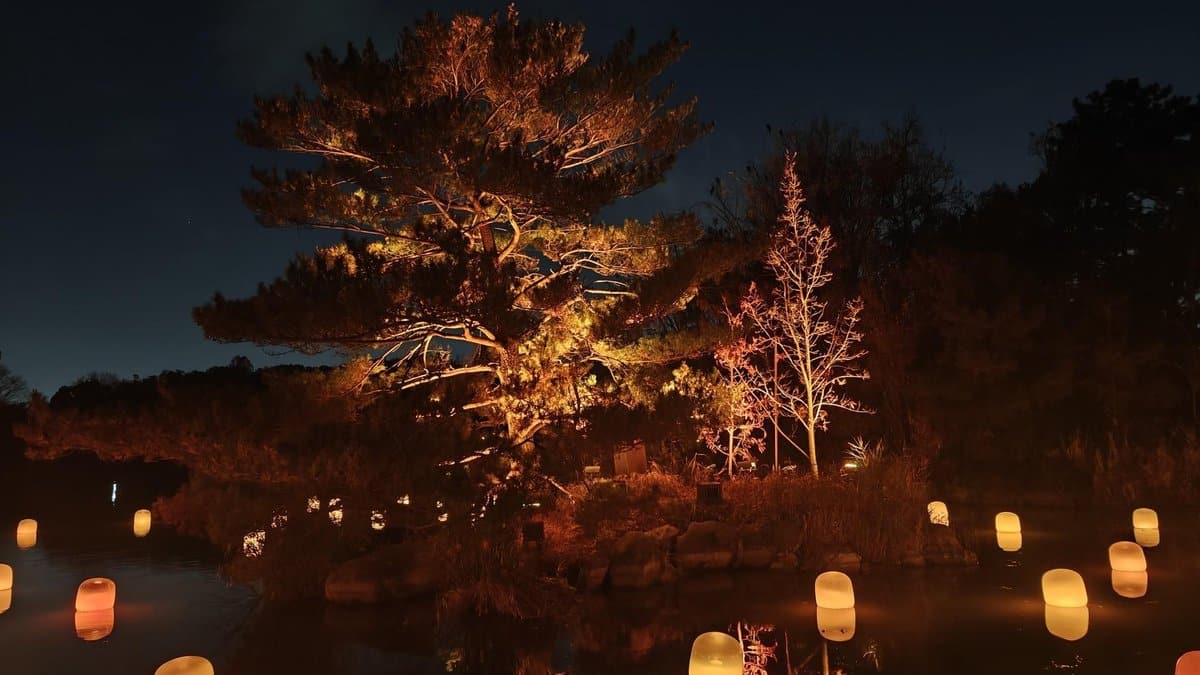
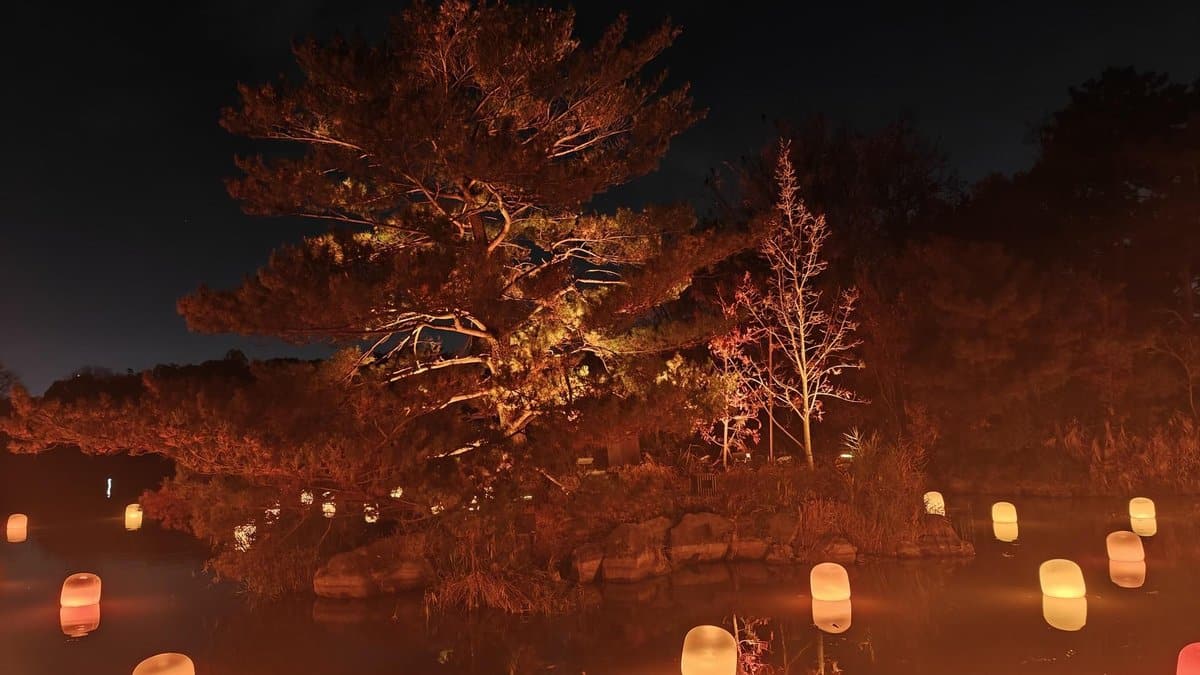
Now speaking of views, this is the installation that I’ve been talking about in the last few paragraphs. It’s called the Floating Resonating Lamps on Oike Pond and it reminded me a lot of Thailand’s Loy Krathong or Water Lantern Festival. In the middle of this sea of lamps is another of the islands here that’s also lit up.
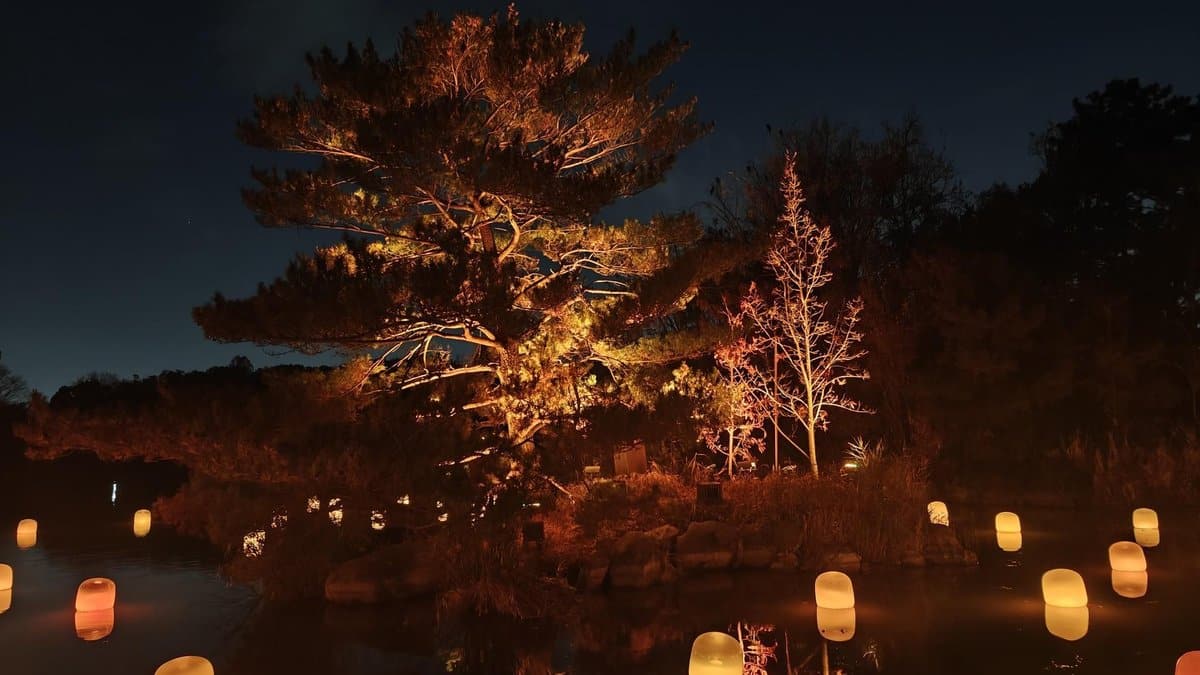
Much like the majority of light installations here, the lamps are actually interactive. They float autonomously on the pond’s surface and when they get close to a person they then shine brightly as well as produce a tone. Similar to the ovoids, the surrounding lamps resonate with the tone and light up as well.
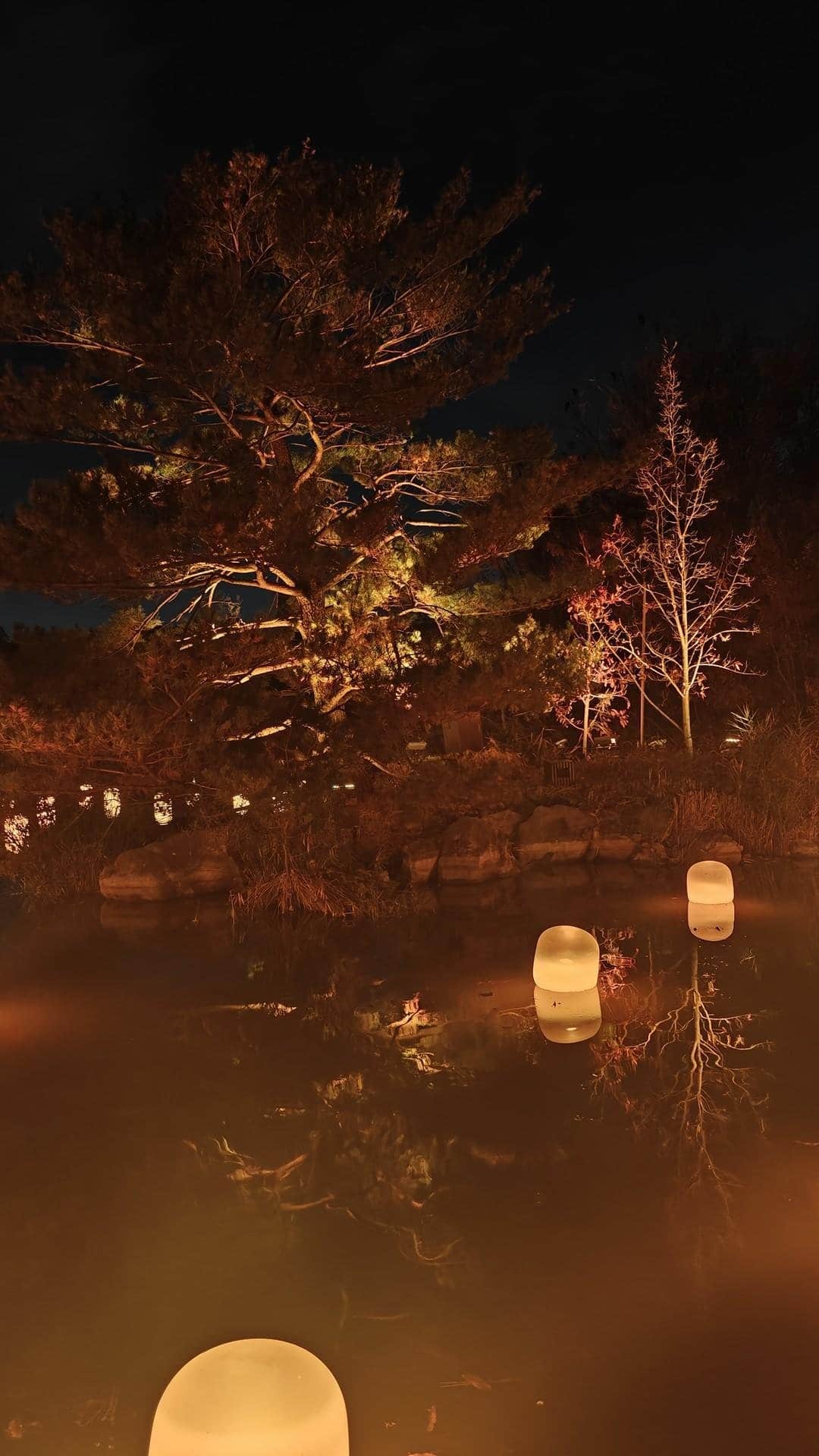
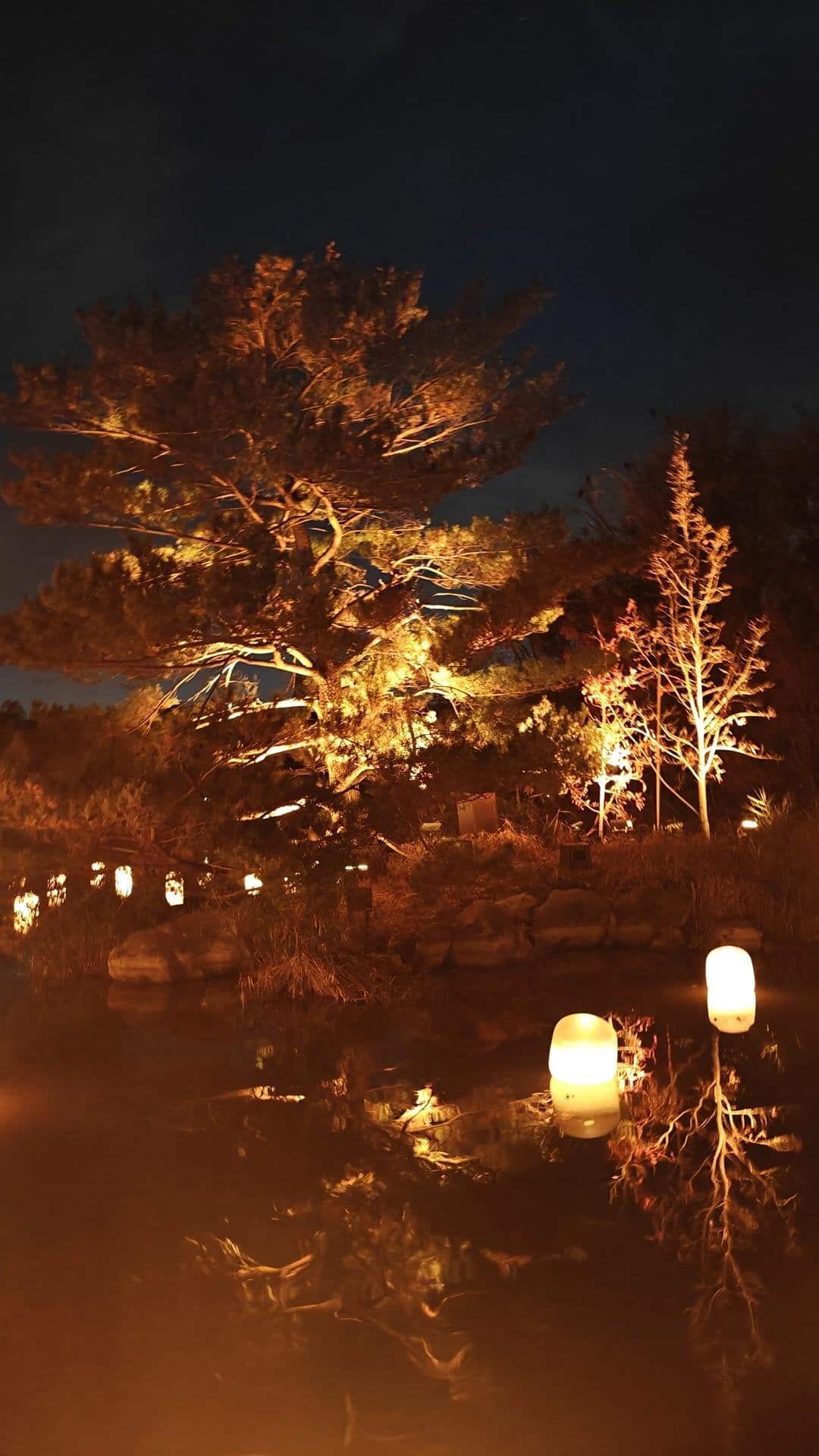
Here you can see just how brightly the lamps’ lights illuminate. If you’ll notice, it’s not just the lamps that get lit up brightly. The light in the trees in the island also react and resonate with the lamps’ lights and they end up just illuminating the pond’s surface and the nearby areas here.
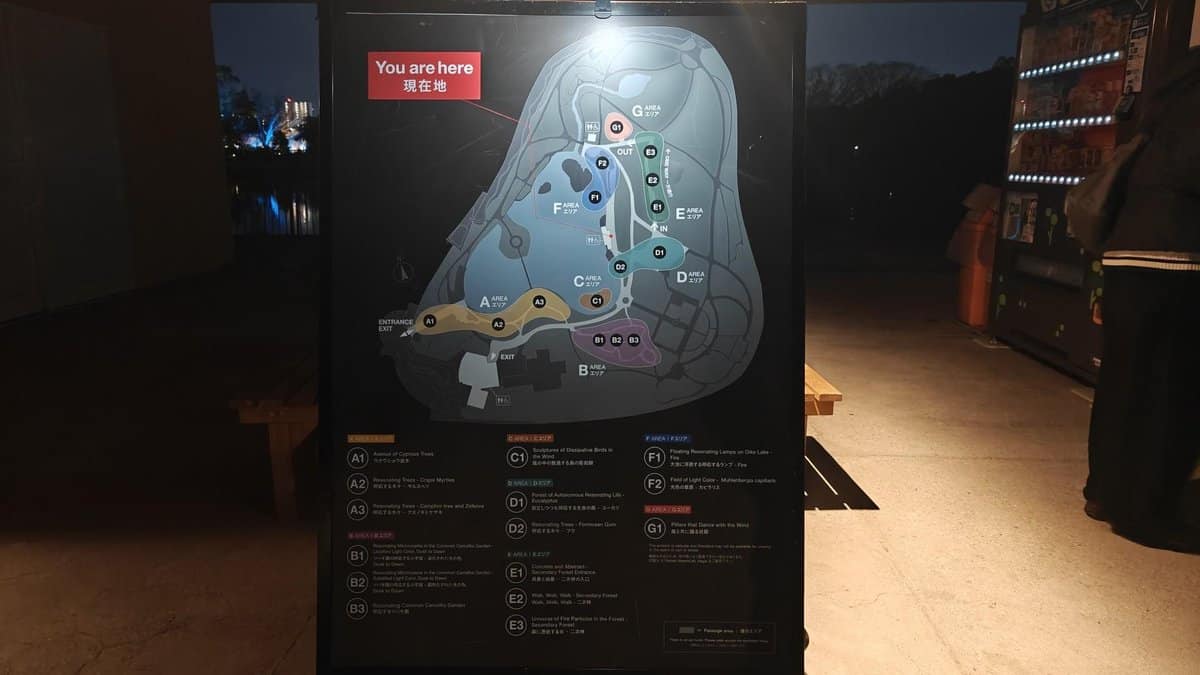
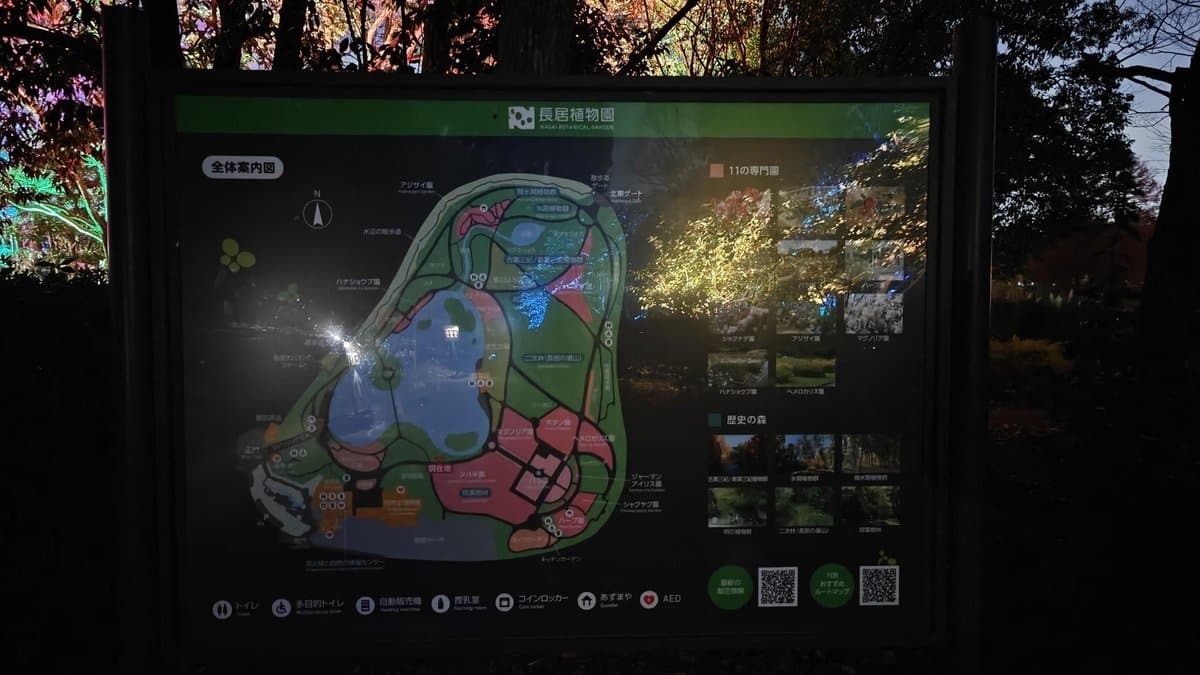
So I was going back to the entrance now and I found myself at the only public toilet closest to the banks of Oike Pond. Here you’ll find the guide map for teamLab Botanical Garden which is a lot different from that of Nagai Botanical Garden’s. It features the exact locations of the areas and installations that I’d been to and is a great way of checking if there’s anything you missed visiting.
In my case, I’d pretty much seen everything so it was high time to go home.
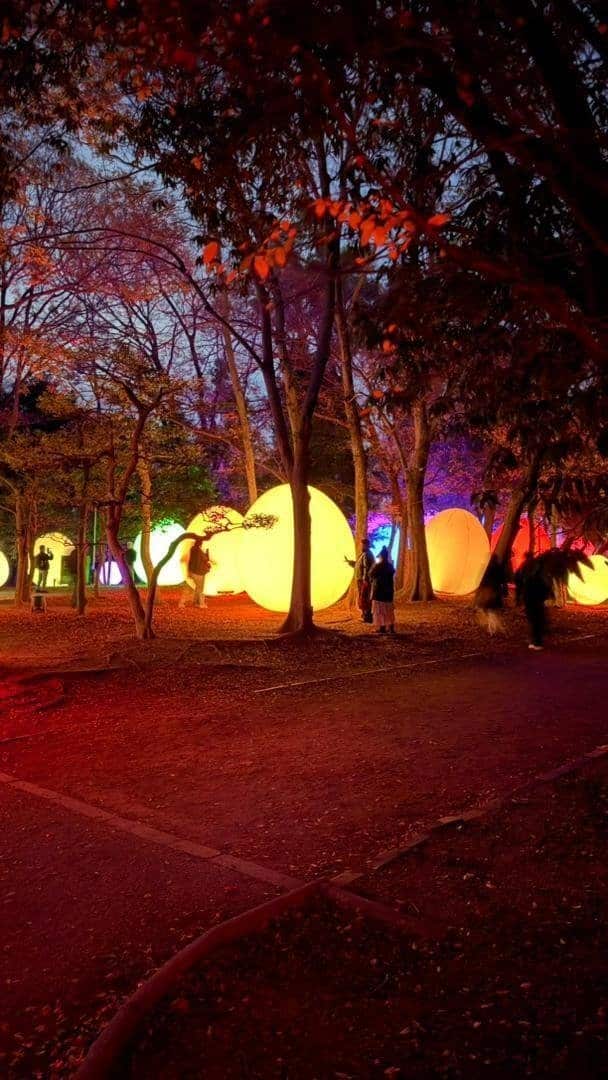
So this ends my visit to teamLab Botanical Garden. This was honestly one of the most beautiful and memorable art installations that I’ve ever experienced during my travels. The installations were a feast for the senses and the whole vibe of the place made me feel energized for some reason.
Now, it’s not all rainbows and sunshine (or is it moonshine?) as admission is rather steep when compared to your typical shrine and/or temple. Rates can range from 1600JPY to 2000JPY depending on the dates and you can only book tickets online. Still, it’s relatively cheaper when compared to a Universal Studios Japan ticket which goes for 10x more.Even with the cost, I think teamLab Botanical Garden is very much worth the time and money.
It’s one of the few “evergreen” destinations here in Japan that you can expect to get an amazing experience regardless of the time of the year you visit. This is definitely one of the few landmarks that I think is a must-visit itinerary entry if you happen to be in Osaka. That said, there are seasonal exhibits here that I think could be worth checking out as well so make sure you consider those if you’re looking to include this in your itinerary.What do you think of teamLab Botanical Garden?
Will you be visiting this Osaka landmark once you get to the city? Definitely share your thoughts and plans with us and our readers down in the comments section!